Category: Economics

Baha Mar: Doubling-down on Failure

Go Lean Commentary

“We told you it wouldn’t work.” – Previous Go Lean commentary.

Update: It hasn’t worked!

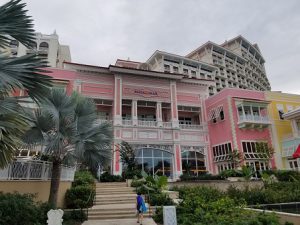
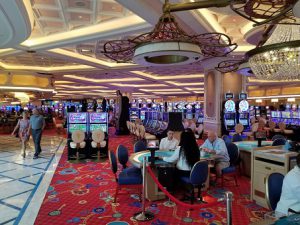
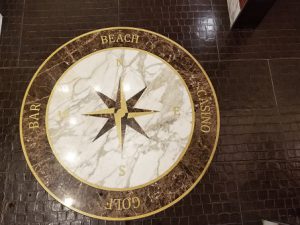
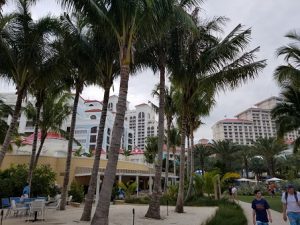
The Baha Mar Resort, Casino and Convention Center in Cable Beach, Nassau, Bahamas is now fully open – see Appendix VIDEO – and frankly empty! (See Photos below). This is the peak winter tourism season. This weather reality creates a seasonal demand for tropical resorts. Plus the excitement of a new property always generates a “buzz” … normally.

And yet, Baha Marthus far has been underwhelming! (There is hope for a better disposition in the future).

The Baha Mar project has been a source of contention for many years; one drama after another: dispute during construction, missed opening, bankruptcy filing, official wine-down, changed ownership, eventual opening, litigation among the originators.

See the latest breaking news in this Baha Mar drama in the news article here:


Title:
Bahamas Developer Claims Huge Chinese Fraud at $3.9 Billion Resort
By: Bob Van Voris

China Construction America Inc. was accused in a lawsuit of ripping off the original developer of the long-delayed $3.9 billion Baha Mar resort in the Bahamas by submitting fraudulent bills and collecting undeserved fees.

BML Properties Ltd., led by wealthy Bahamas businessman Sarkis Izmirlian, sued CCA Tuesday claiming the state-owned Chinese contractor pulled off a “massive fraud” to enrich itself at BML’s expense, leading to the collapse of the project in 2015. Delays in the construction of the biggest and most expensive resort to be built in the Caribbean have been a drag on the Bahamian economy in recent years.

BML claims that CCA submitted hundreds of millions of dollars in fake bills, understaffed the project and used it as a training ground for inexperienced workers. CCA knew it wouldn’t be able to meet the planned December 2014 deadline to open the resort but created the appearance that it would, in order to remain on the project and collect undeserved fees, BML claims. BML is seeking at least $2.25 billion in damages.

CCA didn’t respond to phone messages and an email seeking comment on the suit.

BML filed for Chapter 11 bankruptcy protection in Delaware in 2015. A U.S. bankruptcy judge dismissed the case in favor of a Bahamian court.

Baha Mar, which opened in April, is now owned by Hong Kong-based, Chow Tai Fook Enterprises Ltd. The development features more than 2,300 rooms, 40 restaurants and lounges, a convention center, a Jack Nicklaus-designed golf course, shopping and the biggest casino in the Caribbean, according to Baha Mar’s website.

BML outlined its claims in a 259-page complaint filed in state court in Manhattan.

The case is BML Properties Ltd. v. China Construction America Inc., 657550/2017, New York State Supreme Court, New York County (Manhattan).

Source: Bloomberg Business News Source – Posted December 26, 2017; retrieved December 30, 2017 from: https://www.bloomberg.com/news/articles/2017-12-26/baha-mar-developer-claims-to-be-victim-of-massive-china-fraud

All of this drama for a business model designed for … failure.
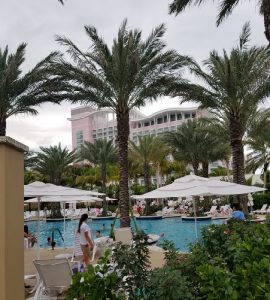
The Baha Mar Resort on Cable Beach features casino gambling and golf, two amenities that are failing more and more.

Casino
In a previous commentary, the business disposition of casino gambling was explored:

Increasingly in the casino/gaming industries, the money is not there. …

Despite the fact that the “house” always wins, the number of gamblers have declined! It is what it is!

  • 87% of Baby-Boomers gamble when visiting Las Vegas
  • 78% of Generation X-ers gamble when visiting Las Vegas
  • 63% of Millenials gamble when visiting Las Vegas

Golf
In a previous commentary, the business disposition of the sport of golf was explored:

“The games people play” … have relevance for our consideration. Golf is one of those games. But golf is more than just a game, it is an eco-system; but this eco-system is in peril.

    “The financial bubble burst and the Tiger bubble burst as well”.
    “Even as the economy recovered, golf is still in a nose dive”.
    “Your house is on fire”.

These (above) are among the key phrases from the narration of … [an] HBO Real Sports documentary story

This topic of the Baha Mar Resort is very important in the consideration of Caribbean economics, as casino gambling and golf has often been associated with Caribbean tourism.

The foregoing news article about Baha Mar aligns with the book Go Lean…Caribbean, which calls for the elevation of Caribbean economics. This book serves as a roadmap for the introduction and implementation of the technocratic Caribbean Union Trade Federation (CU) to better manage economic opportunities in the full Caribbean region. This is a Big Deal for the Go Lean roadmap to foster the diversification of the regional economy. Frankly, a $3.9 Billion investment should be able to generate better returns (job creation) than the Baha Mar fiasco has demonstrated. This hope for better tourism and economic diversification was identified early in the Go Lean book (Pages 11 – 14) in the following pronouncements in the Declaration of Interdependence:

iv. Whereas the natural formation of the landmass is in a tropical region, the flora and fauna allows for an inherent beauty that is enviable to peoples near and far, the structures must be strenuously guarded to protect and promote sustainable systems of commerce paramount to this reality.

vi. Whereas the finite nature of the landmass of our lands limits the populations and markets of commerce, by extending the bonds of brotherhood to our geographic neighbors allows for extended opportunities and better execution of the kinetics of our economies through trade. This regional focus must foster and promote diverse economic stimuli.

xxiv. Whereas a free market economy can be induced and spurred for continuous progress, the Federation must install the controls to better manage aspects of the economy: jobs, inflation, savings rate, investments and other economic principles. Thereby attracting direct foreign investment because of the stability and vibrancy of our economy.

xxvi. Whereas the Caribbean region must have new jobs to empower the engines of the economy and create the income sources for prosperity, and encourage the next generation to forge their dreams right at home, the Federation must therefore foster the development of new industries, like that of ship-building, automobile manufacturing, prefabricated housing, frozen foods, pipelines, call centers, and the prison industrial complex. In addition, the Federation must invigorate the enterprises related to existing industries like tourism, fisheries and lotteries – impacting the region with more jobs.

The Go Lean book posits that there is a need to re-boot and optimize the engines of commerce so as to make the Caribbean a better place to live, work and play. The tourism product, the mainstay of Caribbean economy, used to depend on certain amenities (i.e. Casinos and Golf) that have now come under attack by the social and demographic changes. It so appears that the future for Caribbean economics cannot lazily depend on factors like “sun, sand, surf and smiles”, no, there must be intelligent business models.

This is a changed world and changed marketplace. Likewise, our economic engines must change to keep pace … and get ahead!

The Go Lean book presents a Way Forward.

Way Forward
The Go Lean/CU roadmap seeks to elevate all of Caribbean society to remain competitive and consequential in the future. This is the heavy-lifting of shepherding a progressive region of 42 million people, 10 million Diaspora, 80 million tourists, and 4 language groups across 30 member-states. The CU’s charter is to effectuate progress in this region with these 3 prime directives:

  • Optimization of the economic engines in order to grow the regional economy to $800 Billion and create 2.2 million new jobs.
  • Establishment of a security apparatus to protect the resultant economic engines and marshal against economic crimes.
  • Improvement of Caribbean governance to support these above engines, including a separation-of-powers between CU federal administrations and local member-states.

The Way Forward / Go Lean roadmap includes the quest to create the jobs for the near-future. There is the plan to monitor, manage, and plan for new jobs. The roadmap provides 370-pages of turn-by-turn instructions on “how” to adopt new community ethos, plus strategies, tactics, implementations and advocacies to execute so as to reboot, reform and transform the societal engines of Caribbean society.

As a region, we have failed to keep pace of change. As related in that previous blog-commentary

… our society is now in desperate need of reform and to reboot to insulate from many demographic changes. On the one hand, we must diversify our economy and avail other high job-multiplier industries, away from tourism, but on the other hand, we must double-down in the tourism product, as the economic principles of “supply and demand” just cannot be ignored. (During the winter months, our Caribbean destinations are the “best addresses on the planet”.)

The Go Lean/CU roadmap calls for fostering industrial developments to aid economic diversification and to aid tourism. This includes incorporating best practices and quality assurances to deliver the “best experience in the world” for our visitors and trading partners.

This commentary has previously related details of the changing macro-economic factors in the world and how despite the dynamic conditions, jobs can be created. The following are samples of previous Go Lean blog-commentaries:

https://goleancaribbean.com/blog/?p=13700 Increasing Tourism Market Share
https://goleancaribbean.com/blog/?p=13420 A Lesson in Whaling History – Expeditions for Shipyard Jobs
https://goleancaribbean.com/blog/?p=13184 A Series on Industrial Reboots
https://goleancaribbean.com/blog/?p=12668 Common Sense of Eco-Tourism
https://goleancaribbean.com/blog/?p=8590 Build It and They Will Come – Politics of Infrastructure
https://goleancaribbean.com/blog/?p=7977 Transformations: Perfecting Our Core Competence – i.e. Tourism
https://goleancaribbean.com/blog/?p=6341 Doing Better with Tourism Stewardship
https://goleancaribbean.com/blog/?p=6089 Need Better Jobs Than ‘Minimum Wage’
https://goleancaribbean.com/blog/?p=4037 How to Train Your ‘Dragons’ or Direct Foreign Investors
https://goleancaribbean.com/blog/?p=2857 Where the Jobs Are – Example: Entrepreneurism in Junk
https://goleancaribbean.com/blog/?p=2126 Where the Jobs Are – Computers Reshaping Global Job Market
https://goleancaribbean.com/blog/?p=2003 Where the Jobs Are – One Scenario (Ship-breaking)

So this commentary advocates not doubling-down on bad trends that just “soak up” investments and produce very little return. We must be better and do better. We need to double-down on improving our tourism products and diversifying our economy away from tourism.

Yes, we can! We can do the heavy-lifting (hard-work and smart-work) to make our homeland a better place to live, work and play. 🙂

Download the free e-book of Go Lean … Caribbean – now!

Sign the petition to lean-in for this roadmap for the Caribbean Union Trade Federation.

———–

Appendix VIDEO – Baha Mar: The Las Vegas of the Caribbean – https://youtu.be/T7lGljlr01M

Caribbean Journal

Published on Aug 6, 2017 – The long-awaited Baha Mar resort project is finally here, and Caribbean Journal got an exclusive first look. So what’s it like? Well, it’s a unique, impressive project: a Las Vegas in the heart of the Caribbean.

Music: “Consortium of Cold Cool” by Craig Riley Listen ad-free with YouTube Red
Share this post:
, , ,

Taking from the Poor to Give to the Rich – ENCORE

The US Congress and White House have done it, they have successfully passed their Tax Reform bill that effectively “takes from the poor and gives to the rich”. See full story here:

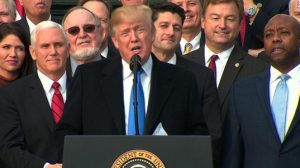
Washington (CNN) – Republican lawmakers joined President Donald Trump [today] on Wednesday afternoon to celebrate their largest legislative achievement of 2017, in a public ceremony spotlighting the most sweeping overhaul of the US tax system in more than 30 years.

“It’s always a lot of fun when you win,” Trump said at the ceremony on the White House lawn, after thanking congressional leaders including Senate Majority Leader Mitch McConnell and House Speaker Paul Ryan.

Hailing passage of the GOP’s tax plan and surrounded by dozens of prominent Republicans in Congress, Trump said the package would fulfill his core campaign promise. … 
Source: CNN retrieved December 20, 2017 from: http://www.cnn.com/2017/12/20/politics/house-senate-trump-tax-bill/index.html

This is Payback!

The Tax Reform strategy here double-downs on the concept of Supply-side economics. The hope is that corporate entities and wealthy people will receive tax breaks and then use the “wind fall” to re-invest in the community, thereafter creating jobs and economic growth. The Republicans in Washington (Congress and the White House) are betting on the success of this strategy even though there has been utter failures with this approach; for example just recently in the US State of Kansas.

Whether that re-investment occurs or not is the unknown. What is known is that the Rich will undoubtedly get the tax breaks. The Rich will win, at the expense of the Poor. This is why that foregoing article also relates:

While Republicans [leaders] cheer the bill’s passage, however, 55% of Americans oppose the plan, according to a new CNN poll. Just 33% say they favor the GOP’s proposals to reform the nation’s tax code.

This is a great opportunity to Encore a previous blog-commentary from December 16, 2014 when the same group – Washington Republicans – maneuvered to pass a law to repeal many post-2008 restrictions to guarantee higher profits for the nation’s banks. While this is an American drama, this is an opportunity for the Caribbean to learn lessons on managing governance for the Greater Good; which this foregoing law violates. See that Encore here:

——————–

Go Lean Commentary – A Christmas Present for the Banks from the Omnibus Bill

What do you get for $5.3 Billion? There must be some return on that investment.

The book Go Lean … Caribbean asserts that the US Federal Election-Campaign system is not the model that the Caribbean should want to emulate.  This book relates that $5.3 Billion was spent for the 2008 Federal Elections (Page 116), a lot of it contributed by corporations, resulting in a lot of influence peddling. This drama was vividly demonstrated this Saturday evening when the “lame-duck” Congress (the Senate in particular), delayed the required Omnibus Spending Bill – just in time – to extort favorable legislation that would roll back some of the federal regulations enacted after the Great Recession of 2008 to protect against banking systemic risks.

Senate Minority Leader Mitch McConnell speaks to reporters on upcoming budget battle in Washington

The Shadow Influences spearheading these changes are known to adhere to the principle that “a crisis is a terrible thing to waste” – a quotation credited to famed American Economist Paul Romer. While others will think that this drama was just politics as usual, the following article depicts the more strategic nature of the new legislation, to foster the environment and industry for financial derivative trading – this is too specific for any life-long politician (the US Senate) to advocate on the sly. No, this has the fingerprints of Wall Street Shadow Influences all over it. (See Appendix below for encyclopedic references on derivatives and swaps). See the news article here:

Title: A Christmas Present For The Banks From The Omnibus Bill
Forbes Magazine Investing Online Blog (Posted 12/13/2014; retrieved 12/15/2014) –
http://www.forbes.com/sites/robertlenzner/2014/12/13/wall-street-reverses-ban-on-trading-derivatives-backed-by-uncle-sam/
By: Robert Lenzner, Contributor

Wall Street banks like Citigroup and JP Morgan Chase have flexed the power of their influence to pressure Congress and the White House into a key change in the law that will allow the trading of risky financial derivatives in bank operations that are insured by the Federal Deposit Insurance Corp. This means the nation’s largest banks used the deadline for passing the Omnibus spending bill as pressure to reverse a key section of the Dodd-Frank bill of 2010 that was meant to prohibit a federal government bailout of swaps entities.

It was the existence of over $500 billion of Credit Default Swaps on the balance sheet of AIG in 2008 that threatened to bankrupt the largest insurance company in the world. So, in effect, six years later, the same Wall Street banks that were bailed out by federal largesse, are being given a legislative gift that will enable them to freely trade the securities that brought Lehman Bros down in 2008 — and obtain access to the benefit of insurance and loans from the federal government.

Behind the scenes, unbenownst to the media or the public, the nation’s Too Big To Fail banks used the Omnibus spending bill that is necessary to finance federal spending in 2015 to undo this little-known Dodd Frank provision that might have restricted the volume of trading in financial derivatives that have been a major source of profits as well as controversy since the 2008 financial crisis. Most financial derivatives will be able to be traded in entities holding deposits guaranteed by the Federal Deposit Insurance Corp. and subject to borrowing at the Federal Reserve’s discount window. This is a key advantage for the banks that will enable them to increase their activity in these securities.

Former Rep. Barney Frank, who was a key sponsor of the Wall Street reform legislation, attacked the change in Dodd-Frank as “a road map for further attacks on our protection against financial instability.” Frank was incensed that the last-minute procedure was “inserted with no hearings, no chance for further modification, and no chance for debate into a mammoth bill in the last days of a lame-duck Congress.”

If President Obama signs the Omnibus spending bill, he will have effectively rewarded Wall Street by reversing a provision that prohibits any federal assistance from being provided to “swaps entities,” including registered swaps dealers, security-based swap dealers, major swap participants and major security-based swap participants, according to information obtained by Forbes. This measure required banks to remove their swaps dealing from the bank itself and do its trading in non-bank affiliates not eligible for deposit insurance. Access to the Fed’s discount window would also be denied in case of a financial crisis in the markets.

The net effect of the changes in the Omnibus spending bill would be to expand permissible swaps activities within a bank and to only exclude swaps based on asset-backed securities that are unregulated and not of a credit quality.

All very technical, but the net result is to allow Citigroup, JP Morgan Chase and others to use the Fed’s discount window to borrow money in case of a crisis that roiled the derivative market for credit swaps again as took place in September 2008. In effect, it means the major banks need not limit their trading of financial derivatives to non-bank operations that the market will never be fooled into thinking some future risk of danger has just been avoided. It is a complex holiday present for Wall Street. And it is a warning sign that other sections of the Dodd-Frank Wall Street reform may also be vulnerable to political rollback.

An additionally relevant blog by Robert Lenzer: http://www.forbes.com/sites/robertlenzner/2014/12/08/the-ten-reasons-why-there-will-be-another-systemic-financial-crisis/

The crisis of the 2008 Great Recession was the lynchpin for the Go Lean movement, (book and blogs). This book, serving as a roadmap for the introduction and implementation of the Caribbean Union Trade Federation (CU), posits that the effects of the 2008 Great Recession continue to linger in the Caribbean. Therefore the book advocates learning lessons from 2008 and to turn-around, reform, and reboot the region’s economic, security and governing engines to ensure that “never again” will our society be so vulnerable to the financial misgivings of our American neighbors; or the “plutocratic” elements there-in.

The field of economics is not always solutions-oriented; sometimes, they have been responsible for the problem. Consider this VIDEO snippet here:

Documentary Film “Inside Job” – http://youtu.be/CaXNqGgIc-g

Published on Apr 19, 2012 – Since the repeal of Glass-Steagall in 1999, the total notional value of derivatives has grown by over 700% for holdings companies and 674% for commercial banks. Even more alarming, since the third quarter of 2008 when the cracks in the financial system were clearly evident, derivatives at the commercial banks have grown from $175 TRILLION to $234 TRILLION ” a $59 TRILLION increase. To put this in perspective, the cumulative Gross Domestic Product in the United States over that same time frame (Q3 2008 through Q3 2010) was approximately $32 TRILLION.

Despite our region’s small size (42 million people in 30 member-states), we do have some control over our own destiny. We want to be a protégé, not a parasite.

The CU’s prime directives, elevating the Caribbean’s economic-security-governing engines, recognize that the changes the region needs must start first with the adoption of new community ethos and controls. Early in the book, the need for this shift is pronounced (Declaration of Interdependence – Page 13) with these statements:

xxiv.      Whereas a free market economy can be induced and spurred for continuous progress, the Federation must install the controls to better manage aspects of the economy: jobs, inflation, savings rate, investments and other economic principles. Thereby attracting direct foreign investment because of the stability and vibrancy of our economy.

xxv.      Whereas the legacy of international democracies had been imperiled due to a global financial crisis, the structure of the Federation must allow for financial stability and assurance of the Federation’s institutions. To mandate the economic vibrancy of the region, monetary and fiscal controls and policies must be incorporated as proactive and reactive measures. These measures must address threats against the financial integrity of the Federation and of the member-states.

The Go Lean book, and previous blog/commentaries, stressed the key community ethos, strategies, tactics, implementation and advocacies necessary to effect change in the region ourselves, to improve the stewardship over the economy. They are detailed as follows:

Who We Are – 2008 Internal Experiences Page 8
Community Ethos – Economic Principles Page 21
Community Ethos – Security Principles – Private Interest –vs- Public Protection Page 23
Community Ethos – Security Principles – “Light Up Dark Place” Page 23
Community Ethos – Governing Principles – Lean Operations Page 24
Community Ethos – Ways to Impact the Future Page 26
Community Ethos – Impact Research and Development Page 30
Community Ethos – Ways to Improve Negotiations Page 32
Community Ethos – Ways to Impact Turn-around – 2008 Crisis Page 33
Community Ethos – Ways to Impact the Greater Good Page 37
Strategy – Mission – Fortify   the Stability of the Securities Markets Page 47
Strategy – CU Stakeholders to Protect – Banks & Depositors Page 47
Tactical – Growing the Economy – Minimizing Bubbles Page 69
Tactical – Separation-of-Powers – Depository Insurance & Regulatory Agency Page 73
Anecdote – Turning Around CARICOM – Effects of 2008 Financial Crisis Page 92
Implementation – Assemble Caribbean Central Bank as Cooperative Page 96
Implementation – Assemble Constitutional Convention Page 97
Implementation – Ways to Better Manage Debt – Optimizing Wall Street Role Page 114
Implementation – Ways to Impact Elections Page 116
Planning – 10 Big Ideas – Single Market / Currency Union Page 127
Planning – Lessons Learned from 2008 Page 136
Planning – Ways to Measure Progress Page 147
Advocacy – Ways to Grow the Economy – Case Study of $5.3 Billion Influence Page 151
Advocacy – Ways to Improve Credit Ratings – 2008 Lessons Page 155
Advocacy – Ways to Improve Housing – 2008 Mortgage Crisis Lessons Page 161
Advocacy – Ways to Impact Labor Unions – 2008 Effects on Main Street Jobs Page 164
Anecdote – Caribbean Industrialist – Growing without Shadow Influence Page 189
Advocacy – Reforms for Banking Regulations Page 199
Advocacy – Ways to Impact Wall Street Page 200
Appendix – Whitepaper: The 2008 Financial Crisis and Its Aftermath Page 276
Appendix – Currency Capital Controls Page 325

The points of effective, technocratic regional stewardship, especially in response to the 2008 Great Recession / Financial Crisis, were further elaborated upon in these previous blog/commentaries:

https://goleancaribbean.com/blog/?p=3311 Detroit to exit historic bankruptcy – Finally recovering from 2008
https://goleancaribbean.com/blog/?p=3164 Michigan Unemployment – Then (2008/2009) and Now
https://goleancaribbean.com/blog/?p=3090 Lessons Learned – Europe Sovereign Debt Crisis of 2009
https://goleancaribbean.com/blog/?p=3028 Why India is doing better than most emerging markets since the crisis
https://goleancaribbean.com/blog/?p=2930 ‘Too Big To Fail’ – Caribbean Version
https://goleancaribbean.com/blog/?p=2448 ‘Consumer Reports’ Survey Finds the American Consumer is Back
https://goleancaribbean.com/blog/?p=2435 Korea’s Protégé Model – A Dream for Latin America / Caribbean
https://goleancaribbean.com/blog/?p=2338 Lesson Learned – How Best to Welcome the Dreaded ‘Plutocracy’
https://goleancaribbean.com/blog/?p=2259 The Criminalization of American Business – Big Banks Let Loose
https://goleancaribbean.com/blog/?p=2105 Recessions and Public Health – Lessons from the 2008 Crisis
https://goleancaribbean.com/blog/?p=2090 The Depth & Breadth of Remediating 2008
https://goleancaribbean.com/blog/?p=1896 The Crisis in Black Homeownership since 2008
https://goleancaribbean.com/blog/?p=1309 5 Steps of a Bubble
https://goleancaribbean.com/blog/?p=841 Post 2008 – Having Less Babies is Bad for the Economy?
https://goleancaribbean.com/blog/?p=782 Open/Review the Time Capsule: The Great Recession of 2008
https://goleancaribbean.com/blog/?p=709 Post 2008 – Student debt holds back home buyers
https://goleancaribbean.com/blog/?p=522 Financial Crisis Jokes – Reflecting the cultural impact on society
https://goleancaribbean.com/blog/?p=518 Post 2008 – What Banks learn about financial risks
https://goleancaribbean.com/blog/?p=378 Fed Releases Transcripts from 2008 Meetings
https://goleancaribbean.com/blog/?p=242 Post 2008 – The Erosion of the Middle Class

The 2008 Great Recession brought major upheaval to American and Caribbean societies, plus the rest of the world. Much of the world is interconnected; this is even more acute in our region. Our economy is structured as parasites on the US economy. According to the foregoing news article, our parasitic host is not worthy of our devotion. What qualifies the Go Lean promoters to make these assessments? Principals of this publishing foundation were also there in 2008, engaged with major stakeholders of the Global Financial crisis: Lehman Brothers, JPMorganChase, Citigroup, etc. They were on the inside looking out, not the outside looking in. They were equipped to discern the Shadow Influence.

The Go Lean movement advocates the role of protégé, not parasite. We must diversify our economy and additionally cater to other markets, other countries and other industries. This is the purpose of the Go Lean roadmap, to provide a turn-by-turn direction to accomplish this diversification.

If we want to make our homeland a better place to live, work and play then we cannot depend on the stewards of the US economy to shepherd the Caribbean. Look! Despite the cruel and harsh lessons from 2008, it appears – from the foregoing article and the Appendix below – that the Wall Street Shadow Influence wants to repeat the “Bubble” that lead up to 2008. When they succeed, they profit; but when they fail, the “low man” on Main Street – and parasite economies like the Caribbean – has to endure the pain, not Wall Street.

The Go Lean roadmap does not seek to change America, (though we lobby against these arbitrary “Derivative” rule changes in the Omnibus Budget Bill); only teach the lessons to the Caribbean. We can do so much better.

Download the free e-Book of Go Lean … Caribbean – now!

——————–

Appendix – Derivatives:
(Source: http://en.wikipedia.org/wiki/Derivative_(finance) )

In finance, a derivative is a contract that derives its value from the performance of an underlying entity. This underlying entity can be an asset, index, or interest rate, and is often called the “underlying”.[1][2] Derivatives can be used for a number of purposes – including insuring against price movements (hedging), increasing exposure to price movements for speculation or getting access to otherwise hard to trade assets or markets.[3]

Some of the more common derivatives include forwards, futures, options, swaps, and variations of these such as collateralized debt obligations, credit default swaps, and mortgage backed securities. Most derivatives are traded over-the-counter (off-exchange) or on an exchange such as the Chicago Mercantile Exchange, while most insurance contracts have developed into a separate industry. Derivatives are one of the three main categories of financial instruments, the other two being equities (i.e. stocks or shares) and debt (i.e. bonds and mortgages).

Speculation
Derivatives can be used to acquire risk, rather than to hedge against risk. Thus, some individuals and institutions will enter into a derivative contract to speculate on the value of the underlying asset, betting that the party seeking insurance will be wrong about the future value of the underlying asset. Speculators look to buy an asset in the future at a low price according to a derivative contract when the future market price is high, or to sell an asset in the future at a high price according to a derivative contract when the future market price is less.

Risks
The use of derivatives can result in large losses because of the use of leverage, or borrowing; (see VIDEO below). Derivatives allow investors to earn large returns from small movements in the underlying asset’s price. However, investors could lose large amounts if the price of the underlying moves against them significantly. There have been several instances of massive losses in derivative markets, such as the following:

  • American International Group (AIG) lost more than US$18 billion through a subsidiary over the preceding three quarters on credit default swaps (CDSs).[42] The United States Federal Reserve Bank announced the creation of a secured credit facility of up to US$85 billion, to prevent the company’s collapse by enabling AIG to meet its obligations to deliver additional collateral to its credit default swap trading partners.[43]
  • The loss of US$7.2 Billion by Société Générale in January 2008 through mis-use of futures contracts.
  • The loss of US$6.4 billion in the failed fund Amaranth Advisors, which was long natural gas in September 2006 when the price plummeted.
  • The loss of US$4.6 billion in the failed fund Long-Term Capital Management in 1998.
  • The loss of US$1.3 billion equivalent in oil derivatives in 1993 and 1994 by Metallgesellschaft AG.[44]
  • The loss of US$1.2 billion equivalent in equity derivatives in 1995 by Barings Bank.[45]
  • UBS AG, Switzerland’s biggest bank, suffered a $2 billion loss through unauthorized trading discovered in September 2011.[46]

This comes to a staggering $39.5 billion; the majority in the last decade after the Commodity Futures Modernization Act of 2000 was passed.

Financial Reform and Government Regulation
Under US law and the laws of most other developed countries, derivatives have special legal exemptions that make them a particularly attractive legal form to extend credit.[47] The strong creditor protections afforded to derivatives counterparties, in combination with their complexity and lack of transparency however, can cause capital markets to underprice credit risk. This can contribute to credit booms, and increase systemic risks.[47] Indeed, the use of derivatives to conceal credit risk from third parties while protecting derivative counterparties contributed to the financial crisis of 2008 in the United States.[47][48]

CU Blog - A Christmas Present for The Banks From The Omnibus Bill - Photo 2

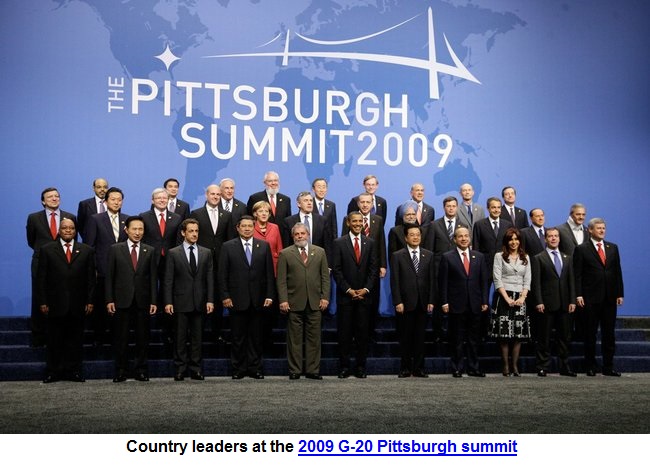
In November 2012, the SEC and regulators from Australia, Brazil, the European Union, Hong Kong, Japan, Ontario, Quebec, Singapore, and Switzerland met to discuss reforming the OTC derivatives market, as had been agreed by leaders at the 2009 G-20 Pittsburgh summit (see Photo) in September 2009.[54] In December 2012, they released a joint statement to the effect that they recognized that the market is a global one and “firmly support the adoption and enforcement of robust and consistent standards in and across jurisdictions”, with the goals of mitigating risk, improving transparency, protecting against market abuse, preventing regulatory gaps, reducing the potential for arbitrage opportunities, and fostering a level playing field for market participants.[54] They also agreed on the need to reduce regulatory uncertainty and provide market participants with sufficient clarity on laws and regulations by avoiding, to the extent possible, the application of conflicting rules to the same entities and transactions, and minimizing the application of inconsistent and duplicative rules.[54] At the same time, they noted that “complete harmonization – perfect alignment of rules across jurisdictions” would be difficult, because of jurisdictions’ differences in law, policy, markets, implementation timing, and legislative and regulatory processes.[54]

VIDEO: Leverage Explained – http://youtu.be/6YEnkkznGTg
When things turn out good, big risk means big return; but if it turns out bad, you lose everything and left with a debt.

Source References:
1.       Derivatives (Report). Office of the Comptroller of the Currency, U.S. Department of Treasury. http://www.occ.gov/topics/capital-markets/financial-markets/trading/derivatives/index-derivatives.html. Retrieved February 2013. “A derivative is a financial contract whose value is derived from the performance of some underlying market factors, such as interest rates, currency exchange rates, and commodity, credit, or equity prices. Derivative transactions include an assortment of financial contracts, including structured debt obligations and deposits, swaps, futures, options, caps, floors, collars, forwards, and various combinations thereof.”
2.       Derivative Definition Investopedia
3.       Koehler, Christian. “The Relationship between the Complexity of Financial Derivatives and Systemic Risk”. Working Paper: 10–11.
——
42.   Kelleher, James B. (September 18, 2008). “”Buffett’s Time Bomb Goes Off on Wall Street” by James B. Kelleher of Reuters”. Reuters.com. Retrieved August 29, 2010.
43.   “Fed’s $85 billion Loan Rescues Insurer”
44.   Edwards, Franklin (1995). “Derivatives Can Be Hazardous To Your Health: The Case of Metallgesellschaft”. Derivatives Quarterly (Spring 1995): 8–17
45.   Whaley, Robert (2006). Derivatives: markets, valuation, and risk management. John Wiley and Sons. p. 506. ISBN 0-471-78632-2.
46.   “UBS Loss Shows Banks Fail to Learn From Kerviel, Leeson”. Businessweek. September 15, 2011. Retrieved March 5, 2013.
47.   “Michael Simkovic, Secret Liens and the Financial Crisis of 2008.”. American Bankruptcy Law Journal, Vol. 83, p. 253. 2009. Retrieved March 5, 2013.
48.   Michael Simkovic (January 11, 2011). “Bankruptcy Immunities, Transparency, and Capital Structure, Presentation at the World Bank”. Ssrn.com. doi:10.2139/ssrn.1738539. Retrieved March 5, 2013.
——
54.   “Joint Press Statement of Leaders on Operating Principles and Areas of Exploration in the Regulation of the Cross-Border OTC Derivatives Market; 2012-251”. Sec.gov. December 4, 2012. Retrieved March 5, 2013.

Share this post:
, ,
[Top]

Failure to Launch – Economics: The Quest for a ‘Single Currency’

Go Lean Commentary

Money is more important in society than people are willing to accept. Though some critics say that love, family, faith, country and other principles are more important. But an obscure Murphy’s Law states (and is quoted in the book Go Lean…Caribbean at Page 32) this ironic truth:

“When people claim that it’s the principle, and not the money, chances are, it’s the money”.

There are indeed more important things in life than money, but somehow all these things can be bought/sold … for money. The strategy in this Go Lean book is to optimize money issues: consolidate monetary reserves for the region into a Single Currency, the Caribbean Dollar (C$), managed by the technocratic Caribbean Central Bank (CCB). The C$ will be based on a mixed-basket of foreign reserves (US dollars, Euros, British pounds & Yens).

This is a simple but effective plan – a best practice: introduce the Caribbean Central Bank (CCB) and Caribbean Dollar as a Single Currency for the region’s 30 member-states.

Huge benefits abound! And so this economic initiative is important for Caribbean elevation. The rationale is that this strategy “enables economies to be more resilient to exogenous shocks”.

exogenous shocks – In economics, a shock is an unexpected or unpredictable event that affects an economy, either positively or negatively. Technically, it refers to an unpredictable change in exogenous factors — that is, factors unexplained by economics — which may influence endogenous economic variables. – Wikipedia.

This benefit is so obvious that others have thought of this before …

Yet there has consistently been a Failure to Launch this economic initiative; or to do so successfully. Consider the historicity of the CariCom Multilateral Clearing Facility (CMCF) in Appendix A below – a normal functionality of regional Central Banks.

Currently, the Caribbean has no regional Central Bank, so safety-net, no shock absorption, and no integration. This is the quest of the book Go Lean…Caribbean; it urges the introduction and implementation of the Caribbean Union Trade Federation (CU) and the Caribbean Central Bank (CCB). The book serves as a roadmap for this goal, with turn-by-turn directions to integrate the 30 member-states of the region and forge an $800 Billion economy.

We have the great models of the United States and Europe to consider how a Single Currency can positively impact a consolidated regional economy; see VIDEOs in the Appendices below. We do not have to invent innovative solutions on our own; we can simply model the best-practices of these other communities. This is the familiar advocacy for the movement behind the book Go Lean…Caribbean. In a previous blog-commentary from May 10, 2014 the merits of Single Market and Single Currency economic integrations were related as follows:

Europe has the safety net of the economies-of-scale of 508 million people and a GDP of $15 Trillion in 28 member-states in the EU; (the Eurozone subset is 18 states, 333 million people and $13.1 Trillion GDP). The US has 50 states and 320 million people. Shocks and dips can therefore be absorbed and leveraged across the entire region .The EU is still the #1 economy in the world; the US is #2. – [See related VIDEO here: https://youtu.be/vRzFAvgBhU0.]

The Go Lean roadmap signals change for the region. It introduces new measures, new opportunities and new recoveries. Exogenous shocks are a reality. Economies will rise and fall; the recovery is key. Prices will inflate and deflate; there are very effective measures – at the regional level – for managing all these indices. The Go Lean book serves as a roadmap for the establishment of the Caribbean Union Trade Federation (CU), and the allied Caribbean Central Bank (CCB) to manage the monetary-currency affairs of this region. The book describes the breath-and-width of the CCB and the Caribbean Dollar Single Currency.

The book Go Lean…Caribbean also detailed previous (inadequate) attempts to integrate Caribbean currencies …

… this commentary is the 2nd of 4 parts in a series on the Caribbean’s Failure to Launch solutions to elevate the region’s societal engines. The full series is catalogued as follows:

  1. Failure to Launch Past Failures for Integration
  2. Failure to Launch – Economics: Caribbean Central Banks and the Quest for a Single Currency
  3. Failure to Launch Security: Caribbean Basin Security Dreams
  4. Failure to Launch Governance: Assembling the Regional Alphabet Organizations

In the previous submission – Part 1 of 4 – the history of the failed West Indies Federation was detailed. This effort only related to the Anglophone countries but among its many initiatives was the plan to introduce a consolidated currency. This excerpt is derived from the Go Lean book’s Anecdote on Caribbean currencies relating English-speaking and other language groups:

Anecdote # 16 – Caribbean Currencies (Page 149)

Anglophone

In 1946, a West Indian Currency Conference saw Barbados, British Guiana, the Leeward Islands, Trinidad & Tobago and the Windward Islands agree to establish a unified decimal currency system based on a new West Indian dollar to replace the current arrangement of having three different Boards of Commissioners of Currency (for Barbados, British Guiana and Trinidad) manage monetary issues in the Eastern Caribbean. In 1949, the British government formalized the dollar system of accounts in British Guiana and the Eastern Caribbean territories by introducing the British West Indies dollar (BWI$) at the already existing conversion rate of $4.80 per pound sterling (or $1 = 4 shillings 2 pence). It was one of the many experimental political and economic ventures tested by the British government to form a uniform system within their British West Indies territories. The symbol “BWI$” was frequently used and the currency was known verbally as the “Beewee” (slang for British West Indies) dollar. Shortly thereafter in 1950, the British Caribbean Currency Board (BCCB) was set up in Trinidad with the sole right to issue notes and coins of the new unified currency and given the mandate of keeping full foreign exchange cover to ensure convertibility at $4.80 per pound sterling. In 1951, the British Virgin Islands joined the arrangement, but this led to discontent because that territory was more naturally drawn to the currency of the neighboring US Virgin Islands. In 1961, the British Virgin Islands withdrew from the arrangement and adopted the US dollar.

Until 1955, the BWI$ existed only as banknotes in conjunction with sterling fractional coinage. Decimal coins replaced the sterling coins in 1955. These decimal coins were denominated in cents, with each cent being worth one halfpenny in sterling.

In 1958, the West Indies Federation was established and the BWI$ was its currency. However, although Jamaica (including the Cayman Islands and the Turks and Caicos Islands) was part of the West Indies Federation, it retained the Jamaican pound, despite adopting the BWI$ as legal tender from 1954. Jamaica, the Cayman Islands, and the Turks and Caicos Islands were already long established users of the sterling accounts system of pounds, shillings, and pence.

In 1964 Jamaica ended their legal tender status of the BWI$ and Trinidad & Tobago withdrew from the currency union (adopting “dollars” representing their national currency: Jamaican and T&T Dollar – see Appendix ZB [on Page 316]). This forced the movement of the headquarters of the BCCB to Barbados and soon the “BWI$” dollar lost its regional support.

In 1965, the BWI dollar of the now defunct West Indies Federation was replaced at par by the East Caribbean dollar and the BCCB was replaced by the Eastern Caribbean Currency Authority or ECCA. Guyana withdrew from the currency union in 1966. Grenada rejoined the common currency arrangement in 1968 having utilized the Trinidad & Tobago dollar from 1964. Barbados withdrew from the currency union in 1972, following which the ECCA headquarters were moved to St. Kitts.

Between 1965 and 1983, the Eastern Caribbean Currency Authority issued the EC$, with banknotes from 1965 and coins from 1981. The EC$ is now issued by the Eastern Caribbean Central Bank, (Basseterre, Saint Kitts), established July 1983.

The exchange rate of $4.80 = £1 sterling (equivalent to the old $1 = 4s 2d) continued right into up until July 7, 1976 for the new Eastern Caribbean dollar, until it was pegged to the US dollar, at the exchange rate of US$1 = EC$2.70.

Today, the East Caribbean dollar (EC$) is the currency for eight of nine members of the Organization of Eastern Caribbean States (OECS), the one exception being the British Virgin Islands, which uses the United States dollar exclusively; so too does non-OECS member-state Turks and Caicos Islands.

Francophone

The French franc was the former currency of France until the Euro was adopted in 1999 (by law, 2002 de facto). The name is said to derive from the Latin inscription francorum rex (“King of the Franks”) on early French coins, or from the French franc, meaning “free” (and “frank”). The franc was also used within the French Empire’s colonies, including the French West Indies or French Antilles, referring to the territories currently under French sovereignty in the Antilles islands of the Caribbean:

    Guadeloupe, Martinique, Saint Martin, Saint Barthélemy; plus in islands of strong French heritage such as Dominica & Saint Lucia. Haiti, though, because of its early independence (1793) employs the Gourde currency, initially pegged to the Franc.

Dutch / Netherlands

The Dutch guilder was the national currency of the Netherlands until it was replaced by the Euro on 1 January 2002. The Netherlands Antillean guilder is currently the only guilder in use, which after the dissolution of the Netherlands Antilles remained the currency of the new countries Curaçao and Sint Maarten and (until 1 January 2011) the Caribbean Netherlands.

The Caribbean guilder is the proposed currency of the Caribbean islands of Curaçao and Sint Maarten, which formed after the dissolution of the Netherlands Antilles in October 2010. The Netherlands Antillean guilder (NAg) is expected to continue to circulate until 2013 as the currency was not finalized in time for the islands’ separate autonomous status. The currency will be abbreviated CMg (for Curacao, Sint Maarten guilder) and will be pegged to the US dollar at the same exchange rate as the Netherlands Antillean Guilder (1 USD = 1.79 NAg = 1.79 CMg). Since, the islands of Bonaire, Sint Eustatius and Saba adopted the US dollar directly on 1 January 2011, the introduction of the CMg will mean the end of the circulation of NAg.

The diverse colonial Caribbean also had Spanish (Cuba, Dominican Republic and Puerto Rico) islands and Danish territories, as in today’s US Virgin Islands.

There would be many benefits if multiple countries come together and finally form a Single Market-Single Currency economy. This is the quest for the CU/Go Lean roadmap: to form a Single Market-Single Currency of the Caribbean Dollar (C$).

This CU/CCB/C$/Go Lean roadmap therefore urges this Single Market / Single Currency effort with these 3 prime directives:

  • Optimization of the economic-banking engines in order to grow the regional economy and create 2.2 million new jobs.
  • Establishment of a security apparatus to ensure public safety and protect the resultant economic engines.
  • Improvement of Caribbean governance to support these engines, including a separation-of-powers between the member-states and CU federal agencies.

Central Banks are required to …

  1. facilitate monetary and currency policies,
  2. oversee bank regulations, and
  3. execute inter-bank financial transactions (like payment settlements described in the Appendix A below regarding the previous CMCF).

Presently, the Caribbean region has no integrated Central Bank, nor have we ever had one in the past. There has always been a Failure to Launch this needed solution. Even the Anglo-Caribbean’s previous offering of the CMCF only addressed one of these 3 central banking functionalities: payments. Unfortunately, we need them all! We need to launch a fitting solution to assuage all Caribbean’s monetary-currency deficiencies.

(Puerto Rico and the US Virgin Islands monetary needs are managed as a subset of the Federal Reserve Bank of New York; 2600 miles away from their territorial markets).

A Single Currency in the Caribbean – for the Caribbean – is a BIG idea for reforming and transforming the economic engines of the 42 million people among the 30 member-states (including Puerto Rico and the US Virgin Islands). The Go Lean book stresses that our effort must be a regional pursuit, and it must also optimize our currency landscape. This was an early motivation for the roadmap, as pronounced in the opening Declaration of Interdependence (Pages 12 – 13):

xi. Whereas all men are entitled to the benefits of good governance in a free society, “new guards” must be enacted to dissuade the emergence of incompetence, corruption, nepotism and cronyism at the peril of the people’s best interest. The Federation must guarantee the executions of a social contract between government and the governed.

xxiv. Whereas a free market economy can be induced and spurred for continuous progress, the Federation must install the controls to better manage aspects of the economy: jobs, inflation, savings rate, investments and other economic principles. Thereby attracting direct foreign investment because of the stability and vibrancy of our economy.

The Go Lean book provides 370-pages of turn-by-turn instructions on “how” to adopt new community ethos, plus the strategies, tactics, implementations and advocacies to execute so as to reboot, reform and transform the societal engines of Caribbean society. There is a lot of consideration in the book for establishing the CCB and the Single Currency in the region. The Caribbean’s Failure to Launch this in the past is … inexcusable.

There have been a number of previous blog-commentaries by the Go Lean movement that have highlighted the eco-system of monetary, central banking and currency best practices. See a sample list here:

https://goleancaribbean.com/blog/?p=13365 Case Study from West Africa: Single Currency for 8 Diverse Countries
https://goleancaribbean.com/blog/?p=10513 Case Study from India: Transforming Money Countrywide
https://goleancaribbean.com/blog/?p=8381 Case Study on Central Banking for Puerto Rico
https://goleancaribbean.com/blog/?p=7140 Case Study from Azerbaijan: Setting its currency on free float
https://goleancaribbean.com/blog/?p=6800 Case Study from Venezuela: Suing Black Market currency website
https://goleancaribbean.com/blog/?p=4166 Case Study from Panama: History of the Balboa Currency
https://goleancaribbean.com/blog/?p=3858 Case Study from ECB: Unveiling 1 trillion Euro stimulus program
https://goleancaribbean.com/blog/?p=3814 Case Study from Switzerland: Unpegging the franc
https://goleancaribbean.com/blog/?p=360 Case Study on Central Banks: Creating Money from ‘Thin Air’
https://goleancaribbean.com/blog/?p=833 Case Study from the Euro: One Currency, Diverse Economies

In summary, shepherding the economy is no simple task; the regional economy, even harder still – described as heavy-lifting. It requires the best practices of skilled technocrats. But the benefits of the heavy-lifting are too alluring to ignore: growing the monetary supply, expanding the availability of investment capital and leveraging across a larger base to absorb the shocks naturally associated with a Free Market Economy.

We are past the time of needing this Caribbean Dollar Single Currency reform. We needed it 60 years ago, and even more now. We must not fail to launch

We urge all Caribbean stakeholders – government officials, bankers and ordinary citizens – to lean-in for the innovations  and empowerments detailed in this CU/CCB/Go Lean roadmap. It is so obvious; these are among the best practices of America and Europe! The successful delivery of this banking-economic-currency solution can make our homeland a better place to live, work and play. 🙂

Download the free e-book of Go Lean … Caribbean – now!

Sign the petition to lean-in for this roadmap for the Caribbean Union Trade Federation.

————

Appendix A – Caricom Multilateral Clearing Facility: A Brief Note

Payments clearing and settlement in the Caribbean has historically been a battleground of discontent. There have been many attempts since the Colonial period to structure the payments landscape but none of these efforts have been successful. This blog will briefly outline one such effort — the Caricom Multilateral Clearing Facility.

The Caricom [Caribbean Community]Multilateral Clearing Facility (1977–1983) introduced a centralized accounting system for all eligible payments institutions within the region. The original agreement establishing the CMCF was signed by the Central Bank of Barbados, the Monetary Authority of Belize, the East Caribbean Currency Authority, the Bank of Guyana, the Bank of Jamaica, and the Central Bank of Trinidad and Tobago.
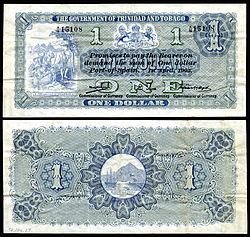
The Central Bank of Trinidad and Tobago (CBTT) acted as the agent bank for the CMCF. That is, the CBTT carried out the secretariat functions as well as being responsible for the accounting records and distribution of cash settlements.
The main objectives of the CMCF were to:

  1. facilitate settlement on a multilateral basis of eligible transactions between participating countries;
  2. promote the use of currencies of members in settling eligible transactions between the individual countries, thereby economizing on the use of foreign exchange; and,
  3. promote monetary co-operation among the participants, thereby contributing to the expansion of trade and economic activity within Caricom.

Advantages of multilateral clearing to regional banks:

  1. reduction of correspondent deposits in foreign exchange
  2. longer time for investment of deposits where drawn cheques are in circulation within the region

Disadvantages of multilateral clearing to regional banks:

  1. legal implications arising from fact that the CMCF was not established as a separate legal entity
  2. lack of formal enforcement mechanism in the event of debtor default
  3. need for an independent regulatory body
  4. technical and administrative complexities

The failure of the CMCF was caused by its abusive usage by some member countries. Instead of being used for its primary purpose of simply minimizing the foreign exchange requirement for intra-regional trade, some members saw it as a balance of payments support facility to allow them to continue purchasing goods which they otherwise would not have been able to. Thus the closing of the CMCF was only inevitable because of the overuse of its informal credit facility.

After the closing of the CMCF the region regressed to a costly nexus of bilateral agreements which offer far less efficiency than multilateral systems.

The demise of the CMCF was unfortunate because it was a clever device for effecting small but significant economies in the use of foreign exchange. In fact, the CMCF might have formed an institutional base for a federal system of Caricom central banks.

Source: CMCF and Caricom Trade. Ginne Lea Miller, 1993

Source: Retrieved December 11, 2017 from https://medium.com/@RJGriffith/caricom-multilateral-clearing-facility-a-brief-note-ab5085a9c8d1

————

Appendix B VIDEO – The U.S. Federal Reserve Bank – How it Works, and What it Does – Money, Dollars, & Currency – https://youtu.be/y1OJlJ9COg0


Bright Enlightenment

Published on Dec 25, 2012 – The U.S. Federal Reserve Bank – How it Works & What it Does – Money, Currency, & the Dollar
– SUBSCRIBE to Bright Enlightenment: http://www.youtube.com/BrightEnlighte…
– LIKE our page on Facebook: http://www.Facebook.com/BrightEnlight…
– TWITTER: http://www.twitter.com/BrightEnlight
– WEBSITE: http://www.BrightEnlightenment.com/

  • Category: Education 
  • License: Standard YouTube License

————

Appendix C VIDEO – ECB and the Eurosystem explained in 3 min. – https://youtu.be/TAlcFwGIQBg


European Central Bank

Published on Sep 26, 2013 – Who takes care of the “euro”? What is inflation ? Why is price stability important for you? Find the answers to these questions and more in this three-minute introduction to the ECB and the Eurosystem’s role and tasks. To discover more about the ECB, please visit http://www.ecb.europa.eu/ecb

Share this post:
,
[Top]

Increasing Tourism Market Share

Go Lean Commentary

It’s December … this is peak winter travel season.

It’s time to take inventory of Caribbean tourism:

It has been weighed in the balance; it has been measured …
It has been found wanting!

Our peaks … are not enough. There is the need to Increase Caribbean Tourism Market Share. See this magazine article here with this title:

Title: Increasing Tourism Market Share
By Tony Fraser

For the Caribbean tourism industry to take a larger chunk out of world tourism arrivals (a necessity for continued survival and growth), there are a few innovative options lapping at the shores of tourism economies in the Caribbean.

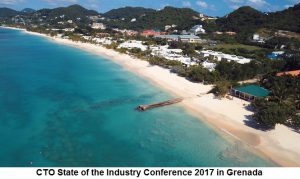
To achieve the objective in an industry which provides hundreds of thousands of jobs in the Caribbean and US$30bn in revenue in 2014, wide-ranging options were presented to governments, hoteliers, tour operators and others in the business at the State of the Industry Conference (SOTIC) of the Caribbean Tourism Organisation in Curacao.

Eastern focus

Among the options, officials looked at the following:

  • how to attract more visitors from the fast-growing Chinese market;
  • how to cast aside traditional and moral restrictions that could pose barriers to the US$100bn US market of lesbians, gays, bisexuals and transsexuals (LGBT);
  • how to engage the Millennial generation (those born between 1980-1998) in exciting weekend package tours around the Caribbean;
  • how to tackle the issue of damaging high tax rates on the airline industry while looking to expand the Open Skies policy;
  • and the need to sweep away the layers of travel restrictions on passengers (including Caribbean nationals) wanting to move around and into the region with one-stop visa and security checks.

Increasing but…
An examination of the figures on visitor arrivals shows that the number of tourists coming to the Caribbean in the first six months of 2015 increased by 5.8% compared with the same period in 2014.

That percentage increase was larger than the 4.1% average increase in global tourism arrivals.

Significantly too, the Caribbean region (which encompasses the English, Dutch, French and Spanish-speaking areas of the Caribbean) in 2014 earned US$30bn, a 10% increase over the previous year.

However, Caribbean tourism’s share of the international market, as calculated by the United Nations World Tourism Organisation, was a mere 2.8% of the 1.1 billion people who travelled to destinations all over the globe.

“The Caribbean has a relatively low global market share compared to the importance it places on its tourism economy,” the UN World Tourism Council’s director/executive secretary of member relations, Carlos Vogeler, told the SOTIC in Curacao.

Asia focus
But while the Caribbean’s share of the international tourism market is quite small, South East Asia (SEA) has experienced the largest growth as a region.

The reason is not too difficult to assess.

“Those countries have access to a nearby source market, China, whose outbound travel market grew by 30% last year, and by 48% during the first six months of this year,” Mr Vogeler told Caribbean Intelligence©.

At the same time that the SEA countries have the emerging Chinese market from which to source tourists, Mr Vogeler says the source markets of the Caribbean for tourists are mature.

He said that the Caribbean tourism industry had to take up the challenge of attracting tourists from the Far East.

Cut taxes
Another challenge is for governments and airports in the Caribbean to reduce taxes on airline tickets.

It is a call that has been made for many years.

It was made even while the Caribbean tourism industry was petitioning the United Kingdom to reduce the Air Passenger Duty for passengers flying to Caribbean destinations.

In the Caribbean, airlines and tourism experts have continuously pointed to the negative impact that continued high taxes on airline tickets and airport taxes have had on travel into and around the region.

However, governments have contended with equal vigour that since they have a narrow tax base to raise revenue for development, and with airline travel being a captive source of revenue, reducing taxes on airline travel and airport duties is a difficult proposition.

The Premier of the Turks and Caicos Islands, Dr Rufus Ewing, told the CTO conference that “If you want governments to remove and or reduce those taxes, then we have to know how we are going to get alternative revenues; how do we take care of our security responsibility when there is one visa system and security check at airports. And those are real concerns for us in these countries.”

The proof of the pudding is in the eating for Robin Hayes, JetBlue’s president and chief executive.

“Where we have been able to reduce fares by 30%, we have doubled the travel market,” he says.

And Mr Hayes commended the government of Barbados, which has “one of the lowest tax rates in the region”.

“The idea is that we can collectively look at ministers of finance and ask them to relook the tax argument; but we do need government revenue to run countries,” Barbados Tourism and International Transport Minister Richard Sealey told Caribbean Intelligence©.

New ways of working
JetBlue sealed a deal with Barbados at the conference announcing an additional daily roundtrip flight between Fort Lauderdale in the US and Grantley Adams Airport in Barbados.

What’s more, the JetBlue boss is encouraging the Caribbean tourism industry to tap into JetBlue Getaways, which packages hotels, tours, restaurants and other experiences into the flight package, an arrangement that he says has done wonders for Grenada.

“Thanks to strong bookings through Getaways and greats friendships with local properties like Sandals and Spice Island, we were able to add a third weekly service in September, after only three months in the market,” Mr Hayes said.

Another option for attracting more tourists to Caribbean shores and into hotel rooms is to give seat guarantees to airlines.

Under such agreements, the host government pays for seats not occupied by passengers when they fly into those destinations.

Barbados’s Mr Sealey, who is also CTO chairman, told Caribbean Intelligence©: “It is a fact that we do subsidise airlines to the region, but we prefer to have a commercial relationship with the airlines, ones like that with we have with JetBlue, which works with us to market the destination.”

Potential earners
On the intra-Caribbean travel routes there was 5.5% growth, with 400,000 travellers moving around the region during the first six months of 2015.

Liat’s chief executive, David Evans, told Caribbean Intelligence© “It’s a market with quite an amount of potential.”

He said that Liat had upgraded its fleet over the last two years. But as he explained, taxes can cost the traveller up to 40% to 50% of the airline ticket.

Partnerships with other regionally-based airlines to achieve greater efficiency and coverage of the Caribbean are coming, Mr Evans told Caribbean Intelligence©.

“While we cannot talk about those alliances right now, they are coming soon,” he said.

He said that, at the moment, Liat has strategic alliances with international carriers such as British Airways and Virgin and others to move passengers around the region from their international arrivals but the internal partnerships are long overdue.

The LGBT market
Facilitating travel into the region by members of the lesbian, gay, bisexual and transsexual (LGBT) community is an option for the Caribbean to increase its international market share.

However, it is an option that poses challenges to the church-going, Bible-believing Caribbean community.

The market is a lucrative one, says David Paisley, senior research director of the San Francisco-based travel agency Community Marketing Insights.

“The Caribbean is a perfect fit for LBGT travel; but our clients must be assured of safety and not be discriminated against, and not only by laws but by social practices,” Mr Paisley said.
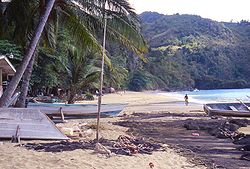
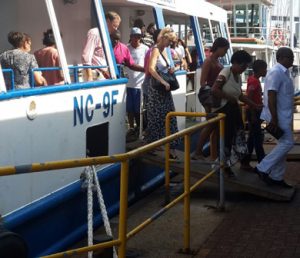
His research shows that the LGBT community travels more than the general population; they spend more on hotels, restaurants and shopping than other tourists.

“We have heard of homophobic societies in the Caribbean and I don’t want to call names, but where we see those tendencies and feel threatened, our travellers will not be coming,” Paisley told Caribbean Intelligence©.

There have been a few incidents in the past with members of the LGBT community that have caused a measure of concern in one or two Caribbean countries.

CTO Secretary General Hugh Riley told Caribbean Intelligence© that “no business can afford to ignore a significant market segment”.

He added: “Our [the CTO’s] responsibility is always to source the expertise, present the facts and provide enough information on which our members can make an informed decision.”

Weekend packages
Short breaks packed with entertainment, aimed at the generation born between 1980 and 1998, are seen by Leah Marville of My Destination Arrivals as yet another option to land more tourists around the region.

The weekends consist of a blur of entertainment and experiences which can be captured on camera and become talking points for the travellers, who travel at weekends and head back to their jobs on Monday.

“There is something absolutely captivating about us… My Destination Weekends seeks to capture and immortalise experiences for those who take the trip,” says Ms Marville, a model and businesswoman.

But increasing numbers of arrivals is not the be all and end all.

Mr Sealey says the benefits of tourism must be counted in jobs, in the development of communities, the protection of the environment and the retention of a large chunk of what the tourists spend in getting to the Caribbean and having memorable vacations in the region.
Source: Caribbean Intelligence Magazine – Posted November 2015; retrieved December 6, 2017 from: http://www.caribbeanintelligence.com/content/increasing-tourism-market-share

The movement behind the book Go Lean … Caribbean seeks to reboot the economic engines of the Caribbean member-states. Tourism is the region’s primary economic driver, but it is inadequate for providing the needs of the people in the region. We must do better. This foregoing magazine article about the Caribbean Tourist Organization (CTO) identified some defects … and solutions in 2015. It is now 2017; unfortunately, the identified defects are still defective; the hoped-for solutions, never materialized. See the introductory VIDEO about the CTO State of the Industry Conference in the Appendix below.

These same issues have also been addressed in other Go Lean commentaries:

Can the CTO be counted on to provide the need empowerments to elevate the Caribbean economic engines?

No! It is the assessment in the Go Lean book that the current stewards for regional tourism is inadequate. The book quotes (Page 3):

Many people love their homelands and yet still begrudgingly leave; this is due mainly to the lack of economic opportunities. The Caribbean has tried, strenuously, over the decades, to diversify their economy away from the mono-industrial trappings of tourism, and yet tourism is still the primary driver of the economy. Prudence dictates that the Caribbean nations expand and optimize their tourism products, but also look for other opportunities for economic expansion. The requisite investment of the resources (time, talent, treasuries) for this goal may be too big for any one Caribbean member-state. Rather, shifting the responsibility to a region-wide, professionally-managed, deputized technocracy will result in greater production and greater accountability. This deputized agency is the Caribbean Union Trade Federation (CU).

The CTO represents for-profit hotels and resorts. The needed solutions for the Caribbean cannot be profit-driven. It must pursue features like collective bargaining and the Greater Goodthe greatest good to the greatest number of people which is the measure of right and wrong” (by philosopher Jeremy Bentham; 1748 – 1832). So the Go Lean book presents an alternative; it serves as a roadmap for the introduction and implementation of the Caribbean Union Trade Federation (CU). The CU is designed to be a technocratic intergovernmental entity that shepherds economic growth for the Caribbean region; in other words, Increase Tourism Market Share. The goal is to reboot and optimize the region’s economic, security and governing engines. There are ways for individual member-states to improve their tourism product, but there needs to be a regional focus to accomplish this goal.

The Go Lean motivation is the Greater Good (Page 37).

In total, the Go Lean/CU roadmap will employ strategies, tactics and implementations to impact its prime directives; identified with the following 3 statements:

The Go Lean book provides 370-pages of turn-by-turn instructions on “how” to adopt new community ethos, plus the strategies, tactics, implementations and advocacies to execute so as to reboot, reform and transform the societal engines of Caribbean society. One advocacy in optimizing the tourism landscape is to foster infrastructure that is too big for any one member-state alone; consider some specific plans, excerpts and headlines from the book on Page 190 entitled:

10 Ways to Enhance Tourism in the Caribbean Region

1 Lean-in for the Caribbean Single Market
The economic engine associated with the CU will provide the infrastructural needs to improve the tourism product for all member-states. The plan is to expand trade treaties with other countries and regional blocs to target markets and languages outside of North America. One goal is to expand “snowbirds” traffic, as these have been a consistent revenue source. The CU will provide the support services like translations, medical and transport (ferries for RV’s) to augment this special market.
2 Special Festival Events
Promote multi-day events in the style of Sturgis (see Appendix J on Page 288), Coachella, and Milwaukee’s Summer-Fest. The CU will liberalize the loitering laws, allow for camping & car/van sleeping, public showers, food trucks, open canister for alcohol, etc. (Jamaica’s SunFest is a start). To facilitate traffic, jurisdictional governments should grant temporary motorcycle licenses and arranged for optimal shipping logistics.
3 Fairgrounds/Amusement Parks Empowerment Zones
Encourage the establishment and promotion of Fairgrounds/Amusement Parks (Disney, Sea World, Busch Gardens-like attractions) that can bring in vast number of visitors. The empowerment zones get special tax incentives and building code variances, or managed as Self Governing Entities (SGE) in which they are beholden only to the CU jurisdiction. Many US and European theme parks are only open during the warm seasons, the opposite can be advocated in the Caribbean region, where theme parks may only be open during the “high season”, or only when cruise ships are in port.
4 Dynamic Sea-lifts / Air lifts
Grant temporary licenses to shipping (ferries) and air charters to facilitate the transport of Festival participants. The goal is to move huge number of guests in and out readily. The US Passport Card (used for travel to Mexico and Canada) should suffice the travel documents for these events. These logistics can be modeled after Ramadan travel to Mecca.
5 Excess Inventory Auction
The CU buys from the Hotels (with warrants) and sells the Excess Inventory of Hotels rooms to the highest Bidder to combine with Air, Sea, Car and Tour Packages. (Much like Priceline.com). The CU uses e-commerce strategies and tactics (web, phone and text messaging) in their campaigns. The hospitality sources should drill down, beyond hotels, to also include bed-and-breakfast and other certified (CU ranked & rated) home-sharing arrangements.
6 Medical Tourism
Hospitals and medical clinics will be installed on SGE campuses, designed for alternative and experimental treatments. These will attract medical tourists to come for extended stays, many outfitted with monitoring and medical alert devices to engage designated medical personnel in case of emergencies; thus minimizing stress on domestic facilities.
7 Eco-Tourism Promotions Board
8 Sports Tourism
9 Cruise Line Passenger Smart Card Currency
The CU will collectively bargain with the cruise lines to deploy electronic “purses” and allow the Caribbean Central Bank to settle the transactions. This incites more spending at the ports-of-call. Smart cards feature more functionality like physical access, locator service & photo ID. The cards can also offer contactless transactions, like “tap and go”.
10 Tourist Hate Crime Sentence Extender

The Go Lean book details that the Caribbean can create …

30,000 direct jobs from opening new markets, creating new opportunities and new traffic; starting new sharing options
9,000 direct jobs from Event staff and Festivals at CU Fairgrounds
1,000 direct jobs from managing, promoting UNESCO World Heritage Sites

These are direct jobs; there is also the reality of indirect jobs – unrelated service and attendant functions – at a 3.75 multiplier rate would add another 150,000 jobs. That makes a total of 190,000 jobs.

This is how the roadmap works: it identifies industries, dissects the inherent deficiencies, and proposes solution to reboot and optimize it, then it harvests the multiples of jobs resulting from the plan. Tourism is the current dominant industry; the goal is to “stand on the shoulders” of previous accomplishments, add infrastructure not possible by just one member-state alone and then reap the benefits. Imagine this manifestation in just this one new strategy: inter-island ferries that connect all islands for people, cars and goods.
There have been a number of blog-commentaries by the Go Lean movement that highlighted economic opportunities embedded in regional tourism initiatives. See a sample list here:

https://goleancaribbean.com/blog/?p=13126 “Must Love Dogs”  – Providing K9 Solutions for Better Tourism Security
https://goleancaribbean.com/blog/?p=12668 Lessons from Colorado – Common Sense of Eco-Tourism
https://goleancaribbean.com/blog/?p=11287 Sports Tourism and Pro-Surfing
https://goleancaribbean.com/blog/?p=11033 Medical Tourism and Plastic Surgeries
https://goleancaribbean.com/blog/?p=9897 Art Tourism and Community-sanctioned Murals
https://goleancaribbean.com/blog/?p=9179 Snowbird Tourism and RV Ferries
https://goleancaribbean.com/blog/?p=4425 Deploying regional currency and e-Payment solutions
https://goleancaribbean.com/blog/?p=4145 Eco-Tourism and World Heritage Sites

In summary, the Caribbean need jobs; our job creation dysfunction is so acute that our people are fleeing the homeland to find job opportunities abroad. Tourism-related jobs, while not the highest paying, could be stable, reliable and providential. More options and deliveries would help us to make our homeland a better place to live, work and play.

This is a Big Deal; this is how to grow the economy: create jobs; create businesses; retain people; foster new opportunities; learn from past mistakes and accomplishments. Tourism is just one industry in the Go Lean roadmap. While this one can result in 190,000 new jobs, the other industries (16) show even more promise: shipbuilding, pipelines, frozen foods, etc. The net result: 2.2 million new jobs.

Let’s do this … for the Greater Good.

All Caribbean stakeholders – residents and visitors – are urged to lean-in to this roadmap for change … and empowerment. This plan is conceivable, believable and achievable. 🙂

Sign the petition to lean-in for this roadmap for the Caribbean Union Trade Federation.

Download the book Go Lean … Caribbean – now!

———–

Appendix VIDEO – CTO STATE OF THE INDUSTRY CONFERENCE – https://youtu.be/8AraGc3VGpI

Curacao Tourist Board

Published on Jul 7, 2015 – State of the Industry Conference 2015 Curaçao will host SOTIC from 21- 23 October 2015 at the World Trade Center in Willemstad. CTO Business meetings will be held October 20 -21, 2015.

Share this post:
, ,
[Top]

Economics of ‘South Beach’

Go Lean Commentary

The US has an economy; the 30 Caribbean member-states have economies. The US does it better!

For example, the entire Caribbean region enjoys 80 million visitors a year; (though this figure includes 12 million cruise passengers visiting multiple Caribbean destinations on one cruise); just the US city of Orlando has one destination – Walt Disney World – that enjoys 57 million visitors-a-year alone. Further down the list of high traffic resort cities is the destination of Miami Beach, Florida; each year Miami Beach hotels host over 35% of the ten (10) million tourists who visit Greater Miami.
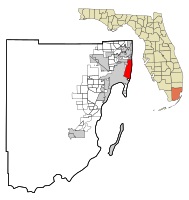
Yes, the US cities do tourism better than our Caribbean counterparts; and their economies are more diversified.

If only we, in the Caribbean, could be more like … the American city of Miami (Beach).

It is a fitting comparison:

  • Global City in the tropical zone – a snowbird haven-refuge from cold northern cities.
  • Home away from home for many Caribbean people.
  • Primary economic engine of tourism (leisure and medical), travel (air and cruises), financial services and trade. See Miami’s largest employers in the Appendix below.

The movement behind the book Go Lean … Caribbean seeks to reboot the economic engines of the Caribbean member-states – so we can perform better. The book studies models and lessons from other communities (cities and countries): i.e. New York City (Page 137), Detroit (Page 140) and Omaha (Page 138). In fact, this movement had previously detailed how the Greater Miami metropolitan area has become so successful a community mainly because of the failures of Caribbean communities. Rather than the entire metropolitan area of Greater Miami, we are hereby exploring just the economic landscape of Miami Beach, and more exactly the neighborhood of South Beach. This commentary, however, relates that there are lessons from ‘South Beach’ and all of Greater Miami that we can apply in the Caribbean.

Miami Beach is a coastal resort city in Miami-Dade County…. It was incorporated on March 26, 1915.[7] The municipality is located on natural and man-made barrier islands between the Atlantic Ocean and Biscayne Bay, the latter of which separates “the Beach” from the City of Miami. The neighborhood of South Beach, comprising the southernmost 2.5 square miles of Miami Beach, along with downtown Miami and the Port of Miami, collectively form the commercial center of South Florida[8] [(Miami-Fort Lauderdale-West Palm Beach metropolitan statistical area)]. As of the [latest] 2010 census, Miami Beach had a total population of 87,779.[9] It has been one of America’s pre-eminent beach resorts since the early 20th century. – Wikipedia.
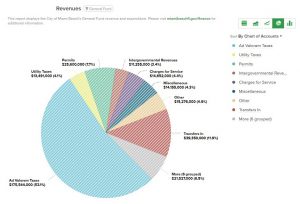
 

South Beach is a classic beach resort town – see the Wikipedia definition here – except that there are two de facto seasons: good (Summer and Early Autumn) and great (Late Autumn, Winter and Spring):

resort town, often called a resort city or resort destination, is an urban area where tourism or vacationing is the primary component of the local culture and economy. A typical resort town has one or more actual resorts in the surrounding area. Sometimes the term resort town is used simply for a locale popular among tourists. The term can also refer to either an incorporated or unincorporated contiguous area where the ratio of transient rooms, measured in bed units, is greater than 60% of the permanent population.[1]

Generally, tourism is the main export in a resort town economy, with most residents of the area working in the tourism or resort industry. Shops and luxury boutiques selling locally themed souvenirs, motels, and unique restaurants often proliferate the downtown areas of a resort town.

Resort Town Economy
If the resorts or tourist attractions are seasonal in nature, resort towns typically experience an on-season where the town is bustling with tourists and workers, and an off-season where the town is populated only by a small amount of local year-round residents.

In addition, resort towns are often popular with wealthy retirees and people wishing to purchase vacation homes, which typically drives up property values and the cost of living in the region. Sometimes, resort towns can become boomtowns due to the quick development of retirement and vacation-based residences.[3]

However, most of the employment available in resort towns is typically low paying and it can be difficult for workers to afford to live the area in which they are employed.[4] Many resort towns have spawned nearby bedroom communities where the majority of the resort workforce lives.

Resorts towns sometimes struggle with problems regarding sustainable growth, due to the seasonal nature of the economy, the dependence on a single industry, and the difficulties in retaining a stable workforce.[5]

Economic impact of tourism
Local residents are generally receptive of the economic impacts of tourism. Resort towns tend to enjoy lower unemployment rates, improved infrastructure, more advanced telecommunication and transportation capabilities, and higher standards of living and greater income in relation to those who live outside this area.[6] Increased economic activity in resort towns can also have positive effects on the country’s overall economic growth and development. In addition, business generated by resort towns have been credited with supporting the local economy through times of national market failure and depression, as in the case of San Marcos, California during the cotton market bust in the early 1920s and Great Depression of 1929.[2]

Click Photo to Expand – Lots of communities charge supplemental taxes for community revenues

Tourism, more exactly Resort Tourism, is the Number One economic driver in the Caribbean. Yet, our region has so many societal defects. We must do a better job at our primary job. What can we learn from Greater Miami, Miami Beach and South Beach?

This small peninsula of South Beach is Hot, Hot, Hot … as a party and tourist destination, thereby creating a scarcity of real estate. The dining, night-clubbing, shopping and entertainment options in this District are in high demand, all year long. Not all patrons to this District stay at area hotels, as many are locals in addition to the constant flow of visitors. Most night clubs, and even some restaurant-bars, apply a Cover Charge, typically $20 per person. These patrons should also expect to pay $40 just for valet parking, and similarly above-average prices for self-parking. Hotel rates are consistently above average, even during the off-season (consider $300 per night). During the peak-season, rates are traditionally in excess of $500. Hotel guests with rental cars face the same $40 per night parking charges.


The party continues every night until 5am; (one of the latest alcohol-serving policies in the nation).  Just like any other community, Miami Beach has to contend with Agents of Change. There is a conservative movement to dampen the hot nightlife in South Beach. These proponents raised the issue as a public referendum on November 7, 2017 with a measure, to limit liquor sales to 2am. This direct democratic action failed at a 64% to 35% ratio. The economic forces of South Beach won again!

These economic realities transcend many dimensions of Miami Beach life; consider governance. The City collects an add-on to the state’s usual Sales Tax revenues. What add-ons?

Transient Lodging Rental Taxes for Short Term Rentals Summary Chart
3% Convention Development Tax 2% Tourist Development Tax 1% Sports Franchise Tax
Food & Beverage Tax Summary Chart
2% Tourist Development Surtax 1% Homeless and Spouse Abuse Tax

Source: Retrieved December 5, 2017 from: http://www.miamidade.gov/taxcollector/tourist-taxes.asp

See this sample/example here of a typical night out at a local South Beach restaurant recently:

This movement, behind the Go Lean book, seeks to reform and transform the economic engines of Caribbean society by being technocratic in applying best practices from the field of Economics. South Beach and Miami Beach offers a lot of lessons: good, bad and ugly.

One bad lesson is the practice of guaranteed gratuity. In a previous blog-commentary, this policy was ridiculed as unbecoming as a community ethos; it fosters a spirit of entitlement. In fact, the practice is well-chronicled in the field of Economics as “rent-seeking”; consider this sample:

This is distinguished in economic theory as separate from profit-seeking, in which entities seek to extract value by engaging in mutually beneficial transactions.[6] While profit-seeking fosters the creation of wealth, rent-seeking is the use of social institutions such as the power of government to redistribute wealth among different groups without creating any new wealth.[7]

Note: For the restaurant receipt in the above-photo, the credit card bill, still contained a line item for additional tip, even though 20-percent was already added as a gratuity-service charge.

There it is: rent-seeking.

(Rent-seeking practices are quite common in the Caribbean; even codified as law in some places).

The Go Lean book serves as a roadmap for the introduction and implementation of the Caribbean Union Trade Federation (CU). The CU is designed to be a technocratic intergovernmental entity that shepherds economic growth for the Caribbean region. The goal is to reboot and optimize the region’s economic, security and governing engines. The Go Lean/CU roadmap employs wise strategies, like the “Separation-of-Powers between CU federal agencies and Caribbean member-state governments”; so the limitations of national laws in a member-state would not override the CU. The CU‘s technocratic practices would directly apply to the installation of Exclusive Economic Zones (EEZ) and Self-Governing Entities (SGE); these operate in controlled bordered territories like campuses, industrial parks, research labs, industrial plants and Entertainment Zones.

Notice the presence here of one such zone, already existing in Jamaica.

Title: Jamaica’s first entertainment zone named

Jamaica’s Entertainment Minister Olivia “Babsy” Grange, has named Fort Rocky in Port Royal as Jamaica’s first entertainment zone.

The minister made the announcement at the recent launch of Carnival in Jamaica 2018.

Drives cultural and economic value
Minister Grange said the new entertainment zone has been endorsed by the National Environment and Planning Agency (NEPA), along with the Town and Country Planning Authority.

“We are working with (NEPA) and the Ministry’s agencies, including the National Heritage Trust, to ensure that our cultural sites are preserved and utilized in a manner that drives cultural and economic value to us as a nation,” she noted.

Historical value
Entertainment zones like Fort Rocky are areas in which any legal entertainment and sports activity can be staged any time of day or night unhindered, as long as the organizers are mindful of the historical value of such sites.

While fueling the entertainment industry, these entertainment zones are expected to neutralize the problem of noise nuisance.

The Entertainment and Culture Minister has also called on private business operators to take advantage of the opportunity to use these zones. She provided information that two other entertainment zones will be declared outside of the Corporate Area in the near future.

Source: Retrieved December 6, 2017 from: https://www.caribbeannationalweekly.com/news/caribbean-news/jamaica-entertainment-zone/

The Go Lean/CU roadmap will optimize this strategy for deployment of Self-Governing Entities throughout the region.

Imagine restaurant-bars-nightclubs open until 5am.

This is the Economics of ‘South Beach’ … and a good learned-lesson.

Miami’s South Beach is a hot night-spot right now. What emboldens its success is the embrace of Caribbean culture. Think:

The concept of Miami Sound … is Caribbean musical fusion.

The name Miami Sound Machine also refers to the Grammy Award winning musical group led by Cuban-Americans Gloria and Emelio Estefan. They are also proprietors of one of the biggest night clubs on South Beach: Mango’s. See the VIDEO here:

VIDEO – Mangos Tropical Cafe in South Beach, Miami [4K] – https://youtu.be/D1TcBkaRyL4

Published on Nov 30, 2016 – A glimpse inside Mango’s Tropical Café in South Beach, Miami. Watch in 4K resolution.

Miami is Hot, Hot, Hot ordinarily.

Then in the winter peak-season, it is Hotter still …

… and then for Art Basel – the annual Arts in Miami pageant peaking this year December 6 to 11 – it is the Hottest destination in the country. See more here:

Title: It’s not only rich people who should care about Art Basel. Here’s why.

When flocks of serious — and seriously loaded — art gatherers descend on South Florida for the annual Art Basel in Miami Beach pageant, they’re coming to snag some of the best contemporary work money can buy from the 268 galleries from across the globe conveniently gathered at the city’s convention center.

But that’s not the sole reason they make their way to Miami Beach and Miami.

Many also come to see art they cannot buy — the increasingly rich side feast served up by the cities’ expanding range of museums and private art collections that are open to all.

Yes, there’s the warm weather, the nice hotels and restaurants (staffed by local workers) — not to mention the two dozen satellite fairs and myriad events that make up the annual December frenzy known as Miami Art Week. …

See the full story here:  http://www.miamiherald.com/news/local/community/miami-dade/article187161868.html

Source: Miami Herald posted December 2, 2017; retrieved December 6, 2017.

Caribbean people have done it in Miami; we can also do it in the Caribbean. This is the vision of a new Caribbean; a better place to live, work and play right here at home, without having to flee the region.

In total, the Go Lean/CU roadmap will employ strategies, tactics and implementations to impact its prime directives; identified with the following 3 statements:

  • Optimization of the economic engines in order to grow the regional economy to $800 Billion & create 2.2 million new jobs.
  • Establishment of a security apparatus to ensure public safety assurances and protect the region’s economic engines.
  • Improvement of Caribbean governance to support these engines.

The Go Lean book presents a 370-page roadmap on how to optimize the economic engines … and how to avoid bad practices, like rent-seeking. The book stresses key community ethos, strategies, tactics, implementations and advocacies necessary to transform and turn-around the eco-systems of Caribbean society. These points are detailed in the book as follows:

Community Ethos – Deferred Gratification Page 21
Community Ethos – Return on Investments Page 24
Community Ethos – Ways to Impact the Future Page 26
Community Ethos – Ways to Impact the Greater Good Page 37
Strategy – Vision – Confederate all 30 member-states/ 4 languages into a Single Market Page 45
Tactical – Separation-of-Powers – CU Federal Government versus Member-State Governance Page 71
Implementation – Ways to Pay for Change – Award exploratory rights in exclusive territories Page 101
Implementation – Start-up Benefits from the Exclusive Economic Zone (EEZ) Page 104
Implementation – Steps to Implement Self-Governing Entities (SGE) Page 105
Planning – 10 Big Ideas – #3: Proactive Anti-crime Measures Page 127
Planning – Ways to Improve Trade Page 128
Advocacy – Ways to Grow the Economy – Protect Property Rights Page 151
Advocacy – Ways to Create Jobs Page 152
Advocacy – Ways to Improve Governance Page 168
Advocacy – Ways to Better Manage the Social Contract Page 170
Advocacy – Ways to Enhance Tourism Page 190
Advocacy – Ways to Impact Events Page 191
Advocacy – Ways to Promote Fairgrounds Page 192
Advocacy – Ways to Impact Main Street Page 201

To accomplish this goal of elevating Caribbean society, we must learn lessons from far-away places and nearby lands (like Miami), foster good economic habits … and abandon bad ones. This is how to grow the economy: create jobs; create businesses; retain people; foster new opportunities, learn from past mistakes and accomplishments.

All Caribbean stakeholders – residents, Diaspora and visitors – are urged to lean-in to this Go Lean roadmap for change … and empowerment. This plan, though a Big Idea, is conceivable, believable and achievable. 🙂

Download the book Go Lean … Caribbean – now!

Sign the petition to lean-in for this roadmap for the Caribbean Union Trade Federation.

—————–

Appendix – Miami Top Employers

According to Miami’s Beacon Council – the local Economic Development agency – the top private employers in 2014 in Miami-Dade were:[64]

# Employer # of employees
1 University of Miami and Health System 12,818
2 Baptist Health South Florida 11,353
3 American Airlines 11,031
4 Carnival Cruise Lines 3,500
5 Miami Children’s Hospital 3,500
6 Mount Sinai Medical Center 3,321
7 Florida Power and Light Co. 3,011
8 Royal Caribbean International 2,989
9 Wells Fargo 2,050
10 Bank of America 2,000

According to Miami’s Beacon Council, the top Government employers in 2014 in Miami-Dade were:[64]

# Employer # of employees
1 Miami-Dade County Public Schools 33,477
2 Miami-Dade County 25,502
3 Federal Government 19,200
4 Florida State Government 17,100
5 Jackson Health System 9,800

Source: Retrieved December 5, 2017 from: https://en.wikipedia.org/wiki/Miami-Dade_County,_Florida#Economy

Share this post:
, , , ,
[Top]

Amazon: Then and Now

Go Lean Commentary

Time flies when you are …

Time just flies … PERIOD!

18 years can go by real fast.

It was only 18 years ago (1999) that Amazon was this small budding company in Seattle, Washington USA. Now today, they are huge … and transforming how America shops … for Christmas and beyond!

Notice the graphic here:

In a previous blog-commentary by the movement behind the book Go Lean … Caribbean, it was asserted that the retail industry – the greatest benefactor of the Christmas holiday shopping tradition with the estimate $107.4 Billion for 2017 – is being threatened by the Retail Apocalypse of e-Commerce in general and the internet-based mover-shaker company of Amazon in particular.

See the story here on Cyber Monday 2017 in the related VIDEO here:

Title Cyber Monday: Who won online shopping’s biggest day?

VIDEO – CNET Surveys Holiday Shopping Trends – https://www.cbsnews.com/videos/cnet-surveys-holiday-shopping-trends/


Published November 28, 2017 – Monday [(November 27)] broke shopping records, becoming America’s largest-ever online shopping day. Some $6.6 billion in sales were generated, according to Adobe Analytics, which tracks 80 percent of online shopping activity. By 10 a.m. Monday, $840 million had already been spent online, Adobe said — a jump of 17 percent from the year before.

Spending on Cyber Monday typically peaks in the evening, between 8 and 11 p.m., and shopping activity during that time on Monday exceeded that of a typical 24-hour day, according to Adobe Analytics.

So where are we spending all that money? In a word: Amazon (AMZN). The e-commerce giant accounts for somewhere between 45 percent and 50 percent of all sales by volume, according to separate estimates from SunTrust Robinson Humphrey and GBH Insights.
….
See the rest of the news article in the Appendix below.

How did they – Amazon – get here … so quickly?

Amazon: Then and Now

See here the width-and-breath of Amazon.com in 1999 in this 60 minutes Interview/Story:

VIDEO – What they said in 1999 about Amazon.com – https://youtu.be/6cTjhzSgdwE

Startup Cat

Published on Nov 20, 2017 – Interview look the year when the internet dotcom bubble burst dramatically. What they were saying about Amazon.com and Jeff Bezos?

Now see the width-and-breath of Amazon today … with this CNBC Feature/Story:

VIDEO – Inside Amazon Empire Documentary 2017 – https://youtu.be/_JnRzt8_YQc

Interesting Facts

Published on Sep 28, 2017 – Inside Amazon Empire Documentary 2017

———-

The Go Lean movement pays more than the usual attention to this “Amazon” business enterprise. We want to copy their good examples … and avoid their bad examples.

This company is a model for the Caribbean’s own venture into e-Commerce. The Go Lean book describes the design for the Caribbean Postal Union and the www.myCaribbean.gov web-portal so as to perform a lot of the same functionality that Amazon does in the USA.

The book Go Lean…Caribbean serves as a roadmap for the introduction and implementation of the technocratic Caribbean Union Trade Federation (CU) and the Caribbean Postal Union (CPU). These entities are designed to address the “Agents of Change“ in modern society, but for a Caribbean scope only.  The “Agents of Change” at play in the foregoing news sources, according to the book (Page 57), are defined as follows:

  • Technology
  • Globalization

Amazon and its CEO Jeff Bezos are role models that we can copy in the Caribbean. It is our assessment that one person can make a difference in society. Look at the impact of this one man – Jeff Bezos – in the fast-time of 18 years, since 1999. These above Agents-of-Change have disrupted Caribbean life in the past; now we need to be our own Change Agents. We need to forge our own change in our society so that we can survive as a culture on the world stage.

The future is not assured if we do not take a hold of our societal engines. We must reboot our industrial landscape to foster new opportunities (jobs, entrepreneurism and industrial development). This is the charter of the CU. In fact, the following 3 statements are identified as the prime directives of this CU charter:

  • Optimization of the economic engines in order to grow the regional economy to $800 Billion & create 2.2 million new jobs.
  • Establishment of a security apparatus to protect the resultant economic engines.
  • Improve Caribbean governance – as e-Commerce alters sales & border taxes – to support these engines.

What Amazon did and does, is the epitome of what the Caribbean Union Trade Federation needs to do to reboot Caribbean society. Amazon disrupted the status quo in so many industries – think: book retailers & movie rentals – and transformed markets to exploit opportunities and derive profits. This is the “Sum of All Caribbean Dreams“.

This reference to Caribbean Dreams is presented early in the Go Lean book with these opening pronouncements in the Declaration of Interdependence (Page 12 – 14):

xv. Whereas the business of the Federation and the commercial interest in the region cannot prosper without an efficient facilitation of postal services, the Caribbean Union must allow for the integration of the existing mail operations of the governments of the member-states into a consolidated Caribbean Postal Union, allowing for the adoption of best practices and technical advances to deliver foreign/domestic mail in the region.

xxiv. Whereas a free market economy can be induced and spurred for continuous progress, the Federation must install the controls to better manage aspects of the economy: jobs, inflation, savings rate, investments and other economic principles. Thereby attracting direct foreign investment because of the stability and vibrancy of our economy.

xxvii. Whereas the region has endured a spectator status during the Industrial Revolution, we cannot stand on the sidelines of this new economy, the Information Revolution. Rather, the Federation must embrace all the tenets of Internet Communications Technology (ICT) to serve as an equalizing element in competition with the rest of the world. The Federation must bridge the digital divide and promote the community ethos that research/development is valuable and must be promoted and incentivized for adoption.

The business models of Amazon have been further elaborated upon in previous blog-commentaries, as follows:

https://goleancaribbean.com/blog/?p=13091 Amazon Opens Search for HQ2
Amazon is accepting bids for a 2nd headquarters in North America. The city that lands HQ2 will have a lot to celebrate, as this enterprise can create many high-paying direct jobs – 50,000 – and have an indirect stimulus on the rest of the economy. This is a feature of Amazon that “we” want to model in the Caribbean.
https://goleancaribbean.com/blog/?p=12291 Big Tech’s Amazon – The Retailers’ Enemy
Big Tech companies like Amazon have the treasuries, talent and temperament (culture, values and commitment) to change the world, for good and for bad. The Amazon threat had been “all things internet”, but now they are attempting to dominate the physical retail space as well, with their acquisition of Whole Foods grocery stores.
https://goleancaribbean.com/blog/?p=11358 Retail Apocalypse – Preparing for the Inevitable
There is feast and famine “in the cards” for the retail eco-system. On one end of the spectrum , there will be prosperity for electronic commerce stakeholders, but on the other end, for brick-and-mortar establishments, there will be a Retail Apocalypse. This is not just a future problem as the, the threat has already manifested!
https://goleancaribbean.com/blog/?p=9839 Amazon and Alibaba’s Cloud allows for global reach
This model, with cutting-edge data centers, is the new colonialism. Amazon and Alibaba are people-intensive companies – lots of employment – but Information Technology (I.T.) companies too.
https://goleancaribbean.com/blog/?p=7297 Death of the ‘Department Store’: Exaggerated or Eventual
Modern technology and electronic commerce has transformed many aspects of society; much has been added and much taken away. Just consider: cameras, watches, pagers, maps, calculators, calendars, payphones, books, music and more. The related industries have also been affected: travel agencies, music retailers, book retailers, newspapers, travel agencies and Big Box retailers. Amazon is to blame for many of the transformations.
https://goleancaribbean.com/blog/?p=7023 Thanksgiving & American Commerce – Past, Present and Amazon
To better understand American commerce, one must understand Cyber Monday and its dominant player Amazon. This company demonstrates how to be lean and technocratic as it employs cutting-edge automation  and robotics. They are a great model for a new Caribbean.
https://goleancaribbean.com/blog/?p=1416 Model of an E-Commerce Fulfillment Company: Amazon
Amazon is the model for the Caribbean Postal Union (CPU): our means for delivering the mail. Considering the US, one might think that the American model would be the US Postal Service (USPS). No, the Go Lean book relates how the USPS is a failing enterprise, while Amazon flourishes with growth, capital and profits.

Understanding the Amazon business model is very important for the Caribbean’s effort to reform and transform the region. Creating the CPU and the Caribbean Cloud is “Step One, Day One” in the Go Lean roadmap. This will be a direct result of assembling and integrating the governmental agencies for postal mail for all 30 Caribbean member-states. The strategy calls for a separation-of-powers between the CU entities, like the CPU and the entities of the Caribbean member-states.

This is a win-win approach. Imagine the jobs! (See the indirect jobs production in the Appendix VIDEO below).

These postal agencies, under the current models, are inefficient, ineffective and unprofitable. But following the Amazon model can be transformative. We can do this; we can impact our communities and retail eco-systems in such positive ways.

We urge everyone in the Caribbean – citizens, businesses and governments – to lean-in to the empowerments in the CU/Go Lean roadmap. We can make our region better places to live, work and play. 🙂

Download the free e-book of Go Lean … Caribbean – now!

Sign the petition to lean-in for the roadmap for the Caribbean Union Trade Federation.

———-

AppendixCyber Monday: Who won online shopping’s biggest day? – Cont’d

By: Irina Ivanova, MoneyWatch

Amazon’s revenue take is somewhat smaller, thanks to the large number of third-party sellers on its platform. Amazon will have about 24 percent of the online shopping share this holiday season, STRH estimated, up from 20 percent last year.

eBay (EBAY), the online auction site, is the second-largest online shopping site, but its share of sales is in the “high single digits,” said Youssef Squali, managing director and senior analyst at STRH. Walmart (WMT) is No. 3.

Other factors feed into making this an exceptionally strong season for Amazon, not least of which is the availability of the Echo speaker and other “smart home” devices, which funnel shopping through the giant cybermerchant.

“Given a record breaking Prime Day in 2Q, continued momentum in 3Q, and the fact that this is just the second holiday season offering monthly Prime memberships (a service we view as most compelling during the holidays), we expect a record breaking holiday season for the company,” STRH analysts wrote in a note. Amazon’s market share typically peaks in the fourth quarter, they added.

The breakneck pace of Cyber Monday shopping comes on the heels of a strong retail showing over Thanksgiving day and Black Friday, the latter of which set an online sales record. Macy’s (M), JCPenney (JCP) and Kohl’s (KSS) each reported strong or record-setting sales over the weekend. Foot traffic in stores on Black Friday fell only about 1 percent from last year, according to ShopperTrak — less than many had feared.

Shoppers are bolstered by record stock market highs and soaring home values, analysts said.

“The economy is doing well, and when consumers feel confident, they’re going to spend,” said Aaron Shapiro, CEO of Huge, a digital marketing company.

“So far it’s been a really strong holiday season. The biggest winner has been the internet,” said Shapiro. “Combined with the fact that people tend to shop at the last minute, that portends a really strong holiday shopping season.”

Big as it may get, Cyber Monday is no match for the world’s largest shopping holiday. That would be China’s Singles’ Day, on Nov. 11, which this year generated a whopping $25 billion in sales (not to mention some 300,000 tons of carbon dioxide). Not bad for a holiday that’s less than a decade old.

Source: © 2017 CBS Interactive Inc. – Posted November 28; retrieved November 28, 2017 from: https://www.cbsnews.com/news/cyber-monday-who-won-the-biggest-day-in-online-shopping/

———-

Appendix VIDEO – Amazon Last Mile – https://www.cbsnews.com/videos/amazon-program-hires-self-employed-couriers/

Amazon’s FLEX, a little-known program to get your package to your doorstep.

Share this post:
, , , ,
[Top]

Future Focused – College, Caribbean Style

Go Lean Commentary

College is good!

College is bad!

This has been the conclusion of the movement behind the book Go Lean…Caribbean – available to download for free – from the beginning of our campaign to elevate Caribbean society. According to the book (Page 258), this bitter-sweet assessment is due to the fact that tertiary education in the Caribbean is:

  • Good for the individual (micro) – every additional year of schooling they increase their earnings by about 10%.
  • Good for the community (macro) – evidence of higher GDP growth in countries where the population has completed more years of schooling.
  • Bad for Brain Drain – if a person emigrates, all the micro and macro benefits transfer to the new country.

In the Caribbean status quo, our people do emigrate

… far too often. Of the 30 member-states that constitute the Caribbean region, some lands are suffering from an abandonment rate where the population is approaching a distribution where half of the citizens live in the homeland while the others live abroad – in the Diaspora. For some other countries, according to a World Bank report, the vast majority of the college-educated population – 70 to 81 percent – have fled.

This is the present; surely the future must be different, better. Surely “the pupil can become the master”.

The Go Lean book provides a 370-page turn-by-turn guide for forging a new future; it details “how” to adopt new community ethos, plus the strategies, tactics, implementations and advocacies so as to formulate change, to deviate from the current path and foster a new future. This would mean reforming and transforming the societal engines (education = economics) of Caribbean society. This Go Lean book serves as a roadmap for the introduction and implementation of the technocratic Caribbean Union Trade Federation (CU) for the elevation of Caribbean economic engines. This is a Future Focused roadmap.

This commentary continues this series on the Caribbean Future; this is Part 2 of 5 on this subject. The full series flows as:

  1. Future FocusedPersonal Development and the Internet
  2. Future Focused – College, Caribbean Style
  3. Future FocusedRadio is Dead
  4. Future FocusedPolicing the Police
  5. Future Focusede-Government Portal 101

As initiated in the previous commentary, a focus on the future mandates that we focus on young people and their educational and developmental needs. That consideration asserted that a new era of Internet and Communications Technologies (ICT) has transformed the delivery of Kindergarten to 12th Grade (K-to-12) offerings – Primary and Secondary. There are simple solutions in this sphere. But now we focus on the tertiary-level: College.

All of a sudden, it is not so simple anymore. This is because …

  • Primary-Secondary education is compulsory and mandated to be delivered by the government; college education is a privilege … and expensive.
  • State governments may fund an Education budget – for Primary-Secondary – with averages in the $4,000 range per student per year, while college tuition may average $4,000 per class per semester.
  • Student loans may be necessary and could burden students (and their families) for decades afterwards.
  • Peripheral activities forge their own industrial landscape, think textbooks and college athletics.
  • K-12 education caters to children, while college education caters to adults, therefore romantic entanglements can arise.
  • K-12 facilities may be around the corner, while college campuses may be around the world, thusly requiring visas, other travel authorization/documentation and relocations.

Can tertiary education be delivered better for the Caribbean without the travel/relocation?

Absolutely! We can study in the region, lowering the risks of abandoning the homeland.

This is not our opinion alone; see the recent news article/Press Relese here relating the new emphasis for regional college matriculation, by the facilitation of Intra-Caribbean College Fairs:

Title: St. Lucia College Fair 2017

PRESS RELEASE: The Department of Education, Innovation and Gender Relations will be staging the annual Saint Lucia College Fair at The Finance Administrative Centre, Pointe Seraphine, Castries on Wednesday 1st November from 10:00 a.m. to 6:00 p.m. and Thursday 2nd November from 9:00 a.m. to 6:00 p.m.

Participating in this year’s College Fair will be representatives from local educational institutions and institutions from the Caribbean Region.  The theme of this year’s College Fair is: “Empowering a Nation Through Education”.

The objectives of the Fair are to:

  • help prospective students and their parents make informed decisions about further education;
  • provide interested Saint Lucians with an opportunity to discover the diversity of higher education in the Caribbean;
  • provide interested participants with career guidance counseling which will be conducted through structured interviews that assesses the participants’ interests, skills, values, career decisions and lifestyle preferences;
  • limit the amount of time and money spent when applying to tertiary institutions; and
  • provide regional institutions with a unique opportunity to diversify their student population by recruiting a high calibre of students from St. [Lucia].

The public is was invited to attend the fair on the date and time specified to meet with the recruiters and advisors from the participating institutions. 

For further information please contact the Human Resource Development Unit of the Department of Education, Innovation and Gender Relations, 4th Floor, Francis Compton Building, Waterfront, Castries or at Telephone Numbers 468-5229/5434/5430/5431/.
Source: Posted October 20, 2017; retrieved November 9 from: https://stluciatimes.com/2017/10/20/st-lucia-college-fair-2017

The Go Lean book – published in November 2013 – also detailed the strategy of College Fairs, to showcase the local/ region offerings and also to introduce/highlight electronic learning (e-Learning) options. The book states (Page 85) this excerpt:

This Department in the Executive Branch [of the CU] coordinates the region’s educational initiatives across the member states. Education has been a losing proposition for the region in the past – many students studied abroad and never returned. Now, the CU posits that e-Learning initiatives are primed for ubiquitous deployment in the region. The CU will sponsor College Fairs for domestic and foreign colleges that deliver online education options. The CU’s focus will be to facilitate learning – without leaving.

In 2017, a focus on the future for college education must also consider “cyber reality” and/or the Internet. This consideration is embedded in the Go Lean roadmap. In fact, the book presents the good stewardship so that Internet & Communications Technologies (ICT) can be a great equalizing element for leveling the playing field in competition with the rest of the world.

Can tertiary education be delivered over the internet?

Absolutely! We can study here, without leaving; the future is now!

There are many offerings and options. See here, for an encyclopedic reference for “College Fairs”-like for Online Schools:

Quick Guide

Bottom of Form

Online colleges and online education are really just “distance learning” with a computer and wifi. And distance learning is now nearly 300 years old. The simple fact is that people have, for a very long time, needed to learn without being able to “go to school.”

Students needing to learn “offsite” and go “online” have included pioneers in far flung lands, persecuted minorities barred from conventional instruction for religious and other reasons, and ordinary folks like us with full-time responsibilities such as a day job and family.

Online colleges and universities make learning possible where otherwise it would be impossible: from the skills people need to advance in a job, to the subjects required for a college degree, to ideas that enrich their understanding of the world.

Using three different technologies—mail, TV, and telephone—allowed distance learning courses to meet all kinds of learning needs, but the hope existed that some newer technology would come along that could recreate the classroom experience.

A huge step in making that happen occurred with the development of the personal computer and the Internet. It took a while for modem technology to gain use in distance learning, but once it did, online educational platforms started popping up all over the place, first by connecting private computers directly, but later on the Internet. Add in the benefits of updated teleconferencing technologies, and it’s no wonder that six million postsecondary students take at least one fully online class every year.

Related:

Source: Retrieved November 9, 2017 from: https://thebestschools.org/online-colleges/guide-online-colleges/

This CU/Go Lean roadmap details many aspects of the economic eco-system, not just education alone. In fact, the roadmap features these 3 prime directives – all Future Focused:

  • Optimization of the economic engines in order to grow the regional economy to $800 Billion and create 2.2 million new jobs.
  • Establishment of a security apparatus to ensure public safety and protect the resultant economic engines.
  • Improve Caribbean governance to support these engines, including a separation-of-powers between the member-states and CU federal agencies.

The Go Lean book stresses that transforming Caribbean education “engines” must be a regional pursuit. This was an early motivation for the roadmap, as pronounced in the opening Declaration of Interdependence (Pages 12 – 13):

xi. Whereas all men are entitled to the benefits of good governance in a free society, “new guards” must be enacted to dissuade the emergence of incompetence, corruption, nepotism and cronyism at the peril of the people’s best interest. The Federation must guarantee the executions of a social contract between government and the governed.

xxi. Whereas the preparation of our labor force can foster opportunities and dictate economic progress for current and future generations, the Federation must ensure that educational and job training opportunities are fully optimized for all residents of all member-states, with no partiality towards any gender or ethnic group. The Federation must recognize and facilitate excellence in many different fields of endeavor, including sciences, languages, arts, music and sports. This responsibility should be executed without incurring the risks of further human flight, as has been the past history.

xxvii. Whereas the region has endured a spectator status during the Industrial Revolution, we cannot stand on the sidelines of this new economy, the Information Revolution. Rather, the Federation must embrace all the tenets of Internet Communications Technology (ICT) to serve as an equalizing element in competition with the rest of the world. The Federation must bridge the digital divide and promote the community ethos that research/development is valuable and must be promoted and incentivized for adoption.

The Go Lean book presents a detail plan for elevating existing tertiary education options and adding new ones. This federal government – CU Trade Federation – will NOT be academicians, but it will facilitate new and better education options. The motivation of this charter is the recognition that college education has failed the Caribbean region. We need to double-down on the intra-Caribbean strategy – promoting the many universities among the 30 member-states – and e-Learning options.

This Caribbean-style is Future Focused.

See the many considerations of this strategy in these previous blog-commentaries from the Go Lean movement:

https://goleancaribbean.com/blog/?p=12645 Back to the Future: Textbooks or Tablets in School?
https://goleancaribbean.com/blog/?p=11520 Managing the ‘Strong versus the Weak’ – Lower Ed.
https://goleancaribbean.com/blog/?p=10845 Need Collegiate Sports in the Caribbean: Model of March Madness
https://goleancaribbean.com/blog/?p=9724 Bahamas Welcomes the New University; Hoping to Meet Local Needs
https://goleancaribbean.com/blog/?p=8373 A Lesson in Economic Fallacies – Student Loans As Investments
https://goleancaribbean.com/blog/?p=4487 FAMU is No. 3 for Facilitating Economic Opportunity
https://goleancaribbean.com/blog/?p=1256 Is Traditional 4-year Degrees Terrible Investments for the Caribbean?

This effort, as detailed in this commentary, is not the first time Caribbean-style college education has been presented to the world. No, there are a number of Medical Schools in the Caribbean that invite foreign students from around the world to come and study – matriculate here; see VIDEO in the Appendix below. The “pupil has become the master”. We are saying:

Be our guest!

Now we want to expand that invitation to the Caribbean world.

We will open our arms … and our offering … and our quality … and our delivery (e-Learning).

Can we improve college education in the Caribbean? Yes, we can! This is not easy; it is heavy-lifting; but it is conceivable, believable and achievable.

We can also be the guests of colleges and universities abroad, with e-Learning! This is the kind of Future Focused efforts that are needed to reform and transform Caribbean society, to make our homelands better places to live, work, learn and play. 🙂

Download the free e-Book of Go Lean … Caribbean – now!

Sign the petition to lean-in for this roadmap for the Caribbean Union Trade Federation.

————-

Appendix VIDEO – Which Caribbean Med School Should You Go To? – https://youtu.be/1cza2RUkrmg

Buck Parker, M.D.

Published on Jul 25, 2017 – Which Caribbean Med School Should You Go To? What are the best med schools in the Caribbean that will help you get residency in the United States as an international medical graduate? SUBSCRIBE: https://www.youtube.com/user/JHSurgery

Dr. Buck tells his experience as an IMG and gives you advice on what medical schools in the Caribbean are the best for gaining a residency in the United States as a doctor, surgeon, nurse, etc. Where should you go to become and international medical graduate that plans on working in America? Dr. Buck Parker, MD is a Board Certified General Surgeon …

  • Category: Education 
  • License: Standard YouTube License
Share this post:
, , ,
[Top]

Future Focused – Personal Development and the Internet

Go Lean Commentary

A true fact of the past is that “we cannot change it”.
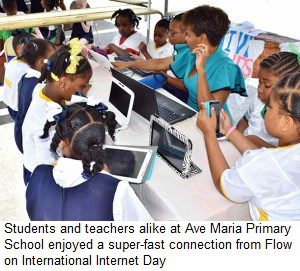
All we can do is learn from the past and change the future.

This quest has propelled the movement behind the book Go Lean…Caribbean – available to download for free. The book provides a 370-page turn-by-turn guide on “how” to adopt new community ethos, plus the strategies, tactics, implementations and advocacies so as to learn from Lessons in History then reform and transform the societal engines of Caribbean society for the future. In addition, there have been 31 previous blog-commentaries with the specific theme: Lessons in History; see the full list – to date – in the Appendix below.

The Go Lean book opened with this charter, to focus on the future (Page 3):

Our youth, the next generation, may not be inspired to participate in the future workings of their country; they may measure success only by their exodus from their Caribbean homeland.

We cannot ignore the past, as it defines who we are, but we do not wish to be shackled to the past either, for then, we miss the future. So we must learn from the past, our experiences and that of other states in similar situations, mount our feet solidly to the ground and then lean-in in, to reach for new heights; forward, upward and onward. This is what is advocated in this book: to Go Lean … Caribbean!

This Go Lean book serves as a roadmap for the introduction and implementation of the technocratic Caribbean Union Trade Federation (CU), for the elevation of Caribbean society – for all member-states. This CU/Go Lean roadmap has these 3 prime directives – all Future Focused:

  • Optimization of the economic engines in order to grow the regional economy to $800 Billion and create 2.2 million new jobs.
  • Establishment of a security apparatus to ensure public safety and protect the resultant economic engines.
  • Improve Caribbean governance to support these engines, including a separation-of-powers between the member-states and CU federal agencies.

This commentary introduces a series on the Caribbean Future; this is Part 1 of 5 on this subject. The full series is as follows:

  1. Future Focused – Personal Development and the Internet
  2. Future FocusedCollege, Caribbean Style 
  3. Future FocusedRadio is Dead
  4. Future FocusedPolicing the Police
  5. Future Focusede-Government Portal 101 – Available 11/15/2017

‘Focusing on the future’ mandates that the stewards of the Caribbean focus on our young people:

“I believe that children are the future; teach them well and let them lead the way” – See VIDEO in the Appendix below.

That is just a song; but this is life.

  • What is the hope for the Caribbean youth to be transformed in their development compared to past generations?
  • What transformations are transpiring in the region that shows willingness for the people and institutions to embrace the needed change?

In 2017, a focus on the future for young people must also consider “cyber reality” and/or the Internet. This consideration is embedded in the Go Lean roadmap. In fact, the book presents the good stewardship so that Internet & Communications Technologies (ICT) can be a great equalizing element for leveling the playing field in competition with the rest of the world.

See how these news articles (2) here have described certain ICT trends in the region, related to education and personal development:

Title #1: Flow and Ave Maria Mark World Internet Day
PRESS RELEASE: Castries, Saint Lucia, November 3rd, 2017 – On Wednesday November 1st 2017, the leading girls primary school in Saint Lucia celebrated International Internet Day with the nation’s and the Caribbean’s number one telecommunications service provider, Flow. Ave Maria Primary School hosted a number of activities for students, including encouraging them to come to school with internet-capable devices, which were powered with a free 100mMBps wireless internet connection.

The young ladies, guided by their teachers, were delighted to be able to do research online, including learning more about internet etiquette, online safety, the history, positives and negatives of the internet. Adriana Mitchel-Gideon, Flow’s product manager for broadband and TV, also met with Grade Six students to have an open and frank discussion about the internet, and to field their many questions.

The day has been celebrated worldwide on October 29th since 2005, to commemorate the first electronic message ever transferred from one computer to another, way back in 1969, in California, in the USA. International Internet Day is a reminder to all of us that this amazing invention started out with just two machines, long before we ever were able to login to trillions of websites put up by billions of users.

As part of its 2017 Christmas promotion, Flow is offering excellent kid-friendly deals on smartphones, TV and internet packages to delight any family.

Source: Posted November 3, 2017; retrieved November 8, 2017 from: https://stluciatimes.com/2017/11/03/flow-ave-maria-mark-world-internet-day 

———–

Title #2: Internet Week Guyana Advances Caribbean Technology Development Agenda
PRESS RELEASE: Around the world, the operations of cyber criminals far outstrip the sophistication of national legislative frameworks. Governments are facing constant pressure to assess global cyber threats and formulate appropriate local cyber security strategies.

Across the Caribbean, governments are building strategic partnerships with regional actors like the Caribbean Network Operators Group (CaribNOG) and the Caribbean Telecommunications Union (CTU). CaribNOG is the region’s largest volunteer-based community of network engineers, computer security experts and tech aficionados.

Recently, CaribNOG and the CTU were among the organisers of Internet Week Guyana, a five-day tech conference hosted by Guyana’s Ministry of Public Telecommunications, in collaboration with international bodies such as the Internet Society, the Internet Corporation for Assigned Names and Numbers (ICANN), the American Registry for Internet Numbers (ARIN), and the Latin America and Caribbean Internet Addresses Registry (LACNIC).

Catherine Hughes, Guyana’s first Minister of Public Telecommunications, said that the five-day event was part of the national agenda to build the country’s technology capacity in cybersecurity and other key areas.

“We encourage Caribbean governments to develop legislative agendas and increase intra-regional cooperation, in order to strengthen the region’s overall cyber security capability,” said Kevon Swift, Head of Strategic Relations and Integration at LACNIC.

“As law makers, governments play an important role in the regional response to cyber security challenges. But they cannot do their work alone,” said Bevil Wooding, Caribbean Outreach Manager at the American Registry for Internet Numbers (ARIN), and one of the founders of CaribNOG.

“The private sector, law enforcement, judiciary and civil society also have a responsibility to ensure that the region’s citizens and businesses are safer and more secure.”

Throughout the week, representatives from participating organisations also demonstrated practical ways in which stakeholders could work together to strengthen and secure Caribbean networks.

Stephen Lee, another CaribNOG founder, translated global cybersecurity issues into Caribbean priorities, outlining some of the challenges and opportunities of special relevance to the region.

Albert Daniels, Senior Manager for Stakeholder Engagement in the Caribbean at ICANN, outlined that organisation’s work in supporting secure network deployments around the world.

Shernon Osepa, Manager, Regional Affairs for Latin America and the Caribbean at the Internet Society, was on hand to formally launch the Internet Society Guyana Chapter, with Nancy Quiros, Manager of Chapter Development in Latin America and the Caribbean at the Internet Society, and Lance Hinds, Special Advisor to the Minister, who served as the chapter’s Interim President.

But it was a gathering of young people, hosted by the CTU on the conference’s closing day, that put the virtual exclamation mark on a highly impactful week. About 400 students from several secondary schools took part in the all-day agenda, which was packed with videos, interactive presentations and Q&A sessions, all designed to highlight the tangible dangers of unsafe online behaviour.

“The CTU continues to support the development of the Information and Communication Technologies (ICT) sector in the region including an emphasis on harnessing the potential of the youth. There’s a concerted effort to get the youth more involved in and make them aware of ICT issues which affect them, to cultivate a mindset of innovation and entrepreneurship, and to educate them on how to effectively use the power of technology that lies in their hands,” said Michelle Garcia, Communications Specialist at the CTU.

The day’s success was most evident in its aftermath. Even after the formal close, a tangible buzz lingered in the meeting room, with dozens of students staying back to introduce themselves to the expert panelists, many taking the opportunity to accost them with follow-up inquiries on the sidelines.

By all reports, this Internet Week will boost Guyana’s efforts to deliver on the promise locked up in that generation of future regional leaders. Now the real work must continue, in order to convert Caribbean potential into Caribbean reality.

Source: Posted October 17, 2017; retrieved November 8, 2017 from: https://stluciatimes.com/2017/10/17/internet-week-guyana-advances-caribbean-technology-development-agenda

The Go Lean book stresses that transforming Caribbean educational “engines” must be a regional pursuit. This was an early motivation for the roadmap, as pronounced in the opening Declaration of Interdependence (Pages 12 – 13):

xi. Whereas all men are entitled to the benefits of good governance in a free society, “new guards” must be enacted to dissuade the emergence of incompetence, corruption, nepotism and cronyism at the peril of the people’s best interest. The Federation must guarantee the executions of a social contract between government and the governed.

xxi. Whereas the preparation of our labor force can foster opportunities and dictate economic progress for current and future generations, the Federation must ensure that educational and job training opportunities are fully optimized for all residents of all member-states, with no partiality towards any gender or ethnic group. The Federation must recognize and facilitate excellence in many different fields of endeavor, including sciences, languages, arts, music and sports. This responsibility should be executed without incurring the risks of further human flight, as has been the past history.

xxiv. Whereas a free market economy can be induced and spurred for continuous progress, the Federation must install the controls to better manage aspects of the economy: jobs, inflation, savings rate, investments and other economic principles. Thereby attracting direct foreign investment because of the stability and vibrancy of our economy.

xxvi. Whereas the Caribbean region must have new jobs to empower the engines of the economy and create the income sources for prosperity, and encourage the next generation to forge their dreams right at home, the Federation must therefore foster the development of new industries … [and] invigorate the enterprises related to existing industries … impacting the region with more jobs.

xxvii. Whereas the region has endured a spectator status during the Industrial Revolution, we cannot stand on the sidelines of this new economy, the Information Revolution. Rather, the Federation must embrace all the tenets of Internet Communications Technology (ICT) to serve as an equalizing element in competition with the rest of the world. The Federation must bridge the digital divide and promote the community ethos that research/development is valuable and must be promoted and incentivized for adoption.

The Go Lean book presents the plan to deploy many e-Learning provisions so as to deliver on the ICT promise in educating our Caribbean youth. The book references the roles and responsibilities of e-Learning in many iterations; this shows the Future Focus of the Go Lean roadmap; see sample here:

  • 10 Ways to Foster Genius (Page 27)
    #2 – Starting Early – “HeadStart”
    One researcher that tried to provide a more complete view of intelligence is Psychologist Howard Gardner; his theory of Multiple Intelligences (MI), identified eight types of intelligence or abilities: musical – rhythmic, visual – spatial, verbal – linguistic, logical – mathematical, bodily – kinesthetic, interpersonal, intrapersonal and naturalistic. … Many parents and educators feel that these categories more accurately express the strengths of different children, for which the CU will implement HeadStart-like programs (academies, camps, e-Learning schemes and mentorships) to foster the early development of participants.
  • 10 Ways to Help Entrepreneurship (Page 28)
    #10 – e-Learning & Coaching – S.C.O.R.E.
    The CU advocates e-Learning schemes for tertiary (college), professional development and continuing education solutions. The CU will license/regulate these online programs at the regional level so as to certify and audit the practice. …
  • 10 Ways to Impact Research and Development (Page 30)
    #4 – STEM Education Facilitation
    The quest to excel in science, technology, engineering and mathematics will start at K-12 Magnate & charter schools. At the tertiary level, the CU will give grants, scholarships & loans (forgive-able), especially focusing on e-learning schemes.
  • 10 Ways to Close the Digital Divide (Page 31)
    #2 –
    Libraries & e-Learning
    The CU will facilitate the construction and refurbishing of community libraries, with the emphasis on delivering computer access. The CU’s Millennium Library (see Appendix OA on Page 293) design features a good quantity of computer workstations, conference rooms, video conferencing, and e-Whiteboards. These tools are required for e-Learning facilitations. So citizens can enroll in online classes even if they do not have computer access, as the libraries will fill the void.
  • 10 Tactics to Forge an $800 Billion Economy (Page 70)
    #10 – Education
    Basic economic principles, identified as early as with Adam Smith’s Wealth of Nation landmark literary publication [in 1776], dictate that every year of education raises a country’s GDP by a measurable amount. For the Caribbean, the benefits have been elusive in the past because of the unfortunate pattern of a brain drain, with students matriculating abroad and never returning – all of the investment but none of the return. – See Appendix C2 on Page 258.
    The CU’s new leanings of e-Learning will fulfill the education investment objectives without the risk of a brain drain. The end result: the educated work place will impact near-mid-long term benefits for the CU region, estimated in the 3% range for annual growth.
  • 10 Reasons to Repatriate to the Caribbean (Page 118)
    #9 – Educational Inducements in the Region
    The CU will facilitate e-Learning schemes for institutions in the US, Canada and the EU. The repatriates will have an array of educational choices for themselves and their offspring (legacies). This will counter the previous bad experience of students emigrating for advanced educational opportunities and then never returning, resulting in a brain drain.
  • 10 Ways to Create Jobs (Page 152)
    #6 – Steer More People to S.T.E.M. Education and Careers
    Education does not have to be matriculated abroad, as e-learning industries abound, lessening brain drain, online classes emerge for even the highest degrees. Standards, certifications & accreditations would dictate public-private investment in start-up ventures for educating science (including health & medical), technology, engineering and mathematics fields.
  • 10 Ways to Improve Education (Page 159)
    #2 – Promote Industries for e-Learning
    For 50 years the Caribbean has tolerated studying abroad; unfortunately many students never returned home. The CU’s focus will now be on facilitating learning without leaving. There have emerged many successful models for remote learning use electronic delivery or ICT. The CU will foster online/home school programs, for secondary education, to be licensed at the CU level so as to sanction, certify, and oversee the practice, especially for rural areas/islands. At the tertiary level, the CU will sponsor College Fairs for domestic and foreign colleges that deliver online education options.

The future – of electronic learning systems – is now! The technology is ready and the Caribbean youth is ready. We only need to deploy the delivery models to allow our students to matriculate online. See the profile of this American company that is currently available in many communities in the US:

http://www.k12.com/

We can do this ourselves … here and now.  We can use the internet to foster personal development for students, young and old. The foregoing news article related this quotation from the Caribbean Telecommunications Union (CTU):

“The CTU continues to support the development of the Information and Communication Technologies (ICT) sector in the region including an emphasis on harnessing the potential of the youth. There’s a concerted effort to get the youth more involved in and make them aware of ICT issues which affect them, to cultivate a mindset of innovation and entrepreneurship, and to educate them on how to effectively use the power of technology that lies in their hands,” said Michelle Garcia, Communications Specialist at the CTU.

This is the kind of Future Focused  effort that is needed to reform and transform Caribbean society. This is not easy – heavy-lifting – but it is necessary to make our homelands better places to live, work, learn and play. 🙂

Download the free e-Book of Go Lean … Caribbean – now!

Sign the petition to lean-in for this roadmap for the Caribbean Union Trade Federation.

———–

Appendix VIDEO – The Greatest Love Of All (lyrics) – Whitney Houston, A Tribute – https://youtu.be/hRX4ip6PVoo

TheMusic1022

Published on Feb 15, 2012

Whitney Elizabeth Houston (August 9, 1963 — February 11, 2012) was an American recording artist, actress, producer, and model. In 2009, the Guinness World Records cited her as the most-awarded female act of all time. Her awards include two Emmy Awards, six Grammy Awards, 30 Billboard Music Awards, and 22 American Music Awards, among a total of 415 career awards in her lifetime. Houston was also one of the world’s best-selling music artists, having sold over 170 million albums, singles and videos worldwide. … RIP Whitney, you and your wonderful music will always be in our hearts.

———–

Appendix – Lessons from History / Previous Blog-Commentaries

https://goleancaribbean.com/blog/?p=13420 A Lesson in History – Whaling Expeditions
https://goleancaribbean.com/blog/?p=12726 A Lesson in History – Colorado Black Ghost Towns
https://goleancaribbean.com/blog/?p=12722 A Lesson in History – ‘How the West Was Won’
https://goleancaribbean.com/blog/?p=12380 A Lesson in History – ‘4th of July’ and Slavery
https://goleancaribbean.com/blog/?p=10494 A Lesson in History – Ending the Military Draft
https://goleancaribbean.com/blog/?p=10336 A Lesson in History – Haiti’s Reasonable Doubt
https://goleancaribbean.com/blog/?p=9974 A Lesson in History – Pearl Harbor Realities
https://goleancaribbean.com/blog/?p=8767 A Lesson in History – Haiti 1804
https://goleancaribbean.com/blog/?p=7738 A Lesson in History – Buffalo Soldiers
https://goleancaribbean.com/blog/?p=7490 A Lesson in the History of Interpersonal Violence – Domestic
https://goleancaribbean.com/blog/?p=7485 A Lesson in the History of Interpersonal Violence – Street Crimes
https://goleancaribbean.com/blog/?p=7462 A Lesson in the History of Interpersonal Violence – Duels
https://goleancaribbean.com/blog/?p=6722 A Lesson in History – After the Civil War
https://goleancaribbean.com/blog/?p=6720 A Lesson in History – During the Civil War
https://goleancaribbean.com/blog/?p=6718 A Lesson in History – Before the Civil War
https://goleancaribbean.com/blog/?p=6531 A Lesson in History – Book Review of the ‘Exigency of 2008’
https://goleancaribbean.com/blog/?p=6189 A Lesson in History – ‘Katrina’ is Helping Today’s Crises
https://goleancaribbean.com/blog/?p=5183 A Lesson in History – Cinco De Mayo
https://goleancaribbean.com/blog/?p=5123 A Lesson in History – Royal Charter: Zimbabwe –vs- South Africa
https://goleancaribbean.com/blog/?p=5055 A Lesson in History – Royal Charter: Empowering Families
https://goleancaribbean.com/blog/?p=4971 A Lesson in History – Royal Charter: Truth & Consequence
https://goleancaribbean.com/blog/?p=4935 A Lesson in History – The ‘Grand Old Party’
https://goleancaribbean.com/blog/?p=4720 A Lesson in History – SARS in Hong Kong
https://goleancaribbean.com/blog/?p=4166 A Lesson in History – Panamanian Balboa
https://goleancaribbean.com/blog/?p=2809 A Lesson in History – Economics of East Berlin
https://goleancaribbean.com/blog/?p=2670 A Lesson in History – Rockefeller’s Pipeline
https://goleancaribbean.com/blog/?p=2585 A Lesson in History – Concorde SST
https://goleancaribbean.com/blog/?p=2480 A Lesson in History – Community Ethos of WW II
https://goleancaribbean.com/blog/?p=2297 A Lesson in History – Booker T –vs- Du Bois
https://goleancaribbean.com/blog/?p=1531 A Lesson in History – 100 Years Ago Today: World War I
https://goleancaribbean.com/blog/?p=789 A Lesson in History – America’s War on the Caribbean
Share this post:
, , ,
[Top]

Jerk Festival Time – GraceKennedy’s Outreach to the Diaspora – ENCORE

The word “Jerk” has a number of definitions; its is a noun, a verb, an adjective and an adverb. But it is more commonly accepted as …

… Jamaican.

So there is no doubt that a reference to a “Jerk” Festival is a Jamaican cultural festival. This is definitely the case this weekend – November 12, 2017 – as this event takes place in the heart of the Jamaican Diaspora in Broward County, Florida.

This event is sponsored by the Jamaican transnational company GraceKennedy. This is a BIG Deal for this BIG Jamaican enterprise. See the profile of GraceKennedy in the ENCORE below (from September 7, 2016) … and the VIDEO of the 2017 Jerk Festival here:

VIDEO – NBC6: Taste the Caribbean at the Jamaican Jerk Festival – https://www.nbcmiami.com/on-air/as-seen-on/Taste-the-Caribbean-at-the-Jamaican-Jerk-Festival_Miami-455626233.html

——–

Go Lean CommentaryGraceKennedy: Profile of a Caribbean Transnational Corporation

CU Blog - GraceKennedy - Caribbean Transnational Corporation - Photo 1A

The accusation is that the Caribbean – as a region, a people, and a culture – features a parasite status rather than the preferred protégé status. This would mean we only glean the economic activity left over from the other “host” countries; we would also consume the offerings and trends of these more advanced economy countries, rather than dictate our own trends.

This accusation … is mostly true!

But alas, there is a spark of hope in our Caribbean region. There are a number of corporate entities that do dictate trends in the region and throughout the world. The book Go Lean…Caribbean addressed this trend and identified one such company, Jamaica-based ATL Group, the owners of Sandals/Beaches Resorts, an Office Equipment business, Honda automobile dealerships and the media company behind The Jamaica Observer newspaper. But now, we consider another one, this time we focus on the transnational corporation, GraceKennedy Group of Companies who operate in the food and financial sectors.

But first, we must consider the definition of transnationalism:

Transnationalism as an economic process involves the global reorganization of the production process, in which various stages of the production of any product can occur in various countries, typically with the aim of minimizing costs. Economic transnationalism, commonly known as Globalization, was spurred in the latter half of the 20th century by the development of the internet and wireless communication, as well as the reduction in global transportation costs caused by containerization. Multinational corporations could be seen as a form of transnationalism, in that they seek to minimize costs, and hence maximize profits, by organizing their operations in the most efficient means possible irrespective of political boundaries.

multinational corporation is an organization that owns or controls production of goods or services in one or more countries other than their home country.[2]

What Drives Transnationalism?
Some argue that the main driver of transnationalism has been the development of technologies that have made transportation and communication more accessible and affordable, thus dramatically changing the relationship between people and places. It is now possible for immigrants to maintain closer and more frequent contact with their home societies than ever before. However, the integration of international migrations to the demographic future of many developed countries is another important driver for transnationalism. Beyond simply filling a demand for low-wage workers, migration also fills the demographic gaps created by declining natural populations in most industrialized countries. Today, migration accounts for 3/5 of population growth on western countries as a whole. And this trend shows no sign of slowing down. Moreover, global political transformations and new international legal regimes have weakened the state as the only legitimate source of rights. Decolonization, coupled with the fall of communism and the ascendance of human rights, have forced states to take account of persons qua persons, rather than persons qua citizens.

Immigrant Transnational Activities – When immigrants engage in transnational activities, they create “social fields” that link their original country with their new country or countries of residence. These social fields are the product of a series of interconnected and overlapping economic, political, and socio-cultural activities. As for economic transnational activities, these include business investments in home countries and monetary remittances from source countries. The Inter-American Development Bank (IDB) estimates that in 2006 immigrants living in developed countries sent home the equivalent of $300 billion in remittances, an amount more than double the level of international aid. This intense influx of resources may mean that for some nations development prospects become inextricably linked- if not dependent upon – the economic activities of their respective Diasporas.
Source: Retrieved September 5, 2016 from: https://en.wikipedia.org/wiki/Transnationalism

CU Blog - GraceKennedy - Caribbean Transnational Corporation - Photo 1

The GraceKennedy Group of Companies, started in 1922, is based in Kingston, Jamaica, but they are one of the Caribbean “largest and most dynamic corporate entities” in the region. Though they are based in Jamaica, they generate a lot of their global revenue – from food services and financial services – from the rest of the globe. They depend on globalization – economic transnationalism – in order to be an ongoing concern. Their marketing slogan is “Jamaican born; global bound”. They own 60 subsidiaries – see partial list in the Appendix below – and affiliated companies across the Caribbean, Africa, UK, North and Central America; they are a model of a transnational corporation. See VIDEO here:

VIDEO – GraceKennedy at 90 – https://youtu.be/okDBEAdC6LY

Published on Feb 10, 2012 – Jamaican conglomerate Grace Kennedy is celebrating 90 years of existence. The Gleaner recently toured its Harbour Street corporate office and learnt what drives the company’s success.

The history of this company traces a parallel arch of change in the Caribbean region for the 20th Century:

Regional Change Dynamics Year Company Dynamic Changes
European Colonialism 1922 Company formed to facilitate importation / local distribution
Decolonization 1952 Nation-building rather than mother-country dependence
Emigration from Homeland / Diaspora 1959 Export Caribbean home products to the world
Embrace of regionalism 1962 Incorporating in other Caribbean member-states
Shift to Service Economy 1990 Financial Services focus on Remittance

GraceKennedy has expanded and diversified over the years,[2] changing from a privately owned enterprise to a public company listed on the stock exchanges of Jamaica, Trinidad, Barbados and the Eastern Caribbean.

CU Blog - GraceKennedy - Caribbean Transnational Corporation - Photo 2

CU Blog - GraceKennedy - Caribbean Transnational Corporation - Photo 4

CU Blog - GraceKennedy - Caribbean Transnational Corporation - Photo 5

The company does not only appeal to the Jamaican community (domestic or Diaspora) or not only to the Anglo-speaking Caribbean; they also strategize for the Hispanic communities. In that vein, as reported in the foregoing VIDEO, in 2014 CU Blog - GraceKennedy - Caribbean Transnational Corporation - Photo 6GraceKennedy acquired La Fe Foods Inc., a top Hispanic consumer foods company – especially dominant in the frozen food category – in the US.

This transnational corporation aligns with the vision for societal elevation in the book Go Lean … Caribbean. These two visions actually parallel:

  • GraceKennedy – To be a Global Consumer Group delivering long term consumer and shareholder value, through brand building and innovative solutions in food and financial services, provided by highly skilled and motivated people.
  • Go Lean – To integrate and unify the Caribbean region into a Single Market Economy, enabling the homeland to be the best address on the planet, inviting our young people to participate in the effort to make our home the best place to live, work and play in the future. – Page 45.

The Go Lean book serves as a roadmap for the introduction and implementation of the technocratic Caribbean Union Trade Federation (CU). This is a call for confederating, collaborating and convening the 30 member-states of the region – despite the language or colonial legacy – into a Single Market; and for one federal governmental entity to optimize the economic, security and governing endeavors. This would also mean optimization of the food supply and financial services landscape. The Go Lean/CU roadmap creates the atmosphere for many more transnational corporations – homegrown and foreign – to emerge and thrive. This is part-and-parcel of the prime directives (3) of the CU/Go Lean roadmap:

  • Optimization of the economic engines – facilitating the growth in corporate citizens – in order to grow the regional economy to $800 Billion & create 2.2 million new jobs.
  • Establishment of a security apparatus to protect the resultant economic engines.
  • Improvement of Caribbean governance to support these economic engines, reflecting a separation-of-powers between CU agencies and member-state governments.

The CU seeks to facilitate better mastery of the advanced fields of economics by incentivizing, incubating and fostering entrepreneurial efforts, small-to-medium-businesses (SMB) and large multi-national corporations. This is how to create new jobs; jobs are not created by governments, but yet, the governmental administrations can implement the right climate to spur industrial and corporate growth. The job-creation solutions for the Caribbean, are not so much dependent on a specific government, but rather good corporate guidance.

A goal of the Go Lean/CU roadmap is to attract more transnational corporations, to establish a footprint in the Caribbean. How? Why? Why will they come to the Caribbean under the Go Lean/CU regime when they will not come now under the status quo? One answer is the structure of Self-Governing Entities (SGE), and Exclusive Economic Zones (EEZ). SGE refers to dedicated, bordered grounds that are ideal for corporate campuses, research laboratories, industrial bases (like shipyards, factory plants). The SGE structure will require a hybrid governance involving the CU federal agencies and local administrators influence– at the start-up.

The book Go Lean … Caribbean asserts that SGE’s and the EEZ can be strategic, tactical and operationally efficient for elevating Caribbean society – creating jobs. These points are pronounced early in the book with this Declaration of Interdependence (Pages 11 thru 14), with these statements:

v. Whereas the natural formation of our landmass and coastlines entail a large portion of waterscapes, the reality of management of our interior calls for extended oversight of the waterways between the islands. The internationally accepted 12-mile limits for national borders must be extended by International Tribunals to encompass the areas in between islands. The individual states must maintain their 12-mile borders while the sovereignty of this expanded area, the Exclusive Economic Zone, must be vested in the accedence of this Federation.

xxiv.  Whereas a free market economy can be induced and spurred for continuous progress, the Federation must install the controls to better manage aspects of the economy: jobs, inflation, savings rate, investments and other economic principles. Thereby attracting direct foreign investment because of the stability and vibrancy of our economy.

xxv.   Whereas the legacy of international democracies had been imperiled due to a global financial crisis, the structure of the Federation must allow for financial stability and assurance of the Federation’s institutions. To mandate the economic vibrancy of the region, monetary and fiscal controls and policies must be incorporated as proactive and reactive measures. These measures must address threats against the financial integrity of the Federation and of the member-states.

xxvi.  Whereas the Caribbean region must have new jobs to empower the engines of the economy and create the income sources for prosperity, and encourage the next generation to forge their dreams right at home, the Federation must therefore foster the development of new industries, like that of ship-building, automobile manufacturing, prefabricated housing, frozen foods, pipelines, call centers, and the prison industrial complex. In addition, the Federation must invigorate the enterprises related to existing industries tourism, fisheries and lotteries – impacting the region with more jobs.

xxx. Whereas the effects of globalization can be felt in every aspect of Caribbean life, from the acquisition of food and clothing, to the ubiquity of ICT, the region cannot only consume, it is imperative that our lands also produce and add to the international community, even if doing so requires some sacrifice and subsidy.

Though there is a need for more jobs, there is a legitimate fear to inviting more corporations. There are real-life experiences and stories of abuse in mono-industrial communities – Company Towns. Abuse by the “super-rich” is implied in the old adage: “golden rule is he who has the gold makes the rule”. But the Go Lean roadmap is designed to mitigate abuses of plutocracies. This is the advantage of the SGE structure; it allows for better promotion, oversight, and governance for transnational corporate expressions. These SGE’s would be regulated solely by the technocratic CU; there would be features like advanced monitoring (intelligence gathering) and embedded protections for whistleblowers.

CU Blog - GraceKennedy - Caribbean Transnational Corporation - Photo 3The Go Lean roadmap identifies 40,000 new direct jobs tied to SGE’s; plus more tied to industrial activities directly related to the business activities that aligns with GraceKennedy business model, such as 30,000 new direct jobs in the food supply industries and 2,000 direct jobs in the frozen foods industry. These job-creation empowerments will impact every aspect of Caribbean life throughout the Caribbean.

The Go Lean book details a series of community ethos, strategies, tactics, implementations and advocacies to foster industrial developments and SGE’s. The following list applies:

Community Ethos – Economic Principles – Economic Systems Influence Individual Choices Page 21
Community Ethos – Economic Principles – Voluntary Trade Creates Wealth Page 21
Community Ethos – Lean Operations Page 24
Community Ethos – Return on Investments Page 24
Community Ethos – Cooperatives Page 25
Community Ethos – Ways to Impact the Future Page 26
Community Ethos – Ways to Impact the Greater Good Page 32
Strategy – Vision – Confederate to form a Single Market Page 45
Strategy – Mission –  Build and foster local economic engines Page 45
Strategy – Mission –  Exploit the benefits and opportunities of globalization Page 46
Strategy – Mission –  Keep the next generation at home Page 46
Tactical – Fostering a Technocracy Page 64
Tactical – Separation of Powers – Commerce Department – Interstate Commerce Administration Page 79
Tactical – Separation of Powers – Department of Agriculture Page 88
Anecdote – “Lean” in Government Page 93
Implementation – Foreign Policy Initiatives at Start-up Page 102
Implementation – Start-up Benefits from the EEZ Page 104
Implementation – Steps to Implement Self-Governing Entities Page 105
Advocacy – 10 Big Ideas – Single Market Leverage Page 127
Advocacy – Ways to Improve Interstate Commerce Page 129
Advocacy – Ways to Better Manage Food Consumption – Export: Help Find Foreign Markets Page 156
Advocacy – Ways to Better Manage the Social Contract Page 170
Advocacy – Ways to Foster Cooperatives – Common for Agricultural Structures Page 176
Advocacy – Ways to Better Manage Natural Resources – Optimization of Pastoral Lands Page 183
Anecdote # 18 – Caribbean Industrialist: Sandals’ Butch Stewart Page 189
Advocacy – Reforms for Banking Regulations Page 199
Advocacy – Ways to Impact Wall Street – Expansion of local Securities markets Page 200
Advocacy – Ways to Impact Main Street Page 201
Advocacy – Ways to Develop a Frozen Foods Industry Page 208
Advocacy – Ways to Improve Fisheries – Canaries & Refrigerated Warehouse Cooperatives Page 210
Advocacy – Ways to Impact the Diaspora Page 217
Advocacy – Ways to Impact Rural Living – SGE Strategic Locations Page 235
Advocacy – Ways to Re-boot Jamaica Page 239

This commentary asserts that industrial development is hard-work. It is difficult now to get Direct Foreign Investors to consider individual Caribbean member-states, but with this new approach of a regional Single Market, a leveraged Caribbean – 42 million people – can be more attractive, appealing and inviting. Despite the appeal, executing this Go Lean/CU roadmap will still be hard; the book describes the effort as heavy-lifting.

Many of these heavy-lifting issues have been previously identified and detailed in prior Go Lean blog-commentaries. See this sample list:

https://goleancaribbean.com/blog/?p=8379 The Need for Technocratic Regulation of the SGE’s
https://goleancaribbean.com/blog/?p=5921 Socio-Economic Change: Impact Analysis of SGE’s
https://goleancaribbean.com/blog/?p=4037 How to Train Your ‘Dragon’ – Direct Foreign Investors
https://goleancaribbean.com/blog/?p=3473 Haiti’s Example of Success with an SGE: CaracolIndustrial Park
https://goleancaribbean.com/blog/?p=2750 Disney World – Role Model for Self-Governing Entities

This Go Lean movement, fostering a new Caribbean business climate, hereby applauds the corporate stakeholders at the GraceKennedy Group of Companies. We invite them to partner with us to make the Caribbean region a better place to live, work and play. But there is the need for a cautionary warning to them: the change that is coming has “plus & minus” ramifications for their business model.

There are aspects of the Go Lean roadmap that will not be good for some of GraceKennedy’s business model, remittances in particular. (While a GraceKennedy subsidiary is the regional partner representing Western Union in the Caribbean, the Go Lean book – Page 270 – introduces new electronic payment schemes that will lessen the need to pay for money transfers). It is clearly apparent in the Go Lean book, that change is not always good; sometimes it brings unintentional consequences. So if we know change is happening, it is best to get ahead of it. This point was stated poignantly at Page 252:

Opportunities abound; even if there is only little commerce to exploit now, there is opportunity enough in the preparation for the coming change. So act now! Get moving to that place, the “corner” of preparation and opportunity.

With the execution of this Go Lean roadmap, the Caribbean region sends a message to the business world: Change is afoot. There will be new partnerships and collaborations for corporate stakeholders. A message is sent to the Caribbean people as well: there are solutions to these complex problems befalling our society. Whereas the Caribbean may have been a parasite before, now we can function in the role of a protégé.

Like all parasites, their healthy disposition depends on a healthy disposition of the hosts. The Caribbean has been in crisis; therefore the parasitic people have fled – the Caribbean’s “brain drain” and Diaspora has grown as a result – not good. The successful execution of this roadmap will affect this disposition as well. We will and must do better! Optimizing the economic, security and governing engines in the region will lower the abandonment rate. This will also constitute change – good change – for the region.

The Caribbean homeland will then be a better place to compete globally and present more favorable options for our youth to stay home in the region.

Now is the time for all Caribbean stakeholders – corporate citizens included – to lean-in for the optimizations and empowerments described in the book Go Lean … Caribbean. This roadmap is conceivable, believable and achievable. 🙂

Download the free e-Book of Go Lean … Caribbean – now!

—————–

Appendix – List of Subsidiaries: GraceKennedy Group of Companies

  • Banking and Financial services
    • First Global Bank Limited
    • First Global Financial Services Limited
    • FG Funds Management (Cayman) Limited
    • First Global Trinidad & Tobago Limited (formerly One1 Financial Limited)
    • Signia Financial Group Incorporated
  • Remittances
    • GraceKennedy Remittance Services Limited
    • GraceKennedy Remittance Services (United States) Incorporated
    • GraceKennedy Remittance Services (Trinidad & Tobago) Limited
    • GraceKennedy Remittance Services (Guyana) Limited
  • Insurance Life and General
    • Allied Insurance Brokers Limited
    • EC Global Insurance Company Limited
    • First Global Insurance Brokers Limited
    • Jamaica International Insurance Company Limited
    • Trident Insurance Company Limited
  • Manufacturing, retail and distribution
    • Dairy Industries (Jamaica) Limited
    • Grace Foods and Services Company
    • GraceKennedy (Belize) Limited
    • Grace Food Processors Limited
    • Grace Food Processors (Canning) Limited
    • GraceKennedy (United States) Incorporated
    • Grace Foods International Limited
    • National Processors Division
    • World Brands Services Limited
    • Hi-Lo Food Stores (Jamaica) Limited
    • GK Foods (United Kingdom) Limited
    • GraceKennedy (Ontario) Incorporated
    • Hardware & Lumber Limited


Share this post:
, , , ,
[Top]

A Lesson in History – Whaling Expeditions

Go Lean Commentary

There are “high-risk, high-return” industries and then there are “low-risk, low-return” industries.
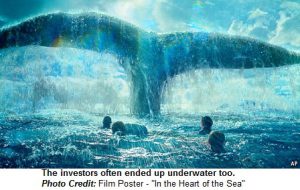
There is much for the Caribbean to learn about hedging and mitigating risks from the high-risk industries. The lessons learned should be considered for forging the best-practices for gleaning those high-returns. In this case, we have the opportunity to reach back in the annals of time and learn-apply lessons from the history of the commercial whaling industry – see History of Whaling in the Appendix.

The high-risks in these enterprises were the whales – intelligent mammals of the sea that defied and defended against predators. See this dramatized in the movie “In the Heart of The Sea“; the trailer is embedded in the Appendix VIDEO below. Yet still, the whaling industry was so effective that the “cash crop” (whales) were almost rendered extinct. In this day, however, whaling is considered inhumane. This is an appropriate judgement for this foul practice!

If only … we can learn the best-practices of risk management from this industry and apply it in other humane industries and endeavors to derive high-returns. This is the point of the article here from this “Fin-Tech” column in the world-renowned Economist Magazine:

Title: The First Venture Capitalists – Before there were tech startups, there was whaling

NEW BEDFORD – Few industries involve as much drama and risk as whaling did. The last voyage of the Essex, which inspired Herman Melville’s classic, “Moby Dick”, and is the subject of a new film, “In the Heart of The Sea”, gives a sense of the horrors involved. The ship left Nantucket in 1819 and sailed for over a year before being destroyed by a whale it was hunting. The 20 crew members survived the sinking, but found themselves adrift in the Pacific in three longboats, with little food and no water. Three opted to stay on a desert island, from which they were rescued three months later, on the verge of starvation. The others sailed on, hoping to reach South America but dying one by one. At first the survivors buried the dead at sea; then they resorted to eating the corpses of their crewmates. When they ran out of bodies, they drew lots to decide whom to shoot and eat. Only five of the 17 were eventually rescued. By then, they were so delirious that they did not understand what was happening.

The only reason that anyone could be induced to take part in such a dangerous business was the fabulous profit that could be made. Gideon Allen & Sons, a whaling syndicate based in New Bedford, Massachusetts, made returns of 60% a year during much of the 19th century by financing whaling voyages—perhaps the best performance of any firm in American history. It was the most successful of a very successful bunch. Overall returns in the whaling business in New Bedford between 1817 and 1892 averaged 14% a year—an impressive record by any standard.

New Bedford was not the only whaling port in America; nor was America the only whaling nation. Yet according to a study published in 1859, of the 900-odd active whaling ships around the world in 1850, 700 were American, and 70% of those came from New Bedford. The town’s whalers came to dominate the industry, and reap immense profits, thanks to a novel technology that remains relevant to this day. They did not invent a new type of ship, or a new means of tracking whales; instead, they developed a new business model that was extremely effective at marshalling capital and skilled workers despite the immense risks involved for both. Whaling all but disappeared as an industry after mineral oil supplanted whale oil as a fuel. But the business structures pioneered in New Bedford remain as relevant as they ever were. Without them, the tech booms of the 1990s and today would not have been possible.

Most historians trace the origins of the modern company back to outfits like the Dutch East India Company and its British equivalent. These were given national monopolies on trade in certain goods or with certain places. This legally buttressed status allowed them to fund themselves by selling shares to the public, helping to get stock markets off the ground. The managers of these multinational enterprises were professionals with only small ownership stakes. Lower-level employees generally had no shareholding at all.

By eliminating dependence on individual owners or managers, these entities became self-perpetuating. But their monopolies also embroiled them in politics and led inevitably to corruption. Both the British and Dutch versions ended up requiring government bail-outs—a habit giant firms have not yet kicked.

The whaling industry involved a radically different approach. It was one of the first to grapple with the difficulty of aligning incentives among owners, managers and employees, according to Tom Nicholas and Jonas Peter Akins of Harvard Business School. In this model, there was no state backing. Managers held big stakes in the business, giving them every reason to attend to the interests of the handful of outside investors. Their stakes were held through carefully constructed syndicates and rarely traded; everyone was, financially at least, on board for the entire voyage. Payment for the crew came from a cut of the profits, giving them a pressing interest in the success of the voyage as well. As a consequence, decision-making could be delegated down to the point where it really mattered, to the captain and crew in the throes of the hunt, when risk and return were palpable.

At the top of the New Bedford hierarchy was an agent or firm of agents like Gideon Allen, responsible for the purchase and outfitting of the ship, the hiring of the crew and the sale of the catch. To give them an incentive to cut the best deals possible, the agents put up a big share of the investment. Those with the best reputation received better terms from the other investors. Captains, who ran the show while the ship was at sea, often put up capital as well. A similar system of incentives is used in the riskier reaches of the investment-management business today, notes Mr Nicholas.

Investors received half to two-thirds of the profits. The rest was divided among the crew in what was known as the “lay” system. A captain might get a 12th lay (one-twelfth of the remaining profit). In Melville’s novel, Ishmael, who was new to the business, was originally offered a 777th lay but managed to haggle a 300th. Although that would probably have proved a paltry amount, it was a stake nonetheless, and set a benchmark for future pay. Ishmael’s friend Queequeg, a cannibal from the South Sea islands, got a 90th lay because he had experience with a harpoon. Demand for experienced crewmembers was so high that the Essex’s ill-fated captain, George Pollard, was immediately given a second command on the ship that rescued him (which sank as well).

Every participant wanted to bring in returns quickly, but there were no artificial deadlines—nothing resembling what is now called “quarterly capitalism”. When whales became rare in accessible places, the crews from New Bedford extended their search to every corner of every ocean, however many years that took.

Safety in numbers
To ensure that they were not ruined by a few disastrous voyages, the whaling firms invested in multiple expeditions at the same time, much as the venture capitalists of today “spray and pray”. A study published in 1997 concluded that, of the 787 boats launched from New Bedford during the 18th century, 272 sank or were destroyed. The firm that belonged to George Howland was not atypical: of its 15 ships, between four and nine were at sea at any given moment. One was sunk by a whale, three lost at sea, two burned by their crews, one destroyed by a Confederate gunboat during America’s civil war and five abandoned in Arctic ice. Yet Howland died a millionaire in 1852.

It helped that most of the whalers of New Bedford were strict Quakers, who prized frugality and shunned ostentation. This helped them not only husband their own capital, which was needed to finance voyages, but also to win over other investors. Hetty Howland Green, one of the richest agents, was said to have made her own shoes and to have owned only one dress.

It also helped that they were open-minded: they readily employed anyone who could contribute to their ventures. Perhaps the single most important technological innovation used by New Bedford’s whaling fleet was the “Temple Toggle”, a harpoon tip devised by Lewis Temple, a former slave from Virginia.

But the whalers’ main asset was their business model. In the 1830s, the legislatures of six American states approved charters for whaling corporations giving them the right to raise capital by selling shares to the public—much the same corporate structure as the Dutch and British East India Companies. None of the six survived the 1840s. “The diffuse ownership structure of the corporations, and the reduced stakes held by their managers, likely diminished the incentives for the managers to perform their role diligently,” concludes Eric Hilt of Wellesley College. Given the expense of buying, outfitting and launching a boat into the perilous ocean, the link between risk and reward needed, it seems, to be tighter.

The lay system could work to the crew’s disadvantage, however. In an effort to reduce claims on the crew’s share of the profits, ruthless captains were said to abandon men on the trip home. (Similar shedding of employees is not unheard of at contemporary tech startups before a big payout.) Other schemes existed to cheat crew members, such as forcing them to buy clothing at inflated prices or to pay usurious interest on advances on their pay. And open-mindedness went only so far: although black sailors were not discriminated against in terms of pay, they were treated less well in other respects, receiving less food and worse quarters.

Yet the New Bedford system was undeniably effective. It soon emptied the oceans of whales, even as other lucrative opportunities emerged for daredevils determined to strike it rich, such as the California gold rush. “The same industrial growth that initially supplied markets and profits for whaling activity ultimately yielded opportunities more attractive than whaling to local capital,” wrote David Moment, a student at Harvard Business School, in 1957. In short, with returns dwindling, the crews and the capitalists turned to other ventures. But the business practices they developed are used in high-risk, high-return industries to this day.

Source: The Economist Magazine – posted Dec 30, 2015; retrieved November 1, 2017 from: https://www.economist.com/news/finance-and-economics/21684805-there-were-tech-startups-there-was-whaling-fin-tech

A key lesson from the history in this foregoing article is to arrange expeditions – one time ventures:

… a “business model that was extremely effective at marshalling capital and skilled workers despite the immense risks involved for both. Whaling all but disappeared as an industry after mineral oil supplanted whale oil as a fuel. But the business structures pioneered in New Bedford remain as relevant as they ever were.”

The movement behind the book Go Lean … Caribbean asserts that the region can enjoy high-risk returns from the industry of Shipbuilding and Ship-breaking. These industries are among the best for fostering new labor intensive jobs. There is no, to little,  industrial developments for these industries in the Caribbean now. It is the proposition here for the Caribbean member-states to engage in some high-risk investments and to incubate a Shipbuilding and Ship-breaking industry.

Shipbuilding?!

A classic form of maritime commerce. Imagine each ship – to be built/assembled – as a one-time venture, an expedition.

Ship-breaking?!

Disassembling ships for scrap metal and recycling. This, too, is a form of maritime commerce.
Imagine each ship – to be dismantled “cleanly” – as a one-time venture, an expedition.

These truly reflect the Industrial Reboot that the Caribbean region needs.

Shipbuilding and Ship-breaking have been a familiar theme for this Go Lean movement. We have detailed the historicity and economic prospects of these industry in these previous blog-commentaries:

https://goleancaribbean.com/blog/?p=12148 Commerce of the Seas – Lessons on Ship-breaking from Alang (India)
https://goleancaribbean.com/blog/?p=12146 Commerce of the Seas – Shipbuilding Model of Ingalls
https://goleancaribbean.com/blog/?p=2003 Where the Jobs Are in Maritime Commerce? Consider Ship-breaking done right!

As related in these commentaries, “all Caribbean members are islands or coastal territories – they can all be candidates for shipbuilding and ship-breaking. There is a need to reform maritime commerce for the Caribbean region; we can get more economic activity from this sector; the Go Lean book projects 15,000 new direct jobs in the shipbuilding and/or ship-breaking activities. The possibility of these new jobs is hope-inspiring. At last we can arrest the societal abandonment where men and women leave the community looking for any kind of work.”

The book Go Lean…Caribbean – available to download for free – serves as a roadmap for the introduction and implementation of the technocratic Caribbean Union Trade Federation (CU), for the elevation of Caribbean society – for all member-states. This CU/Go Lean roadmap has these 3 prime directives:

  • Optimization of the economic engines in order to grow the regional economy to $800 Billion and create 2.2 million new jobs; this would include entrepreneurial ventures and Industrial Reboots. In addition to direct job creation, there is the factor of indirect job-multipliers, in this case a 3.75 multiplier rate.
  • Establishment of a security apparatus to ensure public safety and protect the resultant economic engines.
  • Improve Caribbean governance to support these engines, including a separation-of-powers between the member-states and CU federal agencies.

The book stresses that reforming and transforming the Caribbean societal engines must be a regional pursuit. This was an early motivation for the roadmap, as pronounced in the opening Declaration of Interdependence (Pages 12 – 13):

xi. Whereas all men are entitled to the benefits of good governance in a free society, “new guards” must be enacted to dissuade the emergence of incompetence, corruption, nepotism and cronyism at the peril of the people’s best interest. The Federation must guarantee the executions of a social contract between government and the governed.

xvi. Whereas security of our homeland is inextricably linked to prosperity of the homeland, the economic and security interest of the region needs to be aligned under the same governance. Since economic crimes … can imperil the functioning of the wheels of commerce for all the citizenry, the accedence of this Federation must equip the security apparatus with the tools and techniques for predictive and proactive interdictions.

xxiv. Whereas a free market economy can be induced and spurred for continuous progress, the Federation must install the controls to better manage aspects of the economy: jobs, inflation, savings rate, investments and other economic principles. Thereby attracting direct foreign investment because of the stability and vibrancy of our economy.

The Go Lean book provides 370-pages of turn-by-turn instructions on “how” to adopt new community ethos, plus the strategies, tactics, implementations and advocacies to execute so as to reboot, reform and transform maritime commerce to benefit Caribbean society.

Tourism – and the current economic landscape – is not enough!

There is the need to deploy some new business models to accomplish this goal; we need “all hands on deck”: governments, citizens (including skilled labor groups – unions – and individuals), and financial institutions (banks and capital markets). The foregoing article related that whaling expeditions were propelled by creative financing models:

… allowed them to fund themselves by selling shares to the public …

The Go Lean roadmap seeks to optimize capital markets so as to facilitate industrial and entrepreneurial ventures. Consider these excerpts from the book detailing this strategy:

  • 10 Ways to Impact Wall Street – Page 200
    # 4 – Adopt Advanced Products
    The regional securities markets will be encouraged to adopt advanced financial products like mutual funds, ETF, REITs, commodities futures and options. These products attract more people to avail themselves of investment opportunities.
  • 10 Ways to Develop Ship-Building – Page 209
    # 1 – Lean-in for the Caribbean Single Market & Economy (CSME) Initiative

    The CU will allow for the unification of the region into one market, creating an economy of 30 member-states, 42 million people and 2010 GDP over $800 Billion. All of the member-states are either islands or coastal, therefore there are lots of coastline and harbors. Boats, yachts and ships are therefore plentiful in the region. Consistent with the CU’s mission for globalization, the region cannot just consume these vessels; we must create and build as well. There is a history of boatbuilding in the islands (slopes, schooners, clippers), but what had been missing to forge a formidable industry is the capital and the community “will”. The CU will now fill those gaps. The CU will tap the capital markets to secure long-term funding (stocks/bonds), prepare the labor force for advanced skill-sets, and negotiate treaties with “mature” EU states (i.e. Holland, Ireland) for master-apprentice labor-coaching. …

This commentary is a Lesson from History and also a study in “community ethos”. The Go Lean book defines (Page 20) this as the “fundamental character or spirit of a culture; the underlying sentiment that informs the beliefs, customs, or practices of a group or society; dominant assumptions of a people or period”. There may be good and bad community ethos.

Lessons from History are important to apply in modern society. Can we repeat the good habits that up-build society? Can we avoid the bad habits that tear-down communities?

Yes, we can …

Hunting, killing and harvesting whales were inhumane and reflective of a bad community ethos that man can dominate nature for his own profit.

Expeditions, on the other hand, reflected a good community ethos; “marshalling capital and skilled workers despite the immense risks” where good examples for investing in the future, to positively impact society. We can and should foster this ethos; we should pursue industrial reboots and incubate entrepreneurial endeavors for-and-in our Caribbean communities.

We can do this … and make our homeland a better place to live, work and play. 🙂

Download the free e-Book of Go Lean … Caribbean – now!

Sign the petition to lean-in for this roadmap for the Caribbean Union Trade Federation.

———-

Appendix: The History of Whaling

This article discusses the history of whaling from prehistoric times up to the commencement of the International Whaling Commission (IWC) moratorium on commercial whaling in 1986.

Modern whaling

At first slow whales were caught by men hurling harpoons from small open boats. Early harpoon guns were unsuccessful until Norwegian Svend Foyn invented a new, improved version in 1863 that used a harpoon with a flexible joint between the head and shaft. Norway invented many new techniques and disseminated them worldwide. Cannon-fired harpoons, strong cables, and steam winches were mounted on maneuverable, steam-powered catcher boats. They made possible the targeting of large and fast-swimming whale species that were taken to shore-based stations for processing. Breech-loading cannons were introduced in 1925; pistons were introduced in 1947 to reduce recoil. These highly efficient devices were too successful, for they reduced whale populations to the point where large-scale commercial whaling became unsustainable.

Source: Retrieved November 1, 2017 from: https://en.wikipedia.org/wiki/History_of_whaling

———–

Appendix VIDEO – In the Heart of the Sea – Final Trailer – https://youtu.be/K-H35Mpj4uk

Published on Nov 1, 2015 – Chris Hemsworth stars in Ron Howard’s IN THE HEART OF THE SEA, in theaters December 2015. http://intheheartoftheseamovie.com https://www.facebook.com/IntheHeartof…

Oscar winner Ron Howard (“A Beautiful Mind”) directs the action adventure “In the Heart of the Sea,” based on Nathaniel Philbrick’s best-selling book about the dramatic true journey of the Essex.

In the winter of 1820, the New England whaling ship Essex was assaulted by something no one could believe: a whale of mammoth size and will, and an almost human sense of vengeance.  The real-life maritime disaster would inspire Herman Melville’s Moby-Dick.  But that told only half the story.

“In the Heart of the Sea” reveals the encounter’s harrowing aftermath, as the ship’s surviving crew is pushed to their limits and forced to do the unthinkable to stay alive.


Share this post:
, , ,
[Top]