Category: Economics

150 Years of HBCU’s – ENCORE

This is the 150 anniversary of Howard University, one of the original Historically Black Colleges & Universities (HBCU). This Washington, D.C. private, co-educational, non-sectarian institution was federally chartered on March 2, 1867.

Shortly after the end of the American Civil War, members of The First Congregational Society of Washington considered establishing a theological seminary for the education of African-American clergymen. Within a few weeks, the project expanded to include a provision for establishing a university. Within two years, the University consisted of the Colleges of Liberal Arts and Medicine. The new institution was named for General Oliver Otis Howard, a Civil War hero, who was both the founder of the University and, at the time, Commissioner of the Freedmen’s Bureau. Howard later served as President of the university from 1869–74.[14]

U.S. Congress chartered Howard on March 2, 1867, and much of its early funding came from endowment, private benefaction, and tuition. An annual congressional appropriation administered by the U.S. Department of Education funds Howard University and Howard University Hospital.[15] – Retrieved 03-02-2017 from Wikipedia.
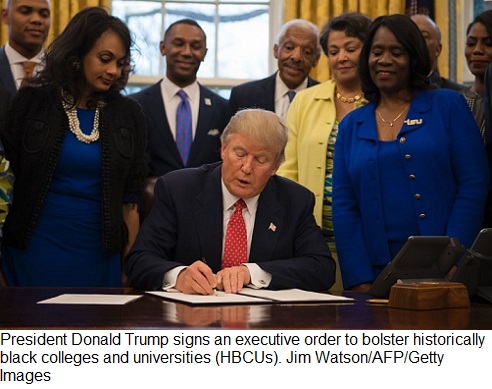
US-POLITICS-TRUMP-HBCU

Congratulations Howard!

Listen to this AUDIO-PODCAST of a news-talk show discussing this 150-year anniversary commemoration.

AUDIO-PODCAST: http://the1a.org/audio/#/shows/2017-03-02/more-than-money-building-a-new-future-for-hbcus/

playbutton-300x300

This is a great opportunity to ENCORE a previous blog-commentary from March 6, 2015, regarding a different HBCU, Florida A. & M. University (in Tallahassee, FL) and the impact this and other HBCU’s have on economic opportunities.  See that submission here-now:

========================

Go Lean Commentary – FAMU is No. 3 for Facilitating Economic Opportunity

This commentary is a big proponent of a college education for Caribbean citizens.

This commentary is a big opponent of a college education for Caribbean citizens in American colleges and universities. The reason for the ambivalence on college education is consistent: the benefit of social mobility; facilitating new economic opportunities. We need this upward mobility for Caribbean citizens but in the Caribbean.

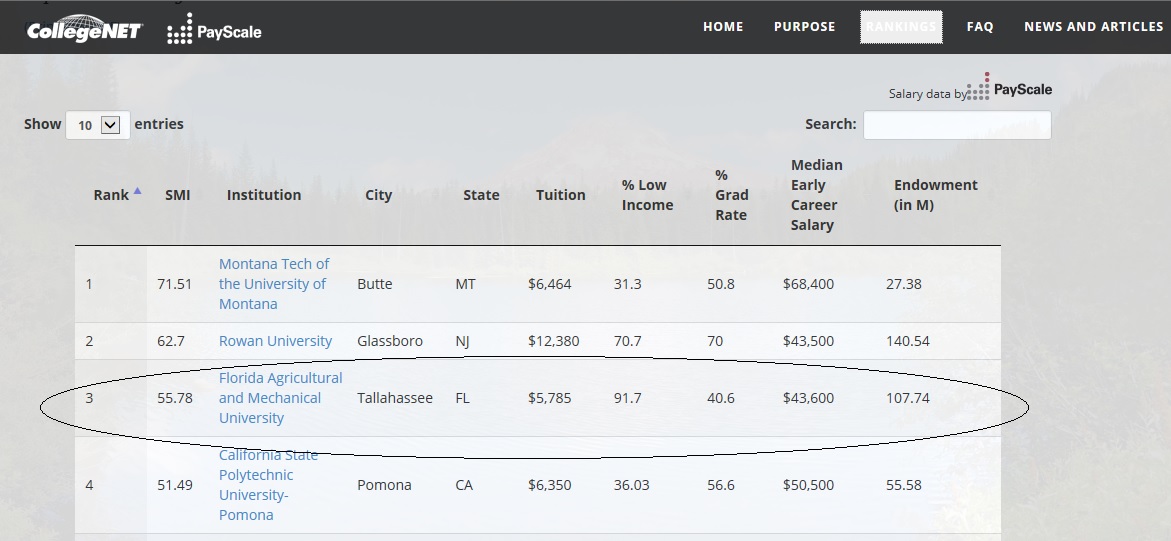
CU Blog - FAMU is No. 3 for Facilitating Economic Opportunity - Photo 1Some institutions are better at facilitating social mobility than others. On the National List of institutions, Florida Agriculture and Mechanical University (FAMU) stands out. It is #3 on the list.

In the interest of full disclosure, this writer is a Rattler, an alumnus of FAMU. (The mascot for FAMU athletics is ‘Rattlers’).

The chief goal of the Social Mobility Index (SMI), according to their website, is to stimulate policy changes within US higher education to help arrest the dangerous and growing economic divergence between rich and poor in the country. The gap in the US between rich and poor grew since the Great Recession, reaching proportions not seen since the period leading to and contributing to the onset of the Great Depression and two world wars. The common attributes include crumbling infrastructure, destroying asset values, and forcing high taxation to pay for war efforts.

If we learned anything from the global fallout of the Great Recession (in 2008 and beyond), it was that getting economic policy right in the US may be necessary for long-term world stability. So while the much publicized student debt overhang, now in excess of $1 trillion, imposes distress and financial burden on millions of students and families, it is a symptom of the much greater problem of economic and social divergence in the country. The good news is that colleges and universities carry great potential to powerfully address this problem.

Economist Thomas Piketty stated: “the principal force for convergence [reduction of inequality] – the diffusion of knowledge – …depends in large part on educational policies, access to training and to the acquisition of appropriate skills, and associated institutions.” – Capital in the 21st Century, pp. 21-2. The SMI asserts that if colleges can begin aggressively shifting policy towards increasing access to higher education, particularly for economically disadvantaged students and families, they will establish themselves as a key force for economic and social convergence.

FAMU has accomplished this feat; placing #3 on a ranking of universities pursuing this endeavor.

The full article of the recognition of FAMU’s SMI  is provided here:

Title: Social Mobility Index Ranks FAMU as No. 3 Institution in the Nation for Facilitating Economic Opportunity for Underserved Students
(Source: FAMU News and Events Site – Official Communications – Posted 11-01-2014; retrieved 03-05-2015 from http://www.famunews.com/?p=2153)
CU Blog - FAMU is No. 3 for Facilitating Economic Opportunity - Photo 3TALLAHASSEE, Fla. – The Social Mobility Index (SMI) has ranked Florida Agricultural and Mechanical University (FAMU) the No. 3 institution in the nation for facilitating economic opportunity for underserved students. The University outpaced the nation’s leading Ivy League institutions such as Princeton, Harvard and Yale, which placed 360th, 438th and 440th, respectively, on the rankings list.

The SMI is a new, data-driven ranking system, focused on the problem of economic mobility in the United   States. Rankings are based upon an institution’s tuition rate, student economic profile, graduation rate, average early career salary, and endowment.

According to SMI data analyses, FAMU ranks high in its contributions toward narrowing  socio-economic gaps by admitting and graduating more low-income students at lower tuition rates, yet with better economic outcomes following graduation. The University is noted on the SMI as having one of the lowest annual tuition rates in the nation.

“We are excited about the SMI recognition,” said President Elmira Mangum, Ph.D. “This new ranking speaks to FAMU’s 127-year legacy of providing access and opportunity to low-wealth citizens across the nation.”

“This ranking also speaks to our strong and unwavering commitment to economic empowerment. Many of our students come to FAMU with the odds stacked against them; however, they leave our institution with a high-quality education, a promising future, and the ability to be effective contributors to society, and, more specifically, to their families,” Dr. Mangum added.

Nearly 92 percent of FAMU students are considered low-income, according to SMI data. However, graduates are leaving the University earning an average salary of nearly $45,000 a year.

CU Blog - FAMU is No. 3 for Facilitating Economic Opportunity - Photo 2

For more information on the SMI ranking, visit: www.socialmobilityindex.org.

The book Go Lean…Caribbean posits, along with most economists, that education elevates individuals and entire communities. The book quotes that every year of additional community education raises GDP by 1 percent. Go Lean stakes the claim further that traditional college educated career paths have been disastrous policies for the Caribbean in whole, and for each specific country in particular, for the primary reason that so many students do not return home; or expatriate after returning for a short period. In fact, the World Bank has reported that the Caribbean has a 70% abandonment rate.

In line with the SMI ranking, the Go Lean book promotes education among the strategies to elevate Caribbean society. But this commentary previously asserted that college education has been a bad investment for the Caribbean.

From a strictly micro perspective, college education is great for the individual. The Go Lean book quotes proven economic studies showing the impact that every year of college education improves an individual’s earning power (Page 258). But from the macro perspective – the community – is different for the Caribbean; the region loses out because of an incontrovertible brain drain. Previously, the proverb was introduced of “fattening frogs for snake” referring to the preponderance for Caribbean college educated citizens to abandon their tropical homelands for foreign shores in the US, Canada and Europe, and take their Caribbean-funded education and skill-sets with them.

Change has now come. The driver of this change is technology and globalization. Under the tenants of globalization, institutions like FAMU are competing globally, and can rightly provide e-Learning and Distant Learning schemes. This ties to the other agent of change of technology. The internet allows for deliveries of education services anywhere around the world. The Go Lean book posits that small institutions and big institutions can complete equally on a global basis. If the regional education administrations could invest in more technological deliveries, it would be a win-win for all stakeholders. This type of impact would be more for the Greater Good.

The Go Lean roadmap provides turn-by-turn directions on how to reform the Caribbean tertiary education systems, economy, governance and Caribbean society as a whole. The roadmap commences with a Declaration of Interdependence, pronouncing the approach of regional integration (Page 12 & 14) as a viable solution to elevate the region’s educational opportunities:

xix. Whereas our legacy in recent times is one of societal abandonment, it is imperative that incentives and encouragement be put in place to first dissuade the human flight, and then entice and welcome the return of our Diaspora back to our shores

xxi. Whereas the preparation of our labor force can foster opportunities and dictate economic progress for current and future generations, the Federation must ensure that educational and job training opportunities are fully optimized for all residents of all member-states, with no partiality towards any gender or ethnic group. The Federation must recognize and facilitate excellence in many different fields of endeavor, including sciences, languages, arts, music and sports. This responsibility should be executed without incurring the risks of further human flight, as has been the past history.

xxvii. Whereas the region has endured a spectator status during the Industrial Revolution, we cannot stand on the sidelines of this new economy, the Information Revolution. Rather, the Federation must embrace all the tenets of Internet Communications Technology (ICT) to serve as an equalizing element in competition with the rest of the world. The Federation must bridge the digital divide and promote the community ethos that research/development is valuable and must be promoted and incentivized for adoption.

This book Go Lean… Caribbean, serves as a roadmap for the introduction and implementation of the Caribbean Union Trade Federation (CU). This represents change for the region. The CU/Go Lean roadmap has 3 prime directives:

  • Optimization of the economic engines in order to grow the regional economy.
  • Establishment of a security apparatus to protect the resultant economic engines.
  • Improve Caribbean governance to support these engines.

The Go Lean book details how education is a vital consideration for Caribbean economic empowerment, but with lessons-learned from all the flawed decision-making in the past, both individually and community-wise. The vision of the CU is a confederation of the 30 member-states of the Caribbean to do the heavy-lifting of championing better educational policies. No more government scholarships; forgive-able loans only from now on. The book details the policies; and other ethos to adopt, plus the executions of the following strategies, tactics, implementations and advocacies to deploy online education in the region:

Community Ethos – Deferred Gratification Page 21
Community Ethos – People Respond to Incentives Page 21
Community Ethos – Job Multiplier Page 22
Community Ethos – Lean Operations Page 24
Community Ethos – Return on Investments (ROI) Page 24
Community Ethos – Ways to Impact the Future Page 26
Community Ethos – Ways to Foster Genius Page 27
Community Ethos – Ways to Help Entrepreneurship Page 28
Strategy – Mission –   Facilitate Education without Risk of Abandonment Page 45
Tactical – Separation of Powers – Education Department Page 85
Tactical – Separation of Powers – Labor Department – Job   Training Page 89
Planning – Lessons Learned from 2008 Page 136
Advocacy – Ways to Grow the Economy Page 151
Advocacy – Ways to Create Jobs Page 152
Advocacy – Ways to Improve Education Page 159
Advocacy – Ways to Impact Student Loans Page 160
Advocacy – Ways to Improve Governance Page 168
Advocacy – Ways to Better Managed the Social Contract – Education Optimizations Page 170
Advocacy – Ways to Improve Libraries Page 187
Appendix – Education and Economic Growth Page 258
Appendix – Measuring Education Page 266
Appendix – Student Loan Crisis – Ripping Off America Page 286

FAMU is a model for the Caribbean tertiary educational endeavors.

FAMU has quite a reputation for other accomplishments as well – they are a great destination to live, work, learn and play. Their world famous band, the Marching 100 has been recognized as the “playingest band in the land”. They even shared the field with Prince as the Halftime performance for Super Bowl XLI in 2007 in Miami, Florida. See NewsVIDEO of their renown here; and also their 2011 Florida Classic Football Game Halftime Show in Orlando, Florida in the Appendix below.

VIDEOFAMU 2008 Segment on “CBS Evening News” – https://youtu.be/XqGvUg_rLNs


Posted November 27, 2008 – 2008 edition of the Marching 100… interview on Thanksgiving Night 2008 on CBS News… 11/27/08

Now is the time for all of the Caribbean, the people and governing institutions, to lean-in for the changes described in the book Go Lean … Caribbean. We welcome universities like FAMU in their desire to empower minorities in society; we only want that to be done in the Caribbean so as to mitigate societal abandonment. Suggestion: FAMU should develop a global campus presence, with satellite campuses and online matriculations.

Go Rattlers!!!

With the tune set by the Marching 100 band: “I’m so glad, I’m from FAMU”.

This is the win-win the Go Lean roadmap campaigns for. But it’s more than just talk; this is action too. The body part to focus on is not just the mouth; it is the heart – the seat of motivation. Without a doubt, the complete delivery for the Caribbean educational options would help to make the homeland a better place to live, work, learn and play. 🙂

Download the book Go Lean … Caribbean – now!

Sign the petition to lean-in for the roadmap for the Caribbean Union Trade Federation.

————–

Appendix VIDEO – FAMU Marching 100 Halftime Show @ Florida Classic 2011 – http://youtu.be/FrviGJ1Dvvk

Uploaded on Nov 21, 2011 – The FAMU Marching 100 Halftime Performance at The 2011 Florida Classic. Definitely the best band in the land.

Share this post:
, ,

Two Pies: Economic Plan for a New Caribbean

Go Lean Commentary

“Get your hands out of my pocket!” – Term used by another man in the room to cause a disturbance and distraction during the killing of Malcolm X in New York on February 21, 1965 – 52 years ago this week. See VIDEO in the Appendix below.
CU Blog - Two Pies - Economic Plan for a New Caribbean - Photo 4

The words above that were shouted to cause a disturbance are riot-inducing and can cause alarm for many communities. No one wants to think that someone unauthorized and unworthy may be pilfering hard-earned funds from innocent victims.

No one wants to be that victim!

CU Blog - Two Pies - Economic Plan for a New Caribbean - Photo 2This was a point of consideration in the conception of the book Go Lean…Caribbean. There was the inspiration to conceive an economic empowerment plan for all the Caribbean that would NOT take money out of one person’s pockets and give to another … unauthorized and unworthy. The solution?

Two pockets … or two pies.

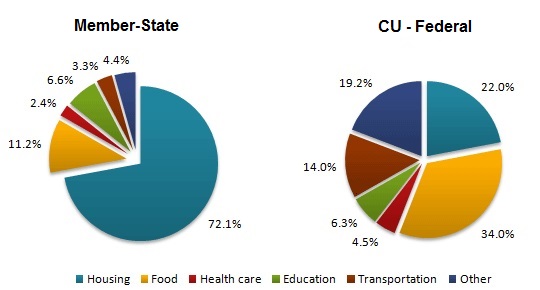
… pie as in a pie-chart; this is the graphical representation of the distribution of a budget. Pie-charts are very effective in expressing one amount in comparison to another amount. So when there are two pie-charts, it undoubtedly expresses that there are two different funds, no intermingling. That is the economic plan for the new Caribbean:

Two Pies.

CU Blog - Two Pies - Economic Plan for a New Caribbean - Photo 3b

This means that there are two different funds. The Go Lean book serves as a roadmap for the introduction and implementation of the technocratic Caribbean Union Trade Federation (CU). This is a regional integration effort to benefit the 30 member-states of the Caribbean. There are a lot of money issues to contend with – but no one person’s hands are in another person’s pockets. So all the money issues for CU are exclusive to the CU. This is true of money-economics and other facets of Caribbean life: security and governance. In total, these 3 prime directives explore the full dimensions of the roadmap:

  • Optimization of the economic engines in order to grow the regional economy to $800 Billion & create 2.2 million new jobs.
  • Establishment of a security apparatus to ensure justice institutions and protect the resultant economic engines.
  • Improve Caribbean governance including a separation-of-powers between the member-states and CU federal agencies to support the economic and security engines.

In order to reboot the societal engines there must be these Two Pies. The CU Trade Federation is designed to lead, fund and facilitate regional empowerment plans. But the plan is NOT for the individual member-states to write checks to the CU so as to share one state’s treasuries with another state. Rather, the CU Trade Federation creates its own funding – from regionalized services – and then encumbers the funds for each member-state to deliver the economic, security and governing  mandates. This is analogized as Two Pies:

  • One ‘pie‘ to represent the existing budgets of the member-states and how they distribute their government funding between government services (education, healthcare, etc.), security measures (Police, Coast Guards)
  • One ‘pie‘ to represent the CU funding from exclusive activities (Spectrum Auctions, Lottery, Exploration Rights, Licenses, Foreign-Aid, etc.).

All in all, the book, and accompanying blogs, declare that the proposed CU Trade Federation is a new governmental layer, and thusly creates a new government budget. This is a confederation; designed to enhance the governmental deliveries for the 30 member-states. This necessity is expressed as a pronouncement in the opening Declaration of Interdependence, (Pages 10 – 11) with the following statement:

Preamble: While our rights to exercise good governance and promote a more perfect society are the natural assumptions among the powers of the earth, no one other than ourselves can be held accountable for our failure to succeed if we do not try to promote the opportunities that a democratic society fosters.

xi. Whereas all men are entitled to the benefits of good governance in a free society, “new guards” must be enacted to dissuade the emergence of incompetence, corruption, nepotism and cronyism at the peril of the people’s best interest. The Federation must guarantee the executions of a social contract between government and the governed.

CU Blog - Two Pies - Economic Plan for a New Caribbean - Photo 1The vision of a confederation is an integrated Single Market for the 30 member-states of the Caribbean; this means the Dutch, English, French and Spanish speaking territories. This also includes the US territories of Puerto Rico and the US Virgin Islands. Tactically, the CU allows for a separation-of-powers between the member-state governments and the new federal agencies.

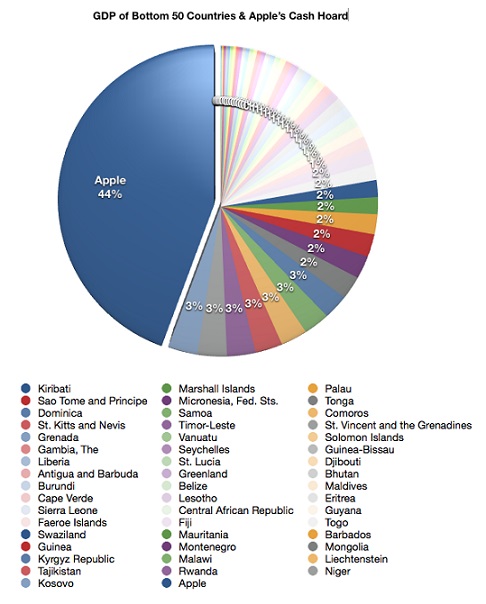
Currently the Caribbean member-states pockets are bare – these are all Third World destinations – even the US Territories of Puerto Rico and the Virgin Islands. Consider this First World comparison; consider Apple Corporation – the firm behind the iPhone, iPad, iTunes, etc. – due to their success in technology and business, they have a lot of money (cash on hand); a lot more than many Caribbean member-states … combined.

We need this CU roadmap to impact a turn-around for this region; we need the new “Pie” of the CU Single Market. The member-state’s economic engines – their “Pies” – are in crisis, but since a crisis would be a terrible thing to waste, we need to transform these economic engines for a new Caribbean by introducing the CU “Pie”, as follows:

  • Regional Capital Markets with a regional currency – Caribbean Dollar – would increase liquidity and lower the cost of capital. Rather than international debt, member-state governments and corporate institutions can avail themselves of lower financing costs, sometimes as low as 2% interest rates.
    Notice a glimpse of this vision in this previous blog-commentary:
    https://goleancaribbean.com/blog/?p=372 |  Dominica raises EC$20 million on regional securities market
  • Municipal financing – Debt by any governmental entity does not only reflect on the past, but impacts the future as well. Excessive debt can be so bad that at times the providers … and collectors of debt may be derisively called “vultures”. The CU pledges to re-purchase existing municipal debt and convert them to Caribbean Dollar instruments.
    Notice this portrayal in this previous blog-commentary:
    https://goleancaribbean.com/blog/?p=7601 |  Beware of Vulture Capitalists Commercial banking enhancements
  • Individual finance: Student Loans – Many Caribbean students obtained loans from their home countries, matriculated abroad and then never returned home. There was no return on investment and many times, no loan repayment. The CU pledges to buy outstanding loans (new, active and default) and enforce cross-border collections.
    Notice the details of this student loan crisis in this previous blog-commentary:
    https://goleancaribbean.com/blog/?p=8373 |  A Lesson in Economic Fallacies – Student Loans As Investments
  • Individual finance: Mortgages – Housing can be a great stimuli on the economy, but it is difficult for banks to recycle the capital that is tied up for 30 years without a Secondary Market. The CU pledges to deploy a Mortgage Secondary Market across the entire region (Go Lean book Page 83 and 199). This strategy will re-enforce banking within the region.
    Notice the issues associated with a dysfunctional mortgage eco-system in this previous blog-commentary:
    https://goleancaribbean.com/blog/?p=10187 |  Day of Reckoning for NINJA Loans
  • Individual finance: Retirement – Growing old in the Caribbean has become strained due to the high abandonment rate. National Pension plans depend on a macro structure where young people pay into the fund while the elderly withdraws from the fund. With so much emigration, the actuarial tables are distorted.
    Consider this previous blog-commentary that depicts a failing pension system in one member-state:
    https://goleancaribbean.com/blog/?p=2830 |  Jamaica’s Public Pension Under-funded
    … and one blog-commentary that describes how best to prosper:
    https://goleancaribbean.com/blog/?p=4222 |  Getting Rich Slowly in the Caribbean
  • Self-Governing Entities (SGE) – The Go Lean/CU roadmap features the installation of SGE’s as job-creating engines in many communities; these sites are ideal for technology laboratories, medical campuses, corporate parks, industrial sites, educational facilities and other forms of establishments situated inside bordered facilitates. They allow for an efficient process to launch and manage industrial efforts in the region. These types of installations will thrive under the strategies and tactics of the Go Lean roadmap. SGE’s do require governmental concurrence and maybe even public approvals – referendums – but only at the initiation. Beyond that, they are not a concern, or an expense, for local governments – they bring their own economic “Pie“.
    Consider this previous blog-commentary that details the dynamics of SGE’s:
    https://goleancaribbean.com/blog/?p=5921 |  Socio-Economic Change: Impact Analysis of SGE’s
  • Exclusive Economic Zones (EEZ) – The Go Lean/CU roadmap calls for the strategy of petitioning the United Nations Convention on the Law of the Sea (UNCLOS) for expanded territory in the Caribbean Sea for the CU to develop, explore, protect and exploit for the benefit to the Caribbean en-masse only. This means the CUPie” for revenues-and-expenses and not individual member-states.
    Consider this previous blog-commentary that details the dynamics of the EEZ:
    https://goleancaribbean.com/blog/?p=8819 |  Lessons from China – South China Seas: Exclusive Economic Zones

The Go Lean book details the series of community ethos, strategies, tactics, implementations and advocacies designed to create a federal “Pie” in the Caribbean region; see here:

Anecdote – Caribbean Single Market & Economy Page 15
Community Ethos – Money Multiplier Page 22
Community Ethos – Job Multiplier Page 22
Community Ethos – Lean Operations Page 24
Community Ethos – Ways to Impact the Future Page 26
Community Ethos – Ways to Impact the Greater Good Page 37
Strategic – Vision – Integrated Region in a Single Market Page 45
Strategic – Vision – Agents of Change Page 57
Tactical – Confederating a Non-sovereign Union Page 63
Tactical – Fostering a Technocracy Page 64
Tactical – Growing to $800 Billion Regional Economy Page 67
Tactical – Separation-of-Powers Page 71
Anecdote – “Lean” in Government – Optimizing Societal Engines Page 93
Implementation – Ways to Pay for Change Page 101
Implementation – Start-up Benefits from the Exclusive Economic Zone Page 104
Implementation – Steps to Implement Self-Governing Entities Page 105
Implementation – Ways to Better Manage Debt Page 114
Planning – Big Ideas for the Caribbean Region Page 127
Planning – Ways to Model the EU Page 130
Advocacy – Ways to Grow the Economy Page 151
Advocacy – Ways to Improve Governance Page 168
Advocacy – Ways to Better Manage the Social Contract Page 170
Advocacy – Reforms for Banking Regulations Page 199
Advocacy – Ways to Impact Wall Street Page 199

While the Caribbean needs its people, these people need a better Caribbean society – more prosperous. The region status quo is that “they got it bad”! Due to the many failures in the region, many people have fled to find refuge in foreign countries, resulting in a debilitating brain drain in the Caribbean, and thusly less people-less potential-less profits; so even more failure on top of failure.

The Go Lean roadmap for the CU stresses the need for this new “Pie“, the economics of a Caribbean Single Market. This theme was previously blogged on in so many previous Go Lean blog-commentaries; see sample here:

https://goleancaribbean.com/blog/?p=10043 Integration Plan for Greater Caribbean Prosperity
https://goleancaribbean.com/blog/?p=9595 Vision and Values for a ‘New’ Caribbean
https://goleancaribbean.com/blog/?p=8813 Lessons from China – Size Does Matter
https://goleancaribbean.com/blog/?p=841 Having Less Babies is Bad for the Economy
https://goleancaribbean.com/blog/?p=833 European Integration Currency Model: One Currency
https://goleancaribbean.com/blog/?p=599 Ailing Puerto Rico open to radical economic fixes
https://goleancaribbean.com/blog/?p=364 Time Value of Money
https://goleancaribbean.com/blog/?p=360 How to Create Money from Thin Air

Now is the time for all of the Caribbean – the people and governing institutions – to lean-in for the Caribbean integration re-boot, this Caribbean Union Trade Federation. We need the “Two Pies“. We need better engines to make our region more prosperous, to make it a better homeland to live, work and play. 🙂

Download the book Go Lean … Caribbean – now!

———

Appendix VIDEO – Malcolm X: Get your hand out my pocket – https://youtu.be/zHM8lAIFoU4

Uploaded on Jan 26, 2011 – Classic scene from a classic movie.


Share this post:
, ,
[Top]

Transforming ‘Money’ Countrywide

Go Lean Commentary

CU Blog - Transforming Money Countrywide - Photo 2Big changes are coming with electronic money (e-Money). The countrywide deployments will be transformative!

There are so many benefits:

  • Security – Smartchips and PIN options can ensure against unauthorized use.
  • Risk-aversive – The informal economy and Black Markets are mitigated, thereby fostering tax revenues.
  • Portability – e-Money can be used in Cyberspace and in the real world (merchant POS, ATMs).
  • Functional – Payroll and Government Benefits can be easily loaded; credit programs can also be added.
  • Far-reaching – Benefits outside of the payment transaction; the scheme increases M1, which increases available bank capital for community investments. (M1 is the measurement of currency/money in circulation – M0 – plus overnight bank deposits. As M1 values increase, there is a dynamic to create money “from thin-air”, called the money multiplier. The more money in the system, the more liquidity for investment and industrial expansion.)

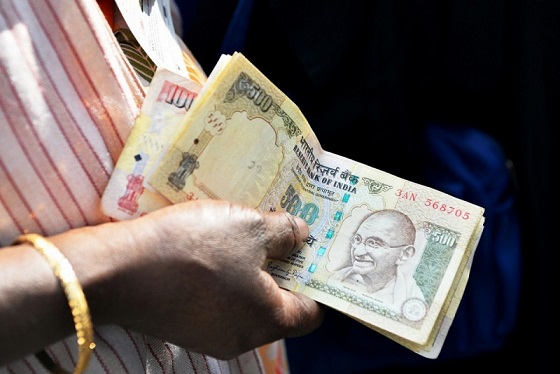
The actuality of e-Money is not just academic, it is ubiquitous in the role-model country of India, and their “rupee” currency. This emerging economy of 1.2 billion people forcibly transformed the money supply in their market this past year (November 8), with good, bad and ugly results. See the full story of the designs and developments here:

Title: What the U.S. can learn from India’s move toward a cashless society
By: Vivek Wadhwa, Distinguished Fellow at Carnegie Mellon University

CU Blog - Transforming Money Countrywide - Photo 1

Silicon Valley fancies itself the global leader in innovation. Its leaders hype technologies such as bitcoin and blockchain, which some claim are the greatest inventions since the Internet. They are so complex that only a few mathematicians can understand them, and they require massive computing resources to operate — yet billions of dollars are invested in them.

India may have leapfrogged the U.S. technology industry with simple and practical innovations and massive grunt work. It has built a digital infrastructure that will soon process billions more transactions than bitcoin ever has. With this, India will skip two generations of financial technologies and build something as monumental as China’s Great Wall and America’s interstate highways.

A decade ago, India had a massive problem: nearly half its people did not have any form of identification. When you are born in a village without hospitals or government services, you don’t get a birth certificate. If you can’t prove who you are, you can’t open a bank account or get a loan or insurance; you are doomed to be part of the informal economy — whose members live in the shadows and don’t pay taxes.

In 2009, the government launched a massive project, called Aadhar, to solve this problem by providing a digital identity to everyone based on an individual’s fingerprints and retina scans. As of 2016, the program had issued 12-digit identification numbers to 1.1 billion people. This was the largest and most successful I.T. project in the world and created the foundation for a digital economy.

India’s next challenge was to provide everyone with a bank account. Its government sanctioned the opening of 11 institutions called payment banks, which can hold money but don’t do lending. To motivate people to open accounts, it offered free life insurance with them and made them a channel for social-welfare benefits. Within three years, more than 270 million bank accounts were opened, with $10 billion in deposits.

And then India launched its Unified Payment Interface (UPI), a way for banks to transfer money directly to one another based on a single identifier, such as the Aadhar number.

Take the way that credit-card payments are processed: When you present your card to a store, the cashier verifies your signature and transmits your credit-card information to a billing processor such as Visa, American Express or MasterCard — which works with the sending and receiving banks. The billing processors act as a custodian and clearing house. In return for this service, they charge the merchants a fee of 2 to 3 percent of the transaction. This is a tax that is indirectly passed on to the customer.

With a system such as UPI, the billing processor is eliminated, and transaction costs are close to zero. The mobile phone and a personal identification number take the place of the credit card as the authentication factor. All you do is to download a free app and enter your identification number and bank PIN, and you can instantly transfer money to anyone — regardless of which bank he or she uses.

There is no technology barrier to prevent a UPI from working in the United States. Transfers would happen within seconds, even faster than the 10 minutes that a bitcoin transaction takes.

India has just introduced another innovation called India Stack. This is a series of secured and connected systems that allow people to store and share personal data such as addresses, bank statements, medical records, employment records and tax filings, and it enables the digital signing of documents. The user controls what information is shared and with whom, and electronic signature occurs through biometric authentication.

Take the example of opening a mobile-phone account. It is cumbersome everywhere, because the telecom carriers need to verify the user’s identity and credit history. In India, it often took days to produce all the documents that the government required. With the new “know-your-customer” procedures that are part of India Stack, all that is needed is a thumb print or retina scan, and an account can be opened within minutes. The same can be done for medical records. Imagine being able to share these with doctors and clinics as and when necessary. This is surely possible for us in the United States, but we aren’t doing it because no trusted central authority has stepped up to the task.

India Stack will also transform how lending is done. The typical villager currently has no chance of getting a small-business loan, because he or she lacks a credit history and verifiable credentials. Now people can share information from their digital lockers, such as bank statements, utility bill payments and life insurance policies, and loans can be approved almost instantaneously on the basis of verified data. This is a more open system than the credit0scoring services that U.S. businesses use.

In November, in a move to curb corruption and eliminate counterfeit bills, Indian Prime Minister Narendra Modi shocked the country by announcing the discontinuation of all 500- and 1,000-rupee (about $7 and $14) notes — which account for roughly 86 percent of all money in circulation. The move disrupted the entire economy, caused pain and suffering, and was widely criticized. Yet it was a bold move that will surely produce long-term benefit, because it will accelerate the push to digital currency and the modernization of the Indian economy.

Nobel Prize-winning economist Joseph Stiglitz said at the World Economic Forum meeting in Davos, Switzerland, that the United States should follow Modi’s lead in phasing out currency and moving toward a digital economy, because it would have “benefits that outweigh the cost.” Speaking of the inequity and corruption that is becoming an issue in the United States and all over the world, he said: “I believe very strongly that countries like the United States could and should move to a digital currency so that you would have the ability to trace this kind of corruption. There are important issues of privacy, cybersecurity, but it would certainly have big advantages.”

We are not ready to become a cashless society, but there are many lessons that Silicon Valley and the United States can learn from the developing world.
Source: Linked-in Business Social Media – Posted February 14; retrieved February 16, 2017 from:  https://www.linkedin.com/pulse/what-us-can-learn-from-indias-move-toward-cashless-society-wadhwa?trk=eml-email_feed_ecosystem_digest_01-hero-0-null&midToken=AQEaD9txxg6Yyw&fromEmail=fromEmail&ut=2MfxBMnV48eDE1

CU Blog - Transforming Money Countrywide - Photo 4Studying the lessons from other societies and deploying cutting-edge payment systems are missions of the movement behind the book Go Lean … Caribbean; it serves as a roadmap for the introduction and implementation of the Caribbean Union Trade Federation (CU) and the aligning Caribbean Central Bank (CCB). This Go Lean/CU/CCB roadmap depicts e-Money as a hallmark of technocratic efficiency, with agility to keep pace of technology and market changes.

To be ubiquitous – the capacity of being everywhere, especially at the same time – requires coordination of all engines of society. This is the quest of the Go Lean roadmap, to optimize these engines, as stated with these 3 prime directives:

  • Optimization of the economic engines in order to grow the regional economy to $800 Billion & create 2.2 million new jobs.
  • Establishment of a security apparatus to protect the resultant economic engines.
  • Improvement of Caribbean governance to support these engines.

The Go Lean/CU/CCB roadmap anticipated an e-Money scheme, one for cruise lines using smartchips payment-identity cards. This is part-and-parcel of the plan for a regional currency for the Caribbean Single Market, the Caribbean Dollar (C$), to be used primarily as an electronic currency. (A regional currency model exists with the Euro currency for 19 European states and 337 million people). These cashless schemes will impact the growth of the regional economy in both the domestic and tourist markets. Consider this one CU scheme to incentivize more spending among cruise line passengers:

The cruise industry needs the Caribbean more than the Caribbean needs the industry. But the cruise lines have embedded rules/regulations designed to maximize their revenues at the expense of the port-side establishments. The CU solution is to deploy a scheme for smartcards (or smart-phone applications) that function on the ships and at the port cities. This scheme will also employ NFC technology – (Near Field Communications; defined fully at Page 193 – so as to glean the additional security benefits of shielding private financial data of the guest and passengers.

This is an example of an electronic money scheme facilitating more commerce (e-Commerce). So the CCB will settle all C$ electronic transactions – cashless or accounting currency – in a credit card-style interchange / clearinghouse system.

There are a lot of details to “sweat out” – this is heavy-lifting. So the same as the U.S. can learn many lessons from India’s cashless moves in the foregoing article, the Caribbean can benefit too. A cashless society is the prize that mature economies want. It would be a win-win. See the portrayal of this Indian model in this Appendix VIDEO below.

The Go Lean book asserts that the Caribbean should keep their “eyes on the same prize” of a cashless society. If India can, then so can we; this Third World country is now considered an “emerging” economy for elevating more of their citizens to middle class status. The book posits that to thrive in the new global marketplace there must be an agile technocratic administration for the region’s currencies. This is the charge – economics, security and governance – of the Go Lean roadmap, opening with these pronouncements; Declaration of Interdependence (Page 13 and 14):

xxiv. Whereas a free market economy can be induced and spurred for continuous progress, the Federation must install the controls to better manage aspects of the economy: jobs, inflation, savings rate, investments and other economic principles. Thereby attracting direct foreign investment because of the stability and vibrancy of our economy.

xxv. Whereas the legacy of international democracies had been imperiled due to a global financial crisis, the structure of the Federation must allow for financial stability and assurance of the Federation’s institutions. To mandate the economic vibrancy of the region, monetary and fiscal controls and policies must be incorporated as proactive and reactive measures. These measures must address threats against the financial integrity of the Federation and of the member-states.

xxvii. Whereas the region has endured a spectator status during the Industrial Revolution, we cannot stand on the sidelines of this new economy, the Information Revolution. Rather, the Federation must embrace all the tenets of Internet Communications Technology (ICT) to serve as an equalizing element in competition with the rest of the world. The Federation must bridge the digital divide and promote the community ethos that research/development is valuable and must be promoted and incentivized for adoption.

The Go Lean book details a series of community ethos, strategies, tactics, implementations and advocacies to foster the proper controls for electronic/mobile payments in the Caribbean region:

Community Ethos – Economic Principles Page 21
Community Ethos – Money Multiplier Principle Page 22
Community Ethos – Security Principles Page 23
Community Ethos – Governing Principles – Lean Operations Page 24
Community Ethos – Governing Principles – Cooperatives Page 25
Community Ethos – Ways to Bridge the Digital Divide Page 31
Strategy – Mission – Fortify the monetary needs through a Currency Union Page 45
Tactical – Separation of Powers – Central Banking Page 73
Implementation – Assemble Central Bank Cooperative Page 96
Implementation – Ways to Deliver Page 109
Planning – 10 Big Ideas – #2: Currency Union / Single Currency Page 127
Anecdote – Caribbean Currencies Page 149
Advocacy – Ways to Grow the Economy Page 151
Advocacy – Ways to Create Jobs Page 152
Advocacy – Ways to Mitigate Black Markets Page 165
Advocacy – Ways to Foster Cooperatives Page 176
Advocacy – Ways to Impact Cruise Tourism – Smartcard scheme Page 193
Advocacy – Ways to Foster Technology Page 197
Advocacy – Ways to Foster e-Commerce Page 198
Advocacy – Reforms for Banking Regulations – Central Banking Efficiencies Page 199
Advocacy – Ways to Impact Main Street Page 201

The points of effective, technocratic currency stewardship were further elaborated upon in previous blog/commentaries. Consider this sample:

https://goleancaribbean.com/blog/?p=8381 A Lesson in Economic Fallacies – Casino Currency – US Dollars?
https://goleancaribbean.com/blog/?p=7140 Central Bank of Azerbaijan sets its currency on free float
https://goleancaribbean.com/blog/?p=7034 The Future of Money
https://goleancaribbean.com/blog/?p=6800 Venezuela sues black market currency website in US
https://goleancaribbean.com/blog/?p=6635 New Security Chip in Credit Cards Unveiled
https://goleancaribbean.com/blog/?p=5668 Move over Mastercard/Visa
https://goleancaribbean.com/blog/?p=4425 Cash, Credit or iPhone …
https://goleancaribbean.com/blog/?p=3889 RBC EZPay – Ready for Change
https://goleancaribbean.com/blog/?p=3881 The Need for Regional Cooperation to Up Cyber-Security
https://goleancaribbean.com/blog/?p=2074 MetroCard – Model for the Caribbean Dollar
https://goleancaribbean.com/blog/?p=1350 PayPal expands payment services to 10 markets
https://goleancaribbean.com/blog/?p=906 Bitcoin virtual currency needs regulatory framework to change image
https://goleancaribbean.com/blog/?p=833 One currency, divergent economies

There are things that we in the Caribbean want from India … and things we do not want.

We want their lessons learned so that we can get more impact in our society, like:

  • more cruise tourism spending
  • foster more e-Commerce
  • increase M1 money supply in our region
  • mitigate the informal economy and Black Markets,
  • steer oversight for technology engagements
  • grow the economy
  • create jobs
  • enhance security
  • optimize governance

India has to feed 1.2 billion people. We do not want that population! India has a large Diaspora scattered throughout the world. We do not want that either. We simply want our people to prosper where they are planted in our Caribbean homeland. This means we have to better compete, adjust and adapt to this ever-changing world.

Now is the time for all stakeholders of the Caribbean to lean-in for the empowerments described in the book Go Lean … Caribbean. This change can help to make the Caribbean a better place to live, work and play. 🙂

Download the book Go Lean … Caribbean – now!

—————

Appendix VIDEO – Digital payment providers cash in on India’s currency crunch – https://youtu.be/BvnL7ZjBfkk

Published on Dec 2, 2016 – Paytm and other digital payment providers in India are mobilising an army of workers to enrol small merchants and customers to permanently change their historic reliance on cash as they reap the benefits of the severe currency crunch affecting the country.

CU Blog - Transforming Money Countrywide - Photo 3Paytm and other digital payment providers in India are on an intensive campaign to woo small merchants and customers to permanently change their historic reliance on cash as they reap the benefits of the government’s currency clampdown.

From front page ads in national dailies to quirky social media posts, digital players including Paytm and MobiKwik have left no stones unturned to sign up people for mobile payments since Indian Prime Minister Narendra Modi’s announcement to ditch high value bank notes.

However getting shops and customers to go digital and shun their dependence on hard cash still remains a herculean task.

“The problem we face is that we are not educated enough to operate it (digital payment apps). We don’t have that smart phone that is why there are some problems,” said Lal Singh, a betel shop owner in one of New Delhi’s bustling markets, who uses a feature phone.

Around 65 percent of the mobile phones in India are feature phones which are used only for simpler calling and texting purposes.

Sales of cheap smartphones have boomed in recent years, but internet networks remain patchy, especially in rural India.

Credit Suisse estimates more than 90 percent of consumer purchases are made in cash, as millions still do not have bank accounts. Those who do have bank cards mainly use them to withdraw from cash machines. Financial literacy and technology usage also remains low, and many fear getting duped.

Modi’s push against black money has given digital payment providers an once-in-a-lifetime opportunity to expand their user base and the results have been promising so far, sparking widespread optimism.

MobiKwik, whose backers include U.S. venture capital firm Sequoia Capital and American Express, has added 150,000 merchants since the curb for a total of 250,000, and co-founder Upasana Taku said there has been a sea change in the modes of payment since the November 8 announcement.

“We look at it as a tectonic shift in user behaviour where people are now willing to adopt digital payments because the government has incentivised them. In many ways, this is the best marketing campaign any mobile wallet company could have ever wanted,” said Taku.

She is expecting a user base of around 150 million by next year.

Meanwhile, Paytm, India’s largest mobile payment and commerce platform and backed by Chinese Internet giant Alibaba Group Holding Ltd, has deployed a 10,000-strong sales force, and nearly doubled the number of small merchants signed up to its services to 1.5 million.

“So we were targeting 500 million users by 2020. Now, we are targeting them by 2018. So, we have fast forwarded that plan by two years and similarly, one lakh crore (1,000 billion) that’s the volume of dollar transaction volume that we were talking about, if we were targeting it in 2020, we are targeting it in 2018,” said Chief executive of Paytm, Vijay Shekhar Sharma.

There were concerns as well that once the cash crunch subsides, merchants and customers will go back to business as usual, using notes to pay for transactions but Sharma said the convenience value provided by the online payments will prevail over it.
Paytm now has 158 million clients, 8 million more since the note ban.

One of the factors which have prompted mom and pop stores and people to turn to Paytm and other e-wallet companies is that the new 2,000 rupee introduced by the government has turned out to be a blessing in disguise for the common man.

The hype regarding the new 2,000 rupee note was short lived as people were unable to use it to buy products for domestic purposes due to the non-availability of small money in the hands of shopkeepers and vendors at large.

The lack of 500 and 100 rupee bills in the market paved the way for e-wallet companies to become the way out for such vendors.
“This will give us a lot of relief. Exchange of change is a big issue. Some people have notes of higher denomination like 2,000 rupee notes, then how will we give the change for it,” said a roadside restaurant owner in Gurgaon, Bhuvan Kumar.

The move to demonetise the large bills is designed to bring billions of dollars’ worth of cash in unaccounted wealth into the mainstream economy, as well as dent the finances of Islamist militants who target India and are suspected of using fake 500 rupee notes to fund operations.

Share this post:
, , , ,
[Top]

Science of Sustenance – CLT Housing

Go Lean Commentary

Believe it or not, the Caribbean is the “best of times and the worst of times”. – Charles Dickens.

We have the greatest address on the planet – in terms of terrain, fauna/flora, hospitality, festivities, food, rum and cigars – but we have near-Failed-States as well, to the point that 70 percent of the educated classes have fled the region. The above Dickensian quote emerges as a strong parallel:

This phrase has been taken from the famous opening paragraph of Charles Dickens’ novel, A Tale of Two Cities. The novel opens as, “It was the best of times, it was the worst of times, it was the age of wisdom, it was the age of foolishness, it was the epoch of belief, it was the epoch of incredulity. – LiteraryDevices.com

This age of radical opposites in the Caribbean must be assuaged. But how? How do we implement a reboot and turn-around?

The book Go Lean … Caribbean asserts that we re-focus on basic needs – food, clothing, shelter and energy – and their required delivery systems. The book quotes that we must:

  • Feed Ourselves
  • Clothe Ourselves
  • House Ourselves – in the US, the National Association of Realtors® trumpets that “housing creates jobs”.

A consideration of the science of housing solutions, is therefore important and apropos for rebooting societal engines as housing requires local jobs and building materials. So it is a study in economics, security and governance.

But rebooting the delivery of housing in this year 2017 must dictate at least one additional criteria:

Adherence to Green principles.

Enter CLT for meeting housing- shelter needs; CLT = Cross Latinate Timber. Green building practices have helped CLT’s popularity, with its combination of environmental performance, sustainability, design flexibility, cost-competitiveness and structural integrity.

CU Blog - Science of Sustenance - CLT Housing - Photo 7

CU Blog - Science of Sustenance - CLT Housing - Photo 6

The Timber label discloses that the based material is wood; naturally grown on trees. This is as green as green gets; every tree cut down can be replaced with seedling for a new tree. But CLT is driven by forces in emerging science – see Appendix.

This is the focus of this commentary: science for rebooting the delivery of basic needs. This is 4 of 4 in this series covering: energy, food, clothing and shelter-housing. It is possible to deliver all basic needs without science. But for our modern world, the advances of science make a positive impact on daily life. So the full series for our consideration follows this pattern:

  1.    Science of Sustenance: Energy
  2.    Science of Sustenance: Food
  3.    Science of Sustenance: Clothing
  4.    Science of Sustenance: Shelter

The book Go Lean…Caribbean promotes advanced science and technology for Caribbean housing solutions, specifically trumpeting Smart Homes – home automation for security, communications, energy optimization, and house work.

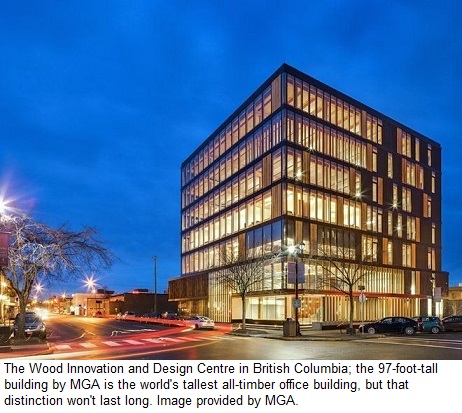
CLT is also a Smart Home option, in that its a smart building material. It is strong, safe and flexible. With CLT as building blocks, structures can actually be built tall … maybe even  skyscrapers. See a related new article here:

Title: Why a Wooden Office Tower may Symbolize the Future of Multi Story Construction
By: Patrick Sisson

CU Blog - Science of Sustenance - CLT Housing - Photo 1

“Office building goes up in Minneapolis” isn’t exactly a headline built to blow up Twitter. But the seven-story, 210,000-square-foot T3 commercial structure that broke ground at the end of July in the city’s North Loop neighborhood isn’t just any office.  A new home for the Hines development firm, T3 (Timber, Technology and Transit) will be the first tall-timber building of its type in the United States, a new spin on architecture utilizing a material that’s been a bedrock of construction for millennia. According to architect Michael Green, when it’s finished in late 2016, T3 will challenge assumptions many hold about wooden structures, and represent a massive technological leap beyond the old-school timber warehouses that surround it. Green, one of a number of architects worldwide specializing in tall-timber construction, sees buildings like this as part of a vanguard of sustainable construction technology that will be called upon to create taller and taller buildings going forward. With so much of our energy footprint going towards constructing and maintaining buildings, it only makes sense to move away from resource-intensive steel.

“It’s the beauty of what we’re doing here, incorporating modern technology with good, old ideas,” he says. “We’re not reinventing the wheel, we’re bringing back a very good wheel.

CU Blog - Science of Sustenance - CLT Housing - Photo 2

CU Blog - Science of Sustenance - CLT Housing - Photo 3

Green’s eponymous Canadian firm is perhaps best known for the seven-story Wood Innovation and Design Centre in Prince George, British Columbia, currently the tallest timber building in North America. For the T3 project, he’s been forced to start with a concrete foundation to meet code requirements, and the skeleton will be steel, but the vast majority of the structure will be wood sourced from the West Coast. The core and floorplates will be made from huge panels of engineered lumber that have been nailed and glued together, with support provided by engineered wooden columns (pressed together to replicate the load-bearing abilities previously provided by massive beams cut from old growth timber). The panels’ density actually means they won’t burn through completely, instead forming a protective layer of charcoal. It’s a marriage of old and new techniques, he says, that will provide a much more energy-efficient building due to the natural source materials. And, as opposed to concrete-and-steel structures that often draw in the cold, this wooden structure will provide insulation, a godsend in a cold climate such as Minneapolis.

While Europe has traditionally been the leader in re-developing timber as a building material for tall structures—The Stadthaus, a nine-story building in London built in 2008 with cross-laminated timber, was one of the forerunners of the modern wooden building boom—Green feels North America is starting to catch up.

“Height is happening, but it’s a slow process,” he says.  “There are a few projects in the U.S. being considered, and you’re starting to see innovation creep up.”

CU Blog - Science of Sustenance - CLT Housing - Photo 4

CU Blog - Science of Sustenance - CLT Housing - Photo 5

While there are scores of projects utilizing cross-laminated timber and heavy wood construction, one of the projects Green is most excited about is the recent $60M forestry school expansion at Oregon State University dedicated to advancing the technology behind timber construction. The concept reinforces the main ecological and economical advantages of the practice, the ability to harvest renewable resources for construction while concurrently redeveloping rural economies. As timber buildings get higher in cities across the country, different areas, such as the seismic West Coast or windy Midwest, will require unique systems and designs to start rising above 20 floors. Developing and sharing regional knowledge between builders, regulators and architects will be key to future acceptance, still a barrier to more widespread adoption.

“The U.S. government investment in building science technology represents .0001 percent of total innovation investment,” he says. “That’s a statistic that needs to be shouted from the roof tops.”

While the industry is just starting to get off the ground here, Green and his firm are aiming skyward. A perfect example is their recent proposal for a 35-story tower in Paris. Set to be submitted after the contentious battle over the Herzog & de Meuron tower, the first tall building of any type approved in Paris in decades, the MGA plan was abandoned. But that was because it was tall and in Paris, not tall and made of wood.

“We have a new means of building that can help us realize a new era of architecture, a post-climate era,” he says. “As this develops, we’ll see how this changes the look of our cities and buildings.

Related stories:

Source: Curbed.com – Urban Design Online Site – (Posted 08-12-2017; retrieved 02-02-2017) from: http://www.curbed.com/2015/8/12/9931212/minneapolis-t3-timber-construction-michael-green

———-

Appendix – About Curbed.com

Since 2004, Curbed has been an integral part of the online housing industry, and by providing analysis, coverage, and insight, we apply an editorial lens to the onslaught of information. Unlike a glossy shelter magazine, we see homes, architecture, interior design, cities, neighborhoods, and properties for sale as related points on a spectrum. An artfully styled home shoot isn’t the be-all-end-of-all in the life of a residence: It’s one station along a continuously evolving timeline.
Source: Retrieved February 3, 2017 from http://www.curbed.com/pages/about-curbed

A consideration of CLT raises a lot of questions:

  • What would CLT Housing mean for the Caribbean region?
  • Are CLT-made homes strong-safe for the tropical zone’s threat of hurricanes?
  • Are they strong-safe for earthquake threats?
  • Do they fit in with the traditional decor of Caribbean neighborhoods?

Answers:

  • CLT Housing in the Caribbean – This region is not known for tall skyscrapers, so 20 – 30 maximum stories would be ideal for urban areas.
  • Strong-safe for hurricanes – The options for 3, 5 or 7 layered timber blocks are just as strong as concrete and steel. These structures have been tested and graded for Category 4 storms.
  • Strong-safe for earthquakes – Wood is energy-absorbent; this flexibility allows buildings to withstand quakes better than concrete, brick or steel.
  • Traditional Caribbean Decor – The classic-colonial look of the region featured wooded homes and sharp colors; this is ideal for CLT.

The book Go Lean … Caribbean serves as a roadmap for the introduction and implementation of the technocratic Caribbean Union Trade Federation (CU), with a charter to elevate Caribbean society by optimizing the delivery of the region’s basic needs. With 144 missions, the dynamics of housing is identified specifically as one of the missions for the Go Lean/CU roadmap; so too the quest for Pre-Fab housing. The book highlights the CU’s prime directives, as described by these statements:

  • Optimization of the economic engines – including housing solutions – in order to grow the regional economy to $800 Billion & create 2.2 million new jobs.
  • Establishment of a security apparatus to protect the resultant economic engines.
  • Improvement of Caribbean governance to support these engines.

There are a lot of economic issues associated with the subject of building materials; this subject reflects heavily on the local availability of natural resources. The Caribbean member-states – many of them small islands – do not have a lot of iron ore for steel and limited quarry areas for concrete-cement. But trees are an inexhaustible resource. So a confederated union in the region or a cooperative could be a good solution for installing a factory to produce CLT products. See the manufacturing process  in the Appendix VIDEO below.

The Go Lean roadmap, and the foregoing article, calls for the region to double-down its efforts to ensure a quality delivery for housing and building materials. This need was identified early in the Go Lean book, in the opening pronouncement in the Declaration of Interdependence (Page 14), as follows:

xxvi. Whereas the Caribbean region must have new jobs to empower the engines of the economy and create the income sources for prosperity, and encourage the next generation to forge their dreams right at home, the Federation must therefore foster the development of new industries, like prefabricated housing .

The Go Lean … Caribbean roadmap constitutes a change for the region, a plan to consolidate 30 member-states into a Trade Federation with the tools/techniques to bring immediate change to the region to benefit one and all member-states. The roadmap calls for collaboration of the region’s housing needs at a CU federal agency. Though there is a separation-of-powers mandate between the member-states and federal agencies, the CU can still wield influence in this area by consolidating the purchasing of raw materials and equipment – think Group Purchasing Organizations. The CU empowerments would also allow for better coordination with commercial entities, non-governmental organizations (NGOs) and international stakeholders.

The book details the community ethos needed to effect change in this area, plus the executions of the following strategies, tactics, implementations and advocacies to impact the region’s housing solutions:

Community Ethos – Deferred Gratification Page 21
Community Ethos – People Choose For Greatest Benefits Despite Scarcity Page 21
Community Ethos – All Choices Involve Costs Page 21
Community Ethos – Economic Systems Influence Individual Choices Page 21
Community Ethos – Voluntary Trade Creates Wealth Page 21
Community Ethos – Lean Operations – Group Purchase Organization Page 24
Strategy – Vision – Confederate 30 Member-States Page 45
Strategy – Mission – Build and foster local economic engines Page 45
Strategy – Mission – Embrace the advances of technology Page 46
Strategy – Agents of Change – Globalization Page 57
Tactical – Fostering a Technocracy Page 64
Separation of Powers – Department of Housing and Urban Authority Page 83
Implementation – Ways to Deliver Page 109
Planning – Ways to Make the Caribbean Better – Housing solutions Page 131
Planning – Ways to Mitigate Failed-States Page 134
Advocacy – Ways to Create Jobs Page 152
Advocacy – Ways to Improve Housing – Smart Homes Page 161
Advocacy – Ways to Better Manage the Social Contract Page 170
Advocacy – Ways to Foster Cooperatives Page 176
Advocacy – Ways to Better Manage Natural Resources Page 183
Advocacy – Ways to Foster Technology Page 197
Advocacy – Ways to Develop a Pre-Fab Housing Industry Page 207
Appendix – Housing Solution: Pre-Fab Homes Page 289

This Go Lean book asserts that there is a direct correlation between housing and the economy. This viewpoint has been previously detailed in Go Lean blog/commentaries, as sampled here:

https://goleancaribbean.com/blog/?p=10140 Lessons Learned: Detroit demolishes thousands of structures
https://goleancaribbean.com/blog/?p=7659 Pre-Fab Housing and Elder-Care Conjunction
https://goleancaribbean.com/blog/?p=5155 Tesla unveils super-battery to power homes
https://goleancaribbean.com/blog/?p=4337 Study: Homes Marketed via the MLS Sell for More
https://goleancaribbean.com/blog/?p=1896 The Crisis in Black Homeownership
https://goleancaribbean.com/blog/?p=709 Student debt holds back many would-be home buyers

CLT methodology is a scientific advance for green building materials. Green is important for the Caribbean region. Among the benefits are the consequences, the mitigations for Climate Change. Some of the threats for this region are hurricanes; as of late, with global warming the storms have been more destructive. A 1 to 2 degree difference in ocean temperature can mean the difference of a Category 2 storm versus Category 3. So CLT buildings will help to assuage greenhouse gases and protect the homes from destructive storms. These are better protections for earthquakes too.

Win – Win! This is the effect of advancing the science of sustenance, for all our basic needs: energy, food, clothing & shelter.

All of these scientific solutions are the new best-practices. They make this Go Lean/CU roadmap conceivable, believable and achievable.

Everyone in Caribbean – residents, homeowners, home-builders, governments – are hereby urged to lean-in to the Go Lean roadmap for regional, societal empowerment. 🙂

Download the book Go Lean … Caribbean – now!

————

Appendix VIDEO – CLT production line from Kallesoe Machinery – https://youtu.be/BikISh6F1wo

Published on Apr 15, 2015 – This massive high frequency press from Kallesoe Machinery represents the most efficient installation on the marked for the production of CLT elements. The press is a highly efficient production unit with high capacity and very short pressing times.

This CLT press can press endless CLT elements up to 20 meters long and 3.2 meters wide.

  • Category – Science & Technology
  • License – Standard YouTube License
Share this post:
, , , ,
[Top]

Science of Sustenance – e-Clothing

Go Lean Commentary

Basic needs (food, clothing & shelter) and cutting-edge technologies, what a conundrum?!

A lot of science/technology goes into the harvesting of food, and the construction of houses, but clothing has a “leg up”, in that the science is emerging to where people can wear their technology.

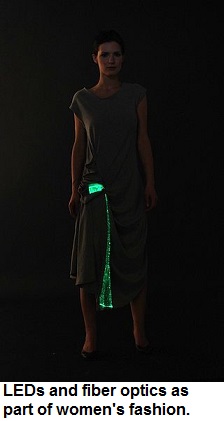
CU Blog - Science of Sustenance - e-Clothing - Photo 6Welcome to the new age! This is called e-Clothing (electronic-embedded clothing) or e-Textile, a subset of “Materials Sciences” – see Appendix below.

This imagery is so remindful of the old television cartoon show, The Jetsons. It debuted in 1962 telling stories of what the writers envisioned the year 2062 would be like. In those 55 years, the actual technologies have changed, so if envisioned again, what do we now think the year 2062 will look like.

This re-imagining was done; see Appendix VIDEO below.

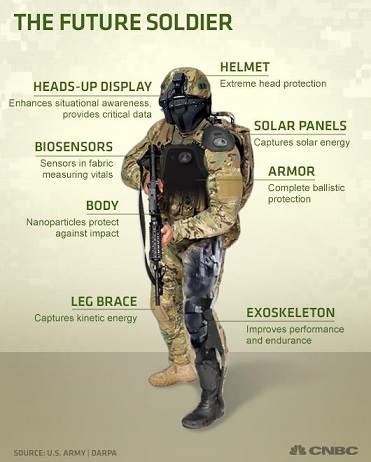
This commentary presses the point about innovations in wearable technologies; the purpose tends to not be fashion, but function; (there are some fashion statements with flashing lights; see Appendix). There are a lot of circumstances where embedded technologies in clothing would be advantageous; consider:

  • Performance enhancing – technologies to improve and enhance movement and skills.
    CU Blog - Science of Sustenance - e-Clothing - Photo 2
  • Disease Management – diagnostics of medical conditions to alert stakeholders of declining health metrics; consider blood pressure, blood sugar, temperature and pulse rate.
    Microsoft PowerPoint - 5909233016169432_fig3 [Read-Only] [Compat

Considering the Appendix VIDEO below, it would appear that future innovations are expected to take place in places other than the Caribbean. That would be a sad disposition. This point was highlighted in the book Go Lean…Caribbean; it purports that a new industrial revolution is emerging in the world and that Caribbean people and society must engage. This is pronounced at the outset of the Go Lean book in the Declaration of Interdependence (Page 14), with this opening statement:

xxvii. Whereas the region has endured a spectator status during the Industrial Revolution, we cannot stand on the sidelines of this new economy, the Information Revolution. Rather, the Federation must embrace all the tenets of Internet Communications Technology (ICT) to serve as an equalizing element in competition with the rest of the world. The Federation must bridge the digital divide and promote the community ethos that research/development is valuable and must be promoted and incentivized for adoption.

So there must be Caribbean participants in this global race to create technological solutions to better deliver on basic needs. This commentary is 3 of 4 in a series on the modern advances in science for delivering basic needs: energy, food, clothing and shelter. While it is possible to deliver these basic needs without science, our modern world is defined by the advances of science and their impact on daily life. The full series for our consideration follows this pattern:

  1.    Science of Sustenance: Energy
  2.    Science of Sustenance: Food
  3.    Science of Sustenance: Clothing
  4.    Science of Sustenance: Shelter

The Go Lean book’s assertion is that innovations will spurn new economic activity, improve lives and lower our overall cost of living.

Clothing is undeniably a basic need, but e-Clothing is associated more with progress. All people in our region need clothes and yet we do not source our own clothing. We have no textile industry (cotton, wool, linen, leather, etc.). There is art and science associated with the subject of apparels. The art is considered fashion; and Caribbean stakeholders have made a great impact in the fashion industry – remember Oscar De La Renta. But art and fashion does not have to be the limited for the Caribbean vocation – tailoring, dress-making, arts-and-crafts – in this apparel eco-system. For the most part, our clothing needs are imported products, but we can still better provide for the region’s clothing needs, and depend less on globalization.

The book Go Lean… Caribbean serves as a roadmap for the introduction and implementation of the technocratic Caribbean Union Trade Federation (CU). This effort will marshal the region to avail the opportunities associated with technology and clothing. The CU/Go Lean roadmap has these 3 prime directives:

  • Optimization of the economic engines – including clothing solutions – in order to grow the regional economy.
  • Establishment of a security apparatus to protect the resultant economic engines.
  • Improve Caribbean governance to support these engines.

The Go Lean roadmap calls for the immediate adoption of the community ethos to foster information technology innovation. This was the original motivation of the Go Lean roadmap, an interdependence of the 30 member-states of the Caribbean to offset the effects of globalization. This statement was also pronounced early in the book on the same page of the Declaration of Interdependence as above:

xxx. Whereas the effects of globalization can be felt in every aspect of Caribbean life, from the acquisition of food and clothing, to the ubiquity of ICT, the region cannot only consume, it is imperative that our lands also produce and add to the international community, even if doing so requires some sacrifice and subsidy.

There is a lot at stake for the Caribbean in considering this subject area. According to the subsequent article, there are scientific developments to power the chips embedded in textiles using body heat. Just think of this innovation: 98.6 degrees is a lot of heat that humans generate. If only that body energy can be captured and harnessed to power electronics in e-Clothing and/or e-Textiles. According to this article, there is progress:

Title: Wearable integrated thermocells based on gel electrolytes use body heat as power source

CU Blog - Science of Sustenance - e-Clothing - Photo 1Summary: Electronics integrated into textiles are gaining in popularity: Systems like smartphone displays in a sleeve or sensors to detect physical performance in athletic wear have already been produced. The main problem with these systems tends to be the lack of a comfortable, equally wearable source of power. Scientists are now aiming to obtain the necessary energy from body heat. They have now introduced a flexible, wearable thermocell based on two different gel electrolytes.

FULL STORY:
Electronics integrated into textiles are gaining in popularity: Systems like smartphone displays in a sleeve or sensors to detect physical performance in athletic wear have already been produced. The main problem with these systems tends to be the lack of a comfortable, equally wearable source of power. Chinese scientists are now aiming to obtain the necessary energy from body heat. In the journal Angewandte Chemie, they have introduced a flexible, wearable thermocell based on two different gel electrolytes.

Our muscle activity and metabolism cause our bodies to produce constant heat, some of which is released through the skin into the environment. Because of the relatively small temperature difference between skin (approximately 32 °C) and the temperature of our surroundings, it is not so easy to make use of body heat. Previous thermoelectric generators, such as those based on semiconductors, produce too little energy, are costly, or are too brittle for use in wearable systems. Thermocells with electrolyte solutions are difficult to integrate into extensive wearable systems. A team led by Jun Zhou at Huazhong University of Science and Technology (Wuhan, China) has now found a solution to this problem: thermocells with gel-based electrolytes.

The researchers are making use of the thermogalvanic effect: if two electrodes in contact with an electrolyte solution — or an electrolyte gel — are kept at different temperatures, a potential difference is generated. The ions of a redox pair in the electrolyte can rapidly switch between two different charge states, accepting or releasing electrons at electrodes with different temperature. In order to use this to produce a current, the scientists combined two types of cells containing two different redox pairs. Each cell consists of two tiny metal plates that act as electrodes, with an electrolyte gel in between. The first cell type contains the Fe2+/Fe3+ redox pair. The second type of cell contains the complex ions [Fe(CN)6]3-/[Fe(CN)6]4-. Because of the choice of these redox pairs, in cell type 1, the cold end gives a negative potential, while in type 2, the cold end gives a positive potential.

The researchers arranged many of these two types of cells into a checkerboard pattern. The cells were connected to each other by metal plates alternating above and below, to link them into a series. They then integrated this “checkerboard” into a glove. When the glove is worn, the desired temperature difference results between the upper and lower plates. This produces a voltage between neighboring cells, and the voltage adds up. This makes it possible to generate current to power a device or charge a battery.

In an environment at 5 °C, it was possible to produce 0.7 volts and about 0.3 μW. By optimizing this system, it should be possible to improve the power, even with smaller temperature gradients.

Reference: Peihua Yang, Kang Liu, Qian Chen, Xiaobao Mo, Yishu Zhou, Song Li, Guang Feng, Jun Zhou. Wearable Thermocells Based on Gel Electrolytes for the Utilization of Body HeatAngewandte Chemie International Edition, 2016; DOI: 10.1002/anie.201606314

Source: Science Daily e-Zine – Posted September 6, 2016; retrieved 02-04-2017 from: https://www.sciencedaily.com/releases/2016/09/160906131128.htm

This foregoing article is describing the dynamics of Research-and-Development (R&D). It is an attitude, a spirit, a motivation and a sentiment. The Go Lean book describes this as community ethos, the appropriate attitude/spirit to forge change in our region. R&D is cited as one of the community ethos the Caribbean region needs to adopt. This will foster the climate, environment and atmosphere to forge change in e-Clothing deliveries. Engaging this ethos early can result in many new jobs, and entrepreneurial opportunities. This is how to succeed in a world dominated by globalization; we must not only consume, we must produce as well. The Go Lean book details R&D and other ethos to adopt, plus the executions of the following strategies, tactics, implementations and advocacies to forge Research-and-Development and industrial growth in Caribbean communities:

Community Ethos – Deferred Gratification Page 21
Community Ethos – People Respond to Incentives Page 21
Community Ethos – Job Multiplier Page 22
Community Ethos – “Crap” Happens Page 23
Community Ethos – Lean Operations Page 24
Community Ethos – Return on Investments (ROI) Page 24
Community Ethos – Ways to Impact the Future Page 26
Community Ethos – Ways to Help Entrepreneurship Page 28
Community Ethos – Ways to Impact Research & Development Page 30
Community Ethos – Impact the Greater Good Page 37
Strategy – Agents of Change – Technology Page 57
Strategy – Agents of Change – Globalization Page 57
Tactical – Fostering a Technocracy Page 64
Tactical – Growing Economy – New High Multiplier Industries Page 68
Separation of Powers – Patent, Standards, & Copyrights Office Page 82
Separation of Powers – Health Department – Diagnostic Services Page 86
Separation of Powers – Drug [and Medical Devices] Administration Page 87
Implementation – Ways to Pay for Change Page 101
Implementation – Ways to Implement Self-Government Entities Page 105
Implementation – Ways to Deliver Page 109
Advocacy – Ways to Grow the Economy Page 151
Advocacy – Ways to Create Jobs Page 152
Advocacy – Ways to Improve Healthcare Page 156
Advocacy – Ways to Impact Entitlements Page 158
Advocacy – Ways to Better Provide Clothing Page 163
Advocacy – Ways to Foster Technology Page 197
Advocacy – Ways to Improve Elder-Care Page 225
Appendix – Healthways Model – Disease Management Data Capture Page 300

Historically, the Caribbean has been quick to consume technological advances. Now we want to be quick to produce the technology, not just consume it. Some Caribbean communities are doing this already, consider Cuba with their research in cancer drugs. Other Caribbean R&D activities have been detailed in these previous blog-commentaries:

https://goleancaribbean.com/blog/?p=9751 Where the Jobs Are – Animation and Game Design
https://goleancaribbean.com/blog/?p=8943 Zika’s Drug Breakthrough
https://goleancaribbean.com/blog/?p=8817 Lessons from China – R&D for Mobile Game Apps
https://goleancaribbean.com/blog/?p=5034 US Patent Office: Model of Innovation and Abuse
https://goleancaribbean.com/blog/?p=3974 Google’s R&D efforts in Puerto Rico
https://goleancaribbean.com/blog/?p=1817 Caribbean R&D on the new cycles of flooding & drought
https://goleancaribbean.com/blog/?p=1288 Future Caribbean Astronauts – Not so improbable
https://goleancaribbean.com/blog/?p=308 CARCIP Urges Greater Caribbean Innovation thru R&D
https://goleancaribbean.com/blog/?p=286 Puerto RicoCancerR&DCenter Project Breaks Ground

Change has come to the world of textiles and clothing; these changes must also be forged, researched and developed in the Caribbean region. We must be able to better provide our clothing. This is one of the basic needs that we must convene, collaborate and cooperate on as a region. This helps to make the Caribbean a better place to live, work and play.

But we must also be able to contribute to the new world of performance-enhancing and diagnostic e-Clothes.

The people and institutions of the region are hereby urged to lean-in to this Go Lean roadmap, to embrace all these empowerments efforts to reboot our region. 🙂

Download the book Go Lean … Caribbean – now!

————-

Appendix – e-Textiles

E-textiles, also known as smart garmentssmart clothingelectronic textilessmart textiles, or smart fabrics, are fabrics that enable digital components (including small computers), and electronics to be embedded in them. Smart textiles are fabrics that have been developed with new technologies that provide added value to the wearer. Pailes-Friedman of the Pratt Institute states that “what makes smart fabrics revolutionary is that they have the ability to do many things that traditional fabrics cannot, including communicate, transform, conduct energy and even grow”.[1]

Smart textiles can be broken into two different categories: aesthetic and performance enhancing. Aesthetic examples include fabrics that light up and fabrics that can change color. Some of these fabrics gather energy from the environment by harnessing vibrations, sound or heat, reacting to these inputs. Performance enhancing smart textiles are intended for use in athletic, extreme sports and military applications. These include fabrics designed to regulate body temperature, reduce wind resistance, and control muscle vibration – all of which may improve athletic performance. Other fabrics have been developed for protective clothing, to guard against extreme environmental hazards, such as radiation and the effects of space travel.[2] The health and beauty industry is also taking advantage of these innovations, which range from drug-releasing medical textiles, to fabric with moisturizer, perfume, and anti-aging properties.[1] Many smart clothing, wearable technology, and wearable computing projects involve the use of e-textiles.[3]

Electronic textiles are distinct from wearable computing because emphasis is placed on the seamless integration of textiles with electronic elements like microcontrollers, sensors, and actuators. Furthermore, e-textiles need not be wearable. For instance, e-textiles are also found in interior design.

CU Blog - Science of Sustenance - e-Clothing - Photo 7The related field of fibretronics explores how electronic and computational functionality can be integrated into textile fibers.

A new report from Cientifica Research examines the markets for textile based wearable technologies, the companies producing them and the enabling technologies. The report identifies three distinct generations of textile wearable technologies:

  1. “First generation” attach a sensor to apparel. This approach is currently taken by sportswear brands such as Adidas, Nike and Under Armour
  2. “Second generation” products embed the sensor in the garment, as demonstrated by current products from Samsung, Alphabet, Ralph Lauren and Flex.
  3. In “third generation” wearables, the garment is the sensor. A growing number of companies are creating pressure, strain and temperature sensors for this purpose.

Future applications for e-textiles may be developed for sports and well-being products, and medical devices for patient monitoring. Technical textiles, fashion and entertainment will also be significant applications.[4]

CU Blog - Science of Sustenance - e-Clothing - Photo 5

Source:  Retrieved February 4, 2017 from: https://en.wikipedia.org/wiki/E-textiles

————-

Appendix VIDEO – The World of The Jetsons, reimagined – https://youtu.be/37waZeR4isc

Published on Nov 15, 2016 – The world of The Jetsons gets a scientific makeover. Arconic has reimagined the year 2062 through the eyes of leading futurists, our engineers and filmmaker Justin Lin. This futuristic world features advanced technologies—flying cars and extra tall, 3D-printed buildings—that Arconic’s materials science and manufacturing experts could help bring to life.

Arconic is built on an extraordinary heritage of innovation that began with Alcoa’s founding in 1888. We have helped shape the aerospace, automotive and building and construction industries since the days of the Wright brothers, Henry Ford and the first modern downtowns. Today, as Arconic, we continue to build on more than a century of innovation to help transform the way we fly, drive, build and power. Arconic is where the future takes shape.

Learn more at http://www.arconic.com/thefuture.

Share this post:
, , ,
[Top]

Science of Sustenance – Temperate Foods

Go Lean Commentary

The “bread basket” of _________ …

CU Blog - Science of Sustenance - Temperate Foods - Photo 0You can fill in the blanks with different regions around the world:

  • “Central Valley”, the bread basket of California
  • “Kansas”, the bread basket of America
  • “Alberta”, the bread basket of Canada
  • “Ukraine”, the bread basket of Eastern Europe

So who or where is the bread basket of the Caribbean?

Do we have an answer? Do we have a bread basket? Do we even have an organized region so as to collaborate on the responsibility of feeding our people?

No, No, and No!

This commentary is important for the Caribbean to contemplate. Every human in every land must arrange for the delivery of basic needs – “we gotta eat” and so food supply is paramount. Scientific developments have always been a major consideration for food supply, ever since the days of hunting-and gathering. Modern society is built on the premise that we would employ scientific best practices to harvest our food, or trade with people who employ these best practices.

The book Go Lean…Caribbean declares “enough already” with the trade; it is time to produce our own.

This was the original motivation for the publishing of this Go Lean book: to optimize the 30 Caribbean member-states into a Single Market so that we can be structured to do better in providing our basic needs. That structure would be the technocratic Caribbean Union Trade Federation (CU). The opening pages of the book feature this quotation (Page 3):

The CU should better provide for the region’s basic needs (food, clothing, energy and shelter), and then be in position to help supply the rest of the world. Previous Caribbean societies lived off the land and the sea; but today, the region depends extensively on imports, even acquiring large quantities of seafood, despite the 1,063,000 square miles of  the Caribbean Sea.

The CU Trade Federation is a technocracy, empowered to reboot the economic engines of the member-states, by fostering new industries (new “purse”) across the entire region and deploying solutions to better exploit the opportunities of the global trade market.

The Caribbean is in crisis for their dysfunctions in  delivering their own basic needs. This is the focus of this commentary; it is 2 of 4 in a series on the modern advances in science for delivering basic needs: energy, food, clothing and shelter. It is possible to deliver all these basic needs without science. But for our modern world, the advances of science make a positive impact on daily life. So the full series for our consideration follows this pattern:

  1.    Science of Sustenance: Energy
  2.    Science of Sustenance: Food
  3.    Science of Sustenance: Clothing
  4.    Science of Sustenance: Shelter

The book Go Lean…Caribbean asserts that “a crisis is a terrible thing to waste”. We must use our inadequate disposition to motivate stakeholders to forge change on our society; to implement the food supply solutions to do better at facilitating our own needs.

We are in the tropics…

… but science and technology allows us to deliver agricultural solutions for temperate produce (fruit and vegetables). Think:

  • Strawberries
  • Peaches
  • Apples
  • Spinach
  • Greens (Mustard, Collard, Kale, etc.)

Temperate produce need cooler temperatures to thrive. So the key is utilization of greenhouses, climate-controlled greenhouses. These allow for consistent temperatures of 20 to 30 degrees lower than the outside atmosphere. See a reference article on this subject here:

ARTICLE Grower 101: Using Evaporative Cooling, Part I
By John W. Bartok, Jr.
Find out what to use to keep your greenhouse ventilated and cool in the hot, humid summer.

On a bright, sunny summer day, a 30- x 100-foot greenhouse will gather about 32 million British Thermal Units (Btus) of heat. This is equivalent to burning 32 gallons of fuel oil or 320 therms of natural gas. If the greenhouse is full of plants, about one-half of this heat is used for transpiration and evaporation. The remainder of the cooling has to be conducted through ventilation. If the greenhouse is empty and closed, the temperature can exceed 150° F.

Understanding the basics
Shade on the outside of the greenhouse will keep some of the heat out. Shade on the inside, if it contains aluminum foil, will reflect some of the heat back out. Ventilation, either natural or fan, will remove a considerable amount of the heat that is collected. Still, on summer days, the temperature may exceed the desired level that promotes good plant growth by 10-20ºF. Excessive temperature results in delayed flowering and internode stretching. Evaporative cooling may be the best choice under these conditions.

Evaporative cooling, which uses the heat in the air to evaporate water from leaves and other wetted surfaces, can cool the greenhouse to 10-20° F below outside temperature. It takes one Btu of heat to raise the temperature of one pound of water 1° F, but it takes 1,060 Btus of heat to change the same amount of water to a vapor.

With an evaporated cooling system, humid air containing the heat that it picked up within the greenhouse is exhausted out through the vents or fans, and cooler, drier air is brought in. Evaporative cooling works best when the humidity of the outside air is low. For example, in Reno, Nev., the average summer dry bulb temperature is 96º F and the wet bulb is 61ºF. With an evaporative cooler having an efficiency of 80 percent, the temperature would be cooled to about 68° F. These conditions are most common in the dry Southwest, but even in the more humid sections of the United States, significant evaporative cooling can occur most days in the summer. In humid New Orleans, where the average summer dry bulb temperature is 93° F and the wet bulb is 78° F, the cooled air would be about 81° F, acceptable for the production of most plants.

Fan and pad system
Several evaporative cooling systems work well in commercial greenhouses. The most common is the fan and pad system. It contains a cellulose pad, overhead water supply pipe, gutter to collect excess water, a sump tank, pump, piping and control.

The 4- or 6-inch-thick pad is treated with anti-rot salts and stiffening and wetting agents. Pads are normally installed continuously along the side or end of the wall opposite the fans. The amount of pad area needed is calcuis the utillated by multiplying the floor area by 8 feet and dividing by 250 for a 4-inch pad or 400 for a 6-inch pad. For example, a 30- x 100-foot greenhouse with a 4-inch pad would require 96 sq. ft. of pads (30 x 100 x 8÷ 250 = 96 sq. ft.)

The overhead water supply pipe should distribute the water so the pad is wet uniformly. The minimum water flow rate is 0.5 gpm per sq. ft. for a 4-inch pad and 0.8 gpm per sq. ft. for a 6-inch pad.

Excess water is collected below the pad in a gutter and piped to a sump tank. Tank capacity needs to be 0.8 gallon per sq. ft. of pad for 4-inch pads and 1.0 gallon per sq. ft. for 6-inch pads. Water returning to the sump should be filtered to remove any debris. A make-up water supply and float valve keep the water level constant. In areas having water with a high mineral content, it is advisable to bleed 3-5 percent of the water to minimize salt buildup. Algae growth in the re-circulated water can be controlled with abiocide.

Modular pad systems of 5 and 6 feet are now available. These are self-contained and come completely assembled and ready to bolt to the wall. Installation time is reduced considerably. Only water and electrical connections have to be attached.

Next month, find out about swamp coolers, mist and fog systems and fan-generated fog and how they can work for you.

Source: Posted March 2003 from trade journal Greenhouse Product News; retrieved February 8, 2017 from: http://www.gpnmag.com/article/grower-101-using-evaporative-cooling-part-i/

CU Blog - Science of Sustenance - Temperate Foods - Photo 2

————-

VIDEO # 1 Best Thermal Cooled Greenhouse – https://youtu.be/HWXJ1ukEXa0

His Thermal Cooled Greenhouse in 1985 ran for 7 years, cooled itself day and night with 3 small Aquarium pumps, no fans or blowers; 14′ X 36′ ran on pennies a day – this worked!!! Now building a larger 24′ X 54′ Thermal Cooled Greenhouse. This works DAY OR NIGHT. Watch VIDEO !!!

  • Category – Science & Technology
  • License – Standard YouTube License

The science of greenhouses allows for temperate foods (fruit and vegetables) to be grown in a tropical zone – cold adds sweetness. This is what we want, what we need to fulfill our own basic needs. Other communities are doing this and we can as well. We have the role model of countries with colder climates supplying tropical fruit. Surely the reverse can be deployed as well, with strategic and tactical greenhouses.

Greenhouses allow for greater control over the growing environment of plants. Depending upon the technical specification of a greenhouse, key factors which may be controlled include temperature, levels of light and shade, irrigation, fertilizer application, and atmospheric humidity. Greenhouses may be used to overcome shortcomings in the growing qualities of a piece of land, such as a short growing season or poor light levels, and they can thereby improve food production in marginal environments. Greenhouses in hot, dry climates used specifically to provide shade are sometimes called “shadehouses”.[42][43]

As they may enable certain crops to be grown throughout the year, greenhouses are increasingly important in the food supply of high-latitude countries. One of the largest complexes in the world is in Almería, Andalucía, Spain, where greenhouses cover almost 49,000 acres.
Source:
Retrieved February 8, 2017 from: https://en.wikipedia.org/wiki/Greenhouse
CU Blog - Science of Sustenance - Temperate Foods - Photo 3

The Caribbean is in crisis … we are not able to feed ourselves from the current food supply systems. We therefore have to expend foreign reserves to acquire food from foreign locations. This applies to food that, with the proper empowerments, can be grown locally in the Caribbean region.

This Go Lean book serves as a roadmap for the introduction and implementation of the technocratic Caribbean Union Trade Federation (CU). The goal is that the CU would adopt these food supply best practices to better delivery this basic need for the region. In fact, the prime directives of the CU are described as:

  • Optimize the economic engines – including food supply solutions – to elevate the regional economy to grow to $800 Billion and create 2.2 million new jobs.
  • Establish a security apparatus to protect the resultant economic engines.
  • Improve Caribbean governance to support these engines.

The Go Lean roadmap calls for the immediate adoption of best practices in food supply science (agriculture) and infrastructure. We do not have to re-invent the wheel in this quest; other communities are doing it already. Consider the photos here of giant greenhouses in The Netherlands:

CU Blog - Science of Sustenance - Temperate Foods - Photo 1

CU Blog - Science of Sustenance - Temperate Foods - Photo 1d

CU Blog - Science of Sustenance - Temperate Foods - Photo 1c

CU Blog - Science of Sustenance - Temperate Foods - Photo 1b

This vision of temperature controlled greenhouses in the Caribbean assumes a supply of energy for cooling and ventilation. See more here on ventilation:

Ventilation is one of the most important components in a successful greenhouse, specially in hot and humid tropical climate condition.[18] If there is no proper ventilation, greenhouses and their growing plants can become prone to problems. The main purposes of ventilation are to regulate the temperature, humidity and vapor pressure deficit [19] to the optimal level, and to ensure movement of air and thus prevent build-up of plant pathogens (such as Botrytis cinerea) that prefer still air conditions. Ventilation also ensures a supply of fresh air for photosynthesis and plant respiration, and may enable important pollinators to access the greenhouse crop.

Ventilation can be achieved via use of vents – often controlled automatically via a computer – and recirculation fans.
Source: Retrieved February 8, 2017 from: https://en.wikipedia.org/wiki/Greenhouse

All in all, the Go Lean book declares that “a crisis is a terrible thing to waste”. This siren call is for the establishment of a regional technocracy to facilitate the delivery of the region’s basic needs.  According to the foregoing articles/references, we can grow temperate foods in the tropical zone without exhausting foreign currency.

The vision here of climate-controlled greenhouses requires heavy-lifting on the part of Caribbean stakeholders (governments and business communities). We need this heavy-lifting. A lot is at stake: our ability to feed our populations. The Go Lean roadmap calls for a separation-of-powers between CU federal agencies and the member-state governments. The CU presents Cabinet departments for Agriculture, Fisheries and Health (Food/Nutrition). These departments will have to collaborate with parallel departments at the member-state level.

This was the original motivation of the Go Lean roadmap, an interdependence of the 30 member-states of the Caribbean to offset the effects of globalization. This was pronounced early in the book in the Declaration of Interdependence (Page 14), with this statement:

xxx. Whereas the effects of globalization can be felt in every aspect of Caribbean life, from the acquisition of food and clothing, to the ubiquity of ICT, the region cannot only consume, it is imperative that our lands also produce and add to the international community, even if doing so requires some sacrifice and subsidy.

The roadmap also calls for the installations of Exclusive Economic Zones (EEZ) and Self-Governing Entities (SGE) that operate in controlled bordered territories like campuses, industrial parks, research labs and industrial plants. These can be a target for the climate-controlled greenhouses.

The Go Lean book declares that we must adopt a community ethos, the appropriate attitude/spirit to forge change in our region; then details the executions of the following strategies, tactics, implementations and advocacies to better impact the region’s preparation for food resources. See this sample here:

Community Ethos – Deferred Gratification Page 21
Community Ethos – Economic Systems Influence Individual Choices / Incentives Page 21
Community Ethos – The Consequences of Choices Lie in the Future Page 21
Community Ethos – Lean Operations Page 24
Community Ethos – Cooperatives Page 24
Community Ethos – Non-Government Organizations Page 25
Community Ethos – Ways to Impact the Future Page 26
Community Ethos – Ways to Improve Sharing Page 35
Community Ethos – Impact the Greater Good Page 37
Strategy – Vision – Confederating 30 Member-States into a Single Market Page 45
Strategy – Vision – Foster Local Economic Engines Food, Clothing & Shelter Page 45
Strategy – Mission – Prepare for Natural Disasters Page 45
Strategy – Mission – Exploit the Benefits and Opportunities of Globalization Page 46
Strategy – Agents of Change – Climate Change Page 57
Strategy – Agents of Change – Globalization Page 57
Tactical – Confederating a Permanent Union Page 63
Tactical – Fostering a Technocracy Page 64
Separation of Powers – Food & Nutritional Administration Page 87
Separation of Powers – Agriculture and Fisheries Department Page 88
Implementation – Ways to Pay for Change Page 101
Implementation – Start-up Benefits from the EEZ Page 104
Implementation – Steps to Implement Self-Governing Entities Page 105
Implementation – Ways to Deliver Page 109
Implementation – Ways to Foster International Aid Page 115
Implementation – Ways to Benefit from Globalization Page 119
Planning – Ways to Make the Caribbean Better Page 131
Advocacy – Ways to Grow the Economy Page 151
Advocacy – Ways to Better Manage Food Page 162
Advocacy – Ways to Improve Governance Page 168
Advocacy – Ways to Better Manage the Social Contract Page 170
Advocacy – Ways to Foster Cooperatives Page 176
Advocacy – Ways to Improve for Natural Disasters Page 184
Advocacy – Ways to Improve Emergency Management Page 196
Advocacy – Ways to Improve Fisheries Page 210
Advocacy – Ways to Impact Rural Living – Agricultural eco-systems Page 235

There are a lot of models of agricultural and infrastructural delivery that the Caribbean can learn from foreign shores. Previous Go Lean blog-commentaries have cited these models, samples and examples:

https://goleancaribbean.com/blog/?p=8982 GraceKennedy: A Caribbean Transnational tackles Food Supply
https://goleancaribbean.com/blog/?p=6867 How to address high consumer prices
https://goleancaribbean.com/blog/?p=6819 Supplying Foods for ‘Western’ Diets – We can do better!
https://goleancaribbean.com/blog/?p=6016 Hotter than July – An Appeal for Cooperative Refrigeration
https://goleancaribbean.com/blog/?p=5098 Forging Change in Society Through Food
https://goleancaribbean.com/blog/?p=3594 Lessons Learned from Queen Conch – A Caribbean Food
https://goleancaribbean.com/blog/?p=2276 Climate Change May Affect Food Supply Within a Decade

Who or where will be the bread basket of the Caribbean? With the empowerments in this commentary, it could be all 30 member-states.

Change has come to the world of agricultural systems and sciences and change must come to the Caribbean region; we must be able to feed ourselves. We need to convene, collaborate and cooperate to satisfy our most basic needs. Yes, we can …

… come together to make the Caribbean a better homeland to live, work and play.

The people and institutions of the region are hereby urged to lean-in to this Go Lean roadmap, to embrace the empowerments to reboot and turn-around our region. 🙂

Download the book Go Lean … Caribbean – now!


Share this post:
,
[Top]

Science of Sustenance – Green Batteries

Go Lean Commentary

Monkey see, monkey do …

CU Blog - Science of Sustenance - Green Batteries - Photo 0This is the expression; but this is science too: zoology, anthropology, animal husbandry. Monkeys are amazing creatures. They are in the same species as humans – primates. Monkeys are social creatures that live in family groups. Like many other animal species,  they adhere to an Alpha-Herd social order. Despite the fact that monkeys are generally considered to be intelligent, they tend to mimic the actions of their leaders more so than creating their own destinies. It is true, monkeys see, monkeys do.

If only the highest order of primates, us humans, worked the same way, then it would be easy to reform and transform society. To the contrary, the observation is that humans follow a different process:

Monkey see, monkey feel, monkey do. Sorry, make that “humans see, humans feel, humans do”.

As free moral agents, the human experience is that there must be a motivation to do something, like “change”, that we see others doing.

This point is developed more fully in the book Go Lean…Caribbean. It narrates the experience of smoking cessation. The book relates (Page 20):

Change is not easy …

Just ask anyone attempting to quit smoking. Not only are there physiological challenges, but psychological ones as well, to the extent that it can be stated with no uncertainty that “change begins in the head”. In psycho-therapy the approach to forge change for an individual is defined as “starting in the head (thoughts, visions), penetrating the heart (feelings, motivations) and then finally manifesting in the hands (actions).

There are a lot of things that Caribbean people and communities must change; there is the need to reform and transform. We must first develop the right attitudes and motivations for fostering our changes. We must penetrate the heart. The people of the Caribbean must change their feelings about elements of our society – elements that are in place and elements missing. The Go Lean book refers to this as “community ethos”, defined as:

the fundamental character or spirit of a culture; the underlying sentiment that informs the beliefs, customs, or practices of a group or society; dominant assumptions of a people or period.”

The Caribbean is in desperate straits. We have many societal dysfunctions and defects. We have challenges fulfilling even our basic needs. This is the focus of this commentary; it is 1 of 4 in a series on the modern advances in science for delivering basic needs. No one doubts that the inventory of basic needs include “food, clothing and shelter”. But modernity has forced us to add another entry: “energy”. In fact, the availability and affordability of energy can impact the deliveries of these order basic needs. The full series for our consideration will therefore follow this pattern:

  1.     Science of Sustenance: Energy
  2.     Science of Sustenance: Food
  3.     Science of Sustenance: Clothing
  4.     Science of Sustenance: Shelter

It is possible to deliver all basic needs without science. But for our modern world, the advances of science make a positive impact on daily life. In fact, one Anthropology study has concluded that the greatest scientific accomplishment for 20th Century society had been the invention, deployment and advances of the washing machine. Wow, remember the process to clean clothes before modern laundry equipment; it took all day. Women of the house had to be fulltime homemakers to satisfy this family need. This fact depicts the gravity of science in sustaining our modern life. Let’s consider all of the basic needs from this perspective.

Discussions about energy must consider a discussion on batteries. Battery = Stored Energy …

… despite all the scientific definitions, that is all it means, plain and simple. According to one source:

Batteries come in many shapes and sizes, from miniature cells used to power hearing aids and wristwatches to small, thin cells used in smartphones, to large lead acid batteries used in cars and trucks, and at the largest extreme, huge battery banks the size of rooms that provide standby or emergency power for telephone exchanges and computer data centers.

According to a 2005 estimate, the worldwide battery industry generates US$48 billion in sales each year,[5] with 6% annual growth. – Wikipedia.

Batteries traditionally store energy for later use. When we need it, we absolutely need it. Imagine a flashlight, when we “click” it on, we expect it to work. We spend a lot of money to ensure this functionality – according to the foregoing reference, $48 Billion/year.

But while batteries entail a lot of complicated chemicals – alkaline, lead-acid, lithium-ion, etc. – the underlying principle is to store the kinetic energy for future generation of electricity. There is a new recognition in this equation. The fact is that power grids create more power than they need at certain times; this creates the need for batteries; see here:

That’s the first reason we need batteries on the electrical grid: to even out the supply-and-demand, to time-shift the availability of power from nighttime to daytime.

But reason number two is even more important to our future: Power-plant batteries would eliminate the biggest problem with solar power and wind power, which is that they are both intermittent. “Clouds come over on a sunny day and, all of a sudden, it’s gone,” said Hopkins. “Wind stops blowing, all of a sudden, it’s gone. You need a way to store it.”

See full story in the VIDEO here:

Many experts in electricity are truly JUICED these days. They’re pursuing the “Search For The Super Battery” — the title of this Wednesday night’s [(February 1, 2017)] episode of “Nova” on PBS, hosted by our own David Pogue of Yahoo Tech.  Here is a preview:

VIDEO Making a better batteryhttp://www.cbsnews.com/videos/engineers-attempt-to-create-better-batteries

The science is progressing …

… green options are emerging; (green refers to natural, non-chemical solutions). According to the foregoing, green options  for storing energy include:

  • Gravity
  • Melting Ice
  • Magnetic Levitation

CU Blog - Science of Sustenance - Green Batteries - Photo 1

We need to consider these options in the Caribbean. In our region, energy costs are among the highest in the world. The book Go Lean… Caribbean relates (Page 100) how the Caribbean has among the most expensive energy costs in the world, despite having abundant alternative energy natural resources (solar, wind, tidal, geo-thermal). The Caribbean eco-system focuses on imported petroleum to provide energy options and as a result retail electricity rates in the Caribbean average US$0.35/kWh, when instead it could be down to US$0.088/kWh. A previous blog-commentary identified the societal defect that drives the regional governance for energy generation: rent-seeking. The local authorities depend on the fuel tax revenues to finance government operations. But alas, change is coming! The momentum for this change is big and getting bigger.

With such a 75% savings, we need the foregoing process: Monkey see, monkey feel, monkey do.

There is definitely the need to adapt some of the scientific best practices for energy generation and consumption. In a previous blog-commentary, it was confessed that one of the reasons why people flee the Caribbean region, is the discomforts during the summer months; (the Caribbean region has 8 – 10 warm months of the year) …

… hot weather, and the lack of infrastructure to mitigate and remediate the discomfort, is identified as one of the reasons for the brain drain/societal abandonment. (This previous blog-commentary appealed for cooperative refrigeration). If only we can turn on the air-conditioner – if we can afford the energy cost –  there would be the need to keep it running most of the time.

Many people find the current lack of energy options unbearable to live in their Caribbean ancestral homeland and thusly flee the region for North American and European destinations. The numbers are bad! We reported a 70 percent brain drain rate among the tertiary educated populations. (These are the ones who can best afford to leave; but the community can least afford to lose them).

Energy needs are undeniable 24-7-365; all the time. There is the need to deliver energy all of these times.

The delivery or fulfillment of these needs is a great target for lean, agile operations. Efficiency and technocratic executions will save a lot of money for the people and institutions of the Caribbean. But fossil fuels should not be the solution for the Caribbean.

  • First, with so many small islands, we do not have much natural resources.
  • Secondly, and most important, there is the matter of burning fossil fuels (oil, coal, wood pulp) and contributing to global warming and Climate Change.

The Go Lean book posits that the embrace of alternative energy generation sources to be more impactful on the quest to minimize the threats on the environment. Early in the book, the pressing need to be aware of Climate Change is pronounced in the Declaration of Interdependence (Page 11), with these words, (the first of many “causes of complaints”):

i. Whereas the earth’s climate has undeniably changed resulting in more severe tropical weather storms, it is necessary to prepare to insure the safety and security of life, property and systems of commerce in our geographical region. As nature recognizes no borders in the target of its destruction, we also must set aside border considerations in the preparation and response to these weather challenges.

With the innovative offering of Green Batteries, the quest to adapt to more clean/green energy options can be practical and more cost effective. Power generation from the sun or wind (free & renewable sources) is far cheaper that generation based on fossil fuels.

The book Go Lean… Caribbean serves as a roadmap for the introduction and implementation of the Caribbean Union Trade Federation (CU). This roadmap has 3 prime directives:

  • Optimization of the economic engines in order to grow the regional economy to $800 Billion GDP and create 2.2 million new jobs.
  • Establishment of a security apparatus to protect the resultant economic engines.
  • Improvement of Caribbean governance to support these engines.

This Go Lean/CU roadmap details a series of community ethos, strategies, tactics, implementations and advocacies to be early adopters of cutting-edge energy solutions, like Green Battery systems. The following list applies:

Community Ethos – Deferred Gratification Page 21
Community Ethos – Lean Operations Page 24
Community Ethos – Return on Investments Page 24
Community Ethos – Cooperatives Page 25
Community Ethos – Ways to Impact the Future Page 26
Community Ethos – Ways to Impact the Greater Good Page 37
Strategy – Harness the power of the sun/winds Page 46
Tactical – Fostering a Technocracy Page 82
Tactical – Separation of Powers – Energy Commission Page 82
Anecdote – “Lean” in Government – Energy Permits Page 93
Anecdote – Caribbean Energy Grid Implementation Page 100
Implementation – Ways to Develop Pipeline Industry Page 107
Implementation – Ways to Improve Energy Usage Page 113
Advocacy – Ways to Impact Public Works Page 175
Advocacy – Ways to Foster Cooperatives Page 176
Advocacy – Ways to Impact Monopolies Page 202

The Go Lean movement (book and blogs) asserts that we should fully embrace Green Energy solutions; its not a want, but a need for the region. This need had been further elaborated upon in these previous blog/commentaries:

https://goleancaribbean.com/blog/?p=7056 Electric Cars: ‘Necessity is the Mother of Invention’
https://goleancaribbean.com/blog/?p=6016 Hotter than July – A case for ‘Cooperative Refrigeration’
https://goleancaribbean.com/blog/?p=5155 Tesla unveils super-battery to power homes
https://goleancaribbean.com/blog/?p=4897 US Backs Natural Gas (LNG) Distribution Base in Jamaica
https://goleancaribbean.com/blog/?p=4294 Ambassadors to Caribbean discuss PetroCaribe-Energy, Security
https://goleancaribbean.com/blog/?p=2465 Book Review: ‘This Changes Everything: Capitalism vs. the Climate’
https://goleancaribbean.com/blog/?p=2338 Lessons: How Best to Welcome the Dreaded American ‘Plutocracy’
https://goleancaribbean.com/blog/?p=926 Conservative heavyweights have solar industry in their ‘kill’ sights
https://goleancaribbean.com/blog/?p=915 Go ‘Green’ … Caribbean

A focus of the Go Lean book is the economics of the Caribbean region. But the issues presented in this commentary – and the entire 4-part series – relate to Home Economics. Home Economics is an old field of study. At one point, this was a course in school systems for all levels, K through 12 and even in college curricula. The purpose of the formal “Home-Ec” education was to teach best practices in efficiency and effectiveness for  basic needs. Students learned more about food (cooking & nutrition), clothing (sewing & textiles) and housing (decorating, draperies and upholstery). Home-Ec lessons highlighted the technology of the day (before the 1980’s). Go back and re-visit those schools; the disposition will be that all those programs have been replaced with courses in Science, Technology, Engineering and Mathematics (STEM).

CU Blog - Science of Sustenance - Green Batteries - Photo 2

CU Blog - Science of Sustenance - Green Batteries - Photo 3

The Green Battery is an example of science guiding the future of the delivery of basic needs, in this case energy needs. Science is improving the delivery of all basic needs, all means of sustenance. There are many mountainous islands in the Caribbean; anyone of them can be a great candidate for the “pumped hydro” solution in the foregoing VIDEO. This will call for installing a dam and two reservoirs. During the periods when energy is abundant – mid day from solar panels – the water can be pumped uphill, then during the “off” times the water would flow downhill, using gravity to spin turbines and generate electricity.

CU Blog - Science of Sustenance - Green Batteries - Photo 8

CU Blog - Science of Sustenance - Green Batteries - Photo 5

CU Blog - Science of Sustenance - Green Batteries - Photo 4

CU Blog - Science of Sustenance - Green Batteries - Photo 7

Also consider that with the Caribbean hot-hot-hot summers, there is no doubt there is a need for air-conditioning. The energy hogging of the air-conditioning process is the compression to make refrigerated air. The approach in the foregoing VIDEO of making ice when energy is abundant – mid day from solar panels – then blowing the air from the “melting ice” is a technocratic solution – the simple science is depicted in these photos above. A solution based on this science – see sample product in photo below – can be deployed anywhere, everywhere.

CU Blog - Science of Sustenance - Green Batteries - Photo 6

These Green Battery deployments would be examples of the lean, agile operations, designed for the CU technocracy.

This and other innovations, once executed, would make the Caribbean a better place to live, work and play.

Now is the time for all of the Caribbean, the people, business, institutions and governments, to lean-in for the innovations and optimizations of the Go Lean roadmap. 🙂

Download the book Go Lean … Caribbean – now!


Share this post:
, , ,
[Top]

Day of Reckoning for NINJA Loans

Go Lean Commentary

Be not deceived … whatsoever a man soweth, that shall he also reap. – King James Version – The Bible

It is time for the Day of Reckoning for one of the players in the recent housing bubble and financial crisis, referred to as the Great Recession of 2008. Industry stakeholders had been “skimming of the public coffers for mortgage guarantees and giving unwise mortgages to people who had what was considered NINJA qualification:

  • No Income
  • No Job & Assets

LB 1Such activities in the retail mortgage industry, plus bad practices in the wholesale lending, credit ratings and mortgage-back securities industries had congealed to form a “perfect storm” for disaster in the financial markets (Wall Street, et al) in the US and around the world.

Many innocent people lost fortune and faith in the American eco-system. There had to be an accounting of the “sins and sinister plots”; there had to be a Day of Reckoning. That day came for one Michigan-based (Detroit area) company, United Shore Financial Services. See the full story here:

Title: United Shore Agrees to $48M Settlement with DOJ
By: Jacob Passy

CU Blog - Day of Reckoning for NINJA Loans - Photo 1United Shore Financial Services, a Troy, Mich.-based lender, has agreed to pay $48 million to settle allegations that it violated the False Claims Act.

The Department of Justice alleged that USFS did not comply with certain origination, underwriting and quality control requirements while participating in the Federal Housing Administration’s direct endorsement lender program. Consequently, the Department of Housing and Urban Development insured hundreds of loans that UnitedShore approved that should not have been eligible for FHA coverage, subsequently taking losses due to claims on those loans.

“USFS acknowledged that it failed to comply with FHA underwriting and quality control requirements, resulting in improperly originated mortgages,” John Vaudreuil, a U.S. attorney for the Western District of Wisconsin said in a news release. “While USFS deserves credit for acknowledging and resolving its conduct, that conduct not only resulted in substantial losses of public funds, but also put Wisconsin homeowners at risk of losing their homes or ruining their credit.”

United Shore, which is both a retail lender and the parent of United Wholesale Mortgage, did not immediately respond to a request for comment.

In particular, the DOJ said that UnitedShore admitted to pressuring underwriters to approve FHA mortgages under a compensation plan that tied pay to the percentage of loans approved. United Shore also falsely certified that direct endorsement underwriters reviewed appraisal reports prior to mortgages being approved for FHA insurance; under the DEL program, the FHA does not review that lenders are complying with the agency’s requirements.

The DOJ also identified other issues with UnitedShore’s compliance practices. The lender allegedly did not provide senior management with “meaningful information” regarding quality control findings. Additionally, UnitedShore did not meet HUD’s self-reporting requirements, only self-reporting three loans to the department despite quality control reviews finding hundreds of FHA-insured loans that were materially deficient at issuance.

The alleged activities occurred between from 2006 through 2011. The DOJ also said that United Shore “made certain discretionary distributions to a shareholder in the company” after the federal government began investigating the company in January 2014.
Source: National Mortgage News – Industry Trade Journal; posted 12/28/2016; retrieved 01/18/2017 from: http://www.nationalmortgagenews.com/news/compliance-regulation/united-shore-agrees-to-48m-settlement-with-doj-1093769-1.html

This story aligns with the book Go Lean…Caribbean; it serves as a roadmap to introduce and implement the technocratic Caribbean Union Trade Federation (CU) and Caribbean Central Bank (CCB) for better stewardship of the Caribbean banking eco-system, to ensure the economic failures of the past do not re-occur in the Caribbean. The book was inspired by the events of 2008, by people engaged in the mortgage-housing-investments industries. These ones engaged in the post-mortem analysis – dissection of the crisis – of all the bad community ethos, strategies, tactics and implementations leading up to 2008 and saw the need for this Day of Reckoning.

The goal of this roadmap is to apply the lessons-learned from 2008 in the stewardship of the economic engines in the Caribbean region. It turns out that we were affected by 2008 as well; we were devastated by the elasticity in the global markets.

Welcome to the Caribbean’s Day of Reckoning!

The Caribbean economy is a parasite of the US and so when the American market “catches a cold, we sneeze”. (This is referred to as “financial contagions”). We can – we must – do better and guide our own economy away from American dependence to a regional interdependence.

We are on the way…

With the proposal for the CARICOM Single Market & Economy (CSME), a more integrated region is expected to emerge with greater linkages among the member-states of the economic union. Issues of financial contagions will now have to be a constant concern for a regional sentinel. The Go Lean roadmap calls for the deployment of the Caribbean Central Bank as that sentinel, to proactively and reactively shepherd the financial institutional processes (wholesale and retail). We do not want to “get caught with our pants down” in our region. We do not want government loan guarantees for mortgagors that have NINJA qualifiers. (That money would be better placed in more substantial investments in Caribbean people and processes). The lesson from 2008 is to follow the money and discern those who profited from this bad behavior; see the VIDEO in the Appendix below.

Mortgages with a government-guarantee stamp of approval are readily sold in the secondary markets. Bad actors are able to glean quick profits from loan origination fees and then “wash their hands” of any inherent risk from deficient payment collection. (See the VIDEO in the Appendix below). This was the direct charge against United Shore Financial Services in the forgoing article: “[funding] hundreds of FHA-insured loans that were materially deficient at issuance”.

Bad actors … profiting from existing supplies of capital!?!?

This is so familiar! The Go Lean book details (Page 23):

… history teaches that with the emergence of new economic engines, “bad actors” will also emerge thereafter to exploit the opportunities, with good, bad and evil intent. A Bible verse declares: “What has been will be again, what has been done will be done again; there is nothing new under the sun” – Ecclesiastes 1:9 New International Version.

This roadmap for Caribbean integration declares that peace, security and public safety is tantamount to economic prosperity. This is why an advocacy for the Greater Good must be championed as a community ethos. A prime precept is that it is “better to know than to not know” – this implies that privacy is secondary to security. A secondary precept is that bad things will happen to good people and so the community needs to be prepared to contend with the risks that can imperil the homeland.

The prime directive of the Go Lean/CU/CCB roadmap is to optimize economic, security and governing engines to impact the Caribbean’s Greater Good, for all stakeholders: residents, visitors, bank depositors and mortgage-holders. This need was pronounced early in the Go Lean book, in the Declaration of Interdependence – (Page 13):

xxv.  Whereas the legacy of international democracies had been imperiled due to a global financial crisis, the structure of the Federation must allow for financial stability and assurance of the Federation’s institutions. To mandate the economic vibrancy of the region, monetary and fiscal controls and policies must be incorporated as proactive and reactive measures. These measures must address threats against the financial integrity of the CU and of the member-states.

The foregoing news article shows the type of functions executed by technocratic financial regulators: monitoring risks, policing the industry stakeholders, and reckoning bad practices. The “bad actor” in the article – United Shore Financial Services – had their Day of Reckoning.

The related subjects of banking oversight and optimizing financial governance have been a frequent topic for blogging by the Go Lean promoters, as sampled here:

For Canadian Banks: Caribbean is a ‘Bad Bet’
Christmas presents (2015) for American Banks
Bad Actors profiting from a supply of capital in private education
Too Big To Fail – Caribbean Version
5 Steps of a Bubble – Learning to make a resilient economy
Canadian Imperial Bank of Commerce failing investment in FirstCaribbean Bank
Bitcoin needs regulatory framework to change ‘risky’ image
Open the Time Capsule: The Great Recession of 2008
What Usain Bolt can teach banks about financial risk
Barbados Central Bank records $3.7m loss in 2013
US Federal Reserve Releases Transcripts from 2008 Meetings
Dominica raises EC$20 million on regional securities market
Fractional Banking System – How to Create Money from Thin Air
Book Review: ‘Wrong – Nine Economic Policy Disasters and What We Can Learn…’
10 Things We Want from the US – # 2: American Capital
The Erosion of the Middle Class

All the Caribbean has experienced economic dysfunction due to the 2008 Global Financial Crisis. In line with the foregoing news article, the Go Lean roadmap seeks to mitigate bad behavior from bad actors like United Shore Financial Services in our local region. The book details the many infrastructural enhancements/advocacies to the region’s financial eco-system; to facilitate efficient management of the economy, and policing of this important financial/banking industry-sector:

Ethos-Strategy-Tactics-Implementation-Advocacy

Page

Anecdote – Caribbean Single Market & Economy

15

Anecdote – Puerto Rico – “The Greece of the Caribbean”

18

Confederating Non-Sovereignty Inter-Governmental Entity

45

Facilitate Currency Union/Co-op of Caribbean Dollar

45

Fostering a Technocracy

64

Caribbean Central Bank

73

Deposit Insurance Regulations

73

Securities Regulatory Authority

74

Modeling the European Union / Central Bank

130

Lessons from 2008

136

Anecdote – Caribbean Currencies

149

Growing the Economy

151

Better Manage Foreign Exchange

154

Improve Credit Ratings

155

Improve Housing – Mortgage Standards Enforcement

161

Foster Cooperatives

176

Banking Reforms

199

Wall Street – Capital/Securities Market

200

Impact the Diaspora

219

Impact Retirement – Need for Savings

221

Help the Middle Class

223

Appendix – Credit Reporting and Ratings Good Governance

276

There is no doubt that there has been previous corruption of the American financial eco-system. They have “made themselves sick; given themselves colds”, and yet we, in the Caribbean, “have had to sneeze”. We hope that the new oversight methodology in the US is more effective for managing their stakeholders. But management of the US is out-of-scope for the movement behind the Go Lean book; our focus is limited strictly to the Caribbean economy. So now is the time for change to a new regulatory regime here in our region; now is the time for new stewards of the Caribbean economy, security and governing engines. It’s time for the CU/CCB. We must prove that we have learned from the bad American past. A lot is at stake: our financial security; our future.

We urge all stakeholders – residents, mortgage-holders, mortgage lenders, banks – to lean-in to this Go Lean roadmap to elevate Caribbean society. The destination is common and desired for all Caribbean men, women and children: a better place to live, work and play. 🙂

Download the book Go Lean … Caribbean – now!

———

Appendix VIDEO – NINJA Loans: The Big Shorthttps://youtu.be/os1Etuv_gDE

Published on Apr 27, 2016 – Clip from Academy Award Winning Best Picture “The Big Short”.

  • Category: People & Blogs
  • License: Standard YouTube License


Share this post:
, , ,
[Top]

How to make sense of 2016

Go Lean Commentary

The year 2016 is coming to a close. In retrospect, it has been a “year of living dangerously”.

So much of the institutional progress that have been made in past decades have come under “protest” this year – think alphabetical organizations that promote integration like the UN, EU, IMF, OECD, etc. – and think globalization / trade pacts (NAFTA, TPP, CBI, etc.).

It is that bad! All aspects of Caribbean life has become dysfunctional: economics, security and governance. Here are some snippets from this Caribbean Yearbook; (this is just a sample in chronological order):

Surely, it is the conclusion of most that 2016 has yielded a bitter harvest.

This assessment is presented by the publishers of the book Go Lean … Caribbean. This 370-page publication asserts that the Caribbean region is in crisis but alas, a “crisis is a terrible thing to waste”.

What does this mean? Here goes…

The conclusion is that from the “ashes of 2016”, the Phoenix – symbolic for the Caribbean community – can rise and create a Way Forward.

This is not just true in the Caribbean, but for most of the world as well. It is possible to make sense of this tumultuous year. See this point developed in this editorial-article in The Economist magazine, here:

Title: How to make sense of 2016
Sub-title: Liberals lost most of the arguments this year. They should not feel defeated so much as invigorated

cu-blog-how-to-make-sense-of-2016-photo-1For a certain kind of liberal, 2016 stands as a rebuke. If you believe, as The Economist does, in open economies and open societies, where the free exchange of goods, capital, people and ideas is encouraged and where universal freedoms are protected from state abuse by the rule of law, then this has been a year of setbacks. Not just over Brexit and the election of Donald Trump, but also the tragedy of Syria, abandoned to its suffering, and widespread support—in Hungary, Poland and beyond—for “illiberal democracy”. As globalisation has become a slur, nationalism, and even authoritarianism, have flourished. In Turkey relief at the failure of a coup was overtaken by savage (and popular) reprisals. In the Philippines voters chose a president who not only deployed death squads but bragged about pulling the trigger. All the while Russia, which hacked Western democracy, and China, which just last week set out to taunt America by seizing one of its maritime drones, insist liberalism is merely a cover for Western expansion.

Faced with this litany, many liberals (of the free-market sort) have lost their nerve. Some have written epitaphs for the liberal order and issued warnings about the threat to democracy. Others argue that, with a timid tweak to immigration law or an extra tariff, life will simply return to normal. That is not good enough. The bitter harvest of 2016 has not suddenly destroyed liberalism’s claim to be the best way to confer dignity and bring about prosperity and equity. Rather than ducking the struggle of ideas, liberals should relish it.

Mill wheels

In the past quarter-century liberalism has had it too easy. Its dominance following Soviet communism’s collapse decayed into laziness and complacency. Amid growing inequality, society’s winners told themselves that they lived in a meritocracy—and that their success was therefore deserved. The experts recruited to help run large parts of the economy marvelled at their own brilliance. But ordinary people often saw wealth as a cover for privilege and expertise as disguised self-interest.

After so long in charge, liberals, of all people, should have seen the backlash coming. As a set of beliefs that emerged at the start of the 19th century to oppose both the despotism of absolute monarchy and the terror of revolution, liberalism warns that uninterrupted power corrupts. Privilege becomes self-perpetuating. Consensus stifles creativity and initiative. In an ever-shifting world, dispute and argument are not just inevitable; they are welcome because they lead to renewal.

What is more, liberals have something to offer societies struggling with change. In the 19th century, as today, old ways were being upended by relentless technological, economic, social and political forces. People yearned for order. The illiberal solution was to install someone with sufficient power to dictate what was best—by slowing change if they were conservative, or smashing authority if they were revolutionary. You can hear echoes of that in calls to “take back control”, as well as in the mouths of autocrats who, summoning an angry nationalism, promise to hold back the cosmopolitan tide.

Liberals came up with a different answer. Rather than being concentrated, power should be dispersed, using the rule of law, political parties and competitive markets. Rather than putting citizens at the service of a mighty, protecting state, liberalism sees individuals as uniquely able to choose what is best for themselves. Rather than running the world through warfare and strife, countries should embrace trade and treaties.

Such ideas have imprinted themselves on the West—and, despite Mr Trump’s flirtation with protectionism, they will probably endure. But only if liberalism can deal with its other problem: the loss of faith in progress. Liberals believe that change is welcome because, on the whole, it is for the better. Sure enough, they can point to how global poverty, life expectancy, opportunity and peace are all improving, even allowing for strife in the Middle East. Indeed, for most people on Earth there has never been a better time to be alive.

Large parts of the West, however, do not see it that way. For them, progress happens mainly to other people. Wealth does not spread itself, new technologies destroy jobs that never come back, an underclass is beyond help or redemption, and other cultures pose a threat—sometimes a violent one.

If it is to thrive, liberalism must have an answer for the pessimists, too. Yet, during those decades in power, liberals’ solutions have been underwhelming. In the 19th century liberal reformers met change with universal education, a vast programme of public works and the first employment rights. Later, citizens got the vote, health care and a safety net. After the second world war, America built a global liberal order, using bodies such as the UN and the IMF to give form to its vision.

Nothing half so ambitious is coming from the West today. That must change. Liberals must explore the avenues that technology and social needs will open up. Power could be devolved from the state to cities, which act as laboratories for fresh policies. Politics might escape sterile partisanship using new forms of local democracy. The labyrinth of taxation and regulation could be rebuilt rationally. Society could transform education and work so that “college” is something you return to over several careers in brand new industries. The possibilities are as yet unimagined, but a liberal system, in which individual creativity, preferences and enterprise have full expression, is more likely to seize them than any other.

The dream of reason

After 2016, is that dream still possible? Some perspective is in order. This newspaper believes that Brexit and a Trump presidency are likely to prove costly and harmful. We are worried about today’s mix of nationalism, corporatism and popular discontent. However, 2016 also represented a demand for change. Never forget liberals’ capacity for reinvention. Do not underestimate the scope for people, including even a Trump administration and post-Brexit Britain, to think and innovate their way out of trouble. The task is to harness that restless urge, while defending the tolerance and open-mindedness that are the foundation stones of a decent, liberal world.

Source: Publish Date 12-24-2016; retrieved from: http://www.economist.com/news/leaders/21712128-liberals-lost-most-arguments-year-they-should-not-feel-defeated-so-much?cid1=cust/ednew/n/bl/n/20161220n/owned/n/n/nwl/n/n/NA/8415420/n

The foregoing article depicts that the magazine, The Economist, believes …

… “in open economies and open societies, where the free exchange of goods, capital, people and ideas is encouraged and where universal freedoms are protected from state abuse by the rule of law.”

Ditto for the movement behind Go Lean … Caribbean.

For the Caribbean, we now need a new way, a new year. We are looking forward to 2017.

The foregoing article is being brought into focus in a consideration of the Go Lean book; which serves as a roadmap for the introduction and implementation of the technocratic Caribbean Union Trade Federation (CU), for the elevation of Caribbean society. This CU/Go Lean roadmap has these 3 prime directives:

  • Optimization of economic engines in order to grow the regional economy to $800 Billion and create 2.2 million new jobs.
  • Establishment of a security apparatus to protect the resultant economic engines.
  • Improvement of Caribbean governance to support these engines.

The Go Lean book (Page 3), though written in 2013, makes the assertion that the Caribbean is in crisis. The book details that there is something wrong in the homeland, that while it is the greatest address in the world, instead of the world “beating a path” to these doors, the people of the Caribbean have “beat down their doors” to get out.

Why do people leave such an idyllic place? The book identifies a series of reasons, classified as “push and pull” factors. They are economic (jobs and entrepreneurial shortages), security deficiencies and governing misgivings.

The Go Lean book does not ignore these “push and pull” factors that cause our Caribbean people to flee. The book stresses (early at Page 13) the need to be on-guard for “push” factors in these Declaration of Interdependence statements:

xix. Whereas our legacy in recent times is one of societal abandonment, it is imperative that incentives and encouragement be put in place to first dissuade the human flight, and then entice and welcome the return of our Diaspora back to our shores. This repatriation should be effected with the appropriate guards so as not to imperil the lives and securities of the repatriated citizens or the communities they inhabit. The right of repatriation is to be extended to any natural born citizens despite any previous naturalization to foreign sovereignties.

xxi. Whereas the preparation of our labor force can foster opportunities and dictate economic progress for current and future generations, the Federation must ensure that educational and job training opportunities are fully optimized for all residents of all member-states, with no partiality towards any gender or ethnic group. The Federation must recognize and facilitate excellence in many different fields of endeavor, including sciences, languages, arts, music and sports. This responsibility should be executed without incurring the risks of further human flight, as has been the past history.

xxvi. Whereas the Caribbean region must have new jobs to empower the engines of the economy and create the income sources for prosperity, and encourage the next generation to forge their dreams right at home, the Federation must therefore foster the development of new industries, like that of ship-building, automobile manufacturing, prefabricated housing, frozen foods, pipelines, call centers, and the prison industrial complex. In addition, the Federation must invigorate the enterprises related to existing industries like tourism, fisheries and lotteries – impacting the region with more jobs.

This commentary previously related details of Caribbean dysfunction and how to effectuate a turn-around in the region’s societal engines. Here is a sample of such earlier blog-commentaries:

https://goleancaribbean.com/blog/?p=7179 How to Effectuate Change in Crime Fight? Change Leaders
https://goleancaribbean.com/blog/?p=7056 ‘Necessity is the Mother of Invention’
https://goleancaribbean.com/blog/?p=6563 Lessons from Iceland – Model of Recovery
https://goleancaribbean.com/blog/?p=5695 Repenting, Forgiving and Reconciling the Past
https://goleancaribbean.com/blog/?p=3929 Recipe for Successful Turn-arounds: Add Bacon to Eggs
https://goleancaribbean.com/blog/?p=3915 ‘Change the way you see the world; you change the world you see’
https://goleancaribbean.com/blog/?p=3662 Migrant flow into US from Caribbean spikes
https://goleancaribbean.com/blog/?p=2547 Miami’s Success versus Caribbean Failure
https://goleancaribbean.com/blog/?p=1596 Book Review: ‘Prosper Where You Are Planted’
https://goleancaribbean.com/blog/?p=841 Having Less Babies is Bad for the Economy
https://goleancaribbean.com/blog/?p=623 ‘Only at the precipice, do they change’

A turn-around of our failing societal engines is essential for the Way Forward.

Way Forward – an action, plan etc. that seems a good idea because it is likely to lead to success; i.e.:

  • A way forward lies in developing more economic links.
  • This treatment may be the way forward for many inherited disorders.

Source: Retrieved December 22, 2016 from: http://www.ldoceonline.com/dictionary/a-the-way-forward

An example of a Way Forward is the following VIDEO, highlighting the emergence of digital technologies as the lifeblood of today’s cities. They are applied widely in industry and society, from information and communications technology (ICT) to the Internet of Things (IoT), in which objects are connected to the Internet. As sensors turn any object into part of an intelligent urban network, and as computing power facilitates analysis of the data these sensors collect, elected officials and city administrators can gain an unparalleled understanding of the infrastructure and services of their city. However, to make the most of this intelligence, another ingredient is essential: citizen engagement. Thanks to digital technologies, citizens can provide a steady flow of feedback and ideas to city officials.

————————————— Start VIDEO Here —————————————————-

VIDEO Title: Economist Intelligence Unit (EIU) – http://link.brightcove.com/services/player/bcpid4855923448001?bckey=AQ~~,AAABDH-R__E~,dB4S9tmhdOoLUuQl3WENJQVceD9z2lER&bctid=5114134376001

See the highlights from the Empowering Cities research and hear how the City of Pittsburgh is using digital technology to put citizens in control in this short video, featuring EIU contributor Sarah Murray and Pittsburgh’s chief innovation and performance officer, Debra Lam.
find out how global businesses and citizens envision smart cities

Read the full report to find out how global businesses and citizens envision smart cities, with insights from 20 leading experts. Download the Whitepaper here.

—————————————- End VIDEO Here —————————————————-

This study by The Economist Intelligence Unit (EIU), investigates how citizens and businesses in 12 diverse cities around the world – Barcelona, Berlin, Buenos Aires, Chicago, London, Los Angeles, Mexico City, New York City, Rio de Janeiro, Shanghai, Singapore and Toronto – envision the benefits of smart cities.

For the Caribbean, we must succeed in our own action plan – Go Lean roadmap – for cities and communities so as to dissuade our own people from giving up and abandoning their native homelands. While no society is perfect, nor fully optimized, some countries have been better than others. Many countries in North America and Western Europe have become lands of refuge for our Caribbean Diaspora.

The Go Lean book and accompanying blogs posit that it will take less effort to remediate the Caribbean than to fix some other part of the planet. This is the charge of the Go Lean…Caribbean roadmap, to do the heavy-lifting, to implement the organization dynamics to impact Caribbean society here-now and make this region a better place to live, work and play. The following are the community ethos, strategies, tactics and operational advocacies to effectuate this goal:

Community Ethos – People Respond to Incentives Page 21
Community Ethos – Economic Systems Influences Choices & Incentives Page 21
Community Ethos – The Consequences of Choice Lie in the Future Page 21
Community Ethos – Job Multiplier Page 22
Community Ethos – Minority Equalization Page 24
Community Ethos – Lean Operations Page 24
Community Ethos – Ways to Impact the Greater Good Page 37
Strategy – Vision – Make the Caribbean the Best Address on the Planet Page 45
Strategy – Mission – Repatriate Diaspora Page 46
Strategy – Mission – Dissuade Human Flight/“Brain Drain” Page 46
Tactical – Separation of Powers – Union versus Member-States Page 71
Implementation – Assemble CariCom, Dutch, French, Cuba and US Territories Page 95
Implementation – Enact Territorial Compacts for PR & the Virgin Islands Page 96
Implementation – Ways to Pay for Change Page 101
Implementation – Steps for Self-Governing Entities – Laboratories for fresh policies Page 105
Implementation – Ways to Deliver Page 109
Implementation – Reasons to Repatriate Page 118
Implementation – Ways to Benefit from Globalization Page 119
Implementation – Ways to Promote Independence Page 120
Planning – 10 Big Ideas for the Caribbean Page 127
Planning – Lessons Learned from 2008 Page 136
Advocacy – Ways to Grow the Economy Page 151
Advocacy – Ways to Create Jobs Page 152
Advocacy – Ways to Improve Governance Page 168
Advocacy – Ways to Improve Homeland Security Page 180
Advocacy – Ways to Impact the Diaspora Page 217
Advocacy – Ways to Preserve Caribbean Heritage Page 218
Advocacy – Ways to Impact Urban Living Page 236
Advocacy – Ways to Impact US Territories Page 244
Appendix – Interstate Compacts for Puerto Rico and the USVirgin Islands Page 278

This Go Lean movement asserts that the current year (2016) was not so redeeming. We must do better… going forward, with our own Way Forward. From Day One/Step One, the roadmap calls for positive change; then it provides turn-by-turn directions for what-how-when-where-why to remediate, mitigate and empower our region forward.

Other communities will be making their own mitigation to make 2017 a better year (than 2016); our Caribbean will be in competition with them, in competition with rest of the world. Considering this competition as a race, we realize that we are behind, trailing our competitors. We have acute deficiencies in our societal engines: economics, security and governance. We must now fix these, so as to dissuade people from leaving their native homelands.

There are many empowerments that our Caribbean region needs to implement to mitigate bad years like 2016. But truth be told, 2016 was not as bad at 2008 – that year was so dire that it inspired the creation of this Go Lean roadmap. Many countries in North America and Western Europe have already applied their formal turn-around from 2008 and now enjoy productive economies; (i.e. Iceland is complaining about their 2% unemployment rate).

While the Caribbean have many problems to mitigate, our biggest crisis stem from the fact that so many of our citizens have fled their Caribbean homelands for foreign shores.

So the quest to fix the Caribbean, though noble, is easier said than done; but it is conceivable, believable and achievable! Now is the time for all of the Caribbean, the people and governing institutions, to lean-in to this Way Forward, the Go Lean … Caribbean roadmap. 🙂

Download the book Go Lean … Caribbean – now!

Share this post:
,
[Top]

Integration Plan for Greater Caribbean Prosperity

Go Lean Commentary

cu-blog-integration-plan-for-greater-caribbean-prosperity-photo-2

“Muddling Through” …

… this is the assessment from the below news article, assessing what the Caribbean’s economic prospects would be if the current administrative processes and current economic roadmap were to continue.

Yet, this commentary asserts that the Caribbean’s economic engines are in crisis… but that this crisis would be a terrible thing to waste. Therefore there is the urgent need to reform and transform the societal engines so as to obtain greater Caribbean prosperity.

This subject – how to get greater Caribbean prosperity – is the theme of this commentary and this news article (and VIDEO) here:

Title: Report outlines scenarios for greater Caribbean prosperity
WASHINGTON, United States (CMC) — A new report has underscored how more integration and better governance “hold the key” to greater prosperity in Latin America and the Caribbean.

cu-blog-integration-plan-for-greater-caribbean-prosperity-photo-1The report commissioned by the Inter-American Development Bank (IDB) non-profit Atlantic Council describes a baseline “business as usual” scenario that would see 57 million more Latin Americans and Caribbean citizens joining the middle class over the coming 14 years, assuming that the governments continue largely on their current course.

Titled “Latin America and the Caribbean 2030: Future Scenarios” the report was discussed by IDB  President Luis Alberto Moreno and the Atlantic Council’s Jason Marczak with representatives of the business, academic and diplomatic communities.

The IDB said annual gross domestic product (GDP) growth rate in this scenario would be 2.4 percent, slightly outperforming the US growth rate of 2.2 percent.

The region would face growing challenges in the areas of income distribution, demographic changes and climate change impacts, the IDB said.

However, the report indicates that global and regional trends, combined with ambitious domestic reforms, could put Latin America and the Caribbean on a path toward faster growth and prosperity.

It offers positive scenarios in which the region embraces better governance and more integration, leading to a doubling of infrastructure investments, big reductions in homicides and less tax evasion, among other pluses.

On the other hand, less optimistic scenarios based on a more fragmented region forecast continued high crime, more political instability, low productivity, dependence on commodity exports, and difficulties in attracting foreign investments, the IDB said.

“Latin America and the Caribbean 2030: Future Scenarios,” written by Marczak, and Peter Engelke, of its Strategic Foresight Initiative, outlines several alternative scenarios as to how the region could unfold.

“Muddling Through” the base-case scenario, shows what current trends point to modest economic fortunes and relatively stable democracies.

Among its findings, the middle class increases to 345 million people by 2030.

“Governance on the Rise or an Illicit World Afloat” looks at the potential for qualitative jumps in governance on the heels of active citizen engagement and digital revolutions or, alternatively, the potential for corruption scandals, transnational crime and weakened rule of law.

With better governance, the IDB said regional economy grows by an additional seven to 10 per cent. But foreign direct investment shrinks by more than 50 per cent in a scenario of growing crime and impunity.

“Toward Integration or Fragmentation Prevails” foresees what could happen if countries cooperate in making investments and joint policies in finance, labour markets, energy, infrastructure and education.

In a contrasting scenario, the IDB said some countries may be “pulled toward different economic poles, making the region less coherent than ever”.

“The future holds great promise but also the risk of great uncertainty. Looking to 2030, middle-class growth, stronger economies, healthier people, and greater security will come only through a call to action today,” Marczak said.
Source: Jamaica Gleaner – Daily Newspaper; posted 12/02/2016; retrieved 12/13/2016 from: http://www.jamaicaobserver.com/news/Report-outlines-scenarios-for-greater-Caribbean-prosperity

————

VIDEO – Latin America and the Caribbean 2030: Future Scenarios – https://youtu.be/tgfc_QDhd-4

Published on Dec 6, 2016 – Inter-American Development Bank – Strategic foresight is critical to moving a country or region in the right direction. Leaders nearly everywhere in the world are overwhelmed by the crush of events, focusing their attention on the present rather than the long term. Latin America and the Caribbean is no different, and a new report by the Atlantic Council and commissioned by the IDB explores the future scenarios that will shape the public policy debate in the region in the next 15 years.

The foregoing article summarizes that greater prosperity can be had by embracing regional integration; as sampled here:

… more integration and better governance “hold the key” to greater prosperity.

So what will be the embraced choice of Caribbean stakeholders? Do you want to “muddle through” or do you want greater prosperity?

Duh!!!

(See the full report in the link in the Appendix below).

This has been the assertion all along – that interdependence and regional integration is better than the status quo – by the movement behind the book Go Lean…Caribbean, and all of its many aligning blog-commentaries. This aligns with the African proverb:

If you want to go fast, go alone. If you want to go far, go together.

This book Go Lean… Caribbean serves as a roadmap for the introduction and implementation of the technocratic Caribbean Union Trade Federation (CU), a graduated iteration of previous regional integration efforts for the democracies and territories in and around the Caribbean Sea. The following 3 prime directives are explored in full details in the roadmap:

  • Optimization of the economic engines in order to grow the regional economy to $800 Billion & create 2.2 million new jobs.
  • Establishment of a security apparatus to protect the resultant economic engines.
  • Improve Caribbean governance to support these engines.

This roadmap seeks to reboot the regional engines so as to reform and transform Caribbean society.

All in all, the book and accompanying blogs declare that the proposed CU Trade Federation is an expression successful integration. It calls for all of the Caribbean, all 30 member-states need to confederate, collaborate, and convene for solutions to the dysfunctional societal eco-systems. This is expressed as a pronouncement in the opening Declaration of Interdependence, (Page 11) with the following statement:

While our rights to exercise good governance and promote a more perfect society are the natural assumptions among the powers of the earth, no one other than ourselves can be held accountable for our failure to succeed if we do not try to promote the opportunities that a democratic society fosters.

The vision is for a confederation of the 30 member-states of the Caribbean into an integrated Single Market ; this means the Dutch, English, French and Spanish speaking territories. This also includes the US territories of Puerto Rico and the US Virgin Islands. Tactically, the CU allows for a separation-of-powers between the member-state governments and the new federal agencies.

The Caribbean member-states have a lot of the same problems as other regions around the world – think income distribution, demographic changes and climate change impacts – the best practice for mitigating these problems is to integrate regional neighbors. These problems tend to be too big for any one member-state to contend with alone.

According to the foregoing, in addition to assuaging the negatives, there is the positive result of growing the economy by numbers like “seven to 10 per cent” annually. This point also aligns with the Go Lean book (Page 67), which asserted that the Caribbean Single Market can enjoy hyper-growth, with compounded figures like:

Year 1

Year 2

Year 3

Year 4

Year 5

Total

20%

20%

15%

15%

12%

113%

The Go Lean book details these series of community ethos, strategies, tactics, implementations and advocacies designed to facilitate the delivery of the regional solutions; see here:

Anecdote – Caribbean Single Market & Economy Page 15
Community Ethos – Money Multiplier Page 22
Community Ethos – Job Multiplier Page 22
Community Ethos – Lean Operations Page 24
Community Ethos – Cooperatives Page 25
Community Ethos – Ways to Impact the Future Page 26
Community Ethos – Ways to Impact the Greater Good Page 37
Strategic – Vision – Integrated Region in a Single Market Page 45
Strategic – Vision – Agents of Change Page 57
Tactical – Confederating a Non-sovereign Union Page 63
Tactical – Fostering a Technocracy Page 64
Tactical – Growing to $800 Billion Regional Economy Page 67
Tactical – Separation of Powers Page 71
Anecdote – Turning Around CariCom – the Single Market Page 92
Anecdote – “Lean” in Government Page 93
Implementation – Ways to Pay for Change Page 101
Implementation – Foreign Policy Initiatives at Start-up Page 102
Implementation – Security Initiatives at Start-up Page 103
Implementation – Ways to Deliver Page 109
Planning – Big Ideas for the Caribbean Region Page 127
Planning – Ways to Model the EU Page 130
Advocacy – Ways to Grow the Economy Page 151
Anecdote – Governmental Integration: CariCom Parliament Page 167
Advocacy – Ways to Improve Governance Page 168
Advocacy – Ways to Foster Cooperatives Page 176
Advocacy – Ways to Improve Homeland Security Page 180

Due to the many failures in the Caribbean region, many people have fled to find refuge in foreign countries, resulting in a debilitating brain drain. While the Caribbean needs its people, these people need a better Caribbean society – more prosperous.

The Go Lean roadmap for the CU stresses the need for a fully integrated Caribbean Single Market. The foregoing article recommends accelerating the implementation of the CU so as to bring forth the benefits of the regional integration effort. The people needs the Single Market and the Single Market needs the people.

This is the consistent theme – to dive deeper in the waters of an integrated Single Market – in so many previous Go Lean blog-commentaries; see sample here:

https://goleancaribbean.com/blog/?p=9487 Things We Want from Europe: Model of an Integrated Economy
https://goleancaribbean.com/blog/?p=8351 A Lesson in Economic Fallacies – Independence: Hype or Hope
https://goleancaribbean.com/blog/?p=7929 Chambers’ Strategy: A Great Role Model for Caribbean Integration
https://goleancaribbean.com/blog/?p=7896 Caribbean Integration Model for Disaster Relief
https://goleancaribbean.com/blog/?p=7789 Caribbean Integration Model for Global Trade
https://goleancaribbean.com/blog/?p=7749 Caribbean Integration Model for Regional Elections
https://goleancaribbean.com/blog/?p=7601 Caribbean Integration Model for Caribbean Sovereign Debt
https://goleancaribbean.com/blog/?p=7586 Caribbean Integration Model to Cure High Drug Prices
https://goleancaribbean.com/blog/?p=7327 Caribbean Integration Model for Disease Control
https://goleancaribbean.com/blog/?p=7103 Caribbean Integration Model for Mitigating Climate Change
https://goleancaribbean.com/blog/?p=6399 Caribbean Integration Model for Mitigating Income Inequality
https://goleancaribbean.com/blog/?p=6341 Caribbean Integration Model for Tourism Stewardship
https://goleancaribbean.com/blog/?p=6103 Caribbean Integration Model to Mitigate Deadly Threats
https://goleancaribbean.com/blog/?p=1193 EU Willing to Fund Study on Discontinuing Caribbean Integration
https://goleancaribbean.com/blog/?p=833 European Integration Currency Model: One Currency

Now is the time for all of the Caribbean – the people and governing institutions – to lean-in for the Caribbean integration re-boot, this Caribbean Union Trade Federation. We no longer want to just “muddle through”; now is the time to make this region more prosperous, a better place to live, work and play. 🙂

Download the book Go Lean … Caribbean – now!

———-

Appendix Reference

Download the full report – Latin America and the Caribbean 2030: Future Scenarios here:

http://www.atlanticcouncil.org/images/publications/Final_LAC2030-Report.pdf

Share this post:
,
[Top]