Category: Economics

Economic Principle: Wage-Seeking – Market Forces -vs- Collective Bargaining

Go Lean Commentary

The field of Economics is unique! We all practice it every day, no matter the level of skill or competence. There is even the subject area in basic education branded Home Economics, teaching the students the fundamentals of maintaining, supporting and optimizing a home environment. Most assuredly, economics is an art and a science, albeit a social science.

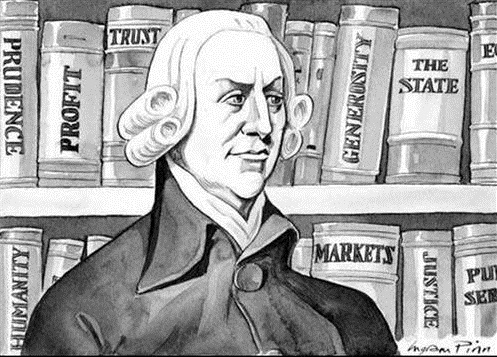
In a previous blog/commentary, Scotman’s Adam Smith was identified as the father of modern macro-economics. Though he lived from 1723 to 1790, his writings defined advanced economic concepts even in this 21st Century. His landmark book An Inquiry into the Nature and Causes of the Wealth of Nations qualified the divisions of income into these following categories: profit, wage, and rent.[4] We have previously explored profit-seeking (a positive ethos that needs to be fostered in the Caribbean region) and rent-seeking (a negative effort that proliferates in the Caribbean but needs to be mitigated), so now the focus of this commentary is on the activity of wage-seeking, and the concepts of governance and public choice theory to allow for maximum employment.

This is hard! Change has come to the world of wage-seekers – the middle classes are under attack; the labor-pool of most industrialized nations have endured decline, not in the numbers, but rather in prosperity. While wage-earners have not kept pace with inflation, top-earners (bonuses, commissions and business profits) have soared; (see Photo).
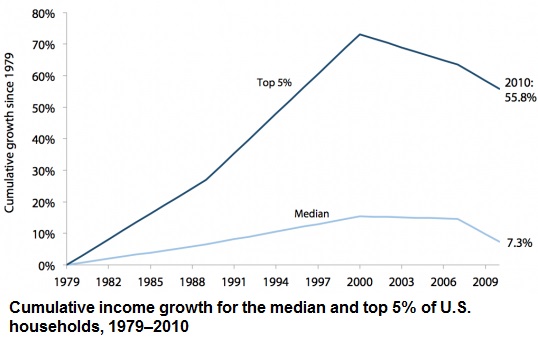
CU Blog - Economic Principles - Wage-Seeking - Market forces -vs- Collective Bargaining - Photo 2As a direct result, every Caribbean member-state struggles with employment issues in their homeland. In fact, this was an initial motivation for the book Go Lean…Caribbean, stemming from the fall-out of the 2008 Great Recession, this publication was presented as a roadmap for the introduction and implementation of the Caribbean Union Trade Federation (CU) to elevate the economic, security and governing engines of the Caribbean region to create 2.2 million new jobs, despite global challenges.

Needless to say, the global challenge is far more complex than Home Economics. The Go Lean book describes the effort as heavy-lifting; then proceeds to detail the turn-by-turn directions of a roadmap to remediate and mitigate wage-seeking.

The roadmap channels the Economic Principles and best-practices of technocrats like Adam Smith and 11 other named economists, many of them Nobel Laureates. A review of the work of these great men and woman constitute “Lessons in Economic Principles”. Why would these lessons matter in the oversight of Caribbean administration? Cause-and-effect!
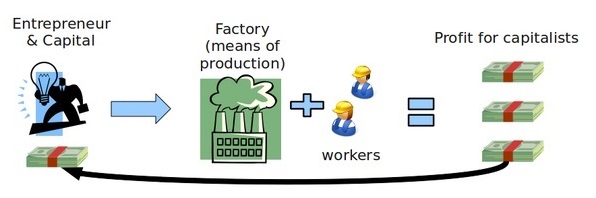
Profit 4The root of the current challenge for wage-seekers is income equality; and this is bigger than just the Caribbean. It is tied to the global adoption of globalization and technology/ automation – a product of global Market Forces as opposed to previous Collective Bargaining factors. This relates back to the fundamental Economic Principle of “supply-and-demand”; but now the “supply” is global. This photo/”process flow” here depicts the ingredients of Market Forces. When there is the need for labor, the principle of comparative analysis is employed, and most times the conclusion is to “off-shore” the labor efforts, and then import the finished products. This is reversed of the colonialism that was advocated by Adam Smith; instead of the developed country providing factory labor for Third World consumption, the developed nation (i.e. United States) is now in the consumer-only role, with less and less production activities, for products fabricated in the Third World. This reality is not sustainable for providing prosperity to the middle classes, to the wage-seekers.

As a community, we may not like the laws of Economics, but we cannot ignore them. The Go Lean book explains the roles and significance of Economic Principles … with this excerpt (Page 21):

While money is not the most important factor in society, the lack of money and the struggle to acquire money creates challenges that cannot be ignored. The primary reason why the Caribbean has suffered so much human flight in the recent decades is the performance of the Caribbean economy. Though this book is not a study in economics, it recommends, applies and embraces these 6 core Economic Principles as sound and relevant to this roadmap:

  1. People Choose: We always want more than we can get and productive resources (human, natural, capital) are always limited. Therefore, because of this major economic problem of scarcity, we usually choose the alternative that provides the most benefits with the least cost.
  2. All Choices Involve Costs: The opportunity cost is the next best alternative you give up when you make a choice. When we choose one thing, we refuse something else at the same time.
  3. People Respond to Incentives in Predictable   Ways: Incentives are actions, awards, or rewards that determine the choices people make. Incentives can be positive or negative. When incentives change, people change their behaviors in predictable ways.
  4. Economic Systems Influence Individual Choices and Incentives: People cooperate and govern their actions through both written and unwritten rules that determine methods of allocating scarce resources. These rules determine what is produced, how it is produced, and for whom it is produced. As the rules change, so do individual choices, incentives, and behavior.
  5. Voluntary Trade Creates Wealth: People specialize in the production of certain goods and services because they expect to gain from it. People trade what they produce with other people when they think they can gain something from the exchange. Some benefits of voluntary trade include higher standards of living and broader choices of goods and services.
  6. The Consequences of Choices Lie in the Future: Economists believe that the cost and benefits of decision making appear in the future, since it is only the future that we can influence. Sometimes our choices can lead to unintended consequences.

Source: Handy Dandy Guide (HDC) by the National Council on Economic Education (2000)

The Go Lean book describes the end result of the application of best-practices in this field of economics over the course of a 5-year roadmap: the CU … as a hallmark of technocracy. But the purpose is not the edification of the region’s economists, rather to make the Caribbean homeland “better places to live, work and play” for its citizens. This branding therefore puts emphasis on the verb “work”; the nouns “jobs” and “wages” must thusly be a constant focus of the roadmap.

Brain Drain 70 percent ChartThis Go Lean book declares that the Caribbean eco-system for job-creation is in crisis … due to the same global dilemma. The roadmap describes the crisis as losing a war, the battle of globalization and technology. The consequence of the defeat is 2 undesirable conditions: income inequality and societal abandonment, citizens driven away to a life in the Diaspora. This assessment currently applies in all 30 Caribbean member-states, as every community has lost human capital to emigration. Some communities, like Puerto Rico and the US Virgin Islands have suffered with an abandonment rate of more than 50% and others have watched more than 70% of college-educated citizens flee their community for foreign shores. Even education is presented as failed investments as those educated in the region and leave to find work do not even return remittances in proportion to their costs of development. (See Table 4.1 in the Photo)

The Go Lean book therefore posits that there is a need to re-focus, re-boot, and optimize the labor/wage-seeking engines so as to create more jobs with livable wages. Alas, this is not just a Caribbean issue, but a global (i.e. American) one as well. See the following encyclopedic references for wage-seeking and Collective Bargaining to fully understand the complexities of these global issues:

Encyclopedia Reference #1: Wage-Seeking
(Source: https://en.wikipedia.org/wiki/Wage)

A wage is monetary compensation paid by an employer to an employee in exchange for work done. Payment may be calculated as a fixed amount for each task completed (a task wage or piece rate), or at an hourly or daily rate, or based on an easily measured quantity of work done.

Wages are an example of expenses that are involved in running a business.

Payment by wage contrasts with salaried work, in which the employer pays an arranged amount at steady intervals (such as a week or month) regardless of hours worked, with commission which conditions pay on individual performance, and with compensation based on the performance of the company as a whole. Waged employees may also receive tips or gratuity paid directly by clients and employee benefits which are non-monetary forms of compensation. Since wage labour is the predominant form of work, the term “wage” sometimes refers to all forms (or all monetary forms) of employee compensation.

Determinants of wage rates
Depending on the structure and traditions of different economies around the world, wage rates will be influenced by market forces (supply and demand), legislation, and tradition. Market forces are perhaps more dominant in the United States, while tradition, social structure and seniority, perhaps play a greater role in Japan.[6]

Wage Differences
Even in countries where market forces primarily set wage rates, studies show that there are still differences in remuneration for work based on sex and race. For example, according to the U.S. Bureau of Labor Statistics, in 2007 women of all races made approximately 80% of the median wage of their male counterparts. This is likely due to the supply and demand for women in the market because of family obligations. [7] Similarly, white men made about 84% the wage of Asian men, and black men 64%.[8] These are overall averages and are not adjusted for the type, amount, and quality of work done.

Real Wage
The term real wages refers to wages that have been adjusted for inflation, or, equivalently, wages in terms of the amount of goods and services that can be bought. This term is used in contrast to nominal wages or unadjusted wages. Because it has been adjusted to account for changes in the prices of goods and services, real wages provide a clearer representation of an individual’s wages in terms of what they can afford to buy with those wages – specifically, in terms of the amount of goods and services that can be bought.

See Table of European Model in the Appendix below. (The European Union is the model for the Caribbean Union).

———-

Encyclopedia Reference #2: Collective Bargaining
(Source: https://en.wikipedia.org/wiki/Collective_bargaining)

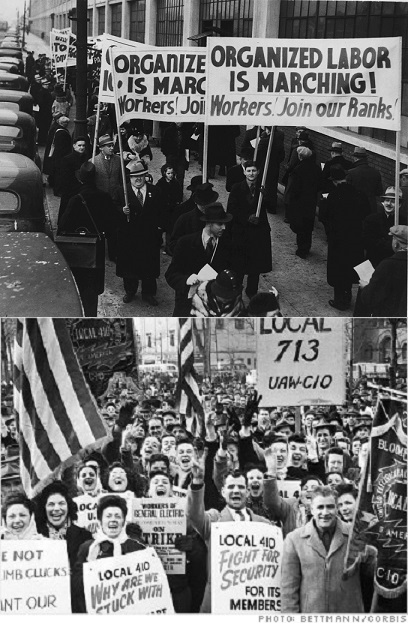
WPR: Marches & PicketsCollective Bargaining is a process of negotiation between employers and a group of employees aimed at reaching agreements to regulate working conditions. The interests of the employees are commonly presented by representatives of a trade union to which the employees belong. The collective agreements reached by these negotiations usually set out wage scales, working hours, training, health and safety, overtime, grievance mechanisms, and rights to participate in workplace or company affairs.[1]

The union may negotiate with a single employer (who is typically representing a company’s shareholders) or may negotiate with a group of businesses, depending on the country, to reach an industry wide agreement. A collective agreement functions as a labor contract between an employer and one or more unions.

The industrial revolution brought a swell of labor-organizing in [to many industrialized countries, like] the US. The American Federation of Labor (AFL) was formed in 1886, providing unprecedented bargaining powers for a variety of workers.[11] The Railway Labor Act (1926) required employers to bargain collectively with unions. While globally, International Labour Organization Conventions (ILO) were ratified in parallel to the United Nations efforts (i.e. Declaration of Human Rights, etc.). There were a total of eight ILO fundamental conventions [3] all ascending between 1930 and 1973, i.e. the Freedom of Association and Protection of the Right to Organise Convention (1949).
The Go Lean book presents a roadmap on how to benefit from the above Economic Principles – and how to empower communities anew – in the midst of tumultuous global challenges. This roadmap addresses more than economics, as there are other areas of societal concern. This is expressed in the CU charter; as defined by these 3 prime directives:

  • Optimization of economic engines in order to grow the regional economy to $800 Billion and create 2.2 million new jobs.
  • Establishment of a security apparatus to protect the resultant economic.
  • Improvement of Caribbean governance to support these engines.

Early in the Go Lean book, the responsibility to create jobs was identified as an important function for the CU with these pronouncements in the Declaration of Interdependence (Pages 14):

xix.  Whereas our legacy in recent times is one of societal abandonment, it is imperative that incentives and encouragement be put in place to first dissuade the human flight, and then entice and welcome the return of our Diaspora back to our shores.

xxi.  Whereas the preparation of our labor force can foster opportunities and dictate economic progress for current and future generations, the Federation must ensure that educational and job training opportunities are fully optimized for all residents of all member-states, with no partiality towards any gender or ethnic group. The Federation must recognize and facilitate excellence in many different fields of endeavor, including sciences, languages, arts, music and sports. This responsibility should be executed without incurring the risks of further human flight, as has been the past history.

xxiv. Whereas a free market economy can be induced and spurred for continuous progress, the Federation must install the controls to better manage aspects of the economy: jobs, inflation, savings rate, investments and other economic principles. Thereby attracting direct foreign investment because of the stability and vibrancy of our economy.

xxvi.  Whereas the Caribbean region must have new jobs to empower the engines of the economy and create the income sources for prosperity, and encourage the next generation to forge their dreams right at home, the Federation must therefore foster the development of new industries, like that of ship-building, automobile manufacturing, prefabricated housing, frozen foods, pipelines, call centers, and the prison industrial complex. In addition, the Federation must invigorate the enterprises related to existing industries tourism, fisheries and lotteries – impacting the region with more jobs.

According to an article from the Economic Policy Institute, entitled The Decline of Collective Bargaining and the Erosion of Middle-class Incomes in Michigan by Lawrence Mishel (September 25, 2012), the challenges to middle class income are indisputable, and the previous solution – Collective Bargaining – is no longer as effective as in the past. (The industrial landscape of Michigan had previously been identified as a model for the Caribbean to consider). See a summary of the article here (italics added) and VIDEO in the Appendix:

In Michigan between 1979 and 2007, the last year before the Great Recession, the state’s economy experienced substantial growth and incomes rose for high-income households. But middle-class incomes did not grow. The Michigan experience is slightly worse than but parallels that of the United States as a whole, where middle-class income gains were modest but still far less than the income gains at the top. What the experience of Michiganders and other Americans makes clear is that income inequality is rising, and it has prevented middle-class incomes from growing adequately in either Michigan or the nation.

The key dynamic driving this income disparity has been the divergence between the growth of productivity—the improvement in the output of goods and services produced per hour worked—and the growth of wages and benefits (compensation) for the typical worker. It has been amply documented that productivity and hourly compensation grew in tandem between the late 1940s and the late 1970s, but split apart radically after 1979. Nationwide, productivity grew by 69.1 percent between 1979 and 2011, but the hourly compensation of the median worker (who makes more than half the workforce but less than the other half) grew by just 9.6 percent (Mishel and Gee 2012; Mishel et al. 2012). In other words, since 1979 the typical worker has hardly benefited from improvements in the economy’s ability to raise living standards and, consequently, middle-class families’ living standards have barely budged since then. This phenomenon has occurred across the nation, including in Michigan.

This divergence between pay and productivity and the corresponding failure of middle-class incomes to grow is strongly related to the erosion of collective bargaining. And collective bargaining has eroded more in Michigan than in the rest of the nation, helping to explain Michigan’s more disappointing outcomes.

Research three decades ago by economist Richard Freeman (1980) showed that collective bargaining reduces wage inequality, and all the research since then (see Freeman 2005) has confirmed his finding. Collective bargaining reduces wage inequality for three reasons. The first is that wage setting in collective bargaining focuses on establishing “standard rates” for comparable work across business establishments and for particular occupations within establishments. The outcome is less differentiation of wages among workers and, correspondingly, less discrimination against women and minorities. A second reason is that wage gaps between occupations tend to be lower where there is collective bargaining, and so the wages in occupations that are typically low-paid tend to be higher under collective bargaining. A third reason is that collective bargaining has been most prevalent among middle-class workers, so it reduces the wage gaps between middle-class workers and high earners (who have tended not to benefit from collective bargaining).

Collective bargaining also reduces wage inequality in a less-direct way. Wage and benefit standards set by collective bargaining are often followed in workplaces not covered by collective bargaining, at least where there is extensive coverage by collective bargaining in particular occupations and industries. This spillover effect means that the impact of collective bargaining on the wages and benefits of middle-class workers extends far beyond those workers directly covered by an agreement.

Source: http://www.epi.org/publication/bp347-collective-bargaining/

The siren call went out 20 years ago, of the emergence of an “Apartheid” economy, a distinct separation between the classes: labor and management. Former US Secretary of Labor Robert Reich (1993 – 1997 during the Clinton Administration’s First Term) identified vividly, in this 1996 Harvard Business Review paper, that something was wrong with the U.S. economy then; (it is worst now):

CU Blog - Economic Principles - Wage-Seeking - Market forces -vs- Collective Bargaining - Photo 3That something is not the country’s productivity, technological leadership, or rate of economic growth, though there is room for improvement in all those areas. That something is an issue normally on the back burner in U.S. public discourse: the distribution of the fruits of economic progress. For many, the rise in AT&T’s stock after it announced plans [on January 3, 1996] to lay off 40,000 employees crystallized the picture of an economy gone haywire, with shareholders gaining and employees losing as a result of innovation and advances in productivity.

Has the distribution of the benefits of economic growth in the United States in fact gone awry? Is the nation heading toward an apartheid economy—one in which the wealthy and powerful prosper while the less well-off struggle? What are the facts? What do they mean? Are there real problems—and can they be solved?

Deploying solutions for the problem of income equality in the Caribbean is the quest of the Go Lean/CU roadmap. The book identified Agents of Change (Page 57) that is confronting the region, (America as well); they include: Globalization and Technology. A lot of the jobs that paid a “living wage” are now being shipped overseas to countries with lower wage levels, or neutralized by the advancement of technology. Yes, computers are reshaping the global job market, so even Collective Bargaining may fail to counter any eventual obsolescence of wage-earners, their valuation and appreciation; (see Encyclopedic Article # 2). The Go Lean book, and previous blog/commentaries, therefore detailed the campaign to not just consume technology, but to also innovate, produce and distribute the computer-enabled end-products. Therefore industries relating to STEM (Science, Technology, Engineering and Mathematics/Medicine) are critical in the roadmap. Not only do these careers yield good-paying direct jobs, but also factor in the indirect job market, and the job-multiplier rate (3.0 to 4.1) for down-the-line employment (Page 260) opportunities.

The Go Lean… Caribbean book details the creation of 2.2 million new jobs for the Caribbean region, many embracing ICT/STEM skill-sets. This is easier said than done, so how does Go Lean purpose to deliver on this quest? By the adoption of certain community ethos, plus the executions of key strategies, tactics, implementations and advocacies. The following is a sample from the book:

Assessment – Puerto Rico – Extreme Unemployment – The Greece of the Caribbean Page 18
Community Ethos – Deferred Gratification Page 21
Community Ethos – Job Multiplier Page 22
Community Ethos – Anti-Bullying and Mitigation Page 23
Community Ethos – Lean Operations Page 24
Community Ethos – Return on Investments Page 24
Community Ethos – Ways to Impact the Future Page 26
Community Ethos – Ways to Foster Genius Page 27
Community Ethos – Ways to Help Entrepreneurship Page 28
Community Ethos – Ways to Promote Intellectual Property – Key to ICT Careers Page 29
Community Ethos – Ways to Impact Research and Development – Germaine for STEM jobs Page 30
Community Ethos – Ways to Close the Digital Divide – Vital for fostering ICT careers Page 31
Strategy – Mission – Education Without Further Brain Drain Page 46
Strategy – Agents of Change – Technology Page 57
Strategy – Agents of Change – Globalization Page 57
Tactical – Fostering a Technocracy Page 64
Tactical – Tactics to Forge an $800 Billion Economy – East Asian Tigers Model Page 69
Tactical – Tactics to Forge an $800 Billion Economy – High Multiplier Industries Page 70
Tactical – Tactics to Forge an $800 Billion Economy – Trade and Globalization Page 70
Tactical – Separation of Powers – Commerce Department – Patents & Copyrights Page 78
Implementation – Steps to Implement Self-Governing Entities – As Job-creating Engines Page 105
Implementation – Ways to Benefit from Globalization – Technology: The Great Equalizer Page 119
Planning – Ways to Improve Trade Page 128
Planning – Ways to Model the EU Page 130
Planning – Lessons Learned from 2008 – Income Equality Now More Pronounced Page 136
Advocacy – Ways to Grow the Economy Page 151
Advocacy – Ways to Create Jobs Page 152
Advocacy – Ways to Improve Education – e-Learning Options Page 159
Advocacy – Ways to Impact Labor Markets and Unions – Collective Bargaining Best-Practices Page 164
Advocacy – Ways to Foster Empowering Immigration – STEM Resources Page 174
Advocacy – Ways to Foster Technology – Credits, Incentives and Investments Page 197
Advocacy – Ways to Foster e-Commerce – Optimize Remittance Methods Page 198
Advocacy – Ways to Help the Middle Class – Exploit Globalization Page 223
Appendix – Growing 2.2 Million Jobs in 5 Years Page 257
Appendix – Job Multipliers – Direct & Indirect Job Correlations Page 259
Appendix – Emigration Bad Example – Puerto Rican Population in the US Mainland Page 304

The CU will foster job-creating developments, incentivizing many high-tech start-ups and incubating viable companies. The primary ingredient for CU success will be Caribbean people, so we must foster and incite participation of many young people into fields currently sharing higher job demands, like ICT and STEM, so as to better impact their communities. A second ingredient will be the support of the community – the Go Lean movement recognizes the limitation that not everyone in the community can embrace the opportunity to lead in these endeavors. An apathetic disposition is fine-and-well; we simply must not allow that to be a hindrance to those wanting to progress – there are both direct jobs and indirect jobs connected with the embrace of ICT/STEM disciplines. The community ethos or national spirit, must encourage and spur “achievers” into roles where “they can be all they can be”. Go Lean asserts that one person can make a difference … to a community (Page 122).

Other subjects related to job empowerments for wage-seekers in the region have been blogged in other Go Lean…Caribbean commentaries, as sampled here:

https://goleancaribbean.com/blog/?p=4240 Immigration Policy Exacerbates Worker Productivity Crisis
https://goleancaribbean.com/blog/?p=3694 Jamaica-Canada employment programme pumps millions into local economy
https://goleancaribbean.com/blog/?p=3473 Haiti to Receive $70 Million Grant to Expand Caracol Industrial Park to Create Jobs and Benefit from Globalization
https://goleancaribbean.com/blog/?p=3446 Forecast for higher unemployment in Caribbean in 2015
https://goleancaribbean.com/blog/?p=3164 Michigan Unemployment Model – Then and Now
https://goleancaribbean.com/blog/?p=2857 Where the Jobs Are – Entrepreneurism in Junk
https://goleancaribbean.com/blog/?p=2800 The Geography of Joblessness
https://goleancaribbean.com/blog/?p=2750 Disney World’s example of Self Governing Entities and Economic Impacts of 70,000 jobs; 847,000+ Puerto Ricans now live in the vicinity.
https://goleancaribbean.com/blog/?p=2126 Where the Jobs Are – Computers Reshaping Global Job Market
https://goleancaribbean.com/blog/?p=2025 Where the Jobs Are – Attitudes & Images of the Caribbean Diaspora in US
https://goleancaribbean.com/blog/?p=2003 Where the Jobs Are – Ship-breaking under the SGE Structure
https://goleancaribbean.com/blog/?p=1698 Where the Jobs Are – STEM Jobs Are Filling Slowly
https://goleancaribbean.com/blog/?p=1683 Where the Jobs Were – British public sector now strike over ‘poverty pay’
https://goleancaribbean.com/blog/?p=1214 Where the Jobs Are – Fairgrounds as SGE & Landlords for Sports Leagues
https://goleancaribbean.com/blog/?p=273 10 Things We Don’t Want from the US – Job Discrimination of Immigrations

The Caribbean is arguably the best address on the planet, but “man cannot live on beauty alone”, there is the need for a livelihood as well. This is the challenge, considering the reality of unemployment in the region; the jobless rate among the youth is even higher.

The crisis of income inequality for the US is a direct result of free trade agreements, like NAFTA, and China’s Preferential Trading Status. Despite this status, we can benefit from the realities of globalization; jobs are being moved to conducive locations with lower labor costs.  We should invite these investors to look for cheaper labor options, here in the Caribbean region (Haiti, Dominican Republic, Jamaica, etc.). This is the same reality as in Europe with different wage levels for the different countries (see Appendix below); the Caribbean also has these wage differences.

The Go Lean roadmap seeks to foster higher-paying job options: Call Centers, Offshore Software Development Centers, R&D Medical campuses, light-manufacturing and assembly plants for “basic needs” products (food, clothing shelter, energy, and transportation) for Caribbean consumption. This is the successful model of Japan, China and the “East Asia Tigers” economies; these are manifestations of effective Economic Principles.

The Go Lean book therefore digs deeper, providing turn-by-turn directions to get to the desired Caribbean results: a better place to live, work and play. 🙂

Download the free e-Book of Go Lean … Caribbean – now!

————-

Appendix – List of European countries by average wage (USA & Japan added for comparison)

(Source: https://en.wikipedia.org/wiki/List_of_European_countries_by_average_wage)

2014 Annual values (in national currency) for a family with two children with one average salary, including tax credits and allowances.[1] Net amount is computed after Taxes, Social Security and Family Allowances; the result is provided in both the National Currency and the Euro, if different. The table, sorted from highest Net amount to the lowest, is presented as follows:

State Gross Net (Natl. Curr) Net (Euro)
Switzerland 90,521.98 86,731.20 71,407.21
Luxembourg 54,560.39 52,041.36 52,041.36
Norway 542,385.96 415,557.87 49.,741.20
Denmark 397,483.78 289,292.48 38,806.20
Iceland 6,856,099.69 5,872.114.66 37,865.07
UNITED STATES 56,067 45,582 37,671
Sweden 407,974.45 335,501.45 36,874.37
Netherlands 48,855.70 36,648.71 36,648.71
United Kingdom 35,632.64 28,960.38 35,925.65
Belgium 46,464.41 35,810.55 35,810.55
Italy 41,462.67 24,539.93 35,539.93
Germany 45,952.05 36,269.23 35,269.23
France 38,427.35 30,776.75 34,776.75
Ireland 34,465.85 34,382.63 34,382.63
Austria 42,573.25 33,666.04 33,666.04
Finland 42,909.72 32,386.59 32,386.59
JAPAN 4,881,994.24 4,132.432.02 29,452.16
Spain 26,161.81 22,129.78 22,129.78
Greece 24,201.50 17,250.24 17,250.24
Slovenia 17,851.28 15,882.53 15,882.53
Portugal 17,435.71 15,140.25 15,140.25
Estonia 12,435.95 11,176.87 11,176.87
Czech Republic 312,083.83 306,153.76 11,118.31
Slovakia 10,342.10 9,778.16 9,778.16
Poland 42,360.01 34,638.77 8,278.27
Hungary 3,009,283.93 2,530.280.97 8,196.30
Turkey 28,370.00 21,072.12 7,250.00

————-

Appendix VideoCollective Bargaining and Shared Prosperity: Michigan, 1979 – 2009 http://youtu.be/PcT4jK89JmE

Published on September 27, 2012 – This VIDEO depicts the positive effects of Collective Bargaining on the quest for income equality in the US State of Michigan; and the sad consequence of the widening income inequality when Collective Bargaining is less pervasive.
This reflect the “Observe and Report” functionality of the Go Lean…Caribbean promoters in the Greater Detroit-Michigan area.

Share this post:
, , , ,

Economic Principle: Profit-Seeking – When ‘Greed is Good’

Go Lean Commentary

1776 was a very good year…

Profit-Seeking - 1… not just because the 13 original British colonies declared their independence as the United States of America, but also the publication of the landmark book on Economic Principles, An Inquiry into the Nature and Causes of the Wealth of Nations by Adam Smith, the 18th century Scottish political economics pioneer. The publication is cited as a reference source in the book Go Lean…Caribbean – a roadmap for the introduction and implementation of Caribbean Union Trade Federation (CU) to elevate the economic, security and governing engines of the Caribbean region. A relevant quote from the Go Lean book follows (Page 67):

… usually abbreviated as “The Wealth of Nations“, this book is considered the first modern work of economics, and [Smith] is thusly cited as the “father of modern economics”, even today, and among the most influential thinkers in the field of economics. Through reflection over the economics at the beginning of the Industrial Revolution the book touches upon broad topics as the division of labor, productivity and free markets.

Smith attacked most forms of government interference in the economic process, including tariffs, arguing that these create inefficiency and high prices in the long run. It is believed that this theory, laissez-faire economic philosophy, influenced government legislation in later years.

Smith advocated a government that was active in sectors other than the economy. He advocated public education for poor adults, a judiciary, and a standing army—institutional systems not directly profitable for private industries.

The “Invisible Hand” is a frequently referenced theme from Smith’s book. He refers to “the support of domestic industry” and contrasts that support with the importation of goods. Neoclassical economic theory has expanded the metaphor beyond the domestic/foreign manufacture argument to encompass nearly all aspects of economics. The “invisible hand” of the market is a metaphor now to describe the self-regulating behavior of the marketplace. … 

Profit 2

Adam Smith’s writings qualified many rules of economics, in particular the divisions of income into profit, wage, and rent.[4] In a previous commentary the concept of rent-seeking was fully explored.; also the global challenges of wage-seeking have been fully detailed in another commentary. Now, this commentary is about profit, and the concepts of governance and public choice theory, allowing for the pursuit of profit. Where there is the pursuit of profit, there is invariably a focus on greed. For the purpose of elevating the Caribbean economy, greed is good! (In this case “greed” is not being defined as excess, but rather the natural desire to possess wealth, goods, or objects of abstract value with the intention to keep it for one’s self. The dreaded excess of “greed”, on the other hand, is a “vice” that must be cautiously monitored and curtailed, i.e. Crony-Capitalism). See VIDEO in the Appendix below.

Profit 3

Actor Michael Douglas as Wall Street Corporate Raider Gordon Gekko in the 1987 film

The Caribbean features mixed economies, wherein greed or profit plays a pivotal motivator. A mixed economy is an economic system that is variously defined as containing a mixture of markets (profit-seeking) and economic planning, in which both the private sector and the State direct the economy; or as a mixture of free markets with economic interventionism.[1] Most mixed economies can be described as market economies with strong regulatory oversight and governmental provision of public goods. That “public good” is what Adam Smith focused on for the role of government – non-profit-seeking activities – that they should concentrate on the public availability and distribution of the non-excludable and non-rivalrous materials that satisfies human wants (infrastructure, education, judiciary, security, etc.) and are not directly profitable for private industries.

Economies ranging from the United States[3][4] to Cuba[5] – in effect all of the Caribbean – have been catalogued as mixed economies. Around the world, the most prosperous countries with the highest average standard of living tend to have mixed economic systems with democratically elected governments. Thusly, this consideration on the Economic Principles of Profit, as follows, is important for the roadmap to elevate Caribbean economies:

Encyclopedia Reference: Profit (Economic)
Source: https://en.wikipedia.org/wiki/Profit_(economics)
In classical economics, profit is the return to an owner of capital goods or natural resources in any productive pursuit involving labor, or a return on bonds and money invested in capital markets.[3]

Related concepts include profitability and the profit motive, which is the motivation of firms to operate so as to maximize their profits. Mainstream microeconomic theory posits that the ultimate goal of a business is to make money. Stated differently, the reason for a business’s existence is to turn a profit. The profit motive is a key tenet of rational choice theory, or the theory that economic agents (actors or decision makers in some aspect of the economy) tend to pursue what is in their own best interests. Accordingly, businesses seek to benefit themselves and/or their shareholders by maximizing profits. In general the basic premise of rational choice theory is that aggregate social behavior results from the behavior of individual actors, each of whom is making their individual decisions.

Profit 4

Government intervention
Often, governments will try to intervene in uncompetitive markets to make them more competitive. Antitrust or competition laws were created to prevent powerful firms from using their economic power to artificially create the barriers to entry they need to protect their economic profits.[7][8][9] This includes the use of predatory pricing toward smaller competitors.[6][9][10] With lower barriers, new firms can enter the market, making the long run equilibrium much more like that of a competitive industry, with no economic profit for firms.

(This consideration aligns with alternate Economic Principles regarding sources of income; other commentaries detailed the concepts of rent-seeking and wage-seeking).

This historic information regarding Economist Adam Smith is important in understanding the “Lessons in Economic Principles”. These lessons matter in assessing today’s Caribbean status and fate, as there is the need for the optimal balance of “free market” versus “interventionism”. The Go Lean book explains the significance of Economic Principles with this excerpt (Page 21):

While money is not the most important factor in society, the lack of money and the struggle to acquire money creates challenges that cannot be ignored. The primary reason why the Caribbean has suffered so much human flight in the recent decades is the performance of the Caribbean economy. Though this book is not a study in economics, it recommends, applies and embraces these 6 core economic principles as sound and relevant to this roadmap:

  1. People Choose: We always want more than we can get and productive resources (human, natural, capital, etc.) are always limited. Therefore, because of this major economic problem of scarcity, we usually choose the alternative that provides the most benefits with the least cost.
  2. All Choices Involve Costs: The opportunity cost is the next best alternative you give up when you make a choice. When we choose one thing, we refuse something else at the same time.
  3. People Respond to Incentives in Predictable   Ways: Incentives are actions, awards, or rewards that determine the choices people make. Incentives can be positive or negative. When incentives change, people change their behaviors in predictable ways.
  4. Economic Systems Influence Individual Choices and Incentives: People cooperate and govern their actions through both written and unwritten rules that determine methods of allocating scarce resources. These rules determine what is produced, how it is produced, and for whom it is produced. As the rules change, so do individual choices, incentives, and behavior.
  5. Voluntary Trade Creates Wealth: People specialize in the production of certain goods and services because they expect to gain from it. People trade what they produce with other people when they think they can gain something from the exchange. Some benefits of voluntary trade include higher standards of living and broader choices of goods and services.
  6. The Consequences of Choices Lie in the Future: Economists believe that the cost and benefits of decision making appear in the future, since it is only the future that we can influence. Sometimes our choices can lead to unintended consequences.
    Source: Handy Dandy Guide (HDC) by the National Council on Economic Education (2000)

The Go Lean book presents a roadmap on how to better benefit from these economic principles – and how to increase profit-seeking opportunities in the Caribbean member-states and for the region as a whole. While “rent-seeking” – seeking to increase one’s share of existing wealth without creating new wealth – is a negative ethos, “profit-seeking” – the end product of investing in new opportunities – can be positive. The absence of profit-seeking is an absence of prosperity. Every Caribbean community suffers from an acute problem of societal abandonment. Those most capable of creating opportunities of prosperity, the educated classes, have mostly fled these lands, despite being labeled “the best address on the planet”. Why?

When people love their homelands yet begrudgingly leave, the defects – deficient economic opportunities – must be addressed. Caribbean member-states have tried, strenuously, over the decades, to diversify their economies; yet the preponderance of evidence point to adoption of “rent-seeking” in the region rather than the required profit-seeking. The requisite investment of the resources (time, talent, treasuries) for the goal of economic optimization may be too big for any one Caribbean member-state to conduct alone. Rather there is the need for a regional technocratic solution.

The Caribbean needs the evolutionary spirit (for one generation to do better than the previous one) of “profit-seeking” or “greed”. As portrayed in the VIDEO:

“Greed, for the lack of a better word, is good!” [Thus says the fictitious character in below VIDEO]. “Greed clarifies, cuts through and captures the essence of the evolutionary spirit. Greed in all of its forms – greed for life, greed for money, greed for love, knowledge has marked the upward surge of mankind; and greed will not only save [this company] but the other malfunctioning corporation called the USA”.

Posted commentary by Screen Name “fh downtheline”on the below VIDEO:

There is a better word than “greed” for this application. It may be “hunger”. Hunger is more present [in the Caribbean] and thusly more important than greed. Hunger keeps people hunting for progress. While greed ends up destroying the value of that progress. “Hunger” would refer to more than just food or economic dimension, but rather there is a hunger for knowledge, hunger for scientific thought. While “greed” says “I want” this, “Hunger” says “I need” this!

“Profit-seeking” is also a better word than “greed”; it too conveys the same concept as the definition above.

The consideration of the Go Lean book, as related to this subject is one of governance, the need for technocratic stewardship of the regional Caribbean society. This point was also pronounced in the opening Declaration of Interdependence (Pages 12 – 14) with these acknowledgements and statements:

xi.   Whereas all men are entitled to the benefits of good governance in a free society, “new guards” must be enacted to dissuade the emergence of incompetence, corruption, nepotism and cronyism at the peril of the people’s best interest. The Federation must guarantee the executions of a social contract between government and the governed.

xii. Whereas the legacy in recent times in individual states may be that of ineffectual governance with no redress to higher authority, the accedence of this Federation will ensure accountability and escalation of the human and civil rights of the people for good governance, justice assurances, due process and the rule of law. As such, any threats of a “failed state” status for any member state must enact emergency measures on behalf of the Federation to protect the human, civil and property rights of the citizens, residents, allies, trading partners, and visitors of the affected member state and the Federation as a whole.

xxiv.  Whereas a free market economy can be induced and spurred for continuous progress, the Federation must install the controls to better manage aspects of the economy: jobs, inflation, savings rate, investments and other economic principles. Thereby attracting direct foreign investment because of the stability and vibrancy of our economy.

xxvi.  Whereas the Caribbean region must have new jobs to empower the engines of the economy and create the income sources for prosperity, and encourage the next generation to forge their dreams right at home, the Federation must therefore foster the development of new industries, like that of ship-building, automobile manufacturing, prefabricated housing, frozen foods, pipelines, call centers, and the prison industrial complex. In addition, the Federation must invigorate the enterprises related to existing industries like tourism, fisheries and lotteries – impacting the region with more jobs.

This Go Lean book serves as a roadmap for the introduction and implementation of the technocratic Caribbean Union Trade Federation (CU) to provide better stewardship for the 30 member-states of the Caribbean region. The CU is motivated by positive community ethos, designed to elevate Caribbean society and the economic opportunities there in. In general, the Go Lean roadmap stresses key community ethos, strategies, tactics, implementations and advocacies necessary to transform and turn-around the eco-systems of Caribbean society. These points are detailed in the book as follows:

Community Ethos – Deferred Gratification Page 21
Community Ethos – Return on Investments Page 24
Community Ethos – Ways to Impact the Future – Count on the Greedy to be greedy Page 26
Community Ethos – Ways to Help Entrepreneurship – Fostering Incubators Page 28
Community Ethos – Ways to Impact the Greater Good Page 37
Strategy – Vision – Confederate all 30 member-states / 4 languages into a Single Market Page 45
Tactical – $800 Billion Economy – How and When – Adam Smith Case Study Page 67
Tactical – Fostering High Job Multiplier Industries Page 70
Tactical – Separation-of-Powers – CU Federal Government versus Member-State Governance Page 71
Implementation – Ways to Pay for Change – Award exploratory rights in exclusive territories Page 101
Planning – 10 Big Ideas – #3: Proactive Anti-crime Measures Page 127
Planning – Ways to Improve Trade Page 128
Planning – Ways to Improve Interstate Commerce Page 129
Planning – Ways to Make the Caribbean Better Page 131
Advocacy – Ways to Grow the Economy Page 151
Advocacy – Ways to Create Jobs Page 152
Advocacy – Ways to Improve Education – Online Job Training Page 159
Advocacy – Ways to Improve Governance Page 168
Advocacy – Ways to Better Manage the Social Contract Page 170
Advocacy – Ways to Better Manage Natural Resources Page 183
Advocacy – Reforms for Banking Regulations – Tools to Stimulate/Control the Economy Page 199
Advocacy – Ways to Impact Wall Street Page 200
Advocacy – Ways to Impact Main Street Page 201
Advocacy – Ways to Battle Poverty – Entrepreneurial Values Page 222
Appendix – Job Multipliers Page 259

In considering this economic history, the CU/Go Lean roadmap is motivated to create value for Caribbean communities, to foster good economic habits and principles. In general, the CU/Go Lean roadmap employs better strategies, tactics and implementations to impact its prime directives; identified with the following 3 statements:

  • Optimization of the economic engines in order to grow the regional economy to $800 Billion & create 2.2 million new jobs.
  • Establishment of a security apparatus to protect the resultant economic engines and mitigate internal and external threats.
  • Improvement of Caribbean governance – federal, national, municipal and corporate – to support these engines.

As defined in previous blog/commentaries, the CU/Go Lean roadmap asserts best-practices for proper stewardship for regional, national, municipal, and corporate governance. One strategy advocated is to better grow/control the money supply. The end-product should be the creation of new jobs, wealth, trade networks, plus develop new products and services, and an educated society.

New jobs need not only originate from the big corporate entities; that is the multi-national corporations that are traded on Wall Street or the 9 stock exchanges in the Caribbean region. No, rather small-to-medium enterprises (SME) – and even the self-employment “hustle” – will play a role in the economic optimization process. These points were detailed in these previous commentaries:

https://goleancaribbean.com/blog/?p=3490 How One Entrepreneur Can Rally a Whole Community
https://goleancaribbean.com/blog/?p=2857 Where the Jobs Are – Entrepreneurism in Junk – the “Hustle” Ethos
https://goleancaribbean.com/blog/?p=1325 Puerto Rico Governor Signs Bill on SME’s
https://goleancaribbean.com/blog/?p=398 Self-employment on the rise in the Caribbean –  the “Hustle” Ethos
https://goleancaribbean.com/blog/?p=214 LCD versus an Entrepreneurial/”Hustle” Ethos

Adherence to economic principles/best-practices, such as profit-seeking, would help us make our Caribbean community better to live, work and play. We need to optimize the “invisible hand” of the market to incentivize, retain and repatriate Caribbean “free market” enterprises. Everyone in the region – the people, entrepreneurs, business owners and governmental institutions – are all urged to lean-in to this roadmap to elevate the Caribbean economic engines. 🙂

Download the book Go Lean … Caribbean – now!

———–

Appendix VIDEO: Gordon Gekko “Greed is Good” – https://youtu.be/PF_iorX_MAw
Uploaded on Dec 9, 2011 – Gordon Gekko, principal character in 1987 movie “Wall Street”, *unknowningly* describes the problems facing today’s private sector, while blasting the bureaucracy responsible for said problems in the first place. A classic speech, both in film and, also, within economic thought.

Share this post:
, , , ,
[Top]

Economic Principle: Bad Ethos of Rent-Seeking

Go Lean Commentary

Imagine a person making a resolution to improve their health…
… but they smoke cigarettes.

The expectation first would be:

Quit smoking!

One does not have to be a medical doctor, a PhD or a genius to glean this logic. It is now just common sense. Alas, common sense is not so common!

This commentary is not about smoking. It is about economics and public choice theory; see VIDEO’s below. In particular this commentary is about the bad Economic Principle referred to as “rent-seeking”. (This aligns with alternate Economic Principles regarding sources of income; other commentaries detailed the concepts of profit-seeking and wage-seeking). This is a big deal! Imagine a government public health department gifting cigarettes to people as a public health policy. Yes, it is that bad! This is the formal definition of “rent-seeking”:

CU Blog - Economic Principle - Bad Ethos of Rent-Seeking - Photo 1Rent-seeking is an attempt to obtain economic rent (i.e., the portion of income paid to a factor of production in excess of that which is needed to keep it employed in its current use) by manipulating the social or political environment in which economic activities occur, rather than by creating new wealth. Rent-seeking implies extraction of uncompensated value from others without making any contribution to productivity. The classic example of rent-seeking, according to Nobel Laureate Economist Robert Shiller, is that of a feudal lord who installs a chain across a river that flows through his land and then hires a collector to charge passing boats a fee (or rent of the section of the river for a few minutes) to lower the chain. There is nothing productive about the chain or the collector. The lord has made no improvements to the river and is helping nobody in any way, directly or indirectly, except himself. All he is doing is finding a way to make money from something that used to be free.[5]

“Finding a way to make money from something that used to be free”! How evasive is this practice? How can we identify it and how can we stop it?

The Caribbean is in crisis! Surveying the economic landscape of the region, we see a preponderance of rent-seeking as public policy in one member-state after another; see international Examples below. Alas, the book Go Lean…Caribbean, quoting famed economist Paul Romer (Page 8), declares that a crisis is a terrible thing to waste. Currently the region features unsustainable societal abandonment rates, exhaustive unemployment rates and near-Failed-State statuses.

The premise in this commentary is not an easy one. Just like it is common sense for a smoker to quit in order to preserve health/wellness, it is hereby acknowledged that this is “easier said than done”. Common sense is not so common! This heady discussion of advanced concepts in economics is an example of the heavy-lifting required to elevate Caribbean society.

The Go Lean book seeks to reboot and reform the economic engines of the Caribbean by being technocratic in applying best practices from the field of Economics. This intent is declared at the outset of the book with this Declaration of Interdependence (Page 10) for the region to work in unison to remediate the broken systems of commerce:

Preamble: As the colonial history of our region was initiated to create economic expansion opportunities for our previous imperial masters, the structures of government instituted in their wake have not fostered the best systems for prosperity of the indigenous people. Despite this past, we thrust our energies only to the future, in adapting the best practices and successes of the societies of these previous imperial masters and recognizing the positive spirit of their intent and vow to learn from their past accomplishments and mistakes so as to optimize the opportunities for our own citizenry to create a more perfect bond of union.

One of the basis of understanding this complex economic subject of “rent-seeking” is the review of the book The Rise and Decline of Nations by Economist Mancur Olson; in this publication, the writer traced the historic consequences of rent-seeking. He argued that the extremes of laissez-faire (the traditional economic philosophy in North American economies) and a command socialist economy (popular in Europe) would avoid rent-seeking, while a mixed economy would be subject to it.  Dr. Olson claimed two distinct groups (actors) with separate agendas: an encompassing organization with the broader social collective interest, versus the narrower distributional coalition – the special interest – who would naturally be a rent-seeking group that would slow down economic growth. See this detailed encyclopedic definition of the width-and-breadth of rent-seeking, here:

Encyclopedia Reference: Rent-Seeking
Source: http://en.wikipedia.org/wiki/Rent-seeking

In the field of Economics and public choice theory – the application of economic thinking to political issues – “rent-seeking” is seeking to increase one’s share of existing wealth without creating new wealth. The effects of these efforts are reduced economic efficiency [in the community] through poor allocation of resources, reduced actual wealth creation, lost government revenue, and increased income inequality,[1] and, potentially, national decline.

Attempts at capture of regulatory agencies to gain a coercive monopoly can result in advantages for the rent-seeker in the market while imposing disadvantages on competitors. (The term regulatory capture directly refers to a form of political corruption that occurs when a regulatory agency, created to act in the public interest, instead advances the commercial or special concerns of interest groups that dominate the industry or sector it is charged with regulating). The term “rent-seeking” itself is attributed to Economist Gordon Tullock in its modern sense with political connotation but with antecedents and common sense back to Ricardo.[2]

The idea of rent-seeking was developed by Gordon Tullock in 1967.[2] The expression rent-seeking was coined in 1974 by former World Bank Chief Economist Anne Krueger.[3] The word “rent” does not refer here to payment on a lease but stems instead from Adam Smith‘s division of incomes into profit, wage, and rent.[4] The origin of the term refers to gaining control of land or other natural resources.

Georgist economic theory – economic value derived from natural resources should belong equally to all residents of a community – describes rent-seeking in terms of land rent, where the value of land largely comes from government infrastructure and services (e.g. roads, public schools, maintenance of peace and order, etc.) and the community in general, rather than from the actions of any given landowner, in their role as mere titleholder. This role must be separated from the role of a property developer, which need not be the same person, and often is not.

In many market-driven economies, much of the competition for rents is legal, regardless of the harm it may do to an economy. However, some rent-seeking competition is illegal – such as bribery, corruption, smuggling, and even black market deals.

Rent-seeking is distinguished in economic theory from profit-seeking, in which entities seek to extract value by engaging in mutually beneficial transactions.[6] Profit-seeking in this sense is the creation of wealth, while rent-seeking is the use of social institutions such as the power of government to redistribute wealth among different groups without creating new wealth.[7] In a practical context, income obtained through rent-seeking may contribute to profits in the standard, accounting sense of the word.

Examples
An example of rent-seeking in a modern economy is spending money on political lobbying for government benefits or subsidies in order to be given a share of wealth that has already been created, or to impose regulations on competitors, in order to increase market share.

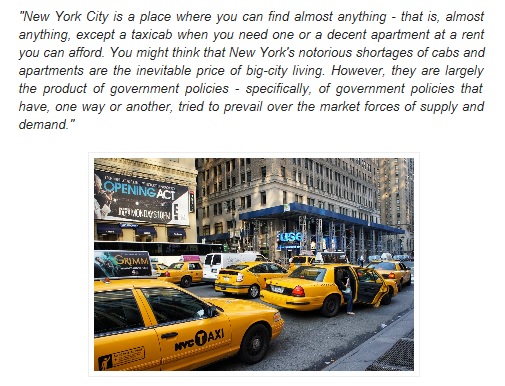
CU Blog - Economic Principle - Bad Ethos of Rent-Seeking - Photo 3A famous example of rent-seeking is the limiting of access to lucrative occupations, as by medieval guilds or modern state certifications and licensures. Taxi licensing is a commonly-referenced example of rent-seeking. To the extent that the issuing of licenses constrains overall supply of taxi services (rather than ensuring competence or quality), forbidding competition by livery vehicles, unregulated taxis and/or illegal taxis renders the (otherwise consensual) transaction of taxi service a forced transfer of part of the fee, from customers to taxi business proprietors. [Labor unions also fit the definition of rent-seeking].

The concept of rent-seeking would also apply to corruption of bureaucrats who solicit and extract ‘bribe’ or ‘rent’ for applying their legal but discretionary authority for awarding legitimate or illegitimate benefits to clients.[8] For example, tax officials may take bribes for lessening the tax burden of the tax payers; [and politicians take campaign contributions].

Regulatory capture is a related concept which refers to collusion between firms and the government agencies assigned to regulate them, which is seen as enabling extensive rent-seeking behavior, especially when the government agency must rely on the firms for knowledge about the market. Studies of rent-seeking focus on efforts to capture special monopoly privileges such as manipulating government regulation of free enterprise competition.[9] The term monopoly privilege rent-seeking is an often-used label for this particular type of rent-seeking. Often-cited examples include a lobby that seeks economic regulations such as tariff protection, quotas, subsidies,[10] or extension of copyright law.[11] Anne Krueger concludes that, “empirical evidence suggests that the value of rents associated with import licenses can be relatively large, and it has been shown that the welfare cost of quantitative restrictions equals that of their tariff equivalents plus the value of the rents” [12]

CU Blog - Economic Principle - Bad Ethos of Rent-Seeking - Photo 4Economists have argued that innovation in the financial industry is often a form of rent-seeking.[13][14] [A common everyday examples in American life would be: Wall Street on the ‘right’ and labor unions on the ‘left’].

[A local example stems from the Bahamas 2nd city of Freeport. That city provides a monopoly to the local petroleum retailing company, Freeport Oil Company, Limited (FOCOL). On one occasion that retailer limited gasoline purchases to the more expensive premium option only, as opposed to the standard choices; see story here: http://www.tribune242.com/news/2013/aug/02/focol-comes-under-fire-grand-bahama-residents/]

Possible consequences
From a theoretical standpoint, the moral hazard of rent-seeking can be considerable. If “buying” a favorable regulatory environment seems cheaper than building more efficient production, a firm may choose the former option, reaping incomes entirely unrelated to any contribution to total wealth or well-being. This results in a sub-optimal allocation of resources – money spent on lobbyists and counter-lobbyists rather than on research and development, on improved business practices, on employee training, or on additional capital goods – which retards economic growth. Claims that a firm is rent-seeking therefore often accompany allegations of government corruption, or the undue influence of special interests.[18]

Rent-seeking can prove costly to economic growth; high rent-seeking activity makes more rent-seeking attractive because of the natural and growing returns that one sees as a result of rent-seeking. Thus organizations value rent-seeking over productivity. In this case there are very high levels of rent-seeking with very low levels of output. Rent-seeking may grow at the cost of economic growth because rent-seeking by the state can easily hurt innovation. Ultimately, public rent-seeking hurts the economy the most because innovation drives economic growth.[19]

Government agents may initiate rent-seeking – such agents soliciting bribes or other favors from the individuals or firms that stand to gain from having special economic privileges, which opens up the possibility of exploitation of the consumer.[20] It has been shown that rent-seeking by bureaucracy can push up the cost of production of public goods.[21] It has also been shown that rent-seeking by tax officials may cause loss in revenue to the public exchequer.[8]

Mancur Olson traced the historic consequences of rent seeking in The Rise and Decline of Nations. As a country becomes increasingly dominated by organized interest groups, it loses economic vitality and falls into decline. Olson argued that countries that have a collapse of the political regime and the interest groups that have coalesced around it can radically improve productivity and increase national income because they start with a clean slate in the aftermath of the collapse. An example of this is Japan after World War Two. But new coalitions form over time, once again shackling society in order to redistribute wealth and income to themselves. However, social and technological changes have allowed new enterprises and groups to emerge in the past.[22]

A study by economists David Laband and John Sophocleus in 1988[23] estimated that rent-seeking had decreased total income in the US by 45 percent. Both economists William Dougan and Tullock affirmed (1991) the difficulty of finding the cost of rent-seeking. Rent-seekers of government-provided benefits will in turn spend up to that amount of benefit in order to gain those benefits, in the absence of, for example, the collective-action constraints highlighted by Olson.

Nobel Prize-winning Economist Joseph Stiglitz has argued that rent-seeking contributes significantly to income inequality in the United States through lobbying for government policies that let the wealthy and powerful get income, not as a reward for creating wealth, but by grabbing a larger share of the wealth that would otherwise have been produced without their effort.[26][27] (See related VIDEO here). Economists Thomas Piketty, Emmanuel Saez, and Stefanie Stantcheva (2011) had analyzed international economies and their changes in tax rates to conclude that much of income inequality is a result of rent-seeking among wealthy tax payers.[28]

This historic information is being considered in conjunction with the book Go Lean…Caribbean; a publication designed to elevate the region’s economy (create 2.2 million new jobs), security and governing engines. The book features a roster call for some All-stars of the field of Economics; (1700s, 1800s, 1900s & today). Consider this list of those quoted directly:

Paul Romer 1955 – Page 8
Adam Smith 1723 – 1790 Page 67
Arthur Okun 1928 – 1980 Page 153
James M. Buchanan 1919 – 2013 Page 169
Elinor Ostrom 1933 – 2012 Page 183
Norman Girvan 1941 – 2014 Page 255
Alfred Marshall 1842 – 1924 Page 258
Jacob Mincer 1922 – 2006 Page 258
Gary Becker 1930 – 2014 Page 258
John Geanakoplos 1955 – Page 276
David Hume 1711 – 1776 Page 318
John Maynard Keynes 1883 – 1946 Page 318

CU Blog - Economic Principle - Bad Ethos of Rent-Seeking - Photo 2

A review of the work of these great men and woman constitute “Lessons in Economic Principles”. Why would these lessons matter in assessing today’s Caribbean status and fate?

The Go Lean book explains the significance of Economic Principles with this excerpt (Page 21):

While money is not the most important factor in society, the lack of money and the struggle to acquire money creates challenges that cannot be ignored. The primary reason why the Caribbean has suffered so much human flight in the recent decades is the performance of the Caribbean economy. Though this book is not a study in economics, it recommends, applies and embraces these 6 core economic principles as sound and relevant to this roadmap:

  1. People Choose: We always want more than we can get and productive resources (human, natural, capital) are always limited. Therefore, because of this major economic problem of scarcity, we usually choose the alternative that provides the most benefits with the least cost.
  2. All Choices Involve Costs: The opportunity cost is the next best alternative you give up when you make a choice. When we choose one thing, we refuse something else at the same time.
  3. People Respond to Incentives in Predictable Ways: Incentives are actions, awards, or rewards that determine the choices people make. Incentives can be positive or negative. When incentives change, people change their behaviors in predictable ways.
  4. Economic Systems Influence Individual Choices and Incentives: People cooperate and govern their actions through both written and unwritten rules that determine methods of allocating scarce resources. These rules determine what is produced, how it is produced, and for whom it is produced. As the rules change, so do individual choices, incentives, and behavior.
  5. Voluntary Trade Creates Wealth: People specialize in the production of certain goods and services because they expect to gain from it. People trade what they produce with other people when they think they can gain something from the exchange. Some benefits of voluntary trade include higher standards of living and broader choices of goods and services.
  6. The Consequences of Choices Lie in the Future: Economists believe that the cost and benefits of decision making appear in the future, since it is only the future that we can influence. Sometimes our choices can lead to unintended consequences.
    Source: Handy Dandy Guide (HDC) by the National Council on Economic Education (2000)

In psycho-therapy the approach to forge change for an individual is defined as “starting in the head (thoughts, visions), penetrating the heart (feelings, motivations) and then finally manifesting in the hands (actions). The people of the Caribbean must change their feelings about elements of their society – elements that are in place and elements missing. This is referred to as “Community Ethos”, defined as: “the fundamental character or spirit of a culture; the underlying sentiment that informs the beliefs, customs, or practices of a group or society; dominant assumptions of a people or period; practices of a group or society; dominant assumptions of a people or period.

Rent-seeking is not one of the community ethos that is being urged for the Caribbean; just the opposite, it is a bad ethos to avoid!

VIDEO – The Rent Seeking of Both Left and Right – https://youtu.be/OqrDkegqyDo

Published on Jun 22, 2012 – For an alternative to our anti-democratic system check out Jim Rogers latest project to create a system that will hold politicians feet to the fire, and to put shackles on lobbyists so that they can no longer control the system. One day we might have a system that’s controlled by the people and is for the people.
This is an idea put forth for Americans but it can easily work in any other part of the world.

This bad ethos stems from an attitude of entitlement; to get something … for almost nothing. The Caribbean was colonized originally under this community ethos; a previous blog/commentary related how Papal Bulls and Royal Charters enabled entities to exploit Caribbean markets and trade with very little investment of their own. A direct quote from that commentary relates:

Most of the property and indigenous wealth of the Caribbean region is concentrated amongst the rich, powerful and yet small elite; an oligarchy. Many times these families received their property, corporate rights and/or monopolies by Royal Charter from the European monarchs of ancient times. These charters thus lingered in legacy from one generation to another … until …

The Go Lean book presents a roadmap on how to benefit from the above economic principles – and how to empower communities anew – without continuing rent-seeking practices. (For this reason this commentary opposes reparations for slavery and colonialism).

The consideration of the Go Lean book, as related to this subject is one of governance, (national, municipal and corporate governance), the need for technocratic stewardship of the regional Caribbean society. This point was also pronounced in the opening Declaration of Interdependence (Page 12) with these acknowledgements and statements:

xi.   Whereas all men are entitled to the benefits of good governance in a free society, “new guards” must be enacted to dissuade the emergence of incompetence, corruption, nepotism and cronyism at the peril of the people’s best interest. The Federation must guarantee the executions of a social contract between government and the governed.

xii. Whereas the legacy in recent times in individual states may be that of ineffectual governance with no redress to higher authority, the accedence of this Federation will ensure accountability and escalation of the human and civil rights of the people for good governance, justice assurances, due process and the rule of law. As such, any threats of a “failed state” status for any member state must enact emergency measures on behalf of the Federation to protect the human, civil and property rights of the citizens, residents, allies, trading partners, and visitors of the affected member state and the Federation as a whole.

xxxiii. Whereas lessons can be learned and applied from the study of the recent history of other societies, the Federation must formalize statutes and organizational dimensions to avoid the pitfalls of communities like East Germany, Detroit . On the other hand, the Federation must also implement the good examples learned from developments/communities like … Germany, [and] Japan .

This Go Lean book serves as a roadmap for the introduction and implementation of the technocratic Caribbean Union Trade Federation (CU) to provide better stewardship for the 30 member-states of the Caribbean region. The CU is motivated by the positive community ethos of the Greater Good!

In general the Go Lean roadmap stresses key community ethos, strategies, tactics, implementations and advocacies necessary to transform and turn-around the eco-systems of Caribbean society. These points are detailed in the book as follows:

Community Ethos – Deferred Gratification Page 21
Community Ethos – Return on Investments Page 24
Community Ethos – Ways to Impact the Future Page 26
Community Ethos – Ways to Impact the Greater Good Page 37
Strategy – Vision – Confederate all 30 member-states/ 4 languages into a Single Market Page 45
Tactical – Fostering a Technocracy – Economists are Technocrats Page 64
Tactical – Growing to $800 Billion GDP – Adam Smith Case Study: Father of Modern Economics Page 67
Tactical – Separation-of-Powers – CU Federal Government versus Member-State Governance Page 71
Implementation – Ways to Pay for Change – Award exploratory rights in exclusive territories Page 101
Implementation – Start-up Benefits from the Exclusive Economic Zone (EEZ) Page 104
Planning – 10 Big Ideas – #3: Proactive Anti-crime / Corporate Governance Measures Page 127
Planning – Ways to Improve Trade Page 128
Planning – Ways to Make the Caribbean Better Page 131
Planning – Lessons Learned from 2008 – Glass-Steagall Case Study Page 136
Advocacy – Ways to Grow the Economy – Government’s Role: Protect Property Rights Page 151
Advocacy – Ways to Create Jobs – 2.2 Million New Jobs Page 152
Advocacy – Ways to Improve Governance Page 168
Advocacy – Ways to Better Manage the Social Contract Page 170
Advocacy – Ways to Better Manage Natural Resources Page 183

In considering this economic history, the CU/Go Lean roadmap is motivated to create value for Caribbean communities, not skim off the top with rent-seeking practices. The mandate is simple:

Foster good economic habits; abandon bad habits.

(At one point, smoking was encouraged, but now it is universally assailed; this demonstrates that communities can mature).

This is not common ground; this is a higher ground!

With the proper stewardship, we can create jobs, value, wealth,  trade networks, an educated society, plus develop new products and services that the world demands. Adherence to these best-practices – and aversion to bad community ethos like rent-seeking – would help us make our Caribbean community better to live, work and play. 🙂

Download the book Go Lean … Caribbean – now!

————–

Appendix VIDEO: Public Choice – Rent Seeking – https://youtu.be/4H2TicrHC8I

Uploaded on Mar 1, 2007 – based on the textbook “Microeconomics for MBAs”

Share this post:
, , , , ,
[Top]

For-Profit Education: Plenty of Profit; Little Education

Go Lean Commentary

Follow the money…

This is a familiar plot-line in Hollywood Police dramas. Its “life imitating art” because this is the same eventuality for the American For-Profit education industry. There is a lot of money available in the US for post-secondary education of American students. Federal Student Loans are available to any American citizen regardless of credit or income. This constitutes a fertile ground for abuse.

According to the following news article, this one education company Corinthian College – see Appendix A below – is a bad example of For-Profit schools making a lot of profit but providing very little education to its customers: students.

“Scratch a liar, catch a thief”.

The article is presented here:

1. Title: My college degree is worthless
CU Blog - For-Profit Education - Plenty of Profit; Little Education - Photo 1
Sub-title:
Students across the country are shelling out tens of thousands of dollars for degrees that end up being completely worthless.

CU Blog - For-Profit Education - Plenty of Profit; Little Education - Photo 2Rosalyn Harris, an unemployed single mother who had never gone to college, thought getting a degree would be the ticket to a new life. So at age 23, she enrolled in a two-year criminal justice program at for-profit Everest College in Chesapeake, Va.

But the wealth of job opportunities the school had touted never transpired, and all she ended up with was more than $22,000 in student loan debt. She said classes were terrible, she didn’t receive any of the training she needed, and as a result, she spent months after graduation searching for criminal justice jobs without ever getting a call back.

Desperate to start paying some of her bills, Harris eventually applied for any entry-level job she could find. A full year after she graduated, she finally found a minimum wage job stocking shelves at Victoria’s Secret.

“My sole purpose of going to school was bettering my life for me and my son,” she said. “But now I wish I had never gone.”

Everest is a member of for-profit behemoth Corinthian Colleges, which has been accused by federal agencies of operating a predatory lending scheme, preying on low-income students and falsely inflating job placement numbers. Corinthian is currently closing and selling its schools, leaving thousands of graduates on the hook for loans they took out.

A Corinthian spokesman confirmed that Harris graduated in good standing, but it was unable to place her in a job. He said the school did provide her with career assistance and claims the criminal justice program has a 75% job placement rate, which he said is “a strong outcome for any educational program.”

He also disputed the allegations against the school, noting that Corinthian’s student loan default rate (of up to 27% for its EverestCollege campuses) is lower than other community colleges and its graduation and job placement rates are higher.

And while Corinthian has a particularly bad reputation, the for-profit college industry as a whole is often criticized for luring low-income students with false promises and failing to provide educations that qualify students for jobs.

Not only that but for-profit schools are generally double or triple the cost of public institutions like community colleges, and the default rate (19% last year) was the highest of all sectors.

CU Blog - For-Profit Education - Plenty of Profit; Little Education - Photo 3Vantrell Echols, a 36-year-old from Georgia, wishes he never received a phone call from for-profit Lincoln College of Technology back in 2008. He said the school spent six months convincing him to enroll — promising to provide all the training and help he needed to find a high-paying computer science job. He had been unemployed for more than a year and he was desperate, so he gave it a shot.

But upon enrolling in the computer science program, he said the quality of education “was a complete joke” and job assistance was nonexistent.

“They sold many of us dreams about helping us, getting us qualified to work, to help us with jobs, [but] I had to ask fellow students to help me because the teachers wouldn’t. Many of us graduated with honors but didn’t learn anything in our fields,” he said.

Lincoln Educational Services president Scott Shaw defended the school’s reputation to CNNMoney, touting its 75% job placement rate and pointing to examples of successful graduates like the CEO of VMWare (who graduated in 1979).

But Echols said that after accumulating more than $20,000 in debt to attend the one-year program, he wasn’t able to find a single job in computer science. He’s still unemployed, is now homeless — and he is convinced he’d be better off without the degree even listed on his resume.

He says multiple employers have told him that they don’t view his degree as credible because of the for-profit industry’s reputation and because other people they’ve hired from the school haven’t had the necessary skills for the job.

“They’ve ruined my life and the lives of many of my classmates,” he said.

Shaw said extensive career assistance was provided to Echols and that he isn’t sure why Echols couldn’t find a job. “There’s only so much we can do — at some point the student has to partake,” he said.

But these kinds of stories are popping up so often that even the Obama Administration took action this week. Going forward, for-profit colleges will risk losing federal student aid if average loan payments of graduates exceed 20% of discretionary income or 8% of total earnings.

“Too many hard-working students find themselves buried in debt with little to show for it,” Secretary of Education Arne Duncan said in a statement.

Senators Jeff Merkley of Oregon and Tom Harkin of Iowa are pushing for legislation that goes a step further. They argue that a loophole in federal laws allow some institutions to offer programs that aren’t licensed or accredited at the state or federal level. That means graduates end up with degrees that may sound legitimate but are meaningless to many employers.

The two senators introduced legislation last month aimed at cracking down on these “worthless degrees.” The legislation would require courses to be licensed before allowing schools to accept federal money like student loan dollars or financial aid.

“Passing this bill will ensure that a college can no longer charge thousands of dollars for a degree that does not prepare them to work in the field they were promised‎,” according to a statement about the bill.

Related: U.S. sues Corinthian Colleges
2. Title: Embattled for-profit education behemoth Corinthian Colleges is facing yet another legal fight: This time, from the Consumer Financial Protection Bureau.

The consumer agency announced Tuesday it is suing Corinthian for “illegal predatory lending” and is demanding that the school forgive more than $500 million in private loans it has given to students since July of 2011.

According to the CFPB’s complaint, Corinthian convinced students to enroll in the school by inflating its job placement rates. It even paid employers to hire graduates for at least one day in order to boost its numbers.

Meanwhile, Corinthian’s tuition and fees — which can climb to as high as $75,000 for a bachelor’s degree — are higher than what federal loans generally cover, forcing many students to take out private loans from the school. These loans, called “Genesis loans,” came with origination fees of 6% and interest rates of around 15% as of 2011 — much higher than the 3% and 7% charged on federal loans.

CNNMoney (New York); posted September 16, 2014 from: http://money.cnn.com/2014/09/16/pf/college/cfpb-corinthian-lawsuit/index.html?iid=EL

The references to “low-income students” in the foregoing article are most commonly the “Black and Brown” of the American population. This is a frequent demographic for victimization in American life.

This issue in the article is just another example of Crony-Capitalism and institutional racism. The book Go Lean…Caribbean and subsequent blogs posit that the Caribbean must not be vulnerable to these negative American forces.

The dread of Crony-Capitalism and institutional racism have been highlighted and detailed in many previous blog commentaries; see the many Crony-Capitalism models in Appendix B below. Now we have to add the reality of Big Education to the discussion. The issue underpinning this dilemma is the easy availability of guaranteed student loans from the US federal government. Unfortunately this is not just an issue for For-Profit institutions, many not-for-profit colleges and university also exploit the federal student loan funds to garner revenues at the expense of innocent students. The Crony in this case is a direct consequence of a rich pool of federal monies.

Rich pool? This brings to mind the visual of an isolated pool/pond on the African Plain, a watering hole on the Serengeti where many animals seek hydration and refuge, but the terrain is endangered with predators: lions, crocodiles, hyenas, cheetahs, etc.. Yes, in the American commercial eco-system, “follow the money”, and you will find many “bad actors” looking to exploit the situation for unfair gain and quick profits.
CU Blog - For-Profit Education - Plenty of Profit; Little Education - Photo 4

VIDEO – Is the cost of college crippling? – http://money.cnn.com/video/news/2013/09/03/n-cost-of-college-rising-education-middle-class-jobs.cnnmoney/


The Caribbean must do better! We must also dissuade our citizens from emigrating to this American eco-system.

The consideration of Crony-Capitalism in the For-Profit Education industry aligns with the book Go Lean…Caribbean, a roadmap to elevate the economic, security and governing engines of the Caribbean. The Caribbean wants to model many of the good examples of the United States, and learn from the many bad models. Education is one such model. While optimization of education can systemically raise a country’s economy, the Caribbean experience has been more negative than positive. Too many of our students have left … to study abroad; then refused to return home, taking with them the return on community investments and repayment of their student loans. The Go Lean book has reported in detail on how traditional college career paths have been disastrous policies for the Caribbean in whole, and each specific country in particular.

This Go Lean book serves as a roadmap for the introduction and implementation of the technocratic Caribbean Union Trade Federation (CU). The CU has a complete education agenda, applying lessons learned from the consideration of the American models. This roadmap represents a big change for the region. The CU/Go Lean roadmap has 3 prime directives:

  • Optimization of the economic engines in order to grow the regional economy to $800 Billion & create 2.2 million new jobs..
  • Establishment of a security apparatus to police “bad actors” and protect the resultant economic engines.
  • Improvement of Caribbean governance, including a separation-of-powers, to support these engines.

The Go Lean roadmap provides turn-by-turn directions on how to reform the Caribbean tertiary education systems, economy, governance and Caribbean society as a whole. There is a plan for a regional student loan pool, where we mitigate the dangers that are so evident in the American eco-system. Our primary threat now is the constant abandonment rate among the college-educated populations. So as a planning tool, the roadmap commences with a Declaration of Interdependence, pronouncing the dread of societal threats and the Caribbean brain drain (Page 12):

xvi.  Whereas security of our homeland is inextricably linked to prosperity of the homeland, the economic and security interest of the region needs to be aligned under the same governance. Since economic crimes … can imperil the functioning of the wheels of commerce for all the citizenry, the accedence of this Federation must equip the security apparatus with the tools and techniques for predictive and proactive interdictions.

xix.  Whereas our legacy in recent times is one of societal abandonment, it is imperative that incentives and encouragement be put in place to first dissuade the human flight, and then entice and welcome the return of our Diaspora back to our shores

xxi.  Whereas the preparation of our labor force can foster opportunities and dictate economic progress for current and future generations, the Federation must ensure that educational and job training opportunities are fully optimized for all residents of all member-states, with no partiality towards any gender or ethnic group This responsibility should be executed without incurring the risks of further human flight, as has been the past history.

The Go Lean book posits that education is a vital consideration for Caribbean economic empowerment. The vision of the CU is a confederation of the 30 member-states of the Caribbean to do the heavy-lifting of championing better educational policies.  The book details those policies; and other ethos to adopt, plus the executions of the following strategies, tactics, implementations and advocacies to impact tertiary education in the region:

Community Ethos – Deferred Gratification Page 21
Community Ethos – Economic Systems Influence Individual Choices and Incentives Page 21
Community Ethos – Job Multiplier Page 22
Community Ethos – Lean Operations Page 24
Community Ethos – Return on Investments (ROI) Page 24
Community Ethos – Ways to Impact the Future – Apply Lessons of American Lax Oversight Page 26
Community Ethos – Ways to Foster Genius Page 27
Community Ethos – Ways to Help Entrepreneurship – Training & Mentoring Page 28
Tactical – Separation of Powers – Education Department Page 85
Tactical – Separation of Powers – Labor Department – On-the-Job-Training Regulator Page 89
Implementation – Ways to Better Manage Debt – Lessons of American Student Loan Crisis Page 114
Advocacy – Ways to Grow the Economy – Essential Role of Tertiary Education Page 151
Advocacy – Ways to Create Jobs – Vital Need for Better STEM Education Empowerments Page 152
Advocacy – Ways to Improve Education – Mitigating the Brain Drain Page 159
Advocacy – Ways to Impact Student Loans – Regional Pools for Cross-Border Enforcements Page 160
Advocacy – Ways to Improve Governance Page 169
Appendix – Education and Economic Growth Page 258
Appendix – Measuring Education Progress and Success Criteria Page 266
Appendix – New American Student Loan Debt Crisis – Now Over $1 Trillion in Debt Page 286

The American Tertiary Education Student Loan eco-system is badly broken; (tuition has increased 500% since 1985). The large pools of money has attracted “bad actors” or predators. The party in the foregoing news article – Corinthian Colleges – has been charged and adjudicated with predatory lending violations. Their victims: poor students who would have to repay these non-dischargeable federally-insured student loans. How sad? All of that time, talent and treasury and nothing to show for it. No wonder the economic effects of this affected population are now showing in other aspects of the economy, such as retarded home-buying output among the younger generations.

The Caribbean is urged to do better.

The people, educational and governing institutions in the region are urged to lean-in for the empowerments described in the book Go Lean … Caribbean. Education reform can suceed in elevating Caribbean society; we can make our Caribbean homeland a better place to live, work, learn and play. 🙂

Download the free e-Book of Go Lean … Caribbean – now!

———-

Appendix A – Corinthian Colleges, Inc.
(Source: http://en.wikipedia.org/wiki/Corinthian_Colleges)

Corinthian Colleges, Inc. (CCi) was a large for-profit post-secondary education company in North America. Its subsidiaries offered career-oriented diploma and degree programs in health care, business, criminal justice, transportation technology and maintenance, construction trades, and information technology.[1]

At its largest, CCi had over 100 Everest, Heald and WyoTech campuses throughout the United States and Canada.[2]

Corinthian’s campuses in Canada closed on February 19, 2015 after the Ontario government suspended their operation license. After a series of legal challenges by state and federal agencies, on April 26, 2015 Corinthian Colleges announced that they would cease operations at all remaining US locations effective April 27, 2015. The closure affected more than 16,000 students and employees.

Corinthian Colleges was founded in February 1995.[3] The five founders — David Moore, Paul   St. Pierre, Frank McCord, Dennis Devereux, and Lloyd Holland — were executives at National Education Centers, Inc. (NECI), a for-profit operator of vocational schools based in Irvine, California. The founders planned to acquire schools that were fundamentally sound, but which for one reason or another were performing below their potential.[4]

Historically, CCi grew rapidly through acquisitions and through organic growth, including opening new branch campuses, remodeling, expanding or relocating existing campuses, and adopting curricula into existing colleges.[3]

Acquired Schools
The following institutes and colleges were acquired [through the years]:[5]

  • American Motorcycle Institute
  • AshmeadCollege
  • Blair College
  • Bryman College
  • Bryman Institute
  • Duff’s Business Institute
  • Florida Metropolitan University
  • Georgia Medical Institute
  • Kee Business College
  • Las Vegas College
  • National Institute of Technology
  • National School of Technology
  • Olympia Career Training Institute
  • Olympia College
  • Parks College
  • Rochester Business Institute
  • Tampa College
  • Western Business College

Corinthian Colleges faced numerous investigations and lawsuits, including a federal criminal investigation.[6]

Financial Aid Financing
The Higher Education Act provides that a private, for-profit institution, such as CCi’s institutions, may derive no more than 90% of its revenue from the Title IV federal student aid programs.[39] In 2010, CCi reported that it received 81.9% of revenue from Title IV federal student aid programs. [40] Corinthian Colleges (CCI) acquired QuickStart Intelligence in summer 2012, an Irvine, California-based, privately held technology training company. As a B2B revenue stream; CCI acquired QuickStart Intelligence to leverage the 10%, non-government funding essential to back the additional student loans for CCi’s core adult learning programs.

Student Loan Default Rate
A significant requirement imposed by Congress is a limitation on participation in Title IV programs by institutions whose former students default on the repayment of federal student loans in excess of specified rates (“Cohort Default Rates”).[41] On March 25, 2013, CCi received a draft three-year Cohort Default Rates from the U.S. Department of Education for students who entered repayment during the federal fiscal year ending September 30, 2010 (the “2010 Cohort”), measured over three federal fiscal years of borrower repayment. The weighted average of CCi’s institutions was 19.0%, a 9.0 percentage point decrease from the 28.0% weighted average for the three-year cohort default rate for students who entered repayment during the prior fiscal year.[42] For the 2010 Cohort, none of CCi’s institutions exceeded the default threshold set by the U.S. Department of Education.[42]

———-

Appendix B – Models of American Crony-Capitalism

Big Defense Many theorists indicate that the “follow the money” approach reveals the Military Industrial Complex work to undermine peace, so as to increase defense spending for military equipment, systems and weapons.
Big Media Cable companies conspire to keep rates high; kill net neutrality; textbook publishers practice price gouging; Hollywood insists on big tax breaks/ subsidies for on-location shooting.
Big Oil While lobbying for continuous tax subsidies, the industry have colluded to artificially keep prices high and garner rocket profits ($38+ Billion every quarter).
Big Box Retail chains impoverish small merchants on Main Street with Antitrust-like tactics, thusly impacting community jobs. e-Commerce, an area of many future prospects, is the best hope of countering these bad business tactics.
Big Pharma Chemo-therapy cost $20,000+/month; and the War against Cancer is imperiled due to industry profit insistence.
Big Tobacco Cigarettes are not natural tobacco but rather latent with chemicals to spruce addiction.
Big Agra Agribusiness concerns bully family farmers and crowd out the market; plus fight common sense food labeling efforts.
Big Data Brokers for internet and demographic data clearly have no regards to privacy concerns.
Big Banks Wall Street’s damage to housing and student loans are incontrovertible.
Big Weather Overblown hype of “Weather Forecasts” to dictate commercial transactions.
Big Real Estate Preserving MLS for Real Estate brokers only, forcing 6% commission rates, when the buyers and sellers can meet without them.
Big Salt Despite the corrosiveness of salt on roads and the environment, it is the only tactic   used to de-ice roads. Immediately after the weather warms, the roads must be re-constructed, thus ensuring a continuous economic cycle.
Big Energy The For-Profit utility companies always lobby against regulations to “clean-up” fossil-fuel (coal) power plants or block small “Green” start-ups from sending excess power to the National Grid. Their motive is to preserve their century-long monopoly and their profits.
Big Legal Even though it is evident that the promotion of Intellectual Property can help   grow economies, the emergence of Patent Trolling parties (mostly lawyers) is squashing innovation. These ones are not focused on future innovations, rather just litigation. They go out and buy patents, then look for anyone that may consume any concepts close to those patents, then sue for settlements, quick gains.
Big Cruise Cruise ships are the last bastion of segregation with descriptors like “modern-day-slavery” and “sweat-ships”. Working conditions are poor and wages are far below anyone’s standards of minimum. Many ship-domestic staff are “tip earners”, paid only about US$50 a month and expected to survive on the generosity of the passengers’ gratuity. The industry staff with personnel from Third World countries, exploiting those with desperate demands. Nowhere else in the modern world is this kind of job discrimination encouraged, accepted or tolerated.
Big Jails The private prison industry seem motivated more by profit than by public safety. They attempt to sue state governments when their occupancy levels go too low; a reduction in crime is bad for business.
Big Housing The American legacy is one of the institutional segregation in American cities. The practice was administered by real estate agents and housing officials executing policies to elevate property values and generational wealth for White families at the expense of a life of squalor for Non-Whites.
Big Charities Big Not-For-Profit organizations that fleece the public under the guise of charities but retain vast majorities of the funding as administrative costs, thusly benefiting mostly the charities’ executives and staff rather than the intended benefactors.
Share this post:
, , , ,
[Top]

Extracurricular Music Programs Boost Students

Go Lean Commentary

“Reading, ‘Riting and ‘Rithmetic” – The 3 R’s of Education.

If only everybody learned these basic skills at the same level of competence.

The truth is, not everyone is as gifted as others. While some may display genius abilities with these literary and/or computational skills, others show genius qualifiers for art, dance, athleticism … and music!

The book Go Lean…Caribbean declares: “That’s OK”!

The book identifies that there are 8 different genius qualifiers and plots to include the contribution of all these participants in the quest to elevate Caribbean society. The 8 genius qualifiers are stated in the book (Page 27) as follows:

1. Linguistic
2. Logical-Mathematics
3. Musical, Sound, Rhythm
4. Bodily-Kinesthetic-Body Movement Control
5. Spatial – Shapes/Figures Aptitude
6. Interpersonal – Other People’s Feelings – Leadership
7. Intrapersonal and Naturalistic – Self-Awareness
8. Existential – Moral Intelligence

Some genius skills are innate, natural abilities; but some genius qualifiers have to be taught, learned and fostered. The same as everyone benefits from literary and computational skills – genius or not – the same can be said of music, sound and rhythm. Those who can make music can contribute greatly to society. But on the other hand, even those not enabled with great musical abilities can become appreciative music consumers. So the benefits of music education are extended far-and-wide. In fact, this below news article posits that Extracurricular Music programs have benefits for all students, boosting their grades and graduation rates.

Wow, the research and findings – as follows – should not be ignored:

Title: Extracurricular Music Program Boosts Students’ Grades and Graduation Rates
By: Corey Whelan

(This article is presented in partnership with the California Lottery. The California Lottery proceeds provides supplemental funding to State Education & Music programs)

CU Blog - Extracurricular Music Programs Boost Students - Photo 1

Music is one of the most powerful motivators human beings have. Music can calm an anxious toddler, energize a sleepy teenager and elicit every human emotion known. According to MUSICSTAR, a California public school music program, it can also generate better math scores and higher rates of graduation among public school students. As reported in a recent Gallop Poll, most parents, including those raising children in California, agree that children can benefit from music programs and want them to be available at their child’s school.

The Sound of Learning
In general, music education and learning how to play a musical instrument, have been consistently resulted in developing a myriad of skills and abilities among children. In addition to acquiring mastery of an instrument many come to love, according to MUSICSTAR, the following benefits also occur:

  • Creativity development
  • Team-building skills, particularly if they play in an orchestra or band
  • Increased levels of academic and personal achievement
  • Higher sense of self-esteem
  • Increased levels of self-discipline
  • Higher rates of school spirit
  • Decreased rates of behavioral issues
  • Decreased levels of depression and anxiety

Music programs in school can also support better relationships between teachers and students, and between the school and parent community.

The Power of MUSICSTAR Learning
MUSICSTAR is an educational program which is offered in a variety of California’s public schools, both during the school day and as an after-school program. “We’re providing a solution for many of California’s schools, from elementary through to high school, by providing all of the music education components needed, from the equipment to the instruments, plus the curriculum, trained teaching staff and program support,” says Eckart Seeber, the director of the MUSICSTAR program. “There’s no limit as to what instruments the children can use. They can access and explore band instruments, guitar, drums, marching band or rock band or the violin.”

As an award-winning composer, Seeber knows firsthand what the power of musical learning can do. “MUSICSTAR ran our own internal research and also accessed third-party research which compared students in the same socioeconomic locations. Consistently it was shown that music education learners excelled in many areas over students who were not studying music, in ways which surprised some parents and educators. Music students consistently displayed higher test scores in mathematics than their non-music studying counterparts,” he explains.

The Benefit to Students and Their Community
Students are welcome to explore a wide range of musical instruments and techniques, including multicultural music, music technology, mariachi, choir, glee and hand-drumming. Program options can be suited to all levels of musical ability and the student’s age. Several themes run through all of the programs and provide high levels of musicianship and aesthetics, music literacy and an in-depth comprehension of music as it has been applied throughout various historical periods as an art form.

The programs are geared towards acquiring performance and public speaking skills, both confidence builders. Students involved in the programs long term have the opportunity to take their music into the community. With the support of school-based professionals, many students go on to play with groups at community centers and senior citizen facilities, providing a well-deserved respite for others and an incredible self-growth opportunity for themselves.
——-
Corey Whelan is a freelance writer in New York. Her work can be found at Examiner.com.

Source: CBS Los Angeles – News Site of Local Affiliate (Posted March 18, 2015; retrieved 5/28/2015) –
http://losangeles.cbslocal.com/top-lists/extracurricular-music-program-boosts-students-grades-and-graduation-rates/

The focus of this commentary is on education. (This has proven to be a pivotal subject for the Go Lean movement: the book and accompanying blogs). The focus on this commentary is also on music, and the intersection of these two dynamics: music education.

The book Go Lean…Caribbean serves as a roadmap for the introduction and implementation of the Caribbean Union Trade Federation (CU), an initiative to bring change and empowerment to the Caribbean region; to make the region a better place to live, work and play. From the outset, the book recognized the significance of music in the Caribbean change/empowering plan with these statements in the opening Declaration of Interdependence (Page 12 & 14):

xxi.  Whereas the preparation of our labor force can foster opportunities and dictate economic progress for current and future generations, the Federation must ensure that educational and job training opportunities are fully optimized for all residents of all member-states, with no partiality towards any gender or ethnic group. The Federation must recognize and facilitate excellence in many different fields of endeavor, including sciences, languages, arts, music and sports. This responsibility should be executed without incurring the risks of further human flight, as has been the past history.

xxxii.  Whereas the cultural arts and music of the region are germane to the quality of Caribbean life, and the international appreciation of Caribbean life, the Federation must implement the support systems to teach, encourage, incentivize, monetize and promote the related industries for arts and music in domestic and foreign markets. These endeavors will make the Caribbean a better place to live, work and play.

The purpose of the Go Lean roadmap is to foster change, to elevate Caribbean society. Music can play a major role in that endeavor; (there is the acknowledgement that music can help forge change). Education is also pivotal. Therefore music education must be a priority.

This Go Lean roadmap calls for the heavy-lifting in shepherding change in Caribbean life. In fact, the empowerment roadmap has these 3 prime directives:

  • Optimization of the economic engines in order to grow the regional economy to $800 Billion & create 2.2 million new jobs.
  • Establishment of a security apparatus to protect the resultant economic engines.
  • Improvement of Caribbean governance to support these engines.

While the Go Lean book describes the CU as a hallmark of a technocracy, with a commitment to efficiency and effectiveness, there is still a commitment to concepts of fun, such as music, arts, sports, film/media, heritage and overall happiness. There is the 3rd rail of this Caribbean optimization roadmap: 1. Live, 2. Work and 3. Play.

The Go Lean book declares that before any real change takes root in the Caribbean that we must reach the heart of people, to ready them to adopt new community ethos – the national spirit that drives the character and identity of its people. This is easier said than done! But, Music helps.

This Go Lean movement has previously detailed how society can be transformed through music; consider prior Go Lean blog/commentaries:

https://goleancaribbean.com/blog/?p=5251 Bahamas Attempts to Transform Society with Inaugural Carnival
https://goleancaribbean.com/blog/?p=3641 Building a City on ‘Rock and Roll’
https://goleancaribbean.com/blog/?p=3568 Forging Change: Music Moves People
https://goleancaribbean.com/blog/?p=2415 How ‘The Lion King’ Music/Play roared into history
https://goleancaribbean.com/blog/?p=2291 Forging Change: The Fun Theory
https://goleancaribbean.com/blog/?p=1909 Music Role Model Berry Gordy: Transformed America
https://goleancaribbean.com/blog/?p=866 Music Role Model Bob Marley: Legend Transformed the World
https://goleancaribbean.com/blog/?p=273 10 Things We Do Not Want From the US – #9: Cultural Neutralizations

Our world is in constant flux. The region has not always kept pace with change; as a result, we have often fallen behind and lost many battles in the war of globalization. We have stood on the sidelines and watched the taste and interest of our young people, and many times our youth themselves, shift to life in foreign shores. Change need not be scary! We can win many of the battles of globalization; we do not have to lose this war.

To win, or if only to survive, we must first outfit ourselves in a complete suit of armor. This is a Biblical reference (Ephesians 6:10-18). It stresses that a foremost piece of armor is a “helmet”, referring to the need to protect/prepare mental processes.

This means education!

Yes, the need to better teach our youth is a God-given mandate. Music can be an offensive and defensive tool (weapon). Since most educational administrations in the Caribbean are overwhelmed with just the delivery of the basic “3 R’s” – defined above – music is mostly deemed an extracurricular activity. The Go Lean roadmap was constructed with the approach that change and new empowerments are needed for the Caribbean “community ethos”; plus the execution of new strategies, tactics, implementations and advocacies to impact our society. The following list from the book provides a sample of the community ethos, strategies, tactics, implementations and advocacies for the region to Go Lean:

Community Ethos – Deferred Gratification Page 21
Community Ethos – Economic Principles – People Respond to Incentives in Predictable Ways Page 21
Community Ethos – Economic Principles – The Consequences of Choices Lie in the Future Page 21
Community Ethos – Ways to Impact the Future Page 26
Community Ethos – Ways to Foster Genius Page 27
Community Ethos – Ways to Promote Intellectual Property Page 29
Community Ethos – Ways to Impact Research & Development Page 30
Community Ethos – Ways to Bridge the Digital Divide Page 31
Community Ethos – Ways to Impact Turn-Around Page 33
Community Ethos – Ways to Promote Happiness – Promotion of Domestic Culture Page 36
Community Ethos – Ways to Impact the Greater Good Page 37
Strategy – Vision – Confederate 30 Member-States Page 45
Strategy – Mission – Celebrate the Music, Sports, Art, People and Culture of the Caribbean Page 46
Tactical – Fostering a Technocracy Page 64
Tactical – Growing Economy to $800 Billion – Education Empowerments Page 70
Tactical – Separation-of-Powers – Educational Empowerment from Federation   to Member-States Page 85
Implementation – Ways to Pay for Change Page 101
Implementation – Ways to Deliver Page 109
Planning – 10 Big Ideas for the Caribbean Region – Four Languages in Unison Page 127
Planning – Ways to Make the Caribbean Better – Music/Media/Arts for better PLAY Page 131
Advocacy – Ways to Grow the Economy Page 151
Advocacy – Ways to Create Jobs Page 152
Advocacy – Ways to Improve Communications Page 186
Advocacy – Ways to Impact Hollywood Page 202
Advocacy – Ways to Impact Beauty Pageants Page 203
Advocacy – Ways to Preserve Caribbean Heritage Page 218
Advocacy – Ways to Improve the Arts Page 230
Advocacy – Ways to Promote Music Page 231
Appendix – Job Creations – Music and Art Related Jobs: 12,600 Page 257
Appendix – Caribbean Musical Genres for all 30 Member States Page 347

The quest to change the Caribbean is conceivable, believable and achievable. But it is more than just playing or listening to music. It is heavy-lifting. Yes, it does include a lot of skill-sets of those that master the Reading, ‘Riting and ‘Rithmetic subject matters; but it also has a role for those with genius qualifiers in music and the other arts. Plus, according to the foregoing news article, education in music makes students of Science, Technology, Engineering and Mathematics (STEM) better at their perspective STEM professions.

This is a win-win all-around. Even for those who fail to excel, master or display any genius abilities, their ventures into music will never be wasted, for at least they would have had fun consuming it. This will make them lifelong music patrons.

Life imitating art; art imitating life. This thought was dramatically illustrated in the 2003 Movie School of Rock; see Appendix and VIDEO below.

The Go Lean roadmap was composed with the theme that one man or woman can make a difference in transforming society. The cited movie below is renowned for the quotation:

“One great rock concert can change the world”.

Yes, according to one Bahamian Music Artist and Music Educator extraordinaire Sonovia “Novie” Pierre: Make Love; Make Peace; Make Music.

This aligns with the clarion call for the Go Lean…Caribbean book: A better place to live. A better place to work. A better place to Play. Music is tied to all of these activities.

This is the mandate of the Go Lean roadmap. Everyone is hereby encouraged to lean-in to this roadmap.

🙂

————

Appendix – Movie: School of Rock (2003)

Summary: When struggling musician Dewey Finn finds himself out of work, he takes over his roommate’s job as an elementary school substitute teacher and turns [his] class into a rock band.

Storyline: Down and out rock star Dewey Finn gets fired from his band, and he faces a mountain of debts and depression. He takes a job as a 4th grade substitute teacher at an uptight private school where his attitude and hijinks have a powerful effect on his students. He also meets Zack, a 10-year-old guitar prodigy, who could help Dewey win a “battle of the bands” competition, which would solve his financial problems and put him back in the spotlight. – Written by Anonymous

Director: Richard Linklater
Writer: Mike White
Stars: Jack Black, Mike White, Joan Cusack

VIDEOSchool Of Rock – Epic Scenehttps://youtu.be/x_-4d8YBojo

The Journey: The Teacher discovering the genius talents in his midst.
Category: Music. License: Standard YouTube License

VIDEO – School Of Rock -Zach’s Song [HD] “OFFICIAL VIDEO” – https://youtu.be/oP7kExN8LFA

The Big Show: The culmination of all the effort, teamwork and genius.

Share this post:
, , , , , ,
[Top]

‘Significant’ oil deposit found offshore Guyana

Go Lean Commentary

Oil is up and down.

Just recently the price per barrel was so low that it was traded on the commodities market for the rock-bottom price of $48. But in 2008, (a familiar year for this commentary), the price was as high as $144 per barrel. That’s wholesale for crude. At the retail level, the price at the low was below $2 per gallon in some US cities; (as reported in this previous blog, a Oklahoma gas station posted a price at $1.99). At the 2008 high, the retail price was over $5.00 in some American cities, like in California.

It could be a dizzying ride, up and down, complete with exhilaration and anxiety, especially for communities with mono-industrial economic engines. Trinidad is one such community. Now Guyana wants to be added to the fray.

This news article speaks of the success of the oil exploration activities undergoing in the waters off the coast of Guyana. This is not just off-shore, but rather within the 200-mile region called the Exclusive Economic Zone. The news article relates as follows:

Title: ‘Significant’ oil deposit found offshore Guyana 
oil deposit found offshore Guyana - Photo 1

GEORGETOWN, Guyana (GINA) — Guyana looks to be set to join the group of oil producing nations, as news was made public by ExxonMobil that it has found a deposit of a ‘significant’ amount of oil in the Stabroek Block, some 120 nautical miles offshore Guyana.

It was discovered in one of the two wells it drilled in the Liza-1 site, which realised more than 295 feet of high-quality oil-bearing sandstone. The well was started or “spudded” on March 5, 2015, and the data will be analysed in the coming months to determine the full resource potential.

oil deposit found offshore Guyana - Photo 2It was drilled to 17,825 feet (5,433 metres) in 5,719 feet (1,743 metres) of water in the Stabroek Block, which is 6.6 million acres (26,800 square kilometers), the statement noted.

In the released statement, president of ExxonMobil Exploration Company, Stephen Greenlee, said, “I am encouraged by the results of the first well on the Stabroek Block… over the coming months we will work to determine the commercial viability of the discovered resource, as well as evaluate other resource potential on the block.”

Guyana has been identified by several surveying companies as one of the world’s greatest untapped potential sources for hydrocarbons.
Source: Caribbean News Now – Regional Online News Site – Posted May 22, 2015; retrieved from: http://www.caribbeannewsnow.com/topstory-%27Significant%27-oil-deposit-found-offshore-Guyana-26217.html

Congratulations to Guyana!

There are other countries in the region hoping for similar success. This is just a sample list:

What feature about these aspiring countries, and the existing oil-producing countries, makes oil exploration possible?

The answer is the Exclusive Economic Zone (EEZ), which constitutes additional territory to explore and exploit. Every Caribbean nation, with no immediate neighbor within 200 miles, has this EEZ territory for their benefit; see Appendix A.

How does this process work?

It is simple and it is complicated. This duplicity is part of the heavy-lifting for elevating the region.

This is the guidance from the book Go Lean … Caribbean. It serves as a roadmap – turn by turn directions – for the introduction and implementation of the Caribbean Union Trade Federation (CU). This federation is designed to employ best practices for economics, security and governance. The CU/Go Lean roadmap posits that “Extractions” (Oil and Rare Earths) must be a significant strategy for the Caribbean region to elevate its society. In fact, the roadmap has these 3 prime directives:

  • Optimization of the economic engines in order to grow the regional economy to $800 Billion & create 2.2 million new jobs.
  • Establishment of a security apparatus, including emergency management, to protect the resultant economic engines.
  • Improvement of Caribbean governance to support these engines, including a separation-of-powers between member-state governments and the CU.

The implementation of the CU allows for the designation of more Exclusive Economic Zones, the consolidation of existing EEZ’s and the technocratic-cooperative administration of “Extractions” within these geographic spaces.

The process of benefiting from the EEZ starts with exploration. This is what Guyana has just concluded. They embarked on a scanning / diagnostic process to map out a geological survey of the subterranean formations under the seabed within their  EEZ. First they found ideal indicators, then they drilled wells and “lo and behold” the announcement in the foregoing news article.

Guianan officials are not trained oil explorers. They hired and out-sourced to technocrats or Subject Matter Experts (SME), for both the drilling and the earlier step of geologic scanning. The foregoing article reveals that the drilling was performed by the drilling SME ExxonMobil. But the scanning was done by a different SME, a company branded Petroleum Geo-Services (PGS); see Appendix B & VIDEO.

PGS also works with Trinidad & Tobago, helping to map out the geological surveys for that country’s Ministry of Energy and Energy Industries for further exploration in their EEZ. Trinidad is already an oil-exporting country.

oil deposit found offshore Guyana - Photo 3

Within the exploration process, there is a step for public bidding. This allows a drilling SME to make financial commitments (and immediate down payments) to the host country for a split of any resultant revenues derived from successful drilling expeditions. Once bids have been accepted by the host country and permits issued, then the exploring entity proceeds to drill test wells, after more detailed analysis and diagnostic mapping. The results are “hit and miss”.

The foregoing news article reports that the exploratory effort in the Guianan EEZ has been made a “hit”.

The Go Lean/CU roadmap designates an enlarged Exclusive Economic Zone for the integrated Caribbean region, for the geographic area of the Caribbean Sea.

An EEZ can have non-standard dimensions (beyond the 200 miles of the coastline) only with approval of the United Nations Convention on the Law of the Seas. (Consider the examples of Denmark, Philippines and Portugal in Appendix A). The confederation of the 30 member-states, the CU, will be the administrator of this EEZ. Step One / Day One of the roadmap calls for awarding contracts for oil exploration and other extractions in the EEZ – this is what the Go Lean book describes as one of  the methods for financing the CU start-up; this is how to Pay For Change (Page 101).

The Go Lean roadmap details a series of community ethos, strategies, tactics, implementations and advocacies to foster development, administration and protections in the Caribbean EEZ. The following list applies:

Community Ethos – Deferred Gratification Page 21
Community Ethos – Economic Principles – All Choices Involve Costs Page 21
Community Ethos – Economic Principles – Economic   Systems Influence Individual Choices Page 21
Community Ethos – Economic Principles – Voluntary Trade Creates Wealth Page 21
Community Ethos – Economic Principles – Consequences of Choices Lie in the Future Page 21
Community Ethos – Economic Principles – Job Multiplier Page 22
Community Ethos – Security Principles – Whistleblower Protection Page 23
Community Ethos – Security Principles – Intelligence Gathering Page 23
Community Ethos – Security Principles – “Crap” Happens Page 23
Community Ethos – Governing Principles – Lean Operations Page 24
Community Ethos – Governing Principles – Return on Investments Page 24
Community Ethos – Governing Principles – Cooperatives Page 25
Community Ethos – Ways to Impact the Future Page 26
Community Ethos – Ways to Impact Research & Development Page 30
Anecdote – Pipeline Transport – Strategies, Tactics & Implementations Page 43
Strategy – Alternative Energy: Harness the power of the sun, winds and tides in the EEZ Page 46
Strategy – Agents of Change – Technology Page 57
Tactical – Fostering a Technocracy Page 82
Tactical – Separation of Powers – Extractions (Mining, Materials & Drilling) Administration Page 83
Anecdote – “Lean” in Government – Environment Regulations & Permits Page 93
Anecdote – Caribbean Energy Grid Implementation Page 100
Implementation – Ways to Pay for Change Page 101
Implementation – Start-up Benefits from the EEZ Page 104
Implementation – Ways to Develop Pipeline Industry Page 107
Implementation – Ways to Improve Energy Usage – Deploy Wind Turbines in EEZ Page 113
Advocacy – Ways to Foster Cooperatives Page 176
Advocacy – Ways to Impact Extractions – Oil Mitigation Plan Page 195
Advocacy – Ways to Improve Emergency Management Page 196
Advocacy – Ways to Foster Technology Page 197
Advocacy – Ways to Improve Fisheries – Model of Alaska EEZ Page 210
Advocacy – Ways Impact Trinidad & Tobago – Oil Boom to Expire without new Exploration   Page 240
Advocacy – Ways Impact The Guianas – Guyana’s Societal Challenges Page 241
Appendix – North Dakota Oil Boom Economic-Societal Effects Page 334
Appendix – Cape Cod Wind Farm – Model for Caribbean EEZ Page 335

Oil is good; oil is bad! The Go Lean roadmap asserts that the world’s energy needs are undeniable – constant demand – and that the oil-producing economies do have prospects of prosperity (Trinidad & Tobago is no longer considered developing / Third World). The Caribbean sorely needs the empowerments in this roadmap to explore and exploit “oil” in the modern economy. The region also needs mitigations and security measures in the roadmap to guarantee environmental protection.

Oil prices are cyclical – constantly up and down. It is difficult to manage certainties in governance without certainties in revenues. Thusly, the Go Lean roadmap calls for economic diversifications; this is apropos for tourism-service economies as well. There is much at stake when communities “miss the mark” on the diversity quest: fight and flight. The “fight” has been consistent in oil-producing Trinidad with security incidents big and small; big as in Martial Law declaration and terrorist threats; small as in constant crime and employment insecurities. The flight consequence has been consistent in Trinidad; they have experienced one of the highest societal abandonment rates in the region where 70% of the college-educated population have fled.

Guyana is encouraged to take heed from Trinidad.

The CU/Go Lean roadmap is designed to bring the long-awaited economic diversity and efficiency to the Caribbean. The goal is to optimize Caribbean society, allowing us to better compete globally and present more favorable options for our youth to prosper here in their homeland.

Oil exploration and production requires heavy-lifting to derive full benefits for the community; and mitigate accompanying risks. Welcome to the CU technocracy.

Now is the time for all of the Caribbean, the people, business, institutions and governments, to lean-in for the efficiencies and diversities described in the book Go Lean … Caribbean. 🙂

Download the free e-Book of Go Lean … Caribbean – now!

————-

Appendix A – Exclusive Economic Zone

An Exclusive Economic Zone (EEZ) is a sea zone prescribed by the United Nations Convention on the Law of the Sea over which a state has special rights regarding the exploration and use of marine resources, including energy production from water and wind.[1] It stretches from the baseline out to 200 nautical miles (nmi) from its coast. In colloquial usage, the term may include the continental shelf. The term does not include either the territorial sea or the continental shelf beyond the 200 nmi limit. The difference between the territorial sea and the exclusive economic zone is that the first confers full sovereignty over the waters, whereas the second is merely a “sovereign right” which refers to the coastal state’s rights below the surface of the sea. The surface waters, as can be seen in the map, are international waters.[2]

Generally, a state’s EEZ extends to a distance of 200 nautical miles (370 km) out from its coastal baseline. The exception to this rule occurs when EEZs would overlap; that is, state coastal baselines are less than 400 nautical miles (740 km) apart. When an overlap occurs, it is up to the states to delineate the actual maritime boundary.[3] Generally, any point within an overlapping area defaults to the nearest state.[4]

A state’s Exclusive Economic Zone starts at the landward edge of its territorial sea and extends outward to a distance of 200 nautical miles (370.4 km) from the baseline. The Exclusive Economic Zone stretches much further into sea than the territorial waters, which end at 12 nmi (22 km) from the coastal baseline (if following the rules set out in the UN Convention on the Law of the Sea).[5] Thus, the EEZ includes the contiguous zone. States also have rights to the seabed of what is called the continental shelf up to 350 nautical miles (648 km) from the coastal baseline, beyond the EEZ, but such areas are not part of their EEZ. The legal definition of the continental shelf does not directly correspond to the geological meaning of the term, as it also includes the continental rise and slope, and the entire seabed within the EEZ.

The following is a list of the largest Exclusive Economic Zones; by country with a few noticeable deviations:

Country EEZ Kilometers2 Additional Details
United States 11,351,000 The American EEZ – the world’s largest – includes the Caribbean overseas territories of Puerto Rico and the US Virgin Islands.
France 11,035,000 The   French EEZ includes the Caribbean overseas territories of Guadeloupe, Martinique, Saint Martin, Saint Barthélemy and French Guiana.
Australia 8,505,348 Australia has the third largest exclusive economic zone, behind the United States and   France, with the total area actually exceeding that of its land territory. Per the UN   convention, Australia’s EEZ generally extends 200 nautical miles (370 km) from the coastline of Australia and its external territories, except where a maritime delimitation agreement exists with another state.[15]The United Nations Commission on the Limits of the Continental Shelf confirmed, in April 2008, Australia’s rights over an additional 2.5 million square kilometres of seabed beyond the limits of Australia’s   EEZ.[16][17] Australia also claimed, in its submission to the UN Commission on the Limits of the Continental Shelf, additional Continental Shelf past its EEZ from the Australian Antarctic Territory,[18] but these claims were deferred on Australia’s request. However, Australia’s EEZ from its Antarctic Territory is approximately 2 million square kilometres.[17]
Russia 7,566,673
United Kingdom 6,805,586 The UK includes the Caribbean territories of Anguilla, Bermuda, Cayman Islands,   Montserrat, Turks & Caicos and the British Virgin Islands.
Indonesia 6,159,032
Canada 5,599,077 Canada is unusual in that its EEZ, covering 2,755,564 km2, is slightly smaller than its territorial waters.[20] The latter generally extend only 12 nautical miles from the shore, but also include inland marine waters such as Hudson Bay (about 300 nautical miles (560 km; 350 mi) across), the Gulf of Saint Lawrence and the internal waters of the Arctic archipelago.
Japan 4,479,388 In addition to Japan’s recognized EEZ, it also has a joint regime with Republic of (South) Korea and has disputes over other territories it claims but are in dispute with all its Asian neighbors (Russia, Republic of Korea and China).
New Zealand 4,083,744
Chile 3,681,989
Brazil 3,660,955 In 2004, the country submitted its claims to the United Nations Commission on the Limits of the Continental Shelf (CLCS) to extend its maritime continental margin.[19]
Mexico 3,269,386 Mexico’s EEZ comprises half of the Gulf of Mexico, with the other half claimed by the US.[32]
Micronesia 2,996,419 The Federated States of Micronesia comprise around 607 islands (a combined land area of approximately 702 km2 or 271 sq mi) that cover a longitudinal distance of almost   2,700 km (1,678 mi) just north of the equator. They lie northeast of New Guinea, south of Guam and the Marianas, west of Nauru and the Marshall Islands, east of Palau and the Philippines, about 2,900 km (1,802 mi) north of eastern Australia and some 4,000 km (2,485 mi) southwest of the main islands of Hawaii. While the FSM’s total   land area is quite small, its EEZ occupies more than 2,900,000 km2 (1,000,000   sq mi) of the Pacific Ocean.
Denmark 2,551,238 The Kingdom of Denmark includes the autonomous province of Greenland and the self-governing province of the Faroe Islands. The EEZs of the latter two do not form part of the EEZ of the European Union.
oil deposit found offshore Guyana - Photo 4
Papua New Guinea 2,402,288
China 2,287,969
Marshall Islands 1,990,530 The Republic of the Marshall Islands is an island country located near the equator in the Pacific Ocean, slightly west of the International Date Line. Geographically, the country is part of the larger island group of Micronesia. The country’s population of 68,480 people is spread out over 24 coral atolls, comprising 1,156 individual islands and islets. The land mass amounts to 181 km2 (70 sq mi) but the EEZ is 1,990,000 km2, one of the   world’s largest.
Portugal 1,727,408 Portugal has the 10th largest EEZ in the world. Presently, it is divided in three non-contiguous sub-zones:

Portugal submitted a claim to extend its jurisdiction over additional 2.15 million square kilometers of the neighboring continental shelf in May 2009,[44] resulting in an area with a total of more than 3,877,408 km2. The submission, as well as a detailed map, can be found in the Task Group for the extension of the Continental Shelf website.

Spain disputes the EEZ’s southern border, maintaining that it should be drawn halfway between Madeira and the Canary  Islands. But Portugal exercises sovereignty over the Savage    Islands, a small   archipelago north of the Canaries, claiming an EEZ border further south. Spain objects, arguing that the SavageIslands do not have a separate   continental shelf,[45] citing article 121 of the United Nations Convention on the Law of the Sea.[46]
oil deposit found offshore Guyana - Photo 6

Philippines 1,590,780 The Philippines’ EEZ covers 2,265,684 (135,783) km2[41].
oil deposit found offshore Guyana - Photo 5
Solomon Islands 1,589,477
South Africa 1,535,538
Fiji 1,282,978 Fiji is an   archipelago of more than 332 islands, of which 110 are permanently inhabited, and more than 500 islets, amounting to a total land area of about 18,300   square kilometres (7,100 sq mi).
Argentina 1,159,063
Spain 1,039,233
Bahamas 654,715
Cuba 350,751
Jamaica 258,137
Dominican Republic 255,898
Barbados 186,898
Netherlands 154,011 The Kingdom of the Netherlands include the Antilles islands of Aruba, Bonaire, Curacao, Saba, Sint Maarten and Sint Eustatius
Guyana 137,765
Suriname 127,772
Haiti 126,760
Antigua and Barbuda 110,089
Trinidad and Tobago 74,199
St Vincent and the Grenadines 36,302
Belize 35,351
Dominica 28,985
Grenada 27,426
Saint Lucia 15,617
Saint Kitts and Nevis 9,974

(Source: http://en.wikipedia.org/wiki/Exclusive_economic_zone)

————-

Appendix B – Guyana Stabroek MC2D Description

Petroleum Geo-Services (PGS), in conjunction with the Guyana Geology and Mines Commission (GGMC), is pleased to announce the availability of the MultiClient 2D survey acquired over the Stabroek concession. The survey consists of approximately 7,603 km of seismic that has been acquired and processed over the block and tie lines to existing well information with the objective of providing for the first time detailed imaging and geological understanding of this as yet undrilled concession. PGS acquired the data using its GeoStreamer® technology which is a solid streamer with the combination of two different sensors which provide data that exhibits a wider bandwidth and better penetration than conventional data. This MC2D survey provides the GGMC with a state of the art data set that assists industry in their evaluation of this frontier area.

SURVEY AREA
7,603 km

ACQUISITION DETAILS:
2008 – M/V Aquila Explorer
2D Acquisition Mode
GeoStreamer®

ACQUISITION PARAMETERS:
2 ms sample rate
Record Length 14000 ms
Shot Interval 37.5 m
Streamer Length 12000 m
Nominal fold 160

PROCESSING PARAMETERS:
Wavefield summation
SRME
Radon Demultiple
Pre-Stack Time Migration

AVAILABLE DATASETS:
TAPSTM Gathers
Raw PSTM Stack SEGY
Final PSTM Stack SEGY
Near, Mid and Far Angle Stack SEGY
Navigation UKOOA
Velocity Data in ASCII format
Gravity data

About PGS
Petroleum Geo-Services (PGS) offers a broad range of products including seismic and electromagnetic services, data acquisition, processing, reservoir analysis/interpretation and multi-client library data. We help oil companies to find oil and gas reserves offshore worldwide.

PGS was founded in Norway in 1991, with two seismic ships and some highly innovative ideas on how to reshape the industry. Today we share the same drive to innovate as inspired our founders, though the team is bigger:

  • 12 offshore seismic vessels
  • 30 offices worldwide, employing over 70 nationalities

PGS has a presence in 21 countries with regional centers in London, Houston and Singapore. Our headquarters is in Oslo, Norway and the PGS share is listed on the Oslo stock exchange (OSE:PGS).

VIDEOPGS Seismic Principleshttps://youtu.be/q4PqkV0SBe0

Published on Mar 21, 2014A short video explaining the seismic principles.

Share this post:
, , , ,
[Top]

8th Violent Crime Warning to Bahamas Tourists

Go Lean Commentary

An 8-ounce glass with 4 ounces of water is …

… half full.
… half empty.

It all depends on the perspective.

For an ambulance-chasing lawyer, that perspective needs to be “half empty”.

The foregoing article, a blog submission by Miami-based Maritime Lawyer Jim Walker – see Appendix – is not chasing ambulances, but rather cruise ships. So any assessment from him should be taken with a “grain of salt”. He has an agenda! He attempts to drum up business from cruise ship passengers that may have been hurt or abused in their experience venturing into the cruise industry – on the ship and/or on shore in the port cities.

Yet, in the middle of his “cry wolf” scenarios, there might just be some truth in his advocacy against the cruise lines.

For the stewards of new Caribbean economic eco-systems, we need to pay more than the usual attention to this “town crier”. His claims in this article here, must be fully vetted:

Title: 8th Violent Crime Warning for the Bahamas in 16 Months
By: Jim Walker
Cruise Law News Blog-Site – Posted May 15, 2015; Retrieved from: http://www.cruiselawnews.com/2015/05/articles/crime/8th-violent-crime-warning-for-the-bahamas-in-16-months/

CU Blog - 8th Violent Crime Warning to Bahamas Tourists - Photo 1The U.K.’s  Foreign and Commonwealth Office has issued “foreign travel advice” for travelers to the Bahamas. The U.K. crime warning says:

“There have been incidents of violent crime including robbery, which is often armed and sometimes fatal, in residential and tourist areas of New Providence, Grand Bahama and Freeport. The number of break-ins and robbery incidents reported to the High Commission has increased. There are police patrols in the main tourist areas.

Be vigilant at all times and don’t walk alone away from the main hotels, tourist areas, beaches and downtown Nassau, particularly after dark. Take care if travelling on local bus services after dusk on routes away from the main tourist areas. Do not carry large amounts of cash or jewellery. Robbers may be armed.”

I first learned of the crime warning from Travel Weekly.

Incredibly, this is the eighth crime warning for the Bahamas in the last 16 months.

In 2014, Bahamas was the subject of four critical crime warnings to U.S. citizens (one from the U.S. State Department and three from the U.S. Embassy) and one warning from Canada. There have been 2 prior crime warnings from the U.S. for the Bahamas this year. With this latest U.K. warning, that’s a total of 8 warnings.

I have never heard any country being the recipient of 8 crime warnings in such a short time period. The U.S. warnings are much more specific, mentioning that U.S. tourists have been raped and robbed at gunpoint.

We last wrote about the sorry state of affairs in the Bahamas earlier this month. We received a number of interesting comments to the article which you can read here. Many people avoid a cruise itinerary which includes the Bahamas, or they stay on the cruise ship when it reaches Nassau.

I picked Nassau as the most dangerous cruise destination in the world last year.

Have a thought? Please leave a comment below or join the discussion on our Facebook page.

According to the foregoing article, one Caribbean member-state, the Bahamas, needs to mitigate and remediate its crime activity.

From the publishers of the book Go Lean…Caribbean, our immediate response to Esquire Walker: Message received; warning heeded.

The Go Lean book and movement serves as a roadmap for the introduction of the technocratic Caribbean Union Trade Federation (CU). With the word ‘Trade‘ in the CU‘s branding, obviously the CU is set to optimize Caribbean society through economic empowerment; but the truth of the matter is that the security dynamics of the region are inextricably linked to this economic endeavor. Therefore the Go Lean roadmap has 3 prime directives:

  • Optimization of the economic engines in order to grow the regional economy to $800 Billion & create 2.2 million new jobs.
  • Establishment of a security apparatus to protect the resultant economic engines.
  • Improve Caribbean governance to support these engines.

The Go Lean roadmap posits that the Caribbean region must prepare its own security apparatus for its own security needs. So the request is that all Caribbean member-states form and empower a security force to execute a limited scope on their sovereign territories.  The goal is to confederate under a unified entity made up of the Caribbean to provide homeland security to the Caribbean. Homeland Security for the Caribbean has a different meaning than for our American counterparts. Though we must be on defense against military intrusions like terrorism & piracy, we mostly have to contend with threats that may imperil the region’s economic engines, and crime remediation and mitigation. Yes, The CU security goal is for public safety!

So in particular cruise passengers will benefit from new layers of security measures (Page 193) that are both up-front and also behind-the scenes. These will be administered by CU security agencies, and not limited to the authority of the member-states.

The book contends that bad actors will emerge just as a result of economic successes in the region. This point is pronounced early in the book with the Declaration of Interdependence (Page 12) that claims:

x.   Whereas we are surrounded and allied to nations of larger proportions in land mass, populations, and treasuries, elements in their societies may have ill-intent in their pursuits, at the expense of the safety and security of our citizens. We must therefore appoint “new guards” to ensure our public safety and threats against our society, both domestic and foreign. The Federation must employ the latest advances and best practices … to assuage continuous threats against public safety.

xvi. Whereas security of our homeland is inextricably linked to prosperity of the homeland, the economic and security interest of the region needs to be aligned under the same governance. Since economic crimes, including piracy and other forms of terrorism, can imperil the functioning of the wheels of commerce for all the citizenry, the accedence of this Federation must equip the security apparatus with the tools and techniques for predictive and proactive interdictions.

The Caribbean appointing “new guards”, or a security pact to ensure public safety is comprehensive endeavor, encapsulating the needs of all Caribbean stakeholders: residents and visitors alike.

We would like to direct Esquire Walker to a new line of work; or perhaps just a new target for his legal practice.

The Go Lean roadmap calls for a permanent professional force with naval forces, plus an Intelligence agency. The CU Trade Federation will lead, fund and facilitate the security force, encapsulating all the existing armed forces in the region plus exercising some regional oversight over law enforcement. This CU Homeland Security Force would get its legal authorization from a legal Status of Forces Agreement plus an Interstate Compact for US Territories signed at the CU treaty initiation; this means “Step One, Day One” in the Go Lean roadmap.

Covering all the complaints in the foregoing article about government corruption, the Go Lean roadmap “polices the Police” to ensure the optimization of justice institutions.

We are heeding your warnings Esquire Walker!

The Go Lean book details a series of community ethos, strategies, tactics, implementations and advocacies to provide increased public safety & security in the Caribbean region:

Economic Principle – Consequences of Choices Lie in Future Page 21
Community Ethos – Privacy –vs- Public Protection Page 23
Community Ethos – Intelligence Gathering Page 23
Community Ethos – “Crap” Happens Page 23
Community Ethos – Minority Equalization Page 24
Community Ethos – Cooperatives Page 25
Community Ethos – Ways to Manage Reconciliations Page 34
Community Ethos – Ways to Improve Sharing Page 35
Community Ethos – Ways to Impact the Greater Good Page 37
Tactical – Confederating a non-sovereign union Page 63
Tactical – Fostering a Technocracy Page 64
Tactical – Separation of Powers – Central Bank – Cruise e-Payment Cards Page 73
Tactical – Separation of Powers – Homeland Security Page 75
Implementation – Ways to Pay for Change Page 101
Implementation – Start-up Foreign Policy Initiatives Page 102
Implementation – Start-up Security Initiatives Page 103
Planning – Big Ideas – Regional Single Market Page 127
Planning – Ways to Make the Caribbean Better Page 131
Planning – Ways to Improve Failed-State Indices Page 134
Planning – Lessons Learned from the West Indies Federation Page 135
Planning – Lessons from New York – Port Authority Police Page 139
Planning – Lessons from the American West – Law & Order
Page 142
Planning – Lessons from Egypt – Keep Tourism Functional Page 143
Advocacy – Ways to Grow the Economy Page 151
Advocacy – Ways to Improve Governance Page 168
Advocacy – Ways to Better Manage the Social Contract Page 170
Advocacy – Ways to Improve Leadership Page 171
Advocacy – Ways to Impact Justice Page 177
Advocacy – Ways to Reduce Crime Page 178
Advocacy – Ways to Improve Homeland Security Page 180
Advocacy – Ways to Mitigate Terrorism Page 181
Advocacy – Ways to Improve Intelligence Gathering/Analysis Page 182
Advocacy – Ways to Improve for Natural Disasters Page 184
Advocacy – Ways to Enhance Tourism – Example: Natalee Holloway Page 190
Advocacy – Ways to Impact Event Tourism Page 191
Advocacy – Ways to Improve Cruise Tourism Page 193
Advocacy – Ways to Protect Human Rights Page 220
Advocacy – Ways to Impact Urban Living Page 234

Our region must do better to serve-and-protect visitors to our shores; tourism is still reeling from the failure to prosecute the crime against Spring Break Tourist Natalee Holloway in Aruba in 2005. – See Appendix VIDEO below.

Other subjects related to security and governing empowerments for the region have been blogged in other Go Lean commentary, as sampled here:

https://goleancaribbean.com/blog/?p=5304 Mitigating the Eventual Abuse of Power
https://goleancaribbean.com/blog/?p=5210 Cruise Ship Commerce – Getting Ready for Change
https://goleancaribbean.com/blog/?p=4639 Tobago: A Model for Cruise Tourism and a Plan to Optimize the Industry
https://goleancaribbean.com/blog/?p=4425 Cruise Payment Model: Electronic Cards and Smart Phones
https://goleancaribbean.com/blog/?p=4360 Dreading the American: ‘Caribbean Basin Security Initiative’
https://goleancaribbean.com/blog/?p=3889 Cruise Payment Model: RBC EZPay – Ready for Change
https://goleancaribbean.com/blog/?p=2782 Intelligence Model: Red Light Traffic Cameras Could Impact Millions
https://goleancaribbean.com/blog/?p=1487 Intelligence Model: Here come the Drones … and the Concerns
https://goleancaribbean.com/blog/?p=960 Intelligence Model: NSA records all phone calls in Bahamas – Model
https://goleancaribbean.com/blog/?p=599 Ailing Puerto Rico open to radical economic fixes
https://goleancaribbean.com/blog/?p=546 Bad Model: Book Review – ‘The   Divide’ – … Injustice in the Age of the Wealth Gap
https://goleancaribbean.com/blog/?p=535 Event Security: Remembering and learning from Boston
https://goleancaribbean.com/blog/?p=392 Jamaica to receive World Bank funds to help in crime fight
https://goleancaribbean.com/blog/?p=273 10 Things We Don’t Want from the US: # 6 Organized Crime

Underlying to the prime directive of elevating the economics, security and governing engines of the Caribbean, is the desire to make the Caribbean homeland, a better place to live, work and play for visitors and residents alike. We know “bad actors” will emerge – they always do! But we do not need these “bad actors” disrupting the peace of all Caribbean residents (42 million people), or the 10 million Diaspora as they frequent their tropical homeland or especially not the 80 million tourists that visit the region annually (including the 10 million cruise passengers).

The Go Lean roadmap was composed with the community ethos of the Greater Good foremost. The related quotation applies: “the needs of the many outweigh the needs of the few” (Page 37). All of the Caribbean are hereby urged to lean-in to this roadmap.

🙂

Download the book Go Lean … Caribbean – now!

=========

Appendix: About the Author: Jim Walker

CU Blog - 8th Violent Crime Warning to Bahamas Tourists - Photo 2Everything the cruise lines don’t want you to know” is the motto of this award winning maritime law blog authored by Miami lawyer Jim Walker.

The New York Times describes Jim as “a maritime lawyer in Miami who has attended more than half a dozen Congressional hearings about cruise ship crime and passenger safety.” Jim has been involved in maritime litigation since 1983.  Based in Miami, Florida, Jim represents passengers and crew members injured or assaulted on cruise ships around the world.

==========

Appendix: Jim Walker Blog Site Visitor Commentaries:

Selected Comments:

Mary – May 16, 2015 4:39 PM

I love the Bahamas! Sadly to say my family rented a house Dec 2014 into the New year and were robbed New Years Eve. Thankfully we were out at Junkanoo. I was very upset and frightened but will always go back to Nassau.

—————

Srgt. Thomas – May 16, 2015 6:13 PM

This morning 5/16/15, a fashion designer was murdered in his home and his house set on fire. And also four gang members battled it out in the streets with the police killing one gang member, injuring two, and one still out on the loose. Tourist, expats, workers, investors should leave ASAP, this country is on the verge of a civil uprising according to U.S. intelligence. Our government wants to thank you so much Mr. Jim Walker, you are helping us get the word out. You are a true American, and hope the rest of your Nation realizes this too.

—————

Michelle Farrington – May 16, 2015 6:58 PM

You never cease to amaze me. While you think nothing of writing about my beautiful country.

Ok so you say we have been cited 8 times for most dangerous. Well, the last time I checked the United States the land of the so called free… yet Americans have no privacy and the IRS continues to rob the hard working class of people.

Oh and what do you, Jim Walker have to say about the police continually killing black people, calling it self defense? oh and what about all these shootings in killings in schools and universities.

Let me remind you that when a country rapes and steals another countries resources in the name of bringing PEACE BY MEANS OF WARS, there are repercussions. How many families have been destroyed or ripped a part because the U.S.A. doesn’t care how many men/soldiers lives are sacrificed. These persons are someone’s father, husband, wife, son or daughter.

While there are murders and violence in Nassau, we don’t live in fear and don’t go out at night.. if this paranoia exist, then they are a small minority. These types of crimes are basically revenge, or domestic related. So you say, the USA does not have these types of crime? Really????? I don’t think so!

You need to get a life and leave us alone!

Go write on all the crime throughout your country!

I have been rushed, knocked to the ground and robbed in the parking lot of a hotel..yes, in the U.S. of A.
To this day Car Rentals are targeted and many Bahamians have been victim to this type of crime in your country.

So what say you?

Michelle D. Farrington

—————

Willa Kingsley – May 16, 2015 7:11 PM

My family and I are that the Atlantis hotel right now, I’m writing this comment with my IPhone as I speak. This morning at around 3-4 I believe we were awaken to gun fire in the distance, it sounded like a war. We just found out from the hotel’s lobby desk police had a confrontation with a group of gang members in the street. It’s still unclear if anyone was killed, but you should have heard the sounds, WOW! We are seriously thinking of leaving earlier than we hoped for, my kids are scared to death in leaving our room; this is nuts!

—————

Jim WalkerMay 16, 2015 9:09 PM

Michelle:

Thanks for your comments.

You make several good points.

Our U.S. Federal government over-reaches all of the time. The IRS, Homeland Security & FBI regularly violate the rights of U.S. citizens.

Our police (white and black) execute black men in the streets. It angers me greatly. It is a national disgrace. Travon Martin, Michael Brown and Freddy Grey are the martyrs of our going civil rights movement.

You’re wrong about the men and women in our military. They don’t “rape and steal” as you claim. The Bahamas would be under the thumb of the Nazi’s but for the U.S. military. We have protected the world for decades. I see you could care less aboout that and are filled with hate. But the Bahamas couldn’t protect itself much less other countries if a troop of girl scouts attacked.

The fact remains that Nassau is out-of-control dangerous. Your crime is widespread and increasing. Your government is corrupt. Your legal system is a joke. Your police are ineffective and corrupt. The Bahamas is dependant on tourism, primarily from the U.S., but you can’t stop from selling drugs to the cruise passengers or preying on them.

My blog is read by mostly cruise passengers and crew members. It is intended to warn them of the danger on cruises ships and ports of call that they may not be aware of. Over a million people read over 6 millions pages a year.

Most U.S. citizens think stepping off a cruise ship from Miami to the Bahamas is safe. It’s not. We report issues about the Bahamas which you and other delusioanal Bahamains try and keep secret. We have sent the messahge wide and far.

If you want to warn people about dangers in the U.S., by all means do so. We wish you the same success in warning travelers that we have achieved.

—————

Finely Tuned And Polished – May 16, 2015 9:41 PM

The reason quite simple: The Bahamians are deathly afraid of the Government, so they take out their frustrations of feeling like they are on a tight leash with the tourist.I have many Bahamian friends who are quite friendly and hard working Bahamians and church goers. Its a small group who honestly believe by staying together, between the drug lords and cons they will become rich in a short period of time. 50% go fishing.. and never return!!! Wake up !!!

==========

Appendix VIDEO: – Natalee Holloway Witness Comes Forward: ‘I Knew She Was Dead’ – http://bcove.me/ky8bglp1

Dave Holloway – the father of Natalee Holloway – is back in Aruba exclusively with INSIDE EDITION searching for answers in the disappearance of his 18-year-old daughter, Natalee. The main suspect in Natalee’s disappearance is the notorious Joran van der Sloot – now serving a life sentence for a different murder in Peru. They first met at the Holiday Inn Casino where he gambled regularly and she was staying with her high school classmates on their senior trip. A decade later the trail has gone cold, perhaps until now. A new witness emerges, Jurrien de Jong, a citizen of the Netherlands who lives in Amsterdam, says he was one of the last people to see Natalee alive. He claims to have seen the suspect, Joran, chasing Natalee, and later stash her body in the crawl space on a construction site.

Share this post:
, , , , ,
[Top]

Post-Mortem of Inaugural Junkanoo Carnival

Go Lean Commentary

The Bahamas held their inaugural Junkanoo Carnival this past weekend. How did they do? How was the execution, compared to the planning? How much money was spent? How much return on investment was recouped?

Title: Carnival Fever: Organisers Hail A ‘Cultural Revolution’
By: Rashad Rolle, Tribune Staff Reporter
The Tribune – Daily Bahamian Newspaper. Posted 05/11/2015; retrieved from:
http://www.tribune242.com/news/2015/may/11/carnival-fever-organisers-hail-cultural-revolution/

CU Blog - Post-Mortem of Junkanoo Carnival - Photo 1An “unprecedented” number of people descended upon Clifford Park, the Western Esplanade and Arawak Cay to participate in the inaugural Junkanoo Carnival events between Thursday and Saturday, completing what officials say will become a permanent fixture on the Bahamian calendar that will jumpstart the country’s cultural economy.

Officials yesterday said it was too early to say exactly how many attended or participated in the event or to assess its overall economic impact.

However, it’s estimated that at the event’s peak, more than 15,000 attended Friday’s Music Masters concert – the “largest gathering of people” ever in The Bahamas, some said.

Last week, Mr Major estimated that 50,000 to 100,000 people would attend Junkanoo Carnival adding that the festival could bring in $50m to $60m.

The event – filled with food and arts and crafts – was bolstered by a well-received mixture of Bahamian and Soca music.

There were “no major (disruptive or criminal) incidents” and “no complaints” about security, Police Assistant Commissioner (ACP) Leon Bethel told The Tribune.

The event, which had faced months of criticism, “proved naysayers wrong,” Tourism Minister Obie Wilchcombe told this newspaper.

He noted that the government, the National Festival Commission and workers in the Tourism and Youth, Sports and Culture Ministries have now put on two major, successful events within the span of a week, proving that the country must add a “label of excellence” to its brand.

“Certainly by all that developed,” he said, “it proved that carnival does have a place in the Bahamas and it can be a unique festival celebrated in a traditional Bahamian way with the inclusion of Junkanoo, highlighting the many talented Bahamians, whether it’s the entertainers, the artisans who produced costumes, the vendors out there with their fine cuisine or the Royal Bahamas Police Force and the entire national security team that worked to turn the place into a spectacular village.”

“While there were those who prayed for rain, the place poured and rained with people,” Mr Wilchcombe added. “We must appreciate that for all the naysayers and those who opposed to the event, the Bahamian people spoke. No one stopped anyone from saying what they wanted to say or from criticising the event, but we stayed focused.”

“Each success, be it the IAAF World Relays or be it carnival, it tells you that collectively we know who we are as a people and what we are capable of.

“We did not let the invited guests dominate the occasion,” he said, reflecting on a prior concern that the event would not be Bahamian-centric.

Mr Wilchcombe added that he wished Bahamian singers ‘KB’, who has flip-flopped on his support for the festival, and ‘Geno D’ had been involved.

“They are two of the best musicians in the country, but in the future I think we are going to see more and more Bahamian artists coming out. What you are now going to see is that Abaco, Eleuthera, Bimini all will want to be a part of this fantastic event.”

In an interview with The Tribune, Festival Commission Chairman Paul Major also said the event exceeded his expectations.

“The spirit of the event, the number of spectators, the number of participants, it was awesome,” he said. “I think we are witnessing a cultural revolution. It’s an economic stimulus.”

Nonetheless, some critics said that while the event seemed to be a big hit among Bahamians, it did not attract the number of tourists needed to provide a major economic boost to the economy as hoped.

Mr Wilchcombe, however, disputed this and said the event will only grow following its successful launch.

Asked about this, Mr Major said: “(That claim) is not true. We were busing tourists from east and west of this venue and continued doing so throughout the event.”

Still, he conceded that the event could have been promoted more internationally. He said the fact that a headliner was not finalised until weeks before the Music Masters concert affected promotional work.

“We will start marketing for the next event as early as September of this year. We may have to look for another venue. This venue may not be big enough to host next year’s event,” Mr Major added.

As for the security of the event, ACP Bethel said the conduct of those attending was “top notch.”

“We had no resistance in terms of security measures. The security was elaborate with many layers in and around the event and we worked hand in hand with the organisers, private security, (and) the Defence Force.”

VIDEO: 2015 Bahamas Junkanoo Carnival Closes Out – https://youtu.be/IR0mGpAd47A

Published on May 10, 2015 – After three days of excitement the inaugural Bahamas Junkanoo Carnival came to an end with many already looking forward to next year. News coverage by local network ZNS TV.

It time now for a post-mortem analysis; borrowing this practice from medical science.

Medical science can teach us a lot. The purpose of the practice of medicine is to protect and promote health and wellness. But when there is a failure in this quest; when someone actually dies, another resource (medical doctor called a pathologist) adds value with a post-mortem examination (autopsy) — a highly specialized surgical procedure that consists of a thorough examination of a corpse to determine the cause and manner of death, evaluating any disease or injury.

This medical practice aligns with the process to forge change, as described in the book Go Lean … Caribbean (Page 9). The book performs a careful post-mortem analysis of the Caribbean’s eco-systems. The conclusion of that analysis was that the region is in crisis. But alas the book, serving as a roadmap for the introduction and implementation of the technocratic Caribbean Union Trade Federation (CU), declares that a crisis is a terrible thing to waste. The roadmap then provides for a turn-around, with turn-by-turn directions on how to elevate the economic, security and governing engines to make the homeland better to live, work and play.

One mission is to optimize events. The Bahamas Junkanoo Carnival is typical of the type of events that the roadmap projects to elevate the region’s societal engines. As detailed plans of this inaugural Carnival were published, this commentary applied analysis comparing the Go Lean baseline. Now that the event has transpired and Go Lean promoters were there to “observe and report”, these are now the lessons-learned; the post-mortem analysis:

  • Regionalism embraced … at lastCarnival is an international brand. One cannot expect to shove a Bahamian-first ethos into the Carnival brand; see Appendix B below. Many people in-country complained that international artists had to be brought in, and “cuddled”: Big Paychecks, amenities, etc; see Photo here of Trinidadian Soca Music Artist Marchel Montano. The Go Lean book/blogs calls for the embrace of the regional Single Market for all of the Caribbean.

CU Blog - Post-Mortem of Junkanoo Carnival - Photo 5

  • Fostering genius … at last – The Bahamas has been notorious for their policies advocating egalitarianism. The concept of Carnival requiring artists to compete for top prizes is 100% divergent from that ideal. Yet, this approach of fostering the musical genius in the country is essential for growing the regional/national economy. We must “hitch our wagons” to the strong, talented and gifted “horses”, as was the case for Bob Marley. See Photos here of the Bahamian Headliner and also of one of the Junkanoo Carnival “Music Masters” event finalist; see Appendix A – VIDEO below. Go Lean calls for formal institutions to develop and monetize musical genius in the region.

CU Blog - Post-Mortem of Junkanoo Carnival - Photo 2

CU Blog - Post-Mortem of Junkanoo Carnival - Photo 4

  • Carnival is a Stimulus (GDP) not an investment (no ROI)Gross Domestic Product is calculated as C + I + G + (X – M) or private consumption + gross investment + government spending + (exports − imports). So the Bahamas government spending $9 million to facilitate the inaugural Carnival did stimulate additional economic activity; (actual results still spending). The foregoing article quotes a $50 to $60 million impact on GDP. This is highly possible based on this formula. Go Lean plans many economic stimuli from Events.
  • Mass attendance is assured – but monetizing is the challenge – Other news reports reflect that vendors and merchants did not get the final returns they had hoped. The Go Lean roadmap calls for the embrace of fairgrounds so as to better monetize event revenues; think parking, hospitality tents, campgrounds (RV’s).
  • Main Street not fully engaged – Bigger Carnival events (Rio de Janeiro, New Orleans, etc.) are successful for their inclusion of floats and trinkets thrown to spectators. The embrace of this strategy would allow Main Street businesses or NGO’s direct participation with sponsorship, advertising and float construction. The Go Lean roadmap seeks to create 2.2 million new jobs in the region by embedding large, medium, small businesses and NGO’s in the development of trade and commerce.

CU Blog - Post-Mortem of Junkanoo Carnival - Photo 7 Sample Float from Rio De Janeiro, Brazil

CU Blog - Post-Mortem of Junkanoo Carnival - Photo 6 Bahamas Carnival’s “Road Fever” Winners

  • Carnival and religion do not make good dance partners – Carnival, by its very nature and history is not a religious event. It does not attempt to honor or worship the Christian God; therefore there should be no attempt to reconcile the two; see Photo here. The Bahamas event avoided planning Sunday activities as an acquiescence to religious leaders; thus missing out on prime weekend availability for visitors and locals alike. The Go Lean roadmap promotes a religiously neutral technocracy – better!

CU Blog - Post-Mortem of Junkanoo Carnival - Photo 3

  • Need an earlier date for Snow-birds and Spring-breakers – A typical Carnival pre-Ash Wednesday date would have been February, ideal for extensive outdoor activities in the Bahamian Heat. On the other hand, the 2nd weekend in May is virtually summer and therefore disinviting for northern visitors – the classic tourist market. The previous commentary had identified that the Bahamas does not have a Lenten ethos, so a March date would be better all-around for better weather, plus an appeal to Snow-birds and Spring-breakers. The Go Lean roadmap focuses on technocracy not religion.

The Go Lean book prescribes events/festivals as paramount in the roadmap to elevate the regional economy (Page 191). There are many ways for the lessons learned in this year’s inaugural Junkanoo Carnival to be better applied in the execution of the roadmap for the Bahamas and the rest of the Caribbean. There are dimensions of these type of events that hadn’t even been experienced by the region … as of yet, namely security. No “bad actors” have emerged to exploit the event for terroristic activities. Yet the Go Lean roadmap fully anticipates this reality. These are among the many strategies, tactics, implementation and advocacies for best-practices:

Community Ethos – People Respond to Incentives Page 23
Community Ethos – Return on Investments Page 24
Community Ethos – Cooperatives Page 25
Community Ethos – Non Government Organization Page 25
Ways to Impact the Future Page 26
Ways to Foster Genius – Performance Excellence Page 27
Ways to Improve Sharing Page 35
Ways to Promote Happiness Page 36
Ways to Impact the Greater Good Page 37
Strategy – Customers – Business Community Page 47
Strategy – Customers – Visitors / Tourists Page 47
Strategy – Competitors – Event Patrons Page 55
Separation of Powers – Emergency Mgmt. Page 76
Separation of Powers – Tourism Promotion Page 78
Separation of Powers – Sports & Culture Page 81
Separation of Powers – Fairgrounds Administration Page 83
Separation of Powers – Turnpike Operations Page 84
Steps to Implement Self-Governing Entities Page 105
Ways to Foster Cooperatives Page 176
Ways to Improve Intelligence Gathering & Analysis – Surveillance Page 182
Ways to Improve [Service] Animal Husbandry – For Event Security Page 185
Ways to Enhance Tourism Page 190
Ways to Impact Events Page 191
Ways to Promote Fairgrounds Page 192
Ways to Impact Hollywood – Media Industry Page 203
Ways to Preserve Caribbean Heritage Page 218
Ways to Improve the Arts Page 230
Ways to Promote Music Page 231
Appendix – Event Model: Sturgis 10-Day Festival Page 288

The publishers of the Go Lean roadmap applaud the current Bahamian Government officials for their commitment to fully commit to this Event Tourism strategy for future growth. This administration is hereby urged to lean-in to the Go Lean roadmap for clear directions (turn-by-turn) on how best to elevate Bahamian society to being a better place to live, work and play. In fact, the entire Caribbean region is hereby urged to lean into this roadmap.

The success of this roadmap is conceivable, believable and achievable.

Caribbean events are promotions of our unique culture to a world-wide stage; yet they can fortify economic efficiency as well.

So the world is watching…

See how the world marks the manner of our bearing – verse from Bahamas National Anthem.

🙂

Download the book Go Lean … Caribbean – now!

———–

Appendix A – VIDEO: Bahamas Carnival (Junkanoo Carnival) by Sonovia Pierre – https://youtu.be/5OyhOTBDFAA

Published on Dec 15, 2014 – Singer and songwriter Sonovia Pierre, affectionately called Novie, was destined to have an interesting musical life.  She holds a Bachelorʼs of Arts in Music Education from Florida Atlantic University. In 1990 she joined one of the most successful Bahamian bands, Visage as a lead vocalist. She has written and recorded several songs on five of the group’s albums and has collaborated with several other leading Bahamian artists. She is widely known for her hit songs including, “Still need a man” and “Man bad, woman bad”.

License: Standard YouTube License

———-

Appendix B – Caribbean Carnivals  – (Source: http://en.wikipedia.org/wiki/Caribbean_Carnival)

Approximate dates are given for the concluding festivities. Carnival season may last for over a month prior to the concluding festivities, and the exact dates vary from year to year [depending on the Judeo-Christian Passover/Easter calendar].

  • Anguilla – Anguilla Summer Festival, early August[1]
  • Antigua and Barbuda
  • Aruba – Carnival, February, Ash Wednesday[4]
  • The Bahamas – Junkanoo, late December/early January[5]; first Junkanoo Carnival inaugurated in May 2015.[63]
  • Barbados – Crop Over, early August[6]
  • Belize – Carnival, September[7]
  • Bonaire – Carnival, February Ash Wednesday[8]
  • British Virgin Islands
    • Tortola – BVI Emancipation (August) Festival, early August[9]
    • Virgin Gorda – Virgin Gorda Easter Festival Celebrations, late March/early April[10]
  • Cayman Islands – Batabano, late April/early May[11]
  • Cuba
  • Curaçao – Carnival, February, Ash Wednesday[14]
  • Dominica – Carnival, February, Ash Wednesday[15]
  • Dominican Republic – Dominican Carnival, February, Dominican Independence Day[16]
  • Grenada
    • Carriacou – Carriacou Carnival, February, Ash Wednesday[17]
    • Grenada – Spicemas, early August[18]
  • Guadeloupe – Carnaval – February, Ash Wednesday[19]
  • Guyana – Mashramani (Mash), February 23, Guyanese Republic Day[20]
  • Haiti – Kanaval, February, Ash Wednesday[21]
  • Jamaica – Bacchanal, late March/early April[22]
  • Martinique – Carnival, February, Ash Wednesday[23]
  • Montserrat – Montserrat Festival, early January, New Year’s Day[24]
  • Puerto Rico – Carnaval de Ponce, February, Ash Wednesday[25]
  • Saba – Saba Summer Festival, late July/early August[26]
  • Saint-Barthélemy – Carnival, February, Ash Wednesday[27]
  • Saint Lucia – Carnival, July[28]
  • Saint Kitts and Nevis
    • Saint Kitts – Carnival, December/January[29]
    • Nevis – Culturama, late July/early August[30]
  • Saint-Martin – Carnival, February, Ash Wednesday[31]
  • Saint Vincent and the Grenadines – Vincy Mas, late June/early July[32]
  • Saint Eustatius – Statia Carnival, late July/early August[33]
  • Sint Maarten – Carnival, late April/early May[34]
  • Trinidad and Tobago
    • Trinidad – Carnival, February, Ash Wednesday[35]
    • Tobago – Tobago Carnival, February, Ash Wednesday[36]
  • Turks and Caicos – Junkanoo, late December/early January, Three King’s Day[37]
  • United States Virgin Islands
    • Saint Croix – Crucian Festival, late December/early January Three King’s Day[38]
    • Saint John – St. John Festival, June through July 3 & 4, V.I. Emancipation Day and U.S. Independence Day[39]
    • Saint Thomas – V.I. Carnival, April through early May[40]


Share this post:
, , , ,
[Top]

Cruise Ship Commerce – Getting Ready for Change

Go Lean Commentary

According to the following news article, Royal Caribbean Cruise Line (RCL) is presenting their new corporate executive for Human Resources (HR), Senior Vice-President Paul Parker.

Congratulations Mr. Parker; welcome to Caribbean Commerce. We are glad to have you participating in our regional marketplace and hope that you are ready for change; to make change and adapt to change.

Cruise 1

Title: Royal Caribbean Names New SVP
By: Caribbean Journal Staff

Royal Caribbean Cruises, Ltd has named Paul Parker its new senior vice president and chief human resources officer, the company announced.

Parker comes to the company after more than two decades of working in the human resources field, from Deloitte & Touche to Colgate Palmolive, among other stints.

Parker will report directly to the company’s president and COO, Adam Goldstein.

“What made Paul stand out for us during the interview process was his comprehensive knowledge of state-of-the-art best practices in human resources management,” Goldstein said. “His background and skills are ideally suited for the role of leading and managing our HR organization as we strive to identify, hire, develop, motivate and retain the best employees, both shipboard and shoreside, responsible for providing our guests with extraordinary vacations.”
Caribbean Journal – Regional News Magazine Site (Posted May 2, 2015; retrieved May 6, 2015) –
http://caribjournal.com/2015/05/02/royal-caribbean-names-new-svp/

VIDEO – Royal Caribbean’s “Oasis of the Seas”: The Biggest Cruise Ship in the World – https://youtu.be/uhLbFGYNDlI

Uploaded on Aug 22, 2011 – With twenty-one swimming pools, its own version of New York’s Central Park, and room for 5,400 passengers, the Oasis of the Seas is the most massive cruise ship ever built.

Mr. Parker will be based in the company’s headquarters* in Miami, FL#. So why is it that we say Caribbean commerce?

This is due to the fact that this cruise line “plies its trade” in the Caribbean region (waters and ports-of-call); even their name confesses this fact: Royal Caribbean. While the Port of Miami accommodated 4.8 million passengers in 2014, the truth is that these ones did not buy their cruise vacation to consume Miami, but rather to consume the Caribbean. We are the attraction!

In addition, many of the jobs on the ships are maintained by Caribbean workers.

This is good …

This is bad …

This is the focus of this commentary and advocacy. There are strict divisions of labor on cruise ships – wait staff and cabin stewards are reserved for citizens from Third World countries like the Caribbean and Asia – with terrible pay scales – while the officers/leadership roles are reserved for Europeans-only – Scandinavians proliferate. We appreciate the fact they set aside jobs for people of the Caribbean, but it is unacceptable that job advancements are unattainable. The resultant discrimination is real. Cruise ships, and other maritime vessels in general, are the last bastion of segregation. Descriptors like “modern-day-slavery”, “sweatships” and “extreme poverty” are far too common. Case in point, many ship-domestic staff are “tip earners”, paid only about US$50 a month and expected to survive on the generosity of the passengers’ gratuity. Another report have detailed this, here:

“The operation of the cruise ship is segregated by gender,” says Researcher Minghua Zhao, of the ITF-funded Seafarers’ International Research Centre at Cardiff University, “All the captains are men and no woman is found in deck and engine departments. Women concentrate in hotel, catering and other ‘non-technical’ sectors of the vessel.”

Nationality is another main factor in the allocation of jobs. Women from western and developed countries are far more likely to be found in a small number of management or administrative positions. They are also likely to be employed as entertainers, beauticians, nurses, aerobics leaders and receptionists.

On the other hand women from Asian and less developed countries are almost entirely employed in the “hotel” functions of the ship in catering, waiting and cabin staff positions.
Source: http://www.itfseafarers.org/dark-side.cfm

Cruise 2

This is a human resource matter and thusly will be within the sphere of influence for the new HR executive at RCL. While many ships are only governed by maritime laws, injustice is injustice. Good shepherding of Caribbean economic eco-system requires some focus to these bad practices.

The book Go Lean…Caribbean opens with the thesis (Page 3) that the problems of the Caribbean are too big for any one member-state to tackle alone. Some of the most popular cruise destinations include the Bahamas, Jamaica, Cayman Islands and Saint Martin. Alone, these port cities/member states cannot effect change on this cruise line industry. But together, as one unified front, the chances for success improves exponentially. The unified front is the Caribbean Union Trade Federation (CU). The term Union is more than a coincidence; it was branded as such by design. The Go Lean book serves as a roadmap for the introduction and implementation of the CU.

The vision of this integration movement is for the region to function as a Single Market. The quotation from the Go Lean book continues in advocating that the Caribbean member-states (independent & dependent) lean-in to this plan for confederacy, convention and collaboration. This is Collective Bargaining 101. From the outset, the book recognized the significance of our exercising authority over the Caribbean Seas. This point was pronounced in the opening Declaration of Interdependence (Page 11):

v.  Whereas the natural formation of our landmass and coastlines entail a large portion of waterscapes, the reality of management of our interior calls for extended oversight of the waterways between the islands. The internationally accepted 12-mile limits for national borders must be extended by International Tribunals to encompass the areas in between islands. The individual states must maintain their 12-mile borders while the sovereignty of this expanded area, the Exclusive Economic Zone, must be vested in the accedence of this Federation.

The confederacy goal entails accepting that there is interdependence among the Caribbean member-states. Implementation-wise, this shifts the responsibility for cruise line negotiations to a region-wide, professionally-managed, deputized technocracy that can result in greater production and greater accountability.

An advocacy, in this case collective bargaining, on behalf of the oppressed workers in Caribbean waters is a just and honorable cause. The quest of this Go Lean movement is to make the Caribbean region better to live, work and play. Labor practices on cruise ships are therefore within scope of the CU.

This is the change … that now confronts the new RCL HR executive. But the CU quest to elevate Caribbean society should not run afoul of this or any cruise line’s modus operandii. The CU sets out to be their trading partner, not adversarial opponent. This should be win-win.

Nowhere else in the modern world is job discrimination encouraged, accepted or tolerated. The Caribbean demanding fair employment opportunities are therefore aligned with the Greater Good community ethos. Besides, these ships are conducting commerce in our neighborhood, so our community standards should apply. This is the change; consolidating the region so as to be able to leverage as one, a Single Market.

The end result? The goal of the CU is cataloged in the stated prime directives, identified with the following 3 statements:

  • Optimization of the economic engines in order to grow the regional economy to $800 Billion & create 2.2 million new jobs.
  • Establishment of a security apparatus to protect the resultant economic engines.
  • Improvement of Caribbean governance to support these engines.

The issue – cruise ship division of labor – being presented in this commentary is not the only focus of the Go Lean movement (book and blogs) relating to cruise commerce. There are so many societal defects associated with this eco-system; the corporate abuses of Big Cruises have been duly documented. Clearly this another example of crony-capitalism. Already, these previous blog/commentaries stressed different issues within the cruise industry space:

https://goleancaribbean.com/blog/?p=4639 Tobago: A Model for Cruise Tourism
https://goleancaribbean.com/blog/?p=3889 Electronic Payments– Ready for Change in Cruise Commerce
https://goleancaribbean.com/blog/?p=3225 Regional aviation dysfunction leading to more cruise traffic
https://goleancaribbean.com/blog/?p=2207 Hotels charging resort fees leading to more cruise traffic
https://goleancaribbean.com/blog/?p=1003 Epidemiology (Virus) protections for Caribbean & Cruise Tourism

The elevation of cruise commerce in the region is a mission within the Go Lean roadmap. The book details the applicable community ethos, strategies, tactics, implementation and advocacies to derive more benefits of regional cruise ship commerce and promote collective bargaining within the region:

Community Ethos – Economic Principles – People Respond to Incentives in Predictable   Ways Page 21
Community Ethos – Economic Principles – Economic Systems Influence Individual Choices Page 21
Community Ethos – Economic Principles – Consequences of Choices Lie in the Future Page 21
Community Ethos – Security Principles – Anti-Bullying and Mitigation Page 23
Community Ethos – Security Principles – Light Up the Dark Places Page 23
Community Ethos – Governing Principles – Lean Operations Page 24
Community Ethos – Governing Principles – Return on Investments (ROI) Page 24
Community Ethos – Governing Principles – Cooperatives Page 25
Community Ethos – Ways to Improve Negotiations – Cruise Line Collective Bargaining Page 32
Community Ethos – Ways to Improve Sharing Page 35
Community Ethos – Ways to Impact the Greater Good Page 37
Strategy – Vision – Confederate 30 Caribbean   Member-States Page 45
Strategy – Mission – Facilitate Transportation Efficiencies for Passengers & Ships Page 46
Strategy – Customers / Stakeholders – Business Community and Employees Page 48
Strategy – Customers / Stakeholders – Cruise Passengers Page 48
Strategy – Competitors – Visitors – Summer Caribbean Cruise -vs- Northern Vacation Page 55
Strategy – Core Competence – Cruise Tourism Page 58
Anecdote – Carnival Cruise Lines Strategies Page 61
Tactical – Foster a Technocracy Page 64
Tactical – Separation of Powers – Homeland Security – Coast Guard and Naval Authority Page 75
Tactical – Separation of Powers – Homeland Security – Emergency Management Page 76
Tactical – Separation of Powers – Commerce Department – Regional Tourism Coordination Page 78
Tactical – Separation of Powers – Labor Department – Labor Relations Board Page 89
Implementation – Start-up Benefits from the Exclusive Economic Zone of Caribbean Sea Page 104
Implementation – Ways to Deliver – Embracing a Technocratic Ethos Page 109
Planning – 10 Big Ideas – Confederation Without Sovereignty Page 127
Advocacy – Ways to Grow the Economy Page 151
Advocacy – Ways to Create Jobs Page 152
Advocacy – Ways to Impact Labor Unions – Partnerships with Labor & Management Page 164
Advocacy – Ways to Improve Governance Page 168
Advocacy – Ways to Manage Federal Civil Service – Meritocracy Labor standards Page 173
Advocacy – Ways to Foster Cooperatives Page 176
Advocacy – Improve Homeland Security – Emergency Management Readiness Page 180
Advocacy – Ways to Impact Cruise Tourism Page 193
Advocacy – Ways to Improve Emergency Management Page 196
Advocacy – Ways to Foster Ship-Building – Cruise Ship Dry-Dock Opportunities Page 209

The roadmap posits that the Caribbean must change … to adapt to a changing world; also asserting that the cruise line industry must change. This commentary specifically declares that Royal Caribbean Cruises Lines must change. This means you “Paul Parker”.

In the end, these changes will be for the better; for the Greater Good and to promote a better partnership for all cruise industry stakeholders, including the lowly wait and cabin staff who usually have no voice. Is there a danger that these CU/Go Lean demands (fair labor practices) may drive up costs of the product? Yes, absolutely!

But this has always been the argument for those resisting labor reforms: slavery, labor unions, child labor, occupational safety and minimum wage. This current industry defense seems like a “throwback” to the days of 1850 – ironic, considering that Mr. Parker was applauded for his “knowledge of state-of-the-art best practices in human resources management”. “Win-win” is still possible with Cruise Commerce; the industry suffers from staff retention due to this bad labor practices; in the end cruise ship can optimize their cost of labor acquisition and retention by following best practices. This should be self-evident!

Why has this labor status quo persisted for so long in the cruise industry? Supply and demand. The demand for Caribbean exotic cruise ports are high, while the supply of staffers from Third World countries is also high. The economic principles therefore forces downward pressure on labor prices. This is Bullying 101. Remediation of this type of conduct, like any other form of bullying, requires a superior power. In this case, it will be the Caribbean confederation and the accompanying authority for the Exclusive Economic Zone of the Caribbean Sea.

While we will weld some power, the region should consider it more of an honor to host 10 million visitors – as reported in the Go Lean book (Page 55) – who want to enjoy our hospitality … in conjunction with cruise ships from many North American points of embarkation. Our plea to these tourists is echoed in unison: Be Our Guest.

But our warning to cruise operators bent on abuse and oppression on our waters: Get Ready for Change.

Let us show the world why the Caribbean is the best destination – via cruise or otherwise – to live, work and play. 🙂

Download the free e-book of Go Lean … Caribbean – now!

————-

Appendix * – Full Disclosure: At one point, this writer worked for Royal Caribbean Cruise Lines in Miami.

————-

Appendix # – About the Port of Miami

The Port of Miami is among America’s busiest ports and recognized across the globe with the dual distinction of being the Cruise Capital of the World and the Cargo Gateway of the Americas. Port of Miami contributes more than $27 billion annually to the South Florida economy and helps generate 207,000 direct, indirect, and induced jobs. For more information please visit www.portmiami.biz.

For Fiscal Year 2015, the Port is servicing 34 ships and 15 different cruise brands, including: Aida Cruises, Azamara Club Cruises, Carnival Cruise Lines, Celebrity Cruises, Costa Cruises, Crystal Cruises, Disney Cruise Line, Hapag-Lloyd Cruises, MSC Cruises, Norwegian Cruise Line, Oceania Cruises, P&O Cruises, Regent Seven Seas Cruises, Resorts World Bimini, and Royal Caribbean International.

Share this post:
, , , , , ,
[Top]

Tesla unveils super-battery to power homes

Go Lean Commentary

Necessity is the ‘mother’ of invention – Old Wives Tale

Caribbean energy costs are among the highest in the world. The book Go Lean…Caribbean relates (Page 100) that the Caribbean has among the most expensive energy costs in the world, despite having abundant alternative energy natural resources (solar, wind, tidal, and geo-thermal). The Caribbean eco-system focuses on imported petroleum to provide energy options and as a result retail electricity rates in the Caribbean average US$0.35/kWh, when instead it could be down to US$0.088/kWh.

There is definitely the need for invention. Now, along comes Tesla*
… with this “inventive” solution.
… with this Powerwall product, launched last week by Tesla Chief Executive Officer Elon Musk; it is designed to allow homeowners to store electricity generated by green energy options – solar panels and wind turbines – during the peak of the day, then use it at other times when electricity consumption is higher.

CU Blog - Tesla unveils super-battery to power homes - Photo 1

CU Blog - Tesla unveils super-battery to power homes - Photo 3

VIDEO 1 – Tesla unveils super-battery to power homes –  http://www.cbsnews.com/videos/tesla-unveils-super-battery-to-power-homes/

May 2, 2015 – The electronic car maker has come up with large, high-tech batteries to power your home even after the sun goes down. Telsa’s founder, Elon Musk, says they will let homeowners store solar power during the day and keep using it at night. CNET.com’s senior editor Bridget Carey joins “CBS This Morning: Saturday” to discuss how this could open a whole new way to use clean energy and to save money. (VIDEO plays best in Internet Explorer).

According to Elon Musk, this is “a fundamental transformation of how the world works”.

VIDEO 2 – Elon Musk unveils Powerwall, a battery pack for buildings (TomoNews) – https://youtu.be/NvCIhn7_FXI

Published on May 5, 2015 – Tesla Motors on Thursday, April 30 unveiled Tesla Energy, storage systems or batteries designed for homes and businesses.

Elon Musk, the company CEO, introduced the products to a crowd of business experts and journalists at a Tesla facility close to Los Angeles.

CU Blog - Tesla unveils super-battery to power homes - Photo 4Tesla did not invent the original battery, nor solar power panels. These technologies had pre-existed before this new development. But the problem has always been availability of the green energy option during uninviting conditions: solar – night time or cloud covered days; wind – still days.

This was the problem: Energy needs are undeniable 24-7-365; all the time. Energy delivery must cover all of those times.

The delivery or fulfilling those needs is a great target for lean, agile operations. It will save a lot of money for the people and institutions of the Caribbean.

This is the economic dynamic; there is also the matter of burning fossil fuels (oil, coal, wood pulp) and contributing to global warming and climate change. The Go Lean book posits that the embrace of alternative energy generation sources to be more impactful on the quest to minimize the threats on the environment. Early in the book, the pressing need to be aware of climate change is pronounced in the Declaration of Interdependence (Page 11), with these words, (the first of many “causes of complaints”):

i.  Whereas the earth’s climate has undeniably changed resulting in more severe tropical weather storms, it is necessary to prepare to insure the safety and security of life, property and systems of commerce in our geographical region. As nature recognizes no borders in the target of its destruction, we also must set aside border considerations in the preparation and response to these weather challenges.

Now, with this innovative offering from Tesla, the quest to adapt to more clean/green energy options can be practical and more cost effective. Power generation from the sun or wind (free & renewable sources) is far cheaper that generation based on fossil fuels.

Money! Environment! These two constitute reasons enough to pursue strategies, tactics and implementations of renewable energy with battery back-ups. But there is a third motivation behind the Go Lean…Caribbean movement; that is love of the homeland. Many people find the current lack of energy options unbearable for a normal life in their Caribbean ancestral homeland – imagine not being able to turn on air conditioning during the summer due to excessive costs – so they flee the region for foreign shores … in North America and Europe.

This new innovative product by Tesla…changes everything!

The book Go Lean… Caribbean serves as a roadmap for the introduction and implementation of the Caribbean Union Trade Federation (CU). This roadmap has 3 prime directives:

  • Optimization of the economic engines in order to grow the regional economy to $800 Billion GDP and create 2.2 million new jobs.
  • Establishment of a security apparatus to protect the resultant economic engines.
  • Improvement of Caribbean governance to support these engines.

CU Blog - Tesla unveils super-battery to power homes - Photo 5This Go Lean/CU roadmap recognizes that modern life has expanded the definition of basic needs to now include food, clothing, shelter and energy. And thusly the book proposes many solutions for the region to optimize energy delivery:

  • generation
  • distribution
  • consumption

Home-based solar panels or home-based wind turbines with battery back-ups would optimize all these three areas of focus. We applaud Tesla and the success of their transformational product.

To the Caribbean we declare: More help is on the way! The Go Lean book posits that with the adoptions of the strategies, tactics and implementations in the roadmap that average costs of energy can be decreased from an average of US$0.35/kWh to US$0.088/kWh in the course of the 5-year term of this roadmap. (Page 100). That is a 75% savings.

The Go Lean roadmap details a series of community ethos, strategies, tactics, implementations and advocacies to be early adopters of these cutting-edge energy systems. The following list applies:

Community Ethos – Deferred Gratification Page 21
Community Ethos – Lean Operations Page 24
Community Ethos – Return on Investments Page 24
Community Ethos – Cooperatives Page 25
Community Ethos – Ways to Impact the Future Page 26
Community Ethos – Ways to Impact the Greater Good Page 37
Strategy – Harness the power of the sun/winds Page 46
Tactical – Fostering a Technocracy Page 82
Tactical – Separation of Powers – Energy Commission Page 82
Anecdote – “Lean” in Government – Energy Permits Page 93
Anecdote – Caribbean Energy Grid Implementation Page 100
Implementation – Ways to Develop Pipeline Industry Page 107
Implementation – Ways to Improve Energy Usage Page 113
Advocacy – Ways to Impact Public Works Page 175
Advocacy – Ways to Foster Cooperatives Page 176
Advocacy – Ways to Impact Monopolies Page 202

This Tesla battery system – Powerwall – offers independence from utility grids. It is not from an energy company, but rather from a technology company; (see Appendix). Stay tuned, opposition will emerge; it always does…especially in the US. The For-Profit utility companies always lobby against regulations to “clean-up” fossil-fuel (coal) power plants or block small “Green” start-ups from sending excess power to the National Grid. Their motive is to preserve their century-long monopoly. See related article here:

Title: Is America’s electrical grid fading to black?
By: Bruce Kennedy – MoneyWatch – April 8, 2015

Are you prepared to live “off the grid,” independent of major electric utilities? Many people who live in Washington, D.C., may be ready for a change — after widespread power outages in the region on Tuesday, due to a problem in a utility company transmission line.

While the term may sound like something out of a novel, a growing number of U.S. consumers and businesses are actually expected to be living “off the grid” over the next several decades – to the point where some of the big utilities may find themselves in a new financial reality.

According to a new report by Rocky Mountain Institute (RMI) and HOMER Energy, a firm that designs remote microgrids, the development of practical and efficient solar-plus battery systems is an economic and cultural game-changer.

The report looked at median commercial and residential electrical customers in five very different metro areas – Louisville, Kentucky, Westchester County, New York, San Antonio, Texas, Los Angeles, California, and Honolulu, Hawaii – and evaluated their local economics through to 2050.

And their findings were startling. “Over time, as retail electricity prices from the grid increase and solar and battery costs decrease,” said the report’s executive summary, “customers logically reduce their grid purchases until the grid takes a backup-only role.”

For example, according to RMI’s analysis, the New York suburb of Westchester Country could see utility grid’s supply to overall electric power for commercial customers in the region shrink from 100 percent today to around 25 percent by 2030 – and to less than five percent by 2050.

“These findings should be compelling for customers and technology providers,” RMI principal and report author James Mandel said in a press statement. “No matter how expensive retail electricity gets in the future, customers that invest in these grid-connected systems can contain their electricity costs at or below a ‘peak price,’ yielding significant savings on their monthly utility bill.”

More choices for consumers of electricity also means major changes for the big utilities, even if only a fraction of their current customers end up adopting the new-tech systems. The report says that in the northeastern United States, commercial load “defections” away from the traditional utility grid could total 140 million megawatt hours by 2030, or around $35 billion in annual electrical costs.

But RMI manager and report coauthor Leia Guccione says the changes aren’t necessarily adversarial, pitting the old-school utilities against the new technology.

“Because these solar-plus-battery systems are grid-connected,” she notes, “they can offer value and services back to the grid. We need not see them only as a threat.”

© 2015 CBS Interactive Inc.. All Rights Reserved.
Retrieved from CBS News Online Site (Posted May 2, 2015) from: http://www.cbsnews.com/news/is-americas-electrical-grid-fading-to-black/

This will be a choice for America to make: immediate profits or the Greater Good. Choose well, America!

The Go Lean movement (book and blogs) asserts that we should not look to American Big Energy for answers to our own Caribbean dilemmas. American leadership has often times been motivated by crony-capitalistic intentions. This point had been further elaborated upon in these previous blog/commentaries:

https://goleancaribbean.com/blog/?p=4897 US Backs Natural Gas (LNG) Distribution Base in Jamaica
https://goleancaribbean.com/blog/?p=4294 Ambassadors to Caribbean discuss PetroCaribe-Energy, Security
https://goleancaribbean.com/blog/?p=2465 Book Review: ‘This Changes Everything: Capitalism vs. the Climate’
https://goleancaribbean.com/blog/?p=2338 Lessons: How Best to Welcome the Dreaded American ‘Plutocracy’
https://goleancaribbean.com/blog/?p=926 Conservative heavyweights have solar industry in their ‘kill’ sights
https://goleancaribbean.com/blog/?p=273 10 Things We Don’t Want from the US – #1: American Self-Interest

Fulfilling energy needs is a great target for lean, agile operations, perfect for the CU technocracy.

We need innovative products, systems, companies and people to help us in our quest to make the Caribbean a better place to live, work and play.

Let’s get started. Now is the time for all of the Caribbean, the people, businesses, institutions and governments, to lean-in for the optimizations and opportunities described in the book Go Lean … Caribbean.  🙂

Download the book Go Lean … Caribbean – now!

————-

Appendix – * TeslaCU Blog - Tesla unveils super-battery to power homes - Photo 2

Tesla Motors, Inc. is an American company that designs, manufactures, and sells electric cars and electric vehicle powertrain components.[4] Tesla Motors is a public company that trades on the NASDAQ stock exchange under the symbol TSLA.[5] In the first quarter of 2013, Tesla posted profits for the first time in its history.[6]

Tesla first gained widespread attention following their production of the Tesla Roadster, the first fully electric sports car.[7] The company’s second vehicle is the Model S, a fully electric luxury sedan, and its next two vehicles are the Models X and 3.[8] As of March 2015, Tesla Motors has delivered about 70,000 electric cars since 2008.[9]

Tesla also markets electric powertrain components, including lithium-ion battery packs to automakers including Daimler and Toyota.[10] Its CEO, Elon Musk, has said that he envisions Tesla Motors as an independent automaker,[11] aimed at eventually offering electric cars at prices affordable to the average consumer.[12][13] Pricing for the Tesla Model 3 is expected to start at US$35,000 before any government incentives and deliveries are expected to begin by 2017.[14][15] On April 30, 2015, Tesla announced the Powerwall, a battery product for home use. (Source: http://en.wikipedia.org/wiki/Tesla_Motors)

The company is named after famous inventor and innovator, Nikola Tesla (1856 –1943). He was a Serbian American[2][3][4], electrical engineer, mechanical engineer, physicist, and futurist. He is best known for his contributions to the design of the modern alternating current (AC) electricity supply system.[5]

Nicola Tesla gained experience in telephony and electrical engineering before immigrating to the United States in 1884 to work for Thomas Edison in New York City. He soon struck out on his own with financial backers, setting up laboratories and companies to develop a range of electrical devices. His patented AC induction motor and transformer were licensed by George Westinghouse, who also hired Tesla for a short time as a consultant. His work in the formative years of electric power development was involved in a corporate alternating current/direct current “War of Currents” as well as various patent battles. Tesla went on to pursue his ideas of wireless lighting and electricity distribution in his high-voltage, high-frequency power experiments in New York and Colorado Springs and made early (1893) pronouncements on the possibility of wireless communication with his devices. He tried to put these ideas to practical use in his ill-fated attempt at intercontinental wireless transmission. He was ahead of his time, as we only now have some semblance of these systems in place today. (Source: http://en.wikipedia.org/wiki/Nikola_Tesla).

Share this post:
, ,
[Top]