Category: Government

e-Government 3.0

Go Lean Commentary

What if we had the chance to “start all over again”, with the knowledge, wisdom and experience that we have now? Could we do “it” faster, stronger, better? Can we do more with less?

Absolutely! Yes, we can!

Work it harder
Make it better
Do it faster
Make us stronger – 2001 Song Lyrics by group Daft Punk

The “it” in this case, is the governance for the Caribbean, the stewardship and shepherding of the 30 member-states that constitute the political Caribbean. (This includes the 2 South American countries – Guyana and Suriname – along with the Central American country of Belize).

There is the need now to reboot, reform or transform all 3 societal engines of the Caribbean region: economics, security and governance. While the first 2 engines can be reformed, there is the opportunity to launch a whole layer of governance. This is the purpose of the book Go Lean…Caribbean – available to download for free – to introduce and implement the Caribbean Union Trade Federation (CU). The Go Lean book serves as a roadmap for this new federal government. We will therefore be in a position to “start all over again” and create an administrative regime that can make the Caribbean homeland faster, stronger, better as places to live, work and play. This regime can be dubbed:

e-Government 3.0.

e-Government 1.0 refers to just the facilitation of government services via some electronic mode, the first attempt to embrace an online presence and processing; 2.0 refers to the quest for greater citizen participation in the governing/policy-making process, “putting government in the hands of citizens”.[54] This 3.0 brand however, refers to the penultimate e-Delivery, processing and optimization of ICT (Internet & Communications Technologies) among all the different roles and responsibilities. Imagine digital interactions …

  • between a citizen and their government (C2G)
  • between governments and other government agencies (G2G)
  • between government and citizens (G2C)
  • between government and employees (G2E), and …
  • between government and businesses/commercial entities (G2B).

If this sounds fantastical, just know that there are successful role model countries doing this e-Government 3.0 right now. For example, the Baltic Republic country of Estonia is widely recognized as e-Estonia, as a reference to its tech-savvy government and society.[98] (Until recently – 1991 – Estonia was a Failing-State as a member of the USSR or the Union of Soviet Socialist Republics). Today, e-Estonia is recognized as the leader in implementing block-chain technology into its e-government infrastructure.[99] See more on their 3.0 offering in the Appendices below, including a White Paper in Appendix B. Also see the VIDEO on Estonia in Appendix C.

e-Government schemes are win-win

The ultimate goal of e-Government is to be able to offer an increased portfolio of public services to citizens in an efficient and cost effective manner. e-Government allows for government transparency. Government transparency is important because it allows the public to be informed about what the government is working on as well as the policies they are trying to implement. Simple tasks may be easier to perform through electronic government access. Many changes, such as marital status or address changes can be a long process and take a lot of paper work for citizens. e-Government allows these tasks to be performed efficiently with more convenience to individuals. e-Government is an easy way for the public to be more involved in political campaigns. It could increase voter awareness, which could lead to an increase in citizen participation in elections. It is convenient and cost-effective for businesses, and the public benefits by getting easy access to the most current information available without having to spend time, energy and money to get it.

e-Government helps simplify processes and makes government information more easily accessible for public sector agencies and citizens. For example, the Indiana Bureau of Motor Vehicles simplified the process of certifying driver records to be admitted in county court proceedings.[34] Indiana became the first state to allow government records to be digitally signed, legally certified and delivered electronically by using Electronic Postmark technology. In addition to its simplicity, e-democracy services can reduce costs. Alabama Department of Conservation & Natural Resources, Wal-Mart and NIC[35] developed an online hunting and fishing license service utilizing an existing computer to automate the licensing process. More than 140,000 licenses were purchased at Wal-Mart stores during the first hunting season and the agency estimates it will save $200,000 annually from service.[36]

The anticipated benefits of e-government include efficiency, improved services, better accessibility of public services, sustainable community development and more transparency and accountability.[22]

Source: Retrieved June 19, 2018 from: https://en.wikipedia.org/wiki/E-government#Advantages

There is no doubt that the operations of government are necessary for a functioning society. There is an implied Social Contract that states “that citizens surrender some of their freedoms and submit to the authority of the State in exchange for protection of remaining natural and legal rights”. The more efficiency a State displays in delivering its obligations to its citizens, the better for the State, and the citizens. Where there is failure in this delivery, people … leave or flee!

Human flight and societal abandonment is already a characteristic of the Caribbean today. So we must explore the viability and feasibility of e-Government schemes in the new Caribbean, as rebooting the governing engines is part-and-parcel of the Go Lean roadmap. In fact, the roadmap features these 3 prime directives:

  • Optimization of the economic engines in order to grow the regional economy to $800 Billion & create 2.2 million new jobs.
  • Establishment of a security apparatus to ensure public safety and protect the resultant economic engines.
  • Improve Caribbean governance to support these engines, including a separation-of-powers between the member-states and CU federal agencies.

In a previous Go Lean commentary, it was revealed that the government is the largest employer in each Caribbean member-state. So to foster change, it is necessary to engage the governing processes. How can we improve Caribbean governance so as to bring change to our society? Answer: Deploy these functional areas of new electronic systems:

e-Government services are among the strategies, tactics and implementations in the Go Lean roadmap for elevating Caribbean society. While the new federal government will embrace these above e-Systems, the existing governmental structures – municipal, state and NGO’s – can also benefit from the economies-of-scale. See how this functionality is portrayed in the book (Page 51):

The CU’s delivery of ICT [(Internet & Communications Technologies)] systems, e-Government, contact center and in-source services (i.e. property tax systems [and www.myCaribbean.gov]) can put the burden on systems continuity at the federal level and not the member-states. (This is the model of Canada with the federal delivery of provincial systems and services – some Provincial / Territorial presence / governance is completely “virtual”).

The Go Lean book provides 370-pages of turn-by-turn directions on how to deliver on the ICT promise. The book describes “how” Caribbean communities can adopt new community ethos, plus the strategies, tactics, implementations and advocacies to execute so as to reboot, reform and transform our homeland. Consider one advocacy in particular on Page 168; see here some excerpts, summaries and headlines from the Chapter entitled:

10 Ways to Improve Governance in the Caribbean Region

1 Lean-in for the Caribbean Single Market
The CU will adopt a “Right to Good Governance” in its charter; thereby bringing accountability beyond state borders. The CU’s initiatives allow for more effective governance by separating many duties that are now managed on a national level to a federal level within the CU. So national governments will perform less services, and with the dividends from the CU, more revenues to control. But with these benefits come greater fiscal accountability.
2 Currency Union & Monetary Control
3 e-Government & e-Delivery

e-Government services for a lot of government functionality will allow economies of scale with regional governments sharing the same systems. This is envisioned for property records-tax assessment-collections, income taxes, auto registrations, vital records, human resources-payroll, and regulatory-compliance-audit functionality. In addition, a lot of government services will be delivered electronically: email, cash disbursements on a card-based benefits card (see Appendix ZV on Page 353), ACH and electronic funds transfer measure for expenditures and revenue collections.

4 Better (and New) Revenue Management
5 Economic Sanctions and Penalties
6 Consolidation of Outstanding Debt
7 CU Capital Markets
8 Economic Crimes and Bankruptcy Jurisdiction
9 Postal Modernization

The CU will assume the responsibility for mail service in the region with modernized systems and processes to enhance the efficiency and effectiveness: zone improvement (ZIP) codes, postal barcodes, sorting-collating equipment, “last-leg-electronic-postal”. The Caribbean Postal Union will deploy thousands of “neighborhood centralized mail box” locations for delivery and collection. All postal employees of the member-states will become Federal Civil Servants.

10 Prison Industrial Labor

The CU will launch the www.myCaribbean.gov on Day One/Step One of this important roadmap. This portal, resembling a social media site, will also be accessible from a smart-phone. So citizens can interact for their government from the palm of their hands. Consider how e-Government and e-Delivery have been portrayed in this sample of previous blog-commentaries:

https://goleancaribbean.com/blog/?p=13524 Future Focused – e-Government Portal 101
https://goleancaribbean.com/blog/?p=10513 Transforming ‘Money’ Countrywide
https://goleancaribbean.com/blog/?p=8823 China’s WeChat: Model for Caribbean Social Media
https://goleancaribbean.com/blog/?p=7991 Transformations: Caribbean Postal Union – Delivering the Future
https://goleancaribbean.com/blog/?p=7034 The Future of Money
https://goleancaribbean.com/blog/?p=888 How to Re-invent Government in a Digital Image – Book Review

We must reform and transform our Caribbean governing engines. We can easily accomplish this with the new CU Trade Federation – a new federal government.

This is not an option. We have a chance to start over again, and do things right! We can be faster, stronger and better. This is exactly what our region needs right now – e-Government 3.0. We urge all stakeholders to lean-in to this CU/Go Lean roadmap to make the Caribbean a better place to live, work and play. 🙂

Sign the petition to lean-in for this roadmap for the Caribbean Union Trade Federation.

Download the free e-Book of Go Lean … Caribbean – now!

————

Appendix A – Estonia takes the plunge
Sub-title: A national identity scheme goes global

The founders of the internet were academics who took users’ identities on trust. When only research co-operation was at stake, this was reasonable. But the lack of secure identification is now hampering the development of e-commerce and the provision of public services online. In day-to-day life, from banking to dating, if you don’t know who you are dealing with, you are vulnerable to fraud or deceit, or will have to submit to cumbersome procedures such as scanning and uploading documents to prove who you are.

Much work has gone into making systems that can recognise and verify digital IDs. A standard called OpenID Connect, organised by an international non-profit foundation, was launched this year. Mobile-phone operators have started a complementary service, Mobile Connect, which allows identities of all kinds to be authenticated from smartphones.

But providing a digital ID that will be widely used and trusted is far harder. Businesses can check their employees rigorously, and issue credentials for gaining access to buildings, computers and the like. But what about outside the workplace? Facebook, Google and Twitter are all trying to make their accounts a form of ID. But these are issued without verification, so pseudonyms are rife and impersonation easy.

Private providers are offering their own schemes; miiCard, for example, uses bank accounts as a way of issuing a verified online identity. But these fall short of the reliability of a state-backed identity, issued by a government official, checked against other databases, using biometric data (such as fingerprints and retinal scans) and backed by law—in effect an electronic passport.

There is one place where this cyberdream is already reality. Secure, authenticated identity is the birthright of every Estonian: before a newborn even arrives home, the hospital will have issued a digital birth certificate and his health insurance will have been started automatically. All residents of the small Baltic state aged 15 or over have electronic ID cards, which are used in health care, electronic banking and shopping, to sign contracts and encrypt e-mail, as tram tickets, and much more besides—even to vote.

Estonia’s approach makes life efficient: taxes take less than an hour to file, and refunds are paid within 48 hours. By law, the state may not ask for any piece of information more than once, people have the right to know what data are held on them and all government databases must be compatible, a system known as the X-road. In all, the Estonian state offers 600 e-services to its citizens and 2,400 to businesses.

Estonia’s system uses suitably hefty encryption. Only a minimum of private data are kept on the ID card itself. Lost cards can simply be cancelled. And in over a decade, no security breaches have been reported. Also issued are two PIN codes, one for authentication (proving who the holder is) and one for authorisation (signing documents or making payments). Asked to authenticate a user, the service concerned queries a central database to check that the card and relevant code match. It also asks for only the minimum information needed: to check a customer’s age, for example, it does not ask, “How old is this person?” but merely, “Is this person over 18?”

Other governments have tried to issue electronic identity cards. But costs have been high and public resistance strong. Some have proved careless custodians of their citizens’ data. There are fears of snooping. Britain had spent £257m ($370m) of a planned £4.5 billion on a much-criticised ID card scheme by the time the current coalition government scrapped it after coming to office in 2010.

That has left a gap in the global market—one that Estonia hopes to fill. Starting later this year, it will issue ID cards to non-resident “satellite Estonians”, thereby creating a global, government-standard digital identity. Applicants will pay a small fee, probably around €30-50 ($41-68), and provide the same biometric data and documents as Estonian residents. If all is in order, a card will be issued, or its virtual equivalent on a smartphone (held on a special secure module in the SIM card).

Some good ideas never take off because too few people embrace them. And with just 1.3m residents, Estonia is a tiddler—even with the 10m satellite Estonians the government hopes to add over the next decade. What may provide the necessary scale is a European Union rule soon to come into force that will require member states to accept each others’ digital IDs. That means non-resident holders of Estonian IDs, wherever they are, will be able not only to send each other encrypted e-mail and to prove their identity to web-service providers who accept government-issued identities, but also to do business with governments anywhere in the EU.

Estonia is being “very clever”, says Stéphanie de Labriolle of the Secure Identity Alliance, an international working group. Marie Austenaa of the GSMA, a global association of mobile-phone firms, praises it too. Allan Foster of ForgeRock, a firm that is working on government ID schemes in Belgium, New Zealand and elsewhere, thinks that the new satellite Estonians will help change attitudes to secure digital identities in their own countries, too.

The scheme’s advantages for Estonia are multiple. It will help it shed the detested “ex-Soviet” tag and promote itself as a paragon of good government and innovation. It will attract investment: once you have an Estonian ID, setting up a company there takes only a few minutes. And it will create an electronic diaspora all over the world with a stake in the country’s survival—no small matter at a time when the threat from Russia is keenly felt. (Estonia is also planning to back up all its national data to secure “digital embassies” in friendly foreign countries.)

Struck by the X-road’s scalability and security, and the fact that it has already worked well for over a decade, Finland and other countries are adopting the Estonian system in whole or in part. But for foreign individuals, perhaps its greatest appeal is that it is optional. Those who like the system’s convenience, security and flexibility can apply (though Estonia’s chief information officer, Taavi Kotka, who is taking time away from his real-life job running an IT company, stresses that the ID is a privilege, not a right). Those who feel queasy about a foreign state having access to their personal data can steer clear.

Mr Kotka says that Estonia aims to do for identity what American Express cards did for international travel in the 1960s: to simplify life. But the bigger point is that government-verified identity has been divorced from location. If Estonia’s scheme takes off some other countries may well decide to follow its lead. Some may aim at volume; others, to target the top end, as with the market in non-resident investors’ passports. Soon, multiple satellite citizenship may even become the norm.

Source: The Economist Magazine – Posted June 28, 2018; retrieved June 20, 2018 from: https://web.archive.org/web/20140701170642/http://www.economist.com/news/international/21605923-national-identity-scheme-goes-global-estonia-takes-plunge

————

Appendix B – Estonia: A model for e-Government
Abstract
Over the next decade, the population of Estonia is expected to soar more than 600% as the country becomes the first in the world to open its borders to an influx of e-residents.

Estonia: A model for e-Government. Available from: https://www.researchgate.net/publication/277943805_Estonia_A_model_for_e-government [accessed Jun 19 2018].

————

Appendix C VIDEO – Estonia Built the Society of the Future from Scratch – https://youtu.be/cHkIfiTGmzo

Beme News
Published on Jan 10, 2018 – A tech revolution is going down in Estonia…of all places. The tiny Baltic nation has built a futuristic, digital-first society. Lou explains how it works, why it works, and if it will work elsewhere.

Sources & Further Reading:
E-Estonia’ official website – https://e-estonia.com/
Estonia the Digital Republic – https://www.newyorker.com/magazine/20…
Is This Tiny European Nation a Preview of Our Tech Future? – http://fortune.com/2017/04/27/estonia…
How long it takes to file taxes in Estonia – http://www.politifact.com/truth-o-met…
How long it takes to file taxes in the U.S. – https://www.washingtonpost.com/blogs/…
Why Americans didn’t vote in 2016 – http://www.pewresearch.org/fact-tank/…

Share this post:
, , ,

“Venezuela” – ‘On the Menu’ in California – ENCORE

“Gavin Newsom wants to turn this State into Venezuela” …
Republicans are always underdogs in [California] statewide contests, Nehring said, but he sees Newsom as vulnerable to the perception that he’s elitist and out of touch.

Still, Cox showed no signs of moderating the aggressive tone that generated excitement among conservatives, saying “Gavin Newsom wants to turn this state into Venezuela.”

… the aggressive tone of this accusation has generated a lot of excitement among conservatives. Here’s the background: Gavin Newsom is the Democratic Party’s nominee for Governor of California – the General Election will be November 6, 2018 – he is currently the Lieutenant Governor and also the former Mayor of San Francisco. He is a liberal icon in a liberal State.

Yet the one criticism that is sticking to candidate Newsom by Republican Party candidate John Cox is the fearful pattern of Venezuela.

Yes, Venezuela is “On the Menu” in California. But wait, that should be our ‘vantage point’ in the Caribbean!

… this was the theme of a previous blog-commentary from the movement behind the book Go Lean…Caribbean. Venezuela is in our neighborhood – with a long coastline on the Caribbean Sea – dysfunctions there spillover to our Caribbean member-states. It’s time to Encore that blog from May 31, 2016 . See the Encore as follows:

——————–

Go Lean Commentary – Venezuela: Watching a ‘Train Wreck in Slow Motion’>

Watching Venezuela now is like watching a “train wreck … in slow motion”.

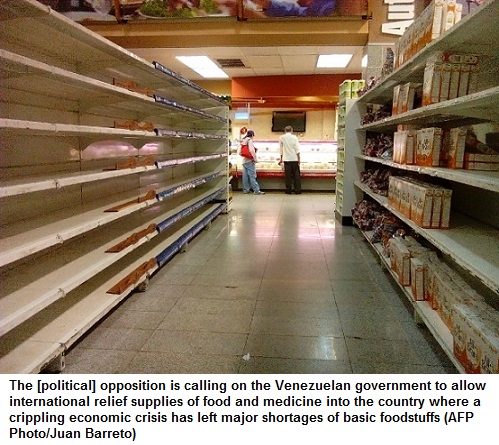
- Photo 1Didn’t we just see this recently … in a land far-far away – Greece? If the Venezuela parallel with Greece continues, we will be able to accurately predict that “things will get worse before it gets worse!”

This is not just an academic consideration for Caribbean stakeholders, as Venezuela boasts a vast coastline on the Caribbean Sea; they also share a border with one Caribbean member-state, Guyana, and supplies the region with a lot of its oil. And just recently with its PetroCaribe initiative, Venezuela was one hope to help eradicate poverty in the Caribbean. But now Venezuela is having a tough time protecting its own self from the pangs of poverty.

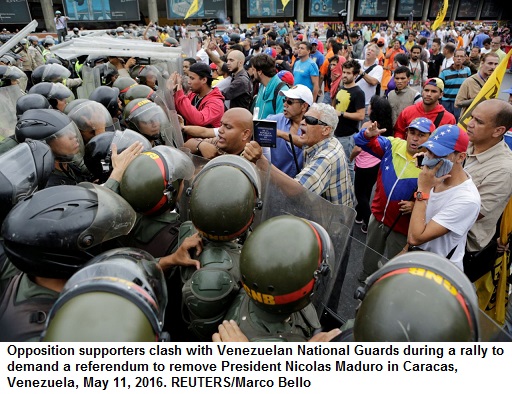
Many people are now waking up – inside and outside Venezuela – to the harsh realities that a Failed-State is emerging in our neighborhood, right in front of our eyes. Unfortunately, we – the Caribbean – are all too familiar. Consider here how Venezuela’s political institutions are crumbling:

  • The opposition parties refused to collaborate with the governing officials
  • Riots in the streets
  • Assassinations of government officials
  • Economy in shambles
  • Currency in disarray
  • Cupboards and store shelves are bare – see Photo above
  • Basic government services – social contract – are not being executed
  • External parties – UNASUR – are coming in to intercede

See the news article here conveying this harsh reality in Venezuela:

Title: Venezuelan officials, opposition meet mediators over standoff
By: Ernesto Tovar

- Photo 2Caracas (AFP) – Venezuelan officials and opposition foes have held separate secret meetings in the Dominican Republic with a group of ex-world leaders seeking a way out of political crisis, officials said, as an ex-military reserve leader was shot dead.

Representatives of both sides of Venezuela’s political standoff met former Spanish prime minister Jose Luis Rodriguez Zapatero, former Dominican president Leonel Fernandez and Panama’s ex-president Martin Torrijos “in recent days” under the auspices of the Union of South American Nations, UNASUR, to seek a “framework for a national dialogue,” the organization said in a statement.

The mediating former leaders found “a desire for dialogue on both sides,” for which new meetings were proposed to “agree on an agenda that meets the requirements of each party and a method for engaging in national dialogue,” the statement said.

The meetings were the initiative of President Nicolas Maduro, Venezuelan Foreign Minister Delcy Rodriguez tweeted, saying the effort “promotes peace, respect for the rule of law and the defense of sovereignty and territorial integrity.”

The main center-right opposition group Democratic Unity Roundtable (MUD) said in a statement that its conditions for the talks were the holding of a referendum over Maduro’s recall, freeing political prisoners, allowing exiles to return and “an end to prosecutions for political persecution.”

The opposition is also calling on the government to allow international relief supplies of food and medicine into the country and seek to end a crippling economic crisis “generated by official corruption and an economic model that is spreading misery.”

The three former leaders also held talks with Maduro and the opposition under UNASUR auspices in Caracas two weeks ago.

Publicly, the two sides could not be further apart.

MUD which blames Maduro for the economic crisis, accuses the electoral authorities of dragging their feet in processing their petition for a referendum on removing the socialist leader from office.

Although a survey last month showed 68 percent of Venezuelans want Maduro to leave office and to hold new elections, he has said the referendum drive has “very little support.”

Venezuela has the world’s largest oil reserves, but its economy is reeling from the collapse in global crude prices.

Venezuelans are experiencing severe food and medicine shortages compounded by the world’s highest inflation — almost 190 percent in 2015, which the International Monetary Fund predicts will balloon to 700 percent in 2016.
Source: Yahoo/AFP Online News – Retrieved May 29, 2016 from: https://www.yahoo.com/news/venezuelan-officials-opposition-meet-mediators-over-standoff-020940920.html?nhp=1

Yet still, there are a lot of lessons for the Caribbean to consider from this crisis – a “crisis is a terrible thing to waste” declares the book Go Lean … Caribbean (Page 8). As a region with past and present Failed-States, we must not fail to discern these lessons.

- Photo 6For starters, there is a super-national organization that Venezuelan stakeholders are able to escalate to for mediation, the Union of South American Nations – UNASUR according to the Spanish-language acronym. A super-national organization – for mediation and conflict resolution – is also the goal of the Caribbean Union Trade Federation (CU). In both cases, the goal is to model the European Union. See details and VIDEO of the UNASUR organization in the Appendices below:

The UNASUR organization, as described below, is part of the Latin American integration movement, combining the efforts of the Andean Community and the Southern Common Market (Mercosur). This should be the primary strategy for mitigating Failed-State status in South America. While Venezuela is a sovereign state, they can still be held accountable to their neighbors in UNASUR; this would be a product of peer pressure and the threat of sanctions. Too bad this integration movement is not complete in its construct, as this would have been most effective in stopping this “slow motion train wreck”.

In fact, in the 2004 South American Summit, representatives of these twelve South American nations participated:

1 These countries are also considered to be associate members of Mercosur.
2 These countries are also considered to be associate members of the Andean Community.
C Caribbean Community (CARICOM) member state
L Latin American Integration Association (ALADI) member state
M Accessing member to Mercosur
Source: Retrieved May 31, 2016 from: https://en.wikipedia.org/wiki/Union_of_South_American_Nations

The leaders of these countries announced the intention of modeling the new community in the mold of the European Union, including a unified passport, a parliament and, eventually, a single currency. The then Secretary General of the Andean Community – Allan Wagner – speculated at that time that the advanced union like the EU should be possible within the next fifteen years. Based on these experiences in Venezuela, this integration movement is a “day late and a dollar short”.

The actuality of Venezuela is more than just a cautionary tale for the Caribbean, it is also a Caribbean problem. In addition to the presence of Caribbean Community member-states of Guyana and Suriname, many aspects of Venezuelan life parallel those of the Caribbean in general and in specifics – see these previous blog-commentaries:

Mono-Industrial Economy

Majority of consumer goods imported and pricey

Close proximity with other countries, not suffering this failing status

Long legacy of bad community ethos regarding fiscal responsibilities

Validation of regional criticism

High societal abandonment rate

Large Diaspora abroad

Challenge of security / public safety

Incompetent governance

Being at the brink of disaster, at the precipice, is perhaps the only time communities are willing to reform and transform. This reality is what inspired the book Go Lean…Caribbean to serve as a roadmap for the introduction and implementation of the technocratic Caribbean Union Trade Federation (CU). The events of the 2008 Global Financial Crisis was the trigger for the composition of this book. Will Venezuela now use this crisis to forge change for its society?

Will the Caribbean forge change by just “observing and reporting” on Venezuela? There are many lessons to learn and the Caribbean community is urged not to ignore. The lessons learned, and codified in the pages of the Go Lean book can now be enhanced with the examination of the realities of Venezuela. This examination must consider the reality of the economic, security and governing aspects of Venezuelan society and the resultant consequences on their neighbors.

Like the UNASUR initiative, the Go Lean roadmap calls for a confederation of the 30 member-states of the Caribbean into a Single Market of 42 million people so as to leverage the governing burden across a separation-of-powers: a federal government and member-state government. This allows a new response to national crisis (economic, security and governance). This vision is at the root of the Go Lean roadmap, embedded in the opening Declaration of Interdependence (Page 12 – 13):

x. Whereas we are surrounded and allied to nations of larger proportions in land mass, populations, and treasuries, elements in their societies may have ill-intent in their pursuits, at the expense of the safety and security of our citizens. We must therefore appoint “new guards” to ensure our public safety and threats against our society, both domestic and foreign. The Federation must employ the latest advances and best practices … to assuage continuous threats against public safety.

xii. Whereas the legacy in recent times in individual states may be that of ineffectual governance with no redress to higher authority, the accedence of this Federation will ensure accountability and escalation of the human and civil rights of the people for good governance, justice assurances, due process and the rule of law. As such, any threats of a “failed state” status for any member state must enact emergency measures on behalf of the Federation to protect the human, civil and property rights of the citizens, residents, allies, trading partners, and visitors of the affected member state and the Federation as a whole.

xvi. Whereas security of our homeland is inextricably linked to prosperity of the homeland, the economic and security interest of the region needs to be aligned under the same governance. Since economic crimes, including piracy and other forms of terrorism, can imperil the functioning of the wheels of commerce for all the citizenry, the accedence of this Federation must equip the security apparatus with the tools and techniques for predictive and proactive interdictions.

xxiv. Whereas a free market economy can be induced and spurred for continuous progress, the Federation must install the controls to better manage aspects of the economy: jobs, inflation, savings rate, investments and other economic principles. Thereby attracting direct foreign investment because of the stability and vibrancy of our economy.

The following details from the book Go Lean … Caribbean are the community ethos, strategies, tactics, implementations and advocacies necessary to effect the turn-around of the Caribbean societal engines – to learn from failing communities (like Greece and Venezuela):

Community Ethos – Economic Systems Influence Individual Choices Page 21
Community Ethos – Economic Principles – Money Multiplier Page 21
Community Ethos – Governing Principles – Lean Operations Page 24
Community Ethos – Ways to Impact the Future Page 26
Community Ethos – Ways to Impact Turn-Arounds Page 33
Community Ethos – Ways to Impact the Greater Good Page 37
Strategy – Vision – Confederate all 30 Member-States into a Single Market Page 47
Strategy – Mission – Build and foster local economic engines Page 45
Strategy – Mission – Fortify the stability of our mediums of exchange Page 45
Strategy – Mission – Dissuade further Brain Drain Page 46
Tactical – Confederating a Permanent Union Page 63
Tactical – Fostering a Technocracy Page 64
Tactical – Separation of Powers – Federal Government versus Member-States Page 71
Implementation – Assemble all Member-States Page 96
Implementation – Ways to Pay for Change Page 101
Implementation – Foreign Policy Initiatives at Start-up – Relationship with Venezuela Page 102
Implementation – Ways to Foster International Aid Page 115
Planning – Ways to Model the European Union Page 130
Planning – Ways to Improve Failed-State Indices Page 134
Planning – Lessons Learned from 2008 – The Global Financial Crisis Page 136
Advocacy – Ways to Grow the Economy Page 151
Advocacy – Ways to Create Jobs Page 152
Advocacy – Better Manage the Social Contract Page 170
Advocacy – Ways to Preserve Caribbean Heritage Page 218
Advocacy – Ways to Protect Human Rights Page 218
Advocacy – Ways to Re-boot Cuba – Marshall Plan Tactic for Failed-States Page 236
Advocacy – Ways to Re-boot Haiti – Marshall Plan Tactic for Failed-States Page 238
Appendix – Caribbean Failed-State Indicators and Definitions Page 271

Unless mitigated, Venezuela will become a Failed-State. We hope that the country, and their South American neighbors can secure their society to assure peace and the protection of human rights.

We also have near Failed-States in the Caribbean: Think: Haiti, Puerto Rico and Cuba; plus a host of countries just slightly behind them. We have to foster our own turn-around strategies for our region.

Venezuela is out of scope for the Go Lean roadmap; our quest is to reform and transform the Caribbean. The roadmap declares that the responsibility for fixing the Caribbean though must fall first-and-foremost on the Caribbean, its people and institutions. The effort is not easy; the Go Lean book describes it as heavy-lifting. But the returns will be worth the investment. This is true for Venezuela … and the Caribbean.

This is the goal of the Go Lean roadmap: to make the Caribbean a better place to live, work and play. 🙂

———————-

Appendix – Union of South American Nations – UNASUR

- Photo 3The Union of South American Nations (USAN; Spanish: Unión de Naciones SuramericanasUNASUR; Portuguese: União de Nações Sul-Americanas,UNASUL; Dutch: Unie van Zuid-Amerikaanse NatiesUZAN) is an intergovernmental regional organization comprising 12 South American countries.

The UNASUR Constitutive Treaty was signed on 23 May 2008 – [legally completing the integration between the Andean Community and the Southern Common Market (Mercosur) nations] – at the Third Summit of Heads of State, held in Brasília, Brazil.[7] According to the Constitutive Treaty, the Union’s headquarters will be located in Quito, Ecuador.[2] On 1 December 2010, Uruguay became the ninth state to ratify the UNASUR treaty, thus giving the union full legality.[8][9] As the Constitutive Treaty entered into force on 11 March 2011, UNASUR became a legal entity during a meeting of Foreign Ministers in Mitad del Mundo, Ecuador, where they had laid the foundation stone for the Secretariat Headquarters.[10] The South American Parliament will be located in Cochabamba, Bolivia, while the headquarters of its bank, the Bank of the South are located in Caracas,Venezuela.[2]

On 4 May 2010, at a heads of state summit held in Campana, 47 miles north of Buenos Aires, former Argentine President Néstor Kirchner was unanimously elected the first Secretary General of UNASUR for a two-year term.

Structure

At the moment, the provisional structure of the UNASUR is as follows:

  • A permanent Secretariat is to be established in Quito, Ecuador. The Secretary General, with a two-year mandate, is to be elected on a consensual basis among the Heads of State of the member states. Former Argentine President Néstor Kirchner was designated the first Secretary General on 4 May 2010.[20]
  • The presidents of the member nations will have an annual meeting, which will have the superior political mandate. The first meeting was in Brasília (Brazil) on 29–30 September 2005. The second meeting was in Cochabamba (Bolivia) on 8–9 December 2006. The third meeting was held in Brasília on 23 May 2008.
  • - Photo 5The Presidency Pro Tempore, is exercised for a one-year period on a pro tempore basis by one of the heads of state of each UNASUR Member State, the succession following alphabetical order. The first leader to occupy this position was Chilean President Michelle Bachelet. According to Decisions Reached in the Political Dialogue[21] which was signed during the First South American Energy Summit.
  • The ministers of foreign affairs of each country will meet once every six months. They will formulate concrete proposals of action and of executive decision. The President of the Mercosur’s permanent representatives committee and the director of the Mercosur’s department, the Andean Community’s general secretary, the general secretary of the Latin American Integration Association (ALADI) and the permanent secretaries of any institution for regional cooperation and integration, Amazon Cooperation Treaty Organization among others, will also be present at these meetings.
  • Sectorial Ministers’ meeting will be called upon by the presidents. The meetings will be developed according to Mercosur’s and CAN’s mechanisms.
  • On 9 December 2005, a special commission was established in charge of advancing the process of South American Integration. It consists of 12 members, whose function is to elaborate proposals that will help the process of integration between the South American nations.

An Executive Commission, which was created by the II CSN meeting, was transformed in the Political Commission or Delegates Council, according to Decisions Reached in the Political Dialogue.[21]

- Photo 4
=============================

APPENDIX – VIDEO – UNASUR –  https://youtu.be/rNjkr7y8-Kc

Published on Apr 16, 2016 – The Union of South American Nations, or UNASUR, marks its ninth anniversary this Sunday, April 17 with a 12-kilometer race in Ecuador with the aim of “bringing the regional body closer to the people.” The UNASUR Secretary-General Ernesto Samper resumed in a few words what the bloc is all about: “To promote peace, democracy and respect of human rights, as well as a Latin American integration. http://multimedia.telesurtv.net/v/una…

Share this post:
, ,
[Top]

“Profiting” from Hurricanes – ENCORE

If only there was a way to make money on the hurricane season …

… there is.

Its called reinsurance sidecars – where investors buy-in to the risks and returns of insurance premiums.

Yes, we can …

This was detailed in a previous blog-commentary from the movement behind the book Go Lean…Caribbean. As we embark on the Hurricane Season 2018, it is important to remember that there is a better way – a Way Forward – to optimize Caribbean life. Let’s Encore that blog from October 13, 2017 here-now:

——————

Go Lean Commentary – Funding Caribbean Risk

A penny saved is … a penny.

This is not exactly how the expression goes. It is supposed to refer to the good habit of “saving money”, which is a positive community ethos – underlying sentiment that informs the beliefs, customs, or practices. “Saving money” is a practice that the stewards of any society should advocate for its people. It’s a simple formula: Earn money; spend some; save some!

CU Blog - Funding Caribbean Risk - Photo 0This is easier said than done. A practice of saving money – for a rainy day or any catastrophe – takes discipline, the discipline not to spend. One tactic is to pay yourself first! Before paying other overhead expenses, the priority would be to set aside monies in a savings program or some insurance program. Yes, an insurance strategy could be even smarter for rainy days or catastrophes; it allows the hedging of risks by leveraging across a wider pool; more people – savers – put-in and only a few … or just one withdraws. This is also the approach of the thoughtful Caribbean Catastrophe Risk Insurance Fund (CCRIF).

It is very sad when communities are not able to save or insure a “Rainy Day” fund for when it rains, especially in the tropical region where it doesn’t just rain, but pours and storms.

What is sadder is when the heavy-lifting of “savings” or insurance is done, but the dollar amount is not enough; because a “penny saved is only just a penny”.

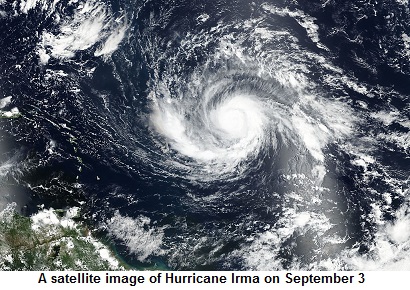
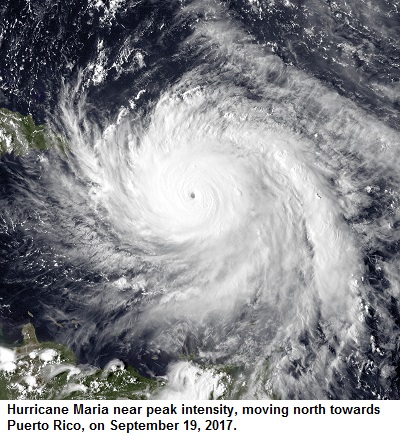
This is the Caribbean dilemma, today. We have just experienced 2 devastating hurricanes – Irma and Maria – that have wreaked havoc on our region. We now need to tap the “Rainy Day” fund and frankly, it is simply not enough!

See the actuality of this dilemma in the news article here and the related VIDEO on CCRIF:

Title: CCRIF to make payouts to countries affected by Hurricane Irma

The Caribbean Catastrophe Risk Insurance Facility (CCRIF SPC) will be making payouts totaling over US$15 million to three Caribbean countries affected by Hurricane Irma earlier this week.

“The CCRIF board and team offer condolences for the loss of life and hope these funds will provide some assistance. We stand ready to support the Government and people of these CCRIF countries as they recover from the effects of this devastating hurricane,” said CCRIF chief executive officer, Isaac Anthony.

Payments totaling US$15.2 million
The CCRIF plans to pay US$6.7 million to Antigua and Barbuda, US$6.5 million to Anguilla and US$2.2 million to St. Kitts-Nevis.

The storm has been blamed for at least 10 deaths and millions of dollars in property damages as it made its way through the Lesser Antilles this week.

In the case of Barbuda, Prime Minister Gaston Browne has ordered an immediate evacuation of some 1,800 people on the island. The government has also announced a state of emergency.

“Nothing is functional in Barbuda,” Browne said, adding that he has given instructions that ‘every single soul must be taken out of Barbuda”.

Verifying payouts
The CCRIF is verifying the payout calculations and is in discussion with the three governments about arrangements for the transfer of these funds. The transfer will be completed within 14 days after the storm, as mandated by CCRIF’s operational guidelines.

“Anguilla and St. Kitts & Nevis also have Excess Rainfall (XSR) policies and CCRIF is assessing if these policies were triggered by the rains from Hurricane Irma, which may possibly result in a second payout under those policies. The assessment under the XSR policies will be determined in the next few days,” the CCRIF added.

Segregated portfolio company
The CCRIF SPC is a segregated portfolio company, owned, operated and registered in the Caribbean. It limits the financial impact of catastrophic hurricanes, earthquakes and excess rainfall in the Caribbean and, since 2015, Central American governments by quickly providing short-term liquidity when a parametric insurance policy is triggered.

Since its inception in 2007, the facility has made 22 payouts for hurricanes, earthquakes and excess rainfall to 10-member governments totaling approximately US$69 million.

It said the new payments will bring the total payouts to approximately US$85 million. Last year CCRIF made payouts totaling US$29 million to four countries after Hurricane Matthew.

Source: Posted September 9, 2017; retrieved October 13, 2017 from: https://www.caribbeannationalweekly.com/caribbean-breaking-news-featured/ccrif-make-payouts-countries-affected-hurricane-irma/

———–

VIDEO – WorldBank CCRIF Caribbean Gold – https://youtu.be/IlZ56ON9KnI

CCRIF SPC

Published on Feb 28, 2017 – Working towards sovereign risk protection in the Caribbean and Central America.

We now know what CCRIF is; how it works; and who can engage this program in terms of investors and beneficiaries; see more encyclopedic details in the Appendix A below. But …

… it is the assessment of this commentary that CCRIF is flawed and inadequate for the Caribbean’s needs.

  • The CCRIF is designed for 1-in-15 year hurricane (Source: http://www.ccrif.org/content/rtfs-faqs). Truth be told, thanks to Climate Change we are seeing storms yearly.
  • There is a catastrophic trigger – complicated formula – which generates a “measly” payout for a hurricane or earthquake.
  • This is a sovereign fund only and the trigger level is dependent on the coverage purchased by individual countries.
  • The pool is too small. Member governments may purchase coverage which triggers for a ‘one-in-15-year’ hurricane and a ‘one-in-20-year’ earthquake, with maximum coverage of US$100M available for each peril. The cost of coverage is a direct function of the amount of risk being transferred, ensuring no cross-subsidisation of premiums and a level playing field for all participants.

This fund is “too little, too late” for what the region needs. But like all other Caribbean integration (CariCom) efforts, it is a good start! Still after 50 years of autonomous rule, the expectation is not just for a start, it is for solutions.

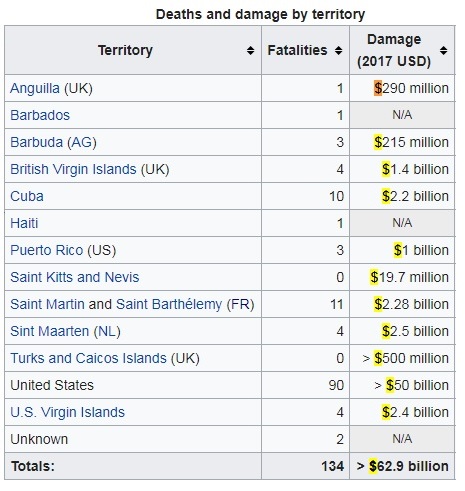
While the habit of “saving” or paying for insurance is a best-practice, the financial amount is important for the subjective assessment of success. The foregoing news article relates that $15.2 million will be paid-out to the affected countries. But this amount is so small, too small! Consider just for Hurricane Irma alone, the estimated damage amount has been tabulated at $62.87 billion. While $50 Billion of that amount relates to the US Mainland, the rest is the Caribbean. So the Caribbean’s share is $12.9 Billion; – see Chart here:

CU Blog - Funding Caribbean Risk - Photo 1

CU Blog - Funding Caribbean Risk - Photo 3

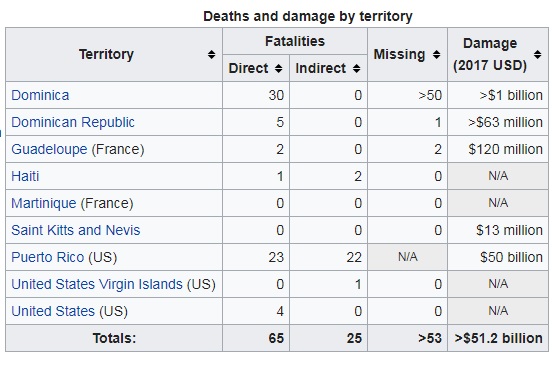
On the other hand. Hurricane Maria, has estimates for damages at $51.2 billion. None of that amount relates to the US Mainland, the amount is all Caribbean, considering Puerto Rico and the US Virgin Islands; see Chart here:

CU Blog - Funding Caribbean Risk - Photo 2

CU Blog - Funding Caribbean Risk - Photo 4

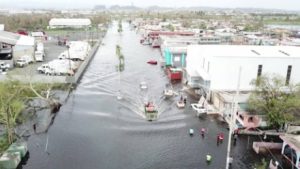
An immediate result of these storms on the Caribbean will probably be the defection of masses of people from the region. As of this date – October 12, 2017 – Puerto Rico is still not relieved nor recovered from Hurricane Maria. In fact 84% of the island still does not have power. Since Puerto Ricans are American citizens, they have freedom of movement from the island to the US Mainland. In addition, many of the other Caribbean islands will also suffer abandonment as the Diaspora is large in North America and Europe; so bonafide family connections will allow for their emigration. Expect more societal abandonment in the region!

The quest of the movement behind the book Go Lean…Caribbean – available to download for free – is to lower the abandonment rates of our Caribbean citizens fleeing the homeland. Our quest is conceivable, believable and achievable. But the status quo of the Caribbean Catastrophe Insurance Funds is inadequate; it must improve. It must reform and transform.

The Go Lean book describes a Way Forward. The book serves as a roadmap for the introduction and implementation of the technocratic Caribbean Union Trade Federation (CU), for the elevation of Caribbean society – for all member-states. This CU/Go Lean roadmap has these 3 prime directives:

  • Optimization of the economic engines in order to grow the regional economy to $800 Billion and create 2.2 million new jobs.
  • Establishment of a Homeland Security and Emergency Management apparatus to ensure public safety and protect the resultant economic engines.
  • Improve Caribbean governance to support these engines, including a separation-of-powers between the member-states and CU federal agencies.

The book stresses that reforming and transforming the Caribbean societal engines must be a regional pursuit. This was an early motivation for the roadmap, as pronounced in the opening Declaration of Interdependence (Pages 12 – 13):

xi. Whereas all men are entitled to the benefits of good governance in a free society, “new guards” must be enacted to dissuade the emergence of incompetence, corruption, nepotism and cronyism at the peril of the people’s best interest. The Federation must guarantee the executions of a social contract between government and the governed.

xvi. Whereas security of our homeland is inextricably linked to prosperity of the homeland, the economic and security interest of the region needs to be aligned under the same governance. Since economic crimes … can imperil the functioning of the wheels of commerce for all the citizenry, the accedence of this Federation must equip the security apparatus with the tools and techniques for predictive and proactive interdictions.

xxiv. Whereas a free market economy can be induced and spurred for continuous progress, the Federation must install the controls to better manage aspects of the economy: jobs, inflation, savings rate, investments and other economic principles. Thereby attracting direct foreign investment because of the stability and vibrancy of our economy.

Way Forward
The Go Lean book provides 370-pages of turn-by-turn instructions on “how” to adopt new community ethos, plus the strategies, tactics, implementations and advocacies to execute so as to reboot, reform and transform the societal engines of Caribbean society, despite the reality and risks of natural disasters. Accepting that the CCRIF is a government-member-state solution, the Go Lean book proposes a supplement of private solutions, instruments facilitated by the region’s Capital Markets – think the Caribbean version of Wall Street. The Go Lean book proposal is for region-wide (all 30 member-states; 4 language groups) private insurance companies and Re-insurance Side-cars traded on the Capital Markets.

Re-insurance Side-cars is a derivative product – see Appendix B below.

Consider these sample references to Re-insurance Side-cars in the book:

Tactical – Separation of Powers – Emergency Management Agency
There is also an economic/financial scope for this department. As the effort for a comprehensive property-casualty fund to cover the entire Caribbean region will also be coordinated by this agency. The classic solution is a large pool of premium payers and claims filed by the affected area. Beyond this model, there are also advanced products like re-issuance side-cars for market assimilation. The public can then invest and profit from the threat/realization of regional risks. This derivative product is a bet, a gamble, but in the end, the result is an insurance fund of last resort, much like the Joint Underwriters Agency (JUA) in Florida.
Page 76
Implementation – 10 Ways to Pay for Change
#8 Homeland Security – Hurricane Insurance Fund
The risk pool for a 42-million population is so much lower than each member-state’s sole mitigation efforts. The CU will establish (contract with a service provider) reinsurance funds (& sidecars) from Day One, and glean the excess premiums-over-claims as profit.
Page 101
Advocacy – Ways to Improve Housing
#7 Hurricane Risk Reinsurance Fund
This fund fits the Emergency Management objectives of rebuilding and restoring after disasters. This is similar to Florida’s Joint Underwriters Association but instead regulated at the CU so as to maximize the premium pool.
Page 161
Advocacy – 10 Revenue Sources
#9 Natural Disaster Insurance Fund
The CU’s Emergency Management Agency will maintain a regional reinsurance fund to offset the casualty coverage for insurance carriers in the region. The difference between premiums and claims constitute revenues for the CU.
Page 172
Advocacy – 10 Ways to Impact Public Works
#10 Capital Markets
A Single Market and currency union will allow for the emergence of viable capital markets for stocks and bonds (public and private), thereby creating the economic engine to fuel growth and development. This forges financial products for “pre” disaster project funding (drainage, levies, dykes, sea walls) and post disaster recovery (reinsurance sidecars).
Page 175
Advocacy – 10 Ways to Improve for Natural Disasters
#7 JUA-style Insurance Fund
The fiduciary management of premiums and claims to allow the immediate response for reconstruction after disasters. These financial services, sidecars traded in markets can be direct or indirect as in reinsurance or insurer-of-last-resort.
Page 184
Advocacy – 10 Ways to Improve for Emergency Management
#8 Casualty Insurance Plans – Reinsurance “Sidecars”
There is also a financial battlefield for Emergency Management. Reinsurance “sidecars” allow investment bonds to be issued in the financial marketplaces to raise casualty insurance capital. The differences between premiums and claims (plus reserves) equal the profit to be shared with investors. The end result should be an insurance fund of last resort.
Page 196
Advocacy – 10 Ways to Develop a Pre-Fab Housing Industry
#10 Homeowners Casualty Insurance
Pre-Fab-ulous houses will be built with the structural integrity to withstand typical tropical storms/hurricanes. The CU will facilitate the Property Casualty insurance industry by offering Reinsurance sidecar options on the capital markets.
Page 207
Advocacy – 10 Ways to Improve Fisheries
#7 Marine Financing
There is also a financial element to facilitating the Fisheries industry. Most fishing vessels require financing and insurance products. These areas have gotten more challenging with “climate change” and the higher propensity of hurricanes. The CU will adopt advanced financial products for the region’s capital-securities markets (i.e. Reinsurance sidecars), to offer the prospects of risk-and-reward to investors, thus inviting more capital to the fisheries marketplace.
Page 210
Advocacy – 10 Ways to Help the Middle Class
Prepare for Healthcare Realities
While a Middle Class family may obtain a degree of financial security, just one catastrophic illness or injury can wipe out a family’s fortunes overnight. This is the proper place for insurance programs, and reinsurance to hedge the risk for carriers. The CU will proactively institute the measures (industry) to protect Middle Class prospects from this real threat.
Page 223
Advocacy – 10 Ways to Impact The Guianas
#4 Disaster Planning, Preparation & Response
Hurricanes are not as dire a threat for The Guianas as the Caribbean islands, yet still there are many natural disasters for this region to contend with, namely floods and earthquakes. The CU will better plan-prepare-respond, with Public Works initiatives (dams, reservoirs) and a professional Emergency Management Agency to recover with elite financial products (i.e. reinsurance sidecars) powered by regional capital markets to restore economic engines in these Guiana states.
Page 241
Advocacy – 10 Ways to Impact Belize
#7 Disaster Planning, Preparation & Response
Mother Nature, and the reality of hurricanes, has been a source of contention in Belize’s history. The CU will better plan-prepare-respond with a professional Emergency Management Agency and recover with elite financial products (i.e. reinsurance sidecars) powered by capital markets so as to restore economic engines in Belize.
Page 243
Advocacy – 10 Ways to Impact US Territories
Advocacy – 10 Ways to Impact British Territories
Advocacy – 10 Ways to Impact Dutch Territories
Advocacy – 10 Ways to Impact French Territories
#4 Disaster Preparation & Response
Mother Nature, and the reality of hurricanes, plays no favorites for one island versus another due to political alliance. The CU will better plan-prepare-respond, with a professional Emergency Management Agency and recover with elite financial products (i.e. reinsurance sidecars) powered by regional capital markets to quickly restore economic engines in the islands.
Page 244
Page 245
Page 246
Page 247 

As an individual or community, to devote a lot of time, talent and treasury to the practice of saving for a rainy-day fund is a positive ethos. To only get a measly payoff – after all that effort – is a negative. The manifestation of this measly scenario calls into question the whole viability of the Caribbean “pooled” risk strategy.

We must do better! Solutions abound!

Engaging a bigger-better regional risk pool, makes our quest realistic: a better homeland to live, work and play.  We urge all Caribbean stakeholders – governments and citizens alike – to lean-in for the empowerments described here in the book Go Lean…Caribbean. 🙂

Download the free e-Book of Go Lean … Caribbean – now!

Sign the petition to lean-in for this roadmap for the Caribbean Union Trade Federation.

———

Appendix A – Caribbean Catastrophe Risk Insurance Facility Segregated Portfolio Company (CCRIF SPC)

[This CCRIF SPC] is an insurance company headquartered in the Cayman Islands.[1] The sixteen original member-countries of CCRIF included participants in CARICOM, and the membership of the Board of Directors is selected by CARICOM and by the Caribbean Development Bank.[2]

Founded in 2007,[3] CCRIF is the first multi-country risk pool in the world, and was the first insurance instrument to successfully develop parametric policies backed by both traditional and capital markets.[4] These parametric polices release funds based upon factors of a calamity such as rainfall or wind speed, which can speed up the payout of policies rather than after damages are assessed. Unused funds are kept as reserves for the CCRIF. The fund can also draw upon $140 million in funds underwritten by reinsurance.[5]

Other regions have since setup similar government disaster instance including in the African Union and the Pacific Islands Forum.[5]

Source: Retrieved October 13, 2017 from:  https://en.wikipedia.org/wiki/Caribbean_Catastrophe_Risk_Insurance_Facility_Segregated_Portfolio_Company

———

Appendix B – Reinsurance sidecars

Reinsurance sidecars, conventionally referred to as “sidecars”, are financial structures that are created to allow investors to take on the risk and return of a group of insurance policies (a “book of business”) written by an insurer or reinsurer (henceforth re/insurer) and earn the risk and return that arises from that business. A re/insurer will only pay (“cede”) the premiums associated with a book of business to such an entity if the investors place sufficient funds in the vehicle to ensure that it can meet claims if they arise. Typically, the liability of investors is limited to these funds. These structures have become quite prominent in the aftermath of Hurricane Katrina as a vehicle for re/insurers to add risk-bearing capacity, and for investors to participate in the potential profits resulting from sharp price increases in re/insurance over the four quarters following Katrina. An earlier and smaller generation of sidecars were created after 9/11 for the same purpose.

Market growth following 9-11 and Hurricane Katrina
In the years following 9-11, the idea of raising funds from capital markets investors in addition to re/insurers to support quota-shares arose and a handful of such ventures were consummated (Olympus, DaVinci, Rockridge). These were the first true sidecars, and were a natural outgrowth of the development of re/insurance as an asset class in the form of catastrophe bonds.

Following Hurricane Katrina, the sidecar idea became very prominent among investors because it was seen as a way to participate in the risk/return of the higher-priced (“hard”) reinsurance market without investing in either existing reinsurers (who might have liabilities from the past that would undermine returns) or new reinsurers (“newcos” that would have a lengthy and expensive “ramp up” period).

Source: Retrieved October 13, 2017 from: https://en.wikipedia.org/wiki/Reinsurance_sidecar


Share this post:
, ,
[Top]

In Life or Death: No Love for Puerto Rico

Go Lean Commentary

The American association is just not working for failing Puerto Rico (PR). This is no longer a theory; this is now a fact!

The devastating Category 5 Hurricane Maria came by and desolated the island, 9 months ago (September 18, 2017). The restoration and recovery is finally complete …

Wait, no!

The restoration and recovery is still not complete, even though it’s the eve of a new Hurricane Season (June 1).

In life, Puerto Rico just gets no love.

Unfortunately, this is true in death too – we learn now that even the resultant deaths from Hurricane Maria had been under counted.

What? How? Why?

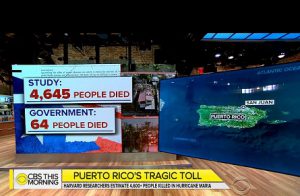
The act of counting deaths is more straight-forward than the Washington and San Juan officials would have you believe. Simply count the number of mortalities (death certificates issued) for the 4th Quarter of the last few years. The PR government try to assert that the number of deaths were 64 people; and yet demographers and other social scientists counted the mortality rate for 4th Quarter 2017 and the 4th Quarters in previous years and the real count is more like:

4600+

Wait, wait … don’t tell me! According to this story here, “researchers concluded the final death count could [actually] be as high as 8,500”:

Title: Puerto Rico governor welcomes “real number” of Hurricane Maria deaths after shocking report

new Harvard University study says the death toll from Hurricane Maria last year is dramatically larger than reported. The study, published in the New England Journal of Medicine, estimates more than 4,600 people died on the island. The official government death toll is just 64.

Researchers randomly knocked on doors and asked if anyone died thereThere were more questions — but that’s how it started. It took six weeks and $50,000 from Harvard to come up with a number that is stunning, reports CBS News’ David Begnaud.

Puerto Rico’s Governor Ricardo Rosselló, who himself is a scientist, seemed blindsided by the Harvard study. His government wasn’t involved and he didn’t know it was being released.

“We welcome all studies,” Rosselló said at a press conference Tuesday. “We want the real number to come out. We had a protocol that really was subpar and we recognize it.”

The government protocol is for doctors to tell the government if a death was caused by Hurricane Maria. Families have to petition the government to investigate if they disagree with a doctor’s opinion.

The Harvard study surveyed more than 3,000 homes across the island and found the mortality rate rose 62 percent in the three months after Hurricane Maria compared to that period the year before. Researchers concluded the final death count could be as high as 8,500.

“One third of our deaths were reported because lack of medical treatment,” said Domingo Marques, who was a lead author of the study.

During his visit to Puerto Rico last October, President Trump hailed the low death toll, which at the time was 16. He compared it to Hurricane Katrina. In light of the Harvard report, a White House spokesperson said the people of Puerto Rico deserve nothing less than transparency and accountability.

“The negligence that allowed those lives to be lost, needs to be accounted for,” San Juan mayor Carmen Yulín Cruz said.

Cruz has blasted Mr. Trump for being tone deaf and slow to respond. When asked to evaluate her own response she said, “I know I didn’t get to everyone… We did the best we could, but that wasn’t’ good enough. That wasn’t good enough.”

Why this story is more than just a shocking number? For every death that is certified by a government official to be related to Hurricane Maria, family members are eligible to have the federal government help pay for funeral expenses. The numbers matter.

© 2018 CBS Interactive Inc. All Rights Reserved.

Source: CBS News; retrieved May 30, 2018 from: https://www.cbsnews.com/news/hurricane-maria-death-toll-puerto-rico-harvard-university-study/

Related stories:

————-

VIDEO – Puerto Rico’s Tragic Toll – https://www.cbsnews.com/video/puerto-rico-hurricane-death-toll-in-the-thousands-researchers-say/

Posted May 30, 2018 – CBS This Morning: Harvard Researchers estimate 4,600+ people killed in Hurricane Maria.

Wow; these people, this island – Puerto Rico – don’t even get respect in death.

Call a spade a spade!

There is no love for Puerto Rico. (This is not “our” assessment alone; see the Mayor of San Juan in the Appendix VIDEO).

Time to make a move! It is past time now for Puerto Rico to change from its parasite status as an American Protectorate and graduate to being a US State. Or maybe, it’s time for Puerto Rico to divorce the American relationship entirely and become an independent nation – as was done in the Philippines. In a previous commentary by the movement behind the book Go Lean…Caribbean, the assertion was that the American association maybe the problem for Puerto Rico. That blog-commentary stated:

Where is your pride Puerto Rico? “Have you no sense of decency?” You are not being loved; you are being pitied.

No wait, even the pity is gone – compassion exhaustion after the prior hurricanes Harvey and Irma; plus forest fires in California.

Puerto Rico: You “cannot win; cannot break-even and cannot get out of the game”.

… Puerto Rico is now at the cross roads; things will get worse before it gets worse! … The outcome for Puerto Rico, and other Caribbean islands, would be defection – “forced uprooting-displacement of large communities”. Truly, this is what has happened.

The book Go Lean…Caribbean – available to download for free – serves as a roadmap for the introduction and implementation of the technocratic Caribbean Union Trade Federation (CU), for the elevation of Caribbean society – for all member-states, including the American Territories of Puerto Rico and the US Virgin Islands. This roadmap asserts that regional integration is the key for future Caribbean success; it thus presents these 3 prime directives:

  • Optimization of the economic engines in order to grow the regional economy to $800 Billion and create 2.2 million new jobs. Puerto Ricans have been defecting for decade looking for jobs.
  • Establishment of a security apparatus to ensure public safety and protect the resultant economic engines. This security pact encompasses an emergency planning/response apparatus to deal with the reality of natural disasters. The CU mandate is to protect against any Failed-State
  • Improve Caribbean governance to support these engines, including a separation-of-powers between the member-states and CU federal agencies.

To Puerto Rico, we entreat you: there are successful countries that are separate and detached of America. Your status quo is not the only destiny.

The Go Lean book stresses reform for Caribbean society. It reminds the readers of the American Revolutionary experience: the original 13 colonies were failing under the weight of their British baggage. So to reach success, they had to “break of the shackles“ of British colonialism.

This is Puerto Rico today! They need to “break of the shackles of American colonialism”. This island needs to echo the revolutionary sentiments of “Founding Father” Thomas Jefferson, who wrote in the Declaration of Independence:

… That whenever any form of government becomes destructive to these ends, it is the right of the people to alter or to abolish it, and to institute new government, laying its foundation on such principles and organizing its powers in such form, as to them shall seem most likely to effect their safety and happiness. Prudence, indeed, will dictate that governments long established should not be changed for light and transient causes; and accordingly all experience hath shown that mankind are more disposed to suffer, while evils are sufferable, than to right themselves by abolishing the forms to which they are accustomed. But when a long train of abuses and usurpations, pursuing invariably the same object evinces a design to reduce them under absolute despotism, it is their right, it is their duty, to throw off such government, and to provide new guards for their future security. — Such has been the patient sufferance of these [former] colonies …- book Go Lean…Caribbean (Page 10).

These words, this break from a failing status quo was an early motivation for the CU/Go Lean roadmap, as pronounced in the opening Declaration of Interdependence (Pages 12 – 13) of the book:

xi. Whereas all men are entitled to the benefits of good governance in a free society, “new guards” must be enacted to dissuade the emergence of incompetence, corruption, nepotism and cronyism at the peril of the people’s best interest. The Federation must guarantee the executions of a social contract between government and the governed.

xii. Whereas the legacy in recent times in individual states may be that of ineffectual governance with no redress to higher authority, the accedence of this Federation will ensure accountability and escalation of the human and civil rights of the people for good governance, justice assurances, due process and the rule of law. As such, any threats of a “failed state” status for any member state must enact emergency measures on behalf of the Federation to protect the human, civil and property rights of the citizens, residents, allies, trading partners, and visitors of the affected member state and the Federation as a whole.

xvi. Whereas security of our homeland is inextricably linked to prosperity of the homeland, the economic and security interest of the region needs to be aligned under the same governance. Since economic crimes … can imperil the functioning of the wheels of commerce for all the citizenry, the accedence of this Federation must equip the security apparatus with the tools and techniques for predictive and proactive interdictions.

The Go Lean book provides 370-pages of turn-by-turn instructions on “how” to adopt new community ethos, plus the strategies, tactics, implementations and advocacies to execute so as to effect a reboot and turn-around. In fact, the book (Page 33) provides one advocacy specifically dedicated to the subject of Turn-arounds. See the headlines, excerpts and quotations here:

10 Ways to Impact Turn-Arounds

1 Lean-in for the Caribbean Single Market and Economy
The CU treaty facilitates a reboot of the region’s economic engines, security apparatus and emergency management(preparation/response for the 30 member-states, 42 million people and $800 Billion GDP. The treaty allows for theestablishment of Self Governing Entities where the CU will be the municipal administrator – this allows for civic planning, zoning, demolitions and imminent domain decision-making separate from the member-states. While too, dispositions of abandoned buildings in the member-states still relate to CU missions, as in the protection of image (“psychological trauma” is inflicted daily on neighbors of abandoned structures) and the quest for beauty. While beauty, aesthetics and preservation may be paramount for communities, these should only be a concern after basic needs are satisfied – housing is a basic need. The economics of housing can be impacted with the over-supply ofabandoned buildings, as it brings the value down for other properties, and sends out the false vision, like Detroit’sabandoned structures, that just a “little rehab” and their new manifestations will be readily available. Learning from Detroit, it is more beneficial to raze abandoned buildings and build anew – turn-around, rather than considering restoration or preservation.
2 Bankruptcy Processing
3 Homeland Security Concerns
Abandoned buildings are a security concern for the community as these buildings are often used as drug “dens” or to house other illegal/criminal activities. Playing children can also be ensnared by dilapidated structures and thus consume emergency medical services. Therefore, impacting turn-arounds of abandoned properties is proactive for CU security.
4 Property Tax Revenue and Services
5 Clean Slate / Blank Canvas

By razing abandoned buildings, the community can truly engage a turn-around strategy. The property now becomes a clean slate / blank canvas, ready for any new development or a return to a natural disposition of Caribbean flora/fauna.

6 Explosives Use – Art & Science
7 Demolition Jobs
8 Recycling Materials
9 Community Gardens and Fruit Trees – by Non-Government Organizations (NGO)
10 Common Grazing Rights

To Washington, these Caribbean islands are far-off territories – out of sight, out of mind. But these Caribbean islands are our home:

Oh, island in the sun. Willed to me by my father’s hand.

So the Caribbean stakeholders in the region must be the ones to foster the workable solutions for the region: a better disaster preparation and response apparatus. We must not count on the “kindness of strangers”!

Duh!!! – The jury is in! They do not even count our dead!

The Way Forward for Puerto Rico must be the Way Forward for the rest of the Caribbean region – we are “all in the same boat”.

Hurricane Season 2018 starts tomorrow – June 1. (The American president, Donald Trump, even denies Climate Change as a fact or a science. By denying our reality; he is denying “us”).

This assertion – Puerto Rico needing to rely more on their geographical neighbors rather than the American hegemony – is not new. This has been the consistent pleading from this Go Lean movement. Consider these previous blog-commentaries:

https://goleancaribbean.com/blog/?p=14718 ‘At the Table’ or ‘On the Menu’ – PR’s No Vote; No Voice in D.C.
https://goleancaribbean.com/blog/?p=14101 Wait, ‘We Are The World’ – Raising money for PR Relief
https://goleancaribbean.com/blog/?p=13995 First Steps for PR & USVI – Congressional Interstate Compacts
https://goleancaribbean.com/blog/?p=13391 After Maria, Failed-State Indicators: Destruction and Defection
https://goleancaribbean.com/blog/?p=12959 After Irma, America Should Scrap the ‘Jones Act’
https://goleancaribbean.com/blog/?p=12126 Commerce of the Seas – Stupidity of the Jones Act
https://goleancaribbean.com/blog/?p=11963 Oscar López Rivera: The ‘Nelson Mandela’ of Puerto Rico?
https://goleancaribbean.com/blog/?p=11647 Righting a Wrong: Puerto Rico’s Bankruptcy
https://goleancaribbean.com/blog/?p=7963 ‘Like a Good Neighbor’ – Being there for Puerto Rico
https://goleancaribbean.com/blog/?p=4551 US Territories – Between a ‘rock and a hard place’
https://goleancaribbean.com/blog/?p=1325 Puerto Rico Governor Signs Bill on Small Businesses
https://goleancaribbean.com/blog/?p=599 Ailing Puerto Rico open to radical economic fixes

The PR should not stand for this. Time to move … away from this inconsequential, parasitic status quo. It is past time for debate:

“A little less conversation; a little more action” – Song: Elvis Presley.

The responsibility to improve our homeland is ours alone. The quest to make our homeland a better place to live, work and play must be engaged by Caribbean people. The rest of the world have no love for us. We must love ourselves, first and foremost! Puerto Rico, you do not have to do this heavy-lifting task alone; we need to lift the same heavy load. Let’s do it together! 🙂

Download the free e-book of Go Lean … Caribbean – now!

Sign the petition to lean-in for this roadmap for the Caribbean Union Trade Federation.

—————

Appendix VIDEOSan Juan mayor on hurricane death toll studyhttps://www.cbsnews.com/video/san-juan-mayor-criticizes-local-leaders-trump-after-hurricane-death-toll-study/

Posted May 30, 2018 – CBS This Morning: San Juan mayor criticizes local leaders, Trump after hurricane death toll study

Share this post:
, ,
[Top]

Graduation Speakers – Say ‘Something Nice’ or Nothing At All

Go Lean Commentary

Congratulations to all the graduates in the Class of 2018.

Way to go! Before you move the tassel from left to right, you have to endure the invited speaker who should deliver an inspired Commencement speech. To that speaker, we urge: “Say something nice or say nothing at all”.

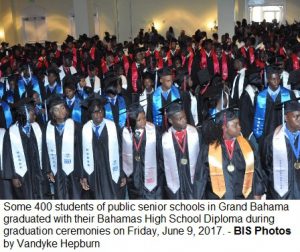
Please learn the good lesson from this bad speech delivered last year to the combined graduating classes – 400 students – of all 4 public high schools in Grand Bahama (Freeport), Bahamas in June 2017.

This was really bad!

First though, some background …

… this was one month after the new government came into power in the Bahamas. The political party, Free National Movement, with the Leader and thusly the new Prime Minister, Dr. Hubert A. Minnis, was voted in with a landslide victory on May 10, 2017. The party, and new Cabinet, was thrust into power by a mandate of the Bahamian people; their demand for a change because the assessments before were so very bad. The new Minister of Education, Jeffrey Lloyd was called on to give this graduation speech. Let’s give him the benefit of the doubt that this was his first one; see here:

Title: Education Minister tells GB Public School Graduates to Think Globally, Get Qualified, Come Back and Build Their Country

By: Andrew Coakley, Bahamas Information Services

FREEPORT, Grand Bahama – Minister of Education the Hon. Jeffrey Lloyd told the 2017 graduating class of public school students in Grand Bahama that The Bahamas critically needs their talents to positively shape and form the future of these islands.  “Go out and see the world – there are six or seven continents in this world — go and visit them all, and even work in them all, but come back home and build your country,” said Minister Lloyd.

“We need your talents, your brilliance, your capabilities and your insights so that we can become the best little country on God’s earth.”

The Education Minister’s remarks came during graduation ceremonies for the Ministry of Education’s Inaugural Bahamas High School Diploma, which was held at the Grand Lucayan resort on Friday, June 9, 2017. The ceremony combined the public schools on Grand Bahama, inclusive of Jack Hayward High School, St. George’s High School, Eight Mile Rock High, as well as students from the Beacon School.

“Today, there are nearly 50,000 students in the public schools in this country,” said Minister Lloyd.  “Young people like you, under the age of 20, make up approximately 40 percent of the population of this land. Those under 30 make up almost 60 percent of this population.

“So, without a doubt, the future social atmosphere, the cultural identity, the economic and political reality of this country is directly tied to the constructive development of you. This is a time of great opportunity; it is also a time of great trial and challenge.

“There are many, many negative influences that swirl about in your young lives.”

He apologized to those graduates who may not have had the opportunity to have positive role models in their lives and within their environments. He said those are not the paradigm they must follow, but that Jesus, the Christ is the role model to follow.

“And what he invites you to understand graduates, is that you must let no one take your greatness, your potential, your power, your magnificence nor your splendor from you,” said Minister Lloyd.

The Education Minister reminded the students that they live in what is considered to be one of the most exciting times in mankind’s history.

Minister Lloyd reminded teachers that education has changed and is constantly changing; now it is driven by technology.

“So educators, if you are not tech savvy, you better get there, because that is the world we live in today. Unlike anytime in our history the re-dedication of the educational professional to their craft and the outcomes they seek, what we seek, is never more powerful.”

Minister Lloyd left the graduates with three final thoughts as they move to the next level of their lives: Think globally, get qualified and become mobile.

Source: Posted June 12, 2017; retrieved May 26, 2018 from The Official Website of the Government of The Bahamas

We have made this assessment of the speech and verbiage of this new government before. These words by the Education Minister is the same bad advice:

“Go out and see the world … visit them all, and even work in them all, but come back home and build your country”.

Yeah, nobody does that! They leave; they very seldom come back!

The Education Minister here seems to be doubling-down on failure. In a previous blog-commentary, the Prime Minister, Dr. Minnis, addressed a Bahamian Diaspora group and he portrayed them as if they were the panacea, the “cure-all”, for what ails the Bahamas. This attitude truly reflects why the Bahamas, and especially this 2nd city of Freeport, is failing in all their societal engines. The problem is abandonment or human flight. Now, the chief educator in the country stares down at these young impressionable men and women and urges them further to …

Leave!
Get world experience and then maybe, if its not too much trouble, come back.

It is a well known fact, that the college educated populations in the Bahamas do NOT come back. In fact, according to a World Bank study, the country suffers from a 61 percent abandonment rate.

Most of what ails Freeport and the whole Bahamas (actually true for the entire Caribbean) is the human flight of their most educated citizens. A country cannot “nation build” without nation-builders. A government policy that urges young ones to leave and complete their development abroad is a flawed strategy; it should not be spoken. This is not just a problem for the Bahamas,  but has been consistently lambasted in these other Caribbean member-states:

This commentary is from the movement behind the book Go Lean … Caribbean. We have criticized every Caribbean member-state that projects policies that encourage more traffic among their Diaspora – those who had fled, being “pushed” or “pulled” away from their homeland. This policy-strategy double-downs on the failure of why the Diaspora left in the first place. A previous commentary explained:

The subtle message to the Caribbean population is that they need to leave their homeland, go get success and then please remember to invest in us afterwards.

… It is so unfortunate that the people in the Caribbean are beating down the doors to get out of their Caribbean homeland, to seek refuge in these places like the US, Canada and Western Europe. … We have such a sad state of affairs for our Caribbean eco-system as we are suffering from a bad record of societal abandonment.

This movement advocates for the people of Freeport, people of the Bahamas and the people of the Caribbean. We want them all to “prosper where planted” in their Caribbean homelands. But first, we must “stop the bleeding” – even student loans have been defaulted by those abandoning their Bahamian homeland. Leaving home to matriculate and/or work has a serious and consistent track record of failure. This should never be the theme of a Commencement address.

Our quest should be to “stop the bleeding”. This is truly a quest, and not just an idea. This is not easy; there is heavy-lifting involved. We must assess the reasons why people leave, the “push and pull” factors, then conceive strategies, tactics, implementations and advocacies to assuage the bad trend. Yes, this quest is conceivable, believable and achievable.

The book Go Lean…Caribbean – available to download for free – serves as a roadmap for the introduction and implementation of the technocratic Caribbean Union Trade Federation (CU), for the elevation of Caribbean society – Freeport, for the Bahamas and for all member-states. The book asserts that the region must work to hold on its populations – especially the well-educated classes – not send them away and see them never return from foreign shores. To accomplish this objective, this CU/Go Lean roadmap presents these 3 prime directives:

  • Optimization of the economic engines in order to grow the regional economy to $800 Billion and create 2.2 million new jobs.
  • Establishment of a security apparatus to ensure public safety and protect the resultant economic engines.
  • Improvement of Caribbean governance to support these engines, including a separation-of-powers between the member-states and CU federal agencies.

The book aligns with the vision of the Education Minister and the  Prime Minister of the Bahamas in the desire to reform and transform their community. But the Go Lean roadmap does not double-down on the failing policy of “leaving off” from nation-building for the hope that maybe someday, the student can nation-build later. Rather, the book provides the turn-by-turn direction of how to reform Bahamian (and all Caribbean) education systems now with the new education regime that the Education Minister alluded to in his ill-fated speech:

Minister Lloyd reminded teachers that education has changed and is constantly changing; now it is driven by technology.

The Go Lean movement has consistently urged Caribbean communities to invest … in post-secondary education options right here in the region, or better still, right here at home, maybe even e-Learning solutions. These points were exhaustingly detailed in these previous blog-commentaries:

There is a reason, this commentary can criticize the Minister of Education, the Honorable Jeffrey Lloyd. Despite his knowledge, desire and hope for the students in his audience, he could not present this “study local and online” plan. The problems facing the Bahamas are too insurmountable for the Bahamas alone. This government’s scope is only a population of 320,000; the ideal solutions require more leverage, a BIGGER market. This is the strategy of the CU/Go Lean roadmap; it  targets all 30 Caribbean member-states and their 42 million people. The larger scope is accomplished by forging a Single Market of all these countries and catering for the educational needs of this full Single Market.

Yes, a better educational landscape – one that minimizes the risk of abandonment – is ushered in with an interdependence of the Caribbean member-states. This was an early motivation for the CU/Go Lean roadmap, as pronounced in the opening Declaration of Interdependence (Pages 12 – 14) of the book:

xi. Whereas all men are entitled to the benefits of good governance in a free society, “new guards” must be enacted to dissuade the emergence of incompetence, corruption, nepotism and cronyism at the peril of the people’s best interest. The Federation must guarantee the executions of a social contract between government and the governed.

xix. Whereas our legacy in recent times is one of societal abandonment, it is imperative that incentives and encouragement be put in place to first dissuade the human flight, and then entice and welcome the return of our Diaspora back to our shores. This repatriation should be effected with the appropriate guards so as not to imperil the lives and securities of the repatriated citizens or the communities they inhabit. The right of repatriation is to be extended to any natural born citizens despite any previous naturalization to foreign sovereignties.

xxi. Whereas the preparation of our labor force can foster opportunities and dictate economic progress for current and future generations, the Federation must ensure that educational and job training opportunities are fully optimized for all residents of all member-states, with no partiality towards any gender or ethnic group. The Federation must recognize and facilitate excellence in many different fields of endeavor, including sciences, languages, arts, music and sports. This responsibility should be executed without incurring the risks of further human flight, as has been the past history.

xxvi.  Whereas the Caribbean region must have new jobs to empower the engines of the economy and create the income sources for prosperity, and encourage the next generation to forge their dreams right at home, the Federation must therefore foster the development of new industries … [and] invigorate the enterprises related to existing industries … impacting the region with more jobs.

xxvii. Whereas the region has endured a spectator status during the Industrial Revolution, we cannot stand on the sidelines of this new economy, the Information Revolution. Rather, the Federation must embrace all the tenets of Internet Communications Technology (ICT) to serve as an equalizing element in competition with the rest of the world. The Federation must bridge the digital divide and promote the community ethos that research/development is valuable and must be promoted and incentivized for adoption.

The vision of Caribbean interdependence is a great theme for a Commencement address. Describing the prospects of an inviting homeland where the students can prosper would be an truly inspirational speech. Inspiration is one of the mandates of any good Commencement address; see Appendix. So to the Honorable Minister Jeffrey Lloyd, we hereby deliver to you this previous blog-commentary for your consideration; and grant you permission to glean from its inspiration and messaging:

“Be the change you want to see in the world” – Mahatma Gandhi

… Changing one-self; changing the community and changing the world; these are great aspirations! This is such a familiar theme for the [Go Lean] movement …

Yes, the societal defects of the Caribbean can be fixed – remediated and mitigated – but “if it is going to be, it starts with me”; it is necessary for all stakeholders to engage in the effort to turn-around the Caribbean. To forge change, the region must consider top-down and bottoms-up approaches, so we need the multitude of Caribbean people (bottoms-up) and politicians and community leaders (top-down) to lean-in to this quest to turn-around the community. Yes, it starts with “me”, as in everyone.

So Minister Jeffrey Lloyd, we urge you to say “something nice” … like this or say nothing at all.

For an example of an inspiring Commencement address, see this VIDEO in the Appendix below.

Freeport is in dire straits. The city needs its young men and women to be champions at home, not on the road. So urging Freeport’s human capital to leave is just irresponsible. Any effort to reboot Freeport can only be exerted by being in Freeport. This commentary had previously detailed the assessment and possibilities for Freeport; see this sample here:

https://goleancaribbean.com/blog/?p=10470 More ‘Bad News’ for Freeport
https://goleancaribbean.com/blog/?p=7528 A Vision of Freeport as a Self-Governing Entity
https://goleancaribbean.com/blog/?p=7449 ‘Crap Happens’ – So What Now? Case Study: Freeport
https://goleancaribbean.com/blog/?p=5542 Freeport’s Bad Model: Economic Dysfunctions with Rent-Seeking
https://goleancaribbean.com/blog/?p=4185 Caribbean Ghost Towns: It Could Happen…Again in Freeport
https://goleancaribbean.com/blog/?p=4037 How to Train Your ‘Dragon’ – Freeport Version
https://goleancaribbean.com/blog/?p=3641 ‘We Built This City …’ on Music and Entertainment
https://goleancaribbean.com/blog/?p=2585 A Lesson in History for Freeport – Concorde SST
https://goleancaribbean.com/blog/?p=300 Dire City – ‘10,000 Bahamians Living in Darkness in Grand Bahama’

The Go Lean book provides 370-pages of turn-by-turn instructions on “how” to adopt new community ethos, plus the strategies, tactics, implementations and advocacies to execute so as to reboot, reform and transform Freeport and the regional collective of Caribbean communities.

To the people of Freeport, and to all the Caribbean, we urge …

Stay Home! Do NOT double-down on failure … by fleeing. The grass is not greener on the other side – of the border – you can thrive more at home than as an alien resident in another land. In North America or Europe, you will always be “alien”.

As related in this commentary, joining the Diaspora is bad for the Diaspora and bad for the Caribbean. The Diaspora should not be counted on to come back and save their previous Caribbean homes. No we must do the heavy-lifting ourselves. We can succeed to make our homelands better places to live, work and play so that our citizens can prosper where planted. This way, they wouldn’t have to leave in the first place. 🙂

Download the free e-book of Go Lean … Caribbean – now!

Sign the petition to lean-in for this roadmap for the Caribbean Union Trade Federation. 

—————

Appendix VIDEO – Chadwick Boseman’s Howard University 2018 Commencement Speech – https://youtu.be/RIHZypMyQ2s

Howard University

Published on May 14, 2018 – Howard University alumnus Chadwick Boseman provides words of inspiration to the Class of 2018 during Howard University’s 150th Commencement Ceremony on Saturday, May 12 in Washington, D.C.

  • Category: Education
  •  License: Standard YouTube License
Share this post:
, , ,
[Top]

Remembering Manchester and learning ‘How to Get Better Security’ – ENCORE

There was another school shooting in the US, this time in Santa Fe, Texas near Houston. This was on Friday May 18, 2018. Then on Saturday (May 19), there was a shooting in the Greater Atlanta, Georgia area, at a High School graduation. So this too counted as a school shooting since it was a school extra-curricular activity.

In the meanwhile, today is May 22 and we are remembering that on this day a year ago, there was a mass shooting “across the pond” in Manchester, England …

They are having memorials in England today; see the full story here.

… that one incident, just like the American events this past week, are all expressions of modern day terrorism. To satisfy any Social Contract, where “citizens surrender some of their freedoms and submit to the authority of the State in exchange for protection of remaining natural and legal rights”, community leaders must be “on guard” for domestic and foreign threats like these.

Our lives … and livelihoods depend on it.

This is a good time to remember Manchester and Encore the lessons learned from that experience on how we can better protect the societal engines in the Caribbean. See the previous blog-commentary here:

—————-

Go Lean CommentaryWant Better Security – Must Love Dogs

So you want to secure your homeland against terror and other threats? Here’s a key requirement:

‘Must Love Dogs’

This is so true; man’s best friend can also be our best partner for mitigating threats of terroristic acts in public places. This is common sense … now that we have seen how devious the terrorists can be, exploiting soft targets right outside any hard target zones.

This is a fresh concern as there was a terrorist attack at the Manchester Arena in Manchester, England last night (May 22, 2017). The attacker was an ISIS-backed suicide bomber who positioned himself among the exiting concert-goers for a show at the Arena. (The artist is American teen pop-sensation Ariana Grande, a fan-favorite among teenage girls and boys). He detonated his “Improvised Explosive Device” (IED) right outside the security zone while people were exiting to leave. So far, the death toll is 22, with 59 injuries. See full details on the story, aftermath and investigation here:

ISIS Claims Responsibility for Manchester Concert Attack; 22 Dead

Manchester Arena – Situation Normal
CU Blog - 'Must Love Dogs' - Photo 4

CU Blog - 'Must Love Dogs' - Photo 3

CU Blog - 'Must Love Dogs' - Photo 2

Manchester Arena – Monday Night May 22, 2017

CU Blog - 'Must Love Dogs' - Photo 1

CU Blog - 'Must Love Dogs' - Photo 5

Expect more revelations of the motives and bitter consequences of this attack against “innocence”.

This is a matter of serious concern for planners of a new Caribbean. This is Terrorism 101; this is affecting the whole world and our world. Though this attack was far away from the Caribbean islands, it was not far away from Caribbean people, as related in a previous blog-commentary from the promoters of the book Go Lean…Caribbean, there is a large Caribbean Diaspora in Manchester.

The book Go Lean…Caribbean – available to download for free – serves as a roadmap for the introduction and implementation of the technocratic Caribbean Union Trade Federation (CU), for the elevation of Caribbean society – for all member-states. The book asserts that the needed security apparatus to better defend against the modern threats of terrorism is too much for any one Caribbean member-state alone. There must be a regional integrated and confederated solution. This CU/Go Lean roadmap has these 3 prime directives:

  • Optimization of the economic engines in order to grow the regional economy and create new jobs.
  • Establishment of a security apparatus to ensure public safety and protect the resultant economic engines.
  • Improve Caribbean governance to support these engines, including a separation-of-powers between the member-states and CU federal agencies.

The book stresses that reforming and transforming the Caribbean societal engines must be a regional pursuit. This was an early motivation for the roadmap, as pronounced in the opening Declaration of Interdependence (Pages 12 – 13):

x. Whereas we are surrounded and allied to nations of larger proportions in land mass, populations, and treasuries, elements in their societies may have ill-intent in their pursuits, at the expense of the safety and security of our citizens. We must therefore appoint “new guards” to ensure our public safety and threats against our society, both domestic and foreign. The Federation must employ the latest advances and best practices of criminology and penology to assuage continuous threats against public safety. …

xi. Whereas all men are entitled to the benefits of good governance in a free society, “new guards” must be enacted to dissuade the emergence of incompetence, corruption, nepotism and cronyism at the peril of the people’s best interest. The Federation must guarantee the executions of a social contract between government and the governed.

xvi. Whereas security of our homeland is inextricably linked to prosperity of the homeland, the economic and security interest of the region needs to be aligned under the same governance. Since economic crimes … can imperil the functioning of the wheels of commerce for all the citizenry, the accedence of this Federation must equip the security apparatus with the tools and techniques for predictive and proactive interdictions.

Is there anything more that could have been done to prevent this Manchester Terrorist Attack? Let the post-trauma analysis begin! For one, the planners of the new Caribbean security apparatus have always presented this ingredient to the recipe for security success:

Must love dogs!

- Photo 6

In a previous blog-commentary, it was related how specially-trained canines can help to better secure the Caribbean homeland. Consider this quotation:

The subject of animals and animal companionship is also pivotal in the roadmap for elevating Caribbean society, especially for the security engines. The Go Lean book posits (Page 185) that better command of Animal Husbandry can facilitate better security around the region’s economic engines. Dogs feel a lot less intrusive and less intimidating than formal security screening, or personnel patrolling with AK47 automatic rifles.  Imagine a beautiful Caribbean beach scene with a plain clothes “officer” walking along with specialty dogs, or more exactly:

  • Drug Sniffing Dogs
  • Bomb Sniffing Dogs
  • Service/Therapy Dogs

This is one implementation that could have been deployed to mitigate the terrorism threat in Manchester … and everyday here in the Caribbean. Yes, this is in hindsight; this is “Monday Morning Quarterbacking“. This is not fair to the 22 lives lost in Manchester, but this is most importantly a pledge, not to let those lives die in vain. Let’s apply the lessons-learned.

This implementation with service dogs is just one “how”. The Go Lean book provides 370-pages of turn-by-turn instructions on “how” to adopt new community ethos, plus the strategies, tactics, implementations and advocacies to execute so as to better ensure homeland security in the Caribbean region.

Consider this one chapter (and Case Study) … where the Go Lean book fully detailed the advocacy of Animal Husbandry; see  these headlines from Page 185:

Case Study: Trikos K9 Warriors
When the bombs went off at the Boston Marathon [in April 2013], highly trained dogs were rushed to the scene to search for more explosives. Boston Police have said dogs swept the streets in the morning and a second time just an hour before the first marathoners crossed the finish line. It’s considered likely that the bombers planted their devices well after the dogs finished sweeping the area. Since 9/11, dogs have been used more than ever because nothing has proven more effective against hidden bombs than the nose of a working dog. The best of them serve with U.S. Special Operations, so much of what they do is classified, but by looking at the trainers, Trikos K9 Warriors (www.trikos.com) – on a 20-acre ranch in rural Cooper, Texas – one gets a rare glimpse inside the secretive world of these elite dogs. Most of them are from one breed, Belgian Malinois.
Dogs and their handlers work as a team, train as a team, and they go through so much together their bond is as strong as a band of brothers. In Afghanistan, they led their units and protected them in battlefields littered with hidden bombs. Per former Navy SEAL and Trikos Founder Mike Ritland: “same thing that they do for [the troops] overseas, detect explosives, they can do on American streets; plus they can run faster than 30 miles an hour so they can help take down suspects”.
See Appendix below for VIDEO from CBS News Magazine “60 Minutes”.


10 Ways to Improve Animal Husbandry

1 Lean-in for Caribbean Integration
The CU treaty allows for the unification of the region into one market, thereby impaneling a federal layer for oversight of the economy and security of the 30 member-states and 42 million people. One CU mission is to facilitate better security around the region’s economic engines. Another mission is to make the Caribbean a better place to live, work and play. In considering the needs of the 42-million population, there must be some consideration for their animals. Beyond the CU overseeing food-supply regulations and spearheading the security benefits of employing specially trained service animals, the CU will spur philanthropy for more animal husbandry efforts, such as foundations advocating Spay/Neuter goals for dogs/cats. Lastly, the CU will coalesce with local authorities to ensure “dog parks” in urban/suburban areas.
2 Plantations for Bomb Sniffing Dogs
The CU assumes the responsibility to assuage systemic risks and economic crimes. This includes marshaling defensive support for events/festivals, against terrorism and cross border gangs. The US model of Trikos K9 Warriors will be adopted with Belgian Malinois dogs, to breed them on plantations and train them to detect and interdict explosives.
3 Cadaver Dogs / Drug Sniffing Dogs / Drug Sniffing Pigs
The CU will install plantations for dogs and pigs (Vietnamese Potbellies are especially acute) to train them to detect drugs/contraband and cadavers. The CU will maintain animals on-the-ready for acquisition by local and federal police.
4 Police K9 Units
Each member-state may currently have a platoon of K9 police dogs, but their average service life is less than 10 years. So there is always a constant need for service animals. These needs will henceforth be fulfilled locally within the region.
5 Horses for Mounted Police
Many polices forces have a Mounted Police Squad. These are especially critical for patrols at events and crowded locales. The CU will facilitate the acquisition and training of horses for the region’s Mounted Police units. These breeding and training plantations are ideal for rural area development, thus spurning an economic benefit.
6 Water Focus – Seals and Dolphins
Service animals are not only the land variety. There are aquatic mammals as well: seals and dolphins. These species are excellent for securing maritime and naval operations – the CU are all islands and coastal states. The best practice is to mount mobile cameras on these mammals and have them patrol a specified grid. The economies of scale of the CU will allow for the deployment of these creative solutions while any one member-state alone cannot justify the investment.
These deployments should not be secretive, but rather exposed to local/foreign media for image promotion.
7 Service Dogs for the Blind / Disabled – Domestic and Tourists
8 Comfort Animals for Therapies and Treatment
9 Bio-Medical Farms (Pigs, Baboons)
10 Agricultural Considerations – Animals for Foods

The Go Lean movement (book and preceding blog-commentaries) relate that security is not automatic, innate nor natural – Freedom is not Free. There is heavy-lifting involved in protecting the homeland for Caribbean stakeholders: residents and visitors. This point was detailed in these previous blog-commentaries:

https://goleancaribbean.com/blog/?p=11332 Boston Bombing Anniversary – Learning Lessons
https://goleancaribbean.com/blog/?p=10959 See Something, Say Something … Do Something
https://goleancaribbean.com/blog/?p=10566 Funding the Caribbean Security Pact
https://goleancaribbean.com/blog/?p=10222 Waging a Successful War on Terrorism
https://goleancaribbean.com/blog/?p=9072 Securing the Homeland – On the Ground
https://goleancaribbean.com/blog/?p=6103 Sum of All Fears – ‘On Guard’ Against Deadly Threats
https://goleancaribbean.com/blog/?p=5307 8th Violent Crime Warning to Bahamas Tourists
https://goleancaribbean.com/blog/?p=5002 Managing a ‘Clear and Present Danger’
https://goleancaribbean.com/blog/?p=1965 America’s Navy – 100 Percent – Model for Caribbean Regional Security
https://goleancaribbean.com/blog/?p=1832 American Drug-arrested inmates to be deported – Look-out Caribbean
https://goleancaribbean.com/blog/?p=1554 Status of Forces Agreement for Regional Security Pact
https://goleancaribbean.com/blog/?p=1487 Here come the Drones … and the Concerns
https://goleancaribbean.com/blog/?p=392 Jamaica received World Bank funds to help in crime fight

The quest of the Go Lean roadmap is to make the Caribbean homeland, a better place to live, work and play. This means measurable reduction (mitigating and remediation) of crime, interpersonal violence and systemic threats in the region. The Go Lean book presents a regional solution to remediate and mitigate crime and terrorism in the Caribbean, featuring details of strategies, tactics and implementations designed based on best-practices from around the world. The book’s vision is quite simple:

If we fail to plan, then we plan to fail.

The premise in the Go Lean book is that “bad actors” will always emerge, from internal and external origins. We must be prepared and on-guard to defend our homeland against all threats, foreign and domestic, including terrorism and interpersonal violence. Plus, we must accomplish this goal with maximum transparency, accountability, and commitment to due-process and the rule-of-law. Thusly, there is a place for many tools and techniques, think: closed-circuit TV (CCTV), dashboard and body cameras.

The title on this commentary – ‘Must Love Dogs’ – puns the title of the 2005 Movie of the same name. That movie was not about Terrorism nor about dogs. (It was about a couple who met through an internet dating site that matched their dog-loving profiles).

See a review of the movie here: http://www.rogerebert.com/reviews/must-love-dogs-2005.
CU Blog - 'Must Love Dogs' - Photo 0

Yes, we can – with our “love for dogs” – make our homeland a better-safer place to live, work and play. 🙂

Download the free e-Book of Go Lean … Caribbean – now!

Sign the petition to lean-in for this roadmap for the Caribbean Union Trade Federation.

—————

Appendix VIDEO – Sniffing Out Bombs: America’s most elite dogs – https://youtu.be/FsnPAQ137fY

Published on Apr 21, 2013 – Lara Logan gets a rare look into the secretive world of working dogs — some of whose capabilities are military secrets — and their handlers.

Share this post:
, , , ,
[Top]

‘Climate Change’ Reality!? Numbers Don’t Lie

Go Lean Commentary

It’s simple: Numbers don’t lie!

There are many subjective topics: best this, greatest that! If a company thinks they are successful – i.e. one of the fastest growing firms – but they do not have money in the bank, they are “in the RED”, then frankly their Balance Sheet simply doesn’t lie, they are insolvent.

The same for the subjective topic of Climate Change. Is Global Warming real? Is the planet getting warmer?

There is no longer any doubt, the Numbers don’t lie: the earth has had 400 straight warmer-than-average months. See the full story of this actuality here:

VIDEO – This weather event hasn’t happened since 1984 https://www.usatoday.com/videos/weather/2018/05/17/weather-event-hasnt-happened-since-1984/618961002/

Published May 17, 2018 – NOAA climate scientists say April 2018 marked the planet’s 400th consecutive month with above-average temperatures. USA TODAY

———–

Title: Earth just had its 400th straight warmer-than-average month thanks to global warming

It was December 1984, and President Reagan had just been elected to his second term, Dynasty was the top show on TV and Madonna’s Like a Virgin topped the musical charts.

It was also the last time the Earth had a cooler-than-average month.

Last month marked the planet’s 400th consecutive month with above-average temperatures, federal scientists from the National Oceanic and Atmospheric Administration announced Thursday.

The cause for the streak? Unquestionably, it’s climate change, caused by humanity’s burning of fossil fuels.

“We live in and share a world that is unequivocally, appreciably and consequentially warmer than just a few decades ago, and our world continues to warm,” said NOAA climate scientist Deke Arndt. “Speeding by a ‘400’ sign only underscores that, but it does not prove anything new.”

Climate scientists use the 20th-century average as a benchmark for global temperature measurements. That’s because it’s fixed in time, allowing for consistent “goal posts” when reviewing climate data. It’s also a sufficiently long period to include several cycles of climate variability.

“The thing that really matters is that, by whatever metric, we’ve spent every month for several decades on the warm side of any reasonable baseline,” Arndt said.

NOAA’s analysis found last month was the 3rd-warmest April on record globally. The unusual heat was most noteworthy in Europe, which had its warmest April on record, and Australia, which had its second-warmest.

Portions of Asia also experienced some extreme heat: In southern Pakistan, the town of Nawabshah soared to a scalding 122.4 degrees on April 30, which may have been the warmest April temperature on record for the globe, according to Meteo France.

Argentina also had its warmest April since national records began there in 1961.

North America was the one part of the world that didn’t get in on the heat parade. Last month, the average U.S. temperature was 48.9 degrees, 2.2 degrees below average, “making it the 13th-coldest April on record and the coldest since 1997,” NOAA said.

For the year-to-date, the Earth is seeing its 5th-warmest start to the year.

A separate analysis of global temperature data from NASA also found last month was the third-warmest April on record.

Another milestone was reached in April, also related to the number “400”: Carbon dioxide — the gas scientists say is most responsible for global warming — reached its highest level in recorded history at 410 parts per million.

This amount is highest in at least the past 800,000 years, according to the Scripps Institute of Oceanography.

Source: Retrieved May 18, 2018 from: https://www.usatoday.com/story/news/world/2018/05/17/global-warming-april-400th-consecutive-warm-month/618484002/

Once we accept the facts, then we can move on to debating solutions.

Perhaps there was some debate when it was 4 straight months, or 20 straight months; but 400 straight months is an abundance of obvious. Our argument should not be whether Climate Change is real, it should be:

What are we going to do about it?

Option A or Option B?

i.e. There are serious debates for terminating the use of fossil fuels immediately! There is no doubt “we” must employ solar, wind and tidal power generating solutions now. But that is still not enough! How do we fill the gaps in the vacuum for power generation?

  • Option A: Nuclear.
  • Option B: Natural Gas.

Pro’s and Con’s abound!

Anyone who still argues the incontrovertible facts of the reality of Climate Change, should just be ignored, ridiculed and rendered to the “trash heap” of history.

Wait, what?! The US President, Donald J. Trump, is a Climate Change denier, so what are we saying?

Yes, we should ignore, ridicule and render his policies to the “trash heap” of history, while we move forward with our Climate Change abatement.

While this commentary is from the movement behind the book Go Lean…Caribbean, these words to ignore-ridicule-render Trump are also the declaration of …

Climate Change is one of the biggest threats for the Caribbean region. The region must therefore work to mitigate this threat. Yes, we can! We have many successful track records of effecting environmental changes.

Hurricane Season 20018 is about to begun; (June 1).

Climate Change can exacerbate storms… These represent a Clear-and-Present Danger for the Caribbean … for many US communities as well. The US President should not be so dismissive.

In the previous blog-commentary, it was asserted …

The reality of Caribbean life: we must contend with natural disasters, not of our making, “again and again”. The situation can be described as “Rinse and Repeat“.

The book Go Lean…Caribbean – available to download for free – serves as a roadmap for the introduction and implementation of the technocratic Caribbean Union Trade Federation (CU), to reform and transform all of Caribbean society – all 30 member-states. There is the need to shepherd our communities to abate for Climate Change episodes – before and after storms. This CU/Go Lean roadmap has these 3 prime directives:

Fixing Climate Change in the US is out-of-scope for this Go Lean…Caribbean effort. Our scope is the Caribbean only. But we must not be hypocritical … or parasitic. We must do our own heavy-lifting and fix our own communities, in preparation for a global abatement initiative – no matter how small we may perceive our impact may be because of our small size in the grand scheme of the planet’s population. How else do we shame the Big Polluters?!
The Go Lean movement has previously detailed many related issues and advocacies for Climate Change awareness and abatement. Consider this sample of previous blog-commentaries:

https://goleancaribbean.com/blog/?p=14832 Manifesting Environmental Change
https://goleancaribbean.com/blog/?p=13985 EU Assists Barbados to Go Green
https://goleancaribbean.com/blog/?p=11858 Looking and Learning from the Cautionary Tale of Kiribati
https://goleancaribbean.com/blog/?p=9455 Fix ‘Climate Change’ – Yes, We Can
https://goleancaribbean.com/blog/?p=7103 COP21 – ‘Climate Change’ Acknowledged
https://goleancaribbean.com/blog/?p=6893 A Meteorologist’s View On Climate Change
https://goleancaribbean.com/blog/?p=4673 Climate Change‘ Merchants of Doubt … to Preserve Profits!!
https://goleancaribbean.com/blog/?p=2465 Book: ‘This Changes Everything: Capitalism vs. the Climate’
https://goleancaribbean.com/blog/?p=2276 Climate Change May Affect Food Supply Within a Decade
https://goleancaribbean.com/blog/?p=1883 Climate Change May Bring More Kidney Stones
https://goleancaribbean.com/blog/?p=1817 Caribbean grapples with intense cycles of flooding & drought
https://goleancaribbean.com/blog/?p=915 Go ‘Green’ … Caribbean

The Go Lean book and roadmap stresses that reforming and transforming the Caribbean’s societal engines to abate Climate Change is possible; it is conceivable, believable and achievable. But this is heavy-lifting.

The Go Lean book provides 370-pages of turn-by-turn instructions on “how” to prepare and respond for Climate Change-infused storms. This quest is the actual title of one advocacy in the Go Lean book. Consider the specific plans, excerpts and headlines here from Page 184, entitled:

10 Ways to Improve for Natural Disasters

1 Lean-in for the Caribbean Single Market and Economy
This allows for the unification of the 30 member-states into one market, thereby spreading the risk and premium base across a market of 42 million people. The Caribbean member-states have Hurricane Katrina styled disasters (relatively speaking) every year.
2 Caribbean Emergency Management Agency – Federal Disaster Declarations

Modeled after FEMA in the US, this agency will be charged with the preparation, response and reconstruction for the regions for the eventual manifestations of hurricanes, earthquakes, tsunamis, flooding and other declared disasters, natural and man-made like medical epidemic, drought, pollution, oil spills, terrorism, etc.

3 Support Services for First Responders

Training, licensing and standards for Emergency Managers, Paramedics, Firefighters, Search and Rescue resources. For major disasters, some of these resources will come from international origins; they will need the support services (language translation, guides, maps, etc.) and coordination to maximize their results.

4 Animal Partner Training and Development

Maintain plantations for the training, development and boarding of “search & rescue” dogs, cadavers dogs and other service animals (horses, mules, pigs, etc.) so that there will be local resources within the region. (We cannot always depend on international responses in light of other regions experiencing their own disasters). These animals need not be owned by any one member-state, they can be on loan from CU resources

5 Siren Warnings & Notifications
6 Airlift & Sealift Authorizations

The CU Emergency Management Agency can license, regulate and authorize (air & sea) vessels and vehicles for emergency deployment in a disaster zone, before during and after the disastrous event.

7 JUA-style Insurance Fund

The fiduciary management of premiums and claims to allow the immediate response for reconstruction after disasters. These financial services, sidecars traded in markets can be direct or indirect as in reinsurance or insurer-of-last-resort.

8 Economic Crime Enforcement During and After Disasters
9 Disaster Declaration Loans
10 Building Codes and Standards

The Numbers – 400 straight months of above-average temperatures – tell the truth! We do not have a choice to just ignore this reality. We must prepare! Any Caribbean community leader who do not endorse proactive measures of a regional disaster apparatus needs to be ignored, ridiculed and rendered to the “trash heap” of history.

We need serious leaders … only! Climate Change can be abated, remember Acid Rain. We urge all Caribbean stakeholders to lean-in to this Go Lean roadmap for change, to make our homeland safer. This is a necessary step in forging a better homeland to live, work and play. 🙂

Download the free e-Book of Go Lean … Caribbean – now!

Sign the petition to lean-in for this roadmap for the Caribbean Union Trade Federation.

Share this post:
, , , ,
[Top]

‘Loose Lips Sink Ships’ – Undermining College Enrollment

Go Lean Commentary 

Let’s go over this again…

As reported in a previous blog-commentary last year …

Loose lips sink ships …

… this is an American-English idiom meaning “beware of unguarded talk”. The phrase originated on propaganda posters during World War II.[4]  There are similar expressions in other cultures:
The British equivalent used “Careless Talk Costs Lives“, and variations on the phrase “Keep mum“,[5] while in neutral Sweden the State Information Board promoted the wordplay “en svensk tiger” (the Swedish word “tiger” means both “tiger” and “keeping silent”), and Germany used “Schäm Dich, Schwätzer!” (English: “Shame on you, blabbermouth!”).[6]
Source: Retrieved 04-07-2017 from: https://en.wikipedia.org/wiki/Loose_lips_sink_ships

Yes, inappropriate talk can undermine societal engines … and economic engines.

Universities, even not-for-profit ones, need to preserve their economic engines. They must have an influx of new students to replace the ones that graduate every year. Where do these students come from?

The economics of universities are simple, especially state-sponsored universities:

  • In-state students pay a per-credit fee for tuition, since state taxes subsidize schools
  • Out-of-state students pay a higher per-credit fee, sometimes double the in-state rate
  • Foreign students must pay out-of-state tuition every year; there is no in-state option for them
  • More revenues – and no financial aid or discounts – are associated with foreign students.

For many American universities, the appeal to lure international students is a “hen that lays golden eggs”. It will be unbecoming to compromise this business arrangement. Enter …

Donald J. Trump, 45th President of the United States

As reported in that previous blog-commentary, the “United States is suffering the dire consequence of ‘loose lips sinking ships’ right now. The new President – Donald Trump – has made disparaging remarks about certain foreign groups, and then introduced policies that reinforce his disdain for these foreigners”.

As a result, more and more foreign students are refusing to come to the US to matriculate. See the full article here and the Appendix VIDEO below:

Title: Trump blamed as U.S. colleges lure fewer foreign students
Sub-title: U.S. colleges blame the administration’s immigration policies as they fall behind foreign competitors in vying for international students.

American universities are losing out to colleges in other countries in the race to enroll international students, and they’re blaming President Donald Trump.
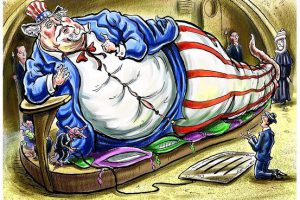
Foreign competitors are taking advantage of Trump’s anti-immigration rhetoric, aggressively recruiting the types of foreign students and faculty who would have typically come to the United States for their higher education. The data already show that U.S. colleges are falling behind foreign competitors during the Trump era.

New foreign student enrollment in the U.S. dropped by 3 percent during the 2016-17 school year, and that decline is projected to double this school year, data show. At the same time, universities overseas are seeing increases as high as the double digits. The decline in foreign students enrolling in American colleges is just the latest evidence of Trump’s immigration policies shutting doors in America. The U.S. is also granting fewer visitor visas to people from around the world.

Trump is responsible for the decline in student enrollment, U.S. universities argue — especially his travel ban, which goes before the Supreme Court on Wednesday. Dozens of higher education groups wrote in an amicus brief for that case that Trump’s travel ban is a “clarion message of exclusion to millions” that harms universities’ ability to enroll international students and recruit top faculty.

Overseas, they’re gloating. “We don’t actually need to be negative about the American academy, as President Trump is doing more damage to ‘brand America’ on his own than any competitor country ever could,” Phil Honeywood, the CEO of Australia’s international education association, told POLITICO.

“There is no doubt that President Trump’s much-publicized antagonism toward Muslims and migrants has sent out negative messages to students who would otherwise have America at the top of their list as a study destination,” said Honeywood. Australia — long one of America’s top competitors — has seen big jumps in students enrolling from Muslim majority countries, such as Malaysia and Indonesia and in the Middle East, he said.

And it’s not just Australia, which saw a 12 percent increase in international students last year. Universities in Canada, China, New Zealand, Japan and Spain all posted double-digit increases in international enrollment, according to data from the nonprofit Institute of International Education.

Meanwhile, the U.S. decline tracked by the IIE was the first time that number had dropped in the 12 years the group collected such data. While the 2017-18 data are not yet available, the decline was projected to more than double, based on the findings of a separate online enrollment survey IIE conducted in October.

Universities say they need to continue to attract the world’s brightest students for America to maintain its scientific edge. They argue foreign students often become important economic drivers, pointing to famous foreign-born entrepreneurs like Elon Musk, who grew up in South Africa and graduated from the University of Pennsylvania. International students can also help with the bottom line, since they often pay full freight, and some universities charge them more to attend.

“Where the United States retreats, there’s a vacuum, and other countries will rush to fill it,” University of California President Janet Napolitano, who served as Homeland Security secretary in the Obama administration, told POLITICO. “American education has always led the world — and it still leads the world, and it should lead the world. But we are leading the world in an atmosphere where the White House, at least, is sending a very kind of ‘stay away’ message — and that’s a challenge.”

The university groups wrote in the Supreme Court brief that since Trump signed the travel ban, international students have expressed concerns about coming to the U.S. to study, while faculty have turned down jobs and foreign scholars have pulled out of American academic conferences.

“Foreign students, faculty and researchers come to this country because our institutions are rightly perceived as the destinations of choice compared to all others around the globe,” the brief said. The president’s proclamation “altered those positive perceptions with the stroke of a pen,” it said.

In the case, the Supreme Court will hear arguments that Trump overstepped his authority in issuing an order limiting visas to eight countries, six of which are majority Muslim. Among the questions the justices are expected to consider in the case, which was brought by the state of Hawaii and the leader of a Muslim group there, is whether the president’s order violated the Constitution’s ban on establishment of religion by targeting Muslims.

The administration has contended the travel ban is a necessary national-security step, and government attorneys have argued it’s not related to Trump’s vows on the campaign trail to institute a Muslim ban.

It’s not just the travel ban. The Trump administration is considering restricting visas for Chinese citizens, which could hurt Chinese students studying at American universities. Administration officials portray the possible restrictions, as well as steep tariffs, as a response to alleged intellectual property theft.

American colleges, meanwhile, have aggressively pushed for lawmakers to find a way to preserve the Obama-era Deferred Action for Childhood Arrivals program, which protected from deportation and gave work permits to undocumented individuals brought to the country as children. Trump scrapped the program.

Foreign universities have watched the political climate shift and are pouncing on the opportunity to lure away would-be students and faculty.

“At a time of closing borders and closing minds, students from around the world are choosing Canada,” a group of Canadian universities boasted late last year.

Canada saw an 18 percent jump in international enrollment in 2016. New Zealand saw the biggest boost — a 34 percent increase. International enrollment jumped 25 percent in Spain, 13 percent in Japan and 11 percent in China.

“Ten years ago, China wasn’t even on anyone’s radar screen as a competitor,” said Rachel Banks, director of public policy at NAFSA: Association of International Educators, America’s main international education lobbying group. “They were not active. They were not aggressive at all.”

China has set a goal of enrolling half a million students by the year 2020, and the nation is on a path to exceed that goal early, she said. International students have been a big part of that growth.

Many of these countries long have had aggressive strategies to recruit internationally and have built immigration policies around those efforts.

Australia, for example, allows foreign students to stick around for 18 months after graduation to gain experiential training. Graduates in high-need occupations are able to stay and work for as long as four years. And the country has a path to permanent residency for all foreign graduates.

And they’re not just targeting students.

French President Emmanuel Macron last year announced France would give four-year grants to professors, graduate students and other researchers willing to work on climate change research. Just last month, Canada announced its universities had successfully poached 24 faculty members from colleges in other nations. More than half of them came from American universities, including Harvard, Brown and Duke.

Canadian Prime Minister Justin Trudeau has been spending time in Silicon Valley, trying to convince startups there that Canada might be a more friendly place as the U.S. continues to restrict immigration, including through additional scrutiny of work visas.

“That’s pretty telling,” Banks said.

American universities have tried to counter the narrative. Colleges have written letters expressing their continued support for international education, and some have even offered assistance, such as additional housing, for international students. They’ve lobbied aggressively against restrictive immigration policies and entered court battles. The University of California is among the plaintiffs challenging Trump’s decision to scrap DACA.

“The key for us is to be able to still attract the best and the brightest from all over the world,” University of Southern California President C.L. Max Nikias told POLITICO. “That has been part of the strength of who we are as a country.”

Source: Politico – posted April 23, 2018; retrieved April 30, 2018 from: https://www.politico.com/story/2018/04/23/foreign-students-colleges-trump-544717

College is a big investment; yet nobody wants to spend their BIG money in a place where they are not welcomed.

This lesson must be learned in the Caribbean. We have the same threats afoot. But unlike the US, who has the leverage and surety of “richest Single Market economy in the world” to absorb any fall, our Caribbean member-states are mostly Third World and failing. This commentary has previous detailed how societal deficiency has resulted in a Brain Drain among the educated classes in the Caribbean homeland – all due to “push and pull” reasons. We persecute certain groups in our society; at times our community leaders are projecting “a climate of hate”.

In general, neutralizing a “hateful attitude” has been an ongoing theme for the movement behind the book Go Lean … Caribbean. The book presents the Caribbean region a roadmap to elevate all societal engines, including economics, homeland security and governance. In fact, the prime directives of the roadmap includes the following 3 statements:

  • Optimization of the economic engines in order to grow the regional economy to $800 Billion & create 2.2 million new jobs.
  • Establishment of a security apparatus to ensure public safety for all and protect the resultant economic engines.
  • Improve Caribbean governance for all people, even minority groups, to support these economic and security engines.

The Go Lean book introduces the Caribbean Union Trade Federation (CU) as an intergovernmental agency for 30 regional member-states, to provide a better – technocratic – stewardship for the regional economy. We need all community stakeholders to “not sink ships” with their unbridled hatred and disdain for people who may look, act and speak differently than them.

The movement behind the Go Lean book hereby makes this urging to the Caribbean political, social and religious leaders:

Learn from the fallacy of President Trump.

Now is the time for all of the Caribbean – the people and leaders – to lean-in for the empowerments described here-in and in the book Go Lean … Caribbean. This is about jobs and economic opportunities – education included; we need better engines to make our region more prosperous. We can elevate our communities through education!

It is conceivable, believable and achievable to make the Caribbean a better place to live, work, learn and play. 🙂

Sign the petition to lean-in for the roadmap for the Caribbean Union Trade Federation.

Download the free e-book of Go Lean … Caribbean – now!

———–

Appendix VIDEO – US universities experiencing massive drop in foreign students – https://youtu.be/uIVdCg5zm-4

Published Dec 7, 2017 – FRANCE 24 live news stream: all the latest news 24/7 http://f24.my/YTliveEN Decisions made by US President Donald Trump’s administration are having an effect on the number of foreign students coming to America to study.

A new report says dozens of campuses across the country have lost a big chunk of their foreign students and the drop in numbers means a drop in money as well. In the past school year, foreign students contributed some $37 billion to the US economy, and helped fund around 450,000 jobs. Our correspondents report from Indiana University. Also on the show: An Argentinian court has sentenced former military personnel for their involvement in crimes committed at a notorious torture center during the country’s so-called “Dirty War”, some four decades ago. Only a fraction of the estimated 5,000 anti-government activists who were sent there survived. And in Canada, the small town of Chruchill is the scene for a wintery spectacle every year. In October and November, polar bears travel through the town as part of their winter migration. The move is proving popular with tourists who hope to get close up to the furry, white giants. http://www.france24.com/en/taxonomy/e…

Share this post:
, , ,
[Top]

Flying the Caribbean Skies – The Need to Manage Airspace

Go Lean Commentary

“America First!”

These words are a constant declaration from the American President Donald J. Trump. According to the Wall Street Journal, they summarize President Trump as follows:

“Mr. Trump is a brash nationalist contemptuous of global institutions and wary of foreign entanglements”.

To this we say: “When someone tells you who they are, believe them”.

This assessment is very important for us in the Caribbean. The US is the 800-pound gorilla in our neighborhood; they can go and stop anywhere they choose in this hemisphere. They will always be seeking American Self-Interest first, so do not think that the US may be putting their foreign neighbors first, especially us in the Caribbean. This assessment is also true when it comes to managing the Caribbean Airspace; if we leave it up to the US, we will always find ourselves subservient and in second place. So what do we do or have been doing? Leaving it up for the US to manage the Caribbean air traffic control has placed us in a secondary priority, even here in our own countries.

This is the focus of this series of commentaries on Flying the Caribbean Skies. This entry is 3 of 3 in this series from the movement behind the book Go Lean … Caribbean in consideration of societal defects in the region’s management of air travel. There is a need for Caribbean people to adopt a policy of Caribbean First when it comes to managing the Airspace in our own territory. There is a lot that needs to be done and it might mean “life and death”. The other commentaries in the series are cataloged as follows:

  1. Flying the Caribbean Skies: New Regional Options
  2. Flying the Caribbean Skies: ‘Shooting Ourselves in the Foot’ – ENCORE
  3. Flying the Caribbean Skies: The Need to Manage Airspace

All of these commentaries relate to “how” the stewards for a new Caribbean can empower regional commerce by optimizing the air travel eco-system, and the dependent industries. In truth, the Go Lean book asserts that a Caribbean First policy is needed to reboot all societal engines: economics, security and governance. Yet, the record clearly shows that despite the clear role model and cautionary warnings, the Caribbean member-states have operated as parasites of the American hegemony rather than protégés.

This indictment is especially evident in the matter of Air Traffic Control. (See the importance in the Appendix VIDEO below).

This was a source of concern in the motivation for the Go Lean book. The book – available to download for free – serves as a roadmap for the introduction and implementation of the technocratic Caribbean Union Trade Federation (CU), for the elevation of the full Caribbean society – for all member-states. This CU/Go Lean roadmap addresses all societal engines and has these 3 prime directives:

  • Optimization of the economic engines in order to grow the regional economy to $800 Billion and create 2.2 million new jobs.
  • Establishment of a security apparatus to ensure public safety and protect the resultant economic engines.
  • Improve Caribbean governance to support these engines, including a separation-of-powers between the member-states and CU federal agencies.

The topic of Air Traffic Control (ATC) overlaps economics (transportation solutions facilitate commerce), security and governance. Currently, there is a separation-of-powers in which many Caribbean member-states delegate their Air Traffic Control functionality to the American FAA (Federal Aviation Administration). So Caribbean aviators have to pay a fee to the US authorities. The quest here is to bring this ATC functionality back “home”, but to CU federal authorities. See this summary here from the book (Page 205):
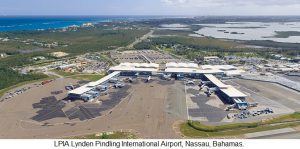
Aviation Coordination, Promotion and Safety Regulations
The CU mandate is to facilitate the region’s economics through transportation solutions. Aviation plays a key role, and so there is the need for regional coordination and promotion of the region’s domestic and foreign air carriers. The CU will execute these functions along with Air Traffic Control and Safety regulations, thus mirroring both the FAA & National Transportation Safety Board (NTSB) in the US. The CU will be vested with subpoena and prosecutorial powers.

This need – to bring the ATC functionality home – has been vocalized in the Caribbean region. See here, a related news-article originated out of the Bahamas:

Title: Government ‘Aggressively’ Moving On Airspace Control Takeover

By: NATARIO McKENZIE

The Minister of Tourism and Aviation yesterday said the Government is “aggressively” moving to establish Bahamian airspace via a Flight Information Region (FIR).

The former Christie administration last January hailed as a “landmark accomplishment” its agreement with the Federal Aviation Administration (FAA), which will result in Bahamian aircraft operators no longer having to pay overflight fees to the US for domestic flights.

Dionisio D’Aguilar, though, said the previous government’s achievement was not as big as it had been made out to be.

“I don’t know what their landmark airspace deal was. All they did was get a concession for Bahamian airline companies to fly through Bahamian airspace and not pay a fee to do so,” he argued. “The Government is very aggressively pursuing the establishment of what is the Bahamian airspace, and I’m hoping that in the next six months we can be in a position where we can say this is our airspace.

“We can also hopefully begin the process of earning revenue from it, and also putting in a safety regime so that over time we can take control of our airspace and hire Bahamians to manage it.

“Right now the vast majority of our airspace is being managed by the Federal Aviation Administration. It’s a tedious and tiresome process, but I think we are close.”

Under international laws, countries require airlines and other aircraft to pay a fee for the right to fly over their airspace.

The administration of those rights in the Bahamas has been performed by the FAA since 1952, meaning Bahamasair and other Bahamian-owned carriers have had to pay the US for the privilege of flying over their own country.

Source: Posted January 17, 2018; retrieved April 22, 2018 from: http://www.tribune242.com/news/2018/jan/17/govt-aggressively-moving-on-airspace-control/

QQQ Just because the US is the “800-pound gorilla” in North America does not mean that they execute all regional administration in the most efficient and effective manner. In fact, this commentary has cited numerous American defects, such as dysfunctions with guns, school-shootings and Police-on-Black shootings. So the American way is not always the best way.

In fact, the US’s footprint for ATC, the FAA, is not known for embracing the latest cutting edge technologies. Consider this encyclopedic reference here:

Technology
Many technologies are used in air traffic control systems. Primary and secondary radar are used to enhance a controller’s situation awareness within his assigned airspace – all types of aircraft send back primary echoes of varying sizes to controllers’ screens as radar energy is bounced off their skins, and transponder-equipped aircraft reply to secondary radar interrogations by giving an ID (Mode A), an altitude (Mode C) and/or a unique callsign (Mode S). Certain types of weather may also register on the radar screen.
These inputs, added to data from other radars, are correlated to build the air situation. Some basic processing occurs on the radar tracks, such as calculating ground speed and magnetic headings.

Usually, a flight data processing system manages all the flight plan related data, incorporating – in a low or high degree – the information of the track once the correlation between them (flight plan and track) is established. All this information is distributed to modern operational display systems, making it available to controllers.

The FAA has spent over US$3 billion on software, but a fully automated system is still over the horizon. In 2002 the UK brought a new area control centre into service at the London Area Control Centre, Swanwick, Hampshire, relieving a busy suburban centre at West Drayton, Middlesex, north of London Heathrow Airport. Software from Lockheed-Martin predominates at the London Area Control Centre. However, the centre was initially troubled by software and communications problems causing delays and occasional shutdowns.[9]Wikipedia.

In summary, with the smart application of technology and best-practices, a technocratic CU will be able to do “more with less”.

How about the US Territories of Puerto Rico and the Virgin Islands?

One reason that the FAA manages the Airspace for many Caribbean member-states is because the FAA has the responsibility for these two territories. But the American stakeholders have a long history of “playing nice” with other Airspace domains – think: US Air Force and Naval bases in foreign countries, plus Canada and Mexico in North America.

The Airspace management for Puerto Rico and the USVI can legally be delegated to the CU.

There is also a movement to privatize or corporatize ATC’s. Proponents argue that moving ATC services to a private corporation could stabilize funding over the long term which will result in more predictable planning and rollout of new technology as well as training of personnel. This is the case in Canada[21]:

The Canadian system is the one most often used as a model by proponents of privatization. A privatization has been successful in Canada with the creation of Nav Canada, a private nonprofit organization which has reduced costs and has allowed new technologies to be deployed faster due to the elimination of much of the bureaucratic red tape. This has resulted in shorter flights and less fuel usage. It has also resulted in flights being safer due to new technology. Nav Canada is funded from fees that are collected from the airlines based on the weight of the aircraft and the distance flown.

The CU’s ATC effort – and other governing initiatives – is therefore proposed to reflect the cutting edge of operational best-practices. This is the nature of a technocracy! The Caribbean needs better governance and better Airspace management. This could enhance our economic lifeblood (better air travel eco-system means more air arrivals, more stay-overs, more hotels nights, restaurants, taxi cabs, etc.) and also affect life-and-death, as related to air traffic security. This is how we reform and transform Caribbean society.

The Go Lean roadmap originated to improve regional governance. This was pronounced in the opening Declaration of Interdependence (Pages 12 – 13):

xi. Whereas all men are entitled to the benefits of good governance in a free society, “new guards” must be enacted to dissuade the emergence of incompetence, corruption, nepotism and cronyism at the peril of the people’s best interest. The Federation must guarantee the executions of a social contract between government and the governed.

xii. Whereas the legacy in recent times in individual states may be that of ineffectual governance with no redress to higher authority, the accedence of this Federation will ensure accountability and escalation … for good governance …

xvi. Whereas security of our homeland is inextricably linked to prosperity of the homeland, the economic and security interest of the region needs to be aligned under the same governance. Since economic crimes … can imperil the functioning of the wheels of commerce for all the citizenry, the accedence of this Federation must equip the security apparatus with the tools and techniques for predictive and proactive interdictions.

xxiii. Whereas many countries in our region are dependent Overseas Territory of imperial powers, the systems of governance can be instituted on a regional and local basis, rather than requiring oversight or accountability from distant masters far removed from their subjects of administration. The Federation must facilitate success in autonomous rule by sharing tools, systems and teamwork within the geographical region.

xxiv. Whereas a free market economy can be induced and spurred for continuous progress, the Federation must install the controls to better manage aspects of the economy: jobs, inflation, savings rate, investments and other economic principles. Thereby attracting direct foreign investment because of the stability and vibrancy of our economy.

The Go Lean book provides 370-pages of turn-by-turn instructions on “how” to adopt new community ethos, plus the strategies, tactics, implementations and advocacies to execute so as to reboot, reform and transform our societal engines. The book details how society can be elevated by optimizing Airspace regulation, Air Traffic coordination and Air Safety.

This will help in our quest … to make our homeland a better place to live, work and play. 🙂

Download the free e-book of Go Lean … Caribbean – now!

Sign the petition to lean-in for this roadmap for the Caribbean Union Trade Federation.

————-

Appendix VIDEO – A Typical Day in America’s Airspace – https://youtu.be/8pYiC7bTUxQ


NASA Video

Published on May 20, 2013 – This series of simulations created using NASA’s FACET software shows the pattern of air traffic over the continental United States at various times, including Sept 11, 2001. It illustrates just how complex our air transportation system is and how challenging it is to make changes. This series was created several years ago with the National Air & Space Museum and continues to play at the “America by Air” exhibit in the museum on the Mall.


Share this post:
, , ,
[Top]

Flying the Caribbean Skies – ‘Shooting Ourselves in the Foot’ – ENCORE

We do not need to blame anyone else; we do bad all by ourselves.

This seems to be the indictment against the Caribbean for its deficient governing policies in managing air travel in the region. So many of the 30 member-states charge excessive aviation fees and airport taxes that they discourage, dis-invite and dissuade trading partners (and tourists) from consuming our shores and hospitality.

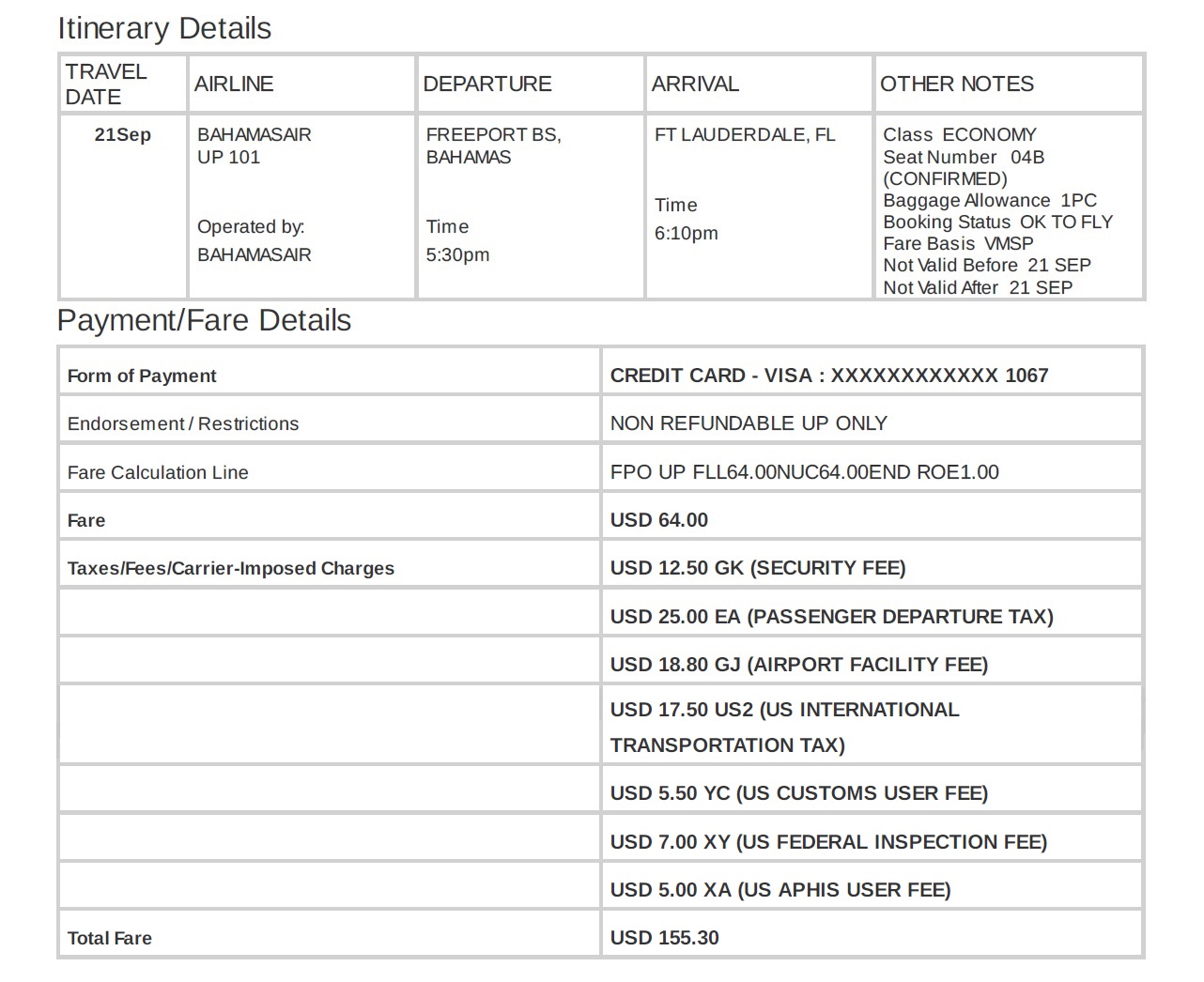
So the “defect is our own”. – The Bible

Shrewd management of taxes can encourage or discourage good or bad behavior. For example, high “sin” taxes on tobacco and alcohol tend to dissuade consumption; and tax cuts tend to incentivize investments. This is a known fact! And yet, many Caribbean member-state governments charge exorbitant fees and taxes for basic air travel – sometimes the fees are higher than the air fare themselves – see below.

This subject is part of the focus on the economic realities of “flying the Caribbean skies”. This commentary continues the 3-part series on Flying the Caribbean Skies. This entry is 2 of 3 in this series from the movement behind the book Go Lean … Caribbean in consideration of societal defects in the region’s management of air travel. These defects have awful-ized an already depressed economic situation in the Caribbean region. The other commentaries in the series are cataloged as follows:

  1. Flying the Caribbean Skies: New Regional Options
  2. Flying the Caribbean Skies: ‘Shooting Ourselves in the Foot’ – ENCORE
  3. Flying the Caribbean Skies: The Need to Manage Airspace

All of these commentaries relate to “how” the stewards for a new Caribbean can empower regional commerce by optimizing the air travel eco-system. This submission asserts that empowerment in this industry space can begin right at the front door, the portal to air travel, the airports. In a previous Go Lean commentary, this governing flaw was exposed. This commentary is an ENCORE of that previous blog from December 6, 2014.

See that submission here:

——————————-

Go Lean Commentary –  Caribbean less competitive due to increasing aviation taxes

The book Go Lean … Caribbean relates the significance of supporting the airline industry so as to facilitate the region’s primary economic driver: Tourism.

Tourism is a leisure activity; many times participants in leisure are in no hurry to get to their destinations, they often drive. This relates to countries on a continental mainland; but for islands, not so much. For 27 of the 30 Caribbean member-states, island life is the reality. (Belize is in Central America; Guyana and Suriname are in South America).

If speed is not the requirement then boating should be an option. But the only boating/transport options for Caribbean tourists are cruise lines.

This following article relates the biggest threat to Caribbean tourism is Caribbean governments. These ones are authorized to assess taxes, but for far too often they have targeted airline tickets to generate needed revenues. This is such a flawed strategy, a betrayal of the public trust. They “cut off their nose to spite their face”, as the article here relates:

By: Ernie Seon, Caribbean-360 Contributor

CU Blog - Caribbean less competitive due to increasing aviation taxes - Photo 1ST. THOMAS, US Virgin Islands – The International Air Transportation Association (IATA) Tuesday urged regional aviation authorities to adhere to the key principles set out by International Civil Aviation Organization.

IATA’s regional vice president for the Americas, Peter Cerda said it is unfortunate that many governments had chosen to ignore the principles, a global issue that was particularly acute in the Caribbean.

Addressing tourism and industry officials gathered here on the occasion of World Aviation Day, Cerda noted that aviation taxes continue to increase the cost of travelling to the Caribbean. He said this made the region less competitive to other destinations.

“Taking the islands as a whole, each dollar of ticket tax could lead to over 40,000 fewer foreign passengers,” he said, adding that US$20 million of reduced tourist expenditure meant 1,200 fewer jobs across the region.

“Caribbean countries must therefore consider the aviation industry as a key element for tourism development,” he advised.

The IATA official noted that in terms of charges, two airports in the region, Montego Bay and Kingston, both in Jamaica, recently proposed airport tariff increases of over 100 per cent so as to attain a return of capital of around 20 per cent a year in US dollars.

He said that measures such as these do not encourage or support the development of the industry in the region.

“The regulators must act strongly and swiftly against such big increases. Governments have to foster positive business environments through consultation with the industry and transparency in order to ensure win-win situations for all,” he warned.

Cerda said the issue of taxes and charges in the region transcends the formal breaches of global standards and recommended practices and that the simple truth is that this region is a very expensive place for airlines to do business.

In the Caribbean, tourism and the aviation sector facilitate and support some 140,000 jobs and contribute US$3.12 billion, roughly 7.2 per cent of the Caribbean’s gross domestic product (GDP).

The airline industry is celebrating its 100th anniversary year in the black, according to industry figures released here. Globally, airlines are expected to earn a net profit of US$18 billion in 2014.

Cerda noted that while that might sound impressive, on revenues of US$746 billion, this is equivalent to a net profit margin of 2.4 per cent or US$5.42 per passenger carried.

“Looking only at Latin America and the Caribbean, the airlines in this region are expected to earn $1.1 billion.”This is a profit of US$4.21 per passenger and a net margin of three per cent. We are in a tough and very competitive business,” he added.

The aviation official said fuel expense across the Caribbean is estimated at 14 per cent higher than the world average, adding that this represents about a third of an airline’s operating costs.

He noted that in the case of the Dominican Republic, although fuel charges were recently reduced, tax on international jet fuel still remains high at 6.5 per cent.

“Another example is the Bahamas applying a seven per cent import duty on Jet fuel. Jet fuel supply is an issue in the region, the complexity of the fuel supply and the seasonal demand is costly and difficult, making fuel costs in the region a challenge for airlines.”

In addition, Cerda noted that airports are using the fuel concession fees as a source of revenue and they are still waiting to see any of these monies re-invested in improving fuel facilities.

On the issue of safety, he said that this has been in the spotlight in recent months, with July being an especially sad month for all involved with aviation.

However, Cerda said despite the recent tragedies, flying remains by far the safest mode of transportation.

“Every day, approximately 100,000 flights take to the sky and land without incident. Nonetheless, accidents do happen. Every life lost recommits us to improve on our safety performance.

“It is no secret that safety has been an issue in this region. Even though it is still under performing the global average, performance is improving,” he said.

The IATA official said that the aviation industry has come a long way since the very first flight from St. Petersburg to Tampa 100 years ago, turning this large planet into one small world.

He said through it all, one thing has remained constant: when governments support the conditions for a thriving industry the economic benefits are felt by all.

However Cerda cautioned that for the industry to deliver the most benefits to the citizens in the Caribbean and spur additional tourism and trade, “we need to be able to compete on a level playing field and have the infrastructure capacity needed to grow.”

He said he remains confident that if the Caribbean governments continue to strengthen their partnership with the aviation industry, “we will deliver the unique transformative economic growth only our industry can deliver, making the second century of aviation in this region even more beneficial than the first”.
Caribbean-360 Online News (Posted 09/17/2014; retrieved 12/06/2014) –
http://www.caribbean360.com/news/caribbean-less-competitive-due-to-increasing-aviation-taxes-iata-warns

This foregoing article highlights a defective premise, predatory taxing, and so thusly depicts the need for improved regional oversight of economic and governing engines.

CU Blog - Caribbean less competitive due to increasing aviation taxes - Photo 2See this photo of a recent airline ticket (price breakdown), for one of the stakeholders in the Go Lean movement, who was travelling from a Caribbean island. The reality of these aviation taxes defies logic!

Yes, the governments need their revenues, but this should not be pursued at the expense of undermining viable economic engines; this is self-defeating. Likewise there was a recent conflict with British Aviation Authorities and their unilateral tax on Caribbean air transport. The solution there/then is the same as now: regional coordination and a heightened advocacy; see AppendixVIDEO.

Change has now come to the Caribbean. The book Go Lean … Caribbean serves as a roadmap for the introduction and implementation of the Caribbean Union Trade Federation (CU), an alliance of the 30 Caribbean member-states. This Go Lean roadmap has 3 prime directives:

  • Optimization of the economic engines in order to grow the regional economy to $800 Billion and create 2.2 million new jobs..
  • Establishment of a security apparatus to protect the resultant economic engines.
  • Improve Caribbean governance to support these engines.

The roadmap calls for the CU to navigate the changed landscape of the globalized air transport industry. There is the need for regional integration, administration, and promotion for Caribbean air travel among local and foreign carriers. The book posits that transportation and logistics empower the economic engines of a community. There must be air carrier solutions to service the transportation and tourism needs of the Caribbean islands. This point is fully appreciated by Caribbean tourism stakeholders; the book relates that the region’s Hotel and Tourism Association channel the vision of Robert Crandall, former Chairman of American Airlines, who remarked at a Caribbean Hotel and Tourism Investment Conference in May 2010 that the region is uniquely dependent on tourism:

“Everyone involved in travel and tourism knows that our [airline] industry is immensely important to the world economy, generating and supporting – either directly or indirectly – about one in eleven jobs worldwide. Here in the Caribbean, it is even more important. On a number of islands, travel and tourism accounts for more than 50% of all employment, and on some islands for more than 75%. Overall, about 20% of Caribbean employment is travel and tourism dependent – something on the order of 2.5 million jobs.” – Go Lean … Caribbean Page 60.

The Go Lean book asserts that air travel options must be optimized to impact Caribbean society – thus the need for more regional coordination, regulation and promotion of the Caribbean’s aviation industry. New models are detailed in the book in which tourism can be enhanced with “air lifts” to facilitate Caribbean events, and “Air Bridges” to allow for targeting High Net Worth markets. This roadmap also introduces the Union Atlantic Turnpike to offer more transportation solutions (ferries, toll roads, railways, and pipelines) to better facilitate the efficient movement of people and cargo.

This is one way the CU will empower the region’s economic engines. This is an example of the change that the CU technocracy will bring!

The Go Lean book presents a series of community ethos that must be adapted to forge this change. In addition, there are these specific strategies, tactics, implementation and advocacies to apply:

Community Ethos – Job Multiplier Page 22
Community Ethos – Lean Operations Page 24
Community Ethos – Cooperatives Page 25
Community Ethos – Ways to Improve Sharing Page 35
Community Ethos – Impacting the Greater Good Page 37
Strategy – Customers – Visitors Page 47
Strategy – Competitive Analysis – Event Patrons Page 55
Strategy – Core Competence – Tourism Page 58
Anecdote – Caribbean Hotel & Tourism Assoc. focus on Air Transport Page 60
Tactical – Fostering a Technocracy Page 64
Tactical – Commerce – Tourism Promotion Page 78
Tactical – Aviation Administration & Promotion Page 84
Implementation – Ways to Deliver Page 109
Implementation – Trade Mission Objectives Page 116
Planning – 10 Big Ideas for the Caribbean Region – #7: Virtual Turnpike Page 127
Planning – Ways to Improve Trade Page 128
Advocacy – Ways to Improve Governance Page 168
Advocacy – Ways to Optimize Government Revenue Sources Page 172
Advocacy – Ways to Enhance Tourism Page 190
Advocacy – Ways to Impact Events Page 191
Advocacy – Ways to Market Southern California – Air Bridge Page 194
Advocacy – Ways to Improve Transportation – Aviation Promotion Page 205
Appendix – Airport Cities – New Approach for Optimizing Business Model Page 287

This commentary posits that the status quo of Caribbean aviation taxes reflect a flawed economic policy, reflective of the dysfunction in the region. This commentary also relates to other lessons of economic optimizations and dysfunctions previously detailed in Go Lean blogs, as sampled here:

Caribbean must work together to address regional industry threats – Example of Rum Subsidies
A Lesson in Aviation History: Concorde SST and the Caribbean
New York-New Jersey Port Authority – Lessons from an Airport Landlord
Bahamas Re-organizing Government Revenues in 2015 with VAT Implementation
Lessons Learned from the American Airlines Merger
Book Review: ‘Wrong – Nine Economic Policy Disasters and What We Can Learn…’
Caribbean Changes – Air Antilles Launches St. Maarten Service
Tourism’s changing profile – Need for Competition and Comparative Analysis

The world loves the Caribbean; people want to come visit and enjoy our hospitality. It is better for them, and for us in the region that they come by air transport. But cruises are viable options, though the Caribbean communities get less benefits from cruise lines (Pages 61 & 193). We simply “fatten our frogs for snake”. The more dysfunction we create with air transport – like these excessive  aviation taxes – the more we push visitors to the cruise option; meaning less direct-indirect spending: hotels, taxis, restaurants, casinos, etc.

Now is the time to lean-in to this roadmap for Caribbean change, as depicted in the book Go Lean…Caribbean. We cannot afford to undermine our economic strengths with disabling tax policies. This is a public trust, betrayed. The Caribbean can – and must – do better.  🙂

Download the free e-Book of Go Lean … Caribbean – now!

Sign the petition to lean-in for this roadmap for the Caribbean Union Trade Federation.

————

APPENDIX Video: A Tax Too Far…? – http://youtu.be/Jbh8DJxUNC8

Uploaded on Oct 30, 2011 – A documentary on how the Air Passenger Duty instituted by the UK is affecting Caribbean Tourism, and the lobbying efforts of the Caribbean Tourism Organization to have it reduced, removed, or the Caribbean re-banded. Get more information about the APD on the CTO website: http://www.onecaribbean.org/our-work/advocacy/

Share this post:
, , , ,
[Top]