Category: Government

Securing the Homeland – From the Seas

Go Lean Commentary

Continuing with the series on Security Intelligence, this commentary – 2 of 3 from the movement behind the book Go Lean … Caribbean – focuses on the Caribbean Sea and adjoining waterways. It addresses how we can optimize Security Intelligence (Naval/Coast Guard and police-crime issues) emanating from the seas so as to better secure our Caribbean homeland. All the other commentaries in the series covered these details:

  1.   Securing the Homeland – From the Air
  2.    Securing the Homeland – From the Seas
  3.   Securing the Homeland – On the Ground

Each commentary relates to the Caribbean security apparatus being promoted in the Go Lean regional empowerment effort. They consider the short-term, mid-term and long-term needs of our communities.
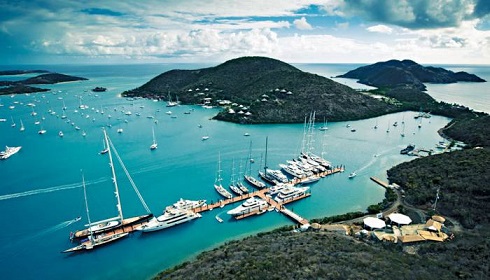
cu-blog-securing-the-homeland-from-the-seas-photo-4The 1,063,000 square miles of the Caribbean Sea are very important to our economic wellbeing, in addition to the banks and straits surrounding other islands in the Atlantic Ocean like the Bahamas, Bermuda and Turks & Caicos Island. There are fishery issues, commercial shipping, mineral extraction, pipelines, cruise lines and personal boat-based tourism (yachting, sailboats, etc.) issues. Island-hopping is an important activity for visitors.

The promoters of the book Go Lean … Caribbean wants to protect these activities and the homeland in general. We want to ensure that all our stakeholders – residents, tourists, trading partners – are safe and secure within our borders, on our waterways and within our Exclusive Economic Zone. This would fulfill our implied Social Contract, where citizens surrender some of their natural rights in exchange for additional protections from the State. The normal Social Contract would authorize the Caribbean member-states to deploy Naval operations and Coast Guards. The Go Lean roadmap extends the Social Contract further, empowering the Caribbean Union Trade Federation (CU) and its security apparatus … for a CU Navy.
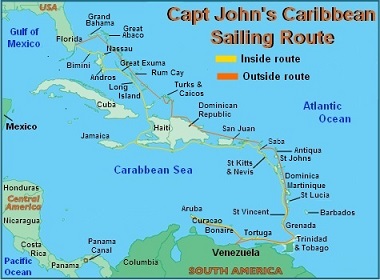
cu-blog-securing-the-homeland-from-the-seas-photo-5For Security Intelligence related to the seas, the focus is not only on human “bad actors”; sometimes the nemesis is Mother Nature.  As related previously, the Caribbean region must be ready for when “Crap Happens“. The qualifying incidences include events and hazards that pose a ‘clear and present danger’ to everyday life for Caribbean communities. So in addition to terrorism-related events like piracy and economic crimes like fishery encroachments, the Caribbean security apparatus must also include an Emergency Management operation. This covers the communities for “911 dangers” like “Search and Rescue” plus regional catastrophes; which includes natural disasters (hurricanes, earthquakes/tsunamis, volcanoes, floods, etc.), industrial incidents (chemical & oil spills), and sea-bourn bacterial & viral pandemics; think “red tides”.

The Go Lean book serves as a roadmap for the introduction and implementation of the technocratic Caribbean Union Trade Federation. This implementation would allow for the establishment of a technical efficient Navy – bleeding with cutting-edge systems and technologies – incorporating the existing Navies and Coast Guards of all the member-states. This allows for greater leverage and economies-of-scale.

Naval operations are costly to maintain; it is prudent to spread this large cost across the wider (wholesale) base of 42 million people in the 30 member-states. In addition to the pure economic metrics, the Go Lean roadmap also allows for smart, efficient and agile deployments; (lean = agile). But the focus of this commentary is not so much on naval hardware (ships, sub-marines, piers and docks), as it is a focus on software: Intelligence Gathering & Analysis, un-manned vessels, positioning and surveillance systems, like radar, GPS and e-LORAN.

These executions are a BIG deal, not just for the world of nautical arts  & sciences, but also for the Caribbean historicity. Nautical failures have always plagued Caribbean maritime operations. In a previous blog-commentary, the practice of “Shipwrecking” was exposed, reflecting a bad community ethos that permeated the region at the time. The encyclopedic details are as follow:

Shipwrecking was the practice of taking valuables (cargo) from a shipwreck which has floundered close to shore; this evolved into what is now known as “marine salvage”. While wrecking is no longer economically significant, this practice was in itself an industry as recently as the 19th century in some parts of the world, and a mainstay in many Caribbean economies. The Caribbean islands, waterways and ports have to contend with a lot of hidden water hazards, like reefs. So this industry thrived on the uncertainty of shipping, (before better navigational tools and systems), but also created their own pro-wrecking incidents and threats, like false lighting and sabotage.

This history helps us to appreciate the need for good nautical intelligence.

  • Where are the ships/vessels?
  • Where are they going?
  • How do they plan to get there?

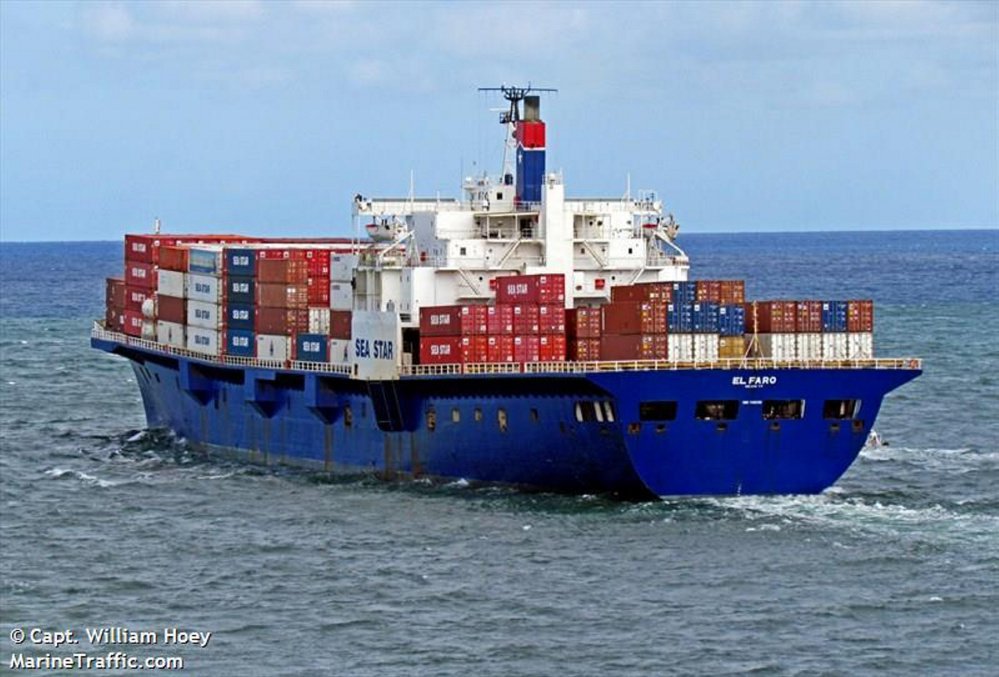
These simple questions can mean life-or-death. We have the unfortunate experience, just this past year, of the cargo ship El Faro, that sank of the coast of the Bahamas in the middle of a quickly developed storm, Hurricane Joaquin. See details of the incident in the VIDEO here and the full news story in the Appendix below:

cu-blog-securing-the-homeland-from-the-seas-photo-2

cu-blog-securing-the-homeland-from-the-seas-photo-1

VIDEO – Search for survivors of cargo ship that disappeared during Hurricane Joaquin – http://www.miamiherald.com/latest-news/article37787241.html

Posted on October 5, 2015 – U.S. Coast Guard Captain Mark Fedor addresses journalists about the search for survivors of El Faro, the cargo ship that disappeared during Hurricane Joaquin. The Coast Guard now believes the ship has sunk, but the search continues for survivors. Video by Walter Michot (wmichot@miamiherald.com).
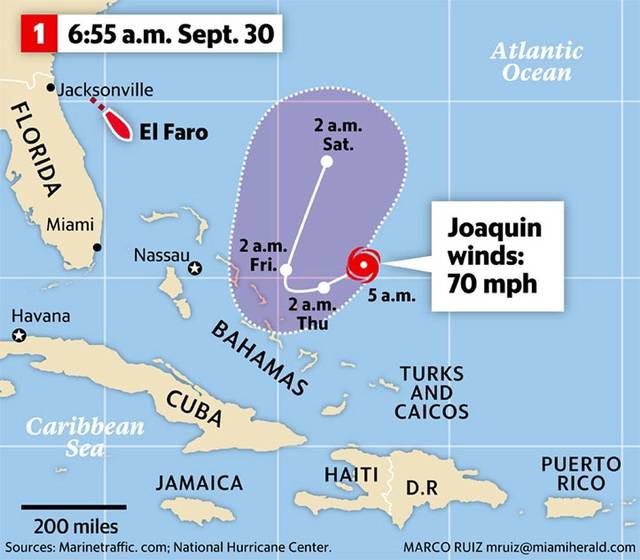
This type of incident should NEVER happen again under the CU regime. Modeling the Air Traffic Control eco-system, the CU mandate is to know the geo-position of every vessel (of a certain tonnage) in the Exclusive Economic Zones of the Caribbean Seas.

How?

How do we gather this intelligence from the Caribbean Seas? Considering that maritime satellites are already in place, and weather forecasting is already a mature ‘Art & Science’, here are 3 additional deployments embedded in the Go Lean roadmap slated for the Caribbean Seas region:

Lighthouses This 300 year old technology of a physical lighthouse is now anachronistic. With satellite-based GPS, there is no need for a flashing light to distinguish a coastal destination. This is not the case for virtual lighthouses, where a unique radio signal may constantly ping so as to establish the location. The location is established by triangulating 3 distinct signals. The CU will install e-LORAN virtual lighthouses all along coastlines in every Caribbean member-state. These sites will identify their locations and also gather radar & surveillance data of all passing vessels, then report the data back to the Unified Command & Control Centers for Maritime Operations. See encyclopedia details on e-LORAN in the Appendix below.
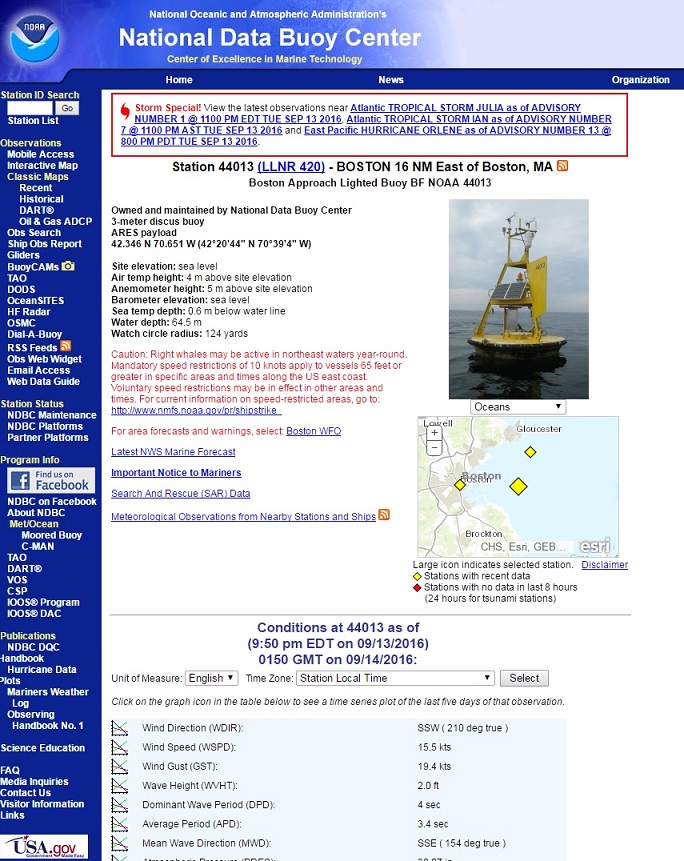
Buoys Modeling the successes of the National Oceanic and Atmospheric Administration in the US, the CU will deploy advanced buoys that broadcast atmospheric data in short range burst to nearby vessels, plus transmit the data back to Maritime Operations Centers. The American example provides for dynamic data from these buoys to be uploaded to searchable websites, like this example here: http://www.ndbc.noaa.gov/station_page.php?station=44013. See Photo of Buoy website below.
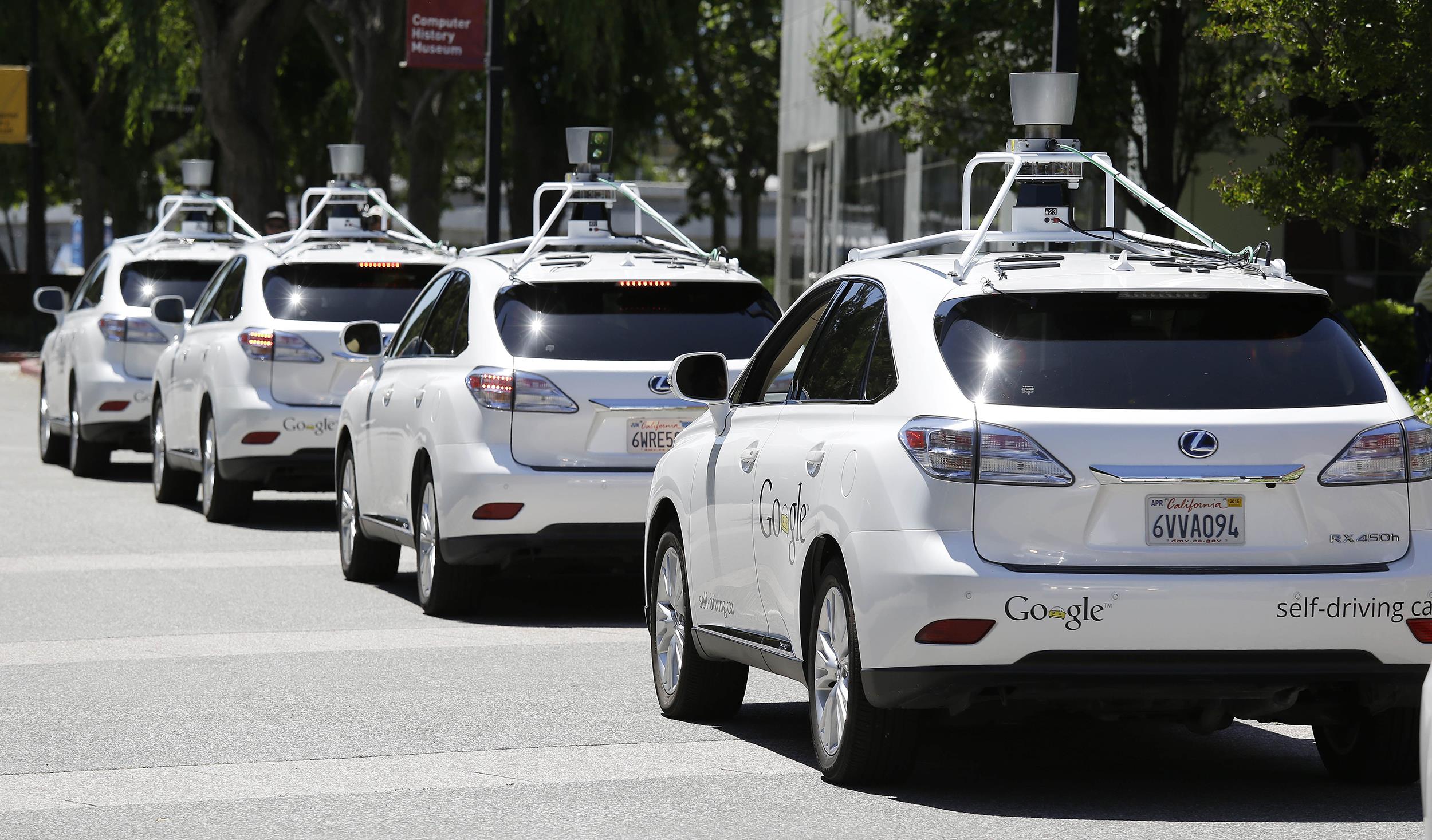
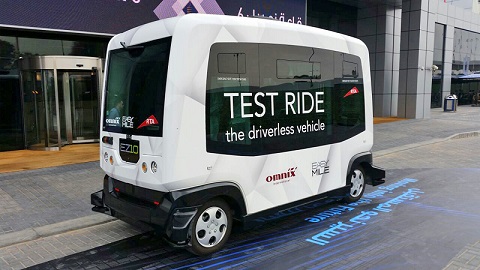
Unmanned vessels While there is a jockeying for position in the race for unmanned self-driving cars on land and unmanned aerial drones in the air, there is also an “arms race” for autonomous ships. A strategy of a wide network of connected unmanned boats conducting continuous surveillance on the Caribbean Seas will enable tactical management within the Unified Command & Control structure. See Photo of Ghost Ships below.

cu-blog-securing-the-homeland-from-the-seas-photo-3

Ghost ships - Autonomous cargo vessels without a crew

Gathering nautical intelligence does not have to be a covert activity. This could simply be the law: every vessel – over a certain tonnage – must register with Caribbean maritime authorities when entering our waters. We must have a physical or virtual transponder to recognize them on regional radar and surveillance systems.

The previous submission in this blog series describes that the regional security pact must be instituted with a legal treaty – Status of Forces Agreement – at the launch of the Caribbean Union Trade Federation. This treaty also enables the establishment of the CU Navy and an accompanying Marine Expeditionary Force to facilitate the region’s security interest. In addition, the roadmap details the width-and-breadth of a complete Intelligence Gathering & Analysis Apparatus. Nautical data – of every ship/vessel in the area – adds to the intelligence gathering.

Imagine the presence – on radar – of a ship that has not registered its transponder – suspicious.

The Go Lean book asserts there is a constant ‘clear and present danger’ on the Caribbean waters. There is the need for remediation and mitigation. This point is pronounced early in the Go Lean book with the opening Declaration of Interdependence (Pages 11 – 12) that claims:

v.    Whereas the natural formation of our landmass and coastlines entail a large portion of waterscapes, the reality of management of our interior calls for extended oversight of the waterways between the islands. The internationally accepted 12-mile limits for national borders must be extended by International Tribunals to encompass the areas in between islands. The individual states must maintain their 12-mile borders while the sovereignty of this expanded area, the Exclusive Economic Zone, must be vested in the accedence of this Federation.

x.    Whereas we are surrounded and allied to nations of larger proportions in land mass, populations, and treasuries, elements in their societies may have ill-intent in their pursuits, at the expense of the safety and security of our citizens. We must therefore appoint “new guards” to ensure our public safety and threats against our society, both domestic and foreign. The Federation must employ the latest advances and best practices … to assuage continuous threats against public safety.

xii.   Whereas the legacy in recent times in individual states may be that of ineffectual governance with no redress to higher authority, the accedence of this Federation will ensure accountability and escalation of the human and civil rights of the people for good governance, justice assurances, due process and the rule of law. As such, any threats of a “failed state” status for any member state must enact emergency measures on behalf of the Federation to protect the human, civil and property rights of the citizens, residents, allies, trading partners, and visitors of the affected member state and the Federation as a whole.

xvi.  Whereas security of our homeland is inextricably linked to prosperity of the homeland, the economic and security interest of the region needs to be aligned under the same governance. Since economic crimes, including piracy and other forms of terrorism, can imperil the functioning of the wheels of commerce for all the citizenry, the accedence of this Federation must equip the security apparatus with the tools and techniques for predictive and proactive interdictions.

The CU Security/Defense Pact establishes the Homeland Security Department with jurisdiction over the 30 member-states and the Exclusive Economic Zone. Even though there will be the need for collaboration with the formal Armed Forces of the US and their Coast Guard, the CU must take the lead for the region’s security apparatus, in support and defense of the region’s economic engines. In fact, the Go Lean roadmap stresses its prime directives with these 3 statements:

  • Optimization of the economic engines in order to grow the regional economy and create new jobs.
  • Establishment of a security apparatus to protect the resultant economic engines and the Caribbean homeland.
  • Improvement of Caribbean governance to support these engines.

The requirement for the Status of Forces Agreement, to empower our security apparatus, is “Step One, Day One” in the Go Lean roadmap. The Go Lean book details the series of community ethos, strategies, tactics, implementations and advocacies to provide the proactive and reactive public safety/security in the region and the Caribbean Seas:

Community Ethos – Economic Systems Influence Individual Choices Page 21
Community Ethos – Consequences of Choices Lie in Future Page 21
Community Ethos – Privacy –vs- Public Protection Page 23
Community Ethos – Intelligence Gathering Page 23
Community Ethos – “Crap” Happens Page 23
Community Ethos – Cooperatives Page 25
Community Ethos – Ways to Improve Sharing Page 35
Community Ethos – Ways to Impact the Greater Good Page 37
Strategy – Vision – Confederating a non-sovereign permanent union Page 45
Tactical – Fostering a Technocracy Page 64
Tactical – Separation of Powers – Coast Guard & Naval Authorities Page 75
Tactical – Separation of Powers – Ground Militia Forces Page 75
Tactical – Separation of Powers – Emergency Management Agency Page 76
Tactical – Separation of Powers – Department of Agriculture and Fisheries Page 88
Implementation – Ways to Pay for Change Page 101
Implementation – Start-up Foreign Policy Initiatives Page 102
Implementation – Start-up Security Initiatives Page 103
Implementation – Start-up Benefits from the EEZ Page 104
Implementation – Ways to Foster International Aid Page 115
Planning – 10 Big Ideas – #3: Consolidated Homeland Security Pact Page 130
Planning – Ways to Make the Caribbean Better – Safer Page 131
Planning – Ways to Improve Failed-State Indices – Escalation Role Page 134
Planning – Lessons from the American West – Needed Law & Order Page 142
Planning – Lessons from Egypt – Law & Order for Tourism Page 143
Advocacy – Ways to Grow the Economy – Quick Disaster Recovery Page 151
Advocacy – Ways to Improve Governance Page 168
Advocacy – Ways to Better Manage the Social Contract Page 170
Advocacy – Ways to Impact Justice – Piracy & Terrorism Enforcement Page 177
Advocacy – Ways to Reduce Crime – Regional Security Intelligence Page 178
Advocacy – Ways to Improve Homeland Security Page 180
Advocacy – Ways to Mitigate Terrorism – Combat Piracy Page 181
Advocacy – Ways to Improve Intelligence Gathering & Analysis Page 182
Advocacy – Ways to Improve for Natural Disasters Page 184
Advocacy – Ways to Improve for Emergency Management Page 196
Advocacy – Ways to Foster Technology Page 197
Advocacy – Ways to Develop Ship-Building Page 209
Advocacy – Ways to Improve Fisheries Page 210

Other subjects related to security and governing empowerments for the region’s defense have been blogged in other Go Lean…Caribbean commentary, as sampled here:

https://goleancaribbean.com/blog/?p=8819 Lesson from China – SouthChinaSeas: Exclusive Economic Zones
https://goleancaribbean.com/blog/?p=7449 ‘Crap Happens’ – So What Now?
https://goleancaribbean.com/blog/?p=6893 Meteorology Realities for Modern Tropical Life
https://goleancaribbean.com/blog/?p=6103 Sum of All Fears – ‘On Guard’ Against Deadly Threats
https://goleancaribbean.com/blog/?p=5396 ‘Significant’ oil deposits changes Exclusive Economic Zone Security Needs
https://goleancaribbean.com/blog/?p=5002 Managing a ‘Clear and Present Danger’
https://goleancaribbean.com/blog/?p=4360 Dreading the ‘CaribbeanBasin Security Initiative’
https://goleancaribbean.com/blog/?p=3881 Intelligence Agencies to Up Cyber Security Cooperation
https://goleancaribbean.com/blog/?p=1965 America’s Navy – 100 Percent – Model for Caribbean
https://goleancaribbean.com/blog/?p=1554 Status of Forces Agreement = Security Pact
https://goleancaribbean.com/blog/?p=273 10 Things We Want from the US – #4: Pax Americana

The promoters of the Go Lean … Caribbean book has only one goal: to make this homeland a better place to live, work and play. This also means stability and safety on our waterways.

The Caribbean is arguably the best address of the planet, with some of the best waterscapes; but there are societal defects as well. These must be remediated and mitigated. Our primary economic driver is tourism, including cruise tourism. There have been incidents in the past within the cruise industry, where the implementations of this Go Lean/CU roadmap would have helped to maintain business continuity. See samples/examples of previous incidences in the link here: http://www.usatoday.com/picture-gallery/travel/2016/02/09/cruise-ship-incidents/80049070/

To succeed in the region’s execution of Homeland Security on the waterways, we must lead first with nautical intelligence.

To succeed in the region’s execution of Emergency Management, we must lead first with nautical intelligence.

A safe, secure homeland and a safe, secure Caribbean Sea is important for how we live, how we work, and how we and others play here in the Caribbean. So the issues in this Homeland Security series is of serious concern. This allows for our vision of an elevated society to be fully manifested in good times and bad. 🙂

Download the book Go Lean … Caribbean – now!

———–

Appendix eLORAN

Loran or “long range navigation” was a hyperbolic radio navigation system developed in the United States during World War II. After some evolution, Loran-C was the navigation standard for a number of decades. This system allowed a receiver to determine its position by listening to low frequency radio signals transmitted by fixed land-based radio beacons. [It has now been mostly de-commissioned] due to the expense of the equipment needed to interpret the signals, compared to civilian satellite navigation – GPS – systems introduced in the 1990s.

With the perceived vulnerability of global navigation satellite system (GNSS),[47] and their own propagation and reception limitations, renewed interest in LORAN applications and development has appeared.[48] Enhanced LORAN, also known as eLORAN or E-LORAN, comprises an advancement in receiver design and transmission characteristics which increase the accuracy and usefulness of traditional LORAN. With reported accuracy as good as ± 8 meters,[49] the system becomes competitive with unenhanced GPS. eLORAN also includes additional pulses which can transmit auxiliary data such as DGPS corrections. eLORAN receivers now use “all in view” reception, incorporating signals from all stations in range, not solely those from a single GRI, incorporating time signals and other data from up to 40 stations. These enhancements in LORAN make it adequate as a substitute for scenarios where GPS is unavailable or degraded.[50]

United Kingdom eLORAN implementation
On 31 May 2007, the UK Department for Transport (DfT), via the General Lighthouse Authorities (GLA), awarded a 15-year contract to provide a state-of-the-art enhanced LORAN (eLORAN) service to improve the safety of mariners in the UK and Western Europe.
Source: Retrieved September 13, 2016 from: https://en.wikipedia.org/wiki/Loran-C#eLORAN

———–

Appendix – News Article: Despite warnings, lost Florida ship steamed into Hurricane Joaquin

By: Alex Harris and David Ovalle

OCTOBER 5, 2015 – When the cargo ship El Faro left Jacksonville for its regular run to Puerto Rico, its owners considered a tropical storm named Joaquin drifting near the Bahamas nothing that the rugged 790-foot vessel and its experienced 33-member crew couldn’t handle.

The forecast changed as soon as the massive ship set sail but its course — the shortest, straightest shot across the Atlantic to offload containers — never did.

In the face of increasingly ominous warnings about Hurricane Joaquin from the NationalHurricaneCenter, tracking data shows that the El Faro steered almost directly into the strengthening eye of a major hurricane, a decision that appears to have contributed to one of the worst cargo-ship accidents off the U.S. coast in decades.

On Monday, the U.SCoast Guard confirmed the worst fears of families awaiting word in the ship’s homeport of Jacksonville: The massive ship, missing since a last communication Thursday, sank. Its hull spewed so much Styrofoam packing debris from within its bowels that a Coast Guard officer said the waters off the Bahamas resembled a golf course driving range dotted with balls.

One corpse was found Sunday night, as well as an empty and badly damaged 43-seat lifeboat. There were unidentifiable human remains inside a “survival suit,” which helps crew members float and avoid hypothermia.

Despite the Coast Guard’s grim discoveries, the search will continue for possible survivors. The questions about what happened to the ship have only begun.

While much remained unclear, some commercial shipping experts said federal investigators, who will produce the final report on the El Faro’s fate, will almost certainly focus on the call to risk navigating through a hurricane rather than the captain or company deciding to take the safer, but longer route down along the more protected Florida coast.

“He was going to cross the storm at some point. In my opinion, it makes no sense to do that. When you’re a ship, you want to avoid the storm at all costs,” said Capt. Sam Stephenson, who teaches emergency ship handling at Fort Lauderdale’s ResolveMaritimeAcademy.

“A lot of questions will be about what the company and the captain knew and when, and what action was taken,” Basil Karatzas, of Karatzas Marine Advisors & Co., told the Wall Street Journal.

The 790-foot ship departed from Jacksonville on Tuesday when Joaquin was still a tropical storm. The American-flagged El Faro, which means The Lighthouse in Spanish, had a crew of 33 — 28 Americans and 5 from Poland. The captain, Michael Davidson of Maine, was a veteran. The ship was due to arrive in San Juan on Friday.

In a statement on its website, TOTE Maritime Puerto Rico, which owns the ship, said that when the crew set sail on Tuesday, the weather called for a tropical storm, not a hurricane.

“Our crew are trained to deal with unfolding weather situations and are best prepared and equipped to respond to emerging situations while at sea,” the company wrote. “TOTE Maritime Puerto Rico authorized the sailing knowing that the crew are more than equipped to handle situations such as changing weather.”

But by 11 p.m. that night, with the El Faro still not far from Jacksonville, forecasters warned that Joaquin had already hit 70 mph and would become a hurricane by the next morning. Forecasters also noted that Bahamian waters were warm and wind shear was mild, conditions that can fuel intensification. Some computer models saw Joaquin growing fiercer fast. “It should be noted, that the UKMET, GFS, and ECMWF models all significantly deepen Joaquin during the next few days, and the NHC forecast could be somewhat conservative.”

That’s exactly what happened. By 8 a.m. Wednesday, with the ship still hours from the northern Bahamas according to data from Marinetraffic.com, the NHC declared Joaquin a hurricane with 75 mph winds. Forecasters also cautioned that additional strengthening was expected. Over the next 12 hours, Joaquin exploded, wind speed leaping with every NHC advisory. By 11 p.m. Wednesday, it was a Category 3 storm with 115 mph winds.

At least one crew member expressed concern. “Not sure if you’ve been following the weather at all,” crew member Danielle Randolph wrote in an e-mail to her mother, according to the Washington Post, “but there is a hurricane out here and we are heading straight into it.”

By 7:30 a.m. Thursday — about when the ship would have been hitting the hurricane wind field of a storm on the cusp of Cat 4 — the El Faro reported losing power and taking on water. According to TOTE, the company that owns the ship, the crew reported successfully pumping the water out. The weather conditions kept the ship leaning a “manageable” 15 degrees to the side, according to TOTE. That was the last communication from the ship.

At a Monday press conference, Coast Guard Capt. Mark Fedor said that would have left the ship, unable to make headway, at the mercy of 100-knot winds and waves estimated at 50-feet high. Hulls can crack when suspended between waves. Container ships, which can be top-heavy, also are prone to capsizing. Unless the hull is found, how the El Faro went down may always be a speculation.

It’s unclear if that will happen. The ship, packed with 391 containers above deck and 294 below, sank in an area where the Atlantic runs 15,000 feet deep.

The conditions of a major hurricane — where wind and waves can be blinding — also make the process of abandoning ship dangerous. But Coast Guard rescue teams haven’t given up hope of finding survivors. Fedor said a person could survive four to five days in the 80 degree water.

“These are trained mariners,” he said. “We’re not going to discount someone’s will to survive.”

Because El Faro is an American-flagged vessel, the investigation into the sinking will be led by the National Transportation Safety Board and aided by the Coast Guard. Fedor said the Coast Guard will likely launch an independent investigation as well.

U.S. Rep. Corrine Brown of Jacksonville, a senior member of the House Transportation and Infrastructure Committee, also called for a congressional inquiry. She planned to meet with El Faro family members Monday afternoon.

TOTE Maritime Puerto Rico did not respond to calls for comment. But in a statement released Monday, President Tim Nolan expressed gratitude to the Coast Guard and dismay at the situation. “We continue to hold out hope for survivors,” he said. “Our prayers and thoughts go out to the family members and we will continue to do all we can to support them.”

But some commercial shipping experts question whether there was a push to try to cut it too close around a developing storm. The Marinetraffic.com data shows El Faro steaming along toward the Bahamas at 18 to near 20 knots — close to its maximum speed.

Giving Joaquin a wider berth and traveling south down the Florida coast might have added 200 miles, and anywhere between six and 10 hours of travel time, Stephenson said. “Prudence plays a large role in this situation.”

Capt. Mark Rupert, who worked the Jacksonville-to-Puerto Rico route for over a decade on cargo ships, agreed the route nearer to Florida was the safest option. Trying to outrun the storm by heading east could lead a ship right into the system’s nastier side.

Rupert and Stephenson said a loss of power would have led to cascading problems, breaking cargo free, worsening violent lurching in waves and adding to any list from taking on water.

“When you don’t have propulsion, you can’t do anything. You’re at the mercy of the sea,” said Rupert, a veteran shipping captain who now works as a harbor pilot in Fort Lauderdale. “It’s kind of terrifying to think of what the crew would have went through in their final minutes.”

Stephenson said the fact that the remains of a crew member were found in a survival suit also tells a story. “They knew the ship was going down.”

In the Bahamas, meanwhile, donations continued to pour as officials worked to assess the extent of the damage in its southern and central islands from Hurricane Joaquin. The government still has not confirmed any deaths from the storm. But Rev. Keith Cartwright of the Anglican Diocese of the Bahamas and the Turks and Caicos Islands told the Miami Herald that according to Bahamian officials, a man died when the roof of his home on Long Island collapsed as a result of high winds

Downed utility poles and flooded runways continue to pose challenges, though Police Commissioner Ellison Greenslade and his team were able to land in Acklins and CrookedIslands Monday as they traveled to assess the situation.

“Please help the people at ColonelHillAirport to get to Nassau before sunset. They need airlift. 46 persons and counting,” Greenslade Twitter account read. Colonel Hill is in CrookedIsland.

Prime Minister Perry Christie also continued his tour of the devastation and his appeal for assistance. He pledged that no resources would be spared in providing assistance in the Joaquin’s aftermath but said the country cannot do it alone.

“We are going to need help,” Christie told the government news station ZNS Sunday after his second visit to Long Island in 24 hours. “We made a commitment to go all out, to bring relief in the shortest possible time, to bring restoration in the shortest possible time. We have now spread our teams around the affected areas.”

MIAMI HERALD STAFF WRITER JACQUELINE CHARLES CONTRIBUTED TO THIS STORY.

Source: Retrieved September 13, 2016 from: http://www.miamiherald.com/news/weather/hurricane/article37779879.html
Share this post:
, , , ,

Securing the Homeland – From the Air

Go Lean Commentary

cu-blog-securing-the-homeland-from-the-air-photo-4The movement behind the book Go Lean … Caribbean wants to protect the Caribbean homeland. We want to ensure that all our stakeholders – residents, tourists, trading partners – are safe and secure within our borders.

This quest is not just a desire, it is also a job description. According to the implied Social Contract, citizens surrender some of their freedoms and submit to the authority of the State in exchange for protection of remaining natural and legal rights. This Social Contract authorizes the State to raise a militia and establish police forces to ensure public safety and protections against all enemies, foreign and domestic.

This job responsibility is a BIG deal; and very expensive. For some governmental administrations – think local municipalities – security fulfillment is the lion-share of their budgets. This is because of the one ingredient that is most expensive:

Personnel.

The Go Lean book presents a strategy for better securing the homeland by optimizing the investment in people. The approach is to ensure homeland security by confederating a regional force – police and military – under the guise of the Caribbean Union Trade Federation (CU). This allows for greater leverage and economies-of-scale.

Security is costly; both on the macro and the micro (price per citizen/capita). So it is prudent to spread the large cost of security across a wider base; think wholesale versus retail. The bigger the confederation, the cheaper the cost per capita. This strategy allows us to attain our objectives while confronting the reality of Caribbean life, that the 30 member-states are mostly all Third World countries; they hover near the poverty line; we do not have money to field a Big-Bulky military or police force.

If a community wants to have the protections without the expense, then there is the need to be smart, efficient and agile: “Jack be nimble; Jack be quick”.

Agile or nimble? These are descriptors synonymous with “lean”.

Just the name of the book – Go Lean … Caribbean – is a clue to this strategy: to provide a nimble, agile security solution in conjunction with economic empowerments. So when we think of lean security, do not think sledgehammer, think scalpel, or surgical precision.

There is a primary functionality that the CU can provide that is surgical? Intelligence.

The Go Lean book provide comprehensive details on Intelligence Gathering and Analysis. See this sample here from Page 182:

  • The [enlarged] size of the CU market will allow it to afford cutting edge equipment, systems and training to facilitate the intelligence gathering functionality for all CU defense initiatives.
  • The CU’s law enforcement agencies will work in conjunction with the Homeland Security apparatus. Even though the CU jurisdiction extends to economic crimes and regional threats, the CU will provide intelligence gathering and analysis for domestic and foreign security entities. The CU will also extend grants to local agencies to acquire and maintain surveillance equipment: CATV, dashboard cameras for police cars and helmet “cams” on tactical (SWAT) team members.

Security Intelligence is the focus of this series of commentaries. There is the need to optimize military intelligence and police-crime intelligence to better secure the Caribbean homeland. This commentary is 1 of 3 from the movement behind the book Go Lean … Caribbean, in consideration of Security Intelligence. The other commentaries detailed in this series are as follows:

  1.   Securing the Homeland – From the Air
  2.   Securing the Homeland – From the Seas
  3.   Securing the Homeland – On the Ground

All of these commentaries relate to the Caribbean security apparatus being promoted in the Go Lean regional empowerment effort. They consider the short-term, mid-term and long-term needs of our communities.

As related in previous commentaries – see list below – there is the need for overt and covert security in the region. These previous submissions describe that the regional security pact must be instituted with a legal treaty – Status of Forces Agreement – at the launch of the Caribbean Union Trade Federation (CU). The Go Lean book therefore serves as a roadmap for the introduction and implementation of the CU. The security apparatus within the CU would be established by all sovereign powers of the 30 Caribbean member-states to empower the region with this Security / Defense Pact (Armed Forces) with a fully-empowered Naval Force and adequately manned Expeditionary Marine Forces to facilitate the region’s security interest. For covert empowerments, the book details the width-and-breadth of an Intelligence Gathering & Analysis Apparatus to fully round-out the security efforts.

For this consideration, we should answer the question: how can we secure the Caribbean homeland from the air?

Hardware and software…

So hardware refers to the following military equipment (satellites, planes, air-ships, etc). While software refers to intelligence, communications and computer applications. Today’s military establishment is part-soldier, part-sailor, part-aviator and part-computer-programmer!

Satellites

cu-blog-securing-the-homeland-from-the-air-photo-1The Caribbean owns no satellites! Yet, the Go Lean book details that Security Intelligence can still be fulfilled by engaging other satellite solutions providers:

The Bottom Line on DigitalGlobe
In addition to skilled people, overt intelligence gathering is accomplished by systems architecture (hardware, software & communications) and applications. The combination of DigitalGlobe and GeoEye creates a global leader in earth imagery architecture and the means by which to perform geospatial analysis. They now boast 5 advanced satellites with harmonized collection programs, a collection capability of 3 million square kilometers per day. This provides a worldwide infrastructure for optimized data upload/offload operations and shorter delivery timeframes. A partner client of DigitalGlobe is the Washington, DC-based non-government organization (NGO) Fund For Peace Institute that performs threat assessment and conflict analysis. (Annually, they publish the FSI – Failed State Index). The following is their published statement (Fundforpeace.org):
“As part of our quest to find new and innovative methods for conflict analysis, we have begun working with DigitalGlobe’s Analysis Center, which has access to real-time and archival satellite imagery captured by DigitalGlobe’s own fleet of satellites that have been made famous for their role in the Satellite Sentinel Project over Sudan and South Sudan. We are exploring these new forms of data to watch human patterns change and understand the impact on potential for conflict, or how a change in patterns may be an indicator of conflict. We also want to see how digital imagery – and data generated from the analysis of it – can be integrated into our data, both that used for the high-level FSI and other more granular analysis”. Go Lean book Page 182.

See the VIDEO here on the GeoEye system:

VIDEO – GeoEye – https://youtu.be/oUhYndAfKyA

Uploaded on Jan 13, 2009 – Learn about GeoEye 1 – the world’s highest resolution commercial earth imaging satellite.

Continuing the theme of “Other People’s Satellites”, the Go Lean roadmap also identified the reality that many Caribbean member-states are overseas territories of major military powers, with their own array of satellite offerings. Consider this list:

Military Power Dependent Territory
USA Puerto Rico
US Virgin Islands
United Kingdom Anguilla, Bermuda, Cayman Islands, Montserrat
Turks & Caicos, British Virgin Islands
Netherlands Aruba, Bonaire, Curaçao, Sint Maarten, Saba
Sint Eustatius
France Guadeloupe, Martinique, Saint Martin, Saint Barthélemy

Planes

cu-blog-securing-the-homeland-from-the-air-photo-2There is no need for the Caribbean to deploy or maintain intercontinental ballistic missiles, long-range bombers and fighter jets. But still, many of our allies – see above list – maintain such a readiness. We would welcome their placement in the Caribbean region, whether from ground-bases or aboard aircraft carriers. The Go Lean roadmap allows for a role of these above-identified Military powers in securing the Caribbean homeland from the air. The book implies this at (individually at Pages 245, 246, 247, 248):

The CU Security Pact will allow American/UK/France/NATO forces to patrol, train and visit Caribbean waters [, airspace] and CU ports.

The primary responsibility then for the CU Security Pact in securing the homeland from the air will be the Unified Command and Control of all the intelligence activities from these other powers. This point was stressed in the book on Page 180 – Ways to Improve Homeland Security:

CU Defense Pact
The CU region has enemies, examples being narco-terrorists, and sworn enemies of the CU‘s allies and legacy nations (US, Britain, France, and Netherlands). As a result, the collective security agreement will create a Homeland Security Department, to defend the member states against all enemies, foreign and domestic. This Department will coalesce with the US/British, French and Dutch military liaisons to coordinate the public safety needs of the region against systemic threats. The CU, by the sheer size of the market, will fund the acquisition of cutting edge equipment and defensive weapons – i.e. Un-manned Aviation Vehicles (Drones), anti-aircraft systems, and Attack helicopters.

The Go Lean roadmap does not only call for use of other people’s planes for communications and surveillance, we can and should deploy some of our own as well. How about cutting-edge Un-manned Aerial Vehicles (drones) designed to stay aloft for weeks, months, years at a time. This is now reality…

… see the VIDEO here of a sample UAV, developed with support from Facebook, designed to remain aloft for indefinite periods of time.  (In addition, see this related news article here on this breakthrough accomplishment; retrieved September 13, 2016 from: https://www.theguardian.com/business/2016/jul/21/facebook-solar-powered-internet-plane-test-flight-aquila):

VIDEO – Facebook’s drone Aquila project tries to bring internet to the rest of the world  – https://youtu.be/v5_kGZS3yr8

Published on Jul 31, 2015 –

Mark Zuckerberg the CEO of facebook on his facebook shares this:

I’m excited to announce we’ve completed construction of our first full scale aircraft, Aquila, as part of our Internet.org effort.

Aquila is a solar powered unmanned plane that beams down internet connectivity from the sky. It has the wingspan of a Boeing 737, but weighs less than a car and can stay in the air for months at a time.

We’ve also made a breakthrough in laser communications technology. We’ve successfully tested a new laser that can transmit data at 10 gigabits per second. That’s ten times faster than any previous system, and it can accurately connect with a point the size of a dime from more than 10 miles away.

This effort is important because 10% of the world’s population lives in areas without existing internet infrastructure. To affordably connect everyone, we need to build completely new technologies.

Using aircraft to connect communities using lasers might seem like science fiction. But science fiction is often just science before its time. Over the coming months, we will test these systems in the real world and continue refining them so we can turn their promise into reality. Here’s a video showing the building of Aquila.

For more information, see website: http://www.hackindo.com

——–

First flight – June 28, 2016 …

“We’re proud to announce the successful first test flight of Aquila, the solar airplane we designed to bring internet access to people living in remote locations. We look forward to the rest of the journey toward making the world more open and connected.”

Accompanying VIDEO: https://youtu.be/lKdmLbxK5dQ

Air-ships

cu-blog-securing-the-homeland-from-the-air-photo-3The Caribbean is an ideal market for modern air-ships.

Gone are the days of the Hindenburg – the German hydrogen-powered air-ship that crashed in the US state of New Jersey in 1937. Now the “lighter than air” class of dirigibles feature stable and secure operations – powered by safe helium – with solar-paneled embedded frames/coverings to enable continuous high-end electronic surveillance. They can remain afloat for weeks at a time. Imagine an inter-connected network of constantly flying air-ships circum-navigating the Caribbean skies-and-waters, always watching, always on guard to protect the homeland from the skies. See a sample air-ship here in this VIDEO:

VIDEO – Lockheed Martin – P-791 Hybrid Airship – https://youtu.be/isJRgEu7DQo

Uploaded on Sep 10, 2010 – Success in the war on terrorism depends on knowing where the enemy is hiding and having resources in place to act on that knowledge quickly. In a war where the adversaries of freedom can strike at any time and from any point, our servicemen and women need the most sophisticated intelligence, surveillance and reconnaissance assets available. Their lives and the lives of innocent civilians may hang in the balance.

—————

Considering the foregoing solutions to secure Caribbean intelligence from the air, there is one consistent adjective: not labor-intensive.

  • Yes, we want the advanced security options.
  • No, we do not want high maintenance costs. We want lean, technocratic options … only.

There is the need to reform and transform the societal engines of the Caribbean. This refers to economics, security and governing aspects in the homeland of the 30 member-states of the Caribbean region: all the Caribbean islands, plus the 2 member-states on the South American mainland (Guyana and Suriname) and 1 member-state on the Central American isthmus (Belize). Despite our difference, “we are all in the same boat” and must band together to ensure our homeland is protected.

We know that “bad actors” abound now; and we expect even more … to come.

The Go Lean book asserts that once we remediate and mitigate our broken economic engines, we most assuredly should expect more security challenges, as economic success brings “bad actors” looking to exploit the environment for their own illicit gains; (Page 23). This point is pronounced early in the Go Lean book with the Declaration of Interdependence (Page 12) that claims:

x.   Whereas we are surrounded and allied to nations of larger proportions in land mass, populations, and treasuries, elements in their societies may have ill-intent in their pursuits, at the expense of the safety and security of our citizens. We must therefore appoint “new guards” to ensure our public safety and threats against our society, both domestic and foreign. The Federation must employ the latest advances and best practices … to assuage continuous threats against public safety.

xii. Whereas the legacy in recent times in individual states may be that of ineffectual governance with no redress to higher authority, the accedence of this Federation will ensure accountability and escalation of the human and civil rights of the people for good governance, justice assurances, due process and the rule of law. As such, any threats of a “failed state” status for any member state must enact emergency measures on behalf of the Federation to protect the human, civil and property rights of the citizens, residents, allies, trading partners, and visitors of the affected member state and the Federation as a whole.

xvi. Whereas security of our homeland is inextricably linked to prosperity of the homeland, the economic and security interest of the region needs to be aligned under the same governance. Since economic crimes, including piracy and other forms of terrorism, can imperil the functioning of the wheels of commerce for all the citizenry, the accedence of this Federation must equip the security apparatus with the tools and techniques for predictive and proactive interdictions.

The CU Security/Defense Pact would be established by the 30 member-states to empower the region, above and beyond any offerings from our neighboring Super-Power, the US. We are responsible for our economic engines, and must also be responsible for our own security apparatus. In fact, the Go Lean roadmap stresses these 3 statements in the Go Lean/CU prime directives:

  • Optimization of the economic engines in order to grow the regional economy and create new jobs.
  • Establishment of a security apparatus to protect the resultant economic engines and the Caribbean homeland.
  • Improvement of Caribbean governance to support these engines.

The requirement for the Status of Forces Agreement, to empower our security apparatus, is “Step One, Day One” in the Go Lean roadmap. The Go Lean book details the series of community ethos, strategies, tactics, implementations and advocacies to provide the proactive and reactive public safety/security in the Caribbean region:

Community Ethos – Economic Systems Influence Individual Choices Page 21
Community Ethos – Consequences of Choices Lie in Future Page 21
Community Ethos – Privacy –vs- Public Protection Page 23
Community Ethos – Intelligence Gathering Page 23
Community Ethos – “Crap” Happens Page 23
Community Ethos – Cooperatives Page 25
Community Ethos – Ways to Improve Sharing Page 35
Community Ethos – Ways to Promote Happiness Page 36
Community Ethos – Ways to Impact the Greater Good Page 37
Strategy – Vision – Confederating a non-sovereign permanent union Page 45
Tactical – Fostering a Technocracy Page 64
Tactical – Separation of Powers – Coast Guard & Naval Authorities Page 75
Tactical – Separation of Powers – Ground Militia Forces Page 75
Tactical – Separation of Powers – Emergency Management Agency Page 76
Implementation – Ways to Pay for Change Page 101
Implementation – Start-up Foreign Policy Initiatives Page 102
Implementation – Start-up Security Initiatives Page 103
Implementation – Ways to Foster International Aid Page 115
Planning – 10 Big Ideas – #3: Consolidated Homeland Security Pact Page 130
Planning – Ways to Make the Caribbean Better – Safer Page 131
Planning – Ways to Improve Failed-State Indices – Escalation Role Page 134
Planning – Lessons from the American West – Needed Law & Order Page 142
Planning – Lessons from Egypt – Law & Order for Tourism Page 143
Advocacy – Ways to Grow the Economy – Quick Disaster Recovery Page 151
Advocacy – Ways to Improve Governance Page 168
Advocacy – Ways to Better Manage the Social Contract Page 170
Advocacy – Ways to Impact Justice – Policing the Police Page 177
Advocacy – Ways to Reduce Crime – Regional Security Intelligence Page 178
Advocacy – Ways to Improve Homeland Security Page 180
Advocacy – Ways to Mitigate Terrorism Page 181
Advocacy – Ways to Improve Intelligence Gathering & Analysis Page 182
Advocacy – Ways to Improve for Emergency Management Page 196
Advocacy – Ways to Foster Technology Page 197

Other subjects related to security and governing empowerments for the region’s defense have been blogged in other Go Lean…Caribbean commentary, as sampled here:

https://goleancaribbean.com/blog/?p=8819 Lesson from China – South China Seas: Exclusive Economic Zones
https://goleancaribbean.com/blog/?p=7449 ‘Crap Happens’ – So What Now?
https://goleancaribbean.com/blog/?p=7345 ISIS and Terrorism reaches the Caribbean Region
https://goleancaribbean.com/blog/?p=7119 Security Role Model: African Standby Force
https://goleancaribbean.com/blog/?p=6720 A Lesson in History – During the Civil War: Principle over Principal
https://goleancaribbean.com/blog/?p=6103 Sum of All Fears – ‘On Guard’ Against Deadly Threats
https://goleancaribbean.com/blog/?p=5183 A Lesson in History – Cinco De Mayo and Mexico’s Security Lapses
https://goleancaribbean.com/blog/?p=5002 Managing a ‘Clear and Present Danger’
https://goleancaribbean.com/blog/?p=4360 Dreading the ‘Caribbean Basin Security Initiative’
https://goleancaribbean.com/blog/?p=3881 Intelligence Agencies to Up Cyber Security Cooperation
https://goleancaribbean.com/blog/?p=1965 America’s Navy – 100 Percent – Model for Caribbean
https://goleancaribbean.com/blog/?p=1554 Status of Forces Agreement = Security Pact
https://goleancaribbean.com/blog/?p=535 Remembering and learning from Boston
https://goleancaribbean.com/blog/?p=273 10 Things We Want from the US – #4: Pax Americana

The promoters of the Go Lean … Caribbean book has only one goal: to make this homeland a better place to live, work and play. This also means stronger and safer!

The Caribbean is arguably the best address on the planet; but there are societal defects that must be remediated and mitigated. Our primary economic driver is tourism, and tourists do not visit “hot-spots” with civil war, genocides, active terrorism and rampant crime. We cannot allow these threats to arise and must be prepared to mitigate them at the earliest signs of trouble.

We must lead first with intelligence … gathering and analysis.

A safe, secure homeland is important for how we live, how we work, and how we and others play here in the Caribbean. So the issues in this discussion is of serious concern. We are not preparing for war; we are preparing for peace; preparing to secure our homeland. 🙂

Download the free e-Book of Go Lean … Caribbean – now!

Share this post:
, , ,
[Top]

Charity Management: Grow Up Already!

cu-blog-charity-management-grow-up-already-photo-7

Go Lean Commentary

“Don’t be a stock on the shelf” – Bob Marley: Pimpers Paradise – Album: Uprising – 1980.

What does the lyrics of this song mean? (See VIDEO here). The analysis is that it is poetic and prophetic. The song has a personal indictment and a community indictment. The lyrics directly address a young girl who stumbles into a party lifestyle; being victimized by abusers or “pimps”. The warning is that she would be considered nothing more than a commodity – to be counted on for illicit profits – rather than a real human with hopes and dreams. As for the community indictment, this submission on SongMeanings.com conveys an insightful point:

General Comment
I’ve always had the impression that this song is about Jamaica, Bob’s mother-country, and its contradictions, described through the technique of personification. If this were the case, most of the girl’s attributes and actions would refer to the whole community of Jamaicans and not to a single person, as it first appears. What makes this song so beautiful is the sadness, tenderness and pride of Marley’s lyrics and voice, as he describes his people’s use and abuse of drugs, its innate tendency to smile, have fun and carry on in spite of the poverty, violence and harshness which characterizes life in that country, and above all its vulnerability to the lies, deception and empty promises of politicians and elites in general, a vulnerability which forces most people into a lifelong submission and which gives this song its title.
By: dettawalker on April 19, 2015

There is a vulnerability to lies, deception and empty promises in the Caribbean. Other people have raised money under the guise of helping our region, but then only kept the monies for themselves … mostly. There is the need for philanthropy, charitable donations and community development, but we need to take the lead for this ourselves, rather than the potential of being victimized by others.

This is not a theory; this is a fact! Remember the $500 million raised by the American Red Cross to benefit Haiti after the 2010 Earthquake; the money mostly disappeared with little manifestation in Haiti. 🙁

Perhaps this is a by-product of the attitude of depending on “other peoples money”; this is so familiar in the Caribbean. For the past 50 years of Caribbean integration movements (West Indies Federation, Organization of Eastern Caribbean States and Caribbean Community or CariCom), the focus had been on soliciting aid – begging – from the richer North American and European nations.

Today, our message to Caribbean stakeholders is: Grow Up Already!

Truly, at what point is it expected that we would mature and take care of our own responsibilities?

Answer: Now! Half-pass now!

This point was eloquently conveyed in a previous blog-commentary, where it related how Caribbean member-states use “development funds” (International Aid) for budgetary support for the governments to fulfill their responsibilities in the Social Contract. As a reminder, this implied Social Contract refers to the arrangement where citizens surrender some of their freedoms and submit to the authority of the State in exchange for protection of remaining natural and legal rights. This contract authorizes the State to raise revenues from taxes and fees, but “one cannot get blood from a stone”. The 30 Caribbean member-states are mostly all Third World countries; they hover near the poverty line.

Yet still, the book Go Lean … Caribbean asserts it is high-time for this region to grow up and adapt best-practices to elevate our society. We can improve all societal engines: economics, security and governance. This theme is weaved throughout the Go Lean book which serves as a roadmap for the introduction and implementation of the technocratic Caribbean Union Trade Federation (CU). This Go Lean/CU roadmap has the vision of elevating Caribbean society by optimizing these engines. Observe the prime directives as published in the book:

  • Optimization of the economic engines in order to grow the regional economy to $800 Billion & create 2.2 million new jobs.
  • Establishment of a security apparatus to protect the resultant engines and mitigate internal and external “bad actors”.
  • Improvement of Caribbean governance to support these engines, including a separation-of-powers between the CU federal government and the member-states.

The Bible states …

… “anyone with ears to hear should listen and understand!” – Matthew 11:15; New Living Translation.

This does not mean that gleaning the wisdom of the fallacy of other people taking the lead for our development will eliminate our poverty. No; we are still a region of Third Word countries; that same Bible translation continues that “you will always have the poor among you” –  Matthew 26:11. We simply need to take the lead ourselves of soliciting aid, collecting the aid and managing the distribution of that aid and the resultant accountability. This is no “rocket science”; in fact, it is no science at all. It is mostly an art, and there are competent role models who perform these functions well; we only need to adapt their best-practices.

Consider this company Brewco Marketing; they consider themselves “the marketing vehicle for America’s most trusted brands”. This is a fitting analysis as this company currently conducts marketing campaigns to raise money to benefit impoverished people in several Caribbean countries, the Dominican Republic for example.

cu-blog-charity-management-grow-up-already-photo-9

cu-blog-charity-management-grow-up-already-photo-2

cu-blog-charity-management-grow-up-already-photo-1

cu-blog-charity-management-grow-up-already-photo-3

cu-blog-charity-management-grow-up-already-photo-8

cu-blog-charity-management-grow-up-already-photo-4

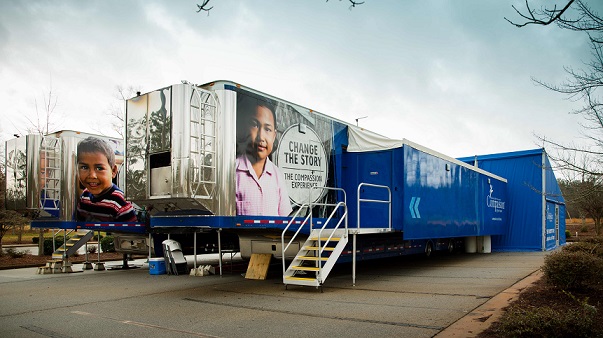
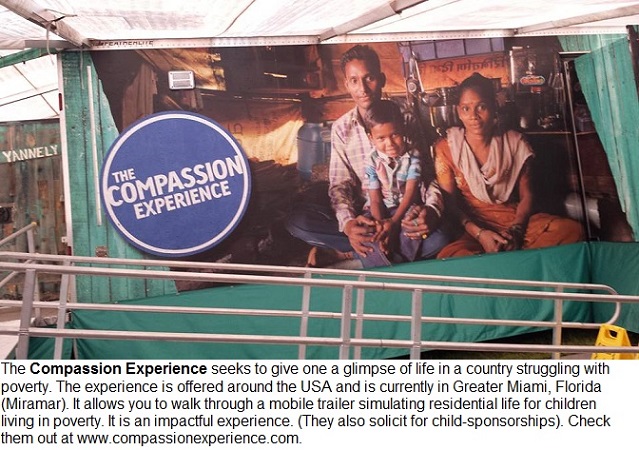
cu-blog-charity-management-grow-up-already-photo-6Brewco Marketing Group – see Appendix VIDEO below – is a leading experiential marketing company specializing in strategy, design, in-house fabrication, activation and program management. They provide these marketing services for other companies: for-profit corporations and not-for-profit charities. One such client is Compassion International, a Christian child sponsorship organization dedicated to the long-term development of children living in poverty around the world. They are headquartered in the US city of Colorado Springs, Colorado; but they function in 26 countries such as Bolivia, Colombia, Mexico, Haiti, Kenya, India and the Dominican Republic. According to the Wikipedia page on this charity, (retrieved September 12, 2016), this organization provides aid to more than 1,700,000 children.

Bravo Compassion International! See an example here of the type of faith-based advocacy Compassion International is conducting in our Caribbean region; in this case, the Dominican Republic: http://changetour.compassion.com/experience-dominican-republic/    

But, consider that Compassion International outsources to a for-profit marketing firm – Brewco – to solicit funding. What is Brewco’s motivation? Simple: Profit.

While not impugning any bad motives to Brewco or Compassion International, this commentary asserts for self-sufficiency, that “charity begins at home”. This is a basic prerequisite for a mature society.

This consideration aligns with the strategies, tactics, implementations and advocacies of the book Go Lean…Caribbean. The declaration is that the Caribbean must be front-and-center in providing for our own solutions. The alternative of someone else taking the lead for our solution, despite how altruistic the motives, seems to be lacking…every time! Consider this encyclopedia detail on criticism of “Child Sponsorship” charities:

Critics have argued that child sponsorship could alienate the relatively privileged sponsored children from their peers and may perpetuate harmful stereotypes about third-world citizens being helpless. They also claim that child sponsorship causes cultural confusion and unrealistic aspirations on the part of the recipient, and that child sponsorship is expensive to administer.[8][9] This latter problem has led some charities to offer information about a “typical” child to sponsors rather than one specifically supported by the sponsor. In some cases charities have been caught sending forged updates from deceased children.[10]

The Effective Altruism community – social movement that applies evidence and reason to determining the most effective ways to improve the world – generally opposes child sponsorship as a type of donor illusionGivewell – American non-profit charity evaluator – describes sponsorship thusly:[11]

  • Illusion: through an organization such as “Save the Children“, your money supports a specific child.
  • Reality: as “Save the Children” now discloses: “Your sponsorship contributions are not given directly to a child. Instead, your contributions are pooled with those of other sponsors to provide community-based programming for all eligible children in the area.”

Source: https://en.wikipedia.org/wiki/Child_sponsorship retrieved September 12, 2016

cu-blog-charity-management-grow-up-already-photo-5

This – reality of Big Charity – is just another example of Crony-Capitalism. See the running inventory list of all the Crony-Capitalism models that proliferate in the US, here at https://goleancaribbean.com/blog/?p=5529.

Considering this reality, we exclaim to the Caribbean: Grow up already!

The Go Lean book declares (Page 115) that:

“Haiti [in particular and the Caribbean in general] – should not be a perennial beggar; the Caribbean should not be perennial beggars, but we do need capital/money, especially to get started”.

The Go Lean movement (book and blogs) posits that the Caribbean must not be vulnerable to these American Crony-Capitalistic forces.

We do not need some external entity fleecing the public in our name – under the guise of charities but retain vast majorities of the funding as administrative costs – executive salary and bonuses – rather than the intended benefactors.

The Caribbean must do better!

The book Go Lean…Caribbean pursues the quest to elevate the Caribbean region through economic, security and governing empowerments. This includes oversight and guidance for Non-Governmental Organizations (NGO’s) in the region. The Go Lean/CU roadmap provides for better stewardship for the Caribbean homeland; and it describes NGO’s as additional Caribbean stakeholders. Governance to this vital area is part of the maturity our region must show; it is not about independence, but rather it conveys the community ethos of interdependence. This point was pronounced early in the Go Lean book, in the opening Declaration of Interdependence (Pages 11 & 14) with these acknowledgements and statements:

xi.   Whereas all men are entitled to the benefits of good governance in a free society, “new guards” must be enacted to dissuade the emergence of incompetence, corruption, nepotism and cronyism at the peril of the people’s best interest. The Federation must guarantee the executions of a social contract between government and the governed.

xii. Whereas the legacy in recent times in individual states may be that of ineffectual governance with no redress to higher authority, the accedence of this Federation will ensure accountability and escalation of the human and civil rights of the people for good governance, justice assurances, due process and the rule of law. As such, any threats of a “failed state” status for any member state must enact emergency measures on behalf of the Federation to protect the human, civil and property rights of the citizens, residents, allies, trading partners, and visitors of the affected member state and the Federation as a whole.

xxxiii. Whereas lessons can be learned and applied from the study of the recent history of other societies, the Federation must formalize statutes and organizational dimensions to avoid the pitfalls of [other] communities.

This is the quest of CU/Go Lean roadmap: to provide new guards for a more competent Caribbean administration … by governmental organizations and non-governmental organizations. Under this roadmap, NGO’s would be promoted, audited and overseen by CU administrators. The CU would be legally authorized as “deputies” of the member-state governments.

The Go Lean book stresses key community ethos, strategies, tactics, implementations and advocacies necessary to turn-around the eco-systems of Caribbean governance. These points are detailed in the book as follows:

Community Ethos – Deferred Gratification Page 21
Community Ethos – Economic Principles – Respond to Incentives in Predictable Ways Page 21
Community Ethos – Economic Principles – Economic Systems Influence Individual Choices Page 21
Community Ethos – Economic Principles – Consequences of Choices Lie in the Future Page 21
Community Ethos – Security Principles – Intelligence Gathering Page 23
Community Ethos – Security Principles – “Crap” Happens Page 23
Community Ethos – Governing Principles – Cooperatives Page 25
Community Ethos – Ways to Impact the Future Page 26
Community Ethos – Ways to Impact Turn-Arounds Page 33
Community Ethos – Ways to Improve Sharing – Emergency Response Page 35
Community Ethos – Ways to Impact the Greater Good Page 37
Strategy – Vision – Confederate all 30 member-states/ 4 languages into a Single Market Page 45
Strategy – Mission – Prepare for the eventuality of natural disasters Page 45
Strategy – Agents of Change – Climate Change Page 57
Tactical – Ways to Foster a Technocracy Page 64
Tactical – Growing the Economy – Post WW II European Marshall Plan/Recovery Model Page 68
Tactical – Separation-of-Powers – CU Federal Government versus Member-State Governance Page 71
Tactical – Separation-of-Powers – Treasury Department – Shared Property Recording Systems Page 74
Tactical – Separation-of-Powers – State Department – Liaison/Oversight for NGO’s Page 80
Tactical – Separation-of-Powers – Interior Department – Housing & Urban Authority Page 83
Implementation – Assemble All Regionally-focus Organizations of All Caribbean Communities Page 96
Implementation – Ways to Pay for Change Page 101
Implementation – Ways to Foster International Aid Page 115
Planning – 10 Big Ideas – Cuba & Haiti Marshall Plans Page 127
Planning – Ways to Make the Caribbean Better Page 131
Planning – Ways to Improve Failed-State Indices – Governance and the Social Contract Page 134
Advocacy – Ways to Grow the Economy Page 151
Advocacy – Ways to Create Jobs Page 152
Advocacy – Ways to Improve Housing – Optimizing Property Registration Process Page 152
Advocacy – Ways to Improve Governance Page 168
Advocacy – Ways to Better Manage the Social Contract Page 170
Advocacy – Ways to Improve Homeland Security Page 180
Advocacy – Ways to Improve for Natural Disasters – Enhanced local response and recovery Page 184
Advocacy – Ways to Develop a Pre-Fab Housing Industry – One solution ideal for Slums Page 207
Advocacy – Ways to Impact the Dominican Republic Page 237
Advocacy – Ways to Re-boot Haiti Page 238

These subjects – Charity Management, Philanthropy and International Aid – have been a source of consistent concern for the Go Lean movement. Consider the details from these previous blog-commentaries:

https://goleancaribbean.com/blog/?p=8243 Facebook Founder’s Philanthropy Project Makes First Major Investment
https://goleancaribbean.com/blog/?p=7989 ‘Getting over’ with ‘free money’ for societal transformations
https://goleancaribbean.com/blog/?p=7896 The Logistics of Disaster Relief
https://goleancaribbean.com/blog/?p=6129 Innovative Partnership Aids Farm Workers
https://goleancaribbean.com/blog/?p=3432 OECS diplomat has dire warning for Caribbean countries
https://goleancaribbean.com/blog/?p=1763 Bill & Melinda Gates Foundation Philanthropy Efforts

So the Caribbean experience with Charity Management in the past and at present is not ideal. How do we apply this insight to impact our future executions?

The primary strategy for improving Charity Management is to keep the administration local; this includes the fund development and the decision-making.

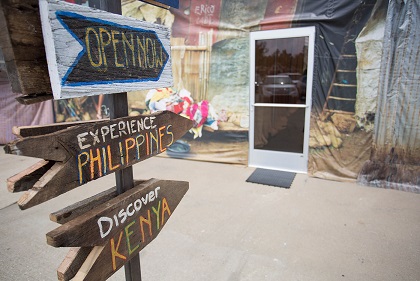
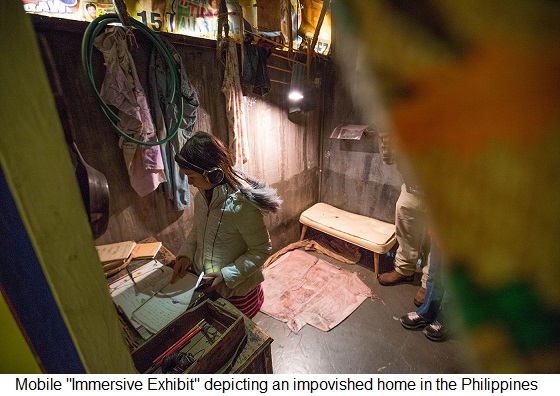
Looking at the great models and samples from Compassion International and Brewco Marketing, can we deploy mobile trailers and immersive exhibits? Can we deploy smart phone apps or tablets with walk-along narration to convey the desperate need for international aid in the Caribbean? Can we foster an eco-system with monthly billing, credit card transactions, or text-message billing?

Yes, we can …

… and this is the “grown up” thing to do, after being burned so often by outsiders.

When I was a child, I spoke and thought and reasoned as a child. But when I grew up, I put away childish things. – 1 Corinthians 13:11 – New Living Translation

The Go Lean roadmap seeks to empower and elevate Caribbean societal engines. We have a lot to do, the Go Lean book describes it as heavy-lifting. We see the American Crony-Capitalism in action. We do not want to follow their lead. We want to learn from their good and bad examples and models. (It is out-of-scope for the Go Lean movement to fix America). We simply want to fix our Caribbean society to be more self-reliant, both proactively and reactively.

Our quest is simple, a regional effort to make the Caribbean homeland a better place to live, work and play. 🙂

Download the free e-Book of Go Lean … Caribbean – now!

———–

Appendix VIDEO – Brewco Marketing Group – https://vimeo.com/101107626

The company’s offerings: from long-term experiential brand strategy to overall program execution and management. Engaging audiences where they work, live and play.

———–

Appendix VIDEO – Interactive Tour Immerses Visitors Into Daily Life in a Foreign Country – http://vimeo.com/73958461

Preview of The Compassion Experience from The Compassion Experience on Vimeo.

Retrieved September 12, 2016 – A self-guided tour will immerse visitors in the lives of the children. Through the use of an iPod, a headset and over 1,700 square feet of interactive space, visitors will see the children’s homes, walk through schools and markets, and hear life-changing stories of hope—all from the perspective of a child whose life began in poverty. This free event is appropriate for all ages and is an excellent opportunity for anyone who has never had the chance to travel outside the U.S. to get a small glimpse of what life can be like in developing countries. See more at http://changetour.compassion.com/


Share this post:
, , ,
[Top]

Lessons from China – South China Seas: Exclusive Economic Zones

Go Lean Commentary

There is a risk for war, right now, on the other side of the Earth. Have you been paying attention? Do you understand the issues?

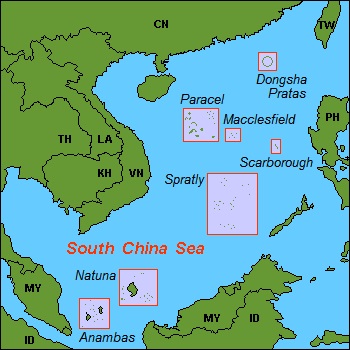
Understanding the geo-political issues affecting China means understanding the United Nations Convention on the Law of the Sea (UNCLOS).

CU Blog - Lessons from China - South China Seas - Exclusive Economic Zone - Photo 1This is an old international maritime law that dates from the days of piracy all the way down to today with modern updates and trends. This is the international convention that governs the 200-mile Exclusive Economic Zone along the coastline of a country. There is a hot issue in the South China Seas region right now involving China and its neighbors.

This issue is so urgent and emergent that many analysts believe dysfunctions in this regards can lead to war.

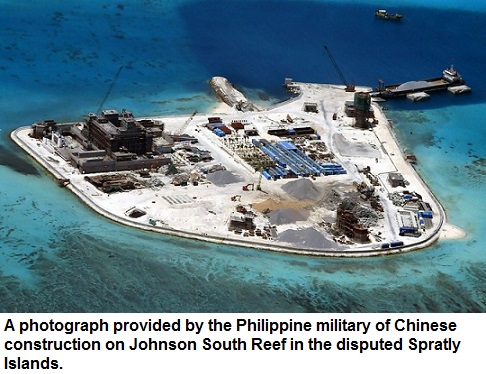
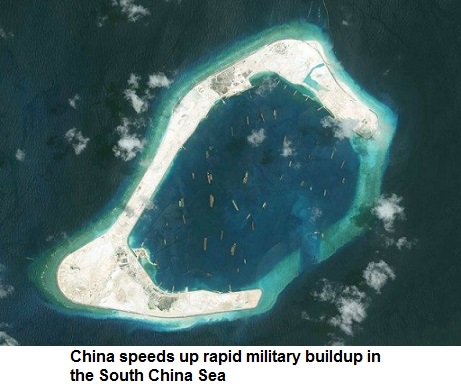
See photos in Appendix B below.

There has now been an update in this case. This update is furnished by the Hague Tribunal for the UNCLOS.

This news story here speaks of the ruling in the Hague about the disposition of China’s claims regarding their Exclusive Economic Zone in the South China Seas. See story here:

VIDEOSouth China Sea Ruling: 5 Things to Know https://youtu.be/qOeEMsdYzm4

Published on Jul 15, 2016 – China’s South China Sea ambitions have been denied! The ruling by a United Nations Convention on the Law of the Sea tribunal in the Hague said China’s claims to the South China Sea have “no legal basis.” Is this a victory for the Philippines? The United States? Or will this lead to war? Find out on this episode of China Uncensored!

MORE EPISODES:

Indonesia “Attacks” China in South China Sea
https://www.youtube.com/watch?v=WS5qi…

China Defends South China Sea from Japanese Aggression
https://www.youtube.com/watch?v=pg7BM…

US Sends Destroyers to South China Sea — Is War Next?
https://www.youtube.com/watch?v=nC8wR…

Will China Provoke War in South China Sea
https://www.youtube.com/watch?v=MxU6w…

Why is this discussion about conflicts in the South China Seas – see Appendix A – important to us in the Caribbean region?

The focus is on the concept of an Exclusive Economic Zone (EEZ); see Appendix C. This is an applicable reference for the Caribbean as we have a similar quest, to extend oversight for the Caribbean Sea. This point had been detailed in a previous blog-commentary regarding the Association of Caribbean States (ACS); an excerpt follows:

One agenda adopted by the ACS has been an attempt to secure the designation of the Caribbean Sea as a special zone in the context of sustainable development; it is pushing for the UN to consider the Caribbean Sea as an invaluable asset that is worth protecting and treasuring. The organization has sought to form a coalition among member states to devise a United Nations General Assembly resolution to ban the transshipment of nuclear materials through the Caribbean Sea and the Panama Canal. The Go Lean roadmap aligns with this agenda with the implementation plan of an Exclusive Economic Zone for these seas.

This commentary is part of a series on China. This is commentary 5 of 6 in consideration of the good and bad lessons from China. The other commentaries detailed in this series are as follows:

  1. History of China Trade: Too Big to Ignore
  2. Why China will soon be Hollywood’s largest market
  3. Organ Transplantation: Facts and Fiction
  4. Mobile Game Apps: The new Playground
  5. South China Seas: Exclusive Economic Zones
  6. WeChat: Model for Caribbean Social Media – www.MyCaribbean.gov

All of these commentaries relate to nation-building, stressing the community investments required to facilitate the short-term, mid-term and long-term needs of our communities. But this one commentary identifies China as a “bully” in the neighborhood of the South China Seas. So the lesson for the Caribbean is how to deal with a bully.

What empowers China as a bully in this conflict? Their size! China, with its 1.3 billion people, is the largest country bordering on the South China Seas. Truth be told, China is the largest country in the world. That 1.3 billion population is … 1.3 billion. It is hard for those observing-and-reporting from North America to comprehend the perspective. The US has 320 million people; the Caribbean, as a consolidated region is 42 million. Size does matter!

This is the guidance from the book Go Lean … Caribbean. It serves as a roadmap – turn by turn directions – for the introduction and implementation of the Caribbean Union Trade Federation (CU). This confederation treaty is designed to leverage the 30 member-states of the Caribbean so as to get some economy-of-scale. The book asserts that some problems in the region are too big for anyone member-state to contend with alone. An integrated Single Market of all 42 million people across the 30 member-states allows us to stand-up more forthrightly to bullies in our region. And we do have bullies.

This is the strategy for the Caribbean region to elevate its society. In fact, the roadmap has these 3 prime directives:

  • Optimization of the economic engines in order to grow the regional economy to $800 Billion & create 2.2 million new jobs.
  • Establishment of a security apparatus – with oversight of the EEZ – to provide public safety and protect the resultant economic engines of the Caribbean homeland.
  • Improvement of Caribbean governance – with oversight of the EEZ – to support these engines.

The implementation of the CU allows for the designation of more Exclusive Economic Zones, the consolidation existing EEZ’s and the deployment of a security apparatus to ensure protections in these zones.

Where does an 800 pound sleep? Anywhere he wants” – Old Wives Tale

Injustice anywhere is a threat to justice everywhere.” – Quotation from Martin Luther King, Jr.

“The only thing necessary for the triumph of evil is for good men to do nothing” – Edmund Burke; 1729 – 1797

It is important to remember from this commentary, the primary lesson from China is the undeniable size of their market, population and military. Without even trying, China can be a bully!

The Caribbean does not need to stand-up to China – but we stand up on the side of justice. We are not a world Super-Power, nor do we aspire to be. We leave that role to our allies in NATO (the North American Treaty Organization including the US and Western European states). Nonetheless, our region will be stronger with the 42 million; while no billions as in China, our consolidated size will allow us to stand-up to regional threats: border encroachments, narco-terrorism and piracy. This need for  security strength was pronounced in the opening of the Go Lean book, with these statements in the Declaration of Interdependence (Pages 11 – 13):

v.  Whereas the natural formation of our landmass and coastlines entail a large portion of waterscapes, the reality of management of our interior calls for extended oversight of the waterways between the islands. The internationally accepted 12-mile limits for national borders must be extended by International Tribunals to encompass the areas in between islands. The individual states must maintain their 12-mile borders while the sovereignty of this expanded  area, the Exclusive Economic Zone, must be vested in the accedence of this Federation.

x.   Whereas we are surrounded and allied to nations of larger proportions in land mass, populations, and treasuries, elements in their societies may have ill-intent in their pursuits, at the expense of the safety and security of our citizens. We must therefore appoint “new guards” to ensure our public safety and threats against our society, both domestic and foreign.

xi.  Whereas all men are entitled to the benefits of good governance in a free society, “new guards” must be enacted to dissuade the emergence of incompetence, corruption, nepotism and cronyism at the peril of the people’s best interest. The Federation must guarantee the executions of a social contract between government and the governed.

xii. Whereas the legacy in recent times in individual states may be that of ineffectual governance with no redress to higher authority, the accedence of this Federation will ensure accountability and escalation of the human and civil rights of the people for good governance, justice assurances, due process and the rule of law. As such, any threats of a “failed state” status for any member state must enact emergency measures on behalf of the Federation to protect the human, civil and property rights of the citizens, residents, allies, trading partners, and visitors of the affected member state and the Federation as a whole.

xvi. Whereas security of our homeland is inextricably linked to prosperity of the homeland, the economic and security interest of the region needs to be aligned under the same governance. Since economic crimes, including piracy and other forms of terrorism, can imperil the functioning of the wheels of commerce for all the citizenry, the accedence of this Federation must equip the security apparatus with the tools and techniques for predictive and proactive interdictions.

The Go Lean book, and previous blog/commentaries, stressed the key community ethos, strategies, tactics, implementations and advocacies necessary to provide better homeland security to the Caribbean region, and to foster development, administration and protections in the Caribbean EEZ. These points are detailed in the book as follows:

Community Ethos – Deferred Gratification Page 21
Community Ethos – Economic Principles – All Choices Involve Costs Page 21
Community Ethos – Economic Principles – Economic Systems Influence Individual Choices Page 21
Community Ethos – Economic Principles – Voluntary Trade Creates Wealth Page 21
Community Ethos – Economic Principles – Consequences of Choices Lie in the Future Page 21
Community Ethos – Security Principles – Anti-Bullying and Mitigations Page 22
Community Ethos – Security Principles – Intelligence Gathering Page 23
Community Ethos – Security Principles – “Crap” Happens Page 23
Community Ethos – Governing Principles – Lean Operations Page 24
Community Ethos – Governing Principles – Return on Investments Page 24
Community Ethos – Governing Principles – Cooperatives Page 25
Strategy – Agents of Change – Globalization Page 57
Tactical – Fostering a Technocracy Page 64
Tactical – Separation of Powers – Homeland Security Department Page 75
Tactical – Separation of Powers – Coast Guard and Naval Authority Page 75
Tactical – Separation of Powers – Militia Page 75
Implementation – Ways to Pay for Change – EEZ Exploration Rights Page 101
Implementation – Security Initiatives at Start-up Page 103
Implementation – Start-up Benefits from the EEZ Page 104
Advocacy – Ways to Grow the Economy – Enterprise Zones & Empowerment Zones Page 151
Advocacy – Ways to Improve Governance Page 168
Advocacy – Ways to Improve Homeland Security Page 180
Advocacy – Ways to Mitigate Terrorism – Piracy Page 181
Advocacy – Ways to Better Manage Natural Resources Page 183
Advocacy – Ways to Improve Emergency Management Page 196
Advocacy – Ways to Improve Fisheries – Model of Alaska EEZ Page 210
Appendix – Cape Cod Wind Farm – Model for Caribbean EEZ Page 335

Other subjects related to security, anti-bullying and justice empowerments for the region have been blogged in previous Go Lean…Caribbean commentaries, as sampled here:

https://goleancaribbean.com/blog/?p=7896 The Need for Local Administration: The Logistics of Disaster Relief
https://goleancaribbean.com/blog/?p=7449 ‘Crap Happens’ – Planning and Execution
https://goleancaribbean.com/blog/?p=7345 ISIS reaches the Caribbean Region
https://goleancaribbean.com/blog/?p=7119 Role Model for the Caribbean: African Standby Force
https://goleancaribbean.com/blog/?p=6247 Tragic images show Mediterranean Sea Refugee Crisis
https://goleancaribbean.com/blog/?p=6103 Sum of All Fears – ‘On Guard’ Against Deadly Threats
https://goleancaribbean.com/blog/?p=5462 Case of American NGO Bullying: Red Cross’ Missing $500 Million In Haiti Relief
https://goleancaribbean.com/blog/?p=5183 A Lesson in History – Cinco De Mayo and Mexico’s Security Lapses
https://goleancaribbean.com/blog/?p=5002 Managing a ‘Clear and Present Danger’
https://goleancaribbean.com/blog/?p=4360 Dreading the ‘CaribbeanBasin Security Initiative’
https://goleancaribbean.com/blog/?p=1965 America’s Navy – 100 Percent – Model for Caribbean
https://goleancaribbean.com/blog/?p=1554 Status of Forces Agreement = Security Pact
https://goleancaribbean.com/blog/?p=1076 Regional Threat: Trinidad Muslims travel for Jihadist training
https://goleancaribbean.com/blog/?p=809 Muslim officials condemn bullying and abductions of Nigerian girls
https://goleancaribbean.com/blog/?p=535 Remembering and learning from Boston’s Terror Attack
https://goleancaribbean.com/blog/?p=273 10 Things We Want from the US – #4: Pax Americana

The Caribbean sorely needs the empowerments in this roadmap to mitigate threats and ensure protections on our seaways and waterscapes. The key is the Exclusive Economic Zone designation.

This is an important lesson being learned from consideration of China. EEZ dimensions should not be left up to vague interpretations. There is need for surety! In fact, the Go Lean book (Page 101) asserts that this surety will subsequently have long-ranging economic implications:

EEZ Exploration Rights
Representing the member-states, the CU will petition the UN for an Exclusive Economic Zone (EEZ) for the areas between the islands. All economic activity in these non-state areas (underwater cables, oil/gas drilling, mines, etc.) will be awarded & regulated by the CU.
Exploratory rights are awarded for license fees upfront.

We have this and other important lessons from China. Their large population makes them a venerable threat to all their smaller neighboring countries. There is the need for security and justice mitigations in their region.

There is the need for security and justice mitigations in our region, too. Justice takes a constant effort – a sentinel. This is the role envisioned for the CU and its security apparatus.

“On guard” … for threats against justice.

Now is the time for all of the Caribbean – the people, institutions and governments – to lean-in for these justice assurances described in the book Go Lean … Caribbean. This effort will make the Caribbean homeland a better, safer, place to live, work and play. 🙂

Download the free e-Book of Go Lean … Caribbean – now!

————-

Appendix A – South China Sea

The South China Sea is a marginal sea that is part of the Pacific Ocean, encompassing an area from the Karimata and Malacca Straits to the Strait of Taiwan of around 3,500,000 square kilometres (1,400,000 sq mi). The area’s importance largely results from one-third of the world’s shipping sailing through its waters and that it is believed to hold huge oil and gas reserves beneath its seabed.[2]

It is located[3]:

The minute South China Sea Islands, collectively an archipelago, number in the hundreds. The sea and its mostly uninhabited islands are subject to competing claims of sovereignty by several countries. These claims are also reflected in the variety of names used for the islands and the sea.

Geography

States and territories with borders on the sea (clockwise from north) include: the People’s Republic of China (including Macau and Hong Kong), the Republic of China (Taiwan), the Philippines, Malaysia, Brunei, Indonesia, Singapore, and Vietnam.

Major rivers that flow into the South China Sea include the PearlMinJiulongRedMekongRajangPahangPampanga, and Pasig Rivers.
Source: Retrieved August 30 from: https://en.wikipedia.org/wiki/South_China_Sea

————-

Appendix B – Photos of Military Escalations

CU Blog - Lessons from China - South China Seas - Exclusive Economic Zone - Photo 2


CU Blog - Lessons from China - South China Seas - Exclusive Economic Zone - Photo 5


CU Blog - Lessons from China - South China Seas - Exclusive Economic Zone - Photo 4

CU Blog - Lessons from China - South China Seas - Exclusive Economic Zone - Photo 3

————-

Appendix C – Exclusive Economic Zone

An Exclusive Economic Zone (EEZ) is a sea zone prescribed by the United Nations Convention on the Law of the Sea over which a state has special rights regarding the exploration and use of marine resources, including energy production from water and wind.[1] It stretches from the baseline out to 200 nautical miles (nmi) from its coast. In colloquial usage, the term may include the continental shelf. The term does not include either the territorial sea or the continental shelf beyond the 200 nmi limit. The difference between the territorial sea and the exclusive economic zone is that the first confers full sovereignty over the waters, whereas the second is merely a “sovereign right” which refers to the coastal state’s rights below the surface of the sea. The surface waters, as can be seen in the map, are international waters.[2]

Generally, a state’s EEZ extends to a distance of 200 nautical miles (370 km) out from its coastal baseline. The exception to this rule occurs when EEZs would overlap; that is, state coastal baselines are less than 400 nautical miles (740 km) apart. When an overlap occurs, it is up to the states to delineate the actual maritime boundary.[3] Generally, any point within an overlapping area defaults to the nearest state.[4]

A state’s Exclusive Economic Zone starts at the landward edge of its territorial sea and extends outward to a distance of 200 nautical miles (370.4 km) from the baseline. The Exclusive Economic Zone stretches much further into sea than the territorial waters, which end at 12 nmi (22 km) from the coastal baseline (if following the rules set out in the UN Convention on the Law of the Sea).[5] Thus, the EEZ includes the contiguous zone. States also have rights to the seabed of what is called the continental shelf up to 350 nautical miles (648 km) from the coastal baseline, beyond the EEZ, but such areas are not part of their EEZ. The legal definition of the continental shelf does not directly correspond to the geological meaning of the term, as it also includes the continental rise and slope, and the entire seabed within the EEZ.

The following is a list of the largest Exclusive Economic Zones; by country with a few noticeable deviations:

Country EEZ Kilometers2 Additional Details
United States 11,351,000 The American EEZ – the world’s largest – includes the Caribbean overseas territories of Puerto Rico and the US Virgin Islands.
France 11,035,000 The French EEZ includes the Caribbean overseas territories of Guadeloupe, Martinique, Saint Martin, Saint Barthélemy and French Guiana.
Australia 8,505,348 Australia has the third largest exclusive economic zone, behind the United States and France, with the total area actually exceeding that of its land territory. Per the UN convention, Australia’s EEZ generally extends 200 nautical miles (370 km) from the coastline of Australia and its external territories, except where a maritime delimitation agreement exists with another state.[15]The United Nations Commission on the Limits of the Continental Shelf confirmed, in April 2008, Australia’s rights over an additional 2.5 million square kilometres of seabed beyond the limits of Australia’s EEZ.[16][17] Australia also claimed, in its submission to the UN Commission on the Limits of the Continental Shelf, additional Continental Shelf past its EEZ from the Australian Antarctic Territory,[18] but these claims were deferred on Australia’s request. However, Australia’s EEZ from its Antarctic Territory is approximately 2 million square kilometres.[17]
Russia 7,566,673
United Kingdom 6,805,586 The UK includes the Caribbean territories of Anguilla, Bermuda, Cayman Islands, Montserrat, Turks & Caicos and the British Virgin Islands.
Indonesia 6,159,032
Canada 5,599,077 Canada is unusual in that its EEZ, covering 2,755,564 km2, is slightly smaller than its territorial waters.[20] The latter generally extend only 12 nautical miles from the shore, but also include inland marine waters such as Hudson Bay (about 300 nautical miles (560 km; 350 mi) across), the Gulf of Saint Lawrence and the internal waters of the Arctic archipelago.
Japan 4,479,388 In addition to Japan’s recognized EEZ, it also has a joint regime with Republic of (South) Korea and has disputes over other territories it claims but are in dispute with all its Asian neighbors (Russia, Republic of Korea and China).
New Zealand 4,083,744
Chile 3,681,989
Brazil 3,660,955 In 2004, the country submitted its claims to the United Nations Commission on the Limits of the Continental Shelf (CLCS) to extend its maritime continental margin.[19]
Mexico 3,269,386 Mexico’s EEZ comprises half of the Gulf of Mexico, with the other half claimed by the US.[32]
Micronesia 2,996,419 The Federated States of Micronesia comprise around 607 islands (a combined land area of approximately 702 km2 or 271 sq mi) that cover a longitudinal distance of almost 2,700 km (1,678 mi) just north of the equator. They lie northeast of New Guinea, south of Guam and the Marianas, west of Nauru and the Marshall Islands, east of Palau and the Philippines, about 2,900 km (1,802 mi) north of eastern Australia and some 4,000 km (2,485 mi) southwest of the main islands of Hawaii. While the FSM’s total land area is quite small, its EEZ occupies more than 2,900,000 km2 (1,000,000 sq mi) of the Pacific Ocean.
Denmark 2,551,238 The Kingdom of Denmark includes the autonomous province of Greenland and the self-governing province of the Faroe Islands. The EEZs of the latter two do not form part of the EEZ of the European Union.
Papua New Guinea 2,402,288
China 2,287,969
Marshall Islands 1,990,530 The Republic of the Marshall Islands is an island country located near the equator in the Pacific Ocean, slightly west of the International Date Line. Geographically, the country is part of the larger island group of Micronesia. The country’s population of 68,480 people is spread out over 24 coral atolls, comprising 1,156 individual islands and islets. The land mass amounts to 181 km2 (70 sq mi) but the EEZ is 1,990,000 km2, one of the world’s largest.
Portugal 1,727,408 Portugal has the 10th largest EEZ in the world. Presently, it is divided in three non-contiguous sub-zones:

Portugal submitted a claim to extend its jurisdiction over additional 2.15 million square kilometers of the neighboring continental shelf in May 2009,[44] resulting in an area with a total of more than 3,877,408 km2. The submission, as well as a detailed map, can be found in the Task Group for the extension of the Continental Shelf website.

Spain disputes the EEZ’s southern border, maintaining that it should be drawn halfway between Madeira and the Canary Islands. But Portugal exercises sovereignty over the SavageIslands, a small archipelago north of the Canaries, claiming an EEZ border further south. Spain objects, arguing that the SavageIslands do not have a separate continental shelf,[45] citing article 121 of the United Nations Convention on the Law of the Sea.[46]

Philippines 1,590,780 The Philippines’ EEZ covers 2,265,684 (135,783) km2[41].
Solomon Islands 1,589,477
South Africa 1,535,538
Fiji 1,282,978 Fiji is an archipelago of more than 332 islands, of which 110 are permanently inhabited, and more than 500 islets, amounting to a total land area of about 18,300 square kilometres (7,100 sq mi).
Argentina 1,159,063
Spain 1,039,233
Bahamas 654,715
Cuba 350,751
Jamaica 258,137
Dominican Republic 255,898
Barbados 186,898
Netherlands 154,011 The Kingdom of the Netherlands include the Antilles islands of Aruba. Bonaire, Curacao, Saba, Sint Maarten and Sint Eustatius
Guyana 137,765
Suriname 127,772
Haiti 126,760
Antigua and Barbuda 110,089
Trinidad and Tobago 74,199
St Vincent and the Grenadines 36,302
Belize 35,351
Dominica 28,985
Grenada 27,426
Saint Lucia 15,617
Saint Kitts and Nevis 9,974

(Source: http://en.wikipedia.org/wiki/Exclusive_economic_zone)


Share this post:
, , ,
[Top]

Detroit makes Community College free

#GoLeanCommentary

Its back to school time again – college students in Detroit have to report to classes on August 22.

CU Blog - Detroit makes Community College free - Photo 2

And now, if they enroll in a Detroit area community college, the tuition could be free.

Now that’s what I’m talking about!

This too, is a lesson learned from Detroit. The publishers of the book Go Lean…Caribbean have been in Detroit to “observe and report” the turn-around and rebirth of the once-great-but-now-distressed City of Detroit and its metropolitan area. The following article relates a strategy that is apropos for remediating and mitigating a failing community – education:

Title: Detroit makes community college free
Sub-title: Detroit high schoolers just got a free ticket to community college.
By: Katie Lobosco

Starting this year, any graduating high school senior who is accepted to one of Detroit’s five community colleges won’t have to pay a dime for tuition.

CU Blog - Detroit makes Community College free - Photo 1The Detroit Promise Zone program, officially launched on Tuesday, will make it possible. At first the funds will come from a private scholarship foundation. But starting in 2018, some of the money will come from property taxes already earmarked for the program.

“It doesn’t matter whether you’re a high school senior preparing for college now or a second-grader whose college career is years away. The Detroit Promise will be there to help make a college education a reality,” said Mayor Mike Duggan.

He hopes that the program will eventually expand to cover the cost of four years of college tuition at a state school for each Detroit student.

To be eligible, a student must have completed their junior and senior years at a public, private or charter high school in Detroit. It doesn’t matter how much their family earns, but the student must fill out the federal financial aid form called the FAFSA. The Detroit program will pick up the difference after any other federal and state grants and scholarships have been used.

About 500 students are expected to take advantage of the program and enroll at a community college each fall, according to a spokesman for the Detroit Regional Chamber, which helps administer the scholarship.

It will cost an average of $680 per person, annually, though each scholarship amount will vary depending on how much in other awards the student received.

The privately funded Detroit Scholarship program is already in place and has granted 2,000 students free tuition over the past three years. The Michigan Education Excellence Foundation raised the funds from a mix of companies, charitable foundations, and individuals.

CU Blog - Detroit makes Community College free - Photo 3But now that the Detroit Promise Zone has officially launched, scholarship funding will eventually move away from private donations toward earmarked tax funds. There isn’t an exact timeline for that transition, a spokesman said.

Detroit is one of 10 “promise zones” the state created in 2009 as a way to send more Michigan residents to college. The programs designate a share of state property taxes within the zone to pay for the scholarships.

“We are confident that Detroit’s future will be even brighter now that our city’s future leaders will be able to go to college at no cost,” said Detroit Promise Zone Authority Board Chairwoman Penny Bailer.

Tuition-free college is an idea that’s gaining traction. While President Obama has pushed for it nationally, Tennessee made community college tuition-free for graduating seniors last fall, and Oregon is set to launch a similar program next year.

High school seniors must register for the Detroit Scholarship Fund online by June 30 to be eligible.
Source: CNN Money (Cable News Network) – Posted 03-22-2016; retrieved 08-14-2016 from: http://money.cnn.com/2016/03/22/pf/college/detroit-tuition-free-college/index.html

As related, other communities are launching similar endeavors to this Detroit initiative:

Tennessee is picking up the tab for community college students.

How New York City would make community college free.

Oregon is set to launch a similar program next year.

This Go Lean movement has always been a big proponent of college education for Caribbean citizens. Our one caveat is that the education takes place in the Caribbean.

So yes, this movement (book and blog-commentaries) is a big opponent of a college education for Caribbean citizens in foreign colleges and universities. The reason for this reticence, is the incontrovertible brain drain among the Caribbean college-educated population. Previous Go Lean commentaries related the proverb of “fattening frogs for snake” referring to the preponderance for Caribbean college educated citizens to abandon their tropical homes for foreign shores in the US, Canada and Europe, and take their Caribbean-funded education and skill-sets with them.

On the other hand, if the region is able to offer college education locally, then it is win-win for the Caribbean, as a college education brings social mobility, facilitating new economic opportunities. Yes, college education is great for the individual. The Go Lean book quotes proven economic studies showing the impact that every year of college education improves an individual’s earning power by 1 percent (Page 258). See related VIDEO here:

VIDEOUnderemployment rate for college grads dropshttp://money.cnn.com/video/news/economy/2015/12/01/romans-numeral-underemployment-college-graduates.cnnmoney/

We need this upward mobility for Caribbean citizens in the Caribbean.

Since the Great Recession of 2008, the world – including the Caribbean – has seen a preponderance for income inequality: the rich has gotten richer and the middle class has shrunk.

The book Go Lean…Caribbean posits, along with most economists, that education elevate individuals and entire communities. The book states the Caribbean experience has been sour only for the reasons that so many students do not return home after matriculation; or expatriate shortly after returning for a short period. This has been measured by the World Bank; they reported that the Caribbean has a 70% abandonment rate among their college graduates.

This Go Lean book serves as a roadmap for the introduction and implementation of the Caribbean Union Trade Federation (CU). This represents the change that the region badly needs. The CU/Go Lean roadmap has 3 prime directives:

  • Optimization of the economic engines in order to grow the regional economy and create 2.2 million new jobs.
  • Establishment of a security apparatus to protect the resultant economic engines.
  • Improve Caribbean governance to support these engines.

Indeed, change has now come to the Caribbean. The driver of this change is technology and globalization. Under these tenants, many college institutions can provide e-Learning and Distant Learning schemes through internet deliveries. If the Caribbean regional education administrations could invest in more technological deliveries, they may be able to offer free (or reduced) tertiary education to worthy students. As related in the foregoing article, once private, charitable and non-governmental organizations (NGOs) are factored in, more and more students would be able to enjoy the benefits of a college education.

As for governing administrations, the vision of the CU is a confederation of the 30 member-states of the Caribbean into a Single Market – a federal government – to do the heavy-lifting of championing better educational policies. Confederation would bring better leverage across the population of 42 million people, adopting more best-practices for education in all 4 regional languages (Dutch, English, French and Spanish). So we should cease-desist bad education policies, like government scholarships for foreign matriculation – as is the usual practice. The Go Lean/CU plan is for forgive-able loans only.

This would be a winning strategy for Caribbean communities; and appears to be the election for Detroit as well. This is a full reflection of the community ethos of the Greater Good.

The Go Lean roadmap provides turn-by-turn directions on how to reform the Caribbean tertiary education systems, economy, governance and Caribbean society as a whole. The roadmap opens with a Declaration of Interdependence, pronouncing the approach of regional integration (Page 12 & 14) as a viable solution to elevate the region’s educational opportunities:

xix.  Whereas our legacy in recent times is one of societal abandonment, it is imperative that incentives and encouragement be put in place to first dissuade the human flight, and then entice and welcome the return of our Diaspora back to our shores

xxi.  Whereas the preparation of our labor force can foster opportunities and dictate economic progress for current and future generations, the Federation must ensure that educational and job training opportunities are fully optimized for all residents of all member-states, with no partiality towards any gender or ethnic group. The Federation must recognize and facilitate excellence in many different fields of endeavor, including sciences, languages, arts, music and sports. This responsibility should be executed without incurring the risks of further human flight, as has been the past history.

xxvii. Whereas the region has endured a spectator status during the Industrial Revolution, we cannot stand on the sidelines of this new economy, the Information Revolution. Rather, the Federation must embrace all the tenets of Internet Communications Technology (ICT) to serve as an equalizing element in competition with the rest of the world. The Federation must bridge the digital divide and promote the community ethos that research/development is valuable and must be promoted and incentivized for adoption.

The Go Lean book details how education is a vital consideration for Caribbean economic empowerment, but with lessons-learned from all the flawed decision-making in the past, both individually and community-wise. The book details those policies; and other ethos to adopt, plus the executions of the following strategies, tactics, implementations and advocacies to deploy better education options in the region:

Community Ethos – Deferred Gratification Page 21
Community Ethos – People Respond to Incentives Page 21
Community Ethos – Job Multiplier Page 22
Community Ethos – Lean Operations Page 24
Community Ethos – Return on Investments (ROI) Page 24
Community Ethos – Ways to Impact the Future Page 26
Community Ethos – Ways to Foster Genius Page 27
Community Ethos – Ways to Help Entrepreneurship Page 28
Community Ethos – Ways to Impact the Greater Good Page 28
Strategy – Mission – Facilitate Education without Risk of Abandonment Page 45
Tactical – Separation of Powers – Education Department Page 85
Tactical – Separation of Powers – Labor Department – Job Training Page 89
Implementation – Ways to Pay for Change Page 101
Planning – Lessons Learned from 2008 Page 136
Planning – Lessons Learned from Detroit Page 140
Advocacy – Ways to Grow the Economy Page 151
Advocacy – Ways to Create Jobs Page 152
Advocacy – Ways to Improve Education Page 159
Advocacy – Ways to Impact Student Loans Page 160
Advocacy – Ways to Improve Governance Page 169
Advocacy – Ways to Better Managed the Social Contract – Education Optimizations Page 169
Advocacy – Ways to Improve Libraries – Anchors for e-Learning Page 187
Appendix – Education and Economic Growth Page 258
Appendix – Measuring Education Page 266

Detroit is presented in the Go Lean book as a cautionary tale for the Caribbean.. Previous blogs had detailed so many lessons from the City of Detroit, and other metropolitan Michigan communities. Consider this sample:

https://goleancaribbean.com/blog/?p=7789 An Ode to Detroit – Good Luck on Trade!
https://goleancaribbean.com/blog/?p=7601 Beware of Vulture Capitalists
https://goleancaribbean.com/blog/?p=7268 Detroit giving schools their ‘Worst Shot’
https://goleancaribbean.com/blog/?p=7235 Flint, Michigan – A Cautionary Tale
https://goleancaribbean.com/blog/?p=6609 Before and After Photos Showing Detroit’s Riverfront Transformation
https://goleancaribbean.com/blog/?p=6269 Education & Economics: Welcome to Detroit, Mr. President
https://goleancaribbean.com/blog/?p=6022 Caribbean Diaspora in Detroit … Celebrating Heritage
https://goleancaribbean.com/blog/?p=5597 The Dire Strait of Unions and Collective Bargaining
https://goleancaribbean.com/blog/?p=5055 A Lesson from an Empowering Family in Detroit
https://goleancaribbean.com/blog/?p=4913 Ann Arbor: Model for ‘Start-up’ Cities
https://goleancaribbean.com/blog/?p=4476 De-icing Detroit’s Winter Roads: Impetuous & Short Term
https://goleancaribbean.com/blog/?p=3713 NEXUS: Facilitating Detroit-Windsor Cross-Border Commerce
https://goleancaribbean.com/blog/?p=3326 M-1 Rail: Alternative Motion in the MotorCity
https://goleancaribbean.com/blog/?p=3311 Detroit to exit historic bankruptcy
https://goleancaribbean.com/blog/?p=3164 Michigan Unemployment – Then and Now
https://goleancaribbean.com/blog/?p=2480 A Lesson in History: Community Ethos of WW II
https://goleancaribbean.com/blog/?p=1656 Blue is the New Green – Managing Michigan’s Water Resources
https://goleancaribbean.com/blog/?p=970 JP Morgan Chase’s $100 million Detroit investment

The above list features a lot of examples of Detroit’s bad behavior, but this commentary here is highlighting something positive, investing in community college education for young people. This is good, and for the Greater Good.

Now is the time for all of the Caribbean, the people and governing institutions, to lean-in for the changes described in the book Go Lean … Caribbean. This presents a win-win for the Caribbean. This is conceivable, believable and achievable. Educational options can help to make our homeland a place to live, work, learn and play. 🙂

Download the book Go Lean … Caribbean – now!

Share this post:
, , ,
[Top]

Now it’s Detroit’s turn to rescue Silicon Valley

Go Lean Commentary

“I see dead people.” – Movie quote from The Sixth Sense (1999); see Appendix VIDEO below.

This is what Detroit is saying to Silicon Valley: “they see dead people” along the road of development for the autonomous vehicle (AV). Automobile accidents are one of the leading causes of death in most countries, therefore developing cars that drive themselves and interact with real world conditions on real streets is bound to have some mishaps/fatalities along the way.

CU Blog - Now it's Detroit's turn to rescue Silicon Valley - Photo 2

CU Blog - Now it's Detroit's turn to rescue Silicon Valley - Photo 4

Detroit: “Been there, done that!”

This consideration is in line with the book Go Lean… Caribbean; it serves as a roadmap for the introduction and implementation of the Caribbean Union Trade Federation (CU). One of the features of the Go Lean/CU roadmap is the development of an automotive industry for the Caribbean region. Of course the reference here to Detroit is a metonym; so too the reference to Silicon Valley. Other metonym references were defined in a previous Go Lean blog-commentary, which detailed these ones in the book:

  • Detroit – Page 206 – American Automakers Planning/Design
  • Silicon Valley – Page 30 – AmericanHighTechCenter
  • Wall Street – Page 155 – Big Banks/Financial Center
  • Hollywood – Page 203 – US Movie/TV/Media Producers

The issue now is the risk associated with road traffic. Detroit has been there before. They were the Silicon Valley of the early 20th Century, as regards innovation for the automotive industry. Detroit has competence for this industry. Today, Silicon Valley wants inroads in the automotive industry. They need to tap Detroit’s legacy and insights. See the related article here:

Title: Now it’s Detroit’s turn to rescue Silicon Valley

CU Blog - Now it's Detroit's turn to rescue Silicon Valley - Photo 1
Five years ago, when the U.S. auto industry was just beginning to recover from the Great Recession, there was widespread speculation that the old model of the car business was broken, and that only the new economy could come to the rescue.

And with good reason. The U.S. auto market had cratered, plunging from a peak of over 17 million to a devastated 10 million in yearly sales.

Both General Motors and Chrysler had been bailed out by the federal government and gone bankrupt. Ford saw its stock price fall to less than $2 a share. Gas had spiked to over $4 a gallon in some parts of country. Credit, the lifeblood of the car business, had been wiped out.

Meanwhile, Apple was on a path to become the world’s most valuable company. Facebook was tasking over the media landscape. And Tesla, after suffering a brush with financial death in 2009, looked like the most innovative company of four wheels.

Silicon Valley and California in general was suddenly filled with new and futuristic ideas about transportation, from Google driverless cars to numerous electric-car startups. Detroit, by contrast, was lurching toward the largest municipal bankruptcy in U.S. history (it would come in 2013), and its great automakers looked to be crippled dinosaurs, completely out of step with the times.

The U.S. auto industry was a problem to be solved, and Silicon Valley specialized in solutions.

A doomed industry?
“The automobile industry is in the middle of a fundamental transformation,” wrote in 2009. “There is a lot of information available on how companies have dealt with major changes in their business environments, but little is known about the transformation of entire industries.”

“History shows that most companies do not deal well with transformation.” he continued. “One reason has to do with senior managers. They usually ‘don’t get it.’ They have a difficult time accepting that the future will be vastly different from the present because they rose to power in the old business environment. They excelled in the old environment and didn’t acquire skills necessary to operate in the new.”

Fast forward to 2016 and the senior mangers in Detroit that Grove worried about have deepened their engagement with Silicon Valley and the technology industry to an unprecedented degree. General Motors already had a venture-capital arm before it invested $500 million in Lyft and bought Cruise Automation for its innovative self-driving tech.

Ford had such a solid connection with Microsoft that outgoing CEO Alan Mulally was discussed as a successor to Steve Ballmer, earlier this year. Fiat Chrysler Automobiles has teamed up with Google to create driverless minivans. And all the automakers have a Silicon Valley presence, which enables them to scout emerging technologies and act on them quickly.

An auto sales boom in the U.S. that started in 2013 and set a record in 2016 with 17.5 million new cars and trucks delivered has fueled Detroit’s engagement, as has the broad realization among the car maker’s executive teams that this is their opportunity to disrupt themselves and profit from the experience. Cheap gas, an improving employment picture, and ample credit means that Detroit is selling pickups and SUVs and raking in cash. The game plan is to take some of those winnings and send them in search of rapid innovations that Motown can’t create on its own.

Not-so-smooth sailing
At the same time, Silicon Valley has started to encounter some investor turbulence. Startups with hefty valuations don’t see IPOs as a way to pay back their investors. That leaves getting acquired as an option, but a level of saturation with social networking and apps might have set in.

The Detroit automakers aren’t in the market for messaging apps, but they are looking for technologies that can future-proof them, or advance the process of making cars smarter. In conversations with people in the auto industry, there’s a sense that the tech sector has begun to figure out that Motown has money and wants to spend it.

The signals from the top are also strong. “We’re going to disrupt ourselves, and we are disrupting ourselves, so we’re not trying to preserve a model of yesterday,” . “And when you think of the assets the company has — the scale, the control of the vehicle platform, the ability with embedded connectivity, the knowledge we have of just every aspect of the vehicle and how we’re putting it together now — I think there’s a lot of plus signs, and we can lead.”

That attitude was echoed by Ford CEO Mark Fields, who BI also interviewed. “It’s a very exciting time at Ford, because we are transitioning from an auto company to an auto and a mobility company,” he said. “Mobility for us, at the very simplest level, is to allow people to live, play, and work where they want. How do we help enable them to get around to do that? And there’s a lot of talk around technology companies disrupting the auto industry. Our approach is very simple: We’re disrupting ourselves.”

Birds of a feather
So how did this reversal come about? Even if Detroit isn’t really in a position to rescue Silicon Valley — Silicon valley doesn’t really need to be rescued — then why is the dinosaur now so enthusiastic about participating in its own disruption?

Simple: Detroit was the Silicon Valley of the early 20th century, a hotbed of entrepreneurship, fascinated with the most high-tech contraption of the time — the automobile. True, over the decades the culture of the auto industry has become stratified and bureaucratic, but despite that, the car itself has been steadily improved. Detroit has never backed off from technology, and the engineers and executives who have chosen to work for Ford or GM are still excited about new stuff.

When they look at Silicon Valley, they see a place ruled by engineers, a contemporary version of Detroit’s own origin story.  And that’s why Silicon Valley and Detroit’s newfound mutual admiration could be the beginning of a long and beautiful friendship that stretches from the Bay Area to the banks of the Detroit River.
Source: Microsoft Network (MSN) Technology Column – Retrieved 08-14-2016 from: http://www.msn.com/en-us/money/companies/now-its-detroits-turn-to-rescue-silicon-valley/ar-BBvrK0K?li=BBnbfcN&ocid=1PRCMSE

VIDEO – Inside Silicon Valley’s secretive test track for self-driving cars – https://youtu.be/xILioJ7ZfQU

Published on Jun 2, 2016 – A former military weapons depot is now a track where companies can test their autonomous cars in private​. The media has never set foot in the guarded GoMentum Station, until now. The track is not only attracting the attention of automakers like Mercedes and Honda, but also tech companies like Google and Apple. CNET’s Brian Cooley shows us how Honda is testing its latest self-driving car there.

See a more detailed VIDEO on GoMentum Station and a competing Michigan site in this VIDEO here:
“Inside the self-driving car facilities of Silicon Valley and Detroit” – http://a.msn.com/00/en-us/BBvrK0K?ocid=se

For the Caribbean effort, it will be important to observe-and-report on the developments of the Detroit-SiliconValley synergy. Both industries are being transformed. What can we learn about cooperation, collaboration and coordination among aligning stakeholders? There are jobs, public safety and public administration at stake. This relates to the CU/Go Lean roadmap, which also has a focus on the same 3 areas. This is communicated as the prime directive of the roadmap, pronounced as follows:

  • Optimization of the economic engines in order to grow the regional economy, and create jobs (2.2 million new ones).
  • Establishment of a security apparatus to ensure public safety and protect the resultant economic engines.
  • Improve Caribbean governance to support these above engines, considering the separation-of-powers between Caribbean member states and the CU federal government.

The Go Lean roadmap recognizes the benefits of Research & Development (R&D). The book presents R&D as a community ethos, the fundamental spirit of a culture that drives the beliefs, customs and practices of a society.

Caribbean society must embrace the R&D of autonomous vehicles, automobile advances, safety innovation, and transformative technologies. We cannot ignore the formations of industrial advances. We must not just consume; we must produce as well. This is where the next generation of jobs are to be found.

The automotive industry have always been a source of high-paying jobs, that in previous generations, have transformed society. Today, Silicon Valley is a source of high-paying jobs. The transformations are continuing.

This aligns with the opening Declaration of Interdependence (Page 14) in the Go Lean book, as conveyed by these statements:

xxvii. Whereas the Caribbean region must have new jobs to empower the engines of the economy and create the income sources for prosperity, and encourage the next generation to forge their dreams right at home, the Federation must therefore foster the development of new industries, like … automobile manufacturing. In addition, the Federation must invigorate the enterprises related to existing industries … impacting the region with more jobs.

xxviii. Whereas the region has endured a spectator status during the Industrial Revolution, we cannot stand on the sidelines of this new economy, the Information Revolution. Rather, the Federation must embrace all the tenets of Internet Communications Technology (ICT) to serve as an equalizing element in competition with the rest of the world. The Federation must bridge the digital divide and promote the community ethos that research/development is valuable and must be promoted and incentivized for adoption.

Producing and not only consuming – especially related to autonomous vehicles and robotic technologies – has been a consistent theme in prior Go Lean blog/commentaries; see this sample here:

Building the Infrastructure for Streetcars
‘Olli’ – The Self-Driving Public Transit Vehicle
3D Printing: Here Comes Change
Drones to be used for Insurance Damage Claims
Robots help Amazon tackle Cyber Monday
Here come the Drones … and the Concerns
Where the Jobs Are – Computers Reshaping Global Job Market
Google conducting research for highway safety innovations
Ghost ships – Autonomous cargo vessels without a crew

The Go Lean book provides a roadmap for developing and fostering a domestic automotive industry, and for fostering R&D. The process starts with the spirit to want to improve the status quo, to innovate and make things better and safer. This spirit is described in the book as a community ethos for Research-and-Development. The book details other ethos to adopt, plus the executions of the following strategies, tactics, implementations and advocacies to forge innovation in Caribbean communities:

Community Ethos – Deferred Gratification Page 21
Community Ethos – Job Multiplier Page 22
Community Ethos – “Crap” Happens – Like Car Accidents Page 23
Community Ethos – Lean Operations Page 24
Community Ethos – Return on Investments (ROI) Page 24
Community Ethos – Ways to Impact the Future Page 26
Community Ethos – Ways to Help Entrepreneurship Page 28
Community Ethos – Ways to Impact Research & Development Page 30
Community Ethos – Impact the Greater Good Page 37
Strategy – Vision – Caribbean Integrated Single Market Page 45
Strategy – Agents of Change – Technology Page 48
Tactical – Fostering a Technocracy Page 64
Tactical – Growing Economy – New High Multiplier Industries Page 68
Separation of Powers – Public Works & Infrastructure Page 82
Separation of Powers – Department of Transportation Page 84
Implementation – Ways to Pay for Change Page 101
Implementation – Ways to Implement Self-Governing Entities Page 105
Planning – 10 Big Ideas – Cyber Caribbean Page 127
Planning – Lessons from Detroit Page 140
Advocacy – Ways to Create Jobs Page 152
Advocacy – Ways to Foster Technology Page 197
Advocacy – Ways to Improve Transportation Page 205
Advocacy – Ways to Develop the Auto Industry Page 206
Appendix – Job Multipliers – Detroit’s 11.0 Rate #1 of all industries Page 260

There is a business axiom:

Build a better mousetrap and the world will beat a path to your door.

This is the goal – autonomous vehicles not mousetraps – of so many stakeholders in the technology and automotive industry space, in Silicon Valley and in Detroit; see Appendix VIDEO 2. A self-driving car is not the future, it is now; well soon. (According to the foregoing VIDEO, one automaker projects an AV for the 2020 Model Year).

Mideast Dubai Driverless CarsThis is the type of innovation now being urged for the Caribbean. Yes, we can … make an impact in this industry. We do not have to be the inventor, but at least an “early adopter”. The controlled environment of a Self-Government Entity – campus or corridor – is ideal for AVs. Imagine a toll-road across a Caribbean member-state (island or mainland) that traverses 70 miles that encourages self-driving cars, buses and trucks.

This vision is being fostered … elsewhere. Why not here?

The Caribbean region has historically been slow at adopting technological innovation. This roadmap presents a change to the Caribbean status quo. We urge all stakeholders – governments, businesses, and drivers – to lean-in to the innovations detailed in the Go Lean book. With the proper planning, preparation and participation, yes we can, we make our homeland a better place to live, work and play.:-)

Download the book Go Lean … Caribbean – now!

————–

Appendix VIDEO 1: Next Big Thing – Self-driving cars: Why? – https://youtu.be/QUYKSWQmkrg

Published on Oct 9, 2013 – http://cnet.co/1bfQkWn – Why self-driving cars make a whole lot of sense, how gesture control will augment — but probably not replace — a lot of technology, and is there even a third seat left at the mobile platform table?

————–

Appendix VIDEO 2: The Sixth Sense ….. I See Dead People …scene – https://youtu.be/QUYKSWQmkrg

Published on Sep 9, 2012 – In Your Dreams ? ….No. While You’re Awake? …Yes. All The Time, They’re Everywhere.


Share this post:
, , , ,
[Top]

Build It and They Will Come – India’s $90 Billion Investment

Go Lean Commentary

Here are some interesting rankings about India:

World largest population: # 2 – 1.2 Billion people (Only behind China)

Ease of doing business? # 132 (2015; 130 for 2016; see Appendix B)

That gap, between 2 and 132, is a wide chasm for India to bridge.

What is this country to do? And what lessons can we learn from them, here in the Caribbean?

(Though our population is so small, our Ease of Doing Business rating is equally depressing; the best Caribbean option is Jamaica at 64).

The answer is investment!

Working for a Return on Investments is one of the driving forces of the book (and movement) Go Lean … Caribbean. The book asserts that in order to get the optimal return on any investment a community must adopt the appropriate “community ethos”, the fundamental spirit of a culture that drives the beliefs, customs and practices of its society. In this case, the identifying ethos is: Deferred Gratification.

CU Blog - Build It and They Will Come - India's $90 Billion Investment - Photo 1India is embarking on the Delhi-Mumbai Industrial Corridor. This is a ribbon of development along a route from Delhi to Mumbai, that traverses 6 (internal) states in India; see Appendix A. (India is a Federal Republic, with a President over the federal government, while states are led by governors). This plan so resembles the roadmap for the Caribbean Union Trade Federation (CU). The Go Lean book serves as a roadmap for the introduction and implementation of the CU.

This commentary is the 3 of 3 from the Go Lean movement on the subject of Infrastructure Policy. As related in previous submissions in this series, the assertion is that “if we build it, they will come”. This is a movie metaphor, yes, but it accurately depicts the surety of investing in capital infrastructure projects; or perhaps even more poignant, it conveys the surety of failure of not investing. The other commentaries detailed in this series are as follows:

  1. Before & After – Washington DC’s Streetcars Model
  2. Clinton vs Trump Campaigns – Politics of Infrastructure
  3. India’s Model – $90 billion infrastructure projects.

All of these commentaries are economic in nature, stressing the community investments required for nation-building. As depicted in this VIDEO here, India is playing catch-up in this regards with an aggressive plan – a “quantum leap”:

VIDEO – Amitabh Kant at TEDxDelhi on India’s Infrastructure Development – https://youtu.be/8BvMybtJ1-E

TEDx Talks
Published on Dec 17, 2012 –
 
Presently posted as CEO & MD of the Delhi Mumbai Industrial Corridor Development Corporation.Delhi-Mumbai Industrial Corridor is a mega infra-structure project of $90 billion covering an overall length of 1483 KMs between the political capital and the business capital of India.

A dynamic personality, Amitabh Kant has conceptualized and executed the positioning and branding of Kerala as “God’s Own Country” and later the “Incredible !ndia” campaign. Both these campaigns have won several International awards and embraced a host of activities — Infrastructure development, product enhancement, changes in organizational culture and promotional partnerships based on intensive market research. He has structured large infrastructure projects for diversification of India’s tourism product and sourced international funding through the Asian Development Bank (ADB), Japanese Bank for International Cooperation (JBIC) and UNDP.
During his tenure as Chairman and Managing Director, India Tourism Development Corporation (ITDC) he radically restructured the organization and turned it around into a highly profitable commercial enterprise. He also has wide ranging experience in innovative technical and financial structuring of Private — Public — Partnership in infrastructure projects and implemented the Calicut Airport project based on User’s fee, the BSES Kerala Power project and the Mattanchary Bridge project.

As demonstrated here in India, big infrastructure projects are necessary community investments – a “quantum leap” with a $90 Billion industrial corridor along 1500 kilometers. Is it possible for the Caribbean to consider such deployments?

Yes! The book Go Lean … Caribbean details exactly how the Big Infrastructure Projects for our region are to be conceived and achieved, (Page 127), with Self-Governing Entities and Exclusive Economic Zones. Most importantly, the roadmap details a plan to fund the projects.

The Go Lean/CU movement champions the cause of building and optimizing the overall Caribbean infrastructure. According to the foregoing VIDEO, it is important to identify and qualify funding sources for such ventures. There is the need for “new guards” for the Caribbean in this perspective. So there is the expectation that integrating and consolidating to a Single Market will contribute to the fulfillment of the Go Lean prime directives, defined here as follows:

  • Optimization of the economic engines in order to grow the regional economy to $800 Billion & create 2.2 million new jobs.
  • Establishment of a security apparatus to protect the resultant economic engines.
  • Improve Caribbean governance – including the funding of capital projects – to support these engines.

The Go Lean roadmap anticipates the opportunities of major infrastructure investments. However, the roadmap recognizes that many of the projects envisioned for the region may be too big for just one member-state alone; that it will take regional – super-national coordination. This point is highlighted in the opening Declaration of Interdependence, (Pages 12 & 14):

xiv.    Whereas government services cannot be delivered without the appropriate funding mechanisms, “new guards” must be incorporated to assess, accrue, calculate and collect revenues, fees and other income sources for the Federation and member-states. The Federation can spur government revenues directly through cross-border services and indirectly by fostering industries and economic activities not possible without this Union.

xxvi.  Whereas the Caribbean region must have new jobs to empower the engines of the economy and create the income sources for prosperity, and encourage the next generation to forge their dreams right at home, the Federation must therefore foster the development of new industries … impacting the region with more jobs.

xxix.  Whereas all Caribbean democracies depend of the free flow of capital for municipal, public and private financing, the institutions of capital markets can be better organized around a regional monetary union. The Federation must institute the controls to insure transparency, accounting integrity and analysis independence of the securities markets, thereby shifting the primary source of capital away from foreign lenders to domestic investors, comprising institutions and individuals.

The CU mission is to plan, fund, deploy and maintain infrastructure projects that are too big for any one member-state alone. Crossing borders will mean including member-states of various legalities: some independent member-states and some dependent overseas territories. This brings to the fore an array of issues, like legislative authority and currency. The Go Lean/CU regional roadmap undoubtedly calls for a common currency strategy; thusly, it calls for the establishment of the allied Caribbean Central Bank (CCB) to manage the monetary and currency affairs of each member-state in the region, independent or dependent territory. The Go Lean book describes the breath-and-width of the CCB as a technocratic institution with better stewardship, than in the recent past. From the outset, this stewardship was envisioned and pronounced in the same Declaration of Interdependence (Page 13):

xxiii. Whereas many countries in our region are dependent OverseasTerritory of imperial powers, the systems of governance can be instituted on a regional and local basis, rather than requiring oversight or accountability from distant masters far removed from their subjects of administration. The Federation must facilitate success in autonomous rule by sharing tools, systems and teamwork within the geographical region.

xxiv.  Whereas a free market economy can be induced and spurred for continuous progress, the Federation must install the controls to better manage aspects of the economy: jobs, inflation, savings rate, investments and other economic principles. Thereby attracting direct foreign investment because of the stability and vibrancy of our economy.

xxv.   Whereas the legacy of international democracies had been imperiled due to a global financial crisis, the structure of the Federation must allow for financial stability and assurance of the Federation’s institutions. To mandate the economic vibrancy of the region, monetary and fiscal controls and policies must be incorporated as proactive and reactive measures. These measures must address threats against the financial integrity of the Federation and of the member-states.

The CU roadmap drives change among the economic, security and governing engines. These solutions are as new community ethos, strategies, tactics, implementations and advocates; sampled as follows:

Community Ethos – Deferred Gratification Page 21
Community Ethos – Economic Principles: People Choose because Resources are Limited Page 21
Community Ethos – Economic Principles: All Choices Involve Costs Page 21
Community Ethos – Economic Principles: Voluntary Trade Creates Wealth Page 21
Community Ethos – Economic Principles: Consequences of Choices Lie in the Future Page 21
Community Ethos – Money Multiplier Page 22
Community Ethos – Job Multiplier Page 22
Community Ethos – Lean Operations Page 24
Community Ethos – Return on Investments Page 24
Community Ethos – Cooperatives Page 25
Community Ethos – Ways to Impact the Future Page 26
Community Ethos – Impact the Greater Good Page 37
Strategy – Vision – Integrate and Consolidate into a Single Market Page 45
Strategy – Mission – Facilitating Currency Union, Caribbean Dollar Page 45
Strategy – Mission – Collaborate for the Caribbean Central Bank Page 45
Anecdote – Caribbean Currencies Page 64
Tactical – Fostering a Technocracy Page 64
Tactical – $800 Billion Economy – How and When – Trade Page 67
Tactical – Recovering from Economic Bubbles Page 69
Tactical – Separation-of-Powers – Caribbean Central Bank Page 73
Implementation – Assemble Caribbean Central Bank Page 96
Implementation – Ways to Pay for Change Page 101
Implementation – Start-up Benefits from the EEZ Page 104
Implementation – Steps to Implement Self-Governing Entities Page 105
Implementation – Trade Mission Objectives Page 117
Implementation – Ways to Benefit Globalization Page 119
Planning – Ways to Improve Trade Page 128
Advocacy – Ways to Grow the Economy Page 151
Advocacy – Ways to Create Jobs Page 152
Advocacy – Ways to Improve Governance Page 168
Advocacy – Ways to Foster Cooperatives Page 176
Advocacy – Reforms for Banking Regulations Page 199
Advocacy – Ways to Impact Wall Street – Better Liquidity from Regional Capital Markets Page 200
Advocacy – Ways to Improve Transportation Page 205
Advocacy – Ways to Impact Urban Living – Optimize Transportation Options Page 234
Advocacy – Ways to Impact Rural Living – Optimize Transportation Options Page 235

The Caribbean region must learn this important lesson from the country of India: infrastructure is not optional. Put in the infrastructure in advance and it brings growth; it becomes an investment. But play catch-up afterwards and it bears a heavy cost burden.

Previous Go Lean commentaries highlighted other countries and communities that did the hard-work, the heavy-lifting, to facilitate their infrastructural needs so as to better compete in the world’s markets. This is the world that we in the Caribbean competes in – with trade and culture – so it is important to consider all lessons learned. Here is a sample of issues addressed and elaborated upon in previous blog/commentaries:

https://goleancaribbean.com/blog/?p=8549 Enhancing Sports Infrastructure for an Olympic dream – Some Day Maybe
https://goleancaribbean.com/blog/?p=7989 Transforming Infrastructure with ‘Free Money’
https://goleancaribbean.com/blog/?p=7384 Infrastructure for Oil Refineries – Strategy for Advanced Economics
https://goleancaribbean.com/blog/?p=6231 China’s Caribbean Playbook: Helping Transform the region
https://goleancaribbean.com/blog/?p=6016 The Need for Infrastructure to abate Climate Change’s excessive heat
https://goleancaribbean.com/blog/?p=5921 The Art & Science of Impact Analyses for Big infrastructure projects
https://goleancaribbean.com/blog/?p=3028 India is doing better than many Emerging Market countries. Why?
https://goleancaribbean.com/blog/?p=2953 Funding Caribbean Entrepreneurs – The ‘Crowdfunding’ Way
https://goleancaribbean.com/blog/?p=2750 Good Model: Disney World as a Self-Governing Entity
https://goleancaribbean.com/blog/?p=2670 A Lesson in History of Infrastructure Projects: Rockefeller’s Pipeline
https://goleancaribbean.com/blog/?p=2435 Latin America’s Dream and Trade Role-model: Korea
https://goleancaribbean.com/blog/?p=2090 Elaborating on the CU and CCB as Hallmarks of a Technocracy

The Caribbean is arguably the best address on the planet, but for modern life and conveniences, and to better compete with the rest of the world regarding trade and culture, we need to upgrade our infrastructure, and then keep pace with industrial best-practices. We need to make these investments. The returns on these investments are jobs and economic empowerments; (think entrepreneurship).

There is no choice to “opt-out”. If we do not invest, our people will “opt-out” instead, as has been the past experience, especially evident with our societal abandonment rate (brain drain) of 70%.

This past – our status quo – cannot continue as our future.

We must do better!

India did … so can we.

Ease of doing business is a real metric. We can “inch up” the chart and elevate our business eco-system accordingly; India increased from 132 to 130 in 2016.

The governments, institutions and businesses are hereby urged to “lean-in” for the deployments/empowerments as described in the book Go Lean … Caribbean. This is our “quantum leap”; the solutions herein are conceivable, believable & achievable. Yes, we can, “build it and they – progress – will come” to make the Caribbean a better place to live, work and play. 🙂

Download the book Go Lean … Caribbean – now!

———–

Appendix A – Delhi-Mumbai Industrial Corridor Project

The Delhi-Mumbai Industrial Corridor Project is a planned State-Sponsored Industrial Development Project of the Government of India. It is one of the world’s biggest infrastructure projects with an estimated investment of US$90 billion and is planned as a hi-tech industrial zone spread across seven states along the 1,500 km long Western Dedicated Freight Corridor which serves as its backbone.[1]

It includes 24 industrial regions, eight smart cities, two airports, five power projects, two mass rapid transit systems and two logistical hubs.[1] The eight investment regions proposed to be developed in Phase I of DMIC are Dadri-Noida-Ghaziabad (in UP); Manesar- Bawal (in Haryana); Khushkhera-Bhiwadi-Neemrana and Jodhpur- Pali-Marwar (in Rajasthan); Pithampur-Dhar-Mhow (in MP); Ahmedabad-Dholera Special Investment Region (SIR) in Gujarat; the Shendra-Bidkin Industrial Park and Dighi Port Industrial Area in Maharashtra.[1]

India needs to employ over 100 million people within the next decade and so this project assumes vital importance to develop manufacturing centres that could employ millions.

The ambitious Delhi Mumbai Industrial Corridor (DMIC) has received major boost with India and Japan inking an agreement to set up a project development fund. The initial size of the Fund will be ₹10 billion (US$148.6 million). Both the Japanese and Indian governments are likely to contribute equally. The work is already underway and progressing at a rapid pace, with the Dedicated Freight Corridor expected to be completed by 2017.[2]

Source: Retrieved August 10, 2016 from: https://en.wikipedia.org/wiki/Delhi_Mumbai_Industrial_Corridor_Project

———–

Appendix B – World Bank 2016 Ease of Doing Business Ranking

CU Blog - Build It and They Will Come - India's $90 Billion Investment - Photo 2

Share this post:
, , ,
[Top]

Build It and They Will Come – Politics of Infrastructure

Go Lean Commentary

How to grow the economy?

CU Blog - Build It and They Will Come - Politics of Infrastructure - Photo 1This was an original question that launched the book Go Lean … Caribbean. In August 2011 the US Chamber published a recommendation to American power brokers on how to recover from the Great Recession and create jobs in the US. They detailed a plan that included doubling down on infrastructure spending in the US. In response, the Go Lean publishers created its own roadmap for the Caribbean; assuredly, infrastructure activities was also prominent for the regional plan. The 10-point plan – as published in the Go Lean book on Page 152 – included:

  • Lean-in for the Caribbean Single Market & Economy
  • Feed Ourselves
  • Clothe Ourselves
  • House Ourselves
  • Update Our Own Infrastructure and the industries they spun
  • Steer More People to S.T.E.M. Education and Careers
  • Help Regional Businesses Find Foreign Markets
  • Welcome Home Emigrants
  • Welcome “Empowering” Immigrants
  • Draw More Tourists

This commentary is the 2 of 3 from the Go Lean movement on the subject of Infrastructure Policy. As related in the previous submission in this series, “if we build it, they will come”. This movie metaphor conveys the surety of investing in capital infrastructure projects; or worse yet, the surety of failure by not investing. The other commentaries detailed in this series are as follows:

  1. Before & After – Washington DC’s Streetcars Model
  2. Clinton vs Trump Campaigns – Politics of Infrastructure
  3. India’s Model – $90 billion in infrastructure projects

All of these commentaries are economic in nature, not political. As depicted in this news article, regardless of the candidate elected President of the United States in the impending November 2016 election, infrastructure activities must be pursued. See the article here:

Title: Clinton, Trump both would build infrastructure, likely pay for it the same way
By: Patti Domm, CNBC Executive News Editor

No matter who wins the White House, there is likely to be a big jump in infrastructure spending — and both Republican Donald Trump and Democrat Hillary Clinton may ultimately look to the same pot of gold to fund their spending, according to Strategas.

Trump made it clear when he unveiled his economic plan Monday that he’s going to be a big spender on the nation’s highways and bridges, though voters have heard him discuss it before. He also says he wants U.S. companies to repatriate their foreign cash, proposing a one-time tax holiday that would allow them to pay just 10 percent to bring their cash home. That money would be used to pay for infrastructure.

Democrat Hillary Clinton also proposes an infrastructure plan, and both candidates will have to get their proposals approved by Congress. The Democrats propose an infrastructure bank as part of their plan.

But both candidates could look to the repatriation tax holiday for the $2 trillion stashed overseas to cover some of the costs of their proposed infrastructure spending, according to Dan Clifton, head of policy research at Strategas.

Clifton said it’s likely the House of Representatives remains Republican, and House Republicans are going to challenge either candidate on spending.

“You could even say that she’ll be forced to do repatriation to get her infrastructure. She also wants to do renewable energy and broadband, and that’s all negotiable,” said Clifton.

Strategas put together a basket of infrastructure stocks, and that index is up 23 percent year to date. It includes 21 names such as Jacobs Engineering, KBR, Lennox International, Martin MariettaVulcan Materials, Granite Construction, Apogee Enterprises, Fluor Corp, Eagle Materials and Simpson Manufacturing.

Other names in the index are Dycom Industries,Gibraltor Industries,Masco CorpQuanex Building ProductsHeadwaters IncGriffon Corp,NCI Building SystemsUniversal Forest ProductsQuanta Services and EMCOR

Clifton said despite the fact that both candidates had been strong proponents of infrastructure spending, the stocks have been more correlated to Clinton. “There’s 92 percent correlation between their outperformance and her probability of winning,” he said.

But Trump has been pushing a tax holiday, and stocks that would benefit from that are also gaining.

Strategas used seven companies with the most aggregate cash overseas as a proxy for the possibility of a repatriation deal. Those companies have been rising since mid-July and they are all tech, a sector that started performing better during earnings season.

They include Alphabet, Apple, IBM, Microsoft, Qualcomm, Cisco and Oracle.

The repatriation idea is not new. A voluntary repatriation was approved by Congress in 2004, and $300 billion of $600 billion stashed overseas returned to the U.S., according to Strategas.

In 2005, the companies that repatriated the most cash had no outperformance when compared to the S&P 500. But those that repatriated the most as a percentage of market cap doubled the S&P 500, according to Strategas.
Source: CNBC Consumer & Business Channel – Market Insider –  Posted & Retrieved August 8, 2016 from: http://www.cnbc.com/2016/08/08/trump-clinton-tax-plans-may-need-same-pot-of-gold.html

CU Blog - Build It and They Will Come - Politics of Infrastructure - Photo 2


Source for charts: Strategas

CU Blog - Build It and They Will Come - Politics of Infrastructure - Photo 3

Rising above the politics, are big infrastructure projects being considered for Caribbean deployment?

Yes! The book Go Lean … Caribbean asserts that infrastructure investment is necessary to grow the regional economy and asserts a plan to fund them (Page 152). It conveys the same thought of doubling down on infrastructure spending.

The book extols the principle that infrastructure activities are necessary to leverage the region for future growth. This is a mandate for the technocratic Caribbean Union Trade Federation (CU). This book serves as a roadmap for the introduction and implementation of the CU. This technocracy must rise above the politics and oversee the regional optimization in these areas:

  • economics
  • security
  • lean government

The foregoing news article focuses on more than just politics, but considers the capital markets and related companies to invest in to profit from America’s imminent infrastructure Big Spend. Rather than just 1 company, the article is advocating investing in an “Index” (see Appendix) that tracks the performance of the infrastructure construction and maintenance industry as a whole.

Ditto for the Caribbean!

Any hope for success here will depend on adequate funding. The Go Lean book therefore advocates for Caribbean people (and Direct Foreign Investors) to take stock – invest their time, talents and treasuries – in Caribbean infrastructure projects and Caribbean capital markets.

What projects are considered for the Caribbean? The book identifies this sample lists:

Virtual “Turnpike” Operations – Page 127:
Ferries, Causeways/Bridges, Pipelines, Tunnels, Railways and limited access highways will function as “blood vessels to connect all the organs” within the region, thus allowing easier transport of goods and people among the islands and the mainland states (Belize, Guyana or Suriname) – See Appendix IC (Page 280) Alaska Marine Highway.

Capital Markets as Economic Engine  – Page 151:
A single market and currency union will allow for the emergence of viable capital markets for stocks and bonds (public and private), thereby creating the economic engine needed to fuel growth, expansion and development.

Update Our Own Infrastructure Operations – Page 152:
Roads, bridges, ports, ship-building dry-docks, utilities and media outlets create companies and jobs for implementation and maintenance. Many of the infrastructure projects will cover the transportation sector; with improvements here, the result will be more traffic (passenger & cargo). This opens new modes for travelers/visitors/tourists to come to their favorite resort destination. (Consider Fast Ferries boats and Spring Break).

The Go Lean/CU movement champions the cause of building and optimizing the overall Caribbean infrastructure. According to the foregoing article, it is important to identify and qualify funding sources for such ventures. There is the need for “new guards” for the Caribbean in this perspective. So there is the expectation that integrating and consolidating to a Single Market will contribute to the fulfillment of the Go Lean prime directives, defined here as follows:

  • Optimization of the economic engines in order to grow the regional economy to $800 Billion & create 2.2 million new jobs.
  • Establishment of a security apparatus to protect the resultant economic engines.
  • Improve Caribbean governance – including the funding of capital projects – to support these engines.

The Go Lean roadmap anticipates the opportunities of major infrastructure investments. However, the roadmap recognizes that many of the projects envisioned for the region may be too big for just one member-state alone; that it will take regional – super-national coordination. This point is highlighted in the opening Declaration of Interdependence, (Pages 12 & 14):

xiv. Whereas government services cannot be delivered without the appropriate funding mechanisms, “new guards” must be incorporated to assess, accrue, calculate and collect revenues, fees and other income sources for the Federation and member-states. The Federation can spur government revenues directly through cross-border services and indirectly by fostering industries and economic activities not possible without this Union.

xxiv. Whereas a free market economy can be induced and spurred for continuous progress, the Federation must install the controls to better manage aspects of the economy: jobs, inflation, savings rate, investments and other economic principles. Thereby attracting direct foreign investment because of the stability and vibrancy of our economy.

xxvi. Whereas the Caribbean region must have new jobs to empower the engines of the economy and create the income sources for prosperity, and encourage the next generation to forge their dreams right at home, the Federation must therefore foster the development of new industries … impacting the region with more jobs.

xxix. Whereas all Caribbean democracies depend of the free flow of capital for municipal, public and private financing, the institutions of capital markets can be better organized around a regional monetary union. The Federation must institute the controls to insure transparency, accounting integrity and analysis independence of the securities markets, thereby shifting the primary source of capital away from foreign lenders to domestic investors, comprising institutions and individuals.

The CU mission is to plan, fund, deploy and maintain many infrastructure projects that are too big for any one member-state alone. A regional eco-system will deliver on new market opportunities of improved infrastructure for the Caribbean, as depicted in the foregoing news article for the US. The Go Lean book therefore details many strategies, tactics, implementations and advocacies that will facilitate this readiness; a sample is detailed here:

Economic Principles – Economic Systems Influence Individual Choices Page 21
Economic Principles – People Choose because Resources are Limited Page 21
Economic Principles – All Choices Involve Costs Page 21
Economic Principles – People Respond to Incentives Page 21
Economic Principles – Economic Systems Influence Individual Choices Page 21
Community Ethos – Money Multiplier Page 22
Community Ethos – Job Multiplier Page 22
Community Ethos – Lean Operations Page 24
Community Ethos – Return on Investments Page 24
Community Ethos – Ways to Impact the Future Page 26
Community Ethos – Ways to Impact Research and Development Page 30
Tactical – Separation of Powers – Emergency Management – Response Page 76
Tactical – Separation of Powers – Department of State – Self Governing Entities Page 80
Implementation – Start-up Benefits from the EEZ Page 104
Implementation – Steps to Implement Self-Governing Entities Page 105
Implementation – Ways to Improve Energy Usage – Electrified Buses/Trains Page 113
Implementation – Ways to Benefit from Globalization Page 119
Advocacy – Ways to Improve Trade Page 128
Advocacy – Ways to Create Jobs Page 152
Advocacy – Ways to Improve Governance Page 168
Advocacy – Ways to Foster Cooperatives Page 176
Advocacy – Ways to Improve Homeland Security – Disaster Response Page 180
Advocacy – Ways to Better Manage Natural Resources Page 183
Advocacy – Ways to Impact Wall Street – Regional Capital Markets Page 200
Advocacy – Ways to Impact Main Street – Development Authorities Page 201
Advocacy – Ways to Improve Monopolies – Maximize Liquidity with Capital Markets Page 202
Advocacy – Ways to Improve Transportation Page 205
Advocacy – Ways to Develop the Auto Industry – Support New Infrastructure Page 206
Advocacy – Ways to Impact Urban Living – Transit Options Page 234

Previous blog-commentaries touched on many related issues and subjects that affect the politics and planning of Caribbean infrastructure projects. Consider this sample:

https://goleancaribbean.com/blog/?p=8549 Enhancing Sporting Infrastructure for an Olympic dream – One Day
https://goleancaribbean.com/blog/?p=7384 Infrastructure for Oil Refineries – Strategy for Advanced Economics
https://goleancaribbean.com/blog/?p=7268 Bad Model: Detroit’s lacking infrastructure for schools
https://goleancaribbean.com/blog/?p=7056 Infrastructure for Electric Cars: ‘Necessity is the Mother of Invention’
https://goleancaribbean.com/blog/?p=6231 China’s Caribbean Playbook: America’s Script for Infrastructure
https://goleancaribbean.com/blog/?p=6016 The Need for Infrastructure To Abate Excessive Summers
https://goleancaribbean.com/blog/?p=5921 The Art & Science of Impact Analyses of Big Infrastructure Projects
https://goleancaribbean.com/blog/?p=2670 A Lesson in History of Infrastructure Projects: Rockefeller’s Pipeline
https://goleancaribbean.com/blog/?p=2041 Good Model: The New York / New Jersey Port Authority
https://goleancaribbean.com/blog/?p=1214 Good Model: The Art & Science of Temporary Stadiums

The Caribbean needs help…with transportation, jobs, and overall economic activities. Infrastructure projects are a great place to start: bridges, tunnels, causeways, highways, government building, etc. These do not just bring construction jobs, but they also improve the eco-system for a better business climate. This is bigger than just politics; this is survival.

This is also how to grow our economy.

The people of the region are urged to “lean-in” for the deployments/empowerments as described in the book Go Lean … Caribbean. The benefits of this roadmap are too alluring to miss out: emergence of an $800 Billion single market economy, 2.2 million new jobs and a hopeful prospect for our Caribbean youth. 🙂

Download the book Go Lean … Caribbean – now!

———–

Appendix VIDEO – Common Sense Investing: Use index funds when possible – https://youtu.be/GF5vThMkF-U

Uploaded on Jun 27, 2011 – http://www.financinglife.org
What is an index fund? And why do they outperform in the long run? Plus, learn how to tell a good mutual fund from a bad one.

Share this post:
, ,
[Top]

Support sought for kids left behind by UN troops in Haiti

Go Lean Commentary

The United Nations – bless their heart – they mean well, but they are a complete failure.

You see, there is intent …

… and then there is delivery. The UN is a failure in delivery. In addition to failures of the UN to provide peace and security in the world – the prime directive of their charter – there is also direct, immediate repercussions of the presence of their Peacekeepers. These are human beings who bring human frailties with them – think love and romance.

So a word to the wise in the Caribbean: “Do not count on the UN nor their Peacekeeping Forces to provide positive solutions for the Caribbean region”.

Who are the Peacekeepers and what do they do? See VIDEO here:

VIDEO – What Exactly Do UN Peacekeepers Do?  – https://youtu.be/Ns37jHVUilE

Published on Feb 3, 2016 – How Does The UN Work? http://testu.be/1QUyy2f
Subscribe! http://bitly.com/1iLOHml

So rather than depend on the UN or any foreign Peacekeepers, we need our own local and/or regional solution.

The book Go Lean…Caribbean posits that the region needs to prepare its own security apparatus for its own security needs. We need to not depend on UN peacekeeping nor foreign peacekeeping. The request is that all Caribbean member-states confederate and empower a security force to execute a limited scope on our sovereign territories.

This will help us to avoid some peripheral problems like this one here in the following news report:

By: David McFadden
PORT SALUT, Haiti (AP) — The first time Rosa Mina Joseph met Julio Cesar Posse he was hanging out in civilian clothes on the beach in her hometown in southern Haiti, where he was stationed as a member of a U.N. peacekeeping force.

CU Blog - Support sought for kids left behind by UN troops in Haiti - Photo 1

Within weeks, she says, the Uruguayan marine was showing up every weekend at her family’s shack, pledging his love in Spanish and broken Haitian Creole.

But about a year later when his rotation ended, Posse quietly returned home. He left behind Joseph, a broken-hearted 17-year-old with an infant and no way to support the child without depending on struggling relatives.

“He promised me he’d marry me and would take care of me,” Joseph, now 22, tearfully said in a recent interview at her mother’s house in Port Salut, a town along the southwestern tip of Haiti.

After years of mounting frustration, she and several other women with children fathered by peacekeepers say they will now pursue claims for child support against the absentee fathers and the U.N.

Haitian human rights attorney Mario Joseph said he will file civil suits in Haiti this month. Joseph’s law firm also is involved in a high-profile claim on behalf of 5,000 cholera victims who blame the U.N. for introducing the disease. A U.S. federal appeals panel in New York is weighing whether the lawsuit can proceed or if the United Nations is entitled to immunity.

The peacekeeping force was sent to Haiti in 2004 to keep order following a violent rebellion that toppled President Jean-Bertrand Aristide.

Since then, some peacekeepers have been accused of rape and other abuse, of using excessive force and of inadvertently introducing cholera because of inadequate sanitation at a base used by troops from Nepal.

U.N. troops have been accused of sexual exploitation elsewhere as well, most recently in the Central African Republic, and “peacekeeper babies,” have long been a legacy of their deployments, as they have for other military forces throughout history.

Rosa Mina Joseph, whose son was born in 2011, said she received an envelope with $300 in cash from the U.N. two years ago when it established paternity. She had to drop out of school to care for the son and her dreams of becoming a nurse have all but vanished.

Posse sent her $100 once from Uruguay, she said, but has not sent anything more.

While Joseph was a minor at the time she gave birth, potential criminal charges against the marine would confront a difficult legal challenge: U.N. peacekeepers can’t be prosecuted in the countries in which they serve under international agreements.

The Associated Press does not typically identify sexual assault victims, but Joseph gave permission as long as a photo of her face was not published.

“I want him to take responsibility to care for his son because I don’t have the means by myself,” she said in the yard where she spends her days doing laundry and cooking.

The U.N. force in Haiti currently includes 4,899 uniformed personnel, a combination of military and civilian police, from more than a dozen countries. That’s down from over 13,000 peacekeepers following Haiti’s devastating 2010 earthquake.

Ghandi Shukry, head of a Conduct and Discipline Unit in the U.N. mission, which is known by its French acronym MINUSTAH, said 29 claims for paternity have been submitted to the U.N. in Haiti. He said 18 of the claimants have been classified as “victims” by the world body because they were receiving some kind of support.

“We are not facing a current wave of paternity claims. They are all kind of old cases,” said Shukry, stressing that any kind of sexual relations by peacekeepers and locals is prohibited.

The U.N. official confirmed that Joseph and three other Port Salut women represented by the attorney did have paternity established in 2014 after DNA swabs from the mothers, children and peacekeepers were analyzed. He declined to discuss any of the cases in detail.

He said that two members of his unit maintain regular contact with the Port Salut women. MINUSTAH also put the women in touch with a Uruguayan military representative, he said, since the U.N. allows troop-contributing countries to investigate allegations and decide how to pursue paternity claims.

The Port Salut women, however, say contact with U.N. staffers or Uruguay’s military representative is rare and generally bewildering.

A 2015 U.N. report by Secretary-General Ban Ki-moon acknowledged that there were “numerous obstacles to having paternity recognized and to obtaining support for children of United Nations personnel, whether they were born as a result of sexual exploitation and abuse or not.”

MINUSTAH’s uniformed personnel are now barred from leaving bases alone or when wearing civilian clothing and mission rules have changed in recent years to prohibit any fraternization. “Not only sexual relations are prohibited; even having normal relations with the local population is prohibited,” Shukry said.

Uruguay’s Navy spokesman, Capt. Gaston Jaunsolo, acknowledged there have been a small number of paternity cases and said service members found guilty are sanctioned and barred from peacekeeping missions.

He confirmed that Posse continued in the Navy and said service members are forbidden to speak the press without permission. A listed phone number for Posse was out of service. His profile on a social networking site says he’s looking for a young woman between 18 and 25 to start a family with.

The Uruguayan Army issued a statement to AP saying it’s sent roughly 3,000 troops to Haiti since 2011 and four paternity allegations were made against that military branch. There’s been one positive DNA test, the statement said, and no complaints have been made since 2014. It said the soldier who tested positive was punished but not discharged.

Meanwhile, the women struggling to raise their kids in Port Salut are eking out a living with the help of their families. Their children are sometimes teased by other kids who call them “MINUSTAH babies” or mockingly ask where their daddies are.

“When he’s older I’ll find a way to explain things. For now, the only thing I can say is that his father’s not here,” Joseph said as she held a snapshot showing her and Posse together at her 17th birthday party, a heart drawn on the back of it reading “Osemina y Julio.”

___

AP writer Leonardo Haberkorn contributed from Montevideo, Uruguay.

Source: https://www.yahoo.com/news/support-sought-kids-left-behind-un-troops-haiti-040556442.html?ref=gs Posted July 14, 2016; retrieved July 20, 2016.

There is a need for a local Caribbean security solution. The book Go Lean … Caribbean promotes the plan to confederate under a unified entity made up of the Caribbean to provide homeland security to the Caribbean. But homeland security for the Caribbean has a different meaning than some other regions and countries. Though we must be on defense against military intrusions like terrorism & piracy, we mostly have to contend with threats that may imperil the region’s economic engines, and crime remediation and mitigation. The CU security goal is for public safety! This goal is detailed in the book as it serves as a roadmap for the introduction of the technocratic Caribbean Union Trade Federation (CU). The CU is set to optimize Caribbean society through economic empowerment and also security implementations. The book describes that these two dynamics are inextricably linked in the same societal elevation endeavor. In fact, the Go Lean roadmap presents the following 3 prime directives:

  • Optimization of the economic engines in order to grow the regional economy to $800 Billion & create 2.2 million new jobs.
  • Establishment of a security apparatus to protect the resultant economic engines.
  • Improve Caribbean governance to support these engines.

The Go Lean book contends that bad actors will emerge just as a result of economic successes in the region. This point is pronounced early in the book with the Declaration of Interdependence (Page 12) that claims:

x.   Whereas we are surrounded and allied to nations of larger proportions in land mass, populations, and treasuries, elements in their societies may have ill-intent in their pursuits, at the expense of the safety and security of our citizens. We must therefore appoint “new guards” to ensure our public safety and threats against our society, both domestic and foreign. The Federation must employ the latest advances and best practices … to assuage continuous threats against public safety.

xvi. Whereas security of our homeland is inextricably linked to prosperity of the homeland, the economic and security interest of the region needs to be aligned under the same governance. Since economic crimes, including piracy and other forms of terrorism, can imperil the functioning of the wheels of commerce for all the citizenry, the accedence of this Federation must equip the security apparatus with the tools and techniques for predictive and proactive interdictions.

The Caribbean appointing “new guards”, or a security pact to ensure public safety is not so new an endeavor on the world scene; security threats have been a constant in the modern world. Since World War II, the UN, by means of its Security Council have tried to be the “new guard” for mitigating threats around the world. And yet, skirmishes, revolts and uprisings are a constant on the world scene. Yes, the UN has failed on the delivery execution of this charter.

There continues to be the need for intervention around the world. The decisioning of UN Peacekeeping Forces comes from this Security Council. The Council, following a mandate for the maintenance of international peace and security, assigns the Peacekeepers for a wide-variety of engagements. Consider the details of these current engagements in Appendix B below.

During the entire existence of the UN, there has not been a need for Peacekeepers in North America (US, Canada or Mexico) among these NAFTA members. There also has not been a need for Peacekeepers in the 27 member-states that now constitute the European Union – once they joined the EU. The truth is that integrated communities can more effectively provide their own security solutions, as an extension of the economic cooperation. This, an integrated community, is the quest of the CU/Go Lean roadmap, and to model the EU structure in our economic and security implementations.

So the Caribbean appointing “new guards”, or a security pact to ensure justice institutions and public safety in this region is not so revolutionary as a concept on the world scene. It is just what the mature democracies do. The Go Lean roadmap calls for a permanent professional security apparatus with naval and ground (Marine) forces, plus its own Military Justice establishment. This security pact would be sanctioned by all 30 CU member-states. The CU Trade Federation will lead, fund and facilitate this security force, encapsulating all the (full-time or part-time) existing armed forces in the region. This CU Homeland Security Force would get its legal authorization from a legal Status of Forces Agreement signed with the CU treaty enhancements.

This implementation will result in lesser social repercussions, because it will be Caribbean people protecting the Caribbean. So the ramifications as depicted in the foregoing news article, and in the Appendix A below, will be lessened.

CU Blog - Support sought for kids left behind by UN troops in Haiti - Photo 2This problem detailed in the foregoing news article, has not only been a problem for Haiti and the Caribbean. In recent months, revelations have come forth of inappropriate and unprofessional actions of UN Peacekeeping forces in Africa. There had been accusations and convictions of soldiers abusing women and girls in that and other regions.

The truth is: Power abuses; and absolute power abuses absolutely. So this is not just a Pan-African problem, this is a human rights problem, for even those entities bringing relief, as was the intention in Haiti, can cause distress. Accountability and transparency must therefore be present and evident in all justice initiatives. This is the Go Lean plan for the military establishment; as detailed in the book (Page 177):

Military Justice – The CU will carefully monitor the activities of all military units (Marines, Navy & Coast Guard) – this accountability will be the by-product of increased CU funding. The CU will assume Judge Advocate General (JAG) role for military justice affairs.

This CU Security Apparatus is “Step One, Day One” in the Go Lean roadmap, covering the approach for adequate accountability and control. The Go Lean book details a series of community ethos, strategies, tactics, implementations and advocacies to provide increased public safety & security in the Caribbean region:

Economic Principle – Consequences of Choices Lie in Future Page 21
Community Ethos – Privacy –vs- Public Protection Page 23
Community Ethos – Anti-Bullying and Mitigation Page 23
Community Ethos – “Crap” Happens Page 23
Community Ethos – Minority Equalization Page 24
Community Ethos – Cooperatives Page 25
Community Ethos – Ways to Impact the Greater Good Page 37
Tactical – Confederating a non-sovereign union Page 63
Tactical – Fostering a Technocracy Page 64
Tactical – Separation of Powers – Homeland Security Page 75
Implementation – Start-up Security Initiatives Page 103
Implementation – Ways to Foster International Aid Page 115
Implementation – Reasons to Repatriate Page 118
Planning – Ways to Model the EU Page 130
Planning – Ways to Make the Caribbean Better Page 131
Planning – Ways to Improve Failed-State Indices Page 134
Planning – Lessons Learned from the West Indies Federation Page 135
Planning – Lessons from East Germany Page 139
Planning – Lessons from the American West Page 142
Planning – Lessons from Egypt Page 143
Advocacy – Ways to Grow the Economy Page 151
Advocacy – Ways to Improve Governance Page 168
Advocacy – Ways to Better Manage the Social Contract Page 170
Advocacy – Ways to Improve Leadership Page 171
Advocacy – Ways to Impact Justice – Military Prosecutions Page 177
Advocacy – Ways to Reduce Crime Page 178
Advocacy – Ways to Improve Homeland Security Page 180
Advocacy – Ways to Mitigate Terrorism Page 181
Advocacy – Ways to Improve for Natural Disasters Page 184
Advocacy – Ways to Impact Extractions Page 196
Advocacy – Ways to Improve Fisheries Page 210
Advocacy – Ways to Protect Human Rights Page 220
Advocacy – Ways to Re-boot Haiti Page 238

Other subjects related to security and justice empowerments for the region have been blogged in previous Go Lean…Caribbean commentaries, as sampled here:

https://goleancaribbean.com/blog/?p=7896 The Need for Local Administration: The Logistics of Disaster Relief
https://goleancaribbean.com/blog/?p=7345 ISIS reaches the Caribbean Region
https://goleancaribbean.com/blog/?p=7119 Role Model for the Caribbean: African Standby Force
https://goleancaribbean.com/blog/?p=6247 Tragic images show refugee crisis at a tipping point in Europe
https://goleancaribbean.com/blog/?p=6103 Sum of All Fears – ‘On Guard’ Against Deadly Threats
https://goleancaribbean.com/blog/?p=5462 The Need for Local Administration: The Red Cross’ Missing $500 Million In Haiti Relief
https://goleancaribbean.com/blog/?p=5304 Mitigating the Eventual ‘Abuse of Power’
https://goleancaribbean.com/blog/?p=5183 A Lesson in History – Cinco De Mayo and Mexico’s Security Lapses
https://goleancaribbean.com/blog/?p=5002 Managing a ‘Clear and Present Danger’
https://goleancaribbean.com/blog/?p=4360 Dreading the ‘CaribbeanBasin Security Initiative’
https://goleancaribbean.com/blog/?p=1965 America’s Navy – 100 Percent – Model for Caribbean
https://goleancaribbean.com/blog/?p=1554 Status of Forces Agreement = Security Pact
https://goleancaribbean.com/blog/?p=1531 A Lesson in History: 100 Years Ago – Root Causes of World War I
https://goleancaribbean.com/blog/?p=1076 Trinidad Muslims travel to Venezuela for Jihadist training
https://goleancaribbean.com/blog/?p=809 Muslim officials condemn abductions of Nigerian girls
https://goleancaribbean.com/blog/?p=535 Remembering and learning from Boston
https://goleancaribbean.com/blog/?p=273 10 Things We Want from the US – #4: Pax Americana

The narrative in the foregoing news article is a “tale as old as time”:

Boy meets girl…
Boy protects girl.
Girl likes boy.
Boy seduces girl and leaves her with a baby … with no regard for future support.

This narrative, though sad, is not uniquely Caribbean nor United Nations. It is just a human (rights) story.

Better command of human rights and security in the Caribbean will lead to mitigation of these sad scenarios.

Charity … (and security) begins at home.

We know that “bad actors” will always emerge; we do not want a few “bad actors” – as in the violent rebellion that toppled Haiti’s President Jean-Bertrand Aristide in 2004 – disrupting the peace of our 42 million Caribbean residents, or the 80 million visitors.

We know too that “wolves, sometimes dressed in “sheep’s clothing”, will always come to prey on the sheep”. This means you: UN Peacekeeper Julio Cesar Posse, who deflowered the innocent 17 year-old girl; and this means you of the UN Peacekeepers who were agitators – though not intentional – of the cholera disease resulting in 5,000 victims in Haiti.

The quest of the CU/Go Lean roadmap is better security and better justice executions for the people of the Caribbean region. Underlying to the prime directive of elevating the Caribbean societal engines – economics, security and governing – is the desire to simply make the Caribbean homeland, a better place to live, work and play.

Let’s do “this” … ourselves. 🙂

Download the book Go Lean … Caribbean – now!

————–

Appendix A Peacekeeping, human trafficking, and forced prostitution

Reporters witnessed a rapid increase in prostitution in Cambodia and Mozambique after UN peacekeeping forces moved in. In the 1996 U.N. study “The Impact of Armed Conflict on Children”, former first lady of Mozambique Graça Machel documented: “In 6 out of 12 country studies on sexual exploitation of children in situations of armed conflict prepared for the present report, the arrival of peacekeeping troops has been associated with a rapid rise in child prostitution.”[17]

Gita Sahgal spoke out in 2004 with regard to the fact that prostitution and sex abuse crops up wherever humanitarian intervention efforts are set up. She observed: “The issue with the UN is that peacekeeping operations unfortunately seem to be doing the same thing that other militaries do. Even the guardians have to be guarded.”[18]

Source: Retrieved July 14, 2016 from: https://en.wikipedia.org/wiki/Child_sexual_abuse_by_UN_peacekeepers

—————

Appendix B – Current Deployment (16)

Source: https://en.wikipedia.org/wiki/List_of_United_Nations_peacekeeping_missions

Africa

Start of operation Name of Operation Location Conflict Website
1991 United Nations Mission for the Referendum in Western Sahara (MINURSO) Western Sahara Western Sahara conflict [56]
2003 United Nations Mission in Liberia (UNMIL) Liberia Second Liberian Civil War [57]
2004 United Nations Operation in Côte d’Ivoire (UNOCI) Côte d’Ivoire Civil war in Côte d’Ivoire [58]
2007 United Nations/African Union Mission in Darfur (UNAMID) Sudan War in Darfur [59]
2010 United Nations Organisation Stabilisation Mission in the Democratic Republic of the Congo (MONUSCO) Congo Kivu conflict [60]
2011 United Nations Interim Security Force for Abyei (UNISFA) Sudan Abyei conflict [61]
2011 United Nations Mission in the Republic of South Sudan (UNMISS) South Sudan Ethnic violence in South Sudan
South Sudanese Civil War
[62]
1 July 2013 Multidimensional Integrated Stabilisation Mission in Mali (MINUSMA) Mali Northern Mali conflict [63]
2014 United Nations Multidimensional Integrated Stabilisation Mission in the Central African Republic (MINUSCA) Central African Republic Central African Republic conflict [64]

Americas

Start of operation Name of Operation Location Conflict Website
2004 United Nations Stabilisation Mission in Haiti (MINUSTAH) Haiti 2004 Haiti rebellion [65]

Asia

Start of operation Name of Operation Location Conflict Website
1949 United Nations Military Observer Group in India and Pakistan (UNMOGIP) Kashmir Kashmir conflict [66]

Europe

Start of operation Name of Operation Location Conflict Website
1964 United Nations Peacekeeping Force in Cyprus (UNFICYP) Cyprus1 Cyprus dispute [67]
1999 United Nations Interim Administration Mission in Kosovo (UNMIK) Kosovo2 Kosovo War [68]

Middle East

Start of operation Name of Operation Location Conflict Website
1948 United Nations Truce Supervision Organisation (UNTSO) Middle East (Monitors the various ceasefires and assists UNDOF and UNIFIL) [69]
1974 United Nations Disengagement Observer Force (UNDOF) Golan Heights Agreed withdrawal by Syrian and Israeliforces following the Yom Kippur War. [70]
1978 United Nations Interim Force in Lebanon (UNIFIL) Lebanon Israeli invasion of Lebanon and 2006 Israel-Lebanon conflict [71]


Share this post:
, ,
[Top]

Bahamas Issued US Travel Advisory Citing Police Violence

Go Lean Commentary

The news in the below article is common … the other way around.

The United States government frequently post Travel Advisories for tourists to foreign countries, even the Caribbean in general and the Bahamas – the country of focus – in particular. But this time, the tables are turned. See the Travel Alert preceded by a related news article here:

Title: The Bahamas Just Issued A Travel Advisory For The U.S., Citing Police Violence
By:Salvador Hernandez, BuzzFeed News Reporter

CU Blog - Bahamas Issued US Travel Advisory Citing Police Violence - Photo 1

Sub-title: “Young males are asked to exercise extreme caution in affected cities in their interactions with the police. Do not be confrontational.”

The Bahamas on Friday issued a travel advisory [as follows] for citizens planning to go to the United States, warning them about the tensions in some cities over the shooting of young black men.

“Do not get involved in political or other demonstrations under any circumstances and avoid crowds,” the government warned.

The Ministry of Foreign Affairs and Immigration specifically warned young males to be aware of how they interact with U.S. police officers, telling them to “exercise extreme caution.”

“In particular, young males are asked to exercise extreme caution in affected cities in their interactions with the police,” the advisory states. “Do not be confrontational and cooperate.”

The advisory comes after five officers in Dallas were shot and killed Thursday by a sniper targeting police. Seven other officers were injured in the attack.

About 800 protesters were marching in the Dallas after police killings of black men in Louisiana and Minnesota. On Friday, protests against police violence against black men also occurred in Atlanta, New York, and Phoenix.

The warning from the Ministry of of Foreign Affairs was also posted on the government’s Ministry of Environment and Housing Facebook page, and Consulate General’s New York website, and its own Facebook page.

The U.S. issues similar advisories when violence has broken out in other countries. For example, the State Department issued travel advisories for France after the terror attacks in Paris, in Bangladesh after 20 hostages were killed, and Mexico during a wave of drug cartel violence.

While some countries have warned its citizens about crime in foreign cities, a warning about possible unrest in the U.S. is uncommon.

An official with the U.S. Department of State declined to comment on the warning issued by the Bahamas.

———–

Alert!

Ministry of Foreign Affairs and Immigration Issues Travel Advisory for Bahamians traveling to United States of America

CU Blog - Bahamas Issued US Travel Advisory Citing Police Violence - Photo 2

For Immediate Release

8 July 2016

The Ministry of Foreign Affairs and Immigration has taken a note of the recent tensions in some American cities over shootings of young black males by police officers.

At the commencement of the Independence holiday weekend, many Bahamians will no doubt use the opportunity to travel, in particular to destinations in the United States.

We wish to advise all Bahamians traveling to the US but especially to the affected cities to exercise appropriate caution generally. In particular young males are asked to exercise extreme caution in affected cities in their interactions with the police. Do not be confrontational and cooperate.

If there is any issue please allow consular offices for The Bahamas to deal with the issues. Do not get involved in political or other demonstrations under any circumstances and avoid crowds.

The Bahamas has consular offices in New York, Washington, Miami and Atlanta and honorary consuls in Los Angeles, Denver, Chicago and Houston.

Their addresses are on the Ministry’s website – mofa.gov.bs

Pay attention to the public notices and news announcements in the city that you are visiting.

Be safe, enjoy the holiday weekend and be sensible.

Source: Posted July 8, 2016 from: http://mofa.gov.bs/ministry-of-foreign-affairs-and-immigration-issues-travel-advisory-for-bahamians-traveling-to-united-states-of-america/

——————-

VIDEO – Officer lashes out at ‘racist’ cops in viral video – http://www.cnn.com/videos/us/2016/07/09/officer-lashes-out-racist-cops-viral-video-newday.cnn

Cleveland police officer Nakia Jones posted a video on Facebook strongly criticizing “racist” police officers. Source: CNN

This is not a “cry wolf” scenario; there have been some real tragic episodes impacting the American social order… especially this week. Consider this recap:

  • A Facebook video vent viral showing white police officers killing a black man, Alton Sterling, in Baton Rouge, Louisiana on Tuesday.
  • A Facebook video vent viral showing a white police officer killing a black man, Philando Castile, in Minneapolis, Minnesota on Wednesday.
  • On Thursday, a sniper – Micah Johnson, a Black man – opened fire on white police officers protecting a protest rally in Dallas, Texas by the Black Lives Matter movement, killing 5 officers and injuring 7 others, claiming to be enraged by the Cop-on-Black killings above.

Yes, there is the need for this unprecedented* advisory.

According to the book Go Lean…Caribbean, advisories of this sort need to be permanent, not just temporary. This is due to the many societal distresses incurred by Bahamians and Caribbean citizens traveling to the US for permanent residency; these ones should be warned. This book posits that it is easier for the Black-and-Brown populations of the Caribbean to prosper where planted in the Caribbean rather than fleeing to the US for refuge.

Neither societies are perfect! But the Go Lean book asserts that the societal engines in the Caribbean are easier to optimize than the societal defects in the American homeland.

The Go Lean book and movement serves as a roadmap for the introduction of the technocratic Caribbean Union Trade Federation (CU). With the word ‘Trade‘ in the CU‘s branding, obviously the CU is set to optimize Caribbean society through economic empowerment; but the truth of the matter is that the security dynamics of the region are inextricably linked to this economic endeavor. Therefore the Go Lean roadmap has 3 prime directives:

  • Optimization of the economic engines in order to grow the regional economy to $800 Billion & create 2.2 million new jobs.
  • Establishment of a security apparatus to ensure public safety and protect the economic engines.
  • Improve Caribbean governance to support these engines.

The Go Lean roadmap posits that the Caribbean region must work to optimize its society. So the request is that all Caribbean member-states form and empower a federal government to execute a limited scope on Caribbean nations and territories.  The goal is to confederate under a unified entity for both economic and security causes. The Caribbean’s public safety must be holistic!

The Go Lean roadmap puts the focus on the Greater Good. This is defined as “the greatest good to the greatest number of people which is the measure of right and wrong.” – Jeremy Bentham (1748-1832).

The US has bad actors.

The Caribbean has bad actors.

The Bahamas has bad actors.

The book contends that bad actors emerges just as a result of economic success. This point is pronounced early in the book with the Declaration of Interdependence (Page 12) that claims:

x.   Whereas we are surrounded and allied to nations of larger proportions in land mass, populations, and treasuries, elements in their societies may have ill-intent in their pursuits, at the expense of the safety and security of our citizens. We must therefore appoint “new guards” to ensure our public safety and threats against our society, both domestic and foreign. The Federation must employ the latest advances and best practices … to assuage continuous threats against public safety.

xvi. Whereas security of our homeland is inextricably linked to prosperity of the homeland, the economic and security interest of the region needs to be aligned under the same governance. Since economic crimes, including piracy and other forms of terrorism, can imperil the functioning of the wheels of commerce for all the citizenry, the accedence of this Federation must equip the security apparatus with the tools and techniques for predictive and proactive interdictions.

The Caribbean appointing “new guards”, or a security pact to ensure public safety is a comprehensive endeavor, encapsulating the needs of all Caribbean stakeholders: governments, institutions and residents.

As the Bahamas Ministry of Foreign Affairs give a travel advisory to Black Bahamians (90% of population) traveling to the US to avoid danger in interacting with the US police establishment, the planners for an elevated Caribbean society, the Go Lean movement, give warning that the presence and practices of our American neighbors are not always benevolent for us in the Caribbean.

This is a mission of the Go Lean roadmap, to dissuade the high emigration rates of Caribbean citizens to the American homeland.

Why do they flee?

“Push” and “pull” reasons.

Where as “push” refers to the societal defects in the Caribbean that moves people to want to get away, “pull” factors, on the other hand, refer to the impressions and perceptions that America is better.

These travel advisories now say to Caribbean people: America could be harmful to your health and welfare!

Touché

Let’s hope these advisories lower the “pull” factors.

The Go Lean book details a series of community ethos, strategies, tactics, implementations and advocacies to provide better optimized Caribbean life (economic and security concerns):

Community Ethos – Consequences of Choices Lie in Future Page 21
Community Ethos – Economic Principle – Consequences of Choices Lie in Future Page 21
Community Ethos – Privacy –vs- Public Protection Page 23
Community Ethos – Intelligence Gathering Page 23
Community Ethos – “Crap” Happens Page 23
Community Ethos – Minority Equalization Page 24
Community Ethos – Cooperatives Page 25
Community Ethos – Ways to Manage Reconciliations Page 34
Community Ethos – Ways to Improve Sharing Page 35
Community Ethos – Ways to Impact the Greater Good Page 37
Tactical – Confederating a non-sovereign union Page 63
Tactical – Fostering a Technocracy Page 64
Tactical – Separation of Powers – CU Federal Agencies -vs- Member-states Page 75
Implementation – Ways to Pay for Change Page 101
Implementation – Start-up Foreign Policy Initiatives Page 102
Implementation – Start-up Security Initiatives Page 103
Implementation – Reasons to Repatriate Page 118
Planning – Big Ideas – Regional Single Market Page 127
Planning – Ways to Make the Caribbean Better Page 131
Planning – Ways to Better Manage the Caribbean Image Page 133
Advocacy – Ways to Grow the Economy Page 151
Advocacy – Ways to Create Jobs Page 152
Advocacy – Ways to Improve Governance Page 168
Advocacy – Ways to Better Manage the Social Contract Page 170
Advocacy – Ways to Improve Leadership Page 171
Advocacy – Ways to Impact Justice Page 177
Advocacy – Ways to Reduce Crime Page 178
Advocacy – Ways to Improve Homeland Security Page 180
Advocacy – Ways to Improve Intelligence Gathering/Analysis Page 182
Advocacy – Ways to Improve for Natural Disasters – Many flee after disasters Page 184
Advocacy – Ways to Impact the Diaspora Page 217
Advocacy – Ways to Preserve Caribbean Heritage Page 218
Advocacy – Ways to Protect Human Rights Page 220
Advocacy – Ways to Impact Urban Living Page 234
Advocacy – Ways to Impact US Territories Page 244

If only we had Caribbean member-states giving travel advisories to Caribbean citizens in the past; with warnings like:

Caution: Abandoning  your homeland is bad for you … and your homeland.

… or …

Caution: The grass is not greener on the other side.

This subject of “push and pull” has been frequently blogged on in other Go Lean commentaries; as sampled here with these entries muting American “pull” factors:

https://goleancaribbean.com/blog/?p=8202 Respect for Minorities: Lessons Learned from American Dysfunction
https://goleancaribbean.com/blog/?p=8200 Respect for Minorities: Climate of Hate
https://goleancaribbean.com/blog/?p=8099 Caribbean Image: ‘Less Than’?
https://goleancaribbean.com/blog/?p=7221 Street naming for Martin Luther King unveils the real America
https://goleancaribbean.com/blog/?p=7204 ‘The Covenant with Black America’ – Ten Years Later
https://goleancaribbean.com/blog/?p=6189 A Lesson in History – Hurricane ‘Katrina’ exposed a “Climate of Hate”
https://goleancaribbean.com/blog/?p=5733 Better than America? Yes, We Can!
https://goleancaribbean.com/blog/?p=5527 American Defects: Racism – Is It Over?
https://goleancaribbean.com/blog/?p=5333 Racial Legacies: Cause and Effect
https://goleancaribbean.com/blog/?p=5304 Mitigating the Eventual Abuse of Power
https://goleancaribbean.com/blog/?p=4863 Video Evidence of American Injustice
https://goleancaribbean.com/blog/?p=4360 Dreading the American: ‘Caribbean Basin Security Initiative’
https://goleancaribbean.com/blog/?p=1020 A European Sport’s Problem with Blatant Racism – Also Relevant
https://goleancaribbean.com/blog/?p=546 American Model: Book Review – ‘The Divide’ – … Injustice in the Age of the Wealth Gap
https://goleancaribbean.com/blog/?p=341 Hypocritical US slams Caribbean human rights practices
https://goleancaribbean.com/blog/?p=273 10 Things We Don’t Want from the US: Racism against immigrants

Underlying to the prime directive of elevating the economics, security and governing engines of the Caribbean, is the desire to make the Caribbean homeland, a better place to live, work and play. We know “bad actors” will emerge – they always do – so travel advisories will continue to be issued on both sides: Caribbean  and American. We want proactive and reactive mitigations to ensure our Caribbean communities are safe for our stakeholders (residents and visitors). We entreat the American forces to work towards ensuring safety for our Caribbean citizens when they are visiting or studying in the US. We do not want “bad actors” in either homeland disrupting the peace.

The Go Lean roadmap was composed with the community ethos of the Greater Good foremost; “the needs of the many outweighing the needs of the few” (Page 37). All Caribbean stakeholders are hereby urged to lean-in to this roadmap. 🙂

Download the book Go Lean … Caribbean – now!

—————

* Appendix – Unusual Advisories on Travel to the United States

News Article Title: 25 Unusual Foreign Travel Warnings for Visiting the U.S. By: Shaunacy Ferro

What do foreign tourists worry about when they visit the U.S.? Expensive emergency healthcare, overly sensitive attitudes towards nude sunbathing, and gross tap water, apparently. That’s according to travel warnings for potential U.S. tourists from around the world. These government-issued advisories can seem like common sense for Americans, but they also reveal significant cultural differences between the U.S. and other countries.

Most countries warn their citizens of America’s high rates of both firearm possession and crime. Don’t anger Americans, several countries subtly hint, lest they have a gun. Many warn visitors to get travel insurance since, unlike at home, they won’t be covered by a national healthcare system should they get injured. Others provide even more specific advice to avoid certain neighborhoods and businesses. Here are 25 unexpected travel warnings from around the world aimed at those visiting the U.S. [(Click here for the actual details of each of these headlines)]:

1.  DON’T GET RIPPED OFF AT AN ORLANDO GAS STATION (UK)

2. TAKE CARE OF THE FLOWERS (CHINA

3. DO NOT USE HOTMAIL OR GMAIL (AUSTRALIA)

4. DO NOT STALK ANYONE (GERMANY)

5. WATCH OUT FOR GUNS AT NIGHTTIME (CANADA)

6. STAY AWAY FROM THE EAST COAST (CHINA

7. REALLY, WATCH OUT FOR GUNS (GERMANY)

8. DOORS MIGHT BE CLOSED (RUSSIA

9. DO NOT INSPIRE ROAD RAGE (CHINA

10. DO NOT TALK TO PROSTITUTES (GERMANY)

11. DON’T PEE IN THE STREET (SWITZERLAND

12. DON’T JOKE ABOUT BOMBS (UK)

13. TRY TO AVOID BEING NAKED (GERMANY

14. FEEL FREE TO SHACK UP (AUSTRIA)

15. DON’T CUT IN LINE (CHINA

16. DON’T EXPECT AIR TRAVEL TO BE SAFE (CANADA)

17. VACCINES DON’T CAUSE AUTISM (MEXICO)

18. THE TAP WATER TASTES GROSS (AUSTRIA

19. THE AMERICAN DREAM ISN’T REAL (RUSSIA

20. EXPECT HARASSMENT IN ARIZONA (MEXICO) 

21. YOU MIGHT GET EXTRADITED (RUSSIA

22. WATCH OUT FOR EXPENSIVE DOCTOR VISITS (AUSTRALIA)

23. DON’T LEAVE TRASH IN YOUR CAR (CANADA)

24. TAXI DRIVERS KNOW NOTHING (RUSSIA

25. PAY YOUR TRAFFIC TICKETS (GERMANY)

Source: Retrieved July 9, 2016 from: http://mentalfloss.com/article/68276/25-unusual-foreign-travel-warnings-visiting-us


Share this post:
, , , ,
[Top]