Category: Government

Bahamas Planning to Introduce 7.5 Percent VAT in 2015

Go Lean Commentary

BahamasGovernments need revenue in order to fulfill their role in the Social Contract.

Change has come to the Caribbean! The driver for this change is globalization. One agent of change is the World Trade Organization (WTO); their quest to liberalize international trade calls for the elimination of tariffs (Customs duties). Since this is the primary revenue source for most Caribbean governments, there is the need for new revenue options.

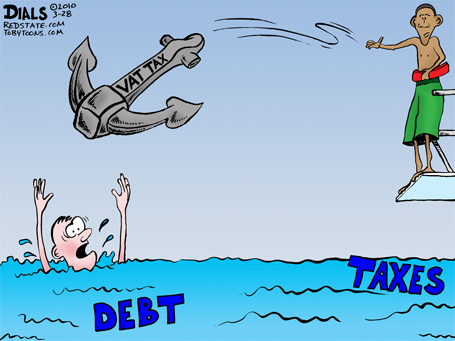
The below article highlights the “Value Added Tax” option, and its introduction in the Bahamas. This government is struggling with the implementation – change is hard! This issue had previously been addressed in Go Lean blogs:

The issues of government revenue reform, operational processing, and best practices for delivery are stressed in the book Go Lean… Caribbean. These issues are among the primary focus of the book, serving as a roadmap for the introduction and implementation of the technocratic Caribbean Union Trade Federation (CU). The following 3 prime directives are explored in full details:

  • Optimization of the economic engines in order to grow the regional economy to $800 Billion & create 2.2 million new jobs.
  • Establishment of a security apparatus to protect the resultant economic engines.
  • Improve Caribbean governance to support these engines.

See the underlying news story here:

By: The Caribbean Journal staff

The Bahamas is planning to introduce a new 7.5 percent value added tax, the government announced this week.

The tax will be a single VAT rate across the board, although that is lower than an initially proposed 15 percent tax.

The country’s Ministry of Finance said the lower rate would also mean fewer exemptions.

The ultimate plan is for the tax to come into effect on Jan. 1, 2015, after what the government said would be an “in-depth public education campaign and private sector preparation.”

The Ministry of Finance also said it was proposing “VAT-inclusive” pricing rather than VAT exclusive, with the aim to “simplify price comparisons by consumers, especially when navigating between VAT registrants and non-registrants.”

“The price consumers see will always be the price they pay,”

The move will also mean that the hotel occupancy tax will be eliminated.

Bahamas 2Government estimates predicted that the new VAT along with a basket of other fiscal provisions would increase the revenue yield of the Bahamas’ revenue system to 19.8 percent of GDP, up from 17.1 percent in the current fiscal year.

Christie said the goal with the mix of fiscal measures was to eliminate the “untenable structural imbalance between recurrent expenditure and revenue” by the 2015/2016 fiscal year, sharply reduce the GFS deficit by 2016/2017 and “arrest the growth in the government debt burden and move it onto a steady downward path to more sustainable levels.”

“I want to emphasize, at this point, that we are in no way engaged in unrealistic, pie-in-the-sky, wishful thinking on the score of fiscal redress,” Christie said. “With a keen eye on the state of our economy and mindful of the need to maintain and support its upward, forward momentum, we are embarked on a mutually-reinforcing plan of national development and fiscal consolidation that is balanced and measured. As such, our aim is set on gradual, though assured, progress on the fiscal front.”

The Bahamas would be the latest in a line of Caribbean countries to introduce a VAT; St Lucia was the most recent country to do so.

A value-added tax proposal by the United Kingdom government in Turks and Caicos was shelved last year after opposition from businesses.

Caribbean Journal Online News Source (Retrieved 05/30/2014) – http://www.caribjournal.com/2014/05/30/bahamas-planning-to-introduce-7-5-percent-value-added-tax-in-2015/

This roadmap commences with the assessment that the Caribbean is in crisis, and that this “crisis would be a terrible thing to waste”. Coupled with the external pressures for revenue reform, is the internal realities of societal abandonment – more and more of the labor pool has migrated to foreign lands in search of better economic opportunities – lowering the tax-paying base in the country. The book describes the sad state of affairs in Caribbean locales like Puerto Rico (Page 303) and the Bahamas 2nd city of Freeport (Page 112). As a planning tool, the roadmap accepts the challenge to adapt for the changes with a Declaration of Interdependence, pronouncing the need for regional solutions (Page 12). The statement is included as follows:

Whereas government services cannot be delivered without the appropriate funding mechanisms, “new guards” must be incorporated to assess, accrue, calculate and collect revenues, fees and other income sources for the Federation and member-states. The Federation can spur government revenues directly through cross-border services and indirectly by fostering industries and economic activities not possible without this Union.

The strategy is to confederate all the 30 member-states of the Caribbean, despite their language and legacy, into an integrated “single market”. Tactically, this will allow a separation-of-powers between the member-states governments and federal agencies, allowing for efficient economies-of-scale for revenue collection systems, processes and people. Yes, astute application of technology is cited as a key solution. In total, the Go Lean book details series of community ethos, strategies, tactics, implementations and advocacies to deliver new solutions:

Anecdote Puerto Rico – The Greece of the Caribbean Page 18
Community Ethos – Money Multiplier Page 22
Community Ethos – “Crap” Happens Page 23
Community Ethos – Lean Operations Page 24
Community Ethos – Return on Investments (ROI) Page 24
Community Ethos – Cooperatives Page 25
Community Ethos – Ways to Improve Sharing Page 35
Strategic – Vision – Integrated region in a Single Market Page 45
Strategic – Vision – Agents of Change – Technology Page 57
Strategic – Vision – Agents of Change – Globalization Page 57
Tactical – Confederating a Non-sovereign Union Page 63
Tactical – Fostering a Technocracy Page 64
Tactical – Growing to $800 Billion – Trade & Globalization Page 70
Tactical – Separation of Powers – Union Revenue Admin. Page 74
Anecdote – “Lean” in Government Page 93
Implementation – Ways to Pay for Change Page 101
Implementation – Deploying Data Centers Page 106
Implementation – Ways to Deliver Page 109
Implementation – Ways to Better Manage Debt Page 114
Advocacy – Ways to Grow the Economy Page 151
Advocacy – Ways to Mitigate Black Markets Page 165
Advocacy – Ways to Improve Governance Page 168
Advocacy – Ways to Improve Local Governments Page 169
Advocacy – Ways to Better Manage the Social Contract Page 170
Advocacy – Revenue Sources for Administration Page 172
Advocacy – Ways to Foster Cooperatives Page 176

All in all, the CU/Go Lean supports all governments’ efforts to collect legitimately authorized taxes.

Pay Caesar’s things to Caesar” – so declares the Go Lean book (Page 144), quoting Jesus Christ from the Bible at Mark 12:17. While Jesus Christ teachings are not portended to be economic lessons, this rendering in the roadmap posits that this and other bible teachings are economically sound. The Bahamas, the Caribbean country in the foregoing news article, lays claim to a Christian heritage. It is time for this country, and all the Caribbean, to “put their money where their mouth is”.

Now is the time for all of the Caribbean, the people and governing institutions, to lean-in for the changes described in the book Go Lean … Caribbean. The local governments need their revenues. They are part of the eco-system to elevate Caribbean life, culture and systems of commerce.

Download the book Go Lean … Caribbean – now!

Share this post:
, ,

Zuckerberg’s $100 Million for Newark’s Schools was a waste

Go Lean Commentary

Throwing money at a problem does not, in itself, solve it!

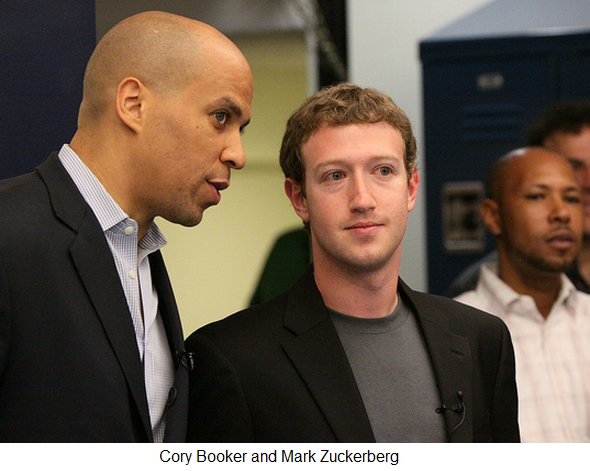
Mark Z 2The foregoing article helps us appreciate this point more succinctly. It was 2010. There was Newark’s Mayor Cory Booker (now New Jersey Senator), Facebook founder and philanthropist Mark Zuckerberg and the Governor of the State of New Jersey (and possible 2016 Presidential candidate) Chris Christie – all men of goodwill. Their goal: fix a failing school system in the City of Newark. On paper, the plan seemed credible, they had the power, they had the money – $100 million dollars. The result? After four years – “a waste”.

The issues of education reform, best practices, and funding options are stressed in the book Go Lean…Caribbean, even though these are not the primary focus of the book. Rather this book serves as a roadmap for the introduction and implementation of the Caribbean Union Trade Federation (CU), with the focus being on these following 3 prime directives:

  • Optimization of the economic engines in order to grow the regional economy to $800 Billion & create 2.2 million new jobs.
  • Establishment of a security apparatus to protect the resultant economic engines.
  • Improve Caribbean governance to support these engines.

Yet, the book posits that education is a vital consideration for economic empowerment; so too are non-government organizations, like Zuckerberg’s foundation. The book specifically highlights an important role that foundations execute in the sphere of foreign aid, sometimes even better than national governments (Page 219):

One major argument against federally funded foreign aid is that the money is often lost to governmental corruption in the countries it was supposed to help. In 2003, a top university in Bangladesh claimed that at least 75% of all foreign aid given to that government was lost because of corruption. Since faith-based foreign aid focuses on churches or organizations operating independently of the government, funding has a better chance of being used effectively.

The below news article though, highlights an onshore example, in the US, with multi-level governmental support, plenty of money, and yet still: failure!

Title: Mark Zuckerberg Gave New Jersey $100 Million To Fix Newark’s Schools, And It Looks Like It Was A Waste
By: Caroline Moss
In the fall of 2010, Mark Zuckerberg announced on Oprah that he’d be making a generous gift to Newark, New Jersey.

 As Oprah said in her Oprah way, “one … hundred … million … dollars” would be given to Newark Mayor Cory Booker and New Jersey Gov. Chris Christie as the three began the Startup:Education foundation.

The plan was to turn Newark into what Zuckerberg called “a symbol of educational excellence for the whole nation,” spent on retaining the best teachers, and creating environments that would produce successful students and, one day, graduates.

Newark is a city wrought with crime. Its graduation rate is about 67%. It needed the help, and Booker’s vision sounded promising.

Between 2010 and 2012, The New Yorker reports that “more than twenty million dollars of Zuckerberg’s gift and matching donations went to consulting firms with various specialties: public relations, human resources, communications, data analysis, [and] teacher evaluation.” Many of the consultants were being paid upwards of $1,000 a day.

“Everybody’s getting paid but Raheem still can’t read,” Vivian Cox Fraser, president of the Urban League of Essex County, was quoted saying.

Today, the money is pretty much gone, and Newark has hardly become that symbol of excellence.

The New Yorker has the full 12-page story today, and we’ve dug into it to find some of the main timeline points you need to know.

In 2010, Mayor Booker found a loophole in getting money to help fund Newark’s educational reform. It came in the form of philanthropic donations, which, unlike government funding, required no public review of priorities or spending. Gov. Christie approved the plan, and Booker’s job was to find the donors.

Meanwhile, in Silicon Valley, Zuckerberg (like many other tech billionaires) had pledged to donate half of his fortune, but as The New Yorker reports, he knew very little about urban education or philanthropy.

Booker and Zuckerberg met to discuss a vision for Newark’s future. Booker wanted to significantly reward Newark teachers who improved student performance rather than focus on seniority and tenure. Teachers would be challenged and rewarded to do their jobs well, and students would benefit.

 Zuckerberg was confident Newark and Booker were the right recipients for this huge gift (given over five years), and agreed to gift $100 million dollars with a few stipulations:

  • Booker would also have to raise $100 million dollars. Zuckerberg’s money would be released to Newark as matching dollars rolled in.
  • Booker would have to replace the current superintendent with a “transformational leader.

”The reform ended up looking like this: taking low-performing public schools and closing them, turning them into charter schools and “themed” high schools. But there was no easy way to expand charters without destabilizing traditional public schools.

In the months following the gift announcement, Booker and Christie still had no superstar superintendent and no reform plan.

 Zuckerberg was concerned and urged Booker to find the superintendent, even sending Booker a poster widely seen around the Facebook campus that read, “Done is better than perfect.”

Mark ZImmediately, Booker appointed Cami Anderson for the job. She implemented ways to help students and improve schools (all which The New Yorker detailed), but there were roadblocks along the way, like how the students brought the issues going on in their homes with them to the classroom.

 Anderson wanted to give schools more support to help students on emotional and social levels, but Newark had already been spending more money per student than most districts in the entire country, none of which was reaching the children it existed to help.

 New contracts were being created, money was being hemorrhaged, and the district was going broke. But interviews — like this one in Forbes — regarding the money and the future of Newark’s schools were always positive, highlighting, of course, only the good aspects of the huge monetary donation.

Then, in January of this year, The Washington Post reported on “dozens of emails between the Zuckerberg camp (including Zuckerberg himself) and the Booker camp (including Booker himself),” which ended up revealing that state education officials were going above and beyond to get money from big private donors to remake public schools in the way they want to.

Anderson came up with another plan called One Newark, which sounded like it could work. Families would choose which charter or public schools they would want to send their children to. Children from the lowest-income families would get first pick. So would kids with special needs.

It all sounded great until parents and teachers realized it was only on paper. Solutions hadn’t been figured out fully. Programs hadn’t been developed. Issues like transportation had not yet been tackled. Things that were promised didn’t come to fruition.

 According to The New Yorker, Anderson, Booker, Zuckerberg, and Christie, “despite millions of dollars spent on community engagement—have yet to hold tough, open conversations with the people of Newark about exactly how much money the district has, where it is going, and what students aren’t getting as a result.”
Business Insider Vertical e-Zine (Posted 05/13/2014; retrieved 05/30/2014) –
http://www.businessinsider.com/mark-zuckerbergs-newark-grant-2014-5#ixzz33DsBvaIw

The people and institutions of the Caribbean understand this plight of Newark, New Jersey all too well. There is a long record of failure with the Caribbean education initiatives. Then where there is success, the quality students have a propensity to abandon the region and emigrate to the US, Canada or Europe. So with the best of the Caribbean’s talents gone, we find that we’ve “fatten frog for snake”; then with the rest, we muddle along as best we can; hoping to nation-build with the remnants of a broken educational system.

It’s time for a change!

The proposed change is detailed in the Go Lean roadmap. It provides turn-by-turn directions on how to reform the Caribbean education systems, governance and Caribbean society in general. This roadmap commences with the assessment that the Caribbean is in crisis, and that this “crisis would be a terrible thing to waste”. As a planning tool, the roadmap commences with a Declaration of Interdependence, pronouncing the approach of regional integration (Page 12) as a viable solution to elevate the region’s educational opportunities. The statement is included as follows:

xxi. Whereas the preparation of our labor force can foster opportunities and dictate economic progress for current and future generations, the Federation must ensure that educational and job training opportunities are fully optimized for all residents of all member-states, with no partiality towards any gender or ethnic group. The Federation must recognize and facilitate excellence in many different fields of endeavor, including sciences, languages, arts, music and sports. This responsibility should be executed without incurring the risks of further human flight, as has been the past history.

The strategy is to confederate all the 30 member-states of the Caribbean, despite their language and legacy, into an integrated “single market”. Tactically, this will allow a separation-of-powers between the member-states governments (including their education proxies) and federal agencies, allowing an open role for benevolent foundations to fulfill their charters on the region. The roadmap recognizes the need to lead, or to follow best-practices, as formulated by other entities. This then becomes a process of leading-by-following. The CU will facilitate the eco-systems, metering and measuring the effect of so many educational options. Think Champion-Challenger; allowing for alternate methodologies to be explored for effectiveness, and then measuring the success criteria.

The Go Lean book details series of community ethos, strategies, tactics, implementations and advocacies to foster good educational progress, and the agile methodologies to adjust/adapt dynamically:

Anecdote – Lean On Me – New Jersey School Lesson Page 5
Community Ethos – Lean Operations Page 24
Community Ethos – Cooperatives Page 25
Community Ethos – Non-Government Organizations Page 25
Community Ethos – Ways to Foster Genius Page 27
Tactical – Separation of Powers – Education Dept. Page 85
Implementation – Ways to Pay for Change Page 101
Implementation – Ways to Deliver Page 109
Advocacy – Ways to Grow the Economy Page 151
Advocacy – Ways to Create Jobs Page 152
Advocacy – Ways to Improve Education Page 159
Advocacy – Ways to Improve Governance Page 169
Advocacy – Ways to Foster Cooperatives Page 176
Advocacy – Ways to Improve Libraries Page 187
Advocacy – Ways to Impact Foundations Page 219
Advocacy – Ways to Impact the One Percent Page 224
Appendix – The Giving Pledge Signatories Page 292

Now is the time for all of the Caribbean, the people and governing institutions, to lean-in for the changes described in the book Go Lean … Caribbean. We welcome the “Mark Zuckerberg”’s of the world … and their money. We entreat them to help us to make the Caribbean a better place to live, work, learn and play.

Download the free e-Book of Go Lean … Caribbean – now!

Share this post:
, , , ,
[Top]

Trinidad Muslims travel to Venezuela for jihadist training

Go Lean Commentary

BS 1The American War on Terror has come to the Caribbean. This is obvious with the news in the subsequenr news article. It is also obvious that with two member-states (Guyana & Trinidad) with large Islamic populations, their Muslim adherents may invariably side with some of their Middle Eastern brothers.

The United States of America is the Caribbean’s biggest trading partner and benefactor. But, the US has enemies. What’s more, many American activities enrage their enemies. Consider these known facts:

  • Unmanned Drone attacks in Pakistan/Afghanistan, with collateral damage of innocent women/children.
  • NSA spying on its own citizens, and those of foreign lands in their home country, including the Caribbean; (this was disclosed last week by NSA Leaker Edward Snowden – see https://goleancaribbean.com/blog/?p=960).
  • American “Vulture” Capitalism – painfully exploiting natural resources at the expense of indigenous people

American foreign policy is determined by the US government (White House & Congress). The needs of our small Caribbean states may not factor in US policy determinations. Even the US territories (Puerto Rico & US Virgin Islands) have little voice and no vote in the formation of policy. The Caribbean finds itself in the same role as the words (sang by Michael Jackson) of the Scarecrow in the 1977 movie The Wiz:

We can’t win,
We can’t break-even, and …
We can’t get out of the game.

The book Go Lean…Caribbean posits that we must maintain our own security apparatus against systemic threats, like terrorism, that can imperil our way of life. This goal is detailed in the book, serving as a roadmap for the introduction of the Caribbean Union Trade Federation (CU). This Go Lean roadmap has 3 prime directives:

  • Optimization of the economic engines in order to grow the regional economy to $800 Billion & create 2.2 million new jobs.
  • Establishment of a security apparatus to protect the resultant economic engines.
  • Improve Caribbean governance to support these engines.

The book contends that bad actors will emerge just as a result of economic successes in the region. Combine further, the alignments with the US, and we have to be prepared for even more “enemies at the gate”. The other European nations with Caribbean territories (Britain, France, and The Netherlands) also have to contend with terrorism activities. This point is pronounced early in the book with the Declaration of Interdependence (Page 13), and these claims:

x.   Whereas we are surrounded and allied to nations of larger proportions in land mass, populations, and treasuries, elements in their societies may have ill-intent in their pursuits, at the expense of the safety and security of our citizens. We must therefore appoint “new guards” to ensure our public safety and threats against our society, both domestic and foreign. The Federation must employ the latest advances and best practices … to assuage continuous threats against public safety.

xvi. Whereas security of our homeland is inextricably linked to prosperity of the homeland, the economic and security interest of the region needs to be aligned under the same governance. Since economic crimes, including piracy and other forms of terrorism, can imperil the functioning of the wheels of commerce for all the citizenry, the accedence of this Federation must equip the security apparatus with the tools and techniques for predictive and proactive interdictions.

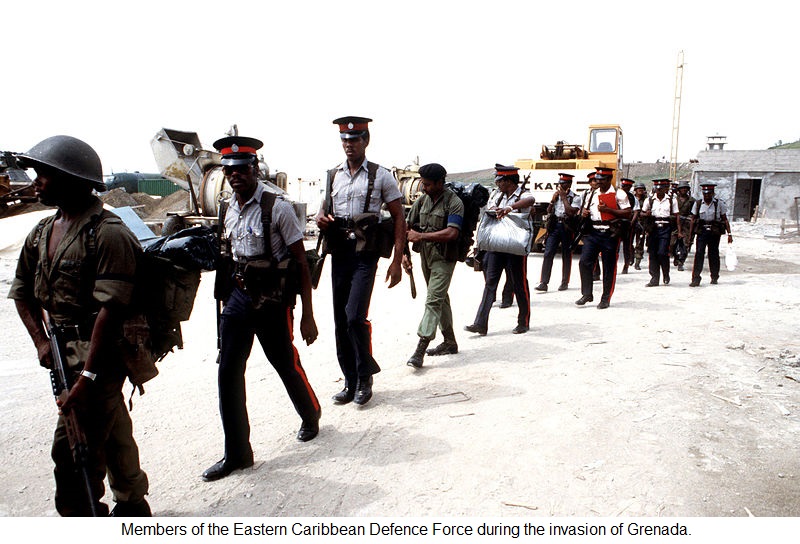
Appointing “new guards” to ensure our public safety is not so new of an endeavor. This effort has commenced already. There is currently a security pact of 7 Eastern Caribbean member-states that was first consummated in 1982 – see the Regional Security System below. The roadmap calls for the expansion and professionalization of this security pact for all 30 member-states. It will be the responsibility of the CU to lead, fund and facilitate this pact.

Creating the CU security apparatus is “Step One, Day One” in the Go Lean roadmap. This implementation, with the appropriate funding mechanisms, is essential for success. In line with the foregoing news article, there is the absolute need for a Unified Command-and-Control (UCC), including intelligence gathering and analysis, to monitor and mitigate threats against the region.

By Caribbean News Now contributor

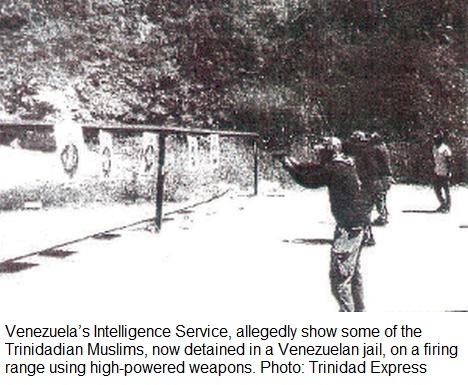
PORT OF SPAIN, Trinidad — Cellphone images seized by SEBIN, Venezuela’s intelligence service, allegedly show Trinidadian Muslims arrested in Venezuela engaging in what SEBIN described as “pre-jihad training” on a firing range using high-powered weapons, the Trinidad Express reported.

The images were reportedly extracted from the cellphones seized from some of the Muslims in a group that travelled to Venezuela from Trinidad and were later arrested in a raid at the Plaza Hotel in Caracas on March 19, together with women and children, who were later released.

The training resembled what takes place in the Middle East as Muslims prepare for what they term jihad, or holy war, an important religious duty for Muslims that includes armed struggle against persecution and oppression.

Intense military, arms and ammunition training is part and parcel of their routine and some of this kind of training, SEBIN alleged, was taking place in Venezuela by some of the Trinidadian Muslims.

In a top secret document prepared by SEBIN and sent to the Trinidad and Tobago government, the pictures in question were taken by three Venezuelan police officers who were later arrested. There are at least six photographs showing the men.

Eight Trinidadian Muslims are currently detained by Venezuelan authorities on suspicion of terrorist activities. The 14 women and children who were held with them at the Plaza Hotel in Caracas on March 19 were released some ten days later and sent back to Trinidad.

This followed a visit of a Trinidad and Tobago delegation headed by Rear Admiral Richard Kelshall who met with Venezuelan authorities two days prior to their release.

Out of that meeting emanated the top secret document given to the Trinidad and Tobago government, which the Trinidad Express reported exposes some alarming security concerns that the country’s security forces need to monitor closely.

The document outlines in detail the day the Trinidadian Muslims were held at the Plaza Hotel in Caracas and revelations about possible terrorist activities that can have far reaching consequences for Trinidad and Tobago.

Minister of National Security Gary Griffith spoke about the document in late April.

“A secret document has been given to me through the delegation from the Venezuelan authorities and this is obviously a sensitive document and I would not be able to actually state what is in the document, it is sensitive correspondence,” Griffith said.

In the top secret document, there are dates of the arrivals for all the Trinidadians who touched down at the Simon Bolivar International Airport in Venezuela between January and March this year.

The raid on the Trinidadian Muslims at the Plaza Hotel, authorities said, was brought to the attention of SEBIN “after a prolonged stay at the hotel” and the use of “cash to cover their bills”.

Further suspicion arose, SEBIN stated, when members of the group were reclusive, as more persons continued to arrive and bills continued “to be paid exclusively in cash”.

Cleaning staff at the hotel were even barred from entering the rooms, the report revealed.

SEBIN’s suspicion was compounded further as they “implemented surveillance on the group and observed that Dominic Pitilal [one of the group] was routinely changing large sums of US” currency.

BS #3It was then SEBIN decided to make their move, executing a search warrant in the rooms occupied by “Pitilal and associates” and reportedly discovered: two satellite phones, 20 mobile phones, two laptops, six tablets, army type uniforms, combat paraphernalia, firearm training paraphernalia, telephone video of several of the detained persons in firearms training in Caracas.

According to the Trinidad Express, the accusation of jihad is only the beginning of something more profoundly troubling.

Sources within the Muslim community in Trinidad told the Express they have received information about Trinidadian Muslims fighting in the Syrian civil war as part of the anti-Assad movement.

Sources said every individual is paid US$150,000 to come to Syria and fight.

The subject is rarely discussed in certain Muslim circles in Trinidad, some fearing if they say anything, their lives might be in jeopardy. It is also a case that Muslim women know about, but are not willing to inform on friends or family members.

Well-placed Muslim sources who met and spoke with the Express in the last few weeks on the condition of anonymity say some of the women and children who were detained in Venezuela were in transit to Syria.

Three well-placed sources say people had confided in them about how the operation would go down.

One said, “What they do is buy plane tickets showing travel from Venezuela to China in transit through Turkey. When the plane stops there they get off and cross the border into Syria, but many would be thinking they have gone on to China as the ticket states.”

Another indicated that a named Trinidadian Muslim now in Syria has been in contact with family members in Trinidad and is also in constant contact with another local Muslim man.

Intelligence sources said they have been monitoring the movements of certain people, but would not commit to a solid answer.

When asked about Trinidadians using Venezuela as a stepping stone to head to Syria to fight in the jihad, Griffith said, “We most definitely have intelligence of all matters of national security but pertaining to that quite obviously, I would not be able to actually state what intelligence that we have for obvious reasons.”

In the last three weeks, the UK Guardian has carried stories about Muslim men leaving the United Kingdom to fight the war in Syria with young women also trying to follow. When they return to their countries they could be a serious security risk and the Anti-Terrorism Unit in Britain is closely monitoring the situation.

CNN in a recent report online entitled “West’s biggest threat: Battle hardened homegrown terrorists”, warned about American Muslims leaving to fight in Syria and returning as a potential threat to the US.

Intelligence sources in Trinidad also said they are fearful that some of those fighting in Syria will return to Trinidad with the radical ability to carry out violent acts there.

In fact, SEBIN in its secret report made specific recommendations to Trinidad’s national security ministry indicating it should pay closer attention to particular mosques.

Concerns outlined in the report also included:

• The increase of illegal diesel trafficking.

• Increase of the volume and flow of narco-trafficking and arms and ammunition trafficking.

• Increase of persons from the Middle East entering and transiting Venezuela onward to Trinidad.

SEBIN also revealed to the Trinidad and Tobago government that “British and US sources have expressed through official channels that there is an uneasiness relative to chatter emanating from Trinidad and Tobago at this time.”

Griffith said, “When we get types of intelligence that can be perceived as individuals being enemies of the state or trying to have any plan to overthrow the government, or any democracy as we know it, we would have that pre-emptive strike. We would be aware of what is happening and we would ensure that we do it to them before they do it to us.”

Attempts to assess the level of US concern in relation to the security of the Caribbean generally – a region that is variously described as America’s “third border” and America’s “backyard” – by means of official comment have largely proven to be fruitless.

There has been the so-called Third Border Initiative (now apparently moribund) and the more recent Caribbean Basin Security Initiative but the latter has largely focused on maritime interdiction of drug traffickers while seemingly ignoring the fact that the vacuum left by US financial and political inattention has been quickly filled by the Chinese (economically), Venezuela (politically and economically) also acting as a proxy for Iran, and more recently by the Russians for their own reasons.

Apart from the fact that questionable individuals from these and other countries are using the economic citizenship programs of many of the small Caribbean countries to obscure their real nationality and background, there is the concern expressed by intelligence sources in Trinidad that some of their nationals fighting in Syria will return with the radical ability to carry out violent acts in that country – i.e. part of America’s “third border”.

The so far unanswered questions posed to various US House and Senate committees that ought to have an interest in this area have tried to address the apparent inattention to the situation in the region itself, thus allowing hostile elements virtual freedom of movement in an area up to the actual border when, with a fairly modest effort in the overall scheme of things, the situation could be dealt with much more effectively.

With all the ex post facto hand-wringing over events in Benghazi, an increased level of congressional interest and concern in working to prevent other potential problems closer to home might have been expected but is apparently thus far non-existent.

Caribbean News Now (Posted May 13, 2014; retrieved 05/29/2014) –http://www.caribbeannewsnow.com/topstory-Trinidad-Muslims-travel-to-Venezuela-for-jihadist-training-21089.html

The Go Lean book details a series of community ethos, strategies, tactics, implementations and advocacies to provide increased public safety & security in the Caribbean region:

Community Ethos – Privacy –vs- Public Protection Page 23
Community Ethos – Intelligence Gathering Page 23
Community Ethos – “Crap” Happens Page 23
Community Ethos – Cooperatives Page 25
Community Ethos – Ways to Improve Sharing Page 35
Strategy – Security Pact to defend the homeland Page 45
Tactical – Confederating a non-sovereign union Page 63
Tactical – Separation of Powers – Homeland Security Page 75
Implementation – Ways to Pay for Change Page 101
Implementation – Start-up Foreign Policy Initiatives Page 102
Implementation – Start-up Security Initiatives Page 103
Advocacy – Ways to Grow the Economy Page 151
Advocacy – Ways to Improve Governance Page 168
Advocacy – Improve Homeland Security Page 180
Advocacy – Mitigate Terrorism Page 181
Advocacy – Improve Intelligence Gathering/Analysis Page 182
Advocacy – Improve for Natural Disasters Page 184

Paramount to the prime directive of elevating the economics, security and governing engines of the region is the desire to make the Caribbean, a better place to live, work and play. This has been the hope for generations. Finally now, the CU is here to traverse this journey. All of the Caribbean institutions are hereby urged to lean-in to this roadmap, or better stated, to Go Lean.

Download the Book – Go Lean…Caribbean – Now!!!

Appendix – Regional Security System

(Retrieved 05/29/2014 from: http://en.wikipedia.org/wiki/Regional_Security_System)

The Regional Security System (RSS) is an international agreement for the defence and security of the eastern Caribbean region. The Regional Security System was created out of a need for collective response to security threats, which were impacting on the stability of the region in the late 1970s and early 1980s. On 29 October 1982 four members of the Organisation of Eastern Caribbean States—namely, Antigua & Barbuda, Dominica, St. Lucia, and St. Vincent & the Grenadines—signed a memorandum of understanding (MOU) with Barbados to provide for “mutual assistance on request”. The signatories agreed to prepare contingency plans and assist one another, on request, in national emergencies, prevention of smuggling, search and rescue, immigration control, fishery protection, customs and excise control, maritime policing duties, protection of off-shore installations, pollution control, national and other disasters and threats to national security.[1] CU Blog - Trinidad Muslims travel to Venezuela for jihadist training - Photo 2Saint Kitts and Nevis joined following independence in 1983, and Grenada followed two years later after Operation Urgent Fury, a combined U.S. and RSS invasion of the country. The MOU was updated in 1992 and the system acquired juridical status on 5 March 1996 under the Treaty which was signed at St. Georges, Grenada.

The RSS initially started as a U.S. instrument to combat the spread of Communism in the Caribbean region.[2][3] As of 2001, the RSS further cooperates with the CARICOM Regional Task Force on Crime and Security (CRTFCS).[4]

In June 2010, United States and Caribbean regional officials resumed a plan for close cooperation established under the former Partnership for Prosperity and Security in the Caribbean (PPS) from the Clinton era.[5] As part of the joint agreement the United States pledged assistance with the creation of an Eastern Caribbean Coast Guard unit among RSS countries.[6] The Coast Guard unit will underpin the wider US-Caribbean Basin Security Initiative (CBSI) which has deemed the RSS as “central to the CBSI’s success, given its reach across the Eastern Caribbean.”[6]

Subsequently, Canada also pledged collaboration with the RSS bloc.[7][8] to combat a threat of Central American criminal gangs from expanding into the English-speaking Caribbean region.[9]

The current member nations are:

Antigua and Barbuda (since 1982)
Barbados (since 1982)
Dominica (since 1982)
Grenada (since 1985)
Saint Kitts and Nevis (since 1983)
Saint Lucia (since 1982)
Saint Vincent and the Grenadines (since 1982)

Date

Operation name

Country

Reason

1983 Grenada Intervention Grenada Restore a government in Grenada
1989 Hugo Antigua, Montserrat and Saint Kitts and Nevis Assistance in aftermath of Hurricane Hugo
1990 Coup Trinidad and Tobago Aftermath of an attempted Coup d’état in Trinidad and Tobago
1994 Internal Security Saint Kitts and Nevis Prison riot
1995 Luis, Marilyn Antigua and Saint Kitts and Nevis Assistance in aftermath of Hurricane Luis and Hurricane Marilyn
1998 Georges Saint Kitts and Nevis Assistance in aftermath of Hurricane Georges
1998 Weedeater Saint Vincent and the Grenadines Eradication of cannabis
2003 Bordelais Saint Lucia Transfer prisoners to new prison facility
2004 Ivan Relief Efforts Grenada Assistance in aftermath of Hurricane Ivan
2006 Glendairy Barbados Prison uprising
2009 Operation VINCYPAC St Vincent and the Grenadines Eradication of Cannabis
2010 Haiti Haiti Assistance in aftermath of the Haiti 2010 Earthquake

Sources References:

  1. “APPROACHES ON SECURITY IN THE CARIBBEAN REGION: Statement by Ambassador Odeen Ishmael of Guyana at the Meeting of the Committee on Hemispheric Security of the OAS Washington DC, 29 October 2002”. Retrieved 17 December 2012 from: http://www.guyana.org/Speeches/ishmael_102902.html.
  2.  http://www.country-data.com/cgi-bin/query/r-3378.html
  3. Lewis, Patsy (2002). Surviving Small Size: Regional Integration in Caribbean Mini-states. Kingston, Jamaica: University of West Indies Press. ISBN 976-640-116-0.
  4. Regional Task Force, the Caribbean Community (CARICOM) Implementation Agency for Crime and Security (IMPACS). Retrieved from: http://www.caricomimpacs.org/index.php?option=com_content&task=view&id=5&Itemid=29
  5. Singh, Rickey (13 June 2010). “A USA-CARIBBEAN ‘RENEWAL’?”. Guyana Chronicle. Retrieved 17 September 2010.
  6. “CARIBBEAN SECURITY: United States to help upgrade Regional Security System”. Caribbean News Agency (CANA). Retrieved 17 September 2010 from: http://www.cananews.net/news/131/ARTICLE/48413/2010-04-17.html.
  7. “Security important to Canada”. The Barbados Today. Retrieved 17 September 2010 from: http://news.barbadostoday.bb/index.php?option=com_content&view=article&id=4431:Security-important-to-Canada&catid=1:latest-news.
  8. “Canada to boost help to region”. Nation Newspaper. Retrieved 5 July 2010 from: http://www.nationnews.com/index.php/articles/view/canada-to-boost-help-to-region/.
  9. H., J. (17 September 2010). “Region warned of displaced criminal elements”. The Barbados Advocate. Retrieved 17 September 2010 from: http://www.barbadosadvocate.com/newsitem.asp?more=local&NewsID=12798.

Share this post:
, , , ,
[Top]

Painful and rapid spread of new virus in Caribbean

Go Lean Commentary

“Crap happens”, declares the book Go Lean…Caribbean (Page 23).

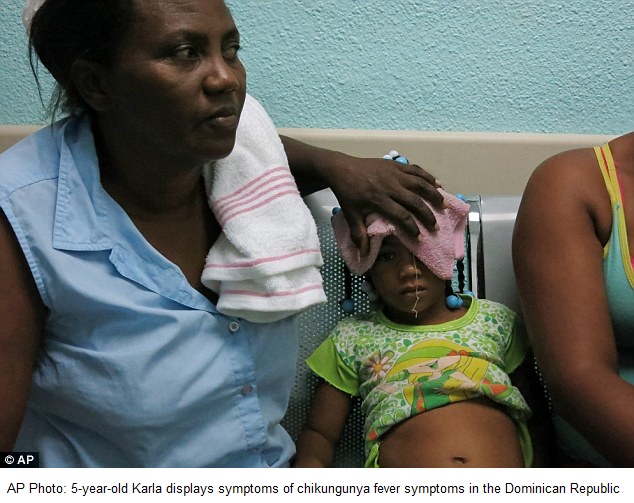
Virus 1The Chikungunya virus scare in the foregoing news article represents the sum of all fears for the Caribbean in terms of tourism and public health threats. This emphatically highlights the need for a regional security pact for Caribbean assurances.

The virus in this article has been identified in the Dominican Republic, Dominica, Saint Martin, and French Guiana; therefore, this is a cross-border threat. This re-enforces that there is a need for a super-national disease-medical sentinel in this security pact.

While other security pacts (for example NATO – North Atlantic Treaty Organization) may be based on defense against military aggression, the Caribbean security pact must focus more on public safety measures. This is one of the prime directives of the proposed Caribbean Union Trade Federation (CU). Naturally, the focus starts with economics, but the resultant engines can be seriously impacted by public safety/health threats. The book Go Lean… Caribbean, serves as a roadmap for the introduction and implementation of that regional sentinel, the CU. The complete prime directives are described as:

  • Optimize the economic engines of the Caribbean to elevate the regional economy.
  • Establish a security apparatus to protect the resultant economic engines.
  • Improve Caribbean governance to support these engines.

The Go Lean roadmap immediately calls for the establishment of a Homeland Security Department, with an agency to practice the arts and sciences of Emergency Management. The emergencies include natural disasters like hurricanes, earthquakes, tsunamis, volcanoes, flooding, forest fires, and droughts. Emergencies also include the man-made variety as in industrial accidents (oil spills, factory accidents and chemical spills), explosions, terroristic attacks and prison riots. The type of emergency described in the foregoing article requires a hybrid response of the Emergency Management agency and the CU’s Department of Health Disease Control & Management agency. Medical expertise would be required to contend with systemic threats of epidemic illness and infectious diseases.

The CU does not possess sovereignty for Caribbean member-states; so CU participation must be invited. This is why the CU is described as a deputized proxy organization. This invitation is equivalent to dialing “911”, a declaration of an emergency – thus granting a timed lease of limited authority to the CU agency, terminating with an “all clear” determination.

By: Ben Fox, AP

SAN CRISTOBAL, Dominican Republic (AP) — They suffer searing headaches, a burning fever and so much pain in their joints they can barely walk or use their hands. It’s like having a terrible flu combined with an abrupt case of arthritis.

Hospitals and clinics throughout the Caribbean are seeing thousands of people with the same symptoms, victims of a virus with a long and unfamiliar name that has been spread rapidly by mosquitoes across the islands after the first locally transmitted case was confirmed in December.

“You feel it in your bones, your fingers and your hands. It’s like everything is coming apart,” said 34-year-old Sahira Francisco as she and her daughter waited for treatment at a hospital in San Cristobal, a town in the southern Dominican Republic that has seen a surge of the cases in recent days.

The virus is chikungunya, derived from an African word that loosely translates as “contorted with pain.” People encountering it in the Caribbean for the first time say the description is fitting. While the virus is rarely fatal it is extremely debilitating.

“It is terrible, I have never in my life gotten such an illness,” said Maria Norde, a 66-year-old woman confined to bed at her home on the lush eastern Caribbean island of Dominica. “All my joints are in pain.”

Outbreaks of the virus have long made people miserable in Africa and Asia. But it is new to the Caribbean, with the first locally transmitted case documented in December in French St. Martin, likely brought in by an infected air traveler. Health officials are now working feverishly to educate the public about the illness, knock down the mosquito population, and deal with an onslaught of cases.

Authorities are attempting to control mosquitoes throughout the Caribbean, from dense urban neighborhoods to beach resorts. There have been no confirmed cases of local transmission of chikungunya on the U.S. mainland, but experts say the high number of travelers to the region means that could change as early as this summer.

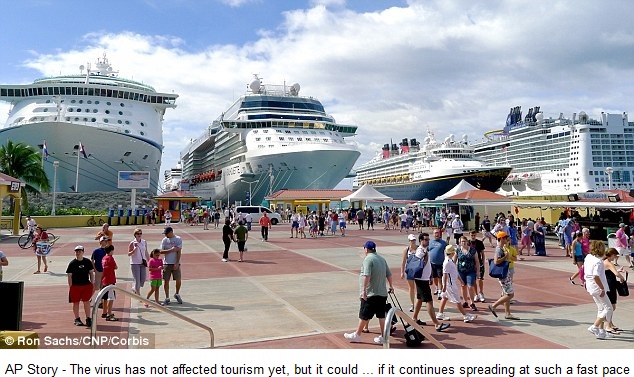
So far, there are no signs the virus is keeping visitors away though some Caribbean officials warn it might if it is not controlled. “We need to come together and deal with this disease,” said Dominica Tourism Minister Ian Douglas.

One thing is certain: The virus has found fertile ground in the Caribbean. The Pan American Health Organization reports more than 55,000 suspected and confirmed cases since December throughout the islands. It has also reached French Guiana, the first confirmed transmission on the South American mainland.

The Pan American Health Organization says seven people in the Caribbean with chikungunya have died during the outbreak but they had underlying health issues that likely contributed to their death.

“It’s building up like a snowball because of the constant movement of people,” said Jacqueline Medina, a specialist at the Instituto Technologico university in the Dominican Republic, where some hospitals report more than 100 new cases per day.

Virus 3Chikungunya was identified in Africa in 1953 and is found throughout the tropics of the Eastern Hemisphere. It is spread by two species of mosquitoes, aedes aegypti and aedes albopictus. It’s also a traveler-borne virus under the right circumstances.

It can spread to a new area if someone has it circulating in their system during a relatively short period of time, roughly 2-3 days before the onset of symptoms to 5 days after, and then arrives to an area with the right kind of mosquitoes.

For years, there have been sporadic cases of travelers diagnosed with chikungunya but without local transmission. In 2007, there was an outbreak in northern Italy, so health authorities figured it was just a matter of time before it spread to the Western Hemisphere, said Dr. Roger Nasci, of the U.S. Centers for Disease Control and Prevention.

“With the increase in travelers the likelihood that something like this would happen goes up and eventually it did,” said Nasci, chief of a CDC branch that tracks insect-borne diseases. “We ended up with somebody at the right time and the right place infecting mosquitoes.”

The two species of mosquitoes that spread chikungunya are found in the southern and eastern United States and the first local transmissions could occur this summer given the large number of U.S. travelers to the Caribbean, Nasci said. Already, the Florida Department of Health has reported at least four imported cases from travelers to Haiti, the Dominican Republic and Dominica.

“What we’re seeing now is an increase in the number of infected travelers coming from the Caribbean, which is expected because there’s a lot of U.S. travel, a lot of vacation travel, a lot of work travel,” he said.

Around the Caribbean, local authorities have been spraying fogs of pesticides and urging people to remove standing pools of water where mosquitoes breed.

An estimated 60-90 percent of those infected show symptoms, compared to around 20 percent for dengue, which is common in the region. There is no vaccine and the only cure is treatment for the pain and fluid loss.

One consolation for those suffering from the illness is that unlike dengue, which has several variants, people only seem to get chikungunya once.

“The evidence suggests that once you get it and recover, once your immune system clears the virus you are immune for life,” Nasci said.

Associated Press writers Ben Fox in Miami; P. Solomon Banda in Fort Collins, Colorado; David McFadden in Kingston, Jamaica; and Carlisle Jno Baptiste in Roseau, Dominica, contributed to this report.

Associated Press News Wire (Retrieved 05-22-2014) –          http://news.yahoo.com/painful-rapid-spread-virus-caribbean-040106421.html

The Go Lean roadmap immediately calls for the coordination of security monitoring and mitigation in the Caribbean; referring to viruses as well. This point is declared early in the Go Lean book, commencing with this opening pronouncement in the Declaration of Interdependence (Page 12), as follows:

xvi. Whereas security of our homeland is inextricably linked to prosperity of the homeland, the economic and security interest of the region needs to be aligned under the same governance. …[to ensure] the functioning of the wheels of commerce for all the citizenry, the accedence of this Federation must equip the security apparatus with the tools and techniques for predictive and proactive interdictions.

Go Lean … Caribbean therefore constitutes a change for the Caribbean. This is a roadmap to consolidate 30 member-states of 4 different languages and 5 colonial legacies (American, British, Dutch, French, Spanish) into a Trade Federation with the tools/techniques to bring immediate change to the region to benefit one and all member-states. This includes the monitoring/tracking/studying the origins of common and emerging viruses. This empowered CU agency will liaison with foreign entities with the same scope, like the Pan American Health Organization, US’s Center for Disease Control (CDC) and the World Health Organization (WHO).

Virus 2A lot is at stake!

Tourism is the primary economic driver in the region. The realization, or even the unsubstantiated rumor, of viral outbreaks can imperil the tourism product. We must therefore take proactive steps to protect our economic engines. But, we must not curtail freedom of movement among our visitors. We are, in effect, extending an “Open House” to the world to come enjoy our hospitality. Come… they will. So there are additional responsibilities for the stewards of the Caribbean economy, to impact the Greater Good. The CU invites this role, to promote this community ethos.

The book details that there must first be adoption of such a community ethos, the appropriate attitude/spirit to forge change in the region. Go Lean details this and other ethos; plus the executions of the following strategies, tactics, implementations and advocacies to impact the region’s public health:

Community Ethos – Privacy versus Public Protection Page 23
Community Ethos – “Crap” Happens Page 23
Community Ethos – Lean Operations Page 24
Community Ethos – Cooperatives Page 24
Community Ethos – Non-Government Organizations Page 25
Community Ethos – Ways to Improve Sharing Page 35
Community Ethos – Impact the Greater Good Page 37
Strategy – Vision – Non-Sovereign “Unified” Proxy Entity Page 45
Strategy – Customers – Residents & Visitors Page 47
Strategy – Agents of Change – Globalization Page 57
Tactical – Confederating a Permanent Union Page 63
Tactical – Fostering a Technocracy Page 64
Separation of Powers – Emergency Management Page 76
Separation of Powers – Disease Control & Management Page 86
Implementation – Ways to Pay for Change Page 101
Implementation – Security Initiatives at Start-up Page 103
Implementation – Ways to Deliver Page 109
Implementation – Ways to Foster International Aid Page 115
Implementation – Ways to Benefit from Globalization Page 119
Planning – Ways to Improve Failed-State Indices Page 134
Planning – Ways to Measure Progress Page 148
Advocacy – Ways to Grow the Economy Page 151
Advocacy – Ways to Improve Healthcare Page 156
Advocacy – Ways to Improve Governance Page 168
Advocacy – Ways to Better Manage the Social Contract Page 170
Advocacy – Ways to Foster Cooperatives Page 176
Advocacy – Ways to Improve for Natural Disasters Page 184
Advocacy – Ways to Improve Emergency Management Page 196

The foregoing news article introduces the threats of the Chikungunya virus. This is today’s issue. New issues will emerge tomorrow and the days after. This establishes that there is need for a permanent union – a sentinel – to provide efficient stewardship for Caribbean economy, security and governing engine. Change has come to the region.

How would the region pay for this change, these elevations? The Caribbean Union Trade Federation hereby submits for this job, no payment necessary! The region is hereby urged to lean-in to this Go Lean roadmap, to fulfill the vision of making the Caribbean region a better place to live, work and play.

Download the Book- Go Lean…Caribbean Now!!!

Share this post:
, , , ,
[Top]

NSA records all phone calls in Bahamas, according to Snowden

Go Lean Commentary

Phone tap 1So wait, according to the below news article, the US National Security Agency is gathering and analyzing mobile phone calls on Bahamians talking to Bahamians. This article raises so many questions for a Caribbean consideration:

  • Is this OK with the political/social leaders of the Bahamas?
  • Is this OK with the people of the Bahamas?
  • Why is this effort exerted by the US and not the Bahamas?
  • Could the local obstacle be the costs of the ICT investment?
  • Is there any value to this intelligence gathering? Have crimes and terroristic attacks been mitigated?

The book Go Lean…Caribbean identifies that intelligence gathering & analysis can be advantageous for the security of the member-states in the Caribbean region. Whatever your politics, you want a measure of peace-and-security in the region. Based on the foregoing article, there is some value to a cross-border, regional intelligence/security apparatus.

This book Go Lean… Caribbean, serves as a roadmap for the introduction and implementation of the Caribbean Union Trade Federation (CU). This Go Lean roadmap has 3 prime directives:

  • Optimization of the economic engines in order to grow the regional economy.
  • Establishment of a security apparatus to protect the resultant economic engines.
  • Improve Caribbean governance to support these engines.

This book posits that “bad actors” will always emerge to exploit successful economic models.  Early in the book, the pressing need to streamline security efforts is pronounced in the Declaration of Interdependence (Page 12), with these opening statements:

x. Whereas we are surrounded and allied to nations of larger proportions in land mass, populations, and treasuries, elements in their societies may have ill-intent in their pursuits, at the expense of the safety and security of our citizens. We must therefore appoint “new guards” to ensure our public safety and threats against our society, both domestic and foreign.

xvi. Whereas security of our homeland is inextricably linked to prosperity of the homeland, the economic and security interest of the region needs to be aligned under the same governance. Since economic crimes, including … forms of terrorism, can imperil the functioning of the wheels of commerce for all the citizenry, the accedence of this Federation must equip the security apparatus with the tools and techniques for predictive and proactive interdictions.

The curative measures for the Caribbean security requires a regional security pact. This is why the Go Lean roadmap advocates a Homeland Security Department at the cabinet level. The result is that the Caribbean can then take the lead for Caribbean problems. The CU is a proxy of that leadership.

By: Travis Cartwright-Carroll, Nassau Guardian Staff

NASSAU, Bahamas — The Bahamas government has sought an explanation from the United States government over claims the National Security Agency (NSA) is collecting, recording and archiving every cell phone conversation in The Bahamas, Minister of Foreign Affairs Fred Mitchell said.

The allegation stems from documents allegedly leaked by former NSA analyst Edward Snowden.

According to documents, the NSA is using a surveillance system called SOMALGET to collect and store “full-take audio” of every mobile call made in The Bahamas and storing it for up to 30 days.

The documents also list Kenya, Mexico, the Philippines and another country, whose name was redacted, as countries where the program exists.

Minister of National Security Dr Bernard Nottage would not comment on the matter on Monday, but promised to make inquiries into the allegations.

Snowden’s latest disclosures were published on The Intercept website and claim that the NSA used “access legally obtained in cooperation with the US Drug Enforcement Administration to open a backdoor to the country’s cellular telephone network”.

According to The Intercept’s website, it “provides a platform to report on the documents previously provided by NSA whistleblower Edward Snowden”.

The documents state that SOMALGET’s access to the “Bahamian GSM communications” has led to the discovery of international narcotics traffickers and special-interest alien smugglers.

The documents also list SOMALGET as part of a bigger program called MYSTIC, which is described as a program for “the collection and processing of wireless/mobile communication networks”.

“The overt purpose is for legitimate commercial services for the telcos themselves; our covert mission is the provision of SIGINT,” the document reads.

According to the NSA’s website, “SIGINT is intelligence derived from electronic signals and systems used by foreign targets, such as communications systems, radars and weapons systems.

“SIGINT provides a vital window for our nation (USA) into foreign adversaries’ capabilities, actions, and intentions.”

The document notes that MYSTIC’s use in The Bahamas is “being used as a test bed for system deployments, capabilities and improvements”.

The Washington Post explored the program MYSTIC back in March 2014, but at the request of US government officials, withheld details that could be used to identify the country where the system is being employed.

That story said the NSA had “built a surveillance system capable of recording 100 percent of a foreign country’s telephone calls”.

Contacted by The Nassau Guardian on Monday, the US Embassy in Nassau said it will not comment on “every specific alleged intelligence activity”.

“As a matter of policy, we have made clear that the United States gathers foreign intelligence of the type gathered by all nations,” said Neda Brown, US Embassy spokesperson.

“We value our cooperation with all countries on issues of mutual concern.

“The United States values its relationship with The Bahamas.

“The United States and The Bahamas share a long history of trade partnership and security cooperation.

“Our cooperation advances civilian security, promotes social equity and spurs economic development.”

The issue of spying has been in the public consciousness over the last two weeks.

But it was connected to claims that The Bahamas government may be spying on Bahamians.

Opposition Free National Movement (FNM) deputy leader Loretta Butler-Turner charged that the Bahamian government is using the National Intelligence Agency (NIA)  to “engage in domestic spying on the Bahamian people”.

Nottage has dismissed the claim as “foolish” and said the government is not spying on Bahamians.

Source: Caribbean News Now / Nassau Guardian Newspaper; posted and retrieved 05-20-2014 from: http://www.caribbeannewsnow.com/topstory-NSA-records-all-phone-calls-in-Bahamas%2C-according-to-Snowden-leak-21203.html

Phone tap 3The foregoing article also highlights the value of efficient and effective information & communications technology (ICT) deployments. This Go Lean roadmap posits that technological innovations are necessary for advancement of societal protections. This point is pronounced in the same Declaration of Interdependence (Page 14), with these statements:

xxvii. Whereas the region has endured a spectator status during the Industrial Revolution, we cannot stand on the sidelines of this new economy, the Information Revolution. Rather, the Federation must embrace all the tenets of Internet Communications Technology (ICT) to serve as an equalizing element in competition with the rest of the world. The Federation must bridge the digital divide and promote the community ethos that research/development is valuable and must be promoted and incentivized for adoption.

xxviii. Whereas intellectual property can easily traverse national borders, the rights and privileges of intellectual property must be respected at home and abroad. The Federation must install protections to ensure that no abuse of these rights go with impunity, and to ensure that foreign authorities enforce the rights of the intellectual property registered in our region.

The Go Lean roadmap rises above the petty politics that nationalistic purists will surely project. For these ones, national sovereignty is more important than national security. This attitude has resulted in the status quo of lax security provisions throughout the region, and a high rate of societal abandonment.  Go Lean pursues the Greater Good ahead of any claim for independence. This is defined as a community ethos for the region to adopt. Change has now come to the Caribbean.

The book details other ethos to adopt, plus the executions of the following strategies, tactics, implementations and advocacies to impact the CU security assurances:

Community Ethos – Privacy versus Public Protection Page 23
Community Ethos – Intelligence Gathering Page 23
Community Ethos – Light Up the Dark Places Page 23
Community Ethos – Lean Operations Page 24
Community Ethos – Cooperatives Page 25
Community Ethos – Ways to Bridge the Digital Divide Page 31
Community Ethos – Impact the Greater Good Page 37
Separation of Powers – Homeland Security Department Page 75
Separation of Powers – Cari-Pol Page 77
Implementation – Security Initiatives at Start-up Page 103
Implementation – Ways to Promote Independence Page 120
Advocacy – Ways to Manage the Social Contract Page 170
Advocacy – Ways to Impact Justice Page 177
Advocacy – Ways to Remediate and Mitigate Crime Page 178
Advocacy – Ways to Improve Homeland Security Page 180
Advocacy – Ways to Improve Intelligence Gathering/Analysis Page 182

Phone tap 2The foregoing news article does remind us of the need to take the lead for our own community security. Go Lean advocates taking this lead for economic security as well. It is true that the objectives of the US may not align with the priorities of the Caribbean. Also, no Caribbean member-state has voting powers in the US Capitol, so rather than being “brothers” with the US, we must accept that our relationship with the US, at best, can only be as “good” neighbors. Yes, “blood is thicker than water”, so the Caribbean must create Caribbean solutions – this is interdependence, more so than independence.

The motives of the Go lean/CU roadmapis not to voice complaint regarding an intrusive American privacy violation, (though a valid criticism), but rather to simply make our homeland safer – a better place to live, work and play.

Download the book Go Lean … Caribbean – now!


Share this post:
, , , ,
[Top]

Conservative heavyweights have solar industry in their sights

Go Lean Commentary solar panels

The song, Colors of the Wind, featured in the Disney animated movie Pocahontas (sung by Vanessa Williams), heightened the awareness and arguments of conserving the Earth’s resources. This key verse stands out:

You can own the earth and still All you’ll own is [dirt] until You can paint with all the colors of the wind

These words describe the folly of acquiring properties at the expense of ruining the natural resources around it. No one wants to ruin the planet, but yet many feel that the conservation movement is unnecessary, over-hyped or fear-mongering; that weather extremes are just natural cycles. The book Go Lean…Caribbean is not a call for conservation; it is a call for economic optimization. Whatever your politics, whether you believe that climate change is real or imagined, this book is not trying to convince you one way. It is what it is! This book Go Lean… Caribbean, serves as a roadmap for the introduction and implementation of the Caribbean Union Trade Federation (CU). This Go Lean roadmap has 3 prime directives:

  • Optimization of the economic engines in order to grow the regional economy.
  • Establishment of a security apparatus to protect the resultant economic engines.
  • Improve Caribbean governance to support these engines.

This book is written with the approach that we hope for the best, but plan for the worst. Unfortunately, for much of the Caribbean, they have been impacted with the worst-case scenario, time and again (See Page 112). Early in the book, the pressing need to be prepared for the ravages of climate change is pronounced in the Declaration of Interdependence (Page 11), with these opening words:

Whereas the earth’s climate has undeniably changed resulting in more severe tropical weather storms, it is necessary to prepare to insure the safety and security of life, property and systems of commerce in our geographical region. As nature recognizes no borders in the target of its destruction, we also must set aside border considerations in the preparation and response to these weather challenges.

The assessment and curative measures for the Caribbean is different than the approaches of the United States. The Caribbean does not have the landmass, population, treasuries, or economics of the US, so we cannot look for the US to take the lead for Caribbean problems. We must lead ourselves. The CU is a proxy of that leadership.

By: Evan Halper

WASHINGTON — The political attack ad that ran recently in Arizona had some familiar hallmarks of the genre, including a greedy villain who hogged sweets for himself and made children cry.

But the bad guy, in this case, wasn’t a fat-cat lobbyist or someone’s political opponent.

He was a solar-energy consumer.

Solar, once almost universally regarded as a virtuous, if perhaps over-hyped, energy alternative, has now grown big enough to have enemies.

The Koch brothers, anti-tax activist Grover Norquist and some of the nation’s largest power companies have backed efforts in recent months to roll back state policies that favor green energy. The conservative luminaries have pushed campaigns in Kansas, North Carolina and Arizona, with the battle rapidly spreading to other states.

Alarmed environmentalists and their allies in the solar industry have fought back, battling the other side to a draw so far. Both sides say the fight is growing more intense as new states, including Ohio, South Carolina and Washington, enter the fray.

At the nub of the dispute are two policies found in dozens of states. One requires utilities to get a certain share of power from renewable sources. The other, known as net metering, guarantees homeowners or businesses with solar panels on their roofs the right to sell any excess electricity back into the power grid at attractive rates.

Net metering forms the linchpin of the solar-energy business model. Without it, firms say, solar power would be prohibitively expensive.

The power industry argues that net metering provides an unfair advantage to solar consumers, who don’t pay to maintain the power grid although they draw money from it and rely on it for backup on cloudy days. The more people produce their own electricity through solar, the fewer are left being billed for the transmission lines, substations and computer systems that make up the grid, industry officials say.

“If you are using the grid and benefiting from the grid, you should pay for it,” said David Owens, executive vice president of the Edison Electric Institute, the advocacy arm for the industry. “If you don’t, other customers have to absorb those costs.”

The institute has warned power companies that profits could erode catastrophically if current policies and market trends continue. If electricity companies delay in taking political action, the group warned in a report, “it may be too late to repair the utility business model.”

The American Legislative Exchange Council, or ALEC, a membership group for conservative state lawmakers, recently drafted model legislation that targeted net metering. The group also helped launch efforts by conservative lawmakers in more than half a dozen states to repeal green energy mandates.

“State governments are starting to wake up,” Christine Harbin Hanson, a spokeswoman for Americans for Prosperity, the advocacy group backed by billionaire industrialists Charles and David Koch, said in an email. The organization has led the effort to overturn the mandate in Kansas, which requires that 20% of the state’s electricity come from renewable sources.

“These green energy mandates are bad policy,” said Hanson, adding that the group was hopeful Kansas would be the first of many dominoes to fall.

The group’s campaign in that state compared the green energy mandate to Obamacare, featuring ominous images of Kathleen Sebelius, the outgoing secretary of Health and Human Services, who was Kansas’ governor when the state adopted the requirement.

The Kansas Senate voted late last month to repeal the mandate, but solar industry allies in the state House blocked the move.

Environmentalists were unnerved. “They want to roll it back here so they can start picking off other states,” said Dorothy Barnett, director of the Climate and Energy Project, a Kansas advocacy group.

The arguments over who benefits from net metering, meanwhile, are hotly disputed. Some studies, including one

published recently by regulators in Vermont, conclude that solar customers bring enough benefits to a regional power supply to fully defray the cost of the incentive.

Utilities deny that and are spending large sums to greatly scale back the policy.

In Arizona, a major utility and a tangle of secret donors and operatives with ties to ALEC and the Kochs invested millions to persuade state regulators to impose a monthly fee of $50 to $100 on net-metering customers.

Two pro-business groups, at least one of which had previously reported receiving millions of dollars from the Koch brothers, formed the campaign’s public face. Their activities were coordinated by GOP consultant Sean Noble and former Arizona House Speaker Kirk Adams, two early architects of the Koch network of nonprofits.

In October, California ethics officials levied a $1-million fine after accusing groups the two men ran during the 2012 election of violating state campaign finance laws in an effort to hide the identities of donors.

The Arizona Public Service Co., the state’s utility, also had Noble on its payroll. As a key vote at the Arizona Corporation Commission approached late last year, one of the commissioners expressed frustration that anonymous donors had bankrolled the heated campaign. He demanded APS reveal its involvement. The utility reported it had spent $3.7 million.

“Politically oriented nonprofits are a fact of life today and provide a vehicle for individuals and organizations with a common point of view to express themselves,” company officials said in a statement in response to questions about their campaign.

The solar companies, seeking to sway the corporation commission, an elected panel made up entirely of Republicans, formed an organization aimed at building support among conservatives. The group, Tell Utilities Solar won’t be Killed, is led by former California congressman Barry Goldwater Jr., a Republican Party stalwart.

“These solar companies are becoming popular, and utilities don’t like competition,” Goldwater said. “I believe people ought to have a choice.”

The commission ultimately voted to impose a monthly fee on solar consumers — of $5.

The solar firms declared victory. But utility industry officials and activists at ALEC and Americans for Prosperity say the battles are just getting underway. They note the Kansas legislation will soon be up for reconsideration, and fights elsewhere have barely begun.

In North Carolina, executives at Duke Energy, the country’s largest electric utility, have made clear the state’s net metering law is in their sights. The company’s lobbying effort is just beginning. But already, Goldwater’s group has begun working in the state, launching a social media and video campaign accusing Duke of deceit.

“The intention of these proposals is to eliminate the rooftop solar industry,” said Bryan Miller, president of the Alliance for Solar Choice, an industry group.

“They have picked some of the most conservative states in the country,” he added. “But rooftop solar customers are voters, and policymakers ultimately have to listen to the public.”

LA Times.com (Article posted 04-20-2014; retrieved 05/15/2014) –http://www.latimes.com /nation/la-na-solar-kochs-20140420,0,7412286.story#axzz2zU4qRP15

The foregoing article highlights opposition to some implementations of some green initiatives, the solar industry.

While the oppositional arguments have merit, the principles of the above-cited song lingers: “we can own the earth and only own dirt, if we do not paint with the colors of the wind”.

We must therefore consider the lessons learned from these lyrics and the foregoing news article. We must insure that financial subsidies are strategically assigned to prioritize one energy source over others only for the Greater Good.

The Go Lean roadmap posits that people respond to economic incentives (Page 21). So if green conservation projects (like solar panels or wind turbines) are important for the Greater Good (Page 37), then there must be incentives to encourage their adoption. The roadmap specifics call for the implementation of a regional power grid (Page 113), utilizing underwater cables, to connect the many islands. The plan therefore advocates the adoption of green power generation modes: solar, wind, and tidal, but not with the legislative mandates that are the source of debates, as in the foregoing articles. The regional grid will allow for economies-of-scale to justify this type of infrastructure.

As for existing infrastructure, oil/coal power generation, Go Lean proposes improvements with modernizations, clean burning natural gas and a heightened focus on quality delivery. The big hurdle of funding is mitigated with this plan.

The ravages of climate change are real for the Caribbean region. So too are the solutions proffered in this roadmap for the CU. “It is what it is”, but we will be prepared for the changes and the opportunities to make our homeland a better place to live, work and play. 🙂

Download the free e-Book of Go Lean … Caribbean – now!

Share this post:
, , ,
[Top]

Bitcoin needs regulatory framework to change ‘risky’ image

Go Lean Commentary

Bitcoin PhotoElectronic Payments / Virtual Money schemes are very important in the strategy for elevating the Caribbean economy.

Bitcoin can be good for the Caribbean, but we need the regulatory framework in place to change any “risky” image of such schemes.

This point is detailed in the book Go Lean…Caribbean, a roadmap for the introduction of the Caribbean Union Trade Federation (CU) and the Caribbean Central Bank (CCB). This Go Lean roadmap has 3 prime directives:

  • Optimization of the economic engines in order to grow the regional economy to $800 Billion & create 2.2 million new jobs.
  • Establishment of a security apparatus to protect the resultant economic engines.
  • Improve Caribbean governance to support these engines.

This Go Lean/CU/CCB roadmap looks to employ electronic payments / virtual money schemes to impact the growth of the regional economy. Similar to Bitcoin, there are two CU schemes that relate to this foregoing news story:

  • Cruise Passenger Smartcards – The Go Lean roadmap posits that the cruise industry needs the Caribbean more than the Caribbean needs the industry. But the cruise lines have embedded rules/ regulations designed to maximize their revenues at the expense of the port-side establishments. The CU solution is to deploy a scheme for smartcards that function on the ships and at the port cities (Page 193).
  • e-Commerce Facilitation – The Go Lean roadmap defines that the Caribbean Dollar (C$) will be mostly cashless, an accounting currency. So the Caribbean Central Bank (CCB) will settle all C$ electronic transactions (MasterCard-Visa style or ACH style) and charge interchange/clearance fees (Page 198). This scheme allows for the emergence of full-throttle e-Commerce activities.

These electronic payments provides the impetus for M1, the measurement of currency/money in circulation (M0) plus overnight bank deposits (like demand deposits, travelers’ checks & other checkable deposits). As M1 values increase, there is a dynamic to create money “from thin-air”, called the money multiplier. The more money in the system, the more liquidity for investment and industrial expansion opportunities.

By: Clare Hutchison

LONDON (Reuters) – Regulators should create a framework of rules to help to make virtual currencies such as bitcoin more attractive to ordinary consumers, a lawyer from the Bitcoin Foundation said on Tuesday.

Bitcoin made headlines earlier this year when Tokyo-based bitcoin exchange Mt. Gox filed for bankruptcy after saying it might have lost some 750,000 bitcoins in hacking attack.

Patrick Murck, general counsel at the Bitcoin Foundation, said cooperation was needed between authorities to create rules that would support those using the digital currency responsibly.

“There’s an opportunity to work together to stop people saying it’s scary and risky,” he said. “The challenge is just to get a framework out there that makes sense for people,” said Murck, speaking at an event on the state of digital economy.

Launched in 2009, bitcoin offers a way for people to conduct transactions over the Internet. Supporters say the anonymity that bitcoin offers lowers the risk of fraud, while critics say that same anonymity and lack of central oversight make it easier to commit crimes.

The Bitcoin Foundation aims to standardise the currency, protect it from theft or counterfeiting and provide education.

Some companies involved in bitcoin, including investment firms and those providing services for the currency’s users, have also called for regulation to ensure their customers feel more comfortable about virtual money.

A number of regulators, including the U.S. Securities and Exchange Commission, have warned investors about the risks of scams related to virtual currencies.

Murck said there were a handful of well-funded companies working towards making bitcoin more attractive and safer for ordinary consumers by trying to insure bitcoin holdings and to reduce the currency’s volatility.

Those companies have learned from the collapse of Mt. Gox and have more knowledge about how the industry works that was not available before, he said.

Bitcoin could be ready for the mass market by the end of the year, Murck added. “I feel much more confident today than I did 12 months ago. The wind is definitely blowing at our backs.”

The banking industry also has a role to play in opening the bitcoin market up, Murck said, by providing finance to companies involved in bitcoin or integrating bitcoin services into its own products.

Reuters News Source (Retrieved 05/13/2014) –http://news.yahoo.com/bitcoin-needs-regulatory-framework-change-risky-image-163727371–sector.html

Cruise shipOverall, the Bitcoin concept is in crisis; the dissolution of the Mt. Gox exchange dealt this industry a near-fatal blow. With virtual money, there is no association with hard currency, commodity or chattel goods. It is just the “good faith” and credit of the currency – eWallet – issuer. A bankruptcy filing undermines that “faith”.

The people and institutions of the Caribbean understand this plight all too well. There is little faith in Caribbean monetary institutions either. All interstate trade in the region must take place in US dollars, British pounds or Euros. There is no faith in indigenous Caribbean currencies. The roadmap commences with the statement that the Caribbean also is in crisis, and that this “crisis is a terrible thing to waste”. The region is devastated from external factors: global economic recession, globalization and rapid technology changes. The book then posits that to adapt, there must be a new internal optimization of the region’s strengths. This is defined in Verse XXIV (Page 13) of the Declaration of Interdependence, with these words:

Whereas a free market economy can be induced and spurred for continuous progress, the Federation must install the controls to better manage aspects of the economy: jobs, inflation, savings rate, investments and other economic principles…

Creating the CU/CCB governance is “Step One, Day One” in the Go Lean roadmap. Implementing this, the appropriate regulatory framework, as requested in the foregoing news article, allows rock-solid monetarily integrity for the local financial systems. This would provide the foundation, so that the regional society can be elevated, economically and governmentally.

The Go Lean book details a series of community ethos, strategies, tactics, implementations and advocacies to foster the proper controls for electronic payments/virtual money in the Caribbean region:

Community Ethos – Money Multiplier Principle Page 22
Community Ethos – “Light Up the Dark Places” Page 23
Community Ethos – Lean Operations Page 24
Community Ethos – Cooperatives Page 25
Community Ethos – Promote Intellectual Property Page 29
Community Ethos – Ways to Bridge the Digital Divide Page 31
Tactical – Separation of Powers – Central Banking Page 73
Implementation – Assemble Central Bank Cooperative Page 96
Implementation – Ways to Deliver Page 109
Implementation – Ways to Impact Social Media Page 111
Planning – Ways to Better Manage Image Page 129
Anecdote – Caribbean Currencies Page 149
Advocacy – Ways to Mitigate Black Markets Page 165
Advocacy – Ways to Foster Cooperatives Page 176
Advocacy – Ways to Foster Technology Page 197
Advocacy – Ways to Foster e-Commerce Page 198
Advocacy – Reforms for Banking Regulations Page 199
Appendix – Alternative Remittance Modes Page 270

Now is the time for all of the Caribbean, the people and governing institutions, to lean-in for the changes described in the book Go Lean … Caribbean. The benefits are too alluring, a better place to live, work and play.

Download the free e-book of Go Lean … Caribbean – now!

Share this post:
, ,
[Top]

Book Review: ‘Citizenville – Take the Town Square Digital and Reinvent Government’

Go Lean Commentary

Cit- Photo 1“Government is functioning on the cutting edge of … 1973”.

These words jump off the page in the new book by the California Lieutenant Governor (former Mayor of San Francisco) Gavin Newsom, Citizenville – How to Take the Town Square Digital and Reinvent Government. He asserts that government is not making optimal use of modern technology, and so he proposes some creative and engaging solutions.

These proposals are also valid in a consideration of Caribbean governance.

This subject matter aligns with the publication Go Lean … Caribbean, which serves as a roadmap for the introduction and implementation of the Caribbean Union Trade Federation (CU) to elevate Caribbean society and culture. The CU has 3 prime directives:

  • Optimization of the economic engines in order to grow the regional economy to $800 Billion and create 2.2 million new jobs.
  • Establishment of a security apparatus to protect the resultant economic engines.
  • Improve Caribbean governance to support these engines.

The same as the Citizenville book catalogs a list of private-sector technology platforms that could improve how the public sector works, the Go Lean roadmap lists a series of community ethos, strategies, tactics, implementations and advocacies to foster a technocracy for Caribbean administration. This technocracy is the super-national entity, the Caribbean Union Trade Federation. This federal government is described as a “lean” modus operandi.

The same as Citizenville assesses the US federal-state-county-city governmental structures as being deficient for the challenge of the newly connected American society, the Go Lean roadmap assesses that the Caribbean is deficient for its mandates under the assumed social contract (between government and citizens). This contract calls for the governments to be a proxy for public safety and economic opportunities. The Caribbean failings are so acute that many citizens have abandoned their homeland and migrated to North America and European locales. The loss of these citizens’ contributions (their time, talents and treasuries) make administering to the remainder of the population difficult – as many times the emigrated ones represent the professional classes – a brain drain. The Go Lean roadmap calls for a total reboot of Caribbean systems of commerce and governance. The book provides 380 pages as details for this roadmap.

Book Review: By Beth Simone Noveck

Subject: ‘Citizenville – How to Take the Town Square Digital and Reinvent Government’ By Gavin Newsom with Lisa Dickey (The Penguin Press; 249 pages)

When I started work in the White House in 2009, I had been brought in to help implement the Obama administration’s commitment to making government more transparent, participatory and collaborative. At the time, the federal government, like governments worldwide, was anything but open. The White House didn’t have a blog, Twitter accounts or a social media site. To make matters worse, we were running Windows 2000.

As a colleague described the situation: “We have a nearly obsolete infrastructure, so a lot of things have to be done ‘by hand.’ Don’t think Google server farm. Think gerbil on a wheel.”

Things have gotten better since those early days, but they’re not yet good enough. Approval rates for government are at an all-time low. We need more open, innovative government to connect with citizens and win their trust. But it can be hard to know how to talk about government innovation in a way that is exciting and inspiring. Through lively stories and engaging quotes from famous digerati and less-famous policy entrepreneurs, Gavin Newsom’s new book, “Citizenville: How to Take the Town Square Digital and Reinvent Government,” does just that.

Co-authored by Lisa Dickey, “Citizenville” focuses on the fact that government is not making optimal use of modern technology, and proposes some creative, engaging solutions. Dickey and California’s lieutenant governor declare that “government right now is functioning on the cutting edge – of 1973.”

Upgrading the operating system of our democracy and making town hall as easy to navigate as Twitter has real potential for improving people’s everyday lives. “Citizenville” offers both an impassioned plea for more tech-enabled government and a tour d’horizon of the ways some governments have begun using technology to good effect. Newsom and Dickey catalog an impressive list of private-sector tech platforms that could improve how we work in the public sector. The overall effect is breathless and dizzying (and often disconnected), but ultimately powerful.

First, there’s YouTube. We can use social media to broadcast and democratize town hall meetings and make government more interactive in how it communicates with citizens, changing the relationship between government and the governed.

Next come Google and other information-based platforms. When we open up the information government holds and make it available to the public, innovators of all kinds can create empowering applications. When the federal government released data on hospitals, big [data] companies like Google and Microsoft upgraded their search engines to provide potentially lifesaving information on patient satisfaction and infection rates through user search. And a small entrepreneur, Stamen Design, used local crime data to build the Crimespotting map that enables Oakland residents to understand (and hopefully reduce) crime in their neighborhoods.

Newsom and Dickey celebrate Salesforce, the cloud-computing giant that helped San Francisco track the impact of its homelessness programs and deliver better and cheaper services. Using up-to-the-minute data, San Francisco was able to find housing and shelter for many of its homeless. “The democratizing influence of the cloud,” the authors posit, “leads to a stronger, more stable commonwealth.”

Inspired by the Apple App Store, Newsom and Dickey suggest that government could reduce corrupt procurement practices, bring down costs and foster entrepreneurship by inviting those outside of government to develop tools and solutions instead of relying only on bureaucracy to procure goods and services.

For example, they write about Donors Choose, an organization that pairs classrooms and teachers with those willing to purchase much-needed school supplies. Much more than a Match.com for education, this kind of partnership website also gets people engaged in their communities.

The company at the center of the book is Zynga, creator of “FarmVille.” In the game, players work with their friends to tend farms and animals to advance to the next level. It’s addictive – much more engaging, Newsom and Dickey suggest, than participating in the dull life of our democracy. If more of government involved play and prizes, Citizenville would be just as engaging as “FarmVille.”

“We could combine the fun of a game with the social good of solving real problems,” write Newsom and Dickey. If people are willing to spend real money on virtual tractors, then why wouldn’t they clean up the local park if their efforts were recognized and rewarded using new technology?

But the authors of “Citizenville” don’t acknowledge that getting to this kind of decentralized, participatory, tech-enabled democracy is a long and uncertain path. In “FarmVille,” residents are motivated because they can decide how to spend their virtual dollars. But after you finish cleaning up the local park in Citizenville, what can you really do? Other than a brief aside on citizen-budgeting experiments, “Citizenville” does not explain how technology can empower people to make consequential decisions about how to solve our collective problems. It doesn’t address who will participate and why, and who will be left out.

A classic bureaucratic model won’t drive the new participatory technology: If Zynga were to create a department of agriculture for the purpose of fostering virtual agricultural productivity, everyone would quit! Whether in “FarmVille” or Wikipedia, people collaborate online to tackle challenges and for peer approval. In our

real-world communities, people often pitch in where government is absent. (Think barn-raising.) But in a world where real people pay real taxes, we don’t yet know why most people, when invited to spend time and effort to solve public problems, won’t just say, “That’s the government’s job, not mine.”

There are two different challenges to achieving greater self-governance. First, we have to create incentives for people to engage more. Second, we have to create incentives for government to let them do it. Zynga wants players to create their own farms because the company gets rich if they do. Newsom and Dickey suggest that if we make self-government fun, people will sign up. Maybe. But we also need to make enabling self-government a positive for the majority of politicians and civil servants who currently lack the incentive.

Although “Citizenville” is a fast-paced and engaging read, it’s telling that the book includes almost no voices and views of real people. We never hear from San Franciscans about whether the city is a better place to live since the adoption of tech-enabled innovation. We are left wanting but not knowing how to make Citizenville work in reality.

“Citizenville” might not give us the evidence that its proposed solutions will work. But it surely gives us the faith that open government – namely, more participatory, decentralized and agile institutions, enabled and supported by advances in technology – could lead to better solutions for citizens and more legitimate democracy. And, thankfully, if we are looking for a politician who claims he knows how to get out of the way and catalyze bottom-up democracy, we know where to find him.

Beth Simone Noveck led the White House Open Government Initiative and served as the nation’s first U.S. deputy chief technology officer. She is a visiting professor at NYU’s Robert F. Wagner Graduate School of Public Service and the MIT Media Lab and a professor of law at New York Law School. E-mail: books@sfchronicle.com

Website Sister-Site of the San Francisco Chronicle – Book Review – Posted 4, 2013; Retrieved 05-13-2014 –http://www.sfgate.com/books/article/Citizenville-by-Gavin-Newsom-4321331.php

The Go Lean roadmap first accepts this mission to re-structure facets of Caribbean governance with these pronouncements at the outset of book, in the Declaration of Interdependence, as follows (Page 12):

xi. Whereas all men are entitled to the benefits of good governance in a free society, “new guards” must be enacted to dissuade the emergence of incompetence, corruption, nepotism and cronyism at the peril of the people’s best interest. The Federation must guarantee the executions of a social contract between government and the governed.

xiv. Whereas government services cannot be delivered without the appropriate funding mechanisms, “new guards” must be incorporated to assess, accrue, calculate and collect revenues, fees and other income sources for the Federation and member-states. The Federation can spur government revenues directly through cross-border services and indirectly by fostering industries and economic activities not possible without this Union.

Cit 2For the source book, the name Citizenville stems from the online game Farmville, from San Francisco-area based software giant Zynga. This technology company’s strategies and tactics are considered for re-architecting the delivery of government services, or self-government as described in Citizenville. Other California-based technology firms are also chronicled, studied and modeled in this book: YouTube, Google, Microsoft, Apple, and SalesForce.com.

Go Lean…Caribbean also trumpets a call to the world of technology to impact Caribbean life. This roadmap advocates the launch of a social media site – www.myCaribbean.gov – for all Caribbean stakeholders (residents, Diaspora, students, business entities, and even visitors). This can create a universe of over 160 million unique profiles. The Go Lean roadmap is to deliver many government services via electronic modes, including public safety fulfillments. (Imagine Reverse 911 phone calls to alert all people in the path of an imminent hurricane).

The following lists other details from Go Lean…Caribbean that parallels the advocacies of the source book Citizenville:

Community Ethos – Lean Operations Page 24
Community Ethos – Cooperatives Page 25
Community Ethos – Ways to Impact the Future Page 26
Community Ethos – Ways to Bridge the Digital Divide Page 31
Community Ethos – Impact the Greater Good Page 37
Strategy – CU Customers – Member-State Governments Page 51
Strategy – Agents of Change – Technology Page 57
Tactical – Fostering a Technocracy Page 64
Tactical – Separation of Powers – Executive Branch Page 72
Anecdote – Turning Around the CARICOM construct Page 92
Anecdote – “Lean” in Government Page 93
Implementation – Ways to Pay for Change Page 101
Implementation – Ways to Deliver Page 109
Implementation – Ways to Impact Social Media Page 111
Implementation – Reasons to Repatriate Page 118
Advocacy – Ways to Improve Governance Page 168
Advocacy – Ways to Better Manage the Social Contract Page 170
Advocacy – Revenue Sources … for Administration Page 172
Advocacy – Ways to Manage Federal Civil Service Page 173
Advocacy – Ways to Foster Technology Page 197
Advocacy – Ways to Foster e-Commerce Page 198
Advocacy – Ways to Impact the Diaspora Page 217

Citizenville is a convincing argument that open government with participatory, agile institutions, enabled by advanced technology – can work. The Go Lean roadmap concurs!

Now is the time for all of the Caribbean, the people and governing institutions, to lean-in for the changes described in the book Go Lean … Caribbean. The benefits are too alluring to ignore: dawn of a new economy and new opportunities. Finally, a strong incentive for the Diaspora to consider repatriation, to preserve the Caribbean culture for the Caribbean youth … and future generations.

Download the book  Go Lean…Caribbean now!!!

Share this post:
, , ,
[Top]

Trucks and Trains Play Well Together

Go Lean Commentary

Trucks 1Not In My Back Yard (NIMBY) – this refers to the dichotomy of modern living. Many people want all the convenience that modern industrial development brings to their communities, but they do not want it … in their back yards. The point is alluded to in the foregoing news article, as a strategic success for forging business opportunities while neutralizing the NIMBY opposition. In this case the strategy is to locate multiple industrial infrastructural projects (rail-yard-truck intermodal) – normally noise pollutants to neighbors – at the airport, the Charlotte Douglas International Airport (CLT) – 1 – rail, 2 – trucks and 3 – air all in the same vicinity, This proved to be a smart move, neutralizing oppositions.

This strategic development corresponds with the book Go Lean … Caribbean. This publication serves as a roadmap for the introduction and implementation of the Caribbean Union Trade Federation (CU), another smart move. There is no doubt that Trade and Transport goes hand-in-hand, so this issue is of utmost importance to this roadmap. Since, most of the CU is comprised of islands (and 3 coastal states), there is the need to add a 4th mode to the CU intermodal consideration: sea.

The prime directive of the CU is to optimize the economic engines of the Caribbean region. In the roadmap, this directive aligns with the Union Atlantic Turnpike, a virtual consolidation of all the above transportation modes, and the investments to build and optimize them. The biggest change of the CU transportation approach is the deployment of multi-functional ferry-boats. Now imagine one destination (one backyard) with intermodal exchange for air, rail, ferry, and trucks. Imagine too, the amount of cargo (including mail), passengers, jobs, and economic activity on the move. Now multiply that imagination for all 30 member-states, serving a Caribbean single market of 42 million people. The resultant growth to the region is undeniable.

By: Gina Carroll Howard

Trucks, trains, and planes mean hours of fun for children. But for Charlotte USA, they mean business.

Norfolk Southern Corporation is betting that road and rail cargo transport will play an increasing role in the Charlotte region’s economy.

Since intermodal facilities can take a decade or more to build, the railroad looks for cities that are ripe for significant growth. Charlotte fits that profile, thanks to its progressive nature and pro-business culture — not to mention its prime location in the middle of the railroad’s Crescent Corridor.

Norfolk Southern recently relocated its local intermodal operation from a landlocked 40-acre site with encroaching residential growth to 200 acres at Charlotte Douglas International Airport (CLT). With its main line running right past the airport and easy highway access for trucks, the location in the world’s second-largest hub is ideal. As planes taxi, take off, and land nearby, about 200,000 cargo containers will transfer annually between trucks and trains. And that’s just the beginning.

“From Charlotte, we can move domestic and international traffic from anywhere in the U.S.,” says Jeff Heller, Norfolk Southern vice president of intermodal and automotive marketing.

“The Charlotte region has a huge consumer base. It’s a magnet that pulls trade into the area. This new facility is a showcase and can be front and center in business development. It’s modern and has access to both coasts and all major manufacturing and distribution centers in the country. It helps reinforce Charlotte’s reputation as a viable manufacturing and distribution center.”

It also helps the Charlotte airport retain its low-cost status.

“Norfolk Southern’s lease provides the airport with a secondary revenue source that directly offsets airport operating costs,” says Brent Cagle, interim aviation director. “This is a tremendous benefit to our airline partners and ultimately to the passengers they serve.”

Trucks 2Cagle believes that complementary companies will locate distribution centers on surrounding properties that the airport has acquired. These leases would provide the airport with another secondary revenue source.

The airport/railroad relationship is a symbiotic one that benefits CLT, Norfolk Southern, and Charlotte USA. Both Cagle and Heller agree that the two operations are highly compatible.

“With the airport site, we’re not creating any more noise or lights than already are there,” Heller notes.

And Cagle predicts that Norfolk Southern’s intermodal facility and Charlotte Douglas International Airport “will be great neighbors.” It sounds like they’ll play well together.

US Airways Inflight Magazine – April 2014 http://charlotteusa.com/news-media/blog/trucks-and-trains-play-well-together-/

The Go Lean roadmap quantifies the economic growth, from this and other industrial initiatives, and counts 2.2 million new jobs and the elevation to an $800 Billion regional economy.

As the foregoing article highlights, as children play with trucks, trains, and airplanes, the CU treats these (and ships/boats) as serious business. This commitment is codified in the roadmap, with details of community ethos, strategies, tactics, implementations and advocates; as follows:

Community Ethos – Job Multiplier Page 22
Community Ethos – Return on Investments Page 24
Strategy – Agents of Change – Globalization Page 57
Separation of Powers – Transportation Dept. Page 84
Implementation –  Consolidating Mail Service Page 108
Implementation –  Benefit from Globalization Page 119
Planning – Ways to Improve Trade Page 128
Planning – Ways to Improve Interstate Commerce Page 129
Government – Impact Public Works & the Turnpike Page 175
Industries – Ways to Improve Transportation Page 205
Appendix – Model of a Marine Highway System Page 280

Welcome to a new Caribbean, that’s on the move. Go Lean!

Download the Book- Go Lean…Caribbean Now!!!

Share this post:
, , ,
[Top]

The Future of CariCom

Go Lean Commentary

The Future of CARICOM - PhotoCariCom has been both a success and a failure!

CariCom has succeeded in bringing together most of the Caribbean and instilling the values of regional integration.

The CariCom has failed … with almost everything else!

CariCom = Successful Plan; Failed Execution.

The book Go Lean … Caribbean is a roadmap for the introduction and implementation of the Caribbean Union Trade Federation (CU), as the next phrase of regional integration. The roadmap has compiled the assessment of what is wrong with the Caribbean Community as a construct; (applying lessons learned from the previous failed integration effort – West Indies Federation). Then it proceeds to detail how-what-why to manifest the requested change, and to do it right this time. This roadmap is a GPS-style, turn-by-turn direction on how to get from the status quo to the desired destination.

The foregoing news article echoes many of the same sentiments about the CariCom’s failures and inadequacies.

By: Michael W Edghill*, CJ Contributor

Recently, noted columnist on Caribbean affairs, Sir Ronald Sanders, authored an article that appeared in numerous publications throughout the Caribbean.

The catalyst for his work appears to have been the remarks of Dr. Ralph Gonsalves, Prime Minister of St Vincent & the Grenadines. Dr. Gonsalves, never one to be accused of timidity, who commented in April on the failings of CariCom states to embrace the integration process.

Taking the lead from the Prime Minister, Sanders elaborated upon some of the difficulties that have inhibited the integration process and placed much of the blame for the shortcomings of the integration process squarely at the feet of the Heads of Government of the member states.

Their lack of initiative over the years, no doubt attributed to domestic political considerations, has left CariCom as more of a theoretical body as opposed to a functional body like that of the EU.

In April of 2011, the University of the West Indies Institute of International Relations issued a report on the status of Caribbean Regional Integration.

The comprehensive report identified a number of issues that have inhibited the integration process.

Among the contributing factors were the weakness of CariCom institutions and the difficulties of integrating economies of such divergent scales.

The report went on to make numerous suggestions on how to structurally change CariCom to create an effective body.

Rather than focusing on the detailed and complex suggestions (though wholly rational, reasonable, and worthy of a closer look) for moving the integration process forward, perhaps a few robust initiatives would provide the needed catalyst for advancing towards a functional CariCom.

Restructuring the CariCom governing body: This idea would necessitate the creation of a political study group to evaluate the failings of the current CariCom governing structure outside of the widely held view that the Heads of Government of member states hold too much power in CariCom as an institution.

There are assuredly other institutional weaknesses that prohibit the governing body of CariCom from being effective. Identifying those weakness and coming up with workable solutions based upon those elements of governance that are more successful in supranational bodies like the EU would go a long way in reestablishing a reorganized CariCom as a functional institution as opposed to a theoretical institution with limited success in Caribbean integration.

Full integration of the Dominican Republic into CariCom: For too long, CariCom has been mired in indecisiveness over the question of admitting the Dominican Republic into CariCom. The recent citizenship crisis between the DR and Haiti has not helped this issue. That being said, the time has come for CariCom to finalize this question and find a way to integrate the Dominican Republic into CariCom. One of the problems that CariCom has had with integration over the years is finding a way to fairly work within the varied economies of scale that exist within the body. The unstated reality is that Trinidad & Tobago has been unwilling to serve as an underwriter for regional economic stability in the way that Germany has for the EU. The integration of the Dominican Republic should serve as a catalyst for a renewed and extensive look at how to make this work in CariCom. The DR would

add another large and growing economy to CariCom thereby potentially alleviating any perceived economic burden that integration may impose. Perhaps the creation of a scaled system of economic contribution would be a simultaneous negotiation along with the integration of the Dominican Republic. While the various possibilities are numerous, the time has come for action on this issue. And depending on the results of the integration of the Dominican Republic into CariCom, a look at the relationship between Cuba and CariCom may be subsequently appropriate. (Although the country’s controversial citizenship ruling last year will remain an impediment).

Utilizing the “new” CariCom as a unified body in new trade/investment agreements: Much like the agreement between the EU and CariForum, a ‘new’ CariCom (as created by fulfilling the prior two suggestions) should have the ability to enter into new supranational trade agreements in a stronger position and with a unified voice.

Discussions of the validity and value of ‘free trade’ as a driver of upward economic mobility for all in society are valuable but cannot overcome the overwhelming evidence that creation of new ‘free trade’ zones is the current wave in international economic relations.

Having a stronger voice in these discussions is necessary for member states that hope to continue economic growth in the future.

The “new” CariCom would be primed for negotiations on how to engage with NAFTA to the benefit of its member states.

Likewise, a new CariCom has the potential to open up a whole new range of investment opportunities, especially for those interested in renewable energy investment. If there is one thing that the individual states of the Caribbean seem to be unified on currently, it is the need to address climate change and the creation of more renewable energy sources in the Caribbean.

The ability to explore those investment opportunities as a regional body as opposed in individual states appears, at least superficially, to be of great value to the CariCom member states.

These ideas are all simply possibilities, however, and will go nowhere without the political will of the current Heads of Government of CariCom member states.

As with any supranational organization, members have to be willing to give of their authority in the first place for any changes to take place. It is now a matter of whether member states are willing to concede that there is a pressing problem with full integration within CariCom and take the steps necessary to ensure a vibrant CariCom for the future.

* Michael W Edghill, a Caribbean Journal contributor, teaches courses in US Government & in Latin America & the Caribbean. His work has also appeared in the Yale Journal of International Affairs and Americas Quarterly.

Caribbean Journal Online News Source – May 6, 2014
http://www.caribjournal.com/2014/05/06/the-future-of-caricom/

The roadmap therefore does not focus on the CariCom but rather, focuses on the Caribbean; the 42 million people (per 2010 figures) within the 30 member-states of 4 different languages (Dutch, English, French, Spanish), and 5 different administrative legacies (American, British, Dutch, French, Spanish).

The roadmap thereby sets out to accomplish 3 prime directives:

1. Optimize the economic engines so as to grow the regional economy to $800 Billion and create 2.2 million new jobs.

2. Establish a security apparatus (including emergency management) around the economic engines so as to mitigate the eventual emergence of “bad actors”.

3. Improve Caribbean governance.

At the outset, the roadmap pronounces a preamble of this significance in the Declaration of Interdependence (Page 10):

When, in the course of human events, it becomes necessary for one people to unite with others so as to connect them together to collaborate, confederate and champion the challenges that face them, we the people of Caribbean democracies find it necessary to accede and form a confederated Union, the Caribbean Union Trade Federation, with our geographic neighbors of common interest.

This is a big change compared to what the CariCom purports to offer. The CU aspires to do the heavy-lifting to impact change to this region. This commitment is codified in this roadmap, with details of community ethos, strategies, tactics, implementations and advocates; as follows:

Community Ethos – Forging Change Page 20
Strategy – CU Vision and Mission Page 45
Tactical – Fostering a Technocracy Page 64
Tactical – Separation of Powers – Federal versus Page 71
Implementation –  A Detailed Five Year Plan Page 95
Implementation –  Assembling US Territories Page 96
Implementation –  Ways to Pay for Change Page 101
Planning – Ways to Model the EU Page 130
Planning – Lessons from the Previous Federation Page 135
Advocacy – Ways to Grow the Economy Page 151
Advocacy – Ways to Improve Governance Page 168
Advocacy – Ways to Improve Homeland Security Page 180
Advocacy –  Preserve Caribbean Heritage Page 218

In contrast with the CariCom, the CU aspires to elevate the entire Caribbean, with a mission to stop the gut-wrenching brain drain/human flight and encourage repatriation of the far-flung Caribbean Diaspora. These objectives are neither in the CariCom charter nor any of its executions.

The CU is structured, empowered, energized and funded to not just be a theoretical body but a functional body, primed to make the Caribbean a better place to live, work, learn and play. 🙂

Download the free e-book of Go Lean … Caribbean – now!

Share this post:
, , ,
[Top]