This establishment is now celebrating 90 years of continuous operations; that’s 90 years of smiles. These sweet confections are more than just hard manifestation of sugar; no, this is manifestation of Bahamian excellence.
That’s right. This is bigger than candy. This is the manifestation of the unique Bahamian culture and identity.
This is the focus of this movement behind the book Go Lean…Caribbean – available to download for free. We examine and exclaim dimensions of Caribbean society and culture – good and bad! Mortimer Candies – despite the underlying presence of sugar – is all good! One can taste the 90 years of love and pride in every concoction.
BahamasLocal
Published on Jul 29, 2010 – Bahamas Local got to watch the pros at Mortimer’s Candy mix a batch of hard candy at their shop at the top of East Street. Check out our video to see how they get all those colors in your favorite candies.
The Go Lean book serves as a roadmap for the introduction and implementation of the technocratic Caribbean Union Trade Federation (CU), for the elevation of Caribbean society – for all member-states. The purpose of the book is not culture, it is economics, security and governance. But the book clearly supports the notion that the Caribbean is the greatest address on the planet – not because of the terrain, fauna and flora – but because of culture, festivals, food, music, dance, rum, cigars and our unique history. We have a fusion of African, Amer-Indian, European and Asian influences that cannot be found anywhere else on the planet.
Yes, candy is food! So Bahamian candy is part of the unique Bahamian culture.
The importance of our culture is why we work so strenuously to improve our societal engines. In fact, these 3 prime directives is the focus of this CU/Go Lean roadmap, though on a regional basis:
Optimization of the economic engines in order to grow the regional economy to $800 Billion and create 2.2 million new jobs.
Improve Caribbean governance to support these engines.
The Go Lean book stresses that preserving Caribbean culture is a heavy-lift task; there are global forces trying to assimilate Caribbean people to conform to foreign cultural influences (think: American & European), instead of promoting our local cultures. We must not be molded by these global influences; rather we must project a positive image to the world and declare that we are not ‘Less Than‘.
This quest requires that we firstly, “fix what is broken”, that is reform and transform our societal engines. So this is a quest to defend our specific Bahamian image and the overall Caribbean image. This effort is a Big Deal that requires regional collaboration. This regionalism effort was an early motivation for the roadmap, as pronounced in the opening Declaration of Interdependence (Pages 12 – 14):
xi. Whereas all men are entitled to the benefits of good governance in a free society, “new guards” must be enacted to dissuade the emergence of incompetence, corruption … and cronyism at the peril of the people’s best interest. The Federation must guarantee the executions of a social contract between government and the governed.
xvi. Whereas security of our homeland is inextricably linked to prosperity of the homeland, the economic and security interest of the region needs to be aligned under the same governance. Since economic crimes … can imperil the functioning of the wheels of commerce for all the citizenry, the accedence of this Federation must equip the security apparatus with the tools and techniques for predictive and proactive interdictions.
xxiv. Whereas a free market economy can be induced and spurred for continuous progress, the Federation must install the controls to better manage aspects of the economy: jobs, inflation, savings rate, investments and other economic principles. Thereby attracting direct foreign investment because of the stability and vibrancy of our economy.
xxxii. Whereas the cultural arts … of the region are germane to the quality of Caribbean life, and the international appreciation of Caribbean life, the Federation must implement the support systems to teach, encourage, incentivize, monetize and promote the related industries for arts and music in domestic and foreign markets. These endeavors will make the Caribbean a better place to live, work and play.
The Go Lean book provides 370-pages of turn-by-turn instructions on “how” to adopt new community ethos, plus the strategies, tactics, implementations and advocacies to execute so as to reboot, reform and transform the societal engines of Caribbean society. While we want to change our communities, we do want to preserve our treasured culture.
Cultural preservation is a familiar subject for this Go Lean roadmap; there have been a number of previous blog-commentaries by the Go Lean movement that explored dimensions of Caribbean culture. As follows is a sample of those previous blog-commentaries:
In summary, on a national basis, our Bahamian culture is important to our Bahamian identity. As we meld with the rest of the world, our unique culture must shines through. But we are part of a bigger family – our Caribbean region. On the regional basis, our Caribbean culture is important to the Caribbean identity.
Our quest is simple: to promote and preserve our culture. The success of this effort allows us to make our homeland a better place to live, work and play. 🙂
Get out of the way and ‘they’ will come and build it.
It could be that simple – there are players who want the opportunity to test their theories, manifest their visions and explore their ideas. They will come to you and build High-Tech neighborhoods, but only if you let them, not trample on their sensibilities and not block their progress.
Are you willing to cooperate in a climate like that? Can you “live and let live”?
The answer is not so obvious. A lot of people treasure their independence. They are willing to endure whatever disposition in life as long as they “do it their way”. This is why Self-Governing Entities are so critical in this plan for a new Caribbean.
Self-Governing Entities (SGE), as defined in the book Go Lean … Caribbean, allows communities to apply changes to a limited geographic area. (Truth be told, it is hard to change whole countries; it is easier to change just a small area at a time).
The Go Lean book serves as a roadmap for the introduction and implementation of the technocratic Caribbean Union Trade Federation (CU), for the elevation of Caribbean society – for all member-states, bottoms-up neighborhood by neighborhood. The book defines SGE’s as follows (Page 30):
Self-Governing Entities The CU will promote and administer all Self-Governing Entities (SGE) throughout the region. This refers to scientific labs, industrial parks, commercial campuses, experimental hospitals, and even foreign bases. These facilities will not be subject to the laws of the local states of their address, rather CU, international, foreign sovereignty, or maritime laws, thus spurring [Research & Development or] R&D.
Who will be the owners/investors of the Self-Governing Entities that embark in the new Caribbean?
Many candidates abound! Here is one example. Here is Google – and their subsidiary Sidewalk Labs – as they engage their test-plan and manifest their vision for a limited urban area … in Toronto, Canada. See the full story here:
Title: Google’s parent company just reached an agreement with Toronto to plan a $50 million high-tech neighborhood By: Leanna Garfield
On Tuesday (07/31/2018) morning, Waterfront Toronto’s board unanimously agreed to work with Sidewalk Labs to develop a 12-acre swath of the city into a high-tech neighborhood.
Sidewalk Labs, the urban-innovation arm of Google’s parent company, Alphabet, had committed $10 million for the planning process, and an additional $40 million in investment has now been unlocked. The entire development is expected to cost at least $1 billion.
The company has been quiet about the exact plans for the neighborhood, but its CEO, Dan Doctoroff, has spoken about how urban environments could be improved through self-driving cars, machine learning, high-speed internet, and embedded sensors that track energy usage.
——————
Sidewalk Labs — the urban-innovation arm of Google’s parent company, Alphabet — just got the green light to plan a high-tech neighborhood on Toronto’s waterfront.
On Tuesday morning, the board of Waterfront Toronto, the organization administering revitalization projects along the Canadian city’s waterfront, unanimously agreed to work with the company to design the neighborhood. Final approval to physically develop the plans is likely to happen next year.
Called Quayside, the neighborhood will be designed to prioritize “sustainability, affordability, mobility, and economic opportunity,” according to Sidewalk Labs. The city of Toronto and Sidewalk Labs call the larger project “Sidewalk Toronto.”
Sidewalk had already committed $10 million for the planning process, and an additional $40 million in investment was unlocked with the board’s approval. The entire 12-acre development, however, is expected to cost at least $1 billion, The Wall Street Journal estimated.
The agreement “lays out a path towards a transparent, collaborative partnership with Waterfront Toronto and the people of Toronto,” Josh Sirefman, Sidewalk Labs’ head of development, told Business Insider in a statement. “We look forward to working together to develop a groundbreaking plan to improve the lives of people living in Toronto and cities like it around the world.”
The company has been quiet about the exact plans for the neighborhood, but Sidewalk Labs’ CEO, Dan Doctoroff, has spoken about how urban environments could be improved through self-driving cars, machine learning, high-speed internet, and embedded sensors that track energy usage.
“We are excited to take this next step with Sidewalk Labs to set the stage for a transformational project on the waterfront that addresses many critical urban issues faced by Toronto and other cities around the world,” Waterfront Toronto tweeted Tuesday.
Based on 2017 renderings, it looks as if Sidewalk Labs wants Quayside to be a mixed-use, pedestrian-friendly neighborhood. The preliminary illustrations include bike-share systems, apartment housing, bus lines, and parks.
The project has been in the works for more than a year. In March 2017, Sidewalk Labs responded to Toronto’s request for proposals to redevelop the waterfront parcel. The planning process kicked off with a community town-hall meeting in November where residents discussed their thoughts and concerns about the project.
From the Caribbean to Google: “We want some of that!”
It is our hope that with the appropriate governmental structure in place, Google (Alphabet) may bring some of those investment dollars – see related Appendix VIDEO – to our Caribbean shores. This type of investor was an early motivation for this roadmap for regional cooperation and confederation, as pronounced in the opening Declaration of Interdependence (Pages 13):
xxiv. Whereas a free market economy can be induced and spurred for continuous progress, the Federation must install the controls to better manage aspects of the economy: jobs, inflation, savings rate, investments and other economic principles. Thereby attracting direct foreign investment because of the stability and vibrancy of our economy.
Following and studying the machinations of the Google company/enterprise is a good idea. This company “puts its money where its mouth is”. We have previously identified these Research & Development efforts that have manifested over the years:
The need for highway safety innovations – here comes Google
In a previous Go Lean blog-commentary, it was related how it is much easier to reform and transform a country by focusing on families, neighborhoods and cities. Do this again and again, and the whole nation, even the region is transformed.
Imagine Caribbean islands and coastal states with SGE’s peppered throughout the region. This is the new Caribbean that is being presented: reforming and transforming the full region, one neighborhood at a time. Imagine too, if the transformations are technological: electric street cars, self-driving vehicles, high-speed internet, and smart energy systems.
The Art & Science of cities is very important for this Go Lean roadmap to elevate Caribbean society. The Go Lean book applied detailed analyses of a number of cities (Caribbean city: Freeport, Bahamas; American cities: New York City; Omaha, Nebraska; Detroit, Michigan; Los Angeles City-County), then proceeded to detail the needed strategies, tactics and implementation to reform Caribbean urban areas. In fact, the CU/Go Lean roadmap has these 3 prime directives:
Optimization of the economic engines in order to grow the regional economy to $800 Billion and create 2.2 million new jobs. This roadmap calls for Self-Governing Entities, even in urban area, so as to optimize industrial policy.
Improve Caribbean governance to support these engines, including a separation-of-powers between the member-states and CU federal agencies. SGE’s are managed only at the federal level, but there must be negotiations with local/municipal governments.
The Go Lean book provides 370-pages of turn-by-turn instructions on “how” to adopt new community ethos, plus the strategies, tactics, implementations and advocacies to execute so as to reboot, reform and transform the societal engines of Caribbean society … including the urban communities. There is even one advocacy that relates specifically to urban optimization; consider the specific plans, excerpts and headlines from the book on Page 234 entitled:
10 Ways to Impact Urban Living
1
Lean-in for the Caribbean Single Market
This treaty allows for the unification of the region into one market, thereby expanding to an economy of 30 countries, 42 million people and a GDP of over $800 Billion (according to 2010 metrics). The mission of the CU is to enhance the economic engines of the region, fostering institutions like capital markets, secondary mortgage funds and consumer credit reporting. These initiatives will facilitate local governments and town-planning efforts by providing the financing vehicles, and eco-system, for the real estate developers and municipal governments to predict the supply-and-demand..
2
Self-Governing Entities
The CU will promote and administer all self-governing entities (SGE) throughout the region. This refers to scientific labs, industrial parks, commercial campuses, experimental hospitals, and even foreign bases. These facilities will not be subject of the laws of the local states of their address, rather CU, international, foreign sovereignty, or maritime laws; but depend on the local infrastructure to provide basic needs. Thereby creating jobs and economic activity.
3
Proximity to Healthcare
4
Online Education Facilitation
5
Optimizing Transportation Options
The CU will spearhead transportation solutions for intra-city transit, so as to assuage urban traffic congestion. This will include rail options such as above-ground light-rail and street cars on the major arterial roads. The development of toll roads, with price-traffic elasticity, is a basic CU strategy for urban transportation infrastructure. So too, is bicycle options; the CU will foster local deployments of bicycle paths, dedicated lanes and on-demand bike sharing/rental programs; (see Appendix ZU). Bike Sharing is a synergistic solution for health/wellness and transportation. A lot of urban areas in the Caribbean region are old cities, designed centuries ago; therefore they have small quaint streets – perfect for bicycling.
6
In-sourcing
7
Service Continuity – ITIL
8
Financial Guarantees
9
Big Data Analysis
The CU’s embrace of e-Government and e-Delivery models allows for a lot of data to be collected and analyzed so as to measure many aspects of Caribbean life, including: trade, economic, consumption, societal values and macro-performance, and media consumption. This way, “course adjustments” can be made to strategic and tactical pursuits.
10
Legislative Oversight
In addition to the book, previous Go Lean commentaries related details of urban life and how best-practices can be applied so as to make the Caribbean homeland a better place to live, work and play. Here is a sample of previous blogs:
The Go Lean book and these accompanying blogs posit that economic success can be forged by doubling-down on R&D in Caribbean cities. We can improve one urban neighborhood at a time. Before we know it, we have changed the whole region.
We can do better, than our Status Quo.
There are many role models to follow.
The foregoing example – Google-Sidewalk Labs in Toronto, Canada – is a manifestation that the change we seek is conceivable, believable and achievable. Yes, we can … make our homelands better places to live, work and play. 🙂
Sign the petition to lean-in for this roadmap for the Caribbean Union Trade Federation.
—————–
Appendix VIDEO – Inside the construction project promising to transform Toronto’s waterfront – https://youtu.be/PAgTA6tQdZs
CityNews Toronto
Published on Jun 27, 2018 – It’s a $1.25 billion multi-year project that promises to transform how Torontonians live, work and play along the waterfront. Tina Yazdani checks in on the creation of a new shoreline and flood protection system in the Portlands.
There are consequences to speech – think: defamation, libel and slander – and so there is the need for some curtailment. One cannot just say anything they want about a person or product and not expect some consequences. There is the classic “Fire in a Crowded Theater” scenario.
The intent is the key.
If one says “fire”, knowing full well that there is no fire, he-she may only want to rile people up and make them stampede; then there may be legal consequences. One can be charged with inciting a riot, willful disregard to safety, depraved indifference or manslaughter.
This is serious … in the physical world.
How about the virtual world?
Same rules … and consequences apply. Now we have medical doctors and clinicians on guard about negative comments-reviews-ratings from patients and customers. See the VIDEO & news story of this threat here:
Title: Doctors, hospitals sue patients who post negative comments, reviews on social media
By: Jayne O’Donnell and Ken Alltucker
CLEVELAND – Retired Air Force Colonel David Antoon agreed to pay $100 to settle what were felony charges for emailing his former Cleveland Clinic surgeon articles the doctor found threatening and posting a list on Yelp of all the surgeries the urologist had scheduled at the same time as the one that left Antoon incontinent and impotent a decade ago.
He faced up to a year in prison.
Antoon’s 10-year crusade against the Cleveland Clinic and his urologist is unusual for its length and intensity, as is the extent to which Cleveland Clinic urologist Jihad Kaouk was able to convince police and prosecutors to advocate on his behalf.
Antoon’s plea deal last week came as others in the medical community aggressively combat negative social media posts, casting a pall over one of the few ways prospective patients can get unvarnished opinions of doctors.
Among recent cases:
Cleveland physician Bahman Guyuron sued a former patient for defamation for posting negative reviews on Yelp and other sites about her nose job. Guyuron’s attorney Steve Friedman says that although the First Amendment protects patients’ rights to post their opinions, “our position is she did far beyond that (and) deliberately made false factual statements.” A settlement mediation is slated for early August, and a trial is set for late August if no agreement is reached.
Jazz singer Sherry Petta used her own website and doctor-rating sites to criticize a Scottsdale, Arizona, medical practice over her nasal tip surgery, laser treatment and other procedures. Her doctors, Albert Carlotti and Michelle Cabret-Carlotti, successfully sued for defamation. They won a $12 million jury award that was vacated on appeal. Petta claimed the court judgment forced her to sell a house and file bankruptcy. The parties would not discuss the case and jointly asked for it to be dismissed in 2016 but declined to explain why.
A Michigan hospital sued an elderly patient’s two daughters and a granddaughter over a Facebook post and for picketing in front of the hospital they said mistreated the late Eleanor Pound. The operator of Kalkaska Memorial Health Center sued Aliza Morse, Carol Pound and Diane Pound for defamation, tortious interference and invasion of privacy.
Petta’s attorney, Ryan Lorenz, says consumers need to know there can be consequences if they post factually incorrect information. Lorenz, who has represented both consumers and businesses on cases involving online comments, says consumers are allowed to offer opinions that do not address factual points.
“Make sure what you are saying is true – it has to be truthful,” he says.
“It would be great if the regulators of hospitals and doctors were more diligent about responding to harm to patients, but they’re not, so people have turned to other people,” says Lisa McGiffert, former head of Consumer Reports’ Safe Patient Project. “This is what happens when your system of oversight is failing patients.”
As doctors and hospitals throw their considerable resources behind legal fights, some patients face huge legal bills for posting critiques and other consumers face their own challenges trying to get a straight story.
Experts say doctors take on extra risk when they resort to suing a patient.
Doctors typically can’t successfully sue third-party websites such as Yelp that allow consumer comments, but they can sue patients over reviews.
Even so, “you can win (a case) and still not win,” says Eric Goldman, a professor at Santa Clara University’s law school.
Goldman, who has tracked about two dozen cases of doctors suing patients over online reviews, says physicians rarely win the cases and sometimes must pay the patients’ legal fees.
Physician-patient confidentiality rules complicate options for doctors, Goldman says, but they can respond to factually incorrect reviews if the patient agrees to waive confidentiality and publicly discuss the case.
The comments challenged legally are typically those that were left online. Many medical review sites will remove posts they deem offensive or threatening to doctors, as many of Antoon’s or other Kaouk patients’ were. Yelp removes reviews only if they violate the consumer website’s terms of service.
Patients should first bring up complaints directly to the doctor or other medical provider, says Edward Hopkins, an attorney who represented Carlotti, Cabret-Carlotti and their medical practice for part of the case. Other options could include reporting a doctor to state oversight agencies, consulting with an attorney or filing complaints with a state attorneys’ general office.
Advocacy or obsession?
By the time he was arrested last December, Antoon had tried most every option with very little success.
Along the way, Antoon became a patient advocate – volunteering with Consumer Reports’ Safe Patient Project and HealthWatch USA – and advising others who say they were harmed by Kaouk and the Cleveland Clinic.
Cleveland Clinic, one of the top-rated hospitals in the country, has an aggressive legal department. Kaouk and the clinic prevailed in malpractice and fraud cases filed by Antoon and other patients who claimed they were harmed.
Matthew Donnelly, Cleveland Clinic’s deputy chief legal officer, attended Antoon’s criminal hearing in November.
To Kaouk, a decade of negative reviews on social media led to what he considered an escalation when Antoon sent him several emails, including one with a link to an article about a Chinese crackdown on research fraud that could include the death penalty if people were injured or killed.
The day before Antoon posted on Yelp in November, Kaouk was granted a civil stalking protective order against Antoon, which barred him from contacting the doctor.
“What would be next – showing up at my door?” Kaouk said in court. “That’s what we feared.”
The Ohio Medical Board closed its investigation into Kaouk after five years without reprimanding him in any way. Antoon’s complaints to CMS temporarily put the hospital’s $1 billion annual Medicare reimbursement at risk.
Antoon’s claims were rejected, and Kaouk was not held liable for the surgery that left Antoon impotent and incontinent.
Along with more than $40,000 defending himself against the criminal charges, Antoon spent almost two days in jail. He had to post $50,000 bond in Shaker Heights and again in Cleveland’s Cuyahoga County after the case was transferred there.
It’s common “for someone in a position of wealth, power and money to go after someone like David to silence critics,” says Antoon’s attorney, Don Malarcik. “That happens often and it happened here.”
Hospitals, including the Cleveland Clinic, combat negative comments with their own rating systems, which let them “control their message,” McGiffert says.
Some comments posted by Antoon and Dan Galliano, another patient who claimed he was injured, disappeared from the websites RateMDs and Vitals, as shown in screenshots Antoon took right after they were posted.
Cleveland Clinic spokeswoman Eileen Sheil says it posts all the government-required satisfaction survey responses patients fill out about doctors on its ratings site, once at least 30 are received. Comments aren’t edited.
Sheil says Cleveland Clinic will request comments to be removed from other sites when they violate the sites’ terms of service.
RateMDs did not respond to requests for comment. Vitals spokeswoman Rosie Mattio says the site has a care team that will investigate reviews it is contacted about.
“While we will not pull down a necessarily negative review, we will remove the review if we find that it violates our terms and includes material that is threatening, racist or vulgar,” Mattio says.
Navigating Yelp
On Yelp, business owners can flag a review to be removed for violation of Yelp’s terms of services. Yelp reviews flagged comments and removes those that include hate speech or a conflict of interest or that are not based on a commenter’s firsthand experience.
The website doesn’t intervene over factual disputes, Yelp spokeswoman Hannah Cheesman says. Instead, it classifies consumer reviews as “recommended” or “not currently recommended” based on an automated software review.
If Yelp’s software detects multiple reviews from the same IP address or biased reviews from a competitor or disgruntled employee, it puts the comment in the not-recommended category. Consumers can still view such reviews by clicking on another page, but those comments are not factors in Yelp’s five-star rating system.
McGiffert has long advocated for a federal database where people could report medical errors and infections. Unless that happens, online review sites – including hospitals’ own and ones that will remove some reviews doctors object to – are among the only places patients can find physician reviews.
Doctors such as Kaouk suggest they are the ones who are disadvantaged.
“It is something that if anybody would look just by Googling my name online, you would see what he has written about me,” Kaouk says of Antoon.
Can they – medical doctors and clinicians who shun negative comments-reviews-ratings – or should they regulate other people’s opinions? This is a BIG deal to contend with, as this issue reflects the current state of Internet Communications Technologies (ICT).
This is the world of New Media; the internet has supplanted all Old Media options, we need to settle this debate sooner, rather than later. While the debate in the foregoing article may be an American drama, the issue is with the World Wide Web.
This is a familiar theme for the movement behind the book Go Lean…Caribbean – available to download for free. Previously this site has presented blog-commentaries that highlight the need for better Internet Stewardship in the Caribbean Cloud. Those submissions presented some comprehensive ideas. See here:
“Loose Lips Sink Ships” – Leaders Undermine College Enrollment
Freedom of Speech exercised wrongly could result in less economic activity. This is what is happening in the US, under President Trump, fewer international students are considering, applying and attending American universities. This is a lesson learn for the dangers of Hate Speech.
Freedom of Speech exercised wrongly could result in less tourism. If leaders make Hate Speech, then fewer people may want to come visit. This is what is happening in the US, under President Trump.
With tabloid journalism and Fake News, the American eco-system features Freedom of False Speech; so mis-information is easily spread. This distortion of truth is not the model for us in the Caribbean.
Someone needs to be watching the e-Store. China’s approach is that they actually “police” the internet within their borders. A bridge too far? Perhaps, but there is no debate that there is some need to regulate speech on the internet. It cannot just be the Wild Wild West.
POTUS and the Internet The President of the United States started using the internet as a freeform communications to his citizens – this turned ugly fast; hate speech proceeded immediately towards Obama.
The e-Commerce site for rating retailers, Yelp, has often been hijacked by Bad Actors to undermine businesses for their own nefarious motives or just out of depraved indifference.
There is a professional industry whose purpose is to conduct disinformation campaigns, plant seeds of doubt and even declare outright lies as dissenting views. These are Bad Actors.
The Go Lean book serves as a roadmap for the introduction and implementation of the technocratic Caribbean Union Trade Federation (CU), for the elevation of Caribbean society – for all member-states. Internet & Communications Technology is expected to be a major factor in this roadmap – ‘the great equalizer’. This CU/Go Lean roadmap has these 3 prime directives:
Optimization of the economic engines in order to grow the regional economy to $800 Billion and create 2.2 million new jobs. ICT strategies, tactics and implementations are paramount in delivering economic empowerments.
Improve Caribbean governance to support these engines, including a separation-of-powers between the member-states and CU federal agencies. E-Government will be the hallmark of the CU technocracy, so ICT strategies, tactics and implementations are paramount in delivering better governance.
The requisite investments to deploy the latest-greatest strategies, tactics and implementations in the art and science of ICT are too big for any one Caribbean member-state alone. So the Go Lean book stresses that reforming and transforming the Caribbean societal engines must be a regional pursuit. This was an early motivation for the roadmap, as pronounced in the opening Declaration of Interdependence (Pages 12 – 14):
xi. Whereas all men are entitled to the benefits of good governance in a free society, “new guards” must be enacted to dissuade the emergence of incompetence, corruption, nepotism and cronyism at the peril of the people’s best interest. The Federation must guarantee the executions of a social contract between government and the governed.
xvi. Whereas security of our homeland is inextricably linked to prosperity of the homeland, the economic and security interest of the region needs to be aligned under the same governance. Since economic crimes … can imperil the functioning of the wheels of commerce for all the citizenry, the accedence of this Federation must equip the security apparatus with the tools and techniques for predictive and proactive interdictions.
xxiv. Whereas a free market economy can be induced and spurred for continuous progress, the Federation must install the controls to better manage aspects of the economy: jobs, inflation, savings rate, investments and other economic principles. Thereby attracting direct foreign investment because of the stability and vibrancy of our economy.
xxvii. Whereas the region has endured a spectator status during the Industrial Revolution, we cannot stand on the sidelines of this new economy, the Information Revolution. Rather, the Federation must embrace all the tenets of Internet Communications Technology (ICT) to serve as an equalizing element in competition with the rest of the world. The Federation must bridge the digital divide and promote the community ethos that research-development is valuable and must be promoted and incentivized for adoption.
The Go Lean book provides 370-pages of turn-by-turn instructions on “how” to adopt new community ethos, plus the strategies, tactics, implementations and advocacies to execute so as to reboot, reform and transform the societal engines of Caribbean society. One advocacy presented in the book – 10 Ways to Improve Communications (Page 186) – focuses on the “art and science” of media (communications). The following tidbits are retrieved from that page:
# 3 – Media Industrial Complex
The CU will oversee the radio spectrum used for radio, television and satellite communications. The radio spectrum must be regulated on a regional level, because the islands are so close to each other and foreign states, that there must be coordination of the common resource pool – the spectrum is limited. This FCC-style (USA) oversight will also extend to internet broadband (wireless & wire-line) governance. With the CU’s financial reforms, the emergence of card-based and e-payment systems will allow for the full exploitation of the media business models. Also, the CU, through licensing, can mandate a certain amount of programming of the educational, inspirational and public service variety.
The Bottom Line on Old Media versus New Media
The internet and mobile communications has changed the modern world; many industries that once flourished (music retailers, travel agencies, book sales, line telephone companies), now flounder. Media distribution via the internet or mobile devices are referred to as “new media”, while old distribution channels like newspapers, magazines, TV and radio are referred to as “old media”. The mainstream (“old”) media is pivotal for “freedom of the press” as they are effective at standing up to big institutions like governments and corporations. The art of “good” journalism requires the deeper pockets that mainstream media bring to the market, but old media is dying financially. New media, on the other hand, is an aggregation of mainstream media. With the ubiquity of new media devices, people have freer, easier access and more options to news and information. On the plus side, there is now a greater diversity of ideas and viewpoints, on the minus side, with too many options, people tend to isolate their news consumption to only the views they want to hear. As new media matures, it is expected that it will take over the social responsibilities of old media, adopt the best practices of journalism, like fact checking (with the ease of information retrieval online), and finally return the industry to financial viability.
In summary, there are 2 Take-aways from this commentary:
(1) While there is “Freedom of Speech”, there is no freedom from the consequences of speech.
(2) While there is “Freedom of the Press”, if the press is profit-oriented then popularity may be a greater priority than truth.
These dictate that there must be a stronger need for accuracy, integrity and professionalism in the age of New Media – disinformation can cause a lot of harm, fast.
There are lessons for the Caribbean to learn from other lands – America, China, and others. China is heavy-handed with their policing of media outlets, including online. This is definitely a bridge too far … for us in the Caribbean! India, though has a great model of a Chief Grievance Officer.
The Caribbean, sitting on the border with the United States of America allows us to look-listen-learn from the American experience. Our conclusion: We do not want to be America … we want to be better.
Yes, we can … get this right, and make our homeland a better place to live, work and play. 🙂
Sign the petition to lean-in for this roadmap for the Caribbean Union Trade Federation.
Friday Night Lights – A reference to High School Football, starts in earnest today.
College Football – This is Week 1 of 14 of the 2018 season, starting today.
National Football League (NFL) – The 16 week season starts on Sunday September 9, 2018; it will then be followed with a 5 week playoff, capped by SuperBowl LIII in the Mercedes-Benz Stadium in Atlanta on February 3, 2019.
This commentary has frequently focused on this American past time. We have highlighted the “art and science” of the sport, the business and the pride.
But there is one caution that we feel the need to constantly remind the Caribbean eco-system about when it comes to American football; this is the very real threat with Concussions.
Every year, month and week that goes by, we learn more and more about the dangers of Concussions and the dreaded disease Chronic Traumatic Encephalopathy (CTE). We are learning now that the onslaught of this affliction is so much worse than originally thought:
Title: 99 Percent Of Studied NFL Brains Diagnosed With CTE, Researchers Say Sub-title: The numbers are only slightly lower among college football players, too. By: Maxwell Strachan and Travis Waldron
A new study out of Boston diagnosed a startlingly high percentage of deceased NFL players with chronic traumatic encephalopathy (CTE), and the numbers don’t get much better when you move on down to college players.
Researchers from VA Boston Healthcare System (VABHS) and Boston University School of Medicine looked at the brains of 202 deceased American football players. All told, the researchers found 87 percent of the players to have CTE, a degenerative brain disease commonly found in athletes and military veterans with a history of head trauma.
Among NFL players, that percentage shot all the way up to 99 percent. In fact, only one of the 111 deceased NFL players analyzed did not have CTE.
“It is no longer debatable whether or not there is a problem in football; there is a problem,” Ann McKee, director of BU’s CTE Center, said in a statement. ”[I]t is time to come together to find solutions,”
But it’s not just NFL players who are at risk. Among college football players involved in the study, 91 percent were diagnosed with CTE. Even among those subjects that only played high school football, 21 percent were found to have CTE.
Today – August 31, marks the exact 3rd anniversary of the publication of a landmark blog-commentary on Concussions. It is only apropos to Encore that 2015 blog now.
“Are you ready for some football?” – Promotional song by Hank Williams, Jr. for Monday Night Football on ABC & ESPN networks for 22 years (1989 – 2011).
This iconic song (see Appendix) and catch-phrase is reflective of exactly how popular the National Football League (NFL) is in the US:
“They own an entire day of the week”.
So says the new movie ‘Concussions’, starring Will Smith, referring to the media domination of NFL Football on Sundays during the Autumn season. The movie’s script is along a line that resonates well in Hollywood’s Academy Award balloting: “David versus Goliath”; “a small man speaking truth to power”.
In the case of the NFL, it is not just about power, it is about money, prestige and protecting the status quo; the NFL is responsible for the livelihood of so many people. The book Go Lean … Caribbean recognized the importance of the NFL in the American lexicon of “live, work and play”; it featured a case study (Page 32) of the NFL and it’s collective bargaining successes (and failures) in 2011. An excerpt from the book is quoted as follows:
Football is big business in the US, $9 billion in revenue, and more than a business; emotions – civic pride, rivalries, and fanaticism – run high on both sides.
Previous Go Lean commentaries presents the socio-economic realities of much of the American football eco-system. Consider a sample here:
While football plays a big role in American life, so do movies. Their role is more unique; they are able to change society. In a previous blog / commentary regarding Caribbean Diaspora member and Hollywood great, Sidney Poitier, it was declared that …
“Movies are an amazing business model. People give money to spend a couple of hours watching someone else’s creation and then leave the theater with nothing to show for the investment; except perhaps a different perspective”.
Yes, movies help us to glean a better view of ourselves … and our failings; and many times, show us a way-forward.
These descriptors actually describe the latest production from Hollywood icon Will Smith (the former Fresh Prince of Bel-Air). This movie, the film “Concussion”, in the following news article, relates the real life drama of one man, Dr. Bennet Omalu, a Nigerian-born medical doctor – a pathologist – who prepared autopsies of former players that suffered from football-related concussions. He did not buckle under the acute pressure to maintain the status quo, and now, he is celebrated for forging change in his adopted homeland. This one man made a difference. (The NFL is now credited for a Concussion awareness and prevention protocol so advanced that other levels of the sport – college, high schools and Youth – are being urged to emulate).
See news article here on the release of the movie:
Title: ‘Concussion’: 5 Take-a-ways From Will Smith’s New Film
Will Smith, 46, is definitely going to get a ton of Oscar buzz portraying Dr. Bennet Omalu in the new film “Concussion.” NFL columnist Peter King of Sports Illustrated got an exclusive first peek at the trailer and it has been widely shared on social media since. And it’s very chilling.
Here are five take-aways and background you need to know before checking out the clip:
1 – It’s Based on a True Story
Omalu is the forensic pathologist and neuropathologist who discovered chronic traumatic encephalopathy in football players who got hit in the head over and over again, according to the Washington Post.
In the clip, he says repetitive “head trauma chokes the brain.”
Omalu was one of the founding members of the Brain Injury Research Institute in 2002. He conducted the autopsy of Pittsburgh Steelers center Mike Webster, played by David Morse in the film, which led to this discovery.
2 – Smith’s Version of Omalu’s Accent Is Spot On
Omalu is from Nigeria and Smith has been known to transform completely for a role. He was nominated for an Oscar for 2011’s “Ali,” playing the legendary Muhammad Ali.
For comparison, here’s Omalu’s PBS interview from 2013.
3 – Smith Is a Reluctant Hero
“If you don’t speak for them, who will,” Gugu Mbatha-Raw, who plays Prema Mutiso in the film, tells Smith’s character.
He admits he idolized America growing up and “was the wrong person to have discovered this.”
“Concussion” brought in some heavyweights for this movie. Baldwin plays Dr. Julian Bailes, who advises Omalu, and Wilson, who will reportedly play NFL Commissioner Roger Goodell, according to IMDB. There’s no official word on this. He’s seen at a podium in the trailer, but doesn’t speak.
5 – “Tell the Truth”
Smith captures Omalu’s passion to have the truth told about this injury and disease.
“I was afraid of letting Mike [Webster] down. I was afraid. I don’t know. I was afraid I was going to fail,” Omalu told PBS a couple years back.
Will Smith stars in the incredible true David vs. Goliath story of Dr. Bennet Omalu, the brilliant forensic neuropathologist who made the first discovery of CTE, a football-related brain trauma, in a pro player.
The subject of concussions is serious – life and death. Just a few weeks ago (August 8), an NFL Hall-of-Fame inductee was honored for his play on the field during his 20-year professional career, but his family, his daughter in particular, is the one that made his acceptance / induction speech. He had died, in 2012; he committed suicide after apparently suffering from a brain disorder – chronic traumatic encephalopathy (CTE), a type of chronic brain damage that has also been found in other deceased former NFL players[4] – sustained from his years of brutal head contacts in organized football in high school, college and in his NFL career. This player was Junior Seau.
Why would there be a need for “David versus Goliath”; “a small man speaking truth to power”? Is not the actuality of an acclaimed football player committing suicide in this manner – he shot himself in the chest so as to preserve his brain for research – telling enough to drive home the message for reform?
No. Hardly. As previously discussed, there is too much money at stake.
These stakes bring out the Crony-capitalism in American society.
The book Go Lean…Caribbean (and subsequent blog/commentaries) relates many examples of cronyism in the American eco-system. There is a lot of money at stake. Those who want to preserve the status quo or not invest in the required mitigations to remediate concussions will fight back against any Advocate promoting the Greater Good. The profit motive is powerful. There are doubters and those who want to spurn doubt. “Concussions in Football”is not the first issue these “actors” have promoted doubt on. The efforts to downplay concussion alarmists are from a familiar playbook, used previously by Climate Change deniers, Big Tobacco, Toxic Waste, Acid Rain, and other dangerous chemicals.
This Go Lean book serves as a roadmap for the introduction and implementation of the technocratic Caribbean Union Trade Federation (CU). Sports are integral to the Go Lean/CU roadmap. While sports can be good and promote positives in society, even economically, the safety issues must be addressed upfront. This is a matter of community security. Thusly, the prime directives of the CU are described as:
Optimize the economic engines of the Caribbean to elevate the regional economy to grow to $800 Billion and create 2.2 million new jobs, including sports-related industries with a projection of 21,000 direct jobs at Fairgrounds and sports enterprises.
Establish a security apparatus to protect the people and economic engines.
Improvement of Caribbean governance to support these economic and security engines.
The CU/Go Lean sports mission is to harness the individual abilities of athletes to not just elevate their performance, but also to harness the economic impact for their communities. So modern sports endeavors cannot be analyzed without considering the impact on “dollars and cents” for stakeholders. This is a fact and should never be ignored. There is therefore the need to carefully assess and be on guard for crony-capitalistic influences entering the decision-making of sports stakeholders. The Go Lean book posits that with the emergence of new economic engines, “bad actors” will also emerge thereafter to exploit the opportunities, with good, bad and evil intent”. These points were pronounced early in the opening Declaration of Interdependence (Page 12 &14):
x. Whereas we are surrounded and allied to nations of larger proportions in land mass, populations, and treasuries, elements in their societies may have ill-intent in their pursuits, at the expense of the safety and security of our citizens. We must therefore appoint “new guards” to ensure our public safety and threats against our society, both domestic and foreign. The Federation must employ the latest advances and best practices of criminology and penology to assuage continuous threats against public safety. …
xi. Whereas all men are entitled to the benefits of good governance in a free society, “new guards” must be enacted to dissuade the emergence of incompetence, corruption, nepotism and cronyism at the peril of the people’s best interest. The Federation must guarantee the executions of a social contract between government and the governed.
xvi. Whereas security of our homeland is inextricably linked to prosperity of the homeland, the economic and security interests of the region needs to be aligned under the same governance. Since economic crimes … can imperil the functioning of the wheels of commerce for all the citizenry, the accedence of this Federation must equip the security apparatus with the tools and techniques for predictive and proactive interdictions.
xxxi. Whereas sports have been a source of great pride for the Caribbean region, the economic returns from these ventures have not been evenly distributed as in other societies. The Federation must therefore facilitate the eco-systems and vertical industries of sports as a business, recreation, national pastime and even sports tourism …
The Go Lean book envisions the CU – a confederation of the 30 member-states of the Caribbean chartered to do the heavy-lifting of empowering and elevating the Caribbean economy – as the landlord of many sports facilities (within the Self-Governing Entities design), and the regulator for inter-state sport federations. The book details the economic principles and community ethos to adopt, plus the executions of strategies, tactics, implementations and advocacies to optimize sports enterprises in the Caribbean:
Community Ethos – Deferred Gratification
Page 21
Economic Principles – People Respond to Incentives in Predictable Ways
Page 21
Economic Principles – Economic Systems Influence Individual Choices / Incentives
Page 21
Economic Principles – The Consequences of Choices Lie in the Future
Page 21
Economic Principles – Job Multiplier
Page 22
Community Ethos – Security Principles – Whistleblower Protection
Page 23
Community Ethos – Security Principles – Light-Up the Dark Places
Page 23
Community Ethos – Security Principles – “Crap” Happens
Page 23
Community Ethos – Governing Principles – Lean Operations
Page 24
Community Ethos – Ways to Impact the Future
Page 26
Community Ethos – Ways to Promote Happiness – Mitigate Suicide Threats
Page 36
Community Ethos – Impact the Greater Good
Page 37
Strategy – Vision – Confederating 30 Member-States into a Single Market
Page 45
Strategy – Vision – Foster Local Economic Engines for Basic Needs
Page 45
Strategy – Mission – Prepare for Natural Disasters
Page 45
Strategic – Staffing – Sporting Events at Fairgrounds
Page 55
Strategy – Agents of Change – Climate Change
Page 57
Strategy – Agents of Change – Globalization
Page 57
Tactical – Confederating a Permanent Union
Page 63
Tactical – Fostering a Technocracy
Page 64
Tactical – Separation of Powers – Sports & Culture Administration
Page 81
Tactical – Separation of Powers – Fairgrounds Administration
Page 83
Tactical – Separation of Powers – Health Department – Disease Management
Page 86
Implementation – Assemble Regional Organs into a Single Market Economy
Page 96
Implementation – Steps to Implement Self-Governing Entities – Sports Stadia
Page 105
Implementation – Security Initiatives at Start-up – Unified Command & Control
Page 103
Implementation – Industrial Policy for CU Self Governing Entities
Page 103
Implementation – Ways to Deliver – Project Management/Accountabilities
Page 109
Anatomy of Advocacies – Examples of Individuals Who Made Impact
Page 122
Planning – Ways to Make the Caribbean Better
Page 131
Advocacy – Ways to Grow the Economy
Page 151
Advocacy – Ways to Create Jobs
Page 152
Advocacy – Ways to Improve Governance
Page 168
Advocacy – Ways to Better Manage the Social Contract
Page 170
Advocacy – Ways to Promote Fairgrounds
Page 192
Advocacy – Ways to Improve Emergency Management – Trauma Arts & Sciences
Page 196
Advocacy – Ways to Improve Sports
Page 229
Advocacy – Ways to Impact Urban Living – Sports Leagues
Page 234
The Go Lean book and accompanying blogs declare that the Caribbean needs to learn lessons from other communities, especially when big money is involved in pursuits like sports. These activities should be beneficial to health, not detrimental. So the admonition is to be “on guard” against the “cronies”; they will always try to sacrifice public policy – the Greater Good – for private gain: profit.
The design of Self-Governing Entities allow for greater protections from Crony-Capitalistic abuses. While this roadmap is committed to availing the economic opportunities of sports and accompanying infrastructure, as demonstrated in the foregoing movie trailer, sport teams and owners can be plutocratic “animals” in their greed. We must learn to mitigate plutocratic abuses. While an optimized eco-system is good, there is always the need for an Advocate, one person to step up, blow the whistle and transform society. The Go Lean roadmap encourages these role models.
Bravo Dr. Bennet Omalu. Thank you for this example … and for being a role model for all of the Caribbean.
RIP Junior Seau.
Now is the time for all of the Caribbean, the people and governing institutions, to lean-in for the empowerments described in the book Go Lean … Caribbean. This roadmap will result in more positive socio-economic changes throughout the region; it will make the Caribbean a better place to live, work and play. 🙂
‘Lean’ is the focus of the book Go Lean…Caribbean – available to download for free. The book identifies the word as a noun, a verb, an adjective and an adverb.
It is good to be lean.
But lean does not just happen, it takes real effort to be lean.
This is the awakening, right now at the Wall Street Big Bank CitiGroup. They are making an all-out effort to “do more with less” and they are thusly investing in “process and people” or “people and process” to be lean. They have launched an all-encompassing program branded CitiLean – a continuous improvement program with tangible and measurable benefits to Citi and its customers. This features “process and people” in every sphere of Citi’s operations: employees, contractors, suppliers and vendors. In fact, they even present an annual Lean Partner Award to recognize the supplier that most embodies the spirit of CitiLean. See this story below in Appendix A announcing the 2017 Award Winner.
This program is working for Citi; they are getting the returns on their investment. They have the results to show; see Appendix B with an internal Memo from the bank’s Global Head of Operations & Technology, and the Appendix C VIDEO below.
The Go Lean book serves as a roadmap for the introduction and implementation of the technocratic Caribbean Union Trade Federation (CU), for the elevation of Caribbean society – for all member-states. The book asserts that this Caribbean super-national governance must be a lean operation, embracing the best-practices of the Art & Science of lean methodologies. The book opens with this introduction of lean (Page 4):
The CU will also be lean (adjective), in that it will not feature a “fat” bureaucracy. To the contrary, the institutions of the CU Trade Federation will embrace lean, agile, efficient organization structures – more virtual, less physical, more systems, less payroll. This will result in less of a tax burden for the people of the Caribbean.
The Go Lean book explains that with this CU/Go Lean roadmap, we can do more with less; these statements feature the prime directives as such:
Optimization of the economic engines in order to grow the regional economy to $800 Billion and create 2.2 million new jobs.
Improve Caribbean governance to support these engines, including a separation-of-powers between the member-states and CU federal agencies. All CU agencies will be trained and coach in lean methodologies.
The book stresses that reforming and transforming the Caribbean societal engines must be a regional pursuit. This was an early motivation for the roadmap, as pronounced in the opening Declaration of Interdependence (Pages 12):
xi. Whereas all men are entitled to the benefits of good governance in a free society, “new guards” must be enacted to dissuade the emergence of incompetence, corruption, nepotism and cronyism at the peril of the people’s best interest. The Federation must guarantee the executions of a social contract between government and the governed.
xii. Whereas the legacy in recent times in individual states may be that of ineffectual governance with no redress to higher authority, the accedence of this Federation will ensure accountability and escalation of the human and civil rights of the people for good governance, justice assurances, due process and the rule of law. As such, any threats of a “failed state” status for any member state must enact emergency measures on behalf of the Federation to protect the human, civil and property rights of the citizens, residents, allies, trading partners, and visitors of the affected member state and the Federation as a whole.
While this commentary examines CitiGroup as a hallmark of lean ambition, the Go Lean book identified Toyota Motor Company as a role model. That automaker has provided a great track record of deploying agile/lean methodologies in delivering quality in their design, supply and fabrication processes. Since quality delivery is also a mission of the Go Lean movement, we would want to pay more than the usual attention to Toyota’s and CitiGroup’s examples. There is the need to employ agile/lean methodologies to ensure that a small organizational footprint – the federal government will be optimized with only 30,000 staffers in all CU agencies – can provide the facilitations to enhance the region’s economic, security and governing engines.
30,000 people administering for 42 million citizens? Yes, we can … with the support of lean/agile systems and methodologies.
This is doing more with less. The Go Lean book explains how …
The Go Lean book provides 370-pages of turn-by-turn instructions on “how” to adopt new community ethos, plus the strategies, tactics, implementations and advocacies to execute so as to reboot, reform and transform the societal engines of Caribbean society … to be more lean. One advocacy that relates to community ethos involves embracing the art and science of Project Management (PM); consider the specific PM plans, excerpts and headlines from the book on Page 109 entitled:
10 Ways to Deliver
1
Lean-in for the Caribbean Single Market
This treaty allows for the unification of the region into one market, expanding to an economy of 30 member-states of 42 million people, with an economic impact of $800 Billion. The CU is a reboot of the economic engines and security apparatus of the region. There are many projects that must be delivered on time, within budget and with a measurable satisfaction. These include Public Works, Information Technologies, Industrialization and others. Embracing a technocratic ethos means that these projects cannot be left to chance and hope for the best. They must be delivered.The CU envisions strict project management disciplines in the planning and executions of these regional endeavors.
2
Agile – Lean
Agile project management is an iterative and incremental method of managing the design-and-build activities for engineering, information technology, and new product or service development projects in a highly flexible and interactive manner. Agile, linked to lean techniques, (delivering more value with less waste) is best used in small-scale projects.
3
PMI/Six Sigma/Kanban Trained Project Managers
The CU will actively recruit Project Managers that are trained in established methodologies, like PMI, CMM (Capabilities-Maturity Model), Six Sigma and Kandan (a scheduling system for lean and just-in-time production).
The CU’s own Project Management Office will establish local standards.
4
Quality Assurance (QA)
QA refers to the engineering activities implemented in a quality system so that requirements for a product or service will be fulfilled. It is a systematic measurement, comparison against standards, monitoring of processes and a structured feedback loop to confer error prevention.
For IT, QA includes phases like integrated system testing, regression testing and stress testing.
5
Outsourcing needs Project Management
6
In-sourcing
7
Service Continuity – ITIL
8
Financial Guarantees
9
Big Data Analysis
The CU’s embrace of e-Government and e-Delivery models allows for a lot of data to be collected and analyzed so as to measure many aspects of Caribbean life, including: trade, economic, consumption, societal values and macro-performance, and media consumption. This way, “course adjustments” can be made to strategic and tactical pursuits..
10
Legislative Oversight
The subject of project management methodology and deliveries is not new for this Go Lean roadmap; there have been a number of previous blog-commentaries by the Go Lean movement that referenced these concepts. See a sample list here:
The formal process of Making a Great Place to Work®
Yes, we can make our homeland a better place by being lean. This is how the stewards of this new Caribbean can fulfill the Go Lean vision: a better region to live, work and play. 🙂
Sign the petition to lean-in for this roadmap for the Caribbean Union Trade Federation.
——————
Appendix A – SHI Wins Citi Lean Partner Award Sub-title: Award recognizes SHI as a valued partner that helped accelerate Citi’s software license deployment
SOMERSET, N.J.–(BUSINESS WIRE)–SHI International, one of North America’s top 10 largest IT solutions providers, has been granted the Citi Lean Partner Award by Citigroup, Inc., in recognition of SHI’s high levels of service, performance, and collaboration with Citi. The award was announced at the Citi Supplier Awards event held Sept. 25 in New York.
The Lean Partner Award recognizes the supplier that has most embodied the spirit of CitiLean, a continuous improvement program with tangible and measurable benefits to Citi and its customers. It honors speed to purpose (rapid and consistent turnaround time for services delivered), quality, efficiency, controls, and overall customer experience, allowing Citi to pursue growth and economic progress.
SHI partnered with Citi to re-design and implement software solution processes, resulting in a more streamlined environment.
“SHI’s years of software licensing and IT asset management expertise made possible a process that significantly reduced the time and resources it takes for Citi to make its employees productive, allowing Citi to improve its own level of service to its customers,” said Thai Lee, President and CEO of SHI. “Our work with Citi shows what SHI does best: understand our customers’ IT and business needs and create a solution that exceeds their expectations. This award recognizes a true partnership, one founded on shared values of quality, customer service, and continuous improvement.”
Founded in 1989, SHI International Corp. is a $7.5 billion+ global provider of technology products and services. Driven by the industry’s most experienced and stable sales force and backed by software volume licensing experts, hardware procurement specialists, and certified IT services professionals, SHI delivers custom IT solutions to Corporate, Enterprise, Public Sector, and Academic customers. With over 3,500 employees worldwide, SHI is the largest Minority and Woman Owned Business Enterprise (MWBE) in the U.S. and is ranked 9th among CRN’s Solution Provider 500 list of North American IT solution providers. For more information, visit https://www.SHI.com.
Appendix B – Citi Internal Message From Don Callahan, Global Head of Operations & Technology
May 18, 2018 – I am very pleased to announce more than 80,000 employees have been trained through the CitiLean Digital Training Academy. It was only last March when we celebrated our 50,000 mark!
This is an outstanding accomplishment. More than one-third of the entire organization – and over 90 percent of the EO&T workforce – has an understanding of how to identify and drive end-to-end process change.
To my CitiLean Colleagues, I thank and applaud you for your diligence and dedication to the program. CitiLean is more than just a way to standardize and optimize processes. It’s a way to facilitate remarkable client experiences or, in other words, a way to Be the Best for our Clients.
I urge you to continue to grow, hone, and practice your CitiLean skills. The CitiLean Team has designed and revamped a number of programs to encourage knowledge sharing and application of CitiLean methodologies into projects and daily routines. With the online training modules providing a foundation, you can apply what you’ve learned by completing these new, interactive CitiLean in Action exercises to improve your own personal productivity, receive GLMS credit hours, and earn Collaborate badges.
For our 25,000+ Apprentices, I encourage you to practice and apply your CitiLean skills in the “CitiLean Apprentice Challenge”. This friendly contest encourages you to identify a process to improve using CitiLean and complete a full case study with estimated impacts of the solution ideas. Similar to last year, the winners of the Challenge – which runs through the month of July – will have the opportunity to present their case studies to Citi’s Senior Leaders.
CitiLean, the change it drives and mindset it facilitates, is central to the continued growth and well-being of Citi. There are many programs throughout my time with Citi that I’ve been passionate about, and CitiLean is certainly one of them.
Thank you again for your continued participation, commitment, and enthusiasm for CitiLean.
Published on Dec 8, 2016 – Citigroup’s Head of Operations and Technology describes the bank’s efforts to accelerate its digital transition, as well as the importance of having the right talent and agility to pull it off. Learn more: http://www.mckinsey.com/business-func…
Tourism in the Caribbean has been impacted by the disrupting eco-system of Cruise ships. More and more visitors shift from stay-overs – flying in on a jet and taking it slow at a resort hotel – to consuming the Caribbean ports-of-call on cruise ships. This is not all good; there are some dire consequences. The economic engines are all in shambles because of this shift. The result is less economic impact to the local markets.
When a cruise ship arrives in port, over 4,000 passengers disembark – they are the 800-pound Gorilla – their presence is felt; the ship cannot be ignored and cannot be dismissed …
… we cannot beat this industrial giant, so we have to join them [… then beat them].
This “joining-beating” refers to an Industrial Reboot. Yes, as a region, we must first stop the bleeding, then reboot our industrial landscape so as to explore the opportunities associated with Cruise Tourism.
What? How? Why?
Rebooting the industrial landscape means understanding the macro-economic factors affecting a community and then applying changes to assuage negative developments and to exploit the positives. This 800-pound Gorilla is hard to “beat” alone, each Caribbean country will have to collectively-bargain with the Cruise industry – along with the other Caribbean countries – to have any hope of negotiating for changes to this industrial landscape.
This thought is what was related in a previous blog-commentary, from May 6, 2015, by the movement behind the book Go Lean…Caribbean:
The book … opens with the thesis (Page 3) that the problems of the Caribbean are too big for any one member-state to tackle alone. Some of the most popular cruise destinations include the Bahamas, Jamaica, Cayman Islands and Saint Martin. Alone, these port cities/member states cannot effect change on this cruise line industry. But together, as one unified front, the chances for success improves exponentially. The unified front is the Caribbean Union Trade Federation (CU). The term Union is more than a coincidence; it was branded as such by design. The Go Lean book serves as a roadmap for the introduction and implementation of the CU.
The vision of this integration movement is for the region to function as a Single Market. …
The book Go Lean…Caribbean asserts that we cannot just maintain the status quo – 1.0 – with Cruise Tourism. The port-city merchants are not happy; the rest of the tourism landscape is not happy; the passengers are not happy; and the cruise line employees are not happy. The book relates:
The Bottom Line for the Caribbean Cruise Industry The Caribbean is the number one (1) destination for the cruise line industry, with some 10 million passengers a year and an annual growth of 7.4% since 1980. But each cruise line serves multiple ports and so can play one market against the other. They are the “800 pound gorilla that can sleep wherever it chooses”. The cruise line industry “squeezes every bit of copper out of a penny”, challenging their stakeholders to optimize their business model more and more every year – they maximize revenues from the marketplace and minimize their spending. And yet, without the Caribbean as a whole, their product is far less appealing. – Page 193
The only people that are happy with cruise operations are the shareholders of the cruise lines. (It is doubtful that many of these one would be Caribbean stakeholders). The Cruise Tourism 1.0 business model needs to transform to 2.0.
This Go Lean book presents a roadmap to elevate the economic engines in Caribbean society; it details new strategies, tactics and implementations to reboot the Cruise Tourism eco-system. One tactic is to deploy a scheme for Passenger Payment Cards (smartcards or smart-phone applications) that function on the ships and at the port cities. This scheme will also employ NFC technology (Near Field Communications) – so as to glean the additional security benefits of shielding private financial data of the guest and passengers.
Another tactic is to double-down on Culture! We would want to overwhelm cruise passengers with our unique culture. Under 1.0, these passengers only consume a port-city for portions of 1 day. So we need to fill the port-side harbors, courtyards and verandas with so much locally-produced cultural expressions; think: art, parades, dance, song, storytelling, souvenirs …
… modeling Walt Disney World’s 4 Parks and their afternoon character parades …
… we must overload our guests-passengers so that they feel underserved by the cruise experience, and would prefer a fuller experience. Cruises should be likened to Movie Trailers: “Previews of Coming Attractions”.
This new technological, cultural and economic scheme will usher in change for Cruise Commerce. The Go Lean book projects that 800 new direct jobs can be created just with the proposed Cruise Passenger Payment Card. (Even more indirect jobs – 3.75-to-1 multiplier rate – can be created). This is how the industrial landscape of the Caribbean region can be rebooted, by starting with this mandatory smartcard/chip-card for every cruise passenger.
For this month of July 2018, the phraseology “reboot” has been a consistent theme. This commentary has previously identified a number of different industries that can be rebooted under this Go Lean roadmap. See the list of previous submissions on Industrial Reboots here:
Industrial Reboots – Ferries 101 – Published June 27, 2017
Industrial Reboots – Prisons 101 – Published October 4, 2017
Industrial Reboots – Pipeline 101 – Published October 5, 2017
Industrial Reboots – Frozen Foods 101 – Published October 6, 2017
Industrial Reboots – Fisheries 101 – Published July 23, 2018
Industrial Reboots – Lottery 101 – Published July 24, 2018
Industrial Reboots – Culture 101 – Published July 25, 2018
Industrial Reboots – Tourism 2.0 – Published July 27, 2018
Industrial Reboots – Cruise Tourism 2.0 – Published Today – July 30, 2018
This 14th (and final) submission to the commentary considers the basics of economic stewardship (financial payments, collective bargaining and labor relations) for the Cruise Tourism industry and how it can harness many jobs if we reboot our industrial landscape to optimize the industry. There is no need for a new commentary; this subject had already been elaborated upon previously. See here the highlights of these two Encores of Go Lean commentaries:
It’s time to introduce the Caribbean Dollar (C$) as a regional currency. Though there will be coins and notes, the primary focus will be on electronic transactions. This is the future!
Electronic Payments schemes (card-based & internet) are very important in the strategy to elevate the Caribbean economy, bring change and empower people, process and profits.
According to the subsequent news article, the regional banks – in this case the Royal Bank of Canada (RBC) – are ready for this change. …
This Go Lean/CU/CCB roadmap looks to employ electronic payments schemes to impact the growth of the regional economy. There are two CU schemes that relate to this foregoing news story, as they require the demonstrated POS terminals:
Cruise Passenger Smartcards – The Go Lean roadmap posits that the cruise industry needs the Caribbean more than the Caribbean needs the industry. But the cruise lines have embedded rules/regulations designed to maximize their revenues at the expense of the port-side establishments. The CU solution is to deploy a scheme for smartcards that function on the ships and at the port cities.
e-Commerce Facilitation – The Go Lean roadmap defines that the Caribbean Dollar (C$) will be mostly cashless, an accounting currency. So the Caribbean Central Bank (CCB) will settle all C$ electronic transactions (MasterCard-Visa style or ACH style) and charge interchange/clearance fees. This scheme allows for the emergence of full-throttle e-Commerce activities.
The focus of these schemes is not technology, its economics. These electronic payments provide the impetus for M1, the economic measurement of currency/money in circulation (M0) plus overnight bank deposits. As M1 values increase, there is a dynamic to create money “from thin-air”, called the money multiplier. The more money in the system, the more liquidity for investment and industrial expansion opportunities. …
See the full blog-commentary here.
This is the focus of this commentary and advocacy. There are strict divisions of labor on cruise ships – wait staff and cabin stewards are reserved for citizens from Third World countries like the Caribbean and Asia – with terrible pay scales – while the officers/leadership roles are reserved for Europeans-only – Scandinavians proliferate. We appreciate the fact they set aside jobs for people of the Caribbean, but it is unacceptable that job advancements are unattainable. The resultant discrimination is real. Cruise ships, and other maritime vessels in general, are the last bastion of segregation. Descriptors like “modern-day-slavery”, “sweatships” and “extreme poverty” are far too common. Case in point, many ship-domestic staff are “tip earners”, paid only about US$50 a month and expected to survive on the generosity of the passengers’ gratuity. … This is a human resource matter and thusly will be within the sphere of influence for the new HR executive at [Royal Caribbean Cruise Lines or] RCL. While many ships are only governed by maritime laws, injustice is injustice. Good shepherding of Caribbean economic eco-system requires some focus to these bad practices.
…
The confederacy goal entails accepting that there is interdependence among the Caribbean member-states. Implementation-wise, this shifts the responsibility for cruise line negotiations to a region-wide, professionally-managed, deputized technocracy that can result in greater production and greater accountability.
An advocacy, in this case collective bargaining, on behalf of the oppressed workers in Caribbean waters is a just and honorable cause. The quest of this Go Lean movement is to make the Caribbean region better to live, work and play. Labor practices on cruise ships are therefore within scope of the CU.
This is the change … that now confronts the new RCL HR executive. But the CU quest to elevate Caribbean society should not run afoul of this or any cruise line’s modus operandii. The CU sets out to be their trading partner, not adversarial opponent. This should be win-win. …
See the full blog-commentary here.
“I would rather have 1 percent of 100 people than 100 percent of one person” – Famous Quotation
Think about this famous quotation; according to arithmetic, 100 X 1 = 1 X 100. The two sides of this equation amount to the same total. But strategy-wise, it is better for the “1 percent of 100 people”.
Why?
It is far easier to get people to elevate from 1 percent to contribute more – think 2 percent – but impossible to get a person to give more than 100 percent. So with a little effort, our formula can total to 200 (100 X 2). Maybe even more …
This is the strategy being proposed to reboot the industrial landscape of tourism for the Caribbean. The strategy employed by the 30 member-states is that they want “High Net Worth” tourists. The price point during the peak season are easily $500 per night at resort hotels. The flaw of this strategy is that the target population who can consume those prices is limited. This is Caribbean Tourism 1.0.
Caribbean Tourism 2.0 assumes that we can offer a great visitor experience to more people – middle class and working class – for lower prices. (See Appendix VIDEO). Imagine 5 beds rented for $100 per night. While the grand totals may be the same (1 X $500 = 5 X $100), the 2.0 approach creates a lot more economic spin-off opportunities than the 1.0 approach. 5 people, for example, eat more than 1 person; drink more rum; smoke more cigars; acquire more souvenirs; take more tours, etc.
We have many successful role models to consider. Think:
Orlando, Florida who hosts Disney World and Universal Studios – enjoys 75 million tourists each year.
The tiny town of Sturgis, South Dakota annually hosts an 10-day event with over 500,000 attendees.
The book Go Lean … Caribbean asserts that the Caribbean industrial landscape must be reformed and transformed. Our Caribbean economic landscape is in shambles! Tourism is currently our primary economic driver in the region, and it is under assault; more and more visitors shift from stay-overs to cruise arrivals. Cruise packages are much cheaper than stay-overs – see photos here:
——————– Hotel Options ——————
———- Cruise Options (same dates) ———–
While cruises may be easier on the wallet, they are harder on our Caribbean economy. Having less tourist-stay-overs means less economic impact to the local markets – hotels, restaurants, taxis, souvenir retail sales, etc.. Jobs are at stake!
This cannot be ignored! As a region, we must reboot our industrial landscape and add more job-creating options.
The book Go Lean…Caribbean – available to download for free – serves as a roadmap for the introduction and implementation of the technocratic Caribbean Union Trade Federation (CU); this is a confederation of all 30 member-states to execute a reboot of the Caribbean economic eco-system. The quest is to introduce best-practices so as to optimize the economic engines in the local communities.
On the surface, a strategy to trade services based on the Caribbean’s assets of sun, sand, surf and sea is not a BAD approach. The problem was embedded when the stakeholders developed a lazy attitude towards the delivery of such services. The stewards of the tourism product preferred to cater to the few “High Net Worth” individuals rather than the masses. They opted to get $100 from 1 person, rather than $1 from 100 people.
“the fundamental character or spirit of a culture; the underlying sentiment that informs the beliefs, customs, or practices of a group or society; dominant assumptions of a people or period” – Go Lean book Page 20
A change to the community ethos is the first advocacy of this new Reboot Tourism 2.0 endeavor. This “High Net Worth” first strategy is simply not working! The economic returns of the tourism status quo is simply not there!
Our cupboards are bare!
There are many more advocacies … depicted in the CU/Go Lean roadmap! In fact, the roadmap has these 3 prime directives:
Optimization of the economic engines in order to grow the regional economy to $800 Billion & create 2.2 million new jobs.
Improvement of Caribbean governance to support these engines, including a separation-of-powers between the member-states and CU federal agencies.
Rather than lazy; it is time for heavy-lifting. The Go Lean book stresses that reforming and transforming Caribbean tourism and the relevant local economic engines may be Too Big a burden for just one member-state alone; it must be a regional pursuit. This was an early motivation for the roadmap, as pronounced in the opening Declaration of Interdependence (Pages 11 – 13):
iv. Whereas the natural formation of the landmass is in a tropical region, the flora and fauna allows for an inherent beauty that is enviable to peoples near and far. The structures must be strenuously guarded to protect and promote sustainable systems of commerce paramount to this reality.
vi. Whereas the finite nature of the landmass of our lands limits the populations and markets of commerce, by extending the bonds of brotherhood to our geographic neighbors allows for extended opportunities and better execution of the kinetics of our economies through trade. This regional focus must foster and promote diverse economic stimuli.
xxiv. Whereas a free market economy can be induced and spurred for continuous progress, the Federation must install the controls to better manage aspects of the economy: jobs, inflation, savings rate, investments and other economic principles. Thereby attracting direct foreign investment because of the stability and vibrancy of our economy.
xxvi. Whereas the Caribbean region must have new jobs to empower the engines of the economy and create the income sources for prosperity, and encourage the next generation to forge their dreams right at home, the Federation must therefore foster the development of new industries, like that of ship-building, automobile manufacturing, prefabricated housing, frozen foods, pipelines, call centers, and the prison industrial complex. In addition, the Federation must invigorate the enterprises related to existing industries like tourism, fisheries and lotteries – impacting the region with more jobs.
This is what this CU/Go Lean roadmap has presented, a plan to …
foster the development of new industries
invigorate the enterprises related to existing industries like tourism
In fact, this commentary has previously identified a number of different industries that can be rebooted under this Go Lean roadmap. See the list of previous submissions on Industrial Reboots here:
Industrial Reboots – Ferries 101 – Published June 27, 2017
Industrial Reboots – Prisons 101 – Published October 4, 2017
Industrial Reboots – Pipeline 101 – Published October 5, 2017
Industrial Reboots – Frozen Foods 101 – Published October 6, 2017
Industrial Reboots – Trauma 101 – Published July 18, 2018
Industrial Reboots – Auto-making 101 – Published – July 19, 2018
Industrial Reboots – Shipbuilding 101 – Published – July 20, 2018
Industrial Reboots – Fisheries 101 – Published – July 23, 2018
Industrial Reboots – Lottery 101 – Published – July 24, 2018
Industrial Reboots – Culture 101 – Published – July 25, 2018
Industrial Reboots – Tourism 2.0 – Published Today – July 27, 2018
There is the need for an Industrial Reboot and we can apply this even in our Tourism offerings.
Do what we have always done; get what we have always got.
This is the urging of the movement behind the Go Lean book: Do something different! Apply different strategies, tactics and implementations to impact change to the tourism eco-system. We do not want to go backwards; forward only. So we want resort hotels to continue their business model and even improve upon it. But, we want to do more; to stand on the shoulders of all the current accomplishments – consider the possibility of doubling-down in our outreach to the Snowbirds market in the Appendix below – and reach ever greater heights.
How … do we accomplish this?
The Go Lean book provides 370-pages of turn-by-turn instructions on “how” to adopt new community ethos, plus the strategies, tactics, implementations and advocacies to execute so as to reboot, reform and transform the societal engines of Caribbean society, including All-Things-Economic. There is a lot of consideration in the book for optimizing tourism, travel and transport across the Caribbean region. Notice these treatments from the book, in order of appearance:
10 Ways to Improve Sharing (Page 35) #9 – Bed & Breakfast (B&B) – Online & Mobile Reservations
The B&B industry has emerged from family sharing their homes with strangers to near-high end resort facilities. All in all, it is basically residences sharing their hospitality with guests. The CU will facilitate the mobile eco-systems for more Caribbean homes to share “beds and meals”, especially during the peaks of event tourism (festivals, carnivals, fairs).
10 Ways to Improve Trade (Page 128) #8 – Tourism Enhancers
A mission of the CU is to enhance the tourism prospects for the region. The CU will deploy the resources to attract back the Diaspora to repatriate to the islands. This includes the health delivery systems. This opens more opportunity for new markets; retirement/snowbirds, medical tourists, event tourists, High-End (One Percent) & Celebrity marketing, etc..
10 Ways to Enhance Tourism in the Caribbean Region (Page 190) #1 – Special Festival Events
Promote multi-day events in the style of Sturgis (Appendix J on Page 288), Coachella, and Milwaukee’s SummerFest. The CU will liberalize the loitering laws, allow for camping & car/van sleeping, public showers, food trucks, open canister for alcohol, etc. (Jamaica’s SunFest is a start). To facilitate traffic, jurisdictional governments should grant temporary motorcycle licenses and arranged for optimal shipping logistics.
10 Ways to Impact Events (Page 191)
#2 – Fairgrounds – Venues with Permanent and Temporary Facilities The CU will operate Fairgrounds with the charter of promoting and facilitating events year round and harvesting the economic benefits, civic pride and personal self-actualization. The fairgrounds can host existing events, if local authorities need bigger-better facilities – though the CU will not solicit such events so as not to undermine the historical significance. The CU holds law enforcement jurisdiction over the fairgrounds and will deputize “Rangers” for security.
10 Ways to Promote Fairgrounds (Page 192)
#2 – Self-Governing Entities (SGE) The vision of CU fairgrounds entail SGE’s for their administration. With the zoning and jurisdictional independence, similar to Disney World in Florida, direct foreign investments would be incentivized. Similar to industrial parks, these fair parks will be able to contemplate public works projects as long as the business model (future income) is viable. Funding can be provided by means of the regional capital markets: municipal bonds and stock issuance.
10 Ways to Market Southern California (Page 194) #4 – Los Angeles County is one of the Richest Municipalities in the World
Some cities are magnets for ultra-high net worth (UHNW) individuals, and the cities with the most of this wealthy class average approximately one in 3,075 people. Los Angeles is second on the list for UHNW; Wall Street-infused New York City is first. In addition to the entertainment industry and media moguls, the city is also a shipping/trade hub. The CU member-states and the region as a whole should target tourism marketing to go where the money is.
10 Ways to Improve Transportation (Page 205)
#3 – Turnpike: Ferries For the most part, the CU member-states are islands thereby allowing for a viable means of transportation via sea navigation. By deploying ferries, the CU facilitates passenger travel for business and leisure, (see model – Appendix IC on Page 280)
The Go Lean book asserts (Page 257) that many jobs can be forged, if we adopt a different community ethos – spirit of a culture that informs the beliefs, customs and practices – and seek to produce, not just consume. The book details this count:
Tourism – New markets, opening new opportunities and new traffic; sharing: 30,000
Events – Festivals and other event staff at CU Fairgrounds: 9,000
Fairgrounds – Direct maintenance/support jobs at CU Fairgrounds: 10,000
The Go Lean movement (book and blogs) prepares the Caribbean region for this new business model for Tourism 2.0. In addition to these new 49,000 industry jobs; there is also the reality of indirect jobs – unrelated service and attendant functions – at a 3.75 multiplier rate would add another 183,750 jobs.
This constitutes an industrial reboot … on an old economic engine.
The thought of new twists to enhance tourism is not new for this Go Lean roadmap; there have been a number of previous blog-commentaries by the Go Lean movement that referenced economic opportunities embedded in the new industrial footprint of hosting, catering and facilitating visitors to our region. See a sample list here:
In summary, our Caribbean tourism eco-system needs a reboot – we need to create more jobs and derive more value from our industrial investments. A better job-creation ability would help us to make our homeland a better place to live, work and play. Failures in this endeavor is one of the reasons why so many Caribbean citizens have abandoned their beloved homeland, to seek refuge some where else.
Imagine the shame of greeting a clerk or maid with a strong Caribbean accent at a hotel in some foreign country – they left to go work a tourism-based job abroad. So sad! We must create a new economic landscape by rebooting our old industrial landscape.
Yes, we can … reboot our tourism landscape to 2.0, and create new jobs – and other economic opportunities.
We urge all Caribbean stakeholders to lean-in to this roadmap for economic empowerment. This vision – of a brighter tourism landscape – is conceivable, believable and achievable. 🙂
Sign the petition to lean-in for this roadmap for the Caribbean Union Trade Federation.
————-
Appendix – The Bottom Line on Snowbirds
A snowbird is someone from the U.S. Northeast, U.S. Midwest, Pacific Northwest, or Canada who spends a large portion of winter in warmer locales such as California, Arizona, Florida, Texas, the Carolinas, or elsewhere along the Sun Belt region of the southern and southwest United States, Mexico, and areas of the Caribbean.
Snowbirds are typically retirees, and business owners who have a second home in a warmer location or whose business can be easily moved from place to place, such as flea market and swap meet vendors. Some snowbirds carry their homes with them, as [RV’s or] campers (mounted on bus or truck frames) or as boats following the east coast Intracoastal waterway. In the past snowbirds were frequently wealthy with independent income who maintained several seasonal residences and shifted residence with the seasons to avail themselves of the best time to be at each location; this custom has declined considerably due to changing patterns of taxation and the relative ease of long-distance travel compared with earlier times.
Many of these “snowbirds” also use their vacation time to declare permanent residency in low- or no-tax income tax states (where the tax bases are augmented by high tourism taxes), and claim lower non-resident income taxes in their home states. Canadian snowbirds usually make sure they retain residency in Canada in order to retain health benefits. Source: Book Go Lean…CaribbeanPage 190.
IrixGuy’s Adventure Channel Published on Jun 25, 2016 – How to travel to the Caribbean affordably. This is how to travel to the Caribbean on a budget. I hope that you enjoy this video and please share with others! Be sure to check out my other Caribbean travel advice videos too! #Caribbean#travel#how-to
Filmed with http://goo.gl/AXHBdZ camera. Edited with the following equipment http://goo.gl/63pfsh. Contains royalty-free music from YouTube Content Creator Audio Library.
Every Caribbean member-state has a Cabinet-level official that spearheads the tourism effort:
Minister of Tourism
Secretary of Tourism
Executive Director, Tourism Agency/Company
There is no doubt that Tourism Stewards are Revenue Officers, as tourism is the primary economic activity in the Caribbean region. This is also true for other countries in other regions. Paris, France is a case in point, as that city enjoys 25 million tourists annually.
Why do people visit Paris?
Not for sun, sand or surf. No, the answer is culture. Parisian culture is responsible for Parisian economic engines.
“Economy and culture: it’s the same fight!” – Jack Lang, 2-time Minister of Culture (1988 – 1992; 1981 – 1986), Republic of France; (under President François Mitterrand)
In some Caribbean countries, “Tourism and Culture” are administered by the same agency, i.e. Ministry of Tourism Sports and Culture in St. Vincent and the Grenadines; (see photo here). Now the BIG country of China is embarking on the same model, as reported in this recent news article:
Title: China Creates Ministry of Culture and Tourism The Chinese government has officially inaugurated the Ministry of Culture and Tourism, which will help to boost the work culture in China and also helps to increase the work efficiency.
Former Chinese minister of culture Luo Shugang was elected as the new Minister of Culture and Tourism, and Li Jinzao was appointed Vice Minister.
It is as part of a widespread institutional reshuffle, China forms this new department to boost the cultural part in the country.
Huang Kunming, member of the Political Bureau of the Communist Party of China (CPC) Central Committee and head of the Publicity Department of the CPC Central Committee, attended the inauguration ceremony.
While addressing a symposium Sunday, Huang Kunming said that the establishment of the Ministry of Culture and Tourism would strengthen the Communist Party of China’s overall leadership over the work of culture and tourism. This is a new move by the Government of China to promote the country’s culture in international hemisphere.
Huang Kunming called on the Ministry of Culture and Tourism to hold the new era, assume new missions, and have more confidence in the Chinese culture. Huang also asked the ministry to realize the policies and decisions made by the CPC Central Committee. Source: Posted April 10, 2018; retrieved July 24, 2018 from: https://www.caribbeannewsdigital.com/en/noticia/china-creates-ministry-culture-and-tourism
There are benefits to be derived for the Caribbean member-states to prioritize their culture as a revenue product. This would mean providing a structure for the world to enjoy our culture, through the visitations and explorations of tourism and/or through media productions. So the goal here is to better explore the industrialization of culture.
This is the urging of the movement behind the book Go Lean…Caribbean; the book asserts (Page 218) that Caribbean culture must be preserved and protected. While we want to be a member of global society, we strongly want to maintain what makes our cultural influences special and unique. The book supports the notion that the Caribbean is the greatest address on the planet, not just because of the terrain, fauna and flora; but also for the culture, festivals, food, music, dance, rum, cigars and our unique history. We have a fusion of African, Amer-Indian, European and Asian influences that cannot be found anywhere else on the planet; see Appendix VIDEO.
Plus, we have 21 UNESCO World Heritage Sites in our neighborhood. 🙂
Despite these synergies, our societal engines (economics, security and governance) are dysfunctional. The Go Lean book posits that the unique cultural dynamism of the region has not being fully explored; especially not regionally. Instead of competing in tourism and culture, this book urges that all regional member-states coordinate, collaborate, cooperate and confederate. Our whole, will be more than the sum of our parts. This is the dynamic of regional leverage.
We must reboot the industrial landscape, around our cultural dynamism, in order to create new economic opportunities, like jobs. We need such a new economic landscape because the current one is in shambles! This is due to the primary driver in the region – Tourism – being under assault. For example, more and more visitors shift from stay-overs to cruise arrivals. In addition to these visitors not having much time to embrace the local culture, the communities also suffer an economic blow to the local markets, as less spending is noticed.
So as a region, we must reboot our industrial landscape around our culture so as to add more cultural explorations, which will also mean more participation from all relevant stakeholders. The Go Lean book explains that doubling-down on the different areas of culture – events, music, arts, historic heritage sites – can result in more jobs. See here:
Direct jobs for Festivals and other event staff at Fairgrounds: 9,000
Direct jobs for managing music industry and media consumption: 2,900
Direct jobs (production, cast & crew) for film, TV and internet streaming: 2,000
Direct jobs for managing artist/exhibition & media consumption: 700
Direct jobs for managing, promoting UNESCO World Heritage Sites: 1,000
The Go Lean book prepares the business model for these expressions of culture in the Caribbean region. Yes, business model refers to jobs, entrepreneurial opportunities, trade transactions, etc. In addition to these 15,600 industry jobs; there is also the reality of indirect jobs – unrelated service and attendant functions – at a 3.75 multiplier rate would add another 58,750 jobs.
This constitutes an industrial reboot! The book Go Lean…Caribbean – available to download for free – serves as a roadmap for the introduction and implementation of the technocratic Caribbean Union Trade Federation (CU); this is a confederation of all 30 member-states to execute a reboot of the Caribbean economic eco-system. This CU/Go Lean roadmap has these 3 prime directives:
Optimization of the economic engines in order to grow the regional economy to $800 Billion & create 2.2 million new jobs.
Improvement of Caribbean governance to support these engines, including a separation-of-powers between the member-states and CU federal agencies.
The Go Lean book stresses that reforming and transforming the Caribbean economic engines must be a regional pursuit. This was an early motivation for the roadmap, as pronounced in the opening Declaration of Interdependence (Pages 13 – 14):
xxiv. Whereas a free market economy can be induced and spurred for continuous progress, the Federation must install the controls to better manage aspects of the economy: jobs, inflation, savings rate, investments and other economic principles. Thereby attracting direct foreign investment because of the stability and vibrancy of our economy.
xxvi. Whereas the Caribbean region must have new jobs to empower the engines of the economy and create the income sources for prosperity, and encourage the next generation to forge their dreams right at home, the Federation must therefore foster the development of new industries, like that of ship-building, automobile manufacturing, prefabricated housing, frozen foods, pipelines, call centers, and the prison industrial complex. In addition, the Federation must invigorate the enterprises related to existing industries like tourism, fisheries and lotteries – impacting the region with more jobs.
xxxii. Whereas the cultural arts and music of the region are germane to the quality of Caribbean life, and the international appreciation of Caribbean life, the Federation must implement the support systems to teach, encourage, incentivize, monetize and promote the related industries for arts and music in domestic and foreign markets. These endeavors will make the Caribbean a better place to live, work and play.
This is the vision of an industrial reboot! This transformation is where and how new jobs can be created in the Caribbean. Accordingly, the CU will also facilitate an eco-system for Self-Governing Entities (SGE), an ideal concept for artist colonies, educational institutions and entertainment zones with the exclusive federal regulation/promotion activities. Imagine bordered campuses or urban districts – with theaters, film sound-stages, artists studios and exhibition halls.
The focus for the Go Lean roadmap is to recognize the economic benefits of fostering the arts. See here, how this subject is further elaborated on in the Go Lean book (Page 218) with the French example (debate) of Cultural Mandates -vs- Free Market Adherences:
The Bottom Line on French Cultural Mandates
The French cultural endeavors are effectively managed by the government’s Ministry of Culture; which is in charge of national museums & monuments; managing the national archives and regional culture centers, and promoting & protecting the arts (visual, plastic, theatrical, musical, dance, architectural, literary, televisual & cinematographic) in France and abroad. The Ministry is also charged with maintaining the French identity. The cabinet post was created by President Charles de Gaulle in 1959 with the goal of realizing the right to culture, incorporated in the French constitution and the Universal Declaration of Human Rights (1948). De Gaulle’s aim was to democratize access to culture and elevate the “grandeur” of post-war France.
Under President François Mitterrand the Minister of Culture, Jack Lang, showed himself to be far more open to popular cultural production, including jazz, rock and roll, rap music, graffiti art, cartoons, comic books, fashion and food. His famous phrase “economy and culture: it’s the same fight” is representative of his commitment to cultural democracy and to active national sponsorship and participation in cultural production. Under Minister Jacques Toubon (1993 – ‘95), a number of laws were enacted for the preservation of the French language, both in advertisements and on the radio (80% of songs in French), ostensibly in reaction to the presence of English. – Wikipedia
… versus …
Allowing the Free Market As digital multimedia evolves and emerges as both a business and creative opportunity, France’s culture of subsidy guarantees that it will always be more important for the artistes to be French first and creative second. As industrial policies go, that is hardly a recipe for success. For example, France has actually had a deputy cultural minister in charge of funding development of French rock ‘n’ roll. But American Top 40 radio stations never had to worry about a French Invasion.Also, the French had poured billions of francs into Groupe Bull – the state-supported computer company – in a desperate bid to keep France in the forefront of digital hardware and software systems. While Bull did OK in France; in the rest of the world – in the global marketplace – it failed miserably.
Why do the French think the results will be any better with their cultural policy? The answer is simple: arrogance and a total misunderstanding of market forces. What really galls the French elite, of course, is that while the bourgeoisie and proletariat always choose with their ballots to preserve French culture, they always overwhelmingly vote for American pop culture with their francs. American television shows consistently kick the stuffing out of French shows in terms of popularity. Steven Spielberg does better box office than Jean-Jacques Beneix. – Wired Magazine May, 1994
The Go Lean movement (book and blogs) details the principles of SGE’s and job multipliers, how certain industries are better than others for generating multiple indirect jobs down the line (or off-campus) for each direct job on the SGE’s payroll. The arts hold the same promise. Plus with the beauty of the arts, it is time, talent and treasuries well-spent just in the execution of this business model.
Any time spent singing and dancing … is not a waste!
The Go Lean book provides 370-pages of turn-by-turn instructions on “how” to adopt new community ethos, plus the strategies, tactics, implementations and advocacies to execute so as to reboot, reform and transform the societal engines of Caribbean society. One advocacy in rebooting the industrial landscape is to work to preserve the cultural heritage of the regional member-states; consider the specific plans, excerpts and headlines from the book on Page 206 entitled:
10 Ways to Preserve Caribbean Heritage
1
Lean-in for the Caribbean Single Market
This regional re-boot will allow for the unification of the region into one market, thereby creating a single economy of 30 member-states, 42 million people and a GDP of over $800 Billion. The CU will assume the primary coordination for the region’s economy and image, because “economy and culture is the same fight”. Despite the legacies of 4 European cultures and the ubiquity of the American neighborhood, a CU mission is to preserve Caribbean heritage and culture.
Like the French, this region may have to impose a system of quotas and subsidies for domestic production – in order to preserve “diversity” and an important Caribbean industry. As France is insisting on excluding such subsidies from a proposed EU-USA free-trade agreement, the CU may need to follow suit with such a policy to ensure local programs.
3
Mitigate Human Flight
As the “Dodo” bird became extinct, cultural extinction occurs too. Many aboriginal cultures have vanished from the New World, like the Aztec and Caribe tribes; (though some Taino influence remains). Human flight has the negative impact of assimilating a people in their new homelands. A CU mission is to mitigate this threat, and spur repatriation.
4
Legacies – Less Caribbean
5
Festivals
6
Music
7
Art – Public Places
8
Properties – Historical Preservation
9
Turn-around Strategies
10
Natural Resources (Fish, Animal Species)
Cultural preservation is not a new subject for this Go Lean roadmap; there have been a number of previous blog-commentaries by the Go Lean movement that referenced the economic opportunities embedded in the exposé of Caribbean culture. These submissions have highlighted what an industrial expression of culture can achieve:
In summary, our Caribbean region needs a better job-creation capability to make our homeland better. In fact, one of the reasons why so many Caribbean citizens have emigrated away from the homeland is the job-creation dysfunction. Creating a new economic landscape will require rebooting the industrial landscape.
Yes, we can … do this! We urge all Caribbean stakeholders to lean-in to this roadmap for economic empowerment. We urge everyone to explore and exploit our great Caribbean culture; this could help to make our homeland a better place to live, work and play. 🙂
Published on May 1, 2017 – This is how the Caribbean became the most racially diverse region on the planet, after having it’s ancestry and genetics permanently altered through European colonialism and migration.
In this video, I’m going to give the rundown for several Caribbean countries such as Cuba, Haiti, Jamaica, the Dominican Republic, Trinidad and Tobago, along with many others. We will look at the demographic history, and just what spawned the drastic fluctuations in the racial makeup of the region.
We’re also going to touch on many of the surrounding areas such as Central America, the Gullah coast, as well as the Guianas of South America.
Please let me know your thoughts on my analysis, especially if you live in, or have ancestry from the region. Videos over the latter regions will be released soon. Thanks for watching!
“Cannot get Muhammad to the mountain? Take the mountain to Muhammad.”
This vivid saying portrays the heavy-lifting involved with bringing two parties together. Sometimes, instead of bringing Party A to Place B, we have to bring Place B to Party A. This is the entire business model of the Pizza Delivery business. The end result is the same, a completed commercial transaction.
This same trend is happening in the Gaming (Gambling) industry. Rather than waiting for people to come to casinos, the gaming operators are bringing “games of chance” to the people, in alternate places where they might be. There is a consistent new practice around the North American sports landscape: bring Lottery-Raffle operations to Sports Fans – some sports teams are even selling 50/50 Raffle tickets online. This constitutes an industrial reboot!
Look at how this 50/50 Raffle program in Phoenix, Arizona is portrayed:
During each home game, the Arizona Diamondbacks Foundation draws a raffle ticket in which half of that night’s jackpot goes to one lucky fan and the other half benefits the Arizona Diamondbacks Foundation. The winner is announced at the end of the seventh inning and posted online at dbacks.com/5050raffle. FOX Sports Arizona will also promote during home game broadcasts to direct fans to purchase raffle tickets online, update the jackpot total and announce the winning ticket number on the “D-backs Live” post-game show. Source: Retrieved July 24, 2018 from: https://www.foxsports.com/arizona/story/d-backs-50-50-raffle-tickets-now-available-online-for-purchase-by-television-audience-080717
Sometimes the purse gets VERY LARGE. Consider this example from Canada:
CFL fans hit record 50-50 jackpot worth $345K at Eskimos game Two Canadian Football League fans claimed the largest 50-50 jackpot in North American sports history on Tuesday.
Quentin and Samantha Ebertz bought $20 worth of tickets for the sports raffle at Friday night’s Edmonton Eskimos game and walked away with a $345,160 ($435,919.50 Canadian) prize.
The promoters behind the book Go Lean…Caribbean have come to the US City of Miami, Florida to observe-and-report on this bustling Metropolitan community – filled with Caribbean Diaspora.
We have noticed this same Lottery-Raffle trend in the sport venues here in the Greater Miami area:
This Sports-Lottery practice and the South Florida experience gives the Caribbean a lesson-learned that we must apply:
Bring Lottery-Raffles to visitors (tourists).
Bring the jobs to the people!
There is the urgent need to reboot the industrial landscape to create more jobs. We need a new economic landscape in our region because the current one is in shambles! This is due to the primary driver in the region – Tourism – being under assault; more and more visitors shift from stay-overs to cruise arrivals. So this means less economic impact to the local markets. As a region, we must reboot our industrial landscape and add more job-creating options.
Why not bring the “mountain to Muhammad” with … lotteries and raffles, right to the hotel resorts and cruise ports.
Boom, Bang, Bingo! Well, not bingo, rather a raffle.
The book Go Lean…Caribbean – published in November 2013 and available for download now – asserts that the business model of Lotteries could have a place in the Caribbean economic landscape. They can harness a lot of jobs. This book presents a roadmap to elevate the economic engines in Caribbean society and projects that 2,500 new direct jobs can be created with strategic endeavors for the Lottery industry; as follows:
The direct jobs relate to installing, maintaining merchant network & administrative staff.
Even more indirect jobs – 9,375 at a 3.75-to-1 multiplier rate – can be created. This is how the industrial landscape of the Caribbean region can be rebooted, by doubling-down on the gaming interest of Caribbean tourists – most visitors are from North America and thusly familiar with the Sport-Venue Lottery-Raffles.
Rebooting our industrial landscape and adding more jobs has been a consistent theme this month (July 2018; though this effort started in earnest in 2017). This commentary has previously identified a number of different industries that can be rebooted under this Go Lean roadmap. See the list of previous submissions on Industrial Reboots here:
Industrial Reboots – Ferries 101 – Published June 27, 2017
Industrial Reboots – Prisons 101 – Published October 4, 2017
Industrial Reboots – Pipeline 101 – Published October 5, 2017
Industrial Reboots – Frozen Foods 101 – Published October 6, 2017
Industrial Reboots – Fisheries 101 – Published – July 23, 2018
Industrial Reboots – Lotteries 101 – Published Today – July 24, 2018
This commentary considers the basics of the Lottery industry and how it can harness many jobs if we reboot our industrial landscape to foster this opportunity. There is no need for a new commentary; this subject had already been elaborated upon in a previous Go Lean commentary from February 20, 2018. That submission is hereby Encored here:
There is no doubt that gambling is a bad vice, but can a little gaming be tolerated in society?
There are parallels:
There is no doubt that alcoholism is vice-full, but can social consumption be tolerated in society?
There is no doubt tobacco smoking is a dangerous habit, but can some cigarette or the world’s best cigars be good for Caribbean society?
Gambling, mildly permitted can be tolerated and even beneficial for society. Think State Lotteries …
When the jackpot gets huge – millions, tens of millions, hundreds of millions – a lottery can inspire Hope and Dreams. It can even lead people, influence them, steer them to do and act accordingly. Yes, the Hope and Dreams of a Lottery Jackpot, like all other Money Matters, can lead people to a new destination.
Let’s use this power to inspire good, as in Hope and Dreams for our society. Consider this American model; see article here:
Title: Powerball and Mega Millions: What you need to know
And this stretch is the first time that both multi-state lottery grand prizes have been at more than $400 million each. That makes Saturday’s Powerball $550 million jackpot potentially the eighth largest lottery prize ever and Friday’s Mega Millions $418 million pot potentially the 16th largest lottery prize.
The winning numbers for Wednesday night’s Powerball drawing were 2, 18, 37, 39, 42 and the Powerball was 12. The Power Play number was 3.
Wednesday’s Powerball jackpot worth $460 million was the game’s seventh largest and 10th largest for all lottery games in the United States, according to Dennis Rosebrough, public relations director for the Hoosier Lottery.
Tuesday’s Mega Millions drawing would have netted a winner $361 million jackpot.
Here’s what you need to know if you play Powerball or Mega Millions:
What is a winning ticket worth?
The Powerball jackpot now stands at $550 million for Saturday’s drawing, payable in 30 annual installments, with a one-time cash option of $347.9 million before taxes.
The Mega Millions grand prize is $418 million for Friday night’s drawing with a cash value of $261 million before taxes.
No matter how a winner chooses to go, lottery prizes that hefty are taxed as ordinary income and put a winner in the highest tax bracket. So that’s $128.7 million for the feds right off the top of that Powerball lump sum, not counting state and local taxes.
One benefit of winning now vs. last year: The new federal tax cut will allow the winner of Saturday’s Powerball jackpot who chooses the one-time cash option to keep about $9 million more for himself.
When are the drawings?
Powerball numbers are drawn at 10:59 p.m. ET every Wednesday and Saturday. Mega Millions numbers are drawn at 11 p.m. every Tuesday and Friday.
Find out where to watch the drawings on your local TV station by heading to your state lottery’s webpage. (Sorry, Alabama, Alaska, Hawaii, Mississippi, Nevada and Utah; you can’t play unless you cross state lines.)
If you’d rather look online, Powerball’s drawing is streamed here; some websites offer live streaming video of Mega Millions drawings, and Mega Millions’ official YouTubechannel posts its video soon after the live event.
Odds of winning
The odds of buying a winning Powerball ticket are 1 in 25. The odds of hitting the jackpot are 1 in more than 292 million. The odds of becoming a millionaire by matching five numbers is 1 in more than 11.5 million.
Mega Millions’ odds of winning overall are a little better at 1 in 24. However, the odds of winning the grand prize are 1 in more than 302.5 million. A shot at matching five numbers for a $1 million is 1 in more than 12.5.
You have a better chance of achieving sainthood than winning either grand prize, 1 in 20 million, according to Gregory Baer, author of Life: The Odds.
How much does it cost to play?
Powerball and Mega Millions tickets sell for $2 each.
Powerball players can add Power Play for an extra $1 per ticket for a chance to multiply a non-jackpot prize up to five times.
Mega Millions players can purchase the Megaplier for an extra $1 a ticket for a chance to multiply a non-jackpot prize up to five times.
If you win …
Rosebrough recommends that players sign and secure their ticket. Winners should call the number on the back of their ticket when they are ready to claim their prize.
“First, you should pause and take a deep breath,” Rosebrough said. “Then, our experience with past winners says you should consult with some experts whether they be accounting, legal or whatever if you have a major prize.”
Rosenbrough has been impressed with most Indiana winners. Most have had a plan in place before they attempt to receive the money.
How long before you get paid?
Both Powerball and Mega Millions officials transfer the money from a central depository of all districts selling tickets — that includes 44 states, the District of Columbia, Puerto Rico and the U.S. Virgin Islands for Powerball; Mega Millions sells in all of those places except Puerto Rico — to respective state lotteries within 24 to 48 hours, Rosenbrough said.
However, the transfer sometimes can take longer because of things such as long holiday weekends.
As related in the foregoing, this discussion does have a Caribbean footprint, as Powerball is featured in Puerto Rico and the U.S. Virgin Islands; though ‘Mega Millions’ sells only in the Virgin Island. So our Caribbean people can have lottery hopes and dreams.
Here’s to the losers , bless them all – Song by legendary crooner Frank Sinatra
Everybody will lose at these games, except one of two persons … maybe.
Posted January 3, 2018 – The odds of winning the Mega Millions jackpot are 1 in more than 302 million. You have a better chance at all these other extraordinary things. USA TODAY
Add among the list of losers: existing gaming establishments – Atlantic City, New Jersey is now a failing business model – horse racing and dog racing tracks, Jai Lai frontons and other pari-mutuels. There are only limited casino models that now work, mostly regional establishments – think Las Vegas, Mohegan Sun in Connecticut, etc. – with abundant entertainment options. Even in the Caribbean, more and more casino resort amenities are failing to lure guests and gamers.
Yes, the lottery eco-system spins many losers, but there are winners too: the State Governments and their designated beneficiaries. In some states, like Florida, the State Legislature guaranteed in statues that all monies – after prizes and overhead expenses – will go to education. Other states supplement education with other causes, like Elder-Care in Pennsylvania.
The foregoing news article and VIDEO aligns with the book Go Lean…Caribbean, which calls for the elevation of Caribbean economics. The book clearly states that gambling is a losing proposition, but concedes to the economic realities: if people will spend their money on gambling, then the structures should be put in place to limit and regulate these activities – see the Appendix below – this will minimize the vice-full effects on society and maximize the returns to the Greater Good. (This Greater Good was defined by Philosopher Jeremy Bentham – lived from 1748 to 1832 – as the “greatest good to the greatest number of people which is the measure of right and wrong”.
This commentary is the final part, 5 of 5 in a series from the movement behind the book Go Lean … Caribbean in consideration of Money Matters for leading the Caribbean down a different path from their status quo. The other commentaries in the series are cataloged as follows:
Leading with Money Matters: Lottery Hopes and Dreams
All of these commentaries relate to “how” the stewards for a new Caribbean can persuade the region stakeholders to follow this empowerment roadmap for the region. The series has already establish that if we “dangle money in front of our subjects”, they will respond and react. Now, imagine dangling a big Lottery Jackpot – millions, tens of millions, hundreds of millions.
The book Go Lean… Caribbean, serves as a roadmap for the introduction and implementation of the technocratic Caribbean Union Trade Federation (CU) with the charter to effectuate change in the region with these 3 prime directives:
Optimization of the economic engines in order to grow the regional economy to $800 Billion and create 2.2 million new jobs.
Establishment of a security apparatus to protect the resultant economic engines and marshal against economic crimes.
Improve Caribbean governance to support these engines.
Early in the book, the responsibility to monitor, manage, and mitigate the risks and threats on Caribbean societal engines were identified as an important function for the CU. The plan therefore includes provisions for a regional lottery, even declaring the possibility of 2,500 direct new jobs from the ventures (installing, maintaining merchant network & administrative staff). The opening Declaration of Interdependence (Pages 13) stressed this model:
xxvi. Whereas the Caribbean region must have new jobs to empower the engines of the economy and create the income sources for prosperity, and encourage the next generation to forge their dreams right at home, the Federation must therefore foster the development of new industries… In addition, the Federation must invigorate the enterprises related to existing industries like tourism, fisheries and lotteries – impacting the region with more jobs.
This commentary have previously looked at the vices of society – marijuana, cigars and rum – and prepared sober plans for managing change, risks and threats to Caribbean society. Consider this sample of earlier Go Lean blogs:
The Go Lean book provides 370 pages of detailed instructions regarding the community ethos needed to effect change and empowerment in the societal engines. Lotteries will create a stark contrast for member-states to reconcile. In the past,they told their citizens to work hard, live a clean life and they will prosper where planted in the Caribbean region. Now the message changes to “Buy a Ticket; Get Rich Quick”. This transformation requires the right messaging, plus the executions of the required strategies, tactics, implementations and advocacies to shepherd these societal engines. One particular advocacy in the book relates directly to a regional lottery (Page 213); consider some of the specific plans, excerpts and headlines from that advocacy in the book:
10 Ways to Impact the Lottery
1
Lean-in for the Caribbean Single Market
This treaty allows for the unification of the region into one market, thereby expanding to an economy of 26 countries, 42 million people and a GDP of over $800 Billion (per 2010). The Trade Federation will function as a government “proxy”, a multi-national corporation to deliver the services for an integrated administration. The CU will generate revenues from its own sources, like a lottery, by developing and harvesting regional eco-systems for efforts too big for just one state. The CU is also the sole authority for Self Governing Entities, bordered sites, where lottery tickets can be sold & cashed.
2
Caribbean Dollars Only
The CU Lottery will transact in Caribbean Dollars, not US dollars, UK pounds nor Euros. This way the financial benefit and economic multiplier remains in the region. Consider this UK model: 12% of revenue proceeds go to the State Government, 5% goes to lottery retailers, 4% to Lottery operations, and the remainder (over 50%) paid out in winnings.
3
Powerball / Mega-Millions Models – where even the Retailers share in the Winnings
The CU will model the Caribbean Regional Lottery after the American examples of Powerball and Mega-Millions. These multi-state systems have melded ideally with state counterparts, by incentivizing more gaming due to extra large jackpots tied to more players. Most people, gamblers or not, have no qualms wagering $1-to-$2 on “surreal” jackpots.
4
Education as a Beneficiary
A lottery will be a “tough sell”, unless it’s for the greater good. Education as the beneficiary is the “winning” argument that has worked in some jurisdiction. In fact, in Florida, the Lottery Referendum failed to win majority support many times, until it was aligned with the state’s educational initiatives. Then it passed…overwhelmingly.
5
Elder-Care as a Beneficiary
Not everyone in a jurisdiction, (childless/empty-nesters), care about educational benefits. Pennsylvania-USA aligned their lottery operations to benefit Elder-Care. This too, is a winning inducement, as everyone hopes to be old someday.
6
Cooperation with National Lotteries
The CU’s Lottery will co-exist with State Lotteries, by not deploying CU scratchcard games. Jamaica, Trinidad, Aruba and St. Lucia have successful programs; the US Virgin Islands and Puerto Rico have US Dollar lotteries plus Powerball / Mega-Millions. The USVI Lottery is also a member of an existing small Caribbean Lottery with other islands, such as Sint Maarten, Saint Kitts and Nevis, and Barbados. The CU Lottery will assimilate this current regional effort.
7
Hurricane Risk Reinsurance Fund Merchant Network and Online Presence
8
Diaspora Purchasing
9
Prize: Annuity Pay-outs
Like most lotteries, the CU’s option will award large prizes as 20-year annuities, with no inheritance benefits. This approach allows more funds to be immediately applied to lotteries beneficiaries and promotes the CU’s capital markets.
10
Prize: Lump-Sum Pay-outs Like most lotteries, the CU will also allow prize winners to take an immediate pay-out rather than elect the 20-year annuity. The rules of NPV (Net Present Value) apply, so the lump-sum payout averages 45 – 60% of the jackpot.
This Go Lean/CU roadmap is not advocating the abandonment of wholesome industrial values. No, in fact the regional government will actually message against gambling, even lotteries. But if people will still consume – and they do – then i is pragmatic to facilitate the consumption of lotteries and tax the revenues… and benefit the people (education, Elder-Care, etc.).
The Caribbean can be a better place to live, work and play; play will include lotteries. Our goal remains: to be the best address on the planet. This is not a lottery fantasy with long odds. No, while effectively leading with Money Matters, change can be fostered in the Caribbean homeland. This roadmap is conceivable, believable and achievable. 🙂
Sign the petition to lean-in for this roadmap for the Caribbean Union Trade Federation.
————
Appendix – The Bottom Line on Gambling
Gambling is a major international commercial activity, with the legal gambling market totaling an estimated US$335 billion in 2009. Religious perspectives on gambling have been mixed. The Catholic Church holds the position that there is no moral impediment to gambling, so long as it is fair, all bettors have a reasonable chance of winning, there is no fraud involved, and the parties involved do not have actual knowledge of the outcome of the bet. [Catholic Churches are notorious for BINGO fundraisers].
Gambling has often been seen as having social consequences. For these social and religious reasons, most legal jurisdictions limit [and regulate] gambling. Such regulation generally leads to gambling tourism and illegal gambling in areas where it is not allowed. The involvement of governments, through regulation and taxation, has led to close connections between many governments and gaming firms, where legal gambling provides significant government revenues.
Studies show that though many people participate in gambling as a form of recreation or even as a means to gain an income, gambling, like any behavior which involves variation in brain chemistry, can become harmful, psychologically addictive.
Online gambling, also known as Internet gambling, is a general term for gambling using the Internet. In 1994 the Caribbean nation of Antigua and Barbuda passed the Free Trade & Processing act, allowing licenses to be granted to organizations applying to open online casinos. [The practice continues, even fighting and winning legal bouts at the WTO against the US].
Many of the companies operating out of Antigua are publicly traded on various stock exchanges, specifically the London Stock Exchange. Antigua has met British regulatory standards and has been added to the UK’s “white list”, which allows licensed Antiguan companies to advertise in the UK. By 2001, the estimated number of people who had participated in online gambling rose to 8 million and the growth continued, despite legislation and lawsuit challenges to online gambling. By 2008, estimates for worldwide online gambling revenue were at $21 billion. Most lotteries are run by governments and are heavily protected from competition due to their ability to generate large taxable cash flows. The first online lotteries were run by private companies but these stop trading as governments passed new laws giving themselves and their own lotteries greater protection. Government controlled lotteries now offer their games online, as with the UK National Lottery.
It seems like a simple directive: Fishing. It’s one of the world’s oldest professions, sports and hobbies. As long as a person is close to a body of water – with fish – they can improvise, hustle and acquire food to feed their families. But sadly, in the Caribbean, we do not consume enough fish – see Appendix B below – and have under-utilized our Fisheries industry.
In many jurisdictions, there is a legal distinction between commercial fishing and amateur/sport fishing. The focus of this commentary is on commercial fishing. For the full history of the Caribbean, there has always been a commercial fishing industry … and yet, there are a lot of inadequacies in this industrial eco-system. Consider:
There are no canneries in the Caribbean, beyond the “closed” one in Mayaquez, Puerto Rico.
The National food of Jamaica – Ackee & Codfish – while delicious and indicative of the native culture, actually features North Atlantic Cod … from Norway; not a locally harvested fish.
This is part of the assessment of the Caribbean failing economic engines. The book Go Lean…Caribbean – a roadmap for the introduction and implementation of the Caribbean Union Trade Federation (CU) – relates:
Previous Caribbean societies lived off the land and the sea; but today, the region depends extensively on imports, even acquiring large quantities of seafood, despite the 1,063,000 square miles of the Caribbean Sea. The CU Trade Federation is a technocracy, empowered to reboot the economic engines of the member-states, by fostering new industries (new “purse”) across the entire region and deploying solutions to better exploit the opportunities of the global trade market. Thus generating all new revenues; with no need to re-distribute any existing “purse” among the member-states.
The book Go Lean…Caribbean asserts that the business model of commercial fishing can harness a lot of jobs. This book asserts, at Page 257, that this roadmap to elevate the economic engines in Caribbean society can succeed and projects that 4,000 new direct jobs – direct jobs on fishing vessels, aquaculture sites, canneries and distribution – can be created with strategic endeavors for the Fisheries. (Even more indirect jobs – 15,000 based on a 3.75-to-1 multiplier rate – can be created). This is how the industrial landscape of the Caribbean region can be rebooted, by doubling-down on the effort to enhance this fisheries industry. So this strategy from this Go Lean book can result in 19,000 jobs in total.
Fishing is an old industry and yet there is still an opportunity to reboot this part of our industrial landscape. Rather than looking forward, the Go Lean roadmap looks side-ways to the best tactics and best practices of this global industry. Consider these suggestions:
Cooperatives – Fishery cooperatives allow fishermen and industry players to pool their resources in certain (non-competitive) areas of activity. This strategy is vital for sharing the cost and expense of installing piers/docks, locating systems (Loran-C & GPS), canneries, refrigerated warehouses and transportation solutions.
Canneries – The CU will sponsor co-ops to manage canneries for different foods, including seafood i.e. mackerel.
Aqua-culture – the controlled harvesting of fish, crustaceans, mollusks and aquatic plants using farm-like conditions and practices. (Think incubating fertile eggs in a laboratory).
Mari-culture – practiced in marine environments and underwater habitats where aquatic plants are embedded to protect fish beds and reefs.
Despite these popular practices, there is something new in this strategy for the Caribbean: Size!
The requisite investment of the resources for this goal may be too big for any one Caribbean member-state alone. So rather, the Go Lean strategy is to shift the responsibility to a region-wide, professionally-managed, deputized technocracy; this will result in greater production and greater accountability.
We need the greater production of a new economic landscape in our region. The current one is in shambles! This is due to the primary driver in the region – Tourism – being under assault; more and more visitors shift from stay-overs to cruise arrivals. So this means less economic impact to the local markets. So as a region, we must reboot our industrial landscape and add more job-creating options.
The Go Lean book prepares the business model around delivering better on basic needs – food, clothing and shelter. We need the fisheries to supplement the food provisions. In fact, seafood may even be a better source of protein than the land-based options of beef, pork and poultry – think of the additives, antibiotics and steroids. Fish is sounding better and better!
This constitutes an industrial reboot for the Greater Good. We must mine these treasures from the sea. See this thought elaborated upon in this recent news article in Appendix A below. Also, we ask this question of Caribbean stakeholders: “Why not eat more fish?” in Appendix B.
The book Go Lean…Caribbean – available to download for free – presents the confederation roadmap of all 30 member-states to execute a reboot of the Caribbean economic eco-system. This CU/Go Lean roadmap has these 3 prime directives:
Optimization of the economic engines in order to grow the regional economy to $800 Billion & create 2.2 million new jobs.
Improvement of Caribbean governance to support these engines, including a separation-of-powers between the member-states and CU federal agencies. There will be a Federal Fisheries Department for regional oversight of the EEZ.
As related previously, rebooting the homeland of the Caribbean region will mean rebooting the economic engine of the Caribbean Sea. This commentary has previously identified a number of different industries that can be rebooted under this Go Lean roadmap. See the list of previous submissions on Industrial Reboots here:
Industrial Reboots – Ferries 101 – Published June 27, 2017
Industrial Reboots – Prisons 101 – Published October 4, 2017
Industrial Reboots – Pipeline 101 – To be published October 6, 2017
Industrial Reboots – Frozen Foods 101 – To be published October 6, 2017
Industrial Reboots – Trauma 101 – Published July 18, 2018
Industrial Reboots – Auto-making 101 – Published – July 19, 2018
Industrial Reboots – Shipbuilding 101 – Published – July 20, 2018
Industrial Reboots – Fisheries 101 – Published Today – July 23, 2018
The Go Lean book stresses that reforming and transforming the Caribbean economic engines must be a regional pursuit. This was an early motivation for the roadmap, as pronounced in the opening Declaration of Interdependence (Pages 12 – 13):
v. Whereas the natural formation of our landmass and coastlines entail a large portion of waterscapes, the reality of management of our interior calls for extended oversight of the waterways between the islands. The internationally accepted 12-mile limits for national borders must be extended by International Tribunals to encompass the areas in between islands. The individual states must maintain their 12-mile borders while the sovereignty of this expanded area, the Exclusive Economic Zone, must be vested in the accedence of this Federation.
xxiv. Whereas a free market economy can be induced and spurred for continuous progress, the Federation must install the controls to better manage aspects of the economy: jobs, inflation, savings rate, investments and other economic principles. Thereby attracting direct foreign investment because of the stability and vibrancy of our economy.
xxvi. Whereas the Caribbean region must have new jobs to empower the engines of the economy and create the income sources for prosperity, and encourage the next generation to forge their dreams right at home, the Federation must therefore foster the development of new industries, like that of ship-building, automobile manufacturing, prefabricated housing, frozen foods, pipelines, call centers, and the prison industrial complex. In addition, the Federation must invigorate the enterprises related to existing industries like tourism, fisheries and lotteries – impacting the region with more jobs.
Accordingly, the CU will facilitate the eco-system for Exclusive Economic Zones (EEZ) and Self-Governing Entities (SGE). These SGE’s are ideal for the Fisheries industry – with its exclusive federal regulation/promotion activities. Imagine bordered campuses – with docks, canneries, refrigerated warehouses, cooperative refrigeration utilities and backup power generations.
There are ideal role models that the Caribbean Sea can emulate. First understand the UN’s Law of the Sea in the Appendix VIDEO below. Then consider the example of Alaska. See the details here from the Go Lean book at Page 210:
The Bottom Line on Alaska Exclusive Economic Zone Alaska is one of the most bountiful fishing regions in the world, producing a wide variety of seafood. The fisheries of Alaska are recognized as some of the best-managed fisheries in the world, providing thousands of jobs and a vital, long term economic engine for Alaska communities and the state. Over 4.1 billion pounds of fish and shellfish worth over $1.8 billion were harvested in Alaska waters in 2010, keeping Alaska in first place [globally] for value of landings.-AKRDC.org
.
As with other countries, the 200 nautical miles Exclusive Economic Zone (EEZ) off the coast of the United States gives its fishing industry special rights. It covers 4.38 million square miles.The US Government established the North Pacific Fishery Management Council with jurisdiction over the 900,000-squaremiles of the EEZ for the Gulf of Alaska, Bering Sea and Aleutian Islands. This region provides rich marine resources: Pacific salmon, shellfish (shrimp, crab), ground-fish, flatfish, Pacific halibut, herring, and more. The salmon species in Alaska generally produce good harvests, though some stocks are declining. The Aleutian Islands are a series of over 300 rocky islands, stretching over 1,000 miles from southwest Alaska to Russia. They are home to the largest fishing port in the U.S., Dutch Harbor. In 2005, about 30,000 square miles of sea-floor around the Aleutian Islands were permanently closed and certain destructive fishing practices banned.
To fully explore Fisheries, there must be art and science! See the high level view of UNCLOS in the Appendix VIDEO below.
The Go Lean movement (book and blogs) details the principles of SGE’s and job multipliers, how certain industries are better than others for generating multiple indirect jobs down the line (or off-campus) for each direct job on the SGE’s payroll.
This is the vision of an industrial reboot! This transformation is where and how the jobs are to be created.
The Go Lean book provides 370-pages of turn-by-turn instructions on “how” to adopt new community ethos, plus the strategies, tactics, implementations and advocacies to execute so as to reboot, reform and transform the societal engines of Caribbean society. In addition to Federal Fisheries Department, there is an advocacy for rebooting the industrial landscape to better foster the Fisheries industry; consider the specific plans, excerpts and headlines from the book on Page 210 entitled:
10 Ways to Improve Fisheries
1
Lean-in for the Caribbean Single Market
The CU will allow for the unification of the region into one market, thereby creating a single economy of 30 member-states, 42 million people and a GDP of over $800 Billion (2010). One mission of the CU is to facilitate the food supply so that the region can feed itself, more from local production and less from trade; this includes yields from fisheries. The Caribbean Sea generates a large fishing industry for the surrounding countries, accounting for half a million metric tons (1.1 billion pounds) of fish per year. And yet, the region still imports fish from Alaska. (Alaska imports none from the Caribbean).
2
UN Petition – Effort initiated by the ACS
The CU seeks a designation of an Exclusive Economic Zone for the Caribbean Seas, must like the US enjoys with the waters surrounding Alaska-Aleutian Islands. This new zone should also feature the international waters between the islands. The CU will oversee this zone to coordinate economic activity, protect the natural environment against hazards and ensure the security measures for the assurance of the homelands. These requests are in line with the UN charter. [See more on the UNCLOS in the Appendix VIDEO below].
3
Common Pool Resources (Lobster, Conch, Grouper, Flying Fish)
Though the waters between the islands may be uninhabited, their resources can still be depleted. The CU will govern the common pool resources to promote the sustainability of fish stock. Fishing for lobster, conch, grouper, “flying fish” and other species must be controlled, with limited harvesting seasons, otherwise there will be none for future generations.-
4
Cooperatives
5
Aqua-culture and Mari-culture
6
Fishing Tourism and Yachting Enthusiasts
7
Marine Financing
8
Coast Guard hand-off to CU Naval Authority
The US Coast Guard does assume a lot of patrol duties in the Caribbean, even though only small portions of the region (Puerto Rico) are in their jurisdiction. The CU will not discourage any over-coverage the USCG provides, but the prime responsibility for policing, search-and-rescue, and interdiction for the region rest with the CU and the Naval Authority.
9
ICE Cooperation
10
Maritime Emergency Management
The CU will deploy the necessary resources for maritime emergencies in the region. While the US Coast Guard provides some emergency response today; the direct responsibility would belong to the CU Naval Authority. As such, the CU sponsored Trauma Centers will allow for airlifting hurt-or-sick fishermen on fishing vessels and CU agencies will marshal the effort to prepare and prevent emergencies with disaster recovery and business continuity plans for industry players.
The subject of Caribbean fisheries is not new for this Go Lean roadmap; there have been a number of previous blog-commentaries by the Go Lean movement that referenced economic opportunities embedded in this industry. See a sample list here:
In summary, our Caribbean homeland needs jobs; the home “waters” need jobs too. A better job-creation ability would help us to make our homeland a better place to live, work and play. In fact, one of the reasons why so many Caribbean citizens have emigrated away from the homeland is the job-creation dysfunction. Creating a new economic landscape will require rebooting our industrial landscape.
Yes, we can … reboot our industrial landscape, and create the necessary new jobs – and other economic opportunities.
We urge all Caribbean stakeholders to lean-in to this roadmap for economic empowerment. A new disposition among the Fisheries do amplify the fact that this Go Lean roadmap is necessary – we must reboot. 🙂
Sign the petition to lean-in for this roadmap for the Caribbean Union Trade Federation.
—————
Appendix A – The Caribbean: What to Eat
A few decades ago, the Caribbean people thought their food not good enough for the annual hoards of vacationing tourists. They considered their local dishes too native and uninteresting, and chose to offer visitors French food instead. Fortunately, after constant demand, Caribbean hoteliers and restauranteurs now offer a variety of traditional foods throughout the islands.
From the lush tropical vegetation of the Caribbean comes an astonishing array of fruit. There are coconuts, pineapples, passion fruits, papayas, mangoes, apples, oranges, bananas, melons, figs, pomegranate, and limes. Others include the breadfruit, ugli, naseberry, tamarind, sapodilla, soursop, plantains, cherimoya, monstera, loquat, carambola, guava, and mamey sapote. Some exotic fruits are not exported because they are too delicate, which is why many Caribbean fruits are unfamiliar to those who do not travel to the Islands.
Some fruits are enjoyed right off the trees as part of a meal or snack, but many are used for a variety of both sweet and savory dishes. Mangos and papayas are used in drinks, desserts like sherbets and mousse, and in fiery chutneys. Coconuts are used for coconut bread, coconut ice cream, flan, and that world-famous Pina Colada. Coconut milk is also used for meat sauces, and even cooked with beans. Plantains, which are similar to bananas, are eaten grilled, fried, prepared as crispy chips, or baked in meat pies.
Vegetables, likewise, are prolific on the islands. Yams, pumpkin, yuca, calabaza, callaloo, chayote, sweet potatoes, okra, tomatoes, zuchinni, cucumbers, and bell peppers are all used to their full advantage. A variety of legumes are also popular, especially black beans used in popular Cuban black bean soup. Other common beans are pigeon peas, black-eyed peas, and red beans. Most bean dishes are served with rice and cornbread, similar to Creole menus of the Southern U.S.
Poultry dishes are widespread throughout the Caribbean, mostly because chicken is the most economical meat. It is often marinated with ginger, lime, and chiles before grilling. Beef and pork dishes are common in Caribbean cuisine, but more so on the Spanish Islands. Goat, and less popular lamb, are used on some islands. Curried Goat is a holiday specialty of Jamaica.
Treasures from the sea are another reason to experience Caribbean cuisine. These are the fresh fish, shellfish, and other tropical delicacies caught daily in the warm waters of the Caribbean Sea. Hundreds of varieties of fish are available, including sea bass, swordfish, pompano, mullet, kingfish, yellowtail, tuna, wahoo, snapper, grouper, mackerel, and dolphin fish. They are grilled, baked, or served in chowders and stews.
Salt codfish is a Caribbean specialty. Its most common presentations are in salads and stews, or with scrambled eggs. Shellfish like the spiny lobster and shrimp are ubiquitous, and both given the special Caribbean touch with specialties like Lobster Creole and Coconut Shrimp. Other Carribean specialties include conch, sea urchin, and turtle.
Probably because of the preponderance of sugar cane in the islands, desserts are an important part of a Caribbean meal. They come in every form, from cakes, dumplings, bread and rice puddings, to flan, souffle and mousse. There are also frozen ices and sherbets. Many desserts utilize local fresh and dried fruits, sometimes sweet potatoes, pumpkin, and avocado; rum is sometimes an ingredient.
By no means are all Caribbean dishes fiery hot and spicy, but chiles are the most widespread form of Caribbean seasoning. It is not unusual when dining in the islands, that a bottle of local hot sauce be available to patrons.
To truly experience Caribbean cuisine, it is wise to seek out the regional specialties, especially if you are staying at a fine resort hotel. Remember that just because there is a hibiscus flower on the plate, doesn’t mean the dish is authentic!
David Lomita, a loyal MR [(Marginal Revolution)] reader, asks me:
I have often wondered why, given that they are a bunch of small islands, that so many of the more famous dishes of Caribbean countries are meat and not fish. The woman of this house is Jamaican and she is much more proud of jerk than of escabeche fish. Puerto Rico has its lechon, Cuban food has ropa de viejo and so on.
I don’t have any data here … but independently I have wondered about a similar question. I see a few possible factors:
Often fish are available, and excellent, immediately right near the ocean. Transport and adequate refrigeration are not to be taken for granted. In any case, those dishes won’t always become iconic national recipes. Note also that a lot of the fish consumed will be boiled, spiced, and salted, presumably for health and storage reasons.
Food is an energy source, and meat is often superior to fish in this regard, especially for diets which may otherwise lack calories. For the same reason such meals also can be more carbohydrate-heavy than the typical daily diet.
Cows, chickens, and pigs are media for savings. Fish are not. Why not invest in some insurance while you are planning your food supply? Keep in mind that local banking systems often do not serve the poor very well. Furthermore it may be easier to own a chicken than to catch a fish. Fishing is low-productivity in many parts of the Caribbean, due to poor knowledge and implementation of aquaculture.
Which countries are we talking about? In the wealthier Trinidad and Jamaica, retail fish shops are common (that link is useful more generally) In Barbados, U.S. Virgin Islands, and the Cayman Islands, culinary infrastructure is quite good and there is plenty of wealth. In Haiti and Cuba, the two most populous nations in the Caribbean, economic conditions are dire.
Never overlook the heavy hand of government, plus a lack of resource management expertise: “Most of the governments of the islands aim at self-sufficiency in fish production. Some, such as Antigua, try to prohibit exports; others, such as Jamaicaand Trinidad, limit imports. All of them are giving more attention to post-harvest practices both at sea and on shore, processing and storage, and to improved marketing and distribution. Many are now more interested in assessment of their resources, and collecting statistics to determine the best management practices to sustain the stocks.”
By the way, here is a very good recent piece on the rising cost of food imports in the Caribbean, especially Jamaica.
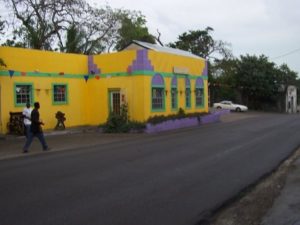
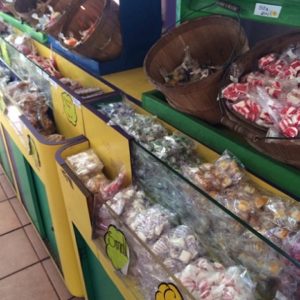
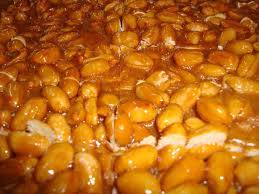
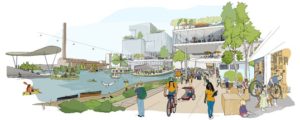 It could be that simple – there are players who want the opportunity to test their theories, manifest their visions and explore their ideas. They will come to you and build High-Tech neighborhoods, but only if you let them, not trample on their sensibilities and not block their progress.
 On Tuesday morning, the board of Waterfront Toronto, the organization administering revitalization projects along the Canadian city’s waterfront, unanimously agreed to work with the company to design the neighborhood. Final approval to physically develop the plans is likely to happen next year.
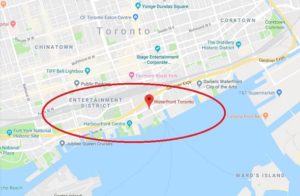
 Freedom of Speech is not so absolute!
 CLEVELAND – Retired Air Force Colonel David Antoon
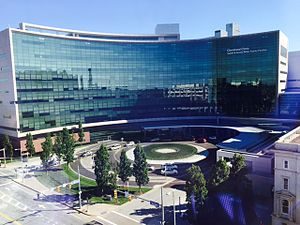
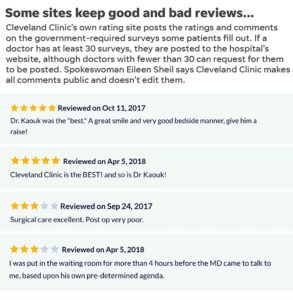
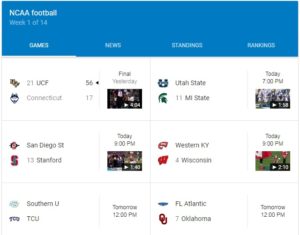




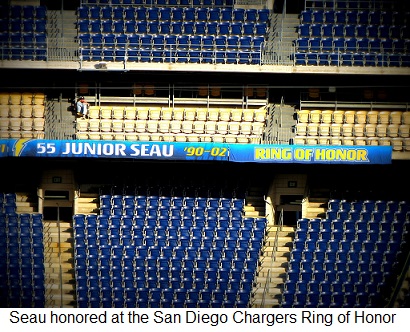

 The Go Lean book serves as a roadmap for the introduction and implementation of the technocratic Caribbean Union Trade Federation (CU), for the elevation of Caribbean society – for all member-states. The book asserts that this Caribbean super-national governance must be a lean operation, embracing the best-practices of the Art & Science of lean methodologies. The book opens with this introduction of lean (Page 4):
 30,000 people administering for 42 million citizens? Yes, we can … with the support of lean/agile systems and methodologies.
 May 18, 2018 – I am very pleased to announce more than 80,000 employees have been trained through the CitiLean Digital Training Academy. It was only last March when we celebrated our 50,000 mark!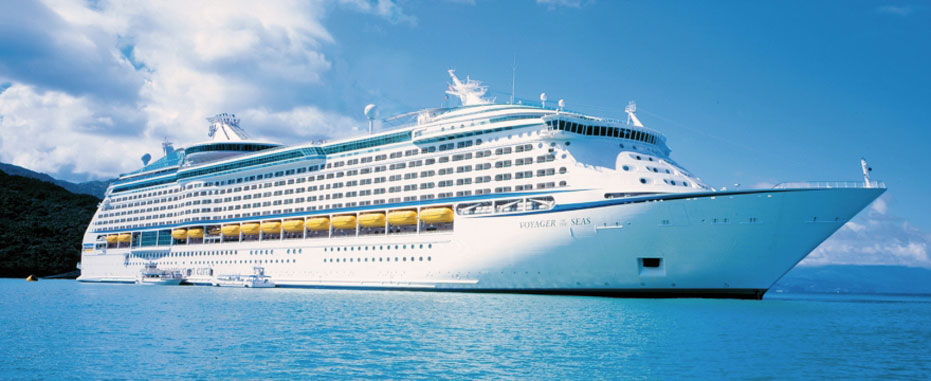
 When a cruise ship arrives in port, over 4,000 passengers disembark – they are the 800-pound Gorilla – their presence is felt; the ship cannot be ignored and cannot be dismissed …
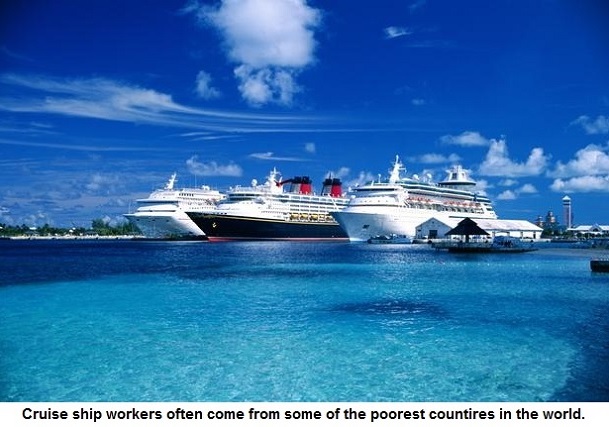
 It’s time to introduce the Caribbean Dollar (C$) as a regional currency. Though there will be coins and notes, the primary focus will be on electronic transactions. This is the future!
 …
…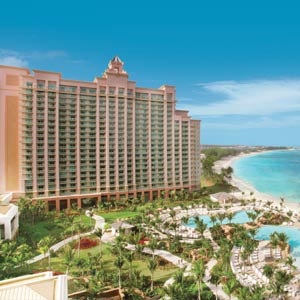 Think about this famous quotation; according to arithmetic, 100 X 1 = 1 X 100. The two sides of this equation amount to the same total. But strategy-wise, it is better for the “1 percent of 100 people”.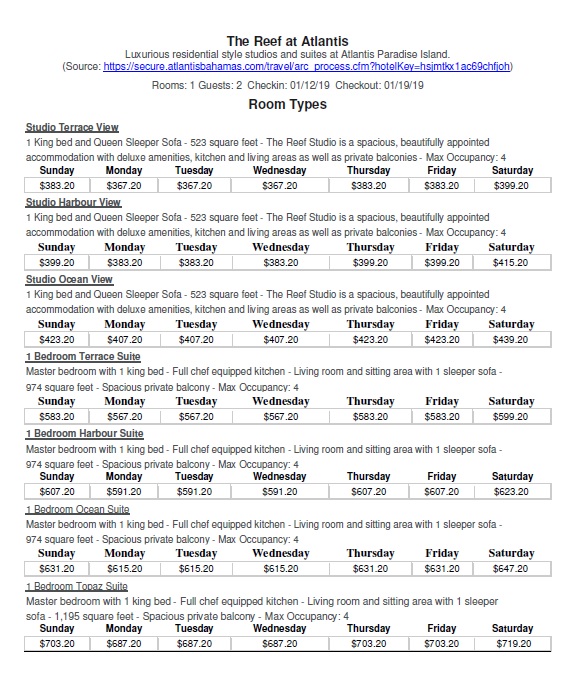
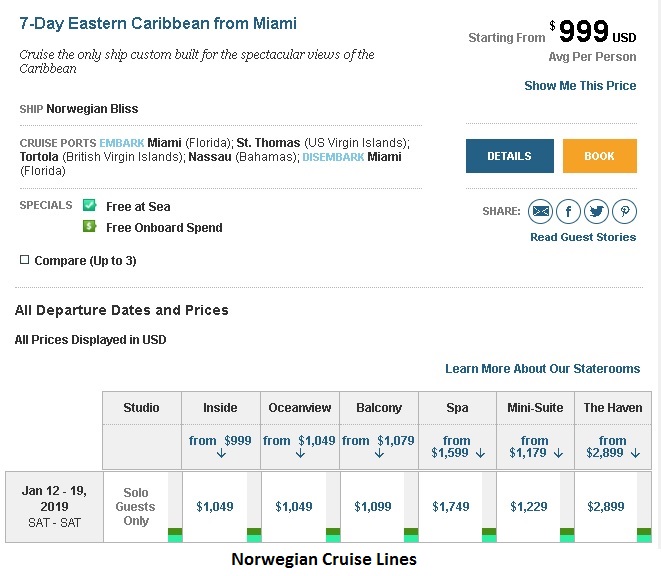
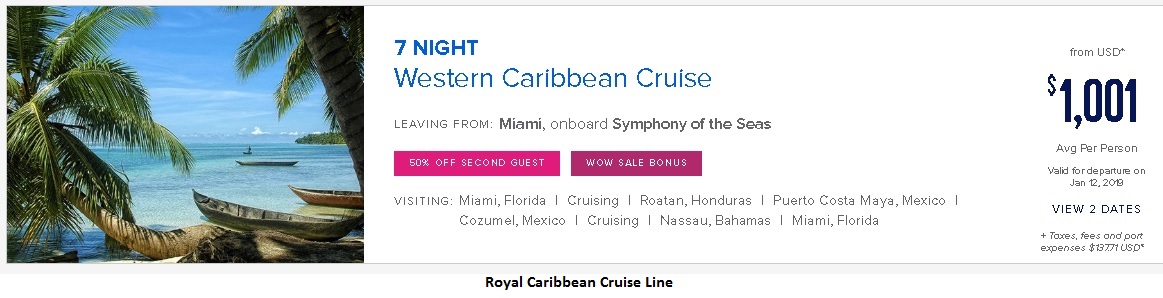

 Every Caribbean member-state has a
  Not for sun, sand or surf. No, the answer is culture. Parisian culture is responsible for Parisian economic engines.

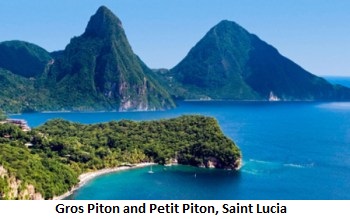


 Gambling, mildly permitted can be tolerated and even beneficial for society. Think State Lotteries …
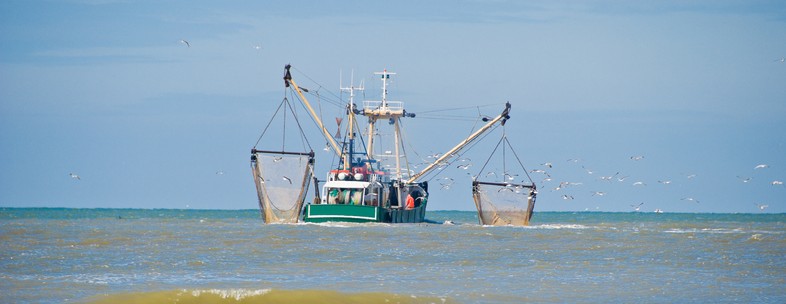
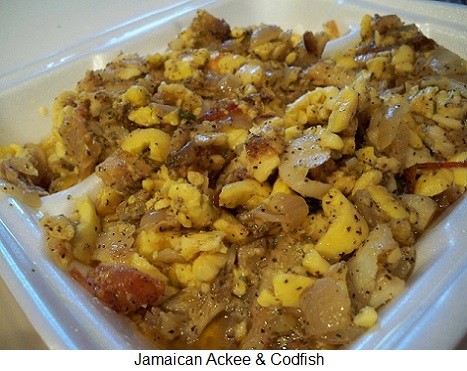
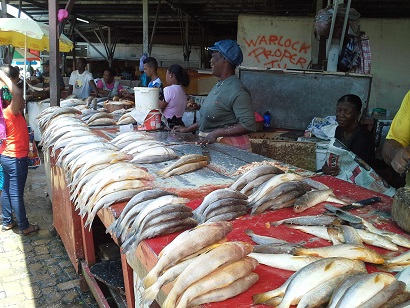
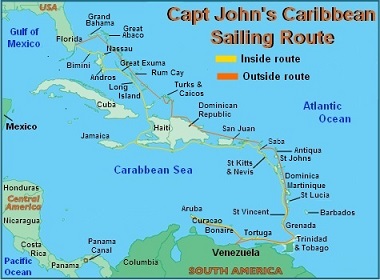
 This constitutes an industrial reboot for the Greater Good. We must mine these treasures from the sea. See this thought elaborated upon in this recent news article in Appendix A below. Also, we ask this question of Caribbean stakeholders: “Why not eat more fish?” in Appendix B.
 A few decades ago, the Caribbean people thought their food not good enough for the annual hoards of vacationing tourists. They considered their local dishes too native and uninteresting, and chose to offer visitors French food instead. Fortunately, after constant demand, Caribbean hoteliers and restauranteurs now offer a variety of traditional foods throughout the islands.
 I have often wondered why, given that they are a bunch of small islands, that so many of the more famous dishes of Caribbean countries are meat and not fish. The woman of this house is Jamaican and she is much more proud of jerk than of escabeche fish. Puerto Rico has its lechon, Cuban food has ropa de viejo and so on.