Tag: Jobs

3D Printing: Here Comes Change

Go Lean Commentary

Quick survey: 30 years ago – 1985 – did you have a smartphone or did you envision a smartphone – with such processing power, functionality and storage – being available to carry around in your pocket?

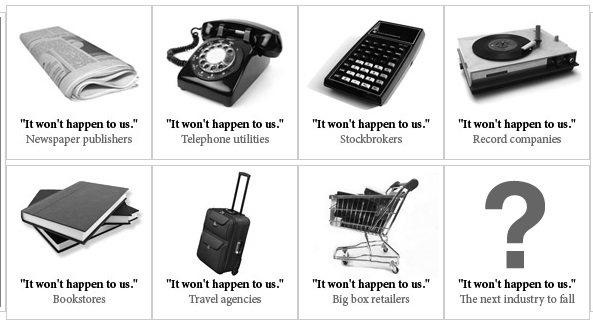
If your answer to this question is ”No”, then congratulations, you are an ordinary everyday “man/woman on the street”. You, like most people, didn’t envision that this technology would change “us” so dynamically that it would transform our lives and render obsolete, so many ordinary appliances (and industries); think: camera, watch, pager, map, address book, calculator, books, and more.

Take note:

This transformative change is about to happen again!

CU Blog - 3D Printing - Here Comes Change - Photo 3

An acute transformation – major change in a short period of time – is about to occur again. This time with 3D Printing. This change will affect the fabrication of so many ‘chattel’ goods. Imagine fabricating your own car!

Consider first, what 3D Printing refers to:

3D Printing (also called additive manufacturing) is any of various processes used to make a three-dimensional object.[1] In 3D printing, additive processes are used, in which successive layers of material are laid down under computer control.[2] These objects can be of almost any shape or geometry, and are produced from a 3D model or other electronic data source. A 3D Printer is a type of industrial robot.
3D Printing in the term’s original sense refers to processes that sequentially deposit material onto a powder bed with inkjet printer heads. More recently the meaning of the term has expanded to encompass a wider variety of techniques such as extrusion and sintering based processes. Technical standards generally use the term additive manufacturing for this broader sense. (Source: https://en.wikipedia.org/wiki/3D_printing)

This VIDEO here depicts a simple 3D Printing demonstration:

VIDEO – Timelapse of Hyperboloid Print – https://youtu.be/1213kMys6e8
Time-lapse video of a hyperboloid object made of Polylactic Acid (PLA) using a RepRap “Prusa Mendel” 3 printer for molten polymer deposition.

The hypothesis in this commentary is not just theoretical; this acute transformation is happening in real life. Consider this story/VIDEO here of an actual car being made using the 3D Printing process (assembly methods and sourcing):

VIDEO  The First 3D-Printed Supercar – https://youtu.be/o8wFs1aipaE

Published on Jun 24, 2015 – Meet Blade – a super-light sports car with a 3D printed chassis, designed as an alternative to traditional car manufacturing. Through 3D printing, entrepreneur Kevin Czinger has developed a radical new way to build cars with a much lighter footprint.
Read More On Forbes: http://onforb.es/1fBjCqt

Traditionally, fabrication methodologies involve subtraction. This strategy calls for starting with a block/lump of raw material (wood, stone, etc.) and cutting away excess materials to keep the desired structure. The alternate fabrication methodology involves molding pliable materials (iron/steel/aluminum) to a desired shape. 3D Printing or additive manufacturing (AM) is a game-changer! As the name suggests, the approach is to add, build up to the design/mold that is intended. The encyclopedic reference continues:

The umbrella term additive manufacturing gained wider currency in the decade of the 2000’s[12] as the various additive processes matured and it became clear that soon metal removal would no longer be the only metalworking process done under that type of control (a tool or head moving through a 3D work envelope transforming a mass of raw material into a desired shape layer by layer). It was during this decade that the term subtractive manufacturing appeared as a retronym (new name) for the large family of machining processes with metal removal as their common theme. However, at the time, the term 3D Printing still referred only to the polymer technologies in most minds, and the term AM was likelier to be used in metalworking contexts than among polymer/inkjet/stereolithography enthusiasts. The term subtractive has not replaced the term machining, instead complementing it when a term that covers any removal method is needed.

Based on the above descriptions, the term Printer is only vaguely similar to traditional printing of ink on to paper. The similar movement of inkjet print heads versus the “head” movement of 3D Printers is what dominates the branding, and thus for the foreseeable future, the fabrication devices would probably be called “printers”, for both industrial and consumer uses; (see Appendix – 3D Printers).

The new reality of 3D Printing is now changing business models. Imagine distributed manufacturing where the additive manufacturing process would be combined with cloud computing technologies to allow for decentralized and geographically independent distributed production.[74] For example, make a car, with parts sourced from different locations by different 3D Printers. Under this new scheme, the creation of chattel goods will be a product of intellectual property.

The future is exciting!

Here comes change! Consider the governmental consequences:

If Caribbean governments depend on ‘Customs Duties’ of manufactured goods for a revenue source, they are hereby put on notice that this revenue stream will dry up. In many countries, (the Bahamas for example), the duty rates for automobiles are on a sliding scale from the high of 85% down to 55%. With an average costs of US$25,000, that is a lot of lost revenue for a member-state to adjust to.

The future is scary!

The book Go Lean…Caribbean focuses heavily on the future, and how to manage, monitor, and mitigate the changes (good and bad) that the future will bring. This acute transformation of 3D Printing is a good model of the type of innovation the Go Lean book anticipates. The book posits that the Caribbean region must not only be on the consuming end of these developments; we must create, develop and contribute to the innovations. This means jobs!

The job-creating initiatives start by fostering genius in Caribbean stakeholders who demonstrate competence in Science, Technology, Engineering and Mathematics (STEM). This will eventually apply to government revenue officials, but initially the focus will be more on the youth markets, as these ones adapt more readily to acute transformations.

This vision was pronounced early in the book with these statements in the opening Declaration of Interdependence (Pages 12 – 14) about the need for the Caribbean Union Trade Federation:

xiv. Whereas government services cannot be delivered without the appropriate funding mechanisms, “new guards” must be incorporated to assess, accrue, calculate and collect revenues, fees and other income sources for the Federation and member-states. The Federation can spur government revenues directly through cross-border services and indirectly by fostering industries and economic activities not possible without this Union.

xxii.   Whereas the preparation of our labor force can foster opportunities and dictate economic progress for current and future generations, the Federation must ensure that educational and job training opportunities are fully optimized for all residents of all member-states, with no partiality towards any gender or ethnic group. The Federation must recognize and facilitate excellence in many different fields of endeavor, including sciences, languages, arts, music and sports. This responsibility should be executed without incurring the risks of further human flight, as has been the past history.

xxvi.  Whereas the Caribbean region must have new jobs to empower the engines of the economy and create the income sources for prosperity, and encourage the next generation to forge their dreams right at home, the Federation must therefore foster the development of new industries, like that of ship-building, automobile manufacturing, prefabricated housing, frozen foods, pipelines, call centers, and the prison industrial complex. In addition, the Federation must invigorate the enterprises related to existing industries like tourism, fisheries and lotteries – impacting the region with more jobs.

xxvii. Whereas the region has endured a spectator status during the Industrial Revolution, we cannot stand on the sidelines of this new economy, the Information Revolution. Rather, the Federation must embrace all the tenets of Internet Communications Technology (ICT) to serve as an equalizing element in competition with the rest of the world. The Federation must bridge the digital divide and promote the community ethos that research/development is valuable and must be promoted and incentivized for adoption.

xxviii. Whereas intellectual property can easily traverse national borders, the rights and privileges of intellectual property must be respected at home and abroad. The Federation must install protections to ensure that no abuse of these rights go with impunity, and to ensure that foreign authorities enforce the rights of the intellectual property registered in our region.

xxx.   Whereas the effects of globalization can be felt in every aspect of Caribbean life, from the acquisition of food and clothing, to the ubiquity of ICT, the region cannot only consume, it is imperative that our lands also produce and add to the international community, even if doing so requires some sacrifice and subsidy.

The Go Lean book serves as a roadmap for the introduction and implementation of this Caribbean Union Trade Federation (CU), a technocratic federal government to administer and optimize the region’s eco-systems. In fact the book identifies the prime directives of the CU with these statements:

  • Optimization of the economic engines in order to grow the regional economy to $800 Billion & create 2.2 million new jobs.
  • Establishment of a security apparatus to protect the resultant economic engines.
  • Improvement of Caribbean governance to support these engines.

The CU strives to elevate all of Caribbean society and culture. A recommended community ethos for the region to adapt, “Return on Investments” (Page 24). This calls for embedding incentives and inducements to encourage students and apprenticeships in these STEM fields. These incentives can resemble forgive-able student loans, on-the-job training employment contracts, paid internships, signing bonuses, etc. This ethos also translates into governing principles for CU-sponsored business incubators, R&D initiatives, grants, entrepreneurship programs and the regional implementation of Self-Governing Entities (SGE).

The book estimates that the technology job-creating effect can amount to 64,000 new direct and indirect technology/software jobs in the region. This is just one ethos. The Go Lean roadmap was constructed with more community ethos in mind to forge change and build anticipation and excitement for technological transformative changes. The book lists the following samples, plus the execution of related strategies, tactics, implementations and advocacies:

Community Ethos – Deferred Gratification Page 21
Community Ethos – Economic Principles – People Choose Page 21
Community Ethos – Economic Principles – People Respond to Incentives in Predictable Ways Page 21
Community Ethos – Economic Principles – The Consequences of Choices Lie in the Future Page 21
Community Ethos – Economic Principles – Job Multiplier Page 22
Community Ethos – Governing Principles – Lean Operations Page 24
Community Ethos – Ways to Impact the Future Page 26
Community Ethos – Ways to Foster Genius Page 27
Community Ethos – Ways to Promote Intellectual Property Page 29
Community Ethos – Ways to Impact Research & Development Page 30
Community Ethos – Ways to Bridge the Digital Divide Page 31
Community Ethos – Ways to Promote Happiness Page 36
Community Ethos – Ways to Impact the Greater Good Page 37
Strategy – Vision – Confederate 30 Member-States Page 45
Strategy – Vision – Invite Diaspora Back to the Caribbean Homeland Page 46
Strategy – Mission – Exploit the benefits and opportunities of globalization Page 46
Tactical – Confederating a Permanent Union Page 63
Tactical – Fostering a Technocracy Page 64
Implementation – Ways to Pay for Change Page 101
Implementation – Steps to Implement Self-Governing Entities Page 105
Implementation – Trends in Implementing Data Centers – Creating the ‘Cloud’ Page 106
Implementation – Ways to Deliver Page 109
Implementation – Ways to Impact Social Media – Caribbean Cloud Page 111
Planning – 10 Big Ideas for the Caribbean Region – Cyber-Caribbean Page 127
Planning – Ways to Make the Caribbean Better Page 136
Advocacy – Ways to Grow the Economy Page 151
Advocacy – Ways to Create Jobs Page 152
Advocacy – Ways to Improve Education – STEM Promotion Page 159
Advocacy – Ways to Improve Governance – Managing Changes of e-Government & e-Delivery Page 168
Advocacy – Ways to Foster Technology Page 197
Advocacy – Ways to Foster e-Commerce Page 198
Advocacy – Ways to Develop the Automobile Industry Page 206
Advocacy – Ways to Impact Youth Page 227
Appendix – CU Job Creations Page 257

This Go Lean roadmap calls for the heavy-lifting to transform Caribbean society. As conveyed in the foregoing VIDEOs, technological change is coming anyway; consider the imagery of a freight train coming down the track, the force and momentum cannot be stopped. The roadmap advocates getting ahead of the change, to shepherd and navigate important aspects of Caribbean life through these “seas of change”. These goals were previously featured in Go Lean blogs/commentaries, as sampled here:

https://goleancaribbean.com/blog/?p=5435 China Internet Policing – Model for Transforming the Caribbean
https://goleancaribbean.com/blog/?p=5376 Drones to be used to Transform Insurance Damage Claims
https://goleancaribbean.com/blog/?p=5155 Transformative Tesla unveils super-battery to power homes
https://goleancaribbean.com/blog/?p=5034 Patents: The Guardians of Innovation
https://goleancaribbean.com/blog/?p=4381 Net Neutrality – This Matters … For Transformation & Innovation
https://goleancaribbean.com/blog/?p=3915 Change the way you see the world; you change the world you see
https://goleancaribbean.com/blog/?p=3490 How One Internet Entrepreneur Can Rally a Whole Community
https://goleancaribbean.com/blog/?p=3187 Robots help Amazon tackle Cyber Monday
https://goleancaribbean.com/blog/?p=2953 Funding Caribbean Entrepreneurs – The ‘Crowdfunding’ Way
https://goleancaribbean.com/blog/?p=2126 Where the Jobs Are – Computers Reshaping Global Job Market
https://goleancaribbean.com/blog/?p=1698 Where the Jobs Are – STEM Jobs Are Filling Slowly
https://goleancaribbean.com/blog/?p=1487 Here come the Drones … and the Concerns
https://goleancaribbean.com/blog/?p=1416 Amazon’s new FIRE Smartphone
https://goleancaribbean.com/blog/?p=308 CARCIP Urges Greater Innovation

The Go Lean book focuses primarily on economic issues, and it recognizes that computer hardware and software like 3D Printing systems – as portrayed in the foregoing VIDEOs – are the future direction for industrial developments. This is where the jobs are to be found. The Go Lean roadmap describes the heavy-lifting for people, organizations and governments to forge these innovations here at home in the Caribbean. The Caribbean consumes manufactured goods now. What an acute transformation that much of the manufacturing maybe here at “home”; not just in the homeland, but also in home garages, family rooms and study desks.

Do-It-Yourself manufacturing may be a reality!  (See Appendix of 3D Printed Perpetual Engine).

Is this science fiction? (Consider a “Replicator” on the Starship Enterprise).

No, this is now! This is conceivable, believable and achievable; consider the foregoing VIDEOs. The Go Lean book offers the turn-by-turn directions for strategies, tactics and implementations so that our communities may not only be consuming these innovations, but be innovators as well. With the right commitment of time, talent and treasuries, we can forge our own future of inclusion and progress.  🙂

Download the free e-Book of Go Lean … Caribbean – now!

———–

Appendix VIDEO – 3D Printed Motor Runs Almost Like a Perpetual Machine – https://youtu.be/6m73MaNoSIM

Published on Jan 3, 2015 – This is a 3D printed EZ Spin Motor. It turned out being a very clean and nice running build. I also explain how to properly wire up an EZ Spin Motor. This thing would run for a very long time on a 5v super capacitor.
LaserSaber online store at: http://teslamaker.com/

———–

Appendix – 3D Printers

Industrial Use

CU Blog - 3D Printing - Here Comes Change - Photo 1

As of May 2011, the company Ultimaker now sells additive manufacturing systems that range from $1,300 to $2,750 in price and are employed in several industries: aerospace, architecture, automotive, defense, and medical replacements, among many others. For example, General Electric uses the high-end model to build parts for turbines.[41]

Consumer Use 

CU Blog - 3D Printing - Here Comes Change - Photo 2

Several projects and companies are making efforts to develop affordable 3D printers for home desktop use. Much of this work has been driven by and targeted at Do-It-Yourself-(DIY)/enthusiast/early_adopter communities, with additional ties to the academic and hacker communities.[42]

RepRap is one of the longest running projects in the desktop category. The RepRap project aims to produce a free and open source hardware (FOSH) 3D printer, whose full specifications are released under the GNU General Public License, and which is capable of replicating itself by printing many of its own (plastic) parts to create more machines.[43][44] RepRaps have already been shown to be able to print circuit boards[45] and metal parts.[46][47]

Because of the FOSH aims of RepRap, many related projects have used their design for inspiration, creating an ecosystem of related or derivative 3D printers, most of which are also open source designs…

The cost of 3D printers has decreased dramatically since about 2010, with machines that used to cost $20,000 now costing less than $1,000.[50] For instance, as of 2013, several companies and individuals are selling parts to build various RepRap designs, with prices starting at about €400 / US$500.[51] The open source Fab@Home project[52] has developed printers for general use with anything that can be squirted through a nozzle, from chocolate to silicone sealant and chemical reactants. Printers following the project’s designs have been available from suppliers in kits or in pre-assembled form since 2012 at prices in the US$2000 range.[51] The Kickstarter funded Peachy Printer is designed to cost $100[53] and several other new 3D printers are aimed at the small, inexpensive market including the mUVe3D and Lumifold. Rapide 3D has designed a professional grade crowdsourced 3D-printer costing $1499 which has no fumes nor constant rattle during use.[54] The 3Doodler, “3D printing pen”, raised $2.3 million on Kickstarter with the pens selling at $99,[55] though the 3D Doodler has been criticised for being more of a crafting pen than a 3D printer.[56]

As the costs of 3D printers have come down they are becoming more appealing financially to use for self-manufacturing of personal products.[57] In addition, 3D printing products at home may reduce the environmental impacts of manufacturing by reducing material use and distribution impacts.[58]

(Source: https://en.wikipedia.org/wiki/3D_printing)

Share this post:
, , , ,

Innovative Partnership Aids Farm Workers

Go Lean Commentary

“We used to own our slaves, now we just rent them” – Quotation from a farmer in 1960 CBS Documentary

This reminds us of a common expression:

The more things change, the more they remain the same.

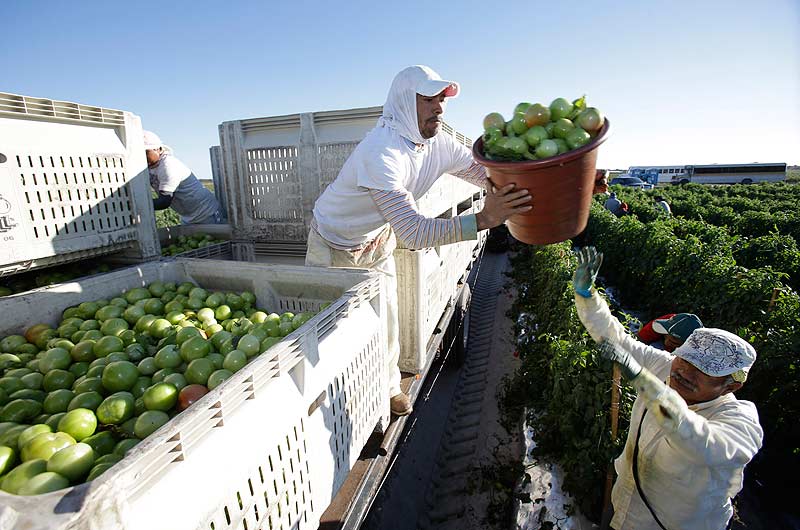
CU Blog - Innovative Partnership Aids Farm Workers - Photo 4In the landmark 1960 Documentary by famed TV Journalist Edward R. Morrow, the conclusion was that American Agricultural Interest would always seek some scheme for cheap labor. That even though slavery had been abolished for 100 years, there were still labor practices that were tantamount to modern-day slavery.

So sad! American society hadn’t reformed.

How about now, 55 years later?

Truthfully, despite this innovative partnership here to aid farm workers, there has only been small progress forward for a journey of thousands of miles. Just consider this latest CBS News story/VIDEO here:

VIDEOCBS News – Posted 08-09-2015; retrieved 08-11-2015  from: http://www.cbsnews.com/videos/innovative-partnership-aids-farm-workers/

August 9, 2015 – For decades, the tomato farms in South Florida have been known for their awful working conditions, but things are changing thanks to some unlikely partners. Mark Strassmann reports on how a coalition of migrant farm workers and some of the nation’s biggest tomato buyers are helping improve working conditions and raise pay. (VIDEO plays best in Internet Explorer).

Welcome to the America of 1865, 1960 and 2015.

CU Blog - Innovative Partnership Aids Farm Workers - Photo 1

Only now after decades, American society is finally reporting progress for the conditions of migrant farm workers. Too little, too late!

Perhaps the American shores should not be the destination for Latin American Migrant Farm Labor. This is definitely the position of the book Go Lean … Caribbean. The publishers of the Go Lean book campaign that it would be better for Caribbean citizens (subset of Latin America) to remain in their homeland and work to remediate conditions there, than to migrate to American destinations looking for better labor options. (Previously the same futility had been detailed regarding a Jamaican-Canadian Labor Exchange program). Considering the statistics and anecdotal evidence in the foregoing VIDEO, these 2 conclusions appear indisputable:

Considering this reality, it is sad that the eco-systems of Caribbean society are failing so that now many Caribbean citizens still long for the opportunity to emigrate to the United States. There have been many that have taken to the seas on risky vessels to reach this land of their dreams. Many Caribbean member-states (St Vincent, Puerto Rico, US Virgin Islands, etc.) have lost more than half of their populations to foreign shores. While others have lost more than 70 percent of their college educated populations. This situation is so impactful that now 1 out of 11 Black persons in the US is now of Caribbean (or African) descent, and these numbers are only expected to grow. This is a crisis for the Caribbean.

The reasons for this Caribbean crisis are identified as “push-and-pull”. Failures in our society are so acute that many feel compelled to seek their future abroad. While this is “push”, the “pull” refers to the propaganda and image that American life is better – the “place to be”.

CU Blog - Innovative Partnership Aids Farm Workers - Photo 2

Hopefully this commentary succeeds in dispelling this mis-information that life in the American Migrant Labor eco-system is better than enduring Caribbean society. This is one of the motives of this commentary; another motive is to highlight the success of Farm Labor Reform Advocates, in this case the #FairFoods movement; this innovative partnership to aid farm workers. CU Blog - Innovative Partnership Aids Farm Workers - Photo 3

This cause and campaign is not unfamiliar to the Go Lean movement. The Go Lean book had identified another effective advocate in the farm labor movement: Cesar Chavez of the 1960’s/1970’s United Farm Workers Union movement. (In many ways, #FairFoods stands on the shoulders of the late-great Cesar Chavez).  The book relates (Page 122) this summary of the historicity of Cesar Chavez:

CU Blog - Innovative Partnership Aids Farm Workers - Photo 5

Chavez (1927 – 1993) was an American farm worker, labor leader and civil rights activist, who co-founded the National Farm Workers Association (later the United Farm Workers Union (UFW)). He became the best known Latino American civil rights activist, and was strongly promoted by the American labor movement, which was eager to enroll Hispanic members. His public-relations approach to unionism and aggressive but nonviolent tactics made the farm workers’ struggle a moral cause with nationwide support. By the 1970s, his tactics had forced growers to grant respect to migrant workers, and recognize the UFW as the bargaining agent for 50,000 field workers in California & Florida.

There is now new update on the national appreciation and societal impact of Cesar Chavez:

Chavez is buried at the National Chavez Center, on the headquarters campus of the United Farm Workers of America at 29700 Woodford-Tehachapi Road in the Keene community of unincorporated Kern County, California.[36][37] He received belated full military honors from the US Navy at his graveside on April 23, 2015, the 22nd anniversary of his death.[38]

The efforts of this commentary is not to reform America, but to reform the Caribbean. The Go Lean book serves as a roadmap for the introduction and implementation of the technocratic Caribbean Union Trade Federation (CU). While the branding Trade connotes economics, the roadmap also addresses labor and justice assurances. In fact, the Go Lean roadmap has these 3 prime directives:

  • Optimization of the economic engines in order to grow the regional economy and create 2.2 million new jobs.
  • Establishment of a security apparatus to protect the resultant economic engines and the Caribbean homeland against abuse from “bad actors” in society.
  • Improvement of Caribbean governance to support these engines, including a separation-of-powers between CU agencies and member-state governments.

The goal of the Go Lean roadmap therefore is to forge a better society, to make the Caribbean a better place to live, work and play. By optimizing our justice and labor institutions, we would lower our own “push” factors. These requirements were pronounced at the outset of the Go Lean book, in the Declaration of Interdependence (Page 12) with these statements:

xi. Whereas all men are entitled to the benefits of good governance in a free society, “new guards” must be enacted to dissuade the emergence of incompetence, corruption, nepotism and cronyism at the peril of the people’s best interest. The Federation must guarantee the executions of a social contract between government and the governed.

xxi. Whereas the legacy in recent times in individual states may be that of ineffectual governance with no redress to higher authority, the accedence of this Federation will ensure accountability and escalation of the human and civil rights of the people for good governance, justice assurances, due process and the rule of law. As such, any threats of a “failed state” status for any member state must enact emergency measures on behalf of the Federation to protect the human, civil and property rights of the citizens, residents, allies, trading partners, and visitors of the affected member state and the Federation as a whole.

How can the Caribbean be different than the United States in the pursuit of labor justice?

The CU/Go Lean roadmap seeks to apply best-practices in labor regulations; we do not want to repeat America’s mistakes; we have enough “push” reasons to contend with already.

This review of American Farm Labor past-and-present also helps with the “pull factors. We see a more accurate portrayal of American values. The Go Lean book cites the historic example and abuses of the Peonage system that emerged in the Southern US after the Civil War (Page 211). It was obvious that many “bad actors” in American society wanted cheap labor even though slavery had just been outlawed in the country. With the realities of migrant farm workers and their need for civil rights, obviously, there remains factions in the American Agriculture eco-system that have not matured in their appreciation of the working classes. This class of people have still “not overcome”.

Welcome to America … a land of two destinations: richer or poorer.

To all those in the Caribbean desiring to emigrate to the US, we urge you to take heed: the “grass is not greener” on that other side! This point was highlighted in other Go Lean…Caribbean commentary, as sampled here:

https://goleancaribbean.com/blog/?p=6089 American Jobs – Futility of Minimum Wage
https://goleancaribbean.com/blog/?p=5597 American Wage-Seeking – Market Forces -vs- Collective Bargaining
https://goleancaribbean.com/blog/?p=5238 American Crony-Capitalism – Prisoners for Profit
https://goleancaribbean.com/blog/?p=5210 Cruise Ship Labor-Practices – Getting Ready for Change
https://goleancaribbean.com/blog/?p=4278 American Businesses Try to Stave-off Brain Drain as Boomers Retire
https://goleancaribbean.com/blog/?p=3694 Jamaica-Canada employment program try to pump millions into local economy

The book Go Lean … Caribbean details these strategies, tactics, implementations and advocacies to elevate Caribbean society, mitigating the “push” reasons:

Community Ethos – Deferred Gratification Page 21
Community Ethos – Economic Principle – Economic Systems Influence Choices & Incentives Page 21
Community Ethos – Consequences of Choices Lie in the Future Page 21
Community Ethos – Job Multiplier Page 22
Community Ethos – Whistleblower Protection Page 23
Community Ethos – Anti-Bullying and Mitigation Page 23
Community Ethos – Lean Operations Page 24
Community Ethos – Cooperatives Page 25
Community Ethos – Ways to Impact the Future Page 26
Community Ethos – Ways to Foster Genius – Leadership Skills Page 27
Community Ethos – Ways to Improve Negotiations Page 32
Community Ethos – Ways to Impact the Greater Good Page 37
Strategy – Mission – Education Without Further Brain Drain Page 46
Tactical – Fostering a Technocracy Page 64
Tactical – Tactics to Forge an $800 Billion Economy – High Multiplier Industries Page 70
Tactical – Separation of Powers – Justice Department – Trade Anti-Trust Regulatory Commission Page 77
Tactical – Separation of Powers – Labor Department – Labor Relations Board Page 89
Implementation – Ways to Pay for Change Page 101
Implementation – Ways to Deliver Page 109
Implementation – Ways to Foster International Aid Page 115
Planning – Ways to Improve Trade Page 128
Advocacy – Ways to Create Jobs Page 152
Advocacy – Ways to Better Manage Food Consumption – Optimizing Agriculture Supply Chain Page 162
Advocacy – Ways to Impact Labor Markets and Unions Page 164
Advocacy – Ways to Improve Governance Page 168
Advocacy – Ways to Better Manage the Social Contract Page 170
Advocacy – Ways to Improve Leadership Page 171
Advocacy – Ways to Foster Cooperatives Page 176
Advocacy – Ways to Impact Justice Page 177
Advocacy – Ways to Foster Technology Page 197
Advocacy – Ways to Impact Foundations Page 219
Advocacy – Ways to Battle Poverty – Third World Realities Page 222
Advocacy – Ways to Help the Middle Class Page 223
Advocacy – Ways to Impact Youth – Incentivizing STEM Careers Page 227
Appendix – Growing 2.2 Million Jobs in 5 Years Page 257
Appendix – Job Multipliers Page 259

The Go Lean roadmap asserts to all those desiring to flee to the US: America is not so alluring … from a labor justice perspective, especially if you’re poor, Black-and-Brown. The admonition: Lower the “pull” factors for Coming to America.

There is the need for new jobs; exporting workers for seasonal agricultural harvests had been a popular strategy. This Go Lean roadmap though takes an alternate approach; it creates local jobs; high paying, career-enhancing ones. The Go Lean book pronounces this need in the opening Declaration of Interdependence (Page 14):

xxvi.  Whereas the Caribbean region must have new jobs to empower the engines of the economy and create the income sources for prosperity, and encourage the next generation to forge their dreams right at home, the Federation must therefore foster the development of new industries … – impacting the region with more jobs.

More jobs would help to lower “push” factors. We must do this; address all possible “push” factors. The region must address its issues, as to why its population is so inclined to emigrate; this is the purpose of the Go Lean roadmap. It features the assessments, strategies, tactics and implementations to make the Caribbean a better place to live, work and play.

Now is the time for the Caribbean region to lean-in for the empowerments described in the book Go Lean … Caribbean. The benefits of this roadmap are too alluring to ignore: emergence of our own $800 Billion (GDP) economy, 2.2 million new jobs, new industries, new services and optimized justice institutions.

The end result of the Go Lean roadmap – after the defined 5 year plan – is to lower both the “push” and the “pull” factors. Instead we want to incentivize our citizens to remain home, participate in new job initiatives and to prosper here where we are planted. 🙂

Download the book Go Lean … Caribbean – now!

Share this post:
, , , ,
[Top]

Where the Jobs Are – Futility of Minimum Wage

Go Lean Commentary

There are laws and there are absolutes.

Gravity is an absolute: what goes up must come down!

Minimum wage is a law, not an absolute.

The book Go Lean…Caribbean, which calls for the elevation of Caribbean economics, asserts that the Caribbean has to better managed the realities of minimum wage jobs. The book examined the anatomy of minimum wages (Page 152) and its effect on a community’s eco-system. This classic case study on this subject is quoted as flows:

A minimum wage is the lowest hourly, daily or monthly remuneration that employers may legally pay to workers. Equivalently, it is the lowest wage at which workers may sell their labor. Although minimum wage laws are in effect in many jurisdictions, differences of opinion exist about the benefits and drawbacks of a minimum wage.

The minimum wage is generally acknowledged to increase the standard of living of workers, reduces poverty, reduces inequality, boosts morale and forces businesses to be more efficient. Critics of the minimum wage, predominantly followers of neo-classical economic theory, contend that a minimum wage increases unemployment, particularly among workers with very low productivity due to inexperience or handicap, thereby harming less skilled workers and possibly excluding some groups from the labor market; additionally it may be less effective and more damaging to businesses than other methods of reducing poverty.
Source: Black, John (September 18, 2003). Oxford Dictionary of Economics. OxfordUniversity Press. p. 300.

The reality of minimum wage, helping some workers while harming others, has been bantered about in the news as of late, consider the following news articles:

Title #1: Fast Food Workers Win A Historic Raise
By: Cole Stangler, International Business Times

New York made shockwaves on Wednesday when a specially-convened state wage board called for a hike in the minimum pay for fast food workers to $15 an hour. Assuming it’s approved by Gov. Andrew Cuomo –and no signs suggest otherwise– the new rate will be, at once, a jaw-dropping victory for labor activists, a rare political setback for name-brand restaurant chains, and the latest piece of fodder for a national debate about the value of fair pay. It also can’t come soon enough for David Ramirez.

CU Blog - Where the Jobs Are - Futility of Minimum Wage - Photo 1“We need that raise, my man,” says Ramirez, 52, an employee at the same Subway restaurant in midtown Manhattan for the past 10 years, where he earns the state minimum, now $8.75. “We bust our a– up in here.”

On most days, Ramirez wakes well before dawn in downtown Brooklyn, where he splits monthly rent of $1300 with his mother who receives Social Security benefits. He usually starts work at 5 in the morning. When his shift ends at 3 in the afternoon, he heads to a different Subway in Woodmere, Queens –about an hour and a half away by train– and works another 4 hours. It makes for an exhausting 60 hour work week. Since he divides the time over two jobs, neither tallying more than 40 hours per week, Ramirez doesn’t earn any overtime. In New York City, he says, those annual earnings of about $21,000 are hard to get by on. A raise of $6 would go a long way.

“It would make a big difference, not just to me,” he says, “but other families too.”

Unchartered Waters
That was also the thinking of the Fast Food Wage Board, which voted unanimously in support of the $15 rate. The pay hike would apply to fast food chains with 30 or more locations nationwide, and be phased in over time, becoming mandatory in New York City by 2019, and the rest of the state by July 2021. Backed with enthusiasm by Gov. Cuomo, the raise can proceed without legislative approval: a New Deal era law allows state regulators to boost wages for specific industries and occupations where they deem pay “insufficient to provide for the life and health” of workers. The raise comes after two and a half years of high-visibility protests from the so-called Fight For 15, a movement of low-wage workers and labor activists backed by the powerful Service Employees International Union that demands higher wages in fast food and other low-paying sectors.

Amid pressure from these activists, other major cities have already approved $15 minimum wages –Seattle, San Francisco and both the city and county of Los Angeles– but New York’s looming pay hike is unique for a couple of reasons. For one, it’s the only one to apply to a single industry. It also would take effect across the entire state, whereas the other ambitious wage hikes have all been limited to cities.

Jay Holland, government affairs coordinator for the New York State Restaurant Association, blasted the state’s decision to single out the fast food industry. “This is an economic policy that’s never been tried before,” he says of the sector-wide wage. “The idea that an EMT worker or a home care aide should make less than a fast food worker flies in the face of reason.”

“Most restaurants operate under really thin margins,” he adds. “You’re gonna have to raise prices, lay people off or come up with some creative scheduling practices to save money.”

Anna agrees with Holland. She earns $9.75 an hour and works 32 hours a week, scrubbing tables and mopping floors at a McDonald’s in midtown Manhattan. Like many low-wage workers, she lacks job protections and did not provide her last name. “It sounds good,” she says of $15 an hour, “but you know they’re gonna cut hours. That’s what they’re already doing.”

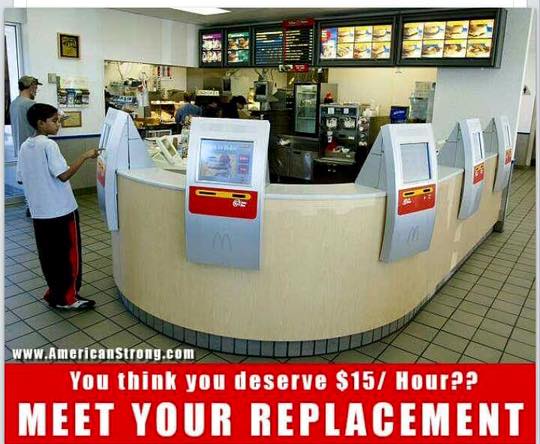
James Sherk, labor policy expert at the conservative Heritage Foundation, says the pay mandates will accelerate the industry’s turn toward automation — self-service tablets, for example, that replace the need for cashiers. Such technologies are already being developed, but are not yet widely used.

“The main barrier to implementation is the up-front cost and then maintenance,” Sherk says. “But with the minimum wage going up it will make a lot more sense for McDonald’s to do this. It changes the financial calculus.”

Tsedeye Gebreselassie, staff attorney at the left-leaning National Employment Law Project, shrugs off the criticism. Businesses always tend to complain when the wage floor rises, she says, and this is no exception. Plus, the hike is staggered over time, giving the firms –which include some of the largest corporations in the nation– plenty of time to adjust.

The boost will also deliver broader benefits to the economy, as workers find themselves with more spending power than before. That bottom tier of the labor force is in despearate need of economic gains. “Part of why there has to be such a dramatic increase is that wages have fallen so dramatically,” Gebreselassie says. “This is about playing catch up.”

It’s also about setting high standards for an increasingly large part of the labor force, she says. More than 4 million people work in the fast food sector nationwide; 180,000 of them are in New York.

As the recovery continues to inch forward, lingering myths of fast food as a temporary gig for teens simply don’t reflect the new economic reality. A New   York survey found 87.5 percent of the state’s fast food workers are aged 19 and older. “Because this is such a growing industry, more and more adults are going to be spending their careers in it,” she says. It makes sense that decent pay should follow.

Another benefit of the wage hike is that it remains largely immune to a common threat of employers confronted with mounting high labor costs: relocation. Unlike the sorts of manufacturing jobs that companies can easily ship to cheaper states or countries — say, General Electric’s ongoing relocation from a unionized capacitor plant in Fort Edward, New York to non-union Clearwater, Florida — fast food restaurants aren’t about to up and leave the state en masse. “You need to be where your customers are, where the demand is,” says Gebreselassie.

“Everything’s Rising Except For The Pay”
For many workers, business concerns don’t change the fact that current pay practices verge on the nightmarish.

“Everything’s rising except for the pay — rents, food, transportation” says Filiberto Carrillo, who, like David Ramirez, has to work at two different New York City Subways to make ends meet. He’s worked at Subway for 6 years, he says, and earns $10 an hour. “Right now, when you ask for more pay, they just give you more hours.”

Physically, he cannot tolerate much more. Carrillo says he usually works 15 to 16 hour days, or 75 hours a week. A $15 wage would be a relief, he says, before going to fix coffee for an anxious customer in line.

Meanwhile, for David Ramirez, a pay raise might resolve his MetroCard dilemma. Right now, he uses a weekly pass. He knows it’s cheaper to get the monthly one, but it’s especially prone to malfunction if it bends a lot — it’s happened before and takes far too long to get fixed. The monthly cost difference between the two passes is about 7 dollars. He would rather not make such calculations.

Source: International Business Times Web News – Posted 07-23-2015; retrieved from:
http://www.msn.com/en-us/money/markets/fast-food-workers-win-a-historic-raise/ar-AAdnvse?ocid=HPCDHP
————
VIDEO – New York City Gives Fast Food Workers a Raise to a Minimum $15 an Hour – https://youtu.be/2QaFCrhFLjg

Published on Jul 22, 2015 – New York City fast food workers are getting a pay raise after the state’s wage board approved a new minimum hourly pay of $15, up from $8.75 which would take effect by 2018 and 2021 for the rest of the state. The wage hike applies to fast food workers — whether at big corporations like McDonald’s (MCD) and Burger King

Poor McDonalds!

No wait … the foregoing article highlights:

… the pay mandates will accelerate the industry’s turn toward automation — self-service tablets, for example, that replace the need for cashiers. Such technologies are already being developed, but are not yet widely used.

This is the theme of this commentary, minimum wage is a law, not an absolute; technology will simply be deployed to mitigate the high costs of labor. See this subsequent article, posted earlier, during the 4th Quarter of 2014:

Title #2: McDonald’s has joined the list of food chains looking to put more machines to work
By: Patrick Thibodeau, ComputerWorld Magazine Contributor

Oct 24, 2014 – McDonald’s this week told financial analysts of its plans to install self-ordering kiosks and mobile ordering at its restaurants. It isn’t the only food chain doing this.

The company that owns Chili’s Grill & Bar also said this week it will complete a tablet ordering system rollout next month at its U.S. restaurants. Applebee’s announced last December that it would deliver tablets to 1,800 restaurants this year.

The pace of self-ordering system deployments appears to be gaining speed. But there’s a political element to this and it’s best to address it quickly.

The move toward more automation comes at the same time pressure to raise minimum wages is growing. A Wall Street Journal editorial this week, “Minimum Wage Backfire,” said that while it may be true for McDonald’s to say that its tech plans will improve customer experience, the move is also “a convenient way…to justify a reduction in the chain’s global workforce.”

The Journal faulted those who believe that raising fast food wages will boost stagnant incomes. “The result of their agitation will be more jobs for machines and fewer for the least skilled workers,” it wrote.

The elimination of jobs because of automation will happen anyway. Gartner says software and robots will replace one third of all workers by 2025, and that includes many high-skilled jobs, too.

Automation is hardly new to retail. Banks rely on ATMs, and grocery stores, including Walmart, have deployed self-service checkouts. But McDonald’s hasn’t changed its basic system of taking orders since its founding in the 1950s, said Darren Tristano, executive vice president of Technomic, a research group focused on the restaurant industry.

The move to kiosk and mobile ordering, said Tristano, is happening because it will improve order accuracy, speed up service and has the potential of reducing labor cost, which can account for about 30% of costs. But automated self-service is a convenience that’s now expected, particularly among younger customers, he said.

“It’s keeping up with the times, and the (McDonald’s) franchises are going to clamor for it,” said Tristano, who said any labor savings is actually at the bottom of the list of reasons restaurants are putting in these self-service systems.

McDonald’s is already deploying mobile ordering in other countries. In France, you can order a McDonald’s hamburger from a mobile device, tablet or desktop and pick it up later at a restaurant, said Thomas Husson, a Forrester analyst in a report.

“By reducing the stress of the ordering, McDonald’s has significantly increased the average revenue per order,” wrote Husson of the experience in France.

Chili’s has deployed some 45,000 tablets from Ziosk, which makes the system. Ziosk CEO Austen Mulinder says the tablets are used for ordering drinks, appetizers and desserts and for making payments, but they remain optional for customers. The waitstaff will take the first drink and entrée orders, which are often modified by people at the table.

Mulinder said there’s no capital cost to installation, and the multi-year subscription price for the system is more than offset by increased revenues it generates.

The tablet also includes games and an opportunity for people to give feedback, and to join a loyalty program. That creates the potential for increased sales, because customers aren’t necessarily waiting to catch an employee’s attention to refill a drink. It also avoids the frustration of waiting for the check, said Mulinder.

“Restaurants want to speak the language of the millennials and the language of millennials is digital,” said Mulinder.

Wyman Roberts, the CEO of Chili’s parent company, Brinker International, spoke to financial analysts this week in a conference call about the new system. “We’re excited about the potential this has to create a stronger connection and smarter interactivity between us and our guests,” said Roberts, according to a transcript by Seeking Alpha.

Patrick Thibodeau – Senior Editor – covers cloud computing and enterprise applications, outsourcing, government IT policies, data centers and IT workforce issues for Computerworld.
Source:
http://www.computerworld.com/article/2837810/automation-arrives-at-restaurants-but-dont-blame-rising-minimum-wages.html

The current Federal minimum wage is $7.25/hour; a change to $15 is considered by some: Extreme!

Needless to say, this issue is highly charged politically.

There are forces on the “left” that want to elevate many in poverty by mandating a higher minimum wage, setting a higher entitlement benefit. Then there are forces on the “right” that want the Free Market to reign, despite any suffering by those at the lowest rungs of society’s economic ladder. Consider this right-leaning commentary here in the following article:

Title #3: McDonald’s Announces Its Answer to $15 an Hour Minimum Wage – Touch-Screen Cashiers
By: Jim Hoft, June 15th, 2015

This is exactly what the left pushed for… Fast Food chains were never meant to be a place for someone to raise a family of 6, they were to be part time positions with some full-time advancements. Mostly the fast food restaurants were for school aged kids to learn how to interact with people, with a job, to offer spending money, and to begin responsibility learning for their future.

The part time position was not intended to pay for a house, it is a stepping stone to move on.

$15.00/hr x 8 hrs= $120/day x 5 days= $600/week x 52 weeks = $31,200/year!!

Of course when this happens, like it did today in Los Angeles, the poor and unskilled workers will go on Welfare, and cost American workers more to support them.

McDonald’s recently came out with their answer to those that want $15/hr pay:

Robots.

This month in Europe McDonald’s hired 7,000 touch-screen cashiers. See a related article here:http://www.cnet.com/news/mcdonalds-hires-7000-touch-screen-cashiers/
CU Blog - Where the Jobs Are - Futility of Minimum Wage - Photo 2

From a Caribbean perspective, neither extreme – “left” nor “right” – is acceptable!

The $31,200 annual salary for New York proposed minimum wage is higher than the average income for all Caribbean member-states, except the states with bloated figures from residing expatriates and offshore banking activity (Bermuda, BVI, Caymans & St. Barths). This new $31,200 minimum wage development would therefore lure even more Caribbean citizens away, as those minimum wage jobs in New York would be higher than their normal income/experiences at home. The Caribbean crisis will therefore deepen.

These ‘Agents of Change’ (Technology and Globalization/Mobilization of Labor Force) align with the book Go Lean … Caribbean. The book calls for the elevation of Caribbean economics, asserting that the Caribbean region has been losing the battle of technology and globalization. The consequence of our defeat is the sacrifice of our most precious treasures: our people, especially our youth. The assessment of all 30 Caribbean member-states is that every community has lost human capital to emigration. Some communities, like Puerto Rico (and the US Virgin Islands) have suffered with an abandonment rates of more than 50% , thus the term “Nuyorican”. Other states have watched as more than 70% of their college-educated citizens flee their homelands for foreign shores.

These ‘Agents of Change’ are affecting everyone, everywhere. The Go Lean book therefore posits that there is a need to re-focus, re-boot, and optimize the engines of commerce – fix the broken eco-systems – so as to make the Caribbean a better place to live, work and play. We need jobs; though our focus is on higher-paying jobs, the minimum wage variety, must not be ignored. The foregoing news articles therefore are very relevant … and fear-inspiring.

The book Go Lean… Caribbean, serves as a roadmap for the introduction and implementation of the technocratic Caribbean Union Trade Federation (CU) with the charter to facilitate jobs in the region. The book posits that ICT (Internet & Communications Technology) can be a great equalizer for the Caribbean to better compete with the rest of the world. This job-creation focus is among these 3 prime directives of CU/Go Lean roadmap:

  • Optimization of economic engines in order to grow the regional economy to $800 Billion and create 2.2 million new jobs.
  • Establishment of a security apparatus to protect the resultant economic.
  • Improvement of Caribbean governance to support these engines.

Early in the Go Lean book, the responsibility to create jobs was identified as an important function for the CU with these pronouncements in the Declaration of Interdependence (Pages 14):

xxvi.     Whereas the Caribbean region must have new jobs to empower the engines of the economy and create the income sources for prosperity, and encourage the next generation to forge their dreams right at home, the Federation must therefore foster the development of new industries, like that of ship-building, automobile manufacturing, prefabricated housing, frozen foods, pipelines, call centers, and the prison industrial complex. In addition, the Federation must invigorate the enterprises related to existing industries tourism, fisheries and lotteries – impacting the region with more jobs.

xxvii.    Whereas the region has endured a spectator status during the Industrial Revolution, we cannot stand on the sidelines of this new economy, the Information Revolution. Rather, the Federation must embrace all the tenets of Internet Communications Technology (ICT) to serve as an equalizing element in competition with the rest of the world. The Federation must bridge the digital divide and promote the community ethos that research/development is valuable and must be promoted and incentivized for adoption.

xxviii.   Whereas intellectual property can easily traverse national borders, the rights and privileges of intellectual property must be respected at home and abroad. The Federation must install protections to ensure that no abuse of these rights go with impunity, and to ensure that foreign authorities enforce the rights of the intellectual property registered in our region.

According to a previous blog/commentary, computers are reshaping the global job market; now the foregoing articles relate that the impact is also affecting the low-end Fast-Food industry’s jobs. Nothing is safe! Consider these other blog/commentaries related to the current state of the job market:

https://goleancaribbean.com/blog/?p=5597 Wage-Seeking: Market Forces -vs- Collective Bargaining
https://goleancaribbean.com/blog/?p=5210 Cruise Ship Labor/Commerce: Getting Ready for Change
https://goleancaribbean.com/blog/?p=4278 Businesses Try to Stave-off Brain Drain as Boomers Retire
https://goleancaribbean.com/blog/?p=3446 Forecast for higher unemployment in Caribbean in 2015
https://goleancaribbean.com/blog/?p=2857 Where the Jobs Are – Entrepreneurism in Junk
https://goleancaribbean.com/blog/?p=2025 Where the Jobs Are – Attitudes & Images of the Diaspora
https://goleancaribbean.com/blog/?p=2003 Where the Jobs Are – One Scenario: Shipbreaking
https://goleancaribbean.com/blog/?p=1698 Where the Jobs Are – STEM Jobs Are Filling Slowly
https://goleancaribbean.com/blog/?p=242 The Erosion of the Middle Class

The book Go Lean…Caribbean details the creation of 2.2 million new jobs for the Caribbean region, many embracing ICT/STEM (Science, Technology, Engineering and Mathematics/Medicine) skill-sets. How? By adoption of certain community ethos, plus the executions of key strategies, tactics, implementations and advocacies. The following is a sample from the book:

Community Ethos – Deferred Gratification Page 21
Community Ethos – Economic Principle – Economic Systems Influence Choices & Incentives Page 21
Community Ethos – Consequences of Choices Lie in the Future Page 21
Community Ethos – Job Multiplier Page 22
Community Ethos – Lean Operations Page 24
Community Ethos – Return on Investments Page 24
Community Ethos – Ways to Impact the Future Page 26
Community Ethos – Ways to Help Entrepreneurship Page 28
Community Ethos – Ways to Promote Intellectual Property Page 29
Community Ethos – Ways to Impact Research & Development Page 30
Community Ethos – Ways to Bridge the Digital Divide Page 31
Strategy – Mission   – Education Without Further Brain Drain Page 46
Tactical – Fostering a Technocracy Page 64
Tactical – Tactics to Forge an $800 Billion Economy – High Multiplier Industries Page 70
Tactical – Separation of Powers – Commerce Department – Patents & Copyrights Page 78
Implementation – Ways to Pay for Change Page 101
Implementation – Ways to Deliver Page 109
Implementation – Ways to Impact ICT and Social Media Page 111
Planning – Ways to Improve Trade Page 128
Advocacy – Ways to Create Jobs Page 152
Advocacy – Ways to Improve Education Page 159
Advocacy – Ways to Better Manage Food Consumption – Reality of Quick Serve Restaurants Page 162
Advocacy – Ways to Impact Labor Markets and Unions Page 164
Advocacy – Ways to Foster Technology Page 197
Advocacy – Ways to Foster e-Commerce Page 198
Advocacy – Ways to Battle Poverty – Third World Realities Page 222
Advocacy – Ways to Help the Middle Class Page 223
Advocacy – Ways to Impact Youth – Usual Candidates for Fast-Food Jobs Page 227
Appendix – Growing 2.2 Million Jobs in 5 Years Page 257
Appendix – Job Multipliers Page 259
Appendix – Nuyorican Movement Page 303

The CU must foster job-creating developments for above minimum-wage jobs, by incentivizing many high-tech start-ups and incubating viable companies. The primary ingredient for CU success must be Caribbean people, so we must foster and incite participation of many young people into STEM fields.

The automation trend will continue. We cannot be on the receiving end of these monumental changes; we must help foster the change as well. These previous commentaries highlighted how the Go Lean roadmap is preparing the region for engagement with autonomous systems:

https://goleancaribbean.com/blog/?p=5376 Drones to be used for Insurance Damage Claims
https://goleancaribbean.com/blog/?p=3187 Robots help Amazon tackle Cyber Monday
https://goleancaribbean.com/blog/?p=1487 Here come the Drones … and the Concerns
https://goleancaribbean.com/blog/?p=1277 The need for highway safety innovations – here comes Google
https://goleancaribbean.com/blog/?p=673 Ghost ships – Autonomous cargo vessels without a crew

The Caribbean must not be parasites, we must be protégés!

The Caribbean is arguably the best address on the planet, but jobs are obviously missing. Everyone is hereby urged to lean-in to this Go Lean roadmap, so that we can create the high-paying, community-impacting jobs. This roadmap provides the turn-by-turn directions to get the region to its desired destination: a better place to live, work and play. 🙂

Download the free e-Book of Go Lean … Caribbean – now!

Share this post:
, , , , , , , ,
[Top]

Socio-Economic Change: Impact Analysis of SGE’s

Go Lean Commentary

This purpose of the book Go Lean … Caribbean is the elevation of the economic engines in the region. The book serves as a 5 year roadmap to foster new developments and empowerments in the region. If successful – this is the likelihood as past performance is the best indicator of future success – there will definitely be socio-economic changes.

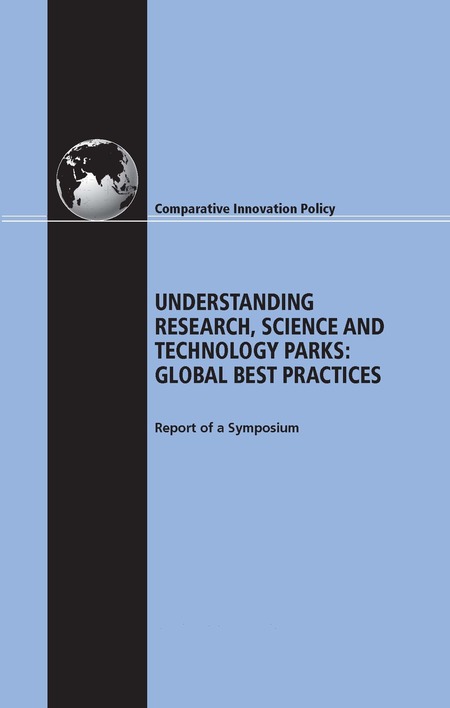
Click on photo to download Report!

Click on photo to download Report!

Mastering socio-economic changes require strenuous effort – it is heavy-lifting. This submission completes the series – 3 of 3 – on this subject; previously, this commentary considered …

1. the manifestation of changes in everyday life – values, habits and nuances, looking across a timeline from the 1960’s versus today;

2. the high suicide rate among the elderly frustrated with acute changes.

This commentary considers that under the Go Lean roadmap, there will be many community investment endeavors; therefore many times there will be the need for “impact analyses”. The roadmap calls for the installation of Self-Governing Entities (SGE) as job-creating engines in many communities; these sites are ideal for technology laboratories, medical campuses, corporate parks, industrial sites, educational facilities and other forms of establishments situated inside bordered facilitates. These types of installations will thrive under the strategies and tactics of the Go Lean roadmap. They allow for an efficient process to launch and manage projects and physical installations in the region, but the SGE concept does require governmental concurrence and maybe even public approvals, as in referendums, at the initiation.

SGE’s are part-and parcel of the prime directives of the Go Lean roadmap, defined by these 3 statements:

  • Optimization of the economic engines in order to grow the regional economy to $800 Billion in GDP and create 2.2 million new jobs.
  • Establishment of a security apparatus to protect the resultant economic engines.
  • Improvement of Caribbean governance to support these engines.

How are the impact analyses to be conducted in the region? What is the art and science of this socio-economic field of study? Consider the headlines and abstract of this academic study from the University of Wisconsin:

Title: Socio-Economic Impact Analysis
University of Wisconsin – Community Guide to Development Impact Analysis. Posted 05/2/2011; retrieved 07-17-2015
By: Mary Edwards

As Wisconsin communities continue to grow, local officials and community members are constantly challenged by the need to balance fiscal, social, economic, and environmental goals. One aspect of this challenge is deciding how much and what types of new development the community can accommodate without compromising the day-to-day quality of life for residents. Socio-economic impact assessment is designed to assist communities in making decisions that promote long-term sustain-ability, including economic prosperity, a healthy community, and social well-being.

Assessing socio-economic impacts requires both quantitative and qualitative measurements of the impact of a proposed development. For example, a proposed development may increase employment in the community and create demand for more affordable housing. Both effects are easily quantifiable. Also of importance, however, are the perceptions of community members about whether the proposed development is consistent with a commitment to preserving the rural character of the community. Assessing community perceptions about development requires the use of methods capable of revealing often complex and unpredictable community values.

This chapter provides an overview of socio-economic impact assessment, including what it is, why it is important and guidance on how to conduct a socio-economic impact assessment.

WHAT IS SOCIO-ECONOMIC IMPACT ASSESSMENT?

A socio-economic impact assessment examines how a proposed development will change the lives of current and future residents of a community. The indicators used to measure the potential socio-economic impacts of a development include the following:

• Changes in community demographics;
• Results of retail/service and housing  market analyses;
• Demand for  public services;
• Changes in  employment and  income levels; and
• Changes in the aesthetic quality of the community.

Quantitative measurement of such factors is an important component of the socio-economic impact assessment. At the same time, the perceptions of community members about how a proposed development will affect their lives is a critical part of the assessment and should contribute to any decision to move ahead with a project. In fact, gaining an understanding of community values and concerns is an important first step in conducting a socio-economic impact assessment.

The socio-economic impacts of a proposed development on a community may actually begin the day the project is proposed. Changes in social structure and inter-actions among community members may occur once the new development is pro-posed to the community. In addition, real, measurable and often significant effects on the human environment can begin to take place as soon as there are changes in social or economic conditions. From the time of the earliest announcement of a pending policy change or development project, attitudes toward the project are formed, interest groups and other coalitions prepare strategies, speculators may lock up potentially important properties, and politicians can maneuver for position.

WHO SHOULD BE INVOLVED IN THE PROCESS?

Because socio-economic impact assessment is designed to estimate the effects of a proposed development on a community’s social and economic welfare, the process should rely heavily on involving community members who may be affected by the development. Others who should be involved in the process include community leaders and others who represent diverse interests in the community such as community service organizations, development and real estate interests, minority and low income groups, and local environmental groups. In addition, local agencies or officials should provide input into the process of assessing changes in the social environment that may occur as a result of the proposed development (e.g., providing estimates and information demographics, employment and service needs).

WHY CONDUCT A SOCIO-ECONOMIC IMPACT ASSESSMENT?

Conducting a social impact assessment is important for several reasons. In general, it is used to alert the community, including residents and local officials, of the impact and magnitude of the proposed development on the community’s social and economic well-being. The assessment can help communities avoid creating inequities among community groups as well as encourage the positive impacts associated with the development.

HOW TO CONDUCT A SOCIO-ECONOMIC IMPACT ASSESSMENT

The following section provides a two-step process for conducting a socio-economic impact analysis. The process is designed to establish a framework for evaluating cur-rent and future proposed developments in a community.

TWO PHASES OF SOCIO-ECONOMIC IMPACT ASSESSMENT

1. Defining the scope of the Socio-Economic Impact Assessment

2. Identifying and Evaluating Development Impacts

  A. Quantitative Changes
     A.1 DEMOGRAPHIC IMPACTS
     A.2 DATA SOURCES
     A.3 HOUSING MARKET IMPACTS
     A.4 RETAIL MARKET IMPACTS
     A.5 EMPLOYMENT AND INCOME
     A.6 PUBLIC SERVICES
     A.7 AESTHETIC IMPACTS
  B. Community Perceptions
     B.1 QUALITY OF LIFE

This is just the headlines; find the full White Paper at: http://www.lic.wisc.edu/shapingdane/facilitation/all_resources/impacts/analysis_socio.htm

i.e.  Sample Economic Impact Study

Click on photo to download Report!

Click on photo to download Report!

The Go Lean roadmap does not ignore the controversies associated with impact analyses. Many times these studies are abused to justify spending public money to benefit private interests. This is another example of Crony-Capitalism; consider the VIDEO here of how public financing of sports stadiums have been abused in the US:

Appendix VIDEO – Last Week Tonight with John Oliver: Stadiums (HBO) – https://youtu.be/xcwJt4bcnXs

Published on July 12, 2015 – Cities spend massive amounts of public money on privately-owned stadiums. Cities issue tax-exempt municipal bonds that — wait, don’t fall asleep!
Content warning: Some profanity!

According to this VIDEO, there is an obvious potential for socio-economic studies to be abused. The goal of a socio-economic study is generally to bring about socio-economic development, usually by improvements in metrics such as GDP, life expectancy, literacy, levels of employment, etc.

SGE Impact Photo 3SGE Impact Photo 4SGE Impact Photo 5

The Go Lean roadmap embraces the practice of socio-economic studies – done right – it provides turn-by-turn directions on how to elevate the Caribbean economy while mitigating any pattern of abuse. As a planning tool, the roadmap commences with a Declaration of Interdependence, pronouncing the need for regional integration (Page 11 & 13) to foster the foundation to forge a better future. The declarative statements are as follows:

xi.  Whereas all men are entitled to the benefits of good governance in a free society, “new guards” must be enacted to dissuade the emergence of incompetence, corruption, nepotism and cronyism at the peril of the people’s best interest. The Federation must guarantee the executions of a social contract between government and the governed.

xxi. Whereas the preparation of our labor force can foster opportunities and dictate economic progress for current and future generations, the Federation must ensure that educational and job training opportunities are fully optimized for all residents of all member-states, with no partiality towards any gender or ethnic group. The Federation must recognize and facilitate excellence in many different fields of endeavor, including sciences, languages, arts, music and sports. This responsibility should be executed without incurring the risks of further human flight, as has been the past history.

xxvi. Whereas the Caribbean region must have new jobs to empower the engines of the economy and create the income sources for prosperity, and encourage the next generation to forge their dreams right at home, the Federation must therefore foster the development of new industries… In addition, the Federation must invigorate the enterprises related to existing industries … – impacting the region with more jobs.

Change has now come to the Caribbean. The driver of this change is technology and globalization. The Caribbean region cannot only consume the innovations being developed around the world; we must develop and innovate ourselves. The structure of SGE’s are perfectly designed for this endeavor; innovators and developers can create their “own world” so as to foster the best practices for Research & Development (R&D) with no intrusion from municipal authorities. This is a win-win! The bottom-line for the developers may be their “bottom-line”, but for the community, it would be the Greater Good.

The subject of SGE’s has been directly addressed and further elaborated upon in these previous blog/commentaries:

https://goleancaribbean.com/blog/?p=4037 How to Train Your ‘Dragon’ – Case Study for Foreign Investments and SGE’s
https://goleancaribbean.com/blog/?p=3473 Haiti to Receive $70 Million Grant to Expand SGE-like ‘Caracol Industrial Park’
https://goleancaribbean.com/blog/?p=3276 A Role Model – Ideal for SGE’s – Shaking Up the World of Cancer
https://goleancaribbean.com/blog/?p=2800 The Geography of Joblessness – The need for SGE’s
https://goleancaribbean.com/blog/?p=2750 Disney World – Role Model for Self Governing Entities
https://goleancaribbean.com/blog/?p=2003 Where the Jobs Are – Ship-breaking under SGE Structure
https://goleancaribbean.com/blog/?p=1214 Fairgrounds as SGE and Landlords for Sports Leagues
https://goleancaribbean.com/blog/?p=286 Puerto Rico’s Comprehensive Cancer Center – Model of Medical SGE

Sports is also pivotal to the Go Lean roadmap. This was demonstrated in our prior consideration of the economic impact analysis of basketball great LeBron James returning to Cleveland after a 4-year stint in Miami. That consideration summarized that his absence was worth $50 million a season for that metropolitan area.

So thusly this subject of the “business of sports” is a familiar topic for Go Lean blogs as these previous blogs have detailed:

https://goleancaribbean.com/blog/?p=4019 The Business of the Super Bowl … and Commercials
https://goleancaribbean.com/blog/?p=3414 Levi’s® Stadium: A Team Effort … for the San Francisco Bay
https://goleancaribbean.com/blog/?p=3244 Sports Role Model – espnW.
https://goleancaribbean.com/blog/?p=2222 Sports Role Model – Playing For Pride … And More
https://goleancaribbean.com/blog/?p=2171 Sports Role Model – Turn On the SEC Network
https://goleancaribbean.com/blog/?p=2152 Sports Role Model – US versus the World
https://goleancaribbean.com/blog/?p=1446 Caribbean Players in the 2014 World Cup
https://goleancaribbean.com/blog/?p=1341 College World Series Time – Lessons from Omaha
https://goleancaribbean.com/blog/?p=1214 The Art & Science of Temporary Stadiums – No White Elephants
https://goleancaribbean.com/blog/?p=1148 Sports Bubble – Franchise values in basketball
https://goleancaribbean.com/blog/?p=1020 Sports Revolutionary: Advocate Jeffrey Webb
https://goleancaribbean.com/blog/?p=498 Book Review: ‘The Sports Gene’
https://goleancaribbean.com/blog/?p=334 Bahamians Make Presence Felt In Libyan League
https://goleancaribbean.com/blog/?p=318 Collegiate Sports in the Caribbean
https://goleancaribbean.com/blog/?p=60 Could the Caribbean Host the Olympic Games?

This Go Lean roadmap seeks to implement the technocratic Caribbean Union Trade Federation (CU). While the CU/Go Lean effort is to harness the individual abilities of athletes to elevate their performance, the real focus is harnessing the economic impact for the relevant communities. Modern sports engagements cannot be analyzed without considering the impact on “dollars and cents” for the community. The Go Lean book calls for solid business plans to develop sports stadia and arenas at CU-owned Fairgrounds This intent was also pronounced early in the opening Declaration of Interdependence (Page 14):

xxxi. Whereas sports have been a source of great pride for the Caribbean region, the economic returns from these ventures have not been evenly distributed as in other societies. The Federation must therefore facilitate the eco-systems and vertical industries of sports as a business, recreation, national pastime and even sports tourism …

The Go Lean book envisions the CU – a confederation of the 30 member-states of the Caribbean chartered to do the heavy-lifting of empowering and elevating the Caribbean economy – as the landlord of many sports facilities within the SGE design. The book details the economic principles and community ethos to adopt, plus the executions of strategies, tactics, implementations and advocacies to forge Self-Governing Entities and sports enterprises in the Caribbean:

Economic Principles – Deferred Gratification Page 21
Economic Principles – People Respond to Incentives in Predictable Ways Page 21
Economic Principles – Consequences of Choices Lie in the Future Page 21
Economic Principles – Job   Multiplier Page 22
Community Ethos – Lean Operations Page 24
Community Ethos – Return on Investments (ROI) Page 24
Community Ethos – Ways to Impact the Future Page 26
Community Ethos – Ways to Foster Genius Page 27
Community Ethos – Ways to Impact Research & Development Page 30
Community Ethos – Ways to Impact the Greater Good Page 37
Strategy – Agents of Change – Technology Page 48
Strategic – Staffing – Sporting Events at Fairgrounds Page 55
Tactical – Confederating a Non-Sovereign Union Page 63
Tactical – Fostering a Technocracy Page 64
Tactical – Growing Economy – New High Multiplier Industries Page 68
Tactical – Separation of Powers – Self-Governing Entities – i.e. ESA Page 80
Tactical – Separation of Powers – Sports & Culture Administration Page 81
Tactical – Separation of Powers – Fairgrounds Administration Page 83
Tactical – Separation of Powers – Education Department Page 85
Implementation – Steps to Implement Self-Governing Entities Page 105
Implementation – Ways to Deliver – Embrace of Project Management Arts & Sciences Page 109
Planning – 10 Big Ideas Page 127
Advocacy – Ways to Grow the Economy Page 151
Advocacy – Ways to Create Jobs Page 152
Advocacy – Ways to Improve Local Government – Parks & Recreation Page 169
Advocacy – Ways to Impact Public Works Page 169
Advocacy – Ways to Promote Fairgrounds Page 192
Advocacy – Ways to Foster Technology Page 197
Advocacy – Ways to Improve Sports Page 229
Advocacy – Ways to Impact Urban Living – Sports Leagues Page 234

The Go Lean book and accompanying blogs declare that the Caribbean needs to learn lessons from other communities, especially when socio-economic studies have been used (or abused) to justify community investments in infrastructure.

The design of Self-Governing Entities allow for greater protections from Crony-Capitalistic abuses. While this roadmap is committed to availing the economic opportunities of sports and accompanying infrastructure, as demonstrated in the foregoing VIDEO, sport teams and owners can be plutocratic “animals” in their greed. We must learn to mitigate any plutocratic abuses; see the Appendix – Additional Reporting below.

Now is the time for all of the Caribbean, the people and governing institutions, to lean-in for the empowerments described in the book Go Lean … Caribbean. This roadmap will result in positive socio-economic changes throughout the region. Just consider the Fairgrounds SGE model; the end result for these ventures into the business of sports is projected as 21,000 direct jobs at Fairgrounds and sports enterprises.

Overall, with these executions, the Caribbean region can be a better place to live, work and play. As demonstrated by this discussion on sports stadia, there is a lot of economic activity in the “play” element; the same applies even greater with “live and work” elements. The practice of socio-economic studies must therefore be earnestly engaged in the Caribbean region, especially for projects involving community investments. This is not easy; this is part of the process to elevate the Caribbean region. This heavy-lifting – ensuring that investments get the proper return for the applicable stakeholders – is worth the effort; this ensures the Greater Good.  🙂

Download the book Go Lean…Caribbean now!

————-

Appendix – Additional Reporting: http://www.miaminewtimes.com/news/six-lies-about-the-marlins-stadium-6380692

Title: Six lies about the Marlins stadium

By: Miami New Times Community Newspaper; posted May 5, 2011; Retrieved July 20, 2015

Share this post:
, , , , , , ,
[Top]

Greece: From Bad to Worse

Go Lean Commentary

Here a prediction for Greece: Things will get worse before they get worse!

This commentary has previously asserted that there are 3 kinds of people in the world:

1. Those who make things happen
2. Those who watch things happen
3. Those who wonder “What happened?”

Many people are now waking up to the harsh realities that a Failed-State – Greece – is emerging, right in front of their eyes. Unfortunately, this applies to people in the Caribbean as well.

On Sunday (July 5, 2015), a referendum was put to the Greek people to vote whether to accept further bail-out monies with harsh austerity measures from the international community … or go at it alone. They chose the latter!

Now they are waking up to the reality that the “cupboards are bare”; and many international trading partners will not trade with them. Many people are now wondering “What happened?”

-

See the news article here (and a related VIDEO from just before the referendum) conveying the harsh realities that many in Greece are now faced with:

Title: The economic consequences of Syriza
By: C.R. and S.N. | London And Athens

AFTER the party in Syntagma Square celebrating the landslide victory for the “no” campaign in Sunday’s referendum comes the hangover. They went wild “because we are tired of everything, from all the lies, from paying for the rich, and from years of austerity, especially for young”, as one partying Athenian told us. To be fair, with youth unemployment rates of over 50%, many have had little to celebrate for a long time. Young Greeks support the aggressive stance taken towards the country’s lenders by Syriza and its leader, the Greek prime minister Alexis Tspiras, whose position in domestic politics has been strengthened as a result of the referendum.

But two days after the close of the polls the fact remains that Greece’s real economy is in a mess. Capital controls imposed after Mr Tsipras called the referendum on June 26th have kept banks closed. Ordinary Greeks have been limited to cash withdrawals from ATMs of just €60 ($67) a day (which is now in effect down to €50 as smaller notes have disappeared from circulation). Many cash machines in Athens have run completely out of money.

Firms have also been hit particularly hard. Foreign bank transfers have been banned by the Greek government, with few exceptions. Greek credit is no longer accepted outside the country. That has hit firms that rely on foreign credit to import goods, as well as the Greek tourists who found themselves stranded when their credit cards stopped working. Supplies of food and some medicines are running short (see picture); a black market for cancer drugs has even emerged. As we reported on Sunday:

Greece relies almost entirely on foreign imports for its pharmaceutical supplies. But since capital controls imposed last Sunday brought the country’s banking system to a sudden halt, some suppliers have stopped delivering key medication because they cannot get paid…As things stand, she has another week’s worth of insulin in stock for diabetics but will then have to start turning her patients away. “Do you know what that means?” she asks, trying to keep a proud face, “Do you know what insulin does?”

Unsurprisingly, as a result, Greek economic growth—which began to falter shortly after Syriza came to power in January—has collapsed. Consumption has slumped by 70% since capital controls were imposed, according to the National Confederation of Hellenic Commerce, a business group. Individuals and firms are hoarding cash at the same time that essential goods are becoming unavailable—a toxic mix for any economy. The decision taken yesterday by the European Central Bank—to keep in place the cap on emergency lending to Greek banks, and to increase the discount applied on Greek bonds accepted as collateral—will tighten the short-run financial crunch.

Greece is running short of time; in the next few days either a new deal will be done that allows the ECB to reopen the liquidity spigots or bank failures will lead to Grexit. In either case, the damage done by this period of uncertainty and financial drought will be severe.

Economic history suggests that economies can be surprisingly resilient when hit by shocks, such as the temporary imposition of capital controls or a reduction in the supply capacity of the economy. The Cypriot economy, for instance, started to grow again just one year after it imposed capital controls in 2013. And as Britain’s experience of general strikes indicates, temporary one- or two-week supply disruptions do not tend to have much impact on output after about a year. Leaving a single currency may also not be a complete disaster; countries such as Ireland (which left the British pound in 1928) have managed it before. And many countries ditching fixed-exchange rates—such as Britain in 1931 and 1992—exited long recessions almost immediately after they bit the bullet.

But there are three main reasons why economists think that the Greek economy will be wounded for far longer than other unfortunates. First, current uncertainty is probably damaging future demand as well as current demand; future tourist bookings have fallen by around a third since capital controls were imposed, for instance, which matters greatly given that the sector produces almost one-sixth of the country’s GDP. And with summer bookings so vital, the likely conclusion of the crisis in early July could not have been timed worse. Second, most countries that experience fast recoveries from supply-side shocks and fixed-exchange rate exits are able to count on a solvent and liquid banking system, which is needed in order to fund investment and growth through loans.

But Greece’s, which is about to collapse because of capital controls and deposit flight, is in a less comfortable position. The speedy introduction of new economic reforms post-Grexit, combined with capable macroeconomic management, could nonetheless cushion the Greek economy against the worst effects of exit and lead to a rapid bounceback. Yet few outside Greece reckon that the Syriza government has the inclination or competence to execute the transition smoothly and responsibly. Whatever Greece’s political fate, its economy is bound to get much worse before it gets better.
Source: The Economist Magazine – Online Edition – July 6, 2015
http://www.economist.com/blogs/freeexchange/2015/07/greeces-economy

—————–

VIDEO – Yes or No? Greece Again on the Brink: Greek Debt Crisis – https://youtu.be/reU7wWgFmDU

Published on Jul 3, 2015 – For the past five years, Greece has been struggling with a financial crisis that has led the country to the brink of an exit from the euro and an economic collapse.

Add this word to your vocabulary: Grexit; meaning a Greek Exit from the European Union.

This experience in Greece is a cautionary tale for the Caribbean, as so many aspects of Greek life parallel those of the Caribbean:

The harsh reality of Greece is a reminder of another crisis, the Great Recession of 2008. The events this week – with the referendum – mirrors September 15, 2008 when the American Investment Bank Lehman Brothers filed for bankruptcy, thus bringing the US (and the world’s economy) to the brink of disaster. This 2008 consideration is part-and-parcel of the book Go Lean…Caribbean which serves as a roadmap for the introduction of the technocratic Caribbean Union Trade Federation (CU) to provide new oversight for the Caribbean region’s economic, security and governing engines. The book was conceived as a result of this 2008 crisis, by stakeholders intimate with the anatomy of the 2008 crisis – People who make things happen – and composed from a position of strength, while in the location of one of the most successful communities to endure the Great Recession crisis: Omaha, Nebraska.

The pretext of the Go Lean roadmap is simple, and applies equally to Greece and the Caribbean:

Only at the precipice do they change!

The lessons learned, and codified, in the pages of the Go Lean book can now be enhanced with the examination of the realities of Greece. This examination must consider the reality of the economic, security and governing aspects of Greek society.

CU Blog - Greece - From Bad to Worse - Photo 3 CU Blog - Greece - From Bad to Worse - Photo 2

This country now has new leadership – the political party Syriza was swept into office on 25 January 2015 – trying to forge change in a dysfunctional environment. Until recently, the Minister of Finance for this sovereign nation was Yanis Varoufakis. (He resigned on July 5th, after the passage of the Referendum). To project transparency, Mr. Varoufakis presented the arguments in favor of their request for more compromise from the European Central Bank, the IMF, and other creditors demanding more austerity from Greece; he vocalized the following:

Our political mandate is to find an honourable, workable compromise. Is it so difficult to do so? We do not think so. A few days ago Olivier Blanchard, the IMF’s Chief Economist published a piece entitled ‘Greece: A Credible Deal Will Require Difficult Decisions by All Sides.’ He is right, the three operative words being ‘by all sides’. Dr Blanchard added that: “At the core of the negotiations is a simple question. How much of an adjustment has to be made by Greece, how much has to be made by its official creditors?”

That Greece needs to adjust there is no doubt. The question, however, is not how much adjustment Greece needs to make. It is, rather, what kind of adjustment. If by ‘adjustment’ we mean fiscal consolidation, wage and pension cuts, and tax rate increases, it is clear we [Greece] have done more of that than any other country in peacetime.

  • The public sector’s structural, or cyclically adjusted, fiscal deficit turned into a surplus on the back of a ‘world record beating’ 20% adjustment
  • Wages fell by 37%
  • Pensions were reduced by up to 48%
  • State employment diminished by 30%
  • Consumer spending was curtailed by 33%
  • Even the nation’s chronic current account deficit dropped by 16%.

No one can say that Greece has not adjusted to its new, post-2008, circumstances. But what we can say is that gigantic adjustment, whether necessary or not, has produced more problems than it solved:

  • Aggregate real GDP fell by 27% while nominal GDP continued to fall quarter-in-quarter-out for 18 quarters non-stop to this day
  • Unemployment skyrocketed to 27%
  • Undeclared labour reached 34%
  • Banks are labouring under non-performing loans that exceed 40% in value
  • Public debt has exceeded 180% of GDP
  • Young well-qualified people are abandoning Greece in droves
  • Poverty, hunger and energy deprivation have registered increases usually associated with a state at war
  • Investment in productive capacity has evaporated.

Source: http://www.businessinsider.com/full-greece-proposal-leaked-by-yanis-varoufakis-2015-6

Mr. Varoufakis’ appeal has been rejected. Greece is now at the precipice. They are willing to change and correct many inequities. But maybe, this is too little, too late? They want to work to build up their communities, not necessarily build up their neighboring countries. They are willing to accept the Grexit.

In this status quo is the primary lesson for the Caribbean. Are we now willing to change and correct the inequities in our society?

The Go Lean book declares: “A crisis is a terrible thing to waste” – quoting noted Economist Paul Romer. The opportunity exists now to forge change in the economic, security and governing engines of the Caribbean, as this cautionary guidance is gleaned from the Greek crisis.

The roadmap calls for a confederation of the 30 member-states of the Caribbean into a Single Market of 42 million people; thereby allow an adequate size to absorb economic shocks and downward trends. The Go Lean roadmap provides the details for the creation of 2.2 million new jobs and GDP growth to accumulate to $800 Billion. This vision is at the root of the Go Lean roadmap, embedded in the opening Declaration of Interdependence (Page 13):

xxiv. Whereas a free market economy can be induced and spurred for continuous progress, the Federation must install the controls to better manage aspects of the economy: jobs, inflation, savings rate, investments and other economic principles. Thereby attracting direct foreign investment because of the stability and vibrancy of our economy.

xxv.  Whereas the legacy of international democracies had been imperiled due to a global financial crisis, the structure of the Federation must allow for financial stability and assurance of the Federation’s institutions. To mandate the economic vibrancy of the region, monetary and fiscal controls and policies must be incorporated as proactive and reactive measures. These measures must address threats against the financial integrity of the Federation and of the member-states.

The following details from the book Go Lean … Caribbean are the community ethos, strategies, tactics, implementations and advocacies necessary to effect the turn-around of the Caribbean societal engines – to learn from Greece:

Who We Are – SFE Foundation and 2008 Role Page 8
Anecdote: Puerto Rico – The Greece of the Caribbean Page 18
Community Ethos – Economic Systems Influence Individual Choices Page 21
Community Ethos – Economic Principles – Money Multiplier Page 21
Community Ethos – Governing Principles – Lean Operations Page 24
Community Ethos – Ways to Impact the Future Page 26
Community Ethos – Ways to Impact Turn-Arounds Page 33
Community Ethos – Ways to Impact the Greater Good Page 37
Strategy – Vision – Confederate all 30 Member-States into a Single Market Page 47
Strategy –   Mission – Build and foster local economic engines Page 45
Strategy –   Mission – Fortify the stability of our mediums of exchange Page 45
Strategy –   Mission – Dissuade further Brain Drain Page 46
Tactical –   Confederating a Permanent Union Page 63
Tactical – Fostering a Technocracy Page 64
Implementation – Assemble all Member-States Page 96
Implementation – Ways   to Pay for Change Page 101
Implementation – Foreign Policy Initiatives at Start-up Page 102
Implementation – Ways to Better Manage Debt Page 114
Planning – Ways to Model the European Union (EU) Page 130
Planning – Ways to Improve Failed-State Indices Page 134
Planning – Lessons Learned from 2008 Page 136
Planning – Lessons Learned from Omaha Page 138
Advocacy – Ways to Grow the Economy Page 151
Advocacy – Ways to Create Jobs Page 152
Advocacy – Better Manage the Social Contract Page 170
Advocacy – Ways to Preserve Caribbean Heritage Page 218
Advocacy – Ways to Protect Human Rights Page 218
Advocacy – Ways to Help the Middle Class Page 223
Advocacy – Ways to Re-boot Cuba Page 236
Advocacy – Ways to Re-boot Haiti Page 238
Appendix – Caribbean Failed-State Indicators and Definitions Page 271

Greece will become a Failed-State before it is all said-and-done. We hope that this country, and their European neighbors, can secure their society to assure peace and the protection of human rights.

Greece will recover…eventually! Their disposition will go from bad to worse – see Appendix VIDEO – but then they can reboot, much like Cyprus did just recently, as detailed in the foregoing news article. Take their tourism for example:

Travel and tourism contributed a total of €28.3 billion ($31.3 billion) to the economy in 2013—or 16.3% of GDP. But after one to two years, after the country returns to local drachma currency and it stabilizes after devaluation, destinations in Greece will be cheaper than its competitors. This will eventually be an advantage. – http://www.economist.com/node/21657058

Greece will be a European Failed-State … and will “bounce-back” … eventually.

We also have Failed-States in the Caribbean: Think: Haiti, Dominican Republic and Cuba; plus a host of countries just slightly behind them. We have to foster our own turn-around strategies for our region.

The Go Lean roadmap declares that the responsibility for fixing the Caribbean though must fall first-and-foremost on the Caribbean, its people and institutions.

The Caribbean must also reboot and “bounce back”; to “step back from the precipice”. The effort is not easy; the Go Lean book describes it as heavy-lifting. But the returns will be worth the investment. This is true for Greece … and the Caribbean.

This is the goal of the Go Lean roadmap: not to wonder what happened, or watch things happen, but rather to make the things happen … that make the Caribbean a better place to live, work and play. 🙂

Download the book Go Lean … Caribbean – now!

—————–

Appendix VIDEO – The Economic Collapse of Greece. Whiteboard Animation by Angelow – https://youtu.be/dt6w4eE_tg0

Published on Mar 17, 2013VIDEO on the previous need for Greek bail-outs. Greece is bankrupt!

Share this post:
, , , , ,
[Top]

Pressed by Debt Crisis, Doctors Leave Greece in Droves

Go Lean Commentary

CU Blog - Pressed by Debt Crisis, Doctors Leave Greece in Droves - Photo 3Poor economic conditions are forcing a brain drain among a country’s professionals. Yes, we understand all too well.

This is the crisis for Greece! This is the crisis for the Caribbean, as well!

This is a consistent theme in the book Go Lean…Caribbean. The book posits that the events in Greece are relevant for the Caribbean, North America and the world economy as a whole. What’s worse is that many Caribbean member-states are in the same situation.

Greece is the weak link in the Eurozone; it is inching closer to defaulting on its debt. The country has been in a long standoff with its European creditors on the terms of a multibillion-dollar bailout. If the country goes bankrupt or decides to leave the 19-nation Eurozone, the Greek debt crisis could create instability in the region and reverberate around the globe. (Since this debt crisis began in 2010, most international banks and foreign investors have sold their Greek bonds and other holdings; they are not as vulnerable to what happens in Greece now).

CU Blog - Pressed by Debt Crisis, Doctors Leave Greece in Droves - Photo 1“A crisis is a terrible thing to waste” – states the Go Lean book quoting noted Economist Paul Romer. The opportunity therefore exists to forge change in the economic, security and governing engines of communities, in response to crises.

This story (see VIDEO below) shows that the rest of the world are all paying attention to this crisis in Greece, but few are thinking of the impact on the professional classes. This is of paramount interest to the planners of a new Caribbean, the publishers of the Go Lean book. The purpose of the book is to position the region at the corner of preparation and opportunity, so as to benefit from change. The issue from this article is more pressing for the Caribbean, as we share, as a region, a very high brain drain/emigration rate, estimated at 70%. See article here and VIDEO below:

Title: Pressed by Debt Crisis, Doctors Leave Greece in Droves
By: Erik Olsen, Contributor, New York Times Online Site; posted July 1, 2015; retrieved from: http://mobile.nytimes.com/2015/07/01/world/europe/pressed-by-debt-crisis-doctors-leave-greece-in-droves.html

Greece is in the midst of the worst brain drain in modern history, experts say.

“This is unprecedented in terms of the numbers of educated people that are leaving,” said Lois Labrianidis, a professor of economic geography at the University of Macedonia in Thessaloniki.

The country is hemorrhaging talent, as professionals in medicine, engineering and academics flee for a better economic climate and more stable employment. The pain has been particularly severe in the health care sector of Greece: Many of the country’s doctors have left or are making plans to do so.

“I don’t feel safe and secure for the future of my family here,” said Spyridon Kotsaris, an Athens orthopedic surgeon who has been planning for months to leave Greece with his wife and two daughters, preferably to Germany or Switzerland.

“We want a better life,” he said. “A better life means we are all together and feel more secure.”

In all, nearly 300,000 people have left Greece since 2010, nearly 3 percent of the country’s population before the crisis, according to government statistics. That includes as many as 5,000 doctors, with about 3,500 of them ending up in Germany, where Europe’s financial crisis has had less impact.

“It’s not that big of a concern for me financially, because I work in Germany,” said Alexios Theodorou, a Greek general surgeon working at a hospital in Gummersbach in North Rhine-Westphalia. Mr. Theodorou left Greece five years ago, as the crisis was beginning.

“My paycheck is secured,” he said. “But that doesn’t make my concern about the future any less, as I have much family in Greece. Greece is where I still call home.”

In some ways, the loss of so much young talent may be more devastating to Greece in the long term than abandoning the euro, if that happens. That has left some who sought a better life feeling increasingly bittersweet about the decision to leave.

“I feel sad seeing my country going through this rough time,” Mr. Theodorou said. “We, the people who left, are not to blame for the situation, but we sometimes feel guilty that we are leaving, that we left the people there to handle their problems.”

The book Go Lean…Caribbean serves as a roadmap for the introduction and implementation of the Caribbean Union Trade Federation (CU), a super-national institution with federal powers to forge change in the Caribbean region. One mission is incentivizing the return of the far-flung Caribbean Diaspora. Another mission is to dissuade further human flight/brain drain. The numbers don’t lie: we need population growth not population contraction.

CU Blog - Pressed by Debt Crisis, Doctors Leave Greece in Droves - Photo 2The CU recognizes that the population numbers must work in favor of societal progress. Greece has lost 3% of its population since the start of this crisis in 2010, so this negative trend cannot be understated. There are many social safety nets that depend of the actuarial fact of population expansion, not contraction. Consider unemployment and pensions: for unemployment, workers pay into a fund and the temporarily unemployed file claims against that fund. Likewise with pensions: young workers pay into a fund, and the older-retired workers draw claims against that fund.

Thus, population contractions are definitely among the indices for a Failed-State status (Page 271).

The confederation of the CU is a reversal of the unfortunate trends inflicted on the Caribbean. The vision is to forge a Single Market of 42 million people in the 30 Caribbean member-states. Then the Go Lean roadmap provides the details for the creation of 2.2 million new jobs and GDP growth to accumulate to $800 Billion. This vision is at the root of the Go Lean roadmap, embedded in the opening Declaration of Interdependence (Page 13):

xxiv. Whereas a free market economy can be induced and spurred for continuous progress, the Federation must install the controls to better manage aspects of the economy: jobs, inflation, savings rate, investments and other economic principles. Thereby attracting direct foreign investment because of the stability and vibrancy of our economy.

xxv. Whereas the legacy of international democracies had been imperiled due to a global financial crisis, the structure of the Federation must allow for financial stability and assurance of the Federation’s institutions. To mandate the economic vibrancy of the region, monetary and fiscal controls and policies must be incorporated as proactive and reactive measures. These measures must address threats against the financial integrity of the Federation and of the member-states.

According to the foregoing New York Times article and the VIDEO below, Greece is in “hot water”. They need a remediation plan. Go Lean is the plan … for the Caribbean, not Greece. But we get to apply lessons learned from the experiences in Greece.

The following details from the book Go Lean … Caribbean are the community ethos, strategies, tactics, implementations and advocacies prescribed to manifest the reboot and empowerment efforts for the Caribbean economy, society and life in general:

Who We Are – SFE Foundation and 2008 Role Page 8
Anecdote: Puerto Rico – The Greece of the Caribbean Page 18
Community Ethos – Economic Systems Influence Individual Choices Page 21
Community Ethos – Economic Principles – Money Multiplier Page 21
Community Ethos – Governing Principles – Lean Operations Page 24
Community Ethos – Ways to Impact the Future Page 26
Community Ethos – Ways to Impact Turn-Arounds Page 33
Community Ethos – Ways to Impact the Greater Good Page 37
Strategy – Vision – Confederate all 30 Member-States into a Single   Market Page 47
Strategy – Mission – Repatriating Caribbean Diaspora Page 46
Strategy – Mission – Dissuade further Brain Drain Page 46
Tactical – Confederating a Permanent Union Page 63
Tactical – Fostering a Technocracy – Greek Sovereign Debt Case Study Page 64
Implementation – Assemble all Member-States Page 96
Implementation – Ways to Pay for Change Page 101
Implementation – Reasons to Repatriate Page 118
Planning – Ways to Model the European Union (EU) Page 130
Planning – Ways to Improve Failed-State Indices Page 134
Planning – Lessons Learned from 2008 Page 136
Planning – Lessons Learned from East Germany – Eventuality of Failed-States Page 139
Planning – Lessons Learned from Detroit – The Need for Turn-around Page 140
Advocacy – Ways to Grow the Economy Page 151
Advocacy – Ways to Create Jobs Page 152
Advocacy – Ways to Impact Entitlements – Austerity Lessons Page 158
Advocacy – Ways to Improve Governance – Euro-Zone Budget Deficits Model Page 168
Advocacy – Better Manage the Social Contract Page 170
Advocacy – Impact the Diaspora Page 217
Advocacy – Ways to Preserve Caribbean Heritage Page 218
Advocacy – Ways to Help the Middle Class – Enforce the Social Contract Page 223
Appendix – Failed-State Indicators and Definitions Page 271

Broken economies can be fixed!

This is not the first economic crisis to be observed-and-reported on by Go Lean planners. The Go Lean book is a product of 2008 Financial Crisis and Great Recession. From this fallout, this roadmap was composed, by individuals intimate with the details of the crisis … and its causes; (Page 8). Their motivation: love of homeland.

While love of the Caribbean homeland is a strong motivator – as Greek expatriates in the below VIDEO express love of their homeland – the realities of a broken economy will still cause a brain drain. These flight-abandonment realities creates the need for a societal reboot in economics, security and governance. This is the quest of Go Lean…Caribbean roadmap, to reboot the region’s societal engines; employing best-practices and better strategies, tactics and implementations to impact its prime directives, identified with these statements:

  • Optimization of the economic engines in order to grow the regional economy to $800 Billion & create 2.2 million new jobs.
  • Establishment of a security apparatus to protect the resultant economic engines and mitigate challenges/threats to the region’s public safety.
  • Improvement of Caribbean governance to support these engines.

There are many Go Lean blog/commentaries that have echoed these points of societal abandonment. Here is a sample of related commentaries:

https://goleancaribbean.com/blog/?p=5088 Immigrants account for 1 in 11 Blacks in USA
https://goleancaribbean.com/blog/?p=4613 A Lesson in History: – Emigration from Ireland in History
https://goleancaribbean.com/blog/?p=4185 Caribbean Ghost Towns: It Could Happen…Again
https://goleancaribbean.com/blog/?p=2809 A Lesson in History: Economics of East Berlin – A Failed-State
https://goleancaribbean.com/blog/?p=2025 Caribbean Jobs – Attitudes & Images of the Diaspora
https://goleancaribbean.com/blog/?p=1596 Book Review: ‘Prosper Where You Are Planted’
https://goleancaribbean.com/blog/?p=1433 Caribbean loses more than 70 percent of tertiary educated to brain drain
https://goleancaribbean.com/blog/?p=841 Having less babies (and people) is bad for the Caribbean economy
https://goleancaribbean.com/blog/?p=599 Ailing Puerto Rico open to radical economic fixes

From the cradle-to-the-grave, the needs of a community – whether it is in the Caribbean, Greece or anywhere – cannot be casually dismissed. A crisis ensues, people respond, they make a choice: fight or flight.

In Greece, despite this great beauty, they are choosing flight:

CU Blog - Pressed by Debt Crisis, Doctors Leave Greece in Droves - Photo 4

In the Caribbean too!

caribbean_view

We can do better! We must do better. Though success is not guaranteed, it can be forged with the adoption and application of best-practices. This requires the full participation – time, talent and treasuries – of all stakeholders: residents and Diaspora alike. This effort is not easy, but rather strenuous; the Go Lean book calls it “heavy-lifting”.

Strenuous, heavy-lifting – Yes – but the returns are worth the effort: making the Caribbean a better place to live, work and play.

This is the goal of the Go Lean roadmap. Everyone is urged to lean-in! 🙂

Download the book Go Lean … Caribbean – now!

———

Appendix VIDEOGreece’s Doctor Brain Drain http://video1.nytimes.com/video/2015/06/30/33813_1_greece-doctors-leaving_wg_240p.mp4

playbutton-300x300

In part of a large brain drain that could affect Greece for decades, thousands of doctors have left the nation for Germany since the financial crisis began five years ago.


Share this post:
, , , , , , ,
[Top]

Economic Principle: Wage-Seeking – Market Forces -vs- Collective Bargaining

Go Lean Commentary

The field of Economics is unique! We all practice it every day, no matter the level of skill or competence. There is even the subject area in basic education branded Home Economics, teaching the students the fundamentals of maintaining, supporting and optimizing a home environment. Most assuredly, economics is an art and a science, albeit a social science.

In a previous blog/commentary, Scotman’s Adam Smith was identified as the father of modern macro-economics. Though he lived from 1723 to 1790, his writings defined advanced economic concepts even in this 21st Century. His landmark book An Inquiry into the Nature and Causes of the Wealth of Nations qualified the divisions of income into these following categories: profit, wage, and rent.[4] We have previously explored profit-seeking (a positive ethos that needs to be fostered in the Caribbean region) and rent-seeking (a negative effort that proliferates in the Caribbean but needs to be mitigated), so now the focus of this commentary is on the activity of wage-seeking, and the concepts of governance and public choice theory to allow for maximum employment.

This is hard! Change has come to the world of wage-seekers – the middle classes are under attack; the labor-pool of most industrialized nations have endured decline, not in the numbers, but rather in prosperity. While wage-earners have not kept pace with inflation, top-earners (bonuses, commissions and business profits) have soared; (see Photo).

CU Blog - Economic Principles - Wage-Seeking - Market forces -vs- Collective Bargaining - Photo 2As a direct result, every Caribbean member-state struggles with employment issues in their homeland. In fact, this was an initial motivation for the book Go Lean…Caribbean, stemming from the fall-out of the 2008 Great Recession, this publication was presented as a roadmap for the introduction and implementation of the Caribbean Union Trade Federation (CU) to elevate the economic, security and governing engines of the Caribbean region to create 2.2 million new jobs, despite global challenges.

Needless to say, the global challenge is far more complex than Home Economics. The Go Lean book describes the effort as heavy-lifting; then proceeds to detail the turn-by-turn directions of a roadmap to remediate and mitigate wage-seeking.

The roadmap channels the Economic Principles and best-practices of technocrats like Adam Smith and 11 other named economists, many of them Nobel Laureates. A review of the work of these great men and woman constitute “Lessons in Economic Principles”. Why would these lessons matter in the oversight of Caribbean administration? Cause-and-effect!

Profit 4The root of the current challenge for wage-seekers is income equality; and this is bigger than just the Caribbean. It is tied to the global adoption of globalization and technology/ automation – a product of global Market Forces as opposed to previous Collective Bargaining factors. This relates back to the fundamental Economic Principle of “supply-and-demand”; but now the “supply” is global. This photo/”process flow” here depicts the ingredients of Market Forces. When there is the need for labor, the principle of comparative analysis is employed, and most times the conclusion is to “off-shore” the labor efforts, and then import the finished products. This is reversed of the colonialism that was advocated by Adam Smith; instead of the developed country providing factory labor for Third World consumption, the developed nation (i.e. United States) is now in the consumer-only role, with less and less production activities, for products fabricated in the Third World. This reality is not sustainable for providing prosperity to the middle classes, to the wage-seekers.

As a community, we may not like the laws of Economics, but we cannot ignore them. The Go Lean book explains the roles and significance of Economic Principles … with this excerpt (Page 21):

While money is not the most important factor in society, the lack of money and the struggle to acquire money creates challenges that cannot be ignored. The primary reason why the Caribbean has suffered so much human flight in the recent decades is the performance of the Caribbean economy. Though this book is not a study in economics, it recommends, applies and embraces these 6 core Economic Principles as sound and relevant to this roadmap:

  1. People Choose: We always want more than we can get and productive resources (human, natural, capital) are always limited. Therefore, because of this major economic problem of scarcity, we usually choose the alternative that provides the most benefits with the least cost.
  2. All Choices Involve Costs: The opportunity cost is the next best alternative you give up when you make a choice. When we choose one thing, we refuse something else at the same time.
  3. People Respond to Incentives in Predictable   Ways: Incentives are actions, awards, or rewards that determine the choices people make. Incentives can be positive or negative. When incentives change, people change their behaviors in predictable ways.
  4. Economic Systems Influence Individual Choices and Incentives: People cooperate and govern their actions through both written and unwritten rules that determine methods of allocating scarce resources. These rules determine what is produced, how it is produced, and for whom it is produced. As the rules change, so do individual choices, incentives, and behavior.
  5. Voluntary Trade Creates Wealth: People specialize in the production of certain goods and services because they expect to gain from it. People trade what they produce with other people when they think they can gain something from the exchange. Some benefits of voluntary trade include higher standards of living and broader choices of goods and services.
  6. The Consequences of Choices Lie in the Future: Economists believe that the cost and benefits of decision making appear in the future, since it is only the future that we can influence. Sometimes our choices can lead to unintended consequences.

Source: Handy Dandy Guide (HDC) by the National Council on Economic Education (2000)

The Go Lean book describes the end result of the application of best-practices in this field of economics over the course of a 5-year roadmap: the CU … as a hallmark of technocracy. But the purpose is not the edification of the region’s economists, rather to make the Caribbean homeland “better places to live, work and play” for its citizens. This branding therefore puts emphasis on the verb “work”; the nouns “jobs” and “wages” must thusly be a constant focus of the roadmap.

Brain Drain 70 percent ChartThis Go Lean book declares that the Caribbean eco-system for job-creation is in crisis … due to the same global dilemma. The roadmap describes the crisis as losing a war, the battle of globalization and technology. The consequence of the defeat is 2 undesirable conditions: income inequality and societal abandonment, citizens driven away to a life in the Diaspora. This assessment currently applies in all 30 Caribbean member-states, as every community has lost human capital to emigration. Some communities, like Puerto Rico and the US Virgin Islands have suffered with an abandonment rate of more than 50% and others have watched more than 70% of college-educated citizens flee their community for foreign shores. Even education is presented as failed investments as those educated in the region and leave to find work do not even return remittances in proportion to their costs of development. (See Table 4.1 in the Photo)

The Go Lean book therefore posits that there is a need to re-focus, re-boot, and optimize the labor/wage-seeking engines so as to create more jobs with livable wages. Alas, this is not just a Caribbean issue, but a global (i.e. American) one as well. See the following encyclopedic references for wage-seeking and Collective Bargaining to fully understand the complexities of these global issues:

Encyclopedia Reference #1: Wage-Seeking
(Source: https://en.wikipedia.org/wiki/Wage)

A wage is monetary compensation paid by an employer to an employee in exchange for work done. Payment may be calculated as a fixed amount for each task completed (a task wage or piece rate), or at an hourly or daily rate, or based on an easily measured quantity of work done.

Wages are an example of expenses that are involved in running a business.

Payment by wage contrasts with salaried work, in which the employer pays an arranged amount at steady intervals (such as a week or month) regardless of hours worked, with commission which conditions pay on individual performance, and with compensation based on the performance of the company as a whole. Waged employees may also receive tips or gratuity paid directly by clients and employee benefits which are non-monetary forms of compensation. Since wage labour is the predominant form of work, the term “wage” sometimes refers to all forms (or all monetary forms) of employee compensation.

Determinants of wage rates
Depending on the structure and traditions of different economies around the world, wage rates will be influenced by market forces (supply and demand), legislation, and tradition. Market forces are perhaps more dominant in the United States, while tradition, social structure and seniority, perhaps play a greater role in Japan.[6]

Wage Differences
Even in countries where market forces primarily set wage rates, studies show that there are still differences in remuneration for work based on sex and race. For example, according to the U.S. Bureau of Labor Statistics, in 2007 women of all races made approximately 80% of the median wage of their male counterparts. This is likely due to the supply and demand for women in the market because of family obligations. [7] Similarly, white men made about 84% the wage of Asian men, and black men 64%.[8] These are overall averages and are not adjusted for the type, amount, and quality of work done.

Real Wage
The term real wages refers to wages that have been adjusted for inflation, or, equivalently, wages in terms of the amount of goods and services that can be bought. This term is used in contrast to nominal wages or unadjusted wages. Because it has been adjusted to account for changes in the prices of goods and services, real wages provide a clearer representation of an individual’s wages in terms of what they can afford to buy with those wages – specifically, in terms of the amount of goods and services that can be bought.

See Table of European Model in the Appendix below. (The European Union is the model for the Caribbean Union).

———-

Encyclopedia Reference #2: Collective Bargaining
(Source: https://en.wikipedia.org/wiki/Collective_bargaining)

WPR: Marches & PicketsCollective Bargaining is a process of negotiation between employers and a group of employees aimed at reaching agreements to regulate working conditions. The interests of the employees are commonly presented by representatives of a trade union to which the employees belong. The collective agreements reached by these negotiations usually set out wage scales, working hours, training, health and safety, overtime, grievance mechanisms, and rights to participate in workplace or company affairs.[1]

The union may negotiate with a single employer (who is typically representing a company’s shareholders) or may negotiate with a group of businesses, depending on the country, to reach an industry wide agreement. A collective agreement functions as a labor contract between an employer and one or more unions.

The industrial revolution brought a swell of labor-organizing in [to many industrialized countries, like] the US. The American Federation of Labor (AFL) was formed in 1886, providing unprecedented bargaining powers for a variety of workers.[11] The Railway Labor Act (1926) required employers to bargain collectively with unions. While globally, International Labour Organization Conventions (ILO) were ratified in parallel to the United Nations efforts (i.e. Declaration of Human Rights, etc.). There were a total of eight ILO fundamental conventions [3] all ascending between 1930 and 1973, i.e. the Freedom of Association and Protection of the Right to Organise Convention (1949).

The Go Lean book presents a roadmap on how to benefit from the above Economic Principles – and how to empower communities anew – in the midst of tumultuous global challenges. This roadmap addresses more than economics, as there are other areas of societal concern. This is expressed in the CU charter; as defined by these 3 prime directives:

  • Optimization of economic engines in order to grow the regional economy to $800 Billion and create 2.2 million new jobs.
  • Establishment of a security apparatus to protect the resultant economic.
  • Improvement of Caribbean governance to support these engines.

Early in the Go Lean book, the responsibility to create jobs was identified as an important function for the CU with these pronouncements in the Declaration of Interdependence (Pages 14):

xix.  Whereas our legacy in recent times is one of societal abandonment, it is imperative that incentives and encouragement be put in place to first dissuade the human flight, and then entice and welcome the return of our Diaspora back to our shores.

xxi.  Whereas the preparation of our labor force can foster opportunities and dictate economic progress for current and future generations, the Federation must ensure that educational and job training opportunities are fully optimized for all residents of all member-states, with no partiality towards any gender or ethnic group. The Federation must recognize and facilitate excellence in many different fields of endeavor, including sciences, languages, arts, music and sports. This responsibility should be executed without incurring the risks of further human flight, as has been the past history.

xxiv. Whereas a free market economy can be induced and spurred for continuous progress, the Federation must install the controls to better manage aspects of the economy: jobs, inflation, savings rate, investments and other economic principles. Thereby attracting direct foreign investment because of the stability and vibrancy of our economy.

xxvi.  Whereas the Caribbean region must have new jobs to empower the engines of the economy and create the income sources for prosperity, and encourage the next generation to forge their dreams right at home, the Federation must therefore foster the development of new industries, like that of ship-building, automobile manufacturing, prefabricated housing, frozen foods, pipelines, call centers, and the prison industrial complex. In addition, the Federation must invigorate the enterprises related to existing industries tourism, fisheries and lotteries – impacting the region with more jobs.

According to an article from the Economic Policy Institute, entitled The Decline of Collective Bargaining and the Erosion of Middle-class Incomes in Michigan by Lawrence Mishel (September 25, 2012), the challenges to middle class income are indisputable, and the previous solution – Collective Bargaining – is no longer as effective as in the past. (The industrial landscape of Michigan had previously been identified as a model for the Caribbean to consider). See a summary of the article here (italics added) and VIDEO in the Appendix:

In Michigan between 1979 and 2007, the last year before the Great Recession, the state’s economy experienced substantial growth and incomes rose for high-income households. But middle-class incomes did not grow. The Michigan experience is slightly worse than but parallels that of the United States as a whole, where middle-class income gains were modest but still far less than the income gains at the top. What the experience of Michiganders and other Americans makes clear is that income inequality is rising, and it has prevented middle-class incomes from growing adequately in either Michigan or the nation.

The key dynamic driving this income disparity has been the divergence between the growth of productivity—the improvement in the output of goods and services produced per hour worked—and the growth of wages and benefits (compensation) for the typical worker. It has been amply documented that productivity and hourly compensation grew in tandem between the late 1940s and the late 1970s, but split apart radically after 1979. Nationwide, productivity grew by 69.1 percent between 1979 and 2011, but the hourly compensation of the median worker (who makes more than half the workforce but less than the other half) grew by just 9.6 percent (Mishel and Gee 2012; Mishel et al. 2012). In other words, since 1979 the typical worker has hardly benefited from improvements in the economy’s ability to raise living standards and, consequently, middle-class families’ living standards have barely budged since then. This phenomenon has occurred across the nation, including in Michigan.

This divergence between pay and productivity and the corresponding failure of middle-class incomes to grow is strongly related to the erosion of collective bargaining. And collective bargaining has eroded more in Michigan than in the rest of the nation, helping to explain Michigan’s more disappointing outcomes.

Research three decades ago by economist Richard Freeman (1980) showed that collective bargaining reduces wage inequality, and all the research since then (see Freeman 2005) has confirmed his finding. Collective bargaining reduces wage inequality for three reasons. The first is that wage setting in collective bargaining focuses on establishing “standard rates” for comparable work across business establishments and for particular occupations within establishments. The outcome is less differentiation of wages among workers and, correspondingly, less discrimination against women and minorities. A second reason is that wage gaps between occupations tend to be lower where there is collective bargaining, and so the wages in occupations that are typically low-paid tend to be higher under collective bargaining. A third reason is that collective bargaining has been most prevalent among middle-class workers, so it reduces the wage gaps between middle-class workers and high earners (who have tended not to benefit from collective bargaining).

Collective bargaining also reduces wage inequality in a less-direct way. Wage and benefit standards set by collective bargaining are often followed in workplaces not covered by collective bargaining, at least where there is extensive coverage by collective bargaining in particular occupations and industries. This spillover effect means that the impact of collective bargaining on the wages and benefits of middle-class workers extends far beyond those workers directly covered by an agreement.

Source: http://www.epi.org/publication/bp347-collective-bargaining/

The siren call went out 20 years ago, of the emergence of an “Apartheid” economy, a distinct separation between the classes: labor and management. Former US Secretary of Labor Robert Reich (1993 – 1997 during the Clinton Administration’s First Term) identified vividly, in this 1996 Harvard Business Review paper, that something was wrong with the U.S. economy then; (it is worst now):

CU Blog - Economic Principles - Wage-Seeking - Market forces -vs- Collective Bargaining - Photo 3That something is not the country’s productivity, technological leadership, or rate of economic growth, though there is room for improvement in all those areas. That something is an issue normally on the back burner in U.S. public discourse: the distribution of the fruits of economic progress. For many, the rise in AT&T’s stock after it announced plans [on January 3, 1996] to lay off 40,000 employees crystallized the picture of an economy gone haywire, with shareholders gaining and employees losing as a result of innovation and advances in productivity.

Has the distribution of the benefits of economic growth in the United States in fact gone awry? Is the nation heading toward an apartheid economy—one in which the wealthy and powerful prosper while the less well-off struggle? What are the facts? What do they mean? Are there real problems—and can they be solved?

Deploying solutions for the problem of income equality in the Caribbean is the quest of the Go Lean/CU roadmap. The book identified Agents of Change (Page 57) that is confronting the region, (America as well); they include: Globalization and Technology. A lot of the jobs that paid a “living wage” are now being shipped overseas to countries with lower wage levels, or neutralized by the advancement of technology. Yes, computers are reshaping the global job market, so even Collective Bargaining may fail to counter any eventual obsolescence of wage-earners, their valuation and appreciation; (see Encyclopedic Article # 2). The Go Lean book, and previous blog/commentaries, therefore detailed the campaign to not just consume technology, but to also innovate, produce and distribute the computer-enabled end-products. Therefore industries relating to STEM (Science, Technology, Engineering and Mathematics/Medicine) are critical in the roadmap. Not only do these careers yield good-paying direct jobs, but also factor in the indirect job market, and the job-multiplier rate (3.0 to 4.1) for down-the-line employment (Page 260) opportunities.

The Go Lean… Caribbean book details the creation of 2.2 million new jobs for the Caribbean region, many embracing ICT/STEM skill-sets. This is easier said than done, so how does Go Lean purpose to deliver on this quest? By the adoption of certain community ethos, plus the executions of key strategies, tactics, implementations and advocacies. The following is a sample from the book:

Assessment – Puerto Rico – Extreme Unemployment – The Greece of the Caribbean Page 18
Community Ethos – Deferred Gratification Page 21
Community Ethos – Job Multiplier Page 22
Community Ethos – Anti-Bullying and Mitigation Page 23
Community Ethos – Lean Operations Page 24
Community Ethos – Return on Investments Page 24
Community Ethos – Ways to Impact the Future Page 26
Community Ethos – Ways to Foster Genius Page 27
Community Ethos – Ways to Help Entrepreneurship Page 28
Community Ethos – Ways to Promote Intellectual Property – Key to ICT Careers Page 29
Community Ethos – Ways to Impact Research and Development – Germaine for STEM jobs Page 30
Community Ethos – Ways to Close the Digital Divide – Vital for fostering ICT careers Page 31
Strategy – Mission – Education Without Further Brain Drain Page 46
Strategy – Agents of Change – Technology Page 57
Strategy – Agents of Change – Globalization Page 57
Tactical – Fostering a Technocracy Page 64
Tactical – Tactics to Forge an $800 Billion Economy – East Asian Tigers Model Page 69
Tactical – Tactics to Forge an $800 Billion Economy – High Multiplier Industries Page 70
Tactical – Tactics to Forge an $800 Billion Economy – Trade and Globalization Page 70
Tactical – Separation of Powers – Commerce Department – Patents & Copyrights Page 78
Implementation – Steps to Implement Self-Governing Entities – As Job-creating Engines Page 105
Implementation – Ways to Benefit from Globalization – Technology: The Great Equalizer Page 119
Planning – Ways to Improve Trade Page 128
Planning – Ways to Model the EU Page 130
Planning – Lessons Learned from 2008 – Income Equality Now More Pronounced Page 136
Advocacy – Ways to Grow the Economy Page 151
Advocacy – Ways to Create Jobs Page 152
Advocacy – Ways to Improve Education – e-Learning Options Page 159
Advocacy – Ways to Impact Labor Markets and Unions – Collective Bargaining Best-Practices Page 164
Advocacy – Ways to Foster Empowering Immigration – STEM Resources Page 174
Advocacy – Ways to Foster Technology – Credits, Incentives and Investments Page 197
Advocacy – Ways to Foster e-Commerce – Optimize Remittance Methods Page 198
Advocacy – Ways to Help the Middle Class – Exploit Globalization Page 223
Appendix – Growing 2.2 Million Jobs in 5 Years Page 257
Appendix – Job Multipliers – Direct & Indirect Job Correlations Page 259
Appendix – Emigration Bad Example – Puerto Rican Population in the US Mainland Page 304

The CU will foster job-creating developments, incentivizing many high-tech start-ups and incubating viable companies. The primary ingredient for CU success will be Caribbean people, so we must foster and incite participation of many young people into fields currently sharing higher job demands, like ICT and STEM, so as to better impact their communities. A second ingredient will be the support of the community – the Go Lean movement recognizes the limitation that not everyone in the community can embrace the opportunity to lead in these endeavors. An apathetic disposition is fine-and-well; we simply must not allow that to be a hindrance to those wanting to progress – there are both direct jobs and indirect jobs connected with the embrace of ICT/STEM disciplines. The community ethos or national spirit, must encourage and spur “achievers” into roles where “they can be all they can be”. Go Lean asserts that one person can make a difference … to a community (Page 122).

Other subjects related to job empowerments for wage-seekers in the region have been blogged in other Go Lean…Caribbean commentaries, as sampled here:

https://goleancaribbean.com/blog/?p=4240 Immigration Policy Exacerbates Worker Productivity Crisis
https://goleancaribbean.com/blog/?p=3694 Jamaica-Canada employment programme pumps millions into local economy
https://goleancaribbean.com/blog/?p=3473 Haiti to Receive $70 Million Grant to Expand Caracol Industrial Park to Create Jobs and Benefit from Globalization
https://goleancaribbean.com/blog/?p=3446 Forecast for higher unemployment in Caribbean in 2015
https://goleancaribbean.com/blog/?p=3164 Michigan Unemployment Model – Then and Now
https://goleancaribbean.com/blog/?p=2857 Where the Jobs Are – Entrepreneurism in Junk
https://goleancaribbean.com/blog/?p=2800 The Geography of Joblessness
https://goleancaribbean.com/blog/?p=2750 Disney World’s example of Self Governing Entities and Economic Impacts of 70,000 jobs; 847,000+ Puerto Ricans now live in the vicinity.
https://goleancaribbean.com/blog/?p=2126 Where the Jobs Are – Computers Reshaping Global Job Market
https://goleancaribbean.com/blog/?p=2025 Where the Jobs Are – Attitudes & Images of the Caribbean Diaspora in US
https://goleancaribbean.com/blog/?p=2003 Where the Jobs Are – Ship-breaking under the SGE Structure
https://goleancaribbean.com/blog/?p=1698 Where the Jobs Are – STEM Jobs Are Filling Slowly
https://goleancaribbean.com/blog/?p=1683 Where the Jobs Were – British public sector now strike over ‘poverty pay’
https://goleancaribbean.com/blog/?p=1214 Where the Jobs Are – Fairgrounds as SGE & Landlords for Sports Leagues
https://goleancaribbean.com/blog/?p=273 10 Things We Don’t Want from the US – Job Discrimination of Immigrations

The Caribbean is arguably the best address on the planet, but “man cannot live on beauty alone”, there is the need for a livelihood as well. This is the challenge, considering the reality of unemployment in the region; the jobless rate among the youth is even higher.

The crisis of income inequality for the US is a direct result of free trade agreements, like NAFTA, and China’s Preferential Trading Status. Despite this status, we can benefit from the realities of globalization; jobs are being moved to conducive locations with lower labor costs.  We should invite these investors to look for cheaper labor options, here in the Caribbean region (Haiti, Dominican Republic, Jamaica, etc.). This is the same reality as in Europe with different wage levels for the different countries (see Appendix below); the Caribbean also has these wage differences.

The Go Lean roadmap seeks to foster higher-paying job options: Call Centers, Offshore Software Development Centers, R&D Medical campuses, light-manufacturing and assembly plants for “basic needs” products (food, clothing shelter, energy, and transportation) for Caribbean consumption. This is the successful model of Japan, China and the “East Asia Tigers” economies; these are manifestations of effective Economic Principles.

The Go Lean book therefore digs deeper, providing turn-by-turn directions to get to the desired Caribbean results: a better place to live, work and play. 🙂

Download the free e-Book of Go Lean … Caribbean – now!

————-

Appendix – List of European countries by average wage (USA & Japan added for comparison)

(Source: https://en.wikipedia.org/wiki/List_of_European_countries_by_average_wage)

2014 Annual values (in national currency) for a family with two children with one average salary, including tax credits and allowances.[1] Net amount is computed after Taxes, Social Security and Family Allowances; the result is provided in both the National Currency and the Euro, if different. The table, sorted from highest Net amount to the lowest, is presented as follows:

State Gross Net (Natl. Curr) Net (Euro)
Switzerland 90,521.98 86,731.20 71,407.21
Luxembourg 54,560.39 52,041.36 52,041.36
Norway 542,385.96 415,557.87 49.,741.20
Denmark 397,483.78 289,292.48 38,806.20
Iceland 6,856,099.69 5,872.114.66 37,865.07
UNITED STATES 56,067 45,582 37,671
Sweden 407,974.45 335,501.45 36,874.37
Netherlands 48,855.70 36,648.71 36,648.71
United Kingdom 35,632.64 28,960.38 35,925.65
Belgium 46,464.41 35,810.55 35,810.55
Italy 41,462.67 24,539.93 35,539.93
Germany 45,952.05 36,269.23 35,269.23
France 38,427.35 30,776.75 34,776.75
Ireland 34,465.85 34,382.63 34,382.63
Austria 42,573.25 33,666.04 33,666.04
Finland 42,909.72 32,386.59 32,386.59
JAPAN 4,881,994.24 4,132.432.02 29,452.16
Spain 26,161.81 22,129.78 22,129.78
Greece 24,201.50 17,250.24 17,250.24
Slovenia 17,851.28 15,882.53 15,882.53
Portugal 17,435.71 15,140.25 15,140.25
Estonia 12,435.95 11,176.87 11,176.87
Czech Republic 312,083.83 306,153.76 11,118.31
Slovakia 10,342.10 9,778.16 9,778.16
Poland 42,360.01 34,638.77 8,278.27
Hungary 3,009,283.93 2,530.280.97 8,196.30
Turkey 28,370.00 21,072.12 7,250.00

————-

Appendix VideoCollective Bargaining and Shared Prosperity: Michigan, 1979 – 2009 http://youtu.be/PcT4jK89JmE

Published on September 27, 2012 – This VIDEO depicts the positive effects of Collective Bargaining on the quest for income equality in the US State of Michigan; and the sad consequence of the widening income inequality when Collective Bargaining is less pervasive.
This reflect the “Observe and Report” functionality of the Go Lean…Caribbean promoters in the Greater Detroit-Michigan area.

Share this post:
, , , ,
[Top]

Economic Principle: Profit-Seeking – When ‘Greed is Good’

Go Lean Commentary

1776 was a very good year…

Profit-Seeking - 1… not just because the 13 original British colonies declared their independence as the United States of America, but also the publication of the landmark book on Economic Principles, An Inquiry into the Nature and Causes of the Wealth of Nations by Adam Smith, the 18th century Scottish political economics pioneer. The publication is cited as a reference source in the book Go Lean…Caribbean – a roadmap for the introduction and implementation of Caribbean Union Trade Federation (CU) to elevate the economic, security and governing engines of the Caribbean region. A relevant quote from the Go Lean book follows (Page 67):

… usually abbreviated as “The Wealth of Nations“, this book is considered the first modern work of economics, and [Smith] is thusly cited as the “father of modern economics”, even today, and among the most influential thinkers in the field of economics. Through reflection over the economics at the beginning of the Industrial Revolution the book touches upon broad topics as the division of labor, productivity and free markets.

Smith attacked most forms of government interference in the economic process, including tariffs, arguing that these create inefficiency and high prices in the long run. It is believed that this theory, laissez-faire economic philosophy, influenced government legislation in later years.

Smith advocated a government that was active in sectors other than the economy. He advocated public education for poor adults, a judiciary, and a standing army—institutional systems not directly profitable for private industries.

The “Invisible Hand” is a frequently referenced theme from Smith’s book. He refers to “the support of domestic industry” and contrasts that support with the importation of goods. Neoclassical economic theory has expanded the metaphor beyond the domestic/foreign manufacture argument to encompass nearly all aspects of economics. The “invisible hand” of the market is a metaphor now to describe the self-regulating behavior of the marketplace. … 

Profit 2

Adam Smith’s writings qualified many rules of economics, in particular the divisions of income into profit, wage, and rent.[4] In a previous commentary the concept of rent-seeking was fully explored.; also the global challenges of wage-seeking have been fully detailed in another commentary. Now, this commentary is about profit, and the concepts of governance and public choice theory, allowing for the pursuit of profit. Where there is the pursuit of profit, there is invariably a focus on greed. For the purpose of elevating the Caribbean economy, greed is good! (In this case “greed” is not being defined as excess, but rather the natural desire to possess wealth, goods, or objects of abstract value with the intention to keep it for one’s self. The dreaded excess of “greed”, on the other hand, is a “vice” that must be cautiously monitored and curtailed, i.e. Crony-Capitalism). See VIDEO in the Appendix below.

Profit 3

Actor Michael Douglas as Wall Street Corporate Raider Gordon Gekko in the 1987 film

The Caribbean features mixed economies, wherein greed or profit plays a pivotal motivator. A mixed economy is an economic system that is variously defined as containing a mixture of markets (profit-seeking) and economic planning, in which both the private sector and the State direct the economy; or as a mixture of free markets with economic interventionism.[1] Most mixed economies can be described as market economies with strong regulatory oversight and governmental provision of public goods. That “public good” is what Adam Smith focused on for the role of government – non-profit-seeking activities – that they should concentrate on the public availability and distribution of the non-excludable and non-rivalrous materials that satisfies human wants (infrastructure, education, judiciary, security, etc.) and are not directly profitable for private industries.

Economies ranging from the United States[3][4] to Cuba[5] – in effect all of the Caribbean – have been catalogued as mixed economies. Around the world, the most prosperous countries with the highest average standard of living tend to have mixed economic systems with democratically elected governments. Thusly, this consideration on the Economic Principles of Profit, as follows, is important for the roadmap to elevate Caribbean economies:

Encyclopedia Reference: Profit (Economic)
Source: https://en.wikipedia.org/wiki/Profit_(economics)
In classical economics, profit is the return to an owner of capital goods or natural resources in any productive pursuit involving labor, or a return on bonds and money invested in capital markets.[3]

Related concepts include profitability and the profit motive, which is the motivation of firms to operate so as to maximize their profits. Mainstream microeconomic theory posits that the ultimate goal of a business is to make money. Stated differently, the reason for a business’s existence is to turn a profit. The profit motive is a key tenet of rational choice theory, or the theory that economic agents (actors or decision makers in some aspect of the economy) tend to pursue what is in their own best interests. Accordingly, businesses seek to benefit themselves and/or their shareholders by maximizing profits. In general the basic premise of rational choice theory is that aggregate social behavior results from the behavior of individual actors, each of whom is making their individual decisions.

Profit 4

Government intervention
Often, governments will try to intervene in uncompetitive markets to make them more competitive. Antitrust or competition laws were created to prevent powerful firms from using their economic power to artificially create the barriers to entry they need to protect their economic profits.[7][8][9] This includes the use of predatory pricing toward smaller competitors.[6][9][10] With lower barriers, new firms can enter the market, making the long run equilibrium much more like that of a competitive industry, with no economic profit for firms.

(This consideration aligns with alternate Economic Principles regarding sources of income; other commentaries detailed the concepts of rent-seeking and wage-seeking).

This historic information regarding Economist Adam Smith is important in understanding the “Lessons in Economic Principles”. These lessons matter in assessing today’s Caribbean status and fate, as there is the need for the optimal balance of “free market” versus “interventionism”. The Go Lean book explains the significance of Economic Principles with this excerpt (Page 21):

While money is not the most important factor in society, the lack of money and the struggle to acquire money creates challenges that cannot be ignored. The primary reason why the Caribbean has suffered so much human flight in the recent decades is the performance of the Caribbean economy. Though this book is not a study in economics, it recommends, applies and embraces these 6 core economic principles as sound and relevant to this roadmap:

  1. People Choose: We always want more than we can get and productive resources (human, natural, capital, etc.) are always limited. Therefore, because of this major economic problem of scarcity, we usually choose the alternative that provides the most benefits with the least cost.
  2. All Choices Involve Costs: The opportunity cost is the next best alternative you give up when you make a choice. When we choose one thing, we refuse something else at the same time.
  3. People Respond to Incentives in Predictable   Ways: Incentives are actions, awards, or rewards that determine the choices people make. Incentives can be positive or negative. When incentives change, people change their behaviors in predictable ways.
  4. Economic Systems Influence Individual Choices and Incentives: People cooperate and govern their actions through both written and unwritten rules that determine methods of allocating scarce resources. These rules determine what is produced, how it is produced, and for whom it is produced. As the rules change, so do individual choices, incentives, and behavior.
  5. Voluntary Trade Creates Wealth: People specialize in the production of certain goods and services because they expect to gain from it. People trade what they produce with other people when they think they can gain something from the exchange. Some benefits of voluntary trade include higher standards of living and broader choices of goods and services.
  6. The Consequences of Choices Lie in the Future: Economists believe that the cost and benefits of decision making appear in the future, since it is only the future that we can influence. Sometimes our choices can lead to unintended consequences.
    Source: Handy Dandy Guide (HDC) by the National Council on Economic Education (2000)

The Go Lean book presents a roadmap on how to better benefit from these economic principles – and how to increase profit-seeking opportunities in the Caribbean member-states and for the region as a whole. While “rent-seeking” – seeking to increase one’s share of existing wealth without creating new wealth – is a negative ethos, “profit-seeking” – the end product of investing in new opportunities – can be positive. The absence of profit-seeking is an absence of prosperity. Every Caribbean community suffers from an acute problem of societal abandonment. Those most capable of creating opportunities of prosperity, the educated classes, have mostly fled these lands, despite being labeled “the best address on the planet”. Why?

When people love their homelands yet begrudgingly leave, the defects – deficient economic opportunities – must be addressed. Caribbean member-states have tried, strenuously, over the decades, to diversify their economies; yet the preponderance of evidence point to adoption of “rent-seeking” in the region rather than the required profit-seeking. The requisite investment of the resources (time, talent, treasuries) for the goal of economic optimization may be too big for any one Caribbean member-state to conduct alone. Rather there is the need for a regional technocratic solution.

The Caribbean needs the evolutionary spirit (for one generation to do better than the previous one) of “profit-seeking” or “greed”. As portrayed in the VIDEO:

“Greed, for the lack of a better word, is good!” [Thus says the fictitious character in below VIDEO]. “Greed clarifies, cuts through and captures the essence of the evolutionary spirit. Greed in all of its forms – greed for life, greed for money, greed for love, knowledge has marked the upward surge of mankind; and greed will not only save [this company] but the other malfunctioning corporation called the USA”.

Posted commentary by Screen Name “fh downtheline”on the below VIDEO:

There is a better word than “greed” for this application. It may be “hunger”. Hunger is more present [in the Caribbean] and thusly more important than greed. Hunger keeps people hunting for progress. While greed ends up destroying the value of that progress. “Hunger” would refer to more than just food or economic dimension, but rather there is a hunger for knowledge, hunger for scientific thought. While “greed” says “I want” this, “Hunger” says “I need” this!

“Profit-seeking” is also a better word than “greed”; it too conveys the same concept as the definition above.

The consideration of the Go Lean book, as related to this subject is one of governance, the need for technocratic stewardship of the regional Caribbean society. This point was also pronounced in the opening Declaration of Interdependence (Pages 12 – 14) with these acknowledgements and statements:

xi.   Whereas all men are entitled to the benefits of good governance in a free society, “new guards” must be enacted to dissuade the emergence of incompetence, corruption, nepotism and cronyism at the peril of the people’s best interest. The Federation must guarantee the executions of a social contract between government and the governed.

xii. Whereas the legacy in recent times in individual states may be that of ineffectual governance with no redress to higher authority, the accedence of this Federation will ensure accountability and escalation of the human and civil rights of the people for good governance, justice assurances, due process and the rule of law. As such, any threats of a “failed state” status for any member state must enact emergency measures on behalf of the Federation to protect the human, civil and property rights of the citizens, residents, allies, trading partners, and visitors of the affected member state and the Federation as a whole.

xxiv.  Whereas a free market economy can be induced and spurred for continuous progress, the Federation must install the controls to better manage aspects of the economy: jobs, inflation, savings rate, investments and other economic principles. Thereby attracting direct foreign investment because of the stability and vibrancy of our economy.

xxvi.  Whereas the Caribbean region must have new jobs to empower the engines of the economy and create the income sources for prosperity, and encourage the next generation to forge their dreams right at home, the Federation must therefore foster the development of new industries, like that of ship-building, automobile manufacturing, prefabricated housing, frozen foods, pipelines, call centers, and the prison industrial complex. In addition, the Federation must invigorate the enterprises related to existing industries like tourism, fisheries and lotteries – impacting the region with more jobs.

This Go Lean book serves as a roadmap for the introduction and implementation of the technocratic Caribbean Union Trade Federation (CU) to provide better stewardship for the 30 member-states of the Caribbean region. The CU is motivated by positive community ethos, designed to elevate Caribbean society and the economic opportunities there in. In general, the Go Lean roadmap stresses key community ethos, strategies, tactics, implementations and advocacies necessary to transform and turn-around the eco-systems of Caribbean society. These points are detailed in the book as follows:

Community Ethos – Deferred Gratification Page 21
Community Ethos – Return on Investments Page 24
Community Ethos – Ways to Impact the Future – Count on the Greedy to be greedy Page 26
Community Ethos – Ways to Help Entrepreneurship – Fostering Incubators Page 28
Community Ethos – Ways to Impact the Greater Good Page 37
Strategy – Vision – Confederate all 30 member-states / 4 languages into a Single Market Page 45
Tactical – $800 Billion Economy – How and When – Adam Smith Case Study Page 67
Tactical – Fostering High Job Multiplier Industries Page 70
Tactical – Separation-of-Powers – CU Federal Government versus Member-State Governance Page 71
Implementation – Ways to Pay for Change – Award exploratory rights in exclusive territories Page 101
Planning – 10 Big Ideas – #3: Proactive Anti-crime Measures Page 127
Planning – Ways to Improve Trade Page 128
Planning – Ways to Improve Interstate Commerce Page 129
Planning – Ways to Make the Caribbean Better Page 131
Advocacy – Ways to Grow the Economy Page 151
Advocacy – Ways to Create Jobs Page 152
Advocacy – Ways to Improve Education – Online Job Training Page 159
Advocacy – Ways to Improve Governance Page 168
Advocacy – Ways to Better Manage the Social Contract Page 170
Advocacy – Ways to Better Manage Natural Resources Page 183
Advocacy – Reforms for Banking Regulations – Tools to Stimulate/Control the Economy Page 199
Advocacy – Ways to Impact Wall Street Page 200
Advocacy – Ways to Impact Main Street Page 201
Advocacy – Ways to Battle Poverty – Entrepreneurial Values Page 222
Appendix – Job Multipliers Page 259

In considering this economic history, the CU/Go Lean roadmap is motivated to create value for Caribbean communities, to foster good economic habits and principles. In general, the CU/Go Lean roadmap employs better strategies, tactics and implementations to impact its prime directives; identified with the following 3 statements:

  • Optimization of the economic engines in order to grow the regional economy to $800 Billion & create 2.2 million new jobs.
  • Establishment of a security apparatus to protect the resultant economic engines and mitigate internal and external threats.
  • Improvement of Caribbean governance – federal, national, municipal and corporate – to support these engines.

As defined in previous blog/commentaries, the CU/Go Lean roadmap asserts best-practices for proper stewardship for regional, national, municipal, and corporate governance. One strategy advocated is to better grow/control the money supply. The end-product should be the creation of new jobs, wealth, trade networks, plus develop new products and services, and an educated society.

New jobs need not only originate from the big corporate entities; that is the multi-national corporations that are traded on Wall Street or the 9 stock exchanges in the Caribbean region. No, rather small-to-medium enterprises (SME) – and even the self-employment “hustle” – will play a role in the economic optimization process. These points were detailed in these previous commentaries:

https://goleancaribbean.com/blog/?p=3490 How One Entrepreneur Can Rally a Whole Community
https://goleancaribbean.com/blog/?p=2857 Where the Jobs Are – Entrepreneurism in Junk – the “Hustle” Ethos
https://goleancaribbean.com/blog/?p=1325 Puerto Rico Governor Signs Bill on SME’s
https://goleancaribbean.com/blog/?p=398 Self-employment on the rise in the Caribbean –  the “Hustle” Ethos
https://goleancaribbean.com/blog/?p=214 LCD versus an Entrepreneurial/”Hustle” Ethos

Adherence to economic principles/best-practices, such as profit-seeking, would help us make our Caribbean community better to live, work and play. We need to optimize the “invisible hand” of the market to incentivize, retain and repatriate Caribbean “free market” enterprises. Everyone in the region – the people, entrepreneurs, business owners and governmental institutions – are all urged to lean-in to this roadmap to elevate the Caribbean economic engines. 🙂

Download the book Go Lean … Caribbean – now!

———–

Appendix VIDEO: Gordon Gekko “Greed is Good” – https://youtu.be/PF_iorX_MAw
Uploaded on Dec 9, 2011 – Gordon Gekko, principal character in 1987 movie “Wall Street”, *unknowningly* describes the problems facing today’s private sector, while blasting the bureaucracy responsible for said problems in the first place. A classic speech, both in film and, also, within economic thought.

Share this post:
, , , ,
[Top]

Ann Arbor: Model for ‘Start-up’ Cities

Go Lean Commentary

Imagine a university with 75,000 students, faculty and staff. That is a whole city in itself.

This is not make-believe; this is the City of Ann Arbor, in the US State of Michigan. When you visit this city, you would not know when the university begins and the city ends; or when the city begins and the university ends. [33]

CU Blog - Ann Arbor - Model of a Start-up City - Photo 2Ann Arbor is a principal city in Michigan and the county seat of Washtenaw County.[5] The 2010 census recorded its population to be 113,934, making it the sixth largest city in Michigan.[6] The city is also part of the larger Detroit–Ann Arbor–Flint, MI Combined Statistical Area. (Source: http://en.wikipedia.org/wiki/Ann_Arbor,_Michigan)

Ann Arbor is home to the University of Michigan and 43,625 students; it is one of the foremost research universities in the United States. The university shapes Ann Arbor’s economy significantly as it employs about 30,000 workers, including about 12,000 in the medical center. The city’s economy is also centered on high technology, with several companies drawn to the area by the university’s research and development money, and by its graduates.[8]

The City of Ann Arbor was founded in 1824, named for wives of the village’s founders and the stands of Bur Oak trees.[7] The University of Michigan moved from Detroit to Ann Arbor in 1837, and the city showed steady growth throughout the 19th and 20th centuries. During the 1960s and 1970s, the city gained a reputation as a center for left-wing politics. Ann Arbor became a focal point for political activism and served as a hub for the civil-rights movement and anti-Vietnam War movement, as well as various student movements.

The idea of impactful cities aligns with the book Go Lean…Caribbean in stressing the elevation of the societal engines through entrepreneurial endeavors. The book asserts that Caribbean society can be elevated by improving the eco-system to live, work, learn and play. This is the example of Ann Arbor. This point is strongly conveyed in this following news article/profile entitled “Ann Arbor – Start-up City” about the city in the In-flight Magazine for Delta Airlines: Sky (Published January 2015; retrieved 04-17-2015 from http://msp.imirus.com/Mpowered/book/vds2015/i1/p102:

CU Blog - Ann Arbor - Model of a Start-up City - Photo 1

Click on the Photo/Article to Enlarge

Go Lean blog commentaries have chronicled a lot of the travails of the State of Michigan and its principle City of Detroit. The metropolitan areas were rocked during the Great Recession of 2008, with Detroit eventually having to file a municipal bankruptcy to reorganize it’s finances. Despite all the economic dysfunction in the region, the foregoing article relates how the City of Ann Arbor thrived, not just because of it’s college-town status – see Appendix-VIDEO but also because of its entrepreneurial ethos and incubation of companies-industries related to Internet & Communications Technologies (ICT).

The cause-and effect of the Great Recession was a great motivation for the composition of the Go Lean book; its 370-pages now serve as a roadmap detailing how the Caribbean can elevate its community by leaning-in to optimizations for the region’s economic, security and governing engines. The roadmap calls for the introduction and implementation of the Caribbean Union Trade Federation (CU). This technocratic agency will do the heavy-lifting of executing this roadmap; the prime directives are stated as follows:

  • Optimization of the economic engines in order to grow the regional economy to $800 Billion & create 2.2 million new jobs.
  • Establishment of a security apparatus to protect the resultant economic engines.
  • Improvement of Caribbean governance to support these engines.

The Go Lean book stresses industrial incubation, which generally refers to the practice of working with “early bird” innovators to exploit business opportunities in certain nascent industries. Ann Arbor has done this, and thusly provide a fitting model for Caribbean communities.

The Go Lean roadmap declares that the region needs “all hands on deck” to model the positive examples of Ann Arbor and other innovative communities. Education is key, as Ann Arbor is a college-town. The correlation is very direct: to create a plethora of new jobs, it is necessary to forge genius, innovation and participation in the fields of Science, Technology, Engineering and Medicine (STEM). The book relates that many people can develop the appropriate genius qualifiers with strenuous incentives and fostering on the community level. These points are pronounced early in the following statements in the book’s Declaration of Interdependence (Page 13 & 14):

xxi. Whereas the preparation of our labor force can foster opportunities and dictate economic progress for current and future generations, the Federation must ensure that educational and job training opportunities are fully optimized for all residents of all member-states, with no partiality towards any gender or ethnic group. The Federation must recognize and facilitate excellence in many different fields of endeavor, including sciences, languages, arts, music and sports. This responsibility should be executed without incurring the risks of further human flight, as has been the past history.

xxiv. Whereas a free market economy can be induced and spurred for continuous progress, the Federation must install the controls to better manage aspects of the economy: jobs, inflation, savings rate, investments and other economic principles. Thereby attracting direct foreign investment because of the stability and vibrancy of our economy.

xxv. Whereas the legacy of international democracies had been imperiled due to a global financial crisis, the structure of the Federation must allow for financial stability and assurance of the Federation’s institutions. To mandate the economic vibrancy of the region, monetary and fiscal controls and policies must be incorporated as proactive and reactive measures

xxx. Whereas the effects of globalization can be felt in every aspect of Caribbean life, from the acquisition of food and clothing, to the ubiquity of ICT, the region cannot only consume, it is imperative that our lands also produce and add to the international community, even if doing so requires some sacrifice and subsidy.

CU Blog - Ann Arbor - Model of a Start-up City - Photo 3The Go Lean roadmap accepts that change has come to the global marketplace, due mostly to the convergence of Internet & Communications Technology (ICT). The book posits that size no longer matters, that from any location – like Ann Arbor in the photos here – innovative solutions can be developed and promoted to an appreciative audience. What matters most is the innovation, not the location; so any Caribbean member-state, large or small can be impactful. The first requirement is the community ethos of valuing intellectual property. This ethos would be new for the Caribbean market; it is therefore a mission of the CU to forge.

The Go Lean book posits that the technocratic facilitations to drive innovation may be too big for any one Caribbean member-state to invest alone, rather the collaboration efforts of the CU is necessary, as the strategy is to confederate all the 30 member-states of the Caribbean into an integrated “single market” to allow for better leverage and incubation.

The CU is designed to do the heavy-lifting of organizing and optimizing the Caribbean for this proposed-improved environment. The following list details the community ethos, strategies, tactics, implementations and advocacies to foster this environment:

Community Ethos – Forging Change Page 20
Community Ethos – Lean Operations Page 24
Community Ethos – Return on Investments Page 24
Community Ethos – Ways to Foster Genius Page 27
Community Ethos – Help Entrepreneurship Page 28
Community Ethos – Promote Intellectual Property Page 29
Anecdote – Valedictorian Experience Page 38
Strategy – Strategy – Caribbean Vision Page 45
Strategy – Agents of Change – Technology Page 57
Strategy – Agents of Change – Globalization Page 57
Tactical – Separation of Powers – Education Department Page 73
Tactical – Separation of Powers – Patent, Standards, and Copyrights Page 78
Implementation – Ways to Deliver Page 103
Implementation – Capital District Requirements – like Ann Arbor Page 110
Planning  – Lessons from 2008 Page 136
Planning  – Lessons from Detroit Page 140
Advocacy – Ways to Grow the Economy Page 151
Advocacy – Ways to Create Jobs Page 152
Advocacy – Ways to Improve Education Page 159
Advocacy – Ways to Improve Governance Page 168
Advocacy – Ways to Better Manage the Social Contract Page 170
Advocacy – Ways to Impact Main Street Page 201
Advocacy – Ways to Foster Technology Page 203
Advocacy – Ways to Foster Electronic Commerce Page 204
Advocacy – Ways to Battle Poverty – Entrepreneurial Values Page 222
Appendix – Job Multipliers Page 259

The Go Lean roadmap asserts that one individual or community can make a difference in the quest to elevate Caribbean society – the promoters of Go Lean have come to Ann Arbor to observe and report on their progress. We want the same outcomes by fostering genius qualifiers in our region; we therefore need impactful college-towns in the Caribbean. Colleges and universities can foster more innovators as there is a need for many contributors. This is true of Metropolitan Michigan / Greater Detroit / Ann Arbor and true for the Caribbean region.  These points have been frequently conveyed in previous blogs/commentaries. Consider this sample here:

How One Entrepreneur Can Rally a Whole Community
The City of Santa Clara – A ‘Team Effort’ for Progress
Detroit to exit historic Bankruptcy and start the turn-around
Role Model Shaking Up the World of Cancer
Michigan Unemployment – Then and Now
e-Commerce Role Model Jack Ma brings Alibaba to America
The Lion King’s Julie Taymor – Role Model for the Arts
Philadelphia City Model – Taking the lead for freedom
Role Model Berry Gordy – No Town Like Motown
Bob Marley: The Role Model’s legend lives on!

The Go Lean/CU roadmap presents the change that will come to the Caribbean. The people, institutions and governance of the region are all urged to “lean-in” to this roadmap for empowerment. We know there can be many towns in the Caribbean region that can model Ann Arbor. They are waiting to be fostered and nurtured to impact the Caribbean’s Greater Good.

🙂

Download the free e-book of Go Lean … Caribbean – now!

———

Appendix – VIDEO: Explore Ann Arbor – https://youtu.be/E0KVpg3q-tg

Published on May 16, 2013 – The journey is college, Ann Arbor the destination. Place no limits on your Michigan experience. From the nightlife of Main Street to the glowing skies over Barton, go out and #exploreA2.
Produced by Filmic Productions, 2013
Share this post:
, , ,
[Top]

Welcoming WTO? Say Goodbye to Nationalism

Go Lean Commentary

Trade 1

The catch-phrase “Think Global, Act Local” does not only apply to “green” conservational objectives, it also applies to trade promotion. Though not officially adopted as a mantra for the World Trade Organization (WTO), this catch-phrase is the ethos by which they administer their policies.

CU Blog - Welcoming WTO - Say Goodbye to Nationalism - Photo 2The words “World” and “Trade”, combined together should signal the spirit of doing commerce as global citizens, not reserving a market for some special interest group, even if the special qualifier is just citizenship.

World Trade coordination is a new creation, a product of 20th century post-WW II reconstruction. The prevailing ethos beforehand was that “all men were created equal, but some were more equal than others”. This status quo, with features like colonialism, was fraught with societal defects that would just continue to spurn uprisings. A better eco-system was needed. From this planning – Photo here – came the structure for the World Bank, International Monetary Fund (IMF) and the International Trade Organization (ITO). The ITO was proposed in 1948, but never fully ratified. In its place, a weaker framework was enacted branded GATT for General Agreement on Tariffs and Trade. The goal was to tear down all the inequities with inter-country interactions that caused so much dissension. (The planet could not risk another global war). GATT remained the standard for almost 50 years, until finally the formation of the newly-branded WTO, which ascended on January 1, 1995.

The goal of the ITO/WTO was to be a United Nations’ specialized agency that would address not only trade barriers but other issues indirectly related to trade, including employment, investment, restrictive business practices, and commodity agreements. But the original ITO treaty was not approved by the U.S. and a few other signatories and never went into effect.[17][18][19] The WTO has all of these countries’ full participation and all these attributes. It’s a New World Order.

The WTO is not mandatory; it’s a club and membership has its privileges…and responsibilities. The book Go Lean…Caribbean had always encouraged participation in this club (Page 119); urging joining and conforming to the international standards. Why? The region depends on the global market – imports of all commodities and exports of services like tourism. So we are already participating in these “club activities” whether we want to or not. We had better get the full benefits. For starters we would get voting rights par-for-par with the big trading countries like the US and Canada, and EU member-states. We would get a voice and a vote; something missing in our current US interaction, where foreign, trade and security policies often times do not align with the priorities of the Caribbean. Even more, no Caribbean member-states, even US Territories, have voting powers in the US Capitol where those policies are codified. It is what it is!

Click on photo to Enlarge

The World Map Photo here depicts the Commonwealth of the Bahamas in a Red Circle, indicating that the WTO status is still pending. There are a number of provisos that must first be put in place. This article relates one such requirement:

Title: WTO To End Property Tax Advantages For Bahamians
By: Neil Hartnell, Business Editor

NASSAU, Bahamas — The Bahamas will have to eliminate its nationality-based real property tax exemptions that discriminate in favour of locals before it becomes a full World Trade Organisation (WTO) member, a report warning the current system is “not in accordance with international practice”.

The ‘Conditions for improving real property tax in the Bahamas’ report, never before revealed to the Bahamian people, thus warns that the exemptions enjoyed by Bahamian ‘vacant land’ owners in New Providence, and in every Family Island [(Bahamas Out Islands)], will either have to be completely changed or abandoned.

The report’s authors, Dr Roy Kelly, Dr Graham Glenday and Wayne Forde, said: “Exempting property based on the nationality of the property tax owner is not in accordance with international practice.

“This nationality-based exemption will need to be changed when the Bahamas joins the WTO, since the Bahamas will not be allowed to differentially tax based on nationality.”

The Government, via the Ministry of Financial Services, has already given notice of its intention to continue with the WTO accession process, with new minister, Hope Strachan, effectively saying she has picked up where her predecessor, Ryan Pinder, left off.

Messrs Kelly, Glenday and Forde thus called for the Government to review all property tax exemptions extended to Bahamians only, reiterating that these would need to be eliminated upon WTO accession.

“This means that the current exemption on unimproved land owned by Bahamians on New Providence will need to be adjusted. In addition, the current exemptions given to Bahamians on all property on the Family Islands will need to be restructured,” they warned bluntly.

This provides further evidence of how the ‘rules of the game’ for the conduct of business in the Bahamas will change suddenly, and dramatically, once this nation accedes to full WTO membership.

It is unclear how many in the private sector, and wider Bahamian society, have been paying attention to this, given that Value-Added Tax (VAT) and possibly now National Health Insurance (NHI), have dominated the policy agenda.

The ‘Conditions for improving real property tax in the Bahamas’ report, meanwhile, went further in calling for the Government to review what it described as “several unique and generous tax exemptions and relief schemes” when it came to real property tax.

In particular, it called for the $250,000 ‘exemption threshold’ for owner-occupied real property tax to be reduced back to $100,000.

Explaining the rationale for this recommendation, it said: “First, the current owner-occupied exemption of $250,000 is substantially higher than those in the neighbouring United States.

“Second, the exemption is not means-tested, meaning that the exemption is given to rich and poor alike, perpetuating inequity. Third, the level of exemption was increased without a systematic updating of property tax roll values. Fourth, the exemption is difficult to administer to ensure that second homes are not also receiving a second exemption.”

Messrs Kelly, Glenday and Forde said the $250,000 Bahamian exemption was more than 2.5 times’ higher than the largest equivalent in the US, where exemptions ranged from $7,500 to $100,000.

“Increasing the exemption levels, while not systematically adjusting the property assessed values to be closer to market values, means that many properties drop off the property tax roll through reverse ‘bracket creep’,” the report said,

“It is reported that the increase in the exemption level from $100,000 to $250,000 reduced the number of taxpayers substantially, eliminating many properties from the tax roll. Due to the lack of an effective reassessment process, many of the owner-occupied houses have not been revalued in many years. “Thus, increasing the exemption by 150 per cent, while not reassessing the properties to keep up with real market value, meant that many houses fell below the valuation threshold.”

Messrs Kelly, Glenday and Forde also described the exemption Bahamians enjoy from paying real property tax on any Family Island as “overly generous”, because it made no distinction between rich and poor persons, plus high value and low value properties.

“Both rich and low income Bahamians are tax exempt from the property tax, thus not directly contributing to the payment for government services on the Family Islands,” the report said.

“There is no good reason why richer Bahamians (owning expensive properties) on the Family Islands should not be contributing to the payment for government services.”

And, significantly in the current context, Messrs Kelly, Glenday and Forde recommended that real property tax be imposed in Freeport from August 2015 onwards.

“As with the exemption granted to hotels, the Hawksbill Creek Agreement provisions on property taxation should also be reviewed, with property brought into the tax net upon expiration of the current agreement,” they argued.

Many Bahamas-based resorts are exempt from paying real property tax for up to 20 years under their Hotels Encouragement Act agreements, thus ensuring they enjoy a substantial concession, while the Government suffers “quite large” revenue losses.

“The property tax exemption for hotels, rental pooling, and time shares should be reviewed and reduced,” the report recommended.

“Although perhaps well intentioned, the generous property tax exemption on hotels and other tourist-related investments may be extravagant and unwarranted, potentially allowing hotel investments to be property tax exempt for up to 20 years.

“This exemption provides a major subsidy to the hotel investors, and to users of those hotels who receive government services without paying the property tax and the true costs of government-funded services.”

Calling for the Government to conduct cost/benefit analysis of all its tax exemptions, the report said: “Countries do provide a number of tax exemptions to stimulate economic development.

“These tax exemptions should be costed and monitored to evaluate the impact from the exemption, and to ensure that the property is brought on to the tax roll at the conclusion of the exemption. In accordance with international best practice, all property tax exemptions should be included in the property tax act to encourage greater transparency.”

Messrs Kelly, Glenday and Forde concluded: “To mobilise increased property taxes in an equitable and efficient manner, the Government must review existing tax base exemptions, potentially leading to a broadening of the tax base.

“As identified above, the tax base currently has very generous and perhaps unnecessarily generous exemptions, which dramatically reduces the potential property tax revenues and introduces possible, un-intentional impacts on the equity and efficiency of the tax system.”

No property tax advantage for Bahamians over foreigners?!?! That is a big change for the Bahamas. They have a Bahamian-ization policy that prioritizes citizens over foreigners in so many societal endeavors. See VIDEO in the Appendix below.

The whole policy is flawed. (Bahamian-ization calls for all Bahamian businesses to at least be owned 51% by a Bahamian citizen).

This policy was communicated previously in a blog/commentary where the business community there was complaining about the lack of skilled labor in the marketplace and the impediment that the Bahamian-ization policy has forced on the local market. Job creation is affected.

There are also similar complaints related to investments, property ownership, gambling, immigration-citizenship, education and other facets of society.

“All animals are equal, but some animals are more equal than others”. – Book: Animal Farm by George Orwell (1945)

The tongue-in-check allusion in this expression is more apropos, (and stands in contrast):

The Golden Rule: He who has the gold makes the rules.

The motivation of Bahamian-ization was always to neutralize corporate abuses.

The book Go Lean… Caribbean posits that the Bahamas cannot succeed in a world of globalization leading with this Bahamian-ization policy. Foreign Direct Investors will be less inclined to “plant” in a country with little chance of prospering. They will be inviting a second class existence for themselves, spouses and children. That policy “acts locally” with no consideration for global ramifications. (Mostly, the only qualifying Bahamian for new business endeavors is the government). On the other hand, the book urges regional federalism, asserting that the best solution is a regional integration with all Caribbean member-states, despite the colonial or language legacies. The book therefore serves as a roadmap for the introduction and implementation of the Caribbean Union Trade Federation (CU). This represents a confederation, a brotherhood, of the 30 member-states of the Caribbean region, including the US Territories (2): Puerto Rico and the US Virgin Islands); the French Territories (5); 6 Dutch Territories constituted as 1 member; British Overseas Territories (5) and independent states and Republics (17).

This would mirror the European Union (EU) participation in the WTO where there is a dual membership. The  Caribbean Union Trade Federation is modeled after the EU, with the regional focus on Trade for the Caribbean.

The words “Caribbean” and “Trade”, combined together should signal the spirit of doing commerce as regional citizens. This CU/Go Lean roadmap therefore extolls the priority of trade, not nationalism, in the execution of its prime directives; defined by these 3 statements:

  • Optimize the economic engines of the region to grow the GDP of the economy to $800 billion and create 2.2 million new jobs.
  • Establish a security apparatus to protect the resultant economic engines.
  • Improve Caribbean governance – including tax collection and Self-Governing Entities – to support these engines.

The Go Lean roadmap opens with the call for the consolidation of trade negotiation for the Bahamas, and the rest of the Caribbean – treating everyone as equals. This point is echoed early, and often, in the book, commencing with these opening pronouncements in the Declaration of Interdependence (Pages 11 – 14), as follows:

viii.  Whereas the population size is too small to foster good negotiations for products and commodities from international vendors, the Federation must allow the unification of the region as one purchasing agent, thereby garnering better terms and discounts.

xi.   Whereas all men are entitled to the benefits of good governance in a free society, “new guards” must be enacted to dissuade the emergence of incompetence, corruption, nepotism and cronyism at the peril of the people’s best interest. The Federation must guarantee the executions of a social contract between government and the governed.

xiv.  Whereas government services cannot be delivered without the appropriate funding mechanisms, “new guards” must be incorporated to assess, accrue, calculate and collect revenues, fees and other income sources for the Federation and member-states. The Federation can spur government revenues directly through cross-border services and indirectly by fostering industries and economic activities not possible without this Union.

xxiv. Whereas a free market economy can be induced and spurred for continuous progress, the Federation must install the controls to better manage aspects of the economy: jobs, inflation, savings rate, investments and other economic principles. Thereby attracting direct foreign investment because of the stability and vibrancy of our economy.

xxx. Whereas the effects of globalization can be felt in every aspect of Caribbean life, from the acquisition of food and clothing, to the ubiquity of ICT, the region cannot only consume, it is imperative that our lands also produce and add to the international community, even if doing so requires some sacrifice and subsidy.

The Go Lean roadmap specifically details steps to optimize property taxes for the region’s member-states. The plan is to deploy advanced government systems for property assessments, registration and tax collections. The CU will deploy these systems and share the utilization with the member-states. This is classic e-Government in-sourcing and out sourcing. The financial eco-system will even provide predictive funding for the member-states based on these new efficiencies.

The Bahamas needs help with their “property tax” eco-system.

The Bahamas is currently operating only at 40 per cent of its tax capacity, according to a Government-engaged consultancy. They have warned the country, ranking this nation at near-bottom of a list of 98 countries… “The IMF has estimated that The Bahamas collects only 40 per cent of its maximum attainable tax-to-GDP ratio as determined by the economic structure of the country, a metric on which it ranks 92nd out of 98 nations,” [Consultancy] Compass Lexecon said. “In comparison, Sweden and Denmark collect 98 percent of their tax capacity.”

The Bahamas, and other Caribbean member-states for that matter, can do better.

For example, if the Bahamas Ministry of Finance should be collecting $160 million in property taxes for 1 year, then the CU (Union Revenue Administration) can issue a discounted check – or a warrant – for $140 million and engage the collections directly, to recoup $160 million. This is classic Agent-Principal servicing, with the exception of no profit motives for the agents. The CU is the agent! (This example relates only to property taxes, not the newly enacted VAT regime launched in country on January 1).

This is the hallmark of a technocracy.

Go Lean … Caribbean therefore constitutes a change for the Caribbean. This is roadmap provides the tools/techniques (but without sovereignty) to bring immediate elevation to the region to benefit one and all member-states.

How?

The book details the community ethos to forge such change; plus the executions of the following strategies, tactics, implementations and advocacies to empower the governing engines to better deliver on the Social Contract for Caribbean stakeholders:

Community Ethos – Deferred Gratification Page 21
Community Ethos – Minority Equalization Page 24
Community Ethos – Lean Operations Page 24
Community Ethos – Return on Investments Page 24
Community Ethos – Cooperatives Page 24
Community Ethos – Ways to Improve Negotiations Page 30
Community Ethos – Impact the Greater Good Page 37
Strategy – Unified Region in a Single Market Economy Page 45
Strategy – Customers – Foreign Direct Investors Page 48
Strategy – Agents of Change – Globalization Page 57
Tactical – Confederating a Permanent Union Page 63
Tactical – Fostering a Technocracy Page 64
Tactical – Growth Approach – Trade and Globalization Page 70
Tactical – Separation of Powers – Union Revenue Admin Page 74
Tactical – Separation of Powers – Securities Regulatory Agency Page 74
Tactical – Separation of Powers – Interstate Commerce Admin Page 79
Tactical – Separation of Powers – Office of Trade Negotiations Page 80
Implementation – Ways to Pay for Change – Warrants Page 101
Implementation – Foreign Policy Initiatives at Start-up Page 102
Implementation – Steps for Implementing Self-Governing Entities Page 104
Implementation – Ways to Deliver Page 109
Implementation – Trade Mission Office Objectives Page 116
Implementation – Ways to Benefit from Globalization Page 119
Implementation – Ways to Promote Independence – Interdependence Preferred Page 120
Planning – Ways to Improve Trade Page 128
Planning – Ways to Improve Interstate Commerce Page 129
Planning – Ways to Model the EU Page 130
Advocacy – Ways to Grow the Economy Page 151
Advocacy – Ways to Create Job Page 152
Advocacy – Ways to Improve Housing – Government Property Registration Page 161
Advocacy – Ways to Improve Governance Page 168
Advocacy – Ways to Better Manage the Social Contract – Non-Profitable Endeavors Page 170
Advocacy – Ways to Improve Government Revenue Page 172
Advocacy – Ways to Foster Cooperatives Page 176
Advocacy – Ways to Impact Main Street Page 201

The issues in this commentary are important for the development of the Bahamas and the rest of the Caribbean. There is the need to fully participate in the WTO; it is the only way to fully compete in a globalized marketplace. This is the new regulatory regime for the free market. Free market dynamics are normally based on supply-and-demand. The Caribbean, with its small population and market-size cannot compete with the voluminous demand nor voluminous supply of some of the bigger countries (i.e. China, India, EU, the US, etc). With the one-man-one-vote (one-state-one-vote) structure of the WTO, we will truly be able to compete with the bigger states.

WTO calls for level playing fields. A member-state cannot give preferential treatment to one group within the population over another group within the population. For the WTO, “all men are treated equal, period!”

There is no place for Bahamian-ization; no place for nationalism from any Caribbean country. Say Goodbye to the past. Say Hello to the future, the new landscape for world trade.

The Go Lean book is a detailed turn-by-turn step-by-step roadmap for how to lean-in for this new regime, and how to pay for it. We now urged everyone in the region, all stakeholders (citizens, Foreign Direct Investors, trading-partners, business establishments) to lean-in to this roadmap. Let’s fulfill this vision: let’s make the Caribbean region a better place to live, work and play. 🙂

Download the book Go Lean … Caribbean – now!

——-

Appendix – VIDEO: Bahamas Minister of State for Investments Khaalis Rolle on foreign direct investment in The Bahamas – https://youtu.be/THD7Yejp1fs

Published on Nov 8, 2013 – Khaalis Rolle, the Minister of State for Investments of The Bahamas, speaks with The Prospect Group about the government’s investment plans and priorities, attracting foreign direct investment, and where investments can be made today.


Share this post:
, , , , ,
[Top]