Tag: Transform

Refuse to Lose – Direct Foreign Investors ‘Wind-Downs’

Go Lean Commentary

Give and Take …

It is hard to get one without the other. Everything of value has a cost associated with it. That cost may be paid in time, talent or treasury. There is nothing for free.

So for you Caribbean people, who want Direct Foreign Investors, here’s a BIG question: Are you willing to pay the price?

Investors will give …
They will want to take as well.

Not all investors will get their return; not all investments work; not all “bets” win.

Some will actually lose!

How do we Refuse to Lose and yet technocratically manage unsuccessful business endeavors?

It’s call a “Wind Down”:

Definition of wind down – per Merriam-Webster

intransitive verb:
1: to draw gradually toward an end; i.e. the party was winding down
2: RELAXUNWIND wind down with a good book

transitive verb:
to cause a gradual lessening of usually with the intention of bringing to an end

There is an Art and Science to this process; its called “Fail Fast“. Yes, we can adopt the community ethos to Refuse to Lose a commitment by a group or society to the values of quality, success and winning – yet still judiciously manage failures, non-success and bankruptcies.

See this related in the AUDIO-Podcast here:
AUDIO-Podcast – When Failure Is A 4-Letter Word – https://www.npr.org/2019/07/05/738963753/when-failure-is-a-four-letter-word

Posted July 10, 2019 – Silicon Valley gurus tell you to “Fail Fast.” But what if you live in a place where the shame of failure is so strong, and the barriers to success so steep, that the “Failure-Is-Good” advice feels dangerous?

Today, we hear from entrepreneurs around the world who are rewriting the failure mantra to fit the places they live. In the process, they’re changing how their society judges winners and losers.

In summary, Failing Fast (or Failing Forward) allows for quality, success, and winning to come faster. Think “1 step backwards, 2 steps forward”. This is an important consideration for a new Caribbean, where Return of Investment is a priority. See this excerpt from the book Go Lean…Caribbean, (Page 24), a roadmap for the Caribbean Union Trade Federation (CU):

Return on Investments (ROI)
While the CU must govern to meet the current needs of it stakeholders, there must always be a future focus. A lot of CU initiatives must be embarked on for the future return of present investments. This also applies to basic services like education. For the region, fields of study in the class room should reflect not just the realities in the current job market, but also where the job market is moving to. So while there may be no need to teach typing and shorthand, there is abundant need to teach computer programming, web site design and “mobile app” development.

Can the community expect a reasonable return on such educational investments? Absolutely. But only if the graduates remain in the region. Therefore the community ethos must be to embed incentives and inducements to dissuade emigration; as in forgive-able student loans, on-the-job training employment contracts, paid apprenticeships, etc. This ethos also translates into governing principles for federally sponsored business incubators, R&D initiatives, entrepreneurship programs and the regional implementation of Self-Governing Entities (SGE).

This commentary completes the series on the Refuse to Lose ethos; this is Part 6-of-6. The full series is cataloged as follows:

  1. Refuse to Lose: Lesson from Sports
  2. Refuse to Lose: Remediating ‘Columbus Day’
  3. Refuse to Lose: Introducing Formal Reconciliations
  4. Refuse to Lose: Despite American Expansionism
  5. Refuse to Lose: Canada’s Model of Ascent
  6. Refuse to Lose: Direct Foreign Investors Wind-Downs

It is the assertion of this series of commentaries that the Caribbean can win, despite occasional mis-steps or investments with no returns. Yes, we can “Refuse to Lose” despite bankruptcy. We can facilitate technocratic wind-downs.

The Go Lean book presents a full eco-system for “winding-down” failed business endeavors. It detailed a Bankruptcy process for the Caribbean region, where this scope would be the exclusive jurisdiction of the CU Courts. (This is where ‘give and take’ is so important – if you want all the benefits that the Go Lean roadmap brings, you have to give up the responsibility of this vital area. This means ceding to the authority of the CU over the sovereignty of the member-state). See this excerpt from the book (Page 33) here:

10 Ways to Impact Turn-Arounds – #2: Bankruptcy Processing
Upon acceding this treaty, all bankruptcy processing in the region will be assimilated under the CU Federal Courts – applying to individuals, companies and even municipalities – thereby bringing protection to plaintiffs, but also balance and fairness to creditors. (Bankruptcy’s “turn-around” motives would therefore “trump” any preservationist objectives). To apply lessons learned in Detroit in 2008, the CU will apply strategies similar to the federal “managed bankruptcy” for GM/Chrysler to ensure a turn-around of the automotive industry and locales.

Among the 370-pages of the Go Lean book are the turn-by-turn instructions on “how” … to adopt the new community ethos for “Return on Investment”. All investments will not produce a return, we therefore want to Fail Fast, so that we can go back to winning. This means the regional bankruptcy process must also be restructured within this regional economic and governmental reboot. The book presents the strategies, tactics, implementations and advocacies to execute so as to facilitate Caribbean bankruptcies. See this sample of direct Bankruptcy (or “wind-downs”) references in the book:

Page 114 10 Ways to Better Manage Debt – #5: CU Federal Bankruptcies
When debt become too excessive and can no longer be managed by the debtor, the usual solution is bankruptcy. Most advanced economies even allow for governmental entities to avail this privilege. The CU treaty will grant this oversight (and receivership) to CU federal courts, with a mandate to lean towards reorganization, rather than outright dismissal of legitimate debt, though all creditors may have to take a “hair-cut” (minor loss). The courts will appoint direct receivership to Trustees to facilitate the processing of the bankruptcy obligations for municipalities, companies and individuals.
Page 114 10 Ways to Better Manage Debt – #5: Credit Reporting – Sharpening the Tool
With the threat of loss due to a heavy debt induced bankruptcy, there is the need to monitor and assess the collectability of potential and current debtors. This justifies the need for regional credit reporting systems, for individual and institutions. In order to facilitate a win-win from the interest economy, lenders/investors need to know of risks associated with debt.
Page 116 10 Ways to Impact Elections – #5: Campaign Accounting, Debt and Bankruptcy Processing
The CU system will designated each campaign as an incorporated public entity, requiring quarterly reports-disclosures, official payroll and financial accountability. Candidates/campaigns and vendors can even seek bankruptcy protection.
Page 136 10 Lessons Learned from 2008 – #8: Leverage – Common Sense Restraints
Banking risk is managed by controlling leverage, the magnifying factor compared to equity that borrowing money allows for a bank. Banking regulations best practices keeps leverage amount near 12-to-1. In 2008, Lehman Brothers leverage rate was pegged at 31-to-1; the more they borrowed the less capital equity they featured, so profits, and losses, were magnified. The mortgage crisis led to Lehman Brothers massive losses, then bankruptcy; the US largest at $691 Billion.
Page 136 10 Lessons from Detroit – #2: Michigan Take-over
In March 2013, the Governor declared the city insolvent and appointed an Emergency Manager. By July, the city declared bankruptcy. The city had a $327 million deficit, faced more than $14 billion in long term debt and was making ends meet on a daily basis with the help of bond money held in a State escrow account. Austerity and truncated city services ensued; Detroit was a failed city! The CU will apply the lesson by managing Failed-States crises and emergency response for disasters.
Page 136 10 Lessons from Detroit – #3: GM / Chrysler 2008 Bankruptcy
The Great Recession of 2008, plummeted auto sales, access to credit evaporated and the Detroit Three approached insolvency. Declines in Detroit Three production result in losses in US employment, income, and government revenues. To mitigate, the US Federal government coordinated a “managed bankruptcy” for GM and Chrysler; (Ford limped with-out one). The CU treaty allows for the regulation of bankruptcy at the federal level to ensure justice in re-organizations.
Page 136 10 Lessons from Detroit – #4: TARP Bail-out
The “managed” descriptor for the GM/Chrysler bankruptcy entailed $79.7 billion in loans and capital injections (bail-out) from the Toxic Assets Relief Plan (TARP) of October 2008. GM/Chrysler was able to short-pay many creditors, protect pensions and “start anew”. GM re-incorporated and made an IPO of stock in 2010. For the fiscal year of 2010, GM reported profits, interpreted by many Analysts as an industry rebound and an economic recovery for the Detroit
Page 155 10 Ways to Improve Credit Ratings – #8: Bankruptcy
The CU will manage bankruptcies (dissolution and reorganization) for individuals, companies and municipalities. Overseeing this process at the federal level will bring balance and fairness to the creditors and avoid abuse by debtors.
Page 160 10 Ways to Impact Student Loans – #5: Non-Dischargeable with Bankruptcy
The CU will assume jurisdiction over the region’s bankruptcy (BK) process for individuals, and institutions. To guarantee student loan collections, they will be exempted from discharging student loans in the BK process. This strategy guarantees that loans will be collected …eventually. This guarantee lowers the cost/risk for the capital needed for loans.
Page 168 10 Ways to Improve Governance – #8: Economic Crimes and Bankruptcy Jurisdiction
CU agencies will assume jurisdiction for economic crimes; those can have a systemic threat on the region’s financial institutions and economic engines; these includes bank & mail fraud, securities fraud, constitutional-judicial-officers offenses (public integrity), kidnapping, enterprise corruption/RECO, and cyber-crimes. All bankruptcies, individual, companies and municipalities will be litigated at the federal level, so as to assuage abuse and colloquialism.
Page 199 10 Reforms for Banking Regulations – #10: Bankruptcy Reform
The CU will manage bankruptcy for individual, companies and municipalities. This will bring balance and fairness to the creditors and avoid abuse by debtors on student loans, mortgages and other consumer, corporate & institutional debt.
Page 218 10 Ways to Preserve Caribbean Heritage – #9: Turn-around Strategies
While “turn-arounds”, as in the case of Bankruptcies, pursue the economic obligations more so than preservation objectives, the CU, with BK processing at the federal level, will intercede so as to apply a “managed bankruptcy” approach whenever preservation is an issue. This is a lesson learned from the Detroit Auto Makers’ filing in 2008.

The subject of Bankruptcy processing has been addressed in many previous commentaries; consider this sample list here:

https://goleancaribbean.com/blog/?p=17373 Marshall Plan – A Wind-Down/Turn-Around for Haiti
https://goleancaribbean.com/blog/?p=17371 Marshall Plan – A Wind-Down/Turn-Around for Cuba
https://goleancaribbean.com/blog/?p=17379 Marshall Plan – A Wind-Down/Turn-Around for Puerto Rico
https://goleancaribbean.com/blog/?p=16668 Justice and Economics – Reformed Bankruptcies can forge change
https://goleancaribbean.com/blog/?p=16522 Reconciling the IMF’s Past, Present & Future for Sovereign Reboots
https://goleancaribbean.com/blog/?p=15965 Retail Apocalypse and Sears Bankruptcy; Another One Bites the Dust
https://goleancaribbean.com/blog/?p=15796 Lessons Learned from 2008: Righting The Wrong in Housing Industry
https://goleancaribbean.com/blog/?p=15787 Lessons Learned from 2008: Too Big to Fail –vs- Too Small to Thrive
https://goleancaribbean.com/blog/?p=11647 Righting a Wrong: Puerto Rico’s Bankruptcy
https://goleancaribbean.com/blog/?p=3311 Detroit’s Exit from their Historic Bankruptcy

Refusing to Lose and bankruptcies …

… it is amazing how these two subjects align together.

For those with a Judeo-Christian background, the emphasis on repentance and redemption should be familiar:

“a saint is just a sinner who fell down and get back up” – Song “We Fall Down” by Gospel Great Donnie McClurkin

Yes, the old concept of “falling down and getting right back up” is just the new concept of Failing Fast.

The more things change … the more they remain the same.

Winning and Refusing to Lose will help the Caribbean to be a better homeland to live, work and play. But, all efforts will not be successful, and that’s OK. We do not undermine our Refuse to Lose ethos if we Fail Fast and turn-around to adapt to the resultant lessons-learned and analyzed best practices.

This is the nature of a technocracy.

The term technocracy was originally used to designate the application of the scientific method to solving social & economic problems, in counter distinction to the traditional political or philosophic approaches. – Go Lean book Page 64.

The culture of winning and  Refusing to Lose is viable for the new Caribbean. This is conceivable, believable and achievable. Let’s get busy!  🙂

About the Book
The book Go Lean…Caribbean serves as a roadmap for the introduction and implementation of the technocratic Caribbean Union Trade Federation (CU), for the elevation of Caribbean society – for all member-states. This CU/Go Lean roadmap has these 3 prime directives:

  • Optimization of the economic engines in order to grow the regional economy to $800 Billion and create 2.2 million new jobs.
  • Establishment of a security apparatus to ensure public safety and protect the resultant economic engines.
  • Improve Caribbean governance to support these engines, including a separation-of-powers between the member-states and CU federal agencies.

The Go Lean book provides 370-pages of turn-by-turn instructions on “how” to adopt new community ethos, plus the strategies, tactics, implementations and advocacies to execute so as to reboot, reform and transform the societal engines of Caribbean society.

Download the free e-Book of Go Lean … Caribbean – now!

Who We Are
The movement behind the Go Lean book – a non-partisan, apolitical, religiously-neutral Community Development Foundation chartered for the purpose of empowering and re-booting economic engines – stresses that reforming and transforming the Caribbean societal engines must be a regional pursuit. This was an early motivation for the roadmap, as pronounced in the opening Declaration of Interdependence (Pages 12 – 13):

xi. Whereas all men are entitled to the benefits of good governance in a free society, “new guards” must be enacted to dissuade the emergence of incompetence, corruption, nepotism and cronyism at the peril of the people’s best interest. The Federation must guarantee the executions of a social contract between government and the governed.

xvi. Whereas security of our homeland is inextricably linked to prosperity of the homeland, the economic and security interest of the region needs to be aligned under the same governance. Since economic crimes … can imperil the functioning of the wheels of commerce for all the citizenry, the accedence of this Federation must equip the security apparatus with the tools and techniques for predictive and proactive interdictions.

xxiv.  Whereas a free market economy can be induced and spurred for continuous progress, the Federation must install the controls to better manage aspects of the economy: jobs, inflation, savings rate, investments and other economic principles. Thereby attracting direct foreign investment because of the stability and vibrancy of our economy.

Sign the petition to lean-in for this roadmap for the Caribbean Union Trade Federation.

Share this post:
, ,

Refuse to Lose – Canada’s Model of Ascent

Go Lean Commentary

10 Lessons from Canada’s History – #6 – Neighbor: Frienemy
What is a frienemy?
Frenemy” (also spelled “frienemy”) is an oxymoron and a portmanteau of “friend” and “enemy” that refers to “a person with whom one is friendly, despite a fundamental dislike or rivalry” or “a person who combines the characteristics of a friend and an enemy”. – Wikipedia.

In the last submission in this series, it was established that “Yes, we can” succeed in competition with the US despite the dominance of the American hegemony.

Canada does! 

They are the greatest example of a Frienemy, in their association with the US. They cooperate and they compete. The have beaten America in the past and continue to do so even today. Just look, at their recent victories here in the sporting world:

VIDEO – Canada beats USA in soccer for the first time in 34 years! – https://www.bttoronto.ca/videos/canada-beats-usa-in-soccer-for-the-first-time-in-34-years/

Canada wins 2-0 against USA in soccer and Kyle Lowry officially signs his contract extension with the Raptors.

In truth, all neighboring countries are in competition with the US, if only to retain their citizens from “taking their talents to South Beach“. So many of the Caribbean Diaspora have taken their talents to “South Beach, South Toronto or South London”. The economic impact of their absence has been duly noted in research and analysis and the conclusion is bad:

Caribbean loses over 70% of tertiary educated citizens to the brain drain

What more can we learn from Canada, from their turn-around of losing and ascent to a competitive super-power on their own?

Consider the history highlights here, (and the depictions in the Appendix VIDEO below):

While the United States of America got its start in 1776 – by declaring and fighting for freedom from Great Britain – Canada was not formed as a nation until 1867, almost 100 years later. During those “Bad Old Days”, they could only stand idly by and watch the US take … parts of Maine, Northwest Territory, Oregon Territory, etc.. The purpose of their 1867 Confederation was the uniform quest to: Stand its Ground against America.

They – Canada – got sick and tired of being “sick and tired” and finally developed the attitude to:

Refuse to lose – a commitment by a group or society to the values of quality, success and winning.

If we model Canada’s example and adopt this attitude then we too will believe that we can compete with the US and even be better. This is a theme in the 2013 book Go Lean…Caribbean; it serves as a roadmap for the Caribbean to be a better homeland to live, work and play. This commentary continues the series on the Refuse to Lose ethos; this is Part 5-of-6. The full series is cataloged as follows:

  1. Refuse to Lose: Lesson from Sports
  2. Refuse to Lose: Remediating ‘Columbus Day’
  3. Refuse to Lose: Introducing Formal Reconciliations
  4. Refuse to Lose: Despite American Expansionism
  5. Refuse to Lose: Canada’s Model of Ascent
  6. Refuse to Lose: Direct Foreign Investors Wind-Downs

It is the assertion of this series of commentaries that the Caribbean can win, despite American dominance. How can we win or “Refuse to Lose“? Among the many strategies, tactics and implementations embedded in the Go Lean roadmap is the goal to learn the lessons from Canada’s history.

Among the 370-pages of the Go Lean book are the turn-by-turn instructions on “how” … to adopt new community ethos. The book presents the strategies, tactics, implementations and advocacies to execute so as to lose less often and win more. The book presented one advocacy on Lessons from Canada – their 150-Plus-years of history – entitled: 10 Lessons from Canada’s History; (Page 146). Consider some specific plans, excerpts and headlines from that advocacy in the book, here:

1 Lean-in for the Caribbean Single Market
This treaty calls for the confederation of the Caribbean region into a single market of 30 member-states and 42 million people, similar to the original 1867 confederation for Canada. The history of Canada synchronizes with the aspirations of the CU Trade Federation. In this Canadian context, confederation generally describes the political process that united the colonies in the 1860s and related events, and the subsequent incorporation of other colonies and territories. Today, Canada is a “G8” advanced economy, made up of 10 provinces and 3 territories, ranking among the largest in the world, due its abundant natural resources and well-developed trade networks, including one with the US, a long and complex relationship. Canada has been a Northern Star, as a guide and refuge to Caribbean hopes and dreams.
2 Confederation for Defense – Strength in Numbers
The American Civil War caused security threats for Canada. The Union (US North) encouraged Irish immigration and sourced their Army (a million-man strong) with many Irish fighters. Since many Irish immigrants maintained animosity towards the British, there were documented cases of terroristic attacks against Canadian targets, i.e. the Fenian (an Irish Brotherhood) raids. This corresponded with the Little Englander philosophy, whereby Britain no longer wanted to maintain troops in its colonies.Confederation was therefore necessary to promote security for the related colonies of Ontario, Quebec, New Brunswick and Nova Scotia – amounting to a population of slightly over 2 million people
3 Multiple Cultural Legacies and Languages
4 Better than a Republic – (Civil War Lesson for a Technocracy)
5 Assuage Human Flight – Provide Alternative
6 Neighbor: Frienemy
Despite the cooperation needed for the St. Lawrence Waterway – (see Appendix UA) – the stated US desire, doctrine of Manifest Destiny, was to govern the entire North American continent. The US had fought wars against English-Canada interests and many believed that the US would annex the other colonies governed directly by England, as the US acquired the Oregon Territory. These reasons provided the motivation for the initial Canadian Confederation to expand from coast-to-coast, and serve as a role-model for the CU to target the entire region of the Caribbean Sea geography.
7 Aboriginal Relations Need Local Governance
8 Mastering Natural Resources
9 Federal / Provincial Outsourcing
10 Population Concerns – Not enough Natural Growth
Canada could not contend with the aging population (more retirees with fewer workers); they adapted a liberal immigration policy in the past decades and now their 2011 census counted 33,476,688, up over 6% in 5 years, and 20% over 20 years. The CU has the same challenge and needs its confederation to assuage the negative actuary equations.

Canada has ascended – now a “G8” advanced economy country – despite being in the shadows of the US. We, in the Caribbean can ascend too.

The subject of the Canada’s role model have been addressed in many previous commentaries; consider this sample list here:

https://goleancaribbean.com/blog/?p=15662 Manifesting High-Tech Neighborhoods in Toronto, Canada
https://goleancaribbean.com/blog/?p=14954 Overseas Workers – even to Canada – not an ideal solution
https://goleancaribbean.com/blog/?p=14541 Viola Desmond – One Canadian Woman Made a Difference
https://goleancaribbean.com/blog/?p=14174 Canada: “Follow Me” for Model on ‘Climate Change’ Action
https://goleancaribbean.com/blog/?p=13321 ‘Pluralistic Democracy’ – Canada’s Model of a Multilingual Society
https://goleancaribbean.com/blog/?p=12369 Canada @ 150 Years Old – Happy Canada Day 2017
https://goleancaribbean.com/blog/?p=12322 Canadian Model for Ferries: Economics, Security and Governance
https://goleancaribbean.com/blog/?p=9480 10 Things We Want from Canada and 10 Things We Do Not Want
https://goleancaribbean.com/blog/?p=6937 Women in Politics – Canada’s Model of Political Equality
https://goleancaribbean.com/blog/?p=3694 Jamaica-Canada employment program generate millions for economy
https://goleancaribbean.com/blog/?p=3582 For Canadian Banks that Invest Regionally: Caribbean is a ‘Bad Bet’
https://goleancaribbean.com/blog/?p=510 Florida’s Chilly Welcome for Canadian Snowbirds – Bad Model

In many ways, Canada has presented the ethos of Refuse to Lose to their American neighbors and have benefited as a result. They may not always win, but they Refuse to Lose and this makes them a better homeland in their pursuits of “life, liberty and happiness” and their overall goal to be a more harmonious society – a more perfect union.

We need that same Refuse to Lose ethos for the Caribbean Way Forward so that we can start winning. We have lose too much already. We hereby urge every Caribbean stakeholder to Refuse to Lose; this is how we will make our homeland a better place to live, work and play.  🙂

About the Book
The book Go Lean…Caribbean serves as a roadmap for the introduction and implementation of the technocratic Caribbean Union Trade Federation (CU), for the elevation of Caribbean society – for all member-states. This CU/Go Lean roadmap has these 3 prime directives:

  • Optimization of the economic engines in order to grow the regional economy to $800 Billion and create 2.2 million new jobs.
  • Establishment of a security apparatus to ensure public safety and protect the resultant economic engines.
  • Improve Caribbean governance to support these engines, including a separation-of-powers between the member-states and CU federal agencies.

The Go Lean book provides 370-pages of turn-by-turn instructions on “how” to adopt new community ethos, plus the strategies, tactics, implementations and advocacies to execute so as to reboot, reform and transform the societal engines of Caribbean society.

Download the free e-Book of Go Lean … Caribbean – now!

Who We Are
The movement behind the Go Lean book – a non-partisan, apolitical, religiously-neutral Community Development Foundation chartered for the purpose of empowering and re-booting economic engines – stresses that reforming and transforming the Caribbean societal engines must be a regional pursuit. This was an early motivation for the roadmap, as pronounced in the opening Declaration of Interdependence (Pages 12 – 13):

xi. Whereas all men are entitled to the benefits of good governance in a free society, “new guards” must be enacted to dissuade the emergence of incompetence, corruption, nepotism and cronyism at the peril of the people’s best interest. The Federation must guarantee the executions of a social contract between government and the governed.

xvi. Whereas security of our homeland is inextricably linked to prosperity of the homeland, the economic and security interest of the region needs to be aligned under the same governance. Since economic crimes … can imperil the functioning of the wheels of commerce for all the citizenry, the accedence of this Federation must equip the security apparatus with the tools and techniques for predictive and proactive interdictions.

xxiv.  Whereas a free market economy can be induced and spurred for continuous progress, the Federation must install the controls to better manage aspects of the economy: jobs, inflation, savings rate, investments and other economic principles. Thereby attracting direct foreign investment because of the stability and vibrancy of our economy.

Sign the petition to lean-in for this roadmap for the Caribbean Union Trade Federation.
————-

Appendix VIDEO – How the USA grew from 13 Colonies to 50 States – www.westgateschool.org/apps/video/watch.jsp?v=162718

Posted October 26, 2017 – Featuring archival footage and lively graphics, this informative, live-action program traces the expansion of the United States from 13 colonies to 50 states. Explores the stories behind the acquisitions of the different territories as well as the figures involved in each acquisition. The program covers the Louisiana Purchase, the Texas Annexation, the Gadsen Purchase and more, while helping to develop map-reading skills and an understanding of U.S. geography.

Share this post:
, , , ,
[Top]

Refuse to Lose – Despite American Expansionism

Go Lean Commentary

Never bet against America” – Warren Buffet, American Billionaire and Industrialist; see Appendix A below.

While it may not appear be a competition, in truth, there are competitive forces at work for foreign communities in the shadows of the great American eco-system. Yes, the Caribbean member-states have been parasites of the American “hegemony”.

Hegemony = the political, economic, or military predominance or control of one state over others. – Oxford University Press

Consider these facts, from a previous Go Lean commentary:

State of the Union: Self-Interest of ‘Americana’
The United States of America is the “800-pound gorilla” or the BIG DOG of the Western Hemisphere; (in fact, the US is the last Super Power in the world).

  • There are two US Territories in our Caribbean: Puerto Rico and the Virgin Islands.
  • The US is the Number 1 Single Marketeconomy in the world
  • The US is the Number 1 military (in terms of troop size, armament and defense spending).
  • The US is also the Number 1 destination for the Caribbean Diaspora.

We cannot avoid the influence of the American system – Americana – on our Caribbean region… “Resistance is futile!”

No society can survive with population losses; yet the status quo for the Caribbean is that we lose large fractions of our population to foreign shores, in the US. This was related in a previous blog-commentary in this series, Part 1-of-6:

So we are losing…

We need a turn-around; we need to win.

Is it possible to compete, to win, against the US?

(Or are we condemned to watching our best-and-brightest leave home and then we have to nation-build with the rest?)

Yes, we can win … with a new attitude – or community ethos. We can succeed; we can Do Well and Do Good – see this discussion elaborated on in the White Paper Summary in Appendix B below. We must …

Refuse to lose – a commitment by a group or society to the values of quality, success and winning.

If we adopt this attitude then we will believe that we can compete with the US; we can even be better. (America has active societal defects – i.e. institutional racism and Crony-Capitalism – that need not be an issue in our Caribbean homeland).

This is a mission of the roadmap embedded in the 2013 book Go Lean…Caribbean, to be a better homeland to live, work and play. This commentary is a continuation of this series on the Refuse to Lose ethos; this is Part 4-of-6. The full series is cataloged as follows:

  1. Refuse to Lose: Lesson from Sports
  2. Refuse to Lose: Remediating ‘Columbus Day’
  3. Refuse to Lose: Introducing Formal Reconciliations
  4. Refuse to Lose: Despite American Expansionism
  5. Refuse to Lose: Canada’s Model of Ascent
  6. Refuse to Lose: Direct Foreign Investors Wind-Downs

It is the assertion of this commentary that the Caribbean can win, despite American Expansionism – they inserted themselves in our affairs on multiple occasions: think Cuba and Haiti. The American hegemony shows their military might – the world’s strongest – plus these three areas:

  • Trade – America insists on dominating trade for the region; they want to export; even if it means importing the finished goods, then re-exporting it. (Think of how often we buy Japanese consumer products from America, rather than from Japan directly).
  • Currency – Many Caribbean territories use the US Dollar as their primary currency or co-currency; i.e. Turks & Caicos, British Virgin Islands, Curacao.
  • Media – American movies, television, music and other media products are ubiquitous even in the Caribbean region.

How can we win, despite this dominance? We can Do Well and Do Good – see the White Paper Summary in Appendix B below. Also, see the answers-solutions here, as addressed in previous commentaries:

Trade
America is willing to consume; so we should produce more. American manufacturers look for cheaper places to re-locate their plants.

Senate bill targets companies that move overseas – July 31, 2014
The Caribbean is the “best address in the world” and provides the best of certain products … and is the best at performing certain services. We can compete! There should not be the need to “run for the shadows”. The world should be soliciting us, not us begging for the “crumbs following from the table” of the world economy.

Currency
The Caribbean member-states are urged to adopt e-Payment schemes as soon as possible so as to leverage the money-multiplier principle for our economic benefit, not America’s.

Changing the Culture & Currency of Commerce – May 27, 2019
We want to change Caribbean commerce. We want to make it BiggerBetter and Faster.

  • Bigger – Yes, we want to go from local markets to a regional Single Market. Imagine all 30 Caribbean member-states with 42 million people and the potential to produce $800 Billion in GDP.
  • Better – Free Market would be better for Caribbean economics as opposed to the restricted controls of extreme socialism; think Cuba. Yet, many other member-states have policies and practices that are socialistic in their priorities; i.e. Antigua & Barbuda does NOT allow for private property ownership on Barbuda. (This smells like communism).
  • Faster – We want more and more electronic commerce options. This means a comprehensive Marketplace & Social Media (www.myCaribbean.gov) plus the delivery-logistics options of the optimized Caribbean Postal Union (CPU), a subset of the Caribbean Union Trade Federation (CU).

Media
Internet & Communications Technologies (ICT) allows equalization of Big Countries versus small countries. This equalizer effect will level the competition versus America; we can easily launch our own regional network.

Network Mandates for a New Caribbean – September 26, 2018
Change has come to the world and to the Caribbean region. The advent of Internet Communications Technologies (ICT) now has voluminous options for media to be delivered without the large footprint … or investment. Now anyone can easily publish VIDEO’s and Music files to the internet and sell them to the public – models abounds: i.e. pay-per-play, or subscription.

The failing-losing Caribbean member-states need societal progress; so we must adopt the new attitudes that reflect a Refuse to Lose mentality.

‘Yes We Can’ …

Refusing to Lose is a necessary new ethos for the Caribbean Way Forward . We must start winning, after so many years of losing.

We urge every Caribbean stakeholder to Refuse to Lose; this is how we will make our homeland a better place to live, work and play.  🙂

About the Book
The book Go Lean…Caribbean serves as a roadmap for the introduction and implementation of the technocratic Caribbean Union Trade Federation (CU), for the elevation of Caribbean society – for all member-states. This CU/Go Lean roadmap has these 3 prime directives:

  • Optimization of the economic engines in order to grow the regional economy to $800 Billion and create 2.2 million new jobs.
  • Establishment of a security apparatus to ensure public safety and protect the resultant economic engines.
  • Improve Caribbean governance to support these engines, including a separation-of-powers between the member-states and CU federal agencies.

The Go Lean book provides 370-pages of turn-by-turn instructions on “how” to adopt new community ethos, plus the strategies, tactics, implementations and advocacies to execute so as to reboot, reform and transform the societal engines of Caribbean society.

Download the free e-Book of Go Lean … Caribbean – now!

Who We Are
The movement behind the Go Lean book – a non-partisan, apolitical, religiously-neutral Community Development Foundation chartered for the purpose of empowering and re-booting economic engines – stresses that reforming and transforming the Caribbean societal engines must be a regional pursuit. This was an early motivation for the roadmap, as pronounced in the opening Declaration of Interdependence (Pages 12 – 14):

xi. Whereas all men are entitled to the benefits of good governance in a free society, “new guards” must be enacted to dissuade the emergence of incompetence, corruption, nepotism and cronyism at the peril of the people’s best interest. The Federation must guarantee the executions of a social contract between government and the governed.

xvi. Whereas security of our homeland is inextricably linked to prosperity of the homeland, the economic and security interest of the region needs to be aligned under the same governance. Since economic crimes … can imperil the functioning of the wheels of commerce for all the citizenry, the accedence of this Federation must equip the security apparatus with the tools and techniques for predictive and proactive interdictions.

xxiv.  Whereas a free market economy can be induced and spurred for continuous progress, the Federation must install the controls to better manage aspects of the economy: jobs, inflation, savings rate, investments and other economic principles. Thereby attracting direct foreign investment because of the stability and vibrancy of our economy.

xxvii. Whereas the region has endured a spectator status during the Industrial Revolution, we cannot stand on the sidelines of this new economy, the Information Revolution. Rather, the Federation must embrace all the tenets of Internet Communications Technology (ICT) to serve as an equalizing element in competition with the rest of the world. The Federation must bridge the digital divide and promote the community ethos that research/development is valuable and must be promoted and incentivized for adoption.

Sign the petition to lean-in for this roadmap for the Caribbean Union Trade Federation.

————–

Appendix A – Buffett: Never bet against America
By: Alex Crippen

A significant part of Warren Buffett’s enormous financial success is built on the money he’s put behind his unwavering belief that America’s brand of capitalism, from the earliest days of its founding, has fueled ever-growing prosperity for its businesses and its people, and that it will continue to do so far into the future.

[See this Timeline of his pronouncements]

    1. VIDEO – 1997: Why America will remain competitive – https://buffett.cnbc.com/video/1997/05/05/has-americas-industrial-age-passed.html


Posted May 1997 – At Berkshire’s Hathaway’s 1997 shareholder meeting, Buffett explains why he’s not worried the “age of classical industrial America has passed.”

    1. 2004: Despite challenges, optimism for America’s future

Despite a war in Iraq, increasing consumer debt, and declining job growth, Buffett remains positive, pointing out that the country has always recovered in the past, even when facing “an equally impressive number of negative factors.”

    1. 2004: “A country characterized by lots of immigration”

In response to a question about U.S. immigration law, Buffett talks about how he suspects America’s “incredible record” of economic growth over the decades has been helped by the people who came to the United States from other countries.

    1. 2009: Seeing past the “Great Recession”

Just months after a devastating credit crisis helps plunge the U.S. into its worst economic crisis since the 1930s, Buffett still believes “the opportunities will win in the end.”

    1. 2013: Born in the USA

At the 2013 Berkshire meeting, Buffett acknowledges that he’s benefited from luck, getting a “huge, huge, huge advantage” just from having been born in the United States. And he, says, he’s not the only lucky one.

    1. 2016: “This country works … it’s working now”

During a presidential campaign in which Donald Trump was promising to “Make America Great Again,” Buffett, a backer of Hillary Clinton’s candidacy, tells Becky Quick on CNBC’s “Squawk Box” why he takes issue with Trump’s premise.

    1. 2017: America will do fine no matter who is in the White House

On the eve of Donald Trump’s inauguration, after the Dow had rallied 7.6 percent since Election Day, Buffett is asked how he thinks the new president will affect the stock market in the months ahead.

Source: Posted July 2 2018; retrieved October 16, 2019 from: https://buffett.cnbc.com/2018/07/02/buffett-on-america.html

————–

Appendix B – How to Do Well and Do Good
Sub-title:
The key to achieving both of those goals together? Integrate societal benefits with company strategy.
By: Rosabeth Moss Kanter

Can companies do well by doing good? That question is asked frequently – but beware of false choices when considering it. In business, there is not a strict dichotomy between doing well and doing good; it is not an either-or proposition. Instead, social good and profitability are among the criteria by which companies make choices. In reality, any company is better off creating both bottom-line and societal benefits – and creating synergies between them.

That does not mean executives should lose sight of the goals and mission of the business, however. There is no reason certain kinds of good works – say, merely giving away money to areas unrelated to the business – should provide particular strategic advantage for a company. But if a company can integrate the benefits that it offers society more closely into its existing business, that integration can be very sensible and beneficial for the business. For example, people within the organization may recognize internal capabilities which they can build and develop to address a problem in society while simultaneously enlarging the company’s market.

As I describe in my book Supercorp, some smart companies are finding that including a focus on benefiting society in their mission can help yield competitive advantage. These companies, which are in the vanguard of creating a new business model, have discovered that a commitment to tackling societal problems can be one aspect of creating a corporate culture that leads to high performance and profits. (However, it is important to note that no company exemplifies this aspirational approach to management completely; all companies have flaws, and none live up to their ideals all of the time.)

There are a number of reasons why incorporating social good into strategy can help a company’s long-term performance. For one thing, it can help strengthen a company in the eyes of a number of important constituencies: its customer base, its employee base and the general public. In particular, a mission that includes serving society can help motivate employees – especially a younger generation of employees who seek meaning in work.

——

About the Author

Rosabeth Moss Kanter is the Ernest L. Arbuckle Professor of Business Administration at Harvard Business School. She is the author of numerous books, including Supercorp: How Vanguard Companies Create Innovation, Profits, Growth and Social Good (New York: Crown Business, 2009).

——-

Download/Buy the full Report at: https://sloanreview.mit.edu/article/how-to-do-well-and-do-good/ – Posted September 1, 2010; retrieved October 17, 2019.

Share this post:
, ,
[Top]

Refuse to Lose – A Lesson from Sports

Go Lean Commentary

‘Winning and Losing’ is a reality in life …

… especially true for us in the Caribbean, where losing is a constant feature in our lives; consider:

It does not have to be this way; there is an attitude – about losing – that seems to be missing here in the Caribbean:

Refuse to lose

This is more that just “3 words strung together”; this is a commitment to quality, success and winning. This is referred to as “community ethos” in the 2013 book Go Lean … Caribbean; see the definition here from Page 20:

The fundamental character or spirit of a culture; the underlying sentiment that informs the beliefs, customs, or practices of a group or society; dominant assumptions of a people or period.

How do we go about fostering this ethos to “refuse to lose”?

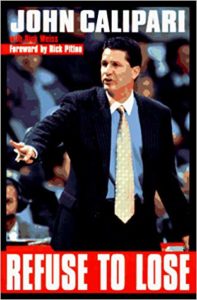
One approach is through sports. The field of sports can help to foster the good community ethos to “refuse to lose“. Refuse to Lose is also the title of a book by one of the winningest coaches in College Basketball, John Calipari. See here:

Book Review: Refuse to Lose – Hardcover by John Calipari  (Author) – September 17, 1996

“Realistic people place roadblocks in front of themselves,” says John Calipari, “I’m unrealistic in a positive way.” And he gets results. As one of the hottest coaches in college basketball, John Calipari transformed the once-dispirited UMass Minutemen into a #1-ranked force to be reckoned with–taking them to the Final Four for the first time in history. Calipari did more than develop a phenomenal team. He built an outstanding program for success.

What is Calipari’s winning philosophy?

Develop a “Refuse to Lose” attitude.
Though you play to win whatever the score, how you play the game counts. True, you will lose some games, but the way you deal with those losses is part of the attitude of refusing to lose. Calipari’s rules: Stay within the rules. Don’t blame others, take responsibility yourself. Review the tape and learn from it. These are the life skills he taught his players–and they resulted in both professional and personal victory. If you love your kids, Calipari believes, they’ll go through walls for you. Now you can apply these winning strategies to your own life–with your family, your co-workers, and yourself–to any endeavor in which there’s a goal to achieve.

The formula works. A man driven by competition and the desire to excel, John Calipari plays to win, rather than playing not to lose. In Refuse to Lose, he insists you step out of your comfort zone. When you’re comfortable, you’re not doing your best. But when you raise the bar above your comfort level, you can accomplish things you never thought possible. He will show you how mistakes can be powerful learning tools and how adversity can become opportunity.

In the bestselling tradition Rick Pitino’s Full Court Pressure and Pat Riley’s The Winner Within, John Calipari tells an amazing story of triumph and grit that is both universal and unique. Powerful, optimistic, and spirited, Refuse to Lose offers a dynamic philosophy that is contagious. Catch it and win!

Source: Retrieved October 12, 2019 from: https://www.amazon.com/Refuse-Lose-John-Calipari/dp/0345408012

——————

Reference: Coach John Calipari
John Vincent Calipari (born February 10, 1959) is an American basketball coach. Since 2009, he has been the head coach of the University of Kentucky men’s team, with whom he won the NCAA Championship in 2012. He has been named Naismith College Coach of the Year three times (in 1996, 2008 and 2015), and was inducted into the Basketball Hall of Fame in 2015.

He was previously the head coach at the University of Massachusetts from 1988 to 1996, the NBA‘s New Jersey Nets from 1996 to 1999 and the University of Memphis from 2000 to 2009, and was the head coach of the Dominican Republic national team in 2011 and 2012.

Calipari has coached Kentucky to four Final Fours, in 2011, 2012, 2014 and 2015. He also led UMass and Memphis to the Final Four in 1996 and 2008 respectively …  As a college coach, Calipari has twenty-four 20-win seasons, nine 30-win seasons, and three 35-win seasons.

Source: Wikipedia Online encyclopedia; retrieved October 13, 2019 from: https://en.wikipedia.org/wiki/John_Calipari

We need more of this Refuse to Lose ethos in the Caribbean. We are already committed to sports as our Caribbean communities, participate and excel in many sporting endeavors. Plus, most of the Caribbean member-states boast Judeo-Christian principles; alas there is an apropos Bible scripture that adds insight to this discussion (Go Lean book Page 229):

For bodily exercise is profitable for a little … – 1 Timothy 4: 8 (American Standard Version)

We have published a number of previous commentaries reviewing the actuality and historicity of Sports in our region; see a sample list here:

https://goleancaribbean.com/blog/?p=15664 Naomi Osaka’s recipe for success: Caribbean Meld
https://goleancaribbean.com/blog/?p=14527 Learning from March Madness (2018)
https://goleancaribbean.com/blog/?p=10351 Lessons from a Winning Team – ‘Culture Eats Strategy For Breakfast’
https://goleancaribbean.com/blog/?p=8272 The effect of ‘Winning in Sports’ on a Losing Homeland
https://goleancaribbean.com/blog/?p=4019 Learning from the Super Bowl … and its Commercials
https://goleancaribbean.com/blog/?p=1341 Learning from Omaha and the College World Series Time
https://goleancaribbean.com/blog/?p=498 Learning from the ‘Sports Gene’ – Book Review:
https://goleancaribbean.com/blog/?p=318 The urgent need for a Collegiate Sports Eco-system in the Caribbean

Refusing to Lose is a similar good ethos to the heroic “whatever it takes” attitude. This was detailed in a previous blog-commentary from April 24, 2019:

Way Forward – Whatever it Takes
So for the Caribbean, we need to adopt the required community ethos, drop the bad ethos, execute the strategies, tactics and implementations … to elevate our society. We need to do the heavy-lifting,  ‘whatever it takes’; we must succeed.

Lives, livelihoods, identities and cultures are at stake.

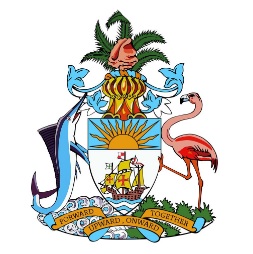
Refusing to Lose is the opposite of the bad ethos that had been the observed practice for the National Airlines in the Bahamas and other Caribbean member-states. This was detailed in a previous blog-commentary from December 29, 2014:

No Fear of Failure – Case Study: Bahamasair
The story being related in the following [embedded] article is a far cry from a pursuit of quality, in fact the overriding theme is “no fear of failure” on the part of the airline’s stakeholders; “if we succeed or fail, it doesn’t really matter”.

This negative community ethos is even enshrined in the regulatory filing for the airline as an international carrier. Appendix B [Industry Quality Standards: Warsaw Convention] highlights the accepted quality standard in aviation known as the Warsaw Convention. Appendix C [Warsaw Convention Exemptions for International Carriers in the US] on the other hand, demonstrates how Bahamasair, and other Caribbean carriers, have petitioned for waivers so as not to abide by these high standards.

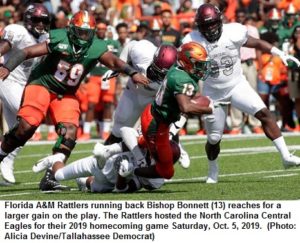
This writer got a glimpse of the good “Refuse to Lose” community ethos, just recently, at the 2019 Homecoming Football Game for Florida A & M University (FAMU). Homecoming games, per its namesake, is where the alumni flock back to the Tallahassee campus to celebrate the FAMU experience, culture and societal contributions – addressed in a previous Go Lean commentary. (See the Appendix VIDEO below of a glimpse of the Homecoming Parade).

With the increased attendance and priority, there is no toleration for a lost in the featured football game. The players, coaches and staff … must refuse to lose every year. For 2019, the FAMU Rattlers won; see the news story here:

Title: Rattlers clip the Eagles 28-21 on Homecoming day
By:
Rory Sharrock, Tallahassee Democrat

Xavier Smith is the hometown hero for the second consecutive contest at Bragg Memorial Stadium.

The wide receiver followed up his game-winning catch versus Southern on Sept. 21 with a scoring run with 32 seconds remaining to give FAMU a 28-21 triumph over North Carolina Central Saturday on homecoming day.

With the victory, the Rattlers improve to 4-1 and 2-0 in the MEAC. The Eagles fall to 2-4 and 1-1 in league play.

The team’s march to victory began on its 35-yard line with 4:16 on the clock. They picked through the Eagles’ defense with outlet passes and sideline routes.

FAMU quarterback Ryan Stanley tossed three touchdowns to three different receivers.

David Manigo, Marcus Williams and Smith were the recipients of Stanley’s scoring throws.

See the full article here: https://www.tallahassee.com/story/sports/college/famu/2019/10/05/quarterly-updates-famu-takes-7-0-lead-over-n-c-central/3879051002/ Posted October 6, 2019; retrieved October 13, 2019.

FAMU Homecoming 2019 was a manifestation of the ethos of Refuse to Lose.

This is why the fostering of sports is so vital for elevating Caribbean society. This is part-and-parcel of the strategies, tactics, implementations and advocacies introduced by the book Go Lean … Caribbean. In fact, “fostering sports” is just 1 of 144 different advocacies presented in the book as a roadmap for the introduction and implementation of the Caribbean Union Trade Federation (CU).

Why is this roadmap so important? It might be the best hope for our Caribbean homeland’s constant ‘losing’.

This roadmap describes the Way Forward, the heavy-lifting for elevating Caribbean society – to turn from losing to winning. Among the 370-pages of the Go Lean book are the turn-by-turn instructions on “how” to adopt many new community ethos. Consider the headlines, summaries and excerpts here on how the region can better foster the Sports eco-system in the Caribbean (Page 229):

10 Ways to Improve Sports

1 Lean-in for the Caribbean Single Market
Embrace the advent of the Caribbean Single Market & Economy initiative of the Caribbean Union Trade Federation. This will allow for the unification of the region of 30 member-states into a single market of 42 million people and a GDP exceeding $800 Billion (per 2010). This market size and multi-lingual realities allows for broadcasting rights with SAP-style language options for English, Spanish, French and Dutch. This makes the region attractive for media contracts for broadcast rights, spectrum auctions and sports marketing. The Olympics have demonstrated that sports can be profitable “big business”, and a great source of jobs and economic activity. The CU will copy the Olympic model, and harness the potential in many other sporting endeavors, so as to make the region a better place to live, work and play.
2 CU Games

Promote the CU Games, every 2 years, as the ascension of the CARIFTA Games for Amateur and now Professional Athletes. The CU Games Administration will also partner with all National Olympic Committees. This administration applies to feeder games, trials and qualification events. The ultimate goal is to field a world-class competitive Olympic Team representing the entire Caribbean. While the CARIFTA Games are for track-and-field events only, the CU Games will resemble a mini-Olympics with multi-sports (boxing, football/soccer, tennis, volleyball, sailing, baseball/softball, etc.).

3 Fairgrounds as Sport Venues
4 Regulate Amateur, Professional & Academically-Aligned Leagues
5 Establish Sports Academies
6 “Super” Amateur Sport Association

Promote All-Star tournaments (pre-season and post-season) for Amateur (School and Junior) Athletics Associations winners. This includes team sports (soccer, basketball), school sports (track/field) and individual sports (tennis, golf, etc.).

7 Regulator/Registrar of Scholar-Athletes – Assuage Abandonment
8 Sports Tourism
The CU will promote tournaments and clinics to encourage advancement in certain sports. These tournaments are aimed at the foreign markets (US, Canada, Europe, Central and South America) so as to generate sports-tourism traffic.
9 Professional Agents and Player Management Oversight (a la Bar/Lawyer Associations)
10 Impanel the CU Anti-Doping Agency

So ‘Yes We Can’ …

… Refusing to Lose is a necessary ethos for the Caribbean Way Forward to start winning. We have experienced far too much losing. We can foster the attitudes and opportunities for winning at sports, in life and in society, as individuals and communities..

Let’s all engage, get off the bench and get into the game. We need to win! But first, we need to Refuse to Lose.

This commentary is the start of this series on the Refuse to Lose ethos; this is Part 1-of-6. The full series is cataloged as follows:

  1. Refuse to Lose: Lesson from Sports
  2. Refuse to Lose: Remediating ‘Columbus Day’
  3. Refuse to Lose: Introducing Formal Reconciliations
  4. Refuse to Lose: Despite American Expansionism
  5. Refuse to Lose: Canada’s Model of Ascent
  6. Refuse to Lose: Direct Foreign Investors Wind-Downs

We urged everyone in the Caribbean – leaders and residents, athletic participants and spectators alike – to lean-in to this Go Lean roadmap; to win … at all costs, to make our homeland a better place to live, work and play.

This is not a game for us; this is life.  🙂

About the Book
The book Go Lean…Caribbean serves as a roadmap for the introduction and implementation of the technocratic Caribbean Union Trade Federation (CU), for the elevation of Caribbean society – for all member-states. This CU/Go Lean roadmap has these 3 prime directives:

  • Optimization of the economic engines in order to grow the regional economy to $800 Billion and create 2.2 million new jobs.
  • Establishment of a security apparatus to ensure public safety and protect the resultant economic engines.
  • Improve Caribbean governance to support these engines, including a separation-of-powers between the member-states and CU federal agencies.

The Go Lean book provides 370-pages of turn-by-turn instructions on “how” to adopt new community ethos, plus the strategies, tactics, implementations and advocacies to execute so as to reboot, reform and transform the societal engines of Caribbean society.

Download the free e-Book of Go Lean … Caribbean – now!

Who We Are
The movement behind the Go Lean book – a non-partisan, apolitical, religiously-neutral Community Development Foundation chartered for the purpose of empowering and re-booting economic engines – stresses that reforming and transforming the Caribbean societal engines must be a regional pursuit. This was an early motivation for the roadmap, as pronounced in the opening Declaration of Interdependence (Pages 12 – 14):

xi. Whereas all men are entitled to the benefits of good governance in a free society, “new guards” must be enacted to dissuade the emergence of incompetence, corruption, nepotism and cronyism at the peril of the people’s best interest. The Federation must guarantee the executions of a social contract between government and the governed.

xvi. Whereas security of our homeland is inextricably linked to prosperity of the homeland, the economic and security interest of the region needs to be aligned under the same governance. Since economic crimes … can imperil the functioning of the wheels of commerce for all the citizenry, the accedence of this Federation must equip the security apparatus with the tools and techniques for predictive and proactive interdictions.

xxiv.  Whereas a free market economy can be induced and spurred for continuous progress, the Federation must install the controls to better manage aspects of the economy: jobs, inflation, savings rate, investments and other economic principles. Thereby attracting direct foreign investment because of the stability and vibrancy of our economy.

xxxi. Whereas sports have been a source of great pride for the Caribbean region, the economic returns from these ventures have not been evenly distributed as in other societies. The Federation must therefore facilitate the eco-systems and vertical industries of sports as a business, recreation, national pastime and even sports tourism ….

Sign the petition to lean-in for this roadmap for the Caribbean Union Trade Federation.

————–

Appendix VIDEO – Marching 100 perform in Homecoming Parade – https://www.tallahassee.com/videos/news/2019/10/05/watch-marching-100-perform-homecoming-parade/3879408002/

Posted October 5, 2019 – The Marching 100 perform in the 2019 FAMU homecoming parade. By photographer Alicia Devine, Tallahassee Democrat.

Share this post:
, , ,
[Top]

Unequal Justice: Student Loans Could Dictate Justice

Go Lean Commentary

Education is all the rage for elevating individuals in society … to be more prosperous, to earn more and have a better life. This is why we send children to school starting at Age 5; and encourage them to work hard and do their homework …

… and why we invest in Student Loans so that they can get a college education.

But there is Unequal Justice in this eco-system.

Quick: Do you see the injustice in this situation?

You get a $30,000 Student Loan to go to college … for 2 years … for an Associates Degree. Afterwards, you have no job, a worthless degree and $30,000 in debt. – See the narrative in the Appendix VIDEO.

That is an economic injustice – welcome to the dispositions of Millennials in America in 2019; (actually the last 20 years). But America is not the only community experiencing dysfunction and economic injustice due to Student Loans. We have a lot of dysfunctions in the Caribbean too. See the details here, as this issue of Student Loans in the economic fabric of society have been deliberated in previous blog-commentaries; see here:

Title #1: Student debt holds back many would-be home buyers – April 30, 2014

“Of the many factors holding back young home buyers … none looms larger than the recent explosion of college debt”.

The book Go Lean … Caribbean serves as a roadmap for the introduction and implementation of the Caribbean Union Trade Federation (CU), for the economic optimization in the region. If the target of the book is the Caribbean, why does this article about American student loans weigh so heavy in a consideration of Caribbean economics?

There are lessons to be learned here! Not just for student loans, but also regarding education policy. This issue is pivotal to the economics of the Caribbean region.

Classic economic policy promotes that education has a direct effect on a community’s economy and the standard-of-living, quantified as each increased-grade-level, raises GDP by 3 percent (Appendix C2Page 258). But, the Go Lean roadmap posits that this rule is not true for the Caribbean, because of the debilitating emigration rate, the brain drain in which our educated population flees for foreign shores, or worse, students that do not return after matriculating – despite using funding from their Caribbean homeland. These are all investments with no return. In short, the economy of the Caribbean can be impacted by the activity of this recent-student population, when they repatriate; but when they emigrate, they hurt the economy.

… education funding policies adversely affect major areas of the economy, in this case home-buying. The cause-and-effect paradigm is direct, within 5 to 10 years after graduation; a former student should be planning to buy a house. Apparently the [American] macro economy is dependent on this relationship. According to the foregoing [an embedded] article, the National Association of Realtors (NAR) identified student debt as a key factor in soft demand for home-buying this spring (2014).

————

Title #2: A Lesson in Economic Fallacies – Student Loans As Investments – July 9, 2016

The Bahamas Education Loan Authority (ELA) is owed over $155 million in outstanding loan payments for its student loan scheme, with a default rate of 75 percent.

This Caribbean community should now be saying: “Give me my money!”

However, this commentary extends the criticism further: The money being demanded is the principal and maybe even some interest amounts due. But student loans are supposed to be investments in the young people of the community. This commentary trumpets the reality of Caribbean student loans as a fallacy: Where is the return on these investments?

This commentary asserts that those who advocate to remediate Caribbean economics needs to avoid a series of Economic Fallacies.

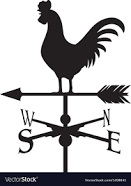
The movement behind the book Go Lean…Caribbean have addressed Income Inequality and the contribution of Student Loans to this plight. It is our position here that the eco-system of Student Loans can be a “weather vane” of justice in society; one that reflects the direction of society and can possibly effect the direction.

Weather vane
weather vanewind vane, or weathercock is an instrument used for showing the “direction of the wind“. It is typically used as an architectural ornament to the highest point of a building. The word “vane” comes from the Old English word “fana” meaning “flag”.

Although partly functional, weather vanes are generally decorative, often featuring the traditional cockerel design with letters indicating the points of the compass.

Student Loans can indicate the “direction of the winds” of society.

  • Loans are debt, paying for past activities for a government service that used to only be a marginal expense (and free in some countries). See this point from that previous Go Lean commentary:
    It’s not the cost of the loan ([interest)] that’s the problem; it’s the principal – the appallingly high tuition costs that have been soaring at two to three times the rate of inflation, an irrational upward trajectory eerily reminiscent of skyrocketing housing prices in the years before 2008. – Ripping Off Young America: The College – Loan Scandal By Matt Taibbi, Rolling Stones Magazine; August 15, 2013. (Appendix IH of Go Lean book – Page 286).
  • Student Loans are investments, preparing for the future. Those who pursue higher education always enjoy a higher pay-rate than without. The prospects of this Return on Investment motivates people and incentivizes them to follow prescribed courses of action;  social justice and development advocacies can be urged. The member-states of the Caribbean region are urged to follow the model of the US Federal Perkins Loans – defined here:
    .
    The Bottom Line on Perkins Loans
    A Federal Perkins Loan is a need-based student loan offered by the US Department of Education to assist American college students in funding their post-secondary education. Perkins Loans carry a fixed interest rate of 5% for the duration of the ten year repayment period. The Perkins Loan Program has a nine-month grace period, so that borrowers begin repayment in the tenth month upon graduating, falling below half-time status, or withdrawing from their college or university. Because the Perkins Loan is subsidized by the government, interest does not begin to accrue until the borrower begins to repay the loan.
    As of the 2009-2010 academic year, the loan limits for undergraduates are $5,500 per year with a lifetime maximum loan of $27,500. For graduate students, the limit is $8,000 per year with a lifetime limit of $60,000 (including undergraduate loans).
    Perkins Loans are eligible for Federal Loan Cancellation for teachers in designated low-income schools, as well as for teachers in designated teacher shortage areas such as math, science, and bilingual education. This cancellation also applies to Peace Corps Volunteers. Cancellation typically occurs on a graduating scale: 15% for year 1, 15% for year 2, 20% for year 3, 20% for year 4, 30% for year 5. These percentages are based on the original debt amount. Thus after 3 years of service, one would have 50% of their original debt cancelled.

Student Loans can also dictate justice, by the priority that society places on them and the incentives and mandates provisioned for participating students (deferments, cancellations and postponements). This is how Student Loans can dictate the “direction of the winds” of society.

This blog-commentary submission, entry 4-of-4, completes this series on Unequal Justice. The first 2 submissions traced bad history of tyrants here in our New World and how that tyranny imperiled whole populations. These last 2 submissions address matters of economics. The full series on Unequal Justice is cataloged here as follows:

  1. Unequal Justice: Soft Tyrannicide to Eliminate Bottlenecks
  2. Unequal Justice: Economic Crimes Against Tourists and Bullying
  3. Unequal Justice: Envy and the Seven Deadly Sins
  4. Unequal Justice: Student Loans Could Dictate Justice

In this series, reference is made to the fact that Bad Actors can always disrupt the peace and prosperity in society; sometimes the Bad Actor is a person, a group or an institution. So there is always the need to be On Guard to ensure justice is optimized in the region; for all people: young and old. Yes, the need for justice in the Caribbean societal engines transcends borders, politics, class and race. We need to make sure the “game is not rigged”, and we can abate and mitigate unequal economic structures.

The best counter-strategy for Income Inequality is a thriving Middle Class. The best way to get to the Middle Class is through educational empowerments; (see Appendix below). The subject of educational empowerments has been addressed in many previous Go Lean commentaries; see this sample list here:

https://goleancaribbean.com/blog/?p=17992 What Went Wrong? Losing the Best; Nation-building with the Rest
https://goleancaribbean.com/blog/?p=16882 Exploring Medical School Opportunities … as Economic Engines
https://goleancaribbean.com/blog/?p=13472 Future Focused – College, Caribbean Style
https://goleancaribbean.com/blog/?p=9751 Where the Jobs Are – Teaching for Animation and Game Design
https://goleancaribbean.com/blog/?p=8669 Detroit makes Community College free … as part of their Turn-around
https://goleancaribbean.com/blog/?p=6269 Education & Economics: Welcome Mr. President
https://goleancaribbean.com/blog/?p=5482 Bad Model: For-Profit Education: Plenty of Profit; Little Education

We must be On Guard and ever vigilant in our battle against inequality and unequal justice.

There will always be villainy – Bad Actors…

… sometimes the villainy is just one character, a tyrant or a bully, sometimes its an organized criminal organization and sometimes still, its a broken eco-system. We must be prepared to abate, mitigate and remediate all tyranny.

We urge all Caribbean stakeholders to lean-in for the empowerments described here-in and in the book Go Lean … Caribbean. Our quest is the full elevation of the economic, security and governing engines of our society. We can do better. It is conceivable, believable and achievable to elevate all 30 Caribbean communities – individually and collectively. We can succeed in making our homelands better places to live, work and play. 🙂

About the Book
The book Go Lean…Caribbean serves as a roadmap for the introduction and implementation of the technocratic Caribbean Union Trade Federation (CU), for the elevation of Caribbean society – for all member-states. This CU/Go Lean roadmap has these 3 prime directives:

  • Optimization of the economic engines in order to grow the regional economy to $800 Billion & create 2.2 million new jobs.
  • Establishment of a security apparatus to ensure public safety and protect the resultant economic engines.
  • Improve Caribbean governance to support these engines, including a separation-of-powers between the member-states and CU federal agencies.

The Go Lean book provides 370-pages of turn-by-turn instructions on “how” to adopt new community ethos, plus the strategies, tactics, implementations and advocacies to execute so as to reboot, reform and transform the societal engines of Caribbean society.

Download the free e-Book of Go Lean … Caribbean – now!

Who We Are
The movement behind the Go Lean book – a non-partisan, apolitical, religiously-neutral Community Development Foundation chartered for the purpose of empowering and re-booting economic engines – stresses that reforming and transforming the Caribbean societal engines must be a regional pursuit. This was an early motivation for the roadmap, as pronounced in the opening Declaration of Interdependence (Pages 12 – 13):

xi. Whereas all men are entitled to the benefits of good governance in a free society, “new guards” must be enacted to dissuade the emergence of incompetence, corruption, nepotism and cronyism at the peril of the people’s best interest. The Federation must guarantee the executions of a social contract between government and the governed.

xvi. Whereas security of our homeland is inextricably linked to prosperity of the homeland, the economic and security interest of the region needs to be aligned under the same governance. Since economic crimes … can imperil the functioning of the wheels of commerce for all the citizenry, the accedence of this Federation must equip the security apparatus with the tools and techniques for predictive and proactive interdictions.

xxiv. Whereas a free market economy can be induced and spurred for continuous progress, the Federation must install the controls to better manage aspects of the economy: jobs, inflation, savings rate, investments and other economic principles. Thereby attracting direct foreign investment because of the stability and vibrancy of our economy.

Sign the petition to lean-in for this roadmap for the Caribbean Union Trade Federation. 

—————

Appendix VIDEO – How college loans exploit students for profit | Sajay Samuel –  https://youtu.be/YXWKuK-Qsu4

TED
“Once upon a time in America,” says professor Sajay Samuel, “going to college did not mean graduating with debt.” Today, higher education has become a consumer product — costs have skyrocketed, saddling students with a combined debt of over $1 trillion, while universities and loan companies make massive profits. Samuel proposes a radical solution: link tuition costs to a degree’s expected earnings, so that students can make informed decisions about their future, restore their love of learning and contribute to the world in a meaningful way.

TEDTalks is a daily video podcast of the best talks and performances from the TED Conference, where the world’s leading thinkers and doers give the talk of their lives in 18 minutes (or less). Look for talks on Technology, Entertainment and Design — plus science, business, global issues, the arts and much more.

Find closed captions and translated subtitles in many languages at http://www.ted.com/translate

Follow TED news on Twitter: http://www.twitter.com/tednews

Like TED on Facebook: https://www.facebook.com/TED

Subscribe to our channel: http://www.youtube.com/user/TEDtalksD…

—————

Appendix – Education and Economic Growth

The relationship between economic growth and education has been one of the central threads of economic analysis. Both Adam Smith in the 18th century and Alfred Marshall in the 19th century, two important figures for the economics profession, addressed the question of how individual investments in “education” influence the wealth of nations. Throughout the 20th century, as Krueger and Lindahl (2001) point out in their survey of these issues, modern professional economists have been attempting to develop empirical estimates of the relationship between education and economic growth. Some of the most famous names in late 20th century economics made their reputations studying the question of individual returns to investment in education. Jacob Mincer (1974), Gary Becker (1964) and a long list of researchers inspired by their work have produced hundreds of books and papers.

Much of this literature is highly technical in the sense that it uses formal econometric models to test hypotheses using empirical data. The bottom line of this impressive work is that the economic evidence supports the view that both public and private returns to investment in education are positive—at both the individual and economy-wide levels. The vast technical literature on this subject can be subdivided into two general areas:

  1. The micro-economic literature looks at the relationship between different ways of measuring a person’s educational achievement and what they earn. Most studies show consistent results for what can be called the private or personal payoff from education. For individuals this means that for every additional year of schooling they increase their earnings by about 10%. This is a very impressive rate of return.
  2. The macro-economic literature examines the relationship between different measures of the aggregate level of educational attainment for a country as a whole and, in most cases, the standard measure of economic growth in terms of GDP. Once again, most studies find evidence of higher GDP growth in countries where the population has, on average, completed more years of schooling or attains higher scores on tests of cognitive achievement. However, as will be explained in somewhat greater detail below, given the diversity of national experiences, particularly over time, it is hard to settle on one figure for the rate of return at a social level.

(Based on established and historic Economic Theories – By Riel Miller, www.rielmiller.com; commissioned by Cisco Systems, Inc.)

Source: Go Lean…Caribbean Appendix C2 – Page 258

Share this post:
, , ,
[Top]

Unequal Justice: Bullying Magnified to Disrupt Commerce

Go Lean Commentary

“You had better get control of that boy or we will for you” – typical admonition of a Peace Officer to the parents of a young bully!

There is a certain reality that we all have had to contend with:

Bullies are inevitable!

We have all been to Grade/Elementary/Primary School; we have all played on the playground. We can simply look at our own lives, cite examples of bullying and glean this Truth and Consequence:

  • Slippery slope …
  • Snowballing …
  • From an acorn comes a Mighty Oak …

Analogies abound … as to why it is important to “nip bullying in the bud”. If we do nothing – or not enough – then conditions of Unequal Justice go from “bad to worse”. The bad actor can emerge from terrorizing a family, to a neighborhood, to a community, to a nation, to a region, to a hemisphere, to the whole world. Think: Nazi Germany, Imperial Japan, Soviet Russia, British Empire, Napoleonic France, Spanish Inquisition, and more …

Unchecked, bad actors in the community become tyrants – they can even affect the local economic engine. This is where the opening statement of a typical Police Officer to a “parent of a bully” become relevant. Either that parent mitigates that situation, or the legitimate authorities will have to get engaged. It is easier to remediate a local bully; beyond that, the bad actions can escalate to gang activity, organized crime and/or domestic terrorism. An escalated villainy would require an escalated response. There is a plan for regional mitigations of gangs, organized crime and/or terroristic activities..

This is the focus of this commentary. This is entry 2-of-4 in this series on Unequal Justice. The previous submission traced that bad history of the County Sheriff in the American South and how that person’s tyranny imperiled the entire Black American population. That previous blog-commentary related how the Sheriff served as a bottleneck in the execution of justice , and the only way to eliminate that tyranny was with legal “soft” tyrannicide.  The full series on Unequal Justice is cataloged here as follows:

  1. Unequal Justice: Soft Tyrannicide to Eliminate Bottlenecks
  2. Unequal Justice: Economic Crimes Against Tourists and Bullying
  3. Unequal Justice: Envy and the Seven Deadly Sins
  4. Unequal Justice: Student Loans Could Dictate Justice

In this series, reference is made to the fact that Tourism, as the Number 1 economic driver in the region, is vulnerable to Bad Actors disrupting peaceful hospitality trade – we must protect our societal engines from tyrants, bullies and terrorists. So there is always the need to ensure justice institutions are optimized in the region; visitors will refuse to come and enjoy our hospitality if there are active threats or perceived instabilities. (At the same time, residents flee to foreign shores in search of refuge). So the need for justice in the Caribbean tourism deliveries transcends borders, politics, class and race.

Consider this actuated consequence in the Dominican Republic, due to some recent incidents regarding public safety for  tourists; (there are some suspicions that Bad Actors persist):

VIDEO – Is travelling to the Dominican Republic dangerous – https://www.travelandleisure.com/travel-news/tourist-deaths-dominican-republic-safe

——–

Title: Tourism to the Dominican Republic Has Dropped 74 Percent, According to New Study

By: Stacey Leasca

In the past year, 10 American citizens have died in the Dominican Republic, some as tourists others as long-term visitors. While the deaths have been attributed to natural causes, would-be visitors are reconsidering their plans to visit the island.

Is traveling to the Dominican dangerous for Americans? Here’s what travelers need to know.

Many travelers are re-booking their flights to new destinations

According to a report by ForwardKeys, which analyses more than 17 million flight bookings a day, bookings for July and August from the United States to the Dominican Republic have fallen by 74.3 percent compared to the same period in 2018.

“My deepest sympathies go out to the families of the American tourists who have passed away. Their recent and tragic deaths appear to have had a dramatic impact on travel to the Dominican Republic,” Olivier Ponti, vice president of insights at ForwardKeys, said. “Our analysis of leisure travel shows a striking correlation.”

See the full article here: Travel and Leisure Magazine – posted June 27, 2019; retrieved September 28, 2019 from: https://www.travelandleisure.com/travel-news/tourist-deaths-dominican-republic-safe

Allowing bullies or tyrants (real or perceived) in the community to disrupt economic engines – crimes against tourists, etc. – is just plain wrong and a failure of the unwritten Social Contract. This refers to the arrangement where citizens (and visitors) surrender some of their freedoms and submit to the authority of the State in exchange for protection of remaining natural and legal rights. So unchecked bullying, street gangs and organized crime require an escalated response, [“soft”] tyrannicide.

Tyrannicide is even presented in the Holy Bible with the drama of the woman “Jael” in the Book of Judges Chapter 4 & 5 where she killed the villainous Sisera in order to save the people in her village. That account relates:

The Canaanites were defeated [by Judge Barak] and [the Army Commander] Sisera fled the scene.[1]

Sisera arrived on foot at the tent of Heber on the plain of Zaanaim. Heber and his household were at peace with Jabin, the king of Canaan, who reigned in Hazor.[4] Jael, however, sympathized with the Israelites because of the twenty-year period of harsh oppression inflicted on them by Jabin, his commander Sisera, and his nine hundred iron chariots. Jael (whose tent would have been separate from Heber’s) [5] welcomed Sisera into her tent and covered him with a blanket. As he was thirsty, she gave him a jug of milk. Exhausted, Sisera lay down and soon fell asleep. While he was sleeping, Jael took a mallet and drove a tent peg into his temple, killing him instantly.[1]

This is an example of “hard” tyrannicide.

Tyrannicide – hard and soft – is a reality in the modern world. Just today September 28, 2019,  the former President of Zimbabwe was laid to rest, only in a private ceremony; no State Funeral. He was finally deposed 2 years ago by a military coup that ended his tyrannical rule of 37 years.

Also in the Bahamas in 2017, the parliamentary government in power was overwhelmingly defeated due to the people’s desire to just get rid of what they perceived as an ineffectual and “bottlenecking” Prime Minister. See this quotation from a previous blog-commentary from May 11, 2017:

Title: UPDATE: Understand the Market, Plan the …
“The Prime Minister bet his administration on the prospect of Carnival and now, its election time.”

It’s official, that bet has failed! The Prime Minister (PM) of the Bahamas and leader of the Progressive Liberal Party (PLP) – Perry G. Christie – has been defeated. …

This commentary has observed-and-reported on the Bahamas for the last 5 years and the “bet” that the PM made was related to more than just Carnival; he also bet on:

  • Music Festival-Event – The Fyre Festival event was a fiasco; it went up in flames on April 28, 2017 after getting government permissions and support beforehand. The mass population of Bahamian stakeholders – other than the government – knew nothing of this event until it was an international embarrassment – a “Black-eye”.
  • Value-Added Tax – New 7.5% Sales & Use tax implementation increased the tax burden on the poor more than the rich.
  • Baha Mar Resort & Casino – $2 Billion Resort & Casino stalled due to government meddling in the Developer-Banker conflict.
  • Grand Bahama (Freeport) – 2nd City economic progress stalled; decisions on extending Investment Tax Credits were inexplicably stalled and extended for 6-month intervals, until it was finally granted for a reasonable period.

So when the outgoing PM dissolved Parliament on April 11, 2017 and called elections for May 10, it was the only chance for the people to vocalize their displeasure. They shouted an almost unanimous veto of Christie’s policies and administration, giving the Opposition Party (Free National Movement) 35 of the 39 seats in the House of Assembly.

The near “unanimous veto” in the Bahamas in May 2017 was an example of a “soft” tyrannicide. (Many of the candidates for Parliament were political novices with no track record, experience or reputation; they were believed to be embraced by the voting public just because they represented a dissenting Party).

The need for economic justice can never be undermined, undervalued or questioned. This was related in many previous Go Lean commentaries; consider this sample here:

https://goleancaribbean.com/blog/?p=17267 Way Forward – For Justice: Special Prosecutors
https://goleancaribbean.com/blog/?p=16668 Justice and Economics – Both needed to forge change
https://goleancaribbean.com/blog/?p=16408 Bad Ethos on Home Violence – Spilled into Tourist Resorts
https://goleancaribbean.com/blog/?p=14424 Repairing the Breach: Crime – Need, Greed, Justice & Honor
https://goleancaribbean.com/blog/?p=14211 Urging to “Enjoy Carnival”, but Be Safe!
https://goleancaribbean.com/blog/?p=11054 Managing the ‘Strong versus the Weak’ – Bullying in Schools
https://goleancaribbean.com/blog/?p=5307 8th Violent Crime Warning to Bahamas Tourists – Bad Model
https://goleancaribbean.com/blog/?p=392 The World Bank gives Jamaica Economic Help to Mitigate Crime

For the foregoing, the situation in the Dominican Republic is a Cautionary Tale. There must be an adequate response and escalation when there is a threat to the public safety of tourists and trading partners. The subjects must be able to “Dial 911“.

The community institutions themselves must also be able to “Dial 911” and call for additional help:

  • We must protect the economic engines.
  • We must optimize our regional justice institutions.

Both of these missions are in parallel. This is the quest of the Go Lean movement.

We hereby urge all Caribbean stakeholders – governments, citizens, visitors and  trading partners alike – to lean-in to this comprehensive Go Lean roadmap to elevate Caribbean society. We must make our homeland a better place to live, work and play. 🙂

About the Book 

The book Go Lean…Caribbean serves as a roadmap for the introduction and implementation of the technocratic Caribbean Union Trade Federation (CU), for the elevation of Caribbean society – for all member-states. This CU/Go Lean roadmap has these 3 prime directives:

  • Optimization of the economic engines in order to grow the regional economy to $800 Billion & create 2.2 million new jobs.
  • Establishment of a security apparatus to ensure public safety and protect the resultant economic engines.
  • Improve Caribbean governance to support these engines, including a separation-of-powers between the member-states and CU federal agencies.

The Go Lean book provides 370-pages of turn-by-turn instructions on “how” to adopt new community ethos, plus the strategies, tactics, implementations and advocacies to execute so as to reboot, reform and transform the societal engines of Caribbean society.

Download the free e-Book of Go Lean … Caribbean – now!

Who We Are
The movement behind the Go Lean book – a non-partisan, apolitical, religiously-neutral Community Development Foundation chartered for the purpose of empowering and re-booting economic engines – stresses that reforming and transforming the Caribbean societal engines must be a regional pursuit. This was an early motivation for the roadmap, as pronounced in the opening Declaration of Interdependence (Pages 11 – 13):

iv. Whereas the natural formation of the landmass is in a tropical region, the flora and fauna allows for an inherent beauty that is enviable to peoples near and far. The structures must be strenuously guarded to protect and promote sustainable systems of commerce paramount to this reality.

xi. Whereas all men are entitled to the benefits of good governance in a free society, “new guards” must be enacted to dissuade the emergence of incompetence, corruption, nepotism and cronyism at the peril of the people’s best interest. The Federation must guarantee the executions of a social contract between government and the governed.

xvi. Whereas security of our homeland is inextricably linked to prosperity of the homeland, the economic and security interest of the region needs to be aligned under the same governance. Since economic crimes … can imperil the functioning of the wheels of commerce for all the citizenry, the accedence of this Federation must equip the security apparatus with the tools and techniques for predictive and proactive interdictions.

xxiv. Whereas a free market economy can be induced and spurred for continuous progress, the Federation must install the controls to better manage aspects of the economy: jobs, inflation, savings rate, investments and other economic principles. Thereby attracting direct foreign investment because of the stability and vibrancy of our economy.

Sign the petition to lean-in for this roadmap for the Caribbean Union Trade Federation. 

Share this post:
, , ,
[Top]

Unequal Justice: Sheriffs and the need for ‘soft’ Tyrannicide

Go Lean Commentary

The need for justice can never be undermined, undervalued or questioned.

People will abandon everything else – culture, family, home and comforts – in pursuit of justice, for themselves or their children.

This is a familiar cause in the Black community – African descended people – in the New World. The 2013 book Go Lean… Caribbean spoke of the mental disposition of the previous generations that transcended from slavery to full civil rights. The book quotes (Page 21) this as the “community ethos” or “underlying sentiment that informed the beliefs, customs, or practices”:

The African Diaspora experience in the New World [was] one of “future” gratification, as the generations that sought freedom from slavery knew that their children, not them, would be the beneficiaries of that liberty. This ethos continued with subsequent generations expecting that their “children” would be more successful in the future than the parents may have been.

The “success” that these ones sought were for justice first and prosperity later. Consider the example of the Great Northward Migration in the United States. This refers to:

… the movement of 6 million African Americans out of the rural Southern United States to the urban NortheastMidwest, and West that occurred between 1916 and 1970.[1] In every U.S. Census prior to 1910, more than 90% of the African-American population lived in the American South.[2] In 1900, only one-fifth of African Americans living in the South were living in urban areas.[3] By the end of the Great Migration, just over 50% of the African-American population remained in the South, while a little less than 50% lived in the North and West,[4] and the African-American population had become highly urbanized. By 1960, of those African Americans still living in the South, half now lived in urban areas,[3] and by 1970, more than 80% of African Americans nationwide lived in cities.[5]

The reality of southern rural life for African Americans was that justice was impeded by one institution, often one character: the County Sheriff. (See the academic journal in Appendix A below).

The Sheriff is a legal official with designated responsibility for a local jurisdiction in countries with historical ties to England. In the United States, the scope of the elected Sheriff is most often identified as the chief civil-law enforcement officer and administrator of County jails. [There were 3,081 Sheriff’s offices as of 2015.[4]]

The County Sheriff was often a Bottleneck for justice for the local Black community. This was well illustrated in the classic reggae song about Sheriff “John Brown” by Bob Marley  – see here; (and the lyrics in Appendix C below):

VIDEO – Bob Marley “I Shot The Sheriff” Live at the Rainbow – https://youtu.be/Xa0HOpQRpLM


OFF Productions

More videos on http://www.off.tv Like us on Facebook http://po.st/KKmN8j Follow us on Twitter http://po.st/AuU757

  • Category: Music
  • Song: I Shot The Sheriff (Rainbow, 1978)
  • Artist: Bob Marley
  • Licensed to YouTube by: Aviator Management GmbH (on behalf of Bob Marley)

(People sought refuge and succeeded in their quest for relief and justice by fleeing the jurisdiction of the Sheriff, that State and the whole oppressive racist region of the American South).

Bottlenecks
There is the concept of the Bottlenecks in production design …

… a bottleneck is one process in a chain of processes, such that its limited capacity reduces the capacity of the whole chain. The result of having a bottleneck are stalls in production, supply overstock, pressure from customers and low employee morale.[1] – Source: Wikipedia.

How do we eliminate bottlenecks? By eliminating non-value activities …

In removing all non-value activities, you reduce the amount of redundant tasks performed by the bottlenecked machine [process or person] and hence maximize efficiency.

So it is a quick and easy conclusion that in order to be efficient and effective, bottlenecks must be removed/streamlined from any process. This case-in-point about bottlenecks is a submission from the movement behind the Go Lean…Caribbean book. This book was not designed to address bottlenecks, but rather the Caribbean societal engines: economics, security and governance. It is no doubt that this subject of bottlenecks aligns to each one of these engines. This is because they relate to:

Justice!

There could be a bottleneck in the execution of justice – one person can hold it up, prevent it and subvert it. When this is the case, there is the need to eliminate the obstacle. This is called “tyrannicide“. In fact, the subject of tyrannicide opens this series on “Unequal Justice” from the movement behind the Go Lean book for September 2019. While the Latin root word “cide” refers to killing or slaughter – think: suicide and homocide – we are NOT advocating any kind of assassination of political leaders. No, we are not encouraging any form of violence; rather the advocacy here is for a “soft” tyrannicide – legally removing all persons that may be a stumbling block or bottleneck in the execution of justice in the societal engines – these persons, despite their claims of being “heroes”, are really “villains”.  The full series is cataloged as follows:

  1. Unequal Justice: Soft Tyrannicide to Eliminate Bottlenecks
  2. Unequal Justice: Economic Crimes Against Tourists and Bullying
  3. Unequal Justice: Envy and the Seven Deadly Sins
  4. Unequal Justice: Student Loans Could Dictate Justice

In this series, reference is made to the need for a comprehensive roadmap for elevating the societal engines of the 30 Caribbean member-states. We need to always ensure justice institutions are optimized in the region, otherwise people flee in search of refuge. The need for justice transcends borders, politics, class and race. People feel justified to pursue justice – as a religious devotion – if not for themselves, then for their children.

The need for justice can never be undermined, undervalued or questioned. This was related in many previous Go Lean commentaries; consider this sample here:

https://goleancaribbean.com/blog/?p=18100 Cop-on-Black Shootings in America’s DNA
https://goleancaribbean.com/blog/?p=17667 Is the US a ‘Just’ Society? Hardly!
https://goleancaribbean.com/blog/?p=14413 Repairing the Breach: ‘Hurt People Hurt People’
https://goleancaribbean.com/blog/?p=13476 Future Focused – Policing the Police
https://goleancaribbean.com/blog/?p=10222 Waging a Successful War on ‘Terrorism’ and Bullying
https://goleancaribbean.com/blog/?p=5238 Prisoners for Profit – Abuses in the Prison Industrial Complex
https://goleancaribbean.com/blog/?p=5304 Mitigating the Eventual ‘Abuse of Power’

For the foregoing, the American South, tyrannicide was achieved by removing the racist Sheriffs from office. This was accomplished by defeating them at the ballot box – see the example in Appendix B. The people that fled – in the Great Migration – did not defeat the Sheriffs,  the bottlenecks for justice. No, it was those that stayed; thusly, the reformation took very long.

This is also the advocacy of the Go Lean movement.

Many Caribbean people have fled their homeland and this region. They cannot bring the required  change if they are absent! It is our assertion that it is easier to reform and transform the Caribbean rather than trying to fix the societal life for Caribbean people abroad in a foreign land.

This theme – urging Caribbean people to Stay Home and Return Home – aligns with many previous Go Lean commentaries; see a sample list here:

https://goleancaribbean.com/blog/?p=11314 The Need to Stay Home: Forging a Home Addiction
https://goleancaribbean.com/blog/?p=10654 Stay Home! Immigration Realities in the US
https://goleancaribbean.com/blog/?p=15123 ‘Time to Go’ – Blacks get longer sentences from ‘Republican’ Judges
https://goleancaribbean.com/blog/?p=9216 Time to Go: No Respect for our Hair

Life in the Diaspora is not easy; and not always just. The Black-and-Brown of the Caribbean continue to encounter repression, oppression and suppression in the foreign communities of  North America and Europe. If justice is the goal – it should be – then it is easier to forge justice and mitigate institutional abuse here in the Caribbean homeland. It still takes heavy-lifting, but there is a better chance for success here.

We must learn the lessons of the history of the American South – it was those that remained that reformed and transformed their communities. Not those that left. (North Carolina now has 20 Black Sheriffs out of their 100 counties).

i.e. Dr. Martin Luther King Jr., was a Baptist Minister in Atlanta, Georgia, after starting his Civil Rights career in Montgomery, Alabama. His enunciated dream was for freedom to reign:

… from the Stone Mountains of Georgia,

… from Lookout Mountain in Tennessee,

… from every hill and molehill in Mississippi. From every mountainside, let freedom ring.

Let freedom … and justice reign in the Caribbean; in every member-state and for all the people. This is our Dream!

We hereby urge all Caribbean stakeholders – governments, residents and Diaspora – to lean-in to this comprehensive Go Lean roadmap to elevate Caribbean society. This is how we can make our homeland a better place to live, work and play. 🙂

About the Book
The book Go Lean…Caribbean serves as a roadmap for the introduction and implementation of the technocratic Caribbean Union Trade Federation (CU), for the elevation of Caribbean society – for all member-states. This CU/Go Lean roadmap has these 3 prime directives:

  • Optimization of the economic engines in order to grow the regional economy to $800 Billion & create 2.2 million new jobs.
  • Establishment of a security apparatus to ensure public safety and protect the resultant economic engines.
  • Improve Caribbean governance to support these engines, including a separation-of-powers between the member-states and CU federal agencies.

The Go Lean book provides 370-pages of turn-by-turn instructions on “how” to adopt new community ethos, plus the strategies, tactics, implementations and advocacies to execute so as to reboot, reform and transform the societal engines of Caribbean society.

Download the free e-Book of Go Lean … Caribbean – now!

Who We Are
The movement behind the Go Lean book – a non-partisan, apolitical, religiously-neutral Community Development Foundation chartered for the purpose of empowering and re-booting economic engines – stresses that reforming and transforming the Caribbean societal engines must be a regional pursuit. This was an early motivation for the roadmap, as pronounced in the opening Declaration of Interdependence (Pages 12 – 13):

xi. Whereas all men are entitled to the benefits of good governance in a free society, “new guards” must be enacted to dissuade the emergence of incompetence, corruption, nepotism and cronyism at the peril of the people’s best interest. The Federation must guarantee the executions of a social contract between government and the governed.

xvi. Whereas security of our homeland is inextricably linked to prosperity of the homeland, the economic and security interest of the region needs to be aligned under the same governance. Since economic crimes … can imperil the functioning of the wheels of commerce for all the citizenry, the accedence of this Federation must equip the security apparatus with the tools and techniques for predictive and proactive interdictions.

xxiv. Whereas a free market economy can be induced and spurred for continuous progress, the Federation must install the controls to better manage aspects of the economy: jobs, inflation, savings rate, investments and other economic principles. Thereby attracting direct foreign investment because of the stability and vibrancy of our economy.

Sign the petition to lean-in for this roadmap for the Caribbean Union Trade Federation.

————

Appendix A – JOURNAL ARTICLE: Race and the County Sheriff in the American South 


Because of their wide powers and multiple roles, sheriffs played a particularly notable role in the region’s racial history. Nearly all white and male, and overwhelmingly Democrat, southern sheriffs were linchpins in the maintenance of white supremacy and its class-base and race-based privileges. Exercising broad discretionary powers in the enforcement of the law, county sheriffs helped reproduce the complex set of social taboos and practices that made up Jim Crow society. Sheriffs were not only empowered to arrest and jail, but to fail to arrest and jail. By acceding to the wishes of white elites, sheriffs administered the racial paternalism that helped keep southern blacks beholden to their white patrons, securing their cheap labor for agrarian or industrial capitalists and suppressing their ability to resist the reproduction of white hegemony.

Sheriffs, through their authority over the local jails, were generally responsible for the custody of those arrested, and played a prominent role in the lynching incidents that were so important to subduing the black unrest.

See the full journal article … at this source:

Moore, T. (1997). Race and the County Sheriff in the American South. International Social Science Review, 72(1/2), 50-61. Retrieved September 27, 2019 from http://www.jstor.org/stable/41882228

————

Appendix B – First African American female sheriff is woman enough to fill big boots

For now, history will not be made in Washington with America’s first female president. But, here in Texas, we have quietly made history this month swearing in the state’s first African American female sheriff.

Jefferson County Sheriff Zena Stephens took her oath in front of a packed audience in Beaumont, where she promised to get back to the basics of law enforcement with greater transparency and community engagement. Stephens spoke of being humbled by all the support, describing her November win as a team effort. “Our community made history,” she said.

Stephens is now one of only two black women in America to hold the job of sheriff. Yet, she does not concern herself much with the record books or her admission into a very impressive brotherhood of peace officers. (That includes Walter Moses Burton, who, in 1869, was elected the first black sheriff in Texas by the voters of Fort Bend County.)

See the full article here: Dallas Morning News – Posted January 13, 2017; retrieved September 27, 2019 from: https://www.dallasnews.com/opinion/commentary/2017/01/13/first-african-american-female-sheriff-is-woman-enough-to-fill-big-boots/

————

Appendix C – I Shot the Sheriff – Lyrics by Bob Marley

Chorus:
(I shot the sheriff
But I didn’t shoot no deputy, oh no! Oh!
I shot the sheriff
But I didn’t shoot no deputy, ooh, ooh, oo-ooh.)

Yeah! All around in my home town,
They’re tryin’ to track me down;
They say they want to bring me in guilty
For the killing of a deputy,
For the life of a deputy.
But I say:

Oh, now, now. Oh!
(I shot the sheriff.) – the sheriff.
(But I swear it was in self-defence.)
Oh, no! (Ooh, ooh, oo-oh) Yeah!
I say: I shot the sheriff – Oh, Lord! –
(And they say it is a capital offence.)
Yeah! (Ooh, ooh, oo-oh) Yeah!

Sheriff John Brown always hated me,
For what, I don’t know:
Every time I plant a seed,
He said kill it before it grow –
He said kill them before they grow.
And so:

Read it in the news:
(I shot the sheriff.) Oh, Lord!
(But I swear it was in self-defence.)
Where was the deputy? (Oo-oo-oh)
I say: I shot the sheriff,
But I swear it was in selfdefence. (Oo-oh) Yeah!

Freedom came my way one day
And I started out of town, yeah!
All of a sudden I saw sheriff John Brown
Aiming to shoot me down,
So I shot – I shot – I shot him down and I say:
If I am guilty I will pay.

(I shot the sheriff,)
But I say (But I didn’t shoot no deputy),
I didn’t shoot no deputy (oh, no-oh), oh no!
(I shot the sheriff.) I did!
But I didn’t shoot no deputy. Oh! (Oo-oo-ooh)

Reflexes had got the better of me
And what is to be must be:
Every day the bucket a-go a well,
One day the bottom a-go drop out,
One day the bottom a-go drop out.
I say:

I – I – I – I shot the sheriff.
Lord, I didn’t shot the deputy. Yeah!
I – I (shot the sheriff) –
But I didn’t shoot no deputy, yeah! No, yeah!

Source: Retrieved September 27, 2019 from: https://www.azlyrics.com/lyrics/bobmarley/ishotthesheriff.html 

Share this post:
, , ,
[Top]

After Dorian, Regionalism – ‘How you like me now?’

Go Lean Commentary

The Caribbean region has come to the aid of the Bahamas, in this their time of distress after the strong devastation of Category 5 Hurricane Dorian.

But some stakeholders in this region would rather tell this country: “I told you so …”.

They had been so proud and loud in rejecting the tenants of regionalism. Now they need help.

See the September 9, 2019 Facebook posting “I have no Sympathies for the Bahamas” by one commentator here; (Click to Enlarge or see the full text in Appendix C below).

Yes, the Bahamas rejected the Caribbean Single Market and Economy initiative – see Appendices A & B below – because they did not want the 42 million people in the region to just freely venture in-and-out of its borders for activities like “live, work and play”. A previous blog-commentary from July 10, 2018 reported:

According to the Bahamas Prime Minister’s [Hubert Minnis] issue with CSME is the Free Movement of People. The country would rather maintain its independence than to succumb to a new “free movement” regime whereby people can freely move from one Caribbean member-state to another for any activity: live, work or play. …

Now Hurricane Dorian happened and the country has been impacted; people have died (official toll at 51 as of today, but expected to rise into the hundreds); plus 60,000 people have been displaced. The country sent out an SOS and the most fervent response have come from those same scorned regional partners. Here are some examples:

Title: Guyana donating US$200,000 to hurricane-hit Bahamas
The Government of Guyana will be donating $41.6M (US$200,000) to The Bahamas to aid in relief following the battering by Hurricane Dorian.

This declaration was made last  evening, by the Minister of State, Dawn Hastings, during the ‘Rise Bahamas’ telethon programme, aired on the National Communications Network (NCN), according to the Department of Public Information (DPI). …
See the full story here, posted and retrieved September 16, 2019: https://www.stabroeknews.com/2019/09/16/news/guyana/guyana-donating-us200000-to-hurricane-hit-bahamas-hastings/

—————-

Title: CDEMA Pushes On
By:
Rachelle Agard
Dateline September 13, 2019 – The Caribbean Disaster Emergency Management Agency (CDEMA) continues to play an integral role in assisting the islands of Grand Bahama and Abaco which were devastated by Category 5 Hurricane Dorian earlier this month.

“At the moment, between the government of The Bahamas, the international military and/ or Caribbean military, we have over 1 000 boots on the ground, a quarter of which is from Caribbean troops.

“We must also recognise that The Bahamas is close to the US mainland and will also have a relationship with the US and would have benefitted from US resources. We signed an MOU recently with the Kingdom of the Netherlands. Part of the MOU sees CDEMA benefitting from the Dutch military capabilities, so we requested their support and they have deployed a vessel with 700 military artisans which arrived on Wednesday to provide a good boost,” he said of the organisation which is made up of 18 governments. …

See the full story here, retrieved September 16, 2019: https://www.nationnews.com/nationnews/news/241773/cdema-pushes

—————-

Title: Dominica to Assist Bahamas after Hurricane Dorian

The government of Dominica reported the actions taken to help the Bahamas and announced a contribution of US$100,000.

The government of Dominica announced a plan to help the Bahamian government and its people who were hit for three days by category 5 Hurricane Dorian on Sept. 1, seven people have been reported killed by the storm.

“From our experience with Hurricane Maria in 2017, we know that it will be a long and challenging road to recovery in the Bahamas. We encourage all Dominicans to continue to lift the Government and people of the Bahamas in their prayers and encourage the donor community to be proactive in responding to their needs,” said the country’s Prime Minister, Reginald Austrie. …

See the full store here, posted September 3, 2019; retrieved  September 16, 2019 from: https://www.telesurenglish.net/news/Dominican-Republic-to-Assist-Bahamas-after-Hurricane-Dorian-20190903-0025.html

—————
VIDEO – Ship Set To Leave Bermuda With Aid For Bahamas, Sept 8 2019 – https://youtu.be/9jWTQAiudPg

bernewsdotcom
http://bernews.com | Bermuda | Minister Wayne Caines press conference on board the Royal Navy HMS Protector

Regionalism has it benefits, people come to your aid when you send out an SOS. There is “give” and there is “take”.

The summary of the Caribbean Single Market & Economy (CSME) effort is that an integrated regional economy brings leverage, so “many hands make big job small”. In that previous blog-commentary from July 10, 2018 it related the benefits of the confederation roadmap as described in the 2013 book Go Lean…Caribbean:

Righting a Wrong: The Bahamas Needs to Re-think CSME
The Go Lean roadmap is designed to elevate the Caribbean region, to be better destinations to live, work and play. The movement therefore fosters strategies, tactics and implementation to better foment the region …

The Go Lean book was published in November 2013, projecting verbiage like “the Caribbean is in Crisis; alas a crisis is a terrible thing to waste” (Page 8). According to many observations in the Go Lean blogs-commentaries – click here – the Northern Bahamas was in a dire crisis, in need of immediate remediation, even before Hurricane Dorian. The crisis is exacerbated now. The recommendation of the movement behind the Go Lean book is to confederate now!

The Go Lean roadmap calls for a technocratic administration to allow the Caribbean region to embrace the economic benefits of a Single Market and a regional Security Pact – with the needed Disaster Preparation and Response organizations. The points of effective, technocratic stewardship for a regional security apparatus have thusly been elaborated upon in many previous blog-commentaries. Consider this sample here:

https://goleancaribbean.com/blog/?p=18182 Disaster Relief: Helping, Not Hurting
https://goleancaribbean.com/blog/?p=15996 Good Governance: Stepping Up in an Emergency
https://goleancaribbean.com/blog/?p=13746 Failure to Launch – Security: Caribbean Basin Security Dreams
https://goleancaribbean.com/blog/?p=12466 State of the Union: Unstable ‘Volcano States’
https://goleancaribbean.com/blog/?p=9455 Fix ‘Climate Change’ – Yes, We Can
https://goleancaribbean.com/blog/?p=7449 ‘Crap Happens’ – So What Now?
https://goleancaribbean.com/blog/?p=6103 Sum of All Fears – ‘On Guard’ Against Deadly Threats
https://goleancaribbean.com/blog/?p=5002 Managing a ‘Clear and Present Danger’

What should be the advocacy priority of a technocratic regional government? Guaranteeing safety and security of our people before, during and after any natural disaster.

The Bahamas must do better than in the past; the Caribbean must do better than in the past. We all need to lean on each other. Remember the 2nd Stanza of the 1971 song “Lean On Me” by Bill Withers:

If there is a load you have to bear
That you can’t carry
I’m right up the road
I’ll share your load
If you just call me


This is how we can make the Bahamas and all of the Caribbean a better place to live, work and play, by working together with our regional stakeholders to rebuild, restore and recover. 🙂

About the Book
The book Go Lean…Caribbean serves as a roadmap for the introduction and implementation of the technocratic Caribbean Union Trade Federation (CU), for the elevation of Caribbean society – for all member-states. This CU/Go Lean roadmap has these 3 prime directives:

  • Optimization of the economic engines in order to grow the regional economy to $800 Billion and create 2.2 million new jobs.
  • Establishment of a security apparatus to ensure public safety and protect the resultant economic engines.
  • Improve Caribbean governance to support these engines, including a separation-of-powers between the member-states and CU federal agencies.

The Go Lean book provides 370-pages of turn-by-turn instructions on “how” to adopt new community ethos, plus the strategies, tactics, implementations and advocacies to execute so as to reboot, reform and transform the societal engines of Caribbean society.

Download the free e-Book of Go Lean … Caribbean – now!

Who We Are
The movement behind the Go Lean book – a non-partisan, apolitical, religiously-neutral Community Development Foundation chartered for the purpose of empowering and re-booting economic engines – stresses that reforming and transforming the Caribbean societal engines must be a regional pursuit. This was an early motivation for the roadmap, as pronounced in the opening Declaration of Interdependence (Pages 12 – 13):

i. Whereas the earth’s climate has undeniably changed resulting in more severe tropical weather storms, it is necessary to prepare to insure the safety and security of life, property and systems of commerce in our geographical region. As nature recognizes no borders in the target of its destruction, we also must set aside border considerations in the preparation and response to these weather challenges.

xi. Whereas all men are entitled to the benefits of good governance in a free society, “new guards” must be enacted to dissuade the emergence of incompetence, corruption, nepotism and cronyism at the peril of the people’s best interest. The Federation must guarantee the executions of a social contract between government and the governed.

xvi. Whereas security of our homeland is inextricably linked to prosperity of the homeland, the economic and security interest of the region needs to be aligned under the same governance. Since economic crimes … can imperil the functioning of the wheels of commerce for all the citizenry, the accedence of this Federation must equip the security apparatus with the tools and techniques for predictive and proactive interdictions.

Sign the petition to lean-in for this roadmap for the Caribbean Union Trade Federation.
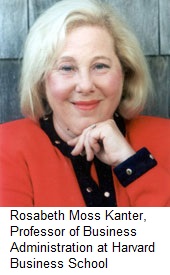
——————-

Appendix A – Bahamas maintains stance against CSME

By: Royston James

The Bahamas will maintain its stance against joining the Caribbean Single Market and Economy (CSME), despite increased pressure from certain regional heads to expand the initiative.

The CSME seeks to create a single, enlarged economic space by removing certain restrictions, the result of which would allow the free movement of goods and services, people and capital and technology.

“In spite of what you may read in the newspaper, we have discussed CSME, [but] The Bahamas is not and will not be a part of CSME,” Prime Minister Dr. Hubert Minnis said upon returning from Jamaica on Saturday.

“The Bahamas will not allow the free movement of people within our boundaries. So we are not a part of CSME. That must be clear, so that you do not feel that [because of] what has transpired there that Caribbean nationals would be able to move into The Bahamas quite regularly.

“We have our rules, our laws, and they will continue to apply.”

Full implementation of the CSME was high on the agenda of the CARICOM meeting held last Thursday. At least three CARICOM heads called for a review of the program by its member states and for regional leaders to find the political will to see the program expanded and made more efficient.

Addressing CARICOM, Barbados Prime Minister Mia Mottley opined that “psychological impediments and the closed mindsets in some quarters of officialdom” can be attributed to the slow progress of the CSME.

Antigua and Barbuda Prime Minister Gaston Browne and CARICOM Secretary General Irwin LaRocque also pushed for more to be achieved. CARICOM Chairman and Jamaican Prime Minister Andrew Holness said at a press conference following the CARICOM meeting that a special meeting on CSME will be held in Trinidad and Tobago in November.

Under the first Christie administration, the CSME issue featured prominently in local debates with strong opposition to The Bahamas joining the initiative being expressed in many quarters. Debate died down only after the government at the time publicly announced that The Bahamas would not join any bloc that would lead to the free movement of people in the country.

Source: Posted July 9, 2018 retrieved July 10, 2018 from: https://thenassauguardian.com/2018/07/09/bahamas-maintains-stance-against-csme/

——————-

Appendix B – No Caricom Without Referendum

By Sir Randol Fawkes – June 1993

I often wondered what The Caribbean Community’s Common Market (CARICOM) was up to. But now that I know, I wish to sound a warning to all true Bahamians to hold fast to the “Christian values and the Rules of Law” as enshrined in the Preamble to our Independence Constitution of July 10th, 1973, because some power-hungry politicians to the South are planning to invade our homeland and to steal our birthright away.

Simple enough? Dictatorship is always simple, monosyllabic and quick. Under a democracy we have a right to be properly briefed on CARICOM before being required to vote, “Yes” or “No” on whether the Bahamas should become a full Member State of the Caribbean Community’s CARICOM. The Rt. Hon. James F. Mitchell further expostulated, “One flag means we speak on the podium of the United Nations with one clear voice. One voice means one passport, one citizenship and all that flows from a single citizenship. Secondly, one Ministry of Finance is essential to provide the economic development which our people crave. This union will need to show results, and this authority which negotiates and secures financing must be responsible for the repayment of that finance.”

Make no mistake about it, These Caribbeans who will descend on Bahamian soil in July offering CARICOM as a panacea for all ills, intend to destroy our national flag: the Black, the Gold and the Aquamarine; silence our National Anthem, Lift Up Your Heads to the Rising Sun Bahama land, abolish Bahamian citizenship and our passports; eliminate Bahamian autonomy and thereafter superimpose upon us a leviathan dictatorship with a network of cells throughout the Caribbean – all done without first a people’s forum in which all voices – pro and con could be heard and ultimately expressed in a Constitutional Referendum.

Source: Retrieved July 10, 2018 from: http://www.sirrandolfawkes.com/yahoo_site_admin/assets/docs/No_Caricom_Without_Referendum1.216134242.pdf

——————-

Appendix C – Mark Devonish: I HAVE NO SYMPATHIES FOR BAHAMAS

Let me say this from the outset. I sympathise with those who lost their lives in Hurricane Dorian. A life lost is a life wasted. Having said that I will now outline why I have no sympathies for Bahamas.

The CSME is a CARICOM trading blocks which promotes free movement of people in the Caribbean among other things. Countries signing up to CSME have to abide by their conditions.

Most countries did except Bahamas. They flatly and in a disparaging way stated that no CARICOM citizen will enter our island to live. In effect they though that they were too good for the rest of CARICOM citizens.

Enter the great equaliser, Dorian. Now the very CARICOM that they scorned, they are crying out for help. Seriously?

I can’t be a political leader. I do not forget and I don’t care about what is politically right. If I were a CARICOM leader, I would have told the Bahamians to go eat their fecal matter, drink their piss and die since I will not help them.

Some folks may not be happy with my position but that is my position which I’m entitled to. Bahamas pissed on the rest of the CARICOM citizens because they though they were great. How the mighty have fallen.

Source: Posted September 9 at 7:27 PM; retrieved September 16, 2019.

Share this post:
, , ,
[Top]

After Dorian, The Science of Power Restoration – Encore

The Caribbean is in crisis now; our region has just been devastated by Hurricane _______; it has wreaked catastrophic havoc in certain destinations: __________.

The foregoing was an exact sentence composed in September 17, 2017 in a previous blog-commentary. We are able to repeat this phrase again and again and fill in the blanks with the name of the storm and locations.  This is the reality of Caribbean tropical life, while arguably the greatest address in the world, the ever-present threat of hurricanes is our annual reality.

So the version of the foregoing sentence for September 2019 is as follows:

The Bahamas is in crisis now; our region has just been devastated by Hurricane Dorian; it has wreaked catastrophic havoc in certain destinations: the Bahama islands of Great Abaco and Grand Bahama.

The current situation on the ground is miserable. As always, there is an urgent need for infrastructure to be restored:

  • Power
  • Water
  • Telephone
  • Transportation

The recovery from this storm, as always, starts with the restoration of electrical power. There is an Art and a Science to this functionality. Let’s focus on the science; see the Encore of that previous blog-commentary

The science is the same since Hurricane Irma 2 years ago. See the Encore here-now:

—————

Go Lean CommentaryAfter Irma, The Science of Power Restoration

The problem with hurricanes – and there are many – is that it takes a long time for the storm preparation and response (relief, recovery and rebuilding). On average, the storm’s preparation takes 3 days; this includes provisioning, installing protective shutters, hoarding water and gasoline. The response on the other hand can take days, weeks, months and dread-to-say, years.

The most uncomfortable part of the storm response is undeniable waiting for electrical power to be restored.

CU Blog - After Irma, the Science of Power Restoration - Photo 2

In general, the good-bad-ugly scale of memories of previous storms tend to be tied to the length of time it took for power to be restored. The peak of the hurricane season is the very hot months of August/September; there is the need for air-conditioning.

The Caribbean is in crisis now; our region has just been devastated by Hurricane Irma; it has wreaked catastrophic havoc in certain destinations: Barbuda, Saint BarthélemySaint MartinAnguilla, Puerto Rico, the Virgin Islands and Florida. Consider the encyclopedic details in Appendix A below and these questions:

  • How long did/will it take for power to be restored now after Hurricane Irma?
  • How can we reform and transform our Caribbean communities to ensure the efficiency of ‘Power Restoration’?

There is an art and science to the subject of ‘Power Restoration’; actually mostly science. The ‘art’ applies to the efficient deliveries of the management of the restoration process. The science considerations are extensive, starting with the entire eco-system of energy deliveries. As related in a previous blog-commentary

… no one doubts that the inventory of basic needs include “food, clothing and shelter”. But modernity has forced us to add another entry: “energy”. In fact, the availability and affordability of energy can impact the deliveries of these order basic needs.

… In our region, energy costs are among the highest in the world. The book Go Lean… Caribbean relates (Page 100) how the Caribbean has among the most expensive energy costs in the world, despite having abundant alternative energy natural resources (solar, wind, tidal, geo-thermal). The Caribbean eco-system focuses on imported petroleum to provide energy options and as a result retail electricity rates in the Caribbean average US$0.35/kWh, when instead it could be down to US$0.088/kWh. …

With such a 75% savings … there is definitely the need to adapt some of the scientific best practices for energy generation and consumption. In a previous blog-commentary, it was confessed that one of the reasons why people flee the Caribbean region, is the discomforts during the summer months … hot weather, and the lack of infrastructure to mitigate and remediate the discomfort, is identified as one of the reasons for the brain drain/societal abandonment.

One motivation of the movement behind the book Go Lean… Caribbean – available to download for free – is to facilitate a turn-around of economic, security and governing engines of the Caribbean region to do better with power generation, distribution and consumption. The Go Lean book serves as a roadmap for the introduction and implementation of the technocratic Caribbean Union Trade Federation (CU). This Go Lean roadmap has 3 prime directives:

This commentary continues the 4-part series – this is 3 of 4 – on the Aftermath of Hurricane Irma. There are a lot of mitigation and remediation efforts that can be done to lessen the impact of this and future storms. There are lessons that we must consider; there are reforms we must make; there are problems we must solve. The full list of the 4 entries of this series are detailed as follows:

  1. Aftermath of Hurricane Irma – America Should Scrap the ‘Jones Act’
  2. Aftermath of Hurricane Irma – Barbuda Becomes a ‘Ghost Town’
  3. Aftermath of Hurricane Irma – The Science of Power Restoration
  4. Aftermath of Hurricane Irma – Failed State Indicators: Destruction and Defection

Despite the manifested threats of Climate Change-fueled hurricanes, we want to make the Caribbean homeland a better place to live, work and play. This is going to take some heavy-lifting to accomplish, but we can be successful. Yes, we can. This quest is detailed early on in the Go Lean book’s Declaration of Interdependence, as follows (Page 11 – 13):

i. Whereas the earth’s climate has undeniably changed resulting in more severe tropical weather storms, it is necessary to prepare to insure the safety and security of life, property and systems of commerce in our geographical region. As nature recognizes no borders in the target of its destruction, we also must set aside border considerations in the preparation and response to these weather challenges.

xi. Whereas all men are entitled to the benefits of good governance in a free society, “new guards” must be enacted to dissuade the emergence of incompetence, corruption, nepotism and cronyism at the peril of the people’s best interest. The Federation must guarantee the executions of a social contract between government and the governed.

xvi. Whereas security of our homeland is inextricably linked to prosperity of the homeland, the economic and security interest of the region needs to be aligned under the same governance. Since economic crimes … can imperil the functioning of the wheels of commerce for all the citizenry, the accedence of this Federation must equip the security apparatus with the tools and techniques for predictive and proactive interdictions.

xix. Whereas our legacy in recent times is one of societal abandonment, it is imperative that incentives and encouragement be put in place to first dissuade the human flight, and then entice and welcome the return of our Diaspora back to our shores. This repatriation should be effected with the appropriate guards so as not to imperil the lives and securities of the repatriated citizens or the communities they inhabit. The right of repatriation is to be extended to any natural born citizens despite any previous naturalization to foreign sovereignties.

The Go Lean book asserts that Caribbean stakeholders must find a Way Forward; they must institute better systems, processes and utilities to deliver electrical power (energy) despite the reality of hurricanes. Though power will go off – electricity and water is a bad combination – ‘Power Restoration’ must be a priority. Therefore Caribbean communities must adopt different community ethos, plus execute key – and different – strategies, tactics, implementations and advocacies to reform and transform.

This Way Forward must therefore fulfill these 2 requirements:

  • Flood Management and Control
    CU Blog - After Irma, the Science of Power Restoration - Photo 3
    According to a previous blog-commentary: “there is a thesis that flooding could be prevented. Yes, indeed! This is the experience and historicity of the Dutch people, the European country of the Netherlands or Holland.”
    Even in the low-lying American city of New Orleans, Louisiana there is the practice of pumping out excess water to mitigate and remediate flooding; see this depicted in the VIDEO in Appendix B below.
  • Implementation of a Caribbean Regional Power Grid
    CU Blog - After Irma, the Science of Power Restoration - Photo 1
    Power distribution is important for any mitigation-remediation plan. The problem with hurricane toppling trees and power lines is unavoidable – it is what it is – a better solution is to deliver electricity underground or underwater, as illustrated in the above photo. The Go Lean roadmap calls for an extensive smart Power Grid and a region-wide Utility Cooperative. This would allow for alternate power generation and electrical distribution. See sample of an underground/underwater “Power Cable” product depicted in the VIDEO in Appendix C below.

Many other communities have done a good job of optimizing their electrical utility grid. They execute strategies, tactics and implementations to mitigate the risk of power outages; then remediate any crises with technocratic deliveries to facilitate ‘Power Restoration’.

Go Green 1

There will be heavy-lifting for our Caribbean region to have this disposition. The Go Lean roadmap details that heavy-lift, describing the community ethos, strategies, tactics, implementations and advocacies to foster progress for Caribbean energy distribution, our own Regional Power Grid. The following list of entries in the Go Lean book highlights this theme:

Community Ethos – Lean Operations Page 24
Community Ethos – Return on Investments Page 24
Community Ethos – Cooperatives Page 25
Community Ethos – Ways to Impact the Future Page 26
Community Ethos – Ways to Improve Negotiations Page 32
Anecdote – Pipeline Transport – Strategies, Tactics & Implementations Page 43
Strategy – Harness the power of the sun/winds Page 46
Tactical – Fostering a Technocracy Page 82
Tactical – Separation of Powers – Energy Commission Page 82
Anecdote – “Lean” in Government – Energy Permits Page 93
Implementation – Regional Grid as Economies-of-Scale benefit Page 97
Anecdote – Caribbean Energy Grid Implementation Page 100
Implementation – Start-up Benefits from the EEZ Page 104
Implementation – Ways to Develop Pipeline Industry Page 107
Implementation – Ways to Improve Energy Usage Page 113
Advocacy – Ways to Impact Public Works Page 175
Advocacy – Ways to Foster Cooperatives Page 176
Advocacy – Ways to Impact Monopolies Page 202
Appendix – Underwater High Intensity Power Lines Page 282

The experience of enduring hurricanes is never pleasant. As such, we do not invite people to fly down from northern locations to pass storms with us. In fact, when there is a Hurricane Watch, the practice is to evacuate tourists and visitors. We evacuate our high-risk residents as well; (kidney dialysis patients, senior citizens, anyone that cannot endure the loss of electronic-based health instruments). This is a best-practice.

Why do we only evacuate just a limited group from the islands?

We assume that everyone else can endure.

Hah, lol …

But actually, with such high post-hurricane abandonment rates, as reported previously, it is obvious that everyone loses patience. So any improvement in the ‘Power Restoration’ experience would be a win-win; it would improve our communities’ endurance and make our Caribbean homeland better places to live, work and play. 🙂

Download the free e-Book of Go Lean … Caribbean – now!

Sign the petition to lean-in for this roadmap for the Caribbean Union Trade Federation.

———–

Appendix A – Hurricane Irma Devastation

  • In Barbuda, Hurricane Irma caused catastrophic damage on the island; it damaged or destroyed 95% of the island’s buildings and infrastructure, leaving Barbuda “barely habitable” according to Prime Minister Gaston Browne. Everyone on the island was evacuated to Antigua, leaving Barbuda uninhabited for the first time in modern history.[3]
  • In St. Martin, on 6 and 7 September 2017 the island was hit by Hurricane Irma (Category 5 at landfall), which caused widespread and significant damage to buildings and infrastructure. A total of 11 deaths had been reported as of 8 September 2017.[12][13] France’s Minister of the InteriorGérard Collomb, said on 8 September 2017 that most of the schools were destroyed on the French half of the island. In addition to damage caused by high winds, there were reports of serious flood damage to businesses in the village of Marigot. Looting was also a serious problem. Both France and the Netherlands sent aid as well as additional police and emergency personnel to the island.[14][15][16] The Washington Post reported that 95% of the structures on the French side and 75% of the structures on the Dutch side were damaged or destroyed.[17][18] Some days after the storm had abated, a survey by the Dutch Red Cross estimated that nearly a third of the buildings in Sint Maarten had been destroyed and that over 90 percent of structures on the island had been damaged.[19] Princess Juliana Airport was extensively damaged but reopened on a partial basis in two days to allow incoming relief flights and for flights that would take evacuees to other islands.[20]
  • In Anguila, the eye of the storm pass over it on September 6. Many homes and schools were destroyed, and the island’s only hospital was badly damaged.[163] The devastation was particularly severe in East End, where the winds uprooted scores of trees and power poles and demolished a number of houses. … One death was reported on the island.[163] According to [sources], Anguilla’s economy could suffer at least $190 million in losses from the hurricane.[129]
  • Puerto Rico avoided a direct hit by the Category 5 Hurricane Irma on September 8, 2017, but high winds caused a loss of electrical power to some one million residents. Almost 50% of hospitals were operating with power provided by generators.[133]
  • Damage in the British Virgin Islands was extensive. Numerous buildings and roads were destroyed on the island of Tortola, which bore the brunt of the hurricane’s core.[172] Irma’s effects in the U.S. Virgin Islands were most profound on Saint Thomas. Due to its normal reliance on electricity from Saint Thomas, the island [of St. John] was left without power.
  • In the Florida Keys, the hurricane caused major damage to buildings, trailer parks, boats, roads, the electricity supply, mobile phone coverage, internet access, sanitation, the water supply and the fuel supply. … As of 6:41 p.m. EDT on September 10 over 2.6 million homes in Florida were without power.[232]

CU Blog - After Irma, Barbuda Becomes a 'Ghost Town' - Photo 2

———–

Appendix B VIDEO – Here’s how the pumps in New Orleans move water out during heavy rainfall – https://youtu.be/hZvGVUZi9FU

Published on Mar 30, 2017 – WDSU News: Pumps Work During Thursday’s Flooding

———–

Appendix C VIDEO – ABB launches world´s most powerful extruded HVDC cable system –

Published on Aug 21, 2014

ABB Power Grids

525 kV voltage (previous highest installed 320 kV) sets world record more than doubling power flow to 2600 MW (from 1000 MW) and extending range to 1500 km for more cost effective, efficient and reliable underground and subsea transmission while keeping losses to below 5 percent. Major breakthrough for applications like underground HVDC transmission, sub-sea interconnections, offshore wind integration etc. More information: http://new.abb.com/systems/high-volta…


Share this post:
, , ,
[Top]

Chef Jose Andres – Role Model for Hurricane Relief – “One Meal at a Time”

Go Lean Commentary

We gotta eat!

Even when a devastating Category 5 Hurricane impacts your homeland, that natural law applies: We gotta eat!

Thank you Chef José Andrés for pulling out all the stops to feed the people of the Bahamas during this, their most desperate hour.

Why does he help? Why does he do “this”? Just because: People gotta eat!

Even though he has help – he brings a team – it is with the full might of his will, reputation and connections that he is able to have this impact. He is proof-positive that one man – or woman – can make a difference in society. See this VIDEO news story here-now:

VIDEO – Chef José Andrés in the Bahamas, helping save lives “one meal at a time”  https://youtu.be/woeweQTXZRg

Posted September 4, 2019 – The renowned chef’s non-profit World Central Kitchen is one of the aid groups spearheading relief efforts in the stricken island nation. CBS Reports.

Chef José Andrés did the same thing in Puerto Rico, after Hurricane Maria; and in Haiti after the 2010 Earthquake. He has been a great benefactor for all of the Caribbean – and he does not even have a Caribbean heritage.

He is from Spain; see his profile in the Appendix below.

Yes, one man can make a difference! The 2013 book Go Lean…Caribbean posits that one person – an advocate – can change the world (Page 122). It relates:

An advocacy is an act of pleading for, supporting, or recommending a cause or subject. For this book, it’s a situational analysis, strategy or tactic for dealing with a narrowly defined subject.

Advocacies are not uncommon in modern history. There are many that have defined generations and personalities. Consider these notable examples from the last two centuries in different locales around the world:

  • Frederick Douglas
  • Mohandas Gandhi
  • Martin Luther King
  • Nelson Mandela
  • Cesar Chavez
  • Candice Lightner – (Mothers Against Drunk Driving)

This is a consistent theme from the movement behind the Go Lean book– available to download for free. We have repeatedly presented profiles of “1” persons who have made lasting impacts on their community and the whole world. Consider this sample list, of previous blog-commentaries where advocates and role models have been elaborated upon:

https://goleancaribbean.com/blog/?p=17871 ‘Ross Perot’, Political Role Model – He was right on Trade – RIP
https://goleancaribbean.com/blog/?p=16942 Sallie Krawcheck – Role Model for Women Economic Empowerment
https://goleancaribbean.com/blog/?p=16926 Viola Desmond – Canadian Role Model for Blacks and Women
https://goleancaribbean.com/blog/?p=16702 W.E.B. Du Bois – Role Model in Pan-Africana
https://goleancaribbean.com/blog/?p=16696 Marcus Garvey – An Ancient Role Model Still Relevant Today
https://goleancaribbean.com/blog/?p=14558 Being the Change in ‘Brown vs Board of Education’ – Role Model Linda Brown, RIP
https://goleancaribbean.com/blog/?p=14556 “March for Our Lives” Kids – Observing the Change … with Guns
https://goleancaribbean.com/blog/?p=14139 Carter Woodson – One Man Made a Difference … for Black History
https://goleancaribbean.com/blog/?p=8165 Role Models Muhammad Ali and Kevin Connolly – Their Greatest Fight
https://goleancaribbean.com/blog/?p=7682 Frederick Douglass: Role Model for Single Cause – Death or Diaspora
https://goleancaribbean.com/blog/?p=866 Bob Marley: The legend of this Role Model lives on!

The Go Lean roadmap seeks to reform and transform Caribbean life and culture. But first we have to make sure our people’s basic needs are covered.

We gotta eat!

So thank you Chef José Andrés for pitching in and feeding our Bahamian and Caribbean people.

The Go Lean roadmap calls on every man, woman and child in the Caribbean to be an advocate, and/or appreciate the efforts of other advocates. Their examples can truly help us today with our passions and purpose.

In summary, we conclude about Chef José Andrés the same as we do about all the other Caribbean advocates; we say (Go Lean book conclusion Page 252):

Thank you for your service, love and commitment to all Caribbean people. We will take it from here.

The movement behind Go Lean book – the planners of a new Caribbean – stresses that a ‘change is going to come’, one way or another. As depicted in the foregoing VIDEO, Chef José Andrés facilitated all the logistics himself for our post-Hurricane Dorian Rescue/Relief – i.e. boats, helicopters and the food – but the new Caribbean should really be matured enough to handle our own Hurricane Response:

  • Rescue 
  • Relief
  • Recovery
  • Rebuild

We must Grow Up, Already!

Haiti, Puerto Rico and now the Bahamas – these were the natural disasters of the past; but there will be more … in the future.

Climate Change guarantees it.

We must copy the patterns and good examples of our role models; Chef José Andrés has provided us a perfect example of how to make the Caribbean a better homeland to live, work and play. 🙂

About the Book
The book Go Lean…Caribbean serves as a roadmap for the introduction and implementation of the technocratic Caribbean Union Trade Federation (CU), for the elevation of Caribbean society – for all member-states. This CU/Go Lean roadmap has these 3 prime directives:

  • Optimization of the economic engines in order to grow the regional economy to $800 Billion and create 2.2 million new jobs.
  • Establishment of a security apparatus to ensure public safety and protect the resultant economic engines.
  • Improve Caribbean governance to support these engines, including a separation-of-powers between the member-states and CU federal agencies.

The Go Lean book provides 370-pages of turn-by-turn instructions on “how” to adopt new community ethos, plus the strategies, tactics, implementations and advocacies to execute so as to reboot, reform and transform the societal engines of Caribbean society.

Download the free e-Book of Go Lean … Caribbean – now!

Who We Are
The movement behind the Go Lean book – a non-partisan, apolitical, religiously-neutral Community Development Foundation chartered for the purpose of empowering and re-booting economic engines – stresses that reforming and transforming the Caribbean societal engines must be a regional pursuit. This was an early motivation for the roadmap, as pronounced in the opening Declaration of Interdependence (Pages 12 – 14):

i. Whereas the earth’s climate has undeniably changed resulting in more severe tropical weather storms, it is necessary to prepare to insure the safety and security of life, property and systems of commerce in our geographical region. As nature recognizes no borders in the target of its destruction, we also must set aside border considerations in the preparation and response to these weather challenges.

xi. Whereas all men are entitled to the benefits of good governance in a free society, “new guards” must be enacted to dissuade the emergence of incompetence, corruption, nepotism and cronyism at the peril of the people’s best interest. The Federation must guarantee the executions of a social contract between government and the governed.

xii. Whereas the legacy in recent times in individual states may be that of ineffectual governance with no redress to higher authority, the accedence of this Federation will ensure accountability and escalation of the human and civil rights of the people for good governance, justice assurances, due process and the rule of law. As such, any threats of a “failed state” status for any member state must enact emergency measures on behalf of the Federation to protect the human, civil and property rights of the citizens, residents, allies, trading partners, and visitors of the affected member state and the Federation as a whole.

xvi. Whereas security of our homeland is inextricably linked to prosperity of the homeland, the economic and security interest of the region needs to be aligned under the same governance. Since economic crimes … can imperil the functioning of the wheels of commerce for all the citizenry, the accedence of this Federation must equip the security apparatus with the tools and techniques for predictive and proactive interdictions.

xxiv. Whereas a free market economy can be induced and spurred for continuous progress, the Federation must install the controls to better manage aspects of the economy: jobs, inflation, savings rate, investments and other economic principles. Thereby attracting direct foreign investment because of the stability and vibrancy of our economy.

xxxiii. Whereas lessons can be learned and applied from the study of the recent history of other societies, the Federation must formalize statutes and organizational dimensions to avoid the pitfalls …. On the other hand, the Federation must also implement the good examples learned from [successful] developments/communities.

Sign the petition to lean-in for this roadmap for the Caribbean Union Trade Federation.

—————

Appendix Reference Title: José Andrés
José Ramón Andrés Puerta
 (born 13 July 1969) is a Spanish-American[1] chef often credited with bringing the small plates dining concept to America.[2] He owns restaurants in Washington, D.C.Los AngelesLas VegasSouth Beach, FloridaOrlandoNew York City, and Frisco, Texas. Andrés is the founder of World Central Kitchen, a non-profit devoted to providing meals in the wake of natural disasters.[3] He was awarded a 2015 National Humanities Medal at a 2016 White House ceremony.[4]

Trump Hotel restaurant and lawsuit
Andrés planned to open a restaurant in the Trump International Hotel in Washington, DC, in 2016. After Donald Trump made disparaging comments about Mexicans in June 2015, Andrés withdrew from the contract with the Trump Organization, which then sued him.[13] Andrés counter-sued, and the parties reached a settlement in April 2017.[14] Andrés remains an outspoken critic of Trump.[15][16]

World Central Kitchen
In response to the 2010 Haiti earthquake, Andrés formed World Central Kitchen which provides healthy food to families and individuals touched by disasters.[17] Since its founding, the NGO has organized meals in the Dominican RepublicNicaraguaZambiaPeruCubaUganda, and in Cambodia.[3]

In January 2019 Andrés opened a World Central Kitchen on Pennsylvania Ave, Washington DC to feed federal workers that were furloughed during the government shutdown.[18]

Puerto Rico Hurricane Maria response
Andrés emerged as a leader of the disaster relief efforts in Puerto Rico in the wake of Hurricane Maria in 2017. His efforts to provide assistance encountered obstacles from FEMAand government bureaucrats, so instead, “we just started cooking.”[19] He organized a grass-roots movement of chefs and volunteers to establish communications, food supplies, and other resources and started serving meals. Andrés and his organization World Central Kitchen (WCK)[20] served more than two million meals in the first month after the hurricane.[21][22][23] WCK received two short term FEMA contracts and served more meals than the Salvation Army or the Red Cross, but its application for longer term support was denied.[24][25]

For his efforts in Puerto Rico, Andrés was named the 2018 Humanitarian of the Year by the James Beard Foundation.[26] He wrote a book about the experience called We Fed an Island: The True Story of Rebuilding Puerto Rico, One Meal at a Time.[27]

Source: Retrieved September 4, 2019 from: https://en.wikipedia.org/wiki/Jos%C3%A9_Andr%C3%A9s

Share this post:
, ,
[Top]