Tag: Jobs

Rare Earths: The new ‘Rush’

Go Lean Commentary

There’s “Gold in dem there hills” – Legendary exclamation of the discovery of gold in 1848/49 California – the “Forty-niners”.

Thus started the California Gold Rush. Now there is a new rush … or quest; this time for alternative minerals to be extracted from the earth – all over the planet – that are considered even more valuable than gold: Rare Earth.

CU Blog - Rare Earths - The new Rush - Photo 1

This class of minerals was recently depicted in an exposé  by the CBS News Magazine 60 Minutes:

Video Title: http://www.cbsnews.com/videos/modern-lifes-devices-under-chinas-grip – Modern life’s devices under China’s grip?


From smartphones to cars and defense missiles, modern U.S. life depends on rare earth elements but China dominates the industry. (VIDEO plays best in Internet Explorer).

The summary of the VIDEO portrays that the United States initially had the lead in this field of Rare Earth extraction and sourcing; but the US de-prioritized this substance, while China transcended it and now exploits the market to near-complete domination.

The urgency of Rare Earth is not so unfamiliar to this commentary. This point was declared emphatically in the book Go Lean … Caribbean in numerous references:

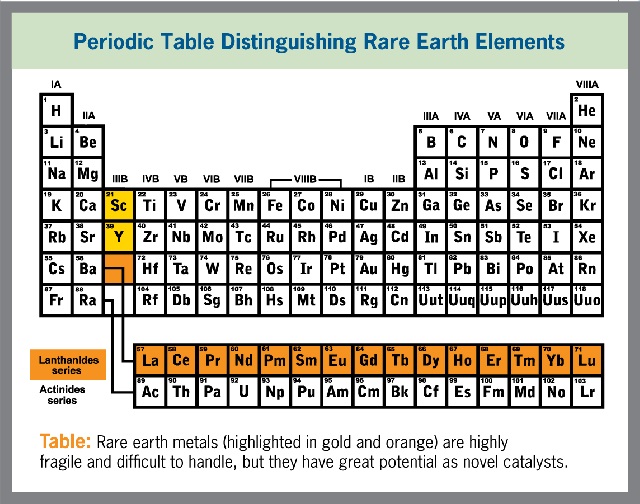
CU Blog - Rare Earths - The new Rush - Photo 2o Ways to Impact Extractions (Page 195) – There is a “rush”/quest to harvest rare earth elements. [159] These include lanthanide elements (fifteen metallic chemical elements with atomic numbers 57 through 71, from lanthanum through lutetium) for metals that are ferromagnetic, this means their magnetism only appear at low temperatures. Rare earth magnets are made from these compounds and are ideal in many high-tech products. The CU will foster the regional exploration and extraction of these pricey materials.

o Start-up Benefits from the EEZ (Page 104) – The new Exclusive Economic Zone (EEZ) powers allows for the administration of mineral extraction (mines) and oil/natural gas. Risk management and disaster mitigation plan must therefore be embedded into every drilling permit/license, as a CU mandate is to protect tourism product – a “bird in hand is better than two in the bush”. In addition, there is the harvest possibility of rare earth elements, like lanthanide and lutetium. Recently (2010), these minerals were priced even higher than gold at $2,200/kg.

o Reference footnote # 159 (Page 361) – The Economist Magazine. “The Difference Engine: More precious than gold”. Posted September 17, 2010; retrieved for the book in September 2013 from: http://www.economist.com/blogs/babbage/2010/09/rare-earth_metals. This news article stressed this point:

The foregoing VIDEO depicts the need for technocratic management of the extraction process for Rare Earths. There is now a great demand for these minerals; but the supply source is rather limited. Yet they are not so rare; they may even be found in the Caribbean region. Thus the need to explore these opportunities. The Go Lean book serves as a roadmap for the introduction and implementation of the technocratic Caribbean Union Trade Federation (CU), for the elevation of Caribbean society. This CU/Go Lean roadmap has these 3 prime directives:

  • Optimization of the economic engines in order to grow the regional economy to $800 Billion and create 2.2 million new jobs.
  • Establishment of a security apparatus to protect the resultant economic engines and the environment.
  • Improvement of Caribbean governance – including oversight of Self-Governing Entities and the Exclusive Economic Zone – to support these engines.

The Go Lean roadmap seeks to promote and oversee the effort for the exploration and extraction of these minerals, recognizing that modern life needs the efficiency that comes from science. The “brick-and-mortar” of a lot of today’s electronic equipment and computer components depend on the magnetic properties associated with Rare Earth minerals. The progress that the CU envisions in the fields of Science, Technology, Engineering and Medicine (STEM) will require engagements with the metallurgy of electronics. We need full exploration of the Caribbean homelands and waters for natural sources of these minerals. Plus with “prices higher than gold”, there is the economic incentive to push forth investments in this industry space.

Early in the book, the need is stressed to be on-the-look-out for opportunities to optimize the region’s economic-security-governing engines. These pronouncements are stated in the Declaration of Interdependence (Pages 11 & 13):

iv. Whereas the natural formation of the landmass is in a tropical region, the flora and fauna allows for an inherent beauty that is enviable to peoples near and far. The structures must be strenuously guarded to protect and promote sustainable systems of commerce paramount to this reality.

v. Whereas the natural formation of our landmass and coastlines entail a large portion of waterscapes, the reality of management of our interior calls for extended oversight of the waterways between the islands. The internationally accepted 12-mile limits for national borders must be extended by International Tribunals to encompass the areas in between islands. The individual states must maintain their 12-mile borders while the sovereignty of this expanded area, the Exclusive Economic Zone, must be vested in the accedence of this Federation.

xi. Whereas all men are entitled to the benefits of good governance in a free society, “new guards” must be enacted to dissuade the emergence of incompetence, corruption, nepotism and cronyism at the peril of the people’s best interest. The Federation must guarantee the executions of a social contract between government and the governed.

xxvii. Whereas the region has endured a spectator status during the Industrial Revolution, we cannot stand on the sidelines of this new economy, the Information Revolution. Rather, the Federation must embrace all the tenets of Internet Communications Technology (ICT) to serve as an equalizing element in competition with the rest of the world. The Federation must bridge the digital divide and promote the community ethos that research/development is valuable and must be promoted and incentivized for adoption.

This commentary previously discussed details of mineral/oil extractions in the Caribbean region. Here is a sample of earlier blogs:

https://goleancaribbean.com/blog/?p=4476 Lessons Learned from Big Salt mining
https://goleancaribbean.com/blog/?p=3743 Caribbean Oil Producer – Trinidad – cuts 2015 budget as oil prices tumble
https://goleancaribbean.com/blog/?p=3213 Gas Prices Drop Below $2 due to global extraction policy
https://goleancaribbean.com/blog/?p=2857 Recycling Rare Earths materials – Entrepreneurism in Junk

The Go Lean roadmap details a series of community ethos, strategies, tactics, implementations and advocacies to foster the progress in the wide fields of extractions for mining, materials and drilling administration. The following list applies:

Community Ethos – Lean Operations Page 24
Community Ethos – Return on Investments Page 24
Community Ethos – Cooperatives Page 25
Community Ethos – Ways to Impact the Future Page 26
Community Ethos – Ways to Improve Negotiations Page 32
Anecdote – Pipeline Transport – Strategies, Tactics & Implementations for minerals Page 43
Strategy – Mission – Regulatory powers mineral/oil exploration and extraction in the EEZ Page 45
Strategy – Competitive Analysis – Businesses – Emergency Planning –vs- Litigation Page 52
Tactical – Fostering a Technocracy Page 64
Tactical – Growing the Economy to $800 Billion – Industrial Extractions Driver Page 68
Tactical – Separation of Powers – Environmental Control & Regulatory Commission Page 83
Tactical – Separation of Powers – Extractions (Mining, Materials, Drilling) Administration Page 83
Tactical – Separation of Powers – Transportation – Turnpike Operations – Pipelines Page 84
Anecdote – “Lean” in Government Permitting Page 93
Anecdote – Caribbean Energy Grid Implementation Page 100
Implementation – Ways to Pay for Change Page 101
Implementation – Start-up Benefits from the EEZ Page 104
Implementation – Steps to Implement Self-Governing Entities – Ideal for mines Page 105
Implementation – Ways to Develop Pipeline Industry – For Rare Earth Transport Page 107
Advocacy – Ways to Impact Public Works Page 175
Advocacy – Ways to Foster Cooperatives Page 176
Advocacy – Ways to Impact Monopolies – Environmental concerns, systemic threats Page 202
Advocacy – Ways to Improve   Extractions – Mining, Materials, Drilling Optimization Page 205
Advocacy – Ways to Develop the Auto Industry Page 206
Appendix – North Dakota Extractions – Economic-Societal Effects of a Boom Page 334

This commentary asserts that the need is undeniable for mineral exploration and extraction. This can help to build-up the economy and command more respect in the world’s industrial landscape. Shepherding the Caribbean economy – for Rare Earths extractions – is the job for technocrats, trained and accomplished from the battles of globalization and trade wars.

Industrial policy is among the heavy-lifting tasks for the lean, agile operations of the CU technocracy. Everyone, the people, businesses and institutions are hereby urged to lean-in to this roadmap to make the Caribbean a better place to live, work and play. 🙂


Download the book Go Lean … Caribbean – now!

Share this post:
, , ,

FAMU is No. 3 for Facilitating Economic Opportunity

Go Lean Commentary

This commentary is a big proponent of a college education for Caribbean citizens.

This commentary is a big opponent of a college education for Caribbean citizens in American colleges and universities. The reason for the ambivalence on college education is consistent: the benefit of social mobility; facilitating new economic opportunities. We need this upward mobility for Caribbean citizens but in the Caribbean.

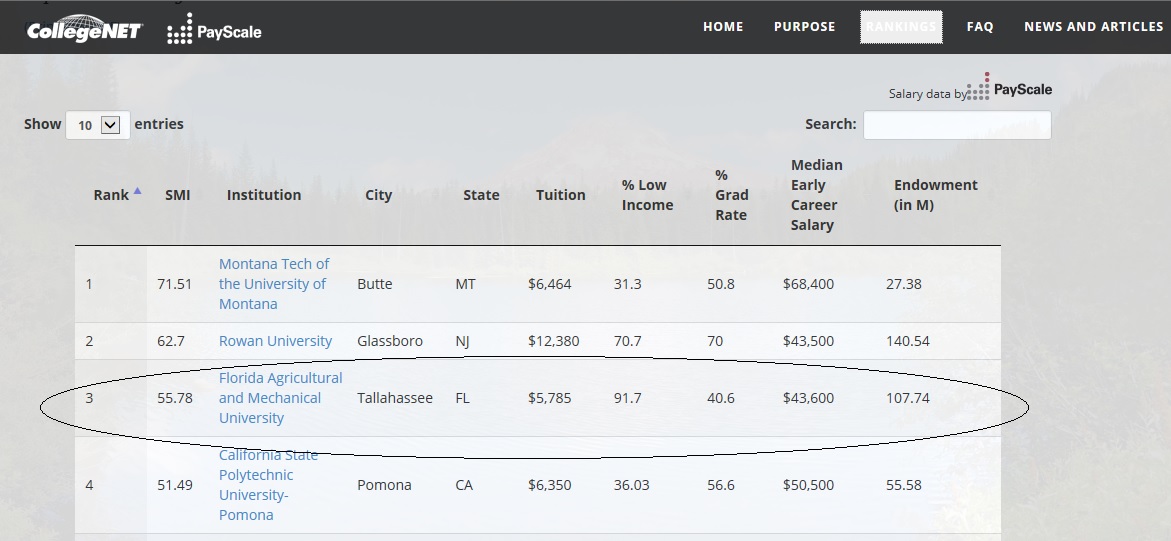
CU Blog - FAMU is No. 3 for Facilitating Economic Opportunity - Photo 1Some institutions are better at facilitating social mobility than others. On the National List of institutions, Florida Agriculture and Mechanical University (FAMU) stands out. It is #3 on the list.

In the interest of full disclosure, this writer is a Rattler, an alumnus of FAMU. (The mascot for FAMU athletics is ‘Rattlers’).

The chief goal of the Social Mobility Index (SMI), according to their website, is to stimulate policy changes within US higher education to help arrest the dangerous and growing economic divergence between rich and poor in the country. The gap in the US between rich and poor grew since the Great Recession, reaching proportions not seen since the period leading to and contributing to the onset of the Great Depression and two world wars. The common attributes include crumbling infrastructure, destroying asset values, and forcing high taxation to pay for war efforts.

If we learned anything from the global fallout of the Great Recession (in 2008 and beyond), it was that getting economic policy right in the US may be necessary for long-term world stability. So while the much publicized student debt overhang, now in excess of $1 trillion, imposes distress and financial burden on millions of students and families, it is a symptom of the much greater problem of economic and social divergence in the country. The good news is that colleges and universities carry great potential to powerfully address this problem.

Economist Thomas Piketty stated: “the principal force for convergence [reduction of inequality] – the diffusion of knowledge – …depends in large part on educational policies, access to training and to the acquisition of appropriate skills, and associated institutions.” – Capital in the 21st Century, pp. 21-2. The SMI asserts that if colleges can begin aggressively shifting policy towards increasing access to higher education, particularly for economically disadvantaged students and families, they will establish themselves as a key force for economic and social convergence.

FAMU has accomplished this feat; placing #3 on a ranking of universities pursuing this endeavor.

The full article of the recognition of FAMU’s SMI  is provided here:

Title: Social Mobility Index Ranks FAMU as No. 3 Institution in the Nation for Facilitating Economic Opportunity for Underserved Students
(Source: FAMU News and Events Site – Official Communications – Posted 11-01-2014; retrieved 03-05-2015 from http://www.famunews.com/?p=2153)
CU Blog - FAMU is No. 3 for Facilitating Economic Opportunity - Photo 3TALLAHASSEE, Fla. – The Social Mobility Index (SMI) has ranked Florida Agricultural and Mechanical University (FAMU) the No. 3 institution in the nation for facilitating economic opportunity for underserved students. The University outpaced the nation’s leading Ivy League institutions such as Princeton, Harvard and Yale, which placed 360th, 438th and 440th, respectively, on the rankings list.

The SMI is a new, data-driven ranking system, focused on the problem of economic mobility in the United   States. Rankings are based upon an institution’s tuition rate, student economic profile, graduation rate, average early career salary, and endowment.

According to SMI data analyses, FAMU ranks high in its contributions toward narrowing  socio-economic gaps by admitting and graduating more low-income students at lower tuition rates, yet with better economic outcomes following graduation. The University is noted on the SMI as having one of the lowest annual tuition rates in the nation.

“We are excited about the SMI recognition,” said President Elmira Mangum, Ph.D. “This new ranking speaks to FAMU’s 127-year legacy of providing access and opportunity to low-wealth citizens across the nation.”

“This ranking also speaks to our strong and unwavering commitment to economic empowerment. Many of our students come to FAMU with the odds stacked against them; however, they leave our institution with a high-quality education, a promising future, and the ability to be effective contributors to society, and, more specifically, to their families,” Dr. Mangum added.

Nearly 92 percent of FAMU students are considered low-income, according to SMI data. However, graduates are leaving the University earning an average salary of nearly $45,000 a year.

CU Blog - FAMU is No. 3 for Facilitating Economic Opportunity - Photo 2

For more information on the SMI ranking, visit: www.socialmobilityindex.org.

The book Go Lean…Caribbean posits, along with most economists, that education elevates individuals and entire communities. The book quotes that every year of additional community education raises GDP by 1 percent. Go Lean stakes the claim further that traditional college educated career paths have been disastrous policies for the Caribbean in whole, and for each specific country in particular, for the primary reason that so many students do not return home; or expatriate after returning for a short period. In fact, the World Bank has reported that the Caribbean has a 70% abandonment rate.

In line with the SMI ranking, the Go Lean book promotes education among the strategies to elevate Caribbean society. But this commentary previously asserted that college education has been a bad investment for the Caribbean.

From a strictly micro perspective, college education is great for the individual. The Go Lean book quotes proven economic studies showing the impact that every year of college education improves an individual’s earning power (Page 258). But from the macro perspective – the community – is different for the Caribbean; the region loses out because of an incontrovertible brain drain. Previously, the proverb was introduced of “fattening frogs for snake” referring to the preponderance for Caribbean college educated citizens to abandon their tropical homelands for foreign shores in the US, Canada and Europe, and take their Caribbean-funded education and skill-sets with them.

Change has now come. The driver of this change is technology and globalization. Under the tenants of globalization, institutions like FAMU are competing globally, and can rightly provide e-Learning and Distant Learning schemes. This ties to the other agent of change of technology. The internet allows for deliveries of education services anywhere around the world. The Go Lean book posits that small institutions and big institutions can complete equally on a global basis. If the regional education administrations could invest in more technological deliveries, it would be a win-win for all stakeholders. This type of impact would be more for the Greater Good.

The Go Lean roadmap provides turn-by-turn directions on how to reform the Caribbean tertiary education systems, economy, governance and Caribbean society as a whole. The roadmap commences with a Declaration of Interdependence, pronouncing the approach of regional integration (Page 12 & 14) as a viable solution to elevate the region’s educational opportunities:

xix. Whereas our legacy in recent times is one of societal abandonment, it is imperative that incentives and encouragement be put in place to first dissuade the human flight, and then entice and welcome the return of our Diaspora back to our shores

xxi. Whereas the preparation of our labor force can foster opportunities and dictate economic progress for current and future generations, the Federation must ensure that educational and job training opportunities are fully optimized for all residents of all member-states, with no partiality towards any gender or ethnic group. The Federation must recognize and facilitate excellence in many different fields of endeavor, including sciences, languages, arts, music and sports. This responsibility should be executed without incurring the risks of further human flight, as has been the past history.

xxvii. Whereas the region has endured a spectator status during the Industrial Revolution, we cannot stand on the sidelines of this new economy, the Information Revolution. Rather, the Federation must embrace all the tenets of Internet Communications Technology (ICT) to serve as an equalizing element in competition with the rest of the world. The Federation must bridge the digital divide and promote the community ethos that research/development is valuable and must be promoted and incentivized for adoption.

This book Go Lean… Caribbean, serves as a roadmap for the introduction and implementation of the Caribbean Union Trade Federation (CU). This represents change for the region. The CU/Go Lean roadmap has 3 prime directives:

  • Optimization of the economic engines in order to grow the regional economy.
  • Establishment of a security apparatus to protect the resultant economic engines.
  • Improve Caribbean governance to support these engines.

The Go Lean book details how education is a vital consideration for Caribbean economic empowerment, but with lessons-learned from all the flawed decision-making in the past, both individually and community-wise. The vision of the CU is a confederation of the 30 member-states of the Caribbean to do the heavy-lifting of championing better educational policies. No more government scholarships; forgive-able loans only from now on. The book details the policies; and other ethos to adopt, plus the executions of the following strategies, tactics, implementations and advocacies to deploy online education in the region:

Community Ethos – Deferred Gratification Page 21
Community Ethos – People Respond to Incentives Page 21
Community Ethos – Job Multiplier Page 22
Community Ethos – Lean Operations Page 24
Community Ethos – Return on Investments (ROI) Page 24
Community Ethos – Ways to Impact the Future Page 26
Community Ethos – Ways to Foster Genius Page 27
Community Ethos – Ways to Help Entrepreneurship Page 28
Strategy – Mission –   Facilitate Education without Risk of Abandonment Page 45
Tactical – Separation of Powers – Education Department Page 85
Tactical – Separation of Powers – Labor Department – Job   Training Page 89
Planning – Lessons Learned from 2008 Page 136
Advocacy – Ways to Grow the Economy Page 151
Advocacy – Ways to Create Jobs Page 152
Advocacy – Ways to Improve Education Page 159
Advocacy – Ways to Impact Student Loans Page 160
Advocacy – Ways to Improve Governance Page 168
Advocacy – Ways to Better Managed the Social Contract – Education Optimizations Page 170
Advocacy – Ways to Improve Libraries Page 187
Appendix – Education and Economic Growth Page 258
Appendix – Measuring Education Page 266
Appendix – Student Loan Crisis – Ripping Off America Page 286

FAMU is a model for the Caribbean tertiary educational endeavors.

FAMU has quite a reputation for other accomplishments as well – they are a great destination to live, work, learn and play. Their world famous band, the Marching 100 has been recognized as the “playingest band in the land”. They even shared the field with Prince as the Halftime performance for Super Bowl XLI in 2007 in Miami, Florida. See NewsVIDEO of their renown here; and also their 2011 Florida Classic Football Game Halftime Show in Orlando, Florida in the Appendix below.

VIDEOFAMU 2008 Segment on “CBS Evening News” – https://youtu.be/XqGvUg_rLNs


Posted November 27, 2008 – 2008 edition of the Marching 100… interview on Thanksgiving Night 2008 on CBS News… 11/27/08

Now is the time for all of the Caribbean, the people and governing institutions, to lean-in for the changes described in the book Go Lean … Caribbean. We welcome universities like FAMU in their desire to empower minorities in society; we only want that to be done in the Caribbean so as to mitigate societal abandonment. Suggestion: FAMU should develop a global campus presence, with satellite campuses and online matriculations.

Go Rattlers!!!

With the tune set by the Marching 100 band: “I’m so glad, I’m from FAMU”.

This is the win-win the Go Lean roadmap campaigns for. But it’s more than just talk; this is action too. The body part to focus on is not just the mouth; it is the heart – the seat of motivation. Without a doubt, the complete delivery for the Caribbean educational options would help to make the homeland a better place to live, work, learn and play. 🙂

Download the book Go Lean … Caribbean – now!

Appendix VIDEO – FAMU Marching 100 Halftime Show @ Florida Classic 2011 – http://youtu.be/FrviGJ1Dvvk

Uploaded on Nov 21, 2011 – The FAMU Marching 100 Halftime Performance at The 2011 Florida Classic. Definitely the best band in the land.

Share this post:
, ,
[Top]

Study: Homes Marketed via the MLS Sell for More

Go Lean Commentary

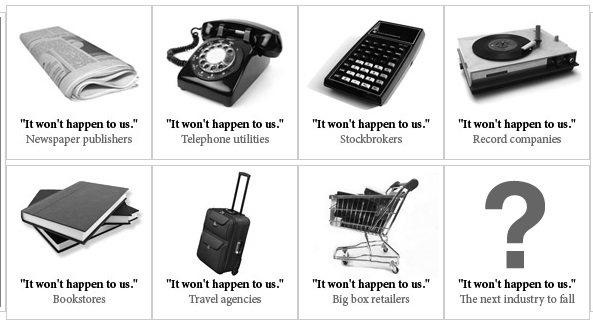
Change has come to the world of real estate. According to many sources, the real estate brokerage industry will be one of the next industries to become obsolete due to the ubiquity of the internet. If you doubt this statement, just think of travel agents, record stores, book retailers, video rental, etc. Enough said…

CU Blog - Aereo Founder and CEO Chet Kanojia on the future of TV - Photo 1

This subject is pivotal in the roadmap for elevation of the Caribbean economy, which maintains that internet/electronic commerce business models are critical in creating jobs and growing the region’s GDP. The publishers of the book Go Lean…Caribbean project that 2.2 million new jobs hang in the balance.

This commentary is also about managing change!

CU Blog - Study - Homes Marketed via the MLS Sell for More - Photo 3At the heart of a real estate transaction is a buyer and a seller, looking for each other. This is a perfect application for social media networks; think online dating. But instead of social media, the industry has MLS or Multiple Listing Services (see Appendix* below). Now come the internet and all the application developers. Here’s the problem, for the MLS world: the buyer or seller is not the end consumer, but rather the buyer’s agent and the seller’s agent. The commission money involved, normally 6% of selling price, is split between the two agents. This applies on small transactions (think: $50,000) and large $million transactions. Yet now, the internet allows buyers and sellers to get together without the brokerage agents; one major player in this online race is Zillow (see Appendix# below); an online real estate database that was founded in 2005 by former Microsoft executives.

Change is afoot…
If the internet option continues to gain more and more market share, this will neutralize the role of agents, and their industry-exclusive MLS options. Zillow reported more than 24 million unique visitors in September 2011, representing year-over-year growth of 103 percent.[23][24] (Zillow has data on 110 million homes across the United States, not just those homes currently for sale).

VIDEO – Zillow: “Lake House” Commercial – http://youtu.be/WZk__l8yCHo

Published on February 20, 2015 – “Lake House” is Zillow’s fifth TV spot, the latest in the company’s highly successful first-ever national advertising campaign, “Find Your Way Home.” The spot was produced by Deutsch LA and features the single “Atlas Hands” by Benjamin Francis Leftwich. See all of Zillow’s TV spots at http://www.zillow.com/tv/.

Most MLS systems restrict membership and access to real estate brokers (and their agents) who are appropriately licensed by the state/province, and are members of industry association (e.g., NAR or CREA). But access is becoming more open as Internet sites offer the public the ability to view portions of MLS listings. (There still remains some limitation to access to information within MLS’s; generally, only agents who are compensated proportional to the value of the sale have uninhibited access to the MLS database). Many public Web forums have a limited ability in terms of reviewing comparable properties, past sales prices or monthly supply statistics.

A person selling his/her own property – acting as a For Sale By Owner (or FSBO) seller – cannot generally put a listing for the home directly into an MLS. (An example of an exception to this general practice is the national MLS for Spain, AMLASpain, where FSBO listings are allowed.[3] Similarly, a licensed broker who chooses to neither join the trade association nor operate a business within the association’s rules, cannot join most MLS’s.) However, there are brokers and many online services which offer FSBO sellers the option of listing their property in their local MLS database by paying a flat fee or another non-traditional compensation method.[4]

In Canada, CREA has come under scrutiny and investigation by the Competition Bureau and litigation by former CREA member and real estate brokerage Realtysellers (Ontario) Ltd., for the organization’s control over the Canadian MLS system.[5] In 2001, Realtysellers (Ontario) Ltd., a discount real-estate firm was launched that reduced the role of agents and the commissions they collect from home buyers and sellers. The brokerage later shut down and launched a $100 million lawsuit against CREA and TREB, alleging that they breached an earlier out-of-court settlement that the parties entered into in 2003.

The Empire Strikes Back…
In January (2015), Zillow and ListHub, a subsidiary of Move, Inc. the operator of Realtor.com, ended their agreement for Zillow to receive listings through ListHub. This will take effect on April 6, 2015. Earlier this month (February 16), Zillow closed on its acquisition of Trulia, forming the new Zillow Group. As a result, ListHub announced that it ended its relationship with Trulia; giving a 5 day transition period before it stops sending listings to Trulia.

The actions and conflicts between the online real estate portals and MLS’s are continuing to escalate. One of the major industry players TREND, the exclusive MLS for the Greater Philadelphia-area (Pennsylvania) sent out a communications to their broker clients on February 20, openingly acknowledging the jockeying taking place; with their commitment to stay engaged:

TREND has been in discussions to determine how we can best help our members protect their interests and easily distribute their listings to portals they choose. We plan to continue these discussions.

The issues presented in this commentary is the cornerstone of several ongoing arguments about the current health of the real-estate market, which are centered on free and open information being necessary for both the buying and selling parties to ensure fair prices are negotiated during closing, ultimately allowing a stable and less volatile market.

No doubt, there is some collusion between MLS’s and the brokerage industry to maintain the status quo. But the industry claims to still bring added-value. According to this article, the MLS systems hold sway over the industry, impacting its customers (real estate brokers and agents) with optimized sales and profits; they claim that the homes they market sell for more money. See story here:

Title: Study Finds Homes Marketed via the Cooperative Brokerage Community on the MLS Sell for More
Posted: December 5, 2014, Philadelphia, Pennsylvania; retrieved February 24, 2015 from: http://www.trendmls.com/Guest/News/ShowDoc.aspx?id=7425#.VoybLp0o673

CU Blog - Study - Homes Marketed via the MLS Sell for More - Photo 1Earlier this year, TREND, the Multiple Listing Service (MLS) for the Philadelphia Metropolitan Area, studied the percent of sales marketed on the MLS. The study found that in the last 3 years more than 80% of sales were marketed on the MLS, and that properties marketed on the MLS had a higher median sold price compared to properties that were marketed off the MLS.

To perform this study, TREND examined 13 years of MLS and Public Records data, comparing each Public Records sale record to MLS sale records to determine which sales were marketed on the MLS.

“Our goal with this study was to see how many sales that would typically involve a real estate professional were listed on the MLS. Knowing there are various ways and reasons real estate is transacted in the market, we wanted to focus the study on the ‘bread and butter’ market segment of the brokerage community. To do this we honed in on residential, single-family resale properties over 50 thousand dollars,” Vice President of Product Management, Ken Schneider said.

Due to the quantity of data accessible, as an MLS and Public Records provider, TREND was able to determine that the percent of sales marketed on the MLS across the Philadelphia Metropolitan Area has grown over the last 13 years. It also remains strong, with an average of 82% of sales in 2013 marketed on the MLS, and many communities posting even higher numbers.

CU Blog - Study - Homes Marketed via the MLS Sell for More - Photo 2The study also uncovered a quantifiable benefit to marketing a property on the MLS: higher sold prices. For example, in 2013, properties marketed on the MLS had a 21% higher median sold price compared to properties marketed off the MLS.

“These numbers showed that over the years and through various market conditions, it is in a consumer’s best interest to work with a real estate professional that will expose their property to the cooperative brokerage community,” Vice President of Product Management, Ken Schneider said.

Ultimately, the study showed when properties are advertised in a competitive marketplace to the cooperative brokerage community on the MLS, they command the highest prices.

“The results of this study are a testament to the historical and ongoing integrity, commitment, cooperation and collaboration of the brokers and brokerages in the Philadelphia Metropolitan Area, which ultimately benefits their clients”, Vice President of Product Management, Ken Schneider said.

For more information on this study, view the complete report. View the Full Report.

About TREND
The TREND community encompasses approximately 27,000 real estate brokers and agents in Delaware, New Jersey and Pennsylvania. As partners in the business of real estate information and technology, TREND members guide the evolution of our MLS and Public Records systems, and contribute to the MLS database of approximately 2.9 million listings. TREND also provides member access to public records for over 5.1 million properties, appointment management tools, valuable industry and market information, and personalized customer service. Together, the TREND community facilitates the sale of more than 70,000 properties a year at a value of over 18 billion dollars. For more information, visit www.trendmls.com.

The issues of MLS versus online portals affect the Caribbean as well. The book Go Lean… Caribbean, serves as a roadmap for the introduction and implementation of the Caribbean Union Trade Federation (CU). The CU/Go Lean roadmap has 3 prime directives:

  • Optimization of the economic engines to grow the regional economy to $800 Billion GDP & create 2.2 million new jobs.
  • Establishment of a security apparatus to protect the resultant economic engines and marshal against economic crimes.
  • Improvement of Caribbean governance to support these engines.

The roadmap envisions a robust social media network, www.myCaribbean.gov, and e-Government insourcing of property registrations in the region. Early in the book, the benefits of technology empowerment is pronounced in the Declaration of Interdependence (Page 14), with these opening statements:

xxvi.     Whereas the Caribbean region must have new jobs to empower the engines of the economy and create the income sources for prosperity, and encourage the next generation to forge their dreams right at home, the Federation must therefore foster the development of new industries… In addition, the Federation must invigorate the enterprises related to existing industries … impacting the region with more jobs.

xxvii.   Whereas the region has endured a spectator status during the Industrial Revolution, we cannot stand on the sidelines of this new economy, the Information Revolution. Rather, the Federation must embrace all the tenets of Internet Communications Technology (ICT) to serve as an equalizing element in competition with the rest of the world. The Federation must bridge the digital divide and promote the community ethos that research/development is valuable and must be promoted and incentivized for adoption.

xxviii.  Whereas intellectual property can easily traverse national borders, the rights and privileges of intellectual property must be respected at home and abroad. The Federation must install protections to ensure that no abuse of these rights go with impunity, and to ensure that foreign authorities enforce the rights of the intellectual property registered in our region.

CU Blog - Study - Homes Marketed via the MLS Sell for More - Photo 4The Caribbean has the eco-system of Multiple Listing Services, and real estate brokers and agents. But where there are buyers and sellers, the marketplace will always find a way to complete transactions. In the US, change has come, the stakeholders will simply adapt. With Zillow’s 24 million unique website visitors, individual brokerage firms will have to negotiate direct feeds to Zillow – a trend already started – and agents will simply upload their listings directly. The status quo now is for selling-agents to promote properties on up to 160 different websites. The photo here and foregoing VIDEO of Zillow Advertising – designed to generate even more consumer traffic to designated web site – demonstrate the changing landscape for the real estate brokerage industry.

There is much for the Caribbean to glean from observing the developments of this American industry. The Go Lean book already details best-practices for the full embrace of Internet Communications Technologies (ICT). Imagine the www.myCaribbean.gov site with 150 million unique profiles (residents, visitors, Diaspora, businesses, trading partners, etc.). Then add new profiles, a single property site with property address as the URL, for every house that is “For Sale”.

Electronic introduction: buyers meet sellers; sellers meet buyers. That opening “prophecy” manifested: real estate brokerage – a next industry to become obsolete due to the ubiquity of the internet.

The book details the community ethos to adapt to the changed ICT landscape, plus the executions of the following strategies, tactics, implementations and advocacies to forge best practices:

Community Ethos – Economic Principle – People Respond to Incentives Page 21
Community Ethos – Job   Multiplier Page 22
Community Ethos – Lean Operations Page 24
Community Ethos – Return on Investments (ROI) Page 24
Community Ethos – Ways to Impact the Future Page 26
Community Ethos – Ways to Help Entrepreneurship Page 28
Community Ethos – Promote Intellectual Property Page 29
Community Ethos – Impact Research & Development Page 30
Community Ethos – Bridge the Digital Divide Page 31
Strategy – Integrate Region in a Single Market Page 45
Strategy – Agents of Change – Technology Page 57
Tactical – Fostering a Technocracy Page 64
Tactical – Minimizing Bubble – Countering 2008 Housing Crisis Page 69
Tactical – Growing to $800 Billion Economy – New High Multiplier Industries Page 70
Separation of Powers – Patent, Standards, and Copyrights Office Page 78
Separation of Powers – Communications and Media Authority Page 79
Separation of Powers –Housing and Urban   Authority Page 83
Implementation – Integrate – Deploy www.myCaribbean.gov Portal Page 97
Implementation – Ways to Deliver Page 109
Implementation – Ways to Impact Social Media Page 111
Planning – 10 Big Ideas – #8: Caribbean Cloud Page 127
Planning – Lessons Learned from 2008 – Housing-born Crisis; Lax Oversight Page 136
Advocacy – Ways to Grow the Economy Page 151
Advocacy – Ways to Create Jobs Page 152
Advocacy – Ways to Improve Housing – e-Government for Registrations Page 161
Advocacy – Ways to Improve Communications Page 186
Advocacy – Ways to Foster Technology Page 197
Advocacy – Ways to Foster e-Commerce Page 198
Advocacy – Ways to Impact Main Street Page 201
Advocacy – Ways to Develop a Pre-Fab Housing Industry & eco-System Page 207
Advocacy – Ways to Impact Urban Living Page 234

This subject of managing the changing ICT landscape has been detailed in previous Go Lean blogs/commentaries, as sampled here:

https://goleancaribbean.com/blog/?p=3974 Google and Mobile Phones – Here comes Change
https://goleancaribbean.com/blog/?p=3915 ‘Change the way you see the world; you change the world you see’
https://goleancaribbean.com/blog/?p=3490 How One Internet Entrepreneur Can Rally a Whole Community
https://goleancaribbean.com/blog/?p=2953 Funding Caribbean Entrepreneurs – The ‘Crowdfunding’ Way
https://goleancaribbean.com/blog/?p=1634 ICT Book Review: ‘Chasing Youth Culture and Getting It Right’
https://goleancaribbean.com/blog/?p=1416 Amazon’s new FIRE Smartphone – Transforming e-Commerce
https://goleancaribbean.com/blog/?p=528 Social Media Model – Facebook planning to provide mobile payments
https://goleancaribbean.com/blog/?p=308 CARCIP Urges Greater ICT Innovation

The CU implementation is necessary to regulate and oversee many of the developments that are occurring because of our changing world. The world will continue to change whether we want it to or not. The smart move is to exploit the changes. The Go Lean book concludes in exhortation to the region:

Get moving … now is the time. Opportunities abound; even if there is only little commerce to exploit now, there is opportunity enough in the preparation for the coming change. So act now! Get moving to that place, the “corner” of preparation and opportunity.

Now is the time to lean-in for the changes and empowerments in the Go Lean roadmap. Now is the time to make the Caribbean a better homeland to live, work and play.  🙂
———–

APPENDIX * – MLS or Multiple Listing Service/System

A MLS is a suite of services that enables real estate brokers to establish contractual offers of compensation (among brokers), facilitates cooperation with other broker participants, accumulates and disseminates information to enable appraisals, and is a facility for the orderly correlation and dissemination of listing information to better serve broker’s clients, customers and the public. A multiple listing service’s database and software is used by real estate brokers in real estate, representing sellers under a listing contract to widely share information about properties with other brokers who may represent potential buyers or wish to cooperate with a seller’s broker in finding a buyer for the property or asset. The listing data stored in a multiple listing service’s database is the proprietary information of the broker who has obtained a listing agreement with a property’s seller. (Source: http://en.wikipedia.org/wiki/Multiple_listing_service)

———–

APPENDIX #: Additional “home” work – July 28, 2014 News Report: Zillow Buying Trulia

Video Direct Link: http://abcnews.go.com/Business/video/zillow-buying-trulia-35-billion-24748326


Share this post:
, , , , , ,
[Top]

Businesses Try to Stave-off Brain Drain as Boomers Retire

Go Lean Commentary

A consistent theme in the book Go Lean…Caribbean is that communities need their economic engines optimized, otherwise their citizens would simply leave. The book, and subsequent blog/commentaries, posit that the reality of the recent global financial crisis has resulted in an even higher abandonment rate among Caribbean communities. Another dynamic have now become prominent: families are having less babies.

This means, from a strictly supply-and-demand basis, older workers will be pressured to retire later and stay on with their employers longer.

This point was highlighted in the Go Lean book with the acknowledgement that the Aging Diaspora is a new Agent-of-Change for the Caribbean to contend with (Page 57). The book specifically identified that the demographics of the Caribbean was altered in the decades following World War II. Many members of the Caribbean Diaspora availed themselves of opportunities in Europe and North America during the rebuilding efforts for those nations. So those that emigrated in the 1950’s, 1960’s and 1970’s now comprise an aging Diaspora – with the strong desire to return to their native homelands for their “golden years”. They should be welcomed back and incentivized to repatriate, and Caribbean communities should prepare – and profit – from this eventuality. The Go Lean book describes the effort as a figurative “Welcome Mat” that must be administered, with details like: health care, security, disability support, elder-care, entitlements, etc.

There are economic concerns … and benefits from this execution.

But now, according to this story and AUDIO podcast, there may be more pressure for these ones to remain in the work place longer:

Podcast from National Public Radio (NPR) – January 15, 2015
By: Yuki Noguchi

AUDIO Podcast: – http://www.npr.org/2015/01/15/377201540/businesses-try-to-stave-off-brain-drain-as-boomers-retire

(See transcript in Appendix below)

These same issues, though presented from the perspective of the US, have the same application in the Caribbean. Our population is trending older as more and more young people abandon Caribbean communities for Diaspora life in foreign lands. We must also stave-off brain drain in the Caribbean region.

The Go Lean book serves as a roadmap for the introduction and implementation of the technocratic Caribbean Union Trade Federation (CU). This CU is proffered to provide economic, security and economic security solutions for the 30 member-states and their 42 million people. It is our quest to be prepared for this changing landscape. This mandate is pronounced early on in the book’s Declaration of Interdependence with the following statements (Page 11 – 13):

ix.    Whereas the realities of healthcare and an aging population cannot be ignored and cannot be afforded without some advanced mitigation, the Federation must arrange for health plans to consolidate premiums of both healthy and sickly people across the wider base of the entire Caribbean population. The mitigation should extend further to disease management, wellness, mental health, obesity and smoking cessation programs. The Federation must proactively anticipate the demand and supply of organ transplantation as developing countries are often exploited by richer neighbors for illicit organ trade.

xix.    Whereas our legacy in recent times is one of societal abandonment, it is imperative that incentives and encouragement be put in place to first dissuade the human flight, and then entice and welcome the return of our Diaspora back to our shores. This repatriation should be effected with the appropriate guards so as not to imperil the lives and securities of the repatriated citizens or the communities they inhabit. The right of repatriation is to be extended to any natural born citizens despite any previous naturalization to foreign sovereignties.

xxiv.    Whereas a free market economy can be induced and spurred for continuous progress, the Federation must install the controls to better manage aspects of the economy: jobs, inflation, savings rate, investments and other economic principles. Thereby attracting direct foreign investment because of the stability and vibrancy of our economy.

xxv.    Whereas the legacy of international democracies had been imperiled due to a global financial crisis, the structure of the Federation must allow for financial stability and assurance of the Federation’s institutions. To mandate the economic vibrancy of the region, monetary and fiscal controls and policies must be incorporated as proactive and reactive measures. These measures must address threats against the financial integrity of the Federation and of the member-states.

Modern societies are based on the assumption that there will always be more young people in a community than the older population; this is a basic principle in “actuarial science”. There are many social safety nets that depend on this actuarial fact: the Caribbean needs population growth not population contraction. Already the repercussions of so many people abandoning their communities have created devastating consequences. For example, retirement plans-funds are strained in many Caribbean countries. Yes, the Caribbean, as a region, is at the precipice of failed-state status.

The Go Lean book posits that this is a “crisis, but that this crisis is a terrible thing to waste”; (Page 8). As such the roadmap structures the CU to impact the region with the execution of the prime directives defined as these 3 goals:

  • Optimization of economic engines in order to grow the regional economy to $800 Billion and create 2.2 million new jobs.
  • Establishment of a security apparatus to protect the resultant economic.
  • Improvement of Caribbean governance to support these engines.

According to the foregoing article, America needs to keep their older workers working longer; they cannot afford the brain drain. But this fact is conflicting for Caribbean pursuits. We need our aging Diaspora to come back home, sooner, rather than later…and to bring their wealth, benefits and entitlements with them; Go Lean describes it as their “time, talent and treasuries”. This creates a seller’s market for the foreign workers with demand in the US and also in the homeland. It is hoped that “love for the Caribbean homeland” would be the primary motivator.

It is hoped!

Though the needs of the Caribbean youth are identified as priority for the Go Lean movement (book and blogs), the needs of the elderly population are not ignored. In fact, the Go Lean roadmap details missions like retirement planning, increased retirement age, pension re-financing, heightened public safety and optimized healthcare. The following details from the book Go Lean … Caribbean are the community ethos, strategies, tactics, implementations and advocates prescribed to manifest the commitment to the Caribbean elderly populations:

Community Ethos – Deferred Gratification Page 21
Community Ethos – Ways to Impact the Future Page 26
Community Ethos – Ways to Promote Happiness Page 36
Community Ethos – Ways to Impact the Greater Good Page 37
Strategy – Repatriating Caribbean Diaspora Page 47
Strategy – Non-Government Organizations – Senior Aid Groups Page 48
Strategy – Agents of Change – Aging Diaspora Page 57
Tactical – Confederating a Permanent Union Page 63
Tactical – Fostering a Technocracy Page 64
Implementation – Assemble all Member-States Page 96
Implementation – Ways to Pay for Change Page 101
Implementation – Ways to Better Manage Debt – Re-work Pensions Page 114
Implementation – Reasons to Repatriate Page 118
Planning – 10 Big Ideas … in the Caribbean Region Page 127
Planning – Lessons Learned from 2008 Page 136
Advocacy – Ways to Grow the Economy Page 151
Advocacy – Ways to Create Jobs Page 152
Advocacy – Better Manage the Social Contract Page 170
Advocacy – Reforms for Banking Regulations – Central Bank Page 199
Advocacy – Ways to Impact Wall Street Page 200
Advocacy – Impact the Diaspora Page 217
Advocacy – Ways to Preserve Caribbean   Heritage Page 218
Advocacy – Ways to Impact Retirement Page 221
Advocacy – Ways to Help the Middle Class Page 223
Advocacy – Ways to Improve Elder-Care Page 225

The Baby Boom generation has come full circle now as senior citizens. This large population group (born between years 1946 and 1964) is bringing a boon to the industries that cater to their care and preferences. There is an estimated 78.3 million Americans who were born during this demographic period, encompassing a quarter of the US population.

The Caribbean cannot be far behind. Unfortunately though, many of these Caribbean boomers live in foreign countries like the US, Canada, UK, France, the Netherlands and other European countries.  This is a “Big Idea” to incentivize these ones to make a return to their Caribbean ancestral homelands. The Go Lean book describes this big effort as heavy-lifting, a task too big for any one member-state alone. But rather, there is the need for the technocracy of the Caribbean Union Trade Federation. The purpose of this Go Lean/CU roadmap is to deliver, to do the heavy-lifting to make the Caribbean homeland a better place to live, work and play.

Now is the time for all of the Caribbean, the people and governing institutions, to lean-in for the changes/empowerments described in the book Go Lean … Caribbean. 🙂

Download the book Go Lean … Caribbean – now!

———

APPENDIX – Podcast Transcript: Businesses Try to Stave Off Brain Drain as Boomers Retire

In the U.S., roughly 10,000 people reach retirement age every day. And though not everyone who turns 62 or 65 retires right away, enough do that some companies are trying to head off the problem.

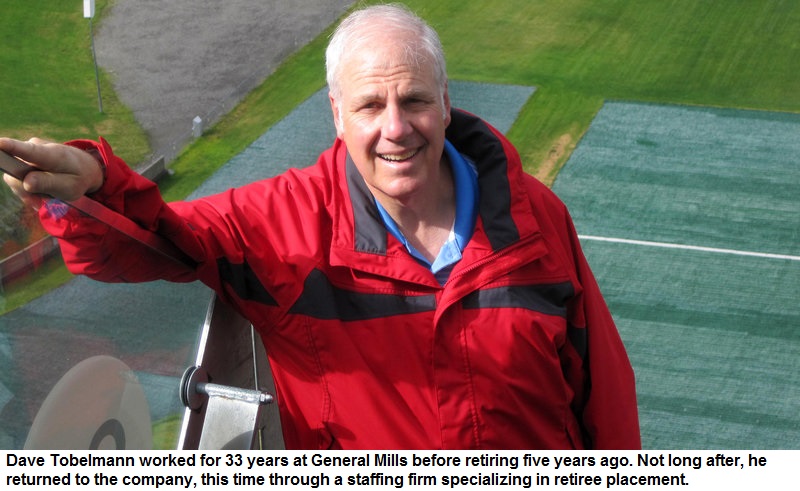
CU Blog - Businesses Try To Stave Off Brain Drain As Boomers Retire - Photo 1Dave Tobelmann, who for 33 years developed new products for General Mills, retired five years ago at age 57 — around the same time as a number of other colleagues. “Yeah, I went to a lot of retirement parties,” Tobelmann says.

Losing veteran workers is a challenge, even for big companies like General Mills.

“Let’s say you have 30 people retire in a year and the average years of experience is 30 years. So you just had 1,000 years walk away. That’s hard to lose,” Tobelmann says.

The need is not across the board; not all retirees are in demand. But the older-worker brain drain is a big concern for industries like mining and health care. They are trying to retain older employees because demand is increasing and fewer younger workers are rising through the ranks.

In a survey out this week, the Society for Human Resource Management reports that a third of employers expect staffing problems in coming years.

“When you have large numbers that are leaving and a pipeline that is not entirely as wide as the exit pipeline, you will have temporary gaps,” says Mark Schmit, executive director of the association’s foundation.

Take, for example, the insurance business.

“The average age is in the late 50s in this industry,” says Sharon Emek, who sold an insurance business five years ago after three of the four partners reached retirement age. She then started Work at Home Vintage Employees, a company that contracts insurance-industry retirees.

“It’s a big crisis within the industry where they’re trying to recruit young talent and keep young talent, and the industry is constantly writing about the problem,” Emek says.

Employers are trying to hang onto older talent by offering flexible work hours, more attractive health care benefits or having retirees return to mentor younger workers. And more people are, in fact, working later — either because they want to, or they have to. According to AARP, nearly 19 percent of workers over age 65 work (about 1 in 5), compared with about 11 percent (1 in 10) three decades ago.

Soon after retiring, Tobelmann returned to General Mills. He works through YourEncore, a staffing firm specializing in retiree placement. Procter & Gamble, Boeing and other companies started YourEncore to prepare for baby boomers retiring. Tobelmann says the benefits for the company are obvious.

“I already know how to speak the language, I know how the company operates, I know how the businesses operate, I know how they make money, I know how projects proceed, I know all the processes,” he says.

At Michelin North America, more than 40 percent of the workforce is approaching retirement age. Retirees have, on average, 2 1/2 decades of experience. Dave Stafford, who heads human resources for the company, says last year, it had to plan around losing most of a lab team made up entirely of older workers.

“If we’re doing our job well, we’ll know that there’s risk; we’ll start to staff to compensate for the fact that that risk may come to fruition,” he says.

Michelin encourages retirees to stick around part-time, especially those in technical maintenance, where talent is chronically scarce. But it’s not always easy to accommodate.

“Sometimes they have a very limited number of hours that they want to work, and to try to work around their schedule sometimes can be a bit of a challenge,” says Dale Sweere of Stanley Consultants, an engineering consulting firm based in Muscatine, Iowa.

But Sweere says the company has always offered phased retirement because experienced workers have relationships with clients that are valuable to hang onto. “It’s kind of a running joke around here that we have their retirement party on a Friday and they show up for work again on Monday,” Sweere says.

Share this post:
, , , , , , ,
[Top]

The State of Aruba’s Economy

Go Lean Commentary

The Caribbean is comprised of 4 different language groups. We hear mostly of the English, French and Spanish speaking islands, but the Dutch speaking islands are far from inconsequential. They are integral to the Caribbean landscape and integral to the plan for regional confederation, consolidation and elevation.

The book Go Lean…Caribbean addresses the needs of all the Caribbean, including the Dutch territories. In the book, the islands are referred to as the formal name of the Netherlands Antilles (Page 16). This consists of two island groups; the ABC Islands of Aruba, Bonaire and Curaçao, located just off the Venezuelan coast. Plus also the SSS islands of Sint Maarten, Saba and Sint Eustatius, located in the Leeward Islands southeast of the Virgin Islands near the northern end of the Lesser Antilles. The Dutch colonized these islands in the 17th century, (at one point, Anguilla, Tobago, the British Virgin Islands, and St. Croix of the US Virgin Islands had also been Dutch), and united them in the new constituent state of the Netherlands Antilles in December 1954.

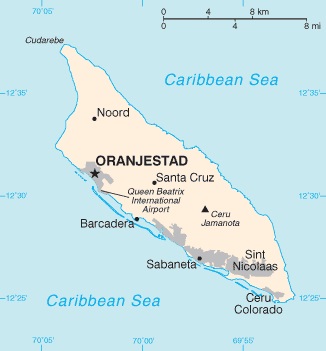
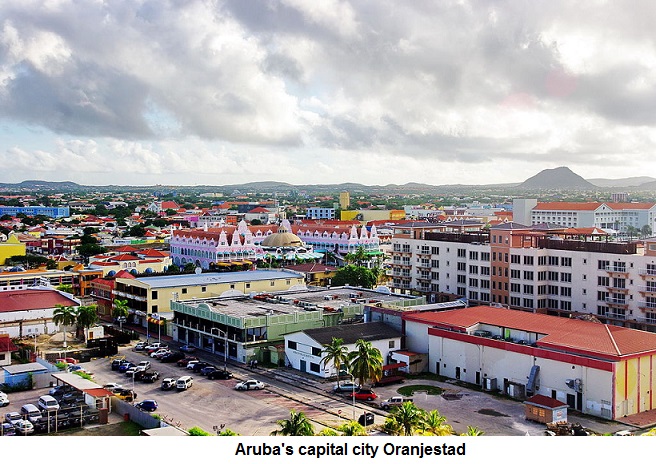
s Economy - Photo 2The largest of the Dutch Caribbean is Aruba.

Aruba called for secession from the Netherlands Antilles from as early as the 1930s, becoming a separate state within the Kingdom of the Netherlands in 1986. After many other organizational developments, by 2010, Aruba is dispositioned as one of the four constituent countries that form the Kingdom of the Netherlands, along with the Netherlands (European homeland), Curaçao and Sint Maarten.

What is the status of Aruba today?

How has it fared as an autonomous state?

The Go Lean book posits that Aruba is in crisis; (along with the rest of the Caribbean). This is also the assessment by the International Monetary Fund, as related in this news article:

By: By the Caribbean Journal staff
Aruba’s economy is “recovering gradually” from a “severe double-dip recession,” according to the International Monetary Fund, which recently concluded its 2015 Article IV Mission to the Dutch Caribbean island.

The recession was [exacerbated] by a pair of factors: the global financial crisis and the shutdown of the oil refinery in Aruba.

“These shocks have substantially increased public debt—over 80 percent of GDP in 2014—and eroded fiscal space,” the IMF said in a statement. “To address these fiscal challenges, the authorities have undertaken major entitlement reforms and are aiming to reach a small fiscal surplus in 2018.”

Without similar measures, however, the IMF warned that the pace of fiscal consolidation in the island could slow and public debt would continue to rise in the medium term.

s Economy - Photo 1Growth in Aruba is projected to rise by about 2.5 percent in 2015, which would put the island in favorable territory with the rest of the region, though.

The closure of the refinery, however, puts even more pressure on the island’s tourism sector, the IMF said.

That could compound the island’s risk, though, given its large dependence on tourists from the US and from Venezuela, with the latter’s economic crisis adding to the risk.

But the IMF said that Aruba had maintained its competitiveness in tourism, with its share of the Caribbean’s tourism market share continuing to grow.

“In addition, the authorities’ marketing efforts, access to new US hubs, and additional airlift capacity from South America have improved resilience,” the IMF said. “Increasing labor market flexibility and reducing the costs of doing business would not only further improve Aruba’s competitiveness, but would also help its adjustment to external shocks and facilitate diversification.”
Caribbean Journal Regional News Site – Posted February 16, 2015 –
http://www.caribjournal.com/2015/02/16/the-state-of-arubas-economy/

The Caribbean country of Aruba needs to focus on growing its economy and creating jobs. The Go Lean book asserts that this effort is too big a task for just one Caribbean member-state alone, that Aruba needs to convene, confederate and collaborate with the other regional member-states. As such, the Go Lean book serves as a roadmap for the introduction and implementation of the technocratic Caribbean Union Trade Federation (CU), for the elevation of Caribbean society – for all member-states. This CU/Go Lean roadmap has these 3 prime directives:

  • Optimization of the economic engines in order to grow the regional economy to $800 Billion and create 2.2 million new jobs.
  • Establishment of a security apparatus to protect the resultant economic engines.
  • Improvement of Caribbean governance to support these engines.

The Go Lean book (Page 3) makes this simple assertion regarding the state of Aruba and all the Caribbean economy: the region is in crisis. There is something wrong in these island and coastal states, that  despite the greatest address in the world, instead of the world “beating a path” to these doors, the people of the Caribbean have “beat down their doors” to get out. Aruba fails to keep its young people at home. In fact, the anecdotal experience (one story after another) is that young people abandon this island as soon as they finish high school; many never to return again, except for occasional visits. (Aruban natives – plus all Netherland Antilles states – have Dutch citizenship, sharing the same Dutch passport as the Kingdom of the Netherlands).

A mission of the Go Lean roadmap is to minimize the “push-and-pull” factors that contribute to this alarmingly high rate of societal abandonment – one report reflects a 70% brain drain rate for the overall Caribbean. The book stresses (early at Page 13 & 14) the need to be on-guard for these “push-and-pull” factors in these pronouncements in the Declaration of Interdependence:

xix.      Whereas our legacy in recent times is one of societal abandonment, it is imperative that incentives and encouragement be put in place to first dissuade the human flight, and then entice and welcome the return of our Diaspora back to our shores. This repatriation should be effected with the appropriate guards so as not to imperil the lives and securities of the repatriated citizens or the communities they inhabit. The right of repatriation is to be extended to any natural born citizens despite any previous naturalization to foreign sovereignties.

xxi.      Whereas the preparation of our labor force can foster opportunities and dictate economic progress for current and future generations, the Federation must ensure that educational and job training opportunities are fully optimized for all residents of all member-states, with no partiality towards any gender or ethnic group. The Federation must recognize and facilitate excellence in many different fields of endeavor, including sciences, languages, arts, music and sports. This responsibility should be executed without incurring the risks of further human flight, as has been the past history.

xxv.      Whereas the legacy of international democracies had been imperiled due to a global financial crisis, the structure of the Federation must allow for financial stability and assurance of the Federation’s institutions. To mandate the economic vibrancy of the region, monetary and fiscal controls and policies must be incorporated as proactive and reactive measures. These measures must address threats against the financial integrity of the Federation and of the member-states.

xxvi.      Whereas the Caribbean region must have new jobs to empower the engines of the economy and create the income sources for prosperity, and encourage the next generation to forge their dreams right at home, the Federation must therefore foster the development of new industries, like that of ship-building, automobile manufacturing, prefabricated housing, frozen foods, pipelines, call centers, and the prison industrial complex. In addition, the Federation must invigorate the enterprises related to existing industries like tourism… – impacting the region with more jobs.

This commentary previously related details of the “push-and-pull” factors for Caribbean emigration to North America and Europe, and the region’s own job-creation efforts. Here is a sample of earlier blogs:

https://goleancaribbean.com/blog/?p=3834 State of the Caribbean Union
https://goleancaribbean.com/blog/?p=3780 National Sacrifice: The Missing Ingredient – Caribbean people not willing to die or live in sacrifice to their homeland
https://goleancaribbean.com/blog/?p=3446 Forecast for higher unemployment in Caribbean in 2015
https://goleancaribbean.com/blog/?p=3050 Obama’s immigration tweaks leave Big Tech wanting more
https://goleancaribbean.com/blog/?p=1698 American “Pull” Factors – STEM Jobs Are Filling Slowly
https://goleancaribbean.com/blog/?p=1683 British public sector workers strike over ‘poverty pay’
https://goleancaribbean.com/blog/?p=1596 Book Review: ‘Prosper Where You Are Planted’
https://goleancaribbean.com/blog/?p=1433 Caribbean loses more than 70 percent of tertiary educated to brain drain
https://goleancaribbean.com/blog/?p=1296 Remittances to Caribbean Increased By 3 Percent in 2013
https://goleancaribbean.com/blog/?p=1256 Traditional 4-year College Degree are Terrible Investments for the Caribbean Region
https://goleancaribbean.com/blog/?p=841 Having Less Babies (Population) is Bad for the Economy

The Go Lean book and these accompanying blogs posit that the economic failures in the Caribbean in general and Aruba in particular is the direct result of the lack of diversity in industrial development. The region depends too heavily on tourism. Aruba though, made some diversification attempts with oil refinery installations; according to Wikipedia:

With its location near Venezuela, the island became an attractive spot for oil refineries. The Lago Oil and Transport Company, owned by Standard Oil of New Jersey (now Exxon), opened in 1929 near the transshipping port of San Nicolaas. Following in their footsteps, the Eagle Oil Refinery opened soon after. Over the next few decades, the oil industry took over as Aruba’s primary economic force.

During World War II, considerable expansion was done to the Lago Refinery, becoming one of the largest refineries in the world – only bested by Royal Dutch Shell Isla refinery on nearby Curaçao – and a major producer of petroleum products for the Allied war efforts.

The Eagle Oil Refinery shut down and was dismantled in the late 1950s. But the Lago refinery kept going until 1985, when the demand for oil fell and Exxon closed it. In 1991, the Coastal Corporation bought it, scaled down operations, and reopened it. Coastal Corporation later sold the refinery to Valero Energy Corporation in 2004. Its reopening didn’t raise Aruba’s oil industry to its previous heights although it did revive that sector and continued to be a key contributor to the country’s economy until 2009 when it was closed.

Aruba is now applying a strategy to “double-down” on tourism; see Appendix-VIDEO below. The Go Lean roadmap asserts that this strategy is flawed; that while prudence dictates that the Caribbean nations expand and optimize their tourism products, the Caribbean must also look for other opportunities for economic expansion. The requisite investment of the resources (time, talent, treasuries) for this goal may be too big for any one Caribbean member-state like Aruba. Rather, shifting the responsibility to a region-wide, professionally-managed, deputized technocracy will result in greater production and greater accountability. The roadmap will facilitate economic growth and job creation.

This is the charge of the Go Lean…Caribbean roadmap, to do the heavy-lifting, to implement the organization dynamics to impact Caribbean society here and now with economic growth and jobs. The following are the community ethos, strategies, tactics and operational advocacies to effectuate this goal:

Community Ethos – People Respond to Incentives Page 21
Community Ethos – Economic Systems Influences Choices & Incentives Page 21
Community Ethos – The Consequences of Choice Lie in the Future Page 21
Community Ethos – Job Multiplier Page 22
Community Ethos – Minority Equalization Page 24
Community Ethos – Lean Operations Page 24
Community Ethos – Ways to Impact the Greater Good Page 37
Strategy – Vision – Make the Caribbean the Best Address   on Planet Page 45
Strategy – Mission – Repatriate Diaspora Page 46
Strategy – Mission – Dissuade Human Flight/“Brain Drain” Page 46
Tactical – Separation of Powers – Union versus Member-States Page 71
Implementation – Assemble CariCom, Dutch, French, Cuba and US   Territories Page 95
Implementation – Enact Territorial Compacts for PR & the Virgin Islands Page 96
Implementation – Foreign Policy Initiatives at Start-up Page 102
Implementation – Ways to Deliver Page 109
Implementation – Ways to Better Manage Debt Page 114
Implementation – Reasons to Repatriate Page 118
Implementation – Ways to Benefit from Globalization Page 119
Implementation – Ways to Promote Independence Page 120
Planning – 10 Big Ideas for the Caribbean Page 127
Planning – Ways to Make the Caribbean Better Page 131
Advocacy – Ways to Grow the Economy Page 151
Advocacy – Ways to Create Jobs Page 152
Advocacy – Ways to Improve Governance Page 168
Advocacy – Ways to Enhance Tourism Page 190
Advocacy – Ways to Market Southern California – New Markets Page 194
Advocacy – Ways to Impact Extractions Page 195
Advocacy – Ways to Impact the Diaspora Page 217
Advocacy – Ways to Impact DutchTerritories Page 246

This Go Lean book accepts that the current State of Aruba’s Economy does not have to be a permanent disposition. The roadmap presents a plan for greater energy independence, energy security and energy generation in the region – there will be the need to capitalize on Aruba’s core-competence with oil refineries. So under the Go Lean roadmap, Aruba’s economy will do better; the same as all of the Caribbean will do better. This roadmap is a 5-year plan to effect change, to make our homeland a better place to live, work and play.

As for the Dutch Caribbean territories, even though they are no longer considered colonies, but rather constituent countries of the Kingdom of the Netherlands, they are effectively just welfare states dependent on Amsterdam; and a feeder for low-cost labor in Holland. They are inconsequential within the Dutch sphere of influence. There are parasites not protégés!

We must do better!

Now is the time for Aruba, the Dutch Caribbean and all of the Caribbean, the people and institutions, to lean-in to this Go Lean … Caribbean roadmap. 🙂

Download the book Go Lean … Caribbean – now!

———-

Appendix – VIDEO: Aruba – One Happy Island – http://youtu.be/p7NdI0jmvXA

Published on Mar 28, 2012 – Our white-sand beaches, cooling trade winds and warm, friendly people are just a few reasons why so many people return to Aruba year after year. Discover everything that makes this One Happy Island…


Share this post:
, , , , , ,
[Top]

Immigration Policy Exacerbates Worker Productivity Crisis

Go Lean Commentary

The book Go Lean … Caribbean seeks to elevate society in the Caribbean homeland. The book is a 370-page roadmap with turn-by-turn directions on how to transform – remediate and mitigate – the engines of regional commerce, security and governance. While this type of advocacy is the normal sphere of Chambers of Commerce in their pledge to support the business communities, the Go Lean effort is different; it is not motivated by normal profit incentives, but rather the Greater Good for the Caribbean people.

 CU Blog - Immigration Policy Exacerbates Worker Productivity Crisis - Photo 3

(This commentary is not affiliated with any Chamber of Commerce)

Here’s a question for the Caribbean in general, and considering the subsequent news article, the Bahamas in particular:

What do you want from the world?

Do you want to have an advanced-modern society with all the latest “bells-and-whistles” of science, technology, engineering and medicine (STEM)? Or do you want a closed society, designated for reaping by your native people only?

“Oh island in the sun, willed to me by my father’s hand” – Classic Caribbean/Calypso folk song.

There is truly a choice to make. There are closed societies in the world, think North Korea. Even here in the Caribbean, there is Cuba, which was cut-off from US trade for 55 years. The end result, their society “stood still in time” in terms of technological developments; (1950-era American automobiles proliferate in Cuba even today).

The disposition of these aforementioned societies may not be too appealing for the rest of the Caribbean. So the answer being given is one of global citizenship. The Caribbean member-states have expressed, explicitly and implicitly, that they want to be an advanced-modern society. This means one thing:

Give-and-take with the rest of the world.

So there must be some give-and-take with immigration policy. We must “give” some allowances to immigrants to take the returns of their talents.

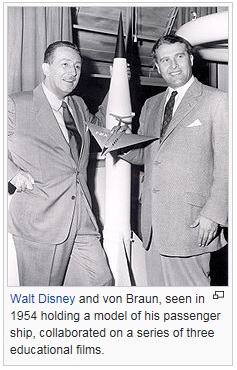
Look at the Caribbean’s biggest neighbor (to the north), the United States of America. Immigration is what made the US a great nation; let’s consider just one example. Much of America’s leadership in the Space Race during the Cold War years of 1950 to 1991 was due to the contributions of one empowering immigrant: Rocket Scientist Wernher von Braun; see summary VIDEO here and more details in the Appendix below.

Wernher Von Braun Vision: ” MAN IN SPACE ” Walt Disney TV production, March 9, 1955 – http://youtu.be/2fautyLuuvo


Uploaded on Sep 12, 2011 – Von Braun explain a future of space orbital mission with Space Shuttle rockets. A positive propagating for human voyage into space.

This discussion aligns with the book Go Lean … Caribbean. This book serves as a roadmap for the introduction and implementation of the Caribbean Union Trade Federation (CU); the purpose of which is to elevate Caribbean society, for all 30 member-states. The book stresses the need for empowering immigration (Page 174), recognizing that some of the skill-sets necessary to elevate our society may not currently exist in the homeland, so we may actually need to import the talent.

This is also the strong point being enunciated by the Bahamas Chamber of Commerce and Employers Confederation in the following news article:

By: Neil Hartnell, Business Editor, The Tribune Daily Newspaper – retrieved February 10, 2015 from:
http://www.tribune242.com/news/2015/feb/10/immigration-policy-exacerbates-worker-productivity/

The Immigration Department’s “closed door” work permit policies are exacerbating the Bahamas’ productivity crisis, a top private sector executive yesterday warning they were making it impossible for companies to hire the “unemployable”.

CU Blog - Immigration Policy Exacerbates Worker Productivity Crisis - Photo 2Robert Myers, the immediate past Bahamas Chamber of Commerce and Employers Confederation (BCCEC) chairman, told Tribune Business that restrictive Immigration policies were preventing businesses from recruiting middle management and skilled line staff essential to their smooth operation.

Apart from hindering the ability of local companies to expand, Mr Myers said they were also prevented from improving staff productivity and efficiency, as they could not “hire the educated to train the uneducated”.

Jerome Fitzgerald, minister of education, admitted last week that 40 per cent of the workforce lacked “a basic education”, with at least 35-38 per cent having failed to graduate from high school.

Mr Myers, though, pegged the number of high school leavers who were functionally illiterate and numerate [only] at 55 percent – a statistic that continues to limit business and GDP growth, and hinder government tax revenues.

“There’s a problem because the Immigration policies are only enabling these problems,” he told Tribune Business. “We have the wrong Immigration policies.

“There’s a desperate need to hire the educated to educate the uneducated and undereducated. We need to relax the Immigration policies, and do it with educated, not uneducated, people.

“The only way you can go out and hire this massive chunk in the economy is to bring in educated people capable of training those uneducated.”

Mr Myers said the Bahamas should tailor its work permit policies to reward, and incentivise, those companies who brought in expatriates to help train Bahamian staff.

“People like myself who could grow their businesses can’t, because it is cost prohibitive to bring in quality managers and line staff,” he told Tribune Business.

“It’s a layering effect. In order for me to grow and get uneducated people working, you need to bring in educated people.

“But you’ve made it so cost prohibitive to bring in line staff and middle managers, you’ve made it so expensive, that if I try to do that I become uncompetitive. So I can’t bring them in, and can’t hire uneducated people.”

Mr Myers said the Christie administration needed to “understand the connectivity of all this”, describing it as “reasonably complex but not rocket science”.

Arguing that the issue went to the heart of the Bahamas’ social fabric, he added: “If you have the wrong Immigration policies, you can’t improve education, the transfer of knowledge, employment and GDP growth. Crime goes up, and the uneducated are left to their own devices.”

Numerous Bahamian businesses have in the past complained to Tribune Business about what they have labelled “a dearth” of middle management talent in this nation, leaving them unable to fill positions essential to their smooth functioning with the right people.

However, in a bid to create employment for Bahamians, in a society struggling with a high 15.7 per cent jobless rate, the Immigration Department has tightened its work permit policies despite fears in some quarters it is trying to force ‘square pegs into round holes’ – forcing companies to take on unsuitable persons.

And several in the private sector have also suggested that it sometimes requires the hiring of one expatriate worker to create jobs for 10 or more Bahamians.

Mr Myers yesterday told Tribune Business that it was “so frustrating” that persons like himself and Mr Fitzgerald understood the problems, yet the Immigration Department was operating policies that were “completely contradictory” to the necessary solutions.

“When you have these problems lined up, teed up in education, crime and growth, stop making it more expensive for the educated to come in and teach the uneducated,” he added.

“Why does the Government not step in, and make it more competitive for businesses, increase the ease of doing business, increase GDP growth.

“I understand you’re trying to shut down Immigration to create employment, but these people are unemployable unless you open Immigration.”

Suggesting that Mr Fitzgerald’s comments, and Immigration policies, showed the Government’s ‘left hand and right hand’ did not know what each was doing, Mr Myers said the Bahamas’ “lack of governance is causing us to sink further”.

In a position paper he shared with Tribune Business yesterday, Mr Myers admitted that some businesses had resorted to hiring illegal Haitians in a bid to find productive workers for low income jobs.

“The Haitian workforce has also had a negative affect on businesses, as the Haitian workers are not always English literate, thus creating the same training and mobility problems for growth and development of businesses,” the ex-BCCEC chairman wrote.

“The Department of Immigration’s policies have caused further burden to businesses as they attempt to create more employment for Bahamians. While this may seem like a positive policy, it in fact negatively impacts Bahamian businesses for all the above said reasons and decreases productivity, making the Bahamas a more expensive and a less competitive nation.

“National security is at risk as we see direct correlations between the failing educational system and increases in violent crimes and drugs. The uneducated will fall victim to illegal activity if they have no hope or ability to become productive members of our society. People with no hope turn to drugs, in many cases for temporary relief. Our choices become one of two: Provide better education or build more courts, police stations and jails.”

So let’s repeat that question to the Caribbean: what kind of society do you want?

Do you want cutting-edge technology?

If so, then you must be prepared to welcome empowering immigrants!

There is no better alternative approach/strategy!

There are however many tactics that can align with this empowering immigration approach/strategy. The Go Lean book promotes a tactic of Separation-of-Powers between CU federal agencies and Caribbean member-state governments; offering the installation of Exclusive Economic Zones (EEZ) and Self-Governing Entities (SGE) to operate in controlled bordered territories like campuses, industrial parks, research laboratories, industrial plants and even aero-space launch facilities – much like advocate Wernher Von Braun campaigned and successfully implementated in the US in the 1950’s and 1960’s. Look today at all the economic spin-off benefits that the US has enjoyed because of the contributions of this one empowering immigrant: satellite communications, GPS, aero-space industrial developments, space exploration, etc.

(There is a Caribbean expression of aero-space initiatives in the European Space Agency in the Caribbean-leaning territory of French Guiana; this Agency would be a SGE under the CU/Go Lean scheme).

Under the EEZ/SGE scheme, the CU maintains exclusive jurisdiction and regulatory oversight for the employment of immigrants. This separation-of-powers will mitigate all the threats of negative immigration policies, as related in the foregoing article. This is technocratic: Just get it done! Just do it!

The CU – applying best-practices for agile deliveries – would facilitate the required elevation of society with these 3 prime directives:

  • Optimization of the economic engines in order to grow the regional economy to $800 Billion & create 2.2 million new jobs.
  • Establishment of a security apparatus to protect the resultant economic engines, specifically in EEZ’s and SGE’s.
  • Improvement of Caribbean governance, with the appropriate separation-of-powers, to support these engines.

The book Go Lean … Caribbean asserts that EEZ’s and SGE’s can be strategic, tactical and operationally efficient for elevating Caribbean society. These points are pronounced early in the book with this Declaration of Interdependence (Pages 11 and 14), with these statements:

v.        Whereas the natural formation of our landmass and coastlines entail a large portion of waterscapes, the reality of management of our interior calls for extended oversight of the waterways between the islands. The internationally accepted 12-mile limits for national borders must be extended by International Tribunals to encompass the areas in between islands. The individual states must maintain their 12-mile borders while the sovereignty of this expanded area, the Exclusive Economic Zone, must be vested in the accedence of this Federation.

xxvi.   Whereas the Caribbean region must have new jobs to empower the engines of the economy and create the income sources for prosperity, and encourage the next generation to forge their dreams right at home, the Federation must therefore foster the development of new industries… In addition, the Federation must invigorate the enterprises related to existing industries like tourism … impacting the region with more jobs.

The subjects of EEZ’s, SGE’s and empowering immigration jobs has been directly addressed and further elaborated upon in these previous blog/commentaries:

https://goleancaribbean.com/blog/?p=3760 Concerns about ‘Citizenship By Investment Programs’
https://goleancaribbean.com/blog/?p=3694 Jamaica-Canada employment programme pumps millions into local economy
https://goleancaribbean.com/blog/?p=3662 Migrant flow into US from Caribbean spikes
https://goleancaribbean.com/blog/?p=3050 Obama’s immigration tweaks in the US leave Big Tech wanting more
https://goleancaribbean.com/blog/?p=2750 Disney World – Role Model for Self Governing Entities
https://goleancaribbean.com/blog/?p=2338 Using SGE’s to Welcome the Dreaded ‘Plutocracy’
https://goleancaribbean.com/blog/?p=2003 Where the Jobs Are – Ship-breaking under SGE Structure
https://goleancaribbean.com/blog/?p=1214 Fairgrounds as SGE and Landlords for Sports Leagues
https://goleancaribbean.com/blog/?p=286 Puerto Rico’s Comprehensive Cancer Center Project Breaks Ground – Model of Medical SGE

The Go Lean book itself details the economic principles and community ethos to adopt, plus the executions of strategies, tactics, implementations and advocacies to forge benefits from empowering immigrants, Self-Governing Entities, and Exclusive Economic Zones in the Caribbean region:

Economic Principles – People Choose because Resources are Limited Page 21
Economic Principles – All Choices Involve Costs Page 21
Economic Principles – People Respond to Incentives Page 21
Economic Principles – Economic Systems Influence Individual Choices Page 21
Economic Principles – Voluntary Trade Creates Wealth Page 21
Economic Principles – Consequences of Choices Lie in the Future Page 21
Community Ethos – Job Multiplier Page 22
Community Ethos – Lean Operations Page 24
Community Ethos – Return on Investments (ROI) Page 24
Community Ethos – Cooperatives Page 25
Community Ethos – Ways to Impact the Future Page 26
Community Ethos – Ways to Help Entrepreneurship Page 28
Community Ethos – Ways to Impact Research & Development Page 30
Community Ethos – Ways to Improve Negotiations Page 32
Community Ethos – Impact the Greater Good Page 37
Strategy – Vision – Confederating 30 Member-states in a Union Page 45
Strategy – Mission – Build and Foster Local Economic Engines Page 45
Tactical – Fostering a Technocracy Page 64
Tactical – Growing Economy – New High Multiplier Industries Page 68
Tactical – Separation of Powers – Department of State – Self-Governing Entities Page 80
Tactical – Separation of Powers – Interior Department – Exclusive Economic Zone Page 82
Implementation – Ways to Pay for Change – SGE Licenses Page 101
Implementation – Steps to Implement Self-Governing Entities Page 103
Implementation – Anecdote – French Guiana Space Agency – Example of a SGE Page 103
Implementation – Benefits from the Exclusive Economic Zone Page 104
Planning – 10 Big Ideas – Self-Governing Entities Page 127
Planning – Ways to Improve Interstate Commerce Page 129
Planning – Lessons from New York City Page 137
Planning – Lessons from Omaha Page 138
Advocacy – Ways to Grow the Economy Page 151
Advocacy – Ways to Create Jobs Page 152
Advocacy – Ways to Impact Empowering Immigration Page 174
Advocacy – Ways to Better Manage Natural Resources – EEZ and SGE’s Page 183
Anecdote – Caribbean Industrialist & Entrepreneur Role Model Page 189
Advocacy – Ways to Promote Fairgrounds Page 192
Advocacy – Ways to Develop Ship-Building as SGE’s Page 209
Advocacy – Ways to Impact the Prison Industrial Complex as SGE’s Page 211
Advocacy – Ways to Protect Human Rights Page 220
Advocacy – Ways to Impact the One Percent – Job Creators Inducements Page 224
Advocacy – Ways to Impact Urban Living – Self-Governing Entities Page 234
Advocacy – Ways to Impact Rural Living – Self-Governing Entities Page 235
Advocacy – Ways to Promote World-Heritage-Sites as SGE’s Page 248
Appendix – Job Multipliers Realities Page 259
Appendix – Airport Cities – Models for Self Governing Entities Page 287

There is a role for the contributions of many impactful and empowering immigrants in this vision for the elevation of the Caribbean homeland. Since the skills needed for today’s global economy are not plentiful in the Caribbean today, we must invite others to join us. These ones will only come initially for profit, not love of community, not the Greater Good. This Greater Good preferred community ethos only comes after some sacrifice; after these ones assimilate their Caribbean homelands and want to protect it as their home … and for their offspring and next generations.

This is why  empowering immigrants should give more than they take; they should not be looking for jobs, rather they should create jobs. In the case of the foregoing news article, the Chamber of Commerce estimates 1 empowering immigrant creates 10 jobs. This job multiplier reality should not be ignored. Especially in this era of empowering STEM careers. We need to build and retain that talent in the Caribbean homeland now.

The Caribbean, including the Bahamas, need to send this message:

  • Scientists – Welcome!
  • Technologists – Welcome!
  • Engineers – Welcome!
  • Medical Practitioners – Welcome!
  • Job Creators – Welcome!
  • Foreign Direct Investors – Welcome!

The Go Lean … Caribbean roadmap invites the contributions of empowering immigrants, especially under the guise of SGE’s. With the right applications from people, tools and techniques many SGE initiatives can have a positive impact in changing society, with minimal risks and threats of negative consequences – the roadmap mitigates the threats of corporate abuse of plutocracies. There are many examples and models to apply from other societies (i.e. Werner von Braun in the US Space program despite his Nazi past – see Appendix below).

Change has come to the Caribbean. Everyone is hereby urged to lean-in to this roadmap to make the Caribbean a better place to live, work and play. If Caribbean people want change, progress, empowerment, growth, jobs (STEM and otherwise), justice and security, then the move to welcome empowering immigrants must be normalized. These ones must be welcomed. 🙂

Download the book Go Lean … Caribbean – now!

————

Appendix: America’s most empowering immigrant: Wernher von Braun

CU Blog - Immigration Policy Exacerbates Worker Productivity Crisis - Photo 1Wernher Magnus Maximilian, Freiherr von Braun (March 23, 1912 – June 16, 1977) was a German and later American aerospace engineer and space architect. He was one of the leading figures in the development of rocket technology in Germany and the United States and is considered one of the “Fathers of Rocket Science”. He was also a member of the Nazi party and the Schutzstaffel (SS), and was suspected of perpetrating war crimes during World War II.

In his twenties and early thirties, Braun was already the central figure in the Nazis’ rocket development program, responsible for the design and realization of the V-2 rocket during World War II. After the war, he and selected members of his rocket team were taken to the United States as part of the secret Operation Paperclip. Braun worked on the United States Army’s intermediate range ballistic missile (IRBM) program before his group was assimilated by NASA. Under NASA, he served as director of the newly formed Marshall Space Flight Center and as the chief architect of the Saturn V launch vehicle, the super-booster that propelled the Apollo spacecraft to the Moon.[1] According to one NASA source, he is “without doubt, the greatest rocket scientist in history”.[2] In 1975 he received the National Medal of Science.

See full biography VIDEO here:

https://www.youtube.com/watch?v=4Ch0OgkkJKI


Share this post:
, ,
[Top]

Daktronics – Keeping score on the world’s largest video displays

Go Lean Commentary

The book Go Lean…Caribbean asserts (Page 20) that elevating Caribbean society has to be a total commitment, involving “Head, Heart, Hands”, in full measure. Head refers to visions, roadmaps and strategies; heart refers to the community ethos, the motivation and spirit that drives the community; hands refer to the industrious energy to do the heavy-lifting to make progress.

s largest video displays - Photo 1The Go Lean book, and accompanying blog/commentaries,  frequently focuses on the subject of models and lessons from companies and institutions that exemplify these above values.

One such company stemmed from humble beginnings, in a small town, with the motive to retain local talent in the local area; to give people the opportunity to prosper where they are planted. The firm is Daktronics, founded in 1968 by Drs. Aelred Kurtenbach and Duane Sander, professors of electrical engineering at South Dakota State University in Brookings, SD. The company began with the design and manufacture of electronic voting systems for state legislatures.

In 1971, Daktronics developed the patented Matside® wrestling scoreboard, the first product in the company’s growing and evolving line. Then in 1994, Daktronics continued growth allowed them to become a publicly traded company, offering shares under the symbol DAKT on the NASDAQ National Market Exchange.

s largest video displays - Photo 6Today, Daktronics has grown from a small company operating out of a garage to the world leader, offering the most complete product lineup in the display industry. The company’s vision is to be the world leader at informing and entertaining audiences through dynamic audio-visual communications systems. Their mission statement details a commitment to:

  • Deliver industry leading value to customers
  • Engage employees through challenging and rewarding opportunities
  • Develop strategic partnerships with suppliers
  • Leverage their strengths in product innovation, manufacturing, and service
  • Contribute to the betterment of their communities
  • Generate an attractive return for investors

The book Go Lean…Caribbean boasts a similar vision and mission for the Caribbean Union Trade Federation (CU), to impact the Caribbean region. The book describes initiatives from top-to-bottom in the Information Technology/ICT industry space, asserting that the region should not only consume, but should create, develop and produce as well. So Daktronics is a good role model for Caribbean initiatives. The book serves as a roadmap for the introduction and implementation of the technocratic CU. This CU roadmap is designed to elevate the economic, security and governing engines of Caribbean society; this vision is defined early in the book (Page 14) with these statements in the opening Declaration of Interdependence:

xxvii. Whereas the region has endured a spectator status during the Industrial Revolution, we cannot stand on the sidelines of this new economy, the Information Revolution. Rather, the Federation must embrace all the tenets of Internet Communications Technology (ICT) to serve as an equalizing element in competition with the rest of the world. The Federation must bridge the digital divide and promote the community ethos that research/development is valuable and must be promoted and incentivized for adoption.

xxxiii. Whereas lessons can be learned and applied from the study of the recent history of other societies, the Federation must formalize statutes and organizational dimensions to … implement the good examples learned from developments/communities like New York City, Germany, Japan, Canada, the old American West and tenants of the US Constitution.

Daktronics has found its niche, especially in the market of giant scoreboards at sports stadiums; consider their activities as highlighted in the following VIDEO; (or the written narrative below):

VIDEO: Daktronics Featured on CBS Sunday Morninghttp://youtu.be/KY9SS2jMVUo –

Published on February 1, 2015 – How did a small Midwest company, Daktronics of Brookings-South Dakota, operating out of a garage end up as the leading provider of professional sports scoreboards? CBS News national correspondent Lee Cowan spent three days at company headquarters to find out.

These Go Lean blogs have previously detailed the economic and civic advantages of sports enterprises. Now we can consider how opportunities have been exploited in the attendant functions of sports, scoreboard systems (then spinning-off to Main Street):

The Daktronics difference is obvious from local high school scoreboards to “giant-esque” video systems in major league stadiums; from roadside LED signs to “Gee-Whiz” digital signage in iconic sites like Times Square (New York) and Piccadilly Circus (London) – see sample of non-sports installations in the Appendix below. There is a good chance one can see Daktronics products every day as their range of products make them the most experienced digital display manufacturer in the industry.

s largest video displays - Photo 2From the “comfy confines” of rural South Dakota, this electronics company (Dak + tronics) has shocked the world; proving that change can emerge from anywhere, even remote locales. This provides great inspiration for any island in the Caribbean! Daktronics’ contribution to the world is their focus on efficiency, quality and agility. This is what the Go Lean book refers to as “lean”.

The concept of “lean” is very prominent in the book (and movement), even adapting the title, Go Lean, for the quest for excellence in Caribbean economic empowerment and governing efforts. The label “lean” is indicative of this quest; the word is used as a noun, a verb and an adjective. This point is pronounced early in the book (Page 4) with these statements:

The CU will lean on, lean in, lean over backwards, and then lean towards…
The CU will embrace lean, agile, efficient organizational structures – more virtual, less physical, more systems, less payroll.

The Daktronics experience lends confidence to the viability of the revolutionary changes being proposed by the Go Lean roadmap, that we can succeed in transforming our society through innovative technology. Previous blogs/commentaries also exclaimed societal benefits from pursuits in the fields of Science, Technology, Engineering and Mathematics (STEM). Consider this sample of previous blogs:

https://goleancaribbean.com/blog/?p=3974 Google and Mobile Phones – Here comes Change
https://goleancaribbean.com/blog/?p=3915 Microsoft Holograms Transforming How We See the World
https://goleancaribbean.com/blog/?p=3889 RBC EZPay and other Banking Automations – Ready for Change
https://goleancaribbean.com/blog/?p=3490 How One STEM Entrepreneurial Start-up Can Rally a Whole Community
https://goleancaribbean.com/blog/?p=3276 STEM/Medical Role Model Shaking Up the World of Cancer
https://goleancaribbean.com/blog/?p=3187 Robots help Amazon tackle and dominate Cyber Monday
https://goleancaribbean.com/blog/?p=2488 Role Model Jack Ma brings Alibaba to America
https://goleancaribbean.com/blog/?p=2126 Where the Jobs Are – Computers Reshaping Global Job Market
https://goleancaribbean.com/blog/?p=1743 Google and Novartis to develop ‘smart’ contact lens
https://goleancaribbean.com/blog/?p=1698 STEM Jobs Are Filling Slowly
https://goleancaribbean.com/blog/?p=1416 Amazon’s new FIRE Smartphone
https://goleancaribbean.com/blog/?p=1277 The need for highway safety innovations – here comes Google
https://goleancaribbean.com/blog/?p=888 Book Review: ‘Citizenville – Take the Town Square Digital & Reinvent Govt’
https://goleancaribbean.com/blog/?p=554 Cuban cancer medication registered in 28 countries
https://goleancaribbean.com/blog/?p=308 CARCIP Urges Greater Innovation

The Go Lean book posits that technology and ICT can level the playing field of competition and trade with the rest of the world. Surely this entire Daktronics commentary demonstrates the advantage of leading with technological innovations. We do not have to be in Silicon Valley to have an impact. Daktronics was foundered and remains based in a Midwest rural city (Brookings, SD) of only 22,000 people. Yes, an innovator can also be on a beach in the Caribbean homeland, with a great idea and support of his community.

The Go Lean book details a series of community ethos, strategies, tactics, implementations and advocacies to foster great contributions from Caribbean technology innovators. The list is as follows:

Community Ethos – Deferred Gratification Page 21
Community Ethos – People Respond to Incentives Page 21
Community Ethos – Economic Systems Influence Individual Choices Page 21
Community Ethos – Consequences of Choices Lie in the Future Page 21
Community Ethos – Job Multiplier Page 22
Community Ethos – Governing Principle – Lean Operations Page 24
Community Ethos – Governing Principle – Return on Investments Page 24
Community Ethos – Ways to Impact the Future Page 26
Community Ethos – Ways to Help Entrepreneurship Page 28
Community Ethos – Promote Intellectual Property Page 29
Community Ethos – Ways to Impact Research & Development Page 30
Community Ethos – Ways to Bridge the Digital Divide Page 31
Community Ethos – Ways to Impact the Greater Good Page 37
Strategy – Mission – Exploit Globalization – Producers & Consumers Page 46
Strategy – Agents of Change – Technology Page 57
Strategy – Agents of Change – Globalization Page 57
Tactical – Fostering a Technocracy Page 64
Tactical – Growing to $800 Billion GDP – East Asian Tigers Lesson Page 69
Tactical – Separation of Powers Page 71
Implementation – Ways to Pay for Change Page 101
Implementation – Ways to Deliver Page 109
Implementation – Ways to Impact Social   Media Page 111
Planning – Big Ideas – Cyber Caribbean Page 127
Planning – Ways to Make the Caribbean Better Page 136
Advocacy – Ways to Grow the Economy Page 151
Advocacy – Ways to Create Jobs Page 152
Advocacy – Ways to Improve Education – STEM Promotion Page 159
Advocacy – Ways to Foster Technology Page 197
Advocacy – Ways to Foster e-Commerce Page 198
Advocacy – Ways to Impact Main Street Page 201
Advocacy – Ways to Impact Youth Page 227
Appendix – CU Job Creations Page 257
Appendix – Copyright Infringement – Protecting Intellectual Businesses Page 351

Now is the time for all of the Caribbean to lean-in for the empowerments in the book Go Lean … Caribbean. This is a big deal for the region. The benefits are simply too alluring to not commit to this cause:

  • Optimization of the economic engines; growing the regional economy to $800 Billion & creating 2.2 million new jobs.
  • Establishment of a security apparatus to protect the resultant economic engines.
  • Improvement of Caribbean governance to support these engines.

The region needs this delivery. Without the equalizing effects of technology/ICT, we will continue to be rendered inconsequential on the world scene. This was the motivation of Drs. Aelred Kurtenbach and Duane Sander, founders of Daktronics. We can channel their resolve and commitment to retain our young people to remain in their homeland. We can do for the Caribbean what they have done for rural South Dakota.

Now is the time to deliver the Caribbean as a better place to live, work and play… for today and for the future. 🙂

Download the book Go Lean … Caribbean – now!

———-

Appendix – Daktronics Sample Non-Sports Client Installations

s largest video displays - Photo 4

s largest video displays - Photo 3

s largest video displays - Photo 5

———-
Appendix VIDEO Narrative:

Title: Keeping score on the world’s largest video displays
By: Lee Cowan, CBS News National Correspondent; Posted February 1, 2015 from:
http://www.cbsnews.com/news/keeping-score-on-the-worlds-largest-video-displays/

Here on the plains of South Dakota, being a football fan can be a bit lonely. The closest NFL team is a four-hour drive from here.

And yet, the town of Brookings, South Dakota, has a big stake in tonight’s Super Bowl — because this is where the NFL goes up in lights.

The town is the home of a company called Daktronics, which, in the late 1990s, entered what’s become an arms race to build the biggest and most vivid video scoreboards in football … including one that will be used at tonight’s big game in Arizona.

If you’re surprised that something that big comes from such a small place, don’t worry — Daktronics CEO Reece Kurtenbach is pretty used to that. He says it’s one of the “mental hurdles” they’ve had to overcome: “We’re here in South Dakota, we have a high-tech company – ‘Where’s South Dakota?'” he laughed. “And you have to kind of position it on the map for some people, even in the U.S.!”

It all started back in 1968 on the campus of South Dakota State University with two friendly engineering professors.

Al Kurtenbach (Reece’s father) and fellow professor Duane Sander were looking for a way to help their students find local jobs.

“We were seeing our students leaving the state and thought we should try to do something to keep our students here,” said Sander.

They rented space in a tire repair shop just off Main Street in Brookings, and never really planned to leave.

“When you talk to startup companies, talk to venture capitalists, those kind of people, they always talk about the exit strategy — ‘What’s your exit strategy?'” said Al Kurtenbach. “And my exit strategy for the company was no exit!”

His first hire was a graduate student named Jim Morgan. He went on to become Daktronics’ CEO years later, but back in those days he didn’t even know what the company was supposed to make.

“Basically, we really didn’t have a product when we started,” said Morgan, “so every accomplishment you celebrated in those days!”

They finally put their engineering minds together to build a scoreboard for wrestling matches. It may look simple, but at the time it was revolutionary.

And they’ve never looked back since.

“If somebody was interested in having us build another scoreboard, we were willing to do that,” said Sander.

They were soon building scoreboards for high schools, colleges, you name it.

In 1980 Daktronics was even asked to ply their trade at the Winter Olympics in Lake Placid. It was a turning point for them, to have a worldwide audience for what they were building in Brookings. “Yeah, it was fairly good advertising!” laughed Sander.

Back then, they were timing world records. Today, they’re making them. Daktronics holds the distinction of building the largest video displays in sports, installed at the home of the Jacksonville Jaguars.

Each is bigger than the field the Jags plays on — 362 feet long, six stories high.

And with a price-tag to match. The scoreboards come in at nearly $9 million a piece.

To really appreciate their size, you’ve got to see them in person. There’s almost 22,000 square feet of screen. With Cowan’s face displayed, that makes Lee’s face big enough to be on Mount Rushmore. His eyeballs are about 11 feet across.

The NFL is counting on bigger being better, a way to entice fans off their comfy couches to buy tickets to see the spectacle in person.

“You have many great reasons to stay home,” said Larry Rosen, executive producer of the Jaguars’ big screen entertainment. “You have your 62-inch HD in your man cave or whatever. Those are great reasons to stay home. I need to provide you with a different kind of experience that you can only get in a venue.”

The resolution is four times better than what one could get at home. The screens are a constellation of millions of LEDs — about the size of a small thumb tack — spaced about a half an inch apart. Standing near them, it’s hard to actually picture a picture; all your eyes focus on are clusters of red, blue and green lights.

But back away . . . and those clusters miraculously blend together into a portrait in vivid detail.

The panels undergo brutal testing to make sure they can withstand the elements — everything from the steamy heat of Sun Life Stadium in Miami, to the pounding rain and snow of Chicago’s Soldier Field. Some are even submerged in water.

But perhaps the biggest test for Daktronics has been the students at SDSU, where Al Kurtenbach — long since retired as a professor — still rarely misses a Jackrabbits game (under HIS scoreboard, of course).

In the early ’80s, only 22 percent of Engineering graduates here actually found work near Brookings, S.D. Today, that number is closer to 62 percent. Many of Daktronics’ would-be employees now attend class in the university’s Daktronics Engineering Hall.

“I felt we always had to show them exciting work, demonstrate that there was exciting work right here in Brookings,” said Kurtenbach.

Daktronics, of course, isn’t the only manufacturer of stadium big screens. Mitsubishi turned heads years ago with a massive display at the home of the Dallas Cowboys.

But it’s Daktronics that has just been awarded the contract to build the biggest scoreboard to date. Called a “Halo Board,” it will ring the top of the new Atlanta Stadium. The only way for this screen to get any bigger is for the stadium itself to grow.

“How big can these displays get?” asked Cowan. “I mean, are we approaching sort of the biggest they’re gonna be?”

“I think it depends on how large the checkbook is,” said Kurtenbach. “That would certainly be a factor. If the checkbook is larger, we’ll sure try to build it!”

And we, undoubtedly, will watch.


Share this post:
, , , ,
[Top]

How to Train Your ‘Dragon’ – Freeport Version

Go Lean Commentary

The term ‘dragon’ has a deep and rich meaning in all of literature; see Appendix A for a list of different cultures with dragon mythologies.

CU Blog - Freeport Version - How to Train My Dragon - Photo 6

Needless to say, there is no such creature, apart from the adorable Komodo Dragon, a big lizard native to South Pacific and Australasia region.

Even in scripture, the great Enemy, Satan the Devil is depicted as a Dragon; (Revelation 12:9). This commentary is not labeling any one person as a “Dragon”, but rather assigning the term “Dragon” to a “Dependence on Foreign Investors” or DFI.

So figuratively, the term “dragon” refers to an adversarial creature. This is where the relevance is to this commentary for the promotion of the book Go Lean…Caribbean. The book calls for the elevation of Caribbean economics, security and governance. It assesses many “dragon-like” challenges that stand in the way of progress and have resulted in near wholesale abandonment of so many communities.

One city of focus for this commentary is the 2nd city in the Bahamas, Freeport/Lucaya. This town is now undergoing a crisis in all three challenge factors (economics, security, and governance), and yet the book maintains that this “dragon can be trained’ see VIDEO below. Part of this crisis is the fact the certain tax-free provisions, real property tax and Business License, of the Hawksbill Creek Agreement (that led to the private development of Freeport) will expire on August 4, 2015. The national government is pondering renewal and extension; the ongoing stalemate, exacerbates the municipal crisis.

The book opens with the declaration that a crisis is a terrible thing to waste. For the Caribbean region there is not just one issue, but rather many negative/downward triggers, all which are addressed in the Go Lean book. While these challenges abound through out the region, Freeport’s exposure to these following triggers are more heightened than elsewhere:

  • Climate Change and threats from natural disasters
  • Decline of the American Middle Class, since the 2008 financial crisis
  • Decimation of the tourism product – measured decline in amenities like Golf and Casino Gambling.
  • Failure to diversify the economy with any industrial base
  • Emergence of powerful elite, the One Percent.
  • Bureaucratic hindrance of Foreign Direct Investors
  • Security threats from border encroachments of illegal immigrants.
  • Security threats of immigrants assimilating their adopted societies.

Harsh realities have now come to fruition in the Caribbean, but the town of Freeport have been hard hit with the full force of all of these dynamics. The book therefore posits that there is a need to re-focus, re-boot, and optimize the engines of commerce so as to make all the Caribbean a better place to live, work and play. While all the Caribbean needs to create jobs, this town of Freeport, has a greater need, more so than others.

Ship-building, in its many genres, is being promoted for adoption and incubation. This is just one of the advocacies identified, qualified and proposed in the Go Lean book. In total, there are 144 advocacies, catalogued in the areas of Community Ethos, Strategy, Tactics, Implementations, Planning, Economics, Government, Industries, Social, and Locations.

Normally DFI refer to Direct Foreign Investment, but in this case the “Dependence on Foreign Investors” is portrayed as a negative factor or pest – a dragon –  unless “trained”, caroled and controlled to harness the energy in a positive way.

Consider these news articles that describe the business climate and players for the Freeport landscape:

1. Freeport Plutocratic Benefactor – Sir Jack Hayward:

CU Blog - Freeport Version - How to Train My Dragon - Photo 5Sir Jack Hayward, British Businessman, Property Developer, Philanthropist and Sports Team Owner was memorialized by fans of his football team Wolverhampton Wanderers F.C.. He passed away last week (January 13) at age 91. He was loved and hated in different circles, some even compared his racism to Adolf Hitler – perhaps a hyperbole. Sir Jack was also a principal owner in the Grand Bahama Port Authority*. So he wielded power as to the municipal affairs and economic development of this city.

http://www.birminghammail.co.uk/sport/wolves-football-pundit-barry-glendenning-8481522

2. Fleeing a “sinking ship”:

Sir Jack Hayward Jack arrived in Grand Bahama in 1956 to promote the development of Freeport and became a Vice-President of the Grand Bahama Port Authority; eventually he assumed the Chairmanship of the Board of Directors (after 2004). Until the convalescence before his death, he continued to play an active role in Freeport. Sir Jack was in negotiations to sell his family’s 50 per cent stake in the GBPA Group of Companies. Now that provisions of the Hawksbill Creek Agreement (HCA) need renewal from the national government, multiple “dragons” are now circling the City of Freeport.

http://www.tribune242.com/news/2015/jan/28/sir-jack-port-sale-talks-passing/

3. At the precipice:

Community leaders in Freeport have declared that it would be “disastrous” if the national government fail to pursue HCA extension and allow the levy of real property taxes on GBPA licensees; “this would be another nail in Freeport’s coffin”. Freeport is now at the precipice – dragons are circling.

http://www.tribune242.com/news/2015/jan/08/freeport-disaster-if-property-tax-imposed/

4. Roadmap for economic empowerments:

CU Blog - Freeport Version - How to Train My Dragon - Photo 4The Go Lean roadmap is not a work of fiction or mythology; it is based on the reality of the Caribbean disposition. It is what it is, the book declares. It is only by accepting reality that real solutions can be forged: discovered, designed and deployed.  The book, and accompanying blogs posit that “dragons can be trained”. The sad state of affairs in Freeport can be turned around by the embrace of a “double down” strategy on the island’s nascent ship-building industry.

http://grandbahamashipyard.com/facilities/drydocks/

The current disposition for Freeport, Grand Bahama is dire. But there is a glimmer of hope with this industrial development of ship-building. A previous blog/commentary pushed hard on the idea of ship-building/ship-breaking for the Caribbean region; now this commentary advocates adding ship-breaking to the ship-building model for Freeport, and then “double-down” on this industry space … with incubators, stimulus grants, angel investors, R&D and other initiatives. This is the heavy-lifting described in the Go Lean book.

In this vein, the book Go Lean… Caribbean, serves as a roadmap for the introduction and implementation of the technocratic Caribbean Union Trade Federation (CU) with the charter to facilitate jobs in the region. We want to explore all the strong benefits of the ship-building/ship-breaking industry. This aligns with the CU charter; as defined by these 3 prime directives:

  • Optimization of economic engines in order to grow the regional economy to $800 Billion and create 2.2 million new jobs.
  • Establishment of a security apparatus to protect the resultant economic.
  • Improvement of Caribbean governance to support these engines.

Early in the Go Lean book, the responsibility to create jobs was identified as an important function for the CU with this pronouncement in the Declaration of Interdependence (Pages 14):

xxvi.  Whereas the Caribbean region must have new jobs to empower the engines of the economy and create the income sources for prosperity, and encourage the next generation to forge their dreams right at home, the Federation must therefore foster the development of new industries, like that of ship-building, automobile manufacturing, prefabricated housing, frozen foods, pipelines, call centers, and the prison industrial complex. In addition, the Federation must invigorate the enterprises related to existing industries tourism, fisheries and lotteries – impacting the region with more jobs.

The CU will facilitate the region’s eco-system for Self-Governing Entities (SGE) for shipyards. This approach calls for the establishment of industrial parks, corporate campuses and research parks in bordered territories; these structures would be inviting to the super-rich (One-Percent) and their resources. These entities would be governed solely by the technocratic CU. The approach is not to punish the One-Percent for their success nor cower to any special interests group at the expense of the greater population.

This roadmap explains how all 30 Caribbean member-states can elevate the economic engines (direct and indirect spin-off activities), by allowing the CU to assume jurisdiction for SGE’s in the region and the Exclusive Economic Zone (the 1,063,000 square miles of the Caribbean Sea). Freeport is ideal for SGE’s for ship-building/ship-breaking yards, with its vast array of canals and waterways.

The Go Lean book also details the principle of job multipliers, how certain industries are better than others for generating multiple indirect jobs down the line for each direct job on a company’s payroll. The shipyard industry has a job-multiplier rate of 3.0. So the creation of 15,000 direct jobs for the shipyard industry in the Caribbean region can have the multiplier effect of 45,000 jobs. That economic impact is the result of “training the dragons”.

How would the Caribbean create 45,000 jobs in the course of the 5-year roadmap? By adoption of different community ethos, plus the executions of key strategies, tactics, implementations and advocacies. The following is a sample:

Community Ethos – Economic Principle – Economic Systems Influence Choices & Incentives Page 21
Community Ethos – Economic Principle – Voluntary Trade Creates Wealth Page 21
Community Ethos – Job Multiplier Page 22
Community Ethos – Lean Operations Page 24
Community Ethos – Ways to Impact the Future Page 26
Community Ethos – Ways to Help Entrepreneurship Page 28
Community Ethos – Ways to Impact Research & Development Page 30
Community Ethos – Ways to Impact Turn-Around – Recycling and Demolition Industries Page 33
Community Ethos – Ways to Impact the Greater Good Page 37
Strategy – Mission – Facilitate   a Shipbuilding Industry Page 46
Tactical – Fostering a Technocracy Page 64
Tactical – Tactics to Forge an $800 Billion Economy – High Multiplier Industries Page 70
Tactical – Separation of Powers – Self-Governing Entities Page 80
Implementation – Steps to Implement Self-Governing Entities Page 105
Implementation – Ways to Re-boot Freeport Page 112
Planning – Big Ideas – Confederation with Sovereignty Page 127
Advocacy – Ways to Grow the Economy Page 151
Advocacy – Ways to Create Jobs Page 152
Advocacy – Ways to Improve Emergency Management – Processes and Systems Page 196
Advocacy – Ways to Foster Technology Page 197
Advocacy – Ways to Develop/Grow a Ship-Building Industry Page 209
Appendix – Job Multipliers Page 259

The CU will foster industrial developments in support of alternative options to tourism. An important ingredient is the willingness of the people to engage. The CU/Go Lean will message to the Caribbean people, that the region is ready for this industrial challenge of ship-breaking.

The Caribbean is arguably the best address on the planet, but jobs are missing. With jobs, communities like the City of Freeport will be able to retain more of their citizens and suffer less abandonment. It’s all about people; Freeport has lost people and populations in the last few decades. The imagery of pests – dragons – come to mind that sneak away with young people during the night.

Time now for a change; time to train the dragons!

Whereas dragons are mythical, the Caribbean disposition, and Freeport’s, is no fairytale, no myth; this is real life. 🙂

Download the free e-Book of Go Lean … Caribbean – now!

————-

Appendix VIDEO: How To Train Your Dragon: “Official Trailer” – http://www.imdb.com/video/imdb/vi1158218777/

This commentary asserts that Freeport, Grand Bahama would be analogous to the fictitious Town of Berk in the movie.

This movie/snippet is owned by Dreamworks Entertainment. No copyright infringement intended. Apologies for the references to Nordic Culture, and any negative stereotypes projected.

Appendix A – Cultures with Dragon Mythology

Nordic (Viking)
Greek
Slavic (Romania, Russia)
Egypt
Ancient India
Persian
Jewish
Chinese dragon
Japanese
Korean
Bhutan
Manipur
Vietnam

CU Blog - Freeport Version - How to Train My Dragon - Photo 1

CU Blog - Freeport Version - How to Train My Dragon - Photo 2

CU Blog - Freeport Version - How to Train My Dragon - Photo 3

————–

Appendix B* Grand Bahama Port Authority (GBPA)

The Port Authority is a privately held corporation that acts as the municipal authority for Freeport, Grand Bahama Island, The Bahamas. The GBPA was created by the Hawksbill Creek Agreement of 1955. The GBPA is horizontally integrated with property development, municipal services, airport ( world’s largest privately owned airport), harbor operations, and shipyard concerns.

The Grand Bahama Port Authority is jointly owned by Sir Jack Hayward (50%) and the family of the late Edward St. George (1928 – 2004).The Ownership Structure also features a partnership with Hong Kong-based Hutchison Whampoa on the container port operations, and the resort area in the Lucaya section of the City.


Share this post:
, , , , , , ,
[Top]

State of the Caribbean Union

Go Lean Commentary

You are invited to watch the State of the Union address that President Barack Obama delivered to the US Congress on Tuesday night (January 20, 2015). You are urged to listen carefully and count the number of times the Caribbean is referred to. The answer:

Once!

The reference to the restoration of diplomatic relations with Cuba.

That’s it!

(The Guantanamo Bay Naval Base is a perpetual leased US territory; so it will not count as Caribbean-specific).

No reference to the US Territories (Puerto Rico and the Virgin Islands); no reference to the Dutch Caribbean; nor to the French Caribbean; and especially not to the English-speaking Caribbean member-states.

The truth of the matter is that the Caribbean is out-of-scope for Obama. It was the State of the Union of the United States of America. Not the State of the Caribbean Union. Even the US territories have to be concerned. They have a voice in the US Congress, but no vote. (A lesson in American Civics teaches that territories have Congressional representation that can vote in committees, but not vote in full Congress).

So all the President’s focus on job creation, energy independence, growing the economy, controlling healthcare costs, securing the homeland, and optimizing government was directed to his American constituency and not to the Caribbean member-states.

VIDEO Title: The State of the Union (SOTU) 2015 – http://youtu.be/cse5cCGuHmE
Watch President Obama’s 1-hour remarks during his 6th SOTU address and learn more below.

Published on Jan 20, 2015
President Barack Obama delivers his sixth State of the Union address, at the United States Capitol, January 20, 2015.

CU Blog - State of the Caribbean Union - Photo 1

CU Blog - State of the Caribbean Union - Photo 2

CU Blog - State of the Caribbean Union - Photo 3

CU Blog - State of the Caribbean Union - Photo 4

We, the Caribbean, are required to focus on the State of our own Union.

The people, the 320 million Americans, elect a President to pursue their best interest, not the world’s best interest. Though the US tries to be a Good Neighbor, there may be times when the priorities of the US conflict with the priorities of the Caribbean, or the rest of the world. In those scenarios, the President is under charge to pursue the American best option.

The 42 million people of the Caribbean homeland are not in his scope!

The foregoing VIDEO and this commentary is being brought into focus in a consideration of the book Go Lean … Caribbean. The book serves as a roadmap for the introduction and implementation of the technocratic Caribbean Union Trade Federation (CU), for the elevation of Caribbean society. This CU/Go Lean roadmap has these 3 prime directives:

  • Optimization of the economic engines in order to grow the regional economy to $800 Billion and create 2.2 million new jobs.
  • Establishment of a security apparatus to protect the resultant economic engines.
  • Improve Caribbean governance to support these engines.

The Go Lean book (Page 3) makes a simple assertion regarding the State of our Union: the Caribbean is in crisis. The book details that there is something wrong in the homeland, that while it is the greatest address in the world, instead of the world “beating a path” to these doors, the people of the Caribbean have “beat down their doors” to get out.

Why do people leave? The book identifies a number of reasons, classified as “push-and-pull”. There are economic (jobs and entrepreneurial opportunities), security and governance issues.

One mission of the Go Lean roadmap is to minimize these “push-and-pull” factors that contribute to this alarmingly high abandonment rate of Caribbean citizens – one report reflects a 70% brain drain rate.

Considering “pull” factors, the roadmap posits that the United States of America should not be viewed as the panacea for Caribbean ailments; that when the choice of any challenge is “fight or flight” that Caribbean society must now consider anew, the “fight” options. (No violence is implied, but rather a strenuous effort, heavy-lifting, to compete and win economic battles). One strong reason for cautioning Caribbean emigrants is that America is not so welcoming a society for the “Black and Brown” populations from the Caribbean. This was not addressed by Obama; he has to address the needs of all Americans – not just “Black and Brown” – racial discrimination have not been as high a priority among his initiatives, to the chagrin of many in the African-American communities, including the Caribbean Diaspora.

On the other hand, the Go Lean book does not ignore the “push” factors that cause many Caribbean people to flee. The book stresses (early at Pages 12 – 13) the need to be on-guard for “push” factors in these pronouncements in the Declaration of Interdependence:

xii.     Whereas the legacy in recent times in individual states may be that of ineffectual governance with no redress to higher authority, the accedence of this Federation will ensure accountability and escalation of the human and civil rights of the people for good governance, justice assurances, due process and the rule of law. As such, any threats of a “failed state” status for any member state must enact emergency measures on behalf of the Federation to protect the human, civil and property rights of the citizens, residents, allies, trading partners, and visitors of the affected member state and the Federation as a whole.

xix.    Whereas our legacy in recent times is one of societal abandonment, it is imperative that incentives and encouragement be put in place to first dissuade the human flight, and then entice and welcome the return of our Diaspora back to our shores. This repatriation should be effected with the appropriate guards so as not to imperil the lives and securities of the repatriated citizens or the communities they inhabit. The right of repatriation is to be extended to any natural born citizens despite any previous naturalization to foreign sovereignties.

xx.    Whereas the results of our decades of migration created a vibrant Diaspora in foreign lands, the Federation must organize interactions with this population into structured markets. Thus allowing foreign consumption of domestic products, services and media, which is a positive trade impact. These economic activities must not be exploited by others’ profiteering but rather harnessed by Federation resources for efficient repatriations.

xxi.    Whereas the preparation of our labor force can foster opportunities and dictate economic progress for current and future generations, the Federation must ensure that educational and job training opportunities are fully optimized for all residents of all member-states, with no partiality towards any gender or ethnic group. The Federation must recognize and facilitate excellence in many different fields of endeavor, including sciences, languages, arts, music and sports. This responsibility should be executed without incurring the risks of further human flight, as has been the past history.

xxvi.  Whereas the Caribbean region must have new jobs to empower the engines of the economy and create the income sources for prosperity, and encourage the next generation to forge their dreams right at home, the Federation must therefore foster the development of new industries, like that of ship-building, automobile manufacturing, prefabricated housing, frozen foods, pipelines, call centers, and the prison industrial complex. In addition, the Federation must invigorate the enterprises related to existing industries like tourism, fisheries and lotteries – impacting the region with more jobs.

This commentary previously related details of Caribbean emigration and their experiences (Diaspora), the “push-and-pull” factors in the US, and our region’s own job-creation efforts – State of Our Own Union. Here is a sample of earlier blogs:

https://goleancaribbean.com/blog/?p=3780 National Sacrifice: The Missing Ingredient – Caribbean people not willing to die or live in sacrifice to their homeland
https://goleancaribbean.com/blog/?p=3694 Jamaica-Canada employment program pumps millions into local economy
https://goleancaribbean.com/blog/?p=3662 Migrant flow into US from Caribbean spikes
https://goleancaribbean.com/blog/?p=3446 Forecast for higher unemployment in Caribbean in 2015
https://goleancaribbean.com/blog/?p=3050 Obama’s immigration tweaks – Bad for the Caribbean
https://goleancaribbean.com/blog/?p=2547 Miami’s Success versus Caribbean Failure
https://goleancaribbean.com/blog/?p=2251 What’s In A Name? Plight of “Black and Brown” in the US
https://goleancaribbean.com/blog/?p=1896 American “Pull” Factors – Crisis in Black Homeownership
https://goleancaribbean.com/blog/?p=1698 American “Pull” Factors – STEM Jobs Are Filling Slowly
https://goleancaribbean.com/blog/?p=1596 Book Review: ‘Prosper Where You Are Planted’
https://goleancaribbean.com/blog/?p=1433 Caribbean loses more than 70 percent of tertiary educated to Brain-Drain
https://goleancaribbean.com/blog/?p=1296 Remittances to Caribbean Increased By 3 Percent in 2013
https://goleancaribbean.com/blog/?p=1256 Traditional 4-year College Degree are Terrible Investments for the Caribbean Region Due to Brain-Drain

The Go Lean book and accompanying blogs posit that for the Caribbean Diaspora, fleeing from their homelands to reside in the US is akin to “jumping from the frying pan into the fire” in terms of effort to succeed and thrive in a community. The message of the Go Lean movement is that it takes less effort to remediate the Caribbean than to fix a new adopted homeland. While the Go Lean planners may not be able to change American society, we can – no, we must – impact our own society. This is the charge of the Go Lean…Caribbean roadmap, to do the heavy-lifting, to implement the organization dynamics to impact Caribbean society here and now. The following are the community ethos, strategies, tactics and operational advocacies to effectuate this goal:

Community Ethos – People Respond to Incentives Page 21
Community Ethos – Economic Systems Influences Choices & Incentives Page 21
Community Ethos – The Consequences of Choice Lie in the Future Page 21
Community Ethos – Job Multiplier Page 22
Community Ethos – Minority Equalization Page 24
Community Ethos – Lean Operations Page 24
Community Ethos – Ways to Foster Genius Page 27
Community Ethos – Ways to Improve Negotiations Page 32
Community Ethos – Ways to Impact the Greater Good Page 37
Strategy – Vision – Make the Caribbean the Best Address on Planet Page 45
Strategy – Mission – Repatriate Diaspora Page 46
Strategy – Mission – Dissuade Human Flight/“Brain Drain” Page 46
Tactical – Separation of Powers – Union versus Member-States Page 71
Implementation – Assemble CariCom, Dutch, French, Cuba and US Territories Page 95
Implementation – Enact Territorial Compacts for PR & the Virgin Islands Page 96
Implementation – Foreign Policy Initiatives at Start-up Page 102
Implementation – Ways to Deliver Page 109
Implementation – Reasons to Repatriate Page 118
Implementation – Ways to Benefit from Globalization Page 119
Implementation – Ways to Promote Independence Page 120
Planning – 10 Big Ideas for the Caribbean Page 127
Planning – Lessons from the US Constitution Page 145
Advocacy – Ways to Grow the Economy Page 151
Advocacy – Ways to Create Jobs Page 152
Advocacy – Ways to Improve Governance Page 168
Advocacy – Ways to Improve Homeland Security Page 180
Advocacy – Ways to Impact the Diaspora Page 217
Advocacy – Ways to Preserve Caribbean Heritage Page 218
Advocacy – Ways to Re-boot Cuba Page 236
Advocacy – Ways to Impact US Territories Page 244
Appendix – Interstate Compacts Page 278

This Go Lean book accepts that the current State of Our Own Union is not a permanent disposition. We can do better. This roadmap is a 5-year plan to effect change, to make our homeland a better place to live, work and play. From Day One/Step One, positive change emerges. The roadmap therefore serves as turn-by-turn directions for what-how-when-where-why to apply the needed remediation, mitigations and empowerments.

The scope of this roadmap is change for the Caribbean, not change for American society – though there is the need for some lobbying of American authorities for Interstate/Foreign Compacts (Page 278).

That’s lobbying, not begging

As for the Caribbean US territories – the great American Empire – having a voice, but no vote is disadvantageous. A Congressman from Nebraska would not negotiate with a Congressman from Puerto Rico because there is no vote to offer, compromise or “horse-trade”. American territories are therefore just traditional colonies, parasites and subjective to their imperial masters.

The Caribbean strives to be protégés, not parasites! We can be the world’s best address. How glorious the day when we can declare that as the State of the Caribbean Union!

Now is the time for all of the Caribbean, the people and governing institutions, to lean-in to this Go Lean … Caribbean roadmap. 🙂

Download the book Go Lean … Caribbean – now!

Share this post:
, , , , ,
[Top]

Trinidad cuts 2015 budget as oil prices tumble

Go Lean Commentary

One man’s trash is another man’s treasure; on the other hand, one man’s windfall is another man’s shortfall. This parallel poetry is indicative of what is transpiring in the world market for producers and consumers of oil. Consumers are enjoying a windfall with sub-$2.00 pricing (per gallon) while petroleum producing nations are having to suffer and adapt to a shortfall of revenues.

For one oil-exporting country in the Caribbean, Trinidad and Tobago, this constitutes a crisis. The book Go Lean … Caribbean was written to address crises, declaring in the foreword that a “crisis is a terrible thing to waste”.

See news article here:

Title: Trinidad and Tobago cuts 2015 budget as oil prices tumble
By: Ria Taitt, Political Editor
CU Blog - Trinidad cuts 2015 budget as oil prices tumble - Photo 1PORT OF SPAIN, Trinidad — A $7.4 billion (US$1.16 billion) budget shortfall as a result of falling oil prices is what Trinidad and Tobago Prime Minister Kamla Persad-Bissessar identified on Thursday night.

The PM reaffirmed that the support grants, senior citizens’ pension, new minimum wage and baby grants will be untouched. But she provided no precise cost-cutting details or any sacrifices that the population might be called upon to make.

What the Prime Minister did announce was the government’s 2015 budget would now be pegged on a revised oil price of US$45 a barrel, a 44 percent reduction from the original benchmark of US$80 a barrel.

The natural gas price on which the budget is premised was also revised, from US$2.75 per mmbtu to $2.25 per mmbtu, she stated.

This points to a major realignment in Government revenue and therefore adjustments in spending.

However, delivering her address to the nation on the economic situation, in light of the new budgetary and fiscal situation, Persad-Bissessar identified savings in government expenditure from one source — $1.4 billion from a lower fuel subsidy outlay.

“What (areas) are we adjusting? In moving forward there’ll be areas where we must moderate or redirect our spending in order to manage the present situation, always making sure that we keep people and country first — reviews of our PSIP and current expenditure are ongoing, with the aim of identifying savings of approximately $4.5 billion,” the Prime Minister stated.

“Amongst the areas identified for re-directional spending and indeed in helping us to make up the shortfall of the $7.5 billion… these are the areas that we would consider — infrastructural projects for which funding has not yet been confirmed; lower expenditure on non-critical goods and services; and cuts in allocation in selective ministries by about 15 percent.

“Any additional shortfall will be met from revenues generated as a result of our continued public offering programme,” she added, referring to the IPO to be held for the public sale of shares in Phoenix Park Gas Processors Limited.
“This would be the first-ever listing of an energy stock on the local stock market, thereby giving the citizens a direct stake in our very important energy sector.”

The Prime Minister said the international credit rating agencies, Standard and Poor’s and Moody’s, have projected that oil will rebound to between US$62.7 and US$70 a barrel in the near to medium term.

However, she said, government decided to use the “more conservative assumptions” (of US$45 a barrel) for oil and gas.
“What this means is that the shortfall we may experience in Trinidad and Tobago would be in the region of TT$7.4 billion,” she said.

The price of oil has moved from a high of US$107 per barrel in June 2014 to US$48.65 at the close of business on Thursday, representing a 55 percent decline, Persad-Bissessar pointed out.

But in noting that the country had to adjust its spending, she committed her government to continue expenditure on “the things that matter most to you (the population)”.

Persad-Bissessar singled out the energy corridor — San Fernando to Mayaro highway, describing it as a “key investment”.
She also cited her government’s commitment to the “provision of protection to the vulnerable and disadvantaged; to ensuring the pace of business activity continues; to preserving jobs and personal incomes; to intensifying its efforts in making our nation safer; to maintaining successful investments in education; to making improvements in the quality of health care so urgently required; and to keeping our commitment to critical infrastructure projects, including schools, hospitals and the housing programme”.

The Prime Minister gave the assurance that her government will navigate safety through these turbulent times.
She pointed to the achievements of her government, stating that the economic fundamentals were stronger today than ever and that her government’s economic policies had halted the decline that it inherited.

Persad-Bissessar recalled that, when she was a member of the government in the 1990s the oil price fell to as low as US$9 a barrel, yet the economy was kept strong and investor confidence high and stability was maintained.

“I make this reference to reinforce the reference that Trinidad and   Tobago has been here before and was able to overcome the challenges faced. The population can feel confident that once again the nation is fortunate to have a government in place that has demonstrated responsible fiscal policies, that has balanced investment in social programmes and people-centred development whilst simultaneously turning the fragile economy we inherited in 2010 into the stable and strong one that it is today,” she said.

“The same prudence with which we managed the economy since 2010, to bring us to a position of resilience and stability, will be used in shifting our priorities and maintaining stability,” the Prime Minister stated.

“History will record this period as one of our finest when we stood strong, made the right choices, exercised the right amount of restraint, held the right course and indeed saw the right results,” Persad-Bissessar said.

Before delivering her address, the Prime Minister met with senior executives of the energy companies in the state sector and the Ministry of Energy and held another meeting of a sub-committee of the Cabinet.

Republished with permission of the Trinidad Express
Caribbean
News Now – Regional Online News Site (Posted 01-10-2015; retrieved 01-12-2015
http://www.caribbeannewsnow.com/headline-Trinidad-and-Tobago-cuts-2015-budget-as-oil-prices-tumble-24325.html

In 2008, a pivotal year in Go Lean consideration, prices for a gallon of gas reached $5.00 in some locations, (California for example). Now most locales in the US are enjoying sub $2.00/gallon prices. See this reporting in a previous blog.

There is no evil, no malice at work here; the fluctuations in oil prices is simply a product of economics, of supply-and-demand. Higher demand, lower supply equals to higher prices. While on the other hand, higher supply and lower demand equals lower prices. The forces pushing for higher prices (OPEC) are simply pursuing their stakeholders’ self-interest.

Trinidad, a non-OPEC country, is simply squeezed in the middle. The Go Lean book serves as a roadmap for the introduction and implementation of the Caribbean Union Trade Federation (CU). This federation is built on economic principles, designed to exploit the best practices of the social science of global economics. Instead of looking for ways to increase supply-demand of petroleum, the CU seeks to diversify: energy mix of the 30 Caribbean member-states and the revenue generators of the overall Caribbean economy. In fact, the CU/Go Lean roadmap has these 3 prime directives:

  • Optimization of the economic engines in order to grow the regional economy to $800 Billion & create 2.2 million new jobs.
  • Establishment of a security apparatus, including energy security, to protect the resultant economic engines.
  • Improve Caribbean governance to support these engines.

The goal of the CU is to optimize Caribbean society, allowing us to better compete globally and hopefully present more favorable options for our youth to prosper here at homeland, instead of fleeing the region as practiced by previous generations.

Considering the foregoing article, it is obvious that Trinidad’s economy is overly dependent on the oil market. An unsavory dip in oil prices is affecting all aspects of this country’s societal engines (economy, security and governance). This is not a formula for success. This describes a mono-industrial society; they ebb-and-flow with the fortunes of the one economic driver. This is also the case in many other Caribbean member-states with their mono-industrial expressions of tourism. The region needs to do better with the diversification quest. The Go Lean roadmap asserts many unrelated, disconnected, industries for job creation – a decades-old pursuit.

CU Blog - Trinidad cuts 2015 budget as oil prices tumble - Photo 2Despite an oil-producing country in the region, this Go Lean/CU roadmap pursues a viable mix of energy sources for Caribbean deployment. The book proposes solutions for the region to optimize energy generation, distribution and consumption. Some features include solar/wind/tidal power generation, a regional power grid, electric mass transit street cars, natural gas vehicles, electric-hybrid passenger cars, and the separation of power generating and power distribution utilities. The Go Lean posits that the average costs of energy can be lowered from an average of US$0.35/kWh to US$0.088/kWh with this roadmap. (Page 100).

Just how does energy affect our modern world? See VIDEO here depicting Exxon’s (known in the Caribbean as ESSO) strategic expressions in the world:

VIDEO: Energy lives here™ anthem – http://youtu.be/FZ3S2EOBbwE

Published on Nov 27, 2013 – If you could see energy, what would you see? It powers our lives. And no one applies more technology to produce American energy and refine it more efficiently than ExxonMobil.

The Go Lean roadmap details a series of community ethos, strategies, tactics, implementations and advocacies to foster the progress in the wide fields of the energy business: generation, distribution and consumption. The following list applies:

Community Ethos – Economic Principles – People Choose Page 21
Community Ethos – Economic Principles – All Choices Involve Costs Page 21
Community Ethos – Economic Principles – Economic Systems Influence Individual Choices Page 21
Community Ethos – Economic Principles – Voluntary Trade Creates Wealth Page 21
Community Ethos – Economic Principles – Consequences of Choices Lie in the Future Page 21
Community Ethos – Economic Principles – Job Multiplier Page 22
Community Ethos – Lean Operations Page 24
Community Ethos – Return on Investments Page 24
Community Ethos – Cooperatives Page 25
Community Ethos – Regional Taxi Commissions – for Regional Energy Compliance Shift Page 25
Community Ethos – Ways to Impact the Future Page 26
Community Ethos – Ways to Impact Research & Development Page 30
Anecdote – Pipeline Transport – Strategies, Tactics & Implementations Page 43
Strategy – Alternative Energy: Harness the   power of the sun, winds and tides Page 46
Strategy – Agents of Change – Technology Page 57
Strategy – Agents of Change – Globalization Page 57
Strategy – Agents of Change – Climate Change Page 57
Tactical – Fostering a Technocracy Page 82
Tactical – Separation of Powers – Energy Commission Page 82
Anecdote – “Lean” in Government – Energy Permits Page 93
Anecdote – Caribbean Energy Grid Implementation Page 100
Implementation – Ways to Develop Pipeline Industry Page 107
Implementation – Ways to Improve Energy Usage Page 113
Planning – Lessons Learned from 2008 Page 136
Advocacy – Ways to Impact Public Works Page 175
Advocacy – Ways to Foster Cooperatives Page 176
Advocacy – Ways to Impact Extractions – Oil Exploration & Mitigations Page 195
Advocacy – Ways to Improve Emergency Management Page 196
Advocacy – Ways to Impact Monopolies – Ratings and Rankings Page 202
Advocacy – Ways to Improve Transportation – More Fuel Efficiency Page 205
Advocacy – Ways to Develop a Local Auto Industry – Lead with Fuel Efficiency Page 206
Advocacy – Ways Impact Trinidad & Tobago – Oil Boom to Expire in 2018 Page 240
Appendix – North Dakota Oil Boom Economic-Societal Effects Page 334
Appendix – Off-Shore Wind Farm Sample/Model Page 335

This commentary asserts that the Caribbean energy needs are undeniable and that the oil-depended economy of Trinidad & Tobago needs to diversify. The CU/Go Lean roadmap is here to help Trinidad, and all of the Caribbean. On a “per capita” basis Trinidad is among the most affluent of the Caribbean independent member-states (Page 66), even higher than the US Territory of Puerto Rico. But Trinidad sorely needs the mitigations and empowerments in this roadmap; their status quo is unsustainable; too many of their human capital flee their homeland, just like many other Caribbean locations.

More changes are imminent for Trinidad. After the $5.00/gallon prices of 2008 the world has a new resolve, to be less-dependent on oil. That imminence has now materialized with the manifestation of more energy options and less demand for oil. Thusly, oil prices have declined. It is the expectation that more efficiency and diversity will emerge and assimilate the world economy. The CU/Go Lean roadmap is designed to bring that efficiency and diversity to the Caribbean region as well.

The Go Lean roadmap will prepare and mitigate Trinidad & Tobago, and the rest of the Caribbean for global changes.

Trinidad’s oil reserves are also depleting … fast (Page 240). The stakeholders of Trinidad’s economic, security and governing engines cannot “stick their heads in the sand” while these change dynamics emerge. There is the need for heavy-lifting.

Now is the time for all of the Caribbean, the people, business, institutions and governments, to lean-in for the efficiencies and diversities described in the book Go Lean … Caribbean.  🙂

Download the Book Go Lean … Caribbean – Now!

Share this post:
, , , , ,
[Top]