Tag: Transform

Regulating Plastics in the Bahamas – So Little; So Late – Encore

Plastics have been identified as “unbecoming” for the Caribbean environment. One country after another is now starting to regulate them and maybe even ban them.
Considering the 500 year history of Caribbean society, plastics are new …

… the proliferation emerged in the last 100 years. But the acknowledgement is now universal that they are destructive for the planet’s landscape and seascape.

While plastics are dutiful, plentiful and cheap, they are strictly optional; there are many viable alternatives; think glass, paper, wood and ceramics.

Here again:

  • plastic bags ==> paper bags
  • plastic bottles ==> glass bottles
  • plastic straws ==> paper straws
  • plastic cups ==> ceramic cups
  • plastic stirrers ==> wood stirrers

Plastics may be cheaper than all of these alternatives! But economically, plastics costs more … in the end! This is due to the disposal costs; or worse still: the destruction to the environment.

Caribbean communities that depend on the trade of touristic services must not jeopardize the sand and sea of the region. Tropical beauty is a strong selling point. Same too for the Fisheries.

One country after another is starting to implement regulations to eliminate plastic shopping bags, food utensils, straws and Styrofoam. Last year, August 21, 2018, the movement behind the book Go Lean…Caribbean related the efforts of the Caribbean country of Saint Lucia for their mitigation of plastics and Styrofoam. Now, we see that an additional country, the Bahamas, is also deploying their ban on plastics, starting in January 2020.

In fact, 40 other countries have already implemented such bans.

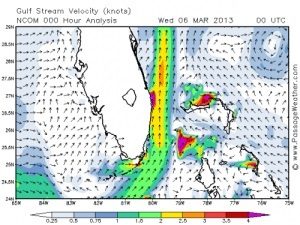
This is late for the Bahamas to only now be implementing this ban – they have always been vulnerable. In addition to their near-400,000 residents, they also hosts more than 3 million tourists annually (stay-overs and cruise passengers). But the location of the archipelago chain exposes it to unwanted marine debris (plastics) as a result of ocean currents and wave patterns – see the Gulfstream photo above.

The Bahamas is late! They should have been front-and-center with any mitigation efforts.

See this article here that describes the Bahamas plan for January 2020. Notice the emphasis on “plastic bags” and the little focus on other examples of single-use plastics. See the article here:

Title: Ferreira: Bahamas to join more than 40 countries that has banned plastic bags

NASSAU, BAHAMAS – Minister of Environment and Housing, Romauld Ferreira, during his contribution to the 2019/2020 Budget debate on Tuesday night, said the Bahamas is expected to join more than 40 countries that have introduced a ban on plastic bags.

The government’s proposed ban on plastic bags is set to take effect in January 2020.

Ferreira said the Government will ensure that the move offers minimal disruption to businesses and their operation.  He said his ministry will also inform and educate the public through a number of town hall meetings heading into 2020.

“The ministry’s education is also advancing the message of a healthier Bahamas through this initiative as the improper use of plastics is associated with various forms of environmental pollution and environmental degradation, which ultimately affects an individual’s health and well-being,” Ferreira said.

The proposed ban comes on the heels of several warnings issued by local environmental and climate experts who have stressed that non-biodegradable products such as plastic bags and Styrofoam have contributed to environmental issues.

Director of Energy and Environment with the Bahamas Chamber of Commerce, Debbie Deal, told Eyewitness News Online Wednesday that  back in April 2018, the Ministry of Environment signed a Memorandum of Understanding with The Bahamas Chamber of Commerce, to ensure that businesses would be prepared for enforcement of the 2020 ban.

Deal said the implementation of the ban should not be an issue.

“VAT was [pushed] from 7.5 to 12 per cent and  on July 1, 2019 it came into effect. We as a people were able to make that transition in a month’s time, so I personally think that a year and 9 months is sufficient to make that transition,” Deal said.

Meanwhile, Trevor Davis, the co-owner of Quality Home Center on Blue Hill Road said as his business prepares to replace plastic bags with reusable shopping bags, the move, while costly, will bring down the cost of bags for business owners as the new bags are reusable.

Source: Posted June 12, 2019; retrieved from: https://ewnews.com/ferreira-bahamas-to-join-more-than-40-countries-that-has-banned-plastic-bags

While we applaud the Bahamas for this tardy effort; it must be acknowledged that it is: so little; so late!

It is very apropos to Encore that previous blog-commentary from August 21, 2018. See that blog-commentary here-now:

——————–

Go Lean CommentaryPlastics and Styrofoam – A Mitigation Plan

So where do all the used plastics – and Styrofoam – go?

In a landfill …

… and may not degrade for a thousand years!

But for the ones that end up in the water (oceans and seas), they too do not degrade. They linger, pollute and disrupt eco-systems.

No one can just “stick their head in the sand”; this issue must be addressed, the crisis must be assuaged, the threat must be mitigated. See this crisis as depicted in this VIDEO here:

VIDEO – How Much Plastic is in the Ocean? – https://youtu.be/YFZS3Vh4lfI

It’s Okay To Be Smart

Published on Mar 28, 2017 – What can you do to make the oceans plastic-free?

Ocean plastic pollution is a massive environmental problem. Millions of tons of plastic waste enter the ocean every year, even plastic that goes in the trash can often ends up in the sea! This week we learn about the Great Pacific Garbage Patch and look at the dangers ocean plastic poses to ocean animals. Plus, a few tips for you to reduce your own plastic use!

Sample Resources

Plastic Oceans Foundation: http://www.plasticoceans.org/

United Nations “Clean Seas” program: http://www.cleanseas.org/

Ocean plastic pollution resources from Monterey Bay Aquarium: https://www.montereybayaquarium.org/c…

Welcome to the Caribbean! We are 30 member-states in an all-coastal region – with many archipelagos (i.e. the Bahamas alone features over 700 islands). We have a lot of waterways and seascapes to contend with … and manage! So this global problem of plastics and Styrofoam is a local problem too.

Think global; act local!

What are we doing in our Caribbean region to mitigate the problem of plastics and Styrofoam? One member-state, St. Lucia, has proposed something; see the full news story here:

Title: Saint Lucia to ban Styrofoam and plastics

August 13th, 2018 – Saint Lucia plans to phase-out Styrofoam food service containers and plastics, both plates and cups, beginning December 1, 2018, with a total ban on their importation before the end of next year.

The announcement came in a statement from Minister of Education, Innovation, Gender Relations and Sustainable Development, Doctor Gale Rigobert.

Rigobert said the Government of Saint Lucia is cognizant of the negative impact on the environment and human health from food service containers made from Polystyrene and Expanded Polystyrene, also known as Styrofoam, along with Plastics.

However, she observed that the administration recognises that the healthier alternative to these products, such as biodegradable and compostable food service containers, are more costly.

” We are doing our very best to alleviate this issue,” the minister explained.

She disclosed that over the last few months, the Department of Sustainable Development, in partnership with other key agencies such as the Saint Lucia Solid Waste Management Authority, the Department of Finance, the Ministry of Commerce and the Customs and Excise Department, has been working towards the development of a strategy to eliminate single use plastics, polystyrene and expanded polystyrene from the Saint Lucia market.

“To date, we have completed fiscal analyses, conducted a survey of the key suppliers of these products and we have also identified suppliers of the biodegradable and compostable food service containers, all this to ensure that Saint Lucia creates the enabling environment to facilitate this process,” Rigobert stated.

She explained that in light of this, the Department of Sustainable Development will be taking a phased approach to facilitate a smooth transition for all stakeholders.

“The phase-out, along with a ban on the importation of Styrofoam food service containers, and plastics, both plates and cups, will commence December 1, 2018 with a total ban culminating by November 30, 2019:”

Rigovert revealed that in order to ensure adequate sensitisation, the Department of Sustainable Development will continue its campaign to educate the general public on the options they have available to them during this phase.

“With respect to plastic bottles, discussions are ongoing with major stakeholders to finalize legislation that would curb and control their use,” the minister noted.

“I encourage you to join the fight to reduce your dependency on single use plastics and Styrofoam by utilizing re-useable bottles, food containers, cutlery and shopping bags. Let us act responsibly in our everyday consumption and production,”Rigobert stated.
Source: St. Lucia Times – Daily Newspaper – Posted 08-13-2018; retrieved 08-21-2018: https://stluciatimes.com/2018/08/13/saint-lucia-to-ban-styrofoam-and-plastics/

This problem is bigger than just the Caribbean member-state of St Lucia. They did not start this fight; nor can they finish it. This is BIG Deal that is too big for any one member-state or the full Caribbean region alone. This will require a global effort, including some Caribbean mitigation!

But here in the Caribbean, we cannot expect others to do all the heavy-lifting and clean-up; we must do our share; clean-up our own environment. This has been a frequent theme by the movement behind the book Go Lean … Commentaryavailable for download now. In the book, and in previous Go Lean blog-commentaries, it was asserted that we – the Caribbean region – must do our share to “Go Green” so as to assuage our own contributions to global pollution and greenhouse gases; yes, we must keep our own neighborhoods clean and optimize our own industrial footprint, so that we may be less hypocritical – have moral authority – in calling for reform from the big polluting nations. This sample – as follows – depicts some previous blog-commentaries that relates this theme:

https://goleancaribbean.com/blog/?p=14832 Counter-culture: Manifesting Change – Environmentalism
https://goleancaribbean.com/blog/?p=14174 Canada: “Follow Me” for Model on Environmental Action
https://goleancaribbean.com/blog/?p=12724 Lessons from Colorado: Water Management Arts & Sciences
https://goleancaribbean.com/blog/?p=12144 Book Review: ‘Sea Power’ – The Need for Good Oversight
https://goleancaribbean.com/blog/?p=9455 Fix ‘Climate Change’ and other Environmental Issues? Yes, We Can
https://goleancaribbean.com/blog/?p=2465 Book Review: ‘This Changes Everything: Capitalism vs. the Climate’
https://goleancaribbean.com/blog/?p=2276 Climate Change May Affect Food Supply Within a Decade
https://goleancaribbean.com/blog/?p=1656 Blue is the New Green
https://goleancaribbean.com/blog/?p=915 Go ‘Green’ … Caribbean

From the foregoing news articles and these previous blog-commentaries, we see the compelling need for a concerted anti-pollution-Go Green effort in our region. We must “Reduce, Re-use, Recycle”. Who will stand-up and lead this charge?

“Here I am, send me” – The Bible; Isaiah 6:8

This is the charter of the Go Lean book. It serves as a roadmap for the introduction and implementation of the technocratic Caribbean Union Trade Federation (CU). The roadmap depicts how this federal government is designed to stand-up and lead the charge to assuage and mitigate the threats on Caribbean life. The book identifies a list of crises as Agents of Change that are crippling our way of life. We can add pollution to that list. As a Single Market, we need a regional sentinel to be on guard and to tackle these “plastics pollution” problems.

Why regional?

Because the national effort has been unsuccessful; in many cases, even unknown, unavailable and unfunded.

No, individual member-states will not be able to succeed in this effort; we need a regional effort; it is too big to tackle alone; so we must acknowledge our regional dependency or interdependence to have any chance of success. This vision is embedded in the opening Declaration of Interdependence, pronouncing as follows, (Pages 11, 12):

vi. Whereas the finite nature of the landmass of our lands limits the populations and markets of commerce, by extending the bonds of brotherhood to our geographic neighbors allows for extended opportunities and better execution of the kinetics of our economies through trade. This regional focus must foster and promote diverse economic stimuli.

viii. Whereas the population size is too small to foster good negotiations for products and commodities from international vendors, the Federation must allow the unification of the region as one purchasing agent, thereby garnering better terms and discounts.

x. Whereas we are surrounded and allied to nations of larger proportions in land mass, populations, and treasuries, elements in their societies may have ill-intent in their pursuits, at the expense of the safety and security of our citizens. We must therefore appoint “new guards” to ensure our public safety and threats against our society, both domestic and foreign. …

xi. Whereas all men are entitled to the benefits of good governance in a free society, “new guards” must be enacted to dissuade the emergence of incompetence, corruption, nepotism and cronyism at the peril of the people’s best interest. The Federation must guarantee the executions of a social contract between government and the governed.

The Go Lean book and previous blog-commentaries posit that the “whole is worth more than the sum of its parts”, that from this roadmap disparate Caribbean nations can speak with “one voice” … collectively as a Single Market and be heard. The international community – the big polluters – would therefore have more respect and accountability to our regional Caribbean entity, rather than the many (30) Small Island Development States. But while contributing to the problem ourselves, though on a smaller scale, we cannot just say to these big polluters:

“You break it, you fix it”.

No, we must unite and take our stand in this fight … to mitigate plastics and Styrofoam … and advocate for change!

As related in the Go Lean roadmap, the CU Trade Federation is designed to elevate Caribbean society, but not just against pollution, rather these other engines in the regional construct as well. The roadmap therefore has these 3 prime directives:

  • Optimize the economic engines of the Caribbean to elevate the regional economy to grow to $800 Billion & create 2.2 million new jobs.
  • Establish a security apparatus to ensure public safety and protect the resultant economic engines over the seas & land.
  • Improve Caribbean governance to support these engines.

So the CU will serve as the regional administrator to optimize the economy, homeland security and governing engines for the Caribbean. These efforts are already important in the fight for Climate Change abatement; so the same can apply for the mitigation of polluting plastics and Styrofoam.

The Go Lean book provides 370-pages of turn-by-turn instructions on “how” to adopt new community ethos, plus the strategies, tactics, implementations and advocacies to execute so as to reboot, reform and transform the societal engines of Caribbean society. This is the heavy-lifting that we must do to sustain our planet, region, island and communities.

We can all do more!

Some hotel resorts in the Caribbean have already embraced the strategy of being early-adopters of plastics-Styrofoam bans. See a related article here from St Lucia:

Bay Gardens Resorts discontinues use of Expanded Polystyrene EPS (Styrofoam) products https://stluciatimes.com/2017/02/17/bay-gardens-resorts-discontinues-use-expanded-polystyrene-eps-styrofoam-products/

Change has come to the Caribbean region. This heavy-lifting is the quest of the CU/Go Lean roadmap; to make the Caribbean region more self-reliant collectively; to act more proactively and reactively for our own emergencies and natural disaster events; and to be more efficient in our governance.

If “plastics pollution” is not arrested, then even more devastating changes will come. So there is the need for our region to establish a regional Sentinel, a permanent union to provide efficient stewardship for our economic, security and governing engines.

Now is the time for all of the Caribbean, the people and governing institutions, to lean-in to the efforts and empowerments to mitigate and abate “plastics pollution”. It is also time to lean-in to this roadmap described in the book Go Lean … Caribbean. Plastic pollution is a Big Deal. We have other Big Deals too, so as to reform and transform our society. We must make our waterways and homelands better places to live, work and play. 🙂

Download the e-Book of Go Lean … Caribbean – now!

Sign the petition to lean-in for this roadmap for the Caribbean Union Trade Federation.

Share this post:
, , , , ,

What Went Wrong? Losing the Best; Nation-building with the Rest

“The one walking with the wise will become wise, but the one who has dealings with the stupid will fare badly”. – The Bible – Proverbs 13:20 NWT

There is no doubt that our Caribbean communities are suffering from a bad case of societal abandonment. Everyone in the Caribbean knows someone that has left. In fact, whenever there is a colleague we know from the hometown that is skilled and competent, we would expect them to leave and be disappointed if they have not; see this dramatized in the Appendix VIDEO; caution for Strong Language.

Search your heart, you know it to be true. That Valedictorian from High School, if he/she is still in the Caribbean, you are puzzled right?
This is our dilemma!

If/when all the best students leave, the remnant only reflect the rest – Less Than best students.

One Caribbean country – The Bahamas – has been faced with this reality. As their Brain Drain rate gets worse and worse, they are now measuring the academic performance of the remaining students, and the grade is bad:

‘D’ Average.

See the full news article here:

Title: Results Expose Failing Schools
By: Khrisna Russell, Deputy Chief Reporter
A DAY after Education Minister Jeff Lloyd said “something is wrong” with the country’s educational system, officials withheld an official subject letter grade breakdown for the Bahamas General Certificate of Secondary Education examination results, which also show that of 6,692 students who sat the national tests this year, only 521 or 7.8 per cent, scored a C or above in mathematics, English and a science subject.

This is about a nine per cent decrease compared to last year.

This lack of detailed BGCSE statistics raises questions over how students fared in individual test subjects and highlights challenges this country faces regarding the readiness of youth to adjust to life after high school where they are expected to transition into the work force or college.

However, sources within the Ministry of Education told The Tribune this year’s test scores did not depart greatly from the dismal grade trends seen in both 2015 and 2016.

On Wednesday Mr Lloyd told educators during an event in Grand Bahama that they could not continue to rest on their laurels while the national exam results remain at a D average.
“For the last 10 years or more, the BGCSE results have shown not (any) improvement; we started out with a D, we are still at a D – something is wrong,” the minister said during the Ministry of Education’s annual Teachers’ Enrichment Day. The event was held at the Jack Hayward High School gymnasium on Wednesday.

He continued: “There is no way to camouflage it; there is no way to excuse it; something is wrong and we must fix it.”

He went on to stress the only way the issue could be corrected was to go back to the beginning and start with preschoolers.

In 2015, core subjects of mathematics and English averaged an E and D+ respectively. In 2016, the ministry did not release letter grades per subject, but then Minister of Education Jerome Fitzgerald confirmed at the time that the grades were not much different from those of 2015.

Prior to 2015, subject letter grades were released with the official BGCSE and Bahamas Junior Certificate (BJC) exam tests scores. The following year, the ministry broke away from its traditional analysis, only giving a general overview and percentage calculations per letter grade. This year, the Ministry of Education also did not hold its usual press conference to officially release the results, this time opting to disseminate the details of the tests by email.

Results
“In 2017, a total of 521 candidates received at least a grade C or better in mathematics, English language and a science,” the press release accompanying the 2017 results noted. “This represents a decrease of 9.23 per cent when compared to 2016 which had a total of 574 candidates. There were 570 candidates in 2015; 588 in 2014 and 561 candidates in 2013.”

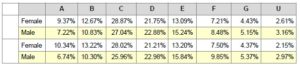
According to the new results, there were 2,141 As; 3,000 Bs; 7,065 Cs; 5,569 Ds; 3,496 Es; 1,936 Fs; 1,184 Gs and 710 Us for the BGCSE exams.

Regarding the number of students who sat these tests, there were 6,692, or a 3.95 per cent increase compared to the 6,438 test takers in 2016.

A further breakdown of the results showed in 2017, a total of 1,493 candidates obtained a minimum grade of D in at least five subjects. This represents an increase of 2.33 per cent from 2016, which had a total of 1,459 candidates.

There were also 1,534 candidates achieving this mark in 2015; 1,545 in 2014 and 1,626 in 2013.

In addition, a total of 880 candidates received at least grade C in five or more subjects in 2017 compared with 903 candidates in 2016.

This represents a decrease of 2.55 per cent. There were 961 candidates in 2015; 922 candidates in 2014 and 996 in 2013 in this category.

The Bahamas Junior Certificate (BJC) examination results were not much different when compared with the BGCSE test scores.

Of the 12,120 students who took the tests in 2017, only 1,326 or 10.94 per cent of candidates achieved at least a C in mathematics, English and a science.

“This represents a 14.67 per cent decrease when compared with 2016, which had a total of 1,554 candidates. There were 1,479 candidates in 2015; 1,651 candidates in 2014 and 1,302 candidates in 2013,” the Ministry of Education said in its press release.

The BJC results also show there were 3,831 As; 7,033 Bs; 9,395 Cs; 8,036 Ds; 6,036 Es; 4,508 Fs; 2,954 Gs and 2,565 Us.

“When compared with 2016, there is a percentage decrease noted at grades A, C, E and U and increases at B, D, F and G. It is interesting to note that this is the second consecutive year the percentage at U has decreased.

“Overall, the percentage of candidates achieving grades A – D decreased this year when compared with last year,” the Ministry of Education said.

Source: Posted August 31, 2017; retrieved July 29, 2019 from: http://www.tribune242.com/news/2017/sep/01/results-expose-failing-schools/

While this article is from 2017; an except of the full Ministry of Education Report (MOE) for the 2017-2018 Academic Year is also hereby attached in Appendix below. This commentary is hereby published during mid-summer 2019; so we only have analysis based on that 2018 report. See a related news article on the latest MOE Report from September 3, 2018:

Title: Exam Passes Down Again
By: Khrisna Russell, Deputy Chief Reporter
STUDENTS who took the Bahamas General Certificate of Secondary Education (BGCSE) examinations performed marginally worse this year [2018] in comparison with those who took the national tests in 2017.

See the full article here: Retrieved July 29, 2019 from: http://www.tribune242.com/news/2018/sep/04/exam-passes-down-again/

This has not always been the case. What Went Wrong?

Simple: This grade is an average!

In the past, there were better students in the Bahamian educational eco-system. If you total all of those test scores and divide by the count, you get the average. If you then take away all the higher earners and calculate the average again, the result is an even lower average score. Repeat this process again and again and the overall average lowers.

Welcome to the ‘D’ Grade Reality. This is indicative that the best-of-the-best have left, are leaving and unless something is done, will continue to leave.

(“An apple doesn’t fall far from a tree”; so most good students have children that are good students; most bad students rarely have children that are good students. This is Nature and Nurture).

This commentary completes the July series from the movement behind the book Go Lean…Caribbean. This submission follow through on the theme “What Went Wrong?“, focuses on Caribbean defects and dysfunctions in every aspect of Caribbean life; many which have been addressed and remediated by other societies – think North America and Europe yes, but even Asian communities. So this creates the pressure of Push and Pull, in which our people leave to seek refuge in those places.

While this is entry 6-of-6, the full catalog were published as follows:

  1. What Went Wrong? Asking ‘Why’ is Important
  2. What Went Wrong? ‘We’ never had our war!
  3. What Went Wrong? ‘7 to 1’ – Caribbean ‘Less Than’
  4. What Went Wrong? ‘Be our Guest’ – The Rules of Hospitality
  5. What Went Wrong? Failing the Lessons from Infrastructure 101
  6. What Went Wrong? Losing the Best; Nation-building with the Rest

Though the foregoing news article cites the Bahamas, the experience of falling test scores have befallen all Caribbean communities. In this What Went Wrong series, we did not only detail the timelines of the faults and breaks, but also drew reference to the need for a comprehensive roadmap for reforming and transforming the Caribbean region – all member states, individually and collectively. So the solutions here-in are for the Bahamas and the rest of the region.

The problems of failing Caribbean education scores are too big for any one member-state alone, we would need the leverage of the whole Caribbean neighborhood – despite the language, race, colonial heritage or political structure – to forge the change and solutions.

Forge the change and solutions?
The Go Lean movement (book and previous blog-commentaries) asserts that technology, Internet Communications Technology (ICT) in fact – can be the great equalizer in education solutions so that smaller countries can compete with larger ones worldwide.  Imagine, right on our islands, coastal shores, rural settlements, barrios and ghettos, our students can have the best-of-the best for instruction, knowledge base, tutorials and reference sources.

Yes, we can … correct What Went Wrong in our Caribbean education evolution with these different strategies, tactics and implementations. See how this theme was developed and presented in these previous blog-commentaries:

Title: Future Focused – Personal Development and the Internet – November 8, 2017

“I believe that children are the future; teach them well and let them lead the way”.

That is just a song; but this is life.

  • What is the hope for the Caribbean youth to be transformed in their development compared to past generations?
  • What transformations are transpiring in the region that shows willingness for the people and institutions to embrace the needed change?

In 2017, a focus on the future for young people must also consider “cyber reality” and/or the Internet. This consideration is embedded in the Go Lean roadmap. In fact, the book presents the good stewardship so that Internet & Communications Technologies (ICT) can be a great equalizing element for leveling the playing field in competition with the rest of the world. …

The Go Lean book presents the plan to deploy many e-Learning provisions so as to deliver on the ICT promise in educating our Caribbean youth. The book references the roles and responsibilities of e-Learning in many iterations; this shows the Future Focus of the Go Lean roadmap; …

The future – of electronic learning systems – is now! The technology is ready and the Caribbean youth is ready. We only need to deploy the delivery models to allow our students to matriculate online. See the profile of this American company that is currently available:

http://www.k12.com/

———–

Title: Future Focused – College, Caribbean Style – November 10, 2017

A huge step in making [distance learning] happen occurred with the development of the personal computer and the Internet. It took a while for modem technology to gain use in distance learning, but once it did, online educational platforms started popping up all over the place, first by connecting private computers directly, but later on the Internet. Add in the benefits of updated teleconferencing technologies, and it’s no wonder that six million postsecondary students take at least one fully online class every year.

Related:

————

Title: Managing the ‘Strong versus the Weak’ – Lower Ed. –  April 27, 2017
(Avoiding the bad American example)

We need more e-Learning options in our Caribbean homeland, for all education levels: K-12 and college. There are many successful models and best practices to adopt. We are in position to pick, choose and refuse products and services from all our foreign trading partners, including from the US. (We must assuredly avoid their societal defects).

One successful model is “iReady”  [used by Miami-Dade Country School District].

The purpose of the Go Lean movement is not education, rather it is presenting a roadmap to reform and transform the societal engines (economics, security and governance) of the Caribbean. We must reboot to stop the Brain Drain. But education is important! Education is directly related to economics. See how this theme was developed in many previous Go Lean commentaries; see a sample list here:

https://goleancaribbean.com/blog/?p=16882 Exploring Medical School Opportunities … as Economic Engines
https://goleancaribbean.com/blog/?p=15543 Ross University Relocation Saga: There Goes Economy and Jobs
https://goleancaribbean.com/blog/?p=13952 Welcoming the Caribbean Intelligentsia: Educated Economists Role
https://goleancaribbean.com/blog/?p=6269 Education & Economics: Welcome Mr. President
https://goleancaribbean.com/blog/?p=4487 Role Model FAMU – No. 3 for Facilitating Economic Opportunity
https://goleancaribbean.com/blog/?p=1433 Caribbean loses over 70 percent of tertiary educated to Brain Drain

All of the Caribbean feature societal defects and dysfunctions. A lot went wrong! Now that we have diagnosed that, we can better prescribe remedies.

We cannot go back in time and correct the Caribbean Bad Start – associated with slavery and colonialism – we can only go forward from here and weed out the bad community ethos; then adopt the good ones, plus strategies, tactics and implementations that we need to reboot society.

Yes, we can.

This is the assertion of the movement behind the Go Lean…Caribbean book and the resultant roadmap. So we urge all Caribbean stakeholders to lean-in to this roadmap to make our homeland a better place to live, work, learn and play. 🙂

About the Book
The book Go Lean…Caribbean serves as a roadmap for the introduction and implementation of the technocratic Caribbean Union Trade Federation (CU), for the elevation of Caribbean society – for all member-states. This CU/Go Lean roadmap has these 3 prime directives:

  • Optimization of the economic engines in order to grow the regional economy to $800 Billion and create 2.2 million new jobs.
  • Establishment of a security apparatus to ensure public safety and protect the resultant economic engines.
  • Improve Caribbean governance to support these engines, including a separation-of-powers between the member-states and CU federal agencies.

The Go Lean book provides 370-pages of turn-by-turn instructions on “how” to adopt new community ethos, plus the strategies, tactics, implementations and advocacies to execute so as to reboot, reform and transform the societal engines of Caribbean society.

Download the free e-Book of Go Lean … Caribbean – now!

Who We Are
The movement behind the Go Lean book – a non-partisan, apolitical, religiously-neutral Community Development Foundation chartered for the purpose of empowering and re-booting economic engines – stresses that reforming and transforming the Caribbean societal engines must be a regional pursuit. This was an early motivation for the roadmap, as pronounced in the opening Declaration of Interdependence (Pages 12 – 13):

xi. Whereas all men are entitled to the benefits of good governance in a free society, “new guards” must be enacted to dissuade the emergence of incompetence, corruption, nepotism and cronyism at the peril of the people’s best interest. The Federation must guarantee the executions of a social contract between government and the governed.

xvi. Whereas security of our homeland is inextricably linked to prosperity of the homeland, the economic and security interest of the region needs to be aligned under the same governance. Since economic crimes … can imperil the functioning of the wheels of commerce for all the citizenry, the accedence of this Federation must equip the security apparatus with the tools and techniques for predictive and proactive interdictions.

xxiv. Whereas a free market economy can be induced and spurred for continuous progress, the Federation must install the controls to better manage aspects of the economy: jobs, inflation, savings rate, investments and other economic principles. Thereby attracting direct foreign investment because of the stability and vibrancy of our economy.

Sign the petition to lean-in for this roadmap for the Caribbean Union Trade Federation. 

————-

Reference: The Ministry of Education submits the results of the 2018 Bahamas Junior Certificate (BJC) and the Bahamas General Certificate of Secondary Education (BGCSE) examinations.

Excerpts:

… The national examinations are all graded on a seven (7) point scale, i.e., High-Up: A – Lowest of the low: G – all grades indicate a measure of positive achievement. Grade ‘A’ denotes the highest level of performance while grade ‘G’ denotes the lowest level. …

BGCSE Grade Outcome Statistics

Females continue to outperform males receiving higher percentages at A – C and lower percentages at E – U. Males outperformed females at D. It is interesting to note that females increased in percentage at grades A and B this year while males decreased in performance at A – C. It is unfortunate that males also increased in percentage at grades E – G. Positively, both males and females decreased in percentage at U.

See full report at this: https://www.bahamaslocal.com/files/BJC%20&%20BGCSE%202018%20Results.pdf posted August 2018; retrieved Bahamas Ministry of Education; July 29, 2019.

————-

Appendix VIDEO – Good Will Hunting | ‘The Best Part of My … (HD) – Ben Affleck, Matt Damon | MIRAMAX – https://youtu.be/Xv7eeMikM_w

Miramax

Published on Dec 15, 2015 – Chuckie (Ben Affleck) gives Will (Matt Damon) a friendly dose of reality.
In this scene: Will (Matt Damon), Chuckie (Ben Affleck)
About Good Will Hunting:
The most brilliant mind at America’s top university isn’t a student; he’s the kid who cleans the floors. Will Hunting is a headstrong, working-class genius who is failing the lessons of life. After one too many run-ins with the law, Will’s last chance is a psychology professor, who might be the only man who can reach him. Finally forced to deal with his past, Will discovers that the only one holding him back is himself.
Starring, in alphabetical order: Ben Affleck, Casey Affleck, Matt Damon, Minnie Driver, Cole Hauser, Stellan Skarsgård, Robin Williams
About Miramax:
Miramax is a global film and television studio best known for its highly acclaimed, original content.
Visit Miramax on our WEBSITE: https://www.miramax.com/ Good Will Hunting | ‘The Best Part of My Day’ (HD) – Ben Affleck, Matt Damon | MIRAMAX
Share this post:
, , , ,
[Top]

What Went Wrong? Failing the Lessons from ‘Infrastructure 101’ – Encore

“You must have been absent that day when they gave out brains” – Stinging criticism from a High School Bully.
We have all had to contend with bullies during the days of our upbringing. What insult did they toss at you?

Put downs
Name calling
“Mama” jokes

“What doesn’t kill you, makes you stronger”. We all survived the bullying experiences, but did we learn? From a Caribbean perspective, we must be cognizant that our development has been arrested; we have defects and dysfunctions in every aspect of Caribbean life. What Went Wrong?

Were we truly absent that day that brains were given out? Answer that question as the personification of the Caribbean region. Because it truly seems as though our personified Caribbean was absent on the days that “Economic Principles” were taught. These principles have been ratified again and again. There are lessons that we must learn .. and apply in our Caribbean society. We cannot make progress without them; here they are – high level – from the book Go Lean…Caribbean (Page 21):

  • People Choose
  • All Choices Involve Costs
  • People Respond to Incentives in Predictable Ways:
    Incentives are actions, awards, or rewards that determine the choices people make. Incentives can be positive or negative. When incentives change, people change their behaviors in predictable ways.
  • Economic Systems Influence Individual Choices and Incentives:
    People cooperate and govern their actions through both written and unwritten rules that determine methods of allocating scarce resources. These rules determine what is produced, how it is produced, and for whom it is produced. As the rules change, so do individual choices, incentives, and behavior.
  • Voluntary Trade Creates Wealth
  • The Consequences of Choice Lie in the Future

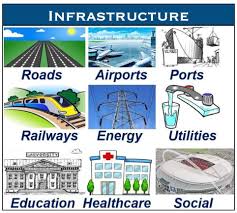
Once we learn the “Economic Principles” then we learn the lessons from Infrastructure 101; we learn how important it is for governments to always prioritize Big Capital investments – think bridges, tunnels, highways, ports, etc.

The focus must always be on the future.

This is What Went Wrong in the Caribbean’s development; we have not always been future-focused. We may have only ever “put out fires”, rather than investing for the long term benefit of future citizens. Think about it:

How many tunnels, highways, nuclear power plants, solar farm and wind turbine arrays do we truly have in the Caribbean member-sates?
Answer: Minimal.

This commentary continues the July series from the movement behind the book Go Lean…Caribbean. This submission, 5-of-6 on the theme “What Went Wrong?“, focuses on Caribbean history and why we still have many of the same defects that other societies – think North America and Europe yes, but even India and China – have already remediated. The full catalog:

  1. What Went Wrong? Asking ‘Why’ is Important
  2. What Went Wrong? ‘We’ never had our war!
  3. What Went Wrong? ‘7 to 1’ – Caribbean ‘Less Than’
  4. What Went Wrong? ‘Be our Guest’ – The Rules of Hospitality
  5. What Went Wrong? Failing the Lessons from Infrastructure 101
  6. What Went Wrong? Losing the Best; Nation-building with the Rest

In this series, reference is made to the need for a comprehensive roadmap for investing in Big Infrastructure projects; one that would elevate the economic engines of Caribbean society, for the full 30 member-states. We are making reference to projects that are too big for any one member-state alone, we would need the whole Caribbean neighborhood, despite the language, race, colonial heritage or political structure. The movement behind the Go Lean book posits that we can confederate and deputize the Infrastructure 101 eco-system for the whole region.
We can correct … What Went Wrong in our Caribbean development.

It is very apropos to Encore a previous blog-commentary from August 10, 2016 on the excellent role model the country of India is providing for investing in Big Infrastructure projects to transform its country. See that blog-commentary here-now:

——————–

Go Lean CommentaryBuild It and They Will Come – India’s $90 Billion Investment

Here are some interesting rankings about India:

World largest population: # 2 – 1.2 Billion people (Only behind China)

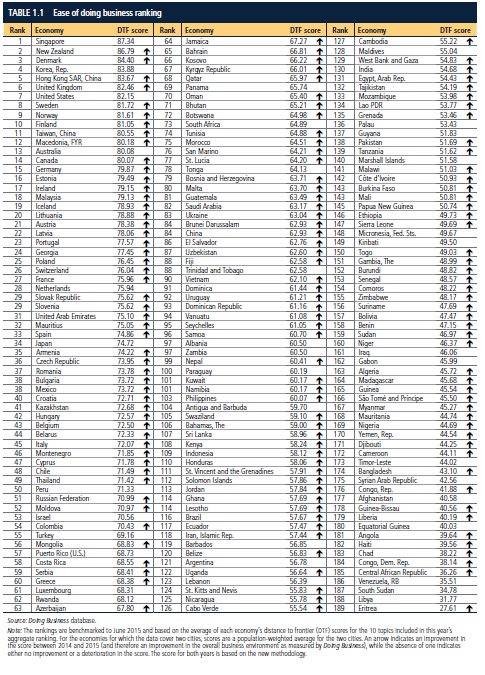
Ease of doing business? # 132 (2015; 130 for 2016; see Appendix B)

That gap, between 2 and 132, is a wide chasm for India to bridge.

What is this country to do? And what lessons can we learn from them, here in the Caribbean?

(Though our population is so small, our Ease of Doing Business rating is equally depressing; the best Caribbean option is Jamaica at 64).

The answer is investment!

Working for a Return on Investments is one of the driving forces of the book (and movement) Go Lean … Caribbean. The book asserts that in order to get the optimal return on any investment a community must adopt the appropriate “community ethos”, the fundamental spirit of a culture that drives the beliefs, customs and practices of its society. In this case, the identifying ethos is: Deferred Gratification.

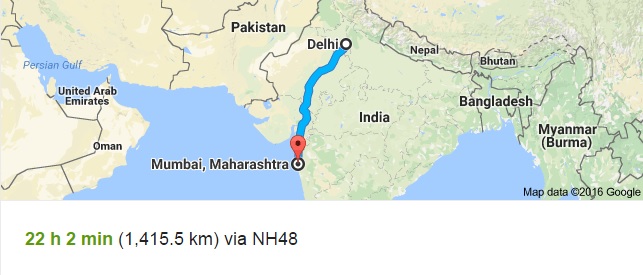
CU Blog - Build It and They Will Come - India's $90 Billion Investment - Photo 1India is embarking on the Delhi-Mumbai Industrial Corridor. This is a ribbon of development along a route from Delhi to Mumbai, that traverses 6 (internal) states in India; see Appendix A. (India is a Federal Republic, with a President over the federal government, while states are led by governors). This plan so resembles the roadmap for the for the Caribbean Union Trade Federation (CU). The Go Lean book serves as a roadmap for the introduction and implementation of the CU.

This commentary is the 3 of 3 from the Go Lean movement on the subject of Infrastructure Policy. As related in previous submissions in this series, the assertion is that “if we build it, they will come”. This is a movie metaphor, yes, but it accurately depicts the surety of investing in capital infrastructure projects; or perhaps even more poignant, it conveys the surety of failure of not investing. The other commentaries detailed in this series are as follows:

  1. Before & After – Washington DC’s Streetcars Model
  2. Clinton vs Trump Campaigns – Politics of Infrastructure
  3. India’s Model – $90 billion infrastructure projects.

All of these commentaries are economic in nature, stressing the community investments required for nation-building. As depicted in this VIDEO here, India is playing catch-up in this regards with an aggressive plan – a “quantum leap”:

VIDEO – Amitabh Kant at TEDxDelhi on India’s Infrastructure Development – https://youtu.be/8BvMybtJ1-E

TEDx Talks
Published on Dec 17, 2012 –
 
Presently posted as CEO & MD of the Delhi Mumbai Industrial Corridor Development Corporation.Delhi-Mumbai Industrial Corridor is a mega infra-structure project of $90 billion covering an overall length of 1483 KMs between the political capital and the business capital of India.

A dynamic personality, Amitabh Kant has conceptualized and executed the positioning and branding of Kerala as “God’s Own Country” and later the “Incredible !ndia” campaign. Both these campaigns have won several International awards and embraced a host of activities — Infrastructure development, product enhancement, changes in organizational culture and promotional partnerships based on intensive market research. He has structured large infrastructure projects for diversification of India’s tourism product and sourced international funding through the Asian Development Bank (ADB), Japanese Bank for International Cooperation (JBIC) and UNDP.
During his tenure as Chairman and Managing Director, India Tourism Development Corporation (ITDC) he radically restructured the organization and turned it around into a highly profitable commercial enterprise. He also has wide ranging experience in innovative technical and financial structuring of Private — Public — Partnership in infrastructure projects and implemented the Calicut Airport project based on User’s fee, the BSES Kerala Power project and the Mattanchary Bridge project.

As demonstrated here in India, big infrastructure projects are necessary community investments – a “quantum leap” with a $90 Billion industrial corridor along 1500 kilometers. Is it possible for the Caribbean to consider such deployments?

Yes! The book Go Lean … Caribbean details exactly how the Big Infrastructure Projects for our region are to be conceived and achieved, (Page 127), with Self-Governing Entities and Exclusive Economic Zones. Most importantly, the roadmap details a plan to fund the projects.

The Go Lean/CU movement champions the cause of building and optimizing the overall Caribbean infrastructure. According to the foregoing VIDEO, it is important to identify and qualify funding sources for such ventures. There is the need for “new guards” for the Caribbean in this perspective. So there is the expectation that integrating and consolidating to a Single Market will contribute to the fulfillment of the Go Lean prime directives, defined here as follows:

  • Optimization of the economic engines in order to grow the regional economy to $800 Billion & create 2.2 million new jobs.
  • Establishment of a security apparatus to protect the resultant economic engines.
  • Improve Caribbean governance – including the funding of capital projects – to support these engines.

The Go Lean roadmap anticipates the opportunities of major infrastructure investments. However, the roadmap recognizes that many of the projects envisioned for the region may be too big for just one member-state alone; that it will take regional – super-national coordination. This point is highlighted in the opening Declaration of Interdependence, (Pages 12 & 14):

xiv.    Whereas government services cannot be delivered without the appropriate funding mechanisms, “new guards” must be incorporated to assess, accrue, calculate and collect revenues, fees and other income sources for the Federation and member-states. The Federation can spur government revenues directly through cross-border services and indirectly by fostering industries and economic activities not possible without this Union.

xxvi.  Whereas the Caribbean region must have new jobs to empower the engines of the economy and create the income sources for prosperity, and encourage the next generation to forge their dreams right at home, the Federation must therefore foster the development of new industries … impacting the region with more jobs.

xxix.  Whereas all Caribbean democracies depend of the free flow of capital for municipal, public and private financing, the institutions of capital markets can be better organized around a regional monetary union. The Federation must institute the controls to insure transparency, accounting integrity and analysis independence of the securities markets, thereby shifting the primary source of capital away from foreign lenders to domestic investors, comprising institutions and individuals.

The CU mission is to plan, fund, deploy and maintain infrastructure projects that are too big for any one member-state alone. Crossing borders will mean including member-states of various legalities: some independent member-states and some dependent overseas territories. This brings to the fore an array of issues, like legislative authority and currency. The Go Lean/CU regional roadmap undoubtedly calls for a common currency strategy; thusly, it calls for the establishment of the allied Caribbean Central Bank (CCB) to manage the monetary and currency affairs of each member-state in the region, independent or dependent territory. The Go Lean book describes the breath-and-width of the CCB as a technocratic institution with better stewardship, than in the recent past. From the outset, this stewardship was envisioned and pronounced in the same Declaration of Interdependence (Page 13):

xxiii. Whereas many countries in our region are dependent OverseasTerritory of imperial powers, the systems of governance can be instituted on a regional and local basis, rather than requiring oversight or accountability from distant masters far removed from their subjects of administration. The Federation must facilitate success in autonomous rule by sharing tools, systems and teamwork within the geographical region.

xxiv.  Whereas a free market economy can be induced and spurred for continuous progress, the Federation must install the controls to better manage aspects of the economy: jobs, inflation, savings rate, investments and other economic principles. Thereby attracting direct foreign investment because of the stability and vibrancy of our economy.

xxv.   Whereas the legacy of international democracies had been imperiled due to a global financial crisis, the structure of the Federation must allow for financial stability and assurance of the Federation’s institutions. To mandate the economic vibrancy of the region, monetary and fiscal controls and policies must be incorporated as proactive and reactive measures. These measures must address threats against the financial integrity of the Federation and of the member-states.

The CU roadmap drives change among the economic, security and governing engines. These solutions are as new community ethos, strategies, tactics, implementations and advocates; sampled as follows:

Community Ethos – Deferred Gratification Page 21
Community Ethos – Economic Principles: People Choose because Resources are Limited Page 21
Community Ethos – Economic Principles: All Choices Involve Costs Page 21
Community Ethos – Economic Principles: Voluntary Trade Creates Wealth Page 21
Community Ethos – Economic Principles: Consequences of Choices Lie in the Future Page 21
Community Ethos – Money Multiplier Page 22
Community Ethos – Job Multiplier Page 22
Community Ethos – Lean Operations Page 24
Community Ethos – Return on Investments Page 24
Community Ethos – Cooperatives Page 25
Community Ethos – Ways to Impact the Future Page 26
Community Ethos – Impact the Greater Good Page 37
Strategy – Vision – Integrate and Consolidate into a Single Market Page 45
Strategy – Mission – Facilitating Currency Union, Caribbean Dollar Page 45
Strategy – Mission – Collaborate for the Caribbean Central Bank Page 45
Anecdote – Caribbean Currencies Page 64
Tactical – Fostering a Technocracy Page 64
Tactical – $800 Billion Economy – How and When – Trade Page 67
Tactical – Recovering from Economic Bubbles Page 69
Tactical – Separation-of-Powers – Caribbean Central Bank Page 73
Implementation – Assemble Caribbean Central Bank Page 96
Implementation – Ways to Pay for Change Page 101
Implementation – Start-up Benefits from the EEZ Page 104
Implementation – Steps to Implement Self-Governing Entities Page 105
Implementation – Trade Mission Objectives Page 117
Implementation – Ways to Benefit Globalization Page 119
Planning – Ways to Improve Trade Page 128
Advocacy – Ways to Grow the Economy Page 151
Advocacy – Ways to Create Jobs Page 152
Advocacy – Ways to Improve Governance Page 168
Advocacy – Ways to Foster Cooperatives Page 176
Advocacy – Reforms for Banking Regulations Page 199
Advocacy – Ways to Impact Wall Street – Better Liquidity from Regional Capital Markets Page 200
Advocacy – Ways to Improve Transportation Page 205
Advocacy – Ways to Impact Urban Living – Optimize Transportation Options Page 234
Advocacy – Ways to Impact Rural Living – Optimize Transportation Options Page 235

The Caribbean region must learn this important lesson from the country of India: infrastructure is not optional. Put in the infrastructure in advance and it brings growth; it becomes an investment. But play catch-up afterwards and it bears a heavy cost burden.

Previous Go Lean commentaries highlighted other countries and communities that did the hard-work, the heavy-lifting, to facilitate their infrastructural needs so as to better compete in the world’s markets. This is the world that we in the Caribbean competes in – with trade and culture – so it is important to consider all lessons learned. Here is a sample of issues addressed and elaborated upon in previous blog/commentaries:

https://goleancaribbean.com/blog/?p=8549 Enhancing Sports Infrastructure for an Olympic dream – Some Day Maybe
https://goleancaribbean.com/blog/?p=7989 Transforming Infrastructure with ‘Free Money’
https://goleancaribbean.com/blog/?p=7384 Infrastructure for Oil Refineries – Strategy for Advanced Economics
https://goleancaribbean.com/blog/?p=6231 China’s Caribbean Playbook: Helping Transform the region
https://goleancaribbean.com/blog/?p=6016 The Need for Infrastructure to abate Climate Change’s excessive heat
https://goleancaribbean.com/blog/?p=5921 The Art & Science of Impact Analyses for Big infrastructure projects
https://goleancaribbean.com/blog/?p=3028 India is doing better than many Emerging Market countries. Why?
https://goleancaribbean.com/blog/?p=2953 Funding Caribbean Entrepreneurs – The ‘Crowdfunding’ Way
https://goleancaribbean.com/blog/?p=2750 Good Model: Disney World as a Self-Governing Entity
https://goleancaribbean.com/blog/?p=2670 A Lesson in History of Infrastructure Projects: Rockefeller’s Pipeline
https://goleancaribbean.com/blog/?p=2435 Latin America’s Dream and Trade Role-model: Korea
https://goleancaribbean.com/blog/?p=2090 Elaborating on the CU and CCB as Hallmarks of a Technocracy

The Caribbean is arguably the best address on the planet, but for modern life and conveniences, and to better compete with the rest of the world regarding trade and culture, we need to upgrade our infrastructure, and then keep pace with industrial best-practices. We need to make these investments. The returns on these investments are jobs and economic empowerments; (think entrepreneurship).

There is no choice to “opt-out”. If we do not invest, our people will “opt-out” instead, as has been the past experience, especially evident with our societal abandonment rate (brain drain) of 70%.

This past – our status quo – cannot continue as our future.

We must do better!

India did … so can we.

Ease of doing business is a real metric. We can “inch up” the chart and elevate our business eco-system accordingly; India increased from 132 to 130 in 2016.

The governments, institutions and businesses are hereby urged to “lean-in” for the deployments/empowerments as described in the book Go Lean … Caribbean. This is our “quantum leap”; the solutions herein are conceivable, believable & achievable. Yes, we can, “build it and they – progress – will come” to make the Caribbean a better place to live, work and play. 🙂

Download the book Go Lean … Caribbean – now!

———–

Appendix A – Delhi-Mumbai Industrial Corridor Project

The Delhi-Mumbai Industrial Corridor Project is a planned State-Sponsored Industrial Development Project of the Government of India. It is one of the world’s biggest infrastructure projects with an estimated investment of US$90 billion and is planned as a hi-tech industrial zone spread across seven states along the 1,500 km long Western Dedicated Freight Corridor which serves as its backbone.[1]

It includes 24 industrial regions, eight smart cities, two airports, five power projects, two mass rapid transit systems and two logistical hubs.[1] The eight investment regions proposed to be developed in Phase I of DMIC are Dadri-Noida-Ghaziabad (in UP); Manesar- Bawal (in Haryana); Khushkhera-Bhiwadi-Neemrana and Jodhpur- Pali-Marwar (in Rajasthan); Pithampur-Dhar-Mhow (in MP); Ahmedabad-Dholera Special Investment Region (SIR) in Gujarat; the Shendra-Bidkin Industrial Park and Dighi Port Industrial Area in Maharashtra.[1]

India needs to employ over 100 million people within the next decade and so this project assumes vital importance to develop manufacturing centres that could employ millions.

The ambitious Delhi Mumbai Industrial Corridor (DMIC) has received major boost with India and Japan inking an agreement to set up a project development fund. The initial size of the Fund will be ₹10 billion (US$148.6 million). Both the Japanese and Indian governments are likely to contribute equally. The work is already underway and progressing at a rapid pace, with the Dedicated Freight Corridor expected to be completed by 2017.[2]

Source: Retrieved August 10, 2016 from: https://en.wikipedia.org/wiki/Delhi_Mumbai_Industrial_Corridor_Project

———–

Appendix B – World Bank 2016 Ease of Doing Business Ranking

CU Blog - Build It and They Will Come - India's $90 Billion Investment - Photo 2

Share this post:
, , ,
[Top]

What Went Wrong? ‘Be our Guest’ – The Rules of Hospitality

Go Lean Commentary

Be our guest
Put our services to the test …
– Song: Be Our Guest from the Movie: Beauty and the Beast – See Appendices below.

The economic principle – slavery – at the origins of Caribbean society had both winners and losers: for the slaves, it was a Bad Start; but for the slave masters it was a Life of Leisure, they had servants to do all the heavy-lifting to sustain their life.

Change came … slavery ended …

… most of the slave masters left the region. A transformation had to take place: socially, politically and economically. So yes, the Caribbean transformed economically from that Bad Start.

Or did we?

Now the primary economic driver in the region – every member-state – is tourism. We are still in the Life of Leisure business. Except now, instead of a Life of Leisure it is now only a week of leisure, or a forth-night, or a month, or a season (i.e. Winter Snowbirds). We have replaced one master for multiple masters at  the resort properties; “one master at a time” still enjoys the leisure.

The more things change, the more they remain the same!

For the former slaves, the Black-and-Brown of Caribbean society, the community ethos – (the fundamental character or spirit of a culture; the underlying sentiment that informs the beliefs, customs, or practices of a group or society) –  for them changed from a spirit of servitude to a spirit of Hospitality. Consider the historicity of Hospitality from a Judeo-Christian perspective:

Hospitality – refers to the relationship between a guest and a host, wherein the host receives the guest with goodwill, including the reception and entertainment of guests, visitors, or strangers. Louis, Chevalier de Jaucourt describes hospitality in the Encyclopédie as the virtue of a great soul that cares for the whole universe through the ties of humanity.[4]

Historical practices – In ancient cultures hospitality involved welcoming the stranger and offering him food, shelter, and safety.[7]  …

Judaism … praises hospitality to strangers and guests based largely on the examples of Abraham and Lot in the Book of Genesis(Genesis 18:1–8 and 19:1–8). In Hebrew, the practice is called hachnasat orchim, or “welcoming guests”. Besides other expectations, hosts are expected to provide nourishment, comfort, and entertainment for their guests,[10] and at the end of the visit, hosts customarily escort their guests out of their home, wishing them a safe journey.[11]

Christianity … hospitality is a virtue which is a reminder of sympathy for strangers and a rule to welcome visitors.[12] This is a virtue found in the Old Testament, with, for example, the custom of the foot washing of visitors or the kiss of peace.[13][14] It was taught by Jesus in the New Testament [as well]. Indeed, Jesus said that those who had welcomed a stranger had welcomed him.[15] Some Western countries have developed a host culture for immigrants, based on the Bible.[16] – Source: Wikipedia

Now consider the fantasy associated with Hospitality in our pop culture. See this song-and-dance – Be Our Guest – from the animated movie “Beauty and the Beast” in the Appendix VIDEO below.

In general, the better we are at Hospitality, the better the financial rewards – think gratuity.

This has resulted in distortions in our society. The rules of Hospitality means that we place the needs of the “Stranger” ahead of the needs of the neighbor. Consider the above scriptural reference in Genesis 19:1 – 8, where Lot extended hospitality to two strangers while in the City of Sodom. He “urged them not to spend the night in the public square”. The strangers accepted his hospitality, but before they could retire, a mob surrounded Lot’s house, “from boy to old man.” They cried out to Lot that he turn over his guests for immoral purposes, but he [Lot] firmly refused; he protected them, even offering to pacify the mob with the offer of his own family members.

In these modern days, albeit public safety protections for all in society including strangers, along come Direct Foreign Investors. We perceive that their needs supersede the needs of the “townspeople”. Everyone, everywhere senses this. At times, the Direct Foreign Investor is even pejoratively referred to as “Dragons”. This theme was elaborated upon in a previous blog-commentary; see quotation here:

… assigning the term “Dragon” to a “Dependence on Foreign Investors” or DFI. …

Normally DFI refer to Direct Foreign Investment, but in this case the “Dependence on Foreign Investors” is portrayed as a negative factor or pest – a dragon –  unless “trained”, caroled and controlled to harness the energy in a positive way. …

The [Go Lean] book, and accompanying blogs posit that “dragons can be trained”. The sad state of affairs in Freeport (Bahamas 2nd City] can be turned around by the embrace of a “double down” strategy on the island’s nascent ship-building industry [in place on the sole reliance of tourism].

This – shift to depending on hospitality of strangers – is What Went Wrong in the Caribbean development. Time for a change!

The 2013 book Go Lean … Caribbean opened with this warning:

The Caribbean has tried, strenuously, over the decades, to diversify their economy away from the mono-industrial trappings of tourism, and yet tourism is still the primary driver of the economy. Prudence dictates that the Caribbean nations expand and optimize their tourism products, but also look for other opportunities for economic expansion. The requisite investment of the resources (time, talent, treasuries) for this goal may be too big for any one Caribbean member-state. Rather, shifting the responsibility to a region-wide, professionally-managed, deputized technocracy will result in greater production and greater accountability. This deputized agency is the Caribbean Union Trade Federation (CU).

To recap, it is not Tourism that is wrong is the Caribbean, rather it is the spirit of ” only accommodation to strangers” that is wrong. It subverts the community ethos and causes the stakeholders to become complacent, and settled that the “Foreign Man” – the Tourist or the Investor – will take care of us, rather than taking the necessary steps to take care of ourselves, like leveraging  and confederating with our neighbors, our neighboring communities and neighboring islands.

This is What Went Wrong in Caribbean history, society and culture.

Make happy those who are near, and those who are far will come”. – Ancient Chinese Proverb

This commentary continues the July series from the movement behind the book Go Lean…Caribbean. This submission, 4-of-6 on the theme “What Went Wrong?” focuses on Caribbean history and why we still have many of the same defects that other societies – think North America and Europe yes, but even Asia – have already remediated. The full catalog:

  1. What Went Wrong? Asking ‘Why’ is Important
  2. What Went Wrong? ‘We’ never had our war!
  3. What Went Wrong? ‘7 to 1’ – Caribbean ‘Less Than’
  4. What Went Wrong? ‘Be our Guest’ – The Rules of Hospitality
  5. What Went Wrong? Failing the Lessons from Infrastructure 101
  6. What Went Wrong? Losing the Best; Nation-building with the Rest

In this series, reference is made to the need for a comprehensive roadmap for elevating the regional engines of Caribbean society, for the full 30 member-states. The challenges are too big for any one member-state alone. We need the whole neighborhood, despite the language, race, colonial heritage or political structure – we need All Hands on Deck. The movement behind the Go Lean book asserts that this change is possible; we do not want to abandon Tourism; no, we want to optimize it and make it even better as an economic engine for our region. See how this theme was developed in many previous Go Lean commentaries; see a sample list here:

https://goleancaribbean.com/blog/?p=17337 Industrial Reboot – Amusement Parks
https://goleancaribbean.com/blog/?p=17072 Cruise Ports ‘Held Hostage’ – Need to Reboot Cruise Eco-System
https://goleancaribbean.com/blog/?p=15907 Industrial Reboot – Navy Pier 101
https://goleancaribbean.com/blog/?p=15844 Doubling Down on “Snowbird” Tourism
https://goleancaribbean.com/blog/?p=15521 The Need for Caribbean Unity to Mitigate Tourism Missteps
https://goleancaribbean.com/blog/?p=15380 Industrial Reboot – Cruise Tourism 2.0
https://goleancaribbean.com/blog/?p=15378 Industrial Reboot – Tourism 2.0
https://goleancaribbean.com/blog/?p=13856 Bad Case Study: Baha Mar – Doubling-down on Failure

All of the Caribbean had the historic background in slavery. Most of the Caribbean profess the Judeo-Christian religious affiliation. Most of the Caribbean have Tourism as the primary industry. The propensity for the Judeo-Christian form of hospitality and the mono-industrial expressions of Tourism is more than coincidental:

It is What Went Wrong with the Caribbean.

Now the focus must be on the changes that we need to move forward – the Way Forward.

Finally, we need to reboot our societal engines. While still extending our arms of hospitality in touristic expressions, we need to double-down in working with our neighbors – all neighbors in the region. We must convene, collude, cooperate, collaborate and confederate to address all our collective problems with collective solutions.

And we must carol and control our invitation of hospitality to Direct Foreign Investors – better train our dragons.

Yes, we can.

This is the urging of the book Go Lean…Caribbean and the resultant roadmap. We hereby urge all Caribbean stakeholders to lean-in to this roadmap. This roadmap is conceivable, believe and achievable. We can make our homeland a better place for all stakeholders to live, work and play. 🙂

About the Book
The book Go Lean…Caribbean serves as a roadmap for the introduction and implementation of the technocratic Caribbean Union Trade Federation (CU), for the elevation of Caribbean society – for all member-states. This CU/Go Lean roadmap has these 3 prime directives:

  • Optimization of the economic engines in order to grow the regional economy to $800 Billion and create 2.2 million new jobs.
  • Establishment of a security apparatus to ensure public safety and protect the resultant economic engines.
  • Improve Caribbean governance to support these engines, including a separation-of-powers between the member-states and CU federal agencies.

The Go Lean book provides 370-pages of turn-by-turn instructions on “how” to adopt new community ethos, plus the strategies, tactics, implementations and advocacies to execute so as to reboot, reform and transform the societal engines of Caribbean society.

Download the free e-Book of Go Lean … Caribbean – now!

Who We Are
The movement behind the Go Lean book – a non-partisan, apolitical, religiously-neutral Community Development Foundation chartered for the purpose of empowering and re-booting economic engines – stresses that reforming and transforming the Caribbean societal engines must be a regional pursuit. This was an early motivation for the roadmap, as pronounced in the opening Declaration of Interdependence (Pages 12 – 13):

iv. Whereas the natural formation of the landmass is in a tropical region, the flora and fauna allows for an inherent beauty that is enviable to peoples near and far. The structures must be strenuously guarded to protect and promote sustainable systems of commerce paramount to this reality.

xi. Whereas all men are entitled to the benefits of good governance in a free society, “new guards” must be enacted to dissuade the emergence of incompetence, corruption, nepotism and cronyism at the peril of the people’s best interest. The Federation must guarantee the executions of a social contract between government and the governed.

xvi. Whereas security of our homeland is inextricably linked to prosperity of the homeland, the economic and security interest of the region needs to be aligned under the same governance. Since economic crimes … can imperil the functioning of the wheels of commerce for all the citizenry, the accedence of this Federation must equip the security apparatus with the tools and techniques for predictive and proactive interdictions.

xxiv. Whereas a free market economy can be induced and spurred for continuous progress, the Federation must install the controls to better manage aspects of the economy: jobs, inflation, savings rate, investments and other economic principles. Thereby attracting direct foreign investment because of the stability and vibrancy of our economy.

Sign the petition to lean-in for this roadmap for the Caribbean Union Trade Federation.

————–

Appendix VIDEO – Be Our Guest | Beauty and the Beast | Lyrics – https://youtu.be/GXlgmqHpBkU


Disney DeKa
Published on Jul 8, 2011 – I do not own anything! Thanks for watching 🙂

————–

Appendix – Lyrics: Be Our Guest | Beauty and the Beast

“Ma chere Mademoiselle, it is with deepest pride
And greatest pleasure that we welcome you tonight
And now we invite you to relax, let us pull up a chair
As the dining room proudly presents
Your dinner!”

Be our guest, be our guest
Put our service to the test
Tie your napkin ’round your neck, cherie
And we’ll provide the rest
Soup du jour, hot hors d’oeuvres
Why, we only live to serve
Try the grey stuff, it’s delicious
Don’t believe me, ask the dishes

They can sing, they can dance
After all, miss, this is France
And a dinner here is never second best
Go on, unfold your menu
Take a glance and then you’ll
Be our guest oui, our guest
Be our guest

Beef ragout, cheese soufflé
Pie and pudding, on flambé
We’ll prepare and serve with flair
A culinary cabaret
You’re alone and you’re scared
But the banquet’s all prepared
No one’s gloomy or complaining
While the flatware’s entertaining
We tell jokes, I do tricks
With my fellow candlesticks

And it’s all in perfect taste that you can bet
Come on and lift your glass
You’ve won your own free pass
To be our guest if you’re stressed
It’s fine dining we suggest
Be our guest, be our guest, be our guest

Life is so unnerving
For a servant who’s not serving
He’s not whole without a soul to wait upon
Ah, those good old days when we were useful (hey Cogsworth)
Suddenly those good old days are gone
Too long we’ve been rusting
Needing so much more than dusting
Needing exercise, a chance to use our skills!
Most days we just lay around the castle
Flabby, fat and lazy
You walked in and oops-a-daisy!

It’s a guest, it’s a guest
Sake’s alive, well I’ll be blessed!
Wine’s been poured and thank the Lord
I’ve had the napkins freshly pressed
With dessert, she’ll want tea
And my dear that’s fine with me
While the cups do their soft-shoein’
I’ll be bubbling, I’ll be brewing

I’ll get warm, piping hot
Heaven’s sakes! Is that a spot?
Clean it up, we want the company impressed
We’ve got a lot to do!
Is it one lump or two?
For you, our guest (she’s our guest)
She’s our guest (she’s our guest)

Be our guest, be our guest!
Our command is your request
It’s been years since we’ve had anybody here
And we’re obsessed
With your meal, with your ease
Yes, indeed, we aim to please
While the candlelight’s still glowing
Let us help you, we’ll keep going

Course by course, one by one
‘Til you shout, “enough I’m done!”
Then we’ll sing you off to sleep as you digest
Tonight you’ll prop your feet up
But for now, let’s eat up
Be our guest
Be our guest
Be our guest
Please, be our guest

Source: Retrieved July 25, 2019 from: https://www.lyrics.com/lyric/33715733/Alan+Menken/Be+Our+Guest

Share this post:
, , , ,
[Top]

What Went Wrong? ‘7 to 1’ – Quantifying Caribbean ‘Less Than’

Go Lean Commentary

When building a house, one starts with the foundation. It is important to have a good solid foundation.

24 “Anyone who listens to my teaching and follows it is wise, like a person who builds a house on solid rock. 25 Though the rain comes in torrents and the floodwaters rise and the winds beat against that house, it won’t collapse because it is built on bedrock. 26 But anyone who hears my teaching and doesn’t obey it is foolish, like a person who builds a house on sand. 27 When the rains and floods come and the winds beat against that house, it will collapse with a mighty crash.” – The Bible – Matthew 7:24-27 – New Living Translation

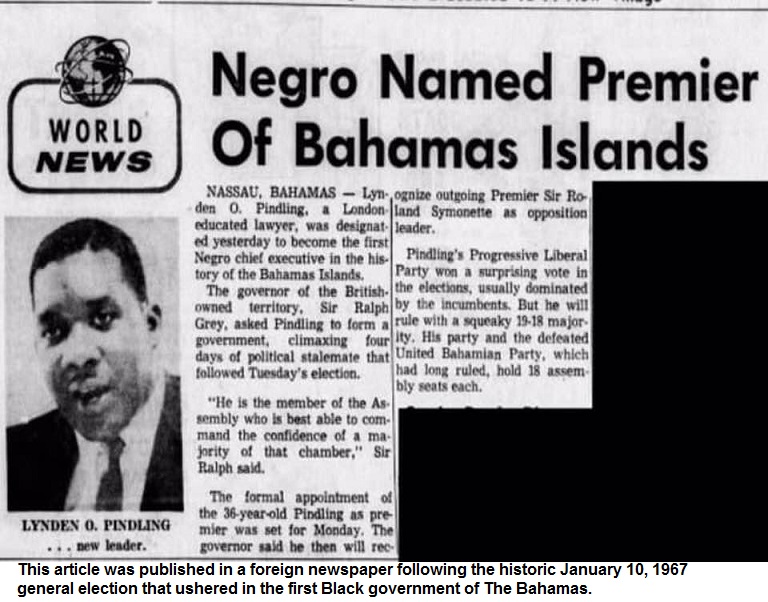
Don’t get it twisted! Caribbean society did not have a good solid foundation at the start; it was built on the premise of Slavery! That’s a flawed moral foundation. That was then … as the years, decades and centuries past, the societal defects only exacerbated. See this quotation:

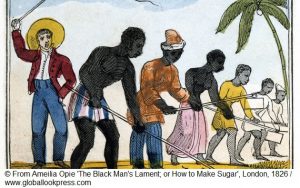
One by one, at least six European powers [(British, Danish, Dutch, French, Portuguese and Spanish)] entered the fray and wrestled with each over the riches to be obtained from the region under colonization. Caribbean islands were exchanged as part of peace negotiations after European wars, and sometimes captured outright by those countries that could muster the naval power so far from their shores. The source of this wealth was the fruits of the labor of enslaved Africans. Commercial and military intervention on the African coast ensured a supply of captive laborers for the plantations. The slave trade represented the largest capital investment in the world, meaning that the slaves themselves were valuable commodities, and was promoted and patronized by the royal families and leading merchants and politicians of Europe.

Africans were enslaved and taken to the Americas, agricultural commodities were transported, often in the same slaving vessels, from the Americas to Europe, and trade goods were shipped from Europe to Africa for more slaves—the so-called “Triangular Trade.” More than nine million enslaved Africans reached the New World, … about 40 percent going to the Caribbean. Jamaica received nearly twice as many slaves as were imported into the United States; Barbados and Martinique, tiny islands where plantation slavery was established very early, each received roughly the amount received by the whole United States. While these figures cannot take into account the many millions who died en route, they do provide an idea of the intensity of Caribbean slavery. Caribbean slaves were notoriously malnourished, overworked, and susceptible to disease. They died in droves. It was cheaper for planters to simply import new slaves than to maintain their existing labor forces, and women were not encouraged to bear children until it appeared the slave trade would end. …

Source: Yelvington, Kevin A. (2000). ” Caribbean Crucible: History, Culture, and Globalization”. Retrieved July 22, 2019 from: http://www.socialstudies.org/sites/default/files/publications/se/6402/640201.html

The islands and coastal lands that constitute today’s Caribbean were not intended to be paradisiacal destinations for Black-and-Brown people. No, in the original intent, these people had only one purpose: provide [cheap] labor … and that’s it.

So ‘What Went Wrong‘ in the historic development of the Caribbean? Answer: There is a lot of “red on our ledger”.

It was generally accepted that the ratio of African slaves to Europeans were ‘7-to-1’. That was the balance in Caribbean society. All those 7 Africans – freed men and slaves – were balanced or counter-weighed with 1 European. See these historic details:

During the 17th and 18th centuries, European colonialism in the Caribbean became increasingly reliant on plantation slavery, so that, by the end of the 18th century, on many islands, enslaved (and free) Afro-Caribbeans far outnumbered their European rulers.[3] – Source: Wikipedia
Saint Domingue (Haiti’s/Dominican Republic) example – In 1789, the population was composed as follows:[14][15][16]

·   40,000 Grand-blancs (literally “Great whites” in French) and Petit-blancs (“Little whites”)

·   28,000 Sang-melés (French for: “Mixed blood”) or free people of color.

·   452,000 slaves

Jamaica‘s example – In 1787, there were only 12,737 whites out of a total population of 209,617.[6]
Suriname – Long inhabited by various indigenous people before being invaded and contested by European powers from the 16th century, eventually coming under Dutch rule in the late 17th century. As the chief sugar colony during the Dutch colonial period, it was primarily a plantation economy dependent on African slaves and, following the abolition of slavery in 1863, indentured servants from Asia. Suriname was ruled by the Dutch-chartered company Society of Suriname between 1683 and 1795. … As a legacy of colonization, the people of Suriname are among the most diverse in the world, spanning a multitude of ethnic, religious, and linguistic groups, [with only 1% featuring an European heritage]. – Source: Wikipedia

(In addition, see the Appendix VIDEO depicting “how the Caribbean became the most Racially Diverse Region in the World”).

Another way of looking at the ‘7-to-1’ ratio is with this narrative from an European perspective: “it takes 7 of you people to equal to one of us”. While this was never the official codification in any Caribbean country, this was the anecdotal experience. (‘Less Than‘ was the official codification in the US for the African population: Three-Fifths –  slaves would be counted when determining a state’s total population for legislative representation and taxing purposes). This was especially evident after abolition & emancipation of slavery, when the journey began: the slow march toward de-colonization, majority rule and independence.

This is What Went Wrong with Caribbean society; the people that would form the vast majority of the population – the former slaves and indentured-servants – was considered ‘Less Than‘, yet suddenly thrust into national leadership.

This commentary, 3-of-6 in the July series from the movement behind the book Go Lean…Caribbean continues the theme “What Went Wrong?” in the history of nation-building for Caribbean society. Like other New World territories, every Caribbean member-state was structured for plantation economies. That means the ethos of Caribbean communities was embedded with a lot of societal defects – Crony-capitalism, White supremacy, propensity for flight (slaves and masters). In fact, in all Caribbean communities, the European population declined after emancipation, and even more left when the Caribbean states obtained independence from their colonial status to European empires. The “writing was on the wall”.  The full catalog of all the entries in this blog-series is listed as follows:

  1. What Went Wrong? Asking ‘Why’ is Important
  2. What Went Wrong? ‘We’ never had our war!
  3. What Went Wrong? ‘7 to 1’ – Caribbean ‘Less Than’
  4. What Went Wrong? ‘Be our Guest’ – The Rules of Hospitality
  5. What Went Wrong? Failing the Lessons from Infrastructure 101
  6. What Went Wrong? Losing the Best; Nation-building with the Rest

The proliferation of bad community ethos in Caribbean member-states have been detailed in many previous Go Lean blog-commentaries. See a sample list here:

https://goleancaribbean.com/blog/?p=17464 Bad Ethos Retarding ‘New Commerce’
https://goleancaribbean.com/blog/?p=16645 Bad Partners – Cruise Lines Interactions
https://goleancaribbean.com/blog/?p=16534 European Reckoning – Christianity’s Indictment and Bad Ethos
https://goleancaribbean.com/blog/?p=16408 Bad Ethos on Home Violence
https://goleancaribbean.com/blog/?p=10532 The Propensity of Bad Stereotypes
https://goleancaribbean.com/blog/?p=5542 Economic Principle: Bad Ethos of Rent-Seeking
https://goleancaribbean.com/blog/?p=3582 For Canadian Banks: Caribbean is a ‘Bad Bet’

Caribbean ‘Less Than‘ is an important consideration for the Go Lean movement. This is why it is important to examine the full length-and-breath of the societal defects in our communities.

All Caribbean people are created equal … despite the flawed moral foundation of our history!

We are not ‘Less Than‘; yet when our people leave, abandon their homeland, they are treated ‘Less Than in the foreign abodes – noticeably true in the US and Canada – they re-settle as their new homes. What’s more, for the English-speaking Caribbean citizens that emigrated to the United Kingdom, their experiences have also been documented as Less Than in that country. Lastly, similar anecdotes have emerged from France (Paris) and the Netherlands.

Now that we know “What Went Wrong“, we can now remediate and mitigate the shortcomings. Yes, we can! This is not easy – heavy-lifting actually – but it is conceivable, believable and achievable to reform and transform our societies.

The movement behind the Go Lean…Caribbean book, hereby urges all Caribbean stakeholders to lean-in to this roadmap. Embedded here-in are the strategies, tactics and implementations to make the homeland a better place to live, work and play. 🙂

About the Book
The book Go Lean…Caribbean serves as a roadmap for the introduction and implementation of the technocratic Caribbean Union Trade Federation (CU), for the elevation of Caribbean society – for all member-states. This CU/Go Lean roadmap has these 3 prime directives:

  • Optimization of the economic engines in order to grow the regional economy to $800 Billion and create 2.2 million new jobs.
  • Establishment of a security apparatus to ensure public safety and protect the resultant economic engines.
  • Improve Caribbean governance to support these engines, including a separation-of-powers between the member-states and CU federal agencies.

The Go Lean book provides 370-pages of turn-by-turn instructions on “how” to adopt new community ethos, plus the strategies, tactics, implementations and advocacies to execute so as to reboot, reform and transform the societal engines of Caribbean society.

Download the free e-Book of Go Lean … Caribbean – now!

Who We Are
The movement behind the Go Lean book – a non-partisan, apolitical, religiously-neutral Community Development Foundation chartered for the purpose of empowering and re-booting economic engines – stresses that reforming and transforming the Caribbean societal engines must be a regional pursuit. This was an early motivation for the roadmap, as pronounced in the opening Declaration of Interdependence (Pages 12 – 13):

xi. Whereas all men are entitled to the benefits of good governance in a free society, “new guards” must be enacted to dissuade the emergence of incompetence, corruption, nepotism and cronyism at the peril of the people’s best interest. The Federation must guarantee the executions of a social contract between government and the governed.

xvi. Whereas security of our homeland is inextricably linked to prosperity of the homeland, the economic and security interest of the region needs to be aligned under the same governance. Since economic crimes … can imperil the functioning of the wheels of commerce for all the citizenry, the accedence of this Federation must equip the security apparatus with the tools and techniques for predictive and proactive interdictions.

xxiv. Whereas a free market economy can be induced and spurred for continuous progress, the Federation must install the controls to better manage aspects of the economy: jobs, inflation, savings rate, investments and other economic principles. Thereby attracting direct foreign investment because of the stability and vibrancy of our economy.

Sign the petition to lean-in for this roadmap for the Caribbean Union Trade Federation.

—————-

Appendix VIDEO – Here’s how the Caribbean became the most Racially Diverse Region in the Worldhttps://youtu.be/fAZBLzWCUbU


Masaman

Published on May 1, 2017
– This is how the Caribbean became the most racially diverse region on the planet, after having it’s ancestry and genetics permanently altered through European colonialism and migration.

In this video, I’m going to give the rundown for several Caribbean countries such as Cuba, Haiti, Jamaica, the Dominican Republic, Trinidad and Tobago, along with many others. We will look at the demographic history, and just what spawned the drastic fluctuations in the racial makeup of the region.

We’re also going to touch on many of the surrounding areas such as Central America, the Gullah coast, as well as the Guianas of South America.

Please let me know your thoughts on my analysis, especially if you live in, or have ancestry from the region. Videos over the latter regions will be released soon. Thanks for watching!

Share this post:
,
[Top]

What Went Wrong? ‘We’ never had our war!

Go Lean Commentary

War … what is it good for?
Absolutely nothing! – Song: Edwin Starr – Motown 1969; see Appendix below.

Well, not so fast.

This started just as a “catch phrase”, but now it has emerged as a fact in Economic History:

A crisis is a terrible thing to waste.

So what is war good for? Providing a crisis that can be exploited to reform and transform society.

That’s it; wrap it up; we can now summarize so many changes in world history as they manifested as a result of war. Consider these examples:

War Conflict Take-a-way
Napoleonic Wars | 1803 – 1815
Spanish New World assumed independence from Spain. This was true in North America (Mexico), Central America and South America. But the Caribbean territories did not abdicate from “Mama Espana” at that time.
Latin America Independence
American Civil War | 1860 – 1865
The New World was premised on Slavery, exploiting the African race as a free labor source in all the Americas. This abhorrent institution would have definitely ended, one way or another. “The arc of history leans towards justice”. After the US Civil War – 625,000 dead White Men – no other wars were necessary in the New World; all Euro-influenced governments whittled slavery into extinction, one way or another.
Abolition & Emancipation
Great War / World War I 1914 – 1919
This war addressed the boiling point of class-ism in Europe – the Haves versus the Have-Nots – the Nobility System (Dukes, Counts, Bourgeoisie, etc.) did not survive the reconciliation that led to the cessation of conflicts. Communism emerged as a manifestation of the demand for equality.
Gender Equality; Worker Rights; Egalitarianism
World War II / Cold War | 1939 – 1955
This war was a sequel to WW I; whatever remaining issues that were deferred in the WW I reconciliations were pushed forward for reckoning; think: Colonialism (in Africa, Asia and the Americas), Racial Supremacy, Human Rights assurances.
Human Rights; Decolonization; Majority Rule / Universal Suffrage
End of Cold War | 1991 – 2016
The return to Nationalism in Europe did not provide governing solutions or the needed multi-racial reconciliations. That bill came due, as demonstrated with the Balkans Conflict (Bosnia, Serbia, etc.). A Migrant Crisis emerged for all States that refused to transform: think Middle East Islamic Fundamentalism, Sovereign Debt Crisis (Greece, etc.), and Brexit.
Economic Liberalization; Free Trade; Free Movement

In no shape or form are we rationalizing, justifying or excusing war. But, it is what it is!

Where there is conflict – blood on the streets – people tend to finally be motivated to remediate and mitigate the risks and threats for the conflict to ever rekindle. So this premise is true:

It is only at the precipice that people change.

This is why we can declare with such confidence that one of the things that went wrong in the Caribbean, is “we never had our war“. From the foregoing examples, all the reform and transformation that took place from these crises, did NOT benefit the Caribbean as we had “No War” here. (The Cuban Revolution ushered in Communism, but all the stewards of the Cuban people – culture, politics and commerce – simply fled; they left the island to the rebels, so the needed reform on societal values never took place – Cuba is still in “Freeze-Frame” from 1959).

This commentary continues the July series from the movement behind the book Go Lean…Caribbean. This submission, 2-of-6 on the theme “What Went Wrong?” focuses on Caribbean history and why we still have many of the same defects that other societies – think North America and Europe yes, but even India and China – have already remediated. The full catalog:

  1. What Went Wrong? Asking ‘Why’ is Important
  2. What Went Wrong? ‘We’ never had our war!
  3. What Went Wrong? ‘7 to 1’ – Caribbean ‘Less Than’
  4. What Went Wrong? ‘Be our Guest’ – The Rules of Hospitality
  5. What Went Wrong? Failing the Lessons from Infrastructure 101
  6. What Went Wrong? Losing the Best; Nation-building with the Rest

In this series, reference is made to the need for a comprehensive roadmap for elevating the societal engines of the Caribbean member-states. We do not want war! But we want to make the progress that is possible when society reforms and transforms. And we want to do this without a war. The movement behind the Go Lean book asserts that this progress is possible. See how this theme was developed in many previous Go Lean commentaries; see a sample list here:

https://goleancaribbean.com/blog/?p=16477 Transforming Hindus versus Women – What it means for us?
https://goleancaribbean.com/blog/?p=15580 The Cause of Caribbean Disunity: Religion’s Role – False Friend
https://goleancaribbean.com/blog/?p=14633 Despite Embedded ‘Bad Nature’, Women Have Nurtured Change
https://goleancaribbean.com/blog/?p=14378 Legislating Morality – Yes, We Can
https://goleancaribbean.com/blog/?p=13063 Gender Equity without a ‘Battle of the Sexes’
https://goleancaribbean.com/blog/?p=13882 Managing ‘Change’ in California – Calm and Smooth Evolutions
https://goleancaribbean.com/blog/?p=5695 Repenting, Forgiving and Reconciling the Past
https://goleancaribbean.com/blog/?p=3090 Learning from Modern Europe – Evolution without Revolution

Most of the Caribbean profess the religious affiliation with Christianity. The Founder of the Church, Jesus Christ, taught his followers an important lesson about manifestation versus faith. See here relating the story of Doubting Thomas:

doubting Thomas is a skeptic who refuses to believe without direct personal experience—a reference to the Apostle Thomas, who refused to believe that the resurrected Jesus had appeared to the ten other apostles, until he could see and feel the wounds received by Jesus on the torture stake.

The Holy Scriptures relates, from the Gospel account of John 20: 24 – 29 NWT:

24  But Thomas,+ one of the Twelve, who was called the Twin, was not with them when Jesus came. 25  So the other disciples were telling him: “We have seen the Lord!” But he said to them: “Unless I see in his hands the print* of the nails and stick my finger into the print of the nails and stick my hand into his side,+ I will never believe it.”
26  Well, eight days later his disciples were again indoors, and [this time] Thomas was with them. Jesus came, although the doors were locked, and he stood in their midst and said: “May you have peace.”+ 27  Next he said to Thomas: “Put your finger here, and see my hands, and take your hand and stick it into my side, and stop doubting* but believe.” 28  In answer Thomas said to him: “My Lord and my God!” 29  Jesus said to him: “Because you have seen me, have you believed? Happy are those who have not seen and yet believe.”

Happy are those who have not seen and yet believe. While it is only at the precipice that people change, how much better it would be for Caribbean society to change (reform and transform) without being at the precipice, without enduring the pangs of war. It is the assertion here that despite the heavy-lifting, “we” can succeed in optimizing Caribbean society … without war.

Is this possible? Can we reboot our society? Can we ‘weed out’ the bad ethos – i.e. rent-seeking and domestic violence – in our communities and adopt new more positive ethos? Can we implement the strategies and tactics we need to optimize our society, without first going to the brink of self-destruction?

Yes, we can!

This is the urging of the book Go Lean…Caribbean and the resultant roadmap. We hereby urge all Caribbean stakeholders to lean-in to this roadmap. Let’s get busy and go to work. This roadmap is conceivable, believe and achievable. We can make our homeland a better place to live, work and play. 🙂

About the Book
The book Go Lean…Caribbean serves as a roadmap for the introduction and implementation of the technocratic Caribbean Union Trade Federation (CU), for the elevation of Caribbean society – for all member-states. This CU/Go Lean roadmap has these 3 prime directives:

  • Optimization of the economic engines in order to grow the regional economy to $800 Billion and create 2.2 million new jobs.
  • Establishment of a security apparatus to ensure public safety and protect the resultant economic engines.
  • Improve Caribbean governance to support these engines, including a separation-of-powers between the member-states and CU federal agencies.

The Go Lean book provides 370-pages of turn-by-turn instructions on “how” to adopt new community ethos, plus the strategies, tactics, implementations and advocacies to execute so as to reboot, reform and transform the societal engines of Caribbean society.

Download the free e-Book of Go Lean … Caribbean – now!

Who We Are
The movement behind the Go Lean book – a non-partisan, apolitical, religiously-neutral Community Development Foundation chartered for the purpose of empowering and re-booting economic engines – stresses that reforming and transforming the Caribbean societal engines must be a regional pursuit. This was an early motivation for the roadmap, as pronounced in the opening Declaration of Interdependence (Pages 12 – 13):

xi. Whereas all men are entitled to the benefits of good governance in a free society, “new guards” must be enacted to dissuade the emergence of incompetence, corruption, nepotism and cronyism at the peril of the people’s best interest. The Federation must guarantee the executions of a social contract between government and the governed.

xvi. Whereas security of our homeland is inextricably linked to prosperity of the homeland, the economic and security interest of the region needs to be aligned under the same governance. Since economic crimes … can imperil the functioning of the wheels of commerce for all the citizenry, the accedence of this Federation must equip the security apparatus with the tools and techniques for predictive and proactive interdictions.

xxiv. Whereas a free market economy can be induced and spurred for continuous progress, the Federation must install the controls to better manage aspects of the economy: jobs, inflation, savings rate, investments and other economic principles. Thereby attracting direct foreign investment because of the stability and vibrancy of our economy.

Sign the petition to lean-in for this roadmap for the Caribbean Union Trade Federation.

————-

Appendix VIDEO – Edwin Starr – War (What is it good for) – https://youtu.be/ztZI2aLQ9Sw

Matze 1987
Published on Aug 4, 2011 – Edwin Star – War

Lyrics:
War…huh…yeah
What is it good for?
Absolutely nothing
Uh ha haa ha
War…huh…yeah
What is it good for?
Absolutley nothing…say it again y’all
War..huh…look out…
What is it good for?
Absolutely nothing…listen to me ohhhhh

WAR! I despise, ‘cos it means destruction of innocent lives,
War means tears to thousands of mother’s eyes,
When their sons gone to fight and lose their lives.

I said WAR!…huh…good God y’all,
What is it good for?
Absolutely nothing…say it again
War! Huh…What is it good for
Absolutely nothing…listen to me

WAR! It ain’t nothing but a heartbreaker,
War. Friend only to the undertaker. Ohhh!
War is an enemy to all mankind,
The thought of war blows my mind.
War has caused unrest within the younger generation
Induction then destruction…who wants to die? Ohhh

WAR! good God y’all huh
What is it good for?
Absolutely nothing…say it say it SAY IT!
WAR!…uh huh yeah huh
What is it good for?
Absolutely nothing…listen to me

WAR! It ain’t nothing but a heartbreaker,
War! It’s got one friend that’s the undertaker.
Ohhhh! War has shattered many a young man’s dream,
Made him disabled, bitter and mean,
Life is much too short and precious to spend fighting wars these days.
War can’t give life, it can only take it away!

Ohhh WAR! huh…good God y’all What is it good for?
Absolutely nothing…say it again War!…huh…woh oh oh Lord
What is it good for? Absolutely nothing…listen to me

War! It ain’t nothing but a heartbreaker,
War. Friend only to the undertaker…woo
Peace lovin’ understand then tell me,
Is there no place for them today?
They say we must fight to keep our freedom,
But Lord knows there’s got to be a better way.

Ohhhhhhh WAR! huh…good God y’all…
What is it good for?…you tell me!
Say it say it say it saaaay it!
War! good God now…huh
What is it good for?
Stand up and shout it…NOTHING

Music in this video – Listen ad-free with YouTube Premium

  • Song: War
  • Artist: Edwin Starr
  • Album: Can You Dig It? The 70’s Soul Experience
  • Licensed to YouTube by: UMG (on behalf of Rhino); UMPI, AMRA, CMRRA, Sony ATV Publishing, UNIAO BRASILEIRA DE EDITORAS DE MUSICA – UBEM, SOLAR Music Rights Management, LatinAutor – SonyATV, LatinAutor, EMI Music Publishing, UMPG Publishing, Kobalt Music Publishing, and 13 Music Rights Societies
Share this post:
, ,
[Top]

What Went Wrong? Asking ‘Why’ is Important – Encore

“There is something wrong in the Caribbean.”
These are the opening words of the 2013 book Go Lean … Caribbean. So what is wrong? What went wrong? When did it go wrong? And just for “kibbles-and-bits”: What can we do about it?

These are very important questions that the stewards of the Caribbean must consider and be honest with the answers. The truth as to “what went wrong” is as important as a Physician’s (Doctor’s) diagnosis and treatment plan. If its the right assessment then the right therapy can be put in place.

This is the purpose of this July series from the movement behind the Go Lean book. (Every month – continuous since June 2015 – there is a comprehensive series on the width-and-breath of Caribbean life: past, present and future). This month, the focus is on the “History of the Caribbean Societal Dysfunctions – What Went Wrong”. Other societies – think Japanese aggression or Nazi Supremacy dreams – have had defects and have addressed their shortcomings and have resulted in turn-around. This has not been true of most of the Caribbean; we have not remediated many of the problems that dated back to the origins of our society. Thus this series requires our consideration; notice the full catalog here:

  1. What Went Wrong? Asking ‘Why’ is Important
  2. What Went Wrong? ‘We’ never had our war!
  3. What Went Wrong? ‘7 to 1’ – Caribbean ‘Less Than’
  4. What Went Wrong? ‘Be our Guest’ – The Rules of Hospitality
  5. What Went Wrong? Failing the Lessons from Infrastructure 101
  6. What Went Wrong? Losing the Best; Nation-building with the Rest

In this series, reference is made to the need for a comprehensive roadmap for elevating the societal engines of the Caribbean member-states. We must get past the societal defects if we want to have a future. In fact, there is no guarantee that there will be a future, unless we do the heavy-lifting to reform and transform our society. The book Go Lean…Caribbean provides a roadmap for the implementation for the Caribbean Union Trade Federation (CU) to finally address the societal defects.

What went wrong? We need to know. The opening sentence in the book made the declarative statement that “something is wrong” and then goes on to explain that the problem is societal abandonment:
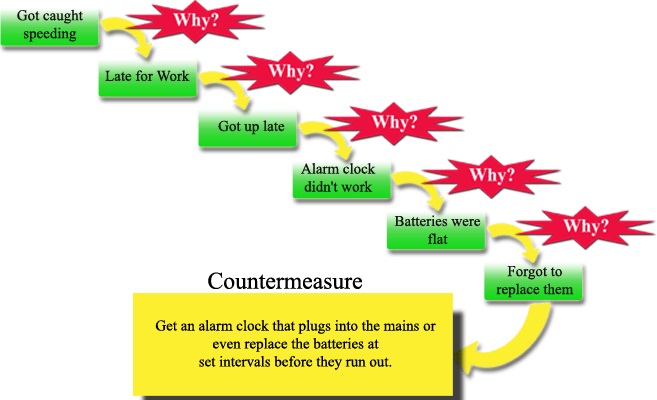
… instead of the world “beating a path” to these doors, the people of the Caribbean have “beat down their doors” to get out.

Why do Caribbean citizens abandon their homelands?

This question was asked before …

… in a previous Go Lean blog-commentary; it found that the answer to the question raises another question; then answering that new question raised another one. This process repeated … in 7 iterations. These iterations are documented in that previous blog-commentary from April 7, 2016 entitled “Being Lean: Asking the Question ‘Why’ x Times“. It is only apropos to Encore that blog-commentary here-now:

—————

Go Lean Commentary Being Lean: Asking the Question ‘Why’ 5 Times

“The Caribbean is arguably the greatest address on the planet”, as declared in the book Go Lean…Caribbean. (This “greatest” attribute is defined for terrain, culture and hospitality). Yet the region has an unconscious-able brain drain rate, where 70 percent of the tertiary-educated population has fled.

Why!?

This question has been asked repeatedly! Many times the published answers are really describing the symptoms and not the root-causes. In the end, the answer is not so easy! The Go Lean book defines it as heavy-lifting. The Go Lean approach is an examination of the word “Lean”. In the book the word is presented as a noun, a verb and an adjective; all inclusive of the agile concept. The lean/agile concept is an understanding that value is a derived-result from a continuously optimizing key process, that repeats as a cycle .. again and again.

The Go Lean book (Page 4) relates that …

… lean thinking changes the focus of management from optimizing separate technologies, assets, and vertical departments to optimizing the flow of products and services through entire value streams that flow horizontally across technologies, assets, and departments to customers.

One expression of the lean methodology that can be used to dissect/”add value” to the key question (” Why such a high brain drain rate”) in this commentary is the iterative interrogative technique: 5 Why’s. See details of this agile-lean technique below. Using this technique, the 5 Why’s needs to be extended to 7 actual Why questions, as follows:

Problem: Why do Caribbean citizens abandon their homelands?

  1. “Push and Pull” reasons. “Push”, as in people fleeing to find refuge and “pull” in the perception (though false) that life is better on foreign shores. Why?
  2. Societal defects – in the region – are so acute. Why?
  3. Societal engines (responsible for economics, security & governance) not optimized. Why?
  4. Colonial Masters did not engage best-practices. Why?
  5. Foreign Policy in the colonies was to just keep them dependent. Why?
  6. Colonizers promoted home country commerceMercantilism; slavery in the colonies, but not at home (i.e. Serfism, French Revolution). Why?
  7. European Community Ethos: OK to exploit African Race as declared by Pope Innocent VIII.

s - Photo 1

s - Photo 2

See the encyclopedic details and a related VIDEO here:

Reference Title: 5 Whys
Source: 
Wikipedia Online Encyclopedia – Retrieved 04/07/2016 from: https://en.wikipedia.org/wiki/5_Whys

5 Whys is an iterative interrogative technique used to explore the cause-and-effect relationships underlying a particular problem.[1] The primary goal of the technique is to determine the root cause of a defect or problem by repeating the question “Why?” Each question forms the basis of the next question. The “5” in the name derives from an empirical observation on the number of iterations typically required to resolve the problem.

The technique was formally developed by Sakichi Toyoda and was used within the Toyota Motor Corporation during the evolution of its manufacturing methodologies. In other companies, it appears in other forms. Under Ricardo Semler, Semco practices “three whys” and broadens the practice to cover goal setting and decision making.[2]

Not all problems have a single root cause. If one wishes to uncover multiple root causes, the method must be repeated asking a different sequence of questions each time.

The method provides no hard and fast rules about what lines of questions to explore, or how long to continue the search for additional root causes. Thus, even when the method is closely followed, the outcome still depends upon the knowledge and persistence of the people involved.

—–

The questioning for this example could be taken further to a sixth, seventh, or higher level, but five iterations of asking why is generally sufficient to get to a root cause. The key is to encourage the trouble-shooter to avoid assumptions and logic traps and instead trace the chain of causality in direct increments from the effect through any layers of abstraction to a root cause that still has some connection to the original problem. Note that, in this example, the fifth why suggests a broken process or an alterable behaviour, which is indicative of reaching the root-cause level.

It is interesting to note that the last answer points to a process. This is one of the most important aspects in the 5 Why approach – the real root cause should point toward a process that is not working well or does not exist.[3] Untrained facilitators will often observe that answers seem to point towards classical answers such as not enough time, not enough investments, or not enough manpower. These answers may be true, but they are out of our control. Therefore, instead of asking the question why?, ask why did the process fail?

A key phrase to keep in mind in any 5 Why exercise is “people do not fail, processes do”.

Rules of performing “5 Whys”

In order to carry out the 5-Why analysis properly, following advices should be kept:

  1. It is necessary to engage the management in 5 Whys standard in the company. For the analysis itself, remember about right working group. Also consider facilitator presence for more difficult topics.
  2. Use paper or whiteboard instead of computers.
  3. Write down the problem and make sure that all people understand it.
  4. Distinguish causes from symptoms.
  5. Take care of the logic of cause-and-effect relationship.
  6. Make sure that root causes certainly lead to the mistake by reversing the sentences created as a result of the analysis with the use of expression “and therefore”.
  7. Try to make our answers more precise.
  8. Look for the cause step by step. Don’t jump to conclusions.
  9. Base on facts and knowledge.
  10. Assess the process, not people.
  11. Never leave “human error”, “worker’s inattention”, etc. as the root cause.
  12. Take care of the atmosphere of trust and sincerity.
  13. Ask the question “why” until the root cause is determined, i.e. such cause the elimination of which will cause that the error will not occur again.[7]

Criticism

While the 5 Whys is a powerful tool for engineers or technically savvy individuals to help get to the true causes of problems, it has been criticized … as being too basic a tool to analyze root causes to the depth that is needed to ensure that they are fixed.[8] Reasons for this criticism include:

  • Tendency for investigators to stop at symptoms rather than going on to lower-level root causes.
  • Inability to go beyond the investigator’s current knowledge – cannot find causes that they do not already know.
  • Lack of support to help the investigator ask the right “why” questions.
  • Results are not repeatable – different people using 5 Whys come up with different causes for the same problem.
  • Tendency to isolate a single root cause, whereas each question could elicit many different root causes.

These can be significant problems when the method is applied through deduction only. On-the-spot verification of the answer to the current “why” question before proceeding to the next is recommended to avoid these issues. In addition, performing logical tests for necessity and sufficiency at each level can help avoid the selection of spurious causes and promote the consideration of multiple root causes.[9]

s - Photo 3

————————

VIDEO – 5 Whys Root Cause Analysis Problem Solving Tool–Video Training – https://youtu.be/zvkYFZUsBnw

Uploaded on Jul 23, 2009 – The 5 Whys (Free 6-Page PDF at http://www.velaction.com/5-whys/ ) is one of the simplest problem solving tools used in Lean manufacturing and Lean offices. This presentation shows how to use the 5 Whys, and what to watch out for. Created and presented by Jeff Hajek of Velaction Continuous Improvement.
Category: How to & Style
License: Standard YouTube License

Wow, the root cause “Why Caribbean citizens abandon their homelands” is tied to the community ethos and embedded racial inequalities in the ancient European world. Now that we know – thanks to the iterative interrogative technique – we can deploy new community ethos plus new strategies, tactics, implementations and advocacies to turn-around Caribbean failings into opportunities for success.

The Go Lean book identifies Toyota Motor Company as a role model for deploying agile/lean methodologies in delivering quality. Quality delivery is a mission of the Go Lean movement. The book serves as a roadmap for the introduction and implementation for the technocratic Caribbean Union Trade Federation (CU). As a federal government, there will be the need to employ agile/lean methodologies to ensure that a small organizational footprint can provide the facilitations to enhance the region’s economic, security and governing engines. For a regional population of 42 million, the plan is to only engage 30,000 federal civil servants, but with a lot of systems and agile methodologies. That is lean!

By being lean, the stewards of this new Caribbean can fulfill the Go Lean vision: a better region to live, work and play. In the end, we would dissuade the brain drain, and then eventually invite the Diaspora to return, to repatriate to their ancestral homelands.

The Go Lean book was constructed with community ethos – national spirit that drives the character and identity of its people – in mind, plus the execution of strategies, tactics, implementation and advocacies to keep the regional government lean. The following is a sample of these specific details from the book:

Preface – Use of “Lean” in the Public Sphere Page 4
Community Ethos – Deferred Gratification Page 21
Community Ethos – Economic Principles – Economic Systems Influence Individual Choices Page 21
Community Ethos – Economic Principles – The Consequences of Choices Lie in the Future Page 21
Community Ethos – Governing Principles – Lean Operations Page 24
Community Ethos – Ways to Impact the Future Page 26
Community Ethos – Ways to Help Entrepreneurship – Incubators Page 28
Community Ethos – Ways to Impact Research & Development Page 30
Community Ethos – Ways to Improve Sharing Page 35
Community Ethos – Ways to Promote Happiness Page 36
Community Ethos – Ways to Impact the Greater Good Page 37
Strategy – Mission – Build and foster local economic engines Page 45
Tactical –  Separation of Powers: Federal Administration versus Member-States Governance Page 71
Implementation – Ways to Pay for Change Page 101
Implementation – Reasons to Repatriate to the Caribbean Page 118
Planning – Ways to Make the Caribbean Better Page 131
Advocacy – Ways to Grow the Economy Page 151
Advocacy – Ways to Create Jobs Page 152
Advocacy – Ways to Improve Governance in the Caribbean Region Page 168
Advocacy – Ways to Better Manage the Social Contract Page 170
Advocacy – Ways to Improve Leadership Page 171
Advocacy – Ways to Manage Federal Civil Service Page 173
Advocacy – Ways to Impact the Diaspora Page 217
Advocacy – Ways to Preserve Caribbean Heritage Page 218

The Go Lean roadmap presents the CU as a real organizational structure. So all the references in the foregoing encyclopedic reference regarding agile-lean organizations, enterprises, companies and/or firms could apply directly and indirectly to the CU Trade Federation. Yet, the federal agencies and civil servants are not the only focus of the Go Lean/CU roadmap. The prime directives of this roadmap is to reach out into the community and impact the societal engines in these ways:

  • Optimization of the economic engines in order to grow the regional economy to $800 Billion & create 2.2 million new jobs.
  • Establishment of a security apparatus to protect the resultant economic engines.
  • Improve Caribbean governance to support these engines.

Previously, Go Lean blogs detailed other opportunities to deploy agile methodologies. Consider this sample:

https://goleancaribbean.com/blog/?p=7646 Methodology for going from ‘Good to Great
https://goleancaribbean.com/blog/?p=6921 “Live. Work. Play. Repeat” – Need for Agile Rewards program
https://goleancaribbean.com/blog/?p=6016 Case Study of a Lean Utility to Assuage Excessively Hot Weather
https://goleancaribbean.com/blog/?p=3956 Art and Science of Collaboration
https://goleancaribbean.com/blog/?p=3152 The formal process of Making a Great Place to Work®
https://goleancaribbean.com/blog/?p=915 Go Green Caribbean – Pursuits for Lean energy in the region

The message to the people of the Caribbean region is that the Caribbean’s past is not to be the Caribbean’s future. The catalyst for change in the Caribbean is the CU. This “heavy-lifting” task to implement agile/lean methodologies in the Caribbean is the charter of the CU technocracy.

Now is the time for all Caribbean stakeholders – residents, Diaspora, businesses and institutions – to lean-in for the optimizations and empowerments described in the book Go Lean … Caribbean. Yes, we can make the region a better homeland to live, work and play. 🙂

Download the book Go Lean … Caribbean – now!

Share this post:
, ,
[Top]

Moonshots! Here We Go Again

Go Lean Commentary

Yes, this is a thing; “Moonshots” that is. This is defined as follows:

A moonshot, in a technology context, is an ambitious, exploratory and ground-breaking project undertaken without any expectation of near-term profitability or benefit and also, perhaps, without a full investigation of potential risks and benefits.

Google has adopted the term moonshot for its most innovative projects, many of which come out of the Google X, the company’s semi-secret lab. Google moonshots include Google Glass, Project Loon (a balloon-based Internet service project), the driverless car, augmented reality glasses, a neural network, robots for the manufacturing industry and Project Calico, a life extension project.

Here’s Google’s definition of a moonshot:

A project or proposal that:

  1. Addresses a huge problem
  2. Proposes a radical solution
  3. Uses breakthrough technology

The term “moonshot” derives from the Apollo 11 spaceflight project, which landed the first human on the moon in [July] 1969. “Moonshot” may also reference the earlier phrase “shoot for the moon” meaning aim for a lofty target.
Source: Retrieved July 17, 2019 from: https://whatis.techtarget.com/definition/moonshot

See this related VIDEO’s about “Moonshot thinking” in the Appendices below.

It is appropriate to discuss Moonshots this week; this is the 50th anniversary of the Apollo 11 blast-off and journey to the moon – July 16 to 20 – when the first man – Neil Armstrong – walked on the surface of that extra-terrestrial body. See VIDEO of a newscast from Miami, Florida here:

50th Anniversary Of Apollo 11’s Blast Off From Florida On Mission To The Moon

VIDEO – CBS4 July 16, 2019 5:15 Newscasthttps://cbsloc.al/2lHIAwK

CAPE CANAVERAL (CBS4/CNN/AP) – On July 16th, fifty years ago, the Apollo 11 astronauts launched from the Kennedy Space Center on a historic mission to become the first people in history to walk on the moon.

The effort to pursue this Moonshot did not start that week (50 years ago); no, this was only when the quest was finally fulfilled. That quest began 8 years earlier, as envisioned by then-President John F. Kennedy at a speech in 1961. This historical event – and a lesson learned – is provided in the 2013 book Go Lean … Caribbean on Page 127 where this excerpt is detailed:

The Bottom Line on Kennedy’s Quest for the Moon
On 25 May 1961, US President John F. Kennedy announced his support for the American Space program’s “Apollo” missions and redefined the ultimate goal of the Space Race in an address to a special joint session of Congress: “I believe that this nation should commit itself to achieving the goal, before this decade is out, of landing a man on the moon and returning him safely to the earth”. His justification for the Moon Race was both that it was vital to national security and that it would focus the nation’s energies in other scientific and social fields. This quest was succeeded. At 10:56 pm EDT, on 20 July 1969, the first human (American Astronaut Neil Armstrong) ventured out of the Apollo 11 landing craft and set foot on the Moon declaring: “one small step for man, one giant leap for mankind“.

The Caribbean – regionally and the 30 member-states individually – need its own Moonshot collectively. The Go Lean book asserts that these highlights and headlines, entitled “10 Big Ideas … in the Caribbean Region” (Page 127), must be pursued as a regional “Moonshot”:

1 Lean-in for the Caribbean Single Market & Economy Initiative: Caribbean Union Trade Federation (CU).
2 Currency Union / Single Currency – Introducing the Caribbean Dollar (C$)
3 Defense / Homeland Security Pact – To provide anti-crime, anti-terrorism, emergency & disaster management
4 Confederation Without Sovereignty – No need for full independence of member-states
5 Four Languages in Unison – Dutch, English, French & Spanish
6 Self-Governing Entities (SGE) – These centers of Economic Activities will be primary job creators
7 Virtual “Turnpike” Operations – Transit options to interconnect all lands like blood vessels in an organ
8 Cyber Caribbean – Internet Communications Technology can be a great equalizer
9 e-Learning – Versus – Studying Abroad – The status quo have resulted in a “brain drain” – time for a change
10 Cuba & Haiti – There are Marshall Plans that consider the reality of these states and the strategies to reform them

This theme – modeling the nationwide commitment to pursue a grandiose accomplishment – aligns with many previous Go Lean commentaries; see a sample list here:

https://goleancaribbean.com/blog/?p=10513 Transforming ‘Money’ Countrywide
India launched a massive project to provide a digital identity to 1.1 billion people. Then they provided a pseudo-bank account for everyone and disbursed governments benefits there, followed by an e-Money product for each citizen to facilitate transfers & payments.
https://goleancaribbean.com/blog/?p=6563 Lessons from Iceland – Model of Recovery
While at the precipice of economic disaster, this country deviated from the easy path and did the heavy lifting to reform and transform their economy. While not popular by foreign watchers, it worked; they now enjoy far greater success than their peer countries. Good job!
https://goleancaribbean.com/blog/?p=2480 A Lesson in History – Community Ethos of WW II
The real history of the US during World War II was that the entire country postponed immediate gratification, endured hard sacrifices, and became convinced that their future (after the war) would be better than their past (before the war). Yes, we can as well.
https://goleancaribbean.com/blog/?p=3490 How One Entrepreneur Can Rally a Whole Community
One person, a role model, can make a difference in transforming a whole community, so a “Moonshot” is viable anywhere with the proper leadership and messaging.
https://goleancaribbean.com/blog/?p=833 One currency, divergent economies
The “EuroSingle Currency took heavy-lifting to launch – everything monetary-wise had to change for every member-states, but now they have the strongest, soundest currency in the world.

The US did it – they fulfilled the vision  of their slain President. This is proof-positive that with the proper motivation and messaging, the whole community can engage a national goal and work to get it done, despite obstacles, challenges and doubts. Societies can be reformed and transformed.

Yes, we can … in the Caribbean conceive, believe and achieve our own “Moonshots”. What is it that we want? Not much … just everything that should be accomplished and pursued by a matured democratic society; think:


  • Economic progress – jobs, entrepreneurial opportunities, increased capital availability
  • Security assurances – safer homeland and more optimized justice institutions
  • Governing improvements – better delivery – including e-Government – of the implied Social Contract (where citizens surrender some of their freedoms and submit to the authority of the State in exchange for protection of remaining natural and legal rights) for basic services from the cradle to the grave.

We must compete better to keep our citizens here at home, rather than watch them flee the homeland for foreign shores. This has been our reality, but now we have a new vision.

Let’s lean-in to this vision, and our own “Moonshot”, this Go Lean roadmap. This is how-why-what-and-when we can make progress. This is how we can make our homeland a better place to live, work and play. 🙂

About the Book
The book Go Lean…Caribbean serves as a roadmap for the introduction and implementation of the technocratic Caribbean Union Trade Federation (CU), for the elevation of Caribbean society – for all member-states. This CU/Go Lean roadmap has these 3 prime directives:

  • Optimization of the economic engines in order to grow the regional economy to $800 Billion and create 2.2 million new jobs.
  • Establishment of a security apparatus to ensure public safety and protect the resultant economic engines.
  • Improve Caribbean governance to support these engines, including a separation-of-powers between the member-states and CU federal agencies.

The Go Lean book provides 370-pages of turn-by-turn instructions on “how” to adopt new community ethos, plus the strategies, tactics, implementations and advocacies to execute so as to reboot, reform and transform the societal engines of Caribbean society.

Download the free e-Book of Go Lean … Caribbean – now!

Who We Are
The movement behind the Go Lean book – a non-partisan, apolitical, religiously-neutral Community Development Foundation chartered for the purpose of empowering and re-booting economic engines – stresses that reforming and transforming the Caribbean societal engines must be a regional pursuit. This was an early motivation for the roadmap, as pronounced in the opening Declaration of Interdependence (Pages 12 – 13):

xi. Whereas all men are entitled to the benefits of good governance in a free society, “new guards” must be enacted to dissuade the emergence of incompetence, corruption, nepotism and cronyism at the peril of the people’s best interest. The Federation must guarantee the executions of a social contract between government and the governed.

xvi. Whereas security of our homeland is inextricably linked to prosperity of the homeland, the economic and security interest of the region needs to be aligned under the same governance. Since economic crimes … can imperil the functioning of the wheels of commerce for all the citizenry, the accedence of this Federation must equip the security apparatus with the tools and techniques for predictive and proactive interdictions.

xxiv. Whereas a free market economy can be induced and spurred for continuous progress, the Federation must install the controls to better manage aspects of the economy: jobs, inflation, savings rate, investments and other economic principles. Thereby attracting direct foreign investment because of the stability and vibrancy of our economy.

Sign the petition to lean-in for this roadmap for the Caribbean Union Trade Federation. 

————–

Appendix VIDEO A – What is Moonshot Thinking? By X, the Moonshot Factory – https://youtu.be/DeKZxd6_Hsk

dvlpr
Published on Feb 12, 2017

————–

Appendix VIDEO B – What goes on inside Google’s so-called Moonshot Factory? – https://youtu.be/uCCVaEMN8To

CBS This Morning
Published on Oct 14, 2017 –
Self-driving cars, delivery drones and internet service delivered through floating balloons are just some of the projects that have come out of X, the secretive Google lab tasked with imagining and developing futuristic technologies. Atlantic magazine senior editor Derek Thompson went inside the lab and joins “CBS This Morning: Saturday” to discuss what else the company’s exceptional minds are envisioning.

Share this post:
, ,
[Top]

Profiting from the Migration Crisis – Encore

The Migrant Crisis in the US is very acute right now … and very sad. Underlying to this drama, is the concern over Homeland Security and decency while ensuring Human Rights.

In the Caribbean, many of our member-states are affected by this crisis, either on the supply-side or the demand-side.

  • On the supply-side, we have countries that border the US territories – think: Bahamas, Belize, Dominican Republic, British Virgin Islands – so people flee to these member-states – as an intermediary step – in an attempt to “pursue refuge or asylum” in the US. (The US now wants asylum-seekers to apply only in these 3rd-Party countries).
  • On the other hand, on the demand-side, we are also involved in this drama. Many of those who seek refuge in the US are from Caribbean states – think: Cuba, Haiti, etc.. In fact, in some member-states our societal emigration-abandonment rates are so high that we have lost 70 percent, on the average, of our professional citizens to foreign shores – many have emigrated to the US.

Is the grass greener on the American-side, so as to impact the demand in our region for our citizens to want to migrate there?

Our Caribbean people do leave … due to “Push and Pull” reasons. “Push” refers to the societal defects in the Caribbean that moves people to want to get way, while “pull” refers to the impressions and perceptions (true or false) that America is better.

The purpose of this commentary is two-fold:

  • to dissuade the high emigration rates of Caribbean citizens to the American homeland.
  • to structure our societal engines – economics, security & governance – to better avail the economic opportunities related to America’s homeland security.

Migrants have been told that they are not invited and not welcomed in the US; yet they still come anyway; the audacity of Human Rights!

What’s a country, in this case the United States, to do?

Answer: Throw money at it!

We can benefit our regional economy more by facilitating the engines to deliver on the Homeland Security needs of the US; while optimizing concern for Human Rights.

Can we do more on the supply-side to avail the opportunities associated with this immigration crisis? Yes; yes indeed – remember, our previous proposition on Prisons 101.

This rich country – USA – needs lots of help. So far their delivery has been so poor – think: separating small children from mothers and “kids in cages” – that there have been comparisons to the “Concentration Camps” by Nazi Germany during World War II.

“Concentration Camps”?!?!

This is not our words alone; rather this is the assessment by “Concentration Camp” survivors. See the news story here:

For the past two weeks, Americans have debated whether the notoriously cramped and dirty detention centers on the southern border can be called “concentration camps.” For at least one Holocaust survivor, the answer is a resounding yes.

Ruth Bloch was 17 years old when she was separated from her family. While living in Holland in 1942, her father, mother, and brother were arrested and sent to concentration camps, where they were eventually killed. Bloch remained in Holland working as a seamstress at a fur factory, sewing fur-lined coats for German troops. She was eventually sent to Vught concentration camp in Holland in 1943, before being eventually transported to Auschwitz.

Now, at 93, she told The Daily Beast that she looks back at that time and can relate to the thousands of migrants, including small children, being held at camps after crossing the border into the U.S. to seek refuge.

See the full story here; posted by The Daily Beast on July 8, 2019 : https://www.yahoo.com/news/holocaust-survivor-yes-border-detention-084846706.html

Accompanying VIDEO:

We can do better than “Concentration Camps”!

The movement behind the book Go Lean … Caribbean asserts that we should look, listen and learn from this full drama; then we should lend-a-hand. In this case our lending-a hand can be building “optimized” Detention Centers in our Caribbean communities and servicing these “patrons” for the US … for a profit.

(The 5 L’s of leadership progression is defined as 1. Look, 2. Listen, 3. Learn, 4. Lend-a-hand and 5. Lead).

Homeland Security is traditionally a big area for spending. So “Yes we can” profit from this crisis; other countries have done so – ‘catered’ a foreign Detention Center and made money – think: Nauru on behalf of Australia. This is the model we want to emulate here in the Caribbean, outside the US borders.

We have discussed Nauru before; it is only apropos to re-consider or Encore that discussion now. See how the prospect of this business model was presented in this Encore of the previous blog-commentary from July 9, 2014 – 5 years ago:

—————–

Go Lean Commentary – Obama’s Plans for $3.7 Billion Immigration Crisis Funds

If only we were ready now!

$3.7 Billion in new spending in communities that really do not want the activity.

This, according to the below article, is the ground situation regarding the current immigration crisis on the US-Mexico border with children from Guatemala, El Salvador and Honduras. The US government, Obama Administration, is requesting additional funding from Congress of $3.7 Billion to better interdict and respond during this crisis. The biggest part of the expense will be the detention functionality for the apprehended trustees.

This is a crisis … and this crisis is a terrible thing to waste!

By: Mary Bruce

Detainees sleep and watch television in a holding cell where hundreds of mostly Central American immigrant children are being processed and held at the U.S. Customs and Border Protection Nogales Placement Center on June 18, 2014, in Nogales, Arizona. Ross D. Franklin-Pool/Getty Images

Detainees sleep and watch television in a holding cell where hundreds of mostly Central American immigrant children are being processed and held at the U.S. Customs and Border Protection Nogales Placement Center on June 18, 2014, in Nogales, Arizona. Ross D. Franklin-Pool/Getty Images

President Obama today is requesting $3.7 billion to cope with the humanitarian crisis on the border and the spike in illegal crossings by unaccompanied minors from Central America.

Roughly half of the funding would go to the Department of Health and Human Services to provide care for the surge of children crossing the border, including additional beds.

The rest would be split between several departments to tackle the issue on both sides of the border, including $1.6 billion to the Departments of Homeland Security and Justice to boost law enforcement at the Southwest border and pay for additional immigration judge teams, among other things, and $300 million to the State Department to tackle the root causes of this crisis and to send a clear message to these countries not to send children illegally to the U.S.

Today’s funding request is separate from policy changes that the administration is also seeking to speed up the deportation of the children, most of whom are from Guatemala, El Salvador and Honduras. The White House sent a letter to Congressional leadership last week requesting the legal changes to make it easier to send them home.

According to a White House official, greater administrative authority as well as the additional resources will help make it more efficient and expeditious to process and return the children.

What remains unclear is how much faster this additional funding would make the process to send children back to their home countries. White House officials today declined to speculate on such timing, but the administration has said that most of the unaccompanied minors will likely be “sent home.”

“Based on what we know about these cases, it is unlikely that most of these kids will qualify for humanitarian relief. And what that means is it means that they will not have a legal basis for remaining in this country and will be returned,” White House Press Secretary Josh Earnest said Monday.

The White House has yet to say how many of the roughly 52,000 children that have been apprehended this year have been sent back to Central America. Today, officials offered only the total figure, including adults. So far this year, Immigration and Customs Enforcement has removed almost 233,000, that includes over 87,000 to Central American countries.

Here’s a detailed look at some of the ways the president wants to spend $3.7 billion to deal with the influx of unaccompanied minors, according to the White House.

$364 MILLION:

To pay for operational costs of responding to the significant rise in apprehensions of unaccompanied children and families, including overtime and temporary duty costs for Border Patrol agents, contract services and facility costs to care for children while in CBP custody, and medical and transportation service arrangement.

$39.4 MILLION:

To increase air surveillance capabilities that would support 16,526 additional flight hours for border surveillance and 16 additional crews for unmanned aerial systems to improve detection and interdiction of illegal activity.

$109 MILLION:

To provide for immigration and customs enforcement efforts, including expanding the Border Enforcement Security Task Force program, doubling the size of vetted units in El Salvador, Guatemala, and Honduras, and expanding investigatory activities by ICE Homeland Security Investigations.

$879 MILLION:

To pay for detention and removal of apprehended undocumented adults traveling with children, expansion of alternatives to detention programs for these individuals, and additional prosecution capacity for adults with children who cross the border unlawfully.

$45.4 MILLION:

To hire approximately 40 additional immigration judge teams, including those anticipated to be hired on a temporary basis. This funding would also expand courtroom capacity including additional video conferencing and other equipment in support of the additional immigration judge teams. These additional resources, when combined with the FY 2015 Budget request for 35 additional teams, would provide sufficient capacity to process an additional 55,000 to 75,000 cases annually.
ABC News Online News Video Source (Retrieved 07/08/2014) – http://abcnews.go.com/blogs/politics/2014/07/obamas-plans-for-3-7-billion-immigration-crisis-funds/

ABC News | ABC Sports News

The overriding theme of the foregoing news article is the need for professional detention capabilities. Within this crisis, the publishers of the book Go Lean…Caribbean see opportunities for commerce.

The book posits that the region must prepare its own security apparatus for its own security needs. But while we are building facilities (prisons, jails, detention centers, etc) for our own needs, we can employ the strategy of over-building and insourcing for other jurisdictions. Had we been ready now, with this Go Lean plan, we would have been able to embrace the opportunities presented by this Central American Children Crisis. This point is pronounced early in the book with the Declaration of Interdependence (Page 12) that claims:

x.   Whereas we are surrounded and allied to nations of larger proportions in land mass, populations, and treasuries, elements in their societies may have ill-intent in their pursuits, at the expense of the safety and security of our citizens. We must therefore appoint “new guards” to ensure our public safety and threats against our society, both domestic and foreign. The Federation must employ the latest advances and best practices of criminology and penology to assuage continuous threats against public safety. The Federation must allow for facilitations of detention for convicted felons of federal crimes, and should over-build prisons to house trustees from other jurisdictions.

xvi. Whereas security of our homeland is inextricably linked to prosperity of the homeland, the economic and security interest of the region needs to be aligned under the same governance. Since economic crimes … can imperil the functioning of the wheels of commerce for all the citizenry, the accedence of this Federation must equip the security apparatus with the tools and techniques for predictive and proactive interdictions.

The Go Lean roadmap facilitates the introduction and implementation of the technocratic Caribbean Union Trade Federation (CU). With 2 American territories in the Caribbean (Puerto Rico & the US Virgin Islands), it would be a simple proposal to Washington to offer to house these Central American Children in a Caribbean detention center, until some disposition is finalized regarding their individual cases. Then portions of that $3.7 Billion could be earned here, in the Caribbean.

The book asserts that the CU can copy the model of the small Pacific island country of Nauru (Page 290).  As of July 2013 the detention center there was holding 545 asylum seekers on behalf of Australia … for a fee, assuaging an immigration crisis for Australia.

In addition to government spending, there will be the bonus of private spending from the visitors and family members of the detainees.

Just like that: Commerce!

This is the goal of Go Lean…Caribbean, to confederate under a unified entity made up of all 30 Caribbean member-states. Then provide homeland security for “our neighborhood”, contending with man-made and natural threats. The CU security goal is for public safety! The CU is set to optimize Caribbean society through a number of missions. The Go Lean roadmap has 3 prime directives:

  • Optimization of the economic engines in order to grow the regional economy to $800 Billion & create 2.2 million new jobs.
  • Establishment of a security apparatus to protect the resultant economic engines.
  • Improve Caribbean governance to support these engines.

In recent blog submissions, this commentary highlighted the security provisions that must be enacted to improve homeland security, as soon as possible:

https://goleancaribbean.com/blog/?p=1554 Status of Forces Agreement = Security Pact
https://goleancaribbean.com/blog/?p=1076 References to the Caribbean Regional Security System

If only those provisions were in place already!

We console with the communities dealing with this crisis; already there have been protests from townspeople where the existing American detention facilities are located. We also console with the refugees fleeing the crime, violence and despair in their homeland; this Go Lean roadmap is the Caribbean’s aspiration to mitigate against a similar Failed-State status (Page 134).

Underlying to the prime directive of elevating the economics, security and governing engines of the Caribbean is the desire to make the Caribbean homeland, a better place to live, work and play (Page 131) and to impact the Greater Good (Page 37) because “the needs of the many should outweigh the needs of the few”.

Download the free e-Book of Go Lean … Caribbean – now!

Share this post:
, , , , , ,
[Top]

Forging Change – ‘That’s What Friends Are For’

Go Lean Commentary

It seems simple enough:

Keep smiling, keep shining
Knowing you can always count on me, for sure
That’s what friends are for
For good times and bad times
I’ll be on your side forever more
That’s what friends are for – Song, sung by Dionne Warwick & Friends; (see Appendix below).

This is a song; but not just “pie in the sky” sentiment.

VIDEO – Dionne Warwick, Stevie Wonder, Elton John, Gladys Knight – That’s what friends are for – https://youtu.be/66Qkf2Jm6pc

Published on Feb 27, 2013 – For educational purposes only and no copyright infringement intended. All materials used belong to their respective rightful and lawful owners.

About the artist: Dionne Warwick (born Marie Dionne Warrick; December 12, 1940) is an American singer, actress and TV show host, who became a United Nations Global Ambassador for the Food and Agriculture Organization, and a United States Ambassador of Health.

Having been in a partnership with songwriters Burt Bacharach and Hal David, Warwick ranks among the 40 biggest hit makers of the entire rock era (1955–2012), based on the Billboard Hot 100 Pop Singles Charts. As of January 2013, Warwick ranks second behind only Aretha Franklin (who has a total of 88 charted Billboard singles) as the most-charted female vocalist of all time with 56 of Dionne’s singles making the Billboard Hot 100 between 1962 and 1998.

  • Category: Education 
  • Music in this video
    Song: That’s What Friends Are For
  • Artist: Dionne Warwick with Elton John, Gladys Knight & Stevie Wonder
  • Writers: Carole Bayer Sager, Burt Bacharach
  • Licensed to YouTube by: SME (on behalf of Legacy Recordings); UBEM, ASCAP, CMRRA, BMI – Broadcast Music Inc., BMG Rights Management, LatinAutor – Warner Chappell, AMRA, UMPI, PEDL, Warner Chappell, LatinAutor, ARESA, and 10 Music Rights Societies

In the Caribbean, we want and need a cohesive neighborhood of friendly member-states; we want a brotherhood, a Union, a Caribbean Union. This regional quest is conceivable, believable and achievable. Yes, we can!

Ms. Dionne Warwick was just here, in concert in Miami, Florida on July 6, 2019. This writer got to consume her fabulous show. I was not the only one to acknowledge her and celebrate her; no, the State of Florida, Miami-Dade County and the City of Miami all made special tributes to her; she was presented with accolades, awards, presentations and the “Key to the City” – https://patch.com/florida/miami/dionne-warwick-gets-love-sweet-love-miami.

She closed her show with that iconic song … and she reminded us that “collaboration & friendship” is also key for forging change in society. This is the quest for the 2013 book Go Lean … Caribbean; it serves as a roadmap for the introduction and implementation of the technocratic Caribbean Union Trade Federation (CU). That song is best known as a collaboration effort – Dionne Warwick with Elton John, Gladys Knight & Stevie Wonder – to advocate for change, support and social justice during the 1980’s AIDS Crisis.

The 4 “friends” assembled in 1985 and recorded the song for the American Foundation for AIDS Research (AmFAR) charity; this was during the early days of the disease affliction. It raised over $3 million for the cause.

Today, there is also a crisis for Caribbean unity; we need our friends. The Go Lean book opens (Page 3) with a declaration:

There is something wrong in the Caribbean. It is the greatest address in the world for its 4 language groups, but instead of the world “beating a path” to these doors, the people of the Caribbean have “beat down their doors” to get out. For some Caribbean countries, their population has declined or been flat for the last 3 decades. This is only possible if despite new births and the absence of war, people are fleeing. This scenario, human flight, is a constant threat to prosperity for all the Caribbean despite their colonial legacies. Our youth, the next generation, may not be inspired to participate in the future workings of their country; they may measure success only by their exodus from their Caribbean homeland.

Many people love their homelands and yet still begrudgingly leave; this is due mainly to the lack of economic opportunities. The Caribbean [must] … look for other opportunities for economic expansion. The requisite investment of the resources (time, talent, treasuries) for this goal may be too big for any one Caribbean member-state. Rather, shifting the responsibility to a region-wide, professionally-managed, deputized technocracy will result in greater production and greater accountability. This deputized agency is the Caribbean Union Trade Federation (CU). This book advocates that all Caribbean member-states (independent & dependent) lean-… to this plan for confederacy, collaboration and convention.

This Go Lean roadmap is calling for confederacy and camaraderie among the Caribbean Community; as if we are all brothers and friends. In fact, this has been a prominent advocacy as of late; see this theme highlighted in these previous blog-commentaries from this Go Lean movement:

https://goleancaribbean.com/blog/?p=17693 ‘Free Market’ Versus … Cooperatives – Simple Solution
One of the original motivations for communism was a supposed camaraderie and fraternity among its adherents. In fact, the expression “Comrade” is usually interchangeable for “fellow communist”, “Brother” or “friend”. With “cooperatives”, we can still have camaraderie and friendship without any communism.
https://goleancaribbean.com/blog/?p=15580 Caribbean Unity? Religion’s Role: False Friend
It has long been established that just because these lands are “Christian”, that fact itself does not make them “Brothers”. More is needed than just a nominal “Christian” label; there must be the concerted effort for fellowship, camaraderie and friendship.
https://goleancaribbean.com/blog/?p=14101 Wait, ‘We Are The World’
After Hurricane Maria devastated several Caribbean member-states in 2017; Puerto Rico was gravely impacted. In the mode of ‘We Are The World‘, many “friends” – led by Lin-Manuel Miranda – assembled and recorded a song to aid Puerto Rico.
https://goleancaribbean.com/blog/?p=11544 Forging Change: Collective Bargaining
This is part of the technocratic process that we must employ in the neighborhood to get along and work together. We must come together as friends and then collectively bargain with other stakeholders so as to get the greatest benefits for our region. This is the scientific method to solving social & economic problems, in counter distinction to the traditional political or philosophic approaches.
https://goleancaribbean.com/blog/?p=7963 ‘Like a Good Neighbor’ – Being there for Puerto Rico
T
he US Territory of Puerto Rico needs a Good Neighbor right now. They do not need State Farm; they need the US Government to change the laws to allow them to re-structure their heavy debt “load”. In effect, this community is in crisis, facing financial disaster and needs a helping hand. Lin-Manuel Miranda was on a mission to help Puerto Rico by getting Congress to change Bankruptcy Laws to apply to PR again.

Music has a certain power … to reach people and motivate them to feel and move. A previous blog-commentary stated:

… “music” can be used to forge change. The Go Lean book declares that before any real change takes root in the Caribbean that we must reach the heart, that there must be an adoption of new community ethos – the national spirit that drives the character and identity of its people. We must therefore use effective and efficient drivers to touch the heart and forge this change. How? Here’s one suggestion:

    Oh, my music makes you dance
    And gives you spirit to take a chance
    And I wrote some rock ‘n roll so you can move
    Music fills your heart
    Well that’s a real fine place to start

Dionne Warwick has the soundtrack to make people feel and move.

[She] ranks among the 41 biggest hit makers of the entire rock era, based on the Billboard Hot 100 Pop Singles Charts. She is one of the most-charted female vocalists of all time, with 56 of her singles making the Billboard Hot 100 between 1962 and 1998, and 80 singles making all Billboard charts combined.[1]

This afore-mentioned song – “That’s What Friends Are For” – was a massive hit, becoming the number-one single of 1986 in the United States, and winning the Grammy Awards for Best Pop Performance by a Duo or Group with Vocals and Song of the Year. In total, Ms. Warwick has been nominated for 14 Grammys, while garnering 5 wins; see the full chart here:

Year Nominee / work Award Result
1965 Walk On By (song) Best Rhythm and Blues Recording Nominated
1968 Alfie Best Female Pop Vocal Performance Nominated
I Say a Little Prayer Best Contemporary Female Solo Vocal Performance Nominated
1969 Do You Know the Way to San Jose Best Female Pop Vocal Performance Won
1970 This Girl’s in Love with You Best Female Pop Vocal Performance Nominated
1971 I’ll Never Fall in Love Again Best Female Pop Vocal Performance Won
1975 Then Came You” (with The Spinners) Best Pop Vocal Performance by a Duo, Group with Vocals Nominated
1980 I’ll Never Love This Way Again Best Female Pop Vocal Performance Won
Déjà Vu Best Female R&B Vocal Performance Won
1987 That’s What Friends Are For
(with Elton JohnGladys Knight & Stevie Wonder)
Record of the Year Nominated
Best Pop Performance by a Duo or Group with Vocal Won
Friends Best Female Pop Vocal Performance Nominated
1992 “Superwoman” (with Gladys Knight & Patti LaBelle) Best R&B Vocal Performance by a Duo or Group Nominated
2014 Now Best Traditional Pop Vocal Album Nominated

In the CU/Go Lean roadmap to change the Caribbean, music gets it’s due respect. This point is detailed in the  Declaration of Interdependence at the outset of the book, pronouncing this need for regional solutions (Page 14):

xxxii. Whereas the cultural arts and music of the region are germane to the quality of Caribbean life, and the international appreciation of Caribbean life, the Federation must implement the support systems to teach, encourage, incentivize, monetize and promote the related industries for arts and music in domestic and foreign markets. These endeavors will make the Caribbean a better place to live, work and play.

The Go Lean roadmap does accept that the burden to change and elevate the societal engines of the Caribbean is too big for any one Caribbean member-state alone – we need our friends.

That’s what friends are for!

Thusly, the Go Lean book and roadmap advocates for a fellowship and collaboration among all Caribbean member-states, despite any differences in languages or colonial heritage. The strategy is to confederate all the 30 member-states into an integrated Single Market.

Thank you Ms. Dionne Warwick for entertaining us and reminding us that we can forge great friendships with our neighbors and that great benefits await us:

For good times and bad times
I’ll be on your side forever more

Yes, forging a [regional] friendship is one way to make the Caribbean homeland a better place to live, work and play. We urge all Caribbean stakeholders to lean-in to this roadmap to elevate Caribbean society. Yes, we can! 🙂

About the Book
The book Go Lean…Caribbean serves as a roadmap for the introduction and implementation of the technocratic Caribbean Union Trade Federation (CU), for the elevation of Caribbean society – for all member-states. This CU/Go Lean roadmap has these 3 prime directives:

  • Optimization of the economic engines in order to grow the regional economy to $800 Billion and create 2.2 million new jobs.
  • Establishment of a security apparatus to ensure public safety and protect the resultant economic engines.
  • Improve Caribbean governance to support these engines, including a separation-of-powers between the member-states and CU federal agencies.

The Go Lean book provides 370-pages of turn-by-turn instructions on “how” to adopt new community ethos, plus the strategies, tactics, implementations and advocacies to execute so as to reboot, reform and transform the societal engines of Caribbean society.

Download the free e-Book of Go Lean … Caribbean – now!

Who We Are
The movement behind the Go Lean book – a non-partisan, apolitical, religiously-neutral Community Development Foundation chartered for the purpose of empowering and re-booting economic engines – stresses that reforming and transforming the Caribbean societal engines must be a regional pursuit. This was an early motivation for the roadmap, as pronounced in the opening Declaration of Interdependence (Pages 12 – 13):

xi. Whereas all men are entitled to the benefits of good governance in a free society, “new guards” must be enacted to dissuade the emergence of incompetence, corruption, nepotism and cronyism at the peril of the people’s best interest. The Federation must guarantee the executions of a social contract between government and the governed.

xvi. Whereas security of our homeland is inextricably linked to prosperity of the homeland, the economic and security interest of the region needs to be aligned under the same governance. Since economic crimes … can imperil the functioning of the wheels of commerce for all the citizenry, the accedence of this Federation must equip the security apparatus with the tools and techniques for predictive and proactive interdictions.

xxiv. Whereas a free market economy can be induced and spurred for continuous progress, the Federation must install the controls to better manage aspects of the economy: jobs, inflation, savings rate, investments and other economic principles. Thereby attracting direct foreign investment because of the stability and vibrancy of our economy.

Sign the petition to lean-in for this roadmap for the Caribbean Union Trade Federation.

—————

Appendix – Song Lyrics: “That’s What Friends Are For” – (1985)

And I never thought I’d feel this way
And as far as I’m concerned
I’m glad I got the chance to say
That I do believe, I love you

And if I should ever go away
Well, then close your eyes and try
To feel the way we do today
And then if you can remember

Keep smiling, keep shining
Knowing you can always count on me, for sure
That’s what friends are for
For good times and bad times
I’ll be on your side forever more
That’s what friends are for

Well, you came and opened me
And now there’s so much more I see
And so by the way
I thank you

Oh and then for the times when we’re apart
Well, then close your eyes and know
The words are coming from my heart
And then if you can remember

Keep smiling and keep shining
Knowing you can always count on me, for sure
That’s what friends are for
In good times and bad times
I’ll be on your side forever more
That’s what friends are for

Keep smiling, keep shining
Knowing you can always count on me, for sure
That’s what friends are for
For good times and bad times
I’ll be on your side forever more
That’s what friends are for

Keep smiling, keep shining
Knowing you can always count on me, for sure
‘Cause I tell you, that’s what friends are for
Whoa, good times and the bad times
I’ll be on your side forever more
That’s what friends are for

Source: Retrieved July 9, 2019 from: https://www.azlyrics.com/lyrics/dionnewarwick/thatswhatfriendsarefor.html

Share this post:
, , ,
[Top]