Tag: Power

Lessons from Colorado: Legalized Marijuana – Heavy-lifting!

Go Lean Commentary

“Rocky Mountain High … Colorado” – Song verbiage from John Denver’s Rocky Mountain High – see Appendix A

CU Blog - Lesson from Colorado - Legalized Marijuana - Photo 1

This is a familiar refrain from a familiar song; a folk rock song written by John Denver and Mike Taylor about Colorado, and is one of the two official state songs of Colorado;[1] recorded by Denver in 1972, it went to #9 on the US Hot 100 in 1973; (source: Wikipedia). The song also made #3 on the Easy Listening chart …

But in 2017, the phrase “Rocky Mountain High” has a total different meaning, because the State of Colorado has since legalized recreational use of marijuana.

This is not an easy topic; this is heavy …

There are so many lessons we can learn from the debate, legalization, implementation, regulation and societal repercussions of this product in this State. All in all, it is heavy-lifting. This is the theme of this series of commentaries of lessons that have been learned by Caribbean stakeholders visiting, observing and reporting on the US State of Colorado. (All non-encyclopedic photos in this commentary were snapped in Colorado by Bahamian student Camille Lorraine).

We have so much in common and so much in contrast. One commonality to consider is how Colorado is now associated with marijuana consumption. See Appendix B VIDEO below.

“Welcome to our club”! This has always been the image of Caribbean people and culture – think: Rasta Man smoking Ganja; (marijuana is called ganja in Sanskrit and other modern Indo-Aryan languages.[173]).

Don’t like the imagery, reputation or sullied practice? Then welcome to societal development 2017; welcome to heavy-lifting.

This commentary continues the 5-part series on the subject of Lessons from Colorado. There are so many lessons that we must consider from this land-locked US State; good ones and bad ones. In fact, the full list of 5 entries are detailed as follows:

  1. Lessons from Colorado – Common Sense of Eco-Tourism
  2. Lessons from Colorado – Legalized Marijuana: Heavy-lifting!
  3. Lessons from Colorado – How the West Was Won
  4. Lessons from Colorado – Water Management Art & Science
  5. Lessons from Colorado – Black Ghost Towns – “Booker T. turning in his grave”

The book Go Lean…Caribbean calls for the elevation of Caribbean society, to re-focus, re-boot, and optimize all the societal engines so as to make the Caribbean a better place to live, work and play.  The movement behind this book wants to do the heavy-lifting to reform and transform Caribbean society. So we must tackle these “heavy” issues that others may just want to brush aside. As goes Colorado, soon the rest of the US – 4 states currently support recreational use of marijuana; many others support medical marijuana; in total 28 states will have some kind of legalization on the books).

“Marijuana legalization is now the norm for 40 percent of the American population.”

It is only a matter of time – considering American tourism, trade and Caribbean students matriculating in the US – when this debate comes to our door in the Caribbean.

Oops, too late!

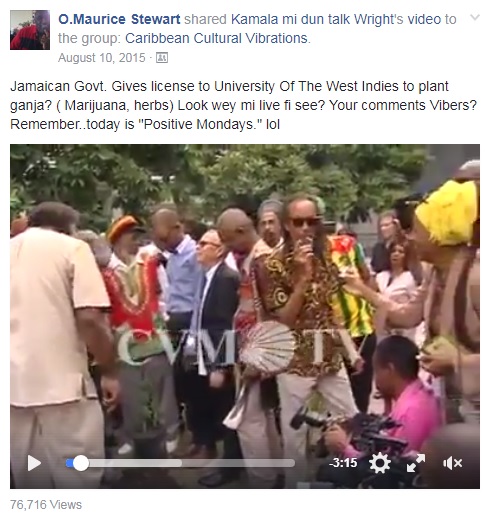
According to social media sites, there is already an outcry for regional leaders to consider some form of legalization or decriminalization in the Caribbean.
CU Blog - Lesson from Colorado - Legalized Marijuana - Photo 0

This issue has previously been addressed by planners of a new Caribbean stewardship – see here:

https://goleancaribbean.com/blog/?p=9646 ‘Time to Go’ – American Vices, i.e. Marijuana. Don’t Follow!
https://goleancaribbean.com/blog/?p=1386 Puff Peace – The Debate  for Marijuana in Jamaica

The book Go Lean…Caribbean – available to download for free – serves as a roadmap for the introduction and implementation of the technocratic Caribbean Union Trade Federation (CU), for the elevation of Caribbean society – for all member-states. This CU/Go Lean roadmap has these 3 prime directives:

  • Optimization of the economic engines in order to grow the regional economy to $800 Billion and create 2.2 million new jobs.
  • Establishment of a security apparatus to ensure public safety and protect the resultant economic engines.
  • Improve Caribbean governance to support these engines, including a separation-of-powers between the member-states and CU federal agencies.

The book stresses that reforming and transforming the Caribbean societal engines must be a regional pursuit. This was an early motivation for the roadmap, as pronounced in the opening Declaration of Interdependence (Pages 12 – 13):

xi. Whereas all men are entitled to the benefits of good governance in a free society, “new guards” must be enacted to dissuade the emergence of incompetence, corruption, nepotism and cronyism at the peril of the people’s best interest. The Federation must guarantee the executions of a social contract between government and the governed.

xvi. Whereas security of our homeland is inextricably linked to prosperity of the homeland, the economic and security interest of the region needs to be aligned under the same governance. Since economic crimes … can imperil the functioning of the wheels of commerce for all the citizenry, the accedence of this Federation must equip the security apparatus with the tools and techniques for predictive and proactive interdictions.

xxiv. Whereas a free market economy can be induced and spurred for continuous progress, the Federation must install the controls to better manage aspects of the economy: jobs, inflation, savings rate, investments and other economic principles. Thereby attracting direct foreign investment because of the stability and vibrancy of our economy.

The Go Lean book provides 370-pages of turn-by-turn instructions on “how” to adopt new community ethos, plus the strategies, tactics, implementations and advocacies to execute so as to reboot, reform and transform the societal engines of Caribbean society. According to that previous blog-commentary:

There are moral, religious, legal and psychological (treatment) issues associated with this topic; and there is history – good and bad. Any jurisdiction decriminalizing the use of marijuana has to contend with the previous messaging to the community of: “Just say no to drugs”.

The [Go Lean] book asserts that before the strategies, tactics, implementations and advocacies of a roadmap to elevate a society can be deployed, the affected society must first embrace a progressive community ethos. The book defines this “community ethos” as the fundamental character or spirit of a culture; the underlying sentiment that informs the beliefs, customs, or practices of society; dominant assumptions of a people or period. Think of the derivative term: “work ethic”.

Marijuana is a mood-altering drug; it has negative effects, one being preponderance for apathy, to tune out of any active engagement. In the US, even in the states where marijuana is legal, most firms/governments still screen staffers (new hires and veterans) and ban consumption of the drug. The reason is simple: Apathy does not make for industriousness. So this issue/drug presents a conundrum for the CU. The mission to grow the economy, promote industriousness, foster new jobs and new industries is pronounced early in the roadmap, detailed in the Declaration of Interdependence (Page 14) with this statement:

    xxvi. Whereas the Caribbean region must have new jobs to empower the engines of the economy and create the income sources for prosperity, and encourage the next generation to forge their dreams right at home, the Federation must therefore foster the development of new industries … In addition, the Federation must invigorate the enterprises related to existing industries … impacting the region with more jobs.

So to all you Caribbean stakeholders clamoring to follow Colorado’s lead … into the heavy-lifting of legalized marijuana use, we ask this one question:

Are you ready for this?

CU Blog - Lesson from Colorado - Legalized Marijuana - Photo 2

CU Blog - Lesson from Colorado - Legalized Marijuana - Photo 3

Thank you Colorado, for your fine role model. You have provided guidelines and learned-lessons that we can apply in our own jurisdictions. We learn that there are “pros” and “cons” to this controversial issue. Colorado authorities report that for 2016, they transacted over $1.1 Billion in marijuana sales for recreational and medicinal purposes; the State have collected $141 million in taxes, licenses and fees. The repercussions and consequences of legalized marijuana have not just been economic benefits, there have been public safety (security) incidents as well. Consider these headlines:

The Go Lean movement, as stewards of a new Caribbean, must answer the same question:

Are we ready?

No, our communities and societal engines (economics, security and governance) are NOT ready!

Yes, we accept the challenge; we hereby urge all Caribbean stakeholders – governments, law enforcement agencies, social and civic agencies – to lean-in to this Go Lean roadmap for how to make our Caribbean homeland a better place to live, work and play.

Our judgment now is that the Caribbean is not ready to sanction recreational marijuana use, but still …

… it is what it is.

We must be prepared and “on guard” for “bad actors” (and foreigners) to exploit the demand for this activity in our community. We are not trying to be Colorado, or to be America; no, we are trying to be better. 🙂

Download the free e-Book of Go Lean … Caribbean – now!

Sign the petition to lean-in for this roadmap for the Caribbean Union Trade Federation.

—————–

Appendix A – John Denver – Rocky Mountain High – https://youtu.be/eOB4VdlkzO4


Published on Apr 5, 2013 – John Denver’s official audio for ‘Rocky Mountain High’. Click to listen to John Denver on Spotify: http://smarturl.it/JohnDenverSpotify?…

As featured on The Essential John Denver. Click to buy the track or album via iTunes: http://smarturl.it/EssentialJD?IQid=J…
Google Play: http://smarturl.it/RMHGPlay?IQid=John…
Amazon: http://smarturl.it/EJDAmazon?IQid=Joh…

More from John Denver
Take Me Home, Country Roads: https://youtu.be/1vrEljMfXYo
Leaving On A Jet Plane: https://youtu.be/SneCkM0bJq0
Sunshine On My Shoulders: https://youtu.be/diwuu_r6GJE

More great 70s videos here: http://smarturl.it/Ultimate70?IQid=Jo…

Follow John Denver
Website: http://johndenver.com/
Facebook: https://www.facebook.com/JohnDenver
Twitter: https://twitter.com/johndenvermusic
Subscribe to John Denver on YouTube: http://smarturl.it/JohnDenverSub?IQid…
———
Lyrics:
He was born in the summer of his 27th year, coming home to a place he’d never been before.
He left yesterday behind him, you might say he was born again,
you might say he found a key for every door.
When he first came to the mountains, his life was far away on the road and hanging by a song.
But the string’s already broken and he doesn’t really care,
it keeps changing fast, and it don’t last for long.

And the Colorado Rocky Mountain high, I’ve seen it raining fire in the sky.
The shadows from the starlight are softer than a lullaby.
Rocky Mountain high, Colorado. Rocky Mountain high.

  • Category: Music
  • License: Standard YouTube License
—————–

Appendix B – Legalized: A Year In The Life Of Colorado’s Legal Weed Experiment | NBC News – https://youtu.be/B1cyfObqehI

Published on Nov 9, 2016 – Election night 2016 was a big night for the marijuana legalization movement as multiple states passed measures including recreations initiatives in California and Massachusetts. This piece documented the first year of Colorado’s legal weed experiment.

» Subscribe to NBC News: http://nbcnews.to/SubscribeToNBC
» Watch more NBC video: http://bit.ly/MoreNBCNews

NBC News is a leading source of global news and information. Here you will find clips from NBC Nightly News, Meet The Press, and our original series Debunker, Flashback, Nerdwatch, and Show Me. Subscribe to our channel for news stories, technology, politics, health, entertainment, science, business, and exclusive NBC investigations.

Connect with NBC News Online!
Visit NBCNews.Com: http://nbcnews.to/ReadNBC
Find NBC News on Facebook: http://nbcnews.to/LikeNBC
Follow NBC News on Twitter: http://nbcnews.to/FollowNBC
Follow NBC News on Google+: http://nbcnews.to/PlusNBC
Follow NBC News on Instagram: http://nbcnews.to/InstaNBC
Follow NBC News on Pinterest: http://nbcnews.to/PinNBC

Legalized: A Year In The Life Of Colorado’s Legal Weed Experiment | NBC News

Share this post:
, ,

‘If it is going to be, it starts with me’

Go Lean Commentary

“If it is going to be, it starts with me” – Self-Help Mantra

This has become a common rallying cry for Social Justice advocates – see Appendix A below. It is a very simple, yet powerful concept; it asserts:

Want to change the world, first change yourself, then work on changing your community and your country!

This theme is sang in songs – consider Appendix B and this song here by Michael Jackson, the Late-Great King of Pop. He said the same, but in a more melodious tune:

I’m starting with the man in the mirror. I’m asking him to change his ways; and no message could be any clearer: If you want to make the world a better place, take a look at yourself and make a change.

VIDEO – Michael Jackson – Man In The Mirror (Official Video) – https://youtu.be/PivWY9wn5ps

Published on Oct 2, 2009

In keeping with the lyrical message of “Man in the Mirror,” which was strongly identified with Michael Jackson and reflective of his own philosophies, the short film features powerful images of events and leaders whose work embodies the song’s message to”make that change.” Rolling Stone praised the short film in 2014 as “a powerful statement to deliver to personality-driven MTV.”

Written by Siedah Garrett and Glen Ballard
Produced by Quincy Jones for Quincy Jones Productions
Co-Produced by Michael Jackson for MJJ Productions, Inc.
From the album Bad, released August 31, 1987
Released as a single January 16, 1988

THE SHORT FILM
Director: Don Wilson

Michael Jackson’s short film for “Man in the Mirror” was the third of nine short films produced for recordings from Bad, one of the best-selling albums of all time. The “Man in the Mirror” single hit No. 1 in four countries in 1988, topping the charts in the United States, Italy, Belgium and Poland and reaching Top 5 in Canada, Ireland and New Zealand. In the U.S., “Man in the Mirror” was the fourth of five consecutive No. 1 singles from one album on the Billboard Hot 100-making Michael the first artist to achieve this milestone.

“Man in the Mirror,” written by Siedah Garrett (Michael’s duet partner on “I Just Can’t Stop Loving You”) and Glen Ballard, is one of only two songs on Bad not written by Michael Jackson and, even though it wasn’t a song he wrote himself, it was a message that was strongly identified with him and reflective of his own philosophies, as demonstrated through his actions and expressed in some of his own lyrics. “‘Man in the Mirror’ has a great message,” he wrote in his 1988 memoir Moonwalk. “I love that song. ..Start with yourself. Don’t be looking at all the other things. Start with you. That’s the truth.” A review of Bad in Rolling Stone in 1987 called the song “among the half dozen best things Jackson has done.”

In contrast to Michael’s other short films of the Bad era, “Man of the Mirror” tells a story not through performance, but through powerful images of oppression, homelessness, hunger, police brutality and other ills of the world, as well as events and leaders of the 20th century whose work is reflective of the song’s message to “make that change.”

Follow the Official Michael Jackson Accounts:
Facebook – http://smarturl.it/mj_facebook?IQid=y…
Twitter – http://smarturl.it/mj_twitter?IQid=yt…
Spotify – http://smarturl.it/mj_spotify?IQid=yt…
Newsletter – http://smarturl.it/mj_newsletter?IQid…
YouTube – http://smarturl.it/mj_youtube?IQid=yt…
Website – http://smarturl.it/mj_website?IQid=yt…

  • Category: Music
  • License: Standard YouTube License
Changing one-self; changing the community and changing the world; these are great aspirations! This is such a familiar theme for the movement behind the book Go Lean … Caribbean. In a previous blog-commentary, the point was elaborated that if you “change the way you see the world; you change the world you see”. But that thesis was related to technology and Augmented Reality Holograms; in this commentary however, the focus is strictly on Self-Help, for oneself and the community.

There is the need to help Caribbean communities.

The 30 member-states of the Caribbean region are all in dire straits; some are even flirting with Failed-States status – think: Puerto Rico Bankruptcy, Spanish Caribbean territorial abandonment, deficient Westminster structures, unstable volcanic states, etc.. Our communities are plagued with defects and dysfunctions in the economic, security and governing engines of society. But these can be remediated; the Go Lean movement posits that the entire region can be reformed and transformed, however that effort is described as heavy-lifting.

Yes, the societal defects of the Caribbean can be fixed – remediated and mitigated – but “if it is going to be, it starts with me”; it is necessary for all stakeholders to engage in the effort to turn-around the Caribbean. To forge change, the region must consider top-down and bottoms-up approaches, so we need the multitude of Caribbean people (bottoms-up) and politicians and community leaders (top-down) to lean-in to this quest to turn-around the community. Yes, it starts with “me”, as in everyone.

The quest to turn-around the Caribbean is detailed in the book Go Lean…Caribbean – available to download for free – which serves as a roadmap for the introduction and implementation of the technocratic Caribbean Union Trade Federation (CU), for the elevation of Caribbean society – for all 30 member-states. This CU/Go Lean roadmap has these 3 prime directives:

  • Optimization of the economic engines in order to grow the regional economy to $800 Billion and create 2.2 million new jobs.
  • Establishment of a security apparatus to ensure public safety and protect the resultant economic engines.
  • Improve Caribbean governance to support these engines, including a separation-of-powers between the member-states and CU federal agencies.

The book stresses that reforming and transforming the Caribbean societal engines must be a regional pursuit. This was an early motivation for the roadmap, as pronounced in the opening Declaration of Interdependence (Pages 12 – 13):

xi. Whereas all men are entitled to the benefits of good governance in a free society, “new guards” must be enacted to dissuade the emergence of incompetence, corruption, nepotism and cronyism at the peril of the people’s best interest. The Federation must guarantee the executions of a social contract between government and the governed.

xvi. Whereas security of our homeland is inextricably linked to prosperity of the homeland, the economic and security interest of the region needs to be aligned under the same governance. Since economic crimes … can imperil the functioning of the wheels of commerce for all the citizenry, the accedence of this Federation must equip the security apparatus with the tools and techniques for predictive and proactive interdictions.

xxiv. Whereas a free market economy can be induced and spurred for continuous progress, the Federation must install the controls to better manage aspects of the economy: jobs, inflation, savings rate, investments and other economic principles. Thereby attracting direct foreign investment because of the stability and vibrancy of our economy.

The Go Lean book provides 370-pages of turn-by-turn instructions on “how” to adopt new community ethos, plus the strategies, tactics, implementations and advocacies to execute so as to reboot, reform and transform the societal engines of Caribbean society.

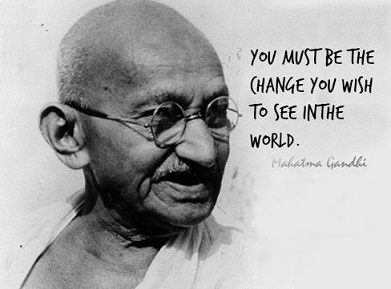
You must be the change you want to see in the world – Mahatma Gandhi.

CU Blog - 'If it is going to be it starts with me' - Photo 2

This quotation from Mahatma Gandhi relates to the theme of this commentary: “if it is going to be, it starts with me”.

Yes, the Revival the Caribbean needs must start with me! See song in Appendix B.

Other communities have successfully reformed and transformed; we can as well. This point has been conveyed in many previous blog-commentaries; consider this sample:

https://goleancaribbean.com/blog/?p=12322 Lesson from Canada – Ferries help Economics, Security & Governance
https://goleancaribbean.com/blog/?p=11386 Building Better Cities
https://goleancaribbean.com/blog/?p=10513 Lesson from India – Transforming ‘Money’ Countrywide
https://goleancaribbean.com/blog/?p=6563 Lessons from Iceland – Model of Recovery
https://goleancaribbean.com/blog/?p=4587 Burlington, Vermont: First city to be powered 100% by renewables
https://goleancaribbean.com/blog/?p=3490 How One Entrepreneur Can Rally a Whole Community
https://goleancaribbean.com/blog/?p=3326 M-1 Rail: Alternative Motion in the MotorCity
https://goleancaribbean.com/blog/?p=1918 Philadelphia Freedom – We can Look, Listen and Learn
https://goleancaribbean.com/blog/?p=1731 Lesson from Omaha – One Person Forging Change
https://goleancaribbean.com/blog/?p=1596 ‘Prospering Where … Planted’

This is not just idle talk. No, it is a viable plan – a roadmap – that is a conceivable, believable and achievable. The Go Lean book offers the turn-by-turn directions for strategies, tactics and implementations. So with the commitment of time, talent and treasuries of everyone in the Caribbean – or maybe just 1 person: “me” or “you” –  we can succeed in making our homeland a better place to live, work and play. 🙂

Download the free e-Book of Go Lean … Caribbean – now!

Sign the petition to lean-in for this roadmap for the Caribbean Union Trade Federation.

———-

Appendix A – PhD Dissertation

If It’s to Be, It Starts With Me!

The Bidirectional Relation between Goals and the Self

Inaugural-Dissertation

zur Erlangung der Doktorwürde der
Philosophischen Fakultät II

Der Julius-Maximilians – University of Würzburg

URL: https://opus.bibliothek.uni-wuerzburg.de/files/3501/PetraMarkelDissertation.pdf

———-

Appendix B VIDEO – Tim Timmons – Starts With Me – https://youtu.be/pslWA2VRmxg  

Published on Apr 29, 2013 – Download the song now: http://hyperurl.co/2fmddf

Subscribe: http://hyperurl.co/ilhqdq

Share this post:
, ,
[Top]

State of the Union: Deficient ‘Westminster System’

Go Lean Commentary

CU Blog - State of the Union - Westminster States - Photo 4

The issue of governance is very important to understanding the State of the Caribbean Union. In many countries, governance is just one of the factors that dictate success or failure for homeland’s societal engines. But in the Caribbean, it is “#1 … with a Bullet”. The government is normally the largest employer, largest educator, largest infrastructure builder and the only security option.

  • Good governance = Good societal progress
  • Poor governance = Failed-State

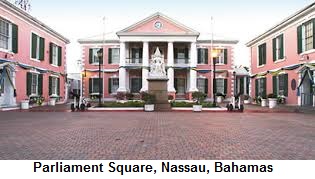
The most common form of governance in all of the Caribbean is the Westminster System. This is due to the many British legacies among the member-states (18 of 30 feature a British constitutional heritage, only Guyana has reformed). See details of Westminster here:

Title: Westminster System

The Westminster system is a parliamentary system of government modelled after that which developed in the United Kingdom. This term comes from the Palace of Westminster, the seat of the British parliament. The system is a series of procedures for operating a legislature. It is used, or was once used, in the national legislatures and subnational legislatures of most former British Empire colonies upon gaining responsible government,[1][2] beginning with the first of the Canadian provinces in 1848 and the six Australian colonies between 1855 and 1890.[3][4][5] However, some former colonies have since adopted either the presidential system (Nigeria for example) or a hybrid system (like South Africa) as their form of government.

CU Blog - State of the Union - Westminster States - Photo 1

CU Blog - State of the Union - Westminster States - Photo 2

CU Blog - State of the Union - Westminster States - Photo 3

Characteristics
A Westminster system of government may include some of the following features:

  • sovereign or head of state who functions as the nominal or legal and constitutional holder of executive power, and holds numerous reserve powers, but whose daily duties mainly consist of performing ceremonial functions. Examples include Queen Elizabeth II, the governors-general in Commonwealth realms, or the presidents of many countries, and state or provincial governors in federal systems. Exceptions to this are Ireland and Israel, whose presidents are de jure and de facto ceremonial, and the latter possesses no reserve powers whatsoever.
  • head of government (or head of the executive), known as the prime minister (PM), premier, or first minister. While the head of state appoints the head of government, constitutional convention suggests that a majority of elected Members of Parliament must support the person appointed.[6] If more than half of elected parliamentarians belong to the same political party, then the parliamentary leader of that party typically is appointed.[6] An exception to this was Israel, in which direct prime-ministerial elections were made in 19961999 and 2001.
  • An executive branch led by the head of government usually made up of members of the legislature with the senior members of the executive in a cabinet adhering to the principle of cabinet collective responsibility; such members execute executive authority on behalf of the nominal or theoretical executive authority.
  • An independent, non-partisan civil service which advises on, and implements, decisions of those ministers. Civil servants hold permanent appointments and can expect merit-based selection processes and continuity of employment when governments change.[7]
  • parliamentary opposition (in a multi-party system) with an official Leader of the Opposition.
  • A legislature, often bicameral, with at least one elected house – although unicameral systems also exist; legislative members are usually elected by district in first-past-the-post elections (as opposed to country-wide proportional representation). Exceptions to this include New Zealand, which changed in 1993 to use mixed-member proportional representationIsrael, which has always used country wide proportional representation; and Australia, which uses preferential voting.
  • lower house of parliament with an ability to dismiss a government by “withholding (or blocking) Supply” (rejecting a budget), passing a motion of no confidence, or defeating a confidence motion. The Westminster system enables a government to be defeated or forced into a general election independently.
  • A parliament which can be dissolved and snap elections called at any time.
  • Parliamentary privilege, which allows the legislature to discuss any issue it deems relevant, without fear of consequences stemming from defamatory statements or records thereof
  • Minutes of meetings, often known as Hansard, including an ability for the legislature to strike discussion from these minutes
  • The ability of courts to address silence or ambiguity in the parliament’s statutory law through the development of common law. Another parallel system of legal principles also exists known as equity. Exceptions to this include India, Quebec in Canada, and Scotland in the UK amongst others which mix common law with other legal systems.

Most of the procedures of the Westminster system originated with the conventions, practices, and precedents of the Parliament of the United Kingdom, which form a part of what is known as the Constitution of the United Kingdom. Unlike the uncodified British constitution, most countries that use the Westminster system have codified the system, at least in part, in a written constitution.

However, uncodified conventions, practices, and precedents continue to play a significant role in most countries, as many constitutions do not specify important elements of procedure: for example, some older constitutions using the Westminster system do not mention the existence of the cabinet or the prime minister, because these offices were taken for granted by the authors of these constitutions. Sometimes these conventions, reserve powers, and other influences collide in times of crisis and in such times the weaknesses of the unwritten aspects of the Westminster system, as well as the strengths of the Westminster system’s flexibility, are put to the test. As an illustrative example, in the Australian constitutional crises of 1975 the Governor-General of Australia, Sir John Kerr, dismissed Prime Minister Gough Whitlam on his own reserve-power authority and replaced him with opposition leader Malcolm Fraser.

Operation
The pattern of executive functions within a Westminster System is quite complex. In essence, the head of state, usually a monarch or president, is a ceremonial figurehead who is the theoretical, nominal or de jure source of executive power within the system. In practice, such a figure does not actively exercise executive powers, even though executive authority may be exercised in their name.

The head of government, usually called the Prime minister or Premier, will ideally have the support of a majority in the responsible house, and must in any case be able to ensure the existence of no absolute majority against the government. If the parliament passes a resolution of no confidence, or refuses to pass an important bill such as the budget, then the government must either resign so that a different government can be appointed or seek a parliamentary dissolution so that new general elections may be held in order to re-confirm or deny the government’s mandate.

Executive authority within a Westminster System is essentially exercised by the Cabinet, along with more junior ministers, although the head of government usually has the dominant role within the ministry. In the United Kingdom, the sovereign theoretically holds executive authority, even though the Prime Minister of the United Kingdom and the Cabinet effectively implement executive powers. In a parliamentary republic like India, the President is the de jure executive, even though executive powers are essentially instituted by the Prime Minister of India and the Council of Ministers. In Israel, however, executive power is vested de jure and de facto in the cabinet, and the President of Israel is de jure and de facto a ceremonial figurehead.

As an example, the Prime Minister and Cabinet (as the de facto executive body in the system) generally must seek the permission of the head of state when carrying out executive functions. If, for instance the British Prime Minister wished to dissolve parliament in order for a general election to take place, the Prime Minister is constitutionally bound to request permission from the sovereign in order to attain such a wish. This power (along with others such as appointing ministers in the government, appointing diplomats, declaring war, and signing treaties, for example) is known as the Royal Prerogative, which in modern times is exercised by the sovereign solely on the advice of the Prime Minister. Since the British sovereign is a constitutional monarch, he or she abides by the advice of his or her ministers, except when executing reserve powers in times of crisis.

This custom also occurs in other Westminster Systems in the world, in consequence from the influence of British colonial rule. In Commonwealth realms such as Canada, Australia and New Zealand, the Prime Minister is obligated to seek permission from the Governor-General when implementing executive decisions, in a manner similar to the British practice. An analogous scenario also exists in Commonwealth republics, such as India or Trinidad and Tobago, where there is a President, though not in Israel or Japan, where the respective prime ministers have the full legal power to implement executive decisions, and presidential (in Israel) or imperial (in Japan) approval is not required.

The head of state will often hold meetings with the head of government and cabinet, as a means of keeping abreast of governmental policy and as a means of advising, consulting and warning ministers in their actions. Such a practice takes place in the United Kingdom and India. In the UK, the sovereign holds confidential weekly meetings with the Prime Minister to discuss governmental policy and to offer her opinions and advice on issues of the day. In India, the Prime Minister is constitutionally bound to hold regular sessions with the President, in a similar manner to the aforementioned British practice. In essence, the head of state, as the theoretical executive authority, “reigns but does not rule”. This phrase means that the head of state’s role in government is generally ceremonial and as a result does not directly institute executive powers. The reserve powers of the head of state are sufficient to ensure compliance with some of their wishes. However, the extent of such powers varies from one country to another and is often a matter of controversy.

Such an executive arrangement first emerged in the United Kingdom. Historically, the British sovereign held and directly exercised all executive authority. George I of Great Britain (reigned 1714 to 1727) was the first British monarch to delegate some executive powers to a Prime Minister and a cabinet of the ministers, largely because he was also the monarch of Hanover in Germany and did not speak English fluently. Over time, arrangement continued to exercise executive authority on the sovereign’s behalf. Such a concept was reinforced in The English Constitution (1876) by Walter Bagehot, who emphasised the “dignified” and “efficient” aspects of government. In this sense Bagehot was stating that the sovereign should be a focal point for the nation, while the PM and cabinet actually undertook executive decisions.

There are important rules and responsibilities associated with the “Role of the head of state”

Source: Retrieved July 14, 2017 from Wikipedia Online Encyclopedia: https://en.wikipedia.org/wiki/Westminster_system  

Westminster is good … sometimes, but Westminster is mostly bad!

Westminster does not allow for the needed responsiveness; it does not feature a direct election of the Head of Government by the general population; but rather, it includes electing Members of Parliament (MP) from individual districts, and then the MP’s elect their leader. The party leader with the majority in Parliament is appointed Prime Minister, Premier, First or Chief Minister – First Among Equals; see Appendix A. This means less accountability and responsiveness to the citizens not in the constituency of the MP that is selected as Prime Minister.

Under this Westminster scheme, since this Head of Government is NOT elected by the majority of population, this one can be susceptible to a minority group – his/her constituents – over the Greater Good. Plus, this Head of Government can also reign in more than one branch of government. This one is the leader of the party with the majority of seats in Parliament, so this means that he/she leads the legislature; he/she forms the Cabinet, so he leads the Executive Branch. This leader holds sway on the candidates for the party and the selections of the elected ministers to the Cabinet. Lastly, this one appoints the Judges, so he/she wields power over the judiciary as well. The ideal separation-of-powers between government branches is deficient, defective and thus embeds failure on the countries societal engines.

Absolute power …

It is the assessment for the movement behind the book Go Lean…Caribbean that Westminster is dysfunctional … for the accountability and responsiveness for administering the Caribbean homeland. As a result of the deficiencies of Westminster, many countries have evolved and reformed their governance; they have abandoned Westminster; see list in Appendix B.

On the other hand, it is the assessment of this movement that since the Westminster System allows the concentration of power to only one person, the Prime Minister, it is easier to reform and transform a country. There is only the need to reach (influence, lobby and persuade) that one person. It is therefore easier for change and empowerment to take place, but still we recommend the member-states of the Caribbean region reform, transform and conform … to a new standard of governance.

This subject of governing systems is analyzed in the book Go Lean…Caribbean. This book provides an assessment of the Caribbean today, drawing reference to its historic past. From the origins of colonialism, the region traversed the historic curves of social revolution and evolution. The Go Lean book – available to download for free – serves as a roadmap for the introduction and implementation of the technocratic Caribbean Union Trade Federation (CU), for the elevation of Caribbean society – for all member-states. This CU/Go Lean roadmap endorses a system of better governance, with these 3 prime directives:

  • Optimization of the economic engines in order to grow the regional economy to $800 Billion and create 2.2 million new jobs.
  • Establishment of a security apparatus to ensure public safety and protect the resultant economic engines.
  • Improve Caribbean governance to support these engines, including a true separation-of-powers between the member-states and CU federal agencies.

The book stresses that reforming and transforming the Caribbean societal engines must be a regional pursuit. This was an early motivation for the roadmap, as pronounced in the opening Declaration of Interdependence (Pages 12 – 13):

xi. Whereas all men are entitled to the benefits of good governance in a free society, “new guards” must be enacted to dissuade the emergence of incompetence, corruption, nepotism and cronyism at the peril of the people’s best interest. The Federation must guarantee the executions of a social contract between government and the governed.

xvi. Whereas security of our homeland is inextricably linked to prosperity of the homeland, the economic and security interest of the region needs to be aligned under the same governance. Since economic crimes … can imperil the functioning of the wheels of commerce for all the citizenry, the accedence of this Federation must equip the security apparatus with the tools and techniques for predictive and proactive interdictions.

xxiv. Whereas a free market economy can be induced and spurred for continuous progress, the Federation must install the controls to better manage aspects of the economy: jobs, inflation, savings rate, investments and other economic principles. Thereby attracting direct foreign investment because of the stability and vibrancy of our economy.

This commentary is 3 of 5 in an occasional series on the State of the Caribbean Union. Surely, a malfunctioning state of governance throughout the entire region must have some common traits. These have been assessed in the Go Lean book and the technocratic solutions provided there-in. The full entries of all the blog-commentaries in this series are as follows:

  1. State of the Caribbean Union – Lacking Hope and Change
  2. State of the Caribbean Union – Dysfunctional Spanish Caribbean
  3. State of the Caribbean Union – Deficient Westminster System
  4. State of the Caribbean Union – Unstable Volcano States
  5. State of the Caribbean Union – Self-Interest of Americana

As related in the first submission in this series, the young people in the region need the vision of “something better” or Hope and Change in order to be inspired to participate in the future of this homeland. We cannot have a future without these young people, so these solutions – strategies, tactics and implementations – are not optional.

Hope for the future! This is a consistent theme from the Go Lean movement. Consider these previous blog-commentaries:

https://goleancaribbean.com/blog/?p=11759 Understand the Market, Plan the …
https://goleancaribbean.com/blog/?p=10629 Stay Home! A Series on Why and How to Keep Our Youth Home
https://goleancaribbean.com/blog/?p=10554 State of French Caribbean
https://goleancaribbean.com/blog/?p=7198 State of the Caribbean Union
https://goleancaribbean.com/blog/?p=4263 State of Aruba and Dutch Caribbean’s Economy
https://goleancaribbean.com/blog/?p=1634 Chasing Youth Culture and Getting It Right

The Go Lean book provides 370-pages of turn-by-turn instructions on “how” to adopt new community ethos, plus the strategies, tactics, implementations and advocacies to execute so as to reboot, reform and transform the societal engines of Caribbean society. For one, the recommendation is to reform and transform Caribbean governance, to evolve from the dysfunctions of Westminster and adapt a more enlightened Strong Executive (Presidential) structure (Page 72).

See the contrast portrayed here in this related VIDEO:

VIDEO – Parliamentary vs. Presidential Democracy Explained – https://youtu.be/4quK60FUvkY

Published on May 7, 2015 – The two main systems of democratic government, Presidential vs. Parliamentary, explained.
Free audiobook: http://www.audibletrial.com/TheDailyC…
Subscribe to The Daily Conversation: https://www.youtube.com/TheDailyConve…

At one point, the US used a version of Westminster – during the bad old days of the United States of America under the Articles of Confederation (1781–1789) – but this country evolved … and now feature one of the most responsive and accountable forms on government on the planet. In addition to the US, there are many other countries – consider Appendix B – that have evolved; some have rebooted and some have adapted a hybrid system of Westminster and the Presidential system.

In the Caribbean, we can do better! We do not have to be America; we can be better!

There is an aspect of the Westminster System that is embedded in the Go Lean roadmap, where the separation-of-powers provision parallels to the “Reserve Powers” of Westminster. These “Reserve Powers” ensure compliance with the tenants of state constitutions and treaties. These powers allow the CU to serve as a deputized entity for member-state governance; consider the justice scenarios requiring Commissions of Inquiries.

Yes, it is possible to reform and transform the Caribbean member-states that employ the deficient Westminster System. We can do better; we can make our homeland a better place to live, work and play. 🙂

Download the free e-Book of Go Lean … Caribbean – now!

Sign the petition to lean-in for this roadmap for the Caribbean Union Trade Federation.

———–

Appendix A – First Among Equals

The status of the Prime Minister has been described as primus inter pares: Latin for “first among equals.” This concept defines not only the prime minister’s relationship with Cabinet, but also, in a sense, his or her relationship with the public in our modern democratic society. Drawing on a wide variety of documents and artifacts, this site explores five main themes (see the menu at left) relating to Canada’s prime ministers. The site examines our leaders’ political careers as well as their private lives. It also sheds light on Canadians’ perceptions of our prime ministers.

From Macdonald to Harper, our political leaders are twenty-two individuals who have made a difference, shaping Canada’s identity, sometimes in profound ways.

Source: Retrieved July 15, 2017 from: https://www.collectionscanada.gc.ca/primeministers/index-e.html

———–

Appendix B – Countries That Abandoned Westminster

The Westminster system was adopted by a number of countries which subsequently evolved or reformed their system of government departing from the original model. In some cases, certain aspects of the Westminster system were retained or codified in their constitutions. For instance South Africa and Botswana, unlike Commonwealth realms or parliamentary republics such as India, have a combined head of state and head of government but the President remains responsible to the lower house of parliament; it elects the President at the beginning of a new Parliament, or when there is a vacancy in the office, or when the sitting President is defeated on a vote of confidence. If the Parliament cannot elect a new President within a short period of time (a week to a month) the lower house is dissolved and new elections are called.

  • The Union of South Africa between 1910 and 1961, and the Republic of South Africa between 1961 and 1984. The 1983 constitution abolished the Westminster system in South Africa.
  • Newfoundland gave up self-government in 1934 and reverted to direct rule from London. Use of the Westminster system resumed in 1949 when Newfoundlandbecame a province of Canada.
  • Rhodesia between 1965 and 1979, and Zimbabwe between 1980 and 1987. The 1987 constitution abolished the Westminster system.
  • Nigeria following the end of British colonial rule in 1960, which resulted in the appointment of a Governor-General and then a President, Nnamdi Azikiwe. The system ended with the military coup of 1966.
  • Ceylon between 1948 and 1972, and Sri Lanka from 1972 until 1978 when the constitution was remodelled into an Executive presidential system.
  • Burma following independence in 1948 until the 1962 military coup d’état.
  • Ghana between 1957 and 1960.
  • Tanganyika between 1961 and 1962.
  • Sierra Leone between 1961 and 1971.
  • Uganda between 1962 and 1963.
  • Kenya between 1963 and 1964.
  • Malawi between 1964 and 1966.
  • The Gambia between 1965 and 1970.
  • Guyana between 1966 and 1980.
  • Fiji between 1970 and 1987.
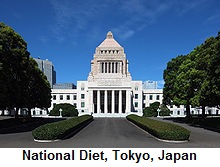
  • Japan between 1890 and 1947, under the Meiji Constitution the Diet of Japan was a bicameral legislature modelled after both the German Reichstag and the Westminster system.[11] Influence from the Westminster system remained in Japan’s Postwar Constitution.[12][13][14]

Source: Retrieved July 14, 2017 from: https://en.wikipedia.org/wiki/Westminster_system#Former_countries

Share this post:
, , , ,
[Top]

Hurricane Season 2017 and ‘Climate Change’ Abatement

CU Blog - Hurricane Season 2017 - Photo 1

Go Lean Commentary

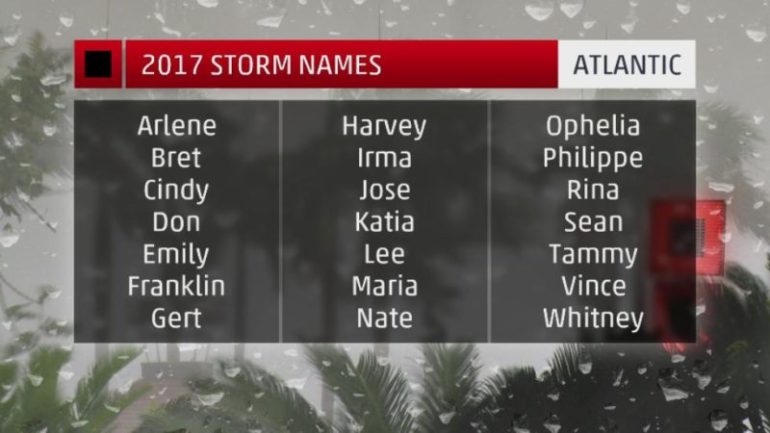
Its June 1st, the start of the Hurricane season. According to Weather Authorities, it is going to be a tumultuous season, maybe even more destructive than last year; see Appendix A below.

Thanks Climate Change.

What hope is there to abate the threats from Climate Change?

Thanks to the Paris Accord, there is now hope; (we remember the effectiveness of the accord to abate “Acid Rain”).

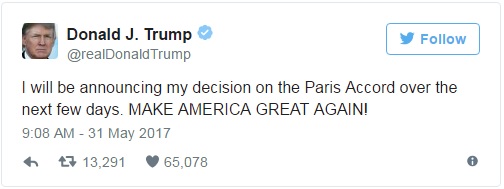
But wait! The American President – Donald Trump – announces that he is withdrawing the United States from the Paris Accord. (See the news article/link in Appendix B below).

CU Blog - Hurricane Season 2017 - Photo 3

W.T.H.?!?!

This is a matter of security; perhaps we should not look to the US to take the lead for our own fate. This is so familiar … and a Hot Topic today as European member-states are contemplating how much they can look to the US for leadership for their security needs; (see the VIDEO in the Appendix C below).

This is the assertion of the book Go Lean…Caribbean; available to download for free. It serves as a roadmap for the introduction and implementation of the technocratic Caribbean Union Trade Federation (CU), for the elevation of Caribbean society – for all member-states. The quest is that we take our own lead – collectively – for our own fate. This CU/Go Lean roadmap has these 3 prime directives:

The book stresses that reforming and transforming the Caribbean societal engines must be a regional pursuit; the issues at hand are too big for anyone member-state alone. This was an early motivation for the roadmap, as pronounced in the opening Declaration of Interdependence (Pages 12 – 13):

i. Whereas the earth’s climate has undeniably changed resulting in more severe tropical weather storms, it is necessary to prepare to insure the safety and security of life, property and systems of commerce in our geographical region. As nature recognizes no borders in the target of its destruction, we also must set aside border considerations in the preparation and response to these weather challenges.

xi. Whereas all men are entitled to the benefits of good governance in a free society, “new guards” must be enacted to dissuade the emergence of incompetence, corruption, nepotism and cronyism at the peril of the people’s best interest. The Federation must guarantee the executions of a social contract between government and the governed.

xvi. Whereas security of our homeland is inextricably linked to prosperity of the homeland, the economic and security interest of the region needs to be aligned under the same governance. Since economic crimes … can imperil the functioning of the wheels of commerce for all the citizenry, the accedence of this Federation must equip the security apparatus with the tools and techniques for predictive and proactive interdictions.

xxiv. Whereas a free market economy can be induced and spurred for continuous progress, the Federation must install the controls to better manage aspects of the economy: jobs, inflation, savings rate, investments and other economic principles. Thereby attracting direct foreign investment because of the stability and vibrancy of our economy.

The Go Lean book provides 370-pages of turn-by-turn instructions on “how” to adopt new community ethos, plus the strategies, tactics, implementations and advocacies to execute so as to reboot, reform and transform the societal engines of Caribbean society.

The issue of Hurricane Season 2017 is bigger than initial appearances – there are BIG  issues afoot. Many are issues that were addressed in previous Go Lean blog-commentaries; see a sample here:

https://goleancaribbean.com/blog/?p=11858 Welcome to Kiribati – Hello and Goodbye
https://goleancaribbean.com/blog/?p=11442 Caribbean Roots: Al Roker – ‘Climate Change’ Defender
https://goleancaribbean.com/blog/?p=9455 Fix ‘Climate Change’ – Yes, We Can
https://goleancaribbean.com/blog/?p=9334 Hurricane Categories – The Science
https://goleancaribbean.com/blog/?p=7449 Due to Climate Change, ‘Crap Happens’ – So What Now?
https://goleancaribbean.com/blog/?p=7103 COP21 – ‘Climate Change’ Acknowledged
https://goleancaribbean.com/blog/?p=6893 A Meteorologist’s View On Climate Change
https://goleancaribbean.com/blog/?p=6016 ‘Hotter than July’ – Reality in the Caribbean
https://goleancaribbean.com/blog/?p=4673 Climate Change‘ Merchants of Doubt … to Preserve Profits!!
https://goleancaribbean.com/blog/?p=2465 Book: ‘This Changes Everything: Capitalism vs. the Climate’
https://goleancaribbean.com/blog/?p=2276 Climate Change May Affect Food Supply Within a Decade
https://goleancaribbean.com/blog/?p=2119 Cooling Effect – Oceans and the Climate
https://goleancaribbean.com/blog/?p=1883 Climate Change May Bring More Kidney Stones
https://goleancaribbean.com/blog/?p=1817 Caribbean grapples with intense cycles of flooding & drought
https://goleancaribbean.com/blog/?p=926 Conservative heavyweights have solar industry in their sights
https://goleancaribbean.com/blog/?p=915 Go ‘Green’ … Caribbean

We endured a bitter Hurricane Season last year; Hurricane Matthew was devastating for a number of Caribbean islands in September/October; i.e. Haiti and the Bahamas. (In fact, the Bahamian city of Freeport was so severely impacted that one of its biggest Hotel-Casino resorts closed … permanently).

The Caribbean status quo is unsustainable under the real threats of Climate Change. The region must reboot, reform and transform. We must do the heavy-lifting ourselves; we cannot expect relief and refuge from others, like the American Super-Power. We must find and “sail” under our own power.

Hope and Change! Yes, we can …

… we can make our Caribbean homeland a better place to live, work and play. 🙂

Download the free e-Book of Go Lean … Caribbean – now!

Sign the petition to lean-in for this roadmap for the Caribbean Union Trade Federation.

————

Appendix A – Forecasters predict active 2017 hurricane season

With the start of the Atlantic hurricane season less than one week away, the National Oceanic and Atmospheric Administration, says it could be a busy one with five to nine hurricanes expected to form.

Overall, NOAA forecasts 11 to 17 named tropical storms will develop in the region, which includes the Atlantic, the Caribbean Sea and Gulf of Mexico, the agency announced Thursday.

The season officially begins June 1 and runs through Nov. 30.

Of the hurricanes, two to four could be major, with wind speeds of 111 mph or higher and rated as Category 3, 4 or 5 on the Saffir-Simpson Scale of Hurricane Intensity.

An average season typically produces 12 named tropical storms and six hurricanes and peaks in August and September.

A tropical storm contains wind speeds of 39 mph or higher and becomes a hurricane when winds reach 74 mph.

Factors contributing to the prediction include: A weak or non-existent El Nino, near- or above-average sea-surface temperatures, and average or weaker-than-average vertical wind shear, said Gerry Bell, Ph.D., lead seasonal hurricane forecaster with NOAA’s Climate Prediction Center.

Meteorologists at Colorado State University last month estimated 11 tropical storms will form, with four becoming hurricanes.

The late Colorado State University meteorologist William Gray was the first scientist to make seasonal hurricane forecasts back in the 1980s.

The Weather Channel predicts an average season, with 12 named storms, of which six will become hurricanes. AccuWeather forecasts 10 named storms, five of which are projected to become hurricanes.

Source: St. Lucia Times Daily Newspaper –  Posted May 25, 2017 retrieved June 1, 2017 from: https://stluciatimes.com/2017/05/26/forecasters-predict-active-2017-hurricane-season

————

Appendix B – Trump expected to withdraw from Paris Accord

Washington (CNN) President Donald Trump is expected to withdraw from the Paris climate agreement, two senior US officials familiar with his plans told CNN Wednesday, a major break from international partners that would isolate the United States in global efforts to curb global warming.

CU Blog - Hurricane Season 2017 - Photo 2

The decision would put the US at odds with nearly every other nation on earth. It would reflect a major reversal of the Obama administration’s efforts on climate change. And it could trigger further efforts to erode the landmark climate accord.

Source: Posted and retrieved May 31, 2017 from http://www.cnn.com/2017/05/31/politics/trump-paris-accord/

——

In actuality, President Trump officially announces  the exit and former President Obama barks. See story and VIDEO here: http://www.independent.co.uk/news/world/americas/us-politics/paris-agreement-trump-obama-response-rejecting-future-climate-change-deal-latest-news-updates-a7768171.html

————

Appendix C VIDEO – Thanks to Trump, Germany says it can’t rely on the United Stateshttp://wapo.st/2qsrQHd

Share this post:
, , ,
[Top]

R.I.P. Noriega – Lessons Learned from Panama – ENCORE

Noriega RIP - Photo 1The world is acknowledging the passing of Manuel Noriega (1934-2017), the General and former Military Dictator of Panama (1983–1989), the Central American country with a Caribbean coastline. His life experience is one of highs and lows, ascending to great heights and depressing depths. There is so much for the planners of the new Caribbean to learn considering the historicity of Noriega.

… and the historicity of Panama.

One lesson – from Panama – was presented before in a previous Go Lean blog-commentary from February 10, 2015, encored here.

This previous blog-commentary, and the life of Noriega, portrays the duplicity and complexity of operating in the shadows of/for the United States of America. The theme is consistent:

American interest is not always Caribbean interest.

“From the 1950s until shortly before the [1989] U.S. invasion, Noriega worked closely with the U.S. Central Intelligence Agency. Noriega was one of the CIA’s most valued intelligence sources, as well as one of the primary conduits for illicit weapons, military equipment and cash destined for U.S.-backed counter-insurgency forces throughout Central and South America. Noriega was also a major cocaine trafficker, something which his U.S. intelligence handlers were aware of for years, but allowed because of his usefulness for their covert military operations in Latin America.”[4][5][6][7]

See the full blog-commentary regarding the Panamanian currency – Balboa – here:

————-

Go Lean Commentary – A Lesson in History – Panamanian Balboa

America has surely changed over the past century!

The people, institutions and governance of the US are now more tolerant of minorities and their communities. As such, there are no more American complexities in overthrowing Latin American & Caribbean governments.

Wink-wink

This hypothesis is validated with the lesson in history from 1941 in the Republic of Panama. This Central American country is a young nation; they were formed in 1903 after seceding from the Republic of Colombia, with US backing. The new country immediately signed a treaty with the US to allow the construction of the Panama Canal, by the US Army Corps of Engineers, and a perpetual lease* for its operations. The country’s separation from Colombia also included changing from the Colombian Peso currency. So in 1904 the Panamanian Balboa currency was launched, but as coins only; the country used the US Dollar as banknotes.

A basic tenant of macro-economics is that countries should issue their own currency and banknotes so as to better influence the economic engines in their communities. By manipulating the banknote quantity and the “Discount Rate” in a Fractional Central Banking System, monetary supply can be regulated, interest rates controlled; credit markets tamed; and yes, money can be created from “thin air”. Panama had none of this control, due to its lack of banknotes.

In 1941, the then-President Dr. Arnulfo Arias pushed the government to create the Central Bank and to issue paper currency. [2] The bank was authorized, constitutionally, to issue up to 6 million Balboas worth of paper notes, but only 2.7 million Balboas were issued on 2 October 1941. Seven days later, Arias was deposed in a military coup – supported by the United States – and replaced by Dr. Ricardo Adolfo de la Guardia Arango as President. The new government immediately closed the bank, withdrew the issued notes, and burned all unissued money stock. In the 74 years since then, the country has never re-attempted to issue its own paper money currency; they continue to use US Dollars, even today.

A bit extreme?

This lesson in history is presented in a consideration of the book Go Lean…Caribbean; it serves as a roadmap for the introduction and implementation of the technocratic Caribbean Union Trade Federation (CU) and Caribbean Central Bank (CCB) to provide better stewardship in ensuring that the currency and economic failures of the past, in the Caribbean and other regions, do not re-occur here in the homeland. The book posits that we must NOT fashion ourselves as an American parasite economy, but rather pursue a status as a protégé.

The full details of the Panamanian Balboa history is provided here:

Title: Panamanian Balboa
(Source: Wikipedia Online Encyclopedia (Retrieved 02/09/2015) – http://en.wikipedia.org/wiki/Panamanian_balboa)

The Balboa (sign: B/.; ISO 4217: PAB) is, along with the United States dollar, one of the official currencies of Panama. It is named in honor of the Spanish explorer / conquistador Vasco Núñez de Balboa. The Balboa is subdivided into 100 centésimos.

The history of the Panamanian Balboa

The Balboa replaced the Colombian Peso in 1904 following the country’s independence. The Balboa has been tied to the United States dollar (which is legal tender in Panama) at an exchange rate of 1:1 since its introduction and has always circulated alongside dollars.

Coins

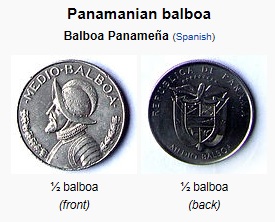
In 1904, silver coins in denominations of 2½, 5, 10, 25, and 50 centésimos were introduced. These coins were weight-related to the 25 gram 50 centésimos, making the 2½ centésimos coin 1¼ grams. Its small size led to it being known as the “Panama pill” or the “Panama pearl”. In 1907, copper-nickel ½ and 2½ centésimos coins were introduced, followed by copper-nickel 5 centésimos in 1929. In 1930, coins for 110, ¼, and ½ Balboa were introduced, followed by 1 balboa in 1931, which were identical in size and composition to the corresponding U.S. coins. In 1935, bronze 1 centésimo coins were introduced, with 1¼ centésimo pieces minted in 1940.

CU Blog - A Lesson in History - Panamanian Balboa - Photo 1

In 1966, Panama followed the U.S. in changing the composition of their silver coins, with copper-nickel clad 110 and ¼ Balboa, and .400 fineness ½ Balboa. 1 balboa coins, at .900 fineness silver, were issued that year for the first time since 1947. In 1973, copper-nickel clad ½ Balboa coins were introduced. 1973 also saw the revival of the 2½ centésimos coin, which had a size similar to that of the U.S. half dime, but these were discontinued two years later due to lack of popular demand. In 1983, 1 centésimo coins followed their U.S. counterpart by switching from copper to copper plated zinc. Further issues of the 1 Balboa coins have been made since 1982 in copper-nickel without reducing the size.

Modern 1 and 5 centésimos and 110, ¼, and ½ balboa coins are the same weight, dimensions, and composition as the U.S. cent, nickel, dime, quarter, and half-dollar, respectively. In 2011, new 1 and 2 balboa bi-metal coins were issued.[1]

In addition to the circulating issues, commemorative coins with denominations of 5, 10, 20, 50, 75, 100, 150, 200, and 500 Balboas have been issued.

Banknotes

In 1941, President Dr. Arnulfo Arias pushed the government to enact Article 156 to the constitution, authorizing official and private banks to issue paper money. As a result, on 30 September 1941, El Banco Central de Emission de la Republica de Panama was established.[2]

CU Blog - A Lesson in History - Panamanian Balboa - Photo 2

The bank was authorized to issue up to 6,000,000 Balboas worth of paper notes, but only 2,700,000 balboas were issued on 2 October 1941. A week later, Dr. Ricardo Adolfo de la Guardia Arango replaced Arias as president in a coup supported by the United States. The new government immediately closed the bank, withdrew the issued notes, and burned all unissued stocks of same. Very few of these so-called “Arias Seven Day” notes escaped incineration.

Reference Notes:
1. http://worldcoinnews.blogspot.com/search/label/panama
2. Linzmayer, Owen (2012). “Panama”. The Banknote Book. San Francisco, CA: www.BanknoteNews.com.

Panama is out-of-scope of this Go Lean empowerment roadmap. They are not a member-state that caucuses with the Caribbean Community (CariCom), and they do not even have an “Observer” representation/status within the trade bloc. But since a part of their territory-coastline is on the Caribbean Sea, their dealings should generate review and monitoring from Caribbean planners. There are many issues for the Caribbean to consider  – from an academic point-of-view – about this history of Panama: an obvious failed-state as recent as the 1980’s.

Is the American manipulations in Panama’s past reflective of the same America today? The assumption is No! The US no longer draws such “hard lines” in their interactions with peoples of different ethnicity. The country has endured deep soul-searching and reconciliation of its racial past, (Civil Rights Movement, Affirmative Action, etc.), and now even the President of the United States is a Black Man. On the surface today, America is a color-blind society.

On the surface!

Behind the scenes, under the covers, there is another reality. The current American experience is that Black-and-Brown is still institutionally disadvantaged and Wall Street, and by extension “Big American Business”, wields uncanny power over the socio-economic-political affairs of the country. For this and other reasons, the Go Lean movement advocates for Caribbean people and institutions to take their own lead for their own determination. We want to be a protégé of the US, not a parasite.

The roadmap calls for a cooperative entity of the existing regional Central Banks to foster interdependence for the regional Greater Good. We must issue Caribbean banknotes, branded Caribbean Dollars (C$). The totality of the regional market, 42 million people in 30 member-states, is large enough to allow for streamlining of the marketplace, creating the right climate for viable currency/financial/securities markets. While there might be some reticence for liberal currency operations, considering that so many Caribbean member-states had to learn hard lessons on currency over the decades – painful devaluations – the CU is to be structured as a technocracy, with the right mix of skilled talent, gifted genius and independent oversight to allow regional C$ currency markets to soar.

The strategy is not a pro-American stance, no pegging to the US Dollar, therefore no losses will be experienced when the US dollar drops value compared to other international currencies, a far too frequent an occurrence in the last 50 years. The US Dollar planners (Federal Reserve) do not have the Caribbean best-interest in mind for their technocratic decisions regarding their currency management; they have American self-interest in mind. Therefore the Caribbean region must overcome any “fear of math” because the C$ may become stronger, (see VIDEO below), in comparison to the US$. This is why e-Commerce and e-Payments schemes are strongly urged within the CU/Go Lean roadmap.

In general, the CU will employ strategies, tactics and implementations to impact its prime directives; identified with the following 3 statements:

  • Optimization of the economic engines in order to grow the regional economy to $800 Billion & create 2.2 million new jobs.
  • Establishment of a security apparatus to protect the resultant economic engines and mitigate internal and external threats.
  • Improve Caribbean governance to support these engines.

Early in the Go Lean book, this need for careful technocratic stewardship of the regional Caribbean economy was pronounced (Declaration of Interdependence – Page 12 – 13) with these acknowledgements and statements:

xi.   Whereas all men are entitled to the benefits of good governance in a free society, “new guards” must be enacted to dissuade the emergence of incompetence, corruption, nepotism and cronyism at the peril of the people’s best interest. The Federation must guarantee the executions of a social contract between government and the governed.

xii.   Whereas the legacy in recent times in individual states may be that of ineffectual governance with no redress to higher authority, the accedence of this Federation will ensure accountability and escalation of the human and civil rights of the people for good governance, justice assurances, due process and the rule of law. As such, any threats of a “failed state” status for any member state must enact emergency measures on behalf of the Federation to protect the human, civil and property rights of the citizens, residents, allies, trading partners, and visitors of the affected member state and the Federation as a whole.

xxiv.   Whereas a free market economy can be induced and spurred for continuous progress, the Federation must install the controls to better manage aspects of the economy: jobs, inflation, savings rate, investments and other economic principles. Thereby attracting direct foreign investment because of the stability and vibrancy of our economy.

xxv.   Whereas the legacy of international democracies had been imperiled due to a global financial crisis, the structure of the Federation must allow for financial stability and assurance of the Federation’s institutions. To mandate the economic vibrancy of the region, monetary and fiscal controls and policies must be incorporated as proactive and reactive measures. These measures must address threats against the financial integrity of the Federation and of the member-states.

The Go Lean book, and previous blog/commentaries, stressed the key community ethos, strategies, tactics, implementations and advocacies necessary to regulate and manage the regional financial eco-system for the Caribbean currency. These points are detailed in the book as follows:

Community Ethos – Economic Principles – Economic Systems Influence Individual Choices Page 21
Community Ethos – Economic Principles – Consequences of Choices Lie in the Future Page 21
Community Ethos – Economic Principles – Money Multiplier Page 23
Community Ethos – Governing Principles – Lean Operations Page 24
Community Ethos – Ways to Impact the Future Page 26
Community Ethos – Ways to Impact the Greater Good Page 37
Strategy – Mission – Fortify the Stability of the Banking Institutions Page 45
Strategy – Provide Proper Oversight and Support for the Depository Institutions Page 46
Tactical – Ways to Foster a Technocracy Page 64
Tactical – Growing the Economy – Minimizing Bubbles Page 69
Tactical – Separation-of-Powers – Caribbean Central Bank Page 73
Tactical – Separation-of-Powers – Depository Institutions Regulatory Agency Page 73
Anecdote – Turning Around CARICOM – Effects of 2008 Financial Crisis Page 92
Implementation – Assemble Caribbean Central Bank as a Cooperative Page 96
Implementation – Ways to Better Manage Debt Page 114
Planning –10 Big Ideas – Single Market / Currency Union Page 127
Planning – Ways to Improve Failed-State Indices Page 134
Planning – Lessons Learned from 2008 Page 136
Planning – Ways to Measure Progress Page 147
Anecdote – Caribbean Currencies Page 149
Advocacy – Ways to Grow the Economy Page 151
Advocacy – Ways to Control Inflation Page 153
Advocacy – Reforms for Banking Regulations Page 199
Advocacy – Ways to Impact Wall Street Page 200
Advocacy – Ways to Impact Main Street Page 201
Appendix – Controlling Inflation – Technical Details Page 318
Appendix – Jamaica’s International Perception – “High inflation and currency dysfunction” Page 297

The points of effective, technocratic banking/economic stewardship of regional currencies, were further elaborated upon in these previous blog/commentaries:

https://goleancaribbean.com/blog/?p=3889 RBC EZPay – Ready for Change
https://goleancaribbean.com/blog/?p=3858 ECB unveils 1 trillion Euro stimulus program
https://goleancaribbean.com/blog/?p=3814 Lessons from the Swiss unpegging the franc
https://goleancaribbean.com/blog/?p=3743 Trinidad cuts 2015 budget as oil prices tumble
https://goleancaribbean.com/blog/?p=3582 For Canadian Banks: Caribbean is a ‘Bad Bet’
https://goleancaribbean.com/blog/?p=3090 Lessons Learned – Europe Sovereign Debt Crisis of 2009
https://goleancaribbean.com/blog/?p=2930 ‘Too Big To Fail’ – Caribbean Version
https://goleancaribbean.com/blog/?p=949 Inflation Matters
https://goleancaribbean.com/blog/?p=833 One currency, divergent economies
https://goleancaribbean.com/blog/?p=518 Analyzing the Data – What Banks learn about financial risks
https://goleancaribbean.com/blog/?p=378 US Federal Reserve Releases Transcripts from 2008 Meetings/Stimulus
https://goleancaribbean.com/blog/?p=273 10 Things We Don’t Want from the US – #3: Quantitative Easing

Similar to Panama, there are a number of Caribbean member-states that use the US dollar as their sole paper currency:

  • British Virgin Island
  • Turks & Caicos Islands
  • Dutch Caribbean Territories: Bonaire, Sint Eustatius and Saba
  • US Territories of Puerto Rico & US Virgin Islands

The Go Lean book reports that previous Caribbean administrations have failed miserably in managing regional currencies. Consider Jamaica for example, despite being pegged 1-to-1 with the US dollar in 1960’s, the J$ was trading at 87-to-1 with the US$ at press time for the book (November 2013). Other countries (like Trinidad, Dominican Republic, and the Eastern Caribbean Currency Union states) experienced similar turmoil, though at lesser rates of devaluation. The book opens with the declaration that the Caribbean is in crisis because of episodes like these currency failings. In every case, the direct after-effect was increased societal abandonment, and now the reported brain-drain rate is estimated at 70%, with some countries even reporting up to 81%. This disposition is symptomatic of a Failed-State status.

Currency management includes details of more than just the paper-money people carry in their wallets. The book describes the 4 basic functions of money:

  • a medium of exchange
  • a unit of account
  • a store of value
  • a standard of deferred payment

These dynamics have an effect on inflation/deflation and trade facilitation with other countries. So Central Banks must strenuously manage currency issues to ensure economic progress and avoid financial dysfunction. This point is conveyed in the following VIDEO, as regards the Central Bank management of the Chinese Yuan.

VIDEO: Pegging the Yuan – http://youtu.be/S-9iY1OgbDE

Uploaded on Oct 25, 2010 – How the Chinese Central Bank could peg the Yuan to the dollar by printing Yuan and buying dollars (building up a dollar reserve). This lesson in macro-economics can be applied to any Central Bank, any other currency.

There are so many currency issues that have to be coordinated that the Go Lean book describes the effort as heavy-lifting. The roadmap (Page 5) declares that change has come to the Caribbean, and that new technocrats are ready to assume oversight of regional currency issues:

Please swallow your pride
If I have things you need to borrow
For no one can fill those of your needs
That you won’t let show
You just call on me brother, when you need a hand

(Chorus)
We all need somebody to lean on
I just might have a problem that you’d understand
We all need somebody to lean on

(Lyrics of song: Lean On Me, by Singer/Songwriter: Bill Withers)

This is not the same world as 1941 Panama, but still there are many lessons to learn and apply in the Caribbean. The goal is simple, to move the region to a new destination: a better homeland to live, work and play. Now is the time for all of the Caribbean, the people, banking establishments and the governing institutions, to lean-in for the changes described in the book Go Lean … Caribbean.

🙂

Download the free e-Book of Go Lean … Caribbean – now!

———

* Appendix Footnote: Subsequent treaties added an expiration date for 1999; the Canal is now fully Panamanian.

Share this post:
, , , , ,
[Top]

The Dynamics of Diaspora Voting

Go Lean Commentary

So you have an opinion? Good! Now here are the facts.

Did that move your opinion? If not, you’re dogmatic. If, on the other hand, the clarification of facts causes you to adjust your thinking then you have been enlightened.

Welcome to the club!

For the movement behind the book Go Lean…Caribbean, the planners of a new Caribbean, it has always been our position that the Diaspora should preserve their voting rights back in the homeland. Now that we have considered the facts below, our relationship status – assuming the ‘romance between man and his hometown’ – must be changed to:

It’s complicated“; not just “divorced” nor just “separated”.

The primary driver of this position comes from this basic principle of democracy:

No taxation without representation

If this basic principle is accepted then the opposite must also be true:

No representation without taxation.

This may be a fitting analogy for the issue of Diaspora Voting: Imagine a man that divorces his wife, then still tries to dictate who she can subsequently date or marry; that ex-husband’s prerogative should justifiably be revoked.

CU Blog - Dynamics of Diaspora Voting - Photo 2

CU Blog - Dynamics of Diaspora Voting - Photo 3

Can a member of the Caribbean Diaspora leave his/her homeland, stop paying taxes, stop contributing to the community and yet still dictate who should assume leadership in their absence? This would include how to spend the tax dollars that they no longer contribute. (See the Letter to Editor – “Diaspora voting is the people’s rights to decide” in the Appendix below).

Thus, the “complicated” status.

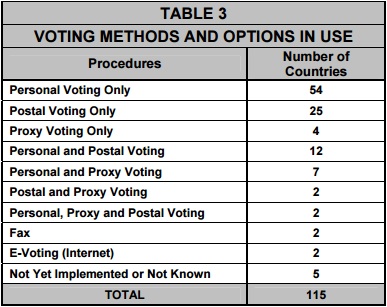
There is a lot of details and complexities associated with Diaspora Voting. See this summary here of this White Paper; (the full White Paper can be accessed at: https://www.overseasvotefoundation.org/files/The_History_and_Politics_of_Diaspora_Voting.pdf):

Title: The History and Politics of Diaspora Voting in Home Country Elections

Prepared by Andy Sundberg, based on information from Andrew Ellis and others sources in: ”Voting from Abroad”: The International IDEA Handbook, 2007.

The case for external voting is usually presented as a question of principle, based on the universality of the right to vote. In reality, however, the introduction of external voting is enacted or enabled by legislation passed by elected politicians. Although there have been a variety of reasons for the enactment of external voting provisions, almost all have been the result of political impetus, and many have been controversial and even nakedly partisan.

1. A Brief History of Diaspora Voting
… The reasons for introducing external voting also differ according to the historical and political contexts. Thus, in several countries the introduction of the right to vote for overseas citizens was an acknowledgement of their active participation in World War I or World War II. …Outside the military context, New Zealand introduced absentee voting for seafarers in 1890, and Australia adopted it in 1902, although under operating arrangements which made its use outside Australia practically impossible. …
2. Diaspora Voting In Democratic Transition Countries
The importance of political factors in the adoption and design of external voting provisions was accentuated during the democratic transitions of the 1990s. The inclusion of citizens abroad was often seen as a key element in the process of nation-building, for example, in Namibia in 1989 and South Africa in 1994.Diaspora communities may be active in seeking a post-transition role, and may be particularly influential when they play a role in the domestic politics of major donor countries. However, such pressure is not always successful. …The international community frequently plays a leading or significant role in mediating transitions and even in implementing transitional elections. Transition agreements may therefore contain important and sometimes controversial external voting provisions. …
3. Diaspora Voting and Electoral System Design
Political considerations are not only important in determining whether external voting takes place: they are also influential in defining its form. Many decisions relating to external voting are linked to electoral system design, another highly political aspect of democratic reform and democratic transition.Electoral system design is one of the most important elements in the institutional framework of a country, influencing as it does the political party system. Electoral system reform may be on the agenda as a result of vision or a motivation to improve democracy, or for more short-term, sectoral or even venal reasons on the part of some political participants. This is mirrored by external voting, which may be placed on the democratic agenda by those who believe strongly in the equal right of all citizens to participate—or by political forces which see potential advantage in it.The desire to promote external voting may constrain the options for electoral system design. Conversely, the adoption of a particular electoral system may limit the options for external voting mechanisms. This can be illustrated by considering the three basic options for external voting— personal voting at an external polling site in a diplomatic mission, for example; remote voting by post, fax or some form of e-voting; and voting by proxy.
3.1 Diaspora Voting in Person and Electoral System Design
3.2 Diaspora Remote Voting and Electoral System Design
3.3 Diaspora Voting by Proxy and Electoral System Resign
3.4 Diaspora Voting Timing Issues
4. Who Can Vote and How Voting Takes Place
4.1 The Number of National Diasporas Who Can Vote Today
Voting from abroad is now possible for Diaspora communities from 115 home countries. Of these, 28 come from home countries in Africa; 16 in the Americas; 20 in Asia; 41 in Western, Central and Eastern Europe; and 10 in the Pacific. Provisions for voting by Diaspora communities have been adopted by five additional countries, but rules and voting methods have not yet been decided.
4.2 Restrictions on Diaspora Members Who Can Vote from Abroad
Fourteen countries, who allow voting by their Diaspora communities, impose some time restrictions on such electoral participation. These restrictions are summarized in Table 1 below.
4.3 Different Types of Elections During Which Diaspora Voting is Currently Permitted
There are four principal types of elections where voting by Diaspora members can take place so far.Presidential Elections: Diaspora members from 64 countries can participate in their home country presidential elections.

Legislative Elections: Diaspora members from 92 countries can participate in their home country legislative elections.

Sub-National Elections: Diaspora members from 25 countries can participate in their home country sub-national elections.

Referendums: Diaspora members from 38 countries can participate in their home country referendums.

Diaspora Voting in Different Combinations of Elections: Each country has a different selection of elections that permit vote from their Diaspora members. These elections are shown in Table 2 below.

4.4 Different Types of Diaspora Voting Methods Used
Countries use five different methods of voting for their Diaspora members today.Voting in Person: Diaspora members from 79 countries can vote in person.

Voting by Post: Diaspora members from 47 countries can vote by postal ballot.

Voting by Proxy: Diaspora members from 16 countries can vote by proxy.

Voting by Fax: Diaspora members from 2 countries (Australia and New Zealand) can vote by fax.

Voting by the Internet: Diaspora members from 2 countries (Estonia and the Netherlands) have been able to vote by the Internet so far. (Note: American Diaspora members of Democrats Abroad (DA) were also able to vote in the 2008 overseas primary election by Internet and 48% of the total DA primary votes were cast this way).Different Combinations of Voting Methods: Each country has a different selection of voting methods that are available for their Diaspora members. Some offer only one voting method, but some offer several options. These different options are shown in Table 3 below.

Source: Posted 2007; retrieved May 25, 2017 from: https://www.overseasvotefoundation.org/files/The_History_and_Politics_of_Diaspora_Voting.pdf

The book Go Lean…Caribbean – available to download for free – identified the Diaspora as stakeholders in the quest to reform and transform Caribbean society. The book serves as a roadmap for the introduction and implementation of the technocratic Caribbean Union Trade Federation (CU), for the elevation of Caribbean society – for all 30 member-states. This CU/Go Lean roadmap has these 3 prime directives:

  • Optimization of the economic engines in order to grow the regional economy to $800 Billion and create 2.2 million new jobs.
  • Establishment of a security apparatus to ensure public safety and protect the resultant economic engines.
  • Improve Caribbean governance to support these engines, including a separation-of-powers between the member-states and CU federal agencies.

The failing of these above societal engines constitute one of the reasons why Caribbean people have left their homelands in the first place. This is identified as the “push” factor; in addition there is the “pull” factor, the lure that life may be more prosperous elsewhere, that the “grass is greener on the other side”. The book stresses that reforming and transforming the Caribbean societal engines must be engaged, and must be a regional pursuit, as the societal challenges are too big for any one Caribbean member-state alone to assuage. This regionalism was an early motivation for the roadmap, as pronounced in the opening Declaration of Interdependence (Pages 12 – 13):

xi. Whereas all men are entitled to the benefits of good governance in a free society, “new guards” must be enacted to dissuade the emergence of incompetence, corruption, nepotism and cronyism at the peril of the people’s best interest. The Federation must guarantee the executions of a social contract between government and the governed.

xvi. Whereas security of our homeland is inextricably linked to prosperity of the homeland, the economic and security interest of the region needs to be aligned under the same governance. Since economic crimes … can imperil the functioning of the wheels of commerce for all the citizenry, the accedence of this Federation must equip the security apparatus with the tools and techniques for predictive and proactive interdictions.

xxiv. Whereas a free market economy can be induced and spurred for continuous progress, the Federation must install the controls to better manage aspects of the economy: jobs, inflation, savings rate, investments and other economic principles. Thereby attracting direct foreign investment because of the stability and vibrancy of our economy.

xxxiii. Whereas lessons can be learned and applied from the study of the recent history of other societies, the Federation must formalize statutes and organizational dimensions to avoid the pitfalls of communities like …. On the other hand, the Federation must also implement the good examples learned from developments/communities like ….

The Go Lean book provides 370-pages of turn-by-turn instructions on “how” to adopt new community ethos, plus the strategies, tactics, implementations and advocacies to execute so as to reboot, reform and transform the societal engines of Caribbean society. Consider the importance the book (Page 110) highlights as to the aforementioned democratic principle:

The Bottom Line on Taxation without Representation
“No taxation without representation” is a slogan originating during the late-1700s that summarized a primary grievance of the British colonists in the Thirteen American Colonies, which was one of the major causes of the American Revolution against Great Britain. Many in those colonies believed that as they were not directly represented in the distant British Parliament, any laws it passed taxing the colonists were illegal under the English Bill of Rights enacted in 1689 and were a denial of their rights. – http://www.notaxationwithoutrepresentation.com Retrieved September 2012.

Today, the phrase is used in Washington, DC, and in Ottawa, Canada as part of the campaign for a vote in Congress or Parliament, to publicize the fact that Capital District residents pay Federal taxes, but do not have a legislative vote. To alleviate this abuse, the CU intends to add 1 (voting) seat in the Legislative House of Assembly to represent residents of its Capital District.

What was your opinion? How has your opinion been altered based on the facts here? The overall assertion from the Go Lean movement (book and blog-commentaries) is that reforming politics-government alone will not reform Caribbean society – it is part-and-parcel with reforming economic and security engines – but we still do need to reform government. Reforming society is a heavy-lifting task; we must have “all hands on deck”, Diaspora included.

While we cannot just say “give us your money” and then “get lost” from our decision-making”, we must also accept that there is a difference for those that are “here” versus those that are not! The Go Lean book (Page 47) therefore identifies this role for the Diaspora as stakeholders in the Caribbean reform-transform heavy-lift:

Caribbean Diaspora
These emigrated citizens still identify with their homelands. Though they may live abroad, they congregate in pockets in urban areas. The CU will foster the development of this group so as to form them into an organized market; this includes individuals and institutions (for-profit companies, not-for-profit organizations and foundations). There is also the reality of the foreign-born children of the Diaspora, identified here as Legacies. These will be tapped for consumer products only.

In total, these stakeholders import foods and drink from the homeland; they demand expressions of Caribbean culture and they consume media produced by Caribbean artists targeting a Caribbean consumer-base. The number constituting the Diaspora is estimated between 6 and 8 million people – for some member-states, a majority of their citizenry lives abroad – this population is not to be ignored. A CU mission is to repatriate this group, for their time, talent and treasuries. Where this repatriation cannot be full-time, the CU proffers a part-time commitment: vacation homes, time-share condominiums, youth mentoring, community coaching, and season-ticket holders for sports and artistic events – in the islands or abroad for touring companies’ performances.

The CU will establish Trade Mission Offices closest to Diaspora pockets (for example: Flatbush in Brooklyn, NY, Jamaica Hill in Lauderhill, FL and Notting Hill, London) to allow efficient trade, visitor/convention promotion & planning and CU federal government interactions.

Yes, the Diaspora can help to make our homeland a better place to live, work and play. We urge them to lean-in to this effort.

Consider some previous blog-commentaries here, that elaborated on the role of the Diaspora in the Go Lean roadmap:

https://goleancaribbean.com/blog/?p=11420 ‘Black British’ and ‘Less Than’
https://goleancaribbean.com/blog/?p=11244 ‘To Live and Die in L.A.’ …
https://goleancaribbean.com/blog/?p=10820 Miami: Dominican’s ‘Home Away from Home’
https://goleancaribbean.com/blog/?p=10657 Stay Home! Outreach to the Diaspora – Doubling-down on Failure
https://goleancaribbean.com/blog/?p=10494 A Lesson In History – Ending the US Military Draft Accelerated Diaspora
https://goleancaribbean.com/blog/?p=9646 ‘Time to Go’ – American Vices. Don’t Follow!
https://goleancaribbean.com/blog/?p=9017 Proclaim the Same ‘International Caribbean Day’ for All Diaspora
https://goleancaribbean.com/blog/?p=8155 Government Referendum Outcome: Exacerbating the ‘Brain Drain’
https://goleancaribbean.com/blog/?p=8099 Caribbean Diaspora Image: ‘Less Than’?
https://goleancaribbean.com/blog/?p=7151 The Caribbean is Looking for Heroes … ‘to Return’
https://goleancaribbean.com/blog/?p=5088 Immigrants account for 1 in 11 Blacks in the US
https://goleancaribbean.com/blog/?p=4613 Learning from Ireland about the Past, Present and Future of the Diaspora
https://goleancaribbean.com/blog/?p=2547 Miami’s Success versus Caribbean Failure
https://goleancaribbean.com/blog/?p=1296 Remittances to Caribbean Increased By 3 Percent

But should these Diaspora members vote while still residing in their foreign abodes?

It’s complicated!

🙂

Download the free e-Book of Go Lean … Caribbean – now!

Sign the petition to lean-in for this roadmap for the Caribbean Union Trade Federation.

————–

Appendix – Letter to Editor – Diaspora voting is the people’s rights to decide

Dear Sir:

It is indeed one step closer to complete freedom of the Jamaican people the unshackling of the last vestige of slavery; a direct challenge to the ruling class who have openly opposed ordinary Jamaicans gaining significant political and economic power.

CU Blog - Dynamics of Diaspora Voting - Photo 1If you agree with me that ever since independence no government has actually sought to empower the people except under Michael Manley to some degree, then you must conclude that the country is not been governed in the interest of the ordinary people. Diaspora voting right is not an imposition of our will on the Jamaican people but rather the embodiment of the common man’s vision of the future for Jamaica outside of the colonial construct created to perpetuate the economic enslavement our people. 

Crime in Jamaica is an instrument of social control to deplete the rising power of a middle-class by forcing them to “fly-out ” and oppress a captive underclass by using them as the dominant electorate subverted by criminal gangs and their “Don” leaders.

We, therefore, cannot assert our political and economic rights from within, our influence on transforming Jamaica can only be achieved under the protection of foreign democracies in which we live. There is no other solution to Jamaica’s crime problem than a political one. Diaspora Jamaicans must demand a vote and end the violence once and for all. This will strengthen our democratic institutions and shift the political dynamics away from garrison politics to allow for the repatriation of economic and human capital to Jamaica for economic development. Economic integration cannot be achieved without political and social integration.

One of the most frequent arguments against Diaspora voting is “they don’t have to live with the consequences”. But I say this, you are right! cause we don’t want to live with the consequences of continued poverty and crime, we want live with the consequences of Jamaica’s prosperity that is why we are demanding the vote.

We are not asking to change the laws, we are only demanding what the constitution guarantees us pursuant to the rights and duty of a citizen under the UN Charter of Rights and Freedom which Jamaica is a signatory. It is an agenda for change through the creation of a cooperative democracy (a real partnership) in which the poor is afforded a safety net, and government projects, programs, and policies are evaluated for sustainability goals.

Signed,
Silbert Barrett

Source: Posted May 16, 2017; retrieved May 25, 2017 from: http://www.caribbeannewsnow.com/topstory-Letter%3A-Diaspora-voting-is-the-people%27s-rights-to-decide-34467.html

————–

Appendix – Reference Tables

CU Blog - Dynamics of Diaspora Voting - Table 1

CU Blog - Dynamics of Diaspora Voting - Table 2

CU Blog - Dynamics of Diaspora Voting - Table 3

Share this post:
, ,
[Top]

Rio Olympics – Athens Olympics: Same Strategy; Same Failure

Go Lean Commentary

It’s simple: learn from mistakes or you repeat them.

This applies to other people’s mistakes as well.

There is the funny anecdote of an insane asylum located in the inner boroughs in some unidentified city. The inmates forced a hole in a border fence and one day they shouted out “Four, four, four …”. A stranger walked by, heard the shouts and peeked in the hole. An inmate poked him in the eye, then shouted “Five, five, five …”.

Mistake made, no lesson learned!

Unfortunately, this is the reality for many countries, in particular “poorer” countries that have hosted the Olympics. There was the clearly documented mistake – “bad” experience – of Athens-Greece hosting the 2004 Olympics. They built many permanent stadiums that were never used again – “white elephants” – they cost a lot of money to build and a lot to maintain. Fast forward to the 2016 Rio De Janeiro-Brazil Olympics and we see the Same Strategy; Same Failure – “the stranger unwisely peeks in the same hole and gets poked in the eye”.

CU Blog - Rio Olympics - Same Strategy; Same Failure - Photo 1

CU Blog - Rio Olympics - Same Strategy; Same Failure - Photo 3

CU Blog - Rio Olympics - Same Strategy; Same Failure - Photo 5

CU Blog - Rio Olympics - Same Strategy; Same Failure - Photo 4

CU Blog - Rio Olympics - Same Strategy; Same Failure - Photo 2

The Rio De Janeiro-Brazil city, state and federal governments ignored the sage advice and built permanent stadia (plural of stadium) and venues for the 2016 Olympic Games and now are suffering the same “black eye”. See the details of this Same Strategy; Same Failure phenomena in the article and VIDEO here:

Title: Scathing report on 2016 Rio Olympics: venues ‘White Elephants’
RIO DE JANEIRO (AP) — A federal prosecutor looking into last year’s Rio de Janeiro Olympics says that many of the venues “are white elephants” that were built with “no planning.”

The scathing report offered Monday at a public hearing confirms what was reported several months after the games ended. Many of the venues are empty, boarded up, and have no tenants or income with the maintenance costs dumped on the federal government.

“There was no planning,” federal prosecutor Leandro Mitidieri told the public hearing on the Olympics. “There was no planning when they put out the bid to host the Games. No planning.

“They are white elephants today,” Mitidieri added. “What we are trying to look at here is to how to turn this into something usable.”

Rio de Janeiro spend about $12 billion to organize the games, which were plagued by cost-cutting, poor attendance, and reports of bribes and corruption linked to the building of some Olympic-related facilities.

The Olympic Park in suburban Barra da Tijuca, which was the largest cluster of venues, is an expanse of empty arenas with clutter still remaining from the games. The second largest cluster, in the northern area of Deodoro, is closed despite plans to open it as a public park with swimming facilities for the mostly poor who live in the area.

Patricia Amorim, the undersecretary for sports in the city of Rio, said highly publicized plans were on hold to dismantle one arena and turn the remains into four schools. The arena was the venue for handball.

“It will be dismantled,” she said. “We are just waiting to know whether we will actually have resources to build these schools on other sites, or whether we will dismantle it and wait for the resources to come. Our schools need to be reformed and that’s our priority, not new schools.”

Nine months after the Rio Olympics ended, the local organizing committee still owes creditors about $30 million, and 137 medals awarded during the games are rusting and need to be repaired.

Former Rio de Janeiro Mayor Eduardo Paes, the moving force with the International Olympic Committee behind organizing last year’s Olympics, is being investigated for allegedly accepting at least 15 million reals ($5 million) in payments to facilitate construction projects tied to the games.

He denies any wrongdoing.

Organizing committee spokesman Mario Andrada said more than 100 medals awarded at the Olympics showed signs of rusting. He said many were bronze medals, and said many of the tarnished medals had been awarded to Americans.

“Most of the problems were due to handling, poor handling,” Andrada said. “Either they fell on the floor or they were touching each other so, it was a problem of handling. Whatever was the problem with the poor handling, it took the gloss off the medal and then you see rusting.”

He said the medals would be repaired at Brazil’s mint, called the Casa da Moeda.

He said more than 2,000 medals were awarded at the Olympics and said “several other games had problems with medals.”

Source: USA Today Daily Newspaper. Posted May 22, 2017; retrieved May 24, 2017 from: https://www.usatoday.com/story/sports/olympics/2017/05/22/scathing-report-on-rio-olympics-venues-white-elephants/102041926/

—————–

VIDEO – Rio 2016 Olympic Venues Just 6 Months After The Olympics – https://youtu.be/Jh-s2rb1Ka0

Published on Feb 13, 2017 – Summer is over for Brazil’s ‘marvelous city’. In a series of eerie and depressing new photos released last week, the 2016 Summer Olympic venues in Rio de Janeiro are seen filthy and deserted just 6 months after the end of the games, including the legendary Maracana Stadium. In a city that hoped desperately to be lifted out of poverty and debt by making back the money they spent, these are the ruins of a shattered dream.

Rio 2016 was boiled in scandal before it had even began, including a Zika virus outbreak, reports of doping by Russian athletes, and the impeachment of president Dilma Rousseff due to corruption. The second largest city in Brazil is millions of dollars in debt with international creditors, and now also owes over 900 thousand dollars to a local energy company.

Murky pools, worn terrain, and vandalism can be found all over the Olympic park. Seats have been torn from the once-iconic arena. The future of these shockingly neglected buildings remains uncertain, but they’re unlikely to be a high priority among Rio’s long list of coming challenges.

Temporary stadium over permanent stadium – this is a familiar advocacy for the publishers of the book Go Lean…Caribbean. These points are gleaned from this previous blog-commentary from June 5, 2014:

Learn from Greece – Why build expensive permanent stadiums for temporary (sports/cultural) events, when there is such an effective art and science with temporary stadiums?! This important lesson was ignored in Brazil for the FIFA World Cup 2014.

The subsequent article and [embedded] VIDEO (from the cable channel HBO’s documentary Real Sports) describes the folly for expensive permanent stadiums for short-term events; especially while the art and science of temporary stadiums is so effective.


The foregoing article discourages investment in permanent venues unless there is a solid long-term business plan. The Go Lean roadmap concurs – Greece did not recover from the flawed Olympic build-out for facilities that were never used again after the 2004 Games. On the other hand, here is the encouragement and recommendation to develop fairgrounds and deploy temporary stadia, arenas and theaters. Imagine a golf tournament; no one would expect bleachers and grandstands at the putting greens to be permanent structures. No, there is a place for temporary structures in the world of sports.

The book Go Lean…Caribbean – available to download for free – serves as a roadmap for the introduction and implementation of the technocratic Caribbean Union Trade Federation (CU), for the elevation of Caribbean society – for all the 30 member-states in the region. The roadmap asserts that there could be many economic and societal benefits by harnessing the potential from the world of sports.  While sports are not the roadmap’s primary purpose, related pursuits are recognized as important strategies. A mission of the Go Lean roadmap is quoted as “forge industries and economic drivers around the individual and group activities of sports and culture” (Page 81). But make no mistake, there is NO recomendation for the Caribbean to host the Olympics … ever.

Overall, this CU/Go Lean roadmap describes these 3 prime directives:

  • Optimization of the economic engines in order to grow the regional economy to $800 Billion and create 2.2 million new jobs; 21,000 direct jobs at sports enterprises, venues and fairgrounds throughout the region.
  • Establishment of a security apparatus to ensure public safety and protect the resultant economic engines.
  • Improvement of Caribbean governance to support these engines, including a separation-of-powers between the member-states and CU federal agencies.

The book stresses that reforming and transforming the Caribbean societal engines – including the sports eco-systems – must be a regional pursuit. This was an early motivation for the roadmap, as pronounced in the opening Declaration of Interdependence (Pages 12 – 13):

xi. Whereas all men are entitled to the benefits of good governance in a free society, “new guards” must be enacted to dissuade the emergence of incompetence, corruption, nepotism and cronyism at the peril of the people’s best interest. The Federation must guarantee the executions of a social contract between government and the governed.

xxi. Whereas the preparation of our labor force can foster opportunities and dictate economic progress for current and future generations, the Federation must ensure that educational and job training opportunities are fully optimized for all residents of all member-states, with no partiality towards any gender or ethnic group. The Federation must recognize and facilitate excellence in many different fields of endeavor, including sciences, languages, arts, music and sports. This responsibility should be executed without incurring the risks of further human flight, as has been the past history.

xxii. Whereas sports have been a source of great pride for the Caribbean region, the economic returns from these ventures have not been evenly distributed as in other societies. The Federation must therefore facilitate the eco-systems and vertical industries of sports as a business, recreation, national pastime and even sports tourism – modeling the Olympics.

The Go Lean book avoids the Same Strategy; Same Failure pitfall; it provides 370-pages of turn-by-turn instructions on “how” to adopt new community ethos, plus the strategies, tactics, implementations and advocacies to execute so as to reboot, reform and transform the societal engines of Caribbean society, including the full opportunities in the world of sports.

There are a number of sports – Tennis, Auto Racing, Beach Volleyball, and Soccer/Football (i.e. 2006 FIFA World Cup in Germany) – which fully explore temporary bleachers/grandstands. This is the wise course; the art-and-sciences of temporary structures is a best-practice.

Why would anyone consider expensive permanent stadia when temporary stadia is better? This would be stupid! But alas, a previous Go Lean commentary has posited that Stupidity persists when “someone is getting paid”. This is the lesson learned from Rio … and Athens.

Now is the time for all of the Caribbean – governing institutions and the people (athletes and fans) – to abide by best-practices and lean-in for this Go Lean roadmap for the Caribbean Union Trade Federation; Same Strategy; Same Failure no more! Now is the time to make our homeland a better place to live, work and play. 🙂

Download the free e-Book of Go Lean … Caribbean – now!

Sign the petition to lean-in for this roadmap for the Caribbean Union Trade Federation.


Share this post:
, , ,
[Top]

ENCORE: ‘Concussions’ hit home

Miami, Florida – If you’re a fan of American football (NFL or the National Football League) then you know how impactful it is to go undefeated from the beginning to the end of the season, playoffs included. Only one team has done it … ever: the 1972 Miami Dolphins. The 50 players on that team became heroes to every football-loving kid anywhere near the broadcast waves of Miami.

There was a time when these guys were my heroes.

But “time and unforeseen occurrences befall us all” – The Bible (Ecclesiastes 9:11).

There is a connection between Miami and the Caribbean; the city has become much more than a shopping destination; it has redefined itself as the financial, political and sports capital of the Caribbean and Latin America.

So this news is shocking to receive, as the Miami Herald newspaper reports that many of the players on the 1972 Dolphins team now suffer from CTE (Chronic Traumatic Encephalopathy).

Say it ain’t so …

CU Blog - UPDATE - Concussions Come Home - Photo 1

CU Blog - UPDATE - Concussions Come Home - Photo 1b

CU Blog - UPDATE - Concussions Come Home - Photo 3

It seemed like this CTE disease was so far-off; an affliction on people “over there” … somewhere. But to hit the 1972 Dolphins players means that this disease has come home…to our local heroes.

🙁

See the story here in this recent Miami Herald article:

Title: Football’s toll: At least eight members of 1972 Dolphins affected by cognitive impairment

CU Blog - UPDATE - Concussions Come Home - Photo 2They called him Captain Crunch, and the name was fitting. Mike Kolen packed a punch.

Now, 45 years after the Dolphins’ No-Name Defense ran through the 1972 season undefeated, Kolen and his perfect teammates are tied together again. But instead of celebration, there’s heartache.

South Florida’s most legendary team has become a cautionary tale, a poignant symbol of the concussion saga that threatens the future of America’s favorite sport.

“Within the last month or so, I’ve been diagnosed with the initial stages of Alzheimer’s,” Kolen, a starting linebacker on Miami’s two Super Bowl-winning teams, told the Miami Herald.

And was football the cause?

“I think that’s about the only way I’d have cognitive issues,” replied Kolen, 69, who has no family history of dementia.

Kolen’s story is not unique for Miami’s most historic team.

Earlier this week, Sports Illustrated detailed how Kolen’s better-known 1972 teammates Nick Buoniconti and Jim Kiick have both deteriorated mentally in the past few years.

After quarterback Earl Morrall’s death in 2014, an autopsy revealed he had Stage 4 chronic traumatic encephalopathy, a degenerative brain disease more commonly known as CTE that researchers have linked to football.

Bill Stanfill, the Dolphins’ first sack king, suffered from dementia and Parkinson’s disease when he died last fall at age 69.

Three others from that famed roster — cornerback Lloyd Mumphord, defensive back Tim Foley and running back Hubert Ginn — have quietly dealt with cognitive impairment in recent years, teammates tell the Herald.

That makes at least eight members of a roster of roughly 50 men who have experienced loss of acuity. And that figure includes only those who keep in regular contact with the organization; several do not.

Roughly a quarter of the ’72 team has passed away, including five from cancer. Manny Fernandez, a defensive lineman who was the star of Super Bowl VII, has had eight surgeries on his back alone. Center Jim Langer, 68, said his “legs are bad and my knees are shot” after six operations.

Even the NFL acknowledges – see VIDEO below – that there is a link between football-related head trauma and neurological diseases like CTE after denying any such connection for years. …

Continue reading the full article here; (it is lengthy):

http://www.miamiherald.com/sports/nfl/miami-dolphins/article150311157.html retrieved 05-11-2017.

———

VIDEO – NFL acknowledges link between football and brain disease CTEhttp://www.dailymail.co.uk/news/article-4503362/Seven-members-72-Dolphins-suffered-brain-injuries.html#v-6189767714419658422

Relating Miami to the Caribbean makes this story relatable to the movement behind the book Go Lean … Caribbean. One purpose of this movement is to engage business models so that Caribbean communities can better take advantage of the economic benefits of sports. There are few expressions of professional sports in the Caribbean now – there is no eco-system for collegiate athletics at all. Due to the territorial status and the border proximity, there are 3 member-states with organized American Football league play in the Caribbean: Puerto Rico, US Virgin Islands and the Bahamas.

With the advantages of professional sports (money from ticket sales & broadcast rights, pride, athletic fitness, etc.), come disadvantages as well. CTE, as one, is only now begrudgingly been accepted as a direct consequence of the often times brutal game of American Football.

This was the warning from this previous blog-commentary that marked the release of the movie “Concussion”, chronicling the David-versus-Goliath-like advocacy of the Pathology Doctor who “blew the whistle” on the systemic “willful” ignorance and Crony-Capitalistic abuse in the NFL. This excerpt highlights some main points from that blog:

Yes, movies help us to glean a better view of ourselves … and our failings; and many times, show us a way-forward.

These descriptors actually describe the latest production from Hollywood icon Will Smith (the former Fresh Prince of Bel-Air). This movie, the film “Concussion”, in the following news article, relates the real life drama of one man, Dr. Bennet Omalu, a Nigerian-born medical doctor – a pathologist – who prepared autopsies of former players that suffered from football-related concussions. He did not buckle under the acute pressure to maintain the status quo, and now, he is celebrated for forging change in his adopted homeland. This one man made a difference. (The NFL is now credited for a Concussion awareness and prevention protocol so advanced that other levels of the sport – college, high schools and Youth – are being urged to emulate).

Beyond the excerpt, see the entire blog-commentary from August 31, 2015 on the movie ‘Concussion‘ and the dreaded CTE disease being encored here:

—————-

Go Lean Commentary – ‘Concussions’ – The Movie; The Cause

“Are you ready for some football?” – Promotional song by Hank Williams, Jr. for Monday Night Football on ABC & ESPN networks for 22 years (1989 – 2011). See Appendix below.

This iconic song (see Appendix) and catch-phrase is reflective of exactly how popular the National Football League (NFL) is in the US:

“They own an entire day of the week”.

- The Movie; The Cause - Photo 2So says the new movie ‘Concussions’, starring Will Smith, referring to the media domination of NFL Football on Sundays during the Autumn season. The movie’s script is along a line that resonates well in Hollywood’s Academy Award balloting: “David versus Goliath”; “a small man speaking truth to power”.

In the case of the NFL, it is not just about power, it is about money, prestige and protecting the status quo; the NFL is responsible for the livelihood of so many people. The book Go Lean … Caribbean recognized the importance of the NFL in the American lexicon of “live, work and play”; it featured a case study (Page 32) of the NFL and it’s collective bargaining successes (and failures) in 2011. An excerpt from the book is quoted as follows:

Football is big business in the US, $9 billion in revenue, and more than a business; emotions – civic pride, rivalries, and fanaticism – run high on both sides.

Previous Go Lean commentaries presents the socio-economic realities of much of the American football eco-system. Consider a sample here:

Socio-Economic Impact Analysis of [Football] Sports Stadiums
Watch the Super Bowl … Commercials
Levi’s® NFL Stadium: A Team Effort
Sports Role Model – College Football – Playing For Pride … And More
Sports Role Model – Turn On the SEC Network
Collegiate Sports in the Caribbean – Model of NCAA
10 Things We Want from the US: #10 – Sports Professionalism
10 Things We Don’t Want from the US: #10 – ‘Win At All Costs’ Ethos

While football plays a big role in American life, so do movies. Their role is more unique; they are able to change society. In a previous blog / commentary regarding Caribbean Diaspora member and Hollywood great, Sidney Poitier, it was declared that …

“Movies are an amazing business model. People give money to spend a couple of hours watching someone else’s creation and then leave the theater with nothing to show for the investment; except perhaps a different perspective”.

Yes, movies help us to glean a better view of ourselves … and our failings; and many times, show us a way-forward.

These descriptors actually describe the latest production from Hollywood icon Will Smith (the former Fresh Prince of Bel-Air). This movie, the film “Concussion”, in the following news article, relates the real life drama of one man, Dr. Bennet Omalu, a Nigerian-born medical doctor – a pathologist – who prepared autopsies of former players that suffered from football-related concussions. He did not buckle under the acute pressure to maintain the status quo, and now, he is celebrated for forging change in his adopted homeland. This one man made a difference. (The NFL is now credited for a Concussion awareness and prevention protocol so advanced that other levels of the sport – college, high schools and Youth – are being urged to emulate).

See news article here on the release of the movie:

Title: ‘Concussion’: 5 Take-a-ways From Will Smith’s New Film

Will Smith, 46, is definitely going to get a ton of Oscar buzz portraying Dr. Bennet Omalu in the new film “Concussion.” NFL columnist Peter King of Sports Illustrated got an exclusive first peek at the trailer and it has been widely shared on social media since. And it’s very chilling.

- The Movie; The Cause - Photo 1

Here are five take-aways and background you need to know before checking out the clip:

1 – It’s Based on a True Story

Omalu is the forensic pathologist and neuropathologist who discovered chronic traumatic encephalopathy in football players who got hit in the head over and over again, according to the Washington Post.

In the clip, he says repetitive “head trauma chokes the brain.”

Omalu was one of the founding members of the Brain Injury Research Institute in 2002. He conducted the autopsy of Pittsburgh Steelers center Mike Webster, played by David Morse in the film, which led to this discovery.

2 – Smith’s Version of Omalu’s Accent Is Spot On

Omalu is from Nigeria and Smith has been known to transform completely for a role. He was nominated for an Oscar for 2011’s “Ali,” playing the legendary Muhammad Ali.

For comparison, here’s Omalu’s PBS interview from 2013.

3 – Smith Is a Reluctant Hero

“If you don’t speak for them, who will,” Gugu Mbatha-Raw, who plays Prema Mutiso in the film, tells Smith’s character.

He admits he idolized America growing up and “was the wrong person to have discovered this.”

4 – Alec Baldwin and Luke Wilson

“Concussion” brought in some heavyweights for this movie. Baldwin plays Dr. Julian Bailes, who advises Omalu, and Wilson, who will reportedly play NFL Commissioner Roger Goodell, according to IMDB. There’s no official word on this. He’s seen at a podium in the trailer, but doesn’t speak.

5 – “Tell the Truth”

Smith captures Omalu’s passion to have the truth told about this injury and disease.

“I was afraid of letting Mike [Webster] down. I was afraid. I don’t know. I was afraid I was going to fail,” Omalu told PBS a couple years back.

———-

VIDEO Link: http://www.imdb.com/title/tt3322364/?ref_=nv_sr_1


Will Smith stars in the incredible true David vs. Goliath story of Dr. Bennet Omalu, the brilliant forensic neuropathologist who made the first discovery of CTE, a football-related brain trauma, in a pro player.

The subject of concussions is serious – life and death. Just a few weeks ago (August 8), an NFL Hall-of-Fame inductee was honored for his play on the field during his 20-year professional career, but his family, his daughter in particular, is the one that made his acceptance / induction speech. He had died, in 2012; he committed suicide after apparently suffering from a brain disorder – chronic traumatic encephalopathy (CTE), a type of chronic brain damage that has also been found in other deceased former NFL players[4] – sustained from his years of brutal head contacts in organized football in high school, college and in his NFL career. This player was Junior Seau.

- The Movie; The Cause - Photo 3a

- The Movie; The Cause - Photo 3b

Why would there be a need for “David versus Goliath”; “a small man speaking truth to power”? Is not the actuality of an acclaimed football player committing suicide in this manner – he shot himself in the chest so as to preserve his brain for research – telling enough to drive home the message for reform?

No. Hardly. As previously discussed, there is too much money at stake.

These stakes bring out the Crony-capitalism in American society.

The book Go Lean…Caribbean (and subsequent blog/commentaries) relates many examples of cronyism in the American eco-system. There is a lot of money at stake. Those who want to preserve the status quo or not invest in the required mitigations to remediate concussions will fight back against any Advocate promoting the Greater Good. The profit motive is powerful. There are doubters and those who want to spurn doubt. “Concussions in Football” is not the first issue these “actors” have promoted doubt on. The efforts to downplay concussion alarmists are from a familiar playbook, used previously by Climate Change deniers, Big Tobacco, Toxic Waste, Acid Rain, and other dangerous chemicals.

This Go Lean book serves as a roadmap for the introduction and implementation of the technocratic Caribbean Union Trade Federation (CU). Sports are integral to the Go Lean/CU roadmap. While sports can be good and promote positives in society, even economically, the safety issues must be addressed upfront. This is a matter of community security. Thusly, the prime directives of the CU are described as:

  • Optimize the economic engines of the Caribbean to elevate the regional economy to grow to $800 Billion and create 2.2 million new jobs, including sports-related industries with a projection of 21,000 direct jobs at Fairgrounds and sports enterprises.
  • Establish a security apparatus to protect the people and economic engines.
  • Improvement of Caribbean governance to support these economic and security engines.

The CU/Go Lean sports mission is to harness the individual abilities of athletes to not just elevate their performance, but also to harness the economic impact for their communities. So modern sports endeavors cannot be analyzed without considering the impact on “dollars and cents” for stakeholders. This is a fact and should never be ignored. There is therefore the need to carefully assess and be on guard for crony-capitalistic influences entering the decision-making of sports stakeholders. The Go Lean book posits that with the emergence of new economic engines, “bad actors” will also emerge thereafter to exploit the opportunities, with good, bad and evil intent”. These points were pronounced early in the opening Declaration of Interdependence (Page 12 &14):

x. Whereas we are surrounded and allied to nations of larger proportions in land mass, populations, and treasuries, elements in their societies may have ill-intent in their pursuits, at the expense of the safety and security of our citizens. We must therefore appoint “new guards” to ensure our public safety and threats against our society, both domestic and foreign. The Federation must employ the latest advances and best practices of criminology and penology to assuage continuous threats against public safety.

xi. Whereas all men are entitled to the benefits of good governance in a free society, “new guards” must be enacted to dissuade the emergence of incompetence, corruption, nepotism and cronyism at the peril of the people’s best interest. The Federation must guarantee the executions of a social contract between government and the governed.

xvi. Whereas security of our homeland is inextricably linked to prosperity of the homeland, the economic and security interests of the region needs to be aligned under the same governance. Since economic crimes … can imperil the functioning of the wheels of commerce for all the citizenry, the accedence of this Federation must equip the security apparatus with the tools and techniques for predictive and proactive interdictions.

xxxi. Whereas sports have been a source of great pride for the Caribbean region, the economic returns from these ventures have not been evenly distributed as in other societies. The Federation must therefore facilitate the eco-systems and vertical industries of sports as a business, recreation, national pastime and even sports tourism …

The Go Lean book envisions the CU – a confederation of the 30 member-states of the Caribbean chartered to do the heavy-lifting of empowering and elevating the Caribbean economy – as the landlord of many sports facilities (within the Self-Governing Entities design), and the regulator for inter-state sport federations. The book details the economic principles and community ethos to adopt, plus the executions of strategies, tactics, implementations and advocacies to optimize sports enterprises in the Caribbean:

Community Ethos – Deferred Gratification Page 21
Economic Principles – People Respond to Incentives in Predictable Ways Page 21
Economic Principles – Economic Systems Influence Individual Choices / Incentives Page 21
Economic Principles – The Consequences of Choices Lie in the Future Page 21
Economic Principles – Job Multiplier Page 22
Community Ethos – Security Principles – Whistleblower Protection Page 23
Community Ethos – Security Principles – Light-Up the Dark Places Page 23
Community Ethos – Security Principles – “Crap” Happens Page 23
Community Ethos – Governing Principles – Lean Operations Page 24
Community Ethos – Ways to Impact the Future Page 26
Community Ethos – Ways to Promote Happiness – Mitigate Suicide Threats Page 36
Community Ethos – Impact the Greater Good Page 37
Strategy – Vision – Confederating 30 Member-States into a Single Market Page 45
Strategy – Vision – Foster Local Economic Engines for Basic Needs Page 45
Strategy – Mission – Prepare for Natural Disasters Page 45
Strategic – Staffing – Sporting Events at Fairgrounds Page 55
Strategy – Agents of Change – Climate Change Page 57
Strategy – Agents of Change – Globalization Page 57
Tactical – Confederating a Permanent Union Page 63
Tactical – Fostering a Technocracy Page 64
Tactical – Separation of Powers – Sports & Culture Administration Page 81
Tactical – Separation of Powers – Fairgrounds Administration Page 83
Tactical – Separation of Powers – Health Department – Disease Management Page 86
Implementation – Assemble Regional Organs into a Single Market Economy Page 96
Implementation – Steps to Implement Self-Governing Entities – Sports Stadia Page 105
Implementation – Security Initiatives at Start-up – Unified Command & Control Page 103
Implementation – Industrial Policy for CU Self Governing Entities Page 103
Implementation – Ways to Deliver – Project Management/Accountabilities Page 109
Anatomy of Advocacies – Examples of Individuals Who Made Impact Page 122
Planning – Ways to Make the Caribbean Better Page 131
Advocacy – Ways to Grow the Economy Page 151
Advocacy – Ways to Create Jobs Page 152
Advocacy – Ways to Improve Governance Page 168
Advocacy – Ways to Better Manage the Social Contract Page 170
Advocacy – Ways to Promote Fairgrounds Page 192
Advocacy – Ways to Improve Emergency Management – Trauma Arts & Sciences Page 196
Advocacy – Ways to Improve Sports Page 229
Advocacy – Ways to Impact Urban Living – Sports Leagues Page 234

The Go Lean book and accompanying blogs declare that the Caribbean needs to learn lessons from other communities, especially when big money is involved in pursuits like sports. These activities should be beneficial to health, not detrimental. So the admonition is to be “on guard” against the “cronies”; they will always try to sacrifice public policy – the Greater Good – for private gain: profit.

Let’s do better. Yes, the Caribbean can be better than the American experiences.

The design of Self-Governing Entities allow for greater protections from Crony-Capitalistic abuses. While this roadmap is committed to availing the economic opportunities of sports and accompanying infrastructure, as demonstrated in the foregoing movie trailer, sport teams and owners can be plutocratic “animals” in their greed. We must learn to mitigate plutocratic abuses. While an optimized eco-system is good, there is always the need for an Advocate, one person to step up, blow the whistle and transform society. The Go Lean roadmap encourages these role models.

Bravo Dr. Bennet Omalu. Thank you for this example … and for being a role model for all of the Caribbean.

RIP Junior Seau.

Now is the time for all of the Caribbean, the people and governing institutions, to lean-in for the empowerments described in the book Go Lean … Caribbean. This roadmap will result in more positive socio-economic changes throughout the region; it will make the Caribbean a better place to live, work and play. 🙂

Download the free e-book of Go Lean … Caribbean – now!

Sign the petition to lean-in for this roadmap for the Caribbean Union Trade Federation.

——-

Appendix VIDEO: Hank Williams Jr. – Are You Ready for Some Footballhttps://youtu.be/dKPZEMu7Mno

Uploaded on Jan 28, 2019 – Official Music Video

Share this post:
, , , , , , ,
[Top]

Righting a Wrong: Takata Air-Bags

Go Lean Commentary

“To whomever much is given, of him will much be required” – The Bible @ Luke 12:48 (World English Bible)

The burden on automobiles is to do more than just transport a rider from Point A to Point B. There are also environmental concerns; and safety concerns. We expect a lot from automakers.

In turn, automakers expect a lot from their parts suppliers.

There is a huge burden on one auto parts manufacturer Takata; they dominate the market on auto parts intended for rider safety: seatbelts and air-bags; (they hold 20 percent for the air-bags market). They have quite a responsibility to keep us safe, and at times they have failed in that delivery. They have committed some “Wrongs”, and thus give the watching world an important lesson on how to “Right a Wrong”.

In the case of a car crash, an air-bag can really save a person’s life. This is good!

In the case of a faulty air-bag, it can take a life, in the case of an accident, or none. (Imagine a situation normal and an air-bag deploys-explodes and impacts a child … or a small frame adult). Thus the tragedy! While faulty seatbelts are only an issue in an accident, faulty air-bags could be an issue anytime.

CU Blog - Righting a Wrong - Takata Air Bags - Photo 2

Notice the experiences in this Reference article here:

Reference Title: Takata Corporation
Takata Corporation is an automotive parts company based in Japan. The company has production facilities on four continents, with its European headquarters located in Germany, where it also has nine production facilities.[3] In 2013, A series of deaths and injuries associated with defective Takata airbag inflators had led Takata to initially recall 3.6 million cars equipped with such airbags. Further fatalities caused by the airbags have led the National Highway Traffic Safety Administration (NHTSA) to order an ongoing, nationwide recall of more than 42 million cars, the largest automotive recall in U.S. history.[4][a]

History
CU Blog - Righting a Wrong - Takata Air Bags - Photo 1
Takata was founded in 1933 in Shiga Prefecture, Japan, by Takezo Takada and started to produce lifelines for parachutes, and other textiles. In the early 1950s, the company started to research seat belts. Later they incorporated as “Takata”. In the 1960s, Takata started to sell seat-belts and built the world’s first crash test plant for testing seat-belts under real world conditions.

In the 1970s, Takata developed child restraint systems. In the 1980s, the company changed its name to “Takata Corporation” and expanded to Korea, the United States, and later to Ireland, to sell seat-belts. In the 1990s, Takata expanded internationally.

In 2000, Takata Corporation acquired German competitor Petri AG, forming the European subsidiary Takata-Petri, renamed Takata AG in early 2012.[5] Takata AG makes steering wheels and plastic parts, not only for the automotive industry.

1995 seat belt recall
In May 1995, a recall in the U.S. affecting 8,428,402 predominantly Japanese built vehicles made from 1986 to 1991 with seat belts manufactured by the Takata Corporation of Japan, was begun. It was called at the time the “second largest recall in the 30 year history of the Department of Transportation (DOT)”. The recall was prompted by an investigation (PE94-052) carried out by the National Highway Traffic Safety Administration (NHTSA) on Takata-equipped Honda vehicles, after many of their owners complained of seat belt buckles either failing to latch, latching and releasing automatically, or releasing in accidents. It revealed that potentially faulty Takata seat belts were not limited only to Honda vehicles, but to other Japanese imports as well…. NHTSA concluded that the cause of the defect was that the buckles were made of ABS plastic. Through exposure to ultraviolet light over a period of time, the plastic became brittle and pieces fell off, causing a jamming of the release button mechanism.

CU Blog - Righting a Wrong - Takata Air Bags - Photo 3

The manufacturers involved agreed to a voluntary recall, though this did not go smoothly, with only 18% of the 8.9 million cars and trucks with the Takata belt buckle having been repaired two years after the recall had begun. In addition, NHTSA assessed a $50,000 civil penalty against both Honda and Takata for failing to notify the agency about the seat belt defect in a timely manner.

Defective airbag recalls (2013–present)

Takata began making airbags in 1988 and, as of 2014, holds 20 percent of the market. During 2013, several automakers began large recalls of vehicles due to Takata-made airbags. Reports state that the problems may have begun a decade before.[7]

Honda stated they knew of more than 100 injuries and eight deaths (seven in the United States plus one in Malaysia) that were related to Takata airbags.[7][8][9][10]

In April and May 2013, a total of 3.6 million cars were recalled due to defective Takata airbags.[7] All of those airbags were made at, or otherwise used inflator units manufactured by, Takata’s Monclova Plant[11] in Coahuila, Mexico, operated by Takata’s North American/Mexican subsidiary, TK Holdings Inc.[12] In November 2014, BMW announced they will move any orders from the Mexican plant to a Takata plant in Germany.[13]

CU Blog - Righting a Wrong - Takata Air Bags - Photo 4

In June 2014, Takata admitted their Mexican subsidiary had mishandled the manufacture of explosive propellants and improperly stored chemicals used in airbags. Identifying vehicles with defective airbags was made more difficult by the failure of TK Holdings Inc. to keep proper quality control records. That prompted another round of recalls in June 2013.[7]

In their statement the company said, “We take this situation seriously, will strengthen our quality control and make a concerted effort to prevent a recurrence”.[7]

On June 23, 2014, auto manufacturers BMW, Chrysler, Ford, Honda, Mazda, Nissan, and Toyota announced they were recalling over three million vehicles worldwide due to Takata Corporation-made airbags. The reason was that they could rupture and send flying debris inside the vehicle. This was in response to a National Highway Traffic Safety Administration (NHTSA) investigation that was initiated after the NHTSA received three injury complaints.[7]

In a statement on June 23, 2014, Takata said they thought excessive moisture was the cause of the defect. Haruo Otani, an official at the vehicle recall section of the Japanese Ministry of Land, Infrastructure, Transport and Tourism, said that moisture and humidity could be seeping inside inflators, destabilizing the volatile propellant inside.[7]

In July 2014, a pregnant Malaysian woman was killed in a collision involving her 2003 Honda “City” which contained the defective airbag. The woman, aged 42, died when a metal fragment from a ruptured driver’s airbag sliced into her neck in the accident in which she was driving at around 30 km/h when another vehicle hit her at a junction, according to a lawsuit filed by her father at a Miami federal court. Her daughter, delivered after the mother’s death, died three days later.[14][15]

On November 18, 2014, the NHTSA ordered Takata to initiate a nationwide airbag recall. The action came as 10 automakers in the U.S. recalled hundreds of thousands of cars equipped with potentially faulty air bags manufactured by Takata.[16]

As of May 19, 2015, Takata is now responsible for the largest auto recall in history. Takata has already recalled 40 million vehicles across 12 vehicle brands for “Airbags that could explode and potentially send shrapnel into the face and body of both the driver and front seat passenger”.[17] This recall will bring the number up to about 53 million automobiles eligible for this recall. In November 2015, Takata was fined $200 million ($70 million paid upfront) by U.S. federal regulators in response to Takata admittance of a default.[18] Toyota, Mazda and Honda have said that they will not use ammonium nitrate-based inflators.[19][20]

On May 4, 2016, the NHTSA announced recall campaigns of an additional estimated 35-40 million inflators, adding to the already 28.8 million inflators previously recalled.[21]

On Aug 22, 2016, a truck transporting Takata airbag parts was involved in a crash in Quemado, Texas that caused the cargo to explode, destroying a house and killing a woman inside.[22]

On Jan 13, 2017, the United States charged three Takata executives, Shinichi Tanaka, Hideo Nakajima and Tsueno Chikaraishi for Takata’s exploding airbags.[23]The company agreed to plead guilty and to pay $1 billion to resolve the investigation, which includes a $25 million fine, $125 million for victim compensation and $850 million to compensate automobile manufacturers. At least 16 deaths are linked to the defective airbags.[24]

Cars affected
The NHTSA received notification from BMW, Chrysler, Ford, Honda, Mazda, Nissan, and Toyota that they were conducting limited regional recalls to address a possible safety defect involving Takata brand air bag inflators.[25]

In May 2014, General Motors expanded their earlier recall of their 2012 Chevrolet Cruze sedan and other models because of an electrical problem with the Takata airbags. The recall also included the Buick Verano, the Chevrolet Sonic and the Chevrolet Camaro.[26]

On June 25, 2014, General Motors told their North American dealers to stop selling their 2013 and 2014 model Chevrolet Cruze sedans. GM stated, “Certain vehicles may be equipped with a suspect driver’s air bag inflator module that may have been assembled with an incorrect part.” The airbags involved were made by Takata Corporation.[26] On June 11, 2014, Toyota recalled 2.3 million vehicles, many for the second time.[7]

On July 17, 2015, Ferrari issued a recall for their lineup from the 2014-15 model years due to the driver’s side airbags being improperly installed and the leather covering them improperly glued.[27] This was discovered when the company was conducting tests on a 458 Italia and the airbags would deploy at a rotated orientation, potentially causing injuries.[28] This recall isn’t related to the explosive airbags that have caused injuries and fatalities when deployed.

The issue itself has only shown to affect vehicles in hot and humid locations, however all potentially affected vehicles have been recalled as a precaution. No evidence of the issue has been seen in the UK and Europe. Nearly all reported injuries (both fatal and minor) had been recorded in Honda vehicles, something which is undergoing investigation. But Ford added certain models to the list after the 10th death occurred when the airbag in a 2006 Ford Ranger pickup driven by a Georgia man ruptured violently in South Carolina, in late December of 2015. [29]

As of December 9, 2016, car manufacturers affected by this recall include Acura, Audi, BMW, Cadillac, Chevrolet, Chrysler, Daimler Trucks North America, Daimler Vans USA LLC, Dodge/Ram, Ferrari, Fisker, Ford, GMC, Honda, Infiniti, Jaguar, Jeep, Land Rover, Lexus, Lincoln, Mazda, McLaren, Mercedes-Benz, Mercury, Mitsubishi, Nissan, Pontiac, Saab, Saturn, Scion, Subaru, Tesla, Toyota, and Volkswagen.[30]

Source: Retrieved May 8, 2017 from: https://en.wikipedia.org/wiki/Takata_Corporation

———–

VIDEO – Takata to plead guilty, fined $1 Billion penalty over air-bag scandal – http://wapo.st/2jfvNP3?tid=ss_mail

Published January 13, 2017 – Japan’s Takata agreed to plead guilty to criminal wrongdoing and pay $1 billion to resolve a Justice Department investigation into ruptures of its air-bag inflaters linked to deaths worldwide. (Reuters).

As related in the foregoing, Takata has mostly been responsive to all safety concerns:

In their statement the company said, “We take this situation seriously, will strengthen our quality control and make a concerted effort to prevent a recurrence”.

(This is refreshingly honest, after some period of hiding the truth).

Many of their problems were tied to environmental differences (temperature, humidity, altitude pressure, etc.). An important lesson we, the observers and reporters, learned is their eventual willingness to own up to the problem and work towards remediation. This is a familiar concern for the movement behind the book Go Lean…Caribbean. There are a lot of issues that have been successfully dealt with by stakeholders, but only after first accepting-acknowledging the fault-defect, then dealing with the fall-out.

But despite Takata’s “Mea Culpa”, people are dead – at least 16 deaths are linked to the defective air-bags [24] – so someone has to be held to account. For this reason, the judgments and fines in the foregoing are appropriate.

Takata may have a long road of recovery, but they now have shown the right community ethos – the fundamental character or spirit of a culture that informs their beliefs and practices – to reform and transform their company.

This commentary is 4 of 4 in a series considering how to “Right a Wrong”. Surely, a mal-functioning air-bag is a “Wrong”. This type of “Wrong” affects life-and-limb of car riders. We have our own car riders to protect in our region, so we need to also tune in to these developments and lessons; we need to glean from the “Righting of these Wrongs”. The full entries of all the blog-commentaries in this series is as follows:

  1. Righting a Wrong: 2008 Housing Crisis
  2. Righting a Wrong: Puerto Rico’s Bankruptcy
  3. Righting a Wrong: Volkswagen Emissions Crisis
  4. Righting a Wrong: Takata Air-Bags

As related in the first submission in this series, these “Wrongs” relate to bad actions and inaction by different actors. The image and reputations of Takata “took a hit” since 2015. But “Righting this Wrong” can override the bad image and the “comeback” or recovery could be their lasting legacy.

In the Caribbean, we have a different climate than many of the First World countries in this Takata drama. Who would test-certify safety conditions for air-bags in our region?

Lives are involved!

Had the CU been in force when this Takata air-bags manufacturing defects issue emerged, the CU’s technocratic deliveries would have really made a difference … on protecting the people of the Caribbean.

The book Go Lean…Caribbean presents a plan to elevate the Caribbean societal eco-systems; it also addresses the eco-system of the transportation safety and motor vehicles in the Caribbean region. The book details this on Page 205. Consider some of the headlines here:

10 Ways to Improve Transportation – Page 205

# 6: Transportation (Aviation, Shipping & Automobiles) Coordination, Promotion and Safety Regulations
The CU mandate is to facilitate the region’s economics through transportation solutions. Aviation plays a key role, and so there is the need for regional coordination and promotion of the region’s domestic and foreign air carriers. The CU will execute these functions along with Air Traffic Control and Safety regulations, thus mirroring both the FAA & National Transportation Safety Board (NTSB) in the US. The CU will be vested with subpoena and prosecutorial powers.

Image the impact on lives, having a local entity to test-certify transportation delivery entities in our region. This is a bigger issue than just cars, this is about life-and-death.

This is the purpose of the book Go Lean…Caribbean, to help reform and transform the societal engines in the 30 member-states of the Caribbean region. The book serves as a roadmap for the introduction and implementation of the Caribbean Union Trade Federation (CU). The Go Lean/CU roadmap applies best-practices to protect the community and features these 3 prime directives, proclaimed as follows:

  • Optimization of the economic engines to grow the regional economy to $800 Billion – including developing an automotive industry in the region.
  • Establishment of a security apparatus to protect public safety and ensure the economic engines of the region.
  • Improvement of Caribbean governance – including a separation-of-powers between CU federal agencies and member-state governments – to support these engines.

The points of effective, technocratic stewardship for protecting the public (from industrial and natural threats) have been elaborated upon in previous blog-commentaries. Consider this sample:

https://goleancaribbean.com/blog/?p=9334 Protecting the Public: The Science of Hurricane Categories
https://goleancaribbean.com/blog/?p=8650 Auto Industry – Now it’s Detroit’s turn to rescue Silicon Valley
https://goleancaribbean.com/blog/?p=7896 The Logistics of Disaster Relief
https://goleancaribbean.com/blog/?p=7449 ‘Crap Happens’ – So What Now?
https://goleancaribbean.com/blog/?p=5840 Computer Glitches Disrupt Business As Usual
https://goleancaribbean.com/blog/?p=5002 Managing a ‘Clear and Present Danger’
https://goleancaribbean.com/blog/?p=3384 Auto Industry – Plea to Detroit: Less Tech, Please

Overall, the Go Lean book stresses the community ethos, strategies, tactics, implementations and advocacies to reform and transform the economic, security and governing engines of Caribbean society. This effort will be technocratic! It will “plan do and review”. We must properly administer the testing and certifying of automobile safety features. This vision was anticipated from the beginning of the Go Lean book, opening with these pronouncements in the Declaration of Interdependence (Page 12 – 14):

x. Whereas we are surrounded and allied to nations of larger proportions in land mass, populations, and treasuries, elements in their societies may have ill-intent in their pursuits, at the expense of the safety and security of our citizens. We must therefore appoint “new guards” to ensure our public safety and threats against our society, both domestic and foreign. The Federation must employ the latest advances and best practices … to assuage continuous threats against public safety.

xi. Whereas all men are entitled to the benefits of good governance in a free society, “new guards” must be enacted to dissuade the emergence of incompetence, corruption, nepotism and cronyism at the peril of the people’s best interest.  The Federation must guarantee the executions of a social contract between government and the governed.

xii. Whereas the legacy in recent times in individual states may be that of ineffectual governance with no redress to higher authority, the accedence of this Federation will ensure accountability and escalation of the human and civil rights of the people for good governance, justice assurances, due process and the rule of law. As such, any threats of a “failed state” status for any member state must enact emergency measures on behalf of the Federation to protect the human, civil and property rights of the citizens, residents, allies, trading partners, and visitors of the affected member state and the Federation as a whole.

xvi. Whereas security of our homeland is inextricably linked to prosperity of the homeland, the economic and security interest of the region needs to be aligned under the same governance. Since economic crimes, including piracy and other forms of terrorism, can imperil the functioning of the wheels of commerce for all the citizenry, the accedence of this Federation must equip the security apparatus with the tools and techniques for predictive and proactive interdictions.

xxxiii. Whereas lessons can be learned and applied from the study of the recent history of other societies, the Federation must formalize statutes and organizational dimensions to avoid the pitfalls of communities like East Germany, Detroit, Indian (Native American) Reservations, Egypt and the previous West Indies Federation. On the other hand, the Federation must also implement the good examples learned from developments/communities like New York City, Germany, Japan, Canada, the old American West and tenants of the US Constitution.

The Go Lean roadmap presents the CU as the “new guard” to monitor, mitigate and manage threats and risks for cars-and-drivers in our Caribbean region.

Though there is a plan to develop an automotive industry here in the Caribbean homeland, there is a need to protect people in their cars whether the cars are locally produced or imported.

Since the Go Lean roadmap specifies a separation-of-powers between federal agencies and member-state governments, the CU applicable entity (Department of Transportation) would deploy a Caribbean version of the US’s National Highway Traffic Safety Administration (NHTSA) entity in the foregoing news reports.

As previously identified, this is a Big Deal for this Caribbean elevation plan. But this Big Deal is conceivable, believable and achievable.

The purpose of this commentary is to learn from other people, companies and communities that have had to “Right Wrongs”. We want to learn those lessons and apply them in our homeland, so that we can be a safer society. Transportation Safety policy must be affected – lives are involved – our Caribbean administration needs to be better at protecting our citizens.

Now is the time for all stakeholders – governments, residents and car riders – in the Caribbean to lean-in for the empowerments described here-in so as to have a regional automotive safety administration. We must do better than previous generations in monitoring for safety defects. This will make our Caribbean a better-safer place to live, work and play. 🙂

This is the end of this 4-part series on “Righting Wrongs”; we have established that the Caribbean is known for its own defects – we repeatedly make mistakes, we endanger people, oppress them and suppress their rights. We need to “Right our own Wrongs”. There have been so much wisdom for us to glean by considering how others have had to contend with their own “Wrongs”. Just consider the lessons from this recap here of these 4 scenarios and the excessive loss-penalties that resulted:

  • 2008 Housing Crisis – The stock market plunged 40%, wiping out tens of trillions of dollars in wealth; (some estimates tallying $11 Trillion).
  • Puerto Rico’s Bankruptcy – a Caribbean island with $123 Billion in municipal bonds and unfunded pensions.
  • VW Clean Diesel Emissions Scandal – $5.5 Billion in federal fines and court-approved settlements.
  • Takata Air-bags – $1 Billion in federal fines and penalties.

A word to the wise is sufficient!

Download the free e-Book of Go Lean … Caribbean – now!

Sign the petition to lean-in for the roadmap for the Caribbean Union Trade Federation.


Share this post:
, ,
[Top]

Righting a Wrong: Volkswagen Emissions Crisis

Go Lean Commentary

On the surface, computer hacking appears to be a victimless crime. But truth be told, hacking does have victims, who can lose their careers, fortunes and lives. So manipulating computer software for malevolent reasons is an absolute “wrong”.

CU Blog - Righting a Wrong - Volkswagen Emissions Crisis and US Dealers - Photo 1bThe visual of a hacker does not only apply for some anti-social geek operating in his mother’s basement. No, sometimes, hackers are well kneeled, professional engineers, taking and executing orders from company executives.

Case in point: Volkswagen … and their computer programmers for their Engine Control Units (ECU). These individuals were instructed to manipulate these automotive computer devices to deceive emission testing equipment that their Clean Diesel engine was actually clean as advertised.

It was not!

The concept of Clean Diesel was the prize, the “Holy Grail” of the automotive industry. (The Holy Grail refers to a vessel that serves as an important motif in Arthurian literature. Different traditions describe it as a cup, dish or stone with miraculous powers that provide happiness, eternal youth or sustenance in infinite abundance.)

There are two kinds of internal combustion engines for modern automobiles: gasoline and diesel. Gasoline engines run cleaner while averaging 20 – 30 miles per gallon (mpg), but diesel is more efficient, fuel-economy-wise, averaging 50 – 60 mpg. Clean Diesel would be the best of both worlds – the Holy Grail.

Germany’s Volkswagen (VW) was the #1 automaker … in the world, ahead of Japan’s Toyota, America’s General Motors and others. They were the leader and champion in the race for diesel-based passenger vehicles. (VW owns 12 principal vehicle manufacturers including Audi, Porsche, Citroen, Bentley, Lamborghini, Bugatti, Ducati, Scania, MAN, Skoda, and others).

Apparently, they maintained that lead with some innovation … and some deceit.

CU Blog - Righting a Wrong - Volkswagen Emissions Crisis and US Dealers - Photo 4

APTOPIX Volkswagen Emissions Deal

Starting in 2015, the “walls came tumbling down” – the wrong was exposed. See the timeline here:

Title: Volkswagen emissions scandal

On Friday, 18 September 2015, the United States Environmental Protection Agency (EPA) said beginning in 2008 the automaker improperly installed engine control unit (ECU) software determined to be a “defeat device”, in violation of the Clean Air Act to circumvent environmental regulations of emissions of nitrogen oxides produced during combustion (NOx) by diesel engine 2009-2015 model year Volkswagen and Audi cars. The software detects when the cars were being subject to emissions testing, and then fully enabled ECU emission controls to successfully pass.[119][120] However, during normal driving conditions, emission control software was shut off in order to attain greater fuel economy and additional power, resulting in as much as 40 times more pollution than allowed by law.[121]Consumer Reports tested a 2011 Jetta SportWagen TDI [(see photo below)] and found in emissions mode its 0-60 mph time increased by 0.6 seconds and its highway fuel economy dropped from 50 mpg to 46 mpg.[122] Volkswagen admitted to using the defeat device, and has been ordered to recall approximately 482,000 cars with four-cylinder 2.0-liter TDI engines.[123]United States federal penalties may include fines ranging up to US$18 billion, and possibly criminal charges.[124] On June 28, 2016, Volkswagen agreed to pay a settlement of $15.3 billion, the largest auto-related consumer class-action lawsuit in the United States history.[125]

CU Blog - Righting a Wrong - Volkswagen Emissions and US Dealers - Photo 2

The EPA was first alerted to the issue by the International Council on Clean Transportation (ICCT), reporting results of research commissioned for them by West Virginia University‘s Center for Alternative Fuels, Engines and Emissions (CAFEE).[126][127] In May 2014, CAFEE published their ICCT sponsored research.[128] After 15 months of denying the emissions control systems were deliberately gamed and instead claiming discrepancies due to “technical” reasons, on August 21 Volkswagen acknowledged to the EPA and California Air Resources Board (CARB) their emission controls systems were rigged. This was followed by a formal announcement of admission to regulators on September 3 which took place immediately after the EPA threatened to withhold approval for their 2016 cars.[129] Volkswagen’s initial public response came on 20 September, when a spokesman said they would stop all US sales of the diesel models affected. Chairman Martin Winterkorn issued an apology and said Volkswagen would cooperate with investigators.[130] Since emission standards in Canada are close to those in the US, Volkswagen Canada also halted sales of the affected diesel models.[131] Tuesday, 22 September Volkswagen spokesman admit that the defeat device is installed in ~11 million vehicles with Type EA 189 diesel engines worldwide.[132]

On the first business day after the news, Volkswagen’s stock price declined 20% and declined another 17% on Tuesday, that same day a social media advertisement with Wired about “how diesel was re-engineered” was removed as well as a series of YouTube ads titled “Diesel Old Wives’ Tales”.[133][134][135] On Wednesday, 23 September, Volkswagen chief executive officer Martin Winterkorn resigned.[136] Volkswagen hired Kirkland & Ellis law firm for defense, the same firm that defended BP during the Deepwater Horizon oil spill.[137]

On November 2, the EPA issued a second notice of violation (NOV) pertaining to certain diesel 3.0-liter V6 equipped Audi, Volkswagen Touareg and Porsche Cayenne vehicles.[138] The EPA found beginning with the 2009 model year all vehicles powered by the V6 were non-compliant.[139] During testing the EPA, CARB and Transport Canada discovered software that activates pollution reduction systems when the automobiles are being driven under federal test conditions, otherwise during real world driving these devices are inactive.[140][141] Volkswagen disputed the EPA’s findings stating their software is legally permitted,[142] however shortly after Volkswagen issued a stop-sale for the EPA’s disputed vehicles and additional models the EPA did not question.[143] In November 2016, Volkswagen and its labour unions agreed to reduce the workforce by 30,000 people until 2021 as a result of the costs from the violations. However, 9,000 new jobs would come by producing more electric cars.[144] Volkswagen also announced plans to become the world leader in electric cars, producing 1 million VW-EVs by 2025 and 3 million by the group,[145] and a VW manager stated that its diesel cars would not become available in USA.[146]

On Wednesday, 11 January 2017, Volkswagen agreed to plead guilty to the emissions-cheating scandal and to pay $4.3 billion in penalties. Six Volkswagen executives were charged.[147][148] The following day, one of the indicted executives was ordered to be held without bail pending trial as it was feared that he would flee to Germany and extradition would be impossible.[149][150] For this reason, senior VW management staff were warned not to travel to the US.[151] On 23 January 2017, a US judge approved a $1.2 billion settlement in which 650 American dealers, “who, like consumers, were blindsided by the brazen fraud that VW perpetrated,” would receive an average of $1.85 million.[152]

Source: Retrieved May 5, 2017 from: https://en.wikipedia.org/wiki/Volkswagen#Diesel_emission_violations

———–

VIDEO – Volkswagen emissions scandal: A timeline – https://youtu.be/Y5TvFY7xRDM

Published on Jun 28, 2016 – Volkswagen rigged 11 million vehicles to cheat on emissions tests, costing the company billions in fines and fixes. Here’s a breakdown of the scandal.

As related in the foregoing, after a long period of denial, excusing and shifting the blame, the leadership of VW finally accepted the inevitable:

Truth and consequence.

This is a familiar concern for the movement behind the book Go Lean…Caribbean. There are a lot of issues – right here in the Caribbean – that have been dealt with by stakeholders first accepting-acknowledging the truth – and then dealing with the painful fall-out.

Consider for example the Abolition of Slavery in the British Empire; after 60 years of advocacy the Empire finally acknowledged the “wrong” of slavery of African people. They accepted the truth and “bit the bullet” in 1834; they then compensated every slave-owner in the Empire for  the lost of their “property”. Though this was painful – economically and socially – this move gave the United Kingdom moral authority on the issue of slavery for perpetuity.

Now VW’s focus is on the long road of recovery – “righting the wrong”. According to this article in the Appendix below:

  • They have set-up a fund to compensate victims (car buyers and dealers)
  • Despite being the “butt of the jokes” – see Appendix VIDEO  the impact on the company’s reputation with car-buyers has been less severe than predicted: sales and profits have stayed strong.
  • The relationship with their dealers – especially the ones in the US – needs a lot of mending. Though they have now agreed on a settlement and is compensating them for lost of goodwill and sales – see story here:
    http://www.businessinsider.com/volkswagen-settles-us-dealers-emissions-cheating-scandal-2016-8
    “We believe this agreement in principle with Volkswagen dealers is a very important step in our commitment to making things right for all our stakeholders in the United States” – Volkswagen North American Region CEO Hinrich J. Woebcken said in a statement on August 25, 2016.

This commentary is 3 of 4 in a series considering how to “Right a Wrong”. Surely, lying about Clean Diesel is a “Wrong”. This type of “Wrong” affected the value of the assets for all the car owners and especially damage the viability (new customers and loyalty of existing customers) of the dealership (plus their franchise values). So there are lessons that we need to glean from the “Righting of these Wrongs”. The full series is as follows:

  1. Righting a Wrong: 2008 Housing Crisis
  2. Righting a Wrong: Puerto Rico’s Bankruptcy
  3. Righting a Wrong: Volkswagen Emissions Crisis
  4. Righting a Wrong: Takata Air-Bags

As related in the first submission in this series, these “Wrongs” relate to bad actions and inaction by different actors. The image and reputations of VW “took a hit” since 2015. “Righting this Wrong” can override the bad image and the “comeback” or recovery could be their lasting legacy.

The book Go Lean…Caribbean presents a plan to elevate the Caribbean societal eco-systems; it also addresses the eco-system of the automobile industry; the quest is to incentivize an automaker – or two – to locate a plant somewhere in the Caribbean region. The book details this on Page 206. Consider some of the headlines here:

10 Ways to Develop an Automotive Industry  – Page 206

1 Lean-in for the Caribbean Single Market. The CU will allow for the unification of the region into one market, thereby creating a single economy of 30 member-states, 42 million people and a GDP of over $800 Billion. The people of the region have cars, and will continue to need cars. There is no demand shortages for the region…. The CU will take the lead in facilitating the vertical industries to supply the needs of a domestic auto industry. The CU’s economic engines allows for investment capital to finance the supply mechanisms and a media complex to forge a constant demand.
2 Do It Yourself – Domestic Manufacturer A domestic auto industry is a great source for jobs for a skilled and high-wage labor force. Fulfilling the automotive needs of the CU market will create a lot of economic spin-off activity. In the US, the Detroit 3 maintains 240,000 jobs, but impact an additional 3 million jobs in related communities; see Appendix C3. By continuing to buy cars from the US, then Detroit gets the multiplier benefits of CU auto purchases rather than the CU; the same for Germany, Japan, etc. The CU will foster the local manifestation of the global auto industry to grow the domestic economy and deduct from the trade deficit. Invitations will be made to entities like Ford, GM, Volkswagen, Fiat, Toyota, Nissan, etc to deploy a local assembly plant in a CU member-state. After one company thrives from this foothold, other firms will definitely follow.
3 Bring on the future – “Lego” – Modular PlatformsAuto manufacturing disciplines are changing. Companies, like Volkswagen (VW) have adopted a modular platform approach that allows multiple brands and models (VW: includes Audi, Citroen, Bentley, Lamborghini, etc.) to share base components: engines, transmissions, ventilation systems, etc. [185] This allows for the global distribution of plug compatible parts to be assembled for models servicing different markets. Assembly plants can be erected anywhere.
4 Embrace Alternative Energy & Hybrids
5 Optimize the Logistics Industry
6 Exploit Service and Maintenance
7 Don’t forget “After-Market” Parts
8 Help Regional Businesses Find Foreign Markets – Export
9 Promote Auto Shows
10 Re-capture Recycled Materials

VW would have been a good candidate for a local assembly plant. Upon “righting this wrong”, they would be a good suitor.

Image the jobs … and the indirect economic activity.

This is the purpose of the book Go Lean…Caribbean, to help reform and transform the societal engines in the 30 member-states of the Caribbean region. The book serves as a roadmap for the introduction and implementation of the Caribbean Union Trade Federation (CU). The Go Lean/CU roadmap applies best-practices for community empowerment and features these 3 prime directives, proclaimed as follows:

  • Optimization of the economic engines to grow the regional economy to $800 Billion & create 2.2 million new jobs.
  • Establishment of a security apparatus to protect public safety and ensure the economic engines of the region.
  • Improvement of Caribbean governance to support these engines.

Had the CU been in force when this VW Emissions Cheating scandal popped, the technocratic deliveries would have really made a difference … on protecting the people of the Caribbean.

The points of effective, technocratic stewardship of industrial enterprises have been elaborated upon in previous blog-commentaries. Consider this sample:

https://goleancaribbean.com/blog/?p=8982 GraceKennedy: Profile of a Caribbean Transnational Industrial Firm
https://goleancaribbean.com/blog/?p=8650 Auto Industry – Now it’s Detroit’s turn to rescue Silicon Valley
https://goleancaribbean.com/blog/?p=7847 PC Industry swoons in the face of new trends
https://goleancaribbean.com/blog/?p=5034 Patents: The Guardians of Innovation
https://goleancaribbean.com/blog/?p=4240 Immigration Policy Exacerbates Worker Productivity Crisis
https://goleancaribbean.com/blog/?p=3384 Auto Industry – Plea to Detroit: Less Tech, Please

Overall, the Go Lean book stresses the community ethos, strategies, tactics, implementations and advocacies to reform and transform the economic, security and governing engines of Caribbean society. This effort will be technocratic! It will “plan do and review”. We must properly administer the testing and certifying our “polluting” industrial endeavors. This vision was anticipated from the beginning of the Go Lean book, opening with these pronouncements in the Declaration of Interdependence (Page 12 – 14):

xi. Whereas all men are entitled to the benefits of good governance in a free society, “new guards” must be enacted to dissuade the emergence of incompetence, corruption, nepotism and cronyism at the peril of the people’s best interest.  The Federation must guarantee the executions of a social contract between government and the governed.

xii. Whereas the legacy in recent times in individual states may be that of ineffectual governance with no redress to higher authority, the accedence of this Federation will ensure accountability and escalation of the human and civil rights of the people for good governance, justice assurances, due process and the rule of law. As such, any threats of a “failed state” status for any member state must enact emergency measures on behalf of the Federation to protect the human, civil and property rights of the citizens, residents, allies, trading partners, and visitors of the affected member state and the Federation as a whole.

xxiv. Whereas a free market economy can be induced and spurred for continuous progress, the Federation must install the controls to better manage aspects of the economy: jobs, inflation, savings rate, investments and other economic principles. Thereby attracting direct foreign investment because of the stability and vibrancy of our economy.

xxvii. Whereas the region has endured a spectator status during the Industrial Revolution, we cannot stand on the sidelines of this new economy, the Information Revolution. Rather, the Federation must embrace all the tenets of Internet Communications Technology (ICT) to serve as an equalizing element in competition with the rest of the world. The Federation must bridge the digital divide and promote the community ethos that research/development is valuable and must be promoted and incentivized for adoption.

xxxiii. Whereas lessons can be learned and applied from the study of the recent history of other societies, the Federation must formalize statutes and organizational dimensions to avoid the pitfalls of communities like East Germany, Detroit, Indian (Native American) Reservations, Egypt and the previous West Indies Federation. On the other hand, the Federation must also implement the good examples learned from developments/communities like New York City, Germany, Japan, Canada, the old American West and tenants of the US Constitution.

Yes, the book Go Lean … Caribbean asserts that we can have our own automotive industry here in the Caribbean homeland.

This is a Big Deal! But this plan is conceivable, believable and achievable.

The purpose of this commentary is to learn from other people, companies and communities that have had to “Right Wrongs”. We want to learn those lessons and apply them in our homeland, so that we can be a better society. Industrial policy could be affected – jobs are involved – our Caribbean society needs to be better at reforming and transforming our industrial eco-system.

Now is the time for all stakeholders – governments, industry and car-buyers – in the Caribbean to lean-in for the empowerments described here-in for our own regional automotive industry. We must do better with promoting industrial developments – being a partner – than our predecessors. This will make all of the Caribbean a better place to live, work and play. 🙂

Download the free e-book of Go Lean … Caribbean – now!

Sign the petition to lean-in for the roadmap for the Caribbean Union Trade Federation.

———–

Appendix Title: Volkswagen – A long road to recovery
Sub-title: The carmaker’s efforts to move on from its emissions scandal are thwarted

THERE are two ways of dealing with a worrying problem in a car engine. One is a complete overhaul; the other is to tinker under the bonnet and hope the trouble goes away. Volkswagen’s efforts to deal with an emissions-cheating scandal that emerged in September 2015 are of the tinkering type. The German carmaker is desperate to draw a line under its ill-fated decision to fit software to 11m diesel cars that detected emissions tests and artificially reduced the amount of nitrogen oxide pumped out. But the disconcerting rumbles continue.

The latest setback came on November 6th, when VW said that a German investigation of market manipulation was examining the role of Hans Dieter Pötsch, chairman of its supervisory board. The probe, which began in June, is looking at whether Martin Winterkorn, VW’s former chief executive, and Herbert Diess, who oversees the core VW brand, should have disclosed the emissions cheating before the company publicly admitted wrongdoing. This is deeply uncomfortable for both VW and Mr Pötsch, who used to be the chief financial officer and was nominated to become chairman on the day the crisis began. It is also a reminder that questions linger about who at the firm knew what.

Adding to VW’s woes, a German newspaper reported on the same day that American regulators had found that another variety of cheating software, which artificially lowered emissions of carbon dioxide, was still being fitted to several models of Audi luxury cars until May 2016. This may expose VW to further compensation, fines and legal entanglements.

The share price has fallen by 24% since the scandal broke, and VW has had to set aside €18.2bn ($19.9bn) to cover the cost of compensating owners and fixing affected cars. Yet the damage is less than many people expected. The impact on the company’s reputation with car-buyers has been less severe than predicted: sales and profits have stayed strong.

But VW now badly needs to put the diesel affair firmly behind it. Coping with the storm has claimed management resources that should have been dedicated to the urgent task of improving the performance of the mass-market VW brand, says Patrick Hummel of UBS, a bank. The costs of making cars bearing the core brand (as opposed to those at Skoda, SEAT and other marques) are sky-high, partly because VW makes so much in Germany, and profit margins are slender.

Investors will surely look more kindly on VW when all the risks, including those at Audi, are plain, and they can better gauge the likely financial consequences. But that will take a while. Despite agreeing on fixes and compensation deals in America, and pledging to rectify vehicles in Europe, VW still has to satisfy American authorities that it will do the same for larger diesel engines that were also affected. It must also resolve the matter of criminal fines in America and fight a lawsuit brought by disgruntled shareholders in Germany.

Meanwhile many in the car industry are questioning whether VW is letting its crisis go to waste by mostly carrying on as normal, without making radical changes to its culture. Matthias Müller, the current chief executive, is giving local managers more leeway to tweak car designs and other product features: that is a good thing, according to Citigroup, another bank. This sort of freedom would have been unthinkable under Mr Winterkorn but is essential in a business where tastes vary so widely in different markets. But Mr Müller’s commitment to making the savings that VW needs is unclear. Granted, in a few weeks he will conclude a “future pact” with workers at the carmaker’s core brand. It will govern cuts in costs, employees’ productivity and overall strategy. However, few expect it to go far enough.

If it does fall short, that will be partly because Mr Müller is a long-serving insider picked by the Porsche and Piëch families, who control over half of VW’s voting shares. Even if the families had been bold enough to bring in someone from outside, minded to act more decisively, such a boss would have met resistance from trade unions and from the state of Lower Saxony, where VW is based and which has a 20% stake in the company. Both wield much influence on its powerful supervisory board. In time, the failure to rebuild thoroughly may come to be seen as a mistake.

Source: Posted November 10, 2016; retrieved May 5, 2017 from: http://www.economist.com/news/business/21710009-carmakers-efforts-move-its-emissions-scandal-are-thwarted-long-road-recovery

———–

Appendix VIDEO – John Oliver: Volkswagen – https://youtu.be/Cdif-zK4z14

Published on Sep 28, 2015 – From HBO’s Last Week Tonight with John Oliver. WARNING: Adult Language.
All rights belong to HBO. Check out the official channel here: https://www.youtube.com/user/LastWeek…

  • Category: Comedy
  • License: Standard YouTube License
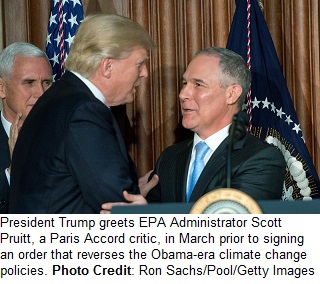
Share this post:
, ,
[Top]