Tag: Security

8th Violent Crime Warning to Bahamas Tourists

Go Lean Commentary

An 8-ounce glass with 4 ounces of water is …

… half full.
… half empty.

It all depends on the perspective.

For an ambulance-chasing lawyer, that perspective needs to be “half empty”.

The foregoing article, a blog submission by Miami-based Maritime Lawyer Jim Walker – see Appendix – is not chasing ambulances, but rather cruise ships. So any assessment from him should be taken with a “grain of salt”. He has an agenda! He attempts to drum up business from cruise ship passengers that may have been hurt or abused in their experience venturing into the cruise industry – on the ship and/or on shore in the port cities.

Yet, in the middle of his “cry wolf” scenarios, there might just be some truth in his advocacy against the cruise lines.

For the stewards of new Caribbean economic eco-systems, we need to pay more than the usual attention to this “town crier”. His claims in this article here, must be fully vetted:

Title: 8th Violent Crime Warning for the Bahamas in 16 Months
By: Jim Walker
Cruise Law News Blog-Site – Posted May 15, 2015; Retrieved from: http://www.cruiselawnews.com/2015/05/articles/crime/8th-violent-crime-warning-for-the-bahamas-in-16-months/

CU Blog - 8th Violent Crime Warning to Bahamas Tourists - Photo 1The U.K.’s  Foreign and Commonwealth Office has issued “foreign travel advice” for travelers to the Bahamas. The U.K. crime warning says:

“There have been incidents of violent crime including robbery, which is often armed and sometimes fatal, in residential and tourist areas of New Providence, Grand Bahama and Freeport. The number of break-ins and robbery incidents reported to the High Commission has increased. There are police patrols in the main tourist areas.

Be vigilant at all times and don’t walk alone away from the main hotels, tourist areas, beaches and downtown Nassau, particularly after dark. Take care if travelling on local bus services after dusk on routes away from the main tourist areas. Do not carry large amounts of cash or jewellery. Robbers may be armed.”

I first learned of the crime warning from Travel Weekly.

Incredibly, this is the eighth crime warning for the Bahamas in the last 16 months.

In 2014, Bahamas was the subject of four critical crime warnings to U.S. citizens (one from the U.S. State Department and three from the U.S. Embassy) and one warning from Canada. There have been 2 prior crime warnings from the U.S. for the Bahamas this year. With this latest U.K. warning, that’s a total of 8 warnings.

I have never heard any country being the recipient of 8 crime warnings in such a short time period. The U.S. warnings are much more specific, mentioning that U.S. tourists have been raped and robbed at gunpoint.

We last wrote about the sorry state of affairs in the Bahamas earlier this month. We received a number of interesting comments to the article which you can read here. Many people avoid a cruise itinerary which includes the Bahamas, or they stay on the cruise ship when it reaches Nassau.

I picked Nassau as the most dangerous cruise destination in the world last year.

Have a thought? Please leave a comment below or join the discussion on our Facebook page.

According to the foregoing article, one Caribbean member-state, the Bahamas, needs to mitigate and remediate its crime activity.

From the publishers of the book Go Lean…Caribbean, our immediate response to Esquire Walker: Message received; warning heeded.

The Go Lean book and movement serves as a roadmap for the introduction of the technocratic Caribbean Union Trade Federation (CU). With the word ‘Trade‘ in the CU‘s branding, obviously the CU is set to optimize Caribbean society through economic empowerment; but the truth of the matter is that the security dynamics of the region are inextricably linked to this economic endeavor. Therefore the Go Lean roadmap has 3 prime directives:

  • Optimization of the economic engines in order to grow the regional economy to $800 Billion & create 2.2 million new jobs.
  • Establishment of a security apparatus to protect the resultant economic engines.
  • Improve Caribbean governance to support these engines.

The Go Lean roadmap posits that the Caribbean region must prepare its own security apparatus for its own security needs. So the request is that all Caribbean member-states form and empower a security force to execute a limited scope on their sovereign territories.  The goal is to confederate under a unified entity made up of the Caribbean to provide homeland security to the Caribbean. Homeland Security for the Caribbean has a different meaning than for our American counterparts. Though we must be on defense against military intrusions like terrorism & piracy, we mostly have to contend with threats that may imperil the region’s economic engines, and crime remediation and mitigation. Yes, The CU security goal is for public safety!

So in particular cruise passengers will benefit from new layers of security measures (Page 193) that are both up-front and also behind-the scenes. These will be administered by CU security agencies, and not limited to the authority of the member-states.

The book contends that bad actors will emerge just as a result of economic successes in the region. This point is pronounced early in the book with the Declaration of Interdependence (Page 12) that claims:

x.   Whereas we are surrounded and allied to nations of larger proportions in land mass, populations, and treasuries, elements in their societies may have ill-intent in their pursuits, at the expense of the safety and security of our citizens. We must therefore appoint “new guards” to ensure our public safety and threats against our society, both domestic and foreign. The Federation must employ the latest advances and best practices … to assuage continuous threats against public safety.

xvi. Whereas security of our homeland is inextricably linked to prosperity of the homeland, the economic and security interest of the region needs to be aligned under the same governance. Since economic crimes, including piracy and other forms of terrorism, can imperil the functioning of the wheels of commerce for all the citizenry, the accedence of this Federation must equip the security apparatus with the tools and techniques for predictive and proactive interdictions.

The Caribbean appointing “new guards”, or a security pact to ensure public safety is comprehensive endeavor, encapsulating the needs of all Caribbean stakeholders: residents and visitors alike.

We would like to direct Esquire Walker to a new line of work; or perhaps just a new target for his legal practice.

The Go Lean roadmap calls for a permanent professional force with naval forces, plus an Intelligence agency. The CU Trade Federation will lead, fund and facilitate the security force, encapsulating all the existing armed forces in the region plus exercising some regional oversight over law enforcement. This CU Homeland Security Force would get its legal authorization from a legal Status of Forces Agreement plus an Interstate Compact for US Territories signed at the CU treaty initiation; this means “Step One, Day One” in the Go Lean roadmap.

Covering all the complaints in the foregoing article about government corruption, the Go Lean roadmap “polices the Police” to ensure the optimization of justice institutions.

We are heeding your warnings Esquire Walker!

The Go Lean book details a series of community ethos, strategies, tactics, implementations and advocacies to provide increased public safety & security in the Caribbean region:

Economic Principle – Consequences of Choices Lie in Future Page 21
Community Ethos – Privacy –vs- Public Protection Page 23
Community Ethos – Intelligence Gathering Page 23
Community Ethos – “Crap” Happens Page 23
Community Ethos – Minority Equalization Page 24
Community Ethos – Cooperatives Page 25
Community Ethos – Ways to Manage Reconciliations Page 34
Community Ethos – Ways to Improve Sharing Page 35
Community Ethos – Ways to Impact the Greater Good Page 37
Tactical – Confederating a non-sovereign union Page 63
Tactical – Fostering a Technocracy Page 64
Tactical – Separation of Powers – Central Bank – Cruise e-Payment Cards Page 73
Tactical – Separation of Powers – Homeland Security Page 75
Implementation – Ways to Pay for Change Page 101
Implementation – Start-up Foreign Policy Initiatives Page 102
Implementation – Start-up Security Initiatives Page 103
Planning – Big Ideas – Regional Single Market Page 127
Planning – Ways to Make the Caribbean Better Page 131
Planning – Ways to Improve Failed-State Indices Page 134
Planning – Lessons Learned from the West Indies Federation Page 135
Planning – Lessons from New York – Port Authority Police Page 139
Planning – Lessons from the American West – Law & Order
Page 142
Planning – Lessons from Egypt – Keep Tourism Functional Page 143
Advocacy – Ways to Grow the Economy Page 151
Advocacy – Ways to Improve Governance Page 168
Advocacy – Ways to Better Manage the Social Contract Page 170
Advocacy – Ways to Improve Leadership Page 171
Advocacy – Ways to Impact Justice Page 177
Advocacy – Ways to Reduce Crime Page 178
Advocacy – Ways to Improve Homeland Security Page 180
Advocacy – Ways to Mitigate Terrorism Page 181
Advocacy – Ways to Improve Intelligence Gathering/Analysis Page 182
Advocacy – Ways to Improve for Natural Disasters Page 184
Advocacy – Ways to Enhance Tourism – Example: Natalee Holloway Page 190
Advocacy – Ways to Impact Event Tourism Page 191
Advocacy – Ways to Improve Cruise Tourism Page 193
Advocacy – Ways to Protect Human Rights Page 220
Advocacy – Ways to Impact Urban Living Page 234

Our region must do better to serve-and-protect visitors to our shores; tourism is still reeling from the failure to prosecute the crime against Spring Break Tourist Natalee Holloway in Aruba in 2005. – See Appendix VIDEO below.

Other subjects related to security and governing empowerments for the region have been blogged in other Go Lean commentary, as sampled here:

https://goleancaribbean.com/blog/?p=5304 Mitigating the Eventual Abuse of Power
https://goleancaribbean.com/blog/?p=5210 Cruise Ship Commerce – Getting Ready for Change
https://goleancaribbean.com/blog/?p=4639 Tobago: A Model for Cruise Tourism and a Plan to Optimize the Industry
https://goleancaribbean.com/blog/?p=4425 Cruise Payment Model: Electronic Cards and Smart Phones
https://goleancaribbean.com/blog/?p=4360 Dreading the American: ‘Caribbean Basin Security Initiative’
https://goleancaribbean.com/blog/?p=3889 Cruise Payment Model: RBC EZPay – Ready for Change
https://goleancaribbean.com/blog/?p=2782 Intelligence Model: Red Light Traffic Cameras Could Impact Millions
https://goleancaribbean.com/blog/?p=1487 Intelligence Model: Here come the Drones … and the Concerns
https://goleancaribbean.com/blog/?p=960 Intelligence Model: NSA records all phone calls in Bahamas – Model
https://goleancaribbean.com/blog/?p=599 Ailing Puerto Rico open to radical economic fixes
https://goleancaribbean.com/blog/?p=546 Bad Model: Book Review – ‘The   Divide’ – … Injustice in the Age of the Wealth Gap
https://goleancaribbean.com/blog/?p=535 Event Security: Remembering and learning from Boston
https://goleancaribbean.com/blog/?p=392 Jamaica to receive World Bank funds to help in crime fight
https://goleancaribbean.com/blog/?p=273 10 Things We Don’t Want from the US: # 6 Organized Crime

Underlying to the prime directive of elevating the economics, security and governing engines of the Caribbean, is the desire to make the Caribbean homeland, a better place to live, work and play for visitors and residents alike. We know “bad actors” will emerge – they always do! But we do not need these “bad actors” disrupting the peace of all Caribbean residents (42 million people), or the 10 million Diaspora as they frequent their tropical homeland or especially not the 80 million tourists that visit the region annually (including the 10 million cruise passengers).

The Go Lean roadmap was composed with the community ethos of the Greater Good foremost. The related quotation applies: “the needs of the many outweigh the needs of the few” (Page 37). All of the Caribbean are hereby urged to lean-in to this roadmap.

🙂

Download the book Go Lean … Caribbean – now!

=========

Appendix: About the Author: Jim Walker

CU Blog - 8th Violent Crime Warning to Bahamas Tourists - Photo 2Everything the cruise lines don’t want you to know” is the motto of this award winning maritime law blog authored by Miami lawyer Jim Walker.

The New York Times describes Jim as “a maritime lawyer in Miami who has attended more than half a dozen Congressional hearings about cruise ship crime and passenger safety.” Jim has been involved in maritime litigation since 1983.  Based in Miami, Florida, Jim represents passengers and crew members injured or assaulted on cruise ships around the world.

==========

Appendix: Jim Walker Blog Site Visitor Commentaries:

Selected Comments:

Mary – May 16, 2015 4:39 PM

I love the Bahamas! Sadly to say my family rented a house Dec 2014 into the New year and were robbed New Years Eve. Thankfully we were out at Junkanoo. I was very upset and frightened but will always go back to Nassau.

—————

Srgt. Thomas – May 16, 2015 6:13 PM

This morning 5/16/15, a fashion designer was murdered in his home and his house set on fire. And also four gang members battled it out in the streets with the police killing one gang member, injuring two, and one still out on the loose. Tourist, expats, workers, investors should leave ASAP, this country is on the verge of a civil uprising according to U.S. intelligence. Our government wants to thank you so much Mr. Jim Walker, you are helping us get the word out. You are a true American, and hope the rest of your Nation realizes this too.

—————

Michelle Farrington – May 16, 2015 6:58 PM

You never cease to amaze me. While you think nothing of writing about my beautiful country.

Ok so you say we have been cited 8 times for most dangerous. Well, the last time I checked the United States the land of the so called free… yet Americans have no privacy and the IRS continues to rob the hard working class of people.

Oh and what do you, Jim Walker have to say about the police continually killing black people, calling it self defense? oh and what about all these shootings in killings in schools and universities.

Let me remind you that when a country rapes and steals another countries resources in the name of bringing PEACE BY MEANS OF WARS, there are repercussions. How many families have been destroyed or ripped a part because the U.S.A. doesn’t care how many men/soldiers lives are sacrificed. These persons are someone’s father, husband, wife, son or daughter.

While there are murders and violence in Nassau, we don’t live in fear and don’t go out at night.. if this paranoia exist, then they are a small minority. These types of crimes are basically revenge, or domestic related. So you say, the USA does not have these types of crime? Really????? I don’t think so!

You need to get a life and leave us alone!

Go write on all the crime throughout your country!

I have been rushed, knocked to the ground and robbed in the parking lot of a hotel..yes, in the U.S. of A.
To this day Car Rentals are targeted and many Bahamians have been victim to this type of crime in your country.

So what say you?

Michelle D. Farrington

—————

Willa Kingsley – May 16, 2015 7:11 PM

My family and I are that the Atlantis hotel right now, I’m writing this comment with my IPhone as I speak. This morning at around 3-4 I believe we were awaken to gun fire in the distance, it sounded like a war. We just found out from the hotel’s lobby desk police had a confrontation with a group of gang members in the street. It’s still unclear if anyone was killed, but you should have heard the sounds, WOW! We are seriously thinking of leaving earlier than we hoped for, my kids are scared to death in leaving our room; this is nuts!

—————

Jim WalkerMay 16, 2015 9:09 PM

Michelle:

Thanks for your comments.

You make several good points.

Our U.S. Federal government over-reaches all of the time. The IRS, Homeland Security & FBI regularly violate the rights of U.S. citizens.

Our police (white and black) execute black men in the streets. It angers me greatly. It is a national disgrace. Travon Martin, Michael Brown and Freddy Grey are the martyrs of our going civil rights movement.

You’re wrong about the men and women in our military. They don’t “rape and steal” as you claim. The Bahamas would be under the thumb of the Nazi’s but for the U.S. military. We have protected the world for decades. I see you could care less aboout that and are filled with hate. But the Bahamas couldn’t protect itself much less other countries if a troop of girl scouts attacked.

The fact remains that Nassau is out-of-control dangerous. Your crime is widespread and increasing. Your government is corrupt. Your legal system is a joke. Your police are ineffective and corrupt. The Bahamas is dependant on tourism, primarily from the U.S., but you can’t stop from selling drugs to the cruise passengers or preying on them.

My blog is read by mostly cruise passengers and crew members. It is intended to warn them of the danger on cruises ships and ports of call that they may not be aware of. Over a million people read over 6 millions pages a year.

Most U.S. citizens think stepping off a cruise ship from Miami to the Bahamas is safe. It’s not. We report issues about the Bahamas which you and other delusioanal Bahamains try and keep secret. We have sent the messahge wide and far.

If you want to warn people about dangers in the U.S., by all means do so. We wish you the same success in warning travelers that we have achieved.

—————

Finely Tuned And Polished – May 16, 2015 9:41 PM

The reason quite simple: The Bahamians are deathly afraid of the Government, so they take out their frustrations of feeling like they are on a tight leash with the tourist.I have many Bahamian friends who are quite friendly and hard working Bahamians and church goers. Its a small group who honestly believe by staying together, between the drug lords and cons they will become rich in a short period of time. 50% go fishing.. and never return!!! Wake up !!!

==========

Appendix VIDEO: – Natalee Holloway Witness Comes Forward: ‘I Knew She Was Dead’ – http://bcove.me/ky8bglp1

Dave Holloway – the father of Natalee Holloway – is back in Aruba exclusively with INSIDE EDITION searching for answers in the disappearance of his 18-year-old daughter, Natalee. The main suspect in Natalee’s disappearance is the notorious Joran van der Sloot – now serving a life sentence for a different murder in Peru. They first met at the Holiday Inn Casino where he gambled regularly and she was staying with her high school classmates on their senior trip. A decade later the trail has gone cold, perhaps until now. A new witness emerges, Jurrien de Jong, a citizen of the Netherlands who lives in Amsterdam, says he was one of the last people to see Natalee alive. He claims to have seen the suspect, Joran, chasing Natalee, and later stash her body in the crawl space on a construction site.
Share this post:
, , , , ,

Mitigating the Eventual ‘Abuse of Power’

Go Lean Commentary

Power corrupts. Absolute power corrupts absolutely – Familiar secular prophesy.

The book Go Lean…Caribbean serves as a roadmap for the introduction and implementation of the technocratic Caribbean Union Trade Federation (CU) to elevate the region’s economic, security and governing engines. The roadmap covers 5 years. Once the roadmap succeed in its execution, there will be a lot of opportunities for stakeholders to acquire and wield power. The roadmap fully expects the eventual corrupting effects of that power, and thusly embed the required checks-and-balances from the outset.

The Go Lean roadmap covers so many aspects of Caribbean life that every one, in every nook-and-cranny, will sense the presence of the CU. The CU/Go Lean roadmap commences with these 3 prime directives:

  • Optimization of the economic engines in order to grow the regional economy to $800 Billion & create 2.2 million new jobs.
  • Establishment of a security apparatus to protect the resultant economic engines.
  • Improvement of Caribbean governance to support these engines.

During the course of these executions, there will be a constant focus on the exercise of power.

The assertion of the Go Lean book is that the Caribbean region must prepare for its own success, and its own eventual security threats. The book relates (Page 23) the historic references where the emergence of new economic engines were immediately followed by the emergence of “bad actors” to exploit the opportunities, with good, bad and evil intent. So we must proactively and reactively address crime, whether it is street crime, “White Collar” crime and/or also public corruption allegations. But doing so judiciously and with proper regard for human and civil rights.

Accordingly, the opening Declaration of Interdependence (Page 12) pronounced that we must take our own lead for our own security solutions; we must appoint our own “guardians” with our self-interest in mind; prioritizing the community ethos for the Greater Good. The actual declaration is pronounced as follows:

x.   Whereas we are surrounded and allied to nations of larger proportions in land mass, populations, and treasuries, elements in their societies may have ill-intent in their pursuits, at the expense of the safety and security of our citizens. We must therefore appoint “new guards” to ensure our public safety and threats against our society, both domestic and foreign. The Federation must employ the latest advances and best practices … to assuage continuous threats against public safety.

xvi. Whereas security of our homeland is inextricably linked to prosperity of the homeland, the economic and security interest of the region needs to be aligned under the same governance. Since economic crimes, including piracy and other forms of terrorism, can imperil the functioning of the wheels of commerce for all the citizenry, the accedence of this Federation must equip the security apparatus with the tools and techniques for predictive and proactive interdictions.

CU Blog - Mitigating the Eventual Abuse of Power - Photo 1The Caribbean appointing “new guards” or a security pact to ensure public safety, will call for permanent justice institutions, sanctioned by all 30 CU member-states. The CU Federation or federal justice’s institutions will operate under a separation-of-powers edict – between the member-states and CU agencies. This is radically different than other federal government scenarios – like the United States – because of the reality of sovereignty. The CU is only a trade and security bloc, so the sovereignty of member-states remains with its current possessors. Therefore the Go Lean roadmap requires CU agencies to be deputized by the duly authorities in the member-states. Then with CU funding comes CU “strings attached” to ensure compliance of governance mandates. (These strings include fair and equitable treatment of all citizens).

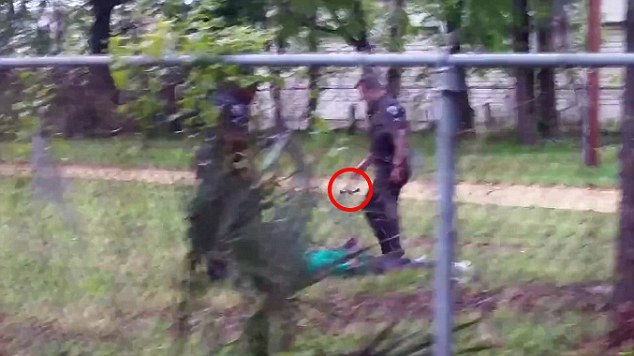
A previous commentary related how the citizens of the City of Ferguson, Missouri-USA – African-American more so than any other ethnic group – were abused and repressed by law enforcement and judicial officials in that community. The injustice and abuse-of-power was so blatant that the town burst into protest – (literally burst into flames) – when one of their unarmed citizens, Michael Brown, was killed by a police officer. Then the whole country burst into protest – in solidarity – when the subsequent Grand Jury decided not to indict the offending police officer. The constant outcry was: “No Justice; No Peace” and “Black Lives Matter”.

The events of this small Midwest American town – a suburb of St. Louis – can easily be joined in chorus with countless Caribbean anecdotes. Any elevation of Caribbean society must therefore include the optimization of Caribbean justice institutions. The Go Lean roadmap assumes the heavy-lifting for the CU Trade federation to transform Caribbean society. The CU will be empowered for its security role – deputized for law enforcement in all Caribbean member-states – by a Status of Forces Agreement (SOFA) embedded with the initial confederation treaty. (This effort also includes the US Territories as well, under the legal guise of an Interstate Compact). This point was strongly urged in the same opening Declaration of Interdependence (Page 12), as follows:

xii. Whereas the legacy in recent times in individual states may be that of ineffectual governance with no redress to higher authority, the accedence of this Federation will ensure accountability and escalation of the human and civil rights of the people for good governance, justice assurances, due process and the rule of law. As such, any threats of a “failed state” status for any member state must enact emergency measures on behalf of the Federation to protect the human, civil and property rights of the citizens, residents, allies, trading partners, and visitors of the affected member state and the Federation as a whole.

CU Blog - Mitigating the Eventual Abuse of Power - Photo 2The Go Lean roadmap identifies gangs, organized crime, narcotics trafficking, human trafficking, guns/explosive interdiction, piracy, and terrorism as threats to the law-and-order fabric of Caribbean society. But the community ethos for Go Lean roadmap must be based on the Greater Good, ensuring both the letter and the spirit of laws to serve-and-protect the community. So the relevant CU agencies must also police the Police. Just how does the roadmap propose this; (Page 177)?

  • The strings-attached in funding national police forces would force Internal Affairs compliance and reporting up-line to CU agencies.
  • Military justice institution, Judge Advocacy Generals, will also follow a reporting up-line to CU agencies.
  • The CU funding to member-states will required separate accounting ledgers – no deposit into General Treasury Funds. The CU therefore retains the rights to “audit the books”. Any malfeasance, misfeasance  or nonfeasance constitute federal crimes, criminal prosecution and federal prison sentences.
  • The CU will provide grants for equipment and investigative tools, like dashboard cameras and body cameras. The SOFA would legally grant authority to the CU to review police activity.
  • Every security-involved death (police, soldier, sailor, marine) will automatically initiate a federal investigative review.

In the Caribbean, “All Lives Matter”!

The Go Lean book details all the community ethos to ensure the right attitudes to serve and protect Caribbean communities; plus strategies, tactics, implementations and advocacies to provide increased public safety & security in the Caribbean region:

Economic Principle – Economic Systems Influence Individual Choices Page 21
Economic Principle – Consequences of Choices Lie in Future Page 21
Community Ethos – Security Principle – Privacy –vs- Public Protection Page 23
Community Ethos – Security Principle – Witness Security & Protection Page 23
Community Ethos – Security Principle – Anti-Bullying and Mitigation Page 23
Community Ethos – Security Principle – Intelligence Gathering Page 23
Community Ethos – Security Principle – Light Up the Dark Places Page 23
Community Ethos – Security Principle – “Crap” Happens Page 23
Community Ethos – Governing Principle – Minority Equalization Page 24
Community Ethos – Governing Principle – Cooperatives Page 25
Community Ethos – Ways to Improve Sharing Page 35
Community Ethos – Ways to Impact the Greater Good Page 37
Tactical – Confederating a non-sovereign union Page 63
Tactical – Fostering a Technocracy Page 64
Tactical – Separation of Powers – Homeland Security Page 75
Tactical – Separation of Powers – Justice Department – District Attorneys Page 77
Tactical – Separation of Powers – Justice Department – CariPol Page 77
Tactical – Separation of Powers – Labor Department – Regional   Relations Page 89
Tactical – Separation of Powers – Federal Courts – Court   of Justice Page 90
Implementation – Assemble “Organs” into a Security Apparatus Page 96
Implementation – Start-up Security Initiatives Page 103
Planning – Ways to Make the Caribbean Better Page 131
Planning – Ways to Improve Failed-State Indices Page 134
Planning – Lessons from the American West – Model   for Law-and-Order Page 142
Advocacy – Ways to Grow the Economy Page 151
Advocacy – Ways to Improve Governance Page 168
Advocacy – Ways to Better Manage the Social Contract Page 170
Advocacy – Ways to Impact Justice Page 177
Advocacy – Ways to Reduce Crime Page 178
Advocacy – Ways to Improve for Gun Control Page 179
Advocacy – Ways to Improve Homeland Security Page 180
Advocacy – Ways to Mitigate Terrorism Page 181
Advocacy – Ways to Improve Intelligence Gathering/Analysis Page 182
Advocacy – Ways to Impact the Prison Industrial Complex Page 211
Advocacy – Ways to Protect Human Rights Page 220
Appendix – CariCom Organs: IMPACS & Court of Justice Page 244

Other subjects related to crime remediation empowerments for the region have been blogged in other Go Lean…Caribbean commentary, as sampled here:

https://goleancaribbean.com/blog/?p=4809 Americans arrested for aiding ISIS
https://goleancaribbean.com/blog/?p=4447 Probe of Ferguson-Missouri finds bias from cops, courts
https://goleancaribbean.com/blog/?p=4360 Dreading the American ‘Caribbean Basin Security Initiative’
https://goleancaribbean.com/blog/?p=4308 911 – Emergency Response: System for First Responders in Crisis
https://goleancaribbean.com/blog/?p=3881 Intelligence Agencies to Up Cyber Security Cooperation
https://goleancaribbean.com/blog/?p=3662 Migrant flow / Border incursions / Threats from Caribbean into US spikes
https://goleancaribbean.com/blog/?p=2994 Justice Strategy: Special Prosecutors and Commissions of Inquiry
https://goleancaribbean.com/blog/?p=2782 Red Light Traffic Cameras, other CCTV Deployments can Impact Crime
https://goleancaribbean.com/blog/?p=2684 Role Model for Justice, Anti-Crime & Security: The Pinkertons
https://goleancaribbean.com/blog/?p=1674 Obama’s $3.7 Billion Immigration Crisis Funds – A Homeland Security Fix
https://goleancaribbean.com/blog/?p=1554 Status of Forces Agreement = Security Pact
https://goleancaribbean.com/blog/?p=1487 Here come the Drones … and the Concerns
https://goleancaribbean.com/blog/?p=960 NSA records all phone calls in Bahamas, according to Snowden
https://goleancaribbean.com/blog/?p=535 Remembering and learning from Boston
https://goleancaribbean.com/blog/?p=392 Jamaica to receive World Bank funds to help in crime fight
https://goleancaribbean.com/blog/?p=341 American Hypocritical Human Rights Leadership Slams Caribbean Poor Record

CU Blog - Mitigating the Eventual Abuse of Power - Photo 3The vision of the Go Lean roadmap is to make the Caribbean homeland, a better place to live, work and play. One, of many missions, is to lower the “push” factors (from “push-and-pull” reference) so that our citizens are not led to flee their homeland for foreign (North American and European) shores. Among the many reasons people emigrate, many times, there is a fear of life-and-limb. We must allow for “Justice”; and for “Peace”. All lives must matter!

We must do better!

We know that “bad actors” will emerge, from internal and external origins. We must be prepared and on-guard to defend our homeland against all threats, foreign and domestic. Yet we must maintain transparency, accountability, and constant commitment to due-process and the rule-of-law.

We do not want a Sheriff John Brown – see Appendix & VIDEO – emerging in the Caribbean region. Sheriff John Brown is a classic example of an Authority figure that abused his power at the peril of a common citizen:

John Brown always hated me, For what, I don’t know: Every time I plant a seed,  He said kill it before it grow.

Everyone, the people (residents and visitors), institutions and government officials are hereby encouraged to lean-in to this roadmap. 🙂

Download the free e-book of Go Lean … Caribbean – now!

—————-

Appendix – Relevant News Story: Amnesty International Calls for Accountability in Bahamas Police Abuses

http://bahamasnational.com/?q=node/2365

—————-

Appendix VIDEO – Bob Marley – I Shot The Sheriff – https://youtu.be/2XiYUYcpsT4

Uploaded on Aug 7, 2008 – Bob Marley- I shot the sheriff Music: (Google PlayiTunesAmazonMP3)

—————-

Appendix – I Shot the Sheriff – Lyrics by Bob Marley

Chorus:
(I shot the sheriff
But I didn’t shoot no deputy, oh no! Oh!
I shot the sheriff
But I didn’t shoot no deputy, ooh, ooh, oo-ooh.)

Yeah! All around in my home town,
They’re tryin’ to track me down;
They say they want to bring me in guilty
For the killing of a deputy,
For the life of a deputy.
But I say:

Oh, now, now. Oh!
(I shot the sheriff.) – the sheriff.
(But I swear it was in self-defence.)
Oh, no! (Ooh, ooh, oo-oh) Yeah!
I say: I shot the sheriff – Oh, Lord! –
(And they say it is a capital offence.)
Yeah! (Ooh, ooh, oo-oh) Yeah!

Sheriff John Brown always hated me,
For what, I don’t know:
Every time I plant a seed,
He said kill it before it grow –
He said kill them before they grow.
And so:

Read it in the news:
(I shot the sheriff.) Oh, Lord!
(But I swear it was in self-defence.)
Where was the deputy? (Oo-oo-oh)
I say: I shot the sheriff,
But I swear it was in selfdefence. (Oo-oh) Yeah!

Freedom came my way one day
And I started out of town, yeah!
All of a sudden I saw sheriff John Brown
Aiming to shoot me down,
So I shot – I shot – I shot him down and I say:
If I am guilty I will pay.

(I shot the sheriff,)
But I say (But I didn’t shoot no deputy),
I didn’t shoot no deputy (oh, no-oh), oh no!
(I shot the sheriff.) I did!
But I didn’t shoot no deputy. Oh! (Oo-oo-ooh)

Reflexes had got the better of me
And what is to be must be:
Every day the bucket a-go a well,
One day the bottom a-go drop out,
One day the bottom a-go drop out.
I say:

I – I – I – I shot the sheriff.
Lord, I didn’t shot the deputy. Yeah!
I – I (shot the sheriff) –
But I didn’t shoot no deputy, yeah! No, yeah!


Share this post:
, ,
[Top]

Prisoners for Profit – #ManifestJustice

Go Lean Commentary

“And justice for all” – ending verse in the American Pledge of Allegiance*

But the evidence is that these are more so just words than the actuality. Consider this article:

Title: White-owned Private Prisons are suing States for millions if they don’t stay full
Sub-title: Low crime rates bad for business for white-owned private prisons; they demand States keep them full
Source posted: May 3, 2015 – Retrieved May 12, 2015 from: http://earhustle411.com/white-owned-private-prisons-are-suing-states-for-millions-if-they-dont-stay-full/

CU Blog - #ManifestJustice - Prisoners -vs- Co-eds - Photo 2The prison-industrial complex is so out of control that private prisons have the sheer audacity to order states to keep beds full or face their wrath with stiff financial penalties, according to reports. Private prisons in some states have language in their contracts that state if they fall below a certain percentage of capacity that the states must pay the private prisons millions of dollars, lest they face a lawsuit for millions more.

And guess what? The private prisons, which are holding cash-starved states hostage, are getting away with it, says advocacy group, “In the Public Interest”.

“In the Public Interest” has reviewed more than 60 contracts between private prison companies and state and local governments across the country, and found language mentioning “quotas” for prisoners in nearly two-thirds of those contracts reviewed. Those quotas can range from a mandatory occupancy of, for example, 70 percent occupancy in California to up to 100 percent in some prisons in Arizona.

It is very interesting and telling that so few major national news organization are willing to report on the monstrous, ravenous and criminal system that is devouring hundreds of thousands of black and brown boys. Even those who do not subscribe to conspiracy theories have looked askance at this shocking report.

Welcome to the greatest manifestation of modern-day slavery, ladies and gentlemen.

One of those private prisons, The Corrections Corporation of America, made an offer last year to the governors of 48 states to operate their prisons on 20-year contracts, according to “In the Public Interest”.

What makes these deals so odious and unscrupulous? Take a look:

1)  The offer included a demand that those prisons remain 90 percent full for the duration of the operating agreement. You know what that means: if there are not enough prisoners then there will be an unspoken push for police to arrest more people and to have the courts send more to prison for petty, frivolous and nonviolent crimes. There will also be a “nudge” for judges to hand down longer or maximum sentences to satisfy this “quota.”

2)  Private prison companies have also backed measures such as “three-strike” laws to maintain high prison occupancy.

3)  When the crime rate drops so low that the occupancy requirements can’t be met, taxpayers are left footing the bill for unused facilities.

The report found that 41 of 62 contracts reviewed contained occupancy requirements, with the highest occupancy rates found in Arizona, Oklahoma and Virginia.

In Colorado, Democratic Gov. John Hinklooper agreed to close down five state-run prisons and instead send inmates to CCA’s three corrections facilities. That cost taxpayers at least $2 million to maintain the unused facilities.

It is getting more difficult to rationalize the societal cost of keeping prisons full just to satisfy private investors who treat prisoners as commodity and cattle .
Source: Rolling Out

Welcome to America…

While at the same time, the eco-systems of Caribbean society are failing; many Caribbean citizens long for the opportunity to emigrate to the United States. There have been many that have taken to the seas on risky vessels to reach the land of their dreams. Many times these ones are interdicted and immediately returned. Sometimes even worse; the boats go “down”, with tragic consequences.

The reasons for emigration are “push-and-pull”. Failures in our society have compelled many to seek refuge abroad; that’s the “push”!

Propaganda in the media and community gossip within the region pronounces that American life is better – the “place to be”. This is the “pull”.

This commentary posits that “all that glitters is not gold”.

The publishers of the book Go Lean … Caribbean campaign that it would be better for Caribbean citizens to remain in their homeland and work to remediate conditions there. Considering the statistics and anecdotal evidence published in the embedded features/articles here, there are reasons why American life should be less than ideal for Caribbean people:

  • Crony Capitalism – America has a disease where much of its public policy is set based on some special interest benefiting from public resources. This is Crony Capitalism and it is defined as public interest being hijacked for private gain.
  • Institutional Racism – Racial discrimination still permeates much of American society, though not always blatant. Statistics and anecdotes prove that employment, housing and educational disenfranchisements still abound in many institutions, despite surpassing 150 years after the Civil War (1861 – 1865) and 50 years after the “bad old days” of the 100-year legal segregation policy; (think Jim Crow).

This foregoing article quotes dollar amounts that are so big that the malevolence of Crony-Capitalism cannot be ignored. It can be argued that this is actually the primary driver in the above average prison population per capita (compared to other industrialized countries, the US is Number 1 by a far margin). This commentary thereby asserts that there is a nefarious Big Business agenda in motion here. Many States have outsourced prison management to private companies. It is in those companies’ best interest to keep prison populations high.

A reduction in crime is bad for business.

This “Prison Industrial Complex” is compelled to lobby, cheerlead and tease both sides of any political divide to keep public policy focused on “being tough on crime / hard on criminals” so as to keep their prisons filled. There is too much money involved. The “bad actors” in this case would readily short-change the Greater Good for immediate gains or profits.

It is obvious from this review that one consequence of Crony-Capitalism is that it short-changes the future for immediate gains, or profits.

In the Caribbean, we hope to minimize the “push-and-pull” factors that draw our Caribbean youth away; and away from that American reality. This dilemma is not just due to the fact that the US population has increased or that crime has increased. No, just the opposite. This point was related in a previous Go Lean blog/commentary, that served as a review for a book by writer and Rolling Stone Magazine contributor Matt Taibbi entitled: “The Divide – American Injustice in the Age of the Wealth Gap“. The actual book quotation is:

Violent crime has fallen by 44 percent in America over the past two decades, but during that same period the prison population has more than doubled, skewing heavily black and poor.

This subject matter – and foregoing news article – align with the publication Go Lean … Caribbean, which serves as a roadmap for the introduction and implementation of the technocratic Caribbean Union Trade Federation (CU). The Go Lean roadmap calls for the optimization of Caribbean society by rebooting the eco-systems with prime directives for the region’s economic, security and governing engines.

We want a society based on sound justice, not the fake American model. We do not want to sacrifice our young people on the altar of corporate profits. We’d rather invest in them rather than sacrifice them; this means investing in (early) education and universities rather than prisons.

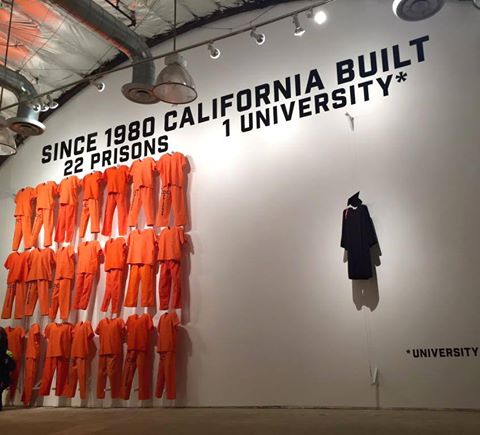
CU Blog - #ManifestJustice - Prisoners -vs- Co-eds - Photo 1

Title: #ManifestJustice Art Exhibit in Los Angeles
By:
Alexander Aplerku, AfroPunk Contributor
Source: AfroPunk Blog Site – Retrieved 05-12-2015 – http://www.afropunk.com/profiles/blogs/feature-manifestjustice-art-exhibit-in-los-angeles

“Enough is enough. We demand more empathy, more accountability, more economic opportunity, more compassion, more dignity, more power and more opportunity for all. We demand healthier communities, which means more from each other; more from our school systems and more from our judicial systems.” Those are the words of Manifest Justice, the creative community exhibition. The Exhibit, which took place last week [(May 2nd – 10)] – in Los Angeles’ gang affected Baldwin Village – featured protest posters, paintings, and three-dimensional works. Mostly focused on police brutality, the exhibition also touched on issues like education, racial justice, and LGBT rights. Programme coordinator Nijeul Porter says, “The idea is that art is at the center of social change”.

Related:
http://manifestjustice.org  (See VIDEO Below)
https://www.facebook.com/pages/Manifest-Exhibit-Manifest-Justice

This Go Lean roadmap first openly confesses that the Caribbean is in crisis, that we are not able to retain our young people. Many member-states (St Vincent, Puerto Rico, US Virgin Islands, etc.) have lost more than half of their populations to foreign shores. While others have lost more than 70 percent of their college educated populations. For many, the destination of choice is the United States. The situation is so impactful that now 1 out of 11 Black persons in the US is now of Caribbean (or African) descent, and these numbers are only expected to grow.

The goal of Go Lean is to forge a better society, to make the Caribbean a better place to live, work and play. This means optimizing our own justice institutions. We want to lower the “push” factors. These requirement were pronounced at the outset of the Go Lean book, in the Declaration of Interdependence (Page 12) with these statements:

xi.   Whereas all men are entitled to the benefits of good governance in a free society, “new guards” must be enacted to dissuade the emergence of incompetence, corruption, nepotism and cronyism at the peril of the people’s best interest. The Federation must guarantee the executions of a social contract between government and the governed.

xxi.    Whereas the legacy in recent times in individual states may be that of ineffectual governance with no redress to higher authority, the accedence of this Federation will ensure accountability and escalation of the human and civil rights of the people for good governance, justice assurances, due process and the rule of law. As such, any threats of a “failed state” status for any member state must enact emergency measures on behalf of the Federation to protect the human, civil and property rights of the citizens, residents, allies, trading partners, and visitors of the affected member state and the Federation as a whole.

How should the Caribbean be different than the United States in the pursuit of justice?

The Go Lean roadmap cautions that we do not want to repeat America’s mistakes in criminal justice; there are many. But rather we want to learn from history; the book cites the example and abuses of the Peonage system that emerged in the Southern US after the Civil War (Page 211). Without being considered a conspiracy theorist, it is obvious that many “bad actors” in American society wanted cheap labor even though slavery had just been outlawed in the country.

That was 1865; this is 2015 – 150 years later. Surely American society has transformed … finally. Yet there are vast reports of a continued Great Divide in the US Criminal Justice system, where those of Black-and-Brown heritage (including those from the Caribbean) get sentenced to long prison engagements while “White Collar” offenders get little-to-no jail time at all.

American “White Collar” offenders have perhaps caused more damage in the US than the other “Blue Collar” types. This is especially the case for cross-border criminal conduct in the US. In truth, the Caribbean – and other parts of the world – are still reeling from the effects of the Global Financial Crisis of 2008; spurned from financial mis-adventures on Wall Street.

What is worse, the US has…

“hardly marshaled any persecutions against the culprits and perpetrators of the mortgage fraud that de-stabilized the American securities markets and the world economy” (Matt Taibbi’s “The Divide – American Injustice in the Age of the Wealth Gap“).

To all those in the Caribbean desiring to emigrate to the US, take heed: the “grass is not greener” on that other side!

The book Go Lean … Caribbean, on the other hand, details strategies, tactics, implementations and advocacies to elevate Caribbean society, mitigating the “push” reasons:

Community Ethos – People Respond to Incentives in Predictable Ways Page 21
Community Ethos – Economic Systems Influence Individual Choices Page 21
Community Ethos – Anti-Bullying and Mitigation Page 23
Community Ethos – Governing Principles – Lean Operations Page 24
10 Ways to Manage Reconciliations Page 34
10 Ways to Impact the Greater   Good Page 37
Separation of Powers – Homeland Security Department – Bureau of Prisons Page 76
Separation of Powers – Justice Department Page 77
Separation of Powers – Judicial Branch Page 90
10 Steps to Implement Self-Governing Entities – Prisons as SGEs Page 103
10 Ways to Improve Failed-State Indices – Security Deficiencies Page 134
10 Ways to Improve Education – Promote Industries for e-Learning & Prisons Page 159
10 Ways to Impact Justice Page 177
10 Ways to Reduce Crime Page 178
10 Ways to Ways to Improve Homeland Security – CU Prisons Page 180
10 Ways to Mitigate Terrorism – Fight Narco-Terrorism Page 181
10 Ways to Improve Intelligence Gathering & Analysis – Probation and Parole Page 182
10 Ways to Impact Wall Street – Mitigate Economic Crimes Page 200
10 Ways to Impact Prison-Industrial Complex – Case Study on Peonage Page 211
10 Ways to Protect Human Rights – Mitigate Bad Prison Practices Page 220
10 Ways to Impact Youth – Deploy Crime Diversion Programs Page 227

This Go Lean roadmap asserts to all those desiring to flee to the US. That country is not so alluring … from a justice perspective, especially if you’re poor, Black-and-Brown. The admonition: Lower the “pull” factor for Coming to America.

There is another dimension of the prison industrial complex considered in the Go Lean book: the economic returns of a proper practice of this social responsibility of crime and punishment:

xxvi.  Whereas the Caribbean region must have new jobs to empower the engines of the economy and create the income sources for prosperity, and encourage the next generation to forge their dreams right at home, the Federation must therefore foster the development of new industries, like that of … the prison industrial complex… – impacting the region with more jobs.

It is the vision of this roadmap that modern-technocratic CU prisons can be located in appropriate rural communities and create a viable economic “through put” (jobs); especially when the CU facilities house prisoners for other jurisdictions. The CU would emerge as a benevolent player in the prison-industrial complex. But instead of profits, our motive would be the Greater Good.

More jobs would help to lower the “push” factor. We must do this; address all possible “push” factors. The region must address its issues, as to why its population is so inclined to emigrate. This is the purpose of the Go Lean roadmap. It features the assessments, strategies, tactics and implementations to make the Caribbean a better place to live, work and play.

Now is the time for the Caribbean region to lean-in for the empowerments described in the book Go Lean … Caribbean. The benefits of this roadmap are too alluring to ignore: emergence of our own $800 Billion (GDP) economy, 2.2 million new jobs, new industries (like our own prison industrial complex), services and optimized justice institutions.

The end result of the Go Lean roadmap – after the defined 5 year plan – is to lower both the “push-and-pull” factors. Instead we want to incentive our citizens to prosper where planted. 🙂

Download the free e-book of Go Lean … Caribbean – now!

————–

Appendix – *Pledge of Allegiance

I pledge allegiance to the Flag of the United States of America, and to the Republic for which it stands, one Nation under God, indivisible, with liberty and justice for all.

Originally composed by Francis Bellamy in 1892 and formally adopted by the US Congress as the official pledge in 1942.[1]

————–

Appendix – VIDEO – #ManifestJustice Art Show – https://youtu.be/Pyxqo4TBCFU

Published on May 7, 2015 – http://on.fb.me/URBN247 – Become a Fan! http://youtube.com/URBN247 – Click to Subscribe! http://Twitter.com/URBN247 – Follow Us!
Share this post:
, , , ,
[Top]

A Lesson in History – Cinco De Mayo

Go Lean Commentary

Today (May 5) is Cinco De Mayo – celebrating this is a move of solidarity with Mexico; its people and culture – Enjoy the festivities!

Enjoy the Mexican food, spirits, music and culture. The country and people of Mexico have so much to offer the world – see VIDEO below – this includes the Caribbean.

One thing more that they can offer us in our region: A Lesson in History!

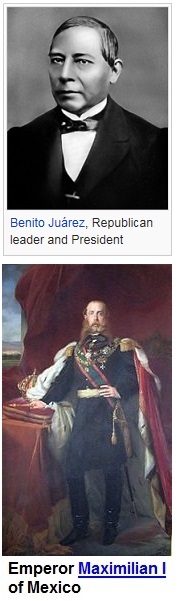
The summary of this celebration is simple on the surface: Mexican forces commanded by General Ignacio Zaragoza defeated the French army in the Battle of Puebla on 5 May 1862. 4 days later, on 9 May 1862, The then-President Benito Juárez declared that the anniversary of the Battle of Puebla would be a national holiday,[14][15][16][17][18] regarded as “Battle of Puebla Day” or “Battle of Cinco de Mayo”. Although today it is recognized in some countries as a day of Mexican heritage celebration, it is not a federal holiday in Mexico.[19]

Considering the real history of Cinco De Mayo is a really big deal. For starters, while Mexico was not the aggressor in this war, they were not exactly blameless.

The 1858 – 1860 Mexican civil war known as The Reform War had caused distress throughout Mexico’s economy. When taking office as the newly-elected president of the Republic in 1861, Juárez was forced to suspend payments of interest on foreign debts for a period of two years. At the end of October 1861 diplomats from Spain, France, and Britain met in London to form the Tripartite Alliance, with the main purpose of launching an allied invasion of Mexico, taking control of Veracruz, its major port, and forcing the Mexican government to negotiate terms for repaying its debts and for reparations for alleged harm to foreign citizens in Mexico. In December 1861, Spanish troops landed in Veracruz; British and French followed in early January. The allied forces occupied Veracruz and advanced to Orizaba. However, the Tripartite Alliance fell apart by early April 1862, when it became clear the French wanted to impose harsh demands on the Juarez government and provoke a war. The British and Spanish withdrew, leaving the French to march alone on Mexico City. French Emperor-President Napoleon III – the first democratically elected French President – wanted to set up a puppet regime, the Mexican Empire.

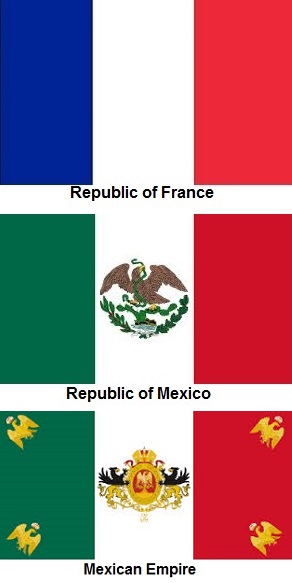
Thus started this French Intervention in Mexico. The effects of these 5 years were far-reaching, even to this day – consider the similarities in flags for these countries.

CU Blog - A Lesson in History - Cinco De Mayo - Photo 1Title: French Intervention in Mexico 1862 – 1867
Emperor Napoleon III of France was the instigator, justifying military intervention by claiming a broad foreign policy of commitment to free trade. For him, a friendly government in Mexico would ensure European access to Latin American markets. Napoleon also wanted the silver that could be mined in Mexico to finance his empire. Napoleon built a coalition with Spain and Britain while the U.S. was deeply engaged in its own civil war from 1861 to 1865.

Here is the main timeline of this French Intervention period:

1. 1862: Arrival of the French
After the initial victory by the Mexicans at the Battle of Puebla, the war continued in a different direction. The pursuing Mexican army was contained by the French at Orizaba, Veracruz, on 14 June. More British troops arrived on 21 September, and General Bazaine arrived with French reinforcements on 16 October. The French occupied the port of Tamaulipas on 23 October, and unopposed by Mexican forces took control of Xalapa, Veracruz on 12 December.

2. 1863: The French take the capital
CU Blog - A Lesson in History - Cinco De Mayo - Photo 2The French army of General François Achille Bazaine defeated the Mexican army led by General Comonfort in its campaign to relieve the siege of Puebla, at San Lorenzo, to the south of Puebla. Puebla surrendered to the French shortly afterward, on 17 May. On 31 May, President Juárez fled the capital city (Mexico City) with his cabinet, retreating northward to Paso del Norte and later to Chihuahua. Having taken the treasure of the state with them, the government-in-exile remained in Chihuahua until 1867.

French troops under Bazaine entered Mexico City on 7 June 1863. The main army entered the city three days later, led by General Forey. General Almonte was appointed the provisional President of Mexico on 16 June, by the Superior Junta (which had been appointed by Forey). The Superior Junta with its 35 members met on 21 June, and proclaimed a Catholic Empire on 10 July. The crown was offered to Austrian Prince Archduke Ferdinand Maximilian, following pressures by Napoleon. Maximilian accepted the crown on 3 October.

3. 1864: Arrival of Maximilian
Further decisive French victories continued with the fall of Guadalajara, Zacatecas, Acapulco, Durango by 3 July, and the defeat of republicans in the states of Sinaloa and Jalisco in November.

Maximilian formally accepted the crown on 10 April, signing the Treaty of Miramar (between France and Mexico), and landed at Veracruz on 28 May. He was enthroned as Maximilian I, Emperor of Mexico, [under French occupation].

4. 1865: Beginning of Republican victories
CU Blog - A Lesson in History - Cinco De Mayo - Photo 3After many more French victories, finally on 11 April, republicans defeated Imperial forces at Tacámbaro in Michoacán. In April and May the republicans had many forces in the states of Sinaloa and Chihuahua. Most towns along the Rio Grande, [(the border with the US),] were also occupied by republicans.

The decree known as the “Black Decree” was issued by Maximilian on 3 October, which threatened any Mexican captured in the war with immediate execution.

5. 1859-1867: U.S. Diplomacy and Involvement
The United States did not condone the French occupation of Mexico but it had to use its resources for the American Civil War, which lasted 1861 to 1865. Then-President Abraham Lincoln expressed his sympathy to Latin American republics against any European attempt to establish a monarchy; and the Congress passed a resolution in disgust of these French actions. In 1865, The US supported the sale of Mexican bonds by Mexican agents in the US to fund the Juarez Administration, raising up to $18-million dollars for the purchase of American war material.[16] By 1867, American policy shifted from thinly veiled sympathy to the republican government of Juarez to open threat of war to induce a French withdrawal, invoking the Monroe Doctrine, a policy to thwart any aggression by European powers in the Americas.

6. 1866: French withdrawal and Republican victories
Choosing Franco-American relations over his Mexican monarchy ambitions, Napoleon III announced the withdrawal of French forces beginning 31 May. Taking advantage of the end of French military support to the Imperial troops, the Republicans won a series of crippling victories in Chihuahua on 25 March, Guadalajara, Matamoros, Tampico and Acapulco in July. Napoleon III urged Maximilian to abandon Mexico and evacuate with the French troops; [but he persisted]. The French evacuated Monterrey on 26 July, Saltillo on 5 August, and the whole state of Sonora in September. Maximilian’s French cabinet members resigned on 18 September. The Republicans defeated imperial troops in Oaxaca in October, occupying the whole of Oaxaca in November, as well as parts of Zacatecas, San Luis Potosí and Guanajuato.

7. 1867: Republicans take the capital
The Republicans occupied the rest of the states of Zacatecas, San Luis Potosí and Guanajuato in January. The French evacuated the capital on 5 February.

On 13 February 1867, Maximilian withdrew to Querétaro. The Republicans began a siege of the city on 9 March, and Mexico City on 12 April. On 11 May, Maximilian finally resolved to try to escape through the enemy lines. He was intercepted on 15 May. Following a court-martial, he was sentenced to death and executed on 19 June.
Source: http://en.wikipedia.org/wiki/French intervention_in_Mexico  

This subject has relevance for the Caribbean. Mexico is a stakeholder in Caribbean affairs. They have a vast coastline (Yucatan Peninsula) on the Caribbean Sea, plus a few Caribbean islands (Cozumel, Isla Mujeres, Isla Contoy, and Isla Blanca). This country is also a member of the ACS – Association of Caribbean States – one of the relevant entities that must be assembled for this regional integration movement championed in the book Go Lean…Caribbean.

The underlying theme of this Lesson in Mexican History is the lack of effective security for the people and societal engines of Mexico. Now, after 150 years, this historic pattern has continued; Mexico proceeded to endure one revolution-rebellion-overthrow-coup d’etat after another until recent times.

The Caribbean cannot afford this same disposition: the dread and damage endured from decades of dysfunction.

Today, Mexico is known as a lawless society in many pockets, especially along the US border. Considering the art and science of security, it is sad that they never got it right! They resemble a Failed-State in so many perspectives. This is where their history, especially those 5 years of the Franco-Mexican War, provides lessons for the Caribbean people and institutions. But this Go Lean movement does not seek to remediate Mexico; this is out of scope. Rather the focus is strictly on the 30 Caribbean member-states: islands of the Caribbean plus the Central & South American states that caucus with the Caribbean Community (Belize, Guyana and Suriname).

This effort to elevate Caribbean society fully recognizes that security mitigations must be prioritized equally with economic and governing remediation. This is an underlying theme of the book Go Lean…Caribbean. The book declares that the region is in crisis, at the precipice of Failed-State status. This is the assertion of the Go Lean book, that the region must prepare its own security apparatus for its own security needs.

This book serves as a roadmap for the introduction and implementation of the technocratic Caribbean Union Trade Federation (CU). So while the CU is set to optimize Caribbean society through economic empowerment, the security dynamics will be inextricably linked to this same endeavor. Therefore the Go Lean roadmap has 3 prime directives:

  • Optimization of the economic engines in order to grow the regional economy to $800 Billion & create 2.2 million new jobs.
  • Establishment of a security apparatus to protect the resultant economic engines.
  • Improvement of Caribbean governance to support these engines.

The book contends, just as the French proved to be a “bad actor” to Mexico in 1862, that new “bad actors” will emerge for the Caribbean to contend with. This will be as a by-product of new economic successes in the region. This point is pronounced early in the book with the Declaration of Interdependence (Page 12) that claims:

x.   Whereas we are surrounded and allied to nations of larger proportions in land mass, populations, and treasuries, elements in their societies may have ill-intent in their pursuits, at the expense of the safety and security of our citizens. We must therefore appoint “new guards” to ensure our public safety and threats against our society, both domestic and foreign. The Federation must employ the latest advances and best practices … to assuage continuous threats against public safety.

xvi. Whereas security of our homeland is inextricably linked to prosperity of the homeland, the economic and security interest of the region needs to be aligned under the same governance. Since economic crimes, including piracy and other forms of terrorism, can imperil the functioning of the wheels of commerce for all the citizenry, the accedence of this Federation must equip the security apparatus with the tools and techniques for predictive and proactive interdictions.

The need for the Caribbean to appoint “new guards” or a security pact to mitigate foreign and domestic threats in the region is the primary lesson to glean from the foregoing encyclopedic article – a consideration of the history of Cinco De Mayo. This security pact is to be legally constituted by a Status of Forces Agreement which would be enacted as a complement to the CU confederation treaty. The Go Lean roadmap provides 370-pages of turn-by-turn directions on how to deploy cutting-edge strategies, tactics and implementations to succeed in this goal.

In addition, there are other lessons – secondary – that we learn from this consideration of the history of Cinco De Mayo:

The Go Lean book details a roadmap with turn-by-turn directions for transforming the Caribbean homeland. The following is a sample of the community ethos, strategies, tactics, implementations and advocacies to impact the Caribbean region for this turnaround:

Community Ethos – Economic Principle – Economic Systems Influence Choices Page 21
Community Ethos – Economic Principle – Consequences of Choices Lie in the Future Page 21
Community Ethos – Anti-Bullying and Mitigation Page 23
Community Ethos – Minority Equalization Page 24
Community Ethos – Cooperatives Page 25
Community Ethos – Ways to Improve Sharing Page 35
Strategy – Vision – Confederating a Non-Sovereign Union Page 45
Strategy – Mission – Protect Economic Engines from threats Page 45
Tactical – Fostering a Technocracy Page 64
Tactical – Separation of Powers Page 71
Implementation – Start-up Foreign Policy Initiatives Page 102
Implementation – Security Initiatives at Start-up Page 103
Implementation – Ways to Deliver Page 109
Implementation – Ways to Better Manage Debt Page 118
Implementation – Ways to Promote Independence – Interdependence Page 120
Planning – 10 Big Ideas – Defense / Homeland Security Pact Page 127
Planning – Ways to Make the Caribbean Better Page 131
Planning – Ways to Better Manage Image Page 133
Planning – Ways to Improve Failed-State Indices Page 134
Planning – Lessons from the American West Page 142
Advocacy – Ways to Grow the Economy Page 151
Advocacy – Ways to Create Jobs Page 152
Advocacy – Ways to Improve Governance Page 168
Advocacy – Ways to Better Manage the Social Contract Page 170
Advocacy – Ways to Impact Justice Page 177
Advocacy – Ways to Improve Homeland Security Page 180
Advocacy – Ways to Mitigate Terrorism Page 181
Advocacy – Ways to Protect Human Rights Page 220

Mexico is a beautiful country, with a beautifully diverse population plus a lot of natural resources. They experience a vibrant tourism product where millions visit annually for Mexican hospitality – they are a fit competitor of Caribbean tourism, even for cruises. See VIDEO here:

VIDEO: Mexico: Live It to Believe It – Cultural Diversity 2015 – https://youtu.be/jciVmLL_UgY

Published on Feb 27, 2014 – A production of the Mexico Department of Tourism; commissioned for the Central American and Caribbean Games in Veracruz from November 14 to 30, 2014.

Many people visit Mexico, but few would consider moving there permanently. In fact just the opposite occurs, the societal abandonment problem in Mexico is very pronounced. Their northern neighbor, the United States, has constant security issues of illegal Mexican migrants. Mexico has been dysfunctional for their entire history as a Republic. They must do better! While this quest is out-of-scope for the CU/Go Lean roadmap, we can learn lessons from their actions and inactions.

The Go Lean book posits (Page 3) that the Caribbean islands are among the greatest addresses in the world. But like Mexico, instead of the world “beating a path” to our doors, the people of the Caribbean have “beat down their doors” to get out; despite the absence of any war or revolution … like our Mexican neighbors. Our abandonment is inexcusable.

May we learn from this history of Mexico! Mexican culture is great! Enjoy the festivities: their people, food, drink, music and dance. But let’s do better … than they have done. Let’s make the Caribbean even better, where our citizens can prosper where they are planted; let’s make our homeland better places to live, work and play.  🙂

Download the free e-Book of Go Lean … Caribbean – now!

Share this post:
, , , , , ,
[Top]

Managing a ‘Clear and Present Danger’

Go Lean Commentary

A ‘Clear and Present Danger’ sounds ominous…

- Photo 4

There should be no question as to intent or consequence if the situation goes unimpeded.

The ‘Clear and Present Danger’ doctrine is a concept in jurisprudence, which has bearing on everyday life for everybody. It refers to not just a potential danger but one that will likely cause a catastrophe if not immediately obstructed or neutralized.

This phrase was suggested as a test of harmful speech by the US Supreme Court Justice Oliver Wendell Holmes in the 1919 case of Schenck v. United States. In delivering the court’s unanimous decision upholding the conviction of a Socialist Party Officer (who encouraged resistance to the World War 1 Draft) under the Espionage Act (which suppressed Free Speech), Justice Holmes noted that the “character of every act depends upon the circumstances in which it is done.” He went on to say that, “when a nation is at war many things that might be said in time of peace are such a hindrance to its effort that their utterance will not be endured so long as men fight and that no court could regard them as protected by any constitutional right.” (Source: http://www.businessdictionary.com/definition/clear-and-present-danger.html)

How would this concept in jurisprudence relate to the everyday life for the average person in the Caribbean?

This consideration is presented in conjunction to mitigations and remediation for protecting the Caribbean homeland. The assertion in the book Go Lean … Caribbean (Page 23) is that with the emergence of new economic engines, “bad actors” will also emerge thereafter to exploit the opportunities, with good, bad and evil intent. But the book warns against more than just bad people, rather “bad actors”; thusly referring to corporate entities, natural disasters (hurricanes are assigned people names) and other “random acts” (think “red tides”, pandemics, etc.). The book relates that this is a historical fact that is bound to be repeated … again and again.

This point is pronounced early in the book with the Declaration of Interdependence (Page 12) that claims:

i.     Whereas the earth’s climate has undeniably changed resulting in more severe tropical weather storms, it is necessary to prepare to insure the safety and security of life, property and systems of commerce in our geographical region. As nature recognizes no borders in the target of its destruction, we also must set aside border considerations in the preparation and response to these weather challenges.

ii.    Whereas the natural formation of the landmass for our lands constitutes some extreme seismic activity, it is our responsibility and ours alone to provide, protect and promote our society to coexist, prepare and recover from the realities of nature’s occurrences.

x.   Whereas we are surrounded and allied to nations of larger proportions in land mass, populations, and treasuries, elements in their societies may have ill-intent in their pursuits, at the expense of the safety and security of our citizens. We must therefore appoint “new guards” to ensure our public safety and threats against our society, both domestic and foreign. The Federation must employ the latest advances and best practices … to assuage continuous threats against public safety.

xii. Whereas the legacy in recent times in individual states may be that of ineffectual governance with no redress to higher authority, the accedence of this Federation will ensure accountability and escalation of the human and civil rights of the people for good governance, justice assurances, due process and the rule of law. As such, any threats of a “failed state” status for any member state must enact emergency measures on behalf of the Federation to protect the human, civil and property rights of the citizens, residents, allies, trading partners, and visitors of the affected member state and the Federation as a whole.

xvi. Whereas security of our homeland is inextricably linked to prosperity of the homeland, the economic and security interest of the region needs to be aligned under the same governance. Since economic crimes, including piracy and other forms of terrorism, can imperil the functioning of the wheels of commerce for all the citizenry, the accedence of this Federation must equip the security apparatus with the tools and techniques for predictive and proactive interdictions.

The Caribbean appointing “new guards”, or a security pact to ensure public safety includes many strategies, tactics and implementations considered “best-practices”. We must be on a constant vigil against these “bad actors”, man-made or natural. This necessitates being pro-active in monitoring, mitigating and managing risks. Then when “crap” does happen, the “new guards” will be prepared for any “Clear and Present Danger“. The Go Lean book describes an organization structure with Emergency Management functionality, including Unified Command-and-Control for Caribbean Disaster Response, Anti-crime and Military Preparedness.

Wait! Wasn’t this done before? Didn’t the Caribbean region member-states come together – September 1, 2005 – and establish a security apparatus so as to assuage public safety risks and threats?

Yes, this is part of the CariCom (Caribbean Community) effort. The Go Lean book and these blogs commentaries have consistency railed against the ineffectiveness and inefficiency of CariCom and its regional organs.

The Caribbean Disaster Emergency Management Agency (CDEMA)[1] is an inter-regional supportive network of independent emergency units throughout the Caribbean region; see Appendix below. Originally formed as the Caribbean Disaster Emergency Response Agency (CDERA) it under-went the name change to CDEMA in September 2009.

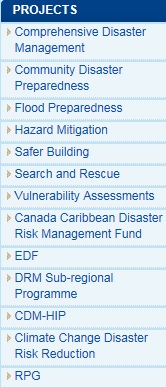
See Photo below for a listing of the CDEMA functionality:

- Photo 1

The participating member states and agencies of the CDEMA include:

Country

Organization

Anguilla Department of Disaster Management (DDM)
Antigua and Barbuda National Office of Disaster Services (NODS)
Bahamas Disaster Management Unit
Barbados Department of Emergency Management
Belize National Emergency Management Organisation (NEMO)
British Virgin Islands Department of Disaster Management
Dominica Office of Disaster Management (ODM)
Grenada National Disaster Management Agency (NaDMA)
Guyana Civil Defense Commission
Haiti Civil Protection Directorate
Jamaica Office of Disaster Preparedness and Emergency Management (ODPEM)
Montserrat Disaster Management Coordination Agency
Saint Kitts and Nevis National Emergency Management Agency (NEMA)
Saint Lucia National Emergency Management Organisation (NEMO)
Saint Vincent and the Grenadines National Emergency Management Organisation (NEMO)
Suriname National Coordination Center For Disaster Relief (NCCR)
Trinidad and Tobago Office of Disaster Preparedness and Management (ODPM)
Turks and Caicos Islands Department of Disaster Management & Emergencies

What about regional defense?

There is a regional initiative branded the Regional Security System (RSS); it is an international agreement for the defense and security of the eastern Caribbean region. The Regional Security System was created out of a need for collective response to security threats, which were impacting on the stability of the region in the late 1970s and early 1980s. On 29 October 1982 four members of the Organisation of Eastern Caribbean States—namely, Antigua & Barbuda, Dominica, St. Lucia, and St. Vincent & the Grenadines—signed a memorandum of understanding (MOU) with Barbados to provide for “mutual assistance on request”. The signatories agreed to prepare contingency plans and assist one another, on request, in national emergencies, prevention of smuggling, search and rescue, immigration control, fishery protection, customs and excise control, maritime policing duties, protection of off-shore installations, pollution control, national and other disasters and threats to national security. Saint Kitts & Nevis joined following independence in 1983, and Grenada joined two years later.

These two initiatives CDEMA and RSS constitutes the regional security solutions for the Caribbean. “Our thimble runneth over!”

What is the problem with CDEMA, RSS and CariCom? For starters these regional efforts, the Caribbean Community, does not represent the full community of the Caribbean; not even half of the Caribbean. Consider here:

CU Member states not included or participating in CDEMA, RSS or CariCom:

  • Cuba
  • Dominican Republic
  • US Territories (Puerto Rico, US Virgin Islands)
  • Dutch Territories (ABC Islands: Aruba, Bonaire, Curacao; SSS Islands: Saba, Saint Marteen; Saint Eustatius)
  • French Territories (Guadeloupe, Martinique, St. Barthélemy, St. Martin)

Secondly, CariCom has extreme funding challenges; the regional construct depends on income derived almost exclusively from grants from the American federal government (US-AID), Canadian agencies and the EU’s Development Fund (EDF). After 40 years of CariCom, it can be concluded that the CariCom Secretariat and regional organs fail to meet the needs of the Caribbean people, even for the people in its participating member-states. They are a great “talking head”; nothing more. The Go Lean book quotes an internal report (Page 92) complaining of the severe weaknesses of the regional construct, stating their tendency to announce decisions over new initiatives as if full implementation were imminent, resulting in a so-called “implementation deficit”.

Obviously, the established security solution is not fully established and does not really solve any threats; therefore the region is not secured.

This reality is pronounced early in the Go Lean book (Page 8) with this declaration regarding the promoters of the Go Lean movement, that they are …

… not affiliated with the CariCom or any of its agencies or institutions. This movement is not an attempt to re-boot the CariCom, but rather a plan to re-boot the Caribbean… This movement was bred from the frustrations of the Diaspora, longing to go home, to lands of opportunities. But this is not a call for a revolt against the governments, agencies or institutions of the Caribbean region, but rather a petition for a peaceful transition and optimization of the economic, security and governing engines in the region.

The Go Lean book is a petition for change and optimization, serving as a roadmap for the introduction and implementation of the technocratic Caribbean Union Trade Federation (CU). The CU would roll the charters of CDEMA, RSS and CariCom into one consolidated, integrated and collaborated effort. The CU is set to optimize Caribbean society through economic empowerment, and also homeland security in the region, since these are inextricably linked to this same endeavor.

Therefore the Go Lean roadmap has 3 prime directives:

  • Optimization of the economic engines in order to grow the regional economy to $800 Billion & create 2.2 million new jobs.
  • Establishment of a security apparatus to protect the resultant economic engines and theCaribbean homeland.
  • Improvement of Caribbean governance to support these engines.

The CU Homeland Security forces have to always be “on guard”, on alert for real or perceived threats. The legal concept is one of being deputized by the sovereign authority for a role/responsibility in a member-state. So when “crap” happens these CU forces are expected to aid, assist, and support local resources in these member-states when called on. But, when a member-state is the problem, in terms of malfeasance, misfeasance or nonfeasance, the “Clear and Present Danger” mandate should be invoked. As a security apparatus, there should also be certain defined threats that would be designated as primarily assigned to the CU; this would apply in a Declaration of War against a known state-sponsored enemy.

But the world has now changed; there is the new threat of an unknown, non-state-sponsored enemy: the scourge of terrorism. Consider the situation in the United States, we all know of the World Trade Center attacks on September 11, 2001, but since then terrorist attacks have actually been a constant threat in the US. In a recent blog/commentary, it was reported that there were 17  terrorist attacks against the American homeland in this decade alone, since 2010. Surely the threat of terrorism is a “clear and present danger” in the US.

The CU treaty calls for the mitigation of terrorism to be a constant charter for the CU Homeland Security forces.

For most of the Caribbean, we are allied with the US; we even have two US Territories “smack-dab” in the middle of our archipelago. So the American terrorist-enemies are very much our enemies. Therefore the CU/Go Lean roadmap posits that the region must prepare an optimized security apparatus for its own security needs. This time for real!

The request is that all Caribbean member-states empower a security force to execute a limited scope on their sovereign territories. The legal basis for this empowerment is a Status of Forces Agreement (SOFA), embedded at the CU treaty initiation, thereby authorizing the CU Homeland Security Department for its role and responsibility for all the “crap” that could happen to the peace and prosperity of the Caribbean people. The CU Trade Federation would lead, fund and facilitate a security force, even encapsulating existing armed forces (full-time or part-time/reserves) as needed, at the discretion of the CU Commander-in-Chief.

The existing Caribbean Security initiatives have failed the region. Despite the existence of agencies like the CDEMA and RSS, the CariCom has not ascended to prominence in local communities. Most people do not even know these agencies exist. It is not seen, heard or felt. This is not the level of governance the Caribbean region needs; we need more; we need better. Previous Go Lean commentaries have meticulously detailed the overall failure of CariCom.

Perhaps the problem is economics (funding)? Or perhaps the security enablement (legal authorization to act)? Or perhaps, its the governance and administration? There are many questions; the only answer that matters is the solutions must address the Clear and Present Dangers.

Consider these monumental episodes and events in the Caribbean region that have occurred in the recent past; the expectation is that they would have invoked the “Clear and Present Danger” clause for engagement from the CDEMA entity. The following list is the Top 20 disasters in CDERA member states, according to the CDEMA published database and sorted by total losses:

No

Date

Year

Country

Event

Killed

Affected

Losses US$

1

20-Dec

2005

Guyana Flood

37

274,774

2,674,322,175

(Details)

2

7-Sep

2004

Grenada Tropical Cyclone

28

81,883

895,199,567

(Details)

3

9-Sep

2004

Jamaica Tropical Cyclone

17

369,685

592,971,569

(Details)

4

2-Sep

2004

The Bahamas Tropical Cyclone

0

8,000

356,983,000

(Details)

5

25-Sep

2004

The Bahamas Tropical Cyclone

2

28,000

350,886,000

(Details)

6

4-Aug

1980

Saint Lucia Tropical Cyclone

9

0

92,592,593

(Details)

7

9-Sep

1994

Saint Lucia Tropical Cyclone

3

0

85,185,185

(Details)

8

14-Jul

2005

Grenada Tropical Cyclone

1

39,085

75,478,163

(Details)

9

21-Nov

2004

Dominica Earthquake

0

19,527

45,150,614

(Details)

10

12-Nov

2004

Trinidad
(Details)
Mudslide

2

1,200

33,333,333

11

7-Sep

2004

Saint Lucia Tropical Cyclone

0

0

10,464,720

(Details)

12

26-Oct

1996

Saint Lucia Tropical Cyclone

0

0

4,444,444

(Details)

13

7-Sep

2004

St Vincent Tropical Cyclone

0

0

4,110,037

(Details)

14

10-Jul

1960

Saint Lucia Tropical Cyclone

6

0

1,421,481

(Details)

15

7-Sep

1967

Saint Lucia Tropical Cyclone

1

0

740,741

(Details)

16

9-Jun

1955

Saint Lucia Fire

3

0

462,963

(Details)

17

1-Aug

1966

Saint Lucia Tropical Cyclone

0

0

277,778

(Details)

18

25-Sep

1963

Saint Lucia Tropical Cyclone

0

0

277,778

(Details)

19

21-Oct

1998

Saint Lucia Tropical Cyclone

1

0

230,185

(Details)

20

1-Feb

1990

Saint Lucia Earthquake

0

0

214,813

(Details)
Total

110

822,154

$5,224,747,139

Was there a noticeable Caribbean-Regional presence in response to these disastrous events?

There are also examples of Industrial Incidents – Chemical Spills – not on the CDEMA list; (the exclusion is inexcusably surprising). These would have gotten the attention of CU Emergency Management agencies, as these also pose a “Clear and Present Danger”. This sample list is just for Jamaica:

Year

Activity Location Details

2005

Use/Application Hotel Explosion from inflammable gas; cause due to management failure

2003

Road Transport Road Tanker Trailer Oil Spill in Montego Bay

1981

Storage Port Sabotage/Vandalism of the Oil Tanker Erodona at Port Kaiser

The presence of this regional construct has not been felt in most of the Caribbean member-states. They have emerged more as an after-the-fact data collector. The burden of direct remediation, beyond the direct member-state, is elusive in the Caribbean homeland. Consider this short-list of emphatic disasters that, to date, have remained unmanaged and unresolved, despite the  “Clear and Present Dangers”:

Member-State Event/Episode
Bahamas Freeport – Hawksbill-area Industrial Plants Spill-Closure-Relocation
Bahamas Nassau – 2013 Rubis Gas Station Underground Tank leakage; need for relocation and remediation.
Haiti January 2010 Earthquake – Long drawn-out inadequate response from local, national and foreign stakeholders.

There is a difference between effectiveness and efficiency. It is easy for an individual or small group to simply deliver on a plan; that is efficiency. Effectiveness would be to get the buy-in from all stakeholders, so as to complete the needed collaboration, consensus-building and compromise. That is heavy-lifting.

All in all, the failures of CariCom, CDEMA and RSS are attributable to this one premise: “Too little, too late”.

It is time for more and better. By contrast, the CU‘s requirement for the SOFA is “Step One, Day One” in the Go Lean roadmap. The CU organization must be empowered for proactive and reactive management of natural disasters, industrial accidents, bacterial & viral pandemics and terrorism-related events. The Go Lean book details the series of community ethos, strategies, tactics, implementations and advocacies to provide the proactive and reactive public safety/security in the Caribbean region:

Community Ethos – Economic Systems Influence Individual Choices Page 21
Community Ethos – Consequences of Choices Lie in Future Page 21
Community Ethos – Privacy –vs- Public Protection Page 23
Community Ethos – Intelligence Gathering Page 23
Community Ethos – Whistleblower Protection Page 23
Community Ethos – “Crap” Happens Page 23
Community Ethos – Cooperatives Page 25
Community Ethos – Ways to Manage Reconciliations Page 34
Community Ethos – Ways to Improve Sharing Page 35
Community Ethos – Ways to Promote Happiness Page 36
Community Ethos – Ways to Impact the Greater Good Page 37
Strategy – Vision – Confederating a non-sovereign permanent union Page 45
Tactical – Fostering a Technocracy Page 64
Tactical – Separation of Powers – Coast Guard & Naval Authorities Page 75
Tactical – Separation of Powers – Ground Militia Forces Page 75
Tactical – Separation of Powers – Emergency Management Agency Page 76
Tactical – Separation of Powers – CariPol: Marshals & Investigations Page 75
Implementation – Ways to Pay for Change Page 101
Implementation – Start-up Foreign Policy Initiatives Page 102
Implementation – Start-up Security Initiatives Page 103
Implementation – Ways to Foster International Aid Page 115
Planning – 10 Big Ideas – #3: Consolidated Homeland Security Pact Page 130
Planning – Ways to Make the Caribbean Better Page 131
Planning – Ways to Improve Failed-State Indices – Escalation Role Page 134
Planning – Lessons from the American West – Needed Law & Order Page 142
Planning – Lessons from Egypt – Law & Order for Tourism Page 143
Advocacy – Ways to Grow the Economy – Quick Disaster Recovery Page 151
Advocacy – Ways to Improve Governance Page 168
Advocacy – Ways to Better Manage the Social Contract Page 170
Advocacy – Ways to Impact Justice – Policing the Police Page 177
Advocacy – Ways to Reduce Crime – Regional Security Intelligence Page 178
Advocacy – Ways to Improve Homeland Security Page 180
Advocacy – Ways to Mitigate Terrorism Page 181
Advocacy – Ways to Improve Intelligence Gathering & Analysis Page 182
Advocacy – Ways to Improve for Natural Disasters Page 184
Advocacy – Ways to Improve for Emergency Management Page 196
Advocacy – Ways to Protect Human Rights – Watchful World Page 220

Other subjects related to security and governing empowerments for the region have been blogged in other Go Lean…Caribbean commentary, as sampled here:

https://goleancaribbean.com/blog/?p=4809 Americans arrest 2 would-be terrorists – a Clear and Present Danger
https://goleancaribbean.com/blog/?p=4741 Vanuatu and Tuvalu Cyclone – Inadequate response to human suffering
https://goleancaribbean.com/blog/?p=4720 A Lesson in History: SARS in Hong Kong
https://goleancaribbean.com/blog/?p=4360 Dreading the ‘Caribbean Basin Security Initiative’
https://goleancaribbean.com/blog/?p=2614 The ‘Great ShakeOut’ Earthquake Drill / Planning / Preparations
https://goleancaribbean.com/blog/?p=2397 Stopping a Clear and Present Danger: Ebola
https://goleancaribbean.com/blog/?p=1076 Trinidad Muslims travel to Venezuela for jihadist training
https://goleancaribbean.com/blog/?p=1003 Painful and rapid spread of new virus – Chikungunya – in Caribbean
https://goleancaribbean.com/blog/?p=960 Lessons from NSA recording all phone calls in Bahamas
https://goleancaribbean.com/blog/?p=809 Muslim officials condemn abductions of Nigerian girls
https://goleancaribbean.com/blog/?p=535 Remembering and learning from Boston
https://goleancaribbean.com/blog/?p=273 10 Things We Want from the US – #4: Pax Americana
https://goleancaribbean.com/blog/?p=87 Fact, not fiction: 6.5M Earthquake Shakes Eastern Caribbean

The concept of “Clear and Present Danger” is conveyed in the following VIDEO, a “trailer” for a movie of the same name. This is art imitating life:

Title: Clear and Present Danger – Movie Trailer  – https://youtu.be/900kPg1lomU

Published on Jun 19, 2012 – This is the third film based on Tom Clancy’s high-tech espionage potboilers starring CIA deputy director Jack Ryan. Harrison Ford, returning to the Ryan role after his first go-round in 1992’s Patriot Games, is assigned to a delicate anti-drug investigation after a close friend of the President (a Reaganesque Donald Moffat) is murdered by a Colombian drug cartel. When Ryan discovers that the President’s wealthy friend was in league with the cartel, the President’s devious national security adviser (Harris Yulin) and an ambitious CIA deputy director (Henry Czerny) send a secret paramilitary force into Colombia to wipe out the drug lords. The force is captured and then abandoned by the President’s lackeys. It falls to Ryan to enter Colombia and rescue them, aided only by a renegade operative named Clark (Willem Dafoe), with both his life and career on the line.

The adoption of a “Clear and Present Danger” mandate is reflective of a technocratic work edict and community ethos. We can and must do better!

The advocacy to adopt the structure of a technocracy is reflective of this commitment to do better. The term technocracy is used to designate the application of the scientific method to solving social and economic problems. The CU must start as a technocracy, not grow into a technocracy – too much is at stake – lives are involved; see Appendix B below of Haiti’s Earthquake Photos.

All of the Caribbean is hereby urged to lean-in to this roadmap, to make the Caribbean safer and make the region a better destination to live, work and play.

🙂

Download the book Go Lean … Caribbean – now!

————

Appendix – CDEMA Role / Responsibilities:

Specific Roles and Responsibilities of the CDM Coordination and Harmonization Council:

  • Contribute to and provide recommendations for the development and implementation of a CDM monitoring and evaluation framework.
  • To consider reports on CDM implementation and provide guidance towards sustainability.
  • Identify and Provide recommendations for the integration of ongoing initiatives as well as planned initiatives that will support the achievement of the outcomes enshrined in the enhanced CDM Strategy
  • Discuss and address issues and opportunities to further good governance of the CDM
  • Nurture opportunities for synergies between development partners, participating states, representatives of the private sector, civil society and other relevant stakeholders responsible for the mainstreaming of the CDM strategy in development planning.
  • Provide policy guidance for the maintenance of the CDM database to ensure effective sharing of CDM knowledge.
  • Share annually  with the CDM Programming Consultation meeting, progress on CDM implementation
  • Identify a technical committee to support the planning process for the CDM Conference

The CDM Coordination and Harmonization Council comprise development partner representatives, sector leaders, participating states and private sector. The group includes:

  1. Caribbean Disaster Emergency Management Agency (Chair),
  2. Caribbean Development Bank (CDB),
  3. Canadian International Development Agency (CIDA),
  4. United Nations Development Programme (UNDP),
  5. United States Agency for International Development (Development Arm and OFDA),
  6. United Kingdom Department for International Development (DFID),
  7. European Union (EU),
  8. CARICOM Secretariat,
  9. Organization of American States (OAS),
  10. Organization of Eastern Caribbean States (OECS),
  11. University of the West Indies (UWI),
  12. Food and Agriculture Organisation (FAO),
  13. Caribbean Tourism Organization (CTO),
  14. Pan American Health organization (PAHO),
  15. Caribbean Electric Utility Services Cooperation (CARILEC),
  16. Caribbean Policy Development Centre (CPDC),
  17. United Nations Development Fund for Women (UNIFEM),
  18. Caribbean Community Climate Change Centre (CCCCC),
  19. Caribbean Association of Industry and Commerce (CAIC),
  20. Four representatives of CDERA Participating States – one representative from each sub-region.

—————-

Appendix B – Haiti Earthquake Photos – Evidence of a Clear and Present Danger

- Photo 2

- Photo 3


Share this post:
, , , ,
[Top]

A Picture is worth a thousand words; a video … a million

Go Lean Commentary

The penalty for a broken taillight should not be “Death by Firing Squad”.

Welcome to America!

Though this declaration is not the law-of-the-land, it is the anecdotal experience for the Black-and-Brown populations, far too often.

The subsequent news commentary – by British Expatriate Piers Morgan (former host on American news network CNN) – is ripped from the headlines of “Cop-on-Black” crime in the US. For much of the latter half of 2014, this type of headline was prevalent in places like Ferguson, Missouri, but in truth, it appears that the law enforcement community appears to have “Bulls-eye” targets on African-American males throughout the country, more so than any other ethnic group. This statement would have appeared to be only indicative of “conspiracy theories”, if not for the following pictures and VIDEO.

By: Piers Morgan
Title: After seeing South Carolina police nearly get away with murder, I won’t feel safe until every cop who carries a gun, wears a camera too

This morning, I watched Walter Scott die.

I didn’t think I’d ever see a piece of video footage that made me feel as physically sick and angry as that disgusting ISIS snuff movie of a Jordanian pilot being burned alive.

But the last few seconds of Scott’s life, captured by a passer-by on a camera phone, provoked similar nausea-fuelled emotions of blind rage.

Why? Because they exposed the shocking truth behind a sickening lie.

Picture Words - Photo 1 Scott, a 50-year-old American father-of-four, had been stopped in North Charleston, South Carolina, for having a broken taillight on his Mercedes car.

A vehicular misdemeanor so minor in its importance that it’s usually dealt with by a verbal police warning, no fine and no points on your license.

But Scott, fearful of arrest because he owed child support, ran away.

The police officer who had stopped him, Patrolman Michael Slager, gave chase into a small grassy lot.

Minutes later, unarmed Scott was dead. Needlessly, senselessly, murderously riddled with bullets in the back from trigger-happy Officer Slager’s handgun.

Walter Scott’s death is outrageous enough.

But the disgraceful cover-up that followed makes the stomach churn.

Picture Words - Photo 2Officer Slager told his bosses that Scott had taken his taser gun in a violent struggle, and he had shot him because he feared for his life.

To support this, the taser had been found next to Scott’s body – suggesting he had run off with it.

His bosses preferred to just take his word for it then properly investigate.

And presumably, the word of a second officer who arrived at the scene shortly afterwards.

So the official statement released to the media backed Officer Slager’s claim that he had acted entirely within his rights after Scott tried to grab his taser.

The Supreme Court ruled that an officer may use deadly force against a fleeing suspect only when there is probable cause that the suspect ‘poses a significant threat of death or serious physical injury to the officer or others.’

By Officer Slager’s account, that criteria was met.

And there it would have ended.

Walter Scott’s death would be blamed on Walter Scott.

Another reckless violent aggressor who forced a terrified cop to shoot him.

Case closed.

But then came the video.

It turned out that someone walking nearby had secretly filmed the whole thing on his camera phone.

So now we could actually see for ourselves what happened.

Mr. Scott never grabbed Officer Slager’s taser.

In fact, Officer Slager tasers Scott, who then runs off.

Scott is more than 20 feet away and clearly fleeing when Officer Slager stands and fires eight shots at him.

When Scott finally falls, after the last of the eight shots, Officer Slager runs back toward where the initial scuffle occurred and picks something up of the ground. Moments later, he drops it near Scott’s body.

It’s believed to be the taser.

After the video appeared, Officer Slager was promptly charged with murder.

Which is all very well, but if the video hadn’t appeared, he would have GOT AWAY with murder.

Isn’t that just utterly shameful?

The South Carolina police department failed Walter Scott on every single level. Doesn’t the simple fact alone that he was shot five times in the BACK demand a serious analysis of forensics, autopsy and witness statements?

Instead, they chose to do nothing but stand by their lying, cold-blooded executioner.

At this point, I should mention that Walter Scott was black and Officer Slager is white.

I’m wary of casting racial aspersions on Officer Slager’s actions.

There’s nothing to unequivocally suggest it was a racially motivated incident.

And indeed, the Scott family attorney, L. Chris Stewart, offered a different explanation:

‘It’s not about race, it’s about power. The officer thought he could just shoot this man. He thought Mr Scott was expendable. He just casually shot a man in the back many times. That speaks to the value of human life, which is a bigger issue than trying to just make this a small issue of race. When people start respecting that more, it won’t matter what colour you are.’

I think he’s right.

When American cops shoot dead someone who is black, it garners huge headlines because people rush to assume it’s racial.

And sometimes it is. Perhaps Officer Slager racially profiled Walter Scott, we’ll probably never know.

But the truth is that American cops shoot everyone, regardless of colour or creed.

They kill many more whites than blacks, though the percentage of blacks who get killed as part of the U.S. black population is three times higher than the same percentage for whites.

And they do it because they can.

Guns empower some of them to behave like trigger-happy John Waynes and it is, frankly, terrifying.

I received my first ever traffic ticket recently, after performing an illegal U-turn in Beverly Hills – right in front of a policeman on a motorbike.

He signalled for me to pull over, which I did.

But as he walked towards me, loaded gun glistening in his hip holster, I began to slightly panic. Especially as just two days before, a man was shot dead by cops a few blocks away on the famed Rodeo Drive.

What were the rules again?

  • Do I put my hands on the steering wheel or by my side?
  • Do I wind down the window, or leave it up?
  • Do I turn the ignition off or keep it on?
  • Do I reach for my papers, or wait to be instructed?
  • Do I call him ‘Officer’, ‘Sir’ or what?

None of these questions would be significant in somewhere like Britain, because nobody fears they might be shot by a policeman.

The vast majority of British cops don’t carry guns, mainly because they know the vast majority of civilians don’t carry them either.

At the risk of sounding like a stuck record, it is worth repeating once more that fewer Brits die a YEAR from guns than get shot dead every single DAY in America.

So there is no expectation, fear or paranoia on either side that a simple traffic violation may suddenly erupt into a deadly shooting match.

In America, everyone now has to assume that everyone else may be armed.

It’s the exact same mentality that existed in the Wild West.

One false move in the wrong place, one dumb comment in a bar, one heated exchange of words with a law enforcement official and BANG!!!!

Someone dies.

The justice system rarely supports those who get shot dead by cops.

We can see from this horrific incident how the police protect themselves.

But there is, as we can also see from this incident – and the death of Eric Garner in New York – one truly effective weapon at our disposal: a video camera.

Which is why I want every single U.S. cop to now be compelled by law to carry them at all times, right next to their guns.

The technology exists for them to do so without any restrictions on their ability to function as normal.

What it would also do is restrict any rogue gun-toting policeman’s ability to lie after he casually, indiscriminately shoots dead an unarmed human being, black or white.
Retrieved from: The Daily Mail – London Daily Newspaper – Posted April 9, 2015 –
http://www.dailymail.co.uk/news/article-3030442/PIERS-MORGAN-seeing-South-Carolina-police-nearly-away-murder-won-t-feel-safe-cop-carries-gun-wears-camera-too.html?ito=social-facebook

VIDEO: http://www.dailymail.co.uk/news/article-3030442/PIERS-MORGAN-seeing-South-Carolina-police-nearly-away-murder-won-t-feel-safe-cop-carries-gun-wears-camera-too.html#v-4159293374001

There is no way to defend this Police Officer, Michael Slager. The US Justice System will have to deal with him. Our focus can only be on the mitigation, in this case body cameras; and how to apply the lessons in the re-boot of the Caribbean societal engines: economic, security and governance.

The events of this small suburban town of Charleston, South Carolina now have huge bearing on the acceptable standards for community policing through-out the US and other countries, including the Caribbean. There is a direct impact between the two communities: many in the Caribbean Diaspora living in the US face these same dynamics, because of their Black-and-Brown status. (Even the bystander – Feiden Santana – capturing the VIDEO in this case is of Caribbean – Dominican Republic – heritage).

The book Go Lean…Caribbean seeks to assess (identify and qualify) the issues that drive so many of the Caribbean youth to flee their homelands to take up residence in the US. The book posits that this is not a wise course of action, that it is better to “prosper where planted” in the Caribbean than to risk the interactions of American life. This book portrays that there are “push-and-pull” factors that contribute to so much societal abandonment in these Caribbean member-states. The purpose of the book is to serve as a roadmap for the introduction and implementation of the technocratic Caribbean Union Trade Federation (CU) to elevate the region’s economic engines, and optimize the security (public safety) issues as well. These are among the prime directives for this societal elevation. The declarative statements are as follow:

  • Optimization of the economic engines in order to grow the regional economy to $800 Billion & create 2.2 million new jobs.
  • Establishment of a security apparatus to protect the resultant economic engines.
  • Improvement of Caribbean governance to support these engines.

The assertion of the Go Lean book is that the Caribbean region must prepare a better security apparatus and justice institution than our northern neighbor is able to boast. Based of the dual “scales of justice” in the US, one for Whites and another for Black-and-Brown, this goal should not be so difficult to pursue. For this reason, the Go Lean roadmap spuns American leadership for security and justice, and proposes homegrown solutions. According to the opening Declaration of Interdependence (Page 12), our region is urged to take the lead for our own solutions and appoint our own “guardians” with our self-interest in mind; prioritizing the community ethos for the Greater Good. The actual declaration is pronounced as follows:

x.   Whereas we are surrounded and allied to nations of larger proportions in land mass, populations, and treasuries, elements in their societies may have ill-intent in their pursuits, at the expense of the safety and security of our citizens. We must therefore appoint “new guards” to ensure our public safety and threats against our society, both domestic and foreign. The Federation must employ the latest advances and best practices … to assuage continuous threats against public safety.

xvi. Whereas security of our homeland is inextricably linked to prosperity of the homeland, the economic and security interest of the region needs to be aligned under the same governance. Since economic crimes, including piracy and other forms of terrorism, can imperil the functioning of the wheels of commerce for all the citizenry, the accedence of this Federation must equip the security apparatus with the tools and techniques for predictive and proactive interdictions.

The Caribbean appointing “new guards” or a security pact to ensure public safety calls for permanent justice institutions sanctioned by all 30 CU member-states. The CU Federation or federal justice’s institutions must operate differently than the US versions; we must do so judiciously and with proper regard for human and civil rights. The Go Lean roadmap calls for a separation-of-powers between the CU and the Caribbean member-states. So many of the community policing will not be under federal jurisdiction, but the CU will furnish a lot of funding and outfitting, with a lot of “strings attached”. The book calls for dashboard and body cameras (Page 178); as part of the edict for transparency and accountability.

The US does not currently have this default disposition.

Picture Words - Photo 3

The forgoing news article teaches some powerful lessons for Caribbean consideration.

Before the eye-witness (Feiden Santana) VIDEO came out on Tuesday (April 7), the assumption and benefit-of-doubt in the shooting of Walter Scott would have sided with the Police Officer Michael Slager. But having a photo/picture speaks a thousand words as to what really happened there in North Charleston, South Carolina. Having a VIDEO speaks a millions words. Now all previous allegations of police brutality and evidence planting suddenly have new merit. In addition, the “Blue Line” between Police Officers and the public is blatantly exposed – the VIDEO depicted another officer, an African-American Officer, aiding Michael Slager cover-up. This relates that the loyalty among law enforcement officers trumps any other interrelation in the criminal justice system. It can be concluded that intra-department oversight of their own law enforcement activities may never yield true justice; there must be outside compliance review.

The Go Lean roadmap leads with economic empowerments in the quest to elevate Caribbean society. But security and governance dynamics must be coupled with this effort. As we learn in the foregoing article, “bad actors” can emerge in society, even in the form of law enforcement officers; these individuals can also have sinister intent.

No justice; no peace.

This Go Lean roadmap relates a heightened level of economic-security-government engagement. These prime directives of the CU calls for a Homeland Security focus related to threats that may imperil the region’s economic engines, and crime remediation and mitigation: Public Safety. The CU is an entity to serve as a deputy for law enforcement agencies for each Caribbean member-state, empowered by an international treaty – a Status of Forces Agreement – for all Caribbean member-states to confederate the Homeland Security and Anti-Crime forces to execute a limited scope on the region’s sovereign territories.

To ensure justice – and peace – the Go Lean roadmap calls for a lot of proactive activities to remediate and mitigate crime. Like crime intelligence, surveillance videos and data analysis. The need for transparency and accountability was strongly urged in the same opening Declaration of Interdependence (Page 12), as follows:

xii. Whereas the legacy in recent times in individual states may be that of ineffectual governance with no redress to higher authority, the accedence of this Federation will ensure accountability and escalation of the human and civil rights of the people for good governance, justice assurances, due process and the rule of law. As such, any threats of a “failed state” status for any member state must enact emergency measures on behalf of the Federation to protect the human, civil and property rights of the citizens, residents, allies, trading partners, and visitors of the affected member state and the Federation as a whole.

The Go Lean book details the community ethos, strategies, tactics, implementations and advocacies to provide increased public safety and security in the Caribbean region, and to ensure the right attitudes of law enforcement officers to serve-and-protect their Caribbean communities:

Economic Principle – Economic Systems Influence Individual Choices Page 21
Economic Principle – Consequences of Choices Lie in Future Page 21
Community Ethos – Privacy –vs- Public Protection Page 23
Community Ethos – Witness Security & Protection Page 23
Community Ethos – Intelligence Gathering Page 23
Community Ethos – Anti-Bullying and Mitigation Page 23
Community Ethos – Minority Equalization Page 24
Community Ethos – Cooperatives Page 25
Community Ethos – Ways to Improve Sharing Page 35
Community Ethos – Ways to Impact the Greater Good Page 37
Tactical – Confederating a non-sovereign union Page 63
Tactical – Fostering a Technocracy Page 64
Tactical – Separation of Powers – Homeland Security Page 75
Tactical – Separation of Powers – Justice Department – CariPol Page 77
Tactical – Separation of Powers – Federal Courts – Court   of Justice Page 90
Implementation – Assemble “Organs” into a Security Apparatus Page 96
Implementation – Start-up Security Initiatives Page 103
Planning – Ways to Make the Caribbean Better Page 131
Planning – Ways to Improve Failed-State Indices Page 134
Planning – Lessons from the American West Page 142
Advocacy – Ways to Grow the Economy Page 151
Advocacy – Ways to Improve Governance Page 168
Advocacy – Ways to Better Manage the Social Contract Page 170
Advocacy – Ways to Impact   Justice – Police Internal Affairs   Up-line Page 177
Advocacy – Ways to Reduce Crime Page 178
Advocacy – Ways to Improve for Gun Control Page 179
Advocacy – Ways to Improve Homeland Security Page 180
Advocacy – Ways to Mitigate Terrorism Page 181
Advocacy – Ways to Improve Intelligence Gathering/Analysis Page 182
Advocacy – Ways to Impact the Prison Industrial Complex Page 211
Advocacy – Ways to Protect Human Rights Page 220
Appendix – CariCom Organs: IMPACS & Court of Justice Page 244

Other subjects related to crime remediation and fair human/civil rights protections for the region have been detailed in prior Go Lean…Caribbean commentaries; as sampled here:

https://goleancaribbean.com/blog/?p=4447 Probe of Ferguson-Missouri finds bias from cops, courts
https://goleancaribbean.com/blog/?p=4360 Dreading the American ‘Caribbean Basin Security Initiative’
https://goleancaribbean.com/blog/?p=3881 Intelligence Agencies to Up Cyber Security Cooperation
https://goleancaribbean.com/blog/?p=2782 Red Light Traffic Cameras, other CCTV Deployments can Impact Crime
https://goleancaribbean.com/blog/?p=2684 Role Model for Justice, Anti-Crime & Security: The Pinkertons
https://goleancaribbean.com/blog/?p=1674 Obama’s $3.7 Billion Immigration Crisis Funds – A Homeland Security Fix
https://goleancaribbean.com/blog/?p=1554 Status of Forces Agreement = Security Pact
https://goleancaribbean.com/blog/?p=1487 Here come the Drones … and the Concerns
https://goleancaribbean.com/blog/?p=960 NSA records all phone calls in Bahamas, according to Snowden
https://goleancaribbean.com/blog/?p=546 Book Review: ‘The Divide: American Injustice In the Age of the Wealth Gap’
https://goleancaribbean.com/blog/?p=535 Remembering and learning from Boston
https://goleancaribbean.com/blog/?p=392 Jamaica to receive World Bank funds to help in crime fight
https://goleancaribbean.com/blog/?p=341 American Hypocritical Human Rights Leadership Slams Caribbean

The foregoing article and VIDEO depicts that the community ethos for community policing will change imminently. There is now the need for law enforcement officers, at all levels, to employ dashboard cameras and body cameras; especially when deadly force is used. This is a valid need in the United States of America; in North Charleston – South Carolina, Ferguson – Missouri and every village, town, city, county, state and federal jurisdiction.

There is no longer the benefit of any doubt to police officers who shoot an unarmed Black Man. No more!

The published photos have now spoken thousands of words; the videos now speak millions.

The Caribbean must learn from these American mistakes and do better. We can forge an even better homeland, a better place to live, work and play – even more so than our American counterpart.

America should not be considered the land of destination for the Caribbean people to emigrate to. Income inequality and racial inequality persists in American society. Race still matters in the US; there is different treatments for Black-and-Brown, compared to the rest of the population.

Here at home, we must do better!

We know that “bad actors” will emerge in all situations, and we want to be prepared with the proper mitigations. We also know that police officers can also be “bad actors”, so we must appoint “new guards” to ensure the integrity of the “old guards”. Everyone, the people, institutions and government officials are encouraged to lean-in to this roadmap to ensure transparency, accountability and a commitment to due-process and the rule-of-law. Yes, we can … do better.  🙂

Download the free e-Book of Go Lean … Caribbean – now!

Share this post:
, ,
[Top]

Americans arrested for aiding ISIS

Go Lean Commentary

CU Blog - Americans arrested for aiding ISIS - Photo 3It’s only been 14 years, but how easily we can forget: the events of 9/11 – September 11, 2001 – and the economic/security implications on North America … and the rest of the world, the Caribbean included. The economic effects arising from the September 11 attacks were an initial shock causing global recessions and dropping the world’s stock markets sharply; (see photo here).

Unfortunately, the entire Caribbean eco-system functions as a parasite to the American host. In Biology, when the host ails, the parasite “dies”; this poetically describes the Caribbean socio-economic dispositions, post-9/11. All in all, the consequences to the Caribbean were dire!

What have we learned? Can we do better going forward?

There is now a new plan to impact the Caribbean economy, in a positive way! We are now counting on this success. The assertion in the book Go Lean … Caribbean (Page 23) is that with the emergence of new economic engines, “bad actors” will also emerge thereafter to exploit the opportunities, with good, bad and evil intent. The book relates that this is a historical fact, that is bound to be repeated again and again.

When one group prospers, especially if some perceive that there is some exploitation of others in the process, the resultant animosity creates threats to homeland security. This is the reality in the United States and is expected to materialize in the Caribbean, as a direct product of elevation of this region’s societal engines.

This point is pronounced early in the book with the Declaration of Interdependence (Page 12) that claims:

x.   Whereas we are surrounded and allied to nations of larger proportions in land mass, populations, and treasuries, elements in their societies may have ill-intent in their pursuits, at the expense of the safety and security of our citizens. We must therefore appoint “new guards” to ensure our public safety and threats against our society, both domestic and foreign. The Federation must employ the latest advances and best practices … to assuage continuous threats against public safety.

xvi. Whereas security of our homeland is inextricably linked to prosperity of the homeland, the economic and security interest of the region needs to be aligned under the same governance. Since economic crimes, including piracy and other forms of terrorism, can imperil the functioning of the wheels of commerce for all the citizenry, the accedence of this Federation must equip the security apparatus with the tools and techniques for predictive and proactive interdictions.

The US has experienced a long list of terrorist attacks from both foreign and domestic sources. As a result, the country’s homeland security forces have to always be “on guard”, on alert for real or perceived threats.

CU Blog - Americans arrested for aiding ISIS - Photo 1

Being “on guard” to protect the American homeland means proactively seeking out those with bad intent, by “hook or by crook”:

VIDEO: FBI: U.S. National Guard soldier tried to join ISIS – http://www.cbsnews.com/videos/fbi-u-s-national-guard-soldier-tried-to-join-isis/

March 26, 2015 – Hasan Edmonds, a member of the Illinois National Guard, and his cousin, Jonas, are charged with supporting the Islamic State in Iraq and Syria (ISIS). The two were arrested after their alleged plot for a massacre was uncovered. David Martin reports. (VIDEO plays best in Internet Explorer).

It is important to reflect that the US has been consistently under attack.

CU Blog - Americans arrested for aiding ISIS - Photo 2

We all know of the World Trade Center attacks on September 11, 2001, but terrorist attacks are actually more common in the US than one might think, or remember. Consider here, these recorded terrorist attacks in the US for this decade alone, since 2010:

Date City/State Enemy Category Encyclopedic Details
December 4,   2014 Kansas City, Missouri Anti-Muslim Killing of Abdisamad Sheikh Hussein
October 30,   2014 Pike County, PA Anti-government Pennsylvania’s Eric Frein Attack & Flight
October 23, 2014 Queens, New York Muslim Extremist 2014 Queens Hatchet Attack
June 8, 2014 Las Vegas, Nevada Anti-government 2014 Las Vegas Shootings
April 13, 2014 Overland Park, Kansas Neo-Nazi Overland Park Jewish Community Center Shooting
December 13, 2013 Wichita, Kansas Muslim Extremist 2013 Wichita Bomb Plot
November 1, 2013 Los Angeles, CA Anti-government 2013 Los Angeles International Airport Shooting
April 16, 2013 Washington, DC Bio-Terrorism April 2013 Ricin-laced Letters
April 15, 2013 Boston, Massachusetts Muslim Extremist Boston Marathon Bombings
November 29, 2012 Casa Grande, Arizona Muslim Extremist Casa Grande Bombing
August 5, 2012 Oak Creek, Wisconsin Neo-Nazi Wisconsin Sikh Temple Shooting
May 11, 2011 Manhattan, New York, NY Muslim Extremist 2011 Manhattan Terrorism Plot
January 24, 2011 Dearborn, Michigan Anti-Muslim 2011 Dearborn Mosque Bombing Plot
November 26, 2010 Portland, Oregon Muslim Extremist 2010 Portland Car Bomb Plot
October 27, 2010 Washington, DC Muslim Extremist Farooque Ahmed Pentagon-Area Plot
May 1, 2010 Manhattan, New York, NY Muslim Extremist 2010 Times Square Car Bombing Attempt
February 18, 2010 Austin, Texas Anti-government 2010 Austin Suicide Attack

The United States Homeland Security Forces have their hands full. They obviously have real threats to mitigate and remediate. For most of the Caribbean, we are allied with the US. So their enemies might very well become our enemies. Therefore the book Go Lean…Caribbean posits that the region must prepare its own security apparatus for its own security needs. So the request is that all Caribbean member-states form and empower a security force to execute a limited scope on their sovereign territories.

The Go Lean…Caribbean vision is to confederate under a unified entity made up of the Caribbean to provide homeland security to the Caribbean. But Homeland Security for the Caribbean has a different meaning than for our American counterparts. Yes, we must be on defense against military intrusions like terrorism and piracy, we mostly have to contend with threats that may imperil the region’s economic engines, and crime remediation and mitigation. The CU security goal is for public safety! This goal is detailed in the book as it serves as a roadmap for the introduction of the technocratic Caribbean Union Trade Federation (CU). The CU is set to optimize Caribbean society through economic empowerment, and also the security dynamics of the region, since these are inextricably linked to this same endeavor. Therefore the Go Lean roadmap has 3 prime directives:

  • Optimization of the economic engines in order to grow the regional economy to $800 Billion & create 2.2 million new jobs.
  • Establishment of a security apparatus to protect the resultant economic engines.
  • Improvement of Caribbean governance to support these engines.

The Caribbean appointing “new guards”, or a security pact to ensure public safety includes many of the same strategies, tactics and implementations employed by US forces in the foregoing VIDEO. We too must use “hook and crook”, plus advanced Intelligence Gathering & Analysis, to draw out and interdict “bad actors” that emerge in the Caribbean region. The Go Lean roadmap calls for the designated  Intelligence Agency to provide Unified Command and Control for the Caribbean anti-crime and defense efforts. This will include a permanent professional military force with naval and ground (Marine) forces.

This security pact would be sanctioned by all 30 CU member-states as a Status of Forces Agreement (SOFA). The CU Trade Federation will lead, fund and facilitate the security forces, encapsulating all the existing armed forces (full-time or part-time/reserves) in the region. This CU Homeland Security Force would get its legal authorization from a SOFA embedded at the CU treaty initiation.

This Security Apparatus is “Step One, Day One” in the Go Lean roadmap, covering the approach for adequate funding, accountability and control. The Go Lean book details a series of community ethos, strategies, tactics, implementations and advocacies to provide increased public safety & security in the Caribbean region:

Community Ethos – Economic Systems Influence Individual Choices Page 21
Community Ethos – Consequences of Choices Lie in Future Page 21
Community Ethos – Privacy –vs- Public Protection Page 23
Community Ethos – Intelligence Gathering Page 23
Community Ethos – “Crap” Happens Page 23
Community Ethos – Minority Equalization Page 24
Community Ethos – Cooperatives Page 25
Community Ethos – Ways to Manage Reconciliations Page 34
Community Ethos – Ways to Improve Sharing Page 35
Community Ethos – Ways to Impact the Greater Good Page 37
Tactical – Confederating a non-sovereign union Page 63
Tactical – Fostering a Technocracy Page 64
Tactical – Separation of Powers – Homeland Security Page 75
Tactical – Separation of Powers – CariPol: Marshals & Investigations Page 75
Implementation – Ways to Pay for Change Page 101
Implementation – Start-up Foreign Policy Initiatives Page 102
Implementation – Start-up Security Initiatives Page 103
Implementation – Ways to Foster   International Aid Page 115
Implementation – Reasons to Repatriate Page 118
Planning – Ways to Model the EU Page 130
Planning – Ways to Make the Caribbean Better Page 131
Planning – Ways to Improve Failed-State Indices Page 134
Planning – Lessons Learned from the West Indies Federation Page 135
Planning – Lessons from East Germany – Border Issues Page 139
Planning – Lessons from the American West – Law & Order Page 142
Planning – Lessons from Egypt Page 143
Advocacy – Ways to Grow the Economy Page 151
Advocacy – Ways to Improve Governance Page 168
Advocacy – Ways to Better Manage the Social Contract Page 170
Advocacy – Ways to Improve Leadership Page 171
Advocacy – Ways   to Impact Justice – Military Police Role Page 177
Advocacy – Ways   to Reduce Crime Page 178
Advocacy – Ways to Improve for Gun Control Page 179
Advocacy – Ways to Improve Homeland Security Page 180
Advocacy – Ways to Mitigate Terrorism Page 181
Advocacy – Ways to Improve Intelligence Gathering/Analysis Page 182
Advocacy – Ways to Impact the Prison Industrial Complex Page 211
Advocacy – Ways to Protect Human Rights Page 220
Appendix – Prison Industrial Complex: Nauru Detention Center Page 290

Other subjects related to security and governing empowerments for the region have been blogged in other Go Lean…Caribbean commentary, as sampled here:

https://goleancaribbean.com/blog/?p=4360 Dreading the ‘CaribbeanBasin Security Initiative’
https://goleancaribbean.com/blog/?p=3881 Intelligence Agencies to Up Cyber Security Cooperation
https://goleancaribbean.com/blog/?p=2684 Role Model for Justice: The Pinkertons
https://goleancaribbean.com/blog/?p=1965 America’s Navy – 100 Percent – Model for the Caribbean
https://goleancaribbean.com/blog/?p=1487 Here come the Drones … and the Concerns
https://goleancaribbean.com/blog/?p=1143 White Collar crime in America; criminals take $272 billion a year in healthcare fraud
https://goleancaribbean.com/blog/?p=1076 Trinidad Muslims travel to Venezuela for jihadist training
https://goleancaribbean.com/blog/?p=960 NSA records all phone calls in Bahamas, according to Snowden
https://goleancaribbean.com/blog/?p=809 Muslim officials condemn abductions of Nigerian girls
https://goleancaribbean.com/blog/?p=535 Remembering and learning from Boston
https://goleancaribbean.com/blog/?p=392 Jamaica to receive World Bank funds to help in crime fight
https://goleancaribbean.com/blog/?p=341 US slams Caribbean human rights practices
https://goleancaribbean.com/blog/?p=273 10 Things We Want from the US – #4: Pax Americana

The foregoing VIDEO relates to a Military Reservist; this population is especially troublesome for community peace assurances as these ones are trained killers. Plus with disorders like Post Traumatic Stress Disorder (PTSD), the afflicted may be dealing with mental and emotional crises.

Underlying to the prime directive of elevating the economic, security and governing engines of the Caribbean, is the desire to make the Caribbean homeland safer, a better place to live, work and play. We must be prepared for the “bad actors”, to dissuade their disrupting the peace of all Caribbean residents (42 million people) or the 80 million tourists that visit the region annually.

All of the Caribbean people and institutions are hereby urged to lean-in to this roadmap. Yes, we can – we must – do better!   🙂

Download the book Go Lean … Caribbean – now!

Share this post:
, , ,
[Top]

Vanuatu and Tuvalu – Inadequate response to human suffering

Go Lean Commentary

“There but for fortune go I” – Sir Roland Sanders.

This commentator and author of the subsequent article, is spot on in this regards. Just last week (March 20) was the Spring Equinox in the Northern Hemisphere; so while hurricane season for the Caribbean is still months away, it is the “thick” of the season for the Southern Hemisphere right now; (equivalent to September for the Caribbean). Last week the Pacific island nations of Vanuatu and Tuvalu – see Appendices A, B & C – were devastated by the Category 5 Cyclone Pam. (Cyclones are the Pacific version of hurricanes).

Category 5!!!

Pacific or Caribbean; we both share this same reality. We have to contend with natural disasters, not of our making. This threat is heightened now with Climate Change. 9 of the 10 hottest years on record have now taken place since 2000.

The only exception to this trend was … 1998.

It is what it is!

Poor Vanuatu and Tuvalu… (see VIDEOs of the devastation in Appendix A below). They are not prepared for this “agent of change”; in fact their peoples are suffering right now; and they will suffer further trying to effectuate a recovery. See the full article here:

Title: Vanuatu and Tuvalu – Inadequate response to human suffering
By: Sir Roland Sanders – Caribbean/Commonwealth Commentator – Posted03-19-2015; retrieved 03-25-2015 from:
http://www.sirronaldsanders.com/viewarticle.aspx?ID=491

People on the East Coast of the United States of America (US) and the Caribbean should consider how best they might lend a helping hand to the people of the islands of Tuvalu and Vanuatu in the Pacific whose lives have been shattered by Cyclone Pam that struck them on the night of March 13.

In the case of the Caribbean islands, it is a matter of “there but for fortune go I”.

Vanuatu - Photo 2Category 5 Pam, ripped through both Vanuatu and Tuvalu – two archipelagic countries consisting of several small islands and atolls – creating widespread destruction.   Damage was so intense that all the inhabitants of one of the Tuvalu islands had to be evacuated.  They left behind everything they hold dear, and they now live in uncertainty about when they can return and how to start to reconstruct their lives.

The capacity of these countries to cope with ferocious cyclones, such as Pam, and the resilience to rebuild in the wake of huge damage, simply do not exist.   Both Vanuatu and Tuvalu are confronted with immediate humanitarian needs for food, shelter and fresh water.  Reports indicate that residents on some of the distant islands have resorted to drinking salt water.

The level of the immediate suffering can only be imagined by those who have not experienced the cruel conditions in which people are forced to live in the aftermath of natural disasters of this magnitude.

Vanuatu - Photo 1The governments of Australia and New Zealand, which are the two most developed Commonwealth countries in the area, have been quick to help with humanitarian assistance.  But, the islands in the two archipelagic countries are so scattered that distribution of supplies is severely constrained, particularly as many have no landing strips.  Britain, too, has offered help amounting to £1m.  That money will be made immediately available to UN organisations and international aid agencies already working in the region.

But the lack of aid co-ordination has resulted in uneven assistance to the people of the islands, and in some cases to no help at all.   At the time of writing, the government of Vanuatu announced that food will run out on some islands within a week. The deputy chair of the National Disaster Committee, Benjamin Shing, has said that while the country appreciated the aid, the initial response could have been handled better.  He claims that the aid agencies are working on their own rather than in co-operation with the government.  He added that “in nearly every country in the world where they go in they have their own operational systems, they have their own networks and they refuse to conform to government directives”. In the situation that Shing describes it is the already-suffering people who are hurt more as resources are duplicated or wasted in one area, and little or no help reaches others.

If, apart from Australia and New Zealand particularly, the response to the tragedy in Vanuatu and Tuvalu has not been impressive, the greater and more profound problem will be the rebuilding process.  These islands, like many in the Caribbean, do not have the capital formation in their own banking system to finance reconstruction.  They will have to turn to international financial institutions for help.   But, if the experience of the Caribbean is a measure of what they can expect, rebuilding will be a long and agonizing process.

Many Caribbean countries, such as Antigua and Barbuda, Grenada and Dominica, lost more than 3 years of gross domestic product (GDP) in 24 hours when hurricanes devastated them.  Anxious to rebuild in the wake of such massively destructive hurricanes, the governments of these countries were forced into the commercial market to secure financing to rebuild infrastructure, even while their revenues were declining from decreased production.  Hotels closed, agricultural production ceased and manufacturing halted.  The result was an increase in the national debt and uncomfortable levels of debt to GDP ratios of more than 100%.

These countries had no option.  They either had to borrow to rebuild and re-start their economies or face soaring unemployment, increase in poverty and inadequate investment in health and education services.

Right now, Vanuatu and Tuvalu are rightly focused on alleviating the suffering of their people.  But, the bigger and more fundamental problem of rebuilding – and how to pay for it – already looms large.   Australia’s Foreign Minister, Julie Bishop, has told the Tuvalu Prime Minister, Enele Sopoaga, that her government would support longer-term recovery and reconstruction efforts.   Vanuatu will also need that help.   Australia alone cannot provide it, nor should it be expected to.

As Richard Bourne of the Ramphal Institute observed recently, “with erratic climate events and sea level rise it is time for the global community to take more seriously the growing risks for island archipelagos, especially low-lying atoll states in the Pacific and Caribbean. In a single year a storm can knock 10 per cent off GDP, and certain communities are already being withdrawn from shorelines where ocean levels have risen. This is a particular challenge for the Commonwealth, where the Ramphal Institute estimates that there are some ten independent and dependent territories which might be under water in 2100”.

In its report to Commonwealth Heads of Government, “A Commonwealth of the People: Time for Urgent Reform”, the Eminent Persons Group of which I was a member had recommended that the 53-nation Commonwealth establish a disaster management capacity.  Unfortunately the recommendation was not implemented. The details of the mechanism are laid out in the report.  Suffice to say that the proposal sought to establish a rapid Commonwealth response to natural disasters; machinery for disaster preparation and mitigation; and the means to help mobilize concessionary financing for rebuilding.

Both Vanuatu and Tuvalu could have benefited enormously from such a disaster management capacity within the Commonwealth of which they are two of the smallest and most vulnerable of member states.  The Commonwealth Secretary-General, Kamalesh Sharma, called for Commonwealth help immediately after the destructive passage of Cyclone Pam, but the Commonwealth should be doing more at times of tragedy if it is to be relevant to the people of its member states.

Let us hope that the tragedy in Vanuatu and Tuvalu is a wake-up call.  Hurricanes in the Caribbean and cyclones in the Pacific are not going away.  They are clear and present dangers.

The commentator in this case, Sir Roland Sanders, is an honorable man. He has principles and passion for the Caribbean … and Commonwealth alike. But, the Commonwealth appears to be his profession – see Appendix D below – and his panacea. He is advocating for relief for Vanuatu and Tuvalu to come from their fellow member-states in the British Commonwealth. That is a tall order!

The Go Lean book relates that most former British colonies are members of the Commonwealth, a non-political, voluntary association of equal members. This entity has no power or resources. Any help extended to Vanuatu and Tuvalu will be strictly optional and extended from the member-states’ surpluses. The neighboring communities of Australia, New Zealand and Papua New Guinea maybe in better position to assist Vanuatu and Tuvalu; though it is not our place to lay claim to their budgets. It would be difficult, given the recent global financial difficulties to expect aid to come from the Caribbean or any Small Island Development States (SIDS).

On the other hand, the book Go Lean … Caribbean, calls for the region to adopt strategic, tactical and operational mitigations for hurricanes in the region. We cannot and must not be beggars on the international scene. These hurricanes and cyclones are no surprise; we know they are coming. So the book details advocacies to respond, rescue, repair, rebuild and restore the Caribbean eco-systems in the event of the now-heightened hurricane threats. These advocacies are designed to mitigate the challenges of Mother Nature, create jobs, secure the homeland and grow the economy at the same time.

This point is pronounced early in the book with this Declaration of Interdependence (Page 11), with the opening and subsequent statements:

i.    Whereas the earth’s climate has undeniably changed resulting in more severe tropical weather storms, it is necessary to prepare to insure the safety and security of life, property and systems of commerce in our geographical region. As nature recognizes no borders in the target of its destruction, we also must set aside border considerations in the preparation and response to these weather challenges.

vi.    Whereas the finite nature of the landmass of our lands limits the populations and markets of commerce, by extending the bonds of brotherhood to our geographic neighbors allows for extended opportunities and better execution of the kinetics of our economies through trade. This regional focus must foster and promote diverse economic stimuli.

viii.  Whereas the population size is too small to foster good negotiations for products and commodities from international vendors, the Federation must allow the unification of the region as one purchasing agent, thereby garnering better terms and discounts.

This book, Go Lean… Caribbean, serves as a roadmap for the introduction and implementation of a technocratic Caribbean Union Trade Federation (CU) to elevate society of the 30 Caribbean member-states. The 53-member Commonwealth is out of scope for this Go Lean effort; this is territorial and geographic in its focus. The CU effort is a confederation that includes the island-nations of the Caribbean Sea and the coastal states like Guyana, Suriname and Belize. These are all vulnerable to the hurricane threat.

As a Trade Federation, the CU would be able to establish a permanent sentinel to mitigate devastation that stems from storms like Cyclone Pam. We would be able to deploy implementations to aid our recovery, like regional power grid, pipelines, a, regional currency, leveraged casualty insurance plans, and a robust capitals market. In fact the CU/Go Lean roadmap has these 3 prime directives:

  • Optimization of the economic engines in order to grow the regional economy.
  • Establishment of a security apparatus to protect the resultant economic engines from man-made and natural threats.
  • Improvement of Caribbean governance to support these engines.

The Go Lean book details the economic principles and community ethos to adopt, plus the executions of strategies, tactics, implementations and advocacies to elevate the Caribbean to better manage the threats of Climate Change and natural disasters like hurricanes. We must forge solutions, in advance and in response. We must do these ourselves, primarily; we cannot be perennial beggars and expecting International Aid every time we have emergencies. We must grow up and grow into a mature role of self-sufficiency. Consider the detail list from the book as follows:

Economic Principles – People Choose because Resources are Limited Page 21
Economic Principles – All Choices Involve Costs Page 21
Economic Principles – People Respond to Incentives Page 21
Economic Principles – Economic Systems Influence Individual Choices Page 21
Economic Principles – Consequences of Choices Lie in the Future Page 21
Community Ethos – “Crap” Happens Page 23
Community Ethos – Lean Operations Page 24
Community Ethos – Return on Investments (ROI) Page 24
Community Ethos – Ways to Impact the Future Page 26
Community Ethos – Ways to Improve Sharing Page 35
Community Ethos – Impact the Greater Good Page 37
Anecdote – Pipeline Transport – Strategies, Tactics & Implementations Page 43
Strategy – Vision – Confederating 30 Member-states in a Permanent Union Page 45
Strategy – Agents of Change – Globalization Page 57
Strategy – Agents of Change – Climate Change Page 57
Tactical – Fostering a Technocracy Page 64
Tactical – Growing Economy – Marshall Plan-like campaigns Page 68
Tactical – Growing Economy – Surviving Bubbles Page 68
Separation of Powers – Securities Regulator for Reinsurance Products Page 74
Separation of Powers – Homeland Security – Emergency Management Page 76
Implementation – Assemble – Pipeline as a Focused  Activity Page 96
Implementation – Ways to Pay for Change – Hurricane Insurance Fund Page 101
Implementation – Ways to Develop a Pipeline Industry Page 107
Implementation – Ways to Deliver Page 109
Implementation – Ways to Improve Energy Usage – Regional Grid Storm Resets Page 113
Implementation – Ways to Foster   International Aid – Natural Disaster Relief Page 115
Implementation – Ways to Benefit from   Globalization – Act Locally, Think Globally Page 119
Implementation – Ways to Promote Independence – Disaster Self-Response Page 120
Planning – 10 Big Ideas – Homeland Security Pact Page 127
Advocacy – Ways to Grow the Economy Page 151
Advocacy – Ways to Improve Housing – Hurricane Risk Reinsurance Fund Page 161
Advocacy – Ways to Better Manage the Social Contract Page 170
Advocacy – Ways to Impact Public Works – Rebuild after Disasters Page 175
Advocacy – Ways to Improve Homeland Security – Assuage systemic threats Page 180
Advocacy – Ways to Better Manage Natural Resources Page 183
Advocacy – Ways to Improve for Natural Disasters Page 184
Advocacy – Ways to Impact Extractions – Pipeline Strategy Alignment Page 195
Advocacy – Ways to Improve Emergency   Management Page 196
Advocacy – Ways to Improve Monopolies – Foster Cooperatives Page 202
Advocacy – Ways to Improve Transportation – Pipeline Options Page 205
Advocacy – Ways to Impact Rural Living – Small Island Development Page 235
Advocacy – Ways to Impact British   Territories – Commonwealth Emergence Page 245
Appendix – Offshore Banking Developments – Financial Action Task Force Page 321

This commentary previously featured subjects related to preparing and responding to the devastating effects of Climate Change and natural disasters in the region:

https://goleancaribbean.com/blog/?p=4587 Climate Change Defense – First US city to be powered 100% by renewables
https://goleancaribbean.com/blog/?p=2465 Book Review: ‘This Changes Everything: Capitalism vs. the Climate’
https://goleancaribbean.com/blog/?p=2119 Cooling Effect – Oceans and the Climate
https://goleancaribbean.com/blog/?p=1817 Caribbean grapples with intense new cycles of flooding & drought
https://goleancaribbean.com/blog/?p=1516 Floods in Minnesota, Drought in California – Why Not Share?
https://goleancaribbean.com/blog/?p=915 Go ‘Green’ … Caribbean
https://goleancaribbean.com/blog/?p=87 Earthquakes & Hurricanes Shake Eastern Caribbean Region

This is a new day for the Caribbean! It’s time now for change in our response to the eventuality of Climate Change. The elevations that are identified, qualified and proposed in the book Go Lean…Caribbean are not just reactive, but also proactive. It’s time for the Caribbean to lean-in for these elevations. Once we demonstrate success, it will be our pleasure to export our methods and systems to other SIDS locales… and Commonwealth states.

They – SIDS locales and Commonwealth states – will be welcomed to consider the entire Go Lean roadmap for their societal elevation.

Download the free e-Book of Go Lean … Caribbean – now!

——–

Appendix A – VIDEO 1: Cyclone Pam Brings Massive Destruction to Vanuatu

Appendix A – VIDEO 2: Drone Flies Over Cyclone Pam Damage in Vanuatu

——–

Appendix B: Vanuatu

Vanuatu - Photo 3

This archipelago is officially the Republic of Vanuatu; it is an Oceanian island nation located in the South Pacific Ocean, 1,090 miles east of northern Australia. Though the islands were first inhabited by Melanesian people, it moved about European colonial hands of Spain, France and England. In the 1880s, France and the United Kingdom claimed parts of the country, and in 1906 they agreed on a framework for jointly managing the archipelago through a British–French Condominium. An independence movement arose in the 1970s, and the Republic of Vanuatu was founded in 1980.

Today, Vanuatu is a member of both la Francophonie and the Commonwealth of Nations. The island-nation has a population of 267,000 people; GDP of $1.204 Billion and per capita GDP of  $4,916[6].

Appendix C: Tuvalu

Vanuatu - Photo 4

This country is formerly known as the Ellice Islands; it is a Polynesian island nation located in the Pacific Ocean, midway between Hawaii and Australia. It comprises three reef islands and six true atolls. This is a small country, with a population of 10,837. The total land area of the islands of Tuvalu is 10 square miles.

The first inhabitants of Tuvalu were Polynesians, but the islands came under Britain’s sphere of influence in the late 19th century, when each of the Ellice Islands was declared a British Protectorate in 1892. The islands were administered as as part of the British Western Pacific Territories, and later as part of the Gilbert and Ellice Islands colony from 1916 to 1974. In December 1974 a referendum was held to determine whether the Gilbert Islands and Ellice Islands should each have their own administration. As a consequence of the referendum, the Gilbert and Ellice Islands colony ceased to exist on 1 January 1976 and the separate British colonies of Kiribati and Tuvalu came into existence. Tuvalu became fully independent and within the British Commonwealth on 1 October 1978.

The island-nation GDP is $36 million with a per capita of $3,400.

——–

Appendix D: Sir Ronald Michael Sanders KCMG

Vanuatu - Photo 5Sir Ronald Sanders is currently a Senior Research Fellow at the Institute of Commonwealth Studies, University of London in the UK. He is an International Consultant, Writer and former senior Caribbean Ambassador.

In the private sector he has served on the Board of Directors of Financial Institutions, Telecom Companies, Media Companies and a Sustainable Forestry Company in Antigua and Barbuda, Belize, Barbados, Guyana, and the US Virgin Islands.

In the public sector he has served as the elected Chairman of the Caribbean Financial Action Task Force against drug trafficking and money laundering (2003-2004). He also served on the Board of the International Programme for the Development of Communication at UNESCO (1983-1985) and as an elected member of the Executive Board of UNESCO (1985-1987).

His diplomatic career spanned two periods between 1982 to 1987 and 1996 to 2004. He was twice High Commissioner to the United Kingdom for Antigua and Barbuda and Ambassador to the World Trade Organisation (WTO). He had special responsibilities for negotiations on financial and trade matters in the WTO and with the International Monetary Fund and the Organization for Economic Cooperation and Development (OECD). He attended Commonwealth and CARICOM Foreign Ministers and Heads of Governments Conferences throughout his diplomatic career.

He served on numerous committees, task forces and advisory boards to formulate and implement policy for the Caribbean and the Commonwealth. He also has experience of dealing with regulatory bodies such as the FCC in the US, and he has led a successful complaint to an arbitration panel of the World Trade Organisation.

Share this post:
, , , ,
[Top]

A Lesson in History – SARS in Hong Kong

Go Lean Commentary

Sadly, we report – though it is only a reminder – that there is no cure for the common cold; nor its more debilitating “Big Brother”, influenza or “the flu”.

Sometimes the flu is just the flu. Symptoms may include cough, sore throat, fever, myalgia (muscle pain), and lethargy (fatigue or drowsiness, or prolonged sleep patterns). Unfortunately this normal start for influenza may morph into more serious concerns. For example, consider the SARS epidemic of 2003; see Appendix A.  The same symptoms, above, were the applicable descriptors at the start of the SARS outbreak.

Why would anyone think of anything more than the common/annual flu? How can a community – the Caribbean region in this case – manage such an epidemiological crisis?

For this, we have a well-documented lesson from Hong Kong in 2003. There is much for us to learn from this lesson in history.

The people, institutions and governance of the Caribbean need to pay more than the usual attention to the lessons of SARS in Hong Kong, not just from the medical perspective (see Appendix B), but also from an economic viewpoint.

During the “heyday” of the SARS crisis, travel and transport to Hong Kong virtually came to a grinding halt! Hong Kong had previously enjoyed up to 14 million visitors annually; they were a gateway to the world. The SARS epidemic became a pandemic because of this status. Within weeks of the outbreak, SARS had spread from Hong Kong to infect individuals in 37 countries in early 2003.[3]

Can we afford this disposition in any Caribbean community? Consider this VIDEO:

VIDEO: SARS on Hong Kong’s Economy – BiA Fall 2013 – https://youtu.be/l0rSJhUaCU8

Published on Dec 5, 2013 – Documentary of the impact of the 2003 SARS period in Hong Kong and on its economy. (Business in Asia presentation clip)

Consider how this history may impact the Caribbean region. SARS in Hong Kong was 12 years ago. But last year the world was rocked with an Ebola crisis originating from West Africa. An additional example local to the Caribbean is the Chikungunya virus that emerged in Spring 2014. The presentation of these facts evinces that we cannot allow mis-management of any public health crisis; this disposition would not extend the welcoming hospitality that the tourism product depends on. Our domestic engines cannot sustain an outbreak of a virus like SARS (nor Ebola nor Chikungunya). Less than an outbreak, our tourism economic engines, on the other hand, cannot even withstand a rumor. We must act fast, with inter-state efficiency, against any virus.

This is the goal as detailed in the book Go Lean … Caribbean as it serves as a roadmap for the introduction of the technocratic Caribbean Union Trade Federation (CU). The vision of the CU is to ensure that the Caribbean is a protégé of communities like the US and EU states, not a parasite. This roadmap is an anti-parasite campaign. A virus, like SARS, is a parasite! This commentary is the factual lesson:

Medically, there are effective remedies for SARS; (thank you Hong Kong for teaching this lesson); see Appendix B.

Antibiotics are ineffective, as SARS is a viral disease. Treatment of SARS is largely supportive with antipyretics (fever reducers), supplemental oxygen and mechanical ventilation as needed.

Suspected cases of SARS must be isolated, preferably in negative pressure rooms, with complete “barrier nursing” precautions taken for any necessary contact with these patients; (protective gear: masks, gloves, etc).

The full details of the Hong Kong experience is provided here:

Title: SARS legacy still felt in Hong Kong, 10 years on
By Katie Hunt, BBC News; posted 20 March 2013

Hong Kong – Bathed in low evening light, Amoy Gardens is a hive of activity. People duck in and out of noodle joints, fast food chains and convenience stores before heading home to the warren of apartments nestled in the estate’s nineteen tower blocks.

But 10 years ago, this densely populated Hong Kong apartment complex, home to 19,000 people, was an eerie ghost town.

Two hundred residents had contracted a deadly respiratory disease, now known as SARS, within a week and no-one knew how it was spreading.

Rats and cockroaches were touted by the press as possible culprits.

“Taxi drivers refused to come here,” Yip Hing Kwok, a long-time resident and now a local councillor, recalls of the deadly 2003 outbreak.

Alarm turned to panic on March 31 when residents of block E, which experienced the densest concentration of cases, woke up to find that they were unable to leave their building as police and medical staff clad in protective suits enforced an emergency quarantine order.

Police were ordered to chase down those who had already left and residents were later moved to two holiday camps.

“We tried to improve the cleaning of the estate but the number of cases kept increasing,” says Mr Yip, who did not live in the blighted block. “The situation was uncontrollable.”

Starring role
Amoy Gardens played an unwanted starring role in the 2003 SARS epidemic that infected 8,096 worldwide, and killed 744. The disease, from the same family of viruses as the common cold, emerged in southern China at the end of 2002. CU Blog - A Lesson in History - SARS in Hong Kong - Photo 2

It was carried to Hong Kong by a doctor, whose one-night stay in the Metropole Hotel resulted in seven other guests being infected. These guests then jumped on planes, spreading SARS around the world.

While the disease appeared to spread fast, the number of people killed by the virus was relatively small, especially compared with the half a million people who died of influenza in the same year.

But these facts were not known until the disease had come under control in the summer. In March and early April of 2003, as the epidemic seemed to spiral out of control, Hong Kong was a city gripped by fear.

CU Blog - A Lesson in History - SARS in Hong Kong - Photo 1Surgical masks became hot commodities and the city’s usually crowded shopping malls, restaurants and mass transport emptied. Expats fled, schools closed and those who could worked from home.

Back then, working as a reporter in the city, I recall being urged by a contact to head straight for the airport as Hong Kong was to be declared an infectious port and sealed from the outside world. A teenager was later arrested in what turned out to be an April Fool’s Day stunt.

On the same day, a hugely popular singer and actor, Leslie Cheung, committed suicide by jumping from the 24th floor of the Mandarin Oriental hotel in the middle of the financial district, plunging an already anxious Hong Kong into mourning.

Of course, Hong Kong was not the only place to suffer during the epidemic.

Singapore, Taipei, Beijing and Toronto were hard hit and China’s citizens were kept in the dark about the outbreak as the country’s leaders initially refused to acknowledge the extent and severity of the disease.

But it is perhaps in Hong Kong, the city that suffered the greatest number of casualties, that its legacy is felt most keenly.

Praise and criticism
Hong Kong earned praise for its transparency in reporting the spread of the disease, in sharp contrast to the cover-up in China.

Like the rest of the city, I was glued to the daily 4.30pm televised press conference during the outbreak that detailed the latest death toll and new cases.

However, the government was criticised for its early handling of the outbreak, particularly at Amoy Gardens, where 42 died and 329 were infected.

Hong Kong has taken the lessons to heart, both in its approach to managing new diseases and maintaining hygiene.

Ten years after the outbreak, apartment and office blocks still boast of how many times daily they sanitise lift buttons, hand rails, door knobs and almost all public surfaces. Masks are de rigueur if you have a cold, and a sneezing or coughing fit on public transport meets with disapproving glances.

Kindergartens, like the one my daughter attends, require parents to record their child’s body temperature in a special notebook each morning. If we forget, a note comes back admonishing us.

The threat of a new outbreak is taken extremely seriously and measures are taken that might seem excessive elsewhere. In 2009, the city quarantined 286 guests staying at a downtown hotel for seven days after a Mexican traveller was confirmed as contracting swine flu.

And the city is closely monitoring the emergence of a new SARS-like illness after rumours, later proved unfounded, of a case in Hong Kong in February. The disease has infected 12 and killed six people worldwide.

Bounced back?
Amoy Gardens, like the rest of Hong Kong, has recovered from the SARS outbreak and the economic downturn it triggered with the panache typical of this fast-paced city.

The apartment complex and shopping plaza has since had a HK$60 million (5.1m; $7.7m) facelift, including changes to the drainage and sewage system that was ultimately found to have played a role in the quick spread of the disease at the estate.

Two-bedroom apartments that once struggled to find buyers in the outbreak’s aftermath now fetch HK$3.9m (0.33m; $0.5m) – beneficiaries of a recent property boom.

On a tour of the infamous block E, Mr Yip proudly points out the air purifiers in the marbled lobby, where a cleaning lady stands with detergent and a grey cloth poised to wipe away any germs left by visitors.

But the memories are harder to erase.

Mr Yip said many residents, fed up with the stigma attached to their address, left after the outbreak, and those that remained have asked him to deflect the media attention the 10-year anniversary has attracted.

In the residents’ committee office, Mr Yip flips through a binder of old newspaper clippings and stops on a picture of a young quarantined boy peering from a window at the armed policemen encircling the entrance to his home – a photograph he says made a particular impression on him at the time.

“l felt so helpless,” he tells me. “We want to forget our unhappy image.”
BBC News Website (Posted 20 March 2013; Retrieved 24 March 2015) –
http://www.bbc.com/news/world-asia-china-21680682

Prior to this SARS outbreak, the WHO had developed a Pandemic War Plan, reserved for the worst situations; see Appendix C. This features strategies and tasks to identify, isolate and eradicate a major virus outbreak … at the start. But the War Plan presents a cautionary warning: should the disease ever escape the isolation attempts, the result could be socio-economic disaster, with millions dead.

The possibility of this warning is the motivation of this commentary and the Go Lean movement.

In general, the CU will employ its own “War Plan”; its strategies, tactics and implementations to impact its prime directives. These prime directives are defined with the following 3 statements:

  • Optimization of the economic engines in order to grow the regional economy to $800 Billion & create 2.2 million new jobs.
  • Establishment of a security apparatus to protect the resultant economic engines and mitigate internal and external threats.
  • Improve Caribbean governance to support these engines.

The issue in this commentary relates to economics, security and economic security; in effect this is a governance issue. This is an issue of business continuity for the region. Early in the Go Lean book, this need for careful technocratic stewardship of the regional Caribbean economy was pronounced (Declaration of Interdependence; Page 12 – 13) with these acknowledgements and statements:

xi.   Whereas all men are entitled to the benefits of good governance in a free society, “new guards” must be enacted to dissuade the emergence of incompetence, corruption, nepotism and cronyism at the peril of the people’s best interest. The Federation must guarantee the executions of a social contract between government and the governed.

xii.   Whereas the legacy in recent times in individual states may be that of ineffectual governance with no redress to higher authority, the accedence of this Federation will ensure accountability and escalation of the human and civil rights of the people for good governance, justice assurances, due process and the rule of law. As such, any threats of a “failed state” status for any member state must enact emergency measures on behalf of the Federation to protect the human, civil and property rights of the citizens, residents, allies, trading partners, and visitors of the affected member state and the Federation as a whole.

xvi.  Whereas security of our homeland is inextricably linked to prosperity of the homeland, the economic and security interest of the region needs to be aligned under the same governance. Since economic crimes, including piracy and other forms of terrorism, can imperil the functioning of the wheels of commerce for all the citizenry, the accedence of this Federation must equip the security apparatus with the tools and techniques for predictive and proactive interdictions.

xxiv.  Whereas the legacy of international democracies had been imperiled due to a global financial crisis, the structure of the Federation must allow for financial stability and assurance of the Federation’s institutions. To mandate the economic vibrancy of the region, monetary and fiscal controls and policies must be incorporated as proactive and reactive measures. These measures must address threats against the financial integrity of the Federation and of the member-states.

The Go Lean book, and previous blog/commentaries, stressed the key community ethos, strategies, tactics, implementations and advocacies necessary to regulate and manage regional threats and emergencies. These points are detailed in the book as follows:

Community Ethos – Privacy versus Public Protection Page 23
Community Ethos – “Crap” Happens Page 23
Community Ethos – Lean Operations Page 24
Community Ethos – Cooperatives Page 24
Community Ethos – Non-Government Organizations Page 25
Community Ethos – Ways to Improve Sharing Page 35
Community Ethos – Impact the Greater Good Page 37
Strategy – Vision – Non-Sovereign “Unified” Proxy Entity Page 45
Strategy – Customers – Residents & Visitors Page 47
Strategy – Agents of Change – Globalization Page 57
Tactical – Confederating a Permanent Union Page 63
Tactical – Fostering a Technocracy Page 64
Separation of Powers – Emergency Management Page 76
Separation of Powers – Disease Control & Management Page 86
Implementation – Ways to Pay for Change Page 101
Implementation – Security Initiatives at Start-up Page 103
Implementation – Ways to Deliver Page 109
Implementation – Ways to Foster International Aid Page 115
Implementation – Ways to Benefit from Globalization Page 119
Planning – Ways to Improve Failed-State Indices Page 134
Planning – Ways to Measure Progress Page 148
Advocacy – Ways to Grow the Economy Page 151
Advocacy – Ways to Improve Healthcare Page 156
Advocacy – Ways to Improve Governance Page 168
Advocacy – Ways to Better Manage the Social Contract Page 170
Advocacy – Ways to Foster Cooperatives Page 176
Advocacy – Ways to Impact Justice Page 177
Advocacy – Ways to Improve Homeland Security Page 180
Advocacy – Ways to Mitigate Terrorism Page 181
Advocacy – Ways to Improve for Natural Disasters Page 184
Advocacy – Ways to Improve Emergency Management Page 196

The Go Lean movement posits that wisdom, prudence and best practices can be adopted by careful study of complex matters. This is defined in the Go Lean book and subsequent blogs as a hallmark of a technocracy. The points of effective, technocratic stewardship gleaned from facts in history were further elaborated upon in these previous blog/commentaries:

https://goleancaribbean.com/blog/?p=4166 A Lesson in History: Panamanian Balboa
https://goleancaribbean.com/blog/?p=2809 A Lesson in History: Economics of East    Berlin
https://goleancaribbean.com/blog/?p=2670 A Lesson in History: Rockefeller’s Pipeline
https://goleancaribbean.com/blog/?p=2585 A Lesson in History: Concorde SST
https://goleancaribbean.com/blog/?p=2480 A Lesson in History: Community Ethos of WW II
https://goleancaribbean.com/blog/?p=2297 A Lesson in History: Booker T versus Du Bois
https://goleancaribbean.com/blog/?p=1531 A Lesson in History: 100 Years Ago – World War I
https://goleancaribbean.com/blog/?p=798 Lessons Learned from the American Airlines merger

The Go Lean book reports that previous Caribbean administrations have failed miserably in managing regional crises. There is no structure for cooperation, collaboration and coordination across borders. This is the charge of the Go Lean/CU roadmap. To effectuate change in the region by convening all 30 Caribbean member-states, despite their historical legacies or governmental hierarchy.

The CU is not designed to just be in some advisory role when it comes to pandemic crises, but rather to possess the authority to act as a Security Apparatus for the region’s Greater Good. This is the mandate as pronounced in the opening Declaration of Interdependence (Page 11) related to climate change, but it applies equally to pandemics, to …

“protect the entire region it is necessary to prepare to insure the safety and security of life, property and systems of commerce in our geographical region. As nature recognizes no borders in the target of its destruction, we also must set aside border considerations in the preparation and response to these … challenges”.

Legally, each Caribbean member-state would ratify a Status of Forces Agreement that would authorize this role for the CU agencies (Emergency Management and Disease Control & Management) to serve as a proxy and deputy of the Public Health administrations for each member-state. This would thusly empower these CU agencies to quarantine and detain citizens with probable cause of an infectious disease. The transparency, accountability and chain-of-command would be intact with the appropriate checks-and-balances of the CU’s legislative and judicial oversight. This is a lesson learned from Hong Kong 2003 with China’s belligerence.

SARS was eradicated by January 2004 and no cases have been reported since. [4] We must have this “happy-ending”, but from the beginning. This is the lesson we can learn and apply in the Caribbean. This exercise makes our Caribbean elevation quest conceivable, believable and achievable.

Yes, we can make our homeland a better place to live, work and play.  🙂

Download the free e-Book of Go Lean … Caribbean – now!

———

Appendix A – SARS Definition / Timeline

CU Blog - A Lesson in History - SARS in Hong Kong - Photo 3What is SARS? SARS stands for Severe Acute Respiratory Syndrome and was the name given to the respiratory disease by the World Health Organization on March 15, 2003. Like the common cold, it belongs to the coronavirus family.

Scientists think the disease jumped from civet cats, a delicacy in southern China, to humans. It has also been linked to bats.

Timeline – SARS Outbreak 2003:

  • January 23 – Health authorities in China’s Guangdong province produce a report on cases of atypical pneumonia occurring in the province. The report is not shared with the WHO or Hong Kong government
  • Feb 21 – A medical professor from Guangzhou checks into the Metropole Hotel in Hong Kong for one night, bringing the virus to Hong Kong. He infects other guests, who spread the virus to Vietnam, Singapore and Toronto
  • March 12 – Hong Kong reports 23 cases of the disease at one hospital.
  • March 15 – WHO names the new disease as Severe Acute Respiratory Syndrome (SARS) and says cases have been found in China, Hong Kong, Indonesia, Philippines, Singapore, Thailand, and Vietnam
  • March 31 – Amoy Gardens Block E isolated and residents quarantined
  • April 5 – China apologises for its slow response to the SARS outbreak amid allegations that officials have covered up the true extent of the spread of the disease
  • April 16 – WHO announces that a new pathogen, a member of the coronavirus family never before seen in humans, is the cause of SARS
  • May 23 – Research teams in Hong Kong and Shenzhen, China detect several coronaviruses closely related to SARS in masked palm civet and raccoon-dog at a market in southern China selling wild animals for human consumption
  • June 4- WHO says the outbreak is in decline
  • June 11 – Hong Kong’s last SARS case reported

——–

Appendix B – Referenced Citation

The SARS epidemic in Hong Kong: what lessons have we learned [medically]? Journal of the Royal Society of Medicine; August 2003; retrieved March 24, 2015 from: http://www.ncbi.nlm.nih.gov/pmc/articles/PMC539564/

———

Appendix C – VIDEO: Additional homework – BBC Horizon: SARS, The True Story (2003)

Link: https://youtu.be/MXPaee0uEQM

(This VIDEO length is 45 minutes)

Share this post:
, , , ,
[Top]

Big Defense: Peace is bad for business

Go Lean Commentary

The US Government is trying to negotiate with the Republic of Iran to dissuade them from developing a nuclear bomb. This is a delicate negotiation, as the US and other world powers do not want any other countries added to the Nuclear Club. The current members are:

  • United States of America
  • Russia
  • Great Britain
  • China
  • France
  • India
  • Pakistan
  • Israel (Suspected; not confirmed nor acknowledged)
  • North Korea

This delicate negotiation is likened to a “bull in a china shop”. At stake is more than just politics; rather this involves the most destructive weapons mankind has ever known; it is life-or-death … for the planet.

No pressure!

The President of the US is spearheading the negotiations…

Alas, his political opposition, the Republicans, have now thrown a “monkey wrench” into the plans. 47 Republican US Senators wrote a letter to “the leaders of Iran”; designed to derail any international agreement governing that country’s nuclear program. The Senators intent is for their advanced concurrence on any treaty negotiations; (the constitution call for Senate ratification of any Treaty, afterwards). Numerous leading Democrats — in Congress and the media — have since condemned this action with language of criminality, sedition and even treason in denouncing that letter.

Senate Minority Leader Harry Reid, (a member of the President’s Party, the Democrats), said:

“Republicans are undermining our Commander-in-Chief while empowering the Ayatollahs.”

The New York Daily News put mugshot-like photos of four of the GOP signatories above the headline “TRAITORS.” The Washington Monthly’s Ed Kilgore called it “sedition in the name of patriotism.” The Washington Post’s Paul Waldman said it is “appalling” because it shows Republicans “can act as though Barack Obama isn’t even the President of the United States.”

This commentary asserts that from the American perspective, there is more involved in this issue than just politics. Rather there is a nefarious Big Business agenda. Because peace is bad for business. The “Military Industrial Complex” – see Appendix below – is lobbying, cheerleading and teasing both sides here for continued hostilities. There is too much money involved, as the US Department of Defense maintains an annual budget of $526.6 billion (2014), with a lot earmarked for supplies, artillery and weapon systems. These amounts are so big that the realities of Crony-Capitalism cannot be ignored. It can be argued that this is actually the primary driver in these Republican-Iran-Nuclear developments.

It is obvious from this review that one consequence of Crony-Capitalism is that it short-changes the future for immediate gains, or profits. This paradox has been a constant concern of the commentary for the promotion of this movement, the book and blogs for Go Lean…Caribbean, the concerted effort to elevate Caribbean society by rebooting the region’s economic, security and governing engines.

There is much for our region to learn in this discussion.

For starters, both sides in the American eco-system practice these same policies; it can be argued that what is “Good for the Goose; is Good for the Gander”. During the last decade when the party in power and party in opposition were reversed, the same strategy was employed; as reported here in the this news article:

1. Title: The Parties’ Role Reversal on ‘Interfering’ with the Commander-in-Chief’s Foreign Policy

Senate Republicans, obsessed as always with carrying out the agenda of the Israeli government and leading the U.S. into more militarism and war, yesterday wrote a letter to “the leaders of the Islamic Republic of Iran” designed to derail an international agreement governing that country’s nuclear program.

CU Blog - Big Defense - Peace is bad for business - Photo 2To see how thoroughly Democrats have adopted the GOP’s Bush-era authoritarian rhetoric about not “undermining the commander-in-chief,” and to see how craven is GOP behavior now on Iran, just look at what was being said in 2007 when then-House Speaker Nancy Pelosi traveled to Syria and met with President Bashar Assad. The Bush administration was furious about that meeting because its strategy at the time was to isolate Assad as punishment for his alleged aid to Iraqi insurgents fighting against U.S. occupying forces, and the right-wing media and even mainstream media precincts attacked Pelosi in ways quite redolent of today’s attacks on the Senate Republicans over Iran.

In April, 2007, the Wall Street Journal published an op-ed by right-wing law professor Robert Turner, headlined “Illegal Diplomacy,” declaring that “House Speaker Nancy Pelosi may well have committed a felony in traveling to Damascus this week, against the wishes of the president, to communicate on foreign-policy issues with Syrian President Bashar Assad.”

https://firstlook.org/theintercept/2015/03/10/gop-2007-attacks-pelosi-interfering-bushs-syria-policy-v-todays-similar-dem-attacks-iran/

Despite the high stakes involved in the politics, the Big Business alignments are more shocking, and thus providing a lesson for the Caribbean region, aligning with the book Go Lean…Caribbean. This book asserts that America should not be looked to for leadership in Caribbean affairs. They have their own self-interest in mind, even at the disregard to threats for the whole planet; peace is bad for business.

Crony-Capitalists only focus on short-term benefits … and profits.

Just consider the “post-Letter” activities of one of the champions of the group of 47 Republican Senators, Tom Cotton of Arkansas. See the VIDEO here of his eloquent defense of this action on a daily morning TV news show:

VIDEO – Cotton on MSNBC: GOP Message to Iran About Nuclear Deal – http://youtu.be/RSbE26EPnZs

Published on Mar 10, 2015 – Sen. Tom Cotton joins MSNBC’s Morning Joe to discuss the letter sent to the Iranian leaders.

But within the same 24 hour news cycle, Senator Cotton is an honored speaker at an industry event for the Military Industrial Complex. This article here relates the story:

2. Title: Immediately After Launching Effort to Scuttle Iran Deal, Senator Tom Cotton to Meet with Defense Contractors

(Retrieved 03-11-2015: https://firstlook.org/theintercept/2015/03/09/upon-launching-effort-scuttle-iran-deal-senator-tom-cotton-meets-defense-contractors/)

CU Blog - Big Defense - Peace is bad for business - Photo 1In an open letter organized by freshman Sen. Tom Cotton, R-Ark., 47 Senate Republicans today warned the leaders of Iran that any nuclear deal reached with President Barack Obama could expire as soon as he leaves office.

Tomorrow, 24 hours later, Cotton will appear at an “Off the Record and strictly Non-Attribution” event with the National Defense Industrial Association, a lobbying and professional group for defense contractors.

The NDIA is composed of executives from major military businesses such as Northrop Grumman, L-3 Communications, ManTech International, Boeing, Oshkosh Defense and Booz Allen Hamilton, among other firms.

Cotton strongly advocates higher defense spending and a more aggressive foreign policy. As The New Republic’s David Ramsey noted, “Pick a topic — Syria, Iran, Russia, ISIS, drones, NSA snooping — and Cotton can be found at the hawkish outer edge of the debate … During his senate campaign, he told a tele-townhall that ISIS and Mexican drug cartels joining forces to attack Arkansas was an ‘urgent problem.’”

On Iran, Cotton has issued specific calls for military intervention. In December he said Congress should consider supplying Israel with B-52s and so-called “bunker-buster” bombs — both items manufactured by NDIA member Boeing — to be used for a possible strike against Iran.

Asked if Cotton will speak about his Iran letter tomorrow, Jimmy Thomas, NDIA Director of Legislative Policy, said, “[M]ost members … talk about everything from the budget to Iran … so it’s highly likely that he may address that in his remarks.” According to Thomas, the Cotton event was scheduled in January, “but certainly we bring people to the platform that have influence directly on our issues.”

This foregoing article relates that this is more an issue of Crony-Capitalism, than it is about negotiating for peace.

Just “follow the money” is a constant refrain among conspiracy theorists.  Many sources, including this Go Lean book and accompanying blogs, have reported on the “bad intent” in the American eco-system, associated with Crony-Capitalism.

This consideration aligns with the Go Lean book, which serves as a roadmap for the introduction and implementation of the technocratic Caribbean Union Trade Federation (CU). This empowerment effort represents a change for the region, calling on all 30 member-state governments in the region to confederate and provide their own solutions in the areas of economics, security and governance. The book is motivated for the Greater Good, not some adherence to a profit objective; so decisions in this regards should never be based on short-term benefits or lining the pockets of any particular special interest group.

The CU/Go Lean roadmap defines these 3 prime directives as follows:

  • Optimization of the economic engines in order to grow the regional economy to $800 Billion GDP and create 2.2 million new jobs.
  • Establishment of a security apparatus to protect the resultant economic engines against “bad actors”.
  • Improvement of Caribbean governance to support these engines.

The negative community ethos of Crony-Capitalism is an example for the Caribbean to avoid in emulating American society. The book Go Lean…Caribbean asserts that the Caribbean region must do better; we must not allow the US to take the lead for our own nation-building, for American capitalistic interests tend to hijack policies intended for the Greater Good. This assessment is logical considering the realities of so many of these Big Corporate Bullies where public policy is set to benefit private parties. The subject of Big Defense, the Military Industrial Complex, is just another example; peace is bad for their business. Consider this chart of well-documented cases of bad corporate behavior:

Big Media Cable companies conspire to keep rates high; kill net neutrality; textbook publishers practice price gouging; Hollywood insists on big tax breaks/ subsidies for on-location shooting.
Big Oil While lobbying for continuous tax subsidies, the industry have colluded to artificially keep prices high and garner sky-high profits ($38+ Billion every quarter).
Big Box Retail chains impoverish small merchants on Main Street with Antitrust-like tactics, thusly impacting community jobs.
Big Pharma Chemo-therapy cost $20,000+/month; and the War against Cancer is imperiled due to industry profit insistence.
Big Tobacco Cigarettes are not natural tobacco but rather latent with chemicals to spruce addiction.
Big Agra Agribusiness concerns bully family farmers and crowd out the market; plus fight common sense food labeling efforts.
Big Data Brokers for internet and demographic data clearly have no regards to privacy concerns.
Big Banks Wall Street’s damage to housing and student loans are incontrovertible.
Big Weather Overblown hype of “Weather Forecasts” to dictate commercial transactions.
Big Real Estate Preserving MLS for Real Estate brokers only, forcing 6% commission rates, when the buyers and sellers can meet on the internet without them.
Big Salt Despite the corrosiveness of salt on roads and the environment, it is the only tactic used to de-ice roads. Immediately after the weather warms, the roads must be re-constructed, thus ensuring a continuous economic cycle.

The Go Lean book, and accompanying blog commentaries, go even deeper and hypothesize that American economic models are dysfunctional from the Caribbean perspective. The American wheels of commerce stages the Caribbean in a “parasite” role; imperiling regional industrialization even further. The foreign policy for the Caribbean is to incentivize consumption of American products, and serve as a playground for their leisure. Considering the military eligibility for citizens of US Territories, the US defense policy is to feed its military with as many territorial young men and woman as possible. Many sources report that on the average 1% of the American population serve in the military. (While some states, like Texas, register 2 – 3% engagement, many records numbers like .50%). On the other hand, the US Territories (PR, VI, Guam, Samoa) engage 10 – 12 percent of its population to the US Armed Forces. One report relates that since 1917, more than 200,000 American citizens from Puerto Rico have served in the Armed Forces, serving in every conflict since World War I.

“We are fodder for the cannons”! – an informal, derogatory term for combatants who are regarded or treated as expendable in the face of enemy fire.

One reason for a high military enrollment is the lack of jobs. While the Go Lean roadmap does not discourage the National Sacrifice ethos required for military enlistments, we do plan to facilitate job creation otherwise. We do not want to just be “fodder”!

The Go Lean roadmap provides turn-by-turn directions on how to forge the elevation of the Caribbean region from a parasite role to the preferred role of protégé. We simply need our own security solutions for our own objectives. This point is made early in the Declaration of Interdependence (Pages 12 & 13) with these statements:

x.   Whereas we are surrounded and allied to nations of larger proportions in land mass, populations, and treasuries, elements in their societies may have ill-intent in their pursuits, at the expense of the safety and security of our citizens. We must therefore appoint “new guards” to ensure our public safety and threats against our society, both domestic and foreign.

xvi.    Whereas security of our homeland is inextricably linked to prosperity of the homeland, the economic and security interest of the region needs to be aligned under the same governance. Since economic crimes, including piracy and other forms of terrorism, can imperil the functioning of the wheels of commerce for all the citizenry, the accedence of this Federation must equip the security apparatus with the tools and techniques for predictive and proactive interdictions.

xxiii. Whereas many countries in our region are dependent OverseasTerritory of imperial powers, the systems of governance can be instituted on a regional and local basis, rather than requiring oversight or accountability from distant masters far removed from their subjects of administration. The Federation must facilitate success in autonomous rule by sharing tools, systems and teamwork within the geographical region.

The Go Lean book purports that the Caribbean can – and must – do better than Crony-Capitalism. The vision of the CU is a confederation of the 30 member-states of the Caribbean to do the heavy-lifting of optimizing economic-security-governing engines. While the region must provide “new guards” to ensure our homeland security, there is no agenda to build up a Military Industrial Complex in the Caribbean region. The Go Lean roadmap only calls for the installations of local security forces to remediate and mitigate regional threats and ensure public safety; not create a military-industrial eco-system. The Go Lean book details the community ethos to adopt, plus the executions of the following strategies, tactics, implementations and advocacies to elevate Caribbean society, and make our homeland a better place to live, work, play:

Community Ethos – Deferred Gratification Page 21
Community Ethos – Economic Principle – Consequences of Choices Lie in   Future Page 21
Community Ethos – Privacy –vs- Public Protection Page 23
Community Ethos – Anti-Bullying and Mitigation Page 23
Community Ethos – Intelligence Gathering Page 23
Community Ethos – “Crap” Happens Page 23
Community Ethos – Minority Equalization Page 24
Community Ethos – Cooperatives Page 25
Community Ethos – Ways to Manage Reconciliations Page 34
Community Ethos – Ways to Improve Sharing Page 35
Community Ethos – Ways to Impact the Greater Good Page 37
Strategy – Vision – Unified and Integrated Single Market Page 45
Strategy – Mission – Protect the Homeland’s Natural Resources Page 45
Tactical – Confederating a non-sovereign union Page 63
Tactical – Fostering a Technocracy Page 64
Tactical – Separation of Powers – Homeland Security Page 75
Implementation – Ways to Pay for Change Page 101
Implementation – Start-up Foreign Policy Initiatives Page 102
Implementation – Start-up Security Initiatives Page 103
Implementation – Ways to Promote Independence – Interdependence Page 120
Planning – Ways to Make the Caribbean   Better Page 131
Planning – Ways to Improve Failed-State Indices Page 134
Planning – Lessons Learned from the West Indies (WI) Federation – WI Regiment Page 135
Advocacy – Ways to Grow the Economy Page 151
Advocacy – Ways to Improve Governance Page 168
Advocacy – Ways to Better Manage the Social Contract Page 170
Advocacy – Ways to Impact Justice Page 177
Advocacy – Ways to Reduce Crime Page 178
Advocacy – Ways to Improve Homeland Security Page 180
Advocacy – Ways to Mitigate Terrorism Page 181
Advocacy – Ways to Improve Intelligence Gathering and Analysis Page 182
Advocacy – Ways to Protect Human Rights Page 220

While the US is the world’s largest Single Market economy and has the largest military establishment, we want to only model some of the American example. We would rather foster a business climate and Armed Forces to benefit the Greater Good, not just some special interest group. There are many Go Lean blog commentaries that have echoed this point, addressing the subject of the Caribbean avoiding American consequences of Crony-Capitalism. See sample here:

https://goleancaribbean.com/blog/?p=4476 Big Salt: Short-term Benefit; Long-term Damage
https://goleancaribbean.com/blog/?p=4381 Net Neutrality: It Matters Here …
https://goleancaribbean.com/blog/?p=4337 American Study: Homes Marketed via the MLS Sell for More
https://goleancaribbean.com/blog/?p=4076 American Media Fantasies versus Weather Realities
https://goleancaribbean.com/blog/?p=3397 A Christmas Present for the Banks from the Omnibus Bill
https://goleancaribbean.com/blog/?p=3326 Detroit’s M-1 Rail – Finally avoiding Plutocratic Auto Industry Solutions
https://goleancaribbean.com/blog/?p=2522 The Cost of Cancer Drugs
https://goleancaribbean.com/blog/?p=2465 Book Review: ‘This Changes Everything: Capitalism vs. the Climate’
https://goleancaribbean.com/blog/?p=2259 The Criminalization of American Business
https://goleancaribbean.com/blog/?p=2183 A Textbook Case of Industry Price-gouging
https://goleancaribbean.com/blog/?p=1143 Health-care fraud in America; Criminals take $272 billion a year
https://goleancaribbean.com/blog/?p=709 Student debt holds back many would-be home buyers
https://goleancaribbean.com/blog/?p=273 10 Things We Don’t Want from the US – American Self-Interest Policies

The book Go Lean…Caribbean posits that many problems of the region are too big for any one member-state to solve alone, that there is the need for the technocracy of the Caribbean Union Trade Federation. The Go Lean roadmap calls for some integration of the regional member-states, a strategy of confederation with a tactic of separation-of-powers between CU federal agencies and member-states’ governments. This allows for a lot of autonomy … and abuse. We must therefore be on-guard – with transparency and accountability – against conspiracy or some special interest hijacking our Greater Good for private gains.

This concept of conspiracies to force some military action to support/grow the Military Industrial Complex sound more like fiction than fact. But, the details in this commentary are true and real. This is classic “life imitating art”; or is it “art imitating life”. Just consider the movies and TV shows based on the concept of shadowy conspiracy to get the US government (or European governments) to commit to military actions so as to enrich some conniving defense contractors. The following is a sample list:

Film Name    Date Description
Death of a President

2006

Faux documentary; government officials cover up the truth of President Bush’s assassination to push an anti-terrorism agenda
Defence of the Realm

1985

A reporter investigating an MP’s sex scandal stumbles onto a web of MI5 cover-ups involving murder and nuclear weapons
Murder at 1600

1997

A Washington,  D.C. detective investigates the murder of a White House intern inside the West Wing, and begins to suspect that a member of the First Family is the killer
Seven Days in May

1964

An Army colonel discovers that rogue generals are plotting a coup d’état against the President to get their war
Shadow Conspiracy

1997

The White House Chief of Staff conspires to assassinate the President
Snake Eyes

1998

A corrupt Atlantic City police detective investigates when the Secretary of Defense is assassinated ringside at a championship boxing event, so as to ensure the sale of a missile defense system
Star Trek VI: The Undiscovered Country

1991

Science fiction; rogue Federation and Klingon military officials attempt to assassinate the Klingon chancellor and Federation president to prevent the end of their cold war and continued militarization
The Fourth Protocol

1987

A rogue KGB chief bent on prolonging the Cold War sends his top spy to detonate an atomic bomb at an American nuclear airbase in Great Britain
The Man Who Knew Too Little

1997

Comedy; an innocent American tourist in England stumbles on a plot by the heads of MI6 and the KGB to bomb a treaty signing ceremony and reignite the Cold War
The November Man

2014

An ex-CIA operative is brought back in on a very personal mission and finds himself pitted against his former pupil in a   deadly game involving high level CIA officials to assassinate Russian president-elect to justify the 2nd Chechen War
The Package

1989

An American soldier stumbles onto an assassination plot by rogue American and Soviet military officials who wish to prevent the signing of a nuclear disarmament treaty
The Tailor of Panama

2001

A rogue MI6 operative fabricates a Panamanian revolutionary group and starts a war to line his own pockets
Wrong Is Right

1982

Black comedy; a journalist is embroiled in plot and counterplot involving the CIA, Islamic fundamentalists, a ruthless arms trafficker, and a tight presidential election
xXx: State of the Union

2005

The Secretary of Defense plots a coup d’état against the president to force a war
TV Show Name    Date Description
24

2006

In the television series 24, many seasons plot involved a vast conspiracy from the government. For example in season 5, terrorist took Ontario airport terminal passenger in hostage in order to take possession of a deadly gas. CIA had put gas there in order for terrorist to take it and explode it while in transit in Middle-East, providing a reason for United States to send troops in Middle East.
Scandal

2015

The 4th season related a season-long conspiracy by the Vice-President to kidnap the President’s Mistress and show’s star Olivia Pope to force the President to authorize war in fictitious East Angola.

These considerations are especially poignant for citizens of US Territories; though the entire region suffers from dysfunction. These “American citizens” are on the move; their Caribbean homelands is at near-Failed-State status; the abandonment factor is unbelievably high. According to one report, Florida is gaining a net 7,300 Puerto Ricans a year, far more than any other U.S. state. The Go Lean book posits that “if we leave well enough alone, things will not just get better on their own”. Much more is needed to reverse these trends; new remediation and new mitigation must be put in place. A better future must be guided, girded and navigated. This is among the heavy-lifting tasks for the Caribbean; this is the charge of the CU.

The people and governing institutions of all the Caribbean are hereby urged to take heed to the exhortations in this commentary; and also to learn more, and do more, by leaning-in to this Go Lean roadmap for Caribbean empowerment. 🙂

Download the book Go Lean … Caribbean – now!

——

Appendix – Referenced Citations:

1. Those who serve: http://www.npr.org/2011/07/03/137536111/by-the-numbers-todays-military

2. http://www.washingtonpost.com/wp-dyn/content/article/2007/08/17/AR2007081702175.html

3. http://www.heritage.org/research/reports/2005/11/who-bears-the-burden-demographic-characteristics-of-us-military-recruits-before-and-after-9-11

4. The military–industrial complex [1] comprises the policy and monetary relationships which exist between legislators, national armed forces, and the arms industry that supports them. These relationships include political contributions, political approval for military spending, lobbying to support bureaucracies, and oversight of the industry. It is a type of iron triangle. The term is most often used in reference to the system behind the military of the United States, where it gained popularity after its use in the farewell address of President Dwight D. Eisenhower on January 17, 1961,[2] though the term is applicable to any country with a similarly developed infrastructure.[3][4] The term is sometimes used more broadly to include the entire network of contracts and flows of money and resources among individuals as well as corporations and institutions of the defense contractors, The Pentagon, the Congress and executive branch.[5] A similar thesis was originally expressed by Daniel Guérin, in his 1936 book Fascism and Big Business, about the fascist government support to heavy industry. It can be defined as, “an informal and changing coalition of groups with vested psychological, moral, and material interests in the continuous development and maintenance of high levels of weaponry, in preservation of colonial markets and in military-strategic conceptions of internal affairs.”[6]

Share this post:
, ,
[Top]