Tag: Jobs

Making a Great Place to Work®

Go Lean Commentary

The book Go Lean…Caribbean represents a quest to make the Caribbean a better place to live, work and play. The focus on this commentary is on work. There is actually a formula to making an organization a Great Place to Work®; that formula is so regimented that it is copyrighted and patented, and thus the ® symbol. This effort is pursued by the Great Place to Work® Institute. Below is their corporate information and accompanying VIDEO:

Video: The Great Place to Work Institute Model – http://youtu.be/IneDx950xRA

Great Place to Work Institute co-founder Robert Levering discusses the history of the Institute and how after 25 years of researching the best companies to work for around the world, that high levels of trust between employees and managers is the main element found in great workplaces. – Uploaded on Nov 7, 2011

————————

CU Blog - Making a Great Place To Work - Photo 1For over 25 years we’ve studied and identified great workplaces around the world.

Your company can be a great workplace, and you have the power to make it happen. It begins with an investment in building trust throughout your organization. The return will be a more vibrant enterprise, more innovative products and more satisfying relationships. Employees who trust their managers give their best work freely, and their extra effort goes right to the company’s bottom line. Managers who trust their employees allow innovative ideas to bubble up from all levels of the company. Employees who trust each other report a sense of camaraderie and even the feeling of being part of a family. Together they deliver far more than the sum of their individual efforts.

We’ve built the Great Place to Work® Model on 25 years of research and surveys of millions of employees.

Many of the best performing companies have followed this insight and seen tremendous results. At the Great Place to Work® Institute, we’ve spent 25 years tracking these leaders and learning from their successes. By surveying millions of employees and studying thousands of businesses, we’ve created a model for building performance based on trust. It’s our contribution to a global shift in businesses that is changing the way the world works.

We know that trust is the single most important ingredient in making a workplace great.

Our data show that building workplace trust is the best investment your company can make, leading to better recruitment, lower turnover, greater innovation, higher productivity, more loyal customers and higher profits. Our model provides specific, actionable steps to get you there. While you’ll be the one to lead your company on this journey, we can provide steady guidance from one of our 40 offices around the world.

We know that great workplaces are better financial performers.

Companies of all sizes look to us for our assessment tools, trainings, advisory services, conferences and workshops. The world looks to us to identify the best workplaces through our renowned lists. It’s all part of our passion to create a better world by helping you create a great workplace. Wherever you are on your journey, we invite you to join us and create yours.

Our clients are those companies and organizations that wish to maintain Best Company environments, those that are ready to dramatically improve the culture within their workplaces, and those in between the two. We know that organizations that build trust and create a rewarding cycle of personal contribution and appreciation create workplace cultures that deliver outstanding business performance.
Great Place to Work® – Corporate Website (Retrieved 12/01/2014)http://www.greatplacetowork.com/about-us
CU Blog - Making a Great Place To Work - Photo 2

The Go Lean book stresses the need to create great work places. It serves as a roadmap for the introduction and implementation for the technocratic Caribbean Union Trade Federation (CU). As a federation or federal government, there will be the need to employ (and empower) a Civil Service workforce; this labor pool is projected to be only 30,000 people, thusly embracing lean (or agile) delivery methodologies.

Lean relates to management, the Great Place to Work® concept, on the other hand, relates more to character and organizational culture. In fact the foregoing source material highlights one attribute more so than any other: Trust. They relate that from the employee’s perspective, a great workplace is one where they:

  • TRUST the people they work for;
  • Have PRIDE in what they do; and
  • ENJOY the people they work with.

So “Trust” is the defining principle of great workplaces. Consider the example of one company, in the Detroit Metro area, Credit Acceptance Corporation in the Appendix below.

While federal employees, civil servants, are among the stakeholders for Caribbean empowerment, they are not the only stakeholders the CU must cater to; there are other stakeholders that cover other aspects of Caribbean life. In fact, the prime directives of the CU covers these 3 focus areas:

  • Optimization of the economic engines in order to grow the regional economy to $800 Billion & create 2.2 million new jobs.
  • Establishment of a security apparatus to protect the resultant economic engines.
  • Improve Caribbean governance to support these engines.

The roadmap identifies, qualifies and proposes the establishment of a technocratic civil service throughout the region (Page 173). The book posits that an empowered, effective labor force, coupled with advanced technology tools and processes can adequately meet the needs of the region’s super-national government. Imagine kiosks, websites, call centers and mobile applications (Page 197) as opposed to big-bulky edifices with bureaucratic staffers working a queue (think “permits/licensing” in any typical US state – see Page 93 for the example of Nebraska’s “lean” conversion with the Department of Environmental Quality). This technology-led vision is fully detailed in the book (Page 168), encompassing the tactical approach of a “separation-of-powers” with the member-states for specific governmental functionality that will be assumed under CU jurisdiction (Page 71).

In addition to these public sector employees, the Go Lean roadmap also focuses on private enterprises. While there is no plan to micro-manage private companies in the free market, there is the plan to rate/rank companies that are effective and efficient. Imagine: 10 Great Places to Work – Bahamas, 10 Great Places to Work – Dominican Republic, 10 Great Places to Work – Jamaica, so on and so on.

Previously, Go Lean blogs commented on job developments, in the public sector and also with industrial and entrepreneurial endeavors. These points were depicted in the following sample:

Funding Caribbean Entrepreneurs – The ‘Crowdfunding’ Way
Where the Jobs Are – Entrepreneurial Jobs
Jamaica’s Public Pension Under-funded
The Criminalization of American Business – Bad Examples
STEM Jobs Are Filling Slowly
British public sector workers strike over ‘poverty pay’
Puerto Rico Governor Signs Bill on Small-Medium-Enterprises
Self-employment on the rise in the Caribbean – World Bank

Now is the time for all Caribbean stakeholders, employees in the public and private sectors, to lean-in to this regional solution for Caribbean empowerment. The end result, a better workplace and a better homeland; in total, a better place to live, work and play.

Download the book Go Lean … Caribbean – now!

————

APPENDIX: Culture Without Compromise – One Case / One Company:

http://www.greatplacetowork.com/publications-and-events/blogs-and-news/2435-culture-without-compromise

This year, Credit Acceptance, a Michigan-based indirect finance company, secured one of the coveted spots on the FORTUNE 100 Best Companies to Work For list for the first time—a goal the company has actively been working toward since 2001 under the leadership of CEO Brett Roberts. While related efforts were numerous and spanned a 13-year period, there are 3 key takeaways to be learned from Credit Acceptance’s journey to greatness from our case study: Culture Without Compromise.

CU Blog - Making a Great Place To Work - Photo 3

Share this post:
, , ,

Obama’s immigration tweaks leave Big Tech wanting more

Go Lean Commentary

Caribbean stakeholders hereby comment on US President Barack Obama’s planned unilateral immigration reforms, and it’s not what you might naturally think:

We are hereby opposed!

Wait, wouldn’t a more liberal policy for Caribbean immigrants help our cause to improve the condition of many Caribbean families? “Yes” for the micro (individual), but “No” for the macro (community/country/region)!

Liberal US immigration practices are bad; they accentuate the “brain drain” for the Caribbean.

The focus in this discussion is on the STEM (Science, Technology, Engineering, and Mathematics) labor force. There is a demand for more workers with these qualifications; this demand is in the US and in the Caribbean. The US economy, and society, is more mature than all Caribbean countries; this makes it hard for Caribbean member-states to compete. And now…

… President Obama wants to extend invitations to STEM college students in the US to stay on in the US and NOT return to their home countries.

Say it ain’t so!

The publishers of the book Go Lean…Caribbean, which serves as a roadmap for elevating all 30 member-states of Caribbean society, calls for the need to fight the policy change that is depicted in this news article:

By: Noel Randewich and Roberta Rampton

s immigration tweaks leave Big Tech wanting more - Photo 1SAN FRANCISCO/WASHINGTON (Reuters) – President Barack Obama plans to make life a little easier for some foreign tech workers, but Silicon Valley representatives are disappointed his immigration rule changes will not satisfy longstanding demands for more visas and faster green cards.

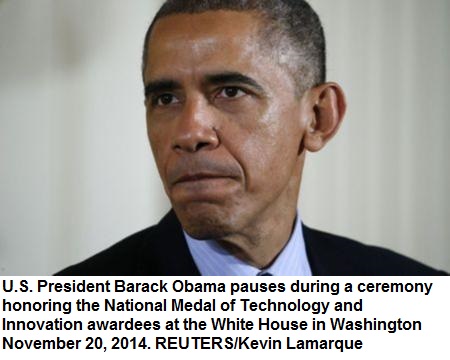
In a speech on Thursday, Obama outlined plans to use executive authority to help millions of undocumented people. He also announced minor adjustments to cut red tape for visa holders and their families, including letting spouses of certain H-1B visa holders get work permits.

“I will make it easier and faster for high-skilled immigrants, graduates and entrepreneurs to stay and contribute to our economy, as so many business leaders have proposed,” Obama said.

The president’s moves will make it easier for entrepreneurs to work in the United States and extend a program letting foreign students who graduate with advanced degrees from U.S. universities to work temporarily in the United States.

But tech industry insiders said the changes, while positive, were limited.

“This holiday season, the undocumented advocacy community got the equivalent of a new car, and the business community got a wine and cheese basket,” complained one lobbyist, speaking on condition of anonymity.

Instead of more temporary H-1B visas, which allow non-U.S. citizens with advanced skills and degrees in “specialty occupations” to work in the country for up to six years, the 200,000-member U.S. chapter of the Institute of Electrical and Electronics Engineers (see VIDEO below) was hoping for measures to reduce the backlog of H-1B holders awaiting green cards.

“If this is all there is, then the president has missed a real opportunity,” said Russ Harrison, a senior legislative representative at the IEEE. “He could have taken steps to make it easier for skilled immigrants to become Americans through the green card system, protecting foreign workers and Americans in the process.”

For instance, IEEE and technology companies want spouses and children to be excluded from employment-based green-card allotments, thereby increasing availability for other foreign tech workers seeking green cards.

Tech companies from Microsoft Corp to Intel have complained about being unable to find enough highly skilled employees and want Washington to increase the availability of visas for programmers, engineers and other specialized foreign professionals.

“Our focus really is on H-1B visas and trying to expand the number of talented technical professionals that can come to the U.S.,” Qualcomm CFO George Davis said ahead of Obama’s announcement. “The way the regulations are drafted today there’s a lot of room for improvement.”

Major changes would require Congressional action, however, and tech industry executives are worried that partisan rancor over Obama’s unilateral action could set back chances for legislation.

“I don’t view this as a long-term solution, and I hope it doesn’t get in the way of a long-term solution,” said Dave Goldberg, chief executive of SurveyMonkey, a Palo Alto based company.

The AFL-CIO said in a statement it would seek to ensure visa workers are afforded rights and protections.

“We are concerned by the President’s concession to corporate demands for even greater access to temporary visas that will allow the continued suppression of wages in the tech sector,” the labor giant said.

While limited, Obama’s policy changes, such as letting more spouses work, will help some tech workers and their families.

Gayathri Kumar, 29, moved a year ago from India to Phoenix, Arizona, where her husband works at Intel. She has a masters degree in communications and wants to work in television, but Kumar spends much of her day at home, chatting with friends over social media.

“I really want to work. I came here with a passion to work, not to sit at home,” Kumar said. “I’m bored, I’m becoming depressed.”

(Reporting by Noel Randewich in San Francisco and Roberta Rampton in Washington. Additional reporting by Sarah McBride in San Francisco.; Editing by Eric Effron, Tom Brown and Ken Wills)

Reuters News Wire Online Source – Posted: November 21, 2014 –
http://news.yahoo.com/obamas-immigration-tweaks-leave-big-tech-wanting-more-002544241–finance.html

For this issue, “the enemy of my enemy is my friend”.

Caribbean stakeholders need to align with the opposition of Obama’s immigration policy, the Republicans. (The publishers of the Go Lean book, SFE Foundation, represent an apolitical, religiously-neutral, economic-focused movement, initiated at the grass-root
level to bring permanent change back to the Caribbean homeland – no one Caribbean member-state is favored over another). We need to pursue our own self-interest.

The book Go Lean…Caribbean posits that the Caribbean brain drain is already acute, (reported at exceeding 70%), due to “push and pull” factors. Many Caribbean STEM students matriculate in American universities, so allowing more liberal recruiting of our students to remain in the US would increase the “pull” factor. We cannot compete against this added pressure.

Why would the students want to concede to this pressure? Unfortunately, we have a variety of “push” conditions working against the Caribbean counter-defense; we have deficiencies. We have economic, security and governing deficiencies that “push” the native Caribbean student/worker to consider expatriating to the US, or to Canada and many EU countries.

But the Caribbean has its own needs for the STEM work force, and our needs cannot be ignored. This is war; (a Trade War).

The Caribbean is losing … every battle. We must not help our enemy. The book Go Lean…Caribbean serves as a roadmap for the introduction and implementation of the technocratic Caribbean Union Trade Federation (CU). The roadmap contains our battle plans, strategies and tactics for this Trade War. The roadmap’s states the prime directives of the CU as the following 3 statements:

  • Optimization of the economic engines in order to grow the regional economy to $800 Billion & create 2.2 million new jobs.
  • Establishment of a security apparatus to protect the resultant economic engines.
  • Improve Caribbean governance to support these engines.

The book posits that all of the Caribbean is in crisis with this brain drain problem, and so there is an urgent need to retain our existing STEM talent, and recruit even more. This point is stressed early in the book (Page 13) in the following pronouncements in the Declaration of Interdependence:

xix.   Whereas our legacy in recent times is one of societal abandonment, it is imperative that incentives and encouragement be put in place to first dissuade the human flight, and then entice and welcome the return of our Diaspora back to our shores. This repatriation should be effected with the appropriate guards so as not to imperil the lives and securities of the repatriated citizens or the communities they inhabit. The right of repatriation is to be extended to any natural born citizens despite any previous naturalization to foreign sovereignties.

xxi.   Whereas the preparation of our labor force can foster opportunities and dictate economic progress for current and future generations, the Federation must ensure that educational and job training opportunities are fully optimized for all residents of all member-states, with no partiality towards any gender or ethnic group. The Federation must recognize and facilitate excellence in many different fields of endeavor, including sciences, languages, arts, music and sports. This responsibility should be executed without incurring the risks of further human flight, as has been the past history.

This subject of mitigating the brain drain and adopting empowering immigration policies have been frequent topics for these Go Lean blogs, highlighted here in the following sample:

https://goleancaribbean.com/blog/?p=2907 Local Miami Haitian leaders protest Bahamian immigration policy
https://goleancaribbean.com/blog/?p=2809 A Lesson in History: Economics and Immigration Policy of East Berlin
https://goleancaribbean.com/blog/?p=1674 Obama’s Plans for $3.7 Billion Immigration Crisis Funds, stressing the need for reform in the US.
https://goleancaribbean.com/blog/?p=1596 Book Review: ‘Prosper Where You Are Planted’ – the Antithesis of Emigration
https://goleancaribbean.com/blog/?p=1470 College Of the Bahamas Master Plan 2025 – Lacking Response for Brain Drain
https://goleancaribbean.com/blog/?p=1296 Remittances from Diaspora to Caribbean Increased By 3 Percent in 2013 – Not a Good Economic Plan
https://goleancaribbean.com/blog/?p=1256 Is a Traditional 4-year College Degree a Terrible Investment? Yes, for Caribbean Communities Sending their Students Abroad.
https://goleancaribbean.com/blog/?p=1014 All is not well in the sunny Caribbean – Economic Deficiencies
https://goleancaribbean.com/blog/?p=599 Ailing Puerto Rico open to radical economic fixes – Need for Retention

As a counter-defense to the losing dispositions in the Caribbean Trade War with the US, the Go Lean book details a series of community ethos, strategies, tactics, implementations and advocacies to foster the best practices to incentivize STEM careers and mitigate further brain drain for the Caribbean region:

Community Ethos – Deferred Gratification Page 21
Community Ethos – Economic Systems Influence Choices & Incentives Page 21
Community Ethos – Job Multiplier Page 22
Community Ethos – Anti-Bullying and Mitigation – neutralizing STEM as Nerds Page 23
Community Ethos – Minority Equalization Page 24
Community Ethos – Return on Investments Page 24
Community Ethos – Ways to Impact the Future Page 27
Community Ethos – Ways to Foster Genius Page 26
Community Ethos – Ways to Help Entrepreneurship Page 28
Community Ethos – Promote Intellectual Property Page 29
Community Ethos – Ways to Impact Research & Development Page 30
Community Ethos – Ways to Close the Digital Divide Page 31
Community Ethos – Ways to Impact the Greater Good Page 37
Anecdote – Valedictorian and Caribbean Diaspora Member Page 38
Strategy – Customers – Citizens, Business Community & Diaspora Page 47
Strategy – Meeting Region’s Needs Today, Preparing For Future Page 58
Tactical – Separation of Powers – Patent, Standards, & Copyrights Page 78
Tactical – Separation of Powers – Education Department Page 85
Implementation – Assemble all Super-Regional Governing Entities Page 96
Implementation – Trends in Implementing Data Centers Page 106
Implementation – Ways to Deliver Page 109
Implementation – Better Manage Debt – Better Student Loans Dynamics Page 114
Planning – Ways to Improve Trade Page 128
Planning – Ways to Make the Caribbean Better Page 131
Advocacy – Ways to Grow the Economy Page 151
Advocacy – Ways to Create Jobs Page 152
Advocacy – Ways to Improve Education Page 159
Advocacy – Ways to Impact Student Loans – Forgivable Provisions Page 160
Advocacy – Ways to Foster Empowering Immigration – STEM Professionals Page 174
Advocacy – Ways to Foster Technology Page 197
Advocacy – Ways to Impact the Diaspora Page 217
Appendix – Alternative Remittance Modes Page 270

Now is the time for all of the Caribbean, the people and institutions, to lean-in for the elevations described in the book Go Lean … Caribbean. This means heavy-lifting to enhance the economic-security-governing engines to attract and retain our STEM graduates. We especially call on the Caribbean/Latin American chapters of the IEEE organization – depicted in the foregoing article and the VIDEO below – to join-in this empowerment effort. A CU mission aligns with this organization’s charter to promote STEM careers and developments in their members’ home regions. The Caribbean needs the regional delivery of this charter, and their lobbying efforts.

We must try and stop Obama’s unilateral policy reform; a liberal US immigration policy would accentuate the Caribbean brain drain.

The region needs the deliveries, described in the Go Lean roadmap. Otherwise, we have no hope to incite and retain our young people, especially those with STEM skill-sets. As a region, we would simply be condemned to a worsened future, simply “fattening frogs for snakes”. This Go Lean roadmap therefore is vital in the quest to make the Caribbean a better place to live, work and play. 🙂

Download the book Go Lean … Caribbean – now!

———–

Appendix VIDEO: What is IEEE? – http://youtu.be/fcmCpEpg0lQ
This is a short video presenting the overall organization of IEEE. This video was developed and published during the celebrations of IEEE Day 2012.

Share this post:
, , ,
[Top]

Where the Jobs Are – Entrepreneurism in Junk

Go Lean Commentary

The dominant employment engine for the Caribbean involves tourism, but the regional tourism business models are being strained. The primary target market, American middle class have suffered crises and now harsh realities have come to fruition. The book Go Lean…Caribbean posits that there is a need to re-focus, re-boot, and optimize the engines of commerce so as to make the Caribbean a better place to live, work and play for all.

Where are the jobs … that the Caribbean people need today and will need even more so in the future?

A key answer is in the quotation: “One man’s trash is another man’s treasure”.

This is the underlying principle of the recycling-scrap-metal industry. This industry is a “destruction services” business model, a subset of the “turn-around” community ethos. Jobs can be created in the art and science of destruction (demolition, recycling and junkyards). But this industry does not “play well with others”, it makes a bad neighbor. It is dirty, wet, Blue-Collar and noisy. But, if done right, this model could be successful, and can impact a “turn-around” for many stakeholders.

This new focus on the “turn-around” community ethos, and the accompanying jobs, appears on the surface to be a win-win for all involved, but a more careful examination highlights some serious economic, security and governing obstacles/issues.

The Go Lean book calls for the optimization of these economic, security and governing engines for the Caribbean region:

  • Economics – Jobs, business models, industrial neighborhoods constitute the economic dimensions of this industry. Overall the roadmap calls for the optimization of the economic engines in order to grow the regional economy to $800 Billion GDP and create 2.2 million new jobs. There is another economic element to this recycling-scrap-metal industry sphere of activity, that of an entrepreneurial hustle – Scrapping. A person can generate self-employment income by gathering scrap-metal, recycled commodities, re-manufactured raw materials and transport them to junkyards. While this may be an occasional chore for some people, for others, this can be a daily hustle, their source of steady income. See photo examples here and VIDEO below:
  • CU Blog - Where the Jobs Are - Entrepreneurism in Junk - Photo 1-3
  • Security – The above trash-versus-treasure quotation introduces the security dimension of the commentary. The entire eco-system of recycling assumes that the “trash” holder of a commodity surrenders possession. If/when the commodity changes hands prematurely, the events are often associated with a crime: burglary, robbery, theft, vandalism, house-stripping, etc. For this reason, the Go Lean roadmap commandeers jurisdiction of salvage/recycling/scrap-metal functions for federal regulation/promotion. This stipulates that activities within the “turn-around” sphere will be marshaled by regional police authorities, with the application of best-practices: Verified Identification, Closed Circuit Surveillance Camera, Serial Number registration/tracking, etc.
  • Governance – In line with the Go Lean roadmap, many junkyards are identified as ideal for the structure of Self-Governing Entities (SGE), the bordered/fenced controlled campuses/compounds. This approach allows for initiation, cooperation and coordination of SGE’s to effectuate change in the region.

The alignment of strained economic-security-governance engines against the recycling-scrap-metal “turn-around” community ethos have been successfully championed before, particularly in the US during World War II. There is much to learn from this example and lesson in history.

Consider a modern example of this Los Angeles company, and imagine similar installations throughout the Caribbean region:

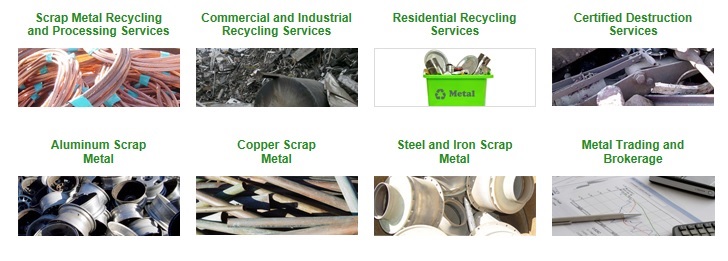
C & M Metals is a provider of Scrap-Metal Recycling and Metal Trading Services

1709 E. 24th St., Los Angeles, CA90058  |  Phone: 323-234-4662  |  Fax: 323-234-5844  |  sales@cmmetals.net

C&M Metals Inc. is a corporation dedicated to the, “Green Movement.” We have showed this by being one of the pioneers in the recycling of secondary metals and scrap metal waste for over 50 years. Our experience comes second to none and our long history speaks for itself. Call us today to inquire about how we could be of service to you.

Industries Served:

Metal Fabricators Demolitions Electricians
Machine Shops Networking Contractors
Electronic Manufactures Auto Repair Centers   Auto Wrecking
Plumbers Contractors Yards
Maintenance Contractors Radiator Repair Shops
Medical Industries Wheel and Tire Centers
Installers Auto Dealerships

CU Blog - Where the Jobs Are - Entrepreneurism in Junk - Photo 2
C & M Metals, Inc. – Los Angeles Premier Salvage Services – Retrieved
11-09-2014 –
http://www.cmmetals.net/index.html

The book Go Lean… Caribbean, serves as a roadmap for the introduction and implementation of the technocratic Caribbean Union Trade Federation (CU) with the charter to facilitate jobs in the region. Early in the Go Lean book, the responsibility to create jobs was identified as an important function for the CU with this pronouncement in the Declaration of Interdependence (Pages 14):

xxvi.  Whereas the Caribbean region must have new jobs to empower the engines of the economy and create the income sources for prosperity, and encourage the next generation to forge their dreams right at home, the Federation must therefore foster the development of new industries… In addition, the Federation must invigorate the enterprises related to existing industries … impacting the region with more jobs.

The Go Lean book also details the principle of job multipliers, how certain industries are better than others for generating multiple indirect jobs down-the-line for each direct job on a company’s payroll. The recycling-scrap-metal “turn-around” industries have impressive indirect job multiplier rates, hereby estimated at 5.0. This is important, as the Go Lean… Caribbean book details the creation of 2.2 million direct/indirect jobs in the region during the 5-year roadmap, including income-generation from entrepreneurial hustles.

The subject of SGE’s has been directly addressed and further elaborated upon in these previous blog/commentaries:

https://goleancaribbean.com/blog/?p=2750 Disney World – Example of SGE
https://goleancaribbean.com/blog/?p=2338 Using SGE’s to Welcome the Dreaded ‘Plutocracy’
https://goleancaribbean.com/blog/?p=2003 Where the Jobs Are – Ship-breaking under SGE Structure
https://goleancaribbean.com/blog/?p=1214 Fairgrounds as SGE and Landlords for Sports Leagues
https://goleancaribbean.com/blog/?p=286 Puerto Rico’s Comprehensive Cancer Center Project Breaks Ground – Model of Medical SGE

In addition, the subjects of self-employment opportunities and entrepreneurial hustle have been explored in previous blog/commentaries:

https://goleancaribbean.com/blog/?p=1325 Puerto Rico Governor Signs Bill on Small-Medium-Enterprises
https://goleancaribbean.com/blog/?p=599 Ailing Puerto Rico open to radical economic fixes – with focus on Informal Economy
https://goleancaribbean.com/blog/?p=398 Self-employment on the rise in the Caribbean – World Bank
https://goleancaribbean.com/blog/?p=214 LCD versus an Entrepreneurial Ethos

The adoption of new community ethos, plus the executions of the following strategies, tactics, implementations and advocacies will foster the returns on the “turn-around” investments:

Community Ethos – Deferred Gratification Page 21
Economic Principles – People Choose because Resources are Limited Page 21
Economic Principles – All Choices Involve Costs Page 21
Economic Principles – People Respond to Incentives Page 21
Economic Principles – Economic Systems Influence Choices & Incentives Page 21
Economic Principles – Voluntary Trade Creates Wealth Page 21
Community Ethos – Job Multiplier Page 22
Community Ethos – Lean Operations Page 24
Community Ethos – Return on Investments (ROI) Page 24
Community Ethos – Cooperatives Page 25
Community Ethos – Ways to Impact the Future Page 26
Community Ethos – Ways to Help Entrepreneurship Page 28
Community Ethos – Ways to Impact Research & Development (R&D) Page 30
Community Ethos – Ways to Impact Turn-Around: Recycling and Demolition Industries Page 33
Community Ethos – Ways to Impact the Greater Good Page 37
Strategy – Mission – Foster Local Economic Engines. Page 45
Tactical – Fostering a Technocracy Page 64
Tactical – Tactics to Forge an $800 Billion Economy – High Multiplier Industries Page 70
Tactical – Separation of Powers – Self-Governing Entities Page 80
Implementation – Ways to Pay for Change – SGE Licenses Page 101
Implementation – Steps to Implement Self-Governing Entities Page 105
Implementation – Ways to Deliver Page 109
Planning – 10 Big Ideas – Self-Governing Entities Page 127
Planning – Ways to Improve Trade Page 128
Planning – Ways to Make the Caribbean Better Page 131
Advocacy – Ways to Grow the Economy Page 151
Advocacy – Ways to Create Jobs Page 152
Advocacy – Ways to Foster Cooperatives Page 176
Advocacy – Ways to Improve Emergency Management Processes and Systems Page 196
Advocacy – Ways to Impact Main Street Page 201
Appendix – Job Multipliers Page 259

The CU will foster industrial developments in support of turn-around industries. While these industrial developments may feature physical-grounds like high-tech R&D campuses, medical parks, and technology bases, they will also include low-tech scrap-metal junkyards. So the Go Lean roadmap covers clean-and-dirty, wet-and-dry activities.

While STEM (Science, Technology, Engineering and Mathematics) attributes maybe the target activity for future-focused genius qualifiers, not all Caribbean stakeholders will be included among this grouping. In fact, STEM candidates are projected to only be a small minority in any community. Not everyone can be in the “Geek Squad”, or White Collar classes for that matter. So the Blue Collar classes must be accommodated as well in the Go Lean roadmap. This entrepreneurial hustle is an example of that total inclusion. As such, community investments must be made to facilitate the needs of Blue Collar workers. See below for Appendix – Cooperatives in Salvage.

The Caribbean is arguably the best address on the planet, but there are a lot of missing ingredients so as to be the best address for everyone. Some of the missing ingredients are jobs. The plan identified in the Go Lean book and blog/ commentaries is a good start to create employment opportunities for the region. This, the Go Lean roadmap, is where the jobs are! There are other benefits too; in general, the end result of this roadmap is a clearly defined destination: a better place to live, work and play. 🙂

Download the book Go Lean … Caribbean – now!

———-

Appendix – VIDEO: How to make money scrapping – http://youtu.be/6eggQxy4Tdk

Mike the Scrapper Introduction to Scrapping: “We all have to live and make money so this is for my new fellow scrappers and the one’s that have been already scrapping”.

———-

Appendix – Cooperatives in Salvage:

The CU will structure cooperative endeavors to marshal the economic and homeland security interest of the region. As such, the creation of “Worker” cooperatives will be incentivized for enterprises to assist the population to find gainful employment, even through entrepreneurial “hustles”.

Recycling-Scrap-Metal Industries are ideal for Worker cooperatives. But to facilitate these endeavors, large investments are needed to be made for industrial equipment, sampled as follows (from http://grindercrusherscreen.com/):

CU Blog - Where the Jobs Are - Entrepreneurism in Junk - Photo 4-6

Share this post:
, , , ,
[Top]

Jamaica’s Public Pension Under-funded

Go Lean Commentary

“Stealing from Peter to pay Paul” – Old Adage.

This above statement does not need to be explained; every reader fully understands and appreciates the meaning of this expression. It reflects a practice in financial management when revenue resources are out-paced by financial obligations. This is when reorganization becomes necessary. In fact, the publishers of the book Go Lean … Caribbean, SFE Foundation, is well suited to comment on these practices, as their charter is portfolio reorganizations for individuals, families and institutions.

On Page 8 of the book, the detailed profile of the foundation features influences from a noted American Economist Paul Romer by listing two of his famous quotations:

1. “A crisis is a terrible thing to waste”
2. “Economic growth occurs whenever people take resources and re-arrange them in ways that are more valuable

The foregoing article relates a need in Jamaica to reorganize the pension program for retired civil servants. The system is broken! This subject of retirement is therefore important for retired people (old) and active workers (young), as every civil servant is either retired or want to be … someday:

Title: Public pension reform programme won’t work – Unfunded obligations at J$680B and growing
Sub-Title: Public-sector employees now enjoy very generous pension benefits that Government pays from current revenue.
By: A.C. Countz, Guest Columnist

s Public Pension Under-funded - Photo 2The Jamaican Government does not put aside the necessary funds to finance pension obligations as they are incurred, as would be done in a private-sector scheme. It has a planned ‘reform’ that will further increase the pension fund deficit. This is irresponsible.

If past pension benefits were funded, as in most private-sector firms, that is, in a special segregated fund with an adequate balance to pay for the pension obligations relating to past service, then the Government (taxpayers) would have to find, right now, about J$680 billion to put into this fund.

Additionally, Government would have to put in 5.0 percent of pensionable annual salary for the public service in years going forward.

Currently, there are many members of the public sector, those of pensionable age, who receive pensions totaling J$23 billion per annum, while employee contributions amount to J$4.4 billion per annum.

In other words, Government is paying out annually almost J$19 billion more in pensions than incoming employee contributions.

Government now plans to reform the pension plan by April Fool’s Day 2016.

CURRENT PROPOSALS
The reform hopes to achieve:

1. Unification of all the different legislations that deal with these pensions and, as far as possible, standardise pensions terms across the whole public sector;

2. A defined benefit scheme would continue, though moderated;

3. An increase in retirement age to 65, gradually for existing employees – apparently lower retirement age for soldiers, policemen and maybe national and local politicians;

4. Calculate pensions based on average last five year’s service (calculation now based on final salary);

5. Calculate pensions based on 1.8 percent of average last five year’s service for every year served. There would be transitional arrangements whereby persons over 54 years old at the start of reform would get a higher percentage of between 2.0 per cent and 2.2 percent.

6. Pensions would not be indexed although the Government might increase pensions if a ‘surplus’ in the scheme is produced – as there is no segregated fund, one cannot imagine how this surplus is to be calculated; and

7. A lump sum of 25 percent of pension benefits payable on retirement and ongoing pension reduced – presumably the reduction will be actuarially calculated.

The Government proposals in the White Paper are faulty and, if implemented, will not make the public-sector pension plan affordable in the future. It is a Band-Aid when strong reform is needed.

The finances of the country are in a disastrous, although possibly better managed, condition.

RIGHT WAY FOR REFORM
Here are some suggestions for pension reform that are more appropriate than those in the White Paper:

1. Terminate the existing defined benefit scheme. Honour past service with existing benefits;

2. Commence a defined contribution scheme at once for ALL public servants, including statutory bodies and executive agencies. All future service for existing employees and all new employees to go into the defined contribution scheme. All employees to start paying a basic contribution of 5.0 per cent of pensionable salaries – these should be defined to exclude non-salary benefits. Employees should be encouraged to make further voluntary contributions to become entitled to a larger pension on retirement. Government to seek a waiver from IMF to allow them to fund the employer’s contribution of 5.0 per cent per annum from now;

3. Defined Contribution (DC) scheme to be operated in a properly managed and transparent segregated fund;

4. Government should face the issue squarely and acknowledge that they have debts, not accounted for in the national debt, of say J$700 billion representing the present day value of unfunded obligations. This amount should be properly accounted for in the national debt and arrangements made to fund it;

5. It is irresponsible for Government to reform the public sector pension scheme in a way that is certain to continue to increase the size of its unfunded obligations. Proper reform will be difficult to deal with, especially coinciding with the end of the pay freeze, but to do otherwise is once again not to face reality.

The basis of any reform must be to halt the growth of the unfunded obligation of the scheme in respect of past service and to fund on a current basis future service obligations.

Jamaica is badly served if EPOC, civil society and private sector organisations – to say nothing about the IMF – allow this pusillanimous approach to be followed.

Government reform must at a minimum stop the growth in the unfunded obligations of the scheme and include a plan to fund what is due for past service over a committed period of time.

A defined contribution scheme should be introduced for all future service.

This will be impossible for government to do unless there is public pressure on them to counterbalance the civil service lobby.

This column reviews the audited and in-house accounts and reports of companies and entities owned or influenced by Government.
Jamaica Gleaner Newspaper Online Site (Posted 08/20/2014; retrieved 03/06/2014) –
http://jamaica-gleaner.com/gleaner/20140820/business/business6.html

s Public Pension Under-funded - Photo 1

The book Go Lean … Caribbean serves as a roadmap for the introduction and implementation of the Caribbean Union Trade Federation (CU). The technocratic CU is proffered to provide economic, security and economic security solutions for the 30 Caribbean member-states, including Jamaica. This mandate is important for retirement planning for current and future generations. This is detailed early on in the book’s Declaration of Interdependence, as follows on Page 13:

xxiv. Whereas a free market economy can be induced and spurred for continuous progress, the Federation must install the controls to better manage aspects of the economy: jobs, inflation, savings rate, investments and other economic principles. Thereby attracting direct foreign investment because of the stability and vibrancy of our economy.

The roadmap posits that retirement is a community issue, and that the mandate for the CU to manage economic security issues must encompass retirement planning as well. Applying lessons from the US and other western democracies, the key to technocratic retirement planning is the time-value-of-money; the ability to invest small amounts when young so that compounded returns can grow exponentially to benefit the saver when they are old; this is depicted in the VIDEO below. This is based on one assumption, that there is a capital/security market to facilitate the investment. This is where the Caribbean status quo is most lacking.

Without question, the role model for Caribbean capital/security markets would be New York City’s Wall Street. This ‘metonym’ refers to more than just the ‘street’, but rather the entire eco-system for financial investing in the US. While, the Caribbean region cannot rival Wall Street (for liquidity), we can reorganize and optimize the existing financial markets  – the current 9 Stock Exchanges – with the introduction of the Caribbean Dollar, managed by a technocratic Caribbean Central Bank.

Liquidity refers to the availability of money, therefore the Go Lean roadmap portrays the need for public messaging to encourage more savings/investments. This messaging pronounces the need for Caribbean stakeholders to “steal from Peter to pay Paul”, where “Paul” is their future selves; see VIDEO below. The book describes this “deferred gratification” as a community ethos that is required to forge permanent change; this is advantageous for the entire Caribbean, and individual member-states like Jamaica.

There are some realities for Jamaica that must not be ignored. This country has experienced numerous currency devaluations and hyper-inflation episodes that has undermined the good habit of savings. These realities were detailed in the Go Lean book (Pages 239 & 297), depicting the “misery index” that Jamaicans had to endure. No wonder the societal abandonment rate in Jamaica is among the highest in the region. A previous Go Lean blog/commentary listed an abandonment rate of 85% among the college educated population.

The Go Lean roadmap addresses pension reorganization by first rebooting the region’s currency, economic and governing engines.

Related subjects on currency, economic, and governing dysfunction in the region that may affect the management of pensions have been previously blogged by the Go Lean promoters, as sampled here:

Inflation Matters – A factor in ‘Pensions’
Canadian Retirees – Florida’s Snowbirds Chilly Welcome
US Federal Reserve releases transcripts from 2008 meetings regarding mitigations of the financial crisis
Dominica demonstrates Caribbean liquidity by raising EC$20 million on regional securities market
Time Value of Money – basis for retirement planning
Book Review: ‘Wrong – Nine Economic Policy Disasters and What We Can Learn…’
What’s Holding Back Jamaica’s Reforms

The purpose of the Go Lean roadmap is to turn-around the downward trends in the Caribbean today, to reverse course and elevate Caribbean society. The Go Lean roadmap, applying lessons from the currency, economic and governing dysfunction of past years, has envisioned the CU with the following prime directives:

  • Optimization of the economic engines in order to grow the regional economy to $800 Billion & create 2.2 million new jobs.
  • Establishment of a security apparatus to protect the resultant economic engines.
  • Improve Caribbean governance to support these engines with Executive branch facilitations & legislative oversight.

The Go Lean book details a series of assessments, community ethos, strategies, tactics, implementations and advocacies to optimize financial/retirement planning and performance:

Assessment – Caribbean Single Market & Economy – need for integration Page 15
Assessment – The Greece of the Caribbean – dysfunctional debt policies Page 18
Community Ethos – Deferred Gratification Page 21
Community Ethos – Consequences of Choices Lie in the Future Page 21
Community Ethos – Money Multiplier – Control of Local/Regional Currency Page 22
Community Ethos – Return on Investments Page 24
Community Ethos – Ways to Impact the Future Page 26
Community Ethos – Ways to Impact the Greater Good Page 37
Implementation – Ways to Better Manage Debt Page 114
Implementation – Reasons to Repatriate Page 118
Planning – Lessons from 2008 Page 136
Advocacy – Ways to Control Inflation Page 153
Advocacy – Ways to Better Manage Foreign Exchange Page 154
Advocacy – Ways to Manage Federal Civil Service – Pension -vs- 401K Page 173
Advocacy – Reforms for Banking Regulations Page 199
Advocacy – Ways to Impact Wall Street Page 200
Advocacy – Ways to Improve Elder-Care Page 225
Advocacy – Ways to Impact Retirement Page 231
Advocacy – Ways to Re-boot Jamaica Page 239
Appendix – Jamaica’s International Perception Page 297
Appendix – Lessons Learned – Floating a Currency Page 316
Appendix – Controlling Inflation – Technical Details Page 318

In most Caribbean countries, the largest employer is the government. Therefore public-sector employees are the largest group of workers. The foregoing news article was written as an audit-analysis to an audience of two, the Responsible Government Ministers for the Jamaican public-sector employees’ pension. The article specifically identified them as:

Dr. Peter Phillips – Ministry of Finance and Planning
Derrick Kellier – Ministry of Labour and Social Security

The Go Lean roadmap, on the other hand, was written for a different audience, all Caribbean stakeholders: citizens, Diaspora, government officials, civil servants, retirees and the youth. This is an empowerment plan for most aspects of Caribbean life, in fact there are 144 different advocacies in the Go Lean book. This is heavy-lifting; an investment in the people of the Caribbean for the elevation of the Caribbean.

The requisite investment of the resources (time, talent, treasuries) for this goal to elevate society may be too big for any one Caribbean member-state alone. Rather, shifting the responsibility to a region-wide, professionally-managed, deputized technocracy will result in “greater” production and greater accountability. Retirement planning and pensions are not optional, they need “greater” production and “greater” accountability; they need a “greater” return on investment – see VIDEO below on the slow-but-steady basics of “compound” investing.

Retirement planning for the Caribbean needs to “Go Lean“.

All Caribbean stakeholders are hereby urged to lean-in to this roadmap to make our Caribbean homeland a better place to live, work, and play.

Download the book Go Lean … Caribbean – now!

———

Video: Retirement Basics: The Power of Compounding – http://youtu.be/immQX0RKFY0

Share this post:
, , , , ,
[Top]

DR President Medina on the economy: ‘God will provide’

Go Lean Commentary

The Caribbean is in crisis!

For many, “success is measured by the successful exodus from their Caribbean homeland”. So declares the foreword of the book Go Lean … Caribbean (Page 3).

The Dominican Republic is in crisis! According to the foregoing news article, the island nation have lots of issues, stemming primarily from economic dysfunctions, and the solution, according to the President of the Republic is only “Faith, Hope and Prayer”:

President Medina PhotoSanto Domingo – President Danilo Medina says that the Dominican state has a very high level of debt, because it is dragging a vital execution deficit with the income it receives and has to spend, which has prevented the economy from recovery over the past few years.

“When a country does not receive enough resources to fund its spending, the only way of financing it is to use state money. In all these years the country’s average fiscal deficit since 2000 to date has been 4.5% of the annual Gross Domestic Product,” said Medina

He said that the state will have to pay US$11 billion in debt between 2013 and 2015, and for the deficit to be reduced an effort must be made to reduce its essence, in order to take it to 2.8% of GDP.

The President warned that this reduction is behind the importance of building coal-fired plants to supply the country with energy, and that he does not understand why “there is a conspiracy against these plants that should be defended by the whole country, if we want sustainability in public finances.” He said that these plants, which will come into operation in 2017, would mean the state would save 1.7% of the GDP, by paying the Dominican Corporation of State Electricity Companies (CDEEE) debt, thus putting the national economy on a good path within a few years.

When he was asked where he would obtain the resources for governing over the next years, Medina answered, “God will provide.” He said that the budgetary spending restructuring meant the government was investing where people needed it and that this was being reflected in economic development.
Dominican Today – Online Community – Posted 08-20-2014; Retrieved 11-08-2014:
http://www.dominicantoday.com/dr/economy/2014/8/20/52502/President-Medina-on-the-economy-God-will-provide

The publishers of the Go Lean book recognize and respect religious faith and devotion. In fact, the book examines the Bible’s record on economic empowerment, listing 10 Lessons from the Bible (Page 144). For the consideration of this commentary and the President’s “easy” secession in the foregoing article, a fitting lesson is derived from the Bible Book of James Chapter 2:14 – 26; (see Appendix*):

James 2:26 – “Faith without works is dead”.

The required “works” is described in the Go Lean book as heavy-lifting.

The publishers of the Go Lean book humbly submit a plan for heavy-lifting, one so comprehensive that it is considered a roadmap, turn-by-turn directions to move the Dominican Republic from Point A (status quo), to Point B (destination of societal elevation). This roadmap is set to re-boot the island’s economy, security and governing engines, highlighting 144 different advocacies designed to impact society. The book asserts that the problems of the Dominican Republic (and by extension, the entire Caribbean) are too big for any one member-state to solve alone. Rather, the focus of the roadmap is the region-wide professionally-managed, deputized technocracy of the Caribbean Union Trade Federation (CU).

The Dominican Republic needs the strategies, tactics, implementations and advocacies of the CU.

The CU needs the Dominican Republic!

The CU requires the full participation of all 30 member-states in the region, including all 4 language groups (Dutch, English, French and Spanish). With this approach, the CU benefits from the economies-of-scale of 42 million people.

The CU expects NO MONEY from the Dominican Republic. This is good as the country’s treasuries are strained, maintaining the national debt of US$11 billion, plus a budget deficit reflecting 4.5% of GDP. To cure a deficit a government needs combinations of two things: more revenues and/or fewer expenses.

The Go Lean roadmap features both. The roadmap is a complete re-boot: new revenue streams and a separation-of-powers, thereby delegating some governance to CU agencies.

The Go Lean … Caribbean book introduces the CU to take oversight of’ much of the Caribbean economic, security and governing functionality. In summary, this plan’s execution makes the Dominican Republic, and the Caribbean, a better place to live, work and play.

This Go Lean roadmap assesses the Dominican Republic human flight/brain drain crisis, where large percentages of the island’s populations have fled to American shores, with estimates of up to 1.3 million in the Diaspora as of 2006 (Page 237 & 306). This plight makes the task of building a functioning society difficult, as often the brightest and best talents are the ones that flee; plus entitlement programs simply need populace retention.

The CU will fix the Dominican Republic! Look here at the solutions; (sorted by Economic/Security/Governance). The book Go Lean … Caribbean details these specific curative measures (advocacies, strategies, tactics, and implementations):

Economic:

Community Ethos – Money Multiplier Page 22
Help Entrepreneurship Page 28
Impact Turn-Around Strategies/Tactics Page 33
Tactics to Forge an $800 Billion Economy Page 67
New Ways to Pay for Change Page 101
Improve Energy Usage Page 113
Better Manage Debt Page 114
Foster International Aid Page 115
Improve Trade Page 128
Improve Interstate Commerce Page 129
New Ways to Grow the Economy Page 151
Create Jobs Page 152
Control Inflation Page 153
Improve Credit Ratings Page 155
Improve Education Page 159
Mitigate Black Markets Page 165
Enhance Tourism Page 190
Impact Wall Street Page 200

Security:

Separation of Powers – Homeland Security Page 75
Security Initiatives [stemming from the Start-up] Page 103
Impact Justice Page 177
Mitigate & Reduce Crime Page 178
Improve Intelligence [Gathering & Analysis] Page 182
Impact the Prison-Industrial Complex Page 211

Governance:

Community Ethos – Deferred Gratification Page 21
Improve Negotiations Page 32
Impact the Greater Good Page 37
Tactics to Foster a Technocracy Page 64
Implement Self-Governing Entities Page 105
Strong Reasons to Repatriate Page 118
Promote Independence Page 120
Improve Healthcare Page 156
Impact Entitlements Page 158
New [Governmental] Revenue Sources Page 172
Impact Public Works Page 175
Better Manage Natural Resources Page 183
Improve for Natural Disasters Page 184
Improve Emergency Management Page 196

The people of the Dominican Republic are calling for change, for help, for some mitigations. They need prayer, yes, but they need workable solutions too. See the VIDEO below, produced by young students in line with a “poverty” theme; this assessment is “from the mouth of babes” – Bible Quote (Matthew 21:16).

With the Go Lean roadmap, change has come to the Caribbean. The people and institutions of the Dominican Republic are all urged to “lean-in” to this roadmap.

In fact, now is the time for the whole Caribbean region to lean-in for this change, described in the book Go Lean … Caribbean. The benefits of this roadmap are too alluring to ignore: emergence of an $800 Billion regional economy, 2.2 million new jobs and an end to the economic dysfunction. This will result in Dominicans repatriating from the US, not fleeing to the US. 🙂

Download the book Go Lean … Caribbean – now!

————-

Appendix – Bible Reading – James Chapter 2:14 – 26 (New International Version)

*Faith and Deeds

14 What good is it, my brothers and sisters, if someone claims to have faith but has no deeds? Can such faith save them? 15 Suppose a brother or a sister is without clothes and daily food. 16 If one of you says to them, “Go in peace; keep warm and well fed,” but does nothing about their physical needs, what good is it? 17 In the same way, faith by itself, if it is not accompanied by action, is dead.
18 But someone will say, “You have faith; I have deeds.”
Show me your faith without deeds, and I will show you my faith by my deeds. 19 You believe that there is one God. Good! Even the demons believe that—and shudder.
20 You foolish person, do you want evidence that faith without deeds is useless ? 21 Was not our father Abraham considered righteous for what he did when he offered his son Isaac on the altar? 22 You see that his faith and his actions were working together, and his faith was made complete by what he did. 23 And the scripture was fulfilled that says, “Abraham believed God, and it was credited to him as righteousness, and he was called God’s friend. 24 You see that a person is considered righteous by what they do and not by faith alone.
25 In the same way, was not even Rahab the prostitute considered righteous for what she did when she gave lodging to the spies and sent them off in a different direction? 26 As the body without the spirit is dead, so faith without deeds is dead.

————-

Appendix – Video: Why the Dominican Republic is poor?  http://youtu.be/pCVR-kdc0ss

Published on May 15, 2013 By YouTube Contributor: “camilalovescupcakes” (Sharen Sosa)
The prologue included this verbiage: “In my school, as final exam in English classes, told us to do a video of ‘Why the Dominican Republic is poor?’ We had to make groups and make a video, talking about it, and also focus on the cause, which was the “Corruption”, we made a documentary and here is the whole video, hope you love it”.

Share this post:
, , , , ,
[Top]

The Geography of Joblessness

Go Lean Commentary

“A better place to live, work and play” – this is the tagline for the book Go Lean…Caribbean, thereby placing emphasis on the verb “work”. To work, there must be jobs, so the entire eco-system of jobs is a constant focus of the book’s publishers.

The foregoing news article relates to this mission. The underlying issue in this consideration relates to jobs and joblessness. There is the need for more jobs – in urban communities in OECD – Organization of Economic Cooperation and Development – countries (like US, Canada, Europe) and also in the Caribbean – see VIDEO in the Appendix below. But there are many issues that underlie the availability of jobs, such as geography, transportation and racial discrimination. To effect change in the job creation quest, there must be some consideration of these issues:

Subtitle: The difficulty people have in getting to jobs makes unemployment unnecessarily high

CU Blog - The Geography of Joblessness - PhotoIN THE OECD, a club mostly of rich countries, nearly 45 million people are unemployed. Of these, 16 million have been seeking work for over a year. Many put this apparently intractable scourge down to workers’ inadequate skills or overgenerous welfare states. But might geography also play a role?

In a paper* published in 1965, John Kain, an economist at Harvard University, proposed what came to be known as the “spatial-mismatch hypothesis”. Kain had noticed that while the unemployment rate in America as a whole was below 5%, it was 40% in many black, inner-city communities. He suggested that high and persistent urban joblessness was due to a movement of jobs away from the inner city, coupled with the inability of those living there to move closer to the places where jobs had gone, due to racial discrimination in housing. Employers might also discriminate against those that came from “bad” neighbourhoods. As a result, finding work was tough for many inner-city types, especially if public transport was poor and they did not own a car.

For the past 50 years, urban economists have argued over Kain’s theory. Some, like William Julius Wilson, then of University of Chicago, pointed to the decline of inner-city manufacturing to explain the sharp spike in poverty in black inner-city neighbourhoods between 1970 and 1980—in keeping with Kain’s logic. Others, like Edward Glaeser, another Harvard economist, suggest that spatial mismatch is overblown. There may indeed be a correlation between where people live and their chances of finding a job. But the connection may not be causal: people may live in bad areas because they have been shunned by employers, either for lack of skills or because of racial discrimination.

Until recently economists did not have adequate data to back up their opinions. Studies used cross-sectional data—a snapshot of an economy at a single point in time—which made it hard to disentangle cause and effect. Did someone live in a bad area because they could not find a job, or was it more difficult to find a job because they lived in a bad area? It was also hard to know quite how inaccessible a particular job was. Researchers could calculate the distance between homes and job opportunities but struggled to estimate how much time it would take to get from one to the other by car or public transport. And the research was marred by small samples, often all from a single city.

A new paper, published by the National Bureau of Economic Research, avoids these pitfalls. It looks at the job searches of nearly 250,000 poor Americans living in nine cities in the Midwest. These places contain pockets of penury: unemployment in inner Chicago, for instance, is twice the average for the remainder of the city. Even more impressive than the size of the sample is the richness of the data. They are longitudinal, not cross-sectional: the authors have repeated observations over a number of years (in this case, six). That helps them to separate cause and effect. Most importantly, the paper looks only at workers who lost their jobs during “mass lay-offs”, in which at least 30% of a company’s workforce was let go. That means the sample is less likely to include people who may live in a certain area, and be looking for work, for reasons other than plain bad luck.

For each worker the authors build an index of accessibility, which measures how far a jobseeker is from the available jobs, adjusted for how many other people are likely to be competing for them. The authors use rush-hour travel times to estimate how long a jobseeker would need to get to a particular job.

If a spatial mismatch exists, then accessibility should influence how long it takes to find a job. That is indeed what the authors find: jobs are often located where poorer people cannot afford to live. Those at the 25th percentile of the authors’ index take 7% longer to find a job that replaces at least 90% of their previous earnings than those at the 75th percentile. Those who commuted a long way to their old job find a new one faster, possibly because they are used to a long trek.

The annihilation of space with time

Other papers suggest that workers may be in the wrong place. A study from the Brookings Institution, a think-tank, finds that poverty in America has become more concentrated over the past decade. During the 2000s the number of neighbourhoods with poverty rates of 40% or more climbed by three-quarters. Unlike Kain’s day, though, poverty is growing fastest in the suburbs, not the inner cities. Pockets of concentrated poverty also tend to suffer from bad schools and crime, making them even more difficult to escape.

Spatial mismatch is not just an American problem. A paper by Laurent Gobillon of the French National Institute for Demographic Studies and Harris Selod of the Paris School of Economics finds that neighbourhood segregation prevents unemployed Parisians from finding work. Another study, conducted in England, concludes that those who live far from jobs spend less time looking for work than those who live nearby, presumably because they think they have little hope of finding one.

All this has big policy implications. Some suggest that governments should encourage companies to set up shop in areas with high unemployment. That is a tall order: firms that hire unskilled workers often need to be near customers or suppliers. A better approach would be to help workers either to move to areas with lots of jobs, or at least to commute to them. That would involve scrapping zoning laws that discourage cheaper housing, and improving public transport. The typical American city dweller can reach just 30% of jobs in their city within 90 minutes on public transport. That is a recipe for unemployment.
The Economist Magazine (Posted October 25, 2014; Retrieved November 7, 2014) –
http://www.economist.com/news/finance-and-economics/21627628-difficulty-people-have-getting-jobs-makes-unemployment-unnecessarily

References – *Studies cited in this article

“Job displacement and the duration of joblessness: The role of spatial mismatch”, by F. Andersson et al, National Bureau of Economic Research, 2014

“The effect of segregation and spatial mismatch on unemployment: evidence from France”, by L. Gobillon & H. Selod, Centre for Economic Policy Research, 2007

“The spatial mismatch hypothesis: three decades later”, by J.F. Kain, Housing Policy Debate, 3(2), 371-460, 1992

“Spatial mismatch, transport mode and search decisions in England”, by E. Patacchini, & Y. Zenou, Journal of Urban Economics, 58(1), 62-90, 2005.

The Growth and Spread of Concentrated Poverty, 2000 to 2008-2012“, by E. Kneebone, Brookings Institution

The book Go Lean…Caribbean serves as a roadmap for the introduction and implementation of the technocratic Caribbean Union Trade Federation (CU). The CU is set to optimize Caribbean society, starting with economic empowerment. In fact, the Go Lean roadmap has 3 prime directives:

  • Optimization of the economic engines in order to grow the regional economy to $800 Billion & create 2.2 million new jobs.
  • Establishment of a security apparatus to protect the resultant economic engines.
  • Improve Caribbean governance to support these engines.

The Go Lean roadmap calls for many changes and empowerments. One such example is the infrastructure of Self-Governing Entities (SGE), to allow for industrial developments in a controlled (bordered) environment. There is so much that can be accomplished with the right climate, entrepreneurial spirit, access to capital and willing work force. But location is significant with this model, workers must physically get to the bordered campuses/compounds, to get to the jobs. So transportation solutions are paramount to this roadmap.

The CU will foster the installation of SGE’s, and the infrastructure to transport workers to the jobs. The roadmap identifies electrified streetcars, light-rail, natural gas buses and other transit options.

Another compelling mission of the Go Lean book is to lower the “push and pull” factors that lead many to abandon their Caribbean homeland for foreign shores. The book posits that the region must create jobs, the roadmap calls for 2.2 million new jobs over a 5-year period, so that its citizens do not have to leave to become aliens in a foreign land, to be discriminated against as victims of joblessness due to the compelling factors depicted in the foregoing article. The CU does not aim to change North American or European societies, beyond impacting the Diaspora – our scope is the Caribbean. So the public messaging of the societal defects in those countries, as depicted in the foregoing article, should have the effect of dissuading Caribbean emigration. This affects the “pull” factors for Caribbean citizens wanting to leave.

That’s the “pull”; we must still deal with the “push” factors …

There are so many other defects of Caribbean life that need to be addressed to lower the “push” factors. This point is pronounced early in the book with the Declaration of Interdependence (Pages 12 – 14) with many statements that demonstrate the need to remediate Caribbean communities:

xix. Whereas our legacy in recent times is one of societal abandonment, it is imperative that incentives and encouragement be put in place to first dissuade the human flight, and then entice and welcome the return of our Diaspora back to our shores. This repatriation should be effected with the appropriate guards so as not to imperil the lives and securities of the repatriated citizens or the communities they inhabit. The right of repatriation is to be extended to any natural born citizens despite any previous naturalization to foreign sovereignties.

xx.  Whereas the preparation of our labor force can foster opportunities and dictate economic progress for current and future generations, the Federation must ensure that educational and job training opportunities are fully optimized for all residents of all member-states, with no partiality towards any gender or ethnic group. The Federation must recognize and facilitate excellence in many different fields of endeavor, including sciences, languages, arts, music and sports. This responsibility should be executed without incurring the risks of further human flight, as has been the past history.

xxiv. Whereas a free market economy can be induced and spurred for continuous progress, the Federation must install the controls to better manage aspects of the economy: jobs, inflation, savings rate, investments and other economic principles. Thereby attracting direct foreign investment because of the stability and vibrancy of our economy.

xxv.  Whereas the legacy of international democracies had been imperiled due to a global financial crisis, the structure of the Federation must allow for financial stability and assurance of the Federation’s institutions. To mandate the economic vibrancy of the region, monetary and fiscal controls and policies must be incorporated as proactive and reactive measures. These measures must address threats against the financial integrity of the Federation and of the member-states.

xxvi. Whereas the Caribbean region must have new jobs to empower the engines of the economy and create the income sources for prosperity, and encourage the next generation to forge their dreams right at home, the Federation must therefore foster the development of new industries, like that of ship-building, automobile manufacturing, pre-fabricated housing, frozen foods, pipelines, call centers, and the prison industrial complex. In addition, the Federation must invigorate the enterprises related to existing industries like tourism, fisheries and lotteries – impacting the region with more jobs.

The purpose of the Go Lean…Caribbean roadmap is to compose, communicate and compel economic, security and governing solutions for the Caribbean homeland. We want a better society than the past, and perhaps even better than our OECD counterparts. (A CU mission is to repatriate the Diaspora back to the homeland).

How, what, when?

The Go Lean book details a series of community ethos, strategies, tactics, implementations and advocacies to impact jobs in the region, member-states, cities and communities. Below is a sample:

Community Ethos – Deferred Gratification Page 21
Community Ethos – Economic Principle – Economic Systems Influence Choices & Incentives Page 21
Community Ethos – Economic Principle – Voluntary Trade Creates Wealth Page 21
Community Ethos – Job Multiplier Page 22
Community Ethos – Minority Equalization Page 24
Community Ethos – Lean Operations Page 24
Community Ethos – Ways to Impact the Future Page 26
Community Ethos – Ways to Foster Genius Page 27
Community Ethos – Ways to Help Entrepreneurship Page 28
Community Ethos – Ways to Promote Happiness Page 36
Community Ethos – Ways to Impact the Greater Good Page 37
Strategy – Mission – Facilitate Job-Creating Industries Page 46
Tactical – Fostering a Technocracy Page 64
Tactical – Tactics to Forge an $800 Billion Economy – High Multiplier Industries Page 70
Tactical – Separation of Powers – Self-Governing Entities Page 80
Implementation – Ways to Pay for Change Page 101
Implementation – Steps to Implement Self-Governing Entities Page 105
Implementation – Ways to Deliver Page 109
Implementation – Reasons to Repatriate to the Caribbean Page 118
Planning – 10 Big Ideas – Self Governing Entities as Job Creating Engines Page 128
Planning – Ways to Make the Caribbean Better Page 131
Planning – Ways to Improve Failed-State Indices – OECD-style Big Data Analysis Page 133
Advocacy – Ways to Grow the Economy Page 151
Advocacy – Ways to Create Jobs Page 152
Advocacy – Ways to Improve Transportation Page 205
Advocacy – Ways to Impact the Diaspora Page 217
Advocacy – Battles in the War on Poverty Page 222
Advocacy – Ways to Impact Trinidad & Tobago – Bottom Line: OECD Case Study Page 240
Appendix – Job Multipliers Page 259

Other subjects related to job empowerments (and joblessness) for the region have been blogged in other Go Lean…Caribbean commentaries, as sampled here:

https://goleancaribbean.com/blog/?p=2769 DC Streetcars to Facilitate Easier Urban Transportation Options
https://goleancaribbean.com/blog/?p=2750 Disney World’s example of Self Governing Entities and Economic Impacts
https://goleancaribbean.com/blog/?p=2602 Jobless Rural Guyana Wrestles With High Rate of Suicides
https://goleancaribbean.com/blog/?p=2126 Where the Jobs Are – Computers Reshaping Global Job Market
https://goleancaribbean.com/blog/?p=2025 Where the Jobs Are – Attitudes & Images of the Caribbean Diaspora in US
https://goleancaribbean.com/blog/?p=2003 Where the Jobs Are – Ship-breaking under the SGE Structure
https://goleancaribbean.com/blog/?p=1698 Where the Jobs Are – STEM Jobs Are Filling Slowly
https://goleancaribbean.com/blog/?p=1683 Where the Jobs Were – British public sector now strike over ‘poverty pay’
https://goleancaribbean.com/blog/?p=1596 Book Review: ‘Prosper Where You Are Planted’
https://goleancaribbean.com/blog/?p=1433 Caribbean loses more than 70 percent of tertiary educated to brain drain
https://goleancaribbean.com/blog/?p=1214 Where the Jobs Are – Fairgrounds as SGE & Landlords for Sports Leagues
https://goleancaribbean.com/blog/?p=273 10 Things We Don’t Want from the US – Job Discrimination of Immigrations

The purpose of this roadmap is to elevate Caribbean society. To succeed we must apply lessons from the advanced economy countries (OECD) like the US, Canada and Western Europe; lessons from their good, bad and ugly experiences of the past.

The Go Lean book embraces economic principles. One basic tenet is “supply and demand”. The assumption would be that if there are job openings and unemployed people, that “suppliers and demanders” would align. Unfortunately that is not the reality; the foregoing article relates the other issues in OECD countries of racism and geography.

Life in the OECD countries is not fair. It is a struggle; perhaps even more so than necessary.

The Go Lean movement (book and blog commentaries) posits that there is less effort to remediate the Caribbean homeland, than to thrive in an alien land. So it thusly advocates to “prosper where planted”. With some effort, as defined in the Go Lean book, the Caribbean can truly become a better place to live, work and play. 🙂

Download the free e-Book of Go Lean … Caribbean – now!

————

AppendixVideo: OECD – For A Better World Economyhttp://youtu.be/B5XGiihBfaU


Share this post:
, , , ,
[Top]

Disney World – Role Model for Self-Governing Entities

Go Lean Commentary

The Caribbean enjoys 80 million annual visitors, among its 30 member-states and vast cruise line industry. Impressive!

But one destination in Florida, Walt Disney World, hosted 47.5 million visitors (2009) … alone.[b]

There are lessons for the Caribbean to learn from this experience.

The book Go Lean…Caribbean serves as a roadmap for the introduction and implementation of the Caribbean Union Trade Federation (CU) to glean insight from the Walt Disney World history and experience. This is a huge subject in itself and is an appropriate topic for academic research, dissertations and business improvement books. But for this blog/commentary, there is a narrow focus, the special consideration of the “Self Governing Entity” that emerged from the Reedy Creek Improvement District that facilitated the construction and administration of the landmass that became the Walt Disney World Resort. The following encyclopedic details apply to this study:

CU Blog - Disney World - Role Model for a Self Governing Entity - Photo 1The Walt Disney World Resort, informally known as Walt Disney World or simply Disney World, is an entertainment complex in Bay Lake, Florida (mailing address is Lake Buena Vista, Florida), near Orlando, Florida and is the flagship of Disney’s worldwide theme park empire. The resort opened on October 7, 1971 and, according to Forbes Magazine, is the most visited vacation resort in the world, with an attendance of 52.5 million annually. It is owned and operated by Walt Disney Parks and Resorts, a division of The Walt Disney Company. The property covers 27,258 acres (11,031 ha; 43 sq mi), in which it houses 27 themed resort hotels, four theme parks, two water parks, four golf courses, one camping resort, one residential area and additional recreational and entertainment venues. MagicKingdom was the first and original theme park to open in the complex followed by EPCOT, Disney’s Hollywood Studios, and Disney’s Animal Kingdom which opened later throughout the 1980s and 1990s.

CU Blog - Disney World - Role Model for a Self Governing Entity - Photo 2Designed to supplement Disneyland in Anaheim, California, which had opened in 1955, the complex was developed by Walt Disney in the 1960s, though he died in 1966 before construction on “The Florida Project” began. After extensive lobbying, the Government of Florida created the Reedy Creek Improvement District, a special government district that essentially gave The Walt Disney Company the standard powers and autonomy of an incorporated city. Original plans called for the inclusion of an “Experimental Prototype Community of Tomorrow” (EPCOT), a planned city that would serve as a test bed for new innovations for city living.

The Reedy Creek Improvement District (RCID) is the immediate governing jurisdiction for the land of the Walt Disney World Resort. As of the late 1990s, it comprised an area of 38.6 sq mi (100 km2) within the outer limits of Orange and Osceola counties in Florida. The RCID includes the cities of BayLake and LakeBuena Vista, and unincorporated RCID land.CU Blog - Disney World - Role Model for a Self Governing Entity - Photo 3

After the success of Disneyland in California, Walt Disney began planning a second park on the East Coast. He disliked the businesses that had sprung up around Disneyland, and therefore wanted control of a much larger area of land for the new project. Walt Disney knew that his plans for the land would be easier to carry out with more independence. Among his ideas for his Florida project was his proposed EPCOT which was to be a futuristic planned city. He envisioned a real working city with both commercial and residential areas, but one that also continued to showcase and test new ideas and concepts for urban living.

Therefore, the Disney Company petitioned the Florida State Legislature for the creation of the Reedy Creek Improvement District, which would have almost total autonomy within its borders.
Wikipedia Online Encyclopedia  (Retrieved November 2, 2014) –
http://en.wikipedia.org/wiki/Walt_Disney_World

50 Year Historic Timeline:

1965

Walt Disney announces Florida Project

1966

Walt Disney dies of lung cancer at age 65

1967

Construction of Walt Disney World Resort begins

1971

MagicKingdom
Palm and Magnolia Golf Courses
Disney’s Contemporary Resort
Disney’s Polynesian Resort
Disney’s Fort    Wilderness Resort &   Campground
Roy O. Disney dies at age 78

1972

Disney’s Village Resort

1973

The Golf Resort

1974

DiscoveryIsland

1975

Walt Disney Village Marketplace

1976

Disney’s River Country

1980

Walt Disney World  ConferenceCenter

1982

Epcot

1986

The Disney Inn

1988

Disney’s Grand Floridian Resort & Spa
Disney’s Caribbean  Beach Resort

1989

Disney-MGM Studios
Disney’s Typhoon Lagoon
PleasureIsland

1990

Disney’s Yacht and Beach Club Resort
Walt Disney World Swan
Walt Disney World Dolphin

1991

Disney’s Port Orleans Resort French Quarter
Disney Vacation Club
Disney’s Old Key West Resort

1992

Disney’s Port Orleans Resort Riverside (Dixie Landings)
Bonnet Creek Golf Club

1994

Disney’s All-Star Sports Resort
Disney’s Wilderness Lodge
Shades of Green

1995

Disney’s All-Star Music Resort
Disney’s Blizzard Beach
Disney’s Fairy Tale Wedding Pavilion
Walt Disney World Speedway

1996

Disney Institute
Disney’s BoardWalk Inn and BoardWalk Villas

1997

Disney’s Coronado Springs Resort
Disney’s Wide World of Sports Complex
Downtown Disney West Side

1998

Disney’s Animal Kingdom
DisneyQuest

1999

Disney’s All-Star Movies Resort

2000

The Villas at Disney’s Wilderness Lodge

2001

Disney’s Animal Kingdom Lodge

2002

Disney’s Beach Club Villas

2003

Disney’s Pop Century Resort

2004

Disney’s Saratoga Springs Resort & Spa

2007

Disney’s Animal Kingdom Villas

2008

Disney-MGM Studios is renamed Disney’s Hollywood Studios

2009

Bay Lake Tower at Disney’s Contemporary Resort
Treehouse Villas

2011

Golden Oak at Walt Disney World Resort

2012

Disney’s Art of Animation Resort
Phase 1 of New Fantasyland

2013

The Villas at Disney’s Grand Floridian Resort & Spa

2014

Phase 2 of New Fantasyland

Wikipedia Online Encyclopedia (Retrieved November 2, 2014) –
http://en.wikipedia.org/wiki/Walt_Disney_World

The economic impact of Walt Disney World as a Self-Governing Entity (SGE) is undeniable. The resort is responsible for $18.2 billion in annual economic activity in Florida, said a study released by the theme park giant. The study found that Disney paid out nearly $1.8 billion in compensation to more than 59,000 workers in 2009.[a]

The Go Lean roadmap seek to emulate some of the strategies, tactics and implementation successes of the Walt Disney World as a SGE. This roadmap seeks to elevate the 30 Caribbean member-states with economic engines (direct and indirect spin-off activities), by assuming jurisdiction for Self-Governing Entities in the region and the Exclusive Economic Zone (EEZ) of the 1,063,000 square miles of the Caribbean Sea. This approach allows for initiation, cooperation and coordination of SGE’s (and the EEZ) to effectuate change in the region, allowing these 3 prime directives:

  • Optimization of the economic engines in order to grow the regional economy to $800 Billion GDP and create 2.2 million new jobs.
  • Establishment of a security apparatus to protect the resultant economic engines, specifically in SGE’s and the EEZ.
  • Improve Caribbean governance to support these engines.

Imagine many Disney World-style industrial developments, (not necessarily as touristic resorts), throughout the Caribbean region.

Wow! This is a game-changer.

The individual Walter Elias Disney (1901 – 1966) proved to be a game-changer. The Go Lean book posits that one person can make a difference and positively impact society; so the book advocates for a community ethos of investment in the “gifts” that individuals “bring to the table”. The book identifies the quality of geniuses and relates worthwhile returns from their investments. This mode of study allows us to consider this example of contributions from Walt Disney and his corporate/artistic creations:

 Video: The History of Walt Disney World – http://youtu.be/_6Kesbfg-Ok

The book Go Lean … Caribbean asserts that SGE’s and the EEZ can be strategic, tactical and operationally efficient for elevating Caribbean society. These points are pronounced early in the book with this Declaration of Interdependence (Pages 11 and 14), with these statements:

v.        Whereas the natural formation of our landmass and coastlines entail a large portion of waterscapes, the reality of management of our interior calls for extended oversight of the waterways between the islands. The internationally accepted 12-mile limits for national borders must be extended by International Tribunals to encompass the areas in between islands. The individual states must maintain their 12-mile borders while the sovereignty of this expanded area, the Exclusive Economic Zone, must be vested in the accedence of this Federation.

xxvi.      Whereas the Caribbean region must have new jobs to empower the engines of the economy and create the income sources for prosperity, and encourage the next generation to forge their dreams right at home, the Federation must therefore foster the development of new industries… In addition, the Federation must invigorate the enterprises related to existing industries like tourism … impacting the region with more jobs.

The subject of SGE’s has been directly addressed and further elaborated upon in these previous blog/commentaries:

https://goleancaribbean.com/blog/?p=2338 Using SGE’s to Welcome the Dreaded ‘Plutocracy’
https://goleancaribbean.com/blog/?p=2003 Where the Jobs Are – Ship-breaking under SGE Structure
https://goleancaribbean.com/blog/?p=1214 Fairgrounds as SGE and Landlords for Sports Leagues
https://goleancaribbean.com/blog/?p=286 Puerto Rico’s Comprehensive Cancer Center Project Breaks Ground – Model of Medical SGE

The Go Lean book itself details the economic principles and community ethos to adopt, plus the executions of strategies, tactics, implementations and advocacies to forge Self-Governing Entities and industrial growth in the Caribbean:

Economic Principles – People Choose because Resources are Limited Page 21
Economic Principles – All Choices Involve Costs Page 21
Economic Principles – People Respond to Incentives Page 21
Economic Principles – Economic Systems Influence Individual Choices Page 21
Economic Principles – Voluntary Trade Creates Wealth Page 21
Economic Principles – Consequences of Choices Lie in the Future Page 21
Community Ethos – Job Multiplier Page 22
Community Ethos – “Crap” Happens Page 23
Community Ethos – Lean Operations Page 24
Community Ethos – Return on Investments (ROI) Page 24
Community Ethos – Cooperatives Page 25
Community Ethos – Ways to Impact the Future Page 26
Community Ethos – Ways to Help Entrepreneurship Page 28
Community Ethos – Ways to Impact Research & Development Page 30
Community Ethos – Ways to Improve Negotiations Page 32
Community Ethos – Impact the Greater Good Page 37
Strategy – Vision – Confederating 30 Member-states in a Union Page 45
Strategy – Mission – Build   and Foster Local Economic Engines Page 45
Tactical – Fostering a Technocracy Page 64
Tactical – Growing Economy – New High Multiplier Industries Page 68
Separation of Powers – Department of State – Self-Governing Entities Page 80
Separation of Powers – Interior Department – Exclusive Economic Zone Page 82
Implementation – Ways to Pay for Change – SGE Licenses Page 101
Implementation – Steps to Implement Self-Governing Entities Page 103
Anecdote – French Guiana Space Agency – Example of a SGE Page 103
Implementation   – Benefits from the Exclusive Economic Zone Page 104
Planning – 10 Big Ideas – Self-Governing Entities Page 127
Planning – Ways to Improve Interstate Commerce Page 129
Planning – Lessons from New York City Page 137
Planning – Lessons from Omaha Page 138
Advocacy – Ways to Grow the Economy Page 151
Advocacy – Ways to Create Jobs Page 152
Advocacy – Ways to Better Manage Natural Resources – EEZ and SGE’s Page 183
Anecdote – Caribbean Industrialist & Entrepreneur Role Model Page 189
Advocacy – Ways to Promote Fairgrounds Page 192
Advocacy – Ways to Develop Ship-Building as SGE’s Page 209
Advocacy – Ways to Impact the Prison Industrial Complex as SGE’s Page 211
Advocacy – Ways to Impact the One Percent – Job Creators Inducements Page 224
Advocacy – Ways to Impact Urban Living – Self-Governing Entities Page 234
Advocacy – Ways to Impact Rural Living – Self-Governing Entities Page 235
Advocacy – Ways to Promote World-Heritage-Sites as SGE’s Page 248
Appendix – Airport Cities – Models for Self Governing Entities Page 287

There is a role for the contributions of one impactful person, or one impactful company, in this vision for the elevation and empowerment of the Caribbean homeland. The Go Lean … Caribbean roadmap invites these contributions. However, the roadmap also mitigates the threats of corporate abuse of a plutocracy. With the right applications from people, tools and techniques many SGE initiatives can have a positive impact in changing society, with minimal risks and threats of negative consequences. Walt Disney and the Reedy Creek Improvement District have demonstrated how successful SGE’s can be.

Thank you Walt Disney. Thanks for showing us the way, for providing a role model that we can emulate for our own success.

Change has come to the Caribbean. Everyone is hereby urged to lean-in to this roadmap to make the Caribbean a better place to live, work and play. 🙂

Download the book Go Lean … Caribbean – now!

——————

Appendix – Source References:

a. Retrieved November 3, 2014 from: http://www.bizjournals.com/orlando/news/2011/04/14/disneys-annual-economic-impact-182b.html

b. 2009 Attendance Walt Disney World’s 1. Magic Kingdom: 17.2 million 2. Epcot: 11.0 million 3. Disney’s Hollywood Studios: 9.7 million 4. Disney’s Animal Kingdom: 9.6 million. Retrieved November 3, 2014 from: http://www.themeparkinsider.com/flume/201004/1895/


Share this post:
, , , ,
[Top]

DC Streetcars – Model For Caribbean Re-development

Go Lean Commentary

CU Blog - DC Streetcars - Model For Caribbean Re-development - Photo 1

The US capital city of Washington D.C. is now embarking on the deployment of a streetcar system … again. Between 1862 and 1962, streetcars in Washington, D.C., were a common mode of transportation, but the system was dismantled in the early 1960s as part of a switch to bus service.

One step forward, two steps backwards!

The District now embarks on a re-deployment, pivotal to a re-development of blighted urban areas. See story here:

August 4, 2014 – The Washington D.C. Department of Transportation will begin training streetcar operators in traffic for the first time this week along H Street and Benning Road in Northeast Washington. [The full system implementation is planned for late 2014].

The DC Streetcar is a surface light rail and streetcar network under construction in Washington, D.C. The streetcars will be the first to run in the District of   Columbia since the dismantling of the previous streetcar system in 1962. The District   of Columbia began laying track in 2009 for two lines whose locations in Anacostia and Benning were chosen to revitalize blighted commercial corridors. Initially, the system will be funded and owned by the District’s Department of Transportation (DDOT).

The D.C. government owns three Czech-built Inekon streetcars (destined for the Anacostia Line) that will serve the system; as of December 2009, they were in storage at Metro’s Greenbelt Rail Yard; [but now fully engaged in test runs]. Each car is eight ft (2.438 meters) wide and 66 feet (20.12 m) long, and each train consists of three car connected sections.

The City’s hope is that now with all the new bars and restaurants opening on H Street, this streetcar line will encourage people (residents, business commuters and tourists) to visit here. Mayor Vincent Gray states “what we’re trying to do is encourage people as a part of our sustainability plan to find other ways of moving around. Eventually, this will be a 37-mile system that will get people to every ward in the District of Columbia.”
WJLA Local ABC 7 TV News
http://www.wjla.com/articles/2014/08/d-c-streetcar-operator-training-begins-this-week-105726.html
Wikipedia
Online Encyclopedia  (Retrieved November 3, 2014) –
http://en.wikipedia.org/wiki/DC_Streetcar

WJLA TV News Video: http://youtu.be/EY0d8E3304M

Why is there a need to re-start the streetcar system? Why did the streetcars end? Conspiracy theories abound. The following VIDEO portrays the story, and admittedly, there is a ring of truth:

In this excerpt from Stephen Talbot’s “Heartbeat of America” (1993), Christopher Snell explains how GM conspired with oil & tire companies to kill streetcars in cities all across America in order to create an inferior bus system that would guarantee the sale of tires, gas, and bus parts for an eternity.
VIDEO – Who Killed The Electric Street Car? – http://youtu.be/wFhsrbtQObI

The fact that Washington DC, and other cities (see VIDEO below of Portland’s effort), are re-deploying streetcars is proof-positive of the economic and logistical benefits of streetcars. Instead of gasoline or diesel vehicles, streetcars use energy-efficient electrified lines to power the vehicle up-and-down city streets. This is a win-win for all stakeholders!

Are streetcars being considered for Caribbean deployment, especially as these member-states report very high fuel costs and feature old-narrow streets?

Absolutely, yes! The book Go Lean … Caribbean asserts transportation solutions that include streetcars, light-rail, natural-gas powered vehicles and toll roads to empower the region through mass transit (Page 205).

Why not autonomous (driver-less) streetcars? This vision is one of intensive remote monitoring, plus unified command-and-control to mitigate security/safety concerns. (Think Disney World’s Mono-Rail). This is the future that is being planned, developed and tested now. The experience of the last 100 years is that those doing the planning, developing and testing for futuristic technologies are the ones that profit most from the economic gains.

The book, Go Lean … Caribbean, therefore extols the principle that R&D (research and development) activities are necessary to profit from advantages in technology. We want to do R&D here in the Caribbean. This is a mandate for the Caribbean Union Trade Federation (CU). This book serves as a roadmap for the introduction and implementation of the CU. This technocracy will assume oversight to optimize the region in the areas of:

(1) economics
(2) security
(3) lean government

This vision of an autonomous streetcar aligns with the scope of Self-Governing Entities (SGEs) throughout the Caribbean region. On these bordered grounds (technology bases, industrial parks, research campuses, theater districts, medical centers, etc), only CU federal regulation and jurisdiction apply. This allows for the nimble environment to develop, test and deploy autonomous vehicles. This is the benefit of lean governmental coordination, so that a launch of these initiatives becomes possible and probable.

Though not written with this particular initiative in mind, the Go Lean roadmap anticipates such opportunities, as pronounced in the Declaration of Interdependence, (Pages 12 & 14):

xvi.    Whereas security of our homeland is inextricably linked to prosperity of the homeland, the economic and security interest of the region needs to be aligned under the same governance. Since economic crimes … can imperil the functioning of the wheels of commerce for all the citizenry, the accedence of this Federation must equip the security apparatus with the tools and techniques for predictive and proactive interdictions.

xxvii. Whereas the region has endured a spectator status during the Industrial Revolution, we cannot stand on the sidelines of this new economy, the Information Revolution. Rather, the Federation must embrace all the tenets of Internet Communications Technology (ICT) to serve as an equalizing element in competition with the rest of the world. The Federation must bridge the digital divide and promote the community ethos that research/development is valuable and must be promoted and incentivized for adoption.

xxx.   Whereas the effects of globalization can be felt in every aspect of Caribbean life, from the acquisition of food and clothing, to the ubiquity of ICT, the region cannot only consume, it is imperative that our lands also produce and add to the international community, even if doing so requires some sacrifice and subsidy.

The CU mission is to implement the complete eco-system to deliver on market opportunities of streetcars, autonomous or driver- operated as sampled in the foregoing article. There are many strategies, tactics, implementations and advocacies that will facilitate this readiness; a sample is detailed here:

Economic Principles – Economic Systems Influence Individual Choices Page 21
Economic Principles – People Choose because Resources are Limited Page 21
Economic Principles – All Choices Involve Costs Page 21
Economic Principles – People Respond to Incentives Page 21
Economic Principles – Economic Systems Influence Individual Choices Page 21
Community Ethos – Money Multiplier Page 22
Community Ethos – Job Multiplier Page 22
Community Ethos – Lean Operations Page 24
Community Ethos – Return on Investments Page 24
Community Ethos – Ways to Impact the Future Page 26
Community Ethos – Ways to Help Entrepreneurship Page 28
Community Ethos – Ways to Promote Intellectual Property Page 29
Community Ethos – Ways to Impact Research and Development Page 30
Community Ethos – Ways to Ways to Improve Negotiations Page 32
Tactical – Separation of Powers – Emergency Management Page 76
Tactical – Separation of Powers – Department of State – SGE’s Page 80
Implementation – Security Initiatives at Start-up – Command-and-Control Page 103
Implementation – Start-up Benefits from the EEZ Page 104
Implementation – Steps to Implement Self-Governing Entities Page 105
Implementation – Ways to Improve Energy Usage – Electrified Buses/Trains Page 113
Implementation – Ways to Benefit from Globalization Page 119
Advocacy – Ways to Improve Trade Page 128
Advocacy – Ways to Create Jobs Page 152
Advocacy – Ways to Improve Governance Page 168
Advocacy – Ways to Foster Cooperatives Page 176
Advocacy – Ways to Improve Homeland Security Page 180
Advocacy – Ways to Improve Intelligence Gathering & Analysis Page 182
Advocacy – Ways to Better Manage Natural Resources Page 183
Advocacy – Ways to Foster Technology Page 197
Advocacy – Ways to Improve Transportation Page 205
Advocacy – Ways to Develop the Auto Industry Page 206
Advocacy – Ways to Impact Urban Living – Transit Options Page 234

The world is preparing for the change for more efficient mass transit options and also to deploy more autonomous systems to do the heavy-lifting of industrial engagements. A new ethos to prepare for this change has now come to the Caribbean.

This blog/commentary touches on many related issues and subjects that affect planning for Caribbean empowerment in this transportation industry-space. Many of these issues were also elaborated upon in these previous blog/commentaries:

https://goleancaribbean.com/blog/?p=2750 Walt Disney World’s example of an SGE – Their Florida Resort features autonomous “monorails”
https://goleancaribbean.com/blog/?p=2338 Mitigating the Dreaded ‘Plutocracy’, as GM practiced in the US in the past to quash the thriving Streetcar enterprises throughout the country
https://goleancaribbean.com/blog/?p=2259 The Criminalization/Abuses of American Business – Applying the many Lessons Learned
https://goleancaribbean.com/blog/?p=2126 Where the Jobs Are – Computers Reshaping the Global Job Market
https://goleancaribbean.com/blog/?p=1487 Here come the Autonomous Aircrafts/Drones … and the Concerns
https://goleancaribbean.com/blog/?p=1277 Google Self-Driving cars to mitigate highway safety concerns
https://goleancaribbean.com/blog/?p=1214 Fairgrounds as SGEs and the CU as Landlord for Sports Leagues – Great need to move masses (thousands) to stadia/arenas in short time
https://goleancaribbean.com/blog/?p=915 Go Green Caribbean – Streetcars are electric, less carbon footprint
https://goleancaribbean.com/blog/?p=829 Trains and Trucks play well together
https://goleancaribbean.com/blog/?p=673 Ghost ships – Autonomous cargo vessels without a crew

Re-deploy, re-develop, and re-boot…

All of these verbs are germane for this Go Lean roadmap. The Caribbean needs help…with transportation solutions, jobs, growing the economy, and motivating our youth to impact their future here at home… in the Caribbean.

Therefore the people of the region are urged to “lean-in” for the changes/empowerments as described in the book Go Lean … Caribbean. The benefits of this roadmap are too alluring to miss out: emergence of an $800 Billion single market economy, 2.2 million new jobs and relevance on the world scene for R&D. 🙂

Let’s all Go Lean!

Download the e-Book of Go Lean … Caribbean – free … now!

———–

VIDEO – Portland’s Streetcar revival – Federal aid has helped spur the construction of modern U.S. streetcars for the first time in 58 years. http://youtu.be/BIcVlCB0er0


Share this post:
, ,
[Top]

Guyana and Suriname Wrestle With High Rates of Suicides

Go Lean Commentary

This Caribbean member-state, Guyana, is Number One …

Not Number One on the list of most productive countries, but Number One on this infamous list: as the country with the highest rate of suicides in the world, according to the latest WHO report. (Suriname is also in the Top 10, at Number 6).

This is a tragedy!

The book Go Lean… Caribbean claims that this region is the best address in the world…physically. And yet this below article asserts that per capita, more people voluntarily “check-out permanently” here than anywhere else in the world. In a previous blog, this commentary presented that this same country Guyana is also Number One in the region with a 89% brain drain among college graduates.

This is not a coincidence, this is a crisis!

Title: Sleepy Guyana Wrestles With High Rate of Suicides
CU Blog - Guyana Wrestles With High Rate of Suicides - Photo 1
Lesbeholden, Guyana – The young man responds all too easily when asked whether he knows anyone who has committed suicide in his village, a sleepy cluster of homes and rum shops surrounded by vast brown fields of rice awaiting harvest.

Less than a year ago, Omadat Ramlackhan recalls, his younger brother swallowed pesticide after a drunken argument with their father and died five days later. “I don’t know what got into him,” the 23-year-old said. “It just happened like that.”

It wasn’t the family’s first brush with suicide. His stepmother, Sharmilla Pooran, volunteers that her brother hanged himself and the man’s son tried to do the same but survived, with rope marks on his neck to remember it. She once contemplated killing herself.

The fact that self-inflected harm is such a presence in the lives of this family is not surprising given that they live in an area that Guyana’s Ministry of Health has designated the “suicide belt,” in a country that the World Health Organization says in a new report has the highest rate of suicide in the world.

Guyana, a largely rural country at the northeastern edge of South America, has a suicide rate four times the global average, ahead of North Korea, South Korea, and Sri Lanka. Neighboring Suriname was the only other country from the Americas in the top 10.

There seem to be a number of reasons that Guyana tops the list, including deep rural poverty, alcohol abuse and easy access to deadly pesticides. It apparently has nothing to do with the mass cult suicide and murder of more than 900 people in 1978 at Jonestown, the event that made the country notorious.

“It’s not that we are a population that has this native propensity for suicide or something like that,” said Supriya Singh-Bodden, founder of the non-governmental Guyana Foundation. “We have been trying to live off the stigma of Jonestown, which had nothing to do with Guyana as such. It was a cult that came into our country and left a very dark mark.”

Just before the WHO published its report last month, the foundation cited rampant alcoholism as a major factor in its own study of the suicide phenomenon, which has been a subject of concern in Guyana for years. In 2010, the government announced it was training priests, teachers and police officers to help identify people at risk of killing themselves in Berbice, the remote farming region along the southeast border with Suriname where 17-year-old Ramdat Ramlackhan committed suicide after quarreling with his father, Vijai.

More recently, the government has sought to restrict access to deadly pesticides, though that is difficult in a country dependent on agriculture. In May, authorities announced a suicide-prevention hotline would be established and Health Minister Bheri Ramsarran said he would deploy additional nurses and social-service workers in response to the WHO report.

Some countries have had success with national strategies in bringing down the number of people who take their own lives, according to the WHO. The number of suicides rose rapidly in Japan in the late 1990s, but started to decrease in 2009 amid government prevention efforts and as discussion of the subject became less taboo.

It has declined in China and India as a result of urbanization and efforts to control the most common means of suicide, said Dr. Alan Berman, a senior adviser to the American Association of Suicidology and a contributor to the WHO report.

“A certain proportion of suicides are rather impulsive and if you can restrict access to the means of suicide, whether it’s by pesticides, or by firearms or by bridge, you can thwart the behavior and give people an opportunity to change their minds,” Berman said.

The WHO estimates there are more than 800,000 suicides around the world per year. Statistics on the subject are unreliable because in some places the practice is stigmatized, or illegal.

The agency found Guyana, which has a population of about 800,000, had an age-adjusted rate of just over 44 per 100,000 people based on 2012 data. For males alone, it was nearly 71 per 100,000. In raw numbers, there are about 200 per year and 500 attempts, according to local health authorities. The U.S. overall rate was 12 per 100,000.

Most occur in Berbice, a flat, sun-baked expanse of farmlands along the river that forms the border with Suriname, where similar social and economic conditions prevail and which was 6th on the WHO list, just ahead of Mozambique.

“Suicides tend to be higher in rural areas than urban areas,” Berman said. “If I’m living in rural Montana, or if I’m living in rural India or in rural Suriname the question then is if I need help for whatever is going on with me how am I going to get it?”

It is a touchy subject in Guyana. The country is divided politically and ethnically between the descendants of people brought from Africa as slaves and the descendants of people brought from India, both Hindus and Muslims, as indentured workers to replace them.

Berbice has many people of Hindus of Indian descent and, as a result, suicide is often portrayed in Guyana as a largely Hindu phenomenon. But Singh-Bodden of the Guyana Foundation said that may be because self-inflicted death among the Hindus of Berbice is more likely to be reported as such. Their study, for example, found little reporting of suicide among native Amerindians who live in the country’s rugged interior.

“I don’t buy into the argument necessarily that it’s an ethnic thing, that Indo Guyanese are more susceptible to suicide,” she said. “There has been a lot of suicide among mixed people as well. I honestly believe it’s the hopelessness.”

Pooran, describing her family’s experiences, said her brother apparently killed himself after struggling with health problems for years and difficult home life. She said she thought about taking her own life while cleaning her house after a day’s work at a local sawmill.

“One day, I picked up the poison and thought about drinking it but I called God’s name and then realized my husband would just get another woman and soon forget me,” she said. “Don’t think I would do that today.”
———
By Bert Wilkinson in Guyana and Ben Fox reported from Miami.
Associated Press News Wire Service (Retrieved 10-15-2014) – http://abcnews.go.com/international/wirestory/sleepy-guyana-wrestles-high-rate-suicides-26174156

There is something providential about this crisis as the Go Lean… Caribbean book also asserts that “a crisis is a terrible thing to waste”. The book declares (Page 36) that a man/woman needs three things to be happy:

Deficiency Mitigation
1. Something to do Jobs
2. Someone to love Repatriation of Diaspora
3. Something to hope for Future-focus

The book serves as a roadmap to mitigate these 3 deficiencies within Caribbean life, rural communities and also in The Guianas (Guyana & Suriname).

The subject of suicide is not a light matter and should not be ignored. It addresses one of the most serious aspects of the science of Mental Health. The Go Lean book is not a reference source for science, but it does glean from “social science” concepts in communicating the plan to elevate Caribbean society. The book thusly serves as a roadmap for the introduction and implementation of the technocratic Caribbean Union Trade Federation (CU). The complete prime directives are described as:

  • Optimize the economic engines of the Caribbean to elevate the regional economy and create 2.2 million new job.
  • Establish a security apparatus to protect the resultant economic engines.
  • Improve Caribbean governance to support these engines.

The Go Lean roadmap immediately calls for the establishment of a regional sentinel, a federal Health Department, to monitor, manage and mitigate public health issues in the region. This focus includes mental health in its focus, just as seriously as any other health concern like cancer, trauma, bacterial/viral epidemiology. This direct correlation of physical/mental health issue with the Caribbean (and American) economy has been previously detailed in Go Lean blog/commentaries, as sampled here:

Public Health Economics – The Cost of Cancer Drugs
Antibiotics Misuse Associated With Obesity Risk
Regional Health Sentinel – Stopping Ebola
Recessions and Public Health in the Caribbean Region
Health Concern – Climate Change May Bring More Kidney Stones
New Hope in the Fight Against Alzheimer’s Disease
For Diabetes Mitigation, Google and Novartis to develop “smart” contact  lens
Health-care fraud in America; criminals take $272 billion a year
Painful and rapid spread of new Chikungunya virus in the Caribbean
Cuban Cancer Medication registered in 28 countries

Being first on a list is not uncommon for the Caribbean – Cuba’s famous tobacco-cigar is already declared “Among the Best in the World”. This is the kind of notoriety we want with our global image; not suicides. No one wants to live in a society where these mental health crises remain unmitigated. But the foregoing article relates that suicide rates in Guyana (and Suriname) needs to be arrested.

A lot is at stake.

The Go Lean roadmap immediately calls for the coordination of the region’s healthcare needs. This point is declared early in the Go Lean book, commencing with this opening pronouncement in the Declaration of Interdependence (Page 12), as follows:

ix.  Whereas the realities of healthcare … cannot be ignored and cannot be afforded without some advanced mitigation, the Federation must arrange for health plans to consolidate premiums of both healthy and sickly people across the wider base of the entire Caribbean population. The mitigation should extend further to disease management, wellness, mental health, obesity and smoking cessation programs.

The Go Lean … Caribbean roadmap constitutes a change for the region, a plan to consolidate 30 member-states into a Trade Federation with the tools/techniques to bring immediate change to the region to benefit one and all member-states. This includes the monitoring/tracking/studying the physical and mental health trends. This empowerment would allow for better coordination with member-states, non-governmental organizations (NGOs) and the World Health Organization (WHO).

The book details Happiness as a community ethos that first must be adopted; this refers to the appropriate attitude/spirit to forge change in the region. Go Lean details this and other ethos; plus the executions of the following strategies, tactics, implementations and advocacies to impact the region’s public [mental] health:

Community Ethos – Deferred Gratification Page 21
Community Ethos – Economics Influence Choices Page 21
Community Ethos – “Crap” Happens Page 23
Community Ethos – Lean Operations Page 24
Community Ethos – Cooperatives Page 24
Community Ethos – Non-Government Organizations Page 25
Community Ethos – Ways to Impact the Future Page 26
Community Ethos – Ways to Impact Turn-Around Page 33
Community Ethos – Ways to Promote Happiness Page 36
Community Ethos – Impact the Greater Good Page 37
Strategy – Vision – Confederate 30 Member-States Page 45
Strategy – Mission – Reform our Health Care Response Page 47
Strategy – Agents of Change – Aging Diaspora Page 57
Tactical – Fostering a Technocracy Page 64
Separation of Powers – Department of Health Page 86
Implementation – Ways to Deliver Page 109
Implementation – Reasons to Repatriate Page 118
Planning – Ways to Make the Caribbean Better Page 131
Planning – Ways to Improve Failed-State Indices Page 134
Planning – Lessons from Indian Reservations – Suicides Page 148
Advocacy – Ways to Grow the Economy Page 151
Advocacy – Ways to Improve Healthcare Page 156
Advocacy – Ways to Better Manage the Social Contract Page 170
Advocacy – Ways to Foster Cooperatives Page 176
Advocacy – Ways to Improve Emergency Management Page 196
Advocacy – Ways to Impact Rural Living Page 235
Advocacy – Ways to Impact/Re-boot The Guianas Page 241

Guyana is a “failing” state, economy-wise. The CU mitigation to re-boot the economy there (& the region) is Step One for minimizing the risk of suicide. The foregoing news article links economic downturns and rural poverty to suicide risks. All in all, there is the need for better stewardship for Caribbean society, the economy, security and governing engines.

Who will provide this better stewardship? Who will take the lead? The book Go Lean…Caribbean provide 370 pages of turn-by-turn directions for how the CU is to provide this role for the region. The people are hereby urged to lean-in to this Go Lean roadmap, to make the Caribbean a better place to live, work and play. 🙂

Download the book Go Lean … Caribbean – now!

Share this post:
, , , , , , ,
[Top]

‘Consumer Reports’ Survey Finds the American Consumer is Back

Go Lean Commentary

There are more lessons to learn from the Great Recession of 2007-2008. The lingering effects continue, right up to this day. According to the foregoing news article, only now, 7 years later, are Americans willing to start spending again… on big purchases. Too bad! Many aspects of the US economy depend on regular spending*.

According to the foregoing article, there is value to processing, defining and analyzing economic data associated with the Great Recession; this is the merit of Big Data Analysis. This point aligns with the book Go Lean… Caribbean in that a plan is envisioned to capture raw data, measuring many aspects of Caribbean society, including economic, trade, consumption, macro performance, and societal values. Much can be gleaned from this art and science, mastery of which allows for better stewardship of the Caribbean elevation effort. The news story follows:

SOURCE: Consumer Reports
Seven years after the Great Recession, consumers are finally opening their wallets, making long-delayed purchases and undertaking postponed life decisions

YONKERS, N.Y., Sept. 25, 2014 /PRNewswire-USNewswire/ — The Great Recession of 2007[/2008] caused the once-prolific American shopper to go into a prolonged scrimp mode.  Now, some seven years later – and more than 5 years after the recession officially ended — the tide has turned, according to a groundbreaking Consumer Reports study. A nationally representative survey of 1,006 adult Americans conducted by the ConsumerReportsNationalResearchCenter revealed that people are now in the market for major purchases like homes, cars, and appliances – and that they plan to spend even more money in the coming year.

The full report, “How America Shops Now,” is the cover story for the November 2014 issue of Consumer Reports magazine and is available on newsstands now and at ConsumerReports.org.

So traumatizing was the Great Recession that many Americans put off purchases and personal decisions such as marriage and divorce. Seven out of 10 people told Consumer Reports that they finally feel fiscally stable enough to make up for lost time. Other findings from the survey that point to shoppers’ improved outlook:

  • 64 percent said that they’d dropped big bucks on a major purchase in the past year
  • 46 percent said they bought a new or used vehicle in the past year or intend to buy one in the coming year
  • 12 percent said they’d bought a residence in the past year or intend to do so in the coming year
  • 34 percent said they recently completed or are ready to do a major home-remodeling project
  • 31 percent are holding fewer garage sales
  • 30 percent are taking fewer odd jobs
  • 26 percent of young Americans (aged 18-34) said they were ready to buy a new home; 32 percent believe they can buy a car

“Shoppers may be back, but they’re far from the profligate spenders they used to be. The harsh lessons of the prolonged downturn have had a major impact, perhaps a permanent one,” said Tod Marks, Senior Projects Editor for Consumer Reports.  “Our survey shows that Americans are spending their money very pragmatically, and even though the employment picture has improved, many are working scared – scared about their future job stability and earnings outlook.”

The report also features testimonials from real consumers about their new spending habits. Additional data from CR’s nationally representative survey includes what Americans are most reluctant to cut back on – regardless of the economy, and the pricier items many people feel are still out of reach.  The full report is available in the November issue of Consumer Reports magazine, and online at ConsumerReports.org.

CU Blog - Consumer Reports Survey Finds the American Consumer is Back - PhotoConsumer Reports is the world’s largest independent product-testing organization. Using its more than 50 labs, auto test center, and survey research center, the nonprofit rates thousands of products and services annually. Founded in 1936, Consumer Reports has over 8 million subscribers to its magazine, website and other publications. Its advocacy division, Consumers Union, works for health reform, food and product safety, financial reform, and other consumer issues in Washington, D.C., the states, and in the marketplace.

September 2014
The material above is intended for legitimate news entities only; it may not be used for advertising or promotional purposes. Consumer Reports® is an expert, independent nonprofit organization whose mission is to work for a fair, just, and safe marketplace for all consumers and to empower consumers to protect themselves.  We accept no advertising and pay for all the products we test. We are not beholden to any commercial interest. Our income is derived from the sale of Consumer Reports®, ConsumerReports.org® and our other publications and information products, services, fees, and noncommercial contributions and grants. Our Ratings and reports are intended solely for the use of our readers. Neither the Ratings nor the reports may be used in advertising or for any other commercial purpose without our permission.
CBS News Reporting on Consumer Reports – Thursday, September 25, 2014 – http://www.cbs19.tv/story/26623848/consumer-reports-survey-finds-the-american-consumer-is-back-and-ready-to-spend

VIDEO CBS This Morning: Back to buying: Americans’ spending habits change after recession

(VIDEO plays best in Internet Explorer).

This book Go Lean… Caribbean serves as a roadmap for the introduction and implementation of the technocratic Caribbean Union Trade Federation (CU), the regime to empower Caribbean society. The CU/Go Lean roadmap has 3 prime directives:

  • Optimization of the economic engines in order to grow the regional economy to $800 Billion GDP and create 2.2 million jobs.
  • Establishment of a security apparatus to protect the resultant economic engines against “bad actors”.
  • Improve Caribbean governance to support these engines.

These prime directives recognize that the changes the region needs, new economic engines, will start first with the adoption of new community ethos and controls. Early in the book, the need for this shift is pronounced, (Declaration of Interdependence – Page 13) with these statements:

xxiv. Whereas a free market economy can be induced and spurred for continuous progress, the Federation must install the controls to better manage aspects of the economy: jobs, inflation, savings rate, investments and other economic principles. Thereby attracting direct foreign investment because of the stability and vibrancy of our economy.

xxv. Whereas the legacy of international democracies had been imperiled due to a global financial crisis, the structure of the Federation must allow for financial stability and assurance of the Federation’s institutions. To mandate the economic vibrancy of the region, monetary and fiscal controls and policies must be incorporated as proactive and reactive measures. These measures must address threats against the financial integrity of the Federation and of the member-states.

The Go Lean book, and previous blog/commentaries stress that Big Data Analysis will be key, among the societal controls, in the roadmap for Caribbean elevation. The book references to this analysis are as follows:

Community Ethos – Impact Research and Development Page 30
Community Ethos – Ways to Improve Negotiations Page 32
Strategy – CU Stakeholders – NGO’s need for Big   Data Page 56
Implementation – Security Initiatives at Start-up Page 103
Implementation – Ways to Deliver Page 109
Implementation – Ways to Impact Social Media Page 111
Implementation – Ways to Foster International Aid Page 115
Implementation – Ways to Impact Elections Page 116
Planning – Ways to Improve Failed-State Indices Page 134
Planning – Lessons Learned from 2008 Page 136
Planning – Ways to Measure Progress Page 147
Advocacy – Ways to Mitigate Black Markets Page 165
Advocacy – Ways to Improve Leadership Page 171
Advocacy – Ways to Improve Gun Control Page 179
Advocacy – Ways to Promote Contact Centers Page 212
Advocacy – Ways to Impact Foundations Page 219
Appendix – Application of a Chapter, the Book Art   of War Page 325
Appendix – Electronic Benefits Transfer / e-Payments Page 353

The points of Big Data Analysis for Command-and-Control were further elaborated upon in these previous blog/commentaries:

https://goleancaribbean.com/blog/?p=2105 Recessions and Public Health – Lessons from the 2008 Crisis
https://goleancaribbean.com/blog/?p=2126 Analyzing the Data – Where Are the Jobs Now: Computers Reshaping Global Job Market
https://goleancaribbean.com/blog/?p=2003 Analyzing the Data – Where Are the Jobs Now – One Scenario: Ship-breaking
https://goleancaribbean.com/blog/?p=1763 Analyzing the Data – The World as 100 People – Showing the Gaps
https://goleancaribbean.com/blog/?p=1715 Analyzing the Data – Lebronomy: Economic Impact of the Return of the NBA Great to his Home  City
https://goleancaribbean.com/blog/?p=1433 Analyzing the Data – Caribbean loses more than 70 percent of tertiary educated to brain drain
https://goleancaribbean.com/blog/?p=1296 Analyzing the Data – Remittances to Caribbean Increased By 3 Percent in 2013
https://goleancaribbean.com/blog/?p=841 Analyzing the Data – Having Less Babies is Bad for the Economy?
https://goleancaribbean.com/blog/?p=782 Open/Review the Time Capsule: The Great Recession of 2008
https://goleancaribbean.com/blog/?p=709 Analyzing the Data – Student debt holds back home buyers
https://goleancaribbean.com/blog/?p=518 Analyzing the Data – What Banks learn about financial risks
https://goleancaribbean.com/blog/?p=493 Analyzing the Data – Nigeria’s economy grew by 89% overnight
https://goleancaribbean.com/blog/?p=356 Book Review: ‘How Numbers Rule the World: The Use & Abuse of Statistics in Politics’
https://goleancaribbean.com/blog/?p=242 Analyzing the Data – The Erosion of the Middle Class
https://goleancaribbean.com/blog/?p=235 Analyzing the Data – Tourism’s changing profile

The 2007/2008 Great Recession brought major upheaval to American society. Unfortunately, due to economic inter-connections, this upheaval extended to the Caribbean as well, our economy is structured as individual parasites on the US economy. According to the foregoing news article, the US is now finally returning to their spending habits of old, and yet the Caribbean continues to linger in economic upheaval. There is a need for a change in the Caribbean, from these individual parasite economies to a regional-unified interdependent protégé economy.

The CU/Go Lean roadmap is designed to drive change among the economic, security and governing engines of the region. The change requires new community ethos, strategies, tactics, implementations and advocates; this effort requires Command-and-Control because despite the best efforts and best-practices, success will not come on the first attempt, or second, or third. In fact it will take a continuous effort, again and again, combined with the measurement of the progress, course adjustment and more continuous effort to finally bring the desired result: a better homeland to live, work and play. This result is worth all this effort, all this heavy-lifting.

The foregoing article which discusses the role of of the Consumers Report organizational structure, depicts how technocratic stewardship can greatly impact a community. This is a fitting role model for the CU/Go Lean roadmap in a new Caribbean.

Big Data Analysis is not just for academic consumption, rather it must be for the stewardship, Command-and-Control, of regional economic, security and governing engines. The people and institutions of the region are hereby urged to lean-in to this Go Lean roadmap, to fulfill the vision of making the Caribbean a better place to live, work and play. 🙂

Download the book Go Lean … Caribbean – now!

———

* The Go Lean book details the economic impact of the housing (Pages 161, 207) and automotive (Page 206) industries; these are traditionally “big purchase” items.

Share this post:
, , ,
[Top]