Tag: History

ENCORE: The Movie ‘Hidden Figures’ – Art Imitating Life

Go Lean Commentary

The movie is now released … to ‘select’ theaters in the USA; (the wide release date is January 6, 2017).

Go see this movie! It is a work of art that depicts the life that 3 Black American women lived while impacting the American community – in the arena of rocket science and space exploration:

  • Katherine Johnson
  • Dorothy Vaughn
  • Mary Jackson

They fully defined “role models”, as depicted in this original blog-commentary on August 16, 2016:

=================

** August 26, 2016 **

This day is the 98th birthday for “Katherine Johnson”.

CU Blog - 'Hidden Figures' - Art Imitating Life - Photo 2

Who is Katherine Johnson? And why is she important in the discussion of Caribbean empowerment?

Katherine Johnson (1918 – ) was a rocket scientist, physicist, and mathematician before there were rocket scientists. Why is this important? It is as 19th century Essayist Oscar Wilde dubbed it:

“Life imitates Art far more than Art imitates Life”.

The focus here is on the “Art imitating Life”; no, even further than “art” is the “science”. The “art” in this case is the movie “Hidden Figures”. The “science” is the mathematics associated with rockets and trajectory: Rocket Science.

The movie HIDDEN FIGURES is the incredible untold story of Katherine Johnson (Taraji P. Henson), Dorothy Vaughn (Octavia Spencer) and Mary Jackson (Janelle Monáe)—brilliant African-American women working at NASA, who served as the brains behind one of the greatest operations in history: the launch of astronaut John Glenn into orbit, a stunning achievement that restored the nation’s confidence, turned around the Space Race, and galvanized the world. The visionary trio crossed all gender and race lines to inspire generations to dream big. – 20 Century Fox Studio

This is the power associated with film. It’s an art that can promote a science. This is in harmony with a previous blog/commentary – by the Go Lean … Caribbean movement – regarding Caribbean Diaspora member and Hollywood great, Sidney Poitier, it was declared that …

… “Movies are an amazing business model. People give money to spend a couple of hours watching someone else’s creation and then leave the theater with nothing to show for the investment; except perhaps a different perspective”.

The untold story of Katherine Johnson is not so “unfamiliar” to the African-American experience. There has been millions of similar tales, where those with genius-qualifying abilities had to languish in a world where they were considered “less than“. (See the Appendix VIDEO below).

Oh, how wrong that world was!

Today, we tell the tale of Katherine Johnson. We celebrate her for her accomplishments and inspiration she provides to future generations of scientists, mathematicians, African-descendents and women. She is the definition of “Shero”; she is all of that! See how this is portrayed in the new film here, opening in January 2017:

VIDEO: Movie Trailer ‘Hidden Figures’ – https://youtu.be/RK8xHq6dfAo

Published on August 14, 2016 – Watch the new trailer for [the movie] #HiddenFigures, based on the incredible untold true story. Starring Taraji P. Henson, Octavia Spencer & Janelle Monáe. In theaters this January [2017].

Why is this discussion of Katherine Johnson important in the discussion of Caribbean empowerment?

R_1980-L-00022 001This is a story of one person making a difference! Her accomplishments required a resolve, determination and conviction to not buckle under the acute pressure to maintain the status quo. Her efforts and life’s pursuits helped to forge change in her homeland for her and all others that followed. The book Go Lean … Caribbean identified subjects like this as advocates; relating that their successful completion of their advocacy tend to benefit more than just them but the whole world (Page 122).

The story of Katherine Johnson is now being told as a movie. Movies can be effective for the goal of displaying a better view of people … and the community failings they have had to overcome. Previous Go Lean commentaries presented details of other movies that had the potential of reflecting and effecting change in society. See this sample here:

‘Concussion’ – The Movie; The Cause
Lesson from ‘Star Wars’ – ‘Heroes can return’
The Movie ‘Good Hair’ and the Strong Black Woman
Movie ‘Tomorrowland’ – Feed the Right Wolf
Documentary Movie: ‘Merchants of Doubt’ – Scary Proposition
Movie Lesson: ‘Only at the precipice, do they change’

The heroism of Katherine Johnson is against the backdrop of America’s segregation past. There is no way to justify America’s days of racial separation and oppression. Good riddance!

Surely, today our communities reflect a more inclusive environment. Surely?

Unfortunately, no!

America, still, and the Caribbean more, is plagued with a “climate of hate” in too many places. Far too often, in our own backyards, a class of people is oppressed, repressed and suppressed just because …

… the reasons do not even matter. It is just plain wrong and unwise and unproductive for our mission to retain our local geniuses.

Our community needs all hands on deck, with everybody contributing: all races, all genders, all ages, all classes of people. This point has also been conveyed in previous Go Lean commentaries; consider this sample here:

Respect for Minorities: Climate of Hate
Gender Equality Referendum Outcome: Impact on the ‘Brain Drain’
The Plea for Women in Politics
A Lesson in Civil War History – Compromising Human Rights
Socio-Economic Change: The Demographic Theory of Elderly Suicide
LGBT & Buggery in Jamaica – ‘Say It Ain’t So’!
The ‘Luck of the Irish’ – Past, Present and Future Lessons
10 Things We Don’t Want from the US: #7 Discrimination of Immigrants

The book Go Lean…Caribbean (and subsequent blog/commentaries) relates that we must do better than the American history. We have a problem now with societal abandonment for “push and pull” reasons. In order to encourage people to stay home and impact their homeland, we need to protect and promote those with genius qualifiers. There is a lot at stake.

This Go Lean book serves as a roadmap for the introduction and implementation of the technocratic Caribbean Union Trade Federation (CU). Fostering genius is very important to this movement. The book states (Page 27):

The CU assumes a mission of working with educational and youth agencies to identify and foster “genius” in our society, as early as possible. Geniuses are different from everyone else, although they maybe fairly easy to spot, defining exactly what makes one person a genius is a little trickier. Some researchers & theorists argue that the concept of genius is too limiting and doesn’t really give a full view of intelligence; they feel that intelligence is a combination of many factors; thereby concluding that genius can be found in many different  abilities and endeavors. The CU posits that any one person can make a difference and positively impact their society; so the community ethos of investment in this specially identified group, geniuses, would always be a worthwhile endeavor.

Fostering STEM (Science, Technology, Engineering and Mathematics) careers is integral to the Go Lean/CU roadmap. The goal is to identify students early with high aptitude in STEM areas, then develop them through academies and science fairs. The CU will even fund free tuition for these ones at local colleges/universities or forgive-able loans for those wishing to matriculate abroad. This is a matter of community ethos, defined as in the book as the fundamental spirit of a culture that drives the beliefs, customs and practices of a society. The book refers to this spirit motivating our Focus on the Future. This spirit would be embedded in every aspect of the Go Lean/CU roadmap. See here how the prime directives reflects this:

  • Optimization the economic engines of the Caribbean to elevate the regional economy to grow to $800 Billion and create 2.2 million new (direct & indirect) jobs, including STEM-related industries with a projection of 40,000 Research & Development direct jobs and 20,000 Technology direct jobs.
  • Establishment of a security apparatus to protect the people and economic engines.
  • Improvement of Caribbean governance to support these economic and security engines.

The Go Lean roadmap provides turn-by-turn directions on how to reform Caribbean STEM education initiatives – also the economic and governance aspects as a whole. The roadmap opens with a Declaration of Interdependence, pronouncing the approach of regional integration (Page 13 & 14) as a viable solution to elevate the region’s educational opportunities:

xix.  Whereas our legacy in recent times is one of societal abandonment, it is imperative that incentives and encouragement be put in place to first dissuade the human flight, and then entice and welcome the return of our Diaspora back to our shores …

xxi.  Whereas the preparation of our labor force can foster opportunities and dictate economic progress for current and future generations, the Federation must ensure that educational and job training opportunities are fully optimized for all residents of all member-states, with no partiality towards any gender or ethnic group. The Federation must recognize and facilitate excellence in many different fields of endeavor, including sciences, languages, arts, music and sports. This responsibility should be executed without incurring the risks of further human flight, as has been the past history.

xxvii. Whereas the region has endured a spectator status during the Industrial Revolution, we cannot stand on the sidelines of this new economy, the Information Revolution. Rather, the Federation must embrace all the tenets of Internet Communications Technology (ICT) to serve as an equalizing element in competition with the rest of the world. The Federation must bridge the digital divide and promote the community ethos that research/development is valuable and must be promoted and incentivized for adoption.

The Go Lean book envisions the CU – a confederation of the 30 member-states of the Caribbean chartered to do the heavy-lifting of empowering and elevating the Caribbean economy. The mission is to mitigate further brain drain of Caribbean citizens with STEM abilities.  The book details the economic principles and community ethos to adopt, plus the executions of strategies, tactics, implementations and advocacies to optimize STEM initiatives in the Caribbean region:

Community Ethos – Deferred Gratification Page 21
Community Ethos – Economic Systems Influence Choices & Incentives Page 21
Community Ethos – Job Multiplier – Indirect Jobs from Direct Ones Page 22
Community Ethos – Anti-Bullying and Mitigation Page 23
Community Ethos – Minority Equalization Page 24
Community Ethos – Return on Investments Page 24
Community Ethos – Ways to Impact the Future – Foster a Future Focus Page 27
Community Ethos – Ways to Foster Genius – For STEM & other fields Page 26
Community Ethos – Ways to Help Entrepreneurship Page 28
Community Ethos – Promote Intellectual Property Page 29
Community Ethos – Ways to Impact Research & Development Page 30
Community Ethos – Ways to Close the Digital Divide Page 31
Community Ethos – Ways to Impact the Greater Good Page 37
Anecdote – Valedictorian and Caribbean Diaspora Member Page 38
Strategy – Customers – Citizens, Business Community & Diaspora Page 47
Strategy – Meeting Region’s Needs Today, Preparing For Future Page 58
Tactical – Separation of Powers – Patent, Standards, & Copyrights Page 78
Tactical – Separation of Powers – Education Department Page 85
Implementation – Assemble all Super-Regional Governing Entities Page 96
Implementation – Trends in Implementing Data Centers Page 106
Implementation – Ways to Deliver Page 109
Implementation – Better Manage Debt – Better Student Loans Dynamics Page 114
Planning – Ways to Improve Trade Page 128
Planning – Ways to Make the Caribbean Better Page 131
Advocacy – Ways to Grow the Economy Page 151
Advocacy – Ways to Create Jobs Page 152
Advocacy – Ways to Improve Education Page 159
Advocacy – Ways to Impact Student Loans – Forgivable Provisions Page 160
Advocacy – Ways to Foster Empowering Immigration – STEM Professionals Page 174
Advocacy – Ways to Foster Technology Page 197
Advocacy – Ways to Impact the Diaspora Page 217

Katherine Johnson Receives Presidential Medal of FreedomThe Go Lean movement celebrates Katherine Johnson today as a role model in STEM. (Though she is an African-American with no Caribbean connection). She is recognized worldwide – just wait until the movie is released – as a woman of accomplishment – in 2015 she was awarded the Presidential Medal of Freedom:

“So if you think your job is pressure-packed, hers meant that forgetting to carry the one might send somebody floating off into the solar system.” – US President Barack Obama said in honoring Katherine Johnson on November 24, 2015.

This day – August 26 – is also Women’s Equality Day – commemorating women being granted the right to vote in the US on August 26, 1920.

So we celebrate all women that strive to achieve; there are those that do a lot; there are also women that choose to do little, or nothing. We celebrate them too. That is their equal right!

Yes, we can all do better than the past experiences from our communities. The Caribbean can be better!

Now is the time for all of the Caribbean, women and men, to lean-in for the empowerments described in the book Go Lean … Caribbean. This roadmap will result in more positive socio-economic changes throughout the region; it will make the Caribbean a better place to live, work and play. 🙂

Download the book Go Lean … Caribbean – now!

——-

Appendix VIDEO: Celebrating Katherine Johnson’s Great Mind – Human Computerhttps://youtu.be/Bdr9QBRcPEk

Published on Sep 1, 2015 – In the early days of spaceflight, if NASA needed to plot a rocket’s path or confirm a computer’s calculations, they knew who to ask: Katherine Johnson.
Share this post:
, , , ,

Lessons Learned from Pearl Harbor

Go Lean Commentary

What would you do if backed into a corner and there’s a threat on your life?

For many people their natural impulse is to come out fighting. They say that this is not aggression, rather just a survival instinct.

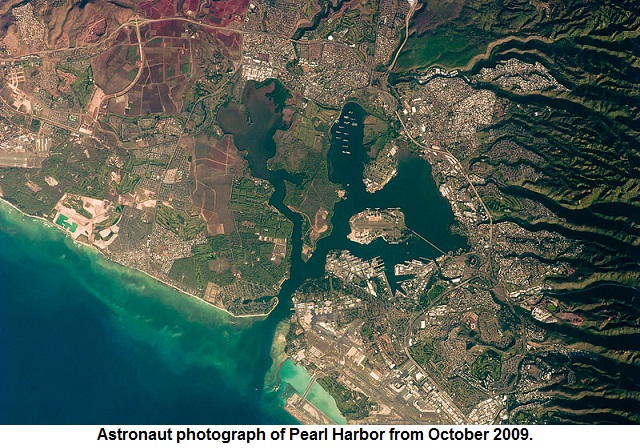
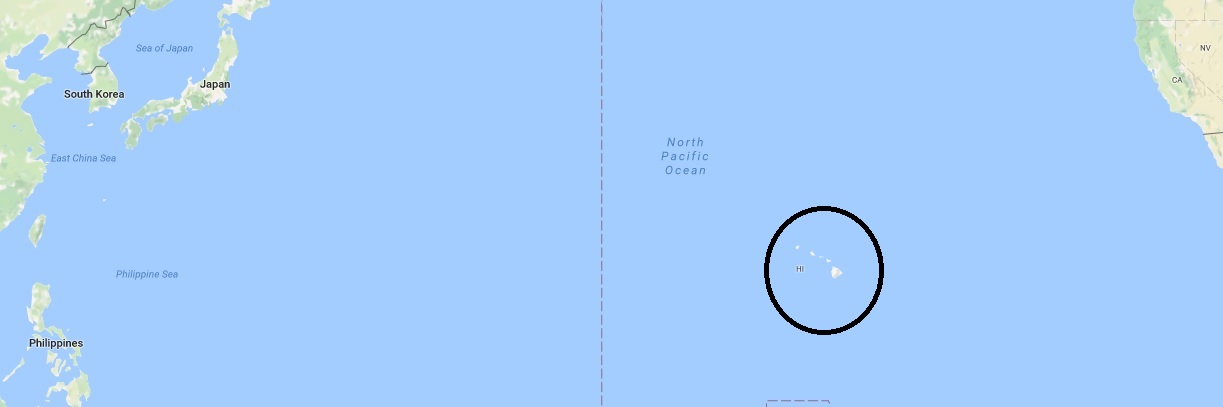
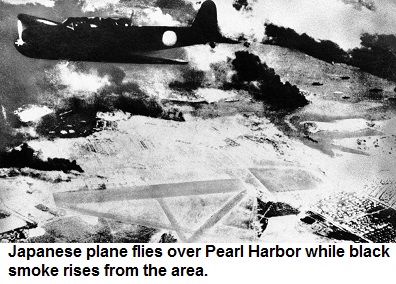
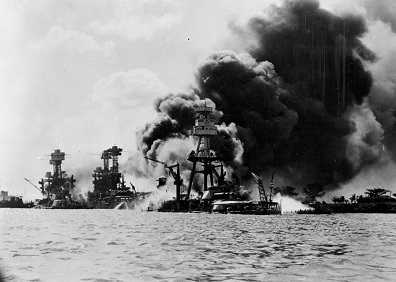
Believe it or not, this depiction describes one of the biggest attacks in American history: the Japanese Attack on Pearl Harbor. See VIDEO here:

VIDEO – World War II History: Attack on Pearl Harbor – http://www.history.com/topics/world-war-ii/world-war-ii-history/videos/attack-pearl-harbor

Retrieved December 7, 2016 from History.com – On December 7, 1941, Japan launches a surprise attack on American soil at Pearl Harbor.

cu-blog-lessons-learned-from-pearl-harbor-photo-2

cu-blog-lessons-learned-from-pearl-harbor-photo-3

cu-blog-lessons-learned-from-pearl-harbor-photo-4

This is the 75th Anniversary of that attack – a few days ago: December 7. That’s a lot of years and a lot of lessons. Still, 75 is a pretty round number, like 25, 50 and 100. This commentary has been reserved for now, a few days late on purpose because of the best-practice to “not speak ill of the dead” at a funeral or memorial service. But a “lessons learned analysis” is still an important exercise for benefiting from catastrophic efforts. After 75 years since the Pearl Harbor Attack on December 7, 1941, this post-mortem analysis is just as shocking as it was on this “day of infamy”.

Consider the details of this maligning article here (and the Appendices below); notice that it assumes a conspiracy:

Title: How U.S. Economic Warfare Provoked Japan’s Attack on Pearl Harbor
By: Robert Higgs

cu-blog-lessons-learned-from-pearl-harbor-photo-1Ask a typical American how the United States got into World War II, and he will almost certainly tell you that the Japanese attacked Pearl Harbor and the Americans fought back. Ask him why the Japanese attacked Pearl Harbor, and he will probably need some time to gather his thoughts. He might say that the Japanese were aggressive militarists who wanted to take over the world, or at least the Asia-Pacific part of it. Ask him what the United States did to provoke the Japanese, and he will probably say that the Americans did nothing: we were just minding our own business when the crazy Japanese, completely without justification, mounted a sneak attack on us, catching us totally by surprise in Hawaii on December 7, 1941.

You can’t blame him much. For more than 60 years such beliefs have constituted the generally accepted view among Americans, the one taught in schools and depicted in movies—what “every schoolboy knows.” Unfortunately, this orthodox view is a tissue of misconceptions. Don’t bother to ask the typical American what U.S. economic warfare had to do with provoking the Japanese to mount their attack, because he won’t know. Indeed, he will have no idea what you are talking about.

In the late nineteenth century, Japan’s economy began to grow and to industrialize rapidly. Because Japan has few natural resources, many of the burgeoning industries had to rely on imported raw materials, such as coal, iron ore or steel scrap, tin, copper, bauxite, rubber, and petroleum. Without access to such imports, many of which came from the United States or from European colonies in southeast Asia, Japan’s industrial economy would have ground to a halt. By engaging in international trade, however, the Japanese had built a moderately advanced industrial economy by 1941.

At the same time, they also built a military-industrial complex to support an increasingly powerful army and navy. These armed forces allowed Japan to project its power into various places in the Pacific and east Asia, including Korea and northern China, much as the United States used its growing industrial might to equip armed forces that projected U.S. power into the Caribbean and Latin America, and even as far away as the Philippine Islands.

When Franklin D. Roosevelt became president in 1933, the U.S. government fell under the control of a man who disliked the Japanese and harbored a romantic affection for the Chinese because, some writers have speculated, Roosevelt’s ancestors had made money in the China trade.[1] Roosevelt also disliked the Germans (and of course Adolf Hitler), and he tended to favor the British in his personal relations and in world affairs. He did not pay much attention to foreign policy, however, until his New Deal began to peter out in 1937. Afterward, he relied heavily on foreign policy to fulfill his political ambitions, including his desire for reelection to an unprecedented third term.

When Germany began to rearm and to seek Lebensraum aggressively in the late 1930s, the Roosevelt administration cooperated closely with the British and the French in measures to oppose German expansion. After World War II commenced in 1939, this U.S. assistance grew ever greater and included such measures as the so-called destroyer deal and the deceptively named Lend-Lease program. In anticipation of U.S. entry into the war, British and U.S. military staffs secretly formulated plans for joint operations. U.S. forces sought to create a war-justifying incident by cooperating with the British navy in attacks on German U-boats in the north Atlantic, but Hitler refused to take the bait, thus denying Roosevelt the pretext he craved for making the United States a full-fledged, declared belligerent—an end that the great majority of Americans opposed.

In June 1940, Henry L. Stimson, who had been secretary of war under Taft and secretary of state under Hoover, became secretary of war again. Stimson was a lion of the Anglophile, northeastern upper crust and no friend of the Japanese. In support of the so-called Open Door Policy for China, Stimson favored the use of economic sanctions to obstruct Japan’s advance in Asia. Treasury Secretary Henry Morgenthau and Interior Secretary Harold Ickes vigorously endorsed this policy. Roosevelt hoped that such sanctions would goad the Japanese into making a rash mistake by launching a war against the United States, which would bring in Germany because Japan and Germany were allied.

Accordingly, the Roosevelt administration, while curtly dismissing Japanese diplomatic overtures to harmonize relations, imposed a series of increasingly stringent economic sanctions on Japan. In 1939 the United States terminated the 1911 commercial treaty with Japan. “On July 2, 1940, Roosevelt signed the Export Control Act, authorizing the President to license or prohibit the export of essential defense materials.” Under this authority, “[o]n July 31, exports of aviation motor fuels and lubricants and No. 1 heavy melting iron and steel scrap were restricted.” Next, in a move aimed at Japan, Roosevelt slapped an embargo, effective October 16, “on all exports of scrap iron and steel to destinations other than Britain and the nations of the Western Hemisphere.” Finally, on July 26, 1941, Roosevelt “froze Japanese assets in the United States, thus bringing commercial relations between the nations to an effective end. One week later Roosevelt embargoed the export of such grades of oil as still were in commercial flow to Japan.”[2] The British and the Dutch followed suit, embargoing exports to Japan from their colonies in southeast Asia.

An Untenable Position
cu-blog-lessons-learned-from-pearl-harbor-photo-6
Roosevelt and his subordinates knew they were putting Japan in an untenable position and that the Japanese government might well try to escape the stranglehold by going to war. Having broken the Japanese diplomatic code, the Americans knew, among many other things, what Foreign Minister Teijiro Toyoda had communicated to Ambassador Kichisaburo Nomura on July 31: “Commercial and economic relations between Japan and third countries, led by England and the United States, are gradually becoming so horribly strained that we cannot endure it much longer. Consequently, our Empire, to save its very life, must take measures to secure the raw materials of the South Seas.”[3]

Because American cryptographers had also broken the Japanese naval code, the leaders in Washington knew as well that Japan’s “measures” would include an attack on Pearl Harbor.[4] Yet they withheld this critical information from the commanders in Hawaii, who might have headed off the attack or prepared themselves to defend against it. That Roosevelt and his chieftains did not ring the tocsin makes perfect sense: after all, the impending attack constituted precisely what they had been seeking for a long time. As Stimson confided to his diary after a meeting of the war cabinet on November 25, “The question was how we should maneuver them [the Japanese] into firing the first shot without allowing too much danger to ourselves.”[5] After the attack, Stimson confessed that “my first feeling was of relief … that a crisis had come in a way which would unite all our people.[6]

Source: The Independent Institute – Online Community – Posted: May 1, 2006; retrieved December 7, 2016 from: http://www.independent.org/newsroom/article.asp?id=1930
——–
See Appendices below for cited references and profiles of the Author and the Organization.

So this establishes why the Japanese may have been motivated to attack Pearl Harbor in the first place. The motivation seems more complicated than initially reported.

The Bible declares that:

“For there is nothing hidden that will not become manifest” – Luke 8:17

cu-blog-lessons-learned-from-pearl-harbor-photo-7

cu-blog-lessons-learned-from-pearl-harbor-photo-5

After 75 years, the before-during-after facts associated with the Pearl Harbor Attack should be available for full disclosure. What are the lessons here for the Caribbean and today’s effort to secure the Caribbean homeland while expanding the regional economy? We truly want to consider these main points, these lessons; (the hyperlinks refer to previous Go Lean commentaries):

Lessons

Territories have a status of disregard Hawaii (Pearl Harbor) and Philippines were attacked by the Japanese. These were both US Territories at the same. The levels of protection and preparedness for territories are sub-standard compared to the American mainland. As a result there was no meaningful plan for the air defense of Hawaii.
Colonialism is/was really bad Japan protested the sub-standard reality of the native Asians under the European colonial schemes. A people oppressed, suppressed and repressed would not remain docile forever; “that a downtrodden people would not stay down, that they would rise and revolt, that they would risk their lives and that of their children to pursue freedom.” – Go Lean book Page 251.
White Supremacy is/was a really bad construct The US Territories (Hawaii and Philippines) were not the first targets for Japan. They targeted all European colonies (British, French and Dutch) territories. Their campaign was to rail against White Supremacy.
Bullies only respond to a superior force Japan avail themselves of expansion opportunities in Far-East Asia as the European powers became distracted in the time period during and after World War I. (Manchuria in China was occupied by Japan starting in 1931). Only a superior force, the US, was able to assuage their aggression.
Economic Warfare can back a Government into a corner When the supply of basic needs (food, clothing, shelter and energy) are curtailed, a crisis ensues. When people are in crisis, they consider “fight or flight” options. Japan chose to fight; Caribbean people choose flight.
Societies can double-down on a bad Community Ethos Japan’s aggression was a direct result of their community ethos that honored Samurai warrior and battle culture. Men would walk the streets with their swords, ready for a challenge. On the other hand, the US (and Western Europe) community ethos of racism was so ingrained that the natural response in the US, post-Pearl Harbor, was to intern Japanese Americans in camps.
All of these bad community ethos were weeded out with post-WWII Human Rights reconciliations. – Go Lean book Page 220.
Double Standards are hard to ignore Japan felt justified in their Pacific aggression because of the US’s regional aggression in the Americas. Before Pearl Harbor, they withdrew from the League of Nations in protest of double standards.
Even after WWII, this double standard continues with countries with Veto power on the UN Security Council.
People have short memories There are movements to re-ignite many of the same developments that led to the devastation of WWII: right wing initiatives in Japan and Germany; Human Rights disregard for large minority groups (Muslims, etc.).
The more things change, the more they remain the same.

This discussion is analyzing the concept of “fight or flight”. According to Anthropologists, individuals and societies facing a crisis have to contend with these two options for survival. The very concept of refugees indicate that most people choose to flee; they choose internal displacement or refuge status in foreign countries. This point is consistent with the theme in the book Go Lean … Caribbean that this region is in crisis and as a result people have fled from their beloved homelands to foreign destinations in North America and Europe. How bad? According to one report, we have lost 70 percent of our tertiary-educated population.

Enough said! Our indictment is valid. Rather than flee, we now want the region to fight. This is not advocating a change to a militaristic state, but rather this commentary, and the underlying Go Lean book, advocates devoting “blood, sweat and tears” to empowering change in the Caribbean region. The book states this in its introduction (Page 3):

We cannot ignore the past, as it defines who we are, but we do not wish to be shackled to the past either, for then, we miss the future. So we must learn from the past, our experiences and that of other states in similar situations, mount our feet solidly to the ground and then lean-in, to reach for new heights; forward, upward and onward. This is what is advocated in this book: to Go Lean … Caribbean!

The Go Lean book serves as a roadmap for the introduction and implementation of the Caribbean Union Trade Federation (CU). One mission of this roadmap is to reduce the “push and pull” factors that contributes to the high emigration rates. For the most part the “push and pull” factors relate to the societal defects among the economic, security and governing engines. Another mission is to incentivize the far-flung Diaspora to consider a return to the region. Overall, the Go Lean roadmap asserts that the economy of the Caribbean is inextricably linked to the security of the Caribbean. The roadmap therefore proposes an accompanying Security Pact to accompany the CU treaty’s economic empowerment efforts. The plan is to cooperate, collaborate and confer with all regional counterparts so as to provide an optimized Caribbean defense, against all threats, foreign and domestic. This includes the American Caribbean territories (just like Pearl Harbor was on the American territory of Hawaii) of Puerto Rico and the US Virgin Islands. These American protectorates are included in this CU regional plan.

This CU/Go Lean regional plan strives to advance all of Caribbean society with these 3 prime directives:

  • Optimization of the economic engines in order to grow the regional economy to a $800 Billion Single Market by creating 2.2 million new jobs.
  • Establishment of a security apparatus to protect the resultant economic engines.
  • Improvement of Caribbean governance in support of these endeavors.

The Go Lean book stresses the effectiveness and efficiency of protecting life and property of all Caribbean stakeholders: residents, trading partners, visitors, etc.. This is why the book posits that some deployments are too big for any one member-state to manage alone – especially with such close proximities of one island nation to another – there are times when there must be a cross-border multi-lateral coordination – a regional partnership. This is the vision that is defined in the book (Pages 12 – 14), starting with these statements in the opening Declaration of Interdependence:

x. Whereas we are surrounded and allied to nations of larger proportions in land mass, populations, and treasuries, elements in their societies may have ill-intent in their pursuits, at the expense of the safety and security of our citizens. We must therefore appoint “new guards” to ensure our public safety and threats against our society, both domestic and foreign.

xii. Whereas the legacy in recent times in individual states may be that of ineffectual governance with no redress to higher authority, the accedence of this Federation will ensure accountability and escalation of the human and civil rights of the people for good governance, justice assurances, due process and the rule of law. As such, any threats of a “failed state” status for any member state must enact emergency measures on behalf of the Federation to protect the human, civil and property rights of the citizens, residents, allies, trading partners, and visitors of the affected member state and the Federation as a whole.

xvi. Whereas security of our homeland is inextricably linked to prosperity of the homeland, the economic and security interest of the region needs to be aligned under the same governance.

The Go Lean roadmap is not a call for a revolt against the governments, agencies or institutions of the Caribbean region, but rather a petition for a peaceful transition and optimization of the economic, security and governing engines in the region. To establish the security optimization, the Go Lean book presents a series of community ethos that must be adapted to forge this change. In addition, there are these specific strategies, tactics, implementation and advocacies to apply:

Community Ethos – new Economic Principles Page 21
Community Ethos – new Security Principles Page 22
Community Ethos – Minority Equalization Page 24
Community Ethos – Impacting the Greater Good Page 34
Strategy – Mission – Enact a Defense Pact to defend the homeland Page 45
Tactical – Fostering a Technocracy Page 64
Tactical – Homeland Security – Naval Operations Page 75
Tactical – Homeland Security – Militias Page 75
Implementation – Assemble – US Overseas Territory into CU Page 96
Implementation – Foreign Policy Initiatives at Start-up Page 102
Implementation – Security Initiatives at Start-up Page 103
Implementation – Ways to Promote Independence Page 120
Planning – Ways to Model the EU – Constructs after WW II Page 130
Advocacy – Ways to Better Manage the Social Contract Page 170
Advocacy – Ways to Improve Homeland Security Page 180
Advocacy – Ways to Mitigate Terrorism Page 181
Advocacy – Ways to Improve Intelligence Gathering Page 182
Advocacy – Ways to Enhance Tourism – Mitigate Risky Image Page 190
Advocacy – Ways to Improve Emergency Management Page 196
Advocacy – Ways to Preserve Caribbean Heritage Page 218
Advocacy – Ways to Impact US Territories Page 244

Now is the time to lean-in to this roadmap and “fight” for Caribbean change, as depicted in the book Go Lean…Caribbean. At this time, there are no State Actor adversaries – like Imperial Japan – seeking to cause harm to our homeland, but that status quo can change very quickly. Some Caribbean member-states are still de facto “colonies”, so enemies of our colonial masters – France, Netherlands, US, UK – can quickly “pop up”. We must be ready and on guard to any possible threats and security risks.

The movement behind the Go Lean … Caribbean book seeks to make this homeland a better place to live, work and play. Since the Caribbean is arguably the best address of the planet, tourism is a primary concern. So security here in our homeland must take on a different priority. Tourists do not visit war zones – civil wars, genocides, active terrorism, Failed-States and rampant crime. Already our societal defects (economics) have created such crises that our people have chosen to flee as opposed to “fight”. We do not need security threats as well; we do not need Failed-States. We are now preparing to “fight” (exert great efforts), not flee, to wage economic war to elevate our  communities.

This will not be easy; this is heavy-lifting, but success is possible. The strategies, tactics and implementations in the Go Lean roadmap are conceivable, believable and achievable. 🙂

Download the book Go Lean … Caribbean – now!

———–

Appendix A – Reference Notes:
1.  Harry Elmer Barnes, “Summary and Conclusions,” in Perpetual War for Perpetual Peace:A Critical Examination of the Foreign Policy of Franklin Delano Roosevelt and Its Aftermath (Caldwell, Id.: Caxton Printers, 1953), pp. 682–83.
2.  All quotations in this paragraph from George Morgenstern, “The Actual Road to Pearl Harbor,” in Perpetual War for Perpetual Peace, pp. 322–23, 327–28.
3.  Quoted ibid., p. 329.
4.  Robert B. Stinnett, Day of Deceit: The Truth about FDR and Pearl Harbor (NewYork: Free Press, 2000).
5.  Stimson quoted in Morgenstern, p. 343.
6.  Stimson quoted ibid., p. 384.

 ——-

Appendix B – About the Author:

Robert Higgs is a Senior Fellow in Political Economy at the Independent Institute and Editor at Large of the Institute’s quarterly journal The Independent Review. He received his Ph.D. in economics from JohnsHopkinsUniversity, and he has taught at the University of Washington, LafayetteCollege, SeattleUniversity, the University of Economics, Prague, and GeorgeMasonUniversity.

——-

Appendix C – About the Independent Institute:

The Independent Institute is a non-profit, non-partisan, scholarly research and educational organization that sponsors in-depth studies of critical social and economic issues.

The mission of the Independent Institute is to boldly advance peaceful, prosperous, and free societies grounded in a commitment to human worth and dignity.

Today, the influence of partisan interests is so pervasive that public-policy debate has become too politicized and is largely confined to a narrow reconsideration of existing policies. In order to fully understand the nature of public issues and possible solutions, the Institute’s program adheres to the highest standards of independent scholarly inquiry.
Source: http://www.independent.org/aboutus/


Share this post:
, , , ,
[Top]

Fidel Castro Is Dead; Now What? – ENCORE

The news is out; Fidel Castro died on Friday November 25, 2016 at age 90. This former Revolutionary Leader and President of Cuba was monumental and impactful. He made friends and enemies at home, in the region and around the world.

He accomplished some good; guaranteeing education – one of the highest literacy rates in the world – and advanced healthcare to all of his people.

He made many enemies; persecuting and executing his political enemies

… the United States imposed a Trade Embargo for his entire reign, up until now.

Now that he is dead, what future holds for his beloved country?

First, Fidel Castro turned over the presidency to his younger brother Raul in 2008; so oversight of the country’s affairs has been the direct concern of President Raul Castro. That is expected to continue. So the answer is more of the same.

Same?

This “same” was defined in an earlier blog-commentary on February 4, 2016. It is being encored here on the occasion of Fidel’s passing.

==============

Go Lean CommentaryThe Road to Restoring Cuba

CU Blog - The Road to Restoring Cuba - Photo 3In a visit to Jamaica and CariCom leaders in April 2015,  US President Barack Obama concluded that 55 years of indifference towards Cuba was long-enough and that as of December 17, 2014 he had “set the machinery in motion” to normalize relations with Cuba. This descriptor paints the picture of a journey, a marathon and not just a “100-yard dash”.

What is the status of that journey now?

Where are we in the process? How are the issues being addressed?

It turns out this is a weighty task (heavy-lifting), and while many of the issues are minor (i.e. Postal Mail), some are life-and-death (i.e. Human Trafficking).

Firstly, the current restoration of Cuban and American relations is strictly an act of Executive Orders – directives by the US President (currently of the Democratic Party) and not supported by his Republican legislature, the Congress. There is a definitive divide among these Democrats and Republicans in this regard. Here are some updates of those Executive Orders, since the December 2014 baseline:

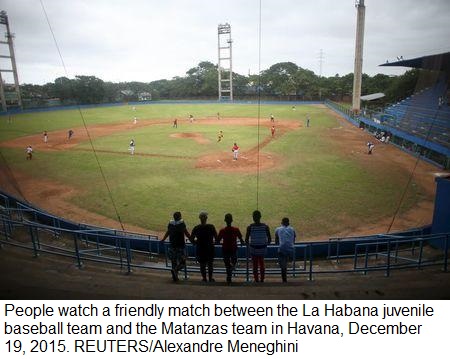
People watch a friendly match between the La Habana juvenile baseball team and the Matanzas team in Havana

People watch a friendly match between the La Habana juvenile baseball team and the Matanzas team in Havana

Cuba needs to have the American Trade Embargo officially lifted! This is a Congressional action and cannot be accomplished by Executive Orders alone.

The book Go Lean…Caribbean was designed with the intent of the eventual integration of Cuba in a Caribbean Single Market. This would allow for technocratic stewardship and oversight of the region’s economic, security and governing engines for all 30 Caribbean member-states. The book therefore serves as a roadmap for the introduction and implementation of the Caribbean Union Trade Federation (CU).

There is no minimizing of the risks and responsibility of Cuba in the Go Lean book. It is clearly recognized that integrating and restoring Cuba is a BIG deal; with heavy-lifting; and other reconciliation descriptors used to depict this monumental effort. See the relevant statement here from the opening Declaration of Interdependence (Page 12):

xiii. Whereas the legacy of dissensions in many member-states (for example: Haiti and Cuba) will require a concerted effort to integrate the exile community’s repatriation, the Federation must arrange for Reconciliation Commissions to satiate a demand for justice.

Though World War II was not directly waged in the Caribbean, the Go Lean/CU roadmap still prescribes a Marshall Plan strategy – a reference to the post-WWII European Rebuilding Plan – for re-building Cuba (and Haiti).

In truth, Cuba is the biggest market in the Caribbean. This one island has the largest landmass among the islands; (notwithstanding the landmasses of South America-situated CU member-states of Guyana and Suriname). They also have the largest population of 11,236,444 people (circa 2010) and the most agricultural output. Cuba needs the Caribbean; and the Caribbean needs Cuba. The entire region needs to act in unison as the challenges the region face are too big for any one country to tackle alone.

All in all, the book and accompanying blogs declare despite an absence of trade embargo in the other Caribbean member-states, that these countries have still failed to deliver to their citizens the standards assumed in any Social Contract. Some member-states are even flirting with Failed-State statuses. People in each Caribbean country are prone to flee the region, at every opportunity. The people of the region deserve better!

There is the need to re-boot … the entire region. This re-boot roadmap commences with the recognition that all the Caribbean is in crisis, and in the “same boat” despite the colonial heritage or language. All 30 geographical member-states need to confederate, collaborate, and convene for solutions. This is the purpose of the Go Lean/CU roadmap, as featured in this declaration of the Go Lean/CU prime directives:

  • Optimization of the economic engines in order to grow the regional economy to $800 Billion & create 2.2 million new jobs.
  • Establishment of a security apparatus to protect the resultant economic engines.
  • Improve Caribbean governance to support these engines.

Consider the start of the ill-fated Cuban-Communism Revolution in 1959, Cuba has lost 57 years in its maturation process. The Go Lean book’s opening Declaration of Interdependence (Page 11) also included this pronouncement that it is beyond time now for Caribbean success stories, rather than the continued Caribbean Failed-State stories:

While our rights to exercise good governance and promote a more perfect society are the natural assumptions among the powers of the earth, no one other than ourselves can be held accountable for our failure to succeed if we do not try to promote the opportunities that a democratic society fosters.

The Go Lean book therefore details the series of community ethos, strategies, tactics, implementations and advocacies to facilitate a re-boot in the region and to final manifest a quality delivery of a regional Social Contract:

Anecdote – Caribbean Single Market & Economy Page 15
Community Ethos – new Economic Principles Page 21
Community Ethos – new Security Principles Page 22
Community Ethos – new Governing Principles Page 24
Community Ethos – Ways to Impact the Future Page 26
Community Ethos – Ways to Manage Reconciliations – TRC Cuba Page 34
Community Ethos – Ways to Impact the Greater Good Page 37
Strategic – Vision – Integrated Region in a Single Market Page 45
Strategic – Vision – Core Competence – Specialty Agriculture Page 58
Tactical – Confederating a Non-sovereign Union Page 63
Tactical – Fostering a Technocracy Page 64
Tactical – CU Member-States   Facts & Figures Page 66
Tactical – Growing to $800 Billion Regional Economy – Marshall Plan Models Page 67
Tactical – Separation of Powers Page 71
Implementation – Ways to Pay for Change Page 101
Implementation – Foreign Policy Initiatives at Start-up Page 102
Implementation – Security Initiatives at Start-up Page 103
Implementation – Ways to Deliver Page 109
Implementation – Reasons to Repatriate Page 118
Planning – Big Ideas for the Caribbean Region – Marshall Plan for Cuba Page 127
Planning – Reasons Why the CU Will Succeed – Lessons from Unifying Germany Page 132
Planning – Ways to Improve Failed-State Indices Page 134
Planning – Lessons from East Germany – Post-Communism Integration Page 139
Planning – Ways to Model the EU – Immediate Integration after WWII Crisis Page 130
Advocacy – Ways to Grow the Economy Page 151
Advocacy – Ways to Improve Governance Page 168
Advocacy – Ways to Better Manage the Social Contract Page 176
Advocacy – Ways to Re-boot Cuba Page 236

The issue of Cuba’s eventual integration into the Caribbean brotherhood has previously been addressed in the following Go Lean commentary-blog entries:

https://goleancaribbean.com/blog/?p=6664 Cuba to Expand Internet Access
https://goleancaribbean.com/blog/?p=4506 Colorism in Cuba … and Beyond
https://goleancaribbean.com/blog/?p=3455 Restoration of Diplomatic Relations with Cuba
https://goleancaribbean.com/blog/?p=3354 CariCom Chairman calls for an end to US Embargo on Cuba
https://goleancaribbean.com/blog/?p=2330 ‘Raul Castro reforms not enough’, Cuba’s bishops say
https://goleancaribbean.com/blog/?p=1609 Cuba mulls economy in Parliament session
https://goleancaribbean.com/blog/?p=554 Cuban cancer medication registered in 28 countries
https://goleancaribbean.com/blog/?p=436 Cuba Approves New “Law on Foreign Investment”

For a long time people have hoped for a restored Cuba. This hope was shared by Cuban people on the island and in the Diaspora abroad. The hope is also shared by neighbors, tourists, trading-partners, and international stakeholders, alike. Maybe, just maybe with President Barack Obama’s Executive Orders, the journey down this road to restoration will be irreversible. (A new President of the US will be sworn-in on January 20, 2017; this one can reverse Obama’s Executive Orders).

The Go Lean roadmap for the CU strives to put the Command-and-Control of Caribbean affairs in the hands of Caribbean people. The book and accompanying blogs declare the desire for the Caribbean to no longer be a parasite of the US, but rather a protégé. This parasite status stems all the way back to the year 1898 – to the start of the Spanish – American War for Cuban Independence.

Enough already! Surely we have grown since 1898 or even since 1959.

The Go Lean…Caribbean movement turns the corner, and instead of an American dependence, or a nationalistic independence, it leads the region in a new direction: neighborly interdependence. The Go Lean…Caribbean book is a turn-by-turn guide (370 pages) for the region to dive deeper in an integrated Single Market.

Now is the time for all of the Caribbean, the people – residents and Diaspora – and governing institutions, to lean-in for this Caribbean and Cuban re-boot. Now is the time to make this region – all 30 countries – a better place to live, work and play.  🙂

Download the book Go Lean … Caribbean – now!

————

Appendix A VIDEO – US-Cuba direct mail services to resume – http://news.yahoo.com/video/us-cuba-direct-mail-services-155808360.html

Posted Dec 12, 2015 – Cuba and the United States are to resume direct postal services after half a century of having to send mail via a third country. Paul Chapman reports.

————

Appendix B – News Article: As MLB seeks legal entry to Cuba, Obama considers playing ball

By: Daniel Trotta, Reuters

HAVANA (Reuters) – Major League Baseball is asking the U.S. government for special permission to sign players in Cuba, handing the administration of U.S. President Barack Obama the opportunity to try some baseball diplomacy while dealing a setback to human traffickers.

The U.S. trade embargo generally bars MLB from any agreement directing money to the Cuban government, but the White House says baseball is one area where it can advance U.S. goals and the Treasury Department’s Office of Foreign Assets Control (OFAC) has authority to allow a deal.

MLB and Cuba are closer than at any time since the 1959 revolution, as evidenced by a goodwill tour last week in which big leaguers, including Cuban defectors, gave clinics to Cuban youth.

“Indeed, baseball has a unique cultural significance to both the United States and Cuba. It is therefore an area where we can further our goals of charting a new course in our relations with Cuba and further engaging and empowering the Cuban people,” a senior administration official told Reuters.

Since Obama and Cuban President Raul Castro broke with Cold War history and announced detente a year ago, Obama has asked Congress to repeal the embargo, but the Republican majority has resisted. Instead the administration has used other means to promote exchanges.

If MLB were able to sign players in Cuba, where baseball is the most popular sport, it could end a wave of defections in which Cuban ballplayers put themselves in the hands of human traffickers and risk their lives on illegal journeys at sea.

Some 130 ballplayers have defected this past year, according to Cuban journalists.

But the best players on the island remain off limits, and the Cuban government stops them from leaving without permission, leading those with big-league dreams to turn to smugglers. In some cases, organized crime rackets force players to sign over huge cuts of future earnings, threatening players and their families.

“It’s not an uncommon story,” said Paul Minoff, a lawyer who represents Leonys Martin, an outfielder now with the Seattle Mariners who earned $15.5 million over the past five seasons with the Texas Rangers.

After defecting, Martin was held by armed men in Mexico for months, and under duress agreed to pay his captors 35 percent of his salary, Minoff said. When Martin reached America, he fought back. The smugglers sued Martin but the suit was dismissed after U.S. prosecutors brought criminal charges against them.

Cuban players have mostly stuck to a code of silence about their defections, but some details emerge through court cases.

When Yasiel Puig of the Los Angeles Dodgers left Cuba in 2012, he soon found himself entangled with Mexico’s notorious Zetas crime organization, which threatened to chop off his arm if it failed to receive a promised $250,000 fee.

While Puig signed a $42 million contract, others are abandoned in foreign countries, never to hit paydirt.

SOLUTION SOUGHT

To normalize the transfer of players, Major League Baseball has asked the Treasury’s OFAC for a specific license. The office has wide latitude to grant such licenses and can issue regulations to approve activity otherwise proscribed by the embargo.

OFAC Acting Director John E. Smith said he could not comment on the baseball case, but in general his office “acts in consultation with the State Department and other relevant U.S. government agencies in determining whether (authorizing transactions) would be consistent with current policy.”

MLB applied for its OFAC license in early June, MLB Chief Legal Officer Dan Halem told Reuters. Halem declined to detail the request except to say it included signing players in Cuba, stressing that baseball’s priority was to provide a safe and legal path for Cuban players.

“There’s a willingness on the part of our government to end the trafficking. The White House has been very sympathetic to helping us end some of the abusive practices,” Halem said.

Legally, experts say, there is no impediment to granting MLB’s request. Politically, it may be tricky to explain a deal that provides revenue for the Cuban government while favoring MLB, a $10 billion industry. The administration’s stated preference is to support Cuba’s private sector.

RETURN OF THE DEFECTORS

Cuba made a significant gesture when it permitted once-shunned defectors to return for the goodwill tour, including Puig and Jose Abreu, who has a $68 million contract with the Chicago White Sox.

When they left Cuba, Puig and Abreu had little hope of returning soon. The trip allowed Abreu to reunite with his 5-year-old son and Puig with a half-brother.

“This demonstrates that Cuba is open to the world, that we are not closed, not even with our players who are playing in MLB,” Higinio Velez, president of the Cuban Baseball Federation, told Reuters.

Attempting to slow the defections, Cuba has increased pay and allowed more players to sign in Japan, Mexico and elsewhere. Those leagues pay Cuba a fee equivalent to 10 percent of the player’s salary, but Cuba is believed to want more from MLB.

“This is a vulnerable time. It’s a reality that the exodus has harmed the level of our baseball,” Heriberto Suarez, Cuba’s National Baseball Commissioner, told Reuters.

With an MLB deal, Cuba could regulate the egress of players and protect its professional league, the country’s greatest sporting attraction. Sixteen teams are the pride of each province, the games infused with a conga beat celebration.

Should legally emigrated stars begin playing in the United States, they would pay taxes to Cuba, which is also likely to seek compensation for player rights. Both measures would require OFAC permission and help preserve the Cuban league.

(Additional reporting by Jeff Mason in Washington)
Source: http://news.yahoo.com/mlb-seeks-legal-entry-cuba-obama-considers-playing-191751615–mlb.html; posted December 23, 2015; retrieved February 4, 2016.

Share this post:
, , , , ,
[Top]

Rwanda’s Catholic bishops apologize for genocide

Go Lean Commentary

Is mainstream religion a force for moral good in modern society … in the Caribbean? In Africa? Anywhere?

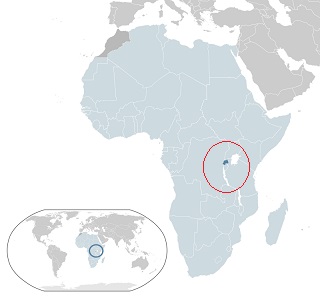
cu-blog-rwandas-catholic-bishops-apologize-for-genocide-photo-3This is a timely discussion right now as there are a lot of threats and dissension in the world, mostly spurred on by religious extremism; think: Islamic terrorists, Shia – Shiite conflicts, Hindu-India versus Muslim Pakistan, Anglicanism versus Catholicism in Northern Ireland. Many samples and examples abound. The case in point for this consideration is the religious-fueled genocide in Rwanda in 1994; see the country’s flag here.

The religious institutions have a tarnished record; not always being a force for moral good in society. They have betrayed the vows and values they are supposed to be committed to. Instead, they have become “drunk with the blood of so many innocent people”.

This reality and cautionary tale from Rwanda provides us a deep lesson, though of a religious nature. See this core scripture:

A mysterious name was written on her forehead: “Babylon the Great, Mother of All Prostitutes and Obscenities in the World.”
I could see that she was drunk–drunk with the blood of God’s holy people who were witnesses for Jesus. I stared at her in complete amazement. – Revelation 17:5 – 6; New Living Translation

Who/What is Babylon the Great? (See Appendix A below).

For one religious group founded in the Caribbean – Rastafarians – they assign the identity to the country of the United States of America. But most religious scholars assign the identity to the world’s orthodox religions.

Some theologians make a narrow accusation and declare that “there can be only one conclusion: The Vatican [(Roman Catholic Headquarters)] is the Mystery Babylon of Revelation; they relate that this false religious system that has deceived the people of the world that will be destroyed at the time of Armageddon”.

Whatever your faith, being associated with Babylon the Great is not a good thing. “She” has a vengeful reckoning in store.

As depicted in a previous blog-commentary, the religions of Christendom have a sullied past! Unfortunately that “past” is not only centuries ago, as chronicled in the recent experiences in 1994 with the Rwandan Ethnic Cleansing. This sad drama is in the news again, as the Roman Catholic Church has now just issued a formal apology for its actions and in-actions in those atrocities.

Considering the real history, they are guilty as charged; see the news story here:

Title: Rwanda: Catholic bishops apologize for role in genocide
By: Ignatius Ssuuna
KIGALI, Rwanda (AP) — The Catholic Church in Rwanda apologized on Sunday for the church’s role in the 1994 genocide, saying it regretted the actions of those who participated in the massacres.

cu-blog-rwandas-catholic-bishops-apologize-for-genocide-photo-2“We apologize for all the wrongs the church committed. We apologize on behalf of all Christians for all forms of wrongs we committed. We regret that church members violated (their) oath of allegiance to God’s commandments,” said the statement by the Conference of Catholic Bishops, which was read out in parishes across the country.

The statement acknowledged that church members planned, aided and executed the genocide, in which over 800,000 ethnic Tutsis and moderate Hutus were killed by Hutu extremists.

In the years since the genocide — which was sparked by a contentious plane crash that killed the then-president, a Hutu — the local church had resisted efforts by the government and groups of survivors to acknowledge the church’s complicity in mass murder, saying those church officials who committed crimes acted individually.

Many of the victims died at the hands of priests, clergymen and nuns, according to some accounts by survivors, and the Rwandan government says many died in the churches where they had sought refuge.

The bishops’ statement is seen as a positive development in Rwanda’s efforts at reconciliation.

“Forgive us for the crime of hate in the country to the extent of also hating our colleagues because of their ethnicity. We didn’t show that we are one family but instead killed each other,” the statement said.

The statement was timed to coincide with the formal end Sunday of the Holy Year of Mercy declared by Pope Francis to encourage greater reconciliation and forgiveness in his church and in the world, said Bishop Phillipe Rukamba, spokesman for the Catholic Church in Rwanda.

Tom Ndahiro, a Rwandan genocide researcher, said he hoped the church’s statement will encourage unity among Rwandans.

“I am also happy to learn that in their statement, bishops apologize for not having been able to avert the genocide,” he said.

========

cu-blog-rwandas-catholic-bishops-apologize-for-genocide-photo-1

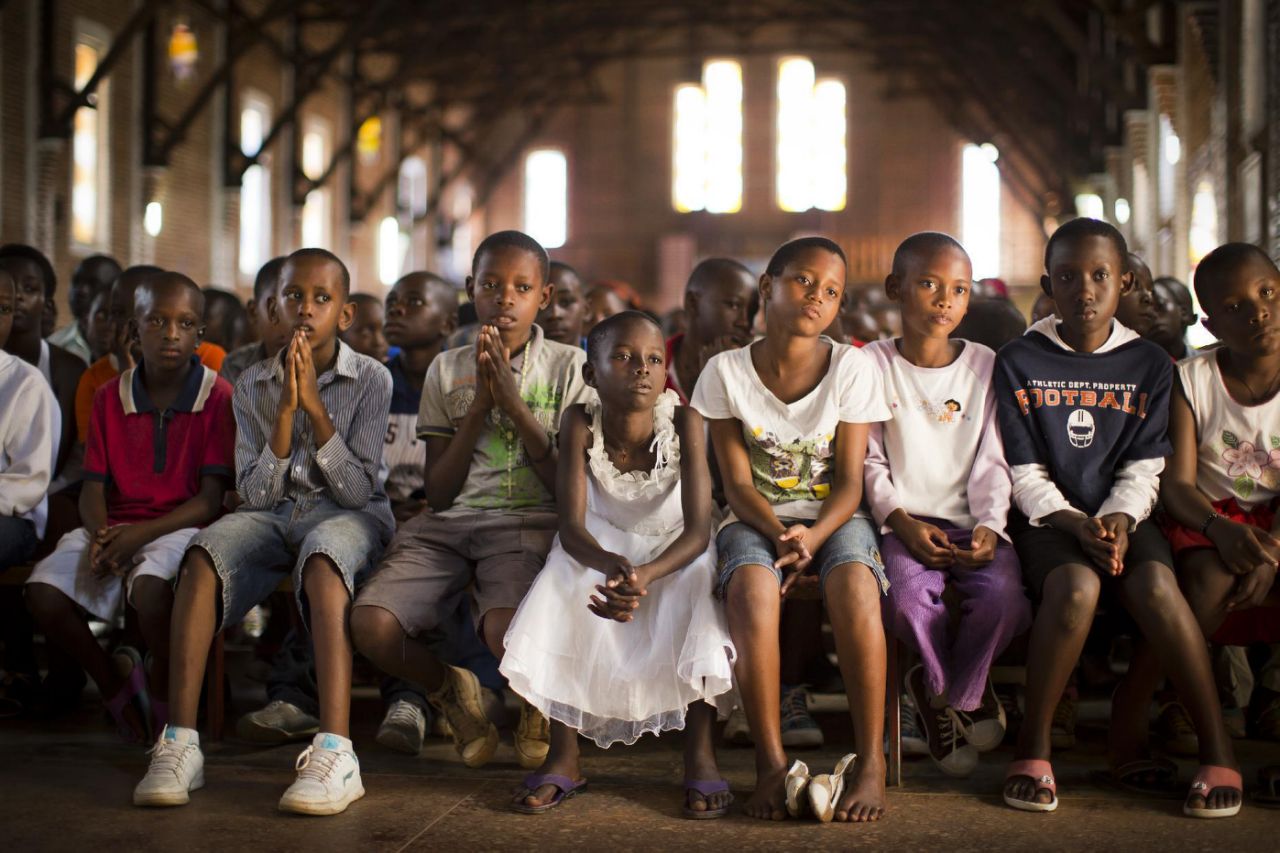
Photo Caption – In this Sunday, April 6, 2014 file photo, Rwandan children listen and pray during a Sunday morning service at the Saint-Famille Catholic church, the scene of many killings during the 1994 genocide, in the capital Kigali, Rwanda. The Catholic Church in Rwanda apologized on Sunday, Nov. 20, 2016, for the church’s role in the 1994 genocide, saying it regretted the actions of those who participated in the massacres. (AP Photo/Ben Curtis, File)

The recap: “800,000 ethnic Tutsis and moderate Hutus were killed by Hutu extremists” during the Rwanda Holocaust in 1994. (This history was dramatized in the movie Hotel Rwanda; see Appendix B VIDEO below).

How does a community – like Rwanda in the foregoing – repent, forgive and reconcile from such a bad legacy?

“Confession is good for the soul”!

This commentary is part-and-parcel of the effort to reform and transform the Caribbean. We too, have some atrocities to reconcile. Plus we have many recent bad actions to reckon with. Think:

  • Haiti
  • Cuba
  • Guyana
  • Belize

The book Go Lean…Caribbean posits that any success in reforming and transforming the Caribbean must include a unified region – we need to be a Single Market – despite the 30 different member-states, 5 different colonial legacies and 4 different languages. We have a lot of differences – just like the differences of Hutus and Tutsis in Rwanda – and a history of dysfunction. We must consider the ancient and modern conflicts some member-states have had with others.

The book serves as a roadmap for the introduction and implementation of the Caribbean Union Trade Federation (CU). A mission of the roadmap is to reverse the prior “human flight” and invite the Diaspora back to the homeland. Accepting that many people fled the Caribbean seeking refuge, means that we must mitigate these causes of prior distress; and reconcile them. “Old parties” returning to their communities can open a lot of “old wounds” – Rwanda never reconciled their Hutu-Tutsi conflicts before 1994. Therefore an additional mission is to facilitate formal reconciliations, much like the model in South Africa with the Truth & Reconciliation Commissions (TRC). This mission will assuage these Failed-State indicators and threats (Page 272):

  • “Revenge seeking” groups
  • Group Grievances

The foregoing article depicts a bad episode in history of Rwanda and the Catholic Church’s complexities. The best-practice is to repent, forgive and reconcile. Repentance would include desisting in the bad behavior, confession and making amends. Religious orthodoxy is responsible for a lot of harm in the world. To finally answer the opening question: Is mainstream religion a force for moral good in modern society … in the Caribbean?

The answer is: No!

The Go Lean movement (book and blogs) have identified many bad community ethos – fundamental character or spirit of a culture; the underlying sentiment that informs the beliefs, customs, or practices of a group or society; the dominant assumptions of a people or period – that the Caribbean region needs to desist, confess and make amends. Many of these are based on religious orthodoxy; consider:

The Go Lean movement (book and blogs) also details good-positive community ethos that the people of the region need to adopt. The motivating ethos underlying the Go Lean roadmap is the Greater Good. This is defined as “the greatest good to the greatest number of people which is the measure of right and wrong” – Jeremy Bentham (1748-1832), a British philosopher, jurist, and social reformer. What is ironic is the fact that the Greater Good ethos aligns with the true values of most of the orthodox religions identified above; such as this scripture:

Pure and genuine religion in the sight of God the Father means caring for orphans and widows in their distress and refusing to let the world corrupt you. – James 1:27; New Living Translation

This CU/Go Lean mission is to elevate society for Caribbean people in the Caribbean. There is the need to monitor the enforcement of human rights and stand “on guard” against movements towards Failed-State status. The Go Lean roadmap calls for the CU to assume that role. Using cutting edge delivery of best practices, the CU will employ strategies, tactics and implementations to impact its prime directives; identified with the following 3 statements:

  • Optimization of the economic engines in order to grow the regional economy to $800 Billion & create 2.2 million new jobs.
  • Establishment of a security apparatus to ensure public safety assurances and protect the region’s economic engines.
  • Improvement of Caribbean governance to support these engines.

The Go Lean book speaks of the Caribbean as in crisis and posits that this crisis can be averted, that it is a “terrible thing to waste”. The Go Lean roadmap seeks to optimize the entire Caribbean economic/security/governance eco-system. This vision is defined early in the book (Page 12) in the following pronouncements in the Declaration of Interdependence:

xi. Whereas all men are entitled to the benefits of good governance in a free society, “new guards” must be enacted to dissuade the emergence of incompetence, corruption, nepotism and cronyism at the peril of the people’s best interest. The Federation must guarantee the executions of a social contract between government and the governed.

xii. Whereas the legacy in recent times in individual states may be that of ineffectual governance with no redress to higher authority, the accedence of this Federation will ensure accountability and escalation of the human and civil rights of the people for good governance, justice assurances, due process and the rule of law. As such, any threats of a “failed state” status for any member state must enact emergency measures on behalf of the Federation to protect the human, civil and property rights of the citizens, residents, allies, trading partners, and visitors of the affected member state and the Federation as a whole.

xiii. Whereas the legacy of dissensions in many member-states (for example: Haiti and Cuba) will require a concerted effort to integrate the exile community’s repatriation, the Federation must arrange for Reconciliation Commissions to satiate a demand for justice.

The Go Lean book details a lot more, a series of assessments, community ethos, strategies, tactics, implementations and advocacies to ensure a safe and just society in the Caribbean region:

Community Ethos – Economic Systems Influence Choices & Incentives Page 21
Community Ethos – People Respond to Incentives Page 21
Community Ethos – Consequences of Choices Lie in the Future Page 21
Community Ethos – Ways to Impact Turn-Arounds Page 33
Community Ethos – Ways to Manage Reconciliations Page 34
Community Ethos – Ways to Promote Happiness Page 36
Community Ethos – Ways to Impact the Greater Good Page 37
Strategy – Vision – Confederating a Non-Sovereign Union of 30 Member-states Page 45
Strategy – Mission – Keep the next generation at home; Repatriate Diaspora Page 46
Tactical – Separation of Powers – Truth & Reconciliation Courts Page 78
Implementation – Ways to Deliver Page 109
Implementation – Reasons to Repatriate Page 118
Anatomy of Advocacies Page 122
Planning – Ways to Improve Image Page 133
Planning – Improve Failed-State Indices Page 134
Advocacy – Ways to Grow the Economy Page 151
Advocacy – Ways to Better Manage the Social Contract Page 170
Advocacy – Ways to Impact Justice – Truth & Reconciliation Commissions Page 177
Advocacy – Ways to Preserve Caribbean Heritage Page 218
Appendix – Failed State Indicators & Definitions Page 271
Appendix – Dominican Republic’s Trujillo Regime – Ethnic Cleansing Page 306

The foregoing article conveys that the country of Rwanda is making efforts to come to grips with their atrocious past. This was not a Black-White conflict, but rather a Black-on-Black drama. This drama therefore relates to the Caribbean as we have majority Black populations in almost every Caribbean member-state. Now is the time for all of the Caribbean, the people and governing institutions, to lean-in for the empowerments described in the book Go Lean … Caribbean. There is reason to believe that we too can reform and transform our bad community ethos, as causes, advocacies and campaigns have shown success in previous societies. The Go Lean roadmap relates the experiences of how these single causes/advocacies have been forged throughout the world (Page 122 – Anatomy of Advocacies):

Frederick Douglass Abolition of African-American Slavery
Mohandas Gandhi Indian Independence
Dr. Martin Luther King African-American Civil Rights Movement
Nelson Mandela South Africa’s Anti-Apartheid
Cesar Chavez Migrant Farm Workers in the US
Candice Lightner Mothers Against Drunk Driving (MADD)

The Caribbean can succeed too, in our efforts to improve the Caribbean community ethos. Consider this sample of previous blog-commentaries that delve into aspects of forging change in the Caribbean community ethos:

https://goleancaribbean.com/blog/?p=9428 Forging Change: Herd Mentality
https://goleancaribbean.com/blog/?p=9017 Proclaim ‘International Caribbean Day’
https://goleancaribbean.com/blog/?p=8200 Respect for Minorities: Climate of Hate
https://goleancaribbean.com/blog/?p=7628 ‘A Change Is Gonna Come’
https://goleancaribbean.com/blog/?p=5695 Repenting, Forgiving and Reconciling the Past
https://goleancaribbean.com/blog/?p=4971 A Lesson in History – Royal Charter: Truth & Consequence
https://goleancaribbean.com/blog/?p=3929 Success Recipe: Add Bacon to Eggs
https://goleancaribbean.com/blog/?p=3915 ‘Change the way you see the world; you change the world you see’
https://goleancaribbean.com/blog/?p=3780 Forging a ‘National Sacrifice‘ Ethos
https://goleancaribbean.com/blog/?p=623 ‘Only at the precipice, do they change’

The Go Lean movement wants to help reform and transform the Caribbean. We see the crisis; we recognize that status quo, including the root causes and influences. We perceive the harmful effects of the religious orthodoxy. Yet we do not want to ban religion! Just the opposite, we know that religion can be a force for moral good in society, when practiced right. But we also know that religion can give birth to extremist passions and foster the worst sentiments in the human psyche. This too is presented in the Bible:

1 “I have told you these things so that you won’t abandon your faith. 2 For you will be expelled from the synagogues, and the time is coming when those who kill you will think they are doing a holy service for God3 This is because they have never known the Father or me. 4 Yes, I’m telling you these things now, so that when they happen, you will remember my warning…

A “Separation of Church and State” is the standard in the advanced democracies; this is now embedded in the implied Social Contract. Unfortunately this is not the norm in the Caribbean. Just consider these continued practices that demonstrate a highly charged religiosity in the region:

The Go Lean book defines the Social Contract as follows:

“Citizens surrender some of their freedoms and submit to the authority of the State in exchange for protection of remaining natural and legal rights” – Page 170.

The Caribbean Social Contract specifies that governments must protect their citizens, those in Christendom or not. Human rights assume a religious neutrality; even those who are “Spiritual But Not Religious” – see Appendix C below – must be respected and protected.

The vision for a new religiously neutral Caribbean specifies new community ethos for the homeland, one being the practice of reconciling conflicts from the past; to make an accounting (lay bare), repent, forgive and then hopefully forget the long history of human rights abuses. All of this heavy-lifting will contribute towards the effort to make the region a better homeland to live, work and play. We urge all to lean-in to this roadmap.

Closing exhortation about Babylon the Great:

Then I heard another voice calling from heaven, “Come away from her, my people. Do not take part in her sins, or you will be punished with her. – Revelation 18:4 – New Living Translation

Let him with ears, hear…

Download the book Go Lean … Caribbean – now!

———-

Appendix A – Cultural importance of “Babylon”

Due to Babylon’s historical significance as well as references to it in the Bible, the word “Babylon” in various languages has acquired a generic meaning of a large, bustling diverse city. Examples include:

  • Babilonas (Lithuanian name for “Babylon”)—a real estate development in Lithuania.
  • Babylon is used in reggae music as a concept in the Rastafari belief system, denoting the materialistic capitalist world.
  • Babylon 5—a science fiction series about a multi-racial futuristic space station.
  • Babylon A.D. takes place in New York City, decades in the future.

———-

Appendix B VIDEO – Hotel Rwanda (2004) – Official Movie Trailer – https://youtu.be/qZzfxL90100

Uploaded on Jun 18, 2011
Director: Terry George
Starring: Don Cheadle, Sophie Okonedo, Nick Nolte and Joaquin Phoenix.

———-

Appendix C AUDIO Podcast – Spiritual But Not Religious – http://www.humanmedia.org/catalog/excerpts/141_spiritual_not_religious.mp3


Share this post:
, , , ,
[Top]

Courting Caribbean Votes – Cuban-Americans

Go Lean Commentary

Dateline: Miami, Florida – There is a huge chasm in the Cuban-American community…

… not Black versus White … not rich versus poor … but rather old versus young.

cu-blog-courting-caribbean-votes-cuban-americans-photo-1

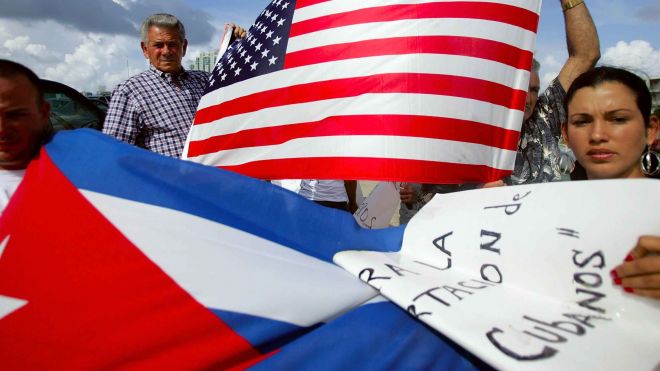
The old wants Cuba on its knees and forced to conform, reform and transform to a model of “their” making, while the young just wants to “move on”, accept Cuba for “what it is” now and then just move forward together. This chasm is expressed in the numbers and the anecdotes.

For the Florida Presidential Primary this past March, the observation was made that supporters at a rally at a popular Cuban restaurant, Versailles, ranged in age from 49 and 93; they were both Cuban-born and U.S.-born. But none younger than 40 supporting any Republican candidate. According to the Pew Research Group, this is evidence of a ‘growing partisan gap’ between younger and older Cubans.

So in effect, the partisan gap for Cuban-Americans is a choice between the past versus the future; embargo versus re-approachment. The leader of this Cuba re-approachment movement?

The President of the United States: Barack Obama.

Passions run “hot” on both sides. Obama, a Democrat, has 4 more months left on his administration. His successor is being selected now:

Hillary Clinton or Donald Trump.

CU Blog - Women Get Ready for New Lean-In Campaign - Photo 5

CU Blog - Going from Good to Great - Photo 2

This is the question being debated. The election is November 8, 2016. Of the 22 million that compose the Caribbean Diaspora, (including foreign born and 1st generation US-born), Cuban-Americans are one of the largest sub-groups with 1,173,000 persons born in Cuba. These are being courted right now for their support and their vote.

  • Who will they vote for? Who should they vote for?
  • What if the criterion for the vote is benevolence to Caribbean causes?

This commentary is 3 of 3 of a series from the movement behind the book Go Lean … Caribbean, in consideration of Courting the Caribbean Votes for the American federal elections – President, Vice-President and Congress (Senate & US House of Representatives). This and the other commentaries detail different ethnic communities within the Caribbean Diaspora and their voting trends; the series is as follows:

  1.       Courting the Caribbean Votes – Puerto Ricans
  2.       Courting the Caribbean Votes – ‘Jamericans’
  3.       Courting the Caribbean Votes – Cuban-Americans

The quest of the Go Lean book is to elevate the Caribbean’s societal engines – economics, security and governance. All of the commentaries in this series relate to governance, the election of the leaders of the American federal government. The Go Lean movement (book and blog-commentaries) asserts that Caribbean stakeholders need to take their own lead for the Caribbean destiny, but it does acknowledge that we have a dependency to the economic, security and governing eco-systems of the American SuperPower. This dependency is derisively called a parasite status, with the US as the host.

Cuban-Americans love Cuba … and America. For those Cuban-born, but living in exile, their quest is to impact the island nation to be better, one way or another. This year they are looking to impact their homeland with their vote. So they seek to support American candidates for federal offices that can help to transform the island of Cuba. See a related news article and VIDEO here:

Article Title: Millennial Cuban-Americans abandoning GOP to support Clinton, poll shows
By:  Serafin Gómez and Mary Beth Loretta of Fox News Latino
Rafael Sanchez is a Cuban-American who lives in the predominately Cuban neighborhood of Westchester in Miami-DadeCounty. He works at a local health center and has voted for the Republican presidential nominee in previous elections.

But this November, for the first time, the 29-year-old plans to switch his political affiliation.

“I’m voting for Hillary Clinton,” Sanchez told Fox News Latino. “As much as I like to vote Republican as often as I can, the party itself has changed dramatically – to the point where I just vote Democrat.”

Sanchez is not alone.

According to a new poll by Florida International University, for the first time in decades the majority of South Florida’s Cuban-American voters – a dominant voting bloc in the region – are not supporting Republican nominee Donald J. Trump, despite him being a part-time local.

According to FIU, Trump is now in a dead heat with Clinton among Cuban-Americans in the area.

“As Trump struggles to garner the support of Latinos across the U.S., he may have lost the one group every Republican candidate has been able to count on for more than 30 years,” FIU spokeswoman Dianne Fernandez said in a statement.

She described the trend as GOP “voter erosion.”

Another new poll, conducted by Benixen &  Amandi International with the Tarrance Group, shows Clinton with a 53 to 29 percent lead over Trump among all Hispanics in Florida.

Clinton’s 24-point lead, the Miami Herald points out, is still lower than the 60 percent support Barack Obama enjoyed among Florida Latinos when he won the state in 2012.

With the overall race for the SunshineState so close – the Real Clear Politics average of recent polls shows Clinton and Trump deadlocked at 44 percent – Latinos, especially Cuban-Americans who formerly backed GOP presidential candidates, could tip the state – along with its 29 Electoral College votes – to the former secretary of state.

Leading the trend toward Clinton among Cuban-American voters are younger millennials who are breaking away from their parents’ and grandparents’ voting habits.

“There is definitely a difference, generationally,” Melissa Pomares, a 25-year-old Cuban-American law student from Miami, told FNL in an interview.

Pomares voted for Mitt Romney in 2012 but is leaning toward Clinton this year. She says social issues are a big part of why.

“I was very pro-gay marriage,” she said. “I think that there is definitely a disconnect between me and [previous generations in her family] as far as social issues go. They’re definitely more traditionally conservative, and I think I’m more liberal.”
Serafin Gomez covers Special Events and Politics for FOX News Channel and is also a contributor to FOX News Latino. Fin formerly worked as the Miami Bureau Producer for Fox News Channel where he covered Latin America.
Source: http://latino.foxnews.com/latino/politics/2016/09/14/millennial-cuban-americans-abandoning-gop-to-support-clinton-poll-shows/ Posted September 14, 2016; retrieved October 9, 2016
————–
VIDEO – Donald Trump’s town hall with South Florida Hispanics – http://www.miamiherald.com/news/politics-government/election/donald-trump/article104515586.html

Posted Sep 27, 2016 – Following the night of the first 2016 presidential debate, Donald Trump visited Miami Dade College to hear testimonials from South Florida Hispanics, who shared life experiences and their admiration for Trump. He was given a linen Cuban guayabera [(a shirt)] by Rep. Carlos Trujillo (R-FL 105th District), who served as the moderator at the meeting. – CBS Miami/ Alexa Ard/ McClatchy. Read more here: http://www.miamiherald.com/news/politics-government/election/donald-trump/article104515586.html#storylink=cpy

As related in the previous blog-commentaries in this series, the experience in the US is that the politicians do not always represent the majority of the people, but rather the majority of the passionate ones in their constituency – those who turn out to vote. According to the foregoing story, it is obvious that passion for Cuba is resulting in passion for the voting booth. Therefore, there is a jockeying to win these votes for the different parties this election year. The Cuban numbers are so impactful that they can swing the vote in this swing state of Florida.

The Go Lean book serves as a roadmap for the introduction and implementation of the technocratic Caribbean Union Trade Federation (CU). It advocates optimizing the societal engines of economics, security and governance in the Caribbean; This is not an elevation plan for Florida or any other jurisdiction in the US. Though the roadmap features strategies, tactics and implementations to better engage the Diaspora’s time, talent and treasuries, our focus is first and foremost the homeland.

We are not encouraging the Diaspora how to vote for the best American destiny; rather we are presenting the Diaspora with the urgency to chose candidates that can, by extension, impact the Caribbean for the better.

Better? That is the goal; to make the Caribbean – Cuba included – a better place to live, work and play.

Considering all 30 Caribbean member-states, the acknowledgement is that Cuba is different. It is what it is.

Cuba has suffered from censure and sanctions from the US and many Western Powers for more than 56 years. They have had a debilitating Trade Embargo since 1962. Only now is the abatement of some of those sanctions. Under Obama, he has re-instated diplomatic relations – by Executive action – with Havana and pleaded with the US Congress to lift the Trade Embargo. Change is taking place, in the US and in Cuba. What will be the next steps?

The next President will determine.

The Caribbean Diaspora, and Cuban exiles, can have an impact now. They can lend voice and vote to the cause for Cuba: entrenchment or re-approachment.

The CU/Go Lean roadmap seeks to reboot the Caribbean societal engines, the economics, security and governance. To be successful we need all-hands-on-deck: residents and Diaspora. To start, we need to lower the trend for expanding the Diaspora, we want to dissuade further migration and hopefully to facilitate a subsequent repatriation. Countries need to grow their populations in order to grow their economies.

People who leave their beloved homelands do so for a reason; the Go Lean movement (book and blogs) identified these reasons as “push and pull” factors. We must do better in lowering these factors than we have in the past. By doing so, we become an American protégé, rather than just an American parasite. This is the quest of the Go Lean/CU roadmap, to elevate the Caribbean’s economic-security-governing engines. The roadmap recognizes that the changes the region needs must start first with convening, collaborating, confederating the regional neighborhood, no matter the ethnicity, language or colonial legacy of the member-states. This means including Cuba, not censuring them; (if the US Congress refuses to end the Trade Embargo, that only affects Caribbean territories of Puerto Rico and the US Virgin Islands, we can still support interstate commerce with the remaining 28 member-states).

The need to confederate the region in a Single Market, including a reconciled Cuba, was pronounced early in the book, in the opening Declaration of Interdependence (Pages 12 & 13) with these statements:

xi.  Whereas all men are entitled to the benefits of good governance in a free society, “new guards” must be enacted to dissuade the emergence of incompetence, corruption, nepotism and cronyism at the peril of the people’s best interest. The Federation must guarantee the executions of a social contract between government and the governed.

xii. Whereas the legacy in recent times in individual states may be that of ineffectual governance with no redress to higher authority, the accedence of this Federation will ensure accountability and escalation … for good governance, justice assurances, due process and the rule of law. As such, any threats of a “failed state” status for any member state must enact emergency measures on behalf of the Federation to protect the human, civil and property rights of the citizens, residents, allies, trading partners, and visitors of the affected member state and the Federation as a whole.

xiii.    Whereas the legacy of dissensions in many member-states (for example: Haiti and Cuba) will require a concerted effort to integrate the exile community’s repatriation, the Federation must arrange for Reconciliation Commissions to satiate a demand for justice.

xx. Whereas the results of our decades of migration created a vibrant Diaspora in foreign lands, the Federation must organize interactions with this population into structured markets. Thus allowing foreign consumption of domestic products, services and media, which is a positive trade impact. These economic activities must not be exploited by others’ profiteering but rather harnessed by Federation resources for efficient repatriations.

The Go Lean book, and previous blog/commentaries, stressed the key community ethos, strategies, tactics, implementation and advocacies necessary to effect change in the region for all member-states – including Cuba – to improve the oversight of the governing process. They are detailed as follows:

Anecdote – Caribbean Single Market & Economy Page 15
Community Ethos – Economic Principles – Economic Systems Influence Individual Choices Page 21
Community Ethos – new Security Principles Page 22
Community Ethos – new Governing Principles Page 24
Community Ethos – Ways to Impact the Future – Give the Youth a Voice & Vote Page 26
Community Ethos – Ways to Impact Turn-around Page 33
Community Ethos – Ways to Manage Reconciliations – TRC Cuba Page 34
Community Ethos – Ways to Improve Sharing Page 35
Community Ethos – Ways to Impact the Greater Good Page 37
Strategic – Vision – Integrated Region in a Single Market Page 45
Strategic – Vision – Core Competence – Specialty Agriculture like Cigars Page 58
Tactical – Confederating a Non-sovereign Union Page 63
Tactical – Fostering a Technocracy Page 64
Tactical – Growing to $800 Billion Regional Economy – Marshall Plan Models Page 67
Tactical – Separation of Powers Page 71
Implementation – Ways to Pay for Change Page 101
Implementation – Foreign Policy Initiatives at Start-up Page 102
Implementation – Ways to Deliver Page 109
Implementation – Ways to Impact Elections Page 116
Implementation – Reasons to Repatriate Page 118
Planning – Big Ideas for the Caribbean Region – Marshall Plan for Cuba Page 127
Planning – Reasons Why the CU Will Succeed – Lessons from Unifying Germany Page 132
Planning – Ways to Improve Failed-State Indices Page 139
Advocacy – Ways to Grow the Economy Page 151
Advocacy – Ways to Improve Governance Page 168
Advocacy – Ways to Better Manage the Social Contract Page 176
Advocacy – Ways to Re-boot Cuba Page 236

The points of effective, technocratic oversight and stewardship for Cuba were further elaborated upon in these previous blog/commentaries:

https://goleancaribbean.com/blog/?p=7689 Obama – Bad For Caribbean Status Quo
https://goleancaribbean.com/blog/?p=7412 The Road to Restoring Cuba
https://goleancaribbean.com/blog/?p=6664 Cuba to Expand Internet Access
https://goleancaribbean.com/blog/?p=5695 Repenting, Forgiving and Reconciling the Past
https://goleancaribbean.com/blog/?p=4551 US Territories – Between a ‘rock and a hard place’
https://goleancaribbean.com/blog/?p=4506 Colorism in Cuba … and Beyond
https://goleancaribbean.com/blog/?p=3662 Migrant flow into US from Caribbean spikes
https://goleancaribbean.com/blog/?p=3455 Restoration of Diplomatic Relations with Cuba
https://goleancaribbean.com/blog/?p=3354 CariCom Chairman calls for an end to US embargo on Cuba
https://goleancaribbean.com/blog/?p=2330 ‘Raul Castro reforms not enough’, Cuba’s bishops say
https://goleancaribbean.com/blog/?p=1609 Cuba mulls economy in Parliament session
https://goleancaribbean.com/blog/?p=554 Cuban cancer medication registered in 28 countries
https://goleancaribbean.com/blog/?p=436 Cuba Approves New “Law on Foreign Investment”

We want to make Cuba and other places in our Caribbean homeland, better places to live, work and play. So we must engage the political process in Washington, DC as the Trade Embargo is a major obstacle for Cuba. There is the need to put the island’s communism history “to bed”. Cuba had to adapt the strategy of “the enemy of my enemy is my friend” when they previously aligned with communist Russia (the Soviet Union). But this is now 2016; the Soviet Union is “no more”. The Trade Embargo should also be “no more”.

(There is still the need for formal reconciliations).

The only way to impact Washington is through voting. This is why the Cuban-American vote is being courted. Which presidential candidate best extols the vision and values for a new Caribbean? This is the question being debated in places like Miami.

The Go Lean movement urges Cuban-Americans to decide based on one criterion, one Single Cause: a unified, forward-moving Caribbean, with Cuba included.

The Go Lean roadmap advocates being a protégé, not just a parasite. This is a turn-around plan for Cuba and all the Caribbean. We must now seek out solutions that encourage participation of all Caribbean member-states in nation-building. The goal is to stop any future societal abandonment. Rather than life abroad, like the Cubans living in exile, the Go Lean roadmap calls for the empowerments so that Caribbean people can prosper where planted in their homeland.

Its election time in America; and the candidates are courting voters … of Caribbean heritage. The Go Lean movement urges participation in this process, but not to change America; our only focus is to change/elevate the Caribbean; all of it. 🙂

Download the book Go Lean … Caribbean – now!

Share this post:
, , ,
[Top]

Hurricane Categories – The Science

Go Lean Commentary

Category 5

… that term has become one of the most dreaded phases in modern times in the Western Hemisphere, and especially in the Caribbean.

A Category 5 Hurricane – with its maximum sustained winds in excess of 156 miles per hour – is the Sum of All of Our Fears and a Clear & Present Danger. (See the full list of their historicity in the Appendix below). The most powerful one on record featured 215 mph winds – Hurricane Patricia – was just recently in October 2015 off the coast of Mexico.

Hurricanes – tropical cyclones in the Atlantic Ocean and Eastern Pacific Ocean – are the exclusive brand for the Northern Hemisphere. Considering the rotation of the earth, the majority travel East to West, from Africa over to North America. That’s the majority; but the minority is nothing to ignore either.  These can start in the Caribbean Sea or the Gulf of Mexico and travel at will: north, south, east, or west.

Welcome to our Caribbean, the greatest address on the planet!

Hurricanes are our reality. A hurricane is a meteorological phenomena that cannot be ignored; its science is a marvel.

Hurricanes are scientifically measured by the Saffir–Simpson scale. This scale was developed in 1971 by civil engineer Herbert Saffir and meteorologist Robert Simpson, who at the time was director of the U.S. National Hurricane Center (NHC).[1] The scale was introduced to the general public in 1973,[2] and saw widespread use after a new Director Neil Frank replaced Mr. Simpson in 1974 at the helm of the NHC, as a tribute to Mr. Simpson.[3]

See full details on this hurricane scale here:

Title: Saffir–Simpson Scale
The Saffir–Simpson hurricane wind scale, formerly the Saffir–Simpson hurricane scale (SSHS), classifies hurricanes –Western Hemisphere tropical cyclones that exceed the intensities of tropical depressions, and tropical storms – into five categories distinguished by the intensities of their sustained winds. To be classified as a hurricane,  a tropical cyclone must have maximum sustained winds of:

  • 74–95 mph –  Category 1.

cu-blog-hurricane-categories-the-science-photo-1

  • 96–110 mph – Category 2.

cu-blog-hurricane-categories-the-science-photo-2

  • 111–129 mph – Category 3.

cu-blog-hurricane-categories-the-science-photo-3

  • 130–156 mph – Category 4.

cu-blog-hurricane-categories-the-science-photo-4

  • ≥ 157 mph – Category 5.

cu-blog-hurricane-categories-the-science-photo-5
So the highest classification in the scale, Category 5, is reserved for storms with winds exceeding 156 mph (70 m/s; 136 kn; 251 km/h). [There have been a number of these since 1924. See full list in the Appendix below].

The classifications can provide some indication of the potential damage and flooding a hurricane will cause upon landfall.

Officially, the Saffir–Simpson hurricane wind scale is used only to describe hurricanes forming in the Atlantic Ocean and northern Pacific Ocean east of the International Date Line. Other areas use different scales to label these storms, which are called “cyclones” or “typhoons“, depending on the area.

There is some criticism of the SSHS for not taking rain, storm surge, and other important factors into consideration, but SSHS defenders say that part of the goal of SSHS is to be straightforward and simple to understand.
Source: Wikipedia Online Reference – Retrieved October 7, 2016 from: https://en.wikipedia.org/wiki/Saffir%E2%80%93Simpson_scale

We are thankful to these two pioneering scientists, Mr. Saffir and Mr. Simpson; they lived full and impactful lives – R.I.P..

Mr. Simpson died on December 18, 2014 at age 102.

Mr. Saffir died on November 21, 2007 at age 90.

These scientists have given us the numbers 1 through 5 to indicate an extent of our misery. But misery is more than just a number. Misery is an experience; an unpleasant one. See here the VIDEO visually depicting damage along the Saffir-Simpson scale:

VIDEO – Why Hurricane Categories Make a Difference – https://youtu.be/lqfExHpvLRY

Published on Aug 8, 2013 – During a hurricane you usually hear meteorologists refer to its intensity by categories. If you don’t know the difference between a category 1 and a category 5 hurricane, The Weather Channel meteorologist Mark Elliot breaks it down for you.

Hurricanes are reminders that “Crap Happens“. They affect the everyday life for everyday people. This discussion is presented in conjunction with the book Go Lean … Caribbean. It addresses the challenges facing life in the Caribbean and then presents strategies, tactics and implementations for optimizing the regional community.

Hurricanes are a product of ‘Mother Nature’ – natural disasters – but communities can be more efficient and effective in mitigating the risks associated with these natural disasters (hurricanes, earthquakes, volcanoes, floods, forest fires, etc.). In addition, there are bacterial & viral pandemics. Lastly, there are industrial incidents (chemical & oil spills) and other man-made disasters: i.e. terrorism-related events.

The Go Lean book asserts that bad things (and bad actors), like hurricanes, will always emerge to disrupt the peace and harmony in communities. Crap Happens … therefore all Caribbean member-states need to be “on guard” and prepared for this possibility. The Go Lean book (Page 23) prepares the Caribbean for many modes of “bad things/actors” with proactive and reactive mitigations. This point is pronounced early in the book with the opening Declaration of Interdependence (Page 12) that claims:

i. Whereas the earth’s climate has undeniably changed resulting in more severe tropical weather storms, it is necessary to prepare to insure the safety and security of life, property and systems of commerce in our geographical region. As nature recognizes no borders in the target of its destruction, we also must set aside border considerations in the preparation and response to these weather challenges.

ii. Whereas the natural formation of the landmass for our lands constitutes some extreme seismic activity, it is our responsibility and ours alone to provide, protect and promote our society to coexist, prepare and recover from the realities of nature’s occurrences.

x. Whereas we are surrounded and allied to nations of larger proportions in land mass, populations, and treasuries, elements in their societies may have ill-intent in their pursuits, at the expense of the safety and security of our citizens. We must therefore appoint “new guards” to ensure our public safety and threats against our society, both domestic and foreign. The Federation must employ the latest advances and best practices … to assuage continuous threats against public safety.

xii. Whereas the legacy in recent times in individual states may be that of ineffectual governance with no redress to higher authority, the accedence of this Federation will ensure accountability and escalation of the human and civil rights of the people for good governance, justice assurances, due process and the rule of law. As such, any threats of a “failed state” status for any member state must enact emergency measures on behalf of the Federation to protect the human, civil and property rights of the citizens, residents, allies, trading partners, and visitors of the affected member state and the Federation as a whole.

xvi. Whereas security of our homeland is inextricably linked to prosperity of the homeland, the economic and security interest of the region needs to be aligned under the same governance. Since economic crimes, including piracy and other forms of terrorism, can imperil the functioning of the wheels of commerce for all the citizenry, the accedence of this Federation must equip the security apparatus with the tools and techniques for predictive and proactive interdictions.

So the Go Lean book relates that the Caribbean must appoint “new guards”, or a security apparatus, to ensure public safety and to include many strategies, tactics and implementations considered “best-practices” for Emergency Management (Preparation and Response). We must be on a constant vigil against these “bad actors”, man-made or natural. The Go Lean book serves as a roadmap for the introduction and implementation of the technocratic Caribbean Union Trade Federation (CU).

The Go Lean/CU roadmap has a focus of optimizing Caribbean society through economic empowerment, and homeland security. Emergency preparedness and response is paramount for this quest. In fact, the Go Lean roadmap has the following 3 prime directives:

  • Optimization of the economic engines in order to grow the regional economy to $800 Billion & create 2.2 million new jobs.
  • Establishment of a security apparatus – a new guard – to protect the resultant economic engines and the Caribbean homeland.
  • Improvement of Caribbean governance to support these engines.

The CU would serve as the “new guard“, a promoter and facilitator of all the Emergency Management agencies in the region. The strategy is to provide a Unified Command and Control for emergency operations to share, leverage and collaborate the “art and science” of this practice across the whole region.

The regional vision is that all Caribbean member-states empower a CU Homeland Security force to execute a limited scope on their sovereign territories. The legal basis for this empowerment is a Status of Forces Agreement (SOFA), embedded in the CU treaty from Step One/Day One. The CU Trade Federation would lead, fund and facilitate the Emergency Management functionality under the oversight of a regionally elected Commander-in-Chief for the CU.

As cited above, the Caribbean is the “greatest address on the planet”, but there is risk associated with living deep in a tropical zone. With the reality of Climate Change, we must not be caught unprepared.

In our immediate past, the Caribbean region has failed at the need for readiness and response. We have even failed to properly coordinate the “cry for help” and the collection of international-charitable support. We have suffered dire consequences as a result: loss of life, damage to property, disruption to economic systems, corruption … and abandonment. Many of our citizens have fled their Caribbean homeland, as a result, after each natural disaster. We have even created Ghost Towns.

We want something better, something more. We want our people to prosper where they are planted in the Caribbean. So as a community, we must provide assurances. No assurance that there will be no hurricanes, but rather the assurance that we can respond, recover, repair and rebuild:

“Yes, we can … “.

The Go Lean book details the series of community ethos, strategies, tactics, implementations and advocacies to provide the proactive and reactive public safety/security in the Caribbean region:

Community Ethos – Economic Systems Influence Individual Choices Page 21
Community Ethos – Consequences of Choices Lie in Future Page 21
Community Ethos – “Crap” Happens Page 23
Community Ethos – Cooperatives Page 25
Community Ethos – Ways to Impact the Future Page 26
Community Ethos – Ways to Improve Sharing Page 35
Community Ethos – Ways to Promote Happiness Page 36
Community Ethos – Ways to Impact the Greater Good Page 37
Strategy – Vision – Confederating a non-sovereign permanent union Page 45
Strategy – Agents of Change – Climate Change Page 57
Tactical – Fostering a Technocracy Page 64
Tactical – How to Grow the Economy – Recover from Disasters Page 70
Tactical – Separation of Powers – Homeland Security Department Page 75
Tactical – Separation of Powers – Emergency Management Agency Page 76
Tactical – Separation of Powers – Meteorological and Geological Service Page 79
Implementation – Ways to Pay for Change Page 101
Implementation – Start-up Homeland Security Initiatives Page 103
Implementation – Ways to Re-boot Freeport Page 112
Implementation – Ways to Foster International Aid Page 115
Planning – 10 Big Ideas – #3: Consolidated Homeland Security Pact Page 130
Planning – Ways to Make the Caribbean Better Page 131
Planning – Ways to Improve Failed-State Indices – Escalation Role Page 134
Advocacy – Ways to Grow the Economy – Quick Disaster Recovery Page 151
Advocacy – Ways to Improve Governance Page 168
Advocacy – Ways to Better Manage the Social Contract Page 170
Advocacy – Ways to Improve Homeland Security Page 180
Advocacy – Ways to Improve Intelligence Gathering & Analysis Page 182
Advocacy – Ways to Improve for Natural Disasters Page 184
Advocacy – Ways to Improve for Emergency Management Page 196
Advocacy – Ways to Impact Wall Street – Adopt Advanced Recovery Products Page 200

Other subjects related to Emergency Management, Homeland Security and governing empowerments for the region have been blogged in other Go Lean…Caribbean commentaries, as sampled here:

https://goleancaribbean.com/blog/?p=9070 Securing the Homeland – From the Seas
https://goleancaribbean.com/blog/?p=9038 Doing Better with Charity Management
https://goleancaribbean.com/blog/?p=7896 The Logistics of Disaster Relief
https://goleancaribbean.com/blog/?p=7449 The Art and Science of Emergency Management
https://goleancaribbean.com/blog/?p=7327 Zika – An Epidemiology Crisis – A 4-Letter Word
https://goleancaribbean.com/blog/?p=7235 Flint, Michigan – A Cautionary Tale
https://goleancaribbean.com/blog/?p=6893 A Meteorologist’s View On Climate Change
https://goleancaribbean.com/blog/?p=6563 Lessons from Iceland – Model of Recovery
https://goleancaribbean.com/blog/?p=6189 A Lesson in History – Hurricane ‘Katrina’ is helping today’s crises
https://goleancaribbean.com/blog/?p=4741 Vanuatu and Tuvalu Cyclone – Inadequate response to human suffering
https://goleancaribbean.com/blog/?p=2614 The ‘Great ShakeOut’ Earthquake Drill / Planning / Preparations
https://goleancaribbean.com/blog/?p=2397 Stopping a Clear and Present Danger: Ebola
https://goleancaribbean.com/blog/?p=1817 Caribbean grapples with intense new cycles of flooding & drought

The Caribbean is on the frontline of this battle: man versus Climate Change. While we are not the only ones, we have to be accountable and responsible for our own people and property. The book Go Lean…Caribbean posits that this “Agent of Change” is too big for just any one member-state to tackle alone, that there must be a regional solution; and presents this roadmap.

Climate Change has produced winners (consider northern cities with milder than normal winters) and losers. The Caribbean has found itself on the losing side. This means life-and-death for the people and the economic engines of the Caribbean communities.

While hurricanes are our reality, there is a science to these meteorological phenomena, and an art to our response. We can plan, monitor, alert, prepare and recover. We can do it better than in the recent past. We can provide assurances that “no stone” will be unturned in protecting people, property and systems of commerce. The watching world – our trading partners – needs this assurance!

The people and institutions of the region are therefore urged to lean-in to this Go Lean roadmap to make the Caribbean a better, safer, place to live, work and play. This plan is conceivable, believable and achievable. Yes, we can. 🙂

Download the book Go Lean … Caribbean – now!

————–

Appendix – List of Category 5 Atlantic Hurricanes

Storm
name

Season

Dates as a
Category 5

Time as a
Category 5 (hours)

Peak one-minute
sustained winds

Pressure

mph

km/h

hPa

inHg

Matthew 2016 September 30 – October 1 6 160 260

934

27.58

Felix 2007 September 3–4† 24 175 280

929

27.43

Dean 2007 August 18–21† 24 175 280

905

26.72

Wilma 2005 October 19 18 185 295

882

26.05

Rita 2005 September 21–22 24 180 285

895

26.43

Katrina 2005 August 28–29 18 175 280

902

26.64

Emily 2005 July 16 6 160 260

929

27.43

Ivan 2004 September 9–14† 60 165 270

910

26.87

Isabel 2003 September 11–14† 42 165 270

915

27.02

Mitch 1998 October 26–28 42 180 285

905

26.72

Andrew 1992 August 23–24† 16 175 280

922

27.23

Hugo 1989 September 15 6 160 260

918

27.11

Gilbert 1988 September 13–14 24 185 295

888

26.22

Allen 1980 August 5–9† 72 190 305

899

26.55

David 1979 August 30–31 42 175 280

924

27.29

Anita 1977 September 2 12 175 280

926

27.34

Edith 1971 September 9 6 160 260

943

27.85

Camille 1969 August 16–18† 30 175 280

900

26.58

Beulah 1967 September 20 18 160 260

923

27.26

Hattie 1961 October 30–31 18 160 260

920

27.17

Carla 1961 September 11 18 175 280

931

27.49

Janet 1955 September 27–28 18 175 280

914

27.0

Carol 1953 September 3 12 160 260

929

27.43

“New England” 1938 September 19–20 18 160 260

940

27.76

“Labor Day” 1935 September 3 18 185 295

892

26.34

“Tampico” 1933 September 21 12 160 260

929

27.43

“Cuba–Brownsville” 1933 August 30 12 160 260

930

27.46

“Cuba” 1932 November 5–8 78 175 280

915

27.02

“Bahamas” 1932 September 5–6 24 160 260

921

27.20

San Felipe II-“Okeechobee” 1928 September 13–14 12 160 260

929

27.43

“Cuba” 1924 October 19 12 165 270

910

26.87

Reference=[1] †= Attained Category 5 status more than once

Source: Retrieved October 7, 2016 from https://en.wikipedia.org/wiki/List_of_Category_5_Atlantic_hurricanes

Share this post:
, , , ,
[Top]

The New Smithsonian African-American Museum

Go Lean Commentary

cu-blog-new-smithsonian-african-american-museum-photo-1

The human psyche is consistent; when we have been victimized, we want everyone to remember. But, when we have been the perpetrator – the bully – then we want everyone to forget. This applies to individuals and nations alike.

This experience relates to the history of the New World. Upon the discovery of the Americas by the European powers – Christopher Columbus et al – the focus had always been on pursuing economic interests, many times at the expense of innocent victims. (This is why the celebration of Columbus Day is now out of favor). First, there was the pursuit of gold, other precious metals (silver, copper, etc.) and precious stones (emeralds, turquoise, etc.).  Later came the exploitation of profitable agricultural opportunities (cotton, tobacco, sugar cane, etc.), though these business models required extensive labor. So the experience in the New World (the Caribbean and North, South & Central America) saw the exploitation of the native indigenous people, and then as many of them died off, their replacements came from the African Slave Trade.

This summarizes the history of the economic motivation of slavery. The champions of that era may want to be considered as heroes, but with the long train of victims in their wake, are rightly labeled villainous by some. Thusly any population in this drama – consider the United States of America – may not want to be remembered in a negative light. This is why the new museum opening in Washington, DC, the National Museum of African American History and Culture, is such a milestone. It chronicles, commemorates and spotlights this dark episode of American history. (Some consider this history to be not so distant, that vestiges still permeate the nation’s social fabric, especially considering the Criminal Justice system today).

See a full story on this new Museum here from CityLab, the Online Magazine profiled in Appendix A; (posted September 15, 2016; retrieved September 18, 2016 from http://www.citylab.com/design/2016/09/how-the-new-smithsonian-african-american-museum-works/500246/):

Title: How the New Smithsonian African American Museum Works
Sub-Title: A floor-by-floor preview of the most anticipated—and last—museum to come to the National Mall.
By: Kriston Capps

One of the most difficult lessons to learn about racism today is one of the first to be gleaned at the Smithsonian Institution’s new National Museum of African American History and Culture, which opens to the world on September 24. On the lowest concourse, deep in the museum’s basement levels, exhibits about slavery explain that the trans-Atlantic slave trade was not motivated by racism.

Racism came after. This is not new information, but it is not conventional wisdom in America today. “Enslaved Africans, European indentured servants, and Native Americans worked alongside one another as they cultivated tobacco,” reads an exhibit on life in the Chesapeake region. Planters grew fearful of the interracial friendships, marriages, and alliances—and rebellions—that characterized life in the colonies. “Africans were ultimately defined as ‘enslaved for life,’ and the concept of whiteness began to develop.”

The design of the museum, from the bottom up, which is the direction in which it is intended to be seen by visitors, reflects that history. The lowest-level galleries on the slave trade and the Middle Passage are tight and narrow. They eventually open up to an expansive concourse that sets the stage for the fight for freedom that extends even to today. Exhibits in this majestic hall range from a statue of Thomas Jefferson framed by bricks bearing the names of slaves who built Monticello to a house built in a freedmen’s settlement in Montgomery County, Maryland.

The Smithsonian’s new museum—the last to be built on the National Mall—follows the African-American experience through slavery, the Civil War, Reconstruction, Jim Crow, and the Civil Rights era. The museum proceeds chronologically, escalating from African and pre-colonial history (in the third and lowest basement level) to contemporary art (on the fourth floor). It is a massive undertaking, sometimes breathtaking. And the architecture of the museum both builds and hinders its narrative.

Some 60 percent of the building is below grade; the historical galleries all fall along three underground mezzanine levels. To create exhibition space so far below ground, Davis Brody Bond—the same architecture firm responsible for the largely subterranean National September 11 Memorial and Museum—had to build a concrete container in which the museum sits, a bucket with walls rising 75 feet high that frame the entire historical experience.

“The largest challenge was water,” Anderson says. “Everything west and south of the Washington Monument was infill. It was all swampland. When you dig down 12 feet, you hit the water table. We had to build essentially an inside-out bathtub in order to keep the water out of the building.”

cu-blog-new-smithsonian-african-american-museum-photo-3Visitors pass from the narrow hall on slavery into this major space, following a ramp that shepherds them by several iconic exhibits: the pointed Monticello statues, a slave cabin, the Jones-Hall-Sims House, a segregation-era railcar, and a prison tower from the notorious Louisiana State Penitentiary (nicknamed Angola) among them. This fairly linear course then deposits viewers at a Reconstruction gallery, on the second mezzanine level, with information-heavy exhibits that characterize most of the rest of the museum.

“We thought the added volume made sense,” says Phil Freelon, one of the principal architects responsible for the building’s design, discussing how the area of the history galleries doubled during the museum buildout. “As you move through history, you’re able to see different aspects of the exhibits from varying perspectives. Which adds another layer of understanding to the overall sweep of history.”

One of the great strengths of the National Museum of African American History and Culture is its heavy emphasis on place. There are rich maps scattered throughout the museum that showcase the many migrations that have defined black history: from the domestic slave trade (after the trans-Atlantic slave trade was abolished in 1807) to the Great Migration during the early- and mid-20th century to subsequent returns to the South. These maps explain how the African-American experience shifted within the states, and how states and the nation changed inalterably as a result.

Where the museum may lose viewers, however, is in its sweeping chronology, which is lost over too many side-by-side displays. Many of the exhibits (designed by Ralph Appelbaum Associates) serve as portals, with a chunk of text paired with images, or often a video screen, alongside some essential artifacts. Unfortunately, atomic exhibits about the constituent people, places, and moments from Reconstruction and the Civil Rights era do not add up to clear and comprehensive categories.

cu-blog-new-smithsonian-african-american-museum-photo-4Problems are few in number, but the museum’s biggest ones start with the entry procession. It isn’t immediately clear that viewers ought to take one of two elevators down to the lowest concourse to begin. And it isn’t exactly clear how the escalators connect from one level to the next—though these passages offer some of the best vistas within the building and through its exterior filigree, which looks as delicate as lace when seen from the inside.

From design to execution, the largest changes to the museum happened inside the museum’s central hall. The dipping, timber-lined ceiling initially envisioned for the atrium fell off along the way. (The architects say that the space is now more suitable for performance and static art.) Still, one of the museum’s most important metaphors was maintained in the form of its grand vistas: Floor-to-ceiling windows comprise the four walls of the building’s entrance level, opening the museum to the world outside. Portals throughout the the upper floors emphasize the effect.

“What you’re getting is the journey from the very soil—the very depths, the crypts, the chamber—right through to getting a panoptic lens, a panoptic reading of this important juncture of the National Mall and the Washington Monument,” says David Adjaye, the primary architect of the museum. “When you’re going into the upper galleries, you’re getting these windows that are framing the context and bringing [the Mall] into the content of the story.”

The community and culture galleries make up the third and fourth floors of the museum. (The Earl W. and Amanda Stafford Center for African American Media Arts, on the museum’s second level, was not yet finished at the time of the preview.) The exhibits in the community section range widely. There is a display on the legacy of Shirley Chisholm, the first African-American woman elected to Congress and the first black woman to run for president (her awesome call reading, “unbought and unbossed”). There is an exhibit on Mae Reeves, a legendary Philadelphia milliner. And there is an exhibit on Ben Carson—that guy. This corner of the museum gives an impressionistic overview of community (a rather broad theme to begin with). While these exhibits are, again, very atomic—only loosely interconnected—they offer by and large the most satisfying insights into the lives and achievements of everyday black Americans.

There is no directionality to these floors, no wrong way to do them. Doing them right will take hours, maybe even days. The culture galleries include snippets of film, television, spoken word, and theater that may add up to hours of programming time. (This, in addition to reams of wall text.) With so much media on display—the number of screens seems to rise as a factor of the floor level—the fine art galleries on the fourth floor offer a welcome reprieve to information overload. (The art galleries are stacked, too, with a smart selection of paintings from across American history. In fact, this corner of the museum arrives as one of the finest art collections in the District.)

The museum’s most impressive visual remains its iconic “corona,” which the architects say they drew from a West African caryatid design of Yoruban origin—a column with a base, a figure, and a capital or crown.

“Our general approach to the design of cultural facilities is to try to imbue the architecture with meaning,” Freelon says. “So that it’s contributing to the stories and the vision and mission of the institution. We did that sort of research to say, ‘What would be an appropriate expression, formally, for the building?’ We looked at a lot of different ideas and settled on the corona notion as a strong and powerful idea.”

cu-blog-new-smithsonian-african-american-museum-photo-2There are many smaller moments of design excellence, however, that give the museum its grounding. One thoughtful gallery on the lowest level is a simple sidebar, a triangular cutaway space off the main corridor, that surveys the São José Paquete de Africa. The vessel was a slave ship bound from Mozambique to Brazil that wrecked, killing most of the 500 slaves it held as human cargo. Several ballast bars, which balanced the light weight of their bodies, are on display in this dark and intentionally haunting space. That the shape of this gallery reflects the trapezoidal edges of the museum’s exterior is no accident.

There are enough moments like these throughout the National Museum of African American History and Culture to make it a building that demands criss-crossing, back-and-forth viewing. It is not simple to say what the museum offers in the form of answers about progress or freedom or justice. It may be fair to say that it has none. Or that the museum is “making a way out of no way,” to paraphrase Martin Luther King Jr. (as this museum does).

According to Adjaye, the windows and cut-outs are key to ensuring that building is not static, but dynamic and responsive to the history around it.

“The idea is to laminate the experience of the outside world with the inside world, so you’re not disconnected from it,” Adjaye says. “It is not a narrative or a fantasy that is hermetically sealed. It’s a real history, that is relating to things that are around you and in you. And that is a very new idea.”

There are many lessons for the Caribbean to glean from this consideration of the ‘National Museum of African American History and Culture’ in Washington, DC: good, bad and ugly lessons. This will hopefully elevate a national discussion to the fore on the full measure of American history with African-Americans. The hope is for more reconciliation.

Here in the Caribbean, we have the same needs. As history relates, the people of our region were also victimized in the Slave Trade; but we were villains too, considering the lessons from the 1804 Massacre in Haiti, as related in a previous blog-commentary:

  • It was an illogical solution that killing Whites (of 3000 to 5000 White men, women and children) would prevent future enslavement.
  • The Natural Law instinct was to avenge for past atrocities – “an eye for an eye”.
  • It was used in a good way to escalate the abolition of the Slave Trade in 1807. It was also used in a bad way to justify further oppression of the African Diaspora in the New World.

This discussion of museums and reconciliations align with the objections of the book Go Lean…Caribbean, in that it serves as a roadmap for the introduction and implementation of the technocratic Caribbean Union Trade Federation (CU). The purpose of this roadmap is to elevate the economy in our Caribbean region, while harnessing the individual genius abilities – as in the arts. This Go Lean/CU roadmap employs strategies, tactics and implementations to impact its prime directives; identified with the following 3 statements:

  • Optimization of the economic engines in order to grow the regional economy to $800 Billion & create 2.2 million new jobs.
  • Establishment of a security apparatus to protect the resultant economic engines.
  • Improve Caribbean governance to support these engines.

While the Go Lean book is primarily an economic elevation roadmap for the Caribbean, it also details the eco-systems surrounding the business of the arts; there is consideration for jobs and entrepreneurship. The book declares (Page 230) that “art can be a business enabler, [while also serving as an] expression for civic pride and national identity”.

There is even a plan to foster museums that commemorate Caribbean history and culture in a new Caribbean Capital District. (The roadmap calls for a neutral location, among the 30 member-states, to host leaders of the Federation’s Executive, Legislative and Judicial branches of government). See the quotation here from the book (Page 230):

CU Administered Museums
Modeled after the Smithsonian, the CU “mother” (first-tier) museums will be placed in the Capital District. There will also be “child” museums scattered through out the regions with touring exhibitions.

The Go Lean book identified this vision of reconciliations-museums-art early in the book (Page 10 – 14), as implied in the following pronouncements in the opening Declaration of Interdependence:

Preamble: As the history of our region and the oppression, suppression and repression of its indigenous people is duly documented, there is no one alive who can be held accountable for the prior actions, and so we must put aside the shackles of systems of repression to instead formulate efficient and effective systems to steer our own destiny.
As the colonial history of our region was initiated to create economic expansion opportunities for our previous imperial masters, the structures of government instituted in their wake have not fostered the best systems for prosperity of the indigenous people.

xii. Whereas the legacy in recent times in individual states may be that of ineffectual governance with no redress to higher authority, the accedence of this Federation will ensure accountability and escalation of the human and civil rights of the people for good governance, justice assurances, due process and the rule of law.

xiii.  Whereas the legacy of dissensions in many member-states (for example: Haiti and Cuba) will require a concerted effort to integrate the exile community’s repatriation, the Federation must arrange for Reconciliation Commissions to satiate a demand for justice.

xxi. Whereas the preparation of our labor force can foster opportunities and dictate economic progress for current and future generations, the Federation must ensure that educational and job training opportunities are fully optimized for all residents of all member-states, with no partiality towards any gender or ethnic group. The Federation must recognize and facilitate excellence in many different fields of endeavor, including sciences, languages, arts, music and sports. This responsibility should be executed without incurring the risks of further human flight, as has been the past history.

xxxiii. Whereas the cultural arts and music of the region are germane to the quality of Caribbean life, and the international appreciation of Caribbean life, the Federation must implement the support systems to teach, encourage, incentivize, monetize and promote the related industries for arts and music in domestic and foreign markets. These endeavors will make the Caribbean a better place to live, work and play.

The commentaries in the Go Lean blogs have previously addressed the wisdom of museums and monuments showcasing the historic sacrifices of the African sons and daughters that have contributed to the great societies of the Western world (Western Europe and the Americas). The people of the Caribbean are all part of this African heritage. We have been affected by events that took place in Africa, the Atlantic Slave Trade and subsequent national histories in the New World. So much of that history is soaked in the blood, sweat and tears of African people, the ancestors and the children. Any symbolism or artistic expression of any country commemorating this history should be acknowledged, promoted and celebrated.

This subject also aligns with the book Go Lean…Caribbean and its plans to better promote World Heritage Sites (Page 248) in the Caribbean region. This goal is for the very same purpose of acknowledging, promoting and celebrating the special history of Caribbean people to the world’s cultural landscape. The Go Lean book asserts many benefits from these types of initiatives, including economic, cultural and ambassadorial.

  • Imagine the flow of tourism that can result from our own museums and monuments.
  • Imagine the commissions to regional artists.
  • Imagine the positive image the world over of our region reconciling our pasts and forging a bright future despite the historic experiences.

The foregoing news story on the Smithsonian effort to curate the history of the African-American experience and culture presents this project as transformative. Many people in America did NOT want a federal-government backed effort to create a monument of this “dark topic” in America. (The Smithsonian eco-system is funded under the National Parks Service of the US Department of the Interior).

Despite the Emancipation of Slavery in 1863 and the Civil Right Act in 1964, only now in 2016 is America coming to grips with the need to commemorate the history of its African-American people in a formal museum. There have been many museums in the past, but all through private efforts or that of non-governmental organizations (NGO’s). The first African-American museum was the College Museum in Hampton, Virginia, established in 1868.[2] Prior to 1950, there were about 30 museums devoted primarily to African-American culture and history in the US. These were located primarily at historically black colleges and universities or at libraries that had significant African-American culture and history collections.[5]

See the full list of museums in Appendix C below.

As of 2010 the largest African-American museum in the United States was the Charles H. Wright Museum of African American History in Detroit, Michigan. It will be exceeded in size by this Smithsonian Institution’s National Museum of African American History and Culture [9] when it opens on Saturday September 24, 2016. This will be the first time there is a formal American Federal Government effort.

The subject of fostering the economic opportunities of artistic endeavors in the Caribbean region have been discussed in other Go Lean blog/commentaries; consider this sample as follows:

https://goleancaribbean.com/blog/?p=4145 The African Renaissance Monument in Dakar, Senegal, Africa
https://goleancaribbean.com/blog/?p=3292 Art Basel Miami – a Testament to the Spread of Art & Culture
https://goleancaribbean.com/blog/?p=2726 Caribbean Role Model for the Arts/Fashion – Oscar De La Renta: RIP
https://goleancaribbean.com/blog/?p=866 Caribbean Music Man: Bob Marley – The legend lives on!

This subject of the Slave Trade, Slavery and Civil Rights – how it related to economic, security and governing functioning in a society – have also been addressed by previous Go Lean blog-commentaries. See a sample list here:

https://goleancaribbean.com/blog/?p=8724 Remembering African Nationalist Marcus Garvey: Still Relevant Today
https://goleancaribbean.com/blog/?p=7682 Frederick Douglass – Pioneer & Role Model for Single Cause: Abolition
https://goleancaribbean.com/blog/?p=7221 Street naming for Martin Luther King reveals continued racial animosity
https://goleancaribbean.com/blog/?p=5695 Repenting, Forgiving and Reconciling the Past Bad Deeds
https://goleancaribbean.com/blog/?p=4971 A Lesson in History – Royal Charters: Truth & Consequence
https://goleancaribbean.com/blog/?p=2297 A Lesson in History – Booker T versus Du Bois
https://goleancaribbean.com/blog/?p=451 CariCom position on Slavery/Colonization Reparations

This subject of Slavery and the Slave Trade is a “dark topic” to curate in a museum. But this is necessary. Around the word, the Holocaust memorials – remembering the Nazi’s Jewish annihilation in World War II – help to keep the lessons fresh in the minds of the world’s populations that the horrors were real and should never be allowed again. A similar museum on the African-American experience in the Americas should have a related effect: tell the world the truth, and then try to reconcile between the villains and the victims. Many positive lessons can be gleaned from these dark topics.

The book Go Lean…Caribbean provided thorough lessons from this history, in its compilation of community ethos, strategies, tactics, implementations and advocacies. See a sample list here:

Community Ethos – Deferred Gratification – African Diaspora Experience Page 21
Community Ethos – People Respond to Incentives in Predictable Ways Page 21
Community Ethos – Consequences of Choices Lie in the Future Page 21
Community Ethos – Ways to Foster Genius – High Art Intelligence Page 27
Community Ethos – Ways to Manage Reconciliations Page 34
Community Ethos – Ways to Impact the Greater Good Page 37
Strategic – Vision – Integrating Caribbean 30 member-state in to a Single Market Page 45
Strategic – Mission – Celebrate art, people and culture of the Caribbean Page 46
Tactical – Fostering a Technocracy Page 64
Tactical – Separation of Powers – Culture Administration Page 81
Tactical – Separation of Powers – CaribbeanParks and Fairgrounds Administration Page 83
Implementation – Design Requirements for the Capital District – Museum Model Page 110
Planning – 10 Big Ideas for the Caribbean Region Page 127
Planning – Ways to Make the Caribbean Better Page 131
Advocacy – Ways to Grow the Economy Page 151
Advocacy – Ways to Create Jobs Page 152
Advocacy – Ways to Improve Libraries – Creative Exhibits & Archives Page 187
Advocacy – Ways to Enhance Tourism – Eco-Tourism Page 190
Advocacy – Ways to Better Manage Natural Resources – World Heritage Sites Page 183
Advocacy – Ways to Impact the Diaspora – Foreign consumption of Arts and Culture Page 217
Advocacy – Ways to Preserve Caribbean Heritage Page 218
Advocacy – Ways to Improve the Arts Page 230
Advocacy – Ways to Impact Urban Living – Access to the Arts and Culture Page 234
Advocacy – Ways to Impact Rural Living – Access to the Arts and Culture Page 235
Advocacy – Ways to Promote World-Heritage-Sites Page 248

There are lessons to learn from the past; see VIDEO in the Appendix B below. There are benefits – for the future – to many stakeholders for any attempt to reconcile the past with the present.

Now is the time for all of the Caribbean, the people and governing institutions, to lean-in for the empowerments described in the book Go Lean…Caribbean. This is a big deal for our region. It allows us to organize into a Single Market and leverage the industrial output for regional artists and art institutions, like museums. This book provides the turn-by-turn directions for how to create this Single Market, forge the Capital District, establish the federal museum and monetize the entire artists eco-system.

The Caribbean needs these empowerments; we need to remember the great sacrifices of our African ancestors and the blood, sweat and tears they spilled in forging the New World. Though these ones never got to see the fruit of their labors, we can, in a testament to their sacrifice, fulfill the promise of these Caribbean lands being a better place to live, work and play.

This is my island in the sun
Where my people have toiled since time begun
I may sail on many a sea
Her shores will always be home to me

Oh, island in the sun
Willed to me by my father’s hand
All my days I will sing in praise
Of your forest, waters,
Your shining sand …

Song: Island in the Sun by Harry Belafonte

🙂

Download the book Go Lean … Caribbean – now!

———————–

Appendix A – What is CityLab?

CityLab – previously known as The Atlantic Cities – is dedicated to the people who are creating the cities of the future — and those who want to live there. Through sharp analysis, original reporting, and visual storytelling, our coverage focuses on the biggest ideas and most pressing issues facing the world’s metro areas and neighborhoods.

————————

Appendix B – VIDEO – John Lewis revisits civil rights history at new African American museum – http://www.cbsnews.com/videos/john-lewis-revisits-civil-rights-history-at-new-african-american-museum/

September 18, 2016 – Saturday marks the official opening of the new Smithsonian Museum of African American History and Culture. CBS’ “Face the Nation” visited the museum with a man who spent 15 years working on its establishment, Rep. John Lewis, D-Georgia. (VIDEO plays best in Internet Explorer).

————————

Appendix C – List of museums focused on African Americans

Source: Retrieved September 19, 2016 from: https://en.wikipedia.org/wiki/List_of_museums_focused_on_African_Americans

  City State

Founded

A. Philip Randolph Pullman Porter Museum Chicago Illinois

1995

African American Civil War Memorial Museum Washington D.C.

1999

African American Firefighter Museum Los Angeles California

1997

African American Multicultural Museum Scottsdale Arizona

2005

African American Museum Dallas Texas

1974

African American Museum and Library at Oakland Oakland California

1994

African American Museum in Cleveland, The Cleveland Ohio

1956

African American Museum in Philadelphia Philadelphia Pennsylvania

1976

African American Museum of Iowa Cedar Rapids Iowa

2003

African American Museum of Nassau County Hempstead New York

1970

African American Museum of the Arts DeLand Florida

1994

Afro-American Historical and Cultural Society Museum Jersey City New Jersey

1984

Alabama State Black Archives Research Center and Museum Huntsville Alabama

1990

Alexandria Black History Museum Alexandria Virginia

1987

America’s Black Holocaust Museum Milwaukee Wisconsin

1988

Anacostia Museum Washington D.C.

1967

Anne Spencer House and Garden Museum Lynchburg Virginia

1977

Arthur “Smokestack” Hardy Fire Museum Baltimore Maryland

1995

August Wilson Center for African American Culture Pittsburgh Pennsylvania

2006

Baton Rouge African American Museum Baton Rouge Louisiana

2001

Banneker-Douglass Museum Annapolis Maryland

1984

Birmingham Civil Rights Institute Birmingham Alabama

1992

Black American West Museum & Heritage Center Denver Colorado

1971

Black History 101 Mobile Museum Detroit Michigan

1995

Black History Museum and Cultural Center of Virginia Richmond Virginia

1988

Bontemps African American Museum Alexandria Louisiana

1988

Brown v. Board of Education National Historic Site Topeka Kansas

2004

Buffalo Soldiers National Museum Houston Texas

2000

California African American Museum Los Angeles California

1981

Charles H. Wright Museum of African American History Detroit Michigan

1965

Clemson Area African American Museum Clemson South Carolina

2010

Creole Heritage Folk Life Center Opelousas Louisiana

1970’s

Delta Cultural Center Helena Arkansas

1991

Dorchester Academy and Museum Midway Georgia

2004

Dr. Carter G. Woodson African American History Museum St. Petersburg Florida

2006

Du Sable Museum of African American History Chicago Illinois

1960

Frederick Douglass National Historic Site Washington D.C.

1962

George Washington Carver Museum, The Tuskegee Alabama

1941

George Washington Carver Museum Phoenix Arizona

1980

George Washington Carver Museum and Cultural Center Austin Texas

1980

Great Blacks in Wax Museum Baltimore Maryland

1983

Great Plains Black History Museum Omaha Nebraska

1975

Harvey B. Gantt Center Charlotte North Carolina

1974

Idaho Black History Museum Boise Idaho

1995

International African American Museum Charleston South Carolina

2019

International Civil Rights Center and Museum Greensboro North Carolina

2010

Isaac Scott Hathaway Museum at Lexington History Center Lexington Kentucky

2002

John E. Rogers African American Cultural Center Hartford Connecticut

1991

John G. Riley Center/Museum of African American History and Culture Tallahassee Florida

1996

Kansas African-American Museum Wichita Kansas

1997

L. E. Coleman African-American Museum Halifax County Virginia

2005

La Villa Museum Jacksonville Florida

1999

Legacy Museum of African American History Lynchburg Virginia

2000

Louisiana African American Heritage Trail Various locations Louisiana

2008

Martin Luther King, Jr., National Historic Site Visitors Center Atlanta Georgia

1996

Mary McLeod Bethune Home Daytona Beach Florida

1956

Mary McLeod Bethune Council House National Historic Site Washington D.C.

1979

Mayme A. Clayton Library and Museum Culver City California

2010

Mississippi Civil Rights Museum Jackson Mississippi

2017

Mosaic Templars Cultural Center Little Rock Arkansas

2008

Muhammad Ali Center Louisville Kentucky

2005

Museum of African American History & Abiel Smith School Boston Massachusetts

1964

Museum of the African Diaspora San Francisco California

2005

Natchez Museum of African American History and Culture Natchez Mississippi

1991

National African American Archives and Museum Mobile Alabama

1992

National Afro-American Museum and Cultural Center Wilberforce Ohio

1987

National Center for Civil and Human Rights Atlanta Georgia

2014

National Center of Afro-American Artists Roxbury Massachusetts

1969

National Civil Rights Museum Memphis Tennessee

1991

National Museum of African American History and Culture Washington D.C.

2015

National useum of African American Music Nashville Tennessee

2013

National Underground Railroad Freedom Center Cincinnati Ohio

2004

National Voting Rights Museum Selma Alabama

1991

Negro Leagues Baseball Museum Kansas City Missouri

1990

New Orleans African American Museum New Orleans Louisiana

1988

Nicodemus National Historic Site Nicodemus Kansas

1996

Northeast Louisiana Delta African American Heritage Museum Monroe Louisiana

1994

Northwest African American Museum Seattle Washington

2008

Old Dillard Museum Fort Lauderdale Florida

1995

Oran Z’s Black Facts and Wax Museum Los Angeles California

2000

Paul R. Jones Collection of African American Art Newark Delaware

2004

Reginald F.Lewis Museum of Maryland African-American History & Culture Baltimore Maryland

2005

River Road African American Museum Donaldsonville Louisiana

1994

Slave Mart Museum Charleston South Carolina

1938

Smith-Robertson Museum and Cultural Center Jackson Mississippi

1984

St. Rita’s Black History Museum New Smyrna Beach Florida

1999

Southeastern Regional Black Archives Research Center and Museum Tallahassee Florida

1976

Tangipahoa African American Heritage Museum Hammond Louisiana

2005

Tubman African American Museum Macon Georgia

1981

Tuskegee Airmen National Historic Site Tuskegee Alabama

2008

Weeksville Heritage Center Brooklyn New York

2005

Wells’ Built Museum Orlando Florida

2009

Whitney Plantation St. John the Baptist Parish Louisiana

2014

Share this post:
, , ,
[Top]

A Lesson in History: Haiti 1804

Go Lean Commentary

There are important lessons to learn from history. This commentary considers one particular lesson: the repercussions and consequences from Slavery and the Slave Trade.

CU Blog - A Lesson in History - Haiti 1804 - Photo 3Today – August 23 – is the official commemoration of the Slave Trade, as declared by UNESCO (United Nations Educational Scientific and Cultural Organization). It measures the date that the 1791 Slave Rebellion in Haiti commenced.

“All of humanity is part of this story, in its transgressions and good deeds” – Irina Bokova, UNESCO Director-General

This is a very important lesson that we glean from this history, no matter our race or homeland. Let’s consider this lesson from the perspective of the Caribbean and for the benefit of Caribbean elevation.

In jurisprudence, there is the concept of felony murder.

… if a perpetrator robs a liquor store and the clerk has a heart-attack and dies, that perpetrator, once caught is tried for felony murder. The definition is the consequence of death in the act of committing a felony. What’s ironic is this charge would also apply if its a co-perpetrator that dies of the heart-attack rather than a victim-clerk.

This justice standard also applies with family discipline. If/when a child is being naughty and accordingly a sibling is unintentionally hurt, the naughty behavior will almost always be punished for the injury, because it was linked to the bad behavior.

A lesson learned from family discipline; and a lesson learned from criminal law. All of these scenarios present consequences to bad, abusive behavior. This sets the stage for better understanding of this important lesson from the international history of the year 1804. After 200 years of the Slave Trade, repercussions and consequences were bound to strike. This happened in the Caribbean country of Haiti. The following catastrophic events transpired in the decade leading up to 1804:

  • 1791 Slave Rebellion – See Appendix A below – A direct spinoff from the French Revolution’s demand for equality
  • Leadership of Louverture – As Governor-General, Toussaint Louverture sought to return Haiti to France without Slavery.
  • Resistance to Slavery – The French planned and attempted to re-instate Slavery
  • Free Republic – The first Black State in the New World
  • 1804 Massacre of the French – See Appendix B below – An illogical solution that killing Whites would prevent future enslavement. 

Make no mistake, the Massacre of 1804 – where 3,000 to 5,000 White men, women and children were killed – was a direct consequence of Slavery and the Slave Trade.

See VIDEO here of a comprehensive TED story:

VIDEO – The Atlantic Slave Trade: What too few textbooks told you – https://youtu.be/3NXC4Q_4JVg

Published on Dec 22, 2014 – Slavery has occurred in many forms throughout the world, but the Atlantic slave trade — which forcibly brought more than 10 million Africans to the Americas — stands out for both its global scale and its lasting legacy. Anthony Hazard discusses the historical, economic and personal impact of this massive historical injustice.
Lesson by Anthony Hazard, animation by NEIGHBOR.
View full lesson: http://ed.ted.com/lessons/the-atlanti…

  • Category – Education
  • License – Standard YouTube License

The review of the historic events is more than just an academic discussion, the book Go Lean…Caribbean aspires to economic principles that dictate that “consequences of choices lie in the future”. The book serves as a roadmap for the introduction and implementation of the technocratic Caribbean Union Trade Federation (CU). Haiti – the poorest country in the Western Hemisphere – is one of the 30 member-states for this Caribbean confederacy.

The people of the Caribbean need to understand the cause of this country’s decline and dysfunction; and by extension, the cause of dysfunction for the rest of the Caribbean. It is tied to the events of 1804. How will this lesson help us today?

  • Reality of the Legacy – The new Black State of Haiti was censored, sanctioned and scorned upon by all European powers (White people). According to a previous blog-commentary, to finally be recognized, France required the new country of Haiti to offset the income that would be lost by French settlers and slave owners; they demanded compensation amounting to 150 million gold francs. After a new deal was struck in 1838, Haiti agreed to pay France 90 million gold francs (the equivalent of €17 billion today). It was not until 1952 that Haiti made the final payment on what became known as its “Independence Debt”. Many analysts posit that the compensation Haiti paid to France throughout the 19th century “strangled development” and hindered the “evolution of the country”. The CU/Go Lean book assessed the near-Failed-State status of Haiti – “it is what it is”; Haiti is as bad as advertised – and then strategized solutions to reboot the economic-security-governing engines of this Republic.  
  • Security assurances must be enabled to complement economics objectives – Slavery was introduced to the New World as an economic empowerment strategy, though it was flawed in its premise of oppressing the human rights of a whole class of humans. The only way to succeed for the centuries that it survived was with a strong military backing – fear of immediate death and destruction. The CU/Go Lean premise is that economics engines and security apparatus must work hand-in-hand. This is weaved throughout the roadmap.
  • Minority Equalization – The lessons of slavery is that race divides societies; and when there is this division, there is always the tendency for one group to put themselves above other groups. Many times the divisions are for majority population groups versus minorities. If the planners of the new Caribbean want to apply lessons from Slavery’s history, we must allow for justice institutions to consider the realities of minorities. The CU security pact must defend against regional threats, including domestic terrorism. This includes gangs and their junior counterparts, bullies. The CU plans for community messaging in the campaign for anti-bullying and mitigations.
  • Reconciliation of issues are not optional, more conflict will emerge otherwise – The issues that caused division in Haiti where not dealt with between 1791 and 1803. A “Great Day of Reckoning” could not be avoided. The Natural Law instinct was to avenge for past atrocities – “an eye for an eye”. The CU/Go Lean roadmap accepts that an “eye for an eye” justice stance would result in a lot of “blindness”; so instead of revenge, the strategy is justice by means of Truth & Reconciliation Commissions – a lesson learned from South Africa – to deal with a lot of the  latent issues from the last Caribbean century (i.e. Cuba, Haiti, Dominican Republic, etc).

The purpose of the Go Lean roadmap is to turn-around the downward trends in the Caribbean today, to reverse course and elevate Caribbean society. The CU, applying lessons from best-practices, has prime directives proclaimed as follows:

  • Optimization of the economic engines in order to grow the regional economy to $800 Billion & create 2.2 million new jobs.
  • Establishment of a security apparatus to protect the resultant economic engines.
  • Improve Caribbean governance to support these engines.

The Go Lean book details a series of assessments, community ethos, strategies, tactics, implementations and advocacies to empower all the factions in the Caribbean region:

Community Ethos – Deferred Gratification Page 21
Community Ethos – Economic Systems Influence Choices & Incentives Page 21
Community Ethos – Consequences of Choices Lie in the Future Page 21
Community Ethos – “Crap” Happens Page 23
Community Ethos – Minority Equalization Page 24
Community Ethos – Ways to Impact the Future Page 26
Community Ethos – Ways to Manage Reconciliations Page 34
Community Ethos – Ways to Improve Sharing Page 35
Community Ethos – Ways to Promote Happiness Page 36
Community Ethos – Ways to Impact the Greater Good Page 37
Strategy – Vision –  Integrate region for Economics & Security Page 45
Strategy – Agents of Change – Globalization Page 57
Tactical – Separation of Powers – Department of Homeland Security Page 75
Tactical – Separation of Powers – Department of Justice Page 77
Implementation – Assemble Existing Super-national Institutions Page 96
Implementation – Ways to Pay for Change Page 101
Implementation – Foreign Policy Initiatives at Start-up Page 102
Implementation – Security Initiatives at Start-up Page 103
Implementation – Ways to Deliver Page 109
Implementation – Ways to Promote Independence Page 120
Planning – Ways to Make the Caribbean Better Page 131
Planning – Ways to Improve Failed-State Indices Page 134
Planning – Lessons from the US Constitution Page 145
Advocacy – Ways to Grow the Economy Page 151
Advocacy – Ways to Create Jobs Page 152
Advocacy – Ways to Better Manage the Social Contract Page 170
Advocacy – Ways to Foster Cooperatives Page 176
Advocacy – Ways to Impact Justice Page 177
Advocacy – Ways to Improve Homeland Security Page 180
Advocacy – Ways to Mitigate Terrorism Page 181
Advocacy – Ways to Protect Human Rights Page 220
Advocacy – Battles in the War on Poverty Page 222
Advocacy – Ways to Re-boot Haiti Page 238

Why bother with all this dark talk about Slavery and the Slave Trade?

UNESCO has provided a clear answer for this question with this declarative statement:

Ignorance or concealment of major historical events constitutes an obstacle to mutual understanding, reconciliation and cooperation among peoples. UNESCO has thus decided to break the silence surrounding the Slave Trade and Slavery that have concerned all continents and caused the great upheavals that have shaped our modern societies.

The subject of Slavery and the Slave Trade relates to economic, security and governing functioning in a society. The repercussions and consequences of 1804 lingers down to this day. There have been a number of blog-commentaries by the Go Lean promoters that have developed related topics. See a sample list here:

https://goleancaribbean.com/blog/?p=8724 Remembering African Nationalist Marcus Garvey: Still Relevant Today
https://goleancaribbean.com/blog/?p=7682 Frederick Douglass – Pioneer & Role Model for Single Cause: Abolition
https://goleancaribbean.com/blog/?p=7221 Street naming for Martin Luther King reveals continued racial animosity
https://goleancaribbean.com/blog/?p=5695 Repenting, Forgiving and Reconciling the Past Bad Deeds
https://goleancaribbean.com/blog/?p=5123 A Lesson in History – Royal Charters: Zimbabwe -vs- South Africa
https://goleancaribbean.com/blog/?p=4971 A Lesson in History – Royal Charters: Truth & Consequence
https://goleancaribbean.com/blog/?p=451 CariCom position on Slavery/Colonization Reparations

This commentary purports that there have been watershed events in history since the emergence of the slave economy. They include:

  • 1804 – Haiti’s Massacre of White Slave Advocates
  • 1861 – US Civil War – A Demonstration of the Resolve of the “Pro” and “Anti” Slavery Camps
  • 1914 – World War I: “Line in the Sand”
  • 1948 – United Nations Declaration of Human Rights

No doubt the Massacre of 1804 was a crisis. It was not wasted; it was used in a good way to escalate the abolition of the Slave Trade in 1807. It was also used in a bad way to justify further oppression of the African Diaspora in the New World.

A pivotal year.

Let’s learn from this year of 1804; and from the repercussions and consequences from that year. In many ways, the world has not moved! Racism and the suppression of the African race lingers … even today … in Europe and in the Americas.

Our goal is to reform and transform the Caribbean, not Europe or America. We hereby urge everyone in the Caribbean – people, institutions and governments – to lean-in to this Go Lean roadmap. It is time now to move. We must get the Caribbean region to a new destination, one where opportunity meets preparation. This is the destination where the Caribbean is a better homeland to live, work and play. 🙂

Download the book Go Lean … Caribbean – now!

—————

Appendix A Title: International Day for the Remembrance of the Slave Trade and its Abolition 2016

— Message from Irina Bokova, Director-General of UNESCO —

CU Blog - A Lesson in History - Haiti 1804 - Photo 1In the night of 22 to 23 August 1791, men and women, torn from Africa and sold into slavery, revolted against the slave system to obtain freedom and independence for Haiti, gained in 1804. The uprising was a turning point in human history, greatly impacting the establishment of universal human rights, for which we are all indebted.

The courage of these men and women has created obligations for us. UNESCO is marking International Day for the Remembrance of the Slave Trade and its Abolition to pay tribute to all those who fought for freedom, and, in their name, to continue teaching about their story and the values therein. The success of this rebellion, led by the slaves themselves, is a deep source of inspiration today for the fight against all forms of servitude, racism, prejudice, racial discrimination and social injustice that are a legacy of slavery.

The history of the slave trade and slavery created a storm of rage, cruelty and bitterness that has not yet abated. It is also a story of courage, freedom and pride in newfound freedom. All of humanity is part of this story, in its transgressions and good deeds. It would be a mistake and a crime to cover it up and forget. Through its project The Slave Route, UNESCO intends to find in this collective memory the strength to build a better world and to show the historical and moral connections that unite different peoples.

In this same frame of mind, the United Nations proclaimed the International Decade for People of African Descent (2015-2024). UNESCO is contributing to it through its educational, cultural and scientific programmes so as to promote the contribution of people of African descent to building modern societies and ensuring dignity and equality for all human beings, without distinction.
Source: Retrieved August 23, 2016 from: http://www.unesco.org/new/en/unesco/events/prizes-and-celebrations/celebrations/international-days/slave-trade-and-its-abolition/

Slave Ship

—————

Appendix B Title: 1804 Haiti Massacre

The 1804 Haiti Massacre was a massacre carried out against the remaining white population of native Frenchmen and French Creoles (or Franco-Haitians) in Haiti by Haitian soldiers by the order of Jean-Jacques Dessalines who had decreed that all those suspected of conspiring in the acts of the expelled army should be put to death.[1] Throughout the nineteenth century, these events were well known in the United States where they were referred to as “the horrors of St. Domingo” and particularly polarized Southern public opinion on the question of the abolition of slavery.[2][3]

The massacre, which took place in the entire territory of Haiti, was carried out from early February 1804 until 22 April 1804, and resulted in the deaths of between 3,000 and 5,000 people of all ages and genders.[4]

Squads of soldiers moved from house to house, torturing and killing entire families.[5] Even whites who had been friendly and sympathetic to the black population were imprisoned and later killed.[6] A second wave of massacres targeted white women and children.[6]

Writers Dirk Moses and Dan Stone wrote that it served as a form of revenge by an oppressed group that exacted out against those who had previously dominated them.[7]

Aftermath
By the end of April 1804, some 3,000 to 5,000 people had been killed[23] and the white Haitians were practically eradicated. Only three categories of white people, except foreigners, were selected as exceptions and spared: the Polish soldiers who deserted from the French army; the little group of German colonists invited to Nord-Ouest (North-West), Haiti before the revolution; and a group of medical doctors and professionals.[14] Reportedly, also people with connections to officers in the Haitian army were spared, as well as the women who agreed to marry non-white men.[23]

Dessalines did not try to hide the massacre from the world. In an official proclamation of 8 April 1804, he stated, “We have given these true cannibals war for war, crime for crime, outrage for outrage. Yes, I have saved my country, I have avenged America”.[14] He referred to the massacre as an act of national authority. Dessalines regarded the elimination of the white Haitians an act of political necessity, as they were regarded as a threat to the peace between the black and the colored. It was also regarded as a necessary act of vengeance.[23]

Dessalines was eager to assure that Haiti was not a threat to other nations and that it sought to establish friendly relations also to nations where slavery was still allowed.[26]Dessalines’ secretary Boisrond-Tonnerre stated, “For our declaration of independence, we should have the skin of a white man for parchment, his skull for an inkwell, his blood for ink, and a bayonet for a pen!”[27]

In the 1805 constitution, all citizens were defined as “black”,[28] and white men were banned from owning land.[23][29]

The 1804 massacre had a long-lasting effect on the view of the Haitian Revolution and helped to create a legacy of racial hostility in Haitian society.[28]

At the time of the civil war, a major reason for southern whites, most of whom did not own slaves, to support slave-owners (and ultimately fight for the Confederacy) was fear of a genocide similar to the Haitian Massacre of 1804. This was explicitly referred to in Confederate discourse and propaganda.[30][31]

The torture and massacre of whites in Haiti, normally known at the time as “the horrors of St. Domingo“, was a constant and prominent theme in the discourse of southern political leaders and had influenced American public opinion since the events took place.
Source: Retrieved August 22, 2016 from: https://en.wikipedia.org/wiki/1804_Haiti_massacre

CU Blog - A Lesson in History - Haiti 1804 - Photo 2


Share this post:
, , ,
[Top]

Remembering Marcus Garvey: Still Relevant Today

Go Lean Commentary

The relations between the Caribbean and the United States of America have had a bumpy ride in the past. Consider just these few incidences:

But now, the people of the Caribbean has forgiven the US and now approve “life” within its borders….

… as so many Caribbean citizens have now fled to life in the US, as residents. There has been some reconciliation of the past … to allow for this normalized status quo.

But there is one more rift in the Caribbean-American history to consider, that of Marcus Garvey. Can this historicity also be re-approached, revisited, redeemed and reconciled? Is there a need for repentance?

In a previous commentary from this Go Lean movement, it was established how we cannot always leave past events in the past. At times, we must re-approach historic injustices so as to recognize the pain and legacy caused; only then can true reconciliation occur.

America had a bad legacy in terms of race relations. Has that country of the US reformed since the days of Marcus Garvey?

Accordingly, some stakeholders in the US Congress want that repentance, in the form of a posthumous pardon. See the story here:

CU Blog - Remembering Marcus Garvey - Still Relevant Today - Photo 3Title: U.S. Congresswoman Wants President Obama to Pardon Marcus Garvey
Marcus Garvey, Jamaica’s national hero who was charged with mail fraud in the United States could be in line for a presidential pardon if Congresswoman Yvette Clarke gets her way. Clarke is working to ensure that Garvey is exonerated before Obama steps down from his post in January 2017. Clarke announced the potential action in a speech to the Jamaica Diaspora after receiving the first Talawah Award for Politics. According to Clarke, two other congressional representatives – Charles Rangel and John Conyers – will join her in making sure that Garvey receives a pardon and that his name is cleared.

In 1923, Garvey was arrested in the U.S. on charges of mail fraud and spent two years in a federal prison before being deported back to Jamaica. In the years following, a number of governments and organizations lobbied authorities in the U.S. to expunge the record of Jamaica’s national hero. Clarke was one of seven Jamaicans presented with the Inaugural Talawah Awards for their contributions to both their homeland and their adopted home.
Source: Jamaicans.com – Lifestyle E-zine; posted: 05/15/2016; Retrieved 08/19/2016 from: http://jamaicans.com/u-s-congresswoman-wants-president-obama-pardon-marcus-garvey/

The subject of Marcus Garvey – see Appendix & VIDEO below – is very important from a Jamaican perspective. He is considered a National Hero in his homeland, where he was awarded the “Order of National Hero” posthumously in 1964; an esteemed honor awarded by the government (Parliament) of Jamaica and one of its first official acts after independence.

But the story of Marcus Garvey is more than just a “treasure to one, trash to another” consideration. Recognizing Jamaican value and worth, means recognizing Jamaica’s endurance despite a history of oppression, repression and suppression. Remember, there was a world, not very long ago, of no civil rights and intensed colonization. Marcus Garvey transcended that world. In effect, Jamaicans are saying to the world: “You see Marcus Garvey; you see me”.

Garvey was given major prominence as a national hero during Jamaica’s move towards independence. As such, he has numerous tributes there. The first of these is the Garvey statue and shrine in Kingston’s National Heroes Park. Among the honors to him in Jamaica are his name upon the Jamaican Ministry of Foreign Affairs; a major highway bearing his name and the Marcus Garvey Scholarship tenable at the University of the West Indies sponsored by The National Association of Jamaican and Supportive Organizations, Inc (NAJASO) since 1988.

Garvey’s birthplace, 32 Market Street, St. Ann’s Bay, Jamaica, has a marker signifying it as a site of importance in the nation’s history.[64]His likeness is on the 20-dollar coin and 25-cent coin. Garvey’s recognition is probably most significant in Kingston, Jamaica.
Source: Retrieved August 20, 2016 from: https://en.wikipedia.org/wiki/Marcus_Garvey

The book Go Lean…Caribbean posits that any attempt at unification of the Caribbean 30 member-states must consider the ancient and modern injustices some member-states have experienced (within themselves and with other nations). The book serves as a roadmap for the introduction and implementation of the Caribbean Union Trade Federation (CU). A mission of the roadmap is to champion the cause of Caribbean Image. For far too long, Caribbean people have been classified as “Less Than”, as parasites rather than protégés. Therefore an additional mission of the roadmap is to facilitate formal reconciliations, (much consideration is given to the model in South Africa with their Truth & Reconciliation Commissions (TRC)). But this commentary posits, that we need reconciliations in foreign relations too, (i.e. Caribbean / United States).

The approach is simple, correct the bad “community ethos” from the past. The African-American and African-Caribbean populations were oppressed, repressed an suppressed in the “White” world of the 1920’s. A good “community ethos” now is to repent, forgive and reconcile from that legacy.

“Community Ethos” is described in the Go Lean book as the fundamental character or spirit of a culture; the underlying sentiment that informs the beliefs, customs, or practices of a group or society; the dominant assumptions of a people or period. America has surely transformed – the current President, Barack Obama is of African-American heritage. Has that transformation advanced to the point of taking ownership of past misdeeds.

We truly hope so! But show us, by recognizing and redeeming the bad acts of the US federal government against Marcus Garvey. This year marks the 8th and final year of the Obama administration. He has always had the power to grant a pardon to the “good name” of Marcus Garvey. When requested before in 2011, his stance was that it is his policy not to consider requests for posthumous pardons. His assertion is that they should be enjoyed only by the living.

But more is involved, Mr. President. A pardon would send a message to the world about African-American and African-Caribbean heroes:

In hindsight, they should be held in high esteem for doing so much in a world that valued them so little!

The historicity of Marcus Garvey is a powerful role model for today’s Caribbean. He was truly an Advocate for the African race universally. (This race represents the majority of the population of all the Caribbean member-states except the French Overseas Territory of Saint Barthélemy). He championed this cause in words (speeches and writings), actions, commitments and sacrifice. He truly gave a full measure of blood, sweat and tears. He presented his vision and values in his quest to unify and elevate the Black race.

Our emulation of Marcus Garvey is a lot less ambitious, rather than the African-ethnic world, our scope is just the elevation of the 30 Caribbean member-states. Rather than the narrow focus of Blacks in general, our scope involves all current Caribbean ethnicities and languages. We are trying to “raise the tide in the Caribbean waters so that all boats will be elevated”. Further, as communicated in previous blog-commentaries, we are not trying to impact the United States of America – beyond help to our Diaspora – nor the continent of Africa – beyond providing them a great model of our technocratic deliveries. Our mission is a lot more laser-focused than that of Marcus Garvey; we are simply trying to make our Caribbean homeland a better place to live, work and play.

This CU/Go Lean mission is to elevate Caribbean society through cutting edge delivery of best practices, strategies, tactics and implementations. The prime directives of this movement is defined as the following 3 statements:

  • Optimization of the economic engines in order to grow the regional economy to $800 Billion & create 2.2 million new jobs.
  • Establishment of a security apparatus for public safety and to protect the resultant economic engines.
  • Improvement of Caribbean governance to support these engines.

The Go Lean book speaks of the Caribbean past, as it relates to the American past. The legacy of the common sufferings of slavery and racial repression should create a common bond; this bond should unite all of the Black World. It should also unite the Caribbean into accepting a premise of interdependence for solutions in the economic-security-governance eco-systems. This common need was defined early in the book (Page 10) in the following pronouncements in the Declaration of Interdependence:

Preamble: As the history of our region and the oppression, suppression and repression of its indigenous people is duly documented, there is no one alive who can be held accountable for the prior actions, and so we must put aside the shackles of systems of repression to instead formulate efficient and effective systems to steer our own destiny.

As the colonial history of our region was initiated to create economic expansion opportunities for our previous imperial masters, the structures of government instituted in their wake have not fostered the best systems for prosperity of the indigenous people. Despite this past, we thrust our energies only to the future, in adapting the best practices and successes of the societies of these previous imperial masters and recognizing the positive spirit of their intent and vow to learn from their past accomplishments and mistakes so as to optimize the opportunities for our own citizenry to create a more perfect bond of union.

xi. Whereas all men are entitled to the benefits of good governance in a free society, “new guards” must be enacted to dissuade the emergence of incompetence, corruption, nepotism and cronyism at the peril of the people’s best interest. The Federation must guarantee the executions of a social contract between government and the governed.

xii. Whereas the legacy in recent times in individual states may be that of ineffectual governance with no redress to higher authority, the accedence of this Federation will ensure accountability and escalation of the human and civil rights of the people for good governance, justice assurances, due process and the rule of law. As such, any threats of a “failed state” status for any member state must enact emergency measures on behalf of the Federation to protect the human, civil and property rights of the citizens, residents, allies, trading partners, and visitors of the affected member state and the Federation as a whole.

xiii. Whereas the legacy of dissensions in many member-states (for example: Haiti and Cuba) will require a concerted effort to integrate the exile community’s repatriation, the Federation must arrange for Reconciliation Commissions to satiate a demand for justice.

The Go Lean book details a lot more, a series of assessments, community ethos, strategies, tactics, implementations and advocacies to glean lessons from history and impact the Caribbean-side of the common Black experience:

Community Ethos – Deferred Gratification – Example of Black America of Olden Days Page 21
Community Ethos – Economic Systems Influence Choices & Incentives Page 21
Community Ethos – People Respond to Incentives Page 21
Community Ethos – Consequences of Choices Lie in the Future Page 21
Community Ethos – Ways to Impact Turn-Arounds Page 33
Community Ethos – Ways to Manage Reconciliations Page 34
Community Ethos – Ways to Promote Happiness Page 36
Community Ethos – Ways to Impact the Greater Good Page 37
Strategy – Vision – Confederating a Non-Sovereign Union of 30 Member-states Page 45
Strategy – Mission – Keep the next generation at home; Repatriate Diaspora Page 46
Tactical – Separation of Powers – Truth & Reconciliation Courts Page 78
Implementation – Ways to Deliver Page 109
Implementation – Reasons to Repatriate Page 118
Anatomy of Advocacies Page 122
Planning – Ways to Improve Image Page 133
Planning – Improve Failed-State Indices Page 134
Advocacy – Ways to Grow the Economy Page 151
Advocacy – Ways to Better Manage the Social Contract Page 170
Advocacy – Ways to Impact Justice – Truth & Reconciliation Commissions Page 177
Advocacy – Ways to Impact Hollywood – Managing Image through Films Page 203
Advocacy – Ways to Preserve Caribbean Heritage Page 218

The foregoing article relates the second request to US President Obama to extend a pardon to the legacy of Marcus Garvey. This is important to “us” in the Caribbean.

Just do it!

Obama claims to be a friend of the Caribbean, though many times his policies have worked contrary to the Caribbean’s best interests. Consider these examples:

https://goleancaribbean.com/blog/?p=7689 Obama – Bad For Caribbean Status Quo
https://goleancaribbean.com/blog/?p=4935 A Lesson Learned from Obama’s Caribbean Visit
https://goleancaribbean.com/blog/?p=1674 Obama’s Plans for $3.7 Billion Immigration Crisis Funds

The Go Lean/CU roadmap addresses the past, present and future challenges of Caribbean empowerment and image.

Now is the time for all of the Caribbean, the people and governing institutions, to lean-in for the empowerments described in the book Go Lean … Caribbean. There is reason to believe that these empowerment efforts can be successful. We have the legacy of so many National Heroes; we can now stand on their shoulders and reach even greater heights.

The Go Lean roadmap conveys how single causes have successfully been forged throughout the world (Page 122 – Anatomy of Advocacies) by individual Advocates. There is consideration for these examples:

Please note, while this movement petitions for reconciliation of the sullied past in race relations, there is no request for reparations. The Go Lean book punctuates this point with the following quotation:

We cannot ignore the past, as it defines who we are, but we do not wish to be shackled to the past either, for then, we miss the future. So we must learn from the past, our experiences and that of other states in similar situations, mount our feet solidly to the ground and then lean-in, to reach for new heights; forward, upward and onward. – Page 5

The new ethos being developed for the Caribbean by this Go Lean movement, is to reconcile conflicts from the past; to repent, forgive and hopefully forget the long history of human rights abuses from the past. All of this effort is heavy-lifting, but the Bible gives us an assurance that makes all the effort worthwhile:

Then you will know the truth, and the truth will set you free. – John 8:32; New International Version

🙂

Download the book Go Lean … Caribbean – now!

=============

Appendix VIDEO – Marcus Garvey — Look For Me In The Whirlwind (Review)https://youtu.be/hS3Y5RhBPd8

Published on Oct 8, 2012 – Black History Studies team (BHS) presents their Marcus Garvey screening, at the Marcus Garvey Centre in Tottenham. Sis Sonia Scully interviews film goers in the break, to find out how they’re receiving the Friday Black History Month screenings.

=============

Appendix – Marcus Garvey Biography Wiki

Marcus Mosiah Garvey, Jr., (17 August 1887 – 10 June 1940),[2] was a Jamaican political leader, publisher, journalist, entrepreneur, and orator who was a proponent of the Pan-Africanism movement, to which end he founded the Universal Negro Improvement Association and African Communities League (UNIA-ACL).[3] He also founded the Black Star Line, a shipping and passenger line which promoted the return of the African diaspora to their ancestral lands.

CU Blog - Remembering Marcus Garvey - Still Relevant Today - Photo 1Prior to the 20th century, leaders such as Prince HallMartin DelanyEdward Wilmot Blyden, and Henry Highland Garnet advocated the involvement of the African diaspora in African affairs. Garvey was unique in advancing a Pan-African philosophy to inspire a global mass movement and economic empowerment focusing on Africa known as Garveyism.[3] Promoted by the UNIA as a movement of African Redemption, Garveyism would eventually inspire others, ranging from the Nation of Islam to the Rastafari movement (some sects of which proclaim Garvey as a prophet.)[4]

Garveyism intended persons of African ancestry in the diaspora to “redeem” the nations of Africa and for the European colonial powers to leave the continent. His essential ideas about Africa were stated in an editorial in the Negro World entitled “African Fundamentalism”, where he wrote: “Our union must know no clime, boundary, or nationality… to let us hold together under all climes and in every country…”[5]

After years of working in the Caribbean, Garvey left Jamaica to live in London from 1912 to 1914, where he attended Birkbeck College, taking classes in law and philosophy. He also worked for the African Times and Orient Review, published by Dusé Mohamed Ali, who was a considerable influence on the young man. Garvey sometimes spoke at Hyde Park‘s Speakers’ Corner.

In 1914, Garvey returned to Jamaica, where he organized the Universal Negro Improvement Association (UNIA).

The UNIA held an international convention in 1921 at New York City’s MadisonSquareGarden. Also represented at the convention were organizations such as the Universal Black Cross Nurses, the Black Eagle Flying Corps, and the Universal African Legion. Garvey attracted more than 50,000 people to the event and in his cause. The UNIA had 65,000 to 75,000 members paying dues to his support and funding. The national level of support in Jamaica helped Garvey to become one of the most influential leaders of the 20th century on the island.[13]

After corresponding with Booker T. Washington, head of the Tuskegee Institute in Alabama and a national African-American leader in the United States, Garvey traveled by ship to the U.S., arriving on 23 March 1916 aboard the SS Tallac. He intended to make a lecture tour and to raise funds to establish a school in Jamaica modeled after Washington’s Institute. Garvey visited Tuskegee, and afterwards, visited with a number of black leaders.

After moving to New York, he found work as a printer by day. He was influenced by Hubert Harrison. At night he would speak on street corners, much as he did in London’s Hyde Park. Garvey thought there was a leadership vacuum among African Americans. On 9 May 1916, he held his first public lecture in New York City at St Mark’s Church in-the-Bowery and undertook a 38-state speaking tour.

The next year in May 1917, Garvey and thirteen others formed the first UNIA division outside Jamaica. They began advancing ideas to promote social, political, and economic freedom for black people. On 2 July, the East St. Louis riots broke out. On 8 July, Garvey delivered an address, entitled “The Conspiracy of the East St. Louis Riots”, at Lafayette Hall in Harlem. During the speech, he declared the riot was “one of the bloodiest outrages against mankind”, condemning America’s claims to represent democracy when black people were victimized “for no other reason than they are black people seeking an industrial chance in a country that they have laboured for three hundred years to make great”. It is “a time to lift one’s voice against the savagery of a people who claim to be the dispensers of democracy”.[14]

Garvey worked to develop a program to improve the conditions of ethnic Africans “at home and abroad” under UNIA auspices. On 17 August 1918, he began publishing the Negro World newspaper in New York, which was widely distributed. Garvey worked as an editor without pay until November 1920. He used Negro World as a platform for his views to encourage growth of the UNIA.[15] By June 1919, the membership of the organization had grown to over two million, according to its records.

On 27 June 1919, the UNIA set up its first business, incorporating the Black Star Line of Delaware, with Garvey as President. By September, it acquired its first ship. Much fanfare surrounded the inspection of the S.S. Yarmouth and its rechristening as the S.S. Frederick Douglass on 14 September 1919. Such a rapid accomplishment garnered attention from many.[15] The Black Star Line also formed a fine winery, using grapes harvested only in Ethiopia. During the first year, the Black Star Line’s stock sales brought in $600,000. This caused it to be successful during that year. It had numerous problems during the next two years: mechanical breakdowns on its ships, what it said were incompetent workers, and poor record keeping. The officers were eventually accused of mail fraud.[15]

Edwin P. Kilroe, Assistant District Attorney in the District Attorney’s office of the County of New York, began an investigation into the activities of the UNIA. He never filed charges against Garvey or other officers.

By August 1920, the UNIA claimed four million members. The number has been questioned because of the organization’s poor record keeping.[15] That month, the International Convention of the UNIA was held. With delegates from all over the world attending, 25,000 people filled Madison Square Garden on 1 August 1920 to hear Garvey speak.[16]Over the next couple of years, Garvey’s movement was able to attract an enormous number of followers. Reasons for this included the cultural revolution of the Harlem Renaissance, the large number of West Indians who immigrated to New York, and the appeal of the slogan “One God, One Aim, One Destiny,” to black veterans of the first World War.[17]

CU Blog - Remembering Marcus Garvey - Still Relevant Today - Photo 2Garvey also established the business, the Negro Factories Corporation. He planned to develop the businesses to manufacture every marketable commodity in every big U.S. industrial center, as well as in Central America, the West Indies, and Africa. Related endeavors included a grocery chain, restaurant, publishing house, and other businesses.

Convinced that black people should have a permanent homeland in Africa, Garvey sought to develop Liberia. It had been founded by the American Colonization Society in the 19th century as a colony to free blacks from the United States. Garvey launched the Liberia program in 1920, intended to build colleges, industrial plants, and railroads as part of an industrial base from which to operate. He abandoned the program in the mid-1920s after much opposition from European powers with interests in Liberia.

Sometime around November 1919, the Bureau of Investigation or BOI (after 1935, the Federal Bureau of Investigation) began an investigation into the activities of Garvey and the UNIA. … Although initial efforts by the BOI were to find grounds upon which to deport Garvey as “an undesirable alien”, a charge of mail fraud was brought against Garvey in connection with stock sales of the Black Star Line after the U.S. Post Office and the Attorney General joined the investigation.[36]

The accusation centered on the fact that the corporation had not yet purchased a ship, which had appeared in a BSL brochure emblazoned with the name “Phyllis Wheatley” (after the African-American poet) on its bow. The prosecution stated that a ship pictured with that name had not actually been purchased by the BSL and still had the name “Orion” at the time; thus the misrepresentation of the ship as a BSL-owned vessel constituted fraud. The brochure had been produced in anticipation of the purchase of the ship, which appeared to be on the verge of completion at the time. However, “registration of the Phyllis Wheatley to the Black Star Line was thrown into abeyance as there were still some clauses in the contract that needed to be agreed.”[37] In the end, the ship was never registered to the BSL.

Garvey chose to defend himself. In the opinion of his biographer Colin Grant, Garvey’s “belligerent” manner alienated the jury. … Of the four Black Star Line officers charged in connection with the enterprise, only Garvey was found guilty of using the mail service to defraud. His supporters called the trial fraudulent, [a miscarriage of justice].

He initially spent three months in the Tombs Jail awaiting approval of bail. While on bail, he continued to maintain his innocence, travel, speak and organize the UNIA. After numerous attempts at appeal were unsuccessful, he was taken into custody and began serving his sentence at the Atlanta Federal Penitentiary on 8 February 1925.[41] Two days later, he penned his well known “First Message to the Negroes of the World From Atlanta Prison”, wherein he made his famous proclamation: “Look for me in the whirlwind or the storm, look for me all around you, for, with God’s grace, I shall come and bring with me countless millions of black slaves who have died in America and the West Indies and the millions in Africa to aid you in the fight for Liberty, Freedom and Life.”[42]

Garvey’s sentence was eventually commuted by President Calvin Coolidge. Upon his release in November 1927, Garvey was deported via New Orleans to Jamaica, where a large crowd met him in Kingston. Though the popularity of the UNIA diminished greatly following Garvey’s expulsion, he nevertheless remained committed to his political ideals.[44]

Garvey continued active in international civil rights, politics and business in the West Indies and Europe.

Garvey died in London on 10 June 1940, at the age of 52, having suffered two strokes. Due to travel restrictions during World War II, his body was interred (no burial mentioned but preserved in a lead-lined coffin) within the lower crypt in St. Mary’s Catholic cemetery in London near KensalGreenCemetery. Twenty years later, his body was removed from the shelves of the lower crypt and taken to Jamaica, where the government proclaimed him Jamaica’s first national hero and re-interred him at a shrine in the National Heroes Park.[52]

Influence

Schools, colleges, highways, and buildings in Africa, Europe, the Caribbean, and the United States have been named in his honor. The UNIA red, black, and green flag has been adopted as the Black Liberation Flag. Since 1980, Garvey’s bust has been housed in the Organization of American States‘ Hall of Heroes in Washington, D.C.

Malcolm X‘s parents, Earl and Louise Little, met at a UNIA convention in Montreal. Earl was the president of the UNIA division in Omaha, Nebraska, and sold the Negro World newspaper, for which Louise covered UNIA activities.[53]

Kwame Nkrumah named the national shipping line of Ghana the Black Star Line in honor of Garvey and the UNIA. Nkrumah also named the national football team the Black Stars as well. The black star at the centre of Ghana’s flag is also inspired by the Black Star.

During a trip to Jamaica, Martin Luther King and his wife Coretta Scott King visited Garvey’s shrine on 20 June 1965 and laid a wreath.[54] In a speech he told the audience that Garvey “was the first man of color to lead and develop a mass movement. He was the first man on a mass scale and level to give millions of Negroes a sense of dignity and destiny. And make the Negro feel he was somebody.”[55]

King was a posthumous recipient of the first Marcus Garvey Prize for Human Rights on 10 December 1968, issued by the Jamaican Government and presented to King’s widow. In 2002, scholar Molefi Kete Asante listed Garvey on his list of 100 Greatest African Americans.[56]

Source: Retrieved August 20, 2016 from: https://en.wikipedia.org/wiki/Marcus_Garvey


Share this post:
, , ,
[Top]

The Movie ‘Hidden Figures’ – Art Imitating Life

#GoLeanCommentary

** August 26, 2016 **

This day is the 98th birthday for “Katherine Johnson”.

CU Blog - 'Hidden Figures' - Art Imitating Life - Photo 2

Who is Katherine Johnson? And why is she important in the discussion of Caribbean empowerment?

Katherine Johnson (1918 – ) was a rocket scientist, physicist, and mathematician before there were rocket scientists. Why is this important? It is as 19th century Essayist Oscar Wilde dubbed it:

“Life imitates Art far more than Art imitates Life”.

The focus here is on the “Art imitating Life”; no, even further than “art” is the “science”. The “art” in this case is the movie “Hidden Figures”. The “science” is the mathematics associated with rockets and trajectory: Rocket Science.

The movie HIDDEN FIGURES is the incredible untold story of Katherine Johnson (Taraji P. Henson), Dorothy Vaughn (Octavia Spencer) and Mary Jackson (Janelle Monáe)—brilliant African-American women working at NASA, who served as the brains behind one of the greatest operations in history: the launch of astronaut John Glenn into orbit, a stunning achievement that restored the nation’s confidence, turned around the Space Race, and galvanized the world. The visionary trio crossed all gender and race lines to inspire generations to dream big. – 20 Century Fox Studio

This is the power associated with film. It’s an art that can promote a science. This is in harmony with a previous blog/commentary – by the Go Lean … Caribbean movement – regarding Caribbean Diaspora member and Hollywood great, Sidney Poitier, it was declared that …

… “Movies are an amazing business model. People give money to spend a couple of hours watching someone else’s creation and then leave the theater with nothing to show for the investment; except perhaps a different perspective”.

The untold story of Katherine Johnson is not so “unfamiliar” to the African-American experience. There has been millions of similar tales, where those with genius-qualifying abilities had to languish in a world where they were considered “less than“. (See the Appendix VIDEO below).

Oh, how wrong that world was!

Today, we tell the tale of Katherine Johnson. We celebrate her for her accomplishments and inspiration she provides to future generations of scientists, mathematicians, African-descendents and women. She is the definition of “Shero”; she is all of that! See how this is portrayed in the new film here, opening in January 2017:

VIDEO: Movie Trailer ‘Hidden Figures’ – https://youtu.be/RK8xHq6dfAo

Published on August 14, 2016 – Watch the new trailer for [the movie] #HiddenFigures, based on the incredible untold true story. Starring Taraji P. Henson, Octavia Spencer & Janelle Monáe. In theaters this January [2017].

Why is this discussion of Katherine Johnson important in the discussion of Caribbean empowerment?

R_1980-L-00022 001This is a story of one person making a difference! Her accomplishments required a resolve, determination and conviction to not buckle under the acute pressure to maintain the status quo. Her efforts and life’s pursuits helped to forge change in her homeland for her and all others that followed. The book Go Lean … Caribbean identified subjects like this as advocates; relating that their successful completion of their advocacy tend to benefit more than just them but the whole world (Page 122).

The story of Katherine Johnson is now being told as a movie. Movies can be effective for the goal of displaying a better view of people … and the community failings they have had to overcome. Previous Go Lean commentaries presented details of other movies that had the potential of reflecting and effecting change in society. See this sample here:

‘Concussion’ – The Movie; The Cause
Lesson from ‘Star Wars’ – ‘Heroes can return’
The Movie ‘Good Hair’ and the Strong Black Woman
Movie ‘Tomorrowland’ – Feed the Right Wolf
Documentary Movie: ‘Merchants of Doubt’ – Scary Proposition
Movie Lesson: ‘Only at the precipice, do they change’

The heroism of Katherine Johnson is against the backdrop of America’s segregation past. There is no way to justify America’s days of racial separation and oppression. Good riddance!

Surely, today our communities reflect a more inclusive environment. Surely?

Unfortunately, no!

America, still, and the Caribbean more, is plagued with a “climate of hate” in too many places. Far too often, in our own backyards, a class of people is oppressed, repressed and suppressed just because …

… the reasons do not even matter. It is just plain wrong and unwise and unproductive for our mission to retain our local geniuses.

Our community needs all hands on deck, with everybody contributing: all races, all genders, all ages, all classes of people. This point has also been conveyed in previous Go Lean commentaries; consider this sample here:

Respect for Minorities: Climate of Hate
Gender Equality Referendum Outcome: Impact on the ‘Brain Drain’
The Plea for Women in Politics
A Lesson in Civil War History – Compromising Human Rights
Socio-Economic Change: The Demographic Theory of Elderly Suicide
LGBT & Buggery in Jamaica – ‘Say It Ain’t So’!
The ‘Luck of the Irish’ – Past, Present and Future Lessons
10 Things We Don’t Want from the US: #7 Discrimination of Immigrants

The book Go Lean…Caribbean (and subsequent blog/commentaries) relates that we must do better than the American history. We have a problem now with societal abandonment for “push and pull” reasons. In order to encourage people to stay home and impact their homeland, we need to protect and promote those with genius qualifiers. There is a lot at stake.

This Go Lean book serves as a roadmap for the introduction and implementation of the technocratic Caribbean Union Trade Federation (CU). Fostering genius is very important to this movement. The book states (Page 27):

The CU assumes a mission of working with educational and youth agencies to identify and foster “genius” in our society, as early as possible. Geniuses are different from everyone else, although they maybe fairly easy to spot, defining exactly what makes one person a genius is a little trickier. Some researchers & theorists argue that the concept of genius is too limiting and doesn’t really give a full view of intelligence; they feel that intelligence is a combination of many factors; thereby concluding that genius can be found in many different  abilities and endeavors. The CU posits that any one person can make a difference and positively impact their society; so the community ethos of investment in this specially identified group, geniuses, would always be a worthwhile endeavor.

Fostering STEM (Science, Technology, Engineering and Mathematics) careers is integral to the Go Lean/CU roadmap. The goal is to identify students early with high aptitude in STEM areas, then develop them through academies and science fairs. The CU will even fund free tuition for these ones at local colleges/universities or forgive-able loans for those wishing to matriculate abroad. This is a matter of community ethos, defined as in the book as the fundamental spirit of a culture that drives the beliefs, customs and practices of a society. The book refers to this spirit motivating our Focus on the Future. This spirit would be embedded in every aspect of the Go Lean/CU roadmap. See here how the prime directives reflects this:

  • Optimization the economic engines of the Caribbean to elevate the regional economy to grow to $800 Billion and create 2.2 million new (direct & indirect) jobs, including STEM-related industries with a projection of 40,000 Research & Development direct jobs and 20,000 Technology direct jobs.
  • Establishment of a security apparatus to protect the people and economic engines.
  • Improvement of Caribbean governance to support these economic and security engines.

The Go Lean roadmap provides turn-by-turn directions on how to reform Caribbean STEM education initiatives – also the economic and governance aspects as a whole. The roadmap opens with a Declaration of Interdependence, pronouncing the approach of regional integration (Page 13 & 14) as a viable solution to elevate the region’s educational opportunities:

xix.  Whereas our legacy in recent times is one of societal abandonment, it is imperative that incentives and encouragement be put in place to first dissuade the human flight, and then entice and welcome the return of our Diaspora back to our shores …

xxi.  Whereas the preparation of our labor force can foster opportunities and dictate economic progress for current and future generations, the Federation must ensure that educational and job training opportunities are fully optimized for all residents of all member-states, with no partiality towards any gender or ethnic group. The Federation must recognize and facilitate excellence in many different fields of endeavor, including sciences, languages, arts, music and sports. This responsibility should be executed without incurring the risks of further human flight, as has been the past history.

xxvii. Whereas the region has endured a spectator status during the Industrial Revolution, we cannot stand on the sidelines of this new economy, the Information Revolution. Rather, the Federation must embrace all the tenets of Internet Communications Technology (ICT) to serve as an equalizing element in competition with the rest of the world. The Federation must bridge the digital divide and promote the community ethos that research/development is valuable and must be promoted and incentivized for adoption.

The Go Lean book envisions the CU – a confederation of the 30 member-states of the Caribbean chartered to do the heavy-lifting of empowering and elevating the Caribbean economy. The mission is to mitigate further brain drain of Caribbean citizens with STEM abilities.  The book details the economic principles and community ethos to adopt, plus the executions of strategies, tactics, implementations and advocacies to optimize STEM initiatives in the Caribbean region:

Community Ethos – Deferred Gratification Page 21
Community Ethos – Economic Systems Influence Choices & Incentives Page 21
Community Ethos – Job Multiplier – Indirect Jobs from Direct Ones Page 22
Community Ethos – Anti-Bullying and Mitigation Page 23
Community Ethos – Minority Equalization Page 24
Community Ethos – Return on Investments Page 24
Community Ethos – Ways to Impact the Future – Foster a Future Focus Page 27
Community Ethos – Ways to Foster Genius – For STEM & other fields Page 26
Community Ethos – Ways to Help Entrepreneurship Page 28
Community Ethos – Promote Intellectual Property Page 29
Community Ethos – Ways to Impact Research & Development Page 30
Community Ethos – Ways to Close the Digital Divide Page 31
Community Ethos – Ways to Impact the Greater Good Page 37
Anecdote – Valedictorian and Caribbean Diaspora Member Page 38
Strategy – Customers – Citizens, Business Community & Diaspora Page 47
Strategy – Meeting Region’s Needs Today, Preparing For Future Page 58
Tactical – Separation of Powers – Patent, Standards, & Copyrights Page 78
Tactical – Separation of Powers – Education Department Page 85
Implementation – Assemble all Super-Regional Governing Entities Page 96
Implementation – Trends in Implementing Data Centers Page 106
Implementation – Ways to Deliver Page 109
Implementation – Better Manage Debt – Better Student Loans Dynamics Page 114
Planning – Ways to Improve Trade Page 128
Planning – Ways to Make the Caribbean Better Page 131
Advocacy – Ways to Grow the Economy Page 151
Advocacy – Ways to Create Jobs Page 152
Advocacy – Ways to Improve Education Page 159
Advocacy – Ways to Impact Student Loans – Forgivable Provisions Page 160
Advocacy – Ways to Foster Empowering Immigration – STEM Professionals Page 174
Advocacy – Ways to Foster Technology Page 197
Advocacy – Ways to Impact the Diaspora Page 217

Katherine Johnson Receives Presidential Medal of FreedomThe Go Lean movement celebrates Katherine Johnson today as a role model in STEM. (Though she is an African-American with no Caribbean connection). She is recognized worldwide – just wait until the movie is released – as a woman of accomplishment – in 2015 she was awarded the Presidential Medal of Freedom:

“So if you think your job is pressure-packed, hers meant that forgetting to carry the one might send somebody floating off into the solar system.” – US President Barack Obama said in honoring Katherine Johnson on November 24, 2015.

This day – August 26 – is also Women’s Equality Day – commemorating women being granted the right to vote in the US on August 26, 1920.

So we celebrate all women that strive to achieve; there are those that do a lot; there are also women that choose to do little, or nothing. We celebrate them too. That is their equal right!

Yes, we can all do better than the past experiences from our communities. The Caribbean can be better!

Now is the time for all of the Caribbean, women and men, to lean-in for the empowerments described in the book Go Lean … Caribbean. This roadmap will result in more positive socio-economic changes throughout the region; it will make the Caribbean a better place to live, work and play. 🙂

Download the book Go Lean … Caribbean – now!

——-

Appendix VIDEO: Celebrating Katherine Johnson’s Great Mind – Human Computerhttps://youtu.be/Bdr9QBRcPEk

Published on Sep 1, 2015 – In the early days of spaceflight, if NASA needed to plot a rocket’s path or confirm a computer’s calculations, they knew who to ask: Katherine Johnson.
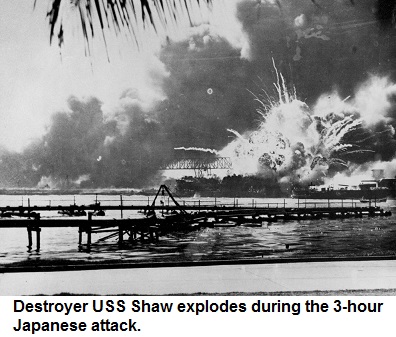
Share this post:
, , ,
[Top]