Tag: Civil Rights

Students developing nail polish to detect date rape drugs

Go Lean Commentary

CU Blog - Students developing nail polish to detect date rape drugs - Photo

It’s back to school time! For K-12 and colleges. At the tertiary level, it’s time again for all the good, bad and ugly of the college experience.

The issue in the foregoing news article/VIDEO relates more to the ugly side of the college experience, especially for young girls on and near college campuses – sexual violence. But this issue is bigger than just college, date-rape, and university mitigations, this is about human rights.

By: NBC News – The Today Show
A group of male students at North Carolina State University is taking on a problem on campus, developing a nail polish that changes color to indicate the presence of date-rape drugs. NBC’s Gabe Gutierrez reports, as follows:


NBC News – The Today Show – August 26, 2014 –
http://www.today.com/video/today/55935260#55935260

This story is being brought into focus in a consideration of the book Go Lean … Caribbean. The book serves as a roadmap for the introduction and implementation of the technocratic Caribbean Union Trade Federation (CU), for the economic optimization in the region. How does this story relate?

Education
College Campuses
Justice Systems – Bad Actors
Women Rights
The Greater Good

This CU/Go Lean roadmap has 3 prime directives:

  • Optimization of the economic engines in order to grow the regional economy.
  • Establishment of a security apparatus to protect the resultant economic engines.
  • Improve Caribbean governance to support these engines.

The roadmap posits that the economy of the Caribbean is inextricably linked to the security of the Caribbean. The security scope of the CU is mostly focused on the “bad actors” that might emerge to exploit the new Caribbean economic engines. The book also focuses on traditional crime-and-punishment issues. The subject of date rape and sexual violence falls on the member-state side of the separation-of-powers divide, the CU does retain jurisdiction on Self-Governing Entities (SGE’s). A growth strategy of the roadmap is to invite, foster and incubate academic institutions to the region under the SGE scheme. The CU will also feature a jurisdiction of monitoring and metering (ratings, rankings, service levels, etc) the delivery of local governments in their execution of the Social Contract. For these reason, 3-prong focus of the CU prime directive is apropos: economic, security and governing engines.

Change has come to the Caribbean, but as the roadmap depicts, the problem of sexual violence (a human rights abuse) had persisted long before, so there is the need to mitigate recidivism in the region. Who are those most at risk for this behavior, and their victims? What efforts can be implemented to mitigate and protect our citizens, especially young innocent girls, venturing into the brave new world to foster their education and impact their communites.

Remember Natalee Holloway? (See the consideration on Page 190 of the Go Lean book).

“Serve and protect”. This is the new lean Caribbean!

The Go Lean roadmap posits that every woman has a right to a violence-free existence, on campus, in the family and in society; it is reprehensible that in so many Caribbean/Latin countries women are still viewed as lesser beings that can be abused at the whim of men.

What should be done to mitigate these bad practices? How does the Go Lean roadmap address this issue?

The solution in the foregoing VIDEO is “a good start”.

We made this issue personal, and interviewed a College Counselor for Freshman Women in one tertiary school in the Bahamas. (See Appendix).

There needs to be more research and development of more solutions.

This is the charge of the Go Lean…Caribbean roadmap: embrace R&D as a community ethos so as not to accept the status quo – keep moving forward. There are more ethos, strategies, tactics and operational advocacies presented in the Go Lean roadmap as well, so as to ensure that those vulnerable are protected and perpetrators are held accountable for their actions. The following are samples (with page numbers) from the book:

Community Ethos – Privacy –vs- Public Protection Page 23
Community Ethos – Whistleblower Protection Page 23
Community Ethos – Intelligence Gathering Page 23
Community Ethos – Witness Security Page 23
Community Ethos – Anti Bullying & Mitigations Page 23
Community Ethos – Light Up the Dark Places Page 23
Community Ethos – Minority Equalizations Page 24
Community Ethos – Impacting the Greater   Good Page 34
Strategy – Rule of Law –vs- Vigilantism Page 49
Separation of Powers – CariPol Page 77
Implementation – Ways to Pay for Change Page 101
Implementation – Steps to Implement SGE’s Page 105
Ways to Improve Education Page 159
Ways to Better Manage the Social Contract Page 170
Ways to Impact Justice Page 177
Ways to Remediate and Mitigate Crime Page 178
Ways to Improve Gun Control Page 179
Ways to Improve Intelligence Gathering Page 182
Ways to Improve Communications Page 186
Ways to Enhance Tourism – Mitigate Economic Crimes Page 190
Ways to Impact the Prison Industrial Complex – Recidivism Page 211
Ways to Impact Foundations Page 219
Ways to Protect Human Rights Page 220
Ways to Empower Women Page 226
Ways to Impact Youth Page 227
Ways to Impact Persons with Disabilities Page 228

In addition, many related issues/points were elaborated in previous blogs, sampled here:

https://goleancaribbean.com/blog/?p=1634 Book Review: ‘Chasing Youth Culture and Getting It Right’
https://goleancaribbean.com/blog/?p=809 Muslim officials condemn abductions of Nigerian girls
https://goleancaribbean.com/blog/?p=695 Brazil’s abused wives find help by going to ‘Dona Carmen’
https://goleancaribbean.com/blog/?p=392 Jamaica to receive World Bank funds to help in crime fight

For the CU’s deployment of SGE’s, we are front-and center in monitoring, managing and mitigating the issues in this foregoing article/VIDEO. For the Caribbean member-states in general, while the CU does not have sovereignty (its a deputized agency only), it can still provide support services to ensure compliance, accountability and service-level assurances. Yes, in addition to monitoring and metering, the CU can also provide ratings, funding, training, intelligence gathering, and cross border (fugitive) law enforcement.

The goal is simply to make the Caribbean a better place to live work, learn and play; with justice for all, regardless of gender. Simple goal, but heavy-lifting in the execution.

To the Caribbean communities, we say: “Bring it!”

This is not politics or feminism; this is law-and-order. This is just right!

Download the book Go Lean … Caribbean – now!

——————————————————————

Appendix – Interview

Camille Russell-Smith (CRS) is employed at the College of the Bahamas as a Counselor in the Counseling and Health Services Department. She pays it forward. One task among her duties that grabbed our attention is the “Violence in Interpersonal Relationships” workshops she conducts each semester for incoming freshmen.

Here is the interview with the Go Lean…Caribbean publishers (GLC):

GLC: In this day and age, do you find that it is difficult to reach young men and young women on proper behavior with regards to date-acquaintance-rape threats and risks?

CRS: Definitely a challenge exists in getting young people to realize proper attitudes they must have towards each other in order to foster healthy relationships It is important to raise their awareness of how they can easily abuse the rights of others. Further it is important to remind all students, particularly women, of the need to be ever vigilant, not to assume that a friend-date-acquaintance will respect their rights and not take advantage of any vulnerabilities.

GLC: Is there an ongoing problem on your campus with date- acquaintance rape?

CRS: There have been some related incidents between students of the College, though not necessarily on campus. However, I continue to counsel young women on the fallout and consequences of what happens when they go out at night. What I worry about the most is the fact that so many women believe that the rape may be their fault, for example if they went to a bar, but told their family/friends that they were going somewhere benign, like the library. However, the penalty for lying is definitely not being raped.

GLC: How do you hope to mitigate these threats?

CRS: Education, awareness, advocacies. But it is hard. I am going against a “tidal wave” in the other direction. The music, videos, images in the media, makes many young men feel as if they have some sense of entitlement. Then many women feel as if they can only be accepted if they allow, tolerate sexually abusive behavior without “making waves”.

GLC: How do you feel about the innovations in this foregoing VIDEO?

CRS: This innovation of a chemical that can detect the presence of a date-rape drug is a good start. We need more such innovations. The special glass, as mentioned in the foregoing article, sounds like another good innovation. I can imagine that other such developments will come soon.

GLC: What hope do you see for the future in our communities regarding these kinds of attitudes that can lead to unhealthy relationships?

CRS: We need to get our communities to the point that it is commonly accepted that “no means no”. Also, that those prosecuted for sex crimes would not be cuddled or excused and most importantly that women that report crimes would not be shunned. We can be successful. The acceptance in the community has changed regarding domestic violence and I believe that acceptance of date-acquaintance-rape will change also.

GLC: Thank you for your insights. Any final words?

CRS: We must do this. We must try to change our country and the Caribbean region as a whole. There are far too many “old views, old habits, and old philosophies” in our communities where some men think they can ignore the rights of women. Let’s please fix this…once and for all.
Share this post:
, , , , ,

Britain’s Neglected Diaspora

Go Lean Commentary

Oh, how the mighty has fallen!

It is not only the Third World that struggles with brain drain. According to the foregoing news article, Great Britain, one of the world’s richest economies, also has a problem keeping their highly skilled workers as home. Accordingly, the article reports that there are over 5 million British expatriates living abroad.

Title: Message to the British Diaspora: “… and don’t come back”

CU Blog - Britain's neglected diaspora - Photo 1

Sub-title: Some 5 million Britons live abroad. The country could do far more to exploit its high-flying expats

When British politicians talk about winning the “global economic race” (as they often do) they have athletes like Gregor Wilson in mind. Mr. Wilson taught himself to code as a child. He started and built his first company while at university and sold it on graduating. His second venture, a software firm, is booming and will soon be ready to take on more staff. He is also preparing to leave Britain for good.

In the popular imagination, British expats are leathery retirees in the Mediterranean. But from 2006 onwards the weak pound, the bursting of Spain’s property bubble and rising taxes in France made the costas less attractive. The number of old Britons emigrating annually has more than halved since then. Dean Blackburn, head of HSBC Expat, part of the high-street bank, says that a different breed of emigrant is now on the march: the ambitious graduate bound for North America or Asia.

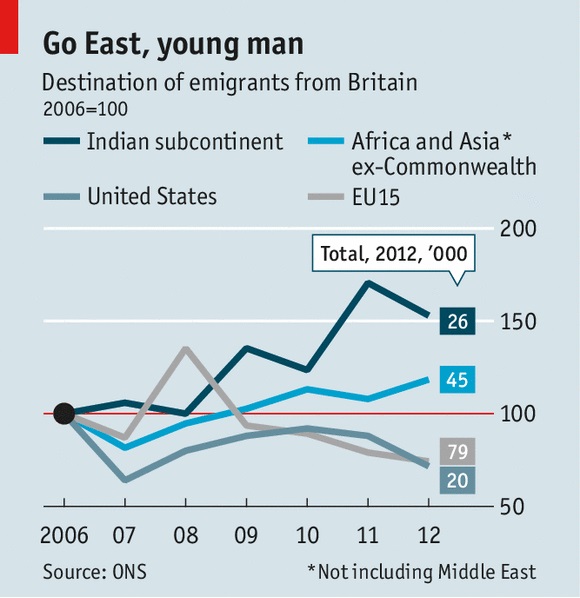
CU Blog - Britain's neglected diaspora - Photo 2The sharpest rise has been among those moving to the glittering East (see chart). Mr Wilson will build his business in Hong Kong. The web, along with the reach of the English language and the cachet of a British degree, gives young people like him opportunities undreamed-of by their parents’ generation. They are also un-tethered for longer: on average, they buy a house and form a family later in life than did previous generations. Figures from the Office for National Statistics show that, since the eve of the economic crisis, emigration is down by 19% overall but up by 8% among 15- to 24-year-olds.

High housing costs help to drive young folk abroad. For the monthly rent on a rabbit hutch anywhere near central London, graduates live grandly elsewhere. “We can afford to travel around Australia, rent an apartment with a sea view and save some money,” explains Emma, a publisher and recent Oxford graduate who moved to Melbourne last year. Those with advanced degrees are especially likely to leave for countries where pay and research facilities are better.

This is regrettable. Britain’s productivity rate is puny; firms and factories badly need such skilled employees. But it is also an opportunity—which the country is squandering.

According to the World Bank, the British diaspora (at nearly 5m people, roughly the size of Scotland) is the largest of any rich country and the eighth biggest overall. Britain’s many expats could strengthen its trading links, channel investment into its economy and generally burnish the national brand. But Britain’s government seems to have “no coherent strategy” for engaging with them, says Alan Gamlen of the Oxford Diasporas Programme, a research unit at OxfordUniversity.

Of 193 UN member states, 110 have formal programmes to build links with citizens abroad. Britain is not one of them. The Foreign and Commonwealth Office’s database of Britons abroad is patchy. Of all the high-flying expats with British passports your correspondent asks, only one—Danny Sriskandarajah, a migration expert based in South Africa—has had any contact with local embassies or with UKTI, Britain’s trade-promotion body. And his Indian friend has received much more attention from his consulate.

Indeed, India is a trailblazer in this field. It has an entire ministry for its emigrants. Mr. Gamlen says it partly has this to thank for the success of its IT industry, built by Indians lured home from Silicon Valley and Europe. Other countries are similarly welcoming. Italy and France even reserve parliamentary seats for their diasporas.

The British government would probably have to work harder than most to sustain ties with the country’s expats. Britons are relatively good at melting into other countries without trace. They are a individualistic bunch, have Commonwealth links and a native language that often makes it easy to integrate.

Kiwi seeds
New Zealand offers a good model for Britain’s hands-off diplomats to emulate. Wellington has spent 30 years encouraging firms and philanthropists to root out Kiwis abroad. Its proudest achievement is the Kiwi Expat Association, a public-private partnership that supports and connects overseas New Zealanders through social media and networking events, and helps them return home if they so wish. Britain might also make it easier to bring spouses into the country. Expats who want to move back with their non-British partners often collide with their home country’s ever-tougher immigration regime.

If Britain does not want its talented globetrotters, others do. Germany actively recruits Britons to take apprenticeships there. Middle Eastern governments tour British universities doling out visas. Mr. Wilson was contacted out of the blue by the Chinese authorities, who invited him to relocate his firm and offered to pay for his flight. “America and China seem really keen to attract us,” he says. “Britain just doesn’t seem that interested.”
The Economist Magazine – (Posted 08/09/2014) –
http://www.economist.com/news/britain/21611102-some-5m-britons-live-abroad-country-could-do-far-more-exploit-its-high-flying-expats-and?fsrc=nlw

The analysis is straight forward, this is Globalization 101. In a global economy, the economic rules of supply and demand are magnified globally. Highly skilled individuals are a commodity that is in demand, customers for that commodity emerged from all corners of the earth.

For the Caribbean, the lessons are very pointed, the exacerbated brain drain, estimated at 70%, with one country Guyana registering a 81% ratio, will not go away on its own. There must be a concerted effort of mitigations and solutions to remediate the problem. The book Go Lean…Caribbean is the concerted mitigation effort on behalf of the Caribbean region. The book Go Lean…Caribbean serves as a roadmap for the introduction and implementation of the technocratic Caribbean Union Trade Federation (CU).

This roadmap is for the elevation of Caribbean society, including the Diaspora. There is no laissez-faire attitude toward this population, there are specific missions to impact the Diaspora into the effort to empower the Caribbean. In fact, the prime directives of the CU are presented as the following 3 statements:

  • Optimization of the economic engines in order to grow the regional economy to $800 Billion & create 2.2 million new jobs.
  • Establishment of a security apparatus to protect the resultant economic engines.
  • Improve Caribbean governance to support these engines.

The book posits that, just like Great Britain in the foregoing article, the Caribbean is in crisis with this brain drain problem. This point is stressed early in the book (Page 13) in the following pronouncements in the Declaration of Interdependence:

 xix.   Whereas our legacy in recent times is one of societal abandonment, it is imperative that incentives and encouragement be put in place to first dissuade the human flight, and then entice and welcome the return of our Diaspora back to our shores. This repatriation should be effected with the appropriate guards so as not to imperil the lives and securities of the repatriated citizens or the communities they inhabit. The right of repatriation is to be extended to any natural born citizens despite any previous naturalization to foreign sovereignties.

xx.   Whereas the results of our decades of migration created a vibrant Diaspora in foreign lands, the Federation must organize interactions with this population into structured markets. Thus allowing foreign consumption of domestic products, services and media, which is a positive trade impact. These economic activities must not be exploited by others’ profiteering but rather harnessed by Federation resources for efficient repatriations.

This commentary previously related details of the vibrant Caribbean Diaspora, such as the causes of emigration, efforts to reduce the “push-and-pull” factors and the region’s continuous interaction with the “exile community”, in these earlier Go Lean blogs:

https://goleancaribbean.com/blog/?p=1896 American “Pull” Factors – Crisis in Black Homeownership
https://goleancaribbean.com/blog/?p=1698 American “Pull” Factors – STEM Jobs Are Filling Slowly
https://goleancaribbean.com/blog/?p=1683 British public sector workers strike over ‘poverty pay’
https://goleancaribbean.com/blog/?p=1596 Book Review: ‘Prosper Where You Are Planted’
https://goleancaribbean.com/blog/?p=1433 Caribbean loses more than 70 percent of tertiary educated to brain drain
https://goleancaribbean.com/blog/?p=1350 PayPal expands payment services to 10 markets
https://goleancaribbean.com/blog/?p=1296 Remittances to Caribbean Increased By 3 Percent in 2013
https://goleancaribbean.com/blog/?p=1256 Traditional 4-year College Degree are Terrible Investments for the Caribbean Region
https://goleancaribbean.com/blog/?p=841 Having Less Babies is Bad for the   Economy
https://goleancaribbean.com/blog/?p=740 Trade/Foreign Mission Offices – Why not … a profit center?

Losing a portion of  any population is bad for any economy. But losing large portions of a skilled population, is worst still as it creates a debilitating brain drain.

So how do we, in the Caribbean, find success when even John Bull (metonym referring to England) has failed? The foregoing article identifies a best practice: Diaspora outreach. This plan requires capturing a database of all Caribbean Diaspora and their legacies, a natural feature of the myCaribbean.gov social media site.

The Go Lean roadmap spells out the full details of the plan to engage the Diaspora residing, working, and studying in foreign lands. (Many students study abroad and never return “home”). The goal is to expand trade and absolutely-positively encourage a repatriation to their Caribbean homelands.

The CU will surely not abandon their Caribbean expatriates, even though these ones may have abandoned the Caribbean.

In line with the foregoing article, the Go Lean book details a series of community ethos, strategies, tactics, implementations and advocacies to foster the best practices in Diaspora outreach, thus furthering interaction with far-flung Caribbean stakeholders:

Community Ethos – Deferred Gratification Page 21
Community Ethos – People Respond to Incentives Page 21
Community Ethos – Economic Systems Influences Choices & Incentives Page 21
Community Ethos – The Consequences of Choice Lie in the Future Page 21
Community Ethos – Job Multiplier Page 22
Community Ethos – Lean Operations Page 24
Community Ethos – Return on Investments Page 24
Community Ethos – Ways to Impact the Future Page 26
Community Ethos – Ways to Help Entrepreneurship Page 28
Community Ethos – Ways to Impact Research & Development Page 30
Community Ethos – Ways to Manage Reconciliations Page 34
Community Ethos – Ways to Impact the Greater Good Page 37
Strategy – Mission – Repatriate Diaspora Page 46
Strategy – Customers – Diaspora Page 47
Tactical – Separation of Powers – Department of State – Foreign Affairs Page 80
Implementation – Year 1 / Assemble Phase Page 96
Implementation – Year 4 / Repatriate Phase Page 98
Implementation – Improve Mail Services – e-Mail for Diaspora Page 108
Implementation – Ways to Deliver Page 109
Implementation – Ways to Impact Social Media Page 111
Implementation – Trade Mission   Objectives Page 117
Implementation – Reasons to Repatriate Page 118
Implementation – Ways to Benefit from Globalization Page 119
Planning – Ways to Improve Trade Page 128
Advocacy – Ways to Grow the Economy Page 151
Advocacy – Ways to Create Jobs Page 152
Advocacy – Ways to Improve Education Page 159
Advocacy – Ways to Foster Technology Page 197
Advocacy – Ways to Impact the Diaspora Page 217
Advocacy – Ways to Impact British Territories Page 245
Appendix – Analysis of Caribbean Diaspora by Country of Residence Page 267
Appendix – Analysis of Caribbean Remittances Page 268
Appendix – Analysis of Caribbean Emigration Page 269
Appendix – Alternative Remittance Modes Page 270
Appendix – Puerto Rican Diaspora Population in the US Page 304

This roadmap focuses on the Caribbean, arguably the world’s best address, not Great Britain, a less than tropical, less than paradisiacal land . Now is the time for all of the Caribbean, the people and governing institutions, to lean-in for the changes in this Go Lean … Caribbean roadmap.

This is a big deal for the region. This roadmap is not just a plan, its a prescription for what ails the region; it advocates for the CU to serve as a delivery vehicle to carry the hopes and dreams of generations of Caribbean residents…and Diaspora.

The region needs this delivery; the region needs this cure. The region needs this roadmap to be a better place to live, work and play.

Download the book Go Lean … Caribbean – now!


Share this post:
, , , ,
[Top]

Philadelphia Freedom – Some Restrictions Apply

Go Lean Commentary

“You have to know your place”

… this was a familiar edict in the US for minority populations. These were more than words; this was indicative of the repression, suppression and oppression of living in the US, and not being White, English-speaking, Protestant, Straight, Male and/or able-bodied.

Anyone with exception to this above list had to endure restrictions.

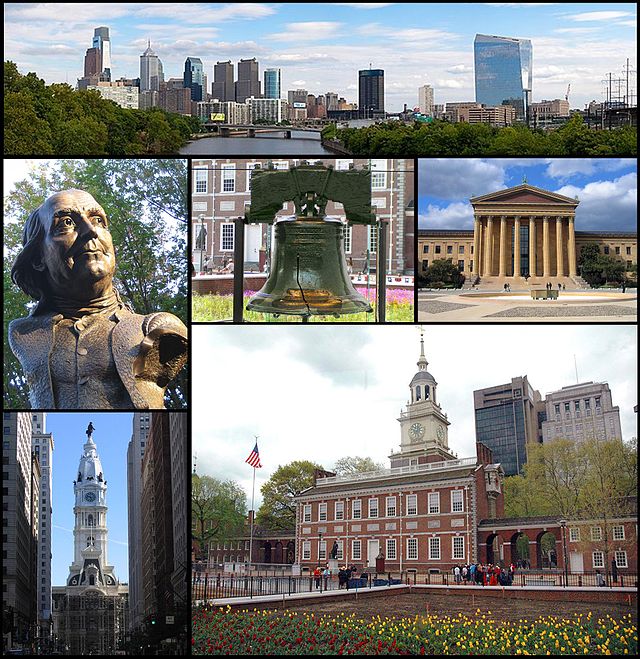
CU Blog - Philadelphia Freedom - Some Restrictions Apply - Photo 4Philadelphia proved different!

This city became synonymous with a love for freedom and had an infectious impact on the country, and the rest of the world for that matter.

All in all, there is a certain community ethos associated with Philadelphia that aligns with the book Go Lean…Caribbean. It is a focus on the future, a deferred gratification as investment for future returns. These attributes have been promoted by the Go Lean movement as necessary traits to forge change in the Caribbean region. We need our own Caribbean flavor of Philadelphia Freedom.

 “Philadelphia Freedom” is a song released by “The Elton John Band” as a single in 1975. The song was one of Elton John’s seven #1 US hits during the early and mid-1970s, which saw his recordings dominating the charts. In Canada, it was his eighth single to hit the top of the RPM (Records, Promotion, Music Magazine) national singles chart.

The song was written by Elton John and Bernie Taupin as a favour to John’s friend, tennis star Billie Jean King. King was part of the Philadelphia Freedoms professional tennis team. The song features an orchestral arrangement by Gene Page, including flutes, horns, and strings.

Background
Recorded in the summer of 1974, during breaks between sessions for Captain Fantastic and the Brown Dirt Cowboy (Elton John’s ninth studio album), the song was at the time the only song Elton John and Bernie Taupin ever consciously wrote as a single, as John told journalist Paul Gambaccini [in a subsequent interview]. John was looking to honour Billie Jean King, and so asked Taupin to write a song called “Philadelphia Freedom” as a homage to her tennis team.

In [the book] His Song: The Musical History of Elton John, [writer] Elizabeth Rosenthal recounts that Taupin said, “I can’t write a song about tennis,” and did not. Taupin maintains that the lyrics bear no relation to tennis, Philly Soul (a style of soul music characterized by funk influences), or even flag-waving patriotism. Nonetheless, the lyrics have been interpreted as patriotic and uplifting, and even though released in 1975, the song’s sentiment, intended or not, meshed perfectly with an American music audience gearing up for the country’s bicentennial celebration in July 1976. In the US, the song was certified Gold in 1975 and Platinum in 1995 by the Recording Industry Association of America.

The song was dedicated in part to the Philadelphia sound: the music of the Delfonics, producers Kenny Gamble and Leon Huff; and The Spinners, producer Thom Bell, with whom John would work two years later on The Thom Bell Sessions. This song plays in Philadelphia’s Franklin Institute IMAX Theater before every show as a tribute to the city’s love for freedom and its impact on the country. The lyrics are also printed on the walls of the Hard Rock Cafe in Philadelphia.

Song Lyrics
CU Blog - Philadelphia Freedom - Some Restrictions Apply - Photo 1I used to be a rolling stone
You know if the cause was right
I’d leave to find the answer on the road
I used to be a heart beating for someone
But the times have changed
The less I say the more my work gets done

`Cause I live and breathe this Philadelphia freedom
From the day that I was born I’ve waved the flag
Philadelphia freedom took me knee-high to a man
Yeah gave me peace of mind my daddy never had

Oh Philadelphia freedom shine on me, I love you
Shine a light through the eyes of the ones left behind
Shine a light shine a light
Shine a light won’t you shine a light
Philadelphia freedom I love you, yes I do

If you choose to you can live your life alone
Some people choose the city
Some others choose the good old family home
I like living easy without family ties
Till the whippoorwill of freedom zapped me
Right between the eyes


Wikipedia Online Encyclopedia Reference Source (Retrieved 08-07-2014) – http://en.wikipedia.org/wiki/Philadelphia_Freedom_(song)

“Knowing your place” was never accepted by citizens of this Philadelphia. This revolutionary attitude or ethos dates back to before Colonial America, the Revolution War, 1776 and beyond [a]:

  • Religious Tolerance – King Charles II of England granted William Penn a charter for the Pennsylvania colony. As a member of the religious sect the Quakers, Penn had experienced religious persecution and wanted his colony to be a place where anyone could worship freely. This tolerance, far more than by most other colonies, led to better relations with the local Native American tribes and fostered Philadelphia’s rapid growth into colonial America’s most important city.
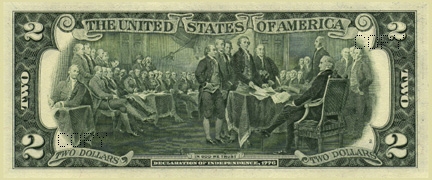
  • CU Blog - Philadelphia Freedom - Some Restrictions Apply - Photo 2American Revolution – Philadelphia’s importance and central location in the colonies made it a natural center for America’s revolutionaries. The city hosted the First Continental Congress before the war; the Second Continental Congress, which signed the United States Declaration of Independence, during the war; and the Constitutional Convention (1787) after the war.
  • Abolition – Philadelphia was called the “Quaker City” and was recognized as an anti-slavery stronghold. This is where noted runaway-slave-turned-Abolitionist Frederick Douglas sought refuge on his way to New York and later gave one of his most famous speeches: “Speech at National Hall, Philadelphia July 6, 1863 for the Promotion of Colored Enlistments”. Another advocate was Thaddeus Stevens. He hailed from Adams County, a rural suburb of Philadelphia, as one of the leaders of the radical faction of the Republican Party during the 1860s. He was a fierce opponent of slavery and discrimination against African-Americans. As chairman of the House “Ways and Means” Committee during the Civil War, he played a major part in the war’s financing. He sought to secure emancipated slave’s rights during Reconstruction, even in opposition to the contrarian President, Andrew Johnson.
  • Civil Rights – Philadelphia emerged as a prime destination for African Americans during the Great Migration and the city surpassed two million occupants by 1950. This set the stage for the impending civil rights movement. One battle saw black activists in Philadelphia (and Harlem, New York) successfully integrating state construction projects in 1963. The city was also front-and-center to race riots in the summer of 1964.
  • Women’s Rights – Some of the early Abolitionists were interested in human rights not just for Blacks but for women as well. The Philadelphia-area Quakers, were known for their early leadership for women’s rights. One prominent example was Lucretia Coffin Mott (1793 – 1880), as a Quaker, she proved to be an effective leader, orator and advocate for women’s rights, abolition and social reform.
  • Gay Rights – The Elton John song Philadelphia Freedom was dedicated to tennis star Billie Jean King, noted gay rights activist, social reformer and advocate for sexual equality. The song, see VIDEO above, is recognized as a anthem for the gay (LGBT) community.
  • Animal Rights (Zoo) – Philadelphia is home to the United States’ first zoo, chartered by the Commonwealth of Pennsylvania on March 21, 1859, though its opening was delayed by the Civil War until July 1, 1874. The environmental and animal rights movement all stemmed from these origins.
  • Repatriation – After 400 years of development and progress, ebb-and-flow, Philadelphia must constantly redefine itself. Faced with “white flight” and the abandonment of its tax base, the City had to strategize a repatriation plan – gentrification (a shift toward wealthier residents/businesses and increasing property values in the urban community).  Gentrification of Philadelphia’s neighborhoods has emerged into the 21st century and the city has now reversed its decades-long trend of population loss.

The revolutionaries of Philadelphia (past and present) have strived for the same goal as this Caribbean empowerment movement:

Elevation of society.

The book Go Lean … Caribbean strives to accomplish this revolution with the introduction and implementation of the technocratic Caribbean Union Trade Federation (CU). In fact, the prime directives of the CU are pronounced in these declarative statements:

  • Optimization of the economic engines in order to grow the regional economy to $800 Billion & create 2.2 million new jobs.
  • Establishment of a security apparatus to protect the resultant economic engines.
  • Improve Caribbean governance to support these engines.

The Go Lean book, serving as a roadmap, initiates with a “Prologue” that identifies many community ethos that must be embraced for a chance of success and permanent change. It should be noted that until recently, Philadelphia was considered on the brink of  failure, much like Detroit. But like many revolutionaries, it is only “at the precipice” that they show their true mettle, their revolutionary spirit.

The Go Lean book accepts this premise, that only at a crisis that people act forthrightly to correct institutional wrongs. For this reason the book declares that a ‘crisis is a terrible thing to waste’. Already, this commentary has assessed the Caribbean failing eco-systems and conveyed the merits of this Go Lean movement, with these posts:

https://goleancaribbean.com/blog/?p=1596 Book Review: ‘Prosper
Where You Are Planted’
https://goleancaribbean.com/blog/?p=1014 All is not well in the sunny Caribbean
https://goleancaribbean.com/blog/?p=623 Only at the precipice, do they   change
https://goleancaribbean.com/blog/?p=599 Ailing Caribbean   island open to radical economic fixes
https://goleancaribbean.com/blog/?p=273 10 Things We Want from the US and 10 Things We Don’t Want from the US

In the roadmap for the CU, in order to change the Caribbean, the relativity of freedom is prominent in planning and considerations.  This point is detailed in the  Declaration of Interdependence at the outset of the book, modeling the US movement in Philadelphia in 1776 and pronouncing this need for a sober view of freedom (Page 10):

Therefore we hereby accept a model democracy for our guide. To that end, we recognize and esteem the same initiation as did the United States of America with this declaration that we ourselves cherish, revere and concur:

We hold these truths to be self-evident, that all men are created equal, that they are endowed by their Creator with certain unalienable rights, that among these are life, liberty and the pursuit of happiness; that to secure these rights, governments are instituted among men, deriving their just powers from the consent of the governed. That whenever any form of government becomes destructive to these ends, it is the right of the people to alter or to abolish it, and to institute new government, laying its foundation on such principles and organizing its powers in such form, as to them shall seem most likely to effect their safety and happiness

The Go Lean roadmap accepts that change has come to the Caribbean. There is the need for a Philadelphia-style revolution. There is also the need for technocratic facilitations to deliver the functionalities of this federal administration. The book posits that this burden is too big for any one Caribbean member-state, and thus the collaboration efforts of the CU is necessary, as the strategy is to confederate all the 30 member-states of the Caribbean into an integrated “single market”, into a United States of the Caribbean.

The tactical approach for the Go Lean roadmap is a Separation-of-Powers mandate between the CU federal government versus the Caribbean member-states. This model is perfected by the City of Philadelphia with the only consolidated city-county charter [b] in the State of Pennsylvania, sharing and dividing a lot of municipal services in the social contract fulfillment.

Change happens! The old adage is that “there is only one constant, change”. Change comes about either evolutionary or revolutionary. Philadelphia is associated, from history and today, with revolutionary change. For the Caribbean we need some revolutionary change. The following list details the community ethos, strategies, tactics, implementations and advocacies to foster the Philadelphia-style Caribbean revolution:

Community Ethos – Deferred Gratification Page 21
Community Ethos – “Crap” Happens Page 23
Community Ethos – Lean Operations Page 24
Community Ethos – Return on Investments Page 24
Community Ethos – Ways to Impact the Future Page 26
Community Ethos – Ways to Improve Negotiations Page 32
Community Ethos – Ways to Impact Turn-Arounds Page 33
Community Ethos – Ways to Impact the Greater Good Page 37
Strategy – Caribbean Vision – Confederate 30 Member-States Page 45
Strategy – Mission – Repatriate Caribbean Diaspora Page 46
Strategy – Agents of Change Page 57
Tactical – Growing the Caribbean Economy to $800   Billion Page 67
Tactical – Separation of Powers – Federal Departments versus Member-States Page 71
Implementation – Ways to Pay for Change Page 101
Implementation – Ways to Deliver Page 109
Implementation – Reasons to Repatriate Page 118
Implementation – Ways to Promote Independence Page 120
Anatomy of Advocacies – Role Model Frederick Douglas Page 122
Planning – Ways to Make the Caribbean Better Page 131
Planning – Lessons Learned from a Thriving City – New York Page 137
Planning – Lessons Learned from a Failed City – Detroit Page 140
Planning – Lessons Learned from the US Constitution Page 145
Advocacy – Ways to Grow the Economy Page 151
Advocacy – Ways to Create Jobs Page 152
Advocacy – Ways to Improve Governance Page 168
Advocacy – Ways to Better Manage the Social Contract Page 170
Advocacy – Ways to Impact Urban Living Page 234

The Go Lean roadmap has a simple motive, to facilitate revolutionary change in the Caribbean, with the end result being a better place to live, work and play. We can glean a powerful lesson from the historicity of Philadelphia in that freedom is not free. The stakeholders of society may prefer that advocates “know their place”, accept restrictions. While freedom may be dependent on others’ cooperation, their acquiescence may take a struggle, a revolution.

Elton John’s song conveys a great inspiration for the Caribbean: Philadelphia freedom shine on me … shine a light through the eyes of the ones left behind!

Download the free e-Book of Go Lean … Caribbean – now!

————

Appendices – Cited References:

a. Wikipedia keywords: William Penn, Philadelphia, Frederick Douglass, Thaddeus StevensCivil Rights Movement, Lucretia Coffin Mott, Billie Jean King, and Philadelphia Zoo.

b. a City-County Charter is simultaneously a city, a municipal corporation, and a county, an administrative division of the State. It has the powers and responsibilities of both types of entities.

Share this post:
, , ,
[Top]

The Crisis in Black Homeownership

Go Lean Commentary:

The United States of America has been the best economic manifestation in the history of mankind, (as declared in the book Go Lean…Caribbean Page 67), yet the experience has not been the same for all of its citizens. This definitely applies to the “black and brown” populations. The Caribbean Diaspora fits this classification and their experience fits 100% to the events related in the below news article.

The US is the “land of the free and the home of the brave”, but some restrictions apply. This reality is not new, as racial disparities have long existed in the history of America. But after a major social revolution in the 1960’s, positive change came to American minorities, following by decades of progress.

Then 2008 happened …

That year saw the crisis of the Great Recession where American society lost $11 Trillion in net worth; then later regained $13.5 Trillion; (Go Lean book Page 69). According to the foregoing article, the Great Recession losses were not evenly distributed; nor was the subsequent recovery – those who lost the net worth (Middle Class) were not the ones who recovered (One Percent).

How the recession turned owners into renters and obliterated Black American wealth.

By: Jamelle Bouie

CU Blog - The Crisis in Black Homeownership - PhotoIn 2005, three years before the Great Recession, the median black household had a net worth of $12,124. Yes, this was far behind the median white household—which had a net worth of $134,992—but it was a huge improvement from previous decades, in which housing discrimination made wealth accumulation difficult (if not impossible) for the large majority of African-American families.

By the official end of the recession in 2009, median household net worth for blacks had fallen to $5,677—a generation’s worth of hard work and progress wiped out. (The number for whites, by comparison, was $113,149.) Overall, from 2007 to 2010, wealth for blacks declined by an average of 31 percent, home equity by an average of 28 percent, and retirement savings by an average of 35 percent. By contrast, whites lost 11 percent in wealth, lost 24 percent in home equity, and gained 9 percent in retirement savings. According to a 2013 report [a] by researchers at BrandeisUniversity, “half the collective wealth of African-American families was stripped away during the Great Recession.”

It was a startling retrenchment, creating the largest wealth, income, and employment gaps since the 1990s. And, if a new study [b] from researchers at CornellUniversity and RiceUniversity is any indication, these gaps are deep, persistent, and difficult to eradicate.

In the study, called “Emerging Forms of Racial Inequality in Homeownership Exit, 1968–2009,” sociologist Gregory Sharp and demographer Matthew Hall examine the relationship between race and risk in homeownership. Simply put, African-Americans are much more likely than whites to switch from owning homes to renting them.

“The 1968 passage of the Fair Housing Act outlawed housing market discrimination based on race,” explained Sharp in a press release. “African-American homeowners who purchased their homes in the late 1960s or 1970s were no more or less likely to become renters than were white owners. However, emerging racial disparities over the next three decades resulted in black owners who bought their homes in the 2000s being 50 percent more likely to lose their homeowner status than similar white owners.”

This wasn’t a matter of personal irresponsibility. Even after adjusting for socio-economic characteristics, debt loads, education, and life-cycle traits like divorce or job loss, blacks were more likely to lose their homes than whites.

If you’re familiar with American history and housing policy, this shouldn’t come as a surprise. The explicit housing discrimination of the mid-20th century has left a mark—arguably a scar—on the landscape of American homeownership. The combination of red-lining, block-busting, racial covenants, and other discriminatory measures means that, even now, a majority of blacks live in neighborhoods with relatively poor access to capital and mortgage loans. What’s more, this systematic discrimination has left many black households unable to afford down payments or other housing costs, even if loans are available.

And in the event that black households are able to save and afford a home, they aren’t as financially secure as their white counterparts. To wit, middle-class African-Americans are more likely to belong to the lower middle class of civil servants and government workers—professions that, in the last five years, have been slashed as a consequence of mass public-sector downsizing [c]. All else being equal, a black schoolteacher who loses her job to budget cuts is less likely to have savings—and thus a safety net—than her white counterpart.

But this isn’t just a story of legacies and effects. In addition to showing the consequences of past discrimination, Sharp and Hall argue that African-Americans have been victimized by a new system of market exploitation. Banks like Wells Fargo steered [d] blacks and other minorities into the worst subprime loans, giving them less favorable terms than whites and foreclosing on countless homes. In a 2012 lawsuit [e], the ACLU and National Consumer Law Center alleged that the now-defunct New Century Financial, working with Morgan Stanley, pushed thousands of black borrowers into the riskiest loans, leaving many in financial ruin. As early as 2005, the Wall Street Journal reported [f] that blacks were twice as likely to receive subprime loans. And in a New York University study published last year [g], researchers found that black and Hispanic families making more than $200,000 a year were more likely to receive subprime loans than white families making less than $30,000.

Together, all of this means that—according to Sharp and Hall—African-Americans are 45 percent more likely than whites to lose their homes. That means they’re more likely to lose their accumulated wealth and to slide down the income ladder, and less likely to pass the advantages of status and mobility to their children.

Apropos of that observation, recent data from the Bureau of Labor Statistics [h] shows an incredible level of youth unemployment for blacks and Latinos. More than 21 percent of African-Americans aged 16 to 24 are out of work, compared with a national average of 14.2 percent. For black teenagers in particular, joblessness soars to nearly 40 percent. It’s a catastrophe with serious economic consequences. The Center for American Progress estimates [i] that the young adults who experienced long-term unemployment during the worst of the recession will lose more than $20 billion in earnings over the next 10 years. And given the slow recovery, odds are good they’ll never recover those lost earnings.

It’s tempting to treat these as subsets of broader problems: poor assistance to homeowners and too much austerity. But they’re not. Even during the boom economy of the 1990s, black employment lagged behind the national average. And the racial wealth gap is a persistent fact of American life.

Likewise, the challenges of black homeownership are a function of discriminatory housing policy [j], as are a whole host of other problems, from mass incarceration and overly punitive policing to poor air quality [k] and food access. These challenges are heavily location-dependent, which is another way to say they are heavily racialized and most prevalent in the segregated, working-class or low-income communities that characterize life for most African-Americans [l], even those with middle-class incomes.

For reasons both political and ideological, it’s nearly verboten in mainstream conversation to argue that racialized problems require race-conscious solutions. Knowing what we know about the demographics of foreclosures, for example, we should ensure any program to help underwater homeowners includes a specific measure to assist black victims of predatory lending, who may need additional help to get on sure footing.

For more than anyone else, this is a message for liberals and progressives, who—for all of their racial sensitivity—are still reluctant to tackle the economic dimensions of racism, even as they represent the vast majority of nonwhite voters and draw critical support from African-American constituencies. It’s how Elizabeth Warren could give “11 Commandments for Progressives” [m] —and receive huge applause—without mentioning the deep problems of racial inequality. One of her commandments is “that no one should work full-time and still live in poverty, and that means raising the minimum wage.” But solving this problem for African-Americans and Latinos—who tend to live in areas that are segregated from job opportunities—is very different than solving it for whites.

While conservatives and Republicans can play a role here, it’s Democrats who are committed to reducing income inequality and bringing balance to our lopsided economic system. Success on those fronts requires a return to race-conscious policymaking, from programs to increase the geographic mobility of low-income workers—relocation grants for individuals or transportation grants for communities with a spatial mismatch between jobs and housing—to public works programs aimed at low-income minority communities, to race-based affirmative action as a way to boost a flagging black middle class.

There’s little in American life that escapes the still-powerful pull of past and present racism, and effective policymaking—to say nothing of effective problem-solving—requires a response to that racism. Otherwise, we entrench the same disparities for a new generation.

——–

Jamelle Bouie is a Slate staff writer covering politics, policy, and race.
The Slate – Daily Magazine for the Web – Posted 07-24-2014; retrieved 08-04-2014
http://www.slate.com/articles/news_and_politics/politics/2014/07/black_homeownership_how_the_recession_turned_owners_into_renters_and_obliterated.html

The points of this foregoing article aligns with the Go Lean book and the collection of blogs/commentaries. The book posits that the crisis persists for the Caribbean and their Diaspora in North America and Europe. What’s more, this movement asserts that this crisis, any crisis, is a terrible thing to waste.

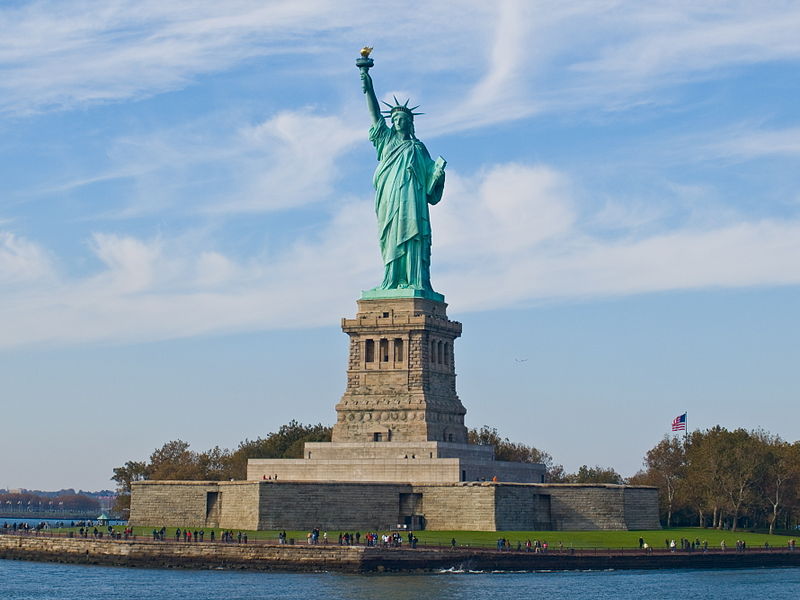
800px-Statue_of_Liberty,_NYThe Caribbean Diaspora have fled their Caribbean homelands over past decades in search of better economic opportunities. It is now the conclusion that many of these “lands of refuge” are rigged in favor of certain ethnic groups; those groups do not include the “black and brown” of the Caribbean. This commentary has relayed, repeatedly, that this Caribbean-bred demographic can do better at home … in the Caribbean. The following are related previous posts:

Unfortunately for the Caribbean, this societal abandonment has continued. Analysis by the Inter-American Development Bank asserts that the Caribbean continues to endure a brain drain of 70% among the college educated population; (https://goleancaribbean.com/blog/?p=1433).

This blog entry depicted how the Caribbean Diaspora that fled to Great Britain has not fared well; (https://goleancaribbean.com/blog/?p=1683)

In addition to economics, there is the concern for security and justice. This blog entry (https://goleancaribbean.com/blog/?p=546) related the dual standards of justice in the US, where all men are treated as equals (wink-wink), just some are more equal than others.

Yes, as the old adage relates: “the grass is not greener on the other side”. See this VIDEO here (Part 1 of 2):

(Click on first continuation video for Part 2 of 2 or click here: https://www.youtube.com/watch?v=gOS3BBmUxvs)

The assertion of the book Go Lean…Caribbean is that once the proposed empowerments are put in place, the Caribbean Diaspora should consider repatriating to their ancestral homelands.

Social Scientists maintain that when animals/mammals are confronted with threats, they have to choose between (stand and) fight or flight. For 50 years, the Caribbean citizens have defaulted to flight. Change has now come to the Caribbean. The book Go Lean…Caribbean serving as a roadmap for the introduction and implementation of the technocratic Caribbean Union Trade Federation (CU), hereby presents “stand and fight” options. This roadmap will spearhead the elevation of Caribbean society. The prime directives of the CU are presented as the following 3 statements:

  • Optimization of the economic engines in order to grow the regional economy & create 2.2 million new jobs at home.
  • Establishment of a security apparatus to protect the resultant economic engines.
  • Improve Caribbean governance to support these engines.

The book posits that the improved conditions projected over the 5 years of the roadmap will neutralize the impetus for Caribbean citizens to flee, identified as “push and pull” factors. This point is stressed early in the book (Page 13) in the following pronouncements in the Declaration of Interdependence:

xix.      Whereas our legacy in recent times is one of societal abandonment, it is imperative that incentives and encouragement be put in place to first dissuade the human flight, and then entice and welcome the return of our Diaspora back to our shores. This repatriation should be effected with the appropriate guards so as not to imperil the lives and securities of the repatriated citizens or the communities they inhabit. The right of repatriation is to be extended to any natural born citizens despite any previous naturalization to foreign sovereignties.

xx.   Whereas the results of our decades of migration created a vibrant Diaspora in foreign lands, the Federation must organize interactions with this population into structured markets. Thus allowing foreign consumption of domestic products, services and media, which is a positive trade impact. These economic activities must not be exploited by others’ profiteering but rather harnessed by Federation resources for efficient repatriations.

This foregoing article highlights the new realities ushered into the world as a result of the events of the Year 2008. The Go Lean book focuses heavy on this subject, even identifying this as a motivation in the same Declaration of Interdependence early in the book (Page 13):

xxv.   Whereas the legacy of international democracies had been imperiled due to a global financial crisis, the structure of the Federation must allow for financial stability and assurance of the Federation’s institutions. To mandate the economic vibrancy of the region, monetary and fiscal controls and policies must be incorporated as proactive and reactive measures. These measures must address threats against the financial integrity of the Federation and of the member-states.

The Go Lean roadmap proposes a community ethos in which economic principles are recognized as playing a crucial role in the chain-of-events that led to fight-or-flight decisions for Caribbean Diaspora. (These principles were always the reality, just not professionally managed as such). These principles are identified and qualified (Page 21) as follows:

1. People Choose
2. All Choices Involve Costs
3. People Respond to Incentives in Predictable Ways
4. Economic Systems Influence Individual Choices and Incentives
5. Voluntary Trade Creates Wealth
6. The Consequences of Choices Lie in the Future

These principles cannot be glossed over or handled lightly; this is why the Go Lean book contains 370 pages of finite details for managing economic change in the region. In addition to the assessments of the region’s standings, the book contains the following sample of community ethos, strategies, tactics, implementations and advocacies to impact the Caribbean homeland:

Community Ethos – Job Multiplier Page 22
Community Ethos – Lean Operations Page 24
Community Ethos – Return on Investments Page 24
Community Ethos – Ways to Impact the Future Page 26
Strategy – Competition – Remain Home –vs- Emigrate Page 49
Strategy – Agents of Change – Aging Diaspora Page 57
Tactical – Growing the Caribbean Economy to $800 Billion Page 67
Tactical – Separation of Powers – Versus Member-States Governments Page 71
Implementation – Year 1 / Assemble Phase Page 96
Implementation – Ways to Deliver Page 109
Implementation – Ways to Better Manage Debt Page 114
Implementation – Trade Mission Objectives Page 116
Implementation – Reasons to Repatriate Page 118
Anecdote – Experiences of a Repatriated Resident Page 126
Planning – 10 Big Ideas for the Caribbean Region Page 127
Planning – Lessons Learned from 2008 Page 136
Advocacy – Ways to Grow the Economy Page 151
Advocacy – Ways to Create Jobs Page 152
Advocacy – Ways to Improve Credit Ratings Page 155
Advocacy – Ways to Improve Housing Page 161
Advocacy – Ways to Impact Wall Street Page 200
Anecdote – Experiences of Diaspora Member Living Abroad Page 216
Advocacy – Ways to Impact the Diaspora Page 217
Advocacy – Ways to Help the Middle Class Page 223
Appendix – Caribbean Emigration Statistics Page 269
Appendix – Credit Ratings Agencies Role in 2008 Page 276

The Go Lean roadmap has simple motives: fix the problems in the homeland to make the Caribbean a better place to live, work and play. We want to keep Caribbean citizens in the Caribbean. There should be no need to go abroad and try to foster an existence in a foreign land. There is heavy-lifting wherever a person resides. Let’s do the “lifting” here, where at least we are at home and we are treated equitably.

Too many people left, yet have too little to show for it. Now is the time for all of the Diaspora (those in the US, and other countries) to lean-in for the empowerments described in the book Go Lean … Caribbean. We understand your pain, we have been impacted too. (The publishers of the book were entrenched in the Wall Street culture in 2008). This Big Idea now is to use the same energy and innovation to create solutions for Main Street – but not Main Street USA, rather Main Street Caribbean.

This is a dramatic change for the Caribbean, one that is overdue, an invitation to build an elevated society in the Caribbean that many had fled to find elsewhere, yet failed. We can make the Caribbean a better place to live, work and play. We can succeed here.

Download the book Go Lean … Caribbean – now!

———————————————————————————————–

Appendices:

a. Retrieved from https://www.evernote.com/shard/s4/sh/2f378f98-d21b-4f5b-89d4-c3a47419b0ad/479f14e61917697b135246e01d20f85f

b. Retrieved from http://news.rice.edu/2014/07/22/african-american-homeownership-increasingly-less-stable-and-more-risky-2/

c. Retrieved from http://www.epi.org/publication/public-sector-job-losses-unprecedented-drag/

d. Retrieved from http://articles.baltimoresun.com/2012-07-12/news/bs-md-ci-wells-fargo-20120712_1_mike-heid-wells-fargo-home-mortgage-subprime-mortgages

e. Retrieved from http://www.citylab.com/housing/2012/10/did-big-banks-subprime-mortgage-crisis-violate-civil-rights-law/3598/

f. Retrieved from http://online.wsj.com/news/articles/SB111318092881303093

g. Retrieved from http://www.citylab.com/housing/2013/08/blacks-really-were-targeted-bogus-loans-during-housing-boom/6559/

h. Retrieved from http://www.npr.org/blogs/codeswitch/2014/07/21/329864863/the-youth-unemployment-crisis-hits-african-americans-hardest

i. Retrieved from http://www.americanprogress.org/issues/labor/report/2013/04/05/59428/the-high-cost-of-youth-unemployment/

j. Retrieved from http://www.thedailybeast.com/articles/2014/03/13/how-we-built-the-ghettos.html

k. Retrieved from http://grist.org/climate-energy/before-repairing-the-climate-well-have-to-repair-the-impacts-of-racism/

l. Retrieved from http://www.slate.com/articles/news_and_politics/politics/2014/04/desean_jackson_richard_sherman_and_ black_american_economic_mobility_why.html

m. Retrieved from http://www.vox.com/2014/7/21/5918063/elizabeth-warrens-11-commandments-for-progressives-show-democrats


Share this post:
, , , , , ,
[Top]

Obama’s Plans for $3.7 Billion Immigration Crisis Funds

Go Lean Commentary

If only we were ready now!

$3.7 Billion in new spending in communities that really do not want the activity.

This, according to the below article, is the ground situation regarding the current immigration crisis on the US-Mexico border with children from Guatemala, El Salvador and Honduras. The US government, Obama Administration, is requesting additional funding from Congress of $3.7 Billion to better interdict and respond during this crisis. The biggest part of the expense will be the detention functionality for the apprehended trustees.

This is a crisis … and this crisis is a terrible thing to waste!

By: Mary Bruce

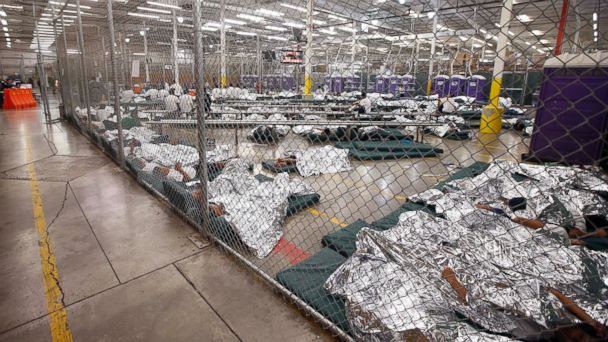
Detainees sleep and watch television in a holding cell where hundreds of mostly Central American immigrant children are being processed and held at the U.S. Customs and Border Protection Nogales Placement Center on June 18, 2014, in Nogales, Arizona. Ross D. Franklin-Pool/Getty Images

Detainees sleep and watch television in a holding cell where hundreds of mostly Central American immigrant children are being processed and held at the U.S. Customs and Border Protection Nogales Placement Center on June 18, 2014, in Nogales, Arizona. Ross D. Franklin-Pool/Getty Images

President Obama today is requesting $3.7 billion to cope with the humanitarian crisis on the border and the spike in illegal crossings by unaccompanied minors from Central America.

Roughly half of the funding would go to the Department of Health and Human Services to provide care for the surge of children crossing the border, including additional beds.

The rest would be split between several departments to tackle the issue on both sides of the border, including $1.6 billion to the Departments of Homeland Security and Justice to boost law enforcement at the Southwest border and pay for additional immigration judge teams, among other things, and $300 million to the State Department to tackle the root causes of this crisis and to send a clear message to these countries not to send children illegally to the U.S.

Today’s funding request is separate from policy changes that the administration is also seeking to speed up the deportation of the children, most of whom are from Guatemala, El Salvador and Honduras. The White House sent a letter to Congressional leadership last week requesting the legal changes to make it easier to send them home.

According to a White House official, greater administrative authority as well as the additional resources will help make it more efficient and expeditious to process and return the children.

What remains unclear is how much faster this additional funding would make the process to send children back to their home countries. White House officials today declined to speculate on such timing, but the administration has said that most of the unaccompanied minors will likely be “sent home.”

“Based on what we know about these cases, it is unlikely that most of these kids will qualify for humanitarian relief. And what that means is it means that they will not have a legal basis for remaining in this country and will be returned,” White House Press Secretary Josh Earnest said Monday.

The White House has yet to say how many of the roughly 52,000 children that have been apprehended this year have been sent back to Central America. Today, officials offered only the total figure, including adults. So far this year, Immigration and Customs Enforcement has removed almost 233,000, that includes over 87,000 to Central American countries.

Here’s a detailed look at some of the ways the president wants to spend $3.7 billion to deal with the influx of unaccompanied minors, according to the White House.

$364 MILLION:

To pay for operational costs of responding to the significant rise in apprehensions of unaccompanied children and families, including overtime and temporary duty costs for Border Patrol agents, contract services and facility costs to care for children while in CBP custody, and medical and transportation service arrangement.

$39.4 MILLION:

To increase air surveillance capabilities that would support 16,526 additional flight hours for border surveillance and 16 additional crews for unmanned aerial systems to improve detection and interdiction of illegal activity.

$109 MILLION:

To provide for immigration and customs enforcement efforts, including expanding the Border Enforcement Security Task Force program, doubling the size of vetted units in El Salvador, Guatemala, and Honduras, and expanding investigatory activities by ICE Homeland Security Investigations.

$879 MILLION:

To pay for detention and removal of apprehended undocumented adults traveling with children, expansion of alternatives to detention programs for these individuals, and additional prosecution capacity for adults with children who cross the border unlawfully.

$45.4 MILLION:

To hire approximately 40 additional immigration judge teams, including those anticipated to be hired on a temporary basis. This funding would also expand courtroom capacity including additional video conferencing and other equipment in support of the additional immigration judge teams. These additional resources, when combined with the FY 2015 Budget request for 35 additional teams, would provide sufficient capacity to process an additional 55,000 to 75,000 cases annually.
ABC News Online News Video Source (Retrieved 07/08/2014) – http://abcnews.go.com/blogs/politics/2014/07/obamas-plans-for-3-7-billion-immigration-crisis-funds/

ABC News | ABC Sports News

The overriding theme of the foregoing news article is the need for professional detention capabilities. Within this crisis, the publishers of the book Go Lean…Caribbean see opportunities for commerce.

The book posits that the region must prepare its own security apparatus for its own security needs. But while we are building facilities (prisons, jails, detention centers, etc) for our own needs, we can employ the strategy of over-building and insourcing for other jurisdictions. Had we been ready now, with this Go Lean plan, we would have been able to embrace the opportunities presented by this Central American Children Crisis. This point is pronounced early in the book with the Declaration of Interdependence (Page 12) that claims:

x.   Whereas we are surrounded and allied to nations of larger proportions in land mass, populations, and treasuries, elements in their societies may have ill-intent in their pursuits, at the expense of the safety and security of our citizens. We must therefore appoint “new guards” to ensure our public safety and threats against our society, both domestic and foreign. The Federation must employ the latest advances and best practices of criminology and penology to assuage continuous threats against public safety. The Federation must allow for facilitations of detention for convicted felons of federal crimes, and should over-build prisons to house trustees from other jurisdictions.

xvi. Whereas security of our homeland is inextricably linked to prosperity of the homeland, the economic and security interest of the region needs to be aligned under the same governance. Since economic crimes … can imperil the functioning of the wheels of commerce for all the citizenry, the accedence of this Federation must equip the security apparatus with the tools and techniques for predictive and proactive interdictions.

The Go Lean roadmap facilitates the introduction and implementation of the technocratic Caribbean Union Trade Federation (CU). With 2 American territories in the Caribbean (Puerto Rico & the US Virgin Islands), it would be a simple proposal to Washington to offer to house these Central American Children in a Caribbean detention center, until some disposition is finalized regarding their individual cases. Then portions of that $3.7 Billion could be earned here, in the Caribbean.

The book asserts that the CU can copy the model of the small Pacific island country of Nauru (Page 290).  As of July 2013 the detention center there was holding 545 asylum seekers on behalf of Australia … for a fee, assuaging an immigration crisis for Australia.

In addition to government spending, there will be the bonus of private spending from the visitors and family members of the detainees.

Just like that: Commerce!

This is the goal of Go Lean…Caribbean, to confederate under a unified entity made up of all 30 Caribbean member-states. Then provide homeland security for “our neighborhood”, contending with man-made and natural threats. The CU security goal is for public safety! The CU is set to optimize Caribbean society through a number of missions. The Go Lean roadmap has 3 prime directives:

  • Optimization of the economic engines in order to grow the regional economy to $800 Billion & create 2.2 million new jobs.
  • Establishment of a security apparatus to protect the resultant economic engines.
  • Improve Caribbean governance to support these engines.

In recent blog submissions, this commentary highlighted the security provisions that must be enacted to improve homeland security, as soon as possible:

https://goleancaribbean.com/blog/?p=1554 Status of Forces Agreement = Security Pact
https://goleancaribbean.com/blog/?p=1076 References to the Caribbean Regional Security System

If only those provisions were in place already!

We console with the communities dealing with this crisis; already there have been protests from townspeople where the existing American detention facilities are located. We also console with the refugees fleeing the crime, violence and despair in their homeland; this Go Lean roadmap is the Caribbean’s aspiration to mitigate against a similar Failed-State status (Page 134).

Underlying to the prime directive of elevating the economics, security and governing engines of the Caribbean is the desire to make the Caribbean homeland, a better place to live, work and play (Page 131) and to impact the Greater Good (Page 37) because “the needs of the many should outweigh the needs of the few”.

Download the free e-Book of Go Lean … Caribbean – now!

Share this post:
, , , , ,
[Top]

Status of Forces Agreement = Security Pact

  Go Lean Commentary

The following is typical of the kind of news headlines in the last few weeks:

Crisis In Iraq Escalates As Militants Seize Major Cities

Iraq again! Didn’t we just go through this in the last decade? Did we not settle this a few years ago, and now we’re here again? Deja Vu all over again. Not a repeat of the Iraqi drama, but rather a repeat of modern history in total. In a recent blog submission, the commentary (https://goleancaribbean.com/blog/?p=1531) cited the lessons learned from World War I; or better stated, the lack of learned-lessons, as the result was World War II. An actual news article on Iraq that parallels this lesson, is excerpted as follows:

By: Olivia Marshall

Media [outlets] have claimed that the current violence in Iraq is the result of the 2011 withdrawal of U.S. troops in Iraq and President Obama’s willful failure to secure a Status of Forces Agreement (SOFA) with Iraq’s Prime Minister Nouri al-Maliki. In reality, Iraq refused the terms of a SOFA with the U.S. despite Obama’s efforts to maintain a military presence there.

Time Magazine: Iraq’s Second Largest City Falls To Militants – Time reported on June 10 that Mosul, Iraq’s second largest city, fell to the Sunni militant group Islamic State in Iraq and al-Sham (ISIS):

The fall of Iraq’s second largest city to Islamist extremists Tuesday sends an alarming message about the deterioration of a country where the U.S. spent eight years, 4,500 lives and $1.7 trillion. Mosul, a city of 1.8 million located in the far north of the country, long cultivated a reputation as a military town. But Iraqi soldiers threw down their guns and stripped off their uniforms as the insurgents approached on Tuesday, according to officials stunned by the collapse of its defenses.
Media Matters (Posted June 16, 2014; retrieved 06/29/2014) –
http://mediamatters.org/research/2014/06/16/right-wing-media-ignore-iraqi-resistance-to-sta/199742

Iraq Surge - 2007Iraq Draw Down - 2011

The overriding theme of the foregoing news article is the Status of Forces Agreement [a]. Under international law, in order for a military presence to not be viewed as an occupation or ‘act of war”, there must be a SOFA of mutual consent between both the host and occupying powers. This lack of a SOFA is why the US is drawn back into Iraq.

This American experience is relevant for the Caribbean to consider; not only for the fact that two Caribbean member-states, Puerto Rico and the US Virgin Islands, had committed human capital to that Iraq War effort, and have thusly sacrificed “blood, sweat and tears” there, but also because there is a parallel need for a SOFA in the Caribbean region.

The book Go Lean…Caribbean posits that the region must prepare its own security apparatus for its own security needs. So the request is that all Caribbean member-states welcome a visiting security force to execute a limited scope on their sovereign territories. That visiting force: themselves!

Yes, the goal is to confederate under a unified entity made up of the Caribbean to provide homeland security to the Caribbean. But Homeland Security for the Caribbean has a different meaning than for our American counterparts. Though we must be on defense against military intrusions like terrorism & piracy, we mostly have to contend with threats that may imperil the region’s economic engines, like tourism. This includes natural and man-made concerns like hurricanes, earthquakes, oil/chemical spills, pandemic, enterprise corruption and narco-terrorism. The CU security goal is for public safety! This goal is detailed in the book as it serves as a roadmap for the introduction of the technocratic Caribbean Union Trade Federation (CU). So while the CU is set to optimize Caribbean society through economic empowerment, the truth of the matter is that the security dynamics of the region are inextricably linked to this same endeavor. Therefore the Go Lean roadmap has 3 prime directives:

  • Optimization of the economic engines in order to grow the regional economy to $800 Billion & create 2.2 million new jobs.
  • Establishment of a security apparatus to protect the resultant economic engines.
  • Improve Caribbean governance to support these engines.

The book contends that bad actors will emerge just as a result of economic successes in the region. This point is pronounced early in the book with the Declaration of Interdependence (Page 12) that claims:

x.   Whereas we are surrounded and allied to nations of larger proportions in land mass, populations, and treasuries, elements in their societies may have ill-intent in their pursuits, at the expense of the safety and security of our citizens. We must therefore appoint “new guards” to ensure our public safety and threats against our society, both domestic and foreign. The Federation must employ the latest advances and best practices … to assuage continuous threats against public safety.

xvi. Whereas security of our homeland is inextricably linked to prosperity of the homeland, the economic and security interest of the region needs to be aligned under the same governance. Since economic crimes, including piracy and other forms of terrorism, can imperil the functioning of the wheels of commerce for all the citizenry, the accedence of this Federation must equip the security apparatus with the tools and techniques for predictive and proactive interdictions.

The Caribbean appointing “new guards”, or a security pact to ensure public safety is not so new an endeavor. There are prior instances of this type of engagement in the region. There is currently a security pact; shared by 5 Eastern Caribbean member-states that was first consummated in 1982 – this was discussed in full depth in a previous commentary regarding the Regional Security System (https://goleancaribbean.com/blog/?p=1076). The Go Lean roadmap however calls for a permanent professional force with naval and ground (Marine) forces, plus an Intelligence agency. This security pact would be sanctioned by all 30 CU member-states, not just the current 5; (there is even a plan for the eventual inclusion of Cuba). The CU Trade Federation will lead, fund and facilitate the security force, encapsulating (full-time or part-time) all the existing armed forces in the region. This CU Homeland Security Force would get its legal authorization from a Status of Forces Agreement signed with the CU treaty enhancements.

This SOFA is “Step One, Day One” in the Go Lean roadmap, covering the approach for adequate funding, accountability and control. In step with the foregoing news article, there is the absolute need for the CU SOFA to be ratified as soon as possible.

The Go Lean book details a series of community ethos, strategies, tactics, implementations and advocacies to provide increased public safety & security in the Caribbean region:

Economic Principle – Consequences of Choices Lie in Future Page 21
Community Ethos – Privacy –vs- Public Protection Page 23
Community Ethos – “Crap” Happens Page 23
Community Ethos – Cooperatives Page 25
Community Ethos – Ways to Improve Sharing Page 35
Community Ethos – Ways to Impact the Greater Good Page 37
Tactical – Confederating a non-sovereign union Page 63
Tactical – Separation of Powers – Homeland Security Page 75
Implementation – Ways to Pay for Change Page 101
Implementation – Start-up Foreign Policy Initiatives Page 102
Implementation – Start-up Security Initiatives Page 103
Planning – Ways to Make the Caribbean Better Page 131
Planning – Ways to Improve Failed-State Indices Page 134
Advocacy – Ways to Grow the Economy Page 151
Advocacy – Ways to Improve Governance Page 168
Advocacy – Ways to Better Manage the Social Contract Page 170
Advocacy – Ways   to Impact Justice Page 177
Advocacy – Ways   to Reduce Crime Page 178
Advocacy – Ways to Improve Homeland Security Page 180
Advocacy – Ways to Mitigate Terrorism Page 181
Advocacy – Ways to Improve Intelligence Gathering/Analysis Page 182
Advocacy – Ways to Improve for Natural Disasters Page 184
Advocacy – Ways to Protect Human Rights Page 220
Advocacy – Ways to Re-boot Cuba Page 236

Other subjects related to security and governing empowerments for the region have been blogged in other Go Lean…Caribbean commentary, as sampled here:

https://goleancaribbean.com/blog/?p=1531 A Lesson in History: 100   Years Ago – World War I
https://goleancaribbean.com/blog/?p=1076 Trinidad Muslims travel to   Venezuela for jihadist training
https://goleancaribbean.com/blog/?p=960 NSA records all phone   calls in Bahamas, according to Snowden
https://goleancaribbean.com/blog/?p=789 America’s War on the Caribbean
https://goleancaribbean.com/blog/?p=546 Book Review:   ‘The Divide’ – … Injustice in the Age of the Wealth Gap
https://goleancaribbean.com/blog/?p=535 Remembering and learning   from Boston
https://goleancaribbean.com/blog/?p=392 Jamaica to receive World Bank funds to help in crime fight
https://goleancaribbean.com/blog/?p=341 US slams Caribbean human   rights practices
https://goleancaribbean.com/blog/?p=87 6.5M Earthquake Shakes   Eastern Caribbean

Underlying to the prime directive of elevating the economics, security and governing engines of the Caribbean, is the desire to make the Caribbean homeland, a better place to live, work and play. We do not want a few “bad actors” disrupting the peace of all Caribbean residents (42 million people), or the 10 million Diaspora as they frequent their tropical homeland or even the 80 million tourists that visit the region annually. The Go Lean roadmap states it most succinctly with the quotation: “the needs of the many outweigh the needs of the few” (Page 37).

All of the Caribbean are hereby urged to lean-in to this roadmap.

Download the book Go Lean … Caribbean – now!

——

Appendix: a – Status of Forces Agreement

A Status of Forces Agreement (SOFA) is an agreement between a host country and a foreign nation stationing military forces in that country. SOFAs are often included, along with other types of military agreements, as part of a comprehensive security arrangement. A SOFA does not constitute a security arrangement; it establishes the rights and privileges of foreign personnel present in a host country in support of the larger security arrangement. [1] Under international law a status of forces agreement differs from military occupation.

Agreements

SOFA - Photo 1While the United States military has the largest foreign presence and therefore accounts for most SOFAs, the United Kingdom, France, Australia, Germany, Italy, Russia, South Korea, and many other nations also station military forces abroad and negotiate SOFAs with their host countries. NATO (North Atlantic Treaty Organization) is a SOFA. In the past, the Soviet Union had SOFAs with most of its satellite states (See Go Lean…Caribbean Page 139). While most of the United States’ SOFAs are public, some remain classified. [2]

Terms of operation – The SOFA is intended to clarify the terms under which the foreign military is allowed to operate. Typically, purely military operational issues such as the locations of bases and access to facilities are covered by separate agreements. The SOFA is more concerned with the legal issues associated with military individuals and property. This may include issues like entry and exit into the country, tax liabilities, postal services, or employment terms for host-country nationals, but the most contentious issues are civil and criminal jurisdiction over bases and personnel. For civil matters, SOFAs provide for how civil damages caused by the forces will be determined and paid. Criminal issues vary, but the typical provision in U.S. SOFAs is that U.S. courts will have jurisdiction over crimes committed either by a service-member against another service-member or by a service-member as part of his or her military duty, but the host nation retains jurisdiction over other crimes.[3]

Host nation concerns – In many host nations, especially those with a large foreign presence such as South Korea and Japan, the SOFA can become a major political issue following crimes allegedly committed by service-members. This is especially true when the incidents involve crimes such as robbery, murder, manslaughter or sex crimes, especially when the charge is defined differently in the two nations. For example, in 2002 in South Korea, a U.S. military AVLB bridge-laying vehicle on the way to the base camp after a training exercise accidentally killed two girls. Under the SOFA, A U.S. military court martial panel tried the soldiers involved, The panel found the act to be an accident and acquitted the service members of negligent homicide, citing no criminal intent or negligence. The U.S. military accepted responsibility for the incident and paid civil damages. This resulted in widespread outrage in South Korea, demands that the soldiers be retried in a South Korean court, the airing of a wide variety of conspiracy theories, and a backlash against the local expatriate community.[4] As of 2011 American military authorities are allowing South Korea to charge and prosecute American soldiers in South Korean courts.[5][6]

(Retrieved 06/29/2014 from: http://en.wikipedia.org/wiki/Status_of_forces_agreement)

 Sources References:

1.  R. Chuck Mason (March 15, 2012). “Status of Forces Agreement (SOFA): What Is It, and How Might One Be Utilized In Iraq?” Congressional Research Service. Retrieved from: http://www.fas.org/sgp/crs/natsec/RL34531.pdf

2.  Bruno, Greg (October 2, 2008), U.S. Security Agreements and Iraq, Council on Foreign Relations. Retrieved from: http://www.cfr.org/publication/16448/us_security_agreements_and_iraq.html

3.  Pike, John (2005). “Status of Forces Agreement”. GlobalSecurity.org, 2005. Retrieved from: http://www.globalsecurity.org/military/facility/sofa.htm

4.  Ibiblio.org (2002). News articles on South Korean teenagers run over US military vehicle. Posted 22 August 2008; retrieved from http://www.ibiblio.org/ahkitj/wscfap/arms1974/HRS/2002/Stop%20US%20Military%20dossier/4.htm

5.  Stars and Stripes Newspaper (2011). “US soldier confesses during trial to rape of South Korean girl”. Retrieved http://www.stripes.com/u-s-soldier-confesses-during-trial-to-rape-of-south-korean-girl-1.161419

6.  Stars and Stripes Newspaper (2012). “Korea-based US soldier get 3 years in prison for rape conviction”. Posted 12 February 2012; retrieved from: http://www.stripes.com/news/pacific/korea/korea-based-u-s-soldier-gets-3-years-in-prison-for-rape-conviction-1.168182


Share this post:
, , , , ,
[Top]

Humanities Advocate – Maya Angelou – R.I.P.

Go Lean Commentary

MA1“That a powerful play goes on, and you may contribute a verse” – poet Walt Whitman: “O Me! O Life!”

The world mourns the passing of Maya Angelou (1928 – 2014; age 86). She contributed more than a verse to the powerful play of modern life. She is known for her contribution to all of the humanities.

Humanities? That’s a different word; extraordinary in its use as a wide-angle view in the study of humankind. Extraordinary, “wide-angle view”, all fitting descriptors for the contributions of Maya Angelou – see the bibliography/filmography below. Here’s the text book definition of the word “humanities” (www.Dictionary.com):

noun, plural hu·man·i·ties.

1. all human beings collectively; the human race; humankind.

2. the quality or condition of being human; human nature.

3. the quality of being humane; kindness; benevolence.

4. the humanities.

a. the study of classical languages and classical literature.
b. the Latin and Greek classics as a field of study.
c. literature, [poetry], philosophy, art, etc., as distinguished from the natural sciences.
d. the study of literature, poetry, philosophy, art, etc.

Maya Angelou impacted the world of the humanities with her contributions. She was awarded over 30 honorary Doctor of Humanities degrees from diverse colleges and universities around the world. In addition to Dr. Angelou’s contribution to the humanities, she was also a strong proponent for empowerment. She spoke and wrote profound words/works on the need for people to empower themselves, to seek more out of life, to live more vibrant, fulfilled lives, to be critical thinkers and proactive doers in their journey for a more impactful life.

The publishers of the book Go Lean…Caribbean recognize the life contributions of Maya Angelou as an advocate, as many of her causes align with our quest for empowerment and elevation of Caribbean life and culture. The book serves as a roadmap for the introduction and implementation of the Caribbean Union Trade Federation (CU).

Maya 2The Go Lean/CU movement shares a linkage with this focus of Dr. Angelou. (She was due to appear at the Orpheum Theater in Omaha, Nebraska on June 9 – see photo – this writer was ticketed for attendance). The CU seeks to also empower the people of the Caribbean to lead more impactful lives in which they are better able to meet their needs and plan for a productive future. The Go Lean roadmap seeks to put Caribbean people in a place of better Command-and-Control of their circumstances, to develop the community ethos of assisting each other to advance in our own lives, in our individual communities and in the Caribbean as a whole. Like Dr. Angelou, we say with a collective voice “and still I rise” – (Published Random House 1978):

You may write me down in history
With your bitter, twisted lies,
You may tread me in the very dirt
But still, like dust, I’ll rise.

Does my sassiness upset you?
Why are you beset with gloom?
‘Cause I walk like I’ve got oil wells
Pumping in my living room.

Just like moons and like suns,
With the certainty of tides,
Just like hopes springing high,
Still I’ll rise.

Did you want to see me broken?
Bowed head and lowered eyes?
Shoulders falling down like teardrops.
Weakened by my soulful cries.

Does my haughtiness offend you?
Don’t you take it awful hard
‘Cause I laugh like I’ve got gold mines
Diggin’ in my own back yard.

You may shoot me with your words,
You may cut me with your eyes,
You may kill me with your hatefulness,
But still, like air, I’ll rise.

Does my sexiness upset you?
Does it come as a surprise
That I dance like I’ve got diamonds
At the meeting of my thighs?

Out of the huts of history’s shame
I rise
Up from a past that’s rooted in pain
I rise

I’m a black ocean, leaping and wide,
Welling and swelling I bear in the tide.
Leaving behind nights of terror and fear
I rise

Into a daybreak that’s wondrously clear
I rise
Bringing the gifts that my ancestors gave,
I am the dream and the hope of the slave.
I rise
I rise
I rise.

While the CU’s prime directive is the economics of the Caribbean region, there are peripheral areas of concern. While economics, security and governance are all important for the sustenance of Caribbean life, pursuits like poetry, art, and beauty are the reasons we want to live. Maya Angelou stood as a vanguard for many of these causes:

Minority rights, civil rights, women rights, quest for justice, art, music, film, and image.

The Go Lean book posits that one person can make a difference in the Caribbean, and its impact on the world; that there are many opportunities where one champion, one advocate, can elevate society. In fact the book is a collection of 144 different advocacies, so there is inspiration for the Maya Angelou’s of the region to make their mark in many different fields of endeavor.

The roadmap specifically encourages the region, to lean-in and foster the next generation of Maya Angelou’s with these specific community ethos, strategies, tactics, implementations and advocacies:

Community Ethos – Minority Equalization Page 24
Community Ethos – Ways to Foster Genius Page 27
Community Ethos – Ways to Promote Intellectual Property Page 31
Community Ethos – Ways to Promote Happiness Page 36
Community Ethos – Ways to Impact the Greater Good Page 37
Anatomy of Advocacies Page 122
Planning – Ways to Better Manage Image Page 129
Advocacy – Ways to Improve Education Page 159
Advocacy – Ways to Impact Justice Page 177
Advocacy – Ways to Impact Hollywood Page 203
Advocacy – Ways to Help Women Page 226
Advocacy – Ways to Improve the Arts Page 230
Advocacy – Ways to Promote Music Page 231

The Go Lean roadmap pronounces that with the participation of many advocates on many different paths for progress, the Caribbean can truly become a better place to live, work and play. We owe a debt to Dr. Angelou for leading us along this path.

The Bible book of Psalms Chapter 90 quotes:

10  In themselves the days of our years are 70 years.
And if because of special mightiness they are 80 years.
Yet their insistence is on trouble and hurtful things;
For it must quickly pass by, and away we fly.

12  Show us just how to count our days in such a way
That we may bring a heart of wisdom in.

Rest in Peace Maya Angelou. Thank you for showing us how to make our days count.

Download the free e-book of Go Lean … Caribbean – now!

—————————————————————————-

Appendix – Bibliography
Contributions Retrieved May 28, 2014 from: http://en.wikipedia.org/wiki/List_of_Maya_Angelou_works

Autobiographies

  • I Know Why the Caged Bird Sings (1969). New York: Random House. ISBN 978-0-375-50789-2
  • Gather Together in My Name (1974). New York: Random House. ISBN 978-0-394-48692-5
  • Singin’ and Swingin’ and Gettin’ Merry Like Christmas (1976). New York: Random House. ISBN 978-0-679-45777-0
  • The Heart of a Woman (1981). New York: Random House. ISBN 978-0-8129-8032-5
  • All God’s Children Need Traveling Shoes (1986). New York: Random House. ISBN 978-0-679-73404-8
  • A Song Flung Up to Heaven (2002). New York: Random House. ISBN 978-0-375-50747-2
  • I Know Why the Caged Bird Sings: The Collected Autobiographies of Maya Angelou (2004). New York: Modern Library. ISBN 978-0-679-64325-8
  • Mom & Me & Mom (2013). New York: Random House. ISBN 978-1-4000-6611-7

Maya 3Poetry

  • Just Give Me a Cool Drink of Water ‘fore I Diiie (1971). New York: Random House. ISBN 978-0-394-47142-6[14]
  • Oh Pray My Wings Are Gonna Fit Me Well (1975). New York: Random House. ISBN 0-679-45707-0
  • And Still I Rise (1978). New York: Random House. ISBN 978-0-394-50252-6[9]
  • Shaker, Why Don’t You Sing? (1983). New York: Random House. ISBN 0-394-52144-7[15][16]
  • Poems (1986). New York: Random House. ISBN 0-553-25576-2
  • Now Sheba Sings the Song (1987). New York: Plume Books. ISBN 0-452-27143-6
  • I Shall Not Be Moved (1990). New York: Bantam Books. ISBN 0-553-35458-2
  • “On the Pulse of Morning” (1993). New York: Random House. ISBN 0-679-74838-5[17]
  • The Complete Collected Poems of Maya Angelou (1994). New York: Random House. ISBN 0-679-42895-X
  • Phenomenal Woman: Four Poems Celebrating Women (1995). New York: Random House. ISBN 0-679-43924-2
  • A Brave and Startling Truth (1995). New York: Random House. ISBN 0-679-44904-3[18]
  • “From a Black Woman to a Black Man”, 1995
  • “Amazing Peace” (2005). New York: Random House. ISBN 1-4000-6558-5[16]
  • “Mother: A Cradle to Hold Me” (2006). New York: Random House. ISBN 1-4000-6601-8
  • “Celebrations, Rituals of Peace and Prayer” (2006). New York: Random House. ISBN 978-0-307-77792-8
  • Poetry for Young People (2007). Berkshire, U.K.: Sterling Books. ISBN 1-4027-2023-8
  • “We Had Him”, 2009
  • “His Day is Done”, 2012
  • Wouldn’t Take Nothing for My Journey Now (1993). New York: Random House. ISBN 0-553-56907-4
  • Even the Stars Look Lonesome (1997). New York: Random House. ISBN 0-375-50031-6
  • Letter to My Daughter (2008). New York: Random House. ISBN 1-4000-6612-3
  • Hallelujah! The Welcome Table: A Lifetime of Memories with Recipes (2004). New York: Random House. ISBN 1-4000-6289-6
  • Great Food, All Day Long: Cook Splendidly, Eat Smart (2010). New York: Random House. ISBN 1-4000-6844-4
  • Life Doesn’t Frighten Me (1993). New York: Stewart, Tabori, and Chang. ISBN 1-55670-288-4
  • My Painted House, My Friendly Chicken and Me (1994). New York: Knopf Books. ISBN 0-517-59667-9
  • Kofi and His Magic (1996). New York: Knopf Books. ISBN 0-517-59667-9
  • Maya’s World series (2004). New York: Random House:
    • Itak of Lapland, ISBN 0-375-92833-2
    • Angelina of Italy, ISBN 0-375-82832-X
    • Renée Marie of France ISBN 0-375-82834-6
    • Mikale of Hawaii ISBN 0-375-92835-9
  • Cabaret for Freedom (musical revue), with Godfrey Cambridge, 1960
  • The Least of These, 1966
  • The Best of These (drama), 1966
  • Gettin’ up Stayed on My Mind, 1967
  • Sophocles, Ajax (adaptation), 1974
  • And Still I Rise (writer/director), 1976

Personal essays

  • Wouldn’t Take Nothing for My Journey Now (1993). New York: Random House. ISBN 0-553-56907-4
  • Even the Stars Look Lonesome (1997). New York: Random House. ISBN 0-375-50031-6
  • Letter to My Daughter (2008). New York: Random House. ISBN 1-4000-6612-3

Cookbooks

  • Hallelujah! The Welcome Table: A Lifetime of Memories with Recipes (2004). New York: Random House. ISBN 1-4000-6289-6
  • Great Food, All Day Long: Cook Splendidly, Eat Smart (2010). New York: Random House. ISBN 1-4000-6844-4

Children’s books

  • Life Doesn’t Frighten Me (1993). New York: Stewart, Tabori, and Chang. ISBN 1-55670-288-4
  • My Painted House, My Friendly Chicken and Me (1994). New York: Knopf Books. ISBN 0-517-59667-9
  • Kofi and His Magic (1996). New York: Knopf Books. ISBN 0-517-59667-9
  • Maya’s World series (2004). New York: Random House:
    • Itak of Lapland, ISBN 0-375-92833-2
    • Angelina of Italy, ISBN 0-375-82832-X
    • Renée Marie of France ISBN 0-375-82834-6
    • Mikale of Hawaii ISBN 0-375-92835-9

Plays

  • Cabaret for Freedom (musical revue), with Godfrey Cambridge, 1960
  • The Least of These, 1966
  • The Best of These (drama), 1966
  • Gettin’ up Stayed on My Mind, 1967
  • Sophocles, Ajax (adaptation), 1974
  • And Still I Rise (writer/director), 1976

Filmography
Contributions – Retrieved May 28, 2014 from: http://www.imdb.com/name/nm0029723/?ref_=fn_al_nm_1

Actress (15 credits)

Year Movie/Show Character/Role
2006 Madea’s Family Reunion May
2001 Phenomenal Woman (Short) Phenomenal Woman
2000 The Runaway (TV Movie) Conjure Woman
2000 Happily Ever After: Fairy Tales for Every Child (TV Series) Fairy Godmother
2000 Rip Van Winkle (TV Series) Fairy Godmother (voice)
1997 Talking with David Frost (TV Series)
Colin Powell and Maya Angelou Narrator
1996 Elmo Saves Christmas (Video)
1995 Touched by an Angel (TV Series) Clarice Mitchell
Reunion (1995) Clarice Mitchell
1995 How to Make an American Quilt Anna
1995 The Journey of August King Narrator (voice)
1993 There Are No Children Here (TV Movie) Lelia Mae
1993 Poetic Justice Aunt June
1977 The Richard Pryor Special? (TV Movie) Willie’s Wife
1977 Roots (TV Mini-Series) Nyo Boto / Yaisa
Part II Nyo Boto
Part I Yaisa
1959  Porgy and Bess Dancer (uncredited)

Writer (7 credits)

Year Movie/Show
2008 The Black Candle (Documentary) (poetry written by)
1996 How Do You Spell God? (TV Movie)
1996 America‘s Dream (TV Movie) (story “The Reunion”)
1982 Sister, Sister (TV Movie)
1979  I Know Why the Caged Bird Sings (TV Movie) (book)
1977  The Richard Pryor Special? (TV Movie) (soliloquy)
1972 Georgia, Georgia

Soundtrack (4 credits)

Year Movie/Show
2010 Michael Feinstein’s American Songbook (TV Mini-Series documentary) (lyrics – 1 episode)
Best Band in the Land  (lyrics: “We Dreamed These Days”)
2001 The Mystic Masseur (performer: “Scandal in the Family”)
1968 For Love of Ivy (lyrics: “You Put It on Me”)
1957 Calypso Heat Wave (writer: “All That Happens in the Market Place”)

Director (2 credits)

Year Movie/Show
1998 Down in the Delta
1976 Visions (TV Series) (1 episode)
The Tapestry/Circles ()

Music department (1 credit)

Year Movie/Show
1972 Georgia, Georgia (composer: score)

Producer (1 credit)

Year Movie/Show
1982 Sister, Sister (TV Movie) (producer)

Miscellaneous Crew (1 credit)

Year Movie/Show
1993 Poetic Justice (poetry)
Share this post:
, , , , ,
[Top]

Sports Revolutionary: Advocate Jeffrey Webb

Go Lean Commentary

Sports Revolution 3The forgoing encyclopedia source focuses on the background person connected to an important issue in sports administration: blatant racism in European soccer.

Blatant racism is a scourge to the beautiful sport of football (soccer). Black players have to endure unspeakable acts of disrespect (cursing, spitting, monkey-chants, tossed bananas, etc). The international governing body for soccer/football, Fédération Internationale de Football Association (FIFA), wants to forge change among the game’s stakeholders. This issue relates to the Caribbean, in that the FIFA advocate in this cause is from the Cayman Islands.

This advocate, Jeffrey Webb, is featured in a current episode of a sports documentary television show in the US.

Sports Revolution 1MIAMI — CONCACAF President Jeffrey Webb, who is Chairman of FIFA¹s Anti-Racism and Discrimination Task Force, appeared Tuesday (May 20, 2014) on the acclaimed HBO program Real Sports with Bryant Gumbel, addressing FIFA’s strategy and efforts to eradicate racism from football.  He discussed the governing body’s responsibility in providing meaningful support for all players around the globe and implementing tougher sanctions to fortify the sport, so that focus can be placed on the game itself.

The Emmy-winning show also featured an interview with United States international striker Jozy Altidore, a member of FIFA’s anti-discrimination body.

HBO will re-air the episode between May 20 and June 21, 2014.

During the 63rd FIFA Congress last year in Mauritius, Member Associations approved the Anti-Racism and Discrimination resolutions proposed by the task force chaired by President Webb.  The application of these resolutions in every country where football is played will bring universality to the mechanisms that combat racism and discrimination.

(http://www.concacaf.com/article/president-webb-speaks-about-racism-on-real-sports-with-bryant-gumbel)

Many professional athletes participating in European soccer, are of Afro-Caribbean heritage. This should be a proud legacy, one to be protected and promoted. (This is also an issue in Brazil).

Jeffrey Webb (born 1964) [1], is the president of CONCACAF and the Cayman Islands Football Association (CIFA) and FIFA Vice President.

He was educated at HillsboroughCommunity College in the United States. His career in the football field spans almost three decades. He was appointed as President of the Cayman Islands Football Association in 1991.[2]

CIFA’s accomplishments under Webb’s administration and leadership were widely recognized and in 1994 he was co-opted as a member of the CFU Executive Committee, and member of FIFA’s Protocol Committee in 1995. Prior to his appointment to CIFA, Webb served as President of the local football club Strikers FC.

Moreover, within FIFA’s governing body, in 2002 Webb became Deputy Chairman of the FIFA Internal Audit Committee and subsequently Chairman in 2011. He is a former member of FIFA’s Transparency and Compliance Committee and, most recently, was appointed as member of FIFA’s Strategic, Finance, Organizing World Cup and Emergency Committees.

Sports Revolution 2Webb also took part of FIFA’s delegations to the World Cup including France (1998), U.S. Women’s World Cup (1999), Korea/Japan (2002), Germany (2006), and South Africa (2010).

Webb was a Business Development Manager at Fidelity Bank (Cayman) Limited, a subsidiary of Fidelity Bank & Trust International Limited, which is involved in retail banking, investment banking, corporate finance and asset management. Outside of banking, Webb co-owns a franchise of Burrell’s bakery chain “Captain’s Bakery” in the Cayman Islands.[3]

On May 23, 2012, in Budapest, Hungary, Webb was unanimously elected to lead the Confederation of North, Central America and the Caribbean Football Association (CONCACAF). He became the fourth President in the Confederation’s history and the youngest leader of any regional association within FIFA to reach this position. As CONCACAF President, his core focus is to restructure the Confederation by building solid foundations to manage, develop and promote the game with a resilient commitment to inclusiveness, accountability and transparency.

As President of CONCACAF, Webb also became FIFA Vice President and an official member of the governing body’s Executive Committee. Moreover, on March 2013 Webb was appointed by FIFA President Joseph Blatter as Chairman of the FIFA anti-discrimination task force, which will oversee all matters related to discrimination within global football.

At the time of his appointment, in 2012, Webb was President of the Cayman Islands Football Association (CIFA).

Webb appointed a new Miami-based General Secretary Enrique Sanz de Santamaría enabling the CONCACAF head office to relocate to Miami.[4]

Source References:

  1. “Jeffrey Webb profile”. FIFA.com. Retrieved 11 July 2013.
  2. “Jeff Webb profile”. Cayman Active. 6 January 2011. Retrieved 1 March 2012.
  3. Brown, Rudolph (9 February 2002). “Captain’s Bakery opens in Cayman”. Gleaner (Jamaica). Retrieved 1 March 2012.
  4. “CONCACAF appoints Enrique Sanz as General Secretary”. CONCACAF.com. 13 July 2012. Retrieved 14 July 2012.

Wikipedia Online Encyclopedia (Retrieved 05/25/2014)–http://en.wikipedia.org/wiki/Jeffrey_Webb

The book Go Lean … Caribbean recognizes that image is an important intangible factor that must be managed to optimize value of Caribbean contributions – more value should equal more pay – see Appendix A – Table. As such the book is submitted as a complete roadmap to advance the Caribbean economy/culture, at home, for Caribbean residents, and advance the Caribbean image throughout the world, to benefit residents and Diaspora alike – see Appendix B for book reference on Brazil footballers.

The book, Go Lean … Caribbean, serves as a roadmap for the introduction and implementation of the Caribbean Union Trade Federation (CU), as a sentinel for the Caribbean “image”. This subject of blatant racism in European soccer is in scope for the CU as this technocratic agency will assume oversight to optimize the region’s:

(1) economy,

(2) security apparatus, and

(3) governing engines.

The roadmap commences with a Declaration of Interdependence. In Verse XXXI (Page 14) it pronounces:

Whereas sports have been a source of great pride for the Caribbean region, the economic returns from these ventures have not been evenly distributed as in other societies. The Federation must therefore facilitate the eco-systems and vertical industries of sports as a business, recreation, national pastime and even sports tourism.

The book posits that one person can make a difference in the Caribbean, and its impact on the world; that there are many opportunities where one champion, one advocate, can elevate society. In fact the book is a collection of 144 different advocacies, so there is inspiration for the Jeffrey Webb’s of the region to make their mark in many different fields of endeavor.

The roadmap specifically encourages the region to foster the genius potential (Page 27) in their communities, forge leadership skills (Page 171), improve for sports (Page 229) and pursue the Greater Good (Page 37). With the participation of many advocates on many different paths for progress, the Caribbean can truly become a better place to live, work and play. We can, and must, promote positive images (Page 133).

Download the free e-Book of Go Lean … Caribbean – now!

————————-

Appendix A – Table: Lucky 18 – The World’s Highest Paid Black Athletes for 2011

Athlete Sport Heritage Contract $$$*
Tiger Woods Golf American $75 million
Kobe Bryant Basketball American $53 million
LeBron James Basketball American $48 million
Dwight Howard Basketball American $27.6 million
Dwayne Wade Basketball American $26.2 million
Carmelo Anthony Basketball American $25.1 million
Ronaldo de Assis Moreira aka “Ronaldinho” Football / Soccer Brazil $24.7 million
Amar’e Stoudemire Basketball American $24.5 million
Kevin Garnett Basketball American $23.8 million
CC Sabathia Baseball American $23.6 million
Vince Carter Basketball American $21.8 million
Tim Duncan Basketball US Virgin Islands $21.2 million
Chris Paul Basketball American $20.9 million
Ryan Howard Baseball American $20.8 million
Usain Bolt Track and Field Jamaican $20.3 million
Rashard Lewis Basketball American $20.1 million
Jahri Evans American Football American $19.1 million
Michael Redd Basketball American $18.8 million

Source: http://madamenoire.com/60523/lucky-17-the-worlds-highest-paid-black-athletes/; posted June 10, 2011; retrieved May 25, 2014.

* Salaries, bonuses, prize money, appearance fees, licensing & endorsement income in the 12 months ending May 1, 2011

————————————

Appendix B: Book Reference

The phrase ‘Brazilian soccer player’ is like the phrases ‘French chef’ or ‘Tibetan monk.’ The nationality expresses an authority, an innate vocation for the job – whatever the natural ability.

Original: Bellos, Alex (2003). Futebol: The Brazilian Way of Life: Bloomsbury Publishing Plc. Publication date: 5/02/2003 ISBN: 9780747561798

Revision: Bellos, Alex (2014). Futebol: The Brazilian Way of Life. Publisher: Bloomsbury USA. Publication date: 5/6/2014 ISBN: 9781620402443

Share this post:
, , , ,
[Top]

NSA records all phone calls in Bahamas, according to Snowden

Go Lean Commentary

Phone tap 1So wait, according to the below news article, the US National Security Agency is gathering and analyzing mobile phone calls on Bahamians talking to Bahamians. This article raises so many questions for a Caribbean consideration:

  • Is this OK with the political/social leaders of the Bahamas?
  • Is this OK with the people of the Bahamas?
  • Why is this effort exerted by the US and not the Bahamas?
  • Could the local obstacle be the costs of the ICT investment?
  • Is there any value to this intelligence gathering? Have crimes and terroristic attacks been mitigated?

The book Go Lean…Caribbean identifies that intelligence gathering & analysis can be advantageous for the security of the member-states in the Caribbean region. Whatever your politics, you want a measure of peace-and-security in the region. Based on the foregoing article, there is some value to a cross-border, regional intelligence/security apparatus.

This book Go Lean… Caribbean, serves as a roadmap for the introduction and implementation of the Caribbean Union Trade Federation (CU). This Go Lean roadmap has 3 prime directives:

  • Optimization of the economic engines in order to grow the regional economy.
  • Establishment of a security apparatus to protect the resultant economic engines.
  • Improve Caribbean governance to support these engines.

This book posits that “bad actors” will always emerge to exploit successful economic models.  Early in the book, the pressing need to streamline security efforts is pronounced in the Declaration of Interdependence (Page 12), with these opening statements:

x. Whereas we are surrounded and allied to nations of larger proportions in land mass, populations, and treasuries, elements in their societies may have ill-intent in their pursuits, at the expense of the safety and security of our citizens. We must therefore appoint “new guards” to ensure our public safety and threats against our society, both domestic and foreign.

xvi. Whereas security of our homeland is inextricably linked to prosperity of the homeland, the economic and security interest of the region needs to be aligned under the same governance. Since economic crimes, including … forms of terrorism, can imperil the functioning of the wheels of commerce for all the citizenry, the accedence of this Federation must equip the security apparatus with the tools and techniques for predictive and proactive interdictions.

The curative measures for the Caribbean security requires a regional security pact. This is why the Go Lean roadmap advocates a Homeland Security Department at the cabinet level. The result is that the Caribbean can then take the lead for Caribbean problems. The CU is a proxy of that leadership.

By: Travis Cartwright-Carroll, Nassau Guardian Staff

NASSAU, Bahamas — The Bahamas government has sought an explanation from the United States government over claims the National Security Agency (NSA) is collecting, recording and archiving every cell phone conversation in The Bahamas, Minister of Foreign Affairs Fred Mitchell said.

The allegation stems from documents allegedly leaked by former NSA analyst Edward Snowden.

According to documents, the NSA is using a surveillance system called SOMALGET to collect and store “full-take audio” of every mobile call made in The Bahamas and storing it for up to 30 days.

The documents also list Kenya, Mexico, the Philippines and another country, whose name was redacted, as countries where the program exists.

Minister of National Security Dr Bernard Nottage would not comment on the matter on Monday, but promised to make inquiries into the allegations.

Snowden’s latest disclosures were published on The Intercept website and claim that the NSA used “access legally obtained in cooperation with the US Drug Enforcement Administration to open a backdoor to the country’s cellular telephone network”.

According to The Intercept’s website, it “provides a platform to report on the documents previously provided by NSA whistleblower Edward Snowden”.

The documents state that SOMALGET’s access to the “Bahamian GSM communications” has led to the discovery of international narcotics traffickers and special-interest alien smugglers.

The documents also list SOMALGET as part of a bigger program called MYSTIC, which is described as a program for “the collection and processing of wireless/mobile communication networks”.

“The overt purpose is for legitimate commercial services for the telcos themselves; our covert mission is the provision of SIGINT,” the document reads.

According to the NSA’s website, “SIGINT is intelligence derived from electronic signals and systems used by foreign targets, such as communications systems, radars and weapons systems.

“SIGINT provides a vital window for our nation (USA) into foreign adversaries’ capabilities, actions, and intentions.”

The document notes that MYSTIC’s use in The Bahamas is “being used as a test bed for system deployments, capabilities and improvements”.

The Washington Post explored the program MYSTIC back in March 2014, but at the request of US government officials, withheld details that could be used to identify the country where the system is being employed.

That story said the NSA had “built a surveillance system capable of recording 100 percent of a foreign country’s telephone calls”.

Contacted by The Nassau Guardian on Monday, the US Embassy in Nassau said it will not comment on “every specific alleged intelligence activity”.

“As a matter of policy, we have made clear that the United States gathers foreign intelligence of the type gathered by all nations,” said Neda Brown, US Embassy spokesperson.

“We value our cooperation with all countries on issues of mutual concern.

“The United States values its relationship with The Bahamas.

“The United States and The Bahamas share a long history of trade partnership and security cooperation.

“Our cooperation advances civilian security, promotes social equity and spurs economic development.”

The issue of spying has been in the public consciousness over the last two weeks.

But it was connected to claims that The Bahamas government may be spying on Bahamians.

Opposition Free National Movement (FNM) deputy leader Loretta Butler-Turner charged that the Bahamian government is using the National Intelligence Agency (NIA)  to “engage in domestic spying on the Bahamian people”.

Nottage has dismissed the claim as “foolish” and said the government is not spying on Bahamians.

Source: Caribbean News Now / Nassau Guardian Newspaper; posted and retrieved 05-20-2014 from: http://www.caribbeannewsnow.com/topstory-NSA-records-all-phone-calls-in-Bahamas%2C-according-to-Snowden-leak-21203.html

Phone tap 3The foregoing article also highlights the value of efficient and effective information & communications technology (ICT) deployments. This Go Lean roadmap posits that technological innovations are necessary for advancement of societal protections. This point is pronounced in the same Declaration of Interdependence (Page 14), with these statements:

xxvii. Whereas the region has endured a spectator status during the Industrial Revolution, we cannot stand on the sidelines of this new economy, the Information Revolution. Rather, the Federation must embrace all the tenets of Internet Communications Technology (ICT) to serve as an equalizing element in competition with the rest of the world. The Federation must bridge the digital divide and promote the community ethos that research/development is valuable and must be promoted and incentivized for adoption.

xxviii. Whereas intellectual property can easily traverse national borders, the rights and privileges of intellectual property must be respected at home and abroad. The Federation must install protections to ensure that no abuse of these rights go with impunity, and to ensure that foreign authorities enforce the rights of the intellectual property registered in our region.

The Go Lean roadmap rises above the petty politics that nationalistic purists will surely project. For these ones, national sovereignty is more important than national security. This attitude has resulted in the status quo of lax security provisions throughout the region, and a high rate of societal abandonment.  Go Lean pursues the Greater Good ahead of any claim for independence. This is defined as a community ethos for the region to adopt. Change has now come to the Caribbean.

The book details other ethos to adopt, plus the executions of the following strategies, tactics, implementations and advocacies to impact the CU security assurances:

Community Ethos – Privacy versus Public Protection Page 23
Community Ethos – Intelligence Gathering Page 23
Community Ethos – Light Up the Dark Places Page 23
Community Ethos – Lean Operations Page 24
Community Ethos – Cooperatives Page 25
Community Ethos – Ways to Bridge the Digital Divide Page 31
Community Ethos – Impact the Greater Good Page 37
Separation of Powers – Homeland Security Department Page 75
Separation of Powers – Cari-Pol Page 77
Implementation – Security Initiatives at Start-up Page 103
Implementation – Ways to Promote Independence Page 120
Advocacy – Ways to Manage the Social Contract Page 170
Advocacy – Ways to Impact Justice Page 177
Advocacy – Ways to Remediate and Mitigate Crime Page 178
Advocacy – Ways to Improve Homeland Security Page 180
Advocacy – Ways to Improve Intelligence Gathering/Analysis Page 182

Phone tap 2The foregoing news article does remind us of the need to take the lead for our own community security. Go Lean advocates taking this lead for economic security as well. It is true that the objectives of the US may not align with the priorities of the Caribbean. Also, no Caribbean member-state has voting powers in the US Capitol, so rather than being “brothers” with the US, we must accept that our relationship with the US, at best, can only be as “good” neighbors. Yes, “blood is thicker than water”, so the Caribbean must create Caribbean solutions – this is interdependence, more so than independence.

The motives of the Go lean/CU roadmapis not to voice complaint regarding an intrusive American privacy violation, (though a valid criticism), but rather to simply make our homeland safer – a better place to live, work and play.

Download the book Go Lean … Caribbean – now!


Share this post:
, , , ,
[Top]

Bob Marley: The legend lives on!

Go Lean Commentary

Bob Marley - The legend lives on“Let’s get together and feel alright” – Bob Marley’s Song: One Love

This song is identified in the below article as being designated Song of the Millennium by the BBC (British Broadcasting Corporation). Today, 11 May 2014, is the 33rd anniversary of Bob Marley’s death. (The number 33 is the “rev” speed for music-album playback).

The book Go Lean … Caribbean identifies 169 different musical/national combinations of genres throughout the Caribbean. Of them all, Reggae is by far the most impactful of a Caribbean sound; even more so than Calypso, Soca, Merengue or any of the many Afro-Cuban varieties (Conga, Mambo, Salsa, etc). One cannot speak of Reggae music though without recognizing the iconic role of Bob Marley. The Go Lean book speaks directly of Bob Marley in recognizing him, along with other advocates, in the way in which his contributions resonated in the world. As follows, an excerpt from that rendering (Page 133):

The majority of the Caribbean population descends from an African ancestry – a legacy of slavery from previous centuries. Despite the differences in nationality, culture and language, the image of the African Diaspora is all linked hand-in-hand. And thus, when Martin Luther King, Malcolm X, Nelson Mandela, Muhammad Ali and Bob Marley impacted the world with their contributions, the reverberations were felt globally, not just in their homelands. It is hard for one segment of the black world to advance when other segments have a negative global image. This is exemplified with the election of Barack Obama as US President; his election was viewed as an ascent for the entire Black race.*

The following article, from the Daily Independent Newspaper of Nigeria, posits that the legend and legacy of Bob Marley lives on, to this day and beyond.

“My music will go on forever. Maybe it’s a fool say that, but when me know facts me can say facts. My music will go on forever.” – Bob Marley

The above statement made by Bob Marley of his music, is a living testimony of his continued legacy and legend. Since his demise on May 11, 1981, the influence of his music on global culture has become unparalleled as evidenced by ever increasing list of accomplishments, honours and awards.

In June 1978, he was awarded the ‘Peace Medal of the Third World ’ from the United Nations. He was voted as one of the greatest lyricists of all time by a BBC poll. In 2006, a blue plaque was unveiled at his first UK residence in Ridgmount Gardens, London, dedicated to him by Nubian Jak community trust and supported by Her Majesty’s Foreign Office.

Bob Marley was posthumously inducted into the Rock and Roll Hall of Fame in 1994; in December 1999, his 1977 album “Exodus” was named Album of the Century by Time Magazine and his song “One Love” was designated Song of the Millennium by the BBC.

Since its release in 1984, Marley’s “Legend” compilation has annually sold over 250,000 copies, according to Nielsen Sound Scan, and it is only the 17th album to exceed sales of 10 million copies since SoundScan began its tabulations in 1991.

Bob Marley’s music was never recognised with a Grammy nomination, but in 2001 he was bestowed The Grammy Lifetime Achievement Award. That same year, a feature length documentary about Bob Marley’s life, ‘Rebel Music’, directed by Jeremy Marre, was nominated for a Grammy for ‘Best Long Form Music Video’ documentary. In 2001 Bob Marley was accorded the 2171st star on the Hollywood Walk of Fame by the Hollywood Historic Trust and the Hollywood Chamber of Commerce, in Hollywood, California. As a recipient of this distinction, Bob Marley joined musical legends, including Carlos Santana, Stevie Wonder and The Temptations.

In 2006, the State of New York renamed a portion of Church Avenue in the section of Brooklyn, “Bob Marley Boulevard “.

Recently, the popular TV show, Late Night with Jimmy Fallon, commemorated the 30th anniversary of Bob Marley’s passing with an entire week (May 9-13) devoted to his music, as performed by Bob’s eldest son, Ziggy, Jennifer Hudson, Lauryn Hill, Lenny Kravitz and the show’s house band, The Roots. These triumphs are all the more remarkable considering Bob Marley’s humble beginnings and numerous challenges he overcame attempting to gain a foothold in Jamaica ‘s chaotic music industry while skillfully navigating the politically partisan violence that abounded in Kingston throughout the 1970s.

In celebration of what would have been his 68th birthday, the 2013 Grammys featured an all-star Bob Marley tribute including some of music’s hottest stars.

One of the 20th century’s most charismatic and challenging performers, Bob Marley’s renown now transcends the role of reggae luminary: he is regarded as a cultural icon who implored his people to know their history “coming from the root of King David, through the line of Solomon,” as he sang on “Blackman Redemption”; Bob urged his listeners to check out the “Real Situation” and to rebel against the vampiric “Babylon System”. “Bob had a rebel type of approach, but his rebelliousness had a clearly defined purpose to it,” acknowledges Chris Blackwell, the founder of Island Records, who played a pivotal role in the Bob Marley biography by introducing Marley and the Wailers to an international audience.

Two influences of Marley’s music are his Rastafarian belief and his love for marijuana. The pan-African consciousness, progressive political ideologies and deep spiritual convictions heard in Bob Marley’s music were derived from his firmly rooted commitment to Rastafarian beliefs and its attendant lifestyle. Marley did not just enjoy weed as a recreational habit. He was instead a staunch supporter of the plant’s meditational, spiritual and healing abilities, and a fierce opponent to those who tried using marijuana as a vehicle for oppression, and to keep certain groups of people out of the societal mainstream.

In his early years, February 1962, Marley recorded four songs, Judge Not, One Cup of Coffee, Do You Still Love Me? And Terror. One Cup of Coffee was released under the pseudonym, Bobby Martell.

The following year, Bob Marley, Bunny Wailer, Peter Tosh,Junior Braithwaite, Beverly Kelso and Cherry Smith called The Teenagers, later changed the name to The Wailing Rudeboys, then to The Wailing Wailers and finally to The Wailers. In 1966, Smith, Kelso and Braithwaite left the Wailers leaving Bob Marley, Peter Tosh and Bunny Wailer. Marley, that same year married, Rita Anderson.

In an attempt to commercialise The Wailers sound, between 1968 and 1972, Bob and Rita Marley, Peter Tosh and Bunny Wailer re-cut some old tracks with JAD Records in Kingston and London.

After signing with CBS Records in London, Marley in 1972 embarked on a UK tour with American musician, Johnny Nash. The Wailers returned to Jamaica to release its first album, Catch a Fire. The eight track album was followed the same year by the album, Burnin, which included the song, I Shot the Sheriff. Eric Clapton was given the album by his guitarist, George Terry, for his enjoyment, but Clapton was so impressed that he recorded a cover version of, I Shot the Sheriff, which became his first US hit after [the song] Layla.

It is pertinent to note that during this period, Blackwell, Marley’s record company, gifted his Kingston residence and company headquarters to Marley. The property housing Tuff Gong studios, became not only his office, but also his home. Finally, The Wailers broke up in 1974 with each of the three members pursuing solo careers.

Though born a Catholic, Marley converted to Rastafari and began to grow dreadlocks. With new members in his solo career, Marley continued recording as ‘Bob Marley and The Wailers’ as the ‘I Threes’ comprising Marcia Griffiths, Judy Mowatt and Marley’s wife, Rita provided backing vocals.

Marley rose to fame internationally in 1975 with his first hit track, No Woman No Cry from the Natty Dread album. This was followed by Rastaman Vibration, his breakthrough album in the US.

Of significance was an assassination attempt by unknown gunmen on December 3, 1976, two days before, a free concert, tagged, ‘Smile Jamaica’, organised by the Jamaican Prime Minister, Michael Manley in an attempt to ease tension between two warring political factions. Marley, his wife and manager, Don Taylor were wounded in the assault. However, injured Marley performed after the attack. At the end of 1976, Marley left Jamaica and after a month of recovery and writing, he arrived [in] England, where he spent two years in self imposed exile. While in Queen Elizabeth’s country, he recorded the albums, Kaya and Exodus. For 56 consecutive weeks, Exodus stayed on the British album charts. It also included four UK hit singles – Exodus, Waiting in Vain, Jamming and One Love (a rendition of Curtis Mayfield’s hit, People get Ready).

In an effort to calm warring parties, when Marley returned to Jamaica in 1978, he performed at another political concert, the One Love Peace Concert which saw the two heads of the factions shook hands on stage.

A defiant and politically charged album, Survival, was released in 1979 with such tracks as, Zimbabwe, Africa Unite, Wake Up and Live and Survival reflected his struggle for Africans. Bob Marley’s final studio album, Uprising in 1980 is regarded as one of his most religious productions. It includes, Redemption Song and Forever Loving Jah.

Confrontation was released posthumously in 1983, contained unreleased songs recorded during Marley’s lifetime. It includes the hit song, Buffalo Soldier and new mixes of singles previously available only in Jamaica. 11 albums, four live albums and seven studio albums were achieved under the name Bob Marley and the Wailers.

In July 1977, Marley was found to have a type of malignant melanoma under the nail of a toe. Citing his religious beliefs, he turned down his doctors’ advice to have his toe amputated. Despite his illness, he continued touring.

His Redemption Song track is in particular considered to be about Marley’s coming to terms with his mortality. He appeared at the Stanley Theatre in Pittsburg, Pennsylvania on September 23 1980, unfortunately, it would be his last concert.

Shortly afterwards, his health deteriorated, the cancer had [spread] to his lungs and brains. Marley sought treatment at the Bavarian clinic of Josef Issels where he received an unusual therapy. After fighting the disease unsuccessfully for eight months, he boarded a plane for his home in Jamaica but he never made it. He landed in Miami, Florida, USA and was taken to Cedars of Lebanon, hospital for immediate medical attention.

On May 11, 1981, Robert Nesta Marley, born on February 6, 1945 on the farm of his maternal grandfather in Nine Mile, Saint Ann Parish, Jamaica to Norval Sinclair Marley and Cedella Booker gave up the ghost. He was aged 36.

After his death, he seems to loom larger than life as his legacy continues to grow. Marley received a state funeral in Jamaica on May 21, 1981 which combined elements of Ethiopian Orthodoxy and Rastafari tradition. On his religious life, Marley was a vegetarian who was affiliated with the Twelve Tribes Mansion. He was in the denomination of the Tribe of Joseph. Shortly before his death, Marley was baptised into Christianity by Archbishop Abuna Yesehaq of the Ethiopian Orthodox church in Kingston, Jamaica on November 4, 1980.

In April 1981 Bob Marley was awarded Jamaica’s third highest honor, the Order of Merit, for his outstanding contribution to his country’s culture.

Marley had a number of children: three with his wife Rita, two adopted from Rita’s previous relationships and several other others with different women.

Irrespective of race, colour, creed, the Bob Marley’s revolutionary yet unifying music, challenging colonialism, racism, and the rest has had profound effects even in country’s where English is not widely spoken.

In August 2008, two artists from Serbia and Croatia , unveiled a statue of Bob Marley during a rock music festival in Serbia; the monument’s inscription read “Bob Marley Fighter for Freedom Armed with A Guitar”.

A statue was inaugurated, next to the national stadium on Arthur Wint Drive in Kingston to commemorate him.

Internationally, Marley’s message also continues to reverberate among various indigenous communities.

The Daily Independent – Nigerian Daily Newspaper – Retrieved May 11, 2014 from: http://dailyindependentnig.com/2014/05/bob-marley-legend-lives/

The book Go Lean…Caribbean serves as a roadmap for the introduction and implementation of the Caribbean Union Trade Federation (CU). This CU strives to advance the Caribbean culture with these 3 prime directives:

  • Optimization of the economic engines in order to grow the regional economy to $800 Billion and create 2.2 million new jobs.
  • Establishment of a security apparatus to protect the resultant economic engines.
  • Improve Caribbean governance.

This roadmap recognizes that a prerequisite for advancing society is a change in the Caribbean community ethos. Early in the book, the contributions that music can make is pronounced as an ethos for the entire region to embrace, (Declaration of Interdependence – DOI – Pages 14) with these statements:

xxxii. Whereas the cultural arts and music of the region are germane to the quality of Caribbean life, and the international appreciation of Caribbean life, the Federation must implement the support systems to teach, encourage, incentivize, monetize and promote the related industries for arts and music in domestic and foreign markets. These endeavors will make the Caribbean a better place to live, work and play.

Bob Marley was the embodiment of all of these above values. He impacted the music, culture and economics of the region. He set a pathway for success for other generations of talented, inspirational and influential artists – musical geniuses – to follow. Other artists of Caribbean heritage are sure to emerge and “rock the world”; we are hereby “banking” on it, with these CU preparations (DOI – Page 13):

xxi. Whereas the preparation of our labor force can foster opportunities and dictate economic progress for current and future generations, the Federation must ensure that educational and job training opportunities are fully optimized for all residents of all member-states, with no partiality towards any gender or ethnic group. The Federation must recognize and facilitate excellence in many different fields of endeavor, including sciences, languages, arts, music and sports. This responsibility should be executed without incurring the risks of further human flight, as has been the past history.

Bob Marley - UprisingThe CU represents the change that has come to the Caribbean. The people, institutions and governance of the region are all urged to “lean-in” to this roadmap for change. We know there is a “new” Bob Marley somewhere in the Caribbean member-states, waiting to be fostered. We salute this one with the words of this Bob Marley composition Redemption Song, (from this writer’s favorite album “Uprising”):

But my hand was made strong
By the hand of the Almighty.
We forward in this generation
Triumphantly.

Won’t you help to sing
These songs of freedom?
‘Cause all I ever had,
Redemption songs,
Redemption songs.

Emancipate yourself from mental slavery,
None but our self can free our minds.
Have no fear for atomic energy,
‘Cause none of them can stop the time.
How long shall they kill our prophets,
While we stand aside and look?
Some say it’s just a part of it,
We’ve got to fulfill de book.

The following list details the community ethos, strategies, tactics, implementations and advocacies to foster the next Bob Marley:

Community Ethos – Ways to Foster Genius Page 27
Community Ethos –Promote Intellectual Property Page 29
Community Ethos – Ways to Promote Happiness Page 36
Community Ethos – Impact the Greater Good Page 37
Strategy – Caribbean Vision Page 45
Separation of Powers – Patents & Copyrights Page 78
Separation of Powers – Culture Administration Page 81
Implementation – Ways to Impact Social Media Page 111
Advocacy – Ways to Make the Caribbean Better Page 131
Advocacy – Ways to Impact Hollywood Page 203
Advocacy – Ways to Promote Music Page 231
Advocacy – Ways to Re-boot Jamaica Page 239

For this occasion, the reader is hereby admonished to put on your favorite Bob Marley album, sit back, and feel the love, the “One Love”.

Download the e-Book of Go Lean … Caribbean – free … now!

————–

Appendix Reference:

* Rampersad, Dr. Arnold (2008). “Race, History, and the Emergence of Obama”. Florida International University Dr. Eric E. Williams Memorial Lecture Series. BBC-Caribbean.com. Retrieved November 2013 from: http://www.bbc.co.uk/caribbean/news/story/2008/11/printable/081111_obama_rampersad.shtml


Share this post:
, , , , , , , , , , ,
[Top]