Tag: Power

NSA records all phone calls in Bahamas, according to Snowden

Go Lean Commentary

Phone tap 1So wait, according to the below news article, the US National Security Agency is gathering and analyzing mobile phone calls on Bahamians talking to Bahamians. This article raises so many questions for a Caribbean consideration:

  • Is this OK with the political/social leaders of the Bahamas?
  • Is this OK with the people of the Bahamas?
  • Why is this effort exerted by the US and not the Bahamas?
  • Could the local obstacle be the costs of the ICT investment?
  • Is there any value to this intelligence gathering? Have crimes and terroristic attacks been mitigated?

The book Go Lean…Caribbean identifies that intelligence gathering & analysis can be advantageous for the security of the member-states in the Caribbean region. Whatever your politics, you want a measure of peace-and-security in the region. Based on the foregoing article, there is some value to a cross-border, regional intelligence/security apparatus.

This book Go Lean… Caribbean, serves as a roadmap for the introduction and implementation of the Caribbean Union Trade Federation (CU). This Go Lean roadmap has 3 prime directives:

  • Optimization of the economic engines in order to grow the regional economy.
  • Establishment of a security apparatus to protect the resultant economic engines.
  • Improve Caribbean governance to support these engines.

This book posits that “bad actors” will always emerge to exploit successful economic models.  Early in the book, the pressing need to streamline security efforts is pronounced in the Declaration of Interdependence (Page 12), with these opening statements:

x. Whereas we are surrounded and allied to nations of larger proportions in land mass, populations, and treasuries, elements in their societies may have ill-intent in their pursuits, at the expense of the safety and security of our citizens. We must therefore appoint “new guards” to ensure our public safety and threats against our society, both domestic and foreign.

xvi. Whereas security of our homeland is inextricably linked to prosperity of the homeland, the economic and security interest of the region needs to be aligned under the same governance. Since economic crimes, including … forms of terrorism, can imperil the functioning of the wheels of commerce for all the citizenry, the accedence of this Federation must equip the security apparatus with the tools and techniques for predictive and proactive interdictions.

The curative measures for the Caribbean security requires a regional security pact. This is why the Go Lean roadmap advocates a Homeland Security Department at the cabinet level. The result is that the Caribbean can then take the lead for Caribbean problems. The CU is a proxy of that leadership.

By: Travis Cartwright-Carroll, Nassau Guardian Staff

NASSAU, Bahamas — The Bahamas government has sought an explanation from the United States government over claims the National Security Agency (NSA) is collecting, recording and archiving every cell phone conversation in The Bahamas, Minister of Foreign Affairs Fred Mitchell said.

The allegation stems from documents allegedly leaked by former NSA analyst Edward Snowden.

According to documents, the NSA is using a surveillance system called SOMALGET to collect and store “full-take audio” of every mobile call made in The Bahamas and storing it for up to 30 days.

The documents also list Kenya, Mexico, the Philippines and another country, whose name was redacted, as countries where the program exists.

Minister of National Security Dr Bernard Nottage would not comment on the matter on Monday, but promised to make inquiries into the allegations.

Snowden’s latest disclosures were published on The Intercept website and claim that the NSA used “access legally obtained in cooperation with the US Drug Enforcement Administration to open a backdoor to the country’s cellular telephone network”.

According to The Intercept’s website, it “provides a platform to report on the documents previously provided by NSA whistleblower Edward Snowden”.

The documents state that SOMALGET’s access to the “Bahamian GSM communications” has led to the discovery of international narcotics traffickers and special-interest alien smugglers.

The documents also list SOMALGET as part of a bigger program called MYSTIC, which is described as a program for “the collection and processing of wireless/mobile communication networks”.

“The overt purpose is for legitimate commercial services for the telcos themselves; our covert mission is the provision of SIGINT,” the document reads.

According to the NSA’s website, “SIGINT is intelligence derived from electronic signals and systems used by foreign targets, such as communications systems, radars and weapons systems.

“SIGINT provides a vital window for our nation (USA) into foreign adversaries’ capabilities, actions, and intentions.”

The document notes that MYSTIC’s use in The Bahamas is “being used as a test bed for system deployments, capabilities and improvements”.

The Washington Post explored the program MYSTIC back in March 2014, but at the request of US government officials, withheld details that could be used to identify the country where the system is being employed.

That story said the NSA had “built a surveillance system capable of recording 100 percent of a foreign country’s telephone calls”.

Contacted by The Nassau Guardian on Monday, the US Embassy in Nassau said it will not comment on “every specific alleged intelligence activity”.

“As a matter of policy, we have made clear that the United States gathers foreign intelligence of the type gathered by all nations,” said Neda Brown, US Embassy spokesperson.

“We value our cooperation with all countries on issues of mutual concern.

“The United States values its relationship with The Bahamas.

“The United States and The Bahamas share a long history of trade partnership and security cooperation.

“Our cooperation advances civilian security, promotes social equity and spurs economic development.”

The issue of spying has been in the public consciousness over the last two weeks.

But it was connected to claims that The Bahamas government may be spying on Bahamians.

Opposition Free National Movement (FNM) deputy leader Loretta Butler-Turner charged that the Bahamian government is using the National Intelligence Agency (NIA)  to “engage in domestic spying on the Bahamian people”.

Nottage has dismissed the claim as “foolish” and said the government is not spying on Bahamians.

Source: Caribbean News Now / Nassau Guardian Newspaper; posted and retrieved 05-20-2014 from: http://www.caribbeannewsnow.com/topstory-NSA-records-all-phone-calls-in-Bahamas%2C-according-to-Snowden-leak-21203.html

Phone tap 3The foregoing article also highlights the value of efficient and effective information & communications technology (ICT) deployments. This Go Lean roadmap posits that technological innovations are necessary for advancement of societal protections. This point is pronounced in the same Declaration of Interdependence (Page 14), with these statements:

xxvii. Whereas the region has endured a spectator status during the Industrial Revolution, we cannot stand on the sidelines of this new economy, the Information Revolution. Rather, the Federation must embrace all the tenets of Internet Communications Technology (ICT) to serve as an equalizing element in competition with the rest of the world. The Federation must bridge the digital divide and promote the community ethos that research/development is valuable and must be promoted and incentivized for adoption.

xxviii. Whereas intellectual property can easily traverse national borders, the rights and privileges of intellectual property must be respected at home and abroad. The Federation must install protections to ensure that no abuse of these rights go with impunity, and to ensure that foreign authorities enforce the rights of the intellectual property registered in our region.

The Go Lean roadmap rises above the petty politics that nationalistic purists will surely project. For these ones, national sovereignty is more important than national security. This attitude has resulted in the status quo of lax security provisions throughout the region, and a high rate of societal abandonment.  Go Lean pursues the Greater Good ahead of any claim for independence. This is defined as a community ethos for the region to adopt. Change has now come to the Caribbean.

The book details other ethos to adopt, plus the executions of the following strategies, tactics, implementations and advocacies to impact the CU security assurances:

Community Ethos – Privacy versus Public Protection Page 23
Community Ethos – Intelligence Gathering Page 23
Community Ethos – Light Up the Dark Places Page 23
Community Ethos – Lean Operations Page 24
Community Ethos – Cooperatives Page 25
Community Ethos – Ways to Bridge the Digital Divide Page 31
Community Ethos – Impact the Greater Good Page 37
Separation of Powers – Homeland Security Department Page 75
Separation of Powers – Cari-Pol Page 77
Implementation – Security Initiatives at Start-up Page 103
Implementation – Ways to Promote Independence Page 120
Advocacy – Ways to Manage the Social Contract Page 170
Advocacy – Ways to Impact Justice Page 177
Advocacy – Ways to Remediate and Mitigate Crime Page 178
Advocacy – Ways to Improve Homeland Security Page 180
Advocacy – Ways to Improve Intelligence Gathering/Analysis Page 182

Phone tap 2The foregoing news article does remind us of the need to take the lead for our own community security. Go Lean advocates taking this lead for economic security as well. It is true that the objectives of the US may not align with the priorities of the Caribbean. Also, no Caribbean member-state has voting powers in the US Capitol, so rather than being “brothers” with the US, we must accept that our relationship with the US, at best, can only be as “good” neighbors. Yes, “blood is thicker than water”, so the Caribbean must create Caribbean solutions – this is interdependence, more so than independence.

The motives of the Go lean/CU roadmapis not to voice complaint regarding an intrusive American privacy violation, (though a valid criticism), but rather to simply make our homeland safer – a better place to live, work and play.

Download the book Go Lean … Caribbean – now!
 

Share this post:
, , , ,

Inflation Matters

Go Lean Commentary

Inflation 1Money matters in modern life.

So if money matters, then inflation is a consistent consideration for money matters. Think of a Union collective bargaining negotiations; it may be important to peg wage increases to the rate of inflation. The same consideration would apply to pensions and other national safety nets.

The book Go Lean… Caribbean, serves as a roadmap for the introduction and implementation of the Caribbean Union Trade Federation (CU). The CU is to take oversight of much of the region’s inflation monitoring/metering. In fact, Go Lean roadmap has 3 prime directives:

  • Optimization of the economic engines in order to grow the regional economy.
  • Establishment of a security apparatus to protect the resultant economic engines.
  • Improve Caribbean governance to support these engines.

This book is written with the approach that “we manage what we measure”. The CU will measure all aspects of Caribbean inflation and manage the consequential implications. According to the foregoing encyclopedia reference, the measurement method of a Consumer Price Index (CPI) needs a regional administrator, as there can be regional deviations from city-to-city, island-to-island. The CU oversight is a professional, technocratic administration of this important economic metric. This point is detailed in the Go Lean book (Page 153), identifying “Ways to Control Inflation”.

Encyclopedia Definition

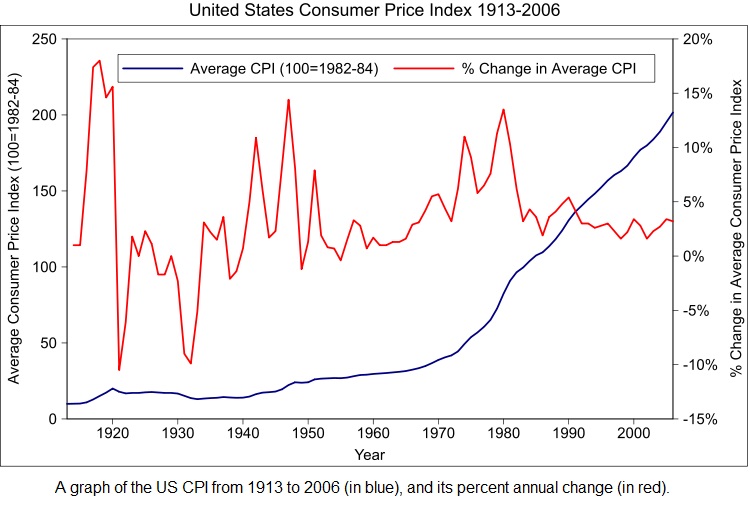
In economics, inflation is a sustained increase in the general price level of goods and services in an economy over a period of time. When the general price level rises, each unit of currency buys fewer goods and services. Consequently, inflation reflects a reduction in the purchasing power per unit of money – a loss of real value in the medium of exchange and unit of account within the economy. A chief measure of price inflation is the inflation rate, the annualized percentage change in a general price index (normally the consumer price index) over time.[a]

Consumer Price Index

The consumer price index (CPI) measures changes in the price level of a market basket of consumer goods and services purchased by households. The CPI in the United States is defined by the Bureau of Labor Statistics (a unit of the Labor Department) as “a measure of the average change over time in the prices paid by urban consumers for a market basket of consumer goods and services.”[b]

The CPI is a statistical estimate constructed using the prices of a sample of representative items whose prices are collected periodically. Sub-indexes and sub-sub-indexes are computed for different categories and sub-categories of goods and services, being combined to produce the overall index with weights reflecting their shares in the total of the consumer expenditures covered by the index. It is one of several price indices calculated by most national statistical agencies. The annual percentage change in a CPI is used as a measure of inflation. A CPI can be used to index (i.e., adjust for the effect of inflation) the real value of wages, salaries, pensions, for regulating prices and for deflating monetary magnitudes to show changes in real values. In most countries, the CPI is, along with the population census and the USA National Income and Product Accounts, one of the most closely watched national economic statistics.

Is the CPI a cost-of-living index?

The CPI frequently is called a cost-of-living index, but it differs in important ways from a complete cost-of-living measure. BLS has for some time used a cost-of-living framework in making practical decisions about questions that arise in constructing the CPI. A cost-of-living index is a conceptual measurement goal, however, and not a straightforward alternative to the CPI. A cost-of-living index would measure changes over time in the amount that consumers need to spend to reach a certain utility level or standard of living. Both the CPI and a cost-of-living index would reflect changes in the prices of goods and services, such as food and clothing that are directly purchased in the marketplace; but a complete cost-of-living index would go beyond this role to also take into account changes in other governmental or environmental factors that affect consumers’ well-being. It is very difficult to determine the proper treatment of public goods, such as safety and education, and other broad concerns, such as health, water quality, and crime, that would constitute a complete cost-of-living framework.

What goods and services does the CPI cover?

Inflation 2The CPI represents all goods and services purchased for consumption by the reference population (U or W) BLS has classified all expenditure items into more than 200 categories, arranged into eight major groups. Major groups and examples of categories in each are as follows:

  • FOOD AND BEVERAGES (breakfast cereal, milk, coffee, chicken, wine, full service meals, snacks)
  • HOUSING (rent of primary residence, owners’ equivalent rent, fuel oil, bedroom furniture)
  • APPAREL (men’s shirts and sweaters, women’s dresses, jewelry)
  • TRANSPORTATION (new vehicles, airline fares, gasoline, motor vehicle insurance)
  • MEDICAL CARE (prescription drugs and medical supplies, physicians’ services, eyeglasses and eye care, hospital services)
  • RECREATION (televisions, toys, pets and pet products, sports equipment, admissions);
  • EDUCATION AND COMMUNICATION (college tuition, postage, telephone services, computer software and accessories);
  • OTHER GOODS AND SERVICES (tobacco and smoking products, haircuts and other personal services, funeral expenses).

Also included within these major groups are various government-charged user fees, such as water and sewerage charges, auto registration fees, and vehicle tolls. In addition, the CPI includes taxes (such as sales and excise taxes) that are directly associated with the prices of specific goods and services. However, the CPI excludes taxes (such as income and Social Security taxes) not directly associated with the purchase of consumer goods and services.

Chained CPI in the United States

In the United States, several different consumer price indices are routinely computed by the Bureau of Labor Statistics (BLS). These include the CPI-U (for all urban consumers), CPI-W (for Urban Wage Earners and Clerical Workers), CPI-E (for the elderly), and C-CPI-U (chained CPI for all urban consumers). These are all built in two stages. First, the BLS collects data to estimate 8,018 separate item-area indices reflecting the prices of 211 categories of consumption items in 38 geographical areas. In the second stage, weighted averages are computed of these 8,018 item-area indices. The different indices differ only in the weights applied to the different 8,018 item-area indices. The weights for CPI-U and CPI-W are held constant for 24 months, changing in January of even-numbered years.

The weights for C-CPI-U are updated each month to reflect changes in consumption patterns in the last month.

In January of each year, Social Security (America’s Old Age Pension) recipients receive a cost of living adjustment (COLA) “to ensure that the purchasing power of Social Security and Supplemental Security Income (SSI) benefits is not eroded by inflation. It is based on the percentage increase in the Consumer Price Index for Urban Wage Earners and Clerical Workers (CPI-W)”[f]. The use of CPI-W conflicts with this purpose, because the elderly consume substantially more health care goods and services than younger people. [d] In recent years, inflation in health care has substantially exceeded inflation in the rest of the economy. Since the weight on health care in CPI-W is much less than the consumption patterns of the elderly, this COLA does not adequately compensate them for the real increases in the costs of the items they buy. [g]

The BLS does track a consumer price index for the elderly (CPI-E). But it is not used, in part because the social security trust fund is forecasted to run out of money in roughly 40 years, and using the CPI-E instead of CPI-W would shorten that by roughly 5 years.[h]

Wikipedia Online Encyclopedia – Retrieved 05-20-2014 http://en.wikipedia.org/wiki/Inflation

Citation References:

a. Mankiw, N. Gregory (2002). Macroeconomics (5th Ed.). Worth Publications. ISBN 978-0716752370. Retrieved May 2014.

b. Consumer Price Index. Bureau of Labor Statistics. Retrieved September 10, 2010 from: http://www.bls.gov/cpi/cpifaq.htm.

c. Losey, Stephen (31 December 2012). “Chained CPI proposal off table for now, lawmakers say”. Federal Times. Retrieved 3 January 2013 from: http://www.federaltimes.com/article/20121231/BENEFITS02/312310001/Chained-CPI-proposal-off-table-now-lawmakers-say?odyssey=tab%7Ctopnews%7Ctext%7CCongress.

d. Robert, Reich (April 4, 2013). “What’s the ‘Chained CPI,’ Why It’s Bad for Social Security and Why the White House Shouldn’t Be Touting It (VIDEO)”. Huffington Post. Retrieved April 11, 2013: http://www.huffingtonpost.com/robert-reich/chained-cpi_b_3016471.html

e. Gibson, Ginger (April 9, 2013). “Republicans applaud chained CPI in Obama budget”. Politico. Retrieved April 11, 2013 from: http://www.politico.com/story/2013/04/republicans-applaud-chained-cpi-in-obama-budget-89831.html.

f. “Cost-Of-Living Adjustment (COLA) Information For 2013”. Cost-Of-Living Adjustment (Social Security Administration). Retrieved April 11, 2013 from: http://www.ssa.gov/cola/

g. Wikipedia treatment for the Consumer Price Index. Retrieved May 20, 2014 from: http://en.wikipedia.org/wiki/Consumer_price_index

h. Hobijn, Bart; Lagakos, David (May 2003). “Social Security and the Consumer Price Index for the Elderly”. Current Issues in Economics and Finance (Federal Reserve Bank of New York) 9 (5): 1–6. Retrieved April 11, 2013 from: http://www.newyorkfed.org/research/current_issues/ci9-5/ci9-5.html.

The approach of a CPI (or a Retail Price Index) is not exclusively American; other societies use the same methodology. But the American model is one from which the Caribbean should apply learned lessons; we would NOT want to fall into the American pitfalls of purposefully eliminating significant items from measurement because of political leanings. For example, the US does not include health care in the measurement of the official CPI, even though it may amount to 40% of some families’ spending. This point is highlighted in this article:

Former White House Chief of Staff Erskine Bowles and former U.S. Senator Alan K. Simpson suggested a transition to using a “chained CPI” in 2010, when they headed the White House’s deficit-reduction commission.[c] They stated that it was a more accurate measure of inflation than the current system and switching from the current system could save the government more than $290 billion over the decade following their report.[c] “The chained CPI is usually 0.25 to 0.30 percentage points lower each year, on average, than the standard CPI measurements.”[c]

However, the National Active and Retired Federal Employees Associations said that the chained CPI does not account for seniors citizens’ health care costs.[c] Robert Reich, former United States Secretary of Labor under President Clinton, noted that typical seniors spend between 20 and 40 percent of their income on health care, far more than most Americans. “Besides, Social Security isn’t in serious trouble. The Social Security trust fund is flush for at least two decades. If we want to ensure it’s there beyond that, there’s an easy fix – just lift the ceiling on income subject to Social Security taxes, which is now $113,700.”[d]

Replacing the current cost-of-living adjustment calculation with the chained CPI was considered, but not adopted, as part of a deficit-reduction proposal to avert the sequestration cuts, or fiscal cliff, in January 2013,[c] but President Obama included it in his April 2013 budget proposal.[e]

Go Lean … Caribbean introduces the CU to take oversight of much of the Caribbean economic, security and governing functionality, covering the realities of healthcare and inflation issues. In summary, this roadmap promotes the Caribbean as a better place to live, work and play for residents and retirees alike. In fact the Go Lean roadmap advocates inviting the aging Diaspora to return to the Caribbean for their “golden years”, this means proactively anticipating pension/medical needs of senior citizens.

Change has come to the Caribbean. The people, institutions and governance of the region are all urged to “lean-in” to this roadmap for change. We need to accurately measure inflation and the stressors that impact it. Rather than “hiding” the facts, as the Americans do, the CU will “manage what we measure”. There are effective tools available to mitigate the risks of inflation, and the integrity of social safety nets (like increasing retirement age or the income ceiling for pension taxes).

The benefits of this roadmap, emergence of an $800 Billion regional economy and 2.2 million new jobs, become imperiled if we ignore important economic indicators, and hide-away from effective solutions. Ignorance and avoidance are not traits of a solution-oriented ethos; they are not technocratic. On the other hand, the CU purports to be a true technocracy!

The following list details the strategies, tactics, implementations and advocacies to impact the CU technocracy:

Community Ethos – Lean Operations Page 24
Community Ethos – Impact the Greater Good Page 37
Strategy – Customers/Stakeholders – Diaspora Page 47
Strategy – Agents of Change – Aging Diaspora Page 57
Tactical – Fostering a Technocracy Page 64
Separation of Powers – Commerce Department Page 78
Separation of Powers – MediCare Administration Page 86
Advocacy – Ways to Measure Progress Page 133
Advocacy – Ways to Grow the Economy Page 151
Advocacy – Ways to Control Inflation Page 153
Advocacy – Ways to Improve Healthcare Page 156
Advocacy – Ways to Impact Entitlements Page 158
Advocacy – Ways to Improve Governance Page 168
Advocacy – Ways to Manage the Social Contract Page 170
Advocacy – Ways to Impact the Diaspora Page 217
Advocacy – Ways to Impact Retirement Page 221
Advocacy – Ways to Improve Elder-Care Page 225
Appendix – Controlling Inflation – Technical Details Page 318

The foregoing encyclopedic source conveys that much depends on accurate measurement of inflation indices. Inflation is what it is!  Measurement and management of inflation (and its effects) is an art and a science for the CU to master. The Go Lean roadmap “leaves no stone un-turned” for the optimization of the economic elevation of the Caribbean.

Inflation does matter! A prudent, lean, economic stewardship matters more!

Download the Book- Go lean…Caribbean Now!!!

Share this post:
, , ,
[Top]

Conservative heavyweights have solar industry in their sights

Go Lean Commentary solar panels

The song, Colors of the Wind, featured in the Disney animated movie Pocahontas (sung by Vanessa Williams), heightened the awareness and arguments of conserving the Earth’s resources. This key verse stands out:

You can own the earth and still All you’ll own is [dirt] until You can paint with all the colors of the wind

These words describe the folly of acquiring properties at the expense of ruining the natural resources around it. No one wants to ruin the planet, but yet many feel that the conservation movement is unnecessary, over-hyped or fear-mongering; that weather extremes are just natural cycles. The book Go Lean…Caribbean is not a call for conservation; it is a call for economic optimization. Whatever your politics, whether you believe that climate change is real or imagined, this book is not trying to convince you one way. It is what it is! This book Go Lean… Caribbean, serves as a roadmap for the introduction and implementation of the Caribbean Union Trade Federation (CU). This Go Lean roadmap has 3 prime directives:

  • Optimization of the economic engines in order to grow the regional economy.
  • Establishment of a security apparatus to protect the resultant economic engines.
  • Improve Caribbean governance to support these engines.

This book is written with the approach that we hope for the best, but plan for the worst. Unfortunately, for much of the Caribbean, they have been impacted with the worst-case scenario, time and again (See Page 112). Early in the book, the pressing need to be prepared for the ravages of climate change is pronounced in the Declaration of Interdependence (Page 11), with these opening words:

Whereas the earth’s climate has undeniably changed resulting in more severe tropical weather storms, it is necessary to prepare to insure the safety and security of life, property and systems of commerce in our geographical region. As nature recognizes no borders in the target of its destruction, we also must set aside border considerations in the preparation and response to these weather challenges.

The assessment and curative measures for the Caribbean is different than the approaches of the United States. The Caribbean does not have the landmass, population, treasuries, or economics of the US, so we cannot look for the US to take the lead for Caribbean problems. We must lead ourselves. The CU is a proxy of that leadership.

By: Evan Halper

WASHINGTON — The political attack ad that ran recently in Arizona had some familiar hallmarks of the genre, including a greedy villain who hogged sweets for himself and made children cry.

But the bad guy, in this case, wasn’t a fat-cat lobbyist or someone’s political opponent.

He was a solar-energy consumer.

Solar, once almost universally regarded as a virtuous, if perhaps over-hyped, energy alternative, has now grown big enough to have enemies.

The Koch brothers, anti-tax activist Grover Norquist and some of the nation’s largest power companies have backed efforts in recent months to roll back state policies that favor green energy. The conservative luminaries have pushed campaigns in Kansas, North Carolina and Arizona, with the battle rapidly spreading to other states.

Alarmed environmentalists and their allies in the solar industry have fought back, battling the other side to a draw so far. Both sides say the fight is growing more intense as new states, including Ohio, South Carolina and Washington, enter the fray.

At the nub of the dispute are two policies found in dozens of states. One requires utilities to get a certain share of power from renewable sources. The other, known as net metering, guarantees homeowners or businesses with solar panels on their roofs the right to sell any excess electricity back into the power grid at attractive rates.

Net metering forms the linchpin of the solar-energy business model. Without it, firms say, solar power would be prohibitively expensive.

The power industry argues that net metering provides an unfair advantage to solar consumers, who don’t pay to maintain the power grid although they draw money from it and rely on it for backup on cloudy days. The more people produce their own electricity through solar, the fewer are left being billed for the transmission lines, substations and computer systems that make up the grid, industry officials say.

“If you are using the grid and benefiting from the grid, you should pay for it,” said David Owens, executive vice president of the Edison Electric Institute, the advocacy arm for the industry. “If you don’t, other customers have to absorb those costs.”

The institute has warned power companies that profits could erode catastrophically if current policies and market trends continue. If electricity companies delay in taking political action, the group warned in a report, “it may be too late to repair the utility business model.”

The American Legislative Exchange Council, or ALEC, a membership group for conservative state lawmakers, recently drafted model legislation that targeted net metering. The group also helped launch efforts by conservative lawmakers in more than half a dozen states to repeal green energy mandates.

“State governments are starting to wake up,” Christine Harbin Hanson, a spokeswoman for Americans for Prosperity, the advocacy group backed by billionaire industrialists Charles and David Koch, said in an email. The organization has led the effort to overturn the mandate in Kansas, which requires that 20% of the state’s electricity come from renewable sources.

“These green energy mandates are bad policy,” said Hanson, adding that the group was hopeful Kansas would be the first of many dominoes to fall.

The group’s campaign in that state compared the green energy mandate to Obamacare, featuring ominous images of Kathleen Sebelius, the outgoing secretary of Health and Human Services, who was Kansas’ governor when the state adopted the requirement.

The Kansas Senate voted late last month to repeal the mandate, but solar industry allies in the state House blocked the move.

Environmentalists were unnerved. “They want to roll it back here so they can start picking off other states,” said Dorothy Barnett, director of the Climate and Energy Project, a Kansas advocacy group.

The arguments over who benefits from net metering, meanwhile, are hotly disputed. Some studies, including one

published recently by regulators in Vermont, conclude that solar customers bring enough benefits to a regional power supply to fully defray the cost of the incentive.

Utilities deny that and are spending large sums to greatly scale back the policy.

In Arizona, a major utility and a tangle of secret donors and operatives with ties to ALEC and the Kochs invested millions to persuade state regulators to impose a monthly fee of $50 to $100 on net-metering customers.

Two pro-business groups, at least one of which had previously reported receiving millions of dollars from the Koch brothers, formed the campaign’s public face. Their activities were coordinated by GOP consultant Sean Noble and former Arizona House Speaker Kirk Adams, two early architects of the Koch network of nonprofits.

In October, California ethics officials levied a $1-million fine after accusing groups the two men ran during the 2012 election of violating state campaign finance laws in an effort to hide the identities of donors.

The Arizona Public Service Co., the state’s utility, also had Noble on its payroll. As a key vote at the Arizona Corporation Commission approached late last year, one of the commissioners expressed frustration that anonymous donors had bankrolled the heated campaign. He demanded APS reveal its involvement. The utility reported it had spent $3.7 million.

“Politically oriented nonprofits are a fact of life today and provide a vehicle for individuals and organizations with a common point of view to express themselves,” company officials said in a statement in response to questions about their campaign.

The solar companies, seeking to sway the corporation commission, an elected panel made up entirely of Republicans, formed an organization aimed at building support among conservatives. The group, Tell Utilities Solar won’t be Killed, is led by former California congressman Barry Goldwater Jr., a Republican Party stalwart.

“These solar companies are becoming popular, and utilities don’t like competition,” Goldwater said. “I believe people ought to have a choice.”

The commission ultimately voted to impose a monthly fee on solar consumers — of $5.

The solar firms declared victory. But utility industry officials and activists at ALEC and Americans for Prosperity say the battles are just getting underway. They note the Kansas legislation will soon be up for reconsideration, and fights elsewhere have barely begun.

In North Carolina, executives at Duke Energy, the country’s largest electric utility, have made clear the state’s net metering law is in their sights. The company’s lobbying effort is just beginning. But already, Goldwater’s group has begun working in the state, launching a social media and video campaign accusing Duke of deceit.

“The intention of these proposals is to eliminate the rooftop solar industry,” said Bryan Miller, president of the Alliance for Solar Choice, an industry group.

“They have picked some of the most conservative states in the country,” he added. “But rooftop solar customers are voters, and policymakers ultimately have to listen to the public.”

LA Times.com (Article posted 04-20-2014; retrieved 05/15/2014) –http://www.latimes.com /nation/la-na-solar-kochs-20140420,0,7412286.story#axzz2zU4qRP15

The foregoing article highlights opposition to some implementations of some green initiatives, the solar industry.

While the oppositional arguments have merit, the principles of the above-cited song lingers: “we can own the earth and only own dirt, if we do not paint with the colors of the wind”.

We must therefore consider the lessons learned from these lyrics and the foregoing news article. We must insure that financial subsidies are strategically assigned to prioritize one energy source over others only for the Greater Good.

The Go Lean roadmap posits that people respond to economic incentives (Page 21). So if green conservation projects (like solar panels or wind turbines) are important for the Greater Good (Page 37), then there must be incentives to encourage their adoption. The roadmap specifics call for the implementation of a regional power grid (Page 113), utilizing underwater cables, to connect the many islands. The plan therefore advocates the adoption of green power generation modes: solar, wind, and tidal, but not with the legislative mandates that are the source of debates, as in the foregoing articles. The regional grid will allow for economies-of-scale to justify this type of infrastructure.

As for existing infrastructure, oil/coal power generation, Go Lean proposes improvements with modernizations, clean burning natural gas and a heightened focus on quality delivery. The big hurdle of funding is mitigated with this plan.

The ravages of climate change are real for the Caribbean region. So too are the solutions proffered in this roadmap for the CU. “It is what it is”, but we will be prepared for the changes and the opportunities to make our homeland a better place to live, work and play. 🙂

Download the free e-Book of Go Lean … Caribbean – now!

Share this post:
, , ,
[Top]

The Future of CariCom

Go Lean Commentary

The Future of CARICOM - PhotoCariCom has been both a success and a failure!

CariCom has succeeded in bringing together most of the Caribbean and instilling the values of regional integration.

The CariCom has failed … with almost everything else!

CariCom = Successful Plan; Failed Execution.

The book Go Lean … Caribbean is a roadmap for the introduction and implementation of the Caribbean Union Trade Federation (CU), as the next phrase of regional integration. The roadmap has compiled the assessment of what is wrong with the Caribbean Community as a construct; (applying lessons learned from the previous failed integration effort – West Indies Federation). Then it proceeds to detail how-what-why to manifest the requested change, and to do it right this time. This roadmap is a GPS-style, turn-by-turn direction on how to get from the status quo to the desired destination.

The foregoing news article echoes many of the same sentiments about the CariCom’s failures and inadequacies.

By: Michael W Edghill*, CJ Contributor

Recently, noted columnist on Caribbean affairs, Sir Ronald Sanders, authored an article that appeared in numerous publications throughout the Caribbean.

The catalyst for his work appears to have been the remarks of Dr. Ralph Gonsalves, Prime Minister of St Vincent & the Grenadines. Dr. Gonsalves, never one to be accused of timidity, who commented in April on the failings of CariCom states to embrace the integration process.

Taking the lead from the Prime Minister, Sanders elaborated upon some of the difficulties that have inhibited the integration process and placed much of the blame for the shortcomings of the integration process squarely at the feet of the Heads of Government of the member states.

Their lack of initiative over the years, no doubt attributed to domestic political considerations, has left CariCom as more of a theoretical body as opposed to a functional body like that of the EU.

In April of 2011, the University of the West Indies Institute of International Relations issued a report on the status of Caribbean Regional Integration.

The comprehensive report identified a number of issues that have inhibited the integration process.

Among the contributing factors were the weakness of CariCom institutions and the difficulties of integrating economies of such divergent scales.

The report went on to make numerous suggestions on how to structurally change CariCom to create an effective body.

Rather than focusing on the detailed and complex suggestions (though wholly rational, reasonable, and worthy of a closer look) for moving the integration process forward, perhaps a few robust initiatives would provide the needed catalyst for advancing towards a functional CariCom.

Restructuring the CariCom governing body: This idea would necessitate the creation of a political study group to evaluate the failings of the current CariCom governing structure outside of the widely held view that the Heads of Government of member states hold too much power in CariCom as an institution.

There are assuredly other institutional weaknesses that prohibit the governing body of CariCom from being effective. Identifying those weakness and coming up with workable solutions based upon those elements of governance that are more successful in supranational bodies like the EU would go a long way in reestablishing a reorganized CariCom as a functional institution as opposed to a theoretical institution with limited success in Caribbean integration.

Full integration of the Dominican Republic into CariCom: For too long, CariCom has been mired in indecisiveness over the question of admitting the Dominican Republic into CariCom. The recent citizenship crisis between the DR and Haiti has not helped this issue. That being said, the time has come for CariCom to finalize this question and find a way to integrate the Dominican Republic into CariCom. One of the problems that CariCom has had with integration over the years is finding a way to fairly work within the varied economies of scale that exist within the body. The unstated reality is that Trinidad & Tobago has been unwilling to serve as an underwriter for regional economic stability in the way that Germany has for the EU. The integration of the Dominican Republic should serve as a catalyst for a renewed and extensive look at how to make this work in CariCom. The DR would

add another large and growing economy to CariCom thereby potentially alleviating any perceived economic burden that integration may impose. Perhaps the creation of a scaled system of economic contribution would be a simultaneous negotiation along with the integration of the Dominican Republic. While the various possibilities are numerous, the time has come for action on this issue. And depending on the results of the integration of the Dominican Republic into CariCom, a look at the relationship between Cuba and CariCom may be subsequently appropriate. (Although the country’s controversial citizenship ruling last year will remain an impediment).

Utilizing the “new” CariCom as a unified body in new trade/investment agreements: Much like the agreement between the EU and CariForum, a ‘new’ CariCom (as created by fulfilling the prior two suggestions) should have the ability to enter into new supranational trade agreements in a stronger position and with a unified voice.

Discussions of the validity and value of ‘free trade’ as a driver of upward economic mobility for all in society are valuable but cannot overcome the overwhelming evidence that creation of new ‘free trade’ zones is the current wave in international economic relations.

Having a stronger voice in these discussions is necessary for member states that hope to continue economic growth in the future.

The “new” CariCom would be primed for negotiations on how to engage with NAFTA to the benefit of its member states.

Likewise, a new CariCom has the potential to open up a whole new range of investment opportunities, especially for those interested in renewable energy investment. If there is one thing that the individual states of the Caribbean seem to be unified on currently, it is the need to address climate change and the creation of more renewable energy sources in the Caribbean.

The ability to explore those investment opportunities as a regional body as opposed in individual states appears, at least superficially, to be of great value to the CariCom member states.

These ideas are all simply possibilities, however, and will go nowhere without the political will of the current Heads of Government of CariCom member states.

As with any supranational organization, members have to be willing to give of their authority in the first place for any changes to take place. It is now a matter of whether member states are willing to concede that there is a pressing problem with full integration within CariCom and take the steps necessary to ensure a vibrant CariCom for the future.

* Michael W Edghill, a Caribbean Journal contributor, teaches courses in US Government & in Latin America & the Caribbean. His work has also appeared in the Yale Journal of International Affairs and Americas Quarterly.

Caribbean Journal Online News Source – May 6, 2014
http://www.caribjournal.com/2014/05/06/the-future-of-caricom/

The roadmap therefore does not focus on the CariCom but rather, focuses on the Caribbean; the 42 million people (per 2010 figures) within the 30 member-states of 4 different languages (Dutch, English, French, Spanish), and 5 different administrative legacies (American, British, Dutch, French, Spanish).

The roadmap thereby sets out to accomplish 3 prime directives:

1. Optimize the economic engines so as to grow the regional economy to $800 Billion and create 2.2 million new jobs.

2. Establish a security apparatus (including emergency management) around the economic engines so as to mitigate the eventual emergence of “bad actors”.

3. Improve Caribbean governance.

At the outset, the roadmap pronounces a preamble of this significance in the Declaration of Interdependence (Page 10):

When, in the course of human events, it becomes necessary for one people to unite with others so as to connect them together to collaborate, confederate and champion the challenges that face them, we the people of Caribbean democracies find it necessary to accede and form a confederated Union, the Caribbean Union Trade Federation, with our geographic neighbors of common interest.

This is a big change compared to what the CariCom purports to offer. The CU aspires to do the heavy-lifting to impact change to this region. This commitment is codified in this roadmap, with details of community ethos, strategies, tactics, implementations and advocates; as follows:

Community Ethos – Forging Change Page 20
Strategy – CU Vision and Mission Page 45
Tactical – Fostering a Technocracy Page 64
Tactical – Separation of Powers – Federal versus Page 71
Implementation –  A Detailed Five Year Plan Page 95
Implementation –  Assembling US Territories Page 96
Implementation –  Ways to Pay for Change Page 101
Planning – Ways to Model the EU Page 130
Planning – Lessons from the Previous Federation Page 135
Advocacy – Ways to Grow the Economy Page 151
Advocacy – Ways to Improve Governance Page 168
Advocacy – Ways to Improve Homeland Security Page 180
Advocacy –  Preserve Caribbean Heritage Page 218

In contrast with the CariCom, the CU aspires to elevate the entire Caribbean, with a mission to stop the gut-wrenching brain drain/human flight and encourage repatriation of the far-flung Caribbean Diaspora. These objectives are neither in the CariCom charter nor any of its executions.

The CU is structured, empowered, energized and funded to not just be a theoretical body but a functional body, primed to make the Caribbean a better place to live, work, learn and play. 🙂

Download the free e-book of Go Lean … Caribbean – now!

Share this post:
, , ,
[Top]

Lessons Learned from the American Airlines merger

Go Lean Commentary – Lessons on Delivery Arts & Sciences

Lessons Learned 1Tourism is the number one economic driver in the Caribbean region. But the eco-system has cracks …

More and more tourists are travelling to the Caribbean…by cruise ships. Less and less are travelling to the region by airplane. Therefore no air-flights, no hotels, no restaurants, no taxi cabs, no job multipliers, and no full economic “chain-link”.

The 2008 financial crisis placed a heavy strain on the US’s largest carrier: American Airlines. On July 2, 2008, American announced furloughs of up to 950 flight attendants, in addition to the furlough of 20 MD-80 aircraft. American’s hub at Luiz Muñoz Marin Airport in San Juan, Puerto Rico (PR) was truncated from 38 to 18 daily inbound flights. The holding company, AMR Corporation, filed for Chapter 11 bankruptcy protection on November 29, 2011, and the airline made cuts in July 2012 due to the grounding of several aircraft associated with its bankruptcy and lack of pilots due to retirements. American Eagle, the regional carrier, (the Caribbean’s largest), was to retire 35 to 40 regional jets as well as its entire Saab turboprop fleet. [b] American Eagle PR ceased operation in March 2013. This status created dysfunction for the entire Eastern Caribbean region.

This dysfunction has created the urgency for permanent change. This is a prime directive of the book Go Lean … Caribbean, to optimize the region’s economic engines, including enhancements for Caribbean tourism, cruise and “long stay” visitors.

The delivery story continues…

By summer 2012, American Airlines considered merging with another airline as part of a restructuring plan.

On February 14, 2013, AMR Corporation and US Airways Group officially announced that the two companies would merge to form the largest airline (and airline holding company) in the world, with bondholders of American Airlines parent AMR owning 72% of the new company and US Airways shareholders owning the remaining 28%. The combined airline would carry the American Airlines name and branding, while US Airways’ management team, including CEO Doug Parker, would retain most operational management positions, and the headquarters would be consolidated at American’s current headquarters in Fort Worth, Texas. The merger would create the world’s largest airline, which, along with United and Delta Air Lines, would control three-quarters of the US market. US Federal Bankruptcy judge Sean Lane approved the merger in March 2013.

The United States Department of Justice filed a lawsuit in August 2013 seeking to block the merger, arguing that it would mean less competition and higher prices. On November 12, the airlines reached a settlement (eliminating certain routes and hubs) with the US Justice Department to settle the lawsuit and allow the merger to be finalized. Thus restoring the public “trusts”.

AMR and US Airways Group completed the merger on December 9, 2013, with the new holding company American Airlines Group, Inc. being listed on NASDAQ that day. [b]

In a January 2014 letter [a] to frequent flyers of both airlines, it was announced: “It’s an exciting time at American Airlines, and we’re kicking off the new year with you — our most loyal customers in mind. For now, we’ll continue to maintain our separate loyalty programs — Dividend Miles and AAdvantage® — with rules and benefits of each program still applying, but rest assured your mileage balance and elite status are safe, secure and will continue to be honored”.

There remains a lot of work to do as both airlines are combined, and since the close of the merger, the two airlines have been working to deliver the first phases of enhanced benefits to their customers … and communities. Here are some highlights:

1. Pick “low-hanging fruit”

Lessons Learned 2Earning and redeeming miles – Members can now earn and redeem Dividend Miles (US Airways) when flying on American or US Airways with their Dividend Miles number. All miles and segments earned when flying on either airline will count toward elite status qualification in the program of your choice.

Elite benefits – Elite members of each airline can now enjoy select reciprocal benefits when flying on either airline, including First and Business Class check-in, complimentary checked bags, priority security and boarding, and many more.

More lounge access – In addition to the US Airways Clubs, club members can now access 35 Admirals Club® locations in major airports worldwide.

2. Intermediate goals and plans

On March 30, US Airways exited the competing Star Alliance. The initiation with the oneworld® alliance started on March 31, giving customers opportunities to access the widest array of destinations around the globe. More and more benefits will emerge as the merger (and the oneworld alliance) consummates. Coming soon, customers will enjoy access to an enhanced network through the American/US Airways code-share, allowing for the seamlessly booking of travel on either airline.

3. Long-term objectives

The actual integration of the airlines under a single air operator’s certificate will not be completed until a much later date. The combined airline will carry the American Airlines name and branding, and will maintain the existing US Airways hubs in Charlotte, Philadelphia, Phoenix, and Washington DC for a period of at least five years under the terms of a settlement with the US Department of Justice.

4. End Game

The resultant single-branded airline will operate an extensive international and domestic network, with scheduled flights throughout North America, the Caribbean, South America, Europe, and Asia. Its route network will center around the five American “cornerstone” hubs in Dallas/Fort Worth, New York, Los Angeles, Miami, and Chicago; plus some US Airways hubs.

oneworld Alliance

What exactly is an airline alliance? It’s an agreement among multiple airlines to streamline, make customers travel experience more seamless. The oneworld alliance is particularly good at this. So much so that it’s been named the Best Airline Alliance by Global Traveler magazine’s 2013 Reader Survey for the fourth year in a row. A passenger can be checked (boarding passes and luggage) right through to the final destination when traveling on oneworld carriers. Other benefits include airport lounge access, priority check-in and priority boarding, and of course, a large number of destination choices.

The new alliance means more ways to get to top destinations. Here are the summary options…by the numbers:

981 destinations served
151 countries
14,244 daily departures
3,283 aircrafts in the fleet
474,825 million passengers flown annually

The oneworld Alliance Member Airlines:

Airline Base Country / Region
Airberlin Germany – Central Europe
American Airlines USA – North America
British Airways United Kingdom, Western Europe
Cathay Pacific Airways Hong Kong (China), Far East Asia
Finnair Finland – North Europe
Iberia Spain / Portugal – Southern Europe
Japan Airlines Japan – Far East Asia
LAN Airlines Chile/Peru – South America
Malaysia Airlines Malaysia – Southeast Asia
Qantas Australia – Austra-Asia
Qatar Airways Middle East
Royal Jordanian Middle East
S7 Airlines Russia – Siberia
TAM Airlines Brazil – South America
US Airways USA – North America

Go Lean Commentary … cont’d

Considering one specific country, there is now something wrong in Barbados. [d] In July 2013, Barbados recorded the lowest number of long stay visitors (47,953) during the same period for 13 consecutive years. This is thusly expected to affect the traffic for the annual festival of Crop Over (a traditional harvest celebration connected with Barbados sugar cane plantation culture) [e] for 2014. Long stay visitors usually travel by airplane. This is the issue; there is a supply problem with air travel in the Eastern Caribbean and there is a demand problem. The end result: airline dysfunction and higher prices.

The issue of declining tourism spending is tied to dysfunction in the airline industry. Has the Crop Over event become less attractive or is the blame on the higher airfares that has resulted due to the airline (American Airlines) dysfunction? The analytical conclusion is the problem is with the airline industry.

The 2008 Financial Crisis continues to wreak havoc on the economy of the Caribbean. This is a consistent theme in the book Go Lean … Caribbean; it serves as a roadmap for the introduction and implementation of the Caribbean Union Trade Federation (CU), an alliance of 30 Caribbean member-states.

The Go Lean roadmap calls for regulating and promoting the Caribbean’s aviation industry. We need American Airline and US Airways to deliver on their merger, and then deliver on facilitating air passengers to the Caribbean region.

This is how the CU will optimize the region’s economic engines. This is change!

The Go Lean book presents a series of community ethos that must be adapted to forge this change. In addition, there are these specific strategies, tactics, implementation and advocacies to apply:

Community Ethos – Job Multiplier Page 22
Community Ethos – Lean Operations Page 24
Community Ethos – Cooperatives Page 25
Community Ethos – Ways to Help Entrepreneurship Page 28
Community Ethos – Impacting the Greater Good Page 37
Strategy – Customers – Visitors Page 47
Strategy – Competitive Analysis –  Event Patrons Page 55
Strategy – Core Competence – Tourism Page 58
Strategy – Anecdote – Caribbean Hotel & Tourism Assoc. Page 60
Tactical – Fostering a Technocracy Page 64
Tactical – Commerce – Tourism Promotion Page 78
Tactical – Aviation Administration & Promotion Page 84
Implementation – Ways to Deliver Page 109
Implementation – Trade Mission Objectives Page 116
Planning – Ways to Improve Trade Page 128
Planning – Lessons Learned from 2008 Page 136
Planning – Lessons from Egypt Page 143
Advocacy – Ways to Enhance Tourism Page 190
Advocacy – Ways to Impact Events Page 191
Advocacy – Ways to Market Southern California Page 194
Advocacy – Ways to Promote World-Heritage-Sites Page 248

There are lessons from the evolution and delivery of the American Airlines / US Airways merger in considering the quest for Caribbean optimization:

• When possible, Caribbean solutions should come from the Caribbean.

• When not possible, Caribbean solutions should be serviced by alternate sources, with no one player holding more than 50% of market share.

• Many Caribbean islands have close proximity, so there must always be alternative transportation modes, like ferry-boats.

• Do not “bite the hand that feeds you”; the Caribbean region must protect the engines that drive the economy.

Now is the time to lean-in to this roadmap for Caribbean change, as depicted in the book Go Lean…Caribbean. We cannot afford another American corporate giant, (i.e. Lehman Brothers) mishandling their public trusts. The Caribbean can – and must – be less elastic to American woes.

The Caribbean should be less of an American parasite and more of a protégé.

Download the book Go Lean … Caribbean – now!

————————-

References:

a. Andrew Nocella, American Airlines Senior Vice President and Chief Marketing Officer. AAdvantage Frequent Flyer Status Email. Retrieved January 5, 2014.

b. Wikipedia treatment on American Airlines. Retrieved May 6, 2014 from: https://en.wikipedia.org/wiki/American_Airlines

c. Titcombe, Tara. “The World at your fingertips”. US Airways Magazine. Retrieved May 6, 2014 from: http://tjt0325no2pencil.files.wordpress.com/2014/04/aprilfeature_oneworld_final.pdf

d. “Commentary: Tourism Matters: A better analysis is needed”. Caribbean News Now Online Magazine. Retrieved May 6, 2014 from: http://www.caribbeannewsnow.com/topstory-Commentary%3A-Tourism-Matters%3A-A-better-analysis-is-needed-20985.html

e. Wikipedia treatment on American Airlines. Retrieved May 6, 2014 from: https https://en.wikipedia.org/wiki/Crop_Over


Share this post:
, , , , , , ,
[Top]

A Lesson in History – America’s War on the Caribbean

Go Lean Commentary
War on Caribbean 1

“Never kill yourself for someone who is willing to watch you die” – Inspired Expression.

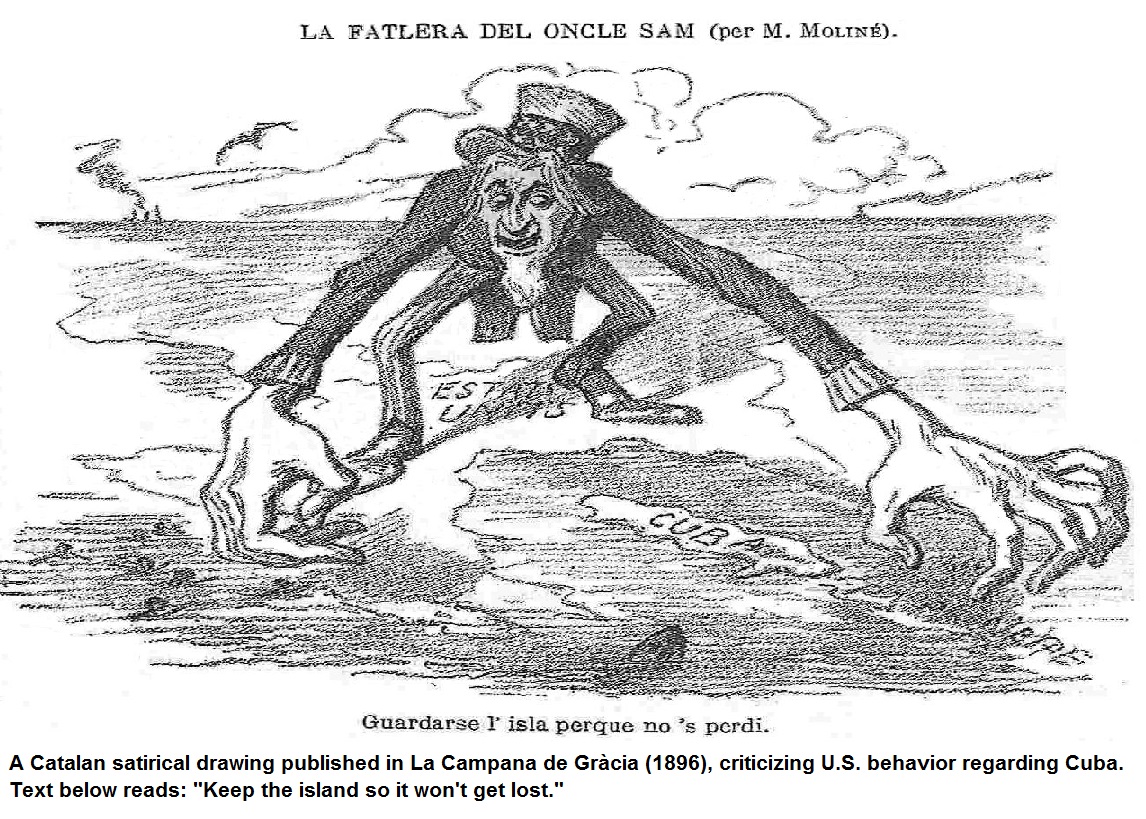
The United States of America fought an actual war, for 10 weeks, in the Caribbean theater in 1898. This was the war against the Spanish Empire, or more commonly known as the Spanish American War.

This is a lesson from an actual history:

These events transpired during the decline of the Spanish Empire. After centuries of vast colonial expansion, at this point, only a few of its vast territories remained. Revolts against Spanish rule had occurred for some years, in the Caribbean territories (Cuba, Dominican Republic and Puerto Rico), especially in Cuba. There had been war scares before. But in the late 1890s, American public opinion became agitated by an anti-Spanish propaganda; led by influential journalists such as Joseph Pulitzer and William Randolph Hearst, who used yellow journalism to criticize Spanish administration of Cuba.

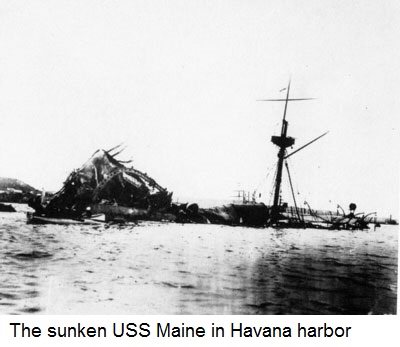
Then there was the mysterious sinking of the American battleship USS Maine in Havana harbor on February 15, 1898, which was believed to be and reported as a sabotage attack by Spanish forces. This created political pressure, from Congress and certain industrialists, to push the administration of Republican President William McKinley into a war he had hoped to avoid.[a]

The US Constitution (Article 1 Section 8) forbids that the country can NOT go to war unless provoked. With the sinking of the USS Maine, the government had its constitutional provocation.

Compromise was sought by Spain, but rejected by the United States which sent an ultimatum to Spain demanding it surrender control of Cuba. Consequently war was formally declared, first by Madrid, then by Washington on April 25, 1898.[a]

The ten-week war was fought in both the Caribbean and the Pacific, but the main issue that emerged was that of Cuban independence. American naval power proved decisive, allowing US expeditionary forces to disembark in Cuba against a Spanish garrison already brought to its knees by nationwide Cuban insurgent attacks and further wasted by yellow fever. With two obsolete Spanish squadrons sunk in Santiago de Cuba and Manila Bay and a third, more modern fleet recalled home to protect Spain’s coasts, Madrid sued for peace.[b] As a result, today, Cuba and the Dominican Republic enjoy independence, and Puerto Rico is an American territory, by choice – after many public referendums on the question of independence.

What was the motivation for this war?

Earlier, in 1823, US President James Monroe enunciated the Monroe Doctrine, which stated that the United States would not tolerate further efforts by European governments to colonize land or interfere with states in the Americas; however, Spain’s colony in Cuba was exempted. Before the Civil War Southern interests attempted to have the US purchase Cuba and make it new slave territory. The proposal failed, and subsequently the national attention shifted to the build-up towards the Civil War.[c]

But the “dye had been cast”. Cuba attracted America’s attention; little note was made of the Philippines, Guam, or Puerto Rico. The Spanish Government regarded Cuba as a province of Spain rather than a colony, and depended on it for prestige and trade. It would only be extracted with a war.

In 1976, the US Navy’s own historian (Admiral Hyman G. Rickover’s published book How the Battleship Maine Was Destroyed) declared that the sinking of the USS Maine — the justification for America’s entry into the Spanish-American War — was probably caused by an internal explosion of coal, rather than an attack by Spanish forces.[d]
Sources: See Citations in the Appendix below.

What is the lesson here for the Caribbean and today’s effort to integrate and unify the Caribbean economy? First, there are these principles, that should not be ignored, if we truly want progress/success:

  • In 1918 US Senator Hiram Warren Johnson is purported to have said: “The first casualty when war comes is truth”.
  • “War is a racket” – Smedley Butler, one of the most highly-decorated military men of all time, and the man who prevented a coup against Franklin D. Roosevelt.
  • The Bible declares that: “For there is nothing hidden that will not become manifest” – Luke 8:17

War on Caribbean 2There will be no chance for success in the Caribbean region if this effort goes against American security/foreign policy interest. This is a consistent theme in the book Go Lean … Caribbean, it serves as a roadmap for the introduction and implementation of the Caribbean Union Trade Federation (CU); it asserts that the economy of the Caribbean is inextricably linked to the security of the Caribbean. The roadmap therefore proposes an accompanying Security Pact to accompany the CU treaty’s economic empowerment efforts. The plan is to cooperate, collaborate and confer with American counterparts, not oppose them. In fact, two American territories (Puerto Rico and the US Virgin Islands) are included in this CU roadmap.

To establish a better American-Caribbean partnership, the Go Lean book presents a series of community ethos that must be adapted to forge this change. In addition, there are these specific strategies, tactics, implementation and advocacies to apply:

Community Ethos – new Economic Principles Page 21
Community Ethos – new Security Principles Page 22
Community Ethos – Minority Equalization Page 24
Community Ethos – Lean Operations Page 24
Community Ethos – Cooperatives Page 25
Community Ethos – Manage Reconciliations Page 25
Community Ethos – Impacting the Greater Good Page 34
Strategy – Customers – Public and Governments Page 47
Tactical – Fostering a Technocracy Page 64
Tactical – Homeland Security – Naval Operations Page 75
Tactical – Homeland Security – Militias Page 75
Implementation – Assemble – US Overseas Territory Page 96
Implementation – Foreign Policy Initiatives at Start-up Page 102
Implementation – Security Initiatives at Start-up Page 103
Implementation – Ways to Improve Mail Service Page 108
Implementation – Trade Mission Objectives Page 116
Implementation – Ways to Promote Independence Page 120
Planning – Ways to Model the EU Page 130
Planning – Lessons Learned from the W.I. Federation Page 135
Planning – Lessons from the US Constitution Page 145
Advocacy – Ways to Better Manage the Social Contract Page 170
Advocacy – Ways to Foster Cooperatives Page 176
Advocacy – Ways to Improve Homeland Security Page 180
Advocacy – Ways to Improve Intelligence Gathering Page 182
Advocacy – Ways to Enhance Tourism Page 190
Advocacy – Ways to Market Southern California Page 194
Advocacy – Ways to Preserve Caribbean Heritage Page 218
Advocacy – Ways to Re-boot Cuba Page 236
Advocacy – Ways to Impact the Dominican Republic Page 237
Advocacy – Ways to Impact US Territories Page 244

After this consideration, the conclusions are straight forward:

  • The Caribbean should take the lead for our best self-determination. We must do the heavy-lifting. We can always count on America to pursue what’s in America’s best interest, and this may not always align with Caribbean objectives. So we must take our own lead for our own self-interest.
  • American priorities change with presidential administrations.

Now is the time to lean-in to this roadmap for Caribbean change, as depicted in the book Go Lean…Caribbean. At this time, there is no American agenda or contrarian policy that may dissuade us – but that’s only today. We need to act fast before a new American crisis emerges, (or one is created artificially).

Download the book Go Lean … Caribbean – now!

————-

Appendix References

a. Beede, Benjamin R., ed. (1994), The War of 1898 and U.S. Interventions, 1898–1934, Taylor & Francis, ISBN 978-0-8240-5624-7. An encyclopedia. Pages 120; 148.

b. Dyal, Donald H; Carpenter, Brian B.; Thomas, Mark A. (1996), Historical Dictionary of the Spanish American War, Greenwood Press, ISBN 0-313-28852-6. Pages 108 – 109.

c. Wikipedia treatment on the Spanish American Way. Retrieved May 5, 2014 from: http://en.wikipedia.org/wiki/Spanish_American_War

d. “The Destruction of USS Maine”. Department of the Navy — Naval History and Heritage Command. Retrieved May 5, 2014 from: http://www.history.navy.mil/faqs/faq71-1.htm

Share this post:
, , , , ,
[Top]

Open the Time Capsule: The Great Recession of 2008

Go Lean Commentary

Time Capsule Pic 1Picture this: one week after the greatest threats to the global financial system, since the Great Depression. You cut out and store – for safe keeping in a “virtual time capsule”, (see Appendix A) – a newspaper commentary and subsequent review/analysis of that crisis. It’s time now to open that capsule! Why so early? Why only after 6 years? So that this analysis would serve as a course correction. Those placing the time-capsule, hoped for a different result.

This is the scenario depicted in the foregoing news article. It was published on September 23 in 2008; 8 days after Lehman Brothers filed the largest Bankruptcy in world history – signaling the peak of the financial crisis, the precipice of a total system failure. The book Go Lean … Caribbean is based on that premise, declaring that a crisis is a terrible thing to waste”, quoting noted Economist Paul Romer’s assessment that the Great Recession would be a crisis for the modern world. The book posits that the Caribbean, with its parasite economy, is still in that crisis – no noticeable recovery.

A joke lampooning economists declares “that an economist is an expert who will know tomorrow why the things he predicted yesterday didn’t happen today”.CU Blog - Open the Time Capsule - The Great Recession of 2008 - Photo

So now, this review/analysis of a 6 year old newspaper editorial from a Guest Columnist, the focus of which was to an audience in the Bahamas; (but this is equally representative of the entire Caribbean):

It is the assessment by the publishers of Go Lean that the foregoing analysis was spot on!

It describes the new normal, a term cementing the truths that the economic realities that suddenly emerged in 2008 would thereafter remain as the norm. This has proven to be the case. The foregoing writer lamented that his government appeared to be using the same set of tools to fix a new vehicle with all different parts, and they pondered why the vehicle would not repair (recover) and get going. The writer concluded that the stewards of the economy needed to prepare a 20 year plan to navigate his country among the new realities facing the world. But he doubted that such a plan would emerge.

By: Craig Butler

I know what you must be thinking. ‘The new normal’, what in heaven’s name is he talking about? Well, the other day I was in Florida listening to talk radio.

There was a director from the International Monetary Fund, an economics professor, and a few others. They were talking about the global economy and what the future holds. The professor was the one who used the ‘new normal’ phrase and he did so in reference to the high prices that we are experiencing worldwide.

He said that, as he did not expect a significant strengthening of the dollar any time soon; coupled with the fact that the price of oil was likely to remain high and the war in Iraq was ongoing, he believed that the current high prices are going to be the norm.

Most of the panelists agreed that some experts have given folks a false sense of security by suggesting that prices will come back down once the price of oil drops. But all on the panel were of the view that the price of oil will never again be under $90 to $100 per barrel.

This was partly based on the weak dollar and partly on our dependency on fossil fuels and the lack of resolve shown by politicians to fully develop alternatives. They also noted that the oil lobby was one of the most powerful in Washington, which was a leading factor in the stalled development of renewable energy.

And the price of breadbasket items and other basics has not been helped by climatic change, which has led to falls in wheat and rice production over the last few years. Add to this the diversion of corn for use as a fuel (ethanol), and we have the new normal.

My views tend to be conservative so my first reaction was that these are some leftwing liberal nuts talking. However, on reflection much of what was said is correct.

Why should we expect to see a reduction in the price of oil? Producers are making so much money it’s not realistic to think they would relinquish that. And the high price affects so many other industries that have had to pass on these increases to the consumer. Just look at the airlines. And all the solutions being put forward to wean us off our dependency on oil will take at least five years to have any kind of impact.

The panel went on to say that there will be a widening of the income gap – something we are already seeing in the Bahamas. Many people who I know in the middle class are struggling so much that they can now be classified as the working poor.

I say that because they are now living from pay cheque to pay cheque. All their savings have been depleted; and things that they once could afford are out of the question now.

Think about it – how many of the people you know around you have their houses in foreclosure; have lost their car to the bank; have had to take their children out of private school; or have been unable to take a vacation this year?

Look in the newspaper this week and I’m sure one of the leading commercial banks will have a double page ad featuring distressed properties. The other week two banks had ads back to back.

I have written before about misguided priorities and how, despite all that is going on, we still prefer the materialistic rather than seek what is important.

I remember from my youth a song by Eddie Minnis called the ‘Finance Man’. I loved that song, and the words to one of the verses bears repeating: ‘See him there he poor as me and you but he driving round in Malibu. His car sleeps in the road at night, Lord you know that just ain’t right, He is living in the hands of the finance man…’

I apologize to brother Eddie if I did the lyrics an injustice. But it demonstrates how we have lived on credit for a long time. We have maintained a lifestyle well beyond our means without a thought as to what might happen in hard times.

As a lawyer I can see first hand what has happened to many in the middle class. You see, it was important for them to have the grand house with the two European cars parked in the garage, kids in the best schools and all the trappings that went along with it. And I will be the first to say that there is nothing wrong with wanting to attain your desires.

However, the bank loans were in many instances predicated on both the husband and wife maintaining $50,000 a year salaries, as well as some creative financing to help the couple get the loan.

Now that many offshore companies have closed or downsized, one of those pay cheques has disappeared and so has the dream, because the severance package is not going to last long and there is a distinct shortage of similar jobs available.

So what we are facing here is now being experienced all over the world. The radio panel noted that there will have to be a reclassification of the status of many people as the poor are going to be poorer, the middle class are going to be the new poor and only the very rich will be able to sustain themselves.

Dark days are ahead, and this means we need our politicians to get their collective heads out of their rear ends and devise a comprehensive plan for the next 25 years that takes all of the current factors into consideration and ensures our viability.

But there I go dreaming again – most of the time they can hardly get out of their own way let alone see past the next general election. So lets wait for the eventual anarchy that is to follow.

*****

Craig Butler studied law at the University of Wolverhampton, England, and at the Norman Manley Law School in Jamaica. He also has a degree in economics from Rollins College in Florida. Mr Butler’s column runs in the Nassau Guardian, the Bahamas, on Mondays and he also hosts a weekly political talk show on Bahamas’ Island FM.

He is the grandson of Sir Milo Butler, the first governor-general of an independent Bahamas. He blogs at Bahamapundit and can be reached at cfmilobutler@hotmail.com.

The New Black Magazine – Online Source – Tuesday, September 23, 2008 –http://www.thenewblackmagazine.com/view.aspx?index=1596 

Flash forward 6 years later; lo and behold, the book Go Lean … Caribbean is proffered as that plan, a roadmap to navigate today’s troubling economic waters and offer solutions. The book calls for the introduction and implementation of the Caribbean Union Trade Federation (CU), a super-national administration, for the 30 member-states that constitute the Caribbean region. The book posits that the problems of the Caribbean are too big for any one member-state to tackle alone. That rather, there needs to be a methodical leveraging of the 42 million people that populate these island/coastal states. With such numbers come economies-of-scale, and the benefits of these 3 prime directives:

• Optimization of the economic engines so as to grow the regional economy to $800 Billion and create 2.2 million new jobs.

• Establishment of a security apparatus (with prosecutorial powers for economic crimes) so as to mitigate the eventual emergence of “bad actors”.

• Improve Caribbean governance.

These prime directives recognize that the change the region needs starts first with re-thinking community ethos and economic engines. Early in the book, an economic interdependence is pronounced, (Declaration of Interdependence – Page 13) with these statements:

xxiv. Whereas a free market economy can be induced and spurred for continuous progress, the Federation must install the controls to better manage aspects of the economy: jobs, inflation, savings rate, investments and other economic principles. Thereby attracting direct foreign investment because of the stability and vibrancy of our economy.

xxv. Whereas the legacy of international democracies had been imperiled due to a global financial crisis, the structure of the Federation must allow for financial stability and assurance of the Federation’s institutions. To mandate the economic vibrancy of the region, monetary and fiscal controls and policies must be incorporated as proactive and reactive measures. These measures must address threats against the financial integrity of the Federation and of the member-states.

The book identifies a number of new community ethos to forge change in the region and to harvest the benefits of the new global marketplace. From the ethos, comes the solutions – for example, sharing!

Six years ago, the columnist in the foregoing article could only envision his country, Bahamas, seeking solutions alone. This roadmap, on the other hand, seeks solutions as a confederated region, a group of partners. This will mean speaking with one voice, acting together as the CU; the 30 member-states will have far greater weight and influence than acting individually. Benefits will flow from this economies-of-scale, like a Group Purchasing Organization (GPO) to negotiate value and savings.

The CU roadmap drives change among the economic, security and governing engines. These solutions are as new community ethos, strategies, tactics, implementations and advocates; as follows:

Community Ethos – Lean Operations – GPO’s Page 24
Community Ethos – Ways to Improve Negotiations Page 32
Community Ethos – Ways to Impact Turn-arounds Page 33
Community Ethos – Ways to Improve Sharing Page 35
Strategy – Agents of Change – Globalization Page 57
Strategy – Agents of Change – Climate Change Page 57
Tactical – Confederating a permanent union Page 63
Implementation – Ways to Pay for Change – GPO’s Page 101
Implementation – Foreign Policy Start-up Initiatives Page 102
Implementation – Ways to Improve Energy Usage Page 113
Implementation – Ways to Better Manage Debt Page 114
Implementation – Ways to Benefit from Globalization Page 119
Planning – Ways to Improve Trade – GPO’s Page 128
Planning – Lessons Learned from 2008 Page 136
Advocacy – Ways to Grow the Economy Page 151
Advocacy – Ways to Create Jobs Page 152
Advocacy – Ways to Control Inflation Page 153
Advocacy – Ways to Better Manage ForEx Page 154
Advocacy – Reforms for Banking Regulations Page 199
Advocacy – Battles in the War on Poverty Page 222
Advocacy – Ways to Help the Middle Class Page 223

Change has come to the Caribbean; the world is different. It’s not the world before 2008, but rather a new world shaped by 2008. This is illustrated as a moving freight train. It cannot – must not – be stopped. Everyone must get “on board”, or get “run over”.

Appendix A: How to Create a Time Capsule

A time capsule can be as simple as a shoe box full of items reserved (or even forgotten) somewhere. Other time capsules may need to last a very long time, in which case a strong stainless steel container is recommended, with a proper seal. Keep in mind that creating a capsule for unveiling at some future date is really a two sided adventure involving both you and those who will uncover it once again. Make sure that the items you select will add the element of surprise and discovery for those who open this curious treasure chest of history. Learn how to make a time capsule that will be sure to please and surprise whoever opens it. (http://www.wikihow.com/Create-a-Time-Capsule; retrieved May 5, 2014).

Download the book Go Lean … Caribbean – now!!!

Share this post:
, , , ,
[Top]

Why not … a profit center?

Go Lean Commentary

Most Caribbean countries have embassies, consular offices and/or trade mission offices in world capitals. These are normally cost centers, where the governments have to maintain the cost burden for these facilities. But why do they have to be cost centers, why not profit centers?

Why not … a profit center? As in one integrated, consolidated center on behalf of all the Caribbean member-states – a classic “cooperative” model. This strategy meets a basic requirement of retail design: traffic. All the embassy, consular and trade mission activities would create impactful retail traffic demands.

This vision comes into focus as a result of the emergence of the Caribbean Union Trade Federation (CU), and the news article[c] below. The book Go Lean…Caribbean serves as a roadmap for the introduction and implementation of the CU. The roadmap fully anticipated integrating and consolidating Trade Mission Offices (Page 116) to advance the causes of the Caribbean people in foreign countries; eight (8) cities are specified in details.

The resultant facility, and accompanying eco-system, would fulfill a CU mandate, global outreach to expand Caribbean trade within the source country, city and regional area.

From the outset of the roadmap, the intent to leverage Trade Mission Offices was pronounced in the Declaration of Interdependence (Page 13), as follows:

xix. Whereas our legacy in recent times is one of societal abandonment, it is imperative that incentives and encouragement be put in place to first dissuade the human flight, and then entice and welcome the return of our Diaspora back to our shores. … The right of repatriation is to be extended to any natural born citizens despite any previous naturalization to foreign sovereignties.

xx. Whereas the results of our decades of migration created a vibrant Diaspora in foreign lands, the Federation must organize interactions with this population into structured markets. Thus allowing foreign consumption of domestic products, services and media, which is a positive trade impact. These economic activities must not be exploited by others’ profiteering but rather harnessed by Federation resources for efficient repatriations.

The roadmap also urges the urban design approach for mixed-use developments; (Page 234). This dictates a structure designed as retail (ground floor), mezzanine for offices, and higher levels/floors for residences (apartments, condominiums, and hotels). See a sample site in a US Midwestern city here – Photos & VIDEO:

Why Not ... a profit center - Photo 1 (2)

Why Not ... a profit center - Photo 2

Why Not ... a profit center - Photo SPECIAL

VIDEO Midtown Crossing Commercial – https://youtu.be/3Ua3FjWLfKk

A model of a successful mixed-use development is the Omaha-Nebraska Midtown Crossing[a].

Consider New York City; it is one of 8 mission cities envisioned. This  map below and the Appendix Table lists all the addresses of the Caribbean embassies, consulates, and outreach offices in New York City[b] – all within a 5 mile radius. Imagine if all those facilities were in one property – a mixed-use development.

Why Not ... a profit center - Photo 4 (3)

Imagine too, a climate-controlled atrium with Caribbean fauna & flora; a food court showcasing cuisines from all the participating Caribbean countries, (up to 30); art galleries, convention/banquet facilities, exhibit halls, night clubs, performing arts theaters and maybe even an indoor entertainment center (for instance, modeling the legacy of Caribbean Pirates). This vision would generate multiple streams of revenue – a profit center as opposed to 30 cost centers.

This vision would benefit a lot of Caribbean stakeholders with support and outreach services – those desiring to live, work, learn, heal and play in the Caribbean. These stakeholders include:

  • Visitors
  • Caribbean Citizens (travelling abroad)
  • Diaspora
  • Foreign Direct Investors
  • Students

There is the need for this manifestation right now in London, England (another designated Trade Mission Office – Page 116 ); as depicted in this referenced news story[c]:

LONDON, England (May 1, 2014) — Overseas Territory representatives from the British Virgin Islands, Bermuda, Montserrat, the Cayman Islands and Anguilla met with United Kingdom business networking specialists, CaribDirect International Business Network (CIBN) in London last week, as the first networking session focusing on trade and investment gathers momentum.

These discussions, held at the offices of the Bermuda representative, focused on introducing the CaribDirect International Business Network (CIBN) concept; outlining its broad scope; revealing the economic and political opportunities available for the Caribbean Overseas Territories (OTs); and examining practical ways to work together for the benefit of the dependent territories of the Caribbean.

CIBN is an agency designed to facilitate and connect entrepreneurs and business people in the UK with Caribbean government and business representatives for trade and investment.

Representatives attending the meeting were Cayman Islands’ deputy director Charles Parchment, Montserrat director Janice Panton, BVI London Office director Kedrick Malone, Bermuda director Kimberley Durrant, CaribDirect director of policy Ron Belgrave and CaribDirect multi-media CEO David Roberts.

If only this profit center concept existed now … in London … and in New York.

The CU roadmap is designed to bring change to the Caribbean region. This commentary demonstrates that a lean, nimble organization structure can also be “at the corner of preparation and opportunity” and that opportunity can be made in turning a cost center into a profit center. This structure can optimize the Caribbean’s economic, security and governing engines – no matter the location. If the Trade Mission Offices were constituted as profit centers, the following details from the book Go Lean…Caribbean would manifest, with impacted community ethos, strategies, tactics, implementations and advocates; listed as follows:

Community Ethos – Lean Operations Page 24
Community Ethos – Cooperatives Page 25
Community Ethos – Ways to Improve Sharing Page 37
Strategy – Repatriating Caribbean Diaspora Page 47
Strategy – Inviting Foreign Direct Investments Page 48
Tactical – Separation of Powers – State Department Page 80
Tactical – Design Requirements for the Capital District Page 110
Implementation – Trade Mission Objectives Page 116
Implementation – Reasons to Repatriate Page 118
Implementation – Ways to Benefit from Globalization Page 119
Advocacy – Ways to Improve Trade Page 128
Advocacy – Lessons from New York City Page 137
Advocacy – Ways to Enhance Tourism Page 190
Advocacy – Impact the Diaspora Page 217
Advocacy – Ways to Impact Urban Living Page 234

The Go Lean roadmap will make the outreach, and foreign support, for Caribbean stakeholders more efficient and effective. This plan would impact and change the Caribbean and the foreign world we reach out to.

All Caribbean stakeholders – citizens, businesses and governments alike – are urged to lean-in to this Go Lean roadmap.

Download the free e-Book of Go Lean … Caribbean – now!

———————

Appendix – References

a. http://www.midtowncrossing.com/about/default.aspx
b. http://michaelbenjamin2012.com/2012/06/21/caribbean-region-consulates-in-nyc/
c. http://www.caribbeannewsnow.com/topstory-Caribbean-overseas-territories-meet-with-UK-networking-specialists-20934.html

———————

Appendix – TABLE – Caribbean States Mission Offices – New York City

Member-State

Address

Anguilla 845 Third Avenue, New York, NY 10022  Phone: 212-745-0277
Antigua & Barbuda 610 Fifth Avenue, Ste 311, New York, NY 10020  Phone: 212-541-4117
Aruba 666 Third Avenue, 19th floor, New York, NY 10017 Phone 877-388-2443
Bahamas 231 East 46th Street, New York, NY 10017  Phone: 212-421-6420
Barbados 820 Second Avenue, 5th Fl, New York, NY 10017  Phone: 212-551-4325
Belize 675 Third Avenue, Ste 1911, New York, NY 10017  Phone: 212-593-0999
Bermuda 845 Third Avenue, New York, NY 10022 Phone: 212-745-8272
British Virgin Islands 845 Third Avenue, New York, NY 10022 Phone: 212-745-8272
Cayman Islands 845 Third Avenue, New York, NY 10022 Phone: 212-745-8272
Cuba 315 Lexington Ave 38th Street New York, NY 10016 Ph. 212-689-7215
Dominica 800 Second Ave, Ste 400H, New York, NY 10017 Phone: 212-949-0853
Dominican Republic 1500 Broadway, Ste 410, New York, NY 10036  Phone: 212-768-2480
Grenada 800 Second Ave, Ste 400K, New York, NY 10017 Phone 212-599-0301
Guadeloupe 45 W 34th Street, Suite 703, New York, NY 10001 Phone  877-203-2551
Guyana 370 Seventh Avenue, 4th Fl, New York, NY 10001  Phone: 212-947-5110
Haiti 271 Madison Avenue, 17th Fl, New York, NY 10016 Phone: 212-967-9767
Jamaica 767 Third Avenue, New York, NY 10017  Phone: 212-935-9000
Martinique 444 Madison Avenue, 16th Fl, New York, NY 10022 Phone: 212-838-6887
Monserrat 845 Third Avenue, New York, NY 10022  Phone: 212-745-0200
Netherland Antilles:Bonaire, Curaçao, Sint Eustatius, Saba 1 Rockefeller Plaza 11th Floor, New York, NY 10020 212-246-1429
Puerto Rico 666 5th Avenue # 15l, New York, NY, 10103-1599. Phone: 212-333-0300
St. Barthelemy 934 Fifth Ave, New York, NY 10021 Phone: 212-606-3601
St. Kitts & Nevis 414 East 75th Street, New York, NY 10103 – 212-535-5521
St. Lucia 800 Second Avenue, 9th Fl, New York, NY 10017 – 212-697-9360
St. Maarten 675 Third Avenue, Ste 1807, New York, NY 10017 – 800-786-2278
St. Vincent & The Grenadines 801 Second Avenue, 21st Fl, New York, NY – 212-687-4490
Suriname 1 UN Plaza, 26th Fl, New York, NY 10017 – 212-826-0660
Trinidad & Tobago 125 Maiden Lane, Unit 4A, 4th Fl, New York, NY 10038 Ph. 212-682-7272
Turks & Caicos Island 845 Third Avenue, New York, NY 10022 Phone: 212-745-8272
US Virgin Islands 45 W 34th Street, Suite 703, New York, NY 10001 Phone 877-203-2551
Share this post:
, , , , , , , , ,
[Top]

Turks and Caicos Premier’s disclosures raises conflict questions

Go Lean Commentary

Money IssuesThese are the lyrics of a previously popular Bahamian folk song:

Show & Tell what your family got
Show & Tell what your family got, from the top of your head to the tip of your toe.
Mr. MP, Mr. Senator…
Oh, Mr. MP, let me see your money. Show the world you ain’t no crook. Let me see your bank book.
My people, oh my people. You know I “is” your MP. But “yinna” does hardly see me, how you expect to see my money.
— Chorus –
Different strokes for different folks
Different egg got different yokes
Different man take different stand
Dog like road and cat like sand
Show & Tell – Eddie Minnis
(MP = Member of Parliament)

This above song tells the story of the introduction of a Financial Disclosure law in the Bahamas in the 1970’s. The concept of open financial disclosures, as is related in the song and below news article, encountered resistance and apprehension. The above song duly captured the public fears and scrutiny of the process.

The advantage of public disclosures is that it mitigates corruption and bribery temptation in the government contract bidding process. The disadvantage is that capable, competent technocrats may shy away from public service because their business – personal and family finances – is “put out there in the streets”.

Personal financial disclosure requirements are standard among the First World, but scorned in the Third World. It is what it is! See the story here:

By: Caribbean News Now contributor
PROVIDENCIALES, Turks and Caicos Islands — The recent publication of an extract from Turks and Caicos Islands (TCI) Premier Rufus Ewing’s statement of registrable interests has raised conflict of interest questions regarding a controversial healthcare contract with Interhealth Canada.

Under the heading “Income Sources”, line item number two in Ewing’s statement lists “Salaries, benefits and allowances – Interhealth Canada TCI Ltd”.

Under section 25 of the Integrity Commission Ordinance 2008, all persons in public life (including members of the House of Assembly) are required to file with the Integrity Commission declarations of their incomes, assets and liabilities and those of their spouses and dependent children once every two years. This is otherwise referred to as “Section 25 Declaration”, and it is strictly confidential and may not be divulged to any person. Any breach of this confidentiality by any member of the commission or a third party and attracts stiff criminal sanctions under the ordinance.

However, the published excerpt of the Register has nothing to do with the section 25 Declaration of Financial Affairs but relates to an additional requirement under the constitution and the ordinance for members of the House of Assembly to file with the commission, once every year, statements of registrable interests of themselves and those of their spouses and dependent children.

According to Eugene Otuonye QC, director of the Integrity Commission, the published extract of Ewing’s statement of registrable interests appears genuine. He also pointed out that the register of such interests is available in the public domain and is not therefore confidential.

Otuonye went on to say that it is common and public knowledge that Dr. Dawn Perry, a gynecologist and the spouse of Premier Ewing, is legitimately employed in her own right at the Cheshire Hall Medical Centre (Interhealth Canada). She receives salaries, allowances and benefits for being so employed and these are part of the interests that the Ewing has disclosed to the public as part of his registrable interests.

However, as one observer commented, the mere fact that Ewing’s household is receiving a financial benefit from Interhealth Canada is bound to raise presumptions of a conflict of interest and may therefore explain, amongst other things, an apparent ongoing reluctance on the part of Ewing and his government to conduct or release the findings of either a financial and/or clinical audit of the operations of Interhealth Canada.

In addressing this issue, Otuonye said that any conflict of interest (perceived or actual) this scenario may present is a matter for the premier to manage within and guided by the existing legal framework, including the standing orders of the House of the Assembly and the code of conduct for persons in public life.

“As guardian of the code of conduct, the commission is interested not only in how a conflict of interest is managed but in providing such assistance as would enable the relevant conflict of interest to be effectively managed. The commission is committed to this responsibility,” he said.

It is not clear at this time how Ewing is managing this conflict of interest, whether real or perceived, except to try to distance himself from the health portfolio, which may be ineffectual given that he is ultimately the head of the elected government.

The financial cost of the $120 million debt for building two small hospitals at a cost of $4 million dollars per bed and outsourcing secondary healthcare to Interhealth Canada that together will cost the TCI around $1 billion over the course of 20 years has been the subject of ongoing controversy and concern since the contract was signed in 2009.

In response to Ewing’s earlier attempts in 2012 to distance himself from what was described by former chief financial officer Hugh McGarel Groves as a “financial disaster”, former TCI government CEO Patrick Boyle pointed out that Ewing had a “central role in developing the policy that led to the creation of the NHIP [National Health Insurance Plan]”.

A sworn statement by former health minister Karen Delancy also confirmed that Ewing made relevant decisions without consulting her and agreed the hospital construction contract without the benefit of competitive bids.

According to earlier reports, a number of civil servants (believed to be five) received payments of as much as $20,000 each — described as an “honorarium” — for doing a “good job” in negotiating and concluding the health care contract with Interhealth Canada. As then director of medical services, Ewing was said to be one of the five civil servants that received such payments.

The opposition Peoples Democratic Movement (PDM) has called for a review of the Interhealth Canada contract and the release of the relevant audits.

What has magnified the problem is that the Ewing-led government continues to raise taxes and fees while ignoring numerous calls for renegotiating the Interhealth Canada contract at a lower cost and refinancing the hospital mortgage, which is reported to have an exceptionally high rate of interest of 12%. The potential savings from such renegotiated healthcare costs could eliminate and/or reduce the need for the increase in taxation.
Source: http://www.caribbeannewsnow.com/topstory-Turks-and-Caicos-premier%27s-statement-of-interests-raises-conflict-questions-20931.html

Turks and Caicos Premier'sThe book Go Lean … Caribbean focuses on economic issues, governance and optimizing the civil service administration for the Caribbean region and for the 30 member-states. This book is a roadmap for the introduction and implementation of the Caribbean Union Trade Federation (CU), proffered as a super-national administration, a federal government for these states. There are 3 prime directives of the CU:

  1. Optimize the economic engines so as to grow the regional economy to $800 Billion and create 2.2 million new jobs.
  2. Establish a security apparatus (including persecution of economic and public integrity crimes) so as to mitigate the eventual emergence of “bad actors”.
  3. Improve Caribbean governance.

The tactical plan for this roadmap is a separation-of-powers for this federal government versus the governmental administrations of the member-states. Based on issues and cases similar to the foregoing news story, there is the need for accountability of public integrity.

(We are not levelling any accusation of towards Mr. Rufus Ewing, the Premier of the Turks & Caicos Islands. This commentary is simply in response, and as an analysis of the foregoing news article. There is due-process and an assumption of innocence).

There is also a CU mission to marshal against encroachments of Failed-State indicators. Any allegation of corruption or appearance of conflicts-of-interest by a Head of Government may undermine faith in that jurisdiction’s government. This might dissuade Foreign Direct Investors or efforts to repatriate the Diaspora or invite empowering immigrants. There must be a continuous sentinel; this role is assumed by applicable CU agencies.

This function is paramount in the vision of the Caribbean Union Trade Federation. The specific public integrity requirement is pronounced early in the Go Lean roadmap, in the opening Declaration of Interdependence (Page 12) with these statements:

xi. Whereas all men are entitled to the benefits of good governance in a free society, “new guards” must be enacted to dissuade the emergence of incompetence, corruption, nepotism and cronyism at the peril of the people’s best interest. The Federation must guarantee the executions of a social contract between government and the governed.

xii. Whereas the legacy in recent times in individual states may be that of ineffectual governance with no redress to higher authority, the accedence of this Federation will ensure accountability and escalation of the human and civil rights of the people for good governance, justice assurances, due process and the rule of law. As such, any threats of a “failed state” status for any member state must enact emergency measures on behalf of the Federation to protect the human, civil and property rights of the citizens, residents, allies, trading partners, and visitors of the affected member state and the Federation as a whole.

The people may cry: “How dare you, Caribbean Union, get into our business here in the TCI? This is not your concern”.

This argument is true, based on the status quo, but change has come to the Caribbean. The CU treaty compels a Security Pact for all the member-states, enacted even with the legacy sovereign countries of the United Kingdom, United States of America, Kingdom of the Netherlands and the Republic of France – the CU serves as their proxy. But this CU administration is executed by the Caribbean, for the Caribbean. The pronouncement continues:

xvi. Whereas security of our homeland is inextricably linked to prosperity of the homeland, the economic and security interest of the region needs to be aligned under the same governance. Since economic crimes … can imperil the functioning of the wheels of commerce for all the citizenry, the accedence of this Federation must equip the security apparatus with the tools and techniques for predictive and proactive interdictions.

The goal of the CU is to elevate Caribbean life, culture, economy, security and governing engine. Federal authorities would therefore have jurisdiction under a Good Governance mandate to review this case in consideration of the allegations. This is new for the region.  This new community ethos in this case is lean government.

The CU roadmap affects economics, security and governance. Based on the blatant needs depicted in the forgoing news article, the CU solutions will impact change in the region. These solutions are detailed in this book Go Lean … Caribbean as new community ethos, strategies, tactics, implementations and advocates; as follows:

Community Ethos – Privacy versus Public Protection Page 23
Community Ethos – Whistleblower Protection Page 23
Community Ethos – Witness Security & Protection Page 23
Community Ethos – Light Up the Dark Places Page 23
Community Ethos – Lean Operations Page 24
Community Ethos – Ways to Improve Negotiations Page 32
Community Ethos – Ways to Impact the Greater Good Page 37
Strategy – Repatriating Caribbean Diaspora Page 47
Strategy – Inviting Foreign Direct Investments Page 48
Strategy – Promoting Good/Clean Government Image Page 48
Tactical – Fostering a Technocracy Page 64
Tactical – Separation of Powers – Justice / District Attorneys Page 90
Implementation – Assemble – UK Territories Oversight Page 96
Implementation – Security Initiatives at Start-up Page 103
Implementation – Reasons to Repatriate Page 118
Implementation – Ways to Promote Independence Page 120
Planning – Ways to Improve Failed-State Indices Page 134
Advocacy – Ways to Improve Healthcare Page 156
Advocacy – Ways to Improve Governance Page 168
Advocacy – Ways to Better Manage the Social Contract Page 170
Advocacy – Ways to Improve Leadership Page 171
Advocacy – 10 Ways to Impact Justice Page 177
Advocacy – Ways to Improve Communications Page 186
Advocacy – Ways to Impact British Territories Page 245

The Go Lean roadmap will make the Caribbean a better place to live work, and play. The role of government is not divorced from this process, rather the member-states governing administrations are primary stakeholders, customers of the CU.

Change has come to the Caribbean. This is illustrated as a moving freight train. It cannot – must not – be stopped. Everyone must be “on board”. 🙂

Download the book Go Lean … Caribbean – now!

 

Share this post:
, , , ,
[Top]

Grenada accountant defeats PM in BK court motion

Go Lean Commentary

Grenada BK 2“He who does nothing makes no mistakes” – Old Adage.

The contrast of this “Old Adage” is also true: “No risk, no reward”. So “he who does a lot, risks a lot”. These truisms bear to ask the questions:

• When the risky endeavors fail, who is it that pays?

• Who should be held accountable?

The answers to these questions align with the foregoing news article; this is the subject matter of bankruptcy (BK).

The book Go Lean … Caribbean delves deep into the matter of bankruptcy processing for the Caribbean region. This book is a roadmap for the introduction and implementation of the Caribbean Union Trade Federation (CU), for the economic optimization of the 30 member-states constituting the Caribbean region. The CU is proffered as a super-national administration, a federal government for these states. Strategically there are 3 prime directives of the CU:

1. Optimize the economic engines so as to grow the regional economy to $800 Billion and create 2.2 million new jobs.

2. Establish a security apparatus (including emergency management) around the economic engines so as to mitigate the eventual emergence of “bad actors”.

3. Improve Caribbean governance.

The tactical plan for this roadmap is a separation-of-powers for this federal government versus the governmental administrations of the member-states. Based on anecdotes similar to the foregoing news story, there should be little objection to elevating bankruptcy processing away from local control. It is obvious that locally, there is too much temptation for favoritism, cronyism and corruption.

(We are not levelling any accusation of corruption towards Grenada’s Prime Minister Dr. Keith Mitchell. This is just an acknowledgement that bankruptcy processing exposes different vantage points and priorities).

By: Caribbean News Now contributor

ST GEORGE’S, Grenada — Prime minister of Grenada Dr. Keith Mitchell has lost his bid before the High Court in Grenada to have local chartered certified accountant Garvey Louison removed as liquidator of the Grenada Today newspaper.

Mitchell had argued before that court that Louison had failed to comply with his duties, failed to indicate the location of assets, lost interest in the matter, and had caused undue delay in bringing the matter to a close.

In his defence, Louison argued that Mitchell had no evidence to support his claim, that Mitchell hid behind the frock of a legal secretary at a law firm to bring his allegations before the court, that the legal secretary had no standing before the court and that he had complied with the duties set out in the liquidation order and that of the Companies Act.

Justice Mohammed held that to remove the liquidator the applicant must have good standing, good grounds, and provide sufficient evidence to move to court.

The judge questioned the legal standing of the secretary, one Uthlyn George, to make the accusations that she filed by way of affidavit. The law is clear regarding the production of an affidavit. An affidavit is supposed to contain facts that are within the deponent’s own knowledge and belief and where it is not, it must set out the source of the information and belief or it would be hearsay.

The deponent failed to set out who informed her or what was the source of her information and belief in making allegations that were not in her direct knowledge. In particular regarding the allegations of delay, she failed to set out the details of such delay.

In addition, Mitchell did not provide a reason why he could not file the affidavit himself and had to use Uthlyn George.

It was held that, whereas the court can remove a liquidator in the circumstances where it was satisfied that the liquidator was inefficient, lacked vigour or was biased in the discharge of his duties, there was no evidence in this case to support the removal of the liquidator.

Local observers had claimed that, at some point, Mitchell was expected to move against Louison based on several articles the business consultant and former Auditor General, Accountant General and Permanent Secretary, Finance [Ministry] had been writing in the media.

Grenada Today was put into liquidation in 2009 as a result of two charges of criminal libel brought against the managing editor, George Worme, in connection with a letter published by the newspaper accusing Mitchell of bribing voters in the 1999 general election.

Caribbean News Now – Online News Source – April 19, 2014 –http://www.caribbeannewsnow.com/topstory-Grenada-accountant-defeats-prime-minister-in-court-20784.html

Grenada BK 1The foregoing news article relates that the issue of receivership of the insolvent Grenada Today Newspaper is a “touchy” subject, requiring checks-and-balances. In this case, the Grenada High Court became involved to adjudicate the matter.

While there is already a process for bankruptcy in all Caribbean member-states, the need to elevate this processing to a federal level is undeniable; to bring balance/fairness to creditors and avoid abuse by debtors. This is alluded to in the foregoing article.

The Go Lean roadmap envisions federal bankruptcy courts, with branches throughout the region, having exclusive jurisdiction.

These CU entities will manage bankruptcies for individuals, firms (for profit & not-for-profits), election campaigns and even governmental agencies (municipalities, public-private consortiums and central/national governments).

The CU will be the relief of last resort, the bail-out provider. Also, the first responder for encroachments of Failed-State indicators.

The CU mandate for bankruptcies is to lean towards reorganization, rather than outright dismissal of legitimate debt. Creditors may have to take a “hair-cut” (minor loss). The federal courts will then appoint direct receivership to Trustees (usually accountants and/or lawyers) to facilitate the processing of the bankruptcy obligations.

An efficient process for bankruptcy is vital to attract Foreign Direct Investments (FDI) – these stakeholders require protection and accountability. The definition of FDI is risk. With risky efforts come success … and failure. This requirement is pronounced early in the book’s Declaration of Interdependence (Page 13) with these statements:

xxi. Whereas the legacy in recent times in individual states may be that of ineffectual governance with no redress to higher authority, the accedence of this Federation will ensure accountability and escalation … to protect the human, civil and property rights of the citizens, residents, allies, trading partners, and visitors of the affected member state and the Federation as a whole.

xxiii. Whereas many countries in our region are dependent Overseas Territory of imperial powers, the systems of governance can be instituted on a regional and local basis, rather than requiring oversight or accountability from distant masters far removed from their subjects of administration. The Federation must facilitate success in autonomous rule … within the geographical region.

The goal of the CU is to elevate Caribbean life, culture and economy. This requires a new community ethos: investment in our people, by our people. There will be hits-and-misses, successes and failures. The CU roadmap is to hope (and build) for the best, but also plan for the worst. We will provide support services (incubators, shared systems, “cooperatives”, angel investors) to aid the entrepreneurial hopes and dreams. But we must facilitate the failures as well. We must methodically “wine down” failed enterprises and failed endeavors, so as to dissuade any fear of failure, rather to promote the “audacity of hope”.

So the subject matter of bankruptcy affects economics, security and governance. The solutions to effect change in the region are detailed in this book Go Lean … Caribbean as community ethos, strategies, tactics, implementations and advocates; as follows:

Community Ethos – Lean Operations Page 24
Community Ethos – Return on Investments Page 24
Community Ethos – Ways to Help Entrepreneurship Page 28
Community Ethos – Ways to Impact Turn-arounds Page 33
Strategy – Inviting Foreign Direct Investments Page 48
Tactical – Fostering a Technocracy Page 64
Separation of Powers – Federal Bankruptcy Courts Page 90
Implementation – Ways to Better Manage Debt Page 114
Implementation – Ways to Impact Elections Page 117
Implementation – Ways to Promote Independence Page 120
Planning – Ways to Improve Failed-State Indices Page 134
Planning – Lessons Learned from 2008 Page 136
Planning – Lessons from Detroit Page 140
Advocacy – Ways to Improve Credit Ratings Page 155
Advocacy – Ways to Impact Student Loans Page 160
Advocacy – Ways to Improve Governance Page 168
Advocacy – Reforms for Banking Regulations Page 199
Advocacy – Ways to Preserve Caribbean Heritage Page 218
Advocacy – Ways to ImpactBritishTerritories Page 245
Advocacy – Ways to ImpactDutchTerritories Page 246
Advocacy – Ways to ImpactFrenchTerritories Page 247

The Go Lean roadmap will make the Caribbean a better place to live work, and play. Caribbean stakeholders will make mistakes; but when we fall down, we will not stay down. We will get up, turn-around, reboot and recover. Our people deserve this continuous effort.

Download the Book- Go Lean…Caribbean Now!!!

Share this post:
, ,
[Top]