… for people to reform and transform Civil Rights?
Why?
Basic Fact in life: Nobody gives up power unless they are forced to!
Power concedes nothing without a demand. It never did and it never will.” – Frederick Douglass
On this day exactly 100 Years Ago, American Women were finally able to obtain the power they were demanding; with the ratification of the Nineteenth Amendment to the US Constitution; they finally succeeded …
The Nineteenth Amendment (Amendment XIX) to the United States Constitution prohibits the states and the federal government from denying the right to vote to citizens of the United States on the basis of sex. Initially introduced to Congress in 1878, several attempts to pass a women’s suffrage amendment failed until passing the House of Representatives on May 21, 1919, followed by the Senate on June 4, 1919. It was then submitted to the states for ratification. On August 18, 1920, Tennessee was the last of the necessary 36 ratifying states to secure adoption. The Nineteenth Amendment’s adoption was certified on August 26, 1920: the culmination of a decades-long movement for women’s suffrage at both state and national levels. – Source: Wikipedia.
So after the journey for women’s voting rights started in 1848, their destination was finally reached 70 years later. In a previous blog-commentary from the movement behind the 2013 book Go Lean…Caribbean, the historicity of Women in Politics was detailed and we see exactly how long gender empowerment took to manifest here in the Caribbean region:
Click to Enlarge
While the US granted women citizens their Right to Vote in 1920, the rest of the region took up to 41 years later for these same basic rights to be accorded. It is evident that despite the fact that women in one jurisdiction won the right to vote, that same right was denied right “next door”. This is sad! We have always needed all women’s participation in the democratic process; we have needed their vote and their voice; and even their leadership. This was further explained in that previous blog from November 14, 2015:
The Caribbean member-states, despite their differences, (4 languages, 5 colonial legacies, terrain: mountains -vs- limestone islands), have a lot in common. Some similarities include:
Lack of equality for women compared to men.
The government is the largest employer.
So the reality of Caribbean life is that while the governmental administrations are not fully representative of the populations, they are responsible for all societal engines: economy, security and governance.
This is bad and this is good! Bad, because all the “eggs are in the same basket”. Good, because there is only one entity to reform, reboot and re-focus.
So how do we seriously consider reforming government in the Caribbean?
Start anew.
Start with politics and policy-makers.
Start with the people who submit for politics, to be policy-makers.
Start with people who participate in the process.
Considering the status-quo of the region – in crisis – there is this need to start again. But this time we need more women.
There is so much for us to learn from the historicity of August 18, 1920. Though women fought and bled to gain these rights, they still needed the approval of men to secure these rights for them. See how this was dramatized in this AUDIO-Podcast here:
History.com Today: August 18, 1920 – In the third row of the legislative chamber in Nashville, Tennessee, 24 year-old Harry Burn sits with a red rose pinned to his lapel. He’s there to vote on the 19th Amendment, which will determine if women nationwide will be able to vote. Burn’s shocking, unexpected vote, “yes,” will turn the tides of history, even though women had already been voting for decades before 1920, and many women still won’t be able to vote for decades to come. So, what did the 19th Amendment actually do for women in America? And what, on this 100th anniversary, does it show us about our own right to vote today?
What a fine story – what a takeaway! But wow; that woman needed her young (24-year-old) son to validate her citizenship value and vote to allow her to have the same rights that was automatically assured for him. Too sad! This is not right!
Martin Luther King is quoted to have said that the “arc of history is long and it bends towards justice”. Therefore, it is imminent that all oppressed people will eventually rise up and demand their rights to equality. This lesson was related in a previousGo Lean commentary:
So “change is gonna come“; it would be wiser for opponents to just concede that fact. This is a lesson for the Caribbean to learn from military strategies: if combatants know that the end result of a fight would be imminent defeat, they should not fight; rather they should just concede and negotiate favorable terms of surrender.
Let’s consider gender equality … there have actually been real ‘Battles of the Sexes’, where the end results have benefited women – to the victor goes the spoils.
… we need those empowerments in the Caribbean too; we need our local opposition to concede – without a battle – that they cannot win in abusing others.
The subject of fostering gender equality is not new to this Go Lean movement. See this sample list of previous blog-commentaries that have elaborated on this subject of women, their vote and their voice:
The Go Lean movement have always advocated for the full participation of girls and women in Caribbean society. We look forward to that participation in our economic, security and governing engines. Yes, women in business; yes, women in the military and police forces; and yes, women in government.
Yes, we can …
100 years and still only mild progress. We must do better – transformations do not readily manifest for us; our orthodoxy is stubborn:
i.e. The Bahamas did not grant the same right to vote until 1961.
We must reboot from this bad orthodoxy.
The world is not going backwards, forward only. We know where we need to be and what we need to do. So let’s just do it! This is how “Advanced Democracies” or “Matured Societies” work – always reforming; always transforming; trying and striving to be better and do better.
Doing better?! We know exactly how! This is the purpose of the Go Lean book and roadmap; it provides guidance and action plans on “how” to adopt new community ethos, plus the strategies, tactics, implementations and advocacies to execute so as to help women to impact our homeland. This is the why, the what and the how for making the Caribbean region a better place to live, work and play.
We urge everyone to lean-in to this roadmap. 🙂
————-
About the Book The book Go Lean…Caribbean serves as a roadmap for the introduction and implementation of the technocratic Caribbean Union Trade Federation (CU), for the elevation of Caribbean society – for all member-states. This CU/Go Lean roadmap has these 3 prime directives:
Optimization of the economic engines in order to grow the regional economy to $800 Billion and create 2.2 million new jobs.
Improve Caribbean governance to support these engines, including a separation-of-powers between the member-states and CU federal agencies.
The Go Lean book provides 370-pages of turn-by-turn instructions on “how” to adopt new community ethos, plus the strategies, tactics, implementations and advocacies to execute so as to reboot, reform and transform the societal engines of Caribbean society.
Who We Are The movement behind the Go Lean book – a non-partisan, apolitical, religiously-neutral Community Development Foundation chartered for the purpose of empowering and re-booting economic engines – stresses that reforming and transforming the Caribbean societal engines must be a regional pursuit. This was an early motivation for the roadmap, as pronounced in the opening Declaration of Interdependence (Pages 12 – 13):
xi. Whereas all men are entitled to the benefits of good governance in a free society, “new guards” must be enacted to dissuade the emergence of incompetence, corruption, nepotism and cronyism at the peril of the people’s best interest. The Federation must guarantee the executions of a social contract between government and the governed.
xii. Whereas the legacy in recent times in individual states may be that of ineffectual governance with no redress to higher authority, the accedence of this Federation will ensure accountability and escalation of the human and civil rights of the people for good governance, justice assurances, due process and the rule of law. As such, any threats of a “failed state” status for any member state must enact emergency measures on behalf of the Federation to protect the human, civil and property rights of the citizens, residents, allies, trading partners, and visitors of the affected member state and the Federation as a whole.
xiv. Whereas a free market economy can be induced and spurred for continuous progress, the Federation must install the controls to better manage aspects of the economy: jobs, inflation, savings rate, investments and other economic principles. Thereby attracting direct foreign investment because of the stability and vibrancy of our economy.
xxi. Whereas the preparation of our labor force can foster opportunities and dictate economic progress for current and future generations, the Federation must ensure that educational and job training opportunities are fully optimized for all residents of all member-states, with no partiality towards any gender or ethnic group. The Federation must recognize and facilitate excellence in many different fields of endeavor, including sciences, languages, arts, music and sports. This responsibility should be executed without incurring the risks of further human flight, as has been the past history.
Sign the petition to lean-in for this roadmap for the Caribbean Union Trade Federation.
There are positives and negatives in all life experiences; good things to continue and bad things to cease-and-desist.
Yes, there are the negative traits that members of society should avoid while there are positive traits that these ones should be encouraged to pursue.
Which are which?
Every adult has the moral compass to ascertain good and bad; yet still, many times we need to be reminded to double-down on those good traits for the Greater Good. Think Charitable campaigns! Think appealing to people’s Better Nature. Think empathy …
… there is a trend here; there is currency and urgency as well. These are the dynamics of an active campaign ongoing in the Caribbean member-state of the Bahamas right now, branded:
BahamasKind…
The #BahamasKind Campaign is a community program launched to encourage community solidarity and social cohesion. The program’s aim is to promote positive relationships between all persons in our communities, to diminish xenophobia and stigma. …
This is a program launched during the COVID-19 pandemic … to promote positive relationships between all persons in our communities, fostering compassion, empathy, [humanity, diversity] and unity. – Source: Retrieved July 30, 2020 from: https://www.facebook.com/KindBahama
See a related news article in the Appendix below.
This is a genuine effort to appeal to the Better Nature of Bahamians to double-down on traits that promote the Greater Good.
Stakeholders for the movement behind the 2013 book Go Lean … Caribbean got to witness this campaign … and participate in it. This was “par for the course” as we have done this conscientizing before using electronic media. Our previous effort – documented in a previous Go Lean blog-commentary from July 13, 2017 – was on a Radio Talk Show; this time the medium is a TV Show for Facebook VIDEO’s.
“Conscientizing”?!
… it is not an everyday word; but it does have an ever-effective definition:
Conscientize (verb) – to make somebody/yourself aware of important social or political issues. – Oxford Dictionary.
The conscientizing theme this time, with the Go Lean movement’s participation, was on Empathy.
This is one of 5 shows, 4-of-5; they were all moderated by Bahamas Kind host “Howard Grant Jr.”. This is the full series; (you are encouraged to consume all the VIDEO’s):
Topic: “Humanity” with guests Dr. Christopher Curry and Dr. Ian Strachan.
Topic: “Compassion” with Pastor Edward St. Fleur and Pastor Mario Moxey
Topic: “Diversity” with Dr. Nicolette Bethel and Activist Chris Davis
Topic: “Unity” with Activists Erin Brown and Dr. Christopher Curry
These truly are fine qualities to foster: Humanity, Compassion, Diversity, Empathy and Unity. Unfortunately we do not have enough manifestation of these in our communities today. We need a change; we must change.
But is this “pie-in-the-sky”? Is it truly reasonable to expect such changes, that the people and institutions in one Caribbean community after another will develop and deploy more and more of these fine qualities in society?
Yes, we can …
The Go Lean book identified that our Caribbean attitudes needed to change, that we have to double-down on many qualities – including these ones identified here. The book provides 370 pages of instructions on how to foster these community attributes – how to forge change; consider this direct quotation (Page 20):
Forging Change – A Roadmap
…
Change is not easy …
Just ask anyone attempting to quit smoking. Not only are there physiological challenges, but psychological ones as well, to the extent that it can be stated with no uncertainty that “change begins in the head”. In psycho-therapy the approach to forge change for an individual is defined as “starting in the head (thoughts, visions), penetrating the heart (feelings, motivations) and then finally manifesting in the hands (actions). This same body analogy is what is purported in this book for how the Caribbean is to embrace change – following this systematic flow:
Head Plans, models and constitutions
Heart Community Ethos
Hands Actions, Reboots, and Turn-arounds
Leaning in and going lean for Caribbean regional integration hereto requires engaging all three body parts, figuratively speaking, none more important than the heart. The people of the Caribbean must change their feelings about elements of their society – elements that are in place and elements missing. This is referred to as “Community Ethos”, defined as:
noun – (www.Dictionary.com)
the fundamental character or spirit of a culture; the underlying sentiment that informs the beliefs, customs, or practices of a group or society; dominant assumptions of a people or period: In the Greek ethos the individual was highly valued.
the character or disposition of a community, group, person, etc.
The foregoing VIDEO series presented advocates and activists longing to reform and transform their Bahamian homeland. Where as, these people “labor in the fields to harvest” change in the Bahamas, our Go Lean…Caribbean movement seeks to reform and transform the whole region – “raise the tide and all the boats in the harbor are elevated”.
The last time we conscientized – on the radio – the location was in Florida, as we were appealing to the Caribbean Diaspora in the audience market. Now, this time, we are in the Caribbean, appealing to Caribbean people directly. Our quest is to direct the audience to the Go Lean book as a published guidebook – 370-pages of turn-by-turn instructions – on “how” to adopt the new community ethos, plus the strategies, tactics, implementations and advocacies to execute so as to reboot, reform and transform the societal engines of Caribbean society.
Empathy was our focus in the foregoing FB VIDEO …
This is not our first time conscientizing on the subject or implication of Empathy – the ability to understand and share the feelings of another – consider these previous Go Lean blog-commentaries that elaborated on this subject and some lessons learned:
Prisoners for Profit – Justice tied to Empathy – #ManifestJustice
The foregoing VIDEO stressed the need for empathy, justice and progress. Without these important ingredients in the societal recipe, bad things happen – people flee and the community suffers.
Let do better NOW! It takes a little bit of effort to show kindness to others, the way we would like for them to show kindness towards us.
We must not “sit still” in our participation in society. We must step up, step in and step forward. We must commit to the heavy-lifting to reform and transform our communities. This is how we will make our homeland a better place to live, work and play. 🙂
About the Book
The book Go Lean…Caribbean serves as a roadmap for the introduction and implementation of the technocratic Caribbean Union Trade Federation (CU), for the elevation of Caribbean society – for all member-states. This CU/Go Lean roadmap has these 3 prime directives:
Optimization of the economic engines in order to grow the regional economy to $800 Billion & create 2.2 million new jobs.
Improve Caribbean governance to support these engines, including a separation-of-powers between the member-states and CU federal agencies.
The Go Lean book provides 370-pages of turn-by-turn instructions on “how” to adopt new community ethos, plus the strategies, tactics, implementations and advocacies to execute so as to reboot, reform and transform the societal engines of Caribbean society.
Who We Are
The movement behind the Go Lean book – a non-partisan, apolitical, religiously-neutral Community Development Foundation chartered for the purpose of empowering and re-booting economic engines – stresses that reforming and transforming the Caribbean societal engines must be a regional pursuit. This was an early motivation for the roadmap, as pronounced in the opening Declaration of Interdependence (Pages 12 – 13):
xi. Whereas all men are entitled to the benefits of good governance in a free society, “new guards” must be enacted to dissuade the emergence of incompetence, corruption, nepotism and cronyism at the peril of the people’s best interest. The Federation must guarantee the executions of a social contract between government and the governed.
xii. Whereas the legacy in recent times in individual states may be that of ineffectual governance with no redress to higher authority, the accedence of this Federation will ensure accountability and escalation of the human and civil rights of the people for good governance, justice assurances, due process and the rule of law. As such, any threats of a “failed state” status for any member state must enact emergency measures on behalf of the Federation to protect the human, civil and property rights of the citizens, residents, allies, trading partners, and visitors of the affected member state and the Federation as a whole.
xiv. Whereas a free market economy can be induced and spurred for continuous progress, the Federation must install the controls to better manage aspects of the economy: jobs, inflation, savings rate, investments and other economic principles. Thereby attracting direct foreign investment because of the stability and vibrancy of our economy.
Sign the petition to lean-in for this roadmap for the Caribbean Union Trade Federation.
NASSAU, BAHAMAS — The International Organization for Migration Bahamas is expected to launch a campaign in collaboration with IsraAid and Church World Services to help sensitize Bahamians and reduce stigmas of Haitian migrants.
The #BahamasKind will seek to foster increased community solidarity, encourage compassion and empathy, and reduce xenophobia and stigmas of Haitian migrants in The Bahamas, according to the IOM.
In its latest situational report, the organization said it intends to host eight activities to improve intra-communal trust, sensitize communities, and enhance cooperation.
The activities will include weekly journalistic talks with influencers on prime media channels, online activation, and physical activation of the Bahamian population.
Additionally, wall paintings on kindness subjects will be posted in schools and public squares, further solidifying the message of kindness in The Bahamas.
IOM Bahamas was established shortly after Hurricane Dorian barrelled its way through Grand Bahama and Abaco last year.
Dorian pounded the two islands between September 1-3, claiming the lives of a confirmed 74 people — and displacing thousands, many of whom resided in Haitian shantytown communities in Abaco.
The Category 5 storm destroyed the two largest of the six shantytowns on the island – The Mudd and the Peas.
The organization has been providing aid to the government in a number of areas and has also been assisting the migrant Haitian community.
IOM Bahamas is currently working with the Ministry of Health surveillance unit to develop a comprehensive risk assessment to determine risks of Hurricanes and transmittable diseases like COVID-19 in the informal settlements in New Providence, Abaco, Exuma, Long Island, and Eleuthera.
The Ministry of Health trusts that this project can help to mitigate the impact risks of a COVID19 outbreak or natural disaster in the informal, according to the organization.
In May, the international body released a comprehensive assessment of the preparedness of emergency shelters on Grand Bahama and Abaco Islands for the 2020 Hurricane Season.
The report warns that the islands ravaged by Dorian still do not have adequate shelter capacity for the upcoming season and put forth several recommendations for forward movement.
IOM Bahamas has also partnered with the Community Organized Relief Effort (CORE) to help to clear more than 23.000m3 of debris from private homes, streets, yards, and public spaces.
The organization will also engage in supporting up to 40 families with the repair of their homes.
Additionally, the organization began repairs to the Bahamas Elite Sports Academy who accepted 16 displaced migrant children.
The organization has launched similar initiatives in countries worldwide.
The word originated in the 18th century as an adaptation of the Spanish negro, a descendant of the Latin adjective niger, which means black.[1] It was used derogatorily, and by the mid-20th century, particularly in the United States, its usage by anyone other than a black person had become unambiguously pejorative, a racist insult. Accordingly, it began to disappear from general popular culture. Its inclusion in classic works of literature has sparked modern controversy.
Because the term is considered extremely offensive, it is often referred to by the euphemismthe N-word. However, it remains in use, particularly as the variant nigga, by African Americans among themselves. The spelling nigga reflects the pronunciation of nigger in non-rhotic dialects of English. – Source: Retrieved July 30, 2020 from: https://en.wikipedia.org/wiki/Nigger
The N-Word notwithstanding, Black Image has endured a lot … over the years, decades and centuries; for more than half a millennia, Black people have been tossed aside as “Less Than” and treated derisively.
Enough!
No more!
Black Lives Matter!
This is our resolve. We are not the first with this advocacy and will not be the last. The heavy-lifting work continues.
The biggest contribution Black people can make to this “sad state of affairs” is to be a part of the solution, not a part of the problem!
This was the assertion in the 2013 book Go Lean…Caribbean, where it pronounced this in the opening Declaration of Interdependence (Page 10):
As the history of our region and the oppression, suppression and repression of its indigenous people is duly documented, there is no one alive who can be held accountable for the prior actions, and so we must put aside the shackles of systems of repression to instead formulate efficient and effective systems to steer our own destiny.
As the colonial history of our region was initiated to create economic expansion opportunities for our previous imperial masters, the structures of government instituted in their wake have not fostered the best systems for prosperity of the indigenous people. Despite this past, we thrust our energies only to the future, in adapting the best practices and successes of the societies of these previous imperial masters and recognizing the positive spirit of their intent and vow to learn from their past accomplishments and mistakes so as to optimize the opportunities for our own citizenry to create a more perfect bond of union.
The urging to Black people is direct: Do not use the N-Word … at all!
There is no doubt, on the macro, the Slave Trade, the institution of Slavery and African Colonization was all degrading to Black Image. On the micro, we should do our part to understand the challenges to Black Image and do our part to mitigate the negatives.
This is the completion of this Teaching Series for July 2020 on Black Image; this is entry 6-of-6 from the movement behind the Go Lean book. Every month, this movement presents a series on issues germane to Caribbean life: past, present and future. This last entry asserts that it has been too easy for people to just lambast the whole Black race by just yelling out the N-Word. There are many bad experiences of abuse; consider the track record of baseball greats Jackie Robinson and Hank Aaron. These men had to endure choruses of the N-Word as they perform their record-breaking feats for the game of baseball.
See the experiences of Jackie Robinson and Hank Aaron in Appendix A VIDEO and Appendix B VIDEO respectively.
It is no wonder Black Image is degraded, when viewed by the Euro-centric world. We are not “Less Than”, let’s not give in to the bad ethos of normalizing that word. We may not control what “they” call us; but we can control what “we” answer to!
This is the urging for the entire month’s series. The full catalog on Black Image was distributed in the following order:
The Go Lean book, serving as a roadmap for the introduction of the Caribbean Union Trade Federation (CU), asserts that Caribbean stakeholders must do the heavy-lifting to better manage the image of Caribbean people. This applies to the macro and the micro.
On the macro, we need to produce and broadcast/distribute up-building media productions. This will elevate Black Image.
On the micro, we need to esteem Black Image ourselves in our thoughts, feelings, speech and action.
This is usually the order and process for change. Change doesn’t just start with Action; a lot more goes into it. It can be likened to a factory process; there is input and there is output. While Action is the output, “Thoughts, Feelings and Speech” qualify as input.
Got Change?
Want Change?
The movement behind the book Go Lean … Caribbean asserts that we have to be prepared to contribute the appropriate Inputs. In fact we must start changing the current Inputs to better reflect the values we want to see in our society. That means changing our thoughts, feeling and speech.
The target change here is what the Go Lean book refers to as a change in community ethos (Page 20).
the fundamental character or spirit of a culture; the underlying sentiment that informs the beliefs, customs, or practices of a group or society; dominant assumptions of a people or period: In the Greek ethos the individual was highly valued.
the character or disposition of a community, group, person, etc.
This focus, fostering change in the community ethos, has been a mission for this Go Lean movement from the beginning of this movement. This theme has been elaborated in many previous blog-commentaries; consider this sample here:
Changing from Least Common Denominator to an Entrepreneurial Ethos
It was hard to be a Black Man in America and other countries outside Africa … or the majority-Black Caribbean. To be a public figure meant you had to endure onslaughts of the N-Word being thrown at you. This was true for Jackie Robinson in 1947, but in 1974 for Hank Aaron, rather that shouted out, Aaron got lots of threatening letters, laced with the N-Word; see Appendices.
(By 1974, it was politically incorrect to blatantly use the N-Word).
The public acceptance and toleration of the N-Word is a thermometer of the liberal progress of these countries. The US dreams to be a pluralistic democracy someday – it is not there yet! When that country finally reaches that destination, the N-Word would no longer be heard in public or private.
This dream will be the end-project of the chain of events associated with thoughts-feelings-speech-action continuum. A positive image is not automatic …
… everyone must engage and do the heavy-lifting.
If you are White, do not use the N-Word.
If you are Black, do not use the N-Word.
This is how we will reform and transform our society. This is how we will elevate Caribbean Image and Black Image. This is how we can make our regional homeland a better place to live, work and play.
Yes, we can … 🙂
About the Book
The book Go Lean…Caribbean serves as a roadmap for the introduction and implementation of the technocratic Caribbean Union Trade Federation (CU), for the elevation of Caribbean society – for all member-states. This CU/Go Lean roadmap has these 3 prime directives:
Optimization of the economic engines in order to grow the regional economy to $800 Billion & create 2.2 million new jobs.
Improve Caribbean governance to support these engines, including a separation-of-powers between the member-states and CU federal agencies.
The Go Lean book provides 370-pages of turn-by-turn instructions on “how” to adopt new community ethos, plus the strategies, tactics, implementations and advocacies to execute so as to reboot, reform and transform the societal engines of Caribbean society.
Who We Are
The movement behind the Go Lean book – a non-partisan, apolitical, religiously-neutral Community Development Foundation chartered for the purpose of empowering and re-booting economic engines – stresses that reforming and transforming the Caribbean societal engines must be a regional pursuit. This was an early motivation for the roadmap, as pronounced in the opening Declaration of Interdependence (Pages 12 – 13):
xi. Whereas all men are entitled to the benefits of good governance in a free society, “new guards” must be enacted to dissuade the emergence of incompetence, corruption, nepotism and cronyism at the peril of the people’s best interest. The Federation must guarantee the executions of a social contract between government and the governed.
xii. Whereas the legacy in recent times in individual states may be that of ineffectual governance with no redress to higher authority, the accedence of this Federation will ensure accountability and escalation of the human and civil rights of the people for good governance, justice assurances, due process and the rule of law. As such, any threats of a “failed state” status for any member state must enact emergency measures on behalf of the Federation to protect the human, civil and property rights of the citizens, residents, allies, trading partners, and visitors of the affected member state and the Federation as a whole.
xiv. Whereas a free market economy can be induced and spurred for continuous progress, the Federation must install the controls to better manage aspects of the economy: jobs, inflation, savings rate, investments and other economic principles. Thereby attracting direct foreign investment because of the stability and vibrancy of our economy.
Sign the petition to lean-in for this roadmap for the Caribbean Union Trade Federation.
Uploaded May 9, 2012 – The actuality of the Southern city of Atlanta, the White backlash during the Civil Rights movement combines with Hank Aaron pursuit of a record set by a White man … was an explosive combination.
The Original Sin in the New World was slavery! No, wrong!
Slavery was prominent in the Bible, even among God’s people! No, wrong!
The Black race is cursed and was condemned to slavery! Again, No, wrong!
These fallacious statements are why the racial reconciliation in the New World has been so complicated; why Black Image continues to be degraded. There is religiosity that causes people to feel that they are justified, authorized and excused for repressing Black people. Therefore, this is the root cause analysis for why Black Image is so challenged.
(Consider the historicity of the First / Southern Baptist chasm in Appendix A below; the Southern Church approved slavery, segregation and White supremacy).
If only we can get religion out of the decision-making. For those with a Judeo-Christian heritage, there is this reminder:
The hour is coming when whoever kills you will think he is offering service to God. – John 16:2
This is a commentary about Black Image and the Bible. This is a deep discussion! The movement behind the 2013 book Go Lean…Caribbean have asserted that this is an important discussion that have always needed to be addressed in this region.
The Church – religions and theologians – has not always been a good role model for the Caribbean. In fact, this dysfunction had been vocalized in a previous blog-commentary from August 30, 2018:
The same church that sanctioned and authorized the Slave Trade in the first place; (Pope Innocent VIII back in 1491). All of this history – then and now – forces us to ask these questions:
What role has the Church had on Caribbean life?
Has the Church been a uniting force … for good in the Caribbean?
These are important questions for the Caribbean. This commentary presents the thesis that the Church – the various religious organizations – have been a False Friend for integration, consolidation and collaboration among the Caribbean member-states.
This is the continuation of this Teaching Series for July 2020; this is entry 4-of-6, on Black Image. The Go Lean movement presents a series every month on issues germane to Caribbean life and prospects. This commentary asserts that we have to dispel the historic fallacies taught by the churches over the centuries. True, there has been successful reform since the bad old days of the Dark Ages – think; the Protestant Reformation – but more reform is needed. The false religious premises still have authority in public perceptions. We must message against that Bad Orthodoxy which is fueling the negative Black Image. The full catalog on Black Image is presented as follows:
Black Image: Slavery in History – Lessons from the Bible
Black Image: 1884 Berlin Conference – Beyond Slavery
Black Image: The N-Word 101
The Go Lean book, as a roadmap for the introduction of the Caribbean Union Trade Federation (CU), is not a religious or Christian Manual, but it does touch on the subject. In fact, there is a chapter with this relevant title of “10 Lessons from the Bible“. See here, from Page 144, as the headlines of these lessons are presented from the actual advocacies, strategies, tactics and implementations:
1
Lean-in for the Caribbean Union Trade Federation (CU) to deploy a Bible-inspired brotherhood for the Region.
This treaty calls for the unification of the region into a single market, thereby expanding to an economy of 30 member-states, 42 million people in a confederacy to provide economic empowerment, homeland security and emergency management (disaster recovery). The CU is to be established on a constitution that at its root, instantiate principles from Judeo-Christian laws. The Bible is not a Book of Economics, but its writings are economically astute, as with the gleaning arrangement, dictating care for the orphans, widows, disabled, poor and the sick. These groups are concerns for the CU and targets of regional missions as a Trade Federation, to monitor/mitigate against Failed State indices.
2
Emigrate for Economic Reasons
3
Repatriate When Distress is Relieved
4
Plan for Public Works
5
Repatriate After Exile in Babylon
6
Build on Solid Foundation – Prepare for Natural Disasters
7
First Calculate the Cost – Have Complete Funding
8
Pay Caesar Things to Caesar – (Mark 12:17)
9
The “Sick and the Poor” Will Always Be With You – (John 12:8)
10
Silver and Gold I Do Not Have, But I Will Give… – (Acts 3:6)
Despite the thorough landscape of lessons from the Bible, the Go Lean book did not address the reflections of ‘Slavery in the Bible’. Let’s do that now.
Let my people go! – Moses to Pharaoh demanding the abolition of slavery for the Hebrews in Egypt.
Hebrews?! Egyptians?! Black Image?! All of these subjects are related.
For starters, Egypt is in Africa. So the ancient people were all Black Africans. Egypt was the first conquering World Empire in History. So it is appropriate for the revered Black Image of African-descended people in the New World being stripped from a lineage and legacy of conquering Kings and Queens in their Old Country.
See the VIDEO portrayal in the Appendix B below. This was actually a decades-long production sponsored by the Anheuser-Busch Brewery conglomerate. The company continued this earnest Public Relations campaign promoting Black Image based on the prior conquests in Africa.
So was the slavery in the New World then just a revenge-play for enslaving the Hebrew people in Moses day?
(There are certain parallels of the Hebrew Slavery in Egypt to the African Slavery experience in the New World; see the summary of this encyclopedic reference in Appendix C below).
Is this the premise for believing that the Bible sanctions slavery?
No. The idea of the Bible sanctioning slavery is actually a fallacy too; see the points in Appendix D below. Overall, here is the summary:
Lesson from the Bible The mature analysis is that the Slave-Master relationship in the Bible depicts the modern Employee-Employer relationship; with an urging for employees to not be insubordinate nor combative and for employers to not be abusive nor promote a toxic work environment.
While we are at it, let’s debunk all those other fallacies:
Theory: The Original Sin in the New World was slavery! Answer: The first victims of European Conquest were the indigenous people of the New World; starting immediately with Columbus’s discovery in 1492; African Slavery did not develop as an institution until 1619.
Theory: Slavery was prominent in the Bible, even among God’s people! Answer: The agronomist society in Hebrew times called for every family having their own plot of land to cultivate; misfortunes resulted in someone “selling themselves” into servitude; ‘prisoners of war” or captured people were institutionalized as slaves, but not their children. These ones made up the population of “aliens in your midst”.
Theory: The Black race was cursed and condemned to slavery! Answer: The curse was to Noah’s grandson Canaan (son of Ham), who settled in the Middle East, not Ham’s other sons Cush and Put, who settled in the African region.
This focus, remediating the damage of a bad orthodoxy – religious and/or White Christian European – has always been a mission of this Go Lean movement. In fact, the points of naming, blaming and shaming the hypocritical religious role models have been elaborated in many previous blog-commentaries; consider this sample here:
A Lesson in Church History – Royal Charters: Truth & Consequence
The reason why the Black Lives Matter movement has gotten traction is that for far too long, Black Lives had notMattered. This is an inconvenient truth; but the truth nonetheless. The prevalence of disinformation, disdain and disregard for Black Lives may be considered a direct consequence of a religious framework that “something is wrong with Black people”.
The truth is: there is nothing wrong … with Black people!
“You will know the truth, and the truth will set you free.” – John 8:32
People of African heritage were not the first slaves, nor the last. There is no justifying the institution of slavery: past, present or future. There is also no justification for devaluing the worth of Black people or anyone else. Black or White and every shade in between have the same abilities and opportunities to honor and please God.
Black Image has endured a lot … over the years. The truth of Black Image has not always been commonly accepted. Those most responsible for the spiritual education, the Church, have many times been the ones that have failed most egregiously. Those are the ones with the most bloodguilt. 🙁
We must message the truth, if not to the whole world, then at least here in the Caribbean. This is how we can make our regional homeland a better place to live, work and play.
Yes, we can! 🙂
About the Book
The book Go Lean…Caribbean serves as a roadmap for the introduction and implementation of the technocratic Caribbean Union Trade Federation (CU), for the elevation of Caribbean society – for all member-states. This CU/Go Lean roadmap has these 3 prime directives:
Optimization of the economic engines in order to grow the regional economy to $800 Billion & create 2.2 million new jobs.
Improve Caribbean governance to support these engines, including a separation-of-powers between the member-states and CU federal agencies.
The Go Lean book provides 370-pages of turn-by-turn instructions on “how” to adopt new community ethos, plus the strategies, tactics, implementations and advocacies to execute so as to reboot, reform and transform the societal engines of Caribbean society.
Who We Are
The movement behind the Go Lean book – a non-partisan, apolitical, religiously-neutral Community Development Foundation chartered for the purpose of empowering and re-booting economic engines – stresses that reforming and transforming the Caribbean societal engines must be a regional pursuit. This was an early motivation for the roadmap, as pronounced in the opening Declaration of Interdependence (Pages 12 – 14):
xi. Whereas all men are entitled to the benefits of good governance in a free society, “new guards” must be enacted to dissuade the emergence of incompetence, corruption, nepotism and cronyism at the peril of the people’s best interest. The Federation must guarantee the executions of a social contract between government and the governed.
xii. Whereas the legacy in recent times in individual states may be that of ineffectual governance with no redress to higher authority, the accedence of this Federation will ensure accountability and escalation of the human and civil rights of the people for good governance, justice assurances, due process and the rule of law. As such, any threats of a “failed state” status for any member state must enact emergency measures on behalf of the Federation to protect the human, civil and property rights of the citizens, residents, allies, trading partners, and visitors of the affected member state and the Federation as a whole.
xiv. Whereas a free market economy can be induced and spurred for continuous progress, the Federation must install the controls to better manage aspects of the economy: jobs, inflation, savings rate, investments and other economic principles. Thereby attracting direct foreign investment because of the stability and vibrancy of our economy.
xxxiii. Whereas lessons can be learned and applied from the study of the recent history of other societies, the Federation must formalize statutes and organizational dimensions to avoid the pitfalls of communities …
Sign the petition to lean-in for this roadmap for the Caribbean Union Trade Federation.
———————
Appendix A – ‘First’ versus ‘Southern’ Baptist Chasm
Diverse from their beginning, those identifying as Baptists today differ widely from one another in what they believe, how they worship, their attitudes toward other Christians, and their understanding of what is important in Christian discipleship.[1] …
United States Leading up to the American Civil War [(1861 – 1865)], Baptists became embroiled in the controversy over slavery in the United States. Whereas in the First Great AwakeningMethodist and Baptist preachers had opposed slavery and urged manumission, over the decades they made more of an accommodation with the institution. They worked with slaveholders in the South to urge a paternalistic institution. Both denominations made direct appeals to slaves and free blacks for conversion. The Baptists particularly allowed them active roles in congregations. By the mid-19th century, northern Baptists tended to oppose slavery. As tensions increased, in 1844 the Home Mission Society refused to appoint a slaveholder as a missionary who had been proposed by Georgia. It noted that missionaries could not take servants with them, and also that the board did not want to appear to condone slavery.
The Southern Baptist Convention was formed by nine state conventions in 1845. They believed that the Bible sanctions slavery and that it was acceptable for Christians to own slaves. They believed slavery was a human institution which Baptist teaching could make less harsh. By this time many planters were part of Baptist congregations, and some of the denomination’s prominent preachers, such as the Rev. Basil Manly, Sr., president of the University of Alabama, were also planters who owned slaves.
As early as the late 18th century, black Baptists began to organize separate churches, associations and mission agencies. Blacks set up some independent Baptist congregations in the South before the American Civil War. White Baptist associations maintained some oversight of these churches.
In the postwar years, freedmen quickly left the white congregations and associations, setting up their own churches.[73] In 1866 the Consolidated American Baptist Convention, formed from black Baptists of the South and West, helped southern associations set up black state conventions, which they did in Alabama, Arkansas, Virginia, North Carolina, and Kentucky. In 1880 black state conventions united in the national Foreign Mission Convention, to support black Baptist missionary work. Two other national black conventions were formed, and in 1895 they united as the National Baptist Convention. This organization later went through its own changes, spinning off other conventions. It is the largest black religious organization and the second-largest Baptist organization in the world.[74] Baptists are numerically most dominant in the Southeast.[75] In 2007, the Pew Research Center‘s Religious Landscape Survey found that 45% of all African Americans identify with Baptist denominations, with the vast majority of those being within the historically black tradition.[76]
The word Southern in Southern Baptist Convention stems from it having been organized in 1845 at Augusta, Georgia, by Baptists in the Southern United States who split with northern Baptists over the issue of slavery, with Southern Baptists strongly opposed to abolition and black civil rights.[4] After the American Civil War, another split occurred when most freedmen set up independent black congregations, regional associations, and state and national conventions, such as the National Baptist Convention, which became the second-largest Baptist convention by the end of the 19th century.
Since the 1940s, the Southern Baptist Convention has shifted from some of its regional and historical identification.[5] Especially since the late 20th century, the SBC has sought new members among minority groups and to become much more diverse. In addition, while still heavily concentrated in the Southern United States, the Southern Baptist Convention has member churches across the United States and 41 affiliated state conventions.[6][7] Southern Baptist churches are evangelical in doctrine and practice. As they emphasize the significance of the individual conversion experience and declaring their belief in Jesus.
… Recent history In 1995, the convention voted to adopt a resolution in which it renounced its racist roots and apologized for its past defense of slavery, segregation, and white supremacy.[56][57] This marked the denomination’s first formal acknowledgment that racism had played a profound role in both its early and modern history. …
Anheuser-Busch
Posted Jul 23, 2012 – Documentary depicting the 30 pieces of original art that comprise the complete collection of the Great Kings and Queens of Africa along with highlights of the accomplishments of each king and queen.
———————
Appendix C – The Resistance: How African-American Slaves Were Different From Egypt’s Hebrews
Main Points:
Like the Jewish Exodus from Egypt, the emancipation has often been told as a story of passive slaves led by a heroic leader. This narrative is changing …
The abolition of slavery in the United States have become increasingly challenged in recent years by scholars who view the story of Abraham Lincoln’s heroic courage as simplistic and one-dimensional.
The fact is, Lincoln declared at his first inauguration in March 1861 that he had ‘no purpose, directly or indirectly, to interfere with the institution of slavery in the States where it exists’
—–
Playing a part in their own emancipation
Historians, together with other writers and scholars, were deeply influenced by developments, which showed how a community subject to prolonged oppression and systematic acts of violence was nevertheless capable of drawing on reserves of fortitude to demand justice. This affected the assumptions of researchers who were prompted to re-examine the history of slavery in America.
Was it really true that the slaves made peace with their enslavement, as had been claimed for so many years? If this was not the case, was it possible to conclude that they played a part in their own emancipation? In other words, could the abolition of slavery in the United States have been the outcome of resistance by slaves themselves, which Lincoln then supported?
—-
We should assume that the Hebrew slaves likewise prepared themselves for liberation. The very tale of the exodus from Egypt proves just how ready they were …
Christian views on slavery are varied regionally, historically and spiritually. Slavery in various forms has been a part of the social environment for much of Christianity’s history, spanning well over eighteen centuries. In the early years of Christianity, slavery was an established feature of the economy and society in the Roman Empire, and this persisted in different forms and with regional differences well into the Middle Ages.[1]Saint Augustine described slavery as being against God’s intention and resulting from sin.[2] In the eighteenth century the abolition movement took shape among Christian people across the globe. …
In modern times, various Christian organizations reject the permissibility of slavery.[3][4][5][6]
Old Testament
Historically, slavery was not just an Old Testament phenomenon. Slavery was practised in every ancient Middle Eastern society: Egyptian, Babylonian, Greek, Roman and Israelite. Slavery was an integral part of ancient commerce, taxation, and temple religion.[8]
In the book of Genesis, Noah condemns Canaan (Son of Ham) to perpetual servitude: “Cursed be Canaan! The lowest of slaves will he be to his brothers” (Gn 9:25). T. David Curp notes that this episode has been used to justify racialized slavery, since “Christians and even some Muslims eventually identified Ham’s descendants as black Africans”.[9] Anthony Pagden argued that “This reading of the Book of Genesis merged easily into a medieval iconographic tradition in which devils were always depicted as black. Later pseudo-scientific theories would be built around African skull shapes, dental structure, and body postures, in an attempt to find an unassailable argument—rooted in whatever the most persuasive contemporary idiom happened to be: law, theology, genealogy, or natural science—why one part of the human race should live in perpetual indebtedness to another.”[10]
[But the truth of the matter is] the Canaanites settled in Canaan, rather than Africa, where Ham’s other sons, Cush and Put, most likely settled. Noah’s curse only applied to Canaan, and according to biblical commentator, Gleason L. Archer, this curse was fulfilled when Joshua conquered Canaan in 1400 BC.[8]…
New Testament
Early Christians reputedly regarded slaves who converted to Christianity as spiritually free men, brothers in Christ, receiving the same portion of Christ’s kingdom inheritance.[8] However, this regard apparently had no legal power. These slaves were also told to obey their masters “with fear and trembling, in sincerity of heart, as to Christ.” (Ephesians 6:5 KJV)[8]Paul the Apostle applied the same guidelines to masters in Ephesians 6:9: “And, masters, do the same to them. Stop threatening them, for you know that both of you have the same Master in heaven, and with him there is no partiality.”[44] Nevertheless, verses like Ephesians 6:5 were still used by defenders of slavery prior to the American Civil War. Slaves were encouraged by Paul in the first Corinthian Epistle to seek or purchase their freedom whenever possible. (I Corinthians 7:21 KJV).[8]
Avery Robert Dulles said that “Jesus, [preached] a number of his stories are set in a slave/master situation, and involve slaves as key characters. …These circumstances were used by pro-slavery apologists in the 19th century to suggest that Jesus approved of slavery.[46]
It is clear from all the New Testament material that slavery was a basic part of the social and economic environment. Many of the early Christians were slaves. In several Pauline epistles, and the First Epistle of Peter, slaves are admonished to obey their masters, as to the Lord, and not to men.[47][48][49][50][51] Masters were also told to serve their slaves in obedience to God by “giving up threatening”. The basic principle was “you have the same Master in heaven, and with him there is no partiality.”[52] Peter was aware that there were masters that were gentle and masters that were harsh; slaves in the latter situation were to make sure that their behaviour was beyond reproach, and if punished for doing right, to endure the suffering as Christ also endured it.[53] The key theological text is Paul’s declaration in his letter to the Galatian churches that (NIV version) “There is neither Jew nor Greek, slave nor free, male nor female, for you are all one in Christ Jesus”,[54] suggesting that Christians take off these titles because they are now clothed in Christ.[55]
Paul’s Epistle to Philemon was an important text for both pro-slavery advocates and abolitionists.[56] This short letter, reputedly written to be delivered by the hand of Onesimus, a fugitive slave, whom Paul is sending back to his master Philemon. Paul entreats Philemon to regard Onesimus as a beloved brother in Christ.[57] Cardinal Dulles points out that, “while discreetly suggesting that he manumit Onesimus, [Paul] does not say that Philemon is morally obliged to free Onesimus and any other slaves he may have had.”[45] He does, however, encourage Philemon to welcome Onesimus “not as a slave, but as more than a slave, as a beloved brother”.[58]
Paul’s instructions to slaves in the Epistle of Paul to Titus, as is the case in Ephesians, appear among a list of instructions for people in a range of life situations. The usefulness to the 19th century pro-slavery apologists of what Paul says here is obvious: “Tell slaves to be submissive to their masters and to give satisfaction in every respect; they are not to talk back, not to pilfer, but to show complete and perfect fidelity, so that in everything they may be an ornament to the doctrine of God our Savior.”[59]…
This has always been the assertion of the movement behind the 2013 book Go Lean…Caribbean. This is a relevant statement among the opening Declarations of Interdependence (Page 13):
xviii. Whereas all citizens in the Federation member-states may not have the same physical abilities, reasonable accommodations must be made so that individuals with physical and mental disabilities can still access public and governmental services so as to foster a satisfactory pursuit of life’s liberties and opportunities for happiness.
Yes, in the Caribbean, we can have Gender Equity without a ‘Battle of the Sexes’. Notice, we want equity, more so than equality! We recognize that there is and will always be differences between men and women – think maternity. Each gender have different needs, the solution is not the “same” for everyone, but rather the relevant empowerments, so that everyone can “be all they can be”.
Despite the actuality of 29-of-30 member-states in the political Caribbean having a majority Black population, our goal in the Go Lean movement is not Black Nationalism, rather the goal is pluralism:
… the recognition and affirmation of diversity within a political body, which permits the peaceful coexistence of different interests, convictions and lifestyles.[1] While not all political pluralists advocate for a pluralist democracy, this is most common as democracy is often viewed as the most fair and effective way to moderate between the discrete values.[2] – Wikipedia retrieved October 19, 2017.
The stewards of the new Caribbean wants to foster a pluralistic democracy. We will improve Black Image with elevating the image of all peoples in our society, not just some, but all.
We are not seeking Black superiority nor White superiority. We are seeking a society where all men, because they are created equal, have equal opportunities for protection and prosperity.
That is our whole quest: jobs and justice for all.
This is the continuation of this Teaching Series for July 2020; this is entry 2-of-6, on Black Image. The Go Lean movement presents a series every month on issues germane to Caribbean life and prospects. The commentary asserts that while the majority demographic in the region is Black (descended from Africans), we have many different minority groups that need to always be empowered – and never repressed. The full catalog on Black Image is presented as follows:
Black Image: 1884 Berlin Conference – Beyond Slavery
Black Image: The N-Word 101
What exactly would pluralism look like in our Caribbean region?
Imagine a confederacy where no one colonial legacy lauds over another. We have 5 different colonial legacies in the region: American, British, Dutch, French and Spanish.
None favored over another.
The language used in the region would be: Dutch, English, French, Spanish and any Creole variations spoken by a mass of people; think Haiti. The focus of the Caribbean Image is not to conform to any European orthodoxy, but rather to communicate with all of the people in the homeland.
We have 5 different racial ethnicities: African, Amer-Indian, European, Chinese and East Indian. None should be favored over another.
A pluralistic democracy is the quest of the Go Lean movement, embedded in the introduction and implementation of the Caribbean Union Trade Federation (CU). This is one of the 10 Big Ideas for the Caribbean region (Page 127):
1
Lean-in for the Caribbean Single Market & Economy Initiative
2
Currency Union / Single Currency
3
Defense / Homeland Security Pact
4
Confederation Without Sovereignty
5
Four Languages in Unison Dutch, English, French, and Spanish in parallel treks for all government and CU communications. This applies to printed communiqué and electronic media output. Therefore, the public/private websites in the region should publish in all 4 languages and TV-film productions broadcast with SAP-like options.
6
Self-Governing Entities (SGE)
7
Virtual “Turnpike” Operations
8
Cyber Caribbean
9
e-Learning – Versus – Studying Abroad
10
Cuba & Haiti
Having a pluralistic democracy is the Caribbean Image we want to project. Pluralism is more than just a plurality of languages; it also encompasses races, religions, national origin, gender, sexual orientation and other demographic attributes. We “widen out the tent” to bring more in.
We are not there yet; we still have inclusion and diversity issues for our Indo-Caribbean – see Appendix VIDEO – and Chinese-descended (or Sino-Caribbean) people.
This focus, diversity and inclusion, has always been a motivation for this Go Lean movement. In fact, the points of fostering a pluralistic democracy is a familiar topic for this commentary. There are many previous blog-commentaries that elaborated on this subject; consider this sample here:
Sino-Caribbean Heritage – A Long Legacy Adds to Regional Image
The United States of America is battling with the basic concept that Black Lives Matter.
But here in the Caribbean we are beyond that, we are trying to ensure that All Lives Matter. We are not trying to be like America; we are trying to Be Better.
While we promote a liberal acceptance of religion, despite the plurality, we are hereby doubling-down on these Judeo-Christian concepts:
Do to others whatever you would like them to do to you. This is the essence of all that is taught in the law and the prophets. – Matthew 7:12
34 Then Peter began to speak: “I now truly understand that God does not show favoritism, 35but welcomes those from every nation who fear Him and do what is right. – Acts 10: 34-35
Say it loud: “I am Black and I’m Proud”!
But here in the Caribbean all the other races can be proud too.
This is what Caribbean Image means Black Image, White Image, Indo-Caribbean Image and Sino-Caribbean Image … all working together in harmony and unity to make our homeland a better place to live, work and play.
We hereby urge all stakeholders in the region to lean-in to this roadmap to empower and elevate the people of the Caribbean. Yes, we can!
It is conceivable, believable and achievable! 🙂
About the Book
The book Go Lean…Caribbean serves as a roadmap for the introduction and implementation of the technocratic Caribbean Union Trade Federation (CU), for the elevation of Caribbean society – for all member-states. This CU/Go Lean roadmap has these 3 prime directives:
Optimization of the economic engines in order to grow the regional economy to $800 Billion & create 2.2 million new jobs.
Improve Caribbean governance to support these engines, including a separation-of-powers between the member-states and CU federal agencies.
The Go Lean book provides 370-pages of turn-by-turn instructions on “how” to adopt new community ethos, plus the strategies, tactics, implementations and advocacies to execute so as to reboot, reform and transform the societal engines of Caribbean society.
Who We Are
The movement behind the Go Lean book – a non-partisan, apolitical, religiously-neutral Community Development Foundation chartered for the purpose of empowering and re-booting economic engines – stresses that reforming and transforming the Caribbean societal engines must be a regional pursuit. This was an early motivation for the roadmap, as pronounced in the opening Declaration of Interdependence (Pages 12 – 13):
xi. Whereas all men are entitled to the benefits of good governance in a free society, “new guards” must be enacted to dissuade the emergence of incompetence, corruption, nepotism and cronyism at the peril of the people’s best interest. The Federation must guarantee the executions of a social contract between government and the governed.
xxi. Whereas the preparation of our labor force can foster opportunities and dictate economic progress for current and future generations, the Federation must ensure that educational and job training opportunities are fully optimized for all residents of all member-states, with no partiality towards any gender or ethnic group. …
xxii. Whereas the heritage of our lands share the distinction of cultural tutelage from European and American imperialists that forged their tongues upon our consciousness, it is imperative to form a society that is neutral and tolerant of the mother tongue influences of our people to foster efficient and effective communications among our citizens.
xxiv. Whereas a free market economy can be induced and spurred for continuous progress, the Federation must install the controls to better manage aspects of the economy: jobs, inflation, savings rate, investments and other economic principles. Thereby attracting direct foreign investment because of the stability and vibrancy of our economy.
Sign the petition to lean-in for this roadmap for the Caribbean Union Trade Federation.
Matthew Williams Posted Sep 10, 2019 – Indian people have been living in the Caribbean for more than 180 years, but Chandani Persaud, founder of Indo-Caribbean London, says that their contribution to the West Indies is overlooked, and they are often excluded by the Asian community. Fearing that young British Indo-Caribbeans are turning away from their culture, she is single-handedly organising the UK’s first Indo-Caribbean festival.
For those of you in the Caribbean, your initial response to this statement may be “Duhh!!!” This is due to the fact that most Caribbean countries have a majority Black population.
But for those in the Diaspora who live, work and play in the US, Canada and Western Europe, you know that this “simple 3-word” statement cannot be taken for granted. This is due to the actuality of this recent movement, which has become a new Civil Rights struggle:
Black Lives Matter.
This is a timely discussion to have today. There are a number of Black Lives Matter (BLM) protests that have taken place … in the US and in other countries around the world. So this is not just an American issue. This is a global issue for Black Image. The need for this message – and movement – is that many times, Black Lives have NOT mattered. The disenfranchisement, repression, oppression and suppression cannot be ignored. Many non-Black people are engaged in this struggle.
Many companies – corporate institutions – have engaged too. There are a lot of lessons we can learn from this actuality.
Yes, Big Companies – think Corporate America – can help to impact Black Image. This process has commenced; this is just another example of corporate vigilantism, but this is a good thing. In the last few months – especially after the atrocious death of the Black Man George Floyd by the hands of a White Police Officer – corporate entities have stepped-in, stepped up and stepped forward. We have these published examples of Corporate Reboots:
Aunt Jemima brand to change name, remove image that Quaker says is ‘based on a racial stereotype’
The 130-year-old brand features a Black woman named Aunt Jemima, who was originally dressed as a minstrel character.
The picture has changed over time, and in recent years Quaker removed the “mammy” kerchief from the character to blunt growing criticism that the brand perpetuated a racist stereotype that dated to the days of slavery. Quaker, a subsidiary of PepsiCo, said removing the image and name is part of an effort by the company “to make progress toward racial equality.” …
Aunt Jemima has come under renewed criticism recently amid protests across the nation and around the world sparked by the death of George Floyd in Minneapolis police custody. – Source:NBC News posted June 17, 2020; retrieved July 20, 2020.
———–
See the VIDEO in the Appendix below.
Uncle Ben’s is a brand name for parboiled rice and other related food products. The brand was introduced by Converted Rice Inc., which was later bought by Mars, Inc. It is based in Houston, Texas. Uncle Ben’s rice was first marketed in 1943 and was the top-selling rice in the United States from 1950 until the 1990s.[1] Today, Uncle Ben’s products are sold worldwide. …
On June 17, 2020, Mars, Inc. announced that they would be “evolving” the brand’s identity, including the brand’s logo. The move followed just hours after Quaker/PepsiCo acknowledged its Aunt Jemima brand is based on a racial stereotype and it will change the name and logo.[16][17]
DSW Designer Brands Inc. is an American company that sells designer and name brandshoes and fashion accessories. It owns the Designer Shoe Warehouse (DSW) store chain, and operates over 500 stores in the United States and an e-commerce website.[5] The company also owns private-label footwear brands including Audrey Brooke, Kelly & Katie, Lulu Townsend, and Poppie Jones.
On June 6, 2020, the company published these statements: “We believe Black lives matter. But words are not enough. Now is the time for action. Here’s what we’re doing to help create meaningful change, in our nation and in our company.” – Source: Retrieved July 20, 2020 from: https://en.wikipedia.org/wiki/Designer_Brands.
Wells Fargo CEO Charlie Scharf announced on Tuesday (July 14, 2020) a series of commitments to ensure the company’s ongoing diversity and inclusion efforts result in meaningful change. [He stated]:
“‘Black Lives Matter’ is a statement that the inequality and discrimination that has been so clearly exposed is terribly real, though it is not new, and must not continue,” Scharf said in a letter to employees. “The pain and frustration with the lack of progress within both our country and Wells Fargo is clear. I personally, and we as a senior team, are working to develop actions that will meaningfully contribute to the change that is necessary. This time must be different.” – Source:WellsFargo.com retrieved July 20, 2020.
The movement behind the 2013 book Go Lean…Caribbean produces a Teaching Series every month on issues germane to Caribbean life and prospects. The commentary this month presents this 6-part series on Black Image; considering that this is the majority demographic for 29 of the 30 countries and territories that constitute the political Caribbean. This first entry, 1 of 6 in this July 2020 series considers corporate entities that have stepped up to engage this discussion. This is vigilantism; these companies may not have currently been asked for these empowerments but they have responded to the need to elevate Black Image. The full catalog of the series is listed as follows:
Black Image: 1884 Berlin Conference – Beyond Slavery
Black Image: The N-Word 101
All of these commentaries relate to “how” the stewards for a new Caribbean can elevate image for the people and institutions of the region. We can and must reboot. But this first entry, the foregoing, conveys an American drama, not Caribbean. Alas, this is the actuality of Black Image: success or failure of one group of Black people in one part of the world have a direct bearing on the image of Black people in other parts of the world.
This was the assertion in the Go Lean book – Page 133 – as it provides this tidbit on Black Image:
The Bottom Line on Martin, Malcolm, Mandela, Muhammad and Marley The majority of the Caribbean population descends from an African ancestry – a legacy of slavery from previous centuries. Despite the differences in nationality, culture and language, the image of the African Diaspora is all linked hand-in-hand. And thus, when Martin Luther King, Malcolm X, Nelson Mandela, Muhammad Ali and Bob Marley impacted the world with their contributions, the reverberations were felt globally, not just in their homelands. It is hard for one segment of the black world to advance when other segments have a negative global image. This is exemplified with the election of Barack Obama as US President; his election was viewed as an ascent for the entire Black race. [205]
Over 100 years ago, the NAACP (National Association for the Advancement of Colored People) came to understand the power and influence of the then new medium of film [201]and added the mandate to their charter to confront the misuse of media to influence negative public attitudes toward race. As early as 1915, the group organized a nationwide protest against the negative portrayals of African Americans in the early film, “Birth of A Nation”. Today, the NAACP Hollywood Bureau continues to monitor the industry for offensive and defamatory images in film and television. It also sponsors the Image Awards Show to honor outstanding people of color in film, television, music, and literature, as well as those individuals or groups who promote social justice through their creative endeavors. A landmark Memorandum of Understanding was signed in 1999 between the NAACP and the major movie studios and TV networks that greatly advanced the cause of diversity in the entertainment industry and created a milestone by which to measure future progress in Hollywood.
We must be concerned about Black Image and Caribbean Image, independently and collectively. This is not new for this Caribbean effort; we had been advocating for image promotion long before the Black Man George Floyd was killed in Minnesota USA in May 2020. The timing of this death was heightened by the reflections afforded by the societal shutdowns from the Coronavirus COVID-19 crisis. But we have had this need from before this pandemic; we have the need now and we will continue to have this need after this pandemic.
There are no Ands, Ifs or Buts; we need to reboot Caribbean image, the same as those companies need to reboot their corporate image:
Aunt Jemima has always been a bad stereotype of Black Image (female).
Uncle Ben has always been a bad stereotype of Black Image (male).
Those companies did not just up and correct their bad stereotypes at the first request from the affected groups or the general public. No, it was a long-drawn struggle over many decades. In fact, “only after a long train of abuse” is usually the roadmap for minorities to get toleration, acceptance, equality and finally equity from their adjoining majority groups. So there are lessons that we can learn and apply here in the Caribbean from this historicity. Among the lessons:
the strategies, tactics and implementations that can accelerate change in society, change among the minority groups and the majority groups.
The Go Lean book, as a roadmap for the introduction of the Caribbean Union Trade Federation (CU), presents an actual advocacy to present the strategies, tactic and implementation to Better Manage Caribbean Image. See here some of the specific plans, excerpts and headlines from Page 133, entitled:
10 Ways to Better Manage Image
1
Lean-in for the Caribbean Union Trade Federation (CU). This will allow for the unification of the region into one market of 42 million people across 30 member-states, with a GDP of $800 Billion (according to 2010 figures). In addition, the treaty calls for collective bargaining with foreign countries and industry representatives for causes of significance to the Caribbean community. There are many times when the media portray a “negative” depiction of Caribbean life, culture and people. The CU will have the scale to effectuate negotiations to better manage the region’s image, and the means by which to enforce the tenets.
2
Media Industrial Complex The Caribbean Central Bank will settle electronic payments transactions; this will allow electronic commerce to flourish in the region. With the payment mechanisms in place, music, movies, TV shows and other media (domestic and foreign) can be paid for and downloaded legally. For a population base of 42 million, this brings a huge economic clout.
3
Respect for Intellectual Property
4
Sentinel in Hollywood Like the NAACP, the CU will facilitate a Hollywood Bureau. It will monitor the industry for offensive and defamatory images in film, television, video games, internet content and the written word. Though the Hollywood Bureau is based in California-USA, their focus will be global, covering the media machinery of Europe, Asia (Bollywood) and elsewhere.
5
Anti-Defamation League This Pro-Jewish organization provides a great model for marshalling against negative stereotypes that can belittle a race. [200] The CU will study, copy, and model a lot of the successes of the Anti-Defamation League. This organization can also be consulted with to coach the CU’s efforts. (Consider the example of Uptown Yardies Rasta Gang in the game Grand Theft Auto [206]).
6
Power of the Boycott
7
Freedom of the Press
8
Libel and Slander Litigation and Enforcement
9
Public Relations and Press Releases
10
Image Award Medals and Recognition Following the model of the NAACP Image Awards [202], the CU will recognize and give accolades for individual and institutions that portray a positive “image” of Caribbean life and CU initiatives. This would be similar to the Presidential Medal of … / Congressional Medal of …
The points of fostering best-practices in Image Management is a familiar topic for the Go Lean movement. There are many previous blog-commentaries that elaborated on this subject; consider this sample here:
The motivation of For-Profit companies have always been to make a profit. The foregoing corporate examples demonstrate good corporate vigilantism to change society, while not abandoning the profit goal. These companies, and the Go Lean movement, accept that both goals can be pursued simultaneously … with gusto.
Recognizing the merits of this strategy is not new; (this was conveyed in the 2013 Go Lean book); it is the universal execution that is new! Yippee! Let’s keep this going!
Now it the time to double-down on improving Black Image around the world.
Now is the time to exert the effort on improving Caribbean Image around the world. (They are not mutually exclusive).
Yes, we can …
This is the heavy-lifting that we must do. This is how we will make our homeland a better place to live, work and play. 🙂
About the Book
The book Go Lean…Caribbean serves as a roadmap for the introduction and implementation of the technocratic Caribbean Union Trade Federation (CU), for the elevation of Caribbean society – for all member-states. This CU/Go Lean roadmap has these 3 prime directives:
Optimization of the economic engines in order to grow the regional economy to $800 Billion & create 2.2 million new jobs.
Improve Caribbean governance to support these engines, including a separation-of-powers between the member-states and CU federal agencies.
The Go Lean book provides 370-pages of turn-by-turn instructions on “how” to adopt new community ethos, plus the strategies, tactics, implementations and advocacies to execute so as to reboot, reform and transform the societal engines of Caribbean society.
Who We Are
The movement behind the Go Lean book – a non-partisan, apolitical, religiously-neutral Community Development Foundation chartered for the purpose of empowering and re-booting economic engines – stresses that reforming and transforming the Caribbean societal engines must be a regional pursuit. This was an early motivation for the roadmap, as pronounced in the opening Declaration of Interdependence (Pages 12 – 13):
xi. Whereas all men are entitled to the benefits of good governance in a free society, “new guards” must be enacted to dissuade the emergence of incompetence, corruption, nepotism and cronyism at the peril of the people’s best interest. The Federation must guarantee the executions of a social contract between government and the governed.
xvi. Whereas security of our homeland is inextricably linked to prosperity of the homeland, the economic and security interest of the region needs to be aligned under the same governance. Since economic crimes … can imperil the functioning of the wheels of commerce for all the citizenry, the accedence of this Federation must equip the security apparatus with the tools and techniques for predictive and proactive interdictions.
xxiv. Whereas a free market economy can be induced and spurred for continuous progress, the Federation must install the controls to better manage aspects of the economy: jobs, inflation, savings rate, investments and other economic principles. Thereby attracting direct foreign investment because of the stability and vibrancy of our economy.
Sign the petition to lean-in for this roadmap for the Caribbean Union Trade Federation.
——————————————
Appendix VIDEO – Aunt Jemima Image To Be Removed And Brand Will Be Renamed, Quaker Oats Announces | TODAY – https://youtu.be/BdH3tmf0tGs
TODAY
Quaker Oats has announced that the image of Aunt Jemima will be removed from all packaging and the brand’s name will be changed. The move comes amid rapid cultural change in the wake of nationwide protests. TODAY’s Sheinelle Jones reports. » Subscribe to TODAY: http://on.today.com/SubscribeToTODAY
About: TODAY brings you the latest headlines and expert tips on money, health and parenting. We wake up every morning to give you and your family all you need to start your day. If it matters to you, it matters to us. We are in the people business. Subscribe to our channel for exclusive TODAY archival footage & our original web series.
“They” stood their ground, on both sides; wars ensued – think the Cold War.
The debate has since ended! Most historians conclude this issue was settled in 1989 – 1991; think the Rise and Fall of the Berlin Wall as depicted in Appendix VIDEO below.
Who won?!
Truth be told, the Communists lost! The biggest proponent of Communism was the Union of Soviet Socialist Republics (USSR). Not only did the USSR lose that debate, but they do not even exist anymore. These 15 former republics that constituted the USSR are now all independent states, that now all embrace Free Market principles:
Do you see what we did there?
We just called “balls and strikes” for you. This is the only way to play and enjoy the great game of baseball. Someone has to be objective, impartial and technocratic. Depending on the strategy, “balls” could be good or bad; “strikes” could be good or bad; this is why it is important to just call/judge them correctly. Hooray for unbiased Umpires.
This commentary is not about baseball; this is about changing the Caribbean. Change comes about via two modes:
Revolutionary – sudden, immediate and forced on by a higher authority or external entities; think wars.
Evolutionary – slowly and gradually conforming to a new standard; building momentum.
These changes maybe for the good or for the bad. Sometimes, there is a Bad Orthodoxy that simply must be reformed or transformed. Sometimes there is a peaceful existence that is upended by external factors – think pandemics or natural disasters – so changes must be contended with.
For the 30 member-states that constitute the political Caribbean, all of these scenarios apply. We have participated in the Great Debates of “Capitalism versus Communism” and we have weighed-in and even voted for one course versus another. Sometimes, we may have only voted with our feet and fled the homeland to seek refuge in a society that we agreed with.
We have endured a lot of changes here in the Caribbean. We have seen the Agents of Change overcome our region: Technology, Climate Change, Globalization and an Aging Diaspora. We have also had political revolutions … over this same issue here in the region. In fact, we have the Republic of Cuba, an official Communist State and many other countries that have flirted with Pure or Extreme Socialism to the brink of favoring a Communist-style governance; consider:
Jamaica’s previous Prime Minister Michael Manley overtly flirted with Communists regimes during the Cold War.
Political revolutions require a total reboot of the eco-system, normally requiring new constitutions. A new constitution is not just an amendment to the law, it is a total rebuild. A total rebuild reminds us of the Phoenix mythology; that from the “ashes of the old society, a new society can emerge”. So moving towards Communism or moving away from Communism requires revolution changes and rising from the ashes.
Which move would be best for the Caribbean?
Now is the time to call the “Balls and the Strikes”.
Those countries above that have flirted with Communism are all near Failed-State status. In addition, the professional classes in those countries all fled their homeland to evade the Pure Socialist policies; i.e. Guyana suffered a 89% brain drain rate.
This is the continuation of the June 2020 Teaching Series from the movement behind the 2013 book Go Lean…Caribbean; this is entry 4 of 6. This movement presents a Teaching Series every month on a subject that is germane to Caribbean life. Our focus this month is on Rising from the Ashes and we need to burn down the house of many Caribbean governing engines – especially those leaning towards Pure Socialism; for any hope to thrive in the future we must embrace Free Market ideals. By treaty, we can even install Self-Governing Entities (SGE) – think: industrial parks, research labs, commercial districts, shipyards, Entertainment Zones, etc. – in among Communist states. This is conceivable, believable and achievable!
The full catalog for this month’s series is listed as follows:
There are no Ands, Ifs or Buts; Communism has not worked. Russia, the flagship country in the former USSR is much more successful now as a Free market economy that they had ever been as a Communist State. This is also true of Communist-led China, who only present “Communism” in name only; their economy had been rebooted since 1978 and they have succeed in elevating 1.3 billion out of poverty to become the 2nd largest Single Market economy in the world; (behind the USA).
The Go Lean book posits that the Caribbean member-states can reform and transform without changing the sovereignty of the countries. The book explained (Page 127) this as a product of the confederation of the Caribbean Union Trade federation (CU). See here:
Confederation Without Sovereignty The CU is only a trade and security bloc, so the sovereignty of island nations remains with its current possessors. So Puerto Rico remains with the US; the Caymans with the UK; Curacao with the Netherlands; Guadeloupe with France, etc. Yet there are still severe consequences for violating the mandates of the CU, that of economic sanctions. When a country’s currency is maintained by the regional bloc, they are less inclined to egregiously work against their best interest. (This is the EU model). For Cuba, a Communist country, their political structure remains their choice, as the CU is only the technocratic and economic engine that does their trade bidding.
The Go Lean movement advocates that all member-states do the heavy-lifting necessary to reform and transform the economic and governing engines of the Caribbean, individually and collectively. “Reform and transform” means being better and doing better. The status quo is flawed and defective; we do not need to simply fix or repair the broken governance; rather we need to replace it.
The roof is on fire we don’t need no water; let … [it] burn.
This subject – transforming and optimizing governance – has been a consistent theme in many previous Go Lean blog-commentaries consider this sample list:
A Lesson in History – America’s War on the Caribbean
Time to call “Balls and Strikes”. Consider these previous political revolutions that affected the Caribbean member-states; the call is they were Over-due:
1804 – Haitian Revolution and Independence – Which started as a slave rebellion in 1791 ended up as sovereignty for the previous enslaved people; 3 slavery-supporting empires (France, Spain, England) fought to deter the Haitians.
1807 – End of Slave Trade – The atrocity of the Slave Trade could not be justified, rationalized or minimized.
1834 – End of Slavery in British Empire – The British possessed 18 of the 30 Caribbean member-states, so ending slavery for a victory for human rights, ahead of other empires (US, France, Netherlands, Denmark, Portugal & Spain).
1861 – US Civil War – A Demonstration of the Resolve of the “Pro” and “Anti” Slavery Camps. The only way to end slavery in the US homeland.
2014 – Failure of CariCom – Don’t get it twisted! This regional construct does not work. It needs to be burned down …
2019 – Cuba’s New Constitution – The Communist Revolution failed. It is time to revert to a Free Market economy.
There is a lot of heavy-lifting for the Caribbean member-states to do, individually and collectively, to elevate the societal engines in the region. The absolute first thing is to be honest and call the “balls and strikes” accurately. Here is the call for the Caribbean actuality and reality:
The whole region of 30 member-states, despite the colonial heritage, are in the same boat and need to come together – to confederate and collaborate – to effect change in the region:
“… more integration and better governance ‘hold the key’ to greater prosperity.”
That is the call! (The issue of Communism vs Capitalism is too simplistic, as the winning societal structure is actually a hybrid).
Anything else, is just putting “band-aids” on small abrasions, patching the roofs of our society, when actually we need to “burn the house down” and build a new society from the ashes of the old. This is our quest:
We hereby urge everyone in the Caribbean to lean-in to this Go Lean roadmap to reboot and turn-around the Caribbean homeland. Let’s “burn down” the old bad orthodoxy and make the permanent changes for good. This is how we will make the Caribbean a better homeland to live, work and play. 🙂
About the Book
The book Go Lean…Caribbean serves as a roadmap for the introduction and implementation of the technocratic Caribbean Union Trade Federation (CU), for the elevation of Caribbean society – for all member-states. This CU/Go Lean roadmap has these 3 prime directives:
Optimization of the economic engines in order to grow the regional economy to $800 Billion & create 2.2 million new jobs.
Improve Caribbean governance to support these engines, including a separation-of-powers between the member-states and CU federal agencies.
The Go Lean book provides 370-pages of turn-by-turn instructions on “how” to adopt new community ethos, plus the strategies, tactics, implementations and advocacies to execute so as to reboot, reform and transform the societal engines of Caribbean society.
Who We Are
The movement behind the Go Lean book – a non-partisan, apolitical, religiously-neutral Community Development Foundation chartered for the purpose of empowering and re-booting economic engines – stresses that reforming and transforming the Caribbean societal engines must be a regional pursuit. This was an early motivation for the roadmap, as pronounced in the opening Declaration of Interdependence (Pages 12 – 13):
xi. Whereas all men are entitled to the benefits of good governance in a free society, “new guards” must be enacted to dissuade the emergence of incompetence, corruption, nepotism and cronyism at the peril of the people’s best interest. The Federation must guarantee the executions of a social contract between government and the governed.
xvi. Whereas security of our homeland is inextricably linked to prosperity of the homeland, the economic and security interest of the region needs to be aligned under the same governance. Since economic crimes … can imperil the functioning of the wheels of commerce for all the citizenry, the accedence of this Federation must equip the security apparatus with the tools and techniques for predictive and proactive interdictions.
xxiv. Whereas a free market economy can be induced and spurred for continuous progress, the Federation must install the controls to better manage aspects of the economy: jobs, inflation, savings rate, investments and other economic principles. Thereby attracting direct foreign investment because of the stability and vibrancy of our economy.
Sign the petition to lean-in for this roadmap for the Caribbean Union Trade Federation.
TED-Ed Posted August 16, 2017 – On August 13, 1961, construction workers began tearing up streets and erecting barriers in Berlin. This night marked the beginning of one of history’s most infamous dividing lines: the Berlin Wall. Construction continued for a decade as the wall cut through neighborhoods, separated families, and divided not just Germany, but the world. Konrad H. Jarausch details the history of the Berlin Wall.
Lesson by Konrad H. Jarausch, directed by Remus & Kiki.
While this is an American drama, the reverberations of an innocent Black Man being killed by a White Police Officer – again – is causing a reflection and reconciliation of race relations around the world.
George Floyd is not the first … and not the last. So why is this time, this instance, so different compared to other instances?
Answer: Coronavirus – COVID-19.
Thanks to the Coronavirus – COVID-19 crisis, the world is shuttered, sheltering-in-place and reflecting …
… and reconciling …
… and realizing …
… that there are blatant injustices that are tied to racial differences. It is unavoidable; the reflection is bringing the long-past-due reckoning to this drama.
This Coronavirus – COVID-19-forced reboot and protests for social justice, civil rights and police accountability remind us of the Phoenix mythology; that from the ashes of the old society, a new creation can emerge.
This is the continuation of the June 2020 Teaching Series from the movement behind the 2013 book Go Lean…Caribbean; this is entry 2 of 6. This movement presents a Teaching Series every month on a subject that is germane to Caribbean life. Our focus this month is on Rising from the Ashes. The social justice protests from the George Floyd killing is timely; this demonstrates that one person – Dead or Alive – can make a difference.
R.I.P. George Floyd; see the encyclopedic details in the Appendix below.
The full catalog for this month’s series is listed as follows:
There are no Ands, Ifs or Buts; much of the world’s racial orthodoxy is “burning down” right now. There is a desire to shed the defective institutions and practices in the eco-systems for justice. This is not just an American concern, as many of the organized protests have occurred or is occurring in other countries, on both sides of the Atlantic Ocean.
So one person has spurred all of this reflection. George Floyd was not a willing advocate; he was just a victim, but one too many:
The straw that break the camel’s back – See Appendix VIDEO below.
It is the last feather that breaks the horse’s back [3]
The final terrible thing that makes a situation unbearable
The last drop makes the cup run over
“Getting on my last nerve”
George Floyd did not try to effect change in his homeland; he was not an activist nor an advocate.
Yet, in death, he is responsible for a lot of changes. This one man is causing the US – and other countries, think the UK – to reform and transform. As depicted in the following article, from the iconic Economist Magazine, Floyd’s big contribution is inspiration – “his death has inspired protests abroad, from Brazil to Indonesia, and France to Australia. His legacy is the rich the promise of social reform. It is too precious to waste”:
Title: The power of protest and the legacy of George Floyd
Sub-title: Don’t waste a rich chance for social reform
Column: Race and social change George Floyd was not famous. He was killed not in the capital of the United States, but on a street corner in its 46th-largest city. Yet in death he has suddenly become the keystone of a movement that has seized all of America. Still more remarkably, he has inspired protests abroad, from Brazil to Indonesia, and France to Australia. His legacy is the rich promise of social reform. It is too precious to waste.
The focus is rightly on America (see article). The protests there, in big cities and tiny towns far from the coasts, may be the most widespread in the country’s long history of marching. After an outburst of rage following Mr Floyd’s death, the demonstrations have, as we hoped last week, been overwhelmingly peaceful. They have drawn in ordinary Americans of all races. That has confounded those who, like President Donald Trump, thought they could be exploited to forge an electoral strategy based on the threat of anarchy. What began as a protest against police violence against African-Americans has led to an examination of racism in all its forms.
The marches outside America are harder to define (see article). In Mexico and South Africa the target is mainly police violence. In Brazil, where three-quarters of the 6,220 people killed by police in 2018 were black, race is a factor too. Australians are talking about the treatment of aboriginals. Some Europeans, used to condemning America over race, are realising that they have a problem closer to home. Angela Merkel has asked Germans to take the chance to “sweep outside their own front doors”. Several countries are agonising over public monuments (see leader).
It is hard to know why the spark caught today and not before. Nobody marched in Paris in 2014 after Eric Garner was filmed being choked to death by officers on Staten Island—then again, hardly anyone marched in New York, either. Perhaps the sheer ubiquity of social media means that enough people have this time been confronted with the evidence of their own eyes. The pandemic has surely played a part, by cooping people up and creating a shared experience, even as it has nonetheless singled out racial minorities for infection and hardship (see Lexington).
The scale of the protests has something to do with Mr Trump, too. When Mr Garner was killed, America had a president who could bring together the nation at moments of racial tension, and a Justice Department that baby-sat recalcitrant police departments. Today they have a man who sets out to sow division.
But most fundamentally, and most happily, the protest reflects a rising rejection of racism itself. The share of Americans who see racial discrimination in their country as a big problem has risen from 51% in January 2015 to 76% now. A YouGov poll last week found that 52% of Britons think British society is fairly or very racist, a big rise from similar polls in the past. In 2018, 77% of the French thought France needed to fight racism, up from 59% in 2002. Pew Research found last year that in most countries healthy majorities welcome racial diversity.
America is both a country and an idea. When the two do not match, non-Americans notice more than when an injustice is perpetrated in, say, Mexico or Russia. And wrapped up in that idea of America is a conviction that progress is possible.
It is already happening, in three ways. It starts with policing, where some states and cities have already banned chokeholds and where Democratic politicians seem ready to take on the police unions. On June 8th Democrats in the House of Representatives put forward a bill that would, among other things, make it easier to prosecute police and limit the transfer of armour and weapons from the Pentagon to police departments. Congressional Republicans, who might have been expected to back the police, are working on a reform of their own. Although the general call for “defunding” risks a backlash, the details of redirecting part of the police budget to arms of local government, such as housing or mental health, may make sense.
There is also a recognition that broader change is needed from local and federal government. The median household net wealth of African-Americans is $18,000, a tenth of the wealth of white Americans. The ratio has not changed since 1990 (see Free exchange). An important cause of this is that many African-Americans are stuck in the racially monolithic neighbourhoods where their grandparents were allowed to settle at a safe distance from whites. Houses in these places are very cheap.
This separation helps explain why inequality endures in schooling, policing and health. The government has a role in reducing it. Federal spending worth $22.6bn already goes on housing vouchers. Schemes to give poor Americans a choice over where they live have Republican and Democratic backing in Congress. With better schools and less crime, segregated districts become gentrified, leaving them more racially mixed.
Business is waking up to the fact that it has a part, too, and not just in America (see article). The place where people mix most is at work. However, just four Fortune 500 firms have black chief executives and only 3% of senior American managers are black. No wonder anxious ceos have been queuing up to pledge that they will do better.
Firms have an incentive to change. Research suggests that racial diversity is linked to higher profit margins and that the effect is growing—though it is hard to be certain which comes first, diversity or performance. It has also become clear that a vocal share of employees and customers will shun companies that do not deal with racism. Platitudinous mission statements are unlikely to provide much protection. A first step is to monitor diversity at all levels of recruitment and promotion, as do Goldman Sachs and Intel—hardly known for being sentimental.
Large-scale social change is hard. Protest movements have a habit of antagonising the moderate supporters they need to succeed. Countries where the impulse for change is not harnessed to specific reforms will find that it dissipates. Yet anyone who thinks racism is too difficult to tackle might recall that just six years before George Floyd was born, interracial marriage was still illegal in 16 American states. Today about 90% of Americans support it. When enough citizens march against an injustice, they can prevail. That is the power of protest. ■
This article appeared in the Leaders section of the print edition under the headline “The power of protest”
The Go Lean book posits that one person – an advocate or an inspiration from a martyr like George Floyd – can make a difference (Page 122). It relates:
An advocacy is an act of pleading for, supporting, or recommending a cause or subject. For this book, it’s a situational analysis, strategy or tactic for dealing with a narrowly defined subject.
Advocacies are not uncommon in modern history. There are many that have defined generations and personalities. Consider these notable examples from the last two centuries in different locales around the world:
Frederick Douglas
Mohandas Gandhi
Martin Luther King
Nelson Mandela
Cesar Chavez
Candice Lightner
The Go Lean movement calls on every individual in the Caribbean to be an advocate themselves, and to appreciate the efforts of previous advocates. While we do not want George Floyd’s in our Caribbean communities – we want to be better with Cop on Black interactions – we do want our citizens to inspire each other to be better. This has been a consistent theme in many previous Go Lean blog-commentaries; consider this sample that depicts certain advocates and role models – Dead or Alive – and their achievements:
Individuals – and institutions – who make a difference, who reject the status quo and force change, could be likened to rising from the ashes, Just like the Phoenix Bird, there is the need to rebuild, reboot, repent and reconciled.
There are champions out there who have emerged for transforming society … in many walks of life. If we all show some patience, endurance and perseverance, we too can have an impact of our community. Many lessons have emerged from this George Floyd incident.
We needed patience, endurance and perseverance before Coronavirus-COVID-19 crisis; and we will need them even more now. Lastly we will need to double-down on these qualities to rise from the ashes further.
This is the quest of the Go Lean roadmap. Let’s lean-in to this roadmap to reboot and turn-around the Caribbean homeland. As protesters are expressing now in Minnesota and other cities in the USA and around the world, we have to simply ‘burn down” the old bad orthodoxy. This is how to make the Caribbean a better homeland to live, work and play. 🙂
About the Book
The book Go Lean…Caribbean serves as a roadmap for the introduction and implementation of the technocratic Caribbean Union Trade Federation (CU), for the elevation of Caribbean society – for all member-states. This CU/Go Lean roadmap has these 3 prime directives:
Optimization of the economic engines in order to grow the regional economy to $800 Billion & create 2.2 million new jobs.
Improve Caribbean governance to support these engines, including a separation-of-powers between the member-states and CU federal agencies.
The Go Lean book provides 370-pages of turn-by-turn instructions on “how” to adopt new community ethos, plus the strategies, tactics, implementations and advocacies to execute so as to reboot, reform and transform the societal engines of Caribbean society.
Who We Are
The movement behind the Go Lean book – a non-partisan, apolitical, religiously-neutral Community Development Foundation chartered for the purpose of empowering and re-booting economic engines – stresses that reforming and transforming the Caribbean societal engines must be a regional pursuit. This was an early motivation for the roadmap, as pronounced in the opening Declaration of Interdependence (Pages 12 – 13):
xi. Whereas all men are entitled to the benefits of good governance in a free society, “new guards” must be enacted to dissuade the emergence of incompetence, corruption, nepotism and cronyism at the peril of the people’s best interest. The Federation must guarantee the executions of a social contract between government and the governed.
xvi. Whereas security of our homeland is inextricably linked to prosperity of the homeland, the economic and security interest of the region needs to be aligned under the same governance. Since economic crimes … can imperil the functioning of the wheels of commerce for all the citizenry, the accedence of this Federation must equip the security apparatus with the tools and techniques for predictive and proactive interdictions.
xxiv. Whereas a free market economy can be induced and spurred for continuous progress, the Federation must install the controls to better manage aspects of the economy: jobs, inflation, savings rate, investments and other economic principles. Thereby attracting direct foreign investment because of the stability and vibrancy of our economy.
Sign the petition to lean-in for this roadmap for the Caribbean Union Trade Federation.
Floyd grew up in Houston, Texas. He played football and basketball throughout high school and college. A blue-collar worker, he was also a hip hop artist and a mentor in his religious community. Between 1997 and 2005, he was convicted of eight crimes; in 2009, he accepted a plea bargain for a 2007 aggravated robbery, serving four years in prison.[2]
In 2014, he moved to the Minneapolis area, finding work as a truck driver and a bouncer. In 2020, he lost his security job during the COVID-19 pandemic. He died while being arrested for allegedly using counterfeit money to buy cigarettes; Derek Chauvin, a white police officer, knelt on his neck for nearly eight minutes.[nb 1]
Memorials and legacy Several memorial services were held. On June 4, 2020, a memorial service for Floyd took place in Minneapolis with Al Sharpton delivering the eulogy.[13][51] Services were planned in North Carolina with a public viewing and private service on June 6 and in Houston on June 8 and 9.[52] Floyd was buried next to his mother in Pearland, Texas.[53][54][55]
Street artists globally created murals honoring Floyd. Depictions included Floyd as a ghost in Minneapolis, as an angel in Houston and as a saint weeping blood in Naples. A mural on the International Wall in Belfast commissioned by Festival of the People (Féile an Phobail) and Visit West Belfast (Fáilte Feirste Thiar) features a large portrait of Floyd above a tableau showing Chauvin kneeling on Floyd’s neck while the three other officers turn their backs and each covers his eyes, ears, or mouth in the manner of the Three Wise Monkeys (“See no evil, hear no evil, speak no evil”).[68][69][70] By June 6, murals had been created in many cities, including Manchester, Dallas, Miami, Idlib, Los Angeles, Nairobi, Oakland, Strombeek-Bever, Berlin, Pensacola, and La Mesa.[71][72]
The length of time that Chauvin had his knee on Floyd’s neck, eight minutes forty-six seconds, was widely commemorated as a “moment of silence” to honor Floyd.[75][76]
The Economist, which made Floyd its June 13 cover story, said that “His legacy is the rich promise of social reform.”[77]
It’s an American thing, yet you in the Caribbean will still understand, resonate and empathize with this sentiment. This is true, based on the historicity that “Happy Juneteenth” is actually Happy Emancipation Day.
Despite the different legal history, all of the New World have the same social demographic history: same previous reality of an enslaved population of African people.
Most of these New World countries and territories endured abolition of their slavery institutions and have some form of an Emancipation Day to commemorate the “Sea Change”. These dates were identified in a previous commentary from the movement behind the 2013 book Go Lean…Caribbean. See this excerpt here:
Chronology of the abolition of slavery in the Caribbean Basin
First abolition
Final abolition of slavery
Date of independence
Haiti
1793
1804
Dominican Republic
1801
1822
1844
Costa Rica
1824
1821
El Salvador
1824
1821
Guatemala
1824
1821
Honduras
1824
1821
Mexico
1829
1810
British West Indies
Anguilla
Antigua and Barbuda
Bahamas
Barbados
Belize
Cayman Islands
Dominica
Grenada
Guyana
Virgin Islands
Jamaica
Montserrat
Turks and Caicos Islands
Saint Kitts and Nevis
Saint Lucia
St. Vincent and Grenadines
Trinidad and Tobago
Let’s dive deeper in the American experience. So what date actually signified the abolition of slavery in the US? In a different previous commentary, these key dates were presented:
The cruel, inhumane institution of slavery finally ended in the United States … on which date?
Not Quite yet, considering the Cop-on-Black Shootings on American streets, plus the enforcement of loitering laws against Blacks.
This was not meant to be a multiple choice! But rather, these answers demonstrate the continuous flow of racist oppression that had befallen the African-American experience, despite these identifiable dates ending the practices and legacy of America’s Original Sin.
Doubling-down on the Juneteenth details, let’s consider this encyclopedic reference:
Juneteenth (a portmanteau of June and nineteenth;[2] also known as Freedom Day,[3]Jubilee Day,[4] and Liberation Day[5]) is an unofficial American holiday and an official Texas state holiday, celebrated annually on the 19th of June in the United States to commemorate Unionarmy general Gordon Granger announcing federal orders in the city of Galveston, Texas, on June 19, 1865, proclaiming that all slaves in Texas were now free.[6] Although the Emancipation Proclamation had formally freed them almost two and a half years earlier and the American Civil War had largely ended with the defeat of the Confederate States in April, Texas was the most remote of the slave states, with a low presence of Union troops, so enforcement of the proclamation had been slow and inconsistent.[6]
A common misconception is that this day marks the end of slavery in the United States. Although this day marks the emancipation of all slaves in the Confederacy, the institution of slavery was still legal and existed in the Union border states after June 19, 1865.[7][8] Slavery in the United States did not officially end until the ratification of the Thirteenth Amendment to the Constitution of the United States on December 6, 1865, which abolished slavery entirely in all of the U.S. states and territories.[9]
Celebrations date to 1866, at first involving church-centered community gatherings in Texas. It spread across the South and became more commercialized in the 1920s and 1930s, often centering on a food festival. During the Civil Rights movement of the 1960s, it was eclipsed by the struggle for postwar civil rights, but grew in popularity again in the 1970s with a focus on African American freedom and arts.[10] By the 21st century, Juneteenth was celebrated in most major cities across the United States. Activists are campaigning for the United States Congress to recognize Juneteenth as a national holiday. Juneteenth is recognized as a state holiday or special day of observance in 49 of the 50 U.S. states.
There is the need to reflect and remember the bad history of slavery and its abolition in the Americas. There is also the need for a few other action verbs, all starting with the letter “R”. Consider:
Reconcile
Repent
There is a lot of work to be done, in the US, throughout the Caribbean Basin, the New World and the whole world for that matter. Racial disharmony has been the world’s most troubling condition since the end of the Middle Ages. This was the consideration in many previous Encore productions. See these excerpts here:
Title:Refuse to Lose – Introducing Formal Reconciliations
The practice of U.S. cities eschewing Columbus Day – because of the bad history associated with the Spanish Explorer’s atrocities – to celebrate Indigenous Peoples’ Day began in 1992”. [This is a form of] an informal reconciliation; it is time to pursue a formal reconciliation. (We have Indigenous People and oppressed people in the Caribbean too).
Title:400 Years of Slavery – Emancipation Day: Hardly ‘Free At Last’
America was forged on the blatant hypocrisy of a legal premise that “All men are created equal”, and yet the African-American population was never treated equally, fairly or justly. In fact, by some analysis, America is still not equal-fair-just for African-Americans. In fact, just naming a street after Martin Luther King creates friction in American communities even today, 56 years after that iconic speech.
Title: 400 Years of Slavery – International Day of Rememberance
There is the need to reconcile the UGLY history of Slavery and the Slave Trade.
Reconciliation and remembrance are the motives of this series of blog-commentaries …. With a documented start date in America of August 23, 1619, today [(August 23, 2019)] marks 400 years exactly. [So] this August 2019 series focuses on this 400 Year History of Slavery – past, present and future.
Title:Music Role Model ‘Ya Tafari’ – Happy Emancipation Day
All of these [Bristish Commenwealth] countries memorialize the abolition of slavery in the British Empire on August 1, 1834 with a National Holiday on the First Monday of August. (This holiday is commonly referred to as August Monday). The focus of this commemoration is not slavery, but rather a celebration of Caribbean culture – accentuating the positive.
For those in the Caribbean Diaspora (US, Canada and the United Kingdom), the holiday does not go un-recognized … nor uncelebrated.
Title: Repenting, Forgiving and Reconciling the Past How does a community repent, forgive and reconcile from such a bad legacy? Easier said than done!For starters, do not proceed as if the events never happened. This is the lesson now being learned in modern day Spain …There is a need to reconcile a lot of bad episodes in Caribbean history.
Title: A Lesson in History – Royal Charters: Truth & Consequence
An earlier Papal Bull that sealed the fate and would prejudice the African Diaspora for 500 years. The African Slave Trade and institution of “Slavery” was legally predicated on a Papal Bull from Pope Innocent VIII (Giovanni Battista Cybo) in 1491; just months before Christopher Columbus’s historic first voyage.
Title:Sports Role Model – Playing For Pride … And More
The calendar of Black America includes several specific holidays. Juneteenth, celebrated every June 19, honors the day the Union Army liberated slaves in Texas following the end of the Civil War. Kwanzaa, beginning on Dec. 26, is a seven-day festival of African heritage. On Dec. 31, which is called watch night, churches hold worship services to commemorate the way their forebears had stayed up all night awaiting the issuance of the Emancipation Proclamation on January 1, 1863.
We need the New World territories to do a better job of reconciling their bad racial history. This is the issue for America, yes, and for the Caribbean homeland too.
VIDEO – Juneteenth recognized by more states, companies as a holiday – https://abcn.ws/2YgZrXO
Posted June 19, 2020 – In the wake of the nationwide outcry over the killing of George Floyd, bipartisan calls have amplified to name Juneteenth — June 19, which commemorates the end of slavery — a federal holiday.
A group of Senate Democrats announced Friday that they would introduce the Juneteenth National Independence Day Act, legislation to designate the day, and if passed, would make Juneteenth the first new federal holiday since Martin Luther King Day was recognized in 1983.
While this is an American issue and outside our scope of the advocacy for Caribbean reformation, we do recommend such a focus for America to finally become a more just and equal society.
Will a Juneteenth commemoration accomplish that? Maybe not, but it’s a good move in the right direction. This country have had to contend with many atrocities to Black-and-Brown people. Just recently there have been a proliferation of protests and civil unrests due to an exhaustion of recent blatant incidences.
If advocates and activists are able to succeed with efforts for formal Juneteenth commemorations, then we recommend that they make festivities about more than just slavery. Rather it should be a celebration of African-American culture – as we attempt to do with our Caribbean Emancipation Celebrations, as related here-in.
But no doubt, all people need to remember, reflect, reconcile and repent for the bad racial history. And while our Caribbean activists may not be able to facilitate these action-verbs in the US, we can-must facilitate them here in the Caribbean.
We hereby urge all Caribbean stakeholders to lean-in to this Go Lean roadmap and to this advocacy to celebrate Juneteenth. This is how we can make our Caribbean homeland a better place to live, work and play. 🙂
———–
About the Book
The book Go Lean…Caribbean serves as a roadmap for the introduction and implementation of the technocratic Caribbean Union Trade Federation (CU), for the elevation of Caribbean society – for all member-states. This CU/Go Lean roadmap has these 3 prime directives:
Optimization of the economic engines in order to grow the regional economy to $800 Billion & create 2.2 million new jobs.
Improve Caribbean governance to support these engines, including a separation-of-powers between the member-states and CU federal agencies.
The Go Lean book provides 370-pages of turn-by-turn instructions on “how” to adopt new community ethos, plus the strategies, tactics, implementations and advocacies to execute so as to reboot, reform and transform the societal engines of Caribbean society.
Who We Are
The movement behind the Go Lean book – a non-partisan, apolitical, religiously-neutral Community Development Foundation chartered for the purpose of empowering and re-booting economic engines – stresses that reforming and transforming the Caribbean societal engines must be a regional pursuit. This was an early motivation for the roadmap, as pronounced in the opening Declaration of Interdependence (Pages 11 – 13):
xi. Whereas all men are entitled to the benefits of good governance in a free society, “new guards” must be enacted to dissuade the emergence of incompetence, corruption, nepotism and cronyism at the peril of the people’s best interest. The Federation must guarantee the executions of a social contract between government and the governed.
xii. Whereas the legacy in recent times in individual states may be that of ineffectual governance with no redress to higher authority, the accedence of this Federation will ensure accountability and escalation of the human and civil rights of the people for good governance, justice assurances, due process and the rule of law. As such, any threats of a “failed state” status for any member state must enact emergency measures on behalf of the Federation to protect the human, civil and property rights of the citizens, residents, allies, trading partners, and visitors of the affected member state and the Federation as a whole.
xiii. Whereas the legacy of dissensions in many member-states (for example: Haiti and Cuba) will require a concerted effort to integrate the exile community’s repatriation, the Federation must arrange for Reconciliation Commissions to satiate a demand for justice.
xvi. Whereas security of our homeland is inextricably linked to prosperity of the homeland, the economic and security interest of the region needs to be aligned under the same governance. Since economic crimes … can imperil the functioning of the wheels of commerce for all the citizenry, the accedence of this Federation must equip the security apparatus with the tools and techniques for predictive and proactive interdictions.
xxiv. Whereas a free market economy can be induced and spurred for continuous progress, the Federation must install the controls to better manage aspects of the economy: jobs, inflation, savings rate, investments and other economic principles. Thereby attracting direct foreign investment because of the stability and vibrancy of our economy.
Sign the petition to lean-in for this roadmap for the Caribbean Union Trade Federation.
What is good for the goose is good for the gander. – Ancient Idiom
That is just the standard. Global Standard, that is! It assumes that moral code must be equally applied to all stakeholders. Any violation of this standard is considered hypocrisy, of which the end result is a total disrespect for all standards, rules and/or law-and-order.
For Good Leadership, those at the top must avoid hypocrisy, or hypocritical standards.
This is right, no one should be “above the law”; when there is the manifestation of Bad Actors that operate “above the law” or “without law”, then chaos ensues in society. This is an issue of justice, fairness, mercy and law-and-order. This is the historicity of our regional homeland; remember the Pirates of the Caribbean.
But no one is perfect, right?
Shouldn’t everyone be excused and tolerated even if they commit a misdeed every now and then?
While this is a popular notion – introducing a balance between justice and mercy – this is still a flawed philosophy, as many times the practice of justice and mercy is wielded unevenly. There appears to be a different standard at play: one of pluses and minuses; counting good acts versus evil acts, then taking the average.
This is familiar in the European rationalization. In my school days, there was a system of “Merits and Demerits”:
A point system for benevolent and malevolent behaviors.
Pros and Cons
Advantages and Disadvantages
It’s a flawed concept; it assumes that you will be acceptable, despite your shortcomings, if you only perform some good works … every now and then.
To anyone in leadership and contemplating leadership, I entreat you to flee from this flawed philosophy. This belies the actuality and reality of hypocrisy.
Yes indeed, there are certain demerits that cancels out any meritorious deeds a person may commit. Think murder, rape, child/elder abuse. For the New World, the Slave Trade was more than just a demerit; it was so morally indefensible, that hypocrisy – of the European colonizers – could not be excused, justified, rationalized or minimized.
In fact, go back in ancient history and think of the conduct – atrocities, lawlessness, debauchery, murder, naval hijackings, etc. – of the Pirates of the Caribbean and their actions during the eco-systems during Slave Trade. (Also, consider the very recent examples of the Sheriff eco-system for law-and-order in the United States). There is no doubt as to the historicity of these actors; where there is doubt, it is related to the lessons of the prevailing hypocrisy by the orthodox institutions.
This is the continuation of a Teaching Series on Good Leadership from the movement behind the 2013 book Go Lean…Caribbean; this is entry 4 of 6, which details the lessons-learned from the hypocrisy of orthodox institutions on the demand of the public to abide by law-and-order; they simply do not! The full catalog for this month’s series is listed as follows:
The days of the Pirates of the Caribbean provides a glimpse for today’s pandemic crisis; the blatant hypocrisy of the times made societal progress difficult. There are no Ands, Ifs or Buts; today, we need Good Leadership – among our political, corporate, religious and civic stakeholders – to survive and thrive as a society. We need to heed, adhere and comply with Good Leadership; we do not need blatant examples of hypocrisy cancelling out the Law-and-Order principles. We needed this hypocrisy-free climate before this COVID-19 pandemic; we need it now in the throes of this crisis – think quarantines, stay-at-home orders, wear masks orders, and isolation orders – and we will need it afterwards.
The theme of the atrocities of the Pirates of the Caribbean thriving amongst the hypocrisy of the colonial orthodoxy- the civilized world – has been accurately depicted in the 2014 premium cable television series called Black Sails; (4 seasons of 38 episodes). Though fictional, the characters portrayed in this drama are loosely based on many historical characters; this is Art imitating Life; Life imitating Art. Consider the actuality of historical characters that were serialized:
A new pirate adventure coming to Starz from Michael Bay in 2014 centers on the tales of Captain Flint and his men, and takes place twenty years prior to Robert Louis Stevenson’s classic “Treasure Island.”
Characters: Captain Flint, Long John Silver, William “Blackbeard” Teach, Anne Bonny, Governor Woodes Rogers, William “Billy” Bones.
Wikipedia Summary: Set roughly two decades before the events of Treasure Island, the 2014 televised series Black Sails follows the adventures of Captain Flint and his pirate crew. His first name is given as James in the episode “VI.” Episodes “IX” and “XIII” further reveal that he is a disgraced former Royal Navylieutenant named James McGraw, dismissed from the service for falling in love and having an affair with Lord Thomas Hamilton. He was exiled from England with Thomas’ wife, Miranda Barlow, who has subsequently since hidden herself as a lowly Puritan lady on the trading island of Nassau. Lord Thomas Hamilton was the son of Lord Alfred Hamilton, lord proprietor of the Bahama Islands. McGraw adopted the name “Flint” after a mysterious man who boarded his grandfather’s ship while at anchor and then disappeared. He is portrayed by Toby Stephens.
The historicity of the Pirates of the Caribbean is really stark in considering its impact on Caribbean society’s moral code, even down to this day. In a previous submission from the movement behind the Go Lean book, this summary was presented:
The distinction between a privateer and a pirate has always been vague beyond the licensing Letters of Marque. Without the letters, the parties were considered pirates; of which many frequented the Caribbean region. This industry employed many unemployed seafarers as a way to make ends meet, but became increasingly damaging to the region’s economic and commercial prospects.
Licensed (Privateers) versus unlicensed (Pirates) exhibited the same practices, same conduct, same capital offenses and the same value systems, the only difference: one was considered legitimate while the other was illegitimate. This morality – or lack there of – was based on a piece of paper from the established orthodoxy. This was pure and blatant hypocrisy!
No wonder many privateers and pirates alike abandoned adherence to the orthodox moral code of their day. This is proof that any lack of moral authority – clear standards on right versus wrong – does not bode well for Good Leadership. Unequal Justice emerges and thrives in this climate. The Caribbean was doomed … with this BadCommunity Ethos; (Community Ethos = the fundamental character or spirit of a culture; the underlying sentiment that informs the beliefs, customs, or practices of a group or society; dominant assumptions of a people or period).
Also, consider this sample of other previous commentaries related to the eco-system of piracy, independently and correlated to the dread of hypocrisy. These experiences are noted in regards to Caribbean society and other communities. See the sample list here::
Title:Unequal Justice: Sheriffs and the need for ‘soft’ Tyrannicide
The need for justice can never be undermined, undervalued or questioned.People will abandon everything else – culture, family, home and comforts – in pursuit of justice, for themselves or their children. …
The reality of southern rural life for African Americans was that justice was impeded by one institution, often one character: the County Sheriff.
Title:400 Years of Slavery – Cop-on-Black Shootings in America’s DNA
Slavery was clearly an oppression, suppression and repression of the African race on American soil. This was true in the Year 1619 … and unfortunately; there is still some truth to this assessment in 2019, 400 years later. …
There is no slavery in America today; yet there is still some racial oppression-suppression-and-repression, especially evident in the dynamic of Cop-on-Black Shootings.
Title:Guy Fawkes – A Lesson in History Appendix B: Is Guy Fawkes Day relevant to Jamaica?
The Treaty of Madrid obliged Britain to control piracy, and this led to the imprisonment of pirate captain Henry Morgan who was shipped by boat to the Tower of London. But only Morgan could control the pirates, and so King Charles II made him governor of Jamaica to do that. Morgan controlled piracy by selling land cheaply to the pirates and they became the aristocracy. This meant that the ex-pirates became owners of slaves and masters of corruption and criminality that affects many Jamaicans to this day.
Title:Failure to Launch – Security: Caribbean Basin Security Dreams
The Caribbean region has an eclectic history when it comes to security, think the bad actors of the Pirates of the Caribbean. Yet, those Pirates have since all been extinguished, thanks to a multilateral effort among European (and now American) imperial powers. Credit goes to the British, French and the Dutch military/naval powers of the past.
That was a BIG accomplishment in terms of regional security. Can we get that again? Can these championing national powers – and their descendants – come together and provide a modern day shield so as to project Caribbean homeland security anew?
Title:Ghost ships – Autonomous cargo vessels without a crew
In many ways automating a ship should be a lot easier than automating aircraft, Mr. Levander believes. For a start, if something did go wrong, instead of falling out of the sky a drone ship could be set by default to cut its engines and drop anchor without harming anyone. As for piracy, with no crew to be taken hostage it would be much easier for the armed forces to intervene. Of course, more modern pirates might try to hack their way into the controls of an autonomous ship to take command. Which is why encrypted data communication is high on the maritime industry’s list of things to do before ghostly vessels ply the trade routes.
Title:Hypocritical US slams Caribbean human rights practices The United States [is] meddling/voicing opinions about issues in other countries, while they themselves have less than a stellar human rights record on this subject. Consider that the State Department’s report many times cited prison conditions in the Caribbean states. This is classic “pot calling kettle black” – the US has the highest incarceration rate in the world[a]. What’s worse is the fact that 60% of the US prison population is Black or Hispanic; even though non-whites only committed 30.7% of the crimes. Obviously justice in the US is dependent on the access to money. Where is the Human Rights outcries there?!
Trust is very important for forging Good Leadership. Subjects must feel that they can trust their leaders, that the leaders care and would only have their best interest at heart. So actions of caring and trust are inter-related.
Trust is definitely the opposite of hypocrisy.
As we measure against this proven formula for Good Leadership we see that many of the flaws in the Caribbean past were due to a hypocritical foundation that only made bad times worse. There was no way to look at the institution of slavery and see any good that could come from it – merits and demerits be damned. Then the situation worsened with the Pirates of the Caribbean attempting to exploit the economic gains for themselves.
The “buck stopped with the colonial leaders”. Who were they?
The English colonial organization structures were based on the system of “Lords Proprietors” – see Appendices below. The flaws and frailties of Nassau, Bahamas were dramatized in the premium TV series Black Sails – see the VIDEO Trailer here:
STARZ Posted August 11, 2014 – The Golden Age of Piracy. New Providence is a lawless island, controlled by history’s most notorious pirate captains. The most feared – CAPTAIN FLINT.
The Golden Age of Piracy. New Providence Island [(Nassau)] is lawless territory, controlled by notorious pirate captains. The most feared—Captain Flint. Driven by ulterior motives, Flint hunts the ultimate prize. But first he must overcome rival captains, the local smuggling kingpin, and a young sailor new to his crew—John Silver.
A lot of this drama was set in Nassau, but Jamaica – think Port Royal – also proliferated with pirates. So there are lessons from this drama for us here in the full Caribbean. These lessons apply right up to this moment in our handling of today’s crises; think Coronavirus-COVID-19. Is there blatant hypocrisies today? Are we mandating one sets of rules for one group of people while ignoring those rules for others – think Black versus White, think rich versus poor, urban versus rural, tourists versus natives, etc..
In summary, the good and bad experiences of Caribbean leadership over the centuries are well documented. We see that the mandate for Good Leadership is uncompromising. We must strive for this at all times, otherwise subjects defy the laws of their leaders. (Many condemned Pirates of the Caribbean were belligerent and cursing the powers-that-be right up to their last words before execution). Bad people feel justified for their bad actions against good people because of the unreconciled hypocrisy. No doubt, we must dissuade organizational hypocrisy, institutional oppression and tolerated discrimination.
We hereby urge all Caribbean stakeholders – leaders and followers – to lean-in to this Go Lean roadmap. This is how we will make our homeland a better place to live, work and play. 🙂
About the Book
The book Go Lean…Caribbean serves as a roadmap for the introduction and implementation of the technocratic Caribbean Union Trade Federation (CU), for the elevation of Caribbean society – for all member-states. This CU/Go Lean roadmap has these 3 prime directives:
Optimization of the economic engines in order to grow the regional economy to $800 Billion & create 2.2 million new jobs.
Improve Caribbean governance to support these engines, including a separation-of-powers between the member-states and CU federal agencies.
The Go Lean book provides 370-pages of turn-by-turn instructions on “how” to adopt new community ethos, plus the strategies, tactics, implementations and advocacies to execute so as to reboot, reform and transform the societal engines of Caribbean society.
Who We Are
The movement behind the Go Lean book – a non-partisan, apolitical, religiously-neutral Community Development Foundation chartered for the purpose of empowering and re-booting economic engines – stresses that reforming and transforming the Caribbean societal engines must be a regional pursuit. This was an early motivation for the roadmap, as pronounced in the opening Declaration of Interdependence (Pages 11 – 13):
xi. Whereas all men are entitled to the benefits of good governance in a free society, “new guards” must be enacted to dissuade the emergence of incompetence, corruption, nepotism and cronyism at the peril of the people’s best interest. The Federation must guarantee the executions of a social contract between government and the governed.
xii. Whereas the legacy in recent times in individual states may be that of ineffectual governance with no redress to higher authority, the accedence of this Federation will ensure accountability and escalation of the human and civil rights of the people for good governance, justice assurances, due process and the rule of law. As such, any threats of a “failed state” status for any member state must enact emergency measures on behalf of the Federation to protect the human, civil and property rights of the citizens, residents, allies, trading partners, and visitors of the affected member state and the Federation as a whole.
xvi. Whereas security of our homeland is inextricably linked to prosperity of the homeland, the economic and security interest of the region needs to be aligned under the same governance. Since economic crimes, including piracy and other forms of terrorism, can imperil the functioning of the wheels of commerce for all the citizenry, the accedence of this Federation must equip the security apparatus with the tools and techniques for predictive and proactive interdictions.
xxiv. Whereas a free market economy can be induced and spurred for continuous progress, the Federation must install the controls to better manage aspects of the economy: jobs, inflation, savings rate, investments and other economic principles. Thereby attracting direct foreign investment because of the stability and vibrancy of our economy.
Sign the petition to lean-in for this roadmap for the Caribbean Union Trade Federation.
—————–
Appendix A – Lord Proprietor
A lord proprietor is a person granted a royal charter for the establishment and government of an Englishcolony in the 17th century. The plural of the term is “lords proprietors” or “lords proprietary”.
Origin
In the beginning of the European colonial era, trade companies such as the East India Company were the most common method used to settle new land.[1] This changed following Maryland’s Royal Grant in 1632, when King Charles I granted George Calvert, 1st Baron Baltimore proprietary rights to an area east of the Potomac River in exchange for a share of the income derived there.[2][3] Going forward, proprietary colonies became the most common way to settle areas with British subjects. The land was licensed or granted to a proprietor who held expanse power. These powers were commonly written into the land charters by using the “Bishop Durham clause” which recreated the powers and responsibilities once given to the County Palatine of Durham in England.[4][2] Through this clause, the lord proprietor was given the power to create courts and laws, establish governing bodies and churches, and appoint all governing officials.[2]
Governance of proprietary colonies
Each proprietary colony had a unique system of governance reflecting the geographic challenges of the area as well as the personality of the lord proprietor. The colonies of Maryland and New York, based on English law and administration practices, were run effectively. However, other colonies such as Carolina were mismanaged.[5] The colonies of West and East Jersey as well as Pennsylvania were distinct in their diversion from the traditional monarchial system that ruled most colonies of the time.[5] This was due to the large number of Quakers in these areas who shared many views with the lords proprietary.[5]
Effective governance of proprietary colonies relied on the appointment of a governor. The lord proprietor made the governor the head of the province’s military, judicial, and administrative functions. This was typically conducted using a commission established by the lord proprietor. The lord proprietor typically instructed the governor what to do.[6] Only through these instructions could legislation be made.[5]
Appendix B – Bahama Islands History; Arrival of the English
… In 1670, King Charles II granted the islands to the Lords Proprietors of the Carolinas in North America. They rented the islands from the king with rights of trading, tax, appointing governors, and administering the country from their base on New Providence.[22][17] Piracy and attacks from hostile foreign powers were a constant threat. In 1684, Spanish corsair Juan de Alcon raided the capital Charles Town (later renamed Nassau),[23] and in 1703, a joint Franco-Spanish expedition briefly occupied Nassau during the War of the Spanish Succession.[24][25] 18th century
During proprietary rule, The Bahamas became a haven for pirates, including Blackbeard (circa 1680–1718).[26] To put an end to the ‘Pirates’ republic‘ and restore orderly government, Great Britain made The Bahamas a crown colony in 1718 under the royal governorship of Woodes Rogers.[17] After a difficult struggle, he succeeded in suppressing piracy.[27]
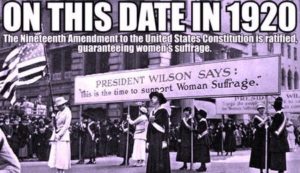 Why does it take so long …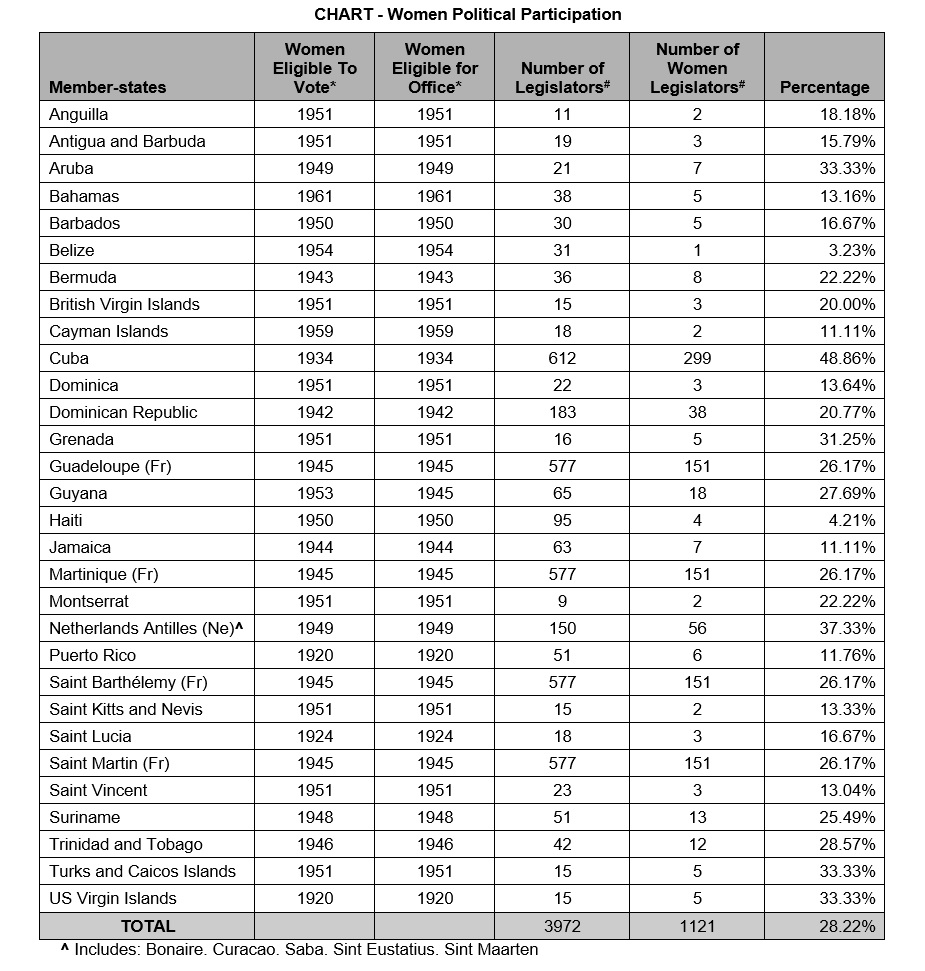
So “change is gonna come“; it would be wiser for opponents to just concede that fact. This is a lesson for the Caribbean to learn from military strategies: if combatants know that the end result of a fight would be imminent defeat, they should not fight; rather they should just concede and negotiate favorable terms of surrender.
 Yes, we can …
 There are positives and negatives in all life experiences; good things to continue and bad things to cease-and-desist.
 The last time we conscientized – on the radio – the location was in Florida, as we were appealing to the Caribbean Diaspora in the audience market. Now, this time, we are in the Caribbean, appealing to Caribbean people directly. Our quest is to direct the audience to the Go Lean book as a published guidebook – 370-pages of turn-by-turn instructions – on “how” to adopt the new community ethos, plus the strategies, tactics, implementations and advocacies to execute so as to reboot, reform and transform the societal engines of Caribbean society.
 NASSAU, BAHAMAS — The International Organization for Migration Bahamas is expected to launch a campaign in collaboration with IsraAid and Church World Services to help sensitize Bahamians and reduce stigmas of Haitian migrants.
 It is not what they call you; it is what you answer to!
 This is the completion of this Teaching Series for July 2020 on Black Image; this is entry 6-of-6 from the movement behind the Go Lean book. Every month, this movement presents a series on issues germane to Caribbean life: past, present and future. This last entry asserts that it has been too easy for people to just lambast the whole Black race by just yelling out the N-Word. There are many bad experiences of abuse; consider the track record of baseball greats Jackie Robinson and Hank Aaron. These men had to endure choruses of the N-Word as they perform their record-breaking feats for the game of baseball.
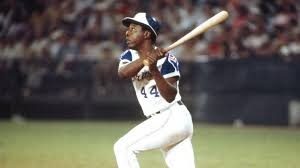 This is the urging for the entire month’s series. The full catalog on Black Image was distributed in the following order:
 Let’s talk fallacies:
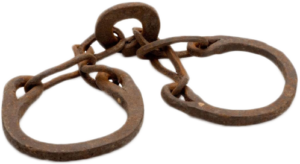 See the VIDEO portrayal in the Appendix B below. This was actually a decades-long production sponsored by the Anheuser-Busch Brewery conglomerate. The company continued this earnest Public Relations campaign promoting Black Image based on the prior conquests in Africa.
 While we are at it, let’s debunk all those other fallacies: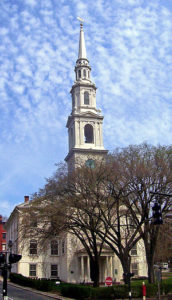
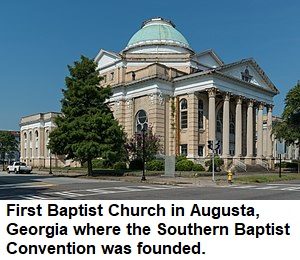 The Southern Baptist Convention (SBC) is a
 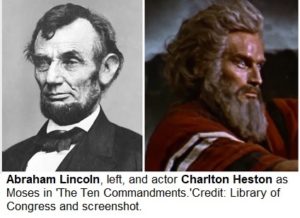 Main Points:
 Christian views on slavery are varied regionally, historically and spiritually. Slavery in various forms has been a part of the social environment for much of Christianity’s history, spanning well over eighteen centuries. In the
 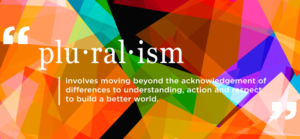 Believe it or not, there are people who object to the notion that Black Lives Matter (BLM) …
 The language used in the region would be: Dutch, English, French, Spanish and any Creole variations spoken by a mass of people; think Haiti. The focus of the Caribbean Image is not to conform to any European orthodoxy, but rather to communicate with all of the people in the homeland.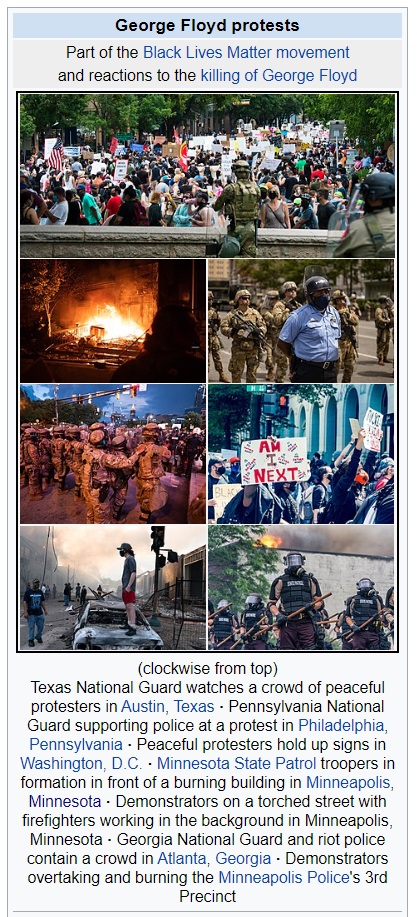
 All lives matter …
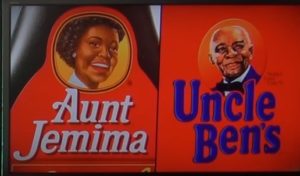 Aunt Jemima brand to change name, remove image that Quaker says is ‘based on a racial stereotype’
 DSW
DSW
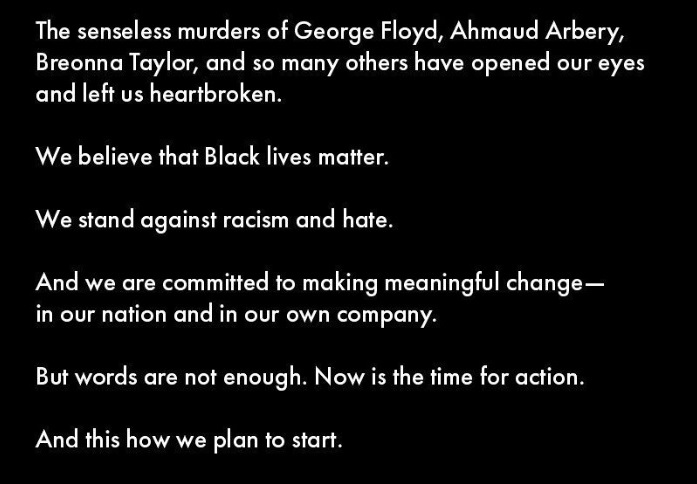


 CEO Charlie Scharf announced on Tuesday (July 14, 2020) a series of commitments to ensure the company’s ongoing diversity and inclusion efforts result in meaningful change. [He stated]:
 Over 100 years ago there was a Great Debate in the world:
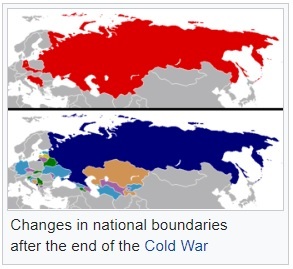
 Which move would be best for the Caribbean?
 That is the call! (The issue of Communism vs Capitalism is too simplistic, as the winning societal structure is
  Thanks to the Coronavirus – COVID-19 crisis, the world is shuttered, sheltering-in-place and reflecting …
 George Floyd was not famous. He was killed not in the capital of the United States, but on a street corner in its 46th-largest city. Yet in death he has suddenly become the keystone of a movement that has seized all of America. Still more remarkably, he has inspired protests abroad, from Brazil to Indonesia, and France to Australia. His legacy is the rich promise of social reform. It is too precious to waste.
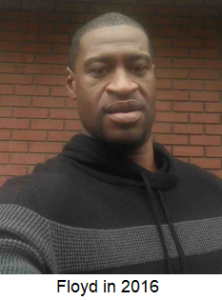 George Perry Floyd Jr. (October 14, 1973 – May 25, 2020) was an African-American man
  Happy Juneteenth!
 A common misconception is that this day marks the end of slavery in the United States. Although this day marks the emancipation of all slaves in the
  That is just the standard. Global Standard, that is! It assumes that moral code must be equally applied to all stakeholders. Any violation of this standard is considered hypocrisy, of which the end result is a total disrespect for all standards, rules and/or law-and-order.
 This is familiar in the European rationalization. In my school days, there was a system of “Merits and Demerits”:
 The days of the Pirates of the Caribbean provides a glimpse for today’s pandemic crisis; the blatant hypocrisy of the times made societal progress difficult. There are no Ands, Ifs or Buts; today, we need Good Leadership – among our political, corporate, religious and civic stakeholders – to survive and thrive as a society. We need to heed, adhere and comply with Good Leadership; we do not need blatant examples of hypocrisy cancelling out the Law-and-Order principles. We needed this hypocrisy-free climate before this COVID-19 pandemic; we need it now in the throes of this crisis – think quarantines, stay-at-home orders, wear masks orders, and isolation orders – and we will need it afterwards.
 Characters: Captain Flint, Long John Silver, William “Blackbeard” Teach, Anne Bonny, Governor Woodes Rogers,
  The distinction between a privateer and a pirate has always been vague beyond the licensing Letters of Marque. Without the letters, the parties were considered pirates; of which many frequented the Caribbean region. This industry employed many unemployed seafarers as a way to make ends meet, but became increasingly damaging to the region’s economic and commercial prospects.
 Appendix B – Bahama Islands History; Arrival of the English