Tag: Gender

International Women’s Day – Protecting Rural Women – ENCORE

Can’t we all just get along?

The answer is “No”! Don’t be naïve!

The book Go Lean…Caribbean sought to reform and transform the societal engines of the 30 member-states that caucus as the political Caribbean. This region is in dire straits, with some countries flirting with Failed-State status. But all the problems here are not just economic. No, there are security deficiencies as well. Therefore the book declares (Page 23):

… “bad actors” will also emerge thereafter to exploit the opportunities, with good, bad and evil intent.

This movement behind the Go Lean book has therefore monitored security dynamics for the Caribbean homeland. The hope is to apply lessons-learn from other regions and ensure that we mitigate all threats and risks.

One such lesson is the security needs for our female population: Caribbean women and girls. There are many threats for women and girls that we need to be “on guard” for. Not all of our populations live in cities; no, many reside in rural areas or remote islands here in the tropics. According to the United Nations (UN) Commission on the Status of Women, there is the need to draw attention to the dilemma and challenges of rural women, who make up over a quarter of the world population, and are being left behind in every measure of development.

Today – March 8, 2018 – is International Women’s Day; the theme this year is “Time is Now: Rural and urban activists transforming women’s lives”. The UN says:

This year, International Women’s Day comes on the heels of unprecedented global movement for women’s rights, equality and justice. This has taken the form of global marches and campaigns, including #MeToo and #TimesUp in the United States of America and their counterparts in other countries, on issues ranging from sexual harassment and femicide to equal pay and women’s political representation.

Join us to transform the momentum into action, to empower women in all settings, rural and urban, and to celebrate the activists who are working relentlessly to claim women’s rights and realize their full potential.

The #TimeisNow.

————-

VIDEO – Time is Now: Rural and Urban Activists Transforming Women’s Lives – https://youtu.be/XgwlEWzXUrE

In her message for International Women’s Day on March 8 [2018], UN Women Executive Director Phumzile Mlambo-Ngcuka draws attention to the work of rural and urban activists who have fought for women’s rights and gender equality. Read the full message here.

Our Caribbean women require protections and public safety measures ideally suited for their exact needs. They need the fulfillment of the Social Contract on their behalf. This Social Contract is defined as:

… citizens surrender some of their freedoms and submit to the authority of the State in exchange for protection of remaining natural and legal rights.

Poor Nigeria; or better stated: poor rural Nigerian girls.

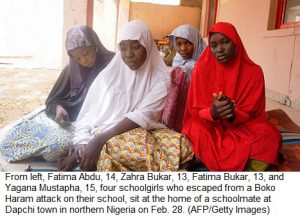
4 years ago, we reported on an abduction of 270 girls by terrorist group Boko Haram from a government school in the Nigerian State (Province) of Chibok; see the ENCORE of that blog-commentary below. Now we learn that it has happened again, 110 schoolgirls have been abducted in northern city of Dapchi (in the same province as Chibok). See news link here:

The recent Boko Haram abduction of 110 schoolgirls in Dapchi, Nigeria, drew immediate comparisons to the 2014 abduction of more than 270 girls from a school in Chibok. Beyond the media spotlight, what do we know about Boko Haram’s efforts to abduct — and recruit — women and girls?

The full Washington Post story-analysis can be found here: https://www.washingtonpost.com/news/monkey-cage/wp/2018/03/08/boko-haram-has-kidnapped-more-girls-heres-what-we-know/?utm_term=.a9801d06cec0
Where are the military-security forces, police, world enforcement agencies in this repeated drama?

Where is the outrage? Where is the New World Order? Where is the #MeToo movement and #TimesUp movement?

Is their absence tied to the fact that this is Africa – a Shit-hole country? Or the fact that these girls are all Black girls and Less Than – do Black Lives Matter?

The Caribbean societal elevation effort – Go Lean roadmap – is for the Caribbean only. Can we ensure that we have the necessary protections in place for our women and girls? Not just for those in the urban areas, but the rural communities as well. This seems to be the defect in Nigeria.

This is also the theme of this UN Special Commemoration, the International Women’s Day and the need to better protect, secure and empower women and girls in rural communities.

The truth is: We cannot all “just get along”. There must be the protections in Caribbean society to ensure that the Strong Do Not Abuse the Weak. This is the vision for a new Caribbean stewardship. See this point about abducted Nigerian girls developed in the previous blog-commentary below here:

————-

Go Lean Commentary – Muslim officials condemn abductions of Nigerian girls
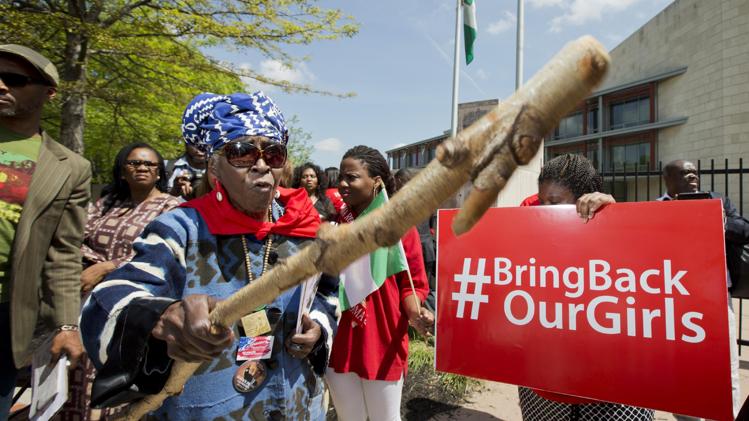
Nigerian Girls

Abducting little girls from a boarding school in the middle of the night is just criminal! There is nothing religious or political about this action.

This is not just terrorism – in the classic sense – this is simply felonious behavior. This is evidenced further by the fact that the perpetrators have promised to sell the girls into slavery. The word “sell” has the connotation of obtaining money for this action. This is criminal and should therefore be condemned by every civilized society in the world.

Failure to marshal against these crimes is just failure – indicative of a Failed-State. Nigeria has a bad image of deceitful practices. So it is only appropriate to ask: is this truly a case of abduction, or could it all be one big Nigerian scam? Despite the obvious “cry wolf” reference, we must side with the innocent victims here. But, as is cited to in the foregoing news article, there are many people who feel that Nigeria hasn’t done enough for these girls. Only now that other countries have stepped up to assist/oversee has the government become more accountable.

Another group of victims in this drama are the peace-loving Islamic adherents. The actions of Boko Haram are casting dispersions on the whole religion. This terrorist group is not practicing the true teachings of Islam; in fact these actions are condemned as criminal even in the Muslim world.

AP*; Photo by: Manuel Balce Ceneta

The abduction three weeks ago of hundreds of schoolgirls in Nigeria by the Muslim extremist group Boko Haram is now generating worldwide attention and condemnation. Muslim leaders in various countries have criticized Boko Haram’s leader for using Islamic teachings as his justification for threatening to sell the girls into slavery. Others have focused on what they view as a slow response by Nigeria’s government to the crisis. The British and French governments announced Wednesday that they would send teams of experts to complement the U.S. team heading to Nigeria to help with the search for the girls, and Nigeria’s president said China has also offered assistance.

Some of the reactions to the crisis:

— EGYPT: Muslim religious officials strongly condemned Boko Haram. Religious Endowments Minister Mohammed Mohktar Gomaa said “the actions by Boko Haram are pure terrorism, with no relation to Islam, especially the kidnapping of the girls. These are criminal, terrorist acts.” According to the state news agency MENA, he said “these disasters come from cloaking political issues in the robes of religion and from peddling religion for secular interests, something we warn incessantly against.”

The sheik of the Cairo-based Al-Azhar, one of Sunni Islam’s most prestigious institutions, demanded the group release the girls, saying it “bears responsibility for any harm suffered by these girls.” The group’s actions “completely contradict Islam and its principles of tolerance,” Sheik Ahmed el-Tayeb said.

— PAKISTAN: Dawn, an English language newspaper in Pakistan, published an opinion piece that takes Nigeria to task for not moving against Boko Haram. “The popular upsurge in Nigeria in the wake of the latest unspeakable atrocity provides some scope for hoping that the state will finally act decisively to obliterate the growing menace,” wrote columnist Mahir Ali. “Naturally, the lives and welfare of the abducted girls must be an absolute priority. Looking back a few years hence, it would also provide a degree of satisfaction to be able to pinpoint the moment when Boko Haram sealed its own fate by going much too far.”

— INDONESIA: In the world’s most populous Muslim-majority country, the Jakarta Post published an editorial Wednesday condemning the Boko Haram leader for “wrongly” citing Islamic teaching as his excuse for selling the abducted girls into slavery. Recalling the Taliban’s shooting of 15-year-old Pakistani girl Malala Yousafzai in 2012 because of her outspokenness in defense of girls’ right to an education, the editorial said: “Malala’s message needs to be conveyed to all people who use their power to block children’s access to education. It is saddening that religion is misused to terrorize people and to kill the future leaders of the world.”

The newspaper also criticized Nigerian President Goodluck Jonathan, noting that “only after international condemnation and street demonstrations poured in did President Jonathan tell his nation that he would take all necessary actions to return the young women to their parents and schools, while also acknowledging that the whereabouts of the abductees remained unknown.”

— SWEDEN: In an editorial posted on the left-wing news website politism.se, blogger Nikita Feiz criticized the international community for its slow response and asked why the situation hadn’t triggered as loud a reaction as when Malala was shot in Pakistan. “Looking at the situation in Nigeria, Malala appears like a false promise from the West that it would stand up for girls’ rights to attend school without fear of being subjected to sexual exploitation and abuse,” she said. “It is difficult not to draw the conclusion that the West’s assurance to act for girls’ rights suddenly isn’t as natural when it comes to girls’ rights in a country in Africa.”

A Swedish women’s network called StreetGaris is planning a demonstration outside the Foreign Ministry on Friday to demand more action from the international community. Participants are encouraged to wear a head wrap or red clothes in solidarity with the girls and their relatives.

— UNITED STATES: The U.S. government is sending to Nigeria a team of technical experts, including American military and law enforcement personnel skilled in intelligence, investigations, hostage negotiating, information sharing and victim assistance, as well as officials with expertise in other areas — but not U.S. armed forces.

“In the short term our goal is obviously is to help the international community, and the Nigerian government, as a team to do everything we can to recover these young ladies,” President Barack Obama told NBC on Tuesday. “But we’re also going to have to deal with the broader problem of organizations like this that … can cause such havoc in people’s day-to-day lives.”

In an editorial, The New York Times faulted the Nigerian government for not aggressively responding to the abductions. “Mr. Jonathan, who leads a corrupt government that has little credibility, initially played down the group’s threat and claimed security forces were in control,” the newspaper said. “It wasn’t until Sunday, more than two weeks after the kidnappings, that he called a meeting of government officials, including the leader of the girls’ school, to discuss the incident.”

— BRITAIN: Prime Minister David Cameron’s office said Britain will send a small team of experts to complement the U.S. team being sent by Obama. The announcement was made Wednesday after Cameron spoke to the Nigerian president. The team will be sent as soon as possible and will include specialists from several departments. Experts have said special forces may be sent to the region. The issue has heated up in recent days with protests over the weekend outside the Nigerian Embassy in London and an increasing number of newspaper editorials calling for action to rescue the girls.

— FRANCE: Foreign Minister Laurent Fabius told lawmakers on Wednesday that France is ready to send a “specialized team … to help with the search and rescue” of the kidnapped girls. “In the face of such an appalling act, France, like other democratic nations, must react,” Fabius said. “This crime will not go unpunished.” Fabius gave no details of the team, except to say it’s among those already in the region. France has soldiers in Niger, Cameroon and Mali, where it is fighting Islamic insurgents, as well as in Central African Republic.

— CHINA: Chinese Premier Li Keqiang, arriving Wednesday in Nigeria for a state visit, did not specifically mention the abductions in a transcript of a joint press conference with Nigeria’s president, instead making only a general reference to the “need to work together to oppose and fight terrorism.” In his remarks, Jonathan said China “promised to assist Nigeria in our fight against terror especially in our commitment and effort to rescue the girls that were taken away from a secondary school.” He did not offer specifics.

— BRAZIL: The foreign ministry issued a statement Tuesday condemning the abductions. “In conveying the feelings of solidarity to the families of the victims and to the people and the Government of Nigeria, the Brazilian Government reiterates its strong condemnation of all acts of terrorism,” the statement said.

—-

* Associated Press correspondents Lee Keath in Cairo, Michelle Faul in Lagos, Nigeria, Gregory Katz in London, Malin Rising in Stockholm, Masha Macpherson in Paris and Stan Lehman in Sao Paulo, Brazil contributed to this report.

Associated Press – Online News – May 7, 2014 http://news.yahoo.com/muslim-officials-condemn-abductions-girls-160020053.html

This book Go Lean … Caribbean is a roadmap for the introduction and implementation of the Caribbean Union Trade Federation (CU), so as to elevate the delivery of economic and security solutions in the Caribbean. One specific mission is to manage against encroachments of the Failed-State index.

At the outset, the roadmap identified an urgent need to mitigate against organized crime & terrorism, and to ensure human rights protection. This is pronounced in this clause in the opening Declaration of Interdependence (Page 12)

xxi.   Whereas the legacy in recent times in individual states may be that of ineffectual governance with no redress to higher authority, the accedence of this Federation will ensure accountability and escalation of the human and civil rights of the people for good governance, justice assurances, due process and the rule of law. As such, any threats of a “failed state” status for any member state must enact emergency measures on behalf of the Federation to protect the human, civil and property rights of the citizens, residents, allies, trading partners, and visitors of the affected member state and the Federation as a whole.

The Go Lean roadmap projects that the CU will facilitate monitoring and accountability of regional law enforcement and homeland security institutions. This type of behavior will not be tolerated in the Caribbean. This CU effort will be coordinated in conjunction with and on behalf of the Caribbean member-states.

On that note, the Caribbean Union Trade Federation, if it was already in existence, would vociferously condemn the abduction of the Nigerian girls. Hence the CU would be added to the long list of condemnations in the foregoing article. But these would not be hollow words, but would be accompanied by the required actions to ensure that such a disposition could not thrive in the CU region. This commitment is detailed as these community ethos, strategies, tactics, implementations and advocates:

Community Ethos – Public Protection over Privacy Page 23
Community Ethos – Anti-Bullying and Mitigation Page 23
Community Ethos – Intelligence Gathering Page 23
Community Ethos – Minority Equalization Page 24
Community Ethos – Impact the Greater Good Page 37
Strategy – Placate & Pacify International Monitors Page 48
Separation of Powers – Homeland Security Page 75
Separation of Powers – Justice Department Page 77
Implementation –  Security Initiatives at Start-up Page 103
Planning – Ways to Improve Failed-State Indices Page 134
Advocacy – Manage the Social Contract Page 170
Advocacy – Ways to Impact Justice Page 177
Advocacy – Ways to Reduce Crime Page 178
Advocacy – Ways to Improve Homeland Security Page 180
Advocacy – Ways to Mitigate Terrorism Page 181
Advocacy –  Ways to Protect Human Rights Page 220
Advocacy –  Ways to Empower Women Page 226
Advocacy –  Ways to Impact Youth Page 227

In contrast with the events in Nigeria, local crimes against women, young or old will not be tolerated in the CU. Everyone, regardless of gender, will be guaranteed the right to life, liberty and the pursuit of happiness (and education for that matter). This will be standard, whether the world is watching or not.

However, we want the world to watch. We want to show how we feverishly protect our people, with assurance that the Caribbean is the world’s best address to live, work, learn and play. 🙂

Download the free e-Book of Go Lean … Caribbean – now!

Sign the petition to lean-in for this roadmap for the Caribbean Union Trade Federation. 
Share this post:
, , ,

High Profile Sexual Harassment Accusers – Finally Believed? – ENCORE

3 years ago, we were commenting on why the dozens of accusers against Bill Cosby were not believed, now we see that there has been a floodgate of women successfully getting their reckoning from powerful men (in media and politics) who had “taken liberties” with them.

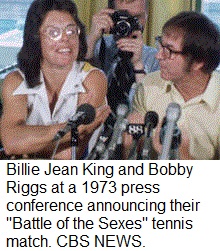
Good for the women! (They are being believed … more and more).

Still the same question can be posed about women accusers in general: Why were they not believed?

In summary, “celebrities should not be glorified as all good, all the time” …
… for nation-building, women must be able to seek refuge in the Criminal Justice systems in their communities.

VIDEO – Matt Lauer Fired from TODAY – https://usat.ly/2Bv3zGi

See the ENCORE of this previous blog-commentary below, from November 26, 2014 on Bill Cosby’s Accusers: Why They Weren’t Believed.

Which men are being reckoned with now? See the full alphabetical list from USA Today national newspaper – to date as of December 4, 2017 – here:

Ben Afleck, Actor-Director Gavin Baker, Hedge Fund Manager John Besh, Celebrity Chef
David Blaine, Magician George H.W. Bush, Former President Louis C.K., Actor-Comedian
Nick Carter, Singer John Conyers, Congressman Andy Dick, Actor
Richard Dreyfuss Hamilton Fish, Magazine Publisher Al Franken, Ex-Actor-now-Senator
Alex Gilady, Olympics Organizer Gary Goddard, Writer-Producer David Guillod, Movie Producer
Mark Halperin, Political Analyst Dustin Hoffman, Actor Danny Jordaan, FIFA Organizer
Steve Jurvetson, Hedge Fund Manager Ethan Kath, Music Producer Garrison Keillor, Radio Host
Andrew Kreisberg, TV Producer John Lasseter, Movie Producer Matt Lauer, TV Host
Benny Medina, Talent Agent Murray Miller, Screenwriter Roy Moore, US Senate Candidate
Michael Oreskes, NPR Vice-President Jeremy Piven, Actor Roy Price, Movie Studio Executive
Brett Ratner, Producer-Director Twiggy Ramirez, Musician-Rock Star Terry Richardson, Photographer
Charlie Rose, TV Host Gilbert Rozon, Comedy Organizer Chris Savino, Animator-Writer
Mark Schwahn, Screenwriter Robert Scoble, Technology Blogger Steven Seagal, Actor-Producer
Russell Simmons, Music Mogul Tom Sizemore, Actor Kevin Spacey, Actor-Producer
Sylvester Stallone, Actor-Producer George Takei, Actor-Activist Jeffrey Tambor, Actor
Glenn Thrush, Newspaper Reporter James Toback, Director-Screenwriter Bob Weinstein, Movie Producer
Harvey Weinstein, Movie Producer Matthew Weiner, TV Producer Ed Westwick, Actor
Leon Wieseltier, Magazine Editor

Source: https://www.usatoday.com/story/news/2017/11/22/weinstein-aftermath-all-men-accused-sexual-misconduct/884778001/

————

Go Lean Commentary – Bill Cosby’s Accusers: Why They Weren’t Believed.

It is hard to reconcile the accusations floating against Bill Cosby with his television characters: Dr. Huxtable, Jell-O Pudding Pitch-Man and the voice/persona of the animated do-gooder Fat Albert (and the Cosby Kids ; see Appendix below*). Or is it?

… that it’s easy to categorize personalities as good versus bad. “We don’t think good and evil can co-exist in the same person” – Psychologist David Adams.

The following article posits that those who do horrible things may still be talented in their gifts and notoriously good to people in their lives, like family members. While it maybe difficult to understand the complexities of personalities, it is very much necessary that society be receptive to the possibility of good people doing bad things. The entire article is presented here:

By: NO MORE Staff

Bill Cosby Photo 1America’s Dad is having a very bad week. A few days ago, Barbara Bowman wrote a personal essay in The Washington Post chronicling how Bill Cosby drugged and raped her 30 years ago.

The story went viral and inspired several others to echo her experiences.

Not so when the teenager spoke out soon after the alleged attacks: When she went to a lawyer after the assaults, she was accused of lying. Her agent did nothing, either. Eventually, she moved on. Years later, Andrea Constand accused Cosby of rape and Bowman was asked to speak in court, but the case was quietly settled.

At this writing, a grand total of 15 women have accused Cosby of assault, dating from the late 1960s. (Here’s a timeline of the accusations.) Despite all this, Cosby’s career had coasted along—in fact, he was awarded the Mark Twain Prize for American Humor not long ago and was planning a new TV show.

But things are changing.

Finally, the accusers’ stories are getting traction. Why now? Last month, comedian Hannibal Buress called Cosby a rapist in his stand-up routine, which went viral. The Twitter-verse responded in kind: Last week, Cosby’s tone-deaf invitation to “meme me!” resulted in people superimposing assault accusations over his photo. #Cosbymeme did not go according to plan, and things only got worse: Last weekend, NPR interviewed him about his African American art collection and then asked him to respond to the Post story. He went silent. Eventually, his lawyer issued a statement firmly denying the allegations and refusing to comment further.

But the damage has been done: New stories about Cosby’s behavior continue to surface, Netflix has put his upcoming comedy special on hold, and NBC has abandoned plans to develop a new sitcom with him.

Why Accusations About Celebrities Aren’t Believed

Cosby isn’t the first icon to be accused of sexual assault or domestic violence, and yet the question persists: Why aren’t these accusers heard or given any credence—not just Cosby’s alleged victims, but the countless other people who have dared to challenge a celebrity?

The answer lies in the American conflation of celebrity and security, says Ulester Douglas, executive director of Men Stopping Violence. “We are a celebrity culture. Seeing someone we idolize, revere, and idealize being accused of horrific crimes makes us wonder: Who are we? It makes us realize that our own families could be capable of it, too,” he says. It’s unsettling and even terrifying to associate an idol with evil, particularly because there are so many celebrities who are good people, capable of powerful, positive influence.

Dissonance Perpetuates Silence

David Adams is a psychologist and co-director of Emerge, a Boston-based abusers’ intervention and counseling program. He sees a difference in how we respond to a stereotypical criminal and a celebrity accused of bad behavior due to our preconceptions about abusers. “We tend to think of an abuser as someone who is easily detectable: someone who is crude, sexist, and boorish. A quarter of men who abuse women do fit this stereotype, and since that’s a substantial subgroup, we tend to spot those guys and not the ones who are more likable. If we don’t know what to do with bad information about someone we adore, it creates dissonance, and we sometimes choose to disbelieve or to ignore it,” he says.

“When we see someone likable accused of a crime, we have a choice to believe something bad about them or to discount it because it doesn’t fit our experience. In some ways it’s easier to do that than to think, oh God, the world really is unknowable—I might as well give up on knowing people,” he says. “If we don’t know what to do with information about someone we worship, we put it aside.”

Why Celebrities Feel Immune

Of course, Cosby is hardly the first famous person to be accused of rape or assault. When we think about any celebrity facing serious allegations, though, it’s difficult to believe that an image-conscious idol could be willing to engage in hugely risky behavior, throwing away the very image they need. What’s going through their mind?

“Any consequence is overridden by the high of the conquest,” Douglas says. And, on a purely logistical level, “They do it because they can. They truly think they can get away with it, based on the very fact that they have a certain image. They will be believed; the accusers will be laughed out of the room.”

Absorbing The Narcissism Factor

In many celebrity cases, narcissism also plays a starring role. “A hallmark of narcissism is exceptionality. You literally think you will not get caught. This personality takes chances, acts reckless, and even associates the behavior with success, because they’ve always been rewarded,” Adams says.

“We think narcissists are people nobody would like. But, in fact, they’re quite charismatic, with good social and image-maintenance skills”— which often allow them to get away with bad behavior, even more so when there’s a PR team on call. Narcissists are also skilled at compartmentalization, Adams says, and they choose to focus on the “part of their life that everybody adores. They don’t focus on other parts of their lives, and if they do something wrong, they think, ‘Gee, everybody loves me. What’s the problem?’” he says. “It’s a lack of character development.”

“Narcissists can engage in all sorts of psychological gymnastics not to feel empathy,” says Douglas.

The Changing Tide

Adams says that it’s easy to categorize personalities as good versus bad. “We don’t think good and evil can co-exist in the same person,” he says. “But look at the Mafia—these guys who do horrible things but are notoriously good to their mothers. And along comes a show like The Sopranos to paint them in a more nuanced light. There’s now less focus on ‘good guys’ and ‘bad guys,’” he says. Understanding the complexities of personalities—refusing to glorify a celebrity as all good, all the time—could help to close the dissonance gap.

“We can also go a long way toward preventing male sexual and domestic violence against women by stopping the pervasive and pernicious victim-blaming,” Douglas says. “The media, for example, should quit asking the toxic, ‘Why did you go back to your abuser?’ and ‘Why didn’t you leave?’ A reporter could say instead, ‘As you know, there are some who question your credibility because of some of the choices you made. What, if anything, would you want to say to them?’ That is respectful journalism. The [accuser] should never be made to feel like she has to justify the choices she made or makes.”

Finally, in his own work with Men Stopping Violence, Douglas sees firsthand the power of healing through sharing. “I see survivors who are finding peace through coming forward and telling their stories. One of the most powerful things that survivors can do is tell their own stories, on their own terms,” he says.
The NO MORE Project – Posted November 19, 2014; retrieved November 26, 2014–
http://nomore.org/why-cosby-victims-werent-believed/

The subject matter in the foregoing article relates to the attitudes that communities must foster so as to mitigate the toleration of domestic violence, rape and stalking. These points are being brought into focus in a consideration of the book Go Lean … Caribbean. The book serves as a roadmap for the introduction and implementation of the technocratic Caribbean Union Trade Federation (CU), for the economic optimization in the region.

The focus of the Go Lean book is Economics, not domestic violence, rape or stalking! And yet this commentary relates that there is an alignment of objectives. The Go Lean roadmap posits that the economy of the Caribbean is inextricably linked to the security (public safety) of the Caribbean.

This CU/Go Lean roadmap has 3 prime directives:

  • Optimization of the economic engines in order to grow the regional economy and create 2.2 million new jobs.
  • Establishment of a security apparatus to protect the resultant economic engines and their relevant stakeholders.
  • Improve Caribbean governance (Executive facilitations, Legislative oversight and Judicial prudence) to support these economic/security engines.

Among the objectives to accomplish the economic elevation is the mission to retain Caribbean citizens in their homelands and repatriate the far-flung Diaspora back to the region. Since many people may have fled the region to mitigate abuse, attitudes of victim-blaming or complacency among public safety authorities must be “weeded out”.

The subject of Celebrity Culture is also germane for the Caribbean empowerment effort (Pages 203 & 224). The Go Lean roadmap consolidates the region’s 30 member-states into a Single Market, media market included – with the caveat of multi-language “simul-casting”. Celebrities will surely emerge. From a governance perspective, the CU will oversee the jurisdiction of monitoring and metering (ratings, rankings, service levels, etc) local public safety institutions to ensure their delivery of the Social Contract. for all regardless of gender or race.

Change has now come to the Caribbean. As the foregoing article depicts, there is a changing tide. It is no longer acceptable to dismiss accusers, even against celebrities. The article relates that “we can go a long way toward preventing male sexual and domestic violence against women by stopping the pervasive and pernicious victim-blaming”. This is part of a new community ethos – the value of women is not undermined! Many related issues/ points were elaborated in previous blogs, sampled here:

Justice Strategy: Special Prosecutors … et al
Caribbean Study: 58% Of Boys Agree to Female ‘Discipline’
Sex Crimes Mitigations – Students developing nail polish to detect date rape drugs
Aereo Founder on the future of TV; Caribbean included
Bob Marley: The legend of a Caribbean Celebrity lives on!
Muslim officials condemn abductions of Nigerian girls
Caribbean/Latin countries still view women as lesser
Book Review: ‘The Divide’ – Differences in US Justice for Rich versus Poor
Jamaica to receive World Bank funds to help in crime fight

The above commentaries examined global developments in crime mitigations and gender based attitudes, then relate their synchronicity with the principles in the Go Lean book. There are a number of touch points that relate to domestic violence, rape and stalking; these blogs also cite the community attitude to dissuade such behavior. Most importantly, the Go Lean book depicts solutions. These are presented as community ethos, strategies, tactics, implementations and advocates; detailed as follows:

Community Ethos – Privacy –vs- Public Protection Page 23
Community Ethos – Whistleblower Protection Page 23
Community Ethos – Witness Security Page 23
Community Ethos – Anti Bullying & Mitigations Page 23
Community Ethos – Light Up the Dark Places Page 23
Community Ethos – “Crap” Happens Page 23
Community Ethos – Minority Equalization Page 24
Community Ethos – Lean Operations Page 24
Community Ethos – NGO’s Page 25
Community Ethos – Reconciliations Page 34
Strategy – Rule of Law –vs- Vigilantism Page 49
Tactical – Separation of Powers – CariPol Page 77
Implementation – Reasons to Repatriate Page 118
Planning – Ways to Improve Failed-State Indices Page 134
Advocacy – Ways to Improve Governance Page 168
Advocacy – Ways to Better Manage the Social Contract Page 170
Advocacy – Ways to Impact Justice Page 177
Advocacy – Ways to Remediate and Mitigate Crime Page 178
Advocacy – Ways to Improve Gun Control – Restraining Orders Automatic Restrictions Page 179
Advocacy – Ways to Improve Intelligence Gathering Page 182
Advocacy – Ways to Improve Communications – Messaging Page 186
Advocacy – Ways to Impact Hollywood Page 203
Advocacy – Ways to Impact the Prison Industrial Complex – Reduce Recidivism Page 211
Advocacy – Ways to Impact Foundations Page 219
Advocacy – Ways to Protect Human Rights Page 220
Advocacy – Ways to Impact the One Percent –    Balancing Justice Provisions for Celebrities Page 224
Advocacy – Ways to Empower Women Page 226
Advocacy – Ways to Impact Persons with Disabilities – including Mental Challenges Page 228

The book Go Lean…Caribbean was written by resources from an organized movement, by people (residents and Diaspora) with passion to change/elevate the Caribbean’s economic, security and governing engines. One principal within this Go Lean movement has a direct job function to dissuade crimes against women.

While there is always the need to give the accused the benefit of the doubt, as in the current case against Bill Cosby, we do not want 30 years of inaction on reported sex crimes by celebrities. The CU roadmap’s goal is to optimize “Justice” institutions in the region. Why? All members of society (celebrities and regular citizens alike) need to be protected, and not dismissed or ignored, especially related to serious allegations like sexually inappropriate behavior. Any “misfeasance, malfeasance or nonfeasance” in this regards reflects negatively on the region’s hospitality – think of the unsolved disappearance of Natalee Holloway in Aruba in 2005; (see Page 190).

Though this topic may be a security issue, community wealth is undoubtedly linked, affecting push-and-pull factors for citizens to flee their homelands. This is lose-lose for all concerned. To the contrast, the goal of the Go Lean effort is to make the Caribbean a better place to live work and play; with justice for all. Since the region failed in the past, the new messaging is simple: “No More“!

The foregoing article is sourced by the Not-For-Profit organization, the “No More” Project. Their goal is to neutralize public attitudes that had previously tolerated and thusly promoted domestic violence, rape and stalking. This is a great role model for the Caribbean to emulate, as attitude adjustment is among the heavy-lifting tasks that regional administrators must undertake to bring positive change to the Caribbean.

Download the book Go Lean … Caribbean – now!

————

* Appendix – Video – Fat Albert And The Cosby Kidshttp://youtu.be/ga7gflAUGCc

It’s Bill Cosby coming at you with music and fun, and if you’re not careful, you might learn something before its done.


Share this post:
, , , ,
[Top]

Gender Equity without a ‘Battle of the Sexes’

Go Lean Commentary

CU Blog - Gender Equity without a 'Battle of the Sexes' - Photo 1A lot of societal reforms – human and civil rights – only come about as a result of advocates fighting for change.

Some battles are so important that they must be fought, even if the proponents were to lose. These proponents must not tire in these battles; but they must accept that change will only come as a result of a struggle.

This commentary has previously asserted that despite the fact that his advocacy was 150 years ago, African-American Abolitionist Frederick Douglass is a role model for the Caribbean today; he is quoted as saying:

“Those who profess to favor freedom, yet deprecate agitation, are men who want crops without plowing up the ground. They want rain without thunder and lightening. They want the ocean without the awful roar of its many waters. This struggle may be a moral one; or it may be a physical one; or it may be both moral and physical; but it must be a struggle. Power concedes nothing without a demand. It never did and it never will.”

So “change is gonna come“; it would be wiser for opponents to just concede that fact. This is a lesson for the Caribbean to learn from military strategies: if combatants know that the end result of a fight would be imminent defeat, they should not fight; rather they should just concede and negotiate favorable terms of surrender.

Let’s consider gender equality …

… there have actually been real ‘Battles of the Sexes’, where the end results have benefited women – to the victor goes the spoils. Consider these American experiences:

  • World War I waged between 1918 and 1918, bringing monumental change to society. Women pressed hard in this era and secured the right to vote, starting in 1920, but most women’s careers still only revolved around the home and family.
  • World War II waged between 1939 and 1945 bringing even more changes to society; as men went off to war, many jobs were assumed by women. After this war, they did not relinquish those advances. More opportunities were forged in the industrial and educational arena.
  • Title IX, the 1972 landmark federal gender legislation that emerged after the 1960’s Civil Rights era force educational institutions that receive federal monies to mandate equal opportunities for women. The law states (in part) that:
      “No person in the United States shall, on the basis of sex, be excluded from participation in, be denied the benefits of, or be subjected to discrimination under any education program or activity receiving Federal financial assistance.”

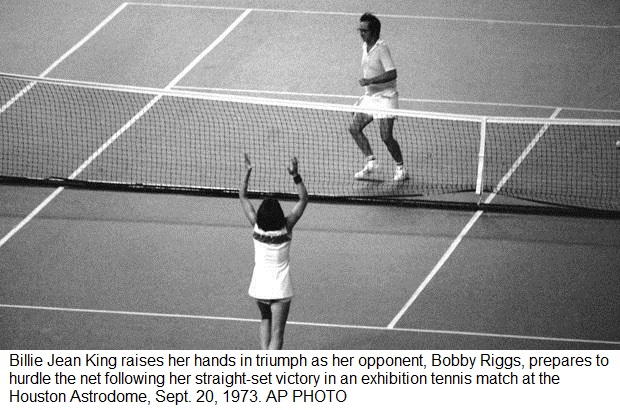
Ah, the 1970’s; in addition, there was another ‘Battle of the Sexes’ that dominated American consciousness. This was the media spectacle of the tennis match featuring female star – and Wimbledon Champion – Billie Jean King versus male star – and Wimbledon Champion – Bobby Riggs. This is a big week for the memories of that 1973 ‘Battle of the Sexes’ tennis match as a new movie is being released on Friday (September 29, 2017) to chronicle the drama of those events. See this Profile VIDEO here:

VIDEO Billie Jean King’s victories, on and off the courthttps://youtu.be/MgcfWTGcnNY

“If you’re old enough to remember it, in 1973, you probably watched it: Billie Jean King vs. Bobby Riggs — man vs. woman — a spectacle that captivated the nation.
More than 30,000 attended the match held in the Houston Astrodome. …”

Lee Cowan catches up with the tennis legend and advocate for gender equality, whose 1973 exhibition match against Bobby Riggs was promoted as the “Battle of the Sexes” (and is now dramatized in a new movie starring Emma Stone and Steve Carell).

See the full transcript of the VIDEO here: https://www.cbsnews.com/news/billie-jean-king-battle-of-the-sexes/

Billie Jean King, Bobby RiggsAlso see the Movie Trailer in the Appendix below.

As related in the movie, this 1973 event in Houston, Texas USA sparked a global conversation on gender equality, spurring on the feminist movement. As the USA goes, so does the rest of the world … eventually. The American Hegemony – the political, economic, or military predominance or control of one state over others – is real for its impact on Caribbean life. Each one of these advances in Women’s Rights in the US had a parallel effect on Caribbean member-states … eventually. In a previous Go Lean commentary, the Caribbean’s journey in Gender Equality was detailed and presented as a needed advocacy to reform and transform our society.

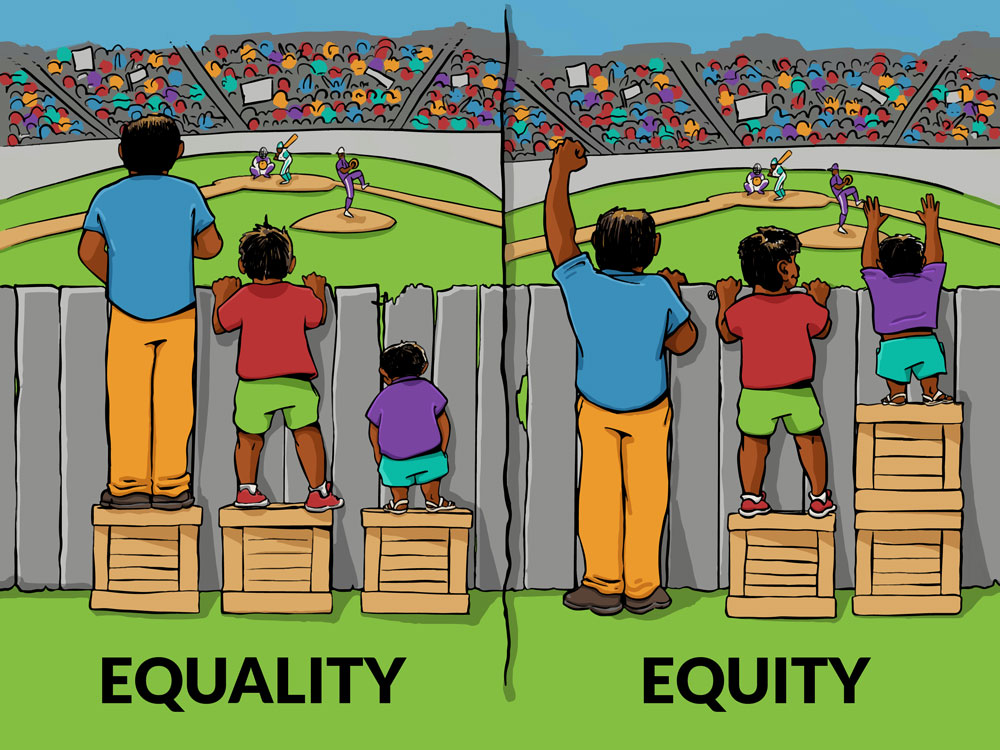
Yes, in the Caribbean, we can have Gender Equity without a ‘Battle of the Sexes’. Notice, we want equity, more so than equality! We recognize that there is and will always be differences between men and women – think maternity. Each gender have different needs, the solution is not the “same” for everyone, but rather the relevant empowerments, so that everyone can “be all they can be”.

CU Blog - Gender Equity without a 'Battle of the Sexes' - Photo 3Since the Caribbean needs … all the help we can get, we need more women in government, local administration and regional stewardship. That previous blog-commentary related …

… this is not just a case for feminism. The issues relate to policy-making participation and optimization, more than they relate to feminism. This story is being brought into focus in a consideration of the book Go Lean … Caribbean. The book serves as a roadmap for the introduction and implementation of the technocratic Caribbean Union Trade Federation (CU), for the societal elevation in the region. This roadmap calls for a fuller participation from women as stakeholders. …

With 50% of the population, there is the need for 50% of the representation; (this is the target). …

Among the crises that the region contends with is human flight, the brain drain or abandonment of the highly educated citizenry. Why do they leave? For “push-and-pull” reasons!

“Push” refers to deficient conditions at home that makes people want to flee. “Pull” refers to better conditions abroad that appeals to Caribbean residents. They want that better life.

[So] an underlying mission of the CU is to dissuade this human flight.

The title ‘Battle of the Sexes’ refers to a movie, yes, but an advocacy as well. (Any discussion about Billie Jean King must also consider her advocacy for LGBT rights; we need those empowerments in the Caribbean too; we need our local opposition to concede – without a battle – that they cannot win in abusing others). This is why we need movies; as an art form, they can be a powerful source of messaging to impress new theories, doctrines and practices on the masses of people. This is what is meant by “life imitating art”. In a previous blog-commentary regarding Caribbean Diaspora member and Hollywood great, Sidney Poitier, it was declared that …

“Movies are an amazing business model. People give money to spend a couple of hours watching someone else’s creation and then leave the theater with nothing to show for the investment; except perhaps a different perspective”.

This is the assertion of the book Go Lean … Caribbean, that different artistic endeavors can be used for effective messaging to forge change – elevate the community – in the Caribbean’s societal engines. The book – available to download for free –presents the prime directives of the Go Lean roadmap:

The Caribbean region needs to include more women in leadership roles in business, government and all security institutions. We need to do this without a Battle.

You Caribbean men, just concede:

We need the full participation of all able-bodied women for the successful outworking of our communities.

This theme was pronounced early in the Go Lean book with this Declaration of Interdependence (Pages 12 – 14), with these opening statements:

xi. Whereas all men are entitled to the benefits of good governance in a free society, “new guards” must be enacted to dissuade the emergence of incompetence, corruption, nepotism and cronyism at the peril of the people’s best interest. The Federation must guarantee the executions of a social contract between government and the governed.

xxi. Whereas the preparation of our labor force can foster opportunities and dictate economic progress for current and future generations, the Federation must ensure that educational and job training opportunities are fully optimized for all residents of all member-states, with no partiality towards any gender or ethnic group. The Federation must recognize and facilitate excellence in many different fields of endeavor, including sciences, languages, arts, music and sports. This responsibility should be executed without incurring the risks of further human flight, as has been the past history.

xxvi. Whereas the Caribbean region must have new jobs to empower the engines of the economy and create the income sources for prosperity, and encourage the next generation to forge their dreams right at home, the Federation must therefore foster the development of new industries …

The subject of fostering gender equity, equal access and equal protections for women have been directly addressed and further elaborated upon in previous blog/commentaries; consider this sample:

https://goleancaribbean.com/blog/?p=12035 Lean-in for ‘Wonder Woman Day’
https://goleancaribbean.com/blog/?p=8306 Women Get Ready for New Lean-In Campaign
https://goleancaribbean.com/blog/?p=8155 Bahamas Referendum Outcome: Impact on the ‘Brain Drain’
https://goleancaribbean.com/blog/?p=7490 Push Factor: Interpersonal Violence / Domestic
https://goleancaribbean.com/blog/?p=6937 Women in Politics – Yes, They Can!
https://goleancaribbean.com/blog/?p=6836 Role Model – #FatGirlsCan – Empowering Women
https://goleancaribbean.com/blog/?p=6434 ‘Good Hair’ and the Strong Black Woman
https://goleancaribbean.com/blog/?p=6422 Getting More Women Interested in Science/Technology Careers
https://goleancaribbean.com/blog/?p=2709 Caribbean Study: 58% Of Boys Agree to Female ‘Discipline’
https://goleancaribbean.com/blog/?p=2201 Students developing nail polish to detect date rape drugs
https://goleancaribbean.com/blog/?p=809 Muslim officials condemn abductions of Nigerian girls
https://goleancaribbean.com/blog/?p=695 Help for Abused Women Depicts Societal Defects

The Go Lean book posits that every woman has a right to work towards making her community a better place to live, work and play. This should be the default thinking, without a battle … especially here in the Caribbean where we need their participation. So the book provides 370-pages of turn-by-turn instructions on “how” to adopt new community ethos, plus the strategies, tactics, implementations and advocacies to execute so as to help women to impact the homeland.

This quest to elevate our regional society requires heavy-lifting! It is a battle. But this quest, this goal is conceivable, believable and achievable. With the right commitment of time, talent and treasuries from women – and the men that support them – we can succeed in making the Caribbean region a better place to live, work and play. 🙂

Download the free e-Book of Go Lean … Caribbean – now!

Sign the petition to lean-in for this roadmap for the Caribbean Union Trade Federation.

———

Appendix VIDEO – Battle of the Sexes I Official Trailer – https://youtu.be/o5ykcuAS1F4

The electrifying 1973 tennis match between World number one Billie Jean King (Emma Stone) and ex-champ and serial hustler Bobby Riggs (Steve Carell) was billed as THE BATTLE OF THE SEXES and became one of the most watched televised sports events of all time. The match caught the zeitgeist and sparked a global conversation on gender equality, spurring on the feminist movement. Trapped in the media glare, King and Riggs were on opposite sides of a binary argument, but off-court each was fighting more personal and complex battles. With a supportive husband urging her to fight the Establishment for equal pay, the fiercely private King was also struggling to come to terms with her own sexuality, while Riggs gambled his legacy and reputation in a bid to relive the glories of his past. Together, Billie and Bobby served up a cultural spectacle that resonated far beyond the tennis courts and animated the discussions between men and women in bedrooms and boardrooms around the world.

Visit THE BATTLE OF THE SEXES on our WEBSITE: www.battleofthesexes-movie.com

Like THE BATTLE OF THE SEXES on FACEBOOK: https://www.facebook.com/BattleoftheS…

Follow THE BATTLE OF THE SEXES on TWITTER: https://twitter.com/billievsbobby

Follow THE BATTLE OF THE SEXES on INSTAGRAM:

https://www.instagram.com/battleofthe… #BattleoftheSexes

Connect with Fox Searchlight Online

Visit the Fox Searchlight WEBSITE: http://foxsearchlight.com/

Like Fox Searchlight on FACEBOOK: https://www.facebook.com/foxsearchlight

Follow Fox Searchlight on TWITTER: https://twitter.com/foxsearchlight

FOX Searchlight https://www.youtube.com/user/FoxSearc…

Share this post:
, ,
[Top]

Lean-in for ‘Wonder Woman Day’

CU Blog - Wonder Woman Day - Photo 2
Go Lean Commentary 

Heroes and ‘Sheroes’ …

… we need them all in the Caribbean. We must reform and transform our Caribbean society. We know that one person – a Hero or a ‘Shero’ – can make a difference, and we need to encourage those contributions … from Caribbean men and women.

As related in a previous blog-commentary, according to noted Mythologist Joseph Campbell, heroes are not born, they are forged; the candidates go through a consistent pattern of a journey to become bona-fide heroes.

When people think of Super Heroes they tend to think of men, but this week, the world is being reminded that Super Heroes can be women. The first-ever female full-length movie, Wonder Woman is opening this week, on Friday June 2, 2017; see the trailer in the Appendix below. But despite the first time as a full movie, the character of Wonder Woman has been around … for 75 years.

This is a big week for Wonder Woman, not only the movie but also the end of the 75th Anniversary Commemoration. See this news article here:

Title: DC Sets ‘Wonder Woman Day’ Celebration for June 3

Not only does the iconic superhero have her own Warner Bros. movie opening June 2, but DC Entertainment has declared the following day “Wonder Woman Day,” with more than 2,000 comic book stores, bookstores and libraries participating in a celebration of the beloved character. DC will partner with outlets including Barnes & Noble, Books-A-Million, Walmart, Costco and Amazon for exclusive in-store and digital promotions, while Warner Bros. Interactive Entertainment and Warner Bros. Consumer Products will also push the event.

Comic book creators who have worked on the character, including Greg Rucka, Cliff Chiang, Marc Andreyko, Shea Fontana and Cat Staggs, will be participating in special Wonder Woman Day events to talk about their love for Diana, with details to be announced soon.

To mark Wonder Woman Day, DC will release two special issues to be given away free by partners — a reprint of the first issue of the current Wonder Woman series by Rucka and Liam Sharp, and DC Super Hero Girls Wonder Woman Day Special Edition, featuring an excerpt of the upcoming third book in Fontana and Yancey Labat’s series of young reader graphic novels. Additionally, a Wonder Woman Day Activity Kit, including coloring pages and games, will be released digitally for download.

Ahead of June 3, DC’s online DC All Access series will launch a weeklong Wonder Woman Week of programming on May 29, highlighting the character’s history with interviews with comic book and movie talent. A sale of digital comics centering around the character will also begin on May 30.

Wonder Woman Day concludes DC’s yearlong celebration of the 75th anniversary of Wonder Woman’s first appearance. The hero debuted in 1941’s All-Star Comics No. 8. In addition to the release of her first solo movie, June 2017 also marks the 75th anniversary of the first solo Wonder Woman comic book.
Source: The Hollywood Reporter – posted May 15, 2017; retrieved May 31, 2017 from: http://www.hollywoodreporter.com/heat-vision/dc-sets-wonder-woman-day-celebration-june-3-1003939

No doubt Wonder Woman is a ‘Shero’. But as “life imitates art and art imitates life”, we see that many Caribbean women can be heroes without any Super Powers; they only need to make contributions – despite the obstacles – in support and love of their homelands. But this will not be easy; there are villainous forces and pressures working against them. A previous Go Lean blog-commentaries identified the obstacles, starting with:

Orthodoxy – the generally accepted theory, doctrine, or practice that women are inferior and inadequate.

This is why we need movies; the art form can be a powerful source of messaging to impress new theories, doctrines and practices on the masses of people. This is what is meant by “life imitating art”. In a previous blog-commentary regarding Caribbean Diaspora member and Hollywood great, Sidney Poitier, it was declared that …

“Movies are an amazing business model. People give money to spend a couple of hours watching someone else’s creation and then leave the theater with nothing to show for the investment; except perhaps a different perspective”.

With women comprising 50 percent of the population, it is only logical that we would expect women to comprise 50% of the effort in reforming-transforming the Caribbean societal engines of economics, security and governance. We need women to lean-in to this cause; and, we need men to lean-in with support of those women that do present themselves for engagement. This is the assertion of the book Go Lean … Caribbean, that one person – a woman … or a man – can impact the region’s societal engines, so as to elevate their community. The book – available to download for free – serves as a roadmap for the introduction and implementation of the technocratic Caribbean Union Trade Federation (CU). These statements here present the prime directives of the roadmap:

  • Optimization of the economic engines in order to grow the regional economy to $800 Billion & create 2.2 million new jobs.
  • Establishment of a security apparatus to protect the resultant economic engines.
  • Improvement of Caribbean governance to support these engines.

The Caribbean region needs to include more women in leadership roles in business, government and all security institutions. We need ‘Sheroes’ in the stewardship of Caribbean society. We need their voices as policy-makers and participants. We need their insights and investment of their time, talent and treasuries. With their earnest contributions, the whole community will benefit.

The Go Lean roadmap solicits full participation from women and men as stakeholders in a new Caribbean. This is a mandate! The Go Lean book asserts that we can no longer marginalize women in our society. Otherwise, we run the risk of losing them; watching them abandon their ancestral homelands to seek refuge in foreign countries. This has been happening far too often, such that it has created a crisis. We experience a brain drain or abandonment of 70 percent of our highly educated citizenry. Why do they leave? For “push-and-pull” reasons!

  • “Push” refers for deficient conditions at home, like the identified orthodoxy, that makes people want to flee.
  • “Pull” refers to the presumption of better conditions abroad. Our Caribbean women may glean that they can be ‘Sheroes’ abroad rather than at home.

Dissuading this human flight and incentivizing the Diaspora to repatriate are missions of the Go Lean/CU roadmap. These points are pronounced early in the book with this Declaration of Interdependence (Pages 12 – 14), with these opening statements:

xi. Whereas all men are entitled to the benefits of good governance in a free society, “new guards” must be enacted to dissuade the emergence of incompetence, corruption, nepotism and cronyism at the peril of the people’s best interest. The Federation must guarantee the executions of a social contract between government and the governed.

xii. Whereas the legacy in recent times in individual states may be that of ineffectual governance with no redress to higher authority, the accedence of this Federation will ensure accountability and escalation of the human and civil rights of the people for good governance, justice assurances, due process and the rule of law.

xix. Whereas our legacy in recent times is one of societal abandonment, it is imperative that incentives and encouragement be put in place to first dissuade the human flight, and then entice and welcome the return of our Diaspora back to our shores.

xxi. Whereas the preparation of our labor force can foster opportunities and dictate economic progress for current and future generations, the Federation must ensure that educational and job training opportunities are fully optimized for all residents of all member-states, with no partiality towards any gender or ethnic group. The Federation must recognize and facilitate excellence in many different fields of endeavor, including sciences, languages, arts, music and sports. This responsibility should be executed without incurring the risks of further human flight, as has been the past history.

xxvi. Whereas the Caribbean region must have new jobs to empower the engines of the economy and create the income sources for prosperity, and encourage the next generation to forge their dreams right at home, the Federation must therefore foster the development of new industries

The subject of fostering gender equality, equal access and equal protections for women have been directly addressed and further elaborated upon in previous blog/commentaries; consider this sample:

https://goleancaribbean.com/blog/?p=9216 ‘Time to Go’ – No Respect for our Hair
https://goleancaribbean.com/blog/?p=8306 Women Get Ready for New Lean-In Campaign
https://goleancaribbean.com/blog/?p=8155 Bahamas Referendum Outcome: Impact on the ‘Brain Drain’
https://goleancaribbean.com/blog/?p=7490 Push Factor: Interpersonal Violence / Domestic
https://goleancaribbean.com/blog/?p=6937 Women in Politics – Yes, They Can!
https://goleancaribbean.com/blog/?p=6836 Role Model – #FatGirlsCan – Empowering Women
https://goleancaribbean.com/blog/?p=6434 ‘Good Hair’ and the Strong Black Woman
https://goleancaribbean.com/blog/?p=6422 Getting More Women Interested in Science/Technology Careers
https://goleancaribbean.com/blog/?p=5720 Role Model/Disability Advocate Urging Reasonable Accommodations
https://goleancaribbean.com/blog/?p=3078 Bad Case Study: Bill Cosby’s Accusers – Why They Weren’t Believed
https://goleancaribbean.com/blog/?p=2709 Caribbean Study: 58% Of Boys Agree to Female ‘Discipline’
https://goleancaribbean.com/blog/?p=2201 Students developing nail polish to detect date rape drugs
https://goleancaribbean.com/blog/?p=809 Muslim officials condemn abductions of Nigerian girls
https://goleancaribbean.com/blog/?p=695 Help for Abused Women Depicts Societal Defects

The Go Lean book posits that every woman has a right to work towards making their homeland a better place to live, work and play. The Caribbean community needs their participation. So the book details the following community ethos, strategies, tactics, implementations and advocates to help women to impact the homeland:

Community Ethos – Deferred Gratification Page 21
Community Ethos – Economic Systems Influence Individual Choices Page 21
Community Ethos – Consequences of Choices Lie in the Future Page 21
Community Ethos – Anti Bullying & Mitigations Page 23
Community Ethos – Minority Equalizations Page 24
Community Ethos – Ways to Impact the Greater Good Page 37
Strategy – Fix the broken systems of governance Page 46
Tactical – Separation of Powers – Member-states versus CU Federal Government Page 71
Implementation – Reason to Repatriate Page 118
Advocacy – Anatomy of Advocacies – Sample Role Models Page 122
Advocacy – Ways to Improve Failed-State Indices – Law Enforcement Oversight Page 134
Advocacy – Ways to Better Manage the Social Contract Page 170
Advocacy – Ways to Impact the Diaspora – Encourage Repatriation Page 218
Advocacy – Ways to Impact Foundations – NGO’s for Women Causes Page 219
Advocacy – Ways to Protect Human Rights – Women’s Rights Page 220
Advocacy – Ways to Improve Elder-Care – Needs of Widows Page 225
Advocacy – Ways to Empower Women Page 226
Advocacy – Ways to Impact Youth – Steering Young Girls to STEM Careers Page 227
Advocacy – Ways to Impact Persons with Disabilities Page 228

There are serious issues impacting the Caribbean; these must be addressed . Since many of these issues affect women, it is better to have women as equal participants, as leaders and policy-makers. The Go Lean movement is calling for the ‘Sheroes’ and Heroes to lean-in, to contribute to our societal engines.

There is no need for Super-Powers; just a need for commitment and engagement, despite any obstacle.

There will be obstacles; the Caribbean orthodoxy guarantees it; this is why ‘Sheroes’ must endure the heavy-lifting to overcome the villainy of orthodoxy. This expectation – the ethos, strategies, tactics and implementations of the Go Lean/CU roadmap – is conceivable, believable and achievable. With the right commitment of time, talent and treasuries from women (and the men who support them), we can succeed in making the Caribbean region better homelands to live, work and play. 🙂

Download the free e-Book of Go Lean … Caribbean – now!

Sign the petition to lean-in for this roadmap for the Caribbean Union Trade Federation.

————-

Appendix VIDEO – WONDER WOMAN Final Trailer (2017) – https://youtu.be/qeZ8X5FKl78

Published on May 7, 2017 – Official “Wonder Woman” Movie Trailer 5 2017

“Wonder Woman” is released in cinemas around the world this summer as Gal Gadot returns as the title character in the epic action adventure from director Patty Jenkins. Before she was Wonder Woman, she was Diana, Princess of the Amazons, trained to be an unconquerable warrior. Raised on a sheltered island paradise, when an American pilot crashes on their shores and tells of a massive conflict raging in the outside world, Diana leaves her home, convinced she can stop the threat. Fighting alongside man in a war to end all wars, Diana will discover her full powers…and her true destiny.

#WonderWoman is the new adventure movie by Patty Jenkins, starring Gal Gadot, Chris Pine and Robin Wright. The script was written by Jason Fuchs.

Note | Wonder Woman trailer courtesy of Warner Bros. Pictures Germany. | All Rights Reserved. | KinoCheck®

  • Category: Entertainment
  • License: Standard YouTube License
Share this post:
, ,
[Top]

ENCORE: The Movie ‘Hidden Figures’ – Art Imitating Life

Go Lean Commentary

The movie is now released … to ‘select’ theaters in the USA; (the wide release date is January 6, 2017).

Go see this movie! It is a work of art that depicts the life that 3 Black American women lived while impacting the American community – in the arena of rocket science and space exploration:

  • Katherine Johnson
  • Dorothy Vaughn
  • Mary Jackson

They fully defined “role models”, as depicted in this original blog-commentary on August 16, 2016:

=================

** August 26, 2016 **

This day is the 98th birthday for “Katherine Johnson”.

CU Blog - 'Hidden Figures' - Art Imitating Life - Photo 2

Who is Katherine Johnson? And why is she important in the discussion of Caribbean empowerment?

Katherine Johnson (1918 – ) was a rocket scientist, physicist, and mathematician before there were rocket scientists. Why is this important? It is as 19th century Essayist Oscar Wilde dubbed it:

“Life imitates Art far more than Art imitates Life”.

The focus here is on the “Art imitating Life”; no, even further than “art” is the “science”. The “art” in this case is the movie “Hidden Figures”. The “science” is the mathematics associated with rockets and trajectory: Rocket Science.

The movie HIDDEN FIGURES is the incredible untold story of Katherine Johnson (Taraji P. Henson), Dorothy Vaughn (Octavia Spencer) and Mary Jackson (Janelle Monáe)—brilliant African-American women working at NASA, who served as the brains behind one of the greatest operations in history: the launch of astronaut John Glenn into orbit, a stunning achievement that restored the nation’s confidence, turned around the Space Race, and galvanized the world. The visionary trio crossed all gender and race lines to inspire generations to dream big. – 20 Century Fox Studio

This is the power associated with film. It’s an art that can promote a science. This is in harmony with a previous blog/commentary – by the Go Lean … Caribbean movement – regarding Caribbean Diaspora member and Hollywood great, Sidney Poitier, it was declared that …

… “Movies are an amazing business model. People give money to spend a couple of hours watching someone else’s creation and then leave the theater with nothing to show for the investment; except perhaps a different perspective”.

The untold story of Katherine Johnson is not so “unfamiliar” to the African-American experience. There has been millions of similar tales, where those with genius-qualifying abilities had to languish in a world where they were considered “less than“. (See the Appendix VIDEO below).

Oh, how wrong that world was!

Today, we tell the tale of Katherine Johnson. We celebrate her for her accomplishments and inspiration she provides to future generations of scientists, mathematicians, African-descendents and women. She is the definition of “Shero”; she is all of that! See how this is portrayed in the new film here, opening in January 2017:

VIDEO: Movie Trailer ‘Hidden Figures’ – https://youtu.be/RK8xHq6dfAo

Published on August 14, 2016 – Watch the new trailer for [the movie] #HiddenFigures, based on the incredible untold true story. Starring Taraji P. Henson, Octavia Spencer & Janelle Monáe. In theaters this January [2017].

Why is this discussion of Katherine Johnson important in the discussion of Caribbean empowerment?

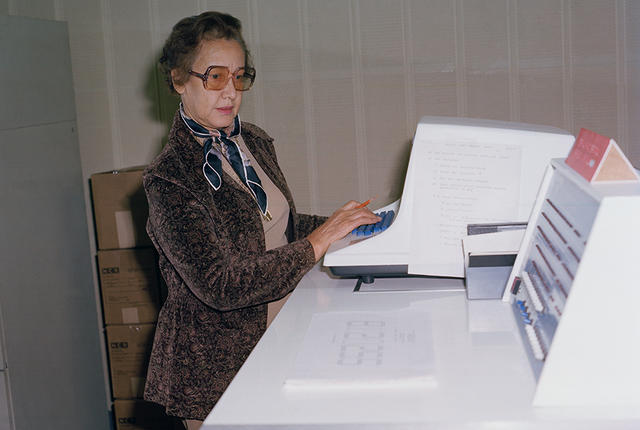
R_1980-L-00022 001This is a story of one person making a difference! Her accomplishments required a resolve, determination and conviction to not buckle under the acute pressure to maintain the status quo. Her efforts and life’s pursuits helped to forge change in her homeland for her and all others that followed. The book Go Lean … Caribbean identified subjects like this as advocates; relating that their successful completion of their advocacy tend to benefit more than just them but the whole world (Page 122).

The story of Katherine Johnson is now being told as a movie. Movies can be effective for the goal of displaying a better view of people … and the community failings they have had to overcome. Previous Go Lean commentaries presented details of other movies that had the potential of reflecting and effecting change in society. See this sample here:

‘Concussion’ – The Movie; The Cause
Lesson from ‘Star Wars’ – ‘Heroes can return’
The Movie ‘Good Hair’ and the Strong Black Woman
Movie ‘Tomorrowland’ – Feed the Right Wolf
Documentary Movie: ‘Merchants of Doubt’ – Scary Proposition
Movie Lesson: ‘Only at the precipice, do they change’

The heroism of Katherine Johnson is against the backdrop of America’s segregation past. There is no way to justify America’s days of racial separation and oppression. Good riddance!

Surely, today our communities reflect a more inclusive environment. Surely?

Unfortunately, no!

America, still, and the Caribbean more, is plagued with a “climate of hate” in too many places. Far too often, in our own backyards, a class of people is oppressed, repressed and suppressed just because …

… the reasons do not even matter. It is just plain wrong and unwise and unproductive for our mission to retain our local geniuses.

Our community needs all hands on deck, with everybody contributing: all races, all genders, all ages, all classes of people. This point has also been conveyed in previous Go Lean commentaries; consider this sample here:

Respect for Minorities: Climate of Hate
Gender Equality Referendum Outcome: Impact on the ‘Brain Drain’
The Plea for Women in Politics
A Lesson in Civil War History – Compromising Human Rights
Socio-Economic Change: The Demographic Theory of Elderly Suicide
LGBT & Buggery in Jamaica – ‘Say It Ain’t So’!
The ‘Luck of the Irish’ – Past, Present and Future Lessons
10 Things We Don’t Want from the US: #7 Discrimination of Immigrants

The book Go Lean…Caribbean (and subsequent blog/commentaries) relates that we must do better than the American history. We have a problem now with societal abandonment for “push and pull” reasons. In order to encourage people to stay home and impact their homeland, we need to protect and promote those with genius qualifiers. There is a lot at stake.

This Go Lean book serves as a roadmap for the introduction and implementation of the technocratic Caribbean Union Trade Federation (CU). Fostering genius is very important to this movement. The book states (Page 27):

The CU assumes a mission of working with educational and youth agencies to identify and foster “genius” in our society, as early as possible. Geniuses are different from everyone else, although they maybe fairly easy to spot, defining exactly what makes one person a genius is a little trickier. Some researchers & theorists argue that the concept of genius is too limiting and doesn’t really give a full view of intelligence; they feel that intelligence is a combination of many factors; thereby concluding that genius can be found in many different  abilities and endeavors. The CU posits that any one person can make a difference and positively impact their society; so the community ethos of investment in this specially identified group, geniuses, would always be a worthwhile endeavor.

Fostering STEM (Science, Technology, Engineering and Mathematics) careers is integral to the Go Lean/CU roadmap. The goal is to identify students early with high aptitude in STEM areas, then develop them through academies and science fairs. The CU will even fund free tuition for these ones at local colleges/universities or forgive-able loans for those wishing to matriculate abroad. This is a matter of community ethos, defined as in the book as the fundamental spirit of a culture that drives the beliefs, customs and practices of a society. The book refers to this spirit motivating our Focus on the Future. This spirit would be embedded in every aspect of the Go Lean/CU roadmap. See here how the prime directives reflects this:

  • Optimization the economic engines of the Caribbean to elevate the regional economy to grow to $800 Billion and create 2.2 million new (direct & indirect) jobs, including STEM-related industries with a projection of 40,000 Research & Development direct jobs and 20,000 Technology direct jobs.
  • Establishment of a security apparatus to protect the people and economic engines.
  • Improvement of Caribbean governance to support these economic and security engines.

The Go Lean roadmap provides turn-by-turn directions on how to reform Caribbean STEM education initiatives – also the economic and governance aspects as a whole. The roadmap opens with a Declaration of Interdependence, pronouncing the approach of regional integration (Page 13 & 14) as a viable solution to elevate the region’s educational opportunities:

xix.  Whereas our legacy in recent times is one of societal abandonment, it is imperative that incentives and encouragement be put in place to first dissuade the human flight, and then entice and welcome the return of our Diaspora back to our shores …

xxi.  Whereas the preparation of our labor force can foster opportunities and dictate economic progress for current and future generations, the Federation must ensure that educational and job training opportunities are fully optimized for all residents of all member-states, with no partiality towards any gender or ethnic group. The Federation must recognize and facilitate excellence in many different fields of endeavor, including sciences, languages, arts, music and sports. This responsibility should be executed without incurring the risks of further human flight, as has been the past history.

xxvii. Whereas the region has endured a spectator status during the Industrial Revolution, we cannot stand on the sidelines of this new economy, the Information Revolution. Rather, the Federation must embrace all the tenets of Internet Communications Technology (ICT) to serve as an equalizing element in competition with the rest of the world. The Federation must bridge the digital divide and promote the community ethos that research/development is valuable and must be promoted and incentivized for adoption.

The Go Lean book envisions the CU – a confederation of the 30 member-states of the Caribbean chartered to do the heavy-lifting of empowering and elevating the Caribbean economy. The mission is to mitigate further brain drain of Caribbean citizens with STEM abilities.  The book details the economic principles and community ethos to adopt, plus the executions of strategies, tactics, implementations and advocacies to optimize STEM initiatives in the Caribbean region:

Community Ethos – Deferred Gratification Page 21
Community Ethos – Economic Systems Influence Choices & Incentives Page 21
Community Ethos – Job Multiplier – Indirect Jobs from Direct Ones Page 22
Community Ethos – Anti-Bullying and Mitigation Page 23
Community Ethos – Minority Equalization Page 24
Community Ethos – Return on Investments Page 24
Community Ethos – Ways to Impact the Future – Foster a Future Focus Page 27
Community Ethos – Ways to Foster Genius – For STEM & other fields Page 26
Community Ethos – Ways to Help Entrepreneurship Page 28
Community Ethos – Promote Intellectual Property Page 29
Community Ethos – Ways to Impact Research & Development Page 30
Community Ethos – Ways to Close the Digital Divide Page 31
Community Ethos – Ways to Impact the Greater Good Page 37
Anecdote – Valedictorian and Caribbean Diaspora Member Page 38
Strategy – Customers – Citizens, Business Community & Diaspora Page 47
Strategy – Meeting Region’s Needs Today, Preparing For Future Page 58
Tactical – Separation of Powers – Patent, Standards, & Copyrights Page 78
Tactical – Separation of Powers – Education Department Page 85
Implementation – Assemble all Super-Regional Governing Entities Page 96
Implementation – Trends in Implementing Data Centers Page 106
Implementation – Ways to Deliver Page 109
Implementation – Better Manage Debt – Better Student Loans Dynamics Page 114
Planning – Ways to Improve Trade Page 128
Planning – Ways to Make the Caribbean Better Page 131
Advocacy – Ways to Grow the Economy Page 151
Advocacy – Ways to Create Jobs Page 152
Advocacy – Ways to Improve Education Page 159
Advocacy – Ways to Impact Student Loans – Forgivable Provisions Page 160
Advocacy – Ways to Foster Empowering Immigration – STEM Professionals Page 174
Advocacy – Ways to Foster Technology Page 197
Advocacy – Ways to Impact the Diaspora Page 217

Katherine Johnson Receives Presidential Medal of FreedomThe Go Lean movement celebrates Katherine Johnson today as a role model in STEM. (Though she is an African-American with no Caribbean connection). She is recognized worldwide – just wait until the movie is released – as a woman of accomplishment – in 2015 she was awarded the Presidential Medal of Freedom:

“So if you think your job is pressure-packed, hers meant that forgetting to carry the one might send somebody floating off into the solar system.” – US President Barack Obama said in honoring Katherine Johnson on November 24, 2015.

This day – August 26 – is also Women’s Equality Day – commemorating women being granted the right to vote in the US on August 26, 1920.

So we celebrate all women that strive to achieve; there are those that do a lot; there are also women that choose to do little, or nothing. We celebrate them too. That is their equal right!

Yes, we can all do better than the past experiences from our communities. The Caribbean can be better!

Now is the time for all of the Caribbean, women and men, to lean-in for the empowerments described in the book Go Lean … Caribbean. This roadmap will result in more positive socio-economic changes throughout the region; it will make the Caribbean a better place to live, work and play. 🙂

Download the book Go Lean … Caribbean – now!

——-

Appendix VIDEO: Celebrating Katherine Johnson’s Great Mind – Human Computerhttps://youtu.be/Bdr9QBRcPEk

Published on Sep 1, 2015 – In the early days of spaceflight, if NASA needed to plot a rocket’s path or confirm a computer’s calculations, they knew who to ask: Katherine Johnson.

Share this post:
, , , ,
[Top]

‘Time to Go’ – No Respect for our Hair

Go Lean Commentary

“You cannot beg people to love you, if you are successful, it will not be love that you get, it will be pity; being pitied is pathetic” – Wise counsel.

Who wants to be pitied? Not so welcoming, is it?!

This commentary asserts that when you are being pitied, when that is how people tolerate you, then it is time to go home – where people love you.

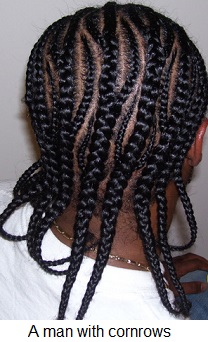
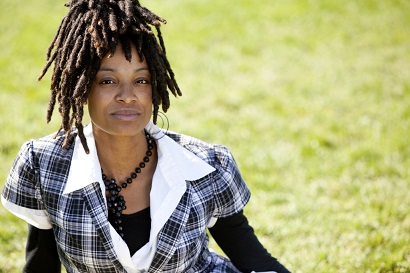
This is a hot issue for the topic of hair: Black Hair, for men and women.

The truth about Black Hair is both “art and science”. Science-wise, it is different than the hair of other cultures. All these other cultures, feature natural texture that is straight; but for ethnicities descending from an African heritage, their natural texture is coarse-curly; derisively called nappy, peasy or kinky. The encyclopedic definition relates …

“Because many black people have hair that is thick with tighter and smaller curls than people of other races, unique hair styles have developed. In addition to this, many Black Hair styles have historical connections to African cultures.”

That is the science; all the rest of this discussion is the “art”; the options and choices on Black Hair, that some perceive to force assimilation and devalue culture. This is a heavy issue.

This commentary is 2 of 3 from the movement behind the book Go Lean … Caribbean, in consideration of the reasons to consider repatriation back to the Caribbean homeland. The other commentaries detailed in this series are as follows:

  1.  Time to Go: Spot-on for Protest
  2.  Time to Go: No respect for our Hair
  3.  Time to Go: Logic of Senior Emigration

cu-blog-time-to-go-no-respect-for-our-hair-photo-4All of these commentaries relate to the Caribbean image and disposition as a region with a majority Black population. The Go Lean book asserts that our demographics is what it is. There is no need to excuse, hide or assimilate to any other cultural influence. No racial supremacy is advocated – for this race or any other race – in the book or by this movement. We have a beautiful diversity, period. Despite any ethnic differences, the region has the same needs, to optimize the economic, security and economic engines in the Caribbean homeland.

The Go Lean book and movement serves as a roadmap for the introduction of the technocratic Caribbean Union Trade Federation (CU). The CU is set to optimize Caribbean society through economic elevation, security empowerment and governing engagements. Therefore the Go Lean roadmap has 3 prime directives:

  • Optimization of the economic engines in order to grow the regional economy to $800 Billion & create 2.2 million new jobs.
  • Establishment of a security apparatus to ensure public safety and protect the economic engines.
  • Improve Caribbean governance to support these engines.

The Go Lean book posits that investment and entrepreneurial opportunities can be created in the region, to the extent of creating 2.2 million new jobs. There will need to be an open, fair and level “playing field” for all these jobs. Assimilating to an alternate hairstyle, to placate some majority view will simply be irrelevant. Diversity will dominate in the business eco-system from the beginning; it will not have to be remediated or retrofitted.

This retrofit is challenging in the US right now. There have been legal challenges and court cases as to discrimination in the workplace regarding Black Hair styles. See a related news article here of a recent federal court ruling:

Title #1: Federal Court Rules It’s Legal Not to Hire Black Woman Applicant Because of Her Locs

Attractive Young Woman Sitting in a Park

Natural Black Hair styles are still seen as deviant and unprofessional in many settings,
and a recent court ruling might make it even harder to fight back against discrimination.

The 11th US Circuit Court of Appeals ruled last week that banning employees from wearing locs is not racial discrimination. In a 3-0 decision the Federal Appeals court dismissed a lawsuit brought by the Equal Employment Commission which argued that, “prohibition of dreadlocks in the workplace constitutes race discrimination because dreadlocks are a manner of wearing the hair that is physiologically and culturally associated with people of African descent.”

In 2010, Castastrophe Management Solutions, an insurance claims processing company in Mobile, Alabama offered Chastity Jones a job but told her that she would have to cut her locs before beginning work. When she refused, they withdrew the offer.

The HR managed claimed her locs violated the company’s grooming policy, which they say is race-neutral, and employees are required to keep their appearance “in a manner that projects a professional and businesslike image.” Jones was told locs “tend to get messy.”

Judge Adalberto Jordan expressed a hesitancy to expand the legal definition of racial discrimination via judicial action. He wrote in his opinion, “As far as we can tell, every court to have considered the issue has rejected the argument that Title VII protects hairstyles culturally associated with race,” he stated.”

Other related articles: http://www.theroot.com/articles/culture/2016/06/steve-perry-black-boys-hair-tweet/ posted June 15, 2016.
Summary: The notion that traditionally Black Hair styles are synonymous with being unsuccessful speaks directly to the pathologizing of blackness that this country is known to do — and our “leaders” are too often the ones elevated to do it.

So according to this foregoing news article, American companies do not have to remediate or retrofit to accept their diverse workforce; they are allowed to assimilate them, to force them to conform to a uniform vision that they conceive … or prefer.

cu-blog-time-to-go-no-respect-for-our-hair-photo-5

The Borg: Strength is irrelevant. Resistance is futile. We wish to improve ourselves. We will add your biological and technological distinctiveness to our own. Your culture will adapt to service ours. – Movie Quote: Star Trek – The Next Generation (TV Series).

When “they” force you into their mold, it is Time to Go.

The subject of Black Hair has been a frequent topic for this Go Lean movement. Previous submissions describes this topic as related to image and economics. Consider these summaries:

1. ‘Good Hair’ and the Strong Black Woman

Berlin, Erich Honecker empfängt Angela DavisBlack kinky hair is considered worthless in the global marketplace. But the market for mitigating, treating (chemicals) and covering the hair (wigs & extensions) is worth $9 Billion annually. This seems like such a dichotomy for the Black community, especially among women. This ethnic group prides itself on a proud heritage of Strong Black Women, and yet there is this unspoken rejection of natural Black Hair. This is sad!

The Go Lean book presents strategies, tactics and implementations to elevate the Caribbean’s image and the region’s economic, security and governing engines. The end-goal is so that our people do not feel “Less Than” in their home countries. But if our Diaspora are among those spending the $9 Billion to treat/cover their Black Hair, then truly it is time to consider going home, back to people that love us just the way we are, rather than putting on “false airs”.

The CU will serve as a sentinel for Caribbean “image”. The US is the military and economic Super Power in this hemisphere. Their consumerism dictates the trends in the Caribbean as well; this is the North-South pressure. But the Caribbean has been successful in forging style-taste-trends in a South-North manner. Just consider the life work of these Caribbean role models:

o  Sidney Poitier
o  Bob Marley
o  Oscar De La Renta

2. Caribbean Image: Dreadlocks

Bob MarleyDreadlocks are tied to Caribbean image; many view those with this headwear as inferior or “Less Than“. Many people in the Caribbean, though not a majority in the region, wear dreadlocks, despite their occupation. These “locs” can be an expression of deep religious or spiritual convictions, ethnic pride, a political statement, or  simply be a fashion preference. Yet, their wear can be detrimental in job placement and advancement. This was “spot-on” for the issue in the foregoing federal court ruling.

Other ethnic groups also groom their headwear in a way germane to their culture and/or religion – Sikh Indian turban, Jewish yarmulke, or an taqiyah – but their wear is not associated with a “less than” disposition. This is a matter of image. The Go Lean/CU roadmap seeks to optimize the Caribbean economy, culture and image.

The ruling from the US federal court in the foregoing news article is another indicator that it is “Time to Go“. Trying to force acceptance of Caribbean hair traditions may be likened to begging people to love us. We may only get pity.

But the alternative is not easy. This means fixing the broken systems of commerce and the societal defects in the Caribbean. The Go Lean book describes this effort as heavy-lifting. This will address the “push and pull” reasons why people leave the Caribbean in the first place. Once we can fix the defects, there will be no excuse for our people, the Diaspora, to remain in an environment where they are forced to assimilate to a look and style more comfortable for their white neighbors and co-workers.

There is no freedom in this dreaded scenario.

Fixing the Caribbean eco-system has always been a mission of the Go Lean/CU roadmap, to dissuade the propensity for so many Caribbean people who flee from their Caribbean homelands to foreign destinations like the US. In addition, there is a mission to invite many Diaspora members to repatriate. The book contends that the Caribbean must prepare for the eventual return of these native sons and daughter back to our shores. This point is pronounced early in the book with the Declaration of Interdependence (Pages 12 & 13) that claims:

xi.   Whereas all men are entitled to the benefits of good governance in a free society, “new guards” must be enacted to dissuade the emergence of incompetence, corruption, nepotism and cronyism at the peril of the people’s best interest. The Federation must guarantee the executions of a social contract between government and the governed.

xii.  Whereas the legacy in recent times in individual states may be that of ineffectual governance with no redress to higher authority, the accedence of this Federation will ensure accountability and escalation of the human and civil rights of the people for good governance, justice assurances, due process and the rule of law.

xiii. Whereas the legacy of dissensions in many member-states … will require a concerted effort to integrate the exile community’s repatriation, the Federation must arrange for Reconciliation Commissions to satiate a demand for justice.

xx.  Whereas the results of our decades of migration created a vibrant Diaspora in foreign lands, the Federation must organize interactions with this population into structured markets. Thus allowing foreign consumption of domestic products, services and media, which is a positive trade impact. These economic activities must not be exploited by others’ profiteering but rather harnessed by Federation resources for efficient repatriations.

xxi. Whereas the preparation of our labor force can foster opportunities and dictate economic progress for current and future generations, the Federation must ensure that educational and job training opportunities are fully optimized for all residents of all member-states, with no partiality towards any gender or ethnic group.

Fixing the Caribbean defects do not only prepare the region for the return of the Diaspora, it also elevates the region to just simply be a better place to live, work and play. There truly is the need. Our region is not so settled on the issue of Black Hair. We still mandate a “white assimilation” on our people. Consider the story here in the following news article:

Title #2: Prep School in Jamaica Refuses Entry to Boy Because of His Hairstyle

cu-blog-time-to-go-no-respect-for-our-hair-photo-2

According to a story in the Jamaica Observer, Hopefield Preparatory School in St Andrew has refused entry to Zavier Assam, 3, because of the way his hair is groomed.

Zavier was registered at the school, but his mother Dr. Penelope Amritt, reported that the vice-principal there decided not to admit her son for classes because she refused to cut his hair. The Observer contacted the school about the matter but received no comment. Dr. Amritt said that she submitted an application in June 2016 for her three children to attend Hopefield and included a photo of the three-year-old boy. She was then told by the vice-principal that Zavier could not come to school unless his hair was cut. After thinking about it over the summer, Dr. Amritt decided that she should not be forced into something she didn’t want to do and felt that the school was discriminating against Zavier because of his gender. She said that her five-year-old daughter Zina and her son Zavier have almost the exact, same hair length, which is just below their ears.

According the Dr. Amritt, when the vice-principal saw Zavier she said that she wanted the boy’s hair cut because it was “untidy and dirty,” a description Dr. Amritt strongly denies. The vice-principal also said that Zina’s hair should be tied back. Dr. Amritt challenged the vice-principal about requiring boys to have short hair and was given a lecture about head lice in school. When she brought Zavier for orientation, she was confronted again about the length of his hair and said it was her right to choose how her child’s hair is groomed.

Discussions between Dr. Amritt and the vice-principal have grown increasingly contentious, and ultimately, the vice-principal returned the check she had written to the school for her son’s entry and said she would not admit Zavier regardless of whether his hair is cut or not. Zavier must remain at Fundaciones, his old school, and his mother is unsure if she will pursue legal action on the basis of discrimination. Additionally, Dr. Amritt noted that Zina is having problems with the other children because of her “puffy hair” and that she no longer wants the afro style she has had her whole life because no one will play with her with her hair like that. Dr. Amritt believes the vice-principal is treating her children differently than the Caucasian children at the school.

In response to those who wonder why she would want to send her children to a school with such attitudes, Dr. Amritt said “discrimination is wrong and someone has to stand up and talk about it.”
Source:
Posted September 6, 2016; retrieved September 26, 2016 from: http://jamaicans.com/prep-school-in-jamaica-refuses-entry-to-boy-because-of-his-hairstyle/

What are the motives of the school policies in this foregoing article? Perhaps to prepare the students for work and life abroad in the Diaspora. This is not the direction of the Go Lean roadmap: we want/need our citizens to be themselves, to be home, just the way they are:

Long hair? Short hair? Straighten/treated hair? Nappy/Kinky hair?

Its all good! See VIDEO in the Appendix below. These should all be promoted for the Caribbean image.

The art-and-science of image management is among the community ethos, strategy, implementations and advocacies the CU must master to elevate the Caribbean community. These individual roles-and-responsibilities are detailed in the book; see this sample listing here:

Community Ethos – Ways to Impact the Future Page 26
Community Ethos – Ways to Foster Genius Page 27
Community Ethos – Ways to Impact Turn-Arounds Page 33
Community Ethos – Ways to Manage Reconciliations Page 34
Community Ethos – Impact the Greater Good Page 37
Strategy – Caribbean Core Competence Page 58
Tactical – Forging an $800 Billion Economy – Good leverage for Trade and Globalization Page 70
Tactical – Separation of Powers – Tourism and Film Promotion Page 78
Tactical – Separation of Powers – Communications and Media Page 79
Tactical – Separation of Powers – Truth & Reconciliation Commissions Page 90
Implementation – Ways to Impact Social Media – Managing Image Online Page 111
Implementation – Trade Mission Objectives – World Outreach for Repatriation Dialogue Page 116
Implementation – Ways to Benefit from Globalization – Exporting Media Productions Page 119
Anatomy of Advocacies – Models of Individuals Making an Impact to their Community Page 122
Advocacy – Ways to Better Manage Image Page 133
Advocacy – Improve Failed-State Indices – Assuaging the Negatives Page 134
Advocacy – Ways to Grow the Economy Page 151
Advocacy – Ways to Improve Leadership Page 171
Advocacy – Ways to Improve Communications Page 186
Advocacy – Ways to Enhance Tourism – Creating a Demand, Not Dread of Caribbean Culture Page 190
Advocacy – Ways to Market Southern California – A Critical Market for Image Page 194
Advocacy – Ways to Impact Hollywood Page 203
Advocacy – Ways to Preserve Caribbean Heritage Page 218
Advocacy – Ways to Ways to Protect Human Rights – Weeding-out Prejudices Page 220
Advocacy – Ways to Improve the Arts – Humanities Affect the Heart Page 230

This subject of image management has been frequently blogged on in other Go Lean commentaries; as sampled here with these entries relating American “push and pull” factors:

https://goleancaribbean.com/blog/?p=9038 Caribbean Charity Management: Not Viewed as Grown Up
https://goleancaribbean.com/blog/?p=9017 Improve Global Image: Proclaim August 1st as the ‘International Caribbean Day’
https://goleancaribbean.com/blog/?p=8431 Bahamas Issued US Travel Advisory Citing Police Violence
https://goleancaribbean.com/blog/?p=8099 Caribbean Image: ‘Less Than’?
https://goleancaribbean.com/blog/?p=7221 Street naming for Martin Luther King unveils the real America
https://goleancaribbean.com/blog/?p=5527 American Defects: Racism – Is It Over?
https://goleancaribbean.com/blog/?p=5333 Racial Legacies: Cause and Effect
https://goleancaribbean.com/blog/?p=2025 Caribbean Jobs – Attitudes & Images of the Diaspora

Underlying to the Go Lean/CU prime directive of elevating the economics, security and governing engines of the Caribbean, is the desire to make the Caribbean homeland, a better place to live, work and play.

When we succeed on the vision and missions of this roadmap, we must manage the image and communicate to the world, our elevated disposition. The book details how this is to be pursued. See the quotation here from the Go Lean book (Page 133):

Lean in for the Caribbean Single Market & Economy (CSME) Initiative: Caribbean Union Trade Federation (CU).
This will allow for the unification of the region into one market of 42 million people across 30 member-states, with a GDP of $800 Billion (according to 2010 figures). In addition, the treaty calls for collective bargaining with foreign countries and industry representatives for causes of significance to the Caribbean community. There are many times when the media portray a “negative” depiction of Caribbean life, culture and people. The CU will have the scale to effectuate negotiations to better manage the region’s image, and the means by which to enforce the tenets.

This is all part-and-parcel of the underlying Go Lean community ethos: Greater Good for all peoples, all hairstyles. Equal opportunity, equal employment and equal empowerment.

Black-and-Brown hairstyles? Yes, indeed!

All Caribbean stakeholders are hereby urged to lean-in to this Go Lean/CU roadmap to elevate the Caribbean; to make our homeland a better place to live, work and play. 🙂

Download the book Go Lean … Caribbean – now!

———

Appendix VIDEO – 30 Beautiful Black Hairstyles for Natural Hair 2016 – https://youtu.be/wBSL71dU-OE

Published on Oct 29, 2015 – 30 Beautiful Black Hairstyles for Natural Hair 2016


Share this post:
, , ,
[Top]

The Movie ‘Hidden Figures’ – Art Imitating Life

#GoLeanCommentary

** August 26, 2016 **

This day is the 98th birthday for “Katherine Johnson”.

CU Blog - 'Hidden Figures' - Art Imitating Life - Photo 2

Who is Katherine Johnson? And why is she important in the discussion of Caribbean empowerment?

Katherine Johnson (1918 – ) was a rocket scientist, physicist, and mathematician before there were rocket scientists. Why is this important? It is as 19th century Essayist Oscar Wilde dubbed it:

“Life imitates Art far more than Art imitates Life”.

The focus here is on the “Art imitating Life”; no, even further than “art” is the “science”. The “art” in this case is the movie “Hidden Figures”. The “science” is the mathematics associated with rockets and trajectory: Rocket Science.

The movie HIDDEN FIGURES is the incredible untold story of Katherine Johnson (Taraji P. Henson), Dorothy Vaughn (Octavia Spencer) and Mary Jackson (Janelle Monáe)—brilliant African-American women working at NASA, who served as the brains behind one of the greatest operations in history: the launch of astronaut John Glenn into orbit, a stunning achievement that restored the nation’s confidence, turned around the Space Race, and galvanized the world. The visionary trio crossed all gender and race lines to inspire generations to dream big. – 20 Century Fox Studio

This is the power associated with film. It’s an art that can promote a science. This is in harmony with a previous blog/commentary – by the Go Lean … Caribbean movement – regarding Caribbean Diaspora member and Hollywood great, Sidney Poitier, it was declared that …

… “Movies are an amazing business model. People give money to spend a couple of hours watching someone else’s creation and then leave the theater with nothing to show for the investment; except perhaps a different perspective”.

The untold story of Katherine Johnson is not so “unfamiliar” to the African-American experience. There has been millions of similar tales, where those with genius-qualifying abilities had to languish in a world where they were considered “less than“. (See the Appendix VIDEO below).

Oh, how wrong that world was!

Today, we tell the tale of Katherine Johnson. We celebrate her for her accomplishments and inspiration she provides to future generations of scientists, mathematicians, African-descendents and women. She is the definition of “Shero”; she is all of that! See how this is portrayed in the new film here, opening in January 2017:

VIDEO: Movie Trailer ‘Hidden Figures’ – https://youtu.be/RK8xHq6dfAo

Published on August 14, 2016 – Watch the new trailer for [the movie] #HiddenFigures, based on the incredible untold true story. Starring Taraji P. Henson, Octavia Spencer & Janelle Monáe. In theaters this January [2017].

Why is this discussion of Katherine Johnson important in the discussion of Caribbean empowerment?

R_1980-L-00022 001This is a story of one person making a difference! Her accomplishments required a resolve, determination and conviction to not buckle under the acute pressure to maintain the status quo. Her efforts and life’s pursuits helped to forge change in her homeland for her and all others that followed. The book Go Lean … Caribbean identified subjects like this as advocates; relating that their successful completion of their advocacy tend to benefit more than just them but the whole world (Page 122).

The story of Katherine Johnson is now being told as a movie. Movies can be effective for the goal of displaying a better view of people … and the community failings they have had to overcome. Previous Go Lean commentaries presented details of other movies that had the potential of reflecting and effecting change in society. See this sample here:

‘Concussion’ – The Movie; The Cause
Lesson from ‘Star Wars’ – ‘Heroes can return’
The Movie ‘Good Hair’ and the Strong Black Woman
Movie ‘Tomorrowland’ – Feed the Right Wolf
Documentary Movie: ‘Merchants of Doubt’ – Scary Proposition
Movie Lesson: ‘Only at the precipice, do they change’

The heroism of Katherine Johnson is against the backdrop of America’s segregation past. There is no way to justify America’s days of racial separation and oppression. Good riddance!

Surely, today our communities reflect a more inclusive environment. Surely?

Unfortunately, no!

America, still, and the Caribbean more, is plagued with a “climate of hate” in too many places. Far too often, in our own backyards, a class of people is oppressed, repressed and suppressed just because …

… the reasons do not even matter. It is just plain wrong and unwise and unproductive for our mission to retain our local geniuses.

Our community needs all hands on deck, with everybody contributing: all races, all genders, all ages, all classes of people. This point has also been conveyed in previous Go Lean commentaries; consider this sample here:

Respect for Minorities: Climate of Hate
Gender Equality Referendum Outcome: Impact on the ‘Brain Drain’
The Plea for Women in Politics
A Lesson in Civil War History – Compromising Human Rights
Socio-Economic Change: The Demographic Theory of Elderly Suicide
LGBT & Buggery in Jamaica – ‘Say It Ain’t So’!
The ‘Luck of the Irish’ – Past, Present and Future Lessons
10 Things We Don’t Want from the US: #7 Discrimination of Immigrants

The book Go Lean…Caribbean (and subsequent blog/commentaries) relates that we must do better than the American history. We have a problem now with societal abandonment for “push and pull” reasons. In order to encourage people to stay home and impact their homeland, we need to protect and promote those with genius qualifiers. There is a lot at stake.

This Go Lean book serves as a roadmap for the introduction and implementation of the technocratic Caribbean Union Trade Federation (CU). Fostering genius is very important to this movement. The book states (Page 27):

The CU assumes a mission of working with educational and youth agencies to identify and foster “genius” in our society, as early as possible. Geniuses are different from everyone else, although they maybe fairly easy to spot, defining exactly what makes one person a genius is a little trickier. Some researchers & theorists argue that the concept of genius is too limiting and doesn’t really give a full view of intelligence; they feel that intelligence is a combination of many factors; thereby concluding that genius can be found in many different  abilities and endeavors. The CU posits that any one person can make a difference and positively impact their society; so the community ethos of investment in this specially identified group, geniuses, would always be a worthwhile endeavor.

Fostering STEM (Science, Technology, Engineering and Mathematics) careers is integral to the Go Lean/CU roadmap. The goal is to identify students early with high aptitude in STEM areas, then develop them through academies and science fairs. The CU will even fund free tuition for these ones at local colleges/universities or forgive-able loans for those wishing to matriculate abroad. This is a matter of community ethos, defined as in the book as the fundamental spirit of a culture that drives the beliefs, customs and practices of a society. The book refers to this spirit motivating our Focus on the Future. This spirit would be embedded in every aspect of the Go Lean/CU roadmap. See here how the prime directives reflects this:

  • Optimization the economic engines of the Caribbean to elevate the regional economy to grow to $800 Billion and create 2.2 million new (direct & indirect) jobs, including STEM-related industries with a projection of 40,000 Research & Development direct jobs and 20,000 Technology direct jobs.
  • Establishment of a security apparatus to protect the people and economic engines.
  • Improvement of Caribbean governance to support these economic and security engines.

The Go Lean roadmap provides turn-by-turn directions on how to reform Caribbean STEM education initiatives – also the economic and governance aspects as a whole. The roadmap opens with a Declaration of Interdependence, pronouncing the approach of regional integration (Page 13 & 14) as a viable solution to elevate the region’s educational opportunities:

xix.  Whereas our legacy in recent times is one of societal abandonment, it is imperative that incentives and encouragement be put in place to first dissuade the human flight, and then entice and welcome the return of our Diaspora back to our shores …

xxi.  Whereas the preparation of our labor force can foster opportunities and dictate economic progress for current and future generations, the Federation must ensure that educational and job training opportunities are fully optimized for all residents of all member-states, with no partiality towards any gender or ethnic group. The Federation must recognize and facilitate excellence in many different fields of endeavor, including sciences, languages, arts, music and sports. This responsibility should be executed without incurring the risks of further human flight, as has been the past history.

xxvii. Whereas the region has endured a spectator status during the Industrial Revolution, we cannot stand on the sidelines of this new economy, the Information Revolution. Rather, the Federation must embrace all the tenets of Internet Communications Technology (ICT) to serve as an equalizing element in competition with the rest of the world. The Federation must bridge the digital divide and promote the community ethos that research/development is valuable and must be promoted and incentivized for adoption.

The Go Lean book envisions the CU – a confederation of the 30 member-states of the Caribbean chartered to do the heavy-lifting of empowering and elevating the Caribbean economy. The mission is to mitigate further brain drain of Caribbean citizens with STEM abilities.  The book details the economic principles and community ethos to adopt, plus the executions of strategies, tactics, implementations and advocacies to optimize STEM initiatives in the Caribbean region:

Community Ethos – Deferred Gratification Page 21
Community Ethos – Economic Systems Influence Choices & Incentives Page 21
Community Ethos – Job Multiplier – Indirect Jobs from Direct Ones Page 22
Community Ethos – Anti-Bullying and Mitigation Page 23
Community Ethos – Minority Equalization Page 24
Community Ethos – Return on Investments Page 24
Community Ethos – Ways to Impact the Future – Foster a Future Focus Page 27
Community Ethos – Ways to Foster Genius – For STEM & other fields Page 26
Community Ethos – Ways to Help Entrepreneurship Page 28
Community Ethos – Promote Intellectual Property Page 29
Community Ethos – Ways to Impact Research & Development Page 30
Community Ethos – Ways to Close the Digital Divide Page 31
Community Ethos – Ways to Impact the Greater Good Page 37
Anecdote – Valedictorian and Caribbean Diaspora Member Page 38
Strategy – Customers – Citizens, Business Community & Diaspora Page 47
Strategy – Meeting Region’s Needs Today, Preparing For Future Page 58
Tactical – Separation of Powers – Patent, Standards, & Copyrights Page 78
Tactical – Separation of Powers – Education Department Page 85
Implementation – Assemble all Super-Regional Governing Entities Page 96
Implementation – Trends in Implementing Data Centers Page 106
Implementation – Ways to Deliver Page 109
Implementation – Better Manage Debt – Better Student Loans Dynamics Page 114
Planning – Ways to Improve Trade Page 128
Planning – Ways to Make the Caribbean Better Page 131
Advocacy – Ways to Grow the Economy Page 151
Advocacy – Ways to Create Jobs Page 152
Advocacy – Ways to Improve Education Page 159
Advocacy – Ways to Impact Student Loans – Forgivable Provisions Page 160
Advocacy – Ways to Foster Empowering Immigration – STEM Professionals Page 174
Advocacy – Ways to Foster Technology Page 197
Advocacy – Ways to Impact the Diaspora Page 217

Katherine Johnson Receives Presidential Medal of FreedomThe Go Lean movement celebrates Katherine Johnson today as a role model in STEM. (Though she is an African-American with no Caribbean connection). She is recognized worldwide – just wait until the movie is released – as a woman of accomplishment – in 2015 she was awarded the Presidential Medal of Freedom:

“So if you think your job is pressure-packed, hers meant that forgetting to carry the one might send somebody floating off into the solar system.” – US President Barack Obama said in honoring Katherine Johnson on November 24, 2015.

This day – August 26 – is also Women’s Equality Day – commemorating women being granted the right to vote in the US on August 26, 1920.

So we celebrate all women that strive to achieve; there are those that do a lot; there are also women that choose to do little, or nothing. We celebrate them too. That is their equal right!

Yes, we can all do better than the past experiences from our communities. The Caribbean can be better!

Now is the time for all of the Caribbean, women and men, to lean-in for the empowerments described in the book Go Lean … Caribbean. This roadmap will result in more positive socio-economic changes throughout the region; it will make the Caribbean a better place to live, work and play. 🙂

Download the book Go Lean … Caribbean – now!

——-

Appendix VIDEO: Celebrating Katherine Johnson’s Great Mind – Human Computerhttps://youtu.be/Bdr9QBRcPEk

Published on Sep 1, 2015 – In the early days of spaceflight, if NASA needed to plot a rocket’s path or confirm a computer’s calculations, they knew who to ask: Katherine Johnson.

Share this post:
, , ,
[Top]

Women Get Ready for New Lean-In Campaign

Go Lean Commentary

CU Blog - Women Get Ready for New Lean-In Campaign - Photo 5The last 12 months (June 2015 to June 2016) is turning out to be a topsy-turvy year for women. On the one hand, the US has the first ever woman Presidential Candidate from a major party – Democrat Hillary Clinton. On the other hand, the Caribbean lost (in election defeat) it’s two women Heads of State (Jamaican – Portia Simpson-Miller; Trinidad – Kamla Persad-Bissessar). Canada has chimed into this discussion as well, with their new Prime Minister, Justin Trudeau, appointing women to half of the roles in his Cabinet.

That’s the government arena; in the business arena, there has been a good number of promotions for women CEO’s for Fortune 500 companies during this past year, bringing the total now to 22. See list here:

CEO Company 2015 Fortune 500 ranking
Mary Barra General Motors 6
Meg Whitman[3] Hewlett-Packard 19
Virginia Rometty[4] IBM 24
Indra K. Nooyi[5] PepsiCo, Inc. 44
Marillyn Hewson[6] Lockheed Martin 64
Safra A. Catz[7] Oracle 81
Irene B. Rosenfeld[8] Mondelēz International 91
Phebe Novakovic General Dynamics 100
Carol Meyrowitz The TJX Companies, Inc. 103
Lynn Good[9] Duke Energy 116
Ursula M. Burns[10] Xerox Corporation 143
Deanna M. Mulligan Guardian Life Insurance Company of America 254
Barbara Rentler Ross Stores 269
Debra L. Reed Sempra Energy 270
Kimberly Lubel CST Brands 277
Sheri S. McCoy[11] Avon Products Inc. 322
Susan M. Cameron Reynolds American 337
Denise M. Morrison[12] Campbell Soup 342
Kathleen Mazzarella Graybar Electric 445
Ilene Gordon Ingredion 462
Lisa Su[13] Advanced Micro Devices 473
Jacqueline C. Hinman CH2M Hill 480

Source: Retrieved June 23, 2016 from: https://en.wikipedia.org/wiki/List_of_women_CEOs_of_Fortune_500_companies

With women amounting to 50 percent of the population, 22 of 500 (4.4%) must only be a start. So how to propel forward? One person who have purported a strategy is Facebook’s Chief Operating Officer, author and advocate Sheryl Sandberg. She published her groundbreaking book Lean In: Women, Work, and the Will to Lead. This book inspired the composition of another book, Go Lean … Caribbean, to help the women … and men of the Caribbean by elevating their societal engines (economics, security and governance) of the region. The Go Lean book quotes this review of the Lean In book with these words on Page 5:

Thirty years after women became 50 percent of the college graduates in the United States, men still hold the vast majority of leadership positions in government and industry. This means that women’s voices are still not heard equally in the decisions that most affect our lives. In Lean In, Sheryl Sandberg examines why women’s progress in achieving leadership roles has stalled, explains the root causes, and offers compelling, commonsense solutions that can empower women to achieve their full potential.

Sandberg is the chief operating officer of Facebook and is ranked on Fortune’s list of the 50 Most Powerful Women in Business and as one of Time’s 100 Most Influential People in the World.

Since the release of Ms. Sandberg’s book in 2013, she has since invited other impactful women to join her advocacy. The call has been answered. See a related news article here:

Title: Washington, Dunham, Gomez are faces of new Lean-In campaign
By: AP Entertainment Writer Sandy Cohen

CU Blog - Women Get Ready for New Lean-In Campaign - Photo 4LOS ANGELES (AP) — Kerry Washington, Lena Dunham, Emma Watson, Selena Gomez and Serena Williams say help from other women has been critical to their success.

The stars appear in a video released Thursday by LeanIn.org to promote its new “Together Women Can ” campaign.

Washington says she’s “not really sure what my life would look like if it were not for Shonda Rhimes,” who cast her as the lead in “Scandal.”

Williams cited her sister Venus as her guide. Watson said Sofia Coppola was a mentor: “She supported my work and made me believe I could do more.”

Eva Longoria, newscaster Megyn Kelly and soccer star Abby Wambach also appear in the video.

CU Blog - Women Get Ready for New Lean-In Campaign - Photo 3LeanIn.org founder Sheryl Sandberg said the campaign is meant to raise awareness of the ways women can support each other in the workplace and encourage confidence and leadership skills in girls.

Women working together leads to more women in leadership positions, a key objective of LeanIn.org, Sandberg said.

The video is among several set to appear on the campaign’s website, which also includes tips for mentors and those they mentor and guidance for modeling leadership skills for girls.

“When women are CEOs, when women run for office, we inspire girls and women everywhere to believe they can do more,” Sandberg, a self-made billionaire and top executive at Facebook, said in an interview. “And we still have a very small percentage of leadership roles anywhere, in any industry, in any government anywhere in the world. Our goal is to change that. And while the gap may be big, the numbers change one by one.”
Source: Associated Press; posted June 23, 2016 at: https://www.yahoo.com/news/washington-dunham-gomez-faces-leanin-campaign-110033640.html?ref=gs

CU Blog - Women Get Ready for New Lean-In Campaign - Photo 1

CU Blog - Women Get Ready for New Lean-In Campaign - Photo 2

The Caribbean region needs to include more women in leadership roles so as to include maximum representation in the stewardship of Caribbean society. We need their voices in as policy-makers, that means politics and government.

The Caribbean region needs more women pursuing business and entrepreneurial opportunities.  We need their insights and investment of their time, talent and treasuries. With their earnest contributions, the whole community will benefit.

Our Caribbean women need to lean-in. And the supportive men in their lives, need to lean-in too.

This issue in the foregoing news article relate more participation than they do feminism. This consideration is being brought into focus as it relates to the book Go Lean … Caribbean. The book serves as a roadmap for the introduction and implementation of the technocratic Caribbean Union Trade Federation (CU). The roadmap solicits full participation from women and men as stakeholders in the new Caribbean. This is a mandate! We cannot marginalized women in our society. Otherwise, we run the risk of losing them; watching them abandon their ancestral homelands to seek refuge in foreign countries. This has been happening far too often.

The situation is so bad, that the Caribbean is now in crisis. Among the crises that the region battles is the brain drain or abandonment of the highly educated citizenry. Why do they leave? For “push-and-pull” reasons!

“Push” refers for deficient conditions at home that makes people want to flee. “Pull” refers to the presumption of better conditions abroad. Our Caribbean women gleaning the information of a possible women President in the US and a growing list of women CEO’s in the Fortune 500, may entice them for a better life, to pursue dreams abroad in the Diaspora.

Dissuading this human flight is a mission of the Go Lean/CU (including incentives for the Diaspora to repatriate). This point is pronounced early in the book with this Declaration of Interdependence (Pages 12 – 14), with these opening statements:

xi. Whereas all men are entitled to the benefits of good governance in a free society, “new guards” must be enacted to dissuade the emergence of incompetence, corruption, nepotism and cronyism at the peril of the people’s best interest. The Federation must guarantee the executions of a social contract between government and the governed.

xii. Whereas the legacy in recent times in individual states may be that of ineffectual governance with no redress to higher authority, the accedence of this Federation will ensure accountability and escalation of the human and civil rights of the people for good governance, justice assurances, due process and the rule of law.

xix. Whereas our legacy in recent times is one of societal abandonment, it is imperative that incentives and encouragement be put in place to first dissuade the human flight, and then entice and welcome the return of our Diaspora back to our shores.

xxi. Whereas the preparation of our labor force can foster opportunities and dictate economic progress for current and future generations, the Federation must ensure that educational and job training opportunities are fully optimized for all residents of all member-states, with no partiality towards any gender or ethnic group. The Federation must recognize and facilitate excellence in many different fields of endeavor, including sciences, languages, arts, music and sports. This responsibility should be executed without incurring the risks of further human flight, as has been the past history.

xxvi. Whereas the Caribbean region must have new jobs to empower the engines of the economy and create the income sources for prosperity, and encourage the next generation to forge their dreams right at home, the Federation must therefore foster the development of new industries

The subject of fostering gender equality, equal access and equal protections for women have been directly addressed and further elaborated upon in these previous blog/commentaries:

https://goleancaribbean.com/blog/?p=8155 Bahamas Referendum Outcome: Impact on the ‘Brain Drain’
https://goleancaribbean.com/blog/?p=7490 Push Factor: Interpersonal Violence / Domestic
https://goleancaribbean.com/blog/?p=6937 Women in Politics – Yes, They Can!
https://goleancaribbean.com/blog/?p=6836 Role Model – #FatGirlsCan – Empowering Women
https://goleancaribbean.com/blog/?p=6434 ‘Good Hair’ and the Strong Black Woman
https://goleancaribbean.com/blog/?p=6422 Getting More Women Interested in Science/Technology Careers
https://goleancaribbean.com/blog/?p=5720 Role Model/Disability Advocate Urging Reasonable Accommodations
https://goleancaribbean.com/blog/?p=3078 Bad Case Study: Bill Cosby’s Accusers – Why They Weren’t Believed
https://goleancaribbean.com/blog/?p=2709 Caribbean Study: 58% Of Boys Agree to Female ‘Discipline’
https://goleancaribbean.com/blog/?p=2201 Students developing nail polish to detect date rape drugs
https://goleancaribbean.com/blog/?p=809 Muslim officials condemn abductions of Nigerian girls
https://goleancaribbean.com/blog/?p=695 Help for Abused Women Depicts Societal Defects

The Go Lean book posits that every woman has a right to work towards making their homeland a better place to life, work and play. The Caribbean community needs their participation. So the book details the following community ethos, strategies, tactics, implementations and advocates to help women to impact the homeland:

Community Ethos – Deferred Gratification Page 21
Community Ethos – Economic Systems Influence Individual Choices Page 21
Community Ethos – Consequences of Choices Lie in the Future Page 21
Community Ethos – Anti Bullying & Mitigations Page 23
Community Ethos – Minority Equalizations Page 24
Community Ethos – Ways to Impact the Greater Good Page 37
Strategy – Fix the broken systems of governance Page 46
Tactical – Separation of Powers – Member-states versus CU Federal Government Page 71
Implementation – Reason to Repatriate Page 118
Planning – Ways to Improve Failed-State Indices – Law Enforcement Oversight Page 134
Advocacy – Ways to Better Manage the Social Contract Page 170
Advocacy – Ways to Impact the Diaspora – Encourage Repatriation Page 218
Advocacy – Ways to Impact Foundations – NGO’s for Women Causes Page 219
Advocacy – Ways to Protect Human Rights – Women’s Rights Page 220
Advocacy – Ways to Improve Elder-Care – Needs of Widows Page 225
Advocacy – Ways to Empower Women Page 226
Advocacy – Ways to Impact Youth – Steering Young Girls to STEM Careers Page 227
Advocacy – Ways to Impact Persons with Disabilities Page 228

There are serious issues impacting the Caribbean; these must be addressed . Since many of these issues affect women, it is better to have women as stakeholders, as leaders and policy-makers. This applies to work and play activities, like sports.

Women represent 50% of the population in most communities. To effectively engage a population, we must effectively engage women. But, we need the women to engage back as well. As Sheryl Sandberg’s movement states, we need them to “lean-in”. See Appendix for Sheryl Sandberg’s follow-up TEDTalk interview entitled: “So we leaned in … now what?” The Go Lean movement needs the Caribbean women (and men) to lean-in to this roadmap to elevate the societal engines of the region. This is our prime directive, defined as follows:

  • Optimization of the economic engines in order to grow the regional economy to $800 Billion & create 2.2 million new jobs.
  • Establishment of a security apparatus to protect the resultant economic engines.
  • Improve Caribbean governance to support these engines.

This CU/Go Lean roadmap is a conceivable, believable and achievable business plan. With the right commitment of time, talent and treasuries from women and men to support them, they can succeed in making the Caribbean region a better place to live, work and play. This is something everybody wants. 🙂

Download the book Go Lean … Caribbean – now!

—————-

Appendix VIDEO – Sheryl Sandberg: So we leaned in … now what? – https://youtu.be/YraU52j3y8s

Published on Jan 15, 2014 – Sheryl Sandberg admits she was terrified to step onto the TED stage in 2010 — because she was going to talk, for the first time, about the lonely experience of being a woman in the top tiers of business. Millions of views (and a best-selling book) later, the Facebook COO talks with the woman who pushed her to give that first talk, Pat Mitchell. Sandberg opens up about the reaction to her idea, and explores the ways that women still struggle with success.
TEDTalks is a daily video podcast of the best talks and performances from the TED Conference, where the world’s leading thinkers and doers give the talk of their lives in 18 minutes (or less). Look for talks on Technology, Entertainment and Design — plus science, business, global issues, the arts and much more.

Share this post:
,
[Top]

Referendum Outcome: Impact on the ‘Brain Drain’

Go Lean Commentary

The book Go Lean … Caribbean seeks to elevate society in the entire Caribbean homeland. The book, serving as a roadmap with turn-by-turn directions, seeks to transform – remediate and mitigate – the engines of regional economics, security and governance. This means optimizing justice institutions to ensure “liberty, equality and justice for all”.

Here’s a question for the Caribbean in general, and considering the subsequent news article, the Bahamas in particular:

Do minorities have any rights if the majority do not accord them?

Impact - Photo 1

Bahamas Parliament – House of Assembly – Nassau

This is a serious issue!

This relates to the June 7th, 2016 referendum in the Bahamas. The measure listed 4 bills for constitutional amendments relating to Gender Equality, designed to correct some inequities in the legal structures of the country. The following summaries apply:

BILL 1: Would allow a child born outside of the Bahamas to a Bahamian mother and a non-Bahamian father to have citizenship.

BILL 2: Would allow a foreign man married to a Bahamian woman to seek citizenship.

BILL 3: Would allow an unmarried Bahamian father to pass his citizenship to a child born to a foreign mother.

BILL 4: Would end discrimination based on sex.
(Source: https://en.wikipedia.org/wiki/Bahamian_constitutional_referendum,_2016 )

Update June 8, 2016:  The Referendum failed in every constituency and every precinct. The ‘No‘ Vote movement succeeded overwhelmingly; see a related article here.

Like most societies, there are males and females, majorities and minorities. So an even more grave issue is brought to mind:

Human / Natural Rights of Men versus Women and Majorities versus Minorities

CU Blog - Women in Politics - Yes, They Can - Photo 5The Human Rights premise is: for those people who are not treated equal in a society, their rights should NOT be dependent on some popularity contests among the majority. No one should have to seek someone else’s permission to be happy. This is easier said than done, as our Caribbean is notorious for repression for those who do not conform with the majority.

This commentary asserts that natural rights / human rights should be accorded, no matter the results of some referendum.

The disposition of the Bahamas “lay in the balance” from this referendum. What message has been sent to the world: inviting or disinviting?

The book Go Lean … Caribbean addresses these issues, from the perspective of economics and nation-building. This book serves as a roadmap for the introduction and implementation of the Caribbean Union Trade Federation (CU); the purpose of which is to elevate Caribbean society, for all 30 member-states. The book stresses the need to guarantee human rights protections for all Caribbean people (Page 220), recognizing that the region is diverse in ethnicities and cultures.

Can’t we all just get along?! – Rodney King 1994

If we fail to try, or send the wrong message as to our inclusiveness, we suffer a dire consequence – “brain drain”. This is also the strong point made by the Bahamas Chamber of Commerce and Employers Confederation in the following news article:

By: Neil Hartnell, Business Editor, The Tribune Daily Newspaper
(Source: Posted May 6, 2016; retrieved June 2, 2016 from: http://www.tribune242.com/news/2016/may/06/referendum-outcomes-brain-drain-impact/)

The upcoming constitutional referendum’s outcome could have far-reaching consequences for the Bahamian economy and its ability to reverse the “brain drain”, a senior private sector executive warned yesterday.

Edison Sumner, the Bahamas Chamber of Commerce and Employers Confederation’s (BCCEC) chief executive, told Tribune Business that the four Bills that Bahamians will vote on have profound implications beyond gender equality.

Depending on the outcome, Mr Sumner said the referendum may impact the Bahamas’ ability to retain – and attract – the ‘best and brightest’, including future generations of entrepreneurs and managers, given that it would affect how citizenship is bestowed.

“The Bahamas already complains, as does the region, about there being a ‘brain drain’,” he told Tribune Business, referring to how many college and university graduates elected to remain abroad after completing their studies.

Most cited the lack of opportunity, and economic diversification, as the reasons behind this choice, but Mr Sumner warned that this trend could be exacerbated depending on which way Bahamians vote.

The Bills, as designed, will enable a child born outside the Bahamas to automatically become a Bahamian citizen at birth if either of the parents was a Bahamian citizen at birth.

They will also “enable a Bahamian woman married to a foreign man to secure for him the same entitlements to citizenship that a Bahamian man married to a foreign woman already has under the constitution”.

The Bahamian father of a child born outside of marriage will be able to pass on his citizenship to that child if the third Bill is approved by the electorate, while the fourth Bill effectively enshrines gender equality as a fundamental right under the constitution.

Mr Sumner said that, viewed strictly from an economic and workforce perspective, the Bills would eventually have major ramifications for the Bahamas’ ability to expand its labour and entrepreneur pools, plus its attraction for investors.

Making it easier for children born to Bahamians in the circumstances outlined by the Bills to obtain citizenship/status, he added, would be key to ensuring these people became positive contributors to the Bahamas’ economic development and growth

“Those born to a Bahamian parent outside the outside the country, or born outside marriage, may find themselves in a precarious position where they are not Bahamian, and have no more entitlement to become Bahamian,” Mr Sumner explained.

“We want to retain as much of our intellectual capital in the Bahamas as possible to help us grow the economy, the education system, the infrastructure of the country.

“It has to be one of those situations where they must see the benefits in coming to the Bahamas, getting their citizenship here, and helping to build the country and the economy.”

Mr Sumner also warned that Bahamian employers needed to “pay attention” to what happens with the Bills and the referendum, given that the outcome might impact employee workplace relations and hiring practices.

Given that the constitution “trumps all legislation”, he added that the Employment Act, Industrial Relations Act and other labour legislation might be impacted by the referendum.

So voting wrong on the referendum could exacerbate the “brain drain”? Yes! Justice for all? No!

Public referendums are a product of a democratic process. But there is something else more important: rule of law or a constitution. This normally defines the moral code by which a society is to judge “right from wrong”. For many Caribbean nations, their constitutions embed principles from the Judeo-Christian principles – from the Bible. But does that mean they are “Christian nations”. Just consider the comments of one of the founding fathers of the Bahamas, Arthur D. Hanna. See VIDEO here:

VIDEO – Hon. A. D. Hanna debunks the “Christian nation” myth – https://youtu.be/0q0o2-4t3UI

Published on Nov 15, 2014 – Founding Father, framer of the constitution and former Governor-General Arthur Dion Hanna makes it abundantly clear that the Bahamas is NOT a Christian nation. (recorded at the Bahamas Historical Society, 13th November, 2014)

A Christian character is preferred for the individual; a “Christian nation”, not so much. A Christian nation would impose orthodoxy and dogma, prohibiting gender equality and establishing men as the “head” in their families and communities; plus a Christian nation would prohibit the activities of the LGBT communities, due to the religious orthodoxy. This orthodoxy premise often lead victims to flee their homeland to find refuge abroad, exacerbating the “brain drain” further.

So what principle would be recommended for a Caribbean nation or the region as a whole? The Go Lean book (Page 37) answers: the Greater Good:

“It is the greatest good to the greatest number of people which is the measure of right and wrong”. Jeremy Bentham (1748-1832)

The Go Lean book (Page 20) advocates for all of the Caribbean the community ethos of the Greater Good – “fundamental character or spirit of a culture; the underlying sentiment that informs the beliefs, customs, or practices of a group or society”. But respect for the sovereign territories of each member-state mandates that we respect the individual laws enacted there. (Though we can use peer-pressure to foster change).

The Go Lean/CU roadmap employs a tactic of a “Separation-of-Powers between CU federal agencies and Caribbean member-state governments”; so the limitations of national laws in a member-state does not have to override the CU. The CU constitution would apply to the installation of Exclusive Economic Zones (EEZ) and Self-Governing Entities (SGE) that operate in controlled bordered territories like campuses, industrial parks, research labs and industrial plants.

This roadmap brings hope to assuage the Caribbean orthodoxy.

The CU – applying the Greater Good principle – would facilitate the regional prime directives:

  • Optimization of the economic engines in order to grow the regional economy to $800 Billion & create 2.2 million new jobs.
  • Establishment of a security apparatus to protect the resultant economic engines, specifically in EEZ’s and SGE’s.
  • Improvement of Caribbean governance, with the appropriate separation-of-powers, to support these engines.

The book Go Lean … Caribbean asserts that CU controlled territories – like EEZ’s and SGE’s – can be strategic, tactical and operationally efficient for elevating Caribbean society and mandating “justice for all”. These sites can serve as peer pressure on the rest of the region. These points are pronounced early in the book with this Declaration of Interdependence (Page 12), including these statements:

xi. Whereas all men are entitled to the benefits of good governance in a free society, “new guards” must be enacted to dissuade the emergence of incompetence, corruption, nepotism and cronyism at the peril of the people’s best interest. The Federation must guarantee the executions of a social contract between government and the governed.

xii. Whereas the legacy in recent times in individual states may be that of ineffectual governance with no redress to higher authority, the accedence of this Federation will ensure accountability and escalation of the human and civil rights of the people for good governance, justice assurances, due process and the rule of law. As such, any threats of a “failed state” status for any member state must enact emergency measures on behalf of the Federation to protect the human, civil and property rights of the citizens, residents, allies, trading partners, and visitors of the affected member state and the Federation as a whole.

xiii. Whereas the legacy of dissensions in many member-states … will require a concerted effort to integrate the exile community’s repatriation, the Federation must arrange for Reconciliation Commissions to satiate a demand for justice.

xvi. Whereas security of our homeland is inextricably linked to prosperity of the homeland, the economic and security interest of the region needs to be aligned under the same governance. Since economic crimes, including piracy and other forms of terrorism, can imperil the functioning of the wheels of commerce for all the citizenry, the accedence of this Federation must equip the security apparatus with the tools and techniques for predictive and proactive interdictions.

The subject of optimizing justice institutions and the “truth and consequences” of justice failures have been directly addressed and further elaborated upon in these previous blog/commentaries:

https://goleancaribbean.com/blog/?p=8099 Caribbean Image: ‘Less Than’?
https://goleancaribbean.com/blog/?p=7989 Political Transformation results in “free money”
https://goleancaribbean.com/blog/?p=7628 ‘A Change Is Gonna Come’ – Inevitable for the Caribbean
https://goleancaribbean.com/blog/?p=7490 Push Factor: Interpersonal Violence / Domestic
https://goleancaribbean.com/blog/?p=5784 Push Factor: Caribbean Unjust LGBT Treatments – ‘Say It Ain’t So’!
https://goleancaribbean.com/blog/?p=5695 Repenting, Forgiving and Reconciling the Past
https://goleancaribbean.com/blog/?p=5304 Mitigating the Eventual ‘Abuse of Power’
https://goleancaribbean.com/blog/?p=4840 Caribbean Orthodoxy: Jamaican Poll – ‘Bring back the British!’
https://goleancaribbean.com/blog/?p=4240 Bad Policy – Immigration Policy Exacerbates Productivity Crisis
https://goleancaribbean.com/blog/?p=2994 Justice Strategy: Special Prosecutors … et al
https://goleancaribbean.com/blog/?p=2709 Caribbean Study: 58% Of Boys Agree to Female ‘Discipline’
https://goleancaribbean.com/blog/?p=695 Help for Abused Women Depicts Societal Defects

The Go Lean book itself details the economic principles and community ethos to adopt, plus the executions of strategies, tactics, implementations and advocacies to mitigate the “push and pull” factors that imperil our Caribbean region:

Community Ethos – Economic Principles – All Choices Involve Costs Page 21
Community Ethos – Economic Principles – People Respond to Incentives Page 21
Community Ethos – Economic Principles – Economic Systems Influence Individual Choices Page 21
Community Ethos – Economic Principles – Voluntary Trade Creates Wealth Page 21
Community Ethos – Economic Principles – Consequences of Choices Lie in the Future Page 21
Community Ethos – Security Principles – Privacy –vs- Public Protection Page 23
Community Ethos – Security Principles – Whistleblower Protection Page 23
Community Ethos – Security Principles – Witness Security & Protection Page 23
Community Ethos – Security Principles – Anti-Bullying and Mitigation Page 23
Community Ethos – Governing Principles – Minority Equalization Page 24
Community Ethos – Governing Principles – Lean Operations Page 24
Community Ethos – Governing Principles – Cooperatives Page 25
Community Ethos – Ways to Manage Reconciliations Page 34
Community Ethos – Ways to Improve Sharing Page 35
Community Ethos – Ways to Impact the Greater Good Page 37
Strategy – Vision – Trade Federation with Proxy Powers of a Confederacy Page 45
Strategy – Mission – Build and Foster Local Economic Engines Page 45
Strategy – Mission – Protect Stakeholders with Vigorous Law-and-Order measures Page 45
Tactical – Confederating a Non-Sovereign Union Page 63
Tactical – Fostering a Technocracy Page 64
Tactical – Separation of Powers – Homeland Security Page 75
Tactical – Separation of Powers – Justice Department Page 77
Implementation – Foreign Policy Initiatives at Start-up Page 102
Implementation – Start-up Security Initiatives Page 103
Implementation – Start-up Benefits from the EEZ – Security – Interdictions Page 104
Implementation – Steps to Implement Self-Governing Entities – Security and Justice Page 105
Implementation – Ways to Foster International Aid – For oppressed minority groups Page 115
Planning – Ways to Make the Caribbean Better – Measures for the Rich and Poor Page 131
Planning – Ways to Improve Failed-State Indices – Law Enforcement Oversight Page 134
Planning – Lessons from the American West – Law & Order needed for progress Page 142
Advocacy – Ways to Grow the Economy Page 151
Advocacy – Ways to Create Jobs Page 152
Advocacy – Ways to Improve Governance Page 168
Advocacy – Ways to Better Manage the Social Contract Page 170
Advocacy – Ways to Improve Leadership Page 171
Advocacy – Ways to Impact Justice Page 177
Advocacy – Ways to Reduce Crime Page 178
Advocacy – Ways to Improve Homeland Security Page 180
Advocacy – Ways to Mitigate Terrorism Page 181
Advocacy – Ways to Improve Intelligence Gathering & Analysis Page 182
Advocacy – Ways to Protect Human Rights Page 220

The Caribbean is comprised of males and females, majorities and minorities. Everyone must be afforded every opportunity for life, liberty and the pursuit of happiness. But “push and pull” emigration factors are real and important considerations for the Caribbean. The standards of justice – or lack there-of – have and can contribute to the “push” factors for people abandoning their homeland.

The foregoing news article depicts the crisis for the Bahamas.

The strong references to “brain drain” in the foregoing article and this commentary indicate that many in the community have felt oppressed or repressed, and have thusly “taken their talents to South Beach” or South New York, or South Toronto, or South London, etc. Since we need our talented human resources to build-up our own communities, we must examine all the debilitating factors – societal defects – in our homelands. We need to do better. The Caribbean in general and Bahamas in particular needs to send this message to the world that in our homeland, the legal premise must be:

… liberty, equality and justice for all.

The Go Lean … Caribbean roadmap seeks to employ strategies, tactics and implementations to dissuade the societal abandonment, invite the Diaspora to repatriate and further to recruit empowering immigrants to join us in our quest to make the Caribbean a better place to live, work and play. 🙂

Download the book Go Lean … Caribbean – now!

Share this post:
, , ,
[Top]

ENCORE: In honor of “International Women’s Day” – #OneDayIWill!

This Go Lean blog-commentary from November 14, 2015 is re-distributed on this occasion of International Women’s Day – originally called International Working Women’s Day. This is celebrated on March 8 every year. (See more details at Wikipedia). Google gave it a great honor this year, with this VIDEO here – https://youtu.be/ztMIb6nEeyg:

See the original blog here …

———-

Go Lean Commentary

CU Blog - Women in Politics - Yes, They Can - Photo 4

The Caribbean member-states, despite their differences, (4 languages, 5 colonial legacies, terrain: mountains -vs- limestone islands), have a lot in common. Some similarities include:

  • Lack of equality for women compared to men.
  • The government is the largest employer.

So the reality of Caribbean life is that while the governmental administrations are not fully representative of the populations, they are responsible for all societal engines: economy, security and governance.

This is bad and this is good! Bad, because all the “eggs are in the same basket”. Good, because there is only one entity to reform, reboot and re-focus.

So how do we seriously consider reforming government in the Caribbean?

  • Start anew.
  • Start with politics and policy-makers.
  • Start with the people who submit for politics, to be policy-makers.
  • Start with people who participate in the process.

Considering the status-quo of the region – in crisis – there is this need to start again. But this time we need more women.

Consider Canada!

(The City of Detroit is across the river from Windsor, Ontario, Canada. The publishers of the book Go Lean…Caribbean are here to “observe and report” the turn-around and rebirth of the once-great-but-now-distressed City of Detroit and its metropolitan area. This proximity also allows us to observe-and-report on Detroit’s neighbor: Canada).

The Canadian political landscape can serve as a great role model for the Caribbean; (its a fitting role model for Detroit too). Consider these articles on Canada’s recent national elections:

News Article #1 Title: 50% population, 25% representation. Why the parliamentary gender gap?

CU Blog - Women in Politics - Yes, They Can - Photo 1A record 88 women were elected in the 2015 federal election, up from 76 in 2011. The increase represents a modest gain in terms of representation, with women now accounting for 26 per cent of the seats in the House. The following feature — which was initially published before the election — examines the gender imbalance in Canadian politics.

Canadian women held just one-quarter of the seats in the House of Commons when the writ dropped back in August. This figure places us 50th in a recent international ranking of women in parliaments.

The 41st Canadian Parliament featured 77 women MPs, with a record 12 female ministers in Prime Minister Stephen Harper’s cabinet.

The NDP’s success in Quebec during the 2011 federal election largely triggered the uptick in the number of women in Parliament, with the proportion rising to 25 per cent from 22 per cent in the 2008 election.

In spite of this, a large gender gap persists after decades of relative stagnation in Canada’s House of Commons. Women comprise just 33 per cent of the candidates from the five leading parties in this election.

“There is no doubt that in the old democracies, including Canada, there is stagnation,” said Drude Dahlerup, a political scientist from the University of Stockholm who has consulted in countries such as Tunisia and Sierra Leone on gender equality in parliament.

“We have this perception that gender equality should come naturally. Our research shows that is not necessarily a fact.”

Old democracies don’t favour ‘gender shocks’
There is significant growth in women representatives in what Dahlerup calls “fast-track” countries — places that have experienced recent conflict or are a new democracy.

In fact, some of the countries outpacing Canada in terms of parliamentary gender equality include Rwanda, Bolivia, Iraq and Kazakhstan.

Newer democracies like Bolivia can experience a gender shock as it did in an October 2014 election, rising from 22 per cent to 53 per cent women in the lower house.

Older democracies take the incremental approach, which is slower and involves grappling with the conventions of older institutions.

Does the electorate share some of the blame?
Despite what some term as a patronizing treatment in the public sphere it appears that gender is not a chief concern for voters.

Sylvia Bashevkin, a political scientist from the University of Toronto, looked at the negative effects of underrepresentation for women in her 2009 book Women, Power, Politics: The Hidden Story of Canada’s Unfinished Democracy and found a persistent marginalization of women’s contributions to politics in the media and public sphere.

“There’s a certain stream of gender stereotyping that still colours our discussions of public leadership that often tends to trivialize the contributions of women by paying particular attention to things like their appearance, speaking style or their personal lives rather than positions on policy.”

According to a recent poll, party loyalty factors far outweigh individual factors such as gender. In fact, respondents said women often tend to represent leadership qualities the voting public admires. The online Abacus survey was conducted in December 2014 and included a sample size of 1,438 Canadians.

“The argument is that [women] tend to be more community focused… and that they tend on average to be more honest and trustworthy than male politicians,” said Bashevkin.

The core of the issue comes back to the political parties and their nominations processes, says Melanee Thomas, a political scientist from the University of Calgary.

“We can find no evidence that voters discriminate against women candidates. We did find considerable evidence that party [nomination committees] were more likely to discriminate against women candidates,” said Thomas.

Thomas’s 2013 research with Marc André Bodet of LavalUniversity looked at district competitiveness. They found that women were more likely to be chosen as nominees in areas considered strongholds for other parties.

Where women are involved in the party nomination process, Thomas also said, more women are recruited to run for that nomination. Former MP and deputy prime minister Sheila Copps agrees.

“People try to replicate themselves and their social circle is usually very like-minded. I probably recruited more women in my time because it’s human nature,” said Copps.

Copps played a role in pitching the concept of a gender target of 25 per cent to former prime minister Jean Chrétien in 1993.

The target concept relies on the ability of the party leader to appoint women nominees required to meet the target.

Former prime minister Paul Martin opted to not have a target for women in the federal Liberal Party for 2004 while Stéphane Dion increased the target to 30 per cent in 2008.

Liberal Leader Justin Trudeau is running with an open nomination policy for the upcoming election, although this has caused some recent controversies. Ultimately, women comprised 31 per cent of the Liberal candidates.

The NDP has internal mechanisms to attempt to foster diversity. They say they have “parity policies,” that aim for gender diversity in the party structure, leadership and delegates.” It also insists that ridings must provide documentation of efforts to search for a woman or minority candidate before selecting a white male. When the final candidate list was released, the NDP touted a record proportion of 43 per cent women candidates.

Under the leadership of Prime Minister Stephen Harper, the Conservative Party holds that the matter should be left up to the local riding associations to determine. After running only 38 women candidates in 2006 the party’s figure spiked quickly in 2008 to 63 candidates. In 2015, 66 women, representing 20 per cent of the Conservatives roster of candidates, are in the running.

Read the whole story here: CBC News Site retrieved 11/13/2013 from: http://www.cbc.ca/news2/interactives/women-politics/

VIDEO 1 – Canada’s First Woman MP Agnes Macphail – https://youtu.be/0ALgilFMkug

Published on Sep 11, 2014 – Canada’s first female MP takes up the cause of Canadian penal system reform (1935).

————-

VIDEO 2 – MacPhail’s Successors – https://youtu.be/fyK7C6DA9lI

Published on Oct 21, 2015 – Political Scientist Sylvia Bashevkin reviews Canada’s gender facts: 50% population, 25% representation Why the parliamentary gender gap?

————

News Article #2 Title: New PM unveils cabinet that looks ‘like Canada’
Sub-title: Justin Trudeau’s younger, more diverse team comprises old-guard Liberal politicians and newcomers, half of them women.

CU Blog - Women in Politics - Yes, They Can - Photo 2

Justin Trudeau has been sworn in as Canada’s new prime minister, appointing a cabinet that he says looks “like Canada”.

The 43-year-old Liberal party leader, who swept to power in a general election two weeks ago to end nearly a decade of Conservative rule, took the oath on Wednesday and promised big changes as he introduced a younger, more diverse cabinet.

Most of the new ministers are between the ages of 35 and 50, while half of them are women – in line with Trudeau’s campaign pledge.

Asked why gender balance was important, Trudeau’s response was: “Because it’s 2015.

“Canadians from all across this country sent a message that it is time for real change, and I am deeply honoured by the faith they have placed in my team and me.”

The new cabinet includes a mix of old-guard Liberal politicians with many newcomers.

Among them is Indian-born Harjit Sajjan, a former Canadian soldier and Afghanistan war veteran who was named as Canada’s new defence minister.

He was Canada’s first Sikh commanding officer and received a number of recognitions for his service, having been deployed to Kandahar, Afghanistan, and Bosnia-Herzegovina.

Sajjan, a lieutenant-colonel in Canada’s armed forces, will oversee an anticipated change in Canada’s military involvement in the battle against the Islamic State of Iraq and the Levant (ISIL) fighters in Syria and Iraq.

Read the whole story here: http://www.aljazeera.com/news/2015/11/canada-pm-trudeau-diverse-women-cabinet-151105062433796.html posted November 5, 2015 by Al Jazerra News Service; retrieved November 13, 2015

This is not just a case for feminism. The issues in the foregoing news articles relate to policy-making participation and optimization, more than they relate to feminism. This story is being brought into focus in a consideration of the book Go Lean … Caribbean. The book serves as a roadmap for the introduction and implementation of the technocratic Caribbean Union Trade Federation (CU), for the societal elevation in the region. This roadmap calls for a fuller participation from women as stakeholders.

How do the foregoing stories relate to the Caribbean? The book relates that Canada (Page 146) has always provided a great role model for the Caribbean to consider for empowerment and elevation of our society. That country is a “friend” of the Caribbean; but it is also a competitor; a “frienemy” of sorts. How are we competing? What is our rate of participation of women in politics? See CHART here:

CHART – Caribbean Women Political Participation

Member-states

Women Eligible To Vote*

Women Eligible for Office*

Number of Legislators#

Number of Women Legislators#

Percentage

Anguilla

1951

1951

11

2

18.18%

Antigua and Barbuda

1951

1951

19

3

15.79%

Aruba

1949

1949

21

7

33.33%

Bahamas

1961

1961

38

5

13.16%

Barbados

1950

1950

30

5

16.67%

Belize

1954

1954

31

1

3.23%

Bermuda

1943

1943

36

8

22.22%

British Virgin Islands

1951

1951

15

3

20.00%

Cayman Islands

1959

1959

18

2

11.11%

Cuba

1934

1934

612

299

48.86%

Dominica

1951

1951

22

3

13.64%

Dominican Republic

1942

1942

183

38

20.77%

Grenada

1951

1951

16

5

31.25%

Guadeloupe (Fr)

1945

1945

41

11

26.83%

Guyana

1953

1945

65

18

27.69%

Haiti

1950

1950

95

4

4.21%

Jamaica

1944

1944

63

7

11.11%

Martinique (Fr)

1945

1945

41

14

34.15%

Montserrat

1951

1951

9

2

22.22%

Netherlands Antilles (Ne)^

1949

1949

150

56

37.33%

Puerto Rico

1920

1920

51

6

11.76%

Saint Barthélemy (Fr)

1945

1945

19

5

26.32%

Saint Kitts and Nevis

1951

1951

15

2

13.33%

Saint Lucia

1924

1924

18

3

16.67%

Saint Martin (Fr)

1945

1945

23

7

30.43%

Saint Vincent

1951

1951

23

3

13.04%

Suriname

1948

1948

51

13

25.49%

Trinidad and Tobago

1946

1946

42

12

28.57%

Turks and Caicos Islands

1951

1951

15

5

33.33%

US Virgin Islands

1920

1920

15

5

33.33%

TOTAL

1788

554

30.98%

^ Includes: Bonaire, Curaçao, Saba, Sint Eustatius, Sint Maarten
* – The Women Suffrage Timeline: http://womensuffrage.org/?page_id=69
# – Women in National Parliaments (2015) retrieved October 29, 2015 from: http://www.ipu.org/wmn-e/classif.htm

The Go Lean book advocates for more women in position of authority and decision-making in the new Caribbean.

CU Blog - Women in Politics - Yes, They Can - Photo 5

Why is this necessary?

Simple: With 50% of the population, there is the need for 50% of the representation; (this is the target). The foregoing CHART, however shows a different reality. These facts align with the Go Lean book’s quest to elevate Caribbean society.

Among the crises that the region contends with is human flight, the brain drain or abandonment of the highly educated citizenry. Why do they leave? For “push-and-pull” reasons!

“Push” refers to deficient conditions at home that makes people want to flee. “Pull” refers to better conditions abroad that appeals to Caribbean residents. They want that better life.

An underlying mission of the CU is to dissuade this human flight (and incentivize repatriation of the far-flung Diaspora). Canada is one of those refuge countries; a large number of Caribbean Diaspora live there. This country does a better job of facilitating participation from women in the political process. In competition of the Caribbean versus Canada, the Caribbean needs to do better.

For this lofty goal, of which we are failing, we can learn from Canada – our competitor – and follow their lead!

Change has come to the Caribbean. As the roadmap depicts, there is the need to foster more collaboration and optimization in the region’s governing eco-system. This involves including all ready, willing and abled stakeholders, men or women. In the Summer 2015 Blockbuster Movie Tomorrowland, the main character Frank Walker – played by George Clooney – advised the audience hoping to impact their communities for change:

“Find the ones who haven’t given up. They are the future”.

Women participating more readily in the political process can help a community.

CU Blog - Women in Politics - Yes, They Can - Photo 3

This has been proven true. Consider the example of Rwanda. (The country first on the above list). This country has endured a lot (Genocide in the 1990’s between Hutu and Tutsi tribes). Now, despite being a poorer African country, they have healed a lot of social issues. They now have many women in policy-making roles; and they have  transformed their society and now feature a great turn-around story. See details here:

Since 2000 Rwanda’s economy,[51] tourist numbers,[52] and Human Development Index have grown rapidly;[53] between 2006 and 2011 the poverty rate reduced from 57% to 45%,[54] while life expectancy rose from 46.6 years in 2000[55] to 59.7 years in 2015.[56] 

Following the 2013 election, there are 51 female deputies,[78] up from 45 in 2008;[79] as of 2015, Rwanda is one of only two countries with a female majority in the national parliament.[80]
(Source: https://en.wikipedia.org/wiki/Rwanda#CITEREFCJCR2003 retrieved November 13, 2015.)

The Go Lean roadmap posits that every woman has a right to work towards making their homeland a better place to live, work and play. The book details the following community ethos, strategies, tactics, implementations and advocates to impact our homeland:

Community Ethos – Deferred Gratification Page 21
Community Ethos – Economic Systems Influence Individual Choices Page 21
Community Ethos – Consequences of Choices Lie in the Future Page 21
Community Ethos – Minority Equalizations Page 24
Strategy – Fix the broken systems of governance Page 46
Tactical – Separation of Powers – Member-states versus CU Federal Government Page 71
Implementation – Reason to Repatriate Page 118
Planning – Lessons Learned from the previous West Indies Federation – Canada’s Support Page 135
Planning – Lessons from Canada’s   History Page 146
Advocacy – Ways to Better Manage the Social Contract Page 170
Advocacy – Ways to Impact the Diaspora – Page 218
Advocacy – Ways to Impact Foundations – NGO’s for Women Causes Page 219
Advocacy – Ways to Protect Human Rights – Women’s Rights Page 220
Advocacy – Ways to Improve Elder-Care – Needs of Widows Page 225
Advocacy – Ways to Empower Women Page 226
Advocacy – Ways to Impact Youth – Steering Young Girls to STEM Careers Page 227
Advocacy – Ways to Impact Persons with Disabilities Page 228

There are serious issues impacting the Caribbean; these must be addressed . Since many of these issues affect women, it is better to have women as stakeholders, as policy-makers and as politicians.

Many of these issues have been addressed in previous Go Lean blog/commentaries, as sampled here:

https://goleancaribbean.com/blog/?p=6836 Empowering Role Model – #FatGirlsCan
https://goleancaribbean.com/blog/?p=6722 A Lesson in History on Birthright Mandates from the US Civil War
https://goleancaribbean.com/blog/?p=6434 ‘Good Hair’ and the Strong Black Woman
https://goleancaribbean.com/blog/?p=5720 Role Model and Disability Advocate: Reasonable Accommodations
https://goleancaribbean.com/blog/?p=5648 Role Model Taylor Swift – Wielding Power in the Music Industry
https://goleancaribbean.com/blog/?p=3490 One Woman – Role Model Rallying a Whole Community
https://goleancaribbean.com/blog/?p=3244 Sports Role Model – espnW – Network for Women
https://goleancaribbean.com/blog/?p=3078 Honoring Women Victims – Bill Cosby Accusers’ Case Study
https://goleancaribbean.com/blog/?p=1918 Philadelphia Spirit Empowered Women and Other Causes
https://goleancaribbean.com/blog/?p=1037 Role Model & Humanities Advocate – Maya Angelou – R.I.P.
https://goleancaribbean.com/blog/?p=809 Case Study: Bad Treatment of Women – Abductions of Nigerian girls
https://goleancaribbean.com/blog/?p=695 Case Study: Abused wives find help by going to ‘Dona Carmen’

Politics represent the power of the people. Women represent 50% of the population; to engage the population, we must engage women. But, we need the women to engage as well, to lean-in, to this roadmap to elevate their societal engines (economy, security and governance). The goal of the Go Lean roadmap is to make the Caribbean a better place to live work and play; for all, regardless of gender.

This is not politics. This is not feminism. This is simply a quest for “better”. 🙂

Download the book Go Lean … Caribbean – now!

Share this post:
, , , , ,
[Top]