Tag: Transform

Fake News? Welcome to America

Go Lean Commentary

American media lives in a land of fantasy.

Consider these Fake News instances:

cu-blog-fake-news-welcome-to-america-photo-1

cu-blog-fake-news-welcome-to-america-photo-2

This is probably true of their news output because so many of the corporate structures that own non-fiction news operations also own fiction-based media operations. Consider these examples of same ownership:

Fox News 21st Century Fox Movie Studio
NBC News / CNBC / MSNBC Universal Pictures
CBS News Simon-Shuster Book Publishing
ABC News Disney Studios; Pixar; Marvel Studios; LucasFilms;
Touchstone Pictures
Cable News Network (CNN) Warner Brothers Movie Studio

No doubt, this fact – knowing where the bread is buttered – contributes to the duality and duplicity of these corporate citizens.

Now there is a new phenomenon in the world of media duality and duplicity: Fake News.

This is more malicious than initial appearances. See/hear the full story here in this Podcast and the subsequent VIDEO:

Title: How Fake News Spreads & Why People Believe It

Published December 14, 2016 – Buzzfeed News’ media editor, Craig Silverman, dissects how false stories during the presidential campaign were spread on Facebook and monetized by Google Ad Sense. Also, critic at-large John Powers shares six things he loved this year that he didn’t get around to reviewing.

—————

VIDEO – The onslaught of fake news – http://www.cbsnews.com/videos/the-onslaught-of-fake-news/

Posted December 18, 2016 (9:53 minutes) – In these partisan, high-tech times, are the news stories we Americans read, see, and hear fact or fiction? Senior correspondent Ted Koppel examines the landscape of lies and slander disguised as news stories, spread via social media, that bear little relation to facts. (VIDEO plays best in Internet Explorer).

Fake News appear to just be another example of American Crony-Capitalism where they exploit the public good for private gain. Media has frequently been  used to exploit the people. This commentary previously detailed the focus on fantasy as opposed to the vital facts of weather reporting.

Weather information is vital in different situations; think hurricanes. But news and information is vital everyday, rain or shine. So a situation where Fake News may thrive would be counterproductive to society. Many Americans — 62 percent to be exact — get some news from social media, according to the Pew Research Center. Of that group, 18 percent say they do so “often”.

This consideration aligns with the book Go Lean…Caribbean; this book serves as a roadmap for the introduction and implementation of the technocratic Caribbean Union Trade Federation (CU). This empowerment effort represents a change for the region, calling on all 30 member-states in the region to confederate and provide their own solutions in the areas of economics, security and governance. News and information relates to all three areas. The CU/Go Lean roadmap has these prime directives:

  • Optimization of the economic engines in order to grow the regional economy to $800 Billion GDP and create 2.2 million new jobs.
  • Establishment of a security apparatus to enhance public safety and protect the resultant economic engines against “bad actors”.
  • Improvement of Caribbean governance to support these engines.

The new emergence of Fake News seems apropos for the American eco-system, where fame seems more important than facts and style more important than substance:

Fame or infamy, either one is preferable to being forgotten – Hollywood Actress Lauren Bacall – Go Lean book Page 194.

This is a time when the American eco-system appears to be dysfunctional and filled with bad intent. No wonder the American eco-system is transforming from industrial to consumer, with trade deficits with all the industrial giants in the world; think Germany, Japan, South Korea and China.

The Caribbean is looking, listening and learning from the American model. We do NOT want to follow suit!

Yes, we want to develop our own social media – site: www.myCaribbean.gov – but with better rules for minimizing Fake News compared to the current American examples. Notice the mitigation now been deployed by Facebook & Google in the link here:

http://www.nbcnews.com/tech/tech-news/facebook-google-crack-down-fake-news-advertising-n684101

cu-blog-fake-news-welcome-to-america-photo-3The book Go Lean…Caribbean asserts that the Caribbean region must not allow the US to take the lead for our own nation-building, that American capitalistic interest tends to highjack policies intended for the Greater Good. This assessment is logical considering that the 2016 Presidential Election may have been a victim of this systemic disinformation. This is an issue of security.

This broken system in America does not have to be modeled in the Caribbean. Change has now come. The driver of this change is technology and globalization. The Go Lean roadmap provides turn-by-turn directions on how to forge this change in the region for a reboot of these Caribbean societal systems, including media institutions. This roadmap is thusly viewed as more than just a planning tool, pronouncing this point early in the Declaration of Interdependence (Page 13) with this statement:

xvi.    Whereas security of our homeland is inextricably linked to prosperity of the homeland, the economic and security interest of the region needs to be aligned under the same governance. Since economic crimes…can imperil the functioning of the wheels of commerce for all the citizenry, the accedence of this Federation must equip the security apparatus with the tools and techniques for predictive and proactive interdictions.

The Go Lean book purports that the Caribbean can – and must – do better. The vision of the CU is a confederation of the 30 member-states of the Caribbean to do the heavy-lifting of optimizing economic-security-governing engines. The  Go Lean book details the policies and other community ethos to adopt, plus the executions of the following strategies, tactics, implementations and advocacies to elevate Caribbean society, and mandate a society based on truth:

Community Ethos – Deferred Gratification Page 21
Community Ethos – Consequences of Choices Lie in the Future Page 21
Community Ethos – Privacy versus Public Protection Page 23
Community Ethos – Whistleblower Protection Page 23
Community Ethos – Light Up the Dark Places Page 23
Community Ethos – Anti-Bullying and Mitigation Page 23
Community Ethos – Intelligence Gathering Page 23
Community Ethos – Lean Operations Page 24
Community Ethos – Ways to Improve Sharing Page 35
Community Ethos – Ways to Impact the Greater Good Page 37
Strategy – Agents of Change – Technology Page 57
Strategy – Agents of Change – Globalization Page 57
Tactical – Separation of Powers – Emergency Management – Notifications Page 75
Tactical – Separation of Powers – Communications and Media Authority Page 79
Implementation – Security Initiatives at Start-up Page 103
Implementation – Ways to Impact Social Media Page 111
Implementation – Ways to Impact Elections Page 116
Implementation – Ways to Benefit from Globalization Page 119
Planning – Lessons Learned from 2008 – Lax Regulations Page 136
Advocacy – Ways to Grow the Economy Page 151
Advocacy – Ways to Create Jobs Page 152
Advocacy – Ways to Improve Governance Page 169
Advocacy – Ways to Better Manage the Social Contract Page 171
Advocacy – Ways to Impact Justice Page 177
Advocacy – Ways to Improve Homeland Security Page 180
Advocacy – Ways to Improve Intelligence Gathering & Analysis Page 182
Advocacy – Ways to Improve Communications Page 186
Advocacy – Ways to Foster Technology Page 197
Advocacy – Ways to Foster e-Commerce Page 198
Advocacy – Ways to Impact Main Street Page 201
Advocacy – Ways to Impact Hollywood – Media Industrial Complex Page 220

The foregoing Audio-Podcast and VIDEO relate the serious concern for Caribbean planners. While the US is the world’s largest Single Market economy, we want to only model some of the American example. We would rather foster a business climate to benefit the Greater Good, not just some special interest group.

There are many Go Lean blog commentaries that have echoed this point, addressing the subject of the Caribbean avoiding American consequences. See sample here:

https://goleancaribbean.com/blog/?p=9648 Bad American Model – Public Schools for Black-and-Brown
https://goleancaribbean.com/blog/?p=9646 Bad American Model – American Vices. Don’t Follow!
https://goleancaribbean.com/blog/?p=9626 Bad American Model – Marginalizing Our Vote
https://goleancaribbean.com/blog/?p=9038 Charity Management: The Need for Self-Rule
https://goleancaribbean.com/blog/?p=6893 American Meteorologists Views On Climate Change
https://goleancaribbean.com/blog/?p=5482 American For-Profit Education: Plenty of Profit; Little Education
https://goleancaribbean.com/blog/?p=4076 American Media Fantasies -vs- Weather Realities
https://goleancaribbean.com/blog/?p=2338 How Caribbean can Mitigate the Dreaded ‘Plutocracy’
https://goleancaribbean.com/blog/?p=2259 The Criminalization of American Business
https://goleancaribbean.com/blog/?p=1143 Health-care fraud in America; Criminals take $272 billion a year
https://goleancaribbean.com/blog/?p=273 10 Things We Don’t Want from the US – American Self-Interest Policies

The book Go Lean…Caribbean posits that many problems of the region are too big for any one member-state to solve alone, but that we do not need American leadership, rather instead, we need the technocracy of the CU Trade Federation. The purpose this roadmap is to make our Caribbean homeland a better place to live, work, and play. Fake News does not fit into that vision, though it is inevitable if we allow online media to be molded by the American example. We do not want to be America; we want to be better.

We also do not want China’s internet policing models; this is too restrictive and too little regard for the freedom of the press. We want the provisions and benefits as described in the Go Lean book. This posits that to succeed as a society, and to succeed in our regional deployment of social media, the Caribbean must not only consume, but must also create, produce, and distribute intellectual property products and services. We need to be motivated for the Greater Good.

We do need regional oversight and regulation … for our airwaves and broadband networks, but not too heavy and not too light.

May this bad history of Fake News in America in 2016 be a cautionary tale for the Caribbean. A tale of how not to proceed.

Lesson learned! 🙂

Download the book Go Lean … Caribbean – now!

 

Share this post:
, , , ,

Integration Plan for Greater Caribbean Prosperity

Go Lean Commentary

cu-blog-integration-plan-for-greater-caribbean-prosperity-photo-2

“Muddling Through” …

… this is the assessment from the below news article, assessing what the Caribbean’s economic prospects would be if the current administrative processes and current economic roadmap were to continue.

Yet, this commentary asserts that the Caribbean’s economic engines are in crisis… but that this crisis would be a terrible thing to waste. Therefore there is the urgent need to reform and transform the societal engines so as to obtain greater Caribbean prosperity.

This subject – how to get greater Caribbean prosperity – is the theme of this commentary and this news article (and VIDEO) here:

Title: Report outlines scenarios for greater Caribbean prosperity
WASHINGTON, United States (CMC) — A new report has underscored how more integration and better governance “hold the key” to greater prosperity in Latin America and the Caribbean.

cu-blog-integration-plan-for-greater-caribbean-prosperity-photo-1The report commissioned by the Inter-American Development Bank (IDB) non-profit Atlantic Council describes a baseline “business as usual” scenario that would see 57 million more Latin Americans and Caribbean citizens joining the middle class over the coming 14 years, assuming that the governments continue largely on their current course.

Titled “Latin America and the Caribbean 2030: Future Scenarios” the report was discussed by IDB  President Luis Alberto Moreno and the Atlantic Council’s Jason Marczak with representatives of the business, academic and diplomatic communities.

The IDB said annual gross domestic product (GDP) growth rate in this scenario would be 2.4 percent, slightly outperforming the US growth rate of 2.2 percent.

The region would face growing challenges in the areas of income distribution, demographic changes and climate change impacts, the IDB said.

However, the report indicates that global and regional trends, combined with ambitious domestic reforms, could put Latin America and the Caribbean on a path toward faster growth and prosperity.

It offers positive scenarios in which the region embraces better governance and more integration, leading to a doubling of infrastructure investments, big reductions in homicides and less tax evasion, among other pluses.

On the other hand, less optimistic scenarios based on a more fragmented region forecast continued high crime, more political instability, low productivity, dependence on commodity exports, and difficulties in attracting foreign investments, the IDB said.

“Latin America and the Caribbean 2030: Future Scenarios,” written by Marczak, and Peter Engelke, of its Strategic Foresight Initiative, outlines several alternative scenarios as to how the region could unfold.

“Muddling Through” the base-case scenario, shows what current trends point to modest economic fortunes and relatively stable democracies.

Among its findings, the middle class increases to 345 million people by 2030.

“Governance on the Rise or an Illicit World Afloat” looks at the potential for qualitative jumps in governance on the heels of active citizen engagement and digital revolutions or, alternatively, the potential for corruption scandals, transnational crime and weakened rule of law.

With better governance, the IDB said regional economy grows by an additional seven to 10 per cent. But foreign direct investment shrinks by more than 50 per cent in a scenario of growing crime and impunity.

“Toward Integration or Fragmentation Prevails” foresees what could happen if countries cooperate in making investments and joint policies in finance, labour markets, energy, infrastructure and education.

In a contrasting scenario, the IDB said some countries may be “pulled toward different economic poles, making the region less coherent than ever”.

“The future holds great promise but also the risk of great uncertainty. Looking to 2030, middle-class growth, stronger economies, healthier people, and greater security will come only through a call to action today,” Marczak said.
Source: Jamaica Gleaner – Daily Newspaper; posted 12/02/2016; retrieved 12/13/2016 from: http://www.jamaicaobserver.com/news/Report-outlines-scenarios-for-greater-Caribbean-prosperity

————

VIDEO – Latin America and the Caribbean 2030: Future Scenarios – https://youtu.be/tgfc_QDhd-4

Published on Dec 6, 2016 – Inter-American Development Bank – Strategic foresight is critical to moving a country or region in the right direction. Leaders nearly everywhere in the world are overwhelmed by the crush of events, focusing their attention on the present rather than the long term. Latin America and the Caribbean is no different, and a new report by the Atlantic Council and commissioned by the IDB explores the future scenarios that will shape the public policy debate in the region in the next 15 years.

The foregoing article summarizes that greater prosperity can be had by embracing regional integration; as sampled here:

… more integration and better governance “hold the key” to greater prosperity.

So what will be the embraced choice of Caribbean stakeholders? Do you want to “muddle through” or do you want greater prosperity?

Duh!!!

(See the full report in the link in the Appendix below).

This has been the assertion all along – that interdependence and regional integration is better than the status quo – by the movement behind the book Go Lean…Caribbean, and all of its many aligning blog-commentaries. This aligns with the African proverb:

If you want to go fast, go alone. If you want to go far, go together.

This book Go Lean… Caribbean serves as a roadmap for the introduction and implementation of the technocratic Caribbean Union Trade Federation (CU), a graduated iteration of previous regional integration efforts for the democracies and territories in and around the Caribbean Sea. The following 3 prime directives are explored in full details in the roadmap:

  • Optimization of the economic engines in order to grow the regional economy to $800 Billion & create 2.2 million new jobs.
  • Establishment of a security apparatus to protect the resultant economic engines.
  • Improve Caribbean governance to support these engines.

This roadmap seeks to reboot the regional engines so as to reform and transform Caribbean society.

All in all, the book and accompanying blogs declare that the proposed CU Trade Federation is an expression successful integration. It calls for all of the Caribbean, all 30 member-states need to confederate, collaborate, and convene for solutions to the dysfunctional societal eco-systems. This is expressed as a pronouncement in the opening Declaration of Interdependence, (Page 11) with the following statement:

While our rights to exercise good governance and promote a more perfect society are the natural assumptions among the powers of the earth, no one other than ourselves can be held accountable for our failure to succeed if we do not try to promote the opportunities that a democratic society fosters.

The vision is for a confederation of the 30 member-states of the Caribbean into an integrated Single Market ; this means the Dutch, English, French and Spanish speaking territories. This also includes the US territories of Puerto Rico and the US Virgin Islands. Tactically, the CU allows for a separation-of-powers between the member-state governments and the new federal agencies.

The Caribbean member-states have a lot of the same problems as other regions around the world – think income distribution, demographic changes and climate change impacts – the best practice for mitigating these problems is to integrate regional neighbors. These problems tend to be too big for any one member-state to contend with alone.

According to the foregoing, in addition to assuaging the negatives, there is the positive result of growing the economy by numbers like “seven to 10 per cent” annually. This point also aligns with the Go Lean book (Page 67), which asserted that the Caribbean Single Market can enjoy hyper-growth, with compounded figures like:

Year 1

Year 2

Year 3

Year 4

Year 5

Total

20%

20%

15%

15%

12%

113%

The Go Lean book details these series of community ethos, strategies, tactics, implementations and advocacies designed to facilitate the delivery of the regional solutions; see here:

Anecdote – Caribbean Single Market & Economy Page 15
Community Ethos – Money Multiplier Page 22
Community Ethos – Job Multiplier Page 22
Community Ethos – Lean Operations Page 24
Community Ethos – Cooperatives Page 25
Community Ethos – Ways to Impact the Future Page 26
Community Ethos – Ways to Impact the Greater Good Page 37
Strategic – Vision – Integrated Region in a Single Market Page 45
Strategic – Vision – Agents of Change Page 57
Tactical – Confederating a Non-sovereign Union Page 63
Tactical – Fostering a Technocracy Page 64
Tactical – Growing to $800 Billion Regional Economy Page 67
Tactical – Separation of Powers Page 71
Anecdote – Turning Around CariCom – the Single Market Page 92
Anecdote – “Lean” in Government Page 93
Implementation – Ways to Pay for Change Page 101
Implementation – Foreign Policy Initiatives at Start-up Page 102
Implementation – Security Initiatives at Start-up Page 103
Implementation – Ways to Deliver Page 109
Planning – Big Ideas for the Caribbean Region Page 127
Planning – Ways to Model the EU Page 130
Advocacy – Ways to Grow the Economy Page 151
Anecdote – Governmental Integration: CariCom Parliament Page 167
Advocacy – Ways to Improve Governance Page 168
Advocacy – Ways to Foster Cooperatives Page 176
Advocacy – Ways to Improve Homeland Security Page 180

Due to the many failures in the Caribbean region, many people have fled to find refuge in foreign countries, resulting in a debilitating brain drain. While the Caribbean needs its people, these people need a better Caribbean society – more prosperous.

The Go Lean roadmap for the CU stresses the need for a fully integrated Caribbean Single Market. The foregoing article recommends accelerating the implementation of the CU so as to bring forth the benefits of the regional integration effort. The people needs the Single Market and the Single Market needs the people.

This is the consistent theme – to dive deeper in the waters of an integrated Single Market – in so many previous Go Lean blog-commentaries; see sample here:

https://goleancaribbean.com/blog/?p=9487 Things We Want from Europe: Model of an Integrated Economy
https://goleancaribbean.com/blog/?p=8351 A Lesson in Economic Fallacies – Independence: Hype or Hope
https://goleancaribbean.com/blog/?p=7929 Chambers’ Strategy: A Great Role Model for Caribbean Integration
https://goleancaribbean.com/blog/?p=7896 Caribbean Integration Model for Disaster Relief
https://goleancaribbean.com/blog/?p=7789 Caribbean Integration Model for Global Trade
https://goleancaribbean.com/blog/?p=7749 Caribbean Integration Model for Regional Elections
https://goleancaribbean.com/blog/?p=7601 Caribbean Integration Model for Caribbean Sovereign Debt
https://goleancaribbean.com/blog/?p=7586 Caribbean Integration Model to Cure High Drug Prices
https://goleancaribbean.com/blog/?p=7327 Caribbean Integration Model for Disease Control
https://goleancaribbean.com/blog/?p=7103 Caribbean Integration Model for Mitigating Climate Change
https://goleancaribbean.com/blog/?p=6399 Caribbean Integration Model for Mitigating Income Inequality
https://goleancaribbean.com/blog/?p=6341 Caribbean Integration Model for Tourism Stewardship
https://goleancaribbean.com/blog/?p=6103 Caribbean Integration Model to Mitigate Deadly Threats
https://goleancaribbean.com/blog/?p=1193 EU Willing to Fund Study on Discontinuing Caribbean Integration
https://goleancaribbean.com/blog/?p=833 European Integration Currency Model: One Currency

Now is the time for all of the Caribbean – the people and governing institutions – to lean-in for the Caribbean integration re-boot, this Caribbean Union Trade Federation. We no longer want to just “muddle through”; now is the time to make this region more prosperous, a better place to live, work and play. 🙂

Download the book Go Lean … Caribbean – now!

———-

Appendix Reference

Download the full report – Latin America and the Caribbean 2030: Future Scenarios here:

http://www.atlanticcouncil.org/images/publications/Final_LAC2030-Report.pdf

Share this post:
,
[Top]

Art Walk – Its a ‘Real Thing’ in Wynwood

Go Lean Commentary

Forget the theory, this is real …

… the arts are empowering the economy in the Miami District of Wynwood. This can be measured … by “boots on the ground” and in dollars and cents.

Though we have been reporting that “the community rallies around the arts creating a unique energy; and art ‘dynamises’ the community, in a very unique way”, this was hard to visualize in practice. And then … we made a visit to Wynwood during Art Basel Art Week 2016 and wow! We felt the energy; see here in the following VIDEO:

VIDEO – CU Blog – Art Walk – It’s a Real Thing in Wynwood – https://youtu.be/iwuMUUFuXvs

Published on Dec 4, 2016 – Art Week 2016: “The community rallies around the arts creating a unique energy; and art ‘dynamises’ the community, in a very unique way”.

This commentary completes the 3-part series on the power of the visual arts. The series depicts how the arts can forge change in a community, where it can be an effective messaging tool to convey many important points. In the Caribbean, we need the type of transformation that can come from this power. The full entries in the series are as follows:

  1.  Forging Change: Arts & Artists
  2.  ENCORE: Art Basel 2016 – A Testament to the Business of the Arts
  3.  Art Walk – Its a Real Thing in Wynwood

This commentary goes further, conveying that there is also a good business model in the arts. This blog considers the model of a Miami-based company, branded WynwoodArtWalk.com. They promote the arts in this one district, and transact in the aligning tourism trade:

Website Title: Wynwood Art Walk
About WynwoodArtWalk.com

cu-blog-art-walk-its-a-real-thing-in-wynwood-photo-1“Wynwood Art Walk” is a tour company providing art tours in the Wynwood Art District. We advertise tours for groups but also provide customized private tours per request. Furthermore, we seek to support the Wynwood art community through our art directory and through banner advertisement space, our blog, and our community page.

WynwoodArtWalk.com has also an online directory showcasing art institutions operating within Wynwood. Wynwood is a section of Miami just north of Downtown, south of the Design District, east of I-95, and west of Biscayne Boulevard. There are currently over 60 art galleries, art complexes and art collection in Wynwood. Wynwood Art Guide provides advertising to institutions that exhibit/promote contemporary visual art (paintings, sculptures, installations, photography, multimedia, ceramics, etc.) in Wynwood. Advertising is available through the use of banners. Companies servicing the arts (eg. art dealers, framing companies, art supply sellers, etc.) are welcome to advertise through the use of banners exclusively.
———-
General Area

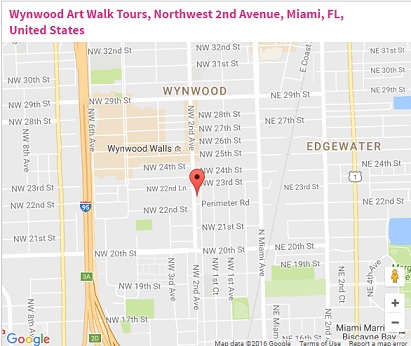
The main area of the Wynwood Art Walk is between 20 St & 36 St and from NW 2nd Ave to NE 2nd Ave. Prime hours are between 7pm and 11pm. Parking is best before 7pm.

The food trucks are located in a field on the corner of NW 23 St & NW 2nd Ave. Great food and drinks!
———-
History
Wynwood – originally spelled Wyndwood – is an old inner city neighborhood of Miami surrounded by Edgewater, Overtown, Liberty City… Wynwood was built as a working class residential neighborhood, connected to the Garment District just south of it. It attracted manufacturers from New York and elsewhere and retained some jobs, fueled by immigrant labor, but struggled against competition from cheap labor overseas. According to a different source, in the fifties, it was a white neighborhood of professionals, but a remembrance on History Miami’s website indicates that Cuban immigrants were moving into the neighborhood in the early sixties.
Source: Tour Company Website – Retrieved 12-03-2016 from: http://wynwoodartwalk.com/wynwood-art/

This commentary – from the publishers of the book Go Lean … Caribbean – is trying to forge change in the Caribbean region and advocate that the arts can be a great tool-tactic for societal elevation. As previously related “…there’s a transformative power to the arts”.

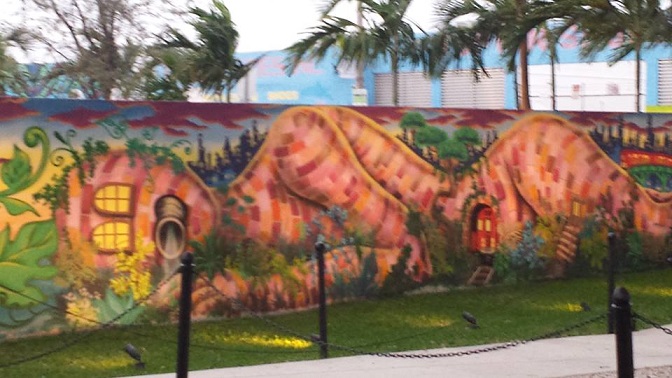
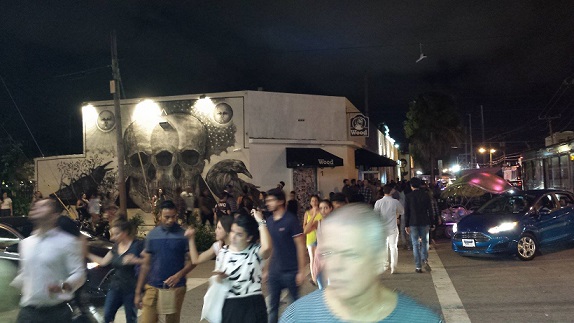
This commentary is urging Caribbean stakeholders to explore the production of artists and the effect their art can have on society. Considering that tourism is the primary industry in the entire Caribbean, there are a lot of benefits to examining the business model of the Wynwood Art District. Imagine an array of murals in Caribbean port cities – for our Cruise tourism. Imagine too, the “Walking Tours”, Art Galleries and Art Sales. Notice the manifestation of this plan in the photos here from the Art Walk (Tour) in Wynwood:

cu-blog-art-walk-its-a-real-thing-in-wynwood-photo-2  cu-blog-art-walk-its-a-real-thing-in-wynwood-photo-3

cu-blog-art-walk-its-a-real-thing-in-wynwood-photo-4  cu-blog-art-walk-its-a-real-thing-in-wynwood-photo-5

cu-blog-art-walk-its-a-real-thing-in-wynwood-photo-6

cu-blog-art-walk-its-a-real-thing-in-wynwood-photo-7

cu-blog-art-walk-its-a-real-thing-in-wynwood-photo-8


cu-blog-art-walk-its-a-real-thing-in-wynwood-photo-9

Feel the energy! Excitement enough?

Local media has often reported on the huge economic impact of Art Basel and Wynwood; see the links here to full stories:

http://www.miamiherald.com/news/business/biz-monday/article45702225.htmlArt Basel has been great for Miami, CEOs agree (Miami Herald Newspaper; November 20, 2015).

http://www.bizjournals.com/southflorida/news/2015/06/22/tristar-capital-turns-huge-profit-on-13m-sale.htmlTriStar Capital turns huge profit on $13M sale in Miami’s Wynwood (South Florida Business Journal; Jun 22, 2015).

https://theculturetrip.com/north-america/usa/florida/articles/miami-culture-guide-wynwood-s-10-must-visit-art-galleries/ – Culture Trip Web Portal (Retrieved Dec 4, 2016).

Count the profits! Commerce enough?

This commentary confirms that there is energy and money in the visual arts, whether it is murals or graffiti, (commissioned street art). While the messaging of the visual arts can be impactful, visual expressions can depict imagery and tales – fact or fiction; artists often “use fiction to tell the truth” – the business elements of the arts can be even more impactful. The Go Lean book serves as a roadmap for the introduction and implementation of the technocratic Caribbean Union Trade Federation (CU). The CU is set to elevate Caribbean society through empowerments for the economic, security and governing engines in society. Therefore the Go Lean roadmap has these 3 prime directives:

  • Optimization of the economic engines in order to grow the regional economy to $800 Billion & create 2.2 million new jobs.
  • Establishment of a security apparatus to ensure public safety and protect the economic engines.
  • Improve Caribbean governance to support these engines.

The Go Lean book posits that the genius qualifier to excel in the arts should be identified early in Caribbean youth and then their development should be fostered up to adulthood. The book thereafter details the mechanics of incubating a business climate for this and all areas of culture. This quest is detailed as an advocacy in the book (Page 230) as:

10 Ways to Improve the Arts

1. Emergence of the Caribbean Union Embrace the advent of the CariCom Single Market Initiative and the Caribbean Union Trade Federation. This will allow for the unification of the region into a single market of 42 million people. This size supports the proliferation of ‘art’ (visual/fine, music, performance & film) as an industry. The CU will promote the art exhibition eco-system – allowing marketplaces for artists to congregate and monetize their talents. Structures will also be deployed for media companies to monetize film & performance art. The CU will facilitate the marketing of travelling exhibitions, and touring companies of stage productions. For the region, art can be a business enabler, and expressions for civic pride and national identity.
2. CU Administered Museums Modeled after the Smithsonian, the CU “mother” (first-tier) museums will be placed in the Capital District. There will also be “child” museums scattered through out the regions with touring exhibitions.
3. Art, Music & Film Festival Tourism CU promoted events, utilizing the CU-owned fairgrounds, to encourage the development and advancement in artistic expressions. These events will be aimed at the foreign markets (US, Canada, Europe, Central and South America) so as to generate tourism traffic. The artists may be domestic but also foreign and world class performers. (Event examples include New Orleans Jazz & Heritage Festival, Art Deco in Miami, Cannes Film Festival, and Taos, New Mexico).
4. Fairgrounds as Arena and Theater Districts The CU Fairgrounds will fund, build and maintain civic arenas and theaters in local market Enterprise Zones. The designated areas fomented under the CU will qualify for tax (sales, property and income tax rebates) and economic incentives (low interest loans and grants) and stimuli (advertising and event promotions), empowering event tourism.
5. Electronic Payment Models The CU Central Bank will arrange for settlement of electronic payments transactions allowing electronic commerce to flourish in the region. Then music, film and other media can be paid for and downloaded legally from the internet.
6. Respect for Intellectual Property Any institutional disregard for the intellectual property of books, music, films and media will be severely prosecuted. The CU will also recognized and enforce the copyrights of other countries and work to have international markets respects the intellectual property rights of Caribbean artists. (This is a feature the of the Trade SHIELD principles defined in Appendix D (Page 264)). This effort requires close collaboration with criminal (Interpol) and civic enforcement agencies (ASCAP/BMI, MPAA). The end result would be that local/regional artists can make a “living” from their recorded works.
7. Art in Public Places The CU will spur initiatives to incentivize and directly commission artist to exhibit their creations (paintings, murals, sculptures, etc.) in public edifices. This will encourage national-state public-private deployments of themed sculptures like Bahamian Conch Shells, Barbados Flying Fish and Puerto Rico Tree Frogs. These can be modeled after US city examples, like “Painted” Bulls in Chicago, Mustangs in Denver, and Guitars in Nashville.
8. Performing & Fine Arts Schools A hybrid “Charter” school concept promotes the development and advancement in specific performing and fine arts while not forsaking the basic educational requirements. Similar to the secondary school (NYC Performing Arts) featured in the movie “Fame”. On the tertiary level, the CU will provide scholarships and endowments for programs in the Arts.
9. Agency for Public Broadcasting and National Touring Companies These public-private agencies will be chartered to produce and promote world class artistic companies (adult and youth) for Opera, Ballet, Modern Dance, Symphonic and Philharmonic Orchestras, despite whether they are popular or highly rated. The Arts must always be promoted as a necessary expression of a civilized society, despite profit or public acceptance. Likewise, a CU agency for Public Broadcasting will manage the region’s media efforts to bring world class art to the people, (with SAP-style options for all four languages) without considering popularity.
10. Professional Agents and Artists Management Oversight The CU will regulate, at the Cabinet level, and license the industry of Artists Agents/Managers, even though the artists can elect their own Agents & Managers. This management oversight is to be modeled after State Bars for lawyers. (This model is used for Sports Agents also).

While the Go Lean book relates (Page 291) the historicity of the pro-artist community in Taos, New Mexico, we now see a similar local model in Miami’s Wynwood District – a location with more Caribbean infusion. This Wynwood experience in particular and Art Basel Art Week in general is reinforcing that “art can drive” the economics, security and governance of a community.

While not everyone will be gifted artists, everyone can benefit from the accentuation of the arts and artists. So we should all work to make our homeland a better place to live, work and play by fostering the genius ability in Caribbean citizens. This is presented in the book as a “community ethos”:

“the fundamental character or spirit of a culture; the underlying sentiment that informs the beliefs, customs, or practices of a society; dominant assumptions of a people”. – (Page 20)

The Go Lean book presented the roadmap to imbrue the Caribbean region with new community ethos, plus new strategies, tactics, implementation and advocacies to foster the business climate for the arts. The following is a sample of these specific details from the book:

Community Ethos – Deferred Gratification Page 21
Community Ethos – Economic Principles – People Choose Page 21
Community Ethos – Economic Principles – People Respond to Incentives in Predictable Ways Page 21
Community Ethos – Economic Principles – Economic Systems Influence Individual Choices Page 21
Community Ethos – Economic Principles – The Consequences of Choices Lie in the Future Page 21
Community Ethos – Governing Principles – Minority Equalization Page 23
Community Ethos – Governing Principles – Lean Operations Page 24
Community Ethos – Governing Principles – Cooperatives Page 25
Community Ethos – Ways to Foster Genius Page 27
Community Ethos – Ways to Help Entrepreneurship Page 28
Community Ethos – Ways to Promote Intellectual Property Page 29
Community Ethos – Ways to Impact Turn-Arounds – Covering Urban Decay with Art Page 33
Community Ethos – Ways to Promote Happiness Page 36
Community Ethos – Ways to Impact the Greater Good Page 37
Strategy – Vision – Confederate 30 Member-States Page 45
Strategy – Mission – Celebrate the Music, Sports, Art and Culture of the Caribbean Page 46
Tactical – Confederating a Permanent Union Page 63
Tactical – Fostering a Technocracy Page 64
Tactical – Separation-of-Powers – CU Federal Agencies versus Member-State Governments Page 71
Implementation – Ways to Pay for Change Page 101
Implementation – Ways to Deliver Page 109
Implementation – National/Federal Museum in the Capital District Page 110
Planning – 10 Big Ideas for the Caribbean Region Page 127
Planning – Ways to Make the Caribbean Better Page 131
Advocacy – Ways to Grow the Economy Page 151
Advocacy – Ways to Create Jobs Page 152
Advocacy – Ways to Enhance Tourism Page 190
Advocacy – Ways to Impact Events Page 191
Advocacy – Ways to Impact Cruise Tourism Page 193
Advocacy – Ways to Preserve Caribbean Heritage – The business of fostering local culture Page 218
Advocacy – Ways to Improve the Arts Page 230
Advocacy – Ways to Promote Music Page 231
Appendix D – Trade SHIELD Principles Page 264
Appendix M – Taos Art Colony – New Mexico‘s Landmark Page 291
Appendix W – Mediating as French Culture and Economics Collide Page 311

The empowerments in the Go Lean book calls for the elevation of the arts as a permanent change. We want our youth to put their hopes and dreams in a Caribbean future, especially our youth who prove to be gifted in the arts. From the outset, the book recognized the significance of successfully fostering the arts with these statements in the opening Declaration of Interdependence (Page 12 & 14):

xxi.  Whereas the preparation of our labor force can foster opportunities and dictate economic progress for current and future generations, the Federation must ensure that educational and job training opportunities are fully optimized for all residents of all member-states, with no partiality towards any gender or ethnic group. The Federation must recognize and facilitate excellence in many different fields of endeavor, including sciences, languages, arts, music and sports. This responsibility should be executed without incurring the risks of further human flight, as has been the past history.

xxxii. Whereas the cultural arts and music of the region are germane to the quality of Caribbean life, and the international appreciation of Caribbean life, the Federation must implement the support systems to teach, encourage, incentivize, monetize and promote the related industries for arts and music in domestic and foreign markets. These endeavors will make the Caribbean a better place to live, work and play.

The Go Lean roadmap seeks to foster the eco-system for the business of the arts. This quest has been addressed in many previous Go Lean commentaries; see sample here:

https://goleancaribbean.com/blog/?p=9151 The New Smithsonian African-American Museum
https://goleancaribbean.com/blog/?p=4145 The African Renaissance Monument in Dakar, Senegal, Africa
https://goleancaribbean.com/blog/?p=3292 Art Basel Miami – a Testament to the Spread of Art & Culture
https://goleancaribbean.com/blog/?p=2415 How ‘The Lion King’ roared into Show-Business history

We can do our own “Wynwood” in the Caribbean. We have the artists and the talent waiting to be fostered. Let’s develop the business environment locally to fully explore the opportunities from the arts – the region should commission artists to paint murals.

We can do this; we can forge change here at home. This Go Lean roadmap is conceivable, believable and achievable. We can make the Caribbean a better place to live, work and play. 🙂

Download the book Go Lean … Caribbean – now!
Share this post:
, , , , ,
[Top]

ENCORE: Art Basel 2016 – A Testament to the Business of the Arts

Go Lean Commentary

Dateline: Miami Beach – Its Art Basel time again. The events for 2016 are being conducted during the dates of December 1 – 4. This is the biggest event on the calendar for Miami’s art scene and it demonstrates the power of the arts and its ability to transform societies. So this commentary from December 9, 2014 is being encored here, but with these new photos:

cu-blog-art-basel-2016-photo-1

cu-blog-art-basel-2016-photo-5

cu-blog-art-basel-2016-photo-4

cu-blog-art-basel-2016-photo-3

cu-blog-art-basel-2016-photo-2

This Encore is Part 2 of 3 in a series on the ‘power of the visual arts’. The series depicts how the arts can forge change in a community, where it can be an effective messaging tool to convey many important points. The full entries in the series are as follows:

  1.  Forging Change: Arts & Artists
  2.  ENCORE: Art Basel 2016 – A Testament to the Business of the Arts
  3.  Art Walk – Its a Real Thing in Wynwood

This original commentary is as follows:

———

Art Basel Miami – A Testament to the Spread of Culture

There’s no business like ‘show business’. – Age Old Adage.

There is money in the ‘Arts’. – Go Lean…Caribbean precept.

And now, the subsequent news article posits: “the community rallies around art creating a unique energy. And art ‘dynamises’ the community, in a very unique way”.

The book Go Lean…Caribbean has a simple purpose: enable the Caribbean to be a better place to live, work and play. The book recognizes that the ‘genius qualifier’ is shown in different fields of endeavor, including the arts (fine, visual, performing, music, etc.). While the Go Lean roadmap has a focus on STEM [1] fields, it is accepted that not everyone possesses STEM skills, and yet many others can still contribute to society. Then when these other skills/talents are “gifted” beyond the extraordinary, they can truly impact their community, and maybe even the world.

The book relates that the arts can have a positive influence on the Caribbean. And that one man, or woman, can make a difference in this quest. We want to foster the next generation of “stars” in the arts and other fields of endeavor.

According to the following news article, the arts can truly ‘dynamise’ the community. The article relates to Art Basel, the movement to stage art shows for Modern and Contemporary works, sited annually in Basel (Switzerland), Hong Kong and Miami Beach. The focus of this article is Miami Beach:

Title: 13th Art Basel Miami Beach (December 4 – 7, 2014), a testament to the spread of culture
By:
Jane Wooldridge, and contributed Ricardo Mor

CU Blog - Art Basel Miami - a Testament to the Spread of Culture - Photo 1If “more” equals better, the 13th edition of Art Basel Miami Beach and the surrounding art week events may go down as the best ever. More new art fairs and just-to-see shows. More record-breaking sales at Art Basel Miami Beach. More CEOs — from watchmakers Hublot and Omega, luggage brand Rimowa, hotel companies Starwood and Marriott — opening luxury properties. And if not more — who can keep track? — then certainly plenty of celebrities, including actors Leonardo DiCaprio, James Marden and Owen Wilson; musicians Usher, Miley Cyrus, Russell Simmons and Joe Jonas; supermodel Heidi Klum and the world’s fastest man, Usain Bolt.

There was another kind of “more” as well — more spillovers, touch points and art for all manner of South Floridians, from entrepreneurs to pre-teen fashion designers, stretching from Pinecrest to Coconut Grove, Overtown to Fort Lauderdale.

If the aim is “to make art general,” as Knight Foundation President Alberto Ibargüen told attendees Monday at the foundation’s annual announcement of Knight Art Challenge awards, this year’s art week put South Florida well on its way. Proclaimed National Endowment for the Arts chairman Jane Chu on a whiplash art tour to downtown, Miami Beach and Opa-locka, “Art is entwined in Miami’s DNA.”

Even as the Pérez Art Museum Miami celebrated its first year anniversary, a new permanent museum building for the Institute for Contemporary Art Miami was announced for the Design District.

Overtown [historical Black neighborhood] hosted its first Art Africa fair of works created by artists from the African Diaspora. Joining it on the list of first-year events are an impressive exhibition of monumental works in the vast Mana-Miami Wynwood space on NW 23rd Street and Pinta, a fair focusing on Latin American art that moved from New York to Midtown.

The festivities reach far, far beyond the traditional art crowd. On the Mana campus, the Savannah College of Art and Design is presenting “i feel ya,” an exhibition that includes jumpsuits designed by André 3000 for Outkast’s reunion tour. The nearby ArtHaus tent is surrounded by food trucks and a sound program where Beethoven is definitely not on the playlist.

This year, more than a half-dozen student exhibits are on the art agenda. At FusionMIA, student photographs hang near works by masters Rashid Johnson and Al Loving; all were curated by Miami’s N’Namdi Contemporary gallery. A few blocks north, at Wynwood’s House of Art, a dozen students ages 5 to 15 from the DesignLab program showed off their creations at a Friday night “vernissage.”

Among them was 13-year-old Yael Bloom, wearing a flounced party dress she made from shrink wrap. No matter that the first-time event was a little-known spinoff. “Art Basel is pretty hard for adults to get into,” Bloom said. “For kids to get into it is very cool.”

As in years past, free events abound, from performances by Chinese artist Shen Wei at Miami-Dade College and artist Theo Jansen’s Strandbeest demonstrations on the sand to official Art Basel events, including films on the New World Center Wallcast and the Art Public sculptures in Collins Park. New is free Art Week shuttle service between Midtown and Miami Beach — a government cooperative effort — that dovetails with trolley service to art venues on both sides of Biscayne Bay.

In institutional quarters, Art Basel Miami Beach global sponsor UBS announced the creation of a $5 million loan fund for existing Florida small business owners. Sponsor BMW USA announced it would fund an “art journey” open to emerging artists exhibiting at Art Basel Miami Beach. And the City of Miami Beach and Miami-Dade County put out a call to artists, encouraging them to propose projects for the $4.33 million public art program associated with the Miami Beach Convention Center renovation. South Floridians are eligible to apply for all three initiatives.

Clearly, art week isn’t just about aesthetics, personal enrichment and community building. It is also about enterprise — which explains all those luxury CEOs, the ground-breaking of the Zaha Hadid-designed One Thousand Museum, and the announcement at Miami Ironside that designer Ron Arad will create the interiors for the revamped Watergate Hotel in Washington. (And no, there’s no real connection to Miami.)

Said Michael Spring, Miami-Dade’s cultural affairs director, “There’s a certain deepening, a realization not just that the Art Basel event but arts in general have a phenomenal effect on the image and economy of our entire region. We’ve talked about it before, but there seems to be more focus this year. It’s not an interesting footnote anymore; it’s the theme.”

That, says Miami Commissioner Keon Hardemon, was the thinking behind the city’s $50,000 grant supporting the Art Africa fair. “We need to encourage people to come now to Overtown. The cultural aspect helps them realize they can safely come here now. And then maybe they’ll come back later and spend money in the community, in our restaurants and stores,” he said.

In Miami, with commerce inevitably comes glamor, which is proving as glossy as ever. Hennessey V.S.O.P., Dom Perignon, Paper Magazine, Interview and B.E.T. have staged events all around town, at private “locations,” hotels, restaurants, the 1111 Lincoln Road garage and the ICA temporary space in the Moore Building. Developer Alan Faena threw a breezy beachside asado. Jeffrey Deitch, Tommy Hilfiger and V Magazine hosted a glitzy bash at the Raleigh featuring a performance by Miley Cyrus.

In the Design District, developer Craig Robins hosted a dinner honoring architect Peter Marino at a single, 142-yard candlelit table for 380 guests on a closed-off street amid the district’s luxury brand storefronts. Sculptor Jaume Plensa was the guest of honor at another long candlelit table — this one for 60 — in the Coconut Grove sales offices of Park Grove, which recently installed a series of his works along South Bayshore Drive.

Alas, once again, manners were not de rigueur among the glossy set. At some parties, guests of guests turned up with entirely uninvited guests. For other tony soirees, publicists emailed out “disinvitations” to previously invited guests, obliquely sending the message that someone more glamorous would be taking those seats.

Decorous or not, during art week, the energy all emanates from the week’s namesake fair, said Dennis Scholl, VP/Arts at the Knight Foundation. “The most important thing to remember is why this week exists, and that’s Art Basel in the Convention Center. If that wasn’t the core of what’s going on — if it weren’t a world-class event — nobody else would be interested in being involved. It continues to be the raison d’être of this week.”

In the Convention Center, at what Scholl called “the core of the nuclear reactor,” many gallerists were quite happy, thank you very much.

Veteran Art Basel Miami Beach gallerist Sean Kelly said Wednesday was his best first day ever at the fair. Newcomer Michael Jon Gallery also sold almost all of its available work — by rising stars like Sayre Gomez and JPW3 — on the first day.

For most dealers, sales remained lively, day after day. At Galerie Gmurzynska, co-CEO Mathias Rastorfer proclaimed it “successful indeed … . In terms of reception, it was an overwhelmingly enthusiastic response from collectors and colleagues alike. In terms of sales, we did several over $1 million sales and many within the $100,000 to $500,000 range, with a Picasso’s Venus and Love selling at near the asking price of $1.2 million.

Said Art Basel Director Marc Spiegler on Saturday, “I’ve gotten nothing but positive response from galleries,” not only because of strong sales, but also because new hours for VIPs gave gallerists more time to meet new collectors. “A lot of people were here and buying for the first time. Many galleries said they had their best fair ever.”

But like this week’s weather, the upbeat atmosphere suffered from uncharacteristic clouds. In Wynwood, a police car hit and critically injured a street artist. An $87,000 silver plate crafted by Pablo Picasso was reported stolen from the Art Miami satellite fair in Midtown. A partygoer at PAMM’s first anniversary fête on Thursday accidentally damaged an artwork installed on the floor. And Friday night, would-be art goers were stymied by traffic shutdowns into art-centric areas of Wynwood, Midtown and Miami Beach by protests against nationwide police-involved killings.

Though unfortunate and sometimes tragic, Spring said, the unrelated events were “a product of the incredible level of activity.” At Saturday’s annual brunch at the art-rich Sagamore Hotel in Miami Beach, the theft and damaged artwork uniformly were brushed off as inconsequential. Said one art insider, “s–t happens.”

Miami Art Week’s merry-go-round nature is surely born from Miami’s appreciation of a good time. And increasingly, perhaps from something deeper.

Said Miami gallerist Jumaane N’Namdi, “Art Basel has put art on everyone’s mind. Everyone wants to be involved somehow.”

And that’s not just about the parties, said N’Namdi, who had galleries in Chicago, New York and Detroit before opening in Miami. “I don’t think you could find a city that enjoys really looking at the art the way this city does. I came through the airport, and even the TSA guys were talking about it, asking each other if they got their Art Basel posters. Every level of art you want is here.”

Outsiders agree. “Miami is very special for its link between art and the community,” said Axelle de Buffévent, style director at champagne house Martell Mumm Perrier-Jouët. “It goes both ways. The community rallies around art creating a unique energy. And art dynamises the community, in a very unique way.”
Miami Herald – Daily Newspaper – (Posted December 6, 2014) –
http://www.miamiherald.com/entertainment/visual-arts/art-basel/article4313255.html

VIDEO: Art Basel Miami Beach 2014 – http://youtu.be/StkzLiBtDis

Published on Dec 4, 2014
The international art fair Art Basel returns to Miami Beach for its 13th edition, taking place at the Miami Beach Convention Center from December 4 to December 7, 2014. Art Basel Miami Beach 2014 features 267 leading international galleries from 31 countries across North and South America, Europe, Asia and Africa, which present artworks ranging from Modern masters to the latest contemporary art pieces. With this edition, the fair debuts Survey, a new sector dedicated to art-historical projects. In this video, we attend the Private View of Art Basel Miami Beach 2014 at the Miami Beach Convention Center on December 3.

This story aligns with the book Go Lean…Caribbean in stressing the economic impact of artistic endeavors. The book pledges that Caribbean society will be elevated by improving the eco-system to live, work and play; and that “play” covers vast areas of culture.

“Culture” has emerged as a central concept in anthropology, encompassing the range of human phenomena that cannot be directly attributed to genetic inheritance. Specifically, the term “culture” in North American anthropology has two meanings:

  1. the evolved human capacity to classify and represent experiences with symbols, and to act imaginatively and creatively; and
  2. the distinct ways that people, who live differently, classified and represented their experiences, and acted creatively.[2]

Anthropologist Adamson Hoebel best describes culture as an integrated system of learned behavior patterns which are characteristic of the members of a society and which are not a result of biological inheritance.[3]

The Go Lean book stresses economic benefits from classic cultural expressions and popular cultural productions, including Caribbean music, paintings/art, sketches, sculptures, books, fashion and food. All the “skilled phenomena” that makes Caribbean life unique and appealing.

The book Go Lean…Caribbean serves as a roadmap for the introduction and implementation of the technocratic Caribbean Union Trade Federation (CU). There is a lot involved in this vision; the prime directives are stated as follows:

  • Optimization of the economic engines in order to grow the regional economy to $800 Billion & create 2.2 million new jobs.
  • Establishment of a security apparatus to protect the resultant economic engines.
  • Improve Caribbean governance to support these engines.

CU Blog - Art Basel Miami - a Testament to the Spread of Culture - Photo 2The foregoing article relates the economic impact that the Greater Miami area is enjoying for hosting the Art Basel event, for the 13th year now. At this point the benefits have spread throughout the community, (Art Fairs, museums, scholarships, foundations, etc.) not just one venue on Miami Beach. The spin-off benefit of art is a strong point of the Go Lean book, highlighting benefits as long as we keep the talent at home working in/for the community. This point is pronounced early in the following statements in the book’s opening Declaration of Interdependence (Page 14):

xxi. Whereas the preparation of our labor force can foster opportunities and dictate economic progress for current and future generations, the Federation must ensure that educational and job training opportunities are fully optimized for all residents of all member-states, with no partiality towards any gender or ethnic group. The Federation must recognize and facilitate excellence in many different fields of endeavor, including sciences, languages, arts, music and sports. This responsibility should be executed without incurring the risks of further human flight, as has been the past history.

xxxii. Whereas the cultural arts and music of the region are germane to the quality of Caribbean life, and the international appreciation of Caribbean life, the Federation must implement the support systems to teach, encourage, incentivize, monetize and promote the related industries for arts and music in domestic and foreign markets. These endeavors will make the Caribbean a better place to live, work and play.

The economic, cultural and image considerations for “show business” on a society have been well-detailed in these previous Go Lean blogs:

Caribbean Role Model – Oscar De La Renta – RIP
How ‘The Lion King’ roared into history
Forging Change – The Fun Theory
Role Model Berry Gordy – No Town Like Motown
Book Review: ‘Chasing Youth Culture and Getting It Right’
The Music, Art, Culture and Legend of Bob Marley lives on!

The Go Lean roadmap posits that change will come to the Caribbean “show business” (Visual and Performing Arts, Music, Film). This is due mostly to the convergence of a Single Market for the Caribbean region. If “size matters”, then the integration of 42 million people (plus the 10 million Diaspora and 80 million visitors) for the 30 member-states will create the consumer markets to promote and foster Caribbean artistic creations for their full appreciation. The first requirement in this goal is the community ethos of valuing intellectual property; to recognize that other people’s creations are valuable. (Then we can enforce on others to value and appreciate our creations).

This would truly be new for the Caribbean.

The CU is designed to do the heavy-lifting of organizing Caribbean society for the new world of art appreciation and “consumerization”. The following list details the ethos, strategies, tactics, implementations and advocacies to foster regional artists and showcase their wares to the world stage:

Community Ethos – Forging Change Page 20
Community Ethos – Lean Operations Page 24
Community Ethos – Return on Investments Page 24
Community Ethos – Ways to Foster Genius Page 27
Community Ethos – Help Entrepreneurship Page 28
Community Ethos – Promote Intellectual Property Page 29
Strategy – Caribbean Vision: Single Market Page 45
Separation of Powers – Central Bank – Electronic Payment Deployments Page 73
Tactical – Separation of Powers – Patents – Copyrights Page 78
Separation of Powers – Culture Administration Page 81
Planning – Ways to Make the Caribbean Better Page 131
Planning – Lessons Learned from New York City Page 137
Advocacy – Ways to Grow the Economy Page 151
Advocacy – Ways to Create Jobs Page 152
Advocacy – Education – Performing Arts Schools Page 159
Advocacy – Ways to Impact Hollywood Page 203
Advocacy – Ways to Improve the Arts Page 230
Advocacy – Ways to Promote Music Page 231
Advocacy – Impact Urban Living – Art & Theaters Page 234
Appendix – New York / Arts / Theater Jobs Page 277
Appendix – Taos New Mexico Art Colony Page 291
Appendix – Caribbean Music Genres Page 347
Appendix – Protecting Music Copyrights Page 351

There is BIG money in show business and in the world of the Arts. For the 10th edition of Art Basel in Miami in 2011, there was a record number of fifty thousand collectors, artists, dealers, curators, critics and art enthusiasts – including 150 museum and institutions from across the globe – participating in the show.[4]

This event requires a lot of community investments. Every year, Miami’s leading private collections – among them the Rubell Family Collection, Cisneros Fontanals Art Foundation, the De la Cruz Collection Contemporary Art Space, World Class Boxing, the Margulies Collection and the Dacra Collection – open their homes and warehouses to guests of Art Basel. Additionally, the museums of South Florida organize exhibitions including shows at the Miami Art Museum, Bass Museum of Art, Norton Museum, Wolfsonian-FIU and MOCA North Miami.

The community investment has been there for Miami, and so has the returns [5].For 2014, the attendance figures were 75,000, with an increase in hotel occupancy of 30,000 rooms on the days the Art Fair is in progress. The conservative estimates are that the Art Fair brings close to $13 million a year in economic impact to the region. (This figure does not include the purchases of artworks, some of which fetch millions of dollars).

The subject of the Miami Metropolitan area is very relevant for a Caribbean empowerment discussion. A previous blog asserted that Miami’s success, in many regards, is attributable to Caribbean’s failures. Many of our populations (including artists) have fled their homelands and have taken refuge in the Miami area. Where at first this disposition was begrudged, eventually it transformed to tolerance, but now it is even celebrated.

CU Blog - Art Basel Miami - a Testament to the Spread of Culture - Photo 3

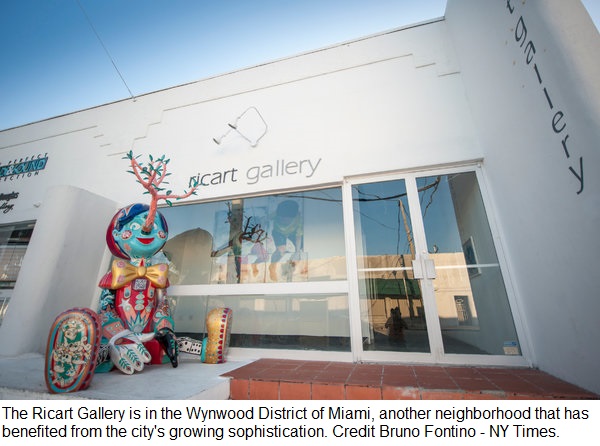
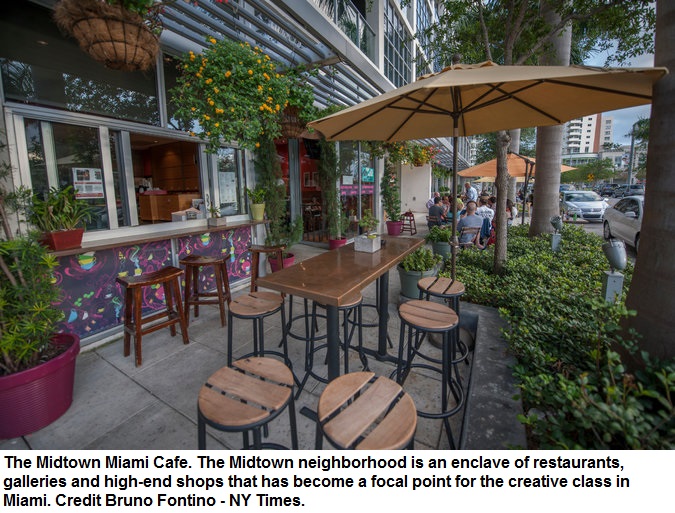
Miami has been greatly impacted by both the Caribbean Diaspora and its assimilation of the “Arts”. Whole neighborhoods have been elevated due to this strategy of catering to the arts; (see photo here). This is a great role model for the Caribbean to emulate; our whole society can be elevated.

The Go Lean/CU roadmap represents the empowerment for the Caribbean communities to elevate – we now want to keep our artists at home. The people, institutions and governance of the region are therefore urged to “lean-in” to this roadmap for change. 🙂

Download the book Go Lean … Caribbean – now!
——-

Appendix – Source References:

1. STEM = Science, Technology, Engineering and Mathematics.

2. “What is culture?”. Bodylanguagecards.com. Retreived 2013-03-29.

3. Hoebel, Adamson (1966). Anthropology: Study of Man. McGraw-Hill.

4. http://www.nytimes.com/2011/12/03/arts/design/art-basel-miami-beach-review.html?_r=1&pagewanted=all

5. http://www.nytimes.com/2014/12/04/arts/international/art-fair-energizes-economy-of-region.html?_r=0


Share this post:
, , , , ,
[Top]

Forging Change: Arts & Artists

Go Lean Commentary

Hell on Earth.

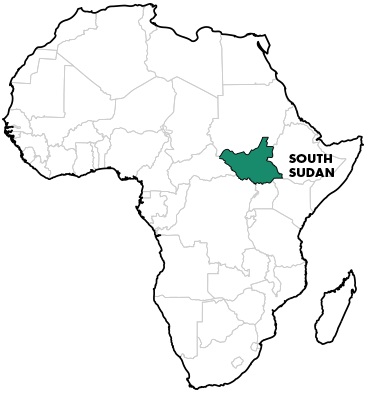
cu-blog-forging-change-arts-and-artists-photo-3There are a few destinations that can be assigned that designation right now; the country of South Sudan is perhaps one of the most prominent. (Other candidates include ISIS-controlled Syria and the hurricane-ravaged Caribbean member-state of Haiti).

So what’s happening in South Sudan?

South Sudan became the world’s newest nation in July 2011. But in December 2013, fighting between rebel militia and the government escalated into a civil war.

With several thousand killed and over a million people displaced by violence, South Sudan is facing a looming famine and is at high risk of genocide and mass atrocities. – United to End Genocide

How to forge change in an environment like South Sudan? Ouch!

Will it be a military solution, diplomatic, humanitarian, religious campaign? So many approaches and yet the failures persist.

This is heavy-lifting! One approach being considered is through the arts.

This commentary is part 1 of 3 in a series on the power of the visual arts. The series depicts how the arts can forge change in a community, where it can be an effective messaging tool to convey many important points. Africa needs this power; so too the Caribbean. Both regions need the type of transformation that can come from the power of the arts. The full entries in the series are as follows:

  1.  Forging Change: Arts & Artists
  2.  ENCORE: Art Basel 2016 – A Testament to the Business of the Arts
  3.  Art Walk – Its a Real Thing in Wynwood

Consider the details of the effort in South Sudan in the VIDEO and news story here:

VIDEO – South Sudanese artists call for end to violence through art – https://youtu.be/YMYPitDuayU

Published on Mar 15, 2016 – South Sudanese artists are calling for an end to violence in the world’s youngest nation, through works of art. Painters, designers and poets have been holding an exhibition in Juba aiming to remind leaders of South Sudan of the suffering in the country. The artists also call on their leaders to empower women and young people in society and ensure their active participation in the peace process.
———–
cu-blog-forging-change-arts-and-artists-photo-5

cu-blog-forging-change-arts-and-artists-photo-4

cu-blog-forging-change-arts-and-artists-photo-1

cu-blog-forging-change-arts-and-artists-photo-2
———-
Title: South Sudan Artists Protest Civil War With Peace Campaign
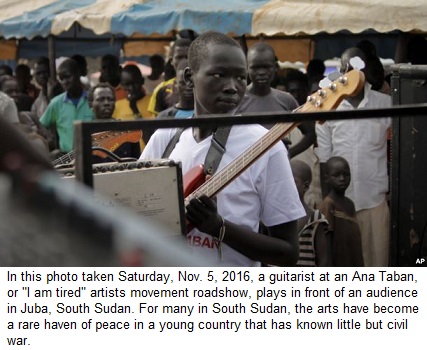
JUBA, SOUTH SUDAN — Musicians played lively tunes in South Sudan’s capital, and pedestrians and market shoppers watched the impromptu concert with curiosity. A soldier in desert camouflage walked around, surveying the scene.

As the drumming grew more insistent, the audience stood silent and motionless seemingly afraid to join the fun. Then the soldier started to breakdance.

That broke the ice and women swayed to the beat. Soon children and adults were dancing, enjoying a rare respite from South Sudan’s festering conflict.

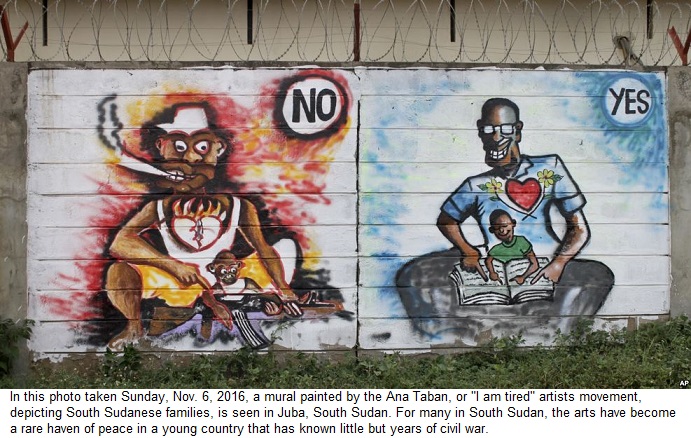
For many in South Sudan, the arts have become a rare haven of peace in a young country that has known little but civil war. A group of artists are campaigning for peace, with pop-up street performances and murals across the capital, Juba. The activists have taken the name Ana Taban, or “I am tired,” in Arabic.

“We are tired of this, the constant fear, the war,” said Manas Mathiang, 32, a musician and artist who leads the movement.

Recently Mathiang met with nearly 30 artists who are part of Ana Taban. Members come from many of South Sudan’s main tribes. They say ethnicity has never been an issue, and they invite other artists “regardless of where they come from.”

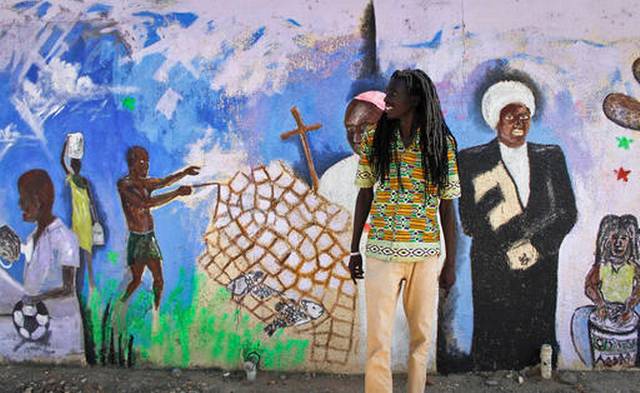
The group has painted vibrant murals in Juba like one near the airport, a sky-blue wall depicting athletes, religious leaders and doctors under the slogan “Let us all do our part.” The artists also stage skits in street markets to promote reconciliation.

Ana Taban was started after fighting in Juba killed hundreds of people in July. A group of South Sudanese artists who had taken refuge in Kenya came together to create the movement. When it was safe to return to the capital, they brought home the campaign for peace.

Transcending tribe and politics, the artists use their work to try to unify South Sudan, the world’s newest nation, which won independence from Sudan in 2011. But then civil war broke out two years later, and tens of thousands have been killed amid concerns of ethnic violence.

A longing for an end to the fighting can be found in the country’s art and music. Some of the most popular songs on the radio are reggae because their lyrics of peace can be easily understood, said a local DJ, Daniel Danis.

Another member of Ana Taban, Deng Forbes, proudly held up his favorite work, a drawing of a child crying in the shape of a map of South Sudan.

“My people are diverse, 64 tribes,” Forbes said. “Art is a universal language, it’s a simple language.”

In some ways, South Sudan’s arts scene is like that in other countries, clustered in an offbeat section of the capital. Good equipment is rare. Artists say it is difficult to make money from their work. Feuds are common.

But much of South Sudan’s art is focused on the country’s political tensions.

Lual D’Awol, a popular rapper who appeared in an Ana Taban music video, said his songs about the lack of electricity and running water are banned from the radio by the government.

“It’s telling the truth that citizens of South Sudan feel, and I feel like I have to paint that picture and give a message that is genuinely happening,” D’Awol said.

Elsewhere in the capital, a nighttime concert a few weeks ago brought a rare feeling of ease. On a soccer field, roughly 1,000 South Sudanese danced and sang into the night, some climbing onto brick barriers for a better view.

On a makeshift stage, young women danced with men wearing the colors of South Sudan’s flag, members of the dancing troupe Sonzwgi, which roughly translates to “storytelling.”

The dance is a mashup of elements from different tribes across the country, said the group’s leader, Emmanuel Aban, saying it was choreographed to foster togetherness.

As Sonzwgi performed, women ran to the stage and danced, and men laughed freely. Aban smiled, saying: “It’s a way to send a message to the people.”
Source: Associated Press / Voice of America Posted November 25, 2016; retrieved 12-01-2016 from: http://www.voanews.com/a/south-sudan-artists-protest-civil-war-with-peace-campaign/3611357.html

This commentary – from the publishers of the book Go Lean … Caribbean – is NOT trying to forge change in South Sudan, nor Africa for that matter; (though we would be elated to see peace there). This commentary is trying to forge change in the Caribbean.

We have Failed and Failing-States too!

How will we forge this change? How will we transform our society? Perhaps that same “arts &  artists” approach can work here. Accordingly …

“… the transformative power of art” – see VIDEO in Appendix B below.

The challenges and strategies for forging change have been identified in a series of previous Go Lean blog-commentaries over the past 2 years, this is the eighth submission. These were presented as follows, in reverse chronological order:

  1.    Forging Change – Arts & Artists (Today)
  2.    Forging Change – Panem et Circenses (November 15, 2016)
  3.    Forging Change – Herd Mentality (October 11, 2016)
  4.    Forging Change – ‘Something To Lose’ (November 18, 2015)
  5.    Forging Change – ‘Food’ for Thought (April 29, 2015)
  6.    Forging Change – Music Moves People (December 30, 2014)
  7.    Forging Change – The Sales Process (December 22, 2014)
  8.    Forging Change – The Fun Theory (September 9, 2014)

This commentary is urging Caribbean stakeholders to allow the production of artists and their art to work on society. (Artists should be identified early and their development fostered up to adulthood). While the actual participants may only be a handful of artists, those with genius qualifiers in the arts, the impact can be great on the whole community. This is an expression of the Greater Good. This is defined in the Go Lean book (Page 37) by Jeremy Bentham (1748-1832, a British philosopher, jurist, and social reformer) as …

… “the greatest good to the greatest number of people which is the measure of right and wrong”.

While music is an art form, it is not the consideration in this commentary. Rather the focus  is on the visual arts. Think murals and graffiti, rather make that commissioned street art. These visual expressions can depict imagery and tales – fact or fiction. At times the fiction may just be portraying the ideal … the preferred landscape that would benefit the people. Artists often “use fiction to tell the truth”; see this point portrayed in the VIDEO in Appendix C. This is “art imitating life”!

The mechanics of “arts & artists” being used as a Change-Agent are already in place; there is an eco-system for the arts in the Caribbean, other than music or festivals, it is downplayed and subliminal, but there nonetheless.  The quest in the Go Lean roadmap is to do more than just subliminal. This was detailed as an advocacy in the book (Page 230) as:

10 Ways to Improve the Arts

That advocacy detailed the Business Model of Art Galleries, as follows here:

A contemporary art gallery, where contemporary art is shown for exhibition and/or for sale, is commercial or privately funded and usually has a second-tier status positioned between the first-tier status of a national, state-run or corporate museum, and the third-tier of minor galleries which include artist-run galleries, retail galleries, and artist’s co-operatives.

Commercial galleries are for-profit, privately owned businesses dealing in artworks by contemporary artists. Galleries run for the public good by cities, churches, art collectives, not-for-profit organizations, and local or national governments are usually termed Non-Profit Galleries. Many of these are arranged around a Trust or estate. Lastly, galleries run directly by artists may be temporary or otherwise different from the traditional gallery format. Contemporary art galleries are usually free and open to the public, however some are semi-private, more exclusive, and by appointment only. – sourced from Wikipedia.org.

Contemporary art galleries are often established together in urban centers, clustering for economic and practical reasons, mainly for the general public/buyers to view more art travelling by foot. This is the model of the Chelsea district in New York City, the center of the American contemporary art world. Other large urban areas have several art galleries, and most towns will be home to at least one. There are also successful models of small/remote locales attracting artist colonies [as in Taos, New Mexico].

In addition to the foregoing, the Go Lean book relates (Page 291) the historicity of Taos, New Mexico in the Southwest USA. This community is the most renown artist colony in the country. Art drives the economics, security and governance of that town.

The Go Lean book and movement presents this roadmap for the introduction and implementation of the technocratic Caribbean Union Trade Federation (CU). The CU is set to optimize Caribbean society through economic, security and governing empowerments. Therefore the Go Lean roadmap has 3 prime directives:

  • Optimization of the economic engines in order to grow the regional economy to $800 Billion & create 2.2 million new jobs.
  • Establishment of a security apparatus to ensure public safety and protect the economic engines.
  • Improve Caribbean governance to support these engines.

The Go Lean/CU roadmap asserts that forging change in the Caribbean will be a hard, heavy-lift task and many alternate strategies – the 8 from above – may have to be engaged. Any one person – think artists – can make a difference and positively impact society; such a person can be a champion for our Caribbean cause. We can all work to make our homeland a better place to live, work and play. Fostering the genius ability in Caribbean citizens is presented in the book (Page 27) as a community ethos.

The Go Lean book presented the roadmap to imbrue the Caribbean region with new community ethos, plus new strategies, tactics, implementation and advocacies to execute to forge change in the region. The following is a sample of these specific details from the book:

Community Ethos – Deferred Gratification Page 21
Community Ethos – Economic Principles – People Choose Page 21
Community Ethos – Economic Principles – People Respond to Incentives in Predictable Ways Page 21
Community Ethos – Economic Principles – Economic Systems Influence Individual Choices Page 21
Community Ethos – Economic Principles – The Consequences of Choices Lie in the Future Page 21
Community Ethos – Governing Principles – Minority Equalization Page 23
Community Ethos – Governing Principles – Lean Operations Page 24
Community Ethos – Governing Principles – Cooperatives Page 25
Community Ethos – Ways to Foster Genius Page 27
Community Ethos – Ways to Help Entrepreneurship Page 28
Community Ethos – Ways to Promote Intellectual Property Page 29
Community Ethos – Ways to Impact Turn-Arounds – Mitigating Urban Decay with Art Page 33
Community Ethos – Ways to Promote Happiness Page 36
Community Ethos – Ways to Impact the Greater Good Page 37
Strategy – Vision – Confederate 30 Member-States Page 45
Strategy – Mission – Celebrate the Music, Sports, Art and Culture of the Caribbean Page 46
Tactical – Confederating a Permanent Union Page 63
Tactical – Fostering a Technocracy Page 64
Tactical – Separation-of-Powers – CU Federal Agencies versus Member-State Governments Page 71
Implementation – Ways to Pay for Change Page 101
Implementation – Ways to Deliver Page 109
Implementation – National/Federal Museum in the Capital District Page 110
Planning – 10 Big Ideas for the Caribbean Region Page 127
Planning – Ways to Make the Caribbean Better Page 131
Planning – Reasons Why the CU Will Succeed Page 132
Advocacy – Ways to Grow the Economy Page 151
Advocacy – Ways to Create Jobs Page 152
Advocacy – Ways to Improve Homeland Security Page 180
Advocacy – Ways to Improve Communications – Community Messaging Page 186
Advocacy – Ways to Enhance Tourism Page 190
Advocacy – Ways to Preserve Caribbean Heritage Page 218
Advocacy – Ways to Improve the Arts Page 230
Advocacy – Ways to Promote Music Page 231
Appendix – Taos Art Colony – New Mexico‘s Landmark Page 291

The empowerments in the Go Lean book call for permanent change. This is possible. The people of the Caribbean want opportunities; they want peace & security and to be able to provide for their families. This is the expectation of anybody in any modern society.

The Go Lean roadmap offers the technocratic execution of these deliverables. Imagine identifying and fostering the genius abilities of artists and entertainers (singers, dancers, musicians, performers, etc.). The end-product of their genius may be a good time, and good impressions for all Caribbean stakeholders – residents and tourists alike. Art should not only mitigate ugly visuals (eye-sores), it can be a successful business model as well. From the outset, the book recognized the significance of successful models for the arts in this roadmap with these statements in the opening Declaration of Interdependence (Pages 13 & 14):

xxi.  Whereas the preparation of our labor force can foster opportunities and dictate economic progress for current and future generations, the Federation must ensure that educational and job training opportunities are fully optimized for all residents of all member-states, with no partiality towards any gender or ethnic group. The Federation must recognize and facilitate excellence in many different fields of endeavor, including sciences, languages, arts, music and sports. This responsibility should be executed without incurring the risks of further human flight, as has been the past history.

xxxii. Whereas the cultural arts and music of the region are germane to the quality of Caribbean life, and the international appreciation of Caribbean life, the Federation must implement the support systems to teach, encourage, incentivize, monetize and promote the related industries for arts and music in domestic and foreign markets. These endeavors will make the Caribbean a better place to live, work and play.

The Go Lean roadmap seeks to foster the eco-system for the business of the arts. The more lucrative the industry, the more participation from artists, the more impact the arts can have on society. This is a simple mission:

Forge change through the arts.

This quest – fostering the economic opportunities from artistic endeavors – has been addressed in many previous Go Lean commentaries; see sample here:

https://goleancaribbean.com/blog/?p=9151 The New Smithsonian African-American Museum
https://goleancaribbean.com/blog/?p=4145 The African Renaissance Monument in Dakar, Senegal, Africa
https://goleancaribbean.com/blog/?p=3999 Sidney Poitier – ‘Breaking New Ground’ in the Art of Movie-making
https://goleancaribbean.com/blog/?p=3292 Art Basel Miami – a Testament to the Spread of Art & Culture
https://goleancaribbean.com/blog/?p=2726 Caribbean Role Model for the Arts/Fashion – Oscar De La Renta: RIP
https://goleancaribbean.com/blog/?p=866 Caribbean Musical Artist & Businessman: Bob Marley – The legend lives on!

Good luck to South Sudan and the rest of Africa for transforming their communities for peace. But let’s be successful in the Caribbean.

We can do this; we can forge change here. Our roadmap is conceivable, believable and achievable. We can make the Caribbean a better place to live, work and play. 🙂

Download the book Go Lean … Caribbean – now!
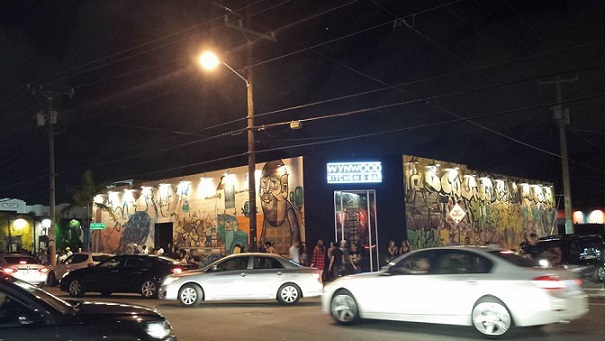
———

Appendix VIDEO A – South Sudan – http://www.aljazeera.com/news/2016/12/ethnic-cleansing-south-sudan-161201042114805.html

Aljazeera December 1, 2016 – UN says South Sedan is on brink of catastrophe as ethnic violence rises.

———

Appendix VIDEO B – Painting the town: Philly’s artful murals – https://youtu.be/OKemJytfNS0

Published on Jul 24, 2016 – Philadelphia has an iconic art museum but some of the city’s most impressive art is out on the street, thanks to the city’s mural program. Anthony Mason reports on how splashing some color on city streets has lifted the spirits of the community.
More info: Why Murals? | The Art Assignment | PBS Digital Studioshttps://youtu.be/TS1oPqP2qyY

———

Appendix VIDEO C – V for Vendetta – Artists Use Lies (Fiction) to Reveal the Truth – https://youtu.be/oncINP0OORQ

Share this post:
, ,
[Top]

Fidel Castro Is Dead; Now What? – ENCORE

The news is out; Fidel Castro died on Friday November 25, 2016 at age 90. This former Revolutionary Leader and President of Cuba was monumental and impactful. He made friends and enemies at home, in the region and around the world.

He accomplished some good; guaranteeing education – one of the highest literacy rates in the world – and advanced healthcare to all of his people.

He made many enemies; persecuting and executing his political enemies

… the United States imposed a Trade Embargo for his entire reign, up until now.

Now that he is dead, what future holds for his beloved country?

First, Fidel Castro turned over the presidency to his younger brother Raul in 2008; so oversight of the country’s affairs has been the direct concern of President Raul Castro. That is expected to continue. So the answer is more of the same.

Same?

This “same” was defined in an earlier blog-commentary on February 4, 2016. It is being encored here on the occasion of Fidel’s passing.

==============

Go Lean CommentaryThe Road to Restoring Cuba

CU Blog - The Road to Restoring Cuba - Photo 3In a visit to Jamaica and CariCom leaders in April 2015,  US President Barack Obama concluded that 55 years of indifference towards Cuba was long-enough and that as of December 17, 2014 he had “set the machinery in motion” to normalize relations with Cuba. This descriptor paints the picture of a journey, a marathon and not just a “100-yard dash”.

What is the status of that journey now?

Where are we in the process? How are the issues being addressed?

It turns out this is a weighty task (heavy-lifting), and while many of the issues are minor (i.e. Postal Mail), some are life-and-death (i.e. Human Trafficking).

Firstly, the current restoration of Cuban and American relations is strictly an act of Executive Orders – directives by the US President (currently of the Democratic Party) and not supported by his Republican legislature, the Congress. There is a definitive divide among these Democrats and Republicans in this regard. Here are some updates of those Executive Orders, since the December 2014 baseline:

People watch a friendly match between the La Habana juvenile baseball team and the Matanzas team in Havana

People watch a friendly match between the La Habana juvenile baseball team and the Matanzas team in Havana

Cuba needs to have the American Trade Embargo officially lifted! This is a Congressional action and cannot be accomplished by Executive Orders alone.

The book Go Lean…Caribbean was designed with the intent of the eventual integration of Cuba in a Caribbean Single Market. This would allow for technocratic stewardship and oversight of the region’s economic, security and governing engines for all 30 Caribbean member-states. The book therefore serves as a roadmap for the introduction and implementation of the Caribbean Union Trade Federation (CU).

There is no minimizing of the risks and responsibility of Cuba in the Go Lean book. It is clearly recognized that integrating and restoring Cuba is a BIG deal; with heavy-lifting; and other reconciliation descriptors used to depict this monumental effort. See the relevant statement here from the opening Declaration of Interdependence (Page 12):

xiii. Whereas the legacy of dissensions in many member-states (for example: Haiti and Cuba) will require a concerted effort to integrate the exile community’s repatriation, the Federation must arrange for Reconciliation Commissions to satiate a demand for justice.

Though World War II was not directly waged in the Caribbean, the Go Lean/CU roadmap still prescribes a Marshall Plan strategy – a reference to the post-WWII European Rebuilding Plan – for re-building Cuba (and Haiti).

In truth, Cuba is the biggest market in the Caribbean. This one island has the largest landmass among the islands; (notwithstanding the landmasses of South America-situated CU member-states of Guyana and Suriname). They also have the largest population of 11,236,444 people (circa 2010) and the most agricultural output. Cuba needs the Caribbean; and the Caribbean needs Cuba. The entire region needs to act in unison as the challenges the region face are too big for any one country to tackle alone.

All in all, the book and accompanying blogs declare despite an absence of trade embargo in the other Caribbean member-states, that these countries have still failed to deliver to their citizens the standards assumed in any Social Contract. Some member-states are even flirting with Failed-State statuses. People in each Caribbean country are prone to flee the region, at every opportunity. The people of the region deserve better!

There is the need to re-boot … the entire region. This re-boot roadmap commences with the recognition that all the Caribbean is in crisis, and in the “same boat” despite the colonial heritage or language. All 30 geographical member-states need to confederate, collaborate, and convene for solutions. This is the purpose of the Go Lean/CU roadmap, as featured in this declaration of the Go Lean/CU prime directives:

  • Optimization of the economic engines in order to grow the regional economy to $800 Billion & create 2.2 million new jobs.
  • Establishment of a security apparatus to protect the resultant economic engines.
  • Improve Caribbean governance to support these engines.

Consider the start of the ill-fated Cuban-Communism Revolution in 1959, Cuba has lost 57 years in its maturation process. The Go Lean book’s opening Declaration of Interdependence (Page 11) also included this pronouncement that it is beyond time now for Caribbean success stories, rather than the continued Caribbean Failed-State stories:

While our rights to exercise good governance and promote a more perfect society are the natural assumptions among the powers of the earth, no one other than ourselves can be held accountable for our failure to succeed if we do not try to promote the opportunities that a democratic society fosters.

The Go Lean book therefore details the series of community ethos, strategies, tactics, implementations and advocacies to facilitate a re-boot in the region and to final manifest a quality delivery of a regional Social Contract:

Anecdote – Caribbean Single Market & Economy Page 15
Community Ethos – new Economic Principles Page 21
Community Ethos – new Security Principles Page 22
Community Ethos – new Governing Principles Page 24
Community Ethos – Ways to Impact the Future Page 26
Community Ethos – Ways to Manage Reconciliations – TRC Cuba Page 34
Community Ethos – Ways to Impact the Greater Good Page 37
Strategic – Vision – Integrated Region in a Single Market Page 45
Strategic – Vision – Core Competence – Specialty Agriculture Page 58
Tactical – Confederating a Non-sovereign Union Page 63
Tactical – Fostering a Technocracy Page 64
Tactical – CU Member-States   Facts & Figures Page 66
Tactical – Growing to $800 Billion Regional Economy – Marshall Plan Models Page 67
Tactical – Separation of Powers Page 71
Implementation – Ways to Pay for Change Page 101
Implementation – Foreign Policy Initiatives at Start-up Page 102
Implementation – Security Initiatives at Start-up Page 103
Implementation – Ways to Deliver Page 109
Implementation – Reasons to Repatriate Page 118
Planning – Big Ideas for the Caribbean Region – Marshall Plan for Cuba Page 127
Planning – Reasons Why the CU Will Succeed – Lessons from Unifying Germany Page 132
Planning – Ways to Improve Failed-State Indices Page 134
Planning – Lessons from East Germany – Post-Communism Integration Page 139
Planning – Ways to Model the EU – Immediate Integration after WWII Crisis Page 130
Advocacy – Ways to Grow the Economy Page 151
Advocacy – Ways to Improve Governance Page 168
Advocacy – Ways to Better Manage the Social Contract Page 176
Advocacy – Ways to Re-boot Cuba Page 236

The issue of Cuba’s eventual integration into the Caribbean brotherhood has previously been addressed in the following Go Lean commentary-blog entries:

https://goleancaribbean.com/blog/?p=6664 Cuba to Expand Internet Access
https://goleancaribbean.com/blog/?p=4506 Colorism in Cuba … and Beyond
https://goleancaribbean.com/blog/?p=3455 Restoration of Diplomatic Relations with Cuba
https://goleancaribbean.com/blog/?p=3354 CariCom Chairman calls for an end to US Embargo on Cuba
https://goleancaribbean.com/blog/?p=2330 ‘Raul Castro reforms not enough’, Cuba’s bishops say
https://goleancaribbean.com/blog/?p=1609 Cuba mulls economy in Parliament session
https://goleancaribbean.com/blog/?p=554 Cuban cancer medication registered in 28 countries
https://goleancaribbean.com/blog/?p=436 Cuba Approves New “Law on Foreign Investment”

For a long time people have hoped for a restored Cuba. This hope was shared by Cuban people on the island and in the Diaspora abroad. The hope is also shared by neighbors, tourists, trading-partners, and international stakeholders, alike. Maybe, just maybe with President Barack Obama’s Executive Orders, the journey down this road to restoration will be irreversible. (A new President of the US will be sworn-in on January 20, 2017; this one can reverse Obama’s Executive Orders).

The Go Lean roadmap for the CU strives to put the Command-and-Control of Caribbean affairs in the hands of Caribbean people. The book and accompanying blogs declare the desire for the Caribbean to no longer be a parasite of the US, but rather a protégé. This parasite status stems all the way back to the year 1898 – to the start of the Spanish – American War for Cuban Independence.

Enough already! Surely we have grown since 1898 or even since 1959.

The Go Lean…Caribbean movement turns the corner, and instead of an American dependence, or a nationalistic independence, it leads the region in a new direction: neighborly interdependence. The Go Lean…Caribbean book is a turn-by-turn guide (370 pages) for the region to dive deeper in an integrated Single Market.

Now is the time for all of the Caribbean, the people – residents and Diaspora – and governing institutions, to lean-in for this Caribbean and Cuban re-boot. Now is the time to make this region – all 30 countries – a better place to live, work and play.  🙂

Download the book Go Lean … Caribbean – now!

————

Appendix A VIDEO – US-Cuba direct mail services to resume – http://news.yahoo.com/video/us-cuba-direct-mail-services-155808360.html

Posted Dec 12, 2015 – Cuba and the United States are to resume direct postal services after half a century of having to send mail via a third country. Paul Chapman reports.

————

Appendix B – News Article: As MLB seeks legal entry to Cuba, Obama considers playing ball

By: Daniel Trotta, Reuters

HAVANA (Reuters) – Major League Baseball is asking the U.S. government for special permission to sign players in Cuba, handing the administration of U.S. President Barack Obama the opportunity to try some baseball diplomacy while dealing a setback to human traffickers.

The U.S. trade embargo generally bars MLB from any agreement directing money to the Cuban government, but the White House says baseball is one area where it can advance U.S. goals and the Treasury Department’s Office of Foreign Assets Control (OFAC) has authority to allow a deal.

MLB and Cuba are closer than at any time since the 1959 revolution, as evidenced by a goodwill tour last week in which big leaguers, including Cuban defectors, gave clinics to Cuban youth.

“Indeed, baseball has a unique cultural significance to both the United States and Cuba. It is therefore an area where we can further our goals of charting a new course in our relations with Cuba and further engaging and empowering the Cuban people,” a senior administration official told Reuters.

Since Obama and Cuban President Raul Castro broke with Cold War history and announced detente a year ago, Obama has asked Congress to repeal the embargo, but the Republican majority has resisted. Instead the administration has used other means to promote exchanges.

If MLB were able to sign players in Cuba, where baseball is the most popular sport, it could end a wave of defections in which Cuban ballplayers put themselves in the hands of human traffickers and risk their lives on illegal journeys at sea.

Some 130 ballplayers have defected this past year, according to Cuban journalists.

But the best players on the island remain off limits, and the Cuban government stops them from leaving without permission, leading those with big-league dreams to turn to smugglers. In some cases, organized crime rackets force players to sign over huge cuts of future earnings, threatening players and their families.

“It’s not an uncommon story,” said Paul Minoff, a lawyer who represents Leonys Martin, an outfielder now with the Seattle Mariners who earned $15.5 million over the past five seasons with the Texas Rangers.

After defecting, Martin was held by armed men in Mexico for months, and under duress agreed to pay his captors 35 percent of his salary, Minoff said. When Martin reached America, he fought back. The smugglers sued Martin but the suit was dismissed after U.S. prosecutors brought criminal charges against them.

Cuban players have mostly stuck to a code of silence about their defections, but some details emerge through court cases.

When Yasiel Puig of the Los Angeles Dodgers left Cuba in 2012, he soon found himself entangled with Mexico’s notorious Zetas crime organization, which threatened to chop off his arm if it failed to receive a promised $250,000 fee.

While Puig signed a $42 million contract, others are abandoned in foreign countries, never to hit paydirt.

SOLUTION SOUGHT

To normalize the transfer of players, Major League Baseball has asked the Treasury’s OFAC for a specific license. The office has wide latitude to grant such licenses and can issue regulations to approve activity otherwise proscribed by the embargo.

OFAC Acting Director John E. Smith said he could not comment on the baseball case, but in general his office “acts in consultation with the State Department and other relevant U.S. government agencies in determining whether (authorizing transactions) would be consistent with current policy.”

MLB applied for its OFAC license in early June, MLB Chief Legal Officer Dan Halem told Reuters. Halem declined to detail the request except to say it included signing players in Cuba, stressing that baseball’s priority was to provide a safe and legal path for Cuban players.

“There’s a willingness on the part of our government to end the trafficking. The White House has been very sympathetic to helping us end some of the abusive practices,” Halem said.

Legally, experts say, there is no impediment to granting MLB’s request. Politically, it may be tricky to explain a deal that provides revenue for the Cuban government while favoring MLB, a $10 billion industry. The administration’s stated preference is to support Cuba’s private sector.

RETURN OF THE DEFECTORS

Cuba made a significant gesture when it permitted once-shunned defectors to return for the goodwill tour, including Puig and Jose Abreu, who has a $68 million contract with the Chicago White Sox.

When they left Cuba, Puig and Abreu had little hope of returning soon. The trip allowed Abreu to reunite with his 5-year-old son and Puig with a half-brother.

“This demonstrates that Cuba is open to the world, that we are not closed, not even with our players who are playing in MLB,” Higinio Velez, president of the Cuban Baseball Federation, told Reuters.

Attempting to slow the defections, Cuba has increased pay and allowed more players to sign in Japan, Mexico and elsewhere. Those leagues pay Cuba a fee equivalent to 10 percent of the player’s salary, but Cuba is believed to want more from MLB.

“This is a vulnerable time. It’s a reality that the exodus has harmed the level of our baseball,” Heriberto Suarez, Cuba’s National Baseball Commissioner, told Reuters.

With an MLB deal, Cuba could regulate the egress of players and protect its professional league, the country’s greatest sporting attraction. Sixteen teams are the pride of each province, the games infused with a conga beat celebration.

Should legally emigrated stars begin playing in the United States, they would pay taxes to Cuba, which is also likely to seek compensation for player rights. Both measures would require OFAC permission and help preserve the Cuban league.

(Additional reporting by Jeff Mason in Washington)
Source: http://news.yahoo.com/mlb-seeks-legal-entry-cuba-obama-considers-playing-191751615–mlb.html; posted December 23, 2015; retrieved February 4, 2016.

Share this post:
, , , , ,
[Top]

Rwanda’s Catholic bishops apologize for genocide

Go Lean Commentary

Is mainstream religion a force for moral good in modern society … in the Caribbean? In Africa? Anywhere?

cu-blog-rwandas-catholic-bishops-apologize-for-genocide-photo-3This is a timely discussion right now as there are a lot of threats and dissension in the world, mostly spurred on by religious extremism; think: Islamic terrorists, Shia – Shiite conflicts, Hindu-India versus Muslim Pakistan, Anglicanism versus Catholicism in Northern Ireland. Many samples and examples abound. The case in point for this consideration is the religious-fueled genocide in Rwanda in 1994; see the country’s flag here.

The religious institutions have a tarnished record; not always being a force for moral good in society. They have betrayed the vows and values they are supposed to be committed to. Instead, they have become “drunk with the blood of so many innocent people”.

This reality and cautionary tale from Rwanda provides us a deep lesson, though of a religious nature. See this core scripture:

A mysterious name was written on her forehead: “Babylon the Great, Mother of All Prostitutes and Obscenities in the World.”
I could see that she was drunk–drunk with the blood of God’s holy people who were witnesses for Jesus. I stared at her in complete amazement. – Revelation 17:5 – 6; New Living Translation

Who/What is Babylon the Great? (See Appendix A below).

For one religious group founded in the Caribbean – Rastafarians – they assign the identity to the country of the United States of America. But most religious scholars assign the identity to the world’s orthodox religions.

Some theologians make a narrow accusation and declare that “there can be only one conclusion: The Vatican [(Roman Catholic Headquarters)] is the Mystery Babylon of Revelation; they relate that this false religious system that has deceived the people of the world that will be destroyed at the time of Armageddon”.

Whatever your faith, being associated with Babylon the Great is not a good thing. “She” has a vengeful reckoning in store.

As depicted in a previous blog-commentary, the religions of Christendom have a sullied past! Unfortunately that “past” is not only centuries ago, as chronicled in the recent experiences in 1994 with the Rwandan Ethnic Cleansing. This sad drama is in the news again, as the Roman Catholic Church has now just issued a formal apology for its actions and in-actions in those atrocities.

Considering the real history, they are guilty as charged; see the news story here:

Title: Rwanda: Catholic bishops apologize for role in genocide
By: Ignatius Ssuuna
KIGALI, Rwanda (AP) — The Catholic Church in Rwanda apologized on Sunday for the church’s role in the 1994 genocide, saying it regretted the actions of those who participated in the massacres.

cu-blog-rwandas-catholic-bishops-apologize-for-genocide-photo-2“We apologize for all the wrongs the church committed. We apologize on behalf of all Christians for all forms of wrongs we committed. We regret that church members violated (their) oath of allegiance to God’s commandments,” said the statement by the Conference of Catholic Bishops, which was read out in parishes across the country.

The statement acknowledged that church members planned, aided and executed the genocide, in which over 800,000 ethnic Tutsis and moderate Hutus were killed by Hutu extremists.

In the years since the genocide — which was sparked by a contentious plane crash that killed the then-president, a Hutu — the local church had resisted efforts by the government and groups of survivors to acknowledge the church’s complicity in mass murder, saying those church officials who committed crimes acted individually.

Many of the victims died at the hands of priests, clergymen and nuns, according to some accounts by survivors, and the Rwandan government says many died in the churches where they had sought refuge.

The bishops’ statement is seen as a positive development in Rwanda’s efforts at reconciliation.

“Forgive us for the crime of hate in the country to the extent of also hating our colleagues because of their ethnicity. We didn’t show that we are one family but instead killed each other,” the statement said.

The statement was timed to coincide with the formal end Sunday of the Holy Year of Mercy declared by Pope Francis to encourage greater reconciliation and forgiveness in his church and in the world, said Bishop Phillipe Rukamba, spokesman for the Catholic Church in Rwanda.

Tom Ndahiro, a Rwandan genocide researcher, said he hoped the church’s statement will encourage unity among Rwandans.

“I am also happy to learn that in their statement, bishops apologize for not having been able to avert the genocide,” he said.

========

cu-blog-rwandas-catholic-bishops-apologize-for-genocide-photo-1

Photo Caption – In this Sunday, April 6, 2014 file photo, Rwandan children listen and pray during a Sunday morning service at the Saint-Famille Catholic church, the scene of many killings during the 1994 genocide, in the capital Kigali, Rwanda. The Catholic Church in Rwanda apologized on Sunday, Nov. 20, 2016, for the church’s role in the 1994 genocide, saying it regretted the actions of those who participated in the massacres. (AP Photo/Ben Curtis, File)

The recap: “800,000 ethnic Tutsis and moderate Hutus were killed by Hutu extremists” during the Rwanda Holocaust in 1994. (This history was dramatized in the movie Hotel Rwanda; see Appendix B VIDEO below).

How does a community – like Rwanda in the foregoing – repent, forgive and reconcile from such a bad legacy?

“Confession is good for the soul”!

This commentary is part-and-parcel of the effort to reform and transform the Caribbean. We too, have some atrocities to reconcile. Plus we have many recent bad actions to reckon with. Think:

  • Haiti
  • Cuba
  • Guyana
  • Belize

The book Go Lean…Caribbean posits that any success in reforming and transforming the Caribbean must include a unified region – we need to be a Single Market – despite the 30 different member-states, 5 different colonial legacies and 4 different languages. We have a lot of differences – just like the differences of Hutus and Tutsis in Rwanda – and a history of dysfunction. We must consider the ancient and modern conflicts some member-states have had with others.

The book serves as a roadmap for the introduction and implementation of the Caribbean Union Trade Federation (CU). A mission of the roadmap is to reverse the prior “human flight” and invite the Diaspora back to the homeland. Accepting that many people fled the Caribbean seeking refuge, means that we must mitigate these causes of prior distress; and reconcile them. “Old parties” returning to their communities can open a lot of “old wounds” – Rwanda never reconciled their Hutu-Tutsi conflicts before 1994. Therefore an additional mission is to facilitate formal reconciliations, much like the model in South Africa with the Truth & Reconciliation Commissions (TRC). This mission will assuage these Failed-State indicators and threats (Page 272):

  • “Revenge seeking” groups
  • Group Grievances

The foregoing article depicts a bad episode in history of Rwanda and the Catholic Church’s complexities. The best-practice is to repent, forgive and reconcile. Repentance would include desisting in the bad behavior, confession and making amends. Religious orthodoxy is responsible for a lot of harm in the world. To finally answer the opening question: Is mainstream religion a force for moral good in modern society … in the Caribbean?

The answer is: No!

The Go Lean movement (book and blogs) have identified many bad community ethos – fundamental character or spirit of a culture; the underlying sentiment that informs the beliefs, customs, or practices of a group or society; the dominant assumptions of a people or period – that the Caribbean region needs to desist, confess and make amends. Many of these are based on religious orthodoxy; consider:

The Go Lean movement (book and blogs) also details good-positive community ethos that the people of the region need to adopt. The motivating ethos underlying the Go Lean roadmap is the Greater Good. This is defined as “the greatest good to the greatest number of people which is the measure of right and wrong” – Jeremy Bentham (1748-1832), a British philosopher, jurist, and social reformer. What is ironic is the fact that the Greater Good ethos aligns with the true values of most of the orthodox religions identified above; such as this scripture:

Pure and genuine religion in the sight of God the Father means caring for orphans and widows in their distress and refusing to let the world corrupt you. – James 1:27; New Living Translation

This CU/Go Lean mission is to elevate society for Caribbean people in the Caribbean. There is the need to monitor the enforcement of human rights and stand “on guard” against movements towards Failed-State status. The Go Lean roadmap calls for the CU to assume that role. Using cutting edge delivery of best practices, the CU will employ strategies, tactics and implementations to impact its prime directives; identified with the following 3 statements:

  • Optimization of the economic engines in order to grow the regional economy to $800 Billion & create 2.2 million new jobs.
  • Establishment of a security apparatus to ensure public safety assurances and protect the region’s economic engines.
  • Improvement of Caribbean governance to support these engines.

The Go Lean book speaks of the Caribbean as in crisis and posits that this crisis can be averted, that it is a “terrible thing to waste”. The Go Lean roadmap seeks to optimize the entire Caribbean economic/security/governance eco-system. This vision is defined early in the book (Page 12) in the following pronouncements in the Declaration of Interdependence:

xi. Whereas all men are entitled to the benefits of good governance in a free society, “new guards” must be enacted to dissuade the emergence of incompetence, corruption, nepotism and cronyism at the peril of the people’s best interest. The Federation must guarantee the executions of a social contract between government and the governed.

xii. Whereas the legacy in recent times in individual states may be that of ineffectual governance with no redress to higher authority, the accedence of this Federation will ensure accountability and escalation of the human and civil rights of the people for good governance, justice assurances, due process and the rule of law. As such, any threats of a “failed state” status for any member state must enact emergency measures on behalf of the Federation to protect the human, civil and property rights of the citizens, residents, allies, trading partners, and visitors of the affected member state and the Federation as a whole.

xiii. Whereas the legacy of dissensions in many member-states (for example: Haiti and Cuba) will require a concerted effort to integrate the exile community’s repatriation, the Federation must arrange for Reconciliation Commissions to satiate a demand for justice.

The Go Lean book details a lot more, a series of assessments, community ethos, strategies, tactics, implementations and advocacies to ensure a safe and just society in the Caribbean region:

Community Ethos – Economic Systems Influence Choices & Incentives Page 21
Community Ethos – People Respond to Incentives Page 21
Community Ethos – Consequences of Choices Lie in the Future Page 21
Community Ethos – Ways to Impact Turn-Arounds Page 33
Community Ethos – Ways to Manage Reconciliations Page 34
Community Ethos – Ways to Promote Happiness Page 36
Community Ethos – Ways to Impact the Greater Good Page 37
Strategy – Vision – Confederating a Non-Sovereign Union of 30 Member-states Page 45
Strategy – Mission – Keep the next generation at home; Repatriate Diaspora Page 46
Tactical – Separation of Powers – Truth & Reconciliation Courts Page 78
Implementation – Ways to Deliver Page 109
Implementation – Reasons to Repatriate Page 118
Anatomy of Advocacies Page 122
Planning – Ways to Improve Image Page 133
Planning – Improve Failed-State Indices Page 134
Advocacy – Ways to Grow the Economy Page 151
Advocacy – Ways to Better Manage the Social Contract Page 170
Advocacy – Ways to Impact Justice – Truth & Reconciliation Commissions Page 177
Advocacy – Ways to Preserve Caribbean Heritage Page 218
Appendix – Failed State Indicators & Definitions Page 271
Appendix – Dominican Republic’s Trujillo Regime – Ethnic Cleansing Page 306

The foregoing article conveys that the country of Rwanda is making efforts to come to grips with their atrocious past. This was not a Black-White conflict, but rather a Black-on-Black drama. This drama therefore relates to the Caribbean as we have majority Black populations in almost every Caribbean member-state. Now is the time for all of the Caribbean, the people and governing institutions, to lean-in for the empowerments described in the book Go Lean … Caribbean. There is reason to believe that we too can reform and transform our bad community ethos, as causes, advocacies and campaigns have shown success in previous societies. The Go Lean roadmap relates the experiences of how these single causes/advocacies have been forged throughout the world (Page 122 – Anatomy of Advocacies):

Frederick Douglass Abolition of African-American Slavery
Mohandas Gandhi Indian Independence
Dr. Martin Luther King African-American Civil Rights Movement
Nelson Mandela South Africa’s Anti-Apartheid
Cesar Chavez Migrant Farm Workers in the US
Candice Lightner Mothers Against Drunk Driving (MADD)

The Caribbean can succeed too, in our efforts to improve the Caribbean community ethos. Consider this sample of previous blog-commentaries that delve into aspects of forging change in the Caribbean community ethos:

https://goleancaribbean.com/blog/?p=9428 Forging Change: Herd Mentality
https://goleancaribbean.com/blog/?p=9017 Proclaim ‘International Caribbean Day’
https://goleancaribbean.com/blog/?p=8200 Respect for Minorities: Climate of Hate
https://goleancaribbean.com/blog/?p=7628 ‘A Change Is Gonna Come’
https://goleancaribbean.com/blog/?p=5695 Repenting, Forgiving and Reconciling the Past
https://goleancaribbean.com/blog/?p=4971 A Lesson in History – Royal Charter: Truth & Consequence
https://goleancaribbean.com/blog/?p=3929 Success Recipe: Add Bacon to Eggs
https://goleancaribbean.com/blog/?p=3915 ‘Change the way you see the world; you change the world you see’
https://goleancaribbean.com/blog/?p=3780 Forging a ‘National Sacrifice‘ Ethos
https://goleancaribbean.com/blog/?p=623 ‘Only at the precipice, do they change’

The Go Lean movement wants to help reform and transform the Caribbean. We see the crisis; we recognize that status quo, including the root causes and influences. We perceive the harmful effects of the religious orthodoxy. Yet we do not want to ban religion! Just the opposite, we know that religion can be a force for moral good in society, when practiced right. But we also know that religion can give birth to extremist passions and foster the worst sentiments in the human psyche. This too is presented in the Bible:

1 “I have told you these things so that you won’t abandon your faith. 2 For you will be expelled from the synagogues, and the time is coming when those who kill you will think they are doing a holy service for God3 This is because they have never known the Father or me. 4 Yes, I’m telling you these things now, so that when they happen, you will remember my warning…

A “Separation of Church and State” is the standard in the advanced democracies; this is now embedded in the implied Social Contract. Unfortunately this is not the norm in the Caribbean. Just consider these continued practices that demonstrate a highly charged religiosity in the region:

The Go Lean book defines the Social Contract as follows:

“Citizens surrender some of their freedoms and submit to the authority of the State in exchange for protection of remaining natural and legal rights” – Page 170.

The Caribbean Social Contract specifies that governments must protect their citizens, those in Christendom or not. Human rights assume a religious neutrality; even those who are “Spiritual But Not Religious” – see Appendix C below – must be respected and protected.

The vision for a new religiously neutral Caribbean specifies new community ethos for the homeland, one being the practice of reconciling conflicts from the past; to make an accounting (lay bare), repent, forgive and then hopefully forget the long history of human rights abuses. All of this heavy-lifting will contribute towards the effort to make the region a better homeland to live, work and play. We urge all to lean-in to this roadmap.

Closing exhortation about Babylon the Great:

Then I heard another voice calling from heaven, “Come away from her, my people. Do not take part in her sins, or you will be punished with her. – Revelation 18:4 – New Living Translation

Let him with ears, hear…

Download the book Go Lean … Caribbean – now!
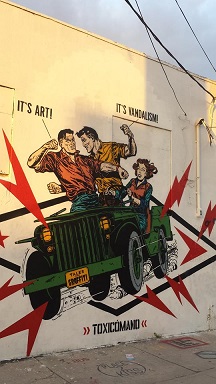
———-

Appendix A – Cultural importance of “Babylon”

Due to Babylon’s historical significance as well as references to it in the Bible, the word “Babylon” in various languages has acquired a generic meaning of a large, bustling diverse city. Examples include:

  • Babilonas (Lithuanian name for “Babylon”)—a real estate development in Lithuania.
  • Babylon is used in reggae music as a concept in the Rastafari belief system, denoting the materialistic capitalist world.
  • Babylon 5—a science fiction series about a multi-racial futuristic space station.
  • Babylon A.D. takes place in New York City, decades in the future.

———-

Appendix B VIDEO – Hotel Rwanda (2004) – Official Movie Trailer – https://youtu.be/qZzfxL90100

Uploaded on Jun 18, 2011
Director: Terry George
Starring: Don Cheadle, Sophie Okonedo, Nick Nolte and Joaquin Phoenix.

———-

Appendix C AUDIO Podcast – Spiritual But Not Religious – http://www.humanmedia.org/catalog/excerpts/141_spiritual_not_religious.mp3


Share this post:
, , , ,
[Top]

Where the Jobs Are – Animation and Game Design

Go Lean Commentary

Live, work and play…

These are three activities that we heavily focus on in the Caribbean. But with modernity, we have to now adjust to the new reality that some of these expressions may be digital as opposed to physical.

cu-blog-where-the-jobs-are-animation-and-game-design-photo-1The below embedded article asserts that a round of new jobs are to be found in the executions for this digital world; this is becoming a new playground. This is a glimpse of industrial growth for the 21st Century; this is the sphere of Internet & Communications Technologies (ICT).

The book Go Lean…Caribbean recognizes the emergence of this new playground; it seeks to make the Caribbean homeland a better place to live, work and play. It makes the claim that innovation and economic growth can result from a progressive community ethos. The book defines this “community ethos” as the fundamental character or spirit of a culture; the underlying sentiment that informs the beliefs, customs, or practices of society; dominant assumptions of a people or period. The book thereafter recommends the ethos of Fostering Genius (Page 27), so as to not only consume this industry’s product offering, but facilitating development and production. The skills to participate in the art and science of this development may not apply to just everyone; it may be limited to a “gifted few”, a “talented tenth”. This is why all the other attendant functions must also be facilitated to engage this activity, such as Helping Entrepreneurship (Page 28), Promoting Intellectual Property (Page 29), Impacting Research and Development or R&D (Page 30) and Bridging the Digital Divide (Page 31).

The landscape for Animation and Game Design is not an easy one; there is heavy-lifting for all stakeholders (government, educators, entrepreneurs, and students). For the “champions” that endure and traverse the obstacles and deliver, they will reap what they sow: a slice of a US$332 Billion pie. Consider the story here, from an engaged Jamaica-focused blogger:

Title: Jamaica’s US$332 billion dollar Industry heralded in CXC’s Animation and Game Design
By: Blogger Lindsworth Deer; posted October 3, 2016; retrieved November 18, 2016 from: https://lindsworthdeer.wordpress.com/2016/10/03/cxcs-animation-and-game-design/

cu-blog-where-the-jobs-are-animation-and-game-design-photo-2“Part of the thrust for CXC is that students should be able to leave school with some employable skills, so instead of leaving school and applying for a job, you can leave school and create jobs for yourselves and other people. This is where the world is going and part of CXC’s mandate is to assure the global human competitiveness of the Caribbean region” – Quotation from the Assistant Registrar, Public Information and Customer Service at the Caribbean Examinations Council (CXC), Cleveland Sam as he commented on the introduction of Animation and Video Game Design to CAPE.

2016 is going to be an amazing year for the Animation and Video Game Design Community in Jamaica.

This as the CXC (Caribbean Examination Council) is now introducing the Animation and Game Design as a subject (Gunn, 2016, September 8) for the CAPE (Caribbean Advanced Proficiency Examination) Exams.

Launched on Saturday 12 March 2016 at the KingstOOn Festival in Jamaica (CXC, 2016, March 8), this course is set to be a blast. You can download the Animation and Game Design syllabus free from the CXC Website once you follow the procedure (Deer, 2015, November 18) to get a free syllabus.

The new subject will be made up of two (2) units:

  • The Fundamentals of Animation and Game Design
  • Interactive Design and Game Development

Modules that are a part of these Units are as follows:

  • Understanding Animation
  • Game Design
  • Drawing and Layouts
  • Story and Character Development

It’s also a part of the move towards e-Testing (Murdoch, 2016, August 13) by the CXC in January 2017 beginning with CSEC multiple choice (Paper 01) exams only. By 2018, all subjects (Spence, 2016, May 19) will be taken via e-Testing in all territories offering the exams.

The Exams for the subject will be administered online and has no written component, making them geared more towards Kinesthetic (Bucknell University, 2014) and Visual (Carleton University, 2012, May 15) learners and to a lesser extend Auditory and Tactile or Read/Write learners (Saint Leo University, 2015, August 4).

So far, CXC’s e-Testing bandwidth requirements seem a bit much for the small island of Antigua and Barbuda (Murdoch, 2016, September 20), prompting a delay in testing until the bandwidth available at High School is improved following the passing of their Telecommunication Bill 2016.

Jamaica will soon follow suit with e-Testing for CXC Exams.

Animation and Game Design – Making Jamaica a producer of original Animation and Video Game Content
Animation and Game Design is the second subject to go paperless and online since Digital Media, which was launched in 2013. Interestingly, the course will not require the training of new teachers, as Teachers of Visual Arts or IT (Information Technology) can basically use the syllabus and do workshops (The Jamaica Observer, 2016, September 11) to make the transition to teach the subject.

Animation and Game Design is part of a raft of new subjects that have been launched as far back as 2014.

  • Agricultural Science
  • Tourism
  • Entrepreneurship
  • Performing Arts
  • Physical Education and Sport

Effectively students will be learning a practical skill by the time they leave High School, which will make it easier for them to become entrepreneurs (Deer, 2016, May 6) in the budding Animation and Video Game Design Industry in Jamaica.

In the long run, it’ll also make Jamaica a producer of animated content instead of a consumer as pointed out by Assistant Registrar, Public Information and Customer Service at the Caribbean Examinations Council (CXC), Cleveland Sam, quote: “This is where the world is going and part of CXC’s mandate is to assure the global human competitiveness of the Caribbean region”.

Student Entrepreneurs – Animation and Video Game Design a US$332 billion dollars per annum Industry
These students, who can become animators and Game Designers straight out of high school, may even become producers of content for the Education Sector (Deer, 2014, October 20), tapping into the US$112 Billion Video Global Gaming Industry as Dr. Joseph Saulter had envisioned.

Potentially Jamaicans can also tap into the US$69 million of the US$220 billion annual Global Animation Industry over a five (5) year period (Deer, 2014, August 2) according to the World Bank.

That’s a total of US$332 billion dollars annually from both the Animation and Video Gaming industries combined up for grabs by student Animators and Video Game Designers. This potential means that a rethink of education may be necessary, especially as Animation and Video Games can be used effectively to teach Primary School Children (Deer, 2016, June 23) under the Tablets in School Program.

There is even evidence that Tablet usage, with the right type of content might be effective in jumpstarting the fine motor skills (Deer, 2016, October 2) of toddlers. Having fine motor skills is key towards developing Kinesthetic (Bucknell University, 2014) and Visual (Carleton University, 2012, May 15)learning in children.

This could make Animation and Video Games for Education is itself a rapidly growing area, especially if you can code apps in multiple languages (Deer, 2016, July 19), tapping into a global marketplace seeking Jamaican Animation and Video Game design content.

So the Minister of Education, Youth and Information, Senator the Hon. Ruel Reid is seeking to re-align the entire Education sector towards the idea of Animation and Video Game design playing a part in the Education Sector, quote: “The entire education training system has to be re-aligned to labour market demands, due to these emerging trends in terms of occupations. We have to reorganise our school training programme and curriculum in that regard”.

So re-align the Ministry of Education must, as Animation and Video Game Design is a US$332 billion dollars per annum low hanging fruit. That is, once you have the right equipment and software (Deer, 2013, September 3) to get your content produced, marketed and sold into the Global marketplace online!

Here’s the link:

Animation and Game Design syllabus

References:

  1. BucknellUniversity. (2014). Kinesthetic Learning in the Classroom. Retrieved from http://www.facstaff.bucknell.edu/jvt002/Docs/ASEE-2008b.pdf
  2. CarletonUniversity. (2012, May 15). Why Use Media to Enhance Teaching and Learning. Retrieved from http://serc.carleton.edu/sp/library/media/why.html
  3. Deer, L. (2013, September 3).  Animation after Kingstoon – How to make a Video Game for PC, Smartphone and Tablet. Retrieved from http://mythoughtsontechnologyandjamaica.blogspot.com/2013/09/animation-after-kingstoon-how-to-make.html
  4. Deer, L. (2014, August 2). Animation after KingstOON – World Bank Invests US$20 million in Jamaican Animation BPO Brother from another Mother with Great Expectations. Retrieved from  http://mythoughtsontechnologyandjamaica.blogspot.com/2014/08/animation-after-kingstoon-world-bank.html
  5. Deer, L. (2014, October 20). Prof. Joseph Saulter’s Digital Game Design and Development Conference – US$112 Billion Video Gaming Industry may be Jamaicans Next BPO. Retrieved from http://mythoughtsontechnologyandjamaica.blogspot.com/2014/10/prof-joseph-saulters-digital-game.html
  6. SaintLeoUniversity. (2015, August 4). The 3 Types of Learning Styles & How to Use Them for College Success. Retrieved from http://blog.centers.saintleo.edu/blog/the-3-types-of-learning-styles-how-to-use-them-for-college-success
  7. Deer, L. (2015, November 18). How to download CSEC, CCSLC and CAPESyllabuses for Free from CXC. Retrieved from https://lindsworthdeer.wordpress.com/2015/11/18/how-to-download-csec-ccslc-and-cape-syllabuses-for-free-from-cxc/
  8. CXC. (2016, March 8). CXC Launching CAPEAnimation and Game Design Syllabus. Retrieved from http://www.cxc.org/cxc-launching-cape-animation-and-game-design-syllabus/
  9. Deer, L. (2016, May 6). How 9-y-o and Millennials in Jamaica are becoming CEO Entrepreneurs to avoid the Cubicle Rat Race. Retrieved from http://mythoughtsontechnologyandjamaica.blogspot.com/2016/05/millennials-CEO-Entrepreneurs.html
  10. Spence, M. (2016, May 19). CXC to complete e-test phase in by 2018. Retrieved from http://www.caymanreporter.com/2016/05/19/cxc-to-complete-e-test-phase-in-by-2018/
  11. Deer, L. (2016, June 23). Why Tablet in School Rollout in September 2016 means Contractors and Kinesthetic Content coming. Retrieved from http://mythoughtsontechnologyandjamaica.blogspot.com/2016/06/Tablet-in-School-Rollout-September-2016-Kinesthetic-Content.html
  12. Deer, L. (2016, July 19). Why Coding in HTML and CSS3 and speaking Spanish needed in Jamaica. Retrieved from https://lindsworthdeer.wordpress.com/2016/07/19/coding-html-css3-spanish/
  13. Murdoch, K. (2016, August 13).CXC to move to full e-marking and introduces e-testing. http://antiguaobserver.com/cxc-to-move-to-full-e-marking-and-introduces-e-testing/
  14. Gunn, T. (2016, September 8). CAPEStudents to do Animation and Game Design. Retrieved from http://jis.gov.jm/cape-students-animation-game-design/
  15. The Jamaica Observer. (2016, September 11). CAPE offers animation, game design. Retrieved from http://www.jamaicaobserver.com/magazines/career/CAPE-offers-animation–game-design_73483
  16.  Murdoch, K. (2016, September 20). Minister promises increased bandwidth as CXC e-testing delayed. Retrieved from http://antiguaobserver.com/minister-promises-increased-bandwidth-as-cxc-e-testing-delayed/
  17. Deer, L. (2016, October 2). University of London and King’s College London Research indicates toddlers love touchscreens. Retrieved from https://lindsworthdeer.wordpress.com/2016/10/02/toddlers-love-touchscreens/

The theme of this article aligns with the book Go Lean…Caribbean which calls for the elevation of Caribbean economics. The book asserts that the Caribbean region has been losing the battle of globalization and technology. The consequences of our defeat is the sacrifice of our most precious treasures, our people. The assessment of all 30 Caribbean member-states is that every community has lost human capital to the brain drain. Some communities, like Puerto Rico and the US Virgin Islands have suffered with an abandonment rate of more than 50% and others have had no choice but to stand on the sideline and watch as more than 70% of college-educated citizens flee their homelands for foreign shores.

If there is a Caribbean champion in the field of Animation and Game Design, the expectation would be that he/she would take “his” talents to South Beach … or Southern California or Southern New York or Southern Canada or Southern England, etc. (This relates to the drama of basketball superstar LeBron James relocating from his beloved hometown of Cleveland, Ohio to the Caribbean Diasporic city of Miami, Florida in the Summer of 2010; see the anecdote and application in the Go Lean book Page 42).

Yes, there are both “push and pull” factors as to why these ones leave, but the destination countries, North America and Western Europe, may not be such ideal alternatives. Their middle-class is shrinking; everything has changed…everywhere! These communities are all struggling to sow-reap economic opportunities from ICT, in which size does not matter. Innovation does. Innovation, inspiration, creativity and software development. This can emerge from any corner of the globe: Silicon Valley or a Silicon Beach in the Caribbean. (As of late, China has become a center of activity for this Animation and Game Design industry). All that is needed is the community will; (community ethos). We can compete with them (China, North America, Europe, anyone) by reforming and transforming our Caribbean homeland to employ the community will.

Consideration for the Animation and Game Design industry is not just all about fantasy, there is a sober sense of reality as well; a US$332 Billion industry is sober enough. Video and electronic games – including for smart phones – are very popular among children and adults alike. See Appendix A below for a trailer for the movie “Angry Birds“,  which is based on the video game popular among children. Also see Appendix B for a glimpse of a popular game among adults, “Grand Theft Auto“.

The Go Lean book posits that there is a need to re-focus, re-boot, and optimize the engines of commerce so as to make the Caribbean a better place to live, work and play. Considering the foregoing article, there is the opportunity to create jobs in the industry space for Animation and Game Design. We  welcome the initiatives of the Caribbean Examinations Council (CXC).

imagesCXC is familiar to the Go Lean movement. In a previous blog-commentary, the Council’s role in fostering Math and Science competence (STEM) in the English-speaking Caribbean was examined. Now the focus is on fostering education for Animation and Game Design; this is one step further up the STEM/ICT food chain. This is where education and economics (jobs and entrepreneurship) converge.

The book Go Lean… Caribbean, serves as a roadmap for the introduction and implementation of the technocratic Caribbean Union Trade Federation (CU) with the charter to facilitate jobs in the region. The book posits that ICT can be a great equalizer for the Caribbean to better compete with the rest of the world, relating the experiences of Japan – the #3 global economy – who have competed successfully with great strategies and technocratic execution despite being a small country of only 120+ million people. This modeling of Japan, and other successful communities, aligns with this CU charter; as defined by these 3 prime directives:

  • Optimization of economic engines in order to grow the regional economy to $800 Billion and create 2.2 million new jobs.
  • Establishment of a security apparatus to protect the resultant economic.
  • Improve Caribbean governance to support these engines.

Early in the Go Lean book, the responsibility to create jobs was identified as an important function for the CU with these pronouncements in the Declaration of Interdependence (Pages 14):

xxvi.  Whereas the Caribbean region must have new jobs to empower the engines of the economy and create the income sources for prosperity, and encourage the next generation to forge their dreams right at home, the Federation must therefore foster the development of new industries, like that of ship-building, automobile manufacturing, prefabricated housing, frozen foods, pipelines, call centers, and the prison industrial complex. In addition, the Federation must invigorate the enterprises related to existing industries tourism, fisheries and lotteries – impacting the region with more jobs.

xxvii. Whereas the region has endured a spectator status during the Industrial Revolution, we cannot stand on the sidelines of this new economy, the Information Revolution. Rather, the Federation must embrace all the tenets of Internet Communications Technology (ICT) to serve as an equalizing element in competition with the rest of the world. The Federation must bridge the digital divide and promote the community ethos that research/development is valuable and must be promoted and incentivized for adoption.

xxviii. Whereas intellectual property can easily traverse national borders, the rights and privileges of intellectual property must be respected at home and abroad. The Federation must install protections to ensure that no abuse of these rights go with impunity, and to ensure that foreign authorities enforce the rights of the intellectual property registered in our region.

xxx.  Whereas the effects of globalization can be felt in every aspect of Caribbean life, from the acquisition of food and clothing, to the ubiquity of ICT, the region cannot only consume, it is imperative that our lands also produce and add to the international community, even if doing so requires some sacrifice and subsidy.

According to the foregoing article, Animation and Game Design is emerging in the Caribbean. The regional educational institutions (schools and testing agencies) have recognized the need to foster development in this industry space.

The Go Lean roadmap goes further. We assert that the 42 million people of the Caribbean region can become better consumers of this industry and promoters too. We need some attendant functions, like banking support (with an electronic payment scheme) and infrastructure governance. In addition to the book, previously Go Lean blog-commentaries detailed benefits, issues and challenges of a comprehensive ICT strategy. See this sample here of previous blog-commentaries:

https://goleancaribbean.com/blog/?p=8823 Lessons from China – WeChat: Model for Caribbean Social Media
https://goleancaribbean.com/blog/?p=8817 Lessons from China – Mobile Game Apps: The New Playground
https://goleancaribbean.com/blog/?p=8704 MetroCard – Model for the Caribbean Dollar
https://goleancaribbean.com/blog/?p=8262 Uber App: UberEverything in Africa
https://goleancaribbean.com/blog/?p=7806 Skipping School to become Tech Giants
https://goleancaribbean.com/blog/?p=5668 Move over Mastercard/Visa
https://goleancaribbean.com/blog/?p=5435 China Internet Policing – Model for the Caribbean
https://goleancaribbean.com/blog/?p=4793 Truth in Commerce – Learning from Yelp and India’s Model
https://goleancaribbean.com/blog/?p=4381 Net Neutrality: It Matters Here …
https://goleancaribbean.com/blog/?p=1416 Amazon’s new FIRE Smartphone and Apps
https://goleancaribbean.com/blog/?p=486 Temasek firm backs Southeast Asia cab booking app

This CU/Go Lean roadmap posits that the Caribbean must incubate a software development industry – for games and other functionality – thereby forging entrepreneurial incentives and facilitating the infrastructure upgrades so that software innovations – including Animation and Game Design – can thrive.

This means a lot for the community, not just the direct designer-programmer jobs, but the indirect ones as well. The Go Lean book detailed the principle of job multipliers, how certain industries are better than others for generating multiple indirect jobs down the line for each direct job on a company’s payroll. Industries relating to STEM (Science, Technology, Engineering and Mathematics/Medicine) and ICT fields have demonstrated high job-multiplier rates of 3.0 to 4.1 factors (Page 260).

The Go Lean… Caribbean book details the creation of 2.2 million new jobs for the Caribbean region, many embracing ICT skill-sets. How? By adoption of certain community ethos, plus the executions of key strategies, tactics, implementations and advocacies. The following is a sample from the book:

Community Ethos – Deferred Gratification Page 21
Community Ethos – Economic Principle – Economic Systems Influence Choices & Incentives Page 21
Community Ethos – Economic Principle – Voluntary Trade Creates Wealth Page 21
Community Ethos – Consequences of Choices Lie in the Future Page 21
Community Ethos – Job Multiplier Page 22
Community Ethos – Anti-Bullying and Mitigation – Geniuses tend to be bullied early Page 23
Community Ethos – Lean Operations Page 24
Community Ethos – Return on Investments Page 24
Community Ethos – Ways to Impact the Future Page 26
Community Ethos – Ways to Foster Genius Page 27
Community Ethos – Ways to Help Entrepreneurship Page 28
Community Ethos – Ways to Promote Intellectual Property Page 29
Community Ethos – Ways to Impact Research & Development Page 30
Community Ethos – Ways to Bridge the Digital Divide Page 31
Strategy – Mission – Education Without Further Brain Drain Page 46
Tactical – Fostering a Technocracy Page 64
Tactical – Tactics to Forge an $800 Billion Economy – Japanese Model Page 69
Tactical – Tactics to Forge an $800 Billion Economy – High Multiplier Industries Page 70
Tactical – Separation of Powers – Commerce Department – Patents & Copyrights Page 78
Tactical – Separation of Powers – Labor Department – On-the-job Training Page 89
Implementation – Ways to Pay for Change Page 101
Implementation – Trends in Implementing Data Centers Page 106
Implementation – Ways to Deliver Page 109
Implementation – Ways to Impact ICT and Social Media Page 111
Planning – Ways to Improve Trade Page 128
Advocacy – Ways to Grow the Economy Page 151
Advocacy – Ways to Create Jobs Page 152
Advocacy – Ways to Improve Education Page 159
Advocacy – Ways to Impact Labor Markets and Unions Page 164
Advocacy – Ways to Foster Empowering Immigration – STEM Resources Page 174
Advocacy – Ways to Foster Technology Page 197
Advocacy – Ways to Foster e-Commerce Page 198
Advocacy – Ways to Impact Youth Page 227
Appendix – Growing 2.2 Million Jobs in 5 Years Page 257
Appendix – Job Multipliers Page 259

So the CU/Go Lean roadmap calls for fostering job-creating developments, incentivizing many high-tech start-ups and incubating viable companies. This plan is to create 2.2 million new jobs; but from where? Previous blog-commentaries detailed options … as follows:

https://goleancaribbean.com/blog/?p=9203 Where the Jobs Are – Employer Models in the United States
https://goleancaribbean.com/blog/?p=6089 Where the Jobs Are – Futility of Minimum Wage
https://goleancaribbean.com/blog/?p=2857 Where the Jobs Are – Entrepreneurism in Junk
https://goleancaribbean.com/blog/?p=2126 Where the Jobs Are – Computers Reshaping Global Job Market
https://goleancaribbean.com/blog/?p=2025 Where the Jobs Are – Attitudes & Images of the Diaspora
https://goleancaribbean.com/blog/?p=2003 Where the Jobs Are – One Scenario: Ship-breaking
https://goleancaribbean.com/blog/?p=1698 Where the Jobs Are – STEM Jobs Are Filling Slowly

The primary ingredient for this roadmap’s success  recipe must be Caribbean people. This means we need to foster and incite participation for our young people into STEM fields “early and often”. A second ingredient will be the support of the community – the “community will” – while not everyone will be a direct participant, everyone will be impacted. We must encourage and spur any future “achiever”. This is a consistent theme in the Go Lean book, that one person can make a difference.

The Caribbean can be the best address on the planet, with solutions for our deficiencies – like jobs. Let’s get started, by leaning-in to the turn-by-turn directions of the Go Lean roadmap.

Yes, we can make our homeland a better place to live, work and play. 🙂

Download the book Go Lean … Caribbean – now!
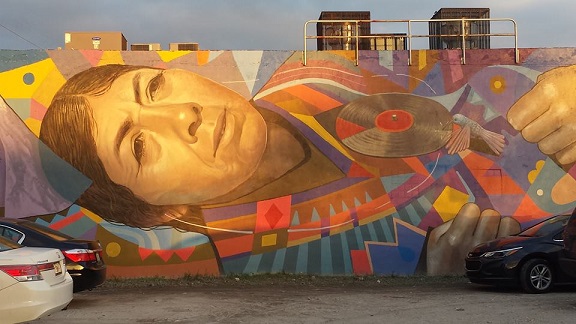
—————–

Appendix A VIDEO – The Angry Birds Movie – Official Theatrical Trailer – https://youtu.be/QRmKa7vvct4

Published on Jan 26, 2016

In the 3D animated comedy, The Angry Birds Movie, we’ll finally find out why the birds are so angry.

The movie takes us to an island populated entirely by happy, flightless birds – or almost entirely. In this paradise, Red (Jason Sudeikis, We’re the Millers, Horrible Bosses), a bird with a temper problem, speedy Chuck (Josh Gad in his first animated role since Frozen), and the volatile Bomb (Danny McBride, This is the End, Eastbound and Down) have always been outsiders. But when the island is visited by mysterious green piggies, it’s up to these unlikely outcasts to figure out what the pigs are up to.

Featuring a hilarious, all-star voice cast that includes Bill Hader (Trainwreck, Inside Out), Maya Rudolph (Bridesmaids, Sisters), and Peter Dinklage (Game of Thrones), as well as Kate McKinnon (Saturday Night Live, Ghostbusters), Keegan-Michael Key (Key & Peele), Tony Hale (Veep, Arrested Development), Tituss Burgess (Unbreakable Kimmy Schmidt), Ike Barinholtz (Neighbors, Sisters), Hannibal Buress (Daddy’s Home, Broad City), Jillian Bell (22 Jump Street), Danielle Brooks (Orange is the New Black), Latin music sensation Romeo Santos, YouTube stars Smosh (Ian Hecox and Anthony Padilla), and country music superstar Blake Shelton, who writes and performs the original song “Friends,” the Columbia Pictures/Rovio Entertainment film is directed by Fergal Reilly and Clay Kaytis and produced by John Cohen and Catherine Winder. The screenplay is by Jon Vitti, and the film is executive produced by Mikael Hed and David Maisel.

——————-

Appendix B VIDEO – Grand Theft Auto V: The Official Launch Trailer – https://youtu.be/hBvMSP7cI-Q

Published on Nov 10, 2014 – Grand Theft Auto V was launched on November 18, 2014 for on PlayStation®4.
A player can transfer from previous Grand Theft Auto Online characters and progression from PlayStation®3 or Xbox 360 to PlayStation®4. See more here: http://www.rockstargames.com/v
Intense Violence, Blood and Gore, Nudity, Mature Humor, Strong Language, Strong Sexual Content, Use of Drugs and Alcohol.
©2008-2014 Rockstar Games, Inc. Rockstar Games, Rockstar North, Grand Theft Auto, the GTA Five, and the Rockstar Games R* marks and logos are trademarks and/or registered trademarks of Take-Two Interactive Software, Inc. in the U.S.A. and/or foreign countries.


Share this post:
, , , ,
[Top]

Bahamas Welcomes the New University

Go Lean Commentary

cu-blog-welcoming-the-new-university-photo-1

Dateline Thursday, November 10, 2016 – It’s a BIG moment for the Bahamas; its Charter Day; their College of the Bahamas (COB) has now graduated to the University of the Bahamas (UB). This is a B.H.A.G. (Big Hairy Audacious Goal)! Congratulations! We welcome this new University.

VIDEO – Bahamas Welcomes First University https://youtu.be/g7sxdmrj1bM

Published on Nov 10, 2016 – Evening Newscast from ZNS Television – Bahamas State-own TV and Radio Network – on Charter Day.

This B.H.A.G. was the plan “all the while”. In 2014 when COB published their 2025 Master Plan, this commentary chimed in. Our conclusion:

The institution was only reaching for the lamp-post. (The commentary preferred that COB “reached for the stars”).

We received feedback-criticism for that assessment. We heard specific responses like:

“Not Accurate! The Go Lean commentary ignored the real world constraints that COB must manage”.

This commentary is a response to that response.

After 2 years of reflection, it is our conclusion that the COB Master Plan 2025 was indeed a “good start”. The previous assessment was that the College-University Master Plan was deficient, that it did not “stretch” far enough to address the Agents of Change (globalization and technology) affecting the Caribbean and the educational needs of this island-nation. But now, after 2 years of “observing and reporting” on the effort to reform and transform failing communities, we have come to appreciate that some changes must be evolutionary as opposed to revolutionary. That 2014 blog was extremely insightful; it accurately described “what” was needed in the arena of tertiary education in the Bahamas (and other Caribbean member-states), but it too was deficient …

… it did not stress the “why”, “how”  and “when”. Let’s do that now; this is an update to that previous submission:

Why?

cu-blog-welcoming-the-new-university-photo-2

Answering all the questions of “why”, “how” and “when” is reflective of the comprehensiveness of the book Go Lean…Caribbean. The book serves as a roadmap for the introduction and implementation of the technocratic Caribbean Union Trade Federation (CU). This roadmap assesses that the Caribbean – Bahamas included – is in crisis.

Why a crisis?

There is a dire problem with societal abandonment. Even students are guilty of blame. Many times they leave their Caribbean homeland to matriculate abroad and never return. In general, the region’s abandonment rate among tertiary educated citizens is reported at 70%.

So there needs to be a viable alternative to studying abroad. There needs to be a good local educational institution. This is what was expected in the COB-UB Master Plan in 2014 and what is expected today. As the sole tertiary education institution in the Bahamas, it would be expected that a Master Plan would have better addressed this crisis. As this is bigger than just academics; this addresses all societal engines. The CU/Go Lean roadmap embeds concern for all these engines in its prime directives; identified with the following 3 statements:

  • Optimization of the economic engines in order to grow the regional economy to $800 Billion & create 2.2 million new jobs.
  • Establishment of a security apparatus to protect the resultant economic engines.
  • Improve Caribbean governance to support these engines.

This prime directive relates to universities as well. They can effect change in their community; see Appendix-VIDEO below. The Go Lean book posits that the Caribbean’s crisis is a “terrible thing to waste”. Therefore the roadmap seeks to change the entire eco-system of Caribbean education. This vision is defined early in the book (Page 13 & 14) in the following pronouncements in the Declaration of Interdependence:

xix. Whereas our legacy in recent times is one of societal abandonment, it is imperative that incentives and encouragement be put in place to first dissuade the human flight, and then entice and welcome the return of our Diaspora back to our shores…

xxi. Whereas the preparation of our labor force can foster opportunities and dictate economic progress for current and future generations, the Federation must ensure that educational and job training opportunities are fully optimized for all residents of all member-states, with no partiality towards any gender or ethnic group. The Federation must recognize and facilitate excellence in many different fields of endeavor, including sciences, languages, arts, music and sports. This responsibility should be executed without incurring the risks of further human flight, as has been the past history.

xxvii. Whereas the region has endured a spectator status during the Industrial Revolution, we cannot stand on the sidelines of this new economy, the Information Revolution. Rather, the Federation must embrace all the tenets of Internet Communications Technology (ICT) to serve as an equalizing element in competition with the rest of the world. The Federation must bridge the digital divide and promote the community ethos that research/development is valuable and must be promoted and incentivized for adoption.

Universities play an important role in cementing the societal fabric of their communities. In a previous blog-commentary, the American experience was detailed; the number one employers in each state were listed. In 16 of the 50 states, the largest employer was an entity within that State’s University System.  The following intelligence was gleaned:

  • The education eco-system is important for more than  just enrolled student bodies; whole communities are affected. Just consider the California example … indicative of all the other states where a University System is the largest employer: The University … system, which has campuses in Berkeley, Davis, Irvine, Los Angeles, Riverside, Merced, Santa Cruz, Santa Barbara, San Diego, and San Francisco, is the largest employer in the state. The university network also includes the UCLA Health System, which consists of 5 medical centers, and three national laboratories.
  • Jobs come from disruptive systems of commerce – Big-Box retailer Walmart has undermined the business models of the previous delivery solutions for food, clothing and shelter (home goods). They are now the largest employer in 19 states.

So … how and when?

How? – 10 Ways to Improve the University

What should have been featured in a Master Plan/roadmap for effectuating change in the tertiary education landscape for the Bahamas? The following community ethos, strategies, tactics and implementations from the Go Lean book (in the order of appearance in the book) depict how to improve a Caribbean university eco-system for the educational charter:

Ways to Impact the Future – Forward focus, not legacy; Future success is not guaranteed; must be fostered Page 26
Ways to Foster Genius – Identify them early and foster/protect them through out their development Page 27
Ways to Impact Research & Development – Size does not matter; commitment does Page 30
Steps to Implement Self-Governing Entities – Invite other universities for Healthcare and specialty Campuses Page 105
Ways to Improve Education – Manage Brain Drain as an enemy; with a comprehensive Battle Plan Page 159
Ways to Impact Student Loans –  People cannot repay if they are not around; conditionalize all grants Page 160
Ways to Empower Immigration – Import the skills (teachers and students) we do not have Page 174
Ways to Impact Public Works – Need cutting edge campuses to attract and retain stakeholders Page 175
Ways to Improve Libraries – Outreach into neighborhoods; bring the learning to the people Page 187
Ways to Foster Technology – e-Learning makes for virtual campuses; keep rural people at home Page 197

cu-blog-welcoming-the-new-university-photo-3

How? – 10 Ways the University Can Impact the Community

As conveyed in the Appendix VIDEO below, universities usually have an effect on their communities above-and-beyond academics. There is the concept of the Company town, or in this case University town, in which one or more universities may be the primary economic driver. The US has many such towns, think Gainesville-Florida, Tallahassee-Florida, Athens-Georgia, Lincoln-Nebraska, Ann Arbor-Michigan and others.

How can an education institution in the Caribbean region execute a plan to impact the economic, security and governing engine of its community?

The Go Lean book details these community ethos, strategies, tactics, implementations and advocacies to foster peripheral benefits for all who live, work and play in the Caribbean region. See sample here of peripheral-auxiliary benefits from the Go Lean book (in the order of appearance in the book):

Ways to Help Entrepreneurship – Models abound where Incubators started on University Campuses Page 28
Ways to Promote Intellectual Property – Respect for Other People’s IP must start with the Intellectuals Page 29
Ways to Bridge the Digital Divide – Campuses should lead this revolution Page 31
Ways to Impact Social Media – .EDU (Education) websites should dominate traffic Page 111
Ways to Foster International Aid – Need Visiting Faculty and Exchange Students Page 115
Ways to Benefit from Globalization – Need foreign students here, not just local students going abroad Page 187
Ways to Impact Housing – Model of Ann Arbor shows Mixed-Use Developments embedded in “Cityscape” Page 160
Ways to Improve Communications – Common strategy for Campus “Public” Radio and TV Page 185
Ways to Promote Fairgrounds – CU built Stadia/arenas; Intercollegiate Sports only missing landlords Page 194
Ways to Improve Sports – Foster an Intercollegiate Sports eco-system in the region with other colleges Page 229

How? – Models

Education initiatives are a familiar feature of the Go Lean movement. Consider the many previous blog-commentaries relating lessons-learned (good and bad) and models on education reform from other communities. See the sample here:

https://goleancaribbean.com/blog/?p=8669 Detroit makes Community College free
https://goleancaribbean.com/blog/?p=7806 Skipping School to become Tech Giants
https://goleancaribbean.com/blog/?p=6269 Education & Economics: Welcome Mr. President
https://goleancaribbean.com/blog/?p=5482 For-Profit Education: Plenty of Profit; Little Education
https://goleancaribbean.com/blog/?p=4487 FAMU – Finally, A Model for Facilitating Economic Opportunity
https://goleancaribbean.com/blog/?p=2183 Lessons Learned from Textbook Price-gouging
https://goleancaribbean.com/blog/?p=2171 Sports Role Model – Turn On the SEC Network
https://goleancaribbean.com/blog/?p=709 Student debt holds back many would-be home buyers

When?

Now is the time for all of the Caribbean, the people and governing institutions, to lean-in for the empowerments described in the book Go Lean … Caribbean. This Big Deal for the region leads first with economic empowerments, including education solutions.

Wake up all you teachers
Time to teach a new way
Maybe then they’ll listen
To what you have to say.
Song: Wake Up Everybody; performed by Harold Melvin and the Blue Notes (1975)
Source: Retrieved November 2, 2016 from: http://www.metrolyrics.com/wake-up-everybody-lyrics-harold-melvin-the-blue-notes.html

This Go Lean book is not the COB/UB Master Plan; the institution must address their own planning, but ultimately the requirements detailed in the book are what the Caribbean are relevant for the region: better education options, better jobs, better entrepreneurial opportunities, better economic growth and better prospects to live, work and play in the Caribbean. The Bahamas in particular, and the Caribbean region as a whole, needs the deliveries of this roadmap from Go Lean … Caribbean.

This roadmap is conceivable, believable and achievable. Let’s all lean-in.

Let’s all lean-in now!

Congratulations … and welcome to the new University of the Bahamas. Welcome to the fight!

🙂

Download the book Go Lean … Caribbean – now!
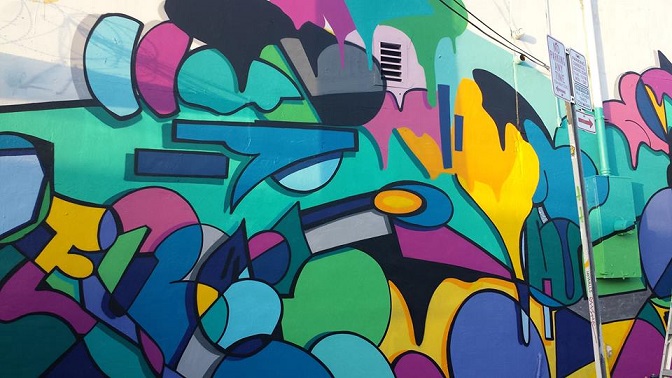
———-

Appendix VIDEORodney Smith – Address at the Bahamas Business Outlookhttps://vimeo.com/118522660

Rodney Smith – Address at The Bahamas Business Outlook Jan. 29th, 2015 from University of The Bahamas on Vimeo.

Jan. 29th, 2015 – University President Rodney Smith addresses the Bahamas Chamber of Commerce in preview of the new University of the Bahamas.

Share this post:
, ,
[Top]

Forging Change: Panem et Circenses

Go Lean Commentary

The dead language of Latin is alive-and-well for conveying some of the most intense perplexities.

Consider:

  • Habeas Corpus* = “There is a body…”
  • Carpe Diem = “Seize the Day”
  • Panem et Circenses = …

cu-blog-forging-change-panem-et-circenses-photo-1That last one is unfamiliar; the rough translation is “Bread and Circuses”. In all of these Latin expressions, there is more to the meaning than just the simple word-for-word translation. There is a deep thought-process underlying.

Bread and circuses or (more generally) food and entertainment, is regarded as typically satisfying the desires of the masses of people; hence used allusively of anything which pleases and pacifies the people, thus helping a government to further its political ends.

In other words, to some bad actors, they seek the opportunity to manipulate the public by first satisfying the shallow requirements of the populace – sustenance and amusement – while the actors pursue a more nefarious agenda; capitalizing on people’s selfishness that may ultimately provide for their own wider neglect.

That’s malevolence…

… there is also a benevolent strategy: First suffice the basic needs, a few social needs (amusement) and the approval of the people can be sought for heavy-lifting – to elevate all of society to a greater cause. (This alludes to Abraham Maslow’s Hierarchy of Needs in which society’s needs are classified as elevating levels starting with #1-Biological, #2-Social/Security, #3-Belonging/Love … #8-Transcendence; see Appendix B below).

This is a recommended strategy by the movement behind the book Go Lean … Caribbean to forge change in Caribbean society: to satisfy the people’s needs for sustenance and amusement then urge the masses to adopt a new vision and new values.

So sustenance first. How do we ensure that the people have their means of survival – bread, food or sustenance – so that we can engage them further for higher level needs? This is a mission described in the Go Lean book (Page 162); there is an advocacy for food, its sourcing, supply and consumption:

10 Ways to Better Manage Food Consumption

Food - Photo 1

The mechanics for this Change-Agent are already in place, with the Caribbean tradition of Carnival. In a previous blog-commentary, it was related that festivals/events are important; they empower economics – see VIDEO here – and fortify cultural pride. See a full encyclopedic reference to Carnival in Appendix A below. All in all, they make the Caribbean a better place to live, work, and play. This is also a mission described in the Go Lean book (Page 191) in this advocacy for events:

10 Ways to Impact Events

VIDEO – The Business of Carnival – https://youtu.be/H90AfmQoRI4

Published on Mar 3, 2014 – Rio de Janeiro’s Samba Schools Parade is billed as the greatest show on earth, but Carnival is also a multimillion dollar business that generates thousands of jobs and injects big money into the local economy. CCTV’s Lucrecia Franco has more.

The Go Lean book and movement serves as a roadmap for the introduction of the technocratic Caribbean Union Trade Federation (CU). The CU is set to optimize Caribbean society through economic empowerment, yes, but there are security and governing dynamics as well. Therefore the Go Lean roadmap has 3 prime directives:

  • Optimization of the economic engines in order to grow the regional economy to $800 Billion & create 2.2 million new jobs.
  • Establishment of a security apparatus to ensure public safety and protect the economic engines.
  • Improve Caribbean governance to support these engines.

The Go Lean book presents a plan to reboot economic engines (jobs, educational and entrepreneurial opportunities), optimize the security apparatus (anti-crime and public safety) and accountable governance – through regional alliances – for all citizens (including many minority factions). The majority of the population must acquiesce and accept the new values in order to allow the societal empowerments – the new vision – to take hold.

All work and no play, makes Jack a dull boy. All play and no work makes Jack a dumb boy – Old Adage

Caribbean society have traditionally featured a preoccupation with fun and amusement: “Fun in the Sun”; have a great time; party!

  • No Problem, Mon
  • Don’t Worry, Be Happy – (Song has an island beat and rhythm).
  • Feeling Hot, Hot, Hot
  • Come to Jamaica and feel alright

The Go Lean roadmap seeks to forge change, to elevate the Caribbean’s societal engines, with a proper balance of work and play. We want to provide great options for meaningful and prosperous work (jobs); plus we want to have fun. The Go Lean quest is to make the region a better place to live, work and play. How do we forge this change?

The challenges and strategies for forging change have been identified in a series of previous Go Lean blog-commentaries over the past 2 years, this is the seventh submission. These were presented as follows, in reverse chronological order:

  1.      Forging Change – Panem et Circenses (Today)
  2.      Forging Change – Herd Mentality (October 11, 2016)
  3.      Forging Change – ‘Something To Lose’ (November 18, 2015)
  4.      Forging Change – ‘Food’ for Thought (April 29, 2015)
  5.      Forging Change – Music Moves People (December 30, 2014)
  6.      Forging Change – The Sales Process (December 22, 2014)
  7.      Forging Change – The Fun Theory (September 9, 2014)

This commentary is urging Caribbean stakeholders to work to please and pacify their people, then work – behind the scenes – to further the societal elevation goals. This strategy to forge change is not presented to be nefarious or malevolent, but rather to pursue the Greater Good. This is defined in the Go Lean book (Page 37) by Jeremy Bentham (1748-1832, a British philosopher, jurist, and social reformer) as …

… “the greatest good to the greatest number of people which is the measure of right and wrong”.

Why “behind the scenes”?

There must be the hard and heavy-lifting process of identifying and fostering those in the community with “genius” capability. A genius is different from everyone else, although they maybe fairly easy to spot, defining exactly what makes one person a genius is a little trickier.

Everyone who loves sausage, should not look at it being made; the process is ugly; but the end result is delicious. – Old Adage.

The Go Lean/CU roadmap asserts that forging change in the Caribbean will be a hard, heavy-lift of a process; many alternate strategies – the 7 from above – may have to be engaged. Any one person can make a difference and positively impact society; such a person can be a champion for any Caribbean cause, though the cause may be different from one champion to another. There are many different strengths among different people, many which may even be considered genius capability. While not everyone can be a genius in terms of mathematics or the sciences, many more do possess genius qualifiers in different endeavors. According to the Go Lean book (Page 27), some researchers & theorists argue that the concept of genius may be too limiting and doesn’t really give a full view of intelligence; they assert that intelligence is a combination of many factors; thereby concluding that genius can be found in many different abilities and endeavors.

This is the community ethos – fundamental character/spirit of a culture; the underlying sentiment that informs the beliefs, customs, or practices of society – of fostering genius. The Go Lean book explains (Page 20) that this and other community ethos are not easy to imbrue on a society. It likens the process to an individual attempting to quit smoking. Not only are there physiological challenges, but psychological ones as well, to the extent that it can be stated with no uncertainty that “change begins in the head”. In psycho-therapy the approach to forge change for an individual is defined as “starting in the head (thoughts, visions), penetrating the heart (feelings, motivations) and then finally manifesting in the hands (actions). This same body analogy is what is purported in this Go Lean book for how the Caribbean is to forge change – following this systematic flow:

  • Head – Plans, models and constitutions
  • Heart – Community Ethos
  • Hands – Actions, Reboots, and Turn-arounds

The Go Lean/CU roadmap involves doing this heavy-lifting “behind the scenes” with identifying and fostering genius, while the masses enjoy Panem et Circenses.

Employing – all of these 7 – strategies to forge change in the Caribbean will be worth it in the end. This is not nefarious nor malevolent. This only makes our homeland a better place to live, work and play.

The Go Lean book presented the roadmap to imbrue the Caribbean region with new community ethos, plus new strategies, tactics, implementation and advocacies to execute to forge change in the region. The following is a sample of these specific details from the book:

Community Ethos – Deferred Gratification Page 21
Community Ethos – Economic Principles – People Choose Page 21
Community Ethos – Economic Principles – People Respond to Incentives in Predictable Ways Page 21
Community Ethos – Economic Principles – Economic Systems Influence Individual Choices Page 21
Community Ethos – Economic Principles – The Consequences of Choices Lie in the Future Page 21
Community Ethos – Governing Principles – Minority Equalization Page 23
Community Ethos – Governing Principles – Lean Operations Page 24
Community Ethos – Governing Principles – Cooperatives Page 25
Community Ethos – Ways to Impact the Future Page 26
Community Ethos – Ways to Help Entrepreneurship Page 28
Community Ethos – Ways to Promote Intellectual Property Page 29
Community Ethos – Ways to Impact Research & Development – Social Experiments Page 30
Community Ethos – Ways to Bridge the Digital Divide Page 31
Community Ethos – Ways to Impact Turn-Arounds Page 33
Community Ethos – Ways to Promote Happiness Page 36
Community Ethos – Ways to Impact the Greater Good Page 37
Strategy – Vision – Confederate 30 Member-States Page 45
Strategy – Mission – Celebrate the Music, Sports, Art and Culture of the Caribbean Page 46
Tactical – Confederating a Permanent Union Page 63
Tactical – Fostering a Technocracy Page 64
Tactical – Separation-of-Powers – CU Federal Agencies versus Member-State Governments Page 71
Implementation – Ways to Pay for Change Page 101
Implementation – Ways to Deliver Page 109
Planning – 10 Big Ideas for the Caribbean Region Page 127
Planning – Ways to Make the Caribbean Better Page 131
Planning – Reasons Why the CU Will Succeed Page 132
Planning – Lessons from Omaha – College World Series Model Page 138
Advocacy – Ways to Grow the Economy Page 151
Advocacy – Ways to Create Jobs Page 152
Advocacy – Ways to Better Manage the Social Contract Page 170
Advocacy – Ways to Improve Communications – Community Messaging Page 186
Advocacy – Ways to Improve Libraries Page 187
Advocacy – Ways to Enhance Tourism Page 190
Advocacy – Ways to Impact Events Page 191
Advocacy – Ways to Promote Fairgrounds Page 192
Advocacy – Ways to Preserve Caribbean Heritage Page 218
Advocacy – Ways to Improve the Arts Page 230
Advocacy – Ways to Promote Music Page 231

The empowerments in the Go Lean book calls for permanent change. This is possible. The people of the Caribbean only want opportunities; they want to be able to provide for their families, and offer a future of modernity to their children. Plus they want amusement, entertainment, happiness and fun. They want Panem et Circenses. This is a feature of Caribbean culture.

CU Blog - Caribbean must work together to address rum subsidies - Photo 1The Go Lean roadmap offers the technocratic execution of these deliverables. Imagine all the great cuisine and food options in the region. Imagine the rum options. Plus, imagine identifying and fostering the genius abilities of entertainers (singers, dancers, artists, musicians, performers, etc.). The end-product of their genius is good times, an elevation of Caribbean culture … to be consumed by all of the Caribbean stakeholders – residents and tourists alike. This is not a distraction; this is a business model. From the outset, the book recognized the significance of fun and festivities in this roadmap with these statements in the opening Declaration of Interdependence (Page 12 & 14):

Preamble: We hold these truths to be self-evident, that all men are created equal, that they are endowed by their Creator with certain unalienable rights, that among these are life, liberty and the pursuit of happiness 

xxi.  Whereas the preparation of our labor force can foster opportunities and dictate economic progress for current and future generations, the Federation must ensure that educational and job training opportunities are fully optimized for all residents of all member-states, with no partiality towards any gender or ethnic group. The Federation must recognize and facilitate excellence in many different fields of endeavor, including sciences, languages, arts, music and sports. This responsibility should be executed without incurring the risks of further human flight, as has been the past history.

xxxii. Whereas the cultural arts and music of the region are germane to the quality of Caribbean life, and the international appreciation of Caribbean life, the Federation must implement the support systems to teach, encourage, incentivize, monetize and promote the related industries for arts and music in domestic and foreign markets. These endeavors will make the Caribbean a better place to live, work and play.

CU Blog - Post-Mortem of Junkanoo Carnival - Photo 2Success from the Go Lean roadmap on the Caribbean will not make it unique in the business model of fun and festivities. There are many other communities that have flourished in this strategy; think Carnival/Mardi Gras in Rio De Janeiro, New Orleans even the Caribbean member-state of Trinidad. By extension, the Caribbean Carnival tradition have been exported to Diaspora cities: the largest examples being Caribana in Toronto and Notting Hill in London. The Go Lean roadmap wants to extend these initiatives and harvest even more economic benefits from events; we welcome the new Carnival tradition in the Bahamas – see photo here – and long for a resurgence of the Cuban tradition; see Appendix A below.

These Carnival-“Circenses” events are not presented as distractions, rather they are among the business model for a new Caribbean. The Go Lean book details that 9,000 jobs can be created from this strategy. There is even a role model for the Caribbean to emulate, that of the City of Sturgis in the US State of South Dakota. See Bottom Line details in the Appendix C below.

The movement behind the Go Lean book asks and answers the question: How to forge change in the Caribbean? There are many options; one is Panem et Circenses. The whole Caribbean region is urged to lean-in to this roadmap. Success in this regard is conceivable, believable and achievable. We can make the Caribbean a better place to live, work and play through “food and amusement”. 🙂

Download the book Go Lean … Caribbean – now!

———

* Citation Reference – What is Habeas Corpus

https://ccrjustice.org/home/get-involved/tools-resources/fact-sheets-and-faqs/faqs-what-habeas-corpus

———

Appendix A – Carnival

Carnival is a Western Christian festive season that occurs before the liturgical season of Lent.[1] The main events typically occur during February or early March, during the period historically known as Shrovetide (or Pre-Lent). Carnival typically involves a public celebration and/or parade combining some elements of a circus, masks, and a public street party. People wear masks and costumes during many such celebrations, allowing them to lose their everyday individuality and experience a heightened sense of social unity.[2] Excessive consumption of alcohol,[3] meat, and other foods proscribed during Lent is extremely common. Other common features of carnival include mock battles such as food fights; social satire and mockery of authorities; the grotesque body displaying exaggerated features especially large noses, bellies, mouths, and phalli or elements of animal bodies; abusive language and degrading acts; depictions of disease and gleeful death; and a general reversal of everyday rules and norms.[4][5]

The term Carnival is traditionally used in areas with a large Catholic presence.

Rio de Janeiro‘s carnival is considered the world’s largest, hosting approximately two million participants per day. In 2004, Rio’s carnival attracted a record 400,000 foreign visitors.[10]

Caribbean
Most Caribbean islands celebrate Carnival. The largest and most well-known is in Trinidad and Tobago. The Dominican republic, Guyana, Antigua, Aruba, Bonaire, Cayman Islands, Cuba, Curaçao, Barbados, Dominica, Haiti, Grenada, Guadeloupe, Jamaica, Saba, Sint Eustatius (Statia), Sint Maarten, Saint Lucia, Saint Kitts, Saint Thomas, U.S. Virgin Islands, Saint Vincent, and the Grenadines hold lengthy carnival seasons and large celebrations.

Carnival is an important cultural event in the Dutch Antilles. Festivities include “jump-up” parades with beautifully colored costumes, floats, and live bands as well as beauty contests and other competitions. Celebrations include a middle-of-the-night j’ouvert (juvé) parade that ends at sunrise with the burning of a straw King Momo, cleansing sins and bad luck. On Statia, he is called Prince Stupid.

Carnival has been celebrated in Cuba since the 18th century. Participants don costumes from the island’s cultural and ethnic variety. After Fidel Castro’s Communist Revolution, Carnival’s religious overtones were suppressed. The events remained, albeit frowned upon by the state. Carnival celebrations have been in decline throughout Cuba since then.
Source: Retrieved 11-15-16 from: https://en.wikipedia.org/wiki/Carnival#Caribbean

———

Appendix B – Quotation: Bottom Line on the Maslow’s Hierarchy of Needs

Models of human behavior have been undisputedly cataloged by Abraham Maslow’s Hierarchy of Needs. The hierarchy, shown as a pyramid, is a visual representation of the order in which humans are innately drawn towards fulfilling personal needs. At the bottom, or base level, are basic, survival elements (food, water, shelter and security/safety). As these are obtained, there are natural urges for emotional stability (belongingness, self-esteem, social acceptance) and, according to Maslow’s 1943 version, the top level of the pyramid was defined as complex understanding (beauty, justice, realizing one’s full potential). Maslow later revised his original work (1967) and subsequently added “transcendence” to the pyramid’s peak, which is to help others to achieve self-actualization. – Book: Go Lean … Caribbean, Page 231.

The full list is as follows:

Level 1 – Biological and Physiological needs
Level 2 – Security/Safety needs
Level 3 – Belongingness and Love needs
Level 4 – Esteem needs
Level 5 – Cognitive needs
Level 6 – Aesthetic needs
Level 7 – Self-Actualization needs
Level 8 – Transcendence needs

———

Appendix C – Quotation: Bottom Line on the Sturgis, South Dakota
Sturgis is a city in Meade County, South Dakota, United States. The population was 6,627 as of the 2010 census. It is the county seat of Meade County and is named after General Samuel D. Sturgis. Sturgis is famous for being the location of one of the largest annual motorcycle events in the world, which [started in 1938 and] is held annually on the first full week of August. Motorcycle enthusiasts from around the world flock to this usually sleepy town during the Sturgis Motorcycle Rally. The focus of a motorcycle rally was originally racing and stunts. Then in 1961, the rally was expanded to include the “Hill Climb” and Motocross races.[145]

The attendance was tallied in excess of 600,000 visitors in the year 2000. The City of Sturgis has calculated that the Rally brings over $800 million to South Dakota annually. (The City of Sturgis earned almost $270,000 in 2011 from just selling event guides and sponsorships). Rally-goers are a mix of white-collar and blue-collar workers and are generally welcomed as an important source of income for Sturgis and surrounding areas. The rally turns local roads into “parking lots”, and draws local law enforcement away from routine patrols. [The City frequently contracts with law enforcement officers from near-and-far for supplemental support-enforcements during the rally]. (See Appendix J of Sturgis City Rally Department’s Statistics [in the Go Lean book on Page 288]).

[Sturgis generates a lot of media attention]. Annual television coverage of the festival by the [cable TV network] VH1 Classic includes interviews and performances as well as rock music videos. Also, the Travel Channel repeatedly shows two one-hour documentaries about Sturgis.

Share this post:
, , , , , ,
[Top]