Tag: Transform

Respect for Minorities: Climate of Hate

Go Lean Commentary

CU Blog - Climate of Hate - It Gets Worse Before It Gets Worse - Photo 6This subject of “Respect for Minorities” is dominant in the news right now: there was a terrorism attack in the US city of Orlando, Florida. The assailant targeted a night club (The Pulse) frequented by the LGBT community. On Saturday night/Sunday morning June 11/12, 2016, one man killed 49 patrons and injured another 53 in a hate-filled rampage.

This commentary is 2 of 3 in this series on lamentations for defective social values. This commentary applies to this terrorist attack/hate crime in America and also to other practices of “institutional hate” around the world, like in the Caribbean. The complete series is as follows:

  1. Respect for Minorities: ‘All For One’
  2. Respect for Minorities: Climate of Hate – ‘It Gets Worse Before It Gets Worse’
  3. Respect for Minorities: Reconstruction then Redemption

The actions of this one “bad actor” is a direct consequence of a “climate of hate”. The assailant pledged his allegiance to the fringed fundamentalist Islamic terrorist group ISIS; a group that has expressed their hatred time and again to targets like gays, non-Muslims and symbols of Western civilization. This hatred has manifested in their home territory of Iraq and Syria in the MiddleEast, and “on the road”, in places like Paris-France, Germany, England and San Bernardino-California.

When there is a “climate of hate”, the situation on the ground “gets worse before it gets worse”.

The US has confronted the issue of hate before; they have manifested a laboratory – the Civil War – for a comprehensive lesson to a watching world. The country had such a bad legacy of hate with the issue of racial supremacy and racism. The African American community suffered, along with the rest of the country where over 600,000 deaths –  mostly Whites- were tallied. So first, there was slavery, and the “climate of hate” that propagated it; then there was the Civil War for the abolition of slavery, while still “hot” in a “climate of hate”. Yet, despite these lessons, the “climate of hate” continued for over 100 years with the systematic oppression, suppression and oppression of the African-American/Black population.

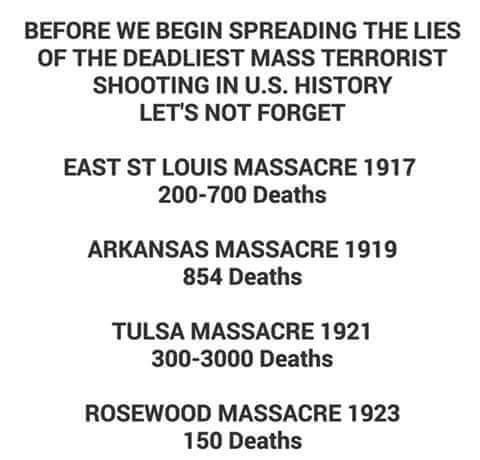
In many respect, the climate continues. This incident in Orlando is being hailed as “the worst massacre in US history”, though this is far from the truth. Remember:
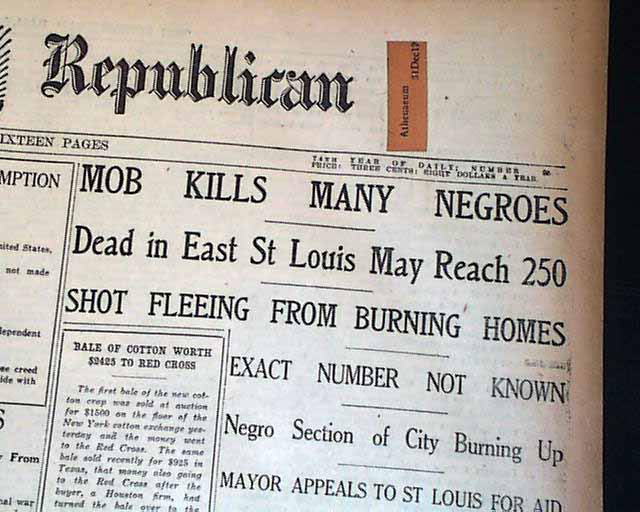
CU Blog - Climate of Hate - It Gets Worse Before It Gets Worse - Photo 2

CU Blog - Climate of Hate - It Gets Worse Before It Gets Worse - Photo 1

Is the nullification of these events, a fault in memory or lack of respect for the affected minority group – Blacks?

Without a doubt, the American experience with a “climate of hate” should be a cautionary tale for the rest of the world.

Planners for a new Caribbean, the movement behind the book Go Lean … Caribbean, see fitting applications from these American events, from this “climate of hate”, for the Caribbean.

Our Caribbean society, far too often, promotes a “climate of hate”. Consider these three examples:

  • Haitian Immigrants – Many Caribbean countries express vitriol towards Haitian migrants.
  • LGBT – Still clinging to the archaic “Buggery” laws, many countries persecute gays in their society as degenerates.
  • Equality-seeking Women – Just last week, a referendum failed in the Bahamas 3 to 1.

The Caribbean member-states, collectively and individually, need to curb its “climate of hate” and to pay more than the usual attention to the lessons from Orlando. See details here:

Title: What do we call the attack in Orlando? ‘Hate crime’ or ‘terrorism?’
Source: (Posted 06/13/2016; retrieved 06/14/2016) retrieved from: http://www.pri.org/stories/2016-06-13/what-do-we-call-attack-orlando-hate-crime-or-terrorism

President Barack Obama has called the attack on the Pulse nightclub in Orlando both a hate crime and terrorism. But experts can’t agree about whether there’s a connection to Islam.

“I have to say,” says GeorgiaStateUniversity professor Mia Bloom, “I think that the president was very on point as far as saying that it doesn’t have to be one thing at the exclusion of others. It was definitely a hate crime, and it was an act of terrorism.”

Bloom has devoted her 27-year career to the study of terrorism and is the author of several books on the subject.

“The extent to which it might have either been directed or inspired by ISIS remains part of the mystery that is unfolding,” she says.

Forty-nine people died and 53 were wounded by the time police took down the single suspected perpetrator, 29-year-old Omar Mateen, around 5 a.m. on Sunday. The nightmare at the popular gay club began around three hours earlier, just as the bartenders were taking last orders.

Mateen was a US citizen, born in the US to an Afghan family. He attended a mosque, but it’s not clear whether he was especially devout. It wasn’t until he was in the midst of the massacre in Orlando that Mateen dialed 911 and pledged allegiance to ISIS.

ISIS has claimed him as one of their own, although there is no evidence yet of any prior connection. An FBI investigation in 2014 found no substantial link.

What is becoming clear — from his ex-wife, and from past and present co-workers at G4S, the security firm where Mateen worked — is that he had a history of violence, homophobia, anti-Semitism, racism, and he was accused of mental instability.

Citing a report in the Daily Beast that Mateen was friends with at least one drag queen and had been comfortable hanging out with gay people in his teens, Bloom says, “I don’t know if part of the homophobia is an extreme interpretation of his own sexual repressedness. This is not someone who grew in Pakistan or Saudi Arabia. This is someone who grew up in the United States, watching TV, being exposed to things like ‘Will and Grace.’ This is not someone who’s never seen two gay people kiss before, especially if he’s hanging out at clubs with people who are cross-dressing.”

Bloom also notes that Mateen started casing gay clubs at least two weeks ago, when he tried to get on the VIP list at another club.

“So he’s basically had two weeks to make his pledge of allegiance [to ISIS] and he didn’t,” she says. “This attack looks to me a lot more like San Bernardino, where you have an individual who has pre-existing issues, and then the veneer of the ISIS affiliation provides either a seriousness or a street-cred, or even — in their perverse way of understanding it — a legitimacy to their actions.”

Presumptive GOP presidential nominee Donald Trump has said that President Obama needs to be more blunt in his characterization of the Orlando attack as an act of “radical Islamic terrorism.” But Daveed Gartenstein-Ross says using this phrase is not particularly important.

“I do think it’s important that one not disguise the motivation that the attacker had in this case, or to deny its connections to other strands of theological thought,” Gartenstein-Ross says, adding that Trump has gone too far with this rhetoric.

“The fact is that this is not an attack that represents the American Muslim community,” he says. “The American Muslim community has a right to grieve with all of the rest of us and shouldn’t be singled out as being different.”

At the same time, Gartenstein-Ross says the suspect “may be many other things as well, but he claimed this attack on behalf of ISIS. And he went after a set of victims that groups like ISIS and al-Qaeda have been known to target.”

“Factually, you cannot get around the notion that [Mateen] is a radical Islamist,” he says.

It seems irrelevant, however, for policy makers to be arguing about phrases like “radical Islamic terrorism” so soon after the Orlando massacre, says Shadi Hamid of the Brookings Institution.

Hamid says Trump’s rhetoric “is actually a stand-in for something darker.”

“This is a way of essentially castigating Muslims without explicitly doing it,” says Hamid, the author of a new book called “Islamic Exceptionalism: How Islam is Shaping the World,” which argues that US policy makers are not very good at talking about religion, especially in the Muslim world.

“Someone like President Obama, [a] self-styled technocrat who doesn’t like to be aroused by the passions of politics, he has, I think, a lot of trouble taking these motivations seriously,” Hamid says. “The way he’s traditionally talked about ISIS … is problematic, where he dismisses them oftentimes as a bunch of thugs and fanatics, as if he can’t even bring himself to take them seriously as a global force.”

For her part, presumptive Democratic presidential nominee Hillary Clinton appeared to shift her rhetoric on Monday. Clinton said she would not hesitate to describe the attack in Orlando as “radical Islamism,” something she has been reluctant to do in her recent rhetoric.

Clinton went on to say that she will not, “demonize and demagogue,” like Donald Trump, because “it’s plain dangerous.”

————-

AUDIOOrlando: ‘Hate crime’ or ‘Terrorism’?http://www.pri.org/node/89888/popout

Listen to the Story from PRI or Public Radio International, a not-for-profit aggregator and distributor of Public Broadcasting content.

The tragedy in Orlando provides a number of lessons for the Caribbean. This is an issue of economics, security, governance and overall spirit in society. These are all important subjects for the book Go Lean…Caribbean. The book serves as a roadmap for elevating Caribbean society – for its 42 million residents and 80 million visitors, across the 30 member-states – by introducing and implementing the technocratic Caribbean Union Trade Federation (CU).

The quest of the Go Lean roadmap, to make the Caribbean homeland a better place to live, work and play. The CU, applying best-practices for community empowerment has these 3 prime directives, proclaimed as follows:

  • Optimization of the economic engines in order to grow the regional economy to $800 Billion & create 2.2 million new jobs.
  • Establishment of a security apparatus to protect the resultant economic engines and ensure the respect of human rights and public safety.
  • Improve Caribbean governance to support these engines.

Despite any leanings on the question of homosexuality, a massacre against 100 people in one incident is first and foremost a tragedy. Consider these direct lessons from this tragedy:

  • This attack in Orlando will surely affect the city’s tourism through put. In a previous blog-commentary, it was detailed that the Disney World attraction enjoys 53 million visitors, alone.
    CU Blog - Climate of Hate - It Gets Worse Before It Gets Worse - Photo 5
  • This is a terrorism case study. The Go Lean roadmap is designed to mitigate the threats of terrorism. Consider too, the issue of gun controls; the need for reform may be too big to resist … this time.

    CU Blog - Climate of Hate - It Gets Worse Before It Gets Worse - Photo 3
  • The governing officials – city, county, State of Florida and the US President – see/listen to the AUDIO) – are campaigning against the ‘climate of hate’ that propelled this assailant and others in society that may have refused to tolerate and integrate with their LGBT neighbors. This ‘climate of hate’ is being discouraged towards any minority group.
    CU Blog - Climate of Hate - It Gets Worse Before It Gets Worse - Photo 4

How exactly can the Go Lean/CU roadmap impact the community spirit, so as to dissuade a ‘climate of hate’?

This relates to community ethos. The Go Lean book (Page 20) defines community ethos as the national spirit that drives the character and identity of its people. It is revealed that changing community ethos is hard, heavy-lifting, but there are effective strategies-tactics for accomplishing this.

We have a ‘climate of hate’ in the Caribbean, the Go Lean book therefore details a series of community ethos to adopt, plus the strategies, tactics, implementations and advocacies to execute to forge permanent change in the homeland:

Community Ethos – Economic Systems Influence Choices & Incentives Page 21
Community Ethos – Consequences of Choices Lie in the Future Page 21
Community Ethos – Anti-Bullying and Mitigation Page 23
Community Ethos – Minority Equalization Page 24
Community Ethos – Ways to Impact the Future Page 26
Community Ethos – Ways to Manage Reconciliations Page 34
Community Ethos – Ways to Impact the Greater Good Page 37
Strategy – Vision –  Integrate region into a Single Market Economy Page 45
Strategy – Agents of Change – Globalization Page 57
Tactical – Separation of Powers – Department of Homeland Security Page 75
Implementation – Ways to Foster International Aid Page 115
Planning – 10 Big Ideas … in the Caribbean Region – Haiti & Cuba Page 127
Planning – Ways to Improve Failed-State Indices Page 134
Planning – Lessons from East Germany – European Post-War Rebuilding – Attitudes Page 139
Planning – Lessons from the US Constitution – Progressive &  Evolutionary Page 145
Advocacy – Ways to Grow the Economy Page 151
Advocacy – Ways to Create Jobs Page 152
Advocacy – Ways to Foster Empowering Immigration – Case Study of Indian Migrants Page 174
Advocacy – Ways to Impact Justice Page 177
Advocacy – Ways to Remediate and Mitigate Crime Page 178
Advocacy – Ways to Improve Gun Control Page 179
Advocacy – Ways to Improve Homeland Security Page 180
Advocacy – Ways to Mitigate Terrorism Page 181
Advocacy – Ways to Improve Intelligence Gathering & Analysis Page 182
Advocacy – Ways to Protect Human Rights Page 220
Advocacy – Ways to Help Women – Mitigate Gender-based Violence Page 226
Advocacy – Ways to Impact Youth – Message new Community Ethos – Inclusion Page 227
Advocacy – Ways to Impact the Dominican Republic – Climate of Hate against Haiti Page 237
Advocacy – Ways to Re-boot Haiti – Regional Climate of Hate against Haiti Page 238
Advocacy – Ways to Impact Trinidad & Tobago – Indo versus Afro Climate Page 240
Advocacy – Ways to Impact Guyana – Indo versus Afro Climate Page 241
Advocacy – Ways to Impact Belize – Cross Border Climate with Guatemala Page 242
Advocacy – Ways to Impact US Territories – Interracial Climate Page 244

The related subjects of human rights and civil rights dysfunction in the Caribbean and other communities around the world have been a frequent topic for blogging by the Go Lean promoters, as sampled here:

https://goleancaribbean.com/blog/?p=8099 Caribbean Image: ‘Less Than’?
https://goleancaribbean.com/blog/?p=7682 A Lesson in History – Frederick Douglass Single Cause: Respect!
https://goleancaribbean.com/blog/?p=7345 Caribbean “Climate of Hate” Inviting to ISIS
https://goleancaribbean.com/blog/?p=7221 Street naming for Martin Luther King unveils a “Climate of Hate”
https://goleancaribbean.com/blog/?p=7204 ‘The Covenant with Black America’ – Ten Years Later
https://goleancaribbean.com/blog/?p=6937 Women in Politics – The Fight for Gender Equality
https://goleancaribbean.com/blog/?p=6722 A Lesson in History – After the Civil War: “Climate of Hate” Continues
https://goleancaribbean.com/blog/?p=6720 A Lesson in History – During the Civil War: Principle over Principal
https://goleancaribbean.com/blog/?p=6718 A Lesson in History – Before the Civil War: Human Rights Compromise
https://goleancaribbean.com/blog/?p=6189 A Lesson in History – Hurricane ‘Katrina’ exposed a “Climate of Hate”
https://goleancaribbean.com/blog/?p=5784 Buggery in Jamaica – Blatant LGBT Bias in the Caribbean
https://goleancaribbean.com/blog/?p=5527 American Defects: Racism – Is It Over?
https://goleancaribbean.com/blog/?p=5333 Racial Legacies: Cause and Effect
https://goleancaribbean.com/blog/?p=5123 A Lesson in History – Royal Charter: Zimbabwe -vs- South Africa
https://goleancaribbean.com/blog/?p=4971 A Lesson in History – Royal Charter: Truth & Consequence
https://goleancaribbean.com/blog/?p=4935 A Lesson in History: the ‘Grand Old Party’ of American Politics
https://goleancaribbean.com/blog/?p=2297 A Lesson in History: Booker T versus Du Bois
https://goleancaribbean.com/blog/?p=1531 A Lesson in History: 100 Years Ago Today – World War I
https://goleancaribbean.com/blog/?p=789 A Lesson in History: America’s War on the Caribbean

All of the Caribbean needs to learn from the experiences of our American neighbors, like in Orlando. The Go Lean book asserts that a “crisis is a terrible thing to waste” (Page 8).

Notice how the Orlando community is coming together! This is a crisis! It is not being wasted!

This is not the first time the LGBT community has been targeted for violence; they have frequently been bullied – this is Terrorism 101. Their demographic is a minority group that needs more respect.

When is enough, enough?

Fixing the American eco-system is out-of-scope for the Go Lean roadmap. Our focus is fixing the Caribbean. Considering the acute and pronounced “climate of hate” in our region, we have a lot of work to do to garner more respect for our minorities.

The Go Lean/CU roadmap specifies best practices to effect change in society, the attitudes and actions. Success in these efforts will reform and transform our climate, and assure public safety and justice for all. This quest is worth all our efforts.

When is the right time to start these efforts? Now…

Now … is the time for all of the Caribbean to lean-in to this roadmap and learn the lessons from history or other communities – successful, plus unsuccessful. The Go Lean book posits that the Caribbean is in a serious crisis, but asserts that this crisis would be a terrible thing to waste. The people and governing institutions of the Caribbean region are hereby urged to assimilate this Big Deal for the Caribbean region; this is a real solution to change the climate. 🙂

Download the book Go Lean … Caribbean – now!

Share this post:
, ,

Respect for Minorities: ‘All For One’

Go Lean Commentary

This subject of “Respect for Minorities” is dominant in the news right now. This commentary is 1 of 3 in this series on lamentations for defective Caribbean social values. The complete series is as follows:

  1. Respect for Minorities: ‘All For One’
  2. Respect for Minorities: Climate of Hate – ‘It Gets Worse Before It Gets Worse’
  3. Respect for Minorities: Reconstruction then Redemption

There is this impactful quotation from the Bible:

“What do you think? If a man owns a hundred sheep, and one of them wanders away, will he not leave the ninety-nine on the hills and go to look for the one that wandered off? – The Bible; Matthew 18:12 – New International Version.

But someone might argue: “the needs of the many out-weight the needs of the few”. This is the principle of the Greater Good. Yes, this is true! This principle is very familiar to the publishers of the book Go Lean … Caribbean; the principle is foremost in the book (Page 37) as a community ethos, the underlying sentiment that informs the beliefs, customs, or practices of a society. The region needs to adopt this ethos to forge change in the Caribbean. But it turns out that the Greater Good is not just a priority on the majority, it is very much reflective of minorities.

All For One … and … One For All!
- Photo 4

This expression is from literature, the book: The Three Musketeers, by the nineteenth-century French author Alexandre Dumas – it represents “art imitating life” in it’s meaning:

All the members of a group support each of the individual members, and the individual members pledge to support the group. Note: “All for one and one for all” is best known as the motto of the title characters in the book. Source: http://www.dictionary.com/browse/all-for-one-and-one-for-all

Since everyone is unique, we may all be minorities in some respects. Consider (these previous blogs):

There is the need for the majority to protect the basic rights of minority groups; this is in effect protecting the rights for life, liberty and pursuit of happiness … for all.

What’s more, the minorities should not have to beg the majority for these rights; the rights should be an automatic entitlement.

Let’s consider the example here of the “peanut“.

It’s a great little snack; a lot of people enjoy them. But, for some – a small but growing minority in any society; see VIDEO below – the peanut is deadly, due to their allergic reactions. Should a majority of people be inconvenient due to allergies of just a few people, or sometimes, just one. Consider this model here:

Title: Customers with Disabilities – Peanut Dust Allergies
Source: Southwest Airlines Website – Customer Service Policy; retrieved 06/09/2016 from: https://www.southwest.com/html/customer-service/unique-travel-needs/customers-with-disabilities-pol.html

- Photo 3Because it is nearly impossible for persons who have an allergy to peanut dust to avoid triggering a reaction if peanut dust is in the air, Southwest Airlines is unable to guarantee a peanut-free or allergen-free flight. We have procedures in place to assist our Customers with severe allergies to peanut dust and will make every attempt not to serve packaged peanuts on the aircraft when our Customers alert us of their allergy to peanut dust.

We ask Customers with peanut dust allergies making reservations over the phone to advise our Customer Representatives of the allergy at the time the reservation is made. If the reservation is made via a travel agent, the Customer should telephone 1-800-I-FLY-SWA (1-800-435-9792) afterward to speak with a Customer Representative. If the reservation is made via southwest.com, the Customer may advise us of the allergy on the “Southwest Airlines Payment and Passenger Information” screen by clicking on the link to “Add/Edit Disability Assistance Options.”

We suggest that Customers with peanut dust allergies book travel on early morning flights as our aircraft undergo a thorough cleaning only at the end of the day.

We ask the Customer with the allergy (or someone speaking on the Customer’s behalf) to check in at the departure gate one hour prior to departure and speak with the Customer Service Agent (CSA) regarding the Customer’s allergy. Please allow enough time to park, check luggage and/or receive your boarding pass, and to pass through the security checkpoint. Our CSA will provide the Customer with a Peanut Dust Allergy Document and ask him/her to present the document to the Flight Attendant upon boarding. If the Customer has a connection, the CSA will provide the Customer with two documents, one of which should be retained to present to the Flight Attendant on the connecting flight.

Our CSA will advise the Operations (Boarding) Agent so that service of packaged peanuts can be suspended for that flight. Our Operations Agent will notify the Provisioning and/or Ramp Supervisor to stock the aircraft with a sufficient supply of pretzels or alternate snacks. The Operations Agent will also notify the Flight Attendants of the Customer’s final destination and advise them that we cannot serve packaged peanuts until the Customer deplanes.

As some of our other snack items may contain peanut particles, peanut oil, or have been packaged in a peanut facility, Customers who have allergic reactions to eating/ingesting peanuts should read the ingredients on any packaged snack before consumption. Of course, all Customers are welcome to bring their own snacks with them.

Southwest cannot prevent other Customers from bringing peanuts or products containing peanuts onboard our flights. In addition, Southwest cannot give assurances that remnants of peanuts and/or peanut dust/oil will not remain on the aircraft floor, seats, or tray tables from the flights earlier in the aircraft’s routing.

In addition, Southwest Airlines cannot guarantee that a flight will be free of other allergens such as perfumes, lotions, cleaning solutions, etc.

The publishers of the book Go Lean…Caribbean wants to forge change in the Caribbean; we want to change the attitudes for an entire community, country and region. As depicted in the foregoing article, but on a larger scale, we want to ensure that one peanut allergy sufferer can be assured of best efforts to not deprive them of life and health. But this quest is more than just peanuts; it is the attitudes of the people. We need majority populations to sacrifice, however small or large, to allow minority populations every opportunity to participate fully in society.

Besides, how much of a sacrifice is it truly to forego peanuts … for a short period. There are other alternative snacks. This is the full definition of a reasonable accommodation.

The “peanut” is this case is truly a metaphor. The seriousness of the allergy – life-and-death – is representative of the seriousness for the rights of minorities in a community. But at the same time, peanut allergies have increased in western societies. Why? See VIDEO in the Appendix below.  So for peanuts and other aspects of societal life, what may only be an inconvenience for the majority may actually be “life-and-death” for the affected minority. This is why the requirements for someone’s quality of life, should never be subject to a popularity contest. This is the Greater Good.

So the community ethos of the Greater Good must be tempered with the ethos of National Sacrifice. The Go Lean movement (book and blog-commentaries) posits that these new community ethos must be adopted by the Caribbean; they are undoubtedly missing. This is evidenced by the fact that every Caribbean member-state suffers from alarming rates of societal abandonment: on average 70% of college educated ones in the population have fled in a brain drain, while the US territories have lost more than 50% of their general populations). Why do people flee?

“Push and pull” reasons! “Push”, as in people fleeing to find refuge from abuses tied to their minority status, and “pull”, as in the perception (though many times false) that life is better on foreign shores.

The term National Sacrifice is defined here as the willingness to sacrifice for a greater cause; think “patriotism or love of country”. This spirit is currently missing, in that many in the community refuse to extend some reasonable accommodations so that others who may be minorities or differently-abled can participate in the out-workings of their community. As it turns out, “All For One and One For All” is also a recipe for forging successful communities.

The book Go Lean…Caribbean serves as a roadmap for the introduction and implementation of the Caribbean Union Trade Federation (CU); a confederation of the 30 member-states to bring change, empowerment, to the Caribbean region; to make the region a better place to live, work and play for all stakeholders (residents, tourists, visiting Diaspora and trading partners). This Go Lean roadmap also has initiatives (strategies) to foster solutions for the Caribbean youth. Any attempts to change Caribbean society’s community ethos (Greater Good and National Sacrifice) must start with the youth in order for the changes to be permanent. We are embarking on the effort to fix our Caribbean culture:

What is it that young people want in their society, so as to map a future for themselves at home: opportunity!

More specifically, equal access to opportunities – despite any minority status – to pursue their passions in life; whichever fields of endeavor they might pursue. This includes the strategies of education, jobs, entrepreneurial options, sports, and aspects of culture (art and music). Young people who cry, sweat, and bleed for their communities – embedding a desire to sacrifice for the Greater Good – are less inclined to flee. While these strategies are important, there is something else even more vital: a culture of inclusiveness; as follows:

Our community’s values, how we treat each other, our citizens, and stakeholders, and a healthy inclusive culture are more important than the elevation strategies executed.
- Photo 1

Yes, when we make reasonable accommodations to be a more inclusive society, we invite “more people to the party” and elevate our society.

An African proverb brings a lot of solace to this discussion:

“If you want to go fast, go alone. If you want to go far, go together.”
- Photo 2

This also corresponds with the next verse in the above Bible scripture:

“And if he finds it [the one errand sheep], truly I tell you, he rejoices more over that one sheep than over the ninety-nine that did not go astray.” – Matthew 18:12 – New International Version.

The purpose of the Go Lean book/roadmap is more than just the embedding of these new community ethos, but rather the elevation of Caribbean society. In total, the Caribbean elevation roadmap has these 3 prime directives:

  • Optimization of the economic engines in order to grow the regional economy to $800 Billion & create 2.2 million new jobs.
  • Establishment of a security apparatus to ensure protection to the economic engines, public safety and justice for all.
  • Improve Caribbean governance to support these societal engines.

The roadmap details the following community ethos, plus the execution of these strategies, tactics, implementation and advocacies to expand inclusiveness – to go together – and forge permanent change in Caribbean society:

Community Ethos – Deferred Gratification Page 21
Community Ethos – Economic Principles – People Choose Page 21
Community Ethos – Economic Principles – People Respond to Incentives in Predictable Ways Page 21
Community Ethos – Economic Principles – The Consequences of Choices Lie in the Future Page 21
Community Ethos – Governing Principles – Lean Operations Page 24
Community Ethos – Governing Principles – Cooperatives Page 25
Community Ethos – Ways to Impact the Future Page 26
Community Ethos – Ways to Impact a Turn-Around Page 33
Community Ethos – Ways to Improve Sharing Page 35
Community Ethos – Ways to Promote Happiness Page 36
Community Ethos – Ways to Impact the Greater Good Page 37
Strategy – Vision – Confederate 30 Member-States Page 45
Strategy – Mission – Enact a Defense Pact to Defend the Homeland Page 45
Strategy – Mission – Keep the next generation at home Page 46
Tactical – Confederating a Permanent Union Page 63
Tactical – Fostering a Technocracy Page 64
Implementation – Assemble – Incorporating all the existing regional organizations Page 96
Implementation – Ways to Pay for Change Page 101
Implementation – Foreign Policy at Start-up Page 102
Implementation – Ways to Deliver Page 109
Planning – 10 Big Ideas for the Caribbean – Confederation Without Sovereignty Page 127
Planning – Ways to Make the Caribbean Better Page 131
Advocacy – Ways to Grow the Economy Page 151
Advocacy – Ways to Create Jobs Page 152
Advocacy – Ways to Better Manage the Social Contract Page 170
Advocacy – Ways to Improve Homeland Security Page 181
Advocacy – Ways to Improve Communications Page 186
Advocacy – Ways to Preserve Caribbean Heritage Page 218
Advocacy – Ways to Impact Youth Page 227
Advocacy – Ways to Impact Persons with Disabilities – With Reasonable Accommodations Page 228

All in all, there are certain successful traits (community ethos) associated with populations that have endured change, like the Greater Good and National Sacrifice. These are focused more on deferred gratification; on the future more so than immediate impact.

No sacrifice; no victory.

Now is the time for all stakeholders – majority and minority – to lean-in to this roadmap for Caribbean elevation, as depicted in the book Go Lean…Caribbean. “We need all hands on deck” to make our homelands better places to live, work and play. 🙂

Download the free e-Book of Go Lean … Caribbean – now!

——————

Appendix VIDEO – Why Are Peanut Allergies Becoming So Common? – https://youtu.be/Mjr9h_QmdeM

Published on Oct 3, 2014 – Peanut allergies are becoming more and more common, and researchers are trying to find the cause. Trace is here to discuss this unique allergy, and how we might have finally found a cure.

Share this post:
, ,
[Top]

ENCORE: Memorial of ‘National Sacrifice’

Miami, Florida USA – This blog/commentary is an ENCORE of the original blog from January 15, 2015. This is being re-distributed on this Memorial Day 2016, a US holiday set aside to remember the more than one million men and women who gave their lives in service of their country, the United States of America. The memory of these ones is raised by the living, who resolve not to let their sacrifice be in vain, but to rise up in their stead and continue the fight for liberty and justice for all.

Fight or Flight  The original commentary below was not a glorification of war, but rather an acknowledgement of the National Sacrifice necessary to forge change in a society. Our Caribbean needs more of a National Sacrifice ethos, rather that the propensity to flee – the current attitude – at the earliest signs of distress. We must rather, fight for change!

—————————————–

Go Lean Commentary

CU Blog - National Sacrifice - The Missing Ingredient - Photo 3The term National Sacrifice is defined here as the willingness to die for a greater cause; think “King/Queen and Country”. This spirit is currently missing in the recipe for “community” in the Caribbean homeland.

To be willing to die for a cause means that one is willing to live for the cause. Admittedly, “dying” is a bit extreme. The concept of “sacrifice” in general is the focus of this commentary.

The publishers of the book Go Lean…Caribbean wants to forge change in the Caribbean, we want to change the attitudes for an entire community, country and region. We have the track record of this type of commitment being exemplified in other communities. (Think: The US during WW II). Now we want to bring a National Sacrifice attitude to the Caribbean, as it is undoubtedly missing. This is evidenced by the fact the every Caribbean member-state suffers from alarming rates of societal abandonment: 70% of college educated population in the English states have left in a brain drain, while the US territories have lost more than 50% of their populations).

The book Go Lean…Caribbean opens with the acknowledgement that despite having the “greatest address in the world… the people of the Caribbean have beat down their doors to get out”, (Page 5).

CU Blog - National Sacrifice - The Missing Ingredient - Photo 4The book Go Lean…Caribbean serves as a roadmap for the introduction and implementation of the Caribbean Union Trade Federation (CU); a confederation to bring change, empowerment, to the Caribbean region; to make the region a better place to live, work and play for all stakeholders (residents, visitors, businesses, organizations – NGO’s and governments). This Go Lean roadmap also has initiatives to foster solutions for the Caribbean youth. The Go Lean book posits that permanent change for Caribbean society will only take root as a result of adjustments to the community attitudes, the national spirit that drives the character and identity of its people. This is identified in the book as “community ethos”; and that one such character, National Sacrifice is sorely missing in this region.

Any attempts to change Caribbean society’s community ethos must start with the youth.

At no point should it be construed that this commentary is advocating sacrificing young men (and women) on the altar of the God of War. But rather, this commentary laments the missing ingredients of wholesale commitment to any national cause. Thusly, the recommendation is for conscription/draft (Appendix B) into a National Youth Service (NYS) program for the Caribbean. Take it one step further and make the Youth Service program regional in its scope rather than “national”; with applicable exemptions for:

  • military/police enrollments
  • student/research deferments (at regional institutions)
  • religious/missionary assignments
  • medical/disability exceptions

This quest relates a commitment so vital to a community that everyone should be willing to sacrifice and lean-in for the desired outcome. This Caribbean effort is not new to the world; it is currently being championed by a Washington-DC-based global Non-Government Organization (NGO) branded the Innovations in Civic Participation (ICP). Much can be learned from analyzing their successes … and failures. See details here:

Innovations in Civic Participation – NGO – Leaders for Youth Civic Engagement (Retrieved 01/15/2015):

Innovations in Civic Participation (ICP) is a global leader in the field of Youth Civic Engagement. ICP envisions a world where young people in every nation are actively engaged in improving their lives and their communities through civic participation. We believe that well-structured youth service programs can provide innovative solutions to social and environmental issues, while helping young people develop skills for future employment and active citizenship.

ICP carries out its mission through four main activities:

  1. Incubating innovative models for youth service programs;
  2. Creating and expanding global networks;
  3. Conducting research and publicizing information on youth civic engagement, especially national youth service and service-learning; and
  4. Serving as a financial intermediary to support program innovation and policy development.

In addition to these activities, ICP regularly consults with its extensive network of over 2,500 academics, policymakers, program entrepreneurs, and other leaders in the field on program and policy work.

Contact Information:

Innovations in Civic Participation
P.O. Box 39222
Washington, DC 20016
202-775-0290

http://www.icicp.org/about-us/

A quest for a National Youth Service has previously been advocated in Sub-Saharan Africa (see Appendix C). There, the NYS was designed to explore the potential to foster youth employability, entrepreneurship, and sustainable livelihoods. This effort stemmed from an existing tradition of NYS programs in Sub-Saharan Africa, which were originally designed to cultivate a sense of national identity and mobilize skills for development in post-independence nations; (see Appendix A). Today, NYS programs operate in the context of a deepening regional youth unemployment crisis, which averages over 20 percent, according to African Economic Outlook. NYS programs engage hundreds of thousands of young people each year and have the potential to equip them with strong civic skills and prepare them for employment and livelihood opportunities.

Despite its potential as an economic strategy, little is still known about how effective NYS programs are at increasing youth employability in Africa. But there is no doubt for the commitment to community that is forged from these efforts. Young people cry, sweat, and bleed for their community, embedding a desire to sacrifice for the Greater Good.

This corresponds with the Bible precept: “There is more happiness in giving than in receiving” – Acts 20:35

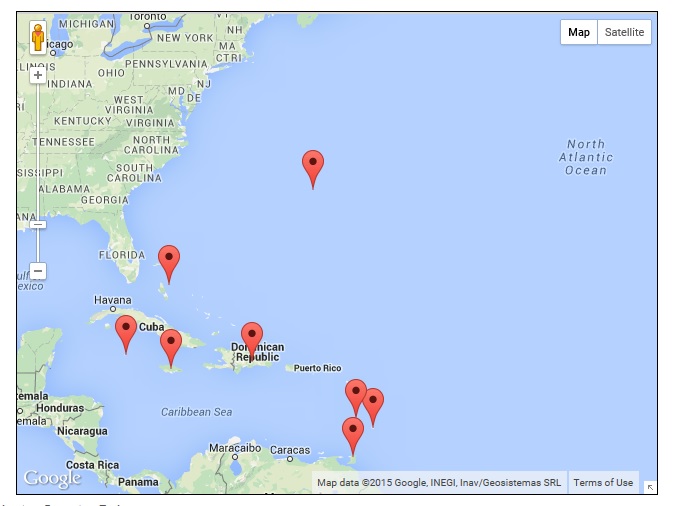
There are NYS programs already deployed or proposed for these Caribbean member-states, (though many have been snagged or stalled):

CU Blog - National Sacrifice - The Missing Ingredient - Photo 1

The purpose of the Go Lean book/roadmap is more than just the embedding of new community ethos, but rather the elevation/empowerment of Caribbean society. In total, the Caribbean empowerment roadmap has these 3 prime directives:

  • Optimization of the economic engines in order to grow the regional economy to $800 Billion & create 2.2 million new jobs.
  • Establishment of a security apparatus to protect the resultant economic engines.
  • Improve Caribbean governance and industrial policies to support these engines.

The roadmap details the following community ethos, plus the execution of these strategies, tactics, implementation and advocacies to forge permanent change in the region:

Community Ethos – Deferred Gratification Page 21
Community Ethos – Economic Principles – People Choose Page 21
Community Ethos – Economic Principles – People Respond to Incentives in Predictable Ways Page 21
Community Ethos – Economic Principles – The Consequences of Choices Lie in the Future Page 21
Community Ethos – Governing Principles – Lean Operations Page 24
Community Ethos – Governing Principles – Cooperatives Page 25
Community Ethos – Ways to Impact the Future Page 26
Community Ethos – Ways to Impact a Turn-Around Page 33
Community Ethos – Ways to Improve Sharing Page 35
Community Ethos – Ways to Promote Happiness Page 36
Community Ethos – Ways to Impact the Greater Good Page 37
Strategy – Vision – Confederate 30 Member-States Page 45
Strategy – Mission – Enact a Defense Pact to Defend the Homeland Page 45
Strategy – Mission – Keep the next generation at home Page 46
Tactical – Confederating a Permanent Union Page 63
Tactical – Fostering a Technocracy Page 64
Tactical – Separation-of-Powers Between CU & Member-States Governments Page 71
Implementation – Assemble – Incorporating all the existing regional organizations Page 96
Implementation – Ways to Pay for Change Page 101
Implementation – Security Initiatives at Start-up Page 103
Implementation – Ways to Deliver Page 109
Planning – 10 Big Ideas for the Caribbean – Confederation Without Sovereignty Page 127
Planning – Ways to Make the Caribbean Better Page 131
Planning – Lessons Learned from the West Indies Federation – Military Units Page 135
Advocacy – Ways to Grow the Economy Page 151
Advocacy – Ways to Create Jobs Page 152
Advocacy – Ways to Better Manage the Social Contract Page 170
Advocacy – Ways to Manage Federal Civil Service Page 173
Advocacy – Ways to Improve Homeland Security Page 181
Advocacy – Ways to Improve Communications Page 186
Advocacy – Ways to Preserve Caribbean Heritage Page 218
Advocacy – Ways to Impact Youth Page 227
Appendix – 30,000 Federal Employees Page 299
Appendix – Previous West Indies Integration – Caribbean Regiment Page 301

Previously Go Lean blog/commentaries have considered historic references and have also stressed fostering the proper and appropriate community ethos for the Caribbean to prosper; and reported on the repercussions and consequences of bad ethos. The following sample applies:

https://goleancaribbean.com/blog/?p=2830 Bad Ethos: Jamaica’s Public Pension Under-funded
https://goleancaribbean.com/blog/?p=2809 A Lesson in Bad Community Ethos : East Berlin/Germany
https://goleancaribbean.com/blog/?p=2480 A Lesson in History: Community Ethos of WW II
https://goleancaribbean.com/blog/?p=2297 A Lesson in History – Booker T versus Du Bois – to Change a Bad Community Ethos
https://goleancaribbean.com/blog/?p=1531 A Lesson in History: 100 Years Ago – World War I – Cause and Effect in Community Ethos
https://goleancaribbean.com/blog/?p=841 Having Less Babies is Bad for the Economy – Need People
https://goleancaribbean.com/blog/?p=623 Only at the Precipice, Do Communities Change
https://goleancaribbean.com/blog/?p=353 Book Review: ‘Wrong – Nine Economic Policy Disasters and What We Can Learn…’
https://goleancaribbean.com/blog/?p=228 Egalitarianism versus Anarchism – Community Ethos Debate

All in all, there is a certain community ethos associated with populations that have endured change. It is a National Sacrifice, a deferred gratification and focus on the future. Any losses of privileges are appreciated by the entire community, not just the affected individual or family member. This is the purpose of the US Memorial Day Holiday on the last Monday in May, honoring the military service of all our men and women in uniform, their families at home, and those who have made the ultimate sacrifice in dying for their country. A quest to unite the country in remembrance and appreciation of the fallen and to serve those who are grieving is a good way to forge a community ethos of National Sacrifice.

See VIDEO here of a community’s great honor to a slain soldier:

VIDEO: Sky Mote: Community Honors a Fallen Soldier from El Dorado County with a Hero’s Welcome –   http://youtu.be/MVQORRQvTpU

Published on Aug 17, 2012 – Starting with a Marine Honor Guard carrying the transfer case containing the body of Staff Sgt. Sky R. Mote of El Dorado, CA, upon arrival at Dover Air Force Base, Del. on Sunday Aug. 12, 2012. (AP Photo/Jose Luis Magana). Then continuing with the great Welcome Home the community gave. His family will never forget!

Though this Fallen Soldier is mourned and missed, his sacrifice is duly acknowledged, appreciated and honored in his hometown. This community spirit creates a value system for public service and National Sacrifice.

The US is not the only country that memorializes their war dead. Those countries that do, experience less societal abandonment. The British Commonwealth of Nations (representative of 18 Caribbean member-states) shows likewise homage to their Fallen Soldiers. The Commonwealth War Graves Commission (CWGC) is responsible for maintaining the war graves of 1.7 million service personnel that died in the First and Second World Wars fighting for Commonwealth member states. Founded in 1917 (as the Imperial War Graves Commission), the Commission has constructed 2,500 war cemeteries, and maintains individual graves at another 20,000 sites around the world.[107] The vast majority of the latter [however] are civilian cemeteries in Great Britain. (Source: http://en.wikipedia.org/wiki/Commonwealth_War_Graves_Commission).

The former British colonies did not adopt this National Sacrifice value system. As most Caribbean (notwithstanding the US Territories) member-states do not even have a (work-free) holiday to honor the sacrifices of those that fought, bled and/or died for their country.

No appreciation, no sacrifice; no sacrifice, no victory. It is that simple!

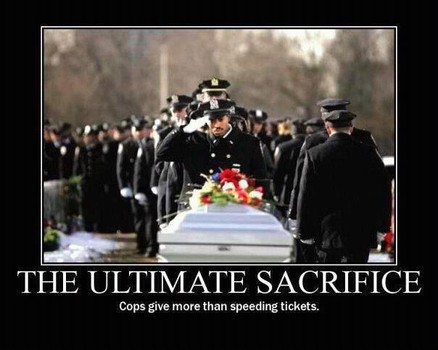
It is the recommendation of this blog/commentary that all Caribbean member-states should mandate a civilian conscription service for their citizens (1 year between ages 18 and 25); it is common for a confederation – the CU for the Caribbean – to marshal a multi-state, allied military force. Then the CU should facilitate a complete eco-system of engaging the conscripted NYS participants to serve and protect the people and resources of the Caribbean. After which, the communities should show proper appreciation and honor to those that make these sacrifices for “King/Queen and Country”, from all conscription services: military service, public and civilian.

(Many times school teachers and administrators are lowly paid; their service to their country is a great sacrifice).

Veteran-style benefits should thusly be considered for all these “national” servants. This commitment from the community would go far in forging deep loyalty within the citizenry, thus mitigating quick abandonment of the homeland.

There is a separation-of-powers between the CU federal agencies and Caribbean member-states, so the CU would have no authority on how member-states manage, appreciate or honor their civil servants; unless some CU grants/funding apply. But for CU personnel, the practice will be institutionalized to recognize the service of long-time civil servants (active or retired) and their sacrifices. So for any human resource that die in the line of duty, the funeral processions will be filled with pomp and circumstance, much like the foregoing VIDEO.

“The [servants] who perform well are to be considered worthy of double honor, especially those who work hard …” – Bible 1 Timothy 5:17

Now is the time to lean-in to this roadmap for Caribbean change, as depicted in the book Go Lean…Caribbean. All the mitigations and empowerments in this roadmap require people to remain in the homeland. No people, no hope! A community ethos, a spirit or attitude of sacrifice for the Greater Good is a great start to forge change; no sacrifice, no victory.

🙂

Download the book Go Lean … Caribbean – now!

——————-

Appendix A – ICP Studies and Results

Overview of the National Youth Service Landscape in Sub-Saharan Africa

National Youth Service Project on Employability, Entrepreneurship and Sustainable Livelihoods in Sub-Saharan Africa: Synthesis Report

——————

Appendix B – Conscription (or Drafting)
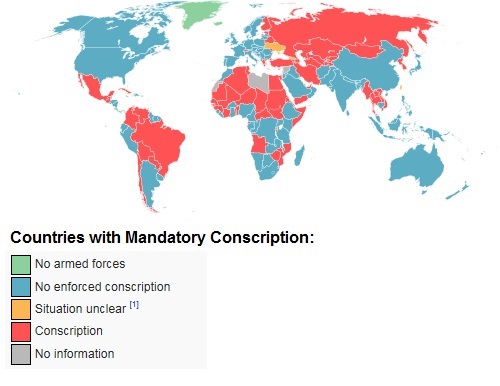
This is the compulsory enlistment of people in some sort of National Service, most often military service.[2] Conscription dates back to antiquity and continues in some countries to the present day under various names. The modern system of near-universal national conscription for young men dates to the French Revolution in the 1790s, where it became the basis of a very large and powerful military. Most European nations later copied the system in peacetime, so that men at a certain age would serve 1–8 years on active duty and then transfer to the reserve force.

CU Blog - National Sacrifice - The Missing Ingredient - Photo 2Conscription is controversial for a range of reasons, including conscientious objection to military engagements on religious or philosophical grounds; political objection, for example to service for a disliked government or unpopular war; and ideological objection, for example, to a perceived violation of individual rights. Those conscripted may evade service, sometimes by leaving the country.[4] Some selection systems accommodate these attitudes by providing alternative service outside combat-operations roles or even outside the military, such as civil service in Austria and Switzerland.

As of the early 21st century, many states no longer conscript soldiers, relying instead upon professional militaries with volunteers enlisted to meet the demand for troops. The ability to rely on such an arrangement, however, presupposes some degree of predictability with regard to both war-fighting requirements and the scope of hostilities. Many states that have abolished conscription therefore still reserve the power to resume it during wartime or times of crisis.[5] (Source: http://en.wikipedia.org/wiki/Conscription)

National Service is a common name for mandatory or volunteer government service programmes. The term became common British usage during and for some years following the Second World War. Many young people spent one or more years in such programmes. Compulsory military service typically requires all citizens, or all male citizens, to participate for a period of a year (or more in some countries) during their youth, usually at some point between the age of 18 and their late twenties. (Source: http://en.wikipedia.org/wiki/National_service)

——————

Appendix C  – National Youth Service Corps in Nigeria
The National Youth Service Corps (NYSC) is an organisation set up by the Nigerian government to involve the country’s graduates in the development of the country. There is no military conscription in Nigeria, but since 1973 graduates of universities and later polytechnics have been required to take part in the National Youth Service Corps (NYSC) program for one year.[1] This is known as national service year.

“Corp” members are posted to cities far from their city of origin. They are expected to mix with people of other tribes, social and family backgrounds, to learn the culture of the indigenes in the place they are posted to. This action is aimed to bring about unity in the country and to help youths appreciate other ethnic groups.

There is an “orientation” period of approximately three weeks spent in a camp away from family and friends. There is also a “passing out ceremony” at the end of the year and primary assignment followed by one month of vacation.

The program has also helped in creating entry-level jobs for many Nigerian youth. An NYSC forum dedicated to the NYSC members was built to bridge the gap amongst members serving across Nigeria and also an avenue for members to share job information and career resources as well as getting loans from the National Directorate Of Employment.

The program has been met with serious criticism by a large portion of the country. The NYSC members have complained of being underpaid, paid late or not paid at all.[2] Several youths carrying out the NYSC program have been killed in the regions they were sent to due to religious violence, ethnic violence or political violence.[3]

A series of bomb and other violent attacks, especially in the North, rocked the country’s stability in the period preceding the 2011 gubernatorial and presidential elections. Most common of these attacks was perpetuated by the Islamist extremist terrorist group called Boko Haram. “Boko Haram” means “Western education is a sin” in the local hausa dialect in Nigeria. The group “Boko Haram” is against western education and wants to establish an Islamic state in Nigeria’s northern region.

Worst hit were National Youth Service Corps members, some of whom lost their lives.
(Source: http://en.wikipedia.org/wiki/National_Youth_Service_Corps)

Share this post:
, , ,
[Top]

How Local Economies Benefit From Small Businesses

Go Lean Commentary

This sentence about small & medium-sized enterprises (SME’s) in Puerto Rico speaks true for the rest of the Caribbean:

According to government data, 95 percent of companies … are SME’s with 50 or fewer employees, and they employ around 25 percent of the jobs on the island.
Caribbean Journal Online News Source – Posted 06/12/2014; retrieved 06/13/2014 from: http://www.caribjournal.com/2014/06/12/puerto-rico-governor-signs-bill-on-small-medium-sized-enterprises/

Small and medium-sized firms constitute the economic landscape of Caribbean life. They must be cuddled; it is what it is!

CU Blog - How Local Economies Benefit From Small Businesses - Photo 4

The purpose of the book Go Lean … Caribbean is to elevate the economic engines in the region, to make the Caribbean a better place to live, work and play. The book serves as a 5 year roadmap to foster new empowerments and economic opportunities for the region, with the goal of creating 2.2 million new jobs. To be successful, we must focus on the landscape – and realities – of small businesses, considering that they may constitute 95 percent of the business community.

In previous blogs-commentaries, the reality of BIG businesses are fully explored: the good, the bad and the ugly:

CU Blog - How Local Economies Benefit From Small Businesses - Photo 2

This commentary stresses jobs and entrepreneurship, features of the prime directives described in the Go Lean book. The book serves as a roadmap for the introduction and implementation of the technocratic Caribbean Union Trade Federation (CU) with the charter to facilitate jobs. These prime directives are defined by these 3 statements:

  • Optimization of the economic engines in order to grow the regional economy to $800 Billion in GDP and create 2.2 million new jobs.
  • Establishment of a security apparatus to protect the resultant economic engines.
  • Improvement of Caribbean governance to support these engines.

How can small businesses fit in this mission? How can small enterprises succeed and compete against BIG multi-national corporations? Can they succeed? Yes, they can!

So says one of the largest banks in the US, Bank of America. They have provided a proven formula for small businesses to succeed … in competition with the rest of the world. Consider their details here:

Title: How Local Economies Benefit From Small Businesses
Posted  by: Touchpoint in General Business on  May 5, 2016

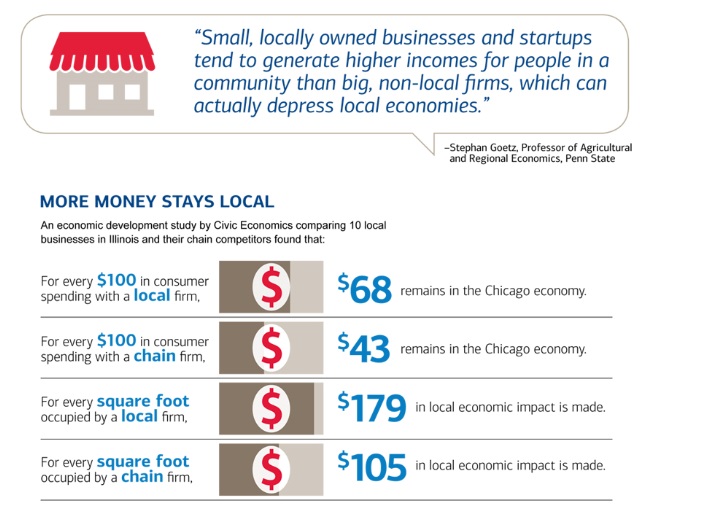
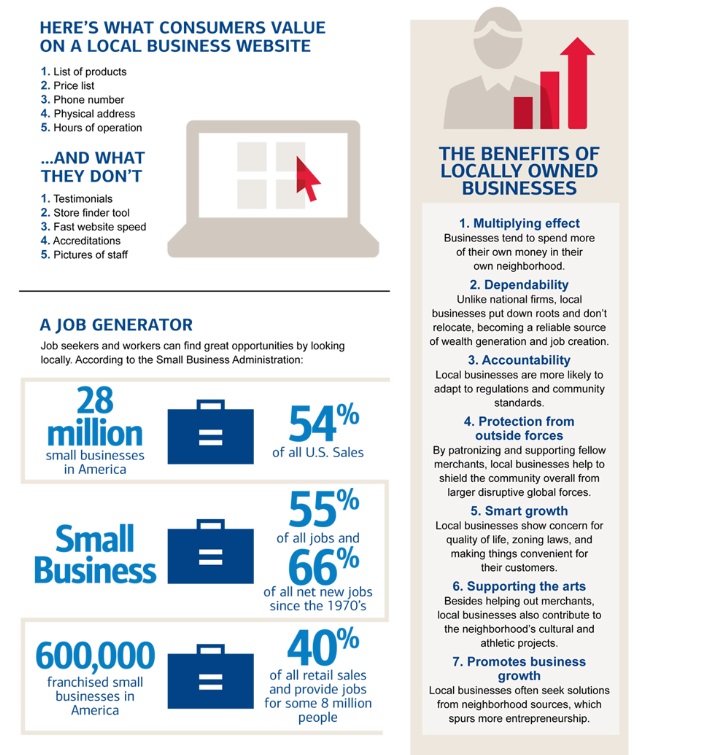
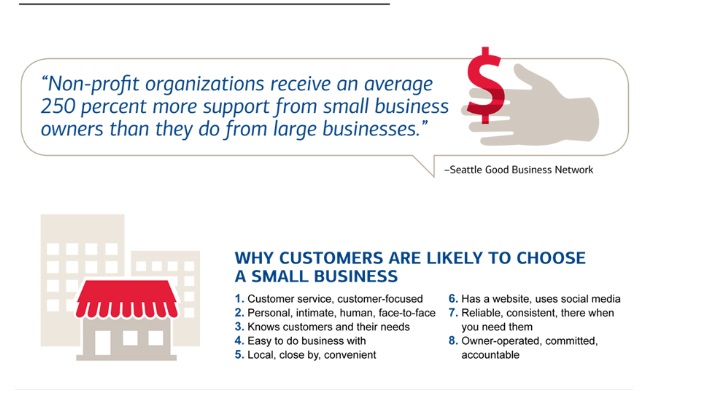
Studies show that when consumers spend money at a small business, their purchases have a ripple effect that spreads through the local economy. Big box or national chain stores might appear to make a bigger impact, but downtown merchants anchored in the community often provide more benefits overall. From keeping more money in the community to providing competitive deals, local economies thrive when neighborhood businesses are supported.

CU Blog - How Local Economies Benefit From Small Businesses - Photo 1A

CU Blog - How Local Economies Benefit From Small Businesses - Photo 1B

CU Blog - How Local Economies Benefit From Small Businesses - Photo 1C

Click on Images to Enlarge
Bank of America – Community Economic Education Campaign. Posted 05/5/2016; retrieved 05/13-/2016:
https://smallbusinessonlinecommunity.bankofamerica.com/community/running-your-business/general-business/blog/2016/04/22/how-local-economies-benefit-from-small-businesses

It is important to note that the quest to “cuddle” small businesses likely do not involve Crony-Capitalism, as small enterprises do not wield much power. (Collectively, as in the Chamber of Commerce, the influence peddling may be more impactful).

So how can small businesses fit in with the prime directives to elevate Caribbean society?

The Go Lean roadmap anticipates the job multiplier effect. It is necessary to confederate the 30 member-states of the Caribbean region to optimize the local economic engines. This means enhancing existing industries like tourism, offshore banking, specialty agriculture; plus also creating new industries for the region like Automotive manufacturing, Ship-building, “Pre-Fab” Housing and Frozen Foods. These activities are designed to create 461,900 new jobs. The remaining of the 2.2 million jobs – 1,732,125 – are created as a result the job multiplier effect; (in which every direct job can indirectly impact multiple jobs in the economy). This is where the reality of small businesses fit into the mission to elevate the Caribbean.

According to the opening quote, 95% of the new companies will be small or medium-sized firms – with 50 or fewer employees. This is the source for the majority of new jobs.

But with the reality of the BIG multi-national corporations, how can small enterprises compete and succeed against them?

CU Blog - How Local Economies Benefit From Small Businesses - Photo 3Efficiency and effectiveness is the key to “leveling the playing-field”. One leveling strategy is the use of technology. This does not mean that small businesses must buy-own the technology. No, not, in this year of 2016! It is only necessary to use the technology, other people’s technology. See this VIDEO from the same Bank of America for their offering of Account Management services, in conjunction with specialized software from Intuit’s QuickBooks®; (who partners with over 18,000 banks):

VIDEO – Account Management for Small Business from Bank of Americahttps://youtu.be/C3qX4oTOIcw

Published on Dec 15, 2015 – With Account Management from Bank of America you’ll get more control over your small business banking accounts plus seamless integration with QuickBooks®.

According to this VIDEO from Bank of America, there are obvious back-office enhancements for online banking systems; (other banks provide similar solutions). It is the full expectation that local Caribbean banks will launch similar products. This is a mission of the Go Lean roadmap; to provide greater stewardship (“new guards”) – setting the bar higher – for the regional banks and business communities. The roadmap commences with a Declaration of Interdependence, pronouncing the need for regional integration (Page 11 – 14) and a new technology eco-system to foster a better economic future. The declarative statements are as follows:

xi.  Whereas all men are entitled to the benefits of good governance in a free society, “new guards” must be enacted to dissuade the emergence of incompetence, corruption, nepotism and cronyism at the peril of the people’s best interest. The Federation must guarantee the executions of a social contract between government and the governed.

xxi. Whereas the preparation of our labor force can foster opportunities and dictate economic progress for current and future generations, the Federation must ensure that educational and job training opportunities are fully optimized for all residents of all member-states, with no partiality towards any gender or ethnic group. The Federation must recognize and facilitate excellence in many different fields of endeavor, including sciences, languages, arts, music and sports. This responsibility should be executed without incurring the risks of further human flight, as has been the past history.

xxiv.  Whereas a free market economy can be induced and spurred for continuous progress, the Federation must install the controls to better manage aspects of the economy: jobs, inflation, savings rate, investments and other economic principles. Thereby attracting direct foreign investment because of the stability and vibrancy of our economy.

xxv.   Whereas the legacy of international democracies had been imperiled due to a global financial crisis, the structure of the Federation must allow for financial stability and assurance of the Federation’s institutions.

xxvi.  Whereas the Caribbean region must have new jobs to empower the engines of the economy and create the income sources for prosperity, and encourage the next generation to forge their dreams right at home, the Federation must therefore foster the development of new industries… In addition, the Federation must invigorate the enterprises related to existing industries … – impacting the region with more jobs.

xxvii.  Whereas the region has endured a spectator status during the Industrial Revolution, we cannot stand on the sidelines of this new economy, the Information Revolution. Rather, the Federation must embrace all the tenets of Internet Communications Technology (ICT) to serve as an equalizing element in competition with the rest of the world. The Federation must bridge the digital divide and promote the community ethos that research/development is valuable and must be promoted and incentivized for adoption.

Change has now come to the Caribbean. In a previous blog-commentary it was explained that the driver of this change is technology and globalization. The Caribbean region cannot only consume the innovations being developed around the world to support small businesses; we must develop and innovate ourselves. The bottom-line for our development must be the “bottom-line” for the community, the Greater Good. The Go Lean roadmap identifies an example of the ICT advancement: the emergence of cloud computing, as similarly depicted in the foregoing VIDEO. This is the strategy of forging a Cyber Caribbean with many outsourcing/in-sourcing deployments for regional governments, institutions, businesses and consumers.

The Go Lean/CU roadmap is designed to foster ICT developments in the Caribbean region, with the motives of job-creation. This requires a full-vertical strategy: identifying the human resources / skill-set development, incentivizing high-tech start-ups and incubating viable companies. These points have been detailed in many previous Go Lean blog-commentaries; consider this sample:

https://goleancaribbean.com/blog/?p=7847 PC industry swoons, as cloud and mobile devices dominate
https://goleancaribbean.com/blog/?p=7806 Skipping School to become Tech Giants
https://goleancaribbean.com/blog/?p=7646 Going from ‘Good to Great’
https://goleancaribbean.com/blog/?p=6422 Microsoft Pledges $75 million for Kids in Computer Science
https://goleancaribbean.com/blog/?p=6341 The new Tourism Stewardship: e-Commerce
https://goleancaribbean.com/blog/?p=6151 3D Printing: Here Comes Change
https://goleancaribbean.com/blog/?p=5840 Security Concerns: Computer Glitches Disrupt Business As Usual
https://goleancaribbean.com/blog/?p=5435 China Internet Policing – Model for Caribbean
https://goleancaribbean.com/blog/?p=4793 Truth in Commerce – Learning from Yelp
https://goleancaribbean.com/blog/?p=4381 Net Neutrality: It Matters Here …in the Caribbean
https://goleancaribbean.com/blog/?p=3974 Google and Mobile Phones – Here comes Change
https://goleancaribbean.com/blog/?p=3881 Intelligence Agencies to Up Cyber Security Cooperation
https://goleancaribbean.com/blog/?p=3152 Making a Great Place to Work®
https://goleancaribbean.com/blog/?p=3187 Robots help Amazon tackle Cyber Monday
https://goleancaribbean.com/blog/?p=2126 Computers Reshaping Global Job Market
https://goleancaribbean.com/blog/?p=689 ‘eMerge’ Conference aims to jump-start Tech Hub
https://goleancaribbean.com/blog/?p=308 CARCIP – CariCom Initiative – Urges Greater Innovation

The primary ingredient for a Caribbean ICT strategy is Caribbean people. There is no need to create new computers, just new computer programs. There is no need to create banks, just deploy online banking. There is no need to create new accounting software, just configure existing software like Intuit’s QuickBooks with Caribbean “particulars”. This is the conceivable, believable and achievable goal for Caribbean stewards to help foster local small businesses, to include them in this regional elevation plan  – see VIDEO in the Appendix below. The Go Lean roadmap describes the need to reform and transform the community “will” as a community ethos – national spirit – to promote entrepreneurship.

The Go Lean book envisions the CU – a confederation of the 30 member-states of the Caribbean chartered to do the heavy-lifting of elevating the Caribbean economy – to empower (and cuddle) small and medium-sized businesses. The book details the economic principles and community ethos to adopt, plus the executions of strategies, tactics, implementations and advocacies to foster a dynamic business environment in the Caribbean. See sample list here:

Economic Principles – Deferred Gratification Page 21
Economic Principles – People Respond to Incentives in Predictable Ways Page 21
Economic Principles – Consequences of Choices Lie in the Future Page 21
Economic Principles – Money Multiplier Page 22
Economic Principles – Job Multiplier Page 22
Community Ethos – Lean Operations Page 24
Community Ethos – Return on Investments (ROI) Page 24
Community Ethos – Ways to Impact the Future Page 26
Community Ethos – Ways to Foster Genius Page 27
Community Ethos – Ways to Help Entrepreneurship Page 28
Community Ethos – Ways to Impact Research & Development Page 30
Community Ethos – Ways to Close the Digital Divide Page 31
Community Ethos – Ways to Impact the Greater Good Page 37
Strategy – Agents of Change – Technology Page 48
Strategic – Core Competence – Getting better at what we do best Page 58
Tactical – Fostering a Technocracy Page 64
Tactical – Growing Economy – New High Multiplier Industries Page 68
Tactical – Separation of Powers – Caribbean Postal Union (CPU) – Facilitating local business Page 78
Tactical – Separation of Powers – State Department – Shepherding NGO’s and Cooperatives Page 80
Tactical – Separation of Powers – Education Department – e-Learning Promoter Page 85
Tactical – Separation of Powers – Labor – Promoting excellence and On-Job-Training Page 89
Implementation – Assemble CPU and www.myCaribbean.gov Page 96
Implementation – Steps to Improve Mail Services – Logistics for local commerce Page 108
Implementation – Ways to Deliver – Embrace of Project Management Arts & Sciences Page 109
Planning – 10 Big Ideas – Cyber Caribbean Page 127
Advocacy – Ways to Grow the Economy Page 151
Advocacy – Ways to Create Jobs Page 152
Advocacy – Ways to Improve Governance Page 168
Advocacy – Ways to Impact Cooperatives Page 169
Advocacy – Ways to Promote Events – Example of multiple small businesses Page 191
Advocacy – Ways to Foster Technology Page 197
Advocacy – Ways to Impact Main Street Page 201
Advocacy – Ways to Impact Urban Living – Transportation to jobs Page 234

The Go Lean book and accompanying blogs declare that the Caribbean needs to learn lessons from organizations in other communities, especially banking entities that promote small businesses. The foregoing VIDEO provides a sample/example.

Now is the time for all of the Caribbean, the people, businesses, institutions (i.e. banking) and governmental entities, to lean-in for the empowerments described in the book Go Lean … Caribbean. This roadmap will result in economic opportunities throughout the region, for small, medium-sized and large businesses and trading partners – domestic and foreign direct investors.

Overall, with these executions, the Caribbean region can be a better place to live, work and play. As demonstrated by this discussion on banking systems supporting small businesses, there is a lot of economic activity – 95 percent of all new companies – in the small business arena. The practice of incentivizing, “cuddling” and incubating small businesses must be earnestly engaged by stakeholders in the Caribbean region, especially those taking the lead. This is not easy; this is heavy-lifting, part of the process to elevate Caribbean society. But the heavy-lifting is an investment, for immediate returns, to benefit the Greater Good. 🙂

Download the book Go Lean…Caribbean now!

—————-

Appendix VIDEO – The single biggest reason why startups succeedhttps://youtu.be/bNpx7gpSqbY

Published on Jun 1, 2015 – Bill Gross has founded a lot of startups, and incubated many others — and he got curious about why some succeeded and others failed. So he gathered data from hundreds of companies, his own and other people’s, and ranked each company on five key factors. He found one factor that stands out from the others — and surprised even him.

TEDTalks is a daily video podcast of the best talks and performances from the TED Conference, where the world’s leading thinkers and doers give the talk of their lives in 18 minutes (or less). Look for talks on Technology, Entertainment and Design — plus science, business, global issues, the arts and much more.
Find closed captions and translated subtitles in many languages at http://www.ted.com/talks/bill_gross_t…


Share this post:
, ,
[Top]

Transformations: Civil Disobedience … Still Effective

Go Lean Commentary

This commentary has previously identified African-American Abolitionist Frederick Douglass as a role model for the Caribbean, despite the fact that his advocacy was 150 years ago. His is quite the legacy:

“Those who profess to favor freedom, yet deprecate agitation, are men who want crops without plowing up the ground. They want rain without thunder and lightening. They want the ocean without the awful roar of its many waters. This struggle may be a moral one; or it may be a physical one; or it may be both moral and physical; but it must be a struggle. Power concedes nothing without a demand. It never did and it never will.” – Frederick Douglass

CU Blog - American Defects - Racism - Is It Over - Photo 1

The publishers of the book Go Lean…Caribbean recognize the contributions of role models who used civil disobedience to reform and transform their societies, Frederick Douglass included. The book specifically details (Page 122) these other advocates:

Mohandas Gandhi Indian Independence
Dr. Martin Luther King African-American Civil Rights Movement
Nelson Mandela South Africa’s Anti-Apartheid
Cesar Chavez Migrant Farm Workers in the US
Candice Lightner Mothers Against Drunk Driving (MADD)

The quest to transform society, as accomplished by these foregoing named advocates, is familiar to the movement behind the book Go Lean…Caribbean. This book asserts that the societal engines in the Caribbean (economy, security, and governance) are deficient and defective and need to be reformed and transformed to make our homeland a better place to live, work and play. This is commentary 4 of 4 from this movement on the subject of transformations: how to move our region from the deficient-defective status quo to the undisputed title of “greatest address on the planet”. All these commentaries detailed transformation issues, as follows:

  1. Perfecting our Core Competence
  2. Money Matters – “Getting over” with “free money”
  3. Caribbean Postal Union (CPU) – Delivering the Future
  4. Civil Disobedience … Still Effective

The Go Lean book details the quest to transform the Caribbean; it features a how-to guide, a roadmap for elevating the region’s societal engines using effective tactics like civil disobedience.

Civil disobedience has been effective in the past … see a related history here:

Title: History of Mass Nonviolent Action

Source: ACT UPAIDS Coalition To Unleash Power – Civil Disobedience Training – Retrieved 05-22-2016 from: http://www.actupny.org/documents/CDdocuments/HistoryNV.html

The use of nonviolence runs throughout history. There have been numerous instances of people courageously and nonviolently refusing cooperation with injustice. However, the fusion of organized mass struggle and nonviolence is relatively new. It originated largely with Mohandas Gandhi in 1906 at the onset of the South African campaign for Indian rights. Later, the Indian struggle for complete independence from the British Empire included a number of spectacular nonviolent campaigns. Perhaps the most notable was the year-long Salt campaign in which 100,000 Indians were jailed for deliberately violating the Salt Laws.

The refusal to counter the violence of the repressive social system with more violence is a tactic that has also been used by other movements. The militant campaign for women’s suffrage in Britain included a variety of nonviolent tactics such as boycotts, noncooperation, limited property destruction, civil disobedience, mass marches and demonstrations, filling the jails, and disruption of public ceremonies.

The Salvadoran people have used nonviolence as one powerful and necessary element of their struggle. Particularly during the 1960s and 70s, Christian based communities, labor unions, campesino organizations, and student groups held occupations and sit-ins at universities, government offices, and places of work such as factories and haciendas.

There is rich tradition of nonviolent protest in this country as well, including Harriet Tubman’s underground railroad during the civil war and Henry David Thoreau’s refusal to pay war taxes. Nonviolent civil disobedience was a critical factor in gaining women the right to vote in the United States, as well.

The U.S. labor movement has also used nonviolence with striking effectiveness in a number of instances, such as the Industrial Workers of the World (IWW) free speech confrontations, the Congress of Industrial Organizations (CIO) sitdown strikes from 1935-1937 in auto plants, and the UFW grape and lettuce boycotts.

Using mass nonviolent action, the civil rights movement changed the face of the South. The Congress of Racial Equality (CORE) initiated modern nonviolent action for civil rights with sit-ins and a freedom ride in the 1940s. The successful Montgomery bus boycott electrified the nation. Then, the early 1960s exploded with nonviolent actions: sit-ins at lunch counters and other facilities, organized by the Student Nonviolent Coordinating Committee (SNCC); Freedom Rides to the South organized by CORE; the nonviolent battles against segregation in Birmingham, Alabama, by the Southern Christian Leadership Conference (SCLC); and the 1963 March on Washington, which drew 250,000 participants.

Opponents of the Vietnam War employed the use of draft card burnings, draft file destruction, mass demonstrations (such as the 500,000 who turned out in 1969 in Washington, D.C.), sit-ins, blocking induction centers, draft and tax resistance, and the historic 1971 May Day traffic blocking in Washington, D.C. in which 13,000 people were arrested.

Since the mid-70s, we have seen increasing nonviolent activity against the nuclear arms race and nuclear power industry. Nonviolent civil disobedience actions have taken place at dozens of nuclear weapons research installations, storage areas, missile silos, test sites, military bases, corporate and government offices and nuclear power plants. In the late 1970s mass civil disobedience actions took place at nuclear power plants from Seabrook, New Hampshire to the DiabloCanyon reactor in California and most states in between in this country and in other countries around the world. In 1982, 1750 people were arrested at the U.N. missions of the five major nuclear powers. Mass actions took place at the Livermore Laboratories in California and SAC bases in the midwest. In the late 80s a series of actions took place at the Nevada test site. International disarmament actions changed world opinion about nuclear weapons.

In 1980 women who were concerned with the destruction of the Earth and who were interested in exploring the connections between feminism and nonviolence were coming together. In November of 1980 and 1981 the Women’s Pentagon Actions, where hundreds of women came together to challenge patriarchy and militarism, took place. A movement grew that found ways to use direct action to put pressure on the military establishment and to show positive examples of life-affirming ways to live together. This movement spawned women’s peace camps at military bases around the world from Greenham Common, England to Puget Sound Peace Camp in Washington state, with camps in Japan and Italy among others.

The anti-apartheid movement in the 80s has built upon the powerful and empowering use of civil disobedience by the civil rights movement in the 60s. In November of 1984, a campaign began that involved daily civil disobedience in front of the South African Embassy. People, including members of Congress, national labor and religious leaders, celebrities, students, community leaders, teachers, and others, risked arrest every weekday for over a year. In the end over 3,100 people were arrested protesting apartheid and U.S. corporate and government support. At the same time, support actions for this campaign were held in 26 major Cities, resulting in an additional 5,000 arrests.

We also saw civil disobedience being incorporated as a key tactic in the movement against intervention in Central America. Beginning in 1983, national actions at the White House and State Department as well as local actions began to spread. In November 1984, the Pledge of Resistance was formed. Since then, over 5,000 people have been arrested at military installations, congressional offices, federal buildings, and CIA offices. Many people have also broken the law by providing sanctuary for Central American refugees and through the Lenten Witness, major denomination representatives have participated in weekly nonviolent civil disobedience actions at the Capitol.

Student activists have incorporated civil disobedience in both their anti-apartheid and Central America work. Divestment became the campus slogan of the 80s. Students built shantytowns and staged sit-ins at Administrator’s offices. Hundreds have been arrested resulting in the divestment of over 130 campuses and the subsequent withdrawal of over $4 billion from the South African economy. Central America student activists have carried out campaigns to protest CIA recruitment on campuses. Again, hundreds of students across the country have been arrested in this effort.

Nonviolent direct action has been an integral part of the renewed activism in the lesbian and gay community since 1987, when ACT UP (AIDS Coalition to Unleash Power) was formed. ACT UP and other groups have organized hundreds of civil disobedience actions across the country, focusing not only on AIDS but on the increasing climate of homophobia and attacks on lesbians and gay men. On October 13, 1987, the Supreme Court was the site of the first national lesbian and gay civil disobedience action, where nearly 600 people were arrested protesting the decision in Hardwick vs. Bowers, which upheld sodomy laws. This was the largest mass arrest in D.C. since 1971.

Political Analysis
Power itself is not derived through violence, though in governmental form it is usually violent in nature. Governmental power is often maintained through oppression and the tacit compliance of the majority of the governed. Any significant withdrawal of that compliance will restrict or dissolve governmental control. Apathy in the face of injustice is a form of violence. Struggle and conflict are often necessary to correct injustice.

Our struggle is not easy, and we must not think of nonviolence as a “safe” way to fight oppression. The strength of nonviolence comes from our willingness to take personal risk without threatening other people.

It is essential that we separate the individual from the role she/he plays. The “enemy” is the system that casts people in oppressive roles.

Civil disobedience is still effective today!

The Go Lean book serves as a roadmap for the introduction and implementation of the Caribbean Union Trade Federation (CU) to empower societal elevation (economics, security and governing engines) for the Caribbean region. This roadmap focuses on the political transformations and the practical transformations to elevate the Caribbean region, individually and collectively. But as identified in the foregoing quotation from Frederick Douglass, power is never ceded … without demand. It takes agitation, plowing up the ground, “thunder & lightening” and struggle. Those in power in the status quo will do what all “men” in power try to do: keep it!

The required transformation for the Caribbean may very well take some acts of civil disobedience, challenging the dysfunctional economic status, perhaps even with economic boycotts, sit-ins, general strikes, picket lines, marches and messaging campaigns.

There are effective role models for this as well. Consider here the very recent experience of the University of Missouri Football team:

Amid escalating protests over complaints of racial bigotry at the University of Missouri, the school’s football team said it won’t play until the University President resigns or was replaced. These football players threatened to go on strike. At least 30 players with the support of their coach made the demand. They wanted University President Tim Wolfe to resign for allegedly failing to confront racial tensions at the school.
Commentary: Mizzou Football And The Power Of The Players

Posted November 18, 2015; retrieved May 22, 2016

CU Blog - Transformations - Civil Disobedience...Still Effective - Photo  1

Members of the University of Missouri Tigers football team – after threatening civil disobedience – returned to practice Nov. 10, 2015 at Memorial Stadium in Columbia, Mo. – Michael B. Thomas/Getty Images

AUDIO Podcast – Commentary heard on NPR’s Morning Edition – http://www.npr.org/2015/11/18/456360331/commentary-mizzou-football-and-the-power-of-the-players


It’s accepted that thePresident of the University of Missouri stepped down in a racial dispute only when the football team threatened not to play a game. The players showed us again — surprise, surprise — how powerful is football, and let’s throw in basketball, too, throughout our bastions of higher education.

It would have cost old Mizzou a million-dollar penalty had it forfeited. It would have cost the players next to nothing, because the NCAA rules they must be amateurs and risk serious injury for the love of the game. Ironically, for once, having nothing to gain actually strengthened the players’ hand.

The particular racially insensitive issues at Missouri and those that’ve produced protests at other colleges have nothing to do with sport, but, on the other hand, it’s worth noting well over half of the football players who bring in the big money in the big-time conferences are African-American. The percentage of minority basketball players is even higher.

The Go Lean book relates that the experience of Frederick Douglass and other advocates assert that one man or one woman can make a difference and impact his/her community, country and the whole world. Now we must add the student-athletes of the University of Missouri to that podium of role models for us to emulate.

The Go Lean/CU roadmap is designed to motivate the people, institutions and governmental leaders of the Caribbean, regional stakeholders, to make an impact – by the use of civil disobedience if necessary – on the region’s societal engines corresponding with these prime directives:

  • Optimization of the economic engines in order to grow the regional economy to $800 Billion & create 2.2 million new jobs.
  • Establishment of a security apparatus to protect the resultant economic engines.
  • Improve Caribbean governance to support these engines.

The focus of the previous commentary, Frederick Douglass’ legacy, is relevant for our life and times and the Go Lean prime directives. Notice the parallels: The institution of slavery was initiated for economic purposes; it took civil disobedience in the form of a civil war to assuage. In addition, there was no consideration to security principles for the enslaved population. But for the consideration of the Go Lean book, the subject of consideration is one of governance, the need for technocratic stewardship of the regional Caribbean society; how to reform and transform it. This point of governance against the backdrop of civil disobedience was pronounced early in the book, in the opening Declaration of Interdependence (Pages 10 – 14) with these declarations:

Preamble:  As the history of our region and the oppression, suppression and repression of its indigenous people is duly documented, there is no one alive who can be held accountable for the prior actions, and so we must put aside the shackles of systems of repression to instead formulate efficient and effective systems to steer our own destiny. … whenever any form of government becomes destructive to these ends, it is the right of the people to alter or to abolish it, and to institute new government, laying its foundation on such principles and organizing its powers in such form, as to them shall seem most likely to effect their safety and happiness.

xi. Whereas all men are entitled to the benefits of good governance in a free society, “new guards” must be enacted to dissuade the emergence of incompetence, corruption, nepotism and cronyism at the peril of the people’s best interest. The Federation must guarantee the executions of a social contract between government and the governed.

xii. Whereas the legacy in recent times in individual states may be that of ineffectual governance with no redress to higher authority, the accedence of this Federation will ensure accountability and escalation of the human and civil rights of the people for good governance, justice assurances, due process and the rule of law. As such, any threats of a “failed state” status for any member state must enact emergency measures on behalf of the Federation to protect the human, civil and property rights of the citizens, residents, allies, trading partners, and visitors of the affected member state and the Federation as a whole.

xxxiii. Whereas lessons can be learned and applied from the study of the recent history of other societies, the Federation must formalize statutes and organizational dimensions to avoid the pitfalls of [other] communities.

The Go Lean book stresses key community ethos, strategies, tactics, implementations and advocacies necessary to reform and transform the eco-systems of Caribbean society and apply the lessons learned from other advocates. The book details the following:

Community Ethos – Economic Principles – Economic Systems Influence Individual Choices Page 21
Community Ethos – Economic Principles – Consequences of Choices Lie in the Future Page 21
Community Ethos – Ways to Impact the Future Page 26
Community Ethos – Ways to Foster Genius – Developing genius in many endeavors, i.e. Sports Page 27
Community Ethos – Ways to Impact Turn-Arounds Page 33
Community Ethos – Ways to Manage Reconciliations Page 34
Community Ethos – Ways to Impact the Greater Good Page 37
Strategy – Vision – Confederate all 30 member-states / 4 languages into a Single Market Page 45
Strategy – Mission – Build and foster local economic engines Page 45
Tactical – Ways to Foster a Technocracy Page 64
Tactical – Separation-of-Powers – CU Federal Government versus Member-State Governance Page 71
Planning – 10 Big Ideas – Failed States Marshall Plan Page 127
Planning – Ways to Make the Caribbean Better Page 131
Planning – Ways to Improve Failed-State Indices – Advocate for Human Rights Page 134
Advocacy – Ways to Grow the Economy Page 151
Advocacy – Ways to Improve Governance Page 168
Advocacy – Ways to Better Manage the Social Contract Page 170
Advocacy – Ways to Impact Wall Street – Lessons Learned from Occupy Wall Street Protests Page 200
Advocacy – Ways to Preserve Caribbean Heritage Page 218
Advocacy – Ways to Protect Human Rights Page 220

Civil disobedience lead to political transformation and practical transformation. Protest movements, with civil disobedience activities, have effectively reformed and transformed societies in the past, present and no doubt, the future. Scattered through the pages of history, many times protest leaders have become political leaders. Consider Nelson Mandela of South Africa and Lech Walesa of Poland.

Previous Go Lean blogs presented other lessons for the Caribbean to learn from considering protest movements from history; the following previous blog/commentaries apply:

https://goleancaribbean.com/blog/?p=7682 Frederick Douglass: Role Model for a Single Cause
https://goleancaribbean.com/blog/?p=7221 ‘Street naming for Martin Luther King’ protests unveils the real America
https://goleancaribbean.com/blog/?p=7204 ‘The Covenant with Black America’ – Ten Years Later
https://goleancaribbean.com/blog/?p=7103 COP21 Protest – ‘Climate Change’ Acknowledged
https://goleancaribbean.com/blog/?p=6720 A Lesson in Protest History – Principle over Principal During War
https://goleancaribbean.com/blog/?p=2907 Local Miami Haitian leaders protest Bahamian immigration policy
https://goleancaribbean.com/blog/?p=2633 Book Review: ‘The Protest Psychosis’
https://goleancaribbean.com/blog/?p=1918 Philadelphia Freedom – Successful Protest and Fight for Change
https://goleancaribbean.com/blog/?p=1683 British public sector workers strike over ‘poverty pay’

The words of Frederick Douglass echo loudly through the ages (19th, 20th and 21st centuries). Reform and transformation only comes with a struggle. This is because “power concedes nothing without a demand. It never did and it never will.”

This reality applies doubly for the Caribbean!

The Caribbean region is in crisis – all 30 member-states! But this crisis would be a terrible thing to waste. We must use this crisis as a motivation to transform the region. Motivation alone will not bring change – the powerful ones in the status quo will not give up power willingly; they will not accept change willingly. There must be struggle, employing tactics like civil disobedience! As conveyed by Frederick Douglass, we “cannot get the rain without thunder and lightening”. The Go Lean movement – books and blogs – call for rain, and calls for “thunder and lightening”. The movement calls for forging change – transformations – through approaches like the Fun Theory, Sales Process, Power of Music, Food Therapy, and Risking Too Much to Lose.

Once we succeed in transforming the Caribbean societal engines, we must then ensure the changes are permanent! The Go Lean book declares that for permanent change to take place, there must first be an adoption of new community ethos, the national spirit that drives the character and identity of its people. The roadmap was constructed with the primary community ethos of the Greater Good, not a political nor profit motive; but rather a commitment for the “greatest good for the greatest number of people”.

Now is the time for all Caribbean stakeholders to lean-in to this Go Lean regional solution. With this roadmap, the Caribbean can transform to a better society; a better place to live, work and play. 🙂

Download the book Go Lean … Caribbean – now!


Share this post:
, , ,
[Top]

Transformations: Caribbean Postal Union – Delivering the Future

Go Lean Commentary

“The stone the builders reject has become the chief cornerstone” – The Bible; Luke 20:17

CU Blog - Transformations - Delivering the Future - Photo 1Now in the days of email, postal mail has become inconsequential;  affectionately called “snail mail”. Governments around the world provide the overhead of postal operations, though they are mostly unprofitable and sneered upon. There are some exceptions however …

  • Germany’s Deutsche Post
  • SwedenPostenAB
  • Finland’s Netpost

… these feature some of the business models in postal services that have become impactful to their local communities. From the best-practices gleaned from these above countries, the model of the Caribbean Postal Union (CPU) was forged. The CPU is a subset of the roadmap defined in the book Go Lean…Caribbean; this is the mission for physically and figuratively delivering the future. This roadmap, for the introduction and implementation of the technocratic Caribbean Union Trade Federation (CU), focuses on the political transformations and the practical transformations to elevate the Caribbean region, individually and collectively.

The Go Lean book details the Germany, Sweden and Finland experiences (Page 99) in contrast to the US Postal Service (USPS). The USPS is not the model for the Caribbean to emulate. The Go Lean book describes the USPS as a failing enterprise. Previous Go Lean commentaries have identified better role models for the CPU: logistics/e-Commerce giant Amazon in the US, and Alibaba in China. These companies provide logistical solutions to their marketplaces; the same as the CPU can deliver the logistical solution for the Caribbean’s modern commerce. This model can transform Caribbean society: its people and institutions. The USPS is an old-dying model; the CPU, on the other hand, is a new, transformative model. See the VIDEO here that relates the disposition of the USPS as an enterprise.

VIDEO 1 – US Postal Service Faces Big Changes Amid Struggle to Deliver on Profitability – https://youtu.be/Lnjfua5wY5U

Uploaded on Dec 5, 2011 – The likelihood that a stamped letter could reach its destination by the next day will be virtually eliminated due to billions in U.S. Postal Service cuts announced Monday. Postmaster General Patrick Donahoe joins Gwen Ifill to discuss the cuts and what’s next for the postal service and its customers.

This is commentary 3 of 4 – from the movement behind the Go Lean book – on the subject of transformations: how to move our region from the deficient-defective status quo to a new status, the undisputed title of “greatest address on the planet”. All these commentaries detail these issues, considering:

  1. Perfecting our Core Competence
  2. Money Matters – “Getting over” with “free money”
  3. Caribbean Postal Union (CPU) – Delivering the Future
  4. Civil Disobedience – Still Effective

The Go Lean book details this quest to transform the Caribbean; it features a how-to guide, a roadmap for elevating the region’s societal engines of economics, security and governance. It leads with economic issues, not political ones! But as established previously, there must be political transformations before practical transformations can take place. In order to explore the benefits of the CPU practical transformations – a consolidation of all existing postal entities – must take place in the region. This is a heavy-lifting task. Imagine the management and staff of those agencies in the member-state governments; they now become a part of the CU Federal Civil Service.

See Appendix below for the list of the National Postal entities – all members of the Universal Postal Union – that constitute the 30 Caribbean member-states.

The Go Lean/CU plan calls for this consolidation on Day One/Step One of the implementation of the roadmap, during the Assembly phase. This requires the type of political transformation that involves every stakeholder in the community: residents, businesses and institutions. But this effort can be communicated as a “labor of love”, with very little down-side. What is at risk? The rejected, ignored, expensive postal operations that is currently a drag on member-states resources. It is time now for these rejected entities to be the cornerstone of the Caribbean transformation.

To the everyday man on the street, he will see changes … on the street. There is the need for formal street names and house numbers. For all the regional member-states, except the US territories of Puerto Rico and the Virgin Islands, there is no mail door-to-door delivery. With the CPU business model, the streets will be structured as a marketplace with grid numbers and postal/ZIP codes, and with pick-up and delivery.

CU Blog - Transformations - Delivering the Future - Photo 3The focus of the CPU is not just to deliver postal mail, but rather to deliver logistics … and the future. Just like Amazon and Alibaba do so much more than just sell merchandise online, the CPU will facilitate a complete eco-system for Small-Medium-Enterprises (SME’s) to thrive in the region: finding customers for their wares and collecting payments. This is key to growing the regional economy to $800 Billion.

The CPU is designed to deliver the Caribbean’s future for Global Trade and Electronic Commerce. These activities have greatly impacted many societies around the world – think China – elevating their economic engines. The CU/CPU will employ technologically innovative products and services to impact its prime directives; identified with the following 3 statements:

  • Optimization of the economic engines in order to grow the regional economy to $800 Billion & create 2.2 million new jobs.
  • Establishment of a security apparatus to protect the resultant economic engines.
  • Improve Caribbean governance to support these engines, including the consolidation of the state-ran postal operations.

The VIDEO here demonstrates the theme from the Go Lean book, that one organization-institution – like the CPU – that facilitates e-Commerce can optimize the societal engines in the region and impact the transformation of the homeland. The facilitation role will include the attendant functions of order entry, payment settlement, inventory fulfillment, marketplace hosting, customer service contact center and mail pick-up/delivery.

VIDEO 2 – What is E-Commerce? – https://youtu.be/nxSDHBdsWqA

Uploaded on Nov 19, 2011 – What is E-Commerce?
This video provides an explanation of e-commerce, trends in online business, and how the internet has revolutionized the modern marketplace. It also identifies key factors responsible for e-commerce’s continued success.

The Go Lean roadmap seeks to change the entire eco-system of Caribbean commerce and the interaction with postal operations. This vision is defined early in the book (Page 12 & 14) in the following pronouncements in the Declaration of Interdependence:

xv. Whereas the business of the Federation and the commercial interest in the region cannot prosper without an efficient facilitation of postal services, the Caribbean Union must allow for the integration of the existing mail operations of the governments of the member-states into a consolidated Caribbean Postal Union, allowing for the adoption of best practices and technical advances to deliver foreign/domestic mail in the region.

xxvii. Whereas the region has endured a spectator status during the Industrial Revolution, we cannot stand on the sidelines of this new economy, the Information Revolution. Rather, the Federation must embrace all the tenets of Internet Communications Technology (ICT) to serve as an equalizing element in competition with the rest of the world. The Federation must bridge the digital divide and promote the community ethos that research/development is valuable and must be promoted and incentivized for adoption.

CU Blog - Transformations - Delivering the Future - Photo 2In a previous Go Lean blog, this commentary described how …

“… email and text messages have replaced “snail” mail in advanced economy countries for personal written communications. Electronic Bill Presentation & Payments (EBP&P) schemes are transforming business-to-consumer interactions, and electronic funds transfer/electronic commerce is the norm. So [Internet & Communications Technology] (ICT) must be a prominent feature of any Caribbean empowerment plan. This is why creating the CPU and the Caribbean Cloud (www.myCaribbean.gov) is “Step One / Day One” in the Go Lean roadmap. This is the by-product of assembling regional organs with multilateral cooperation and a separation-of-powers. The roadmap also includes establishment of the Caribbean Central Bank (CCB), as a cooperative among existing Central Banks, and its facilitation of electronic payment schemes so as to enable the region’s foray into electronic commerce and trade marketplaces.

The Go Lean book details a series of community ethos, strategies, tactics, implementations and advocacies to foster the best practices for the delivery of the CPU and trade marketplaces in the Caribbean region:

Community Ethos – Deferred Gratification Page 21
Community Ethos – Economic Principles – All Choices Involve Costs Page 21
Community Ethos – Economic Principles – People Respond to Incentives Page 21
Community Ethos – Economic Principles – Economic Systems Influence Choices Page 21
Community Ethos – Economic Principles – Voluntary Trade Creates Wealth Page 21
Community Ethos – Economic Principles – The Consequence of Choice Lie in Future Page 21
Community Ethos – Job Multiplier Page 22
Community Ethos – Lean Operations Page 24
Community Ethos – Cooperatives Page 25
Community Ethos – Ways to Impact the Future Page 26
Community Ethos – Ways to Help Entrepreneurship Page 28
Community Ethos – Promote Intellectual Property Page 29
Community Ethos – Ways to Bridge the Digital Divide Page 31
Strategy – Customers – Citizens and Member-states Governmental Page 47
Tactical – Fostering a Technocracy Page 64
Tactical – How to Grow the Economy to $800 Billion – Trade and Globalization Page 70
Tactical – Separation of Powers – Postal Services Page 78
Tactical – Separation of Powers – Interstate Commerce Administration Page 79
Implementation – Year 1 / Assemble Phase – Establish CPU Page 96
Implementation – Anecdote – Mail Services – USPS Dilemma Page 99
Implementation – Ways to Pay for Change – Group Purchase Organizations (GPO) Page 101
Implementation – Ways to Optimize Mail Service & myCaribbean.gov Marketplace Page 108
Implementation – Ways to Deliver Page 109
Implementation – Ways to Impact Social Media Page 111
Implementation – Ways to Benefit from Globalization Page 119
Planning – 10 Big Ideas for the Caribbean – # 8 Cyber-Caribbean Page 127
Planning – Ways to Improve Trade – GPO’s Page 128
Planning – Ways to Improve Interstate Commerce Page 129
Advocacy – Ways to Grow the Economy Page 151
Advocacy – Ways to Create Jobs Page 152
Advocacy – Ways to Mitigate Black Markets Page 165
Advocacy – Ways to Manage the Federal Civil Service Page 173
Advocacy – Ways to Foster Cooperatives Page 176
Advocacy – Ways to Foster Technology Page 197
Advocacy – Ways to Foster e-Commerce Page 198
Advocacy – Reforms for Banking Regulations Page 199
Advocacy – Ways to Impact Main Street Page 201

Issues related to the CPU business model have previously been detailed in these Go Lean commentaries, listed here:

Skipping School to become Tech Giants
The Future of Money
How to address high consumer prices
Truth in Commerce – Learning from Yelp
Net Neutrality: It matters here … in the Caribbean
Robots help Amazon tackle Cyber Monday
Role Model Jack Ma brings Alibaba to America
Where the Jobs Are – Computers Reshaping Global Job Market
Amazon’s new FIRE Smartphone
Grenada PM Urges CARICOM on ICT

Increasing trade is a successful strategy for growing the regional economy; this will undoubtedly mean increases in jobs and entrepreneurial opportunities. The CU/CPU/Go Lean plan is designed to foster and incubate key industries for the goal of transforming and elevating the regional economy.

But any transformation to the Caribbean societal engines must be permanent! The Go Lean book declares that for permanent change to take place, there must first be an adoption of new community ethos, the national spirit that drives the character and identity of its people. The roadmap was constructed with the primary community ethos of the Greater Good, not a profit motive and not a nationalistic motive; but rather a commitment for the “greatest good for the greatest number of people”.

Now is the time for all of the Caribbean, the people and governing institutions (like Postal Operations), to lean-in for the changes in the book Go Lean … Caribbean. This is a Big Idea for the region, that of a Cyber Caribbean effort (Page 127), in which trade marketplaces play a major role. This roadmap is not just a plan for delivering the mail; it is also the delivery of the hopes and dreams of generations of Caribbean stakeholders; it is about delivering the future: a better place to live, work and play. 🙂

Download the book Go Lean … Caribbean – now!

—————–

Appendix – Universal Postal Union (UPU) Members, as of 2009

Country

Governmental authority

Regulatory authority

Designated operator

 Antigua and Barbuda Antigua Post Office
 Aruba[N 1] Post Aruba – for Aruba, Bonaire, Curaçao and Sint Maarten and the Dutch SSS Islands.
 Bahamas[2009] Ministry of Public Works and Transport None Bahamas Postal Service
 Barbados[2009] Ministry of Home Affairs None Barbados Postal Service
 Belize Ministry of Public Utilities, Transport, Communications[2] Belize Postal Service[N 2]
 Cuba[2009] Ministry of Informatics and Communications None Empresa de Correos de Cuba
 Dominica Ministry of Public Works, Energy and Ports[4] General Post Office (GPO)[4][N 2]
 Dominican Republic[2009] Ministry of Public Works and Communications None Instituto Postal Dominicano (INPOSDOM) (Dominican Postal Institute)
 France[2009] Minister for the Economy, Industry and Employment Electronic Communications and Postal Regulation Authority (ARCEP) La Poste for Guadeloupe, Martinique, St Barts and St Martin
British Overseas Territories
 Grenada Grenada Postal Corporation[2]
 Guyana Guyana Post Office Corporation
 Haiti Office des Postes d’Haiti
 Jamaica Postal Corporation of Jamaica
 Netherlands Ministry of Economic Affairs OPTA/Authority for Consumers & Markets (ACM) PostNL for some of the Dutch SSS Islands (Saba, Sint Eustatius and Sint Maarten)
 Saint Christopher-Nevis-Anguilla St. Kitts & Nevis Postal Services
 Saint Lucia Saint Lucia Postal Service
 Saint Vincent & the Grenadines SVG Postal Corporation
 Suriname Surpost
 Trinidad and Tobago TTPost
 United States United States Postal Service[N 5] Postal Regulatory Commission United States Postal Service for Puerto Rico and US Virgin Islands

Source: Retrieved March 12, 2016 from: https://en.wikipedia.org/wiki/List_of_postal_entities

Share this post:
, , ,
[Top]

Transformations: Money Matters – ‘Getting over’ with ‘free money’

Go Lean Commentary

Here is a fact we have learned about transformations: there must be political transformations and practical transformations.

The Go Lean quest is to transform the 30 member-states in the Caribbean region. We are not the first …

    … and we guarantee that we will not be the last.

CU Blog - Transformations - Getting Over with Free Money - Photo 2So there are good, bad and ugly lessons for us to consider from other societies at other times. Take the recent example of Iraq. This is one of the lessons we have learned from that society: the practical transformation is easier than the political transformation. After the regime change by the United States in 2003 – a practical transformation – the country had a very tough time forging a stable society … because they could not succeed with the required political transformations. This is heavy-lifting, requiring collaboration, compromise and consensus-building. Iraq is not so homogeneous; they have sectarian discord, multiple ethnic groups that compose the country: Shiite, Sunni, Kurds, Yazidis  and others; different religions, races, ethnicities, languages, values and goals.

The dysfunctions created voids in leadership, administration and security. Enter ISIS!

This experience relates that one benefit of getting the political transformation right is some assurance of peace and security.

Another benefit: Money!

Once political transformations transpire, the opportunity emerges to acquire free money. Again, consider Iraq:

On November 20, 2004, the Paris Club of creditor nations agreed to write off 80% ($33 billion) of Iraq’s $42 billion debt to Club members. Iraq’s total external debt was around $120 billion at the time of the 2003 invasion, and had grown another $5 billion by 2004. The debt relief will be implemented in three stages: two of 30% each and one of 20%.[133]
Source: Retrieved May 11, 2016 from: https://en.wikipedia.org/wiki/Iraq#Economy

This point aligns with the book Go Lean…Caribbean, which asserts that the societal engines in the Caribbean (economy, security, and governance) are deficient and defective; in some cases we even feature Failed-States (think: Haiti, Cuba, Puerto Rico and others). The book posits that the region can improve and make our homelands a better place to live, work and play.

How? One way we can “get over the hump” of transformation is to acquire Free Money… as much as possible.

This is commentary 2 of 4, from the movement behind the Go Lean book, on the subject of transformations: how to move our region from the deficient-defective status quo to the undisputed title of “greatest address on the planet”. All these commentaries detail these issues, considering:

  1. Perfecting our Core Competence
  2. Money Matters – “Getting over” with “free money”
  3. Caribbean Postal Union (CPU) – Delivering the Future
  4. Civil Disobedience – Still Effective

The Go Lean book details the quest to transform the Caribbean; it features a how-to guide, a roadmap for elevating the region’s societal engines of economics, security and governance. It leads with economic issues, not political ones!

It recognizes that while political transformation is heavy-lifting – requiring collaboration, compromise and consensus-building – economic ones are a little easier. Show up in any community with a boatload of jobs and people will line-up around the corner to transform and accept the jobs … and any dependent conditions. (Free Money always comes with conditions!)

This is the Go Lean quest … but first, we acquire all the “free money” possible. (There should be no entitlement attitude to Foreign Aid).

A previous blog related how the community of Haiti was granted $500 million in grants-aid for the 2010 Earthquake; the money was collected and administered by the American Red Cross … but very little of it reached it’s target destination in Haiti. The assertion is that we must take the lead for our own administration and stewardship.

Build it, and they will come. – Movie Quotation

The Go Lean position is that if we put the technocratic processes in place, we will benefit from a lot of available grant-aid monies. These “free” monies can help us to “get over the hump”, to succeed with the needed transformations in our society; see VIDEO here:

VIDEO: Foreign Aid 101https://youtu.be/s0Ps0UIY2Xc


Published on Mar 4, 2014 – Everything you need to know about U.S. foreign aid in 3 minutes, i.e. foreign aid is only less than 1 percent of the US federal government’s budget.

The book Go Lean … Caribbean serves as a roadmap for the introduction and implementation for the technocratic Caribbean Union Trade Federation (CU). As a federation or federal government representing all 30 member-states, the prime directives of this roadmap is the cause of elevating society by addressing these 3 focus areas:

  • Optimization of the economic engines in order to grow the regional economy to $800 Billion & create 2.2 million new jobs.
  • Establishment of a security apparatus to protect the resultant economic engines.
  • Improve Caribbean governance, including efforts with non-governmental agencies, to support these engines.

The samples and examples of so many other societies provide us with role models for how to procure grant/aid for our cause; see photo here.

CU Blog - Transformations - Getting Over with Free Money - Photo 1

Source: “Foreign Aid Explorer website”Foreign Aid Explorer. USAID. Posted July 27, 2015.

Continuing with Iraq, that country was able to procure a lot of grant/aid/loans from different international sources; see here:

Foreign aid to Iraq has increased to handle reconstruction efforts.
In 2004 the U.S. Agency for International Development was responsible for awarding contracts totaling US$900 million for capital construction, seaport renovation, personnel support, public educationpublic health, government administration, and airport management. The World Bank committed US$3 billion to US$5 billion for reconstruction over a five-year period, and smaller commitments came from Japan, the European UnionBritain, and SpainRussia canceled 65 percent of Iraq’s debt of US$8 billion, and Saudi Arabia offered an aid package totaling US$1 billion. Also, Iran has been accused of giving some monetary support to individual political parties. Some US$20 billion of US 2004 appropriations for Iraq were earmarked for reconstruction. Effective application of such funds, however, depends on substantial improvement in infrastructural and institutional resources. Because Iraq’s international debt situation had not been elaborated in 2005, for the foreseeable future US funds are expected to pay for capital investments in rebuilding.
Source: Retrieved May 11, 2016 from: https://en.wikipedia.org/wiki/Foreign_aid_to_Iraq

We can, and must, do better in the Caribbean, compared to Iraq, a country still in disarray. We are able to be more accountable, transparent and productive with grants/aid that we receive. The Go Lean book fully anticipated this strategy, as Page 115 cited:

The Go Lean/CU roadmap provides the scale and the means by which to plan and act for our Caribbean emergencies and natural disasters… But … the Caribbean must not be perennial beggars; we do need capital/money, especially to get started.

CariCom -vs- the Caribbean Union
The conclusion of consultants hired to advise the CariCom [(Caribbean Community Secretariat)] confessed that the Pact’s tacit strategy is to exploit the international donor community. The CU represents a break from this “Rich Man-Poor Man-Beggar Man-Thief” stance, and leans in to the alternate ethos of “Butcher-Baker-Candlestick Maker”. The CU vision is a Trade Federation that earns its keep thru trade and industriousness. In the Federation roadmap, the CariCom is re-constituted to the CU in Year 3.

In the Caribbean, we need grants/aid … to get started, to “get over the hump”; then we want to be able to stand-alone as a mature democracy – a regional Single Market. We need the initial help to optimize all 3 societal engines: economics, security and governance:

  • The economic help we seek should be viewed as seed money, so that we can sow in the fields of our marketplace, and later reap bountiful harvests. See Appendix VIDEO below.
  • The security help will allow us to foster a regional homeland security apparatus of our own; there is the specific need for military “hardware”; (think watercrafts, helicopters, and unmanned aerial drones).
  • For governance, we need technical assistance; the focus here is more on “software” or intellectual property, to provide better shepherding to the federal government, member-state governments and non-governmental organization (NGO) so as to execute the roadmap.

The following list from the Go Lean book is a sample of the strategies, tactics, implementation and advocacies of the Go Lean/CU roadmap related to the quest to foster more international aid:

Community Ethos – Lean Operations Page 24
Community Ethos – Ways to Improve Sharing Page 35
Community Ethos – Ways to Impact the Greater Good Page 37
Strategy – Customers – Member-State Governments Page 51
Strategy – Agents of Change – Globalization Page 57
Tactical – Confederating a Permanent Union Page 63
Tactical – Fostering a Technocracy Page 64
Tactical – Separation of Powers Page 71
Anecdote – Turning Around the CARICOM construct Page 92
Anecdote – “Lean” in Government Page 93
Implementation – Ways to Pay for Change Page 101
Implementation – Foreign Policy Initiatives at Start-up Page 102
Implementation – Ways to Deliver Page 109
Implementation – Ways to Better Manage Debt Page 114
Implementation – Ways to Foster International Aid Page 115
Planning – Ways to Make the Caribbean Better Page 131
Planning – Reasons Why the CU Will Succeed Page 132
Planning – Lessons Learned from the West Indies Federation Page 134
Advocacy – Ways to Grow the Economy Page 151
Advocacy – Ways to Create Jobs Page 152
Advocacy – Ways to Improve Credit Reporting – Improve Debt Management Page 155
Advocacy – Ways to Improve Governance Page 168
Advocacy – Better Manage the Social Contract Page 170
Advocacy – Revenue Sources … for Administration Page 172
Advocacy – Ways to Foster Cooperatives Page 176

The Caribbean can truly be a great place to live, work and play. With the proper structures, we can qualify for a lot of ‘free money’, but free always comes with conditions and strings. That makes us dependent, not independent; we maintain a status of a parasite, not a protégé. This is why the strategy in the roadmap is not to depend on Foreign Aid for the long term, but rather to tease and tempt the people and institutions in the region to conform and acquiesce to behavioral changes needed in the community. Consider this as a “carrot and stick” motivation:

  • Comply and get the money
  • Non-compliance and future money is taken away

Remember, political transformations versus practical transformations…

… many politicians are arrogant, dogmatic and defiant; but when the budgets do not add up, they begrudgingly become willing to be practical and pragmatic. Math rules … over mania. Consider this:

There is a current issue in some Caribbean member-states where there is the need to correct constitutional deficiencies for gender equality; (the Bahamas in particular has a public referendum slated for June 7, 2016). One strong motivation is the compliance with the United Nation’s Convention on the Elimination of All Forms of Discrimination Against Women. Future foreign aid and grants are tied to the successful execution of these constitutional reforms.

Previously, Go Lean blogs commented on transformations, identifying the status in Caribbean member-states; as sampled here:

https://goleancaribbean.com/blog/?p=7963 Being a ‘Good Neighbor’ – Like Puerto Rico needs right now
https://goleancaribbean.com/blog/?p=7198 State of the Caribbean Union
https://goleancaribbean.com/blog/?p=6231 China’s Caribbean Playbook: Helping Transform the region
https://goleancaribbean.com/blog/?p=4360 Dreading the ‘Caribbean Basin Security Initiative’ and planning for better
https://goleancaribbean.com/blog/?p=2953 Funding Caribbean Entrepreneurs – The ‘Crowdfunding’ Way
https://goleancaribbean.com/blog/?p=2887 Caribbean must work together to address rum subsidies
https://goleancaribbean.com/blog/?p=2435 Latin America’s Korean dream – A Model of a Rebuilt Economy
https://goleancaribbean.com/blog/?p=2359 CARICOM calls for innovative ideas to finance SmallIsland development
https://goleancaribbean.com/blog/?p=1965 America’s Naval Security – Model for Caribbean Security
https://goleancaribbean.com/blog/?p=1554 Status of Forces Agreement = Security Pact
https://goleancaribbean.com/blog/?p=1193 EU willing to fund study on cost of not having CARICOM
https://goleancaribbean.com/blog/?p=1014 Canada’s assessment: All is not well in the Caribbean – willing to help
https://goleancaribbean.com/blog/?p=816 The Future of CariCom
https://goleancaribbean.com/blog/?p=451 CARICOM deliver address on reparations – Looking for Free Money

There is a community ethos that fosters the building of effective economic engines, deploying an efficient security apparatus and organizing governing stewardship. It is called the Greater Good! The Go Lean roadmap describes any continuation of a dependent attitude, or expectation of entitlement to foreign aid, as “parasite” but the mature, independent attitude as “protégé”. So this roadmap calls on the Caribbean region to be collectively self-reliant – interdependent – both proactively and reactively.

Transformations …

… any transformation to the Caribbean societal engines must be permanent! The Go Lean book declares that for permanent change to take place, there must first be an adoption of new community ethos, the national spirit that drives the character and identity of its people. The roadmap was constructed with the primary community ethos of the Greater Good, not a profit motive, not a perennial-beggar motive nor a nationalistic motive; but rather a commitment for the “greatest good for the greatest number of people”.

Now is the time for all Caribbean stakeholders to lean-in to this Go Lean regional solution. With this roadmap, the Caribbean can transform to a better society; a better place to live, work and play. 🙂

Download the book Go Lean … Caribbean – now!

——————–

Appendix VIDEO – What’s Wrong With International Aid? – https://youtu.be/xNfOnqf5g6Y

Published on Oct 15, 2012 – Bran Dougherty-Johnson and Jennifer Holt designed the animated clip for Building Markets. Hatfarm produced the sound design.
Category: Nonprofits & Activism


Share this post:
, , ,
[Top]

Transformations: Perfecting Our Core Competence

Go Lean Commentary

What is required for the world to believe that the Caribbean is the greatest address on the planet?

Terrain and Weather Check
Culture and Hospitality Check
Food and Spirits Check
Music and Festivals Check
Economy and Jobs Danger! Fail!

This point aligns with the book Go Lean…Caribbean, which asserts that the societal engines in the Caribbean (economy, security, and governance) are deficient and defective; in some cases we even feature Failed-States (think: Haiti, Cuba, Puerto Rico and others). But alas, we can improve and make our homeland a better place to live, work and play.

How?

The Go Lean book details the quest to make the Caribbean better; it features a how-to guide, a roadmap for elevating the region’s societal engines of economics, security and governance. Despite the 370 pages, it boils down to doing a few things and doing them well!

This is commentary 1 of 4 on the subject of transformations: how to move our region from this status quo to the undisputed title of “greatest address on the planet”. All these commentaries detail these issues, starting with:

  1. Core Competence
  2. Money Matters – “Getting Over” with “free money”
  3. Caribbean Postal Union (CPU) – Delivering the Future
  4. Civil Disobedience – Still Effective

CU Blog - Transformations - Perfecting Our Core Competence - Photo 1

What are the focus activities that we do, as a region, that by improving we would pronounce to the world that we are truly the greatest address on the planet?

The Go Lean book identifies 144 advocacies to improve life in the region. But we cannot “master all trades”; we must do better than anywhere else in the world in a few activities; these ones here are deemed our core competence:

Economic Tourism / Events / Cruises
Specialty Agriculture
Energy
Security Public Safety
Governance Senior Health Care

The assertion is that the Caribbean region must at least do the above activities better than anywhere else in the world. Why?

Because we are competing with the world … and losing.

But if we do better, perfect our core competence – see VIDEO here of Transformations and Core Competence in the corporate setting – then our hard work will be recognized and rewarded by others wanting to share in our passions and profits. Or maybe even just to retain our citizens here at home. A previous blog stated this eloquently by quoting a Chinese proverb: “Make happy those who are near, and those who are far will come”.

VIDEO:An Introduction to Prahalad & Hamel’s Core Competence of the Corporation – A Macat Business Videohttps://youtu.be/KSUbSEvJ1Cs

Published on Nov 16, 2015 – Success in business comes from combining technological ability with organizational skills to gain a competitive edge. It is called “core competence.” Watch Macat’s short video for a great introduction to C. K. Prahalad and Gary Hamel’s “The Core Competence of the Corporation,” one of the most important business articles ever written. 

CU Blog - Transformations - Perfecting Our Core Competence - Photo 2

The book Go Lean … Caribbean sets to optimize the societal engines (economics, security and governance) in the Caribbean. The book serves as a roadmap for the introduction and implementation for the technocratic Caribbean Union Trade Federation (CU). As a federation or federal government representing all 30 member-states, the prime directives of this roadmap is to elevate society by addressing these 3 focus areas:

  • Optimization of the economic engines in order to grow the regional economy to $800 Billion & create 2.2 million new jobs.
  • Establishment of a security apparatus to protect the resultant economic engines.
  • Improve Caribbean governance to support these engines.

The benefits of core competence feature a “snowball” effect. The better we optimize one functional area, the better the rest of the environment becomes. For example, the 2.2 million jobs that the roadmap sets to create. There is no need to actuate the economic processes for each job. No, we focus on our core competence, and the job multiplier effect processes the remaining new jobs. To reach the required transformations, this commentary identifies these core competencies for our economic engines:

Tourism / Events / Cruises

CU Blog - Transformations - Perfecting Our Core Competence - Photo 3This activity is the Number 1 economic driver in the Caribbean region. But each member-state can only do “so much more” so as to generate marginal increases in their output. An old adage states that “one cannot get blood from a stone”; this is so true for the region: there are only so many beaches and coastal areas to explore for touristic opportunities. The Go Lean roadmap (Page 190) therefore takes a different, more elevated, approach to increase tourism: regionalism.

The book – and previous blogs – features empowerments that are not possible for any member-state alone, leveraging the full force of a bigger Single Market of 42 million people, across the 30 member states. The following are some regional highlights:

Specialty Agriculture

There are farming expressions, like “bread basket” of America, or Europe. But, these no not apply to the Caribbean, as we are not known for our agricultural productions … except for cigar and rum. Yes, these specialty agricultural products are deemed the “best in the world”. Following the strategies, tactics and implementations from the Go Lean book (Page 88), we can continue the greatness and exploit the reputation for even more profit; (jobs and entrepreneurial opportunities).

Cuba, the source of much of the heightened reputation for Caribbean cigars, has suffered with a 55-year trade embargo. Efforts are now being made to normalize trade with Cuba and the rest of the western world. There is therefore a lot of upside and growth for improved trade and production for this world-renown product. There will undoubtedly be a return on any investment in this core competence.

Energy

The Caribbean is the best-in-the world in certain pursuits; energy is not one of them, but it needs to be. At this juncture, the region is reported as having one of the highest energy costs on the planet. So we need to apply best-practices – detailed in the Go Lean book (Page 113) – to optimize our energy eco-system to go from the worst to the first – energy needs to become a core competence. Considering the successful models we have to emulate, we have all the resources we need to succeed ourselves:

We simply need better stewardship and administration of the region’s energy policies to optimize the supply-and-demand metrics. The Go Lean book specifically states (Page 46) the mission as follows:

Harness the power of the sun, the winds, and the tides to power our home and the institutions of our industry and government. This embrace of alternative energy can supplement our traditional power sources and usher in energy independence. Independence in general means that we are finally ready to stand-up and be counted worldwide.

Security – Public Safety

To reach the required transformations, this commentary also identifies one core competence for our security engine: Public Safety.

The art and science of Homeland Security covers vast areas, including warfare, community policing, terrorism, domestic violence, penology & criminology, organized crime, trans-national drug and human trafficking and other activities. While progress in all of these areas in the Caribbean would be nice, these are not prerequisites for the societal transformation sought in this commentary – we are not at war. No, we simply need to optimize our Public Safety apparatus. We need to be able to assure safe conditions for our stakeholders:

If we are able to raise the delivery level of protections to these groups, then our society will be recognized world-wide as a great place to live, work and play. This does not mean that we ignore the safety of the general citizenry; no, we simply accept that there will always be crime – bad actors – in every society, everywhere. So our remediation and mitigations for crime – need, greed and honor – must be omnipresent.

The following sample from the Go Lean book details the strategies, tactics, implementation and advocacies of the Go Lean roadmap related to the core competence of Public Safety:

Community Ethos – Economic Principles – Economic Systems Influence Individual Choices Page 21
Community Ethos – Security Principles Page 22
Community Ethos – Governing Principles – Lean Operations Page 24
Community Ethos – Ways to Impact the Greater Good Page 37
Strategy – Mission – Protect our stakeholders with anti-crime and law enforcement measures Page 45
Tactical – Confederating a Permanent Union Page 63
Tactical –  Separation of Powers – Homeland Security Page 75
Tactical –  Separation of Powers – CariPol Page 77
Implementation – Reasons to Repatriate to the Caribbean Page 118
Advocacy – Ways to Better Manage the Social Contract Page 170
Advocacy – Ways to Improve Leadership Page 171
Advocacy – Ways to Impact Justice Page 177
Advocacy – Ways to Remediate and Mitigate Crime Page 178
Advocacy – Ways to Improve Gun Control Page 179
Advocacy – Ways to Improve Homeland Security Page 180
Advocacy – Ways to Mitigate Terrorism Page 181
Advocacy – Ways to Improve Intelligence Gathering & Analysis Page 182
Advocacy – Ways to Improve for Natural Disasters Page 183
Advocacy – Ways to Protect Human Rights Page 220
Advocacy – Ways to Improve Elder-Care Page 225
Advocacy – Ways to Empower Women Page 226
Advocacy – Ways to Impact Youth Page 227
Advocacy – Ways to Impact Persons with Disabilities Page 228

Governance – Senior Healthcare

To reach the required transformations, this commentary lastly identifies one core competence for our regional governance: Senior / Elder Healthcare.

Most Caribbean member-states feature Democratic Socialism as the official form of government; (Cuba practices Communism, and the US Territories feature the American brand of Capitalism, though the majority of the population receive some government assistance). This means that the 30 member-states have a government entitlement program for healthcare, and it is self-evident that senior citizens in every society consume more healthcare services than any other population group.

The Go Lean movement (book and blogs) details how the governing engines in the region can elevate their healthcare deliveries, and how the elderly populations can benefit. The successful executions of the strategies, tactics, implementation and advocacies of the Go Lean roadmap, (see the following sample of these specific details from the book related to the core competence of senior healthcare), would allow the world to see how great a society the Caribbean would be. This lingering affects will reverberate in other aspects of society, like the repatriation of our aging Diaspora, medical tourists and other economic spin-offs – the book details 70,000 direct jobs created in the region as a result of these empowerments.

Community Ethos – Economic Principles – Economic Systems Influence Individual Choices Page 21
Community Ethos – Economic Principles – The Consequences of Choices Lie in the Future Page 21
Community Ethos – Governing Principles – Lean Operations Page 24
Community Ethos – Ways to Help Entrepreneurship – STEM Incubators Page 28
Community Ethos – Ways to Impact Research & Development – Including Medical Research Page 30
Community Ethos – Ways to Impact the Greater Good Page 37
Strategy – Mission – Reform our Health Care industries for the reality of our needs Page 46
Tactical –  Separation of Powers: Department of Health – Self-Governing Entities Page 80
Tactical –  Separation of Powers: Department of Health – MediCare Administration Page 86
Implementation – Reasons to Repatriate to the Caribbean Page 118
Planning – Ways to Make the Caribbean Better – Support/Social Services Page 131
Advocacy – Ways to Improve Healthcare Page 156
Advocacy – Ways to Impact Cancer Page 157
Advocacy – Ways to Impact Entitlements Page 158
Advocacy – Ways to Better Manage the Social Contract Page 170
Advocacy – Ways to Improve Elder-Care Page 225
Advocacy – Ways to Empower Women Page 226
Advocacy – Ways to Impact Persons with Disabilities Page 228
Appendix – Growing 2.2 Million Jobs in 5 years – Medical R&D, Gerontology & Healthcare Page 257

The Caribbean can truly be a great place to live, work, heal and play.

Previously, Go Lean blogs commented on transformations, showing the success of aspirations to be better and do better. Consider this sample:

Being Lean: Asking the Question ‘Why’ 5 Times
Going from ‘Good to Great’
‘A Change Is Gonna Come’
Forging Change: ‘Something to Lose’
Movie Lessons from the movie: ‘Tomorrowland’ – ‘Feed the right wolf’ in Society
Better than America? Yes, We Can!
‘Change the way you see the world; you change the world you see’
Making a Great Place to Work®
Book Review: ‘Citizenville – Take the Town Square Digital and Reinvent Government’

The effort to elevate the Caribbean is defined as heavy-lifting, a lot of strenuous actions that are very complicated. But despite the complexity, a successful completion of some of the basic or core functionality can aid the region – these limited actions are considered “core competencies”. The successful execution of these core competencies would start the “snowball” and transform the Caribbean … to a better homeland.

Any transformation for the Caribbean must be permanent! The Go Lean book declares that for permanent change to take place, there must first be an adoption of new community ethos, the national spirit that drives the character and identity of its people. The roadmap was constructed with the primary community ethos in mind, the Greater Good. This is a big deal; notice it is not a profit motive, nor a nationalistic motive, but rather a commitment to the “greatest good for the greatest number of people”.

Now is the time for all Caribbean stakeholders to lean-in to this regional solution – the Go Lean roadmap – for the Caribbean to transform to a better society, a better place to live, work and play. 🙂

Download the book Go Lean … Caribbean – now!

Share this post:
, , , ,
[Top]

‘Like a Good Neighbor’ – Being there for Puerto Rico

Go Lean Commentary

‘Just like a Good Neighbor, State Farm is there’ – Advertising tagline

What a nice thought: having a neighbor that is there for you in your times of need. State Farm is an insurance company that underwrites the risks of casualties (mishaps, disasters, man-made and acts of God). The people of the Caribbean needs Good Neighbors. We have many incidences and disasters to contend with, some times natural, some times man-made… some times, even economic.

The need for a Good Neighbor got special recognition in the book Go Lean … Caribbean. It opens with a quotation of the song lyrics “Lean On Me” by recording artist Bill Withers, with these words:

If there is a load you have to bear
That you can’t carry
I’m right up the road
I’ll share your load
If you just call me

- Being there - Photo 1

The US Territory of Puerto Rico needs a Good Neighbor right now. They do not need State Farm; they need the US Government – see Appendix – to change the laws to allow them to re-structure their heavy debt “load”. In effect, this community is in crisis, facing disaster and needs a helping hand. See the story in these VIDEOs here:

VIDEO 1: Hamilton star Lin-Manuel Miranda on his mission to help Puerto Rico – http://www.today.com/video/-hamilton-star-lin-manuel-miranda-on-his-mission-to-help-puerto-rico-680630339894 

NBC News – The Today Show – Posted May 6, 2016; retrieved May 8, 2016

——————

VIDEO 2: Last Week Tonight with John Oliver: Puerto Rico (HBO) – https://youtu.be/Tt-mpuR_QHQ

Published on Apr 24, 2016 – Puerto Rico is suffering a massive debt crisis. Lin-Manuel Miranda joins John Oliver to call for relief.
Pardon the Adult Language

This is serious…

The book Go Lean … Caribbean identified the grave disposition of Puerto Rico, calling them the “Greece of the Caribbean” (Page 18), a tongue-in-check swipe to this advertising tagline used for many islands in the region: “the Gem of the Caribbean“. The book’s motive is to elevate the entire Caribbean, by focusing on the societal engines of economics, security and governance. All of these facets are in peril in Puerto Rico today, even though the current disaster is an economic one. It would be a nice thought if Puerto Rico’s neighbors could come to it’s aid. This is the quest of the Go Lean movement: to consolidate, integrate and streamline Caribbean member-states so as to be prepared for disasters in the region, including the economic ones. The book declares that Puerto Rico – and all of the Caribbean – is in crisis, but that a “crisis is a terrible thing to waste”.

Puerto Rico’s crisis is $70 Billion in municipal debt! Holy Crap, the vultures are now circling!

This episode is an example of the incidents prepared for in the Go Lean book, especially within the subtitle, “Crap Happens”. The book was referring to situations where a ‘Clear and Present Danger’ can imperil everyday life for the everyday man. This is the case in the US Territory of Puerto Rico. Despite the economic nature of the $70 Billion debt-load, this crisis is affecting security and government deliveries. According to the foregoing VIDEOs, the communities on the island of Puerto Rico cannot deliver on their Social Contract obligations because they have inadequate resources and their legal first priority must be debt-servicing. The end result: people’s needs – in the Social Contract – are not met and so they … flee – see photo above.

Puerto Rico needs an intervention; a bail-out of some sort. They are specifically asking for provisions of the US Bankruptcy laws (Chapter 9) to apply to the Territory. (Normally Chapter 9 only refers to American municipal governments and not State governments nor Territories). There are proponents of this quest – like Lin-Manuel Miranda in the foregoing – and opponents, like the active creditors. The movement behind the Go Lean movement wants a resolution, but focuses more on the underlying societal foundation; like the flaws that have made this community a parasite of the US mainland, rather than a protégé.

This assertion in the Go Lean book is that bad things (and bad actors) will always emerge to disrupt the peace and harmony in communities. All Caribbean member-states, like US Territories Puerto Rico and the US Virgin Islands, need to be on guard and prepared for this possibility. The book (Page 23) prepares for many modes of “bad things/actors”. It defines them as industrial mishaps, natural disasters, “acts of God”, and yes, economic distress. The book relates that these happenings are historical facts – considering the 2008 Global Recession and the constant threats of hurricanes – that are bound to be repeated, again and again. The book’s goal is to prepare the region for the eventuality of bad things happening to the good people, so as to minimize the constant human flight and brain drain.

The Go Lean book posits that the Caribbean region is the “greatest address on the planet”, that people should be “beating down the doors” to get in, rather than the status quo of people “beating down the doors” to get out.

We must plan for all disasters, natural and man-made. “When we fail to plan, we plan to fail”. We need Good Neighbors, literally and figuratively. The book contends that the 30 member-states in the Caribbean region should prepare themselves as neighbors to aid themselves, primarily. This point is pronounced early in the book with these Declaration of Interdependence (Page 12):

i.     Whereas the earth’s climate has undeniably changed resulting in more severe tropical weather storms, it is necessary to prepare to insure the safety and security of life, property and systems of commerce in our geographical region. As nature recognizes no borders in the target of its destruction, we also must set aside border considerations in the preparation and response to these weather challenges.

ii.    Whereas the natural formation of the landmass for our lands constitutes some extreme seismic activity, it is our responsibility and ours alone to provide, protect and promote our society to coexist, prepare and recover from the realities of nature’s occurrences.

x.   Whereas we are surrounded and allied to nations of larger proportions in land mass, populations, and treasuries, elements in their societies may have ill-intent in their pursuits, at the expense of the safety and security of our citizens. We must therefore appoint “new guards” to ensure our public safety and threats against our society, both domestic and foreign. The Federation must employ the latest advances and best practices … to assuage continuous threats against public safety.

xii. Whereas the legacy in recent times in individual states may be that of ineffectual governance with no redress to higher authority, the accedence of this Federation will ensure accountability and escalation of the human and civil rights of the people for good governance, justice assurances, due process and the rule of law. As such, any threats of a “failed state” status for any member state must enact emergency measures on behalf of the Federation to protect the human, civil and property rights of the citizens, residents, allies, trading partners, and visitors of the affected member state and the Federation as a whole.

xvi. Whereas security of our homeland is inextricably linked to prosperity of the homeland, the economic and security interest of the region needs to be aligned under the same governance. Since economic crimes, including piracy and other forms of terrorism, can imperil the functioning of the wheels of commerce for all the citizenry, the accedence of this Federation must equip the security apparatus with the tools and techniques for predictive and proactive interdictions.

xxiii. Whereas many countries in our region are dependent OverseasTerritory of imperial powers, the systems of governance can be instituted on a regional and local basis, rather than requiring oversight or accountability from distant masters far removed from their subjects of administration. The Federation must facilitate success in autonomous rule by sharing tools, systems and teamwork within the geographical region.

xxv. Whereas the legacy of international democracies had been imperiled due to a global financial crisis, the structure of the Federation must allow for financial stability and assurance of the Federation’s institutions. To mandate the economic vibrancy of the region, monetary and fiscal controls and policies must be incorporated as proactive and reactive measures. These measures must address threats against the financial integrity of the Federation and of the member-states.

So the Go Lean book relates that the Caribbean must appoint “new guards” to ensure public safety and to include many strategies, tactics and implementations considered “best-practices” for economic stewardship and Emergency Management (Preparation and Response). We must be on a constant vigil against all “bad actors”, man-made or natural. This indicates being pro-active in monitoring, mitigating and managing risks. Then when “crap” does happen, as it always will, the region’s “new guards” must be prepared for any “Clear and Present” danger.

The Go Lean book serves as a roadmap for the introduction and implementation of the technocratic Caribbean Union Trade Federation (CU). The CU would structure the appropriate governmental and non-governmental agencies in the region into one initiative, providing a Unified Command and Control for Emergency operations to share, leverage and collaborate their practice across the whole region. The roadmap has a focus of optimizing Caribbean society through economics, homeland security and governance; as stated within the prime directives (3):

  • Optimization of the economic engines in order to grow the regional economy to $800 Billion & create 2.2 million new jobs.
  • Establishment of a security apparatus to protect the resultant economic engines and the Caribbean homeland.
  • Improvement of Caribbean governance to support these engines, including Bankruptcy processing at the regional level.

The Caribbean is the “greatest address on the planet”, but there are risks associated with living deep in this tropical zone. With the reality of natural disasters (perhaps even more due to Climate Change), we must not be caught unprepared if we do not want our citizens to continue to flee their homeland; we want them to prosper here, where they may be planted. So as a community, we must provide assurances that we can count on our Good Neighbors to provide aid for any of the region’s stakeholders.

The Go Lean book details the series of community ethos, strategies, tactics, implementations and advocacies to provide the proactive and reactive protections in the Caribbean region:

Community Ethos – Economic Systems Influence Individual Choices Page 21
Community Ethos – Consequences of Choices Lie in Future Page 21
Community Ethos – “Crap” Happens Page 23
Community Ethos – Cooperatives Page 25
Community Ethos – Ways to Impact the Future Page 26
Community Ethos – Ways to Impact the Greater Good Page 37
Strategy – Vision – Confederating to form a Single Market Economy Page 45
Strategy – Agents of Change – Globalization Page 57
Strategy – Agents of Change – Climate Change Page 57
Tactical – Fostering a Technocracy Page 64
Tactical – How to Grow the Economy – Economic Bubbles Recovery Page 69
Tactical – How to Grow the Economy – Recover from Disasters Page 70
Tactical – Separation of Powers – Securities Exchange Regulatory Agency Page 74
Tactical – Separation of Powers – Homeland Security Department Page 75
Tactical – Separation of Powers – Emergency Management Agency Page 76
Tactical – Separation of Powers – Meteorological and Geological Service Page 79
Tactical – Separation of Powers – Exclusive Federal Bankruptcy Courts Page 90
Implementation – Ways to Pay for Change Page 101
Implementation – Start-up Homeland Security Initiatives Page 103
Implementation – Ways to Better Manage Debt Page 114
Implementation – Ways to Foster International Aid Page 115
Planning – 10 Big Ideas – #3: Consolidated Homeland Security Pact Page 130
Planning – Ways to Make the Caribbean Better Page 131
Planning – Ways to Improve Failed-State Indices – Puerto Rico’s near Status Page 134
Advocacy – Ways to Grow the Economy – Disaster Recoveries Page 151
Advocacy – Ways to Create Jobs Page 152
Advocacy – Ways to Improve Governance Page 168
Advocacy – Ways to Better Manage the Social Contract Page 170
Advocacy – Ways to Improve Homeland Security Page 180
Advocacy – Ways to Improve for Natural Disasters Page 184
Advocacy – Ways to Improve for Emergency Management Page 196
Advocacy – Ways to Impact Wall Street – Optimize Security Markets Page 200
Advocacy – Ways to Impact US Territories – Puerto Rico and the Virgin Islands Page 244

Other subjects related to Good Neighbor responses to crises (Economic Disruptions, Emergency Management, and Homeland Security) in the region and the required governmental responses have been blogged in other Go Lean…Caribbean commentaries, as sampled here:

https://goleancaribbean.com/blog/?p=7327 Zika – An Epidemiology Crisis – Facing the Caribbean region
https://goleancaribbean.com/blog/?p=7235 Flint, Michigan – A Cautionary Tale
https://goleancaribbean.com/blog/?p=6893 A Meteorologist’s View On Climate Change
https://goleancaribbean.com/blog/?p=6563 Lessons from Iceland – Model of Recovery
https://goleancaribbean.com/blog/?p=6531 Economic Crisis: Learning from the Exigency of 2008
https://goleancaribbean.com/blog/?p=6189 A Lesson in History – Hurricane ‘Katrina’ is helping today’s crises
https://goleancaribbean.com/blog/?p=6103 Sum of All Fears – ‘On Guard’ Against Deadly Threats
https://goleancaribbean.com/blog/?p=5002 Managing a ‘Clear and Present Danger’
https://goleancaribbean.com/blog/?p=4741 Vanuatu and Tuvalu Cyclone – Inadequate response to human suffering
https://goleancaribbean.com/blog/?p=4360 Dreading the ‘Caribbean Basin Security Initiative’
https://goleancaribbean.com/blog/?p=2614 The ‘Great ShakeOut’ Earthquake Drill / Planning / Preparations
https://goleancaribbean.com/blog/?p=1817 Caribbean grapples with intense new cycles of flooding & drought

The island territory of Puerto Rico, and the Caribbean as a whole, has found itself on the losing side of the changes impacting the global economy; the Go Lean book identified one of the Agents of Change as globalization. According to the foregoing VIDEOs, they have been contending with a recession for nearly a decade. This has meant life-and-death for the community; death in terms of people abandoning the island. This commentary has frequently addressed these challenges – and solutions – for Puerto Rico; see sample list here:

https://goleancaribbean.com/blog/?p=6693 Ten Puerto Rico Police Accused of Criminal Network
https://goleancaribbean.com/blog/?p=6531 Economic Disaster: Learning from the Exigency of 2008
https://goleancaribbean.com/blog/?p=6260 Puerto Rico Bondholders Coalition Launches Ad Campaign
https://goleancaribbean.com/blog/?p=4551 US Territories – Between a ‘rock and a hard place’
https://goleancaribbean.com/blog/?p=1325 Puerto Rico Governor Signs Bill on SME’s
https://goleancaribbean.com/blog/?p=599 Ailing Puerto Rico open to radical economic fixes

These previous commentaries reflect the enduring crisis for the Caribbean; every member-state (island & mainland states) experience societal abandonment. The book Go Lean…Caribbean posits that this “Agent of Change” is too big for just any one member-state, like Puerto Rico, to tackle alone, that there must be a regional solution; and presents this roadmap as the salve.

The people and institutions of the region are hereby urged to lean-in to this Go Lean roadmap; this plan is conceivable, believable and achievable. We can make Puerto Rico, and the Caribbean as a whole, a better place to live, work and play.:-)

Download Go Lean … Caribbean – now!

————

Appendix – America’s Good Neighbor policy

The Good Neighbor policy was the foreign policy of the administration of United States President Franklin Roosevelt towards Latin America. Although the policy was implemented by the Roosevelt administration, 19th-century politician Henry Clay paved the way for it and coined the term “Good Neighbor”.

The policy’s main principle was that of non-intervention and non-interference in the domestic affairs of Latin America. It also reinforced the idea that the United States would be a “good neighbor” and engage in reciprocal exchanges with Latin American countries.[1] Overall, the Roosevelt administration expected that this new policy would create new economic opportunities in the form of reciprocal trade agreements and reassert the influence of the United States in Latin America; however, many Latin American governments were not convinced.[2]

- Being there - Photo 2

Carmen Miranda became the muse of the Good Neighbor policy.

Impact
The Good Neighbor Policy terminated the U.S. Marines occupation of Nicaragua in 1933 and occupation of Haiti in 1934, led to the annulment of the Platt Amendment by the Treaty of Relations with Cuba in 1934, and the negotiation of compensation for Mexico’s nationalization of foreign-owned oil assets in 1938.

Legacy
The era of the Good Neighbor Policy ended with the ramp-up of the Cold War in 1945, as the United States felt there was a greater need to protect the western hemisphere from Soviet influence. These changes conflicted with the Good Neighbor Policy’s fundamental principle of non-intervention and led to a new wave of US involvement in Latin American affairs.[2] Until the end of the Cold War the United States directly or indirectly attacked all suspected socialist or nationalist movements in the hope of ending the spread of Soviet influence. U.S. interventions in this era included the CIA overthrow of Guatemala’s President Jacobo Árbenz in 1954, the unsuccessful CIA-backed Bay of Pigs Invasion in Cuba in 1961, CIA subversion of Chilean President Salvador Allende in 1970–73, and CIA subversion of Nicaragua’s Sandinista government from about 1981 to 1990.[2]

After World War II, the US began to shift its focus to aid and rebuilding efforts in Europe and Japan. These U.S. efforts largely neglected the Latin American countries, though U.S. investors and business men did have some stake in the nations to the South.

See the entire encyclopedic reference here (retrieved May 9, 2016): https://en.wikipedia.org/wiki/Good_Neighbor_policy.

Share this post:
, , ,
[Top]

ENCORE: eMerge conference aims to jump-start Miami tech hub

This commentary is being re-distributed on the occasion of eMerge TechWeek 2016.
The event just ended … April 18 – 19.

CU Blog - eMerge Conference 2016 Photo 1

In the commentary in 2014, previewing the inaugural event, the expectation was for 3,000 visitors. This time, just 2 years later, the attendance was 13,000 visitors. Congratulations to the organizers on this successful event. Now let’s plan on another successful one for June 12 – 13, 2017.

The original blog – still relevant – is as follows:
—————

Go Lean Commentary

Master BrokersPositive Change!

It doesn’t just happen. It takes people forging it, guiding it and fostering it. The below news article speaks of the effort in South Florida (from Miami north to West Palm Beach) to establish an economic engine of a “tech hub”.

This is a noble, yet strategic undertaking. Success in this “industry space” would mean more jobs, investment capital, and more technology students remaining in South Florida after matriculating in the area’s colleges. These 3 objectives align this story with the advocacies of the book Go Lean … Caribbean.

The book serves as a roadmap for the introduction and implementation of the Caribbean Union Trade Federation (CU). The prime directive of this organization is to optimize the economic engines of the Caribbean region. We also want to increase jobs and investment capital, plus retain more of our young people aspiring for careers in high technology fields. But the CU wants to harvest these activities in the Caribbean, for the Caribbean and by the people of the Caribbean.

South Florida is germane to the Caribbean conscience. It is the Number One destination for the Caribbean Diaspora, featuring large populations of Cubans, Jamaicans, Dominicans (DR), Puerto Ricans, Bahamians, and Haitians. The book relates this association by declaring the NBA basketball team, Miami Heat, as the “home team” of the Caribbean; (Page 42).

Right time, right place!

The eMerge Americas Techweek is this week. Also, the Miami Heat has just started the playoffs in defense of their consecutive World Championships.

By: Marcia Heroux Pounds and Doreen Hemlock

A movement to make South Florida a technology hub for the Americas kicks off its first conference this week, aiming to draw more than 3,000 people from entrepreneurs to investors to students — from Broward and Palm Beach counties and from around the world.

Organizers want to build on South Florida’s success as a gateway to Latin America for trade, banking and services, extending that prowess into technology, entrepreneurship and capital for startups. They hope the event — eMerge Americas Techweek — can do for tech what the annual Art Basel event in Miami Beach has done for art: put South Florida on the world map.

It’s an exciting chance for entrepreneurs like Boca Raton’s Dan Cane, chief executive of Boca Raton-based Modernizing Medicine, which developed an iPad application for specialty physicians. He’s among influencers named to the event’s “Techweek100” — South Florida leaders who have had a significant impact on business and technology. He will speak at the conference.

“We jumped at the opportunity,” said Cane, whose 3-year-old company had $17.5 million in sales last year. “We hope to find contacts and connections and begin to develop the right ecosystem in the Latin American market” to export south starting next year.

The eMerge push doesn’t strive to make South Florida into Silicon Valley. It aims instead for a tech center specialized in multinationals looking south, Latin American companies moving north, local startup companies, as well as universities and investors.

That’s why Citi Latin America, the regional headquarters for financial giant Citi, is taking part in what is planned as an annual event. The division employs about 750 people in Miami-Dade and Broward counties and is sponsoring the event, sending speakers and bringing clients, said Jorge Ruiz, who heads digital banking.

“This event is a great example of the things we should do more of,” Ruiz said. It showcases the importance of technology to a range of industries, promotes what South Florida already offers and highlights South Florida’s ability to unite from across the Americas for tech business, he said.

“As people come together, they’re going to realize this is the space to invest in,” Ruiz said.

Universities that train talent for tech jobs are eager to participate too.

“We’re going to bring as many students as possible,” said Eric Ackerman, dean and associate professor of the Graduate School of Computer and Information Sciences at Nova Southeastern University, who also is on the Techweek100 list. Nova has more than 500 students studying information technology.

Ackerman said tech graduates often leave South Florida, figuring they will have better job opportunities in larger hubs known for innovation.

“That’s one of the things we are trying to change — to become an innovation zone for new technology, new products and new services,” Ackerman said. “An event like this says, ‘Look what’s here in our own back yard. Why should I go somewhere else?’ ”

Kimberly Gramm, assistant dean and director of FAU’s Adams Center for Entrepreneurship, is taking winners of FAU’s recent business plan competition to eMerge’s Startup Village.

Some of South Florida’s largest tech companies also will exhibit at eMerge. Those include Citrix Systems of Fort Lauderdale, C3 Cloud Computing Concepts of Delray Beach and TriNet Group of Boca Raton, said Lonnie Maier, president of the South Florida Technology Alliance, a group that promotes local tech.

Investors and consultants to startups also are heading to eMerge to network and build business.

New World Angels, a Boca Raton-based group of investors, will share a booth with the Miami Innovation Fund to offer entrepreneurs advice on launching or growing their ventures, said Rhys Williams, executive director of New World Angels and a Techweek 100 leader.

“Technology investing is a contact sport. There are few textbooks or classes of relevance, so this conference is a timely way to keep current on your knowledge base and pick up new knowledge, skills and contacts,” said Williams, who also is a judge in the eMerge Launch competition where more than 200 companies will compete for $150,000 in prizes.

Of course, South Florida faces hurdles in its quest, tech leaders said.

The area needs to overcome a long-time image based on sun and fun. And it needs to show critical mass in tech, especially success stories of entrepreneurs that grew startups to global players — much as conference organizer Manny Medina did, starting Miami-based Terremark and selling it for more than $1.4 billion to Verizon.

Enterprise Development Corp. President Rob Strandberg, whose group works with startups from Boca Raton to Miami, will be busy making introductions between entrepreneurs and potential investors at the conference. He’s also a judge in the Launch competition.

EDC executive director Linda Gove will participate with the Boca Raton incubator’s startup companies.

“Investors are taking notice of South Florida companies to a far greater extent than they were,” Strandberg said.

Joe Levy, CEO of Fort Lauderdale-based startup ClearCi and also named to the Techweek 100, said the perception of the area as a tech hub is changing.

“Folks used to ask me, ‘Why aren’t you in Silicon Valley?’ ” Levy said. “We don’t get that anymore.”

South Florida’s Sun Sentinel Daily Newspaper – April 27, 2014 – http://www.sun-sentinel.com/business/careers/fl-emerge-broward-palm-beach-20140427,0,1252077.story

The Go Lean roadmap calls for agencies within the CU to champion technological start-up endeavors, much like this week’s eMerge initiative.

There is much for the CU’s planners to glean by the observation of the planned events this week. The Go Lean/CU approach, in the absence of the actual establishment of the Trade Federation is simply to:

1. Look
2. Listen
3. Learn
4. Lend-a-hand
5. Lead

This approach is codified in the book, with details of community ethos, strategies, tactics, implementations and advocates; as follows:

Community Ethos – Impact the Future Page 26
Community Ethos – Foster Genius Page 27
Community Ethos – Help Entrepreneurship Page 28
Community Ethos – Promote Intellectual Property Page 29
Community Ethos – Impact R & D Page 30
Community Ethos – Bridge the Digital Divide Page 31
Strategy – Agents of Change: Technology Page 57
Separation of Powers – Patents & Copyrights Page 78
Implementation –  Self-Governing Entities Page 105
Implementation –  Impact Social Media Page 111
Ways to Better Manage Image Page 133
Industries – Ways to Foster Technology Page 197
Industries – Foster e-Commerce Page 198

We hope for success for eMerge Americas Techweek. We hope our Caribbean brothers living and working in South Florida participate, engage in and benefit from this initiative. Then we hope that they would repatriate some of this passion, knowledge, and experience back to their Caribbean homelands.

Lastly, we cheer for further basketball dominance. Go Heat!

Basketball shot

Download the book – Go Lean…Caribbean now!!!

Share this post:
, , , , , ,
[Top]