Tag: Model

Managing the ‘Strong versus the Weak’ – An American Sickness

Go Lean Commentary

“There is a special ‘place in hell’ …”
“… for someone that would steal your wallet after you collapse/faint due to a health crisis; (think heart-attack, epileptic seizure, etc.)”.
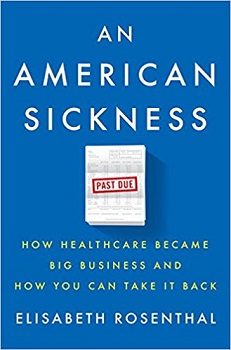
Sickness 1Imagine this scenario at the country level; how inconceivable for an advanced society. And yet, this is the actual situation in the United States. This is according to the new book – An American Sickness: How Healthcare Became Big Business and How You Can Take It Back – by Dr. Elisabeth Rosenthal, a former E.R. doctor and current journalist for medical issues.

This commentary asserts that there is a need for the Caribbean communities to reform and transform our healthcare deliveries, yet still, we do NOT want to model the American system. This point aligns with the book Go Lean…Caribbean, which seeks to reboot the 30 member-states of the Caribbean region, to ensure better stewardship of the Social Contract for all citizens in our homelands, strong and weak. The Go Lean book petitions the Caribbean region to do better! It describes the necessary empowerments to optimize the economic, security and governing engines of Caribbean society to ensure a better adherence to the principle of the Greater Good.

In a 4-part series of blog-commentaries on the “Strong versus the Weak”, the pattern from the Code of Hammurabi was detailed and presented as an Old World model that was ignored in the formation of the New World. The Americans got it bad! If that ancient King Hammurabi was around in present day, he would have a harsh judgment for the American healthcare system. It is figuratively like “stealing the wallet when a person collapses”, as many of the financial abuses in American hospitals occur when the patient is unconscious or only concerned about seeking relief from pain and/or discomforts.

This commentary is an spin-off from that series; though it was originally presented as a 4-parter, we are hereby adding this 5th entry. The full series is now as follows:

  1. Managing the Strong versus the Weak – Model of Hammurabi
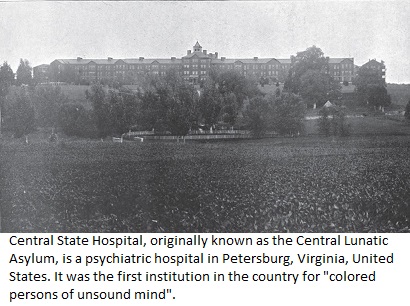
  2. Managing the Strong versus the Weak – Mental Disabilities
  3. Managing the Strong versus the Weak – Bullying in Schools
  4. Managing the Strong versus the Weak – Book Review: Sold-Out!
  5. Managing the Strong versus the Weak – An American Sickness

The need for this 5th entry arose with the release of this new book today – April 11, 2017. It is ‘spot-on’ for the criticism of the pattern of abuse of the ‘Weak’ in American society. See the review-synopsis of Dr. Rosenthal’s book here:

Book Review: An American Sickness: How Healthcare Became Big Business and How You Can Take It Back
By: Elisabeth Rosenthal (Author)

At a moment of drastic political upheaval, a shocking investigation into the dangerous, expensive, and dysfunctional American healthcare system, as well as solutions to its myriad of problems

Sickness 2

In these troubled times, perhaps no institution has unraveled more quickly and more completely than American medicine. In only a few decades, the medical system has been overrun by organizations seeking to exploit for profit the trust that vulnerable and sick Americans place in their healthcare. Our politicians have proven themselves either unwilling or incapable of reining in the increasingly outrageous costs faced by patients, and market-based solutions only seem to funnel larger and larger sums of our money into the hands of corporations. Impossibly high insurance premiums and inexplicably large bills have become facts of life; fatalism has set in. Very quickly Americans have been made to accept paying more for less. How did things get so bad so fast?

Breaking down this monolithic business into the individual industries—the hospitals, doctors, insurance companies, and drug manufacturers—that together constitute our healthcare system, Rosenthal exposes the recent evolution of American medicine as never before. How did healthcare, the caring endeavor, become healthcare, the highly profitable industry? Hospital systems, which are managed by business executives, behave like predatory lenders, hounding patients and seizing their homes. Research charities are in bed with big pharmaceutical companies, which surreptitiously profit from the donations made by working people. Patients receive bills in code, from entrepreneurial doctors they never even saw.

The system is in tatters, but we can fight back. Dr. Elisabeth Rosenthal doesn’t just explain the symptoms, she diagnoses and treats the disease itself. In clear and practical terms, she spells out exactly how to decode medical doublespeak, avoid the pitfalls of the pharmaceuticals racket, and get the care you and your family deserve. She takes you inside the doctor-patient relationship and to hospital C-suites, explaining step-by-step the workings of a system badly lacking transparency. This is about what we can do, as individual patients, both to navigate the maze that is American healthcare and also to demand far-reaching reform. An American Sickness is the frontline defense against a healthcare system that no longer has our well-being at heart.

Source: Posted and Retrieved 04-11-2017 from: https://www.amazon.com/American-Sickness-Healthcare-Became-Business/dp/1594206759/ref=sr_1_1?ie=UTF8&qid=1491928851&sr=8-1&keywords=Book+American+Sickness

—————

AUDIO Podcast – Terry Gross interviews Elisabeth Rosenthal – Heard on Fresh Air

Mental Photo 4April 10, 2017 – Health care is a trillion-dollar industry in America, but are we getting what we pay for? Dr. Elisabeth Rosenthal, a medical journalist who formerly worked as a medical doctor, warns that the existing system too often focuses on financial incentives over health or science.

“We’ve trusted a lot of our health care to for-profit businesses and it’s their job, frankly, to make profit,” Rosenthal says. “You can’t expect them to act like Mother Teresas.”

Rosenthal’s new book, An American Sickness, examines the deeply rooted problems of the existing health-care system and also offers suggestions for a way forward. She notes that under the current system, it’s far more lucrative to provide a lifetime of treatments than a cure.

“One expert in the book joked to me … that if we relied on the current medical market to deal with polio, we would never have a polio vaccine,” Rosenthal says. “Instead we would have iron lungs in seven colors with iPhone apps.”

Notice this small sample of the book’s revelations and disclosures, symptomatic of Crony-Capitalism:

  • Healthcare economics do not align with normal economic laws: “Usual & Customary” versus supply-and-demand
  • Hospital systems behave like predatory lenders
  • Consumers cannot decide, as prices may be unknown at the time of delivery
  • Lifetime of treatment preferable for service-providers rather than a cure.
  • Doctors owning Surgical Centers, therefore dictating procedures that they can accommodate at their facilities
  • Unknown and unauthorized “Drive-by Doctors” adding to hospital bills.

This commentary and the previous 4 commentaries in this series all relate to nation-building, stressing the community ethos necessary to forge a society where all the people are protected all the time. While we are analyzing the American system, we clearly recognize that the Caribbean eco-system is equally – or perhaps even more – in a crisis and in need of reform. The premise in the Go Lean book and subsequent blog-commentaries is that “a crisis is a terrible thing to waste”. We can use the acknowledgement of our crisis to optimize our healthcare deliveries once and for all. We must assuredly look beyond the American model. According to the foregoing book and AUDIO Podcast, many more successful models exist.

Dr. Rosenthal’s book asserts that there may be better models in Europe than there is in the US. This is already a familiar thesis for the Go Lean movement – a roadmap for the introduction and implementation of the Caribbean Union Trade Federation (CU) – as the Go Lean book advocates studying all dimensions of the EU:

10 Ways to Model the EU – Page 130.
The CU will emulate the European Union by unifying and integrating the Caribbean region into one market, thereby creating a single economy of 30 member-states, 42 million people and a GDP of over $800 Billion (per 2010). The EU is 28 member-states, 507.89 million people and $16.6 Trillion GDP (per 2012). Though the CU is only a fraction the size of the EU, there is the similarity of divergent peoples (24 languages) putting aside their differences in a quest to confederate. The EU region has quite an ignoble history of contending with differences, spurning 2 World Wars in the last century. Yet they came together to unite and integrate to make Europe a better place to live, work and play. Just like the EU, the CU will not possess sovereignty; this feature remains with each member-state.

Still, there was a previous attempt to reform the American healthcare delivery eco-system. There is wisdom to glean from that development. The Go Lean book provides this excerpt (Page 156):

The Bottom Line on Obama Care
The Patient Protection and Affordable Care Act (PPACA), commonly called Obama Care is a US federal statute signed into law by President Barack Obama on March 23, 2010. It represents the most significant government expansion and regulatory overhaul of the U.S. healthcare system since the passage of Medicare and Medicaid in 1965. The PPACA is aimed at increasing the rate of health insurance coverage for Americans and reducing the overall costs of health care. It provides a number of mechanisms—including mandates, subsidies, and tax credits — to employers and individuals to increase the coverage rate.Additional reforms aim to improve healthcare outcomes and streamline the delivery of health care. The PPACA requires insurance companies to cover all applicants and offer the same rates regardless of pre-existing conditions or sex. The Congressional Budget Office projected that the PPACA will lower both future deficits and Medicare spending. On June 28, 2012, the United States Supreme Court upheld the constitutionality of most of the Obama Care.

The US, despite its advanced democracy status, has definite societal defects in the healthcare arena. Overcoming the defects – particularly Crony-Capitalism or exploiting public resources for private gains – make solving healthcare challenging.

It is truly heavy-lifting!

This was recently discovered by the new US president, Donald Trump.

After campaigning for the 2016 election on the promise of “repealing and replacing Obama Care”, the administration’s first healthcare legislation attempt flopped. The president’s exclamation:

President Trump: ‘Nobody Knew Health Care Could Be So Complicated’

The truth of the matter Mr. President, everybody – engaged in the process of transforming society – knew!

Transforming the Caribbean healthcare will also be equally complicated. It will engage all 3 societal engines: economic, security and governance. In fact, the prime directives of the Go Lean/CU roadmap includes the following 3 statements:

  • Optimization of the economic engines in order to grow the regional economy to $800 Billion & create 2.2 million new jobs.
  • Establishment of a security apparatus – including emergency management – to ensure public safety and protect the resultant economic engines.
  • Improve Caribbean governance for all people – with empowerments for healthcare – to support these engines.

This comprehensive view – economics, security and governance – is the charge of the Go Lean roadmap, opening with these pronouncements in the Declaration of Interdependence (Page 11):

viii. Whereas the population size is too small to foster good negotiations for products and commodities from international vendors, the Federation must allow the unification of the region as one purchasing agent, thereby garnering better terms and discounts.

ix. Whereas the realities of healthcare and an aging population cannot be ignored and cannot be afforded without some advanced mitigation, the Federation must arrange for health plans to consolidate premiums of both healthy and sickly people across the wider base of the entire Caribbean population. The mitigation should extend further to disease management, wellness, mental health, obesity and smoking cessation programs. The Federation must proactively anticipate the demand and supply of organ transplantation as developing countries are often exploited by richer neighbors for illicit organ trade.

Overall, the Go Lean book stresses the community ethos, strategies, tactics, implementations and advocacies to reboot, reform and transform healthcare delivery in the Caribbean; see this expressed in this one advocacy here:

10 Ways to Improve Healthcare – Page 156

1 Embrace the advent of the CU Single Market to leverage across the 42 million people in the 30 member-states.
2 Organ Procurement Authority
3 Deploy Disease Management Models
4 Universal Health Insurance Care
Much like with auto insurance, there is a need to mandate health insurance coverage for most Caribbeans. The coverage does not have to be $0 deductible and 100% coverage, rather it could be less attractive – low-end terms – like $6000 deductible and 60% coverage. The US model, Obama Care has plans branded Bronze (low end), Silver, Gold and Platinum. The goal for the CU is simply to ensure that catastrophic illnesses or injuries do not imperil the financial viability of individual, families or communities. The coverage risk is minimized with insurance carriers having a larger premium base (42 million) to calculate their actuarial formulas. To maximize savings, individual states may choose to combine their health insurance marketplaces with other states or go at it alone.
5 Wellness, Nutrition, Fitness and Smoking Cessations Programs
6 Medical Tourism
7 Repatriate MediCare Beneficiaries
8 Caribbeans with Disabilities
9 Medical Education Outreach
10 Public Health Extension
Due to the systemic threat, epidemic response and disease control will be coordinated at the federal level. Also, the acquisition of public-bound pharmaceuticals (vaccinations, etc.) can be negotiated at the regional level, using the Group Purchasing Organizations (GPO) envisioned in this roadmap. This will lead to a better supply and pricing dynamics.

The points of effective, technocratic stewardship of healthcare were further elaborated upon in previous blog/commentaries. Consider this sample:

https://goleancaribbean.com/blog/?p=7822 Cancer: Doing More
https://goleancaribbean.com/blog/?p=7586 Blink Health: The Cure for High Drug Prices
https://goleancaribbean.com/blog/?p=7430 Brazilian Shrunken Head Babies: Zika or Tdap?
https://goleancaribbean.com/blog/?p=6580 Capitalism of Drug Patents
https://goleancaribbean.com/blog/?p=3276 Role Model Shaking Up the World of Cancer
https://goleancaribbean.com/blog/?p=2522 The Cost of Cancer Drugs
https://goleancaribbean.com/blog/?p=2105 Recessions and Public Health
https://goleancaribbean.com/blog/?p=1751 New Hope in the Fight against Alzheimer’s Disease
https://goleancaribbean.com/blog/?p=1003 Painful and rapid spread of new virus in Caribbean
https://goleancaribbean.com/blog/?p=554 Cuban cancer medication registered in 28 countries
https://goleancaribbean.com/blog/?p=286 PR’s Comprehensive Cancer Center Project Breaks Ground
https://goleancaribbean.com/blog/?p=278 Tim Armstrong, the CEO of AOL – Health-care Concerns

The opening imagery:

“There is a special ‘place in hell’ …”

… is just an metaphorical reference. There is no assumption of a literal burning abyss of torment. But this does convey the abomination of the “strong abusing the weak”. So many times in the past this abuse has proliferated, for those weaker physically, mentally, economically and sadly, medically.

The movement behind the Go Lean/CU roadmap wants us, in the Caribbean, to do better. Yes, healthcare is not easy, but it is possible to reform and transform. There are so many good examples and models to learn from:

The underlying book reviewed here – An American Sickness: How Healthcare Became Big Business and How You Can Take It Back – considers Switzerland.

We want to “weed out” any bad practices of Crony-Capitalism in our health delivery system. Instead, we want to pursue the Greater Good (greatest good to the greatest number of people which is the measure of right and wrong). Most importantly, we want to proclaim the truth of American life. So many of our Caribbean citizens “beat down their doors to get out” and emigrate to the US. We want to “dull the lights on any American Welcome signs” – considering the reality of American Crony-Capitalism, the “grass is not necessarily greener on the other side”.

Now is the time to lean-in to this Go Lean roadmap to reboot, reform and transform Caribbean healthcare. If we do this, we will make the Caribbean a better place to live, work, heal and play. 🙂

Sign the petition to lean-in for the roadmap for the Caribbean Union Trade Federation.
Download the free e-book of Go Lean … Caribbean – now!

Share this post:
, , , ,

Managing the ‘Strong versus the Weak’ – Book Review: Sold-Out!

Go Lean Commentary

George Carlin speaks from the grave about an American societal defect:

“The real owners of this country, the big wealthy business interest that controls everything and makes all the important decisions….
They spent billions of dollars every year lobbying to get what they want. And what is it that they want: ‘more for themselves and less for everybody else’.” —

George D. P. Carlin[1] (May 12, 1937 – June 22, 2008) was an American stand-up comedian, social critic, actor and author. In 2008, he was posthumously awarded the Mark Twain Prize for American Humor. In 2017, Rolling Stone magazine ranked him second (behind Richard Pryor) on its list of the 50 best stand-up comics of all time.[4] – Source: Wikipedia.

Sold-Out - Photo 3

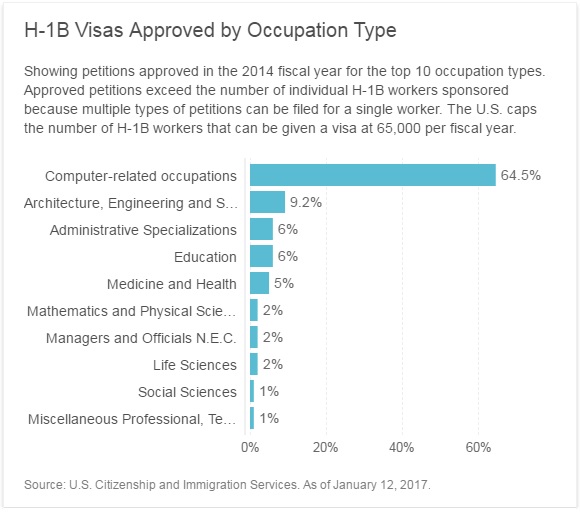
For millions of people affected with declining job options and under-employment, these words by George Carlin are spot on. The people stand back and see a trend with more and more (hundreds of thousands) of highly sought STEM (Science,  Technology, Engineering & Math) jobs being created but not going to Americans, rather going to foreigners – on American soil – at below market prices. This is the drama of H-1B Visas discussed in the VIDEO in the Appendix below.

CU Blog - Immigration Realities in the US - Photo 5

Something is wrong with this picture!

The United States has known societal defects. The movement behind the book Go Lean…Caribbean have delved into the most prominent ones; they were identified as:

This discussion – and the accompanying VIDEO in the Appendix below – allows us to better appreciate the community ethos – the fundamental spirit of a culture – that breathes these societal defects. There is a similarity with these two defects:

“The strong inflicts harm on the weak”

This commentary posits that this problem in America was imbrued as part of a New World experiment that deviated from the Old World values.

In the previous blog-commentary on the Model of Hammurabi it was detailed how that ancient King established laws to ensure that the “strong in society did not abuse the weak”. That blog concluded that New World societies need to do better in applying the sage advice from a 3,800-year-old regent. This point aligns with the book Go Lean…Caribbean, which seeks to reform and transform the 30 member-states of the Caribbean region, to ensure better stewardship of the Social Contract – implied arrangement where all citizens (strong and weak) surrender some of their freedoms and submit to the authority of the State in exchange for protection of remaining natural and legal rights.

The Go Lean book describes empowerments to target the economic, security and governing engines of society to ensure an adherence to the principle of the Greater Good; (greatest good to the greatest number of people which is the measure of right and wrong). This commentary is 4 of 4 in a series on “Managing the Strong versus the Weak”. The other commentaries in this series all considered the security and governmental deficiencies of American society – the model-advanced democracy that “pulls” so many of our Caribbean Diaspora. This commentary here focuses on economic abuses. The full details in this series are as follows:

  1. Managing the Strong versus the Weak – Model of Hammurabi
  2. Managing the Strong versus the Weak – Mental Disabilities
  3. Managing the Strong versus the Weak – Bullying in Schools: “Teach them well and let them lead the way”
  4. Managing the Strong versus the Weak – Book Review: Sold-Out!

All of these commentaries relate to nation-building, stressing the community ethos necessary to forge a society where all the people are protected all the time. Looking at the American model, we clearly discern that “all that glitters is not Gold”. There are obvious abuses and deficiencies that should deter Caribbean citizens from setting their hopes-and-dreams on America as a land of refuge.

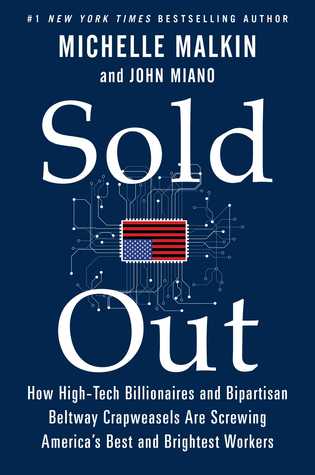
There is a similar theme in the book – Sold-Out! – by syndicated columnist Michelle Malkin. She scorches the American Crony-Capitalism associated with labor-certified immigration. She asserts that laws of supply-and-demand in the STEM fields are being distorted so that corporations can profit at the expense of American and foreign workers.

So sad! See the review of her book here:

 Sold-Out - Photo 1

Book Review for Book: Sold Out: How High-Tech Billionaires & Bipartisan Beltway Crapweasels Are Screwing America’s Best & Brightest Workers
Book Authors:
Michelle MalkinJohn Miano

The #1 New York Times bestselling author and firebrand syndicated columnist Michelle Malkin sets her sights on the corrupt businessmen, politicians, and lobbyists flooding our borders and selling out America’s best and brightest workers.

In Sold Out, Michelle Malkin and John Miano reveal the worst perpetrators screwing America’s high-skilled workers, how and why they’re doing it—and what we must do to stop them. In this book, they will name names and expose the lies of those who pretend to champion the middle class, while aiding and abetting massive layoffs of highly skilled American workers in favor of cheap foreign labor. Malkin and Miano will explode some of the most commonly told myths spread in the media like these:

Lie #1: America is suffering from an apocalyptic “shortage” of science, technology, engineering, and math workers.

Lie #2: US companies cannot function without an unlimited injection of the most “highly skilled” and “highly educated” foreign workers, who offer intellectual capital and entrepreneurial energy that American workers can’t match.

Lie #3: America’s best and brightest talents are protected because employers are required to demonstrate that they’ve made every effort to hire American citizens before resorting to foreign labor.

For too long, open-borders tech billionaires and their political enablers have escaped tough public scrutiny of their means and motives. Sold Out is an indictment of not only political corruption in Washington, but also the journalistic malpractice that enables it. It’s time to trade the whitewash for solvent. American workers deserve better and the public deserves the unvarnished truth.
Source: Good Reads – Online Bookstore-Portal; retrieved April 3, 2017 from: http://www.goodreads.com/book/show/25246754-sold-out

Sold-Out - Photo 2

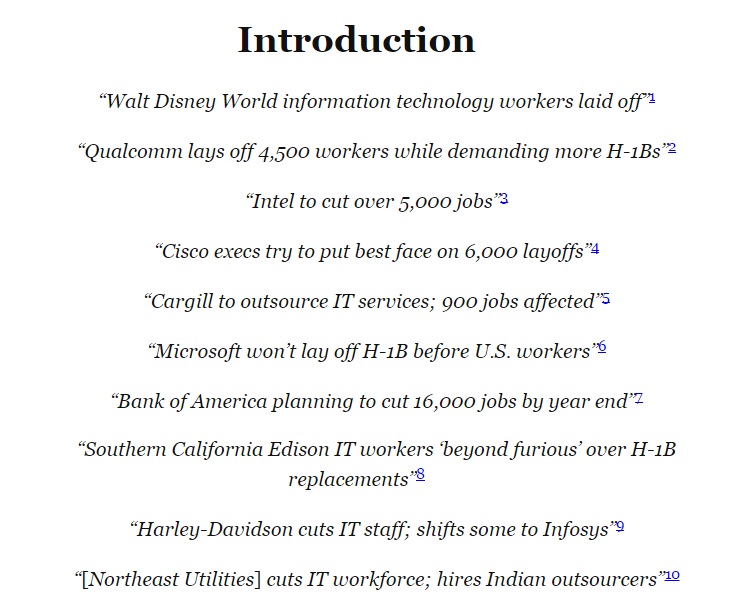
We can and must do better than this in the Caribbean. While the problem in the foregoing is an American drama, our region can learn so many lessons from the developments and executions of this blatant example of the “strong abusing the weak”. Keep this summary in mind, from Sold-Out  (“Introduction” – Page viii):

  • With very few exceptions, the purported shortages of American workers don’t exist.
  • There is nothing special about the hundreds of thousands of H-1B visa holders flooding the workforce.
  • Most H-1B workers are sponsored by companies that specialize in offshore outsourcing of U.S. jobs.
  • Abuse of guest workers by both offshoring companies and their U.S. tech giant partners is rampant.
  • Enforcement is a joke.
  • The promises of U.S. worker protections were big fat whoppers.

This exposure of the exploitation in the American immigration eco-system reveals what is embedded in this country’s DNA – a propensity for the “strong to abuse the weak”; in this case it’s an economic abuse – manipulating market forces to keep salaries low. And yet, the Caribbean suffers from an atrocious emigration rate of our citizens fleeing to the American homeland. Verily, even this defective American labor market is better than the Caribbean status quo.

The reasons why people leave the Caribbean in the first place have been identified as “push and pull”:

“Push” refers to the reasons people who feel compelled to leave, to seek refuge in a foreign land. “These ones suffer from the abuse of the “strong over the weak”. Many from the Caribbean had to flee as refugees related to qualifiers like DisabilityDomestic-abuseMedically-challenged and LGBT.

“Pull”, on the other hand refers to the lure of a more prosperous life abroad; many times our people are emigrating to communities where they perceive that there are more protections for the “weak against the abusive strong “.

The movement behind the Go Lean book has consistently urged Caribbean authority figures to work to dull the bright lights on American “Welcome Signs”. Our people need to know that the “grass is not necessarily greener on the other side”. The Go Lean book and blogs asserts that it is easier to reform and transform Caribbean society than abandoning our home and trying to fix the American eco-system. There is no much resistance due to the acute greed and adherence to a profit-seeking culture. Consider these sample blog-commentaries previous published:

https://goleancaribbean.com/blog/?p=10052 Fake News? Welcome to America
https://goleancaribbean.com/blog/?p=9038 Fallacy of American Charity Altruism for Caribbean Causes
https://goleancaribbean.com/blog/?p=8966 American For-Profit Education – Plenty of Profit; Little Education
https://goleancaribbean.com/blog/?p=7430 Big Pharma and Zika – Too Much Profit Motivation
https://goleancaribbean.com/blog/?p=6819 The Academic Downside of ‘Western’ Diets
https://goleancaribbean.com/blog/?p=6580 Capitalism of Drug Patents
https://goleancaribbean.com/blog/?p=5733 Better than America? Yes, We Can!
https://goleancaribbean.com/blog/?p=5529 American Defects: Inventory of Crony-Capitalism

The Go Lean book serves as a roadmap for the introduction and implementation of the technocratic Caribbean Union Trade Federation (CU) to elevate Caribbean societal engines. We want to be a better society than we have been in the past, and even better than our American counterparts.

We want to pursue the Greater Good. This means promoting values that do NOT benefit the strong by abusing the weak. While this definitely applies to a security and governance mandate, it includes economic policies as well.

We can learn from the American experience. If we can assuage the “strong-weak” power abuses in our society, this will mitigate the “push and pull” factors for why people abandon our territories.

Yes, America is flawed!

… but we have to do better at home before we can condemn another country. Though we must deter our young people from “jumping out of the frying pan and into the fire”.

So let’s just be better and do better here … in reforming and transforming our societal engines. Let’s lean-in to the Go Lean roadmap and work to make the Caribbean a better place to live, work and play for all citizens, “strong or weak”. 🙂

Download the free e-book of Go Lean … Caribbean – now!

Sign the petition to lean-in for the roadmap for the Caribbean Union Trade Federation.
————

Appendix VIDEO – How H-1B visas have been abused since the beginning – http://www.cbsnews.com/videos/h-1b-creator-1998-loophole-in-law-is-a-travesty

Published March 19, 2017 – The H-1B visa [program] creator says the program has been “hijacked” to take American jobs. But a 1993 60 Minutes piece shows the visas had problems from the start

Share this post:
, , ,
[Top]

Managing the ‘Strong versus the Weak’ – Bullying in Schools

Go Lean Commentary

“I believe that children are the future, teach them well and let them lead the way …” – Song Lyrics – The Greatest Love  Of All

The need to secure the community against threats and ‘bad actors’ must start with young people, school age children: High School, Middle School and Elementary.

Why so early? Because the tendency for strong individuals in a group to abuse the weak individuals starts early. Its an animalistic instinct to emerge as an Alpha Male or Alpha Female.

Bullying - Photo 5But we are not animals, despite any natural instincts. Societies come together to form a civilization with civil treatment of neighbors and fellow citizens. In the previous blog-commentary on the Model of Hammurabi it was detailed how that ancient King established laws to ensure that the “strong in society would not abuse the weak”. That blog concluded that the governmental authorities (the State) should provide the stewardship as specified in a Social Contract – where citizens surrender some of their freedoms and submit to the authority of the State in exchange for protection of remaining natural and legal rights – with all citizens in society, the strong ones and the weak ones. This commentary is the 3rd of 4 in a series on “Managing the Strong versus the Weak”. The other commentaries detailed in this series are as follows:

  1. Managing the Strong versus the Weak – Model of Hammurabi
  2. Managing the Strong versus the Weak – Mental Disabilities
  3. Managing the Strong versus the Weak – Bullying in Schools: “Teach them well and let them lead the way”
  4. Managing the Strong versus the Weak – Book Review: Sold-Out!

All of these commentaries relate to nation-building, stressing the community ethos necessary to forge a society where all the people are protected all the time. Since “children are the future”, it is important to mitigate and remediate bad behavior of the strong children that may trample on the “weak” children – bullying; if we teach them well when they are young and impressionable, that will allow them to lead the way for future societal cohesion. (See the personification of these words – song lyrics – in the Music VIDEO in the Appendix below).

The United States, as a model of an advanced democracy in our region, provides us lessons in how effective programs can be that are designed to mitigate bullying. We get to see the progress and regression. See this report-news article here:

Title: School Bullying, Cyberbullying Continue to Drop

Bullying - Photo 1

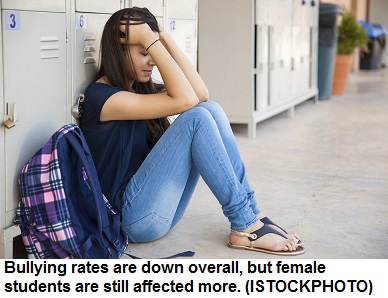
Sub-Title: School bullying is at its lowest rate since 2005, but girls are still bullied at higher rates.
By:
Allie Bidwell

The percentage of students who reported being bullied or cyberbullied reached a record low in 2013, but female students are still victimized at higher rates, according to new data from the Department of Education.

The department on Friday released the results of the latest School Crime Supplement to the National Crime Victimization Survey, which showed that in 2013, the percentage of students ages 12-18 who reported being bullied dropped to 21.5 percent. That’s down from 27.8 percent in 2011, and a high of 31.7 percent in 2007. The percentage of students who reported being cyberbullied also fell to 6.9 percent in 2013, down from 9 percent in 2011.

The department’s National Center on Education Statistics began surveying students on bullying in 2005.

“As schools become safer, students are better able to thrive academically and socially,” Education Secretary Arne Duncan said in a statement. “Even though we’ve come a long way over the past few years in educating the public about the health and educational impacts that bullying can have on students, we still have more work to do to ensure the safety of our nation’s children.”

Despite the overall drop in bullying and cyberbullying, reporting rates remain low – just more than one-third of students who were victims of traditional bullying and fewer than one-quarter of cyberbullying victims reported the incident to an adult, the data show.

Female students also still consistently experience higher-than-average rates of victimization – 23.7 percent of female students said they had been bullied in 2013, and 8.6 percent said they had been cyberbullied. By comparison, 19.5 percent and 5.2 percent of male students in 2013 said they had been bullied and cyberbullied, respectively.

While there aren’t noticeable gender gaps in the location of bullying, female students were significantly more likely than male students to be made fun of, called names or insulted (14.7 percent compared with 12.6 percent), to be the subject of rumors (17 percent compared with 9.6 percent) and to be excluded from activities on purpose (5.5 percent compared with 3.5 percent). Male students who were bullied were more likely than female students to be pushed, shoved, tripped or spit on (7.4 percent compared with 4.6 percent).

Overall, bullied students were most likely to be made fun of, called names or insulted (13.6 percent) or to be the subject of rumors (13.2 percent). The most common forms of cyberbullying were unwanted contact via text messaging and posting hurtful information on the Internet.

Among students who were cyberbullied, female students were more likely to have hurtful information about them posted on the Internet (4.5 percent compared with 1.2 percent), to receive unwanted contact via instant messaging (3.4 percent compared with 1 percent) and unwanted contact via text messaging (4.9 percent compared with 1.6 percent).

Traditional bullying and cyberbullying also impact the behaviors of the affected students.
Among students who were victims of traditional bullying, more than 1 in 10 said they feared being attacked or harmed at school. That fear was slightly more frequent among victims of cyberbullying: about 1 in 8 students who had been cyberbullied said they feared attack or harm at school.

Generally, being the victim of cyberbullying appeared to affect students’ behavior more than traditional bullying – students who were cyberbullied were more likely to skip school, to avoid school activities, to avoid specific places at school and to carry a weapon to school.

Allie Bidwell is an education reporter for U.S. News & World Report.

[MORE: Social Combat: Bullying Risk Increases With Popularity]

[ALSO: Cyberbullied Teens Can Connect Online, In Person to Get Help]

Bullying - Photo 2

Bullying - Photo 3

Source: US News & World Report – Posted May 15, 2015; retrieved 04/01/2017 from: https://www.usnews.com/news/blogs/data-mine/2015/05/15/school-bullying-cyber-bullying-continue-to-drop

The book Go Lean…Caribbean describes empowerments to target the economic, security and governing engines of society to ensure an adherence to the principle of the Greater Good. The book defines this principle as follows (Page 37):

“The greatest good to the greatest number of people which is the measure of right and wrong”. –  Jeremy Bentham (1748-1832)

The Go Lean book serves as a roadmap for the introduction and implementation of the Caribbean Union Trade Federation (CU); it posits (Page 23) that whatever the circumstances, “bad actors” will always emerge to exploit opportunities, with good, bad and evil intent….

The CU‘s security apparatus must defend against regional threats, including domestic terrorism. This includes gangs and their junior counterparts, bullies. The community must accept that young ones will go astray, so Juvenile Justice programs should be centered on the goal to rehabilitate them into good citizens, before it’s too late. Community messaging (life-coaching and school-mentoring programs) must be part of the campaign for anti-bullying and mitigations.

The Go Lean book continues (Page 181) on the subject of “Junior Terrorism” with the quotation here:

The CU wants to “leave no child behind”. So bullying will be managed under a domestic terrorism and Juvenile Justice jurisdiction. The CU will conduct media campaigns for anti-bullying, life-coaching, and school-mentoring programs. The problem with teen distress is that violence can ensue from bullying perpetrators or in response to bullying.

Bullying - Photo 4We were all children at one point, and may have experienced the dynamics of bullying, either as a victor or a victim, but trust the facts here, the subject of bullying today is different; there is the New Media element; there is cyber-bullying.

Cyberbullying or cyberharassment is a form of bullying or harassment using electronic forms of contact. Cyberbullying has become increasingly common, especially among teenagers.[1] Awareness in the United States has risen in the 2010s, due in part to high-profile cases.[2][3] Bullying or harassment can be identified by repeated behavior and an intent to harm.[4] Harmful bullying behavior can include posting rumors about a person, threats, sexual remarks, disclose victims’ personal information, or pejorative labels (i.e., hate speech).[5]

Several US states and other countries have laws specific to regulating cyberbullying.[6] These laws are designed to specifically target teen cyberbullying, while others use laws extending from the scope of physical harassment.[7] In cases of adult cyberharassment, these reports are usually filed beginning with local police.[8] Research has demonstrated a number of serious consequences of cyberbullying victimization.[9] Victims may have lower self-esteem, increased suicidal ideation, and a variety of emotional responses, retaliating, being scared, frustrated, angry, and depressed.[10] Individuals have reported that cyberbullying can be more harmful than traditional bullying.[11]

Internet trolling is a common form of bullying over the Internet in an online community (such as social media) in order to elicit a reaction, disruption, or for their own personal amusement.[12][13] Cyberstalking is another form of bullying or harassment that uses electronic communications to stalk a victim may pose a credible threat to the safety of the victim.[14]
Source: Retrieved April 2, 2017 from: https://en.wikipedia.org/wiki/Cyberbullying

The Go Lean book describes the eco-system of Internet & Communications Technology (ICT) and strategizes to use ICT as a great equalizer in the world markets. Big countries and small countries can equally and evenly compete. So ICT can be beneficial, if …

… the downsides – like cyber-bullying – can be assuaged or mitigated.

The point of fostering and policing ICT has been previously elaborated on in prior blog-commentaries; see sample list here:

https://goleancaribbean.com/blog/?p=8823 Lessons from China – WeChat: Model for Caribbean Social Media
https://goleancaribbean.com/blog/?p=5435 China Internet Policing – Model for Caribbean
https://goleancaribbean.com/blog/?p=4793 Truth in Commerce – Learning from Yelp
https://goleancaribbean.com/blog/?p=3881 Intelligence Agencies to Up Cyber Security Cooperation

According to the foregoing article, bullying is on the decline. This is a direct product of the effective messaging and school-based coaching. We need to model this in the Caribbean.

Girl Mocking Clever Kid In Glasses Teenage Bully Demonstrating Mischievous Uncontrollable Delinquent Behavior Cartoon Illustration

But also according to the foregoing article, the subject matters in the bullying eco-system that need the most attention are the girl-bullies, as opposed to boy-bullies. The messaging for girls – think: Mean Girls – must be customized as opposed to the messaging for boys. The art and science of this advocacy is just plain technocratic! This is a mission of the Go Lean/CU roadmap. The Go Lean book actually conveys that there are many empowerments for Caribbean stewards to implement to help the youth (boys and girls) of the region. This sends the right message that we will not allow the weak in society to be trampled on by the strong. Consider this advocacy here:

10 Ways to Impact Youth – Page 227

1 Lean-in for the CU to address regional problems! Of 42 million population, more than half below age 30; need jobs and security empowerments.
2 Infant Mortality
3 Health Care Neutralization – Trauma Centers, as injuries are the leading causes of death
4 Work Ethic – Youth assimilate well to ICT, so the CU will foster schemes to create and produce ICT, not just consume.
5 Juvenile Crime and the DARE Model
Addressing the mission to remediate youth crime, the CU will implement specific programs to engage and mitigate youth crime, this is similar to DARE (Drug-Alcohol-Resistance-Endeavors) in the US for drug and gang anti-crime. Also, the Juvenile Justice solution will have vertical institutions for judiciary, corrections & probation, applying best practices of criminology/penology for youthful offenders.
6 Education Dynamics
The CU will identify students early who display high aptitude in the areas of Science, Technology, Engineering and Mathematics; then develop them thru academies and e-learning. The CU will offer forgive-able loans for college. With the CU mission to stop the brain drain, every inducement will be extended to encourage graduates to stay in the region.
7 Sports Prospects
The CU will encourage professional sports pursuits for many disciplines, incentivizing Sport Academies to foster the talent with proper risk mitigations.
8 Artist Development & Colonies
9 Music and Art (Performance & Visual) Appreciation
10 Repatriation – Family Reunification

The book Go Lean, serving as a roadmap, describes formal institutions to improve security like a regional Police and Military forces (including “Intelligence Gathering and Analysis”). There is the need to be on guard so that …

“… the strong should not harm the weak.”

This is the Code of Hammurabi, and despite having originated thousands of years ago, there is urgency to apply the principle today to counteract “bad actors”. The Go Lean book makes this revelation (Page 23):

… with the emergence of new economic engines, “bad actors” will also emerge thereafter to exploit the opportunities, with good, bad and evil intent.

This roadmap for Caribbean integration declares that peace, security and public safety is tantamount to economic prosperity. This is why an advocacy for the Greater Good must be championed as a community ethos. A prime precept is that it is “better to know than to not know” – this implies that privacy is secondary to security. A secondary precept is that bad things will happen to good people and so the community needs to be prepared to contend with the risks that can imperil the homeland.

The Go Lean roadmap details strategies, tactics, implementations and advocacies to impact this region in the cause against bullying. Consider this sample:

Community Ethos – Security Principles – Fully comprehensive empowerments Page 22
Ways to Impact the Future – Count on the Greedy to be Greedy; [expect bullies to emerge] Page 27
Ways to Foster Genius – Anti-Bullying Campaign – “Revenge of the Nerds” Page 28
Security Initiatives at Start-up Page 103
Ways to Improve Education Page 159
Ways to Mitigate Black Markets – Prosecute economic crimes: Extortion and Intimidation Page 165
Ways to Impact Justice – Juvenile Justice will have vertical institutions Page 177
Ways to Reduce Crime – Youth Crime Awareness and Prevention Page 178
Ways to Improve for Gun Control – Public Relations / Anti-Bullying Campaign Page 179
Ways to Improve Homeland Security Page 180
Ways to Mitigate Terrorism – Bullying Page 181
Ways to Improve Intelligence Gathering & Analysis – Internet/Cyber Crimes Monitoring Page 182
Ways to Impact the Prison-Industrial Complex – Monitoring of Parolees Page 211

The CU‘s efforts relate to our Prime Directives; as exemplified by these 3 statements:

  • Optimization of the economic engines in order to grow the regional economy and create new jobs.
  • Establishment of a security apparatus to protect the resultant economic engines and mitigate internal and external threats.
  • Improve Caribbean governance to support these engines.

The purpose of these prime directives is to elevate all of Caribbean society, all 30 member-states. This is a Big Deal – too big for any one member-state alone. We must confederate, collaborate and convene together. We can succeed with an interdependence within the region. See these statements from the formal Declaration of Interdependence, at the start of the book (Page 12):

x.  Whereas we are surrounded and allied to nations of larger proportions in land mass, populations, and treasuries, elements in their societies may have ill-intent in their pursuits, at the expense of the safety and security of our citizens. We must therefore appoint “new guards” to ensure our public safety and threats against our society, both domestic and foreign. The Federation must employ the latest advances and best practices … to assuage continuous threats against public safety.

xvi. Whereas security of our homeland is inextricably linked to prosperity of the homeland, the economic and security interest of the region needs to be aligned under the same governance. Since economic crimes, including … forms of terrorism [like bullying], can imperil the functioning of the wheels of commerce for all the citizenry, the accedence of this Federation must equip the security apparatus with the tools and techniques for predictive and proactive interdictions.

The points of security mitigation have been previously elaborated on in these prior blog-commentaries; see sample list here:

https://goleancaribbean.com/blog/?p=10959 See Something, Say Something … Do Something
https://goleancaribbean.com/blog/?p=10566 Funding the Caribbean Security Pact
https://goleancaribbean.com/blog/?p=10222 Waging a Successful War on Terrorism – (Junior Partner of ‘Bullying’)
https://goleancaribbean.com/blog/?p=9072 Securing the Homeland – On the Ground
https://goleancaribbean.com/blog/?p=7485 A Lesson in the History of Interpersonal Violence – Street Crimes
https://goleancaribbean.com/blog/?p=7179 SME Declaration: ‘Change Leaders in Crime Fight’
https://goleancaribbean.com/blog/?p=392 Jamaica received World Bank funds to help in crime fight

We must learn from the American lessons on mitigating bullying. Our society, every society has “weak (physical and mental) members” that must be protected from the “strong” members, even in the schools. We can assuage any abuse; we can teach the children … well … and let them lead the way.

We would hate to think that bullying may “push” citizens away from their Caribbean homelands. So we must reform and transform our societal engines. If we do this, we will make the Caribbean a better place to live, work, learn and play for all citizens “strong or weak”. 🙂

Download the book Go Lean … Caribbean – now!

Sign the petition to lean-in for the roadmap for the Caribbean Union Trade Federation.
—————-

Appendix VIDEO – Whitney Houston – Greatest Love Of All – https://youtu.be/IYzlVDlE72w

Uploaded on Sep 27, 2010 – Whitney Houston’s official music video for ‘Greatest Love Of All’. Click to listen to Whitney Houston on Spotify: http://smarturl.it/WhitneyHSpotify?IQ…

Click to buy the track or album via iTunes: http://smarturl.it/WhitneyGreatestHit…
Google Play: http://smarturl.it/GLOGPlay?IQid=Whit…
Amazon: http://smarturl.it/WGHAmazon?IQid=Whi…

Follow Whitney Houston
Website: http://www.whitneyhouston.com
Facebook: https://www.facebook.com/WhitneyHouston

Subscribe to Whitney Houston on YouTube: http://smarturl.it/WhitneyHoustonSub?…

Share this post:
, , , , ,
[Top]

Managing the ‘Strong versus the Weak’ – Mental Disabilities

Go Lean Commentary

“Are you an idiot?”

“No, I’m a moron”

Imagine this exchange. Funny isn’t it! But truth be told the etymology of the words “idiot” and “moron” is that they represent scales in the range of intellectual disability.

There is a 3rd classification: “Imbecile”, to represent the mid-range. In total, the following is the full range, from higher (better) to lower (intellectually disabled):

3.  Moron – is a term once used in Psychology to denote mild intellectual disability.[1] This term was coined in 1910 by psychologist Henry H. Goddard[3] from the Ancient Greek word  moros, which meant “dull”[4] and used to describe a person with a mental age in adulthood of between 8 and 12 on the Binet scale.[5]

2.  Imbecile – is a term for people with moderate to severe intellectual disability.[1][2] The term arises from the Latin word imbecillus, meaning weak, or weak-minded. It included people with an IQ of 26–50, between “idiot” (IQ of 0–25) and “moron” (IQ of 51–70).[3]

1.  Idiot – is a term for a person perceived to be lacking intelligence. In Psychology, it is a historical term for a person so mentally deficient as to be incapable of ordinary reasoning.

All of these terms were closely tied with the American Eugenics Movement[2] (where they attempted to sterilize and colonize the mentally disabled in society so as to control the risks of procreating further). Once the terms became popularized, they fell out of use by the Psychological community, and were used more commonly as insults rather than as psychological classifications.

Note: We have “Idiots”, “Imbeciles” and “Morons” in every community in the Caribbean. People with congenital mental weaknesses are everywhere!

This backdrop allows us to better appreciate a societal defect that exists in much of the New World. From the beginning of time, there have always been people who suffered from congenital mental weakness or intellectual disability. These persons need protection in society, not abuse and insults. Accordingly, from the Enlightenment Age (between 1650 and 1700), the concept of a Social Contract emerged; this is the implied arrangement where citizens surrender some of their freedoms and submit to the authority of the State in exchange for protection of remaining natural and legal rights. By extension the assumption is that as all societies have both “strong” and “weak” constituents, so there must always be some societal protections for the weak – physically weak and mentally weak.

In addition to congenital mental weakness, we find that that are other categories of people that at one time or another fall under the category of the mentally “weak”. There are those with:

  • Transactional Mental Weakness – PTSD, Family/Marriage/Divorce counseling, Bereavement, Addiction and Alcoholism. (“Transactional” is not a clinical term, but rather an adjective). People can and do recover-rehabiltate from these disorders.
  • Adult Onset Illnesses – Schizophrenia and Bi-Polar Disorders that emerge in the late 20’s / early 30’s
  • Degenerative Illnesses – Alzheimer’s, Dementia and other age-induced neural disorders

In the previous blog-commentary on the Model of Hammurabi it was detailed how that ancient King established laws to ensure that the “strong in society did not abuse the weak”. That blog concluded that New World societies need to do better in applying the sage advice from a 3,800-year-old regent. This point aligns with the book Go Lean…Caribbean, which seeks to reform and transform the 30 member-states of the Caribbean region, to ensure better stewardship of the Social Contract for all citizens in our homeland, strong and weak.

The Go Lean book describes empowerments to target the economic, security and governing engines of Caribbean society to ensure an adherence to the principle of the Greater Good. This commentary is the 2nd of 4 in a series on “Managing the Strong versus the Weak”. The other commentaries detailed in this series are as follows:

  1. Managing the Strong versus the Weak – Model of Hammurabi
  2. Managing the Strong versus the Weak – Mental Disabilities
  3. Managing the Strong versus the Weak – Bullying in Schools: “Teach them well and let them lead the way”
  4. Managing the Strong versus the Weak – Book Review: Sold-Out!

All of these commentaries relate to nation-building, stressing the community ethos necessary to forge a society where all the people are protected all the time. This has not always been the case in the Caribbean nor has it been in the US – the “city on the hill” – the model of advanced democracy in our region. We must do better!

There is a lesson in American history in which they abused the rights (life, liberty and pursuit of happiness) of 70,000 people. We can observe-and-report on this bad experience and commit to effect change here in our Caribbean homeland. See-listen to the AUDIO Podcast here, relating this sad history based on the following book:

Mental Photo 2

Book Cover

AUDIO Podcast – The Supreme Court Ruling That Led To 70,000 Forced Sterilizations – Heard on Fresh Air

Mental Photo 4In the early 20th century, American eugenicists used forced sterilization to “breed out” traits considered undesirable. Adam Cohen tells the story in Imbeciles. Originally broadcast March 7, 2016.

This foregoing AUDIO report reviews the new paperback book Imbeciles by writer-lawyer Adam Cohen. Here is a representative sound-bite:

One of the worst Supreme Court decisions in US history … was the 1927 decision upholding a state’s right to forcibly sterilize a person considered unfit to procreate – unfit because they were deemed to be mentally deficient. That decision is part of a larger chapter of American history in which the eugenics movement was behind preventing so-called mentally deficient people from procreating through not allowing them to marry, sterilizing them and segregating them in special colonies.

The Nazis borrowed some ideas from American eugenicists. The eugenics movement also influenced the 1924 Immigration Act, which was designed in part to keep out Italians and Eastern European Jews. Adam Cohen’s book titled “Imbeciles” is about the eugenics movement in the early 20th century and the Supreme Court case legalizing sterilization.

This true history of the United States exposes what is embedded in this country’s DNA – a propensity for the “strong to abuse the weak”. And yet, the Caribbean suffers from an atrocious emigration rate of our citizens fleeing our homeland to go to the US. Surely, this history is unknown among these expatriates.  Surely, a rich education to the next generation of Caribbean citizens would deter some of them from setting their sights on US shores as the panacea for all Caribbean ills.

The reasons why people leave in the first place have been identified as “push and pull”:

“Push” refers to the reasons people who feel compelled to leave, to seek refuge in a foreign land. “Refuge” is an appropriate word; because of societal defects – like the “strong abusing the weak” – many from the Caribbean must leave as refugees – think DisabilityDomestic-abuseMedically-challenged and LGBT – for their life, liberty and pursuit of happiness.

“Pull”, on the other hand refers to the lure of a more safer life abroad; many times our people are emigrating to communities where they perceive that there are protections for the “weak against the abusive strong”.

It has been a consistent theme from the promoters of the Go Lean book, that we can dull the bright lights on any flashing American “Welcome Signs” so as to dissuade the “Pull” factor. Indeed, the consistent messaging of these Go Lean blogs has been that it takes less effort to reform and transform our Caribbean society than abandoning our home and trying to succeed in a Diasporic life.

Surely, the truth of American history will hurt … any false impressions that Caribbean people may have about American life and culture. Consider this sample of previous blog-commentaries:

https://goleancaribbean.com/blog/?p=10933 White is Right – Not!
https://goleancaribbean.com/blog/?p=10895 Trump’s Vision of the Caribbean: Yawn
https://goleancaribbean.com/blog/?p=10654 Stay Home! Immigration Realities in the US
https://goleancaribbean.com/blog/?p=10629 Stay Home! Remembering the Societal Defects of McCarthyism
https://goleancaribbean.com/blog/?p=10532 Learning from American Stereotypes – Good and Bad
https://goleancaribbean.com/blog/?p=10336 A Lesson in History: Haiti’s Reasonable Doubt of America
https://goleancaribbean.com/blog/?p=10052 Fake News? Welcome to America
https://goleancaribbean.com/blog/?p=9974 Lessons Learned from Pearl Harbor
https://goleancaribbean.com/blog/?p=9626 ‘Time to Go’ – America Marginalizes the Black-n-Brown Vote
https://goleancaribbean.com/blog/?p=9214 ‘Time to Go’ – Spot-on for Protest
https://goleancaribbean.com/blog/?p=8431 A Caribbean State Issued US Travel Advisory Citing Police Violence
https://goleancaribbean.com/blog/?p=7221 Street naming for Martin Luther King unveils a ‘Climate of Hate’
https://goleancaribbean.com/blog/?p=5733 Better than America? Yes, We Can!
https://goleancaribbean.com/blog/?p=5529 American Defects: Inventory of Crony-Capitalism
https://goleancaribbean.com/blog/?p=5527 American Defects: Racism – Is It Over?

Still some may conclude that the American ethos of yesteryear no longer applies today. Yet, the foregoing AUDIO Podcast relates that the landmark 1927 Supreme Court decision is still the law of the land in the US, and that there have been many times – including a recent 2001 Sterilization case – where provisions of this law is still being applied.

Mental Photo 3

America is very much troubled with their management of [transactional and degenerative] mental weakness:

The Go Lean book serves as a roadmap for the introduction and implementation of the technocratic Caribbean Union Trade Federation (CU) to “weed out” our own bad practices of the “strong abusing the weak” in our society. We want to pursue the Greater Good (greatest good to the greatest number of people which is the measure of right and wrong). And this includes help for people who are mentally weak.  The Go Lean/CU roadmap includes many strategies, tactics, implementations and advocacies to impact Caribbean society and our treatment of the weak, including the mentally weak due to congenital, transactional, adult-onset and degenerative causes.

“Persons with Disabilities” are still people. They can still contribute to society. Even in the US, people with disorders like Bi-Polar and Schizophrenia have been extremely impactful in their communities – consider the example of Nobel Prize Winner Dr. John Nash.

These previous Go Lean blog-commentaries have detailed mental health challenges in communities:

https://goleancaribbean.com/blog/?p=7659 Pre-Fab Housing and Elder-Care Conjunction
https://goleancaribbean.com/blog/?p=5901 The Demographic Theory of Elderly Suicide
https://goleancaribbean.com/blog/?p=5720 Role Model advocates for ‘Reasonable Accommodations’
https://goleancaribbean.com/blog/?p=2633 Book Review: ‘The Protest Psychosis’
https://goleancaribbean.com/blog/?p=2602 Guyana and Suriname Wrestle With High Rates of Suicides
https://goleancaribbean.com/blog/?p=2105 Recessions and Public Physical and Mental Health
https://goleancaribbean.com/blog/?p=1751 New Hope in the Fight against Alzheimer’s Disease

We must learn from this lesson … that the “weak (physical and mental) must be protected from the strong” that may have malice towards them. If we can assuage such abuses, we would mitigate the “push and pull” factors that have previously befallen our territories. Let’s do better in reforming and transforming our societal engines in the Caribbean homeland in regards to mental healthcare. If we do this, we will make the Caribbean a better place to live, work, heal and play for all citizens, “strong or weak”. 🙂

Download the free e-Book of Go Lean … Caribbean – now!

Sign the petition to lean-in for the roadmap for the Caribbean Union Trade Federation.
 

Share this post:
, , ,
[Top]

Managing the ‘Strong versus the Weak’ – Model of Hammurabi

Go Lean Commentary

Time for a lesson from history; a very old history; going back-back-back to the year 1754 BC.

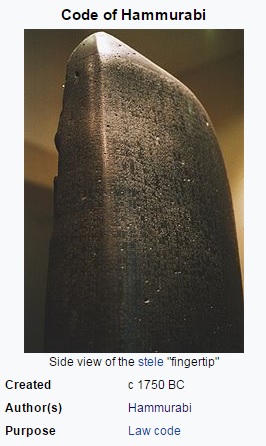
Hammurabi - Photo 1This is when the Code of Hammurabi was enacted within the Babylonian Empire, a Super Power in the ancient world; see Appendix reference and VIDEO below. Despite the passage of 3,800 years, there is a lesson to glean from this ancient legal precept for us today. Despite the irrelevance of so many of the 282 statutes, there in the preface of the codified Law is this statement:

“So that the strong should not harm the weak”

Despite how much advances we have made in the millennia since King Hammurabi of Babylon reigned, this concept seems to be void in so many societies; this concept …

  • … is not in the Caribbean.
  • … is not in the United States.
  • … is not in the New World.

There is an obvious “ignorance or negligence of this concept” in the New World. Consider the experience in the United States, where the American DNA seems to be based on a consistent pattern of the “strong abusing the weak” and the long civil rights struggle to overcome the abuse. This is American History and the American Experience. Consider these examples of the “weak” that were harmed:

  • Native American / Indigenous people – The Ameri-Indians were mostly eradicated. Those who survived where corralled onto limited territorial grounds called “reservations”.
  • Slavery of Africans – After the indigenous people of the New World could not be sustained in servitude, their replacements – native African tribes people proved more enduring.
  • Civil Rights Movement – After international forces and pressure ended the “Slave Trade“, then abolition of slavery, the emancipated people were suppressed, repressed and oppressed as 2nd class citizens for 100 years in the country they helped build.
  • Indentured Servants (East Indians & Irish) – As replacement labor sources, these desperate groups were hoarded to the New World where their labors and cultures were exploited as an under-class.
  • Labor Movement – After a “long train of abuses” in factories and industrial plants, the common worker was subjected to forceful resistance to unionization and collective bargaining.
  • McCarthyism – Congressional “Witch-hunts” and industry blacklisting anyone with a dissenting thought in the capitalism -vs- communism debate.
  • Farm Migrant Labor – Immigrants were subjected to a form of “slavery under a different name” to harvest crops on Big Agra farms.

The American creed of “In God We Trust” seems to indicate that the country would be based on religious principles. But the actuality of the abuses of the “strong against the weak” belie any religious predisposition. The US and all New World territories claim to be a nation based on Judeo-Christian principles; but the Bible’s Old Testament (Hebrew Scriptures) states:

Job 29:12 – “because I rescued the poor who cried for help, and the fatherless who had none to assist them.”

… and the Bible’s New Testament (Christian Greek Scriptures) states:

James 1:27 – “[the form of] religion that God our Father accepts as pure and faultless is this: to look after orphans and widows in their distress and to keep oneself from being polluted by the world.”

So the abuse of the “strong against the weak” is clearly an unabashed societal defect in the New World. History teaches that with the emergence of any new economic engines, “bad actors” will also emerge thereafter to exploit the opportunities – the weak – with good, bad and evil intent.

The New World needs to apply this lesson-learned from the “Old World of 1754 BC” to protect the “poor, sick and huddled masses yearning to be free”.

This lesson from history aligns with the book Go Lean…Caribbean, which seeks to reform and transform the 30 member-states of the Caribbean region; the book describes empowerments to target the economic, security and governing engines of society to ensure an adherence to the principle of the Greater Good. While we can observe-and-report on the other countries, we can only effect change here in our Caribbean homeland. This commentary is the first, 1 of 4 on a series on “Managing the Strong versus the Weak”. The other commentaries detailed in this series are as follows:

  1. Managing the Strong versus the Weak – Model of Hammurabi
  2. Managing the Strong versus the Weak – Mental Disabilities
  3. Managing the Strong versus the Weak – Bullying in Schools: “Teach them well and let them lead the way”
  4. Managing the Strong versus the Weak – Book Review: Sold-Out!

All of these commentaries relate to nation-building, stressing the community ethos necessary to forge a society where all the people are protected all the time. This has not always been the case in the Caribbean nor in the US. We must do better. The Code of Hammurabi gives us a great model:

  • The code has been seen as an early example of a fundamental law, regulating a government — i.e., a primitive constitution.[14][15]
  • The copying [of the code] in subsequent generations indicates that it was used as a model of legal and judicial reasoning.[17]
  • The Code focuses on justice, following the three classes of Babylonian society: 1. property owners, 2. freed men, and 3. Slaves.[18]. This is a good model for considering today’s contrast for the Rich, Middle Class and the Poor.

The Go Lean book serves as a roadmap for the introduction and implementation of the technocratic Caribbean Union Trade Federation (CU) to provide better stewardship for the region’s economic, security and governing eco-systems. The book actually conveys that there are many opportunities for the Caribbean to implement some “reasonable accommodations” so that the weak in society are not trampled on by the strong. Consider these two missions: Organ Transplantation & Disabilities:

10 Ways to Improve Organ Transplantation – Page 214

0 The Bottom Line on Organ Trade – Organ trade is the trade involving inner organs (heart, liver, kidneys, cornea, etc.) of a human for transplantation. In the 1970s pharmaceuticals that prevent organ rejection were introduced. This along with a lack of medical regulation helped foster the organ market. The problem of organ trafficking is widespread, although data on the exact scale of the organ market is difficult to obtain. (Most organ trade involves kidney or liver transplants). There is a worldwide shortage of organs available for transplantation, yet trade in human organs is illegal in all countries, except Iran.WHO states that, “Payment for…organs is likely to take unfair advantage of the poorest and most vulnerable groups, undermining altruistic donation and leads to profiteering and human trafficking.”
1 Leverage the full population – 42 million people – of the Caribbean Union Trade Federation.
2 Diaspora Matching
3 Medical Tourism
4 Self-Governing Entities
5 Xeno-transplantation and Artificial Organs
6 Trauma Centers
7 Tissue Bank
8 Intelligence Analysis / Post Op – Data Analysis
9 Health Insurance Cooperation
10 Public Health Mandates – Pre (Vaccinations/Immunizations) and Post-op (mental & physical) challenges

10 Ways to Impact Persons with Disabilities – Page 228

0 The Bottom Line on the American with Disabilities Act (ADA) – This Act is a law that was enacted by the U.S. Congress in 1990. It was signed into law on July 26, 1990, by President George H. W. Bush, and later amended with changes effective January 1, 2009. The ADA is a wide-ranging civil rights law that prohibits, under certain circumstances, discrimination based on disability. It affords similar protections against discrimination to Americans with disabilities as the Civil Rights Act of 1964, which made discrimination based on race, religion, sex, national origin, and other characteristics illegal. Disability is defined by the ADA as “…a physical or mental impairment that substantially limits a major life activity.” The determination of whether any particular condition is considered a disability is made on a case by case basis. Certain specific conditions are excluded as disabilities, such as current substance abuse and visual impairment that is correctable by prescription lenses.[ADA is based on the premise of] reasonable accommodation – an adjustment made in a system to “accommodate” or make fair the same system for an individual based on a proven need. Accommodations can be religious, academic, or employment related. This provision is also prominent in international law as the United Nations has codified the principle in the Convention on the Rights of Persons with Disabilities. [There are many international signatories to these principles and resolutions].
1 Leverage the full population – 42 million people – of the region for a Caribbean Persons With Disabilities Act.
2 Cruise Ships and Disability Tourism
3 Public Transportation and Public Accommodations – Assurance on CU facilities
4 Government Buildings and Proceedings
5 Mental Disabilities and Gun Control
6 Tele-type Call Center Access
7 Autism Awareness – Opt-Out Accommodations
8 Braille Websites
9 Closed Captioning … for Television
10 Public Awareness Campaign – Improve Image

The Go Lean movement (book and blogs) have identified the foregoing defect of the “strong abusing the weak”. The consequences and repercussions of this defect are:

Death or Diaspora

The Caribbean region needs to “weed out” this bad practice in our community ethos and instead, pursue the Greater Good. The book defines this attribute as follows (Page 37):

“The greatest good to the greatest number of people which is the measure of right and wrong”. –  Jeremy Bentham (1748-1832)

Our Caribbean Diaspora grows with every passing day – Ghost Towns are viable possibilities in some countries. People who love their homeland abandon it for foreign shores. As a result, we have a sad state of affairs. The reasons why people leave in the first place have been identified as “push and pull”:

“Push” refers to the reasons people who feel compelled to leave, to seek refuge in a foreign land. “Refuge” is an appropriate word; because of societal defects – like the “strong abusing the weak” – many from the Caribbean must leave as refugees – think DisabilityDomestic-abuseMedically-challenged and LGBT – for their life, liberty and pursuit of happiness.

“Pull”, on the other hand refers to the lure of a more safer life abroad; many times our people are emigrating to communities where there are protections for the “weak against the abusive strong”.

If only we can mitigate these “push and pull” factors, then we can dissuade our societal abandonment and have a chance of elevating (reforming and transforming) our societal engines in the homeland. But there is a need for due caution to all those in the Caribbean desiring to emigrate to the US, we urge you to take heed: the “grass is not greener” on that other side. The American propensity is for the “strong to abuse the weak”; maybe even more so than in your home country.

The Go Lean book and movement wants to help reform and transform the Caribbean. We see the defects throughout the New World, we perceive the harmful effects, but only the Caribbean is within scope for our remediation efforts. While we want to dissuade our people from fleeing, it is our quest to apply best-practices to improve our homeland, to make the Caribbean a better place to live, work and play. 🙂

Download the free e-Book of Go Lean … Caribbean – now!

Sign the petition to lean-in for the roadmap for the Caribbean Union Trade Federation.
——————

Appendix – Code of Hammurabi

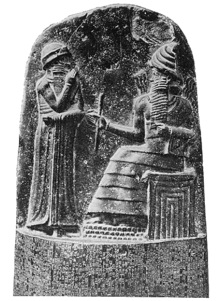
Hammurabi - Photo 2The Code of Hammurabi is a well-preserved Babylonian law code of ancient Mesopotamia, dating back to about 1754 BC. It is one of the oldest deciphered writings of significant length in the world. The sixth Babylonian king, Hammurabi, enacted the code, and partial copies exist on a seven and a half foot stone stele and various clay tablets. The code consists of 282 laws, with scaled punishments, adjusting “an eye for an eye, a tooth for a tooth” (lex talionis)[1] as graded depending on social status, of slave versus free man.[2] Nearly one-half of the code deals with matters of contract, establishing, for example, the wages to be paid to an ox driver or a surgeon. Other provisions set the terms of a transaction, establishing the liability of a builder for a house that collapses, for example, or property that is damaged while left in the care of another. A third of the code addresses issues concerning household and family relationships such as inheritance, divorce, paternity, and sexual behavior. Only one provision appears to impose obligations on an official; this provision establishes that a judge who reaches an incorrect decision is to be fined and removed from the bench permanently.[3] A few provisions address issues related to military service.

The code was discovered by modern archaeologists in 1901, and its editio princeps translation published in 1902 by Jean-Vincent Scheil. This nearly complete example of the code is carved into a basalt stele in the shape of a huge index finger,[4] 2.25 m (7.4 ft) tall. The code is inscribed in the Akkadian language, using cuneiform script carved into the stele. It is currently on display in the Louvre [Museum in Paris], with exact replicas in the Oriental Institute at the University of Chicago, the Clendening History of Medicine Library & Museum at the University of Kansas Medical Center, the library of the Theological University of the Reformed Churches (Dutch: Theologische Universiteit Kampen voor de Gereformeerde Kerken) in the Netherlands, the Pergamon Museum of Berlin, and the National Museum of Iran in Tehran.

Hammurabi ruled for nearly 42 years, from about 1792 to 1749 BC according to the Middle chronology. In the preface to the law, he states, “Anu and Bel called by name me, Hammurabi, the exalted prince, who feared God, to bring about the rule of righteousness in the land, to destroy the wicked and the evil-doers; so that the strong should not harm the weak; so that I should rule over the black-headed people like Shamash, and enlighten the land, to further the well-being of mankind.”[5] On the stone slab are 44 columns and 28 paragraphs that contained 282 laws. Some of these laws follow along the rules of ‘an eye for an eye’.[6]

Source: Retrieved March 29, 2017 from: https://en.wikipedia.org/wiki/Code_of_Hammurabi

—————

VIDEO – Hammurabi’s Code Explained: World History Review – https://youtu.be/BsPbqmYwxso

Published on Jan 7, 2015 – A 5 minute fun overview of Hammurabi’s Code, one of the earliest and most influential legal documents to be pounded out by Mesopotamia. Check out the real doc here http://www.commonlaw.com/Hammurabi.html

  • Category: Education

  • License: Standard YouTube License

Share this post:
, ,
[Top]

Funding the Russell Family Memorial – RIP

Go Lean Commentary

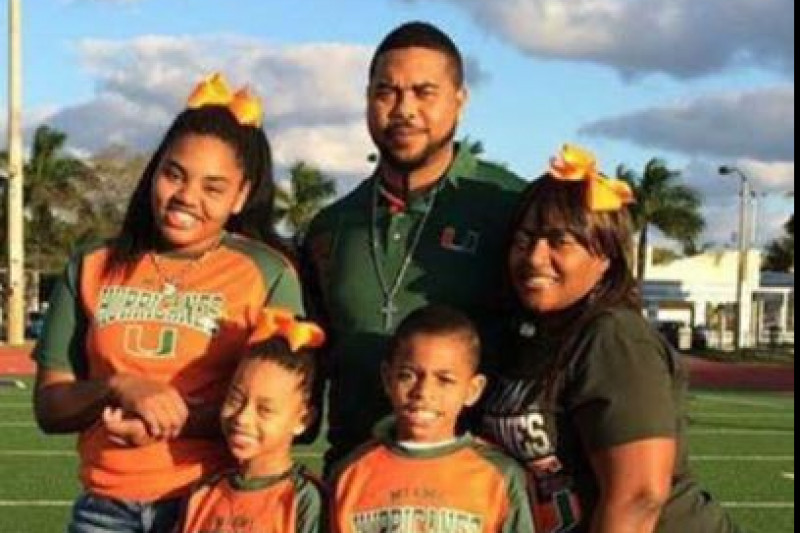
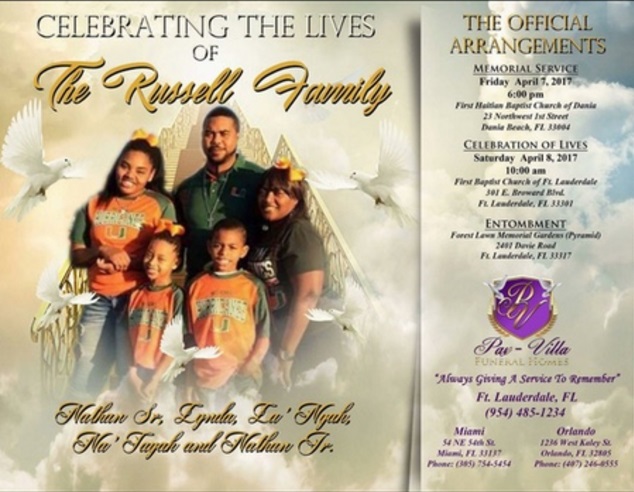
A family of 5 die in a horrific car crash on an American highway.

CU Blog - Funding the Russell Family Memorial - RIP - Photo 1

There is no other way to look at this drama – it is sad. The Bible says “Death rules as King” (Romans 5:17).

The Caribbean Diaspora community in South Florida is now mourning this sad tragedy. We send condolences to all the surviving family and loved-ones of the Russell family, reported in this news story here:

Title: Entire family killed in crash on Florida highway
By: Alex Harris, Miami Herald Staff Reporter

After more than 12 hours in the hospital, a 10-year-old boy succumbed to his injuries, leaving an entire family dead after a horrific car wreck in North Florida on Sunday [March 19].

The Russell family, of Hollywood, was loaded into their 2016 Chrysler 200 and headed home from a trip to Georgia, according to a memorial fundraiser. They were driving south on Interstate 75 when the sedan swerved off the road and into a tractor-trailer stopped on the side of the highway.

Nathan Russell, 37; his 35-year-old wife, Lynda; his 15-year-old daughter, La’Nyah; and one of his twins, 10-year-old Natayah, were killed in the crash. The other twin, 10-year-old Nathan Russell Jr. died hours later at ShandsHospital, according to a Florida Highway Patrol report.

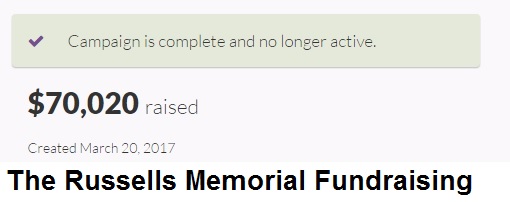
Relatives are raising money for five funerals on GoFundMe and mourning on social media.

Nicole Narae, who said she is Nathan Russell’s cousin, wrote on Facebook that “tomorrow is not promised to anyone.”

“This one hurts. From the Bahamas to Haiti to South Florida…our hearts are broken,” she wrote. “It’s too much for anyone who know them and their household. So unreal to me right now.”

A vigil is was planned at the family’s Coral Springs home, at 9040 Royal Palm Blvd, at 7:30 p.m. on Friday.

CU Blog - Funding the Russell Family Memorial - RIP - Photo 3

———————–

VIDEO – 5 from Hollywood killed in I-75 crash near Gainesville – http://launch.newsinc.com/share.html?trackingGroup=90045&siteSection=90045_pp&videoId=32152391

CU Blog - Funding the Russell Family Memorial - RIP - Photo 2What is a community to do? In this case, what is the Caribbean community to do? (The father is of Bahamian descent and the mother is of Bahamian-Haitian descent).

We cannot bring back the dead, but we can console, support and remember. This is the exact experience for the Caribbean community in South Florida today; they have “come together” and covered this family with love, prayers and the necessary financial support. Advocates for the family created a GoFundMe account for crowd-sourcing to raise $50,000. The end-result: $70,020 was raised … over 4 days.

CU Blog - Funding the Russell Family Memorial - RIP - Photo 4

This shows the power and effectiveness of crowd-funding.

This is not the first tragedy to befall the Caribbean community; and I guarantee you this will not be the last. But notice the alternative fundraising response. Instead of a ‘Bake Sale’ or ‘Car Wash’, advocates for the family conducted a Social Media outreach and raised $70,020 on a crowd-sourcing site.

This fact right here could be a great legacy that comes from this tragic story. The embrace of Internet & Communications Technologies so as to foster the Greater Good.

This objective aligns with the movement behind the book Go Lean… Caribbean. The book and a previous blog-commentary have identified crowd-sourcing as an effective strategy for funding Caribbean projects, especially addressing the Diaspora of the Caribbean communities. These ones have been identified as a potential resources for their time, talent and treasuries. There is only the need for a good delivery system.

The Go Lean book details that delivery. The book serves as a roadmap for the introduction and implementation of the technocratic Caribbean Union Trade Federation (CU) with the charter to facilitate optimization of the region’s societal engines. Imagine not just funding the charitable causes for assuaging family tragedies – like the foregoing news article – but facilitating investment and entrepreneurship as well. Imagine the job-creation!

Early in the Go Lean book, the responsibility to attract investments (funding) and create jobs was identified as an important function for the CU with these pronouncements in the opening Declaration of Interdependence (Pages 14):

xxiv.  Whereas a free market economy can be induced and spurred for continuous progress, the Federation must install the controls to better manage aspects of the economy: jobs, inflation, savings rate, investments and other economic principles. Thereby attracting direct foreign investment because of the stability and vibrancy of our economy.

xxvi.  Whereas the Caribbean region must have new jobs to empower the engines of the economy and create the income sources for prosperity, and encourage the next generation to forge their dreams right at home, the Federation must therefore foster the development of new industries… In addition, the Federation must invigorate the enterprises related to existing industries … – impacting the region with more jobs.

xxvii. Whereas the region has endured a spectator status during the Industrial Revolution, we cannot stand on the sidelines of this new economy, the Information Revolution. Rather, the Federation must embrace all the tenets of Internet Communications Technology (ICT) to serve as an equalizing element in competition with the rest of the world. The Federation must bridge the digital divide and promote the community ethos that research/development is valuable and must be promoted and incentivized for adoption.

The book Go Lean…Caribbean posits that the Caribbean region needs unconventional thinking to overcome the obstacles – the societal defects – that befall our communities. We have an atrocious rate of human flight (reported at 70 percent of the professional classes); so many of our people have left their island homes to now live (and die) in the big-bad United States (and other countries, like Canada and Western Europe). Our citizens leave and we have to accept whatever unforeseen occurrences that befall them.

Crowd-funding is an unconventional funding method – see Appendix – there are benefits for thinking unconventionally and we need to start thinking unconventionally to impact all aspects of Caribbean society – all the engines. This is the charter for the Go Lean book, to effectuate change in the region’s societal engines, allowing for these 3 prime directives:

  • Optimization of the economic engines in order to grow the regional economy to $800 Billion GDP and create 2.2 million new jobs.
  • Establishment of a security apparatus to protect the resultant economic engines.
  • Improve Caribbean governance/administration/oversight to support these engines.

The Go Lean book/roadmap subscribes to crowd-funding and crowd-sourcing as “unconventional thinking” to attract unconventional funding for Caribbean philanthropy and empowerment causes (think entrepreneurial endeavors):

  • The book advocates for cooperatives…
  • The book advocates for incubators… helping/coaching entrepreneurs …
  • The book advocates for the full exploration and exploitation of social media, identifying www.myCarribbean.gov  …

Beyond crowd-funding, there is another compelling lesson to glean from the sad drama in the foregoing news article. As a result of attending the “Vigil” on Friday (March 24), it was disclosed that the cause of the car crash was due to driver fatigue or human error: the father – Nathan Russell – fell asleep behind the wheel.

So now we see that this tragedy was also preventable.

TM BlogMany automakers have now committed to providing technical solutions to transcend human error; they have introduced Self-Driving cars (fully autonomous) and have rolled-out Driver-Assist features, such as lane violation detection. These advancements would have been life-saving for this family of 5. Consider this list of features that help drivers avoid or mitigate collisions:

Title: Cars With Advanced Safety Systems

Key active safety systems include:

  • Automatic emergency braking (AEB) – Brakes are automatically applied to prevent a collision or reduce collision speed.
  • Forward-collision warning (FCW) – Visual and/or audible warning intended alert the driver and prevent a collision.
  • Blind-spot warning (BSW) – Visual and/or audible notification of vehicle in blind spot. The system may provide an additional warning if you use your turn signal when there is a car next to you in another lane.
  • Rear cross-traffic warning – Visual, audible, or haptic notification of object or vehicle out of rear camera range, but could be moving into it.
  • Rear Automatic Emergency Braking (Rear AEB) – Brakes are automatically applied to prevent backing into something behind the vehicle. This could be triggered by the rear cross-traffic system, or other sensors on the vehicle.
  • Lane-departure warning (LDW) – Visual, audible, or haptic warning to alert the driver when they are crossing lane markings.
  • Lane-keeping assist (LKA) – Automatic corrective steering input or braking provided by the vehicle when crossing lane markings.
  • Lane Centering Assist – Continuous active steering to stay in between lanes (active steer, autosteer, etc.)
  • Adaptive Cruise Control – Adaptive cruise uses lasers, radar, cameras, or a combination of these systems to keep a constant distance between you and the car ahead, automatically maintaining a safe following distance. If highway traffic slows, some systems will bring the car to a complete stop and automatically come back to speed when traffic gets going again, allowing the driver to do little more than pay attention and steer.

Source: Posted March 08, 2017; retrieved March 28, 2017 from: http://www.consumerreports.org/car-safety/cars-with-advanced-safety-systems/

The proper motivation and inspiration from this car crash in the foregoing – and the lost of life of the Russell Family – should be a commitment for Research-and-Development of these and other highway safety automation initiatives, and then their deployment in the Caribbean.

This is the commitment of the Go Lean movement.

Previously, these innovations were detailed as being impactful to this roadmap to elevate the Caribbean. See this sample list of previous blog-commentaries that delved into the details and the resultant issues:

https://goleancaribbean.com/blog/?p=10869 Bill Gates: ‘Tax the Robots’
https://goleancaribbean.com/blog/?p=8650 Now it’s Detroit’s turn to rescue Silicon Valley
https://goleancaribbean.com/blog/?p=8294 ‘Olli’ – The Self-Driving Public Transit Vehicle
https://goleancaribbean.com/blog/?p=3384 Plea to Detroit: Less Tech, Please
https://goleancaribbean.com/blog/?p=1277 The need for highway safety innovations – here comes Google
https://goleancaribbean.com/blog/?p=673 Ghost ships – Autonomous cargo vessels without a crew

Martyrs

No one wanted to lose a family like this. This is just an unforeseen occurrence that proves that “bad things happen to good people”; (this point coincides with the Bible’s edict at Ecclesiastes 9:11) But can we use this tragedy as inspiration to power the Caribbean community for progress.

Indeed we can!

The Go Lean book asserts that “a crisis is a terrible thing to waste” (Page 8).

We can memorialize this family, and their tragedy, as stimuli to double-down on the Research-and-Development community ethos, to innovate collision avoidance systems as described above. The Go Lean book defines community ethos as …

… “the fundamental character or spirit of a culture; the underlying sentiment that informs the beliefs, customs, or practices of a group or society; dominant assumptions of a people or period practices of a group or society; dominant assumptions of a people or period”.

The book proceeds to identify a number of community ethos (and related strategies) that the Caribbean region needs to adopt. Consider this sample list:

  • Impact Research & Development (Page 30)
  • Promote Intellectual Property (Page 29)
  • Bridge the Digital Divide (Page 31)
  • Impact Social Media ((Page 111)
  • Foster Technology (Page 197)
  • Improve Transportation (Page 205)
  • Develop a Caribbean Auto Industry (Page 206)

The Russell Family can be “martyrs” for progress … and innovation!

Rest in Peace Nathan, Lynda, La’Nyah, Natayah, and Nathan Jr.. You will not be forgotten!

🙁

Download the free e-Book Go Lean … Caribbean – now!

Sign the petition to lean-in for the roadmap for the Caribbean Union Trade Federation.
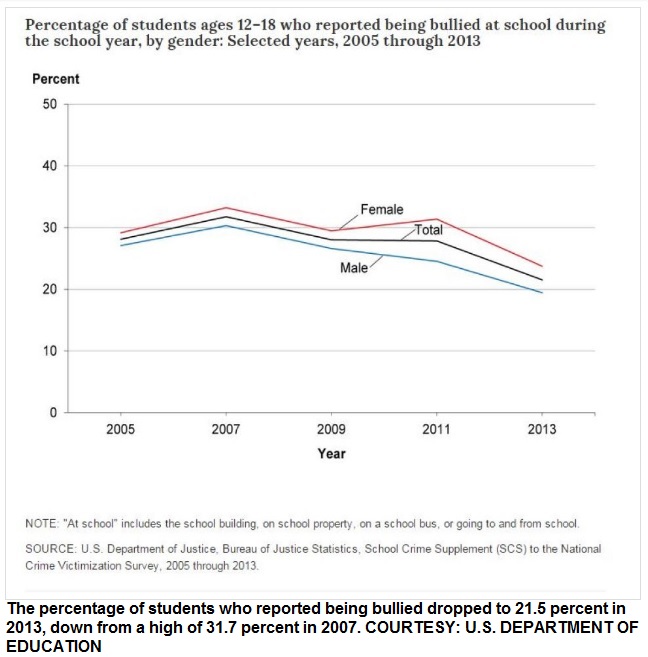
——————–

Appendix – Crowdfunding

Crowdfunding is the practice of funding a project or venture by raising monetary contributions from a large number of people. Crowdfunding is a form of crowdsourcing and of alternative finance. In 2015, it was estimated that worldwide over US$34 billion was raised this way.[1][2]

Although the concept can also be executed through mail-order subscriptions, benefit events, and other methods, it is now often performed via Internet-mediated registries.[3] This modern crowdfunding model is generally based on three types of actors: the project initiator who proposes the idea and/or project to be funded, individuals or groups who support the idea, and a moderating organization (the “platform”) that brings the parties together to launch the idea.[4]

Crowdfunding has been used to fund a wide range for-profit entrepreneurial ventures such as artistic and creative projects, medical expenses, travel, or community-oriented social entrepreneurship projects.[5]
Source: Retrieved March 28, 2017 from: https://en.wikipedia.org/wiki/Crowdfunding


Share this post:
, , , , , ,
[Top]

ENCORE – Legacy of the ‘Buffalo Soldier’ Song

Go Lean Commentary

“Now” is always the right time for great Reggae Music.

The world misses Bob Marley. Not only was he a great musician and entertainer, but a great educator as well. How many people in the Caribbean knew about the ‘Buffalo Soldiers’ in America before he recorded this song?

(Interesting tidbit: the song was released in 1983, after his death in 1981).

This Caribbean family got to stretch our knowledge and appreciation of American History and the Buffalo Soldier in our recent summer vacation to Washington, D.C.. We enjoyed this monument to the original segregated African-American fighting men in the US Army.
CU Blog - Legacy of Buffalo Soldier - Photo 1

CU Blog - Legacy of Buffalo Soldier - Photo 2

Related blog-commentary – A Lesson in History – During the Civil War: Principle over Principal

CU Blog - A Lesson in History - During the Civil War - Principle not Principal - Photo 2

This consideration is presented with an ENCORE of this previous blog-commentary from March 28, 2016 – exactly 1 year ago today. See the previous submission here-now:

————-

Title: A Lesson in History: Buffalo Soldier

Welcome to the New World.

Fighting on arrival; fighting for survival“. – Lyrics from song  Buffalo Soldier by Bob Marley.

CU Blog - A Lesson in History - Buffalo Soldiers - Photo 1This is the experience of the Pan-African Diaspora in all of the Americas. Truly a sad origin history, “Coming to America” as slaves. And yet, the African race has proliferated in much of the Americas, most notably in the Caribbean, where the one-time slaves emerged as the majority population in 29 of the 30 member-states; (the only other New World non-Caribbean country with a majority Black population is Brazil). After a few turns in world political developments, these majorities now run the governments in most of these Caribbean countries.

It took “blood, sweat and tears” to reach this accomplishment. This connotes military action, warfare and sacrifice. The most prominent of Black fighting men in the history of the New World is the Buffalo Soldier.

Caribbean Music legend Bob Marley is to be credited for educating much of the world with this history. In his landmark song Buffalo Soldier; he sang their praises – see lyrics in Appendix A.

See the VIDEO-AUDIO of the song here:

VIDEO-AUDIO – Bob Marley Buffalo Soldier – https://youtu.be/IEpSBsUjY-0

Uploaded on May 2, 2011 – This song was released post humorously in 1983, after Bob Marley’s death.

Just who were the Buffalo Soldiers and what are their connections to the Caribbean? See  this encyclopedia reference here:

From 1863 to the early 20th century, African American units were utilized by the Army to combat the Native Americans during the Indian Wars.[14] The most noted among this group were the Buffalo Soldiers:

This nickname was given to the “Negro Cavalry” by the Native American tribes they fought in the Indian Wars. The term eventually became synonymous with all of the African American regiments formed in 1866. At the end of the U.S. Civil War the army reorganized and authorized the formation of two regiments of black cavalry (the 9th and 10th US Cavalry). Four regiments of infantry (the 38th, 39th, 40th and 41st US Infantry) were formed at the same time. In 1869, the four infantry regiments were merged into two new ones (the 24th and 25th US Infantry). These units were composed of black enlisted men commanded by white officers such as Benjamin Grierson, and occasionally, an African-American officer such as Henry O. Flipper. The “Buffalo Soldiers” served a variety of roles along the frontier from building roads to guarding the U.S. mail.[15]

CU Blog - A Lesson in History - Buffalo Soldiers - Photo 2These regiments served at a variety of posts in the southwest United States and Great Plains regions. During this period they participated in most of the military campaigns in these areas and earned a distinguished record. Thirteen enlisted men and six officers from these four regiments earned the Medal of Honor during the Indian Wars.[16]

After the Indian Wars ended in the 1890s, the regiments continued to serve and participated in the Spanish–American War (including the Battle of San Juan Hill in Cuba), where five more Medals of Honor were earned.[17] 

Source: https://en.wikipedia.org/wiki/Military_history_of_African_Americans#Indian_Wars retrieved March 28, 2019.

All of the New World , despite their European colonizers – Dutch, English, French, Portuguese or Spanish – was developed on the same economic policy: slavery!

This ugly institution was so entrenched that only a model war would effectuate its abolition permanently. That war was waged in the United States (1861 – 1865) as a proxy to all the New World territories. Shortly thereafter, the institution was abolished in the remaining countries that still maintained it in the region, i.e. Brazil. (The US was not the first; that distinction belong to Haiti, which endured a slave rebellion and battles for emancipation; the Spanish colonies followed shortly there-after, then the French, then the British).

The Buffalo Soldiers are most noteworthy because they fought for dignity for all the African race in the New World, though this was not pronounced in their commission, only now gleaned from their legacy. See Trailer below for one of the many movies.

The movement and underlying book Go Lean … Caribbean asserts that Caribbean people must now consider the weight of history and re-assign these islands and coastal states as their only homeland. As a people, the African Diaspora have fought and paid for these lands; they have shed “blood, sweat and tears” for their New World homelands. The ancestral home of Africa is no longer relevant. We now need to “prosper where we are planted” here in the Caribbean. Bob Marley said it best:

I mean it, when I analyze the stench –
To me it makes a lot of sense:
How the Dreadlock Rasta was the Buffalo Soldier,
And he was taken from Africa, brought to America,
Fighting on arrival, fighting for survival.

The freedoms we enjoy today, were not free!

They cost our ancestors and predecessors all they had to offer: a full measure of sacrifice and devotion. They gave of their sons and daughters. This is the important lesson to learn in considering the history of these American fighting men. As our ancestors and predecessors, they paid a steep price – “they punched our tickets” – for progress. We must regard their sacrifice.

This is one reason why we must adopt a National Sacrifice community ethos. This vital quality has been missing for far too long. This is why the region has such a deplorable abandonment rate: no [perception of] pain, no gain; no comprehension of sacrifice, no sense of value.

As a region, we must do better. We must discourage the emigration, brain drain and further societal abandonment.

The book Go Lean…Caribbean and accompanying blogs provide lessons from history in considering the fighting men of the American Civil War. The Caribbean region’s debilitating societal abandonment rate – 70 percent of college educated had fled for foreign shores – is proof positive of the absence and lack of this National Sacrifice ethos.

Early in the Go Lean book, this need for careful review of the history of slavery was acknowledged and then placed into perspective with this pronouncement (Declaration of Interdependence – Page 10):

As the history of our region and the oppression, suppression and repression of its indigenous people is duly documented, there is no one alive who can be held accountable for the prior actions, and so we must put aside the shackles of systems of repression to instead formulate efficient and effective systems to steer our own destiny.

As the colonial history of our region was initiated to create economic expansion opportunities for our previous imperial masters, the structures of government instituted in their wake have not fostered the best systems for prosperity of the indigenous people.

So the consideration of the Go Lean book, is to identify and correct all bad community ethos – the fundamental spirit of our culture – and to foster positive community ethos (such as National Sacrifice and deferred gratification). This point was also pronounced in the opening Declaration of Interdependence (Page 13) with this statement:

xix. Whereas our legacy in recent times is one of societal abandonment, it is imperative that incentives and encouragement be put in place to first dissuade the human flight, and then entice and welcome the return of our Diaspora back to our shores. This repatriation should be effected with the appropriate guards so as not to imperil the lives and securities of the repatriated citizens or the communities they inhabit. The right of repatriation is to be extended to any natural born citizens despite any previous naturalization to foreign sovereignties.

This book  Go Lean…Caribbean serves as a roadmap for the introduction and implementation of the technocratic Caribbean Union Trade Federation (CU) to spearhead the elevation of Caribbean society. The book advocates learning lessons from many events and concepts in history, covering all societal engines: economics, security and governance. The roadmap seeks to reboot these engines to ensure that all Caribbean stakeholders have the opportunity for life, liberty and the pursuit of happiness with no abusive exploitation of any ethnic group; no suppression, repression or oppression of any people: African or not!

The Go Lean roadmap seeks to employ “best-practices” to impact the CU prime directives; identified with the following 3 statements:

  • Optimization of the economic engines in order to grow the regional economy to $800 Billion & create 2.2 million new jobs.
  • Establishment of a security apparatus to protect the resultant economic engines and ensure the respect of human rights and public safety.
  • Improve Caribbean governance to support these engines.

The Go Lean book stresses the community ethos, strategies, tactics, implementations and advocacies to reboot, reform and transform the eco-systems of Caribbean society. These points are detailed in the book as follows:

Community Ethos – Deferred Gratification Page 21
Community Ethos – Economic Principles – People Choose Page 21
Community Ethos – Economic Principles – People Respond to Incentives in Predictable Ways Page 21
Community Ethos – Economic Systems Influence Individual Choices Page 21
Community Ethos – Economic Principles – The Consequences of Choices Lie in the Future Page 21
Community Ethos – Governing Principles – Lean Operations Page 24
Community Ethos – Governing Principles – Cooperatives Page 25
Community Ethos – Ways to Impact the Future Page 26
Community Ethos – Ways to Impact a Turn-Around Page 33
Community Ethos – Ways to Promote Happiness Page 36
Community Ethos – Ways to Impact the Greater Good Page 37
Strategy – Vision – Confederate 30 Member-States Page 45
Strategy – Mission – Enact a Defense Pact with Militia and Naval Forces Page 45
Strategy – Mission – Keep the next generation at home Page 46
Tactical – Confederating a Permanent Union Page 63
Tactical – Fostering a Technocracy Page 64
Implementation – Assemble – Incorporating all the existing regional military organizations Page 96
Implementation – Ways to Pay for Change Page 101
Implementation – Security Initiatives at Start-up Page 103
Implementation – Ways to Deliver Page 109
Implementation – Reasons to Repatriate to the Caribbean Page 118
Planning – 10 Big Ideas for the Caribbean – Confederation Without Sovereignty Page 127
Planning – Ways to Make the Caribbean Better Page 131
Advocacy – Ways to Grow the Economy Page 151
Advocacy – Ways to Create Jobs Page 152
Advocacy – Ways to Better Manage the Social Contract Page 170
Advocacy – Ways to Improve Homeland Security Page 181
Advocacy – Ways to Impact the Diaspora Page 217
Advocacy – Ways to Preserve Caribbean Heritage Page 218
Advocacy – Ways to Protect Human Rights Page 220

There are other lessons for the Caribbean to learn from considering history; the following previous blog/commentaries apply:

https://goleancaribbean.com/blog/?p=7682 Frederick Douglass: Role Model for Single Cause – Abolition
https://goleancaribbean.com/blog/?p=6722 A Lesson in History – After the Civil War: Birthright Mandates
https://goleancaribbean.com/blog/?p=6720 A Lesson in History – During the Civil War: Principle over Principal
https://goleancaribbean.com/blog/?p=6718 A Lesson in History – Before the Civil War: Compromising Human Rights
https://goleancaribbean.com/blog/?p=5695 Repenting, Forgiving and Reconciling the Past
https://goleancaribbean.com/blog/?p=5333 A Lesson in History – Legacies: Cause and Effect
https://goleancaribbean.com/blog/?p=5183 A Lesson in History – Cinco De Mayo
https://goleancaribbean.com/blog/?p=5123 A Lesson in History – Royal Charter: Zimbabwe -vs- South Africa
https://goleancaribbean.com/blog/?p=4971 A Lesson in History – Royal Charter: Truth & Consequence
https://goleancaribbean.com/blog/?p=4935 A Lesson in History: the ‘Grand Old Party’ Abolition Roots
https://goleancaribbean.com/blog/?p=2480 A Lesson in History: Community Ethos of WW II
https://goleancaribbean.com/blog/?p=2297 A Lesson in History: Booker T versus Du Bois
https://goleancaribbean.com/blog/?p=1531 A Lesson in History: 100 Years Ago Today – World War I
https://goleancaribbean.com/blog/?p=789 A Lesson in History: America’s War on the Caribbean

The concepts in this commentary are more profound than just the lyrics of a reggae song. It is bigger than music, it relates to life and legacy. The recent legacy of the Afro-Caribbean community is one of dysfunction and abandonment. But the ancient history – Buffalo Soldiers in particular – should give us pause and cause to reflect and reform our commitment to a National Sacrifice ethos.

No appreciation, no sacrifice; no sacrifice, no victory!

The Go Lean roadmap seeks to reform and transform the Caribbean societal engines, urging the adoption of new positive community ethos, such as National Sacrifice. This is an expression of deferred gratification, choosing to focus more on the future than on the present. The Go Lean book relates that the “African Diaspora experience in the New World is one of future gratification, as the generations that sought freedom from slavery knew that their children, not them, would be the beneficiaries of that liberty. This ethos continued with subsequent generations expecting that their “children” would be more successful in the future than the parents may have been”. Deferred gratification is a form of sacrifice.

We should value this sacrifice. Such gratitude makes our community better, more resilient and more long suffering.

Now is the time for all stakeholders in the Caribbean to show proper appreciation for the sacrifices by leaning-in to this roadmap for Caribbean empowerment. All the empowerments in this roadmap require people to fight for their homeland. We can learn so much from the Buffalo Soldiers:

Fighting on arrival, fighting for survival;
Driven from the mainland to the heart of the Caribbean.

If you know your history,
Then you would know where you coming from,
Then you wouldn’t have to ask me,
Who the ‘eck do I think I am.

The Go Lean quest is simple, learn from history and work to make the Caribbean region a better place to live, work and play. 🙂

Download the book Go Lean … Caribbean – now!

Sign the petition to lean-in for the roadmap for the Caribbean Union Trade Federation.
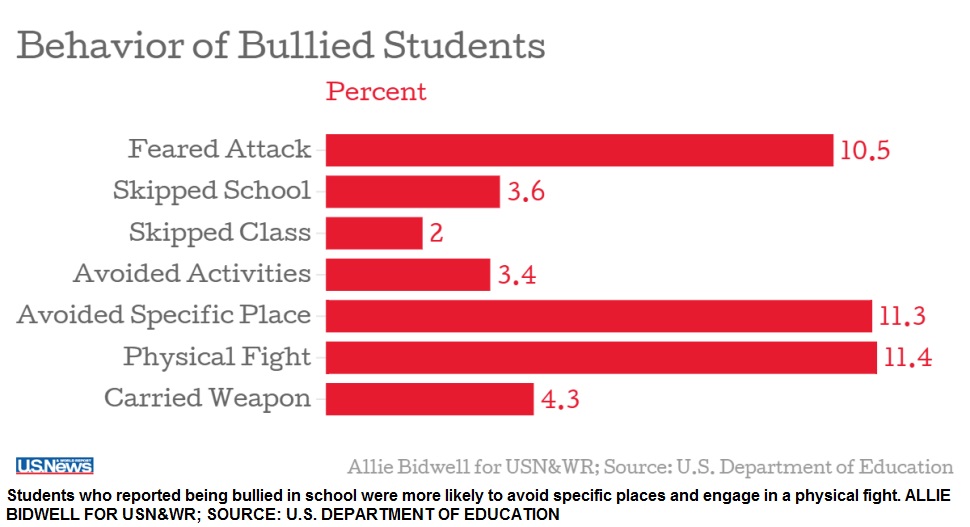
———–

Appendix A – Song Buffalo Soldier Lyrics – Sang by Bob Marley

Buffalo Soldier, Dreadlock Rasta:
There was a Buffalo Soldier in the heart of America,
Stolen from Africa, brought to America,
Fighting on arrival, fighting for survival.

I mean it, when I analyze the stench –
To me it makes a lot of sense:
How the Dreadlock Rasta was the Buffalo Soldier,
And he was taken from Africa, brought to America,
Fighting on arrival, fighting for survival.

Said he was a Buffalo Soldier, Dreadlock Rasta –
Buffalo Soldier in the heart of America.

If you know your history,
Then you would know where you coming from,
Then you wouldn’t have to ask me,
Who the ‘eck do I think I am.

I’m just a Buffalo Soldier in the heart of America,
Stolen from Africa, brought to America,
Said he was fighting on arrival, fighting for survival;
Said he was a Buffalo Soldier win the war for America.

Dreadie, woy yoy yoy, woy yoy-yoy yoy,
Woy yoy yoy yoy, yoy yoy-yoy yoy!
Woy yoy yoy, woy yoy-yoy yoy,
Woy yoy yoy yoy, yoy yoy-yoy yoy!
Buffalo Soldier troddin’ through the land, wo-ho-ooh!
Said he wanna ran, then you wanna hand,
Troddin’ through the land, yea-hea, yea-ea.

Said he was a Buffalo Soldier win the war for America;
Buffalo Soldier, Dreadlock Rasta,
Fighting on arrival, fighting for survival;
Driven from the mainland to the heart of the Caribbean.

Singing, woy yoy yoy, woy yoy-yoy yoy,
Woy yoy yoy yoy, yoy yoy-yoy yoy!
Woy yoy yoy, woy yoy-yoy yoy,
Woy yoy yoy yoy, yoy yoy-yoy yoy!

Troddin’ through San Juan in the arms of America;
Troddin’ through Jamaica, a Buffalo Soldier# –
Fighting on arrival, fighting for survival:
Buffalo Soldier, Dreadlock Rasta.

Woy yoy yoy, woy yoy-yoy yoy,
Woy yoy yoy yoy, yoy yoy-yoy yoy!
Woy yoy yoy, woy yoy-yoy yoy,
Woy yoy yoy yoy, yoy yoy-yoy yoy! [fadeout]
———–

Appendix B – VIDEO – Buffalo Soldiers Trailer 1997 – https://youtu.be/Om_BrJhu4gQ

Published on Mar 9, 2015 – Buffalo Soldiers Trailer 1997; Director: Charles Haid; Starring: Danny Glover, Bob Gunton, Carl Lumbly, Tom Bower, Gabriel Casseus.
Official Content From Warner Home Video

Share this post:
, ,
[Top]

Caribbean Solidarity with the Irish People – ENCORE

Go Lean Commentary

Today is the annual St. Patrick’s Day observation. Celebrating it does not mean “we are Irish”, it means we have “Solidarity with the Irish People” and culture. This is a BIG deal …

… the Irish has endured a lot and now they thrive.

This is a lesson for the Caribbean to apply, as we too have endured … and want to thrive. See this Encore of the blog-commentary from March 17, 2015 here-now:

=============

Title: The ‘Luck of the Irish’ – Past, Present and Future

Today (March 17) is Saint Patrick’s Day. Why do people wear green?

It’s a move of solidarity for Irish people and culture.

This is a big deal considering the real history.

This subject also has relevance for the Caribbean as Saint Patrick’s Day is a public holiday in the British Caribbean Territory of Montserrat, in addition to the Republic of Ireland,[10] Northern Ireland,[11] and the Canadian province of Newfoundland and Labrador. While not a holiday elsewhere, this day is venerated by the Irish Diaspora around the world, especially in Great Britain, Canada, Argentina, Australia, New Zealand and the United States. See a tribute here from an American job site:

Title: Happy St. Patrick’s Day!
Southfield, Michigan – We hope you are showing your Irish spirit by wearing green!

Here are 5 fun facts about St. Patrick’s Day:

CU Blog - The Luck of the Irish - Past, Present and Future - Photo 2

1. Of course with St. Patrick’s Day comes the massive appearance of shamrocks. Shamrocks have definitely become a central symbol for this day. In the olden days in Ireland, the shamrock was seen as sacred. The four leaves of the clover represent faith, love, hope, and of course, luck.

2. Good luck finding a four-leaf clover. The odds of finding a four-leafer on your first try are 1 in 10,000.

3. St. Patrick’s Day was traditionally a dry holiday. Irish law between 1903 and 1970 made St. Patrick’s Day a religious holiday for the entire country, which meant pubs were closed for the day. Today, St. Patrick’s Day is arguably one of the largest drinking holidays with an estimated $245 million spent on beer for March 17.

4. Green or Blue? Though green is a very popular color on St. Patrick’s Day, the original color that was very popular and often related back to St. Patrick was not green, but blue. In Irish folklore, green is known as being worn by immortals, and often signified new life and crop growth.

5. The Irish flag. The flag representing Ireland is green, white and orange. The green symbolizes the people of the south, and orange, the people of the north. White represents the peace that brings them together as a nation.

CU Blog - The Luck of the Irish - Past, Present and Future - Photo 5

Source: Credit Acceptance Internal Staff Intranet site; retrieved March 17, 2015.

This subject also provides a case study for the Caribbean, as the Irish Diaspora is one of the most pronounced in the world. This is the model of what we, in the Caribbean, do not want to become.

According to information retrieved from Wikipedia, since 1700 between 9 and 10 million people born in Ireland have emigrated, including those that went to Great Britain. This is more than the population of Ireland at its historical peak in the 1830s of 8.5 million. From 1830 to 1914, almost 5 million went to the United States alone.

After 1840, emigration from Ireland became a massive, relentless, and efficiently managed national enterprise.[1] In 1890 40% of Irish-born people were living abroad. By the 21st century, an estimated 80 million people worldwide claimed some Irish descent; which includes more than 36 million Americans who claim Irish as their primary ethnicity. [2]

CU Blog - The Luck of the Irish - Past, Present and Future - Photo 1

The city of Chicago, Illinois dyes the river green in tribute for St. Patrick’s Day

CU Blog - The Luck of the Irish - Past, Present and Future - Photo 4

The White House in full St. Patrick Day tribute mode

CU Blog - The Luck of the Irish - Past, Present and Future - Photo 3

London; on the Thames River

The Diaspora, broadly interpreted, contains all those known to have Irish ancestors, i.e., over 100 million people, which is more than fifteen times the population of the island of Ireland, which was about 6.4 million in 2011.

In July 2014, the Irish Government appointed Jimmy Deenihan as Minister of State for the Diaspora.[3]

Why this history?

In 1801 Ireland acceded to the United Kingdom (UK).

The Irish Parliament, charged with the heavy burden of directing Ireland’s destiny, was abolished in 1801 in the wake of the Republican United Irishmen Rebellion and Ireland became an integral part of a new United Kingdom of Great Britain and Ireland under the Act of Union. Without the power to direct their own affairs, the island found itself victimized by fate and bad fortune.

The Great Famine of Ireland during the 1840s saw a significant number of people flee from the island to all over the world. Between 1841 and 1851 as a result of death and mass emigration (mainly to Great Britain and North America) Ireland’s population fell by over 2 million. In the western province of Connacht alone, the population fell by almost 30%.

The Go Lean … Caribbean book relates that this is also the current disposition of so many of the Caribbean Diaspora; (10 million abroad compared to 42 million in the region). These ones love their country and culture, but live abroad; they want conditions to be different (better) in their homelands to consider any repatriation. The book details where in Puerto Rico, their on-island population in 2010 was 3,725,789, but Puerto Ricans living abroad in the US mainland was 4,623,716; (Page 303).

In a previous blog/commentary, a review of a book highlighted some strong lessons from Ireland’s past that are illustrative for the Caribbean’s future. The book is by Professor Richard S. Grossman entitled: Wrong: Nine Economic Policy Disasters and What We Can Learn from Them. The following excerpt is extracted from the book review by the London School of Economics:

As an example, we can take a closer look at the chapter on the Irish Famine, (1 of the 9 lessons), which took place from 1845-1852. Grossman not only describes what happened, but puts it into the perspective of  other famines, starting from the BCE period. In terms of absolute numbers, the Great Hunger in Ireland was not the worst famine recorded but it did tragically lead to the death of twelve per cent of Irish population, forcing many others to emigrate. The author details how the potato – which originated in the Americas – arrived to a fertile Ireland, and that the poorest third of the Irish population consumed up to twelve pounds of potatoes per day (per capita). Only after this introduction the economic policy is mentioned. Grossman compares the responses of two Prime Ministers of the United Kingdom to the famine: Sir Robert Peel and Lord John Russell. Russell was so committed to the limited government intervention that he refused to buy food for the starving masses in order not to disturb the free formation of prices in the market. Similarly, he refused to increase the scale of public works that would give jobs to Irish workers so as not to disturb the free labour market. The paradox is that when the Great Famine occurred, Ireland was not a poor country. The Famine would not have been so ‘great’ if it were not for the free market ideology followed by the policymakers at that time. As it turns out, leaving things to the invisible hand of market is not always an optimal solution.

The Go Lean book serves as a roadmap for the introduction and implementation of the Caribbean Union Trade Federation (CU), a technocratic federal government to administer and optimize the economic/security/governing engines of the 30 member Caribbean states. The quest is to provide a better direct stewardship, applying lessons-learned from case studies like Ireland in the 1800’s.

Ireland has fared better since those dire days of the potato famine, but still its people, the Diaspora, endured a lot of misery, resistance and discrimination in their foreign homes. As reported in this previous commentary, the usual path for new immigrants is one of eventual celebration, but only after a “long train of abuses”: rejection, anger, protest, bargaining, toleration and eventual acceptance. Wearing green today – or any other March 17th’s – is a statement of acceptance and celebration of the Irish; as a proud heritage for what they have endured and accomplished.

The island of Ireland today is comprised of 2 countries: the independent Republic of Ireland and the territory of Northern Ireland, a member-state in the United Kingdom, with England, Wales and Scotland; (last year Scotland conducted a referendum in consideration of seceding from the UK; the referendum failed).

The Republic of Ireland ranks among the wealthiest countries in the world in terms of GDP per capita.[11] After joining the European Union, Ireland enacted a series of liberal economic policies that resulted in rapid economic growth. The country achieved considerable prosperity from 1995 to 2007, during which it became known as the Celtic Tiger. This was halted by an unprecedented financial crisis that began in 2008, in conjunction with the concurrent global economic crash.[12][13] Today, the primary source of tourism to Ireland – a primary economic driver – is from their Diaspora; see VIDEO in the Appendix below.

There are a lot of lessons in this issue for the Caribbean. Ireland did need better societal engines, economic-security-governance; this was accomplished with their assimilation into the EU. If only that option was available in the past.

This is the exact option being proposed now by the Go Lean roadmap, to emulate and model the successes of the European Union with the establishment of the Caribbean Union. It was not independence that brought success to Ireland, but rather interdependence with their neighboring countries “in the same boat”. This is the underlying theme behind the Go Lean movement, to “appoint new guards” to make the Caribbean homeland a better place to live, work and play. This Declaration of Interdependence is pronounced at the outset of the Go Lean book (Pages 11 & 13):

xi.  Whereas all men are entitled to the benefits of good governance in a free society, “new guards” must be enacted to dissuade the emergence of incompetence, corruption, nepotism and cronyism at the peril of the people’s best interest. The Federation must guarantee the executions of a social contract between government and the governed.

xix. Whereas our legacy in recent times is one of societal abandonment, it is imperative that incentives and encouragement be put in place to first dissuade the human flight, and then entice and welcome the return of our Diaspora back to our shores. This repatriation should be effected with the appropriate guards so as not to imperil the lives and securities of the repatriated citizens or the communities they inhabit. The right of repatriation is to be extended to any natural born citizens despite any previous naturalization to foreign sovereignties.

xx. Whereas the results of our decades of migration created a vibrant Diaspora in foreign lands, the Federation must organize interactions with this population into structured markets. Thus allowing foreign consumption of domestic products, services and media, which is a positive trade impact. These economic activities must not be exploited by others’ profiteering but rather harnessed by Federation resources for efficient repatriations.

xxv. Whereas the legacy of international democracies had been imperiled due to a global financial crisis, the structure of the Federation must allow for financial stability and assurance of the Federation’s institutions. To mandate the economic vibrancy of the region, monetary and fiscal controls and policies must be incorporated as proactive and reactive measures. These measures must address threats against the financial integrity of the Federation and of the member-states.

The Go Lean movement declares solidarity with the culture and the people of Ireland.

We too have endured a lot of misery in our foreign abodes. We would rather prosper where we were planted at home in our homeland, but due to economic, security and governing dysfunctions have had to emigrate.

The Go Lean book details a roadmap with turn-by-turn directions for transforming our homeland. The following is a sample of the community ethos, strategies, tactics, implementations and advocacies to impact the Caribbean region for this turnaround:

Community Ethos – Economic Principle – Economic Systems Influence Choices & Incentives Page 21
Community Ethos – Economic Principle – Consequences of Choices Lie in the Future Page 21
Community Ethos – Job Multiplier Page 22
Community Ethos – Lean Operations Page 24
Community Ethos – Ways to Promote Happiness Page 36
Community Ethos – Ways to Impact the Greater Good Page 37
Strategy – Vision – Confederating a Non-Sovereign Union Page 45
Strategy – Mission – Keep the next generation at home Page 46
Tactical – Fostering a Technocracy Page 64
Tactical – Tactics to Forge an $800 Billion Economy Page 67
Tactical – Separation of Powers Page 71
Implementation – Ways to Pay for Change Page 101
Implementation – Ways to Deliver Page 109
Implementation – Reasons to Repatriate to the Caribbean Page 118
Implementation – Ways to Promote Independence – Interdependence Page 120
Planning – 10 Big Ideas – A Single Market in the G-20 Page 127
Planning – Ways to Make the Caribbean Better Page 131
Planning – Ways to Better Manage Image – Not as Unwanted Aliens Page 133
Advocacy – Ways to Grow the Economy Page 151
Advocacy – Ways to Create Jobs Page 152
Advocacy – Ways to Improve Governance Page 168
Advocacy – Ways to Enhance Tourism Page 190
Advocacy – Ways to Impact the Diaspora Page 217
Advocacy – Ways to Impact the British Territories Page 245

The Go Lean book posits (Page 3) that the Caribbean islands are among the greatest addresses in the world. But instead of the world “beating a path” to these doors, the people of the Caribbean have “beat down their doors” to get out; despite the absence of any famine, or war for that matter. This abandonment must stop … now!

May we learned from the history of Ireland in our quest to make our homeland a better place to live, work and play. And may we have the luck of the Irish, as conveyed in this Classic Irish Blessing:

May you always have…
Walls for the winds
A roof for the rain
Tea beside the fire
Laughter to cheer you
Those you love near you
And all your heart might desire.

Download the book Go Lean … Caribbean – now!

Sign the petition to lean-in for the roadmap for the Caribbean Union Trade Federation.
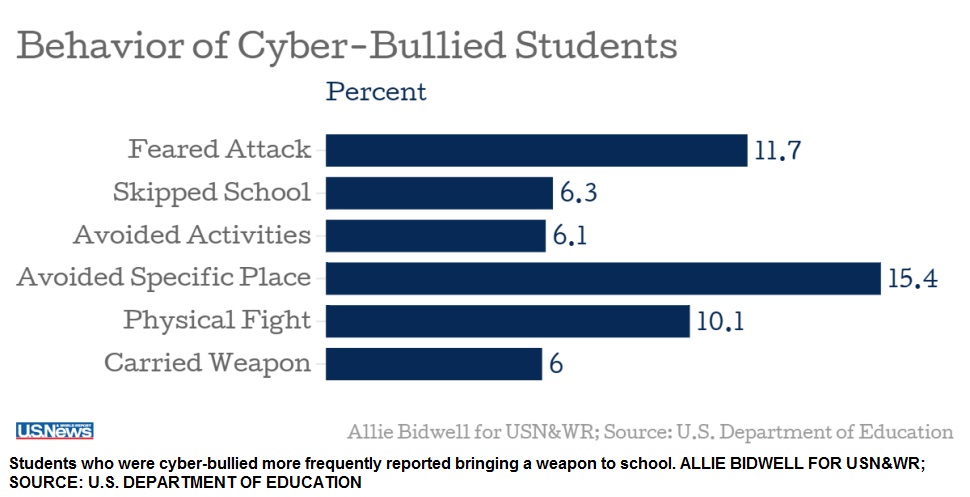
——–

Appendix- VIDEO: Happy St Patrick’s Day from Discover Ireland – https://youtu.be/J680_aKF5zc

Uploaded on Mar 8, 2011 – This short film is an ode to Ireland on St. Patrick’s Day (which means we used a little bit of poetic licence!). Hope you all enjoy it. Happy St Patrick’s day!
http://www.discoverireland.com/


Share this post:
, , , ,
[Top]

Caribbean Roots: John Carlos – The Man. The Moment. The Movement

Go Lean Commentary

The title: “The Man. The Moment. The Movement” is more than just a catch-phrase, its a recipe for successfully transforming society.

Do you remember this Sports Moment That Changed the World?

CU Blog - Caribbean Roots - John Carlos among 'Three Proud People' - Photo 1It was at the 1968 Olympics in Mexico City. Despite all the attempts by the organizers to keep the Games apolitical and free-of-conflict, the Moment got political and conflicted … and impactful. This was when the Man, John Carlos, the bronze-medal winner in the 200 meters at the 1968 Summer Olympics gave his Black Power salute on the podium with gold-medalist Tommie Smith; this galvanized the Movement – the Civil Rights Movement in general and the Olympic Project for Human Rights in particular. The Movement caused a lot of controversy.

What is not known about this moment is that this Man, John Carlos, has Caribbean roots.

We are so proud!

Consider his biography reference here:

Title: John Carlos
John Wesley Carlos (born June 5, 1945) is an American former track and field athlete and professional football player. He was the bronze-medal winner in the 200 meters at the 1968 Summer Olympics and his Black Power salute on the podium with Tommie Smith caused much political controversy. He went on to tie the world record in the 100 yard dash and beat the 200 meters world record (although the latter achievement was never certified). After his track career, he enjoyed a brief stint in the Canadian Football League but retired due to injury.[1]

He became involved with the United States Olympic Committee and helped to organize the 1984 Summer Olympics. Following this he became a track coach at Palm SpringsHigh School. He was inducted into the USA Track & Field Hall of Fame in 2003.

He is the author, with sportswriter Dave Zirin, of The John Carlos Story: The Sports Moment That Changed the World, published in 2011 by Haymarket Books.

Early life and education
Born in Harlem, New York, to Cuban[2] parents, John Carlos was a gifted high school athlete and outstanding student who went on to study at East Texas State University on a full track-and-field scholarship. His victories in the 100- and 200-meter dash and as a member of the 4×400-meter relay helped lead ETSU to the 1967 Lone Star Conference Championship. After his first year, Carlos enrolled at San Jose State University where he was trained by future National Track & Field Hall of Fame coach, Lloyd (Bud) Winter.

Carlos was awarded an honorary doctorate from CaliforniaStateUniversity in 2008. In 2012, he was awarded honorary doctorates from his alma maters Texas A&M University-Commerce (formerly EastTexasStateUniversity) and San Jose State University.

Career
At the 1968 Olympic Trials, Carlos won the 200-meter dash in 19.92 seconds, beating world-record holder Tommie Smith and surpassing his record by 0.3 seconds. Though the record was never ratified because the spike formation on Carlos’ shoes (“brush spikes”) was not accepted at the time, the race reinforced his status as a world-class sprinter.

Carlos became a founding member of the Olympic Project for Human Rights (OPHR), and originally advocated a boycott of the 1968 Mexico City Olympic Games unless four conditions were met: withdrawal of South Africa and Rhodesia from the games, restoration of Muhammad Ali’s world heavyweight boxing title, Avery Brundage to step down as president of the IOC, and the hiring of more African-American assistant coaches. As the boycott failed to achieve support after the IOC withdrew invitations for South Africa and Rhodesia, he decided, together with Smith, to participate but to stage a protest in case he received a medal.[3] Following his third-place finish behind fellow American Smith and Australian Peter Norman in the 200 at the Mexico Olympics, Carlos and Smith made headlines around the world by raising their black-gloved fists at the medal award ceremony. Both athletes wore black socks and no shoes on the podium to represent African-American poverty in the United States. In support, Peter Norman, the silver medalist who was a white athlete from Australia, participated in the protest by wearing an OPHR badge.

IOC president Avery Brundage deemed a political statement unfit for the apolitical, international forum the Olympic Games was supposed to be. In an immediate response to their actions, he ordered Smith and Carlos suspended from the U.S. team and banned from the Olympic Village. Many supporters, however, praised the men for their bravery. The men’s gesture had lingering effects for all three athletes, the most serious of which were death threats against Carlos, Smith, and their families. Although it has been reported that Carlos and Smith were stripped of their medals, Carlos has indicated this is not true and his medal is with his mother.[4]

Carlos had his greatest year in track and field in 1969, equaling the world 100-yard record of 9.1, winning the AAU 220-yard run, and leading San JoseState to its first NCAA championship with victories in the 100 and 220 and as a member of the 4×110-yard relay. He was featured on the cover of Track and Field News May 1969 issue.[5]

CU Blog - Caribbean Roots - John Carlos among 'Three Proud People' - Photo 3

Source: Wikipedia Online Encyclopedia – Retrieved March 8, 2017 from: https://en.wikipedia.org/wiki/John_Carlos

This biography should go back further to include John Carlos’s Cuban-Caribbean heritage, that of his father:

John Carlos is of Cuban descent and can understand Spanish. His father, Earl Carlos Sr., was a businessman (a cobbler or shoe repair) and World War I Veteran [fighting for the US]. He was a man proud of his appearance in all circumstances and carried himself in a dignified way. He had to work hard from an early age (like most African-American children of his era, especially in the South of the country) and his parents were born as slaves; [(slavery ended in Cuba in 1886 and he was born in 1895)]. When he participated in World War I, he got wounded and received the Medal of Citation Award for his stoicism on the battlefield. When he returned back home, he had to face racial hatred, economic discrimination, the Roaring Twenties, the Stock Market Crash in 1929, the Dust Bowl in the mid-thirties and World War II. Despite the difficulties, he never became bitter. He met his future wife, Vioris Lawrence (an African-American woman), in 1941, who was later John Carlos’ mother. – MegaDiversities.

This was quite a legacy to absorb. John Carlos had the molding from his proud Cuban father, who left a segregated Cuba and emigrated for a better life in the metropolitan area of New York. Harlem – think Harlem Renaissance – was a better place to be a Black Man than the Jim Crow South or the minority-ruled Cuba. When he stood in defiance in that Moment in 1968, John Carlos was protesting the blatant racism that he experienced and his father before him – Earl Carlos died later, in May 1969. The Movement to uplift oppressed people had began on the global stage, but the Black Power salute was a local action in solidarity with all those oppressed before and after this Moment. He understood that ‘Sport and Politics’ are intrinsically linked, whether right or wrong.

The movement behind the book Go Lean … Caribbean recognizes the significance of that Moment and the stage for its execution, the celebrated Olympic Games. The Go Lean book applauds the struggle for Civil Rights and the dynamics of sports. It posits that sports can foster a great influence – and even wealth – in modern society. See this in Appendix B VIDEO.

The sportsman can “rule in people’s hearts”. People marvel at their athletic prowess – billions may be watching on live or tape-delayed TV broadcasts – the participants can forge a positive image and wield power and influence; think:

We can add John Carlos and Tommie Smith to that list.

This Moment was in 1968; that was a pivotal year, so many things happened, mostly bad; consider this sample:

  • Martin Luther King was assassinated, April 4
  • Robert Kennedy was assassinated, June 6
  • Vietnam War Protests – Summer
  • Chicano (Hispanic) Movement and Red Power (Native Americans) Movement Summer Protests
  • Mexico City Olympics – October 12 – 27
  • James Brown song: Say it loud: “I’m Black and I’m Proud”
    CU Blog - Caribbean Roots - John Carlos among 'Three Proud People' - Photo 2

According to John Carlos, in a recent interview describing the disposition on the ground there in Mexico City: “it was high tension, drama, a powder keg … prior to the Olympics there was a massacre that killed hundreds of young activists”.

That was 1968 … all around; consider the experience of one Californian “back in that day”:

1968 was an exciting time for me. I think it was when my activism was born. Before that time things were pretty rosy. Even though I knew about the [Black] Panthers and had seen Dr. [Martin Luther] King, living in LA you were kind of removed. I do remember expressing a desire to join the Freedom Rides, but my Pastor said ‘No’.

1968 was [when] my friends were coming home from Vietnam or refusing to go.

I remember loaning my boyfriend $$ to go to Philly to go before the Draft Board to argue as a Conscientious Objector.  He won and we were so happy.

I remember the day Dr. King was killed and going that night to a service with friends. I remember being so sad and being glued to the TV.

I remember the horror of Bobby Kennedy being killed. I was at work and heard the news.

I remember being so proud of Tommy Smith and John Carlos at the Olympics.

My living room had two posters. One of them on the stand with the black gloved fists held high and the other was [Black Panther Party co-founder] Huey Newton sitting in that Peacock Chair.

Those were the days when I was very active in the Watts Summer Festival.  Tommy Jacquette, the founder, was a friend, and we all gathered together to make the event a success. …

I would say that 1968 was the year that I became the person I am today. – Bunny Withers, Los Angeles.

The reality of human rights abuses in America in 1968 was bad, worse or dire – those were the only options. The Black community was far from being treated as equal citizens in that society. But truth be told, other minority groups in the country also experienced oppression, repression and suppression. America was the greatest country on the planet for those that qualified; those that were:

White, Anglo-Saxon, Rich, Male and Straight

Anyone else – everyone else – needed civil rights empowerments.

Fortunately, this is not the conditions of the America of today. It is now a better place to live, work and play. How did this society go from “there to here”?

It took the strenuous efforts of advocates: individuals – Men and Women – and organizations, exploiting Moments and Movements for maximum exposure. They appealed to the public, appealed to their better nature. John Carlos was one such individual.

The third person on the dais, silver medalist Peter Norman of Australia, can also be classified as an advocate fighting to assuage human rights abuses – he also wore a badge of the Olympic Project for Human Rights – he was in solidarity with Smith and Carlos. See the profile VIDEO on his activities in Appendix A below.

The Caribbean has a problem today that we did not have back in 1968. The majority populations of the Caribbean region is/was Black-and-Brown. America was not inviting to this demographic, so our people rarely immigrated to the US. Now with the above-referenced civil rights empowerments, America is now a more fair society for all people. Our Caribbean people now “beat down their doors” to flee to America, and other places – Go Lean book Page 3.

The US is now a “frienemy” for us! We are trading partners; we are aligned; we are allies; many of our students studied there; many of our Diaspora live there. We now have to compete to dissuade our young people from setting their sights on American shores as a refuge and destination of their hopes and dreams. No society can survive with a high abandonment rate – the book Go Lean … Caribbean reports that 70% brain drain rate among our professional populations.

We are failing and need advocates of our own.

We need new role models, with the courage of John Carlos, to help us “battle” against the “push-and-pull” factors that draw many Caribbean citizens away from home to the US. We need Men to seize the Moment and advance this Movement.

The Go Lean movement pursues the quest to elevate the Caribbean region through empowerments in economics, security and governance. Since 29 of the 30 Caribbean member-states (“St. Barths” is the only exception) have majority Black populations, the book pushes further on this subject of racism, positing that it is easier for Caribbean citizens to stay home and effect change in their homelands than to go to America and try to remediate that society. The book therefore asserts that the region can turn-around from failing assessments by applying best-practices, and forging new societal institutions to impact the Greater Good for all the Caribbean.

The Go Lean book posits that sports – individual achievements and the business of sports – can greatly impact society; in addition to the entertainment value, there is also national pride, image and impression. People can override many false precepts with sporting excellence by great role models.

The book Go Lean…Caribbean serves as a roadmap for the introduction and implementation of the Caribbean Union Trade Federation (CU), a technocratic federal government designed to administer and optimize the economic-security-governing engines of the region’s 30 member-states. This is highlighted by these 3 prime directives:

  • Optimization of the economic engines in order to grow the regional economy; creating 2.2 million new jobs and expanding the regional GDP to $800 Billion.
  • Establishment of a security apparatus to protect the resultant economic engines.
  • Improve Caribbean governance to support these engines.

At the outset, the roadmap recognizes our crisis and the value of sports in the roadmap, with these statements in the Declaration of Interdependence (Page 13 & 14):

xix. Whereas our legacy in recent times is one of societal abandonment, it is imperative that incentives and encouragement be put in place to first dissuade the human flight, and then entice and welcome the return of our Diaspora back to our shores. This repatriation should be effected with the appropriate guards so as not to imperil the lives and securities of the repatriated citizens or the communities they inhabit. The right of repatriation is to be extended to any natural born citizens despite any previous naturalization to foreign sovereignties.

xxvi. Whereas the preparation of our labor force can foster opportunities and dictate economic progress for current and future generations, the Federation must ensure that educational and job training opportunities are fully optimized for all residents of all member-states, with no partiality towards any gender or ethnic group. The Federation must recognize and facilitate excellence in many different fields of endeavor, including sciences, languages, arts, music and sports. This responsibility should be executed without incurring the risks of further human flight, as has been the past history.

xxxi. Whereas sports have been a source of great pride for the Caribbean region, the economic returns from these ventures have not been evenly distributed as in other societies. The Federation must therefore facilitate the eco-systems and vertical industries of sports as a business, recreation, national pastime and even sports tourism – modeling the Olympics.

The Go Lean roadmap calls for the market organizations to better garner the economic benefits of sports. One of the biggest contributions the CU will make is the facilitation of sports venues: arenas and stadia. As described in a previous blog-commentary, sports can be big business! And even when money is not involved, other benefits abound: educational scholarships, fitness/wellness, disciplined activities for the youth, image, and pride. No doubt an intangible yet important benefits is depicted in this Go Lean roadmap, that of less societal abandonment.

The movement behind the Go Lean book salute those ones from our past who left their Caribbean homelands for better opportunities abroad; we salute their legacies (foreign-born children) as well. We know that there are “new” athletes who are just waiting to be discovered and fostered throughout the Caribbean member-states. We salute these ones as our future, and pledge to do better to keep them here at home. The book details the community ethos, strategies, tactics, implementations and advocacies to allow Caribbean people to prosper where they are planted.

In terms of salute, it is appropriate to salute Vioris Louise Lawrence Carlos – the mother of John Carlos. She just recently passed-away, on December 12, 2016, at age 97. This blessed woman’s contributions and life course help to mold the life and legacy of 5 children – including John Carlos – and a whole community.

Previous Go Lean blog-commentaries that identified other sports role models for our consideration:

https://goleancaribbean.com/blog/?p=8495 NBA Greatness and Caribbean Roots: Tim Duncan Retires
https://goleancaribbean.com/blog/?p=2222 Sports Role Model – Playing For Pride … And More
https://goleancaribbean.com/blog/?p=1020 Sports Revolutionary: Advocate Jeffrey Webb
https://goleancaribbean.com/blog/?p=498 Caribbean Sport Excellence due to ‘The Sports Gene’

In addition, these other Go Lean blog-commentaries have identified other role models with Caribbean roots:

https://goleancaribbean.com/blog/?p=10609 Caribbean Roots: Cast of ‘The Fresh Prince of Bel-Air’
https://goleancaribbean.com/blog/?p=10114 Esther Rolle – Caribbean Roots
https://goleancaribbean.com/blog/?p=9948 Sammy Davis, Jr. – Caribbean Roots
https://goleancaribbean.com/blog/?p=8724 Remembering Marcus Garvey: A Role Model; Still Relevant Today
https://goleancaribbean.com/blog/?p=8619 Clive Campbell – Jamaican Innovation for Hip Hop
https://goleancaribbean.com/blog/?p=8328 YouTube Role Model with Caribbean Roots: ‘Tipsy Bartender’
https://goleancaribbean.com/blog/?p=2726 Caribbean Role Model – Oscar De La Renta – RIP
https://goleancaribbean.com/blog/?p=866 Caribbean Musical Icon and Role Model: Bob Marley

The world is a better place, sports-wise and arts-wise, because of Caribbean contributions. Thank you to all past, present and future athletes and contributors.

Not to be overlooked, but the same as the US had a Climate of Hate in 1968, we have our own societal defects in the Caribbean region today. We cannot claim enlightenment to the achievements of advocates like John Carlos and have a blind eye” to our own “ills”. So let’s stand-up as a Proud People and force our own communities to change. Let’s make our Caribbean homeland a better place to live, work and play. 🙂

Download the book Go Lean … Caribbean – now!

Sign the petition to lean-in for the roadmap for the Caribbean Union Trade Federation.

————-

APPENDIX A VIDEO – The Story Behind The White Guy In This Historic Photo – https://youtu.be/t4LvwXYmt3Q

Published on Oct 31, 2015 – In 1968 there was a powerful moment of protest at the Olympic games when two winners put on black gloves to protest what was happening in the country during the civil rights era. Most people don’t know the story of the silver medalist, Peter Norman. Cenk Uygur, host of the The Young Turks, breaks it down. Tell us what you think in the comment section below.

“In an act as appropriate as it is overdue, the Australian House of Parliament is issuing an official state apology Monday to the country’s late, great sprinter Peter Norman. Norman won the 200-meter silver medal at the 1968 Olympics, but that’s not why he’s either remembered or owed apologies. After the race, gold and bronze medalists Tommie Smith and John Carlos bowed their heads and raised their fists on the medal stand and started an international firestorm. Many see the iconic image and assume Norman was just a bystander to history, or as he would joke, “the white guy.” But he was standing in full solidarity with Smith and Carlos, wearing a patch on his chest that reads, “Olympic Project for Human Rights.”

Read more here: https://www.thenation.com/article/aus…

Disclaimer: The Young Turks is an online video talk show that provides commentary on news and opinion articles. Often times these articles come from sources outside of our organization. Where possible, we do our best to research and verify various sources before reporting. Content created by third parties is the sole responsibility of the third parties and its accuracy and completeness are not endorsed or guaranteed.

UPDATE to story: http://www.filmsforaction.org/watch/j…

————-

APPENDIX B VIDEO – THREE PROUD PEOPLE (Mural project) Tommy Smith, Peter Norman, John Carlos – https://youtu.be/xHcasP4HOo0

Uploaded on May 17, 2009 – This mural was put up about 6 weeks prior to the opening ceremony of the Sydney 2000 Olympic games. It could be viewed from the McDonaldtown train station platform and from trains travelling past. Trains travel from central Sydney to the Homebush Olympic venue past this mural. As of a few years ago, the mural can no longer be seen from the tracks due to a city rail concrete sound barrier that has been installed.
Peter Norman was repremanded for his part in the action. Peter, in solidarity, wore the Olympic project for human rights badge, which defied the code of conduct. He also came up with the idea of Smith and Carlos each wearing one black glove from the same pair. All three of these guys were very couragous.

  • Category: Education
  • License: Standard YouTube License


Share this post:
, , ,
[Top]

Logical Addresses – ‘Life or Death’ Consequences

Go Lean Commentary

CU Blog - Logical Addresses - Life or Death - Photo 5There is the need to reform and transform the Caribbean, with strategies and tactics for modernization of street addresses.

Why is this subject important?

It could mean Life-or-Death.

It is that serious!

Question to a Caribbean man: So where do you live?

Answer: Go down the main street and turn at the corner of the Catholic Church, go two side corners past the mango tree, turn left by the pink house; go down two more houses pass Auntie Mae’s yard, and my house is facing hers.

This is no joke; this is our sad reality. Imagine if the inquirer in this case is an Ambulance Dispatcher. They must send paramedics urgently or a sufferer can die; (think heart attack, stroke, poisoning episode, etc.). Yet still, this above address standard is the Caribbean norm.

We can – and must – do better.

Verily the book Go Lean…Caribbean details a mission to re-organize the addressing scheme in the region for all 30 Caribbean member states. This book serves as a roadmap for the introduction and implementation of the technocratic Caribbean Union Trade Federation (CU); this includes a subset institution, the Caribbean Postal Union (CPU). The end result, according to the book Page 78:

The CPU will collaborate with member-states in remapping all residential and commercial addresses for unique house numbers and street names.

There are a lot of advantages for an optimized postal eco-system, none more vital than Life-or-Death. The resultant address from the CU/CPU effort will allow emergency operations to have a consistently logical-sequential-directional address. Yes, this is the standard for North American 911 Emergency operations with their Enhanced 911 (E911) system, which provides both caller location and identification; see the reference here:

Location determination depends upon the Automatic Location Information (ALI) database which is maintained on behalf of local governments by contracted private third parties generally the Incumbent Local Exchange Carrier (ILEC).
… 
A 911 address contains a uniform number, the street name, direction (if applicable), and the city. The address number is assigned usually by the grid of the existing community. Each county usually has their own policy on how the addressing is done, but for the most part National Emergency Number Association (NENA) guidelines are followed. These guidelines are expressed by the Master Street Address Guide (MSAG). The exact 911 addresses and associated phone numbers are put into the ALI database. – Wikipedia.

CU Blog - Logical Addresses - Life or Death - Photo 0This effort was just recently completed in the Caribbean territory of the United States Virgin Islands; see the Information Sheet on the relevant webpage – published beforehand … circa 2012 – in the Appendix below. This reference depicts the effort for the USVI, the last of the continental American States & Territories to comply. From a Caribbean perspective, this project is now complete for Puerto Rico and the USVI – see the complete Postal Addressing Standard for PR & USVI here. We now need to model it in the rest of the Caribbean, as part of the CPU initiative. But Postal is not our primary motivation; the quest to mitigate Life-or-Death emergencies is a BIGGER concern.

With this empowerment in place, the opening dialogue would go differently; consider this now:

Question to a Caribbean man: We have your address at 5407 Guava Berry Drive. Is there anything blocking access for the ambulance?

Answer: No. Please hurry.

Postal mail efficiency is secondary in this discussion; it is only “gravy”.

With optimized addresses, the CPU will be able to deliver logistical solutions for Caribbean modern commerce. This implementation can transform Caribbean society for the people and institutions.

The Go Lean book details the quest to transform the Caribbean; it features a 370-page how-to guide, a roadmap for elevating the region’s societal engines of economics, security and governance. It leads with economic issues, not administrative ones! But there must be logistical solutions – infrastructure – before many of the economic empowerments can manifest, such as electronic commerce. The book details a www.myCaribbean.gov Marketplace.

The opening dialogue would go differently now:

Question to a Caribbean man: What is your address for your package delivery?

Answer: I’m at 5407 Guava Berry Drive.

The Go Lean/CU/CPU plan calls for the regional consolidation of the postal operations on Day One/Step One of the roadmap, during the Assembly phase. In order to enjoy the infrastructural benefits of the CPU plan, there must be some heavy-lifting in regional governance: the political transformation of member-states vesting their authority to a deputized CU federal agency. This vision is defined early in the Go Lean book (Page 12) in these pronouncements in the Declaration of Interdependence:

xi.  Whereas all men are entitled to the benefits of good governance in a free society, “new guards” must be enacted to dissuade the emergence of incompetence, corruption, nepotism and cronyism at the peril of the people’s best interest. The Federation must guarantee the executions of a social contract between government and the governed.

xii. Whereas the legacy in recent times in individual states may be that of ineffectual governance with no redress to higher authority, the accedence of this Federation will ensure accountability and escalation of the human and civil rights of the people for good governance, justice assurances, due process and the rule of law. As such, any threats of a “failed state” status for any member state must enact emergency measures on behalf of the Federation to protect the human, civil and property rights of the citizens, residents, allies, trading partners, and visitors of the affected member state and the Federation as a whole.

xv. Whereas the business of the Federation and the commercial interest in the region cannot prosper without an efficient facilitation of postal services, the Caribbean Union must allow for the integration of the existing mail operations of the governments of the member-states into a consolidated Caribbean Postal Union, allowing for the adoption of best practices and technical advances to deliver foreign/domestic mail in the region.

The Go Lean book details the series of community ethos, strategies, tactics, implementations and advocacies to foster the best practices in infrastructure so as to usher in the delivery of the CPU in the region. Consider this sample:

Tactical – How to Grow the Economy to $800 Billion – Trade and Globalization Page 70
Tactical – Separation of Powers – Postal Services Page 78
Tactical – Separation of Powers – Interstate Commerce Administration Page 79
Implementation – Year 1 / Assemble Phase – Establish CPU Page 96
Implementation – Anecdote – Mail Services – USPS Dilemma Page 99
Implementation – Ways to Optimize Mail Service & myCaribbean.gov Marketplace Page 108
Implementation – Ways to Deliver Page 109
Advocacy – Ways to Improve Emergency Management Page 196
Advocacy – Ways to Impact Urban Living Page 234

Issues related to the CPU business model have previously been detailed in these Go Lean blog-commentaries, listed here:

https://goleancaribbean.com/blog/?p=9839 CPU Model – Alibaba stretches the globe with 4 new Data Centers
https://goleancaribbean.com/blog/?p=7991 Transformations: Caribbean Postal Union – Delivering the Future
https://goleancaribbean.com/blog/?p=3187 Robots help Amazon tackle Cyber Monday
https://goleancaribbean.com/blog/?p=2488 CPU Model – Alibaba Comes to America
https://goleancaribbean.com/blog/?p=1416 CPU Model – Amazon’s new FIRE Smartphone

The need for address standardization is indisputable; there are so many benefits, none greater than Life-or-Death scenarios in emergency situations. The motivation of the Go Lean book is economic empowerment; yet still so many mitigations are presented to optimize the “art and science of Emergency Management”. In a previous blog-commentary, the full details of the 911 Emergency Telephone Number system were examined; consider these quoted excerpts:

The Go Lean book embarks on the strategy to consolidate the Emergency Management (preparation and response) for the entire Caribbean region. Therefore the issue of Emergency Telephone Numbers is of serious concern; sometimes it’s a life-or-death matter.

… everyone expects to pick up a phone and dial a 3-digit code – like 911 – and within short order be able to talk with an Emergency Management First-Responder for Police, Ambulance and Fire incidences. …

The Go Lean book posits that communication technologies must be regulated at the regional level for the Greater Good of the Caribbean. There are too many instances with overlapping spectrum from one member-state to another. Citizens should not need to worry about border considerations during emergency incidences. …

The region needs this delivery; it makes the Caribbean a better place for emergencies.

Issues related to regional coordination of Emergency Management have been detailed in these previous Go Lean blog-commentaries:

https://goleancaribbean.com/blog/?p=9334 Hurricane Categories – The Science
https://goleancaribbean.com/blog/?p=7896 The Logistics of Disaster Relief
https://goleancaribbean.com/blog/?p=7449 ‘Crap Happens’ – So What Now?
https://goleancaribbean.com/blog/?p=5002 Managing a ‘Clear and Present Danger’
https://goleancaribbean.com/blog/?p=4308 911 – Emergency Response: System in Crisis

Now is the time for all of the Caribbean, the people and governing institutions (like Postal Operations), to lean-in for the empowerments in the book Go Lean … Caribbean. The CU/CPU will deploy the logistical efficiencies and innovative products-services to impact its prime directives; identified with the following 3 statements:

  • Optimization of the economic engines in order to grow the regional economy to $800 Billion & create 2.2 million new jobs.
  • Establishment of a security apparatus to ensure public safety and protect the resultant economic engines.
  • Improve Caribbean governance to support these engines, including the consolidation of the state-ran postal operations.

(A quick note on jobs: a previous blog-commentary identified that the Uber-Everything business model can emerge in the Caribbean region once there is address standardization).

The VIDEO here demonstrates how the E911 program works in North America; this is a model for the whole of the Caribbean region:

VIDEO – How E9-1-1 Works – https://youtu.be/MZwBZYyOybI

Uploaded on Dec 14, 2010 – Avaya Emergency Services Product Manager Mark Fletcher, explains how E911 calls and location information in PBX systems gets to the 911 dispatcher at the PSAP. Learn more at http://www.avaya.com.

This CU/CPU roadmap is an important plan for streamlining the addresses in the region. But this is not just a plan for delivering the mail; it is more important than that; it can deliver Life-or-Death solutions. This is our plan for delivering a new Caribbean: a better place to live, work and play. 🙂

Download the book Go Lean … Caribbean – now!

Sign the petition to lean-in for the roadmap for the Caribbean Union Trade Federation.
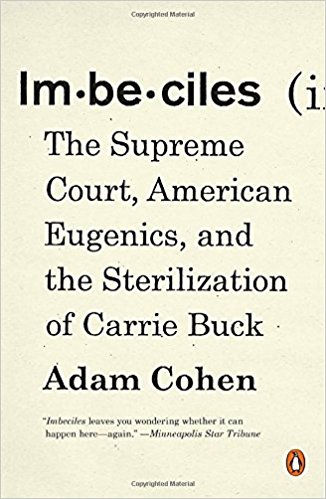
———-

Appendix – USVI Street Addressing Initiative

What is the Street Addressing Initiative? Who is involved? The Street Addressing Initiative (SAI) is a project spearheaded by the Office of the Lieutenant Governor, and involving many agencies and departments of the Virgin Islands Government, including the Tax Assessor, GIS, Public Works, Planning and Natural Resources, WAPA, Historic Preservation, VITEMA (Emergency Management/E-911), Police, Health, viNGN and others. In addition, Innovative and other private companies are assisting the Government with the Project. The Government has partnered with the University of the Virgin Islands – Eastern Caribbean Center, Applied Geographics (AppGeo) and Spatial Focus, Inc. to develop the addressing system, and to conduct a pilot study that will test methods for assigning address numbers throughout the Territory.

The SAI will ultimately create a street address for every home, business, and other building within the U.S.V.I. At present, the pilot project is underway to test the addressing system and street naming processes. Small areas on each of the 3 major islands (STT, STX, STJ) are  included in this pilot program.

I like my current address. Why do I need a new address? Current addresses are based on Estate Names and Plot numbers. These numbers were not assigned in an orderly manner, and have resulted in a confusing pattern of numbering that makes finding an individual house or business difficult. Addresses work because they are arranged in logical, sequential patterns, with well-identified street names, and posted numbers. The SAI will provide a new address number that will conform to a logical and well documented system of numbering. This type of addressing will provide broad benefits such as improved E-911, efficiency for utility service providers and delivery companies like UPS and Fedex. In general, logical addressing helps ensure that others can find you more quickly in an emergency and/or to deliver services or goods.

Why is my new address number so high?  Why is my new address so different than my plot number? Your new street address is based on a numbering system developed for the U.S. Virgin Islands.  Each island has two numbering systems.  For St. Croix, these are centered on the towns of Frederiksted and Christiansted.  For St. Thomas, these are centered at Government House in Charlotte Amalie, and at Red Hook.  For St. John, they are centered in CruzBay and CoralBay.  Lower numbers are used in the towns, and increase as you travel further from these centers.  Your new number reflects the relative distance from these starting points.

Plot numbers were created when the land in your Estate was subdivided into lots, or when the original lots were re-subdivided.  The numbering does not necessarily follow the street pattern, or maintain a logical sequence.  This makes it difficult for emergency responders, service providers, and others to find your home or place of business.  These numbers are not useful as addresses.  They are, however, useful as property identifiers, and will be maintained for that purpose.

I thought that I lived on a different street than I have been assigned. Why do I have to  change my street name? To the greatest extent possible, where streets have existing, official names that have been in use, the SAI will use those names. However, many streets were never officially named when they were created, and the SAI will be working with neighborhood groups and Homeowners’ Associations to designate names for these streets. In a small number of cases, where there are duplicate names, the SAI will need to change one of the names. The Addressing Team will try to minimize the disruption caused by these street name changes.

Now that I have been assigned a new address, what are the next steps? The first, most important step is to post your new address on the front of your house or business in a location that is visible from the street (see next question below). The project team will be communicating your new number and street name to WAPA, Innovative, and VITEMA/E-911 and to the US Postal Service, and other governmental agencies so that these agencies know what your new address is.

Are there any guidelines for putting my new number on my house or business? Numbers should be at least 4” tall, and should be in a contrasting color from the background color of your house. For example, if your house is a light color or white, please use black, dark blue, brown or dark green numbers. If your house is a dark color, please use white, or light colored numbers. Please be certain that your number is completely visible from the street. If your home or building is not visible from the street, the number can be placed on a sign located at the driveway leading to your home or building. Again, the numbers should be a contrasting color to the sign’s background.  The examples below show good posted address numbers.  Remember that your number must be visible from the street.  If your home or business is not visible from the street, you should use a free-standing sign on a post at least 30 inches in height.  Numbers should be on both sides of the sign.

Post Style:

CU Blog - Logical Addresses - Life or Death - Photo 1

House Styles:

CU Blog - Logical Addresses - Life or Death - Photo 2

CU Blog - Logical Addresses - Life or Death - Photo 3

CU Blog - Logical Addresses - Life or Death - Photo 4

What date is my street address effective? New addresses are effective as of July 1, 2013.  There will be a public announcement through radio, television and other media to let you know that you should begin using your new number and street name.  You may post your new number as soon as it has been assigned.

Can I still use my old address? Many people will continue to use their old address for historic reasons. However, for purposes of US Mail, E-911, and utility services, you are strongly encouraged to use your new SAI address. The existing number is most likely your lot number for tax purposes, and will be retained by the Tax Assessor to identify your property parcel for tax assessment and billing.

When will I see a street sign on my street? The SAI is working with the Government and Department of Public Works to develop a street signage program.

What is my COMPLETE ADDRESS? What is my ZIP Code? What should I write on letters? Your complete address includes your address number, street name, Estate name, plus the Island and ZIP Code. If you currently have a ZIP Code, please keep using it. We will be working  with the U.S. Postal Service to identify areas which may need new or additional ZIP Codes.

Example of a complete address:

5407 Guava Berry Drive, Mon Bijou
St. Croix, USVI, 00850

Is my plot number still the same? Yes, there is NO change to your plot number.

I was assigned a provisional road name. What should I do to be assigned a permanent, official road name? In some cases, where a neighborhood has unnamed streets, the SAI will be using a provisional street name. These names will include the name of the Estate and a number to identify the specific “unnamed” road in the Estate. For example, “Contant Provisional Road 10”. The SAI is asking the property owners along each of the streets to suggest a name for the street, and submit it to the SAI for confirmation and approval. If your property is on one of these streets, you will find further information about this process in the addressing packet left on your property.

For further information on the street naming process, please visit the top of the page.

Alternatively, contact the Street Addressing Initiative by telephone or mail at the addresses on your door hanger.

Will my new address affect my utility service? Will my electricity and phone provider use my new address? Will there be loss of service? Your utility services, phone services, etc. will not be affected. The SAI is providing each of the utilities with a listing of all existing and new addresses, so that they may update their records. This does not require any action on your part. Once updated, the providers will use your new address as a service address. If you use a P.O. Box or other mailing address, these will not be changed.

When will the rest of the islands get new addresses? The current pilot project is expected to be finished in July, 2013. The U.S.V.I. Government is currently seeking funding for addressing for the remainder of the Territory as well as for street signage. The Government is hopeful that the remaining areas of the Territory can be addressed within the next 2-4 years.

Source: Retrieved March 7, 2017 from: http://ltg.gov.vi/street-addressing-initiative.html

See related articles:


Share this post:
, , ,
[Top]