Tag: 2008

Open the Time Capsule: The Great Recession of 2008

Go Lean Commentary

Time Capsule Pic 1Picture this: one week after the greatest threats to the global financial system, since the Great Depression. You cut out and store – for safe keeping in a “virtual time capsule”, (see Appendix A) – a newspaper commentary and subsequent review/analysis of that crisis. It’s time now to open that capsule! Why so early? Why only after 6 years? So that this analysis would serve as a course correction. Those placing the time-capsule, hoped for a different result.

This is the scenario depicted in the foregoing news article. It was published on September 23 in 2008; 8 days after Lehman Brothers filed the largest Bankruptcy in world history – signaling the peak of the financial crisis, the precipice of a total system failure. The book Go Lean … Caribbean is based on that premise, declaring that a crisis is a terrible thing to waste”, quoting noted Economist Paul Romer’s assessment that the Great Recession would be a crisis for the modern world. The book posits that the Caribbean, with its parasite economy, is still in that crisis – no noticeable recovery.

A joke lampooning economists declares “that an economist is an expert who will know tomorrow why the things he predicted yesterday didn’t happen today”.CU Blog - Open the Time Capsule - The Great Recession of 2008 - Photo

So now, this review/analysis of a 6 year old newspaper editorial from a Guest Columnist, the focus of which was to an audience in the Bahamas; (but this is equally representative of the entire Caribbean):

It is the assessment by the publishers of Go Lean that the foregoing analysis was spot on!

It describes the new normal, a term cementing the truths that the economic realities that suddenly emerged in 2008 would thereafter remain as the norm. This has proven to be the case. The foregoing writer lamented that his government appeared to be using the same set of tools to fix a new vehicle with all different parts, and they pondered why the vehicle would not repair (recover) and get going. The writer concluded that the stewards of the economy needed to prepare a 20 year plan to navigate his country among the new realities facing the world. But he doubted that such a plan would emerge.

By: Craig Butler

I know what you must be thinking. ‘The new normal’, what in heaven’s name is he talking about? Well, the other day I was in Florida listening to talk radio.

There was a director from the International Monetary Fund, an economics professor, and a few others. They were talking about the global economy and what the future holds. The professor was the one who used the ‘new normal’ phrase and he did so in reference to the high prices that we are experiencing worldwide.

He said that, as he did not expect a significant strengthening of the dollar any time soon; coupled with the fact that the price of oil was likely to remain high and the war in Iraq was ongoing, he believed that the current high prices are going to be the norm.

Most of the panelists agreed that some experts have given folks a false sense of security by suggesting that prices will come back down once the price of oil drops. But all on the panel were of the view that the price of oil will never again be under $90 to $100 per barrel.

This was partly based on the weak dollar and partly on our dependency on fossil fuels and the lack of resolve shown by politicians to fully develop alternatives. They also noted that the oil lobby was one of the most powerful in Washington, which was a leading factor in the stalled development of renewable energy.

And the price of breadbasket items and other basics has not been helped by climatic change, which has led to falls in wheat and rice production over the last few years. Add to this the diversion of corn for use as a fuel (ethanol), and we have the new normal.

My views tend to be conservative so my first reaction was that these are some leftwing liberal nuts talking. However, on reflection much of what was said is correct.

Why should we expect to see a reduction in the price of oil? Producers are making so much money it’s not realistic to think they would relinquish that. And the high price affects so many other industries that have had to pass on these increases to the consumer. Just look at the airlines. And all the solutions being put forward to wean us off our dependency on oil will take at least five years to have any kind of impact.

The panel went on to say that there will be a widening of the income gap – something we are already seeing in the Bahamas. Many people who I know in the middle class are struggling so much that they can now be classified as the working poor.

I say that because they are now living from pay cheque to pay cheque. All their savings have been depleted; and things that they once could afford are out of the question now.

Think about it – how many of the people you know around you have their houses in foreclosure; have lost their car to the bank; have had to take their children out of private school; or have been unable to take a vacation this year?

Look in the newspaper this week and I’m sure one of the leading commercial banks will have a double page ad featuring distressed properties. The other week two banks had ads back to back.

I have written before about misguided priorities and how, despite all that is going on, we still prefer the materialistic rather than seek what is important.

I remember from my youth a song by Eddie Minnis called the ‘Finance Man’. I loved that song, and the words to one of the verses bears repeating: ‘See him there he poor as me and you but he driving round in Malibu. His car sleeps in the road at night, Lord you know that just ain’t right, He is living in the hands of the finance man…’

I apologize to brother Eddie if I did the lyrics an injustice. But it demonstrates how we have lived on credit for a long time. We have maintained a lifestyle well beyond our means without a thought as to what might happen in hard times.

As a lawyer I can see first hand what has happened to many in the middle class. You see, it was important for them to have the grand house with the two European cars parked in the garage, kids in the best schools and all the trappings that went along with it. And I will be the first to say that there is nothing wrong with wanting to attain your desires.

However, the bank loans were in many instances predicated on both the husband and wife maintaining $50,000 a year salaries, as well as some creative financing to help the couple get the loan.

Now that many offshore companies have closed or downsized, one of those pay cheques has disappeared and so has the dream, because the severance package is not going to last long and there is a distinct shortage of similar jobs available.

So what we are facing here is now being experienced all over the world. The radio panel noted that there will have to be a reclassification of the status of many people as the poor are going to be poorer, the middle class are going to be the new poor and only the very rich will be able to sustain themselves.

Dark days are ahead, and this means we need our politicians to get their collective heads out of their rear ends and devise a comprehensive plan for the next 25 years that takes all of the current factors into consideration and ensures our viability.

But there I go dreaming again – most of the time they can hardly get out of their own way let alone see past the next general election. So lets wait for the eventual anarchy that is to follow.

*****

Craig Butler studied law at the University of Wolverhampton, England, and at the Norman Manley Law School in Jamaica. He also has a degree in economics from Rollins College in Florida. Mr Butler’s column runs in the Nassau Guardian, the Bahamas, on Mondays and he also hosts a weekly political talk show on Bahamas’ Island FM.

He is the grandson of Sir Milo Butler, the first governor-general of an independent Bahamas. He blogs at Bahamapundit and can be reached at cfmilobutler@hotmail.com.

The New Black Magazine – Online Source – Tuesday, September 23, 2008 –http://www.thenewblackmagazine.com/view.aspx?index=1596 

Flash forward 6 years later; lo and behold, the book Go Lean … Caribbean is proffered as that plan, a roadmap to navigate today’s troubling economic waters and offer solutions. The book calls for the introduction and implementation of the Caribbean Union Trade Federation (CU), a super-national administration, for the 30 member-states that constitute the Caribbean region. The book posits that the problems of the Caribbean are too big for any one member-state to tackle alone. That rather, there needs to be a methodical leveraging of the 42 million people that populate these island/coastal states. With such numbers come economies-of-scale, and the benefits of these 3 prime directives:

• Optimization of the economic engines so as to grow the regional economy to $800 Billion and create 2.2 million new jobs.

• Establishment of a security apparatus (with prosecutorial powers for economic crimes) so as to mitigate the eventual emergence of “bad actors”.

• Improve Caribbean governance.

These prime directives recognize that the change the region needs starts first with re-thinking community ethos and economic engines. Early in the book, an economic interdependence is pronounced, (Declaration of Interdependence – Page 13) with these statements:

xxiv. Whereas a free market economy can be induced and spurred for continuous progress, the Federation must install the controls to better manage aspects of the economy: jobs, inflation, savings rate, investments and other economic principles. Thereby attracting direct foreign investment because of the stability and vibrancy of our economy.

xxv. Whereas the legacy of international democracies had been imperiled due to a global financial crisis, the structure of the Federation must allow for financial stability and assurance of the Federation’s institutions. To mandate the economic vibrancy of the region, monetary and fiscal controls and policies must be incorporated as proactive and reactive measures. These measures must address threats against the financial integrity of the Federation and of the member-states.

The book identifies a number of new community ethos to forge change in the region and to harvest the benefits of the new global marketplace. From the ethos, comes the solutions – for example, sharing!

Six years ago, the columnist in the foregoing article could only envision his country, Bahamas, seeking solutions alone. This roadmap, on the other hand, seeks solutions as a confederated region, a group of partners. This will mean speaking with one voice, acting together as the CU; the 30 member-states will have far greater weight and influence than acting individually. Benefits will flow from this economies-of-scale, like a Group Purchasing Organization (GPO) to negotiate value and savings.

The CU roadmap drives change among the economic, security and governing engines. These solutions are as new community ethos, strategies, tactics, implementations and advocates; as follows:

Community Ethos – Lean Operations – GPO’s Page 24
Community Ethos – Ways to Improve Negotiations Page 32
Community Ethos – Ways to Impact Turn-arounds Page 33
Community Ethos – Ways to Improve Sharing Page 35
Strategy – Agents of Change – Globalization Page 57
Strategy – Agents of Change – Climate Change Page 57
Tactical – Confederating a permanent union Page 63
Implementation – Ways to Pay for Change – GPO’s Page 101
Implementation – Foreign Policy Start-up Initiatives Page 102
Implementation – Ways to Improve Energy Usage Page 113
Implementation – Ways to Better Manage Debt Page 114
Implementation – Ways to Benefit from Globalization Page 119
Planning – Ways to Improve Trade – GPO’s Page 128
Planning – Lessons Learned from 2008 Page 136
Advocacy – Ways to Grow the Economy Page 151
Advocacy – Ways to Create Jobs Page 152
Advocacy – Ways to Control Inflation Page 153
Advocacy – Ways to Better Manage ForEx Page 154
Advocacy – Reforms for Banking Regulations Page 199
Advocacy – Battles in the War on Poverty Page 222
Advocacy – Ways to Help the Middle Class Page 223

Change has come to the Caribbean; the world is different. It’s not the world before 2008, but rather a new world shaped by 2008. This is illustrated as a moving freight train. It cannot – must not – be stopped. Everyone must get “on board”, or get “run over”.

Appendix A: How to Create a Time Capsule

A time capsule can be as simple as a shoe box full of items reserved (or even forgotten) somewhere. Other time capsules may need to last a very long time, in which case a strong stainless steel container is recommended, with a proper seal. Keep in mind that creating a capsule for unveiling at some future date is really a two sided adventure involving both you and those who will uncover it once again. Make sure that the items you select will add the element of surprise and discovery for those who open this curious treasure chest of history. Learn how to make a time capsule that will be sure to please and surprise whoever opens it. (http://www.wikihow.com/Create-a-Time-Capsule; retrieved May 5, 2014).

Download the book Go Lean … Caribbean – now!!!

Share this post:
, , , ,

Student debt holds back many would-be home buyers

Go Lean Commentary

Diploma 1This point from the foregoing news article is most poignant: “Of the many factors holding back young home buyers … none looms larger than the recent explosion of college debt”.

The book Go Lean … Caribbean serves as a roadmap for the introduction and implementation of the Caribbean Union Trade Federation (CU), for the economic optimization in the region. If the target of the book is the Caribbean, why does this article about American student loans weigh so heavy in a consideration of Caribbean economics?

There are lessons to be learned here! Not just for student loans, but also regarding education policy. This issue is pivotal to the economics of the Caribbean region. This point is made early in the book’s Declaration of Interdependence (Page 13):

xxi. Whereas the preparation of our labor force can foster opportunities and dictate economic progress for current and future generations, the Federation must ensure that educational and job training opportunities are fully optimized for all residents of all member-states, with no partiality towards any gender or ethnic group. The Federation must recognize and facilitate excellence in many different fields of endeavor, including sciences, languages, arts, music and sports. This responsibility should be executed without incurring the risks of further human flight, as has been the past history.

Classic economic policy promotes that education has a direct effect on a community’s economy and the standard-of-living, quantified as each increased-grade-level, raises GDP by 3 percent (Appendix C2Page 258). But, the Go Lean roadmap posits that this rule is not true for the Caribbean, because of the debilitating emigration rate, the brain drain in which our educated population flees for foreign shores, or worse, students that do not return after matriculating – despite using funding from their Caribbean homeland. These are all investments with no return. In short, the economy of the Caribbean can be impacted by the activity of this recent-student population, when they repatriate; but when they emigrate, they hurt the economy.

By: Tim Logan
LOS ANGELES – Sarah Luna wants to buy a home in up-and-coming northeast Los Angeles before it’s too late.

At 31, she has a master’s degree and earns more than $70,000 as a court reporter and freelance editor. She daydreams about trading the Glendale apartment she shares for a little condo, maybe in Echo Park or Highland Park….

Just one thing holds her back: The $700 she’s paid every month since 2008, after she graduated from the University of Southern California — with $75,000 in student debt. With about half that total left to pay, buying that condo seems a long way off.

“Honestly, I don’t know if it’ll ever happen,” she said. “Barring some sort of awesome miracle, a down payment is hard to wrap my head around right now.”

Of the many factors holding back young home buyers — rising prices, tougher lending standards, a still-shaky job market — none looms larger than the recent explosion of college debt.

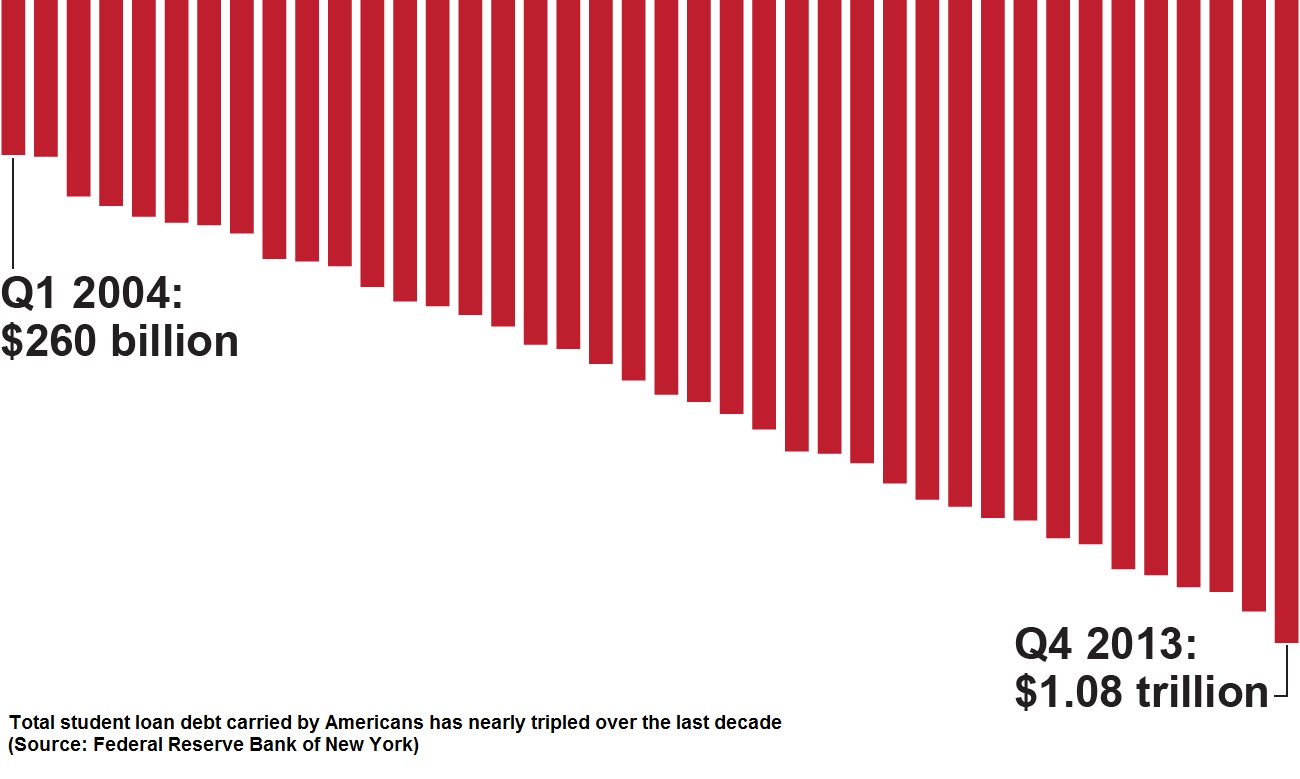
The amount owed on student loans has tripled in a decade, to nearly $1.1 trillion, according to the Federal Reserve Bank of New York. People in their 20s and 30s — often the best-educated and highest-earning among them — owe most of that tab. That is keeping a crucial segment of home buyers on the sidelines, deferring one of the traditional markers of adult success.

The National Assn. of Realtors recently identified student debt as a key factor in soft demand for home-buying this spring. A recent study by the trade group identified student loans as the top reason many home buyers delayed their purchase. Many more didn’t buy at all.

Surveys show today’s adults value homeownership just as much as their parents did. But the shaky job market, higher debt loads, and the roller-coaster market of recent years is keeping many from pulling the trigger, said Selma Hepp, senior economist with the California Assn. of Realtors.

“They’re just postponing,” she said. “It’s the economy and the recession and what that generation has gone through.”

The share of buyers who are first-timers has dropped well below historical averages — 28% of California buyers last year, compared with 38% typically, according to CAR surveys. The absence of a new generation of customers could become a long-term problem for the industry, said Dustin Hobbs, spokesman for the California Mortgage Bankers Assn.

“You have to have that swath of first-time buyers who will eventually be your move-up buyers,” he said. “When you take that out, it damages the whole chain.”

Traditionally, student borrowers were more likely than most people to buy a house, experts say, because college graduates tend to earn more. But that’s flipped since 2008, according to researchers at the New York Fed. Today, the share of 30-year-old homeowners who have student debt is lower than that of 30-year-old homeowners without it.

It’s a sign that skilled, educated workers are getting pushed out of the housing market.

“When people have less money to commit to housing, they don’t buy a house,” Hobbs said.

Jay Stewart Samilin sees that all the time. He’s an agent at Rodeo Realty in Beverly Hills and runs a tax preparation business on the side. Many of his younger clients are skipping the house until they pay down their debt.

“They’re maxed out on student loans, and there’s nothing else they want to think about until they pay that down,” he said.

Some who do start shopping quickly realize they can’t afford as much house as their income suggests. The more they pay each month on student loans, the less the bank will lend them to buy a house, said Natalie Lohrenz, director of counseling at Consumer Credit Counseling Services of Orange County. In a pricey market such as Southern California, that can severely limit a buyer’s options.

“You have to think about your quality of life after you purchase this home,” she said. “It’s OK to rent for awhile.”

That’s not to say some people don’t make it work.

Marco Manansala is starting to shop for a house, maybe a two-bedroom in Long Beach or on the Eastside, close to a freeway. When he began to think about it, the 28-year-old got preapproved for a loan — but only for $180,000.

“That gets you a shack,” he said. “I asked, how do I get more? They said I need to pay down debt.”

So he started aggressively paying off his car, and he’s worked his student loan balance down to $6,000, from $10,000. With a good job as a creative director for a Venice marketing agency, he has cut his spending to save up for a down payment. He’s getting close.

“I have a goal of buying something by June,” Manansala said. “I’m gearing up for it.”

But many others, like Luna, are forced to take a much longer view.

She graduated into the worst job market in decades. Although she eventually found work that enabled her to keep up with loan payments, it’s been hard to save much. In six years, she’s paid down nearly half of her original tab. When she borrowed the money for a master’s in professional writing, Luna acknowledges, she was an “idealistic” 22-year-old, and the numbers didn’t seem real.

Now the reality of a $700-a-month student loan payment makes it hard to get ahead, house or no house, even with a good salary. And she’s worried she’ll get priced out of the city she loves.

“It’s frustrating,” she said. “I think by the time I get a chance to get together that money and find a house, it’ll be unattainable.”

Source: Los Angeles Times – Online News Source – April 19, 2014 –http://www.latimes.com/business/realestate/la-fi-0420-student-debt-house-2-20140420,0,7975649.story#ixzz30Iw7x8Hz

Diploma 2The foregoing news article relates that education funding policies adversely affect major areas of the economy, in this case home-buying. The cause-and-effect paradigm is direct, within 5 to 10 years after graduation; a former student should be planning to buy a house. Apparently the macro economy is dependent on this relationship. According to the foregoing article, the National Association of Realtors (NAR) identified student debt as a key factor in soft demand for home-buying this spring (2014).

The Go Lean roadmap also identified that the 2008 financial crisis still deeply impacts the Caribbean economy; that it was not just the housing finance dysfunction alone that contributed to the crisis, but educational loans as well. This point is declared in Appendix IH on Page 286. This foregoing news article pronounces that the US economy continues to be impacted by a defective and dysfunctional student loan policy.

In the Caribbean, we do not want to follow this American model.

The economic solutions to effect change in the region are detailed in this book Go Lean … Caribbean as community ethos, strategies, tactics, implementations and advocates; as follows:

Community Ethos – Foster Genius Page 27
Community Ethos – Impact R & D Page 30
Community Ethos – Valedictorian è Diaspora Page 38
Strategy – Study: At home –vs- Abroad Page 50
Tactical – Education for a $800 Billion Economy Page 70
Separation of Powers – Education Department Page 85
Separation of Powers – Labor Training Oversight Page 89
Ways to Better Manage Debt Page 114
Reasons to Repatriate – Educational Inducements Page 118
Lessons Learned from 2008 Page 136
Ways to Improve Education Page 159
Ways to Impact Student Loans Page 160
Improve Local Government – Education Reforms Page 169
Better Manage the Social Contract: e-Learning Page 170
Federal Civil Service: Education Payback Schemes Page 173
Foster Cooperatives: Mutual Education Alternative Page 176
Ways to Improve Libraries Page 187
Ways to Impact the Diaspora – Education Reform Page 217
Ways to Impact Foundations – e-Learning Focus Page 219
Battles in the War on Poverty – e-Learning Solution Page 222
Help the Middle Class – Educational Stimuli Page 223
Ways to Impact Youth – Education Dynamics Page 227
Appendix C2 – Education and Economic Growth Page 258

The goal of the Go Lean roadmap is to make the Caribbean a better place to live work, learn and play. To elevate our economy, we must continue to place a high priority on education, thus the roadmap features our own student loan solution (Page 160) and numerous reforms and optimizations. But we need to be prepared for many of the same pitfalls that have befallen the US. We especially want to learn from these American mistakes:

It’s not the cost of the loan that’s the problem; it’s the principal – the appallingly high tuition costs that have been soaring at two to three times the rate of inflation, an irrational upward trajectory eerily reminiscent of skyrocketing housing prices in the years before 2008. – Ripping Off Young America: The College – Loan Scandal By Matt Taibbi, Rolling Stones Magazine; August 15, 2013. (Appendix IH – Page 286).

For the past 40 – 50 years, we have pushed too hard on college education, just for the sake of the “best practice” in economic elevation. We have suffered as a result, with a brain drain and excessive debt.

As a region, we cannot risk losing any more of our young adults and their contribution to their communities. Plus, we do not want to saddle them with overbearing student loans; this “paints them in a corner” where they must flee to earn enough money to repay the loans; (but so often, they have simply defaulted – which imperils the next generation).

We want to learn from our past mistakes!

We want to learn from America’s mistakes!

So we must deliver quality affordable education at home, without predatory lending habits. For the Caribbean, we do not want to be America. We want to be better!

Download the free e-book of Go Lean … Caribbean – now!

Share this post:
, , , , ,
[Top]

‘Only at the precipice, do they change’

Go Lean Commentary

Keanu Nanu

“Life imitating Art”; “Art imitating life”.

This is more than a cliché; it is also factual for describing how people finally get the will to change.

The movie The Day the Earth Stood Still (2008) – demonstrates “Art imitating Life” – is a remake of the classic 1951 sci-fi film of the same name; see Trailer VIDEO in the Appendix below. These films are about an alien visitor and his giant robot counterpart who visit Earth.

The character Professor Jacob Barnhardt, in the 2008 version, was played by John Cleese, the English actor of some repute, known for his start with the Mighty Python players.

The counter character in this dialogue, Klaatu, was played by American mega-star Keanu Reeves.

The storyline proceeds that the character Klaatu is a spokesman that preceded the robot sent to destroy human life on earth. And thus this quotation from the Movie Dialogue:

Professor Barnhardt: There must be alternatives. You must have some technology that could solve our problem.

Klaatu: Your problem is not technology. The problem is you. You lack the will to change.

Professor Barnhardt: Then help us change.

Klaatu: I cannot change your nature. You treat the world as you treat each other.

Professor Barnhardt: But every civilization reaches a crisis point eventually.

Klaatu: Most of them don’t make it.

Professor Barnhardt: Yours did. How?

Klaatu: Our sun was dying. We had to evolve in order to survive.

Professor Barnhardt: So it was only when your world was threatened with destruction that you became what you are now.

Klaatu: Yes.

Professor Barnhardt: Well that’s where we are. You say we’re on the brink of destruction and you’re right. But it’s only on the brink that people find the will to change. Only at the precipice do we evolve. This is our moment. Don’t take it from us. We are close to an answer.

(Source: Internet Movie Database – Movie: The Day the Earth Stood Still (2008). Retrieved 04/21/2014 – http://www.imdb.com/character/ch0012790/quotes)

This foregoing dialogue from the movie The Day the Earth Stood Still (2008) is symbolic of the crisis facing the Caribbean. The problem in the Caribbean is not technology, but rather the will to change. This is a consistent theme in the book Go Lean … Caribbean, it asserts that the changes necessary to preserve Caribbean heritage, culture and economies must first be preceded by an evolution in the community ethos. This pronouncement is as follows from Page 20:

The people of the Caribbean must change their feelings about elements of their society – elements that are in place and elements missing. This is referred to as “Community Ethos”, defined as:

    “the fundamental character or spirit of a culture; the underlying sentiment that informs the beliefs, customs, or practices of a group or society; dominant assumptions of a people or period.

This book serves as a roadmap for the introduction and implementation of the Caribbean Union Trade Federation (CU), a technocratic agency seen as the Caribbean’s best hope to avert the current path of disaster, human flight and brain drain, and grant the Caribbean a meaningful future for its youth.

This movie dialogue synchronizes with the exact details of the book. On Page 21, Go Lean presents a series of community ethos that must be adapted to forge change in the Caribbean. In addition, there are specific advocacies to:

  • Impact the Future (Page 26)
  • Impact Turn-Around (Page 33)
  • Impact the Greater Good (Page 37)
  • Grow the Economy (Page 151)
  • Preserve Caribbean Heritage (Page 218)

As a roadmap, this book provides the turn-by-turn guidance to optimize the Caribbean economy, security apparatus and governing engines.

With the assessment that many Caribbean states have lost more than 50% of their population to foreign shores (Pages 18 & 303), the region is now at that “precipice”.

“It is only at the precipice, do they change!”

Now is the time to lean-in to this roadmap for change, the book Go Lean … Caribbean, and the Caribbean Union Trade Federation. Our society/civilization is at the crisis point.

Download the book Go Lean … Caribbean – now!

————-

Appendix VIDEO – The Day The Earth Stood Still 2008 Official Trailer  – https://youtu.be/rcSJ-6354-A

Published on Aug 5, 2012 – A remake of the 1951 classic sci-fi film about an alien visitor and his giant robot counterpart who visit Earth.
Keanu Reeves & Jennifer Connelly http://www.keanureeves.us/movie/the-d…
Share this post:
, , ,
[Top]

Ailing Puerto Rico open to radical economic fixes

Go Lean Commentary

The Caribbean is in crisis!

Puerto Rican FlagPuerto Rico is in crisis! According to this quote, they have lots of issues, all stemming primarily from economic dysfunctions:

Puerto Rico, in dire straits following eight years of recession, has remained receptive as it debates hundreds of ideas: ‘‘We are studying all alternatives and all possibilities.

The publishers of the book Go Lean … Caribbean humbly submit this publication as a complete roadmap to re-boot the island’s economy, security and governing engines. This roadmap differs from all the other 369 suggestions submitted to the territorial government’s committee highlighted in the foregoing news article, in that it presents a regional option, rather than just a territorial solution. The book asserts that the problems of Puerto Rico (by extension, the entire Caribbean) are too big for any one member-state to solve alone. Rather, the focus of the roadmap is the region-wide professionally-managed, deputized technocracy of the Caribbean Union Trade Federation (CU).

Puerto Rico needs the strategies, tactics, implementations and advocacies of the CU.

The CU needs Puerto Rico!

The CU requires the full participation of all 30 member-states in the region, including all 4 language group (Dutch, English, French and Spanish). With this approach, the CU benefits from the economies-of-scale of 42 million people.

The CU expects NO MONEY from Puerto Rico. This is good as the island is running a $820 million deficit. To cure a deficit a government needs more revenues and/or fewer expenses. The Go Lean roadmap features both. The roadmap is a complete re-boot: new revenue streams and a separation-of-powers, thereby delegating governing overhead to the CU.

Go Lean … Caribbean introduces the CU to take oversight of’ much of the Caribbean economic, security and governing functionality. In summary, this plan’s execution makes Puerto Rico, and the Caribbean, a better place to live, work and play.

This Go Lean roadmap first assesses the Puerto Rican human flight/brain drain crisis, where more than half of the island’s populations have fled to American shores. This plight makes the task of building a functioning society difficult, as often the brightest and best talents are the ones that leave; plus entitlement programs simply need populace retention.

By DANICA COTO – Associated Press

SAN JUAN, Puerto Rico (AP) — Slash the number of public holidays by two-thirds. Eliminate dozens of government agencies. Legalize marijuana and prostitution.

From the intriguing to the impossible, there is no shortage of ideas for fixing Puerto Rico’s ailing economy as the government tries to dig out from a whopping $70 billion in public debt and bring back economic growth.

The ideas have come from legislators, entrepreneurs and even members of the public, who have submitted ideas via a government-sponsored website. Of the 369 ideas sent in by the public, 156 have been accepted by a government committee for consideration, including the suggestions to legalize marijuana and prostitution, and to limit how long people can live in subsidized housing.

But all the ideas require further government approval, either with a legislative vote, or an administrative nod from the governor, agency or department. More dramatic ideas, such as legalization of marijuana or prostitution, would require public hearings, legislative approval and the governor’s signature.

And prospects for approval of the various suggestions are decidedly mixed.

The governor, for example, is expected to sign a bill approved by lawmakers to release certain elderly prisoners, but not a suggestion floated by a member of the public to charge inmates for their room and board.

Puerto Rico, in dire straits following eight years of recession, has remained receptive as it debates hundreds of ideas: ‘‘We are studying all alternatives and all possibilities,’’ said Sen. Maria Teresa Gonzalez, a member of the governor’s party who has come under fire for submitting a bill that would reduce the number of holidays for public employees to six.

Puerto Rico FlagThe island currently celebrates 20 holidays a year, double those observed in the U.S. Many people have bristled at the proposal to scrap some of the additional extra days off, some of which commemorate various historic Puerto Rican leaders. But Gonzalez said the excessive number of holidays costs the government about $500 million a year in lost productivity and interruptions in service, among other things.

‘‘Change always brings about inconveniences,’’ she said. ‘‘I’m convinced that before we talk about something as dramatic and disastrous as layoffs, we have to consider other ideas.’’

Many suggestions have come as Gov. Alejandro Garcia Padilla prepares to submit the first balanced budget in decades, having promised U.S. investors and credit agencies that he will eliminate an $820 million deficit. The governor has not detailed his cutbacks, prompting fears of layoffs, tax increases and cuts to public service.

Opposition legislator Rep. Ricardo Llerandi Cruz has proposed eliminating 41 government agencies, saying it would save $160 million alone in administrative costs. He said the government has many agencies performing the same functions, noting that there’s a Department of Natural Resources, which protects, develops and manages the island’s environmental resources, and an Administration of Natural Resources, a division within the department with responsibilities that include overseeing projects such as cleanup efforts.

‘‘Puerto Rico is facing the worst fiscal crisis in all of its history,’’ Cruz said. ‘‘We need to refocus or revisit governmental priorities to face these problems.’’

A bill in the legislature also would cap the salaries of mayors, but legislators have been debating the issue for a year as mayors continue to give themselves raises. The full-time mayor of the western town of Maricao, for example, oversees the island’s second-least populated municipality with some 6,200 people and currently earns $78,000 a year, nearly double of what he earned the previous year. If the bill is approved, the mayor would earn a base salary of roughly $54,000 a year.

Manuel Lugo, an attorney who lives in the coastal town of Aguadilla, is among those who submitted the highest number of ideas on the government’s website. But despite having nine of 17 ideas approved, he doesn’t believe the government will take action on any of them.

‘‘It is very difficult to change the inertia of this island,’’ said Lugo, 43, who recently closed his office because of economic problems and is contemplating a move to Texas. ‘‘There has been no economic plan for decades. What they do here is repair and patch holes. That’s not how you run a country.’’

Yanira Hernandez, a governor spokeswoman, said Garcia will detail how he plans to balance the budget in a special televised address in late April. The budget must be approved before June 30.

While many are concerned about what cuts will be made to balance the budget, economist Gustavo Velez said extreme measures won’t be necessary if the government increases revenues and consolidates state agencies. Puerto Rico could generate $300 million more a year if it increases its capture rate on tax revenues from 56 to 75 percent, he said. The government also could suspend salary increases, Velez added.

‘‘Puerto Rico cannot keep operating on recurring deficits,’’ he said, noting it is unconstitutional. ‘‘We have to return to balanced budgets as the norm. Politicians have to embrace that reality.’’

The government also has considered tapping into the island’s underground economy, estimated by some experts at $20 billion a year, representing roughly 40 percent of overall consumption.

Puerto Ricans are increasingly seeking new ways to generate money, with some opening food trucks or hunting caimans to sell the meat as shish kebabs or fried snacks.

But an estimated 450,000 people have moved to the U.S. mainland in search of new jobs and a more affordable cost of living in the past decade.

Brunilda Cintron, 56, left the island in 2001 and now lives in Kissimmee, Florida. But her daughter and mother still live in Puerto Rico, and she worries about their future.

‘‘The government has to make some drastic decisions that will adversely affect people,’’ Cintron said, adding that she thinks her family will soon join her in the U.S. mainland. ‘‘I don’t think they’re going to have a choice.’’

Boston Globe – AP Newswire – Retrieved 04-11 2014 http://www.boston.com/news/world/caribbean/2014/04/10/ailing-puerto-rico-open-radical-economic-fixes/siVW5wfiml78bERu5MuJlM/story.html

The CU will fix Puerto Rico! Look here at the solutions; (sorted by Economic/Security/Governance). The book Go Lean … Caribbean details these specific curative measures (advocacies, strategies, tactics, and implementations):

Economic:

Community Ethos – Money Multiplier Page 22
Help Entrepreneurship Page 28
Impact Turn-Around Strategies/Tactics Page 33
Tactics to Forge an $800 Billion Economy Page 67
New Ways to Pay for Change Page 101
Start-up Benefits from an EEZ Page 104
Develop/Expand a Pipeline Industry Page 107
Improve Energy Usage Page 113
Better Manage Debt Page 114
Foster International Aid Page 115
Improve Trade Page 128
Improve Interstate Commerce Page 129
New Ways to Grow the Economy Page 151
Create Jobs Page 152
Control Inflation Page 153
Improve Credit Ratings Page 155
Mitigate Black Markets Page 165
Enhance Tourism Page 190
Impact Wall Street Page 200

Security:

Separation of Powers – Homeland Security Page 75
Security Initiatives [stemming from the Start-up] Page 103
Impact Justice Page 177
Mitigate & Reduce Crime Page 178
Improve Intelligence [Gathering & Analysis] Page 182
Impact the Prison-Industrial Complex Page 211

Governance:

Community Ethos – Deferred Gratification Page 21
Improve Negotiations Page 32
Impact the Greater Good Page 37
Tactics to Foster a Technocracy Page 64
Implement Self-Governing Entities Page 105
Improve Mail Service Page 108
Strong Reasons to Repatriate Page 118
Promote Independence Page 120
Improve Healthcare Page 156
Impact Entitlements Page 158
Improve Education Page 159
New [Governmental] Revenue Sources Page 172
Impact Public Works Page 175
Better Manage Natural Resources Page 183
Improve for Natural Disasters Page 184
Improve Emergency Management Page 196
Impact Urban Living Page 234
Impact US Territories Page 244

The roadmap alerts the Caribbean stakeholders of the obstacles that this plan will encounter, and then provides guidance, turn-by-turn directions, so as to reach the destination … promptly.

Change has come to the Caribbean. The people, institutions and governance of Puerto Rico are all urged to lean-in.”

In fact, now is the time for the whole Caribbean region to lean-in for this change, described in the book Go Lean … Caribbean. The benefits of this roadmap are too alluring to ignore: emergence of an $800 Billion regional economy, 2.2 million new jobs and an end to the dysfunction. This will result in Puerto Ricans repatriating from the US, not fleeing there.

Download the free e-Book of Go Lean … Caribbean – now!

Share this post:
, , , , ,
[Top]

Financial Crisis Jokes

SmileThe book, Go Lean…Caribbean, serves as a roadmap for the implementation of the Caribbean Union Trade Federation (CU). This is a very sober and serious quest.

But it should be fun too!

This is embedded in the tagline for the CU: to make the Caribbean a better place to live, work and play.

In this vein, we present these Financial Crisis Jokes:

Q: How do you define optimism?

A: A banker who irons five shirts on a Sunday.

Q: What’s the difference between a banker and a large pizza?

A: The pizza can still feed a family of four.

As a surprise, a chief exec’s wife pops by his office. She finds him in an unorthodox position, with his secretary sitting in his lap. Without hesitation, he starts dictating: ‘. . . and in conclusion, gentlemen, credit crunch or no credit crunch, I cannot continue to operate this office with just one chair.’

Q: Why have real estate agents stopped looking out of the window in the morning?

A: Because otherwise they’d have nothing to do in the afternoon.

Q: What do you call five hedge fund managers at the bottom of the ocean?

A: A good start.

Q: What’s the difference between an investment banker and a pigeon?

A: The pigeon is still capable of putting down a deposit on a new Ferrari.

The credit crunch has helped me get back on my feet. The car’s been repossessed.

Q: What do you say to a hedge fund manager who can’t sell anything?

A: Quarter-pounder with fries, please.

Overheard in a NYC bar: ‘This credit crunch is worse than a divorce. I’ve lost half my net worth and I still have a wife.’

The bank returned a check to me this morning, stamped: ‘insufficient funds.’ Is it them or me?

A director decided to award a prize of $100 for the best idea of saving the company money during the credit crunch. It was won by a young executive who suggested reducing the prize money to $50.

Q: What’s the capital of Iceland?

A: About $3.50.

A man went to his bank manager and said: ‘I’d like to start a small business. How do I go about it?’ ‘Simple,’ said the bank manager. ‘Buy a big one and wait.’

Money talks. Trouble is, mine knows only one word: ‘Goodbye.’

A young man asked an elderly rich man how he made his money. ‘Well, son, it was 1932. The depth of the Great Depression. I was down to my last penny, so I invested that penny in an apple. I spent the entire day polishing the apple and, at the end of the day, I sold that apple for ten pennies. ‘The next morning I bought two apples, spent the day polishing them and sold them for 20 pennies. I continued this for a month, by which time I’d accumulated a fortune of $1.37. ‘Then my wife’s father died and left us $2 million.’

Q: What have an Icelandic bank and an Icelandic streaker got in common?

A: They both have frozen assets.

A reporter asked President Bush about his thoughts on the credit crunch. “Credit Crunch is ok”, he retorted, “but I really like Coco Puffs”.

If you don’t eat out as often as you used to it’s a recession. If you find yourself eating out more often, only it’s out of dumpsters, it’s a depression.

 Now Back to Work!!

Download the Book- Go Lean…Caribbean Now!!!

Share this post:
,
[Top]

What Usain Bolt can teach banks about financial risk

Go Lean Commentary

Runner GuyThere were 465 US bank failures between 2008 and 2012.[a]

Joke: “The bank returned a check to me this morning, stamped: ‘insufficient funds.’ Is it them or me?”

The foregoing article shows the type of functions that technocrats do: evaluating risk. Any risk that can imperil the complete financial system must be monitored and mitigated. The “extreme value theory” is a model for evaluating risk and predicting future performance; and while not perfect, it is better than doing nothing.

There was no one performing this role in the Caribbean in 2008.

The foregoing article and its reliance on calculus, quantitative methods and econometric modeling is an example of the required technocratic oversight in managing an economy. Usain Bolt is used here as an allegory, a fable. The Economist magazine thusly explains how complex issues can be taught with simplified analogies and illustrations. Banking is more complex than track-and-field; but the pursuit of excellence is similar. Just like any world-class athletic pursuit, this goal is hard to master.

The Economist explains…

THE banking industry did a bad job in the run-up to the financial crisis of assessing “tail risks”, extreme events that represent the least likely of a range of probable outcomes. The Basel Committee on Banking Supervision, which is the international standard-setter for bank capital, has proposed changes in the internal risk models that financial institutions use. In particular, it wants banks to shift from a technique called “value-at-risk” (VaR) to one called “expected shortfall” (ES).

VaR is a way of measuring a firm’s risk of suffering really big losses over a certain period (a day, a week, a month) to a certain level of “confidence”. A daily VaR of $1m at 1% probability means that there is a 99% chance that you will not lose more than $1 [million] on any one day. The problem is that if you have that one bad day in 100, the potential losses could go much higher than $1 [million]. VaR doesn’t have much to say about what those losses might be. The expected-shortfall approach is meant to provide an answer to that question. Instead of asking, “What are the chances that things get so bad that we lose $1 [million]?” it asks, “If things do get that bad, how much would we actually lose?”

To do this, it uses a statistical method called “extreme value theory”, which looks specifically at what happens in the tail of distributions. To take a more trivial example of where extreme-value theory has been used, a 2011 paper by two researchers at Tilburg University collected data on the personal bests of elite athletes between 1991 and 2008, in order to try and calculate the “ultimate world record” for 100m sprints—the absolute edge of human performance given the times, equipment and drugs-policies that then prevailed. For the 100[meter] for men, the boffins (British slang for technical expert) put the ultimate world record at 9.51 seconds, compared with the record that then prevailed of 9.72, and a current world best of 9.58, set by Usain Bolt in 2009. That looks pretty good: the model came up with a number that was well inside the mark that then prevailed, and is still a hefty improvement on the current record. If extreme-value theory is meant to help banks think through the extremes, this is encouraging.

But like every model in history, expected shortfall cannot predict the future. In an earlier 2006 paper, researchers from the same university tried to calculate ultimate world records for a wider range of events, including the men’s marathon. The researchers reckoned back in 2006 that the best possible running of that distance would yield a time of two hours, four minutes and six seconds. Yet the world record today stands at two hours, three minutes and 23 seconds (Wilson Kipsang in 2013). To be fair to the researchers, they did not claim that their ultimate record could not be broken. But whether bankers will remember that reality can be worse than expected is a different question. Expected shortfall is an improvement on VaR; it is not a crystal ball.
The Economist (Retrieved 04/09/2014) – http://www.economist.com/blogs/economist-explains/2014/04/economist-explains-4

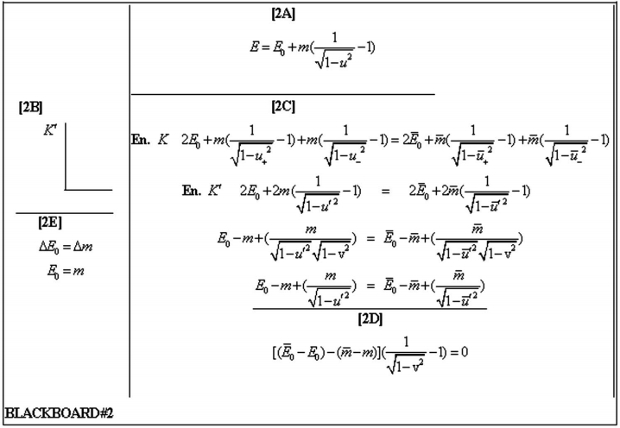
EquasionThe book, Go Lean…Caribbean, serves as a roadmap for the implementation of the Caribbean Union Trade Federation (CU). The book presents the CU as a technocracy, to ensure economic failures of the past do not re-occur. From the outset, the book identified that the Caribbean is in crisis, with the pronouncement that a “crisis is a terrible thing to waste”. The prime directive of the CU is to optimize economic, security and governing engines to impact the Caribbean’s Greater Good, for residents … and bank depositors. This was pronounced in the Declaration of Interdependence – (Page 13):

xxv. Whereas the legacy of international democracies had been imperiled due to a global financial crisis, the structure of the Federation must allow for financial stability and assurance of the Federation’s institutions. To mandate the economic vibrancy of the region, monetary and fiscal controls and policies must be incorporated as proactive and reactive measures. These measures must address threats against the financial integrity of the CU and of the member-states.

In line with the foregoing article, the Go Lean book details some infrastructural enhancements/advocacies to the region’s financial eco-system; to facilitate efficient management of the economy:

  • Fostering a Technocracy (Page 64)
  • Caribbean Central Bank (Page 73)
  • Deposit Insurance Regulations (Page 73)
  • Securities Regulatory Authority (Page 74)
  • Modeling the European Union / Central Bank (Page 130)
  • Lessons from 2008 (Page 136)
  • Banking Reforms (Page 199)

The mis-management of the economy has led to many episodes of “fight-or-flight” among Caribbean society. For many member-states, their Diaspora is more than half their population; i.e. Jamaica and Puerto Rico.

While there is no crystal ball, according to the foregoing article, there is much that can be done. Now is the time for the CU!

The purpose of this roadmap is to make the Caribbean, a better place to live, work and play. No more flight! Now we stand and fight with these technocratic weapons of modern economics.

Download the book Go Lean … Caribbean – now!

———-

Appendix Reference:
[a]. https://news.yahoo.com/facts-numbers-us-bank-failures-183852568.html

Share this post:
, , , , ,
[Top]

Fed Releases Transcripts from 2008 Meetings

Go Lean Commentary

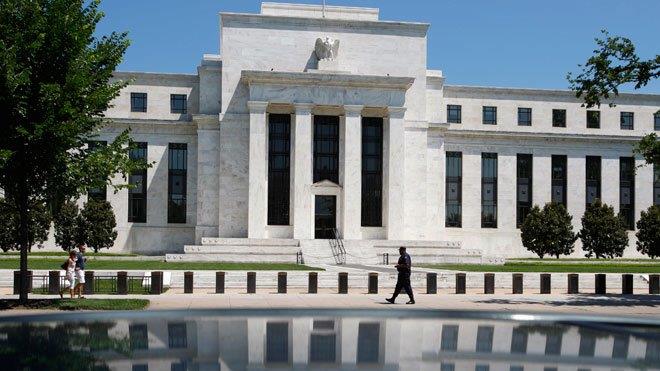
Photo - US Federal reserve Bank Building (1)This foregoing article is part of the process of post-mortem analysis, sometimes referred as “Monday Morning Quarterbacking” or “Armchair Quarterbacking”. This can be a helpful process as it allows for lessons-learned of previous episodes and the mitigation of future risk. This is the premise of the book Go Lean … Caribbean. This book, serving as a roadmap for change in the Caribbean region, posits that the effects of the 2008 Great Recession continue to linger. Therefore the book advocates lessons from 2008 and the implementation of reforms, re-boots and turn-arounds to steer the region to a better outcome.

The book is inspired by the words of famed American Economist Paul Romer, who coined the phrase: “A crisis is a terrible thing to waste”. The above article shows that this philosophy was also incorporated in the undertakings of many of the stakeholders battling the challenges of 2008 – they did not waste the crisis. Many things that were blatantly wrong in the macro economy before 2008 were corrected by this crisis. The “easy money” policies and NINJA (No Income No Job or Assets) loans of the 2000’s decade were abated. The financial industries have now moved back to more sound, fundamental lending principles.

By Dunstan Prial:

Transcripts from 2008 Fed meetings divulge publicly, for the first time, details of decisions made by the central bank during the height of the financial crisis. [US Federal Reserve Chairman Ben] Bernanke proposed two options: an emergency term securities lending facility and to expand and extend the currency swap lines with struggling European banks.

By late October, after the collapse of Lehman Brothers and the fire sales of several other large banks on the brink of collapse, the Fed had dropped interest rates to about 1% and introduced a host of other emergency measures. And Fed policy members were apparently quarreling over whether those measures and how they were communicated to the public were helping or harming.

At the Fed’s Oct. 28-29 meetings, Timothy Geithner, then president of the New York Fed, scolded some colleagues for suggesting the Fed’s bold moves were hurting broader confidence in the economy: “Now, a lot of things happened over the last three months and the last year, and a lot of things happened in terms of policy over the last six weeks. There is no doubt that communication about policy by all the arms of the U.S. government and the uncertainty created by the actions by all the arms of the U.S. government contributed in ways to uncertainty about the policy response going forward,” Geithner said.

“There is also no doubt that inevitably in a crisis like this, when policy moves forcefully, it is scary because a lot of people are not yet at the point of assessing or understanding the forces driving our decisions. But I think it’s just unfair to suggest that the actions by the Chairman and this Committee were a substantial contributor to the erosion in confidence and to uncertainty about further policy actions, even though it’s true that when we move with force and drama it has the risk of adding to uncertainty.”

Geithner was a key supporter of the activist measures taken by the Fed before being named Treasury Secretary after Barack Obama was elected in November 2008. The transcripts, which run into the hundreds of pages, reveal that this was the beginning a series of unprecedented measures taken by the Fed in an effort to stave off another Depression.

The 14 transcripts are from eight scheduled meetings and six emergency meetings of the policy setting Federal Open Market Committee, which sets the central bank’s monetary policy, including the level of short-term rates.

The transcripts do not include other meetings at which smaller groups of Fed officials, working with the Treasury Department, arranged the bailouts of bankrupt Bear Stearns, the American International Group (NYSE: AIG), and housing service entities Fannie Mae and Freddie Mac.

Nor do the transcripts include notes from the meetings at which policy makers decided to let investment bank Lehman Brothers fall, which occurred in September 2008 and proved a key event at the outset of the crisis.

Fox Business News Online (Retrieved 02/21/2014) –http://www.foxbusiness.com/economy-policy/2014/02/21/fed-releases-transcripts-from-2008-meetings/

How about the Caribbean? Has the lessons been learned in and for this region? Have the blatantly wrong policies been abated? Has the markets returned to fundamentally sound policies?

Unfortunately, with the ever-expanding brain drain/human flight crisis in the Caribbean, the economic problems persist. Is it fair to conclude that when people move from the Caribbean to the US mainland, Canada or EU member-states, that there is some failure on behalf of Caribbean society? The Go Lean roadmap so declares, identifying “push-and-pull” underlying factors.

What qualifies the writers of this book to make these assessments?

Simple! They have lived the issues depicted in this foregoing news article and the Go Lean roadmap. The book is published by the SFE Foundation, a Community Development Corporation constituted by members of the Caribbean Diaspora. These are people who love their homeland, and would rather live, work and play there, but instead, find themselves toiling as alien residents in foreign lands. Principals of this foundation were also there in 2008, engaged with major stakeholders of the Global Financial crisis: Lehman Brothers, BearStearns. JPMorganChase, CitiGroup, etc. They were on the inside looking out, not the outside looking in. They were movers-and-shakers of the macro economy, not just armchair quarterbacks.


Share this post:
, , ,
[Top]

How to Create Money from Thin Air

money-magic-rival-logoGo Lean Commentary

“Money does not grow on trees”, according to the old adage.

If it did then the tree would be special, it would be producing a chattel good that is designated as monetary currency. Even still, this scenario would not be “thin air”, it will be trading goods for goods. This can be illustrated with a barter exchange of fruit for some other merchandise, say silver. If the silver is viewed as money, then the process of growing and harvesting the fruit will result in money (silver) being acquired based on the fruit from the tree. So money can grow on trees!

Something more amazing happens in our modern economic system, money is created out of “thin air” – no trees, no fruit, no silver. How is this possible? This is accomplished through the Commercial/Central Banking system.

First of all, banks are financial institutions that take in deposits from people and use their money to give out loans to others. The reason why banks provide this service [to the community] for free is because they earn a profit by letting people deposit their money. Banks charge higher interests rates on the money they lend out compared to the money deposited. All in all, banks are both borrowers and lenders. People trust banks to store their money. The deposits allow banks to lend out money with higher interest rates with the expectancy that the loans will be paid back.

Banks have something called a required reserve ratio, mandated by the Central Bank; (the “Fed” in the US). This is the ratio of reserves to total deposits that banks are supposed to keep as reserves. Banks also have the right to increase the reserve ratio. They lend out the remaining percentage. For example, the bank has a 10% reserve ratio meaning it reserves 10% of its total deposits. It will then lend out the remaining 90%. When a person deposits $100, the bank is able to lend out $90 and keeps $10 for reserves. The $10 does not count as money since it is used as a reserve and may not be used for lending. So far, the bank has $100 and $90 currency loaned out. This is a total of $190 created as opposed to $100 before. Currency held by the public is money.

Of course, the borrower doesn’t simply keep the $90 but he will spend it. For instance, he will spend his money for a pair of soccer cleats at the Nike store. Now the Nike store has $90 but it will then deposit it back into the bank. The cycle then repeats itself. If the bank has more borrowers, it will certainly make a profit. If it lends again, it will lend out $81 and keep $9 on reserves.

The way banks create money is a cycle and over time, the profit compounds on top of each other and the original $100 can be [extended] potentially [to as high as] $1,000.[a]

So the new $900, compared to the original $100, is created from “thin air”.

“To whomever much is given, of him will much be required” – Luke 12:48 (World English Bible)

This scripture is quoted in the book Go Lean … Caribbean, in the advocacy “10 Ways to Improve Leadership” (Page 171) showing the great responsibility and accountability of leaders managing monetary affairs; they can create money out of “thin air”. This power, however, has often been abused by Caribbean officials and has resulted in tragic cases of hyper-inflation, currency devaluation and ultimately: human flight – people’s money lost value overnight due to no fault of their own. The same as money can be created, it can also disappear into “thin air”– Anecdote (Page 149) & Appendices (Pages 315 – 7).

The Go Lean roadmap does not just state the problems but provides solutions as well. Those solutions are proposed in the implementation of the Caribbean Union Trade Federation (CU) and the adjoined technocratic Caribbean Central Bank (CCB), as an independent agency. The mandates in the Go Lean roadmap focus on inflation (Page 153), foreign exchange (Page 154), interest rates/credit ratings (Page 155) & debt management (Page 114). The CCB is to be led by professionals who are well trained to execute the leadership roles for a unified Caribbean currency. They will be “given much”; because the CU is modeled after the European Union and the European Central Bank (ECB) – see (Page 130). The CCB leaders will be schooled in the arts and sciences of monetary affairs by the ECB. In addition, the leaders of the existing Central Banks of each member-state will serve as Governors of the CCB with appointments for 14 years, thus insulating them from political influences and persuasions – see “10 Reforms for Banking Regulations” (Page 199). This is the hallmark of a technocracy!

The book Go Lean … Caribbean serves as a roadmap for Caribbean economic optimization. It posits that the creation of money will be enhanced when all Caribbean member-states integrate their currencies into a single currency, the Caribbean Dollar (C$), and also their economies into a “Single” Market. The economic initiatives will create new services, jobs, investments and opportunities.

Yes, the end result will be money created out of “thin air”, but more so because of a vibrant economy than just the deposit-loan-commercial banking paradigm.

The originating activity, as defined in the roadmap, is the stimulus for economic gains. The roadmap projects an $800 Billion economy (GDP) after the 5-year implementation, up from $278 Billion. These numbers will be manifested with the creation of 2.2 million new jobs, and a better place to live-work-play.

🙂

Download the book Go Lean … Caribbean – now!

——-

Appendix – Reference:

a. Wiki-Answers; retrieved on 03/19/2014 from http://wiki.answers.com/Q/How_are_banks_able_to_create_money.

Share this post:
, ,
[Top]

Book Review: ‘Wrong – Nine Economic Policy Disasters and What We Can Learn…’

Go Lean Commentary

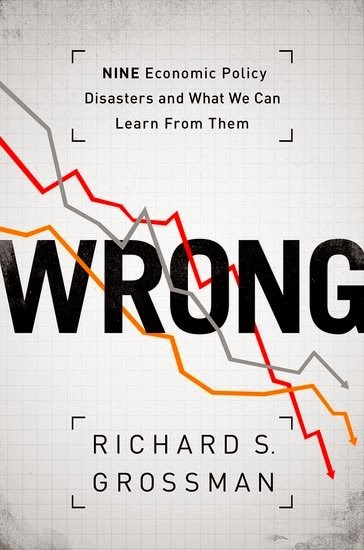
CU Blog-WrongThe forgoing news article is a Review of the above-cited book; it highlights many of the same approaches being used in the publication Go Lean … Caribbean for the introduction and implementation of the Caribbean Union Trade Federation (CU). This book declares that a “crisis is a terrible thing to waste” and that Caribbean member-states are still reeling from the crisis of the 2008 Economic Downturn. What’s more, the Go Lean … Caribbean book, serving as a roadmap, provides solutions to optimize the region’s economy and security apparatus.

The source book by Richard Grossman is not focused on the Caribbean; but the many economic policies do have direct effect on the region, especially with the reliance on tourism from North America and Europe as the primary economic drivers. This status makes the Caribbean a “parasite” economy; as parasites go, the health of the host directly affects the health of the symbiot. So we are very much affected by the economic policies implemented in the US, Canada, Europe, Japan, China and other countries. What is worse is the fact that we, as the Caribbean, have no voice into the policies of these host countries, (nothwithstanding the Dutch & French Caribbean countries having some small representation in European Parlianment and Puerto Rico/USVI having non-voting representation in the US Congress). So rather than drive these countries’ economic policies, the Go Lean strategy is to mitigate the negative consequences from “wrong” economic policies.

Book Review: Wrong: Nine Economic Policy Disasters and What We Can Learn from Them by Richard S. Grossman

By: Anna Grodecka

In recent years, the world has been rocked by major economic crises, most notably the collapse of Lehman Brothers, the largest bankruptcy in American history, which triggered the breathtakingly destructive sub-prime disaster. What sparks these vast economic calamities? Why do our economic policy makers fail to protect us from such upheavals? Anna Grodecka reviews Richard S. Grossman’s contribution to the literature, and finds this an insightful and accessible read, especially recommended for economics students.

“We should be (…) wary of accepting common opinions; we should judge them by the ways of reason not by popular vote.” These words of the French Renaissance writer and philosopher Michel de Montaigne could be a good summary of Richard Grossman’s newest book Wrong: Nine Economic Policy Disasters and What We Can Learn from Them. Grossman, a professor of economics at Wesleyan University, describes nine economic policy failures from the past (both distant and more recent) and concludes that the main sin of the policymakers is the commitment to outdated economic ideologies and so-called conventional wisdoms.

Although it tackles a serious issue, the book is an enjoyable read. Starting with a quote from famous economists, politicians, and even Shakespeare, each chapter focuses on one economic policy mistake. The historical outlook prevails, although the last two chapters are devoted to the description of the sub-prime and the euro/sovereign default crisis. Grossman is aware of the fact that his book suffers from the lack of counter-factual analysis. The problem is that observing that a given policy had certain consequence does not mean that in the absence of the policy the consequences would not have occurred. We cannot apply laws of logics and sentence negation to reality, especially complex political and economic reality depending not only on rational analysis but also on the animal instincts of human beings, because causal relationships are very difficult to establish. Conducting counter-factual analysis is even harder. This of course does not mean that we should give up analysing past policies widely known as mistaken.

Grossman first describes the British Navigation Acts fueled by the ideology of mercantilism that speeded up the process of revolution in the North American colonies. Then he discusses the history of the first two ‘central’ banks in the United States, whose charters were not renewed due to partisan divisions in the country which could have an impact on the evolution of several banking crises.

There is also a chapter on the Great Famine in Ireland at the end of the 19th century, and the impact of policies and British Corn Laws on it. Grossman covers the well-documented mistake on the amount of war reparations imposed by the Allies on Germany after the First World War, as well as the return to the Gold Standard at the pre-war (too high) parity by Britain in the inter-war period. Another example of wrong economic policy that is described in the book is the Smooth-Hawley Tariff, which was a protectionist measure applied by the US in 1930. Lastly, before turning to the most recent policy mistakes, the author devotes one chapter to the infamous Japanese Lost Decade. What sounds like an enumeration of well-known policy mistakes already described in other books turns out in fact to be a fascinating collection of accounts providing interesting details and new insights into the subject. This is a well-written book that puts the events into historical and economic context. It certainly has a chance at becoming a best-seller and not solely a publication read by experts.

As an example, we can take a closer look at the chapter on the Irish Famine, which took place from 1845-1852. Grossman not only describes what happened, but puts it into the perspective of other famines, starting from the BCE period. In terms of absolute numbers, the Great Hunger in Ireland was not the worst famine recorded but it did tragically lead to the death of twelve per cent of Irish population, forcing many others to emigrate. The author details how the potato – which originated in the Americas – arrived to a fertile Ireland, and that the poorest third of the Irish population consumed up to twelve pounds of potatoes per day (per capita). Only after this introduction the economic policy is mentioned. Grossman compares the responses of two Prime Ministers of the United Kingdom to the famine: Sir Robert Peel and Lord John Russell. Russell was so committed to the limited government intervention that he refused to buy food for the starving masses in order not to disturb the free formation of prices in the market. Similarly, he refused to increase the scale of public works that would give job to Irish workers so as not to disturb the free labour market. The paradox is that when the Great Famine occurred, Ireland was not a poor country. The Famine would not have been so ‘great’ if it were not for the free market ideology followed by the policymakers at that time. As it turns out, leaving things to the invisible hand of market is not always an optimal solution.

Another interesting chapter is devoted to the Lost Decade in Japan. Entitled Why Didn’t Anyone Pull the Andon Cord? The chapter begins with an explanation of the method of solving problems applied in the Toyota production system: when some potential problem is discovered, a worker may pull the andon cord that activates a signboard and starts the process of solving the problem. If the problem is not resolved within a specific time, the whole production is stopped until the issue is cleared. So, unlike the Toyota employees, Japanese authorities in the 1990’s did not pull the andon cord and continued “production” despite obvious economic problems in the country. Grossman focuses on the relationships between the Japanese Ministry of Finance and the banks’ personnel. Each bank had a clerk – mofutan – who stayed in daily contact with one employee of the ministry. Very often ex- ministry employees found work in the banks they were supervising before, once their ministerial duties were over. This sort of opaque relationship between the supervisory authority and banks in the end led to an inaccurate response to the crisis. Japanese officials did everything to maintain the status quo, refusing to introduce necessary changes or restructure the banking system for almost a decade. This chapter will be a treasure for economics students.

Of course, not all stories presented in Wrong are equally captivating. The two last chapters on the recent economic crisis seem to be the weakest, as they do not provide any new information from the perspective of a person that followed the news and other publications on the subject. But all in all, Grossman does an excellent job in picking up the most severe economic policy mistakes, providing a thorough description and analysis of them, and giving us anecdotes linked to the described events. Wrong is a very eloquently written book that leaves the reader with many new insights.

London School of Economics – Social Science Book Reviews – Retrieved 03-19-2014 –
http://blogs.lse.ac.uk/lsereviewofbooks/2014/03/18/book-review-wrong-nine-economic-policy-disasters/

The authors of this Go Lean publication represent stakeholders[d] who have been in key policy positions in those “host” countries, so the recommendations in the book, reflect sound economic policies and best-practices. This expertise is highlighted at the outset of the Go Lean book, in the Declaration of Interdependence, as follows:

xxi. Whereas the legacy of international democracies had been imperiled due to a global financial crisis, the structure of the Federation must allow for financial stability and assurance of the Federation’s institutions. To mandate the economic vibrancy of the region, monetary & fiscal controls and policies must be incorporated as proactive and reactive measures. These measures must address threats against the financial integrity of the Federation and of the member-states.

Similar to the publication by Richard Grossman, the Go Lean book highlights lessons that are learned from failed economic policies[a] and applies strategies, tactics and implementation to mitigate the wrong policies and set the region straight.[b][c]

Now is the time for the Caribbean region to lean-in for the changes described in the book Go Lean … Caribbean. The benefits of this roadmap are too alluring to ignore: emergence of an $800 Billion economy, 2.2. million new jobs, new industries, services and opportunities for the youth of the Caribbean and even an invitation to the Diaspora to repatriate from those North American and European countries that have been on the wrong side of the history featured in Richard Grossman’s book ”Wrong: Nine Economic Policy Disasters and What We Can Learn from Them”.

Anna Grodecka is a PhD student in macroeconomics at Bonn Graduate School of Economics and a visiting researcher at the LSE. She obtained her Master’s Degree in Finance from Warsaw School of Economics and Johannes Gutenberg University in Mainz. In her research, she focuses mainly on monetary policy, the financial and housing markets, and their role in the recent crisis.

Go Lean References

Page Number
[a] 10 Lessons Learned from 2008

136

[b] 10 Ways to Impact Wall Street

200

[c] 10 Reforms for Banking Regulations

199

[d] SFE Foundation

8

Download the Book- Go Lean…Caribbean Now!!!


Share this post:
, , , , , ,
[Top]

Air Antilles Launches St. Maarten Service

Go Lean Commentary

This below news article is good news for the Caribbean region. A new airline option has stepped in to fill the void.

Express

See the news story here:

By the Caribbean Journal staff:

Air Antilles Express has launched its first-ever service between St. Maarten and Pointe-a-Pitre, Guadeloupe.

The service could provide a boost for Guadeloupe’s bid to attract more tourists from the United States market, as St Maarten is a major hub for flights from the United States.

The thrice-weekly service is being operated on Thursdays, Saturdays and Sundays. Air Antilles Express made its first flight between the two Caribbean destinations last week. The St Maarten-Guadeloupe service is part of a wider expansion for the company across the region.

The regional carrier launched another new flight out of Guadeloupe at the end of last year, serving Antigua.
Source: Caribbean Journal Online News Source (Retrieved 02/11/2014) –  http://www.caribjournal.com/2014/02/11/air-antilles-express-launches-guadeloupe-st-maarten-service/

This foregoing article is just the “tip of the iceberg”; this is the latest development in a long string of eruptions in the Caribbean Air Travel space. The first eruption was November 2011 when AMR Corporation filed for Chapter 11 bankruptcy reorganization. AMR Corporation, the Fort Worth, Texas based airline holding company was the parent company of American Airlines, American Eagle and Executive Airlines, the Puerto Rico based regional American Eagle carrier for the Caribbean. Executive/ American Eagle ceased operation on March 31 2013, leaving a gap of service for the Eastern Caribbean islands.

Change had come to the airline industry. American was the last of the remaining legacy airlines in the US to file for bankruptcy; the prior business model had become unsustainable for every American carrier. Along the way, AMR “spun off” all American Eagle regional carriers including Executive Airlines, shedding the debt and union contracts as a weight off its bottom-line. This step was too little, too late. Despite US$ 24.855 billion in revenues for 2012 and $4 billion in cash, the company still posted losses of $1.876 billion. The merger of AMR with US Airways Group on December 9, 2013 form the new entity, American Airlines Group, and a new lease on life. But still, there is no Eastern Caribbean resurrection!

The book Go Lean … Caribbean serves as a roadmap to navigate the changed landscape of the globalized air transport industry. It pronounces that change has come to the Caribbean and despite due warning the region is not prepared. The Go Lean roadmap portrays the need for regional integration, administration, and promotion for Caribbean air carriers. The book posits that transportation and logistics empowers the economic engines of a community. The above news article/Press-Release definitely asserts this premise. There must be air carrier solutions to service the transportation and tourism needs of the Caribbean islands. There is the expectation that air travel will continue to grow and impact Caribbean society – thus the need for more regional coordination. New models are detailed in the book in which tourism can be enhanced with “air lifts” to facilitate Caribbean events.

Now, for much of the Caribbean, air service is the only viable transportation option, but this Go Lean roadmap introduces the Caribbean Union Trade Federation (CU) and its Union Atlantic Turnpike initiative (Page 205) to offer more transportation solutions (ferries, toll roads, railways, and pipelines) to better facilitate the efficient movement of people and cargo.

Air Antilles Express is based at Pointe-à-Pitre International Airport in Guadeloupe. It is a regional airline operating scheduled and seasonal services in the French Antilles (Caribbean). The airline began operations in December 2002 owned by the Dubreuil Group, the same as French Guiana based Air Guyane Express, using the same call signs, IATA (3S) and ICAO (GUY).

This carrier’s strategy, tactical and operational plan is to fill some of the gap left from the American Eagle absence, as follows:

Air Antilles Express –Destinations*
American Eagle – Puerto Rico Hub Destinations*
Antigua
Antigua
British Virgin Islands – Tortola
Dominican Republic
  • Punta Cana (July–August only)
  • La Romana (July–August only)
  • Santo Domingo
Dominican Republic
  • Punta Cana
  • Santiago
  • Santo Domingo
French Guiana
Dominica
Guadeloupe
Guadeloupe
Martinique
Martinique
Saint Barthélemy
St Maarten
Saint Kitts and Nevis
St Maarten
Saint Lucia
U.S. Virgin Islands
  • Saint Croix
  • Saint Thomas

Information is retrieved from Wikipedia on February 11, 2014

Everyone is encouraged to lean-in to the best-practices and empowerments defined in the Go Lean book.
🙂

Download the book Go Lean … Caribbean now!!!

Share this post:
, ,
[Top]