Tag: Civil Rights

Good Leadership: Caring builds trust; trust builds caring

Lean Commentary

Do you want greatness?
Of course, every sane person desires to be around great friends, great family and maybe even work for a great company. In fact, then Presidential Candidate Donald Trump got support in the United States in 2015/2016 with the promise of “Making America Great Again”.

One of the most important ingredients for all great entities is great leadership. (Let’s scale it down to just Good Leadership). This is more than just a fantasy; families, companies and even countries can foster Good Leadership. There is a certain quality that makes this goal possible:

Trust.

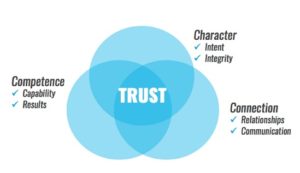
Trust is very important for forging Good Leadership. Subjects must feel that they can trust their leaders, that the leaders care and would only have their best interest at heart. So actions of caring and trust are inter-related.

In a previous blog-commentary on “Fostering A Great Place to Work”, this main point was summarized:

There is a ‘Great Place to Work’ Institute that spent 25 years researching the best companies to work for around the world; they found that high levels of trust between employees and managers is the main element found in great workplaces.

Caring builds trust; trust builds caring …

While it is near impossible to change all the citizens of a country or all the employees of a company in “one fell swoop”, it is possible to change the habits and practices of its leadership team; (or maybe change the team). Start at the top – start with the head and the body will follow – within the organization structure and all stakeholders will experience the benefits of Good Leadership in due time.

Companies and countries … there are differences; there are similarities. While a company’s prime directive make be to maximize shareholder value, the country will be more concerned with optimally executing the Social Contract between citizens and the State; (where citizens surrender some of their freedoms and submit to the authority of the State in exchange for protection of remaining natural and legal rights).

Accountability is still the same. The need for trust is still the same.

In a previous blog-commentary, this Executive Summary of the book Good to Great was provided, where it depicted the important role of leadership to make a great organization:

Book: Good to Great: Why Some Companies Make the Leap … and Others Don’t
By: Jim Collins; one of the most influential management consultants

Chapter Summaries

Chapter 1: Good is the Enemy of Great

Chapter 2: Level 5 Leadership

    1. In this chapter, Collins begins the process of identifying and further explicating the unique factors and variables that differentiate good and great companies. One of the most significant differences, he asserts, is the quality and nature of leadership in the firm. Collins goes on to identify “Level 5 leadership” as a common characteristic of the great companies assessed in the study. This type of leadership forms the top level of a 5-level hierarchy that ranges from merely competent supervision to strategic executive decision-making.
    1. By further studying the behaviors and attitudes of so-called Level 5 leaders, Collins found that many of those classified in this group displayed an unusual mix of intense determination and profound humility. These leaders often have a long-term personal sense of investment in the company and its success, often cultivated through a career-spanning climb up the company’s ranks. The personal ego and individual financial gain are not as important as the long-term benefit of the team and the company to true Level 5 leaders. As such, Collins asserts that the much-touted trend of bringing in a celebrity CEO to turn around a flailing firm is usually not conducive to fostering the transition from Good to Great.

Chapter 3: First Who, Then What

Chapter 4: Confront the Brutal Facts (Yet Never Lose Faith)

Chapter 5: The Hedgehog Concept (Simplicity Within the Three Circles)

Chapter 6: A Culture of Discipline

Chapter 7: Technology Accelerators

Chapter 8: The Flywheel and the Doom Loop

Chapter 9: From Good to Great to Built to Last

How can Good Leaders build trust with their stakeholders (citizens, employees, etc.)? Quite simply: Care for your subjects; do not just say it, do it; walk the walk not just talk to talk. Caring should be “action”. See a great example in these VIDEO’s here:

VIDEO 1 – [Gravity Payments] CEO Cut Salary To Pay Employees $70k – https://youtu.be/4ygSJwzJ1tM

TYT’s The Conversation
Posted Oct 7, 2019 –
Dan Price set a $70k minimum wage for his employees and cut down his own pay. Cenk Uygur, host of The Conversation, breaks it down. MORE TYT: https://tyt.com/trial https://gravitypayments.com/ Hosts: Cenk Uygur, Cast: Cenk Uygur.

***

The Largest Online News Show in the World. Hosted by Cenk Uygur and Ana Kasparian. LIVE STREAMING weekdays 6-8pm ET. http://tyt.com/live

Subscribe to The Young Turks on YouTube: http://youtube.com/subscription_cente…
TYT on Facebook: http://facebook.com/theyoungturks
TYT on Twitter: http://twitter.com/theyoungturks
TYT on Instagram: http://instagram.com/theyoungturks

Merch: http://www.shoptyt.com

Producer, Senior Producer and Executive Producer membership: http://go.tyt.com/producer

Young Turk (n), 1. Young progressive or insurgent member of an institution, movement, or political party. 2. A young person who rebels against authority or societal expectations. (American Heritage Dictionary)

#TYT #TheYoungTurks #TheConversation

—————–

VIDEO 2  – Gravity Payments Team Surprises CEO, Dan Price, With A Tesla! – https://youtu.be/kgF9ohgylWY

—————-

There is no doubt that the company CEO in these VIDEO’s reflect caring for his subjects; and in turn the subjects – his employees – trust him. The goal of Good Leadership is fully manifested in this case.

(Source: https://www.bloomberg.com/profile/company/9897253Z:US)

Don’t get it twisted, a person does not have to give up a million dollar salary to be considered a Good Leader; it was the caring for the needs of his stakeholders that made Dan Price effective. His employees had real concerns affording housing in the expensive city of Seattle, Washington – their headquarters. See the article excerpt in the Appendix below. (Such a topic is also important for Caribbean Public Servants, as they have poverty wages).

Other leaders have had to express similar concern and consideration for their subjects; think workplace safety, health insurance, disaster recovery-response, and today: pandemic threats. But this benevolence is not standard or common. For example, there are hospitals that are on the opposite end of the spectrum when it comes to Good Leadership; they have:

The presence of Good Leadership is just as obvious as the opposite extreme: the dread of Bad Leadership.

  • Who would you rather work for?
  • Or serve under?
  • Or practice good citizenship towards?

This commentary presents some strategies, tactics and implementations for pursuing the goal of reforming and transforming the Caribbean region. It starts with Good Leadership.  But the Art & Science of Leadership is not always something that is taught in school; sometimes it is taught … in Church; remember the Golden Rule … here:

Bible Reference – 6 Bible Verses about the ‘Golden Rule’

  • Matthew 7:12 – “In everything, therefore, treat people the same way you want them to treat you, for this is the Law and the Prophets.
  • Luke 6:31 – Treat others the same way you want them to treat you.
  • Matthew 22:39-40 – The second is like it, ‘You shall love your neighbor as yourself.’ On these two commandments depend the whole Law and the Prophets.”
  • Mark 12:31 – The second is this, ‘You shall love your neighbor as yourself.’ There is no other commandment greater than these.”
  • Romans 13:8-9 – Owe nothing to anyone except to love one another; for he who loves his neighbor has fulfilled the law. For this, “You shall not commit adultery, You shall not murder, You shall not steal, You shall not covet,” and if there is any other commandment, it is summed up in this saying, “You shall love your neighbor as yourself.”

Source: Retrieved May 27, 2020 from: https://bible.knowing-jesus.com/topics/Golden-Rule
Every month, the movement behind the 2013 book Go Lean…Caribbean presents a Teaching Series on a subject germane to Caribbean life. For this May 2020, our focus is on Good Leadership. We need Good Leadership now more than ever, as the world battles the Coronavirus pandemic. This is entry 2 of 6 for this series, which details that “caring builds trust”. The full catalog for this month’s series is listed as follows:

  1. Good Leadership – Inaction could be deadly
  2. Good Leadership – Caring builds trust; trust builds caring
  3. Good Leadership Agile: Next Generation of leadership and project delivery
  4. Good Leadership – Hypocrisy cancels out Law-and-Order
  5. Good Leadership – Example – “Leader of the Free World”?
  6. Good Leadership – Example – For mitigating crime

There are no Ands, Ifs or Buts; we need Good Leadership – among our political, corporate, religious and civic stakeholders – to survive this COVID-19 pandemic. Over 300,000 people have died; this is not a hoax.

This theme “Caring builds trust and trust builds caring” shows the positive consequences of benevolent leadership. Benevolence in government has many positive benefits, like dissuading people from fleeing the homeland in search of refuge.  The points of benevolent governance, management and administration – a subset of Good Leadership – were elaborated in many other blog-commentaries; consider this sample of previous submissions:

https://goleancaribbean.com/blog/?p=17697 Good Administration of Common Pool Resources
https://goleancaribbean.com/blog/?p=17358 Marshall Plan – A Lesson in History of a Good Solution
https://goleancaribbean.com/blog/?p=17697 Good Governance: The Kind of Society We Want
https://goleancaribbean.com/blog/?p=16002 Good Governance: Good Corporate Compliance
https://goleancaribbean.com/blog/?p=15996 Good Governance: Stepping Up in an Emergency
https://goleancaribbean.com/blog/?p=15479 ‘Lean Is’ as ‘Lean Does’ – Good Project Management
https://goleancaribbean.com/blog/?p=14174 Canada: “Follow My Good Example” on ‘Climate Change’ Action

In summary, there is a formula for Good Leadership; leaders should care for their subjects and the subjects will then naturally trust them. So in effect, trust can be built using this formula. We need the caring; we need the trust; especially now during this Coronavirus-COVID-19 crisis and in everyday life: before, during and after this pandemic disaster.

So Good Leadership , Good Administration and Good Governance is just the expectation of good people in society. Most people do not know how to forge Good Leadership, but they know “it” when they see it. This realization is important for the movement behind the Go Lean book and roadmap. We need to reach and reform the Caribbean leaders and the Caribbean subjects.

Yes, we can elevate Caribbean leadership. We want our leaders to care; we want to trust that they are acting with our best interest in mind.

We hereby urge all Caribbean stakeholders – leaders and followers – to lean-in to this Go Lean roadmap … and subscribe to this vision. We specifically urge all leaders to care about their subjects and we urge all subjects to trust their leaders. While this is easy to say – and hard to do – the manifestation of this vision, is how we will make our homeland a better place to live, work and play. 🙂

About the Book
The book Go Lean…Caribbean serves as a roadmap for the introduction and implementation of the technocratic Caribbean Union Trade Federation (CU), for the elevation of Caribbean society – for all member-states. This CU/Go Lean roadmap has these 3 prime directives:

  • Optimization of the economic engines in order to grow the regional economy to $800 Billion & create 2.2 million new jobs.
  • Establishment of a security apparatus to ensure public safety and protect the resultant economic engines.
  • Improve Caribbean governance to support these engines, including a separation-of-powers between the member-states and CU federal agencies.

The Go Lean book provides 370-pages of turn-by-turn instructions on “how” to adopt new community ethos, plus the strategies, tactics, implementations and advocacies to execute so as to reboot, reform and transform the societal engines of Caribbean society.

Download the free e-Book of Go Lean … Caribbean – now!

Who We Are
The movement behind the Go Lean book – a non-partisan, apolitical, religiously-neutral Community Development Foundation chartered for the purpose of empowering and re-booting economic engines – stresses that reforming and transforming the Caribbean societal engines must be a regional pursuit. This was an early motivation for the roadmap, as pronounced in the opening Declaration of Interdependence (Pages 11 – 13):

xi. Whereas all men are entitled to the benefits of good governance in a free society, “new guards” must be enacted to dissuade the emergence of incompetence, corruption, nepotism and cronyism at the peril of the people’s best interest. The Federation must guarantee the executions of a social contract between government and the governed.

xvi. Whereas security of our homeland is inextricably linked to prosperity of the homeland, the economic and security interest of the region needs to be aligned under the same governance. Since economic crimes … can imperil the functioning of the wheels of commerce for all the citizenry, the accedence of this Federation must equip the security apparatus with the tools and techniques for predictive and proactive interdictions.

xxiv.  Whereas a free market economy can be induced and spurred for continuous progress, the Federation must install the controls to better manage aspects of the economy: jobs, inflation, savings rate, investments and other economic principles. Thereby attracting direct foreign investment because of the stability and vibrancy of our economy.

Sign the petition to lean-in for this roadmap for the Caribbean Union Trade Federation.

—————

Appendix – Title: Here’s What Really Happened at That Company That Set a $70,000 Minimum Wage
Sub-title:
Dan Price decided to pay all 120 employees at least $70,000. Grown men cried. Profits soared. Then things got really crazy.
By: Paul Keegan, Contributing Editor, INC Monthly Magazine

Before Dan Price caused a media firestorm by establishing a $70,000 minimum wage at his Seattle company, Gravity Payments… before Hollywood agents, reality-show producers, and book publishers began throwing elbows for a piece of the hip, 31-year-old entrepreneur with the shoulder-length hair and Brad Pitt looks… before Rush Limbaugh called him a socialist and Harvard Business School professors asked to study his radical experiment in paying workers… an entry-level Gravity employee named Jason Haley got really pissed off at him.

It was late 2011. Haley was a 32-year-old phone tech earning about $35,000 a year, and he was in a sour mood. Price had noticed it, and when he spotted Haley outside on a smoking break, he approached. “Seems like something’s bothering you,” he said. “What’s on your mind?”

Finally, he realized why: Haley was right — not only about being underpaid, but also about Price’s intentions. “I was so scarred by the recession that I was proactively, and proudly, hurting my staff,” he says. Thus began Price’s transformation from classic entrepreneur to crusader against income inequality, set on fundamentally changing the way America does business. For three years after his face-off with Haley, Price handed out 20 percent annual raises. Profit growth continued to substantially outpace wage growth. This spring, he spent two weeks running the numbers and battling insomnia before making a dramatic announcement to his 120-member staff on April 13, inviting NBC News and The New York Times to cover it: Over the next three years, he will phase in a minimum wage of $70,000 at Gravity and immediately cut his own salary from $1.1 million to $70,000 to help fund it.

The 20 percent raises Price implemented in 2012 were supposed to be a one-time deal. Then something strange happened: Profits rose just as much as the previous year, fueled by a surprising productivity jump — of 30 to 40 percent. He figured it was a fluke, but he piled on 20 percent raises again the following year. Again, profits rose by a like amount. Baffled, he did the same in 2014 and profits continued to rise, though not quite as much as before, because Gravity had to do more hiring.

“I began wondering what my friend would have to make so she wouldn’t have to worry about a $200 rent hike,” says Price. He recalled a 2010 study by Princeton behavioral economist Daniel Kahneman finding that, while people did not feel happier on a daily basis as their income rose above $75,000, they were decidedly unhappier the less they earned below $75,000. At Gravity, new hires made $35,000 a year.

By any measure, Gravity was doing relatively well. Revenue hit $150 million in 2014 and was growing 15 percent per year on $7 billion in customer transactions. Profits hit $2.2 million — actually a so-so 1.46 percent net margin, below the industry average. About 40 percent of the profits went to Dan and Lucas as dividends …

Is there a magic number that keeps workers focused while still generating a profit? Price calculated a figure but never imagined the publicity he’s gotten would boost new customer inquiries from 30 per month to 2,000 within two weeks. Customer acquisition costs are typically high, so in that sense, the strategy has paid off. And in this business, customer retention is key. Gravity’s 91 percent retention rate over the past three years — far above the industry average of about 68 percent — has been crucial to its success.

Six months after Price’s announcement, Gravity has defied doubters. Revenue is growing at double the previous rate. Profits have also doubled. Gravity did lose a few customers: Some objected to what seemed like a political statement that put pressure on them to raise their own wages; others feared price hikes or service cutbacks. But media reports suggesting that panicked customers were fleeing have proved false. In fact, Gravity’s customer retention rate rose from 91 to 95 percent in the second quarter.

Price says establishing a $70,000 minimum wage is a moral imperative, not a business strategy. And yet he must prove the business wisdom behind it, not only to keep Gravity from sinking — and going down with the ship himself–but also to achieve his long-term goal of transforming the business world. “I want the scorecard we have as business leaders to be not about money, but about purpose, impact, and service,” he says. “I want those to be the things that we judge ourselves on.”

See the full article here – Source: INC Monthly Magazine Posted May 2015; retrieved May 27, 2020 from: https://www.inc.com/magazine/201511/paul-keegan/does-more-pay-mean-more-growth.html
Share this post:
, ,

‘All Take and No Give’ ==> No Loyalty; No Patriotism – Encore

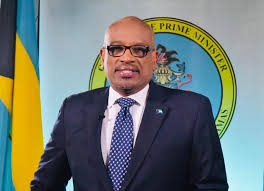
The Bahamas Prime Minister, Dr. Hubert Minnis, is asking the citizens in his country to sacrifice for the good of the country so that the whole community can endure the Coronavirus-COVID-19 panndemic:

the process will require sacrifices from all Bahamians.

This seems so wrong!

This is the same country that systemically suppresses, represses and oppresses one minority group after another. (When you add up all the minority groups, they form the majority).

If you kick your guard dog and abuse him all the time, he will probably not try to defend your house. You would have broken his spirit.

This should be a familiar refrain by now. In September 2019 when Category 5 Hurricane Dorian devastated the Northern Bahamas, some regional stakeholders complained then that they were dis-inclined to help because of the Bahamian track record of abuse.

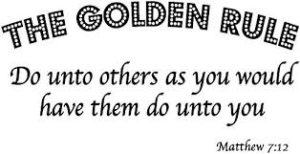
We learned nothing! The Bahamas has still not developed any “Give and Take”, no symbiosis, no mutualism. Even the Bible presents the Golden Rule as:

Do unto others as you would have them do unto you.

This is just how life works. In nature, it’s called a symbiotic relationship. The encyclopedic definition is as follows:

Symbiosis (from Greek “living together”, from Sym meaning”together” and biosis meaning “living”)[2] is any type of a close and long-term biological interaction between two different biological organisms, be it mutualisticcommensalistic, or parasitic. The organisms, each term a symbiont, may be of the same or of different species. …

Symbiosis can be obligatory, which means that one or more of the symbionts entirely depend on each other for survival, or facultative (optional) when they can generally live independently.

———-

Mutualism; describes the ecological interaction between two or more species where each species has a net benefit.[1]

In a previous Go Lean commentary this argument was presented, against the backdrop of the quotation from Alexandre Dumas’s story of the Three Musketeers. “All for One and One for All” was elaborated upon in that previous blog-commentary.

One for All” must equally accompany a quest where there is “All for One“. This aligns with the implied Social Contract, defined as:

Citizens surrender some of their freedoms and submit to the authority of the State in exchange for protection of remaining natural and legal rights.

It is only apropos to Encore that original commentary from June 10, 2016 now:

———————————

Go Lean CommentaryRespect for Minorities: ‘All For One’

This subject of “Respect for Minorities” is dominant in the news right now. This commentary is 1 of 3 in this series on lamentations for defective Caribbean social values. The complete series is as follows:

  1. Respect for Minorities: ‘All For One’
  2. Respect for Minorities: Climate of Hate – ‘It Gets Worse Before It Gets Worse’
  3. Respect for Minorities: Reconstruction then Redemption

There is this impactful quotation from the Bible:

“What do you think? If a man owns a hundred sheep, and one of them wanders away, will he not leave the ninety-nine on the hills and go to look for the one that wandered off? – The Bible; Matthew 18:12 – New International Version.

But someone might argue: “the needs of the many out-weight the needs of the few”. This is the principle of the Greater Good. Yes, this is true! This principle is very familiar to the publishers of the book Go Lean … Caribbean; the principle is foremost in the book (Page 37) as a community ethos, the underlying sentiment that informs the beliefs, customs, or practices of a society. The region needs to adopt this ethos to forge change in the Caribbean. But it turns out that the Greater Good is not just a priority on the majority, it is very much reflective of minorities.

All For One … and … One For All!
- Photo 4

This expression is from literature, the book: The Three Musketeers, by the nineteenth-century French author Alexandre Dumas – it represents “art imitating life” in it’s meaning:

All the members of a group support each of the individual members, and the individual members pledge to support the group. Note: “All for one and one for all” is best known as the motto of the title characters in the book. Source: http://www.dictionary.com/browse/all-for-one-and-one-for-all

Since everyone is unique, we may all be minorities in some respects. Consider (these previous blogs):

There is the need for the majority to protect the basic rights of minority groups; this is in effect protecting the rights for life, liberty and pursuit of happiness … for all.

What’s more, the minorities should not have to beg the majority for these rights; the rights should be an automatic entitlement.

Let’s consider the example here of the “peanut“.

It’s a great little snack; a lot of people enjoy them. But, for some – a small but growing minority in any society; see VIDEO below – the peanut is deadly, due to their allergic reactions. Should a majority of people be inconvenient due to allergies of just a few people, or sometimes, just one. Consider this model here:

Title: Customers with Disabilities – Peanut Dust Allergies
Source: Southwest Airlines Website – Customer Service Policy; retrieved 06/09/2016 from: https://www.southwest.com/html/customer-service/unique-travel-needs/customers-with-disabilities-pol.html

- Photo 3Because it is nearly impossible for persons who have an allergy to peanut dust to avoid triggering a reaction if peanut dust is in the air, Southwest Airlines is unable to guarantee a peanut-free or allergen-free flight. We have procedures in place to assist our Customers with severe allergies to peanut dust and will make every attempt not to serve packaged peanuts on the aircraft when our Customers alert us of their allergy to peanut dust.

We ask Customers with peanut dust allergies making reservations over the phone to advise our Customer Representatives of the allergy at the time the reservation is made. If the reservation is made via a travel agent, the Customer should telephone 1-800-I-FLY-SWA (1-800-435-9792) afterward to speak with a Customer Representative. If the reservation is made via southwest.com, the Customer may advise us of the allergy on the “Southwest Airlines Payment and Passenger Information” screen by clicking on the link to “Add/Edit Disability Assistance Options.”

We suggest that Customers with peanut dust allergies book travel on early morning flights as our aircraft undergo a thorough cleaning only at the end of the day.

We ask the Customer with the allergy (or someone speaking on the Customer’s behalf) to check in at the departure gate one hour prior to departure and speak with the Customer Service Agent (CSA) regarding the Customer’s allergy. Please allow enough time to park, check luggage and/or receive your boarding pass, and to pass through the security checkpoint. Our CSA will provide the Customer with a Peanut Dust Allergy Document and ask him/her to present the document to the Flight Attendant upon boarding. If the Customer has a connection, the CSA will provide the Customer with two documents, one of which should be retained to present to the Flight Attendant on the connecting flight.

Our CSA will advise the Operations (Boarding) Agent so that service of packaged peanuts can be suspended for that flight. Our Operations Agent will notify the Provisioning and/or Ramp Supervisor to stock the aircraft with a sufficient supply of pretzels or alternate snacks. The Operations Agent will also notify the Flight Attendants of the Customer’s final destination and advise them that we cannot serve packaged peanuts until the Customer deplanes.

As some of our other snack items may contain peanut particles, peanut oil, or have been packaged in a peanut facility, Customers who have allergic reactions to eating/ingesting peanuts should read the ingredients on any packaged snack before consumption. Of course, all Customers are welcome to bring their own snacks with them.

Southwest cannot prevent other Customers from bringing peanuts or products containing peanuts onboard our flights. In addition, Southwest cannot give assurances that remnants of peanuts and/or peanut dust/oil will not remain on the aircraft floor, seats, or tray tables from the flights earlier in the aircraft’s routing.

In addition, Southwest Airlines cannot guarantee that a flight will be free of other allergens such as perfumes, lotions, cleaning solutions, etc.

The publishers of the book Go Lean…Caribbean wants to forge change in the Caribbean; we want to change the attitudes for an entire community, country and region. As depicted in the foregoing article, but on a larger scale, we want to ensure that one peanut allergy sufferer can be assured of best efforts to not deprive them of life and health. But this quest is more than just peanuts; it is the attitudes of the people. We need majority populations to sacrifice, however small or large, to allow minority populations every opportunity to participate fully in society.

Besides, how much of a sacrifice is it truly to forego peanuts … for a short period. There are other alternative snacks. This is the full definition of a reasonable accommodation.

The “peanut” is this case is truly a metaphor. The seriousness of the allergy – life-and-death – is representative of the seriousness for the rights of minorities in a community. But at the same time, peanut allergies have increased in western societies. Why? See VIDEO in the Appendix below.  So for peanuts and other aspects of societal life, what may only be an inconvenience for the majority may actually be “life-and-death” for the affected minority. This is why the requirements for someone’s quality of life, should never be subject to a popularity contest. This is the Greater Good.

So the community ethos of the Greater Good must be tempered with the ethos of National Sacrifice. The Go Lean movement (book and blog-commentaries) posits that these new community ethos must be adopted by the Caribbean; they are undoubtedly missing. This is evidenced by the fact that every Caribbean member-state suffers from alarming rates of societal abandonment: on average 70% of college educated ones in the population have fled in a brain drain, while the US territories have lost more than 50% of their general populations). Why do people flee?

“Push and pull” reasons! “Push”, as in people fleeing to find refuge from abuses tied to their minority status, and “pull”, as in the perception (though many times false) that life is better on foreign shores.

The term National Sacrifice is defined here as the willingness to sacrifice for a greater cause; think “patriotism or love of country”. This spirit is currently missing, in that many in the community refuse to extend some reasonable accommodations so that others who may be minorities or differently-abled can participate in the out-workings of their community. As it turns out, “All For One and One For All” is also a recipe for forging successful communities.

The book Go Lean…Caribbean serves as a roadmap for the introduction and implementation of the Caribbean Union Trade Federation (CU); a confederation of the 30 member-states to bring change, empowerment, to the Caribbean region; to make the region a better place to live, work and play for all stakeholders (residents, tourists, visiting Diaspora and trading partners). This Go Lean roadmap also has initiatives (strategies) to foster solutions for the Caribbean youth. Any attempts to change Caribbean society’s community ethos (Greater Good and National Sacrifice) must start with the youth in order for the changes to be permanent. We are embarking on the effort to fix our Caribbean culture:

What is it that young people want in their society, so as to map a future for themselves at home: opportunity!

More specifically, equal access to opportunities – despite any minority status – to pursue their passions in life; whichever fields of endeavor they might pursue. This includes the strategies of education, jobs, entrepreneurial options, sports, and aspects of culture (art and music). Young people who cry, sweat, and bleed for their communities – embedding a desire to sacrifice for the Greater Good – are less inclined to flee. While these strategies are important, there is something else even more vital: a culture of inclusiveness; as follows:

Our community’s values, how we treat each other, our citizens, and stakeholders, and a healthy inclusive culture are more important than the elevation strategies executed.
- Photo 1

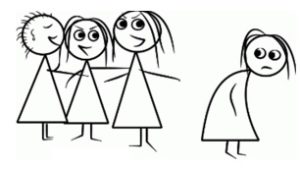
Yes, when we make reasonable accommodations to be a more inclusive society, we invite “more people to the party” and elevate our society.

An African proverb brings a lot of solace to this discussion:

“If you want to go fast, go alone. If you want to go far, go together.”
- Photo 2

This also corresponds with the next verse in the above Bible scripture:

“And if he finds it [the one errand sheep], truly I tell you, he rejoices more over that one sheep than over the ninety-nine that did not go astray.” – Matthew 18:12 – New International Version.

The purpose of the Go Lean book/roadmap is more than just the embedding of these new community ethos, but rather the elevation of Caribbean society. In total, the Caribbean elevation roadmap has these 3 prime directives:

  • Optimization of the economic engines in order to grow the regional economy to $800 Billion & create 2.2 million new jobs.
  • Establishment of a security apparatus to ensure protection to the economic engines, public safety and justice for all.
  • Improve Caribbean governance to support these societal engines.

The roadmap details the following community ethos, plus the execution of these strategies, tactics, implementation and advocacies to expand inclusiveness – to go together – and forge permanent change in Caribbean society:

Community Ethos – Deferred Gratification Page 21
Community Ethos – Economic Principles – People Choose Page 21
Community Ethos – Economic Principles – People Respond to Incentives in Predictable Ways Page 21
Community Ethos – Economic Principles – The Consequences of Choices Lie in the Future Page 21
Community Ethos – Governing Principles – Lean Operations Page 24
Community Ethos – Governing Principles – Cooperatives Page 25
Community Ethos – Ways to Impact the Future Page 26
Community Ethos – Ways to Impact a Turn-Around Page 33
Community Ethos – Ways to Improve Sharing Page 35
Community Ethos – Ways to Promote Happiness Page 36
Community Ethos – Ways to Impact the Greater Good Page 37
Strategy – Vision – Confederate 30 Member-States Page 45
Strategy – Mission – Enact a Defense Pact to Defend the Homeland Page 45
Strategy – Mission – Keep the next generation at home Page 46
Tactical – Confederating a Permanent Union Page 63
Tactical – Fostering a Technocracy Page 64
Implementation – Assemble – Incorporating all the existing regional organizations Page 96
Implementation – Ways to Pay for Change Page 101
Implementation – Foreign Policy at Start-up Page 102
Implementation – Ways to Deliver Page 109
Planning – 10 Big Ideas for the Caribbean – Confederation Without Sovereignty Page 127
Planning – Ways to Make the Caribbean Better Page 131
Advocacy – Ways to Grow the Economy Page 151
Advocacy – Ways to Create Jobs Page 152
Advocacy – Ways to Better Manage the Social Contract Page 170
Advocacy – Ways to Improve Homeland Security Page 181
Advocacy – Ways to Improve Communications Page 186
Advocacy – Ways to Preserve Caribbean Heritage Page 218
Advocacy – Ways to Impact Youth Page 227
Advocacy – Ways to Impact Persons with Disabilities – With Reasonable Accommodations Page 228

All in all, there are certain successful traits (community ethos) associated with populations that have endured change, like the Greater Good and National Sacrifice. These are focused more on deferred gratification; on the future more so than immediate impact.

No sacrifice; no victory.

Now is the time for all stakeholders – majority and minority – to lean-in to this roadmap for Caribbean elevation, as depicted in the book Go Lean…Caribbean. “We need all hands on deck” to make our homelands better places to live, work and play. 🙂

Download the free e-Book of Go Lean … Caribbean – now!

——————

Appendix VIDEO – Why Are Peanut Allergies Becoming So Common? – https://youtu.be/Mjr9h_QmdeM

Published on Oct 3, 2014 – Peanut allergies are becoming more and more common, and researchers are trying to find the cause. Trace is here to discuss this unique allergy, and how we might have finally found a cure.

Share this post:
, ,
[Top]

Education in the USA is Illogical For “Us”

Go Lean Commentary

Imagine the negotiation with an alternate party; they declare:

Let’s make a deal …
I want to take everything and give you nothing.

How eager are you to forge a bond with this negotiating party?

Unlikely?!

Yet, for the 30 member-states of the Caribbean, this is the exact negotiating stance with the United States of America.

Their motive, in offering opportunities for your students to matriculate in their universities have ulterior motives:
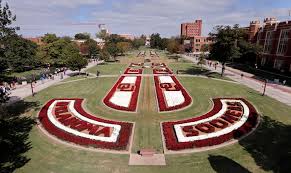

They want to keep the good students, not return them.

This was conveyed in a recent news article in the US; see this excerpted key phase here about a post-matriculation On-the-Job Training program called Optional Practical Training (OPT):

Talk of suspending OPT has pitted business interests against immigration hard-liners
…the program has been rife with abuses, particularly by Chinese students whom they accuse of getting American educations and then returning to China….

Why is this a problem? The US business interests have no altruistic motives – they want the best-of-the-best students to stay.

There is Big Money involved. The US officials are NOT investing in the education of the foreign students; but rather the student’s homelands must do so – at great costs. See this further excerpt:

International students contribute nearly $41 billion a year to the U.S. economy. Our campuses and our communities benefit from the contributions international students make to education and research,” Schmid said. “This move does nothing to ensure the health of U.S. citizens during the COVID crisis. As with Trump’s Muslim ban, this is just bigotry posing as concern for national security.

There you have it; you now know what the underlying intent is of the American invitation for “our” students to matriculate in their country. This reveals the true motives of any negotiations with America.

Do you still want to engage these people?!

See the full news article and related VIDEO here:

Title: Trump admin weighs suspending foreign students program, prompting backlash from business, tech
WASHINGTON — At the direction of the White House, the Department of Homeland Security has sent recommendations for further restricting legal immigration during the COVID-19 pandemic, according to one former and two current administration officials.

Among the recommendations expected to be considered is the suspension of a program for foreign students to stay in the U.S. to get one or two years of occupational training between secondary education and full-time employment, a move many in the business and university communities are fighting.

The program, known as Optional Practical Training, or OPT, is an incentive for foreign students to come to U.S. universities, as it provides some cushion between school and employment. Talk of suspending OPT has pitted business interests against immigration hard-liners like President Donald Trump’s senior adviser Stephen Miller, the officials said.

Miller, acting DHS Secretary Chad Wolf and Sen. Tom Cotton, R-Ark., have all said the program has been rife with abuses, particularly by Chinese students whom they accuse of getting American educations and then returning to China. Data from the Congressional Research Service, however, shows otherwise.

“Suspending or ending OPT makes no practical sense — it solves no problem, it reduces the quality of America’s higher education system, and it threatens the international exchange of ideas so vital to academic freedom,” said Julie Schmid, executive director of the American Association of University Professors.

“International students contribute nearly $41 billion a year to the U.S. economy. Our campuses and our communities benefit from the contributions international students make to education and research,” Schmid said. “This move does nothing to ensure the health of U.S. citizens during the COVID crisis. As with Trump’s Muslim ban, this is just bigotry posing as concern for national security.”

The new guidelines, expected to be announced in an executive order this month, would expand curbs on legal migration announced by the White House in April. The administration is expected to frame the move as economic protection for Americans faced with staggering unemployment rates.

Representatives of the White House and DHS did not respond to requests for comment.

A U.S. official familiar with the matter said, “While we won’t comment on internal administrative policy discussions one way or the other, millions of Americans have been forced out of work by the pandemic and they ought to be first in line for jobs — not lower-paid imported labor. Polling shows Democrats, Republicans and Independents agree.”

Critics of the proposals say Miller and other immigration hawks are using the pandemic to accomplish a goal they have had since Trump took office: bringing down the overall number of legal immigrants.

When Miller served on the staff of then-Sen. Jeff Sessions, R-Ala., he helped draft a bill that would have eliminated OPT. Now, four Republican senators have asked the White House to take the issue of curbing OPT and other legal migration programs into their own hands.

“We urge you to continue to suspend new nonimmigrant guest workers for one year or until our new national unemployment figures return to normal levels whichever comes first,” Cotton and Sens. Ted Cruz of Texas, Chuck Grassley of Iowa and Josh Hawley of Missouri said in a letter to the White House on May 7. The letter said OPT, along with H-1B visas for highly skilled workers and H-2B visas for non-agricultural seasonal workers, should be suspended.

Todd Schulte, president of FWD.US, a pro-immigration reform group of business and tech leaders that counts Bill Gates and Mark Zuckerberg among its founders, said the plan is too similar to previous proposals to be framed as a legitimate response to the economic crisis caused by COVID-19.

“Three years ago, when unemployment was at 4 percent, the signatories who were in the Senate at the time tried to slash legal immigration by more than 50 percent. … Today, as unemployment has skyrocketed, these senators now say we need to slash legal immigration in response to the COVID-19 crisis,” Schulte said.

An official familiar with discussions at the White House said the influence of the business community, often communicated by the U.S. Chamber of Commerce, could sink plans to suspend OPT.

But Rosemary Jenks, executive vice president of NumbersUSA, which shares Miller’s goal of decreasing overall immigration, said it would be a mistake to keep the program open. Jenks noted that OPT is a regulatory program not protected by statute.

“At a time when millions of Americans and lawful permanent residents are graduating from college with severely limited job opportunities due to COVID-19, it makes absolutely no sense for the administration to continue a regulatory program that allows foreign graduates to take jobs Americans need,” she said.

Related: F-1 visas let foreign students stay in the U.S. to work after graduating. Most use the program legally, but recent probes have revealed fraud.

Source: Posted May 10, 2020; retrieved May 15, 2020 from: https://news.yahoo.com/trump-admin-weighs-suspending-foreign-090056680.html?.tsrc=notification-brknews

—————

VIDEO – Fake Companies Exploiting Federal Student Visa Program | NBC Nightly News – https://youtu.be/JiVKPpmSlCM

NBC News
Posted Jan 1, 2020 – A joint NBC News/NBC Bay Area investigation found a number of companies that appear to be illegitimate are using the F-1 student visa program to skirt immigration laws. The founder of a company called Findream, which claimed to employ 500 students in 2017, was charged with criminal fraud for “false verifications of employment” for Chinese F-1 via holders.

» Subscribe to NBC News: http://nbcnews.to/SubscribeToNBC

» Watch more NBC video: http://bit.ly/MoreNBCNews

NBC News Digital is a collection of innovative and powerful news brands that deliver compelling, diverse and engaging news stories. NBC News Digital features NBCNews.com, MSNBC.com, TODAY.com, Nightly News, Meet the Press, Dateline, and the existing apps and digital extensions of these respective properties. We deliver the best in breaking news, live video coverage, original journalism and segments from your favorite NBC News Shows.

Connect with NBC News Online! NBC News App: https://smart.link/5d0cd9df61b80
Breaking News Alerts: https://link.nbcnews.com/join/5cj/bre…
Visit NBCNews.Com: http://nbcnews.to/ReadNBC
Find NBC News on Facebook: http://nbcnews.to/LikeNBC
Follow NBC News on Twitter: http://nbcnews.to/FollowNBC
Follow NBC News on Instagram: http://nbcnews.to/InstaNBC

Fake Companies Exploiting Federal Student Visa Program | NBC Nightly News

Study at home! There are many regional options. This has been the urging from the movement behind the 2013 book Go Lean…Caribbean. Otherwise, we  continue to suffer as a parasite of the American hegemony. It is undisputed that the American college education is a bad investment for our Caribbean communities.

This was the consideration in a previous blog-commentary back in April 30, 2018; it is only apropos to glean this lesson now:

Title: ‘Loose Lips Sink Ships’ – Undermining College Enrollment
Inappropriate talk can undermine societal engines … and economic engines.
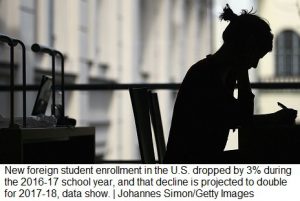

Universities, even not-for-profit ones, need to preserve their economic engines. They must have an influx of new students to replace the ones that graduate every year. Where do these students come from?

The economics of universities are simple, especially state-sponsored universities:

  • In-state students pay a per-credit fee for tuition, since state taxes subsidize schools
  • Out-of-state students pay a higher per-credit fee, sometimes double the in-state rate
  • Foreign students must pay out-of-state tuition every year; there is no in-state option for them
  • More revenues – and no financial aid or discounts – are associated with foreign students.

For many American universities, the appeal to lure international students is a “hen that lays golden eggs”. It will be unbecoming to compromise this business arrangement. Enter …

Donald J. Trump, 45th President of the United States

As reported in that previous blog-commentary, the “United States is suffering the dire consequence of ‘loose lips sinking ships’ right now. The new President – Donald Trump – has made disparaging remarks about certain foreign groups, and then introduced policies that reinforce his disdain for these foreigners”.

As a result, more and more foreign students are refusing to come to the US to matriculate. …

In addition, since April 2018, we had examined a few other angles of this subject – College education in the US for Caribbean students – with these additional commentaries; (this is only a sample):

https://goleancaribbean.com/blog/?p=19694 Title: Keep the Change – Making e-Learning Work
e-Learning may be the answer for all the ills in the Caribbean education landscape. This industry can be a great equalizer in economic battles of global trade. Thanks to the Coronavirus – COVID-19 crisis, the world is coming to the e-Learning party. e-Learning options are now real and viable. We can “hedge our bets” and mitigate the risks of studying abroad, by doubling-down on e-Learning. This changed environment has been forced on us – uninvited – by the Coronavirus; but we can Keep the Change and invite these new tools and techniques to stay for good.
https://goleancaribbean.com/blog/?p=19213 Title: Brain Drain – Geeks and Freaks: Ultimate Revenge
Many times, the people that are the most accomplished academically, are characterized more as Nerds, “Geeks and Freaks”. Yet, these are the ones best suited for accomplishment and excellence. In the Caribbean, we have had 60 years of futility with our best-and-brightest leaving us, abandoning the Caribbean homeland. We must now be “On Guard” against bullying and other threats – domestic or foreign. We must do the heavy-lifting to retain our people; we must protect all vulnerable, weak and innocent people in society, even from “leaving home”.
https://goleancaribbean.com/blog/?p=18371 Title: Unequal Justice – Student Loans Could Dictate Justice
America is one – but not the only one – community experiencing dysfunction and economic injustice due to the College eco-system and  Student Loans. We have a lot of dysfunctions in the Caribbean too. For example: many islands have atrocious default rates (> 75%) with their student loans for ex-students that left to study abroad. There is a demand now for this money, but not just the principal; we need the interest, too. What’s more, student loans are supposed to be investments in the young people of the community. So those loans have been a fallacy: Where is the return on these investments for us?
https://goleancaribbean.com/blog/?p=17992 Title: What Went Wrong? Losing the Best; Nation-building with the Rest
Caribbean communities are all suffering from a bad case of societal abandonment; everyone knows someone that has left. In fact, whenever there is a skilled and competent colleague, we are disappointed if they have not left the region and remained in the homeland. Losing our best, means we have to nation-build with the rest (lesser; D Average)!
https://goleancaribbean.com/blog/?p=16882 Title: Exploring Medical School Opportunities … as Economic Engines
Medical Schools average over $300,000 in tuition for a 4-year education; ($60,000/yr). Imagine the economic engine of having 3,000 students on a Caribbean campus; that would amount to $180 million annually added to GDP, just for tuition; (more from room-and-board, extra-curricular activities and spending by visitors/family/students). Since Economics = the supply and demand dynamics; we know that there is the demand for many “minority” students to study medicine. They should feel “at home” here in any Caribbean community.
https://goleancaribbean.com/blog/?p=14973 Title: Graduation Speakers – Say ‘Something Nice’ or Nothing At All
The new Minister of Education, Jeffrey Lloyd gave his first Commencement address and vocalized this bad policy:
“Go out and see the world … visit them all, and even work in them all, but come back home and build your country”.
The Education Minister here seems to be doubling-down on failure, as good students rarely return after matriculation; we get no R.O.I..
https://goleancaribbean.com/blog/?p=14834 Title: Counter-culture: Monetizing the Change
Many financial and economic changes emerged as a result of the 1960’s counter-culture movement; subsequently a more independent spirit emerged for planning retirement, education and healthcare. Consider:
* Education / College Planning – A 529 plan is a tax-advantaged savings plan designed to encourage saving for future college costs. 529 plans, legally known as “qualified tuition plans,” are sponsored by states, state agencies, or educational institutions and are authorized by Section 529 of the Internal Revenue Code (Source: SEC.gov).

We need to do better retaining our people here in the Caribbean homeland.

Sending the best-of-the-best of our students to study abroad – in the US – would be foolish, knowing that it is their intent to keep them from returning. This is like “giving aid to the enemy during time of war” – a treasonous act.

Yes, we need to always dissuade our own people from abandoning the homeland, for whatever reasons. We hereby urge all Caribbean stakeholders to lean-in to this Go Lean roadmap.  This is will allow us to make our homeland a better place to live, work, learn and play.  🙂

About the Book
The book Go Lean…Caribbean serves as a roadmap for the introduction and implementation of the technocratic Caribbean Union Trade Federation (CU), for the elevation of Caribbean society – for all member-states. This CU/Go Lean roadmap has these 3 prime directives:

  • Optimization of the economic engines in order to grow the regional economy to $800 Billion & create 2.2 million new jobs.
  • Establishment of a security apparatus to ensure public safety and protect the resultant economic engines.
  • Improve Caribbean governance to support these engines, including a separation-of-powers between the member-states and CU federal agencies.

The Go Lean book provides 370-pages of turn-by-turn instructions on “how” to adopt new community ethos, plus the strategies, tactics, implementations and advocacies to execute so as to reboot, reform and transform the societal engines of Caribbean society.

Download the free e-Book of Go Lean … Caribbean – now!

Who We Are
The movement behind the Go Lean book – a non-partisan, apolitical, religiously-neutral Community Development Foundation chartered for the purpose of empowering and re-booting economic engines – stresses that reforming and transforming the Caribbean societal engines must be a regional pursuit. This was an early motivation for the roadmap, as pronounced in the opening Declaration of Interdependence (Pages 11 – 13):

x. Whereas we are surrounded and allied to nations of larger proportions in land mass, populations, and treasuries, elements in their societies may have ill-intent in their pursuits, at the expense of the safety and security of our citizens. We must therefore appoint “new guards” to ensure our public safety and threats against our society, both domestic and foreign. The Federation must employ the latest advances and best practices … to assuage continuous threats against public safety. ….

xi. Whereas all men are entitled to the benefits of good governance in a free society, “new guards” must be enacted to dissuade the emergence of incompetence, corruption, nepotism and cronyism at the peril of the people’s best interest. The Federation must guarantee the executions of a social contract between government and the governed.

xvi. Whereas security of our homeland is inextricably linked to prosperity of the homeland, the economic and security interest of the region needs to be aligned under the same governance. Since economic crimes … can imperil the functioning of the wheels of commerce for all the citizenry, the accedence of this Federation must equip the security apparatus with the tools and techniques for predictive and proactive interdictions.

xxiv.  Whereas a free market economy can be induced and spurred for continuous progress, the Federation must install the controls to better manage aspects of the economy: jobs, inflation, savings rate, investments and other economic principles. Thereby attracting direct foreign investment because of the stability and vibrancy of our economy.

Sign the petition to lean-in for this roadmap for the Caribbean Union Trade Federation.

Share this post:
, , , ,
[Top]

Brain Drain – ‘Live and Let Live’: Introducing Localism

Go Lean Commentary

  • So Brain Drains … are bad!
  • Brain Gains … are good.
  • Nerds, Geeks and Freaks often emerge as high achievers and can propel society forward … or exact revenge.
  • We can foster high achievement in our children by modeling best-practices in parenting, like Tiger Moms.

That is the summary … of this February 2020 Teaching Series on Brain Drains by the movement behind the 2013 book Go Lean … Caribbean. This entry, 5-of-5, urges Caribbean people to “live and let live”, positing that we need to retain and attract good people, not judge and condemn them. This concludes the considerations of this Brain Drain series; see the full catalog here:

    1. Brain Drain – Where the Brains Are
    2. Brain Drain – Brain Gain: Yes we can!
    3. Brain Drain – Geeks and Freaks: Ultimate Revenge
    4. Brain Drain – ‘Tiger Moms’ – Is that so bad?
    5. Brain Drain – Live and Let Live – Introducing ‘Localism’

“Do what you’ve always done; get what you’ve always got”.

Is this still a ‘bridge too far’ for the Caribbean?
You are not in this photo! You do not have to be, just ‘live and let live‘.

It is now time to do somethings different, so that we can get different results.

As related in a previous entry in this series, there are 2 dynamics associated with why people abandon their homeland: Push and Pull.

 “Push” – people leave, to seek refuge elsewhere. Social defects result in narrow-mindedness of attitudes and values towards anyone that looks, talks, thinks or loves differently that those in the community. This includes those identified as LGBT, Disabled, Domestic-abusedMedically-challenged.

Pull”, on the other hand refers to the lure of a more prosperous life elsewhere; many times people are leaving based on a mirage of “greener pastures”, though the “better prospect” may be elusive … especially for the first generation.

So if you don’t want the Brain Drain, there is something you can do to abate the Push factors:

Live and let live …

Would you want to be responsible for pushing people out? Would you want to be guilty of bullying someone to the extent that they just want to take their leave of your presence and proximity?

Would you want to be part of the solution or part of the problem? (This is not just theoretical; think of the recent Transgender Murder in Puerto Rico; yes, “this is on us”, we are the community that failed “Alexa Negrón Luciano”. See Appendix VIDEO.)

The way to forge change in our society is to promote a spirit of liberalism:

Political and moral philosophy based on liberty, consent of the governed and equality before the law.

What is shocking: We do this already – think of the reality at our “All-Inclusive” Hotel Resorts:

Do you really care what religion a resort guest practices on Sunday while on vacation? How about what he/she eats (vegetarian or carnivorous)? Would it matter who he/she shares the room with?

So we are already doing what is needed to reform and transform our societies; we are simply only liberal when the activities are wrapped around an economic engine, like a hotel resort.

This is the manifestation of localism – do what you want, just “over there” away from me. In the previous entry of this series on Brain Gains, localism was presented as follows:

One strategy that is emerging from the mitigation of Brain Drains , and for enabling Brain Gain, is that of localism.

Localism describes a range of political philosophies which prioritize the local. Generally, localism supports local production and consumption of goods, local control of government, and promotion of local history, local culture and local identity. – Source: Wikipedia

All-Inclusive Hotel Resorts – with their fenced-in/walled-off boundaries – are iterations of localism and/or Self-Governing Entities. See this manifestation in this news article here, showing how some Caribbean destinations roll out the welcome-mat for same-sex couples, while others have a reputation for homophobia:

Title: Gay and Lesbian Friendly Destinations in the Caribbean
By:
Robert Curley

With its fun-in-the-sun destinations, carefree attitude, and myriad couples-oriented resorts, the Caribbean seems an ideal vacation spot for gay and lesbian couples. But not all Caribbean islands are created equal: some (notably the French, Dutch, and U.S. islands) roll out the welcome mat for same-sex couples, while others, like Jamaica, Barbados, and the Cayman Islands, have a reputation for homophobia. With the help of the travel experts at LGBT News, here are our picks for the top Caribbean destinations for gay travelers:

1 of 10 – Saba
The tiny island of Saba is known mostly for its diving, hiking, and other outdoor activities, but is quickly gaining a reputation as a bastion of tolerance in the Caribbean, too. Saba was the first place in the Caribbean where same-sex couples could legally wed, has a significant gay and lesbian population of its own, and several dive operators on the island run special outings for gay and lesbian travelers.

————-

2 of 10 – St. Barts
With its laissez-faire French culture and a myriad of private villas to choose from, St. Barts is has been called the most gay-friendly island in the Caribbean. This is the place to get lost in the Caribbean for a few days, far from the cruise-ship crowds. By any measure, with its mix of celebrities, yachties, high-end shopping, and vibrant nightlife, St. Barts is fabulous.

————-

3 of 10 – St. Martin/St. Maarten
Both Dutch St. Maarten and French St. Martin have long had a gay-friendly reputation, with many private villas for rent and beaches and bars where gay and straight couples peacefully coexist. St. Maarten’s reputation was sullied somewhat by a 2004 incident where a gay couple was assaulted near a popular beach bar, but island tourism officials were quick to apologize, and the island remains near the top of the list for many gay Caribbean travelers. Clothing-optional beaches and resorts on the French side of the island earn bonus points. Same-sex marriage is legal here.

————-

4 of 10 – Puerto Rico
Gay travelers in Puerto Rico will find the Caribbean’s only real gay nightlife scene: San Juan highlights include the Atlantic Beach Hotel and Bar (set on a gay beach and with a weekly drag show) and clubs like Eros. On both the mainland and the island of Vieques you can find gay-friendly resorts, and gay travelers in Puerto Rico have the benefit of protection by U.S. antidiscrimination laws, including the recent U.S. Supreme Court ruling legalizing same-sex marriage.

————-

5 of 10 – U.S. Virgin Islands
The U.S. Virgin Islands, St. Croix, in particular, has become a mecca for gay travelers, many of whom wind up at the welcoming Sand Castle on the Beach Resort in Frederiksted. Gay travelers can expect a friendly and tolerant attitude throughout the U.S.V.I., and if public displays of affection are not exactly embraced, the reaction is not likely to be more than a second glance. As with Puerto Rico, U.S. law makes same-sex marriages legal here.

————-

6 of 10 – Curacao
While some Caribbean island privately welcome gay travelers, Curacao has been the most public in its embrace: “With exceptional gay friendly hotels and attractions, [Curacao] encourages gay and lesbian travelers to visit the island and experience its ‘live and let live’ atmosphere for themselves,” says the Curacao Tourist Board, which has a marketing campaign aimed at gays and lesbians and includes information on gay-friendly hotels and clubs on its website. Same-sex couples can get married here, too!

————-

7 of 10 – Aruba
Like its Dutch Caribbean neighbors, Curacao and Saba, the oh-so-popular tourist destination of Aruba is one of the gay-friendliest places to travel in the islands. The Bucuti and Tara Beach Resorts are among several hotels and resorts that bill themselves as welcoming to LGBT visitors; the gay-ownedLittle David Guesthouse is another option. District 7 in Oranjestad is the island’s premier gay bar. All in all, this is a destination that celebrates its diversity openly and fully.

————-

8 of 10 – The Mexican Caribbean
The Mexican state of Quintana Roo, which includes Cancun, Cozumel, Tulum, and the Mexican Caribbean coastline (a.k.a. the Riviera Maya) recognizes same-sex marriages performed in Mexico City, and Cancun has been building a reputation as a gay-friendly destination. The city has gay nightclubs downtown and an unofficial gay beach in the Hotel Zone (Playa Delfines), and hosts the annual Cancún International Gay Festival in May and the Cancún Riviera Maya Gay Fall Festival.

————-

9 of 10 – Cuba
Cuba’s gay community has increasingly stepped out of the closet and into the limelight as the island nation has increased its interaction with the world, Fidel Castro’s daughter, Mariela, heads the Cuban National Center for Sex Education and has advocated for LGBT rights. Vedado is Havana’s de facto gay neighborhood, Mi Cayito the unofficial gay beach, and many of the island’s casas particulares (B&Bs) are gay-friendly. Discrimination still lingers, but Cuba has come a long way since the days where gays were imprisoned and officially persecuted.

————-

10 of 10 – Unfriendly Islands
Ten formerly British West Indies nations still have “buggery” laws on the books and have displayed various levels of intolerance (ranging from mild disdain to outright hostility and criminal prosecution) toward gay and lesbian residents and travelers.

These include Antigua & Barbuda, Barbados, Dominica, Grenada, Guyana, Jamaica, Saint Lucia, Saint Kitts and Nevis, Saint Vincent and the Grenadines, and Trinidad and Tobago.

Source: Posted June 4, 2019; retrieved February 29, 2020 from: https://www.tripsavvy.com/gay-and-lesbian-friendly-caribbean-destinations-1488131

Notice the trending …

… the Dutch, French and American Caribbean territories are progressive, liberal and inclusive in their official and unofficial accommodations for the LGBT community – they have learned to “live and let live”. (Do you see how that works? No surprise these countries – France, Netherlands, USA – are very prosperous economically and their colonies represent their colonial masters adherence to Human Rights principles).

While All-Inclusive Resorts are mainstays in today’s Caribbean, the Go Lean book presents a roadmap for the introduction and implementation of formal Self-Governing Entities (SGE) under the administration of the Caribbean Union Trade Federation (CU). The roadmap calls for legal and regulatory compliance by the local government to mandate a laissez-faire allowance of SGE’s. Consider this excerpt from the book (Page 80) for a full definition of the concept.

Tactical – Separation of Powers – State Department – E2: Self Governing Entities (SGE)
The agencies of the [CU’s] State Department will promote and administer all Self-Governing Entities throughout the region. This refers to foreign military bases, scientific labs and industrial/commercial campuses. SGE campuses are presented as economic engines for the region. They will have to contract with their neighboring communities for utilities and services. Many times, these campuses may only be work-sites, and all human needs are dependent on the neighboring communities.

These facilities will not be subject to the laws of the local states of their address, rather CU, international, foreign sovereignty, or maritime laws will apply. This structure will not usher in some anarchist movement with “wild, wild west” guidelines. Rather, at the time of incorporation, by-laws (or constitutions) must be presented to the [CU’s} State Department for acceptance. In addition, the “due process” to apply changes to by-laws must also be submitted. This ensures that the SGE administration is in an orderly manner and does not undermine the original charter. For ongoing governance, the SGE must submit reporting (including board meeting minutes) to the State Department, quarterly.

The SGE will have controlled access for their boundaries (walls, fences, canals/waterways, etc) and their focus will be limited to the scope of their charter. A medical campus, for example, can conduct experimental therapies only on their designated grounds. Yet SGE’s must engage the neighboring localities for transport, and infrastructural needs. In the event of emergencies, (though the SGE will define proactively the responsible parties that can call 911), the CU institutions will have the right to intrude on the secured grounds to protect life, limb and/or property.

There is a Good Neighbor mandate for SGE’s to co-exist with their neighbors. So the administration of SGE’s will require careful collaboration with other CU departments, municipal authorities, national governments and foreign entities. The State Department therefore serves as 1st point of contact, a liaison office.

All the while, we have been proselytizing about SGE’s; now we see that this strategy can even be successful for mitigating the Brain Drain in the Caribbean. SGE’s can help to furnish the “Live and Let Live” mentality. The movement behind the Go Lean book have always championed this cause – this is a paramount strategy for reforming and transforming Caribbean society. See how SGE’s have been addressed in many previous Go Lean commentaries – consider this sample:

https://goleancaribbean.com/blog/?p=17686 SGE’s allow Enterprise Zones & Industrial Parks despite Communism
https://goleancaribbean.com/blog/?p=15907 Industrial Reboot: Creating Naval Piers as SGE’s – Many benefits flow
https://goleancaribbean.com/blog/?p=13677 Learning Lessons from the Economics of ‘South Beach’
https://goleancaribbean.com/blog/?p=13138 Prisons Industry – Can bring economic gains despite negatives
https://goleancaribbean.com/blog/?p=12146 SGE’s for Shipbuilding – Facilitating ‘Commerce of the Seas’
https://goleancaribbean.com/blog/?p=7822 Cancer: Doing More with SGE Research Parks and Treatment Centers
https://goleancaribbean.com/blog/?p=4037 “Training Our Dragons” – SGE’s mitigate the risks of Foreign Investors.
https://goleancaribbean.com/blog/?p=2750 Disney World – Role Model for Self-Governing Entities

Forging change in society is an Art and a Science.

All in all, it is not easy. In fact, the Go Lean roadmap describes the effort to forge change in the Caribbean as heavy-lifting. Alas, the roadmap has also identified “Soft Power” as an opening for the change to take root. A previous blog-commentary relating Soft Power of Amazon recruiting viable cities for their HQ2 identified:

Wow, what an expensive price to pay. People in cities like Atlanta actually have to clean-up their societal engines; they have to try and get along or Amazon will not consider them. Plus, Amazon is only considering 1 city, so if a community double-downs on the effort to forge a pluralistic democracy – fair treatment to all despite diverse backgrounds and lifestyles – and they are not selected by Amazon, then they would have loved their neighbors … for nothing.

How sad! This satirical comment is the height of sarcasm, but true!

So “can’t we all just get along” is no longer a question, it is now a ‘formula for success’. This is what we must do if we want our communities to survive and thrive, rather than suffer from one “societal abandonment” episode after another – Brain Drains. Even if you – the Public – cannot stomach the idea of people being different, just let them be in their own little corner or campus, in some SGE.

If this is still too much to ask, for any stakeholders in society, then the goal must be to disqualify that person, group, organization or institution. They must be named, blamed and shamed! We must abandon the bad orthodoxies of the past if we want to have a future; “Ghost Towns” do happen and we’d be on the way to such a disposition.

There is no guarantee for the survival of Caribbean communities. If we want to have a future, any future, we must reboot and turn-around. Yes, we can … it is only at the precipice that people change. See this poetic reference here from a previous blog-commentary:

“Well that’s where we are. You say we’re on the brink of destruction and you’re right. But it’s only on the brink that people find the will to change. Only at the precipice do we evolve. This is our moment. Don’t take it from us. We are close to an answer”.

We are there now!

We urge all Caribbean stakeholders to lean-in to this roadmap to reboot the societal engines of the region. Everyone is involved. We must all live and let live. This is how we make our homeland a better place to live, work and play.  🙂

About the Book
The book Go Lean…Caribbean serves as a roadmap for the introduction and implementation of the technocratic Caribbean Union Trade Federation (CU), for the elevation of Caribbean society – for all member-states. This CU/Go Lean roadmap has these 3 prime directives:

  • Optimization of the economic engines in order to grow the regional economy to $800 Billion & create 2.2 million new jobs.
  • Establishment of a security apparatus to ensure public safety and protect the resultant economic engines.
  • Improve Caribbean governance to support these engines, including a separation-of-powers between the member-states and CU federal agencies.

The Go Lean book provides 370-pages of turn-by-turn instructions on “how” to adopt new community ethos, plus the strategies, tactics, implementations and advocacies to execute so as to reboot, reform and transform the societal engines of Caribbean society.

Download the free e-Book of Go Lean … Caribbean – now!

Who We Are
The movement behind the Go Lean book – a non-partisan, apolitical, religiously-neutral Community Development Foundation chartered for the purpose of empowering and re-booting economic engines – stresses that reforming and transforming the Caribbean societal engines must be a regional pursuit. This was an early motivation for the roadmap, as pronounced in the opening Declaration of Interdependence (Pages 12 – 13):

xi. Whereas all men are entitled to the benefits of good governance in a free society, “new guards” must be enacted to dissuade the emergence of incompetence, corruption, nepotism and cronyism at the peril of the people’s best interest. The Federation must guarantee the executions of a social contract between government and the governed.

xvi. Whereas security of our homeland is inextricably linked to prosperity of the homeland, the economic and security interest of the region needs to be aligned under the same governance. Since economic crimes … can imperil the functioning of the wheels of commerce for all the citizenry, the ccidence of this Federation must equip the security apparatus with the tools and techniques for predictive and proactive interdictions.

xix. Whereas our legacy in recent times is one of societal abandonment, it is imperative that incentives and encouragement be put in place to first dissuade the human flight, and then entice and welcome the return of our Diaspora back to our shores. This repatriation should be effected with the appropriate guards so as not to imperil the lives and securities of the repatriated citizens or the communities they inhabit. The right of repatriation is to be extended to any natural born citizens despite any previous naturalization to foreign sovereignties.

xxi. Whereas the preparation of our labor force can foster opportunities and dictate economic progress for current and future generations, the Federation must ensure that educational and job training opportunities are fully optimized for all residents of all member-states, with no partiality towards any gender or ethnic group. The Federation must recognize and facilitate excellence in many different fields of endeavor, including sciences, languages, arts, music and sports. This responsibility should be executed without incurring the risks of further human flight, as has been the past history..

xxiv.  Whereas a free market economy can be induced and spurred for continuous progress, the Federation must install the controls to better manage aspects of the economy: jobs, inflation, savings rate, investments and other economic principles. Thereby attracting direct foreign investment because of the stability and vibrancy of our economy.

Sign the petition to lean-in for this roadmap for the Caribbean Union Trade Federation.

———————
Appendix VIDEO – For transgender women, going to the bathroom can turn traumatic or even deadly – https://youtu.be/PFaf2A7wUCo

Bianca Graulau
Posted Feb 27, 2020 – When she used the men’s bathroom, she was sexually harassed. When she used the women’s bathroom, she was humiliated by a female customer, and then fired. Kristy Ramirez’s story is all too relevant after a transgender woman was killed in Puerto Rico hours after being seen in the women’s bathroom.

Bianca’s IG: https://www.instagram.com/biancagraulau/

Video credit: https://www.facebook.com/nandy.torres…

Share this post:
, , , ,
[Top]

Brain Drain – Geeks and Freaks: Ultimate Revenge

Go Lean Commentary

Let’s talk about ostracism …

the act of being ostracized
noun:
exclusion, by general consent, from social acceptance, privileges, friendship, etc.

It’s no fun!

… especially for the recipient.

So many times, the victims face extreme resentful and uneasiness, hatred even …

The annals of American society is littered with tragedies of those who have been bullied or ostracized and have responded with violence, gun violence, school shooting, mass shootings, etc.

Just yesterday, a 51-year old gunman walked into his job in Milwaukee, Wisconsin; he killed 5 co-workers and then turn the gun on himself. – New York Times  🙁

Be afraid; be very afraid of the dire consequence of ostracism. But not all cases of ostracism is life-or-death, many times, it is just resentment and alienation – think Middle School clichés.

There is a social group that tends to be victimized the worst, at that level: Nerds, “Geeks and Freaks”.

So many times, the people that are the most accomplished academically, are characterized more as Nerds, “Geeks and Freaks”. Yet, these are the ones best suited for accomplishment and excellence.

The stone the builder rejected has become the cornerstone. – The Bible Matthew 21:42

Many times, the Nerds, “Geeks and Freaks” are anxious to grow-up and “go out” from their homeland, just as a payback for the years of ostracism and bullying – the ultimate “Revenge of the Nerds”. This scenario exacerbates the Brain Drain in the area. This is true, despite any yearning to family, homeland or culture – these ones just want to go. Once they leave, “Pandora’s Box” is opened and the repercussions and consequences are dire: things get worse, before it gets worst.

This disposition is 100% Push. (Considering the Brain Drain’s Push-Pull dynamics; where Push refers to the search for refuge and Pull refers to the lure of a different location). The actuality of this bad happenstance violates the mandate of this song:

I believe that children are the future, teach them well and let them lead the way. – Song: The Greatest Love – https://youtu.be/hRX4ip6PVoo

We have had 60 years of futility with our best-and-brightest leaving us, abandoning the Caribbean homeland. The “jury is in”:

This is bad; bad for the people and bad for the homeland. Our best-and-brightest can easily assimilate to another culture – in a foreign land – but the resultant effect of our Brain Drain is less skilled workers; less entrepreneurs; less law-abiding citizens; less capable public servants. We would lose our best and leave the communities with the rest; thusly creating even more of a crisis.

Let’s do better … we already have to contend with the “Pull” – there is little we can do, outside of truth in messaging to convey that life for the Caribbean’s Black-and-Brown in the Diaspora is actually limited to Less Than”. We do not need to further exacerbate our “Pull” imperilment with additional “Push” factors.

We must do the heavy-lifting to retain our people; we must protect the vulnerable, the weak and the innocent. We must be On Guard against bullying and other juvenile persecutions.

This was the quest of the 2013 book Go Lean … Caribbean, a roadmap for the introduction of the Caribbean Union Trade Federation (CU). It is designed to elevate the economic, security and governing engines of the 30 member-states of the Caribbean region. It focuses on the needs of all the 42 million people in the homeland, working to dissuade additional emigration. It identified the additional mitigation we have to implement to abate the Push of bullying. Consider these excerpts:

Page 24Security Principles – Anti-Bullying and Mitigation
The CU security pact must defend against regional threats, including domestic terrorism. This includes gangs and their junior counterparts, bullies. The community must accept that young ones will go astray, so Juvenile Justice programs should be centered on the goal to rehabilitate them into good citizens, before it’s too late. So community messaging (life-coaching and school-mentoring programs) must be part of the campaign for anti-bullying and mitigations.

Page 2710 Ways to Foster Genius
Anti-Bullying Campaign – “Revenge of the Nerds”
As is usually the case with young children, genius abilities usually stand-out from peer groups and can therefore render one child to ridicule from others. At times, this behavior leads to extreme bullying. The series of movies “Revenge of the Nerds” have become classic in depicting the adolescent struggles of this reality; (some researchers credit the first movie – 1984 – for a drop in US girls pursuing technical careers) [18]. The CU classifies “bullying” as domestic terrorism; while no adult-style interdiction is intended, the community ethos of “saying NO to bullies”, goes far in fostering future innovators.

Page 3610 Ways to Promote Happiness
Youth Programs
Youth suicides are not uncommon as societies increase up the economic ladder. Measures to monitor and mitigate for bullying and teen distress will allow the CU to “leave no child behind”. While no suicide is pleasant, the despair that results from a teen suicide wounds a community deeply, not only the immediate family, but also the extended family, school officials and other stakeholders.

Page 17910 Ways to Improve Gun Control
Public Relations / Anti-Bullying Campaign
The CU will implement a program similar to DARE (Drug-Alcohol-Resistance-Endeavors) in the US for drug, gang, violence anti-crime programs. The goal will be to minimize any lure young ones may see for dysfunctional gun behavior. Plus, Anti-Bullying campaigns will also be constant via media, internet, and life-coaching, school-mentoring programs.

Page 18110 Ways to Mitigate Terrorism
Consider Bullying as Junior Terrorism
The CU wants to “leave no child behind”. So bullying will be managed under a domestic terrorism and Juvenile Justice jurisdiction. The CU will conduct media campaigns for anti-bullying, life-coaching, and school-mentoring programs. The problem with teen distress is that violence can ensue from bullying perpetrators or in response to bullying.

Page 22010 Ways to Protect Human Rights
LGBT Toleration
It is no longer acceptable to deny natural rights or human rights to those with alternate sexual orientation. In fact, qualifications for current EU grants depend on compliance of this requirement, (not granting rights for same-sex  marriage), allowing this class to live free of discrimination, hazing, bullying and abuse. These rules are codified under Article 8 of the European Convention on Human Rights. This provides a right to respect for one’s “private and family life, his home and his correspondence”. The CU federal oversight is mandatory as these clauses clash with pro-Christian values.

Despite the emphasis here on Bullying, this is actually a commentary on the Brain Drain. This is the continuation, entry 3-of-5, of this February Teaching Series from the Go Lean movement; this entry asserts that we cannot afford to lose our Nerds, “Geeks and Freaks”. These ones usually become the most accomplished from among their cohort (class or peer group). We “need all hands on deck”. Other Brain Drain considerations are presented in this series; see the full catalog here:

  1. Brain Drain – Where the Brains Are
  2. Brain Drain – Brain Gain: Yes we can!
  3. Brain Drain – Geeks and Freaks: Ultimate Revenge
  4. Brain Drain – ‘Tiger Moms’ – Is that so bad?
  5. Brain Drain – Live and Let Live – Introducing ‘Localism’

There has been a number of references here to the title “Revenge of the Nerds”. This was a literary work and film production with a valid “moral of the story”. Truly, this is “Life Imitating Art” and “Art Imitating Life” …

Do you remember the 1984 Comedy movie? See the Trailer here:

VIDEO – Revenge of The Nerds | #TBT Trailer | 20th Century FOX – https://youtu.be/kIZH5TKnEeg

20th Century Studios
Posted January 8, 2015 – In this hilarious satire on college life, a group of misfits led by Robert Carradine and Anthony Edwards decides to start their own fraternity after being rejected by every house on campus. Chaos results, with a brains vs. brawn battle, as the football team jocks try to run the nerds off campus. But as the nerds carefully engineer their revenge, it begins to appear as if their day is at hand.

Own it on DVD: http://fox.co/RevengeOfTheNerds

SUBSCRIBE: http://bit.ly/FOXSubscribe

About 20th Century FOX: Official YouTube Channel for 20th Century Fox Movies. Home of Avatar, Aliens, X-Men, Die Hard, Deadpool, Ice Age, Alvin and the Chipmunks, Rio, Peanuts, Maze Runner, Planet of the Apes, Wolverine and many more.

Connect with 20th Century FOX Online: Visit the 20th Century FOX WEBSITE: http://bit.ly/FOXMovie Like 20th Century FOX on FACEBOOK: http://bit.ly/FOXFacebook Follow 20th Century FOX on TWITTER: http://bit.ly/TwitterFOX Revenge of The Nerds | #TBT Trailer | 20th Century FOX http://www.youtube.com/user/FoxMovies

Can you think of some famous or infamous Nerds who have gone on to success, whose very emergence has been a penultimate Revenge of the Nerds?

Think Jeff Bezos of Amazon fame …

Think Bill Gates of Microsoft fame …

Think Mark Zuckerberg of Facebook fame …

All of these “Original Nerds” have impacted society in shocking and disruptive ways (industries retreated, standards shifted, future projections altered and transformations forged). They have “gotten their revenge and have had the last laugh”. Consider this sample list of previous blog-commentaries highlighting these characters:

https://goleancaribbean.com/blog/?p=15875 Bezos: Amazon – ‘What I want to be when I grow up’
https://goleancaribbean.com/blog/?p=14316 Bezos: Forging Change: Soft Power – Clean-up or ‘Adios Amazon’
https://goleancaribbean.com/blog/?p=14224 Zuckerberg: Youth are only consuming media digitally, Duh!!!
https://goleancaribbean.com/blog/?p=13627 Bezos: Amazon Conquered the World in 20 Years
https://goleancaribbean.com/blog/?p=12291 Bezos: Big Tech’s Amazon – The Retailers’ Enemy
https://goleancaribbean.com/blog/?p=10869 Gates: Advocacy to ‘Tax the Robots’ to offset the Emergence of A.I.
https://goleancaribbean.com/blog/?p=8243 Zuckerberg: Philanthropy project makes First Investment: Newark
https://goleancaribbean.com/blog/?p=6422 Gates: Microsoft Pledges $75 million for Kids in Computer Science
https://goleancaribbean.com/blog/?p=1763 Gates: The World as 100 People – Showing the Gaps
https://goleancaribbean.com/blog/?p=1404 Zuckerberg: Facebook goes down, the world stands still
https://goleancaribbean.com/blog/?p=528 Zuckerberg: Facebook plans to provide mobile payment services

In addition, the Go Lean movement have frequently messaged on the perils of bullying and the resultant threat to the Brain Drain. Consider these previous Go Lean commentaries that have been published over the years – presented here in reverse chronological order:

https://goleancaribbean.com/blog/?p=18337 Unequal Justice: Bullying Magnified to Disrupt Commerce
https://goleancaribbean.com/blog/?p=17820 Reforming LGBT Policies – “Can’t we all just get along”
https://goleancaribbean.com/blog/?p=16408 Mitigating Home Violence
https://goleancaribbean.com/blog/?p=15998 Protecting the Vulnerable: The Kind of Society We Want
https://goleancaribbean.com/blog/?p=14482 Protecting Rural Women
https://goleancaribbean.com/blog/?p=13664 High Profile Sexual Harassment Accusers – Finally Believed?
https://goleancaribbean.com/blog/?p=11054 Managing the ‘Strong versus the Weak’ – Bullying in Schools
https://goleancaribbean.com/blog/?p=11048 Managing the ‘Strong versus the Weak’ – Model of Hammurabi

“Can’t we all just get along” – Rodney King, 1993

These must be more than just idle words; these must be the public safety mandate of society. This is reflected in the implied Social Contract that establishes modern society:

Citizens surrender some of their freedoms and submit to the authority of the State in exchange for protection of remaining natural and legal rights.

Once we fail in this delivery, the consequence is societal abandonment – the Brain Drain.

Let’s do better!

Everyone is hereby urged to lean-in to the empowerment here-in the Go Lean roadmap. This is how we can mitigate the  Brain Drain …and make our homeland a better place to live, work and play.  🙂

About the Book
The book Go Lean…Caribbean serves as a roadmap for the introduction and implementation of the technocratic Caribbean Union Trade Federation (CU), for the elevation of Caribbean society – for all member-states. This CU/Go Lean roadmap has these 3 prime directives:

  • Optimization of the economic engines in order to grow the regional economy to $800 Billion & create 2.2 million new jobs.
  • Establishment of a security apparatus to ensure public safety and protect the resultant economic engines.
  • Improve Caribbean governance to support these engines, including a separation-of-powers between the member-states and CU federal agencies.

The Go Lean book provides 370-pages of turn-by-turn instructions on “how” to adopt new community ethos, plus the strategies, tactics, implementations and advocacies to execute so as to reboot, reform and transform the societal engines of Caribbean society.

Download the free e-Book of Go Lean … Caribbean – now!

Who We Are
The movement behind the Go Lean book – a non-partisan, apolitical, religiously-neutral Community Development Foundation chartered for the purpose of empowering and re-booting economic engines – stresses that reforming and transforming the Caribbean societal engines must be a regional pursuit. This was an early motivation for the roadmap, as pronounced in the opening Declaration of Interdependence (Pages 12 – 13):

xi. Whereas all men are entitled to the benefits of good governance in a free society, “new guards” must be enacted to dissuade the emergence of incompetence, corruption, nepotism and cronyism at the peril of the people’s best interest. The Federation must guarantee the executions of a social contract between government and the governed.

xvi. Whereas security of our homeland is inextricably linked to prosperity of the homeland, the economic and security interest of the region needs to be aligned under the same governance. Since economic crimes … can imperil the functioning of the wheels of commerce for all the citizenry, the accedence of this Federation must equip the security apparatus with the tools and techniques for predictive and proactive interdictions.

xix. Whereas our legacy in recent times is one of societal abandonment, it is imperative that incentives and encouragement be put in place to first dissuade the human flight, and then entice and welcome the return of our Diaspora back to our shores. This repatriation should be effected with the appropriate guards so as not to imperil the lives and securities of the repatriated citizens or the communities they inhabit. The right of repatriation is to be extended to any natural born citizens despite any previous naturalization to foreign sovereignties.

xxi. Whereas the preparation of our labor force can foster opportunities and dictate economic progress for current and future generations, the Federation must ensure that educational and job training opportunities are fully optimized for all residents of all member-states, with no partiality towards any gender or ethnic group. The Federation must recognize and facilitate excellence in many different fields of endeavor, including sciences, languages, arts, music and sports. This responsibility should be executed without incurring the risks of further human flight, as has been the past history..

xxiv.  Whereas a free market economy can be induced and spurred for continuous progress, the Federation must install the controls to better manage aspects of the economy: jobs, inflation, savings rate, investments and other economic principles. Thereby attracting direct foreign investment because of the stability and vibrancy of our economy.

Sign the petition to lean-in for this roadmap for the Caribbean Union Trade Federation.

Share this post:
, , , , ,
[Top]

RIP Katherine Johnson – STEM Forerunner & Rocket Scientist – Encore

The world is mourning the passing of the STEM (Science, Technology, Engineering & Mathematics) Forerunner & Rocket Scientist Katherine Johnson (1918 – 2020).

She died today at the ripe old age of 101. See this news headlines and excerpt here:

Title: Katherine Johnson, groundbreaking NASA mathematician depicted in ‘Hidden Figures,’ dies at 101
Katherine Johnson, a NASA mathematician and trailblazer for racial justice who is one of the space agency’s most inspirational leaders, has died. She was 101.

Johnson died Monday of natural causes at a retirement community in Newport News, Va., family attorney Donyale Y. H. Reavis told The Associated Press.

See the full article here: https://www.foxnews.com/science/katherine-johnson-nasa-mathematician-hidden-figures-dies

We have detailed her life before, in a previous blog-commentary in planning for her 98th birthday in 2016. There was a movie too! A wonderful feature film starring famed African-American actress Teraji P. Henson. See that previous original blog-commentary that was published on August 16, 2016, here-now:

=================

** August 26, 2016 **

This day is the 98th birthday for “Katherine Johnson”.

CU Blog - 'Hidden Figures' - Art Imitating Life - Photo 2

Who is Katherine Johnson? And why is she important in the discussion of Caribbean empowerment?

Katherine Johnson (1918 – ) was a rocket scientist, physicist, and mathematician before there were rocket scientists. Why is this important? It is as 19th century Essayist Oscar Wilde dubbed it:

“Life imitates Art far more than Art imitates Life”.

The focus here is on the “Art imitating Life”; no, even further than “art” is the “science”. The “art” in this case is the movie “Hidden Figures”. The “science” is the mathematics associated with rockets and trajectory: Rocket Science.

The movie HIDDEN FIGURES is the incredible untold story of Katherine Johnson (Taraji P. Henson), Dorothy Vaughn (Octavia Spencer) and Mary Jackson (Janelle Monáe)—brilliant African-American women working at NASA, who served as the brains behind one of the greatest operations in history: the launch of astronaut John Glenn into orbit, a stunning achievement that restored the nation’s confidence, turned around the Space Race, and galvanized the world. The visionary trio crossed all gender and race lines to inspire generations to dream big. – 20 Century Fox Studio

This is the power associated with film. It’s an art that can promote a science. This is in harmony with a previous blog/commentary – by the Go Lean … Caribbean movement – regarding Caribbean Diaspora member and Hollywood great, Sidney Poitier, it was declared that …

… “Movies are an amazing business model. People give money to spend a couple of hours watching someone else’s creation and then leave the theater with nothing to show for the investment; except perhaps a different perspective”.

The untold story of Katherine Johnson is not so “unfamiliar” to the African-American experience. There has been millions of similar tales, where those with genius-qualifying abilities had to languish in a world where they were considered “less than“. (See the Appendix VIDEO below).

Oh, how wrong that world was!

Today, we tell the tale of Katherine Johnson. We celebrate her for her accomplishments and inspiration she provides to future generations of scientists, mathematicians, African-descendents and women. She is the definition of “Shero”; she is all of that! See how this is portrayed in the new film here, opening in January 2017:

VIDEO: Movie Trailer ‘Hidden Figures’ – https://youtu.be/RK8xHq6dfAo

Published on August 14, 2016 – Watch the new trailer for [the movie] #HiddenFigures, based on the incredible untold true story. Starring Taraji P. Henson, Octavia Spencer & Janelle Monáe. In theaters this January [2017].

Why is this discussion of Katherine Johnson important in the discussion of Caribbean empowerment?

R_1980-L-00022 001This is a story of one person making a difference! Her accomplishments required a resolve, determination and conviction to not buckle under the acute pressure to maintain the status quo. Her efforts and life’s pursuits helped to forge change in her homeland for her and all others that followed. The book Go Lean … Caribbean identified subjects like this as advocates; relating that their successful completion of their advocacy tend to benefit more than just them but the whole world (Page 122).

The story of Katherine Johnson is now being told as a movie. Movies can be effective for the goal of displaying a better view of people … and the community failings they have had to overcome. Previous Go Lean commentaries presented details of other movies that had the potential of reflecting and effecting change in society. See this sample here:

‘Concussion’ – The Movie; The Cause
Lesson from ‘Star Wars’ – ‘Heroes can return’
The Movie ‘Good Hair’ and the Strong Black Woman
Movie ‘Tomorrowland’ – Feed the Right Wolf
Documentary Movie: ‘Merchants of Doubt’ – Scary Proposition
Movie Lesson: ‘Only at the precipice, do they change’

The heroism of Katherine Johnson is against the backdrop of America’s segregation past. There is no way to justify America’s days of racial separation and oppression. Good riddance!

Surely, today our communities reflect a more inclusive environment. Surely?

Unfortunately, no!

America, still, and the Caribbean more, is plagued with a “climate of hate” in too many places. Far too often, in our own backyards, a class of people is oppressed, repressed and suppressed just because …

… the reasons do not even matter. It is just plain wrong and unwise and unproductive for our mission to retain our local geniuses.

Our community needs all hands on deck, with everybody contributing: all races, all genders, all ages, all classes of people. This point has also been conveyed in previous Go Lean commentaries; consider this sample here:

Respect for Minorities: Climate of Hate
Gender Equality Referendum Outcome: Impact on the ‘Brain Drain’
The Plea for Women in Politics
A Lesson in Civil War History – Compromising Human Rights
Socio-Economic Change: The Demographic Theory of Elderly Suicide
LGBT & Buggery in Jamaica – ‘Say It Ain’t So’!
The ‘Luck of the Irish’ – Past, Present and Future Lessons
10 Things We Don’t Want from the US: #7 Discrimination of Immigrants

The book Go Lean…Caribbean (and subsequent blog/commentaries) relates that we must do better than the American history. We have a problem now with societal abandonment for “push and pull” reasons. In order to encourage people to stay home and impact their homeland, we need to protect and promote those with genius qualifiers. There is a lot at stake.

This Go Lean book serves as a roadmap for the introduction and implementation of the technocratic Caribbean Union Trade Federation (CU). Fostering genius is very important to this movement. The book states (Page 27):

The CU assumes a mission of working with educational and youth agencies to identify and foster “genius” in our society, as early as possible. Geniuses are different from everyone else, although they maybe fairly easy to spot, defining exactly what makes one person a genius is a little trickier. Some researchers & theorists argue that the concept of genius is too limiting and doesn’t really give a full view of intelligence; they feel that intelligence is a combination of many factors; thereby concluding that genius can be found in many different  abilities and endeavors. The CU posits that any one person can make a difference and positively impact their society; so the community ethos of investment in this specially identified group, geniuses, would always be a worthwhile endeavor.

Fostering STEM (Science, Technology, Engineering and Mathematics) careers is integral to the Go Lean/CU roadmap. The goal is to identify students early with high aptitude in STEM areas, then develop them through academies and science fairs. The CU will even fund free tuition for these ones at local colleges/universities or forgive-able loans for those wishing to matriculate abroad. This is a matter of community ethos, defined as in the book as the fundamental spirit of a culture that drives the beliefs, customs and practices of a society. The book refers to this spirit motivating our Focus on the Future. This spirit would be embedded in every aspect of the Go Lean/CU roadmap. See here how the prime directives reflects this:

  • Optimization the economic engines of the Caribbean to elevate the regional economy to grow to $800 Billion and create 2.2 million new (direct & indirect) jobs, including STEM-related industries with a projection of 40,000 Research & Development direct jobs and 20,000 Technology direct jobs.
  • Establishment of a security apparatus to protect the people and economic engines.
  • Improvement of Caribbean governance to support these economic and security engines.

The Go Lean roadmap provides turn-by-turn directions on how to reform Caribbean STEM education initiatives – also the economic and governance aspects as a whole. The roadmap opens with a Declaration of Interdependence, pronouncing the approach of regional integration (Page 13 & 14) as a viable solution to elevate the region’s educational opportunities:

xix.  Whereas our legacy in recent times is one of societal abandonment, it is imperative that incentives and encouragement be put in place to first dissuade the human flight, and then entice and welcome the return of our Diaspora back to our shores …

xxi.  Whereas the preparation of our labor force can foster opportunities and dictate economic progress for current and future generations, the Federation must ensure that educational and job training opportunities are fully optimized for all residents of all member-states, with no partiality towards any gender or ethnic group. The Federation must recognize and facilitate excellence in many different fields of endeavor, including sciences, languages, arts, music and sports. This responsibility should be executed without incurring the risks of further human flight, as has been the past history.

xxvii. Whereas the region has endured a spectator status during the Industrial Revolution, we cannot stand on the sidelines of this new economy, the Information Revolution. Rather, the Federation must embrace all the tenets of Internet Communications Technology (ICT) to serve as an equalizing element in competition with the rest of the world. The Federation must bridge the digital divide and promote the community ethos that research/development is valuable and must be promoted and incentivized for adoption.

The Go Lean book envisions the CU – a confederation of the 30 member-states of the Caribbean chartered to do the heavy-lifting of empowering and elevating the Caribbean economy. The mission is to mitigate further brain drain of Caribbean citizens with STEM abilities.  The book details the economic principles and community ethos to adopt, plus the executions of strategies, tactics, implementations and advocacies to optimize STEM initiatives in the Caribbean region:

Community Ethos – Deferred Gratification Page 21
Community Ethos – Economic Systems Influence Choices & Incentives Page 21
Community Ethos – Job Multiplier – Indirect Jobs from Direct Ones Page 22
Community Ethos – Anti-Bullying and Mitigation Page 23
Community Ethos – Minority Equalization Page 24
Community Ethos – Return on Investments Page 24
Community Ethos – Ways to Impact the Future – Foster a Future Focus Page 27
Community Ethos – Ways to Foster Genius – For STEM & other fields Page 26
Community Ethos – Ways to Help Entrepreneurship Page 28
Community Ethos – Promote Intellectual Property Page 29
Community Ethos – Ways to Impact Research & Development Page 30
Community Ethos – Ways to Close the Digital Divide Page 31
Community Ethos – Ways to Impact the Greater Good Page 37
Anecdote – Valedictorian and Caribbean Diaspora Member Page 38
Strategy – Customers – Citizens, Business Community & Diaspora Page 47
Strategy – Meeting Region’s Needs Today, Preparing For Future Page 58
Tactical – Separation of Powers – Patent, Standards, & Copyrights Page 78
Tactical – Separation of Powers – Education Department Page 85
Implementation – Assemble all Super-Regional Governing Entities Page 96
Implementation – Trends in Implementing Data Centers Page 106
Implementation – Ways to Deliver Page 109
Implementation – Better Manage Debt – Better Student Loans Dynamics Page 114
Planning – Ways to Improve Trade Page 128
Planning – Ways to Make the Caribbean Better Page 131
Advocacy – Ways to Grow the Economy Page 151
Advocacy – Ways to Create Jobs Page 152
Advocacy – Ways to Improve Education Page 159
Advocacy – Ways to Impact Student Loans – Forgivable Provisions Page 160
Advocacy – Ways to Foster Empowering Immigration – STEM Professionals Page 174
Advocacy – Ways to Foster Technology Page 197
Advocacy – Ways to Impact the Diaspora Page 217

Katherine Johnson Receives Presidential Medal of FreedomThe Go Lean movement celebrates Katherine Johnson today as a role model in STEM. (Though she is an African-American with no Caribbean connection). She is recognized worldwide – just wait until the movie is released – as a woman of accomplishment – in 2015 she was awarded the Presidential Medal of Freedom:

“So if you think your job is pressure-packed, hers meant that forgetting to carry the one might send somebody floating off into the solar system.” – US President Barack Obama said in honoring Katherine Johnson on November 24, 2015.

This day – August 26 – is also Women’s Equality Day – commemorating women being granted the right to vote in the US on August 26, 1920.

So we celebrate all women that strive to achieve; there are those that do a lot; there are also women that choose to do little, or nothing. We celebrate them too. That is their equal right!

Yes, we can all do better than the past experiences from our communities. The Caribbean can be better!

Now is the time for all of the Caribbean, women and men, to lean-in for the empowerments described in the book Go Lean … Caribbean. This roadmap will result in more positive socio-economic changes throughout the region; it will make the Caribbean a better place to live, work and play. 🙂

Download the book Go Lean … Caribbean – now!

——-

Appendix VIDEO: Celebrating Katherine Johnson’s Great Mind – Human Computerhttps://youtu.be/Bdr9QBRcPEk

Published on Sep 1, 2015 – In the early days of spaceflight, if NASA needed to plot a rocket’s path or confirm a computer’s calculations, they knew who to ask: Katherine Johnson.

Share this post:
, , , ,
[Top]

Better Than … the ‘Bill of Rights’ – Seventh & Eighth Amendments

Go Lean Commentary

We presented a thesis, that despite the public branding of America being the “Greatest” country, we can do better in a new Caribbean. We presented the argument that the American Bill of Rights may not be the masterpiece as people want to believe:

  • It’s First Amendment does not allow for mitigation of the Fake News phenomenon;
  • the Second Amendment does not allow for common sense gun control;
  • the Fourth & Fifth Amendments allows for so many exclusions that they undermine any quest for justice.

Now we make the assessments on the Seventh and Eighth Amendments of the US Constitution. These provide the legal premise of …

Seventh Amendment – Guarantees jury trials in federal civil cases
Eighth Amendment – Restricts against excessive bail and cruel-and-unusual punishments

Surely, these constitutional provisions allow the United States to be a more Perfect Union? Undeniably, No! In fact, these constitutional mandates have resulted in a more unequaled society. As we examine the actuality of America’s criminal justice system, we concur with the critics and scholars, that the legal deficiencies are acute; see these headlines here:
“Increasingly, bail has become a way to lock up the poor regardless to guilt” – VIDEO below.

“War against Poor people” – Criticism of America in previous VIDEO.

These headlines are true because of the painful reality that there are two standards of justice in America:

One for poor people and one for rich people. – See the previous blog-commentaries in Appendix A below.

What is worse: there’s nothing “we” can do about it, as Caribbean people. There is little that American can do about it either. This is the continuation – 5 of 6 – of the November 2019 series from the movement behind the book Go Lean…Caribbean. This series supports the thesis that we, in the Caribbean, can be Better Than America, in words (law) and in action. As related in a previous submission, the American Bill of Rights was designed to be embedded in the country’s legal foundation in such a way so as to prevent subsequent majorities from violating the rights of minorities. This sounds “good on paper”, but it made it near-impossible to change the Constitution. So when deficiencies emerge just through societal evolution, the country’s criminal justice laws have not kept pace; now there is a blatantly unequal, unjust system of law-and-order.

This introduction allows us to define these subsets of the Bill of Rights, the Seventh and Eighth Amendments of the US Constitution, as follows:

Seventh Amendment to the United States Constitution

  • In suits at common law, where the value in controversy shall exceed twenty dollars, the right of trial by jury shall be preserved, and no fact tried by a jury, shall be otherwise re-examined in any court of the United States, than according to the rules of the common law.[93]

The Seventh Amendment guarantees jury trials in federal civil cases that deal with claims of more than twenty dollars. It also prohibits judges from overruling findings of fact by juries in federal civil trials.

Eighth Amendment to the United States Constitution

  • Excessive bail shall not be required, nor excessive fines imposed, nor cruel and unusual punishments inflicted.[93]

The Eighth Amendment forbids the imposition of excessive bails or fines, though it leaves the term “excessive” open to interpretation.[112] The most frequently litigated clause of the amendment is the last, which forbids cruel and unusual punishment.[113][114] This clause was only occasionally applied by the Supreme Court prior to the 1970s, generally in cases dealing with means of execution. In Furman v. Georgia (1972), some members of the Court found capital punishment itself in violation of the amendment, arguing that the clause could reflect “evolving standards of decency” as public opinion changed; others found certain practices in capital trials to be unacceptably arbitrary, resulting in a majority decision that effectively halted executions in the United States for several years.[115] Executions resumed following Gregg v. Georgia (1976), which found capital punishment to be constitutional if the jury was directed by concrete sentencing guidelines.[115] The Court has also found that some poor prison conditions constitute cruel and unusual punishment, as in Estelle v. Gamble (1976) and Brown v. Plata (2011).[113]
Source: Retrieved November 26, 2019 from https://en.wikipedia.org/wiki/United_States_Bill_of_Rights

Note: Rich people are able to hire jury consultants to “stack the deck” in their favor to ensure victory. It’s an art and a science! (See more on this subject here: https://en.wikipedia.org/wiki/Trial_consulting).

The US currently boast a criminal justice system with Cash Bail that imperils the poor. So when a suspect is accused of a crime and does not have the money for bail, they have to stay in jail until their trial. Since they are detained, this actuality is in fact a “cruel and unusual” punishment; especially when they have been innocent all the while. Many times the offences are small and the amount of time away from their normal routines (jobs and family obligations) disrupt their lives severely. See how this has been depicted in this embedded VIDEO here:

VIDEO – Bail: Last Week Tonight with John Oliver (HBO) – https://youtu.be/IS5mwymTIJU

LastWeekTonight
Published Jun 7, 2015 – John Oliver explains why America’s bail system is better for the Reality TV industry than it is for the justice system.

Connect with Last Week Tonight online…

Subscribe to the Last Week Tonight YouTube channel for more almost news as it almost happens: www.youtube.com/user/LastWeekTonight

Find Last Week Tonight on Facebook like your mom would: http://Facebook.com/LastWeekTonight

Follow us on Twitter for news about jokes and jokes about news: http://Twitter.com/LastWeekTonight

Visit our official site for all that other stuff at once: http://www.hbo.com/lastweektonight

Despite the humorous portrayals, this is no laughing matter. Many lives are ruined because of the injustice of the Cash Bail system. America is punishing poor people for being … poor.

This is not our conclusion alone.

There are advocates that are trying to reform and transform this broken eco-system. Kudos to them. There are also organizations that are trying to help the most vulnerable of the victims of this legal dysfunction. These “Do Gooders” should be recognized, honored, promoted and emulated. See the news story of one such group in Atlanta, Georgia in Appendix B below.

(Click here to read the full article).

We too can do good and do better in our Caribbean homeland; we have no Bill of Rights impeding our need for progress. We have always maintained that we can more easily reform our homeland than to fix American society. We have no excuse not to change and improve our communities.

This is the quest of the Go Lean movement to reform and transform Caribbean society. The revelation of the ugly details of American jurisprudence is the purpose of this November 2019 blog series. The full catalog of this series on the Bill of Rights is detailed as follows:

  1. Better than the Bill of Rights: First Amendment – We can do better
  2. Better than the Bill of RightsSecond Amendment – No slavery legacy
  3. Better than the Bill of RightsThird  & Fourth Amendments – Remember, Justice First
  4. Better than the Bill of RightsFifth & Sixth Amendments
  5. Better than the Bill of Rights: Seventh & Eighth Amendments
  6. Better than the Bill of Rights: Ninth & Tenth Amendments

As this series refers to the need for a comprehensive roadmap for elevating the societal engines – economics, security and governance – of the 30 Caribbean member-states, this entry focuses more on the need for a roadmap to help poor people in our Caribbean society. While poverty must not be criminalized, we must also not be satisfied to just stop on criminal justice issues; we must make strenuous effort to forge a society where poverty can be mitigated and its “captors liberated”. Our goal is for the Caribbean homeland to be a place where people can prosper where they are planted. If we fail on the prospering side, then people will be inclined to just abandon their homeland. (This is a Push and a Pull issue).

Oops too late!

We already have an atrocious societal abandonment rate – some reports reflect 70 percent of the professional classes have already left from the independent countries. It is even worse still in dependent territories – 50 percent of everyone!

The Go Lean book provides 370 pages of roadmap posits that economic optimizations must be coupled with security provisions; we cannot have one without the other. This is a Big Idea for the Caribbean to reform and transform its economic and security engines; this requires adopting new community ethos (attitudes and values), plus the executions of new strategies, tactics, implementations and advocacies to empower poor people to elevate their circumstances. In the end, the goal is to find success in the journey to Middle Class. This is the actual title of one advocacy in the Go Lean book. Consider the specific plans, excerpts and headlines here from Page 222, entitled:

10 Battles in the War on Poverty

1 Lean-in for the Caribbean Single Market Confederation Treaty
This regional re-boot will allow for the unification of the region into one market, thereby creating a single economy of 30 member-states, 42 million people and a GDP of over $800 Billion. Following the model of the European Union, the CU will seek to streamline economic engines so as to increase jobs, standards of living and opportunities – increasing GDP. The CU will work to make the Caribbean a better place to live, work and play for all socio-economic classes.
2 Minimize Political Bureaucracy
3 Welfare versus “Work-fare”

Many economists have argued that the US “War Against Poverty” – Welfare first – policies, actually had a negative impact on the economy because of their interventionist nature. This school of thought is that the best way to fight poverty is not through government spending but through economic growth, thus “Work-fare” is a better solution. In 1996 the US implemented a Welfare-to-Work program that had almost immediate results – welfare and poverty rates both declined during the late-1990s, leading many commentators to declare that the legislation was a success. The CU takes a similar stance: lead with jobs!

4 Entrepreneurial Values
5 Repatriation of Time, Talent and Treasuries
6 Family Planning

Third World countries usually have higher birth rates than Developed countries. While not discouraging individual rights, the CU will facilitate better education, women’s health resources and access to prenatal healthcare.

7 Education Goals in Balance
8 Proactive about Healthcare Realities
9 Aging Population

The CU will facilitate for the Caribbean Region to be the world’s best address for senior citizens. This will send the invitation to retirees (Caribbean Diaspora and foreign) to welcome their participation and contributions to CU society. The increase in the pool of participants and beneficiaries will extended added benefits to domestic seniors.

10 Raise Retirement Age

Yes, we can do better in the Caribbean homeland. We are hereby determined and committed to battling poverty in the 30 member-states. The Go Lean roadmap presents the strategies, tactics, implementations and advocacies to do “whatever it takes” to lower the Push and Pull factors that cause people to abandon their communities. It is conceivable, believable and achievable to succeed.

Competing with America is not an option; the very continuation of our Caribbean culture depends on our ability to compete better. Lowering Push and Pull factors, at times, involve just messaging the people on the truth of the American experience.

So yes, we can be Better Than America; we can do better than the Bill of Rights (with its concern for tyranny). We can be more just, and more equal in our public safety mechanisms and the dispensation of justice; and do it without allowing tyranny. We urge all Caribbean stakeholders – citizens and government leaders alike – to lean-in to this roadmap to make our homeland a better place to live, work and play.  🙂

About the Book
The book Go Lean…Caribbean serves as a roadmap for the introduction and implementation of the technocratic Caribbean Union Trade Federation (CU), for the elevation of Caribbean society – for all member-states. This CU/Go Lean roadmap has these 3 prime directives:

  • Optimization of the economic engines in order to grow the regional economy to $800 Billion & create 2.2 million new jobs.
  • Establishment of a security apparatus to ensure public safety and protect the resultant economic engines.
  • Improve Caribbean governance to support these engines, including a separation-of-powers between the member-states and CU federal agencies.

The Go Lean book provides 370-pages of turn-by-turn instructions on “how” to adopt new community ethos, plus the strategies, tactics, implementations and advocacies to execute so as to reboot, reform and transform the societal engines of Caribbean society.

Download the free e-Book of Go Lean … Caribbean – now!

Who We Are
The movement behind the Go Lean book – a non-partisan, apolitical, religiously-neutral Community Development Foundation chartered for the purpose of empowering and re-booting economic engines – stresses that reforming and transforming the Caribbean societal engines must be a regional pursuit. This was an early motivation for the roadmap, as pronounced in the opening Declaration of Interdependence (Pages 12 – 13):

xi. Whereas all men are entitled to the benefits of good governance in a free society, “new guards” must be enacted to dissuade the emergence of incompetence, corruption, nepotism and cronyism at the peril of the people’s best interest. The Federation must guarantee the executions of a social contract between government and the governed.

xvi. Whereas security of our homeland is inextricably linked to prosperity of the homeland, the economic and security interest of the region needs to be aligned under the same governance. Since economic crimes … can imperil the functioning of the wheels of commerce for all the citizenry, the ccidence of this Federation must equip the security apparatus with the tools and techniques for predictive and proactive interdictions.

xxiv. Whereas a free market economy can be induced and spurred for continuous progress, the Federation must install the controls to better manage aspects of the economy: jobs, inflation, savings rate, investments and other economic principles. Thereby attracting direct foreign investment because of the stability and vibrancy of our economy.

Sign the petition to lean-in for this roadmap for the Caribbean Union Trade Federation.

—————–

Appendix A – Observing and Reporting on America’s Criminal Injustice

There have been a number of blog-commentaries by the Go Lean movement over the years that highlighted the inequality in the American Justice System – clearly “justice is blind, deaf and dumb”, as  there is a Great Divide in this country for Black vs White and Rich vs Poor. See a sample list here of those previous submissions:

https://goleancaribbean.com/blog/?p=18421 Introducing Formal Reconciliations: Forging Justice After the Fact
https://goleancaribbean.com/blog/?p=18321 Unequal Justice: Lessons from the American Sheriffs Eco-System
https://goleancaribbean.com/blog/?p=18100 Cop-on-Black Shootings in America’s DNA/Slavery Legacy
https://goleancaribbean.com/blog/?p=17667 Is the US a ‘Just’ Society? Hardly! – Notice how the Rich is treated
https://goleancaribbean.com/blog/?p=17267 Lessons learned for Justice: The need for Special Prosecutors
https://goleancaribbean.com/blog/?p=16668 Justice and Economics – Both needed to forge change
https://goleancaribbean.com/blog/?p=14413 Learning from the History of Lynching: ‘Hurt People Hurt People’
https://goleancaribbean.com/blog/?p=14087 Pharma Injustice: Opioids & the FDA – ‘Fox guarding the Henhouse’
https://goleancaribbean.com/blog/?p=13826 Taking from the Poor to Give to the Rich
https://goleancaribbean.com/blog/?p=13664 High Profile Sexual Harassment Accusers – Hard to get Justice
https://goleancaribbean.com/blog/?p=13081 America’s Race Relations – Spot-on for Protest
https://goleancaribbean.com/blog/?p=10654 Immigration Realities in the US – Better to Stay Home
https://goleancaribbean.com/blog/?p=10532 Learning from Good and Bad Stereotypes: Japanese Internments
https://goleancaribbean.com/blog/?p=5527 American Defects: Racism – Is It Over?
https://goleancaribbean.com/blog/?p=5238 Prisoners for Profit – Mostly Black-and-Brown Victimized
https://goleancaribbean.com/blog/?p=8724 US versus Marcus Garvey: An Obvious Case of Racial Injustice
https://goleancaribbean.com/blog/?p=1143 Easy on White Collar Crimes & Health-care Fraud = $272 Billion/year
https://goleancaribbean.com/blog/?p=546 Book Review: ‘The Divide’ – American Injustice … Age of Wealth Gap

—————–

Appendix B – New Birth bails nonviolent offenders out of jail for fresh start
By: Shelia Poole, The Atlanta Journal-Constitution

New Birth Missionary Baptist Church has raised $120,000 to provide bail for first-time, nonviolent offenders in four Georgia counties.

The “Bail Out” program was designed to give men and women a second chance, beginning Easter weekend. [Pastor Jamal] Bryant will share details of the initiative during a press conference at 2 p.m. Saturday at New Birth Missionary Baptist Church, 6400 Woodrow Rd. in Stonecrest.

He is expected to joined by rapper and actor Clifford “T.I.” Harris, VH1’s “Love & Hip Hop” personality Scrapp DeLeon and representatives from local sheriffs’ offices.

The program targets DeKalb, Fulton, Gwinnett and Rockdale counties. It will also help with job readiness.

It began as a $40,000 local challenge within the New Birth congregation and quickly grew to $120,000 and a larger metro movement.

“I looked at what was happening in the prison pipeline and realized that the church voice had been muted on the issue of prison reform,” said Bryant, the megachurch’s senior pastor.  “I realized that we needed to be part of what was taking place.”

And what better time, he noted, than during the observance of Easter, when Christians celebrates the resurrection of Jesus Christ which some churches refer to as “Resurrection Sunday.”
Source:  Posted April 19, 2019; retrieved November 26, 2019 from: https://www.ajc.com/lifestyles/pastor-jamal-bryant-scrapp-deleon-join-forces-help-nonviolent-offenders-get-new-start/0R1JARRBpUSBhW1nBMe1pN/

Share this post:
, , , , ,
[Top]

Better Than … the ‘Bill of Rights’ – Fifth & Sixth Amendments

Go Lean Commentary

“Plead the Fifth!”

We all know what that means: an arrested person elects to remain silent so as not to incriminate himself.

This is the public perception of the Fifth Amendment of the US Constitution – the Bill of Rights. This legal premise is quite ingenious – it is the mark of freedom. It would be tyranny for entities of the State to force people to testify … against themselves. The fact of the matter though is that the US is not the only country with these protections; consider this reference:

Whether arising from their constitutions, common law, or statute, many nations recognize a defendant’s right to silence.[124] Those rights may be considerably more limited than those available to U.S. criminal defendants under the Miranda ruling.[125]

So many countries allow a suspect to “Plead the Fifth”, without some of the compromises to justice when there is some failure with the perfect delivery of Criminal Proceedings by police officials. How do other countries manage it?

Some better …
Some worse…

There is an opportunity for a new Caribbean administration to do better than the American experience of “Pleading the Fifth” and still not jeopardize justice.

Can we have both?
Can we just have sanctions against the offending police personnel rather than setting a guilty person free … in the interest of justice?

Yes, we can …

It is conceivable, believable and achievable to maintain laws for Criminal Procedures and not compromise the interest of justice. Demanding justice does not mean allowing tyranny; but it is not black-or-white; there are shades of grey. This is why legal systems employ Judges, to make those case-by-case decisions.

This introduction allows us to define the Fifth and Sixth Amendments of the US Constitution – subsets of the Bill of Rights, as follows:

Fifth Amendment to the United States Constitution
No person shall be held to answer for a capital, or otherwise infamous crime, unless on a presentment or indictment of a Grand Jury, except in cases arising in the land or naval forces, or in the Militia, when in actual service in time of War or public danger; nor shall any person be subject for the same offence to be twice put in jeopardy of life or limb; nor shall be compelled in any criminal case to be a witness against himself, nor be deprived of life, liberty, or property, without due process of law; nor shall private property be taken for public use, without just compensation.[93]

The Fifth Amendment protects against double jeopardy and self-incrimination and guarantees the rights to due processgrand jury screening of criminal indictments, and compensation for the seizure of private property under eminent domain. The amendment was the basis for the court’s decision in Miranda v. Arizona (1966), which established that defendants must be informed of their rights to an attorney and against self-incrimination prior to interrogation by police.[109]

Sixth Amendment to the United States Constitution
In all criminal prosecutions, the accused shall enjoy the right to a speedy and public trial, by an impartial jury of the State and district wherein the crime shall have been committed, which district shall have been previously ascertained by law, and to be informed of the nature and cause of the accusation; to be confronted with the witnesses against him; to have compulsory process for obtaining witnesses in his favor, and to have the Assistance of Counsel for his defense.[93]

The Sixth Amendment establishes a number of rights of the defendant in a criminal trial:

In Gideon v. Wainwright (1963), the Court ruled that the amendment guaranteed the right to legal representation in all felony prosecutions in both state and federal courts.[110]
Source: Retrieved November 24, 2019 from https://en.wikipedia.org/wiki/United_States_Bill_of_Rights

As a result of these two Amendments, the wording of the Miranda Warning emerged (after 1963):

You have the right to remain silent. Anything you say can be used against you in court. You have the right to talk to a lawyer for advice before we ask you any questions. You have the right to have a lawyer with you during questioning. If you cannot afford a lawyer, one will be appointed for you before any questioning if you wish. If you decide to answer questions now without a lawyer present, you have the right to stop answering at any time.

See Appendix VIDEO below for a fuller definition. This is why this commentary considers these two amendments in tandem.

As related, Constitutional Law scholars refer to these two amendments as Criminal Proceedings provisions. These are not Rocket Science or Brain Surgery; the cause for justice should not be this complicated.


Planners for a new Caribbean governance must also consider these Criminal Proceedings provisions from the onset (accession) of the Caribbean Union Trade Federation (CU). These provisions should be embedded in the initial confederation treaty – and then codified in the subsequent Constitution.

This is the continuation – 4 of 6 – of the November 2019 series from the movement behind the book Go Lean…Caribbean. We publish this series as a supplement to the 2013 book, to support the thesis that we, in the Caribbean, can be Better Than America, in words (law) and in action. The full catalog of this series on the Bill of Rights is detailed as follows:

  1. Better than the Bill of Rights: First Amendment – We can do better
  2. Better than the Bill of Rights: Second Amendment – No slavery legacy
  3. Better than the Bill of Rights: Third & Fourth Amendments – Remember, Justice First
  4. Better than the Bill of Rights: Fifth & Sixth Amendments
  5. Better than the Bill of Rights: Seventh & Eighth Amendments
  6. Better than the Bill of Rights: Ninth & Tenth Amendments

As this series refers to the need for a comprehensive roadmap for elevating the societal engines – economics, security and governance – of the 30 Caribbean member-states, this entry focuses more on the need for security and justice optimizations. People are more inclined to abandon their homeland due to public safety deficiencies. This is why we must consider the actuality of the American Criminal Justice system as a competitive assessment. We want to compete better with America.

The Go Lean book provides 370 pages of roadmap details to prioritize security needs along with economics ones. This is a Big Idea for the Caribbean to reform and transform its societal engines. This requires adopting new community ethos (attitudes and values), plus the executions of new strategies, tactics, implementations and advocacies to better secure our homeland. We can better remediate and mitigate crime in the region as a result. This is the actual title of one advocacy in the Go Lean book. Consider the specific plans, excerpts and headlines here from Page 178, entitled:

10 Ways to Remediate and Mitigate Crime

1 Lean-in for the Caribbean Single Market This will allow for the unification of the region into one market of 42 million people across 30 member-states, thereby creating an economic zone to promote and protect the interest of the member-states. (The GDP of the region will amount to $800 Billion according to 2010 figures). In addition, the treaty calls for a collective security agreement of the Caribbean nations so as to implement provisions to serve and protect the citizenry against systemic threats. The CU’s law enforcement agencies will enforce, investigate and prosecute economic crimes, including Racketeering, and Organized Crime Enterprises (RECO), plus any cross border gang activity. In addition, the CU will also provide funding, grants, training, technical consultancy, and support services for member-states law enforcement, including crime labs.
2 Deploy the Caribbean Police (CariPol)

The CU Treaty will compel local police to have accountability and respect for the jurisdiction of the Caribbean Police. CariPol will be modeled after Interpol and the US FBI, with Inspectors for investigations and Marshalls for protection and interdiction. When the local Police call for escalation, CariPol responds. CariPol also “polices” the Police, with audit and compliance oversight for “use of force” reviews and Internal Affairs. The appeal to engage CariPol does not have to come from local police, but rather any constitutional institution (i.e. state governments, courts, or legislative bodies).

3 Regional Security Intelligence Bureau

The CU law enforcement apparatus will deploy sophisticated intelligence gathering and analysis systems, processes and personnel. This includes terrestrial and satellite surveillance (CATV, ankle monitoring) systems, eavesdropping, data mining and predictive modeling. Local and regional Police institutions would have access to these findings and results. The CU’s intelligence agency will also monitor police actions for public integrity assurance (corruption threats).

4 Prison Industrial Complex
5 Equip local police with advanced technologies
6 Witness Protection

The CU will administer Witness Security (WitSec) for trustees before and after trials. There should be no safety consequences for doing the right thing. But since most of the “homelands” are islands, there is the need to relocate witness to other parts of the region. A regional solution far exceeds any state-wide attempts.

7 Enable the Private Industry of First Responders and Bounty Hunters
8 Hate Crime Qualifiers
9 Youth Crime Awareness and Prevention
10 Death Penalty Reform Change to Lethal Injection – this lowers the objections and vigorous criminal defense strategies. Resulting in more

frequent executions; (this is the model of the State of Texas in the US). Death Row must not resemble “life in prison”.

People have left their beloved Caribbean homes – societal abandonment – over the issue of public safety – crime and the proper response. This threat is also cited as a Failed-State indicator. So we must reduce crime … at all cost. This is a mandate of the Go Lean movement, to do “whatever it takes” to lower the Push and Pull factors that cause people to abandon our Caribbean homeland. We want them to “prosper where we are planted” here.

There have been a number of blog-commentaries by the Go Lean movement over the years that highlighted the approaches to remediate and mitigate crime; see a sample list here; (though the list is exhaustive, it is still only a sample; crime abatement has been a priority focus for more than 5 years of this commentary):

https://goleancaribbean.com/blog/?p=18321 Unequal Justice: Lessons Learned from the American Sheriffs Eco-system
https://goleancaribbean.com/blog/?p=16408 Home Violence leads to Street Violence
https://goleancaribbean.com/blog/?p=14424 Repairing the Breach: Crime – Need, Greed, Justice & Honor
https://goleancaribbean.com/blog/?p=13476 Future Focused – Policing the Police
https://goleancaribbean.com/blog/?p=13126 The Requirement for Better Security – ‘Must Love Dogs’
https://goleancaribbean.com/blog/?p=12400 Accede the Caribbean Arrest Treaty
https://goleancaribbean.com/blog/?p=11054 Managing the ‘Strong versus the Weak’ – Bullying in Schools
https://goleancaribbean.com/blog/?p=10959 See Something, Say Something … Do Something
https://goleancaribbean.com/blog/?p=9072 Securing the Homeland – On the Ground
https://goleancaribbean.com/blog/?p=7490 A Lesson in the History of Interpersonal Violence – Domestic
https://goleancaribbean.com/blog/?p=7179 Crime Specialist Urging: ‘Change Leaders in Crime Fight’
https://goleancaribbean.com/blog/?p=6693 Ten Puerto Rico Police Accused of Organized Criminal Network
https://goleancaribbean.com/blog/?p=6385 Protecting Tourists from Electronic (ICT) Crimes
https://goleancaribbean.com/blog/?p=5435 China Internet Policing – Lessons/Model for the Caribbean
https://goleancaribbean.com/blog/?p=5307 8th Violent Crime Warning to Bahamas Tourists – We must improve!
https://goleancaribbean.com/blog/?p=5304 Mitigating the Eventual ‘Abuse of Power’
https://goleancaribbean.com/blog/?p=4863 Crime Surveillance Videos/Photos – Gleaning benefits
https://goleancaribbean.com/blog/?p=4308 Improving the Crime-fighting Eco-system – Better 911 Systems
https://goleancaribbean.com/blog/?p=2684 Role Model for Justice – The Pinkertons
https://goleancaribbean.com/blog/?p=2259 The Criminalization of American Business – Lessons Learned
https://goleancaribbean.com/blog/?p=1143 Health-care fraud in America; criminals take $272 billion a year
https://goleancaribbean.com/blog/?p=392 Jamaica to receive World Bank funds to help in crime fight

As previously related, the American Bill of Rights was designed to be embedded in the country’s legal foundation in such a way so as to prevent subsequent majorities from violating the rights of minorities. While this is good, it is also near-impossible to change the Constitution. We can do better in our Caribbean homeland than the American destinations. We have always maintained that we can more easily reform our homeland than some foreign country. There is no Bill of Rights for us – we have no excuse not to change and improve!

Yes, we can be Better Than America; we can do better than the Bill of Rights. We can be safer, yet still just; we can ensure justice without allowing tyranny. This is the heavy-lifting that we must commit to. We urge all Caribbean stakeholders to lean-in to this roadmap to make our homeland a better place to live, work and play. 🙂

About the Book
The book Go Lean…Caribbean serves as a roadmap for the introduction and implementation of the technocratic Caribbean Union Trade Federation (CU), for the elevation of Caribbean society – for all member-states. This CU/Go Lean roadmap has these 3 prime directives:

  • Optimization of the economic engines in order to grow the regional economy to $800 Billion & create 2.2 million new jobs.
  • Establishment of a security apparatus to ensure public safety and protect the resultant economic engines.
  • Improve Caribbean governance to support these engines, including a separation-of-powers between the member-states and CU federal agencies.

The Go Lean book provides 370-pages of turn-by-turn instructions on “how” to adopt new community ethos, plus the strategies, tactics, implementations and advocacies to execute so as to reboot, reform and transform the societal engines of Caribbean society.

Download the free e-Book of Go Lean … Caribbean – now!

Who We Are
The movement behind the Go Lean book – a non-partisan, apolitical, religiously-neutral Community Development Foundation chartered for the purpose of empowering and re-booting economic engines – stresses that reforming and transforming the Caribbean societal engines must be a regional pursuit. This was an early motivation for the roadmap, as pronounced in the opening Declaration of Interdependence (Pages 12 – 13):

x. Whereas we are surrounded and allied to nations of larger proportions in land mass, populations, and treasuries, elements in their societies may have ill-intent in their pursuits, at the expense of the safety and security of our citizens. We must therefore appoint “new guards” to ensure our public safety and threats against our society, both domestic and foreign. The Federation must employ the latest advances and best practices of criminology and penology to assuage continuous threats against public safety. The Federation must allow for facilitations of detention for convicted felons of federal crimes, and should over-build prisons to house trustees from other jurisdictions.

xi. Whereas all men are entitled to the benefits of good governance in a free society, “new guards” must be enacted to dissuade the emergence of incompetence, corruption, nepotism and cronyism at the peril of the people’s best interest. The Federation must guarantee the executions of a social contract between government and the governed.

xii. Whereas the legacy in recent times in individual states may be that of ineffectual governance with no redress to higher authority, the accedence of this Federation will ensure accountability and escalation of the human and civil rights of the people for good governance, justice assurances, due process and the rule of law. As such, any threats of a “failed state” status for any member state must enact emergency measures on behalf of the Federation to protect the human, civil and property rights of the citizens, residents, allies, trading partners, and visitors of the affected member state and the Federation as a whole.

xvi. Whereas security of our homeland is inextricably linked to prosperity of the homeland, the economic and security interest of the region needs to be aligned under the same governance. Since economic crimes … can imperil the functioning of the wheels of commerce for all the citizenry, the accedence of this Federation must equip the security apparatus with the tools and techniques for predictive and proactive interdictions.

xxiv. Whereas a free market economy can be induced and spurred for continuous progress, the Federation must install the controls to better manage aspects of the economy: jobs, inflation, savings rate, investments and other economic principles. Thereby attracting direct foreign investment because of the stability and vibrancy of our economy.

Sign the petition to lean-in for this roadmap for the Caribbean Union Trade Federation.

—————

APPENDIX C VIDEO – Due Process of Law: Crash Course Government and Politics #28 – https://youtu.be/UyHWRXAAgmQ  

CrashCourse Published Aug 21, 2015 – This week Craig is going to continue our discussion of due process. Technically, we started last week with the 4th Amendment and Search and Seizure, but this week we’re going to look at the 5th and 6th Amendments and how they ensure a fair trial. We’ll talk about some stuff you tend to hear a lot on TV, like your right to an attorney and a jury of your peers and also terms like “double jeopardy” and “pleading the Fifth”. Now, this stuff can get pretty complicated, which is where lawyers come in handy, but it’s important to know your liberties to keep the police and other judicial officers in check.

Produced in collaboration with PBS Digital Studios: http://youtube.com/pbsdigitalstudios

Support is provided by Voqal: http://www.voqal.org

All attributed images are licensed under Creative Commons by Attribution 2.0 https://creativecommons.org/licenses/

Share this post:
, , , ,
[Top]

Better Than … the ‘Bill of Rights’ – ‘Third & Fourth Amendments’: Justice First

Go Lean Commentary

Providing the stewardship for a federal government is hard work, with a lot of heavy-lifting tasks and responsibilities.  No short cuts!

So many times, governmental institutions – think security forces – abuse their position/strength and exploit the rights and property of ordinary citizens. Good governance mandates that we be On Guard for such abuses. When strong individuals abuse weaker ones in society, we call it bullying. When governmental institutions do it, we call it:

Tyranny

The subject of tyranny was front-and-center in the debates during the Constitutional Conventions in the 1780’s, at the dawn of the United States of America. Today’s Caribbean stakeholders can benefit greatly from studying this American History and gleaning the wisdom afforded.  Most importantly, we can stand on the shoulders of those American Founding Fathers and reach even greater heights. We get to do this exercise now without the flawed orthodoxy of those days: no racial and gender discrimination – notice the reference to Founding Fathers and not Founding Mothers.

This introduction allows us to define the Third and Fourth Amendments of the US Constitution – subsets of the Bill of Rights.

Third Amendment to the United States Constitution
No Soldier shall, in time of peace be quartered in any house, without the consent of the Owner, nor in time of war, but in a manner to be prescribed by law.[93]

Fourth Amendment to the United States Constitution
The right of the people to be secure in their persons, houses, papers, and effects, against unreasonable searches and seizures, shall not be violated, and no Warrants shall issue, but upon probable cause, supported by Oath or affirmation, and particularly describing the place to be searched, and the persons or things to be seized.[93]

Constitutional scholars refer to these two amendments as Anti-Tyranny provisions. Imagine the tyranny of armed soldiers commandeering houses and work places, demanding access to and hospitality on a private citizen’s property. Also imagine the tyranny of security personnel (armed checkpoints or police forces) invading private spaces without probable cause. (See Appendix C VIDEO below for a fuller definition). This is why this commentary considers these two amendments in tandem.

Planners for a new Caribbean governance must consider these Constitutional provisions from the onset (accession) of the Caribbean Union Trade Federation (CU). This is the charter of the movement behind the book Go Lean…Caribbean, to present a roadmap for the introduction of the CU and to spell out the details for the confederation treaty – and subsequent Constitution. The CU/Go Lean roadmap presents these 3 goals:

  1. Optimize of the economic engines;
  2. Establish a security apparatus and justice institutions to serve and protect the people and resultant economic engines;
  3. Improve Caribbean governance with the deployment of this federal authority and streamlining the member-state administrations.

There are so many opportunities for abuse.

The Third Amendment is straightforward and rarely comes under dispute – requiring Supreme Court interpretations. There is an opportunity for the new Caribbean to be better. In contrast, the Caribbean reality can sustain a No Quatering provision.

The Fourth Amendment however has been a constant source of challenges and interpretation expansions. See a legal reference here:

The Fourth Amendment guards against unreasonable searches and seizures, along with requiring any warrant to be judicially sanctioned and supported by probable cause. It was adopted as a response to the abuse of the writ of assistance, which is a type of general search warrant, in the American Revolution. Search and seizure (including arrest) must be limited in scope according to specific information supplied to the issuing court, usually by a law enforcement officer who has sworn by it. The amendment is the basis for the exclusionary rule, which mandates that evidence obtained illegally cannot be introduced into a criminal trial.[107] The amendment’s interpretation has varied over time; its protections expanded under left-leaning courts such as that headed by Earl Warren and contracted under right-leaning courts such as that of William Rehnquist.[108]

As for this Fourth Amendment comparison, there is the opportunity to prioritize justice over law-and-order in regards to the “Exclusionary Rules”. Consider the reality of unlawful “search and seizures”, where the evidence is then disqualified. This may lead to miscarriages of justice, where guilty parties continue unabated and innocent victims never get their just relief. Such a system, as is the case in the US, is truly broken, and encourages extra-judicial retaliations, which exacerbates criminal activity in society; think street justice.

We can do better! (See more on the impact of the Fourth Amendment on the modern challenges of Internet & Communications Technologies (ICT) activities in Appendix D).

We can allow for sanctions and retributions against security forces/justice institutions for procedural violations while still pursuing justice. This approach works in civil proceeding, international peace-keeping and political cases (think impeachment); so there could be some “Solomonic” approach in criminal proceedings – especially when no death penalty is attached. (Ancient Israel King Solomon threatened death to a child in order to ascertain the true identity of the real mother – this proved to be indisputable wisdom).

Other countries have such a system. In fact only the US, and a few other countries, have absolute “Exclusionary Rules”. As is evidenced in Appendices A & B, many other countries try to adapt a case-by-case approach where the probative value of evidence can still be factored in when considering judgment, in the interest of justice. It is obvious that there are no perfect lines between Criminal Proceedings, Exclusionary Rules and Justice. (Life is not black-and-white; there are many shades of grey).

This is the continuation – 3 of 6 – of the November 2019 series from the movement behind the book Go Lean…Caribbean. Since we publish a series of teaching commentaries every month – as a supplement to the 2013 book – this series examines the thesis that we, in the Caribbean, can be Better Than America, in words (law) and in action. As we analyze the American Bill of Rights and the Third & Fourth Amendments, we realize that tyranny must always be monitored and mitigated in any society concerned with justice. The full catalog of this series is detailed as follows:

  1. Better than the Bill of Rights: First Amendment – We can do better
  2. Better than the Bill of Rights: Second Amendment – No slavery legacy
  3. Better than the Bill of Rights: Third  & Fourth Amendments – Remember, Justice First
  4. Better than the Bill of Rights: Fifth & Sixth Amendments
  5. Better than the Bill of Rights: Seventh & Eighth Amendments
  6. Better than the Bill of Rights: Ninth & Tenth Amendments

As this series refers to the need for a comprehensive roadmap for elevating the societal engines – economics, security and governance – of the 30 Caribbean member-states. This effort must include the justice institutions. People are more inclined to abandon their homeland if there are no justice assurances; privacy is rarely a determination. This is why we must consider the actuality of American jurisprudence in our competitive assessment. Especially considering modern challenges of Internet & Communications Technologies (ICT).

The Go Lean book provides 370 pages of roadmap details on the security and justice mandates to elevate our society; this includes the community ethos (attitudes and values) that we need to adopt, plus the executions of strategies, tactics, implementations and advocacies to better secure the Caribbean homeland. The roadmap stresses that in addition to economic reforms, we must equally reform/transform our security-justice eco-systems. Consider this excerpt on security principles from Page 23:

Book Excerpt: c. Security Principles

… This roadmap for Caribbean integration declares that peace, security and public safety is tantamount to economic prosperity. This is why an advocacy for the Greater Good must be championed as a community ethos. A prime precept is that it is “better to know than to not know” – this implies that privacy is secondary to security. A secondary precept is that bad things will happen to good people and so the community needs to be prepared to contend with the risks that can imperil the homeland.

c-1. Privacy versus Public Protection
The institutions and agencies of the CU must respect the privacy of Caribbean residents in their homes, vehicles and offices. But when a person goes out into the public, there cannot be any expectation of privacy, it is then the community ethos that public protection is paramount to individual privacy rights. Therefore the community will work with law enforcement agencies to identify, warn and report any terroristic threats or suspicious activities.

Imagine a suicide bomber attending Carnival and detonating a bomb and killing hundreds. Far-fetched? Yet incidences like this are not uncommon, not just in failed-states like Iraq, Afghanistan or Palestine, but also recently in the UK, Spain and in Boston USA during their annual marathon in April 2013. Would such an event happen in some CU member-state? We hope not. But hope alone cannot be our only defense; we must prepare, plan, monitor and mitigate – we must police our communities. We have a number of population groups that have been cited as high risk: Muslim fundamentalists, Black Nationalists, White Supremacists, and especially narco-terrorists/gang participants. This roadmap therefore posits that intelligence gathering must commence at the outset of this federation, and public protection must “trump” personal privacy.

c-2. Whistleblower Protection
The CU must allow for anonymous reporting of potential threats. If a report (whistleblower) is harassed as a result, the community must come to his/her aid and protection. For starters, the CU will offer toll free numbers and mobile-apps and web-interfaces to allow anonymous reporting of suspicious activities.

“If you see something, say something”.

c-3. Witness Security & Protection
Beyond initial reporting, the CU will allow for Witness Security (WitSec) and Protection so that there will be no bad consequences for doing the right thing. Since most of the “homeland” are islands, there are not a lot of places whistleblowers and eye-witnesses can go to seek refuge. Therefore, all communities in the region must come together to provide a joint solution. This responsibility, WitSec, therefore becomes an exclusive federal (a la “Federation”) deliverable.

c-4. Anti-Bullying and Mitigation
The CU security pact must defend against regional threats, including domestic terrorism. This includes gangs and their junior counterparts, bullies. The community must accept that young ones will go astray, so Juvenile Justice programs should be centered on the goal to rehabilitate them into good citizens, before it’s too late. So community messaging (life-coaching and school-mentoring programs) must be part of the campaign for anti-bullying and mitigations.
Source: Book Go Lean…Caribbean Page 23

To do better than our American counterpart would mean doing “whatever it takes” to ensure justice in our society. This is among the mandates of the Social Contract, “where citizens surrender some of their freedoms and submit to the authority of the State in exchange for protection of remaining natural and legal rights”.

Remember Edward Snowden? See summary here:

Title: NSA records all phone calls in the Bahamas, according to Snowden
According to the below [a] news article, the US National Security Agency is gathering and analyzing mobile phone calls on Bahamians talking to Bahamians. This article raises so many questions for a Caribbean consideration:

  • Is this OK with the political/social leaders of the Bahamas?
  • Is this OK with the people of the Bahamas?
  • Why is this effort exerted by the US and not the Bahamas?
  • Could the local obstacle be the costs of the ICT investment?
  • Is there any value to this intelligence gathering? Have crimes and terroristic attacks been mitigated?

The book Go Lean…Caribbean identifies that intelligence gathering & analysis can be advantageous for the security of the member-states in the Caribbean region. Whatever your politics, you want a measure of peace-and-security in the region. Based on the foregoing article, there is some value to a cross-border, regional intelligence/security apparatus.

There have been a number of blog-commentaries by the Go Lean movement that highlighted the need and provisions for optimizing justice institutions in the region; see a sample list here:

https://goleancaribbean.com/blog/?p=18371 Unequal Justice: Student Loans Could Dictate Justice
https://goleancaribbean.com/blog/?p=18351 Unequal Justice: Envy and the Seven Deadly Sins
https://goleancaribbean.com/blog/?p=18337 Unequal Justice: Bullying Magnified to Disrupt Commerce
https://goleancaribbean.com/blog/?p=18321 Unequal Justice: Sheriffs and the need for ‘soft’ Tyrannicide
https://goleancaribbean.com/blog/?p=17267 Way Forward – For Justice: Special Prosecutors
https://goleancaribbean.com/blog/?p=16668 Justice and Economics – Need to Optimize Bankruptcies
https://goleancaribbean.com/blog/?p=5238 #ManifestJustice Activism – Optimizing Prisoners for Profit
https://goleancaribbean.com/blog/?p=2684 Role Model for Justice – The Pinkertons

In the opening submission of this series, it was articulated how the American Bill of Rights was designed to be embedded in the country’s legal foundation in 1791 so that subsequent majorities could not readily violate the rights of minorities. This is a good premise … on paper. But the reality is that the legal foundation is equally hard to reform even if it is discovered to be harmful for the overall society in subsequent years, decades and centuries. Think:

  • First Amendment protections for Fake News or …
  • Second Amendment protections for Assault Weapons.

Fixing America is not so easy; many people echo the feeling of “God-damned Bill of Rights“; think of the passions of the young people at the “March For Our Lives” in March 2018.

We can do better here at home in the Caribbean – where the American Bill of Rights do not apply – We have no excuse!

Yes, we can be Better Than America; we can do better than the Bill of Rights. This is a tall order and Big Deal for the stewards of a new Caribbean. But this Big Deal is still conceivable, believable and achievable with a coordinated regional effort – “many hands make a big job, small”. This is how we can make our homeland a better place to live, work and play. 🙂

About the Book
The book Go Lean…Caribbean serves as a roadmap for the introduction and implementation of the technocratic Caribbean Union Trade Federation (CU), for the elevation of Caribbean society – for all member-states. This CU/Go Lean roadmap has these 3 prime directives:

  • Optimization of the economic engines in order to grow the regional economy to $800 Billion & create 2.2 million new jobs.
  • Establishment of a security apparatus to ensure public safety and protect the resultant economic engines.
  • Improve Caribbean governance to support these engines, including a separation-of-powers between the member-states and CU federal agencies.

The Go Lean book provides 370-pages of turn-by-turn instructions on “how” to adopt new community ethos, plus the strategies, tactics, implementations and advocacies to execute so as to reboot, reform and transform the societal engines of Caribbean society.

Download the free e-Book of Go Lean … Caribbean – now!

Who We Are
The movement behind the Go Lean book – a non-partisan, apolitical, religiously-neutral Community Development Foundation chartered for the purpose of empowering and re-booting economic engines – stresses that reforming and transforming the Caribbean societal engines must be a regional pursuit. This was an early motivation for the roadmap, as pronounced in the opening Declaration of Interdependence (Pages 12 – 13):

xi. Whereas all men are entitled to the benefits of good governance in a free society, “new guards” must be enacted to dissuade the emergence of incompetence, corruption, nepotism and cronyism at the peril of the people’s best interest. The Federation must guarantee the executions of a social contract between government and the governed.

xvi. Whereas security of our homeland is inextricably linked to prosperity of the homeland, the economic and security interest of the region needs to be aligned under the same governance. Since economic crimes … can imperil the functioning of the wheels of commerce for all the citizenry, the accedence of this Federation must equip the security apparatus with the tools and techniques for predictive and proactive interdictions.

xxiv. Whereas a free market economy can be induced and spurred for continuous progress, the Federation must install the controls to better manage aspects of the economy: jobs, inflation, savings rate, investments and other economic principles. Thereby attracting direct foreign investment because of the stability and vibrancy of our economy.

Sign the petition to lean-in for this roadmap for the Caribbean Union Trade Federation. 

—————–

Appendix A – Comparative analysis of exclusionary rules in the United States, England, France, Germany, and Italy

By: Yue Ma
Policing: An International Journal – ISSN: 1363-951X
Publication Date: 1 September 1999
Abstract
The exclusionary rule remains one of the most controversial doctrines in America’s constitutionalized criminal procedure. Jurists and commentators criticize the American exclusionary rule as a rule unique to American jurisprudence. Though   American jurists and commentators’ criticism focuses on the Fourth Amendment exclusionary rule, the criticism of the American exclusionary rule with reference to practices in foreign countries serves to create and maintain the misconception that the United States is the only country that has the exclusionary rule. The belief that the exclusionary rule exists only in the United States is far from accurate. This article examines the historical development and the current status of exclusionary rules in the United States, England, France, Germany, and Italy. Attentions are especially devoted to analyzing the characteristics of the American exclusionary rule with reference to exclusionary rules in other countries.

Source: Ma, Y. (1999), “Comparative analysis of exclusionary rules in the United States, England, France, Germany, and Italy”, Policing: An International Journal, Vol. 22 No. 3, pp. 280-303. https://doi.org/10.1108/13639519910285053

—————–

Appendix B – The Exclusionary Rule: A Comparative Analysis

Source: Shellie Labell (2014). Leonard Birdsong Legal Blog Site; Published January 28, 2014 retrieved from: http://birdsongslaw.com/2014/01/28/comparative-approach-exclusionary-rule/

—————–

APPENDIX C VIDEO – Search and Seizure: Crash Course Government and Politics #27 – https://youtu.be/_4O1OlGyTuU

CrashCourse
Published Aug 15, 2015 –
This week Craig talks about police searches and seizures. Now, the fourth amendment says that you have the right to be protected against “unreasonable searches and seizures” but what exactly does this mean? Well, it’s complicated. The police often need warrants issued with proof of probable cause, but this isn’t always the case – such as when you’re pulled over for a moving violation. We’ll finish up with the limitations of these protections and discuss one group of people in particular that aren’t protected equally – students.

Produced in collaboration with PBS Digital Studios: http://youtube.com/pbsdigitalstudios

Support is provided by Voqal: http://www.voqal.org

All attributed images are licensed under Creative Commons by Attribution 2.0 https://creativecommons.org/licenses/

—————–

APPENDIX D VIDEO – Beyond Search & Seizure | Jeffrey Rosen | TEDxPhiladelphia – https://youtu.be/iV4q4nRPyoY

TEDx Talks 

Published Feb 9, 2016 – Ubiquitous surveillance is threatening American values of privacy and equal justice in ways the founders of the Constitution never could’ve imagined when they penned the Fourth Amendment that protects us from unreasonable searches and seizures. In this spellbinding talk, Jeffrey Rosen, President and CEO of the National Constitution Center, describes how the use of public surveillance systems, brain scans, DNA collection and consumer profiling calls for new translations of the amendment so that it protects privacies in the 21st century that the Constitution’s framers took for granted in the 18th. Recognizing that ubiquitous surveillance is akin to the general warrants that sparked the American Revolution, we must all demand zones of immunity that protect privacy and equality in the digital age.

Jeffrey Rosen is president and CEO of the National Constitution Center, a museum and civic-education headquarters dedicated to non-partisan Constitutional discussion and debate. Well-versed in American freedoms and rights, he is a law professor at George Washington University and a contributing editor to The Atlantic, and has been referred to as “the nation’s most widely read and influential legal commentator.” Among many other works, he is the author of The Supreme Court: The Personalities and Rivalries That Defined America, and co-editor of Constitution 3.0: Freedom and Technological Change.

This talk was given at a TEDx event using the TED conference format but independently organized by a local community. Learn more at http://ted.com/tedx

Share this post:
, , , ,
[Top]

Better Than … the ‘Bill of Rights’ – We can do better!

Go Lean Commentary

What makes America better?
Our freedom …
… our Constitution is a masterpiece;
… but other countries have freedom too. – Dialogue from TV Show Newsroom (See Appendix VIDEO below).

Many people still believe that America is the “greatest” because of its Constitution. It is time now to break-down this BIG FAT LIE of a thesis and then ascertain the truth. Remember this assertion:

When I was a boy, heaven was up here – [pointing in a gesture] – and America was here [only a little lower in the gesturing]. – See previous Go Lean blog-commentary with this portrayal.

Is America just a product of good advertising or is there any truth to this “masterpiece” assessment of the Constitution?

Firstly, that “masterpiece” Constitution was ratified in 1789 and then immediately engaged in an Amendment process to add-more and make it better. There was the pronounced need to ensure protection against any emergence of tyranny by the new government. These protections were codified in the First 10 Amendments, better known as the Bill of Rights; this is the feature that valued the new Constitution as a masterpiece.

Let’s examine these closer …

American History presents the case of an overarching need to rebel against the tyranny of imperial power. This was the motivation for the country’s Founding Fathers and the originators of the American Declaration of Independence in 1776. That document codified this motivation with these words:

We hold these truths to be self-evident, that all men are created equal, that they are endowed by their Creator with certain unalienable rights, that among these are life, liberty and the pursuit of happiness; that to secure these rights, governments are instituted among men, deriving their just powers from the consent of the governed. That whenever any form of government becomes destructive to these ends, it is the right of the people to alter or to abolish it, and to institute new government, laying its foundation on such principles and organizing its powers in such form, as to them shall seem most likely to effect their safety and happiness. Prudence, indeed, will dictate that governments long established should not be changed for light and transient causes; and accordingly all experience hath shown that mankind are more disposed to suffer, while evils are sufferable, than to right themselves by abolishing the forms to which they are accustomed. But when a long train of abuses and usurpations, pursuing invariably the same object evinces a design to reduce them under absolute despotism, it is their right, it is their duty, to throw off such government, and to provide new guards for their future security.

Why is this American Constitutional History important from a Caribbean perspective?

Today we have to compete with America, but now they are economic tyrants due to their size, strength and wealth; they are “eating our lunch”. We have a critical brain drain problem in which we lose so many of our citizens, who have abandoned their homelands … for American shores. When they do this and naturalize as American citizens, they are required to take an oath and vow to defend this same Constitution; with these sentiments:

… that I will support and defend the Constitution and laws of the United States of America against all enemies, foreign and domestic; that I will bear true faith and allegiance to the same;

Let’s keep it real! Those in the Caribbean, where 29-of-the-30 member-states reflect a Majority Black-and-Brown ethnic reality, that 1789 Constitution allowed you to be enslaved and only valued you at 3/5th the value of a man. So perhaps that Constitution needs to be “taken down a notch” in its glorification. (Note: the 13th Amendment abolished slavery, but after nearly 100 years later in 1865).

The effort in this commentary is part of the quest to make the Caribbean a better place to live, work and play, even Better Than America. Therefore, we too need a masterpiece quality in our laws and statues. How do we compare? How should we compare? In addition, with our effort to appoint New Guard for our regional governance, how can we apply the lessons from America’s Constitutional History?

Here’s the encyclopedic reference to those Bill of Rights … that supposedly made the US Constitution such a masterpiece:

Reference: United States Bill of Rights
The United States Bill of Rights comprises the first ten amendments to the United States Constitution. Proposed following the often bitter 1787–88 debate over the ratification of the Constitution, and written to address the objections raised by Anti-Federalists, the Bill of Rights amendments add to the Constitution specific guarantees of personal freedoms and rights, clear limitations on the government’s power in judicial and other proceedings, and explicit declarations that all powers not specifically granted to the U.S. Congress by the Constitution are reserved for the states or the people. The concepts codified in these amendments are built upon those found in earlier documents, especially the Virginia Declaration of Rights (1776), as well as the English Bill of Rights (1689) and the Magna Carta (1215).[1]

The Supreme Court … concluded … that the founders intended the Bill of Rights to put some rights out of reach from majorities, ensuring that some liberties would endure beyond political majorities.[88][89][90][91]

  • First Amendment – Freedom of speech, or of the press; or the right of the people peaceably to assemble/petition
  • Second Amendment – The right of the people to keep and bear Arms
  • Third Amendment – Restricting the quartering of soldiers in a private house
  • Fourth Amendment – Restrictions against unreasonable searches and seizures
  • Fifth Amendment – Protects against double jeopardy and self-incrimination and guarantees the rights to due process, grand jury screening of criminal indictments, and compensation for the seizure of private property under eminent domain.
  • Sixth Amendment – Grants the right to a speedy and public trial, by an impartial jury in the jurisdiction where the crime have been committed.
  • Seventh Amendment – Guarantees jury trials in federal civil cases
  • Eighth Amendment – Restricts against excessive bail and cruel-and-unusual punishments
  • Ninth Amendment – Reserves the privilege that “other” rights not enumerated in the Constitution are retained by the people
  • Tenth Amendment – Reinforces that powers not delegated to the Federal Government as being reserved to the States or the people.

Source: Retrieved November 21, 2019 from: https://en.wikipedia.org/wiki/United_States_Bill_of_Rights

For the new Caribbean, we want to compete better with America. We do not want “them eating our lunch”; we want to appeal to our people that they can better succeed in their quest for life, liberty and the pursuit of happiness right here at home.

Yes, we can “prosper where we are planted”. However, this quest must be more than just a vision (dream); we must have the legal structure to ensure societal success. We must conceive, believe and achieve!

This is the charter and the roadmap for the movement behind the book Go Lean…Caribbean. Every month, we publish a series of teaching commentaries – as a supplement to the 2013 book; for November 2019, we are presenting the thesis that we can be Better Than America, in words (law) and in action. We are presenting this thesis by analyzing the American Bill of Rights and how our proposed treaty – to confederate a new Caribbean regional administration – is founded on even better principles than  theirs.  The full catalog of this series is detailed as follows:

  1. Better than the Bill of Rights: First Amendment – We can do better
  2. Better than the Bill of Rights: Second Amendment – No slavery legacy
  3. Better than the Bill of Rights: Third  & Fourth Amendments
  4. Better than the Bill of Rights: Fifth & Sixth Amendments
  5. Better than the Bill of Rights: Seventh & Eighth Amendments
  6. Better than the Bill of Rights: Ninth & Tenth Amendments

In this series, a reference is made to the need for a comprehensive roadmap for elevating the societal engines of the 30 Caribbean member-states for the Greater Good. We need to ensure that governmental institutions never abuse Human Rights or become tyrannical in their execution of the implied Social Contract (where citizens surrender some of their freedoms and submit to the authority of the State in exchange for protection of remaining natural and legal rights).

When Human Rights are abused,  we fail to guarantee “justice for all”, and our people seize upon the opportunity to leave, and then our critical plight of societal abandonment worsens even more. people seek refuge on foreign shores, like America. So the need to optimize our governance and justice institutions is ever-present; and it transcends borders, politics, class, language and race. It is a Human Right for people to feel justified to pursue justice – even heightened as a religious devotion – for themselves and for their children.

This need for justice, free of tyranny, have been elaborated upon in many previous Go Lean commentaries; consider this sample here:

https://goleancaribbean.com/blog/?p=18321 Unequal Justice – A series on the Tyranny of American Sheriffs
https://goleancaribbean.com/blog/?p=18100 Cop-on-Black Shootings in America’s DNA
https://goleancaribbean.com/blog/?p=17667 Is the US a ‘Just’ Society? Hardly!
https://goleancaribbean.com/blog/?p=14413 Repairing the Breach: ‘Hurt People Hurt People’
https://goleancaribbean.com/blog/?p=13476 Future Focused – Policing the Police
https://goleancaribbean.com/blog/?p=10222 Waging a Successful War on ‘Terrorism’ and Bullying
https://goleancaribbean.com/blog/?p=5238 Prisoners for Profit – Abuses in the Prison Industrial Complex
https://goleancaribbean.com/blog/?p=5304 Mitigating the Eventual ‘Abuse of Power’

The First Amendment was also first in importance; it stressed freedom of speech and free flow of knowledge. This freedom was presented as a mitigation to ignorance, orthodoxy and dogma – which many times stemmed from religious practices.  The American experience, therefore, called for a Separation of Church and State so as to not elevate one group of religious practitioners over another group. The thinking – derived from the European Enlightenment movement – assessed that religious orthodoxy had a dysfunctional past. The Enlightened strategy was to divest all religions from State Power, therefore de-clawing the fangs that had tyrannized previous societies. During those Bad Old Days, the religious tyranny was so unjust that historians dubbed European civilization as in the Dark Ages. The mitigation from the Enlightened Movements brought a new progression in liberalism.

The First Amendment was designed to continue that progression in American society.

This is also the design for the Go Lean roadmap.

The Caribbean member-states need progress and more liberalism. The imperial forces that tyrannized American society also afflicted the history of the Caribbean but we never rebelled; no revolutionary change; only evolutionary change. There is therefore the need to weed out many of the bad practices of our orthodox society. This quest – battling against orthodoxy – aligns with many previous Go Lean commentaries; see a sample list here:

https://goleancaribbean.com/blog/?p=17915 What Went Wrong – We never had our War
https://goleancaribbean.com/blog/?p=18421 Introducing Formal Reconciliations to now ‘Refuse to Lose’
https://goleancaribbean.com/blog/?p=16534 European Reckoning – Christianity’s Indictment
https://goleancaribbean.com/blog/?p=13579 Colonialism’s Bloody History Revisited
https://goleancaribbean.com/blog/?p=11812 State of Caribbean Union: Hope and Change from Orthodoxy
https://goleancaribbean.com/blog/?p=10532 Learning from Stereotypes – Good and Bad
https://goleancaribbean.com/blog/?p=10216 Waging a Successful War on Orthodoxy
https://goleancaribbean.com/blog/?p=9595 Vision and Values for a ‘New’ Caribbean

The Go Lean book provides 370-pages of turn-by-turn instructions on “how” to adopt new community ethos, plus the strategies, tactics, implementations and advocacies to execute so as to reboot, reform and transform the societal engines of Caribbean society, for better protection of Human Rights. One advocacy provides lessons that we learn by considering history of the US Constitution. See excerpts and headlines from this advocacy from Page 145 entitled:

10 Lessons from the US Constitution

1 Lean-in for the Caribbean Single Market & Economy initiative: Caribbean Union Trade Federation (CU).
This treaty calls for the unification of the region into a single market, thereby expanding to an economy of 30 member-states and 42 million people. The mission of the CU is to provide economic empowerment, homeland security and emergency management (disaster recovery). The CU is a neo-governmental entity, modeled after the European Union (EU). The EU attempted to codify a Constitution, though not ratified by the national legislatures of France and the Netherlands. So the EU Parliament accomplished the same objectives by amending the original treaties with the provisions from the proposed Constitution. The lesson is that the legal protections must be codified in the CU Treaty.
2 Articles of Confederation
The 1789 US Constitution was preceded by the Articles of Confederation and Perpetual Union, an agreement among the 13founding states that established the United States of America as a confederation of sovereign states and served as its first constitution. Its drafting by the Continental Congress began in mid-1776, and an approved version was sent to the states for ratification in late 1777. The formal ratification by all 13 states was completed in early 1781. Even when not yet ratified, the Articles provided domestic and international legitimacy for the Continental Congress to direct the American Revolutionary War, conduct diplomacy with Europe and deal with territorial issues and Indian relations. Nevertheless, the weak government created by the Articles became a matter of concern for key Nationalists. On March 4, 1789, the Articles were replaced with the new US Constitution. This new Constitution provided for a much stronger national government with a chief executive (the President), courts, and taxing powers.
3 Amendments – Living Document
The US Constitution can be changed through the amendment process. Constitutional amendments are added to it, altering its effect. Changing the “fundamental law” is a two-part process: amendments are proposed then they must be ratified by the states. The Constitution has been amended 17 additional times (for a total of 27 amendments).
4 Bill of Rights – Immediately Proposed
The first ten amendments, ratified by 3/4 of the states in 1791, are known as the Bill of Rights. These 10 Amendments, limitations to protect the natural rights of liberty/property, were proposed almost immediately after the Constitution was ratified (adopted by the First Congress in August 21, 1789), recognizing an important fact that the public (average man) may have to be gradually conditioned to acknowledge and accept the rights of other people in a progressive society.
5 Values -vs- Verbiage
The US Constitution was written, followed by its amendments, to use broad language – a model for the CU – so that the principles primarily can be applied in statues for everyday laws. This indicates that constitutions should be strategic, depicting the values and vision of a society, while the legislative products (statues) should be tactical and specific.
6 US Court Interpretations ==> Model for CU
7 Ratifying – High Burden
8 Repeal and Secession
9 Slavery!
10 International Treaties

The Caribbean must foster a better society that mitigates the tyranny of religious orthodoxy. We can benefit from the American example of how they weeded out uncanny religious influences; they made a constitutional provision – First Amendment to the United States Constitution – that separated religious influences from federal governance (and later adopted for state governments):

Congress shall make no law respecting an establishment of religion, or prohibiting the free exercise thereof; or abridging the freedom of speech, or of the press; or the right of the people peaceably to assemble, and to petition the Government for a redress of grievances.[93]

The Go Lean roadmap calls for Freedom of Religion,  Freedom of Press and Freedom of Assembly, but we can do better than the American experience:

  • Freedom of Religion – Despite the 1789 start, America didn’t show respect for the “non-Christian” faiths of its indigenous people until the 1960’s. The Go Lean roadmap calls for respect of all people in all 30 member-states and respect for all of their religious devotions: Christians, Muslims, Hindus, and others including Indigenous or Animists.
  • Freedom of Press – Fake News is a modern pang of distress; the Social Contract must allow for a quest for truth and protection against erroneous information. We can do better!.
  • Freedom of Assembly – The actuality of Self-Governing Entities may allow for a declaration of Private Property. This would differ from the American standard in that economic interest can be shielded from demanding local governance.

We hereby urge all Caribbean stakeholders – governments and citizens – to lean-in to this comprehensive Go Lean roadmap to elevate Caribbean society. Our Caribbean can be even better than America as a better place to live, work and play. 🙂

About the Book
The book Go Lean…Caribbean serves as a roadmap for the introduction and implementation of the technocratic Caribbean Union Trade Federation (CU), for the elevation of Caribbean society – for all member-states. This CU/Go Lean roadmap has these 3 prime directives:

  • Optimization of the economic engines in order to grow the regional economy to $800 Billion & create 2.2 million new jobs.
  • Establishment of a security apparatus to ensure public safety and protect the resultant economic engines.
  • Improve Caribbean governance to support these engines, including a separation-of-powers between the member-states and CU federal agencies.

The Go Lean book provides 370-pages of turn-by-turn instructions on “how” to adopt new community ethos, plus the strategies, tactics, implementations and advocacies to execute so as to reboot, reform and transform the societal engines of Caribbean society.

Download the free e-Book of Go Lean … Caribbean – now!

Who We Are
The movement behind the Go Lean book – a non-partisan, apolitical, religiously-neutral Community Development Foundation chartered for the purpose of empowering and re-booting economic engines – stresses that reforming and transforming the Caribbean societal engines must be a regional pursuit. This was an early motivation for the roadmap, as pronounced in the opening Declaration of Interdependence (Pages 12 – 14):

xi. Whereas all men are entitled to the benefits of good governance in a free society, “new guards” must be enacted to dissuade the emergence of incompetence, corruption, nepotism and cronyism at the peril of the people’s best interest. The Federation must guarantee the executions of a social contract between government and the governed.

xvi. Whereas security of our homeland is inextricably linked to prosperity of the homeland, the economic and security interest of the region needs to be aligned under the same governance. Since economic crimes … can imperil the functioning of the wheels of commerce for all the citizenry, the accedence of this Federation must equip the security apparatus with the tools and techniques for predictive and proactive interdictions.

xxiv. Whereas a free market economy can be induced and spurred for continuous progress, the Federation must install the controls to better manage aspects of the economy: jobs, inflation, savings rate, investments and other economic principles. Thereby attracting direct foreign investment because of the stability and vibrancy of our economy.

xxxiii. Whereas lessons can be learned and applied from the study of the recent history of other societies, the Federation must formalize statutes and organizational dimensions to avoid the pitfalls of [failed communities] … . On the other hand, the Federation must also implement the good examples learned from developments like … the tenants of the US Constitution.

Sign the petition to lean-in for this roadmap for the Caribbean Union Trade Federation.

—————-

Appendix VIDEO – The Newsroom – America is not the greatest country in the world anymore…(Restricted language)  – https://youtu.be/wTjMqda19wk

Published on Jul 21, 2012 – Will McAvoy (Jeff Daniels) hits the nail straight on the head in the opening minutes on HBO’s new series ‘The Newsroom’. He is asked by a college student a simple question during a campus debate. ‘What makes America the greatest country in the world?’. Daniels initially goes the politically correct route then at the last minute goes with a honest, bold, straight forward answer that sums up a lot of the world’s problems that so many are afraid to accept because we all want to believe in our system and that it is our system that works. The evidence that is out there today is to the contrary and he discloses such information in his argument. We used to be the world’s best of the best and now we are just pretending. The first step to solving a problem is to admit there is one.

Share this post:
, , ,
[Top]