Tag: Health

Socio-Economic Change: The Demographic Theory of Elderly Suicide

Go Lean Commentary

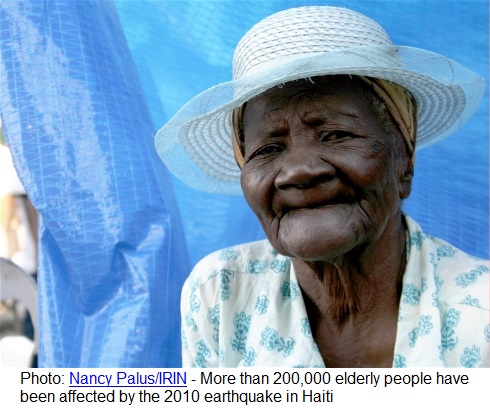
CU Blog - Socio-Economic Change and Demographic Theory of Elderly Suicide - Photo 2This purpose of the book Go Lean … Caribbean is to elevate the economic engines in the region. However, these commentaries have focused, numerous times on social and socio-economic issues; in this case, focus is given to the threat of suicides.

This seems out-of-scope!

The book and accompanying blogs posit that socio- economic factors must be accounted for in the roadmap to optimize and improve this society. In fact, the book lists 144 missions for the imminent Caribbean Union Trade Federation (CU), but one of them is an advocacy against suicides. This is identified on Page 36 under the title:

10 Ways to Promote Happiness … in the Caribbean Region

On the surface, it would appear as if promoting happiness would be so easy to do in the region of the world that is arguably “the greatest address on the planet”. Yet, the country with the highest suicide rate has been identified as Caribbean member-state Guyana.

This does not compute! Such a crisis amidst such beauty! The conclusion in the book is that the deficiency – contributing to suicides – is economic, jobs in particular. As the book declares that a man/woman needs three things to be happy:

  1. something to do,
  2. someone to love, and
  3. something to hope for.

The Go Lean roadmap does feature – in its scope – the societal deficiencies that could propel an increase in suicides. This is highlighted by the CU’s prime directives, as described by these statements:

  • Optimization of the economic engines in order to grow the regional economy to $800 Billion & create 2.2 million new jobs.
  • Establishment of a security apparatus to protect the resultant economic engines and mitigate challenges/threats to ensure public safety for the region’s stakeholders.
  • Improvement of Caribbean governance, including a separation-of-powers with member-states, to support these engines.

This commentary is not a re-harsh of the same suicide-driving issues as previously addressed, but rather an exploration of the socio-economic issues associated with the elderly in society. This commentary is the 2nd in a 3-part series on the art-and-science of analyzing socio-economic changes; other commentaries depict …

1. the manifestation of socio-economic changes in everyday life – values, habits and nuances, looking across a timeline from the 1960’s versus today and also …

3. the use-and-abuse of economic impact analyses on community investments.

Within this series, the field of socio-economics is defined as the social science that studies how economic activity affects and is shaped by social processes. In general it analyzes how societies progress, stagnate, or regress because of the local, regional or global economy. This commentary though, considers an academic study that examined the demographic population of the elderly and summarized that the logical conclusions of the root causes of suicide are different for this population. Consider the Abstract, here, of the Research Paper from the University of Nairobi (Kenya):

Title: Towards a Socio-Economic and Demographic Theory of Elderly Suicide: A Comparison of 49 Countries at various stages of development
By: Kiemo, Karatu
(Source: University of Nairobi (Kenya) Academic Research; Posted (2004; Retrieved 10-15-2014 from: http://erepository.uonbi.ac.ke/handle/11295/55260)

Abstract: D. Cowgill found out that the role and status of the elderly declined with modernization, but in contradiction G. Hammarström found out that what actually affected the role and status of the elderly during modernization was the rate at which modernization occurred.

From current studies, it can be insinuated that the transformation from socialist to market economies has too affected the role and status of the elderly adversely. In all, the social condition following on the above changes in productive, organizational and demographic structures connects with what E. Durkheim found to cause imbalance in social integration, and therefore could aggravate elders’ rate of suicide.

Using data from 49 developing and developed countries for the period around 1995, elderly suicide rates and elderly/non-elderly suicide ratio are examined in light of the extent and direction of socio-economic development; and in light of the extent of demographic transition and elderly population’s gender structure. Results show that the direction of socioeconomic change impacts differentially on elderly suicide rates, the rates in regressing economies being appreciably higher than in progressing economies. However, the impact of socio-economic trends on the elderly/non-elderly suicide ratio was not clear-cut.

The extent of socio-economic change impacts differentially on elderly suicide rates, the distribution being curvilinear (inverted-U functional) rather than Cowgill’s linear hypothesis. The extent of socioeconomic change also impacts differentially on elderly/non-elderly suicide ratio in an inverse correlation rather than Cowgill’s hypothesized positive correlation. Whereas the results failed to conform to the structuration of Cowgill’s modernisation theory, the theory is deemed substantively relevant especially in explaining the extent to which the status of being elderly aggravates suicide in the context of contemporary developing countries.

In this regard, Riley’s concept of age-integration seems more appropriate than Durkheim’s social integration in explaining how older age aggravates suicide in an especial manner. The thesis in this study is that elderly suicide is a function of age-related role and status and regulated by dynamics of socio-economic and demographic structures. Culture too seems to play some role that is yet to be determined.

———

Full Study: http://erepository.uonbi.ac.ke:8080/xmlui/handle/123456789/55260
CU Blog - Socio-Economic Change and Demographic Theory of Elderly Suicide - Photo 1The Go Lean roadmap does not ignore the needs of the elderly, nor any mental health needs of the Caribbean community. Rather, the roadmap calls for the establishment of a regional sentinel, a federal Health Department, to monitor, manage and mitigate public health issues in the region, including mental health with the same prioritization (cancer, trauma, virus, immunizations).

The University of Nairobi study hypothesizes that the elderly tend to be more affected when society experiences rapid change! This is an acute alarm for the CU/Go Lean planners, as the roadmap does call for near-hyper-growth in a short period of 5 years. Therefore, this foregoing article calls for the region to double-down on its efforts to ensure the health mitigations are in place for this vulnerable group. The need for this awareness was identified early in the Go Lean book, in the opening pronouncement in the Declaration of Interdependence (Page 11), as follows:

ix.  Whereas the realities of healthcare and an aging population cannot be ignored and cannot be afforded without some advanced mitigation, the Federation must arrange for health plans to consolidate premiums of both healthy and sickly people across the wider base of the entire Caribbean population. The mitigation should extend further to disease management, wellness, mental health, obesity and smoking cessation programs.

The University of Nairobi study is a classic exercise in this field of socio-economics. The goal of a socio-economic study is generally to bring about socio-economic development, usually by improvements in metrics such as GDP, life expectancy, literacy, levels of employment, etc.  In many cases, socio-economists focus on the social impact of some sort of economic change. Examples of causes of socio-economic impacts include new technologies such as cars or mobile phones, changes in laws, changes in the physical environment (such as increasing crowding within cities), and ecological changes (such as prolonged drought or declining fish stocks). These may affect patterns of consumption, the distribution of incomes and wealth, the way in which people behave (both in terms of purchase decisions and the way in which they choose to spend their time), and their overall quality of life.

The Go Lean … Caribbean roadmap constitutes a change for the region, a plan to consolidate 30 member-states into a Trade Federation with the tools/techniques to bring immediate change to the region to benefit one and all member-states. The roadmap calls for the coordination of the region’s (mental) healthcare needs at a CU federal agency. Though there is a separation-of-powers mandate between the member-states and federal agencies, the CU can still wield influence in this area due to funding accountabilities, (strings attached). The Go Lean roadmap details a monitoring and metering responsibility between the CU and the member-states; so there will be some federal compliance and regulatory oversight. This empowerment would also allow for better coordination with international stakeholders – like the World Health Organization (WHO) – and non-governmental organizations (NGOs) – there are many that cater to the needs of the elderly, just consider the VIDEO in the Appendix below.

For the Caribbean, we will not want our elderly population “checking out” from society! We love them too much and they have endured far more that they should have; see VIDEO below. The “happiness mandate” identified at the start, is presented in the book as a “community ethos” (Page 20), the definition of which follows here:

… the fundamental character or spirit of a culture; the underlying sentiment that informs the beliefs, customs, or practices of a group or society; the dominant assumptions of a people or period.

The book details that there must first be adoption of such a community ethos plus the executions of the following strategies, tactics, implementations and advocacies to impact the region’s public health:

Community Ethos – Deferred Gratification Page 21
Community Ethos – Economics Influence Choices Page 21
Community Ethos – Privacy versus Public Protection Page 23
Community Ethos – “Crap” Happens Page 23
Community Ethos – Lean Operations Page 24
Community Ethos – Cooperatives Page 24
Community Ethos – Non-Government Organizations Page 25
Community Ethos – Ways to Improve Sharing Page 35
Community Ethos – Ways to Promote Happiness Page 36
Community Ethos – Impact the Greater Good Page 37
Strategy – Vision – Confederate 30 Member-States Page 45
Strategy – Mission – Reform our Health Care Response Page 47
Strategy – Agents of Change – Aging Diaspora Page 57
Tactical – Fostering a Technocracy Page 64
Separation of Powers – Department of Health Page 86
Implementation – Ways to Deliver Page 109
Planning – Ways to Model the EU Page 130
Planning – Ways to Make the Caribbean Better Page 131
Planning – Ways to Measure Progress Page 148
Advocacy – Ways to Grow the Economy Page 151
Advocacy – Ways to Improve Healthcare Page 156
Advocacy – Ways to Impact Cancer Page 157
Advocacy – Ways to Better Manage the Social Contract Page 170
Advocacy – Ways to Foster Cooperatives Page 176
Advocacy – Ways to Improve Emergency Management Page 196
Advocacy – Ways to Improve Elder-Care Page 225
Appendix – Disease Management – Healthways Model Page 300
Appendix – Trauma Center Definitions Page 336

This Go Lean book asserts that there is a direct correlation of physical/mental health issue with the economy. This viewpoint has been previously detailed in Go Lean blog/commentaries, as sampled here:

Book Review: ‘The Protest Psychosis’
Guyana and Suriname Wrestle With High Rates of Suicides
Public Health Economics – The Cost of Cancer Drugs
Antibiotics Misuse Associated With Obesity Risk
Recessions and Public Health in the Caribbean Region
New Hope in the Fight Against Alzheimer’s Disease

There is a place in the new Caribbean for the elderly populations. Granted, they may not be candidates for the highly-sought, high-multiplier STEM (Science, Technology, Engineering and Mathematics) jobs, but nonetheless they are stakeholders in the Go Lean mission. Love of neighbor – the Greater Good – is why we do what we do!

This issue of suicide among the elderly, as discussed in the foregoing article is indicative of the need for better stewardship of the economy, security and governing engines in the Caribbean. This makes the region a better place to live, work, and play – for all: young and old.

🙂

Download the book Go Lean … Caribbean – now!

————-

Appendix VIDEO – “Honor the Elderly” (The Forgotten Ones)  – https://youtu.be/PZvnJv4CZQ8

Uploaded on Nov 5, 2009 – We must honor the elderly! We must treat the elderly with dignity, love and respect. How we treat the elderly is a reflection of who we are. We should treat them the way we would want to be treated when we grow old and feeble. Many elderly are full of wisdom and we can learn valuable lessons from them.
Music:  “On The Other Side Of Jordan” by Rabbit Easter Band (Google PlayeMusicAmazonMP3)

Share this post:
, , , , , ,

Pressed by Debt Crisis, Doctors Leave Greece in Droves

Go Lean Commentary

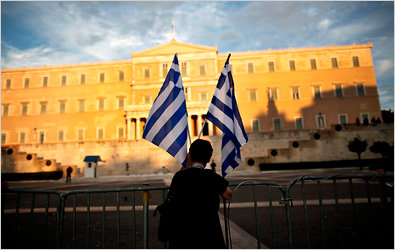
CU Blog - Pressed by Debt Crisis, Doctors Leave Greece in Droves - Photo 3Poor economic conditions are forcing a brain drain among a country’s professionals. Yes, we understand all too well.

This is the crisis for Greece! This is the crisis for the Caribbean, as well!

This is a consistent theme in the book Go Lean…Caribbean. The book posits that the events in Greece are relevant for the Caribbean, North America and the world economy as a whole. What’s worse is that many Caribbean member-states are in the same situation.

Greece is the weak link in the Eurozone; it is inching closer to defaulting on its debt. The country has been in a long standoff with its European creditors on the terms of a multibillion-dollar bailout. If the country goes bankrupt or decides to leave the 19-nation Eurozone, the Greek debt crisis could create instability in the region and reverberate around the globe. (Since this debt crisis began in 2010, most international banks and foreign investors have sold their Greek bonds and other holdings; they are not as vulnerable to what happens in Greece now).

CU Blog - Pressed by Debt Crisis, Doctors Leave Greece in Droves - Photo 1“A crisis is a terrible thing to waste” – states the Go Lean book quoting noted Economist Paul Romer. The opportunity therefore exists to forge change in the economic, security and governing engines of communities, in response to crises.

This story (see VIDEO below) shows that the rest of the world are all paying attention to this crisis in Greece, but few are thinking of the impact on the professional classes. This is of paramount interest to the planners of a new Caribbean, the publishers of the Go Lean book. The purpose of the book is to position the region at the corner of preparation and opportunity, so as to benefit from change. The issue from this article is more pressing for the Caribbean, as we share, as a region, a very high brain drain/emigration rate, estimated at 70%. See article here and VIDEO below:

Title: Pressed by Debt Crisis, Doctors Leave Greece in Droves
By: Erik Olsen, Contributor, New York Times Online Site; posted July 1, 2015; retrieved from: http://mobile.nytimes.com/2015/07/01/world/europe/pressed-by-debt-crisis-doctors-leave-greece-in-droves.html

Greece is in the midst of the worst brain drain in modern history, experts say.

“This is unprecedented in terms of the numbers of educated people that are leaving,” said Lois Labrianidis, a professor of economic geography at the University of Macedonia in Thessaloniki.

The country is hemorrhaging talent, as professionals in medicine, engineering and academics flee for a better economic climate and more stable employment. The pain has been particularly severe in the health care sector of Greece: Many of the country’s doctors have left or are making plans to do so.

“I don’t feel safe and secure for the future of my family here,” said Spyridon Kotsaris, an Athens orthopedic surgeon who has been planning for months to leave Greece with his wife and two daughters, preferably to Germany or Switzerland.

“We want a better life,” he said. “A better life means we are all together and feel more secure.”

In all, nearly 300,000 people have left Greece since 2010, nearly 3 percent of the country’s population before the crisis, according to government statistics. That includes as many as 5,000 doctors, with about 3,500 of them ending up in Germany, where Europe’s financial crisis has had less impact.

“It’s not that big of a concern for me financially, because I work in Germany,” said Alexios Theodorou, a Greek general surgeon working at a hospital in Gummersbach in North Rhine-Westphalia. Mr. Theodorou left Greece five years ago, as the crisis was beginning.

“My paycheck is secured,” he said. “But that doesn’t make my concern about the future any less, as I have much family in Greece. Greece is where I still call home.”

In some ways, the loss of so much young talent may be more devastating to Greece in the long term than abandoning the euro, if that happens. That has left some who sought a better life feeling increasingly bittersweet about the decision to leave.

“I feel sad seeing my country going through this rough time,” Mr. Theodorou said. “We, the people who left, are not to blame for the situation, but we sometimes feel guilty that we are leaving, that we left the people there to handle their problems.”

The book Go Lean…Caribbean serves as a roadmap for the introduction and implementation of the Caribbean Union Trade Federation (CU), a super-national institution with federal powers to forge change in the Caribbean region. One mission is incentivizing the return of the far-flung Caribbean Diaspora. Another mission is to dissuade further human flight/brain drain. The numbers don’t lie: we need population growth not population contraction.

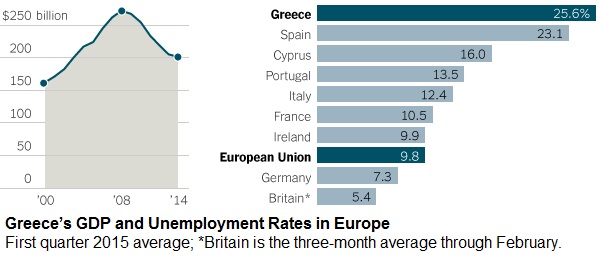
CU Blog - Pressed by Debt Crisis, Doctors Leave Greece in Droves - Photo 2The CU recognizes that the population numbers must work in favor of societal progress. Greece has lost 3% of its population since the start of this crisis in 2010, so this negative trend cannot be understated. There are many social safety nets that depend of the actuarial fact of population expansion, not contraction. Consider unemployment and pensions: for unemployment, workers pay into a fund and the temporarily unemployed file claims against that fund. Likewise with pensions: young workers pay into a fund, and the older-retired workers draw claims against that fund.

Thus, population contractions are definitely among the indices for a Failed-State status (Page 271).

The confederation of the CU is a reversal of the unfortunate trends inflicted on the Caribbean. The vision is to forge a Single Market of 42 million people in the 30 Caribbean member-states. Then the Go Lean roadmap provides the details for the creation of 2.2 million new jobs and GDP growth to accumulate to $800 Billion. This vision is at the root of the Go Lean roadmap, embedded in the opening Declaration of Interdependence (Page 13):

xxiv. Whereas a free market economy can be induced and spurred for continuous progress, the Federation must install the controls to better manage aspects of the economy: jobs, inflation, savings rate, investments and other economic principles. Thereby attracting direct foreign investment because of the stability and vibrancy of our economy.

xxv. Whereas the legacy of international democracies had been imperiled due to a global financial crisis, the structure of the Federation must allow for financial stability and assurance of the Federation’s institutions. To mandate the economic vibrancy of the region, monetary and fiscal controls and policies must be incorporated as proactive and reactive measures. These measures must address threats against the financial integrity of the Federation and of the member-states.

According to the foregoing New York Times article and the VIDEO below, Greece is in “hot water”. They need a remediation plan. Go Lean is the plan … for the Caribbean, not Greece. But we get to apply lessons learned from the experiences in Greece.

The following details from the book Go Lean … Caribbean are the community ethos, strategies, tactics, implementations and advocacies prescribed to manifest the reboot and empowerment efforts for the Caribbean economy, society and life in general:

Who We Are – SFE Foundation and 2008 Role Page 8
Anecdote: Puerto Rico – The Greece of the Caribbean Page 18
Community Ethos – Economic Systems Influence Individual Choices Page 21
Community Ethos – Economic Principles – Money Multiplier Page 21
Community Ethos – Governing Principles – Lean Operations Page 24
Community Ethos – Ways to Impact the Future Page 26
Community Ethos – Ways to Impact Turn-Arounds Page 33
Community Ethos – Ways to Impact the Greater Good Page 37
Strategy – Vision – Confederate all 30 Member-States into a Single   Market Page 47
Strategy – Mission – Repatriating Caribbean Diaspora Page 46
Strategy – Mission – Dissuade further Brain Drain Page 46
Tactical – Confederating a Permanent Union Page 63
Tactical – Fostering a Technocracy – Greek Sovereign Debt Case Study Page 64
Implementation – Assemble all Member-States Page 96
Implementation – Ways to Pay for Change Page 101
Implementation – Reasons to Repatriate Page 118
Planning – Ways to Model the European Union (EU) Page 130
Planning – Ways to Improve Failed-State Indices Page 134
Planning – Lessons Learned from 2008 Page 136
Planning – Lessons Learned from East Germany – Eventuality of Failed-States Page 139
Planning – Lessons Learned from Detroit – The Need for Turn-around Page 140
Advocacy – Ways to Grow the Economy Page 151
Advocacy – Ways to Create Jobs Page 152
Advocacy – Ways to Impact Entitlements – Austerity Lessons Page 158
Advocacy – Ways to Improve Governance – Euro-Zone Budget Deficits Model Page 168
Advocacy – Better Manage the Social Contract Page 170
Advocacy – Impact the Diaspora Page 217
Advocacy – Ways to Preserve Caribbean Heritage Page 218
Advocacy – Ways to Help the Middle Class – Enforce the Social Contract Page 223
Appendix – Failed-State Indicators and Definitions Page 271

Broken economies can be fixed!

This is not the first economic crisis to be observed-and-reported on by Go Lean planners. The Go Lean book is a product of 2008 Financial Crisis and Great Recession. From this fallout, this roadmap was composed, by individuals intimate with the details of the crisis … and its causes; (Page 8). Their motivation: love of homeland.

While love of the Caribbean homeland is a strong motivator – as Greek expatriates in the below VIDEO express love of their homeland – the realities of a broken economy will still cause a brain drain. These flight-abandonment realities creates the need for a societal reboot in economics, security and governance. This is the quest of Go Lean…Caribbean roadmap, to reboot the region’s societal engines; employing best-practices and better strategies, tactics and implementations to impact its prime directives, identified with these statements:

  • Optimization of the economic engines in order to grow the regional economy to $800 Billion & create 2.2 million new jobs.
  • Establishment of a security apparatus to protect the resultant economic engines and mitigate challenges/threats to the region’s public safety.
  • Improvement of Caribbean governance to support these engines.

There are many Go Lean blog/commentaries that have echoed these points of societal abandonment. Here is a sample of related commentaries:

https://goleancaribbean.com/blog/?p=5088 Immigrants account for 1 in 11 Blacks in USA
https://goleancaribbean.com/blog/?p=4613 A Lesson in History: – Emigration from Ireland in History
https://goleancaribbean.com/blog/?p=4185 Caribbean Ghost Towns: It Could Happen…Again
https://goleancaribbean.com/blog/?p=2809 A Lesson in History: Economics of East Berlin – A Failed-State
https://goleancaribbean.com/blog/?p=2025 Caribbean Jobs – Attitudes & Images of the Diaspora
https://goleancaribbean.com/blog/?p=1596 Book Review: ‘Prosper Where You Are Planted’
https://goleancaribbean.com/blog/?p=1433 Caribbean loses more than 70 percent of tertiary educated to brain drain
https://goleancaribbean.com/blog/?p=841 Having less babies (and people) is bad for the Caribbean economy
https://goleancaribbean.com/blog/?p=599 Ailing Puerto Rico open to radical economic fixes

From the cradle-to-the-grave, the needs of a community – whether it is in the Caribbean, Greece or anywhere – cannot be casually dismissed. A crisis ensues, people respond, they make a choice: fight or flight.

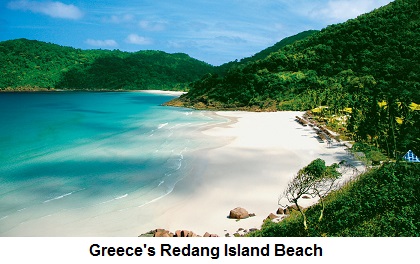
In Greece, despite this great beauty, they are choosing flight:

CU Blog - Pressed by Debt Crisis, Doctors Leave Greece in Droves - Photo 4

In the Caribbean too!

caribbean_view

We can do better! We must do better. Though success is not guaranteed, it can be forged with the adoption and application of best-practices. This requires the full participation – time, talent and treasuries – of all stakeholders: residents and Diaspora alike. This effort is not easy, but rather strenuous; the Go Lean book calls it “heavy-lifting”.

Strenuous, heavy-lifting – Yes – but the returns are worth the effort: making the Caribbean a better place to live, work and play.

This is the goal of the Go Lean roadmap. Everyone is urged to lean-in! 🙂

Download the book Go Lean … Caribbean – now!

———

Appendix VIDEOGreece’s Doctor Brain Drain http://video1.nytimes.com/video/2015/06/30/33813_1_greece-doctors-leaving_wg_240p.mp4

playbutton-300x300

In part of a large brain drain that could affect Greece for decades, thousands of doctors have left the nation for Germany since the financial crisis began five years ago.


Share this post:
, , , , , , ,
[Top]

Book Review – ‘Thimerosal: Let The Science Speak’

Go Lean Commentary:

This accusation against the American Big Business eco-system, seems so egregious:

Sacrifice children on the altar of corporate profits.

According to the events on the HBO Television show Real Time with Bill Maher, on Friday April 24, 2015, it is hard not to be an Anti-Vaxxer. The ‘Real Time’ host sided with his guest, activists and author Robert F. Kennedy Jr.. Mr. Kennedy came on to talk about his new book (see Appendix A), and the link between vaccines and the dreaded disorder of Autism.

- Photo 1On the show, Maher conducted a sit-down interview with Robert F. Kennedy Jr. who came on the program to promote the new book he edited ‘Thimerosal: Let the Science Speak’; as well as the full-page ad Kennedy recently ran in USA Today claiming that the drug Thimerosal, a mercury-containing preservative used in vaccine medications, causes Autism.

This is a stance Kennedy, and others, has taken for quite some time. Back in 2005, Kennedy made an infamous appearance on The Daily Show with Jon Stewart for an “Autism” special. There, Kennedy preached his Anti-vaxx stance, claiming not only that vaccines cause Autism, but also that there’s a wide-ranging conspiracy to cover this fact up involving the government, academia, and Big Pharma. Stewart, who’d later rip Anti-vaxxers a new one in a February 2015 Daily Show rant, just nodded his head and said, “I appreciate you getting the word out.”

Kennedy went on to answer Maher’s questions by explaining what he believes are the “unanimous dangers of Thimerosal” and “the links between Thimerosal and an epidemic of neurological disorders that are now afflicting American children: ADD, ADHD, speech delay, language delay, hyperactivity disorder, ASD, and Autism, all of which began in 1989, the year they changed the vaccine schedule.”

Then, Kennedy made an interesting admission.

“I am very pro-vaccine,” he said. “I had all my kids vaccinated and want to see government policies promoting full-coverage vaccines. The only way to do that is to have safe vaccines, and to have a credible regulatory process with regulators with integrity, and we don’t have that today.”

Yes, Kennedy said he mainly takes issue with the Centers for Disease Control and Prevention (CDC), which he says “controls the field” and is a “cesspool of corruption that’s been completely taken over by the vaccine industry.”

(Source: http://www.thedailybeast.com/articles/2015/04/24/bill-maher-anti-vaxxer-the-real-time-host-sides-with-robert-f-kennedy-jr-during-bizarre-interview.html)

This latter point is where this commentary related to the plan to elevate Caribbean society. The book Go Lean…Caribbean (Page 157) declares that big American Pharmaceutical industry or Big Pharma may be more of an obstacle than a aid for effecting community well-being. They care more about profits than they do the well-being of the public.

Sacrifice children on the altar of corporate profits.

This charge relates the underlying theme that the profit motives of Big Pharma is indicative of American Crony-Capitalistic practices that have been cited in so many other blog / commentaries. See Appendix C of cited Crony-Capitalism conflicts in American society.

(The publishers of the Go Lean book are proponents of childhood vaccinations – Pro-Vaxxers).

The Go Lean book strategizes a roadmap for economic empowerment in the region, clearly relating that healthcare, and pharmaceutical acquisitions are important in the quest to make the Caribbean a better place to live, work and play. At the outset of the Go Lean book, in the Declaration of Interdependence (Page 11), these points are pronounced:

viii. Whereas the population size is too small to foster good negotiations for products and commodities from international vendors, the Federation must allow the unification of the region as one purchasing agent, thereby garnering better terms and discounts.

ix.   Whereas the realities of healthcare and an aging population cannot be ignored and cannot be afforded without some advanced mitigation, the Federation must arrange for health plans to consolidate premiums of both healthy and sickly people across the wider base of the entire Caribbean population. The mitigation should extend further to disease management, wellness, obesity and smoking cessation programs.

The Go Lean book serves as a roadmap for the implementation and introduction of the technocratic Caribbean Union Trade Federation (CU). The CU‘s prime directives are identified with the following 3 statements:

  • Optimization of the economic engines in order to grow the regional economy to $800 Billion & create 2.2 million new jobs.
  • Establishment of a security apparatus to protect the resultant economic engines.
  • Improvement of Caribbean governance to support these engines.

Previous blog/commentaries addressed issues of capitalistic conflicts in American medical practices, compared to other countries, and the Caribbean. The following sample applies:

Judge to decide on Vaccination Amidst Autism Fears
Antibiotics Misuse Linked to Obesity in the US
CHOP Research: Climate Change May Bring More Kidney Stones
Big Pharma & Criminalization of American Business
New Research and New Hope in the Fight against Alzheimer’s Disease
Health-care fraud in America; criminals take $272 billion a year
New Cuban Cancer medication registered in 28 countries

The Caribbean Union Trade Federation has the prime directive of optimizing the economic, security and governing engines of the region. The Book Review and AutismOne VIDEO – in the Appendices below – depict that abuses have entered the quest for best practices in health management for the American public. We must do better in the Caribbean.

The Book Review and VIDEO below provide inside glimpses of the decision-making around Public Health drugs. Obviously, the innovators and developers of drugs have the right to glean the economic returns of their research. The Go Lean roadmap posits that more innovations will emerge in the region as a direct result of the CU prioritization on science, technology, engineering and medical (STEM) activities on Caribbean R&D campuses and educational institutions.

This is the manifestation and benefits of Research & Development (R&D). The roadmap describes this focus as a community ethos and promote R&D as valuable for the region. The following list details additional ethos, strategies, tactics, implementations and advocacies to optimize the region’s health deliveries and R&D investments:

Community Ethos – Deferred Gratification Page 21
Community Ethos – Economic Systems Influence Individual Choices and Incentives Page 21
Community Ethos – The Consequences of Choices Lie in the Future Page 21
Community Ethos – Governing Principles – Return on Investments Page 24
Community Ethos – Governing Principles – Cooperatives Page 25
Community Ethos – Non-Government Organizations Page 25
Community Ethos – Ways to Impact Research & Development (R&D) Page 30
Community Ethos – 10 Ways to Promote Happiness Page 36
Community Ethos – Ways to Impact the Greater Good Page 37
Strategy – Integrate and unify region in a Single Market Page 45
Strategy – Agents of Change – Globalization Page 57
Tactical – Fostering a Technocracy Page 64
Tactical – Separation of Powers – Health Department Page 86
Tactical – Separation of Powers – Drug Administration Page 87
Implementation – Ways to Pay for Change Page 101
Implementation – Ways to Implement Self-Government Entities – R&D Campuses Page 105
Implementation – Ways to Deliver Page 109
Planning –  Ways to Improve Trade Page 128
Planning –  Ways to Make the Caribbean Better Page 131
Advocacy – Ways to Improve Healthcare Page 156
Advocacy – Ways to Better Manage the Social Contract Page 170
Advocacy – Ways Foster Cooperatives Page 176
Advocacy – Ways to Improve Emergency Management Page 196
Advocacy – Ways to Impact Foundations Page 219
Advocacy – Ways to Impact Persons with Disabilities Page 228
Appendix – Emergency Management – Medical Trauma Centers Page 336

The Go Lean roadmap does not purport to be an authority on medical or Public Health best practices. The economic-security-governance empowerment plan should not direct the course of direction for research and/or treatment. But something is wrong in the US, and other countries. 1 in every 160 child has been afflicted with Autism since 1989.

According to these anecdotes and reports, Big Pharma has clearly sacrificed our children on the altar of corporate profits. These companies cannot claim any adherence to any “better nature” in their practices. Their motive is malevolent!

The King of Pop, Michael Jackson, released a song with the title: “They don’t really care about us”; see Appendix D VIDEO below; he very well could have been talking about Big Pharma. In a previous blog/commentary, the pharmaceutical industry was assailed over one cancer drug, Gleevec. The commentary clearly depicted the perils of Crony-Capitalism.

Crony-Capitalism is not for the Greater Good. It is not good economics, good security nor good governance. These activities must be monitored and mitigated.

No, “they don’t really care about us”. We must care and provide for ourselves. There must be better stewardship for society.

This is the calling for the CU Trade Federation, to do better. We can use this community ethos to impact the Greater Good. This is the heavy-lifting of the CU, to make the Caribbean a better place to live, work, heal and play. 🙂

Download the book Go Lean … Caribbean – now!

———–

Appendix A – Book Review:  Thimerosal: Let The Science Speakby Robert F. Kennedy Jr.
(Source: Age of Autism – Online Community for Autism Advocacy – Posted 08-04-2014; Retrieved 05-15-2015 http://www.ageofautism.com/2014/08/book-debut-thimerosal-let-the-science-speak-by-robert-f-kennedy-jr.html)

Book debut day is always exhilarating – even for a seasoned, best selling author like Robert Kennedy, Jr.. Please join us in wishing him well as he educates readers on the dangers of neurotoxic mercury. In an environment (pardon the pun) where so few advocates are willing to step and and speak out on behalf of vaccine safety, we commend and thank both Kennedy and his publisher, Skyhorse. There is not a bigger name in American environmental causes doing anything like this.

After you read the book, we invite you to leave a review at Amazon, Barnes & Noble and GoodReads.

Unfortunately, many people will negatively review the book never having cracked the spine – never having the read more than the book’s cover art on the computer…    Write the review that suits your reaction to the book. Copy it, and leave it at every book site you can find.

Comments
Many follow this conversation and subscribe to the comment feed for this post. Here are a sample:

1. Children damaged by vaccines is not about mercury. That is throwing people off scent. Each and every vaccine has the potential to maim and/or kill the recipient, from the first instant after injection by anaphylactic shock, to Sids, to brain tumors 60 years later, as Michele Carbone has shown…

I get sick reading people’s comments repeating the mind controlled offal about how vaccines have saved the lives of millions. That is an outright lie. The opposite is true. From day one mandated mass smallpox vaccinations have led to mass outbreaks of smallpox. The same goes for polio, especially in Africa.

Check the historical facts: The Jenner/Pasteur gospels are the basis of today’s vaccination programs, yet their premise is patently false, making the whole vaccination religion nothing but a house of cards.

In reality all vaccines are weapons of mass destruction. Just check the product inserts for their content. Introducing manipulated pathogens plus toxic chemicals and metals into the bloodstream never will lead to true health!

Source – Posted by: Desiree L. Rover, August 30, 2014

—————

2. Robert F. Kennedy Jr. has assembled two books: a private unpublished draft which, as he promised at AutismOne 2013, exposes the vaccine/autism cover-up. And this short, bowdlerized, oddly incoherent book, which does not.

In the published book, two bright spots shimmer. The first is Martha Herbert’s brilliant introduction, which places the vaccine safety debate in a broader context, arguing that we need “fresh approaches to health care, product development, energy, and ecosystems management.” The second is Chapter 2, written in a strong, confident narrative voice that pins mercury firmly to the rising prevalence of neuro-developmental disorders. The remaining chapters and 804 citations appear largely to be notes and debating points that support and expand upon Kennedy’s 2005 article, “Deadly Immunity,” published jointly by Salon.com and Rolling Stone, where the key points are made more succinctly, and in my view more persuasively, but without as much supporting documentation.

For those who have followed the vaccine debate on Age of Autism and especially for those who attended Kennedy’s AutismOne 2013 presentation, there are five surprises in the published book. Four of them occur in the introductory material.

First, that “there is no definitive proof that vaccines or the mercury in them causes autism” (p. xvi). How much proof do you need to be “definitive?”

Second, that “the common claim of autism rates continuing to climb after Thimerosal’s phase-out from the routine childhood vaccination schedule … has not, as yet, been borne out” (p. xxvii). Will that statement ring true with special education teachers and professionals whose clinics are overflowing with vaccine-damaged kids?

Third, that removing Thimerosal from all medical products, including flu shots, will restore “faith in the vaccine regimen while maintaining or increasing vaccination rates” (p. xxix). If restoring faith in the vaccine regimen is indeed Kennedy’s goal, this book is two hundred pages too short and ten years too late.

Fourth, that “This book is aggressively pro-vaccine” (p. xi). I know what that is supposed to mean in this context, but the choice of words is surprising. Given the failures of mandated vaccines to protect our children — failures publicized in Age of Autism during the past year — how much more “aggressively pro-vaccine” do we need to be?

The fifth surprise—and for me this is a head spinner — is that in 1999, two key Pharma companies, Merck and SmithKline Beecham (now GlaxoSmithKline) informed the CDC that they could supply enough Thimerosal-free versions of their products to “meet total vaccine demand.” The CDC declined. The unanswered question, worthy of a British whodunit, is this: Why? What beast at the heart of darkness is responsible for the greatest man-made medical catastrophe yet visited on humankind?

The draft chapters that were dismembered, replaced, eviscerated, or buried before Thimerosal: Let the Science Speak was published point to the answer. They cry out from the grave.

Mr. Kennedy, publish the draft.

Source – Posted by: Dan Burns, August 06, 2014

———–

Appendix B VIDEO: AutismOne – How Mercury Triggered The Age Of Autism – https://youtu.be/KiT7Y233404

Published on May 25, 2013 – By Dan Olmsted, Mark Blaxill Motion Design By Natalie Palumbo. Special Thanks to Teresa Conrick

———–

Appendix C – Models of American Crony-Capitalism

Big Defense Many theorists indicate that the “follow the money” approach reveals the Military Industrial Complex work to undermine peace, so as to increase defense spending for military equipment, systems and weapons.
Big Media Cable companies conspire to keep rates high; kill net neutrality; textbook publishers practice price gouging; Hollywood insists on big tax breaks/ subsidies for on-location shooting.
Big Oil While lobbying for continuous tax subsidies, the industry have colluded to artificially keep prices high and garner rocket profits ($38+ Billion every quarter).
Big Box Retail chains impoverish small merchants on Main Street with Antitrust-like tactics, thusly impacting community jobs. e-Commerce, an area of many future prospects, is the best hope of countering these bad business tactics.
Big Pharma Chemo-therapy cost $20,000+/month; and the War against Cancer is imperiled due to industry profit insistence.
Big Tobacco Cigarettes are not natural tobacco but rather latent with chemicals to spruce addiction. Caribbean cigars are all natural.
Big Agra Agribusiness concerns continue to exacerbate greenhouse gases, bully family farmers and crowd out the market; plus they fight common sense food labeling efforts.
Big Data Brokers for internet and demographic data clearly have no regards to privacy concerns. They open that doors for hackers and data breaches.
Big Banks Wall Street’s damage to housing and student loans are incontrovertible. Their only motive: more profits.
Big Weather Overblown hype of “Weather Forecasts” to dictate commercial transactions.
Big Real Estate Preserving MLS for Real Estate brokers only, forcing 6% commission rates, when the buyers and sellers can easily meet online without them.
Big Salt Despite the corrosiveness of salt on roads and the environment, it is the only tactic used to de-ice roads during the winter. Immediately after the weather warms, the roads must be re-constructed, thus ensuring a continuous economic cycle.
Big Energy The For-Profit utility companies always lobby against regulations to “clean-up” fossil-fuel (coal) power plants or block small “Green” start-ups from sending excess power to the National Grid. Their motive is to preserve their century-long monopoly and their profits.
Big Legal Even though it is evident that the promotion of Intellectual Property can help grow economies, the emergence of Patent Trolling parties (mostly lawyers) is squashing innovation. These ones are not focused on future   innovations, rather just litigation. They go out and buy patents, then look for anyone that may consume any concepts close to those patents, then sue for settlements, quick gains.
Big Cruise Cruise ships are the last bastion of segregation with descriptors like “modern-day-slavery” and “sweat-ships”. Working conditions are poor and wages are far below anyone’s standards of minimum. Many ship-domestic staff are “tip earners”, paid only about US$50 a month and expected to survive on the generosity of the passengers’ gratuity. The industry staff with personnel from Third World countries, exploiting those with desperate demands. Nowhere else in the modern world is this kind of job discrimination encouraged, accepted or tolerated.
Big Jails The private prison industry seem motivated more by profit than by public safety. They attempt to sue state governments when their occupancy levels go too low; a reduction in crime is bad for business.

———–

Appendix D VIDEO: Michael Jackson – They Don’t Care About Us – https://youtu.be/QNJL6nfu__Q


Uploaded on Oct 2, 2009 – Music video by Michael Jackson performing They Don’t Care About Us. (C) 1996 MJJ Productions Inc.

Music: “They Don’t Care About Us” by Michael Jackson (Google PlayAmazonMP3iTunes)


Share this post:
, , ,
[Top]

Forging Change: ‘Food’ for Thought

Go Lean Commentary

“The way to a man’s heart is through his stomach” – Old Adage.

Could it be that simple? Have we been laboring all the while, trying to forge change in the Caribbean region while missing out on the easiest driver: Food?

Seriously! We “gotta” eat!

While the publishers of the book Go Lean…Caribbean wants to forge change in the Caribbean, we recognize that it is a heavy-lifting task. There are so many societal defects in the region and we need effective strategies, tactics and implementation to effect turn-around. Despite all the advance research and academic exercises, we seem to have left off this simple yet effective model: Food.

This is the impression gleaned from this University of Pittsburgh (USA) study and VIDEO here:

Video: Study: Changing Diet May Affect Colon Cancer Risk – http://www.today.com/video/study-changing-diet-may-affect-colon-cancer-risk-436297283693

As the foregoing VIDEO depicts, change can be forged in as soon as 2 weeks. That simple! This is impactful enough for us to all lean-in to this guidance.

Cancer – this is the underlying threat being mitigated in the foregoing VIDEO. While this is a complicated medical issue – where many people have lost their lives – it is not oversimplifying to say that our food choices can endanger our overall health. While everything is not known about cancer – there is no actual cure, only treatments – it is the accepted wisdom that diet and exercise minimize the risk of affliction.

The subject of cancer is a community health crisis. But if we can forge change in this threatening area by our food choices, then we need to pay heed.

The book Go Lean…Caribbean serves as a roadmap for the introduction and implementation of the Caribbean Union Trade Federation (CU), a confederation of all 30 member-states in the region. This effort is an initiative to bring change and empowerment to the Caribbean region, to make the region a better place to live, work, heal and play. From the outset, the book recognized the significance of our culture, how food and diet plays a significant role in the Caribbean eco-system with these statements in the opening Declaration of Interdependence (Page 14):

xxvi.     Whereas the Caribbean region must have new jobs to empower the engines of the economy and create the income sources for prosperity, and encourage the next generation to forge their dreams right at home, the Federation must therefore foster the development of new industries, like that of … frozen foods … impacting the region with more jobs.

xxx.     Whereas the effects of globalization can be felt in every aspect of Caribbean life, from the acquisition of food and clothing, to the ubiquity of ICT, the region cannot only consume, it is imperative that our lands also produce and add to the international community, even if doing so requires some sacrifice and subsidy.

xxxii.    Whereas the cultural arts … of the region are germane to the quality of Caribbean life, and the international appreciation of Caribbean life, the Federation must implement the support systems to teach, encourage, incentivize, monetize and promote the related industries … These endeavors will make the Caribbean a better place to live, work and play.

The purpose of the Go Lean roadmap is societal change, not food; yet there is this acknowledgement that food can help forge change. This is against the backdrop that there are many threats to Caribbean life, liberty and the pursuit of happiness. Food choices affect these executions. Think: obesity, health care, cancer, poverty and jobs.

This Go Lean roadmap calls for the heavy-lifting in shepherding many important aspects of Caribbean life; these food-related issues included. This is not so simple anymore. For one, the book reports (Page 157) that in the United States “Cancer strikes nearly 1 in every 2 men and more than 1 in every 3 women” and then sounds the alarm that the Caribbean cannot be far behind. This may be considered a “Clear and Present Danger”. So there is the need for change in this important area.

The Go Lean book, as an empowerment roadmap, must therefore examine the reality and consequences of food, under the guise of this regional effort. This roadmap has 3 prime directives:

  • Optimization of the economic engines in order to grow the regional economy to $800 Billion GDP and create 2.2 million new jobs, many of which are projected for food-related and allied health industries (30,000 in direct agriculture; 20,000 in direct Health Care; 4000 in direct Fisheries; and 2000 related to Frozen Foods).
  • Establishment of a security apparatus to protect the resultant economic engines.
  • Improvement of Caribbean governance, including a separation-of-powers with the member-states, to support these engines.

The book is not a public health instruction manual. Nor is it is a book on science and nutrition. But it does describe the CU as a hallmark of a technocracy, a commitment to efficiency and effectiveness, but still with a commitment to concepts of culture, food, and fun – overall happiness. The Go Lean book declares that before any real change takes root in the Caribbean that we must reach the heart, that there must be an adoption of new community ethos, the national spirit that drives the character and identity of its people. We must therefore use effective and efficient drivers to touch the heart and forge this change. How? We know there is truth to the opening quotation: “through the stomach”.

The Go Lean roadmap was constructed with the community ethos in mind to forge change, plus the execution of related strategies, tactics, implementations and advocacies to make the change permanent. The following is a sample of these specific details from the book:

Community Ethos – Deferred Gratification Page 21
Community Ethos – Economic Principles – People Choose Page 21
Community Ethos – Economic Principles – People Respond to Incentives in Predictable Ways Page 21
Community Ethos – Economic Principles – The Consequences of Choices Lie in the Future Page 21
Community Ethos – Governing Principles – Lean Operations Page 24
Community Ethos – Ways to Impact the Future Page 26
Community Ethos – Ways to Impact Research & Development – Nouvelle Caribbean Cuisine Page 30
Community Ethos – Ways to Impact Turn-Around Page 33
Community Ethos – Ways to Promote Happiness – Promotion of Domestic Cultural Institutions Page 36
Community Ethos – Ways to Impact the Greater Good Page 37
Strategy – Mission – Build and foster local economic engines to satiate food   needs Page 45
Strategy – Mission – Celebrate the Culture and Cuisine of the Caribbean Page 46
Strategy – Customers – Outreach to Caribbean Diaspora Page 47
Strategy – Agents of Change – Globalization Page 57
Tactical – Confederating a Permanent Union Page 63
Tactical – Fostering a Technocracy Page 64
Tactical – Creating $800 Billion Economy – New High Multiplier Industries – Frozen Foods Page 70
Tactical – Separation of Powers – Department of State – Culture   Administration Page 81
Tactical – Separation of Powers – Food / Nutritional Administrations Page 87
Tactical – Separation of Powers – Agriculture & Fisheries Licensing – Inspections Page 88
Tactical – Separation of Powers – Farm & Marine Credit – Economic Influence Page 88
Implementation – Ways to Pay for Change Page 101
Implementation – Ways to Deliver Page 109
Implementation – Ways to Benefit from Globalization – Dynamics of Food Supply Page 119
Implementation – Ways to Promote Independence – Food Interdependence Page 119
Planning – 10 Big Ideas for the Caribbean Region – 4 Languages & Culture in Unison Page 127
Planning – Ways to Improve Trade – Diaspora Marketing Page 128
Planning – Ways to Make the Caribbean Better Page 136
Advocacy – Ways to Grow the Economy Page 151
Advocacy – Ways to Create Jobs Page 152
Advocacy – Ways to Impact  Cancer – Promote Wellness – Better Diets Page 157
Advocacy – Ways to Better Manage Food Consumption Page 162
Advocacy – Ways to Improve Communications – Public Broadcasting of “Sound-bites” Page 186
Advocacy – Ways to Impact Events – Food Festivals Page 191
Advocacy – Ways to Develop Frozen Foods Page 208
Advocacy – Ways to Improve Fisheries Page 210
Advocacy – Ways to Preserve Caribbean Heritage – Promote Culture Page 218
Advocacy – Ways to Improve the Arts Page 230
Advocacy – Ways to Impact Urban Living – Promotion of Farmers Markets Page 234
Advocacy – Ways to Impact Rural Living – Agricultural Co-existence Mandate Page 235

This roadmap wants to change the Caribbean diet plan, branded Nouvelle Caribbean Cuisine: more fiber, less fats; more green vegetables, less processed food; no more S.A.D., meaning Standard American Diet.

As depicted by the S.A.D. references, there is the expectation not to allow the American eco-system to lead in this sphere of influence. There was a time when much of the Caribbean food supply originated locally. That is not a difficult message to convey. Lesser developed countries, (think Africa), are more successful with local food production and consumption, the Caribbean can succeed. While this plan is optimistic, it is realistic too. People can and do change.

There is the acknowledgement that the business of food has changed in the light of modern dynamics, particularly due to globalization. To spur more local agricultural development, the economic engines of the food supply must be secured. This point was previously detailed in these Go Lean blog/commentaries:

https://goleancaribbean.com/blog/?p=3276 Role Model Shaking Up the World of Cancer
https://goleancaribbean.com/blog/?p=2522 The Cost of Cancer Drugs
https://goleancaribbean.com/blog/?p=2276 Climate Change May Affect Food Supply Within a Decade
https://goleancaribbean.com/blog/?p=1847 Cuban All Natural – Declared “the best in the world”
https://goleancaribbean.com/blog/?p=658 Wellness Advocates push for junk-food tax
https://goleancaribbean.com/blog/?p=554 Cuban cancer medication registered in 28 countries
https://goleancaribbean.com/blog/?p=286 PR’s Comprehensive Cancer Center Project Breaks Ground

“Do what you have always done, get what you’ve always got” – Old Adage.

The effort to forge change has also been stressed in previous Go Lean blog/commentaries, as detailed here:

https://goleancaribbean.com/blog/?p=3568 Forging Change: Music Moves People
https://goleancaribbean.com/blog/?p=3512 Forging Change: The Sales Process
https://goleancaribbean.com/blog/?p=2291 Forging Change: The Fun Theory
https://goleancaribbean.com/blog/?p=623 Only at the precipice, do they change

In the Caribbean, we need better food consumption habits. According to the foregoing VIDEO, it does not take a lot to change habits in this regard. We must simply push hard (messaging) on the needed changes, and then labor to get the community ethos to take hold. All the earnest effort will be a waste unless people are moved to change. So we must use all effective tools to forge the required change; food or the “stomach” is one of the best ways … to reach people.

Food - Photo 1

Food - Photo 4

Food - Photo 5

Food - Photo 2

Food - Photo 6

Food - Photo 3

This is serious; this is life-and-death.

The quest to change the Caribbean is more complex than just feeding people. But their food options can signal their willingness to change and assimilate the empowerments being advocated for the region. This is the mandate of the Go Lean roadmap: making the Caribbean a better place to live, work, heal and play.

We “gotta” eat …

So everyone is encouraged to lean-in for this change and the full Go Lean roadmap. 🙂

Download the book Go Lean … Caribbean – now!

Share this post:
, , , ,
[Top]

Managing a ‘Clear and Present Danger’

Go Lean Commentary

A ‘Clear and Present Danger’ sounds ominous…

- Photo 4

There should be no question as to intent or consequence if the situation goes unimpeded.

The ‘Clear and Present Danger’ doctrine is a concept in jurisprudence, which has bearing on everyday life for everybody. It refers to not just a potential danger but one that will likely cause a catastrophe if not immediately obstructed or neutralized.

This phrase was suggested as a test of harmful speech by the US Supreme Court Justice Oliver Wendell Holmes in the 1919 case of Schenck v. United States. In delivering the court’s unanimous decision upholding the conviction of a Socialist Party Officer (who encouraged resistance to the World War 1 Draft) under the Espionage Act (which suppressed Free Speech), Justice Holmes noted that the “character of every act depends upon the circumstances in which it is done.” He went on to say that, “when a nation is at war many things that might be said in time of peace are such a hindrance to its effort that their utterance will not be endured so long as men fight and that no court could regard them as protected by any constitutional right.” (Source: http://www.businessdictionary.com/definition/clear-and-present-danger.html)

How would this concept in jurisprudence relate to the everyday life for the average person in the Caribbean?

This consideration is presented in conjunction to mitigations and remediation for protecting the Caribbean homeland. The assertion in the book Go Lean … Caribbean (Page 23) is that with the emergence of new economic engines, “bad actors” will also emerge thereafter to exploit the opportunities, with good, bad and evil intent. But the book warns against more than just bad people, rather “bad actors”; thusly referring to corporate entities, natural disasters (hurricanes are assigned people names) and other “random acts” (think “red tides”, pandemics, etc.). The book relates that this is a historical fact that is bound to be repeated … again and again.

This point is pronounced early in the book with the Declaration of Interdependence (Page 12) that claims:

i.     Whereas the earth’s climate has undeniably changed resulting in more severe tropical weather storms, it is necessary to prepare to insure the safety and security of life, property and systems of commerce in our geographical region. As nature recognizes no borders in the target of its destruction, we also must set aside border considerations in the preparation and response to these weather challenges.

ii.    Whereas the natural formation of the landmass for our lands constitutes some extreme seismic activity, it is our responsibility and ours alone to provide, protect and promote our society to coexist, prepare and recover from the realities of nature’s occurrences.

x.   Whereas we are surrounded and allied to nations of larger proportions in land mass, populations, and treasuries, elements in their societies may have ill-intent in their pursuits, at the expense of the safety and security of our citizens. We must therefore appoint “new guards” to ensure our public safety and threats against our society, both domestic and foreign. The Federation must employ the latest advances and best practices … to assuage continuous threats against public safety.

xii. Whereas the legacy in recent times in individual states may be that of ineffectual governance with no redress to higher authority, the accedence of this Federation will ensure accountability and escalation of the human and civil rights of the people for good governance, justice assurances, due process and the rule of law. As such, any threats of a “failed state” status for any member state must enact emergency measures on behalf of the Federation to protect the human, civil and property rights of the citizens, residents, allies, trading partners, and visitors of the affected member state and the Federation as a whole.

xvi. Whereas security of our homeland is inextricably linked to prosperity of the homeland, the economic and security interest of the region needs to be aligned under the same governance. Since economic crimes, including piracy and other forms of terrorism, can imperil the functioning of the wheels of commerce for all the citizenry, the accedence of this Federation must equip the security apparatus with the tools and techniques for predictive and proactive interdictions.

The Caribbean appointing “new guards”, or a security pact to ensure public safety includes many strategies, tactics and implementations considered “best-practices”. We must be on a constant vigil against these “bad actors”, man-made or natural. This necessitates being pro-active in monitoring, mitigating and managing risks. Then when “crap” does happen, the “new guards” will be prepared for any “Clear and Present Danger“. The Go Lean book describes an organization structure with Emergency Management functionality, including Unified Command-and-Control for Caribbean Disaster Response, Anti-crime and Military Preparedness.

Wait! Wasn’t this done before? Didn’t the Caribbean region member-states come together – September 1, 2005 – and establish a security apparatus so as to assuage public safety risks and threats?

Yes, this is part of the CariCom (Caribbean Community) effort. The Go Lean book and these blogs commentaries have consistency railed against the ineffectiveness and inefficiency of CariCom and its regional organs.

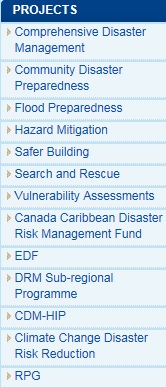
The Caribbean Disaster Emergency Management Agency (CDEMA)[1] is an inter-regional supportive network of independent emergency units throughout the Caribbean region; see Appendix below. Originally formed as the Caribbean Disaster Emergency Response Agency (CDERA) it under-went the name change to CDEMA in September 2009.

See Photo below for a listing of the CDEMA functionality:

- Photo 1

The participating member states and agencies of the CDEMA include:

Country

Organization

Anguilla Department of Disaster Management (DDM)
Antigua and Barbuda National Office of Disaster Services (NODS)
Bahamas Disaster Management Unit
Barbados Department of Emergency Management
Belize National Emergency Management Organisation (NEMO)
British Virgin Islands Department of Disaster Management
Dominica Office of Disaster Management (ODM)
Grenada National Disaster Management Agency (NaDMA)
Guyana Civil Defense Commission
Haiti Civil Protection Directorate
Jamaica Office of Disaster Preparedness and Emergency Management (ODPEM)
Montserrat Disaster Management Coordination Agency
Saint Kitts and Nevis National Emergency Management Agency (NEMA)
Saint Lucia National Emergency Management Organisation (NEMO)
Saint Vincent and the Grenadines National Emergency Management Organisation (NEMO)
Suriname National Coordination Center For Disaster Relief (NCCR)
Trinidad and Tobago Office of Disaster Preparedness and Management (ODPM)
Turks and Caicos Islands Department of Disaster Management & Emergencies

What about regional defense?

There is a regional initiative branded the Regional Security System (RSS); it is an international agreement for the defense and security of the eastern Caribbean region. The Regional Security System was created out of a need for collective response to security threats, which were impacting on the stability of the region in the late 1970s and early 1980s. On 29 October 1982 four members of the Organisation of Eastern Caribbean States—namely, Antigua & Barbuda, Dominica, St. Lucia, and St. Vincent & the Grenadines—signed a memorandum of understanding (MOU) with Barbados to provide for “mutual assistance on request”. The signatories agreed to prepare contingency plans and assist one another, on request, in national emergencies, prevention of smuggling, search and rescue, immigration control, fishery protection, customs and excise control, maritime policing duties, protection of off-shore installations, pollution control, national and other disasters and threats to national security. Saint Kitts & Nevis joined following independence in 1983, and Grenada joined two years later.

These two initiatives CDEMA and RSS constitutes the regional security solutions for the Caribbean. “Our thimble runneth over!”

What is the problem with CDEMA, RSS and CariCom? For starters these regional efforts, the Caribbean Community, does not represent the full community of the Caribbean; not even half of the Caribbean. Consider here:

CU Member states not included or participating in CDEMA, RSS or CariCom:

  • Cuba
  • Dominican Republic
  • US Territories (Puerto Rico, US Virgin Islands)
  • Dutch Territories (ABC Islands: Aruba, Bonaire, Curacao; SSS Islands: Saba, Saint Marteen; Saint Eustatius)
  • French Territories (Guadeloupe, Martinique, St. Barthélemy, St. Martin)

Secondly, CariCom has extreme funding challenges; the regional construct depends on income derived almost exclusively from grants from the American federal government (US-AID), Canadian agencies and the EU’s Development Fund (EDF). After 40 years of CariCom, it can be concluded that the CariCom Secretariat and regional organs fail to meet the needs of the Caribbean people, even for the people in its participating member-states. They are a great “talking head”; nothing more. The Go Lean book quotes an internal report (Page 92) complaining of the severe weaknesses of the regional construct, stating their tendency to announce decisions over new initiatives as if full implementation were imminent, resulting in a so-called “implementation deficit”.

Obviously, the established security solution is not fully established and does not really solve any threats; therefore the region is not secured.

This reality is pronounced early in the Go Lean book (Page 8) with this declaration regarding the promoters of the Go Lean movement, that they are …

… not affiliated with the CariCom or any of its agencies or institutions. This movement is not an attempt to re-boot the CariCom, but rather a plan to re-boot the Caribbean… This movement was bred from the frustrations of the Diaspora, longing to go home, to lands of opportunities. But this is not a call for a revolt against the governments, agencies or institutions of the Caribbean region, but rather a petition for a peaceful transition and optimization of the economic, security and governing engines in the region.

The Go Lean book is a petition for change and optimization, serving as a roadmap for the introduction and implementation of the technocratic Caribbean Union Trade Federation (CU). The CU would roll the charters of CDEMA, RSS and CariCom into one consolidated, integrated and collaborated effort. The CU is set to optimize Caribbean society through economic empowerment, and also homeland security in the region, since these are inextricably linked to this same endeavor.

Therefore the Go Lean roadmap has 3 prime directives:

  • Optimization of the economic engines in order to grow the regional economy to $800 Billion & create 2.2 million new jobs.
  • Establishment of a security apparatus to protect the resultant economic engines and theCaribbean homeland.
  • Improvement of Caribbean governance to support these engines.

The CU Homeland Security forces have to always be “on guard”, on alert for real or perceived threats. The legal concept is one of being deputized by the sovereign authority for a role/responsibility in a member-state. So when “crap” happens these CU forces are expected to aid, assist, and support local resources in these member-states when called on. But, when a member-state is the problem, in terms of malfeasance, misfeasance or nonfeasance, the “Clear and Present Danger” mandate should be invoked. As a security apparatus, there should also be certain defined threats that would be designated as primarily assigned to the CU; this would apply in a Declaration of War against a known state-sponsored enemy.

But the world has now changed; there is the new threat of an unknown, non-state-sponsored enemy: the scourge of terrorism. Consider the situation in the United States, we all know of the World Trade Center attacks on September 11, 2001, but since then terrorist attacks have actually been a constant threat in the US. In a recent blog/commentary, it was reported that there were 17  terrorist attacks against the American homeland in this decade alone, since 2010. Surely the threat of terrorism is a “clear and present danger” in the US.

The CU treaty calls for the mitigation of terrorism to be a constant charter for the CU Homeland Security forces.

For most of the Caribbean, we are allied with the US; we even have two US Territories “smack-dab” in the middle of our archipelago. So the American terrorist-enemies are very much our enemies. Therefore the CU/Go Lean roadmap posits that the region must prepare an optimized security apparatus for its own security needs. This time for real!

The request is that all Caribbean member-states empower a security force to execute a limited scope on their sovereign territories. The legal basis for this empowerment is a Status of Forces Agreement (SOFA), embedded at the CU treaty initiation, thereby authorizing the CU Homeland Security Department for its role and responsibility for all the “crap” that could happen to the peace and prosperity of the Caribbean people. The CU Trade Federation would lead, fund and facilitate a security force, even encapsulating existing armed forces (full-time or part-time/reserves) as needed, at the discretion of the CU Commander-in-Chief.

The existing Caribbean Security initiatives have failed the region. Despite the existence of agencies like the CDEMA and RSS, the CariCom has not ascended to prominence in local communities. Most people do not even know these agencies exist. It is not seen, heard or felt. This is not the level of governance the Caribbean region needs; we need more; we need better. Previous Go Lean commentaries have meticulously detailed the overall failure of CariCom.

Perhaps the problem is economics (funding)? Or perhaps the security enablement (legal authorization to act)? Or perhaps, its the governance and administration? There are many questions; the only answer that matters is the solutions must address the Clear and Present Dangers.

Consider these monumental episodes and events in the Caribbean region that have occurred in the recent past; the expectation is that they would have invoked the “Clear and Present Danger” clause for engagement from the CDEMA entity. The following list is the Top 20 disasters in CDERA member states, according to the CDEMA published database and sorted by total losses:

No

Date

Year

Country

Event

Killed

Affected

Losses US$

1

20-Dec

2005

Guyana Flood

37

274,774

2,674,322,175

(Details)

2

7-Sep

2004

Grenada Tropical Cyclone

28

81,883

895,199,567

(Details)

3

9-Sep

2004

Jamaica Tropical Cyclone

17

369,685

592,971,569

(Details)

4

2-Sep

2004

The Bahamas Tropical Cyclone

0

8,000

356,983,000

(Details)

5

25-Sep

2004

The Bahamas Tropical Cyclone

2

28,000

350,886,000

(Details)

6

4-Aug

1980

Saint Lucia Tropical Cyclone

9

0

92,592,593

(Details)

7

9-Sep

1994

Saint Lucia Tropical Cyclone

3

0

85,185,185

(Details)

8

14-Jul

2005

Grenada Tropical Cyclone

1

39,085

75,478,163

(Details)

9

21-Nov

2004

Dominica Earthquake

0

19,527

45,150,614

(Details)

10

12-Nov

2004

Trinidad
(Details)
Mudslide

2

1,200

33,333,333

11

7-Sep

2004

Saint Lucia Tropical Cyclone

0

0

10,464,720

(Details)

12

26-Oct

1996

Saint Lucia Tropical Cyclone

0

0

4,444,444

(Details)

13

7-Sep

2004

St Vincent Tropical Cyclone

0

0

4,110,037

(Details)

14

10-Jul

1960

Saint Lucia Tropical Cyclone

6

0

1,421,481

(Details)

15

7-Sep

1967

Saint Lucia Tropical Cyclone

1

0

740,741

(Details)

16

9-Jun

1955

Saint Lucia Fire

3

0

462,963

(Details)

17

1-Aug

1966

Saint Lucia Tropical Cyclone

0

0

277,778

(Details)

18

25-Sep

1963

Saint Lucia Tropical Cyclone

0

0

277,778

(Details)

19

21-Oct

1998

Saint Lucia Tropical Cyclone

1

0

230,185

(Details)

20

1-Feb

1990

Saint Lucia Earthquake

0

0

214,813

(Details)
Total

110

822,154

$5,224,747,139

Was there a noticeable Caribbean-Regional presence in response to these disastrous events?

There are also examples of Industrial Incidents – Chemical Spills – not on the CDEMA list; (the exclusion is inexcusably surprising). These would have gotten the attention of CU Emergency Management agencies, as these also pose a “Clear and Present Danger”. This sample list is just for Jamaica:

Year

Activity Location Details

2005

Use/Application Hotel Explosion from inflammable gas; cause due to management failure

2003

Road Transport Road Tanker Trailer Oil Spill in Montego Bay

1981

Storage Port Sabotage/Vandalism of the Oil Tanker Erodona at Port Kaiser

The presence of this regional construct has not been felt in most of the Caribbean member-states. They have emerged more as an after-the-fact data collector. The burden of direct remediation, beyond the direct member-state, is elusive in the Caribbean homeland. Consider this short-list of emphatic disasters that, to date, have remained unmanaged and unresolved, despite the  “Clear and Present Dangers”:

Member-State Event/Episode
Bahamas Freeport – Hawksbill-area Industrial Plants Spill-Closure-Relocation
Bahamas Nassau – 2013 Rubis Gas Station Underground Tank leakage; need for relocation and remediation.
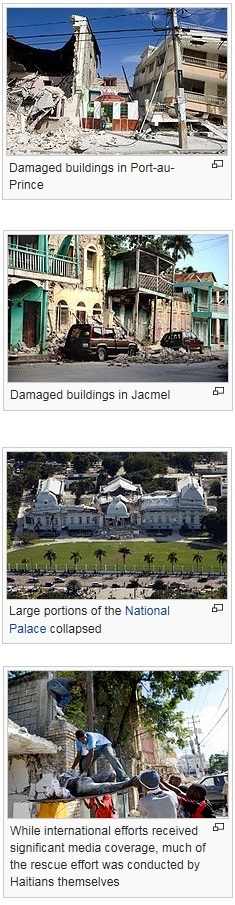
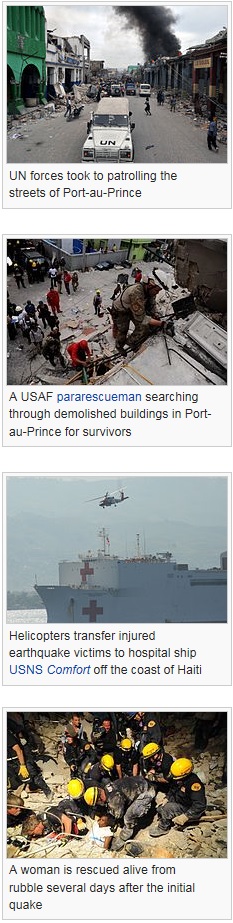
Haiti January 2010 Earthquake – Long drawn-out inadequate response from local, national and foreign stakeholders.

There is a difference between effectiveness and efficiency. It is easy for an individual or small group to simply deliver on a plan; that is efficiency. Effectiveness would be to get the buy-in from all stakeholders, so as to complete the needed collaboration, consensus-building and compromise. That is heavy-lifting.

All in all, the failures of CariCom, CDEMA and RSS are attributable to this one premise: “Too little, too late”.

It is time for more and better. By contrast, the CU‘s requirement for the SOFA is “Step One, Day One” in the Go Lean roadmap. The CU organization must be empowered for proactive and reactive management of natural disasters, industrial accidents, bacterial & viral pandemics and terrorism-related events. The Go Lean book details the series of community ethos, strategies, tactics, implementations and advocacies to provide the proactive and reactive public safety/security in the Caribbean region:

Community Ethos – Economic Systems Influence Individual Choices Page 21
Community Ethos – Consequences of Choices Lie in Future Page 21
Community Ethos – Privacy –vs- Public Protection Page 23
Community Ethos – Intelligence Gathering Page 23
Community Ethos – Whistleblower Protection Page 23
Community Ethos – “Crap” Happens Page 23
Community Ethos – Cooperatives Page 25
Community Ethos – Ways to Manage Reconciliations Page 34
Community Ethos – Ways to Improve Sharing Page 35
Community Ethos – Ways to Promote Happiness Page 36
Community Ethos – Ways to Impact the Greater Good Page 37
Strategy – Vision – Confederating a non-sovereign permanent union Page 45
Tactical – Fostering a Technocracy Page 64
Tactical – Separation of Powers – Coast Guard & Naval Authorities Page 75
Tactical – Separation of Powers – Ground Militia Forces Page 75
Tactical – Separation of Powers – Emergency Management Agency Page 76
Tactical – Separation of Powers – CariPol: Marshals & Investigations Page 75
Implementation – Ways to Pay for Change Page 101
Implementation – Start-up Foreign Policy Initiatives Page 102
Implementation – Start-up Security Initiatives Page 103
Implementation – Ways to Foster International Aid Page 115
Planning – 10 Big Ideas – #3: Consolidated Homeland Security Pact Page 130
Planning – Ways to Make the Caribbean Better Page 131
Planning – Ways to Improve Failed-State Indices – Escalation Role Page 134
Planning – Lessons from the American West – Needed Law & Order Page 142
Planning – Lessons from Egypt – Law & Order for Tourism Page 143
Advocacy – Ways to Grow the Economy – Quick Disaster Recovery Page 151
Advocacy – Ways to Improve Governance Page 168
Advocacy – Ways to Better Manage the Social Contract Page 170
Advocacy – Ways to Impact Justice – Policing the Police Page 177
Advocacy – Ways to Reduce Crime – Regional Security Intelligence Page 178
Advocacy – Ways to Improve Homeland Security Page 180
Advocacy – Ways to Mitigate Terrorism Page 181
Advocacy – Ways to Improve Intelligence Gathering & Analysis Page 182
Advocacy – Ways to Improve for Natural Disasters Page 184
Advocacy – Ways to Improve for Emergency Management Page 196
Advocacy – Ways to Protect Human Rights – Watchful World Page 220

Other subjects related to security and governing empowerments for the region have been blogged in other Go Lean…Caribbean commentary, as sampled here:

https://goleancaribbean.com/blog/?p=4809 Americans arrest 2 would-be terrorists – a Clear and Present Danger
https://goleancaribbean.com/blog/?p=4741 Vanuatu and Tuvalu Cyclone – Inadequate response to human suffering
https://goleancaribbean.com/blog/?p=4720 A Lesson in History: SARS in Hong Kong
https://goleancaribbean.com/blog/?p=4360 Dreading the ‘Caribbean Basin Security Initiative’
https://goleancaribbean.com/blog/?p=2614 The ‘Great ShakeOut’ Earthquake Drill / Planning / Preparations
https://goleancaribbean.com/blog/?p=2397 Stopping a Clear and Present Danger: Ebola
https://goleancaribbean.com/blog/?p=1076 Trinidad Muslims travel to Venezuela for jihadist training
https://goleancaribbean.com/blog/?p=1003 Painful and rapid spread of new virus – Chikungunya – in Caribbean
https://goleancaribbean.com/blog/?p=960 Lessons from NSA recording all phone calls in Bahamas
https://goleancaribbean.com/blog/?p=809 Muslim officials condemn abductions of Nigerian girls
https://goleancaribbean.com/blog/?p=535 Remembering and learning from Boston
https://goleancaribbean.com/blog/?p=273 10 Things We Want from the US – #4: Pax Americana
https://goleancaribbean.com/blog/?p=87 Fact, not fiction: 6.5M Earthquake Shakes Eastern Caribbean

The concept of “Clear and Present Danger” is conveyed in the following VIDEO, a “trailer” for a movie of the same name. This is art imitating life:

Title: Clear and Present Danger – Movie Trailer  – https://youtu.be/900kPg1lomU

Published on Jun 19, 2012 – This is the third film based on Tom Clancy’s high-tech espionage potboilers starring CIA deputy director Jack Ryan. Harrison Ford, returning to the Ryan role after his first go-round in 1992’s Patriot Games, is assigned to a delicate anti-drug investigation after a close friend of the President (a Reaganesque Donald Moffat) is murdered by a Colombian drug cartel. When Ryan discovers that the President’s wealthy friend was in league with the cartel, the President’s devious national security adviser (Harris Yulin) and an ambitious CIA deputy director (Henry Czerny) send a secret paramilitary force into Colombia to wipe out the drug lords. The force is captured and then abandoned by the President’s lackeys. It falls to Ryan to enter Colombia and rescue them, aided only by a renegade operative named Clark (Willem Dafoe), with both his life and career on the line.

The adoption of a “Clear and Present Danger” mandate is reflective of a technocratic work edict and community ethos. We can and must do better!

The advocacy to adopt the structure of a technocracy is reflective of this commitment to do better. The term technocracy is used to designate the application of the scientific method to solving social and economic problems. The CU must start as a technocracy, not grow into a technocracy – too much is at stake – lives are involved; see Appendix B below of Haiti’s Earthquake Photos.

All of the Caribbean is hereby urged to lean-in to this roadmap, to make the Caribbean safer and make the region a better destination to live, work and play.

🙂

Download the book Go Lean … Caribbean – now!

————

Appendix – CDEMA Role / Responsibilities:

Specific Roles and Responsibilities of the CDM Coordination and Harmonization Council:

  • Contribute to and provide recommendations for the development and implementation of a CDM monitoring and evaluation framework.
  • To consider reports on CDM implementation and provide guidance towards sustainability.
  • Identify and Provide recommendations for the integration of ongoing initiatives as well as planned initiatives that will support the achievement of the outcomes enshrined in the enhanced CDM Strategy
  • Discuss and address issues and opportunities to further good governance of the CDM
  • Nurture opportunities for synergies between development partners, participating states, representatives of the private sector, civil society and other relevant stakeholders responsible for the mainstreaming of the CDM strategy in development planning.
  • Provide policy guidance for the maintenance of the CDM database to ensure effective sharing of CDM knowledge.
  • Share annually  with the CDM Programming Consultation meeting, progress on CDM implementation
  • Identify a technical committee to support the planning process for the CDM Conference

The CDM Coordination and Harmonization Council comprise development partner representatives, sector leaders, participating states and private sector. The group includes:

  1. Caribbean Disaster Emergency Management Agency (Chair),
  2. Caribbean Development Bank (CDB),
  3. Canadian International Development Agency (CIDA),
  4. United Nations Development Programme (UNDP),
  5. United States Agency for International Development (Development Arm and OFDA),
  6. United Kingdom Department for International Development (DFID),
  7. European Union (EU),
  8. CARICOM Secretariat,
  9. Organization of American States (OAS),
  10. Organization of Eastern Caribbean States (OECS),
  11. University of the West Indies (UWI),
  12. Food and Agriculture Organisation (FAO),
  13. Caribbean Tourism Organization (CTO),
  14. Pan American Health organization (PAHO),
  15. Caribbean Electric Utility Services Cooperation (CARILEC),
  16. Caribbean Policy Development Centre (CPDC),
  17. United Nations Development Fund for Women (UNIFEM),
  18. Caribbean Community Climate Change Centre (CCCCC),
  19. Caribbean Association of Industry and Commerce (CAIC),
  20. Four representatives of CDERA Participating States – one representative from each sub-region.

—————-

Appendix B – Haiti Earthquake Photos – Evidence of a Clear and Present Danger

- Photo 2

- Photo 3


Share this post:
, , , ,
[Top]

A Lesson in History – SARS in Hong Kong

Go Lean Commentary

Sadly, we report – though it is only a reminder – that there is no cure for the common cold; nor its more debilitating “Big Brother”, influenza or “the flu”.

Sometimes the flu is just the flu. Symptoms may include cough, sore throat, fever, myalgia (muscle pain), and lethargy (fatigue or drowsiness, or prolonged sleep patterns). Unfortunately this normal start for influenza may morph into more serious concerns. For example, consider the SARS epidemic of 2003; see Appendix A.  The same symptoms, above, were the applicable descriptors at the start of the SARS outbreak.

Why would anyone think of anything more than the common/annual flu? How can a community – the Caribbean region in this case – manage such an epidemiological crisis?

For this, we have a well-documented lesson from Hong Kong in 2003. There is much for us to learn from this lesson in history.

The people, institutions and governance of the Caribbean need to pay more than the usual attention to the lessons of SARS in Hong Kong, not just from the medical perspective (see Appendix B), but also from an economic viewpoint.

During the “heyday” of the SARS crisis, travel and transport to Hong Kong virtually came to a grinding halt! Hong Kong had previously enjoyed up to 14 million visitors annually; they were a gateway to the world. The SARS epidemic became a pandemic because of this status. Within weeks of the outbreak, SARS had spread from Hong Kong to infect individuals in 37 countries in early 2003.[3]

Can we afford this disposition in any Caribbean community? Consider this VIDEO:

VIDEO: SARS on Hong Kong’s Economy – BiA Fall 2013 – https://youtu.be/l0rSJhUaCU8

Published on Dec 5, 2013 – Documentary of the impact of the 2003 SARS period in Hong Kong and on its economy. (Business in Asia presentation clip)

Consider how this history may impact the Caribbean region. SARS in Hong Kong was 12 years ago. But last year the world was rocked with an Ebola crisis originating from West Africa. An additional example local to the Caribbean is the Chikungunya virus that emerged in Spring 2014. The presentation of these facts evinces that we cannot allow mis-management of any public health crisis; this disposition would not extend the welcoming hospitality that the tourism product depends on. Our domestic engines cannot sustain an outbreak of a virus like SARS (nor Ebola nor Chikungunya). Less than an outbreak, our tourism economic engines, on the other hand, cannot even withstand a rumor. We must act fast, with inter-state efficiency, against any virus.

This is the goal as detailed in the book Go Lean … Caribbean as it serves as a roadmap for the introduction of the technocratic Caribbean Union Trade Federation (CU). The vision of the CU is to ensure that the Caribbean is a protégé of communities like the US and EU states, not a parasite. This roadmap is an anti-parasite campaign. A virus, like SARS, is a parasite! This commentary is the factual lesson:

Medically, there are effective remedies for SARS; (thank you Hong Kong for teaching this lesson); see Appendix B.

Antibiotics are ineffective, as SARS is a viral disease. Treatment of SARS is largely supportive with antipyretics (fever reducers), supplemental oxygen and mechanical ventilation as needed.

Suspected cases of SARS must be isolated, preferably in negative pressure rooms, with complete “barrier nursing” precautions taken for any necessary contact with these patients; (protective gear: masks, gloves, etc).

The full details of the Hong Kong experience is provided here:

Title: SARS legacy still felt in Hong Kong, 10 years on
By Katie Hunt, BBC News; posted 20 March 2013

Hong Kong – Bathed in low evening light, Amoy Gardens is a hive of activity. People duck in and out of noodle joints, fast food chains and convenience stores before heading home to the warren of apartments nestled in the estate’s nineteen tower blocks.

But 10 years ago, this densely populated Hong Kong apartment complex, home to 19,000 people, was an eerie ghost town.

Two hundred residents had contracted a deadly respiratory disease, now known as SARS, within a week and no-one knew how it was spreading.

Rats and cockroaches were touted by the press as possible culprits.

“Taxi drivers refused to come here,” Yip Hing Kwok, a long-time resident and now a local councillor, recalls of the deadly 2003 outbreak.

Alarm turned to panic on March 31 when residents of block E, which experienced the densest concentration of cases, woke up to find that they were unable to leave their building as police and medical staff clad in protective suits enforced an emergency quarantine order.

Police were ordered to chase down those who had already left and residents were later moved to two holiday camps.

“We tried to improve the cleaning of the estate but the number of cases kept increasing,” says Mr Yip, who did not live in the blighted block. “The situation was uncontrollable.”

Starring role
Amoy Gardens played an unwanted starring role in the 2003 SARS epidemic that infected 8,096 worldwide, and killed 744. The disease, from the same family of viruses as the common cold, emerged in southern China at the end of 2002. CU Blog - A Lesson in History - SARS in Hong Kong - Photo 2

It was carried to Hong Kong by a doctor, whose one-night stay in the Metropole Hotel resulted in seven other guests being infected. These guests then jumped on planes, spreading SARS around the world.

While the disease appeared to spread fast, the number of people killed by the virus was relatively small, especially compared with the half a million people who died of influenza in the same year.

But these facts were not known until the disease had come under control in the summer. In March and early April of 2003, as the epidemic seemed to spiral out of control, Hong Kong was a city gripped by fear.

CU Blog - A Lesson in History - SARS in Hong Kong - Photo 1Surgical masks became hot commodities and the city’s usually crowded shopping malls, restaurants and mass transport emptied. Expats fled, schools closed and those who could worked from home.

Back then, working as a reporter in the city, I recall being urged by a contact to head straight for the airport as Hong Kong was to be declared an infectious port and sealed from the outside world. A teenager was later arrested in what turned out to be an April Fool’s Day stunt.

On the same day, a hugely popular singer and actor, Leslie Cheung, committed suicide by jumping from the 24th floor of the Mandarin Oriental hotel in the middle of the financial district, plunging an already anxious Hong Kong into mourning.

Of course, Hong Kong was not the only place to suffer during the epidemic.

Singapore, Taipei, Beijing and Toronto were hard hit and China’s citizens were kept in the dark about the outbreak as the country’s leaders initially refused to acknowledge the extent and severity of the disease.

But it is perhaps in Hong Kong, the city that suffered the greatest number of casualties, that its legacy is felt most keenly.

Praise and criticism
Hong Kong earned praise for its transparency in reporting the spread of the disease, in sharp contrast to the cover-up in China.

Like the rest of the city, I was glued to the daily 4.30pm televised press conference during the outbreak that detailed the latest death toll and new cases.

However, the government was criticised for its early handling of the outbreak, particularly at Amoy Gardens, where 42 died and 329 were infected.

Hong Kong has taken the lessons to heart, both in its approach to managing new diseases and maintaining hygiene.

Ten years after the outbreak, apartment and office blocks still boast of how many times daily they sanitise lift buttons, hand rails, door knobs and almost all public surfaces. Masks are de rigueur if you have a cold, and a sneezing or coughing fit on public transport meets with disapproving glances.

Kindergartens, like the one my daughter attends, require parents to record their child’s body temperature in a special notebook each morning. If we forget, a note comes back admonishing us.

The threat of a new outbreak is taken extremely seriously and measures are taken that might seem excessive elsewhere. In 2009, the city quarantined 286 guests staying at a downtown hotel for seven days after a Mexican traveller was confirmed as contracting swine flu.

And the city is closely monitoring the emergence of a new SARS-like illness after rumours, later proved unfounded, of a case in Hong Kong in February. The disease has infected 12 and killed six people worldwide.

Bounced back?
Amoy Gardens, like the rest of Hong Kong, has recovered from the SARS outbreak and the economic downturn it triggered with the panache typical of this fast-paced city.

The apartment complex and shopping plaza has since had a HK$60 million (5.1m; $7.7m) facelift, including changes to the drainage and sewage system that was ultimately found to have played a role in the quick spread of the disease at the estate.

Two-bedroom apartments that once struggled to find buyers in the outbreak’s aftermath now fetch HK$3.9m (0.33m; $0.5m) – beneficiaries of a recent property boom.

On a tour of the infamous block E, Mr Yip proudly points out the air purifiers in the marbled lobby, where a cleaning lady stands with detergent and a grey cloth poised to wipe away any germs left by visitors.

But the memories are harder to erase.

Mr Yip said many residents, fed up with the stigma attached to their address, left after the outbreak, and those that remained have asked him to deflect the media attention the 10-year anniversary has attracted.

In the residents’ committee office, Mr Yip flips through a binder of old newspaper clippings and stops on a picture of a young quarantined boy peering from a window at the armed policemen encircling the entrance to his home – a photograph he says made a particular impression on him at the time.

“l felt so helpless,” he tells me. “We want to forget our unhappy image.”
BBC News Website (Posted 20 March 2013; Retrieved 24 March 2015) –
http://www.bbc.com/news/world-asia-china-21680682

Prior to this SARS outbreak, the WHO had developed a Pandemic War Plan, reserved for the worst situations; see Appendix C. This features strategies and tasks to identify, isolate and eradicate a major virus outbreak … at the start. But the War Plan presents a cautionary warning: should the disease ever escape the isolation attempts, the result could be socio-economic disaster, with millions dead.

The possibility of this warning is the motivation of this commentary and the Go Lean movement.

In general, the CU will employ its own “War Plan”; its strategies, tactics and implementations to impact its prime directives. These prime directives are defined with the following 3 statements:

  • Optimization of the economic engines in order to grow the regional economy to $800 Billion & create 2.2 million new jobs.
  • Establishment of a security apparatus to protect the resultant economic engines and mitigate internal and external threats.
  • Improve Caribbean governance to support these engines.

The issue in this commentary relates to economics, security and economic security; in effect this is a governance issue. This is an issue of business continuity for the region. Early in the Go Lean book, this need for careful technocratic stewardship of the regional Caribbean economy was pronounced (Declaration of Interdependence; Page 12 – 13) with these acknowledgements and statements:

xi.   Whereas all men are entitled to the benefits of good governance in a free society, “new guards” must be enacted to dissuade the emergence of incompetence, corruption, nepotism and cronyism at the peril of the people’s best interest. The Federation must guarantee the executions of a social contract between government and the governed.

xii.   Whereas the legacy in recent times in individual states may be that of ineffectual governance with no redress to higher authority, the accedence of this Federation will ensure accountability and escalation of the human and civil rights of the people for good governance, justice assurances, due process and the rule of law. As such, any threats of a “failed state” status for any member state must enact emergency measures on behalf of the Federation to protect the human, civil and property rights of the citizens, residents, allies, trading partners, and visitors of the affected member state and the Federation as a whole.

xvi.  Whereas security of our homeland is inextricably linked to prosperity of the homeland, the economic and security interest of the region needs to be aligned under the same governance. Since economic crimes, including piracy and other forms of terrorism, can imperil the functioning of the wheels of commerce for all the citizenry, the accedence of this Federation must equip the security apparatus with the tools and techniques for predictive and proactive interdictions.

xxiv.  Whereas the legacy of international democracies had been imperiled due to a global financial crisis, the structure of the Federation must allow for financial stability and assurance of the Federation’s institutions. To mandate the economic vibrancy of the region, monetary and fiscal controls and policies must be incorporated as proactive and reactive measures. These measures must address threats against the financial integrity of the Federation and of the member-states.

The Go Lean book, and previous blog/commentaries, stressed the key community ethos, strategies, tactics, implementations and advocacies necessary to regulate and manage regional threats and emergencies. These points are detailed in the book as follows:

Community Ethos – Privacy versus Public Protection Page 23
Community Ethos – “Crap” Happens Page 23
Community Ethos – Lean Operations Page 24
Community Ethos – Cooperatives Page 24
Community Ethos – Non-Government Organizations Page 25
Community Ethos – Ways to Improve Sharing Page 35
Community Ethos – Impact the Greater Good Page 37
Strategy – Vision – Non-Sovereign “Unified” Proxy Entity Page 45
Strategy – Customers – Residents & Visitors Page 47
Strategy – Agents of Change – Globalization Page 57
Tactical – Confederating a Permanent Union Page 63
Tactical – Fostering a Technocracy Page 64
Separation of Powers – Emergency Management Page 76
Separation of Powers – Disease Control & Management Page 86
Implementation – Ways to Pay for Change Page 101
Implementation – Security Initiatives at Start-up Page 103
Implementation – Ways to Deliver Page 109
Implementation – Ways to Foster International Aid Page 115
Implementation – Ways to Benefit from Globalization Page 119
Planning – Ways to Improve Failed-State Indices Page 134
Planning – Ways to Measure Progress Page 148
Advocacy – Ways to Grow the Economy Page 151
Advocacy – Ways to Improve Healthcare Page 156
Advocacy – Ways to Improve Governance Page 168
Advocacy – Ways to Better Manage the Social Contract Page 170
Advocacy – Ways to Foster Cooperatives Page 176
Advocacy – Ways to Impact Justice Page 177
Advocacy – Ways to Improve Homeland Security Page 180
Advocacy – Ways to Mitigate Terrorism Page 181
Advocacy – Ways to Improve for Natural Disasters Page 184
Advocacy – Ways to Improve Emergency Management Page 196

The Go Lean movement posits that wisdom, prudence and best practices can be adopted by careful study of complex matters. This is defined in the Go Lean book and subsequent blogs as a hallmark of a technocracy. The points of effective, technocratic stewardship gleaned from facts in history were further elaborated upon in these previous blog/commentaries:

https://goleancaribbean.com/blog/?p=4166 A Lesson in History: Panamanian Balboa
https://goleancaribbean.com/blog/?p=2809 A Lesson in History: Economics of East    Berlin
https://goleancaribbean.com/blog/?p=2670 A Lesson in History: Rockefeller’s Pipeline
https://goleancaribbean.com/blog/?p=2585 A Lesson in History: Concorde SST
https://goleancaribbean.com/blog/?p=2480 A Lesson in History: Community Ethos of WW II
https://goleancaribbean.com/blog/?p=2297 A Lesson in History: Booker T versus Du Bois
https://goleancaribbean.com/blog/?p=1531 A Lesson in History: 100 Years Ago – World War I
https://goleancaribbean.com/blog/?p=798 Lessons Learned from the American Airlines merger

The Go Lean book reports that previous Caribbean administrations have failed miserably in managing regional crises. There is no structure for cooperation, collaboration and coordination across borders. This is the charge of the Go Lean/CU roadmap. To effectuate change in the region by convening all 30 Caribbean member-states, despite their historical legacies or governmental hierarchy.

The CU is not designed to just be in some advisory role when it comes to pandemic crises, but rather to possess the authority to act as a Security Apparatus for the region’s Greater Good. This is the mandate as pronounced in the opening Declaration of Interdependence (Page 11) related to climate change, but it applies equally to pandemics, to …

“protect the entire region it is necessary to prepare to insure the safety and security of life, property and systems of commerce in our geographical region. As nature recognizes no borders in the target of its destruction, we also must set aside border considerations in the preparation and response to these … challenges”.

Legally, each Caribbean member-state would ratify a Status of Forces Agreement that would authorize this role for the CU agencies (Emergency Management and Disease Control & Management) to serve as a proxy and deputy of the Public Health administrations for each member-state. This would thusly empower these CU agencies to quarantine and detain citizens with probable cause of an infectious disease. The transparency, accountability and chain-of-command would be intact with the appropriate checks-and-balances of the CU’s legislative and judicial oversight. This is a lesson learned from Hong Kong 2003 with China’s belligerence.

SARS was eradicated by January 2004 and no cases have been reported since. [4] We must have this “happy-ending”, but from the beginning. This is the lesson we can learn and apply in the Caribbean. This exercise makes our Caribbean elevation quest conceivable, believable and achievable.

Yes, we can make our homeland a better place to live, work and play.  🙂

Download the free e-Book of Go Lean … Caribbean – now!

———

Appendix A – SARS Definition / Timeline

CU Blog - A Lesson in History - SARS in Hong Kong - Photo 3What is SARS? SARS stands for Severe Acute Respiratory Syndrome and was the name given to the respiratory disease by the World Health Organization on March 15, 2003. Like the common cold, it belongs to the coronavirus family.

Scientists think the disease jumped from civet cats, a delicacy in southern China, to humans. It has also been linked to bats.

Timeline – SARS Outbreak 2003:

  • January 23 – Health authorities in China’s Guangdong province produce a report on cases of atypical pneumonia occurring in the province. The report is not shared with the WHO or Hong Kong government
  • Feb 21 – A medical professor from Guangzhou checks into the Metropole Hotel in Hong Kong for one night, bringing the virus to Hong Kong. He infects other guests, who spread the virus to Vietnam, Singapore and Toronto
  • March 12 – Hong Kong reports 23 cases of the disease at one hospital.
  • March 15 – WHO names the new disease as Severe Acute Respiratory Syndrome (SARS) and says cases have been found in China, Hong Kong, Indonesia, Philippines, Singapore, Thailand, and Vietnam
  • March 31 – Amoy Gardens Block E isolated and residents quarantined
  • April 5 – China apologises for its slow response to the SARS outbreak amid allegations that officials have covered up the true extent of the spread of the disease
  • April 16 – WHO announces that a new pathogen, a member of the coronavirus family never before seen in humans, is the cause of SARS
  • May 23 – Research teams in Hong Kong and Shenzhen, China detect several coronaviruses closely related to SARS in masked palm civet and raccoon-dog at a market in southern China selling wild animals for human consumption
  • June 4- WHO says the outbreak is in decline
  • June 11 – Hong Kong’s last SARS case reported

——–

Appendix B – Referenced Citation

The SARS epidemic in Hong Kong: what lessons have we learned [medically]? Journal of the Royal Society of Medicine; August 2003; retrieved March 24, 2015 from: http://www.ncbi.nlm.nih.gov/pmc/articles/PMC539564/

———

Appendix C – VIDEO: Additional homework – BBC Horizon: SARS, The True Story (2003)

Link: https://youtu.be/MXPaee0uEQM

(This VIDEO length is 45 minutes)

Share this post:
, , , ,
[Top]

Businesses Try to Stave-off Brain Drain as Boomers Retire

Go Lean Commentary

A consistent theme in the book Go Lean…Caribbean is that communities need their economic engines optimized, otherwise their citizens would simply leave. The book, and subsequent blog/commentaries, posit that the reality of the recent global financial crisis has resulted in an even higher abandonment rate among Caribbean communities. Another dynamic have now become prominent: families are having less babies.

This means, from a strictly supply-and-demand basis, older workers will be pressured to retire later and stay on with their employers longer.

This point was highlighted in the Go Lean book with the acknowledgement that the Aging Diaspora is a new Agent-of-Change for the Caribbean to contend with (Page 57). The book specifically identified that the demographics of the Caribbean was altered in the decades following World War II. Many members of the Caribbean Diaspora availed themselves of opportunities in Europe and North America during the rebuilding efforts for those nations. So those that emigrated in the 1950’s, 1960’s and 1970’s now comprise an aging Diaspora – with the strong desire to return to their native homelands for their “golden years”. They should be welcomed back and incentivized to repatriate, and Caribbean communities should prepare – and profit – from this eventuality. The Go Lean book describes the effort as a figurative “Welcome Mat” that must be administered, with details like: health care, security, disability support, elder-care, entitlements, etc.

There are economic concerns … and benefits from this execution.

But now, according to this story and AUDIO podcast, there may be more pressure for these ones to remain in the work place longer:

Podcast from National Public Radio (NPR) – January 15, 2015
By: Yuki Noguchi

AUDIO Podcast: – http://www.npr.org/2015/01/15/377201540/businesses-try-to-stave-off-brain-drain-as-boomers-retire

(See transcript in Appendix below)

These same issues, though presented from the perspective of the US, have the same application in the Caribbean. Our population is trending older as more and more young people abandon Caribbean communities for Diaspora life in foreign lands. We must also stave-off brain drain in the Caribbean region.

The Go Lean book serves as a roadmap for the introduction and implementation of the technocratic Caribbean Union Trade Federation (CU). This CU is proffered to provide economic, security and economic security solutions for the 30 member-states and their 42 million people. It is our quest to be prepared for this changing landscape. This mandate is pronounced early on in the book’s Declaration of Interdependence with the following statements (Page 11 – 13):

ix.    Whereas the realities of healthcare and an aging population cannot be ignored and cannot be afforded without some advanced mitigation, the Federation must arrange for health plans to consolidate premiums of both healthy and sickly people across the wider base of the entire Caribbean population. The mitigation should extend further to disease management, wellness, mental health, obesity and smoking cessation programs. The Federation must proactively anticipate the demand and supply of organ transplantation as developing countries are often exploited by richer neighbors for illicit organ trade.

xix.    Whereas our legacy in recent times is one of societal abandonment, it is imperative that incentives and encouragement be put in place to first dissuade the human flight, and then entice and welcome the return of our Diaspora back to our shores. This repatriation should be effected with the appropriate guards so as not to imperil the lives and securities of the repatriated citizens or the communities they inhabit. The right of repatriation is to be extended to any natural born citizens despite any previous naturalization to foreign sovereignties.

xxiv.    Whereas a free market economy can be induced and spurred for continuous progress, the Federation must install the controls to better manage aspects of the economy: jobs, inflation, savings rate, investments and other economic principles. Thereby attracting direct foreign investment because of the stability and vibrancy of our economy.

xxv.    Whereas the legacy of international democracies had been imperiled due to a global financial crisis, the structure of the Federation must allow for financial stability and assurance of the Federation’s institutions. To mandate the economic vibrancy of the region, monetary and fiscal controls and policies must be incorporated as proactive and reactive measures. These measures must address threats against the financial integrity of the Federation and of the member-states.

Modern societies are based on the assumption that there will always be more young people in a community than the older population; this is a basic principle in “actuarial science”. There are many social safety nets that depend on this actuarial fact: the Caribbean needs population growth not population contraction. Already the repercussions of so many people abandoning their communities have created devastating consequences. For example, retirement plans-funds are strained in many Caribbean countries. Yes, the Caribbean, as a region, is at the precipice of failed-state status.

The Go Lean book posits that this is a “crisis, but that this crisis is a terrible thing to waste”; (Page 8). As such the roadmap structures the CU to impact the region with the execution of the prime directives defined as these 3 goals:

  • Optimization of economic engines in order to grow the regional economy to $800 Billion and create 2.2 million new jobs.
  • Establishment of a security apparatus to protect the resultant economic.
  • Improvement of Caribbean governance to support these engines.

According to the foregoing article, America needs to keep their older workers working longer; they cannot afford the brain drain. But this fact is conflicting for Caribbean pursuits. We need our aging Diaspora to come back home, sooner, rather than later…and to bring their wealth, benefits and entitlements with them; Go Lean describes it as their “time, talent and treasuries”. This creates a seller’s market for the foreign workers with demand in the US and also in the homeland. It is hoped that “love for the Caribbean homeland” would be the primary motivator.

It is hoped!

Though the needs of the Caribbean youth are identified as priority for the Go Lean movement (book and blogs), the needs of the elderly population are not ignored. In fact, the Go Lean roadmap details missions like retirement planning, increased retirement age, pension re-financing, heightened public safety and optimized healthcare. The following details from the book Go Lean … Caribbean are the community ethos, strategies, tactics, implementations and advocates prescribed to manifest the commitment to the Caribbean elderly populations:

Community Ethos – Deferred Gratification Page 21
Community Ethos – Ways to Impact the Future Page 26
Community Ethos – Ways to Promote Happiness Page 36
Community Ethos – Ways to Impact the Greater Good Page 37
Strategy – Repatriating Caribbean Diaspora Page 47
Strategy – Non-Government Organizations – Senior Aid Groups Page 48
Strategy – Agents of Change – Aging Diaspora Page 57
Tactical – Confederating a Permanent Union Page 63
Tactical – Fostering a Technocracy Page 64
Implementation – Assemble all Member-States Page 96
Implementation – Ways to Pay for Change Page 101
Implementation – Ways to Better Manage Debt – Re-work Pensions Page 114
Implementation – Reasons to Repatriate Page 118
Planning – 10 Big Ideas … in the Caribbean Region Page 127
Planning – Lessons Learned from 2008 Page 136
Advocacy – Ways to Grow the Economy Page 151
Advocacy – Ways to Create Jobs Page 152
Advocacy – Better Manage the Social Contract Page 170
Advocacy – Reforms for Banking Regulations – Central Bank Page 199
Advocacy – Ways to Impact Wall Street Page 200
Advocacy – Impact the Diaspora Page 217
Advocacy – Ways to Preserve Caribbean   Heritage Page 218
Advocacy – Ways to Impact Retirement Page 221
Advocacy – Ways to Help the Middle Class Page 223
Advocacy – Ways to Improve Elder-Care Page 225

The Baby Boom generation has come full circle now as senior citizens. This large population group (born between years 1946 and 1964) is bringing a boon to the industries that cater to their care and preferences. There is an estimated 78.3 million Americans who were born during this demographic period, encompassing a quarter of the US population.

The Caribbean cannot be far behind. Unfortunately though, many of these Caribbean boomers live in foreign countries like the US, Canada, UK, France, the Netherlands and other European countries.  This is a “Big Idea” to incentivize these ones to make a return to their Caribbean ancestral homelands. The Go Lean book describes this big effort as heavy-lifting, a task too big for any one member-state alone. But rather, there is the need for the technocracy of the Caribbean Union Trade Federation. The purpose of this Go Lean/CU roadmap is to deliver, to do the heavy-lifting to make the Caribbean homeland a better place to live, work and play.

Now is the time for all of the Caribbean, the people and governing institutions, to lean-in for the changes/empowerments described in the book Go Lean … Caribbean. 🙂

Download the book Go Lean … Caribbean – now!

———

APPENDIX – Podcast Transcript: Businesses Try to Stave Off Brain Drain as Boomers Retire

In the U.S., roughly 10,000 people reach retirement age every day. And though not everyone who turns 62 or 65 retires right away, enough do that some companies are trying to head off the problem.

CU Blog - Businesses Try To Stave Off Brain Drain As Boomers Retire - Photo 1Dave Tobelmann, who for 33 years developed new products for General Mills, retired five years ago at age 57 — around the same time as a number of other colleagues. “Yeah, I went to a lot of retirement parties,” Tobelmann says.

Losing veteran workers is a challenge, even for big companies like General Mills.

“Let’s say you have 30 people retire in a year and the average years of experience is 30 years. So you just had 1,000 years walk away. That’s hard to lose,” Tobelmann says.

The need is not across the board; not all retirees are in demand. But the older-worker brain drain is a big concern for industries like mining and health care. They are trying to retain older employees because demand is increasing and fewer younger workers are rising through the ranks.

In a survey out this week, the Society for Human Resource Management reports that a third of employers expect staffing problems in coming years.

“When you have large numbers that are leaving and a pipeline that is not entirely as wide as the exit pipeline, you will have temporary gaps,” says Mark Schmit, executive director of the association’s foundation.

Take, for example, the insurance business.

“The average age is in the late 50s in this industry,” says Sharon Emek, who sold an insurance business five years ago after three of the four partners reached retirement age. She then started Work at Home Vintage Employees, a company that contracts insurance-industry retirees.

“It’s a big crisis within the industry where they’re trying to recruit young talent and keep young talent, and the industry is constantly writing about the problem,” Emek says.

Employers are trying to hang onto older talent by offering flexible work hours, more attractive health care benefits or having retirees return to mentor younger workers. And more people are, in fact, working later — either because they want to, or they have to. According to AARP, nearly 19 percent of workers over age 65 work (about 1 in 5), compared with about 11 percent (1 in 10) three decades ago.

Soon after retiring, Tobelmann returned to General Mills. He works through YourEncore, a staffing firm specializing in retiree placement. Procter & Gamble, Boeing and other companies started YourEncore to prepare for baby boomers retiring. Tobelmann says the benefits for the company are obvious.

“I already know how to speak the language, I know how the company operates, I know how the businesses operate, I know how they make money, I know how projects proceed, I know all the processes,” he says.

At Michelin North America, more than 40 percent of the workforce is approaching retirement age. Retirees have, on average, 2 1/2 decades of experience. Dave Stafford, who heads human resources for the company, says last year, it had to plan around losing most of a lab team made up entirely of older workers.

“If we’re doing our job well, we’ll know that there’s risk; we’ll start to staff to compensate for the fact that that risk may come to fruition,” he says.

Michelin encourages retirees to stick around part-time, especially those in technical maintenance, where talent is chronically scarce. But it’s not always easy to accommodate.

“Sometimes they have a very limited number of hours that they want to work, and to try to work around their schedule sometimes can be a bit of a challenge,” says Dale Sweere of Stanley Consultants, an engineering consulting firm based in Muscatine, Iowa.

But Sweere says the company has always offered phased retirement because experienced workers have relationships with clients that are valuable to hang onto. “It’s kind of a running joke around here that we have their retirement party on a Friday and they show up for work again on Monday,” Sweere says.

Share this post:
, , , , , , ,
[Top]

Detroit-area Judge to Decide if Kids Need Vaccines

Go Lean Commentary

“What a tangled web we weave when first we practice to deceive” – Novelist and Poet Sir Walter Scott.

The viral debate regarding some parents refusal to vaccinate their children is not one that can be simply reduced to bad parenting; there are some heavy issues surrounding this topic. This is not 1950, where there were only 3 vaccines; the number has now grown voluminously. Consider the US standards:

Vaccination of 14 diseases by two years of age…
U.S. children receive as many as 24 vaccine injections …

Then in the 1990’s, a new deterrent arose, the sudden rise in the cases of Autism among children; 1 in every 160.

No wonder a growing number of parents apply for exemptions from vaccinating their kids; (see Forbes Magazine article below). It almost seems logical.

Though there is no conclusive evidence that Autism may be linked to vaccinations, the occurrence rate is ungodly, 1 in 160. This alarming Autism rate seemed to exceed any risk of exposure to “wild” pathogens targeted by vaccinations – until the Disneyland outbreak recently. It was hard to ignore these numbers, thusly parents were trying to protect their children from the cure, not the disease, and refusing to vaccinate their children. Consider this story from Metropolitan Detroit:

VIDEO – Oakland County judge to decide if 4 kids need vaccines – http://www.clickondetroit.com/news/oakland-county-judge-to-decide-if-4-kids-need-vaccines/31099632

While this may appear to be an issue of Public Health policy, it can be argued that actually this is an issue of capitalism.

The vaccine, the medicine comes from Pharmaceutical companies. When new drugs are introduced and then compelled for the entire population, it is a boon for the drug company. This is the kinetics of capitalism at full hilt. The below encyclopedic reference (Appendix #1) help us to appreciate the background of the economic dynamics of this issue.

This consideration aligns with the book Go Lean…Caribbean; this book serves as a roadmap for the introduction and implementation of the technocratic Caribbean Union Trade Federation (CU). This empowerment effort represents a change for the region, calling on all 30 member-state governments in the region to confederate and provide their own solutions – together – in the areas of economics, security and governance. The book directly advocates for a Group Purchasing Organization to facilitate better pricing and delivery options for Public Health medications – the vaccines that must be administered. This issue therefore relates to all three areas (economics, security and governance). The CU/Go Lean roadmap defines these 3 prime directives as follows:

  • Optimization of the economic engines in order to grow the regional economy.
  • Establishment of a security apparatus to protect the resultant economic engines against “bad actors”.
  • Improve Caribbean governance to support these engines.

The purpose of this commentary is to draw reference to the different governing bodies regulating these policies around the world, or at least in countries within scope of a Caribbean focus. The Center for Disease Control (CDC) in the US, European Medicines Agency (EMA) in Europe and the UN’s World Health Organization (WHO) hold sway over this issue.

Just what influence does the Pharmaceutical industry have in lobbying these agencies to steadily increase the vaccination requirements? This industry is pejoratively referred as Big Pharma. Why the negative reference?

More and more parents have not trusted Big Pharma’s assertions, motives and sponsored research into side-effects and repercussions of vaccinations. There is no doubt that this industry would have a profit motive to protect and deflect any criticism of their Public Health policies. The charges of Autism fit this mode. See Autism Reference in the Appendix #2 below.

Is there a conspiracy? While it would only be honorable to give Big Pharma the benefit of any doubt, odds like 1-in-160 is very hard to ignore. Besides, many sources, including this Go Lean book and accompanying blogs have reported on the “bad intent” in the American eco-system associated with crony-capitalism.

But vaccination is an honorable cause. Many of these “now” preventable diseases wreaked havoc on human society until the vaccines were developed and distributed. The sustainability of modern life has actually improved due to immunizations. This fact was re-affirmed with the recent Disneyland measles outbreak. See article here:

Title: Is The Disneyland Measles Outbreak A Turning Point In The Vaccine Wars?
By: Matthew Herper, Forbes Staff – February 4, 2015 Retrieved from: http://www.forbes.com/sites/matthewherper/2015/02/04/the-disneyland-measles-outbreak-is-a-turning-point-in-the-vaccine-wars/

“In an hour, she was unconscious. In twelve hours she was dead. The measles had turned into a terrible thing called measles encephalitis and there was nothing the doctors could do to save her.”

Those words were written by Roald Dahl, the author of Charlie and The Chocolate Factory and James the Giant Peach, about his seven-year-old daughter who died in 1962. In 1986, when he wrote them in an entreaty to his fellow Britons to vaccinate their children so that his little girl would not have died in vain, Dahl followed up with a taunt that played on his readers’ sense of national pride. “In America,” he wrote, “where measles immunization is compulsory, measles like smallpox, has been virtually wiped out.”

I saw Dahl’s 621-word pamphlet shared dozens of times this weekend, on sites like Io9 and DailyKos and by friends on Facebook who are frustrated and upset that Dahl’s statement is no longer true – that America, which led the eradication of smallpox, has snatched defeat from the jaws of victory. As a result of the growing number of parents who are applying for exemptions from vaccinating their kids, an outbreak that started in Disneyland in California has now spread. There have been 102 cases of measles reported in 14 states since January 1, more than in all of 2012.

What’s different now – and this is a reason for hope, even celebration – is that people are angry. This was clear Monday when Chris Christie, the New Jersey governor and likely Republican presidential candidate, when he told an MSNBC reporter that he vaccinates his own kids, but that “I also understand that parents need to have some measure of choice in things as well, so that’s the balance that the government has to decide.” The backlash was so fast and fierce that an hour-and-a-half later Christie’s office was walking the statement back, saying that “with a disease like measles there is no question kids should be vaccinated.”

CU Blog - Detroit-area Judge to Decide if Kids Need Vaccines - Photo 4Turning Walt Disney’s Happiest Place on Earth into the measles kingdom flipped a switch in our collective brain. The thought that thousands of people could have been exposed to a virus that was declared eliminated in the U.S. a decade-and-a-half-ago is scary. And it drives home the reality that vaccines only fully protect us if almost everyone uses them.

Between CNN’s tale of an infant quarantined due to measles and NPR’s profile of a little boy named Rhett who’d battled leukemia and whose father was angrily campaigning to require schoolmates to be vaccinated, we remembered that even amazingly powerful vaccines aren’t perfect, and that people with measles can spread the disease for four days before symptoms occur, and that at least 5 out of 100 vaccinated people will still catch measles if exposed to it.

Up until now, politicians frequently at least gave lip service to the very small but very vocal group of parents who believe that vaccines are harmful and that they should be able to opt-out. California Governor Jerry Brown, a Democrat, did more than that in 2012, signing a law that loosened vaccine exemptions, allowing parents who claim a religious reason for not vaccinating to leave a doctor’s office without even mandatory counseling. The reaction was subdued.

Now a few Republicans, including Kentucky Senator Rand Paul and Wisconsin Representative Sean Duffy, are arguing that vaccines should be voluntary. The nine out of ten of American parents who vaccinate their children should let their elected officials know that this isn’t acceptable – that we want the rules about vaccine exemptions tightened. We don’t need draconian measures (I’ve seen arguments that parents who don’t vaccinate should be jailed or sued, which is impractical and harsh) just the same fair rules we’ve had for years. Want to send your kid to school? Make sure he gets his shots, or have a very, very, very good reason not to have.

Measles is still a small problem. Even if there are 1,000 cases this year, it remains so. The high vaccination rates through most of the country mean it will burn out. But we’re also likely to face 28,000 cases of whooping cough, another vaccine-preventable illness that has been on the rise not so much because of patients who don’t get vaccinated but also because the new vaccine adopted in the 1990s is less effective than the old one. And every year there are between 3,000 to 49,000 deaths due to influenza; even though the flu vaccine is one of the least effective we have, if everyone got it each year it would reduce that number.

In a Roald Dahl story, a big friendly giant could visit people who choose not to vaccinate and give them nightmares of measles encephalitis. But this is the real world. The way for people to keep vaccine rates up is to write their elected representatives, and to be very public about the benefits of vaccines. Mention in conversations the way that vaccines have changed the world. Or get your flu shot, and brag about it as if you just shaved a ten seconds off the time it takes you to run a mile. That’s the way to turn the anger that’s been produced by the news about Disneyland into a happier world for everyone.

The book Go Lean…Caribbean asserts that the Caribbean Public Health must be strenuously protected. Like Disneyland, the Caribbean economic engines are based on extending hospitality to visitors; so (preventable) infectious diseases undermine the attractiveness of the destination.

So all stakeholders need to employ best-practices. Citizens need to embrace immunizations and Pharmaceutical companies need to “play nice” and not excessively pile on the vaccination formulas. The region must do better; we must not allow the US, or Big Pharma, to take the lead for our own nation-building. In America, capitalistic interest tends to hijack policies intended for the Greater Good. This assessment is logical considering the realities of so many of these Big Corporate Bullies, as follows, where public policy is set to benefit private parties:

Big Oil While lobbying for continuous tax subsidies, the industry have colluded to artificially keep prices high and garner rocket profits ($38+ Billion every quarter).
Big Box Retail chains impoverish small merchants on Main Street   with Antitrust-like tactics, thusly impacting community jobs.
Big Pharma Chemo-therapy cost $20,000+/month; and the War against Cancer is imperiled due to industry profit insistence.
Big Tobacco Cigarettes are not natural tobacco but rather latent with chemicals to spruce addiction.
Big Agra Agribusiness concerns bully family farmers and crowd out the market; plus fight common sense food labeling efforts.
Big Data Brokers for internet and demographic data clearly have no regards to privacy confines
Big Media Hollywood insists on big tax breaks/subsidies for on-location shooting; cable companies conspire to keep rates high; textbook publishers practice price gouging.
Big Banks Wall Street’s damage to housing and student loans in 2008 are incontrovertible.
Big Weather Overblown hype of “Weather Forecasts” to dictate commercial transactions.

The Go Lean book, and accompanying blog commentaries, go even deeper and hypothesize that American economic models are not always suitable for long-term Caribbean benefits. The American wheels of commerce stages the Caribbean in a “parasite” role; imperiling regional industrialization even further. The US foreign policy for the Caribbean is to incentivize consumption of American products, and serve as a playground for their leisure.

The book and blogs assert that this disposition of a “parasite” is not the only choice. Other communities have demonstrated how to forge a protégé relationship with the US.  Japan and South Korea, despite American pressure and having a small population-size, are examples of countries having trade surpluses for the US. They are protégés, not parasites, and thusly provide a role model for the Caribbean to emulate.

The broken Pharma eco-system in the US does not have to be modeled in the Caribbean. Parents should not have to demand exemptions from mandatory immunizations, nor should corporations be allowed to bully Public Health demands. Change has now come to the region. The Go Lean book posits that the governmental administrations must be open to full disclosure and accountability. Any encroachment into bullying should be easily detected and censured. Plus the ubiquity of the internet allows whistleblowers to expose “shady” practices to the general public; (WikiLeaks and Edward Snowden provide great examples).

The Go Lean roadmap provides turn-by-turn directions for forging change to reboot Caribbean societal engines. This roadmap is thusly viewed as more than just planning; this is pronounced early in the Declaration of Interdependence (Page 11 – 12):

viii.   Whereas the population size is too small to foster good negotiations for products and commodities from international vendors, the Federation must allow the unification of the region as one purchasing agent, thereby garnering better terms and discounts.

xvi.   Whereas security of our homeland is inextricably linked to prosperity of the homeland, the economic and security interest of the region needs to be aligned under the same governance. Since economic crimes…can imperil the functioning of the wheels of commerce for all the citizenry, the accedence of this Federation must equip the security apparatus with the tools and techniques for predictive and proactive interdictions.

The Go Lean book purports that the Caribbean can – and must – do better. The vision of the CU is a confederation of the 30 member-states of the Caribbean doing the heavy-lifting of optimizing economic-security-governing engines. We can weld more power and influence collaborating and consolidating Public Health acquisitions. The Go Lean book details the policies and other community ethos to adopt, plus the executions of the following strategies, tactics, implementations and advocacies to elevate Caribbean society, and make it a better place to live, work, play and heal:

Community Ethos – Deferred Gratification Page 21
Community Ethos – Economic Principles – People Choose Page 21
Community Ethos – Economic Principles – Choices Involve Costs: Page 21
Community Ethos – Economic Principles – People Respond to Incentives Page 21
Community Ethos – Economic Principles – Economic Systems Influence Individual Choices Page 21
Community Ethos – Economic Principles – Consequences of Choices Lie in the Future Page 21
Community Ethos – Privacy versus Public   Protection Page 23
Community Ethos – Whistleblower Protection Page 23
Community Ethos – Witness Security & Protection Page 23
Community Ethos – Anti-Bullying and Mitigation Page 23
Community Ethos – Intelligence Gathering Page 23
Community Ethos – Lean Operations – Group Purchasing Organization Page 24
Community Ethos – Ways to Manage Reconciliations Page 34
Community Ethos – Ways to Improve Sharing Page 35
Community Ethos – Ways to Impact the Greater Good Page 37
Strategy – Agents of Change – Technology Page 57
Strategy – Agents of Change – Globalization Page 57
Tactical – Separation of Powers – Emergency Management Page 76
Tactical – Separation of Powers – Justice Department – Trade/Antitrust Page 77
Tactical – Separation of Powers – Health Department – Disease Control Page 86
Tactical – Separation of Powers – Health Department – Drug Administration Page 86
Implementation – Ways to Pay for Change – GPO Logistic   Fees Page 101
Implementation – Security Initiatives at Start-up – Big Data Analysis Page 103
Implementation – Ways to Benefit from Globalization Page 119
Planning – Ways to Improve Failed-State Indices Page 134
Planning – Lessons Learned from 2008 Page 136
Advocacy – Ways to Measure Progress Page 147
Advocacy – Ways to Grow the Economy Page 151
Advocacy – Ways to Create Jobs Page 152
Advocacy – Ways to Improve Healthcare – Public Health Extension Page 156
Advocacy – Ways to Improve Governance Page 169
Advocacy – Ways to Better Manage the Social Contract Page 171
Advocacy – Ways to Impact Justice – Truth & Reconciliation Commissions Page 177
Advocacy – Ways to Improve Homeland Security Page 180
Advocacy – Ways to Improve Intelligence Gathering & Analysis Page 182
Advocacy – Ways to Ways to Protect Human Rights Page 220

The foregoing article/VIDEO relates to topics that are of serious concern, even for Caribbean communities. While the US is the world’s largest Single Market economy, we want to only model some of the American example. Instead we would rather foster a business climate to benefit the Greater Good, not just some special interest group.

There are many Go Lean blog commentaries that have echoed this point, addressing the subject of the Caribbean avoiding American crony-capitalism consequences. See sample here:

https://goleancaribbean.com/blog/?p=3760 Concerns about ‘Citizenship By Investment Programs’
https://goleancaribbean.com/blog/?p=3397 A Christmas Present for the Banks from the Omnibus Bill
https://goleancaribbean.com/blog/?p=3326 Detroit’s M-1 Rail – Finally avoiding Plutocratic Auto Industry Solutions
https://goleancaribbean.com/blog/?p=2887 Caribbean must work together to address rum subsidies
https://goleancaribbean.com/blog/?p=2522 The Cost of Cancer Drugs
https://goleancaribbean.com/blog/?p=2465 Book Review: ‘This Changes Everything: Capitalism vs. the Climate’
https://goleancaribbean.com/blog/?p=2435 Korea’s   Model – A dream for Latin America and the Caribbean
https://goleancaribbean.com/blog/?p=2338 How Caribbean can Mitigate the Dreaded ‘Plutocracy’
https://goleancaribbean.com/blog/?p=2259 The Criminalization of American Business
https://goleancaribbean.com/blog/?p=2183 A Textbook Case of Industry Price-gouging
https://goleancaribbean.com/blog/?p=1309 5 Steps to a Bubble
https://goleancaribbean.com/blog/?p=1256 Traditional 4-year Colleges – Terrible Investment for Region and Jobs
https://goleancaribbean.com/blog/?p=1143 Health-care fraud in America; Criminals take $272 billion a year
https://goleancaribbean.com/blog/?p=798 Lessons Learned from the American Airlines merger
https://goleancaribbean.com/blog/?p=709 Student debt holds back many would-be home buyers
https://goleancaribbean.com/blog/?p=658 Indian Reservation Advocates Push for Junk-Food Tax
https://goleancaribbean.com/blog/?p=353 Book Review: ‘Wrong – Nine Economic Policy Disasters and What We Can Learn…’
https://goleancaribbean.com/blog/?p=273 10 Things We Don’t Want from the US – American Self-Interest Policies

“Measles” is a serious, painful disease; death can result as well. This disease does not make an inviting call for our guests to visit the Caribbean destination for vacations and festivals. Not just the manifestation of measles but also any unsubstantiated rumors can curtail economic activity in the CU regional area.

What is the connection with vaccinations and Autism? Currently, a connection is not definitive; more research is needed. Autism must be monitored, tracked and catalogued. There is no cure; but the conditions can be managed as an chronic ailment…

The book Go Lean…Caribbean posits that many problems of the region are too big for any one member-state to solve alone; there is the need for the technocracy of the Caribbean Union Trade Federation. The purpose of this Go Lean/CU roadmap is to elevate the Caribbean homeland; and improve the lives for Caribbean citizens. We want our people to prosper where they are planted in the Caribbean.

The Go Lean roadmap calls for integration of the regional member-states drug acquisition and regulatory oversight. Further, the roadmap posits that to succeed as a society, the Caribbean region must not only consume, but also create, produce, and distribute intellectual property products (like medical innovations) to the rest of the world. We need our own Caribbean solutions.

Now is the time for all of the Caribbean, the people and governing institutions, to lean-in for the changes/empowerments described in the book Go Lean … Caribbean.

🙂

Download the free e-book of Go Lean … Caribbean – now!

———–

1. Appendix – Vaccination Schedule (http://en.wikipedia.org/wiki/Vaccination_schedule)

CU Blog - Detroit-area Judge to Decide if Kids Need Vaccines - Photo 1

(Click Photo to Enlarge)

A vaccination schedule is a series of vaccinations, including the timing of all doses, which may be either recommended or compulsory, depending on the country of residence.

A vaccine is an antigenic preparation used to produce active immunity to a disease, in order to prevent or reduce the effects of infection by any natural or “wild” pathogen.[1] Many vaccines require multiple doses for maximum effectiveness, either to produce sufficient initial immune response or to boost response that fades over time. For example, tetanus vaccine boosters are often recommended every 10 years.[2] Vaccine schedules are developed by governmental agencies or physicians groups to achieve maximum effectiveness using required and recommended vaccines for a locality while minimizing the number of health care system interactions. Over the past two decades, the recommended vaccination schedule has grown rapidly and become more complicated as many new vaccines have been developed.[3]

CU Blog - Detroit-area Judge to Decide if Kids Need Vaccines - Photo 2Some vaccines are recommended only in certain areas (countries, subnational areas, or at-risk populations) where a disease is common. For instance, yellow fever vaccination is on the routine vaccine schedule of French Guiana, is recommended in certain regions of Brazil but in the United States is only given to travelers heading to countries with a history of the disease.[4] In developing countries, vaccine recommendations also take into account the level of health care access, the cost of vaccines and issues with vaccine availability and storage. Sample vaccinations schedules discussed by the World Health Organization show a developed country using a schedule which extends over the first five years of a child’s life and uses vaccines which cost over $700 including administration costs while a developing country uses a schedule providing vaccines in the first 9 months of life and costing only $25.[5] This difference is due to the lower cost of health care, the lower cost of many vaccines provided to developing nations, and that more expensive vaccines, often for less common diseases, are not utilized.

In 1900, the smallpox vaccine was the only one administered to children. By the early 1950s, children routinely received three vaccines, for protection against (diphtheria, pertussis, tetanus and smallpox), and as many as five shots by two years of age.[3] Since the mid-1980s, many vaccines have been added to the schedule. As of 2009[update], the US Centers for Disease Control and Prevention (CDC) now recommends vaccination against at least fourteen diseases. By two years of age, U.S. children receive as many as 24 vaccine injections, and might receive up to five shots during one visit to the doctor.[3] The use of combination vaccine products means that, as of 2013[update], the United Kingdom’s immunization program consists of 10 injections by the age of two, rather than 25 if vaccination for each disease was given as a separate injection.[6]

2. Appendix – Autism Causes (http://en.wikipedia.org/wiki/Autism)

CU Blog - Detroit-area Judge to Decide if Kids Need Vaccines - Photo 3Autism is a neurodevelopmental disorder characterized by impaired social interaction, verbal and non-verbal communication, and restricted and repetitive behavior. Parents usually notice signs in the first two years of their child’s life.[2] The signs typically develop gradually, but some children with autism will reach their developmental milestones at a normal pace and then regress.[3]

It has long been presumed that the cause of Autism is genetic. But now environmental factors that have been claimed to contribute to or exacerbate autism, or may be important in future research, include certain foods, air pollution, infectious diseases, solvents, diesel exhaust, PCBs, phthalates and phenols used in plastic products, pesticides, brominated flame retardants, alcohol, smoking, illicit drugs, and … vaccines [19].

Controversies surround many of these environmental causes;[6] for example, medical stakeholders posit that the vaccine hypotheses are biologically implausible and have been disproven in scientific studies.


Share this post:
, , , ,
[Top]

Role Model Shaking Up the World of Cancer

Go Lean Commentary:

The book Go Lean…Caribbean relates the statement that “if 1-in-3 Americans are at risk for cancer, Caribbean citizens cannot be far behind”. (Page 157). Though well qualified, this statement does not need to be verified; everyone knows people that have battled or is battling cancer; (more frequently that we would care to admit). The disease often wins.

The book does not posit to be a roadmap for curing cancer, but rather a roadmap for elevating Caribbean society by optimizing the economic, security and governing engines in the region. Yet, within this roadmap is the strategy to incentivize cancer research and facilitate treatment centers and workable solutions. In fact this roadmap invites role models like medical researcher, bio-technology entrepreneur and billionaire Dr. Patrick Soon-Shiong, featured here in the following VIDEO and article:

VIDEO Title: Disrupting Cancer
Sub-Title: Billionaire Dr. Patrick Soon-Shiong is turning heads with unconventional ways of treating the deadly disease

CBS News Magazine 60 MinutesPosted 12-07-2014 –
http://www.cbsnews.com/videos/disrupting-cancer

In this week’s 60 Minutes story, CNN’s Dr. Sanjay Gupta — on assignment for 60 Minutes — profiles Dr. Patrick Soon-Shiong, who has invested nearly a billion dollars of his own money to help find a better way to treat cancer. (VIDEO).


———————————–

Article Title: The Billionaire shaking up the world of cancer
Sub-title: Patrick Soon-Shiong: An owner of the L.A. Lakers, friend of Kobe Bryant, and a doctor who’s shaking up the world of cancer

CU Blog - Disrupting Cancer - Photo 1

60 Minutes producer Draggan Mihailovich tells 60 Minutes Overtime that the most challenging aspect of this profile was to give viewers a sense of what goes on in Dr. Pat’s brain.

The following is a script of the video produced for 60 Minutes Overtime by Magalie Laguerre-Wilkinson and Lisa Orlando.

[Dr. Patrick Soon-Shiong: We now have patients with pancreatic cancer that are free of metatheses for five years. How many people know of that?]

That’s Dr. Patrick Soon-Shiong. This week on 60 Minutes Dr. Sanjay Gupta profiles the renowned doctor and entrepreneur who is shaking up the cancer world with a revolutionary approach to treatment. Dr. Soon-Shiong, also known as Dr. Pat, is not just the wealthiest man in Los Angeles; he’s a partial owner of the Lakers. And a familiar face [at court-side and] in the team’s training room.

Draggan Mihailovich: You’re talking about a city that thrives on celebrity and status.

Magalie Laguerre-Wilkinson: He’s neither.

Draggan Mihailovich: He’s neither. You know, most people have no idea. They think it’s somebody involved in the entertainment industry. Or, you know, a movie producer or, you know, even an actor. And it’s Dr. Patrick Soon-Shiong.
Sanjay Gupta: I think Dr. Soon-Shiong is one of these guys who is probably used to having been the smartest guy in the room probably from a very young age.

One of the biggest challenges for Gupta and Mihailovich was how to give viewers a sense of what goes on in the mind of a medical genius.

They began by asking him about his ground-breaking cancer drug Abraxane.

Draggan Mihailovich: There was a white board there. He takes a marker and he starts, you know, as you saw at the beginning of the piece, and off he went. And this goes on for 45 minutes. I mean, it was as if your kid took, like, a bowl of spaghetti and threw it up against a white wall.

Sanjay Gupta: It was this idea that cancer patients lose weight. But why do they lose weight? Even if they eat the same number of calories or even double the calories that they used to eat, they could still be losing weight. Why? What Dr. Patrick Soon-Shiong was sort of thinking about was it’s the protein in the blood that is just sucked up by these cancers. So if the cancers love proteins so much, here’s an idea. Let’s stick the chemotherapy in the protein, and the protein’s now a Trojan horse around the chemo. So the cancer is happy. It’s being fed. It’s getting all this protein. Boom. Chemo goes off on the tumor. And all of a sudden, you got a very, very effective, potentially, therapy.

[Dr. Patrick Soon-Shiong: We have it approved in breast cancer, we have it approved in lung cancer and were talking about patients in pancreatic cancer, and melanoma.]

Sanjay Gupta: That’s Dr. Patrick’s mind.

Dr. Soon-Shiong believes that the conventional approach to classifying cancer according to its location in the body is short-sighted. He says it’s the mutation of the gene, what made it go haywire, that matters.

[Dr. Patrick Soon-Shiong: We need to reclassify cancers now to its molecular fingerprints.]

Magalie Laguerre-Wilkinson: He’s not just thinking out of the box. I mean, he’s creating a revolution.

Sanjay Gupta: He’s absolutely creating a revolution, and it involves so many different facets that are not just medicine. Quick example, when you’re talking about sequencing genomes of many, many patients — around the United States and around the world, that is a lot of data, you’re talking about 6 billion pieces of information for each patient. Right now, we move things through the Information Superhighway at about megabytes per second. He’s talking about wanting to do that in petabytes per second.

Magalie Laguerre-Wilkinson: Never heard of that.

Sanjay Gupta: You got megabytes. 1,000 megabytes is a gigabyte. 1,000 gigabytes is a terabyte. 1,000 terabytes is a petabyte. So you’re talking, you know, exponentially, more data per second. And he’s basically figured out ways and funded ways to make that happen. That’s part of what a revolution looks like.

[Dr. Patrick Soon-Shiong: Here we have the world’s fastest video camera, what we’ve done is to take the power of optics or the sun and created a rainbow from laser light.]

Draggan Mihailovich: He’s involved in the technology. He’s involved in immunotherapy.

[Sanjay Gupta: So you’re literally watching cancer cells die here?]

[Dr. Patrick Soon-Shiong: Correct.]

Draggan Mihailovich: He’s involved in circulating tumor cells. You know, he’s involved in metastatic cancers. He’s still involved in some respect with his original drug, Abraxane, and how that’s used in combination therapies. And the brain is always working with Patrick.

[Sanjay Gupta: Is there anything like this right now? I mean, is anyone doing this sort of.]

[Dr. Patrick Soon-Shiong: No, it’s in our lab. This is what you call the clinical translation world where 21st century exists today.]

Magalie Laguerre-Wilkinson: He comes across as incredibly confident and, if one has cancer, is he the only game in town?

Sanjay Gupta: I don’t think Doctor Pat is the only game in town, by any means. I think he’s someone who’s looking at trying to disrupt the whole system. I think there are a lot of great oncologists out there, and frankly, there are a lot of oncologists who not only believe what he’s doing is the right thing to do, but they’re doing it themselves. They’re doing it; it’s just its smaller scales. Patrick’s, sort of, belief is, “Look, I already think that this is what’s going to work.”

Magalie Laguerre-Wilkinson: He’s screaming it from the rooftops.

Sanjay Gupta: Screaming it from the rooftops, spending his own money.

[Dr. Patrick Soon-Shiong: Well, I haven’t really counted, but it’s close to a billion dollars.]

[Sanjay Gupta: A billion dollars?]

[Dr. Patrick Soon-Shiong: Billion dollars.]

[Sanjay Gupta: Where’s the government in all of this?]

[Dr. Patrick Soon-Shiong: Trust me, we tried. You know, since 2008, 2009, 2010, 2011, I was in Washington, I was at the White House, I was at Congress, I was everywhere. We have not received one penny of funding.]

Magalie Laguerre-Wilkinson: Is he an easily accessible physician?

Sanjay Gupta: There were times when I’d be riding along with him, his phone would ring and, it would be somebody who had been, sort of, referred to him by somebody, you know, one of those situations. And he’d be on the phone with them for 15-20 minutes. “Here’s what I think you need to do.”

Magalie Laguerre-Wilkinson: For the hundreds of thousands of people on chemotherapy, Dr. Soon-Shiong is not saying, “Stop what you’re doing.” But he’s pretty much on the edge of that.

Draggan Mihailovich: What he’s saying is, “Ask questions.” You know, is this the right thing to do. Because more and more what scientists and oncologists will tell you is that perhaps in some cancers, and I’m gonna qualify this. In some cancers, a heavy blast of chemotherapy may not necessarily be, you know, the long-term answer.
Source: http://www.cbsnews.com/news/the-billionaire-shaking-up-the-world-of-cancer/

The Go Lean book serves as a roadmap for the implementation and introduction of the technocratic Caribbean Union Trade Federation (CU). The CU‘s prime directives are identified with the following 3 statements:

  • Optimization of the economic engines in order to grow the regional economy to $800 Billion & create 2.2 million new jobs.
  • Establishment of a security apparatus to protect the resultant economic engines.
  • Improve Caribbean governance to support these engines.

The Go Lean book asserts that one person can make a difference and maybe even change the world. The innovations and passions of Dr. Patrick Soon-Shiong may very well fit this advocacy. He is a role model for Caribbean innovators and scientists. We invite him; and others of his ilk, to impact the world from a Caribbean domicile. How?

One feature of the Go Lean roadmap is the adoption of Self-Governing Entities (SGE). These dedicated, bordered grounds are ideal for medical research and treatment campuses for resources like Dr. Soon-Shiong. We hereby extend the invitation to him … and all like-minded individuals looking for cooperative and supportive governing structures to facilitate their impact on the world.

The Go Lean book strategizes a roadmap for economic empowerment in the region, clearly relating that healthcare, and pharmaceuticals/cancer drugs research are important in the quest to make the Caribbean a better place to live, work, heal and play. At the outset of the Go Lean book, in the Declaration of Interdependence (Pages 11 & 14), these points are pronounced:

 ix.  Whereas the realities of healthcare and an aging population cannot be ignored and cannot be afforded without some advanced mitigation, the Federation must arrange for health plans to consolidate premiums of both healthy and sickly people across the wider base of the entire Caribbean population. The mitigation should extend further to disease management, wellness, obesity and smoking cessation programs.

xxvii.  Whereas the region has endured a spectator status during the Industrial Revolution, we cannot stand on the sidelines of this new economy, the Information Revolution. Rather, the Federation must embrace all the tenets of Internet Communications Technology (ICT) to serve as an equalizing element in competition with the rest of the world. The Federation must bridge the digital divide and promote the community ethos that research/development is valuable and must be promoted and incentivized for adoption.

xxviii.  Whereas intellectual property can easily traverse national borders, the rights and privileges of intellectual property must be respected at home and abroad. The Federation must install protections to ensure that no abuse of these rights go with impunity, and to ensure that foreign authorities enforce the rights of the intellectual property registered in our region.

Previous blog/commentaries addressed issues of cancer and other medical research and practices, sampled here:

The Cost of Cancer Drugs
Antibiotics Misuse Linked to Obesity in the US
CHOP Research: Climate Change May Bring More Kidney Stones
Welcoming Innovators and Entrepreneurs under an SGE Structure
Big Pharma & Criminalization of American Business
Medical Research Associates Kidney Stones and Climate Change – Innovative!
New Research and New Hope in the Fight against Alzheimer’s Disease
Research in Diabetes Detection – Novartis and Google develop ‘smart’ contact lens
Health-care fraud in America; criminals take $272 billion a year
New Cuban Cancer medication registered in 28 countries
Puerto Rico’s Comprehensive Cancer Center Project Breaks Ground – Model of Medical SGE

Cancer is a crisis, and a “crisis would be a terrible thing to waste”.

This premise is loud-and-clear from the foregoing VIDEO. Dr. Soon-Shiong is already a billionaire from his development (and returns) of other cancer drugs (like Abraxane). This demonstrates that there is money to be made in this industry-space. Most importantly, however, there are lives to be saved.

The foregoing news article and VIDEO provides an inside glimpse into the cancer research discipline. Obviously, the innovators and developers of drugs have the right to glean the economic returns of their research. The Go Lean roadmap posits that more innovations will emerge in the region as a direct result of the CU prioritization on science, technology, engineering and medical (STEM) activities on Caribbean R&D campuses and educational institutions. This is based on the assumption that intellectual properties (IP) registered in the Caribbean region will be duly respected around the world.

This IP protection mandate, on behalf of all 30 member-states, is a heavy-lifting task for the Caribbean Union Trade Federation. (Cuban cancer drugs do enjoy this recognition at this time, despite the country’s irrelevance in American commerce).

This is an issue of economic, security and governance.

The CU has the prime directive of optimizing the economic, security and governing engines of the Caribbean region. The foregoing article and VIDEO depicts that research is very important to new medical innovations and break-throughs. This is the manifestation and benefits of Research & Development (R&D). The roadmap describes this focus as a community ethos and promotes R&D as valuable for the region. The following list details additional ethos, strategies, tactics, implementations and advocacies to optimize the region’s health deliveries and R&D investments:

Community Ethos – Deferred Gratification Page 21
Community Ethos – Economic Systems Influence Individual Choices and Incentives Page 21
Community Ethos – The Consequences of Choices Lie in the Future Page 21
Community Ethos – Governing Principles – Return on Investments Page 24
Community Ethos – Governing Principles – Cooperatives Page 25
Community Ethos – Non-Government Organizations Page 25
Community Ethos – Ways to Impact the Future Page 26
Community Ethos – Ways to Foster Genius Page 27
Community Ethos – Ways to Help Entrepreneurship Page 28
Community Ethos – Ways to Promote Intellectual Property Page 29
Community Ethos – Ways to Impact Research & Development (R&D) Page 30
Community Ethos – Ways to Promote Happiness Page 36
Community Ethos – Ways to Impact the Greater Good Page 37
Strategy – Integrate and unify region in a Single Market Page 45
Strategy – Agents of Change – Globalization Page 57
Tactical – Fostering a Technocracy Page 64
Tactical – Separation of Powers – Health Department Page 86
Tactical – Separation of Powers – Drug Administration Page 87
Implementation – Ways to Pay for Change Page 101
Implementation – Ways to Implement Self-Government Entities – R&D Campuses Page 105
Implementation – Ways to Deliver Page 109
Planning – Ways to Improve Trade Page 128
Planning – Ways to Make the Caribbean Better Page 131
Advocacy – Ways to Improve Healthcare Page 156
Advocacy – Ways to Impact Cancer Page 157
Advocacy – Ways to Better Manage the Social Contract Page 170
Advocacy – Ways Foster Cooperatives Page 176
Advocacy – Ways to Improve Emergency Management – Trauma Medicine Page 196
Advocacy – Ways to Impact Foundations Page 219
Advocacy – Ways to Impact Persons with Disabilities Page 228
Appendix – Emergency Management – Medical Trauma Centers Page 336

The Go Lean roadmap does not purport to be an authority on medical or cancer research best practices. The economic-security-governance empowerment plan should not direct the course of direction for cancer research and/or treatment. But the war on cancer has been stagnant for far too long; yet more can be done. As depicted in the foregoing article, the solutions are not coming from the governments, so the needed innovation must be incentivized from private enterprises. The SGE structure invites innovations like that of Dr. Soon-Shiong and many others with his passion…and genius.

Now is the time for all of the Caribbean, the people and governing institutions, to lean-in for the empowerments in the book Go Lean … Caribbean. This is a Big Idea for the region, that of Self-Government Entities (Page 127), in which R&D and Genius can take hold, and thrive. We can make the Caribbean a better place to live, work, heal and play. 🙂

Download the book Go Lean … Caribbean – now!

Share this post:
, , , , ,
[Top]

Book Review: ‘The Protest Psychosis’

Go Lean Commentary

Life, liberty and the pursuit of happiness…

These words are from the US Declaration of Independence,  but how many actually believe these words apply to all Americans? This important part of this very important American document is not exclusively American; it is reflected repeatedly in values from the Enlightenment Era (1650 to 1700) that became fundamental to a lot of protest movements around the world. This is also true of the movement to protest the status quo in the Caribbean region today. This movement is underpinned by the book Go Lean … Caribbean in its efforts to elevate Caribbean society.

Many times protesters have been viewed as insane by contemporaries and especially their adversaries. This oppositional practice was far too common in the US during the slavery era, and just recently during the Civil Rights Movement in the latter half of the 20th Century. This was the point of the book The Protest Psychosis: How Schizophrenia Became a Black Disease” by Professor Jonathan Metzl. This review paragraph summarizes the book:

A powerful account of how cultural anxieties about race shaped American notions of mental illness The civil rights era is largely remembered as a time of sit-ins, boycotts, and riots. But a very different civil rights history evolved at the Ionia State Hospital for the Criminally Insane in Ionia, Michigan. In “The Protest Psychosis“, psychiatrist and cultural critic Jonathan Metzl tells the shocking story of how schizophrenia became the diagnostic term overwhelmingly applied to African American protesters at Ionia–for political reasons as well as clinical ones. Expertly sifting through a vast array of cultural documents, Metzl shows how associations between schizophrenia and blackness emerged during the tumultuous decades of the 1960s and 1970s – and he provides a cautionary tale of how anxieties about race continue to impact doctor-patient interactions in our seemingly postracial America.
http://www.alibris.com/search/books/isbn/9780807001271?qwork=#search-anchor
- Photo 3

From this historic perspective, there are many lessons to consider for the Caribbean empowerment effort.

The Caribbean is not detached from the underlying narrative of The Protest Psychosis book; this region benefited greatly from the US Civil Rights Movement. Though there may not have been many sit-ins, protest marches (a la the “March on Washington”) in the Caribbean, there was a natural spin-off. All of the Caribbean have a majority Black population (except for one, the French Caribbean island of Saint Barthélemy), that were suppressed, repressed and oppressed until the Civil Rights Movement and De-colonization-Majority Rule Movements manifested. There is the need now for a new protest movement. The Caribbean status quo still reflects economic suppression, repression and oppression; the societal abandon rate is so abominable that 70 percent of college educated citizens leave, resulting in a debilitating brain drain.

  • Will the demands to change Caribbean society today require “psychotic” protests?
  • Will a conservative population or empowered governing elite emerge to halt change and demand that the status quo continue unabated?
  • Who will be the new champions of change this time?
  • Will their advocacy be so impassioned that their motives and actions will be labeled as deranged or insane?

Insanity and Schizophrenia are all serious subjects within the field of mental health, not to be taken lightly. Imagine then, the weight of authority thrust upon the diagnosis of a Clinical Psychiatrist when he or she labels some protester with these diagnoses. Imagine too, how such protests can be undermined just by tossing around these labels. This is a serious issue that requires some sober reflection.

Sober reflection is the appropriate descriptor of the following podcast, a 30-minute interview with the author of the referenced book.

The book review follows:

Book Review Podcast Presented by: Lynne Malcolm
Title: The Protest Psychosis: How Schizophrenia Became a Black Disease.
By: Professor Jonathan Metzl

Psychiatrist Jonathan Metzl treats people in the clinic whose lives are afflicted by severe psychosis. But he also documents an explosive ‘other’ history of schizophrenia, and what he sees as its transformation from a diagnosis of feminine docility or creative eccentricity, to one given to angry black men during the civil rights era. You’ll never see medicine and the mind in quite the same light again.

About the Presenter: Lynne Malcolm

- Photo 1Lynne Malcolm is passionate about people and their personal experience and when she least expected it – she discovered the power of radio to tell their stories. She is also Executive Producer of RN’s (Radio National) Science Unit.

Lynne has received a number of awards for her work in radio including Bronze & Gold Medals in the New York Radio Festivals International Awards, the Michael Daley Award for Journalism in Science, finalist status in the Eureka Awards. She has also won 2 Mental Health Services media achievement awards for All in the Mind, one in 2007 for her series on schizophrenia, and one in 2013 for 2 programs on youth mental health.

Lynne is delighted to be hosting All In the Mind because she finds the workings of the human mind and how that affects our lives endlessly fascinating.
All In The Mind – Radio National, Australia Broadcast Corporation Saturday 1 May 2010 1:00PM
http://www.abc.net.au/radionational/programs/allinthemind/the-protest-psychosis/3041652

Podcast: http://youtu.be/9zc0mI5HgF8

This consideration of such sober topics aligns with the book Go Lean… Caribbean. The book addresses many serious aspects of Caribbean life.  While the Go Lean book is not a reference source for science, mental health or psychiatry, it does glean from “social science” concepts in communicating the plan to elevate Caribbean society. The book serves as a roadmap for the introduction and implementation of the technocratic Caribbean Union Trade Federation (CU). The complete prime directives are described as:

  • Optimize the economic engines of the Caribbean to elevate and grow the regional economy to $800 Billion.
  • Establish a security apparatus to protect the resultant economic engines.
  • Improve Caribbean governance to support these engines.

The Go Lean … Caribbean roadmap constitutes a change for the region, a plan to consolidate 30 member-states into a Trade Federation with the tools/techniques to bring immediate change to the region to benefit one and all member-states. The ethos to effectuate this change in the region will require courage, advocacy and passion. It is our sincere hope that these attributes will not be considered “crazy or insane”.

This vision may seem “insane” to some.

The Go Lean roadmap immediately calls for the establishment of a federal Health Department with some oversight over the region’s mental health administrations – due to funding, ratings and rankings. The focus on mental health will be as stern as all other health concerns (cancer, trauma, virus, immunizations). This direct correlation of mental health issues with the economy has been previously detailed in Go Lean blog/commentaries, as sampled here:

Guyana Wrestles With High Rate of Suicides
Recessions and Public Health in the Caribbean Region

In addition, Big Pharmaceutical companies had some vested interest in the mis-diagnosis of psychotic drugs; this familiar malpractice has been the subject of a previous blog. (See Haldol photo/advertising above).

The Go Lean roadmap calls for the immediate coordination of the region’s healthcare needs. This point is declared early in the Go Lean book, commencing with this opening pronouncement in the Declaration of Interdependence (Page 12), as follows:

ix.  Whereas the realities of healthcare … cannot be ignored and cannot be afforded without some advanced mitigation, the Federation must arrange for health plans to consolidate premiums of both healthy and sickly people across the wider base of the entire Caribbean population. The mitigation should extend further to disease management, wellness, mental health, obesity and smoking cessation programs.

The foregoing Book Review recited a dysfunction in the US during the Civil Rights Movement of blatantly labeling everyone desirous of social change as just being schizophrenic/insane. This was an abuse of the Psychiatric profession and the Hippocratic oath (for Doctors to do no harm).  Schizophrenia is a serious disorder. This was barely understood until recently in medical science history. See the VIDEO clip (below) from the movie: “A Beautiful Mind”.

We have the need for protest movements in the Caribbean now. But we also need to be technocratic in the management of our mental health needs – no blatant assignment of labels just to “shoo” away protesters or Advocates for change. The Go Lean book details the community ethos to forge change; plus the executions of the following strategies, tactics, implementations and advocacies to impact the region’s healthcare to ensure no abuse of the mental health process:

Assessment – Caribbean Single Market & Economy Page 15
Assessment – Dutch Caribbean – Integration & Secessions Page 16
Assessment – French Caribbean – Organization & Discord Page 17
Assessment – Puerto Rico – The Greece of the Caribbean Page 18
Community Ethos – Security Principles – Privacy versus Public Protection Page 23
Community Ethos – Security Principles – Anti-Bullying and Mitigation Page 23
Community Ethos – Security Principles – “Crap” Happens Page 23
Community Ethos – Governing Principles – Lean Operations Page 24
Community Ethos – Governing Principles – Cooperatives Page 24
Community Ethos – Governing Principles – Non-Government Organizations Page 25
Community Ethos – Ways to Impact the Future Page 26
Community Ethos – Ways to Foster Genius Page 27
Community Ethos – Ways to Promote Happiness Page 36
Community Ethos – Impact the Greater Good Page 37
Strategy – Vision – Confederate 30 Member-States Page 45
Strategy – Mission – Reform   our Health Care Response Page 47
Strategy – Agents of Change – Aging Diaspora Page 57
Tactical – Fostering a Technocracy Page 64
Tactical – How to Grow the Economy to $800 Billion Page 67
Separation of Powers – Department of Health Page 86
Implementation – Ways to Deliver Page 109
Planning – Ways to Make the Caribbean Better Page 131
Planning – Ways to Improve Failed-State Indices Page 134
Planning – Lessons from Indian Reservations – Hopelessness & Mental Health Page 148
Advocacy – Ways to Grow the Economy Page 151
Advocacy – Ways to Improve Healthcare Page 156
Advocacy – Ways to Better Manage the Social Contract Page 170
Advocacy – Ways to Foster Cooperatives Page 176
Advocacy – Ways to Improve Emergency Management – Trauma Medicine Page 196
Advocacy – Ways to Impact the Prison Industrial Complex Page 211
Advocacy – Ways to Improve Elder-Care Page 225
Advocacy – Ways to Empower Women Page 226

Caribbean society is now imperiled; it is in crisis due to deficiencies in economics, security and governance. It should be considered insanity for people to just apathetically accept the status quo. Apathy should not be an option; the options should be “fight or flight”. But far too often, “flight” was selected.

Change has now come to our region; everyone should engage! There is the need for a permanent union to provide efficient stewardship for Caribbean economy, security and governing engines. The Go Lean…Caribbean posits that there are problems, agents of change, that are too big for just any one member-state to tackle alone, there must be a regional solution. This multi-state technocratic administration of the CU may be our best option.

The foregoing article/AUDIO podcast, the Book Review on The Protest Psychosis alludes that 1-out-of-every-100 persons are afflicted with Schizophrenia and related issues (depression and anxiety disorders). The commonly accepted fact is that brain chemistry changes in a lot of people (men and women) as they age, or women enduring child birth or menopause. So many people are affected – perhaps one in every family. Monitoring, managing and mitigating the issues of mental health impacts the Greater Good – the greatest good for the greatest number of people.

The people and institutions of the region are hereby urged to lean-in to this Go Lean roadmap. We can make the Caribbean a better homeland to live, work and play. 🙂

Download the free e-Book of Go Lean … Caribbean – now!

————-

Video: Selected Scenes of Schizophrenia from the movie “A Beautiful Mind”- https://www.youtube.com/watch?v=Yqj1DhUKJco

- Photo 2

Share this post:
, , , , ,
[Top]