Tag: Image

‘Good Hair’ and the Strong Black Woman

Go Lean Commentary

“[A] comedian and daytime talk-show host apologized for suggesting that kinky hair was worthless.”

Those words were not perceived as funny; they were hurtful…but very much en vogue; (this was back in 2013). The overall consensus in the African-American community is that “Black Hair” is … not preferred.

Nappy head, kinky head, picky head, peasy head…

For a non-Black person to refer to a Black person as such, it is a curse word, beyond an insult.

Enough already …

“Say it loud, I’m Black and I’m proud” – James Brown song 1968

This scenario depicts a dichotomy in the Black community, especially among women. The ethnic group prides itself on it proud heritage of Strong Black Women, and yet there is this unspoken rejection of Black Hair. This is sad!

Yet, it is what it is!

The book Go Lean … Caribbean makes an assessment of the economic, security and government issues of the Caribbean, then presents strategies, tactics and implementations to elevate these engines. But one might argue:

“The issue of hair styles and hair texture is not economics”.

Or is it? See this quotation here:

“The Black Hair business is a $9 Billion business” – Movie Good Hair (2009) – see Appendix VIDEO below.

The issue of Black Hair is an issue of image. The Go Lean book depicts that image is very impactful in the management of Caribbean economic and cultural affairs (Page 133). (29 of the 30 Caribbean member-states have a majority non-White population – Saint Barthélemy is the sole exception).

Caribbean image is in crisis! Already, Go Lean blog-commentary have addressed the image issues related to the Dreadlocks hairstyle and the default assumption of a person sporting this hairstyle is that they are from the Caribbean, and of a “lesser statue”.

The issues raised in this news article about Sheryl Underwood shows that Black Hair, in general and in specific is an “open festering wound” that needs to be assuaged in all the African New World Diaspora. See the article here (from the site Root.com*):

Title: Sheryl Underwood on Her Natural-Hair Comments: I Understand Why I Was Called an Uncle Tom
Sub-title: The comedian and daytime talk-show host apologized for suggesting that kinky hair was worthless.
By: Diana Ozemebhoya Eromosele

CU Blog - Hair and the Strong Black Woman - Photo 1Posted September 17 2015 – It’s not often that someone says she completely understands why she was called an Uncle Tom and a coon. People usually try to flip the script and suggest that African Americans—the ones usually lobbing those insults—are playing the race card and being hypersensitive about issues.

Comedian Sheryl Underwood did no such thing on Monday’s episode of the talk show The Talk, where she is a co-host. Back in 2013, she made a joke about how she didn’t understand why Heidi Klum saved her biracial children’s hair. Underwood was suggesting that kinky hair was bad, had no value and wouldn’t be of any use—so why save it?

“Why would you save Afro hair? You can’t weave in Afro hair!” Underwood joked. She got dragged through these Internet streets—badly.

On Monday’s episode, she debuted her own kinky hair—a short, curly Afro—and apologized profusely for her earlier comments.

“I made some statements that were not only wrong, but they hurt our community […] black people are very sensitive about a discussion about our hair,” Underwood said. She said she felt especially bad because she identifies as a “very proud black woman.”

“The way the joke came out offended my people and my community, which was not my intent,” she continued.

Underwood went on to describe the reaction she got from black people about her comments: “There was a lot of backlash. A lot of people said that I was an Uncle Tom […] I was a coon. I could understand that kind of language being used because people were hurt.”

Underwood explained that she’s very aware of how insensitive her comments were, given the negative stereotypes about kinky hair and the fact that black women are not encouraged to rock their natural coils.

“There is a responsibility to being on TV. There’s a cultural responsibility. The way we got images out there—there’s no need for me to do something that causes more damage to us,” she said.

The entire ordeal compelled Underwood to go on a journey of self-discovery for a year. “I cut my hair off. I cut the perm out. I still wear wigs because I like variety, but what I really wanted to do was engage women,” she said. Underwood said she also reached out to natural-hair bloggers to continue the conversations that the incident sparked.

Diana Ozemebhoya Eromosele is a staff writer at The Root and the founder and executive producer of Lectures to Beats, a Web series that features video interviews with scarily insightful people. Follow Lectures to Beats on Facebook and Twitter.
Source: The Root* – Online Site for African-American News, Opinion and Culture – Retrieved 09-18-2015 from: http://www.theroot.com/blogs/the_grapevine/2015/09/watch_sheryl_underwood_on_her_natural_hair_comments_i_understand_why_i_was.html

VIDEO – Sheryl Underwood Apologizes For Black Hair Remarks – https://youtu.be/lcZklCaWDd4

Published on Sep 18, 2015 – The Talk co-host explains why she feels ready to display her real hair, as well as her need to apologize to her community and to viewers.

The book Go Lean … Caribbean recognizes that image is an important intangible factor that must be managed to optimize value of Caribbean contributions – Black and Brown. As such the book is submitted as a complete roadmap to advance the Caribbean economy and culture with the introduction and implementation of the Caribbean Union Trade Federation (CU). The CU will be the sentinel for Caribbean “Image”. While the African-American community is out-of-scope for Go Lean planners, we accept that the US is home to a vast majority of our own Diaspora. And despite the history of North-South pressure on styles-taste-trends, the Caribbean has been successful to forge style-taste-trends in a South-North manner. Just consider the life work of these Caribbean role models:

The CU strives to improve the community ethos of the Caribbean people. This is described as:

“the fundamental character or spirit of a culture; the underlying sentiment that informs the beliefs, customs, or practices of a group or society; dominant assumptions of a people or period; practices of a group or society; dominant assumptions of a people or period” – Go Lean…Caribbean Page 20.

Natural Black Hair - GirlA discounted view of Black Hair is a bad ethos – plain and simple! This should not be tolerated, especially coming from the Black community itself. Look at this photo here; there is no way this is not beautiful!

Alas, the Go Lean book presents role models, samples and examples of single issue advocacies and advocates. This roadmap (Page 122) shows that one person and/or one cause can be impactful and change society.

In the Black community, the issue of Black Hair has transformed society before. Remember the Afro, Black Power, Afrocentrism? All of these values were ubiquitous at one point (1970’s) and then slowly, the style-taste-trend shifted. Perhaps its time now to shift it again. We have strong reasons to do so:

$9 Billion!

That is the “why”. As for the “how” …

The CU/Go Lean roadmap strives to improve image & impressions that the world gets of Caribbean life/people. The roadmap has a heavy focus on media. The plan calls for consolidating the 42 million residents of the region, despite the 4 languages, into a Single Market. This size allows for some leverage and economies-of-scale, fostering a professional media industry, and allowing the CU to electronically send our culture (and values) to the rest of the world. Our target first would be the 10 million-strong Caribbean Diaspora; then eventually the rest of the world. We must control the image and impressions that the world gets of Caribbean life and people.

The Go Lean … Caribbean book introduces the CU to assume the Sentinel role, to take oversight of much of the Caribbean economic, security and governing functionality. This roadmap will definitely promote the Caribbean as a better place to live, work and play. As a result, the opinions of the world towards Caribbean hair – dreadlocks, Afro hair, nappy head, kinky head, picky head, peasy head – will heightened.

In the end, this is about more than image, as jobs and trade are at stake; jobs in the Caribbean homeland, jobs in the foreign locations for the Diaspora, and trade of hard-earned currency for vanity products like fake hair and styling-products.

Change has come to the Caribbean. The people, institutions and governance of region are all urged to “lean-in” to this roadmap for change. We need to educate and persuade people – everywhere –that there is excellence among Caribbean people, despite their hairstyle.

The art-and-science of image management is among the community ethos, strategy, implementations and advocacies the the CU must master to elevate the Caribbean community. These individual roles-and-responsibilities are detailed in the book; see this sample listing here:

Community Ethos – Ways to Impact the Future Page 26
Community Ethos – Ways to Foster Genius Page 27
Community Ethos – Ways to Impact Turn-Arounds Page 33
Community Ethos – Ways to Manage Reconciliations Page 34
Community Ethos – Impact the Greater Good Page 37
Strategy – Caribbean Core Competence Page 58
Tactical – Forging an $800 Billion Economy – Trade and Globalization Page 70
Tactical – Separation of Powers – Tourism and Film Promotion Page 78
Tactical – Separation of Powers – Communications and Media Page 79
Tactical – Separation of Powers – Truth & Reconciliation   Commissions Page 90
Implementation – Ways to Impact Social Media – Managing Image Online Page 111
Implementation – Trade Mission Objectives – World Outreach Page 116
Implementation – Ways to Benefit from Globalization – Exporting Media Productions Page 119
Anatomy of Advocacies – Models of Individuals Making an Impact to their Community Page 122
Advocacy – Ways to Better Manage Image Page 133
Advocacy – Improve Failed-State Indices – Assuaging the Negatives Page 134
Advocacy – Ways to Grow the Economy Page 151
Advocacy – Ways to Improve Leadership Page 171
Advocacy – Ways to Improve Communications Page 186
Advocacy – Ways to Enhance Tourism – Creating a Demand, Not Dread of Caribbean Culture Page 190
Advocacy – Ways to Market Southern California – A Critical Market for Image Page 194
Advocacy – Ways to Impact Hollywood Page 203
Advocacy – Ways to Preserve Caribbean Heritage Page 218
Advocacy – Ways to Ways to Protect Human Rights – Weeding-out Prejudices Page 220
Advocacy – Ways to Improve the Arts – Humanities Affect the Heart Page 230

These previous blog/commentaries drilled deeper on this quest to forge change in a community … through image and media; consider these cases:

https://goleancaribbean.com/blog/?p=6202 ‘Concussions’ – The Movie; The Cause
https://goleancaribbean.com/blog/?p=5964 Movie Review: ‘Tomorrowland’ – ‘Feed the right wolf’
https://goleancaribbean.com/blog/?p=5733 Better than America? Yes, We Can!
https://goleancaribbean.com/blog/?p=5098 Forging Change – ‘Food’ for Thought
https://goleancaribbean.com/blog/?p=4506 Colorism in Cuba, the Caribbean … and Beyond
https://goleancaribbean.com/blog/?p=3999 Sir Sidney Poitier – ‘Breaking New Ground’
https://goleancaribbean.com/blog/?p=3568 Forging Change: Music Moves People
https://goleancaribbean.com/blog/?p=3512 Forging Change: The Sales Process
https://goleancaribbean.com/blog/?p=2726 Caribbean Role Model for the Arts/Fashion – Oscar De La Renta: RIP
https://goleancaribbean.com/blog/?p=2291 Forging Change: The Fun Theory
https://goleancaribbean.com/blog/?p=1909 Role Model Berry Gordy – Changing more than just “Motown”
https://goleancaribbean.com/blog/?p=1037 Humanities Advocate – Maya Angelou – Reaching the Heart
https://goleancaribbean.com/blog/?p=866 Caribbean Music Man: Bob Marley – The legend lives on!
https://goleancaribbean.com/blog/?p=857 Considering the Image Issues of the Dreadlocks Hairstyle

The beauty of the Strong Black Woman should be their strength, and their femininity, and their blackness. There is no need to be ashamed or to mask this. Afro is not bad. Afro is just a diverse option among a diverse people.

The “Afro” is not the quest and the cause of the CU/Go Lean roadmap. But if/when we succeed at our quest – whose prime directives are listed here – all social-cultural dictates will be easier to institute. The directives are summarized as follows:

  • Optimization of the economic engines in order to grow the regional economy to $800 Billion & create 2.2 million new jobs.
  • Establishment of a security apparatus to protect the resultant economic engines.
  • Improvement of Caribbean governance to support these engines.

Once “we” fix home, then we can reach out to fix the world. There is the need to change the image of “Black Hair” on the world stage; not the change of hairstyles, but rather changes to the world’s impression of the hairstyle. It is Good Hair.

There is reason to believe that these empowerment efforts can be successful. The Go Lean roadmap conveys how single causes/advocacies have successfully been forged throughout the world (Page 122). We, in the Caribbean, can do the same; we can succeed in improving the Caribbean image and the image of Black Hair. 🙂

Download the book Go Lean … Caribbean – now!

———

P.S.  Full Disclosure: This blogger has two daughters with Black Hair.

———

Appendix – * The Root.com

“The Root” is the premier news, opinion and culture site for African-American influencers. Founded in 2008, under the leadership of Dr. Henry Louis Gates Jr., The Root provides smart, timely coverage of breaking news, thought-provoking commentary and gives voice to a changing, more diverse America. Visit us at www.theroot.com, on Twitter @TheRoot247 and on Facebook.

See other references to other works by Dr. Henry Louis Gates in Appendix B of this commentary: https://goleancaribbean.com/blog/?p=2907

———

Appendix VIDEO – Movie Trailer Good Hairhttp://www.imdb.com/video/imdb/vi3611230745/?ref_=tt_ov_vi

Comedian Chris Rock explores the wonders of African-American hairstyles.
“Chris Rock, a man with two daughters, asks about good hair, as defined by Black Americans, mostly Black women. He visits Bronner Brothers’ annual hair convention in Atlanta. He tells us about sodium hydroxide, a toxin used to relax hair. He looks at weaves, and he travels to India where tonsure ceremonies produce much of the hair sold in America. A weave is expensive: he asks who makes the money. We visit salons and barbershops, central to the Black community. Rock asks men if they can touch their mates’ hair – no, it’s decoration. Various talking heads (many of them women with good hair) comment. It’s about self-image. Maya Angelou and Tracie Thoms provide perspective”. – Written by <jhailey@hotmail.com>
Share this post:
, , , , ,

Puerto Rico Bondholders Coalition Launches Ad Campaign

Go Lean Commentary

The book Go Lean … Caribbean was spot on! It reported in 2013 when published, that the assessment of Puerto Rico was dire:

The Greece of the Caribbean.

CU Blog - Puerto Rico Bondholders Coalition Launches Ad Campaign - Photo 1Then again in previous blogs, this commentary detailed the desperate solutions being sought by the ailing Puerto Rico (April 2014). The island is between ‘a rock and a hard place’ (March 2015)!

Now this new article reports how the governmental administrations of this territory are willing to short-change investors and renege on financial promises that were made to previous bondholders. This is bad for the island’s credit rating and country risk assessments. This gross disregard for the “Full Faith and Credit” is egregious; rather the credit image of any state government should be jealously protected. This story – see here – fully describes the urgent need to reboot the economic, security and governing engines of this island:

Title: Puerto Rico bondholders coalition launches ad campaign

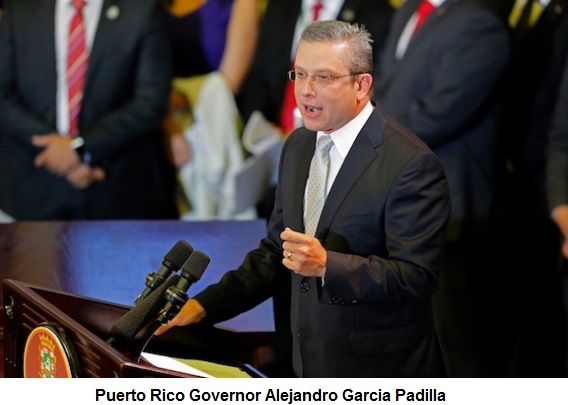
WASHINGTON, DC — Main Street Bondholders Coalition, a project of the 60 Plus Association, America’s largest center-right seniors organization representing more than 7.2 million older Americans, has launched a paid advertising campaign in Washington and Puerto Rico to highlight what it describes as Governor Alejandro Garcia Padilla’s plan to violate Puerto Rico’s constitution at the expense of small bondholders.

“Governor Garcia Padilla’s plan – to declare debts un-payable and then attack bondholders by calling them ‘vultures’ – is both unjust and unconstitutional. Our coalition includes Puerto Rican residents and mainland seniors living on fixed incomes, who staked their retirement in bonds backed by Puerto Rico’s full faith and credit. Congress must oppose the governor and his team’s reckless plan that disregards the rule of law and devastates the lives of these small investors,” said Matthew Kandrach, vice-president for 60 Plus.

PR SME - Photo 1

Padilla’s plan is so radical and unprecedented that members of his own political party are speaking out against it:

  • Nadal Power, chairman of Puerto Rican Senate Committee on Treasury and Public Finance: “We have to respect what the Constitution says and to do otherwise would take away a lot of credibility, not only the word of Puerto Rico, but compliance with the supreme law.”
  • Eduardo Bhatia, president of the Senate of Puerto Rico: “Puerto Rico has not been disciplined. We must restore confidence. We have to reduce government spending.”

Added Kandrach, “Puerto Rico can fix its financial problems, but any solution must be built on the cornerstone of genuine fiscal reform, not empty rhetoric and punishing investors. The governor and his circle of advisors, who are the same bunch representing deadbeat sovereigns like Argentina, have chosen to manufacture a crisis in order to get Washington’s help in their plan to stiff creditors. Congress must not allow that to happen.

“Puerto Rico would benefit from a fiscal control board, just like the District of Columbia had in the 1990s when it faced financial crisis. Congress must also oppose the governor’s plan to restructure Puerto Rico’s constitutional bonds. Allowing him to do so would set a terrible precedent, and open a Pandora’s Box of other state defaults. No retirement account in America would be safe.”

Main Street Bondholders Coalition is a project of the 60 Plus Association that is made up of small bondholders from across America who are committed to a policy process that returns Puerto Rico to sound financial management, respects the rule of law, and protects their retirement savings.
Source: Caribbean News Now – Regional Online News Source  – Retrieved 09-09-2015 http://www.caribbeannewsnow.com/topstory-Puerto-Rico-bondholders-coalition-launches-ad-campaign-27533.html

The summary of this news article is that it looks like Puerto Rico is “cruising for a bruising”, flirting with Bankruptcy. They resemble a Failed-State in some Banana Republic, rather than an American sovereign territory in the southern shadows of its bigger-richer mainland. This reflects a broken eco-system.

The Go Lean book serves as a roadmap to re-boot the island’s economic engines. The focus of the roadmap is the introduction and implementation of the region-wide professionally-managed, deputized technocracy of the Caribbean Union Trade Federation (CU). This roadmap asserts that the problems of Puerto Rico (by extension, the entire Caribbean) are too big for any one member-state to solve alone. There is the need to leverage the problems and solutions across the remaining of the Caribbean region; all 30 member-states.

The CU roadmap is a request for Puerto Rico to confederate with the rest of the Caribbean, their English-speaking, Dutch-speaking, French-speaking Caribbean neighbors; despite their political status. Puerto Rico needs the strategies, tactics, implementations and advocacies that would emerge from such integration. As reported in the previous April 2014 blog:

Puerto Rico needs the CU!
The CU needs Puerto Rico!

For the roadmap to be successful there is interdependence among these Caribbean member-states, since they are all too small. There is an overbearing need for leverage and economies-of-scale. This point was declared early in the book, in the opening Declaration of Interdependence (Page 11 – 14), with these statements:

viii. Whereas the population size is too small to foster good negotiations for products and commodities from international vendors, the Federation must allow the unification of the region as one purchasing agent, thereby garnering better terms and discounts.

xi. Whereas all men are entitled to the benefits of good governance in a free society, “new guards” must be enacted to dissuade the emergence of incompetence, corruption, nepotism and cronyism at the peril of the people’s best interest. The Federation must guarantee the executions of a social contract between government and the governed.

xii. Whereas the legacy in recent times in individual states may be that of ineffectual governance with no redress to higher authority, the accedence of this Federation will ensure accountability and escalation of the human and civil rights of the people for good governance, justice assurances, due process and the rule of law. As such, any threats of a “failed state” status for any member state must enact emergency measures on behalf of the Federation to protect the human, civil and property rights of the citizens, residents, allies, trading partners, and visitors of the affected member state and the Federation as a whole.

xxiii. Whereas many countries in our region are dependent Overseas Territory of imperial powers, the systems of governance can be instituted on a regional and local basis, rather than requiring oversight or accountability from distant masters far removed from their subjects of administration. The Federation must facilitate success in autonomous rule by sharing tools, systems and teamwork within the geographical region.

xxv. Whereas the legacy of international democracies had been imperiled due to a global financial crisis, the structure of the Federation must allow for financial stability and assurance of the Federation’s institutions. To mandate the economic vibrancy of the region, monetary and fiscal controls and policies must be incorporated as proactive and reactive measures. These measures must address threats against the financial integrity of the Federation and of the member-states.

xxix. Whereas all Caribbean democracies depend of the free flow of capital for municipal, public and private financing, the institutions of capital markets can be better organized around a regional monetary union. The Federation must institute the controls to insure transparency, accounting integrity and analysis independence of the securities markets, thereby shifting the primary source of capital away from foreign lenders to domestic investors, comprising institutions and individuals.

The CU requires the full participation of all 30 member-states in the region. A careful assessment of government finances, performed for the Go Lean book, shows that the finances for all Caribbean member-state governments are curtailed – the region is in crisis. One state after another feature deficits or excessive high Debt-to-GDP rates. (The World Bank, International Monetary Fund and the Inter-American Development Bank have monitors permanently stationed in the region). For many states, the 2008 Global Financial Crisis still lingers.

To assuage the economic crisis for Puerto Rico and the other Caribbean member-states, the Go Lean roadmap focuses on both increasing revenues, lowering operational expenses, and refinancing previous high-interest debt instruments (bonds). The roadmap is a complete re-boot! Imagine new revenue streams and a separation-of-powers to off-load some of the operational burdens to the CU Trade Federation. These are the prime directives of the Go Lean roadmap, pronounced as these 3 statements:

  • Optimization of the economic engines in order to grow the regional economy to $800 Billion and create 2.2 million new jobs.
  • Establishment of a security apparatus to protect the resultant economic engines.
  • Improvement of Caribbean governance to support these engines.

The book Go Lean … Caribbean introduces the CU so as to assume much of the Caribbean economic, security and governing functionality. The roadmap makes Puerto Rico, and the rest of the Caribbean, a better place to live, work and play. How? By the adoption of a series of community ethos, plus the execution of the following strategies, tactics, implementations and advocacies to elevate the societal engines of the region and to stop any downward spiral into Failed-State status. See the lists here:

Assessment – Caribbean Single Market & Economy Page 15
Assessment – Dutch Caribbean – Integration & Secessions Page 16
Assessment – French Caribbean – Organization & Discord Page 17
Assessment – Puerto Rico – The Greece of the Caribbean Page 18
Community Ethos – Economic Principles – Economic Systems Influence   Individual Choices Page 21
Community Ethos – Economic Principles – Consequences of Choices Lie in   the Future Page 21
Community Ethos – Governing Principles – Lean Operations Page 24
Community Ethos – Ways to Impact the Future Page 26
Community Ethos – Ways to Promote Happiness Page 36
Community Ethos – Ways to Impact the Greater Good Page 37
Strategy – Vision – Confederate all 30 member-states/ 4 languages into a Single   Market Page 45
Strategy – Mission – Build and foster local economic engines Page 45
Tactical – Ways to Foster a Technocracy Page 64
Tactical – Growing the Economy to $800 Billion GDP Page 68
Tactical – Separation-of-Powers – CU Federal Government versus Member-State Governance Page 71
Implementation – Assemble All Regionally-focus Organizations of All Caribbean Communities Page 96
Implementation – Ways to Pay for Change Page 101
Implementation – Ways to Better Manage Debt Page 114
Implementation – Ways to Foster International Aid Page 115
Planning – 10 Big Ideas – Forging the Single Market for the whole region Page 127
Planning – Ways to Improve Trade Page 128
Planning – Ways to Improve Interstate Commerce Page 129
Planning – Ways to Make the Caribbean Better Page 131
Planning – Lessons Learned from 2008 Page 136
Planning – Lessons Learned from Egypt – Dysfunction in a Tourism Mecca Page 143
Advocacy – Ways to Grow the Economy Page 151
Advocacy – Ways to Create Jobs Page 152
Advocacy – Ways to Improve Credit Ratings Page 152
Advocacy – Ways to Improve Governance Page 168
Advocacy – Ways to Better Manage the Social Contract Page 170
Advocacy – Ways to Impact Justice Page 177
Advocacy – Ways to Improve Homeland Security Page 180
Advocacy – Ways to Impact Wall Street Page 200
Advocacy – Ways to Impact US Territories Page 244

The Go Lean roadmap alerts the Caribbean – the 42 million people, 10 million Diaspora and 80 million visitors – that the effort to elevate the societal engines is heavy-lifting. This is no easy task, serious-minded leadership is necessary. There can be no reneging of commitments and repayments of previous bond obligations, as related in the foregoing news article and this VIDEO here:

VIDEOPuerto Rico on brink of debt defaulthttps://youtu.be/BBwtxF52OrE

Published on Aug 3, 2015 – Envision Capital Management CEO Marilyn Cohen explains how Puerto Rico got into poor fiscal shape.
Category: News & Politics
License: Standard YouTube License

There must be new solutions that considers the pasts, accepts the present and fosters the future.

Change has come to the Caribbean. Puerto Rico and all neighboring member-states are admonished to lean-in to the empowerments and elevation described in the book Go Lean … Caribbean. The benefits of this roadmap are needed urgently now! We need the emergence of a $800 Billion regional economy, 2.2 million new jobs. We need the Caribbean homelands to become better places to live, work and play. 🙂

Download the book Go Lean … Caribbean – now!

Share this post:
, , , , ,
[Top]

Lesson from Japan: Aging Populations

Go Lean Commentary

The Bible says “to honor your father and mother so that your days may be long” – Exodus 20:12. This is presented in one of the 10 Commandments as a law and a promise. This is best explained at Ephesians 6: 1-3 (New International Version or NIV):

1 Children, obey your parents in the Lord, for this is right. 2 HONOR YOUR FATHER AND MOTHER (which is the first commandment with a promise), 3 SO THAT IT MAY BE WELL WITH YOU, AND THAT YOU MAY LIVE LONG ON THE EARTH …

So caring for aging parents brings honor to them and to us.  Some places do a better job of this than others. One such example is Japan.

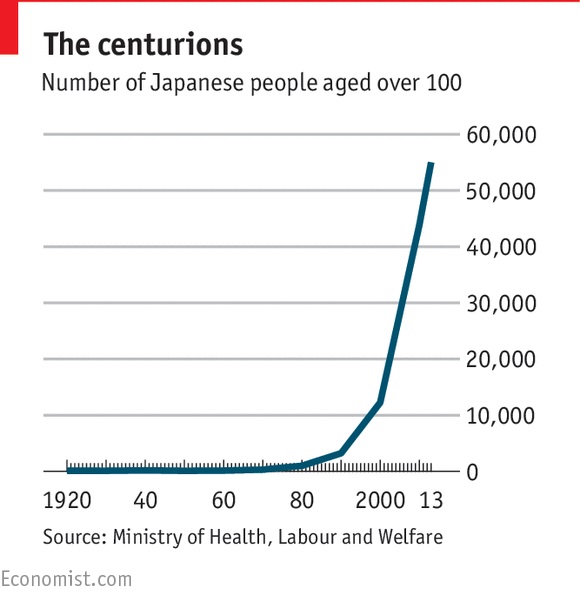
There are around 55,000 centenarians in Japan

This purpose of this commentary is to highlight the currency of this serious issue. The book Go Lean … Caribbean calls for the elevation of the economic, security and governing engines in the Caribbean region. The end-result is not just on societal engines, but also on people; in this case, the elderly. This Go Lean book is not a public health guide for gerontology, to enjoy optimum treatment towards our seniors, but rather a roadmap for impacting change in our community. This news article on the experiences in Japan is presented here; also consider a related story in the AUDIO podcast below:

Title: Japan is home to the world’s oldest population — and the world’s oldest man
By: Daniel Gross, Audrey Adam

Koide receives the Guinness World Records certificate as he is formally recognized as the world's oldest man, at a nursing home in NagoyaThe world’s oldest man lives in the country with the world’s oldest population. Yasutaro Koide is 112 years old and was just recognized by Guiness World Records as oldest man on Earth.

Japan’s remarkable longevity is cause for celebration. But it’s also creating challenges for a government dealing with a population that keeps getting older.

According to Naoko Muramatsu, a scientist who studies Japan’s aging population at the University of Illinois, Chicago, one-quarter of the country’s residents are already above 65.

There are many costs associated with an aging population, starting with the familiar challenges of social security and health care. But there’s also the cost of an odd Japanese tradition: giving a silver sake dish to centenarians, or people who reach 100 years of age.

Thanks to a new decision by the Japanese government, that practice — which is currently government-funded — may end soon. They say the total cost of the dishes, which are about $60 each, is simply too high. There are around 55,000 centenarians in Japan, according to 2013 statistics.

Muramatsu says there are several reasons that help explain the age of Japan’s population. “Life expectancy in Japan is the highest in the world,” she points out. “People try to eat well, try to do exercise well.”

Another reason is that ever since a brief postwar baby boom, Japan’s birth rate has remained extremely low. A aging baby from that baby boom will turn 65 soon, and many haven’t had very many children, or any at all — leaving more seniors living alone or in nursing homes.

Japan has started to respond to the challenge. In 2000, Japan started long-term care insurance. “You start paying into the system at the age of 40,” says Muramatsu. “And at the age of 65, you’re entitled to receive long-term care, homecare or nursing home care.”

Muramatsu has a personal connection to the study of aging. She remembers that during her childhood, her mother looked after both the older and younger generations. But the tradition of caregiving has been transformed by Japan’s new demographics.

When Muramatsu’s father died a few years ago, she saw first-hand some of the challenges of growing old in Japan. “In Japan, cremation is the custom,” she explains. But cremation has become difficult in cities whose populations spiked in the postwar years. Many elderly people haven’t left urban areas, which means the death rate has risen. “I couldn’t reserve a cremation facility for my father, in the city that we live in.”

Those sorts of challenges may take decades to overcome. But with them come the fact that in Japan, women can expect to live almost 90 years. And Men live well past 80, on average.

And if they’re like Yasutaro Koide, they might even live to 112.

Source: “The World” by Public Radio International; posted August 21, 2015; retrieved 08-23-2015 from: http://kosu.org/post/japan-home-worlds-oldest-population-and-worlds-oldest-man#stream/0

———

AUDIO – “The Challenges Posed by an Aging Global Population” – http://n.pr/1IqdCHV

Uploaded on June 22, 2015 – One-fifth of the U.S. population will be 65 or older in 15 years. NPR’s Ina Jaffe talks with NPR’s Scott Simon about the aging of the population worldwide and the challenges it presents.

The book and previous blog/commentaries posit that socio- economic factors must be accounted for in the roadmap to optimize and improve this society. In fact, the book lists 144 missions for the imminent Caribbean Union Trade Federation (CU); one of them is an advocacy for improved Elder-Care. This is identified on Page 225 under the title:

10 Ways to Improve Elder-Care … in the Caribbean Region

The Go Lean book posits that there is a deficiency in the regional institutions for caring, supporting and planning for the elderly. How do we go about improving on the Social Contract for the senior citizens in our community? What happens if/when we are successful for elevating life for our seniors?

The Go Lean book answers the “how”; it serves as a roadmap for introducing and implementing the CU. In its scope, it features the curative measures for the exact societal deficiencies, highlighted by the CU’s prime directives, as follows:

  • Optimization of the economic engines in order to grow the regional economy to $800 Billion & create 2.2 million new jobs.
  • Establishment of a security apparatus to protect the resultant economic engines and mitigate challenges/threats to ensure public safety for the region’s stakeholders, including the elderly.
  • Improvement of Caribbean governance, including a separation-of-powers with member-states, to support these economic/security engines.

Where as the book addresses the “how”, this commentary features the “when” for succeeding in the improvement of the lives and longevity of the elderly population of the Caribbean. When people live longer, there is a dramatic effect on the socio-economics of a community. This is the lesson from Japan.
CU Blog - Lesson from Japan - Aging Populations - Photo 2

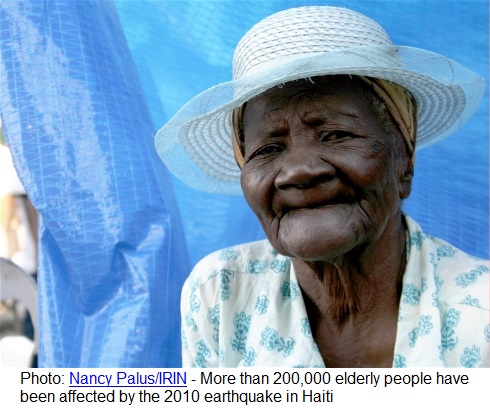
In Japan, the improvements in the societal engines (economics, security and governance) have resulted in improved livelihood and longevity for their people. This has resulted in demographic shifts: there are more senior citizens, more centenarians, compared to the rest of the population.

The problem:

Seniors do not work; nor contribute to the public “pools”; they only draw from it. Too many “takers”, compared to the “givers” is bad economics. So while we love our elderly, we must also prepare for the reality of their longevity.

From the Caribbean perspective there is another reality: societal abandonment of the younger generations – this Go Lean movement has fully defined the excessive abandonment rates in the 70% to 90% range for the college-educated populations in the region. This has the same negative effects on the public “pools”: the numbers of the “givers” shrink, while the proportion of the “takers” remains static, or worse, increase.

It is what it is!

This is a matter of heavy-lifting. Serious solutions must be sought to mitigate the risks of communities getting this challenge wrong. In a previous commentary, the socio-economic issues associated with the rising number of seniors in society were fully explored; the dread of elderly suicides was detailed.

The Go Lean roadmap does not ignore the needs of the elderly, nor the actuarial realities being contended in the region. Rather, the roadmap calls for mitigations to dissuade further emigration and also the inducements for the Caribbean Diaspora to return – back to the homeland – and bring their hard-earned entitlements with them. The CU organization structure features the establishment of regional sentinels and advocacy groups to intervene on behalf of local seniors to optimize their benefits from any foreign programs they may have previously participated in. These SME’s will work for the CU’s Special Liaison Group at the CU’s Headquarters or in Trade Mission Offices.

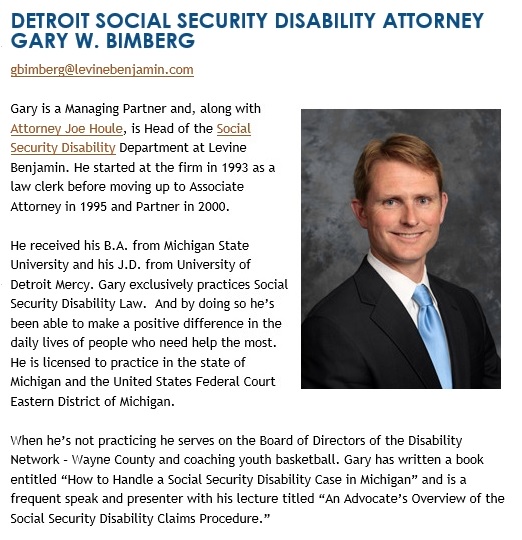
CU Blog - Lesson from Japan - Aging Populations - Photo 3This Win-Win scenario is a prominent feature in the US, with lawyers advocating for Social Security benefits for their clients, for a fee; see this sample Advertisement from a Detroit-area law firm. For stakeholders of the CU, there is no need to pay this fee – normally extracted from future benefits – as the CU Subject Matter Experts (SME) will advocate for the Aging Diaspora returning to the Caribbean. (The Go Lean roadmap calls for funding law degrees for students but binding their services for a few years to impact their communities, as in working for this advocacy).

This is a classic example of the field of socio-economics. The goal of any socio-economic study is generally to bring about socio-economic development, usually by improvements in metrics such as GDP, life expectancy, literacy, levels of employment, etc.  In many cases, socio-economists focus on the social impact of some sort of economic change. But this is about more than just numbers, this is about people.

The Go Lean … Caribbean roadmap constitutes a change for the region, a plan to consolidate 30 member-states into a Trade Federation with the tools/techniques to bring immediate change to the region to benefit many stakeholders. The book details the community ethos that must be adopted plus the executions of the following strategies, tactics, implementations and advocacies to prepare for an aging society … in the Caribbean; see a sample list here:

Community Ethos – Deferred Gratification Page 21
Community Ethos – Ways to Impact the Future Page 26
Community Ethos – Ways to Impact Turn-Arounds Page 33
Community Ethos – Ways to Promote Happiness Page 36
Community Ethos – Ways to Impact the Greater Good Page 37
Strategy – Repatriating Caribbean Diaspora & Entitlements Page 47
Strategy – Non-Government Organizations Page 48
Strategy – Agents of Change – Aging Diaspora Page 57
Tactical – Confederating a Permanent Union Page 63
Tactical – Fostering a Technocracy Page 64
Tactical – Growing the Economy – Lessons from Japan Page 69
Tactical – Separation of Powers – Department of State – Special Liaison Groups Page 80
Tactical – Separation of Powers – Department of   Health Page 86
Implementation – Assemble all Member-States Page 96
Implementation – Ways to Pay for Change Page 101
Implementation – Trade Mission Office Objectives Page 117
Implementation – Reasons to Repatriate Page 118
Planning – Lessons Learned from 2008 Page 136
Planning – Ways to Make the Caribbean Better Page 133
Advocacy – Ways to Grow the Economy Page 151
Advocacy – Ways to Create Jobs Page 152
Advocacy – Ways to Improve Healthcare Page 156
Advocacy – Ways to Impact Entitlements Page 158
Advocacy – Ways to Improve Education – Brain Drain Case Page 159
Advocacy – Ways to Improve Student Loans – Forgive-able Page 160
Advocacy – Better Manage the Social Contract Page 170
Advocacy – Ways to Foster Cooperatives Page 176
Advocacy – Impact the Diaspora Page 217
Advocacy – Ways to Preserve Caribbean Heritage Page 218
Advocacy – Ways to Impact Retirement Page 221
Advocacy – Ways to Help the Middle Class Page 223
Advocacy – Ways to Improve Elder-Care Page 225
Appendix – Disease Management – Healthways Model Page 300

This Go Lean book asserts that there is a direct correlation of population growth/contraction with the economy. This viewpoint has been previously detailed in Go Lean blog/commentaries, as sampled here:

Bad Model: Pressed by Debt Crisis, Doctors Leave Greece in Droves
Demographic Trend: Immigrants account for 1 in 11 Blacks in USA
Businesses Try to Stave-off Brain Drain as Boomers Retire
Retirement Planning – Getting Rich Slowly … in the Caribbean
Book Review: ‘Chasing Youth Culture and Getting It Right’
Having Less Babies is Bad for the Economy
10 Things We Don’t Want from the US: # 8 Senior Abandonment

As this commentary opened with a Biblical quotation, it is even more fitting to conclude with one, a Proverb, as follows:

The glory of young men is their strength, [but] gray hair [is] the splendor of the old. – Proverbs 20:29 NIV.

Without a doubt, there is value to keeping senior citizens around in our communities; their “grey hair” – poetic for wisdom – is greatly valued … and needed. As a society, we have made too many mistakes, that with some far-sighted wisdom and best-practice adherence, we could have done better and been better.

We must turn-around, reboot and prepare!

We must listen to the wisdom of the experienced/wise ones. They can help us to make our homelands better places to live, work, and play – for all: young and old.  🙂

Download the book Go Lean…Caribbean now!

Share this post:
, , , , , , ,
[Top]

Socio-Economic Change: The Demographic Theory of Elderly Suicide

Go Lean Commentary

CU Blog - Socio-Economic Change and Demographic Theory of Elderly Suicide - Photo 2This purpose of the book Go Lean … Caribbean is to elevate the economic engines in the region. However, these commentaries have focused, numerous times on social and socio-economic issues; in this case, focus is given to the threat of suicides.

This seems out-of-scope!

The book and accompanying blogs posit that socio- economic factors must be accounted for in the roadmap to optimize and improve this society. In fact, the book lists 144 missions for the imminent Caribbean Union Trade Federation (CU), but one of them is an advocacy against suicides. This is identified on Page 36 under the title:

10 Ways to Promote Happiness … in the Caribbean Region

On the surface, it would appear as if promoting happiness would be so easy to do in the region of the world that is arguably “the greatest address on the planet”. Yet, the country with the highest suicide rate has been identified as Caribbean member-state Guyana.

This does not compute! Such a crisis amidst such beauty! The conclusion in the book is that the deficiency – contributing to suicides – is economic, jobs in particular. As the book declares that a man/woman needs three things to be happy:

  1. something to do,
  2. someone to love, and
  3. something to hope for.

The Go Lean roadmap does feature – in its scope – the societal deficiencies that could propel an increase in suicides. This is highlighted by the CU’s prime directives, as described by these statements:

  • Optimization of the economic engines in order to grow the regional economy to $800 Billion & create 2.2 million new jobs.
  • Establishment of a security apparatus to protect the resultant economic engines and mitigate challenges/threats to ensure public safety for the region’s stakeholders.
  • Improvement of Caribbean governance, including a separation-of-powers with member-states, to support these engines.

This commentary is not a re-harsh of the same suicide-driving issues as previously addressed, but rather an exploration of the socio-economic issues associated with the elderly in society. This commentary is the 2nd in a 3-part series on the art-and-science of analyzing socio-economic changes; other commentaries depict …

1. the manifestation of socio-economic changes in everyday life – values, habits and nuances, looking across a timeline from the 1960’s versus today and also …

3. the use-and-abuse of economic impact analyses on community investments.

Within this series, the field of socio-economics is defined as the social science that studies how economic activity affects and is shaped by social processes. In general it analyzes how societies progress, stagnate, or regress because of the local, regional or global economy. This commentary though, considers an academic study that examined the demographic population of the elderly and summarized that the logical conclusions of the root causes of suicide are different for this population. Consider the Abstract, here, of the Research Paper from the University of Nairobi (Kenya):

Title: Towards a Socio-Economic and Demographic Theory of Elderly Suicide: A Comparison of 49 Countries at various stages of development
By: Kiemo, Karatu
(Source: University of Nairobi (Kenya) Academic Research; Posted (2004; Retrieved 10-15-2014 from: http://erepository.uonbi.ac.ke/handle/11295/55260)

Abstract: D. Cowgill found out that the role and status of the elderly declined with modernization, but in contradiction G. Hammarström found out that what actually affected the role and status of the elderly during modernization was the rate at which modernization occurred.

From current studies, it can be insinuated that the transformation from socialist to market economies has too affected the role and status of the elderly adversely. In all, the social condition following on the above changes in productive, organizational and demographic structures connects with what E. Durkheim found to cause imbalance in social integration, and therefore could aggravate elders’ rate of suicide.

Using data from 49 developing and developed countries for the period around 1995, elderly suicide rates and elderly/non-elderly suicide ratio are examined in light of the extent and direction of socio-economic development; and in light of the extent of demographic transition and elderly population’s gender structure. Results show that the direction of socioeconomic change impacts differentially on elderly suicide rates, the rates in regressing economies being appreciably higher than in progressing economies. However, the impact of socio-economic trends on the elderly/non-elderly suicide ratio was not clear-cut.

The extent of socio-economic change impacts differentially on elderly suicide rates, the distribution being curvilinear (inverted-U functional) rather than Cowgill’s linear hypothesis. The extent of socioeconomic change also impacts differentially on elderly/non-elderly suicide ratio in an inverse correlation rather than Cowgill’s hypothesized positive correlation. Whereas the results failed to conform to the structuration of Cowgill’s modernisation theory, the theory is deemed substantively relevant especially in explaining the extent to which the status of being elderly aggravates suicide in the context of contemporary developing countries.

In this regard, Riley’s concept of age-integration seems more appropriate than Durkheim’s social integration in explaining how older age aggravates suicide in an especial manner. The thesis in this study is that elderly suicide is a function of age-related role and status and regulated by dynamics of socio-economic and demographic structures. Culture too seems to play some role that is yet to be determined.

———

Full Study: http://erepository.uonbi.ac.ke:8080/xmlui/handle/123456789/55260

CU Blog - Socio-Economic Change and Demographic Theory of Elderly Suicide - Photo 1The Go Lean roadmap does not ignore the needs of the elderly, nor any mental health needs of the Caribbean community. Rather, the roadmap calls for the establishment of a regional sentinel, a federal Health Department, to monitor, manage and mitigate public health issues in the region, including mental health with the same prioritization (cancer, trauma, virus, immunizations).

The University of Nairobi study hypothesizes that the elderly tend to be more affected when society experiences rapid change! This is an acute alarm for the CU/Go Lean planners, as the roadmap does call for near-hyper-growth in a short period of 5 years. Therefore, this foregoing article calls for the region to double-down on its efforts to ensure the health mitigations are in place for this vulnerable group. The need for this awareness was identified early in the Go Lean book, in the opening pronouncement in the Declaration of Interdependence (Page 11), as follows:

ix.  Whereas the realities of healthcare and an aging population cannot be ignored and cannot be afforded without some advanced mitigation, the Federation must arrange for health plans to consolidate premiums of both healthy and sickly people across the wider base of the entire Caribbean population. The mitigation should extend further to disease management, wellness, mental health, obesity and smoking cessation programs.

The University of Nairobi study is a classic exercise in this field of socio-economics. The goal of a socio-economic study is generally to bring about socio-economic development, usually by improvements in metrics such as GDP, life expectancy, literacy, levels of employment, etc.  In many cases, socio-economists focus on the social impact of some sort of economic change. Examples of causes of socio-economic impacts include new technologies such as cars or mobile phones, changes in laws, changes in the physical environment (such as increasing crowding within cities), and ecological changes (such as prolonged drought or declining fish stocks). These may affect patterns of consumption, the distribution of incomes and wealth, the way in which people behave (both in terms of purchase decisions and the way in which they choose to spend their time), and their overall quality of life.

The Go Lean … Caribbean roadmap constitutes a change for the region, a plan to consolidate 30 member-states into a Trade Federation with the tools/techniques to bring immediate change to the region to benefit one and all member-states. The roadmap calls for the coordination of the region’s (mental) healthcare needs at a CU federal agency. Though there is a separation-of-powers mandate between the member-states and federal agencies, the CU can still wield influence in this area due to funding accountabilities, (strings attached). The Go Lean roadmap details a monitoring and metering responsibility between the CU and the member-states; so there will be some federal compliance and regulatory oversight. This empowerment would also allow for better coordination with international stakeholders – like the World Health Organization (WHO) – and non-governmental organizations (NGOs) – there are many that cater to the needs of the elderly, just consider the VIDEO in the Appendix below.

For the Caribbean, we will not want our elderly population “checking out” from society! We love them too much and they have endured far more that they should have; see VIDEO below. The “happiness mandate” identified at the start, is presented in the book as a “community ethos” (Page 20), the definition of which follows here:

… the fundamental character or spirit of a culture; the underlying sentiment that informs the beliefs, customs, or practices of a group or society; the dominant assumptions of a people or period.

The book details that there must first be adoption of such a community ethos plus the executions of the following strategies, tactics, implementations and advocacies to impact the region’s public health:

Community Ethos – Deferred Gratification Page 21
Community Ethos – Economics Influence Choices Page 21
Community Ethos – Privacy versus Public Protection Page 23
Community Ethos – “Crap” Happens Page 23
Community Ethos – Lean Operations Page 24
Community Ethos – Cooperatives Page 24
Community Ethos – Non-Government Organizations Page 25
Community Ethos – Ways to Improve Sharing Page 35
Community Ethos – Ways to Promote Happiness Page 36
Community Ethos – Impact the Greater Good Page 37
Strategy – Vision – Confederate 30 Member-States Page 45
Strategy – Mission – Reform our Health Care Response Page 47
Strategy – Agents of Change – Aging Diaspora Page 57
Tactical – Fostering a Technocracy Page 64
Separation of Powers – Department of Health Page 86
Implementation – Ways to Deliver Page 109
Planning – Ways to Model the EU Page 130
Planning – Ways to Make the Caribbean Better Page 131
Planning – Ways to Measure Progress Page 148
Advocacy – Ways to Grow the Economy Page 151
Advocacy – Ways to Improve Healthcare Page 156
Advocacy – Ways to Impact Cancer Page 157
Advocacy – Ways to Better Manage the Social Contract Page 170
Advocacy – Ways to Foster Cooperatives Page 176
Advocacy – Ways to Improve Emergency Management Page 196
Advocacy – Ways to Improve Elder-Care Page 225
Appendix – Disease Management – Healthways Model Page 300
Appendix – Trauma Center Definitions Page 336

This Go Lean book asserts that there is a direct correlation of physical/mental health issue with the economy. This viewpoint has been previously detailed in Go Lean blog/commentaries, as sampled here:

Book Review: ‘The Protest Psychosis’
Guyana and Suriname Wrestle With High Rates of Suicides
Public Health Economics – The Cost of Cancer Drugs
Antibiotics Misuse Associated With Obesity Risk
Recessions and Public Health in the Caribbean Region
New Hope in the Fight Against Alzheimer’s Disease

There is a place in the new Caribbean for the elderly populations. Granted, they may not be candidates for the highly-sought, high-multiplier STEM (Science, Technology, Engineering and Mathematics) jobs, but nonetheless they are stakeholders in the Go Lean mission. Love of neighbor – the Greater Good – is why we do what we do!

This issue of suicide among the elderly, as discussed in the foregoing article is indicative of the need for better stewardship of the economy, security and governing engines in the Caribbean. This makes the region a better place to live, work, and play – for all: young and old.

🙂

Download the book Go Lean … Caribbean – now!

————-

Appendix VIDEO – “Honor the Elderly” (The Forgotten Ones)  – https://youtu.be/PZvnJv4CZQ8

Uploaded on Nov 5, 2009 – We must honor the elderly! We must treat the elderly with dignity, love and respect. How we treat the elderly is a reflection of who we are. We should treat them the way we would want to be treated when we grow old and feeble. Many elderly are full of wisdom and we can learn valuable lessons from them.
Music:  “On The Other Side Of Jordan” by Rabbit Easter Band (Google PlayeMusicAmazonMP3)

Share this post:
, , , , , ,
[Top]

Greece: From Bad to Worse

Go Lean Commentary

Here a prediction for Greece: Things will get worse before they get worse!

This commentary has previously asserted that there are 3 kinds of people in the world:

1. Those who make things happen
2. Those who watch things happen
3. Those who wonder “What happened?”

Many people are now waking up to the harsh realities that a Failed-State – Greece – is emerging, right in front of their eyes. Unfortunately, this applies to people in the Caribbean as well.

On Sunday (July 5, 2015), a referendum was put to the Greek people to vote whether to accept further bail-out monies with harsh austerity measures from the international community … or go at it alone. They chose the latter!

Now they are waking up to the reality that the “cupboards are bare”; and many international trading partners will not trade with them. Many people are now wondering “What happened?”

-

See the news article here (and a related VIDEO from just before the referendum) conveying the harsh realities that many in Greece are now faced with:

Title: The economic consequences of Syriza
By: C.R. and S.N. | London And Athens

AFTER the party in Syntagma Square celebrating the landslide victory for the “no” campaign in Sunday’s referendum comes the hangover. They went wild “because we are tired of everything, from all the lies, from paying for the rich, and from years of austerity, especially for young”, as one partying Athenian told us. To be fair, with youth unemployment rates of over 50%, many have had little to celebrate for a long time. Young Greeks support the aggressive stance taken towards the country’s lenders by Syriza and its leader, the Greek prime minister Alexis Tspiras, whose position in domestic politics has been strengthened as a result of the referendum.

But two days after the close of the polls the fact remains that Greece’s real economy is in a mess. Capital controls imposed after Mr Tsipras called the referendum on June 26th have kept banks closed. Ordinary Greeks have been limited to cash withdrawals from ATMs of just €60 ($67) a day (which is now in effect down to €50 as smaller notes have disappeared from circulation). Many cash machines in Athens have run completely out of money.

Firms have also been hit particularly hard. Foreign bank transfers have been banned by the Greek government, with few exceptions. Greek credit is no longer accepted outside the country. That has hit firms that rely on foreign credit to import goods, as well as the Greek tourists who found themselves stranded when their credit cards stopped working. Supplies of food and some medicines are running short (see picture); a black market for cancer drugs has even emerged. As we reported on Sunday:

Greece relies almost entirely on foreign imports for its pharmaceutical supplies. But since capital controls imposed last Sunday brought the country’s banking system to a sudden halt, some suppliers have stopped delivering key medication because they cannot get paid…As things stand, she has another week’s worth of insulin in stock for diabetics but will then have to start turning her patients away. “Do you know what that means?” she asks, trying to keep a proud face, “Do you know what insulin does?”

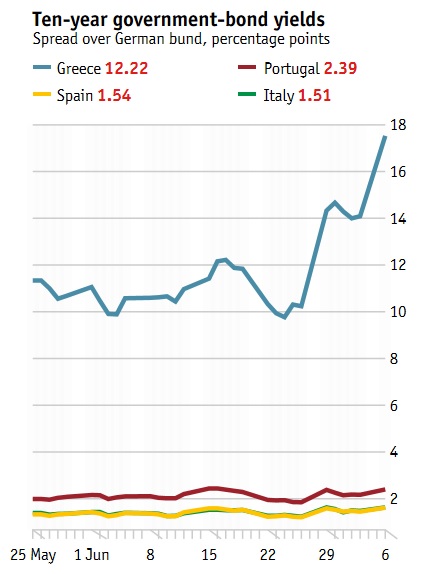
Unsurprisingly, as a result, Greek economic growth—which began to falter shortly after Syriza came to power in January—has collapsed. Consumption has slumped by 70% since capital controls were imposed, according to the National Confederation of Hellenic Commerce, a business group. Individuals and firms are hoarding cash at the same time that essential goods are becoming unavailable—a toxic mix for any economy. The decision taken yesterday by the European Central Bank—to keep in place the cap on emergency lending to Greek banks, and to increase the discount applied on Greek bonds accepted as collateral—will tighten the short-run financial crunch.

Greece is running short of time; in the next few days either a new deal will be done that allows the ECB to reopen the liquidity spigots or bank failures will lead to Grexit. In either case, the damage done by this period of uncertainty and financial drought will be severe.

Economic history suggests that economies can be surprisingly resilient when hit by shocks, such as the temporary imposition of capital controls or a reduction in the supply capacity of the economy. The Cypriot economy, for instance, started to grow again just one year after it imposed capital controls in 2013. And as Britain’s experience of general strikes indicates, temporary one- or two-week supply disruptions do not tend to have much impact on output after about a year. Leaving a single currency may also not be a complete disaster; countries such as Ireland (which left the British pound in 1928) have managed it before. And many countries ditching fixed-exchange rates—such as Britain in 1931 and 1992—exited long recessions almost immediately after they bit the bullet.

But there are three main reasons why economists think that the Greek economy will be wounded for far longer than other unfortunates. First, current uncertainty is probably damaging future demand as well as current demand; future tourist bookings have fallen by around a third since capital controls were imposed, for instance, which matters greatly given that the sector produces almost one-sixth of the country’s GDP. And with summer bookings so vital, the likely conclusion of the crisis in early July could not have been timed worse. Second, most countries that experience fast recoveries from supply-side shocks and fixed-exchange rate exits are able to count on a solvent and liquid banking system, which is needed in order to fund investment and growth through loans.

But Greece’s, which is about to collapse because of capital controls and deposit flight, is in a less comfortable position. The speedy introduction of new economic reforms post-Grexit, combined with capable macroeconomic management, could nonetheless cushion the Greek economy against the worst effects of exit and lead to a rapid bounceback. Yet few outside Greece reckon that the Syriza government has the inclination or competence to execute the transition smoothly and responsibly. Whatever Greece’s political fate, its economy is bound to get much worse before it gets better.
Source: The Economist Magazine – Online Edition – July 6, 2015
http://www.economist.com/blogs/freeexchange/2015/07/greeces-economy

—————–

VIDEO – Yes or No? Greece Again on the Brink: Greek Debt Crisis – https://youtu.be/reU7wWgFmDU

Published on Jul 3, 2015 – For the past five years, Greece has been struggling with a financial crisis that has led the country to the brink of an exit from the euro and an economic collapse.

Add this word to your vocabulary: Grexit; meaning a Greek Exit from the European Union.

This experience in Greece is a cautionary tale for the Caribbean, as so many aspects of Greek life parallel those of the Caribbean:

The harsh reality of Greece is a reminder of another crisis, the Great Recession of 2008. The events this week – with the referendum – mirrors September 15, 2008 when the American Investment Bank Lehman Brothers filed for bankruptcy, thus bringing the US (and the world’s economy) to the brink of disaster. This 2008 consideration is part-and-parcel of the book Go Lean…Caribbean which serves as a roadmap for the introduction of the technocratic Caribbean Union Trade Federation (CU) to provide new oversight for the Caribbean region’s economic, security and governing engines. The book was conceived as a result of this 2008 crisis, by stakeholders intimate with the anatomy of the 2008 crisis – People who make things happen – and composed from a position of strength, while in the location of one of the most successful communities to endure the Great Recession crisis: Omaha, Nebraska.

The pretext of the Go Lean roadmap is simple, and applies equally to Greece and the Caribbean:

Only at the precipice do they change!

The lessons learned, and codified, in the pages of the Go Lean book can now be enhanced with the examination of the realities of Greece. This examination must consider the reality of the economic, security and governing aspects of Greek society.

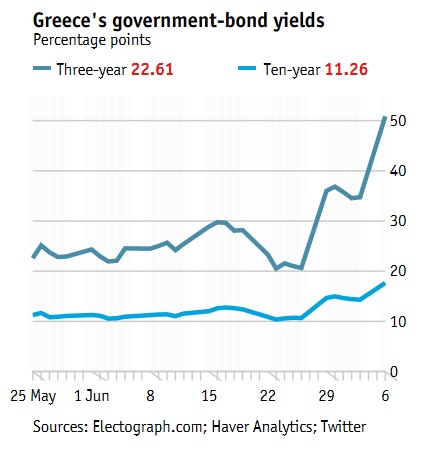
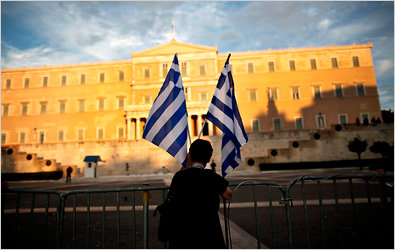
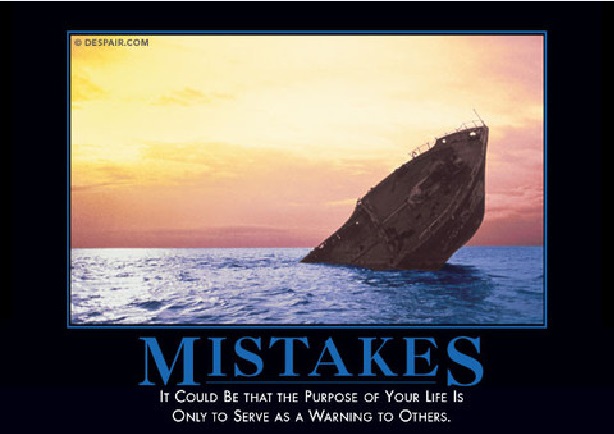
CU Blog - Greece - From Bad to Worse - Photo 3 CU Blog - Greece - From Bad to Worse - Photo 2

This country now has new leadership – the political party Syriza was swept into office on 25 January 2015 – trying to forge change in a dysfunctional environment. Until recently, the Minister of Finance for this sovereign nation was Yanis Varoufakis. (He resigned on July 5th, after the passage of the Referendum). To project transparency, Mr. Varoufakis presented the arguments in favor of their request for more compromise from the European Central Bank, the IMF, and other creditors demanding more austerity from Greece; he vocalized the following:

Our political mandate is to find an honourable, workable compromise. Is it so difficult to do so? We do not think so. A few days ago Olivier Blanchard, the IMF’s Chief Economist published a piece entitled ‘Greece: A Credible Deal Will Require Difficult Decisions by All Sides.’ He is right, the three operative words being ‘by all sides’. Dr Blanchard added that: “At the core of the negotiations is a simple question. How much of an adjustment has to be made by Greece, how much has to be made by its official creditors?”

That Greece needs to adjust there is no doubt. The question, however, is not how much adjustment Greece needs to make. It is, rather, what kind of adjustment. If by ‘adjustment’ we mean fiscal consolidation, wage and pension cuts, and tax rate increases, it is clear we [Greece] have done more of that than any other country in peacetime.

  • The public sector’s structural, or cyclically adjusted, fiscal deficit turned into a surplus on the back of a ‘world record beating’ 20% adjustment
  • Wages fell by 37%
  • Pensions were reduced by up to 48%
  • State employment diminished by 30%
  • Consumer spending was curtailed by 33%
  • Even the nation’s chronic current account deficit dropped by 16%.

No one can say that Greece has not adjusted to its new, post-2008, circumstances. But what we can say is that gigantic adjustment, whether necessary or not, has produced more problems than it solved:

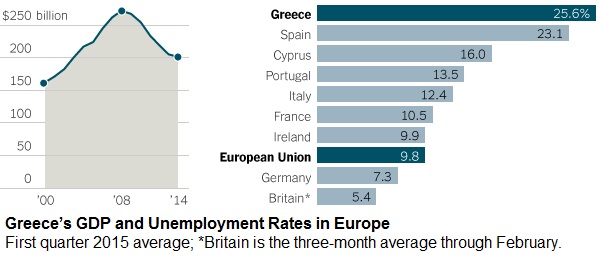
  • Aggregate real GDP fell by 27% while nominal GDP continued to fall quarter-in-quarter-out for 18 quarters non-stop to this day
  • Unemployment skyrocketed to 27%
  • Undeclared labour reached 34%
  • Banks are labouring under non-performing loans that exceed 40% in value
  • Public debt has exceeded 180% of GDP
  • Young well-qualified people are abandoning Greece in droves
  • Poverty, hunger and energy deprivation have registered increases usually associated with a state at war
  • Investment in productive capacity has evaporated.

Source: http://www.businessinsider.com/full-greece-proposal-leaked-by-yanis-varoufakis-2015-6

Mr. Varoufakis’ appeal has been rejected. Greece is now at the precipice. They are willing to change and correct many inequities. But maybe, this is too little, too late? They want to work to build up their communities, not necessarily build up their neighboring countries. They are willing to accept the Grexit.

In this status quo is the primary lesson for the Caribbean. Are we now willing to change and correct the inequities in our society?

The Go Lean book declares: “A crisis is a terrible thing to waste” – quoting noted Economist Paul Romer. The opportunity exists now to forge change in the economic, security and governing engines of the Caribbean, as this cautionary guidance is gleaned from the Greek crisis.

The roadmap calls for a confederation of the 30 member-states of the Caribbean into a Single Market of 42 million people; thereby allow an adequate size to absorb economic shocks and downward trends. The Go Lean roadmap provides the details for the creation of 2.2 million new jobs and GDP growth to accumulate to $800 Billion. This vision is at the root of the Go Lean roadmap, embedded in the opening Declaration of Interdependence (Page 13):

xxiv. Whereas a free market economy can be induced and spurred for continuous progress, the Federation must install the controls to better manage aspects of the economy: jobs, inflation, savings rate, investments and other economic principles. Thereby attracting direct foreign investment because of the stability and vibrancy of our economy.

xxv.  Whereas the legacy of international democracies had been imperiled due to a global financial crisis, the structure of the Federation must allow for financial stability and assurance of the Federation’s institutions. To mandate the economic vibrancy of the region, monetary and fiscal controls and policies must be incorporated as proactive and reactive measures. These measures must address threats against the financial integrity of the Federation and of the member-states.

The following details from the book Go Lean … Caribbean are the community ethos, strategies, tactics, implementations and advocacies necessary to effect the turn-around of the Caribbean societal engines – to learn from Greece:

Who We Are – SFE Foundation and 2008 Role Page 8
Anecdote: Puerto Rico – The Greece of the Caribbean Page 18
Community Ethos – Economic Systems Influence Individual Choices Page 21
Community Ethos – Economic Principles – Money Multiplier Page 21
Community Ethos – Governing Principles – Lean Operations Page 24
Community Ethos – Ways to Impact the Future Page 26
Community Ethos – Ways to Impact Turn-Arounds Page 33
Community Ethos – Ways to Impact the Greater Good Page 37
Strategy – Vision – Confederate all 30 Member-States into a Single Market Page 47
Strategy –   Mission – Build and foster local economic engines Page 45
Strategy –   Mission – Fortify the stability of our mediums of exchange Page 45
Strategy –   Mission – Dissuade further Brain Drain Page 46
Tactical –   Confederating a Permanent Union Page 63
Tactical – Fostering a Technocracy Page 64
Implementation – Assemble all Member-States Page 96
Implementation – Ways   to Pay for Change Page 101
Implementation – Foreign Policy Initiatives at Start-up Page 102
Implementation – Ways to Better Manage Debt Page 114
Planning – Ways to Model the European Union (EU) Page 130
Planning – Ways to Improve Failed-State Indices Page 134
Planning – Lessons Learned from 2008 Page 136
Planning – Lessons Learned from Omaha Page 138
Advocacy – Ways to Grow the Economy Page 151
Advocacy – Ways to Create Jobs Page 152
Advocacy – Better Manage the Social Contract Page 170
Advocacy – Ways to Preserve Caribbean Heritage Page 218
Advocacy – Ways to Protect Human Rights Page 218
Advocacy – Ways to Help the Middle Class Page 223
Advocacy – Ways to Re-boot Cuba Page 236
Advocacy – Ways to Re-boot Haiti Page 238
Appendix – Caribbean Failed-State Indicators and Definitions Page 271

Greece will become a Failed-State before it is all said-and-done. We hope that this country, and their European neighbors, can secure their society to assure peace and the protection of human rights.

Greece will recover…eventually! Their disposition will go from bad to worse – see Appendix VIDEO – but then they can reboot, much like Cyprus did just recently, as detailed in the foregoing news article. Take their tourism for example:

Travel and tourism contributed a total of €28.3 billion ($31.3 billion) to the economy in 2013—or 16.3% of GDP. But after one to two years, after the country returns to local drachma currency and it stabilizes after devaluation, destinations in Greece will be cheaper than its competitors. This will eventually be an advantage. – http://www.economist.com/node/21657058

Greece will be a European Failed-State … and will “bounce-back” … eventually.

We also have Failed-States in the Caribbean: Think: Haiti, Dominican Republic and Cuba; plus a host of countries just slightly behind them. We have to foster our own turn-around strategies for our region.

The Go Lean roadmap declares that the responsibility for fixing the Caribbean though must fall first-and-foremost on the Caribbean, its people and institutions.

The Caribbean must also reboot and “bounce back”; to “step back from the precipice”. The effort is not easy; the Go Lean book describes it as heavy-lifting. But the returns will be worth the investment. This is true for Greece … and the Caribbean.

This is the goal of the Go Lean roadmap: not to wonder what happened, or watch things happen, but rather to make the things happen … that make the Caribbean a better place to live, work and play. 🙂

Download the book Go Lean … Caribbean – now!

—————–

Appendix VIDEO – The Economic Collapse of Greece. Whiteboard Animation by Angelow – https://youtu.be/dt6w4eE_tg0

Published on Mar 17, 2013VIDEO on the previous need for Greek bail-outs. Greece is bankrupt!

Share this post:
, , , , ,
[Top]

Pressed by Debt Crisis, Doctors Leave Greece in Droves

Go Lean Commentary

CU Blog - Pressed by Debt Crisis, Doctors Leave Greece in Droves - Photo 3Poor economic conditions are forcing a brain drain among a country’s professionals. Yes, we understand all too well.

This is the crisis for Greece! This is the crisis for the Caribbean, as well!

This is a consistent theme in the book Go Lean…Caribbean. The book posits that the events in Greece are relevant for the Caribbean, North America and the world economy as a whole. What’s worse is that many Caribbean member-states are in the same situation.

Greece is the weak link in the Eurozone; it is inching closer to defaulting on its debt. The country has been in a long standoff with its European creditors on the terms of a multibillion-dollar bailout. If the country goes bankrupt or decides to leave the 19-nation Eurozone, the Greek debt crisis could create instability in the region and reverberate around the globe. (Since this debt crisis began in 2010, most international banks and foreign investors have sold their Greek bonds and other holdings; they are not as vulnerable to what happens in Greece now).

CU Blog - Pressed by Debt Crisis, Doctors Leave Greece in Droves - Photo 1“A crisis is a terrible thing to waste” – states the Go Lean book quoting noted Economist Paul Romer. The opportunity therefore exists to forge change in the economic, security and governing engines of communities, in response to crises.

This story (see VIDEO below) shows that the rest of the world are all paying attention to this crisis in Greece, but few are thinking of the impact on the professional classes. This is of paramount interest to the planners of a new Caribbean, the publishers of the Go Lean book. The purpose of the book is to position the region at the corner of preparation and opportunity, so as to benefit from change. The issue from this article is more pressing for the Caribbean, as we share, as a region, a very high brain drain/emigration rate, estimated at 70%. See article here and VIDEO below:

Title: Pressed by Debt Crisis, Doctors Leave Greece in Droves
By: Erik Olsen, Contributor, New York Times Online Site; posted July 1, 2015; retrieved from: http://mobile.nytimes.com/2015/07/01/world/europe/pressed-by-debt-crisis-doctors-leave-greece-in-droves.html

Greece is in the midst of the worst brain drain in modern history, experts say.

“This is unprecedented in terms of the numbers of educated people that are leaving,” said Lois Labrianidis, a professor of economic geography at the University of Macedonia in Thessaloniki.

The country is hemorrhaging talent, as professionals in medicine, engineering and academics flee for a better economic climate and more stable employment. The pain has been particularly severe in the health care sector of Greece: Many of the country’s doctors have left or are making plans to do so.

“I don’t feel safe and secure for the future of my family here,” said Spyridon Kotsaris, an Athens orthopedic surgeon who has been planning for months to leave Greece with his wife and two daughters, preferably to Germany or Switzerland.

“We want a better life,” he said. “A better life means we are all together and feel more secure.”

In all, nearly 300,000 people have left Greece since 2010, nearly 3 percent of the country’s population before the crisis, according to government statistics. That includes as many as 5,000 doctors, with about 3,500 of them ending up in Germany, where Europe’s financial crisis has had less impact.

“It’s not that big of a concern for me financially, because I work in Germany,” said Alexios Theodorou, a Greek general surgeon working at a hospital in Gummersbach in North Rhine-Westphalia. Mr. Theodorou left Greece five years ago, as the crisis was beginning.

“My paycheck is secured,” he said. “But that doesn’t make my concern about the future any less, as I have much family in Greece. Greece is where I still call home.”

In some ways, the loss of so much young talent may be more devastating to Greece in the long term than abandoning the euro, if that happens. That has left some who sought a better life feeling increasingly bittersweet about the decision to leave.

“I feel sad seeing my country going through this rough time,” Mr. Theodorou said. “We, the people who left, are not to blame for the situation, but we sometimes feel guilty that we are leaving, that we left the people there to handle their problems.”

The book Go Lean…Caribbean serves as a roadmap for the introduction and implementation of the Caribbean Union Trade Federation (CU), a super-national institution with federal powers to forge change in the Caribbean region. One mission is incentivizing the return of the far-flung Caribbean Diaspora. Another mission is to dissuade further human flight/brain drain. The numbers don’t lie: we need population growth not population contraction.

CU Blog - Pressed by Debt Crisis, Doctors Leave Greece in Droves - Photo 2The CU recognizes that the population numbers must work in favor of societal progress. Greece has lost 3% of its population since the start of this crisis in 2010, so this negative trend cannot be understated. There are many social safety nets that depend of the actuarial fact of population expansion, not contraction. Consider unemployment and pensions: for unemployment, workers pay into a fund and the temporarily unemployed file claims against that fund. Likewise with pensions: young workers pay into a fund, and the older-retired workers draw claims against that fund.

Thus, population contractions are definitely among the indices for a Failed-State status (Page 271).

The confederation of the CU is a reversal of the unfortunate trends inflicted on the Caribbean. The vision is to forge a Single Market of 42 million people in the 30 Caribbean member-states. Then the Go Lean roadmap provides the details for the creation of 2.2 million new jobs and GDP growth to accumulate to $800 Billion. This vision is at the root of the Go Lean roadmap, embedded in the opening Declaration of Interdependence (Page 13):

xxiv. Whereas a free market economy can be induced and spurred for continuous progress, the Federation must install the controls to better manage aspects of the economy: jobs, inflation, savings rate, investments and other economic principles. Thereby attracting direct foreign investment because of the stability and vibrancy of our economy.

xxv. Whereas the legacy of international democracies had been imperiled due to a global financial crisis, the structure of the Federation must allow for financial stability and assurance of the Federation’s institutions. To mandate the economic vibrancy of the region, monetary and fiscal controls and policies must be incorporated as proactive and reactive measures. These measures must address threats against the financial integrity of the Federation and of the member-states.

According to the foregoing New York Times article and the VIDEO below, Greece is in “hot water”. They need a remediation plan. Go Lean is the plan … for the Caribbean, not Greece. But we get to apply lessons learned from the experiences in Greece.

The following details from the book Go Lean … Caribbean are the community ethos, strategies, tactics, implementations and advocacies prescribed to manifest the reboot and empowerment efforts for the Caribbean economy, society and life in general:

Who We Are – SFE Foundation and 2008 Role Page 8
Anecdote: Puerto Rico – The Greece of the Caribbean Page 18
Community Ethos – Economic Systems Influence Individual Choices Page 21
Community Ethos – Economic Principles – Money Multiplier Page 21
Community Ethos – Governing Principles – Lean Operations Page 24
Community Ethos – Ways to Impact the Future Page 26
Community Ethos – Ways to Impact Turn-Arounds Page 33
Community Ethos – Ways to Impact the Greater Good Page 37
Strategy – Vision – Confederate all 30 Member-States into a Single   Market Page 47
Strategy – Mission – Repatriating Caribbean Diaspora Page 46
Strategy – Mission – Dissuade further Brain Drain Page 46
Tactical – Confederating a Permanent Union Page 63
Tactical – Fostering a Technocracy – Greek Sovereign Debt Case Study Page 64
Implementation – Assemble all Member-States Page 96
Implementation – Ways to Pay for Change Page 101
Implementation – Reasons to Repatriate Page 118
Planning – Ways to Model the European Union (EU) Page 130
Planning – Ways to Improve Failed-State Indices Page 134
Planning – Lessons Learned from 2008 Page 136
Planning – Lessons Learned from East Germany – Eventuality of Failed-States Page 139
Planning – Lessons Learned from Detroit – The Need for Turn-around Page 140
Advocacy – Ways to Grow the Economy Page 151
Advocacy – Ways to Create Jobs Page 152
Advocacy – Ways to Impact Entitlements – Austerity Lessons Page 158
Advocacy – Ways to Improve Governance – Euro-Zone Budget Deficits Model Page 168
Advocacy – Better Manage the Social Contract Page 170
Advocacy – Impact the Diaspora Page 217
Advocacy – Ways to Preserve Caribbean Heritage Page 218
Advocacy – Ways to Help the Middle Class – Enforce the Social Contract Page 223
Appendix – Failed-State Indicators and Definitions Page 271

Broken economies can be fixed!

This is not the first economic crisis to be observed-and-reported on by Go Lean planners. The Go Lean book is a product of 2008 Financial Crisis and Great Recession. From this fallout, this roadmap was composed, by individuals intimate with the details of the crisis … and its causes; (Page 8). Their motivation: love of homeland.

While love of the Caribbean homeland is a strong motivator – as Greek expatriates in the below VIDEO express love of their homeland – the realities of a broken economy will still cause a brain drain. These flight-abandonment realities creates the need for a societal reboot in economics, security and governance. This is the quest of Go Lean…Caribbean roadmap, to reboot the region’s societal engines; employing best-practices and better strategies, tactics and implementations to impact its prime directives, identified with these statements:

  • Optimization of the economic engines in order to grow the regional economy to $800 Billion & create 2.2 million new jobs.
  • Establishment of a security apparatus to protect the resultant economic engines and mitigate challenges/threats to the region’s public safety.
  • Improvement of Caribbean governance to support these engines.

There are many Go Lean blog/commentaries that have echoed these points of societal abandonment. Here is a sample of related commentaries:

https://goleancaribbean.com/blog/?p=5088 Immigrants account for 1 in 11 Blacks in USA
https://goleancaribbean.com/blog/?p=4613 A Lesson in History: – Emigration from Ireland in History
https://goleancaribbean.com/blog/?p=4185 Caribbean Ghost Towns: It Could Happen…Again
https://goleancaribbean.com/blog/?p=2809 A Lesson in History: Economics of East Berlin – A Failed-State
https://goleancaribbean.com/blog/?p=2025 Caribbean Jobs – Attitudes & Images of the Diaspora
https://goleancaribbean.com/blog/?p=1596 Book Review: ‘Prosper Where You Are Planted’
https://goleancaribbean.com/blog/?p=1433 Caribbean loses more than 70 percent of tertiary educated to brain drain
https://goleancaribbean.com/blog/?p=841 Having less babies (and people) is bad for the Caribbean economy
https://goleancaribbean.com/blog/?p=599 Ailing Puerto Rico open to radical economic fixes

From the cradle-to-the-grave, the needs of a community – whether it is in the Caribbean, Greece or anywhere – cannot be casually dismissed. A crisis ensues, people respond, they make a choice: fight or flight.

In Greece, despite this great beauty, they are choosing flight:

CU Blog - Pressed by Debt Crisis, Doctors Leave Greece in Droves - Photo 4

In the Caribbean too!

caribbean_view

We can do better! We must do better. Though success is not guaranteed, it can be forged with the adoption and application of best-practices. This requires the full participation – time, talent and treasuries – of all stakeholders: residents and Diaspora alike. This effort is not easy, but rather strenuous; the Go Lean book calls it “heavy-lifting”.

Strenuous, heavy-lifting – Yes – but the returns are worth the effort: making the Caribbean a better place to live, work and play.

This is the goal of the Go Lean roadmap. Everyone is urged to lean-in! 🙂

Download the book Go Lean … Caribbean – now!

———

Appendix VIDEOGreece’s Doctor Brain Drain http://video1.nytimes.com/video/2015/06/30/33813_1_greece-doctors-leaving_wg_240p.mp4

playbutton-300x300

In part of a large brain drain that could affect Greece for decades, thousands of doctors have left the nation for Germany since the financial crisis began five years ago.


Share this post:
, , , , , , ,
[Top]

Better than America? Yes, We Can!

Go Lean Commentary

Is America the “Greatest Country in the World”?

Perhaps this was arguable in the past? Today? Hardly … see VIDEO here; (excuse the profanity):

VIDEO: America, the Greatest? –


Published on Oct 21, 2012 – Jeff Daniels, who portrays news anchor Will McAvoy in the HBO Series “The Newsroom”, delivered a stunning, hard-hitting, accurate, and intelligent monologue/response when asked why America is the greatest country in the world. A sobering outlook on the state of the USA. (CAUTION ON THE ADULT LANGUAGE).

Even in the past when the “Greatest” label was arguable, it didn’t apply to everyone! America was the Greatest Country, maybe, if you were:

White, Anglo-Saxon, Rich, Male and Straight

But if you were any of the following, then God help you:

Black
Brown – Hispanic
Native American
Jewish
Catholic
Woman
Gay
Persons with Disabilities (Physical or Mental)
Slavic – Eastern European
Muslim
Communists
Atheist
Poor

CU Blog - Better than America - Yes We Can - Photo 2Yes, building a multi-cultural society is not easy. The book Go Lean … Caribbean describes the challenge as heavy-lifting. America has failed at this challenge, hands-down. In previous blog- commentaries, many defects of American life were detailed, (including the propensity for Crony-Capitalism). See the list of defects here: Housing, education, job hunting, prisons, drug crime prosecutions, and racial profiling.

But despite this list and the reality of this subject, America tries …

This is an important consideration for the planners of Caribbean empowerment. The Caribbean, a region where unfortunately, we have NOT … tried.

The social science of Anthropology teaches that communities have two choices when confronted with endangering crises: fight or flight. The unfortunate reality is that we have chosen the option of flight; (we have no ethos for fighting for our homeland).

The book Go Lean … Caribbean asserts that no society can prosper with a high abandonment rate – reported at 70% for educated classes. The primary mission of the Go Lean book is to “battle” against the “push-and-pull” factors that draw so many of our Caribbean citizens away from their homelands to go to the US. While we cannot change/fix America, we can…

Lower the “push” factors!

The purpose of the Go Lean book is to fix the Caribbean, to be better than America. The Go Lean book serves as a roadmap for the introduction and implementation of the technocratic Caribbean Union Trade Federation (CU) to pursue the quest to elevate the Caribbean region through empowerments in economics, security and governance. It is the assertion that Caribbean citizens can stay home and effect change in their homelands more effectively than going to America to find the “Greatest Country in the World”. The book therefore asserts that the region can turn-around from failing assessments by applying best-practices, and forging new societal institutions to impact the Greater Good for all the Caribbean. This point was pronounced in the opening Declaration of Interdependence (Pages 10 – 14) with these acknowledgements and statements:

xi.   Whereas all men are entitled to the benefits of good governance in a free society, “new guards” must be enacted to dissuade the emergence of incompetence, corruption, nepotism and cronyism at the peril of the people’s best interest. The Federation must guarantee the executions of a social contract between government and the governed.

xii. Whereas the legacy in recent times in individual states may be that of ineffectual governance with no redress to higher authority, the accedence of this Federation will ensure accountability and escalation of the human and civil rights of the people for good governance, justice assurances, due process and the rule of law. As such, any threats of a “failed state” status for any member state must enact emergency measures on behalf of the Federation to protect the human, civil and property rights of the citizens, residents, allies, trading partners, and visitors of the affected member state and the Federation as a whole.

xxxiii. Whereas lessons can be learned and applied from the study of the recent history of other societies, the Federation must formalize statutes and organizational dimensions to avoid the pitfalls of communities like … Detroit, Indian (Native American) Reservations… On the other hand, the Federation must also implement the good examples learned from developments/ communities like New York City, … Canada, the old American West and tenants of the US Constitution.

This is the quest of Go Lean…Caribbean roadmap, to reboot the region’s societal engines; employing best-practices and better strategies, tactics and implementations to impact its prime directives; identified with the following 3 statements:

  • Optimization of the economic engines in order to grow the regional economy to $800 Billion & create 2.2 million new jobs.
  • Establishment of a security apparatus to protect the resultant economic engines and mitigate challenges/threats to the region’s public safety.
  • Improvement of Caribbean governance to support these engines.

The Go Lean book stresses key community ethos, strategies, tactics, implementations and advocacies necessary to transform and turn-around the eco-systems of Caribbean society. These points are detailed in the book as follows:

Community Ethos – Economic Principles – Economic Systems Influence Individual Choices Page 21
Community Ethos – Economic Principles – Consequences of Choices Lie in the Future Page 21
Community Ethos – Governing Principles – Lean Operations Page 24
Community Ethos – Ways to Impact the Future Page 26
Community Ethos – Ways to Promote Happiness Page 36
Community Ethos – Ways to Impact the Greater Good Page 37
Strategy – Vision – Confederate all 30 member-states/ 4 languages into a Single Market Page 45
Strategy – Mission – Build and foster local economic engines Page 45
Tactical – Ways to Foster a Technocracy Page 64
Tactical – Growing the Economy to $800 Billion GDP Page 68
Tactical – Separation-of-Powers – CU Federal Government versus Member-State Governance Page 71
Implementation – Assemble All Regionally-focus Organizations of All Caribbean Communities Page 96
Planning – 10 Big Ideas – American Model: Kennedy’s Quest for the Moon Page 127
Planning – Ways to Make the Caribbean Better Page 131
Planning – Lessons Learned New York City – Managing as a “Frienemy” Page 137
Planning – Lessons Learned from Detroit – Turn-around from Failure Page 140
Planning – Lessons Learned from Indian Reservations – Pattern of Ethnic Oppression Page 141
Planning – Lessons Learned from the American West – How to Win the Peace Page 142
Planning – Lessons Learned from the US Constitution – America Tries – Each Generation Improves Page 145
Advocacy – Ways to Grow the Economy Page 151
Advocacy – Ways to Create Jobs Page 152
Advocacy – Ways to Improve Governance Page 168
Advocacy – Ways to Better Manage the Social Contract Page 170
Advocacy – Ways to Impact Justice Page 177
Advocacy – Ways to Improve Homeland Security Page 180
Advocacy – Ways to Preserve Caribbean Heritage Page 218

The threats of the repressive American past have not always been domestic; there have been times when American dysfunction have reached across borders, including Caribbean countries, and disrupted the peace and progress. This is an important lessons for the Caribbean to learn from considering the history of “American Greatness”; the following previous blog/commentaries apply:

https://goleancaribbean.com/blog/?p=5506 Edward Snowden Case Study: One Person Making a Difference
https://goleancaribbean.com/blog/?p=4166 A Lesson in History: Panamanian Balboa
https://goleancaribbean.com/blog/?p=789 A Lesson in History: America’s War on the Caribbean

The Go Lean roadmap seeks to empower and elevate Caribbean societal engines to make us better than the American eco-system. Tall order?

Yes, we can!

According to the foregoing VIDEO (and the Appendix below), other communities have done it. Consider Europe, all grown up now.

We can apply these models and lessons from these societies to obtain success. This vision is conceivable, believable and achievable!

Yes we can … make the Caribbean region a better place to live, work and play.  🙂

Download the free e-Book of Go Lean … Caribbean – now!

———

Appendix VIDEO – Comedic Commentary – Bill Maher: America Isn’t #1 – https://youtu.be/T8UqdPKbpWM

Uploaded on Jul 11, 2009 – Bill Maher rants on America letting people know we need to reclaim that title and to quit replying on old adages.
Share this post:
, , , , , ,
[Top]

Repenting, Forgiving and Reconciling the Past

Go Lean Commentary

CU Blog - Repenting, Forgiving and Reconciling the Past - Photo 2Christendom has a sullied past!

This is well represented in the historicity of the Spanish Inquisition (see Appendix * below), the campaign by the Roman Catholic Church to weed out the Jews and Muslims in Spain! This bad history of ethnic cleansing was at its worst in the 15th Century. See the tongue-in-cheek comedy VIDEO in the Appendix.

How does a community repent, forgive and reconcile from such a bad legacy?

Easier said than done!

For starters, do not proceed as if the events never happened. This is the lesson now being learned in modern day Spain. See the news article here:

Title: Ancient Spanish Village Is No Longer Named ‘Kill Jews’
(Source: Huffington Post – Online News Site; posted: 06/22/2015; retrieved 06/27/2015 from: http://www.huffingtonpost.com/2015/06/22/castrillo-matajudios-name-change_n_7636368.html)

SPAIN-RELIGION-HISTORY-JUDAISM

MADRID (AP) — The tiny Spanish village of Castrillo Matajudios — which means “Camp Kill Jews” — on Monday officially changed its name back to Castrillo Mota de Judios (“Jews’ Hill Camp”) following a referendum and regional government approval.

The village, with about 50 inhabitants, voted to change the name in 2014 after the mayor argued that the term was offensive and that the village should honor its Jewish origins.

Documents show the villages’ original name was “Jews’ Hill Camp” and that the “Kill Jews” name dates from 1627, after a 1492 Spanish edict ordering Jews to become Catholics or flee the country. Those who remained faced the Spanish inquisition, with many burned at the stake.

The name change was approved by the regional government of Castilla y Leon and published in the region’s official gazette.

Although Jews were killed in the area, researchers believe the village got its recent name from Jewish residents who converted to Catholicism and wanted to reinforce their repudiation of Judaism to convince Spanish authorities of their loyalty.

Others suspect the change may have come from a slip of the pen.

Although no Jews live in the village today, many residents have ancient Jewish roots and the town’s official shield includes the Star of David.

Spain’s lower house of parliament this month approved a law setting a citizenship path for the descendants of Jews who were forced to flee the country centuries ago.

Spain also has an ancient southeastern town called Valle de Matamoros, which translate as “Kill Muslims Valley.” The town has said it has no plans to change its name. Matamoros is also a surname in Spain.

There is a need to reconcile a lot of bad episodes in Caribbean history. Think:

  • Haiti
  • Cuba
  • Guyana’s border with Venezuela
  • Belize’s border with Guatemala

The book Go Lean…Caribbean posits that any attempt at unification of the Caribbean 30 member-states region must consider the ancient and modern conflicts some member-states have with others. The book serves as a roadmap for the introduction and implementation of the Caribbean Union Trade Federation (CU). A mission of the roadmap is to reverse the societal abandonment and invite the repatriation of the Diaspora by flashing the “Welcome Home” signs. But “old parties” returning can also open “old wounds”. Therefore an additional mission is to facilitate formal reconciliations, much like the model in South Africa with their Truth & Reconciliation Commissions (TRC). This mission will assuage these Failed-State indicators and threats (Page 272):

  • “Revenge seeking” groups
  • Group Grievances

The foregoing article depicts a bad episode in history and the best-practices to repent, forgive and reconcile.

The approach is simple, correct the bad “community ethos” from the past. The Go Lean  book defines “Community Ethos” as the fundamental character or spirit of a culture; the underlying sentiment that informs the beliefs, customs, or practices of a group or society; the dominant assumptions of a people or period. The Spanish town in the foregoing article continued to laud the bad actions of “killing Jews” by the continued use of that name. Though none of the villains or victims are alive today, it is just a bad spirit to imbrue from one generation to another. This town name “Camp Kill Jews” is such a bad image to uphold.

The CU/Go Lean vision to elevate Caribbean society must consider the issue of image. There is the need for a sentinel role for Caribbean image, as there are a lot of times that Caribbean life and people are denigrated in works of media arts: film, TV, books, magazines. The Go Lean roadmap calls for the CU to assume that role. Using cutting edge delivery of best practices, the CU will employ strategies, tactics and implementations to impact its prime directives; identified with the following 3 statements:

  • Optimization of the economic engines in order to grow the regional economy to $800 Billion & create 2.2 million new jobs.
  • Establishment of a security apparatus to protect the resultant economic engines.
  • Improvement of Caribbean governance to support these engines.

The Go Lean book speaks of the Caribbean as in crisis and posits that this crisis can be averted, that it is a “terrible thing to waste”. The Go Lean roadmap seeks to optimize the entire Caribbean economic/security/governance eco-system. This vision is defined early in the book (Page 12) in the following pronouncements in the Declaration of Interdependence:

xi. Whereas all men are entitled to the benefits of good governance in a free society, “new guards” must be enacted to dissuade the emergence of incompetence, corruption, nepotism and cronyism at the peril of the people’s best interest. The Federation must guarantee the executions of a social contract between government and the governed.

xii. Whereas the legacy in recent times in individual states may be that of ineffectual governance with no redress to higher authority, the accedence of this Federation will ensure accountability and escalation of the human and civil rights of the people for good governance, justice assurances, due process and the rule of law. As such, any threats of a “failed state” status for any member state must enact emergency measures on behalf of the Federation to protect the human, civil and property rights of the citizens, residents, allies, trading partners, and visitors of the affected member state and the Federation as a whole.

xiii. Whereas the legacy of dissensions in many member-states (for example: Haiti and Cuba) will require a concerted effort to integrate the exile community’s repatriation, the Federation must arrange for Reconciliation Commissions to satiate a demand for justice.

The Go Lean book details a lot more, a series of assessments, community ethos, strategies, tactics, implementations and advocacies to optimize the image of the Caribbean region:

Community Assessment – Dutch Caribbean – Integration & Secessions Page 16
Community Assessment – French Caribbean – Organization & Discord Page 17
Community Ethos – Economic Systems Influence Choices & Incentives Page 21
Community Ethos – People Respond to Incentives Page 21
Community Ethos – Consequences of Choices Lie in the Future Page 21
Community Ethos – Ways to Impact Turn-Arounds Page 33
Community Ethos – Ways to Manage Reconciliations Page 34
Community Ethos – Ways to Promote Happiness Page 36
Community Ethos – Ways to Impact the Greater Good Page 37
Strategy – Vision – Confederating a Non-Sovereign Union of 30 Member-states Page 45
Strategy – Mission – Keep the next generation at home; Repatriate Diaspora Page 46
Tactical – Separation of Powers – State Department – Economic & Diplomatic Relations Page 80
Tactical – Separation of Powers – Judiciary – Truth & Reconciliation Courts Page 90
Implementation – Foreign Policy Initiatives at Start-up – Relationships with South & Central American Neighbors Page 102
Implementation – Ways to Deliver Page 109
Implementation – Reasons to Repatriate Page 118
Anatomy of Advocacies Page 122
Planning – Ways to Improve Image Page 133
Planning – Improve Failed-State Indices Page 134
Advocacy – Ways to Grow the Economy Page 151
Advocacy – Ways to Better Manage the Social Contract Page 170
Advocacy – Ways to Impact Justice – Truth & Reconciliation Commissions Page 177
Advocacy – Ways to Impact Hollywood – Controlling Image Page 203
Advocacy – Ways to Preserve Caribbean Heritage Page 218
Advocacy – Ways to Protect Human Rights – Reconciliations Page 220
Advocacy – Ways to Re-boot Cuba – Reconciliations Page 236
Advocacy – Ways to Re-boot Haiti – Reconciliations Page 238
Advocacy – Ways to Impact The Guianas – Venezuelan Foreign Policy Synchronizations Page 241
Advocacy – Ways to Impact Belize – Guatemala Grand Bargain Page 242
Appendix – Failed State Indicators & Definitions Page 271
Appendix – Dominican Republic’s Trujillo Regime – Ethnic Cleansing Page 306

The foregoing news article conveys that many Spanish/European communities had not come to grips with their discriminatory past.  So there is the need for outreach. This relates to anti-Semitism and the historic abuses cast on the Jewish people. For the African Diaspora, the majority population of 29 of the Caribbean member-states, the experience is even more egregious.  (French territory St. Barthélemy is the sole demographic exception).

Now is the time for all of the Caribbean, the people and governing institutions, to lean-in for the empowerments described in the book Go Lean … Caribbean. There is reason to believe that these empowerment efforts can be successful. The Go Lean roadmap conveys how single causes/advocacies have successfully been forged throughout the world (Page 122 – Anatomy of Advocacies). We can succeed here as well.

(This movement does not campaign for reparations from slavery nor colonization).

The CU will address past, present and future challenges of human rights abuses and defamation to the Caribbean image.

The Caribbean can succeed in the advocacy to improve the Caribbean image in the region and around the world. There are previous blog commentaries that delve into aspects of Caribbean image:

https://goleancaribbean.com/blog/?p=4971 A Lesson in History – Royal Charter: Truth & Consequence
https://goleancaribbean.com/blog/?p=4058 Bad Image: New York Times Maledictions on The Bahamas
https://goleancaribbean.com/blog/?p=2547 Image: Miami’s Success versus Caribbean Failure
https://goleancaribbean.com/blog/?p=2025 Caribbean Jobs – Attitudes & Images of the Diaspora
https://goleancaribbean.com/blog/?p=1847 Good Image – Declared “Among the best in the world”
https://goleancaribbean.com/blog/?p=1568 Bad Image/Bad Tweet: Dutch airline angers Mexico soccer fans
https://goleancaribbean.com/blog/?p=857 Caribbean Image: Dreadlocks

The foregoing consideration helps us to appreciate that reconciliation is possible only when the persons doing the wrong accept the forgiveness being offered and repents for what they have done. We applaud the tiny Spanish village of Castrillo Matajudios for showing the world their “Mea Culpa”; this is the best-practice for reconciliation.

This is now a new ethos for the Caribbean, to reconcile conflicts from the past; to repent, forgive and hopefully forget the long history of human rights abuses from the past. All of this effort, heavy-lifting, will make the region a better place to live, work and play. We urge all to lean-in to this roadmap.

Download the book Go Lean … Caribbean – now!

————–

Appendix * – Spanish Inquisition

The Tribunal of the Holy Office of the Inquisition (Spanish: Tribunal del Santo Oficio de la Inquisición), commonly known as the Spanish Inquisition (Inquisición española), was established in 1478 by Catholic Monarchs Ferdinand II of Aragon and Isabella I of Castile. It was intended to maintain Catholic orthodoxy in their kingdoms and to replace the Medieval Inquisition, which was under Papal control. It became the most substantive of the three different manifestations of the wider Christian Inquisition along with the Roman Inquisition and Portuguese Inquisition.

The Inquisition was originally intended in large part to ensure the orthodoxy of those who converted from Judaism and Islam. This regulation of the faith of the newly converted was intensified after the royal decrees issued in 1492 and 1501 ordering Jews and Muslims to convert or leave Spain.

Various motives have been proposed for the monarchs’ decision to found the Inquisition such as increasing political authority, weakening opposition, suppressing conversos, profiting from confiscation of the property of convicted heretics, reducing social tensions, and protecting the kingdom from the danger of a fifth column (clandestine activities involving acts of sabotage, disinformation, or espionage executed within defense lines by secret sympathizers of an external force).

The body was under the direct control of the Spanish monarchy. It was not definitively abolished until 1834, during the reign of Isabella II, after a period of declining influence in the previous century.

The Spanish Inquisition is often cited in literature and history as an example of Catholic intolerance and repression. Modern historians have tended to question earlier and possibly exaggerated accounts concerning the severity of the Inquisition. Although records are incomplete, estimates of the number of persons charged with crimes by the Inquisition range up to 150,000, with 2,000 to 5,000 people executed.

(Source: https://en.wikipedia.org/wiki/Spanish_Inquisition)

————–

Appendix VIDEO – Movie: History of the World Part 1 Inquisition Scenehttps://youtu.be/5ZegQYgygdw

Published on Dec 8, 2012 – From Mel Brooks’ “History of the World Part 1”. This is a comedic parody, with song-and-dance!
Category: Entertainment; License: Standard YouTube License

Share this post:
, , , , , , , ,
[Top]

Prisoners for Profit – #ManifestJustice

Go Lean Commentary

“And justice for all” – ending verse in the American Pledge of Allegiance*

But the evidence is that these are more so just words than the actuality. Consider this article:

Title: White-owned Private Prisons are suing States for millions if they don’t stay full
Sub-title: Low crime rates bad for business for white-owned private prisons; they demand States keep them full
Source posted: May 3, 2015 – Retrieved May 12, 2015 from: http://earhustle411.com/white-owned-private-prisons-are-suing-states-for-millions-if-they-dont-stay-full/

CU Blog - #ManifestJustice - Prisoners -vs- Co-eds - Photo 2The prison-industrial complex is so out of control that private prisons have the sheer audacity to order states to keep beds full or face their wrath with stiff financial penalties, according to reports. Private prisons in some states have language in their contracts that state if they fall below a certain percentage of capacity that the states must pay the private prisons millions of dollars, lest they face a lawsuit for millions more.

And guess what? The private prisons, which are holding cash-starved states hostage, are getting away with it, says advocacy group, “In the Public Interest”.

“In the Public Interest” has reviewed more than 60 contracts between private prison companies and state and local governments across the country, and found language mentioning “quotas” for prisoners in nearly two-thirds of those contracts reviewed. Those quotas can range from a mandatory occupancy of, for example, 70 percent occupancy in California to up to 100 percent in some prisons in Arizona.

It is very interesting and telling that so few major national news organization are willing to report on the monstrous, ravenous and criminal system that is devouring hundreds of thousands of black and brown boys. Even those who do not subscribe to conspiracy theories have looked askance at this shocking report.

Welcome to the greatest manifestation of modern-day slavery, ladies and gentlemen.

One of those private prisons, The Corrections Corporation of America, made an offer last year to the governors of 48 states to operate their prisons on 20-year contracts, according to “In the Public Interest”.

What makes these deals so odious and unscrupulous? Take a look:

1)  The offer included a demand that those prisons remain 90 percent full for the duration of the operating agreement. You know what that means: if there are not enough prisoners then there will be an unspoken push for police to arrest more people and to have the courts send more to prison for petty, frivolous and nonviolent crimes. There will also be a “nudge” for judges to hand down longer or maximum sentences to satisfy this “quota.”

2)  Private prison companies have also backed measures such as “three-strike” laws to maintain high prison occupancy.

3)  When the crime rate drops so low that the occupancy requirements can’t be met, taxpayers are left footing the bill for unused facilities.

The report found that 41 of 62 contracts reviewed contained occupancy requirements, with the highest occupancy rates found in Arizona, Oklahoma and Virginia.

In Colorado, Democratic Gov. John Hinklooper agreed to close down five state-run prisons and instead send inmates to CCA’s three corrections facilities. That cost taxpayers at least $2 million to maintain the unused facilities.

It is getting more difficult to rationalize the societal cost of keeping prisons full just to satisfy private investors who treat prisoners as commodity and cattle .
Source: Rolling Out

Welcome to America…

While at the same time, the eco-systems of Caribbean society are failing; many Caribbean citizens long for the opportunity to emigrate to the United States. There have been many that have taken to the seas on risky vessels to reach the land of their dreams. Many times these ones are interdicted and immediately returned. Sometimes even worse; the boats go “down”, with tragic consequences.

The reasons for emigration are “push-and-pull”. Failures in our society have compelled many to seek refuge abroad; that’s the “push”!

Propaganda in the media and community gossip within the region pronounces that American life is better – the “place to be”. This is the “pull”.

This commentary posits that “all that glitters is not gold”.

The publishers of the book Go Lean … Caribbean campaign that it would be better for Caribbean citizens to remain in their homeland and work to remediate conditions there. Considering the statistics and anecdotal evidence published in the embedded features/articles here, there are reasons why American life should be less than ideal for Caribbean people:

  • Crony Capitalism – America has a disease where much of its public policy is set based on some special interest benefiting from public resources. This is Crony Capitalism and it is defined as public interest being hijacked for private gain.
  • Institutional Racism – Racial discrimination still permeates much of American society, though not always blatant. Statistics and anecdotes prove that employment, housing and educational disenfranchisements still abound in many institutions, despite surpassing 150 years after the Civil War (1861 – 1865) and 50 years after the “bad old days” of the 100-year legal segregation policy; (think Jim Crow).

This foregoing article quotes dollar amounts that are so big that the malevolence of Crony-Capitalism cannot be ignored. It can be argued that this is actually the primary driver in the above average prison population per capita (compared to other industrialized countries, the US is Number 1 by a far margin). This commentary thereby asserts that there is a nefarious Big Business agenda in motion here. Many States have outsourced prison management to private companies. It is in those companies’ best interest to keep prison populations high.

A reduction in crime is bad for business.

This “Prison Industrial Complex” is compelled to lobby, cheerlead and tease both sides of any political divide to keep public policy focused on “being tough on crime / hard on criminals” so as to keep their prisons filled. There is too much money involved. The “bad actors” in this case would readily short-change the Greater Good for immediate gains or profits.

It is obvious from this review that one consequence of Crony-Capitalism is that it short-changes the future for immediate gains, or profits.

In the Caribbean, we hope to minimize the “push-and-pull” factors that draw our Caribbean youth away; and away from that American reality. This dilemma is not just due to the fact that the US population has increased or that crime has increased. No, just the opposite. This point was related in a previous Go Lean blog/commentary, that served as a review for a book by writer and Rolling Stone Magazine contributor Matt Taibbi entitled: “The Divide – American Injustice in the Age of the Wealth Gap“. The actual book quotation is:

Violent crime has fallen by 44 percent in America over the past two decades, but during that same period the prison population has more than doubled, skewing heavily black and poor.

This subject matter – and foregoing news article – align with the publication Go Lean … Caribbean, which serves as a roadmap for the introduction and implementation of the technocratic Caribbean Union Trade Federation (CU). The Go Lean roadmap calls for the optimization of Caribbean society by rebooting the eco-systems with prime directives for the region’s economic, security and governing engines.

We want a society based on sound justice, not the fake American model. We do not want to sacrifice our young people on the altar of corporate profits. We’d rather invest in them rather than sacrifice them; this means investing in (early) education and universities rather than prisons.

CU Blog - #ManifestJustice - Prisoners -vs- Co-eds - Photo 1

Title: #ManifestJustice Art Exhibit in Los Angeles
By:
Alexander Aplerku, AfroPunk Contributor
Source: AfroPunk Blog Site – Retrieved 05-12-2015 – http://www.afropunk.com/profiles/blogs/feature-manifestjustice-art-exhibit-in-los-angeles

“Enough is enough. We demand more empathy, more accountability, more economic opportunity, more compassion, more dignity, more power and more opportunity for all. We demand healthier communities, which means more from each other; more from our school systems and more from our judicial systems.” Those are the words of Manifest Justice, the creative community exhibition. The Exhibit, which took place last week [(May 2nd – 10)] – in Los Angeles’ gang affected Baldwin Village – featured protest posters, paintings, and three-dimensional works. Mostly focused on police brutality, the exhibition also touched on issues like education, racial justice, and LGBT rights. Programme coordinator Nijeul Porter says, “The idea is that art is at the center of social change”.

Related:
http://manifestjustice.org  (See VIDEO Below)
https://www.facebook.com/pages/Manifest-Exhibit-Manifest-Justice

This Go Lean roadmap first openly confesses that the Caribbean is in crisis, that we are not able to retain our young people. Many member-states (St Vincent, Puerto Rico, US Virgin Islands, etc.) have lost more than half of their populations to foreign shores. While others have lost more than 70 percent of their college educated populations. For many, the destination of choice is the United States. The situation is so impactful that now 1 out of 11 Black persons in the US is now of Caribbean (or African) descent, and these numbers are only expected to grow.

The goal of Go Lean is to forge a better society, to make the Caribbean a better place to live, work and play. This means optimizing our own justice institutions. We want to lower the “push” factors. These requirement were pronounced at the outset of the Go Lean book, in the Declaration of Interdependence (Page 12) with these statements:

xi.   Whereas all men are entitled to the benefits of good governance in a free society, “new guards” must be enacted to dissuade the emergence of incompetence, corruption, nepotism and cronyism at the peril of the people’s best interest. The Federation must guarantee the executions of a social contract between government and the governed.

xxi.    Whereas the legacy in recent times in individual states may be that of ineffectual governance with no redress to higher authority, the accedence of this Federation will ensure accountability and escalation of the human and civil rights of the people for good governance, justice assurances, due process and the rule of law. As such, any threats of a “failed state” status for any member state must enact emergency measures on behalf of the Federation to protect the human, civil and property rights of the citizens, residents, allies, trading partners, and visitors of the affected member state and the Federation as a whole.

How should the Caribbean be different than the United States in the pursuit of justice?

The Go Lean roadmap cautions that we do not want to repeat America’s mistakes in criminal justice; there are many. But rather we want to learn from history; the book cites the example and abuses of the Peonage system that emerged in the Southern US after the Civil War (Page 211). Without being considered a conspiracy theorist, it is obvious that many “bad actors” in American society wanted cheap labor even though slavery had just been outlawed in the country.

That was 1865; this is 2015 – 150 years later. Surely American society has transformed … finally. Yet there are vast reports of a continued Great Divide in the US Criminal Justice system, where those of Black-and-Brown heritage (including those from the Caribbean) get sentenced to long prison engagements while “White Collar” offenders get little-to-no jail time at all.

American “White Collar” offenders have perhaps caused more damage in the US than the other “Blue Collar” types. This is especially the case for cross-border criminal conduct in the US. In truth, the Caribbean – and other parts of the world – are still reeling from the effects of the Global Financial Crisis of 2008; spurned from financial mis-adventures on Wall Street.

What is worse, the US has…

“hardly marshaled any persecutions against the culprits and perpetrators of the mortgage fraud that de-stabilized the American securities markets and the world economy” (Matt Taibbi’s “The Divide – American Injustice in the Age of the Wealth Gap“).

To all those in the Caribbean desiring to emigrate to the US, take heed: the “grass is not greener” on that other side!

The book Go Lean … Caribbean, on the other hand, details strategies, tactics, implementations and advocacies to elevate Caribbean society, mitigating the “push” reasons:

Community Ethos – People Respond to Incentives in Predictable Ways Page 21
Community Ethos – Economic Systems Influence Individual Choices Page 21
Community Ethos – Anti-Bullying and Mitigation Page 23
Community Ethos – Governing Principles – Lean Operations Page 24
10 Ways to Manage Reconciliations Page 34
10 Ways to Impact the Greater   Good Page 37
Separation of Powers – Homeland Security Department – Bureau of Prisons Page 76
Separation of Powers – Justice Department Page 77
Separation of Powers – Judicial Branch Page 90
10 Steps to Implement Self-Governing Entities – Prisons as SGEs Page 103
10 Ways to Improve Failed-State Indices – Security Deficiencies Page 134
10 Ways to Improve Education – Promote Industries for e-Learning & Prisons Page 159
10 Ways to Impact Justice Page 177
10 Ways to Reduce Crime Page 178
10 Ways to Ways to Improve Homeland Security – CU Prisons Page 180
10 Ways to Mitigate Terrorism – Fight Narco-Terrorism Page 181
10 Ways to Improve Intelligence Gathering & Analysis – Probation and Parole Page 182
10 Ways to Impact Wall Street – Mitigate Economic Crimes Page 200
10 Ways to Impact Prison-Industrial Complex – Case Study on Peonage Page 211
10 Ways to Protect Human Rights – Mitigate Bad Prison Practices Page 220
10 Ways to Impact Youth – Deploy Crime Diversion Programs Page 227

This Go Lean roadmap asserts to all those desiring to flee to the US. That country is not so alluring … from a justice perspective, especially if you’re poor, Black-and-Brown. The admonition: Lower the “pull” factor for Coming to America.

There is another dimension of the prison industrial complex considered in the Go Lean book: the economic returns of a proper practice of this social responsibility of crime and punishment:

xxvi.  Whereas the Caribbean region must have new jobs to empower the engines of the economy and create the income sources for prosperity, and encourage the next generation to forge their dreams right at home, the Federation must therefore foster the development of new industries, like that of … the prison industrial complex… – impacting the region with more jobs.

It is the vision of this roadmap that modern-technocratic CU prisons can be located in appropriate rural communities and create a viable economic “through put” (jobs); especially when the CU facilities house prisoners for other jurisdictions. The CU would emerge as a benevolent player in the prison-industrial complex. But instead of profits, our motive would be the Greater Good.

More jobs would help to lower the “push” factor. We must do this; address all possible “push” factors. The region must address its issues, as to why its population is so inclined to emigrate. This is the purpose of the Go Lean roadmap. It features the assessments, strategies, tactics and implementations to make the Caribbean a better place to live, work and play.

Now is the time for the Caribbean region to lean-in for the empowerments described in the book Go Lean … Caribbean. The benefits of this roadmap are too alluring to ignore: emergence of our own $800 Billion (GDP) economy, 2.2 million new jobs, new industries (like our own prison industrial complex), services and optimized justice institutions.

The end result of the Go Lean roadmap – after the defined 5 year plan – is to lower both the “push-and-pull” factors. Instead we want to incentive our citizens to prosper where planted. 🙂

Download the free e-book of Go Lean … Caribbean – now!

————–

Appendix – *Pledge of Allegiance

I pledge allegiance to the Flag of the United States of America, and to the Republic for which it stands, one Nation under God, indivisible, with liberty and justice for all.

Originally composed by Francis Bellamy in 1892 and formally adopted by the US Congress as the official pledge in 1942.[1]

————–

Appendix – VIDEO – #ManifestJustice Art Show – https://youtu.be/Pyxqo4TBCFU

Published on May 7, 2015 – http://on.fb.me/URBN247 – Become a Fan! http://youtube.com/URBN247 – Click to Subscribe! http://Twitter.com/URBN247 – Follow Us!
Share this post:
, , , ,
[Top]

Immigrants account for 1 in 11 Blacks in USA

Go Lean Commentary

More fallout from the Caribbean “Brain Drain” …

CU Blog - Immigrants account for 1 in 11 blacks in USA - Photo 1A wave of immigration from the Caribbean, Africa and Latin America is reshaping the USA’s black population, new findings show, with no sign of ending soon. About one in 11 blacks in America are foreign-born. The figure is likely to rise to one in six by 2060.

The group is still fairly small compared with the numbers of Asian and Latin American immigrants who arrive each year, but it “has been a big part of the black immigrant story at least since 2000,” said Mark Hugo Lopez of the Pew Research Center, which released the findings Thursday.

Using U.S. Census Bureau data, Pew found that a record 3.8 million black immigrants live in the USA, more than four times as many as in 1980. Overall, there are about 42 million immigrants in the USA.

Taken as a group, black immigrants — the vast majority of them from the Caribbean and Africa — comprise nearly 9% of the nation’s black population, three times their share in 1980.

The group is likely to continue growing rapidly: According to Census projections, nearly 17% of U.S. blacks will be immigrants by 2060.

“That’s a big change, particularly when you take a look at Asian and Hispanic populations in the U.S.,” Lopez said. “Their foreign-born shares are actually declining.” For Africans in particular, their share of foreign-born population is likely to rise.

In a few places, black immigrant populations equal or exceed the 2060 projection [already], including:

  • 15% of the black population in the Washington metro area.
  • 28% in the New York metro area.
  • 34% in Miami.

As a group, the study found, about one-fourth of black immigrants 25 and older have a bachelor’s degree or higher, slightly lower than the overall U.S. population. They’re about even with the rest of the population when it comes to advanced degrees.
Source: USA Today – Online News – Posted April 9, 2015; Retrieved April 28, 2015 from: http://www.usatoday.com/story/news/2015/04/09/pew-african-immigrants/25521471/

This must stop. Period.

From a strictly economic point-of-view, this is a ‘Clear and Present Danger’. Our Caribbean community cannot survive, nor any other community for that matter, with the constant drain against the population and human capital. Ghost towns are a reality.

This is therefore a Declaration of [Economic] War!

This is a consistent theme in the book Go Lean…Caribbean. The book posits that the most serious threat to Caribbean prosperity is the high abandonment rate among its citizens, especially its highly educated, skilled-labor classes.

“A crisis is a terrible thing to waste” …

… so states the book quoting noted Economist Paul Romer. The opportunity therefore exists to forge change in the economic, security and governing engines of the Caribbean, in response to this crisis.

The foregoing news story shows that the USA is preparing to assimilate more Caribbean and African immigrants in the next 45 years. Declaring an economic war, complete with battle strategies and tactics, allows the region to organize the resources and investments to pursue victory in this fight.  This is the advocacy of the Go Lean book, to position the region at the corner of preparation and opportunity, so as to benefit from impending change.

The issue from this article is more pressing for the Caribbean, as our economic growth has been stagnant or only “inched” along at a slow pace – our job creation engines have failed to keep pace with the population, therefore fewer and fewer jobs are at home. Thus this region has had a higher and higher emigration rate as the decades pass; and according to this foregoing news article, that rate will grow even further. This nightmare becomes a self-fulfilling prophecy! This point was crystalized in a previous blog/commentary with this quotation:

We tend to think economic growth comes from working harder and smarter. But economists attribute up to a third of it to more people joining the workforce each year than leaving it. The result is more producing, earning and spending.

The book Go Lean…Caribbean serves as a roadmap for the introduction and implementation of the Caribbean Union Trade Federation (CU), a technocratic regional (super-national) entity with federal powers to forge change in the Caribbean community. One goal is incentivizing the return of the far-flung Caribbean Diaspora. Another goal is to dissuade further human flight/brain drain. The numbers don’t lie: we need population growth here at home, not population contraction.

The Go Lean roadmap provides the details of the primary mission, defined as the prime directives, to:

  • Optimize the economic engines in order to grow the regional economy to $800 Billion and create 2.2 million new jobs.
  • Establish a security apparatus to protect the resultant economic engines and mitigate internal and external threats.
  • Improve Caribbean governance to support these engines.

The primary mission to lead in the job creation and economic growth is at the root of the Go Lean effort, embedded in the opening Declaration of Interdependence (Page 13):

xxiv.   Whereas a free market economy can be induced and spurred for continuous progress, the Federation must install the controls to better manage aspects of the economy: jobs, inflation, savings rate, investments and other economic principles. Thereby attracting direct foreign investment because of the stability and vibrancy of our economy.

xxvi.  Whereas the Caribbean region must have new jobs to empower the engines of the economy and create the income sources for prosperity, and encourage the next generation to forge their dreams right at home, the Federation must therefore foster the development of new industries … In addition, the Federation must invigorate the enterprises related to existing industries … impacting the region with more jobs.

The following details from the book Go Lean … Caribbean are the community ethos, strategies, tactics, implementations and advocates prescribed to create jobs and elevate the Caribbean economy, society and life:

Who We Are – SFE Foundation Page 8
Community Ethos – Deferred Gratification Page 21
Community Ethos – new Economic Principles Page 21
Community Ethos – Job Multiplier Page 22
Community Ethos – new Security Principles Page 22
Community Ethos – new Governing Principles Page 24
Community Ethos – Ways to Impact the Future Page 26
Community Ethos – Ways to Impact Turn-Arounds Page 33
Community Ethos – Ways to Promote Happiness Page 36
Community Ethos – Ways to Impact the Greater Good Page 37
Strategy – Vision – Integrate to a Single Market Page 45
Strategy – Mission – Repatriating Caribbean Diaspora Page 47
Tactical – Confederating a Permanent Union Page 63
Tactical – Fostering a Technocracy Page 64
Tactical – Growing the Economy to $800 Billion GDP Page 67
Implementation – Assemble all Member-States Page 96
Implementation – Ways to Pay for Change Page 101
Implementation – Reasons to Repatriate Page 118
Planning – Ways to Make the Caribbean Better Page 131
Advocacy – Ways to Grow the Economy Page 151
Advocacy – Ways to Create Jobs Page 152
Advocacy – Better Manage the Social Contract Page 170
Advocacy – Improve Leadership – The Art of War Page 171
Advocacy – Ways to Foster Empowering Immigration Page 174
Advocacy – Impact the Diaspora Page 217
Advocacy – Ways to Preserve Caribbean Heritage Page 218
Advocacy – Ways to Help the Middle Class Page 223
Advocacy – Ways to Re-boot Haiti Page 238

The social science of Anthropology teaches that communities have two choices when confronted with endangering crises: Fight or Flight. The foregoing article, this commentary and the Go Lean book had asserted that Caribbean people have only chosen the option of flight.

The caption on the foregoing article relates a young Haitian-American immigrant as he completes his naturalization to American citizenship. Congratulations.

But, perhaps there will be less of these going forward as this Go Lean effort seeks to rekindle the revolutionary fight of the Haitian people; (and by extension, the fighting resolve for all the Caribbean). This spirit was admired – from afar – by many people for a long time. The history even became legend, worthy of song …

The “Haitian Fight Song” was composed by Jazz musician Charles Mingus in the mid-1950s, during the burgeoning Civil Rights Movement. Just as significant social change was sweeping across the United   States,  Mingus said he wrote this song while thinking about the injustices in the world, and because of the success of the Haitian Revolution in ending slavery and French colonialism. Haiti was used as a symbol of resistance to racism, colonialism, and every kind of injustice one could think of. (Source: http://ryfigueroa.blogspot.com/2011/08/tracing-evolution-of-haitian-fight-song.html)

That is the fighting spirit …

… It is not all lost!

(The Go Lean book declares – Page 8 – that this is not a call for a revolt against the governments, agencies or institutions of the Caribbean region, but rather a petition for a peaceful transition and optimization of the economic, security and governing engines in the region).

VIDEO: The Haitian Fight Song – https://youtu.be/YSodXzfNdQA

New York Ska Jazz Ensemble – Haitian Fight Song + Volare (Live @ CSOA Gabrio)

Published on Dec 29, 2013 – New York Ska Jazz Ensemble play live a “cover” of Volare & the Haitian Fight Song live @ CSOA Gabrio – Via Revello 3 – Zona San Paolo Antirazzista – Torino Gabrio.noblogs.org
In Spanish and Italian, Volare translates to “Fly or Soar”

The Go Lean roadmap is a product of the Diaspora – residing in the USA – looking at Caribbean residents and longing to go home. These promoters realize that the grass is “not greener on the other side”. But they rightfully know that the quest for economic opportunities is the driving force for all the recent immigrants. There is no greater motivator than a crying stomach … or a crying baby. It is what it is! From this fallout, this roadmap was inspired. But subsequently the promoters have been joined with other resources and Subject Matter Experts in economics, security and governance and those experienced with forging change in other societies.

Now, to do this at home!

How to create jobs at home? The execution of this goal has been detailed in previous blog/commentaries; the following is a sample:

https://goleancaribbean.com/blog/?p=4913 Ann Arbor, Michigan: Model for ‘Start-up’ Cities and Job Creation
https://goleancaribbean.com/blog/?p=3164 Michigan Unemployment – Then and Now – Lessons Learned
https://goleancaribbean.com/blog/?p=2953 Funding Caribbean Entrepreneurs – The ‘Crowdfunding’ Way
https://goleancaribbean.com/blog/?p=2857 Where the Jobs Are – Entrepreneurism in Junk
https://goleancaribbean.com/blog/?p=2800 The Geography of Joblessness
https://goleancaribbean.com/blog/?p=2750 Disney World’s example of Self Governing Entities and Economic Impacts
https://goleancaribbean.com/blog/?p=2126 Where the Jobs Are – Computers Reshaping Global Job Market
https://goleancaribbean.com/blog/?p=2003 Where the Jobs Are – Ship-breaking under the SGE Structure
https://goleancaribbean.com/blog/?p=1698 Where the Jobs Are – STEM Jobs Are Filling Slowly
https://goleancaribbean.com/blog/?p=1214 Where the Jobs Are – Fairgrounds as Landlords for Sports Leagues
https://goleancaribbean.com/blog/?p=398 Self-employment on the rise in the Caribbean – World Bank

This book reports that this roadmap – this hope for change – is now also conceivable, believable and achievable. Yes, we can … make the Caribbean homeland a better place to live, work and play. Everyone in the Caribbean is hereby urged to lean-in to this Go Lean … Caribbean roadmap.  🙂

Download the book Go Lean … Caribbean – now!

Share this post:
, ,
[Top]