Tag: Security

International Women’s Day – Protecting Rural Women – ENCORE

Can’t we all just get along?

The answer is “No”! Don’t be naïve!

The book Go Lean…Caribbean sought to reform and transform the societal engines of the 30 member-states that caucus as the political Caribbean. This region is in dire straits, with some countries flirting with Failed-State status. But all the problems here are not just economic. No, there are security deficiencies as well. Therefore the book declares (Page 23):

… “bad actors” will also emerge thereafter to exploit the opportunities, with good, bad and evil intent.

This movement behind the Go Lean book has therefore monitored security dynamics for the Caribbean homeland. The hope is to apply lessons-learn from other regions and ensure that we mitigate all threats and risks.

One such lesson is the security needs for our female population: Caribbean women and girls. There are many threats for women and girls that we need to be “on guard” for. Not all of our populations live in cities; no, many reside in rural areas or remote islands here in the tropics. According to the United Nations (UN) Commission on the Status of Women, there is the need to draw attention to the dilemma and challenges of rural women, who make up over a quarter of the world population, and are being left behind in every measure of development.

Today – March 8, 2018 – is International Women’s Day; the theme this year is “Time is Now: Rural and urban activists transforming women’s lives”. The UN says:

This year, International Women’s Day comes on the heels of unprecedented global movement for women’s rights, equality and justice. This has taken the form of global marches and campaigns, including #MeToo and #TimesUp in the United States of America and their counterparts in other countries, on issues ranging from sexual harassment and femicide to equal pay and women’s political representation.

Join us to transform the momentum into action, to empower women in all settings, rural and urban, and to celebrate the activists who are working relentlessly to claim women’s rights and realize their full potential.

The #TimeisNow.

————-

VIDEO – Time is Now: Rural and Urban Activists Transforming Women’s Lives – https://youtu.be/XgwlEWzXUrE

In her message for International Women’s Day on March 8 [2018], UN Women Executive Director Phumzile Mlambo-Ngcuka draws attention to the work of rural and urban activists who have fought for women’s rights and gender equality. Read the full message here.

Our Caribbean women require protections and public safety measures ideally suited for their exact needs. They need the fulfillment of the Social Contract on their behalf. This Social Contract is defined as:

… citizens surrender some of their freedoms and submit to the authority of the State in exchange for protection of remaining natural and legal rights.

Poor Nigeria; or better stated: poor rural Nigerian girls.

4 years ago, we reported on an abduction of 270 girls by terrorist group Boko Haram from a government school in the Nigerian State (Province) of Chibok; see the ENCORE of that blog-commentary below. Now we learn that it has happened again, 110 schoolgirls have been abducted in northern city of Dapchi (in the same province as Chibok). See news link here:

The recent Boko Haram abduction of 110 schoolgirls in Dapchi, Nigeria, drew immediate comparisons to the 2014 abduction of more than 270 girls from a school in Chibok. Beyond the media spotlight, what do we know about Boko Haram’s efforts to abduct — and recruit — women and girls?

The full Washington Post story-analysis can be found here: https://www.washingtonpost.com/news/monkey-cage/wp/2018/03/08/boko-haram-has-kidnapped-more-girls-heres-what-we-know/?utm_term=.a9801d06cec0
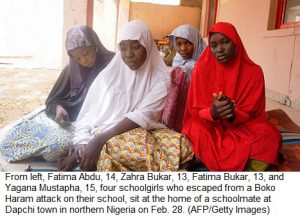
Where are the military-security forces, police, world enforcement agencies in this repeated drama?

Where is the outrage? Where is the New World Order? Where is the #MeToo movement and #TimesUp movement?

Is their absence tied to the fact that this is Africa – a Shit-hole country? Or the fact that these girls are all Black girls and Less Than – do Black Lives Matter?

The Caribbean societal elevation effort – Go Lean roadmap – is for the Caribbean only. Can we ensure that we have the necessary protections in place for our women and girls? Not just for those in the urban areas, but the rural communities as well. This seems to be the defect in Nigeria.

This is also the theme of this UN Special Commemoration, the International Women’s Day and the need to better protect, secure and empower women and girls in rural communities.

The truth is: We cannot all “just get along”. There must be the protections in Caribbean society to ensure that the Strong Do Not Abuse the Weak. This is the vision for a new Caribbean stewardship. See this point about abducted Nigerian girls developed in the previous blog-commentary below here:

————-

Go Lean Commentary – Muslim officials condemn abductions of Nigerian girls
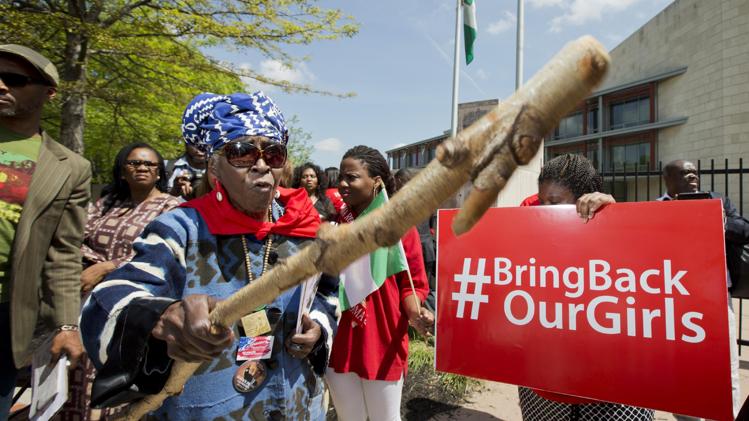
Nigerian Girls

Abducting little girls from a boarding school in the middle of the night is just criminal! There is nothing religious or political about this action.

This is not just terrorism – in the classic sense – this is simply felonious behavior. This is evidenced further by the fact that the perpetrators have promised to sell the girls into slavery. The word “sell” has the connotation of obtaining money for this action. This is criminal and should therefore be condemned by every civilized society in the world.

Failure to marshal against these crimes is just failure – indicative of a Failed-State. Nigeria has a bad image of deceitful practices. So it is only appropriate to ask: is this truly a case of abduction, or could it all be one big Nigerian scam? Despite the obvious “cry wolf” reference, we must side with the innocent victims here. But, as is cited to in the foregoing news article, there are many people who feel that Nigeria hasn’t done enough for these girls. Only now that other countries have stepped up to assist/oversee has the government become more accountable.

Another group of victims in this drama are the peace-loving Islamic adherents. The actions of Boko Haram are casting dispersions on the whole religion. This terrorist group is not practicing the true teachings of Islam; in fact these actions are condemned as criminal even in the Muslim world.

AP*; Photo by: Manuel Balce Ceneta

The abduction three weeks ago of hundreds of schoolgirls in Nigeria by the Muslim extremist group Boko Haram is now generating worldwide attention and condemnation. Muslim leaders in various countries have criticized Boko Haram’s leader for using Islamic teachings as his justification for threatening to sell the girls into slavery. Others have focused on what they view as a slow response by Nigeria’s government to the crisis. The British and French governments announced Wednesday that they would send teams of experts to complement the U.S. team heading to Nigeria to help with the search for the girls, and Nigeria’s president said China has also offered assistance.

Some of the reactions to the crisis:

— EGYPT: Muslim religious officials strongly condemned Boko Haram. Religious Endowments Minister Mohammed Mohktar Gomaa said “the actions by Boko Haram are pure terrorism, with no relation to Islam, especially the kidnapping of the girls. These are criminal, terrorist acts.” According to the state news agency MENA, he said “these disasters come from cloaking political issues in the robes of religion and from peddling religion for secular interests, something we warn incessantly against.”

The sheik of the Cairo-based Al-Azhar, one of Sunni Islam’s most prestigious institutions, demanded the group release the girls, saying it “bears responsibility for any harm suffered by these girls.” The group’s actions “completely contradict Islam and its principles of tolerance,” Sheik Ahmed el-Tayeb said.

— PAKISTAN: Dawn, an English language newspaper in Pakistan, published an opinion piece that takes Nigeria to task for not moving against Boko Haram. “The popular upsurge in Nigeria in the wake of the latest unspeakable atrocity provides some scope for hoping that the state will finally act decisively to obliterate the growing menace,” wrote columnist Mahir Ali. “Naturally, the lives and welfare of the abducted girls must be an absolute priority. Looking back a few years hence, it would also provide a degree of satisfaction to be able to pinpoint the moment when Boko Haram sealed its own fate by going much too far.”

— INDONESIA: In the world’s most populous Muslim-majority country, the Jakarta Post published an editorial Wednesday condemning the Boko Haram leader for “wrongly” citing Islamic teaching as his excuse for selling the abducted girls into slavery. Recalling the Taliban’s shooting of 15-year-old Pakistani girl Malala Yousafzai in 2012 because of her outspokenness in defense of girls’ right to an education, the editorial said: “Malala’s message needs to be conveyed to all people who use their power to block children’s access to education. It is saddening that religion is misused to terrorize people and to kill the future leaders of the world.”

The newspaper also criticized Nigerian President Goodluck Jonathan, noting that “only after international condemnation and street demonstrations poured in did President Jonathan tell his nation that he would take all necessary actions to return the young women to their parents and schools, while also acknowledging that the whereabouts of the abductees remained unknown.”

— SWEDEN: In an editorial posted on the left-wing news website politism.se, blogger Nikita Feiz criticized the international community for its slow response and asked why the situation hadn’t triggered as loud a reaction as when Malala was shot in Pakistan. “Looking at the situation in Nigeria, Malala appears like a false promise from the West that it would stand up for girls’ rights to attend school without fear of being subjected to sexual exploitation and abuse,” she said. “It is difficult not to draw the conclusion that the West’s assurance to act for girls’ rights suddenly isn’t as natural when it comes to girls’ rights in a country in Africa.”

A Swedish women’s network called StreetGaris is planning a demonstration outside the Foreign Ministry on Friday to demand more action from the international community. Participants are encouraged to wear a head wrap or red clothes in solidarity with the girls and their relatives.

— UNITED STATES: The U.S. government is sending to Nigeria a team of technical experts, including American military and law enforcement personnel skilled in intelligence, investigations, hostage negotiating, information sharing and victim assistance, as well as officials with expertise in other areas — but not U.S. armed forces.

“In the short term our goal is obviously is to help the international community, and the Nigerian government, as a team to do everything we can to recover these young ladies,” President Barack Obama told NBC on Tuesday. “But we’re also going to have to deal with the broader problem of organizations like this that … can cause such havoc in people’s day-to-day lives.”

In an editorial, The New York Times faulted the Nigerian government for not aggressively responding to the abductions. “Mr. Jonathan, who leads a corrupt government that has little credibility, initially played down the group’s threat and claimed security forces were in control,” the newspaper said. “It wasn’t until Sunday, more than two weeks after the kidnappings, that he called a meeting of government officials, including the leader of the girls’ school, to discuss the incident.”

— BRITAIN: Prime Minister David Cameron’s office said Britain will send a small team of experts to complement the U.S. team being sent by Obama. The announcement was made Wednesday after Cameron spoke to the Nigerian president. The team will be sent as soon as possible and will include specialists from several departments. Experts have said special forces may be sent to the region. The issue has heated up in recent days with protests over the weekend outside the Nigerian Embassy in London and an increasing number of newspaper editorials calling for action to rescue the girls.

— FRANCE: Foreign Minister Laurent Fabius told lawmakers on Wednesday that France is ready to send a “specialized team … to help with the search and rescue” of the kidnapped girls. “In the face of such an appalling act, France, like other democratic nations, must react,” Fabius said. “This crime will not go unpunished.” Fabius gave no details of the team, except to say it’s among those already in the region. France has soldiers in Niger, Cameroon and Mali, where it is fighting Islamic insurgents, as well as in Central African Republic.

— CHINA: Chinese Premier Li Keqiang, arriving Wednesday in Nigeria for a state visit, did not specifically mention the abductions in a transcript of a joint press conference with Nigeria’s president, instead making only a general reference to the “need to work together to oppose and fight terrorism.” In his remarks, Jonathan said China “promised to assist Nigeria in our fight against terror especially in our commitment and effort to rescue the girls that were taken away from a secondary school.” He did not offer specifics.

— BRAZIL: The foreign ministry issued a statement Tuesday condemning the abductions. “In conveying the feelings of solidarity to the families of the victims and to the people and the Government of Nigeria, the Brazilian Government reiterates its strong condemnation of all acts of terrorism,” the statement said.

—-

* Associated Press correspondents Lee Keath in Cairo, Michelle Faul in Lagos, Nigeria, Gregory Katz in London, Malin Rising in Stockholm, Masha Macpherson in Paris and Stan Lehman in Sao Paulo, Brazil contributed to this report.

Associated Press – Online News – May 7, 2014 http://news.yahoo.com/muslim-officials-condemn-abductions-girls-160020053.html

This book Go Lean … Caribbean is a roadmap for the introduction and implementation of the Caribbean Union Trade Federation (CU), so as to elevate the delivery of economic and security solutions in the Caribbean. One specific mission is to manage against encroachments of the Failed-State index.

At the outset, the roadmap identified an urgent need to mitigate against organized crime & terrorism, and to ensure human rights protection. This is pronounced in this clause in the opening Declaration of Interdependence (Page 12)

xxi.   Whereas the legacy in recent times in individual states may be that of ineffectual governance with no redress to higher authority, the accedence of this Federation will ensure accountability and escalation of the human and civil rights of the people for good governance, justice assurances, due process and the rule of law. As such, any threats of a “failed state” status for any member state must enact emergency measures on behalf of the Federation to protect the human, civil and property rights of the citizens, residents, allies, trading partners, and visitors of the affected member state and the Federation as a whole.

The Go Lean roadmap projects that the CU will facilitate monitoring and accountability of regional law enforcement and homeland security institutions. This type of behavior will not be tolerated in the Caribbean. This CU effort will be coordinated in conjunction with and on behalf of the Caribbean member-states.

On that note, the Caribbean Union Trade Federation, if it was already in existence, would vociferously condemn the abduction of the Nigerian girls. Hence the CU would be added to the long list of condemnations in the foregoing article. But these would not be hollow words, but would be accompanied by the required actions to ensure that such a disposition could not thrive in the CU region. This commitment is detailed as these community ethos, strategies, tactics, implementations and advocates:

Community Ethos – Public Protection over Privacy Page 23
Community Ethos – Anti-Bullying and Mitigation Page 23
Community Ethos – Intelligence Gathering Page 23
Community Ethos – Minority Equalization Page 24
Community Ethos – Impact the Greater Good Page 37
Strategy – Placate & Pacify International Monitors Page 48
Separation of Powers – Homeland Security Page 75
Separation of Powers – Justice Department Page 77
Implementation –  Security Initiatives at Start-up Page 103
Planning – Ways to Improve Failed-State Indices Page 134
Advocacy – Manage the Social Contract Page 170
Advocacy – Ways to Impact Justice Page 177
Advocacy – Ways to Reduce Crime Page 178
Advocacy – Ways to Improve Homeland Security Page 180
Advocacy – Ways to Mitigate Terrorism Page 181
Advocacy –  Ways to Protect Human Rights Page 220
Advocacy –  Ways to Empower Women Page 226
Advocacy –  Ways to Impact Youth Page 227

In contrast with the events in Nigeria, local crimes against women, young or old will not be tolerated in the CU. Everyone, regardless of gender, will be guaranteed the right to life, liberty and the pursuit of happiness (and education for that matter). This will be standard, whether the world is watching or not.

However, we want the world to watch. We want to show how we feverishly protect our people, with assurance that the Caribbean is the world’s best address to live, work, learn and play. 🙂

Download the free e-Book of Go Lean … Caribbean – now!

Sign the petition to lean-in for this roadmap for the Caribbean Union Trade Federation. 
Share this post:
, , ,

Repairing the Breach: One Option – National Youth Service – ENCORE

Blood, sweat and tears …

… that is all we want from the people in our Caribbean communities. If people sacrifice for their community then they tend to be more loyal to it.

There are problems in the Caribbean for managing our young people – they are not loyal to the concept of community – so we need to consider strategies, tactics and implementation for change. Some segments of the population are more troubled than others; in particular the disposition among “Black men and boys” in the Caribbean is of serious concern.

One option to effect change in this target population is a Military-style Draft …

Wait, what?!

We want to change/improve the Caribbean member-states. Any attempt to change Caribbean society’s community ethos must start with the youth. But when we say “blood”, we are not contemplating any sacrifice of our young men on the altar of the God of War. Rather, as related in the previous commentary encored below, our region is missing the ingredient of wholesale commitment of these young men to any national cause. Thusly, the recommendation is for conscription/draft into a National Youth Service (NYS) program but for the entire Caribbean region; see the ENCORE below.

This is a workable plan! When people sacrifice their blood, sweat and tears for a homeland, then they are less willing to disregard or abandon that homeland. We need this ingredient … urgently.
According to a White Paper by an academician, Dr. Donald McCartney of the Bahamas, the Black men and boys of our region need to be productive contributors to our society. He asserted that this population had experienced a breach in good citizenship in our society – “hurt people hurt people” – so he composed a White Paper to address this question of “How to repair this breach?” and identified some viable solutions for the region to consider. See that full White Paper here, and an Excerpt as follows:

White Paper Title: Repairing the Breach in the Caribbean – EXCERPT
By: Dr. Donald McCartney


As we approach the 200th anniversary of the abolition of slavery in the British Empire, the same questions, regarding Black men and boys, are being raised again.

These questions are being revived because many, too many Black men and boys are not a part of the economic structure or the body politic. Upon close examination, it becomes clear that many of them are not in community with their ethnic group.

For the most part, Black men and boys live in isolation, better yet, they are marginalized. They find it difficult to connect with society in general and the significant persons in their lives in particular.

The spiraling  murder rate and other acts of violence (particularly against young men and the elderly), makes it clear, that many Black men and boys in the Caribbean, pose a serious and critical problem of interpersonal violence in every corridor and thoroughfare that Caribbean peoples and residents must cross. Consequently, Black men and boys in the Caribbean are feared, demonized and vilified.

There is a breach within the fabric of Caribbean society, which has led to a breach in the lives of Black Caribbean males. A serious attempt must be made to repair this breach at all cost.

There must be a regional response with respect to the issues confronting Black men and boys in the Caribbean. This is no time for throwing up our hands as a gesture of capitulation, (posing the useless question: “What is wrong with these young men?) and rolling our eyes. It is time for action…serious sustained, positive action!

See the full White Paper here: https://goleancaribbean.com/blog/?p=14392

This commentary continues the 4-part series on Repairing the Breach; using the foregoing White Paper by Dr. McCartney as the premise. This entry is 3 of 4 in this series from the movement behind the book Go Lean … Caribbean in consideration of solutions to assuage the plight of Black men and boys. The other commentaries in the series are cataloged as follows:

  1. Repairing the Breach: Hurt People Hurt People
  2. Repairing the Breach: Crime – Need, Greed, Justice & Honor
  3. Repairing the Breach: One Option – National Youth Service
  4. Repairing the Breach: Image Impacts Economics

While all of these commentaries relate to “how” the stewards for a new Caribbean can assuage the failing dispositions of the Caribbean among our Black men and boys, this one in particular proposes a revolutionary approach on constricting all young people (males only initially) into a National Youth Service or public service in the region in general. The White Paper proposed these 3 questions, that the NYS scheme addresses:

  • First: How do we bring relief and assistance to communities and families that are experiencing the great hurt and harm of violent behaviour?
  • Secondly: How do we find a way to reestablish community and make inroads into violent behaviour, the major social problem of the day? 
  • Thirdly: How do we expect to engage Black men and boys in constructive dialogue and participation within Caribbean society while, at the same time, refurbishing the image that has now been unfairly placed upon the entire population of Black men and boys?

See here as follows, the ENCORE of the original blog-commentary from January 15, 2015 detailing the specificities of the National Youth Service scheme as an expression of the National Sacrifice community ethos:

——————

Go Lean Commentary – National Sacrifice – The Missing Ingredient

CU Blog - National Sacrifice - The Missing Ingredient - Photo 3The term National Sacrifice is defined here as the willingness to die for a greater cause; think “King/Queen and Country”. This spirit is currently missing in the recipe for “community” in the Caribbean homeland.

To be willing to die for a cause means that one is willing to live for the cause. Admittedly, “dying” is a bit extreme. The concept of “sacrifice” in general is the focus of this commentary.

The publishers of the book Go Lean…Caribbean wants to forge change in the Caribbean, we want to change the attitudes for an entire community, country and region. We have the track record of this type of commitment being exemplified in other communities. (Think: The US during WW II). Now we want to bring a National Sacrifice attitude to the Caribbean, as it is undoubtedly missing. This is evidenced by the fact the every Caribbean member-state suffers from alarming rates of societal abandonment: 70% of college educated population in the English states have left in a brain drain, while the US territories have lost more than 50% of their populations).

The book Go Lean…Caribbean opens with the acknowledgement that despite having the “greatest address in the world… the people of the Caribbean have beat down their doors to get out”, (Page 5).

CU Blog - National Sacrifice - The Missing Ingredient - Photo 4The book Go Lean…Caribbean serves as a roadmap for the introduction and implementation of the Caribbean Union Trade Federation (CU); a confederation to bring change, empowerment, to the Caribbean region; to make the region a better place to live, work and play for all stakeholders (residents, visitors, businesses, organizations – NGO’s and governments). This Go Lean roadmap also has initiatives to foster solutions for the Caribbean youth. The Go Lean book posits that permanent change for Caribbean society will only take root as a result of adjustments to the community attitudes, the national spirit that drives the character and identity of its people. This is identified in the book as “community ethos”; and that one such character, National Sacrifice is sorely missing in this region.

Any attempts to change Caribbean society’s community ethos must start with the youth.

At no point should it be construed that this commentary is advocating sacrificing young men (and women) on the altar of the God of War. But rather, this commentary laments the missing ingredients of wholesale commitment to any national cause. Thusly, the recommendation is for conscription/draft (Appendix B) into a National Youth Service (NYS) program for the Caribbean. Take it one step further and make the Youth Service program regional in its scope rather than “national”; with applicable exemptions for:

  • military/police enrollments
  • student/research deferments (at regional institutions)
  • religious/missionary assignments
  • medical/disability exceptions

This quest relates a commitment so vital to a community that everyone should be willing to sacrifice and lean-in for the desired outcome. This Caribbean effort is not new to the world; it is currently being championed by a Washington-DC-based global Non-Government Organization (NGO) branded the Innovations in Civic Participation (ICP). Much can be learned from analyzing their successes … and failures. See details here:

Innovations in Civic Participation – NGO – Leaders for Youth Civic Engagement (Retrieved 01/15/2015):

Innovations in Civic Participation (ICP) is a global leader in the field of Youth Civic Engagement. ICP envisions a world where young people in every nation are actively engaged in improving their lives and their communities through civic participation. We believe that well-structured youth service programs can provide innovative solutions to social and environmental issues, while helping young people develop skills for future employment and active citizenship.

ICP carries out its mission through four main activities:

  1. Incubating innovative models for youth service programs;
  2. Creating and expanding global networks;
  3. Conducting research and publicizing information on youth civic engagement, especially national youth service and service-learning; and
  4. Serving as a financial intermediary to support program innovation and policy development.

In addition to these activities, ICP regularly consults with its extensive network of over 2,500 academics, policymakers, program entrepreneurs, and other leaders in the field on program and policy work.

Contact Information:

Innovations in Civic Participation
P.O. Box 39222
Washington, DC 20016
202-775-0290

http://www.icicp.org/about-us/

A quest for a National Youth Service has previously been advocated in Sub-Saharan Africa (see Appendix C). There, the NYS was designed to explore the potential to foster youth employability, entrepreneurship, and sustainable livelihoods. This effort stemmed from an existing tradition of NYS programs in Sub-Saharan Africa, which were originally designed to cultivate a sense of national identity and mobilize skills for development in post-independence nations; (see Appendix A). Today, NYS programs operate in the context of a deepening regional youth unemployment crisis, which averages over 20 percent, according to African Economic Outlook. NYS programs engage hundreds of thousands of young people each year and have the potential to equip them with strong civic skills and prepare them for employment and livelihood opportunities.

Despite its potential as an economic strategy, little is still known about how effective NYS programs are at increasing youth employability in Africa. But there is no doubt for the commitment to community that is forged from these efforts. Young people cry, sweat, and bleed for their community, embedding a desire to sacrifice for the Greater Good.

This corresponds with the Bible precept: “There is more happiness in giving than in receiving” – Acts 20:35

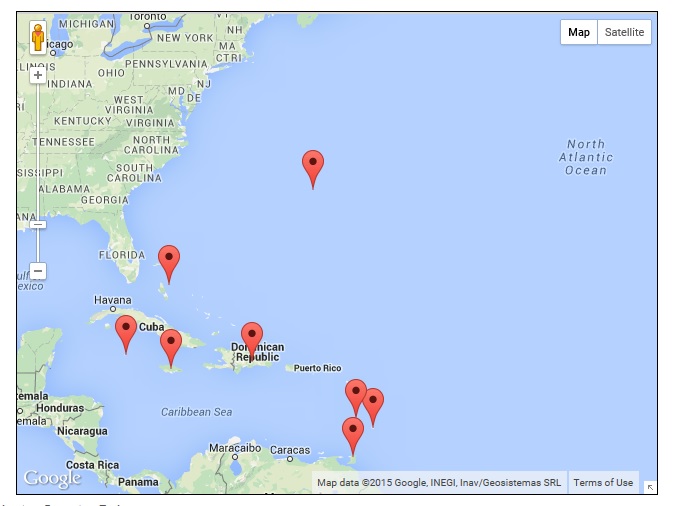
There are NYS programs already deployed or proposed for these Caribbean member-states, (though many have been snagged or stalled):

CU Blog - National Sacrifice - The Missing Ingredient - Photo 1

The purpose of the Go Lean book/roadmap is more than just the embedding of new community ethos, but rather the elevation/empowerment of Caribbean society. In total, the Caribbean empowerment roadmap has these 3 prime directives:

  • Optimization of the economic engines in order to grow the regional economy to $800 Billion & create 2.2 million new jobs.
  • Establishment of a security apparatus to protect the resultant economic engines.
  • Improve Caribbean governance and industrial policies to support these engines.

The roadmap details the following community ethos, plus the execution of these strategies, tactics, implementation and advocacies to forge permanent change in the region:

Community Ethos – Deferred Gratification Page 21
Community Ethos – Economic Principles – People Choose Page 21
Community Ethos – Economic Principles – People Respond to Incentives in Predictable Ways Page 21
Community Ethos – Economic Principles – The Consequences of Choices Lie in the Future Page 21
Community Ethos – Governing Principles – Lean Operations Page 24
Community Ethos – Governing Principles – Cooperatives Page 25
Community Ethos – Ways to Impact the Future Page 26
Community Ethos – Ways to Impact a Turn-Around Page 33
Community Ethos – Ways to Improve Sharing Page 35
Community Ethos – Ways to Promote Happiness Page 36
Community Ethos – Ways to Impact the Greater Good Page 37
Strategy – Vision – Confederate 30 Member-States Page 45
Strategy – Mission – Enact a Defense Pact to Defend the Homeland Page 45
Strategy – Mission – Keep the next generation at home Page 46
Tactical – Confederating a Permanent Union Page 63
Tactical – Fostering a Technocracy Page 64
Tactical – Separation-of-Powers Between CU & Member-States Governments Page 71
Implementation – Assemble – Incorporating all the existing regional organizations Page 96
Implementation – Ways to Pay for Change Page 101
Implementation – Security Initiatives at Start-up Page 103
Implementation – Ways to Deliver Page 109
Planning – 10 Big Ideas for the Caribbean – Confederation Without Sovereignty Page 127
Planning – Ways to Make the Caribbean Better Page 131
Planning – Lessons Learned from the West Indies Federation – Military Units Page 135
Advocacy – Ways to Grow the Economy Page 151
Advocacy – Ways to Create Jobs Page 152
Advocacy – Ways to Better Manage the Social Contract Page 170
Advocacy – Ways to Manage Federal Civil Service Page 173
Advocacy – Ways to Improve Homeland Security Page 181
Advocacy – Ways to Improve Communications Page 186
Advocacy – Ways to Preserve Caribbean Heritage Page 218
Advocacy – Ways to Impact Youth Page 227
Appendix – 30,000 Federal Employees Page 299
Appendix – Previous West Indies Integration – Caribbean Regiment Page 301

Previously Go Lean blog/commentaries have considered historic references and have also stressed fostering the proper and appropriate community ethos for the Caribbean to prosper; and reported on the repercussions and consequences of bad ethos. The following sample applies:

https://goleancaribbean.com/blog/?p=2830 Bad Ethos: Jamaica’s Public Pension Under-funded
https://goleancaribbean.com/blog/?p=2809 A Lesson in Bad Community Ethos : East Berlin/Germany
https://goleancaribbean.com/blog/?p=2480 A Lesson in History: Community Ethos of WW II
https://goleancaribbean.com/blog/?p=2297 A Lesson in History – Booker T versus Du Bois – to Change a Bad Community Ethos
https://goleancaribbean.com/blog/?p=1531 A Lesson in History: 100 Years Ago – World War I – Cause and Effect in Community Ethos
https://goleancaribbean.com/blog/?p=841 Having Less Babies is Bad for the Economy – Need People
https://goleancaribbean.com/blog/?p=623 Only at the Precipice, Do Communities Change
https://goleancaribbean.com/blog/?p=353 Book Review: ‘Wrong – Nine Economic Policy Disasters and What We Can Learn…’
https://goleancaribbean.com/blog/?p=228 Egalitarianism versus Anarchism – Community Ethos Debate

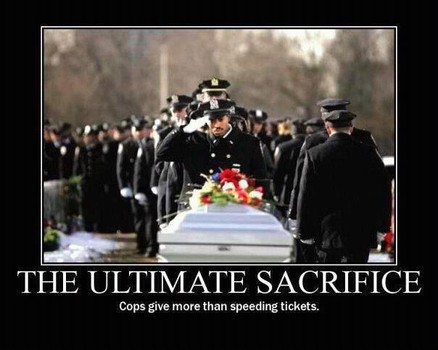
All in all, there is a certain community ethos associated with populations that have endured change. It is a National Sacrifice, a deferred gratification and focus on the future. Any losses of privileges are appreciated by the entire community, not just the affected individual or family member. This is the purpose of the US Memorial Day Holiday on the last Monday in May, honoring the military service of all our men and women in uniform, their families at home, and those who have made the ultimate sacrifice in dying for their country. A quest to unite the country in remembrance and appreciation of the fallen and to serve those who are grieving is a good way to forge a community ethos of National Sacrifice.

See VIDEO here of a community’s great honor to a slain soldier:

VIDEO: Sky Mote: Community Honors a Fallen Soldier from El Dorado County with a Hero’s Welcome –   http://youtu.be/MVQORRQvTpU

Published on Aug 17, 2012 – Starting with a Marine Honor Guard carrying the transfer case containing the body of Staff Sgt. Sky R. Mote of El Dorado, CA, upon arrival at Dover Air Force Base, Del. on Sunday Aug. 12, 2012. (AP Photo/Jose Luis Magana). Then continuing with the great Welcome Home the community gave. His family will never forget!

Though this Fallen Soldier is mourned and missed, his sacrifice is duly acknowledged, appreciated and honored in his hometown. This community spirit creates a value system for public service and National Sacrifice.

The US is not the only country that memorializes their war dead. Those countries that do, experience less societal abandonment. The British Commonwealth of Nations (representative of 18 Caribbean member-states) shows likewise homage to their Fallen Soldiers. The Commonwealth War Graves Commission (CWGC) is responsible for maintaining the war graves of 1.7 million service personnel that died in the First and Second World Wars fighting for Commonwealth member states. Founded in 1917 (as the Imperial War Graves Commission), the Commission has constructed 2,500 war cemeteries, and maintains individual graves at another 20,000 sites around the world.[107] The vast majority of the latter [however] are civilian cemeteries in Great Britain. (Source: http://en.wikipedia.org/wiki/Commonwealth_War_Graves_Commission).

The former British colonies did not adopt this National Sacrifice value system. As most Caribbean (notwithstanding the US Territories) member-states do not even have a (work-free) holiday to honor the sacrifices of those that fought, bled and/or died for their country.

No appreciation, no sacrifice; no sacrifice, no victory. It is that simple!

It is the recommendation of this blog/commentary that all Caribbean member-states should mandate a civilian conscription service for their citizens (1 year between ages 18 and 25); it is common for a confederation – the CU for the Caribbean – to marshal a multi-state, allied military force. Then the CU should facilitate a complete eco-system of engaging the conscripted NYS participants to serve and protect the people and resources of the Caribbean. After which, the communities should show proper appreciation and honor to those that make these sacrifices for “King/Queen and Country”, from all conscription services: military service, public and civilian.

(Many times school teachers and administrators are lowly paid; their service to their country is a great sacrifice).

Veteran-style benefits should thusly be considered for all these “national” servants. This commitment from the community would go far in forging deep loyalty within the citizenry, thus mitigating quick abandonment of the homeland.

There is a separation-of-powers between the CU federal agencies and Caribbean member-states, so the CU would have no authority on how member-states manage, appreciate or honor their civil servants; unless some CU grants/funding apply. But for CU personnel, the practice will be institutionalized to recognize the service of long-time civil servants (active or retired) and their sacrifices. So for any human resource that die in the line of duty, the funeral processions will be filled with pomp and circumstance, much like the foregoing VIDEO.

“The [servants] who perform well are to be considered worthy of double honor, especially those who work hard …” – Bible 1 Timothy 5:17

Now is the time to lean-in to this roadmap for Caribbean change, as depicted in the book Go Lean…Caribbean. All the mitigations and empowerments in this roadmap require people to remain in the homeland. No people, no hope! A community ethos, a spirit or attitude of sacrifice for the Greater Good is a great start to forge change; no sacrifice, no victory.

🙂

Download the book Go Lean … Caribbean – now!

Sign the petition to lean-in for this roadmap for the Caribbean Union Trade Federation.

——————-

Appendix A – ICP Studies and Results

Overview of the National Youth Service Landscape in Sub-Saharan Africa

National Youth Service Project on Employability, Entrepreneurship and Sustainable Livelihoods in Sub-Saharan Africa: Synthesis Report

——————

Appendix B – Conscription (or Drafting)
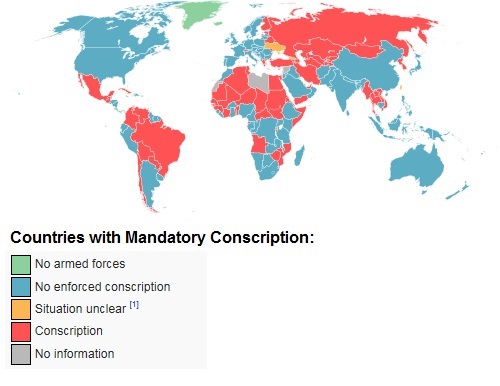
This is the compulsory enlistment of people in some sort of National Service, most often military service.[2] Conscription dates back to antiquity and continues in some countries to the present day under various names. The modern system of near-universal national conscription for young men dates to the French Revolution in the 1790s, where it became the basis of a very large and powerful military. Most European nations later copied the system in peacetime, so that men at a certain age would serve 1–8 years on active duty and then transfer to the reserve force.

CU Blog - National Sacrifice - The Missing Ingredient - Photo 2Conscription is controversial for a range of reasons, including conscientious objection to military engagements on religious or philosophical grounds; political objection, for example to service for a disliked government or unpopular war; and ideological objection, for example, to a perceived violation of individual rights. Those conscripted may evade service, sometimes by leaving the country.[4] Some selection systems accommodate these attitudes by providing alternative service outside combat-operations roles or even outside the military, such as civil service in Austria and Switzerland.

As of the early 21st century, many states no longer conscript soldiers, relying instead upon professional militaries with volunteers enlisted to meet the demand for troops. The ability to rely on such an arrangement, however, presupposes some degree of predictability with regard to both war-fighting requirements and the scope of hostilities. Many states that have abolished conscription therefore still reserve the power to resume it during wartime or times of crisis.[5] (Source: http://en.wikipedia.org/wiki/Conscription)

National Service is a common name for mandatory or volunteer government service programmes. The term became common British usage during and for some years following the Second World War. Many young people spent one or more years in such programmes. Compulsory military service typically requires all citizens, or all male citizens, to participate for a period of a year (or more in some countries) during their youth, usually at some point between the age of 18 and their late twenties. (Source: http://en.wikipedia.org/wiki/National_service)

——————

Appendix C  – National Youth Service Corps in Nigeria
The National Youth Service Corps (NYSC) is an organisation set up by the Nigerian government to involve the country’s graduates in the development of the country. There is no military conscription in Nigeria, but since 1973 graduates of universities and later polytechnics have been required to take part in the National Youth Service Corps (NYSC) program for one year.[1] This is known as national service year.

“Corp” members are posted to cities far from their city of origin. They are expected to mix with people of other tribes, social and family backgrounds, to learn the culture of the indigenes in the place they are posted to. This action is aimed to bring about unity in the country and to help youths appreciate other ethnic groups.

There is an “orientation” period of approximately three weeks spent in a camp away from family and friends. There is also a “passing out ceremony” at the end of the year and primary assignment followed by one month of vacation.

The program has also helped in creating entry-level jobs for many Nigerian youth. An NYSC forum dedicated to the NYSC members was built to bridge the gap amongst members serving across Nigeria and also an avenue for members to share job information and career resources as well as getting loans from the National Directorate Of Employment.

The program has been met with serious criticism by a large portion of the country. The NYSC members have complained of being underpaid, paid late or not paid at all.[2] Several youths carrying out the NYSC program have been killed in the regions they were sent to due to religious violence, ethnic violence or political violence.[3]

A series of bomb and other violent attacks, especially in the North, rocked the country’s stability in the period preceding the 2011 gubernatorial and presidential elections. Most common of these attacks was perpetuated by the Islamist extremist terrorist group called Boko Haram. “Boko Haram” means “Western education is a sin” in the local hausa dialect in Nigeria. The group “Boko Haram” is against western education and wants to establish an Islamic state in Nigeria’s northern region.

Worst hit were National Youth Service Corps members, some of whom lost their lives.
(Source: http://en.wikipedia.org/wiki/National_Youth_Service_Corps)

Share this post:
, , ,
[Top]

Repairing the Breach: Crime – Need, Greed, Justice & Honor – ENCORE

Here is an interesting fact about “Black men and boys” in the country of the United States:

They amount to 6.5 percent of the total US population.

They amount to 40.2 percent of the prison population.

Surely, there are some special issues associated with this special interest group. In the field of Public Health Management, there is the concept of “Triage”; consider this definition here:

tri·age

noun: (in medical use) the assignment of degrees of urgency to wounds or illnesses to decide the order of treatment of a large number of patients or casualties.

verb: assign degrees of urgency to (wounded or ill patients).

So the concept of “Triage” allows for immediate, expedited attention to those suffering more. The fact that more and more “Black men or boys” are entrusted to the criminal justice system – true in the Caribbean as well – indicates that this population needs more help. More and more, they are the victims and villains of crime. It brings to mind these questions:

  • What can we do to Repair the Breach for “Black men or boys”?
  • How can we reduce crime since this is so prevalent among this special sub-population?

These are legitimate questions. There are answers. We can explore these answers so as to Repair the Breach. This expression is derived from a White Paper by an academician, Dr. Donald McCartney of the Bahamas. He composed a White Paper to address this question of “How to repair this breach?” and identified some viable solutions for the Bahamas and the rest the Caribbean, especially related to the crime problem. See that full White Paper here, and an Excerpt as follows:

White Paper Title: Repairing the Breach in the Caribbean – EXCERPT
By: Dr. Donald McCartney


As we approach the 200th anniversary of the abolition of slavery in the British Empire, the same questions, regarding Black men and boys, are being raised again.


The spiraling  murder rate and other acts of violence (particularly against young men and the elderly), makes it clear, that many Black men and boys in the Caribbean, pose a serious and critical problem of interpersonal violence in every corridor and thoroughfare that Caribbean peoples and residents must cross. Consequently, Black men and boys in the Caribbean are feared, demonized and vilified.


The answers to these questions must be found; so that we can free those Black men and boys who have become slaves to violence and crime. We must come to the realization that, that which impacts Black men and boys impacts all Caribbean people and those who reside among us.


The primary aim will be to create a long-term structure of sustained intervention for Black men and boys who find themselves in trouble. The emphasis of the [remediating] Thurston Foundation will be on systemic change that will bring together a multiplicity of ideas in an effort to reduce violence and crime, thus making the Caribbean’ social life whole again.

The Thurston Foundation must not shape itself around the issue of violenceViolence, in the Caribbean, has been painted with a broad brush because Black men and boys are looked upon as the face of the violence.  This violence appears to have immobilized law abiding citizens into a state of panic and fear.

See the full White Paper here: https://goleancaribbean.com/blog/?p=14392

This commentary continues the 4-part series on Repairing the Breach; using the foregoing White Paper by Dr. McCartney as the premise. This entry is 2 of 4 in this series from the movement behind the book Go Lean … Caribbean in consideration of solutions to assuage the plight of Black men and boys. The other commentaries in the series are cataloged as follows:

  1. Repairing the Breach: Hurt People Hurt People
  2. Repairing the Breach: Crime – Need, Greed, Justice & Honor
  3. Repairing the Breach: One Option – National Youth Service
  4. Repairing the Breach: Image Impacts Economics

While all of these commentaries relate to “how” the stewards for a new Caribbean can assuage the failing dispositions of the Caribbean among our Black Men and boys, this one in particular addresses the root causes of possible solutions to mitigate and reduce crime.

This is an ENCORE of a previous blog-commentary addressing crime and inter-personal violence. This original submission from February 18, 2016 cataloged the reasons for street crimes as: 1. Need, 2. Greed, and 3. Justice. Though not re-published here, an additional form of violence was addressed in a different prior blog, though not a street crime: 4. Domestic Violence – the act of wife-battering.

There are certain ethnic groups where domestic violence is more prominent than others. Sadly, our communities in the Caribbean is prominent for this 4th category of crime as well; honor or not, it is still criminal. Many times, men in our society feel that it is their honor to discipline their wives … as they see fit. Remediating and reducing crime among our Black men and boys, means help-seeking for domestic abusers.

See here below, for the ENCORE of the blog-commentary on assessing, mitigating and reducing the crimes based on 1. Need, 2. Greed, and 3. Justice:

—————–

Go Lean Commentary – A Lesson in the History of Interpersonal Violence – Street Crimes

No justice, no peace!

The movement behind the book Go Lean … Caribbean, and accompanying blogs, has prioritized public safety and remediating/mitigating crime as paramount for the region. Despite the focus on economics, the book asserts that to elevate Caribbean society there must be a focus on the region’s security and governing engines to provide justice assurances. So in addition to economic empowerments (jobs, investments, education, entrepreneurship, etc.), the book posits that security concerns must also be front-and-center in any roadmap along with these economic efforts.

This is easier said than done.

In the previous blog/commentary in this series, the effort to reduce crime and remediate violence was identified as an “Art” and “Science”. This heavy reliance on artists and scientists have provided a lot of history for us to study and glean best-practices in this cause. What can we learn today from a study in the history of interpersonal violence as related to street violence?

This is commentary 2 of 3 considering this subject of interpersonal violence, and how it relates to the Caribbean homeland in 2016. The historic issues addressed are:

  1. Duels
  2. Street Violence
  3. Domestic Violence

Street violence stems from 3 considerations: 1. Need, 2. Greed, and 3. Justice.

CU Blog - A Lesson in the History of Interpersonal Violence - Street Crimes - Photo 3The Go Lean book serves as a roadmap for the introduction and implementation of the technocratic Caribbean Union Trade Federation (CU) to elevate the region’s economic, security and governing engines. The roadmap has these 3 prime directives:

  • Optimization of the economic engines in order to grow the regional economy and create 2.2 million new jobs.
  • Establishment of a security apparatus to provide public safety and protect the resultant economic engines from economic crimes.
  • Improve Caribbean governance, with a separation-of-powers between member-state administrations and the CU federal government (Executive facilitations, Legislative oversight and judicial prudence) to support these economic/security engines.

So the CU/Go Lean roadmap addresses the issue of more jobs; this will lower the “need” factor for crime; (there is no expectation that these efforts would fully eliminate violent crime; but this start will mitigate the risks). The book relates that with the emergence of new economic drivers, that “bad actors” will also emerge thereafter to exploit the opportunities, with good, bad and evil intent. The second factor, “greed” is tied to opportunities. The executions of the Go Lean roadmap (Page 23) are specifically designed to minimize opportunities for crime with these security mandates:

  • Adapt the Ethos: Public Protection over Privacy
  • Embrace Electronic Payment Systems – Carry less cash
  • Whistleblower Protection – Consider all allegation, anonymous and overt
  • Witness Security & Protection – Ensure Justice Process
  • Youth Crime Awareness & Prevention; Anti-Bullying and Mitigation – “Nip it in the bud
  • Intelligence Gathering – Universal Video Surveillance
  • Light Up the Dark Places – Eliminate the figurative and literal “shadows”
  • Prison Industrial Complex – Engage to reduce recidivism

The third contributor, justice, is tied to street riots, civil unrest and other outbursts against perceived injustices. The marching call of many of these movements is “No Justice; No Peace”.

Consider here the historicity of street violence (including sexual violence from strangers) in this AUDIO Podcast (48 minutes) here:

Click on Photo here to Play AUDIO Podcast; Click BACK to Return

CU Blog - A Lesson in the History of Interpersonal Violence - Street Crimes - Photo 2

What’s Behind Trends In U.S. Violent Crime Rates?
Guest Host: Indira Lakshmanan; posted February 9, 2016 – For more than 20 years violent crime rates in the U.S. states have been declining, but data from the first six months of 2015 suggest an unwelcome change: The FBI reports that from January and June 2015 overall violent crime was up nearly 2% and homicides jumped more than 6 percent with spikes in both small towns and big cities. The Justice Department cautioned it’s too soon to know whether the latest data signals an upturn in violence in America. Join us to talk about what drove violent crime down so dramatically over the last two decades in the U.S. and what could be ahead.
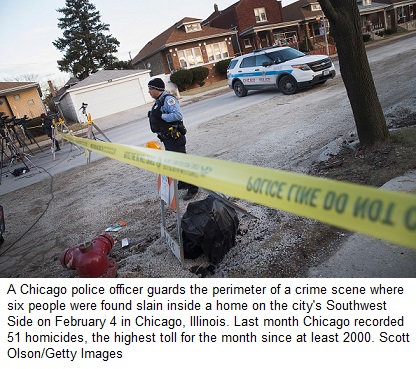
Six People Murdered On Chicago's South Side As City's Homicides Rise

Guests

  • Khalil Muhammad director, Schomburg Center for Research in Black Culture  New York Public Library
  • Paul Butler professor, Georgetown Law School
  • Barry Latzer emeritus professor of criminal justice,  John Jay College of Criminal Justice, CUNY  most recent book: “The Rise and Fall of Violent Crime in America”

The foregoing AUDIO Podcast relates the experience of the Black and Brown populations in the American criminal-justice system. There is no doubt, there is a “divide in America’s execution of their justice mandates”. But, the scope of the Go Lean/CU roadmap is to reform and transform the Caribbean, not America. We need to do better here, in our homeland. America’s success and failure does relate to us, as many of our Diaspora lives there, but frankly, the Go Lean book asserts that it is easier to fix the Caribbean, than to fix America. We simply need to keep our people at home. We need to minimize the “push and pull” reasons that drive them away. Curbing crime here – a “push” factor – helps this cause; messaging the real experiences of our Black and Brown Diaspora as they engage the criminal justice system in the US should also help our cause, in lowering the “pull” factors.

So let’s fix the Caribbean!

The quest of the Go Lean movement is to elevate Caribbean society above our dysfunctional past. We can improve upon public safety! The goal of the roadmap is to optimize society through economic empowerment, security & justice optimization, and also governing efficiencies in the region, since these are inextricably linked to this same elevation endeavor.

The cause-and-effect of failing economics leads to increasing criminality, the “need” factor. So the cause-and-effect of improving economics should therefore lead to lesser criminal activities. Improved security facilitation (i.e. intelligence gathering and analysis) should reduce the opportunities for crimes of convenience, thus mitigating the “greed” factor. Funding grants to improve Justice institutions (Police, Courts, Prison Industrial Complex), their transparency and accountability, should lower the outcries for justice. Thus the Go Lean/CU has devised a tactic of publishing rankings-and-ratings (i.e. Best Places in the Caribbean To Live …); this should exacerbate failings and failures more prominently to the monitoring public, at home and abroad.

The motivation of this Go Lean/CU roadmap is the basic principle, described in the book (Page 21), that “Economic Systems Influence Individual Choices and Incentives”.

This roadmap fully envisions the integration of shepherding – leadership – for the Caribbean region’s economic, security and governing initiatives under the same organization: the Caribbean Union Trade Federation. These points are pronounced early in the Go Lean book (Page 12) with these opening Declaration of Interdependence statements:

x.   Whereas we are surrounded and allied to nations of larger proportions in land mass, populations, and treasuries, elements in their societies may have ill-intent in their pursuits, at the expense of the safety and security of our citizens. We must therefore appoint “new guards” to ensure our public safety and threats against our society, both domestic and foreign. The Federation must employ the latest advances and best practices … to assuage continuous threats against public safety.

xi.   Whereas all men are entitled to the benefits of good governance in a free society, “new guards” must be enacted to dissuade the emergence of incompetence, corruption, nepotism and cronyism at the peril of the people’s best interest. The Federation must guarantee the executions of a social contract between government and the governed.

xii.  Whereas the legacy in recent times in individual states may be that of ineffectual governance with no redress to higher authority, the accedence of this Federation will ensure accountability and escalation of the human and civil rights of the people for good governance, justice assurances, due process and the rule of law. As such, any threats of a “failed state” status for any member state must enact emergency measures on behalf of the Federation to protect the human, civil and property rights of the citizens, residents, allies, trading partners, and visitors of the affected member state …

xiii. Whereas the legacy of dissensions in many member-states …  will require a concerted effort to integrate the exile community’s repatriation, the Federation must arrange for Reconciliation Commissions to satiate a demand for justice.

xvi. Whereas security of our homeland is inextricably linked to prosperity of the homeland, the economic and security interest of the region needs to be aligned under the same governance. Since economic crimes, including piracy and other forms of terrorism, can imperil the functioning of the wheels of commerce for all the citizenry, the accedence of this Federation must equip the security apparatus with the tools and techniques for predictive and proactive interdictions.

The Caribbean appointing “new guards”, or a security pact to ensure justice and public safety will include many strategies, tactics and implementations deemed “best-practice”, including an advanced Intelligence Gathering and Analysis effort to mitigate and remediate street crime in the region, and also to optimize the “art and science” of crime, including prison reform; (see Page 211 of the Go Lean book for a discussion on criminology and penology). The Go Lean book details the series of community ethos, strategies, tactics, implementations and advocacies to optimize justice institution and provide increased public safety – “top-down” and “bottoms up”  – in the Caribbean region:

Community Ethos – Economic Systems Influence Individual Choices Page 21
Community Ethos – Consequences of Choices Lie in Future Page 21
Community Ethos – Security Principles Page 22
Community Ethos – Ways to Manage Reconciliations Page 34
Community Ethos – Ways to Impact the Greater Good Page 37
Tactical – Vision – Forge a Single Market economy Page 45
Tactical – Confederating a non-sovereign union Page 63
Tactical – Fostering a Technocracy Page 64
Tactical – Separation of Powers – Homeland Security Page 75
Tactical – Separation of Powers – Justice Department Page 77
Tactical – Separation of Powers – CariPol: Marshals &   Investigations Page 77
Tactical – Separation of Powers – Witness Protection Page 77
Implementation – Start-up Security Initiatives Page 103
Implementation – Ways to Foster International Aid – Security   Assistance Page 115
Implementation – Reasons to Repatriate – Security Optimization Page 118
Planning – Ways to Make the Caribbean Better Page 131
Planning – Ways to Improve Failed-State Indices – Mitigate Organized Crime & Gangs Page 134
Planning – Lessons from the American West – Law & Order Lessons Page 142
Planning – Lessons from Egypt – Lackluster Law & Order affects Economy Page 143
Advocacy – Ways to Grow the Economy Page 151
Advocacy – Ways to Improve Governance Page 168
Advocacy – Ways to Better Manage the Social Contract Page 170
Advocacy – Ways to Impact Justice Page 177
Advocacy – Ways to Reduce Crime Page 178
Advocacy – Ways to Improve for Gun Control Page 179
Advocacy – Ways to Improve Homeland Security Page 180
Advocacy – Ways to Mitigate Terrorism – Mitigate Bullying and Gangs early Page 181
Advocacy – Ways to Improve Intelligence Gathering and Analysis Page 182
Advocacy – Ways to Impact the Prison Industrial Complex Page 211
Advocacy – Ways to Protect Human Rights Page 220

Other  subjects related to crime, justice and security empowerments for the region have been blogged in other Go Lean…Caribbean commentary, as sampled here:

https://goleancaribbean.com/blog/?p=7179 SME Declaration: ‘Change Leaders in Crime Fight’
https://goleancaribbean.com/blog/?p=6385 Wi-Fi Hot Spots Run By Hackers Are Targeting Tourists
https://goleancaribbean.com/blog/?p=5307 8th Violent Crime Warning to Bahamas Tourists
https://goleancaribbean.com/blog/?p=5304 Mitigating the Eventual ‘Abuse of Power’
https://goleancaribbean.com/blog/?p=5238 #ManifestJustice – Lessons for the Prison Eco-System
https://goleancaribbean.com/blog/?p=4863 A Picture is worth a thousand words; video, a million to expose corruption
https://goleancaribbean.com/blog/?p=4447 Probe of Ferguson-Missouri finds bias from cops, courts
https://goleancaribbean.com/blog/?p=4360 Dreading the ‘Caribbean Basin Security Initiative’
https://goleancaribbean.com/blog/?p=4308 911 – Emergency Response: System in Crisis
https://goleancaribbean.com/blog/?p=3881 Intelligence Agencies to Up Cyber Security Cooperation
https://goleancaribbean.com/blog/?p=2994 Justice Strategy: Special Prosecutors and Commissions of Inquiry
https://goleancaribbean.com/blog/?p=2684 Role Model for Justice, Anti-Crime & Security: The Pinkertons
https://goleancaribbean.com/blog/?p=1554 Status of Forces Agreement = Security Pact
https://goleancaribbean.com/blog/?p=1143 American White Collar fraud; criminals take $272 billion/year in healthcare
https://goleancaribbean.com/blog/?p=392 Jamaica to receive World Bank funds to help in crime fight
https://goleancaribbean.com/blog/?p=273 10 Things We Don’t Want from the US – #4: Gun Rights/2nd Amendment

The vision of the Go Lean roadmap is to make the Caribbean homeland, a better place to live, work and play. This means measurable reduction (mitigating and remediation) of interpersonal violence in the region. The Go Lean book presents a regional solution – CariPol et al – to remediate and mitigate street crime in the Caribbean, featuring details of strategies, tactics and implementations designed from world class best-practices to reduce street violence in the region.

The premise in the Go Lean book is that “bad actors” will always emerge, from internal and external origins. We must be prepared and on-guard to defend our homeland against all threats, foreign and domestic, including street crime and interpersonal violence. Plus, we must accomplish this goal with maximum transparency, accountability, and commitment to due-process and the rule-of-law. Thusly, there is a place for closed-circuit TV (CCTV), dashboard and body cameras. If there is the community “will”, the CU will ensure the “way”!

An additional mission is to lower the “push” factors (from “push-and-pull” reference) so that our citizens are not led to flee their homeland for foreign (North American and European) shores. Where we have failed in the past, we now want to reform and transform our communities, so that we can re-invite our Diaspora to return; this time, offering security assurances. Among the many reasons people emigrate or refuse to repatriate, is victimization of interpersonal violence or fear of crime.

There is “good, bad and ugly” in every society. We must therefore mitigate the “need, greed and justice” reasons for interpersonal violence in our society.

So all stakeholders in the Caribbean – people and institutions – are urged to lean-in to this Go Lean roadmap for the elevation of the Caribbean’s societal engine: economy, security and governance. The roadmap calls for the CU to do the heavy-lifting, so as to impact the Greater Good for justice, peace and security. This is conceivable, believable and achievable.  🙂

Download the book Go Lean … Caribbean – now!

Sign the petition to lean-in for this roadmap for the Caribbean Union Trade Federation.

Share this post:
, ,
[Top]

Repairing the Breach: ‘Hurt People Hurt People’

Go Lean Commentary

Black men and boys” …

… this is a special group in the population of the New World, the Americas. This group has been victims and villains. To the point that academicians and clinicians alike can conclude that “hurt people hurt people”.

Societal defects within this group are higher than normal, compared to other populations groups. This includes violence, delinquencies, incarceration, repression and hopelessness.
It is hard to be a “Black man or boy” … in the Americas.

This statement could have been echoed from the 1600’s all the way up to today.

One of the greatest advocates for Black causes, abolitionist Frederick Douglass (1818 – 1895), was right when he said:

“If there is no struggle, there is no progress.”

However, we say:

“For there to be victory, there must be a struggle; for there to be victory, there must be losers.”

The New World experience for people of African descent is one of struggle; but our people have made a lot of progress over the last 2 centuries especially; that means we have “ruffled a lot of feathers” along the way. Caribbean music icon Bob Marley worded it perfectly in a song that was released posthumously: “Buffalo Soldier”. The lyrics say:

Fighting on arrival; fighting for survival.

That fight though, was not always successful.

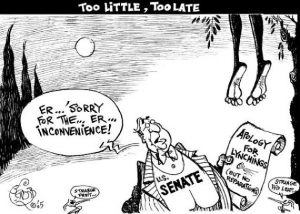
The experience of the Black men and boys in the New World is that these ones have often been hurt. Consider just the US experience with Lynchings in the Appendix A and Appendix VIDEO below, where “a total of 4,733 persons had died by lynching since 1882”; (Black men and boys were almost always the victims, with a few sprinkling of women here and there).

There is no excusing, rationalizing or minimizing this injustice. This “hurt” was state-action, state-sponsored and extra-judicial via mob-violence. (Other countries in the Americas also had lynchings, not just the Southern States of the US).

With this above introduction, is there any wonder that the crime rate is higher for Black men and boys than any other sub-group in the population? This is the accepted premise that “hurt people hurt people” – see Appendix C below.

This fact causes  breach in society. How do “we” repair this breach in societal dynamics?

This question was posed by an academician, Dr. Donald McCartney of the Bahamas. He composed a White Paper to address this question of “How to repair this breach?” and identified some viable solutions, not just for the Bahamas, but for all the Caribbean. Considering that 29 of the 30 countries that caucus with the political Caribbean possess a majority Black (or non-White) population, this is an apropos discussion for this movement behind the book Go Lean…Caribbean. See that full White Paper here, and an Excerpt as follows:

White Paper Title: Repairing the Breach in the Caribbean – EXCERPT
By: Dr. Donald McCartney

As we approach the 200th anniversary of the abolition of slavery in the British Empire, the same questions, regarding Black men and boys, are being raised again.

These questions are being revived because many, too many Black men and boys are not a part of the economic structure or the body politic. Upon close examination, it becomes clear that many of them are not in community with their ethnic group.

For the most part, Black men and boys live in isolation, better yet, they are marginalized. They find it difficult to connect with society in general and the significant persons in their lives in particular.

The spiraling  murder rate and other acts of violence (particularly against young men and the elderly), makes it clear, that many Black men and boys in the Caribbean, pose a serious and critical problem of interpersonal violence in every corridor and thoroughfare that Caribbean peoples and residents must cross. Consequently, Black men and boys in the Caribbean are feared, demonized and vilified.

See the full White Paper here: https://goleancaribbean.com/blog/?p=14392

The Caribbean has some work to do. The Go Lean book serves as a roadmap for effecting change in the Caribbean; it introduces the technocratic Caribbean Union Trade Federation (CU) as a vehicle to bring about the desired change in the region’s societal engines (economics, security and governing).

Our situation is bad, a crisis even! Some of our communities can even be categorized as Failed-States. But the Go Lean book asserts that a “crisis is a terrible thing to waste”. Thusly, this movement has formulated a roadmap to elevate the societal engines in the Caribbean. The book confesses that “this” is a Big Deal – heavy-lifting – but lays out the Way Forward with best-practices, strategies, tactics, implementations and advocacies, so as to conclude:

Yes, we can!

The first step in Repairing the Breach must be the recognition that “hurt people hurt people”. Rather than throwing these people away, we need to work to reconcile them into Caribbean society. This is the modus operandi of the foregoing White Paper by Dr, McCartney.

But throw away, run away, flee away and outright abandonment is exactly what has been happening; this is the current disposition of Caribbean youth. Too many people leave, and their absence damages the fabric of Caribbean society. The region is suffering a debilitating brain-drain rate estimated at 70% with some countries reporting up to 81%. This alarming abandonment rate is due to “push-and-pull” factors.

  • “Push” refers to the overbearing deficiencies in the homeland that forces people to seek refuge.
  • “Pull” refers to the lure that the “grass is greener on the other side” in foreign lands like the US, Canada and EU countries.

The next step to Repair the Breach therefore is to work to keep our people here at home. The quest of the Go Lean roadmap in lowering these “push-and-pull” factors is therefore paramount.

This Go Lean/CU roadmap is designed to provide better stewardship (governance), to ensure that the failures of the past, in the Caribbean and other regions – like the US – do not re-occur here in the Caribbean homeland. The book posits that the United States should not be the model for us to follow in the Caribbean – consider the atrocities in Appendix A; that country has racism embedded in its DNA and it still re-surfaces. No, we must NOT fashion ourselves as parasites of the US, but rather pursue a status as a protégé, benefiting from their lessons-learned but molding our own better society.

It is what it is! We cannot go backwards and change the past; no, all we can do is change-improve the future.

Therefore, the Go Lean movement advocates for Black Caribbean people to stay in the Caribbean, positing that it is easier – after the required reformation and transformation – to “prosper where planted here” than to emigrate to foreign shores.

The book Go Lean … Caribbean posits that America is plagued with institutional racism and Crony-Capitalism. It is therefore not the eco-system for the Caribbean to model. Rather the roadmap designs more empowerments for all of Caribbean society.

In general, the CU will employ better strategies, tactics and implementations to impact its prime directives; identified with the following 3 statements:

  • Optimization of the economic engines in order to grow the regional economy to $800 Billion & create 2.2 million new jobs.
  • Establishment of a security apparatus to protect the resultant economic engines and mitigate internal and external threats.
  • Improvement of Caribbean governance to support these engines.

Early in the Go Lean book, this need for careful technocratic stewardship of the regional Caribbean economy was pronounced (Declaration of Interdependence – Page 12 – 13) with these acknowledgements and statements:

xi. Whereas all men are entitled to the benefits of good governance in a free society, “new guards” must be enacted to dissuade the emergence of incompetence, corruption, nepotism and cronyism at the peril of the people’s best interest. The Federation must guarantee the executions of a social contract between government and the governed.

xii.   Whereas the legacy in recent times in individual states may be that of ineffectual governance with no redress to higher authority, the accedence of this Federation will ensure accountability and escalation of the human and civil rights of the people for good governance, justice assurances, due process and the rule of law. As such, any threats of a “failed state” status for any member state must enact emergency measures on behalf of the Federation to protect the human, civil and property rights of the citizens, residents, allies, trading partners, and visitors of the affected member state and the Federation as a whole.

xxiv. Whereas a free market economy can be induced and spurred for continuous progress, the Federation must install the controls to better manage aspects of the economy: jobs, inflation, savings rate, investments and other economic principles. Thereby attracting direct foreign investment because of the stability and vibrancy of our economy.

The Go Lean book presents 370 pages of instructions for how to reform and transform the Caribbean member-states. It stresses the key community ethos, strategies, tactics, implementations and advocacies necessary to shepherd a better society.

This commentary commences a 4-part series on Repairing the Breach; using the foregoing White Paper by Dr. McCartney as the premise. This entry is 1 of 4 in this series from the movement behind the book Go Lean … Caribbean in consideration of solutions to assuage the plight of Black men and boys. The other commentaries in the series are cataloged as follows:

  1.  Repairing the Breach: ‘Hurt People Hurt People’
  2.  Repairing the Breach: Crime – Need, Greed, Justice & Honor
  3.  Repairing the Breach: One Option – National Youth Service
  4.  Repairing the Breach: Image Impacts Economics

All of these commentaries relate to “how” the stewards for a new Caribbean can assuage the Caribbean failing dispositions among our Black Men and boys. We recognize that something is wrong … today, as has been the case ever since Black men and boys were first brought to the New World. Yes, this problem dates back to slavery and the original Slave Trade.

The Go Lean roadmap declares that “enough is enough” with the Failed-State statuses and societal abandonment in the Caribbean region. Why should our people leave for an uncertain future, when it could be easier for the average person to remediate and mitigate defects in the Caribbean homeland? This is better than submitting to institutional racism of a foreign land, i.e. USA. That is equivalent to “jumping from the frying pan to the fire”.

It is time for the proper empowerments in the Caribbean! It is time to build a better society. The strategies, tactics and implementations proposed in the book Go Lean…Caribbean are conceivable, believable and achievable. We can do these! We can be better.

Everyone in the Caribbean are hereby urged to lean-in for this Go Lean roadmap. 🙂

Download the free e-book of Go Lean … Caribbean – now!

Sign the petition to lean-in for this roadmap for the Caribbean Union Trade Federation. 

———–

Appendix A: Lynchings in the US

Statistics for lynchings have traditionally come from three sources primarily, none of which covered the entire historical time period of lynching in the United States. Before 1882, no reliable statistics are assembled on a national level. In 1882, the Chicago Tribune began to systematically tabulate lynchings. In 1908, the Tuskegee Institute began a systematic collection of lynching reports under the direction of Monroe Work at its Department of Records, drawn primarily from newspaper reports. Monroe Work published his first independent tabulations in 1910, although his report also went back to the starting year 1882.[109] Finally, in 1912, the National Association for the Advancement of Colored People started an independent record of lynchings. The numbers of lynchings from each source vary slightly, with the Tuskegee Institute’s figures being considered “conservative” by some historians.[57]

Tuskegee Institute, now Tuskegee University, defined conditions that constituted a recognized lynching, a definition which became generally accepted by other compilers of the era:

“There must be legal evidence that a person was killed. That person must have met death illegally. A group of three or more persons must have participated in the killing. The group must have acted under the pretext of service to Justice, Race, or Tradition.”

The records of Tuskegee Institute remain the single most complete source of statistics and records on this crime since 1882 for all states, although modern research has illuminated new incidents in studies focused on specific states in isolation.[110] As of 1959, which was the last time that Tuskegee Institute’s annual report was published, a total of 4,733 persons had died by lynching since 1882. To quote the report,

“Except for 1955, when three lynchings were reported in Mississippi, none has been recorded at Tuskegee since 1951. In 1945, 1947, and 1951, only one case per year was reported. The most recent case reported by the institute as a lynching was that of Emmett Till, 14, a Negro who was beaten, shot to death, and thrown into a river at Greenwood, Mississippi on August 28, 1955…For a period of 65 years ending in 1947, at least one lynching was reported each year. The most for any year was 231 in 1892. From 1882 to 1901, lynchings averaged more than 150 a year. Since 1924, lynchings have been in a marked decline, never more than 30 cases, which occurred in 1926…”[111]

The Equal Justice Initiative in Montgomery, Alabama reported 3,959 American victims of “racial terror lynchings” in 12 Southern states from 1877 to 1950.

Most, but not all lynchings ceased during the 1960s.[21][31] The murder of Michael Donald in Alabama in 1981 was the last recorded lynching in the United States. [Though many Hate Crimes have been recorder and/or prosecuted since then].

Source: Wikipedia Online Encyclopedia – retrieved March 1, 2018 from: https://en.wikipedia.org/wiki/Lynching_in_the_United_States#Statistics


———–

Appendix B VIDEO – The Origins of Lynching Culture in the United States – https://youtu.be/hPdh46k7b38

Published on Apr 7, 2015 – How did the practice of lynching begin and evolve in American history? How did Ida B. Wells, a black female investigative journalist, start to challenge some of the entrenched practices of the South? Watch Paula Giddings, professor of Afro-American Studies at Smith College, explore one of the most challenging topics in U.S. history: the history and origins of lynching. Find out more: https://www.facinghistory.org/mocking…

———–

Appendix C – Book: Hurt People Hurt People: Hope and Healing for Yourself and Your Relationships

By: Dr. Sandra D. Wilson (Author)

Summary:

“Hurt people hurt people” is more than a clever phrase. Hurt people hurt others because they themselves have been hurt. And each one of us has been hurt to one degree or another. As that damage causes us to become defensive and self-protective, we may lash out at others. Hurting becomes a vicious cycle.

Review:

“Dr. Sandy Wilson knows why people hurt, where they hurt, and how to heal those hurts. She gets right to the heart of these matters in her very insightful and provocative book. It is a must read for anyone who wants to break free from the bondage of unhealed personal hurts.”     -Dr. Chris Thurman, author of The Lies We Believe

Source: Posted September 21, 2015; retrieved March 2, 2018 from: https://www.amazon.com/Hurt-People-Healing-Yourself-Relationships/dp/1627074848

Share this post:
, , , ,
[Top]

White Paper: Repairing the Breach in the Caribbean

Repairing the Breach in the Caribbean

By: Donald M. McCartney, D.M., MPA, MSc.Ed. (Hons.), B.A., T.C.

On 16 April 1889, while speaking on the occasion of the 27th anniversary of the abolition of slavery, Frederick Douglass attempted to harness and clarify the defining questions that were of importance, at the time, with respect to Black men and boys.

“….Mark, if you please, the fact, for it is a fact, an ominous fact, that at no time in the history of conflict between slavery and freedom in this country has the character of the negro as a man been made the subject of a fiercer and more serious discussion in all the avenues of debate than during the past and present year. Against him have been marshaled the whole artillery of science, philosophy, and history; we are not controlled by open foes, but we are assailed in the guise of sympathy and friendship and presented as objects of pity.” – Frederick Douglass

As we approach the 200th anniversary of the abolition of slavery in the British Empire, the same questions, regarding Black men and boys, are being raised again.

These questions are being revived because many, too many Black men and boys are not a part of the economic structure or the body politic. Upon close examination, it becomes clear that many of them are not in community with their ethnic group.

For the most part, Black men and boys live in isolation, better yet, they are marginalized. They find it difficult to connect with society in general and the significant persons in their lives in particular.

The spiraling  murder rate and other acts of violence (particularly against young men and the elderly), makes it clear, that many Black men and boys in the Caribbean, pose a serious and critical problem of interpersonal violence in every corridor and thoroughfare that Caribbean peoples and residents must cross. Consequently, Black men and boys in the Caribbean are feared, demonized and vilified.

When Frederick Douglass spoke in the late 19th Century, he raised the following crucial and defining questions:

  1. How does one protect a group from public dissection as if it existed as a mere aberration in the society?
  2. How does one create for that group a group concept so that it is able to sustain itself as a self-respecting group within (the Caribbean) a society, which views it as an aberration?

The answers to these questions must be sought as we search for a way out of the morass in which we, as a people, find ourselves.

The answers to these questions must be found; so that we can save our Black men and boys.

The answers to these questions must be found; so that we can free those Black men and boys who have become slaves to violence and crime. We must come to the realization that, that which impacts Black men and boys impacts all Caribbean people and those who reside among us.

The answers to these questions must be found as we continue to approach the 200th anniversary of the abolition of slavery.

Unless and until the answers to these questions are found, we will continue to be a people in a quandary.

There is a breach within the fabric of Caribbean society, which has led to a breach in the lives of Black Caribbean males. A serious attempt must be made to repair this breach at all cost.

All Caribbean people, who are concerned about the state of the Caribbean in general and the fate of the Black Caribbean male in particular, need to ponder, take to heart, and act upon Isaiah, chapter 58:9-12.

“Then you shall call and the Lord shall answer; you shall cry, and He will say, ‘Here I am.’ If you take away from the midst of you the yoke, the pointing of the finger, and speaking wickedness, If you pour yourself out for the hungry and satisfy the desire of the afflicted, then shall your light rise in darkness, and your gloom shall be as noon day. The Lord will continually guide you and satisfy your desire with good things. You shall be like a watered garden, like a spring of water whose waters fail not, and your ancient ruins shall be rebuilt. You shall raise up the foundations of many generations and you shall be called the repairer of the breach, the restorer of streets to dwell in.”

The message from Isaiah is powerful. It tells us that the only way to create a genuine community is to become repairers of the breach, restorers of safe streets in which to dwell.

Becoming repairers of the breach and restorers of the streets are the foundations for assisting Black men and boys who are in trouble to move from trouble, to engage their families and ultimately build solid citizens.

In this regard, all Caribbean people must become repairers of the breach and restorers of the streets. Our future depends upon it! It is the imperative of now!

There must be a regional response with respect to the issues confronting Black men and boys in the Caribbean. This is no time for throwing up our hands as a gesture of capitulation, (posing the useless question: “What is wrong with these young men?) and rolling our eyes. It is time for action…serious sustained, positive action!

Those who become engaged in this regional response must be individuals who are prepared to make a difference in the issues of Black men and boys in their communities. To this end, the Caribbean must move towards the establishment of a Regional Task Force on the State of Black Men and Boys in the Caribbean. This is the advocacy here-in. This Task Force is hereby branded the Thurston Foundation in honor of Charles Thurston (1910-1980), an influential community figure in the Bahamas and in the life of the author. He demonstrated the most effective and efficient training for “raising a boy in the way he must go” (Proverbs 22:6). According to scripture, “give men of that sort, double honor” – 1 Timothy 5:17

The work of the Thurston Foundation, as an NGO (Non-Government Organization), should and must be a joint venture between governments of Caribbean member-states and Corporate Caribbean.

The Thurston Foundation must be appointed post haste and without reference to political affiliation.

The Thurston Foundation must come from a broad spectrum of concerned citizens and residents from the public and private sectors.
While these persons should be qualified for the task at hand, the Thurston Foundation must be comprised of men, women and young persons who are committed to the task of repairing the breach and restoring the streets.

The purpose of the Thurston Foundation will be to provide ideas that Government, organizations and individuals in the Caribbean can use to change the lives of Black men and boys, change communities, and by extension change their nations.

The primary aim will be to create a long-term structure of sustained intervention for Black men and boys who find themselves in trouble. The emphasis of the Thurston Foundation will be on systemic change that will bring together a multiplicity of ideas in an effort to reduce violence and crime, thus making the Caribbean’ social life whole again.

The Thurston Foundation must not shape itself around the issue of violence. Violence, in the Caribbean, has been painted with a broad brush because Black men and boys are looked upon as the face of the violence.  This violence appears to have immobilized law abiding citizens into a state of panic and fear.

It must be understood by the Thurston Foundation that simplistic approaches and stereotypes are not the way forward in rendering assistance to men in general and boys in particular.

The Thurston Foundation must be mindful that there are other forms of violence that are the precursors of the violence that is perpetrated by some Black men and boys.  Among these forms of violence are violence of the heart, violence of the tongue, political violence, religious violence and racial violence. These forms of violence have created in some of our Black men and boys the culture of violence that the Caribbean is experiencing today.

The Thurston Foundation must understand that violence is a symptom of a deeper and pervasive problem. The members of the Thurston Foundation must understand that finding a cure or attempting to cure violence does not of itself cure anything.

Even though the question goes far beyond Black men and boys, it is directly related to our young men in particular and their inability to participate and develop within the body politic and the economic structure of the Caribbean.

Mindful of these broad concerns, the Thurston Foundation must seek answers to the following questions.

  • First: How do we bring relief and assistance to communities and families that are experiencing the great hurt and harm of violent behaviour?
  • Secondly: How do we find a way to reestablish community and make inroads into violent behaviour, the major social problem of the day? 
  • Thirdly: How do we expect to engage Black men and boys in constructive dialogue and participation within Caribbean society while, at the same time, refurbishing the image that has now been unfairly placed upon the entire population of Black men and boys?

These men and boys suffer as a consequence of media and political short-sightedness, stereotyping and the actions of those who commit violent acts without regard for society.  

The Thurston Foundation must endeavour to frame a public response to the Caribbean’s difficult policy issues regarding Black men and boys, while at the same time laying the groundwork for sustained approaches to put these issues to rest.

This could be accomplished by repairing the many breached relationships in our nation, communities and families. Members of the Thurston Foundation must acknowledge the fact that all of us have a role to play in the process of repairing the breach and restoring the streets.  By this inclusiveness, Black men and boys will be restored to their rightful places in the Caribbean.

The Thurston Foundation must give consideration to three broad areas, which can assist in the transformation of the Caribbean, and by extension Black men and boys.

  • The first of these is the human condition and human development. Consideration of the human condition and human development will give clarity to the common good as a working principle and establish a connection with one human to another.
    The idea of the human condition and human development embrace the concept of fair play, expanded opportunities and the necessity for each person to be able to contribute to development of the Caribbean.
  • Secondly, the ancient concept of polis states that members of a society have to honour their rights and responsibilities. One cannot have rights without responsibilities.
  • Thirdly, the concept of public works or the important contribution everyday people can make to the commonwealth, which is best exemplified (illustrated) by telling stories of common work, and celebrating our common life and heritage and our efforts in creating citizenship.

The concepts of the human condition and human development, polis and public works will provide the basic framework for the report of the Thurston Foundation.

The human condition and human development, polis and public work are the keys to strengthening families, restoring our streets to safety, and rebuilding civil societies in our communities.  These concepts must be embraced by communities, expanded upon, and put into practice in order to create safe havens for our children, the elderly, Caribbean people and residents generally.

The themes that should be detailed in the report of the Thurston Foundation should include polis, the common good, civic storytelling, grassroots civic leadership and restoring community institutions.

The concepts of the human condition and human development, polis and public work can be accomplished if civic, social, religious and professional organizations, as well as business, government and the philanthropic sector work together.

The Thurston Foundation should appeal to individuals and organizations to join in the effort to rescue the Caribbean and preserve it for all of its citizens and generations yet unborn.

The Thurston Foundation must see the need for wide ranging Regional Conversation and Dialogue if solutions are to be found.

As a part of this exercise, a Regional Conversation and Dialogue on Race, Ethnicity and Nationality must be a central part of the agenda. This is a major tool for assisting Black men and boys since public opinion is most vital when advocating change. Caribbean people can engage each other by learning to talk to each other and finding common cause.

This Conversation and Dialogue should take place over a period of several years. These facilitated discussions will begin with the Thurston Foundation members talking to neighbours, friends, peers and others in their homes, town halls, schools, churches and workplaces.

Boys and men in trouble or headed toward trouble have to decide for themselves that they wish to change. After all you can take a horse to water, but you cannot make it drink.

Men and boys must assume personal responsibility and be held accountable for their actions. Parents must be prepared to parent so as to give young men a chance to succeed.

This is the light in which the Thurston Foundation ought to frame its recommendations and responses. It is anticipated that this new way of looking at how to bring violence under control, to be repairers of the breach and restorers of the streets, brings with it a spiritual, a practical, a pragmatic and political element. All of these elements must work together if we are to create a better society for these men and boys and their families as well as for all Caribbean people.

In order to accomplish the goal of creating a better society for all stakeholders, there must be an integrated plan of action. For example, the loss of a social centre in some neighbourhoods, settlements and cities requires that all civic, social, religious and cultural organizations act with a sense of urgency to plan from the local to the regional levels, to study their individual areas jointly, to combine their efforts in programming, and to cooperate in long-range planning; so that damaged or lost infrastructure can be repaired or replaced. A coordinated approach to these activities will develop a sense of organized companionship toward the goal of restoring our social and economic future.
A general discussion of the goals, missions and aspirations of those affected will determine agenda building and planning. Our civic, social, religious, and cultural organizations must develop themselves into a working network. This would give impetus to a new Regional Dialogue, thus adding voices to existing organizations.  This new dialogue will focus on the bridges that must be built based on study and a sense of community mission.

The Thurston Foundation will have a life of eighteen (18) to twenty-four (24) months after which it will be expected to make its final report. There will be interim reports every six months.

The Thurston Foundation will be expected to make a number of recommendations in its interim and final reports.  These reports will be designed to keep the Government and people of the Caribbean abreast of its findings.

The information gathering meetings, of the Thurston Foundation, will be open to the general public, while its deliberative meeting will be held in private.

The recommendations of the Thurston Foundation will form the core of a ten (10) to twenty (20) year plan which will enable the Government and Corporate Caribbean to begin to assess and ameliorate the problems faced by Black men and boys in the Caribbean.

Discussion, of the issues laid out in this presentation, will go a long way in introducing the concept of polis, a comprehensive idea with respect to values, manners, morals, and etiquette that are required for structuring public life on both the social and political levels.

These areas present a broader and tougher vision of community.  The term community, as it is presently used, is indeed overused and has little meaning. It does not have the kind of force of intent that is now needed to rectify and restore our homes, communities and nation.

This concept, of repairing the breach and restoring the street, will give Black men and boys much more room to determine how they will participate actively in the social and political life of the Caribbean. They must not be alienated from a society that their parents, grandparents, and great grandparents helped to build and develop.

There is allowance made for a discussion about how one becomes a whole individual and citizen participating in Caribbean society under the rubric of both polis and community, and the dependent social contract that polis implies.

In order to commence addressing the many issues facing and surrounding Black men and boys in the Caribbean in the 21st Century and beyond, public policy and activity must become aligned with the work of the repairers of the breach and restorers of the streets.

🙂

———-
About the Author
Dr. Donald M. McCartney is a life-long educator and specialist in “Management and Organizational Leadership”. Though he is well-respected in his home country of The Bahamas – with success track records at every level of the education spectrum: K-12, Post-Secondary, Graduate and Post-Graduate – he has executed his professional vision throughout the Americas. He currently serves as an Adjunct Professor at Barry University in Miami Shores, Florida and Jose Maria Vargas University in Pembroke Pines, Florida.

Share this post:
, , ,
[Top]

Enjoy Carnival and Be Safe!

Go Lean Commentary

It’s Carnival time … in Trinidad and Tobago (T&T). The streets of Port-of-Spain will be jumping, jiving, jamming, bumping, grinding and all the other festive adjectives.

Enjoy you people … and be safe too!

As the planners for a new Caribbean, we do not have to tell you how to enjoy – that is your legacy – but we do need to guide you on security and safety – it turns out that there are active foreign threats and domestic inadequacies.

Yes, the  Caribbean legacy is one of “being lax”. So we need T&T to pay more than the usual attention; and we need to convey to the whole world that Caribbean events can be safe and secure.

“Active foreign threats” …

… that is industry-speak for terrorism warnings.

Indeed, the “War on Terror” is real; there has been countless attacks since the World Trade Center Terrorist Attack in New York City on September 11, 2001. This war is still waging, though its some 17 years later, and it is not limited to the United States alone. Canada, France, Germany, the UK, the Netherlands, Spain and others have all reported terrorist attacks. The Caribbean has been spared thus far …

… but according to some reports, that streak is about to end.

Let’s hope this story here in the British tabloid The Sun – see Appendix below – is more hype than news, but can we truly ignore it?

Title # 1: Terror threat raised for Trinidad and Tobago Carnival

(The Sun) – British tourists in the Caribbean have been warned an ISIS terror attack is “very likely” during carnival celebrations in Trinidad and Tobago.

The Foreign Office warned to avoid crowded places after cops discovered a suspected plot to target the Mardi Gras festivities on Monday and Tuesday.
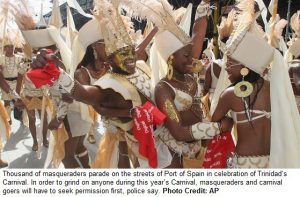
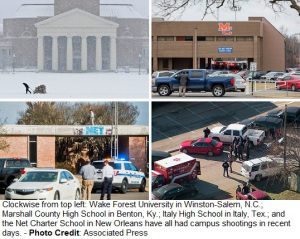
In a dramatic late-night announcement, the Foreign Office said: “The Trinidad and Tobago authorities have arrested some individuals who planned to carry out attacks against Carnival on February 12 and 13.”

Officials added: “An attack is still possible. The Trinidad and Tobago government is increasing security measures for the Carnival.

“Terrorists are very likely to try to carry out attacks in Trinidad and Tobago.

“Attacks could be indiscriminate, including in crowded spaces and places visited by foreigners. You should remain vigilant and avoid crowded places and large gatherings.”

Around 30,000 Britons a year visit the country. Some have family links to Trinidad but most are tourists heading to Tobago, which has direct flights from London on BA and Virgin.

Surprisingly, the island nation of just 1.3million has the highest ISIS recruitment rate of any country in the Western hemisphere.

Around 125 people are feared to have travelled to fight in Syria and Iraq, and they pose a severe threat when they return home. Authorities are also wary of home-grown terrorists radicalised in the country.

The Foreign Office travel advice update warned: “There’s a threat from individuals who may have been inspired by terrorist groups, including Daesh and al Qaeda, to carry out so-called ‘lone actor’ attacks targeting public events or places.”

The crowded streets during carnival would be a soft target for an ISIS-inspired bomb or truck attack.

Last year Trinidad jihadi Shane Crawford, who goes by the nom-de guerre Abu Sa’d at-Trinidadi, featured in the group’s propaganda magazine.

The sniper called on ISIS supporters back home to “attack the interests of the Crusader coalition”, including embassies, businesses and civilians.

He said: “Follow the example of the lions in France and Belgium, the example of the blessed couple in California, and the examples of the knights in Orlando and Nice.

“You have the ability to terrify the disbelievers in their own homes and make their streets run with their blood.”

Trinidad and Tobago, the southernmost nation in the Caribbean, is ethnically diverse with many people of African and Indian heritage as well as Chinese, European and Arab minorities.

Around 5 per cent of the population are Muslim, according to the 2011 census.

A small radical group known as Jamaat al-Muslimeen (“Community of Muslims”) launched a coup attempt in 1990, led by a convert named Yasin Abu Bakr who is now an imam on Trinidad and hosts a weekly radio show.

Last night it emerged the remaining two Brit members of the “Beatles” beheading gang led by Jihadi John had been captured in Syria.

Last month we revealed the world’s tourist terror hot spots at “high risk” of attacks.

Source: St. Lucia Times quoting the UK’s The SUN; posted February 9, 2018; retrieved February 10, 2018 from: https://stluciatimes.com/2018/02/09/terror-threat-raised-trinidad-tobago-carnival/

Related Story:
https://www.caribbeannationalweekly.com/caribbean-breaking-news-featured/terrorist-threats-tt-carnival/

Carnival is a BIG Deal in Trinidad and other Caribbean countries. Just the thought of active threats can discourage travel to and consumption of related events. Our regional tourism would be in jeopardy!

So we – the Caribbean member-states individually and collectively – must not disregard any security threats or risks. Any news headline that features the words “ISIS” and “Caribbean” is a scandalous combination! This thesis was elaborated on by the promoters of the book Go Lean … Caribbean, in a previous blog-commentary describing an ISIS terrorism-threat in the region.

No one wants to be accused of ignoring terrorism. Yet, as reported in another previous blog-commentary, the US and many other advanced democracy countries, are very alarmed of the Caribbean member-states and their bad practices for regional security. The troubling evidence include these inadequacies:

The foregoing all draw reference to the book Go Lean…Caribbean – available for free download – as it details the quest to reform and transform Caribbean society, The book is a how-to guide and roadmap for elevating the region’s societal engines for (1.) economics, (2.) security and (3.) governance. Strategies, tactics and implementations for a successful ‘War on Terrorism’ have been a consistent theme of this book and subsequent blog-commentaries.

But people can be terrorized by domestic or local bad actors as well. Carnival has had the bad practice of people – mostly men – being too jovial, solicitous and harassing to women participants on the streets of Port-of-Spain. This too can be terrifying …

This issue is finally being addressed this year by the T&T Police. See one news story here, reported by a Miami, Florida newspaper:

Title # 2: This Caribbean Carnival won’t allow you to twerk —unless you ask permission first
By:
Jacqueline Charles

Attention all Carnival revelers and masqueraders attending the Caribbean’s biggest bacchanal: Non-consensual grinding, the provocative hip-gyrating, free-for-all that’s known in Caribbean parlance as “wining,” can get you slapped with an assault charge.

Trinidad and Tobago, the two-island country that’s considered the birthplace of the modern-day Pre-Lenten Caribbean Carnival, is telling all attendees that before you back it up on someone, ask permission. And the same goes for twerking, when the street party kicks off Monday and Tuesday in Port-of-Spain.

The ask-permission edict from the police comes after years of protests by Trinidadian women who want to be free to dance without having to worry at Carnival, the annual cultural event that draws everyone from tourists to costumed diplomats two days before Ash Wednesday.

Last year, one of the biggest hits in the lead-up to Carnival was the song “Leave Me Alone” by Calypso Rose, about a woman trying to dance in the streets free of harassment. The lyrics — “Boy, don’t touch me” — made the song a feminist anthem and inspired hundreds of gyrating women to wear “Leave Me Alone” and “Leave She Alone” T-shirts during last year’s Carnival.

Like the song, the new consent rule is part of a Caribbean-wide push by women to have more say over their bodies, said Gabrielle Hosein, the head of the Institute for Gender and Development Studies at the University of the West Indies in Trinidad.

“What you’re getting is an argument that has been made by tens of thousands of women over three or more decades in the Caribbean, long before the me-too movement addressing sexual harassment,” Hosein said. “Women have a right to be sexual and feminine in public without that happening on terms set by male aggression.”

And what’s happening in Trinidad is more radical than the me-too movement, she said. It’s women, who often dress in racy costumes during the revelry, saying they have a right to express sexual freedom without fear of sexual violence.

The concern over sexual harassment during Carnival isn’t only in Trinidad. In 2016, 22-year-old college student Tiarah Poyau was fatally shot in Brooklyn during the J’Ouvert street party before the West Indian Day Parade after telling a man to stop rubbing against her and dancing provocatively close. Police later arrested 20-year-old Reginald Moise. [See VIDEO below of Carnival in Greater Miami.]

Hosein commended the Trinidad and Tobago Police Service for warning last month that those who “thief a wine” — or hip-grind on a person without consent — during the raucous street party can be charged with assault, based on a law prohibiting physical touching without consent.

“This is a struggle that is finally recognized not only in law, which it was before, but explicitly in the language of the police in what is an extremely progressive position and statement the police service has taken,” she said.

Soca artists, whose performances are designed to provoke hip-grinding and gyrating, are divided about the controversial rule.

But when one well-known singer, soca king Machel Montano, objected and told fans at a concert that no consent was needed to wine, the public backlash forced a quick turnaround.

“Once you get consent, take a wine and have a time,” Montano told the Trinidad Express in a written statement.

Source: Miami Herald’s America Column – Posted Februay 8, 2018; retrieved February 11, 2018 from: http://www.miamiherald.com/news/nation-world/world/americas/article199040889.html

——–

VIDEO – Carnival color: Miami-Dade and Broward celebrate – http://www.miamiherald.com/entertainment/article38770695.html

Carnival lovers and revelers geared up for one of the most anticipated cultural Caribbean traditions, Miami Broward Carnival on Sunday, Oct. 11, 2015 at the Miami-Dade County Fairgrounds. VIDEO Credit: Carl Juste

Say it ain’t so?

Only now in 2018, will the T&T Police start to treat an assault like an assault.

This – lax security – is why there is the need for a new Caribbean stewardship. This recognition is part-and-parcel to the Go Lean movement’s effort to optimize the societal engines – including homeland security – of the 30 member-states of the Caribbean region. This priority on homeland security was pronounced early in the Go Lean book with the opening Declaration of Interdependence (Page 12) that claims:

x. Whereas we are surrounded and allied to nations of larger proportions in land mass, populations, and treasuries, elements in their societies may have ill-intent in their pursuits, at the expense of the safety and security of our citizens. We must therefore appoint “new guards” to ensure our public safety and threats against our society, both domestic and foreign. The Federation must employ the latest advances and best practices … to assuage continuous threats against public safety.

xi. Whereas all men are entitled to the benefits of good governance in a free society, “new guards” must be enacted to dissuade the emergence of incompetence, corruption, nepotism and cronyism at the peril of the people’s best interest. The Federation must guarantee the executions of a social contract between government and the governed.

xii. Whereas the legacy in recent times in individual states may be that of ineffectual governance with no redress to higher authority, the accedence of this Federation will ensure accountability and escalation of the human and civil rights of the people for good governance, justice assurances, due process and the rule of law. As such, any threats of a “failed state” status for any member state must enact emergency measures on behalf of the Federation to protect the human, civil and property rights of the citizens, residents, allies, trading partners, and visitors of the affected member state and the Federation as a whole.

xvi. Whereas security of our homeland is inextricably linked to prosperity of the homeland, the economic and security interest of the region needs to be aligned under the same governance. Since economic crimes, including … forms of terrorism, can imperil the functioning of the wheels of commerce for all the citizenry, the accedence of this Federation must equip the security apparatus with the tools and techniques for predictive and proactive interdictions.

The Caribbean appointing these “new guards” will include many strategies, tactics and implementations considered “best-practices” for improved public safety and the ‘War Against Terror’. The book Go Lean … Caribbean presents its 370 pages as a roadmap for the introduction and implementation of the Caribbean Union Trade Federation (CU) to elevate the region’s societal engines of economics, security and governance. With a brand name like Trade Federation, obviously the primary focus is on economics – so promoting the image of safe Caribbean festivals is paramount – but the book also asserts (Page 23) that peace, security and public safety must be coupled with an economic empowerments. The book continues that “bad things will [always] happen to good people” and so the community needs to be prepared to contend with the risks that can imperil the homeland. The Go Lean book therefore promotes these 3 prime directives:

  • Optimization of the economic engines in order to grow the regional economy to $800 Billion GDP and create 2.2 million new jobs.
  • Establishment of a homeland security apparatus to ensure public safety and to protect the resultant economic engines of the Caribbean
  • Improvement of Caribbean governance to support these above engines.

The Go Lean book details the series of community ethos, strategies, tactics, implementations and advocacies to improve public protections: interpersonal violence, crime mitigation efforts, and even wage a successful ‘War on Terrorism’. This charter includes all proactive and reactive public safety/security measures in the Caribbean region. There have been many previous blog-commentaries that have elaborated on policing and governing empowerments for the region’s homeland security needs. Consider this sample here:

https://goleancaribbean.com/blog/?p=13746 Failure to Launch – Security: Caribbean Basin Security Dreams
https://goleancaribbean.com/blog/?p=13126 The Requirement for Better Security: Must Love Dogs
https://goleancaribbean.com/blog/?p=11054 Managing the ‘Strong versus the Weak’ – Mitigating Bullying
https://goleancaribbean.com/blog/?p=10566 Funding the Caribbean Security Pact
https://goleancaribbean.com/blog/?p=9974 Lessons Learned from Pearl Harbor
https://goleancaribbean.com/blog/?p=9072 Securing the Homeland – On the Ground
https://goleancaribbean.com/blog/?p=9070 Securing the Homeland – From the Seas
https://goleancaribbean.com/blog/?p=9068 Securing the Homeland – From the Air
https://goleancaribbean.com/blog/?p=7345 ISIS in the Caribbean?
https://goleancaribbean.com/blog/?p=6720 A Lesson in History – During the Civil War: Fighting for Our Own Cause
https://goleancaribbean.com/blog/?p=6103 Sum of All Fears – ‘On Guard’ Against Deadly Threats
https://goleancaribbean.com/blog/?p=5002 Managing a ‘Clear and Present Danger’
https://goleancaribbean.com/blog/?p=4809 America’s Model of Monitoring for Terroristic Activities
https://goleancaribbean.com/blog/?p=4360 Dreading the ‘Caribbean  Basin Security Initiative’
https://goleancaribbean.com/blog/?p=1554 Status of Forces Agreement = Security Pact
https://goleancaribbean.com/blog/?p=1076 Trinidad Muslims travel to Venezuela for Jihadist training
https://goleancaribbean.com/blog/?p=809 Muslim officials condemn abductions of Nigerian girls
https://goleancaribbean.com/blog/?p=535 Remembering and learning from Boston for Festival Security

An effort to provide better public safety and homeland security solutions in the Caribbean should be welcomed by all stakeholders. The effort to project the image of Safe Caribbean is a pressing need. We do not need to undermine our economic engines with lax security measures or attitudes.

It is past time to do better!

It is past time for a new Caribbean stewardship. One that must foster good security habits … and ‘war against a lax attitude’ – the world is watching!

Now is the time to lean-in to this Go Lean roadmap. Now is the time to better secure our homeland: monitor for threats, gather intelligence, investigate incidences, police communities, arm a defense apparatus and prepare for the worst. Now is time now to grow up and secure our economic engines.

All Caribbean stakeholders are therefore urged to lean-in to this roadmap, to this conceivable, believable and achievable plan to make the Caribbean a better, safer place to live, work and play. 🙂

Download the free e-book of Go Lean … Caribbean – now!

Sign the petition to lean-in for the roadmap for the Caribbean Union Trade Federation.

———-

Appendix – The Sun Tabloid Newspaper

The Sun is a tabloid newspaper published in the United Kingdom and the Republic of Ireland. Since The Sun on Sunday was launched in February 2012, the paper has been a seven-day operation. As a broadsheet, it was founded in 1964 as a successor to the Daily Herald; it became a tabloid in 1969 after it was purchased by its current owners.[6] It is published by the News Group Newspapers division of News UK, itself a wholly owned subsidiary of Rupert Murdoch‘s News Corp.[7][8]

The Sun has the largest circulation of any daily newspaper in the United Kingdom,[7] but in late 2013 slipped to second largest Saturday newspaper behind the Daily Mail.[9] It had an average daily circulation of 2.2 million copies in March 2014.[7] Between July and December 2013 the paper had an average daily readership of approximately 5.5 million, with approximately 31% of those falling into the ABC1 demographic and 68% in the C2DE demographic. Approximately 41% of readers are women and 59% are men.[7] The Sun has been involved in many controversies in its history …

Source: Retrieved February 10, 2018 from: https://en.wikipedia.org/wiki/The_Sun_(United_Kingdom)

Share this post:
, ,
[Top]

School Shootings ‘R’ Us – 11 in 23 Days

Go Lean Commentary

Which is worse: the Frying Pan or the Fire?

This is the decision-making that Caribbean people seem to be doing. Which residential option is worse for them: remain in the Failing–States of their Caribbean homeland or emigrate to the United States of America where societal defects like mass shootings / school shootings persist?

The optics are that bad!

The American gun culture cannot be excused, rationalized or minimized. As of January 23rd, there were already 11 school shootings in the country.

Just think how our Caribbean people have fled their homelands – “Frying Pan” – to seek refuge in this society – “the Fire”.

See how the actuality of this American “fire” is conveyed in this New York Times news story here:

Title – School Shooting in Kentucky Was Nation’s 11th of Year. It Was Jan. 23

By: Alan Blinder and Daniel Victor

ATLANTA — On Tuesday, it was a high school in small-town Kentucky. On Monday, a school cafeteria outside Dallas and a charter school parking lot in New Orleans. And before that, a school bus in Iowa, a college campus in Southern California, a high school in Seattle.

Gunfire ringing out in American schools used to be rare, and shocking. Now it seems to happen all the time.

The scene in Benton, Ky., on Tuesday was the worst so far in 2018: Two 15-year-old students were killed and 18 more people were injured. But it was one of at least 11 shootings on school property recorded since Jan. 1, and roughly the 50th of the academic year.

Researchers and gun control advocates say that since 2013, they have logged school shootings at a rate of about one a week.

“We have absolutely become numb to these kinds of shootings, and I think that will continue,” said Katherine W. Schweit, a former senior F.B.I. official and the co-author of a study of 160 active shooting incidents in the United States.

Some of the shootings at schools this year were suicides that injured no one else; some did not result in any injuries at all. But in the years since the massacres at Columbine High School in Colorado, Virginia Tech and Sandy Hook Elementary School in Newtown, Conn., gun safety advocates say, all school shootings seem to have lost some of their capacity to shock.

Shannon Watts, the founder of Moms Demand Action, a gun safety group, said that’s because in 2012 in Newtown, “20 first graders and six educators were slaughtered in an elementary school.”

“The news cycles are so short right now in America, and there’s a lot going on,” she said. “But you would think that shootings in American schools would be able to clear away some of that clutter.”

Gov. Matt Bevin of Kentucky said the gunman who opened fire Tuesday morning at Marshall County High School in Benton, near the western tip of the state was a 15-year-old student. The authorities said the student entered the school just before 8 a.m., fired shots that struck 14 people, and set off a panicked flight in which five more were hurt.

One girl who was shot, Bailey Nicole Holt, died at the scene; a boy, Preston Ryan Cope, died of his injuries at a hospital.

Bryson Conkwright, a junior at the school, said he was talking with a friend on Tuesday morning when he spotted the gunman walking up near him. “It took me a second to process it,” Mr. Conkwright, 17, said in an interview. “One of my best friends got shot in the face, and then another one of my best friends was shot in the shoulder.”

He said he was part of a group of students who fled, kicked down a door to get outside and ran.

The suspect, who was not immediately identified, was taken into custody in “a nonviolent apprehension,” Mr. Bevin said, and officials said he would be charged with two counts of murder and several counts of attempted murder. But the authorities had not yet decided whether to charge the suspect, who was armed with a pistol, as a juvenile or as an adult.

Of the 18 people injured, five remained in critical condition, law enforcement officials said on Tuesday night.

“This is something that has struck in the heart of Kentucky,” Lt. Michael B. Webb of Kentucky State Police said at a news conference. “It’s not far away, it’s here.”

Not for the first time. The region was scarred about two decades ago by deadly school shooting in West Paducah, about a 40-minute drive away. Three people were killed when a student opened fire into a prayer circle, and five more were injured.

Benton is a small town about 200 miles southwest of Louisville, and its high school serves students from all over Marshall County, which has a population of about 31,000.

John Parks, who owns the Fisherman’s Headquarters store about a mile from the school, described the area as a “very close-knit community” where just about everyone would have known a student at the school. “It’s personal when it’s a small town like this,” he said.

About a mile from the high school, a large American flag flew at half-staff over a Ponderosa Steakhouse on Tuesday night. Taylor McCuiston, 21, a manager at the restaurant who graduated from Marshall County High School two years ago, was working when the shooting occurred down the road.

“It was very scary because, like, 90 percent of the staff that works here goes to that school,” she said. “So for the first hour we were just scrambling trying to make sure they were all O.K. and accounted for.”

The town of Italy, Tex., is not any bigger than Benton. On Monday, a 15-year-old girl there was hospitalized after she was shot by a 16-year-old classmate, according to local news reports. That suspect, a boy, was taken into custody by the Ellis County Sheriff’s Department. The authorities said on Tuesday that the victim was recovering.

The F.B.I. study that Ms. Schweit helped write examined active shooter episodes in the United States between 2000 and 2013. It found that nearly one-quarter of them occurred in educational environments, and they were on the rise.

In the first half of the study period, federal officials counted 16 active shooter incidents in educational settings, meaning instances of a person “actively engaged in killing or attempting to kill people in a confined and populated area.” In the second half, the number rose to 23. (Many, but not all, of the school shootings tallied by advocates so far this year meet that definition.)

“Any time there’s a school shooting, it’s more gut-wrenching, and I think we have a tendency to react in a more visceral way,” Ms. Schweit said in an interview on Tuesday. “But I really don’t think as a whole, in society, we’re taking shootings more seriously than we were before — and that’s wrong.”

Even so, jarred and fearful school administrators across the country have been placing greater emphasis on preparing for the possibility of an active shooter. According to a report issued by the Government Accountability Office in March 2016, 19 states were requiring individual schools to have plans for how to deal with an active shooter. Only 12 states required schools to conduct drills, but two-thirds of school districts reported that they had staged active shooter exercises.

School safety experts say steps like the drills are crucial, if imperfect, safeguards.

“I think we’ve become somewhat desensitized to the fact that these things happened, and it takes a thing like Sandy Hook to bring us back to our senses,” said William Modzeleski, a consultant who formerly led the Department of Education’s Office of Safe and Drug Free Schools.

“My fear is that if you don’t hear about a school shooting for a while, educators move on to other things,” he said. “Principals are busy. Teachers are busy. Superintendents are busy.”

In Kentucky, lawmakers have grappled with how to address the risk of school shootings. Last year, state legislators considered, but did not pass, a bill that would have allowed people with concealed-carry permits to bring weapons on to public school campuses, where proponents argue they could be used to respond to active shooters. A similar bill, limited to college campuses and certain other government buildings, has been introduced this year. It was not immediately clear how the shooting in Benton might affect the debate in Frankfort, the Kentucky capital.

But in Benton, “this is a wound that is going to take a long time to heal,” said Mr. Bevin, the governor, “ and for some in this community, will never fully heal.”

———-

Alan Blinder reported from Atlanta and Daniel Victor from New York. Steven Hale contributed reporting from Benton, Ky., and Timothy Williams and Matthew Haag from New York.

Source: New York Times – posted January 23, 2017; retrieved January 30, 2017: https://www.nytimes.com/2018/01/23/us/kentucky-school-shooting.html

RELATED COVERAGE:

Life in American schools is risky. Life in the US in general, may experience a shorter mortality due to the risky gun culture.

This is not an unfamiliar theme for this movement behind the book Go Lean…Caribbean; on October 11, 2017 a blog-commentary entitled: “Pulled” – Despite American Guns was published. That entry lamented how the US continues to draw the human capital out of the Caribbean, despite the unconscionable gun-death rate in the country. That commentary related:

… the US has far more gun deaths than most other advanced economy countries.

Reference: Visualizing gun deaths: Comparing the U.S. to rest of the world
Whenever a mass shooting occurs, a debate about gun violence ensues. An often-cited counter to the point about the United States’ high rates of gun homicides is that people in other countries kill one another at the same rate using different types of weapons. It’s not true.

Compared to other countries with similar levels of development or socioeconomic status, the United States has exceptional homicide rates, and it’s driven by gun violence.

Life in the US may be more prosperous, but it is “fast & furious” compared to the Caribbean homeland. If only, we can assuage our societal defects – Frying Pan – and foster more economic opportunities, then our people will be able to prosper where planted in the Caribbean homeland. They would not have to “jump into the Fire” as they do now – one report estimates 70 percent of the professional classes have fled to foreign destinations like the United States. To be clear, there are two reasons why are they leaving:

  • Push” refers to people who feel compelled to leave, to seek refuge in a foreign land. “Refuge” is an appropriate word; because of societal defects, many from the Caribbean must leave as refugees – think LGBTDisabilityDomestic-abuseMedically-challenged– for their life, liberty and pursuit of happiness.
  • Pull”, on the other hand refers to the lure of a more prosperous life abroad; many times our people are emigrating for economics solely.

It is the quest of this Go Lean movement that we reform and transform our societal engines so as to lower the “Push” factors. As for the “Pull” factors, this is all about messaging, knowledge-sharing and declaring the truth. Take a moment and acknowledge this truth:

Before this article, did you really know that there were 11 school-shootings in the US between January 1st and 23rd, 2018?

For most, that answer is no!

This is the truism that we must contend with in our region: The “grass is not necessarily greener” on the American side.

The Go Lean book serves as a roadmap for the introduction and implementation of the technocratic Caribbean Union Trade Federation (CU) to elevate the societal engines – economics, homeland security and governance – for all 30 Caribbean member-states in the region. In fact, the prime directives of the roadmap includes the following 3 statements:

  • Optimization of the economic engines in order to grow the regional economy to $800 Billion & create 2.2 million new jobs.
  • Establishment of a security apparatus to ensure public safety and protect the resultant economic engines with proactive and reactive measures.
  • Improvement of Caribbean governance to support these engines, including a separation-of-powers between the member-states and CU federal agencies.

The Go Lean quest is to minimize any paradox of future-planning/decision-making for Caribbean citizens. We want to make the Caribbean region better places to live, work and play; this way our citizens would not have to “jump in to the Fire” by relocating to American shores.

How would you live with yourself if your children or grandchildren die in a school shooting in some US location?!

This is not to say that there will never be any violence in the Caribbean. No, the Go Lean book contends that bad actors will always emerge just as a result of economic successes in society. Once the prospects of guns are factored it, the inevitable “bad guy with a gun” can do more damage than ordinary. The Way Forward from the book is real remediation and mitigation for minimizing incidents of gun violence.

Many times in the US, the post mass-shooting platitudes from Pro-Gun Advocacy groups – i.e. the NRA – is that the best way to stop a “bad guy with a gun” is with a “good guy with a gun”.

Platitudes – flat, dull, or trite remark –  indeed …

Remember the April 1999 Columbine High massacre – school shooting – in Colorado – Greater Denver Metropolitan area:

In addition to the shootings, the complex and highly planned attack involved a fire bomb to divert firefighters, propane tanks converted to bombs placed in the cafeteria, 99 explosive devices, and car bombs. The perpetrators, senior students Eric Harris and Dylan Klebold, murdered 12 students and one teacher. They injured 21 additional people, and three more were injured while attempting to escape the school. After exchanging fire with responding police officers, the pair subsequently committed suicide.[5][6]Wikipedia

See this dramatic portrayal for the documentary-movie Bowling for Columbine here with this Trailer and critical review:

VIDEO – Bowling for Columbine – Official Trailer – Michael Moore Movie (2002) – https://youtu.be/hH0mSAjp_Jw

Movieclips Trailer Vault
Published on Nov 15, 2011 – Bowling for Columbine Trailer – Michael Moore (Michael Moore) takes an inside-look at America’s fascination with firearms. MGM – 2002

  • Category: Film & Animation
  • License: Standard YouTube License

———–

Movie Review: Bowling for Columbine

By: Roger Eber

Michael Moore’s “Bowling for Columbine,” a documentary that is both hilarious and sorrowful, is like a two-hour version of that anecdote. We live in a nation of millions of handguns, but that isn’t really what bothers Moore. What bothers him is that we so frequently shoot them at one another. Canada has a similar ratio of guns to citizens, but a 10th of the shooting deaths. What makes us kill so many times more fellow citizens than is the case in other developed nations? Moore, the jolly populist rabble-rouser, explains that he’s a former sharpshooting instructor and a lifelong member of the National Rifle Association. No doubt this is true, but Moore has moved on from his early fondness for guns. In “Bowling for Columbine,” however, he is not so sure of the answers …

Moore’s thoughtfulness doesn’t inhibit the sensational set-pieces he devises to illustrate his concern. He returns several times to Columbine High School, at one point showing horrifying security-camera footage of the massacre. And Columbine inspires one of the great confrontations in a career devoted to radical grandstanding. Moore introduces us to two of the students wounded at Columbine, both still with bullets in their bodies. He explains that all of the Columbine bullets were freely sold to the teenage killers by Kmart, at 17 cents apiece. And then he takes the two victims to Kmart headquarters to return the bullets for a refund.

This is brilliant theater and would seem to be unanswerable for the hapless Kmart public relations spokespeople, who fidget and evade in front of Moore’s merciless camera. But then, on Moore’s third visit to headquarters, he is told that Kmart will agree to completely phase out the sale of ammunition. “We’ve won,” says Moore, not believing it. “This has never happened before.” For once, he’s at a loss for words.

The movie is a mosaic of Moore confrontations and supplementary footage. One moment that cuts to the core is from a standup routine by Chris Rock, who suggests that our problem could be solved by simply increasing the price of bullets–taxing them like cigarettes. Instead of 17 cents apiece, why not $5,000? “At that price,” he speculates, “you’d have a lot fewer innocent bystanders being shot.”

Source: RogerEbert.com E-Zine/Website – Posted October 18, 2002; retrieved January 30, 2018 from: https://www.rogerebert.com/reviews/bowling-for-columbine-2002

We can do better in the Caribbean!

We do not have the same gun culture, nor legal entanglements. The 2nd Amendment – gun rights guaranteed by the US Constitution – does not apply for most of the Caribbean and can even be curtailed more in the US Territories (Puerto Rico & US Virgin Islands) as opposed to the US mainland.

Doing better and being better than the US – a protégé , not a parasite – is a need pronounced early in the Go Lean book with the opening Declaration of Interdependence (Pages 12 – 13) that claims:

x. Whereas we are surrounded and allied to nations of larger proportions in land mass, populations, and treasuries, elements in their societies may have ill-intent in their pursuits, at the expense of the safety and security of our citizens. We must therefore appoint “new guards” to ensure our public safety and threats against our society, both domestic and foreign. The Federation must employ the latest advances and best practices … to assuage continuous threats against public safety.

xi. Whereas all men are entitled to the benefits of good governance in a free society, “new guards” must be enacted to dissuade the emergence of incompetence, corruption, nepotism and cronyism at the peril of the people’s best interest. The Federation must guarantee the executions of a social contract between government and the governed.

xvi. Whereas security of our homeland is inextricably linked to prosperity of the homeland, the economic and security interest of the region needs to be aligned under the same governance. Since economic crimes, including piracy and other forms of terrorism, can imperil the functioning of the wheels of commerce for all the citizenry, the accedence of this Federation must equip the security apparatus with the tools and techniques for predictive and proactive interdictions.

The Go Lean book provides 370 pages of turn-by-turn directions on how to adopt a more productive Public Safety ethos, plus the executions of strategies, tactics, implementations and advocacies to better secure the Caribbean homeland, school campus protections and gun control. The book details (Page 181) this sample mitigation for school bullying:

Consider Bullying as Junior Terrorism
The CU wants to “leave no child behind”. So bullying will be managed under a domestic terrorism and Juvenile Justice jurisdiction. The CU will conduct media campaigns for anti-bullying, life-coaching, and school-mentoring programs. The problem with teen distress is that violence can ensue from bullying perpetrators or in response to bullying.

In addition, there have been a number of previous blog-commentaries by the Go Lean movement that highlighted the eco-system of crime-domestic terrorism and homeland security initiatives. See this sample list here:

https://goleancaribbean.com/blog/?p=14087 Opioids – Another Example of America’s Deadly Culture
https://goleancaribbean.com/blog/?p=13999 First Steps – Deputize the CU to Monitor-Mitigate-Manage Threats
https://goleancaribbean.com/blog/?p=13126 “Must Love Dogs”  – Providing K9 Solutions for Better Security
https://goleancaribbean.com/blog/?p=12400 Accede the Caribbean Arrest Treaty
https://goleancaribbean.com/blog/?p=11332 Boston Bombing Anniversary – Learning Lessons
https://goleancaribbean.com/blog/?p=11244 Live Fast; Die Young – The Fast & Furious Life in the US
https://goleancaribbean.com/blog/?p=11048 Managing the ‘Strong versus the Weak’ Series – Mitigating Bullies
https://goleancaribbean.com/blog/?p=9072 Model: Shots-Fired Monitoring – Securing the Homeland on the Ground
https://goleancaribbean.com/blog/?p=7485 Mitigating Interpersonal Violence Series – Street Crimes

In summary, fleeing to a life of refuge in the US may be likened to “jumping from the Frying Pan to the Fire”. It seems so basic to protect our children so that they can study safely in school, and yet, there had been 11 gun attacks already in the US this month by the 23rd of the month. The repeated occurrences reflect a failure in American society and American stewardship. This view considers the premise of the implied Social Contract:

Citizens surrender some of their freedoms and submit to the authority of the State in exchange for protection of remaining natural and legal rights. – Go Lean book Page 170.

Yes, it is only natural, logical, and mature that any stewards of society would remediate any known risks and threats; yet this is not the case for guns in America. (The 2nd Amendment is a societal defect!)

In that previous blog-commentary, this was the simple conclusion:

… surely we can convince our Caribbean people to Stay Home and not be lured to this [dysfunctional-gun] madness in the first place; and for those of the Diaspora in the US: you are in harm’s way, just living an ordinary life. It is Time to Go … back home!

Now is the time for all of the Caribbean – in and out of schools – to lean-in for the empowerments of the Go Lean roadmap. It is conceivable, believable and achievable to prosper where planted here in the region; to make the Caribbean a better place to live, work and play. 🙂

Download the free e-book of Go Lean … Caribbean – now!

Sign the petition to lean-in for the roadmap for the Caribbean Union Trade Federation.

Share this post:
, , ,
[Top]

First Steps – Deputize ‘Me’!

Go Lean Commentary

If we want to effect change in the Caribbean region, we could “touch” every Caribbean member-state by going through CariCom, British Overseas Territories, US Territories and the EU. Yes, we would “touch” every country … except Cuba.

Of the 30 member-states that constitute the Caribbean region, Cuba does not align with any of these previously identified structures, but still the book Go Lean … Caribbean declares that they are not alone. There is the offer of collaboration, confederacy and comradery with the rest of the neighborhood in the Caribbean region. The book declares (Page 5) … to Cuba and the rest of the region (based on the 1972 song “Lean On Me” by Bill Withers):

If there is a load you have to bear
That you can’t carry
I’m right up the road
I’ll share your load
If you just call me

The “load” being referred here is what the Go Lean book – and other leadership experts – refers to as the Social Contract, this is the assumption that citizens surrender some of their freedoms and submit to the authority of the State in exchange for protection of remaining natural and legal rights. One way of sharing the load is to deputize others to execute. So this movement behind the Go Lean book declares: Deputize me!

This commentary about leadership is Part 5 of a 6-part series from the movement behind the book Go Lean … Caribbean in consideration of the First Steps for instituting a new regime in governance for the Caribbean homeland. The other commentaries in the series are cataloged as follows:

  1. First Steps: EU: Free European Money – To Start at Top
  2. First Steps: UK: Dignified and Efficient
  3. First Steps: US: Congressional Interstate Compact – No Vote; No Voice 
  4. First Steps: CariCom: One Man One Vote Defects 
  5. First Steps: Deputize ‘Me’! 
  6. First Steps: A Powerful C.P.U.

All of these commentaries relate to “how” the Caribbean can finally get started with adapting the organizational structures to optimize the region’s societal engines. This is the consideration of leading from the Top. This would apply to the all member-states in the geographical area. We do not want to ignore Cuba and do not want the Cubans to ignore us. They are the biggest country in the middle of the region and must be included. Most importantly, the leverage of all 42 million people in the region extends greater benefits to everyone in the region. The quest of the Go Lean movement is to implement an economic Single Market and then let the benefits flow: a better region to live, work and play.

A better economic landscape is what the Caribbean region needs to assuage a lot of its problems. The book opens (Page 3) with this sad assessment:

Many people love their homelands and yet still begrudgingly leave; this is due mainly to the lack of economic opportunities. The Caribbean has tried, strenuously, over the decades, to diversify their economy …. The requisite investment of the resources (time, talent, treasuries) for this goal may be too big for any one Caribbean member-state. Rather, shifting the responsibility to a region-wide, professionally-managed, deputized technocracy will result in greater production and greater accountability. This deputized agency is the Caribbean Union Trade Federation.

The book Go Lean…Caribbean – available to download for free – serves as a roadmap for the introduction and implementation of the technocratic Caribbean Union Trade Federation (CU), to do the heavy-lifting for the elevation of Caribbean society – for all 30 member-states. This CU/Go Lean roadmap has these 3 prime directives:

  • Optimization of the economic engines in order to grow the regional economy to $800 Billion and create 2.2 million new jobs.
  • Establishment of a security apparatus to ensure public safety and protect the resultant economic engines.
  • Improve Caribbean governance to support these engines, including a separation-of-powers between the member-states and CU federal agencies. The plan is for the CU to be deputized by member-states to execute certain governing functions.

The book stresses that reforming and transforming the Caribbean societal engines must be a regional pursuit. This was an early motivation for the roadmap, as pronounced in the opening Declaration of Interdependence (Pages 12 – 13):

xi. Whereas all men are entitled to the benefits of good governance in a free society, “new guards” must be enacted to dissuade the emergence of incompetence, corruption, nepotism and cronyism at the peril of the people’s best interest. The Federation must guarantee the executions of a social contract between government and the governed.

xvi. Whereas security of our homeland is inextricably linked to prosperity of the homeland, the economic and security interest of the region needs to be aligned under the same governance. Since economic crimes … can imperil the functioning of the wheels of commerce for all the citizenry, the accedence of this Federation must equip the security apparatus with the tools and techniques for predictive and proactive interdictions.

xxiv. Whereas a free market economy can be induced and spurred for continuous progress, the Federation must install the controls to better manage aspects of the economy: jobs, inflation, savings rate, investments and other economic principles. Thereby attracting direct foreign investment because of the stability and vibrancy of our economy.

Deputize me!these are the words of the CU Trade Federation to the Caribbean member-states governments. Deputizing an external agency is pretty standard in our modern day. In addition, there are many treaties that create an organizational structure to administer the tenants of a multilateral agreement. Let’s consider one example that has a lot of relevance within the Caribbean region, the International Atomic Energy Agency (IAEA). While the impression of nuclear-atomic energy may not be Caribbean tropical, there are in fact 4 member-states that have ratified the IAEA treaty (Cuba, Haiti, Jamaica and the Dominican Republic; plus 2 more pending: St Lucia & Grenada).
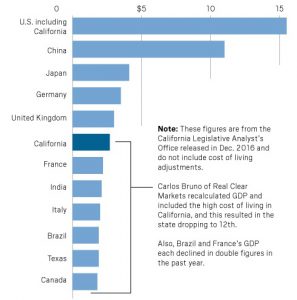
See IAEA details in the Appendix below. As related there, the United States functions as the depositary government for the IAEA Statute; they are the deputized agent. This is the model for the CU/Go Lean roadmap, as the Caribbean Union is a Treaty, and the Trade Federation is the deputized administrator.

The Go Lean book provides 370-pages of turn-by-turn instructions on “how” to adopt new community ethos, plus the strategies, tactics, implementations and advocacies to execute so as to reboot, reform and transform the societal engines of Caribbean society. One advocacy in the book is entitled “10 Ways to Foster a Technocracy“; this allows for the delivery of best practices in the introduction of the new CU regime. As a deputized administrator, the CU is expected to function with higher accountability compared to traditional governmental agencies. See how this advocacy related this further on Page 64:

# 9 – Service Level Agreements
The CU is a proxy organization, chartered to execute deputized functions on behalf of member-states; this means a task-oriented philosophy with “Service Level Agreements” in place; i.e. 80% of all phone calls answered within 20 seconds.

Another example of the CU/Go Lean deputized functionality is the embrace of the Group Purchasing Organization concept – see VIDEO here. The book explains (Page 24):

d-2. Lean Operations
This roadmap posits that a lean technocratic organization should be felt, more so than seen. The focus should not be on edifices or “fat” bureaucratic structures, but rather the region should feel the presence of their federal government more so than seeing it.

A bureaucratic model requires comprehensive funding formulas to cover the expenses of the bureaucracy. A lean structure, on the other hand, can subsist mostly from the new revenues it creates. The CU must therefore generate its own income sources from new revenue streams, or from costs savings it affords it stakeholders (member-states). For example, as a Group Purchasing Organization (GPO), the CU entity can garner fee-based revenue for facilitating shipping-handling, or as a Performance Rights Organization (PRO), the CU entity can assess an administrative fee for petitioning/managing royalties from content users. A last example of lean operations would be deploying shared computer systems. This extends the operating costs across a wider user base than individual systems alone. This is the experience followed in the US, with 80% of the Fortune 500 firms using payroll processor ADP to perform this necessary back-office function. (A subset of the cost savings are used as CU income in this model).

So “sharing” is the governing principle that will be pursued for this community ethos to minimize the governing overhead burden on the governed. This principle will be felt in the region through the deployment of shared data centers, multi-purpose Post Office buildings, multi-functional libraries, mobile applications and the www.myCaribbean.gov portal.

———-

VIDEO – Everything You Wanted to Know About Group Purchasing but were afraid to ask! – https://youtu.be/WSq8LiscHOg

NatServAll

Published on Jul 17, 2014 – Let the National Service Alliance (NSA) leverage your purchasing power to tackle stiff competition, squeezed margins and rising prices. NSA works for companies at $3mil and over, to do just that. .. and no need to change your current distributor/supplier.

  • Category: Education
  • License: Standard YouTube License

Yes, a strategy where member-state governments can deputize a more efficient and effective administrator allows the stewards of the Caribbean (political leaders) to better lead with a lean technocracy. This has been a familiar theme to this Go Lean movement. Consider this sample of previous blog-commentaries that have expanded on this concept:

https://goleancaribbean.com/blog/?p=13749 New Caribbean Regime: Assembling the Region’s Organizations
https://goleancaribbean.com/blog/?p=13524 e-Government Portals 101
https://goleancaribbean.com/blog/?p=13365 A Model for Launching a Single Market Currency
https://goleancaribbean.com/blog/?p=13251 A Better Way to Manage Hurricane Risks
https://goleancaribbean.com/blog/?p=12949 Being Mature to Handle Charity Management
https://goleancaribbean.com/blog/?p=12930 Managing Dangers, Disasters and Emergencies
https://goleancaribbean.com/blog/?p=12400 A Better Way to Administer a Caribbean Arrest Treaty

We urge all member-states to lean-in to this Go Lean roadmap to deputize the Caribbean Union Trade Federation to better deliver on their Social Contract responsibilities. Despite the fact that the CU creates another layer of government, the roadmap makes delivering stewardship over the societal engines cheaper, faster and smarter. Yes, this is how the Caribbean member-state governments can make our homelands better places to live, work and play. 🙂

Download the free e-book of Go Lean … Caribbean – now!

Sign the petition to lean-in for this roadmap for the Caribbean Union Trade Federation.

———-

Appendix Reference: International Atomic Energy Agency

The International Atomic Energy Agency (IAEA) is an international organization that seeks to promote the peaceful use of nuclear energy, and to inhibit its use for any military purpose, including nuclear weapons. The IAEA was established as an autonomous organisation on 29 July 1957. Though established independently of the United Nations through its own international treaty, the IAEA Statute,[1] the IAEA reports to both the United Nations General Assembly and Security Council.

The IAEA has its headquarters in Vienna. The IAEA has two “Regional Safeguards Offices” which are located in Toronto, Canada, and in Tokyo, Japan. The IAEA also has two liaison offices which are located in New York City, United States, and in Geneva, Switzerland. In addition, the IAEA has three laboratories located in Vienna and Seibersdorf, Austria, and in Monaco.

The IAEA serves as an intergovernmental forum for scientific and technical co-operation in the peaceful use of nuclear technology and nuclear powerworldwide. The programs of the IAEA encourage the development of the peaceful applications of nuclear energy, science and technology, provide international safeguards against misuse of nuclear technology and nuclear materials, and promote nuclear safety (including radiation protection) and nuclear security standards and their implementation.

The IAEA and its former Director General, Mohamed El Baradei, were jointly awarded the Nobel Peace Prize on 7 October 2005. The IAEA’s current Director General is Yukiya Amano.

Membership

The process of joining the IAEA is fairly simple.[32] Normally, a State would notify the Director General of its desire to join, and the Director would submit the application to the Board for consideration. If the Board recommends approval, and the General Conference approves the application for membership, the State must then submit its instrument of acceptance of the IAEA Statute to the United States, which functions as the depositary Government for the IAEA Statute. The State is considered a member when its acceptance letter is deposited. The United States then informs the IAEA, which notifies other IAEA Member States. Signature and ratification of the Nuclear Non-Proliferation Treaty (NPT) are not preconditions for membership in the IAEA.

The IAEA has 169 member states.[33] Most UN members and the Holy See are Member States of the IAEA. Non-member states Cape Verde (2007), Tonga (2011), Comoros (2014), Gambia (2016), Saint Lucia (2016) and Grenada (2017) have been approved for membership and will become a Member State if they deposit the necessary legal instruments.[33]

Regional Cooperative Agreements

There are four regional cooperative areas within IAEA, that share information, and organize conferences within their regions:

  1. AFRA – The African Regional Cooperative Agreement for Research, Development and Training Related to Nuclear Science and Technology
  2. ARASIA – Cooperative Agreement for Arab States in Asia for Research, Development and Training related to Nuclear Science and Technology
  3. RCA – Regional Cooperative Agreement for Research, Development and Training Related to Nuclear Science and Technology for Asia and the Pacific
  4. ARCAL – Cooperation Agreement for the Promotion of Nuclear Science and Technology in Latin America and the Caribbean (ARCAL):[44]
    • Cuba
    • Haiti
    • Jamaica
    • Dominican Republic

See the full reference article here, retrieved January 21, 2018:

https://en.wikipedia.org/wiki/International_Atomic_Energy_Agency

Share this post:
, , , ,
[Top]

Managing ‘Change’ in California

Go Lean Commentary

This is a Big Deal

California, the biggest state in the Union (USA) – #6 GDP if ranked as an independent country – has enacted legislation to legitimize recreational marijuana use. Wow, what a ‘change’ to manage! That’s 37 million people, millions of cars and billions of dollars. The implementation of this New Order will surely be heavy-lifting.

For the Caribbean, let’s pay more than the usual attention for lessons learned for our own Big Deal implementation. See the VIDEO on California’s challenge here:

VIDEO – California residents line up to buy recreational marijuana – https://www.today.com/video/california-residents-line-up-to-buy-recreational-marijuana-1127548995762


Posted January 2, 2018 – Vendors in The Golden State began selling recreational marijuana legally on Monday, a milestone moment in the push to legalize marijuana across the country. NBC’s Jacob Soboroff has the report for TODAY from Los Angeles.

Again, California is managing the ‘change’ of implementing the legalization of recreational marijuana use, while the Caribbean needs to implement a roadmap to forge change in its societal engines (economics, security and governance) for the 30 member-states of our region.

The book Go Lean…Caribbean – available to download for free – serves as a roadmap for the introduction and implementation of the technocratic Caribbean Union Trade Federation (CU), for the elevation of Caribbean society – for all member-states. This CU/Go Lean roadmap has these 3 prime directives:

  • Optimization of the economic engines in order to grow the regional economy to $800 Billion and create 2.2 million new jobs.
  • Establishment of a security apparatus to ensure public safety and protect the resultant economic engines.
  • Improve Caribbean governance to support these engines, including a separation-of-powers between the member-states and CU federal agencies.

The State of California is taking on the heavy-lifting of this marijuana legalization while the US federal government continues to consider the drug as illegal. But California is NOT the first state; that distinction belongs to Colorado. The movement behind the Go Lean book has explored Colorado and observed-and-reported on the societal developments there. Notice these main points from a previous blog-commentary entitled – Lessons from Colorado: Legalized Marijuana: Heavy-lifting! – from August 17, 2017:

… in 2017, the phrase “Rocky Mountain High” has a total different meaning, because the State of Colorado has since legalized recreational use of marijuana.

This is not an easy topic; this is heavy …

There are so many lessons we can learn from the debate, legalization, implementation and regulation of this product in this State. All in all, it is heavy-lifting. This is the theme of this series of commentaries of lessons that have been learned by Caribbean stakeholders visiting, observing and reporting on the US State of Colorado.

We have so much in common and so much in contrast. One commonality to consider is how Colorado is now associated with marijuana consumption. …

“Welcome to our club”! This has always been the image of Caribbean people and culture – think: Rasta Man smoking Ganja.

California … Colorado … other states to follow, according to another previous blog-commentary after the last American General Election on November 8, 2016. That submission was entitled – Time to Go: American Vices; Don’t Follow and quoted:

Marijuana legalization is now the norm for 40 percent of the American population. …
Voter measures [passed] in Massachusetts and Nevada. Maine’s referendum was still being counted early Wednesday morning, and Arizona’s was poised to lose. Three other states passed medical marijuana reforms, and a fourth appeared likely to do so. This means that in eight states (plus Washington, D.C.) weed will be legal for recreational purposes, and in sum, 28 will have some kind of legalization on the books.

There will be a lot of security and governing dynamics that these states – like California – will now have to manage, since the process will decriminalize marijuana use, after a long history of criminalization. This is a BIG DEAL considering that many people may be in a penal status – active or parole – for marijuana use or trafficking. Wow, indeed; this is a BIG transformation!

This point too, was addressed in a previous blog-commentary entitled – Marijuana in Jamaica – ‘Puff Peace’:

There are moral, religious, legal and psychological (treatment) issues associated with this topic; and there is history – good and bad. Any jurisdiction decriminalizing the use of marijuana has to contend with the previous messaging to the community of: “Just say no to drugs”.

The [Go Lean] book asserts that before the strategies, tactics, implementations and advocacies of a roadmap to elevate a society can be deployed, the affected society must first embrace a progressive community ethos. The book defines this “community ethos” as the fundamental character or spirit of a culture; the underlying sentiment that informs the beliefs, customs, or practices of society; dominant assumptions of a people or period. Think of the derivative term: “work ethic”.

Marijuana is a mood-altering drug; it has negative effects, one being preponderance for apathy, to tune out of any active engagement. In the US, even in the states where marijuana is legal, most firms/governments still screen staffers (new hires and veterans) and ban consumption of the drug. The reason is simple: Apathy does not make for industriousness.

The Go Lean book provides 370-pages of turn-by-turn instructions on “how” to adopt new community ethos, plus the strategies, tactics, implementations and advocacies to execute so as to transform the societal engines of Caribbean society, regarding the whole drug eco-system. The Go Lean book asserts that every community has bad actors, and with a more liberal-progressive attitude towards a once-illegal drug, community attitudes must be paramount. There must be “new guards” to assuage any threats from this practice on society. This point is pronounced early in the book with the Declaration of Interdependence (Pages 12 – 13) that claims:

x. Whereas we are surrounded and allied to nations of larger proportions in land mass, populations, and treasuries, elements in their societies may have ill-intent in their pursuits, at the expense of the safety and security of our citizens. We must therefore appoint new guards to ensure our public safety and threats against our society, both domestic and foreign. The Federation must employ the latest advances and best practices of criminology and penology to assuage continuous threats against public safety. The Federation must allow for facilitations of detention for [domestic and foreign] convicted felons of federal crimes, and should over-build prisons to house trustees from other jurisdictions.

xi. Whereas all men are entitled to the benefits of good governance in a free society, “new guards” must be enacted to dissuade the emergence of incompetence, corruption, nepotism and cronyism at the peril of the people’s best interest. The Federation must guarantee the executions of a social contract between government and the governed.

xvi. Whereas security of our homeland is inextricably linked to prosperity of the homeland, the economic and security interest of the region needs to be aligned under the same governance. Since economic crimes, including piracy and other forms of terrorism, can imperil the functioning of the wheels of commerce for all the citizenry, the accedence of this Federation must equip the security apparatus with the tools and techniques for predictive and proactive interdictions.

So legalizing marijuana in the BIG market of California will be about more than just managing change, it will also be about managing risks. The Go Lean book relates that managing risk is more than just “One Act”, there is lengthy, engaged process (Page 76):

  • Education
  • Mentoring
  • Monitoring
  • Mitigation
  • Licensing
  • Coordination

Let’s see how this process goes for California. While this state’s independent streak has made it a “maverick” among the other American states – see Independence Movement detailed in this previous blog – this effort with marijuana may be “biting off more than they can chew”. This is truly a BIG DEAL!

We need to pay attention, as there are parallels for California compared to the full Caribbean:

This writer, having lived in California for 10 years, can conclude that California wants the same thing that the Caribbean wants (or should want): to be an elevated society; to be a better homeland, a better place to live, work and play. 🙂

Let’s observe-and-report on these California’s developments and manifestations, their successes and failures.

Download the free e-Book of Go Lean … Caribbean – now!

Sign the petition to lean-in for this roadmap for the Caribbean Union Trade Federation.

Share this post:
, ,
[Top]

Failure to Launch – Security: Caribbean Basin Security Dreams

Go Lean Commentary

There is a vision of a shield protecting the people and property of the Caribbean region. Is that a vision of something real, or is it a mirage?

The Caribbean region has an eclectic history when it comes to security, think the bad actors of the Pirates of the Caribbean. Yet, those Pirates have since all been extinguished, thanks to a multilateral effort among European (and now American) imperial powers. Credit goes to the British, French and the Dutch military/naval powers of the past.

That was a BIG accomplishment in terms of regional security. Can we get that again? Can these championing national powers – and their descendants – come together and provide a modern day shield so as to project Caribbean homeland security anew?

This has been a goal for Caribbean stewards for a long time, but to no avail, there has been a Failure to Launch.

The historicity of military conflicts (think: World War I and World War II) in the 20th Century has resulted in the emergence of just one Super Power, the United States of America, providing security assurances for the Western Hemisphere. The foregoing vision therefore is one of an American shield; this country boasts that they are keeping us safe in the Caribbean.

The perception of security – much like the perception of beauty – is in the eye of the beholder.

My job is to keep the ‘pink elephants‘ away.

Do you see any pink elephants? Well then, I am doing my job!

This seems to describe the efforts of the American hegemony with their formal efforts for Caribbean Basin security – see ‘Pax Americana’ in Appendix A below. Their job is just to keep the pink elephants away:

  • Weapons of Mass Destruction – WMD’s – i.e. nuclear, chemical, biological, etc.
  • Terrorism

Truthfully, we do not have the manifestation of these threats in the Caribbean region. But do we feel safe?

No!

The American-sponsored Caribbean Basin Security pact is only a Dream for us in the Caribbean; there is no feeling of security in this basin! Despite all the promise of a strong defense, we have serious deficiencies in our peace-and-security offerings … due to:

  • Narco-Terrorism
  • Organized Crime / Gang Activity
  • Human Trafficking
  • Border Intrusions
  • Environmental Protection
  • Disaster Response

This theme was also posited in a previous blog-commentary from 2015 regarding American homeland security solutions for the Caribbean region. While they use the term Caribbean Basin as a political catalogue, for us this is more than politics, this is home for 42 million people! That blog stated:

The United States of America is proud of its security commitment to their Caribbean neighbors, but the amount they devote is such a piddling – they prioritize 0.1968% of the total security budget towards the region – that the Caribbean should not be lulled into complacency. We need our own security solutions!

The start of the Troop Surge in 2007; to quell the insurgency.

The US is the only remaining super power; it devotes massive amounts of finances to its [Department of Defense ($526.6 billion for 2014) and Homeland Security ($59.9 billion)], far exceeding all other countries. The US also asserts that it will provide frontline protection for its neighboring countries, in this case the Caribbean Basin. Just how do we quantify that commitment? Budget percentage.

The US has committed $263 million in funding since 2010; … that’s 5 years combined. For easy arithmetic, divide that figure by 5 to yield $52.6 million a year in commitment. $52.6 million [over $526.6 billion plus $59.9 billion] … is just a “drop in the bucket”; [less that 2/10 of 1 percent].

Unfortunately, Caribbean people do not feel as if their homeland is secured. Among the “push and pull” reasons why people have fled away from the region, personal security has been listed as a high rationale. As communicated, our concern for homeland security is not WMD’s or terrorism – as is the case for our American neighbors – but rather it is the risks and threats of crime and the dread of emergencies.

Our societal abandonment rate is atrocious – one report stated that the professional classes have fled at a 70 percent rate, and recent hurricanes have resulted in more Failed-States and Ghost Towns. Remediation and mitigation for these concerns should be the primary focus of any security initiative for the Caribbean homeland.

This consideration is in harmony with the book Go Lean…Caribbean. The book serves as a roadmap for change in the region, affecting the economics, security and governing engines. It presents new measures and new empowerments as it introduces the Caribbean Union Trade Federation (CU) and an aligning Status of Forces Agreement for the 30 Caribbean member-states to benefit from an integrated security pact. This commentary is the 3rd of 4 parts in a series on the Caribbean’s Failure to Launch integrated solutions to elevate the region’s societal engines. The full series is catalogued as follows:

Where are the European Masters – British, French and the Dutch – now for contributing to the security of the Caribbean region?

British

Could the solution for Caribbean security needs be fulfilled by the British, who is a stakeholder in this region with 6 Overseas Territories and 12 members of the British Commonwealth?

Frankly, security needs are glaring for current and former UK Territories. Under this Commonwealth scheme, the UK is supposed to be “front and center” in a “mutual defence” for the Anglophone Caribbean’s security threats. But alas, the UK is not doing enough for the security of their Caribbean responsibilities – this is the assessment of British stakeholders themselves. In fact, the UK itself now depends on interdependence with others – North Atlantic Treaty Organization or NATO – to fulfill their own security needs.

Britain itself is now just one part of the NATO military alliance in which the Commonwealth had no role apart from Canada. The ANZUS treaty of 1955 linked Australia, New Zealand, and the United States in a defensive alliance, with Britain and the Commonwealth left out. – Wikipedia

This is all that remains of the once-great British military in the Caribbean region, notwithstanding visiting naval vessels:

Location Details
Belize British Army Training and Support Unit Belize: Used primarily for jungle warfare training, with access to 5,000 sq mi of jungle terrain. Although British facilities were mothballed in the 2010 SDSR, BATSUB is still seeing increased usage.
Bermuda The Royal Bermuda Regiment : Formed in 1965. Official website: www.bermudaregiment.bm
Montserrat Royal Montserrat Defence Force: Raised in 1899.

French

Could the solution for the Caribbean security needs be fulfilled by France, who is a stakeholder in this region with 2 Departments (governmental sub-sets like provinces) – Guadeloupe and Martinique – and 2 Overseas Territories – St Barthélemy and half of St. Martin? They do possess a military presence in the region, with these bases:

Territory Garrison No. of personnel
French Guiana Les forces armées en Guyane (FAG) 2,100
Martinique Les forces armées aux Antilles (FAA) 1,000

Dutch

Could the solution for the Caribbean security needs be fulfilled by the Kingdom of the Netherlands, who is a stakeholder in this region with 3 Constituent nations within the Kingdom – Aruba,  Curaçao and Sint Maarten – and 3 Overseas Territories – Bonaire, Saba and St Eustatius? They too possess a military presence in the region:

The Netherlands is responsible for the implementation of the Defence tasks of the Kingdom of the Netherlands in the Caribbean.

Military tasks in the Caribbean

Over 500 armed forces personnel in the Caribbean are tasked with:

  • protecting the borders of the Caribbean part of the Kingdom of the Netherlands;
  • supporting civil authorities;
  • maintaining the (inter)national rule of law  in the context of, for example:
    1. the international drug trade. Because of the location of its islands, the Caribbean is vulnerable to drug trafficking by sea. The navy is part of Joint Inter Agency Task Force South, an international organisation that conducts operations to counter drug trafficking.
    2. military assistance. The navy’s military units provide humanitarian assistance or maintain public order following disasters or accidents caused by the passage of hurricanes, for example. Each year, the navy is on standby from 1 June to 1 December to perform these tasks.
    3. illegal fishing and environmental offences. The navy supports the Dutch Caribbean Coastguard in conducting surveillance and taking action against illegal fishing and environmental offences. The navy also assists in search and rescue missions in Caribbean

Source: Retrieved December 13, 2017 from: https://english.defensie.nl/topics/caribbean/defence-tasks

The Dutch security solution for the Caribbean is organized under the Royal Marechaussee, a military Police with broad homeland security functionalities. See more of this perfect role model – this is our dream –  for Caribbean success in this VIDEO here:

VIDEO – Marechaussee in the Caribbean – https://youtu.be/m7ea2ZmV4oE

Published on Dec 14, 2017 – This VIDEO is the property of the Defense Ministry of the Kingdom of the Netherlands; all Rights Reserved to this property owner. Retrieved from https://english.defensie.nl/topics/caribbean/defence-tasks

American

Could the solution for the Caribbean security needs be fulfilled entirely by American defense apparatus? Yes, indeed; if this was their priority.

It is not!

They should have a motivation; they are a stakeholder in this region with 2 sovereign territories (Puerto Rico and the US Virgin Islands). Plus, they have signed treaties with neighboring countries, as in the Caribbean Basin treaty and NATO accords identified earlier. This is demonstrative of the militaristic society the US has become. They are the largest operators of military bases abroad, with 38 “named bases” having active-duty, national guard, reserve, or civilian personnel (as of September 30, 2014). According to sources, the American military Caribbean footprint include:

Bahamas: Naval Undersea Warfare Center, Detachment AUTEC

Cuba: Guantanamo Bay Naval Base

Puerto Rico: There are only two remaining military installations in Puerto Rico: the U.S. Army’s small Ft. Buchanan (supporting local veterans and reserve units) and the PRANG (Puerto Rico Air National Guard) Muñiz Air Base (the C-130 Fleet).

The American security efforts are coordinated with laser-focused precision by professionals in their Southern Command, based in Greater Miami; see reference in Appendix B below.

The Americans “talk the talk, but do not walk the walk”. So the vision of an American shield protecting the Caribbean region is just a dream. We need a realistic solution.

Way Forward

American, British, French, Dutch … not enough! Let’s try a reboot, something different: all of these efforts … together.

As related in a previous Go Lean commentary

… the book Go Lean…Caribbean prescribes a detailed, complex plan for effecting change in our society. The goal is to confederate under a unified entity made up of the region’s stakeholders to empower the economics and optimize Homeland Security. But Homeland Security for the Caribbean has a different meaning than for our North American or European counterparts. Though we too must be on defense against military intrusions like terrorism & piracy, we mostly have to contend with threats that may imperil the region’s economic engines, like our tourism products. This includes concerns like narco-terrorism and enterprise corruption, plus natural and man-made disasters like hurricanes, earthquakes, oil/chemical spills, etc..
So the Go Lean security goal is mostly for public safety!

We do not have the public safety assurances that would be expected of an advanced democracy. The book Go Lean…Caribbean posits that the region must therefore prepare its own security apparatus for its own security needs. So the request is that all Caribbean member-states confederate to execute a limited scope on their sovereign territories. This ideal solution is for an integrated, unified regional entity – a confederation. This solution is conceivable, believable and achievable for the Caribbean. What we need is a Status of Forces Agreement (SOFA) to be embedded in the treaty for the Caribbean Union Trade Federation among the 30 member-states. Under international law, this approach allows for a military presence in a homeland without the view of an occupation force – SOFA allows for mutual consent between both the host and engaging powers. There after allowing us to:

This security goal is detailed in the Go Lean book as it serves as a roadmap for the introduction and implementation of the technocratic CU Trade Federation. The roadmap ensures that security dynamics of the region are inextricably linked with the economics and governing engines of the region. Therefore the Go Lean roadmap has 3 prime directives:

The book contends that bad actors will always emerge just as a result of economic successes in the region. This point is pronounced early in the book with the Declaration of Interdependence (Page 12) that claims:

x. Whereas we are surrounded and allied to nations of larger proportions in land mass, populations, and treasuries, elements in their societies may have ill-intent in their pursuits, at the expense of the safety and security of our citizens. We must therefore appoint “new guards” to ensure our public safety and threats against our society, both domestic and foreign. The Federation must employ the latest advances and best practices … to assuage continuous threats against public safety.

xvi. Whereas security of our homeland is inextricably linked to prosperity of the homeland, the economic and security interest of the region needs to be aligned under the same governance. Since economic crimes, including piracy and other forms of terrorism, can imperil the functioning of the wheels of commerce for all the citizenry, the accedence of this Federation must equip the security apparatus with the tools and techniques for predictive and proactive interdictions.

The Caribbean appointing “new guards”, or a security pact to ensure public safety is not so new an endeavor. Different strategies have been deployed in the past, but have Failed to Launch a successful solution. Consider these:

  • West Indies Regiment within the West Indies Federation
    In the previous submission of this blog series – Part 1 of 4 – the history of the failed West Indies Federation (1958 to 1962) was detailed. This effort only related to the Anglophone countries (United Kingdom) and among its many initiatives was the West Indies Regiment. The Go Lean book provided more details (Page 302):This infantry unit of the British Army recruited from and normally stationed in the British colonies of the Caribbean between 1795 and 1927. Throughout its history, the regiment was involved in a number of campaigns in the West Indies and Africa, and also took part in the First World War, where it served in the Middle East and East Africa. In 1958 the regiment was revived with the West Indies Federation with the establishment of three battalions; however it was disbanded in 1962 when its personnel were used to establish other units in Jamaica and Trinidad & Tobago.Though the West Indies Federation was aborted, the need for security among the overseas territories of the United Kingdom remains.
  • Regional Security System (RSS)
    There is currently a security pact; shared by 5 Eastern Caribbean member-states that was first consummated in 1982 – this was discussed in full depth in a previous commentary regarding the Regional Security System:This RSS is an international agreement for the defence and security of the eastern Caribbean region; [it] was created in 1982 to counter threats to the stability of the region in the late 1970s and early 1980s. On 29 October four members of the Organisation of Eastern Caribbean States—namely, Antigua and Barbuda, Dominica, St. Lucia, and St. Vincent and the Grenadines—signed a memorandum of understanding (MOU) with Barbados to provide for “mutual assistance on request”. The signatories agreed to prepare contingency plans and assist one another, on request, in national emergencies, prevention of smuggling, search and rescue, immigration control, fishery protection, customs and excise control, maritime policing duties, protection of off-shore installations, pollution control, national and other disasters and threats to national security.[1] Saint Kitts and Nevis joined following independence in 1983, and Grenada followed two years later.
  • Caribbean Disaster Emergency Management Agency (CDEMA)
    The Caribbean Disaster Emergency Management Agency was established in 1991 as CDERA (Caribbean Disaster Emergency Response Agency) with primary responsibility for the coordination of emergency response and relief efforts to Participating States that require such assistance. It transitioned to CDEMA in 2009 to fully embrace the principles and practice of Comprehensive Disaster Management (CDM).(CDM) is an integrated and proactive approach to disaster management and seeks to reduce the risk and loss associated with natural and technological hazards and the effects of climate change to enhance regional sustainable development.This CDEMA agency was detailed in a previous commentary lamenting the fact that the region is often faced with a “Clear and Present Danger”. Though there is a regional agency to attempt to prepare and respond, it is far inadequate. For example, the accompanying Catastrophe Risk Insurance Facility associated with CDEMA – also detailed in a previous blog – only pays out “pennies on the dollar” that the member-states need to re-pair-recover-rebuild after a natural disaster in the region.

All of these prior instances of regional integration have been deficient to meeting the needs of Caribbean stakeholders. Though they have made a good faith effort, they have Failed to Launch adequate solutions to satisfy any Social Contract – the implication that citizens surrender some of their freedoms and submit to the authority of the State in exchange for protection of remaining natural and legal rights.

The Go Lean roadmap however calls for a permanent professional security forces that complements and supplement existing Police and Defense Forces; there will be opportunity for Defense Force assimilation later in the Go Lean roadmap. The CU Trade Federation will lead, fund and facilitate the security forces, encapsulating (full-time or part-time) all the existing armed forces in the region. This CU Homeland Security Force would get its legal authorization from the Status of Forces Agreement vested with the ascension of the CU treaty.

This SOFA is “Step One, Day One” in the Go Lean roadmap. The Go Lean book provides a full 370-pages of turn-by-turn instructions on “how” to adopt new community ethos, plus the strategies, tactics, implementations and advocacies to execute so as to reboot, reform and transform the societal-security engines of Caribbean society. There is a lot of consideration in the book for optimizing the currency and monetary eco-systems.

Other subjects related to security and governing empowerments for the region have been blogged in other Go Lean…Caribbean commentary, as sampled here:

https://goleancaribbean.com/blog/?p=13476 Plan for ‘Policing the Police’
https://goleancaribbean.com/blog/?p=12466 State of the Union: Unstable ‘Volcano States’
https://goleancaribbean.com/blog/?p=12400 Accede the Caribbean Arrest Treaty
https://goleancaribbean.com/blog/?p=11905 Want Better Security? ’Must Love Dogs’
https://goleancaribbean.com/blog/?p=10566 Funding the Caribbean Security Pact
https://goleancaribbean.com/blog/?p=7345 ISIS reaches the Caribbean Region
https://goleancaribbean.com/blog/?p=7119 Security Role Model for the Caribbean: African Standby Force
https://goleancaribbean.com/blog/?p=6247 Tragic images show refugee crisis at a tipping point in Europe
https://goleancaribbean.com/blog/?p=1531 A Lesson in History: 100 Years Ago – World War I
https://goleancaribbean.com/blog/?p=1487 Here come the Drones … and the Concerns
https://goleancaribbean.com/blog/?p=1076 Trinidad Muslims travel to Venezuela for jihadist training
https://goleancaribbean.com/blog/?p=789 America’s War on the Caribbean
https://goleancaribbean.com/blog/?p=535 Remembering and learning from Boston
https://goleancaribbean.com/blog/?p=392 Jamaica to receive World Bank funds to help in crime fight
https://goleancaribbean.com/blog/?p=341 US slams Caribbean human rights practices
https://goleancaribbean.com/blog/?p=273 10 Things We Want from the US and 10 Things We Don’t Want – Pax Americana

Underlying to the prime directive of elevating the economics, security and governing engines of the Caribbean, is the desire to make the Caribbean homeland, a better place to live, work and play.

  • There will always be “bad actors” to disrupt the peace of society. We need to be ready for them.
  • There will always be natural disasters. We must be ready for them too.
  • Bad things will happen to good people!

We must no longer Fail to Launch … workable security solutions. We know exactly what we want to be and do in the Caribbean; we want to deploy a regional-federal security force to ensure homeland protections, much like the Dutch Marechaussee – see the above VIDEO – we only want it for the full region. All Caribbean stakeholders are therefore urged to lean-in to this Go Lean roadmap. 🙂

Download the free e-book of Go Lean … Caribbean – now!

Sign the petition to lean-in for this roadmap for the Caribbean Union Trade Federation.

———-

Appendix A – The Bottom Line on Pax Americana

Pax Americana refers to the historical concept of the relative peace in the Western Hemisphere and later the Western world resulting from the preponderance of power of the military establishment of the USA. The term is primarily used in its modern connotations to refer to the peace established after the end of World War II in 1945. Since then, it has come to indicate the military and economic position of the United States in relation to other nations. The USA is the only remaining super power and as such they exert a vigorous defense for their version of capitalistic democracy in the region. The focus on the Western Hemisphere is still guided by the principles of the Monroe Doctrine, which stated that efforts by European nations to colonize land or interfere with states in North/South America would be viewed as acts of aggression, requiring US intervention. Pax Americana is the underlying policy that led to escalations (with Russia) during the 1962 Cuban Missile crisis. – Go Lean book Page 180.

———-

Appendix B – United States Southern Command 
The United States Southern Command (USSOUTHCOM), located in Doral, Florida in Greater Miami, is one of nine Unified Combatant Commands (CCMDs) in the United States Department of Defense. It is responsible for providing contingency planning, operations, and security cooperation for Central and South America, the Caribbean (except US commonwealths, territories, and possessions), their territorial waters, and for the force protection of US military resources at these locations. USSOUTHCOM is also responsible for ensuring the defense of the Panama Canal and the canal area. As explained below, USSOUTHCOM has been under scrutiny due to several human rights and rule of law controversies in which it has been embroiled for nearly a decade.

Under the leadership of a four-star Commander, USSOUTHCOM is organized into a headquarters with six main directorates, component commands and military groups that represent SOUTHCOM in the region. The current commander is Admiral Kurt W. Tidd, USN.

USSOUTHCOM is a joint command[1] of more than 1,201 military and civilian personnel representing the United States Army, Navy, Air Force, Marine Corps, Coast Guard, and several other federal agencies. Civilians working at USSOUTHCOM are, for the most part, civilian employees of the Army, as the Army is USSOUTHCOM’s Combatant Command Support Agent. The Services provide USSOUTHCOM with component commands which, along with their Joint Special Operations component, two Joint Task Forces, one Joint Interagency Task Force, and Security Cooperation Offices, perform USSOUTHCOM missions and security cooperation activities. USSOUTHCOM exercises its authority through the commanders of its components, Joint Task Forces/Joint Interagency Task Force, and Security Cooperation Organizations.

Source: Retrieved December 14, 2017 from: https://en.wikipedia.org/wiki/United_States_Southern_Command

———-

Appendix C – The U.S. Military’s Presence in the Greater Caribbean Basin: More a Matter of Trade Strategy and Ideology than Drugs

Washington’s initiative to have access to at least seven Colombian military facilities …

… would [help the] fulfillment of U.S. policy goals in the region. Two of the facilities soon to be available to the U.S. are located in the Caribbean region – the military port in Cartagena and the air base in Malambo – and will serve the needs of the U.S. Navy.

The new Caribbean coast facilities will join an array of existing U.S. military establishments in the region dating back to 1903. Up to now, the official raison d’etre for a U.S. presence in the Caribbean was to combat drug trafficking. However, the proliferation of security threats, in particular developments possibly against the interests of Chávez’s Venezuela, has led some to argue that no matter how much Washington’s officials deny it, an unspoken reason for the U.S. deployment to Colombia is to keep Chavez under check. With the Washington-Bogotá decision, it is necessary to discuss the relationship between masking antinarcotics efforts as a cover for a variety of U.S. security concerns and aspirations throughout Latin America, especially in the coming trade war over commodities.

Read the full story … posted September 23, 2009; retrieved December 14, 2017 from: http://www.coha.org/the-u-s-militarys-presence-in-the-greater-caribbean-basin-more-a-matter-of-trade-strategy-and-ideology-than-drugs/

Share this post:
,
[Top]