Tag: Play

Music Role Model ‘Ya Tafari’ – Happy Emancipation Day

Go Lean Commentary/Interview

Monday August 3, 2015 is Emancipation Day in all countries of the British Dominion. For the Caribbean this includes the current British Overseas Territories and current members of the (British) Commonwealth of Nations; defined as follows:

Overseas Territories Commonwealth States
Anguilla Antigua & Barbuda
Bermuda Bahamas
British Virgin Islands Barbados
Cayman Islands Belize
Montserrat Dominica
Turks & Caicos Guyana
Jamaica
Saint Kitts & Nevis
Saint Lucia
Saint Vincent
Trinidad and Tobago

All of these countries memorialize the abolition of slavery in the British Empire on August 1, 1834 with a National Holiday on the First Monday of August. (This holiday is commonly referred to as August Monday). The focus of this commemoration is not slavery, but rather a celebration of Caribbean culture – accentuating the positive.

For those in the Caribbean Diaspora (US, Canada and the United Kingdom), the holiday does not go un-recognized … nor uncelebrated.

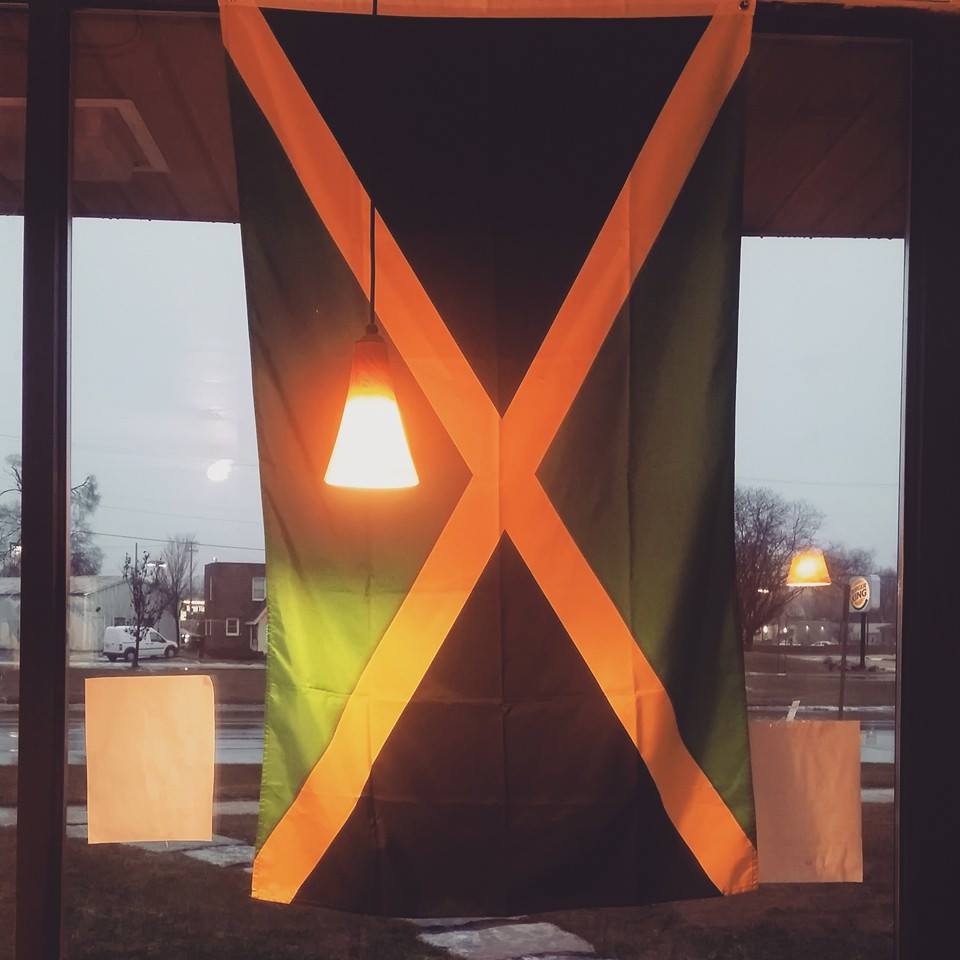
This is the case in Metropolitan Detroit, Michigan USA. The publishers of the book Go Lean…Caribbean are here to “observe and report” the turn-around and rebirth of the once-great-but-now-distressed City of Detroit. The book posits that trade with the Caribbean Diaspora can be better organized and fostered so as to better harvest economic benefits to the homeland. This point is well-evidenced in Southfield (Detroit suburb) with the Jamaican restaurant Fenton’s Jerk Chicken:

http://fentonbrownsr.wix.com/fentonsjerkchicken
<<< See Appendix >>>

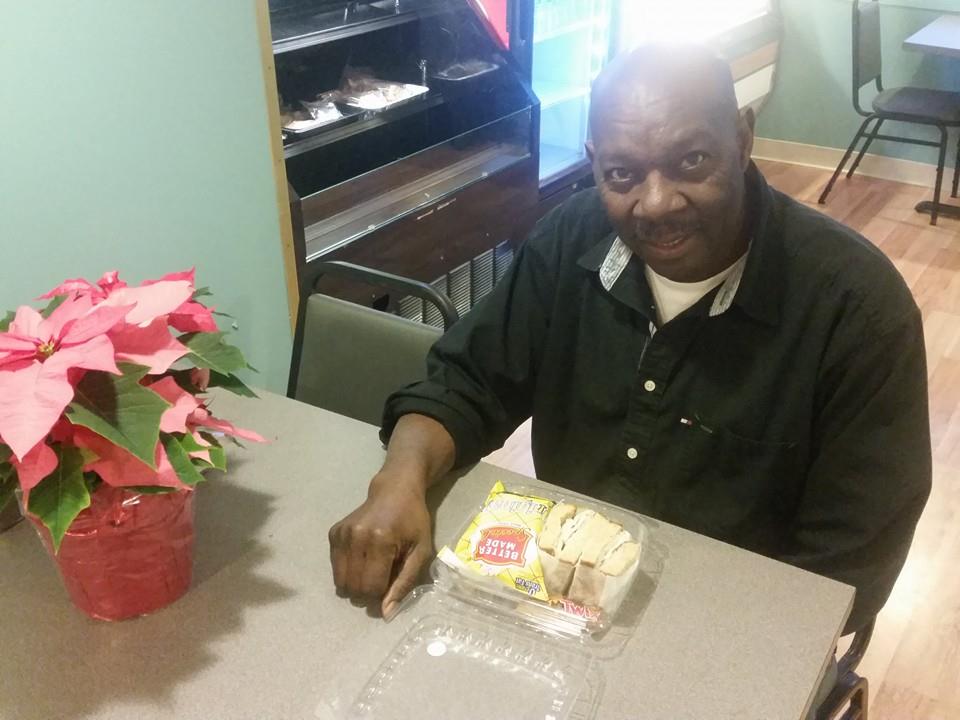
This establishment thrives in its community with a great tradition of quality food and Caribbean hospitality. But on Sunday, the eve of August Monday, this restaurant extended further with an Emancipation Day tribute/celebration for the public to consume. The main feature of this tribute was a One-Man Band, an elite and prolific Bahamian Recording Artist Ya Tafari. He is an award-winning composer and performer of Jazz, Latin, and Caribbean music. As a multi-instrumentalist and vocalist with a fan base stretching from Freeport, Bahamas to Detroit. This presentation was about music and the business of music, as it fostered an increase in sales for that one day at Fenton’s Jerk Chicken Restaurant. See VIDEO here:

VIDEO – Bahamian One-man Band Ya Tafari … at Fenton’s – https://youtu.be/rZoRKITj7d0

Performing on Sunday, August 2nd 2015 at Fenton’s Jamaican Restaurant in Southfield, Michigan

Artist Profile: YA TAFARI

Source: Online Music Retailing Website – Watchfire Music – The Trusted Destination for Inspirational Music; retrieved from: http://watchfiremusic.com/artist.php?arid=79

Ya Tafari Photo 1

Ya Tafari is an author, composer, singer- songwriter, and poet who plays piano, guitar, and Latin percussion. Born in Cincinnati, Ohio, he lived in the Bahama Islands and was “adopted” by a family there, and now claims the Bahamas as his second home.

Although Ya Tafari started as a folk singer, the genres in which he composes and performs are varied. They include traditional jazz, spiritual jazz, Latin, Caribbean, folk, tropical, and new world music. Using his keyboards, he has become renowned as a “one-man orchestra.”

Ya Tafari is fond of and influenced by other artists from around the world: Brazil – Joao Gilberto, Cuba – Tito Puente, Jamaica – Bob Marley and Harry Belafonte, the Bahamas – Ronnie Butler, Canada – Joni Mitchell, the United States – John Coltrane, Miles Davis, and Pharaoh Sanders.

His greatest love and influence is the Holy Bible , and the other Lost Books of God’s Word.

BIOGRAPHY

Yaqob Tafari Makuannen, a.k.a. YaTafari, an award-winning composer, author, and performer of Jazz, Latin, Caribbean, and Spiritual music, grew up in Cincinnati, Ohio, and settled in Detroit, Michigan.

In Detroit, he received the Spirit of Detroit Award, and earned first place in the Renaissance Center Talent Contest two years in a row. He was presented awards by Chuck Gaidica, a local celebrity.

As an adult, he traveled to the Bahamas and adopted it as his second home. There he performed for the Governor General of the Bahamas and attended the Bahamian Parliament. His first recording contract was with G.B.I. Records and Television in Freeport, Bahamas, with Frank Penn, C.E.O. Thus, he is a Bahamian recording artist.

Ya Tafari has performed throughout Metropolitan Detroit and internationally. As music consultant for the African Heritage Center of the Detroit Public Schools, he hassperformed in DPS schools to audiences from pre-school to high School, introducing students and staff to different rhythms, musical instruments, and genres from the African Diaspora.

His greatest love is reading God’s word in the Holy Bible and Lost Books. His recent projects include a book, Man Woman & Spirit, and a recording of the Psalms of David to the original music of Ya Tafari.

DISCOGRAPHY

Esoteric Jazz

Ya Tafari Photo 3

Esoteric sound is therapeutic and healing for the soul and spirit… for meditation and relaxation of body, mind, and spirit. It is a mystical transcendental mood.

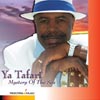
Mystery Of The Sea

Ya Tafari Photo 4

No matter where you are…riding in a car, sitting in your home, walking, or laying down to sleep, “Mystery   of the Sea” will take you there and lift your spirits to another level. The sea speaks to us in its own way. Experience the mystery.

All Blue

Ya Tafari Photo 5

Why Blue? God chose the color Blue. The sky, the ocean, rage and calm, to cause people to remember to focus on right living. I thank God for blue. So, I used blue to focus on beautiful   sounds of music. All blue.

QUOTES/REVIEWS

“Ya Tafari has a smooth, soothing, CD sound that sends you on vacation.” – Kevin P., Detroit, Michigan

“The Cherry Hill Stage was ablaze with the sounds of Caribbean Jazz performed by YATAFARI & THE AFRO PERCUSSIONS.” – The Dearborn Homecoming Committee, Michael A. Guido, Mayor – Dearborn, Michigan

“…Caribbean Recording Artist YaTafari, the JunkAnoo jazz java and calypso colorful butterfly, is electrifying, exciting, and a ’must see’ entertainer from Nassau, Bahamas.” – Gracie Cross, Ragggedy Girl Publishing Group

“…Mr. Makuannen presented a program here at McKinley (Elementary School) during our Cultural History Celebration. It was outstanding!…You can’t go wrong with this program.” – J. Korenowsky, Principal, Toledo Public Schools

“…A fun festive, and captivating entertainer who will warm hearts with a kaleidoscope of sound, color, and sweet musical beats.” – Mitali Chaudhery, Website Coordinator, Schoolcraft College International Institute (SCII)

———–

Download Ya Tafari Music Now

Ya Tafari  Photo 2

In a structured interview, Ya Tafari made the following contributions to this discussion of the roadmap to elevate the Caribbean through music:

Bold = Author

You obviously love the Bahamas/Caribbean, why do you not live there?

I loved my time in Freeport (Bahamas 2nd City). I would love to settle there, but realistically the economic challenges are hard to overcome. I hope they would have a better economic reality there … in the future.

Where do you call home now?

I live here in the Greater Detroit area, in the Town of Novi. Despite not being “home” in the Bahamas, I have the assured comfort of being with my family here. I bring my love for my Bahamaland here to Detroit in my musical presentations.

What was your biggest performance ever?

I’ve had the pleasure of performing as a solo artist at the stage here in Detroit at the Eastern Market. I had a huge crowd completely captivated by my sound. They were into me, and I was into them. Good times!

What would you like to see different in the Bahamas in the next 5 years?

I would like to see that community more accepting of foreign influences, especially a fusion with Eastern/Oriental Music. I’ve incorporated a lot of the spirit of Yoga, Zen and New Age influences in my music and it serves me and my listening audience well. As the old adage goes: “Music does soothe the savage beast”.

What would you like to see different in the Bahamas in the next 10 years?

I would like to see the Bahamas open up the doors to all mankind. The society is not as tolerant of diverse people as they need to be. This is bigger than just music. If/when they do widen-out more, it will even improve their tourism product, by extending their embrace for all people.

What would you like to see different in the Bahamas in the next 20 years?

I would like to see the next generation of Bahamians not join the Diaspora. Of course, I want them to travel, and study, and engage foreign cultures and  then bring those experiences back home. That is an exciting prospect.

Where do you consider to be the best place on earth to live?

Italy! That culture is about enjoying life; they are concerned about more than just work, or making money. They strive to care for their people and lift everyone up. Despite the lack of economics though, I still find the Black communities around the world have a closer brotherhood. When a Black person sees another Black person while travelling abroad, they tend to acknowledge each others as brothers. That is inspiring. Yes, we can all do better.

————

Ya Tafari can be reached at: makuannen@mail.com

This artist profile is a manifestation of the roadmap depicted in the book Go Lean…Caribbean, that music, food and culture can be accentuated to promote change in the Caribbean and within the Caribbean Diaspora abroad. Music can help make any location a better place to live, work and play.

This Go Lean commentary previously featured subjects related to developing the eco-systems of the music/show business, as sampled here:

https://goleancaribbean.com/blog/?p=3641 ‘We Built This City …’ on Music
https://goleancaribbean.com/blog/?p=3568 Forging Change: Music Moves People
https://goleancaribbean.com/blog/?p=2415 Broadway Musical ‘The Lion King’ Roars into History With its Impact
https://goleancaribbean.com/blog/?p=1909 Music Role Model Berry Gordy – No Town Like Motown
https://goleancaribbean.com/blog/?p=866 Caribbean Music Man Bob Marley: The legend lives on!

This Go Lean roadmap calls for heavy-lifting to build up Caribbean communities, by shepherding important aspects of Caribbean life, beyond music and/or show business. In fact, the development roadmap has these 3 prime directives:

  • Optimization of the economic engines in order to grow the regional economy to $800 Billion & create 2.2 million new jobs.
  • Establishment of a security apparatus to protect the resultant economic engines.
  • Improvement of Caribbean governance to support these engines.

The Go Lean book focuses primarily on economic issues, but it recognizes that music, in its many genres can build up a nation, a city, and a community (Diaspora and local alike). Any difficult subject – like slavery, freedom and emancipation – can be more easily communicated if backed-up by a catchy melody and rhyming words. Yes, music can effect change and forge progress and elevation of society. The Go Lean book serves as a roadmap for the introduction and implementation of the technocratic Caribbean Union Trade Federation (CU). The CU is designed to elevate the region’s economic, security and governing societal engines.

The Go Lean book posits that one person, despite their field of endeavor, can make a difference in the Caribbean, and its impact on the world; that there are many opportunities where one champion, one advocate, can elevate society. In this light, the book features 144 different advocacies, one specifically to Promote Music (Page 231). We need champions like Ya Tafari to promote the joys of Caribbean life, culture and music.

The Go Lean roadmap specifically encourages the region, to lean-in to elevate society with these specific community ethos, strategies, tactics, implementations and advocacies to advance the music eco-systems:

Community Ethos – Deferred Gratification Page 21
Community Ethos – Economic Principles – People Respond to Incentives in Predictable Ways Page 21
Community Ethos – Economic Principles – The Consequences of Choices Lie in the Future Page 21
Community Ethos – Ways to Impact the Future Page 26
Community Ethos – Ways to Foster Genius – Fostering Music and the Arts Page 27
Community Ethos – Ways to Promote Intellectual Property Page 29
Community Ethos – Ways to Bridge the Digital Divide Page 31
Community Ethos – Ways to Impact Turn-Around Page 33
Community Ethos – Ways to Promote Happiness – Promotion of Domestic Culture Page 36
Community Ethos – Ways to Impact the Greater Good Page 37
Strategy – Vision – Confederate 30 Member-States Page 45
Strategy – Mission – Celebrate the Music, Sports, Art, People and Culture of the Caribbean Page 46
Tactical – Fostering a Technocracy Page 64
Tactical – Growing Economy to $800 Billion – Education Empowerments Page 70
Tactical – Separation-of-Powers – Educational Empowerment from Federation to Member-States Page 85
Implementation – Trade Mission Objectives Page 117
Planning – 10 Big Ideas for the Caribbean Region – Four Languages in   Unison Page 127
Planning – Ways to Improve Trade – Diaspora Trade Page 128
Planning – Ways to Make the Caribbean Better – Music/Media/Arts for better PLAY Page 131
Advocacy – Ways to Grow the Economy Page 151
Advocacy – Ways to Create Jobs Page 152
Advocacy – Ways to Improve Communications Page 186
Advocacy – Ways to Impact Hollywood – Media Arts of the Caribbean to the World Page 202
Advocacy – Ways to Impact the Diaspora Page 217
Advocacy – Ways to Preserve Caribbean Heritage Page 218
Advocacy – Ways to Improve the Arts Page 230
Advocacy – Ways to Promote Music Page 231
Appendix – Job Creations – Music and Art Related Jobs: 12,600 Page 257
Appendix – 169 Caribbean Musical Genres for all 30 Member States Page 347

The quest to change the Caribbean is conceivable, believable and achievable. But it is more than just playing or listening to music; it is the business of music, and music’s ability to reflect change and effect change. This helps the heavy-lifting of forging permanent change in the region. The Go Lean roadmap will make the region a better place to live, work and play. From the outset, the book recognized the significance of music in the Caribbean change/empowering plan with these statements in the opening Declaration of Interdependence (Page 12 & 14):

xxi.  Whereas the preparation of our labor force can foster opportunities and dictate economic progress for current and future generations, the Federation must ensure that educational and job training opportunities are fully optimized for all residents of all member-states, with no partiality towards any gender or ethnic group. The Federation must recognize and facilitate excellence in many different fields of endeavor, including sciences, languages, arts, music and sports. This responsibility should be executed without incurring the risks of further human flight, as has been the past history.

xxxii.  Whereas the cultural arts and music of the region are germane to the quality of Caribbean life, and the international appreciation of Caribbean life, the Federation must implement the support systems to teach, encourage, incentivize, monetize and promote the related industries for arts and music in domestic and foreign markets. These endeavors will make the Caribbean a better place to live, work and play.

The foregoing VIDEO explicitly depicted how the addition of music enhanced a Caribbean business establishment in the Detroit Diaspora community. Music can have that effect. It can make bad things good and good things better. It can be fun! While the Go Lean book describes the CU as a hallmark of a technocracy, with a commitment to efficiency and effectiveness, there is still a commitment to concepts of fun, such as music, arts, sports, film/media, heritage and culture.

This roadmap is a fully comprehensive plan with consideration to all aspects of Caribbean life. All stakeholders – residents and Diaspora – are hereby urged to lean-in to this roadmap.  🙂

Download the free e-Book of Go Lean … Caribbean – now!

—————

Appendix – Fenton’s Jamaican Jerk Chicken Restaurant – 28811 Northwestern Hwy, Southfield, Michigan, USA

Ya Tafari Photo 6

Ya Tafari Photo 7Ya Tafari Photo 8

Ya Tafari Photo 9

Share this post:
, , , , , ,

Movie Review: ‘Tomorrowland’ – ‘Feed the right wolf’

Go Lean Commentary

We are now mid-way through the 2015 Summer Movie Season. There have been some BIG ONES. The following is the highest Box Office performance of summer movies thus far in the US alone:

CU Blog - Feed the Right Wolf - Photo 2

Movie Opening Weekend US
Jurassic World $209 million
Avengers: Age of Ultron $191 million
Furious Seven $147 million
Minions $116 million
Inside Out $90 million
Pitch Perfect 2 $69 million
Ant-Man $57 million
Mission: Impossible – Rogue Nation $56 million
San Andreas $54 million
Insurgent $52 million
Mad Max: Fury Road $45 million
Ted 2 $34 million
Tomorrowland $33 million
Spy $29 million
Terminator Genisys $27 million
Fantastic Four $26 million
Magic Mike XXL $13 million
Entourage $10 million

Movies play a unique role in our lives.

In a previous blog/commentary regarding Caribbean Diaspora member and Hollywood great, Sidney Poitier, it was declared that …

“Movies are an amazing business model. People give money to spend a couple of hours watching someone else’s creation and then leave the theater with nothing to show for the investment; except perhaps a different perspective”.

This foregoing statement sets the foundation for appreciation of one movie in particular from the foregoing list, Disney’s Tomorrowland: A World Beyond which admonishes us to:

Feed the right wolf.
There are two wolves. One bright and hopeful and one dark and cynical. Which wolf wins? Whichever one you feed.

This quotation from the movie aligns with the reality of the Caribbean – art imitating life. The region is in crisis due to calamities and socio-economic changes in the region … and globally. The region has not even kept pace with the “push-and-pull” factors drawing many Caribbean citizens to flee…and abandon their beloved homelands. Already that brain drain among the college-educated population is up to a 70% rate among the entire region, with some communities experiencing alarmingly higher rates: Jamaica 85%; Guyana 89%.

The region is now at the cross-roads: maintain the status quo and watch the societal abandonment and decline continue (dark and cynical) … or … foster change and grant the Caribbean region a new (bright and hopeful) future.

Which wolf/future will win?

The book Go Lean … Caribbean asserts the option of fostering a bright and hopeful future. It provides turn-by-turn directions on how to arrest the societal abandonment and elevate the region’s economic, security and governing engines.

The book describes how/when/why to feed the right wolf!

This book serves as a roadmap for the introduction and implementation of the Caribbean Union Trade Federation (CU), a technocratic agency seen as the Caribbean’s best hope to avert the current path of disaster, human flight and brain drain, and grant the Caribbean a meaningful future for its youth.

This roadmap aligns with the movie plotlines:

Title: “Feed the right wolf.” Disney’s Tomorrowland (2015 film)
Reel Roy Reviews – Movie Review Site; posted May 23, 2015; retrieved 08-21-2015 from:
http://reelroyreviews.com/2015/05/23/feed-the-right-wolf-disneys-tomorrowland-2015-film/ 

CU Blog - Feed the Right Wolf - Photo 1

“Find the ones who haven’t given up. They are the future.” So says George Clooney at the end of Brad Bird’s latest Disney offering Tomorrowland, inspired as much by Disney’s ubiquitous theme parks (from which it derives its inspiration) as it does Ray Bradbury’s Fahrenheit 451, Jules Verne’s 20,000 Leagues Under the Sea, and … Al Gore’s An Inconvenient Truth.

In fact, this may be the first children’s film that directly addresses – so darkly, so interestingly, so strangely – global warming among other mankind-created global calamities. I can’t recall the last kiddie flick that depicted so darn many mushroom clouds, or had such a nihilistic sentiment at its gooey center. Good for Brad Bird.

Clearly a passion project for the director, the film suffers, alas, from a narrative lumpiness. It is composed almost like a junior novella, with very abrupt chapter breaks, and an unclear sense of the overall purpose until the crackerjack final act.

Regardless, the journey is an entertaining and worthwhile one, at least philosophically. As I find myself personally at a crossroads in life – looking back at what erroneously seemed an idyllic small-town, all-American way-of-life and now dreaming of a much-needed present/future state when we all can embrace empathy, kindness, and love, regardless our geographically defined boundaries – the film hit a raw nerve for me.

Ostensibly, the film is about Britt Robertson’s Casey Newton, a young, overeager space-loving kid horrified that America has given up on all dreams of galactic exploration. Casey discovers a magic pin that gives her glimpses of a sparkling utopia where we all live hand-in-hand, driving electric cars, zipping to-and-fro in bullet shaped sky-trains, and all wearing flowing garb designed in collaboration between Vera Wang and Judy Jetson (?). (Oh, and everybody in the future is fit. No fast food, no gluten, and, yeah, I bet vegan. Go figure.)

In truth? The film is really about George Clooney’s Frank Walker, a bright-eyed young boy born of nuclear optimism now a middle-aged sot calcified by millennial atrophy. He sees a world that he hoped would be (pushed to be), its limitless potential now squandered by petty greed and intentional hate. The classic baby boomer dilemma.

Casey sparks a reluctant optimism in Frank, as they meet cute, amidst a gaggle of murderous robots blowing up Frank’s steampunk farmhouse. They travel to Tomorrowland in hopes of preventing global catastrophe. Tomorrowland, you see, is an alternate dimension designed as a free-thinking societal construct, intended to gather humanity’s best and brightest in order to effect great change, but now turned to seed. Hugh Laurie, all glowering smarm, is its chief magistrate.

Robertson, who unfortunately has the acting range of a peanut, mugs and screams shamelessly, but Clooney with his oily charm is the perfect antidote. It takes quite a bit of screen time for him to finally emerge, but when he does the film starts firing on all cylinders.

Tomorrowland (the place … in the film) is a marvel of design, taking many cues from but never limited by the aesthetic of Disney’s theme park Tomorrowland(s) as well as the original designs for EPCOT – all swooping spirals, glittering towers, and burnished concrete.

As I understand it, Walt Disney and Ray Bradbury were pals, and they and their creative legacies share a similar take on the “future,” a concept as nebulous as it is thrilling. For these mid-century marvels, the future is a pearly veneer with a toxic venom ever curdling underneath. Both men telegraphed a healthy agnosticism and distrust of humanity – see Bambi, for one – with a deep desire to see us collectively rise above our own insularity and self-absorption … once and for all. Fat chance.

Brad Bird does a fine job capturing and forwarding this idea in Tomorrowland. The film is not perfect, a bit tedious at times, but it is a worthwhile summer blockbuster exercise in challenging how stunted we have become. At one point Casey says something to this effect: “There are two wolves. One bright and hopeful and one dark and cynical. Which wolf wins? Whichever one you feed. Feed the right wolf.”

Feed the right wolf.

————-

VIDEO – Trailer for Movie: Tomorrowland – http://www.imdb.com/video/imdb/vi4284068121/

The Go Lean roadmap synchronizes with the theme of the movie Tomorrowland. On Page 21, Go Lean presents a series of community ethos – the fundamental spirit that informs the beliefs, customs, or practices of a society – that must be adapted to forge change in the Caribbean; listed as follows:

  • Impact the Future (Page 26)
  • Impact the Greater Good (Page 37)

Life imitating art; art imitating life.

This is what movies help us to appreciate; many times, they allow us to look at ourselves and take a retrospective view. Which wolf are we feeding?

The CU/Go Lean roadmap seeks to forge change on Caribbean society with a new level of collaboration to contend with global/regional threats and to fix the defective societal engines. In fact, the prime directives of the CU/Go Lean roadmap are pronounced as these declarative statements:

  • Optimization of the economic engines in order to grow the economy to $800 Billion & create 2.2 million new jobs.
  • Establishment of a security apparatus to protect the resultant economic engines.
  • Improvement of Caribbean governance to support these engines.

The Go Lean book opens with a quest for regional integration, with the Declaration of Interdependence (Pages 11 – 14), including these pronouncements:

i. Whereas the earth’s climate has undeniably changed resulting in more severe tropical weather storms, it is necessary to prepare to insure the safety and security of life, property and systems of commerce in our geographical region. As nature recognizes no borders in the target of its destruction, we also must set aside border considerations in the preparation and response to these weather challenges.

xi. Whereas all men are entitled to the benefits of good governance in a free society, “new guards” must be enacted to dissuade the emergence of incompetence, corruption, nepotism and cronyism at the peril of the people’s best interest. The Federation must guarantee the executions of a social contract between government and the governed.

xii. Whereas the legacy in recent times in individual states may be that of ineffectual governance with no redress to higher authority, the accedence of this Federation will ensure accountability and escalation of the human and civil rights of the people for good governance, justice assurances, due process and the rule of law. As such, any threats of a “failed state” status for any member state must enact emergency measures on behalf of the Federation to protect the human, civil and property rights of the citizens, residents, allies, trading partners, and visitors of the affected member state and the Federation as a whole.

xxiv. Whereas a free market economy can be induced and spurred for continuous progress, the Federation must install the controls to better manage aspects of the economy: jobs, inflation, savings rate, investments and other economic principles. Thereby attracting direct foreign investment because of the stability and vibrancy of our economy.

xxvii. Whereas the region has endured a spectator status during the Industrial Revolution, we cannot stand on the sidelines of this new economy, the Information Revolution. Rather, the Federation must embrace all the tenets of Internet Communications Technology (ICT) to serve as an equalizing element in competition with the rest of the world. The Federation must bridge the digital divide and promote the community ethos that research/development is valuable and must be promoted and incentivized for adoption.

The Go Lean book accepts the premise that a crisis is a terrible thing to waste (Page 8), that these challenging circumstances allow people of goodwill – as conveyed in the foregoing movie review/article: “the ones who haven’t given up … they are the future”  – to emerge and forge the necessary improvements in society. These previous blog/commentaries have also drilled deeper on this vision and opportunity for change now. See the list here:

https://goleancaribbean.com/blog/?p=5733 Better than America? Yes, We Can!
https://goleancaribbean.com/blog/?p=5098 Forging Change – ‘Food’ for Thought
https://goleancaribbean.com/blog/?p=3956 Art and Science of Collaboration
https://goleancaribbean.com/blog/?p=3490 How One Entrepreneur Can Rally a Whole Community
https://goleancaribbean.com/blog/?p=1817 Caribbean grapples with intense new cycles of flooding & drought
https://goleancaribbean.com/blog/?p=1634 Book Review: ‘Chasing Youth Culture and Getting It Right’
https://goleancaribbean.com/blog/?p=1596 Book Review: ‘Prosper Where You Are Planted’
https://goleancaribbean.com/blog/?p=1014 All is not well in the sunny Caribbean
https://goleancaribbean.com/blog/?p=623 Only at the precipice, do they change
https://goleancaribbean.com/blog/?p=599 Ailing Caribbean island open to radical economic fixes

The Go Lean roadmap asserts that change must come to the Caribbean. But the book posits that this burden is too big for any one Caribbean member-state alone, and thus the collaboration efforts of the CU is necessary, as the strategy is to confederate all the 30 member-states of the Caribbean into an integrated “Single Market” – this is the only viable solution.

This is how we “feed the wolf” that is representing a bright and hopeful future.

The following list details the community ethos, strategies, tactics, implementations and advocacies to “feed the right wolf”:

Community Ethos – Forging Change Page 20
Community Ethos – Lean Operations Page 24
Community Ethos – Return on Investments Page 24
Strategy – Strategy – Caribbean Vision Page 45
Strategy – Agents of Change – Globalization Page 57
Tactical – Growing the Caribbean Economy to $800 Billion Page 67
Tactical – Separation of Powers – CU Agencies versus Member-States Page 71
Planning – 10 Big Ideas for the Caribbean Region Page 127
Planning – Ways to Make the Caribbean Better Page 131
Advocacy – Ways to Grow the Economy Page 151
Advocacy – Ways to Create Jobs Page 152
Advocacy – Was to Improve Governance Page 168
Advocacy – Ways to Impact Hollywood – Global Box Office – Imitating Life Page 203
Advocacy – Ways to Preserve Caribbean Heritage Page 218
Appendix – Hollywood Box Office Model Page 345

Considering the review of the movie in the foregoing article, we see that Caribbean “life can imitate art” of that movie. The moral of that story can be an inspiration for us all in the region. This vision is conceivable, believable and achievable!

The Go Lean roadmap has a simple motive: enable the Caribbean to be a better place to live, work and play. If not now then for the future, for our Tomorrowland.  🙂

Download the book Go Lean … Caribbean – now!

—————

Appendix VIDEO – Featurette: The Making of Tomorrowlandhttp://www.imdb.com/video/imdb/vi1390981145/

Share this post:
, , , , ,
[Top]

Socio-Economic Change: Impact Analysis of SGE’s

Go Lean Commentary

This purpose of the book Go Lean … Caribbean is the elevation of the economic engines in the region. The book serves as a 5 year roadmap to foster new developments and empowerments in the region. If successful – this is the likelihood as past performance is the best indicator of future success – there will definitely be socio-economic changes.

Click on photo to download Report!

Click on photo to download Report!

Mastering socio-economic changes require strenuous effort – it is heavy-lifting. This submission completes the series – 3 of 3 – on this subject; previously, this commentary considered …

1. the manifestation of changes in everyday life – values, habits and nuances, looking across a timeline from the 1960’s versus today;

2. the high suicide rate among the elderly frustrated with acute changes.

This commentary considers that under the Go Lean roadmap, there will be many community investment endeavors; therefore many times there will be the need for “impact analyses”. The roadmap calls for the installation of Self-Governing Entities (SGE) as job-creating engines in many communities; these sites are ideal for technology laboratories, medical campuses, corporate parks, industrial sites, educational facilities and other forms of establishments situated inside bordered facilitates. These types of installations will thrive under the strategies and tactics of the Go Lean roadmap. They allow for an efficient process to launch and manage projects and physical installations in the region, but the SGE concept does require governmental concurrence and maybe even public approvals, as in referendums, at the initiation.

SGE’s are part-and parcel of the prime directives of the Go Lean roadmap, defined by these 3 statements:

  • Optimization of the economic engines in order to grow the regional economy to $800 Billion in GDP and create 2.2 million new jobs.
  • Establishment of a security apparatus to protect the resultant economic engines.
  • Improvement of Caribbean governance to support these engines.

How are the impact analyses to be conducted in the region? What is the art and science of this socio-economic field of study? Consider the headlines and abstract of this academic study from the University of Wisconsin:

Title: Socio-Economic Impact Analysis
University of Wisconsin – Community Guide to Development Impact Analysis. Posted 05/2/2011; retrieved 07-17-2015
By: Mary Edwards

As Wisconsin communities continue to grow, local officials and community members are constantly challenged by the need to balance fiscal, social, economic, and environmental goals. One aspect of this challenge is deciding how much and what types of new development the community can accommodate without compromising the day-to-day quality of life for residents. Socio-economic impact assessment is designed to assist communities in making decisions that promote long-term sustain-ability, including economic prosperity, a healthy community, and social well-being.

Assessing socio-economic impacts requires both quantitative and qualitative measurements of the impact of a proposed development. For example, a proposed development may increase employment in the community and create demand for more affordable housing. Both effects are easily quantifiable. Also of importance, however, are the perceptions of community members about whether the proposed development is consistent with a commitment to preserving the rural character of the community. Assessing community perceptions about development requires the use of methods capable of revealing often complex and unpredictable community values.

This chapter provides an overview of socio-economic impact assessment, including what it is, why it is important and guidance on how to conduct a socio-economic impact assessment.

WHAT IS SOCIO-ECONOMIC IMPACT ASSESSMENT?

A socio-economic impact assessment examines how a proposed development will change the lives of current and future residents of a community. The indicators used to measure the potential socio-economic impacts of a development include the following:

• Changes in community demographics;
• Results of retail/service and housing  market analyses;
• Demand for  public services;
• Changes in  employment and  income levels; and
• Changes in the aesthetic quality of the community.

Quantitative measurement of such factors is an important component of the socio-economic impact assessment. At the same time, the perceptions of community members about how a proposed development will affect their lives is a critical part of the assessment and should contribute to any decision to move ahead with a project. In fact, gaining an understanding of community values and concerns is an important first step in conducting a socio-economic impact assessment.

The socio-economic impacts of a proposed development on a community may actually begin the day the project is proposed. Changes in social structure and inter-actions among community members may occur once the new development is pro-posed to the community. In addition, real, measurable and often significant effects on the human environment can begin to take place as soon as there are changes in social or economic conditions. From the time of the earliest announcement of a pending policy change or development project, attitudes toward the project are formed, interest groups and other coalitions prepare strategies, speculators may lock up potentially important properties, and politicians can maneuver for position.

WHO SHOULD BE INVOLVED IN THE PROCESS?

Because socio-economic impact assessment is designed to estimate the effects of a proposed development on a community’s social and economic welfare, the process should rely heavily on involving community members who may be affected by the development. Others who should be involved in the process include community leaders and others who represent diverse interests in the community such as community service organizations, development and real estate interests, minority and low income groups, and local environmental groups. In addition, local agencies or officials should provide input into the process of assessing changes in the social environment that may occur as a result of the proposed development (e.g., providing estimates and information demographics, employment and service needs).

WHY CONDUCT A SOCIO-ECONOMIC IMPACT ASSESSMENT?

Conducting a social impact assessment is important for several reasons. In general, it is used to alert the community, including residents and local officials, of the impact and magnitude of the proposed development on the community’s social and economic well-being. The assessment can help communities avoid creating inequities among community groups as well as encourage the positive impacts associated with the development.

HOW TO CONDUCT A SOCIO-ECONOMIC IMPACT ASSESSMENT

The following section provides a two-step process for conducting a socio-economic impact analysis. The process is designed to establish a framework for evaluating cur-rent and future proposed developments in a community.

TWO PHASES OF SOCIO-ECONOMIC IMPACT ASSESSMENT

1. Defining the scope of the Socio-Economic Impact Assessment

2. Identifying and Evaluating Development Impacts

  A. Quantitative Changes
     A.1 DEMOGRAPHIC IMPACTS
     A.2 DATA SOURCES
     A.3 HOUSING MARKET IMPACTS
     A.4 RETAIL MARKET IMPACTS
     A.5 EMPLOYMENT AND INCOME
     A.6 PUBLIC SERVICES
     A.7 AESTHETIC IMPACTS
  B. Community Perceptions
     B.1 QUALITY OF LIFE

This is just the headlines; find the full White Paper at: http://www.lic.wisc.edu/shapingdane/facilitation/all_resources/impacts/analysis_socio.htm

i.e.  Sample Economic Impact Study

Click on photo to download Report!

Click on photo to download Report!

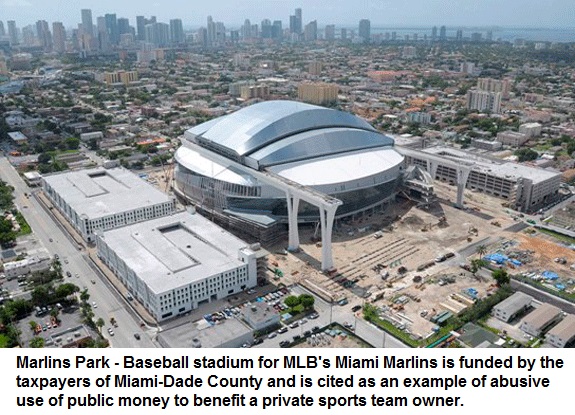
The Go Lean roadmap does not ignore the controversies associated with impact analyses. Many times these studies are abused to justify spending public money to benefit private interests. This is another example of Crony-Capitalism; consider the VIDEO here of how public financing of sports stadiums have been abused in the US:

Appendix VIDEO – Last Week Tonight with John Oliver: Stadiums (HBO) – https://youtu.be/xcwJt4bcnXs

Published on July 12, 2015 – Cities spend massive amounts of public money on privately-owned stadiums. Cities issue tax-exempt municipal bonds that — wait, don’t fall asleep!
Content warning: Some profanity!

According to this VIDEO, there is an obvious potential for socio-economic studies to be abused. The goal of a socio-economic study is generally to bring about socio-economic development, usually by improvements in metrics such as GDP, life expectancy, literacy, levels of employment, etc.

SGE Impact Photo 3SGE Impact Photo 4SGE Impact Photo 5

The Go Lean roadmap embraces the practice of socio-economic studies – done right – it provides turn-by-turn directions on how to elevate the Caribbean economy while mitigating any pattern of abuse. As a planning tool, the roadmap commences with a Declaration of Interdependence, pronouncing the need for regional integration (Page 11 & 13) to foster the foundation to forge a better future. The declarative statements are as follows:

xi.  Whereas all men are entitled to the benefits of good governance in a free society, “new guards” must be enacted to dissuade the emergence of incompetence, corruption, nepotism and cronyism at the peril of the people’s best interest. The Federation must guarantee the executions of a social contract between government and the governed.

xxi. Whereas the preparation of our labor force can foster opportunities and dictate economic progress for current and future generations, the Federation must ensure that educational and job training opportunities are fully optimized for all residents of all member-states, with no partiality towards any gender or ethnic group. The Federation must recognize and facilitate excellence in many different fields of endeavor, including sciences, languages, arts, music and sports. This responsibility should be executed without incurring the risks of further human flight, as has been the past history.

xxvi. Whereas the Caribbean region must have new jobs to empower the engines of the economy and create the income sources for prosperity, and encourage the next generation to forge their dreams right at home, the Federation must therefore foster the development of new industries… In addition, the Federation must invigorate the enterprises related to existing industries … – impacting the region with more jobs.

Change has now come to the Caribbean. The driver of this change is technology and globalization. The Caribbean region cannot only consume the innovations being developed around the world; we must develop and innovate ourselves. The structure of SGE’s are perfectly designed for this endeavor; innovators and developers can create their “own world” so as to foster the best practices for Research & Development (R&D) with no intrusion from municipal authorities. This is a win-win! The bottom-line for the developers may be their “bottom-line”, but for the community, it would be the Greater Good.

The subject of SGE’s has been directly addressed and further elaborated upon in these previous blog/commentaries:

https://goleancaribbean.com/blog/?p=4037 How to Train Your ‘Dragon’ – Case Study for Foreign Investments and SGE’s
https://goleancaribbean.com/blog/?p=3473 Haiti to Receive $70 Million Grant to Expand SGE-like ‘Caracol Industrial Park’
https://goleancaribbean.com/blog/?p=3276 A Role Model – Ideal for SGE’s – Shaking Up the World of Cancer
https://goleancaribbean.com/blog/?p=2800 The Geography of Joblessness – The need for SGE’s
https://goleancaribbean.com/blog/?p=2750 Disney World – Role Model for Self Governing Entities
https://goleancaribbean.com/blog/?p=2003 Where the Jobs Are – Ship-breaking under SGE Structure
https://goleancaribbean.com/blog/?p=1214 Fairgrounds as SGE and Landlords for Sports Leagues
https://goleancaribbean.com/blog/?p=286 Puerto Rico’s Comprehensive Cancer Center – Model of Medical SGE

Sports is also pivotal to the Go Lean roadmap. This was demonstrated in our prior consideration of the economic impact analysis of basketball great LeBron James returning to Cleveland after a 4-year stint in Miami. That consideration summarized that his absence was worth $50 million a season for that metropolitan area.

So thusly this subject of the “business of sports” is a familiar topic for Go Lean blogs as these previous blogs have detailed:

https://goleancaribbean.com/blog/?p=4019 The Business of the Super Bowl … and Commercials
https://goleancaribbean.com/blog/?p=3414 Levi’s® Stadium: A Team Effort … for the San Francisco Bay
https://goleancaribbean.com/blog/?p=3244 Sports Role Model – espnW.
https://goleancaribbean.com/blog/?p=2222 Sports Role Model – Playing For Pride … And More
https://goleancaribbean.com/blog/?p=2171 Sports Role Model – Turn On the SEC Network
https://goleancaribbean.com/blog/?p=2152 Sports Role Model – US versus the World
https://goleancaribbean.com/blog/?p=1446 Caribbean Players in the 2014 World Cup
https://goleancaribbean.com/blog/?p=1341 College World Series Time – Lessons from Omaha
https://goleancaribbean.com/blog/?p=1214 The Art & Science of Temporary Stadiums – No White Elephants
https://goleancaribbean.com/blog/?p=1148 Sports Bubble – Franchise values in basketball
https://goleancaribbean.com/blog/?p=1020 Sports Revolutionary: Advocate Jeffrey Webb
https://goleancaribbean.com/blog/?p=498 Book Review: ‘The Sports Gene’
https://goleancaribbean.com/blog/?p=334 Bahamians Make Presence Felt In Libyan League
https://goleancaribbean.com/blog/?p=318 Collegiate Sports in the Caribbean
https://goleancaribbean.com/blog/?p=60 Could the Caribbean Host the Olympic Games?

This Go Lean roadmap seeks to implement the technocratic Caribbean Union Trade Federation (CU). While the CU/Go Lean effort is to harness the individual abilities of athletes to elevate their performance, the real focus is harnessing the economic impact for the relevant communities. Modern sports engagements cannot be analyzed without considering the impact on “dollars and cents” for the community. The Go Lean book calls for solid business plans to develop sports stadia and arenas at CU-owned Fairgrounds This intent was also pronounced early in the opening Declaration of Interdependence (Page 14):

xxxi. Whereas sports have been a source of great pride for the Caribbean region, the economic returns from these ventures have not been evenly distributed as in other societies. The Federation must therefore facilitate the eco-systems and vertical industries of sports as a business, recreation, national pastime and even sports tourism …

The Go Lean book envisions the CU – a confederation of the 30 member-states of the Caribbean chartered to do the heavy-lifting of empowering and elevating the Caribbean economy – as the landlord of many sports facilities within the SGE design. The book details the economic principles and community ethos to adopt, plus the executions of strategies, tactics, implementations and advocacies to forge Self-Governing Entities and sports enterprises in the Caribbean:

Economic Principles – Deferred Gratification Page 21
Economic Principles – People Respond to Incentives in Predictable Ways Page 21
Economic Principles – Consequences of Choices Lie in the Future Page 21
Economic Principles – Job   Multiplier Page 22
Community Ethos – Lean Operations Page 24
Community Ethos – Return on Investments (ROI) Page 24
Community Ethos – Ways to Impact the Future Page 26
Community Ethos – Ways to Foster Genius Page 27
Community Ethos – Ways to Impact Research & Development Page 30
Community Ethos – Ways to Impact the Greater Good Page 37
Strategy – Agents of Change – Technology Page 48
Strategic – Staffing – Sporting Events at Fairgrounds Page 55
Tactical – Confederating a Non-Sovereign Union Page 63
Tactical – Fostering a Technocracy Page 64
Tactical – Growing Economy – New High Multiplier Industries Page 68
Tactical – Separation of Powers – Self-Governing Entities – i.e. ESA Page 80
Tactical – Separation of Powers – Sports & Culture Administration Page 81
Tactical – Separation of Powers – Fairgrounds Administration Page 83
Tactical – Separation of Powers – Education Department Page 85
Implementation – Steps to Implement Self-Governing Entities Page 105
Implementation – Ways to Deliver – Embrace of Project Management Arts & Sciences Page 109
Planning – 10 Big Ideas Page 127
Advocacy – Ways to Grow the Economy Page 151
Advocacy – Ways to Create Jobs Page 152
Advocacy – Ways to Improve Local Government – Parks & Recreation Page 169
Advocacy – Ways to Impact Public Works Page 169
Advocacy – Ways to Promote Fairgrounds Page 192
Advocacy – Ways to Foster Technology Page 197
Advocacy – Ways to Improve Sports Page 229
Advocacy – Ways to Impact Urban Living – Sports Leagues Page 234

The Go Lean book and accompanying blogs declare that the Caribbean needs to learn lessons from other communities, especially when socio-economic studies have been used (or abused) to justify community investments in infrastructure.

The design of Self-Governing Entities allow for greater protections from Crony-Capitalistic abuses. While this roadmap is committed to availing the economic opportunities of sports and accompanying infrastructure, as demonstrated in the foregoing VIDEO, sport teams and owners can be plutocratic “animals” in their greed. We must learn to mitigate any plutocratic abuses; see the Appendix – Additional Reporting below.

Now is the time for all of the Caribbean, the people and governing institutions, to lean-in for the empowerments described in the book Go Lean … Caribbean. This roadmap will result in positive socio-economic changes throughout the region. Just consider the Fairgrounds SGE model; the end result for these ventures into the business of sports is projected as 21,000 direct jobs at Fairgrounds and sports enterprises.

Overall, with these executions, the Caribbean region can be a better place to live, work and play. As demonstrated by this discussion on sports stadia, there is a lot of economic activity in the “play” element; the same applies even greater with “live and work” elements. The practice of socio-economic studies must therefore be earnestly engaged in the Caribbean region, especially for projects involving community investments. This is not easy; this is part of the process to elevate the Caribbean region. This heavy-lifting – ensuring that investments get the proper return for the applicable stakeholders – is worth the effort; this ensures the Greater Good.  🙂

Download the book Go Lean…Caribbean now!

————-

Appendix – Additional Reporting: http://www.miaminewtimes.com/news/six-lies-about-the-marlins-stadium-6380692

Title: Six lies about the Marlins stadium

By: Miami New Times Community Newspaper; posted May 5, 2011; Retrieved July 20, 2015

Share this post:
, , , , , , ,
[Top]

Taylor Swift withholds Album from Apple Music

Go Lean Commentary

The music business is first and foremost a business – Unknown Author

Caribbean people love music. The promoters of the roadmap for a new Caribbean, based on the book Go Lean…Caribbean, love music. The book identifies 169 genres of music pervasive in the Caribbean region, think Reggae, Merengue, Soca, Compas (Haiti). But the book and the news article/VIDEO below relate that the challenge in the music business is the business functionalities itself. Consider these additional quotations from musical greats about this current and historic dilemma:

Music is spiritual. The music business is not. – Van Morrison

Music and the music business are two different things. – Erykah Badu

I happened to come along in the music business when there was no trend. – Elvis Presley

The desire to hit a big home run is dominating the music business. – Billy Corgan

At the end of the day, there’s only a few major stars in the music business, and then there’s all these people that are aspiring to be that. – John Legend

CU Blog - Taylor Swift Withholds Album From Apple Music - Photo 1One of the stars of contemporary music, Taylor Swift (see Appendix below), has now reached-out and reached-in to impact this industry, the music business. She has used her financial wherewithal, immerse popularity, huge influence and massive following to force change in this industry. Despite the historical abuse, this one person is making a difference … here and now!

This aligns with the book Go Lean…Caribbean which posits that one person can advocate in a community and transform it for change. The book serves as a roadmap for the introduction and implementation of the Caribbean Union Trade Federation (CU). The CU seeks to empower the economic engines of the region, including the music and performing arts industry. The book vividly depicts how Caribbean music is great, but the Caribbean music industry is in shambles. It is difficult for artists and stakeholders to make a living in this industry in this region. This assessment is not due to any lack of music consumption or music appreciation, but rather due to the lack of a music retailing eco-system.

As depicted in the following VIDEO, most music consumption now take place via the electronic media (internet downloads, streaming, mobile devices, etc.). This is a trend that has been undermining the music industry for 2 decades now, and yet the industry stakeholders have been slow to adapt to this transforming world. This is a parallel reality for Caribbean life in general: Agents of Change (Technology, Globalization) have “rocked” the societal engines, and yet the region has still not adapted adequately. The same as one person, Taylor Swift, is hereby making an impact; this commentary asserts that a similar transformation can occur here at home, in many different arenas in society. See this source news article and VIDEO here:

Title: Taylor Swift Withholds Album From Apple Music
By Blogger: Barbara Chai
Source: Wall Street Journal Online Blogs; posted June 21, 2015; retrieved from: http://blogs.wsj.com/speakeasy/2015/06/21/taylor-swift-writes-open-letter-to-apple-we-dont-ask-you-for-free-iphones/

Update 12:00 a.m. Monday: A tweet posted late Sunday on the account belonging to Eddy Cue, Apple’s senior vice president who oversees Internet services and software, said: “#AppleMusic will pay artist for streaming, even during customer’s free trial period.” An Apple spokesman confirmed that the company has changed course.

Taylor Swift announced she won’t allow her latest album, “1989,” to be included in the new streaming service, Apple Music, because she says Apple won’t pay artists during the initial three-month trial period.

In an open letter to Apple posted on Tumblr, Swift wrote:

I’m sure you are aware that Apple Music will be offering a free 3 month trial to anyone who signs up for the service. I’m not sure you know that Apple Music will not be paying writers, producers, or artists for those three months. I find it to be shocking, disappointing, and completely unlike this historically progressive and generous company.

Last fall, Swift pulled her entire catalog from Spotify after a dispute over “1989.” She later joined musicians such as Jack White and Madonna in allowing her music — except for the latest album — to be played on Jay Z’s streaming service Tidal.

In an article in The Wall Street Journal last year, Swift wrote that she remained optimistic about the music industry, saying “In my opinion, the value of an album is, and will continue to be, based on the amount of heart and soul an artist has bled into a body of work, and the financial value that artists (and their labels) place on their music when it goes out into the marketplace.”

In Sunday’s message to Apple, the pop-culture superstar said she is speaking for “every artist, writer and producer in my social circles who are afraid to speak up publicly because we admire and respect Apple so much.” She wrote:

I realize that Apple is working towards a goal of paid streaming. I think that is beautiful progress. We know how astronomically successful Apple has been and we know that this incredible company has the money to pay artists, writers and producers for the 3 month trial period… even if it is free for the fans trying it out.

Swift, who has been photographed in the past while listening to her music on an Apple device, closed with: “We don’t ask you for free iPhones. Please don’t ask us to provide you with our music for no compensation.”

Swift’s label, Big Machine Records, confirmed she wrote the letter and that she is withholding the album from Apple Music.

Read the full letter here.

VIDEO – http://www.nbcnews.com/tech/apple/apple-pay-artists-after-taylor-swift-shames-company-letter-n379476

The issue of Internet & Communications Technologies (ICT) and its effects on community commerce has been exhaustingly considered by the Go Lean movement (book and blog/commentaries). The old business models simply do not work anymore. There is the need to employ leading edge technologies to facilitate a better model for this new world of electronic commerce. This point has been of sharp debate in public forums. Consider a sample of the comments here from many on this Wall Street Journal article; across the board, they are both pro-and-con:

11:40 am June 21, 2015 – Dan wrote:
These “artists” are paid entirely too much already. Produce a product once, and get paid every time it’s used.

11:42 am June 21, 2015Kevin wrote:
Taylor got paid more than every CEO except 3 last year. Where’s the outrage from the left demanding she charges less for her albums to reduce inequity?

11:48 am June 21, 2015 – Fair is fair! wrote:
Apple is marketing their sight. No reason the artists should pay Apples marketing.
Good for you Taylor to stand up for your fellow artists!

11:54 am June 21, 2015 – Steve wrote:
I love Apple in many ways, but believe they should pay the artists during the free trial period. It doesn’t matter if the artist is already the highest paid or not. It is the principal, this progressive company which revolutionized the way we listen to music a decade ago, should adhere to. It should be a win / win situation for all involved.

12:24 pm June 21, 2015 – Michael Ball wrote:
Apple is sitting on one of the biggest war chests on the planet. There is no reason that any artist should be forced into underwriting Apple’s R&D.

This is just bad behavior. Good on Taylor for calling them out. Takes a big voice to take down a big bully.

And to “Dan” above: that’s also the economic model of the software business… Do you take issue with that, as well?

12:35 pm June 21, 2015 – Johnny Nevo wrote:
GREAT!!! I always loved her, but THIS is the best.. Screw Apple. Apple is attempting to CONTROL the music business… like in the old days of Payola. Without even hearing it I will buy this CD. I remember a great anecdote from a Bob Dylan . Club owner says to Bob, “you got a great sound, but you have to play here for FREE, to get some experience.”

The music industry, in the US and here at home, needs reform and to transform. The first step is to recognize that intellectual property is property. Far too often, people think that unless they can touch-and-feel, that the value appreciation is not the same. This is how our society values chattel goods. It is what it is!

The required change calls for a new “community ethos”:

“that fundamental character or spirit of a culture; the underlying sentiment that informs the beliefs, customs, or practices of a group or society; dominant assumptions of a people or period” – Go Lean … Caribbean Page 20.

Early in the book, the contribution that intellectual property (music, film, electronic games, art exhibition, literature, etc.) can make to a society is pronounced as an ethos for the entire region to embrace. This is featured in the opening Declaration of Interdependence (Pages 15) with these statements:

xxxii. Whereas the cultural arts and music of the region are germane to the quality of Caribbean life, and the international appreciation of Caribbean life, the Federation must implement the support systems to teach, encourage, incentivize, monetize and promote the related industries for arts and music in domestic and foreign markets. These endeavors will make the Caribbean a better place to live, work and play.

Like Taylor Swift, the Caribbean has also featured transformative musical artist; (think Bob Marley, he impacted the music, culture and economics of the region). It would be sad if such intellectual property was not properly compensated in the world of commerce. This must be fixed, for the success of future generations of talented, inspirational and influential artists – musical geniuses – to follow. But it is only justice that past artists get due compensation for their talents and hard work as well. The music business dictates income, jobs and economic opportunities for its stakeholders. The opening Declaration of Interdependence addressed these concerns explicitly, (Page 13):

xxi. Whereas the preparation of our labor force can foster opportunities and dictate economic progress for current and future generations, the Federation must ensure that educational and job training opportunities are fully optimized for all residents of all member-states, with no partiality towards any gender or ethnic group. The Federation must recognize and facilitate excellence in many different fields of endeavor, including sciences, languages, arts, music and sports. This responsibility should be executed without incurring the risks of further human flight, as has been the past history.

The Go Lean/CU roadmap asserts that change has come to the Caribbean. The people, institutions and governance of the region are all urged to “lean-in” to this roadmap for change. We know there are musical talents in the Caribbean, a “new” Taylor Swift or a “new” Bob Marley; these ones are waiting to be fostered. But these ones need the eco-system of a music industry that is effective and efficient! Not the Crony-Capitalism of the past; (or according to the foregoing article, the crony practices that were proposed by Apple)!

One woman, in this case … made a difference! Her advocacy reminds us of the famous quotation:

“The only thing necessary for the triumph of evil is for good men to do nothing” – Edmund Burke.

“Kudos” to Taylor Swift!

The prime directive of the book Go Lean…Caribbean is to elevate the regional society, but instead of impacting America, the roadmap focus is the Caribbean first. In fact, the declarative statements are as follows:

  • Optimization of the economic engines in order to grow the regional economy and create 2.2 million new jobs, many in the arts and encompassing intellectual property.
  • Establishment of a security apparatus to protect the resultant societal engines against economic crimes, like digital piracy.
  • Improvement of Caribbean governance – with appropriate checks-and-balances – to support these engines.

The roadmap specifically encourages the region, to lean-in to open advocacy with these specific community ethos, strategies, tactics, implementations and advocacies:

Community Ethos – Economic Principles – Economic Systems Influence Individual Choices Page 23
Community Ethos – Security Principles – Anti-Bullying and Mitigation Page 23
Community Ethos – Security Principles – Intelligence Gathering Page 23
Community Ethos – Governing Principles – Lean Operations Page 24
Community Ethos – Ways to Foster Genius Page 27
Community Ethos – Ways to Promote Intellectual Property Page 29
Community Ethos – Ways to Close the Digital Divide Page 31
Community Ethos – Ways to Promote Happiness – Appreciation of the Arts Page 36
Community Ethos – Ways to Impact the Greater Good – Needs of the many outweigh the few Page 37
Strategy – Vision – Single Market of 30 Member-States with optimized economic engines Page 45
Strategy – Mission – Foster Currency System to allow for Electronic Payments Page 45
Strategy – Mission – Enact a Security Apparatus Against Economic   Crimes & Threats Page 45
Strategy – Agents of Change – Technology Page 57
Strategy – Agents of Change – Globalization Page 57
Tactical – Separation-of-Powers – Department of Commerce – Communications & Media Authority Page 79
Tactical – Separation-of-Powers – Department of Commerce – Performance Rights Organization Page 81
Anatomy of Advocacies – Examples of Individuals Who Made Impact Page 122
Planning – 10 Big Ideas – Cyber Caribbean Page 127
Advocacy – Ways to Improve the Economy Page 151
Advocacy – Ways to Create Jobs Page 152
Advocacy – Ways to Improve Leadership – Individual Contributions Page 171
Advocacy – Ways to Remediate and Mitigate Crime – Federal Jurisdiction for Economic Crimes Page 178
Advocacy – Ways to Improve Intelligence Gathering & Analysis – Policing the Internet Page 182
Advocacy – Ways to Foster Technology Page 197
Advocacy – Ways to Foster e-Commerce Page 198
Advocacy – Reforms for Banking Regulations – e-Purse and Internet Commerce Page 199
Advocacy – Ways to Impact Hollywood – And the Media Industries Page 203
Advocacy – Ways to Improve the Arts – Respect for Intellectual Property Page 230
Advocacy – Ways to Promote Music – Payment   Eco-System Page 231
Appendix – Trade S.H.I.EL.D. – For Interdictions in Digital Piracy Page 264
Appendix – Caribbean Musical Genres – 169 in the 30 Member-States Page 347
Appendix – Copyright Infringement – Catching a Thief in Music Page 351

The Caribbean region wants a more optimized economic and security apparatus, to protect citizens, their property and institutions; including the owners of intellectual property. This includes, among others, software developers, artists and musicians.

The music industry has often been victimized by Crony-Capitalism and the eventual “abuse of power”. We must do more now; we must do better. This Go Lean book posits that “bad actors” – even music company executives – will emerge to exploit inefficient economic, security and governing models.

The Go Lean book explicitly acknowledges that optimizing the needs for artists and their art is not an easy feat; this requires strenuous effort; heavy-lifting. This is the quest of the CU/Go Lean roadmap: an optimized technocracy with better oversight for the regional industrial footprint, including the music/art-related industries.

Other subjects related to art, music and intellectual property for the region have been blogged in other Go Lean…Caribbean commentary, as sampled here: commentaries:

https://goleancaribbean.com/blog/?p=5423 Extracurricular Music Programs Boost Students As Artists
https://goleancaribbean.com/blog/?p=5251 Bahamas Attempts to Transform Society with Inaugural Carnival
https://goleancaribbean.com/blog/?p=3641 Building a City on ‘Rock and Roll’
https://goleancaribbean.com/blog/?p=3568 Forging Change: Music Moves People
https://goleancaribbean.com/blog/?p=2415 How ‘The Lion King’ Music/Play roared into history
https://goleancaribbean.com/blog/?p=2291 Forging Change: The Fun Theory
https://goleancaribbean.com/blog/?p=1909 Music Role Model Berry Gordy: Transformed America
https://goleancaribbean.com/blog/?p=866 Music Role Model Bob Marley: Legend Transformed the World
https://goleancaribbean.com/blog/?p=273 10 Things We Do Not Want From the US – #9: Cultural Neutralizations

Caribbean music is great! Caribbean music business…not so much!

This is not just a Caribbean issue. Yet, we can show the world a better model. But our goal is not to change the world; only change the Caribbean; to make our homelands better places to live, work and play. 🙂

Download the book Go Lean … Caribbean – now!

———–

Appendix – Taylor Swift

Taylor Alison Swift (born December 13, 1989; age 25) is an American singer-songwriter and actress. Raised in Wyomissing, Pennsylvania, Swift moved to Nashville, Tennessee, at the age of 14 to pursue a career in country music. She signed with the independent label “Big Machine Records” and became the youngest songwriter ever hired by the Sony/ATV Music publishing house. The release of Swift’s self-titled debut album in 2006 established her as a country music star. Her third single, “Our Song,” made her the youngest person to single-handedly write and perform a number-one song on the “Hot Country Songs” chart. She received a Best New Artist nomination at the 2008 Grammy Awards. In 2015, Taylor Swift has become the youngest woman ever to be included on Forbes most powerful women list. She made number 65 on the Forbes annual list of the most powerful women in the world.

Swift’s second album, Fearless, was released in 2008. Buoyed by the pop crossover success of the singles “Love Story” and “You Belong with Me,” Fearless became the best-selling album of 2009 in the United States. The album won four Grammy Awards, making Swift the youngest ever Album of the Year winner. Swift’s third and fourth albums, 2010’s Speak Now and 2012’s Red, both sold more than one million copies within the first week of their U.S release. Speak Now’s song “Mean” won two Grammy Awards, while Red’s singles “We Are Never Ever Getting Back Together” and “I Knew You Were Trouble” were worldwide hits. Swift’s fifth album, the pop-focused 1989, was released in 2014. It sold more copies in its opening week than any album in the previous 12 years, and made Swift the first and only act to have three albums sell more than one million copies in the opening release week. The singles “Shake It Off”, “Blank Space”, and “Bad Blood” have all reached number one on the Billboard Hot 100.

Swift is known for narrative songs about her personal experiences. As a songwriter, she has been honored by the Nashville Songwriters Association and the Songwriters Hall of Fame. Swift’s other achievements include seven Grammy Awards, twelve Billboard Music Awards, 11 Country Music Association Awards, eight Academy of Country Music Awards, and one Brit Award. She is one of the best-selling artists of all time, having sold more than 40 million albums—including 27.1 million in the U.S.—and 100 million single downloads. Swift has also had supporting roles in feature films including Valentine’s Day (2010) and The Giver (2014).

As of March 2011, it was reported that Swift had 5.7 million followers. That figure is now posted at 59,300,000. See here:

CU Blog - Taylor Swift Withholds Album From Apple Music - Photo 2


Share this post:
, , , , , ,
[Top]

Extracurricular Music Programs Boost Students

Go Lean Commentary

“Reading, ‘Riting and ‘Rithmetic” – The 3 R’s of Education.

If only everybody learned these basic skills at the same level of competence.

The truth is, not everyone is as gifted as others. While some may display genius abilities with these literary and/or computational skills, others show genius qualifiers for art, dance, athleticism … and music!

The book Go Lean…Caribbean declares: “That’s OK”!

The book identifies that there are 8 different genius qualifiers and plots to include the contribution of all these participants in the quest to elevate Caribbean society. The 8 genius qualifiers are stated in the book (Page 27) as follows:

1. Linguistic
2. Logical-Mathematics
3. Musical, Sound, Rhythm
4. Bodily-Kinesthetic-Body Movement Control
5. Spatial – Shapes/Figures Aptitude
6. Interpersonal – Other People’s Feelings – Leadership
7. Intrapersonal and Naturalistic – Self-Awareness
8. Existential – Moral Intelligence

Some genius skills are innate, natural abilities; but some genius qualifiers have to be taught, learned and fostered. The same as everyone benefits from literary and computational skills – genius or not – the same can be said of music, sound and rhythm. Those who can make music can contribute greatly to society. But on the other hand, even those not enabled with great musical abilities can become appreciative music consumers. So the benefits of music education are extended far-and-wide. In fact, this below news article posits that Extracurricular Music programs have benefits for all students, boosting their grades and graduation rates.

Wow, the research and findings – as follows – should not be ignored:

Title: Extracurricular Music Program Boosts Students’ Grades and Graduation Rates
By: Corey Whelan

(This article is presented in partnership with the California Lottery. The California Lottery proceeds provides supplemental funding to State Education & Music programs)

CU Blog - Extracurricular Music Programs Boost Students - Photo 1

Music is one of the most powerful motivators human beings have. Music can calm an anxious toddler, energize a sleepy teenager and elicit every human emotion known. According to MUSICSTAR, a California public school music program, it can also generate better math scores and higher rates of graduation among public school students. As reported in a recent Gallop Poll, most parents, including those raising children in California, agree that children can benefit from music programs and want them to be available at their child’s school.

The Sound of Learning
In general, music education and learning how to play a musical instrument, have been consistently resulted in developing a myriad of skills and abilities among children. In addition to acquiring mastery of an instrument many come to love, according to MUSICSTAR, the following benefits also occur:

  • Creativity development
  • Team-building skills, particularly if they play in an orchestra or band
  • Increased levels of academic and personal achievement
  • Higher sense of self-esteem
  • Increased levels of self-discipline
  • Higher rates of school spirit
  • Decreased rates of behavioral issues
  • Decreased levels of depression and anxiety

Music programs in school can also support better relationships between teachers and students, and between the school and parent community.

The Power of MUSICSTAR Learning
MUSICSTAR is an educational program which is offered in a variety of California’s public schools, both during the school day and as an after-school program. “We’re providing a solution for many of California’s schools, from elementary through to high school, by providing all of the music education components needed, from the equipment to the instruments, plus the curriculum, trained teaching staff and program support,” says Eckart Seeber, the director of the MUSICSTAR program. “There’s no limit as to what instruments the children can use. They can access and explore band instruments, guitar, drums, marching band or rock band or the violin.”

As an award-winning composer, Seeber knows firsthand what the power of musical learning can do. “MUSICSTAR ran our own internal research and also accessed third-party research which compared students in the same socioeconomic locations. Consistently it was shown that music education learners excelled in many areas over students who were not studying music, in ways which surprised some parents and educators. Music students consistently displayed higher test scores in mathematics than their non-music studying counterparts,” he explains.

The Benefit to Students and Their Community
Students are welcome to explore a wide range of musical instruments and techniques, including multicultural music, music technology, mariachi, choir, glee and hand-drumming. Program options can be suited to all levels of musical ability and the student’s age. Several themes run through all of the programs and provide high levels of musicianship and aesthetics, music literacy and an in-depth comprehension of music as it has been applied throughout various historical periods as an art form.

The programs are geared towards acquiring performance and public speaking skills, both confidence builders. Students involved in the programs long term have the opportunity to take their music into the community. With the support of school-based professionals, many students go on to play with groups at community centers and senior citizen facilities, providing a well-deserved respite for others and an incredible self-growth opportunity for themselves.
——-
Corey Whelan is a freelance writer in New York. Her work can be found at Examiner.com.

Source: CBS Los Angeles – News Site of Local Affiliate (Posted March 18, 2015; retrieved 5/28/2015) –
http://losangeles.cbslocal.com/top-lists/extracurricular-music-program-boosts-students-grades-and-graduation-rates/

The focus of this commentary is on education. (This has proven to be a pivotal subject for the Go Lean movement: the book and accompanying blogs). The focus on this commentary is also on music, and the intersection of these two dynamics: music education.

The book Go Lean…Caribbean serves as a roadmap for the introduction and implementation of the Caribbean Union Trade Federation (CU), an initiative to bring change and empowerment to the Caribbean region; to make the region a better place to live, work and play. From the outset, the book recognized the significance of music in the Caribbean change/empowering plan with these statements in the opening Declaration of Interdependence (Page 12 & 14):

xxi.  Whereas the preparation of our labor force can foster opportunities and dictate economic progress for current and future generations, the Federation must ensure that educational and job training opportunities are fully optimized for all residents of all member-states, with no partiality towards any gender or ethnic group. The Federation must recognize and facilitate excellence in many different fields of endeavor, including sciences, languages, arts, music and sports. This responsibility should be executed without incurring the risks of further human flight, as has been the past history.

xxxii.  Whereas the cultural arts and music of the region are germane to the quality of Caribbean life, and the international appreciation of Caribbean life, the Federation must implement the support systems to teach, encourage, incentivize, monetize and promote the related industries for arts and music in domestic and foreign markets. These endeavors will make the Caribbean a better place to live, work and play.

The purpose of the Go Lean roadmap is to foster change, to elevate Caribbean society. Music can play a major role in that endeavor; (there is the acknowledgement that music can help forge change). Education is also pivotal. Therefore music education must be a priority.

This Go Lean roadmap calls for the heavy-lifting in shepherding change in Caribbean life. In fact, the empowerment roadmap has these 3 prime directives:

  • Optimization of the economic engines in order to grow the regional economy to $800 Billion & create 2.2 million new jobs.
  • Establishment of a security apparatus to protect the resultant economic engines.
  • Improvement of Caribbean governance to support these engines.

While the Go Lean book describes the CU as a hallmark of a technocracy, with a commitment to efficiency and effectiveness, there is still a commitment to concepts of fun, such as music, arts, sports, film/media, heritage and overall happiness. There is the 3rd rail of this Caribbean optimization roadmap: 1. Live, 2. Work and 3. Play.

The Go Lean book declares that before any real change takes root in the Caribbean that we must reach the heart of people, to ready them to adopt new community ethos – the national spirit that drives the character and identity of its people. This is easier said than done! But, Music helps.

This Go Lean movement has previously detailed how society can be transformed through music; consider prior Go Lean blog/commentaries:

https://goleancaribbean.com/blog/?p=5251 Bahamas Attempts to Transform Society with Inaugural Carnival
https://goleancaribbean.com/blog/?p=3641 Building a City on ‘Rock and Roll’
https://goleancaribbean.com/blog/?p=3568 Forging Change: Music Moves People
https://goleancaribbean.com/blog/?p=2415 How ‘The Lion King’ Music/Play roared into history
https://goleancaribbean.com/blog/?p=2291 Forging Change: The Fun Theory
https://goleancaribbean.com/blog/?p=1909 Music Role Model Berry Gordy: Transformed America
https://goleancaribbean.com/blog/?p=866 Music Role Model Bob Marley: Legend Transformed the World
https://goleancaribbean.com/blog/?p=273 10 Things We Do Not Want From the US – #9: Cultural Neutralizations

Our world is in constant flux. The region has not always kept pace with change; as a result, we have often fallen behind and lost many battles in the war of globalization. We have stood on the sidelines and watched the taste and interest of our young people, and many times our youth themselves, shift to life in foreign shores. Change need not be scary! We can win many of the battles of globalization; we do not have to lose this war.

To win, or if only to survive, we must first outfit ourselves in a complete suit of armor. This is a Biblical reference (Ephesians 6:10-18). It stresses that a foremost piece of armor is a “helmet”, referring to the need to protect/prepare mental processes.

This means education!

Yes, the need to better teach our youth is a God-given mandate. Music can be an offensive and defensive tool (weapon). Since most educational administrations in the Caribbean are overwhelmed with just the delivery of the basic “3 R’s” – defined above – music is mostly deemed an extracurricular activity. The Go Lean roadmap was constructed with the approach that change and new empowerments are needed for the Caribbean “community ethos”; plus the execution of new strategies, tactics, implementations and advocacies to impact our society. The following list from the book provides a sample of the community ethos, strategies, tactics, implementations and advocacies for the region to Go Lean:

Community Ethos – Deferred Gratification Page 21
Community Ethos – Economic Principles – People Respond to Incentives in Predictable Ways Page 21
Community Ethos – Economic Principles – The Consequences of Choices Lie in the Future Page 21
Community Ethos – Ways to Impact the Future Page 26
Community Ethos – Ways to Foster Genius Page 27
Community Ethos – Ways to Promote Intellectual Property Page 29
Community Ethos – Ways to Impact Research & Development Page 30
Community Ethos – Ways to Bridge the Digital Divide Page 31
Community Ethos – Ways to Impact Turn-Around Page 33
Community Ethos – Ways to Promote Happiness – Promotion of Domestic Culture Page 36
Community Ethos – Ways to Impact the Greater Good Page 37
Strategy – Vision – Confederate 30 Member-States Page 45
Strategy – Mission – Celebrate the Music, Sports, Art, People and Culture of the Caribbean Page 46
Tactical – Fostering a Technocracy Page 64
Tactical – Growing Economy to $800 Billion – Education Empowerments Page 70
Tactical – Separation-of-Powers – Educational Empowerment from Federation   to Member-States Page 85
Implementation – Ways to Pay for Change Page 101
Implementation – Ways to Deliver Page 109
Planning – 10 Big Ideas for the Caribbean Region – Four Languages in Unison Page 127
Planning – Ways to Make the Caribbean Better – Music/Media/Arts for better PLAY Page 131
Advocacy – Ways to Grow the Economy Page 151
Advocacy – Ways to Create Jobs Page 152
Advocacy – Ways to Improve Communications Page 186
Advocacy – Ways to Impact Hollywood Page 202
Advocacy – Ways to Impact Beauty Pageants Page 203
Advocacy – Ways to Preserve Caribbean Heritage Page 218
Advocacy – Ways to Improve the Arts Page 230
Advocacy – Ways to Promote Music Page 231
Appendix – Job Creations – Music and Art Related Jobs: 12,600 Page 257
Appendix – Caribbean Musical Genres for all 30 Member States Page 347

The quest to change the Caribbean is conceivable, believable and achievable. But it is more than just playing or listening to music. It is heavy-lifting. Yes, it does include a lot of skill-sets of those that master the Reading, ‘Riting and ‘Rithmetic subject matters; but it also has a role for those with genius qualifiers in music and the other arts. Plus, according to the foregoing news article, education in music makes students of Science, Technology, Engineering and Mathematics (STEM) better at their perspective STEM professions.

This is a win-win all-around. Even for those who fail to excel, master or display any genius abilities, their ventures into music will never be wasted, for at least they would have had fun consuming it. This will make them lifelong music patrons.

Life imitating art; art imitating life. This thought was dramatically illustrated in the 2003 Movie School of Rock; see Appendix and VIDEO below.

The Go Lean roadmap was composed with the theme that one man or woman can make a difference in transforming society. The cited movie below is renowned for the quotation:

“One great rock concert can change the world”.

Yes, according to one Bahamian Music Artist and Music Educator extraordinaire Sonovia “Novie” Pierre: Make Love; Make Peace; Make Music.

This aligns with the clarion call for the Go Lean…Caribbean book: A better place to live. A better place to work. A better place to Play. Music is tied to all of these activities.

This is the mandate of the Go Lean roadmap. Everyone is hereby encouraged to lean-in to this roadmap.

🙂

————

Appendix – Movie: School of Rock (2003)

Summary: When struggling musician Dewey Finn finds himself out of work, he takes over his roommate’s job as an elementary school substitute teacher and turns [his] class into a rock band.

Storyline: Down and out rock star Dewey Finn gets fired from his band, and he faces a mountain of debts and depression. He takes a job as a 4th grade substitute teacher at an uptight private school where his attitude and hijinks have a powerful effect on his students. He also meets Zack, a 10-year-old guitar prodigy, who could help Dewey win a “battle of the bands” competition, which would solve his financial problems and put him back in the spotlight. – Written by Anonymous

Director: Richard Linklater
Writer: Mike White
Stars: Jack Black, Mike White, Joan Cusack

VIDEOSchool Of Rock – Epic Scenehttps://youtu.be/x_-4d8YBojo

The Journey: The Teacher discovering the genius talents in his midst.
Category: Music. License: Standard YouTube License

VIDEO – School Of Rock -Zach’s Song [HD] “OFFICIAL VIDEO” – https://youtu.be/oP7kExN8LFA

The Big Show: The culmination of all the effort, teamwork and genius.

Share this post:
, , , , , ,
[Top]

Post-Mortem of Inaugural Junkanoo Carnival

Go Lean Commentary

The Bahamas held their inaugural Junkanoo Carnival this past weekend. How did they do? How was the execution, compared to the planning? How much money was spent? How much return on investment was recouped?

Title: Carnival Fever: Organisers Hail A ‘Cultural Revolution’
By: Rashad Rolle, Tribune Staff Reporter
The Tribune – Daily Bahamian Newspaper. Posted 05/11/2015; retrieved from:
http://www.tribune242.com/news/2015/may/11/carnival-fever-organisers-hail-cultural-revolution/

CU Blog - Post-Mortem of Junkanoo Carnival - Photo 1An “unprecedented” number of people descended upon Clifford Park, the Western Esplanade and Arawak Cay to participate in the inaugural Junkanoo Carnival events between Thursday and Saturday, completing what officials say will become a permanent fixture on the Bahamian calendar that will jumpstart the country’s cultural economy.

Officials yesterday said it was too early to say exactly how many attended or participated in the event or to assess its overall economic impact.

However, it’s estimated that at the event’s peak, more than 15,000 attended Friday’s Music Masters concert – the “largest gathering of people” ever in The Bahamas, some said.

Last week, Mr Major estimated that 50,000 to 100,000 people would attend Junkanoo Carnival adding that the festival could bring in $50m to $60m.

The event – filled with food and arts and crafts – was bolstered by a well-received mixture of Bahamian and Soca music.

There were “no major (disruptive or criminal) incidents” and “no complaints” about security, Police Assistant Commissioner (ACP) Leon Bethel told The Tribune.

The event, which had faced months of criticism, “proved naysayers wrong,” Tourism Minister Obie Wilchcombe told this newspaper.

He noted that the government, the National Festival Commission and workers in the Tourism and Youth, Sports and Culture Ministries have now put on two major, successful events within the span of a week, proving that the country must add a “label of excellence” to its brand.

“Certainly by all that developed,” he said, “it proved that carnival does have a place in the Bahamas and it can be a unique festival celebrated in a traditional Bahamian way with the inclusion of Junkanoo, highlighting the many talented Bahamians, whether it’s the entertainers, the artisans who produced costumes, the vendors out there with their fine cuisine or the Royal Bahamas Police Force and the entire national security team that worked to turn the place into a spectacular village.”

“While there were those who prayed for rain, the place poured and rained with people,” Mr Wilchcombe added. “We must appreciate that for all the naysayers and those who opposed to the event, the Bahamian people spoke. No one stopped anyone from saying what they wanted to say or from criticising the event, but we stayed focused.”

“Each success, be it the IAAF World Relays or be it carnival, it tells you that collectively we know who we are as a people and what we are capable of.

“We did not let the invited guests dominate the occasion,” he said, reflecting on a prior concern that the event would not be Bahamian-centric.

Mr Wilchcombe added that he wished Bahamian singers ‘KB’, who has flip-flopped on his support for the festival, and ‘Geno D’ had been involved.

“They are two of the best musicians in the country, but in the future I think we are going to see more and more Bahamian artists coming out. What you are now going to see is that Abaco, Eleuthera, Bimini all will want to be a part of this fantastic event.”

In an interview with The Tribune, Festival Commission Chairman Paul Major also said the event exceeded his expectations.

“The spirit of the event, the number of spectators, the number of participants, it was awesome,” he said. “I think we are witnessing a cultural revolution. It’s an economic stimulus.”

Nonetheless, some critics said that while the event seemed to be a big hit among Bahamians, it did not attract the number of tourists needed to provide a major economic boost to the economy as hoped.

Mr Wilchcombe, however, disputed this and said the event will only grow following its successful launch.

Asked about this, Mr Major said: “(That claim) is not true. We were busing tourists from east and west of this venue and continued doing so throughout the event.”

Still, he conceded that the event could have been promoted more internationally. He said the fact that a headliner was not finalised until weeks before the Music Masters concert affected promotional work.

“We will start marketing for the next event as early as September of this year. We may have to look for another venue. This venue may not be big enough to host next year’s event,” Mr Major added.

As for the security of the event, ACP Bethel said the conduct of those attending was “top notch.”

“We had no resistance in terms of security measures. The security was elaborate with many layers in and around the event and we worked hand in hand with the organisers, private security, (and) the Defence Force.”

VIDEO: 2015 Bahamas Junkanoo Carnival Closes Out – https://youtu.be/IR0mGpAd47A

Published on May 10, 2015 – After three days of excitement the inaugural Bahamas Junkanoo Carnival came to an end with many already looking forward to next year. News coverage by local network ZNS TV.

It time now for a post-mortem analysis; borrowing this practice from medical science.

Medical science can teach us a lot. The purpose of the practice of medicine is to protect and promote health and wellness. But when there is a failure in this quest; when someone actually dies, another resource (medical doctor called a pathologist) adds value with a post-mortem examination (autopsy) — a highly specialized surgical procedure that consists of a thorough examination of a corpse to determine the cause and manner of death, evaluating any disease or injury.

This medical practice aligns with the process to forge change, as described in the book Go Lean … Caribbean (Page 9). The book performs a careful post-mortem analysis of the Caribbean’s eco-systems. The conclusion of that analysis was that the region is in crisis. But alas the book, serving as a roadmap for the introduction and implementation of the technocratic Caribbean Union Trade Federation (CU), declares that a crisis is a terrible thing to waste. The roadmap then provides for a turn-around, with turn-by-turn directions on how to elevate the economic, security and governing engines to make the homeland better to live, work and play.

One mission is to optimize events. The Bahamas Junkanoo Carnival is typical of the type of events that the roadmap projects to elevate the region’s societal engines. As detailed plans of this inaugural Carnival were published, this commentary applied analysis comparing the Go Lean baseline. Now that the event has transpired and Go Lean promoters were there to “observe and report”, these are now the lessons-learned; the post-mortem analysis:

  • Regionalism embraced … at lastCarnival is an international brand. One cannot expect to shove a Bahamian-first ethos into the Carnival brand; see Appendix B below. Many people in-country complained that international artists had to be brought in, and “cuddled”: Big Paychecks, amenities, etc; see Photo here of Trinidadian Soca Music Artist Marchel Montano. The Go Lean book/blogs calls for the embrace of the regional Single Market for all of the Caribbean.

CU Blog - Post-Mortem of Junkanoo Carnival - Photo 5

  • Fostering genius … at last – The Bahamas has been notorious for their policies advocating egalitarianism. The concept of Carnival requiring artists to compete for top prizes is 100% divergent from that ideal. Yet, this approach of fostering the musical genius in the country is essential for growing the regional/national economy. We must “hitch our wagons” to the strong, talented and gifted “horses”, as was the case for Bob Marley. See Photos here of the Bahamian Headliner and also of one of the Junkanoo Carnival “Music Masters” event finalist; see Appendix A – VIDEO below. Go Lean calls for formal institutions to develop and monetize musical genius in the region.

CU Blog - Post-Mortem of Junkanoo Carnival - Photo 2

CU Blog - Post-Mortem of Junkanoo Carnival - Photo 4

  • Carnival is a Stimulus (GDP) not an investment (no ROI)Gross Domestic Product is calculated as C + I + G + (X – M) or private consumption + gross investment + government spending + (exports − imports). So the Bahamas government spending $9 million to facilitate the inaugural Carnival did stimulate additional economic activity; (actual results still spending). The foregoing article quotes a $50 to $60 million impact on GDP. This is highly possible based on this formula. Go Lean plans many economic stimuli from Events.
  • Mass attendance is assured – but monetizing is the challenge – Other news reports reflect that vendors and merchants did not get the final returns they had hoped. The Go Lean roadmap calls for the embrace of fairgrounds so as to better monetize event revenues; think parking, hospitality tents, campgrounds (RV’s).
  • Main Street not fully engaged – Bigger Carnival events (Rio de Janeiro, New Orleans, etc.) are successful for their inclusion of floats and trinkets thrown to spectators. The embrace of this strategy would allow Main Street businesses or NGO’s direct participation with sponsorship, advertising and float construction. The Go Lean roadmap seeks to create 2.2 million new jobs in the region by embedding large, medium, small businesses and NGO’s in the development of trade and commerce.

CU Blog - Post-Mortem of Junkanoo Carnival - Photo 7 Sample Float from Rio De Janeiro, Brazil

CU Blog - Post-Mortem of Junkanoo Carnival - Photo 6 Bahamas Carnival’s “Road Fever” Winners

  • Carnival and religion do not make good dance partners – Carnival, by its very nature and history is not a religious event. It does not attempt to honor or worship the Christian God; therefore there should be no attempt to reconcile the two; see Photo here. The Bahamas event avoided planning Sunday activities as an acquiescence to religious leaders; thus missing out on prime weekend availability for visitors and locals alike. The Go Lean roadmap promotes a religiously neutral technocracy – better!

CU Blog - Post-Mortem of Junkanoo Carnival - Photo 3

  • Need an earlier date for Snow-birds and Spring-breakers – A typical Carnival pre-Ash Wednesday date would have been February, ideal for extensive outdoor activities in the Bahamian Heat. On the other hand, the 2nd weekend in May is virtually summer and therefore disinviting for northern visitors – the classic tourist market. The previous commentary had identified that the Bahamas does not have a Lenten ethos, so a March date would be better all-around for better weather, plus an appeal to Snow-birds and Spring-breakers. The Go Lean roadmap focuses on technocracy not religion.

The Go Lean book prescribes events/festivals as paramount in the roadmap to elevate the regional economy (Page 191). There are many ways for the lessons learned in this year’s inaugural Junkanoo Carnival to be better applied in the execution of the roadmap for the Bahamas and the rest of the Caribbean. There are dimensions of these type of events that hadn’t even been experienced by the region … as of yet, namely security. No “bad actors” have emerged to exploit the event for terroristic activities. Yet the Go Lean roadmap fully anticipates this reality. These are among the many strategies, tactics, implementation and advocacies for best-practices:

Community Ethos – People Respond to Incentives Page 23
Community Ethos – Return on Investments Page 24
Community Ethos – Cooperatives Page 25
Community Ethos – Non Government Organization Page 25
Ways to Impact the Future Page 26
Ways to Foster Genius – Performance Excellence Page 27
Ways to Improve Sharing Page 35
Ways to Promote Happiness Page 36
Ways to Impact the Greater Good Page 37
Strategy – Customers – Business Community Page 47
Strategy – Customers – Visitors / Tourists Page 47
Strategy – Competitors – Event Patrons Page 55
Separation of Powers – Emergency Mgmt. Page 76
Separation of Powers – Tourism Promotion Page 78
Separation of Powers – Sports & Culture Page 81
Separation of Powers – Fairgrounds Administration Page 83
Separation of Powers – Turnpike Operations Page 84
Steps to Implement Self-Governing Entities Page 105
Ways to Foster Cooperatives Page 176
Ways to Improve Intelligence Gathering & Analysis – Surveillance Page 182
Ways to Improve [Service] Animal Husbandry – For Event Security Page 185
Ways to Enhance Tourism Page 190
Ways to Impact Events Page 191
Ways to Promote Fairgrounds Page 192
Ways to Impact Hollywood – Media Industry Page 203
Ways to Preserve Caribbean Heritage Page 218
Ways to Improve the Arts Page 230
Ways to Promote Music Page 231
Appendix – Event Model: Sturgis 10-Day Festival Page 288

The publishers of the Go Lean roadmap applaud the current Bahamian Government officials for their commitment to fully commit to this Event Tourism strategy for future growth. This administration is hereby urged to lean-in to the Go Lean roadmap for clear directions (turn-by-turn) on how best to elevate Bahamian society to being a better place to live, work and play. In fact, the entire Caribbean region is hereby urged to lean into this roadmap.

The success of this roadmap is conceivable, believable and achievable.

Caribbean events are promotions of our unique culture to a world-wide stage; yet they can fortify economic efficiency as well.

So the world is watching…

See how the world marks the manner of our bearing – verse from Bahamas National Anthem.

🙂

Download the book Go Lean … Caribbean – now!

———–

Appendix A – VIDEO: Bahamas Carnival (Junkanoo Carnival) by Sonovia Pierre – https://youtu.be/5OyhOTBDFAA

Published on Dec 15, 2014 – Singer and songwriter Sonovia Pierre, affectionately called Novie, was destined to have an interesting musical life.  She holds a Bachelorʼs of Arts in Music Education from Florida Atlantic University. In 1990 she joined one of the most successful Bahamian bands, Visage as a lead vocalist. She has written and recorded several songs on five of the group’s albums and has collaborated with several other leading Bahamian artists. She is widely known for her hit songs including, “Still need a man” and “Man bad, woman bad”.

License: Standard YouTube License

———-

Appendix B – Caribbean Carnivals  – (Source: http://en.wikipedia.org/wiki/Caribbean_Carnival)

Approximate dates are given for the concluding festivities. Carnival season may last for over a month prior to the concluding festivities, and the exact dates vary from year to year [depending on the Judeo-Christian Passover/Easter calendar].

  • Anguilla – Anguilla Summer Festival, early August[1]
  • Antigua and Barbuda
  • Aruba – Carnival, February, Ash Wednesday[4]
  • The Bahamas – Junkanoo, late December/early January[5]; first Junkanoo Carnival inaugurated in May 2015.[63]
  • Barbados – Crop Over, early August[6]
  • Belize – Carnival, September[7]
  • Bonaire – Carnival, February Ash Wednesday[8]
  • British Virgin Islands
    • Tortola – BVI Emancipation (August) Festival, early August[9]
    • Virgin Gorda – Virgin Gorda Easter Festival Celebrations, late March/early April[10]
  • Cayman Islands – Batabano, late April/early May[11]
  • Cuba
  • Curaçao – Carnival, February, Ash Wednesday[14]
  • Dominica – Carnival, February, Ash Wednesday[15]
  • Dominican Republic – Dominican Carnival, February, Dominican Independence Day[16]
  • Grenada
    • Carriacou – Carriacou Carnival, February, Ash Wednesday[17]
    • Grenada – Spicemas, early August[18]
  • Guadeloupe – Carnaval – February, Ash Wednesday[19]
  • Guyana – Mashramani (Mash), February 23, Guyanese Republic Day[20]
  • Haiti – Kanaval, February, Ash Wednesday[21]
  • Jamaica – Bacchanal, late March/early April[22]
  • Martinique – Carnival, February, Ash Wednesday[23]
  • Montserrat – Montserrat Festival, early January, New Year’s Day[24]
  • Puerto Rico – Carnaval de Ponce, February, Ash Wednesday[25]
  • Saba – Saba Summer Festival, late July/early August[26]
  • Saint-Barthélemy – Carnival, February, Ash Wednesday[27]
  • Saint Lucia – Carnival, July[28]
  • Saint Kitts and Nevis
    • Saint Kitts – Carnival, December/January[29]
    • Nevis – Culturama, late July/early August[30]
  • Saint-Martin – Carnival, February, Ash Wednesday[31]
  • Saint Vincent and the Grenadines – Vincy Mas, late June/early July[32]
  • Saint Eustatius – Statia Carnival, late July/early August[33]
  • Sint Maarten – Carnival, late April/early May[34]
  • Trinidad and Tobago
    • Trinidad – Carnival, February, Ash Wednesday[35]
    • Tobago – Tobago Carnival, February, Ash Wednesday[36]
  • Turks and Caicos – Junkanoo, late December/early January, Three King’s Day[37]
  • United States Virgin Islands
    • Saint Croix – Crucian Festival, late December/early January Three King’s Day[38]
    • Saint John – St. John Festival, June through July 3 & 4, V.I. Emancipation Day and U.S. Independence Day[39]
    • Saint Thomas – V.I. Carnival, April through early May[40]


Share this post:
, , , ,
[Top]

Cruise Ship Commerce – Getting Ready for Change

Go Lean Commentary

According to the following news article, Royal Caribbean Cruise Line (RCL) is presenting their new corporate executive for Human Resources (HR), Senior Vice-President Paul Parker.

Congratulations Mr. Parker; welcome to Caribbean Commerce. We are glad to have you participating in our regional marketplace and hope that you are ready for change; to make change and adapt to change.

Cruise 1

Title: Royal Caribbean Names New SVP
By: Caribbean Journal Staff

Royal Caribbean Cruises, Ltd has named Paul Parker its new senior vice president and chief human resources officer, the company announced.

Parker comes to the company after more than two decades of working in the human resources field, from Deloitte & Touche to Colgate Palmolive, among other stints.

Parker will report directly to the company’s president and COO, Adam Goldstein.

“What made Paul stand out for us during the interview process was his comprehensive knowledge of state-of-the-art best practices in human resources management,” Goldstein said. “His background and skills are ideally suited for the role of leading and managing our HR organization as we strive to identify, hire, develop, motivate and retain the best employees, both shipboard and shoreside, responsible for providing our guests with extraordinary vacations.”
Caribbean Journal – Regional News Magazine Site (Posted May 2, 2015; retrieved May 6, 2015) –
http://caribjournal.com/2015/05/02/royal-caribbean-names-new-svp/

VIDEO – Royal Caribbean’s “Oasis of the Seas”: The Biggest Cruise Ship in the World – https://youtu.be/uhLbFGYNDlI

Uploaded on Aug 22, 2011 – With twenty-one swimming pools, its own version of New York’s Central Park, and room for 5,400 passengers, the Oasis of the Seas is the most massive cruise ship ever built.

Mr. Parker will be based in the company’s headquarters* in Miami, FL#. So why is it that we say Caribbean commerce?

This is due to the fact that this cruise line “plies its trade” in the Caribbean region (waters and ports-of-call); even their name confesses this fact: Royal Caribbean. While the Port of Miami accommodated 4.8 million passengers in 2014, the truth is that these ones did not buy their cruise vacation to consume Miami, but rather to consume the Caribbean. We are the attraction!

In addition, many of the jobs on the ships are maintained by Caribbean workers.

This is good …

This is bad …

This is the focus of this commentary and advocacy. There are strict divisions of labor on cruise ships – wait staff and cabin stewards are reserved for citizens from Third World countries like the Caribbean and Asia – with terrible pay scales – while the officers/leadership roles are reserved for Europeans-only – Scandinavians proliferate. We appreciate the fact they set aside jobs for people of the Caribbean, but it is unacceptable that job advancements are unattainable. The resultant discrimination is real. Cruise ships, and other maritime vessels in general, are the last bastion of segregation. Descriptors like “modern-day-slavery”, “sweatships” and “extreme poverty” are far too common. Case in point, many ship-domestic staff are “tip earners”, paid only about US$50 a month and expected to survive on the generosity of the passengers’ gratuity. Another report have detailed this, here:

“The operation of the cruise ship is segregated by gender,” says Researcher Minghua Zhao, of the ITF-funded Seafarers’ International Research Centre at Cardiff University, “All the captains are men and no woman is found in deck and engine departments. Women concentrate in hotel, catering and other ‘non-technical’ sectors of the vessel.”

Nationality is another main factor in the allocation of jobs. Women from western and developed countries are far more likely to be found in a small number of management or administrative positions. They are also likely to be employed as entertainers, beauticians, nurses, aerobics leaders and receptionists.

On the other hand women from Asian and less developed countries are almost entirely employed in the “hotel” functions of the ship in catering, waiting and cabin staff positions.
Source: http://www.itfseafarers.org/dark-side.cfm

Cruise 2

This is a human resource matter and thusly will be within the sphere of influence for the new HR executive at RCL. While many ships are only governed by maritime laws, injustice is injustice. Good shepherding of Caribbean economic eco-system requires some focus to these bad practices.

The book Go Lean…Caribbean opens with the thesis (Page 3) that the problems of the Caribbean are too big for any one member-state to tackle alone. Some of the most popular cruise destinations include the Bahamas, Jamaica, Cayman Islands and Saint Martin. Alone, these port cities/member states cannot effect change on this cruise line industry. But together, as one unified front, the chances for success improves exponentially. The unified front is the Caribbean Union Trade Federation (CU). The term Union is more than a coincidence; it was branded as such by design. The Go Lean book serves as a roadmap for the introduction and implementation of the CU.

The vision of this integration movement is for the region to function as a Single Market. The quotation from the Go Lean book continues in advocating that the Caribbean member-states (independent & dependent) lean-in to this plan for confederacy, convention and collaboration. This is Collective Bargaining 101. From the outset, the book recognized the significance of our exercising authority over the Caribbean Seas. This point was pronounced in the opening Declaration of Interdependence (Page 11):

v.  Whereas the natural formation of our landmass and coastlines entail a large portion of waterscapes, the reality of management of our interior calls for extended oversight of the waterways between the islands. The internationally accepted 12-mile limits for national borders must be extended by International Tribunals to encompass the areas in between islands. The individual states must maintain their 12-mile borders while the sovereignty of this expanded area, the Exclusive Economic Zone, must be vested in the accedence of this Federation.

The confederacy goal entails accepting that there is interdependence among the Caribbean member-states. Implementation-wise, this shifts the responsibility for cruise line negotiations to a region-wide, professionally-managed, deputized technocracy that can result in greater production and greater accountability.

An advocacy, in this case collective bargaining, on behalf of the oppressed workers in Caribbean waters is a just and honorable cause. The quest of this Go Lean movement is to make the Caribbean region better to live, work and play. Labor practices on cruise ships are therefore within scope of the CU.

This is the change … that now confronts the new RCL HR executive. But the CU quest to elevate Caribbean society should not run afoul of this or any cruise line’s modus operandii. The CU sets out to be their trading partner, not adversarial opponent. This should be win-win.

Nowhere else in the modern world is job discrimination encouraged, accepted or tolerated. The Caribbean demanding fair employment opportunities are therefore aligned with the Greater Good community ethos. Besides, these ships are conducting commerce in our neighborhood, so our community standards should apply. This is the change; consolidating the region so as to be able to leverage as one, a Single Market.

The end result? The goal of the CU is cataloged in the stated prime directives, identified with the following 3 statements:

  • Optimization of the economic engines in order to grow the regional economy to $800 Billion & create 2.2 million new jobs.
  • Establishment of a security apparatus to protect the resultant economic engines.
  • Improvement of Caribbean governance to support these engines.

The issue – cruise ship division of labor – being presented in this commentary is not the only focus of the Go Lean movement (book and blogs) relating to cruise commerce. There are so many societal defects associated with this eco-system; the corporate abuses of Big Cruises have been duly documented. Clearly this another example of crony-capitalism. Already, these previous blog/commentaries stressed different issues within the cruise industry space:

https://goleancaribbean.com/blog/?p=4639 Tobago: A Model for Cruise Tourism
https://goleancaribbean.com/blog/?p=3889 Electronic Payments– Ready for Change in Cruise Commerce
https://goleancaribbean.com/blog/?p=3225 Regional aviation dysfunction leading to more cruise traffic
https://goleancaribbean.com/blog/?p=2207 Hotels charging resort fees leading to more cruise traffic
https://goleancaribbean.com/blog/?p=1003 Epidemiology (Virus) protections for Caribbean & Cruise Tourism

The elevation of cruise commerce in the region is a mission within the Go Lean roadmap. The book details the applicable community ethos, strategies, tactics, implementation and advocacies to derive more benefits of regional cruise ship commerce and promote collective bargaining within the region:

Community Ethos – Economic Principles – People Respond to Incentives in Predictable   Ways Page 21
Community Ethos – Economic Principles – Economic Systems Influence Individual Choices Page 21
Community Ethos – Economic Principles – Consequences of Choices Lie in the Future Page 21
Community Ethos – Security Principles – Anti-Bullying and Mitigation Page 23
Community Ethos – Security Principles – Light Up the Dark Places Page 23
Community Ethos – Governing Principles – Lean Operations Page 24
Community Ethos – Governing Principles – Return on Investments (ROI) Page 24
Community Ethos – Governing Principles – Cooperatives Page 25
Community Ethos – Ways to Improve Negotiations – Cruise Line Collective Bargaining Page 32
Community Ethos – Ways to Improve Sharing Page 35
Community Ethos – Ways to Impact the Greater Good Page 37
Strategy – Vision – Confederate 30 Caribbean   Member-States Page 45
Strategy – Mission – Facilitate Transportation Efficiencies for Passengers & Ships Page 46
Strategy – Customers / Stakeholders – Business Community and Employees Page 48
Strategy – Customers / Stakeholders – Cruise Passengers Page 48
Strategy – Competitors – Visitors – Summer Caribbean Cruise -vs- Northern Vacation Page 55
Strategy – Core Competence – Cruise Tourism Page 58
Anecdote – Carnival Cruise Lines Strategies Page 61
Tactical – Foster a Technocracy Page 64
Tactical – Separation of Powers – Homeland Security – Coast Guard and Naval Authority Page 75
Tactical – Separation of Powers – Homeland Security – Emergency Management Page 76
Tactical – Separation of Powers – Commerce Department – Regional Tourism Coordination Page 78
Tactical – Separation of Powers – Labor Department – Labor Relations Board Page 89
Implementation – Start-up Benefits from the Exclusive Economic Zone of Caribbean Sea Page 104
Implementation – Ways to Deliver – Embracing a Technocratic Ethos Page 109
Planning – 10 Big Ideas – Confederation Without Sovereignty Page 127
Advocacy – Ways to Grow the Economy Page 151
Advocacy – Ways to Create Jobs Page 152
Advocacy – Ways to Impact Labor Unions – Partnerships with Labor & Management Page 164
Advocacy – Ways to Improve Governance Page 168
Advocacy – Ways to Manage Federal Civil Service – Meritocracy Labor standards Page 173
Advocacy – Ways to Foster Cooperatives Page 176
Advocacy – Improve Homeland Security – Emergency Management Readiness Page 180
Advocacy – Ways to Impact Cruise Tourism Page 193
Advocacy – Ways to Improve Emergency Management Page 196
Advocacy – Ways to Foster Ship-Building – Cruise Ship Dry-Dock Opportunities Page 209

The roadmap posits that the Caribbean must change … to adapt to a changing world; also asserting that the cruise line industry must change. This commentary specifically declares that Royal Caribbean Cruises Lines must change. This means you “Paul Parker”.

In the end, these changes will be for the better; for the Greater Good and to promote a better partnership for all cruise industry stakeholders, including the lowly wait and cabin staff who usually have no voice. Is there a danger that these CU/Go Lean demands (fair labor practices) may drive up costs of the product? Yes, absolutely!

But this has always been the argument for those resisting labor reforms: slavery, labor unions, child labor, occupational safety and minimum wage. This current industry defense seems like a “throwback” to the days of 1850 – ironic, considering that Mr. Parker was applauded for his “knowledge of state-of-the-art best practices in human resources management”. “Win-win” is still possible with Cruise Commerce; the industry suffers from staff retention due to this bad labor practices; in the end cruise ship can optimize their cost of labor acquisition and retention by following best practices. This should be self-evident!

Why has this labor status quo persisted for so long in the cruise industry? Supply and demand. The demand for Caribbean exotic cruise ports are high, while the supply of staffers from Third World countries is also high. The economic principles therefore forces downward pressure on labor prices. This is Bullying 101. Remediation of this type of conduct, like any other form of bullying, requires a superior power. In this case, it will be the Caribbean confederation and the accompanying authority for the Exclusive Economic Zone of the Caribbean Sea.

While we will weld some power, the region should consider it more of an honor to host 10 million visitors – as reported in the Go Lean book (Page 55) – who want to enjoy our hospitality … in conjunction with cruise ships from many North American points of embarkation. Our plea to these tourists is echoed in unison: Be Our Guest.

But our warning to cruise operators bent on abuse and oppression on our waters: Get Ready for Change.

Let us show the world why the Caribbean is the best destination – via cruise or otherwise – to live, work and play. 🙂

Download the free e-book of Go Lean … Caribbean – now!

————-

Appendix * – Full Disclosure: At one point, this writer worked for Royal Caribbean Cruise Lines in Miami.

————-

Appendix # – About the Port of Miami

The Port of Miami is among America’s busiest ports and recognized across the globe with the dual distinction of being the Cruise Capital of the World and the Cargo Gateway of the Americas. Port of Miami contributes more than $27 billion annually to the South Florida economy and helps generate 207,000 direct, indirect, and induced jobs. For more information please visit www.portmiami.biz.

For Fiscal Year 2015, the Port is servicing 34 ships and 15 different cruise brands, including: Aida Cruises, Azamara Club Cruises, Carnival Cruise Lines, Celebrity Cruises, Costa Cruises, Crystal Cruises, Disney Cruise Line, Hapag-Lloyd Cruises, MSC Cruises, Norwegian Cruise Line, Oceania Cruises, P&O Cruises, Regent Seven Seas Cruises, Resorts World Bimini, and Royal Caribbean International.

Share this post:
, , , , , ,
[Top]

Is Martinique the Next Caribbean Surfing Capital?

Go Lean Commentary

Sports could be big business; culture is big business. Every now-and-then there is the opportunity to merge sports and culture into a single economic activity. One such expression is the sports/culture of surfing. This focus is a priority for the movement to elevate the Caribbean society, stemming from the book Go Lean…Caribbean.

The book serves as a roadmap for the introduction and implementation of the technocratic Caribbean Union Trade Federation (CU). While the CU is not intended as a sports promotion entity, it does promote the important role of sports in the quest to make the Caribbean a better place to live, work and play.

Though surfing activities originated with Polynesian culture (see Appendix below), the sport has assimilated well in other societies – the Caribbean included.

In terms of cultural expressions of surfing in the United States, the most iconic portrayal is the Rock-n-Roll group the Beach Boys; see VIDEO in the Appendix below of a milestone performance in Tokyo, Japan.

Yes surfing is global in its participation and appreciation.

Now a Caribbean community, the French-domain of Martinique is exploring the surfing sub-culture for sport, tourism and sports-tourism.

Cowabonga* Dude!

By: The Caribbean Journal staff

Long an under-the-radar surfing spot, the French Caribbean island will get its place in the spotlight when the surfing world gathers on the island later this month for the first-ever Martinique Surf Pro.

From April 21-26, the Caribbean’s only World Surf League Qualification Series event this year will take place along the shores of Basse-Pointe in Martinique.

The event, which is being organized by Martinique Surfing in partnership with the World Surf League, will bring together 100 world-class surfers from the United States, Japan, Europe, Brazil and the Caribbean.

“Martinique has been among the best-kept secrets in Caribbean surfing for some time now,” said Muriel Wiltord, director of the Americas for the Martinique Promotion Bureau. “Such a high-profile event as this cements the island’s position as a prime surfing destination. As one the top watersports competitions being held in the Caribbean in 2015, Martinique Surf Pro also shines a spotlight on the wide range of additional watersports options that Martinique has to offer.”

Martinique’s surfing season typically lasts between November and May along its northern and northeastern Atlantic coasts.

Source retrieved April 13, 2015: http://www.caribjournal.com/2015/04/13/is-martinique-the-next-caribbean-surfing-capital/

CU Blog - Is Martinique the next big Caribbean surfing capital - Photo 2

CU Blog - Is Martinique the next big Caribbean surfing capital - Photo 3

CU Blog - Is Martinique the next big Caribbean surfing capital - Photo 1

Not every coastline is ideal for surfing; thusly many Caribbean residents do not surf; it is not an indigenous activity to this region. But the past-time – and culture for that matter – is adaptable. Why is this? While the Caribbean has been blessed with many natural gifts, the physical conditions for surfing are not everywhere; (based on factual information retrieved from Wikipedia).

There must be a consistent swell. A swell is generated when wind blows consistently over a large area of open water, called the wind’s fetch. The size of a swell is determined by the strength of the wind and the length of its fetch and duration. Because of this, surf tends to be larger and more prevalent on coastlines exposed to large expanses of ocean traversed by intense low pressure systems.

Local wind conditions affect wave quality, since the surface of a wave can become choppy in blustery conditions. Ideal conditions include a light to moderate “offshore” wind, because it blows into the front of the wave, making it a “barrel” or “tube” wave. Waves are Left handed and Right Handed depending upon the breaking formation of the wave.

Waves are generally recognized by the surfaces over which they break.[7] For example, there are Beach breaks, Reef breaks and Point breaks.

The most important influence on wave shape is the topography of the seabed directly behind and immediately beneath the breaking wave. The contours of the reef or bar front becomes stretched by diffraction. Each break is different, since each location’s underwater topography is unique. At beach breaks, sandbanks change shape from week to week. Surf forecasting is aided by advances in information technology. Mathematical modeling graphically depicts the size and direction of swells around the globe.

So mastering the sport of surfing is now an art and a science.

Despite the fun and joy of surfing, there are a lot of dangers with this activity:

This activity is not for the faint of heart.

Not every market, especially in the Caribbean, can support the demands of surfing as a sport and as a cultural event. As depicted in the foregoing article, Martinique uniquely qualifies. This year’s professional tournament is the inaugural event. This Caribbean island makes a very short-list of all locations where this activity is practical. The following is a sample of the competitive/major surfing locations (Surf Cities) around the globe:

1. In Australia

2. In Asia

3. In the South Pacific

4. In South Africa

5. In North America

6. In Central America

7. In South America

8. In the USA

9. In Europe

The Martinique effort and initiative to satiate the thirst … and fascination of surfing aligns with the objects of the CU/Go Lean roadmap; especially the mission “to forge industries and economic drivers around the individual and group activities of sports and culture” (Page 81).

The Go Lean vision is a confederation of the 30 member-states of the Caribbean forming the CU as a proxy organization to do the heavy-lighting of building, funding, maintaining and promoting sports venues. The strategy is for the CU to be the landlord, and super-regional regulatory agency, for sports leagues, federations and associations (amateur, collegiate, and professional). The embrace and promotion of the sport and culture of surfing can contribute to the Greater Good for the Caribbean. This aligns with the prime directives of the CU/Go Lean roadmap; summarized in the book with these 3 statements:

  • Optimization of the economic engines in order to grow the regional economy to $800 Billion & create 2.2 million new jobs.
  • Establishment of a security apparatus to protect the resultant economic engines and the participants in activities like surfing.
  • Improvement of Caribbean governance to support these engines.

This roadmap commences with the recognition that genius qualifiers can be found in many fields of endeavor, including sports. The roadmap pronounces the need for the region to confederate in order to invest in elevation of the Caribbean eco-systems in which such athletic geniuses can soar. These pronouncements are made in the opening Declaration of Interdependence, (Pages 13 & 14) as follows:

xxi. Whereas the preparation of our labor force can foster opportunities and dictate economic progress for current and future generations, the Federation must ensure that educational and job training opportunities are fully optimized for all residents of all member-states, with no partiality towards any gender or ethnic group. The Federation must recognize and facilitate excellence in many different fields of endeavor, including sciences, languages, arts, music and sports. This responsibility should be executed without incurring the risks of further human flight, as has been the past history.

xxii. Whereas sports have been a source of great pride for the Caribbean region, the economic returns from these ventures have not been evenly distributed as in other societies. The Federation must therefore facilitate the eco-systems and vertical industries of sports as a business, recreation, national pastime and even sports tourism – modeling the Olympics.

The Go Lean book and accompanying blogs declare that the Caribbean needs to learn lessons from Surf City communities and other sporting venues/administrations. So thusly this subject of the “business of sports” is a familiar topic for Go Lean blogs. This cause was detailed in these previous blogs:

https://goleancaribbean.com/blog/?p=4019 Melding of Sports & Technology; the Business of the Super Bowl
https://goleancaribbean.com/blog/?p=3414 Levi’s® Stadium: A Team Effort
https://goleancaribbean.com/blog/?p=3244 Sports Role Model – espnW.
https://goleancaribbean.com/blog/?p=2222 Sports Role Model – Playing For Pride … And More
https://goleancaribbean.com/blog/?p=2171 Sports Role Model – Turn On the SEC Network
https://goleancaribbean.com/blog/?p=2152 Sports Role Model – US versus the World
https://goleancaribbean.com/blog/?p=1715 Lebronomy – Economic Impact of the Return of the NBA Great
https://goleancaribbean.com/blog/?p=1446 Caribbean Players in the 2014 World Cup
https://goleancaribbean.com/blog/?p=1341 College World Series Time – Lessons from Omaha
https://goleancaribbean.com/blog/?p=1214 Landlord of Temporary Stadiums
https://goleancaribbean.com/blog/?p=1148 Sports Bubble – Franchise values in basketball
https://goleancaribbean.com/blog/?p=1020 Sports Revolutionary: Advocate Jeffrey Webb
https://goleancaribbean.com/blog/?p=498 Book Review: ‘The Sports Gene’
https://goleancaribbean.com/blog/?p=318 Collegiate Sports in the Caribbean
https://goleancaribbean.com/blog/?p=60 Could the Caribbean Host the Olympic Games?

This Go Lean roadmap is committed to availing the economic opportunities of all the Caribbean sports eco-system to respond to the world’s thirst for surfing. The book details the series of community ethos, strategies, tactics, implementations and advocacies to deliver the regional solutions to better harness economic benefits from sports and sports-tourism activities:

Community Ethos – People Respond to Incentives in Predictable Ways Page 21
Community Ethos – Consequences of Choices Lie in the Future Page 21
Community Ethos – Lean Operations Page 24
Community Ethos – Return on Investments Page 25
Community Ethos – Ways to Foster Genius Page 27
Community Ethos – Ways to Impact the Greater Good Page 37
Strategic – Staffing – Sporting Events at Fairgrounds Page 55
Tactical – Fostering a Technocracy Page 64
Tactical – Separation of Powers – Sports & Culture Administration Page 81
Tactical – Separation of Powers – Fairgrounds Administration Page 83
Implementation – Steps to Implement Self-Governing Entities Page 105
Implementation – Ways to Deliver Page 109
Planning – Ways to Make the Caribbean Better Page 131
Advocacy – Ways to Grow the Economy Page 151
Advocacy – Ways to Create Jobs Page 152
Advocacy – Ways to Improve Local Government – Parks & Recreation Page 169
Advocacy – Ways to Impact Public Works Page 175
Advocacy – Ways to Impact Events Page 191
Advocacy – Ways to Promote Fairgrounds as Sporting Venues Page 192
Advocacy – Ways to Preserve Caribbean Heritage Page 218
Advocacy – Ways to Improve Sports Page 229
Advocacy – Ways to Impact Urban Living – Sports Leagues Page 234

What could be the end result for the Go Lean roadmap’s venture into the sport of surfing and the business of sports? Economic growth and “jobs”. The Go Lean roadmap anticipates 21,000 direct jobs at sports enterprises throughout the region.

But surfing is also a leisure amenity, a “play” activity within the Go Lean roadmap. Many participate in this activity with no competitive motives. So the promotion of surfing in the Caribbean region can appeal to many enthusiasts far-and-wide to come visit and enjoy our Caribbean hospitality. This subject therefore relates back to the primary regional economic activity of tourism. This fits into the appeal of the Caribbean sun, sand and surf.

Overall, with these executions, the Caribbean region can be a better place to live, work and play. There is a lot of economic activity in the “play” aspects of society. Everyone, surfers, athletes and spectators alike, are hereby urged to lean-in to this Go Lean roadmap.

Cowabonga Dude!

Download the book Go Lean … Caribbean – now!

———-

Appendix – *Cowabunga: (slang) an expression of surprise or amazement, often followed by “dude”. Popular among California surfers.

———-

Appendix – Encyclopedia of Surfing:

For centuries, surfing was a central part of ancient Polynesian culture. This activity was first observed by Europeans at Tahiti in 1767 by Samuel Wallis and the crew members of the Dolphin; they were the first Europeans to visit the island in June of that year.

Surfing is a surface water sport in which the wave rider, referred to as a surfer, rides on the forward or deep face of a moving wave, which is usually carrying the surfer toward the shore. Waves suitable for surfing are primarily found in the ocean, but can also be found in lakes or in rivers in the form of a standing wave or tidal bore. However, surfers can also utilize artificial waves such as those from boat wakes and the waves created in artificial wave pools.

The term surfing refers to the act of riding a wave, regardless of whether the wave is ridden with a board or without a board, and regardless of the stance used. The native peoples of the Pacific, for instance, surfed waves on alaia, paipo, and other such craft, and did so on their belly and knees. The modern-day definition of surfing, however, most often refers to a surfer riding a wave standing up on a surfboard; this is also referred to as stand-up surfing.

George Freeth (8 November 1883 – 7 April 1919) is often credited as being the “Father of Modern Surfing”.

In 1907, the eclectic interests of the land baron Henry Huntington (of whom the City of Huntington Beach is named after) brought the ancient art of surfing to the California coast. While on vacation, Huntington had seen Hawaiian boys surfing the island waves. Looking for a way to entice visitors to the area of Redondo Beach, where he had heavily invested in real estate, he hired the young Hawaiian George Freeth to come to California and ride surfboards to the delight of visitors; Mr. Freeth exhibited his surfing skills twice a day in front of the Hotel Redondo.

In 1975, professional contests started.[6]

Today, the Surfing Hall of Fame is located in the city of Huntington Beach, California. The city brands itself as Surf City USA.

(Source retrieved April 14 from: http://en.wikipedia.org/wiki/Surfing)

———-

AppendixVIDEO – The Beach Boys: Surfin’ Safari~Surf City~Surfin’ U.S.A – https://youtu.be/qpSwdQMn8xs

Uploaded on Jul 29, 2011 – Live at Budokan in Japan November 2, 1991

Share this post:
, , , , ,
[Top]

Tobago: A Model for Cruise Tourism

Go Lean Commentary

The Caribbean is composed of 30 member-states: countries, territories, and commonwealths. There are a lot of differences (5 colonial legacies, 4 different languages – even more dialects), and yet just one economy…primarily. The economic driver for most of the region is focused first on tourism.

This is good!

  • Non-renewal resources are not exhausted, exploited or consumed.

This is bad!

  • The mono-industrial reality overly depends on the prosperity of foreign countries.

It is what it is!

The book Go Lean…Caribbean addresses the economic needs of all the Caribbean, including the dimensions of the tourism sector. There are two options for visiting the Caribbean: stay-overs and cruises.

CU Blog - Tobago - A Model for Cruise Tourism - Photo 2

Scarborough, Tobago

CU Blog - Tobago - A Model for Cruise Tourism - Photo 1

Beach scene on Tobago

From a strictly economic consideration, stay-overs are preferred. The visitors consume more of the local culture and spend more monies on amenities like hotels, taxis, restaurants, shopping and excursions. On the other hand, cruise passengers consume most of these amenities onboard the ships, with just spin-off revenues to the local port cities.

CU Blog - Tobago - A Model for Cruise Tourism - Photo 3The experience of tourism in the Caribbean is that there has been a sea-change since 2008; the crisis of the Great Recession deeply impacted the region as prosperity in the foreign countries – source markets – became spurious. Yes, the high-end tourist resorts have flourished since the Great Recession, but properties catering to the general middle class have floundered. The one exception being the emergence of the cruise industry as a viable vacation option for the general American population. The CU therefore plans to empower the industry directly, and to elevate the cruise industry’s impact on Caribbean society.

Plus, cruise lines are an effective way to introduce and grow a tourism product “from scratch”. This is the model for the island of Tobago, the secondary island (population of 62,000) in the federated Republic of Trinidad and Tobago. Tobago’s main economy is based on tourism, fishing, and government spending, with government spending being the largest; (the local governing body – the Tobago House of Assembly – employs 62% of the labor force). Tourism is still a fledgling industry on the island and needs to be further developed. There are no casinos, just two golf courses, and perhaps just one hotel classified among the Caribbean resort-variety; but the island boast great eco-tourism opportunities.

See this article here referring to the pending expansion of cruise operations to Tobago:

1. Title: More on Carnival’s Tobago Plans
By: The Caribbean Journal staff; retrieved from: http://www.caribjournal.com/2015/03/16/more-on-carnivals-tobago-plans/  

Carnival Cruise Lines has already announced its plans to visit Tobago next year, and now the company has revealed more information on its schedule.

The cruise line began visiting Tobago in February 2015, part of a longer itinerary that includes St Maarten, Dominica, Barbados, Scarborough, Grenada, Martinique, St Kitts and St Thomas.

“Based on feedback from our guests and travel agent partners, we’re delighted to offer these longer length voyages which provide vacationers an opportunity to visit some of the world’s most breathtaking destinations while enjoying all the wonderful on-board innovations and features found aboard Carnival’s ships,” said Terry Thornton, senior vice president of itinerary planning at Carnival.

The cruise line’s arrival will bring an estimated 10,642 Carnival passengers to the island next year.

VIDEO: Top 5 Beaches of Tobago – https://youtu.be/lpIg_6kzW0Q

Published on Dec 22, 2014 – Check out Tobago’s Top 5 Beaches as listed in the 2014 Tobago International Cycling Classic show which aired on ESPN in November. Tobago is one of the most beautiful islands in the Caribbean and it’s many beaches is one of the reasons.

The Go Lean book posits that this strategy is not enough; it is deficient to support a growing economy; to state better: an economy that should be growing. In general, the Caribbean economy is in crisis. Communities that are too dependent on tourism have suffered since 2008, directly and indirectly. Directly, the communities are deriving fewer returns from the tourism investments, especially where cruise operations are concerned. Indirectly, the crisis has driven many young ones to flee the region, setting their sights on foreign shores as the destination for their dreams and aspirations.

While Tobago is looking to expand its cruise traffic, as a way to springboard its nascent tourist industry, other communities are looking at ways to expand the yield from the existing cruise tourist traffic.

Consider this second news article here relating the efforts in Jamaica (and elsewhere) to increase the per-passenger average “spend” amounts:

2. Title: Jamaica unhappy with cruise pax spending
By: Gay Nagle Myers; Travel Weekly Magazine – Industry Periodical – Posted September 25, 2012; retrieved 03/18/2015 – http://www.travelweekly.com/Cruise-Travel/Jamaica-unhappy-with-spending-levels-of-cruise-passengers/

Jamaica’s cruise numbers saw solid growth last year, but tourism authorities there are not pleased with the level of per-passenger spending, which trails most other major cruise destinations in the Caribbean.

CU Blog - Tobago - A Model for Cruise Tourism - Photo 4Data about Jamaica’s cruise industry are contained in the recently released Annual Travel Statistics 2011, a hefty document published by the Jamaica Tourist Board that examines all facets of visitor arrivals, hotel occupancy by room size category and visitor expenditure.

Tourism data were compiled from embarkation/disembarkation cards filled out by visitors arriving by air and by exit surveys at the airports and at cruise ship piers.

Data on cruise ship arrivals were obtained from the ships’ manifests.

In many instances, the current figures are compared to figures for the years since 2007 to illustrate how well or poorly certain tourism segments are faring.

Jamaica had solid cruise growth in 2011, welcoming more than 1.1 million passengers, a jump of 23.7% over 2010.

The main contributing factor to the turnaround in passenger arrivals was the opening of the Falmouth pier in Trelawny in February 2011.

In the 11 months that followed, the port of Falmouth hosted 110 cruise ship calls and was the entry point for 456,442 cruise ship passengers, or 40.6% of all passengers arriving in Jamaica. That included 21 calls by Royal Caribbean International’s Oasis of the Seas, accounting for 125,023 passengers.

The port of Ocho Rios, which in the past provided the largest share of Jamaica’s cruise arrivals, accounted for 417,520 of total cruise passengers in 2011, or 37.1%.

The port of Montego Bay accounted for 250,491 passengers, or 22.3%. The problem lies in how much those passengers spent in their ports of arrival. Overall gross visitor expenditure in 2011 was estimated at just over $2 billion, an increase of just 0.4% over 2010.

Foreign visitors arriving by air spent $1.85 billion, while cruise passenger spend totaled $80 million, and nonresident Jamaicans visiting friends and family contributed $76 million.

This means that the average tourist on holiday spent $115.74 per person per night, while cruise passengers strolling the streets of Falmouth or the vendor stalls in Montego Bay spent just $71.27.

The level of cruise passenger spend is not sitting well with tourism officials. It represents a drop of 20%, or $16 per passenger, the lowest in 10 years, according to the JTB annual report.

This is a disappointing payback following the opening of the much-touted Falmouth pier.

William Tatham, vice president of the Port Authority of Jamaica, said tourism officials would like to see a 70% jump in the cruise spend per passenger, to $120 per person, in the coming cruise season.

That goal could be realized with the opening of Margaritaville Falmouth at the cruise pier later this year.

The planned $7 million, 17,000-square-foot attraction will include a pirate ship with a pool and water slide, a zipline and a Jacuzzi right on the dock, according to Ian Dear, CEO of Island Entertainment Brands, which operates 27 Margaritaville venues, four of them in Jamaica.

Even if Jamaica should reach its goal of passengers spending $120 a day, the island still will trail the Bahamas and the U.S. Virgin Islands, the Caribbean’s two top-volume cruise ports, when it comes to per-passenger spend.

CU Blog - Tobago - A Model for Cruise Tourism - Photo 5The Bahamas welcomed 4.1 million cruise passengers in 2011, up 9.4% from the 3.8 million it welcomed in 2010.

The average spend of a Bahamas cruise passenger in 2012 is $111, up from $73 in 2011, according to Carla Stuart, director of cruise development for the Ministry of Tourism.

“The Bahamas remains the leader in the cruise industry in the region,” Stuart said. “For the first quarter of 2012, we saw more than an 11% increase in cruise arrivals compared to the same period in 2011. We expect this growth will continue throughout the year, bringing in significant revenue to small businesses and individuals employed directly and indirectly in the tourism sector.”

The USVI cruise numbers stood at 2 million in 2011, up 8.1% from 1.8 million in 2010, putting it third in cruise volume in the Caribbean region. (If Cozumel, Mexico, an island port in the Western Caribbean off Mexico’s Riviera Maya region, is factored into the Caribbean cruise data, it actually outranks the USVI with 2.8 million cruise arrivals in 2011, down 1.4% from the 2.9 million in 2010.)

Passengers disembarking in St. Thomas and St. Croix outspent those in Nassau and Freeport, Bahamas last year, dropping $156 per person on duty-free items, island tours, banana daiquiris at Mountaintop in St. Thomas or Buck Island snorkeling tours in St. Croix.

However, the 2011 figure fell from the 2010 figure of an average spend of $167 per cruise passenger, according to the Department of Tourism.

Projected cruise passenger spend for the U.S. Virgin Islands during the 2012-2013 cruise season is $165 per person.

The Caribbean region needs to focus on growing the economy and creating jobs. The Go Lean book asserts that this effort is too big a task for any one Caribbean member-state alone, that Jamaica, Tobago and other port cities need to convene, confederate and collaborate with the other regional member-states. As such, the Go Lean book serves as a roadmap for the introduction and implementation of the technocratic Caribbean Union Trade Federation (CU), for the elevation of Caribbean society – for all member-states including Tobago. This CU/Go Lean roadmap has these 3 prime directives:

  • Optimization of the economic engines in order to grow the regional economy to $800 Billion and create 2.2 million new jobs.
  • Establishment of a security apparatus to protect the resultant economic engines.
  • Improvement of Caribbean governance – including local government – to support these engines.

The Go Lean book (Page 193 – 10 Ways to Impact Cruise Tourism) makes this simple assertion that the unification of the region into a Single Market will allow for collective bargaining with the cruise industry; no one nation-state would have the clout of a unified market. The industry needs the Caribbean more than the Caribbean needs the industry. The ports-of-calls need to be able to generate more revenue from the visiting passengers, but the cruise line have embedded rules/regulations designed to maximize their revenues at the expense of the port-side establishments. There is a better way!

Yet still, the strategies and tactics of the Go Lean roadmap are not to be contrarian for the region’s business stakeholders, but rather to promote and facilitate more business options, even for the cruise lines – we are cheerleaders. The cruise lines will have a partner in this Trade Federation for facilitating the best Caribbean experience for their passengers. We want to make the Caribbean better … to live, work and play for visitors and residents alike. And when something goes awry, the CU’s Emergency protocols will be engaged to facilitate a quick recovery.

A win-win…

The book stresses (early at Page 11 & 14) the need to be on-guard for opportunities to expand cruise industry performance in these pronouncements in the Declaration of Interdependence:

iv.  Whereas the natural formation of the landmass is in a tropical region, the flora and fauna allows for an inherent beauty that is enviable to peoples near and far. The structures must be strenuously guarded to protect and promote sustainable systems of commerce paramount to this reality.

xxvi.  Whereas the Caribbean region must have new jobs to empower the engines of the economy and create the income sources for prosperity, and encourage the next generation to forge their dreams right at home, the Federation must therefore foster the development of new industries, like that of ship-building, automobile manufacturing, prefabricated housing, frozen foods, pipelines, call centers, and the prison industrial complex. In addition, the Federation must invigorate the enterprises related to existing industries like tourism, fisheries and lotteries – impacting the region with more jobs.

This commentary previously related details of Caribbean tourism dynamics and the region’s own job-creation efforts. Here is a sample of earlier blogs:

https://goleancaribbean.com/blog/?p=4263 State of Aruba’s Mono-Industrial Economy
https://goleancaribbean.com/blog/?p=4145 The African Renaissance  Monument – Model for Art Tourism
https://goleancaribbean.com/blog/?p=4058 The Bahamas missed tourism marketing in New York due to the New York Times focus on immigration dysfunction.
https://goleancaribbean.com/blog/?p=3743 Trinidad cuts budget as oil prices tumble – Perils of a mono-industrial economy.
https://goleancaribbean.com/blog/?p=2750 Disney World – Role Model for Touristic Self-Governing Entities
https://goleancaribbean.com/blog/?p=2571 More Business Travelers Flock to Airbnb
https://goleancaribbean.com/blog/?p=2207 Bad Model – Hotels making billions from Resort Fees
https://goleancaribbean.com/blog/?p=1984 Casinos Changing/Failing Business Model for Tourism activities
https://goleancaribbean.com/blog/?p=1943 The Future of Golf; Vital for Tourism, but failing badly
https://goleancaribbean.com/blog/?p=510 Florida’s Snowbirds Chilly Welcome – Bad Model for managing a great demographic and market potential.
https://goleancaribbean.com/blog/?p=273 10 Things We Want from the US – #2: Tourists
https://goleancaribbean.com/blog/?p=242 The Erosion of the Middle Class
https://goleancaribbean.com/blog/?p=235 Tourism’s changing profile

The Go Lean book and accompanying blogs posit that for the Caribbean tourism is undergoing change due to … a changing world:

“If we do what we have always done, we will no longer get what we always got”.

The world is now considered flat, because it is digital and connected. The region must explore all the marketing opportunities there-in. This is the charge of the Go Lean…Caribbean roadmap, to do the heavy-lifting, to implement the organizational dynamics to optimize Caribbean tourism here and now. The following are the community ethos, strategies, tactics, implementations and operational advocacies to effectuate this goal:

Community Ethos – People Respond to Incentives Page 21
Community Ethos – Economic Systems Influences Choices & Incentives Page 21
Community Ethos – Job Multiplier Page 22
Community Ethos – Lean Operations Page 24
Community Ethos – Ways to Improve Negotiations – Cruise Collective Bargaining Page 32
Community Ethos – Ways to Impact the Greater Good Page 37
Strategy – Vision – Make the Caribbean the Best Address on Planet Page 45
Strategy – Mission – Facilitate transportation options for passengers and cargo Page 46
Strategy – Agents of Change – Technology Page 57
Strategy – Agents of Change – Globalization Page 57
Anecdote – Carnival Corporation Strategy Report Page 61
Tactical – Separation of Powers – Tourism Promotion and Administration Page 78
Implementation – Assemble Regional Organs Page 95
Implementation – Ways to Deliver Page 109
Implementation – Ways to Impact Social Media – Tourism Outreach Page 111
Implementation – Ways to Benefit from Globalization Page 119
Implementation – Ways to Promote Independence Page 120
Planning – 10 Big Ideas for the Caribbean – Confederate to Single Market Page 127
Planning – Ways to Improve Trade Page 128
Planning – Lessons Learned from 2008 Page 136
Advocacy – Ways to Grow the Economy Page 151
Advocacy – Ways to Create Jobs Page 152
Advocacy – Ways to Improve Governance Page 168
Advocacy – Ways to Improve Local Governance – Help communities like Tobago Page 169
Advocacy – Ways to Reduce & Mitigate Crime – Against Tourist Protected Class Page 178
Advocacy – Ways to Enhance Tourism – Regional promotion and facilitation Page 190
Advocacy – Ways to Impact Cruise Tourism – 10 specific steps/actions for improvement Page 193
Advocacy – Ways to Improve Transportation – More efficiency in moving people Page 205
Advocacy – Ways to Preserve Caribbean Heritage … and Culture Page 218
Advocacy – Ways to Impact Trinidad & Tobago – More can be done Page 240
Appendix – Lessons Learned – Trinidad & Tobago – Floating the T&T Dollar Page 316

Cruising in the Caribbean is a great experience; we must grow this business. Staying-over in the Caribbean is even better, allowing more time to enjoy sun, sand, sea, surf, savor, salsa and smoke; (savor as in foods; salsa as in dance and smoke as in cigars). We can definitely grow this business with more technocratic deliveries. The Go Lean book provides 370 pages of turn-by-turn directions on how to accomplish this grandiose goal.

Now is the time for all of the Caribbean – the people, business and governing institutions – to lean-in to this Go Lean … Caribbean roadmap. This plan is conceivable, believable and achievable to make the region better places to live work and play. 🙂

Download the book Go Lean … Caribbean – now!

Share this post:
, , , , ,
[Top]

Daktronics – Keeping score on the world’s largest video displays

Go Lean Commentary

The book Go Lean…Caribbean asserts (Page 20) that elevating Caribbean society has to be a total commitment, involving “Head, Heart, Hands”, in full measure. Head refers to visions, roadmaps and strategies; heart refers to the community ethos, the motivation and spirit that drives the community; hands refer to the industrious energy to do the heavy-lifting to make progress.

s largest video displays - Photo 1The Go Lean book, and accompanying blog/commentaries,  frequently focuses on the subject of models and lessons from companies and institutions that exemplify these above values.

One such company stemmed from humble beginnings, in a small town, with the motive to retain local talent in the local area; to give people the opportunity to prosper where they are planted. The firm is Daktronics, founded in 1968 by Drs. Aelred Kurtenbach and Duane Sander, professors of electrical engineering at South Dakota State University in Brookings, SD. The company began with the design and manufacture of electronic voting systems for state legislatures.

In 1971, Daktronics developed the patented Matside® wrestling scoreboard, the first product in the company’s growing and evolving line. Then in 1994, Daktronics continued growth allowed them to become a publicly traded company, offering shares under the symbol DAKT on the NASDAQ National Market Exchange.

s largest video displays - Photo 6Today, Daktronics has grown from a small company operating out of a garage to the world leader, offering the most complete product lineup in the display industry. The company’s vision is to be the world leader at informing and entertaining audiences through dynamic audio-visual communications systems. Their mission statement details a commitment to:

  • Deliver industry leading value to customers
  • Engage employees through challenging and rewarding opportunities
  • Develop strategic partnerships with suppliers
  • Leverage their strengths in product innovation, manufacturing, and service
  • Contribute to the betterment of their communities
  • Generate an attractive return for investors

The book Go Lean…Caribbean boasts a similar vision and mission for the Caribbean Union Trade Federation (CU), to impact the Caribbean region. The book describes initiatives from top-to-bottom in the Information Technology/ICT industry space, asserting that the region should not only consume, but should create, develop and produce as well. So Daktronics is a good role model for Caribbean initiatives. The book serves as a roadmap for the introduction and implementation of the technocratic CU. This CU roadmap is designed to elevate the economic, security and governing engines of Caribbean society; this vision is defined early in the book (Page 14) with these statements in the opening Declaration of Interdependence:

xxvii. Whereas the region has endured a spectator status during the Industrial Revolution, we cannot stand on the sidelines of this new economy, the Information Revolution. Rather, the Federation must embrace all the tenets of Internet Communications Technology (ICT) to serve as an equalizing element in competition with the rest of the world. The Federation must bridge the digital divide and promote the community ethos that research/development is valuable and must be promoted and incentivized for adoption.

xxxiii. Whereas lessons can be learned and applied from the study of the recent history of other societies, the Federation must formalize statutes and organizational dimensions to … implement the good examples learned from developments/communities like New York City, Germany, Japan, Canada, the old American West and tenants of the US Constitution.

Daktronics has found its niche, especially in the market of giant scoreboards at sports stadiums; consider their activities as highlighted in the following VIDEO; (or the written narrative below):

VIDEO: Daktronics Featured on CBS Sunday Morninghttp://youtu.be/KY9SS2jMVUo –

Published on February 1, 2015 – How did a small Midwest company, Daktronics of Brookings-South Dakota, operating out of a garage end up as the leading provider of professional sports scoreboards? CBS News national correspondent Lee Cowan spent three days at company headquarters to find out.

These Go Lean blogs have previously detailed the economic and civic advantages of sports enterprises. Now we can consider how opportunities have been exploited in the attendant functions of sports, scoreboard systems (then spinning-off to Main Street):

The Daktronics difference is obvious from local high school scoreboards to “giant-esque” video systems in major league stadiums; from roadside LED signs to “Gee-Whiz” digital signage in iconic sites like Times Square (New York) and Piccadilly Circus (London) – see sample of non-sports installations in the Appendix below. There is a good chance one can see Daktronics products every day as their range of products make them the most experienced digital display manufacturer in the industry.

s largest video displays - Photo 2From the “comfy confines” of rural South Dakota, this electronics company (Dak + tronics) has shocked the world; proving that change can emerge from anywhere, even remote locales. This provides great inspiration for any island in the Caribbean! Daktronics’ contribution to the world is their focus on efficiency, quality and agility. This is what the Go Lean book refers to as “lean”.

The concept of “lean” is very prominent in the book (and movement), even adapting the title, Go Lean, for the quest for excellence in Caribbean economic empowerment and governing efforts. The label “lean” is indicative of this quest; the word is used as a noun, a verb and an adjective. This point is pronounced early in the book (Page 4) with these statements:

The CU will lean on, lean in, lean over backwards, and then lean towards…
The CU will embrace lean, agile, efficient organizational structures – more virtual, less physical, more systems, less payroll.

The Daktronics experience lends confidence to the viability of the revolutionary changes being proposed by the Go Lean roadmap, that we can succeed in transforming our society through innovative technology. Previous blogs/commentaries also exclaimed societal benefits from pursuits in the fields of Science, Technology, Engineering and Mathematics (STEM). Consider this sample of previous blogs:

https://goleancaribbean.com/blog/?p=3974 Google and Mobile Phones – Here comes Change
https://goleancaribbean.com/blog/?p=3915 Microsoft Holograms Transforming How We See the World
https://goleancaribbean.com/blog/?p=3889 RBC EZPay and other Banking Automations – Ready for Change
https://goleancaribbean.com/blog/?p=3490 How One STEM Entrepreneurial Start-up Can Rally a Whole Community
https://goleancaribbean.com/blog/?p=3276 STEM/Medical Role Model Shaking Up the World of Cancer
https://goleancaribbean.com/blog/?p=3187 Robots help Amazon tackle and dominate Cyber Monday
https://goleancaribbean.com/blog/?p=2488 Role Model Jack Ma brings Alibaba to America
https://goleancaribbean.com/blog/?p=2126 Where the Jobs Are – Computers Reshaping Global Job Market
https://goleancaribbean.com/blog/?p=1743 Google and Novartis to develop ‘smart’ contact lens
https://goleancaribbean.com/blog/?p=1698 STEM Jobs Are Filling Slowly
https://goleancaribbean.com/blog/?p=1416 Amazon’s new FIRE Smartphone
https://goleancaribbean.com/blog/?p=1277 The need for highway safety innovations – here comes Google
https://goleancaribbean.com/blog/?p=888 Book Review: ‘Citizenville – Take the Town Square Digital & Reinvent Govt’
https://goleancaribbean.com/blog/?p=554 Cuban cancer medication registered in 28 countries
https://goleancaribbean.com/blog/?p=308 CARCIP Urges Greater Innovation

The Go Lean book posits that technology and ICT can level the playing field of competition and trade with the rest of the world. Surely this entire Daktronics commentary demonstrates the advantage of leading with technological innovations. We do not have to be in Silicon Valley to have an impact. Daktronics was foundered and remains based in a Midwest rural city (Brookings, SD) of only 22,000 people. Yes, an innovator can also be on a beach in the Caribbean homeland, with a great idea and support of his community.

The Go Lean book details a series of community ethos, strategies, tactics, implementations and advocacies to foster great contributions from Caribbean technology innovators. The list is as follows:

Community Ethos – Deferred Gratification Page 21
Community Ethos – People Respond to Incentives Page 21
Community Ethos – Economic Systems Influence Individual Choices Page 21
Community Ethos – Consequences of Choices Lie in the Future Page 21
Community Ethos – Job Multiplier Page 22
Community Ethos – Governing Principle – Lean Operations Page 24
Community Ethos – Governing Principle – Return on Investments Page 24
Community Ethos – Ways to Impact the Future Page 26
Community Ethos – Ways to Help Entrepreneurship Page 28
Community Ethos – Promote Intellectual Property Page 29
Community Ethos – Ways to Impact Research & Development Page 30
Community Ethos – Ways to Bridge the Digital Divide Page 31
Community Ethos – Ways to Impact the Greater Good Page 37
Strategy – Mission – Exploit Globalization – Producers & Consumers Page 46
Strategy – Agents of Change – Technology Page 57
Strategy – Agents of Change – Globalization Page 57
Tactical – Fostering a Technocracy Page 64
Tactical – Growing to $800 Billion GDP – East Asian Tigers Lesson Page 69
Tactical – Separation of Powers Page 71
Implementation – Ways to Pay for Change Page 101
Implementation – Ways to Deliver Page 109
Implementation – Ways to Impact Social   Media Page 111
Planning – Big Ideas – Cyber Caribbean Page 127
Planning – Ways to Make the Caribbean Better Page 136
Advocacy – Ways to Grow the Economy Page 151
Advocacy – Ways to Create Jobs Page 152
Advocacy – Ways to Improve Education – STEM Promotion Page 159
Advocacy – Ways to Foster Technology Page 197
Advocacy – Ways to Foster e-Commerce Page 198
Advocacy – Ways to Impact Main Street Page 201
Advocacy – Ways to Impact Youth Page 227
Appendix – CU Job Creations Page 257
Appendix – Copyright Infringement – Protecting Intellectual Businesses Page 351

Now is the time for all of the Caribbean to lean-in for the empowerments in the book Go Lean … Caribbean. This is a big deal for the region. The benefits are simply too alluring to not commit to this cause:

  • Optimization of the economic engines; growing the regional economy to $800 Billion & creating 2.2 million new jobs.
  • Establishment of a security apparatus to protect the resultant economic engines.
  • Improvement of Caribbean governance to support these engines.

The region needs this delivery. Without the equalizing effects of technology/ICT, we will continue to be rendered inconsequential on the world scene. This was the motivation of Drs. Aelred Kurtenbach and Duane Sander, founders of Daktronics. We can channel their resolve and commitment to retain our young people to remain in their homeland. We can do for the Caribbean what they have done for rural South Dakota.

Now is the time to deliver the Caribbean as a better place to live, work and play… for today and for the future. 🙂

Download the book Go Lean … Caribbean – now!

———-

Appendix – Daktronics Sample Non-Sports Client Installations

s largest video displays - Photo 4

s largest video displays - Photo 3

s largest video displays - Photo 5

———-
Appendix VIDEO Narrative:

Title: Keeping score on the world’s largest video displays
By: Lee Cowan, CBS News National Correspondent; Posted February 1, 2015 from:
http://www.cbsnews.com/news/keeping-score-on-the-worlds-largest-video-displays/

Here on the plains of South Dakota, being a football fan can be a bit lonely. The closest NFL team is a four-hour drive from here.

And yet, the town of Brookings, South Dakota, has a big stake in tonight’s Super Bowl — because this is where the NFL goes up in lights.

The town is the home of a company called Daktronics, which, in the late 1990s, entered what’s become an arms race to build the biggest and most vivid video scoreboards in football … including one that will be used at tonight’s big game in Arizona.

If you’re surprised that something that big comes from such a small place, don’t worry — Daktronics CEO Reece Kurtenbach is pretty used to that. He says it’s one of the “mental hurdles” they’ve had to overcome: “We’re here in South Dakota, we have a high-tech company – ‘Where’s South Dakota?'” he laughed. “And you have to kind of position it on the map for some people, even in the U.S.!”

It all started back in 1968 on the campus of South Dakota State University with two friendly engineering professors.

Al Kurtenbach (Reece’s father) and fellow professor Duane Sander were looking for a way to help their students find local jobs.

“We were seeing our students leaving the state and thought we should try to do something to keep our students here,” said Sander.

They rented space in a tire repair shop just off Main Street in Brookings, and never really planned to leave.

“When you talk to startup companies, talk to venture capitalists, those kind of people, they always talk about the exit strategy — ‘What’s your exit strategy?'” said Al Kurtenbach. “And my exit strategy for the company was no exit!”

His first hire was a graduate student named Jim Morgan. He went on to become Daktronics’ CEO years later, but back in those days he didn’t even know what the company was supposed to make.

“Basically, we really didn’t have a product when we started,” said Morgan, “so every accomplishment you celebrated in those days!”

They finally put their engineering minds together to build a scoreboard for wrestling matches. It may look simple, but at the time it was revolutionary.

And they’ve never looked back since.

“If somebody was interested in having us build another scoreboard, we were willing to do that,” said Sander.

They were soon building scoreboards for high schools, colleges, you name it.

In 1980 Daktronics was even asked to ply their trade at the Winter Olympics in Lake Placid. It was a turning point for them, to have a worldwide audience for what they were building in Brookings. “Yeah, it was fairly good advertising!” laughed Sander.

Back then, they were timing world records. Today, they’re making them. Daktronics holds the distinction of building the largest video displays in sports, installed at the home of the Jacksonville Jaguars.

Each is bigger than the field the Jags plays on — 362 feet long, six stories high.

And with a price-tag to match. The scoreboards come in at nearly $9 million a piece.

To really appreciate their size, you’ve got to see them in person. There’s almost 22,000 square feet of screen. With Cowan’s face displayed, that makes Lee’s face big enough to be on Mount Rushmore. His eyeballs are about 11 feet across.

The NFL is counting on bigger being better, a way to entice fans off their comfy couches to buy tickets to see the spectacle in person.

“You have many great reasons to stay home,” said Larry Rosen, executive producer of the Jaguars’ big screen entertainment. “You have your 62-inch HD in your man cave or whatever. Those are great reasons to stay home. I need to provide you with a different kind of experience that you can only get in a venue.”

The resolution is four times better than what one could get at home. The screens are a constellation of millions of LEDs — about the size of a small thumb tack — spaced about a half an inch apart. Standing near them, it’s hard to actually picture a picture; all your eyes focus on are clusters of red, blue and green lights.

But back away . . . and those clusters miraculously blend together into a portrait in vivid detail.

The panels undergo brutal testing to make sure they can withstand the elements — everything from the steamy heat of Sun Life Stadium in Miami, to the pounding rain and snow of Chicago’s Soldier Field. Some are even submerged in water.

But perhaps the biggest test for Daktronics has been the students at SDSU, where Al Kurtenbach — long since retired as a professor — still rarely misses a Jackrabbits game (under HIS scoreboard, of course).

In the early ’80s, only 22 percent of Engineering graduates here actually found work near Brookings, S.D. Today, that number is closer to 62 percent. Many of Daktronics’ would-be employees now attend class in the university’s Daktronics Engineering Hall.

“I felt we always had to show them exciting work, demonstrate that there was exciting work right here in Brookings,” said Kurtenbach.

Daktronics, of course, isn’t the only manufacturer of stadium big screens. Mitsubishi turned heads years ago with a massive display at the home of the Dallas Cowboys.

But it’s Daktronics that has just been awarded the contract to build the biggest scoreboard to date. Called a “Halo Board,” it will ring the top of the new Atlanta Stadium. The only way for this screen to get any bigger is for the stadium itself to grow.

“How big can these displays get?” asked Cowan. “I mean, are we approaching sort of the biggest they’re gonna be?”

“I think it depends on how large the checkbook is,” said Kurtenbach. “That would certainly be a factor. If the checkbook is larger, we’ll sure try to build it!”

And we, undoubtedly, will watch.


Share this post:
, , , ,
[Top]