Tag: Transform

Book Review: ‘Citizenville – Take the Town Square Digital and Reinvent Government’

Go Lean Commentary

Cit- Photo 1“Government is functioning on the cutting edge of … 1973”.

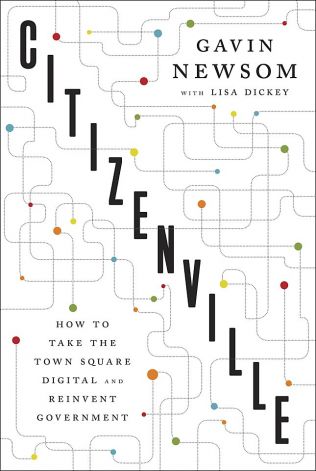
These words jump off the page in the new book by the California Lieutenant Governor (former Mayor of San Francisco) Gavin Newsom, Citizenville – How to Take the Town Square Digital and Reinvent Government. He asserts that government is not making optimal use of modern technology, and so he proposes some creative and engaging solutions.

These proposals are also valid in a consideration of Caribbean governance.

This subject matter aligns with the publication Go Lean … Caribbean, which serves as a roadmap for the introduction and implementation of the Caribbean Union Trade Federation (CU) to elevate Caribbean society and culture. The CU has 3 prime directives:

  • Optimization of the economic engines in order to grow the regional economy to $800 Billion and create 2.2 million new jobs.
  • Establishment of a security apparatus to protect the resultant economic engines.
  • Improve Caribbean governance to support these engines.

The same as the Citizenville book catalogs a list of private-sector technology platforms that could improve how the public sector works, the Go Lean roadmap lists a series of community ethos, strategies, tactics, implementations and advocacies to foster a technocracy for Caribbean administration. This technocracy is the super-national entity, the Caribbean Union Trade Federation. This federal government is described as a “lean” modus operandi.

The same as Citizenville assesses the US federal-state-county-city governmental structures as being deficient for the challenge of the newly connected American society, the Go Lean roadmap assesses that the Caribbean is deficient for its mandates under the assumed social contract (between government and citizens). This contract calls for the governments to be a proxy for public safety and economic opportunities. The Caribbean failings are so acute that many citizens have abandoned their homeland and migrated to North America and European locales. The loss of these citizens’ contributions (their time, talents and treasuries) make administering to the remainder of the population difficult – as many times the emigrated ones represent the professional classes – a brain drain. The Go Lean roadmap calls for a total reboot of Caribbean systems of commerce and governance. The book provides 380 pages as details for this roadmap.

Book Review: By Beth Simone Noveck

Subject: ‘Citizenville – How to Take the Town Square Digital and Reinvent Government’ By Gavin Newsom with Lisa Dickey (The Penguin Press; 249 pages)

When I started work in the White House in 2009, I had been brought in to help implement the Obama administration’s commitment to making government more transparent, participatory and collaborative. At the time, the federal government, like governments worldwide, was anything but open. The White House didn’t have a blog, Twitter accounts or a social media site. To make matters worse, we were running Windows 2000.

As a colleague described the situation: “We have a nearly obsolete infrastructure, so a lot of things have to be done ‘by hand.’ Don’t think Google server farm. Think gerbil on a wheel.”

Things have gotten better since those early days, but they’re not yet good enough. Approval rates for government are at an all-time low. We need more open, innovative government to connect with citizens and win their trust. But it can be hard to know how to talk about government innovation in a way that is exciting and inspiring. Through lively stories and engaging quotes from famous digerati and less-famous policy entrepreneurs, Gavin Newsom’s new book, “Citizenville: How to Take the Town Square Digital and Reinvent Government,” does just that.

Co-authored by Lisa Dickey, “Citizenville” focuses on the fact that government is not making optimal use of modern technology, and proposes some creative, engaging solutions. Dickey and California’s lieutenant governor declare that “government right now is functioning on the cutting edge – of 1973.”

Upgrading the operating system of our democracy and making town hall as easy to navigate as Twitter has real potential for improving people’s everyday lives. “Citizenville” offers both an impassioned plea for more tech-enabled government and a tour d’horizon of the ways some governments have begun using technology to good effect. Newsom and Dickey catalog an impressive list of private-sector tech platforms that could improve how we work in the public sector. The overall effect is breathless and dizzying (and often disconnected), but ultimately powerful.

First, there’s YouTube. We can use social media to broadcast and democratize town hall meetings and make government more interactive in how it communicates with citizens, changing the relationship between government and the governed.

Next come Google and other information-based platforms. When we open up the information government holds and make it available to the public, innovators of all kinds can create empowering applications. When the federal government released data on hospitals, big [data] companies like Google and Microsoft upgraded their search engines to provide potentially lifesaving information on patient satisfaction and infection rates through user search. And a small entrepreneur, Stamen Design, used local crime data to build the Crimespotting map that enables Oakland residents to understand (and hopefully reduce) crime in their neighborhoods.

Newsom and Dickey celebrate Salesforce, the cloud-computing giant that helped San Francisco track the impact of its homelessness programs and deliver better and cheaper services. Using up-to-the-minute data, San Francisco was able to find housing and shelter for many of its homeless. “The democratizing influence of the cloud,” the authors posit, “leads to a stronger, more stable commonwealth.”

Inspired by the Apple App Store, Newsom and Dickey suggest that government could reduce corrupt procurement practices, bring down costs and foster entrepreneurship by inviting those outside of government to develop tools and solutions instead of relying only on bureaucracy to procure goods and services.

For example, they write about Donors Choose, an organization that pairs classrooms and teachers with those willing to purchase much-needed school supplies. Much more than a Match.com for education, this kind of partnership website also gets people engaged in their communities.

The company at the center of the book is Zynga, creator of “FarmVille.” In the game, players work with their friends to tend farms and animals to advance to the next level. It’s addictive – much more engaging, Newsom and Dickey suggest, than participating in the dull life of our democracy. If more of government involved play and prizes, Citizenville would be just as engaging as “FarmVille.”

“We could combine the fun of a game with the social good of solving real problems,” write Newsom and Dickey. If people are willing to spend real money on virtual tractors, then why wouldn’t they clean up the local park if their efforts were recognized and rewarded using new technology?

But the authors of “Citizenville” don’t acknowledge that getting to this kind of decentralized, participatory, tech-enabled democracy is a long and uncertain path. In “FarmVille,” residents are motivated because they can decide how to spend their virtual dollars. But after you finish cleaning up the local park in Citizenville, what can you really do? Other than a brief aside on citizen-budgeting experiments, “Citizenville” does not explain how technology can empower people to make consequential decisions about how to solve our collective problems. It doesn’t address who will participate and why, and who will be left out.

A classic bureaucratic model won’t drive the new participatory technology: If Zynga were to create a department of agriculture for the purpose of fostering virtual agricultural productivity, everyone would quit! Whether in “FarmVille” or Wikipedia, people collaborate online to tackle challenges and for peer approval. In our

real-world communities, people often pitch in where government is absent. (Think barn-raising.) But in a world where real people pay real taxes, we don’t yet know why most people, when invited to spend time and effort to solve public problems, won’t just say, “That’s the government’s job, not mine.”

There are two different challenges to achieving greater self-governance. First, we have to create incentives for people to engage more. Second, we have to create incentives for government to let them do it. Zynga wants players to create their own farms because the company gets rich if they do. Newsom and Dickey suggest that if we make self-government fun, people will sign up. Maybe. But we also need to make enabling self-government a positive for the majority of politicians and civil servants who currently lack the incentive.

Although “Citizenville” is a fast-paced and engaging read, it’s telling that the book includes almost no voices and views of real people. We never hear from San Franciscans about whether the city is a better place to live since the adoption of tech-enabled innovation. We are left wanting but not knowing how to make Citizenville work in reality.

“Citizenville” might not give us the evidence that its proposed solutions will work. But it surely gives us the faith that open government – namely, more participatory, decentralized and agile institutions, enabled and supported by advances in technology – could lead to better solutions for citizens and more legitimate democracy. And, thankfully, if we are looking for a politician who claims he knows how to get out of the way and catalyze bottom-up democracy, we know where to find him.

Beth Simone Noveck led the White House Open Government Initiative and served as the nation’s first U.S. deputy chief technology officer. She is a visiting professor at NYU’s Robert F. Wagner Graduate School of Public Service and the MIT Media Lab and a professor of law at New York Law School. E-mail: books@sfchronicle.com

Website Sister-Site of the San Francisco Chronicle – Book Review – Posted 4, 2013; Retrieved 05-13-2014 –http://www.sfgate.com/books/article/Citizenville-by-Gavin-Newsom-4321331.php

The Go Lean roadmap first accepts this mission to re-structure facets of Caribbean governance with these pronouncements at the outset of book, in the Declaration of Interdependence, as follows (Page 12):

xi. Whereas all men are entitled to the benefits of good governance in a free society, “new guards” must be enacted to dissuade the emergence of incompetence, corruption, nepotism and cronyism at the peril of the people’s best interest. The Federation must guarantee the executions of a social contract between government and the governed.

xiv. Whereas government services cannot be delivered without the appropriate funding mechanisms, “new guards” must be incorporated to assess, accrue, calculate and collect revenues, fees and other income sources for the Federation and member-states. The Federation can spur government revenues directly through cross-border services and indirectly by fostering industries and economic activities not possible without this Union.

Cit 2For the source book, the name Citizenville stems from the online game Farmville, from San Francisco-area based software giant Zynga. This technology company’s strategies and tactics are considered for re-architecting the delivery of government services, or self-government as described in Citizenville. Other California-based technology firms are also chronicled, studied and modeled in this book: YouTube, Google, Microsoft, Apple, and SalesForce.com.

Go Lean…Caribbean also trumpets a call to the world of technology to impact Caribbean life. This roadmap advocates the launch of a social media site – www.myCaribbean.gov – for all Caribbean stakeholders (residents, Diaspora, students, business entities, and even visitors). This can create a universe of over 160 million unique profiles. The Go Lean roadmap is to deliver many government services via electronic modes, including public safety fulfillments. (Imagine Reverse 911 phone calls to alert all people in the path of an imminent hurricane).

The following lists other details from Go Lean…Caribbean that parallels the advocacies of the source book Citizenville:

Community Ethos – Lean Operations Page 24
Community Ethos – Cooperatives Page 25
Community Ethos – Ways to Impact the Future Page 26
Community Ethos – Ways to Bridge the Digital Divide Page 31
Community Ethos – Impact the Greater Good Page 37
Strategy – CU Customers – Member-State Governments Page 51
Strategy – Agents of Change – Technology Page 57
Tactical – Fostering a Technocracy Page 64
Tactical – Separation of Powers – Executive Branch Page 72
Anecdote – Turning Around the CARICOM construct Page 92
Anecdote – “Lean” in Government Page 93
Implementation – Ways to Pay for Change Page 101
Implementation – Ways to Deliver Page 109
Implementation – Ways to Impact Social Media Page 111
Implementation – Reasons to Repatriate Page 118
Advocacy – Ways to Improve Governance Page 168
Advocacy – Ways to Better Manage the Social Contract Page 170
Advocacy – Revenue Sources … for Administration Page 172
Advocacy – Ways to Manage Federal Civil Service Page 173
Advocacy – Ways to Foster Technology Page 197
Advocacy – Ways to Foster e-Commerce Page 198
Advocacy – Ways to Impact the Diaspora Page 217

Citizenville is a convincing argument that open government with participatory, agile institutions, enabled by advanced technology – can work. The Go Lean roadmap concurs!

Now is the time for all of the Caribbean, the people and governing institutions, to lean-in for the changes described in the book Go Lean … Caribbean. The benefits are too alluring to ignore: dawn of a new economy and new opportunities. Finally, a strong incentive for the Diaspora to consider repatriation, to preserve the Caribbean culture for the Caribbean youth … and future generations.

Download the book  Go Lean…Caribbean now!!!

Share this post:
, , ,

Bob Marley: The legend lives on!

Go Lean Commentary

Bob Marley - The legend lives on“Let’s get together and feel alright” – Bob Marley’s Song: One Love

This song is identified in the below article as being designated Song of the Millennium by the BBC (British Broadcasting Corporation). Today, 11 May 2014, is the 33rd anniversary of Bob Marley’s death. (The number 33 is the “rev” speed for music-album playback).

The book Go Lean … Caribbean identifies 169 different musical/national combinations of genres throughout the Caribbean. Of them all, Reggae is by far the most impactful of a Caribbean sound; even more so than Calypso, Soca, Merengue or any of the many Afro-Cuban varieties (Conga, Mambo, Salsa, etc). One cannot speak of Reggae music though without recognizing the iconic role of Bob Marley. The Go Lean book speaks directly of Bob Marley in recognizing him, along with other advocates, in the way in which his contributions resonated in the world. As follows, an excerpt from that rendering (Page 133):

The majority of the Caribbean population descends from an African ancestry – a legacy of slavery from previous centuries. Despite the differences in nationality, culture and language, the image of the African Diaspora is all linked hand-in-hand. And thus, when Martin Luther King, Malcolm X, Nelson Mandela, Muhammad Ali and Bob Marley impacted the world with their contributions, the reverberations were felt globally, not just in their homelands. It is hard for one segment of the black world to advance when other segments have a negative global image. This is exemplified with the election of Barack Obama as US President; his election was viewed as an ascent for the entire Black race.*

The following article, from the Daily Independent Newspaper of Nigeria, posits that the legend and legacy of Bob Marley lives on, to this day and beyond.

“My music will go on forever. Maybe it’s a fool say that, but when me know facts me can say facts. My music will go on forever.” – Bob Marley

The above statement made by Bob Marley of his music, is a living testimony of his continued legacy and legend. Since his demise on May 11, 1981, the influence of his music on global culture has become unparalleled as evidenced by ever increasing list of accomplishments, honours and awards.

In June 1978, he was awarded the ‘Peace Medal of the Third World ’ from the United Nations. He was voted as one of the greatest lyricists of all time by a BBC poll. In 2006, a blue plaque was unveiled at his first UK residence in Ridgmount Gardens, London, dedicated to him by Nubian Jak community trust and supported by Her Majesty’s Foreign Office.

Bob Marley was posthumously inducted into the Rock and Roll Hall of Fame in 1994; in December 1999, his 1977 album “Exodus” was named Album of the Century by Time Magazine and his song “One Love” was designated Song of the Millennium by the BBC.

Since its release in 1984, Marley’s “Legend” compilation has annually sold over 250,000 copies, according to Nielsen Sound Scan, and it is only the 17th album to exceed sales of 10 million copies since SoundScan began its tabulations in 1991.

Bob Marley’s music was never recognised with a Grammy nomination, but in 2001 he was bestowed The Grammy Lifetime Achievement Award. That same year, a feature length documentary about Bob Marley’s life, ‘Rebel Music’, directed by Jeremy Marre, was nominated for a Grammy for ‘Best Long Form Music Video’ documentary. In 2001 Bob Marley was accorded the 2171st star on the Hollywood Walk of Fame by the Hollywood Historic Trust and the Hollywood Chamber of Commerce, in Hollywood, California. As a recipient of this distinction, Bob Marley joined musical legends, including Carlos Santana, Stevie Wonder and The Temptations.

In 2006, the State of New York renamed a portion of Church Avenue in the section of Brooklyn, “Bob Marley Boulevard “.

Recently, the popular TV show, Late Night with Jimmy Fallon, commemorated the 30th anniversary of Bob Marley’s passing with an entire week (May 9-13) devoted to his music, as performed by Bob’s eldest son, Ziggy, Jennifer Hudson, Lauryn Hill, Lenny Kravitz and the show’s house band, The Roots. These triumphs are all the more remarkable considering Bob Marley’s humble beginnings and numerous challenges he overcame attempting to gain a foothold in Jamaica ‘s chaotic music industry while skillfully navigating the politically partisan violence that abounded in Kingston throughout the 1970s.

In celebration of what would have been his 68th birthday, the 2013 Grammys featured an all-star Bob Marley tribute including some of music’s hottest stars.

One of the 20th century’s most charismatic and challenging performers, Bob Marley’s renown now transcends the role of reggae luminary: he is regarded as a cultural icon who implored his people to know their history “coming from the root of King David, through the line of Solomon,” as he sang on “Blackman Redemption”; Bob urged his listeners to check out the “Real Situation” and to rebel against the vampiric “Babylon System”. “Bob had a rebel type of approach, but his rebelliousness had a clearly defined purpose to it,” acknowledges Chris Blackwell, the founder of Island Records, who played a pivotal role in the Bob Marley biography by introducing Marley and the Wailers to an international audience.

Two influences of Marley’s music are his Rastafarian belief and his love for marijuana. The pan-African consciousness, progressive political ideologies and deep spiritual convictions heard in Bob Marley’s music were derived from his firmly rooted commitment to Rastafarian beliefs and its attendant lifestyle. Marley did not just enjoy weed as a recreational habit. He was instead a staunch supporter of the plant’s meditational, spiritual and healing abilities, and a fierce opponent to those who tried using marijuana as a vehicle for oppression, and to keep certain groups of people out of the societal mainstream.

In his early years, February 1962, Marley recorded four songs, Judge Not, One Cup of Coffee, Do You Still Love Me? And Terror. One Cup of Coffee was released under the pseudonym, Bobby Martell.

The following year, Bob Marley, Bunny Wailer, Peter Tosh,Junior Braithwaite, Beverly Kelso and Cherry Smith called The Teenagers, later changed the name to The Wailing Rudeboys, then to The Wailing Wailers and finally to The Wailers. In 1966, Smith, Kelso and Braithwaite left the Wailers leaving Bob Marley, Peter Tosh and Bunny Wailer. Marley, that same year married, Rita Anderson.

In an attempt to commercialise The Wailers sound, between 1968 and 1972, Bob and Rita Marley, Peter Tosh and Bunny Wailer re-cut some old tracks with JAD Records in Kingston and London.

After signing with CBS Records in London, Marley in 1972 embarked on a UK tour with American musician, Johnny Nash. The Wailers returned to Jamaica to release its first album, Catch a Fire. The eight track album was followed the same year by the album, Burnin, which included the song, I Shot the Sheriff. Eric Clapton was given the album by his guitarist, George Terry, for his enjoyment, but Clapton was so impressed that he recorded a cover version of, I Shot the Sheriff, which became his first US hit after [the song] Layla.

It is pertinent to note that during this period, Blackwell, Marley’s record company, gifted his Kingston residence and company headquarters to Marley. The property housing Tuff Gong studios, became not only his office, but also his home. Finally, The Wailers broke up in 1974 with each of the three members pursuing solo careers.

Though born a Catholic, Marley converted to Rastafari and began to grow dreadlocks. With new members in his solo career, Marley continued recording as ‘Bob Marley and The Wailers’ as the ‘I Threes’ comprising Marcia Griffiths, Judy Mowatt and Marley’s wife, Rita provided backing vocals.

Marley rose to fame internationally in 1975 with his first hit track, No Woman No Cry from the Natty Dread album. This was followed by Rastaman Vibration, his breakthrough album in the US.

Of significance was an assassination attempt by unknown gunmen on December 3, 1976, two days before, a free concert, tagged, ‘Smile Jamaica’, organised by the Jamaican Prime Minister, Michael Manley in an attempt to ease tension between two warring political factions. Marley, his wife and manager, Don Taylor were wounded in the assault. However, injured Marley performed after the attack. At the end of 1976, Marley left Jamaica and after a month of recovery and writing, he arrived [in] England, where he spent two years in self imposed exile. While in Queen Elizabeth’s country, he recorded the albums, Kaya and Exodus. For 56 consecutive weeks, Exodus stayed on the British album charts. It also included four UK hit singles – Exodus, Waiting in Vain, Jamming and One Love (a rendition of Curtis Mayfield’s hit, People get Ready).

In an effort to calm warring parties, when Marley returned to Jamaica in 1978, he performed at another political concert, the One Love Peace Concert which saw the two heads of the factions shook hands on stage.

A defiant and politically charged album, Survival, was released in 1979 with such tracks as, Zimbabwe, Africa Unite, Wake Up and Live and Survival reflected his struggle for Africans. Bob Marley’s final studio album, Uprising in 1980 is regarded as one of his most religious productions. It includes, Redemption Song and Forever Loving Jah.

Confrontation was released posthumously in 1983, contained unreleased songs recorded during Marley’s lifetime. It includes the hit song, Buffalo Soldier and new mixes of singles previously available only in Jamaica. 11 albums, four live albums and seven studio albums were achieved under the name Bob Marley and the Wailers.

In July 1977, Marley was found to have a type of malignant melanoma under the nail of a toe. Citing his religious beliefs, he turned down his doctors’ advice to have his toe amputated. Despite his illness, he continued touring.

His Redemption Song track is in particular considered to be about Marley’s coming to terms with his mortality. He appeared at the Stanley Theatre in Pittsburg, Pennsylvania on September 23 1980, unfortunately, it would be his last concert.

Shortly afterwards, his health deteriorated, the cancer had [spread] to his lungs and brains. Marley sought treatment at the Bavarian clinic of Josef Issels where he received an unusual therapy. After fighting the disease unsuccessfully for eight months, he boarded a plane for his home in Jamaica but he never made it. He landed in Miami, Florida, USA and was taken to Cedars of Lebanon, hospital for immediate medical attention.

On May 11, 1981, Robert Nesta Marley, born on February 6, 1945 on the farm of his maternal grandfather in Nine Mile, Saint Ann Parish, Jamaica to Norval Sinclair Marley and Cedella Booker gave up the ghost. He was aged 36.

After his death, he seems to loom larger than life as his legacy continues to grow. Marley received a state funeral in Jamaica on May 21, 1981 which combined elements of Ethiopian Orthodoxy and Rastafari tradition. On his religious life, Marley was a vegetarian who was affiliated with the Twelve Tribes Mansion. He was in the denomination of the Tribe of Joseph. Shortly before his death, Marley was baptised into Christianity by Archbishop Abuna Yesehaq of the Ethiopian Orthodox church in Kingston, Jamaica on November 4, 1980.

In April 1981 Bob Marley was awarded Jamaica’s third highest honor, the Order of Merit, for his outstanding contribution to his country’s culture.

Marley had a number of children: three with his wife Rita, two adopted from Rita’s previous relationships and several other others with different women.

Irrespective of race, colour, creed, the Bob Marley’s revolutionary yet unifying music, challenging colonialism, racism, and the rest has had profound effects even in country’s where English is not widely spoken.

In August 2008, two artists from Serbia and Croatia , unveiled a statue of Bob Marley during a rock music festival in Serbia; the monument’s inscription read “Bob Marley Fighter for Freedom Armed with A Guitar”.

A statue was inaugurated, next to the national stadium on Arthur Wint Drive in Kingston to commemorate him.

Internationally, Marley’s message also continues to reverberate among various indigenous communities.

The Daily Independent – Nigerian Daily Newspaper – Retrieved May 11, 2014 from: http://dailyindependentnig.com/2014/05/bob-marley-legend-lives/

The book Go Lean…Caribbean serves as a roadmap for the introduction and implementation of the Caribbean Union Trade Federation (CU). This CU strives to advance the Caribbean culture with these 3 prime directives:

  • Optimization of the economic engines in order to grow the regional economy to $800 Billion and create 2.2 million new jobs.
  • Establishment of a security apparatus to protect the resultant economic engines.
  • Improve Caribbean governance.

This roadmap recognizes that a prerequisite for advancing society is a change in the Caribbean community ethos. Early in the book, the contributions that music can make is pronounced as an ethos for the entire region to embrace, (Declaration of Interdependence – DOI – Pages 14) with these statements:

xxxii. Whereas the cultural arts and music of the region are germane to the quality of Caribbean life, and the international appreciation of Caribbean life, the Federation must implement the support systems to teach, encourage, incentivize, monetize and promote the related industries for arts and music in domestic and foreign markets. These endeavors will make the Caribbean a better place to live, work and play.

Bob Marley was the embodiment of all of these above values. He impacted the music, culture and economics of the region. He set a pathway for success for other generations of talented, inspirational and influential artists – musical geniuses – to follow. Other artists of Caribbean heritage are sure to emerge and “rock the world”; we are hereby “banking” on it, with these CU preparations (DOI – Page 13):

xxi. Whereas the preparation of our labor force can foster opportunities and dictate economic progress for current and future generations, the Federation must ensure that educational and job training opportunities are fully optimized for all residents of all member-states, with no partiality towards any gender or ethnic group. The Federation must recognize and facilitate excellence in many different fields of endeavor, including sciences, languages, arts, music and sports. This responsibility should be executed without incurring the risks of further human flight, as has been the past history.

Bob Marley - UprisingThe CU represents the change that has come to the Caribbean. The people, institutions and governance of the region are all urged to “lean-in” to this roadmap for change. We know there is a “new” Bob Marley somewhere in the Caribbean member-states, waiting to be fostered. We salute this one with the words of this Bob Marley composition Redemption Song, (from this writer’s favorite album “Uprising”):

But my hand was made strong
By the hand of the Almighty.
We forward in this generation
Triumphantly.

Won’t you help to sing
These songs of freedom?
‘Cause all I ever had,
Redemption songs,
Redemption songs.

Emancipate yourself from mental slavery,
None but our self can free our minds.
Have no fear for atomic energy,
‘Cause none of them can stop the time.
How long shall they kill our prophets,
While we stand aside and look?
Some say it’s just a part of it,
We’ve got to fulfill de book.

The following list details the community ethos, strategies, tactics, implementations and advocacies to foster the next Bob Marley:

Community Ethos – Ways to Foster Genius Page 27
Community Ethos –Promote Intellectual Property Page 29
Community Ethos – Ways to Promote Happiness Page 36
Community Ethos – Impact the Greater Good Page 37
Strategy – Caribbean Vision Page 45
Separation of Powers – Patents & Copyrights Page 78
Separation of Powers – Culture Administration Page 81
Implementation – Ways to Impact Social Media Page 111
Advocacy – Ways to Make the Caribbean Better Page 131
Advocacy – Ways to Impact Hollywood Page 203
Advocacy – Ways to Promote Music Page 231
Advocacy – Ways to Re-boot Jamaica Page 239

For this occasion, the reader is hereby admonished to put on your favorite Bob Marley album, sit back, and feel the love, the “One Love”.

Download the e-Book of Go Lean … Caribbean – free … now!

————–

Appendix Reference:

* Rampersad, Dr. Arnold (2008). “Race, History, and the Emergence of Obama”. Florida International University Dr. Eric E. Williams Memorial Lecture Series. BBC-Caribbean.com. Retrieved November 2013 from: http://www.bbc.co.uk/caribbean/news/story/2008/11/printable/081111_obama_rampersad.shtml


Share this post:
, , , , , , , , , , ,
[Top]

One currency, divergent economies

Go Lean Commentary

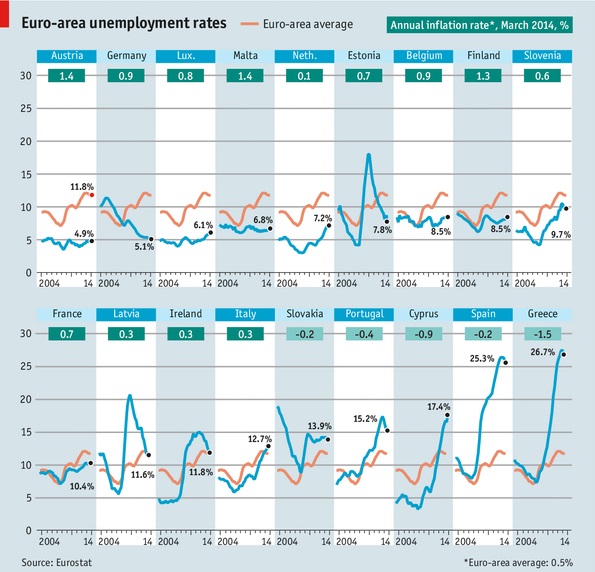
CurrencyThe global financial crisis is not over. Some countries, like in Europe, are doing better while some places are not. This quotation from the foregoing article stands out in significance:

Whereas joblessness has fallen in Germany, from 10.1% to 5.1%, it has soared in Spain, from 11.1% to 25.3%.

The experiences have also been similar in the United States. In 2008, California’s unemployment rate exceeded 10%, while Nebraska enjoyed a 4% rate. Why do some member-states dive, some survive and others thrive? This is the scope of the social science of economics. But it is not a perfect science. A joke lampooning the folly of economists states that “an economist is an expert who will know tomorrow why the things he predicted yesterday didn’t happen today”.

By: Staff Reporting.

One thing that the European Central Bank (ECB) does not lack is advice on tackling low inflation. This week the OECD added its voice to that of the IMF in April in urging prompt action, calling for a cut in the bank’s main lending rate, from the already low 0.25% reached in November to zero. The ECB’s governing council, meeting on May 8th (after The Economist had gone to press), was not expected to respond to this plea any more than it did to the IMF’s.

The difficulty facing the 24-strong council is highlighted by the euro zone’s differing labour-market trajectories over the past decade (a period during which it expanded from 12 to 18 countries). Whereas joblessness has fallen in Germany, from 10.1% to 5.1%, it has soared in Spain, from 11.1% to 25.3%.

High unemployment has contributed to the onset of deflation in parts of southern Europe. But even in northern countries inflation is low, and though it has risen in the euro zone as a whole from 0.5% in March to 0.7% in April, that is still a long way off the ECB’s target of close to 2%. The main reasons why the council prefers to wait and see are that the recovery is strengthening and bond investors are falling over themselves to lend to southern Europe, even without any further policy stimulus.

The Economist Magazine – Online Edition – May 10th, 2014 http://www.economist.com/news/finance-and-economics/21601878-one- currency-divergent-economies

Europe’s and the US experience is different than that of the Caribbean. For us, it’s some countries are doing bad, others worse.

The best practice for effective stewards of an economy is the recovery, to bounce back quickly. In the US, the economy lost $11 Trillion in the 2008 Great Recession, but recovered $13.5 Trillion back a few years later, by December 2012 (Page 69).

Europe has the safety net of the economies-of-scale of 508 million people and a GDP of $15 Trillion in 28 member-states in the EU; (the Eurozone subset is 18 states, 333 million people and $13.1 Trillion GDP). The US has 50 states and 320 million people. Shocks and dips can therefore be absorbed and leveraged across the entire region .The EU is still the #1 economy in the world; the US is #2.

The Caribbean has no safety-net, no shock absorption, and no integration. This is the quest of the book Go Lean…Caribbean; it urges the introduction and implementation of the Caribbean Union Trade Federation. The book serves as a roadmap for this goal, with turn-by-turn directions to integrate the 30 member-states of the region and forge an $800 Billion economy.

This is a big idea for the small Caribbean!

At the outset, the roadmap identified an urgent need to contend with, since the Caribbean is still in the throes of the financial crisis (commenced in 2008). This is pronounced in this clause in the opening Declaration of Interdependence (Page 13):

xxv. Whereas the legacy of international democracies had been imperiled due to a global financial crisis, the structure of the Federation must allow for financial stability and assurance of the Federation’s institutions. To mandate the economic vibrancy of the region, monetary and fiscal controls and policies must be incorporated as proactive and reactive measures. These measures must address threats against the financial integrity of the Federation and of the member-states.

The Go Lean roadmap signals change for the region. It introduces new measures, new opportunities and new recoveries. Economies will rise and fall; the recovery is key. Prices will inflate and deflate; as depicted in the foregoing article, there are curative measures to manage these indices. The roadmap calls for the establishment of the allied Caribbean Central Bank (CCB) to manage the monetary affairs of this region. The book describes the breath-and-width of the CCB, modeled in many ways after the ECB.

The foregoing news article is short (3 paragraphs), but like most topics in economics, a quick phrase on the surface connotes a deep field of study underneath. This field of study in this article is inflation and deflation.

CU Blog - One curreny, divergent economies - Photo 2 (1)In economics, inflation is a sustained increase in the general price level of goods and services in an economy over a period of time. When the general price level rises, each unit of currency buys fewer goods and services. Consequently, inflation reflects a reduction in the purchasing power per unit of money – a loss of real value in the medium of exchange and unit of account within the economy. [a] Deflation is a decrease in the general price level of goods and services. Deflation occurs when the inflation rate falls below 0% (a negative inflation rate). [b]

Stewardship of the economy was envisioned and pronounced in the roadmap’s Declaration of Interdependence (Page 13):

xxiv. Whereas a free market economy can be induced and spurred for continuous progress, the Federation must install the controls to better manage aspects of the economy: jobs, inflation, savings rate, investments and other economic principles. Thereby attracting direct foreign investment because of the stability and vibrancy of our economy.

The role of central banking and commercial banking is pivotal to the CU roadmap. The Caribbean Central Bank will manage the monetary policy and reserves of the Caribbean Dollar single currency – shepherding inflation, deflation and foreign currency matters for the region. On the other hand, commercial banks operate with the simultaneous goal of providing credit/holding deposits for the public and maximizing shareholder value for their investors. A conflict of these two goals can endanger the macro-economy. The CU/CCB structure, a cooperative among existing member-state central banks, constitutes a new administration for the regional economy’s monetary and currency concerns.

If there is the need to spur or suppress inflation/deflation, the CCB will have the required tools. As depicted in the foregoing article, this can affect unemployment and the general performance of local economies.

We therefore need good stewards or shepherds.

The CU roadmap drives change among the economic, security and governing engines. These solutions are as new community ethos, strategies, tactics, implementations and advocacies; as follows:

Community Ethos – Money Multiplier Page 22
Community Ethos – Job Multiplier Page 22
Community Ethos – Cooperatives Page 25
Community Ethos – Impact the Greater Good Page 37
Strategy – CU Vision and Mission Page 45
Strategy – Recruiting Foreign Direct Investors Page 48
Tactical – Fostering a Technocracy Page 64
Tactical – $800 Billion Economy – How and When Page 67
Tactical – Recovering from Economic Bubbles Page 69
Tactical – Separation-of-Powers – Central Bank Page 73
Implementation – Assemble Caribbean Central Bank Page 96
Implementation – Ways to Better Manage Debt Page 114
Planning – Ways to Model the EU Page 119
Planning – Lessons Learned from 2008 Page 136
Anecdote – Caribbean Currencies Page 149
Advocacy – Ways to Grow the Economy Page 151
Advocacy – Ways to Create Jobs Page 152
Advocacy – Ways to Control Inflation Page 153
Advocacy – Ways to Better Manage Foreign Exchange Page 154
Advocacy – Reforms for Banking Regulations Page 199
Advocacy – Battles in the War on Poverty Page 222
Advocacy – Ways to Help the Middle Class Page 223
Appendix –  Optimizing Remittances Page 270

We must protect Caribbean value, monetarily and culturally, from past investments and for future prospects.

Shepherding the economy is no simple task. It requires the best practices of skilled technocrats…and a measure of luck. It’s time to get lucky! The CU roadmap equals preparation. That’s how luck is created, by preparation meeting opportunity.

References:

a. Paul H. Walgenbach, Norman E. Dittrich and Ernest I. Hanson, (1973), Financial Accounting, New York: Harcourt Brace Javonovich, Inc. Page 429.

b. Robert J. Barro and Vittorio Grilli (1994), European Macroeconomics, chap. 8, p. 142. ISBN 0-333-57764-7

 Download the Book- Go Lean…Caribbean Now!!!

Share this post:
, , ,
[Top]

Trucks and Trains Play Well Together

Go Lean Commentary

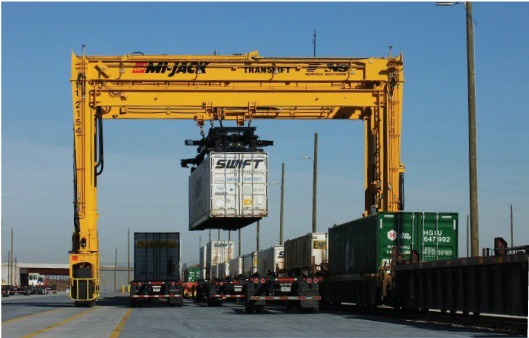
Trucks 1Not In My Back Yard (NIMBY) – this refers to the dichotomy of modern living. Many people want all the convenience that modern industrial development brings to their communities, but they do not want it … in their back yards. The point is alluded to in the foregoing news article, as a strategic success for forging business opportunities while neutralizing the NIMBY opposition. In this case the strategy is to locate multiple industrial infrastructural projects (rail-yard-truck intermodal) – normally noise pollutants to neighbors – at the airport, the Charlotte Douglas International Airport (CLT) – 1 – rail, 2 – trucks and 3 – air all in the same vicinity, This proved to be a smart move, neutralizing oppositions.

This strategic development corresponds with the book Go Lean … Caribbean. This publication serves as a roadmap for the introduction and implementation of the Caribbean Union Trade Federation (CU), another smart move. There is no doubt that Trade and Transport goes hand-in-hand, so this issue is of utmost importance to this roadmap. Since, most of the CU is comprised of islands (and 3 coastal states), there is the need to add a 4th mode to the CU intermodal consideration: sea.

The prime directive of the CU is to optimize the economic engines of the Caribbean region. In the roadmap, this directive aligns with the Union Atlantic Turnpike, a virtual consolidation of all the above transportation modes, and the investments to build and optimize them. The biggest change of the CU transportation approach is the deployment of multi-functional ferry-boats. Now imagine one destination (one backyard) with intermodal exchange for air, rail, ferry, and trucks. Imagine too, the amount of cargo (including mail), passengers, jobs, and economic activity on the move. Now multiply that imagination for all 30 member-states, serving a Caribbean single market of 42 million people. The resultant growth to the region is undeniable.

By: Gina Carroll Howard

Trucks, trains, and planes mean hours of fun for children. But for Charlotte USA, they mean business.

Norfolk Southern Corporation is betting that road and rail cargo transport will play an increasing role in the Charlotte region’s economy.

Since intermodal facilities can take a decade or more to build, the railroad looks for cities that are ripe for significant growth. Charlotte fits that profile, thanks to its progressive nature and pro-business culture — not to mention its prime location in the middle of the railroad’s Crescent Corridor.

Norfolk Southern recently relocated its local intermodal operation from a landlocked 40-acre site with encroaching residential growth to 200 acres at Charlotte Douglas International Airport (CLT). With its main line running right past the airport and easy highway access for trucks, the location in the world’s second-largest hub is ideal. As planes taxi, take off, and land nearby, about 200,000 cargo containers will transfer annually between trucks and trains. And that’s just the beginning.

“From Charlotte, we can move domestic and international traffic from anywhere in the U.S.,” says Jeff Heller, Norfolk Southern vice president of intermodal and automotive marketing.

“The Charlotte region has a huge consumer base. It’s a magnet that pulls trade into the area. This new facility is a showcase and can be front and center in business development. It’s modern and has access to both coasts and all major manufacturing and distribution centers in the country. It helps reinforce Charlotte’s reputation as a viable manufacturing and distribution center.”

It also helps the Charlotte airport retain its low-cost status.

“Norfolk Southern’s lease provides the airport with a secondary revenue source that directly offsets airport operating costs,” says Brent Cagle, interim aviation director. “This is a tremendous benefit to our airline partners and ultimately to the passengers they serve.”

Trucks 2Cagle believes that complementary companies will locate distribution centers on surrounding properties that the airport has acquired. These leases would provide the airport with another secondary revenue source.

The airport/railroad relationship is a symbiotic one that benefits CLT, Norfolk Southern, and Charlotte USA. Both Cagle and Heller agree that the two operations are highly compatible.

“With the airport site, we’re not creating any more noise or lights than already are there,” Heller notes.

And Cagle predicts that Norfolk Southern’s intermodal facility and Charlotte Douglas International Airport “will be great neighbors.” It sounds like they’ll play well together.

US Airways Inflight Magazine – April 2014 http://charlotteusa.com/news-media/blog/trucks-and-trains-play-well-together-/

The Go Lean roadmap quantifies the economic growth, from this and other industrial initiatives, and counts 2.2 million new jobs and the elevation to an $800 Billion regional economy.

As the foregoing article highlights, as children play with trucks, trains, and airplanes, the CU treats these (and ships/boats) as serious business. This commitment is codified in the roadmap, with details of community ethos, strategies, tactics, implementations and advocates; as follows:

Community Ethos – Job Multiplier Page 22
Community Ethos – Return on Investments Page 24
Strategy – Agents of Change – Globalization Page 57
Separation of Powers – Transportation Dept. Page 84
Implementation –  Consolidating Mail Service Page 108
Implementation –  Benefit from Globalization Page 119
Planning – Ways to Improve Trade Page 128
Planning – Ways to Improve Interstate Commerce Page 129
Government – Impact Public Works & the Turnpike Page 175
Industries – Ways to Improve Transportation Page 205
Appendix – Model of a Marine Highway System Page 280

Welcome to a new Caribbean, that’s on the move. Go Lean!

Download the Book- Go Lean…Caribbean Now!!!

Share this post:
, , ,
[Top]

The Future of CariCom

Go Lean Commentary

The Future of CARICOM - PhotoCariCom has been both a success and a failure!

CariCom has succeeded in bringing together most of the Caribbean and instilling the values of regional integration.

The CariCom has failed … with almost everything else!

CariCom = Successful Plan; Failed Execution.

The book Go Lean … Caribbean is a roadmap for the introduction and implementation of the Caribbean Union Trade Federation (CU), as the next phrase of regional integration. The roadmap has compiled the assessment of what is wrong with the Caribbean Community as a construct; (applying lessons learned from the previous failed integration effort – West Indies Federation). Then it proceeds to detail how-what-why to manifest the requested change, and to do it right this time. This roadmap is a GPS-style, turn-by-turn direction on how to get from the status quo to the desired destination.

The foregoing news article echoes many of the same sentiments about the CariCom’s failures and inadequacies.

By: Michael W Edghill*, CJ Contributor

Recently, noted columnist on Caribbean affairs, Sir Ronald Sanders, authored an article that appeared in numerous publications throughout the Caribbean.

The catalyst for his work appears to have been the remarks of Dr. Ralph Gonsalves, Prime Minister of St Vincent & the Grenadines. Dr. Gonsalves, never one to be accused of timidity, who commented in April on the failings of CariCom states to embrace the integration process.

Taking the lead from the Prime Minister, Sanders elaborated upon some of the difficulties that have inhibited the integration process and placed much of the blame for the shortcomings of the integration process squarely at the feet of the Heads of Government of the member states.

Their lack of initiative over the years, no doubt attributed to domestic political considerations, has left CariCom as more of a theoretical body as opposed to a functional body like that of the EU.

In April of 2011, the University of the West Indies Institute of International Relations issued a report on the status of Caribbean Regional Integration.

The comprehensive report identified a number of issues that have inhibited the integration process.

Among the contributing factors were the weakness of CariCom institutions and the difficulties of integrating economies of such divergent scales.

The report went on to make numerous suggestions on how to structurally change CariCom to create an effective body.

Rather than focusing on the detailed and complex suggestions (though wholly rational, reasonable, and worthy of a closer look) for moving the integration process forward, perhaps a few robust initiatives would provide the needed catalyst for advancing towards a functional CariCom.

Restructuring the CariCom governing body: This idea would necessitate the creation of a political study group to evaluate the failings of the current CariCom governing structure outside of the widely held view that the Heads of Government of member states hold too much power in CariCom as an institution.

There are assuredly other institutional weaknesses that prohibit the governing body of CariCom from being effective. Identifying those weakness and coming up with workable solutions based upon those elements of governance that are more successful in supranational bodies like the EU would go a long way in reestablishing a reorganized CariCom as a functional institution as opposed to a theoretical institution with limited success in Caribbean integration.

Full integration of the Dominican Republic into CariCom: For too long, CariCom has been mired in indecisiveness over the question of admitting the Dominican Republic into CariCom. The recent citizenship crisis between the DR and Haiti has not helped this issue. That being said, the time has come for CariCom to finalize this question and find a way to integrate the Dominican Republic into CariCom. One of the problems that CariCom has had with integration over the years is finding a way to fairly work within the varied economies of scale that exist within the body. The unstated reality is that Trinidad & Tobago has been unwilling to serve as an underwriter for regional economic stability in the way that Germany has for the EU. The integration of the Dominican Republic should serve as a catalyst for a renewed and extensive look at how to make this work in CariCom. The DR would

add another large and growing economy to CariCom thereby potentially alleviating any perceived economic burden that integration may impose. Perhaps the creation of a scaled system of economic contribution would be a simultaneous negotiation along with the integration of the Dominican Republic. While the various possibilities are numerous, the time has come for action on this issue. And depending on the results of the integration of the Dominican Republic into CariCom, a look at the relationship between Cuba and CariCom may be subsequently appropriate. (Although the country’s controversial citizenship ruling last year will remain an impediment).

Utilizing the “new” CariCom as a unified body in new trade/investment agreements: Much like the agreement between the EU and CariForum, a ‘new’ CariCom (as created by fulfilling the prior two suggestions) should have the ability to enter into new supranational trade agreements in a stronger position and with a unified voice.

Discussions of the validity and value of ‘free trade’ as a driver of upward economic mobility for all in society are valuable but cannot overcome the overwhelming evidence that creation of new ‘free trade’ zones is the current wave in international economic relations.

Having a stronger voice in these discussions is necessary for member states that hope to continue economic growth in the future.

The “new” CariCom would be primed for negotiations on how to engage with NAFTA to the benefit of its member states.

Likewise, a new CariCom has the potential to open up a whole new range of investment opportunities, especially for those interested in renewable energy investment. If there is one thing that the individual states of the Caribbean seem to be unified on currently, it is the need to address climate change and the creation of more renewable energy sources in the Caribbean.

The ability to explore those investment opportunities as a regional body as opposed in individual states appears, at least superficially, to be of great value to the CariCom member states.

These ideas are all simply possibilities, however, and will go nowhere without the political will of the current Heads of Government of CariCom member states.

As with any supranational organization, members have to be willing to give of their authority in the first place for any changes to take place. It is now a matter of whether member states are willing to concede that there is a pressing problem with full integration within CariCom and take the steps necessary to ensure a vibrant CariCom for the future.

* Michael W Edghill, a Caribbean Journal contributor, teaches courses in US Government & in Latin America & the Caribbean. His work has also appeared in the Yale Journal of International Affairs and Americas Quarterly.

Caribbean Journal Online News Source – May 6, 2014
http://www.caribjournal.com/2014/05/06/the-future-of-caricom/

The roadmap therefore does not focus on the CariCom but rather, focuses on the Caribbean; the 42 million people (per 2010 figures) within the 30 member-states of 4 different languages (Dutch, English, French, Spanish), and 5 different administrative legacies (American, British, Dutch, French, Spanish).

The roadmap thereby sets out to accomplish 3 prime directives:

1. Optimize the economic engines so as to grow the regional economy to $800 Billion and create 2.2 million new jobs.

2. Establish a security apparatus (including emergency management) around the economic engines so as to mitigate the eventual emergence of “bad actors”.

3. Improve Caribbean governance.

At the outset, the roadmap pronounces a preamble of this significance in the Declaration of Interdependence (Page 10):

When, in the course of human events, it becomes necessary for one people to unite with others so as to connect them together to collaborate, confederate and champion the challenges that face them, we the people of Caribbean democracies find it necessary to accede and form a confederated Union, the Caribbean Union Trade Federation, with our geographic neighbors of common interest.

This is a big change compared to what the CariCom purports to offer. The CU aspires to do the heavy-lifting to impact change to this region. This commitment is codified in this roadmap, with details of community ethos, strategies, tactics, implementations and advocates; as follows:

Community Ethos – Forging Change Page 20
Strategy – CU Vision and Mission Page 45
Tactical – Fostering a Technocracy Page 64
Tactical – Separation of Powers – Federal versus Page 71
Implementation –  A Detailed Five Year Plan Page 95
Implementation –  Assembling US Territories Page 96
Implementation –  Ways to Pay for Change Page 101
Planning – Ways to Model the EU Page 130
Planning – Lessons from the Previous Federation Page 135
Advocacy – Ways to Grow the Economy Page 151
Advocacy – Ways to Improve Governance Page 168
Advocacy – Ways to Improve Homeland Security Page 180
Advocacy –  Preserve Caribbean Heritage Page 218

In contrast with the CariCom, the CU aspires to elevate the entire Caribbean, with a mission to stop the gut-wrenching brain drain/human flight and encourage repatriation of the far-flung Caribbean Diaspora. These objectives are neither in the CariCom charter nor any of its executions.

The CU is structured, empowered, energized and funded to not just be a theoretical body but a functional body, primed to make the Caribbean a better place to live, work, learn and play. 🙂

Download the free e-book of Go Lean … Caribbean – now!

Share this post:
, , ,
[Top]

Lessons Learned from the American Airlines merger

Go Lean Commentary – Lessons on Delivery Arts & Sciences

Lessons Learned 1Tourism is the number one economic driver in the Caribbean region. But the eco-system has cracks …

More and more tourists are travelling to the Caribbean…by cruise ships. Less and less are travelling to the region by airplane. Therefore no air-flights, no hotels, no restaurants, no taxi cabs, no job multipliers, and no full economic “chain-link”.

The 2008 financial crisis placed a heavy strain on the US’s largest carrier: American Airlines. On July 2, 2008, American announced furloughs of up to 950 flight attendants, in addition to the furlough of 20 MD-80 aircraft. American’s hub at Luiz Muñoz Marin Airport in San Juan, Puerto Rico (PR) was truncated from 38 to 18 daily inbound flights. The holding company, AMR Corporation, filed for Chapter 11 bankruptcy protection on November 29, 2011, and the airline made cuts in July 2012 due to the grounding of several aircraft associated with its bankruptcy and lack of pilots due to retirements. American Eagle, the regional carrier, (the Caribbean’s largest), was to retire 35 to 40 regional jets as well as its entire Saab turboprop fleet. [b] American Eagle PR ceased operation in March 2013. This status created dysfunction for the entire Eastern Caribbean region.

This dysfunction has created the urgency for permanent change. This is a prime directive of the book Go Lean … Caribbean, to optimize the region’s economic engines, including enhancements for Caribbean tourism, cruise and “long stay” visitors.

The delivery story continues…

By summer 2012, American Airlines considered merging with another airline as part of a restructuring plan.

On February 14, 2013, AMR Corporation and US Airways Group officially announced that the two companies would merge to form the largest airline (and airline holding company) in the world, with bondholders of American Airlines parent AMR owning 72% of the new company and US Airways shareholders owning the remaining 28%. The combined airline would carry the American Airlines name and branding, while US Airways’ management team, including CEO Doug Parker, would retain most operational management positions, and the headquarters would be consolidated at American’s current headquarters in Fort Worth, Texas. The merger would create the world’s largest airline, which, along with United and Delta Air Lines, would control three-quarters of the US market. US Federal Bankruptcy judge Sean Lane approved the merger in March 2013.

The United States Department of Justice filed a lawsuit in August 2013 seeking to block the merger, arguing that it would mean less competition and higher prices. On November 12, the airlines reached a settlement (eliminating certain routes and hubs) with the US Justice Department to settle the lawsuit and allow the merger to be finalized. Thus restoring the public “trusts”.

AMR and US Airways Group completed the merger on December 9, 2013, with the new holding company American Airlines Group, Inc. being listed on NASDAQ that day. [b]

In a January 2014 letter [a] to frequent flyers of both airlines, it was announced: “It’s an exciting time at American Airlines, and we’re kicking off the new year with you — our most loyal customers in mind. For now, we’ll continue to maintain our separate loyalty programs — Dividend Miles and AAdvantage® — with rules and benefits of each program still applying, but rest assured your mileage balance and elite status are safe, secure and will continue to be honored”.

There remains a lot of work to do as both airlines are combined, and since the close of the merger, the two airlines have been working to deliver the first phases of enhanced benefits to their customers … and communities. Here are some highlights:

1. Pick “low-hanging fruit”

Lessons Learned 2Earning and redeeming miles – Members can now earn and redeem Dividend Miles (US Airways) when flying on American or US Airways with their Dividend Miles number. All miles and segments earned when flying on either airline will count toward elite status qualification in the program of your choice.

Elite benefits – Elite members of each airline can now enjoy select reciprocal benefits when flying on either airline, including First and Business Class check-in, complimentary checked bags, priority security and boarding, and many more.

More lounge access – In addition to the US Airways Clubs, club members can now access 35 Admirals Club® locations in major airports worldwide.

2. Intermediate goals and plans

On March 30, US Airways exited the competing Star Alliance. The initiation with the oneworld® alliance started on March 31, giving customers opportunities to access the widest array of destinations around the globe. More and more benefits will emerge as the merger (and the oneworld alliance) consummates. Coming soon, customers will enjoy access to an enhanced network through the American/US Airways code-share, allowing for the seamlessly booking of travel on either airline.

3. Long-term objectives

The actual integration of the airlines under a single air operator’s certificate will not be completed until a much later date. The combined airline will carry the American Airlines name and branding, and will maintain the existing US Airways hubs in Charlotte, Philadelphia, Phoenix, and Washington DC for a period of at least five years under the terms of a settlement with the US Department of Justice.

4. End Game

The resultant single-branded airline will operate an extensive international and domestic network, with scheduled flights throughout North America, the Caribbean, South America, Europe, and Asia. Its route network will center around the five American “cornerstone” hubs in Dallas/Fort Worth, New York, Los Angeles, Miami, and Chicago; plus some US Airways hubs.

oneworld Alliance

What exactly is an airline alliance? It’s an agreement among multiple airlines to streamline, make customers travel experience more seamless. The oneworld alliance is particularly good at this. So much so that it’s been named the Best Airline Alliance by Global Traveler magazine’s 2013 Reader Survey for the fourth year in a row. A passenger can be checked (boarding passes and luggage) right through to the final destination when traveling on oneworld carriers. Other benefits include airport lounge access, priority check-in and priority boarding, and of course, a large number of destination choices.

The new alliance means more ways to get to top destinations. Here are the summary options…by the numbers:

981 destinations served
151 countries
14,244 daily departures
3,283 aircrafts in the fleet
474,825 million passengers flown annually

The oneworld Alliance Member Airlines:

Airline Base Country / Region
Airberlin Germany – Central Europe
American Airlines USA – North America
British Airways United Kingdom, Western Europe
Cathay Pacific Airways Hong Kong (China), Far East Asia
Finnair Finland – North Europe
Iberia Spain / Portugal – Southern Europe
Japan Airlines Japan – Far East Asia
LAN Airlines Chile/Peru – South America
Malaysia Airlines Malaysia – Southeast Asia
Qantas Australia – Austra-Asia
Qatar Airways Middle East
Royal Jordanian Middle East
S7 Airlines Russia – Siberia
TAM Airlines Brazil – South America
US Airways USA – North America

Go Lean Commentary … cont’d

Considering one specific country, there is now something wrong in Barbados. [d] In July 2013, Barbados recorded the lowest number of long stay visitors (47,953) during the same period for 13 consecutive years. This is thusly expected to affect the traffic for the annual festival of Crop Over (a traditional harvest celebration connected with Barbados sugar cane plantation culture) [e] for 2014. Long stay visitors usually travel by airplane. This is the issue; there is a supply problem with air travel in the Eastern Caribbean and there is a demand problem. The end result: airline dysfunction and higher prices.

The issue of declining tourism spending is tied to dysfunction in the airline industry. Has the Crop Over event become less attractive or is the blame on the higher airfares that has resulted due to the airline (American Airlines) dysfunction? The analytical conclusion is the problem is with the airline industry.

The 2008 Financial Crisis continues to wreak havoc on the economy of the Caribbean. This is a consistent theme in the book Go Lean … Caribbean; it serves as a roadmap for the introduction and implementation of the Caribbean Union Trade Federation (CU), an alliance of 30 Caribbean member-states.

The Go Lean roadmap calls for regulating and promoting the Caribbean’s aviation industry. We need American Airline and US Airways to deliver on their merger, and then deliver on facilitating air passengers to the Caribbean region.

This is how the CU will optimize the region’s economic engines. This is change!

The Go Lean book presents a series of community ethos that must be adapted to forge this change. In addition, there are these specific strategies, tactics, implementation and advocacies to apply:

Community Ethos – Job Multiplier Page 22
Community Ethos – Lean Operations Page 24
Community Ethos – Cooperatives Page 25
Community Ethos – Ways to Help Entrepreneurship Page 28
Community Ethos – Impacting the Greater Good Page 37
Strategy – Customers – Visitors Page 47
Strategy – Competitive Analysis –  Event Patrons Page 55
Strategy – Core Competence – Tourism Page 58
Strategy – Anecdote – Caribbean Hotel & Tourism Assoc. Page 60
Tactical – Fostering a Technocracy Page 64
Tactical – Commerce – Tourism Promotion Page 78
Tactical – Aviation Administration & Promotion Page 84
Implementation – Ways to Deliver Page 109
Implementation – Trade Mission Objectives Page 116
Planning – Ways to Improve Trade Page 128
Planning – Lessons Learned from 2008 Page 136
Planning – Lessons from Egypt Page 143
Advocacy – Ways to Enhance Tourism Page 190
Advocacy – Ways to Impact Events Page 191
Advocacy – Ways to Market Southern California Page 194
Advocacy – Ways to Promote World-Heritage-Sites Page 248

There are lessons from the evolution and delivery of the American Airlines / US Airways merger in considering the quest for Caribbean optimization:

• When possible, Caribbean solutions should come from the Caribbean.

• When not possible, Caribbean solutions should be serviced by alternate sources, with no one player holding more than 50% of market share.

• Many Caribbean islands have close proximity, so there must always be alternative transportation modes, like ferry-boats.

• Do not “bite the hand that feeds you”; the Caribbean region must protect the engines that drive the economy.

Now is the time to lean-in to this roadmap for Caribbean change, as depicted in the book Go Lean…Caribbean. We cannot afford another American corporate giant, (i.e. Lehman Brothers) mishandling their public trusts. The Caribbean can – and must – be less elastic to American woes.

The Caribbean should be less of an American parasite and more of a protégé.

Download the book Go Lean … Caribbean – now!

————————-

References:

a. Andrew Nocella, American Airlines Senior Vice President and Chief Marketing Officer. AAdvantage Frequent Flyer Status Email. Retrieved January 5, 2014.

b. Wikipedia treatment on American Airlines. Retrieved May 6, 2014 from: https://en.wikipedia.org/wiki/American_Airlines

c. Titcombe, Tara. “The World at your fingertips”. US Airways Magazine. Retrieved May 6, 2014 from: http://tjt0325no2pencil.files.wordpress.com/2014/04/aprilfeature_oneworld_final.pdf

d. “Commentary: Tourism Matters: A better analysis is needed”. Caribbean News Now Online Magazine. Retrieved May 6, 2014 from: http://www.caribbeannewsnow.com/topstory-Commentary%3A-Tourism-Matters%3A-A-better-analysis-is-needed-20985.html

e. Wikipedia treatment on American Airlines. Retrieved May 6, 2014 from: https https://en.wikipedia.org/wiki/Crop_Over


Share this post:
, , , , , , ,
[Top]

Abused wives find help by going to ‘Dona Carmen’

Go Lean Commentary

AbuseThe issue in the below news article is related more to human rights, than to feminism. This story is being brought into focus in a consideration of the book Go Lean … Caribbean. The book serves as a roadmap for the introduction and implementation of the Caribbean Union Trade Federation (CU), for the economic optimization in the region.

How does this story relate?

The roadmap posits that the economy of the Caribbean is inextricably linked to the security of the Caribbean. While the security scope of the CU is mostly focused on the “bad actors” that might emerge to exploit the new Caribbean economic engines and successes, the book is not quiet on what may be considered traditional crime-and-punishment issues. While the subject of domestic violence falls on the member-state side of the separation-of-powers divide, the CU will entail a jurisdiction of monitoring and metering (ratings, rankings, service levels, etc) local governments and their delivery of the Social Contract. For this reason, there is a 3rd focus of the CU prime directive, to optimize the region’s governing engines.

An underlying mission of the CU is to dissuade further human flight and incentivize repatriation of the far-flung Diaspora. Many who had fled previously obtained refugee status due to the abuse and persecution from domestic perpetrators. These issues must be addressed and targeted for solutions and reconciliations.

In fact, the foregoing article refers to the new enforcements introduced in Brazil in a 2006 law. That’s was just 8 years ago. (A similar Domestic Violence law was enacted in the Bahamas in 2008). A survey of other Latin American countries unveils even more new laws recently enacted in the Caribbean, Central and South America. Change has finally come.

Change has come to the Caribbean, but as the roadmap depicts, the problem of domestic violence (a human rights abuse) had persisted long before, and is thusly rooted in a community ethos. An ethos that must be uprooted and replaced with a new, progressive spirit, even within the public service entities, whose job it is to “serve & protect”. This is the new lean Caribbean!

This is reflected in the foregoing article with the principal character Dona Carmen, which is not even her real name, but more of an elevated title for her respected role in the community.

Title: Abused wives find help by going to ‘Dona Carmen’
By: Dom Phillips

CAMPINAS, Brazil — With her husband out of earshot, Queze Vicente told the story of the night he came at her with two knives in his hand.

“He was drinking,” she said outside their one-room shack in a roadside slum near an airport here. “We fought. And I had to go to Dona Carmen.”

Everyone in their community knows who Dona Carmen is and her method for getting abusive husbands in line. They call it “the discipline,” and it includes a sex strike.

For 15 days, husbands who hit their wives are also banned from drinking in the local bar and playing soccer on the local field. And any man who helps an offender violate the rules is also subject to the sex strike.

Abused by her husband and saddened by the abuse all around her, Dona Carmen talked 12 local women into adopting the punishment routine. Two years later, the women and most of the men say it works.

“Everyone thinks it is good,” said Vicente’s husband, Renato. “There are no more fights.”

The abuse in this community, a corner of the slum called Menino Chorão, or Crybaby Boy, was not unlike what many Brazilian women experience. In a survey conducted by the Patrícia Galvão Institute, which works on women’s rights and communication issues, 54 percent of Brazilians said they knew a woman who had been attacked by a partner and 70 percent said they believed Brazilian women suffered more violence at home than in public spaces.

But change is slowly coming to this most macho of societies as activists such as Dona Carmen try to help women find new ways to combat domestic abuse.

“This is a theme that permeates the whole of society,” said Julio Neto, a professor at Campinas State University whose department recently sponsored a forum at which Dona Carmen spoke. “Every Brazilian knows cases of violence against women.”

Neto said the women in the group were forced to act because the state was not protecting them. “If they call the police, the police don’t go.” He said he did not condone cases in which some women had beaten up male offenders but that he supported “the discipline.”

“It is very original. I think in this sense, it is marvelous,” he said.

Dona Carmen, whose real name is Maria de Sousa, commands respect within her group: the fact that she is addressed as “Dona” — roughly equivalent to “madame” — is evidence of that.

Like most of her neighbors, she is from Brazil’s poorer, more traditional northeast. For 13 years, she was married to a man who beat her persistently. One attack when she was five months pregnant caused her to miscarry twins. “My whole body had purple bruises from the beating he gave me,” she said.

She arrived in the southeastern city of Campinas from her native Fortaleza eight years ago when a woman she had met tricked her with a promise of work and a place to live. As a result, she said, she spent 40 days in a brothel but escaped and did not have to work as a prostitute.

“I was desperate to get a job,” said de Sousa, who has four children and now works in a kitchen at an advertising agency.

‘Still a lot to do’

Before Brazil introduced a domestic violence law in 2006, some offenders were able to get off with fines or even by donating food baskets.

The law is named for Maria da Penha, a biochemist whose husband shot her while she was asleep in 1983, leaving her paraplegic, and then tried to electrocute her. After almost two decades of legal maneuvering, he was finally jailed in 2002 and served 16 months in closed prison and three more years in semi-open prison.

Da Penha fought hard for his imprisonment and campaigned for the law. “I was revolted with the sexism of the Brazilian judiciary,” she said, talking by phone from Fortaleza, where she runs an educational institute.

The law set up special courts and police departments to deal with crimes against women, and stricter punishments. A special hotline was also set up to deal with cases of domestic abuse.

Da Penha, 67, said there has been major progress, but that these resources are still lacking in smaller towns and cities.

“Women who are victims of violence are slowly losing the shame they had to talk about this,” she said. “Sexual equality is being conquered little by little, but there is still a lot to do.”

Despite the tougher punishments for offenders, rates of violence against women remain high. In the first six months of 2013 alone, the hotline received 306,201 calls, of which 12.3 percent were reports of violence

Between 2009 and 2011, 16,900 women were murdered in Brazil because of “gender conflict” — a rate of 5.8 per 100,000 women, according to government statistics. In the United States in 2011, that rate was 1.17 per 100,000, according to the Violence Policy Center, based in Washington.

Brazilian women suffer inequality in other areas as well. In the World Economic Forum’s 2013 Global Gender Gap report, Brazil placed 62nd in a list of 136 countries. In terms of wage equality, it came in 117th.

Lieli Loures, 35, an activist in São Paulo, said the Maria da Penha law was a watershed moment for Brazil, and that a grass-roots feminist movement is growing. “I perceive a change,” she said. “Feminism is only beginning to be known.”

Ongoing debate
In Crybaby Boy, the debate continued in the front yard of the small brick house where Maria Santos, 34 — one of women in Dona Carmen’s group — lives with her husband, Adelmo, 31.

“We joke that the women are in charge here,” she said.

“We have to respect the rights of women,” he said. “But in the same way, we have to respect the rights of men.”

Then he lowered his voice to a whisper: “The women here want to be the man. They can’t.”

But Geraldo da Cruz, 62, said most men back the scheme. “Everything organized is better, right? Important.”

Source: Washington Post – Online News Source – April 25, 2014 –http://www.washingtonpost.com/world/the_americas/in-the-corner-of-a-brazilian-slum-abused-wives-find-help-by-going-to-dona-carmen/2014/04/25/afbb7d1a-c68d-11e3-8b9a-8e0977a24aeb_story.html

The Go Lean roadmap posits that every woman has a right to a violence-free existence, in the family and in society; it is reprehensible that in so many Caribbean/Latin countries women are still viewed as lesser beings that can be abused at the whim of men, as was evident in the foregoing news article. This type of thinking is still prevalent; not just in Brazil; (notice this related Bahamas story)

What should be done to mitigate these bad practices? How does the Go Lean roadmap address this issue?

There are strategic, tactical and operational advocacies presented in the Go Lean roadmap so as to ensure victims are protected and perpetrators are held accountable for their actions:

• The CU will therefore work with governmental and non-governmental organizations (NGO’s) to fulfill their charters to aid victims and legislate for changes.

• The CU will also fund the full vertical eco-system so that law enforcement (and/or social work) agencies can institute Special Victims Units and counseling services. The roadmap posits that even one person, an advocate, can make a difference (Page 122) in forging change in society.

• Facilitate community messaging to instill/persuade an enlightened value system for men and women; helping men curb aggressive behavior (like anger management training) and empowering women to live successful lives and seek recourse against abusers if needed.

• Oversee the internal affairs/military justice of security agencies to ensure the integrity of the justice institutions. (Deficiency in this area is a Failed–State Indicator).

While the CU does not have sovereignty (a deputized agency only), it can still provide support services to ensure compliance. In addition to monitoring and metering, the CU can also provide ratings, funding, training, intelligence gathering, and cross border (fugitive) law enforcement.

The solutions to effect change in the region are detailed in this book Go Lean … Caribbean as community ethos, strategies, tactics, implementations and advocates; as follows:

Community Ethos – Privacy –vs- Public Protection Page 23
Community Ethos – Whistleblower Protection Page 23
Community Ethos – Witness Security Page 23
Community Ethos – Anti Bullying & Mitigations Page 23
Community Ethos – Light Up the Dark Places Page 23
Community Ethos – Minority Equalizations Page 24
Community Ethos – Reconciliations Page 34
Strategy – Rule of Law –vs- Vigilantism Page 49
Separation of Powers – CariPol Page 77
Implementation – Reason to Repatriate Page 118
Ways to Improve Failed-State Indices Page 134
Ways to Better Manage the Social Contract Page 170
Ways to Impact Justice Page 177
Ways to Remediate and Mitigate Crime Page 178
Ways to Improve Gun Control Page 179
Ways to Improve Intelligence Gathering Page 182
Ways to Improve Communications Page 186
Ways to Impact the Prison Industrial Complex Page 211
Ways to Impact Foundations Page 219
Ways to Protect Human Rights Page 220
Ways to Empower Women Page 226
Ways to Impact Youth Page 227
Ways to Impact Persons with Disabilities Page 228

The goal is to make the Caribbean a better place to live work and play; with justice for all, regardless of gender. This is not politics; not feminism versus traditional family values. This is just right!

Share this post:
, , ,
[Top]

eMerge conference aims to jump-start Miami tech hub

Go Lean Commentary

Master BrokersPositive Change!

It doesn’t just happen. It takes people forging it, guiding it and fostering it. The below news article speaks of the effort in South Florida (from Miami north to West Palm Beach) to establish an economic engine of a “tech hub”.

This is a noble, yet strategic undertaking. Success in this “industry space” would mean more jobs, investment capital, and more technology students remaining in South Florida after matriculating in the area’s colleges. These 3 objectives align this story with the advocacies of the book Go Lean … Caribbean.

The book serves as a roadmap for the introduction and implementation of the Caribbean Union Trade Federation (CU). The prime directive of this organization is to optimize the economic engines of the Caribbean region. We also want to increase jobs and investment capital, plus retain more of our young people aspiring for careers in high technology fields. But the CU wants to harvest these activities in the Caribbean, for the Caribbean and by the people of the Caribbean.

South Florida is germane to the Caribbean conscience. It is the Number One destination for the Caribbean Diaspora, featuring large populations of Cubans, Jamaicans, Dominicans (DR), Puerto Ricans, Bahamians, and Haitians. The book relates this association by declaring the NBA basketball team, Miami Heat, as the “home team” of the Caribbean; (Page 42).

Right time, right place!

The eMerge Americas Techweek is this week. Also, the Miami Heat has just started the playoffs in defense of their consecutive World Championships.

By: Marcia Heroux Pounds and Doreen Hemlock

A movement to make South Florida a technology hub for the Americas kicks off its first conference this week, aiming to draw more than 3,000 people from entrepreneurs to investors to students — from Broward and Palm Beach counties and from around the world.

Organizers want to build on South Florida’s success as a gateway to Latin America for trade, banking and services, extending that prowess into technology, entrepreneurship and capital for startups. They hope the event — eMerge Americas Techweek — can do for tech what the annual Art Basel event in Miami Beach has done for art: put South Florida on the world map.

It’s an exciting chance for entrepreneurs like Boca Raton’s Dan Cane, chief executive of Boca Raton-based Modernizing Medicine, which developed an iPad application for specialty physicians. He’s among influencers named to the event’s “Techweek100” — South Florida leaders who have had a significant impact on business and technology. He will speak at the conference.

“We jumped at the opportunity,” said Cane, whose 3-year-old company had $17.5 million in sales last year. “We hope to find contacts and connections and begin to develop the right ecosystem in the Latin American market” to export south starting next year.

The eMerge push doesn’t strive to make South Florida into Silicon Valley. It aims instead for a tech center specialized in multinationals looking south, Latin American companies moving north, local startup companies, as well as universities and investors.

That’s why Citi Latin America, the regional headquarters for financial giant Citi, is taking part in what is planned as an annual event. The division employs about 750 people in Miami-Dade and Broward counties and is sponsoring the event, sending speakers and bringing clients, said Jorge Ruiz, who heads digital banking.

“This event is a great example of the things we should do more of,” Ruiz said. It showcases the importance of technology to a range of industries, promotes what South Florida already offers and highlights South Florida’s ability to unite from across the Americas for tech business, he said.

“As people come together, they’re going to realize this is the space to invest in,” Ruiz said.

Universities that train talent for tech jobs are eager to participate too.

“We’re going to bring as many students as possible,” said Eric Ackerman, dean and associate professor of the Graduate School of Computer and Information Sciences at Nova Southeastern University, who also is on the Techweek100 list. Nova has more than 500 students studying information technology.

Ackerman said tech graduates often leave South Florida, figuring they will have better job opportunities in larger hubs known for innovation.

“That’s one of the things we are trying to change — to become an innovation zone for new technology, new products and new services,” Ackerman said. “An event like this says, ‘Look what’s here in our own back yard. Why should I go somewhere else?’ ”

Kimberly Gramm, assistant dean and director of FAU’s Adams Center for Entrepreneurship, is taking winners of FAU’s recent business plan competition to eMerge’s Startup Village.

Some of South Florida’s largest tech companies also will exhibit at eMerge. Those include Citrix Systems of Fort Lauderdale, C3 Cloud Computing Concepts of Delray Beach and TriNet Group of Boca Raton, said Lonnie Maier, president of the South Florida Technology Alliance, a group that promotes local tech.

Investors and consultants to startups also are heading to eMerge to network and build business.

New World Angels, a Boca Raton-based group of investors, will share a booth with the Miami Innovation Fund to offer entrepreneurs advice on launching or growing their ventures, said Rhys Williams, executive director of New World Angels and a Techweek 100 leader.

“Technology investing is a contact sport. There are few textbooks or classes of relevance, so this conference is a timely way to keep current on your knowledge base and pick up new knowledge, skills and contacts,” said Williams, who also is a judge in the eMerge Launch competition where more than 200 companies will compete for $150,000 in prizes.

Of course, South Florida faces hurdles in its quest, tech leaders said.

The area needs to overcome a long-time image based on sun and fun. And it needs to show critical mass in tech, especially success stories of entrepreneurs that grew startups to global players — much as conference organizer Manny Medina did, starting Miami-based Terremark and selling it for more than $1.4 billion to Verizon.

Enterprise Development Corp. President Rob Strandberg, whose group works with startups from Boca Raton to Miami, will be busy making introductions between entrepreneurs and potential investors at the conference. He’s also a judge in the Launch competition.

EDC executive director Linda Gove will participate with the Boca Raton incubator’s startup companies.

“Investors are taking notice of South Florida companies to a far greater extent than they were,” Strandberg said.

Joe Levy, CEO of Fort Lauderdale-based startup ClearCi and also named to the Techweek 100, said the perception of the area as a tech hub is changing.

“Folks used to ask me, ‘Why aren’t you in Silicon Valley?’ ” Levy said. “We don’t get that anymore.”

South Florida’s Sun Sentinel Daily Newspaper – April 27, 2014 – http://www.sun-sentinel.com/business/careers/fl-emerge-broward-palm-beach-20140427,0,1252077.story

The Go Lean roadmap calls for agencies within the CU to champion technological start-up endeavors, much like this week’s eMerge initiative.

There is much for the CU’s planners to glean by the observation of the planned events this week. The Go Lean/CU approach, in the absence of the actual establishment of the Trade Federation is simply to:

1. Look
2. Listen
3. Learn
4. Lend-a-hand
5. Lead

This approach is codified in the book, with details of community ethos, strategies, tactics, implementations and advocates; as follows:

Community Ethos – Impact the Future Page 26
Community Ethos – Foster Genius Page 27
Community Ethos – Help Entrepreneurship Page 28
Community Ethos – Promote Intellectual Property Page 29
Community Ethos – Impact R & D Page 30
Community Ethos – Bridge the Digital Divide Page 31
Strategy – Agents of Change: Technology Page 57
Separation of Powers – Patents & Copyrights Page 78
Implementation –  Self-Governing Entities Page 105
Implementation –  Impact Social Media Page 111
Ways to Better Manage Image Page 133
Industries – Ways to Foster Technology Page 197
Industries – Foster e-Commerce Page 198

We hope for success for eMerge Americas Techweek. We hope our Caribbean brothers living and working in South Florida participate, engage in and benefit from this initiative. Then we hope that they would repatriate some of this passion, knowledge, and experience back to their Caribbean homelands.

Lastly, we cheer for further basketball dominance. Go Heat!

Basketball shot

Download the book – Go Lean…Caribbean now!!!

Share this post:
, , , , , ,
[Top]

Ghost ships – Autonomous cargo vessels without a crew

Go Lean Commentary

Ghost ships - Autonomous cargo vessels without a crewLife imitates art! Art imitates life!

The forgoing article gives the impression of science fiction: The Matrix movie trilogy or The Terminator movie series. Imagine an industrial development with a heavy concentration of robotic installations. This is the future that is being planned, developed and tested now. The experience of the last 100 years is that those doing the planning, developing and testing for futuristic technologies are the ones that profit most from the economic gains. This has been true for both Japan and Silicon Valley.

The book, Go Lean … Caribbean, extolls this principle that R&D (research and development) activities are necessary to profit from advantages in technology. We want to do R&D here in the Caribbean. This is a mandate for the Caribbean Union Trade Federation (CU). This book serves as a roadmap for the introduction and implementation of the CU. This technocracy will assume oversight to optimize the region in the areas of:

(1) economics

(2) security

(3) lean government

This vision of an autonomous maritime eco-system, as depicted in the foregoing article, cannot be considered without a super-national infrastructure for these above 3 areas. The Go Lean roadmap presents the CU’s prime directives, which in total will provide comprehensive solutions for economic incentives, a security apparatus (Naval Authority and Intelligence Gathering), and lean governmental coordination to launch these initiatives.

*** Autonomous cargo vessels could set sail without a crew under the watchful eye of captains in shore-based simulators ***

Military drones already fly frequent missions and civilian operations using unmanned aircraft are coming. Driverless cars are clocking up thousands of test miles. So why not let remote-controlled ships set sail without a crew? Indeed, the maritime industry has started to think about what would be required to launch a latter-day Marie Céleste.

Ships, like aircraft and cars, are increasingly controlled by electronic systems, which makes automation easier. The bridges of some modern vessels are now more likely to contain computer screens and joysticks than engine telegraphs and a giant ship’s wheel. The latest supply ships serving the offshore oil and gas industry in the North Sea, for instance, use dynamic positioning systems which collect data from satellites, gyrocompasses, and wind and motion sensors to automatically hold their position when transferring cargo (also done by remote control) to and from platforms, even in the heaviest of swells.

However, as is also the case with pilotless aircraft and driverless cars, it is not so much a technological challenge that has to be overcome before autonomous ships can set sail, but regulatory and safety concerns. As in the air and on the road, robust control systems will be needed to conform to existing regulations.

The maritime industry is interested in crewless ships for two reasons. The first is safety. Most accidents at sea are the result of human error, just as they are in cars and planes. So, if human operators are replaced by sophisticated sensors and computer systems, autonomous vessels should, in theory, make shipping safer.

The second reason is, of course, cost. It is becoming increasingly difficult to sign up competent crew prepared to spend months away at sea. Moreover, some voyages are likely to get even longer for ships carrying non-urgent cargo. By some accounts, a 30% reduction in speed by a bulk carrier can save around 50% in fuel. This means slower steaming could provide big savings in fuel costs, but it would be at the expense of increased expenditure on crew for these longer voyages, both in wages and for the “hotel” facilities required on board. Removing the crew, though, also removes the need for their accommodation and its associated equipment, like heating and plumbing. And that provides room to carry more cargo.

Ahoy there!

The transition to unmanned ships could take place in steps, says Oskar Levander, head of engineering and technology for the marine division of Rolls-Royce. Crews would be reduced as some functions are moved onshore, such as monitoring machinery. (The engines on jet aircraft are already overseen by ground stations.) This could be followed by some watch-keeping and navigation duties. Experienced crew might be put on board when ships leave or enter port, just as pilots are to navigate. And a small maintenance crew could be kept for the voyage until remote-control systems prove themselves. A fleet of autonomous ships could also sail in convoy with a manned vessel in the lead (as illustrated above).

The onshore control rooms would keep an eye on ships thanks to live data transmitted from vessels, including video and infra-red images. Object-recognition software, combined with radar, would further automate the process. If an alarm was raised the skeleton crew on board could be alerted or the control room take charge, probably from a bridge in a simulator. Rolls-Royce already operates virtual ships’ bridges, with 360º views, for the training of officers and crew. These are realistic enough to make landlubbers feel seasick.

Using onshore control rooms and simulators a team of ten land-based captains could operate 100 or so ships, reckons Mr. Levander. The captains could commute from home for their shifts just as the pilots who fly military drones do. Passenger ships are likely to remain crewed, however. Trained personnel are needed to manage evacuation procedures, and in any case passengers are unlikely to want robots and vending machines attending to their needs.

The slower-sailing bulk carriers could be the first ships to be automated, according to the Maritime Unmanned Navigation through Intelligence in Networks (MUNIN) project, a European Union initiative backed by a number of industrial organisations. Like others, it says the ability of drone ships to detect other vessels and take avoiding action will be crucial, but possible with advanced technology and improved backup systems.

Rules of the sea

With a captain technically in command—even though he is based in an onshore control room—MUNIN thinks the legal and practical challenges of meeting maritime rules could be met. Radio messages from other ships, along with those from coastguards and port authorities, could be automatically routed to the shore captain. Something similar is being proposed for autonomous civil drones, with ground-based pilots responding to communications and air-traffic control instructions as if they were in the cockpit.

In many ways automating a ship should be a lot easier than automating aircraft, Mr. Levander believes. For a start, if something did go wrong, instead of falling out of the sky a drone ship could be set by default to cut its engines and drop anchor without harming anyone. As for piracy, with no crew to be taken hostage it would be much easier for the armed forces to intervene. Of course, more modern pirates might try to hack their way into the controls of an autonomous ship to take command. Which is why encrypted data communication is high on the maritime industry’s list of things to do before ghostly vessels ply the trade routes.

Firstly, the Caribbean Sea is 1,063,000 square miles. This landscape, except for forecasted tropical storms, allows for the perfect testing grounds. The geography of the CU’s 30 member-states thereby includes thousands of islands, (the Bahamas alone advertises 700 islands in their archipelago). The Go Lean roadmap calls for establishing an Exclusive Economic Zone (EEZ) for these seas.

Secondly, the CU has the human capital to engage this type of endeavor. There are many well-trained professionals in the maritime arts and sciences. Plus, this endeavor transmits the “siren call” to youthful aspirants, empowering immigrants and, skilled repatriates. This will grow the labor pool for this industry.

Thirdly, the CU already envisions a massive deployment of ship-building prowess with its incubation of shipyards and related industries (Page 209). Plus, with federally regulated ferry boats, part of the Union Atlantic Turnpike system, the required model (funding/investments/capital) and eco-system will be in place.

Though not written with this particular initiative in mind, the Go Lean roadmap anticipates such opportunities, as pronounced in the Declaration of Interdependence, (Pages 12 & 14):

xvi. Whereas security of our homeland is inextricably linked to prosperity of the homeland, the economic and security interest of the region needs to be aligned under the same governance. Since economic crimes, including piracy and other forms of terrorism, can imperil the functioning of the wheels of commerce for all the citizenry, the accedence of this Federation must equip the security apparatus with the tools and techniques for predictive and proactive interdictions.

xxvii. Whereas the region has endured a spectator status during the Industrial Revolution, we cannot stand on the sidelines of this new economy, the Information Revolution. Rather, the Federation must embrace all the tenets of Internet Communications Technology (ICT) to serve as an equalizing element in competition with the rest of the world. The Federation must bridge the digital divide and promote the community ethos that research/development is valuable and must be promoted and incentivized for adoption.

xxx. Whereas the effects of globalization can be felt in every aspect of Caribbean life, from the acquisition of food and clothing, to the ubiquity of ICT, the region cannot only consume, it is imperative that our lands also produce and add to the international community, even if doing so requires some sacrifice and subsidy.

The CU mission is to implement the complete eco-system to deliver on market opportunities as sampled in the foregoing article. There are many strategies, tactics, implementations and advocacies that will facilitate this readiness; detailed here:

Community Ethos – Money Multiplier Page 22
Community Ethos – Job Multiplier Page 22
Community Ethos – Lean Operations Page 24
Community Ethos – Return on Investments Page 24
Impact the Future Page 26
Help Entrepreneurship Page 28
Promote Intellectual Property Page 29
Impact Research and Development Page 30
Ways to Improve Negotiations Page 32
Separation of Powers – Naval Authority Page 75
Separation of Powers – Emergency Mgmt. Page 76
Security Initiatives at Start-up Page 103
Start-up Benefits from the EEZ Page 104
Steps to Implement Self-Governing Entities Page 105
Reasons to Repatriate to the Caribbean Page 118
Ways to Benefit from Globalization Page 119
Ways to Improve Trade Page 128
Ways to Create Jobs Page 152
Ways to Improve Governance Page 168
Foster Empowering Immigration Page 174
Foster Cooperatives Page 176
Improve Homeland Security Page 180
Ways to Mitigate Terrorism Page 181
Improve Intelligence Gathering & Analysis Page 182
Better Manage Natural Resources Page 183
Ways to Improve for Natural Disasters Page 184
Ways to Foster Technology Page 197
Ways to Improve Transportation Page 205
Ways to Develop Ship-Building Page 209

The world is preparing for the change of more autonomous systems to do the heavy-lifting of industrial engagements. A new ethos to prepare for change has now come to the Caribbean. The people of the region are urged to “lean-in” for this change. As described in the book Go Lean … Caribbean, the benefits of this roadmap are too alluring to miss out: emergence of an $800 Billion single market economy, 2.2 million new jobs and relevance on the world scene for R&D.

Download the Book- Go Lean…Caribbean Now!!!

Share this post:
, , , ,
[Top]

Advocates push for junk-food tax

Go Lean Commentary

Junk FoodThe forgoing article focuses on an important issue for the Caribbean. Diabetes is a scourge to the region; it is among the leading causes of death. Though death is the final destination of all humans, quality of life is a fitting goal for optimization. Diabetes is a degenerative disease; it grievously affects the quality of life; over time, its sufferers are afflicted with ailments like kidney failures, amputations and blindness. In addition to the personal discomforts, these treatments exact a huge toll on a community’s economics. For this matter, this subject is in scope for the Caribbean Union Trade Federation (CU).

The book, Go Lean … Caribbean, serves as a roadmap for the introduction and implementation of the CU. This technocratic agency will assume oversight to optimize the region’s:

(1) economy,

(2) security apparatus, and

(3) governing engines.

The subject of diabetes disease management is in scope for all 3 of these prime directives. The importance and linkage of the topics for diabetes, healthcare and economics are undeniable. But there are security threats as well, as advanced diabetes dispositions increase the need for organ transplantations, inducing many to venture into the illegal organ trade markets. Finally, the strain on governments to service this population and develop mitigation plans is a constant priority – or should be.

By: FELICIA FONSECA

Flagstaff, Arizona — Facing a high prevalence of diabetes, many American Indian tribes are returning to their roots with community and home gardens, cooking classes that incorporate traditional foods, and running programs to encourage healthy lifestyles.

The latest effort on the Navajo Nation, the country’s largest reservation, is to use the tax system to push people to ditch junk food.

Navajo President Ben Shelly earlier this year vetoed measures to enact a 2 percent sales tax on tax on chips, cookies and sodas, and to eliminate the tax on fresh fruit and vegetables. This week, tribal lawmakers have a chance to resurrect the proposals, and supporters are optimistic they’ll be among the first in the country to succeed.

Elected officials across the U.S. have taken aim at sugary drinks with proposed bans, size limits, tax hikes and warning labels, though their efforts have not gained widespread traction. In Mexico, lawmakers approved a junk food tax and a tax on soft drinks last year as part of that government’s campaign to fight obesity.

Shelly said he supports the intent of the proposals on the Navajo Nation but questioned how the higher tax on snacks high in fat, sugar and salt would be enacted and regulated. Supporters of the tax say it is another tool in their fight for the health of the people.

“If we can encourage our people to make healthier choices and work on the prevention side, we increase the life span of our children, we improve their quality of life,” said professional golfer Notah Begay III, who is among supporters.

American Indians and Alaska Natives as a whole have the highest age-adjusted prevalence of diabetes among U.S. racial and ethnic groups, according to the American Diabetes Association. They are more than twice as likely as non-Hispanic whites to have the disease that was the fourth leading cause of death in the Navajo area from 2003 to 2005, according to the Indian Health Service.

Native children ages 10 to 19 are nine times as likely to be diagnosed with Type 2 diabetes, the IHS said.

The proposed Navajo Nation tax wouldn’t add significantly to the price of junk food, but buying food on the reservation presents obstacles that don’t exist in most of urban America. The reservation is a vast 27,000 square miles with few grocery stores and a population with an unemployment rate of around 50 percent. Thousands of people live without electricity and have no way of storing perishable food items for too long.

“They have a tendency to purchase what’s available, and it’s not always the best food,” said Leslie Wheelock, director of tribal relations for the U.S. Department of Agriculture.

Wheelock said the diabetes issue in tribal communities is one that has been overlooked in the past or not taken as seriously as it could be. It has roots in the federal government taking over American Indian lands and introducing food that tribal members weren’t used to, she said.

To help remedy that, the USDA runs a program that distributes nutritional food to 276 tribes. Grants from the agency have gone toward gardening lessons for children within the Seneca Nation of Indians in New York, culturally relevant exercise programs for the Spirit Lake Tribe in North Dakota and food demonstrations using fresh fruit and vegetables on the Zuni reservations in New Mexico.

The Dine Community Advocacy Alliance, which has been pushing for the Navajo Nation junk food tax, estimates it will result in at least $1 million a year in revenue that could go toward wellness centers, community parks, walking trails and picnic grounds in tribal communities in Utah, New Mexico and Arizona. It would expire at the end of 2018.

Tribal lawmakers will vote this week on overturning Shelly’s vetoes. Regardless of whether that legislation passes, “we have to keep stepping up to the plate,” alliance member Gloria Begay said.

No other sales tax on the Navajo Nation specifically targets the spending habits of consumers. Alcohol is sold in a few places on the reservation but isn’t taxed. Retailers and distributors pay a tobacco tax.

Opponents of the junk food tax argue it would burden customers and drive revenue off the reservation. Mike Gardner, executive director of the Arizona Beverage Association, said the lack of specifics in the legislation as to what exactly will be taxed could mean fruit juice and nutritional shakes would be lumped in the same category as sodas.

“I don’t think they mean that, but that’s what will happen,” Gardner said. “It’s a little loose, a little vague. It’s going to create problems for retailers and … it doesn’t solve the problem.”

a. By the numbers:

Total population of Navajo Nation: 250,000

Unemployment rate: 44%

Families living in poverty: 30.5%

People living with diabetes: 55,000

Source: Partners In Health (PIH), a 501(c)(3) nonprofit corporation headquartered in Boston, Massachusetts. (http://www.pih.org/country/navajo-nation/about)

Associated Press (AP) News Wire Service (Retrieved 04/22/2014) –
http://news.yahoo.com/advocates-push-junk-food-tax-navajo-nation-155642994.html

The roadmap commences with a Declaration of Interdependence. In Verse IX (Page 11) it pronounces:

Whereas the realities of healthcare and an aging population cannot be ignored and cannot be afforded without some advanced mitigation, the Federation must arrange for health plans to consolidate premiums of both healthy and sickly people across the wider base of the entire Caribbean population. The mitigation should extend further to disease management, wellness, obesity and smoking cessation programs. The Federation must proactively anticipate the demand and supply of organ transplantation as developing countries are often exploited by richer neighbors for illicit organ trade.

The foregoing article highlights diabetes disease management in the controlled population of the Native American Reservation for the Navajo Nation in Arizona [a]. In fact, Go Lean posits that the Caribbean can benefit greatly from a consideration of the examples, samples and lessons from Native American tribes and their experiences. This is included in the book as “10 Lessons from Indian Reservations” (Page 141). As for this issue, Go Lean also recognizes that food choices and the preponderance of junk food could imperil community wellness; (Page 162). We must therefore take heed to these lessons.

The CU mission is to implement the complete eco-system to re-boot health delivery in the region. Applying strategies to win the battles of globalization, the Go Lean roadmap urges the Caribbean region to not only consume; we must create and contribute as well. In that vein, there are many tactics, implementations and advocacies to facilitate the vision for R&D, incubation, entrepreneurship and many other areas related to medical tourism. These are detailed here:

Community Ethos – Deferred Gratification Page 21
Community Ethos – Intelligence Gathering Page 23
Community Ethos – “Bad Things” Happen Page 23
Community Ethos – Lean Operations Page 24
Community Ethos – Return on Investments Page 24
Community Ethos – Non-Government Org’s. Page 25
Help Entrepreneurship Page 28
Impact Research and Development Page 30
Promote Happiness Page 36
Impact the Greater Good Page 37
Separation of Powers – Health Department Page 86
Steps to Implement Self-Governing Entities Page 105
Ways to Benefit from Globalization Page 119
Improve Healthcare Page 155
Impact Entitlements Page 158
Better Manage Food Consumption Page 162
Better Manage the Social Contract Page 170
Foster Cooperatives Page 176
Ways to Improve Organ Transplantations Page 214
Impact Foundations Page 219
Improve Elder-Care Page 225
Impact Persons with Disabilities Page 228

The roadmap addresses the obstacles for full implementation of the CU objectives. Like most communities, there are cost constraints, as the foregoing article reports on a special tax to fund junk food mitigations. How will the CU pay for its strategic and tactical initiatives?

The book addresses this issue in full detail in these advocacies:

Ways to Pay for Change Page 101
10 Revenue Sources for Administration Page 172

Change has come to the Caribbean. Both the people and institutions of the region are urged to “lean-in” for this change. As described in the book Go Lean … Caribbean, the benefits of this roadmap are too important; improving health deliveries is not just economic, more important, it’s about saving lives.

Download the Book- Go Lean…Caribbean Now!!!

Share this post:
, , , , ,
[Top]