Tag: Transform

Self-employment on the rise in the Caribbean – World Bank

Go Lean Commentary

Photo - Caribbean Commercial FishermenThere is the desire to make the Caribbean a better place to live, work and play. At the root, any serious attempt at this objective must start with the creation of new jobs. The book Go Lean … Caribbean is one such attempt. It presents the roadmap to implement the Caribbean Union Trade Federation (CU), and with this effort, create 2.2 million new jobs over a 5 year period. That is the summary of the roadmap. But the “devil is in the details”. How to create so many jobs in such a short interval?

In considering the lessons from other societies, it can be seen that one key is entrepreneurship.

The experiences of North America and Europe indicate that small firms are primary sources for new employment. While entrepreneurship is not new for the Caribbean, the CU strategy of focused incubators is new. This requires support services to ignite and spur start-up companies. The exact details of the commission to help entrepreneurship are spelled out on Page 28 of the book. The book relates that successful entrepreneurship requires a new community ethos; the most crucial help coming from government authorities in protecting property rights.

MIAMI, United States – The World Bank says while self-employment is on the rise in the Caribbean, quality jobs remain elusive.

The Washington-based financial institution, which launched a new report here, said almost 70 per cent of employees in the Caribbean work for businesses with five or fewer employees, compared to 60 per cent in Latin America.

But while entrepreneurship is often considered to be a driver of development, the World Bank said the resulting companies grow at a much slower rate than in other middle-income regions.

Furthermore, the high percentage of small businesses reflects a lack of quality jobs in the region’s larger or multinational businesses, the bank said.

Declaring that “this should ring warning bells,” the report notes that, in the Caribbean, almost 70 per cent of business owners have opened a business out of fear of losing their job or because jobs were not available.

The report notes that, in the past 10 years, Latin America and the Caribbean have “benefited significantly from favourable economic tailwinds”.

But it said, as these tailwinds die “growth has to come from within” adding that innovation was “key if the Caribbean is to build upon the social gains of recent years”.

The report notes that Caribbean firms develop new products less frequently than their counterparts in other developing regions.

It said in Jamaica, for example, the rate of product development is less than half than that of Thailand or Macedonia, adding that while Grenada topped the region for new product development, six of the “worst offenders” also hailed from the Caribbean.

The report did not identify these “worst offenders” but cites four possible reasons for the less frequent development of new products in the Caribbean – Human capital, intellectual property, risk taking and logistics.

It said while science, technology and engineering graduates are at a premium, it’s a scarcity that has a direct effect on innovation.

Closely related to the quality of education the report recognises this will be a major challenge for the region.

The report notes that with separate laws govern-ing copyright in every country “the complicated panorama lends less protection to the product creators, deterring much-needed investment for new product research and development”.

It said a “deep cultural shame of failure is hindering innovation by dissuading entrepreneurs from taking risks”.

The report states that this was evident as much in “individual reticence at a business level as in the low levels of investment in research and development, especially from the private sector” and that modernising ports, transport and customs can add a competitive edge to products from the region.

Currently, it said poor public services, communication links and transport infrastructure are hindering efforts to boost production capacity in the region.

The report states younger firms “far outshone” more established ones in terms of job creation.

“The key is identifying and supporting those startups, which have the most potential through start up programmes, subsidies or policy.”

Patricia Ferreira from getAbstract, a company which provides training to those looking to start their own business, told the World Bank that “everyone has identified that innovation is definitely the way to move forward. Now, how to take this concept of innovation, break it down into microlearning moments so they can move this innovation train forward”.

It pointed to a young Barbadian entrepreneur Justin Quinlan, who is the chief executive officer of a successful start-up, “but that wasn’t always the case”.

Encouraged to focus on an existing career path like law or medicine, the World Bank said he “frequently came up against obstacles to his entrepreneurial dream”.

Quinlan said he remembered pitching to one of the bigger lending firms in Barbados, which was geared to finding innovation for youth.

“So I walk into this boardroom, and everyone there is about 50 bordering on 60 plus. When people don’t understand ideas or comprehend ideas, they are afraid.

“Investment is all about leveraging risk, so why would you try and invest in something that you don’t know or understand,” he added.

Source: Caribbean360.com – Caribbean Online Magazine (Retrieved 03/25/2014) –http://www.caribbean360.com/index.php/news/1090246.html#ixzz2x0N1aQii

DMSThe Go Lean roadmap asserts that entrepreneurship needs stimuli to be successful. That in addition to incubators, the book further calls for help to entrepreneurs with venture capital funds, angel investors, small business loans, Self-Governing Entities, cloud computing, and coaching.

Though “necessity is the mother of invention”, the Go Lean roadmap does not limit its job creation functionality to the realm of the small business. There are stimuli and growth strategies for large multi-national corporations and even government civil services. But perhaps the greatest impetus for growth will be in the fostering of intellectual property, as the book describes Internet Communications Technologies (ICT) as the great equalizer between big economy states (US, Japan, Germany, etc.) and small states, like in the Caribbean – See 10 Ways to Promote Intellectual Property (Page 29).

Considering the mathematics for creating 2.2 million new jobs, there needs to be the focus on additions and subtractions. Human flight or brain drains have depleted a lot of the Caribbean workforce in the past. So the effort to grow the number of new jobs must keep an eye on expatriation rates among the Caribbean youth. In this vein, education options would prioritize local institutions and online “e-Learning” as opposed to the previous model of studying abroad – where far too often the students never returned. This directive is embedded in the opening Declaration of Interdependence at the start of the book (Page 13) as:

xxi. Whereas the preparation of our labor force can foster opportunities and dictate economic progress for current and future generations, the Federation must ensure that educational and job training opportunities are fully optimized for all residents of all member-states, with no partiality towards any gender or ethnic group. The Federation must recognize and facilitate excellence in many different fields of endeavor, including sciences, languages, arts, music and sports. This responsibility should be executed without incurring the risks of further human flight, as has been the past history.

All in all, the roadmap Go Lean … Caribbean proposes rebooting the entire economic eco-system of the region. This is the only way to usher in the change the Caribbean desperately needs. The book posits that the problems of the Caribbean homeland are too big for any one state to solve, but rather a regional solution, the Caribbean Union Trade Federation, is the most viable option to fulfill the hope for a vibrant future for the 30 member-states and 42 million people of the region.

Download the Book- Go Lean Caribbean Now!!!

Share this post:
,

Guadeloupe, Martinique, St Maarten Join the ACS

Go Lean Commentary

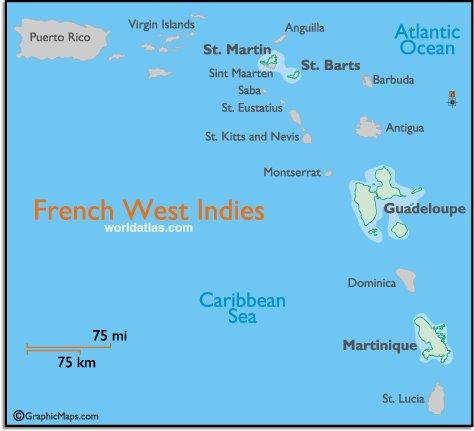
French Caribbean MapThe SFE Foundation, publishers of the book Go Lean … Caribbean welcomes these French Caribbean states into this brotherhood of Caribbean states. We embrace the idea of regional integration, as described in the below article, and push for an even “deeper dive into waters” of confederation, collaboration and convention.

The book Go Lean … Caribbean serves as a roadmap to navigate the integration and consolidation of all 30 member-states into the Caribbean Union Trade Federation (CU). The CU will equally represent these French-speaking Caribbean member-states along with their Dutch, English and Spanish counterparts. The Go Lean roadmap posits that the region is ill-prepared to compete on the world’s stage without this proposed integration. The book declares interdependence among these member-states to form a single market & economy of 42 million people and the potential for an $800 Billion GDP. The end-result will furnish a Caribbean Union that our young people can saddle their dreams to for a consequential future.

For this movement we welcome Guadeloupe, Martinique & St Maarten, and encourage this embrace by other French territories. See news article here:

By the Caribbean Journal staff:
Guadeloupe, Martinique and St Maarten have all joined the Association of Caribbean States (ACS) as associate members.

The three Caribbean territories acceded to the ACS during the regional group’s Ministerial Council meeting in Trinidad last week.

“It is important that we remain a player in the region and that we strengthen the bonds between us and the Nations of the Caribbean,” St Maarten Prime Minister Sarah Wescot-Wiliams said following the move. “One of the things I have been stressing is regarding our responsibilities and roles that we have to take on as a country. One of those is participation in regional and international organizations. Now we have the capacity to meet with the ACS which [gives] us a voice in the region.”

Serge Letchimy, President of Martinique’s Regional Council, said regional integration had been a priority of his tenure, with a view toward “anchoring Martinique in its geographical environment.”

The territories’ accession to the ACS was first announced [at the outset of this 19th Ordinary Meeting of the Ministerial Council].

Martinique and Guadeloupe’s relationship with the sovereign territories of the Caribbean, and how it should develop, continues to be a question for the region.

Last year, a report recommended that Martinique and Guadeloupe integrate economically with the Organization of Eastern Caribbean States – (www.caribjournal.com/2013/04/08/report-urges-oecs-economic-integration-for-martinique-guadeloupe/).

Source:  Caribbean Journal Online News Source; retrieved 02/21/2014 from: http://www.caribjournal.com/2014/02/21/guadeloupe-martinique-st-maarten-join-association-of-caribbean-states/

The Caribbean needs all hands on deck for the region’s societal elevation goals. Consider these organizational dynamics of the ACS and the OECS:

ACS

The Association of Caribbean States (ACS) is a union of nations centered on the Caribbean Basin. It was formed with the aim of promoting consultation, cooperation, and concerted action among all the countries of the Caribbean. The primary purpose of the ACS is to develop greater trade between the nations, enhance transportation, develop sustainable tourism, and facilitate greater and more effective responses to local natural disasters – Wikipedia.com.

It comprises twenty-five member states and four associate members. The convention establishing the ACS was signed on July 24, 1994 in Cartagena de Indias, Colombia. The secretariat of the organization is located in Port of Spain, Trinidad and Tobago.

Antigua & Barbuda Cuba Guyana Panama Venezuela
Bahamas Dominica Haiti St. Kitts & Nevis Aruba
Barbados Dominican Republic Honduras St. Lucia Curaçao
Belize El Salvador Jamaica St. Vincent & Grenadines France
Colombia Grenada Mexico Suriname Turks & Caicos Islands
Costa Rica Guatemala Nicaragua Trinidad and Tobago

Caribbean Sea Agenda
One agenda adopted by the ACS has been an attempt to secure the designation of the Caribbean Sea as a special zone in the context of sustainable development; it is pushing for the UN to consider the Caribbean Sea as an invaluable asset that is worth protecting and treasuring. The organization has sought to form a coalition among member states to devise a United Nations General Assembly resolution to ban the transshipment of nuclear materials through the Caribbean Sea and the Panama Canal.

OECS

The Organization of Eastern Caribbean States (OECS), created in 1981, is an inter-governmental organization dedicated to economic harmonization and integration, protection of human and legal rights, and the encouragement of good governance between the countries/dependencies of the Eastern Caribbean states of Antigua & Barbuda, Dominica, Grenada, Montserrat, St. Kitts & Nevis, St. Lucia and St. Vincent & Grenadines. Anguilla and the British Virgin Islands are associate member states.
Source: Wikipedia.com.

The Go Lean roadmap aligns with the ACS and OECS agenda – all hands on deck – with the implementation plan of an Exclusive Economic Zone for the Caribbean Sea. This plan is therefore conceivable,believable and achievable. 🙂

Download the book Go Lean … Caribbean – now!

Share this post:
, , , ,
[Top]

Dominica raises EC$20 million on regional securities market

Go Lean Commentary

imagesThe forgoing news article synchronizes with the book Go Lean … Caribbean in that it advocates the alternative financing scheme for government debt; that of treasury bonds in the region’s security markets. The news article further describes the success using the existing monetary union for the Eastern Caribbean states. The Go Lean roadmap extrapolates that monetary union for all 30 member-states and the stronger currency of the Caribbean Dollar. This approach exceeds the current regime for many Caribbean states, that of foreign debt, which has to be repaid in foreign currency.

This book therefore promotes independence (Page 120), by being less beholden to foreign powers and foreign banks. Yes, independence by means of interdependence.

Roseau, Dominica – Dominica raised EC$20 million (One EC dollar = US$0.37 cents) on the Regional Government Securities Market (RGSM) on Monday with with Prime Minister Roosevelt Skerrit saying it represents confidence in the policies of his administration.

The money was raised at a record low 1.999 per cent through the first of a series of three 91-day Treasury Bill offerings.

“Many countries in the developed world especially in Europe have had difficulty in raising monies at concessionary rates. The discount rate achieved in Monday’s Treasury bill offering means that government can now raise the financing it needs at a lower cost to the taxpayers of Dominica,” said Skerrit, who is also finance minister.

He said his administration has had to grapple with Dominica’s own challenges “but we have worked actively to build a strong platform for sustained economic growth.

“Our prudent fiscal and economic policies have insulated the country from the more severe effects of the global recession,” Prime Minister Skerrit added.

A government statement said that the rate of 1.999% is 50 basis points below the previous record of 2.49%.

“Investors view the purchase of the 91 day Treasury bill as a low-risk investment opportunity. The low Treasury bill rate demonstrated the ability of the Government of Dominica to raise money at relatively low cost,” the statement said.

It said that as a result, the government will seek to raise an additional EC$65 million on the RGSM through the remaining two, 91 day Treasury bills and one five year, EC$25 million bond.

“This is to finance part of government’s operating budget and refinance existing government debt, the interest rate on which is much higher than the interest rate government obtains on its Treasury bills. Treasury Bills present an avenue to invest outside of the normal banking system,” the statement added.
Source: Caribbean360.com – Caribbean Online Magazine (Retrieved 03/21/2014)http://www.caribbean360.com/index.php/business/1107319.html#ixzz2wcE8gxHl

This book serves as a roadmap for the implementation of the Caribbean Union Trade Federation (CU), and the Caribbean Central Bank (CCB) to issue the regional Caribbean Dollar currency. This CCB institution is projected as an independent, yet technocratic federal agency to administer the region’s monetary affairs. Thus ushering a change in funding options available to the 30 member-state governments. At the outset, the roadmap identified this urgent need, stating this clause in the Declaration of Interdependence (Page 14):

xxix. Whereas all Caribbean democracies depend of the free flow of capital for municipal, public and private financing, the institutions of capital markets can be better organized around a regional monetary union. The Federation must institute the controls to insure transparency, accounting integrity and analysis independence of the securities markets, thereby shifting the primary source of capital away from foreign lenders to domestic investors, comprising institutions and individuals.

The foregoing news article depicts how much cheaper this funding approach is compared to alternatives, as Grenada was able to raise so much short term money at a low rate of 1.999%. This is much cheaper than any bank loan option. But with this alternative financing scheme, come new risks and threats. The Go Lean roadmap anticipates the many consequential impacts on Caribbean society, allowing for best-practice mitigations, such as credit ratings and reporting, investigations and prosecutions at the federal level, monitoring for systemic threats and racketeering crimes that can undermine the entire system.

The book details this oversight in these advocacies and anecdotes, embedding lessons from other jurisdictions like Wall Street in the US:

  • 10 Ways to Impact Wall Street (Page 200)
  • 10 Lessons from 2008 (Page 136)
  • 10 Ways to Improve Credit Reporting (Page 155)
  • 10 Ways to Better Manage Debt (Page 114)
  • 10 Revenue Sources for Caribbean Administration (Page 172)
  • Appendix GC – Credit Ratings Agencies Role in 2008 Financial Crisis (Page 276)

The CU/CCB solutions are designed to make the Caribbean a better place to live, work and play. This roadmap starts with an economic focus, but it also facilitates optimization of the governance processes. To maintain good governance, there must be a steady stream of revenues. The Go Lean roadmap calls for member-state governments availing more benefits from the capital & securities markets; for example, public sales of property tax liens. This strategy will be a “win-win” for all, elevate the social contract between the governments and the governed: more revenues drive more services; more services drive more opportunities to benefit the citizens (and all other stakeholders: investors, visitor, diaspora, etc.) of the Caribbean.

Download the book Go Lean … Caribbean – now!

Share this post:
, , ,
[Top]

Time Value of Money

The time value of money is a fundamental concept in finance – and it influences every financial decision a person makes, whether they realize it or not. Learn the basics here, from this video:

httpwww.investopedia.comvideoplayunderstanding-time-value-of-money

The book Go Lean … Caribbean serves as a roadmap for the introduction and implementation of the Caribbean Union Trade Federation (CU). This CU is proffered to provide economic, security and economic security solutions for the 30 member Caribbean states. This mandate is detailed early on in the book’s Declaration of Interdependence, as follows (Page 13):

xxiv. Whereas a free market economy can be induced and spurred for continuous progress, the Federation must install the controls to better manage aspects of the economy: jobs, inflation, savings rate, investments and other economic principles. Thereby attracting direct foreign investment because of the stability and vibrancy of our economy.

The roadmap posits that retirement is a community issue, and that the mandate for the CU to manage economic security issues must encompass retirement planning as well.

Currently in the region there are no Capital/Security markets that offer the liquidity options of Wall Street. However the book describes an optimization of the existing financial markets that can still take place with the introduction of the Caribbean Dollar – managed by a technocratic Caribbean Central Bank – and elevation of the current 9 Stock Exchanges.

Further the Go Lean roadmap portrays the need for public messaging to encourage savings/investments, describing deferred gratification as a community ethos that is required to forge permanent change in the Caribbean homeland. (Of course, administratively, failed policies like hyper-inflation and currency devaluation can undermine any positive savings habits; and thus the Go Lean roadmap starts first with rebooting the governing engines).

Investopedia Online Magazine (Retrieved 03/06/2014) –
http://www.investopedia.com/video/play/understanding-time-value-of-money/


The following advocacies in the book speak towards this Go Lean mission of optimizing financial/retirement planning:

10 Ways to Impact Retirement- Page 231

10 Ways to Impact the Future- Page 26

10 Ways to Impact Wall Street- Page 200

10 Ways to Control Inflation- Page 153

10 Ways to Better Manage Foreign Exchange- Page 154

10 Reforms for Banking Regulations- Page 199

10 Ways to Better Manage Debt- Page 114

10 Reasons to Repatriate- Page 118

10 Lessons from 2008- Page 136

10 Ways to Improve Elder-Care- Page 225


Share this post:
, , ,
[Top]

Caribbean leaders convene for CARICOM summit in St Vincent

Go Lean Commentary

imagesThe forgoing news article highlights many problems with the current Caribbean Community (CariCom); as was also identified in the book Go Lean … Caribbean. The book declares that CariCom has failed in its quest to integrate and elevate the region’s economies.

But there is some special value that can be gleaned from the regional construct. That value is tied to the existing ratification for regional integration for 15 member-states, 5 associate member-states, and 9 observer states. At the outset of the book, an assessment is made of dispositions of all Caribbean states, of all language groups, and the failed execution of the CariCom as a construct. The book’s Prologue declares that all Caribbean member-states must lean-in for change. That change is the ascension of a better regional integrated entity, the Caribbean Union Trade Federation (CU). The book serves as a roadmap for the introduction and implementation of the CU.

The roadmap’s publisher, the SFE Foundation, respectfully disagrees with the Prime Minister of St. Vincent & the Grenadines, the Honorable Ralph Gonsalves. Though he is elected to speak on behalf of the population of the 120,000 of his country, the Go Lean roadmap echoes the cries of a 10-million-strong Diaspora for all the Caribbean, of all 4 languages. While Mr. Gonsalves proclaims “more of the same”, these members of the Diaspora have already cast a dissenting vote, with their “feet and their wallets”, as they fled their Caribbean homelands taking their time, talents and treasuries with them. Undoubtedly, the Diaspora still have a love for their homelands and cultural heritage to be preserved. So through the pages of this book and interactions on Social Media, they have voted their democratic preference: a No for the CariCom status quo, and a Yes for a “deeper dive” into the integration “waters”. It is thusly an unequivocal Declaration of Interdependence.

See the news story here:

By: Peter Richards

KINGSTOWN, St. Vincent – Caribbean Community (CARICOM) leaders began their inter-sessional summit here on Monday reiterating the importance of the regional integration movement to the socio-economic and political development of the region.

Host Prime Minister and CARICOM Chairman, Dr. Ralph Gonsalves said that 41-year-old 15-member grouping was not designed as a central government for a “bundle of disparate territories” neither was it a unitary state or federation or confederation.

“The Revised Treaty of Chaguaramas conceives CARICOM as a community of sovereign states. Its centre has been deliberately designed as a weak superstructure which constantly gropes for consensus.

“That is what the political market can bear, that is the reality which the broad citizenry in the community has endorsed.”

Gonsalves said that neither the political leadership as a collective nor the populations as a whole have an appetite for much more than what is currently on offer in the treaty commitments.

“So our political mandate is to ensure that what is fashioned in the Revised Treaty is implemented optimally. To achieve this we must first love and care for CARICOM, secondly we must ensure that the organs of the Community work as intended and that its decisions are implemented in each nation-state of the Community”

He said thirdly, the political leaders and populations in each nation posses the requisite political will for CARICOM’s optimal functioning as structured.

Gonsalves told the summit that a compelling agenda for CARICOM has been outlined by numerous studies, including one by Trinidad and Tobago’s Foreign Affairs Minister Winston Dookeran and that a “strategic path is being further elaborated by CARICOM.

Gonsalves said that CARICOM is frequently lambasted for its failure or refusal to implement the decisions of its treaty based institutions.

“Invariably, the CARICOM Secretariat is excoriated for this implementation deficit. However, the Secretariat is not CARICOM, it is the central administrative instrument of CARICOM but it possesses no authority to compel enforcement of decisions of the various Councils of Ministers and the Heads of State and Government conference.”

Gonsalves said that in the absence of an executive CARICOM Commission, buttressed by the requisite constitutional or legal authority, the central responsibility for the implementation of CARICOM’s decisions rests with the governments of the individual nation-states.

“Thus, each government is enjoined in its responsibility, nay its solemn obligation to put appropriate institutional

arrangements in its national executive and administrative apparatuses to facilitate the speedy and efficacious implementation of CARICOM decisions.”

Gonsalves told his regional colleagues that to be sure, the delivery of the Secretariat’s administrative and coordinated functions ought to be enhanced even as he acknowledged that the implementation deficit has to be put “squarely where it belongs, at the level of national governments. “Accordingly, vaunted change drivers cannot reasonably facilitate meaningful change in decision-making and implementation in CARICOM if the individual governments or several of them do not embrace a commitment, made manifest through structured arrangements day-to-day, in the making and implementation of CARICOM’s decision.”

“So the success of the CARICOM enterprise truly begins with the political leaderships, though it does not end with us alone. It ends with us, our national populations and national institutions massaged by the balm of our regional apparatuses,” Gonsalves said.

He said while the summit here has a “long agenda” the subjects to be discussed or reviewed for determination all have one focus, “the improvement in the quality of life and living of the people of our CARICOM region.

”Our deliberations at this conference do not take place in an abstract world, but ina lived [in a world where] global, regional and national conditions [are] stuffed with possibilities and limitations.

“The real world of life, living, and production compel us at this time to reflect centrally on measures for strengthening our regional and national economies including the fortification of the Caribbean Single Market and Economy (CSME|), addressing efficaciously the existential challenge of climate change, improving markedly the delivery of air and sea transportation and enhancing citizen security”.

Gonsalves said that apart from these issues there were also the perennial matters such as governance, institutional and administrative arrangements of CARICOM deemed “best suited to achieve CARICOM purposes”.

In her address to the conference, outgoing CARICOM Chairman, Prime Minister Kamla Persad Bissessar said that she was pleased one of the major outcomes of the last summit was the approval for the establishment of the Commission on the Economy to advise regional governments on solutions that would lead to growth and development.

“The Commission’s work has already begun and with a deep appreciation of the fact that sustainable development can only be achieved through the free movement of people and goods, reliable transportation across the region has also become a top priority. “

The Trinidad and Tobago Prime Minister said that in planning for the future of the region, her country would continue to take its responsibility “very seriously in linking our progress to the region’s success.

“As one of the founding members of the Community, we have worked hard to build a reputation on good faith that wherever we seek our best diplomatic and bilateral interests on the global stage, so too will we seek the best interests of CARICOM.”

She said more critical to the sustainability of the region “is our need to work decisively to eradicate crime and threats to the safety of the people of CARICOM.

“In this regard, Trinidad & Tobago proposed an amendment to the agenda of this meeting for the ratification of the Arms Trade Treaty and support for Trinidad and Tobago’s CARICOM-endorsed bid to Host the Secretariat in Port of Spain.”

She said the Arms Trade Treaty provides the region with a significant component in the global fight against the trade of conventional arms in illicit markets.

To date 116 States have signed the ATT, including all CARICOM members, except Haiti.

Eleven States have ratified the Treaty thereby expressing their consent to be legally bound by its provisions. They are Iceland, Guyana, Antigua and Barbuda, Nigeria, Costa Rica, Mexico, Trinidad and Tobago, Grenada, Panama and Norway.

But Prime Minister Persad Bissessar said for the ATT to come into force, Article 22 requires the signatures and early ratification by 50 signatory States so that the Treaty can come into force with the minimum of delay.

She said Mexico and Chile have already formally pledged support for Trinidad and Tobago’s CARICOM-endorsed bid to host the ATT Secretariat.

“However, among CARICOM member States, only Guyana, Antigua and Barbuda, Trinidad and Tobago and Grenada have so far ratified the ATT.

“In addition, I want to urge CARICOM member-states to prepare to participate, once more with an unified approach, in the negotiations that will ensue before and after the ATT comes into force.”
Source: Caribbean360.com – Caribbean Online Magazine (Retrieved 03/10/2014) –
http://www.caribbean360.com/index.php/news/st_vincent_news/1107238.html#axzz2vZjwuqhO

This Go Lean book serves as a roadmap for the implementation of the CU, as a technocratic federal government to administer and optimize the economic, security and governing engines of the region’s 30 member-states. This is a viable solution to many common problems. The same problems that led to the human and capital flight that has imperiled the region, as many countries have lost large populations.

Mr. Gonsalves proclaimed that “the success of the CARICOM enterprise truly begins with the political leaderships”. To the contrary, the Go Lean roadmap proclaims that success in the region cannot commence from a “top-down” approach, the leaders are simply not equipped to devise solutions; nor can the success proceed from a “bottom-up” approach, because the common “man on the street” just does not have the answers. But rather, the road to success must emerge from a Special Interest Group of those trained, fostered and groomed specifically for this task (champions of related battles[b] [d] in recent history). The book identifies this quality as technocratic and prescribes the CU as a technocracy.[a][c]

The issue of leadership (and governance) is presented as paramount for the successful turn-around of the Caribbean dispositions; see Appendix VIDEO.

And so now is the time to stop with the status quo and forge change by implementing the Five Year roadmap advocated in the book Go Lean … Caribbean. The benefits of this plan are too tempting to ignore: emergence of an $800 Billion dollar economy, 2.2. million new jobs, new industries, services and opportunities for the youth of the Caribbean and even an invitation to the Diaspora to repatriate.

Now finally, in contrast to the CariCom reality and prospects, with the Go Lean implementations, the Caribbean region can become a better place to live, work and play for all citizens.

Download the book Go Lean … Caribbean now!

———-

Appendix VIDEO – Good Leaders -vs- Bad Leaders – https://youtu.be/TnAPe3mXOqA

Published on Jul 13, 2013 – This is a video that highlights some of the differences between a Good Leader and a Bad Leader
  • Category: Education
  • License: Standard YouTube License

———–

Appendix – Go Lean Book References

a.  Fostering a Technocracy – Page 64
b.  10 Lessons Learned from 2008 – Page 136
c.  10 Ways to Foster Genius – Page 27
d.  SFE Foundation – Who We ArePage 8


Share this post:
, ,
[Top]

US slams Caribbean human rights practices

Go Lean Commentary

shame-on-youThe below news article synchronizes with the book Go Lean … Caribbean in that it depicts the “hot topic” of human rights monitoring in the Caribbean region. The book declares that the people of the Caribbean have the right to good governance and the fulfillment of a presumed social contract to ensure due process, and the rule of law.

This book serves as a roadmap for the implementation of the Caribbean Union Trade Federation (CU), a technocratic federal government to administer and optimize the economic, security, and governing engines of the region’s 30 member-states. At the outset, the roadmap identified this urgent need for human rights protection, stating this clause in the Declaration of Interdependence (Page 12):

xxi. Whereas the legacy in recent times in individual states may be that of ineffectual governance with no redress to higher authority, the accedence of this Federation will ensure accountability and escalation of the human and civil rights of the people for good governance, justice assurances, due process and the rule of law. As such, any threats of a “failed state” status for any member state must enact emergency measures on behalf of the Federation to protect the human, civil and property rights of the citizens, residents, allies, trading partners, and visitors of the affected member state and the Federation as a whole.

The Go Lean roadmap projects that the CU will facilitate monitoring and accountability of the justice institutions to ensure compliance and mitigate abuses – all Police Internal Affairs and Military Justice institutions will have a federal up-line reporting – Pages 117 & 220. Consider this related article:

By: Nelson A. King
WASHINGTON DC, March 3, 2014 – While noting that governments that protect human rights and are accountable to their citizens are more secure, bolster international peace and security, and enjoy shared prosperity with stable democratic countries around the world, the United States continues to assail human rights practices in the Caribbean.

In its “Country Reports on Human Rights Practices for 2013,” released here earlier this week, Washington was particularly scathing in its criticism of Haiti, Jamaica, Guyana, Suriname, Trinidad and Tobago, and the Bahamas.

The US Department of State said the most serious impediments to human rights in Haiti involved weak democratic governance in the earthquake-ravaged, French-speaking Caribbean country; “insufficient respect for the rule of law, exacerbated by a deficient judicial system; and chronic corruption in all branches of government.”

It said basic human rights problems included “isolated allegations of arbitrary and unlawful killings by government officials; allegations of use of force against suspects and protesters; overcrowding and poor sanitation in prisons; prolonged pre-trial detention; an inefficient, unreliable, and inconsistent judiciary; rape, other violence, and societal discrimination against women; child abuse; allegations of social marginalization of vulnerable populations, including persons with disabilities and lesbian, gay, bisexual, and transgender (LGBT) persons; and trafficking in persons.”

The report also said that allegations “persisted of sexual exploitation and abuse by members of the UN Peacekeeping Force in Haiti (MINUSTAH).”

In addition, it said violence, crime and forced evictions within the remaining internally displaced persons (IDP) camps in Haiti, which contained about 172,000 IDPs as of November, “remained a problem.”

Although the Michel Martelly administration took some steps to prosecute or punish government and law enforcement officials accused of committing abuses, the State Department said “credible reports persisted of officials engaging in corrupt practices,” and that civil society groups allege that impunity was a problem.

The report said there were isolated allegations of police and other government officials’ involvement in arbitrary or unlawful killings, some of which resulted in arrests. However, none resulted in convictions, it said.

Washington said prisoners at times were subject to “degrading treatment, in large part due to overcrowded facilities”, adding that correction officers used physical punishment and psychological abuse to mistreat prisoners.

The State Department said prisons and detention centres throughout Haiti remained overcrowded, poorly maintained and unsanitary.

In Jamaica, the most serious human rights issues were alleged unlawful security force killings; cases involving the violation of rights that were not resolved in a timely way; and poor prison and jail conditions, including abuse of detainees and prisoners and severe overcrowding. The report said other human rights issues included an “overburdened, under resourced, and ineffective judicial system, and frequent lengthy delays in trials, violence against and sexual abuse of children, violence and discrimination against women, trafficking in persons, violence against persons based on their suspected sexual orientation or gender identity, and mob violence.

“The government took steps to investigate and punish members of the security forces who committed abuses, but in many instances a lack of witnesses and insufficient forensics equipment precluded arrests or prosecutions, thus providing the appearance of impunity for police who committed crimes.

“While the government or its agents did not commit politically motivated killings, there were numerous occurrences where citizens accused the government’s security forces or its agents of committing arbitrary or unlawful killings,” the State Department said.

The report said there were 211 killings involving Jamaican police through October, and that six police officers also were killed in the line of duty during that time.

It said human rights monitors indicated that some killings by police went unreported, with police allegedly meting out the justice they believed was unavailable through the judicial system.

The State Department said violent crime remained a “serious concern” in Jamaica, adding that, on many occasions, the Jamaica Constabulary Force (JCF) “employed lethal force in apprehending criminal suspects”.

Prisons and detention centres were also “severely overcrowded and presented serious threats to life and health,” the report said.

In Guyana, it said the most serious human rights abuses involved suspects and detainees’ complaints of mistreatment by security forces, unlawful killings by police, and poor prison and jail conditions.

Other human rights problems included lengthy pre-trial detention; allegations of government corruption, including among police officials; excessive government influence over the content of the national television network and continued restrictions on radio licensing; sexual and domestic violence against women; abuse of minors; and laws that discriminate against LGBT persons.

The report said there were no independent and transparent procedures for handling allegations of killings and other abuses by security force members.

“Prosecutions when pursued were extremely lengthy, and convictions were rare, leading to a widespread perception that security force members and government officials enjoyed impunity,” it said.

The State Department said there were alleged mistreatment of inmates by prison officials, as well as allegations of police abuse of suspects and detainees.

It said prison and jail conditions were “poor and deteriorating, particularly in police holding cells,” and that overcrowding was a “severe problem”.

The report said lengthy pre-trial detention, “due primarily to judicial inefficiency, staff shortages, and cumbersome legal procedures, remained a problem,” adding that “delays and inefficiencies undermined judicial due process.”

While the law provides for criminal penalties for corruption by officials, the State Department said the Guyana government did not implement the law effectively.

“There remained a widespread public perception of corruption involving officials at all levels, including the police and the judiciary,” it said, pointing to the World Bank’s Worldwide Governance Indicators that assessed that government corruption was “a serious problem”.

The most serious human rights problems in Suriname, according to the State Department, were “widespread government corruption, reports of press intimidation, and lengthy pre-trial detention”.

Other human rights problems, it said, included self-censorship by some media organizations and journalists; societal discrimination against women, Maroons, descendants of escaped slaves who fled to the interior of the country to avoid recapture, Amerindians, and other minorities; domestic violence against women; trafficking in persons; and child labour in the informal sector.

The report said while the government continued to take steps to prosecute abusers in the security forces, in certain cases, “there was a perception of impunity among the public”.

It said human rights groups, defence attorneys and the media continued to report various instances of mistreatment by police including unnecessary use of gun violence at time of arrest and beatings while in detention, as well as isolated incidents of abuse of prisoners by prison officials.The report said prisoners continued to express concern over conditions in Santo Boma Prison, where they complained of inadequate food provisions, mistreatment by prison guards, and limited ventilation?

The State Department identified police killings during apprehension or while in custody, and poor treatment of suspects, detainees and prisoners as the most serious human rights problems in Trinidad and Tobago.

It said other human rights problems involved inmate illnesses and injuries due to poor prison conditions, a slow judicial system, high-profile cases of alleged bribery, violence and discrimination against women, and inadequate services for vulnerable children.

The report noted that, while the Kamla Persad-Bissessar administration took some steps to punish security force members and other officials charged with killings or other abuse, “there continued to be a perception of impunity based on the open-ended nature of many investigations and the generally slow pace of criminal judicial proceedings”.

It said the People’s Partnership government or its agents did not commit any politically-motivated killings; but, according to official figures, police shot and killed 21 persons through November 1, compared with 21 in all of 2012.

The State Department said there were “credible reports” that police officers and prison guards mistreated individuals under arrest or in detention, stating that, from 2005 through 2012, “the government paid or was found liable to pay more than 10 million Trinidad and Tobago dollars (One TT dollar = US$0.16 cents) in compensation to prisoners on claims of excessive use of force by prison officers”.

The report said conditions in some of the prison system’s eight facilities continued to be harsh.

Police abuse, detainee abuse, compounded by problems in processing them, a poorly functioning judicial system leading to delays in trial, and witness intimidation, were the most serious human rights problems in the Bahamas, according to the report.

It said other human rights problems included poor detention conditions; corruption; violence and discrimination against women; sexual abuse of children; and discrimination based on ethnic descent, sexual orientation, or HIV status.

The State Department said prison and detention centre conditions “generally failed to meet international standards,” noting that conditions at the Fox Hill Prison, the country’s only prison, “remained harsh and unsanitary for many prisoners”.

The report said Bahamian authorities detained irregular immigrants, primarily Haitians, until arrangements could be made for them to leave the country or they obtained legal status.

It said the average length of detention varied significantly by nationality, willingness of governments to accept their nationals back in a timely manner, and availability of funds to pay for repatriation.

The report said authorities usually repatriated Haitians within one to two weeks, while they held Cubans for much longer periods.

It said the Bahamian government has “not effectively implemented laws and policies to provide certain habitual residents the opportunity to gain nationality in a timely manner and on a non-discriminatory basis,” adding that some commentators believed that these restrictions particularly targeted Haitians resident in the country.

In an immediate response, Nassau said that the report was now being reviewed by the Ministry of Foreign Affairs.

“From what has been seen so far, there is no need for any alarm or undue concern. In a free and open society like ours, anyone is free to comment and investigate the human rights record of our country and we do not fear such an examination,” the government said in a statement.

It said it would “take note of any errors or overreaches in the report and it will have to be determined to what extent we address those issues”.

In St Lucia, the State Department said the most serious human rights problems included long delays in investigating reports of unlawful police killings, abuse of suspects and prisoners by the police, and continued postponements of trials and sentencing.

Other human rights problems included violence against women, child abuse, and discrimination against persons based on their real or perceived sexual orientation or gender identity.

“Although the government took some steps to prosecute officials and employees who committed abuses, the procedure for investigating police officers was lengthy, cumbersome, and often inconclusive,” the State Department said.

“When the rare cases reached trial years later, juries often acquitted, leaving an appearance of de facto impunity,” it added.

The State Department said the Dean Barrow administration in Belize “failed at times to maintain effective control over the security forces,” stating that security forces allegedly committed human rights abuses.

It said the most important human rights abuses included the use of excessive force by security forces, lengthy pre-trial detention, and harassment and threats based on sexual orientation or gender identity.

Other human rights problems comprised domestic violence, discrimination against women, sexual abuse of children, trafficking in persons, and child labour.

In Antigua and Barbuda, the State Department said the most serious human rights problems involved poor prison conditions and violence against women.

Other human rights problems included trial delays resulting from court backlogs and reports of mental, physical, and sexual abuse of children. There were also laws that discriminate against LGBT persons.

The report said the Baldwin Spencer administration took steps to prosecute and punish those who committed human rights abuses, and that impunity was not a widespread problem.

Poor prison conditions, politicization of the police force, discrimination and violence against women, and child abuse topped the list for human rights abuses in St. Kitts and Nevis, according to the report.

Discrimination against the LGBT community was the other human rights problem, it claimed.

Occasional police use of excessive force and gender- based violence were the most serious human rights problems in St Vincent and the Grenadines, according to the State Department.

It said other human rights problems included official corruption, lack of government transparency, discrimination, and child abuse.

“The government took steps to punish officials who committed abuses, and there was not a widespread perception of impunity for security force members,” the report said.

The most serious human rights problems in Barbados were “unprofessional conduct” by police, violence against women, and discrimination against LGBT individuals, according to the report, adding that other human rights problems included child abuse.

The State Department said domestic violence against women and children were the most serious human rights problem in Dominica.

It said other human rights problems included adverse conditions experienced by the indigenous Kalinago (Carib) population and laws that discriminate against LGBT persons.

Human rights problems in Grenada included poor prison conditions, violence against women, instances of child abuse, and laws that discriminate against LGBT persons, the report said.
Source: Caribbean360.com – Caribbean Online Magazine (Retrieved 03/10/2014) – http://www.caribbean360.com/index.php/news/1107173.html#axzz2vZjwuO

The foregoing article highlights another example of the United States meddling/voicing opinions about issues in other countries, while they themselves have less than a stellar human rights record on this subject. Consider that the State Department’s report many times cited prison conditions in the Caribbean states. This is classic “pot calling kettle black” – the US has the highest incarceration rate in the world[a]. What’s worse is the fact that 60% of the US prison population is Black or Hispanic[b]; even though non-whites only committed 30.7% of the crimes[c]. Obviously justice in the US is dependent on the access to money. Where is the Human Rights outcries there?!

But it is what it is! Despite the hyprocrisy of the messenger, the message still has legitimacy; we do have issues in the Caribbean that need addressing. Basic Human Rights are being violated in the region, arbitrary and unlawful killings by government officials, poor sanitation in prisons and prolonged pre-trial detention. The Go Lean roadmap posits that any economic optimization effort must be accompanied by a strenuous security agenda, or “bad actors” will emerge. As such, the book presents the CU solution of marshaling economic crimes, and deploying a Prison Industrial complex to build over-sized facilities to house the region’s inmates and capitalize on opportunities to service shortcomings of foreign countries, like the US.

The CU solutions are designed to make the Caribbean a better place to live, work and play. Though the roadmap starts with an economic focus, it also facilitates the Human Rights protections for all members of our society: good or bad; as pilloried in the nursery rhyme: “rich man, poor man, beggar man, thief; doctor, lawyer, Indian Chief”.

Download the book Go Lean … Caribbean – now!

———-

Appendix – References:

a. International Centre for Prison Studies (18 Mar 2010). “Prison Brief – Highest to Lowest Rates”. World Prison Brief. London: King’s College London School of Law. Archived from (http://www.kcl.ac.uk/depsta/law/research/icps/worldbrief/wpb_stats.php?area=all&category=wb_poprate) on 25 March 2011. Retrieved 25 March 2011.

b. Office of Justice Programs – US Department of Justice – Prison Inmates at Midyear 2009 – Statistical Tables – Retrieved on March 11, 2013 from: http://www.bjs.gov/content/pub/pdf/pim09st.pdf

c. US Federal Bureau of Investigations – Crime in the United States, 2012 Arrests by Race”. Table 43– Retrieved on March 11, 2014 from: http://www.fbi.gov/about-us/cjis/ucr/crime-in-the-u.s/2012/crime-in-the-u.s.-2012/tables/43tabledatadecoverviewpdf

 

Share this post:
, , ,
[Top]

What’s Holding Back Jamaica’s Reforms

Go Lean Commentary

IMF_4“The issues and solutions in the book Go Lean … Caribbean are spot on!” This can easily be the conclusion after considering the subsequent news article and contribution from local Jamaica-based blogger Dennis Chung. Go Lean serves as a roadmap for the implementation of the Caribbean Union Trade Federation (CU), a technocratic federal government to administer and optimize the economic/security/ governing engines of the region’s 30 member-states. Mr. Chung’s blog screams: “Now is the time to reboot!”

Jamaica had always been “on the radar scene” for this roadmap, as the country has always sought solutions from super-national schemes. The country was prominent in the now defunct West Indies Federation (1958 – 1962), Caribbean Free Trade Associations (CARIFTA) and its many subsequent iterations (CariCom and CSME – Caribbean Single Market & Economy), Organization of American States (OAS), Association of Caribbean States (ACS) and other multi-lateral agencies and entities. Jamaica has always depended on the “kindness of strangers”, conjuring images of a Depression-era “soup kitchen” scene; in fact, the “soup (agency) du jour” is the International Monetary Fund (IMF) and their reform agenda (of funding and technical consultancy).

Gathering research from a Jamaica Gleaner newspaper article (“IMF says Yes – US$1.27B loan for Jamaica approved – US$950M fund for financial sector” – Jamaica-gleaner.com – 5 February 2010), this is proof that for some time, rebooting the economic engines has been high on the agenda for Jamaica’s government and business leaders. That news article, and the Go Lean roadmap (10 Ways to Re-boot Jamaica – Page 239) reports that the global economic downturn has had a significant impact on the Jamaican economy for the years 2007 to 2009, resulting in negative economic growth. “The government implemented a new Debt Management Initiative, the Jamaica Debt Exchange (JDX) on 14 January 2010. The initiative saw holders of Government of Jamaica (GOJ) bonds returning the high interest earning instruments for bonds with lower yields and longer maturities. The offer was taken up by over 95% of local financial institutions and was deemed a success by the government. Owing to the success of the JDX program, the Government was successful in entering into a borrowing arrangement with the IMF in February 2010 for US$1.27 billion.”

See the actual news article here:

By Dennis Chung, CJ Contributor
Anyone who has been reading or listening to my recent commentaries would realize that I am fully in support of the reform agenda otherwise known as the IMF programme in Jamaica.

Similarly, anyone who has been listening to my commentaries in the past will also realize that I was not in favour of the prior IMF programmes, because I never thought they would have worked.

The reason why I think this current programme stands a better chance than the prior ones, is that I think that the approach this time is a fundamental shift.

The previous programmes focused on providing funding support to prop up the balance of payments and fiscal accounts, without undertaking any structural changes to the economic and social order.

In fact, the main theory under those programmes is that if we just devalued the dollar then everything would be OK after that. What occurred in those cases is that one had significant knee damage and got some steroid injections to keep running.

Under this current programme, before we get the steroid injections, we have done the corrective knee surgery to address the damaged ligaments and put a graft in to ensure that the damage is fixed.

The IMF has said after you surgically fix the knee, then we will provide you with the steroid shots you need (funding), so that you can not only run but outperform the competition.

So I think we stand a very good chance at recovery, but there are some significant risks we face.

So while we are better prepared to face the competition and finish the race, the fact is that our productivity is low because our muscles have been at rest for too long, and the shoes that we have are way past their useful life, so unless we change the shoes (support structures) we will only start the process of damaging our knee again, and maybe not finishing the programme successfully.

I have mentioned before that the significant risks to not realizing our goals are no longer with the fiscal side, but rest outside of the Ministry of Finance (the only other monetary situation that was causing significant challenge is the liquidity problem which the BOJ has sought to address). The main challenges we face today rest in three main areas.

These are:

(1) Energy costs. Here, a lot rests on the 360 MW project, and therefore, the management of it by the OUR [(Office of Utility Regulations)]. Energy is a significant challenge for manufacturers, and is certainly one of the reasons why we have seen growth in agriculture, construction, mining, and tourism and a decline in manufacturing in the last quarter. High energy costs inhibit Jamaica from moving from a producer of primary to secondary products.

(2) Crime. Indiscipline is the major contributor to our fundamental problem and hinders productivity. Crime and indiscipline lead to low productivity of labour and capital, otherwise called total factor productivity (TFP). Jamaica’s TFP has declined at a rate of approximately 1.5 percent annually on average since 1972. An example of indiscipline can be seen in an article I wrote about a few weeks ago concerning Jamaican timekeeping and meetings, road indiscipline and night noise. Unless we get serious about this, then productivity will not be positively affected. Our current attitude sees us unable to successfully compete and everyone grows at a faster rate than Jamaica. I want to also mention in particular the demise of societal values and the failure to protect our children from abuse. This all leads to an even more unproductive work force.

(3) Bureaucracy. This is probably the biggest challenge facing businesses and results in low productivity. I recently had an example, which illustrates that while the Government is trying to pull in one direction (to move the economy forward) its functionaries of government are pulling in the other direction. In the past week I have had two instances that remind me of this. The first is being stopped by a policeman to say he was carrying out a spot check (no reason other than that) and then proceeding to seek to extract something from me, which I refused to do because I told him it was not right.

The second instance, however, is a situation where I had to go to the rent board to resolve a matter, even though the tedious process already set me back two months as that is the time period they gave to me to deal with the matter. So if you are unable to afford to be without the income for two months, then you will lose your property before the rent board deals with it.

After waiting for the two months, though (trying to follow the rules) I get a call the day before the matter is to be dealt with, saying it has to be delayed because the person handling the matter was unavailable, and I would be advised to select another date. After a few days I called to complain about the situation and eventually had to report it to the parent ministry (Transport). I then received a call the day after for a hearing to be set, which date was inconvenient, but then again I had to seek a remedy outside of the rent board, as I might have grown too old waiting on them.

The question, therefore, is what is the purpose of the rent board, as they were supposed to have made the process easier, but only succeeded in supporting the violation of the rights of a property owner, ensured that the Government loses tax revenue because no income is collected during the period, and maybe their delay has caused others to lose their property, and has caused rental costs to be more expensive for future renters as one will now have to demand enough security deposit to compensate for the delay of the rent board.

So, while the government is pressing ahead with the reform agenda in many respects, there are other forces pulling in the other direction.

Caribbean Journal Online News Site (Retrieved 02/28/2014) –
http://www.caribjournal.com/2014/02/28/whats-holding-back-jamaicas-reforms/

The Go Lean roadmap posits that the Great Recession crisis lingers to this day and trumpets that “a crisis is a terrible thing to waste”. Now is the time for Jamaica and all of the Caribbean to forge permanent change by implementing the Five Year roadmap advocated in Go Lean … Caribbean. The book directly addresses the economic engines, security concerns and the governing optimizations needed to assuage these inadequacies identified so vividly in the foregoing blog:

Energy – Implementation of a Regional Power Grid to lower cost

Crime – CU jurisdiction for economic and cross-border racketeering

Bureaucracy – Deployment of lean processes/systems for efficiency

Plus, the book advocates to lean-in on the community ethos that would address the deficiency in societal progress/growth. Now finally, with the Go Lean implementations, the Caribbean region in general, and Jamaica in particular, can emerge and finally become a better place for all citizens to live, work and play.

Dennis Chung is a chartered accountant and is currently Vice President of the Institute of Chartered Accountants of Jamaica. He has written two books: Charting Jamaica’s Economic and Social Development – 2009; and Achieving Life’s Equilibrium – balancing health, wealth, and happiness for optimal living – 2012. Both books are available at Amazon in both digital and paperback format. His blog is dcjottings.blogspot.com. He can be reached at drachung@gmail.com.

Download the Book – Go Lean … Caribbean now!!!

Share this post:
, , ,
[Top]

Print is not dead yet

Go Lean Commentary

high-volume-offset-printing-presses-40462-6118919

… well actually, one person’s opinion:

Print is not dead… yet? I almost didn’t notice!

If print is not dead yet, does that mean it is going to put up a fight? Will it make a comeback? I say “No”. It is just a matter of time. Print might experience only a slow death, but die … it will.

This is just an opinion of an Caribbean Diaspora member living in the US, who rarely buys newspapers and magazines only occasionally. But this does not mean that I’m ignorant of the news or the latest going-ons. I am completely up-to-date. Obviously I rely more on the electronic media for information, and entertainment.

The reference to electronic media does not only mean TV or radio. Rather the internet. A lot of consumers still read, just not in print, they now use internet websites, e-Readers, blogs and email. Even the radio and TV media is finding competition because of the internet. In the TV industries, more people are abandoning cable contracts for subscriptions services like Netflix and Hulu; they are still able to enjoy their favorite programming, just delivered by alternate means. For radio, the audience is shrinking due to the proliferation of mobile music options like Pandora, Rhapsody, Jango, Slacker, Roxio, etc.

The rate of change is fast!

I just started using the internet, email and Facebook two years ago. I’m obviously a late bloomer. During this time, I have not utilized any postal mail to connect with my Caribbean family. Instead of the weeks it took for a letter to arrive; I now connect in seconds.

I am not the only one. – SFE Foundation Stakeholder Leonora Hall. 

Truly, you are “not the only one“! Change has come…to America and other countries. According to the American Library Association, in a 2008 report  it stated that:

68% of Americans carry a library card, but they rarely use them to borrow books (print), but rather to use audio books, podcasts, digital references, and to consume computer time. They reported that since 2006 they have seen increases in internet usage (68%) for using email, chat, and IM; e-Books (52%); video (49%) and online instruction courses 43%). – (http://www.marketingvox.com/online-offerings-rise-at-us-libraries-68-of-americans-have-library-cards-041431/)

As stated in the below article, there is still a lot of upside to print, compared to electronic alternatives. A paper book is still a better experience compared to an e-Reader. But truth be told, there are no Research & Development (R&D) trying to make paper books better, but plenty of R&D activity for e-Readers. The article relates:

Title: Print is Not Dead Yet
By: Chandi Perera, CEO, Typéfi*

One of the earliest citations of the phrase “print is dead” comes from the 1984 movie Ghostbusters, but almost 30 years later, print is certainly not dead. Print publishing still drives on average 80% of revenues and close to 100% of the profits for general trade publishers. But among reference and science, technical and medical (STM) publishers, digital publishing was embraced quickly and openly at the expense of print.

Commercial digital products from large reference publishers started in the 1980s, and PDF was adopted as the preferred format for STM publishing in the 1990s. Digital-only publications were well-accepted by the turn of this century, and the PDF still holds unquestioned dominance. Digital production and distribution addressed a number of such publishers’ pain points, but print still maintains advantages for large trade publishers.

Take information that is published regularly, as in journals, or that must be kept up to date, like encyclopedias. Such information needs to be disseminated as quickly as possible. Print publications necessarily take longer to be produced and delivered than digital equivalents. But fiction titles, such as the Harry Potter series or The Da Vinci Code, have no information currency or updating requirements. Print still works for these books.

What about physical production and distribution costs? A typical reference or STM publisher could save tens to hundreds of dollars per unit by eliminating printing and mailing costs. For weekly journals this would be as high as $50-$100 per subscriber. The incentive to save on such costs is quite significant for publications containing information that is only valid for a limited time. However, large efficient trade publishers spend less than $2 to print and distribute a typical trade fiction book. Not much cost incentive for change there.

Or look at digital formats. STM publishers often use the same PDF file for both print and digital distribution. Trade digital delivery channels do not generally use PDF files, so a trade publisher needs to create an e-book file in addition to the print file. Complicating matters further, there are over 30 different popular device types, apps or file formats in use in the global publishing market. A publisher can achieve a basic level of compliance from creating one EPUB file and converting to other formats. But to take advantage of e-book device features for an exceptional reading experience, a publisher must invest in creating a dedicated file optimized for each device. The costs of doing this are substantial and in many cases are levels of magnitude above the print production cost.

Accessibility is one of the biggest advantages… of digital publishing from an STM reader’s perspective. With the rise of networked computers and the internet, readers no longer had to go to the library to access a publication. By the late 1980s most professional scientists had a networked desktop computer to access STM publications–usually for free as their institutional library would hold the subscription.

Accessibility is also a major advantage for digital trade publications. No longer will airline passengers have to settle for what the airport bookshop is selling before boarding the flight. They can purchase and download from online catalogs. However, unlike PDFs on desktops, the devices used to access this content are not ubiquitous, cheap (for the reader) or interchangeable.

In today’s e-book market, content purchased from some channels is only readable in devices linked in those channels. It is difficult for all but the most technically savvy to transfer a large iBooks collection to a Kindle or Samsung Galaxy device, and vice versa.

On the other hand, PDF provides a dependable rendering format for scholarly publications, regardless of technology upgrades and platform changes. The PDF user experience for reference and STM publications is no worse than the print product experience. Users could still do all they did with the traditional print product, with some added advantages , and none of the disadvantages (even on-screen reading, as many readers still print out the PDF for reading on paper).

But in trade publishing, the user experience of e-books is very different from print and varies from device to device; in almost all cases devices are more complex to use than a simple book. Even on popular devices like the Kindle, navigating through a book is cumbersome, unlike “flicking” back and forth. Even with perceived benefits like resizable text and backlit displays, it takes significantly more effort to use an e-book reader than a book.

Until there is more standardization of format, portability of libraries, and the reading experience is as good as, or better than, a physical book across devices, and until the cost and revenue equation makes sense for the publisher, print will have a long life yet in trade publishing. Nevertheless, there are many ventures seeking these outcomes, and technologies being developed to deliver them. Overall, digital publishing has a bright future.
Source: *Typéfi produces automated composition solutions for print and web. Visit http://www.Typéfi.com.
See http://www.oecd.org/internet/ieconomy/

CU Blog - Print is Dead - Photo 2

This commentary therefore concurs with the article’s conclusion: Overall, digital publishing has a bright future.

Are these future prospects true for the Caribbean as well? The book Go Lean…Caribbean serves as a roadmap to elevate the Caribbean economic, security and governance engines. The book asserts that the “world is flat” and the globalization has taken its toll on Caribbean consumerism. This indicates that we must plan for more and more electronic consumption of news and information. But with electronic delivery come the need for electronic payment systems, and thus the Go Lean roadmap is to establish the complete eco-system so that all of the Caribbean can more easily consume electronic media content legitimately. The roadmap also calls for the deployment of more libraries into the communities so as to facilitate the need for internet connectivity.

Lastly, the Go Lean roadmap posits that as a region, we cannot only expect to consume, but that we must create/compose as well. The end result of this roadmap is a complete eco-system to foster a viable media industry.

We can do this. We must do this!

Download the Book Go Lean … Caribbean – Now!!!

Share this post:
, , ,
[Top]

Tourism’s changing profile

Go Lean Commentary

ctdc.015The experiences in the Caribbean correspond to the observations of this article. Change has come to the Caribbean. Tourism continues to be the primary economic driver in the region; this is a static fact for the last 50 years, even though the dynamics of this industry is in constant flux. The Go Lean … Caribbean roadmap depicts that 4 major change agents have impacted this industry: technology, demographics, globalization, and climate change. This article affirms these issues.

Unfortunately the Caribbean region has not always planned for changes or adapted to them. There is still the expectation that the tourists visiting the islands would be North American or Western European and that the standard languages of Dutch, English, French and Spanish would suffice. Alas, this article depicted that the profile of modern tourism reflect a more global reach. Therefore, Caribbean communities must prepare for this change. They must accomodate the need for language translations, community education and racial/ethnic tolerance.

By: Lyndon Thompson

Tourism has shown remarkable staying power in recent years. Despite political instability, wars, natural disasters and a global financial crisis, the industry keeps getting up for another round. Japan is good example. After the 2011 earthquake and Fukushima nuclear accident, the number of visitors to the country plunged. But in 2013 more than 9 million tourists visited the country, a record high.

International tourist arrivals generally surpassed 1 billion in 2012 and are forecast to reach 1.8 billion by 2030. OECD countries account for nearly 60% of international tourist arrivals, but a shift in the global economy promises to change this picture somewhat as people in emerging economies travel more than before. Today, China spends eight times more on tourism than it did 12 years ago. Chinese tourists spent US$102 billion in 2012, a 37% increase over the previous year and more than any other country.

Russians are also more footloose, and rank fifth in terms of spending on outbound tourism. The number of tourists from India has also doubled since 2006. The UN World Tourism Organization estimates that by 2030, overall annual growth in outbound tourism will amount to 17 million in the Asia-Pacific region, 16 million in Europe, 5 million in the Americas, and a combined 5 million in Africa and the Middle East.

Emerging economies are drawing in more tourists, too. Over the next 15 years, the share of arrivals in emerging economies will increase by 4.4% annually, double the rate of arrivals in advanced economies, with South Asia topping the list. North America, on the other hand, will slip to the bottom.

Tourism directly accounts for 4.2% of GDP, 5.9% of employment and 21% of exports of services in OECD countries, enough for governments bruised by the financial crisis to see the industry as a catalyst for growth. They are becoming more dynamic, bringing in new business models and cutting red tape. They are shortening waiting times by offering online visa applications and automatic border checks, too: Turkey, for instance, introduced e-visa applications in 2013, reducing the need for tourists to queue on arrival.

The profile of today’s travelers differs sharply from that of their predecessors. Demographically, tourists are older–23% aged 55 or above–and more frugal, preferring shorter trips closer to home. Geographically, they tend to live in emerging economies rather than in developed ones. Most holidays are now booked online instead of through travel agencies. The holidays sought are often far off the beaten track and focus on a theme: adventure, culture and heritage, or food and wine. New niche markets have arisen, such as “diaspora”, gay and lesbian holidays, humanitarian tourism to work for good causes, and tourism for medical treatments.

Two other trends in tourism are also worth noting. First there is risky “dark tourism”, from hiking in Afghanistan to hunting pirates off the Somali coast, or even photographing conflict zones in Syria. This fashion should not be confused with the rather more solemn “memorial tourism”, which promotes trips to the scenes of great tragedies and wars, such as Ground Zero in New York, Auschwitz in Poland and war cemeteries across Europe.

With 2014 marking the 100th anniversary of the outbreak of the First World War, expect a rise in “memorial tourism” in the year ahead, particularly in Flanders in Belgium and the Somme region of France. In Japan there is a proposal to build a tourists’ village near the Fukushima nuclear plant, with fortified hotels to shield guests against any elevated radiation, the aim being to remind future generations of the 2011 tragedy there.

Such emotionally challenging trips allow travelers to reflect on the follies of humankind and the vulnerability of life. They can also serve to bond people together and build co-operation against future conflicts. Rather than an escape, they echo what the writer Samuel Johnson saw as the true reason for travelling: “to regulate imagination by reality, and instead of thinking how things may be, to see them as they are.”

Source: www.oecd.org/cfe/tourism/

The book Go Lean … Caribbean purports that the Caribbean is the greatest address in the world. In order to appeal to the global market, the book, as a roadmap, posits that regional tourism stakeholders must engage these other ethnic populations. The roadmap advocates the use of Internet Communications Technologies and Social Media for bookings, and to sell the attractions of Caribbean culture and amenities. The plan also calls for establishing Trade Mission Offices in divergent cities like Spain and Tokyo for outreach to Mid & Far Eastern markets.

The Go Lean roadmap also advocates 10-Step approaches for elevating events and fairgrounds in the region. The tactical approach is for a technocratic Trade Federation that would finance and construct facilities and amenities as amusement parks, arenas, stadia & other venues structure as Self- Governing Entities. These bordered grounds would be independent of actual member-state governments.

This magazine article was published in the OECD Observer “e-Zine”. This online journal is the public relations arm of the OECD – Organization of Economic Cooperation and Development – an international economic organization of 34 countries founded in 1961 to stimulate economic progress and world trade. It is a forum of countries committed to democracy and the free-market economy, providing a platform to compare policy experiences, seek answers to common problems, identify good practices, and co-ordinate domestic and international policies of its members. The OECD promotes policies designed to …
1). Achieve the highest sustainable economic growth and employment and a rising standard of living, while maintaining financial stability, and thus to contribute to the development of the world economy;
2). Contribute to sound economic expansion in Member as well as nonmember countries in the process of economic development; and
3). Contribute to the expansion of world trade on a multilateral, nondiscriminatory basis in accordance with international obligations.
Source: www.oecd.org/about/ (Retrieved November 2013).

Download the Book – Go Lean…Caribbean Now!!!

Share this post:
, ,
[Top]

Egalitarianism versus Anarchism

imgres

Go Lean Commentary

This book Go Lean … Caribbean presents the two sides of the debate on “egalitarianism”: catering to the Least Common Denominator (LCD) or elevating the achievers. Let’s expand that discussion here. For the first argument, an essay by Gary Hull (Ayn Rand Institute) in Capitalism magazine which stipulates:

Egalitarianism claims only to want an “equality” in end results, hates the exceptional man who, through his own mental effort, achieves that which others cannot… In an attempt to “dumb down” all students to the lowest common denominator, today’s educators no longer promote excellence and students of superior ability… Imagine the following Academy Award ceremony. There are no awards for best picture or best actor. Instead, every picture gets a certificate and every actor receives a prize. That is not an awards ceremony, you say? So it isn’t. But it is an egalitarian’s dream — and an achiever’s torment. Talent and ability create inequality… To rectify this supposed injustice, we are told to sacrifice the able to the unable. Egalitarianism demands the punishment and envy of anyone who is better than someone else at anything. We must tear down the competent and the strong – raze them to the level of the incompetent and the weak… What would happen to a Thomas Edison today? If he survived school with his mind intact, he would be shackled by government regulators. His wealth would be confiscated by the IRS. He would be accused of ‘unfair competition’ for inventing so many more products than his competitors.[a]

On the other hand, Alexander Berkman argued the contrast:

…equality does not mean an equal amount but equal opportunity… Do not make the mistake of identifying equality in liberty with the forced equality of the convict camp. True anarchist equality implies freedom, not quantity. It does not mean that every one must eat, drink, or wear the same things, do the same work, or live in the same manner. Far from it: the very reverse in fact… Individual needs and tastes differ, as appetites differ. It is equal opportunity to satisfy them that constitutes true equality… Far from leveling, such equality opens the door for the greatest possible variety of activity and development. For human character is diverse.[b]

urlThe Go Lean book serves as a roadmap for the introduction and implementation of the Caribbean Union Trade Federation (CU). The book embraces both sides of this debate; on the one hand, as a federal entity, the CU will ensure equal access to regional opportunities to any petitioner; this is Egalitarian in nature. On the other hand, this Go Lean/CU roadmap posits the community ethos that one person can make a difference, and can impact the region for the Greater Good. The CU will foster the unique contributions of the achiever. This meritocracy leaning comes down on the Anarchist side of the debate.

In this vein, the following missions, aligned by Anarchist and Egalitarian, are elaborated in the Go Lean book:

Anarchist – leaning advocacies
Egalitarian – leaning advocacies
Fostering Genius
Bridge the Digital Divide
Help Entrepreneurship
Manage Reconciliations
Promote Intellectual Property
Improve Sharing
Fostering a Technocracy
Impact the Greater Good
Delivering More with Less
Impact Social Media
– Lean Project Management methodologies
Impact Entitlements
Improve Leadership
Battles against Poverty
Impact Beauty Pageants
Protect Human Rights
Impact Lotteries
Help the Middle Class
Impact Retirement
Improve Elder-Care
Impact the One Percent
Promoting Independence
Improve Sports
Improve Education
Improve the Arts
Empower Women
Promote Music
Impact Youth
Impact Persons with Disabilities

The Go Lean book is published by a movement seeking to make the Caribbean a better homeland to live, work and play. There can be no strict adherence to either egalitarianism or anarchism; the optimal society must reflect a perfect balance of both.

All in all, the Egalitarian versus Anarchist debate may now be considered anachronistic. This may have been a valid 1913 argument, but for 2013 (publication date of the Go Lean book)  it is “null-and-void”, irrelevant even. After 100 years of bad history – 2 World Wars and a Capitalism-versus-Communism schism – we must simply apply the lessons learned.  Today, we must consider all best practices, and embrace all tools, techniques and talents for success. The people of the Caribbean deserve the best of the best, despite whatever philosophical leanings.

Download the book Go Lean … Caribbean – now!

—————

Appendix – Citations

a. Egalitarianism: The New Torture Rack, by Gary Hull, Ayn Rand Institute, January 11, 2004

b. Alexander Berkman- Prison Memoirs of an Anarchist. Mother Earth Publishing 1912 – What is Anarchism? pp. 164-5


Share this post:
, ,
[Top]