Tag: Diaspora

Jerk Festival Time – GraceKennedy’s Outreach to the Diaspora – ENCORE

The word “Jerk” has a number of definitions; its is a noun, a verb, an adjective and an adverb. But it is more commonly accepted as …

… Jamaican.

So there is no doubt that a reference to a “Jerk” Festival is a Jamaican cultural festival. This is definitely the case this weekend – November 12, 2017 – as this event takes place in the heart of the Jamaican Diaspora in Broward County, Florida.

This event is sponsored by the Jamaican transnational company GraceKennedy. This is a BIG Deal for this BIG Jamaican enterprise. See the profile of GraceKennedy in the ENCORE below (from September 7, 2016) … and the VIDEO of the 2017 Jerk Festival here:

VIDEO – NBC6: Taste the Caribbean at the Jamaican Jerk Festival – https://www.nbcmiami.com/on-air/as-seen-on/Taste-the-Caribbean-at-the-Jamaican-Jerk-Festival_Miami-455626233.html

——–

Go Lean CommentaryGraceKennedy: Profile of a Caribbean Transnational Corporation
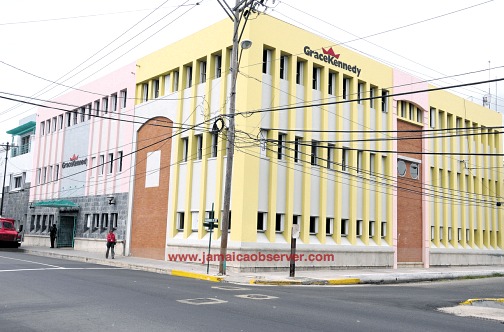
CU Blog - GraceKennedy - Caribbean Transnational Corporation - Photo 1A

The accusation is that the Caribbean – as a region, a people, and a culture – features a parasite status rather than the preferred protégé status. This would mean we only glean the economic activity left over from the other “host” countries; we would also consume the offerings and trends of these more advanced economy countries, rather than dictate our own trends.

This accusation … is mostly true!

But alas, there is a spark of hope in our Caribbean region. There are a number of corporate entities that do dictate trends in the region and throughout the world. The book Go Lean…Caribbean addressed this trend and identified one such company, Jamaica-based ATL Group, the owners of Sandals/Beaches Resorts, an Office Equipment business, Honda automobile dealerships and the media company behind The Jamaica Observer newspaper. But now, we consider another one, this time we focus on the transnational corporation, GraceKennedy Group of Companies who operate in the food and financial sectors.

But first, we must consider the definition of transnationalism:

Transnationalism as an economic process involves the global reorganization of the production process, in which various stages of the production of any product can occur in various countries, typically with the aim of minimizing costs. Economic transnationalism, commonly known as Globalization, was spurred in the latter half of the 20th century by the development of the internet and wireless communication, as well as the reduction in global transportation costs caused by containerization. Multinational corporations could be seen as a form of transnationalism, in that they seek to minimize costs, and hence maximize profits, by organizing their operations in the most efficient means possible irrespective of political boundaries.

multinational corporation is an organization that owns or controls production of goods or services in one or more countries other than their home country.[2]

What Drives Transnationalism?
Some argue that the main driver of transnationalism has been the development of technologies that have made transportation and communication more accessible and affordable, thus dramatically changing the relationship between people and places. It is now possible for immigrants to maintain closer and more frequent contact with their home societies than ever before. However, the integration of international migrations to the demographic future of many developed countries is another important driver for transnationalism. Beyond simply filling a demand for low-wage workers, migration also fills the demographic gaps created by declining natural populations in most industrialized countries. Today, migration accounts for 3/5 of population growth on western countries as a whole. And this trend shows no sign of slowing down. Moreover, global political transformations and new international legal regimes have weakened the state as the only legitimate source of rights. Decolonization, coupled with the fall of communism and the ascendance of human rights, have forced states to take account of persons qua persons, rather than persons qua citizens.

Immigrant Transnational Activities – When immigrants engage in transnational activities, they create “social fields” that link their original country with their new country or countries of residence. These social fields are the product of a series of interconnected and overlapping economic, political, and socio-cultural activities. As for economic transnational activities, these include business investments in home countries and monetary remittances from source countries. The Inter-American Development Bank (IDB) estimates that in 2006 immigrants living in developed countries sent home the equivalent of $300 billion in remittances, an amount more than double the level of international aid. This intense influx of resources may mean that for some nations development prospects become inextricably linked- if not dependent upon – the economic activities of their respective Diasporas.
Source: Retrieved September 5, 2016 from: https://en.wikipedia.org/wiki/Transnationalism
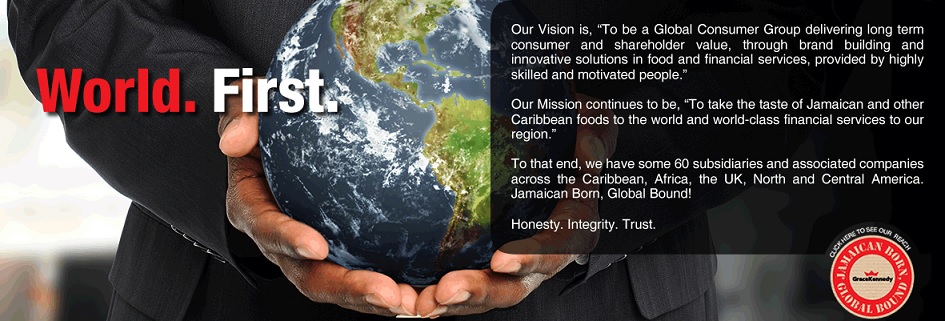
CU Blog - GraceKennedy - Caribbean Transnational Corporation - Photo 1

The GraceKennedy Group of Companies, started in 1922, is based in Kingston, Jamaica, but they are one of the Caribbean “largest and most dynamic corporate entities” in the region. Though they are based in Jamaica, they generate a lot of their global revenue – from food services and financial services – from the rest of the globe. They depend on globalization – economic transnationalism – in order to be an ongoing concern. Their marketing slogan is “Jamaican born; global bound”. They own 60 subsidiaries – see partial list in the Appendix below – and affiliated companies across the Caribbean, Africa, UK, North and Central America; they are a model of a transnational corporation. See VIDEO here:

VIDEO – GraceKennedy at 90 – https://youtu.be/okDBEAdC6LY

Published on Feb 10, 2012 – Jamaican conglomerate Grace Kennedy is celebrating 90 years of existence. The Gleaner recently toured its Harbour Street corporate office and learnt what drives the company’s success.

The history of this company traces a parallel arch of change in the Caribbean region for the 20th Century:

Regional Change Dynamics Year Company Dynamic Changes
European Colonialism 1922 Company formed to facilitate importation / local distribution
Decolonization 1952 Nation-building rather than mother-country dependence
Emigration from Homeland / Diaspora 1959 Export Caribbean home products to the world
Embrace of regionalism 1962 Incorporating in other Caribbean member-states
Shift to Service Economy 1990 Financial Services focus on Remittance

GraceKennedy has expanded and diversified over the years,[2] changing from a privately owned enterprise to a public company listed on the stock exchanges of Jamaica, Trinidad, Barbados and the Eastern Caribbean.

CU Blog - GraceKennedy - Caribbean Transnational Corporation - Photo 2

CU Blog - GraceKennedy - Caribbean Transnational Corporation - Photo 4

CU Blog - GraceKennedy - Caribbean Transnational Corporation - Photo 5

The company does not only appeal to the Jamaican community (domestic or Diaspora) or not only to the Anglo-speaking Caribbean; they also strategize for the Hispanic communities. In that vein, as reported in the foregoing VIDEO, in 2014 CU Blog - GraceKennedy - Caribbean Transnational Corporation - Photo 6GraceKennedy acquired La Fe Foods Inc., a top Hispanic consumer foods company – especially dominant in the frozen food category – in the US.

This transnational corporation aligns with the vision for societal elevation in the book Go Lean … Caribbean. These two visions actually parallel:

  • GraceKennedy – To be a Global Consumer Group delivering long term consumer and shareholder value, through brand building and innovative solutions in food and financial services, provided by highly skilled and motivated people.
  • Go Lean – To integrate and unify the Caribbean region into a Single Market Economy, enabling the homeland to be the best address on the planet, inviting our young people to participate in the effort to make our home the best place to live, work and play in the future. – Page 45.

The Go Lean book serves as a roadmap for the introduction and implementation of the technocratic Caribbean Union Trade Federation (CU). This is a call for confederating, collaborating and convening the 30 member-states of the region – despite the language or colonial legacy – into a Single Market; and for one federal governmental entity to optimize the economic, security and governing endeavors. This would also mean optimization of the food supply and financial services landscape. The Go Lean/CU roadmap creates the atmosphere for many more transnational corporations – homegrown and foreign – to emerge and thrive. This is part-and-parcel of the prime directives (3) of the CU/Go Lean roadmap:

  • Optimization of the economic engines – facilitating the growth in corporate citizens – in order to grow the regional economy to $800 Billion & create 2.2 million new jobs.
  • Establishment of a security apparatus to protect the resultant economic engines.
  • Improvement of Caribbean governance to support these economic engines, reflecting a separation-of-powers between CU agencies and member-state governments.

The CU seeks to facilitate better mastery of the advanced fields of economics by incentivizing, incubating and fostering entrepreneurial efforts, small-to-medium-businesses (SMB) and large multi-national corporations. This is how to create new jobs; jobs are not created by governments, but yet, the governmental administrations can implement the right climate to spur industrial and corporate growth. The job-creation solutions for the Caribbean, are not so much dependent on a specific government, but rather good corporate guidance.

A goal of the Go Lean/CU roadmap is to attract more transnational corporations, to establish a footprint in the Caribbean. How? Why? Why will they come to the Caribbean under the Go Lean/CU regime when they will not come now under the status quo? One answer is the structure of Self-Governing Entities (SGE), and Exclusive Economic Zones (EEZ). SGE refers to dedicated, bordered grounds that are ideal for corporate campuses, research laboratories, industrial bases (like shipyards, factory plants). The SGE structure will require a hybrid governance involving the CU federal agencies and local administrators influence– at the start-up.

The book Go Lean … Caribbean asserts that SGE’s and the EEZ can be strategic, tactical and operationally efficient for elevating Caribbean society – creating jobs. These points are pronounced early in the book with this Declaration of Interdependence (Pages 11 thru 14), with these statements:

v. Whereas the natural formation of our landmass and coastlines entail a large portion of waterscapes, the reality of management of our interior calls for extended oversight of the waterways between the islands. The internationally accepted 12-mile limits for national borders must be extended by International Tribunals to encompass the areas in between islands. The individual states must maintain their 12-mile borders while the sovereignty of this expanded area, the Exclusive Economic Zone, must be vested in the accedence of this Federation.

xxiv.  Whereas a free market economy can be induced and spurred for continuous progress, the Federation must install the controls to better manage aspects of the economy: jobs, inflation, savings rate, investments and other economic principles. Thereby attracting direct foreign investment because of the stability and vibrancy of our economy.

xxv.   Whereas the legacy of international democracies had been imperiled due to a global financial crisis, the structure of the Federation must allow for financial stability and assurance of the Federation’s institutions. To mandate the economic vibrancy of the region, monetary and fiscal controls and policies must be incorporated as proactive and reactive measures. These measures must address threats against the financial integrity of the Federation and of the member-states.

xxvi.  Whereas the Caribbean region must have new jobs to empower the engines of the economy and create the income sources for prosperity, and encourage the next generation to forge their dreams right at home, the Federation must therefore foster the development of new industries, like that of ship-building, automobile manufacturing, prefabricated housing, frozen foods, pipelines, call centers, and the prison industrial complex. In addition, the Federation must invigorate the enterprises related to existing industries tourism, fisheries and lotteries – impacting the region with more jobs.

xxx. Whereas the effects of globalization can be felt in every aspect of Caribbean life, from the acquisition of food and clothing, to the ubiquity of ICT, the region cannot only consume, it is imperative that our lands also produce and add to the international community, even if doing so requires some sacrifice and subsidy.

Though there is a need for more jobs, there is a legitimate fear to inviting more corporations. There are real-life experiences and stories of abuse in mono-industrial communities – Company Towns. Abuse by the “super-rich” is implied in the old adage: “golden rule is he who has the gold makes the rule”. But the Go Lean roadmap is designed to mitigate abuses of plutocracies. This is the advantage of the SGE structure; it allows for better promotion, oversight, and governance for transnational corporate expressions. These SGE’s would be regulated solely by the technocratic CU; there would be features like advanced monitoring (intelligence gathering) and embedded protections for whistleblowers.

CU Blog - GraceKennedy - Caribbean Transnational Corporation - Photo 3The Go Lean roadmap identifies 40,000 new direct jobs tied to SGE’s; plus more tied to industrial activities directly related to the business activities that aligns with GraceKennedy business model, such as 30,000 new direct jobs in the food supply industries and 2,000 direct jobs in the frozen foods industry. These job-creation empowerments will impact every aspect of Caribbean life throughout the Caribbean.

The Go Lean book details a series of community ethos, strategies, tactics, implementations and advocacies to foster industrial developments and SGE’s. The following list applies:

Community Ethos – Economic Principles – Economic Systems Influence Individual Choices Page 21
Community Ethos – Economic Principles – Voluntary Trade Creates Wealth Page 21
Community Ethos – Lean Operations Page 24
Community Ethos – Return on Investments Page 24
Community Ethos – Cooperatives Page 25
Community Ethos – Ways to Impact the Future Page 26
Community Ethos – Ways to Impact the Greater Good Page 32
Strategy – Vision – Confederate to form a Single Market Page 45
Strategy – Mission –  Build and foster local economic engines Page 45
Strategy – Mission –  Exploit the benefits and opportunities of globalization Page 46
Strategy – Mission –  Keep the next generation at home Page 46
Tactical – Fostering a Technocracy Page 64
Tactical – Separation of Powers – Commerce Department – Interstate Commerce Administration Page 79
Tactical – Separation of Powers – Department of Agriculture Page 88
Anecdote – “Lean” in Government Page 93
Implementation – Foreign Policy Initiatives at Start-up Page 102
Implementation – Start-up Benefits from the EEZ Page 104
Implementation – Steps to Implement Self-Governing Entities Page 105
Advocacy – 10 Big Ideas – Single Market Leverage Page 127
Advocacy – Ways to Improve Interstate Commerce Page 129
Advocacy – Ways to Better Manage Food Consumption – Export: Help Find Foreign Markets Page 156
Advocacy – Ways to Better Manage the Social Contract Page 170
Advocacy – Ways to Foster Cooperatives – Common for Agricultural Structures Page 176
Advocacy – Ways to Better Manage Natural Resources – Optimization of Pastoral Lands Page 183
Anecdote # 18 – Caribbean Industrialist: Sandals’ Butch Stewart Page 189
Advocacy – Reforms for Banking Regulations Page 199
Advocacy – Ways to Impact Wall Street – Expansion of local Securities markets Page 200
Advocacy – Ways to Impact Main Street Page 201
Advocacy – Ways to Develop a Frozen Foods Industry Page 208
Advocacy – Ways to Improve Fisheries – Canaries & Refrigerated Warehouse Cooperatives Page 210
Advocacy – Ways to Impact the Diaspora Page 217
Advocacy – Ways to Impact Rural Living – SGE Strategic Locations Page 235
Advocacy – Ways to Re-boot Jamaica Page 239

This commentary asserts that industrial development is hard-work. It is difficult now to get Direct Foreign Investors to consider individual Caribbean member-states, but with this new approach of a regional Single Market, a leveraged Caribbean – 42 million people – can be more attractive, appealing and inviting. Despite the appeal, executing this Go Lean/CU roadmap will still be hard; the book describes the effort as heavy-lifting.

Many of these heavy-lifting issues have been previously identified and detailed in prior Go Lean blog-commentaries. See this sample list:

https://goleancaribbean.com/blog/?p=8379 The Need for Technocratic Regulation of the SGE’s
https://goleancaribbean.com/blog/?p=5921 Socio-Economic Change: Impact Analysis of SGE’s
https://goleancaribbean.com/blog/?p=4037 How to Train Your ‘Dragon’ – Direct Foreign Investors
https://goleancaribbean.com/blog/?p=3473 Haiti’s Example of Success with an SGE: CaracolIndustrial Park
https://goleancaribbean.com/blog/?p=2750 Disney World – Role Model for Self-Governing Entities

This Go Lean movement, fostering a new Caribbean business climate, hereby applauds the corporate stakeholders at the GraceKennedy Group of Companies. We invite them to partner with us to make the Caribbean region a better place to live, work and play. But there is the need for a cautionary warning to them: the change that is coming has “plus & minus” ramifications for their business model.

There are aspects of the Go Lean roadmap that will not be good for some of GraceKennedy’s business model, remittances in particular. (While a GraceKennedy subsidiary is the regional partner representing Western Union in the Caribbean, the Go Lean book – Page 270 – introduces new electronic payment schemes that will lessen the need to pay for money transfers). It is clearly apparent in the Go Lean book, that change is not always good; sometimes it brings unintentional consequences. So if we know change is happening, it is best to get ahead of it. This point was stated poignantly at Page 252:

Opportunities abound; even if there is only little commerce to exploit now, there is opportunity enough in the preparation for the coming change. So act now! Get moving to that place, the “corner” of preparation and opportunity.

With the execution of this Go Lean roadmap, the Caribbean region sends a message to the business world: Change is afoot. There will be new partnerships and collaborations for corporate stakeholders. A message is sent to the Caribbean people as well: there are solutions to these complex problems befalling our society. Whereas the Caribbean may have been a parasite before, now we can function in the role of a protégé.

Like all parasites, their healthy disposition depends on a healthy disposition of the hosts. The Caribbean has been in crisis; therefore the parasitic people have fled – the Caribbean’s “brain drain” and Diaspora has grown as a result – not good. The successful execution of this roadmap will affect this disposition as well. We will and must do better! Optimizing the economic, security and governing engines in the region will lower the abandonment rate. This will also constitute change – good change – for the region.

The Caribbean homeland will then be a better place to compete globally and present more favorable options for our youth to stay home in the region.

Now is the time for all Caribbean stakeholders – corporate citizens included – to lean-in for the optimizations and empowerments described in the book Go Lean … Caribbean. This roadmap is conceivable, believable and achievable. 🙂

Download the free e-Book of Go Lean … Caribbean – now!

—————–

Appendix – List of Subsidiaries: GraceKennedy Group of Companies

  • Banking and Financial services
    • First Global Bank Limited
    • First Global Financial Services Limited
    • FG Funds Management (Cayman) Limited
    • First Global Trinidad & Tobago Limited (formerly One1 Financial Limited)
    • Signia Financial Group Incorporated
  • Remittances
    • GraceKennedy Remittance Services Limited
    • GraceKennedy Remittance Services (United States) Incorporated
    • GraceKennedy Remittance Services (Trinidad & Tobago) Limited
    • GraceKennedy Remittance Services (Guyana) Limited
  • Insurance Life and General
    • Allied Insurance Brokers Limited
    • EC Global Insurance Company Limited
    • First Global Insurance Brokers Limited
    • Jamaica International Insurance Company Limited
    • Trident Insurance Company Limited
  • Manufacturing, retail and distribution
    • Dairy Industries (Jamaica) Limited
    • Grace Foods and Services Company
    • GraceKennedy (Belize) Limited
    • Grace Food Processors Limited
    • Grace Food Processors (Canning) Limited
    • GraceKennedy (United States) Incorporated
    • Grace Foods International Limited
    • National Processors Division
    • World Brands Services Limited
    • Hi-Lo Food Stores (Jamaica) Limited
    • GK Foods (United Kingdom) Limited
    • GraceKennedy (Ontario) Incorporated
    • Hardware & Lumber Limited


Share this post:
, , , ,

Grenada Diaspora – Not the Panacea

Go Lean Commentary

Who you gonna call?

This question can be asked throughout the Caribbean. There is an emergency, a threat to life and property, who do you call? The answer should be the Police.

But who would the Police call when they have a problem?
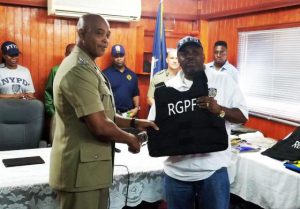
It is hoped that there would be some regional entity that steps in, steps up and helps out.

There is such a need!

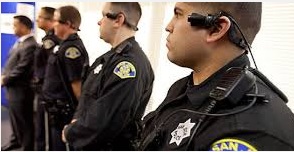
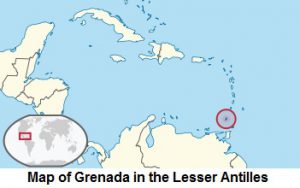
This was the scenario in Grenada, just recently. They had a security need above and beyond the local provisioning, and the Royal Grenada Police Force turned to the Grenada Diaspora.

This is perplexing! Let’s examine this further. See the full news article here:

Title: NYPD officers with Caribbean roots reach out to aid the region

(NY Daily) The NYPD-RGPF Officers’ Association — a group of NYPD officers with roots in Grenada — is bringing new meaning to the phrase “long arm of the law” by reaching out to help Grenada law enforcement officials and aiding other causes in the region.

This month, the association collected much-needed relief supplies — including food, soap and shoes — for survivors of Hurricane Maria on storm-ravaged Dominica. Association members were scheduled to gather in Brooklyn yesterday to pack donated supplies bound for Dominica.

The NYPD-RGPF association was founded in the wake of tragedy and its members are, professionally and personally, well suited to respond to crisis.

According to NYPD-RGPF spokesman Michael Bascombe, the association — which uses the Royal Grenada Police Force acronym RGPF in its name — was founded after RGPF Corporal Daniel Edgar was fatally shot in the line of duty in Grenada in April 2016.

Through fund-raising efforts and personal financial support from NYPD officers, the association’s first act was a financial contribution to Edgar’s family — and donating 100 bullet-proof vests, helmets, traffic enforcement equipment and other gear to the Grenada Police Force in September.

The association has started discussions with the RGPF on possible future partnerships, he said.

Source: Posted October 30, 2017; retrieved November 2, 2017 from: https://stluciatimes.com/2017/10/30/nypd-officers-caribbean-roots-reach-aid-region

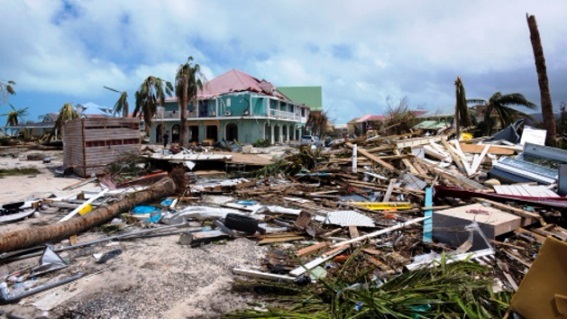
Make no mistake; Grenada needs all the help it can get. All of these Caribbean member-states need whatever help they can get. The region is reeling from the near total devastation from Category 5 storms: Hurricane Maria and Hurricane Irma; Dominica is in disarray! Barbuda is wiped out and declared a Ghost Town as a result. These places must relieve, restore, recover and rebuild.

Who they gonna call?

The urging here is to NOT look to the Diaspora as some panacea, cure-all solution. This is definitely what is happening in Grenada, as this foregoing news article related:

The NYPD-RGPF association was founded in the wake of tragedy and its members are, professionally and personally, well suited to respond to crisis.

This is a troubling point here: we cannot look to people who have left here to turn around and fix what is broken here. They – the Diaspora – are gone! Yet, this is the preponderance for governments (and citizenry alike) to pursue this strategy in the region. Just recently we published commentaries on this Caribbean pre-occupation, with these entries relating these homelands:

The premise for the criticism of this Diaspora strategy is that the ones that have fled the region have done so for a reason; they have been “pushed” or “pulled” away from their homeland. They may still love their “past” country, but can only do so much from abroad. Plus, history documents that they are less inclined to invest back in their country; they are burdened with the concerns of today and the future, that it is illogical to think that they are concerned about their yesterdays. Thusly, all efforts to outreach the Diaspora are usually futile. All of these prior commentaries relate this basic truth about catering to the Diaspora:

The subtle [Diaspora outreach] message to the Caribbean population is that they need to leave their homeland, go get success and then please remember to invest in us afterwards.

… It is so unfortunate that the people in the Caribbean are beating down the doors to get out of their Caribbean homeland, to seek refuge in these places like the US, Canada and Western Europe. … As a result, we have such a sad state of affairs for our Caribbean eco-system as we are suffering from a bad record of societal abandonment.

Thank you, all Diaspora members that have looked back and lent a hand, but the heavy-lifting of reforming and transforming our society must really come from the people who are in the homeland and in the region. For starters, we must try to dissuade people from leaving in the first place and help them to prosper where planted. The record shows that those who do leave, tends to be the ones that we can least afford to lose. These include the professional classes and highly educated ones; one report presents an abandonment rate of 70 percent of the college-educated populations.

Picture a family with limited food supply, serving dinner and “making extra plates” for family members who have left or passed. This would be illogical. We need to be more pragmatic and work a different strategy to assuage our crisis. We need a strategy that embraces those who are still here, not those that “used to be”.

So the problem of a Diaspora-outreach strategy is that it double-downs on the failure of why the Diaspora left in the first place. We need to employ new strategies for the underlying failures. When we look at our Caribbean homeland and see the many failures, we realize that the people on some islands – like Grenada – and the people in their Diaspora cannot solve the problems in the homeland … alone. No, something bigger and better is needed.

We need a Way Forward. This is where and why we have introduced that something BIGGER … and better …

… enter the Caribbean Union Trade Federation (CU). This is presented as the organizational solution for the economic, security and governing needs of all 30 Caribbean member-states, including Grenada; this is the panacea the region needs.

The foregoing article addressed security issues and law-and-order. The book Go Lean…Caribbean – available to download for free – serves as a roadmap for the introduction and implementation of the technocratic CU, for the elevation of Caribbean societal engines – including economic, security and governance for all member-states. The book asserts that the region can do better with security solutions. We can make our region better and safer to live, work and play. But the requirement is that we must work together – in a formal regional integration – to establish the economy-of-scale to employ the many strategies, tactics and implementation to remediate and mitigate crime in the homeland.

In fact, the CU/Go Lean roadmap presents these 3 prime directives:

The goal of the Go Lean roadmap is for Caribbean people to prosper where planted; the book therefore provides 370-pages of turn-by-turn instructions on “how” to adopt new community ethos, plus the strategies, tactics, implementations and advocacies to execute so as to reboot the region’s societal engines, for Grenada and other member-states. One advocacy for a Way Forward is the plan to optimize community policing (Page 178); see the headlines and excerpts from that page here:

10 Ways to Remediate and Mitigate Crime

1 Lean-in for the Caribbean Single Market
This will allow for the unification of the region into one market of 42 million people across 30 member-states, thereby creating an economic zone to promote and protect the interest of the member-states. (The GDP of the region will amount to $800 Billion according to 2010 figures). In addition, the treaty calls for a collective security agreement of the Caribbean nations so as to implement provisions to serve and protect the citizenry against systemic threats. The CU’s law enforcement agencies will enforce, investigate and prosecute economic crimes, including Racketeering, and Organized Crime Enterprises (RECO), plus any cross border gang activity. In addition, the CU will also provide funding, grants, training, technical consultancy, and support services for member-states law enforcement, including crime labs.
2 Deploy the Caribbean Police (CariPol)

The CU Treaty will compel local police to have accountability and respect for the jurisdiction of the Caribbean Police. CariPol will be modeled after Interpol and the US FBI, with Inspectors for investigations and Marshalls for protection and interdiction. When the local Police call for escalation, CariPol responds. CariPol also “polices” the Police, with audit and compliance oversight for “use of force” reviews and Internal Affairs. The appeal to engage CariPol does not have to come from local police, but rather any constitutional institution (i.e. state governments, courts, or legislative bodies).

3 Regional Security Intelligence Bureau

The CU law enforcement apparatus will deploy sophisticated intelligence gathering and analysis systems, processes and personnel. This includes terrestrial and satellite surveillance (CATV, ankle monitoring) systems, eavesdropping, data mining and predictive modeling. Local and regional Police institutions would have access to these findings and results.

The CU’s intelligence agency will also monitor police actions for public integrity assurance (corruption threats).

4 Prison Industrial Complex
5 Equip local police with advanced technologies

The CU will provide grants to equip local police with advanced technologies, including video (dashboard cameras) and audio transmission, GPS tracking, and mobile computing systems to optimize community policing. The advanced systems also include anklet monitoring systems for non-violent offenders and suspects out on bail.

6 Witness Protection
7 Enable the Private Industry of First Responders and Bounty Hunters
8 Hate Crime Qualifiers
9 Youth Crime Awareness and Prevention
10 Death Penalty Reform

Bullet Proof vests are necessary equipment for community policing. The foregoing news article, and VIDEO in the Appendix below, related that the Diaspora group, the NYPD-RGPF, “donated 100 bullet-proof vests, helmets, traffic enforcement equipment and other gear to the Grenada Police Force in September”. Frankly, this is a local government responsibility. The fact that there is the need for this gift in Grenada is reflective of the security deficiencies in that country and in the region. If the community stakeholders cannot protect their own Peace Officers, how much more so can they protect the citizenry. See this sage commentary:

Intentionally murdering a police officer is an especially heinous crime. When the agents of the state who protect the public are themselves targeted, it is a threat to public order and an attack on the authority of the state. Such crimes ought to be penalized more harshly throughout the entire country. – National Review Magazine.

The Caribbean has mourned the death of a Police Office in Grenada. The Caribbean is not the only region that have experienced violent crime … against law enforcement officers and other citizens. In fact, in the US, the rate of death from gun violence far exceeds all other advanced democracy countries. Yet, our Caribbean Diaspora – from New York City – has stepped in to help Grenada.
Thank you …

… but we are urged to lower our expectations of gifts and investments from the Diaspora in general.

The Go Lean book – and many previous blog-commentaries – asserts that while conditions may be bad for Caribbean residents (i.e. Grenadian) in their homeland, Black-and-Brown immigrants to far-away countries (think: North America and Western Europe; think New York City) often have to contend with less than welcoming conditions in those countries. It is only with the Second Generation that prosperity is achieved, but by then, the children of the Caribbean Diaspora are not considered “Caribbean” anymore; they assume their residential citizenship.

When Caribbean people in general, and Grenadians in particular, emigrate and become aliens in a foreign land, life is not necessarily better in those countries. As related in these prior blog-commentaries, those who live in the Diaspora know “both sides of the coin”, as most of them have lived in the ancestral lands at one point. But on the other half, those who still live in the homeland may have never lived abroad.

They do not know what they do not know!

Being a visitor to some North American or European city is different than being a resident, as visitors do not have the interactions of applying for jobs, housing, government benefits, paying taxes, co-existing with neighbors, etc.. These ones in the homeland may naturally assume that the “grass is greener on the other side”. Here’s the truth:

    It is not! (The grass in the northern cities may not even be green at all; it may be covered with autumn foliage or snow).

So it is the summation of this commentary and all the related ones with the theme “Diaspora – Not the Panacea” that it is better for Grenadian people, and people of all the Caribbean for that matter, to work to remediate and mitigate the risks of Failed-State status in their homeland. But many people may argue – and they would be correct – that the reformation and transformation of Caribbean communities should come from Caribbean people first. Yet with such a high societal abandonment rate, the population of many Caribbean member-states – as in Grenada – is approaching a distribution where more citizens live abroad – in the Diaspora than on the island. See the additional data references here:

Grenada, like many of the Caribbean islands is subject to a large amount of migration, with a large number of young people wanting to leave the island to seek life elsewhere. With estimated 107,317 people living in Grenada, estimates and census data suggest that there are at least that number of Grenadian-born people in other parts of the Caribbean (such as Barbados and Trinidad) and at least that number again in First World countries. Popular migration points for Grenadians further north include New York City, Toronto, the United Kingdom (in particular, London and Yorkshire; see Grenadians in the UK) and sometimes Montreal, or as far south as Australia. This means that probably [ONLY] around a third of those born in Grenada still live there.- Wikipedia.

The Go Lean roadmap is not one that advocates the Diaspora coming to the rescue, but rather a Caribbean confederacy, constituted by all 30 member-states, being the solution. This roadmap leverages the Caribbean as a Single Market (42 million people); it asserts that this is better than just catering to the Diaspora of just one country. This is to be the panacea that Caribbean needs to assuage its defects and dysfunctions. Plus, it also includes the Diaspora, but for all the Caribbean nations combined – estimated at 10 to 25 million. This is a plan for interdependence! This was the initial motivation for the CU/Go Lean roadmap, as pronounced in opening Declaration of Interdependence (Pages 12 – 13) statements of the book:

x. Whereas we are surrounded and allied to nations of larger proportions in land mass, populations, and treasuries, elements in their societies may have ill-intent in their pursuits, at the expense of the safety and security of our citizens. We must therefore appoint “new guards” to ensure our public safety and threats against our society, both domestic and foreign. The Federation must employ the latest advances and best practices of criminology and penology to assuage continuous threats against public safety. The Federation must allow for facilitations of detention for convicted felons of federal crimes, and should over-build prisons to house trustees from other jurisdictions.

xi. Whereas all men are entitled to the benefits of good governance in a free society, “new guards” must be enacted to dissuade the emergence of incompetence, corruption, nepotism and cronyism at the peril of the people’s best interest. The Federation must guarantee the executions of a social contract between government and the governed.

xvi. Whereas security of our homeland is inextricably linked to prosperity of the homeland, the economic and security interest of the region needs to be aligned under the same governance. Since economic crimes, including piracy and other forms of terrorism, can imperil the functioning of the wheels of commerce for all the citizenry, the accedence of this Federation must equip the security apparatus with the tools and techniques for predictive and proactive interdictions.

xix. Whereas our legacy in recent times is one of societal abandonment, it is imperative that incentives and encouragement be put in place to first dissuade the human flight, and then entice and welcome the return of our Diaspora back to our shores. This repatriation should be effected with the appropriate guards so as not to imperil the lives and securities of the repatriated citizens or the communities they inhabit. The right of repatriation is to be extended to any natural born citizens despite any previous naturalization to foreign sovereignties.

xx. Whereas the results of our decades of migration created a vibrant Diaspora in foreign lands, the Federation must organize interactions with this population into structured markets. Thus allowing foreign consumption of domestic products, services and media, which is a positive trade impact. These economic activities must not be exploited by others’ profiteering but rather harnessed by Federation resources for efficient repatriations.

There have been a number of blog-commentaries by the Go Lean promoters that have detailed the functionalities of the CU‘s security measures as part of the Way-Forward – the best hope for a new eco-system for Grenada, and the whole Caribbean. See a sample list here of recent submissions:

https://goleancaribbean.com/blog/?p=13138 Industrial Reboot for Better Security – Prisons 101
https://goleancaribbean.com/blog/?p=13126 The Requirement for Better Policing/Security – ‘Must Love Dogs’
https://goleancaribbean.com/blog/?p=12400 Strong Urging to Accede the Caribbean Arrest Treaty
https://goleancaribbean.com/blog/?p=11244 Gun and Violent Deaths More Common in USA Than Caribbean
https://goleancaribbean.com/blog/?p=10566 Funding the Caribbean Security Pact
https://goleancaribbean.com/blog/?p=9072 Securing the Homeland – A Series
https://goleancaribbean.com/blog/?p=7485 A Lesson in the History of Interpersonal Violence – Street Crimes
https://goleancaribbean.com/blog/?p=2684 Role Model for Justice – The Pinkertons
https://goleancaribbean.com/blog/?p=392 World Bank Funds Caribbean Country to Help in Crime Fight

Confederating a regional response is by all means the best-practice for Grenada and other Caribbean security threats. Good results are evident from the limited multilateral efforts that have been exerted thus far. In fact, the current Caribbean Community – CARICOM – includes this regional anti-crime organization IMPACS. The formal name is actually CARICOM Implementation Agency for Crime and Security.

See the “Fact Sheet” in the Appendix below.

This IMPACS organization tries …

… but trying alone is not enough. There is the need for solutions: hardware (tools, equipment and devices) and software (techniques, best-practices, training and systems).

In summary, regional integration: Good; societal abandonment: Bad!

Any country growing their Diaspora is bad for that country and bad for the Diaspora members. Grenada – and every other country – needs its sons and daughters right now; actually this island needs “all hands on deck” for the Way-Forward. Any official policy to encourage emigration and living-working-abroad – on a permanent basis – is a flawed policy. Rather, it is better to have our citizens in the homeland. They can better help to better protect the community.

So any policy that double-downs on the Diaspora is actually doubling-down on failure. We should never want people to have to leave then hope they remember us in our times of distress. No, we want and need them here at home at all times: good, bad and “ugly”.

We strongly urge every stakeholder of Grenada and all of the Caribbean to lean-in to this roadmap to make our homeland, Grenada and the remaining of the 30 member-states, better/safer places to live, work and play. 🙂

Sign the petition to lean-in for this roadmap for the Caribbean Union Trade Federation.

———-

Appendix VIDEO – RGPF Receives Safety Gear From NYPD – https://youtu.be/QBB3mMP802s

Grenada Broadcasting Network

Published on Sep 8, 2017 – Police officers have been given a security boost.

Approximately one hundred bullet proof vests and other items were handed over, from Grenadian officers of the New York Police Department.

  • Category: News & Politics
  • License: Standard YouTube License

———-

Appendix – IMPACS Fact Sheet

The Agency is the nerve centre of the Region’s new multilateral Crime and Security management architecture, specifically designed to administer a collective response to the Crime and Security priorities of Member States. Under the directives of, and with reporting responsibility to the Council of Ministers of National Security and Law Enforcement. IMPACS core functions include -:

  • The implementation of actions agreed by the Council relating to crime and security;
  • The development and implementation of projects in furtherance of the Agency’s objectives;
  • The initiation and development of proposals for consideration and determination by the Council;
  • Advising the Council on appropriate regional responses to Crime and Security arrangements on the basis of research and analysis;
  • The execution of regional projects relating to matters of crime and security;
  • Providing a clearing house for relevant information in matters relating to crime and security;
  • Mobilizing resources in support of the regional Crime and Security agenda and negotiation of technical assistance;
  • Contributing to the development and implementation of strategies for effective representation of CARICOM on a regional and international level on matters relating to crime and security;
  • The dissemination of information to Contracting Parties with respect to evolving regional and international trends in crime and security;
  • The collaboration and co-ordination with national and international crime prevention and control agencies to determine trends, methodologies and strategies for crime prevention and enhancing security for the Community; and
  • Developing, in collaboration with the CARICOM Secretariat, roles, functions and Rules of Procedure for such Committees as may be established in furtherance of the regional Crime and Security agenda.

Source: Retrieved November 3, 2017 from: http://www.caricom.org/about-caricom/who-we-are/institutions1/caricom-implementing-agency-for-crime-and-security-impacs

Share this post:
, , ,
[Top]

Dominica Diaspora – Not the Panacea

Go Lean Commentary

If only it was that simple!

You love your homeland, but you live abroad. You simply create a not-for-profit organization, execute a development plan to relieve, restore, recover, rebuild and boom: Instant success … back in the homeland.

If only?! It doesn’t work that way.

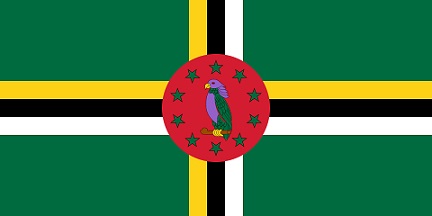
CU Blog - Dominica Diaspora - Not the Panacea - Photo 2Yet still, this is what is transpiring on behalf of the Caribbean island of Dominica; see the profile of one such organization here (and more on the island nation in the Appendix below):

Rebuild Dominica, Inc. is a registered 501(c)(3) non-profit relief organisation based in the Washington, D.C. metro area. We were founded by humanitarians determined to help rebuild Dominica in the wake of the devastation wrought by Tropical Storm Erika. This effort continues in support of disaster relief post-Hurricane Maria — the most horrendous assault Dominica has ever experienced.
URL: https://rebuilddominica.org/

Make no mistake; Dominica needs all the help it can get, especially right now after the near total devastation from Category 5 Hurricane Maria; they must relieve, restore, recover and rebuild. See this reality manifested in this VIDEO here:

VIDEO – Small island of Dominica hit hardest by Hurricane Maria – https://youtu.be/FWbzgn3nHaU

Al Jazeera English

Published on Sep 25, 2017 – Hurricane Maria has killed at least 33 people so far, with the bulk of those deaths happening on the tiny island of Dominica. At least 80 percent of the buildings there have been damaged and most communication lines cut. Al Jazeera’s Gabriel Elizondo reports from Dominica.

– Subscribe to our channel: http://aje.io/AJSubscribe
– Follow us on Twitter: https://twitter.com/AJEnglish
– Find us on Facebook: https://www.facebook.com/aljazeera
– Check our website: http://www.aljazeera.com/

Thank you Diaspora, for this fine start; yet still, the problems that Dominica have – with this storm recovery here and even larger issues above and beyond – can not be fixed by this island’s Diaspora alone. No, there is the need for a more comprehensive solution.

Above and Beyond – Yes, looking at the horizon and longing for a solution from above and beyond is the concern of this commentary. In fact, this is the theme of a series of commentaries from the movement behind the book Go Lean … Caribbean. It has been consistent in urging the stakeholders (governments and citizen groups) of the Caribbean member-states to NOT put their hope and faith in their Diaspora to look back to their homelands and be the panacea – cure-all solution – that their societies need. There is preponderance for governments to pursue this strategy. Just recently we published commentaries on this Caribbean pre-occupation, with these entries relating these homelands:

The premise for the criticism of this Diaspora strategy is that the ones that have fled the region have done so for a reason; they have been “pushed” or “pulled” away from their homeland. They may still love their country, but can only do so much from abroad. While one person can change their community, it is near impossible for that one person if they are not in the community; there may be trust, accountability and transparency issues. Thusly, the Diaspora is less inclined to invest back in their country; and the historicity is that they have not! Thusly, all efforts to outreach the Diaspora are usually futile. All of these prior commentaries relate this basic truth about catering to the Diaspora:

The subtle [Diaspora outreach] message to the Caribbean population is that they need to leave their homeland, go get success and then please remember to invest in us afterwards.

… It is so unfortunate that the people in the Caribbean are beating down the doors to get out of their Caribbean homeland, to seek refuge in these places like the US, Canada and Western Europe. … As a result, we have such a sad state of affairs for our Caribbean eco-system as we are suffering from a bad record of societal abandonment.

Yes, the problem of this Diaspora-outreach strategy is that it double-downs on the failure of why the Diaspora left in the first place. When we look at Dominica and see the many failures of that country, we realize that the Dominicans on the island and the Dominicans in the Diaspora cannot, single-handedly or collectively, solve the problems on that homeland. No, something bigger and better is needed.

They are trying now, for that something better …

They are engaging help and support of different not-for-profits, foundations and non-government organization (NGO). See a related news article here:

Title: Rebuild Dominica Partners with Project C.U.R.E. & Other Global Allies Post-Hurricane Maria
Sub-title: Washington, D.C. Based Nonprofit Collaborates To Deliver Hurricane Relief Supplies to the Island Of Dominica
By: The Caribbean Current

CU Blog - Dominica Diaspora - Not the Panacea - Photo 3Bowie, MD (October 8, 2017) – Since its inception in August of 2015, in direct response to Tropical Erika devastating The Commonwealth of Dominica, Rebuild Dominica holds steadfast to its mission of forming and sustaining long-term partnerships to address the unmet needs of communities in Dominica.

Dr. Sam Christian, Rebuild Dominica’s Coordinator of Medical Operations on-island, submitted reports to pronounce the discovery of three residents of Pointe Michel — whom he respectively met dead in a ravine, on the beach, and under debris of a porch. Hours after Hurricane Maria, Dr. Christian, a former U.S. Army Major, and combat surgeon was the only surgeon working with police and a search and rescue team in the south of Dominica. This continued for days, during the difficult hours post-Maria, before outside help came to the area of Point Michel and Soufriere.

These reports were used to secure medical supplies valued at approximately $400,000 USD as donated by Project C.U.R.E.: the largest provider of donated medical supplies and equipment to developing countries around the world. The relief supplies will ship this week to Dominica, while Dr. Sam Christian continues to provide free medical treatment in anticipation of the delivery.

The cost of shipment of the medical supplies was funded under the direction of Rebuild Dominica and the nonprofit’s global supporters. A primary donation of $10,000 USD was received from Ethiopian financier and Advisor to Ethiopian Crown Council, Mel Tewahade. Additional assistance totaling $5,000 USD was pledged by from Saad Wakas and Omar Fisher: Rebuild Dominica allies based in Dubai. The President of Rebuild Dominica, Mr. Gabriel Christian, donated an additional $10,000 underwritten by his law firm in Maryland. The combined mobilization for the Project C.U.R.E. shipment is $20,000 – the sum directed to Project C.U.R.E. on behalf of Rebuild Dominica.

Founding member of Rebuild Dominica, Pastor St. Clair Mitchell of Evangel Assembly, along with Pastor Bell convened with the nonprofit on the evening of September 19, 2017, to mobilize the D.C. community. Carib Nation TV Director, Larry Sindass, and host Derrice Deane brought the Rebuild Dominica relief appeal to a global audience.

John Green, Delvin Walters, John Riviere, Colonel Koreen Parry, Captain Delvin Walters, Loema Sealey, Loughton Sargeant and Monique Joseph — all leaders of the Caribbean Disaster Relief and Recovery Alliance (CDRRA) — rushed to aid Rebuild Dominica; an early member of the CDRRA Diaspora disaster response collaborative. Caribbean Cargo DC again proved itself a solid community ally by reducing its shipping rates and donating storage space for relief supplies.

While facilitating the arrival and news coverage in Dominica by Al Jazeera TV and the Israeli Search and Rescue Team, Rebuild Dominica communicated with Dominica’s Prime Minister, Roosevelt Skerrit. A national medical services assessment, with guidance from Dr. Dale Dangleben and Dr. Sam Christian, is currently in progress for additional donations in the medical sphere.

Another shipment totaling three tons of food and medicine await shipment from Caribbean CargoDC and ATAS Roofing USA has committed to assist with supplies for roofing needs in Dominica. Greek-Ethiopian, Captain Demetrius Apokremiotis, has secured a short-term donation of a Convair 340 cargo plane on behalf of Rebuild Dominica to airlift 7,000 pounds of aid supplies from Miami to Dominica.

As of as of September 25, Rebuild Dominica is an official PayPal nonprofit partner. This status puts the nonprofit on par with all major US nonprofits dedicated to disaster relief.

A fundraiser is currently underway to secure monies needed to fuel and deliver the aid that awaits the displaced and starving citizens of Dominica. To that end, Rebuild Dominica has partnered with CDRRA for the upcoming ‘One Caribbean Hurricane Relief Concert’ slated for Sunday, October 8, 2017, in Bowie, Maryland. Proceeds will benefit the Caribbean islands devastated by Hurricane Irma and Hurricane Maria.

To volunteer, share resources, or make a financial contribution to this nonprofit, please visit www.RebuildDominica.org.

Source: Posted October 11, 2017 from: https://www.thecaribbeancurrent.com/rebuild-dominica-partners-project-c-u-r-e-global-allies-post-hurricane-maria/

To relieve, restore, recover and rebuild Dominica after Hurricane Maria, we need these NGO’s, and the Diaspora, and the island’s government; and … something more …

… enter the Caribbean Union Trade Federation (CU). This is presented as the organizational solution for Dominica; this is the panacea that Dominica and the rest of the Caribbean needs. But first, we need people to stay in their Caribbean homelands, not flee. We need them to prosper where planted here at home. Democratic governments – of the people; by the people; for the people – cannot expect to promote the best of their people, if the best people keep leaving – and joining the Diaspora.

The book Go Lean…Caribbean – available to download for free – serves as a roadmap for the introduction and implementation of the technocratic CU, for the elevation of Caribbean societal engines – economic, security and governance for all member-states. The book asserts that the region must work together – in a formal regional integration – to hold on to its populations – especially the highly educated ones – not see them leave for foreign shores. To accomplish this objective, this CU/Go Lean roadmap presents these 3 prime directives:

The Go Lean book – and many previous blog-commentaries – asserts that while conditions may be bad for Caribbean residents (i.e. Dominican) in their homeland, Black-and-Brown immigrants to far-away countries (think: North America and Western Europe) often have to contend with less than welcoming conditions in those countries. It is only with the Second Generation that prosperity is achieved, but by then, the children of the Caribbean Diaspora are not considered “Caribbean” anymore; they assume their residential citizenship. As conveyed in the foregoing VIDEO, it is not these Second Generation types – legacies – that are overcoming the obstacles to venture back to their ancestral homeland in the wake of hurricanes.

So it is the summation that it is better for Dominican people, and people of all the Caribbean for that matter, to work to remediate and mitigate the risks of Failed-State status in their homeland, but such work is heavy-lifting. It requires a reboot of the entire Dominican eco-system. The Go Lean roadmap calls for a technocratic reboot, to reform and transform regional society. Many people may argue – and they would be correct – that the reformation and transformation of Caribbean communities should come from Caribbean people first. But with such a high societal abandonment rate, the population of many Caribbean member-states – as in Dominica – is approaching a distribution where half of the citizens live on the islands and the other half live abroad – in the Diaspora. For some other countries, it is a vast majority of the educated populations that have fled; one report presents that abandonment rate of 70 percent. See the data references here:

According to the preliminary 2011 census results Dominica has a population of 71,293.[1] The population growth rate is very low, due primarily to emigration to more prosperous Caribbean Islands, the United Kingdom, the United States, and Canada. The estimated mid-year population of 2016 is 73,543 (the 2017 revision of the World Population Prospects[2]).- Wikipedia.

CU Blog - Dominica Diaspora - Not the Panacea - Photo 0

When Caribbean people in general, and Dominicans in particular, emigrate and become aliens in a foreign land, life is not necessarily better in those countries. As related in a previous blog-commentary, those who live in the Diaspora know “both sides of the coin”, as most of them have lived in the ancestral lands at one point. But on the other half, those who still live in the homeland may have never lived abroad.

They do not know what they do not know!

Being a visitor to some North American or European city is different than being a resident, as visitors do not have the interactions of applying for jobs, housing, government benefits, paying taxes, co-existing with neighbors, etc.. These ones in the homeland may naturally assume that the “grass is greener on the other side”. Here’s the truth:

    It is not! (The grass in the northern cities may not even be green at all; it may be covered with autumn foliage or snow).

The Go Lean roadmap is not for the Diaspora to come to the rescue, but rather a Caribbean confederacy, constituted by all 30 member-states. This position leverages the Caribbean as a Single Market (42 million people); it asserts that this is better than just catering to the Diaspora of just one country. This is to be the panacea that Caribbean needs to assuage its defects and dysfunctions. Plus, it also includes the Diaspora, but for all the Caribbean nations combined – estimated at 10 to 25 million. This is a plan for interdependence! This was the motivation for the CU/Go Lean roadmap, as pronounced in the opening Declaration of Interdependence (Pages 12 – 13) of the book:

xi. Whereas all men are entitled to the benefits of good governance in a free society, “new guards” must be enacted to dissuade the emergence of incompetence, corruption, nepotism and cronyism at the peril of the people’s best interest. The Federation must guarantee the executions of a social contract between government and the governed.

xix. Whereas our legacy in recent times is one of societal abandonment, it is imperative that incentives and encouragement be put in place to first dissuade the human flight, and then entice and welcome the return of our Diaspora back to our shores. This repatriation should be effected with the appropriate guards so as not to imperil the lives and securities of the repatriated citizens or the communities they inhabit. The right of repatriation is to be extended to any natural born citizens despite any previous naturalization to foreign sovereignties.

xx.  Whereas the results of our decades of migration created a vibrant Diaspora in foreign lands, the Federation must organize interactions with this population into structured markets. Thus allowing foreign consumption of domestic  products, services and media, which is a positive trade impact. These economic activities must not be exploited by others’ profiteering but rather harnessed by Federation resources for efficient repatriations.

xxiv.  Whereas a free market economy can be induced and spurred for continuous progress, the Federation must install the controls to better manage aspects of the economy: jobs, inflation, savings rate, investments and other economic principles. Thereby attracting direct foreign investment because of the stability and vibrancy of our economy.

The goal of the Go Lean roadmap is for Caribbean people to prosper where planted; the book therefore provides 370-pages of turn-by-turn instructions on “how” to adopt new community ethos, plus the strategies, tactics, implementations and advocacies to execute so as to reboot the region’s societal engines, for Dominica and other member-states. One advocacy for a Way Forward is the plan to optimize the roles and responsibilities of non-government organizations (Page 219):

10 Ways to Impact Foundations

1

Lean-in for the Caribbean Single Market
This treaty allows for the unification of the region into one market, thereby expanding to an economy of 30 countries, 42 million people and GDP of over $800 Billion (circa 2010). With the scale of this Single Market, the CU serves as a proxy to facilitate the economic engines, regional security initiatives and emergency management needs of the Caribbean. While the CU is not an advocacy for human rights or civil rights, there are many social causes that the CU will impact in a tangential manner (women, disabled, poverty, middle class, others). The CU allows for the regional oversight and promotion of Not-For-Profit foundations to execute their campaigns to impact the socio-economic causes of the region.

2

NGOs to Deliver CU Social AgendaThe CU will facilitate the eco-system for not-for-profit foundations and non-government organizations. The CU’s Department of State will not just facilitate incorporations on the regional level, no need to repeat in every member-state, but also provide much of the NGO administration and oversight to satisfy the local governments and other stakeholders.

3

Domestic ChartersOne of the missions of the CU is for the Diaspora to repatriate their time, talents and treasuries to make the Caribbean a better place to live, work and play. The CU will encourage the creation of micro-focused foundations and not-for-profit NGOs. This is a natural way for others to give back. Those desiring to contribute (and incentivized) can enable their causes and passions through local foundations, or petition the CU to discern new gaps needing fulfillment.

4

“One Percent” AlignmentThere is a new spirit of philanthropy imbrued in the population of the world’s billionaires and millionaires (One Percent), many of them have signed a Giving Pledge to donate half of their estate to global charitable causes. Many of this group – see Appendix N on Page 292 – facilitates charitable contributions by means of their personal or otherwise aligned foundations.

5

Foreign ChartersFoundations incorporated in foreign lands will find a “welcome mat” in the Caribbean. The CU will identify opportunities for these foundations to engage within this region. The CU will maintain a Special Interest Group to liaison with the “One Percent” of the world’s richest people. The CU will therefore solicit them for philanthropic manifestations in the CU.

6

CU Reporting

7

e-Delivery

8

Education via e-Learning

9

Intelligence Gathering and Big-Data AnalysisThe CU Intelligence Gathering and Analysis mechanism will track the progress of their activities, plus mitigate threats and risks for foundations and NGOs. The CU’s satellite and terrestrial surveillance systems, and predictive modeling/Big Data Analysis will help guide the focus of foundations – this way their investments and roles will be greatly enhanced.

10

Failed-State Status – Monitoring and MitigationsThere are a few social factors (refugee, family reunification, brain drain) that are so pivotal that they are considered indicators for Failed-State status. The CU’s mission to improve these indices can be dovetailed with the foundations.

There have been a number of blog-commentaries by the Go Lean promoters that have detailed the functionalities of NGO’s and foundations as part of the Way-Forward – the best hope for a new eco-system for Dominica, and the whole Caribbean. See a sample list here:

https://goleancaribbean.com/blog/?p=12949 Charity Management for the Caribbean – Grow Up Already
https://goleancaribbean.com/blog/?p=11598 Plea to Philanthropists: Give us your Time, Talent and Treasuries
https://goleancaribbean.com/blog/?p=8243 Zuckerberg’s Philanthropy Project Makes First Major Investment
https://goleancaribbean.com/blog/?p=5462 Charity Dysfunction: The Red Cross’ $500 Million In Haiti Relief
https://goleancaribbean.com/blog/?p=1763 Gates Foundation: Changing the World

Confederating a regional response is by all means the best-practice for Dominica and other Caribbean hurricane victims. Good results are evident from the limited multilateral efforts that have been exerted thus far. See here:

… the response shows that in a region separated by language and geography, culture remains a strong tie.

“Caribbean culture understands that when a cousin or godson is hurting down the street, everyone puts in their little bit to make a pot of food,” said Marlon Hill, a Jamaican-born Miami attorney, who with the help of The Miami Foundation, is spearheading the U.S. Caribbean Strong Relief Fund with other South Florida Caribbean leaders. “Today it’s Dominica, but tomorrow it can be Saint Lucia, next week it can be Barbados and next year it can be Grenada.”

… whether the new spirit of cooperation will lead to deeper integration among Caribbean nations remains to be seen.

Anthony Bryan, a Caribbean expert now with the Washington-based Center for Strategic and International Studies said that while the recent hurricanes represent a “common disaster” that has pulled nations together, he isn’t optimistic that it will lead to anything beyond the current functional cooperation among many countries on matters such as a common high school exit exam or health initiatives.

    “I think we tend to come together when there are either disaster responses or security measures and to coordinate foreign policies,” Bryan said. “Regional integration has been the hope for many years, but it takes political will. … Functional cooperation has always existed. But to carry it further to political integration? Not in my lifetime.”

Still, [Ronald] Jackson, the head of the regional disaster response – [Caribbean Disaster Emergency Management] – Agency, remains hopeful.

    “We have shown that it is possible,” he said.

Source: Posted September 26, 2017 by the Miami Herald

In summary, regional integration: Good; societal abandonment: Bad!

Any country growing their Diaspora is bad for that country and bad for the Diaspora members. Dominica – and every other country – needs its sons and daughters right now; actually this island needs “all hands on deck” for the Way-Forward. Any official policy to encourage emigration and living-working-abroad – on a permanent basis – is a flawed policy. Rather, it is better to have our citizens in the homeland. They can better help to relieve, restore, recover and rebuild the country.

So any policy that double-downs on the Diaspora is actually doubling-down on failure. We should never want people to have to leave then hope they remember us in our times of distress. No, we want and need them here at home at all times: good, bad and hurricane. We want and need them to “plant” … and prosper where planted.

We strongly urge every stakeholder of Dominica and all of the Caribbean to lean-in to this roadmap to make our homeland, Dominica and the remaining of the 30 member-states, better places to live, work and play. 🙂

Download the free e-book of Go Lean … Caribbean – now!

Sign the petition to lean-in for this roadmap for the Caribbean Union Trade Federation.

———–

Appendix – Dominica Today

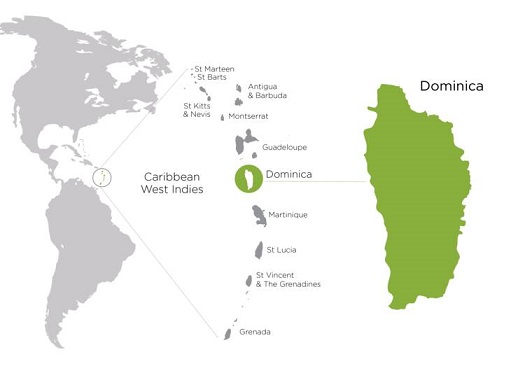
Dominica, officially the Commonwealth of Dominica, is a sovereign island country.[8] The capital, Roseau, is located on the leeward side of the island. It is part of the Windward Islands in the Lesser Antilles archipelago in the Caribbean Sea. The island lies south-southeast of Guadeloupe and northwest of Martinique. Its area is 750 km2 (290 sq mi), and the highest point is Morne Diablotins, at 1,447 m (4,747 ft) in elevation. The population was 71,293 at the 2011 census.[5]

Source: Retrieved October 17, 2017 from: https://en.wikipedia.org/wiki/Dominica

CU Blog - Dominica Diaspora - Not the Panacea - Photo 1

——–

Dominica is a member-state in the Organization of Eastern Caribbean States (OECS), along with the sovereign territories of: Antigua and Barbuda, St Kitts and Nevis, St Lucia, St Vincent and the Grenadines and Grenada. (These British Overseas Territories are also associate members of OECS: Anguilla, Montserrat, and the British Virgin Islands).

All of these countries are opening their borders to welcome Dominican citizens to their shores during this hurricane recovery crisis.

“Citizens of Dominica have a right of entry into Antigua and other OECS countries and an automatic six-month stay and must present their passport, driver’s license or voter’s identification card to allow entry”. – St Lucia Times

——–

Dominica is also a member-state of CariCom or the Caribbean Community, in concert with the other 12 Anglophone sovereign countries, plus Haiti and Suriname.

Many of these countries – in a pledge of regional brotherhood – are opening their borders to welcome Dominican citizens to their shores during this hurricane recovery crisis.

Share this post:
, ,
[Top]

‘Pulled’ – Despite American Guns

Go Lean Commentary

“Can’t see the forest for the trees” – Famous Quotation
This is an expression used for someone who is too involved in the details of a problem to look at the situation as a whole: “The congressman became so involved in the wording of his bill that he couldn’t see the forest for the trees; he did not realize that the bill could never pass.”

CU Blog - 'Pulled' to American Guns - Photo 1This concept is true for communities too!

The United States of America presents itself as the “City on the Hill“, the richest, most powerful model democracy in the history of the world. But this country has some societal defects – i.e. Institutional Racism & Crony-Capitalism – that are so acute that they distort the American reality as a Great Society. One defect in particular is the American gun culture, gun deaths and mass shootings.

Still, America draws – or pulls – a lot of immigrants from around the world, including the Caribbean, despite the voluminous deaths. Just how many deaths are there?

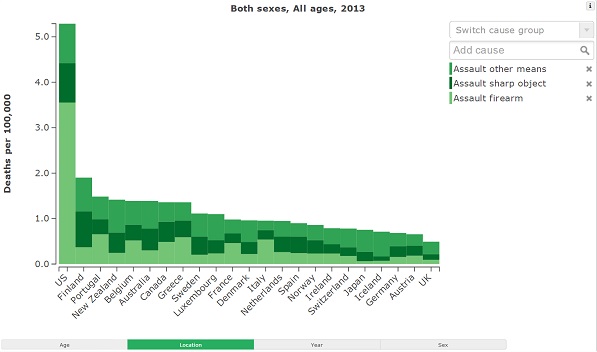
First, the US has far more gun deaths than most other advanced economy countries.

Title: Visualizing gun deaths: Comparing the U.S. to the rest of the world
Whenever a mass shooting occurs, a debate about gun violence ensues. An often-cited counter to the point about the United States’ high rates of gun homicides is that people in other countries kill one another at the same rate using different types of weapons. It’s not true.

Compared to other countries with similar levels of development or socioeconomic status, the United States has exceptional homicide rates, and it’s driven by gun violence.

Here is the data:

CU Blog - 'To Live and Die in L.A.' - Photo 3

Source: Posted June 12, 2016; retrieved October 9, 2017 from: Global Burden of Disease Study. Access the data visualization here: http://ihmeuw.org/3oi4

Just how many mass shootings are there?

See this encyclopedic reference:

Title: Mass shootings in the United States by year

These are the number of shootings (incidents) that transpired during the applicable year. For the last 2 years (2017-to-date & 2016), the actual shooting events are detailed.

Year Incidents Details
2017 13 Partial Year – As of October 1, 2017
    Bronx-Lebanon Hospital attack
    Burnette Chapel shooting
    Clovis library shooting
    Congressional baseball shooting
    Fort Lauderdale airport shooting
    Freeman High School shooting
    Las Vegas Strip shooting
    Little Rock nightclub shooting
    Mississippi shootings
    Orlando shooting
    Plano shooting
    UPS shooting in San Francisco
    Weis Markets shooting
2016 14  
    Baton Rouge shooting of police officers
    Cascade Mall shooting
    Citronelle homicides
    shooting of Dallas police officers
    FreightCar America shooting
    Hesston shooting
    Kalamazoo shootings
    Madison High School shooting
    Mukilteo shooting
    Orlando nightclub shooting
    Pike County, Ohio, shootings
    Pablo Antonio Serrano-Vitorino
    St. Joseph courthouse shooting
    Wilkinsburg shooting
2015 9  
2014 5  
2013 6  
2012 11  
2011 7  
2010 5  
2009 8  

Source: Retrieved October 9, 2017:  https://en.wikipedia.org/wiki/Category:Mass_shootings_in_the_United_States_by_year

In a previous blog-commentary, the thesis was presented that for Caribbean citizens, it is NOT better to live “fast & furious” in the US, but rather it is better to prosper where planted in the Caribbean homeland. Life in the US may experience a shorter mortality due to the risky gun culture.

And yet, our Caribbean communities are losing people more and more with our atrocious societal abandonment rates – estimated by one report at 70 percent of the professional classes –  to destinations like the United States. Why are they leaving? Two reasons:

  • “Push” refers to people who feel compelled to leave, to seek refuge in a foreign land. “Refuge” is an appropriate word; because of societal defects, many from the Caribbean must leave as refugees – think LGBTDisabilityDomestic-abuseMedically-challenged – for their life, liberty and pursuit of happiness.
  • “Pull”, on the other hand refers to the lure of a more prosperous life abroad; many times our people are emigrating for economics solely.

Is life really so prosperous in the US with such a track record of gun violence?

CU Blog - Must Love Dogs ENCORE - Photo 1

CU Blog - 'Pulled' to American Guns - Photo 2

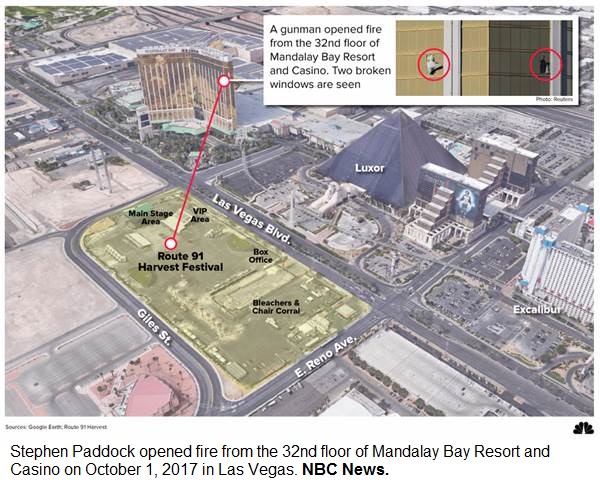
On October 1, 2017 a shooter – Stephen Paddock – used 23 guns (mostly automatic rifles) perched in a 32nd floor hotel room rained down bullets on a Country Music concert in an adjacent park. He killed 58 innocent people and injured more than 500.

The repeated incidences of mass shooters – with no gun control remediation – makes American life defective; see VIDEO in the Appendix below.

This commentary aligns with the charter of the book Go Lean … Caribbean to make the countries of the Caribbean region better places to live, work and play. The goal is to be Better Than America; to be a protégé without the ignominious Second Amendment; to exercise better governance. A previous blog-commentary entitled 10 Things We Want from the US and 10 Things We Don’t Want from the US detailed:

The “right to bear arms” has a personal application beyond the country’s entitlement to maintain a militia. This “right” has been interpreted in a manner in which any normal “man” can get possession of guns and other armament. This proliferation of guns in society results in the highest rate of gun violence in the world, even an unconscionable rate of school shootings.

The Go Lean roadmap purports that this status has also caused discord – a gross abuse and availability of illegal guns – in bordering communities of Mexico, and Caribbean states of the Bahamas, and the DR. This propels our gun-related crime.

The Go Lean book serves as a roadmap for the introduction and implementation of the technocratic Caribbean Union Trade Federation (CU) to elevate the region’s societal engines – economics, homeland security and governance – for all 30 Caribbean member-states in the region. In fact, the prime directives of the roadmap includes the following 3 statements:

  • Optimization of the economic engines in order to grow the regional economy to $800 Billion & create 2.2 million new jobs.
  • Establishment of a security apparatus to ensure public safety and protect the resultant economic engines with proactive and reactive measures.
  • Improvement of Caribbean governance to support these engines, including a separation-of-powers between the member-states and CU federal agencies.

The quest is to minimize the paradox of future-planning/decision-making for Caribbean citizens. We want to make the Caribbean region better places to live, work and play; this way our citizens would not have to leave … for American shores. Above and beyond mass shootings, the truth of the matter is people die more readily in America due to gun-violence than they die in the Caribbean, or anywhere else.

The planners for a new Caribbean should be able to lower the “pull” factors for Caribbean citizens. Caribbean life is in competition with American life and we should be able to sell the lower risk of being killed by American guns.

The Go Lean book contends that bad actors will always emerge just as a result of economic successes in society. Once the prospects of guns are factored it, the inevitable “bad guy with a gun” can do more damage than ordinary. There must be remediation and mitigation. This point is pronounced early in the book with the Declaration of Interdependence (Page 12) that claims:

x. Whereas we are surrounded and allied to nations of larger proportions in land mass, populations, and treasuries, elements in their societies may have ill-intent in their pursuits, at the expense of the safety and security of our citizens. We must therefore appoint “new guards” to ensure our public safety and threats against our society, both domestic and foreign. The Federation must employ the latest advances and best practices … to assuage continuous threats against public safety.

xi. Whereas all men are entitled to the benefits of good governance in a free society, “new guards” must be enacted to dissuade the emergence of incompetence, corruption, nepotism and cronyism at the peril of the people’s best interest. The Federation must guarantee the executions of a social contract between government and the governed.

xvi. Whereas security of our homeland is inextricably linked to prosperity of the homeland, the economic and security interest of the region needs to be aligned under the same governance. Since economic crimes, including piracy and other forms of terrorism, can imperil the functioning of the wheels of commerce for all the citizenry, the accedence of this Federation must equip the security apparatus with the tools and techniques for predictive and proactive interdictions.

The Go Lean book provides 370 pages of details on the economic principles and community ethos to adopt, plus the executions of strategies, tactics, implementations and advocacies to better secure the Caribbean homeland. Just “how” can the Caribbean region reboot, reform and transform their societal engines to provide better protections and gun control. This is the actual title of one advocacy in the Go Lean book. Consider the specific plans, excerpts and headlines here from Page 179, entitled:

10 Ways to Improve Gun Control

1

Lean-in for the Caribbean Single Market
The [CU] treaty allows for the unification of the region into one market of 42 million people across 30 member-states, thereby creating an economic zone to promote and protect the interest of the member-states. In addition, the treaty calls for a collective security pact to ensure homeland security and assuage against systemic threats. The CU will elevate and consolidate the registration, gun-permitting process to regional oversight. The goal is to apply learned-lessons from the US example. For Third World countries, as most of the CU apply, undisciplined gun use affect the Failed-State indicator: Criminalization / De-Legitimization of the State. The CU’s mandate is to manage the image and reality of Failed-States.

2

Background Checks
It’s a best practice to restrain certain aspects of the population access to guns (felons, defendants on bail, targets of restraining orders). This includes gun purchasing and ownership. So the CU Gun Registration regulation (within CariPol) will enforce strict background checks for ALL purchases: retail, wholesale and private-party. This regulation will also be post-reactive in the event a CU resident becomes a subject of legal/police action so as to suspend their gun rights.

3

Ballistics Testing
The CU will extend gun registration/regulation beyond our American neighbors. To facilitate subsequent investigation of gun crimes, every registered gun must complete ballistic tests and the results must be on (computer) file at CariPol.

4

Mental Illness Data

5

Intelligence Gathering and Big Data Analysis

6

United States (FBI / ATF) Coordination

7

Private Security Bodyguards

8

Private First Responders / Bounty Hunters

9

Gun BuybacksThe CU will maintain a constant program for anonymous gun “buybacks”. These endeavors will be funded with CU funds and coordinated with not-for-profit foundations. The acquired guns will all be registered, for serial numbers and ballistic testing results, and then destroyed; unless needed for legal prosecutions.

10

Public Relations / Anti-Bullying Campaign

There have been a number of blog-commentaries by the Go Lean movement that highlighted the eco-system of crime-domestic terrorism; this is part-and-parcel of the regional homeland security initiatives. See a sample list here:

https://goleancaribbean.com/blog/?p=13126 “Must Love Dogs”  – Providing K9 Solutions for Better Security
https://goleancaribbean.com/blog/?p=12400 Accede the Caribbean Arrest Treaty
https://goleancaribbean.com/blog/?p=11332 Boston Bombing Anniversary – Learning Lessons
https://goleancaribbean.com/blog/?p=11048 Managing the ‘Strong versus the Weak’ Series – Model of Hammurabi
https://goleancaribbean.com/blog/?p=9072 Model: Shots-Fired Monitoring – Securing the Homeland on the Ground
https://goleancaribbean.com/blog/?p=7485 Mitigating Interpersonal Violence Series – Street Crimes
https://goleancaribbean.com/blog/?p=2684 Role Model for Law, Order and Justice – The Pinkertons

In summary, it is only logical that any stewards of society to remediate any known risks and threats; yet this is not the case for guns in America.

This is stupid … for this to continue unimpeded … for so long. (The American rationale is the 2nd Amendment of the US Constitution; one original motivation in 1791 was to suppress insurrection, allegedly including slave revolts [60][61][62]).

In a previous blog-commentary, it was related that when stupidity persists in society it is because someone is getting paid. Who are the financial benefactors in the case of guns in America: The Firearms Manufacturers!

Stock prices of firearms manufacturers rose the day after the shooting, as has happened after similar incidents. Investors expect gun sales will increase over concerns that such an event could lead to more stringent gun-control legislation and a rush of customers wishing to defend themselves against future attacks. – MarketWatch[83]  / Bloomberg[84]

In fact, the National Rifle Association (NRA) now has the reputation of being a Chamber of Commerce-like organization rather than a consumer protection/advocacy group as was its original charter.

Enough already! Too many innocent lives have been lost; see the VIDEO in the Appendix belowSurely, we can be better here in the Caribbean … going forward. Surely we can convince our Caribbean people to Stay Home and not be lured to this madness in the first place.

And for those of the Diaspora in the US: you are in harm’s way, just living an ordinary life. It is Time to Go … back home!

Now is the time for all of the Caribbean – the leaders and the people – to lean-in for the empowerments described here in the book Go Lean…Caribbean. It is conceivable, believable and achievable to prosper where planted here in the region; to make the Caribbean a better place to live, work and play. 🙂

Download the free e-book of Go Lean … Caribbean – now!

Sign the petition to lean-in for the roadmap for the Caribbean Union Trade Federation.

————-

APPENDIX VIDEO – Reassessing the Same Old Debate on Gun Control: The Daily Show – https://youtu.be/U0UUrMmoPME

The Daily Show with Trevor Noah

Published on Oct 9, 2017 – In the aftermath of a mass shooting in Las Vegas, Neal Brennan explains why the debate over gun control in the U.S. needs to change.

The Daily Show with Trevor Noah airs weeknights at 11/10c on Comedy Central.

  • Category: Comedy
  • License: Standard YouTube License
Share this post:
, ,
[Top]

Fixing Haiti – Can the Diaspora be the Answer?

Go Lean Commentary

Make no mistake; Haiti needs all the help it can get. At this moment, there are many initiatives hoping to impact this country:

CU Blog - Haitian Diaspora - Not the Panacea - Photo 1Despite all of these efforts, Haiti continues to be the poorest country in the Western Hemisphere. They boast bad dysfunction!

Many people may argue – and they would be correct – that the reformation and transformation of Haiti should come from Haiti and Haitians first.

Do what you have always done; get what you have always got.

But can Haiti’s Diaspora be their “panacea” – the cure-all for all its societal ills?

Haiti’s problems have been too tumultuous for Haitians on the island to assuage on their own. Consider the news article in  Appendix A below; as a poor country with a far-flung Diaspora, there is some hope for Diaspora financing. So the people within this community continue to hope that their panacea – solution, cure-all for their ills – may come from their Diaspora.

Here we go again. We have seen how one Caribbean country after another put their hope and faith in their young people that they send off to the “mainland”. This precept was communicated brilliantly in the Broadway musical “Hamilton“ with this featured Hip-Hop song What’s Your Name? Alexander Hamilton; consider these lyrics:

When the word got around, they said “this kid is insane, man”
Took up a collection just to send “him” to the mainland
“Get your education, don’t forget from whence you came”
And the world gonna know your name …
———-
VIDEO – Lin-Manuel Miranda Performs at the White House Poetry Jam – https://youtu.be/WNFf7nMIGnE

The Obama White House
Published on Nov 2, 2009Writer and star of the Broadway musical In the Heights, Lin-Manuel Miranda performs “The Hamilton Mixtape” at the White House Evening of Poetry, Music, and the Spoken Word on May 12, 2009. Accompanied by Alex Lacamoire. (public domain)

This song/VIDEO is relevant to this discussion. Alexander Hamilton was born and raised among the Caribbean islands of Nevis and St. Croix; then he emigrated to colonial New York and became a “Founding Father” of the United States of America, along-side George Washington et al. But one legacy of Hamilton is that he never returned his attention to the Caribbean.

When will “our” Caribbean people learn? A trip (relocation) from the Caribbean to the mainland, tends to be One-Way.

In many of the Caribbean homelands, there is such a high societal abandonment rate that the population of the citizenry is approaching a distribution where half of the citizens live in the homeland and the other half live abroad – in the Diaspora. When this is not the case – as in Haiti – then a majority of the educated population have fled. One report presents that abandonment rate of 70 percent.

As related in a previous blog-commentary, those who live in the Diaspora know “both sides of the coin”, as most of them have lived in the ancestral lands at one point. But the other half, those who still live in the homeland may have never lived abroad.

They do not know what they do not know!

Being a visitor to some North American or European city is different than being a resident, as visitors do not have the interactions of applying for jobs, housing, government benefits, paying taxes, co-existing with neighbors, etc.. These ones in the homeland may naturally assume that the “grass is greener on the other side”. Here’s the truth:

    It is not! (The grass in the northern cities may not even be green at all; it may be covered with autumn foliage or snow).

The movement behind the book Go Lean … Caribbean has been consistent in urging the governments of the Caribbean member-states to NOT put their hope and faith in their Diaspora to look back to their homelands and be the panacea that their societies need. There is preponderance for one government administrations after another to pursue this strategy. This movement has been consistent in this theme. Just recently we published commentaries on this Caribbean pre-occupation, with these entries relating these homelands:

The premise for the criticism of this Diaspora strategy is that these ones have fled the region for a reason; they have been “pushed” or “pulled” away from their homeland. They would be less inclined to invest back in their country; and the historicity is that they have not! All of these previous commentaries relate this basic message about catering to the Diaspora:

The subtle message to the Caribbean population is that they need to leave their homeland, go get success and then please remember to invest in us afterwards.

… It is so unfortunate that the people in the Caribbean are beating down the doors to get out of their Caribbean homeland, to seek refuge in these places like the US, Canada and Western Europe. And yet it seems like the Chief Executive of this Caribbean country is encouraging more of it – there is a similar sentiment in the rest of the Caribbean member-states. As a result, we have such a sad state of affairs for our Caribbean eco-system as we are suffering from a bad record of societal abandonment.

Yes, the problem of this Diaspora-outreach strategy is that it double-downs on the failure of why the Diaspora left in the first place. When we look at Haiti and see the many failures of that country, we realize that the Haitians on the island and the Haitians in the Diaspora cannot, single-handedly or collectively, solve the problems on that homeland. No, something bigger and better is needed.

Enter the Caribbean Union Trade Federation (CU). This is presented as the organizational solution for Haiti; this is the panacea. We need people to stay in their Caribbean homelands, not flee. We need them to prosper where planted. Governments cannot expect to derive revenues from the emigrated Diaspora; this is equivalent to demanding alimony after a divorce. This is unrealistic and impractical as a government policy. There needs to be a better system of governance.

The book Go Lean…Caribbean – available to download for free – serves as a roadmap for the introduction and implementation of the technocratic CU, for the elevation of Caribbean societal engines – economic, security and governance for all member-states. The book asserts that the region must work to hold on to its populations – especially the professional classes – not see them leave for foreign shores. To accomplish this objective, this CU/Go Lean roadmap presents these 3 prime directives:

  • Optimization of the economic engines in order to grow the regional economy to $800 Billion and create 2.2 million new jobs.
  • Establishment of a security apparatus to ensure public safety and protect the resultant economic engines.
  • Improvement of Caribbean governance to support these engines, including a separation-of-powers between the member-states and CU federal agencies. Improved governance allows for better revenue options for member-states; in fact there are the options for Two Pies – revenues for the federal government – see Appendix B – and revenues for the member-states.

The Go Lean book – and many previous blog-commentary – asserts that while conditions may be bad for Caribbean (i.e. Haitian) residents in their homeland, Black-and-Brown immigrants to other countries often have to contend with less than welcoming conditions in those countries. It is only with the second generation that prosperity is achieved, but by then, the children of the Caribbean Diaspora is not considered Caribbean anymore; they assume their residential citizenship. (Previously we related how Afro-Caribbean people in the UK preferred to be identified as “Black British“).

It would be better for Haitian people, and people of all the Caribbean for that matter, to work to remediate the problems in their homeland, rather than emigrate and become aliens in a foreign land. But there is no doubt that such work would be heavy-lifting; it requires a reboot of the entire Haitian eco-system. The Go Lean roadmap calls for a technocratic reboot, to do things differently.

This roadmap is not for the Diaspora to come to the rescue, but rather a Caribbean confederacy, constituted by all 30 member-states. This position leverages the Caribbean as a Single Market (42 million people); it asserts that this is better than catering to the Diaspora of just one country; (Haiti’s Diaspora is estimated at 1 million). This is the panacea that the Caribbean needs to assuage its defects and dysfunction. Plus, it also includes the Diaspora, but of all the Caribbean nations combined – estimated at 10 to 25 million. This is a plan for interdependence! This was the motivation for the CU/Go Lean roadmap, as pronounced in the opening Declaration of Interdependence (Pages 12 – 13) of the book:

xi. Whereas all men are entitled to the benefits of good governance in a free society, “new guards” must be enacted to dissuade the emergence of incompetence, corruption, nepotism and cronyism at the peril of the people’s best interest. The Federation must guarantee the executions of a social contract between government and the governed.

xix. Whereas our legacy in recent times is one of societal abandonment, it is imperative that incentives and encouragement be put in place to first dissuade the human flight, and then entice and welcome the return of our Diaspora back to our shores. This repatriation should be effected with the appropriate guards so as not to imperil the lives and securities of the repatriated citizens or the communities they inhabit. The right of repatriation is to be extended to any natural born citizens despite any previous naturalization to foreign sovereignties.

xx.  Whereas the results of our decades of migration created a vibrant Diaspora in foreign lands, the Federation must organize interactions with this population into structured markets. Thus allowing foreign consumption of domestic  products, services and media, which is a positive trade impact. These economic activities must not be exploited by others’ profiteering but rather harnessed by Federation resources for efficient repatriations.

xxiv. Whereas a free market economy can be induced and spurred for continuous progress, the Federation must install the controls to better manage aspects of the economy: jobs, inflation, savings rate, investments and other economic principles. Thereby attracting direct foreign investment because of the stability and vibrancy of our economy.

The goal of the Go Lean roadmap is for Caribbean people to prosper where planted; the book therefore provides 370-pages of turn-by-turn instructions on “how” to adopt new community ethos, plus the strategies, tactics, implementations and advocacies to execute so as to reboot Haiti (and the rest of the Caribbean). One advocacy for a Way Forward is the plan to optimize government revenues collections (Page 172): 10 Revenues Sources for Caribbean Administration; see Appendix B below.

In addition, there is a specific plan in the roadmap to impact Haiti. Consider the Chapter excerpts and headlines here from this sample on Page 238 entitled: 10 Ways to Reboot Haiti. But first, understand the concept of the Marshall Plan:

The Bottom Line on the Marshall Plan
By the end of World War II much of Europe was devastated. The Marshall Plan, (officially the European Recovery Program, ERP), named after the then Secretary of State and retired general George Marshall, was the American program to aid Europe where the United States gave monetary support to help rebuild European economies after the end of the war. During the four years (1948 – 1952) that the plan was operational, US $13 billion in economic and technical assistance was given to help the recovery of the European countries. The plan looked to the future, and did not focus on the destruction caused by the war. Much more important were efforts to modernize European industrial and business practices using high-efficiency American models, reduce artificial trade barriers, and instill a sense of hope and self-reliance.By 1952 as the funding ended, the economy of every participant state had surpassed pre-war levels; for all Marshall Plan recipients, output in 1951 was at least 35% higher than in 1938. Over the next two decades, Western Europe enjoyed unprecedented growth and prosperity. Generally, economists agree that the Marshall Plan was one of the first elements of European integration, as it erased trade barriers and set up institutions to coordinate the economy on a continental level – that is, it stimulated the total political reconstruction of Western Europe. Today, the European Union, the latest successor of the integration effort, is the world largest integrated economy.

CU Blog - A Lesson in History - Haiti 1804 - Photo 3

10 Ways to Reboot Haiti

1

Lean-in for the Caribbean Single Market
This regional re-boot will allow for the unification of the region into one market, thereby creating a single economy of 30 member-states, 42 million people and a GDP of over $800 Billion. Following the model of  European integration, the CU will be the representative and negotiating body for Haiti and the entire region for all trade and security issues.

2

Marshall Plan for Haiti
Haiti is the poorest nation in the Western Hemisphere. But what they have is impassioned human capital as opposed to financial capital or valuable minerals. The CU is a total economic reboot for this country, one that involves developing internally and not thru emigration. To reboot Haiti will require a mini-Marshall Plan. The infrastructure, for the most part, is archaic compared to modern societies. The engines of the CU will enable a rapid upgrade of the infra-structure and some “low hanging fruit” for returns on the investment.

3

Leap Frog Philosophy
There is no need to move Haiti’s technology infrastructure baseline from the 1960’s, then to the 1970’s, and so on. Rather, the CU’s vision is to move Haiti to where technology is going, not coming from. This includes advanced urban planning concepts like electrified light-rail, prefab house constructions, alternative energies and e-delivery of governmental services and payment systems.

4

Repatriation and Reconciliation of the Haitian Diaspora
The goal will be to extend the “Welcome Mat” to people that may have left Haiti over the decades and want to return. The return the CU advocates is for the Diaspora’s time, talents and treasuries. In terms of time, the encouragement will be to have ex-patriots at least have a vacation home on the island. The CU will provide the re-patriots with special status to assuage any victimization. In addition, the CU will convene a Truth and Reconciliation Commission to bring resolution to many issues from previous coup d’état, coup attempts and the Duvalier dictatorship days.

5

Access to Capital Markets
Rebooting Haiti will require access to capital. The CU capital markets will allow for municipal and corporate financial options. The Caribbean Central Bank will manage Haiti’s monetary affairs with the global currency of Caribbean dollars.

6

National Historic Places

7

World Heritage Sites

8

Labor, Immigration and Movement of People
The recovery plan for Haiti would discourage the emigration of the population. Haiti has a population base (10 million) that can imperil other islands if too many Haitians relocate within the Caribbean. As a result, the CU will expend the resources and facilitate the campaign to dissuade relocation for the first 10 years of the ascension of the CU. During these first 10 years, Haitians visiting other CU member states, with Visa’s, will careful monitoring to ensure compliance.

9

Educational Mandates
Whereas the CU educational facilitation is satisfied at the secondary level, there will be a greater need for Adult Education in Haiti. Because of the decades of poverty, illiteracy is more dire in Haiti than in other CU state. There will be no age limitation for the educational opportunities. The macro-economic principle is “every year of education raises a country’s GDP”; this will allow for easy pickings of the economic “low hanging fruit”.

10

Language Neutrality of the Union

There have been a number of blog-commentaries by the Go Lean promoters that have detailed Haiti’s historicity and the Way-Forward – the best hope for a new eco-system for Haiti. See a sample list here:

https://goleancaribbean.com/blog/?p=10336 A Lesson in History: Haiti’s Reasonable Doubt
https://goleancaribbean.com/blog/?p=8767 A Lesson in History – Haiti 1804
https://goleancaribbean.com/blog/?p=8508 Support sought for kids left behind by UN troops in Haiti
https://goleancaribbean.com/blog/?p=7896 Lesson Learned from Haiti’s Disaster: The Logistics of Relief
https://goleancaribbean.com/blog/?p=5462 Charity Dysfunction: The Red Cross’ $500 Million In Haiti Relief
https://goleancaribbean.com/blog/?p=3473 Way Forward: Expansion of CaracolIndustrial Park

In summary, growing Haiti’s Diaspora is bad for Haiti and bad for their Diaspora. Haiti needs more revenue sources and the Go Lean roadmap details the Way-Forward for state finances. Any official policy to extract revenue from people who have fled a homeland is a flawed policy. There is no divorce clause in the citizenship arrangement. There can be no expectations of any kind of “alimony payments” from expatriates.

It is better to have citizens in the homeland. They can help to build up the country and they can be taxed.

So any policy that double-downs on the Diaspora, double-downs on failure. We should never want people to have to leave then hope they remember us so that our communities can have some chance of success. No, we want and need opportunities for success right at home. We need to be able to prosper where planted.

We strongly urge everyone to lean-in to this roadmap to make our homeland – Haiti et al – a better place to live, work and play. 🙂

Download the free e-book of Go Lean … Caribbean – now!

Sign the petition to lean-in for this roadmap for the Caribbean Union Trade Federation.

————

Appendix A Title: Haiti denies reports of plans to tax returning nationals

Government minister says reports are false

Haiti has denied reports that it intends to impose a tax on nationals returning to the country.

On Tuesday, Minister of Haitians Living Abroad (MHAVE), Stéphanie Auguste, told reporters there was no truth to the reports circulating in the diaspora that all Haitians abroad would be required to pay US$86 and a flat-rate income tax of 10,000 gourdes.

Auguste also dismissed suggestions that the new fiscal measures were included in the draft budget for 2017-2018.

Speaking in the presence of Economy and Finance Minister, Jude Alix Patrick, Auguste said “there is no question of paying $86  on arrival in Haiti, neither to the Consulates nor to the Embassies of Haiti for the request of a public service.

“The question of the income tax does not refer particularly to the diaspora, it concerns all Haitian or any national of other countries undertaking transactions in Haiti that involve income, importing goods, selling land, buying / selling a vehicle, or claiming the issuance of a passport…”

The authorities said that citizens whose annual income is less than 60,000 gourdes are not subjected to the payment of the tax.

However, they said it is necessary to present the certificate of filing of final declaration to conclude certain transactions.

They warned that any citizen not in a position to present it, at the time of a transaction or a public service which requires this document, will have to pay the lump sum of 10,000 gourdes, as provided for in the draft budget for 2017-2018.

“It would, therefore, be in the interest of citizens to make their final tax return annually at the prescribed time,” the minister said.

Source: Posted August 31, 2017 and retrieved September 28, 2017 from: https://www.caribbeannationalweekly.com/news/caribbean-news/haiti-news/haiti-denies-reports-plans-tax-returning-nationals/

————

Appendix B Title: 10 Revenue Sources … for Caribbean Administration

1.   CU Services and Infrastructural Returns – Think toll roads, tunnels and bridges

2.   e-Payment Settlements

3.   e-Government Services

4.   Property Tax Surcharges

5.   Income / Sales Tax Add-Ons

6.   Industry Licensing

7.   Regional Services i.e. Radio Spectrum Auctions

8.   Prison Industrial Complex

9.   Natural Disaster Insurance Fund

10. Capital Markets for Treasury Bonds

Source: Book: Go Lean … Caribbean Page 172

Share this post:
, ,
[Top]

ENCORE: America’s Race Relations – Spot-on for Protest

The protest action of “Kneeling during the National Anthem” has become huge.

CU Blog - ENCORE - Spot on for Protest - Photo 1

See the full news article here: https://www.nytimes.com/2017/09/25/sports/football/cowboys-cardinals-anthem-protest.html?mcubz=3

This issue was also huge this day last year – with the below blog-commentary – when NFL quarterback Colin Kaepernick began this protest. What is different now? A lot! Starting with the President of the United States, Donald J. Trump. He seems to want to take America backwards by asserting that NFL players who take a knee should be fired.

CU Blog - ENCORE - Spot on for Protest - Photo 2 CU Blog - ENCORE - Spot on for Protest - Photo 3

Well, now whole teams are taking the knee and the league is universally blasting the President.

The President? This is the Leader of the Free World?

This commentary asserted then on September 26, 2016 and is presented here as an ENCORE now, “It is Time To Go! America is not home for Caribbean people”. See here:

——–

Go Lean Commentary – Time To Go – Spot-on for Protest

Here’s an interesting little-known tidbit about Abraham Lincoln – the liberator and emancipator of the American slaves:

Initially, he felt that the freed slaves needed to leave America. He felt that they would never be treated as equals in the land that had previously held them as slaves for 250 years. He advocated for places like the Caribbean (Haiti & British colonies), Central America (Belize & Panama), South America (Guyana) or Africa (Liberia).
Source Book: Colonization After Emancipation: Lincoln and the Movement for Black Resettlement.
CU Blog - A Lesson in History - Before the Civil War - Human Right Not Compromise - Photo 3

Now, 150 years later, perhaps his thinking was “spot-on”.

These 150 years since the formal emancipation has seen a continuous suppression, repression and oppression of the Black race in America. Could they have had a better disposition in the Caribbean, with its Black majority rule?

This commentary asserts that it is easier for the Black-and-Brown populations in the Caribbean to prosper where planted in the Caribbean, rather than emigrating to foreign countries, like the United States.

We agree with Abraham Lincoln’s gut instinct; he was “spot on”.

This point aligns with the book Go Lean…Caribbean, which states that while the blatant racist attitudes and actions may now be considered politically incorrect, the foundations of institutional racism in the US have become even more entrenched. The book supports the notion that the Caribbean can be an even better place to live for the Caribbean’s Black-and-Brown populations, once we make the homeland a better place to live, work and play.

There is the need to optimize the economic, security and governing engines in the Caribbean region. This commentary is 1 of 3 from the movement behind the book Go Lean … Caribbean, in consideration of the rhymes-and-reasons to repatriate back to the Caribbean homeland. The other commentaries detailed in this series are as follows:

  1.   Time to Go – Spot-on for Protest
  2.   Time to Go – No respect for our Hair
  3.   Time to Go – Logic of Senior Emigration

All of these commentaries relate to the Caribbean image and disposition as a majority Black region. No racial supremacy is advocated in this book nor by this movement. The motivation is simply for the Greater Good. This is defined as …

the greatest good to the greatest number of people which is the measure of right and wrong.” – Jeremy Bentham (1748-1832).

The Go Lean book and movement serves as a roadmap for the introduction of the technocratic Caribbean Union Trade Federation (CU). The CU is set to optimize Caribbean society through economic empowerment, yes, but there are security and governing dynamics as well. Therefore the Go Lean roadmap has 3 prime directives:

  • Optimization of the economic engines in order to grow the regional economy to $800 Billion & create 2.2 million new jobs.
  • Establishment of a security apparatus to ensure public safety, justice assurances and protect the economic engines.
  • Improve Caribbean governance to support these engines.

The Go Lean roadmap posits that the Caribbean region is in crisis now, and so many are quick to flee for refuge in foreign countries. But the “grass is not necessarily greener on the other side”; life in the US, for example, is definitely not optimized for the Caribbean’s Black-and-Brown. It is “spot-on” that there is need for protest, anguish and outright fear for the interactions of Black men and the American police/law enforcement establishment.

The Go Lean book asserts that every community has bad actors. The Caribbean has bad actors; and the US has bad actors. But because of the obvious need for reform and to transform the region, it may be easier to effect change at home, than in the foreign country of the US.

Besides, many (non-Black) people in the US, don’t even think they need to change anything. They think there is no problem – everything is fine – notwithstanding the proliferation of Cop-On-Black killings. See a related news article here regarding legendary NFL Head Coach Mike Ditka; (despite these developments, Mr. Ditka continues to be honored and esteemed in the Caribbean):

Title: Mike Ditka to Colin Kaepernick: ‘Get the hell out’ if you don’t like America
By: Bryan Armen Graham
Sub-title: Mike Ditka spared no criticism of Colin Kaepernick’s national anthem protest.

cu-blog-time-to-go-spot-on-for-protest-photo-1

Hall of Fame coach Mike Ditka has leveled blistering criticism at Colin Kaepernick’s decision to kneel during the national anthem, saying he has “no respect” for the San Francisco 49ers quarterback whose protest has sparked a national discussion over racial injustice, inspired dozens of NFL players to follow suit and landed him on the cover of Time magazine.

“I think it’s a problem, anybody who disrespects this country and the flag,” the longtime NFL coach said in a radio interview on KRLD-FM in Dallas. “If they don’t like the country, if they don’t like our flag, get the hell out. That’s what I think.

“I have no respect for Colin Kaepernick. He probably has no respect for me, that’s his choice. My choice is that I like this country, I respect our flag, and I don’t see all the atrocities going on in this country that people say are going on.

“I see opportunities if people want to look for opportunity. Now if they don’t want to look for them, then you can find problems with anything, but this is the land of opportunity because you can be anything you want to be if you work. Now if you don’t work, that’s a different problem.”

The 76-year-old Ditka, who was inducted into the Pro Football Hall of Fame in 1988, is one of two people in NFL history to win a league title as a player, an assistant coach and a head coach. He graduated from local hero to Chicago icon during an 11-year coaching stint with the Bears that included the team’s only Super Bowl win during the 1985 season, then retired permanently after a failed comeback with the New Orleans Saints in 1999.

A well-known conservative, Ditka publicly flirted with running against Democratic candidate Barack Obama, then a state senator, for the open seat in the US Senate vacated by Illinois senator Peter Fitzgerald in 2004. No one then could have imagined how the election would ultimately propel Obama to the presidency in four years’ time.

“Biggest mistake I’ve ever made,” he told the Dickinson Press in 2013. “Not that I would have won, but I probably would have and he wouldn’t be in the White House.”

In March, Ditka called Obama “the worst president we’ve ever had”.

“Barack Obama is a fine man,” he added. “He’s pleasant, he’d be great to play golf with. He’s not a leader.”
Source: The Guardian Daily Newspaper Online Site; Posted September 23, 2016; retrieved September 25, 2016:
https://www.theguardian.com/sport/2016/sep/23/mike-ditka-colin-kaepernick-get-the-hell-out-anthem-protest
cu-blog-time-to-go-spot-on-for-protest-photo-2

Photograph: Jordan Strauss/Invision/AP

The protagonist in this drama is NFL Quarterback Colin Kaepernick; he has started a protest against the treatment of African-Americans in the US. He asserts that too many unarmed Black Men has died, as of recent, by the hands of White Police Officers. While others share this view, including the African-American President of the US Barack Obama, Mr. Kaepernick is voicing his protest by refusing to stand during the singing of the national anthem at the start of his NFL football games. This protest has fostered a lot of attention … and discord to this issue.

The underlying injustice of Cop-on-Black killings is acute. There is a need for community outrage; it is “spot-on” that anyone would protest. Kudos to Colin Kaepernick! Since he started his protest stance on August 26, 2016, at least 15 more “Black men have been killed by law enforcement officers” as of September 20, 2016; (but there has been 2 more highly publicized killings since this posting: Keith Lamont Scott in Charlotte, North Carolina, and Terence Crutcher in Tulsa, Oklahoma).

The foregoing article gives the instruction for people to leave who do not agree with the American status quo. But can they really? Could the liberated slaves in Lincoln’s day leave for elsewhere? How about the countless cries over the centuries and decades for Black American Nationalism; (as in Marcus Garvey)? Was there an alternative homeland for their consideration? This reminds us of the movie dialogue from the 1982 movie An Officer and a Gentlemen. Remember this exchange:

Foley: You can forget it! You’re out!

Mayo: Don’t you do it! Don’t! You… I got nowhere else to go! I got nowhere else to g… I got nothin’ else.

Seriously, for the majority of Black America, they have no where else to go. The Caribbean Diaspora who represent 1 in 11 Blacks in the US, on the other hand, have the option of repatriating home.

We welcome them! We declare that it is “Time to Go“. We are hereby preparing for their return – fixing our defects – monitoring our “bad actors”.

We have to consider that police officers can also be “bad actors”. The book contends that the Caribbean must better prepare for bad actors, that we will see more of them. With the plan for economic success, comes the eventuality of even more bad actors, just as a result of economic success. This point is pronounced early in the book with the Declaration of Interdependence (Page 12) that claims:

x.   Whereas we are surrounded and allied to nations of larger proportions in land mass, populations, and treasuries, elements in their societies may have ill-intent in their pursuits, at the expense of the safety and security of our citizens. We must therefore appoint “new guards” to ensure our public safety and threats against our society, both domestic and foreign. The Federation must employ the latest advances and best practices of criminology and penology to assuage continuous threats against public safety. The Federation must allow for facilitations of detention for [domestic and foreign] convicted felons of federal crimes, and should over-build prisons to house trustees from other jurisdictions.

xvi. Whereas security of our homeland is inextricably linked to prosperity of the homeland, the economic and security interest of the region needs to be aligned under the same governance. Since economic crimes, including piracy and other forms of terrorism, can imperil the functioning of the wheels of commerce for all the citizenry, the accedence of this Federation must equip the security apparatus with the tools and techniques for predictive and proactive interdictions.

The Caribbean appointing “new guards”, or a security pact to ensure public safety and justice assurance is a comprehensive endeavor, that will encapsulate the needs of all Caribbean stakeholders: governments, institutions and residents.

An important mission of the Go Lean roadmap is to dissuade the high emigration rates of Caribbean citizens to the American homeland. Secondly, there is a mission to encourage the repatriation of the Caribbean Diaspora back to their ancestral homeland.

This means being conscious of why people flee – “push” and “pull” reasons – and monitoring the societal engines to ensure improvement – optimization. (“Push” refers to the societal defects in the Caribbean that moves people to want to get way; and “pull” factors refer to the impressions and perceptions that America is better).

An increased perception that “one would be shoot by a White police officer” should lower the “pull” factor. We would think …
See VIDEO here:

VIDEO – I Am Afraid I Will Be Killed By Police – https://youtu.be/9DD64urEx28

Published on Jul 7, 2016 by Kevin OnStage. See more from this commentator here:
http://kevonstage.com/store
http://kevonstage.com/booking

The Go Lean book details a series of community ethos, strategies, tactics, implementations and advocacies to better optimize our Caribbean life (economic and security concerns):

Community Ethos – Consequences of Choices Lie in Future Page 21
Community Ethos – Economic Principle – Consequences of Choices Lie in Future Page 21
Community Ethos – Whistleblower Protection Page 23
Community Ethos – Anti-Bullying and Mitigation Page 23
Community Ethos – Minority Equalization Page 24
Community Ethos – Return on Investments Page 24
Community Ethos – Cooperatives Page 25
Community Ethos – Ways to Manage Reconciliations Page 34
Community Ethos – Ways to Improve Sharing Page 35
Community Ethos – Ways to Impact the Greater Good Page 37
Tactical – Confederating a non-sovereign union Page 63
Tactical – Fostering a Technocracy Page 64
Tactical – Separation of Powers – CU Federal Agencies -vs- Member-states Page 75
Implementation – Ways to Pay for Change Page 101
Implementation – Start-up Foreign Policy Initiatives Page 102
Implementation – Start-up Security Initiatives Page 103
Implementation – Reasons to Repatriate Page 118
Planning – Big Ideas – Regional Single Market Page 127
Planning – Ways to Make the Caribbean Better Page 131
Planning – Ways to Better Manage the Caribbean Image Page 133
Advocacy – Ways to Grow the Economy Page 151
Advocacy – Ways to Create Jobs Page 152
Advocacy – Ways to Improve Governance Page 168
Advocacy – Ways to Better Manage the Social Contract Page 170
Advocacy – Ways to Improve Leadership Page 171
Advocacy – Ways to Impact Justice Page 177
Advocacy – Ways to Reduce Crime Page 178
Advocacy – Ways to Improve Homeland Security Page 180
Advocacy – Ways to Improve Intelligence Gathering/Analysis Page 182
Advocacy – Ways to Improve for Natural Disasters – Many flee after disasters Page 184
Advocacy – Ways to Impact the Diaspora Page 217
Advocacy – Ways to Preserve Caribbean Heritage Page 218
Advocacy – Ways to Protect Human Rights Page 220
Advocacy – Ways to Impact Urban Living Page 234
Advocacy – Ways to Impact US Territories Page 244

This subject of “push and pull” has been frequently blogged on in other Go Lean commentaries; as sampled here with these entries relating American “pull” factors:

https://goleancaribbean.com/blog/?p=8431 Bahamas Issued US Travel Advisory Citing Police Violence
https://goleancaribbean.com/blog/?p=8202 Respect for Minorities: Lessons Learned from American Dysfunction
https://goleancaribbean.com/blog/?p=8200 Respect for Minorities: Climate of Hate
https://goleancaribbean.com/blog/?p=8099 Caribbean Image: ‘Less Than’?
https://goleancaribbean.com/blog/?p=7221 Street naming for Martin Luther King unveils the real America
https://goleancaribbean.com/blog/?p=7204 ‘The Covenant with Black America’ – Ten Years Later
https://goleancaribbean.com/blog/?p=6189 A Lesson in History – Hurricane ‘Katrina’ exposed a “Climate of Hate”
https://goleancaribbean.com/blog/?p=5733 Better than America? Yes, We Can!
https://goleancaribbean.com/blog/?p=5527 American Defects: Racism – Is It Over?
https://goleancaribbean.com/blog/?p=5333 Racial Legacies: Cause and Effect
https://goleancaribbean.com/blog/?p=1020 Also a European Sports Problem
https://goleancaribbean.com/blog/?p=546 American Model: Book Review – ‘The Divide’ – … Injustice in the Age of the Wealth Gap
https://goleancaribbean.com/blog/?p=341 Hypocritical US slams Caribbean human rights practices
https://goleancaribbean.com/blog/?p=273 10 Things We Don’t Want from the US: Racism against minorities

Underlying to the Go Lean/CU prime directive of elevating the economics, security and governing engines of the Caribbean, is the desire to make the Caribbean homeland, a better place to live, work and play. We know “bad actors” will emerge – even as law enforcement officers – so we need to be “on guard”.

We want proactive and reactive mitigations for abuse of power. We want to ensure our Caribbean communities are safe for our stakeholders (residents and visitors). We entreat the American forces to work towards remediating their own defects. But fixing the US is not within our scope; fixing the Caribbean is our only mission.

Saying that it is “Time to Go“, must mean that we are ready to receive our oft-scattered Caribbean Diaspora. Are we ready, now?

Frankly, no …

… but were are ready, willing and able to start the change process, to reform and transform. This was the intent of the book Go Lean … Caribbean. The book contends that the Caribbean must prepare for the return of all of our people, back to these shores. This means people in a good disposition and bad (sick, aged, unemployed, destitute, imprisoned, etc.). This point is pronounced early in the book with the Declaration of Interdependence (Pages 12 & 13) that claims:

xiii. Whereas the legacy of dissensions in many member-states … will require a concerted effort to integrate the exile community’s repatriation, the Federation must arrange for Reconciliation Commissions to satiate a demand for justice.

xviii. Whereas all citizens in the Federation member-states may not have the same physical abilities, reasonable accommodations must be made so that individuals with physical and mental disabilities can still access public and governmental services so as to foster a satisfactory pursuit of life’s liberties and opportunities for happiness.

xix. Whereas our legacy in recent times is one of societal abandonment, it is imperative that incentives and encouragement be put in place to first dissuade the human flight, and then entice and welcome the return of our Diaspora back to our shores. This repatriation should be effected with the appropriate guards so as not to imperil the lives and securities of the repatriated citizens or the communities they inhabit. The right of repatriation is to be extended to any natural born citizens despite any previous naturalization to foreign sovereignties.

xxvi. Whereas the Caribbean region must have new jobs to empower the engines of the economy and create the income sources for prosperity, and encourage the next generation to forge their dreams right at home, the Federation must therefore foster the development of new industries, like that of ship-building, automobile manufacturing, prefabricated housing, frozen foods, pipelines, call centers, and the prison industrial complex. In addition, the Federation must invigorate the enterprises related to existing industries like tourism, fisheries and lotteries – impacting the region with more jobs.

The book details the needed security provisions that need to be put in place to optimize Caribbean life. See this quotation here (Page 118):

“New Guards” for Public Safety
The CU implements the anti-crime measures and provides special protections for classes of repatriates and retirees. Crimes against these special classes are marshaled by the CU, superseding local police. Since the CU will also install a penal system, with probation and parole, the region can institute prisoner exchange programs and in-source detention for foreign governments, especially for detainees of Caribbean heritage.

This subject of improving the conditions for successful Caribbean repatriation has been blogged in previous Go Lean commentaries; as sampled here:

https://goleancaribbean.com/blog/?p=5304 Mitigating the Eventual Abuse of Power
https://goleancaribbean.com/blog/?p=5002 Managing a ‘Clear and Present Danger’
https://goleancaribbean.com/blog/?p=4360 Dreading the American: ‘CaribbeanBasin Security Initiative’
https://goleancaribbean.com/blog/?p=4308 911 – Emergency Response: System in Crisis

The Go Lean roadmap was composed with the community ethos of the Greater Good foremost; for all peoples – Black, Brown, White, Yellow, Red. We advocate for a color-blind society …

… and justice for all.

This is an American concept … in words only. In practice, America has always fallen short in its delivery of justice and opportunities for its Black-and-Brown populations. There is so much that America does right, that we want to model; there is so much that America does poorly, that we want to mitigate. The “grass is not greener on the other side”. Effort is needed anywhere, everywhere, to improve society. But for the Black-and-Brown of the Caribbean, more success from less effort can be expected in the Caribbean than in the US; the underlying foundation of racism in America may be just too hard to unseat.

All Caribbean stakeholders are hereby urged to lean-in to this Go Lean/CU roadmap to elevate the Caribbean; to make our homeland a better place to live, work and play. 🙂

Download the free e-Book of Go Lean … Caribbean – now!

Share this post:
, , ,
[Top]

Jamaican Diaspora – Not the ‘Panacea’

Go Lean Commentary

Here we go again. Will “they” ever learn? CU Blog - Jamaican Diaspora - Not the Panacea - Photo 0

Due to the high societal abandonment rate in the Caribbean homeland, the population of the citizenry of the individual member-states is approaching a distribution where half of the citizens live in the homeland and the other half live abroad – in the Diaspora.

Those who live in the Diaspora, know “both sides of the coin”, as most of them have lived in the ancestral lands at one point. But the other half, those who still live in the homeland may have never lived abroad.

They do not know what they do not know!

Oh, they may have visited! But being a visitor to some North American or European city is different than being a resident, as visitors do not have the interactions of applying for jobs, housing, government benefits, paying taxes, co-existing with neighbors, etc.. These ones in the homeland may naturally assume that the “grass is greener on the other side”. Here’s the truth:

It is not! (The grass in the northern cities may not even be green at all; it may be covered with autumn foliage or snow).

So as observers-and-reporters of Caribbean people, culture and eco-system in both the homeland and the Diaspora, “we” – the movement behind the book Go Lean…Caribbean – have noticed how consecutive government administrations seem to empathize with the strategy of making outreach to their Diaspora; see article in Appendix A. They put a lot of stock (investment) into this strategy and the results are always consistent:

There is no pay-off! Even now, after 50 years of emigration, the positive impact of the Diaspora is still elusive.

Hoping for the Diaspora to be the panacea of Caribbean ills – “Diaspora Bug” – has proven to be a fallacy, time and again. Notice in the referenced article that the World Bank organization reportedly stated that $500 million in investments had come to this one country from their Diaspora, but the researcher seems to want to inflate the impact, projecting a “pie-in-the-sky” figure of $12.8 billion.

Enough already people!

The movement behind the book Go Lean … Caribbean has been consistent in this theme. Just this year alone, we have commented on these flawed efforts, in:

The criticism has been leveled against all these Caribbean member-states hoping that their Diaspora – those who had fled, being “pushed” or “pulled” away from their homeland –  would invest back in their country. The problem is that this Diaspora-outreach strategy double-downs on the failure of why the Diaspora left in the first place. Both previous commentaries relate:

The subtle message to the Caribbean population is that they need to leave their homeland, go get success and then please remember to invest in us afterwards.

… It is so unfortunate that the people in the Caribbean are beating down the doors to get out of their Caribbean homeland, to seek refuge in these places like the US, Canada and Western Europe. And yet it seems like the Chief Executive of this Caribbean country is encouraging more of it – there is a similar sentiment in the rest of the Caribbean member-states. As a result, we have such a sad state of affairs for our Caribbean eco-system as we are suffering from a bad record of societal abandonment.

The country du jour – for this commentary – is Jamaica; see the related article in Appendix C below.

They have got this “Diaspora Bug” real bad. They have been “plowing these fields” for a while; they have structured an organized Diaspora Conference since 2004 and they sow and sow; still hoping for some reaping. See the full news article in Appendix A below relating the “Jamaica 55 Diaspora 2017 Conference” that was held in Kingston July 23-26, 2017.

The book Go Lean…Caribbean – available to download for free – serves as a roadmap for the introduction and implementation of the technocratic Caribbean Union Trade Federation (CU), for the elevation of Caribbean society – for all member-states. The book asserts that the region must work to hold onto its populations – especially the professional classes – not see them leave for foreign shores. To accomplish this objective, this CU/Go Lean roadmap presents these 3 prime directives:

  • Optimization of the economic engines in order to grow the regional economy to $800 Billion and create 2.2 million new jobs.
  • Establishment of a security apparatus to ensure public safety and protect the resultant economic engines.
  • Improvement of Caribbean governance to support these engines, including a separation-of-powers between the member-states and CU federal agencies.

The Go Lean book asserts that while conditions may be bad for Caribbean (i.e. Jamaican) residents in their homeland, many minority immigrants to other countries (think Black-and-Brown in America) have to contend with less than welcoming conditions there. In fact, economic and sociology researchers have published that first generation immigrants (especially noteworthy for those from Latin America and the Caribbean) normally under-perform all other segments of society in their new countries. It is only with the second generation that prosperity is achieved, but by then, their progeny no longer identifies with the ancestral home. Think: Jamaican-Americans identifying more with America than with Jamaica.

Consider further the American experience. The movement behind the Go Lean book has consistently related that the United States of America functions as a Great Society but it has two societal defects:

These societal defects can easily create a ‘Climate of Hate‘ that causes people to haze and blame-game the immigrant community.

There are similar anecdotes in Canada, the United Kingdom, The Netherlands, France and other Western European countries. While immigrants are better able to survive in these advanced democracies – there is an abundance of minimum wage jobs – to thrive is more of a challenge. It would seem better for Caribbean people to work to remediate the problems in their homeland, rather than work to become immigrants, aliens in a foreign land. But this is no easy task; this is hereby defined as heavy-lifting.

The Go Lean roadmap calls for a reboot!

Do what you have always done; get what you’ve always got.

The Go Lean roadmap presents a different approach; it posits that leveraging a Caribbean Single Market (42 million people) is better than catering to the Diaspora of just one country; (Jamaica’s Diaspora has a size of 3 million). This roadmap is presented as the panacea of Caribbean ills; and it still includes the Diaspora, but for all the Caribbean nations combined – estimated at 10 to 25 million. This plan calls for an interdependence of the Caribbean eco-system. This was the motivation for the CU/Go Lean roadmap, as pronounced in the opening Declaration of Interdependence (Pages 12 – 13) of the book:

xi. Whereas all men are entitled to the benefits of good governance in a free society, “new guards” must be enacted to dissuade the emergence of incompetence, corruption, nepotism and cronyism at the peril of the people’s best interest. The Federation must guarantee the executions of a social contract between government and the governed.

xix. Whereas our legacy in recent times is one of societal abandonment, it is imperative that incentives and encouragement be put in place to first dissuade the human flight, and then entice and welcome the return of our Diaspora back to our shores. This repatriation should be effected with the appropriate guards so as not to imperil the lives and securities of the repatriated citizens or the communities they inhabit. The right of repatriation is to be extended to any natural born citizens despite any previous naturalization to foreign sovereignties.

xx.  Whereas the results of our decades of migration created a vibrant Diaspora in foreign lands, the Federation must organize interactions with this population into structured markets. Thus allowing foreign consumption of domestic  products, services and media, which is a positive trade impact. These economic activities must not be exploited by others’ profiteering but rather harnessed by Federation resources for efficient repatriations.

xxiv. Whereas a free market economy can be induced and spurred for continuous progress, the Federation must install the controls to better manage aspects of the economy: jobs, inflation, savings rate, investments and other economic principles. Thereby attracting direct foreign investment because of the stability and vibrancy of our economy.

The goal of the Go Lean roadmap is for Caribbean people to prosper where planted; the book therefore provides 370-pages of turn-by-turn instructions on “how” to adopt new community ethos, plus the strategies, tactics, implementations and advocacies to execute so as to lower the “push and pull” factors that drives people to leave their homes in the first place. What are these factors:

“Push” refers to people who feel compelled to leave, to seek refuge in a foreign land. “Refuge” is an appropriate word; because of societal defects, many from the Caribbean must leave as refugees – think LGBTDisabilityDomestic-abuseMedically-challenged – for their life, liberty and pursuit of happiness.

“Pull”, on the other hand refers to the lure of a more prosperous life in the foreign destinations; many times our people are emigrating for economics solely.

The landscapes and waterscapes of the Caribbean make-up the best addresses on the planet. No one wants to leave to get away from the physical paradise; see the VIDEO in Appendix B below. But they do leave … to get away from our deficient and defective societal engines:

No economic prospects; no security assurances; no governing efficiency.

One mission of the Go Lean roadmap is to lower these “push and pull” factors.

Yes, we can.

Another mission is to invite the Diaspora to repatriate to the region, to come back home. This could be attractive prospect once the needed remediation is in place.

See how these missions has been communicated in other blog-commentaries, with this sample:

https://goleancaribbean.com/blog/?p=11314 Forging Change: Home Addiction
https://goleancaribbean.com/blog/?p=9648 ‘Time to Go’ – Public Schools for Black-and-Brown
https://goleancaribbean.com/blog/?p=8155 Gender Equality Referendum Outcome: Impact on the ‘Brain Drain’
https://goleancaribbean.com/blog/?p=7769 Being Lean on “Push & Pull”: Asking the Question ‘Why’ 5 Times

In summary, growing the Diaspora is bad for the Diaspora and bad for the Caribbean. Any official policy that double-downs on the Diaspora, double-downs on failure. We do not want an official strategy of requiring people to leave and kindly remember us so that our communities can be successful; no, we want to be successful anyway, to prosper right here at home. We strongly urge everyone to lean-in to this roadmap to make our homeland – Jamaica et al – a better place to live, work and play. 🙂

NOTE: This writer has mixed Jamaican heritage.

Download the free e-book of Go Lean … Caribbean – now!

Sign the petition to lean-in for this roadmap for the Caribbean Union Trade Federation.

———-

Appendix A Title: Jamaica still in dark over Diaspora’s huge potential

KINGSTON, Jamaica – Jamaica has no precise understanding of its diaspora’s massive potential, although emerging evidence indicates nationals living overseas are making a far greater contribution to the Caribbean nation’s welfare than previously believed.

Preliminary findings from a study, conducted by the Caribbean Policy Research Institute (CAPRI) and revealed at last month’s “Jamaica 55 Diaspora 2017 Conference” here, showed the country relies heavily on contributions from an estimated three million nationals living in places like the United States, United Kingdom and Canada.

CU Blog - Jamaican Diaspora - Not the Panacea - Photo 1According to research officer Shanike Smart, CAPRI’s study, sponsored by Jamaica National, was aimed at taking the guess work out of the diaspora’s influence, which would then lead to a better grasp of its value and enhance the relationship with Jamaica.

“We wanted to find out how significant are their (diaspora’s) contributions, because we think this can advance the conversation,” Smart explained following her conference presentation.

So far, she has already dismantled some long-held perceptions. For example, the diaspora’s contribution has mainly been identified with remittances. Jamaica benefits greatly from money sent from overseas – an estimated $2.2 billion a year. But that may be just the tip of the diaspora’s clout,.

“It turned out to be much more than that,” Smart said.

IGNORANCE

Diaspora investments in Jamaica also make up a huge chunk of benefits for the island as well. The World Bank reportedly stated that $500 million in investments had come to Jamaica. That figure, may be more like $12.8 billion.

Also gone underestimated has been the contributions in several other areas, including export of goods and services from Jamaica to the diaspora.

“I speak about companies launching businesses overseas, not thinking that maybe it’s the diaspora, not understanding that without (the diaspora) they might not been able to even prosper in that environment,” Smart explained.

The educational and professional qualifications of Jamaicans overseas have been downplayed as well, a reason many in the diaspora believe causes them to be overlooked for jobs in the island.

Diaspora tourists, are also now being viewed differently. According to statistics gathered by Smart, the Jamaica Tourist Board believes diaspora visitors’ spending accounts for four percent of general expenditure. She thinks it’s much higher.

“I estimated that it was seven percent of the expenditure,” Smart said. “(It’s) $180 something million U.S. dollars that they’re spending overall.”

MISLED

It comes down to misinformation, Smart explained, which may or not be deliberate.

“Normally in the literature, we’re finding that the diaspora tourist tends to spend less (in Jamaica) than a foreign national. However, they stay longer,” she said. “… When we’re looking at the numbers we’re saying this is suggesting otherwise, and then I was saying ‘can this be true?’

“I saw that the Jamaican tourist was almost spending more than, in a lot of cases was spending more than what the estimate was for the foreign national.”

The misunderstanding has been blamed on several factors, including lack of information, reluctance to seek it, unwillingness to provide it on request and preference to rely on old myths. Some Jamaicans deliberately hesitate to reveal information.

“A lot of people think that’s just our culture,” said Smart, who led CAPRI’s research team, “but I’m not sure what the reason is. And, again, even to this day we’re having some pushback.”

NO IDEA

In 2004 Jamaica held its first Diaspora Conference. But few had a full idea of the diaspora’s actual impact. Thirteen years, and a planned average of one conference every two years, later not much has changed.

However, through CAPRI’s early findings, a different picture is emerging. The study, which began about two months ago and is expected to have more concrete data by next month, has shown startling information.

Currently, the diaspora is estimated to contribute 23 percent of Jamaica’s gross domestic product (GDP). Smart suspects the potential is closer to 35 percent. However, she argued, more digging is needed to confirm her suspicions and guide future policy on the diaspora.

“We need research to back that up before we even start making any move,” she said.

What’s evident is the diaspora is offering much more than its been credited for and poised to make an even larger impact.

“When I look at the gap, when we look at what we’re currently doing and what the potential gap that’s left, it was 12 percent of GDP, over a billion (U.S.) dollars,” said Smart.

“I think it highlights how significant the diaspora is for Jamaica, which is currently under appreciated because the numbers aren’t existing,” she added.

It should be enough incentive for Jamaica to embrace its diaspora more tightly.

“It is also showing that it is an opportunity to show the diaspora and for persons to now recognize the diaspora, which should bring them onboard,” said Smart.

“And if they do come onboard some more, I mean, it’s unimaginable the value that will present.”

Related story: Jamaica lauds Diaspora’s input, but some lament slow progress

Source: Caribbean Today South Florida Magazine – Vol. 28 No. 9 (August) – Retrieved September 19, 2017 from: http://www.caribbeantoday.com/caribbean-news/latest-news/item/26432-jamaica-still-in-dark-over-diaspora-s-huge-potential.html

———-

Appendix B VIDEO – Jamaica Farewell | Jamaican Kids Song | World Rhymes – https://youtu.be/nFfs0ryiFy4

Published on May 30, 2013World Rhymes

Lyrics:
Down the way where the nights are gay
And the sun shines daily on the mountain top
I took a trip on a sailing ship
And when I reached Jamaica I made a stop

But I’m sad to say I’m on my way
Won’t be back for many a day
My heart is down, my head is turning around
I had to leave a little girl in Kingston town

Sounds of laughter everywhere
And the dancing girls swaying to and fro
I must declare my heart is there
Though I’ve been from Maine to Mexico

But I’m sad to say I’m on my way
Won’t be back for many a day
My heart is down, my head is turning around
I had to leave a little girl in Kingston town

Down at the market you can hear
Ladies cry out while on their heads they bear
`Akey’ rice, salt fish are nice
And the rum is fine any time of year

But I’m sad to say I’m on my way
Won’t be back for many a day
My heart is down, my head is turning around
I had to leave a little girl in Kingston town

Down the way where the nights are gay
And the sun shines daily on the mountain top
I took a trip on a sailing ship
And when I reached Jamaica I made a stop

But I’m sad to say I’m on my way
Won’t be back for many a day
My heart is down, my head is turning around
I had to leave a little girl in Kingston town

Sad to say I’m on my way
Won’t be back for many a day
My heart is down, my head is turning around
I had to leave a little girl in Kingston town

  • Category: Education
  • License: Standard YouTube License

———-

Appendix C – Over 80 Percent of Young Jamaicans Want to Leave the Island

Many young Jamaicans are ready to leave their country to pursue better educational and job opportunities. In fact, they would leave Jamaica for any destination other than Afghanistan. According to a 2016 survey commissioned by Respect Jamaica and the local office of UNICEF, 81 percent of Jamaica’s youth between 14 and 40 years of age would leave the country immediately if they could.

Continue reading at Jamaica.com site: http://jamaicans.com/young-jamaicans-want-leave-island/#ixzz4tDq4LzUt

Share this post:
, ,
[Top]

After Irma, Failed State Indicators: Destruction and Defection

Go Lean Commentary

CU Blog - After Irma, Barbuda Becomes a 'Ghost Town' - Photo 3What happens after a community is devastated by a catastrophic hurricane?

Many things; mostly all bad:

This is not just theoretical; this is the current disposition in the Caribbean after the recent Category 5 Hurricane Irma. These descriptors are all indicative of a Failed State status. This is a familiar theme for this movement behind the 2013 book Go Lean…Caribbean – available to download for free – (and the subsequent blog-commentaries). The book opens (Page 3) with this introduction to the subject of failure in the Caribbean:

Failure is just too familiar. Already we have member-states …  on the verge of a Failed-State status… . These states are not contending with the challenges of modern life: changing weather patterns, ever-pervasive technology, and the “flat world” of globalization. To reverse the fortunes of these failing states, and guide others in the opposite direction to a destination of prosperity, the Caribbean must re-boot the regional economy and systems of commerce.

CU Blog - After Irma, Failed-State Indicator - Death or Diaspora - Photo 1Hurricanes are tied to failure and Failed-State Indicators. The consequences of hurricanes are more than just natural, there is also the preponderance for people to leave their homelands afterwards – to defect. See a related story (article & VIDEO) in the Appendix below in which a family sought asylum in Canada for refuge from their devastated community.

In Failed-State formal-speak, the Go Lean book (Page 271) details 2 indicators or indices: Mounting Demographic Pressures (DP) and Massive Movement of Refugees (REF). These downward movements are indicators of Failed-State status – a bad report on the Fail-State index is simply a reflection of a miserable existence in society:

  • Mounting Demographic Pressures
    Pressures on the population such as disease and natural disasters make it difficult for the government to protect its citizens or demonstrate a lack of capacity or will. This indicator include pressures and measures related to:
    Natural Disaster, Disease, Environment, Pollution, Food Scarcity, Malnutrition, Water Scarcity, Population Growth, Youth or Age Bulge, and Mortality
  • Massive Movement of Refugees or IDPs
    Forced uprooting of large communities as a result of random or targeted violence and/or repression, causing food shortages, disease, lack of clean water, land competition, and turmoil that can spiral into larger humanitarian and security problems, both within and between countries. This indicator refers to refugees leaving or entering a country. This indicator include pressures and measures related to:
    Displacement, Refugee Camps, IDP (Internally Displaced Persons) Camps, Disease Related to Displacement, Refugees per capita, and IDPs per capita.

This commentary completes the 4-part series on the Aftermath of Hurricane Irma. There are a lot of mitigation and remediation efforts that can be done to lessen the impact of this and future storms. There are lessons that we must consider; there are reforms we must make; there are problems we must solve. The full list of the 4 entries of this series are detailed as follows:

  1. Aftermath of Hurricane Irma – America Should Scrap the ‘Jones Act’
  2. Aftermath of Hurricane Irma – Barbuda Becomes a ‘Ghost Town’
  3. Aftermath of Hurricane Irma – The Science of Power Restoration
  4. Aftermath of Hurricane Irma – Failed State Indicators: Destruction and Defection

Despite the manifested threats of Climate Change-fueled hurricanes, we must engage the heavy-lifting to make the Caribbean homeland a better place to live, work and play. Otherwise people flee the oppression, repression and suppression of being “home”.

In a previous blog-commentary about 19th Century Slavery Abolition icon Frederick Douglass, it revealed his theme when he went to the British island of Ireland to commiserate with that people on their oppression-repression-suppression plight. He asserted …

… that if an oppressed population didn’t find refuge, the only outcome would be Death or Diaspora.

The Diaspora prophecy happened, then in Ireland and today, especially here in the Caribbean! (In a previous blog, it was revealed that after 1840, emigration from Ireland became a massive, relentless, and efficiently managed national enterprise. In 1890 40% of Irish-born people were living abroad. By the 21st century, an estimated 80 million people worldwide claimed some Irish descent; which includes more than 36 million Americans who claim Irish as their primary ethnicity).

Caribbean citizens are also pruned to emigrate … to foreign shores (North America and Europe) seeking refuge. In a previous blog-commentary it was asserted that the US – the homeland  for Frederick Douglass – has experienced accelerated immigration in recent years. Published rates of societal abandonment among the college educated classes have reported an average of 70 percent in most member-states, with some countries (i.e. Guyana) tallying up to 89 percent. For this reason, there is solidarity for the Diaspora of Ireland and the Diaspora of the Caribbean.

The publishers of the Go Lean book are also steadfast and committed to one cause: arresting the societal abandonment of Caribbean communities. This would lessen the future Diaspora. This would be good!

The book Go Lean…Caribbean serves as a roadmap for the introduction and implementation of the technocratic Caribbean Union Trade Federation (CU), for the elevation of Caribbean society – for all member-states. This CU/Go Lean roadmap has these 3 prime directives:

  • Optimization of the economic engines in order to grow the regional economy to $800 Billion and create 2.2 million new jobs.
  • Establishment of a security apparatus to ensure public safety and protect the resultant economic engines. This security pact encompasses an emergency planning/response apparatus to deal with the reality of natural disasters. Otherwise, the affected population becomes refugees and the member-state moves towards Failed-State status. The CU mandate is to protect against any Failed-State encroachments.
  • Improve Caribbean governance to support these engines, including a separation-of-powers between the member-states and CU federal agencies.

The book stresses that reforming and transforming the Caribbean societal engines must be a regional pursuit. This was an early motivation for the roadmap, as pronounced in the opening Declaration of Interdependence (Pages 12 – 13):

xi. Whereas all men are entitled to the benefits of good governance in a free society, “new guards” must be enacted to dissuade the emergence of incompetence, corruption, nepotism and cronyism at the peril of the people’s best interest. The Federation must guarantee the executions of a social contract between government and the governed.

xii. Whereas the legacy in recent times in individual states may be that of ineffectual governance with no redress to higher authority, the accedence of this Federation will ensure accountability and escalation of the human and civil rights of the people for good governance, justice assurances, due process and the rule of law. As such, any threats of a “failed state” status for any member state must enact emergency measures on behalf of the Federation to protect the human, civil and property rights of the citizens, residents, allies, trading partners, and visitors of the affected member state and the Federation as a whole.

xvi. Whereas security of our homeland is inextricably linked to prosperity of the homeland, the economic and security interest of the region needs to be aligned under the same governance. Since economic crimes … can imperil the functioning of the wheels of commerce for all the citizenry, the accedence of this Federation must equip the security apparatus with the tools and techniques for predictive and proactive interdictions.

The Go Lean book provides 370-pages of turn-by-turn instructions on “how” to adopt new community ethos, plus the strategies, tactics, implementations and advocacies to execute so as to reboot, reform and transform the societal engines of Caribbean society, to reverse the trending to Failed-State status. Consider the Chapter excerpts and headlines from this sample on Page 134 entitled:

10 Ways to Improve Failed-State Indices

1

Lean-in for the Caribbean Union Trade Federation
This will allow for the unification of the region into one market of 42 million people across 30 member-states, thereby creating an economic zone to protect the interest of the participant trading partner-member-states. The GDP of the region will amount to $800 Billion (circa 2010). In addition, the treaty calls for a collective security agreement of the member states so as to ensure homeland security and assuage against systemic threats. The CU will ensure that law-and-order persist during times of distress. When a member state declares a State of Emergency, due to natural disaster or civil unrest, this triggers an automatic CU response – this is equivalent to the governmental dialing 911.

2

Image and Defamation
When a country’s primary foreign currency generator is tourism/hospitality, just the perception of a weak or failing state could be devastating. The index is a number that can rise and fall, like a credit score, so any upward movement in the index triggers the negative perception. The pressures are not only internal; there may be external entities that can have a defaming effect: credit rating, country risk, threat assessment, K-n-R (Kidnap and Ransom) insurance rates. The CU will manage the image of the region’s member-states against defamation and work to promote a better image.

3

Local Government and the Social Contract
The Social Contract is the concept that individuals have consented, either explicitly or tacitly, to surrender some of their freedoms and submit to the authority of the State in exchange for protection of their remaining rights (natural and legal). People therefore expect their government (national or municipal) to provide public safety, health, education and other services. The CU will facilitate overhead services for local governments and access to financial markets to fund capital infrastructure investments. The member-states will therefore have more accountability and reporting to CU institutions.

4

Law Enforcement Oversight
The CU will maintain jurisdiction for economic crimes and regional threats. Plus, the CU will collaborate and facilitate local law enforcement with grants of equipment and training to better fulfill their roles. Lastly, the regional security treaty will grant the CU the audit and compliance responsibility for “use of force” investigations and internal affairs.

5

Military and Political Monitoring
The CU will carefully monitor the activities of the military units (Army, Navy and Coast Guard) – this accountability will be the by-product of increased CU funding. The CU will assume the Judge Advocate General role for military justice affairs. For cross border engagements, the National armed forces will be marshaled by the CU’s Commander-in-Chief.

6

Crime/Homeland Intelligence
The CU will install advanced systems, processes, and personnel for intelligence gathering and analysis to assist public safety institutions. This includes terrestrial and satellite surveillance systems, phone eavesdropping, data mining and predictive modeling. The findings will be used to mitigate risks and threats (gangs, anarchy, and organized crime).

7

Minority and Human Rights 

8

Election Outsourcing

9

War Against Poverty
As a Trade Federation charged with facilitating the economic engines for the region, the CU operations will have positive effect on jobs and growing the local economies. The CU has a complete battle plan for the War on Poverty.

10

Big Data
The CU will embrace an e-Government and e-Delivery model. There will be a lot of data to collect and analyze. In addition, the CU Commerce Department will function as a regional OECD (Organization of Economic Cooperation and Development), accumulating and measuring economic metrics and statistical analysis. Any decline in Failed-State indices will be detected, and managed in both a predictive and reactionary manner.

The Caribbean must foster a better disaster preparation and response apparatus. We cannot just count on the kindness of strangers. America – the Super Power in our region – is busy … with it’s own hurricane aftermath. Our Way Forward must come from our own making. Otherwise, our people will just leave. People abandon the Caribbean homeland after every storm, not because of the severity of storms but the encroachments towards Failed-States status.

Failed-States = oppression, suppression and repression of the citizens of a country. This rule was true in the days of Frederick Douglass and it is true today:

If an oppressed people don’t find relief and refuge, the only outcome would be Death or Diaspora.

We must do better here in the Caribbean; we must make our homeland a better place to live, work and play. 🙂

Download the free e-book of Go Lean … Caribbean – now!

Sign the petition to lean-in for this roadmap for the Caribbean Union Trade Federation.

———-

Appendix – Title: Family arrives in Ontario after fleeing Hurricane Irma

CU Blog - After Irma, Failed-State Indicator - Death or Diaspora - Photo 2

A family has abandoned their home in the Bahamas, and spent their life savings to escape the threat of Hurricane Irma.

Desiree Johnson and her two sons fled without a plan. They say they know they made an impulsive decision, but felt they had no other choice. The Johnsons arrived at PearsonInternationalAirport around 10:30 p.m. on Thursday.

“I didn’t sleep at all, I paced the floor, I walked, I tried to call. It was not a good feeling”, Johnson told CTV Barrie.

The family of three doesn’t have any relatives or friends in Toronto, but they say they know Canada is a country with a caring reputation.  They don’t know what tomorrow will bring, but they have already reached out to several community agencies looking for help.

Irma’s pounding of the southern Bahamas also brings back terrifying memories of a previous storm.

“It was very scary, we were out for about 2 months – no water, no lights, some places no food”, Johnson recalls. Her 35-year-old son, Jevon Johnson, says he found the meaning of terror during Hurricane Matthew.

The family is now planning on asking the federal government to remain in Canada. Johnson says she wants an opportunity for two of her three sons to start a new life. Her third son was left behind in Bahamas, as the family didn’t have enough money to escape all together.

Source: CTV News Posted September 8, 2017 from: http://barrie.ctvnews.ca/family-arrives-in-ontario-after-fleeing-hurricane-irma-1.3581810

———–

VIDEO – Bahamian Family Flee to Canada Seeking Refuge from Hurricane Irma – https://youtu.be/g25cywl7V-w

Share this post:
, , ,
[Top]

Caribbean Island Honors Joseph Marcell

Go Lean Commentary

The movement behind the book Go Lean … Caribbean – and accompanying blog-commentaries – asserts that movies, music, theater, TV shows and other forms of the arts can greatly impact society; in addition to the entertainment value, there is also image and impression.

People can change their views and perceptions; prejudices can be overridden. There is the media; there is the message and there are the models: people who elevate to ‘role model’ status by their excellent deliveries and contributions. All of this in a barrage of message frequency – think: a weekly TV show – can dilute false precepts.

Caribbean = ‘Less Than‘? Hardly!

THE BOLD AND THE BEAUTIFULThis language adequately describes the artist Joseph Marcell. We all know him as the actor that played “Geoffrey” on the TV show The Fresh Prince of Bel-Air in the 1990’s. He is in the news again, as he is being honored by his birth country, the Caribbean island of St. Lucia; see this news article here:

Title: Saint Lucia honours Joseph Marcell
Press Release:–(Thursday, 07 September 2017) (TORONTO, ON) – The Saint Lucia Tourism Authority and the Consulate General of Saint Lucia, in partnership with CaribbeanTales International Film Festival honors Joseph Marcell (best known for his role as “Geoffrey” in Fresh Prince of Belair).

Marcell is in Toronto attending the 12th annual CaribbeanTales International Film Festival for the world premiere of a brand-new TV series, BATTLEDREAM CHRONICLES on September 6th at The Royal Cinema with an encore screening on September 7th at the Cineplex Cinemas, Scarborough.

On September 7th Marcell will appear as a guest on the hit TV Show – The Social. He will be talking to the hosts about what he’s been up to since the Fresh Prince, his Saint Lucia connection and love for theatre.

Saint Lucian nationals will have a unique opportunity to meet with Marcell at an exclusive VIP reception in Toronto from 12:30 – 2:30pm on September 8th, 2017. The Consulate General of Saint Lucia in Toronto, co-hosts of the event, will honor Marcell for his contributions to the arts worldwide.

The VIP reception will feature a travel presentation by the Saint Lucia Tourism Authority with product updates from Sunwing Vacations and Royalton Saint Lucia. Autograph signing will take place following the reception.

Source: Retrieved September 7, 3017 from https://stluciatimes.com/2017/09/07/saint-lucia-honours-joseph-marcell

Joseph Marcell is familiar to this commentary. He was among the many Caribbean-bred cast-members of the Fresh Prince show that was featured in the blog submission from February 25, 2017. That blog, encored below, portrayed how the Caribbean image was accentuated by those artists.

The purpose of the Go Lean movement, described as the prime directive, is the optimization of the Caribbean societal engines: economics, security and governance. A secondary directive is clearly an accentuation of the Caribbean image. For that quest, we honor Joseph Marcell

… we are so proud!

See the original February 25, 2017 blog-commentary here:

—————-

Commentary Tile: Caribbean Roots: Cast of ‘The Fresh Prince of Bel-Air’

For the generation born between 1980 and 2000 – Millennials – this TV show is an icon of their generation:

The Fresh Prince of Bel-Air.

It was a situation comedy (sit-com) with laughter, hip-hop music, urban cool lifestyle, family values and thought-provoking drama. This show was formative for all demographics of this generation – White and the Black-and-Brown –  but most people do not realize that a large number of the cast members had Caribbean roots.

We are so proud!

CU Blog - Caribbean Roots - Cast of Fresh Prince of Bel-Air - Photo 1

CU Blog - Caribbean Roots - Cast of Fresh Prince of Bel-Air - Photo 3

The movement behind the book Go Lean … Caribbean recognizes the significance of this art-form: sit-com television. On a consistent basis, audiences tuned into this show for entertainment and walked away with enlightenment as well – average ratings were 13 – 14 million viewers. They were constantly exposed to an affluent African-American household with an intact family structure: father, mother, and compliant children navigating a changing world. That was a different perspective – see Image Awards details in the Appendix below – compared to the realities of Black America and the pervasive media portrayals.

The show was not a docu-drama of “Black versus White America”, though many times, plotlines covered these dynamics. In general the storylines addressed teenage angst, but many plotlines addressed the family’s affluence versus working class families; this exposes a familiar rift in the Black community with passionate advocates for a Talented Tenth versus a ‘Power to the People’ contingent. See these encyclopedic details and VIDEO of the show here:

Title: The Fresh Prince of Bel-Air

CU Blog - Caribbean Roots - Cast of Fresh Prince of Bel-Air - Photo 0The Fresh Prince of Bel-Air is an American sitcom that originally aired on NBC from September 10, 1990, to May 20, 1996. The show stars Will Smith as a fictionalized version of himself, a street-smart teenager from West Philadelphia who is sent to move in with his wealthy aunt and uncle in their Bel Air mansion after getting into a fight on a local basketball court. In the series, his lifestyle often clashes with the lifestyle of his relatives in Bel Air. The series ran for six seasons and aired 148 episodes.[1][2]

Starring Cast

Will Smith as Will “The Fresh Prince” Smith
James Avery as Philip Banks
Janet Hubert-Whitten as Vivian Banks (1st)
Alfonso Ribeiro as Carlton Banks
Karyn Parsons as Hilary Banks
Tatyana M. Ali as Ashley Banks
Joseph Marcell as Geoffrey The Butler
Daphne Maxwell Reid as Vivian Banks (2nd)
Ross Bagley as Nicholas “Nicky” Banks (Seasons 5 & 6 only)

Development
In December 1989, NBC approached Will Smith, a popular rapper during the late 1980s.[3] The pilot episode began taping on May 1, 1990.[4] Season 1 aired in July 1990 and ended in March 1991. The series finale was taped on Thursday, March 21, 1996.[5][6]

The theme song was written and performed by Smith under his rap stage name, The Fresh Prince. The music was composed by QDIII (Quincy Jones III), who is credited with Smith at the end of each episode.

The music often used to bridge scenes together during the show is based on a similar chord structure. The full version of the theme song was used unedited in the first three episodes. The full length version, which is 2:52, was included on Will Smith’s Greatest Hits album and attributed to him only, as well as DJ Jazzy Jeff & the Fresh Prince in 1998. A 3:23 version was released in the Netherlands in 1992, reaching #3 on the charts.

In the second season, the kitchen and living room sets were rebuilt much larger with a more contemporary style (as opposed to the much more formal style of the first season), and were connected directly by an archway, allowing scenes to be shot continuously between the sets.

Plot
The theme song and opening sequence set the premise of the show. Will Smith is a street-smart teenager, born and raised in West Philadelphia. While playing basketball, Will misses a shot and the ball hits a group of people, causing a confrontation that frightens his mother, who sends him to live with his aunt and uncle in the town of Bel Air, Los Angeles.

He flies from Philadelphia to Los Angeles on a one-way ticket in first class. He then whistles for a taxi that has dice in the reflection screen and the word “FRESH” on its vanity plates. Will’s working class background ends up clashing in various humorous ways with the upper class, “bourgeois” world of the Banks family – Will’s uncle Phil and aunt Vivian and their children, Will’s cousins Hilary, Carlton, and Ashley.
Source: Wikipedia Online Encyclopedia – Retrieved February 24, 2017 from: https://en.wikipedia.org/wiki/The_Fresh_Prince_of_Bel-Air

————

VIDEO – The Fresh Prince Of Bel Air Theme Song – https://youtu.be/1nCqRmx3Dnw

Published on Feb 3, 2013 – This was obviously the first episode.

The reference to The Fresh Prince refers to the hip-hop rapper Will Smith; the show revolved around him.

The Go Lean book identifies that music – even hip-hop – and the arts can greatly impact society; in addition to the entertainment value, there is also image and impression. People can override many false precepts with excellent deliveries and contributions from great role models.

The book Go Lean…Caribbean serves as a roadmap for the introduction and implementation of the Caribbean Union Trade Federation (CU). This CU strives to advance Caribbean image and culture in the region and throughout the world, with these 3 prime directives:

  • Optimization of the economic engines in order to grow the regional economy.
  • Establishment of a security apparatus to protect the resultant economic engines.
  • Improve Caribbean governance.

This roadmap recognizes that a prerequisite for advancing society is a change in the Caribbean “community ethos”;  (the underlying attitude/spirit/sentiment that informs the beliefs, customs, or practices). Early in the book, the contributions that culture (music, television, film, theater and dance) can make is pronounced as an ethos for the entire region to embrace, (opening Declaration of Interdependence – DOI – Pages 15) with this statement:

xxxii. Whereas the cultural arts and music of the region are germane to the quality of Caribbean life, and the international appreciation of Caribbean life, the Federation must implement the support systems to teach, encourage, incentivize, monetize and promote the related industries for arts and music in domestic and foreign markets. These endeavors will make the Caribbean a better place to live, work and play.

The Go Lean/CU asserts that change has now come to the Caribbean, collectively and for each of the 30 member-states. The people, institutions and governance of the region are all urged to “lean-in” to this roadmap for change. We know it is important to highlight the positive contributions of Caribbean people, even their descendants and legacies.

The great role models being considered here are the many cast members of this iconic TV show – The Fresh Prince of Bel-Air – who had Caribbean roots. We learn lessons from these great role models: lessons that are good, bad and ugly.

The cast members for consideration are:

  • Alfonso Ribeiro as Carlton Banks
    This American-born actor has displayed many talents, beginning his career at the age of eight but securing his first TV sit-com on the series Silver Spoons at the age of 13; he is also accomplished as a television director, dancer, and show host. He was born in New York City to Trinidadian parents Michael and Joy Ribeiro (née De Leon) of Portuguese, Spanish and Afro-Trinidadian descent from Trinidad and Tobago. His mother was the daughter of Trinidadian Calypsonian the Roaring Lion, Rafael de Leon.[2][3]
  • Tatyana M. Ali as Ashley Banks
    This artist has excelled in her roles as an actress, model and R&B singer. She was born in New York to a mother of Afro-Panamanian[2][3] heritage and a father who is Indo-Trinidadian.[3] She began her acting career at the young age of six, starting as a regular child performer on Sesame Street starting in 1985. She has not stopped working in the entertainment industry, featuring acting and singing roles right up to the present day.
  • Joseph Marcell as Geoffrey The Butler
    This Saint Lucian-born British actor moved to the United Kingdom at the age of nine, grew up in South London, and still lives in that metropolitan area. He studied theatre and science at college, then took courses in speech and dance. As a member of the Royal Shakespeare Company, he appeared in productions of Othello and A Midsummer Night’s Dream. He has also appeared often on British television and in feature films.[2]

These artists have placed their signatures on the entertainment world – The Fresh Prince of Bel-Air show delivered 148 episodes – notwithstanding their Caribbean heritage. This is among the ‘Good‘ lessons.

What is ‘Bad and Ugly‘ is how they have excelled in their crafts in the US and the UK as opposed to their ancestral homelands. Their parents left the islands for greater opportunities 50 – 70 years ago and despite the passage of time we still do not have any manifestations that would have allowed their artistic expressions in the Caribbean region.

What is sad is that most of the Caribbean Diaspora left their beloved homelands with some aspirations of returning some day. This is depicted in the Go Lean book with this quotation (Page 118):

The Bottom Line for the Caribbean Diaspora
The Caribbean is the best address in the world. However for over 50 years many Caribbean citizens left their island homes to find greater opportunity in foreign lands: USA, Canada and Europe. Though the “man was taken out of the island, the island was never taken out of the man”, and as such many of the Diaspora live in pockets with other Caribbean expatriates in their foreign homelands (i.e. Flatbush in Brooklyn, New York, USA). What’s more, their children, legacies, are still raised and bred with Caribbean values and culture. Many left initially with the intention of returning someday, but life, loves and livelihoods got in the way of a successful return. Worse, many tried to return and found that they were targets of crime and terrorism, mandating that they abandon all hopes and dreams of a successful repatriation. The CU therefore must allow for the repatriation of peoples of the Diaspora, in all classes of society, “the good, the bad and the ugly”.

We salute these artists from the TV show ‘The Fresh Prince of Bel-Air’. Great job; great performances and great portrayals. We accept that these artists are great Americans and Britons; they may never be grouped with Caribbean artists.

This is our loss.

May we do better with our next generation. We can and have done some good in the past; Caribbean people have impacted the art world (music and culture) right from their Caribbean homeland. Consider Caribbean musical icon, Bob Marley; he set a pathway for success for other generations of talented, inspirational and influential artists to follow. More artists of Caribbean heritage are sure to emerge to “impact the world” with their artistry. The planners for a new more opportunistic Caribbean – the Go Lean movement – are preparing for it, as specified in the same DOI – Page 13:

xxi. Whereas the preparation of our labor force can foster opportunities and dictate economic progress for current and future generations, the Federation must ensure that educational and job training opportunities are fully optimized for all residents of all member-states, with no partiality towards any gender or ethnic group. The Federation must recognize and facilitate excellence in many different fields of endeavor, including sciences, languages, arts, music and sports. This responsibility should be executed without incurring the risks of further human flight, as has been the past history.

The foregoing three artists should be proud of their executions; we are proud of their heritage and thusly have an affinity for their works. We acknowledge those ones from our past who left their Caribbean homelands for better opportunities in the world of entertainment and we know that there are “new” artists who are just waiting to be fostered throughout the Caribbean member-states. We salute these ones as our future, and pledge to do better. The following list details the community ethos, strategies, tactics, implementations and advocacies to foster future entertainment options in the Caribbean:

Community Ethos – Ways to Foster Genius – All Artists Page 27
Community Ethos – Promote Intellectual Property Page 29
Community Ethos – Ways to Promote Happiness Page 36
Community Ethos – Impact the Greater Good Page 37
Strategy – Caribbean Vision Page 45
Tactical – Separation of Powers – Patents & Copyrights Page 78
Tactical – Separation of Powers – Culture Administration Page 81
Implementation – Ways to Impact Social Media Page 111
Advocacy – Ways to Make the Caribbean Better Page 131
Advocacy – Ways to Impact Hollywood Page 203
Advocacy – Ways to Impact the Diaspora Page 217
Advocacy – Ways to Preserve Caribbean Heritage Page 218
Advocacy – Ways to Improve the Arts Page 230
Advocacy – Ways to Promote Music Page 231

These foregoing artists – all good people in their own rite – have been impactful for their communities:

  • Alfonso Ribeiro has been front-and-center in charitable endeavors, exerting much time and resources in helping with children’s medical needs through his Shriners Hospital association.
  • Tatyana Ali has been very active politically, campaigning for “hope and change” with Barack Obama’s presidential campaign in 2008.[10][11] In 2012, she continued showing her support for the re-election campaign and other Democratic Party causes.[12]
  • Joseph Marcell devotes a lot of time, talent and treasuries to educational causes within the theater community.
    CU Blog - Caribbean Roots - Cast of Fresh Prince of Bel-Air - Photo 2

These examples continue the theme of the impact of good role models in their community. We need, want and deserve more of this in the Caribbean. This thought has been presented many times in this commentary; consider these previous Go Lean blogs that identified other role models, from many cultures, with these submissions:

https://goleancaribbean.com/blog/?p=10114 Esther Rolle – Caribbean Roots
https://goleancaribbean.com/blog/?p=9948 Sammy Davis, Jr. – Caribbean Roots
https://goleancaribbean.com/blog/?p=8724 Remembering Marcus Garvey: A Role Model; Still Relevant Today
https://goleancaribbean.com/blog/?p=8619 Clive Campbell – Jamaican Innovation for Hip Hop
https://goleancaribbean.com/blog/?p=8495 NBA Greatness and Caribbean Roots: Tim Duncan Retires
https://goleancaribbean.com/blog/?p=8328 YouTube Role Model with Caribbean Roots: ‘Tipsy Bartender’
https://goleancaribbean.com/blog/?p=7682 Frederick Douglass: Role Model for a Single Cause
https://goleancaribbean.com/blog/?p=6593 Dr. Mobley – Role Model as a Business School Dean
https://goleancaribbean.com/blog/?p=2726 Caribbean Role Model – Oscar De La Renta – RIP
https://goleancaribbean.com/blog/?p=2297 The Black Contrast: Booker T Washington versus W.E.B. Du Bois
https://goleancaribbean.com/blog/?p=1037 Role Model and Humanities Advocate – Maya Angelou – R.I.P.
https://goleancaribbean.com/blog/?p=866 Caribbean Musical Icon and Role Model: Bob Marley

The world is a better place, arts-wise, because of Caribbean contributions. Thank you to all past, present and future artists.

Just one more thing: Let’s make these contributions at home, from home; let’s prosper where we are planted.

This helps us to make our Caribbean homeland a better place to live, work and play. 🙂

Download the book Go Lean … Caribbean – now!

Sign the petition to lean-in for this roadmap for the Caribbean Union Trade Federation.

————–

Appendix Title: The Fresh Prince of Bel-Air‘s NAACP Image Awards

Outstanding Comedy Series

Nominated

1997
Outstanding Supporting Actor in a Comedy Series

Won

Alfonso Ribeiro 1996
Outstanding Lead Actor in a Comedy Series

Nominated

Will Smith 1997
Outstanding Youth Actor/Actress

Won

Tatyana M. Ali 1997
Outstanding Supporting Actress in a Comedy Series

Nominated

Janet Hubert-Whitten 1991
Outstanding Supporting Actress in a Comedy Series

Nominated

Nia Long 1996
Outstanding Supporting Actress in a Comedy Series

Nominated

Daphne Maxwell Reid 1996
Share this post:
, , , , ,
[Top]

Bahamian Diaspora: Not the ‘Panacea’

Go Lean Commentary

We wish the best to the new Prime Minister of the Bahamas, Dr. Hubert A. Minnis, whose government came to power on May 10, 2017. He was thrust into power by a mandate of the Bahamian people; their demand for a change.

CU Blog - Understand the Market, Plan the ... - Photo 2But we take issue with Dr. Minnis looking to the Bahamian Diaspora as the panacea, the “cure-all” for that change; it is a flawed strategy. There is no “there” there. See the news article of his remarks to the Bahamian Diaspora in Atlanta in the Appendix below.

This has been a consistent theme from the movement behind the book Go Lean … Caribbean. The criticism has been leveled against every Caribbean member-state hoping that their Diaspora – those who had fled, being “pushed” or “pulled” away from their homeland –  would invest back in their country. This strategy double-downs on the failure of why the Diaspora left in the first place. A previous commentary explained:

The subtle message to the Caribbean population is that they need to leave their homeland, go get success and then please remember to invest in us afterwards.

… It is so unfortunate that the people in the Caribbean are beating down the doors to get out of their Caribbean homeland, to seek refuge in these places like the US, Canada and Western Europe. And yet it seems like the Chief Executive of this Caribbean country is encouraging more of it – there is a similar sentiment in the rest of the Caribbean member-states. As a result, we have such a sad state of affairs for our Caribbean eco-system as we are suffering from a bad record of societal abandonment.

See the Appendix VIDEO where the functionality of the Diaspora is discussed as a Caribbean standard.

The book Go Lean…Caribbean – available to download for free – serves as a roadmap for the introduction and implementation of the technocratic Caribbean Union Trade Federation (CU), for the elevation of Caribbean society – for all member-states. The book asserts that the region must work to hold on its populations – especially the professional classes – not see them leave for foreign shores. To accomplish this objective, this CU/Go Lean roadmap presents these 3 prime directives:

  • Optimization of the economic engines in order to grow the regional economy to $800 Billion and create 2.2 million new jobs.
  • Establishment of a security apparatus to ensure public safety and protect the resultant economic engines.
  • Improvement of Caribbean governance to support these engines, including a separation-of-powers between the member-states and CU federal agencies.

The book aligns with the Prime Minister (PM) of the Bahamas in its desire to reform and transform Caribbean communities and attract more Direct Foreign Investors. While the PM’s scope is only the 320,000 population of the Bahamas, the CU/Go Lean roadmap targets all 30 member-states and their 42 million people. That different scope requires different strategies. By doing a better job of leveraging the size of the whole regional market, a lot of new solutions – size does matter – come to the fore; consider one example:

Media products would have an enlarged market size of 42 million in-country and the 20 million Diaspora.

Catering to the full size of a Caribbean Single Market is better than catering to the Diaspora of one particular country; this can reform and transform all Caribbean societal engines.

Yes, there is a panacea of Caribbean ills; but it is not the Diaspora alone; it is an interdependence of the Caribbean member-states; (including in-country populations and regional Diasporas). This was an early motivation for the CU/Go Lean roadmap, as pronounced in the opening Declaration of Interdependence (Pages 12 – 13) of the book:

xi. Whereas all men are entitled to the benefits of good governance in a free society, “new guards” must be enacted to dissuade the emergence of incompetence, corruption, nepotism and cronyism at the peril of the people’s best interest. The Federation must guarantee the executions of a social contract between government and the governed.

xix. Whereas our legacy in recent times is one of societal abandonment, it is imperative that incentives and encouragement be put in place to first dissuade the human flight, and then entice and welcome the return of our Diaspora back to our shores. This repatriation should be effected with the appropriate guards so as not to imperil the lives and securities of the repatriated citizens or the communities they inhabit. The right of repatriation is to be extended to any natural born citizens despite any previous naturalization to foreign sovereignties.

xx.  Whereas the results of our decades of migration created a vibrant Diaspora in foreign lands, the Federation must organize interactions with this population into structured markets. Thus allowing foreign consumption of domestic  products, services and media, which is a positive trade impact. These economic activities must not be exploited by others’ profiteering but rather harnessed by Federation resources for efficient repatriations.

xxiv. Whereas a free market economy can be induced and spurred for continuous progress, the Federation must install the controls to better manage aspects of the economy: jobs, inflation, savings rate, investments and other economic principles. Thereby attracting direct foreign investment because of the stability and vibrancy of our economy.

The Go Lean book provides 370-pages of turn-by-turn instructions on “how” to adopt new community ethos, plus the strategies, tactics, implementations and advocacies to execute so as to reboot, reform and transform the regional collective of Caribbean society.

There is a place for the Diaspora, but it must be the collective Diaspora. Economies-of-scale and regional leverage applies there too, as the total Caribbean Diaspora as been estimated at 10 to 20 million people. Why so vast a range in the count?

That is the problem with Diasporas. Their loyalty – and that of their progeny – shifts to their residential country. See how this thesis has been developed in other blog-commentaries with this sample:

https://goleancaribbean.com/blog/?p=11420 ‘Black British’ avoiding the Caribbean ‘Less Than’ Label
https://goleancaribbean.com/blog/?p=10820 Miami: Dominican’s ‘Home Away from Home’
https://goleancaribbean.com/blog/?p=10657 Stay Home! Outreach to the Diaspora – Doubling-down on Failure
https://goleancaribbean.com/blog/?p=10494 Ending the American Military Draft – Sent a ‘Welcome Sign’
https://goleancaribbean.com/blog/?p=9219 ‘Time to Go’ – When Progeny No Longer Identifies Culture
https://goleancaribbean.com/blog/?p=7866 Switching Allegiances: Athletes representing other countries
https://goleancaribbean.com/blog/?p=2547 Miami’s Success versus Caribbean Failure

As related in these submissions, growing the Diaspora is bad for the Diaspora and bad for the Caribbean. The Diaspora should not be viewed as the panacea for Caribbean ills. No, the quest must be to make the homeland a better place to live, work and play so that our citizens do not leave – prosper where planted – and join the Diaspora in the first place. 🙂

Download the free e-book of Go Lean … Caribbean – now!

Sign the petition to lean-in for this roadmap for the Caribbean Union Trade Federation. 

————

Appendix: Bahamian Diaspora to be mobilized, says Minnis

CU Blog - Bahamian Diaspora - Not the Panacea - Photo 1ATLANTA, Georgia – Prime Minister, Dr. Hubert A. Minnis on Saturday encouraged the international Bahamian Diaspora to “consider new investment opportunities in The Bahamas” in areas ranging from tourism, to aquaculture, to the maritime sector.”

Minnis said the Bahamian Diaspora is a “major talent and investment pool that The Bahamas must tap into”.

The prime minister said his administration intends to help create a global network of Bahamians to help boost national development and to create a 21st century Bahamas.

“I invite my fellow Bahamians overseas, those of you of Bahamian heritage, and friends of The Bahamas, to consider new investment opportunities in The Bahamas in areas ranging from tourism, to aquaculture, to the maritime sector,” Minnis said.

“The Bahamas has a highly favorable investment regime. We are cutting the red tape and too often long waiting times for international investment projects to be vetted and approved.

“Like other countries that have successfully done so, my government will cultivate and utilize the energy of the Bahamian Diaspora,” Dr. Minnis said. “Working with our foreign missions, we will create a database of Bahamians overseas who the country may tap into as potential investors and consultants.

“For example, if there is not a domestic Bahamian consultant available in a given area, the priority will be to locate a Bahamian overseas, instead of first using a non-Bahamian consultant.”

Prime Minister Minnis said his administration is also giving consideration to the establishment of an overseas council of the Bahamian Diaspora, that will utilize social media and a dedicated website to help to produce a database and platform for communication of Bahamians overseas.

The prime minister said such a council could also promote investment and job opportunities for Bahamians wishing to return to and/or work in The Bahamas.

“The council may also promote ways that Bahamians overseas can network and help with educational and community-minded projects that will benefit The Bahamas, especially young Bahamians,” Minnis said.

Addressing a cocktail reception for Bahamians living in Atlanta and “friends of the Bahamian Diaspora”, Minnis said the government of The Bahamas has undertaken a program of long-term, economic growth in order to reduce unemployment and to move the Bahamian economy onto a more sustainable path since coming to office on May 10, 2017.

Minnis told attendees that his administration is also dedicated to stabilizing public finances, reforming government and addressing official corruption.

The program of reform and transformation, Minnis said, includes new thinking about the role of government “as we create new and innovative partnerships for national development”.

Minnis also invited those in attendance to consider lending their talents and resources in areas such as youth development and community service.

“God has blessed The Bahamas with many gifts. As a people we have always been blessed with an abundance of talent way beyond our relatively small population. This includes the Bahamian Diaspora,” Minnis added.

Source: Posted and retrieved September 4, 2017 from: http://www.thenassauguardian.com/index.php?option=com_content&view=article&id=75958&Itemid=2

———–

Appendix VIDEO – CBNS101: Caribbean Diaspora – https://youtu.be/bnizsn7pdW0


Published on Apr 19, 2013 – Courtman, Sandra. Beyond the blood, the beach & the banana: new perspectives in Caribbean studies. Kingston: Ian Randle, 2004. Print. 

Harney, Stefano. Nationalism and identity: culture and the imagination in a Caribbean diaspora. Kingston [Jamaica: University of the West Indies ;, 1996. Print. 


Mohammed, Jennifer. Caribbean Studies: Caribbean Advanced Proficiency Examination (CAPE) : for self-study and distance learning. S.l.: [Caribbean Examinations Council (CXC)], 2004.

  • Category: Education
  • License: Standard YouTube License
Share this post:
, ,
[Top]