This consideration of Viola Desmond is a continuation of this series about impactful-empowering women in recent history. This is part 2 of 6 for Women History Month; this series addresses how one woman can make a difference in society; and how society can make a difference for women; this is because qualities like courage, determination and a zeal for justice flourishes with women as it does with some men.
Other commentaries in this series include these entries:
In North America, there is Black History Month and there is Women’s History Month …
This story – about Canadian Viola Desmond – is both!
Viola Desmond challenged racial segregation at a cinema in New Glasgow, Nova Scotia, in 1946. She refused to leave a whites-only area of the Roseland Theatre and was convicted of a minor tax violation for the one-cent tax difference between the seat she had paid for and the seat she used which was more expensive. Desmond’s case is one of the most publicized incidents of racial discrimination in Canadian history and helped start the modern civil rights movement in Canada.
In 2010, Viola Desmond was granted a posthumouspardon, the first to be granted in Canada.[2][3] The government of Nova Scotia also apologized for prosecuting her for tax evasion and acknowledged she was rightfully resisting racial discrimination.[4] … In late 2018 Desmond will be the first Canadian born woman to appear alone on a $10 bill which was unveiled by Finance Minister Bill Morneau and Bank of Canada governor Stephen Poloz during a ceremony at the Halifax Central Library on March 8, 2018.[5][6] Desmond was also named a National Historic Person in 2018.[7]
…
[Reverend] Dr. William Pearly Oliver – [a Social Justice Champion in the vein of Martin Luther King] – reflecting on the case 15 years later[21] stated regarding Desmond’s legacy:
“… this meant something to our people. Neither before or since has there been such an aggressive effort to obtain rights. The people arose as one and with one voice. This positive stand enhanced the prestige of the Negro community throughout the Province. It is my conviction that much of the positive action that has since taken place stemmed from this …”.
Yes, one woman, or one man, can make a difference in society. Viola Desmond proved it! Her commitment to justice and righteous principles compelled her community to take note and make a change.
“Wanna make the world a better place, take a look at yourself and make a change.” – Michael Jackson’s song: Man in the Mirror (1987).
Canada today is a very progressive society. From the Caribbean perspective, Canada is now a role model for a pluralistic democracy and Climate Change action. As is the experience, positive reform always starts with one person. In a previous blog-commentary, the movement behind the book Go Lean…Caribbean explained how immigrants to a new community (and minorities) normally go through a long train of abuse, then toleration, followed by acceptance and then finally celebration. Today, Canada is celebrating Viola Desmond; see the news article in the Appendix below.
This is what the book Go Lean…Caribbean – available to download for free – warned: “Push and Pull” factors are resulting in an abandonment of Caribbean homelands for foreign shores like Canada; (Page 3). Now to learn and apply this lesson.
The Viola Desmond story resonates with us in the Caribbean. Since she was a Black Woman and the majority population of 28 of the 30 Caribbean member-states is Black, we share the same ancestral heritage – Africa – colonial origins – slave trade – and history of oppression as Canadian Blacks. Plus a large number of our Caribbean Diaspora who fled their homeland lives in Canada – one estimate is near a million.
The Go Lean book posits that one person – an advocate like Desmond – can make a difference (Page 122). It relates:
An advocacy is an act of pleading for, supporting, or recommending a cause or subject. For this book, it’s a situational analysis, strategy or tactic for dealing with a narrowly defined subject.
Advocacies are not uncommon in modern history. There are many that have defined generations and personalities. Consider these notable examples from the last two centuries in different locales around the world:
Frederick Douglas
Mohandas Gandhi
Martin Luther King
Nelson Mandela
Cesar Chavez
Candice Lightner
The Go Lean book seeks to advocate and correct the Caribbean, not Canada, and the people who love our homeland. Yet still we can learn lessons from Canada’s history (Page 146) and direct our regional stakeholders to a Way Forward based on best-practices gleaned from Canada’s dysfunctional past. The book, in its 370 pages, serves as a roadmap for the introduction and implementation of the technocratic Caribbean Union Trade Federation (CU), to move our society to a brighter future, by elevating our societal engines – for all member-states. This CU/Go Lean roadmap has these 3 prime directives:
Optimization of the economic engines in order to grow the regional economy to $800 Billion and create 2.2 million new jobs.
Improve Caribbean governance to support these engines, including a separation-of-powers between the member-states and CU federal agencies.
The book stresses that reforming and transforming the Caribbean societal engines must be a regional pursuit – we must become a pluralistic democracy: Black, White, Red and Yellow. Our problems are too big for any one Caribbean member-state to contend with alone. This was an early motivation for the roadmap, as pronounced in the opening Declaration of Interdependence (Pages 12 – 14):
xi. Whereas all men are entitled to the benefits of good governance in a free society, “new guards” must be enacted to dissuade the emergence of incompetence, corruption, nepotism and cronyism at the peril of the people’s best interest. The Federation must guarantee the executions of a social contract between government and the governed.
xix. Whereas our legacy in recent times is one of societal abandonment, it is imperative that incentives and encouragement be put in place to first dissuade the human flight, and then entice and welcome the return of our Diaspora …
xxxii. Whereas the cultural arts … of the region are germane to the quality of Caribbean life, and the international appreciation of Caribbean life, the Federation must implement the support systems to teach, encourage, incentivize, monetize and promote the related industries for arts … in domestic and foreign markets. These endeavors will make the Caribbean a better place to live, work and play.
xxxiii. Whereas lessons can be learned and applied from the study of the recent history of other societies, the Federation must formalize statutes and organizational dimensions to avoid the pitfalls of communities like East Germany, Detroit, Indian (Native American) Reservations, Egypt and the previous West Indies Federation. On the other hand, the Federation must also implement the good examples learned from developments/ communities …
The Go Lean book provides 370-pages of turn-by-turn instructions on “how” to adopt new community ethos, plus the strategies, tactics, implementations and advocacies to execute so as to reboot, reform and transform the societal engines of Caribbean society.
The Go Lean movement calls on every man, woman and child in the Caribbean to be an advocate and a champion, or at least appreciate the championing efforts of previous advocates. Their examples can truly help us today with our passions and purpose. Consider this sample of prior blog/commentaries where advocates and role models have been elaborated upon:
Thank you Viola Desmond, for being a good role model, and a reminder: Black Girls Rock!
We conclude about Viola Desmond as we do about our own Caribbean champions and advocates; we said (Go Lean book Valedictions on Page 252):
Thank you for your service, love and commitment to all Caribbean people. We will take it from here.
The movement behind Go Lean book, the planners of a new Caribbean stresses that a ‘change is going to come’ our way. We have endured failure for far too long; we have seen what works and what does not. We want to learn from Canada’s History – the good, bad and ugly lessons.
There are the 5 L‘s. We have now Looked, Listened, Learned and Lend-a-hand; we are now ready to Lead our region to a better destination, to being a homeland that is better to live, work and play. Let’s move! 🙂
Sign the petition to lean-in for this roadmap for the Caribbean Union Trade Federation.
————
Appendix – Viola Desmond On New Canadian $10 Bill
March 12, 2018 – Canadian hero Viola Desmond is the face on the new $10 bill in Canada, which goes into circulation at the end of March.
Viola Desmond was thrown in jail in Nova Scotia in 1946 because, in a movie theatre, she wanted to sit downstairs where the white people were allowed to sit. She didn’t want to sit up in the balcony, where the black people had to sit. The police held her in jail overnight. The dignified and brave Desmond paid a fine of $20 the next day, even though she had done nothing wrong. Today, we think of her for being a brave advocate for the rights of African-Canadians and helping to inspire the human rights movement in Canada.
It is a great honour to have your face on a country’s money. This is the first time an African-Canadian woman has been featured on Canadian paper money. (Queen Elizabeth is featured on the $20 bill.)
There’s something else interesting about the new bill. For the first time, it is vertical, meaning it’s meant to be looked at up-and-down rather than horizontally (across).
The new bill also features a number of images that are reminders of human rights. For instance, there is an image of the Canadian Museum for Human Rights, in Winnipeg, Manitoba, where Desmond’s story is part of the permanent collection. There is an image of a feather, to recognize rights and freedoms for Canada’s Indigenous Peoples. And it features a paragraph from the Canadian Charter of Rights and Freedoms (section 15, which says, “Every individual is equal before and under the law.”
Viola Desmond’s sister, Wanda Robson, was one of the first people in Canada to receive a copy of the new $10 bill. In a Bank of Canada video (below), she said her sister’s photo on it is “so life-like. It’s as if she’s in this room!”
Historica Canada
Published on Feb 2, 2016 – The story of Viola Desmond, an entrepreneur who challenged segregation in Nova Scotia in the 1940s. The 82nd Heritage Minute in Historica Canada’s collection. For more information about Viola Desmond, visit: http://www.thecanadianencyclopedia.ca…
Can we use this actuality to explore economic opportunities for our communities?
The reality is that Medical Schools average over $300,000 in tuition for a 4-year education; ($60,000/yr). Imagine 3,000 students. That’s a lot of economic opportunity; that’s $180 million annually added to a community’s GDP just based on tuition. Imagine too, room-and-board, extra-curricular activities and spending by visitors to the campus and students.
Economics = supply and demand dynamics; fulfilling the outstanding demand for some financial remuneration.
Now that we have your attention for the supply-side of Medical Education, how realistic is it to explore opportunities on the demand-side? (Unfortunately, this industry and demographic have seen abuse; thus the need for a new technocratic stewardship).
Since “birds of a feather flock together”, “we” assert that there is a great opportunity right now to attract and foster medical students from the African-American communities in the US to our Caribbean destinations. See a recent news article story here relating this overarching need:
Title: After decades of effort, African-American enrollment in medical school still lags
By:Jayne O’Donnell and David Robinson, USA TODAY NETWORK
WASHINGTON – Gabriel Felix is on track to graduate from Howard University’s medical school in May.
The 27-year-old from Rockland County, N.Y., has beaten the odds to make it this far, and knows he faces challenges going forward.
He and other black medical school students have grown used to dealing with doctors’ doubts about their abilities, and other slights: being confused with hospital support staff, or being advised to pick a nickname because their actual names would be too difficult to pronounce.
“We’re still on a steady hill toward progress,” says Felix, president of the Student National Medical Association, which represents medical students of color. But “there’s still a lot more work to do.”
After decades of effort to increase the ranks of African-American doctors, blacks remain an underrepresented minority in the nation’s medical schools.
USA TODAY examined medical school enrollment after the wide coverage of the racially controversial photo that appeared in the 1984 Eastern Virginia Medical School yearbook entry of Virginia Gov. Ralph Northam. The picture showed one person in blackface and another in a Ku Klux Klan hood and robe.
The proportion of medical students who identified as African-American or black rose from 5.6 percent in 1980 to 7.7 percent in 2016, according to the Association of American Medical Colleges. That’s a substantial increase but still short of the 13.2 percent in the general population.
The disparity matters, physicians, students and others say, because doctors of color can help the African-American community overcome a historical mistrust of the medical system – a factor in poorer health outcomes for black Americans.
“It’s been a persistent, stubborn racial disparity in the medical workforce,” says Dr. Vanessa Gamble, a professor at George Washington University. “Medical schools have tried, but it also has to do with societal issues about what happens to a lot of kids in our country these days.”
Those who have studied the disparity blame much of it on socioeconomic conditions, themselves the legacy of systemic racism. African Americans lag other Americans in household income and educational opportunity, among other indicators.
Medical schools and professional organizations have tried to boost enrollment and graduation rates by considering applicants’ socioeconomic backgrounds when reviewing grades and test scores, connecting doctors of color with elementary and middle schools and awarding more scholarship money.
They’ve achieved some success: The number of medical students who identified as African-American or black grew from 3,722 in 1980 to 6,758 in 2016, an 82 percent increase.
Individual schools have outperformed their peers.
Eastern Virginia Medical School has increased the enrollment of students of color since then. In 1984, 5 percent of M.D. students identified as black, the only category then available. In the school’s most recent class, 12.4 percent identified as African, African-American, Afro-Caribbean or black.
But further progress toward a more representative student body nationwide remains elusive. That’s due largely to the high cost of medical school – student loans average $160,000 and can take decades to pay off – and the attraction of other professional options available to the strongest minority students that cost less and require fewer years of training.
The benefits of greater enrollment could be considerable: Studies show that having more black doctors would likely improve black health in the United States. Many African-Americans remain mistrustful of the health care system, with some historic justification, and so are less likely than others to seek preventative or other care.
Gamble knows the phenomenon as well as anyone. She chaired a committee that investigated the Tuskegee Syphilis Study, the notorious experiment conducted by the U.S. Public Health Service from 1932 to 1972. Researchers withheld treatment from a group of black men with syphilis to study the progress of the disease, jeopardizing their health and that of their sexual partners.
Building pipelines to medical school Universities are working to boost minority enrollment and increase the likelihood that students will stay in school and pass the exams required to graduate and get licensed to practice.
Dr. Thomas Madejski, president of the Medical Society of the State of New York, says efforts such as the American Medical Association’s Doctors Back to School program, in which physicians of color visit grade schools, help encourage minority students consider careers in medicine.
But he cautions that such programs don’t address all of the socioeconomic hurdles confronting African Americans.
“I think we may have to relook at some of the factors that may still be barriers and create some new initiatives to overcome those and get the citizens of the U.S. to have the physician workforce that they want and need,” Madejski says.
His group and others are pushing for tuition relief and expansion of scholarship programs for underrepresented groups.
Felix, the Howard student, calls for more outreach by physicians of color, particularly in African American communities.
Felix’s parents are from Haiti, where black doctors are a common sight. They could easily envision the career for their son. Felix says African-American parents might discourage their children.
Dr. Mia Mallory is associate dean for diversity, equity and inclusion at the University of Cincinnati medical school.
“Patients do better when they are taken care of by people who look like them,” she says. “So we’re trying to grow talented physicians that look like them and are more likely to go back into the community they came from.”
Some of what’s being done:
► New York. About a third of the state’s population is black and/or Latino, but only 12 percent of doctors in practice are. The decision of New York University’s decision to offer free tuition to medical students who maintain a certain grade point average has more than doubled the number of applicants who identify as a member of a group that’s underrepresented in medicine.
Associated Medical Schools of New York, which represents the state’s 16 public and private medical schools, says several programs give college students academic help, mentoring or other aid, and guarantee medical school acceptance upon completion.
About 500 practicing physicians from underrepresented groups graduated from one of these programs at University at Buffalo.
These were “kids who otherwise never would have gotten into medical school,” says Jo Wiederhorn, president of Associated Medical Schools of New York.
The share of black and Latino students at medical school rose from 13.5 percent in the 2010-11 school year to 15.4 percent for the past school year, Wiederhorn said.
► Maryland. University of Maryland, Baltimore County, produces more African-Americans who go on to earn dual M.D./Ph.D. degrees than any college in the country.
Its Meyerhoff Scholars program selects promising high school students for a rigorous undergraduate program that connects them with research opportunities, conferences, paid internships, and study-abroad experiences. The program is open to all people, but nearly 70 percent of the scholars are black.
The university also sends students in its Sherman Scholars program to teach math and science in disadvantaged elementary schools in the Baltimore area. That helps build an early pipeline to the university and its science and math programs.
UMBC President Freeman A. Hrabowski III says, “We’re going to find some prejudice wherever we go.” But he prefers to look for solutions that keep students of color in math and science, which increases their chances of medical school acceptance.
► University of Cincinnati. The College of Medicine welcomed the largest group of African-American men in its history last year at 10 – an important milestone, given the gender gap within the few black doctors.
Mallory says the school looks at students’ applications “holistically,” considering “what it took for them to get where they are.” That includes whether they had to work while they were in college and whether they had access to tutors.
The school’s Office of Diversity and Inclusion hired Dr. Swati Pandya, a physician and learning specialist, to teach medical school students how to take standardized tests and improve study habits.
All of the school’s third-year students last year passed the first of their medical licensing exams, achieving the highest average in the school’s and the highest of any medical school in the state.
Why so few?
Dr. Georges Benjamin executive director of the American Public Health Association, cites the criminal justice system’s targeting of young black men and the pull of other professions for others.
“The cream of the crop has a broader portfolio of things they can do,” Benjamin says. “They can go into other disciplines, including MBA and law programs.”
Dr. Garth Graham is a cardiologist by training, but in a nearly 20-year career, he has become something akin to a doctor of disparities.
A former assistant secretary in the U.S. Department of Health and Human Services’ Office of Minority Health, he’s Aetna’s vice president of community health and president of the Aetna Foundation.
He also chairs the Harvard Medical School Diversity Fund, which supports science, technology, engineering and math education and other support for minority students and faculty members in kindergarten through grade 12.
Black doctors “bring a cultural understanding because of their background in their communities,” Graham says. “Relatability is important in patient-doctor relationships.”
Contributing: Shari Rudavsky, The Indianapolis Star
Since 29 of the 30 member-states of the Caribbean boast a majority Black population, it should be a natural assimilation to invite Black American students to Caribbean campuses.
By the way, this is being done already! There are medical colleges and universities operating in Caribbean communities right now that do a good job of providing the needed educational training and experience (internships). See the list of campuses in Appendix A below. Some schools have an impressive track record of success with testing and examinations on medical boards. Many alumni get residency in the US as International Medical Graduates.
This theme of medical education eco-system has been elaborated in previous blog-commentaries from the movement behind the book Go Lean … Caribbean; see a sample list here:
Ross University Saga – Search for a New Home
This medical school actually had to move from their Dominica campus due to Hurricane Irma’s devastation in 2017. They created a new campus in Barbados.
Industrial Reboot – Trauma 101 A successful business model is Trauma Centers affiliated with medical schools. For example: Jackson Memorial Hospital / University of Miami / Ryder Trauma Center (Miami, Florida).
Low-cost Dominican surgeries spark warnings by US
Example of demand from patients for medical services.
The Go Lean book serves as a roadmap for the elevation of Caribbean economic engines. It describes an eco-system for a structure of autonomous industrial campuses branded Self-Governing Entities (SGE). These are ideal for Medical School campuses, with their exclusive regulation/promotion activities. Imagine bordered campuses – with backup power generations, autonomy for professional standards, building codes, and transportation easements from/to the campuses. The Go Lean movement (book and blogs) details the principles of SGE’s and job multipliers, how certain industries – education and medical deliveries are ideal – are better than others for generating multiple indirect jobs down the line (or off-campus) for each direct job on the SGE’s payroll.
One particular Caribbean city, the 2nd City in the Bahamas, Freeport, seems like a good candidate for medical education campuses. They have abandoned infrastructure that can be easily refurbished as educational facilities and student housing solutions.
But for the Bahamas to even contemplate such ventures in educational facilities, they have some heavy-lifting to do; they must first correct societal defects that deter young adults from their markets. Consider:
LGBT Acceptance – “Live and let live” (medical students are adults, not children)
There is an organized movement to promote medical education in the Black community; see the foregoing news article above and the VIDEO about the Student National Medical Association in Appendix B below. Why is this important? It means economic opportunities (jobs and entrepreneurship) and better health deliveries. This is all good!
Yes, medical education – as a delivery, vocation and occupation – can facilitate better overall environments; “it” can help make our homeland a better place to live, work, learn, heal and play. 🙂
About the Book
The book Go Lean…Caribbean serves as a roadmap for the introduction and implementation of the technocratic Caribbean Union Trade Federation (CU), for the elevation of Caribbean society – for all member-states. This CU/Go Lean roadmap has these 3 prime directives:
Optimization of the economic engines in order to grow the regional economy to $800 Billion and create 2.2 million new jobs.
Improve Caribbean governance to support these engines, including a separation-of-powers between the member-states and CU federal agencies.
The Go Lean book provides 370-pages of turn-by-turn instructions on “how” to adopt new community ethos, plus the strategies, tactics, implementations and advocacies to execute so as to reboot, reform and transform the societal engines of Caribbean society.
Who We Are
The movement behind the Go Lean book – a non-partisan, apolitical, religiously-neutral Community Development Foundation chartered for the purpose of empowering and re-booting economic engines – stresses that reforming and transforming the Caribbean societal engines must be a regional pursuit. This was an early motivation for the roadmap, as pronounced in the opening Declaration of Interdependence (Pages 12 – 13):
xi. Whereas all men are entitled to the benefits of good governance in a free society, “new guards” must be enacted to dissuade the emergence of incompetence, corruption, nepotism and cronyism at the peril of the people’s best interest. The Federation must guarantee the executions of a social contract between government and the governed.
xvi. Whereas security of our homeland is inextricably linked to prosperity of the homeland, the economic and security interest of the region needs to be aligned under the same governance. Since economic crimes … can imperil the functioning of the wheels of commerce for all the citizenry, the accedence of this Federation must equip the security apparatus with the tools and techniques for predictive and proactive interdictions.
xxiv. Whereas a free market economy can be induced and spurred for continuous progress, the Federation must install the controls to better manage aspects of the economy: jobs, inflation, savings rate, investments and other economic principles. Thereby attracting direct foreign investment because of the stability and vibrancy of our economy.
Sign the petition to lean-in for this roadmap for the Caribbean Union Trade Federation.
NAC (National Accreditation Council) of Guyana,[18]World Directory of Medical School,[19] Foundation for Advancement of International Medical Education and Research,[20] Educational Commission for Foreign Medical Graduates (ECFMG)[20]
Recognized by Canadian Government of Designated Educational Institutions,[28] Considered a qualified Institution by the General Medical Council (UK),[29]recognized by the Ministry of Health and Ministry of Education, St. Vincent and the Grenadines,[30] IMED
American University of St Vincent School of Medicine
Here’s the summary of the life and legacy of W.E.B. Du Bois – see Appendix below:
The smartest Black man in America – the first to earn a doctorate – “wised” up and left America.
Du Bois lived from February 23, 1868 to August 27, 1963. That dash in between birth and death (1868 – 1963) was a long learning period for him (… and us). He died in Africa …
… after abandoning his American citizenship and taking up residence in Ghana, West Africa.
Dr. Du Bois was a sociologist, historian, civil rights activist, Pan-Africanist, author, writer, editor and professor. He was front-and-center of all efforts to reform and transform America’s relations with the African-American population during his lifetime:
Du Bois’s life-long creed was that African-Americans should fight for equal rights and higher opportunities, rather than passively submit to the segregation and discrimination of White Supremacy[53]; he felt that in time, they would succeed.
“Silly Rabbit” …
Perhaps the biggest lesson he taught us was that the America of old could not be redeemed.
Go back to Africa! – chant of so many White Americans objecting to Civil Rights protests and demonstrations.
So simple, yet still so wise.
This is Black History Month; the media is filled with biographies or men and women who have toiled, labored and achieved in America despite the suppression, repression and oppression against them. Most just endured … until their end. This one though – Du Bois – the world smartest Black Man – in his day – did something different-better: He left!
Yes, Dr. Du Bois abandoned his American citizenship de facto (all practicality), not “de jure” (by law). How?
Even though Du Bois was not convicted [of any crimes], the [US] government confiscated Du Bois’s passport [in 1951] and withheld it for eight years.[261]
In 1958, Du Bois regained his passport …
In early 1963, the United States refused to renew his passport, so he made the symbolic gesture of becoming a citizen of Ghana.[277] While it is sometimes stated that he renounced his U.S. citizenship at that time,[278][279][280] and he did state his intention to do so, Du Bois never actually did.[281] His health declined during the two years he was in Ghana, and he died on August 27, 1963, in the capital of Accra at the age of 95.[277]
This history is apropos to consider now during February, during Black History Month. This entry – 5 of 5 – completes this series from the movement behind the book Go Lean … Caribbean in consideration of the impact that Black people have had on the recent history of modern society.
The full list of commentaries in the series are cataloged as follows:
Black History Month 2019: Dr. Bennet Omalu – Definer of Gladiator Sports
Black History Month 2019: W.E.B. Du Bois – Moved to Africa for Later Life
Though he was not of Caribbean heritage, this submission about Dr. Du Bois helps us to appreciate that it is difficult for Black-and-Brown people to prosper where planted in the USA. Du Bois is hereby presented as a Role Model for our quest to dissuade Caribbean youth from leaving their homelands for American shores and encouraging the Diaspora there already to contemplate repatriating back home.
In all truth and fairness, change finally did come to America. The next generation of activists and advocates were able to “stand on the shoulders of Du Bois – and others – accomplishments” and reached greater heights … even an African-American President. This was openly acknowledged immediately after his death on August 27, 1963, on the occasion of Martin Luther King’s “I have a Dream” speech on August 28.
The following day, at the March on Washington, speaker Roy Wilkins asked the hundreds of thousands of marchers to honor Du Bois with a moment of silence.[282]
The Civil Rights Act of 1964, embodying many of the reforms Du Bois had campaigned for his entire life, was enacted almost a year after his death.[283]
But this Go Lean movement has repeatedly asserted that America is not home for the Black-and-Brown of the Caribbean. The racism that Dr. Du Bois navigated has only gone underground; so many facets of American life still reflect a “Less Than” disposition for Black Americans, even more so for those of Caribbean heritage. Many previous commentaries have highlighted the need for Caribbean people to Go Home and/or Stay Home; consider this sample here:
This is what so many of our forefathers lived and died for:
Oh, island in the sun
Willed to me by my father’s hand
All my days I will sing in praise
Of your forest, waters,
Your shining sand … – Calypso song by Harry Belafonte – Island in the Sun
As we close-out this series on great Black men and women who have impacted the recent history of modern society, let’s give a “shout of gratitude” to these Role Models of the past – they are deserving of double honor. Let us now lean-in to this roadmap described in the Go Lean book to reform and transform our Caribbean homeland. We truly believe that …
… Yes, we can!
Reforming and transforming America may be possible … eventually. But it will take less effort now to make our Caribbean homeland a better place to live, work and play. 🙂
About the Book
The book Go Lean…Caribbean serves as a roadmap for the introduction and implementation of the technocratic Caribbean Union Trade Federation (CU), for the elevation of Caribbean society – for all member-states. This CU/Go Lean roadmap has these 3 prime directives:
Optimization of the economic engines in order to grow the regional economy to $800 Billion and create 2.2 million new jobs.
Improve Caribbean governance to support these engines, including a separation-of-powers between the member-states and CU federal agencies.
The Go Lean book provides 370-pages of turn-by-turn instructions on “how” to adopt new community ethos, plus the strategies, tactics, implementations and advocacies to execute so as to reboot, reform and transform the societal engines of Caribbean society.
Who We Are
The movement behind the Go Lean book – a non-partisan, apolitical, religiously-neutral Community Development Foundation chartered for the purpose of empowering and re-booting economic engines – stresses that reforming and transforming the Caribbean societal engines must be a regional pursuit. This was an early motivation for the roadmap, as pronounced in the opening Declaration of Interdependence (Pages 12 – 13):
xi. Whereas all men are entitled to the benefits of good governance in a free society, “new guards” must be enacted to dissuade the emergence of incompetence, corruption, nepotism and cronyism at the peril of the people’s best interest. The Federation must guarantee the executions of a social contract between government and the governed.
xix. Whereas our legacy in recent times is one of societal abandonment, it is imperative that incentives and encouragement be put in place to first dissuade the human flight, and then entice and welcome the return of our Diaspora back to our shores. This repatriation should be effected with the appropriate guards so as not to imperil the lives and securities of the repatriated citizens or the communities they inhabit. The right of repatriation is to be extended to any natural born citizens despite any previous naturalization to foreign sovereignties.
xxxiii. Whereas lessons can be learned and applied from the study of the recent history of other societies, the Federation must formalize statutes and organizational dimensions to avoid the pitfalls of communities… . On the other hand, the Federation must also implement the good examples learned from developments/communities …
Sign the petition to lean-in for this roadmap for the Caribbean Union Trade Federation.
Before that, Du Bois had risen to national prominence as the leader of the Niagara Movement, a group of African-American activists who wanted equal rights for blacks. Du Bois and his supporters opposed the Atlanta compromise, an agreement crafted by Booker T. Washington which provided that Southern blacks would work and submit to white political rule, while Southern whites guaranteed that blacks would receive basic educational and economic opportunities. Instead, Du Bois insisted on full civil rights and increased political representation, which he believed would be brought about by the African-American intellectual elite. He referred to this group as the Talented Tenth and believed that African Americans needed the chances for advanced education to develop its leadership.
Racism was the main target of Du Bois’s polemics, and he strongly protested against lynching, Jim Crow laws, and discrimination in education and employment. His cause included people of color everywhere, particularly Africans and Asians in colonies. He was a proponent of Pan-Africanism and helped organize several Pan-African Congresses to fight for the independence of African colonies from European powers. Du Bois made several trips to Europe, Africa and Asia. After World War I, he surveyed the experiences of American black soldiers in France and documented widespread prejudice in the United States military.
Du Bois was a prolific author. His collection of essays, The Souls of Black Folk, was a seminal work in African-American literature; and his 1935 magnum opus, Black Reconstruction in America, challenged the prevailing orthodoxy that blacks were responsible for the failures of the Reconstruction Era. Borrowing a phrase from Frederick Douglass, he popularized the use of the term color line to represent the injustice of the separate but equal doctrine prevalent in American social and political life. He opens The Souls of Black Folk with the central thesis of much of his life’s work: “The problem of the twentieth century is the problem of the color-line.”
He wrote one of the first scientific treatises in the field of American sociology, and he published three autobiographies, each of which contains essays on sociology, politics and history. In his role as editor of the NAACP’s journal The Crisis, he published many influential pieces. Du Bois believed that capitalism was a primary cause of racism, and he was generally sympathetic to socialist causes throughout his life. He was an ardent peace activist and advocated nuclear disarmament. The United States’ Civil Rights Act, embodying many of the reforms for which Du Bois had campaigned his entire life, was enacted a year after his death.
If this proverb is correct then the opposite must also have some merit: “those who are highly accomplished will make mistakes … and enemies along the way”. This can be said about most Civil Rights activists. In fact, the book Go Lean…Caribbean asserts that there must be effective advocates in society if change is to be forged; then the book lists some samples and examples like Mohandas Gandhi (India) and Dr. Martin Luther King (US Civil Rights). Both of these men were killed by assassins, their enemies.
The Caribbean wants change and progress; we want to reform and transform; we will also need advocates and sacrifice; (hopefully no assassinations). An earlier advocate Abolitionist Frederick Douglass is quoted as saying:
“Those who profess to favor freedom, yet deprecate agitation, are men who want crops without plowing up the ground. They want rain without thunder and lightening. They want the ocean without the awful roar of its many waters. This struggle may be a moral one; or it may be a physical one; or it may be both moral and physical; but it must be a struggle.Power concedes nothing without a demand. It never did and it never will.”
This is Black History Month; the encyclopedia is filled with biographies or men and women who have agitated, plowed, enticed thunder-lightening, roared and struggled; (we have address many in the postings of this commentary; see below). There is one more to consider; that of an American Civil Rights Activist with a long reach around the world, Dr. Angela Davis. Davis is associated with Good, Bad and Ugly; her biography features good deeds, bad deeds and some “ugly”.
Yes, Angela Davis’s resumé is not so straight-forward; to say she has “a controversial past” is kind of simplistic. Here are some highlights, according to the news article in Appendix A below:
Activism with the Black Panthers.
Running for Vice-President of the United States on the Communist party ticket.
Her role in a 1970 hostage situation in a California courtroom, where a judge and three others were killed. (She was accused of providing the weapons used in the attack and landed on the FBI Ten Most Wanted list, but was eventually acquitted).
This history is apropos to consider during this February, during Black History Month. This entry is 4 of 5 in this series from the movement behind the book Go Lean … Caribbean in consideration of the impact that Black people have had on the recent history of modern society.
The full list of commentaries in the series are cataloged as follows:
Black History Month 2019: Dr. Bennet Omalu – Definer of Gladiator Sports
Though not of Caribbean heritage, this submission presents Dr. Angela Davis as a Role Model that has had an effect on our Caribbean people and culture. In the past, Davis has had direct relations with Caribbean affairs. Looking back – see Appendix B below – she has been Right and Wrong on Caribbean transformations:
Good: She has advocated for Majority Rule in this region, as most Caribbean lands – 29 of 30 – feature a majority Black-and-Brown population, but until the last 50 – 60 years, most only had ‘White Minority Rule“, while the Majority languished.
Bad: Embracing Angela Davis required a wide-eyed acceptance of her political leanings; she was a vocal and unapologetic Communist. She is known to have said: “only under socialism could the fight against racism be successfully executed”. This experimentation turned perilous for Cuba, Grenada and many other countries that toiled under this failed economic-political regime; (remember the USSR).
Ugly: The experimentations and sampling of cooperative-commune living turned deadly in Guyana in 1978 with the Jonestown Massacre where more than 900 people died. Though she was not there physically, many times she projected her presence there “virtually” with recordings, films and inspirational writings. It is difficult not to assign her some of the bloodguilt.
The Go Lean movement has presented many previous commentaries that highlight the effectiveness of Role Models; consider this sample here:
Katherine Johnson – Rocket Scientist? Yes, We Can!
While many of these previous advocates and Role Models are dead-and-gone, Angela Davis is very much alive-and-well. She continues to give us her words (she has written a few books), her perspectives and her actions – she continues to advocate for Human Rights causes around the world. She has provided so much content for us to look, listen and learn lessons from.
We can truly summarize her biography with this assessment:
Her heart was in the right place.
This is what we should always expect from the February Black History Month exercises: education, inspiration, reflection, and a call to action.
Thank you Dr, Angela Davis, for all that you have done in trying to help the Caribbean and other victims of Human Rights and Civil Rights abuses around the world. We say to you as we concluded the epilogue of the Go Lean book (Page 252):
Thank you for your service. We’ll take it from here.
So thank for helping us to get one step closer to making our homelands, better places to live, work and play. 🙂
About the Book
The book Go Lean…Caribbean serves as a roadmap for the introduction and implementation of the technocratic Caribbean Union Trade Federation (CU), for the elevation of Caribbean society – for all member-states. This CU/Go Lean roadmap has these 3 prime directives:
Optimization of the economic engines in order to grow the regional economy to $800 Billion and create 2.2 million new jobs.
Improve Caribbean governance to support these engines, including a separation-of-powers between the member-states and CU federal agencies.
The Go Lean book provides 370-pages of turn-by-turn instructions on “how” to adopt new community ethos, plus the strategies, tactics, implementations and advocacies to execute so as to reboot, reform and transform the societal engines of Caribbean society.
Who We Are
The movement behind the Go Lean book – a non-partisan, apolitical, religiously-neutral Community Development Foundation chartered for the purpose of empowering and re-booting economic engines – stresses that reforming and transforming the Caribbean societal engines must be a regional pursuit. This was an early motivation for the roadmap, as pronounced in the opening Declaration of Interdependence (Pages 12 – 13):
xi. Whereas all men are entitled to the benefits of good governance in a free society, “new guards” must be enacted to dissuade the emergence of incompetence, corruption, nepotism and cronyism at the peril of the people’s best interest. The Federation must guarantee the executions of a social contract between government and the governed.
xvi. Whereas security of our homeland is inextricably linked to prosperity of the homeland, the economic and security interest of the region needs to be aligned under the same governance. Since economic crimes … can imperil the functioning of the wheels of commerce for all the citizenry, the accedence of this Federation must equip the security apparatus with the tools and techniques for predictive and proactive interdictions.
xxiv. Whereas a free market economy can be induced and spurred for continuous progress, the Federation must install the controls to better manage aspects of the economy: jobs, inflation, savings rate, investments and other economic principles. Thereby attracting direct foreign investment because of the stability and vibrancy of our economy.
Sign the petition to lean-in for this roadmap for the Caribbean Union Trade Federation.
—————–
Appendix A – Title: Alabama group reverses course, wants to honor Angela Davis By: Joe Sterling, CNN
An Alabama civil rights group that rescinded an award for political activist Angela Davis said it learned from its “mistakes” over the controversial move and asked the Birmingham native to accept the honor after all.
The move comes after the group’s board of directors last week issued a “public apology for its missteps in conferring, then rescinding, its nomination of Dr. Angela Y. Davis in early January ”
It is not known whether Davis will attend. CNN has reached out to her for comment.
Birmingham Civil Rights Institute President and CEO Andrea Taylor said in a statement. that “Dr. Angela Davis, a daughter of Birmingham, is highly regarded throughout the world as a human rights activist.
“In fact, the Schlesinger Library at Harvard University’s Radcliffe Institute of Advanced Study acquired her personal archives in 2018, recognizing her significance in the movement for human rights, her involvement in raising issues of feminism, as well as her leadership in the campaign against mass incarceration. Her credentials in championing human rights are noteworthy.”
The Birmingham Civil Rights Institute initially intended to honor her with its 2018 Reverend Fred L. Shuttlesworth Human Rights Award in February.
But the group earlier this month rescinded the honor following opposition.
Withdrawing the award came after “supporters and other concerned individuals and organizations, both inside and outside of our local community, began to make requests that we reconsider our decision,” the institute’s board said in a statement at the time.
“Upon closer examination of Ms. Davis’ statements and public record, we concluded that she unfortunately does not meet all of the criteria on which the award is based,” the statement said.
Mayor Randall Woodfin, who said he regretted the board’s move, said protests were made “by some members of the community, Jewish and otherwise.”
Reacting to the rescission, Davis said that “although the BCRI refused my requests to reveal the substantive reasons for this action, I later learned that my long-term support of justice for Palestine was at issue. ”
“I have devoted much of my own activism to international solidarity and, specifically, to linking struggles in other parts of the world to US grassroots campaigns against police violence, the prison industrial complex and racism more broadly. The rescinding of this invitation and the cancellation of the event where I was scheduled to speak was thus not primarily an attack against me but rather against the very spirit of the indivisibility of justice,” she said.
“Dissension” and “missteps” The rescinding drew criticism from academics and the institute lost three board members who stepped down from their positions because they “regret the circumstances surrounding the selection process regarding the 2018 Reverend Fred L. Shuttlesworth Human Rights Award and the dissension this has caused.”
The institute’s board of directors on January 14 made a “public apology for its missteps in conferring, then rescinding, its nomination” of Davis.
“Immediately after that public apology, in keeping with its commitment to learning from its mistakes and in order to stay true to the BCRI’s founding mission, the board voted to reaffirm Dr. Davis as the recipient. Dr. Davis was immediately thereafter personally invited to reaccept the award,” the institute said.”
The Rev. Thomas L. Wilder, interim BCRI board chair, asked people to “partner with us to rebuild trust in the Institute and its important work.”
“At the end of the day, we stand for open and honest dialogue on issues. It is only through our ability to talk openly and honestly with one another that we can achieve true understanding and appreciation for one another’s perspectives. We look forward to continuing the institute’s legacy as we foster dialogue and open communications, improve our board governance and policies, and stay focused on our Vision 2020 strategic plan.”
In her reaction to the board’s initial rescinding, Davis said she was intent on planning an “alternative event organized by those who believe that the movement for civil rights in this moment must include a robust discussion of all of the injustices that surround us. ”
Other issues, not just Palestinians Larry Brook, editor of Southern Jewish Life magazine, said it is incorrect that opposition to the Davis appearance was solely due to her stance on Israel and the Palestinians.
He wrote a story in December about Davis’ appearance but he said there wasn’t much talk about why the cancellation originally happened.
“In the absence of a concrete explanation, a narrative spread nationally and internationally that the event had been canceled because the Jewish community dislikes her views on the Middle East, with pro-Palestinian groups charging that the Jewish community is trying to ‘silence’ dissenting voices,” Brook said.
There were other issues, he said, and other recipients of the award had been tough on Israel, too.
“Davis also has a controversial past, through activism with the Black Panthers, running for vice president on the Communist party ticket, and her role in a 1970 hostage situation in a California courtroom, where a judge and three others were killed. She was accused of providing the weapons used in the attack and landed on the FBI Ten Most Wanted list, but was eventually acquitted,” Brook. wrote in his piece on Friday.
Brook said the latest development was unexpected.
“When they originally canceled the honor, I was surprised they’ve gone that far. Now that they’ve gone back and reestablished it? That also surprised me.”
Appendix B – Reference: Angela Davis
Angela Yvonne Davis (born January 26, 1944) is an American political activist, academic, and author. She emerged as a prominent counterculture activist in the 1960s working with the Communist Party USA, of which she was a member until 1991, and was briefly involved in the Black Panther Party during the Civil Rights Movement.[4]
After Davis purchased firearms for personal security guards, those guards used them in the 1970 armed takeover of a Marin County, California courtroom, in which four people were killed. She was prosecuted for three capital felonies, including conspiracy to murder, but was acquitted of the charges.[5][6]
Davis’s membership in the Communist Party USA (CPUSA) led California Governor Ronald Reagan in 1969 to attempt to have her barred from teaching at any California university. She supported the governments of the Soviet Bloc for several decades. During the 1980s, she was twice a candidate for Vice President on the CPUSA ticket. She left the party in 1991.[8] … Source: Retrieved February 6, 2019 from: https://en.wikipedia.org/wiki/Angela_Davis
“All men are created equal so all Black Men have the same rights and privilege to thrive in society with every opportunity for life, liberty and the pursuit of happiness”.
That about sums it up, right?
This World View was not always the default assessment in the world. No, for many years, decades and centuries, the default World View was that the Black Race was “there for the taking”. This argument sounds so much like Black Nationalist & Civil Rights Leader Marcus Garvey.
But Garvey was right! There was a constant, efficient and emphatic “grab” for the assets and capital of Africa – human capital included. Garvey’s assessment was 100 years after the formal Slave Trade ended in 1807. Yes, the European nations had divided up all of the African continent for their own empire-building and economic manifestations; see the encyclopedic reference here:
The Scramble for Africa was the occupation, division, and colonization of African territory by European powers during the period of New Imperialism, between 1881 and 1914. It is also called the Partition of Africa and by some the Conquest of Africa. In 1870, only 10 percent of Africa was under formal European control; by 1914 it had increased to almost 90 percent of the continent, with only Ethiopia (Abyssinia) and Liberia still being independent. With the Italian occupation of Ethiopia in 1936, only Liberia remained independent. There were multiple motivations including the quest for national prestige, tensions between pairs of European powers, religious missionary zeal and internal African native politics.
The Berlin Conference of 1884, which regulated European colonisation and trade in Africa, is usually referred to as the ultimate point of the scramble for Africa.[1] Consequent to the political and economic rivalries among the European empires in the last quarter of the 19th century, the partitioning, or splitting up of Africa was how the Europeans avoided warring amongst themselves over Africa.[2] The later years of the 19th century saw the transition from “informal imperialism” by military influence and economic dominance, to direct rule, bringing about colonial imperialism.[3]
Source: Wikipedia – retrieved February 5, 2019 from: https://en.wikipedia.org/wiki/Scramble_for_Africa
Garvey’s solution was straight-forward: repatriate the pan-African world back to an African homeland.
This history is apropos to consider during this February, during Black History Month. This entry is 2 of 5 in this series from the movement behind the book Go Lean … Caribbean in consideration of the impact that Black people have had on the recent history of modern society. Though not a majority, there was a movement for African-Americans and Afro-Caribbean to return their attention to Africa, the African people and culture. All the commentaries in the series are cataloged as follows:
Black History Month 2019: Dr. Bennet Omalu – Definer of Gladiator Sports
Black History Month 2019: Marcus Garvey’s World View
Marcus Garvey is paramount among Black role models of the last 100 years of Black History. Garvey is the epitome of Pan-Africanism. It is only appropriate to Encore this August 20, 2016 landmark blog-commentary on Garvey. The theme of that prior submission was the urgent plea for the then-US-President Barack Obama to award a Presidential Pardon posthumously to Garvey – he failed to do so. See that Encore here-now:
But there is one more rift in the Caribbean-American history to consider, that of Marcus Garvey. Can this historicity also be re-approached, revisited, redeemed and reconciled? Is there a need for repentance?
In a previous commentary from this Go Lean movement, it was established how we cannot always leave past events in the past. At times, we must re-approach historic injustices so as to recognize the pain and legacy caused; only then can true reconciliation occur.
Accordingly, some stakeholders in the US Congress want that repentance, in the form of a posthumous pardon. See the story here:
Title: U.S. Congresswoman Wants President Obama to Pardon Marcus Garvey Marcus Garvey, Jamaica’s national hero who was charged with mail fraud in the United States could be in line for a presidential pardon if Congresswoman Yvette Clarke gets her way. Clarke is working to ensure that Garvey is exonerated before Obama steps down from his post in January 2017. Clarke announced the potential action in a speech to the Jamaica Diaspora after receiving the first Talawah Award for Politics. According to Clarke, two other congressional representatives – Charles Rangel and John Conyers – will join her in making sure that Garvey receives a pardon and that his name is cleared.
In 1923, Garvey was arrested in the U.S. on charges of mail fraud and spent two years in a federal prison before being deported back to Jamaica. In the years following, a number of governments and organizations lobbied authorities in the U.S. to expunge the record of Jamaica’s national hero. Clarke was one of seven Jamaicans presented with the Inaugural Talawah Awards for their contributions to both their homeland and their adopted home. Source: Jamaicans.com – Lifestyle E-zine; posted: 05/15/2016; Retrieved 08/19/2016 from: http://jamaicans.com/u-s-congresswoman-wants-president-obama-pardon-marcus-garvey/
The subject of Marcus Garvey – see Appendix& VIDEO below – is very important from a Jamaican perspective. He is considered a National Hero in his homeland, where he was awarded the “Order of National Hero” posthumously in 1964; an esteemed honor awarded by the government (Parliament) of Jamaica and one of its first official acts after independence.
But the story of Marcus Garvey is more than just a “treasure to one, trash to another” consideration. Recognizing Jamaican value and worth, means recognizing Jamaica’s endurance despite a history of oppression, repression and suppression. Remember, there was a world, not very long ago, of no civil rights and intensed colonization. Marcus Garvey transcended that world. In effect, Jamaicans are saying to the world: “You see Marcus Garvey; you see me”.
Garvey was given major prominence as a national hero during Jamaica’s move towards independence. As such, he has numerous tributes there. The first of these is the Garvey statue and shrine in Kingston’s National Heroes Park. Among the honors to him in Jamaica are his name upon the Jamaican Ministry of Foreign Affairs; a major highway bearing his name and the Marcus Garvey Scholarship tenable at the University of the West Indies sponsored by The National Association of Jamaican and Supportive Organizations, Inc (NAJASO) since 1988.
Garvey’s birthplace, 32 Market Street, St. Ann’s Bay, Jamaica, has a marker signifying it as a site of importance in the nation’s history.[64]His likeness is on the 20-dollar coin and 25-cent coin. Garvey’s recognition is probably most significant in Kingston, Jamaica. Source: Retrieved August 20, 2016 from: https://en.wikipedia.org/wiki/Marcus_Garvey
The book Go Lean…Caribbean posits that any attempt at unification of the Caribbean 30 member-states must consider the ancient and modern injustices some member-states have experienced (within themselves and with other nations). The book serves as a roadmap for the introduction and implementation of the Caribbean Union Trade Federation (CU). A mission of the roadmap is to champion the cause of Caribbean Image. For far too long, Caribbean people have been classified as “Less Than”, as parasites rather than protégés. Therefore an additional mission of the roadmap is to facilitate formal reconciliations, (much consideration is given to the model in South Africa with their Truth & Reconciliation Commissions (TRC)). But this commentary posits, that we need reconciliations in foreign relations too, (i.e. Caribbean / United States).
The approach is simple, correct the bad “community ethos” from the past. The African-American and African-Caribbean populations were oppressed, repressed an suppressed in the “White” world of the 1920’s. A good “community ethos” now is to repent, forgive and reconcile from that legacy.
“Community Ethos” is described in the Go Lean book as the fundamental character or spirit of a culture; the underlying sentiment that informs the beliefs, customs, or practices of a group or society; the dominant assumptions of a people or period. America has surely transformed – the current President, Barack Obama is of African-American heritage. Has that transformation advanced to the point of taking ownership of past misdeeds.
We truly hope so! But show us, by recognizing and redeeming the bad acts of the US federal government against Marcus Garvey. This year marks the 8th and final year of the Obama administration. He has always had the power to grant a pardon to the “good name” of Marcus Garvey. When requested before in 2011, his stance was that it is his policy not to consider requests for posthumous pardons. His assertion is that they should be enjoyed only by the living.
But more is involved, Mr. President. A pardon would send a message to the world about African-American and African-Caribbean heroes:
In hindsight, they should be held in high esteem for doing so much in a world that valued them so little!
The historicity of Marcus Garvey is a powerful role model for today’s Caribbean. He was truly an Advocate for the African race universally. (This race represents the majority of the population of all the Caribbean member-states except the French Overseas Territory of Saint Barthélemy). He championed this cause in words (speeches and writings), actions, commitments and sacrifice. He truly gave a full measure of blood, sweat and tears. He presented his vision and values in his quest to unify and elevate the Black race.
Our emulation of Marcus Garvey is a lot less ambitious, rather than the African-ethnic world, our scope is just the elevation of the 30 Caribbean member-states. Rather than the narrow focus of Blacks in general, our scope involves all current Caribbean ethnicities and languages. We are trying to “raise the tide in the Caribbean waters so that all boats will be elevated”. Further, as communicated in previous blog-commentaries, we are not trying to impact the United States of America – beyond help to our Diaspora – nor the continent of Africa – beyond providing them a great model of our technocratic deliveries. Our mission is a lot more laser-focused than that of Marcus Garvey; we are simply trying to make our Caribbean homeland a better place to live, work and play.
This CU/Go Lean mission is to elevate Caribbean society through cutting edge delivery of best practices, strategies, tactics and implementations. The prime directives of this movement is defined as the following 3 statements:
Optimization of the economic engines in order to grow the regional economy to $800 Billion & create 2.2 million new jobs.
Establishment of a security apparatus for public safety and to protect the resultant economic engines.
Improvement of Caribbean governance to support these engines.
The Go Lean book speaks of the Caribbean past, as it relates to the American past. The legacy of the common sufferings of slavery and racial repression should create a common bond; this bond should unite all of the Black World. It should also unite the Caribbean into accepting a premise of interdependence for solutions in the economic-security-governance eco-systems. This common need was defined early in the book (Page 10) in the following pronouncements in the Declaration of Interdependence:
Preamble: As the history of our region and the oppression, suppression and repression of its indigenous people is duly documented, there is no one alive who can be held accountable for the prior actions, and so we must put aside the shackles of systems of repression to instead formulate efficient and effective systems to steer our own destiny.
As the colonial history of our region was initiated to create economic expansion opportunities for our previous imperial masters, the structures of government instituted in their wake have not fostered the best systems for prosperity of the indigenous people. Despite this past, we thrust our energies only to the future, in adapting the best practices and successes of the societies of these previous imperial masters and recognizing the positive spirit of their intent and vow to learn from their past accomplishments and mistakes so as to optimize the opportunities for our own citizenry to create a more perfect bond of union.
xi. Whereas all men are entitled to the benefits of good governance in a free society, “new guards” must be enacted to dissuade the emergence of incompetence, corruption, nepotism and cronyism at the peril of the people’s best interest. The Federation must guarantee the executions of a social contract between government and the governed.
xii. Whereas the legacy in recent times in individual states may be that of ineffectual governance with no redress to higher authority, the accedence of this Federation will ensure accountability and escalation of the human and civil rights of the people for good governance, justice assurances, due process and the rule of law. As such, any threats of a “failed state” status for any member state must enact emergency measures on behalf of the Federation to protect the human, civil and property rights of the citizens, residents, allies, trading partners, and visitors of the affected member state and the Federation as a whole.
xiii. Whereas the legacy of dissensions in many member-states (for example: Haiti and Cuba) will require a concerted effort to integrate the exile community’s repatriation, the Federation must arrange for Reconciliation Commissions to satiate a demand for justice.
The Go Lean book details a lot more, a series of assessments, community ethos, strategies, tactics, implementations and advocacies to glean lessons from history and impact the Caribbean-side of the common Black experience:
Community Ethos – Deferred Gratification – Example of Black America of Olden Days
Page 21
Community Ethos – Economic Systems Influence Choices & Incentives
Page 21
Community Ethos – People Respond to Incentives
Page 21
Community Ethos – Consequences of Choices Lie in the Future
Page 21
Community Ethos – Ways to Impact Turn-Arounds
Page 33
Community Ethos – Ways to Manage Reconciliations
Page 34
Community Ethos – Ways to Promote Happiness
Page 36
Community Ethos – Ways to Impact the Greater Good
Page 37
Strategy – Vision – Confederating a Non-Sovereign Union of 30 Member-states
Page 45
Strategy – Mission – Keep the next generation at home; Repatriate Diaspora
Page 46
Tactical – Separation of Powers – Truth & Reconciliation Courts
Page 78
Implementation – Ways to Deliver
Page 109
Implementation – Reasons to Repatriate
Page 118
Anatomy of Advocacies
Page 122
Planning – Ways to Improve Image
Page 133
Planning – Improve Failed-State Indices
Page 134
Advocacy – Ways to Grow the Economy
Page 151
Advocacy – Ways to Better Manage the Social Contract
Page 170
Advocacy – Ways to Impact Justice – Truth & Reconciliation Commissions
Page 177
Advocacy – Ways to Impact Hollywood – Managing Image through Films
Page 203
Advocacy – Ways to Preserve Caribbean Heritage
Page 218
The foregoing article relates the second request to US President Obama to extend a pardon to the legacy of Marcus Garvey. This is important to “us” in the Caribbean.
Just do it!
Obama claims to be a friend of the Caribbean, though many times his policies have worked contrary to the Caribbean’s best interests. Consider these examples:
Obama’s Plans for $3.7 Billion Immigration Crisis Funds
The Go Lean/CU roadmap addresses the past, present and future challenges of Caribbean empowerment and image.
Now is the time for all of the Caribbean, the people and governing institutions, to lean-in for the empowerments described in the book Go Lean … Caribbean. There is reason to believe that these empowerment efforts can be successful. We have the legacy of so many National Heroes; we can now stand on their shoulders and reach even greater heights.
The Go Lean roadmap conveys how single causes have successfully been forged throughout the world (Page 122 – Anatomy of Advocacies) by individual Advocates. There is consideration for these examples:
Please note, while this movement petitions for reconciliation of the sullied past in race relations, there is no request for reparations. The Go Lean book punctuates this point with the following quotation:
We cannot ignore the past, as it defines who we are, but we do not wish to be shackled to the past either, for then, we miss the future. So we must learn from the past, our experiences and that of other states in similar situations, mount our feet solidly to the ground and then lean-in, to reach for new heights; forward, upward and onward. – Page 5
The new ethos being developed for the Caribbean by this Go Lean movement, is to reconcile conflicts from the past; to repent, forgive and hopefully forget the long history of human rights abuses from the past. All of this effort is heavy-lifting, but the Bible gives us an assurance that makes all the effort worthwhile:
Then you will know the truth, and the truth will set you free. – John 8:32; New International Version
Published on Oct 8, 2012 – Black History Studies team (BHS) presents their Marcus Garvey screening, at the Marcus Garvey Centre in Tottenham. Sis Sonia Scully interviews film goers in the break, to find out how they’re receiving the Friday Black History Month screenings.
Garveyism intended persons of African ancestry in the diaspora to “redeem” the nations of Africa and for the European colonial powers to leave the continent. His essential ideas about Africa were stated in an editorial in the Negro World entitled “African Fundamentalism”, where he wrote: “Our union must know no clime, boundary, or nationality… to let us hold together under all climes and in every country…”[5]
The UNIA held an international convention in 1921 at New York City’s MadisonSquareGarden. Also represented at the convention were organizations such as the Universal Black Cross Nurses, the Black Eagle Flying Corps, and the Universal African Legion. Garvey attracted more than 50,000 people to the event and in his cause. The UNIA had 65,000 to 75,000 members paying dues to his support and funding. The national level of support in Jamaica helped Garvey to become one of the most influential leaders of the 20th century on the island.[13]
After corresponding with Booker T. Washington, head of the Tuskegee Institute in Alabama and a national African-American leader in the United States, Garvey traveled by ship to the U.S., arriving on 23 March 1916 aboard the SS Tallac. He intended to make a lecture tour and to raise funds to establish a school in Jamaica modeled after Washington’s Institute. Garvey visited Tuskegee, and afterwards, visited with a number of black leaders.
After moving to New York, he found work as a printer by day. He was influenced by Hubert Harrison. At night he would speak on street corners, much as he did in London’s Hyde Park. Garvey thought there was a leadership vacuum among African Americans. On 9 May 1916, he held his first public lecture in New York City at St Mark’s Church in-the-Bowery and undertook a 38-state speaking tour.
The next year in May 1917, Garvey and thirteen others formed the first UNIA division outside Jamaica. They began advancing ideas to promote social, political, and economic freedom for black people. On 2 July, the East St. Louis riots broke out. On 8 July, Garvey delivered an address, entitled “The Conspiracy of the East St. Louis Riots”, at Lafayette Hall in Harlem. During the speech, he declared the riot was “one of the bloodiest outrages against mankind”, condemning America’s claims to represent democracy when black people were victimized “for no other reason than they are black people seeking an industrial chance in a country that they have laboured for three hundred years to make great”. It is “a time to lift one’s voice against the savagery of a people who claim to be the dispensers of democracy”.[14] …
Garvey worked to develop a program to improve the conditions of ethnic Africans “at home and abroad” under UNIA auspices. On 17 August 1918, he began publishing the Negro World newspaper in New York, which was widely distributed. Garvey worked as an editor without pay until November 1920. He used Negro World as a platform for his views to encourage growth of the UNIA.[15] By June 1919, the membership of the organization had grown to over two million, according to its records.
On 27 June 1919, the UNIA set up its first business, incorporating the Black Star Line of Delaware, with Garvey as President. By September, it acquired its first ship. Much fanfare surrounded the inspection of the S.S. Yarmouth and its rechristening as the S.S. Frederick Douglass on 14 September 1919. Such a rapid accomplishment garnered attention from many.[15] The Black Star Line also formed a fine winery, using grapes harvested only in Ethiopia. During the first year, the Black Star Line’s stock sales brought in $600,000. This caused it to be successful during that year. It had numerous problems during the next two years: mechanical breakdowns on its ships, what it said were incompetent workers, and poor record keeping. The officers were eventually accused of mail fraud.[15]
Edwin P. Kilroe, Assistant District Attorney in the District Attorney’s office of the County of New York, began an investigation into the activities of the UNIA. He never filed charges against Garvey or other officers.
By August 1920, the UNIA claimed four million members. The number has been questioned because of the organization’s poor record keeping.[15] That month, the International Convention of the UNIA was held. With delegates from all over the world attending, 25,000 people filled Madison Square Garden on 1 August 1920 to hear Garvey speak.[16]Over the next couple of years, Garvey’s movement was able to attract an enormous number of followers. Reasons for this included the cultural revolution of the Harlem Renaissance, the large number of West Indians who immigrated to New York, and the appeal of the slogan “One God, One Aim, One Destiny,” to black veterans of the first World War.[17]
Garvey also established the business, the Negro Factories Corporation. He planned to develop the businesses to manufacture every marketable commodity in every big U.S. industrial center, as well as in Central America, the West Indies, and Africa. Related endeavors included a grocery chain, restaurant, publishing house, and other businesses.
Convinced that black people should have a permanent homeland in Africa, Garvey sought to develop Liberia. It had been founded by the American Colonization Society in the 19th century as a colony to free blacks from the United States. Garvey launched the Liberia program in 1920, intended to build colleges, industrial plants, and railroads as part of an industrial base from which to operate. He abandoned the program in the mid-1920s after much opposition from European powers with interests in Liberia.
Sometime around November 1919, the Bureau of Investigation or BOI (after 1935, the Federal Bureau of Investigation) began an investigation into the activities of Garvey and the UNIA. … Although initial efforts by the BOI were to find grounds upon which to deport Garvey as “an undesirable alien”, a charge of mail fraud was brought against Garvey in connection with stock sales of the Black Star Line after the U.S. Post Office and the Attorney General joined the investigation.[36]
The accusation centered on the fact that the corporation had not yet purchased a ship, which had appeared in a BSL brochure emblazoned with the name “Phyllis Wheatley” (after the African-American poet) on its bow. The prosecution stated that a ship pictured with that name had not actually been purchased by the BSL and still had the name “Orion” at the time; thus the misrepresentation of the ship as a BSL-owned vessel constituted fraud. The brochure had been produced in anticipation of the purchase of the ship, which appeared to be on the verge of completion at the time. However, “registration of the Phyllis Wheatley to the Black Star Line was thrown into abeyance as there were still some clauses in the contract that needed to be agreed.”[37] In the end, the ship was never registered to the BSL.
Garvey chose to defend himself. In the opinion of his biographer Colin Grant, Garvey’s “belligerent” manner alienated the jury. … Of the four Black Star Line officers charged in connection with the enterprise, only Garvey was found guilty of using the mail service to defraud. His supporters called the trial fraudulent, [a miscarriage of justice].
He initially spent three months in the Tombs Jail awaiting approval of bail. While on bail, he continued to maintain his innocence, travel, speak and organize the UNIA. After numerous attempts at appeal were unsuccessful, he was taken into custody and began serving his sentence at the Atlanta Federal Penitentiary on 8 February 1925.[41] Two days later, he penned his well known “First Message to the Negroes of the World From Atlanta Prison”, wherein he made his famous proclamation: “Look for me in the whirlwind or the storm, look for me all around you, for, with God’s grace, I shall come and bring with me countless millions of black slaves who have died in America and the West Indies and the millions in Africa to aid you in the fight for Liberty, Freedom and Life.”[42]
Garvey’s sentence was eventually commuted by President Calvin Coolidge. Upon his release in November 1927, Garvey was deported via New Orleans to Jamaica, where a large crowd met him in Kingston. Though the popularity of the UNIA diminished greatly following Garvey’s expulsion, he nevertheless remained committed to his political ideals.[44]
Garvey continued active in international civil rights, politics and business in the West Indies and Europe.
Garvey died in London on 10 June 1940, at the age of 52, having suffered two strokes. Due to travel restrictions during World War II, his body was interred (no burial mentioned but preserved in a lead-lined coffin) within the lower crypt in St. Mary’s Catholic cemetery in London near KensalGreenCemetery. Twenty years later, his body was removed from the shelves of the lower crypt and taken to Jamaica, where the government proclaimed him Jamaica’s first national hero and re-interred him at a shrine in the National Heroes Park.[52]
Influence
Schools, colleges, highways, and buildings in Africa, Europe, the Caribbean, and the United States have been named in his honor. The UNIA red, black, and green flag has been adopted as the Black Liberation Flag. Since 1980, Garvey’s bust has been housed in the Organization of American States‘ Hall of Heroes in Washington, D.C.
Malcolm X‘s parents, Earl and Louise Little, met at a UNIA convention in Montreal. Earl was the president of the UNIA division in Omaha, Nebraska, and sold the Negro World newspaper, for which Louise covered UNIA activities.[53]
Kwame Nkrumah named the national shipping line of Ghana the Black Star Line in honor of Garvey and the UNIA. Nkrumah also named the national football team the Black Stars as well. The black star at the centre of Ghana’s flag is also inspired by the Black Star.
During a trip to Jamaica, Martin Luther King and his wife Coretta Scott King visited Garvey’s shrine on 20 June 1965 and laid a wreath.[54] In a speech he told the audience that Garvey “was the first man of color to lead and develop a mass movement. He was the first man on a mass scale and level to give millions of Negroes a sense of dignity and destiny. And make the Negro feel he was somebody.”[55]
The commemorations of this month are not just an American concept as this is not the only country in the New World with a large Black population. In fact, most of the homelands that comprise the political Caribbean – 29 of 30 – present a majority Black population. There is also the African continent, with majority of its 1.2 Billion population being Black (or some related ethnic blend).
Here, we present a full series of commentaries related to Black History Month; the series is cataloged as follows:
Black History Month 2019: Dr. Bennet Omalu – Definer of Gladiator Sports
In this series, reference is made to the last 100 years of Black History in the New World. There are many Role Models in Pan-Africana and many lessons to learn from their history that can impact our daily lives now. Most important, there is a Caribbean consideration for all of these submissions. While the Caribbean region is in dire straits – we must reform and transform away from our bad history – the rest of Pan-Africana also remains in danger.
This commentary opens a 5-part series for Black History Month 2019. This entry is 1 of 5 in this series from the movement behind the book Go Lean … Caribbean in consideration of the impact that Black people have had on the recent history of modern society. This first submission looks at the “Dark Side of the American Sports World”, and the open acknowledgement that there is a undisputed danger with concussions and the dreaded disease Chronic Traumatic Encephalopathy (CTE).
Due to the advocacy of one initial role model, Nigerian-born Dr. Bennet Omalu, the world can no longer deny the medical consequences of these Gladiator Sports – the Football World did try; again and again, in classic Crony-Capitalistic denial mode – think Big Tobacco. In the midst of SuperBowl season – SuperBowl LIII was played yesterday (Sunday February 3, 2019) in the Mercedes-Benz Stadium in Atlanta, Georgia – it is now the clear analysis that the US has entered in a new age of Gladiator Sports. See this related news article here:
Are Football Players Really Modern-Day Gladiators?
Sub-title: Comparisons between American football and Roman gladiator games are common. Do historians think they’re apt?
The analogy is nothing new. In1881, a New York Times editorial lamented the brutality of this “modern gladiatorial contest.” Since then, every time football’s violence has caused concern, observers and critics have heard the clashing weapons of ancient Rome. The similarities seem obvious. Brutal conflict. Cheering fans. Competitors who end up broken or dead.
In fact, in the traditional Pre-Game Presidential Interview, Donald Trump intimated that while he loves football, he will not allow his teenage son to participate in the sport due to the concussion risk. See that reference here:
Donald Trump Calls Football “Dangerous Sport” But “Great Product” On Super Bowl Sunday President Donald Trump says he would steer youngest son Barron away from playing football, calling it a “dangerous sport” but a “great product.”
“I just don’t like the reports I see coming out having to do with football. It’s a dangerous sport,” Trump said in the traditional POTUS Super Bowl Sunday sit-down with the broadcasting network. … See the full article here:https://www.yahoo.com/entertainment/donald-trump-calls-football-dangerous-173332866.html; posted February 3, 2019; retrieved February 4, 2019
So who then will be the participants … and who will be the spectators?
This harkens back to the days of Gladiators.
So many of the participants in the American football space reflect the Black-and-Brown (Pan-Africana) populations in America. See this related VIDEO here, previewing the story on HBO’s Real Sports:
This Go Lean commentary has frequently focused on American Football. We have highlighted the “art and science” of the sport, the business and the pride. But the caution that was bravely warned by Dr. Bennet Omalu is even more apropos now for the American Black-and-Brown populations. His impact is thusly summarized:
Concussions? “They” do not care about you; as long as their families are spared.
Listen up people, the White Middle-class world is leaving the sport to you to entertain them. We must do better.
For the purpose of Black History Month, on the heals of SuperBowl LIII, it is only appropriate to Encore the 2015 landmark blog-commentary on Concussions.featuring Dr. Bennet Omalu. See that Encore here-now:
“Are you ready for some football?” – Promotional song by Hank Williams, Jr. for Monday Night Football on ABC & ESPN networks for 22 years (1989 – 2011).
This iconic song (see Appendix) and catch-phrase is reflective of exactly how popular the National Football League (NFL) is in the US:
“They own an entire day of the week”.
So says the new movie ‘Concussions’, starring Will Smith, referring to the media domination of NFL Football on Sundays during the Autumn season. The movie’s script is along a line that resonates well in Hollywood’s Academy Award balloting: “David versus Goliath”; “a small man speaking truth to power”.
In the case of the NFL, it is not just about power, it is about money, prestige and protecting the status quo; the NFL is responsible for the livelihood of so many people. The book Go Lean … Caribbean recognized the importance of the NFL in the American lexicon of “live, work and play”; it featured a case study (Page 32) of the NFL and it’s collective bargaining successes (and failures) in 2011. An excerpt from the book is quoted as follows:
Football is big business in the US, $9 billion in revenue, and more than a business; emotions – civic pride, rivalries, and fanaticism – run high on both sides.
Previous Go Lean commentaries presents the socio-economic realities of much of the American football eco-system. Consider a sample here:
While football plays a big role in American life, so do movies. Their role is more unique; they are able to change society. In a previous blog / commentary regarding Caribbean Diaspora member and Hollywood great, Sidney Poitier, it was declared that …
“Movies are an amazing business model. People give money to spend a couple of hours watching someone else’s creation and then leave the theater with nothing to show for the investment; except perhaps a different perspective”.
Yes, movies help us to glean a better view of ourselves … and our failings; and many times, show us a way-forward.
These descriptors actually describe the latest production from Hollywood icon Will Smith (the former Fresh Prince of Bel-Air). This movie, the film “Concussion”, in the following news article, relates the real life drama of one man, Dr. Bennet Omalu, a Nigerian-born medical doctor – a pathologist – who prepared autopsies of former players that suffered from football-related concussions. He did not buckle under the acute pressure to maintain the status quo, and now, he is celebrated for forging change in his adopted homeland. This one man made a difference. (The NFL is now credited for a Concussion awareness and prevention protocol so advanced that other levels of the sport – college, high schools and Youth – are being urged to emulate).
See news article here on the release of the movie:
Title: ‘Concussion’: 5 Take-a-ways From Will Smith’s New Film Will Smith, 46, is definitely going to get a ton of Oscar buzz portraying Dr. Bennet Omalu in the new film “Concussion.” NFL columnist Peter King of Sports Illustrated got an exclusive first peek at the trailer and it has been widely shared on social media since. And it’s very chilling.
Here are five take-aways and background you need to know before checking out the clip:
1 – It’s Based on a True Story
Omalu is the forensic pathologist and neuropathologist who discovered chronic traumatic encephalopathy in football players who got hit in the head over and over again, according to the Washington Post.
In the clip, he says repetitive “head trauma chokes the brain.”
Omalu was one of the founding members of the Brain Injury Research Institute in 2002. He conducted the autopsy of Pittsburgh Steelers center Mike Webster, played by David Morse in the film, which led to this discovery.
2 – Smith’s Version of Omalu’s Accent Is Spot On
Omalu is from Nigeria and Smith has been known to transform completely for a role. He was nominated for an Oscar for 2011’s “Ali,” playing the legendary Muhammad Ali.
For comparison, here’s Omalu’s PBS interview from 2013.
3 – Smith Is a Reluctant Hero
“If you don’t speak for them, who will,” Gugu Mbatha-Raw, who plays Prema Mutiso in the film, tells Smith’s character.
He admits he idolized America growing up and “was the wrong person to have discovered this.”
“Concussion” brought in some heavyweights for this movie. Baldwin plays Dr. Julian Bailes, who advises Omalu, and Wilson, who will reportedly play NFL Commissioner Roger Goodell, according to IMDB. There’s no official word on this. He’s seen at a podium in the trailer, but doesn’t speak.
5 – “Tell the Truth”
Smith captures Omalu’s passion to have the truth told about this injury and disease.
“I was afraid of letting Mike [Webster] down. I was afraid. I don’t know. I was afraid I was going to fail,” Omalu told PBS a couple years back.
Will Smith stars in the incredible true David vs. Goliath story of Dr. Bennet Omalu, the brilliant forensic neuropathologist who made the first discovery of CTE, a football-related brain trauma, in a pro player.
The subject of concussions is serious – life and death. Just a few weeks ago (August 8), an NFL Hall-of-Fame inductee was honored for his play on the field during his 20-year professional career, but his family, his daughter in particular, is the one that made his acceptance / induction speech. He had died, in 2012; he committed suicide after apparently suffering from a brain disorder – chronic traumatic encephalopathy (CTE), a type of chronic brain damage that has also been found in other deceased former NFL players[4] – sustained from his years of brutal head contacts in organized football in high school, college and in his NFL career. This player was Junior Seau.
Why would there be a need for “David versus Goliath”; “a small man speaking truth to power”? Is not the actuality of an acclaimed football player committing suicide in this manner – he shot himself in the chest so as to preserve his brain for research – telling enough to drive home the message for reform?
No. Hardly. As previously discussed, there is too much money at stake.
These stakes bring out the Crony-capitalism in American society.
The book Go Lean…Caribbean (and subsequent blog/commentaries) relates many examples of cronyism in the American eco-system. There is a lot of money at stake. Those who want to preserve the status quo or not invest in the required mitigations to remediate concussions will fight back against any Advocate promoting the Greater Good. The profit motive is powerful. There are doubters and those who want to spurn doubt. “Concussions in Football”is not the first issue these “actors” have promoted doubt on. The efforts to downplay concussion alarmists are from a familiar playbook, used previously by Climate Change deniers, Big Tobacco, Toxic Waste, Acid Rain, and other dangerous chemicals.
This Go Lean book serves as a roadmap for the introduction and implementation of the technocratic Caribbean Union Trade Federation (CU). Sports are integral to the Go Lean/CU roadmap. While sports can be good and promote positives in society, even economically, the safety issues must be addressed upfront. This is a matter of community security. Thusly, the prime directives of the CU are described as:
Optimize the economic engines of the Caribbean to elevate the regional economy to grow to $800 Billion and create 2.2 million new jobs, including sports-related industries with a projection of 21,000 direct jobs at Fairgrounds and sports enterprises.
Establish a security apparatus to protect the people and economic engines.
Improvement of Caribbean governance to support these economic and security engines.
The CU/Go Lean sports mission is to harness the individual abilities of athletes to not just elevate their performance, but also to harness the economic impact for their communities. So modern sports endeavors cannot be analyzed without considering the impact on “dollars and cents” for stakeholders. This is a fact and should never be ignored. There is therefore the need to carefully assess and be on guard for crony-capitalistic influences entering the decision-making of sports stakeholders. The Go Lean book posits that with the emergence of new economic engines, “bad actors” will also emerge thereafter to exploit the opportunities, with good, bad and evil intent”. These points were pronounced early in the opening Declaration of Interdependence (Page 12 &14):
x. Whereas we are surrounded and allied to nations of larger proportions in land mass, populations, and treasuries, elements in their societies may have ill-intent in their pursuits, at the expense of the safety and security of our citizens. We must therefore appoint “new guards” to ensure our public safety and threats against our society, both domestic and foreign. The Federation must employ the latest advances and best practices of criminology and penology to assuage continuous threats against public safety. …
xi. Whereas all men are entitled to the benefits of good governance in a free society, “new guards” must be enacted to dissuade the emergence of incompetence, corruption, nepotism and cronyism at the peril of the people’s best interest. The Federation must guarantee the executions of a social contract between government and the governed.
xvi. Whereas security of our homeland is inextricably linked to prosperity of the homeland, the economic and security interests of the region needs to be aligned under the same governance. Since economic crimes … can imperil the functioning of the wheels of commerce for all the citizenry, the accedence of this Federation must equip the security apparatus with the tools and techniques for predictive and proactive interdictions.
xxxi. Whereas sports have been a source of great pride for the Caribbean region, the economic returns from these ventures have not been evenly distributed as in other societies. The Federation must therefore facilitate the eco-systems and vertical industries of sports as a business, recreation, national pastime and even sports tourism …
The Go Lean book envisions the CU – a confederation of the 30 member-states of the Caribbean chartered to do the heavy-lifting of empowering and elevating the Caribbean economy – as the landlord of many sports facilities (within the Self-Governing Entities design), and the regulator for inter-state sport federations. The book details the economic principles and community ethos to adopt, plus the executions of strategies, tactics, implementations and advocacies to optimize sports enterprises in the Caribbean:
Community Ethos – Deferred Gratification
Page 21
Economic Principles – People Respond to Incentives in Predictable Ways
Page 21
Economic Principles – Economic Systems Influence Individual Choices / Incentives
Page 21
Economic Principles – The Consequences of Choices Lie in the Future
Page 21
Economic Principles – Job Multiplier
Page 22
Community Ethos – Security Principles – Whistleblower Protection
Page 23
Community Ethos – Security Principles – Light-Up the Dark Places
Page 23
Community Ethos – Security Principles – “Crap” Happens
Page 23
Community Ethos – Governing Principles – Lean Operations
Page 24
Community Ethos – Ways to Impact the Future
Page 26
Community Ethos – Ways to Promote Happiness – Mitigate Suicide Threats
Page 36
Community Ethos – Impact the Greater Good
Page 37
Strategy – Vision – Confederating 30 Member-States into a Single Market
Page 45
Strategy – Vision – Foster Local Economic Engines for Basic Needs
Page 45
Strategy – Mission – Prepare for Natural Disasters
Page 45
Strategic – Staffing – Sporting Events at Fairgrounds
Page 55
Strategy – Agents of Change – Climate Change
Page 57
Strategy – Agents of Change – Globalization
Page 57
Tactical – Confederating a Permanent Union
Page 63
Tactical – Fostering a Technocracy
Page 64
Tactical – Separation of Powers – Sports & Culture Administration
Page 81
Tactical – Separation of Powers – Fairgrounds Administration
Page 83
Tactical – Separation of Powers – Health Department – Disease Management
Page 86
Implementation – Assemble Regional Organs into a Single Market Economy
Page 96
Implementation – Steps to Implement Self-Governing Entities – Sports Stadia
Page 105
Implementation – Security Initiatives at Start-up – Unified Command & Control
Page 103
Implementation – Industrial Policy for CU Self Governing Entities
Page 103
Implementation – Ways to Deliver – Project Management/Accountabilities
Page 109
Anatomy of Advocacies – Examples of Individuals Who Made Impact
Page 122
Planning – Ways to Make the Caribbean Better
Page 131
Advocacy – Ways to Grow the Economy
Page 151
Advocacy – Ways to Create Jobs
Page 152
Advocacy – Ways to Improve Governance
Page 168
Advocacy – Ways to Better Manage the Social Contract
Page 170
Advocacy – Ways to Promote Fairgrounds
Page 192
Advocacy – Ways to Improve Emergency Management – Trauma Arts & Sciences
Page 196
Advocacy – Ways to Improve Sports
Page 229
Advocacy – Ways to Impact Urban Living – Sports Leagues
Page 234
The Go Lean book and accompanying blogs declare that the Caribbean needs to learn lessons from other communities, especially when big money is involved in pursuits like sports. These activities should be beneficial to health, not detrimental. So the admonition is to be “on guard” against the “cronies”; they will always try to sacrifice public policy – the Greater Good – for private gain: profit.
The design of Self-Governing Entities allow for greater protections from Crony-Capitalistic abuses. While this roadmap is committed to availing the economic opportunities of sports and accompanying infrastructure, as demonstrated in the foregoing movie trailer, sport teams and owners can be plutocratic “animals” in their greed. We must learn to mitigate plutocratic abuses. While an optimized eco-system is good, there is always the need for an Advocate, one person to step up, blow the whistle and transform society. The Go Lean roadmap encourages these role models.
Bravo Dr. Bennet Omalu. Thank you for this example … and for being a role model for all of the Caribbean.
RIP Junior Seau.
Now is the time for all of the Caribbean, the people and governing institutions, to lean-in for the empowerments described in the book Go Lean … Caribbean. This roadmap will result in more positive socio-economic changes throughout the region; it will make the Caribbean a better place to live, work and play. 🙂
We did a reckoning of the European eco-system – called to account their prior actions; demanded they fulfill their obligations – as it relates to the past, present and future of Caribbean relations. We started this reckoning with a look at economic motivations of European society … at the time of the New World exploration and conquest. We wanted to start at the beginning and we assessed that would be economics, not religion.
Pray tell …
The Original Sin of the New World was not slavery, but rather Crony-Capitalism – where private-short-term profits are made at the expense of innocent people, moral values and/or long term benefits. This was the past; we have supposedly “come a long way, Baby”. But have we?
This commentary concludes this 5-part series on European Reckoning. This entry is 5 of 5 in this series from the movement behind the Go Lean book in consideration of White-Christian European interactions with the Caribbean; (White-Christian Europe includes the culture of the North American countries of the US and Canada). Previous submissions in this series addressed both the economic eco-system and the religious reality (hypocrisy); now this entry posits that modern Western society has not reformed as much as advertised. There continues to be racial inadequacies in the West. It raises the question: “when will European, African and Native American people truly live together in harmony?” The answer is not “Today”. But maybe, if we do the reckoning now, the answer can be “Soon”. At least, this is our quest for the Caribbean.
The other commentaries in this 5-part series are cataloged as follows:
European Reckoning: Black “Greco-Roman” Wrestler victimized for his hair
A consistent theme in this series is that there is both an Old World and New World theater to the European actuality. We now consider that even the Old World was new compared to the previous societal influences – Greece and Rome:
The Greco-Roman world, Greco-Roman culture, or the term Greco-Roman, when used as an adjective, as understood by modern scholars and writers, refers to those geographical regions and countries that culturally (and so historically) were directly, long-term, and intimately influenced by the language, culture, government and religion of the ancient Greeks and Romans. It is also better known as the Classical Civilisation. In exact terms the area refers to the “Mediterranean world“, the extensive tracts of land centered on the Mediterranean and Black Sea basins, the “swimming-pool and spa” of the Greeks and Romans, i.e. one wherein the cultural perceptions, ideas and sensitivities of these peoples were dominant.
This process was aided by the universal adoption of Greek as the language of intellectual culture and commerce in the Eastern Mediterranean Sea, and of Latin as the tongue for public management and forensic advocacy, especially in the Western Mediterranean.
… Culture
In the schools of art, philosophy and rhetoric, the foundations of education were transmitted throughout the lands of Greek and Roman rule. Within its educated class spanning all of the “Greco-Roman” eras, the testimony of literary borrowings and influences is overwhelming proof of a mantle of mutual knowledge. Source: Retrieved January 21, 2019 from: https://en.wikipedia.org/wiki/Greco-Roman_world
There was only one race that comprised that ancient world: White European. The Greco-Roman influences are not just ancient; there are a lot of cultural references in our modern world that derived from the formal Greco-Roman eco-system; sports too. There are many people in White European world that would like to keep it “White”. In fact, the purpose of this commentary is to report on the case of a Black (African-American) New Jersey teenage athlete who was participating in his school’s athletic program as a Greco-Roman wrestler.
Greco-Romanwrestling is a style of wrestling that is practiced worldwide. It was contested at the first modern Olympic Games in 1896 and has been included in every edition of the summer Olympics held since 1908.[2]This style of wrestling forbids holds below the waist; this is the major difference from freestyle wrestling, the other form of wrestling at the Olympics. This restriction results in an emphasis on throws because a wrestler cannot use trips to take an opponent to the ground, or avoid throws by hooking or grabbing the opponent’s leg.
How far has the New World evolved away from the mono-racial Greco-Roman Old World? Plenty. The New World (in this case the US and Canada) is a pluralistic democracy now, home to Europeans, Native Americans, Asians and Africans. But still not evolved enough; there are many segments in the North American population that would dissuade this pluralism.
See this reality portrayed in the news article here:
Title: N.J. wrestler forced to cut dreadlocks still targeted over hair, lawyer says Sub-title: Video of Andrew Johnson’s haircut during a match last month led to a firestorm of criticism and accusations of abuse of power and racism. By: Erik Ortiz Video of a black high school wrestler in New Jersey who was forced to cut his dreadlocks at a match last month led to a firestorm of criticism against the referee and accusations of abuse of power and racism.
But following outcry from the community and the opening of a state civil rights investigation, an attorney for wrestler Andrew Johnson claims officials and referees are still giving him grief over his hair and have an “unrelenting fixation” with him.
In a letter sent Wednesday to the New Jersey Division on Civil Rights, the Johnson family’s lawyer, Dominic Speziali, wrote that Johnson initially took a break from competing with his team at Buena Regional High School in Atlantic County so he wouldn’t be a distraction after the Dec. 19 match grabbed national headlines.
During Johnson’s first match back last weekend, the 16-year-old varsity wrestler went through a routine weigh-in and check of his hair and skin. But then, Speziali said, a referee informed a Buena coach that Johnson would have to cover his hair before he could wrestle.
After Johnson’s mother questioned why, she was told “that there was some confusion and it was another wrestler that would have to wear a hair covering, not Andrew,” Speziali wrote.
“However, no wrestler for Buena or Buena’s first opponent wore any type of hair covering,” he continued. “Andrew wrestled in four matches without wearing a hair covering and without any referee raising an issue about his hair.”
Then, on Monday, an official with the state association that regulates athletics and conducts tournaments sent an email to state wrestling officials detailing which hairstyles require the hair to be covered. One image, according to NJ Advance Media, which reviewed the email, was of an unidentified black person with short, braided or dreadlocked hair and closely shaved sides.
But Elliott Hopkins, a director with the National Federation of State High School Associations, which writes the rules for competitions, told NJ Advance Media that the hair shown in the images would not require a covering despite what a state athletics association official had indicated. In general, if a wrestler’s hair “in its natural state” extends past the earlobe or touches the top of a shirt, a “legal hair cover” must be worn, the rules say.
Finally, Johnson’s team was set to compete again Wednesday at a home match. Speziali wrote in his letter that a day before, a referee had already warned Buena’s athletic director that he “planned to require Andrew to wear a hair covering if he intended on wrestling.”
As questions over hairstyle came up again, the match was abruptly canceled just hours earlier without reason.
Now, Speziali said he wants an explanation.
“Yet it appears, for reasons that the Division can hopefully soon unmask, that certain officials have a desire to unnecessarily escalate and prolong this ordeal due on an unrelenting fixation on the hair of a 16-year-old young man that asked for absolutely none of this,” he added.
On Wednesday, the New Jersey State Interscholastic Athletic Association announced it was also opening an investigation alongside the state to determine whether national rules in regard to hairstyle had been properly enforced.
The initial incident in December was condemned by New Jersey Gov. Phil Murphy, Olympic wrestler Jordan Burroughs and film director Ava DuVernay, among others.
The referee at that match, Alan Maloney, who is white, had told Johnson that his hair and headgear did not comply with rules, and that if he wanted to compete, he would have to immediately cut his dreadlocks — or forfeit.
Maloney, who was once accused of calling another referee a racial slur during a March 2016 social gathering, has been suspended pending the outcome of the state investigation. He has not commented publicly about the incident, but his supporters say he was merely enforcing the rules.
David Cappuccio, the superintendent of the Buena Regional School District, has said the district “will continue to support and stand by all of our students and student athletes.”
——–
Erik Ortiz is an NBC News staff writer focusing on racial injustice and social inequality.
This is a story about racial intolerance, and how some people of the White European persuasion are slow to accept “common ground” with people not of that racial alignment. The reality that we have to reckon with is that the European people have always been slow to accept non-Europeans as Brothers. Some of the people will cooperate all the time, and all the people some of the time, but never all the people all the time.
This is why the standards of right and wrong must be color-blind and enforced at all times. This is the quest for the new Caribbean, to embed this post-racial standard in all societal engines: economics, security and governance. We have always been pluralistic in population, though not pluralistic in power or economics.
The movement behind the Go Lean book has addressed this issue – pluralistic democracy – previously. Consider these prior submissions:
Street naming for Martin Luther King unveils the real America
Say it with me:
We hold these truths to be self-evident, that all men are created equal, that they are endowed by their Creator with certain unalienable rights, that among these are life, liberty and the pursuit of happiness …
This premise from the Age of Enlightenment is valid and true on both sides of the Atlantic Ocean, the Old World of Europe and the New World for Europe. Everybody know this (mentally), but not everyone practices this; there are even some that feel that the White race is superior – even some non-White people:
In the New World, most of the political leaders reflect White European ancestry, even in countries that are majority Black-and-Brown, i.e. Brazil and Mexico. Even when a non-White person becomes “Head of Government”, the international focus is only on the fact that a “minority” is leading the government, rather than the governing policies or principles. See this conveyed in a sample archive from one Caribbean country:
The act of “Reckoning European” history needs to be done on both sides of the Atlantic, and by all the ethnicities. There is Good and Bad in every population, Black and White. So our societies simply need to do the heavy-lifting to practice being a pluralistic democracy.
There are people in society that do not want pluralism. We must work to foster a society that respects everyone as equal. This is not the America of today, but we can facilitate this more in the Caribbean. The book Go Lean … Caribbean provides a full roadmap of strategies, tactics, implementations and advocacies to elevate the societal engines of the Caribbean homeland.
Yes, we can … make the Caribbean, our homeland, a better place to live, work and play. 🙂
About the Book
The book Go Lean…Caribbean serves as a roadmap for the introduction and implementation of the technocratic Caribbean Union Trade Federation (CU), for the elevation of Caribbean society – for all member-states. This CU/Go Lean roadmap has these 3 prime directives:
Optimization of the economic engines in order to grow the regional economy to $800 Billion and create 2.2 million new jobs.
Improve Caribbean governance to support these engines, including a separation-of-powers between the member-states and CU federal agencies.
The Go Lean book provides 370-pages of turn-by-turn instructions on “how” to adopt new community ethos, plus the strategies, tactics, implementations and advocacies to execute so as to reboot, reform and transform the societal engines of Caribbean society.
Who We Are
The movement behind the Go Lean book – a non-partisan, apolitical, religiously-neutral Community Development Foundation chartered for the purpose of empowering and re-booting economic engines – stresses that reforming and transforming the Caribbean societal engines must be a regional pursuit. This was an early motivation for the roadmap, as pronounced in the opening Declaration of Interdependence (Pages 12 – 13):
x. Whereas we are surrounded and allied to nations of larger proportions in land mass, populations, and treasuries, elements in their societies may have ill-intent in their pursuits, at the expense of the safety and security of our citizens. We must therefore appoint “new guards” to ensure our public safety and threats against our society, both domestic and foreign. …
xi. Whereas all men are entitled to the benefits of good governance in a free society, “new guards” must be enacted to dissuade the emergence of incompetence, corruption, nepotism and cronyism at the peril of the people’s best interest. The Federation must guarantee the executions of a social contract between government and the governed.
xix. Whereas our legacy in recent times is one of societal abandonment, it is imperative that incentives and encouragement be put in place to first dissuade the human flight, and then entice and welcome the return of our Diaspora back to our shores. This repatriation should be effected with the appropriate guards so as not to imperil the lives and securities of the repatriated citizens or the communities they inhabit. The right of repatriation is to be extended to any natural born citizens despite any previous naturalization to foreign sovereignties.
xx. Whereas the results of our decades of migration created a vibrant Diaspora in foreign lands, the Federation must organize interactions with this population into structured markets. Thus allowing foreign consumption of domestic products, services and media, which is a positive trade impact. These economic activities must not be exploited by others’ profiteering but rather harnessed by Federation resources for efficient repatriations.
xxii. Whereas the heritage of our lands share the distinction of cultural tutelage from European and American imperialists that forged their tongues upon our consciousness, it is imperative to form a society that is neutral and tolerant of the mother tongue influences of our people to foster efficient and effective communications among our citizens.
xxxi. Whereas sports have been a source of great pride for the Caribbean region, the economic returns from these ventures have not been evenly distributed as in other societies. The Federation must therefore facilitate the eco-systems and vertical industries of sports as a business, recreation, national pastime and even sports tourism – modeling the Olympics.
Sign the petition to lean-in for this roadmap for the Caribbean Union Trade Federation.
So for many centuries, Europe and Europeans have wielded absolute power on the planet. And this has not always been good for the planet. 🙁
Slave Trade & Slavery
Colonialism
World Wars
Every one of these atrocities yielded millions and maybe even billions of victims.
If only there was a moral guide to lead European society on how they should behave and treat their fellow man.
Wait, wait … this was the job of the Church. So Christianity’s holds the greatest blame for the failures of Europe to be a Good Neighbor.
For her sins are piled as high as heaven, and God remembers her evil deeds. – Revelation 18:5 New Living Translation
(“Her” in this case refers to “Babylon the Great”, identified as the world’s Religious Order).
The book Go Lean…Caribbean highlights the history of European expansion that led to the Caribbean society of today; see Appendix below. This commentary from the movement behind the Go Lean book asserts that the conduct of the Church during the history of the New World (including the Caribbean) is an indictment against Christianity.
“I like your Christ, I do not like your Christians. Your Christians are so unlike your Christ.” – Mahatma Gandhi, Indian Independence Leader and renown Hindu cleric.
The Church felt justified with the Slave Trade, Slavery and Colonialism because of their distorted values to make new disciples at all costs. This was echoed in a previousGo Lean commentary:
There was an earlier Papal Bull that sealed the fate and would prejudice the African Diaspora for 500 years. The African Slave Trade and institution of “Slavery” was legally predicated on a Papal Bull from Pope Innocent VIII (Giovanni Battista Cybo) in 1491; just months before Christopher Columbus’s historic first voyage. Consider this encyclopedic reference:
“In his book “Black Africans in Renaissance Europe”, principal author N. H Minnich*described how the position of Renaissance popes towards slavery, a common institution in contemporary cultures, varied. The book states that those who allowed the slave trade did so in the hope of gaining converts to Christianity.[11] But in the case of Pope Innocent VIII, he permitted trade with Barbary# merchants, in which foodstuffs would be given in exchange for slaves who could then be converted to Christianity.[11]
This commentary continues this 5-part series on European Reckoning. This entry is 4 of 5 in this series from the movement behind the Go Lean book in consideration of the past, present and future of White-Christian European interactions. While this series is on reconciling the European experience, previous submissions addressed European economic leadership. This submission however asserts that the conduct of the Christian-side of White-Christian-European history has been worthy of indictment and the European institutions need to be held to account. Even though the New World and the Caribbean were established by European military power – see Appendix below – the Church was aligned and complicit. The other commentaries in the series are cataloged as follows:
The previous submissions in this series established that the US is an extension of the European New World experience. The European Great Powers are identified as the Western Alliance along with the North American countries of the US and Canada. While it is easy to accept the premise that the ancient European value system in the New World was flawed, surely today’s experiences are better, right?
Not so fast! (Notice the statements about White Christian Countries by Russian President Vladimir Putin in the Appendix VIDEO below).
The current governing administration in the US, under President Donald Trump, has revealed the continuation of White-Christian-European religious hypocrisy. If not the rest of the world, Caribbean society at least should reckon with this actuality. See this news-opinion article here:
Title – Opinion: Conservative Christians Were The Political Pawns Of 2018 By: Brandi Miller, Columnist
To mark the end of 2018, we asked writers to revisit some of the year’s most noteworthy (for good or evil) events, people and ideas. See the other entries here between now and the new year.
This year, many have found themselves playing the role of political pawns, manipulated to perpetuate political agendas. And President Donald Trump has been the chess master.
From using asylum-seekers in the migrant caravans to push forward violent immigration policy to gathering Black pastors and people like Kanye West to appear sympathetic toward and popular in communities of color, the Trump administration seems to see all people as movable pieces on a game board serviceable to his political agendas.
While most have been forced into being pawns through circumstance and systemic oppression, conservative Christians have voluntarily chosen the role of being the most manipulatable people in the game. These Christians have been politically duped by Trump, who promised movement on their issues of deepest concern without actually following through in significantly measurable ways.
“Some Christians will go to any length to gain and maintain political power, sacrificing Jesus’ values of inclusion and justice.”
If 2017, the first year of Trump’s term, was a year of hype and of creating the illusion of a Christian nation, 2018 has been the year that Trump used his pawns to do his bidding, even at the expense of real Christian values. During his campaign, he promised to defund Planned Parenthood, and in doing so, solidified a conservative Christian base. “Every life is sacred, and . . . every child is a precious gift from God,” Trump declared. “We know that every life has meaning and that every life is totally worth protecting.”
When Trump needed people to support militarization at the border, he manipulated the traditional values of protecting your family, when he needed to exclude people from predominantly Muslim countries, he leveraged Christian fear about freedom of all other religions. Culminating in the Religious Liberty Task Force introduced by former Attorney General Jeff Sessions, the Trump administration has catered to its Christian constituency with a track record of either ignoring or demonizing other people of faith and simultaneously elevating and espousing (politicized) “Christian values.”
When he wanted to put Brett Kavanaugh on the Supreme Court despite the sexual assault allegations the judge faced, Trump leaned on pro-life values that would appeal to his Christian base. And when he continuously violates all morals and ethics in his personal life, character and communication, he is able to rely on the notion of forgiveness, grace, or Christians choosing to put up with his lesser evils as long as their political motivations are legitimized and backed.
“Trump will continue to be a chess master, moving Christians toward the death of their integrity and the increase of his own power.”
This administration floats on hollow promises and grandiose rhetoric. Trump is a political siren, singing and swaying Christians away from the values of Jesus with the promise of single-issue victories on abortion, religious freedom and a seat at the political table. They seem plenty happy to go along with Trump, to the death of their integrity and the witness they so claim to desire.
It has become more and more clear that some Christians will go to any length to gain and maintain political power, sacrificing Jesus’ values of inclusion and justice in exchange for a front-row seat at this administration’s circus of oppressive activity. The sad irony is that members of Trump’s evangelical Christian base are the least powerful pieces on this political chessboard, mere pawns used to spread Trump’s message of hate and oppression.
Jesus warned against gaining the world and losing your soul, but some Christians have sold out the real Jesus in exchange for American political prestige and acclaim. Until they believe that Jesus himself is worth more than their ideas about him, Trump will continue to be a chess master, moving Christians toward the death of their integrity and the increase of his own power.
——–
Brandi Miller is a campus minister and justice program director from the Pacific Northwest.
Transforming Hindus versus Women – What it means for us? Hinduism, Christianity, Islam and other religions have been guilty and failed to protect their congregants and adherents from the bad orthodoxies in their communities! The new Caribbean must do better.
Good Governance: The Kind of Society We Want The kind of society we want to live in is even better than what was/is prescribed by Christian institutions; we want our vulnerable citizens to be protected from “Bad Actors” in our society. This must mean “Good Governance” at a standard beyond the status quo of what was provided by the nominal Christian standards left here by the Europeans.
Caribbean Unity? Religion’s Role: False Friend The Church has NOT been a uniting force … for good in the Caribbean region. All the European colonizers brought their own national religions that did not promote the Greater Good for the region.
Nature or Nurture: Women Have Nurtured Change Despite the religious orthodoxy and discouragement – “Natural Law” philosophy inherited from Imperial Europe – women have forged change in society; they have effectively applied pressure to all engines of society. The Caribbean needs to encourage and invite more women’s participation for change.
Colonialism’s Bloody History Revisited The bloody history of European (and American) colonialism have been revisited in modern times again and again. There must be a strenuous effort to dissuade societal defects and orthodoxies. (Colonialism is not dead with 18 Overseas Territories in the Caribbean region).
‘Loose Lips Sink Ships’ – Leaders Undermine Tourism Christian leaders in Caribbean communities are projecting “a Climate of Hate” towards certain minority groups. This is so bad that it undermines the tourism products and community economics.
Managing the ‘Strong versus the Weak’ – Model of Hammurabi The old “Code of Hammurabi” – “that the strong should not harm the weak” was not considered in the New World because of the assumption of Christian principles. But it turns out that our region went backwards instead of forward. Time to return to a protect-the-weak stance.
Rwanda’s Catholic bishops apologize for genocide The Church was not a force for moral good in modern society … in Africa nor the Caribbean. The Bishops in Rwanda owned up and apologized for their complicity in their 1990’s genocide.
Charity Management: Grow Up Already! The Caribbean is urged to mature and handle its own Charity Management rather than submitting to faith-based NGO’s with shady track records.
In Search Of The Red Cross’ $500 Million In Haiti Relief The Red Cross is a quasi-Christian organization; they abused their power by collecting $500 Million for Haiti’s Earthquake Relief/Recovery and misappropriating the funds.
Muslim officials condemn abductions of Nigerian girls The Islamic religious orders also have a bad track record for protecting their vulnerable populations.
For the Caribbean and the rest of the world, European-based Christian churches have not been a model for good behavior and character development that we needed to elevate and empower our society. For the Way Forward, our ideals must be Greater. The Go Lean book specified the required “Separation of Church and State” mantra that is embedded in the implied Social Contract. The Go Lean book defines (Page 170) the Social Contract as follows:
“Citizens surrender some of their freedoms and submit to the authority of the State in exchange for protection of remaining natural and legal rights”.
The book Go Lean … Caribbean asserts that the Greater Good community ethos – underlying sentiment that informs the beliefs, customs, or practices – would be better to promote in the Caribbean region, rather than some hypocritical European religious creed. The formal Greater Good ethos can be pursued despite any religiosity. This book defines this Greater Good community ethos as follows (Page 37):
“It is the greatest good to the greatest number of people which is the measure of right and wrong”. – British Philosopher and Social Reformer Jeremy Bentham (1748-1832)
Reconciling and reckoning European history in the Caribbean leads us to the conclusion that there is the need to double-down in reforming and transforming the Caribbean homeland. Our efforts for the Way Forward must be better than the previous European models – based on Christian orthodoxy – and better than the American model – Donald Trump has revealed the true American priorities and it is not us. We must simply be better. The book Go Lean … Caribbean provides a full roadmap; one with empowerments, strategies and tactics to elevate the societal engines of the Caribbean homeland.
Yes, we can do better; we can make the Caribbean, our homeland, a better place to live, work and play. 🙂
About the Book
The book Go Lean…Caribbean serves as a roadmap for the introduction and implementation of the technocratic Caribbean Union Trade Federation (CU), for the elevation of Caribbean society – for all member-states. This CU/Go Lean roadmap has these 3 prime directives:
Optimization of the economic engines in order to grow the regional economy to $800 Billion and create 2.2 million new jobs.
Improve Caribbean governance to support these engines, including a separation-of-powers between the member-states and CU federal agencies.
The Go Lean book provides 370-pages of turn-by-turn instructions on “how” to adopt new community ethos, plus the strategies, tactics, implementations and advocacies to execute so as to reboot, reform and transform the societal engines of Caribbean society.
Who We Are
The movement behind the Go Lean book – a non-partisan, apolitical, religiously-neutral Community Development Foundation chartered for the purpose of empowering and re-booting economic engines – stresses that reforming and transforming the Caribbean societal engines must be a regional pursuit. This was an early motivation for the roadmap, as pronounced in the opening Declaration of Interdependence (Page 12):
xi. Whereas all men are entitled to the benefits of good governance in a free society, “new guards” must be enacted to dissuade the emergence of incompetence, corruption, nepotism and cronyism at the peril of the people’s best interest. The Federation must guarantee the executions of a social contract between government and the governed.
xii. Whereas the legacy in recent times in individual states may be that of ineffectual governance with no redress to higher authority, the accedence of this Federation will ensure accountability and escalation of the human and civil rights of the people for good governance, justice assurances, due process and the rule of law. As such, any threats of a “failed state” status for any member state must enact emergency measures on behalf of the Federation to protect the human, civil and property rights of the citizens, residents, allies, trading partners, and visitors of the affected member state and the Federation as a whole.
Sign the petition to lean-in for this roadmap for the Caribbean Union Trade Federation.
—————
Appendix – The Guianas Historic Timeline
Source: Go Lean … Caribbean book – Page 307
—————
Appendix VIDEO – Putin: US Not A White Christian Country Anymore – We Europeans Need To Preserve Our Culture – https://youtu.be/h4YfPbvL9Gk
… he was born in 1962 while I was born in 1963. He is actually 18 months ahead of me. But for much of my youth, those 6 months every year after my birthday and before his, I felt as if I was catching up with him – being only 1 year behind. Then his birthday comes, and I was reminded that I can never really catch him. (This was the mind of a 4-year old boy).
There are a lot of things in life that are like this: We can get close but never quite catch up. One realizes that this is the same with immigrating to the United States. Despite being a Nation of Immigrants (NOI), new ones can never catch up with the Settlers. Consider the historicity of this distinction in the Appendix article below; composed by a “conservative” lawyer and published by the American Conservative Organization. (Conservatives are in contrast to liberals; while all conservatives are not racists, all racists are conservatives).
Yes, under the law (de jure), there is no difference between a First Generation American citizen and a Third Generation (or more) American citizen, but in reality (de facto) American society never really considers “you” as an Immigrant to be a full American.
Listen up you Black-and-Brown people of the Caribbean, yearning to emigrate to the US. You will never be a settler. Accepting this reality may dampen the “Welcome Sign” to those who aspire for an American life.
The movement behind the book Go Lean…Caribbean highlights the “Push and Pull” reasons why Caribbean people leave their homeland:
“Push” refers to people who feel compelled to leave, to seek refuge in a foreign land. “Refuge” is an appropriate word; because of societal defects, many from the Caribbean must leave as refugees – think LGBT, Disability, Domestic-abuse, Medically-challenged – for their life, liberty and pursuit of happiness. For these people, they are “on fire” and need to stop-drop-and-roll.
“Pull”, on the other hand refers to the lure of a more prosperous life abroad; many times our people are emigrating for economics solely.
This is a Hot Topic today as Immigration Policy is all the rage. The current President of the US, Donald Trump, wants to curtail immigration into his country for the Black-and-Brown from Latin America and the Caribbean (LAC). In fact, as of this date, there is a Federal Government Shutdown as Mr. Trump would not approve an appropriations bill (budget) unless there is funding for his “Wall” along the 2,000-mile southern border with Mexico. He has even vocally advocated for a different immigration policy that invites people from North-West Europe while discouraging African and LAC people, derisively calling these ones as coming from “shit-hole” countries.
In addition, consider this AUDIO-Podcast here, which details the complexities of this issue: Settlers or Immigrants – The Historicity of Immigration in the United States. Listen here:
Published on January 16, 2019 – For many years, U.S. immigration favored immigrants from northern Europe. NPR correspondent Tom Gjelten explains how a 1965 law changed things — and led to the current debate about border security.
This foregoing AUDIO-Podcast conveys a consistent point: America was settled by Europeans (British, Dutch, French and German) founders; everyone else are immigrants. The immigrant legacy will NEVER catch up to the settler legacy. (The same as catching up to an older brother’s age). America is an European enclave. The rest of the world must reckon with this.
This commentary continues a 5-part series on European Reckoning. This entry is 3 of 5 in this series from the movement behind the book Go Lean … Caribbean in consideration of the past, present and future of European interactions. While this series is on reconciling the European experience, this submission is on the White European history of the US. Even though the Caribbean was settled and organized by European powers, the same as the US, the lack of organizational efficiency in the Caribbean is a glaring concern. We have 30 member-states in the Caribbean region and yet, there is no coordinated regional stewardship of the economic, security and governing concerns of our communities. The other commentaries in the series are cataloged as follows:
In the first two submissions in this series, the European Great Powers were also identified as the Western Alliance. The world economic eco-system is based on this White/Christian European and North American (US & Canada) legacy. Despite the larger population in the world, the goal of so many Asian, African or Latin American people is to get to these nations – sometimes at the risk of death – and to engage the societal engines there. Despite any success in places like Europe and the US, the reality is the same: Immigrants are not settlers; only a second-class citizenship status will ever be accorded to them.
For the Caribbean, the Go Lean book distinguishes that America or Western Europe is not home for them. If we must seek refuge there, go … but remember to return home at some point; the sooner the better. These foreign shores will welcome your labor, but may never consider you as equal brothers-sisters. In their minds and hearts you are “Less Than“.
Considering the “Push and Pull” factors above, the purpose of this commentary is to lower the “Pull” reasons. While we must work on the “Push” factors ourselves, it does improve our prospects if our citizenry do not feel like “the grass is greener on the other side”. If they know that if they emigrate they can never catch up with the settlers, they may not welcome the immigrant status. They may be more inclined to try to prosper where planted in the Caribbean homeland.
The reality of our Caribbean Diaspora in these foreign lands – the US in particular – have been elaborated upon in many previous Go Lean commentaries; see a sample list here:
‘Time to Go’ – America’s Racist History of Loitering
The blatant racists were defeated militarily (Civil War) so their spirit of racial superiority simply rose again. They took out their angst on the Black community, exploiting every appearance of loitering in Southern communities. Even today, the Cop-on-Black shootings are indicative of this bad community ethos.
Calls for Repatriation Strategy The Caribbean region has suffered from acute societal abandonment to the point that there is the need to reverse the trend and urge people to return, to repatriate.
When the Black-and-Brown populations of the Caribbean emigrate to the foreign lands, they live among the Black-and-Brown native populations. After long periods of oppression and repression, these communities have higher crime rates, drug usage and other abusive behaviors.
Opioids and the FDA – ‘Fox guarding the Henhouse’ Due to lax FDA’s oversight, pharmaceutical companies seem to have free reign with dispensing addictive drugs on their populations. Even Caribbean Diaspora members have been victimized.
‘Black British’ and ‘Less Than’ A Black person speaking with a British accent gets more respect than a Black person speaking with a Caribbean slang or a ‘Hip-hop’ /‘Jive’ dialect. But even in Great Britain, accent or none, Blacks are still treated as “Less Than“.
‘Pulled’ – Despite American Guns The US is the richest, most powerful democracy in the history of the world, but this country has some societal defects: guns, in addition to “Institutional Racism” and Crony-Capitalism. Yet still, Caribbean people flee there.
Stay Home! Immigration Realities in the US
There are many people in the US that are not so welcoming to new immigrants. They protest in words and deeds to sour the experience for our Diaspora living there.
A Lesson In History – Ending the Military Draft The end of the draft in the US started the bad trend for Caribbean emigration to America – no need to sacrifice sons to the “Altar of War”.
Miami’s Caribbean Marketplace Re-opens The American immigrant experience is one of eventual celebration, but only after a “long train of abuses”: rejection, anger, protest, bargaining, toleration and eventual acceptance. While the experience in Miami today is one of celebration, and Miami does profit from this Caribbean Diaspora, their social disposition will never exceed the immigrant status – never a “settler”.
Caribbean people have fled their homeland. Our abandonment rate is atrocious, with one report estimating that 70 percent of our professional classes have emigrated and now live abroad. It is time now to conduct a reckoning with our European (and American) destinations – they are not home. Quite simply, the reference to “European” is a de facto reference to White-Christian. So we can never be settlers; we can never catch up in Americanism, since it is based not just on timeline, but also race.
So the solution for Caribbean people to elevate their lives and societal disposition is to double-down in reforming and transforming our Caribbean homeland. Now is the time for the Caribbean region to lean-in to this roadmap for the Caribbean Union Trade Federation, as described in the book Go Lean … Caribbean. The roadmap includes the empowerments, strategies and tactics to elevate the societal engines of the Caribbean homeland.
Yes, we can … make the Caribbean, our homeland, a better place to live, work and play. 🙂
About the Book
The book Go Lean…Caribbean serves as a roadmap for the introduction and implementation of the technocratic Caribbean Union Trade Federation (CU), for the elevation of Caribbean society – for all member-states. This CU/Go Lean roadmap has these 3 prime directives:
Optimization of the economic engines in order to grow the regional economy to $800 Billion and create 2.2 million new jobs.
Improve Caribbean governance to support these engines, including a separation-of-powers between the member-states and CU federal agencies.
The Go Lean book provides 370-pages of turn-by-turn instructions on “how” to adopt new community ethos, plus the strategies, tactics, implementations and advocacies to execute so as to reboot, reform and transform the societal engines of Caribbean society.
Who We Are
The movement behind the Go Lean book – a non-partisan, apolitical, religiously-neutral Community Development Foundation chartered for the purpose of empowering and re-booting economic engines – stresses that reforming and transforming the Caribbean societal engines must be a regional pursuit. This was an early motivation for the roadmap, as pronounced in the opening Declaration of Interdependence (Pages 12 – 13):
xi. Whereas all men are entitled to the benefits of good governance in a free society, “new guards” must be enacted to dissuade the emergence of incompetence, corruption, nepotism and cronyism at the peril of the people’s best interest. The Federation must guarantee the executions of a social contract between government and the governed.
xix. Whereas our legacy in recent times is one of societal abandonment, it is imperative that incentives and encouragement be put in place to first dissuade the human flight, and then entice and welcome the return of our Diaspora back to our shores. This repatriation should be effected with the appropriate guards so as not to imperil the lives and securities of the repatriated citizens or the communities they inhabit. The right of repatriation is to be extended to any natural born citizens despite any previous naturalization to foreign sovereignties.
xx. Whereas the results of our decades of migration created a vibrant Diaspora in foreign lands, the Federation must organize interactions with this population into structured markets. Thus allowing foreign consumption of domestic products, services and media, which is a positive trade impact. These economic activities must not be exploited by others’ profiteering but rather harnessed by Federation resources for efficient repatriations.
Sign the petition to lean-in for this roadmap for the Caribbean Union Trade Federation.
——————-
Appendix – Title: The Nation of Immigrants Myth
By: Howard Sutherland
“We are a nation of immigrants.”
It is every American politician’s incantation, usually prefatory to some shibboleth lauding “strength in our diversity.” The creed of America as nation-of-immigrants (hereafter the “NOI creed”) is now unquestioned by Americans and foreigners alike.
The NOI creed’s assertion of national rootlessness justifies official multiculturalism and mass immigration. American schoolchildren are taught that the Statue of Liberty is a monument to immigration and that e pluribus unum on our currency celebrates the melting pot. Deutsche Bank recently published an analyst’s report, by a Polish immigrant in New York, lamenting a perceived rise in anti-immigration sentiments in the United States and instructing us that here “actually everybody is an immigrant,” so restricting immigration “would be devastating and virtually unthinkable.”
The creed is a half-truth but useful to social engineers transforming this country in ways alien to our history and heritage. Immigrants in the millions have come to the United States, most in waves beginning in the 1840s. Many immigrants and their descendants have contributed mightily to America. Others have contributed to the crime statistics. Some tried America, then went home. Nevertheless, the NOI creed is literally false: Despite thirty-plus years of mass immigration set off by the Immigration Reform Act of 1965, the vast majority of Americans are still American-born children of American-born parents. It is also historically false: Scores of millions of Americans are neither immigrants nor descendants of immigrants.
As for the Statue of Liberty, it is a gift from France to honor the centennial of American independence. Emma Lazarus’ “Give me your tired…”—a cri-de-coeur against Russian pogroms—is a later add-on. E pluribus unum explicitly commemorates the union of thirteen British colonies into one nation. The statue and the motto do not celebrate immigration; they salute the achievement of the settlers who founded those colonies and, in time, won independence from their Mother Country. It was the settlers’ nation, not empty wilderness, that later gave immigrants a new home.
To test the truth of the NOI creed, ask what a true nation of immigrants would be. Absent a founding group or majority, it would be no nation at all, but a random gathering of people of assorted races, religions, and nationalities, united only by their presence in the same land. With no native culture to provide national unity, the population would tend to fragment on racial and ethnic lines, ensuring division and strife as groups pursue their interests at each other’s expense. That may be our multicultural future. It is not the American past.
American history is the story of a varied nation with a distinct founding culture, one that remained dominant while assimilating—and being subtly changed by—later arrivals. That American culture is British, largely English, in origin, traditions, and religion. This article’s language is one small example.
By 1776, British colonists—mostly English, but with strong Scottish, Welsh, and Irish contingents, along with New York’s Dutch colonials and later German arrivals—had created an American branch of British civilization. At the time of the Declaration of Independence, they were long-settled: almost 170 years in Virginia, over 150 in Massachusetts. At great effort—and at the expense of the Indians they uprooted and the African slaves they imported—colonial Americans formed a nation in their own image. The diversity of their settlements reflected the variety of their British origins. David Hackett Fischer’s magisterial Albion’s Seed traces four great British colonial migrations that leave their mark still: Puritans from East Anglia to New England, Cavaliers from the West Country to Virginia, Quakers from the Midlands to the Delaware, and northern Britons, including the Scots-Irish, to the American backcountry.
Revolutionary Americans, the United States’ founders, were fairly homogeneous: 80 percent of British origin (60 percent English, 20 percent Scottish and Scots-Irish), most of the rest Dutch and German—the great majority American-born. Overwhelmingly Christian, 98 percent were Protestants. (Not included in these percentages are American Indians, who had no part in the political life of the colonies, and African slaves and freemen, who were largely excluded from political and social life.) These descendants of colonial settlers were American natives, if by America we mean the United States.
Samuel Huntington makes a useful distinction between the settlers of a country and immigrants to it. It helps answer whether the United States is truly a nation of immigrants or an organic nation with an ethnic and cultural core: a nation of the settlers’ posterity augmented by immigrants and their posterity. In Huntington’s words:
Immigrants are people who leave one country, one society, and move to another society. But there has to be a recipient society to which the immigrants move. In our case, the recipient society was created by the settlers who came here in the 17th and 18th centuries. … They came in groups to create new societies up and down the Atlantic seaboard. They weren’t immigrating to some existing society; indeed, they often did whatever they could to destroy whatever existed here in the way of Indian society. … It was [the settlers’ Anglo-Protestant] society and culture that…attracted subsequent generations of immigrants to this country.
One demographic study concluded that, had there been no immigration after 1790, the settlers’ posterity alone—including African slaves’ and freemen’s descendants—would have grown by 1990 to approximately half the size of the actual population, which implies roughly half of Americans still have roots in the founding stock whose existence the NOI creed denies.
The federal structure the Founding Fathers erected for the United States is firmly grounded in their British heritage and American experience. No surprise: they were overwhelmingly of British descent, mostly English. Those who signed the Declaration and the Constitution knew of Locke and Enlightenment philosophes but knew their native law best: the English Common Law. Common Law remains the bedrock of every state’s law, with the unique exception of Louisiana. The rights of Englishmen were the animating spirit of the Bill of Rights, meant to secure them more effectively in America than they often were in England.
Despite the evidence of American history, the NOI creed is entrenched, as is its corollary: the idea that the United States is a “propositional nation” with no ethnic basis, defined entirely by allegiance to the Declaration’s propositions. It is worth asking why. Acknowledging that America is a nation like others, with a native stock and traditions, does not deny the contributions of millions of immigrants and their descendants. Nor does it imply that Americans of immigrant descent are somehow lesser citizens. American success is the work of settler and immigrant alike. The propositional nation idea, that America’s British origins are immaterial to our national character, is also a half-truth. One has only to look at Mexico or Brazil to see how differently Spanish and Portuguese settler nations developed. An America that abandons its heritage and founding culture will be a different, and poorer, place. As Russell Kirk put it: “So dominant has British culture been in America, north of the Rio Grande, from the seventeenth century to the present (1993), that if somehow the British elements could be eliminated from all the cultural patterns of the United States—why Americans would be left with no coherent culture in public or in private life.”
Why, then, such pressure to pretend that the United States is not really a country but an inhabited idea? One reason may be the attractiveness of the propositional nation idea to immigrant groups that do not want to feel second-class next to the natives. A benign motive but unnecessary: the United States accords no preference to settlers’ descendants. Another is that the NOI, dedicated to a democratic proposition, provides a pretext for foreign interventionism: is it not the highest calling of such a state to democratize, through conquest and occupation if necessary, the less-fortunate rest of the world whence its immigrant-citizens came?
America’s integrity is strained by multiculturalism, affirmative action, and mass immigration. The NOI creed is most convenient for those in government, ethnic pressure groups, and academia who want to cut America loose from her history and traditions to recast her as a multicultural mélange they can rule by distributing spoils to contending groups. In short, the creed has become a weapon for those who would dissolve America as it has evolved and replace it with something else. Those who would conserve this country need to know enough history to refute it.
__________________________________________
The American Conservative exists to promote a “Main Street” conservatism that opposes unchecked power in government and business; promotes the flourishing of families and communities through vibrant markets and free people; and embraces realism and restraint in foreign affairs based on America’s vital national interests.
…
The American Conservative is a nonprofit, nonpartisan, 501(c)(3) organization that presents a measured, pertinent, principled conservatism for our time. We believe in constitutional government, fiscal prudence, sound monetary policy, clearly delineated borders, protection of civil liberties, authentically free markets, and restraint in foreign policy mixed with diplomatic acuity. We adhere closely to our institutional maxim: ideas over ideology; principles over party.
If you had a benefactor – think scholarship for your college education – and your benefactor files for bankruptcy, should you be concerned, weary and/or pessimistic that future monies will continue to flow?
That would be stupid!
It is only logical that you would be expected to find another benefactor. (This is not just academic – in 1991 when the Soviet Union dissolved, the Caribbean country of Cuba was left out in the cold).
Europe, the continent, the countries and the people have been the Caribbean’s benefactor for many years in our history. It is time now to reckon with that! We must review, reflect and reconcile this past, present and our future interactions, especially when it comes to economic crises, escalations and bailouts.
When we refer to reconciling Europe’s past, we refer to the Imperial Conquests, Slave Trade, Slavery, Colonialism and Post-Colonialism.
When we refer to Europe’s present, we refer to all the recent developments in modern day Europe, as in the events of the recent economic crises; think Sovereign Debt Crisis with Greece and others.
When we refer to Europe’s future, we are referring to the tenuous status in their integration movements – think European Union (EU), IMF, and the resultant unrest on the European mainland.
This commentary opens a 5-part series on European Reckoning. This entry is 1 of 5 in this series from the movement behind the book Go Lean … Caribbean in consideration of root history of Caribbean colonialism and how modern reconciliation developments are exacerbating our communities. We are all mostly independent and sovereign countries in the Caribbean, so it is expected that we would now be mature and responsible; we must now be protégés not parasites of the European world. The other commentaries in the series are cataloged as follows:
In this series, reference is made to the Great Powers of the Western Hemisphere, sometimes called the Western Alliance. This refers to the White/Christian European nations and North America (US & Canada). In fact, sometimes the Western Alliance is cross-labeled with the North Atlantic Treaty Organization (NATO) also called the North Atlantic Alliance; this is an intergovernmentalmilitary alliance between 29 North American and European countries.
While none of the 29 NATO members include any Caribbean independent states, 16 Caribbean Overseas Territories are thusly aligned as dependents of the American (2), British (6), Dutch (6) and French (4) imperial powers. Plus with the Caribbean Basin Security Pact, the full Caribbean – except Cuba – is aligned with NATO members: United States and Canada.
The reference to Europe in this series of commentaries is to “White Westerners”. This special sub-group had wielded absolute power on the planet. It is time now to look back at that history and “call a spade a spade”!
In this first submission of this series, the overt favoritism of economic bailouts toward White Westerners was exposed and commiserated. This reflects the need for reconciliation. For the Caribbean, considering our European history, presence and future, we need to participate in this reconciliation. See this article here addressing the flawed favoritism of the International Monetary Fund (IMF), (the intergovernmental financial institution composed of 189 countries working to foster global monetary cooperation, secure financial stability, facilitate international trade, promote high employment and sustainable economic growth, and reduce poverty around the world”[1]). It appears that the ‘International’ in the brand IMF has not been as global as they claimed. The full article is presented here:
Title: IMF admits disastrous love affair with the euro and apologises for the immolation of Greece
By:Ambrose Evans-Pritchard
The International Monetary Fund’s top staff misled their own board, made a series of calamitous misjudgments in Greece, became euphoric cheerleaders for the euro project, ignored warning signs of impending crisis, and collectively failed to grasp an elemental concept of currency theory.
This is the lacerating verdict of the IMF’s top watchdog on the fund’s tangled political role in the eurozone debt crisis, the most damaging episode in the history of the Bretton Woods institutions.
It describes a “culture of complacency”, prone to “superficial and mechanistic” analysis, and traces a shocking breakdown in the governance of the IMF, leaving it unclear who is ultimately in charge of this extremely powerful organisation.
The report by the IMF’s Independent Evaluation Office (IEO) goes above the head of the managing director, Christine Lagarde. It answers solely to the board of executive directors, and those from Asia and Latin America are clearly incensed at the way European Union insiders used the fund to rescue their own rich currency union and banking system.
The three main bailouts for Greece, Portugal and Ireland were unprecedented in scale and character. The trio were each allowed to borrow over 2,000pc of their allocated quota – more than three times the normal limit – and accounted for 80pc of all lending by the fund between 2011 and 2014.
In an astonishing admission, the report said its own investigators were unable to obtain key records or penetrate the activities of secretive “ad-hoc task forces”. Mrs Lagarde herself is not accused of obstruction.
“Many documents were prepared outside the regular established channels; written documentation on some sensitive matters could not be located. The IEO in some instances has not been able to determine who made certain decisions or what information was available, nor has it been able to assess the relative roles of management and staff,” it said.
The report said the whole approach to the eurozone was characterised by “groupthink” and intellectual capture. They had no fall-back plans on how to tackle a systemic crisis in the eurozone – or how to deal with the politics of a multinational currency union – because they had ruled out any possibility that it could happen.
“Before the launch of the euro, the IMF’s public statements tended to emphasise the advantages of the common currency,” it said. Some staff members warned that the design of the euro was fundamentally flawed but they were overruled.
“After a heated internal debate, the view supportive of what was perceived to be Europe’s political project ultimately prevailed,” it said.
This pro-EMU bias continued to corrupt their thinking for years. “The IMF remained upbeat about the soundness of the European banking system and the quality of banking supervision in euro-area countries until after the start of the global financial crisis in mid-2007. This lapse was largely due to the IMF’s readiness to take the reassurances of national and euro area authorities at face value,” it said.
The IMF persistently played down the risks posed by ballooning current account deficits and the flood of capital pouring into the eurozone periphery, and neglected the danger of a “sudden stop” in capital flows.
“The possibility of a balance of payments crisis in a monetary union was thought to be all but non-existent,” it said. As late as mid-2007, the IMF still thought that “in view of Greece’s EMU membership, the availability of external financing is not a concern”.
At root was a failure to grasp the elemental point that currency unions with no treasury or political union to back them up are inherently vulnerable to debt crises. States facing a shock no longer have sovereign tools to defend themselves. Devaluation risk is switched into bankruptcy risk.
“In a monetary union, the basics of debt dynamics change as countries forgo monetary policy and exchange rate adjustment tools,” said the report. This would be amplified by a “vicious feedback between banks and sovereigns”, each taking the other down. That the IMF failed to anticipate any of this was a serious scientific and professional failure.
In Greece, the IMF violated its own cardinal rule by signing off on a bailout in 2010 even though it could offer no assurance that the package would bring the country’s debts under control or clear the way for recovery, and many suspected from the start that it was doomed.
The organisation got around this by slipping through a radical change in IMF rescue policy, allowing an exemption (since abolished) if there was a risk of systemic contagion. “The board was not consulted or informed,” it said. The directors discovered the bombshell “tucked into the text” of the Greek package, but by then it was a fait accompli.
The IMF was in an invidious position when it was first drawn into the Greek crisis. The Lehman crisis was still fresh. “There were concerns that such a credit event could spread to other members of the euro area, and more widely to a fragile global economy,” said the report.
The eurozone had no firewall against contagion, and its banks were tottering. The European Central Bank had not yet stepped up to the plate as lender of last resort. It was deemed too dangerous to push for a debt restructuring in Greece.
While the fund’s actions were understandable in the white heat of the crisis, the harsh truth is that the bailout sacrificed Greece in a “holding action” to save the euro and north European banks. Greece endured the traditional IMF shock of austerity, without the offsetting IMF cure of debt relief and devaluation to restore viability.
A sub-report on the Greek saga said the country was forced to go through a staggering squeeze, equal to 11pc of GDP over the first three years. This set off a self-feeding downward spiral. The worse it became, the more Greece was forced to cut – what ex-finance minister Yanis Varoufakis called “fiscal water-boarding”.
“The automatic stabilisers were not allowed to operate, thus aggravating the pro-cyclicality of the fiscal policy, which exacerbated the contraction,” said the report.
The attempt to force through an “internal devaluation” of 20pc to 30pc by means of deflationary wage cuts was self-defeating since it necessarily shrank the economic base and sent the debt trajectory spiralling upwards. “A fundamental problem was the inconsistency between attempting to regain price competitiveness and simultaneously trying to reduce the debt to nominal GDP ratio,” it said.
The IMF thought the fiscal multiplier was 0.5 when it may in reality have been five times as high, given the fragility of the Greek system. The result is that nominal GDP ended 25pc lower than the IMF’s projections, and unemployment soared to 25pc instead of 15pc as expected. “The magnitude of Greece’s growth forecast errors looks extraordinary,” it said.
The strategy relied on forlorn hopes that the “confidence fairy” would lift Greece out of this policy-induced nose-dive. “Highly optimistic” plans to raise $50bn from privatisation sales came to little. Some assets did not even have clear legal ownership. The chronic “lack of realism” lasted until late 2011. By then the damage was done.
The injustice is that the cost of the bailouts was switched to ordinary Greek citizens – the least able to support the burden – and it was never acknowledged that the true motive of EU-IMF Troika policy was to protect monetary union. Indeed, the Greeks were repeatedly blamed for failures that stemmed from the policy itself. This unfairness – the root of so much bitterness in Greece – is finally recognised in the report.
“If preventing international contagion was an essential concern, the cost of its prevention should have been borne – at least in part – by the international community as the prime beneficiary,” it said.
The foregoing article highlights: “Asian and Latin American stakeholders are clearly incensed at the way European Union insiders used the [IMF] fund to rescue their own rich currency union and banking system”. Maybe just maybe, Europeans are not as egalitarian and pluralistic as they claim. Maybe just maybe, when push comes to shove they first look after their own before supporting others, even though they are contractually obligated to do so.
Tribalism is the state of being organized by, or advocating for, tribes or tribal lifestyles. Human evolution has primarily occurred in small groups, as opposed to mass societies, and humans naturally maintain a social network.
In popular culture, tribalism may also refer to a way of thinking or behaving in which people are loyal to their social group above all else,[1] or, derogatorily, a type of discrimination or animosity based upon group differences.[2]
This ‘Tribalism’ is the reckoning that Europe is doing right now regarding the IMF. They are reconciling their past, present and future and recognizing that they now have to build trust, anew – see the Appendix VIDEO below.
This is also the reckoning that we, in the Caribbean, must do. How should we deal with fiscal/monetary escalations – rescues of our currency and banking systems? The conclusion from this commentary is that we need to do the heavy-lifting ourselves and facilitate our own solutions for economic and fiscal management. The proposed solution: the Caribbean Central Bank (CCB) as a formal “cooperative” among the region’s Central Banks. The CCB will be the sole controlling agent of the monetary policies of a regional currency union: Caribbean Dollar. When there is economic dysfunction and a need for “receivership”. That role would be assumed by the CCB, not the IMF.
This theme of technocratic monetary stewardship aligns with previous Go Lean commentaries; see a sample list here:
Now is the time for the Caribbean region to lean-in for this roadmap described here-in the book Go Lean … Caribbean. The benefits of this roadmap are too alluring to ignore: emergence of an $800 Billion economy, with solid technocratic management of a regional currency union. Finally, we will have the opportunity to stand-up as a protégé to our North American and European counterparts. We will not be looking to them to bail-us-out; we will forge our own growth and clean-up and own mess. We will be mature … finally.
Yes, we can … make the Caribbean, our homeland, a better place to live, work and play. 🙂
About the Book
The book Go Lean…Caribbean serves as a roadmap for the introduction and implementation of the technocratic Caribbean Union Trade Federation (CU) and the aligning Caribbean Central Bank (CCB), for the elevation of Caribbean society – for all member-states. This CU/Go Lean roadmap has these 3 prime directives:
Optimization of the economic engines in order to grow the regional economy to $800 Billion and create 2.2 million new jobs.
Improve Caribbean governance to support these engines, including a separation-of-powers between the member-states and CU federal agencies.
The Go Lean book provides 370-pages of turn-by-turn instructions on “how” to adopt new community ethos, plus the strategies, tactics, implementations and advocacies to execute so as to reboot, reform and transform the societal engines of Caribbean society.
Who We Are
The movement behind the Go Lean book – a non-partisan, apolitical, religiously-neutral Community Development Foundation chartered for the purpose of empowering and re-booting economic engines – stresses that reforming and transforming the Caribbean societal engines must be a regional pursuit. This was an early motivation for the roadmap, as pronounced in the opening Declaration of Interdependence (Pages 12 – 13):
xi. Whereas all men are entitled to the benefits of good governance in a free society, “new guards” must be enacted to dissuade the emergence of incompetence, corruption, nepotism and cronyism at the peril of the people’s best interest. The Federation must guarantee the executions of a social contract between government and the governed.
xii. Whereas the legacy in recent times in individual states may be that of ineffectual governance with no redress to higher authority, the accedence of this Federation will ensure accountability and escalation … for good governance, justice assurances, due process and the rule of law. As such, any threats of a “failed state” status for any member state must enact emergency measures on behalf of the Federation to protect the … member states and the Federation as a whole.
xxiii. Whereas many countries in our region are dependent Overseas Territory of imperial powers, the systems of governance can be instituted on a regional and local basis, rather than requiring oversight or accountability from distant masters far removed from their subjects of administration. The Federation must facilitate success in autonomous rule …
xxiv. Whereas a free market economy can be induced and spurred for continuous progress, the Federation must install the controls to better manage aspects of the economy: jobs, inflation, savings rate, investments and other economic principles. Thereby attracting direct foreign investment because of the stability and vibrancy of our economy.
xxv. Whereas the legacy of international democracies had been imperiled due to a global financial crisis, the structure of the Federation must allow for financial stability and assurance of the Federation’s institutions. To mandate the economic vibrancy of the region, monetary and fiscal controls and policies must be incorporated as proactive and reactive measures. These measures must address threats against the financial integrity of the Federation and member-states.
Sign the petition to lean-in for this roadmap for the Caribbean Union Trade Federation.
—————–
Appendix VIDEO – IMF’s Christine Lagarde: Truth and transparency are key to rebuilding trust – https://youtu.be/0Iia6FUzVc4
CNBC International TV Published on Apr 22, 2018 – The International Monetary Fund (IMF) welcomed calls from the U.S. that it should push for more transparency in global trade and lending, the Fund’s boss said Sunday.
IMF Managing Director Christine Lagarde said she’s “delighted” U.S. Treasury Secretary Mnuchin wants the Fund to increase transparency on trade imbalances and debt sustainability in countries like China, an effort she said is already underway. “It’s clearly a project that we have been working on, that we will continue to work on, and I’m delighted that he’s supporting us,” Lagarde said in an interview with CNBC’s Elizabeth Schulze at the IMF Spring Meetings [2018] in Washington.
Viola Desmond challenged racial segregation at a cinema in New Glasgow, Nova Scotia, in 1946. She refused to leave a whites-only area of the Roseland Theatre and was convicted of a minor tax violation for the one-cent tax difference between the seat she had paid for and the seat she used which was more expensive. Desmond’s case is one of the most publicized incidents of racial discrimination in Canadian history and helped start the modern civil rights movement in Canada.


 Is this true?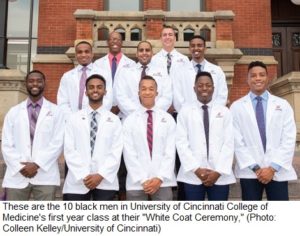
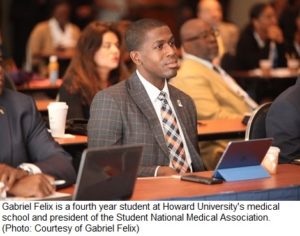
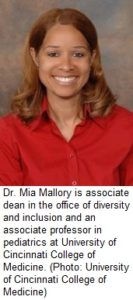 ► University of Cincinnati. The College of Medicine welcomed the largest group of African-American men in its history last year at 10 – an important milestone, given the gender gap within the few black doctors.
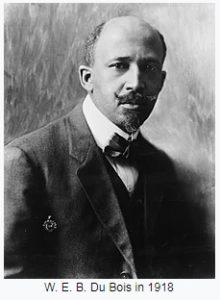 Here’s the summary of the life and legacy of W.E.B. Du Bois – see Appendix below: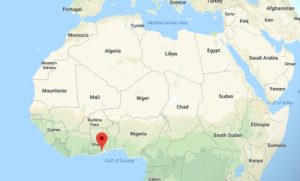

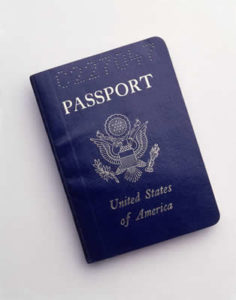 Even though Du Bois was not convicted [of any crimes], the [US] government confiscated Du Bois’s passport [in 1951] and withheld it for eight years.
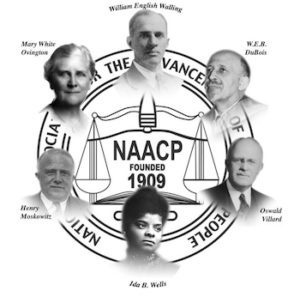 American
 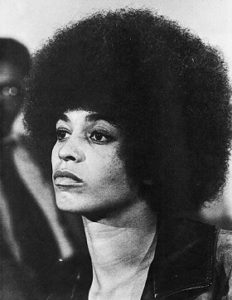 “Those who profess to favor freedom, yet deprecate agitation, are men who want crops without plowing up the ground. They want rain without thunder and lightening. They want the ocean without the awful roar of its many waters. This struggle may be a moral one; or it may be a physical one; or it may be both moral and physical; but it must be a struggle. Power concedes nothing without a demand. It never did and it never will.”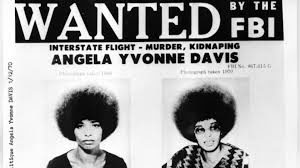
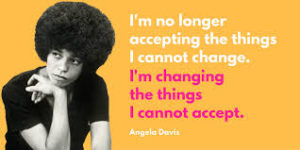
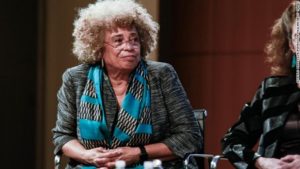
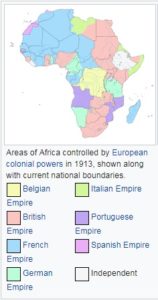 This World View was not always the default assessment in the world. No, for many years, decades and centuries, the default World View was that the Black Race was “there for the taking”. This argument sounds so much like Black Nationalist & Civil Rights Leader Marcus Garvey.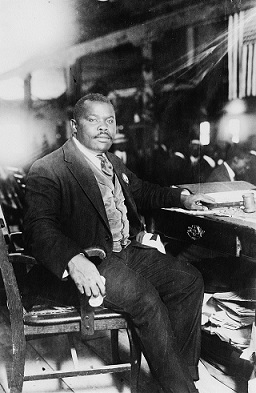
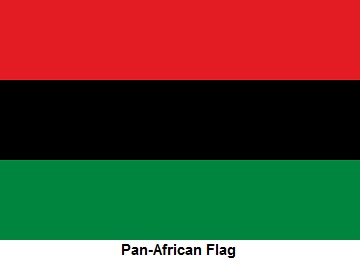
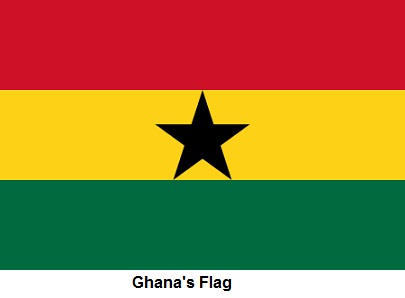
 Welcome to Black History Month 2019.

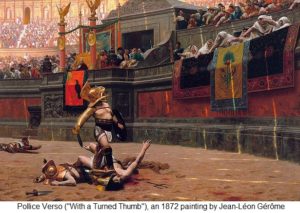
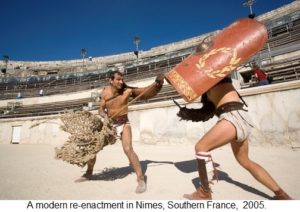

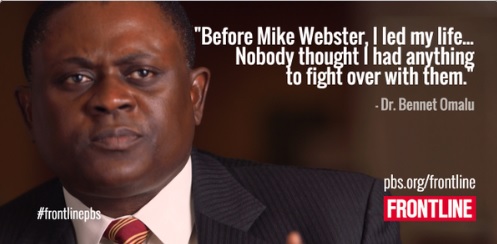

 We did a reckoning of the European eco-system – called to account their prior actions; demanded they fulfill their obligations – as it relates to the past, present and future of Caribbean relations. We started this reckoning with a look at economic motivations of European society … at the time of the New World exploration and conquest. We wanted to start at the beginning and we assessed that would be economics, not religion.
 Greco-Roman wrestling is a style of

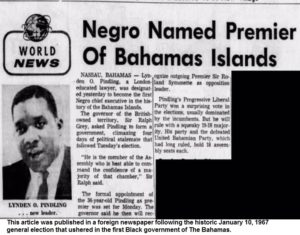

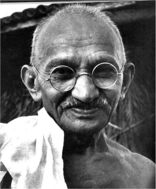 “I like your Christ, I do not like your Christians. Your Christians are so unlike your Christ.” –
  This commentary continues this 5-part series on European Reckoning. This entry is 4 of 5 in this series from the movement behind the Go Lean book in consideration of the past, present and future of White-Christian European interactions. While this series is on reconciling the European experience, previous submissions addressed European economic leadership. This submission however asserts that the conduct of the Christian-side of White-Christian-European history has been worthy of indictment and the European institutions need to be held to account. Even though the New World and the Caribbean were established by European military power – see Appendix below – the Church was aligned and complicit. The other commentaries in the series are cataloged as follows:
 For the Caribbean and the rest of the world, European-based Christian churches have
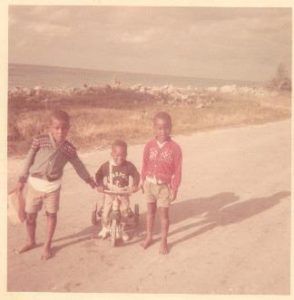
 Listen up you Black-and-Brown people of the Caribbean, yearning to emigrate to the US. You will never be a settler. Accepting this reality may dampen the “Welcome Sign” to those who aspire for an American life.
 emigrating for economics solely.
 For the Caribbean, the Go Lean book distinguishes that America or Western Europe is not home for them. If we must seek refuge there, go … but remember to return home at some point; the sooner the better. These foreign shores will welcome your labor, but may never consider you as equal brothers-sisters. In their minds and hearts you are “
 When we refer to Europe’s future, we are referring to the tenuous status in their integration movements – think European Union (EU), IMF, and the resultant
  While none of the 29 NATO members include any Caribbean independent states, 16 Caribbean Overseas Territories are thusly aligned as dependents of the American (2), British (6), Dutch (6) and French (4) imperial powers. Plus with the Caribbean Basin Security Pact, the full Caribbean – except Cuba – is aligned with NATO members: United States and Canada.
 The
The 
 In Greece, the IMF violated its own cardinal rule by signing off on a bailout in 2010 even though it could offer no assurance that the package would bring the country’s debts under control or clear the way for recovery, and many suspected from the start that it was doomed.
 This ‘Tribalism’ is the reckoning that Europe is doing right now regarding the IMF. They are reconciling their past, present and future and recognizing that they now have to build trust, anew – see the Appendix VIDEO below.