Tag: Diaspora

‘To Live and Die in L.A.’ …

Go Lean Commentary

CU Blog - 'To Live and Die in L.A.' - Photo 1b

“… live so fast and die so young…”
“… it’s like a jungle, sometimes it makes me wonder how I keep from going under…” – Rap Song: The Message – Grandmaster Flash & The Furious Five

Considering the edict of “life imitating art and art imitating life”, this has always been a subject of sharp debate and contrast. Is it better to live “fast & furious”, even though there might be a shorter mortality, or is it better to go slow and last longer, as far away from risky propositions as possible?

Shockingly, this is also a Caribbean debate: is it better to emigrate to L.A., New York, Miami, Toronto, London, Paris or any other foreign destination for faster success, or prosper where planted in the Caribbean homeland?

From an American perspective, this debate is best personified with a comparison of California versus the rest of the US. Los Angeles (L.A.) is the principal metropolis of the State of California and all of the West Coast for that matter.

But this debate is bigger than just a consideration of L.A. or California – see Appendix below – it spans the test of time. Even ancient philosopher Aesop presented this dilemma in the fable of “The Tortoise and The Hare”, in which the nimble jack-rabbit lost out to the slow-and-methodical tortoise in a race – this fable is universally accepted as a metaphor for the race of life.

Poets, songwriters, historians, and philosophers have all chimed in on this profound debate. Some claim that it is better to “live large”, make the “world your oyster”, even if that means having a short lifespan than to live a quiet ignoble life where the joys of life are rationed out for longevity instead.

Whenever a celebrity dies young, this debate rages anew. Consider some of the philosophical headlines:

The book Go Lean … Caribbean discusses this contrast; it draws reference to the American Dream versus the California Dream. Consider this excerpt from Page 223:

The Bottom Line on the American Dream
The American Dream is a national ethos of the United States, a set of ideals in which freedom includes the opportunity for prosperity and success, and an upward social mobility achieved through hard work. This idea of the American Dream is rooted in the US Declaration of Independence which proclaims that “all men are created equal… endowed by their Creator with certain inalienable rights” including “Life, Liberty and the pursuit of Happiness.” The meaning of the “American Dream” has changed over history, and includes components as home-ownership and upward mobility. A lot of people followed the American Dream to achieve a greater chance of becoming rich. For example, the discovery of gold in California in 1849 brought in 100,000 men looking for their fortune overnight—and a few did find it. Thus was born the California Dream of instant success. Historian H. W. Brands noted that in the years after the Gold Rush, the California Dream spread across the nation:

  • “The old American Dream … was the dream of the Puritans, of Benjamin Franklin’s “Poor Richard” … of men and women content to accumulate their modest fortunes a little at a time, year by year by year. The new dream was the dream of instant wealth, won in a twinkling by audacity and good luck. [This] golden dream . . . became a prominent part of the American psyche”. Today, some posit that the ease of achieving this Dream changes with technological advances, available infrastructure, regulations, state of the economy, and the evolving cultural values of the US demographics.

The Go Lean book serves as a roadmap to introduce the technocratic Caribbean Union Trade Federation (CU) to elevate the region’s societal engines – economics, homeland security and governance – of the 30 Caribbean member-states. In fact, the prime directives of the roadmap includes the following 3 statements:

  • Optimization of the economic engines in order to grow the regional economy to $800 Billion & create 2.2 million new jobs.
  • Establishment of a security apparatus to ensure public safety and protect the resultant economic engines.
  • Improve Caribbean governance for all people, even visiting tourists, to support these engines.

CU Blog - 'To Live and Die in L.A.' - Photo 2The quest is to minimize the paradox of future-planning/decision-making for Caribbean citizens. We want to make the Caribbean region better places to live, work and play; this way our citizens would not have to leave … to ‘live and die in L.A., or NYC, or Miami, or any other American, Canadian or European city. The truth of the matter is people die more readily in America due to gun-violence, and automobile accidents than they die in the Caribbean.

No doubt!

  • Visualizing gun deaths: Comparing the U.S. to rest of the world
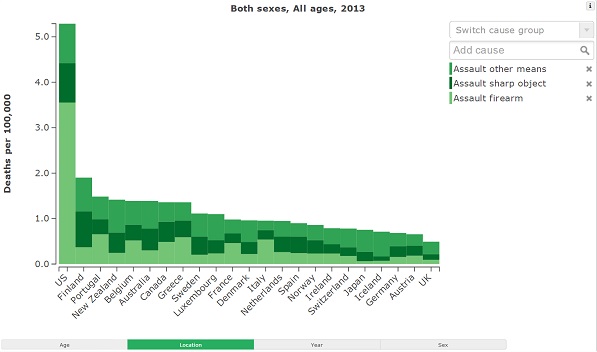
    Whenever a mass shooting occurs, a debate about gun violence ensues. An often-cited counter to the point about the United States’ high rates of gun homicides is that people in other countries kill one another at the same rate using different types of weapons. It’s not true.
    Compared to other countries with similar levels of development or socioeconomic status, the United States has exceptional homicide rates, and it’s driven by gun violence.
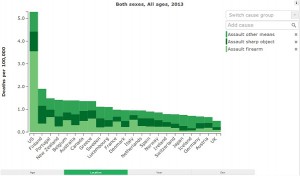
    CU Blog - 'To Live and Die in L.A.' - Photo 3
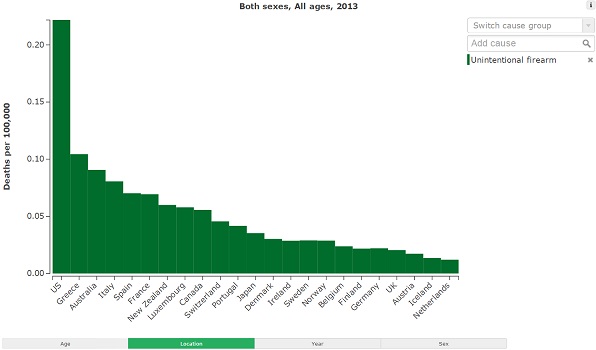
    Another issue that gets less attention is how many people die from firearms accidentally. Again, the U.S. has much higher rates of unintentional death from firearms compared to other countries.
    CU Blog - 'To Live and Die in L.A.' - Photo 4
  • U.S. has highest car crash death rate, despite progress, CDC says
    More people die in car crashes each year in the United States than in other high-income countries, the Centers for Disease Control and Prevention said in a report …
    In 2013, more than 32,000 people died on U.S. roads, roughly 90 fatalities a day, according to the CDC.
    The U.S. has seen a 31% reduction in its motor vehicle death rate per capita over the past 13 years. But compared with 19 other wealthy countries, which have declined an average of 56% during the same period, the U.S. has the slowest decrease.
A previous Go Lean blog-commentary highlighted other statistics of premature deaths (and disability) in the US due to societal defects:

But the truth is a two-sided coin …

… on the flipside, life in America is more prosperous than in any Caribbean member-state.

The Go Lean book introduces the Caribbean Union Trade Federation (CU) as an inter-governmental agency for the 30 member-states, to provide a better – technocratic – stewardship for Caribbean life, to make it more prosperous … at home. The book identifies that we have a crisis – our failing societal engines – but asserts that this crisis would be a terrible thing to waste. We can use the urgency to introduce and implement effective community ethos, strategies, tactics, implementations and advocacies to reboot, reform and transform the engines of Caribbean society.

We do not want our people to ‘live and die in L.A. …’. We want them to prosper right here in the Caribbean. How sad when our families do move to the US (and other countries) and fall victim to fatalities. Consider these headlines:

There are good and bad people everywhere. Bad things happen to good people … everywhere. The Bible declares that “time and unforeseen occurrences befall us all” (Ecclesiastes 9:11). Yet still, post-mortem analyses (crash investigations and autopsies) are always necessary to ascertain the root-causes and the lessons-learned:

What could have been done to prevent the loss of life?

This commentary is not asserting that Caribbean people will not be hurt if they remain in the Caribbean. There are car accidents, murders, robberies, rapes and other assaults in the 30 member-states as well.

But follow the numbers!

We are not #1 for either gun violence or auto deaths, like our American counterparts. This is just a matter odds, probabilities and trends; the preponderance for fatalities cannot be ignored.

The Go Lean book contends that as a people, we must be prepared for accidents, emergencies and security risks (Page 196). It asserts that bad actors will emerge just as a result of economic successes in the region. This point is pronounced early in the book with the Declaration of Interdependence (Page 12) that claims:

x. Whereas we are surrounded and allied to nations of larger proportions in land mass, populations, and treasuries, elements in their societies may have ill-intent in their pursuits, at the expense of the safety and security of our citizens. We must therefore appoint “new guards” to ensure our public safety and threats against our society, both domestic and foreign. The Federation must employ the latest advances and best practices … to assuage continuous threats against public safety.

xvi. Whereas security of our homeland is inextricably linked to prosperity of the homeland, the economic and security interest of the region needs to be aligned under the same governance. Since economic crimes, including piracy and other forms of terrorism, can imperil the functioning of the wheels of commerce for all the citizenry, the accedence of this Federation must equip the security apparatus with the tools and techniques for predictive and proactive interdictions.

There is this expression of wisdom, commonly referred to as the Serenity Prayer; it is a prayer written by the American theologian Reinhold Niebuhr[1][2] (1892–1971). The best-known form is:

  • God, grant me the serenity to accept the things I cannot change,
  • Courage to change the things I can,
  • And wisdom to know the difference.

The Go Lean book describes the need for the Caribbean to appoint “new guards” to apply this wisdom – to change the things we can change. The purpose of this security pact is to ensure public safety as a comprehensive endeavor, encapsulating the needs of all Caribbean stakeholders: residents and visitors alike.

We cannot impact Los Angeles, the US or any other foreign city, more than messaging to our Diaspora there. But we can forge change in our Caribbean homeland.

Applying the edict of “life imitating art and art imitating life”, let’s ‘live and die’ here in the Caribbean. Let’s apply the wisdom from the fictional character Spock (the Vulcan Commander on the TV Show/films Star Trek):

May we live long and prosper.

Now is the time for all of the Caribbean – the people and leaders – to lean-in for the empowerments described here in the book Go Lean…Caribbean. It is conceivable, believable and achievable to prosper where planted here in the region; to make the Caribbean a better place to live, work and play. 🙂

Download the free e-book of Go Lean … Caribbean – now!

Sign the petition to lean-in for the roadmap for the Caribbean Union Trade Federation.

————-
Appendix Review – Book/Movie: To Live and Die in L.A.

Sub-title: A 1984 novel by former Secret Service agent Gerald Petievich is the basis for the 1985 movie of the same name.

CU Blog - 'To Live and Die in L.A.' - Photo 1

A harrowing tale of the dark underside of America’s West Coast metropolis. Two U.S. Treasury agents, partners and antagonists, are drawn into a matrix of violence and corruption, southern California-style, that becomes a journey through a sunlit hell – at the end of which they become experts on the thin line between what it takes to live – and die – in L.A. – Source: Retrieved 04-10-2017 from: https://www.amazon.com/Live-Die-L-A-Gerald-Petievich/dp/1466219645

The action thriller film was directed by William Friedkin and based on the novel by Petievich, and co-written by the both men. The film features William Petersen, Willem Dafoe and John Pankow among others. The film tells the story of the lengths to which two Secret Service agents go to arrest a counterfeiter. – Source: Retrieved 04-10-2017 from: https://en.wikipedia.org/wiki/To_Live_and_Die_in_L.A._(film)

See Trailer in the Appendix VIDEO below.

Storyline
Working largely in cases of counterfeiting, L.A. based Secret Service agent Richie Chance exhibits reckless behavior which according to his longtime and now former partner Jimmy Hart will probably land him in the morgue before he’s ready to retire. That need for the thrill manifests itself in his personal life by his love of base jumping. Professionally, it is demonstrated by the fact that he is sextorting a parolee named Ruth Lanier, who feeds him information in return for him not sending her back to prison for some trumped up parole violation. With his new partner John Vukovich, Chance is more determined than ever, based on recent circumstances, to nab known longtime counterfeiter Ric Masters, who is more than willing to use violence against and kill anyone who crosses him. Masters is well aware that the Secret Service is after him. Masters’ operation is somewhat outwardly in disarray, with Chance being able to nab his mule, Carl Cody, in the course of moving some of the fake money , and one of his associates, a lawyer named Max Waxman, probably stealing money from him. Partly with information from Ruth, Chance is trying to find and exploit the weaknesses in Masters’ operation. To accomplish his goal, Chance takes more and more unethical and illegal measures, which may be problematic for Vukovich, who comes from a family of police officers who are sworn to uphold the law. Written by Huggo

————-
VIDEO – To Live and Die in L.A. – http://www.imdb.com/videoplayer/vi1755645209

A fearless Secret Service agent will stop at nothing to bring down the counterfeiter who killed his partner.

Stars: William Petersen, Willem Dafoe, John Pankow
 

Share this post:
, ,

Funding the Russell Family Memorial – RIP

Go Lean Commentary

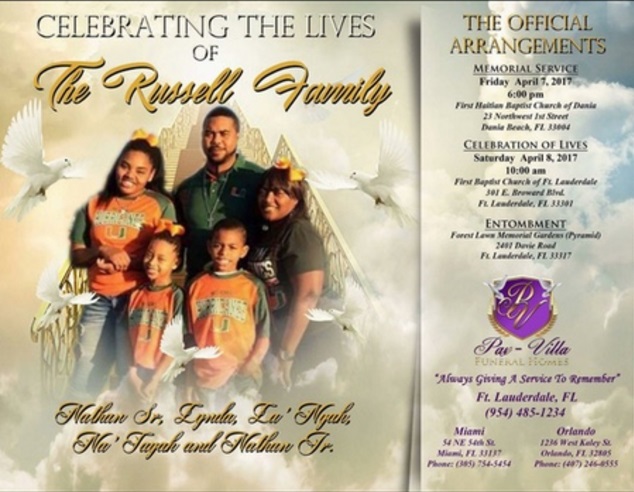
A family of 5 die in a horrific car crash on an American highway.

CU Blog - Funding the Russell Family Memorial - RIP - Photo 1

There is no other way to look at this drama – it is sad. The Bible says “Death rules as King” (Romans 5:17).

The Caribbean Diaspora community in South Florida is now mourning this sad tragedy. We send condolences to all the surviving family and loved-ones of the Russell family, reported in this news story here:

Title: Entire family killed in crash on Florida highway
By: Alex Harris, Miami Herald Staff Reporter

After more than 12 hours in the hospital, a 10-year-old boy succumbed to his injuries, leaving an entire family dead after a horrific car wreck in North Florida on Sunday [March 19].

The Russell family, of Hollywood, was loaded into their 2016 Chrysler 200 and headed home from a trip to Georgia, according to a memorial fundraiser. They were driving south on Interstate 75 when the sedan swerved off the road and into a tractor-trailer stopped on the side of the highway.

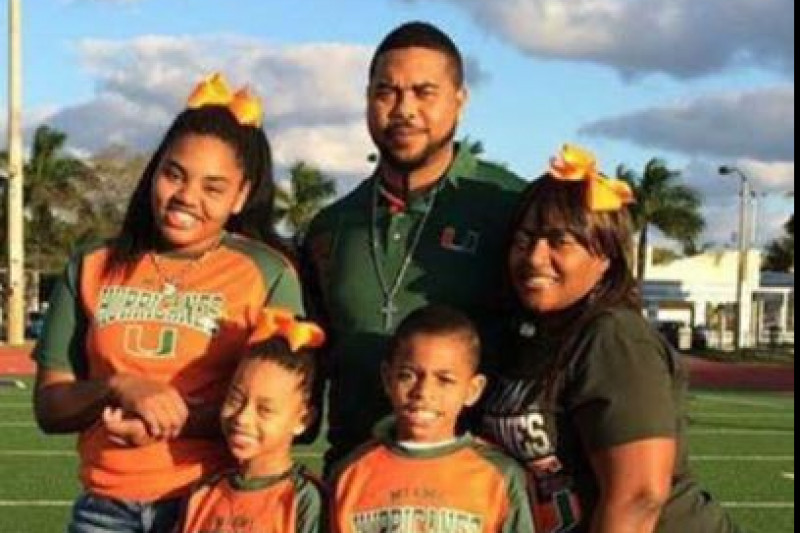
Nathan Russell, 37; his 35-year-old wife, Lynda; his 15-year-old daughter, La’Nyah; and one of his twins, 10-year-old Natayah, were killed in the crash. The other twin, 10-year-old Nathan Russell Jr. died hours later at ShandsHospital, according to a Florida Highway Patrol report.

Relatives are raising money for five funerals on GoFundMe and mourning on social media.

Nicole Narae, who said she is Nathan Russell’s cousin, wrote on Facebook that “tomorrow is not promised to anyone.”

“This one hurts. From the Bahamas to Haiti to South Florida…our hearts are broken,” she wrote. “It’s too much for anyone who know them and their household. So unreal to me right now.”

A vigil is was planned at the family’s Coral Springs home, at 9040 Royal Palm Blvd, at 7:30 p.m. on Friday.

CU Blog - Funding the Russell Family Memorial - RIP - Photo 3

———————–

VIDEO – 5 from Hollywood killed in I-75 crash near Gainesville – http://launch.newsinc.com/share.html?trackingGroup=90045&siteSection=90045_pp&videoId=32152391

CU Blog - Funding the Russell Family Memorial - RIP - Photo 2What is a community to do? In this case, what is the Caribbean community to do? (The father is of Bahamian descent and the mother is of Bahamian-Haitian descent).

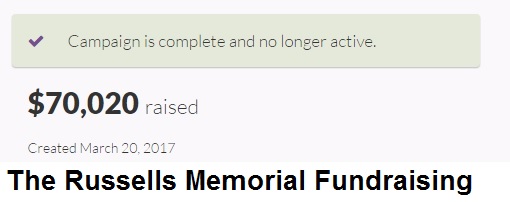
We cannot bring back the dead, but we can console, support and remember. This is the exact experience for the Caribbean community in South Florida today; they have “come together” and covered this family with love, prayers and the necessary financial support. Advocates for the family created a GoFundMe account for crowd-sourcing to raise $50,000. The end-result: $70,020 was raised … over 4 days.

CU Blog - Funding the Russell Family Memorial - RIP - Photo 4

This shows the power and effectiveness of crowd-funding.

This is not the first tragedy to befall the Caribbean community; and I guarantee you this will not be the last. But notice the alternative fundraising response. Instead of a ‘Bake Sale’ or ‘Car Wash’, advocates for the family conducted a Social Media outreach and raised $70,020 on a crowd-sourcing site.

This fact right here could be a great legacy that comes from this tragic story. The embrace of Internet & Communications Technologies so as to foster the Greater Good.

This objective aligns with the movement behind the book Go Lean… Caribbean. The book and a previous blog-commentary have identified crowd-sourcing as an effective strategy for funding Caribbean projects, especially addressing the Diaspora of the Caribbean communities. These ones have been identified as a potential resources for their time, talent and treasuries. There is only the need for a good delivery system.

The Go Lean book details that delivery. The book serves as a roadmap for the introduction and implementation of the technocratic Caribbean Union Trade Federation (CU) with the charter to facilitate optimization of the region’s societal engines. Imagine not just funding the charitable causes for assuaging family tragedies – like the foregoing news article – but facilitating investment and entrepreneurship as well. Imagine the job-creation!

Early in the Go Lean book, the responsibility to attract investments (funding) and create jobs was identified as an important function for the CU with these pronouncements in the opening Declaration of Interdependence (Pages 14):

xxiv.  Whereas a free market economy can be induced and spurred for continuous progress, the Federation must install the controls to better manage aspects of the economy: jobs, inflation, savings rate, investments and other economic principles. Thereby attracting direct foreign investment because of the stability and vibrancy of our economy.

xxvi.  Whereas the Caribbean region must have new jobs to empower the engines of the economy and create the income sources for prosperity, and encourage the next generation to forge their dreams right at home, the Federation must therefore foster the development of new industries… In addition, the Federation must invigorate the enterprises related to existing industries … – impacting the region with more jobs.

xxvii. Whereas the region has endured a spectator status during the Industrial Revolution, we cannot stand on the sidelines of this new economy, the Information Revolution. Rather, the Federation must embrace all the tenets of Internet Communications Technology (ICT) to serve as an equalizing element in competition with the rest of the world. The Federation must bridge the digital divide and promote the community ethos that research/development is valuable and must be promoted and incentivized for adoption.

The book Go Lean…Caribbean posits that the Caribbean region needs unconventional thinking to overcome the obstacles – the societal defects – that befall our communities. We have an atrocious rate of human flight (reported at 70 percent of the professional classes); so many of our people have left their island homes to now live (and die) in the big-bad United States (and other countries, like Canada and Western Europe). Our citizens leave and we have to accept whatever unforeseen occurrences that befall them.

Crowd-funding is an unconventional funding method – see Appendix – there are benefits for thinking unconventionally and we need to start thinking unconventionally to impact all aspects of Caribbean society – all the engines. This is the charter for the Go Lean book, to effectuate change in the region’s societal engines, allowing for these 3 prime directives:

  • Optimization of the economic engines in order to grow the regional economy to $800 Billion GDP and create 2.2 million new jobs.
  • Establishment of a security apparatus to protect the resultant economic engines.
  • Improve Caribbean governance/administration/oversight to support these engines.

The Go Lean book/roadmap subscribes to crowd-funding and crowd-sourcing as “unconventional thinking” to attract unconventional funding for Caribbean philanthropy and empowerment causes (think entrepreneurial endeavors):

  • The book advocates for cooperatives…
  • The book advocates for incubators… helping/coaching entrepreneurs …
  • The book advocates for the full exploration and exploitation of social media, identifying www.myCarribbean.gov  …

Beyond crowd-funding, there is another compelling lesson to glean from the sad drama in the foregoing news article. As a result of attending the “Vigil” on Friday (March 24), it was disclosed that the cause of the car crash was due to driver fatigue or human error: the father – Nathan Russell – fell asleep behind the wheel.

So now we see that this tragedy was also preventable.

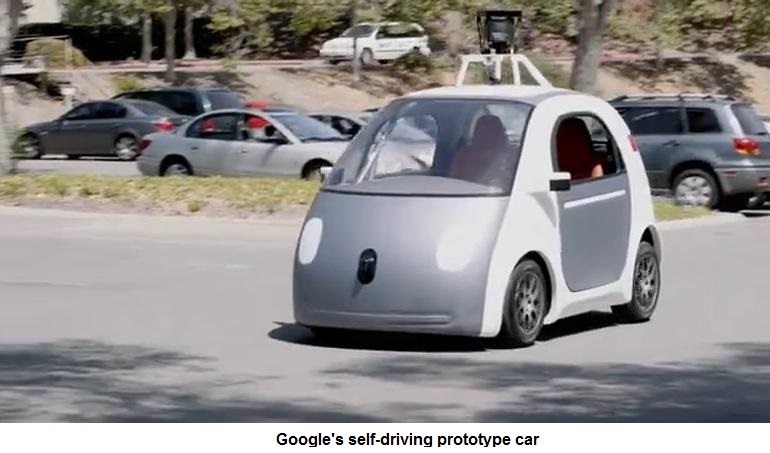
TM BlogMany automakers have now committed to providing technical solutions to transcend human error; they have introduced Self-Driving cars (fully autonomous) and have rolled-out Driver-Assist features, such as lane violation detection. These advancements would have been life-saving for this family of 5. Consider this list of features that help drivers avoid or mitigate collisions:

Title: Cars With Advanced Safety Systems

Key active safety systems include:

  • Automatic emergency braking (AEB) – Brakes are automatically applied to prevent a collision or reduce collision speed.
  • Forward-collision warning (FCW) – Visual and/or audible warning intended alert the driver and prevent a collision.
  • Blind-spot warning (BSW) – Visual and/or audible notification of vehicle in blind spot. The system may provide an additional warning if you use your turn signal when there is a car next to you in another lane.
  • Rear cross-traffic warning – Visual, audible, or haptic notification of object or vehicle out of rear camera range, but could be moving into it.
  • Rear Automatic Emergency Braking (Rear AEB) – Brakes are automatically applied to prevent backing into something behind the vehicle. This could be triggered by the rear cross-traffic system, or other sensors on the vehicle.
  • Lane-departure warning (LDW) – Visual, audible, or haptic warning to alert the driver when they are crossing lane markings.
  • Lane-keeping assist (LKA) – Automatic corrective steering input or braking provided by the vehicle when crossing lane markings.
  • Lane Centering Assist – Continuous active steering to stay in between lanes (active steer, autosteer, etc.)
  • Adaptive Cruise Control – Adaptive cruise uses lasers, radar, cameras, or a combination of these systems to keep a constant distance between you and the car ahead, automatically maintaining a safe following distance. If highway traffic slows, some systems will bring the car to a complete stop and automatically come back to speed when traffic gets going again, allowing the driver to do little more than pay attention and steer.

Source: Posted March 08, 2017; retrieved March 28, 2017 from: http://www.consumerreports.org/car-safety/cars-with-advanced-safety-systems/

The proper motivation and inspiration from this car crash in the foregoing – and the lost of life of the Russell Family – should be a commitment for Research-and-Development of these and other highway safety automation initiatives, and then their deployment in the Caribbean.

This is the commitment of the Go Lean movement.

Previously, these innovations were detailed as being impactful to this roadmap to elevate the Caribbean. See this sample list of previous blog-commentaries that delved into the details and the resultant issues:

https://goleancaribbean.com/blog/?p=10869 Bill Gates: ‘Tax the Robots’
https://goleancaribbean.com/blog/?p=8650 Now it’s Detroit’s turn to rescue Silicon Valley
https://goleancaribbean.com/blog/?p=8294 ‘Olli’ – The Self-Driving Public Transit Vehicle
https://goleancaribbean.com/blog/?p=3384 Plea to Detroit: Less Tech, Please
https://goleancaribbean.com/blog/?p=1277 The need for highway safety innovations – here comes Google
https://goleancaribbean.com/blog/?p=673 Ghost ships – Autonomous cargo vessels without a crew

Martyrs

No one wanted to lose a family like this. This is just an unforeseen occurrence that proves that “bad things happen to good people”; (this point coincides with the Bible’s edict at Ecclesiastes 9:11) But can we use this tragedy as inspiration to power the Caribbean community for progress.

Indeed we can!

The Go Lean book asserts that “a crisis is a terrible thing to waste” (Page 8).

We can memorialize this family, and their tragedy, as stimuli to double-down on the Research-and-Development community ethos, to innovate collision avoidance systems as described above. The Go Lean book defines community ethos as …

… “the fundamental character or spirit of a culture; the underlying sentiment that informs the beliefs, customs, or practices of a group or society; dominant assumptions of a people or period practices of a group or society; dominant assumptions of a people or period”.

The book proceeds to identify a number of community ethos (and related strategies) that the Caribbean region needs to adopt. Consider this sample list:

  • Impact Research & Development (Page 30)
  • Promote Intellectual Property (Page 29)
  • Bridge the Digital Divide (Page 31)
  • Impact Social Media ((Page 111)
  • Foster Technology (Page 197)
  • Improve Transportation (Page 205)
  • Develop a Caribbean Auto Industry (Page 206)

The Russell Family can be “martyrs” for progress … and innovation!

Rest in Peace Nathan, Lynda, La’Nyah, Natayah, and Nathan Jr.. You will not be forgotten!

🙁

Download the free e-Book Go Lean … Caribbean – now!

Sign the petition to lean-in for the roadmap for the Caribbean Union Trade Federation.

——————–

Appendix – Crowdfunding

Crowdfunding is the practice of funding a project or venture by raising monetary contributions from a large number of people. Crowdfunding is a form of crowdsourcing and of alternative finance. In 2015, it was estimated that worldwide over US$34 billion was raised this way.[1][2]

Although the concept can also be executed through mail-order subscriptions, benefit events, and other methods, it is now often performed via Internet-mediated registries.[3] This modern crowdfunding model is generally based on three types of actors: the project initiator who proposes the idea and/or project to be funded, individuals or groups who support the idea, and a moderating organization (the “platform”) that brings the parties together to launch the idea.[4]

Crowdfunding has been used to fund a wide range for-profit entrepreneurial ventures such as artistic and creative projects, medical expenses, travel, or community-oriented social entrepreneurship projects.[5]
Source: Retrieved March 28, 2017 from: https://en.wikipedia.org/wiki/Crowdfunding


Share this post:
, , , , , ,
[Top]

Caribbean Solidarity with the Irish People – ENCORE

Go Lean Commentary

Today is the annual St. Patrick’s Day observation. Celebrating it does not mean “we are Irish”, it means we have “Solidarity with the Irish People” and culture. This is a BIG deal …

… the Irish has endured a lot and now they thrive.

This is a lesson for the Caribbean to apply, as we too have endured … and want to thrive. See this Encore of the blog-commentary from March 17, 2015 here-now:

=============

Title: The ‘Luck of the Irish’ – Past, Present and Future

Today (March 17) is Saint Patrick’s Day. Why do people wear green?

It’s a move of solidarity for Irish people and culture.

This is a big deal considering the real history.

This subject also has relevance for the Caribbean as Saint Patrick’s Day is a public holiday in the British Caribbean Territory of Montserrat, in addition to the Republic of Ireland,[10] Northern Ireland,[11] and the Canadian province of Newfoundland and Labrador. While not a holiday elsewhere, this day is venerated by the Irish Diaspora around the world, especially in Great Britain, Canada, Argentina, Australia, New Zealand and the United States. See a tribute here from an American job site:

Title: Happy St. Patrick’s Day!
Southfield, Michigan – We hope you are showing your Irish spirit by wearing green!

Here are 5 fun facts about St. Patrick’s Day:

CU Blog - The Luck of the Irish - Past, Present and Future - Photo 2

1. Of course with St. Patrick’s Day comes the massive appearance of shamrocks. Shamrocks have definitely become a central symbol for this day. In the olden days in Ireland, the shamrock was seen as sacred. The four leaves of the clover represent faith, love, hope, and of course, luck.

2. Good luck finding a four-leaf clover. The odds of finding a four-leafer on your first try are 1 in 10,000.

3. St. Patrick’s Day was traditionally a dry holiday. Irish law between 1903 and 1970 made St. Patrick’s Day a religious holiday for the entire country, which meant pubs were closed for the day. Today, St. Patrick’s Day is arguably one of the largest drinking holidays with an estimated $245 million spent on beer for March 17.

4. Green or Blue? Though green is a very popular color on St. Patrick’s Day, the original color that was very popular and often related back to St. Patrick was not green, but blue. In Irish folklore, green is known as being worn by immortals, and often signified new life and crop growth.

5. The Irish flag. The flag representing Ireland is green, white and orange. The green symbolizes the people of the south, and orange, the people of the north. White represents the peace that brings them together as a nation.

CU Blog - The Luck of the Irish - Past, Present and Future - Photo 5

Source: Credit Acceptance Internal Staff Intranet site; retrieved March 17, 2015.

This subject also provides a case study for the Caribbean, as the Irish Diaspora is one of the most pronounced in the world. This is the model of what we, in the Caribbean, do not want to become.

According to information retrieved from Wikipedia, since 1700 between 9 and 10 million people born in Ireland have emigrated, including those that went to Great Britain. This is more than the population of Ireland at its historical peak in the 1830s of 8.5 million. From 1830 to 1914, almost 5 million went to the United States alone.

After 1840, emigration from Ireland became a massive, relentless, and efficiently managed national enterprise.[1] In 1890 40% of Irish-born people were living abroad. By the 21st century, an estimated 80 million people worldwide claimed some Irish descent; which includes more than 36 million Americans who claim Irish as their primary ethnicity. [2]

CU Blog - The Luck of the Irish - Past, Present and Future - Photo 1

The city of Chicago, Illinois dyes the river green in tribute for St. Patrick’s Day

CU Blog - The Luck of the Irish - Past, Present and Future - Photo 4

The White House in full St. Patrick Day tribute mode

CU Blog - The Luck of the Irish - Past, Present and Future - Photo 3

London; on the Thames River

The Diaspora, broadly interpreted, contains all those known to have Irish ancestors, i.e., over 100 million people, which is more than fifteen times the population of the island of Ireland, which was about 6.4 million in 2011.

In July 2014, the Irish Government appointed Jimmy Deenihan as Minister of State for the Diaspora.[3]

Why this history?

In 1801 Ireland acceded to the United Kingdom (UK).

The Irish Parliament, charged with the heavy burden of directing Ireland’s destiny, was abolished in 1801 in the wake of the Republican United Irishmen Rebellion and Ireland became an integral part of a new United Kingdom of Great Britain and Ireland under the Act of Union. Without the power to direct their own affairs, the island found itself victimized by fate and bad fortune.

The Great Famine of Ireland during the 1840s saw a significant number of people flee from the island to all over the world. Between 1841 and 1851 as a result of death and mass emigration (mainly to Great Britain and North America) Ireland’s population fell by over 2 million. In the western province of Connacht alone, the population fell by almost 30%.

The Go Lean … Caribbean book relates that this is also the current disposition of so many of the Caribbean Diaspora; (10 million abroad compared to 42 million in the region). These ones love their country and culture, but live abroad; they want conditions to be different (better) in their homelands to consider any repatriation. The book details where in Puerto Rico, their on-island population in 2010 was 3,725,789, but Puerto Ricans living abroad in the US mainland was 4,623,716; (Page 303).

In a previous blog/commentary, a review of a book highlighted some strong lessons from Ireland’s past that are illustrative for the Caribbean’s future. The book is by Professor Richard S. Grossman entitled: Wrong: Nine Economic Policy Disasters and What We Can Learn from Them. The following excerpt is extracted from the book review by the London School of Economics:

As an example, we can take a closer look at the chapter on the Irish Famine, (1 of the 9 lessons), which took place from 1845-1852. Grossman not only describes what happened, but puts it into the perspective of  other famines, starting from the BCE period. In terms of absolute numbers, the Great Hunger in Ireland was not the worst famine recorded but it did tragically lead to the death of twelve per cent of Irish population, forcing many others to emigrate. The author details how the potato – which originated in the Americas – arrived to a fertile Ireland, and that the poorest third of the Irish population consumed up to twelve pounds of potatoes per day (per capita). Only after this introduction the economic policy is mentioned. Grossman compares the responses of two Prime Ministers of the United Kingdom to the famine: Sir Robert Peel and Lord John Russell. Russell was so committed to the limited government intervention that he refused to buy food for the starving masses in order not to disturb the free formation of prices in the market. Similarly, he refused to increase the scale of public works that would give jobs to Irish workers so as not to disturb the free labour market. The paradox is that when the Great Famine occurred, Ireland was not a poor country. The Famine would not have been so ‘great’ if it were not for the free market ideology followed by the policymakers at that time. As it turns out, leaving things to the invisible hand of market is not always an optimal solution.

The Go Lean book serves as a roadmap for the introduction and implementation of the Caribbean Union Trade Federation (CU), a technocratic federal government to administer and optimize the economic/security/governing engines of the 30 member Caribbean states. The quest is to provide a better direct stewardship, applying lessons-learned from case studies like Ireland in the 1800’s.

Ireland has fared better since those dire days of the potato famine, but still its people, the Diaspora, endured a lot of misery, resistance and discrimination in their foreign homes. As reported in this previous commentary, the usual path for new immigrants is one of eventual celebration, but only after a “long train of abuses”: rejection, anger, protest, bargaining, toleration and eventual acceptance. Wearing green today – or any other March 17th’s – is a statement of acceptance and celebration of the Irish; as a proud heritage for what they have endured and accomplished.

The island of Ireland today is comprised of 2 countries: the independent Republic of Ireland and the territory of Northern Ireland, a member-state in the United Kingdom, with England, Wales and Scotland; (last year Scotland conducted a referendum in consideration of seceding from the UK; the referendum failed).

The Republic of Ireland ranks among the wealthiest countries in the world in terms of GDP per capita.[11] After joining the European Union, Ireland enacted a series of liberal economic policies that resulted in rapid economic growth. The country achieved considerable prosperity from 1995 to 2007, during which it became known as the Celtic Tiger. This was halted by an unprecedented financial crisis that began in 2008, in conjunction with the concurrent global economic crash.[12][13] Today, the primary source of tourism to Ireland – a primary economic driver – is from their Diaspora; see VIDEO in the Appendix below.

There are a lot of lessons in this issue for the Caribbean. Ireland did need better societal engines, economic-security-governance; this was accomplished with their assimilation into the EU. If only that option was available in the past.

This is the exact option being proposed now by the Go Lean roadmap, to emulate and model the successes of the European Union with the establishment of the Caribbean Union. It was not independence that brought success to Ireland, but rather interdependence with their neighboring countries “in the same boat”. This is the underlying theme behind the Go Lean movement, to “appoint new guards” to make the Caribbean homeland a better place to live, work and play. This Declaration of Interdependence is pronounced at the outset of the Go Lean book (Pages 11 & 13):

xi.  Whereas all men are entitled to the benefits of good governance in a free society, “new guards” must be enacted to dissuade the emergence of incompetence, corruption, nepotism and cronyism at the peril of the people’s best interest. The Federation must guarantee the executions of a social contract between government and the governed.

xix. Whereas our legacy in recent times is one of societal abandonment, it is imperative that incentives and encouragement be put in place to first dissuade the human flight, and then entice and welcome the return of our Diaspora back to our shores. This repatriation should be effected with the appropriate guards so as not to imperil the lives and securities of the repatriated citizens or the communities they inhabit. The right of repatriation is to be extended to any natural born citizens despite any previous naturalization to foreign sovereignties.

xx. Whereas the results of our decades of migration created a vibrant Diaspora in foreign lands, the Federation must organize interactions with this population into structured markets. Thus allowing foreign consumption of domestic products, services and media, which is a positive trade impact. These economic activities must not be exploited by others’ profiteering but rather harnessed by Federation resources for efficient repatriations.

xxv. Whereas the legacy of international democracies had been imperiled due to a global financial crisis, the structure of the Federation must allow for financial stability and assurance of the Federation’s institutions. To mandate the economic vibrancy of the region, monetary and fiscal controls and policies must be incorporated as proactive and reactive measures. These measures must address threats against the financial integrity of the Federation and of the member-states.

The Go Lean movement declares solidarity with the culture and the people of Ireland.

We too have endured a lot of misery in our foreign abodes. We would rather prosper where we were planted at home in our homeland, but due to economic, security and governing dysfunctions have had to emigrate.

The Go Lean book details a roadmap with turn-by-turn directions for transforming our homeland. The following is a sample of the community ethos, strategies, tactics, implementations and advocacies to impact the Caribbean region for this turnaround:

Community Ethos – Economic Principle – Economic Systems Influence Choices & Incentives Page 21
Community Ethos – Economic Principle – Consequences of Choices Lie in the Future Page 21
Community Ethos – Job Multiplier Page 22
Community Ethos – Lean Operations Page 24
Community Ethos – Ways to Promote Happiness Page 36
Community Ethos – Ways to Impact the Greater Good Page 37
Strategy – Vision – Confederating a Non-Sovereign Union Page 45
Strategy – Mission – Keep the next generation at home Page 46
Tactical – Fostering a Technocracy Page 64
Tactical – Tactics to Forge an $800 Billion Economy Page 67
Tactical – Separation of Powers Page 71
Implementation – Ways to Pay for Change Page 101
Implementation – Ways to Deliver Page 109
Implementation – Reasons to Repatriate to the Caribbean Page 118
Implementation – Ways to Promote Independence – Interdependence Page 120
Planning – 10 Big Ideas – A Single Market in the G-20 Page 127
Planning – Ways to Make the Caribbean Better Page 131
Planning – Ways to Better Manage Image – Not as Unwanted Aliens Page 133
Advocacy – Ways to Grow the Economy Page 151
Advocacy – Ways to Create Jobs Page 152
Advocacy – Ways to Improve Governance Page 168
Advocacy – Ways to Enhance Tourism Page 190
Advocacy – Ways to Impact the Diaspora Page 217
Advocacy – Ways to Impact the British Territories Page 245

The Go Lean book posits (Page 3) that the Caribbean islands are among the greatest addresses in the world. But instead of the world “beating a path” to these doors, the people of the Caribbean have “beat down their doors” to get out; despite the absence of any famine, or war for that matter. This abandonment must stop … now!

May we learned from the history of Ireland in our quest to make our homeland a better place to live, work and play. And may we have the luck of the Irish, as conveyed in this Classic Irish Blessing:

May you always have…
Walls for the winds
A roof for the rain
Tea beside the fire
Laughter to cheer you
Those you love near you
And all your heart might desire.

Download the book Go Lean … Caribbean – now!

Sign the petition to lean-in for the roadmap for the Caribbean Union Trade Federation.

——–

Appendix- VIDEO: Happy St Patrick’s Day from Discover Ireland – https://youtu.be/J680_aKF5zc

Uploaded on Mar 8, 2011 – This short film is an ode to Ireland on St. Patrick’s Day (which means we used a little bit of poetic licence!). Hope you all enjoy it. Happy St Patrick’s day!
http://www.discoverireland.com/


Share this post:
, , , ,
[Top]

Miami: Dominican’s ‘Home Away from Home’

Go Lean Commentary

There is something really wrong in the Dominican Republic (DR) in particular and all of the Caribbean in general:

Citizens are beating down the doors to get out!

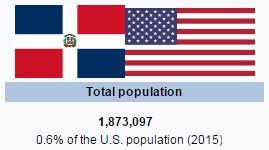
This failing assessment is accelerating faster and faster as every year goes by. In 2010, there were approximately 1.41 million people of Dominican descent in the US; now the absolute latest number is an estimate from 2015: 1,873,097; see the full details in Appendix A below.

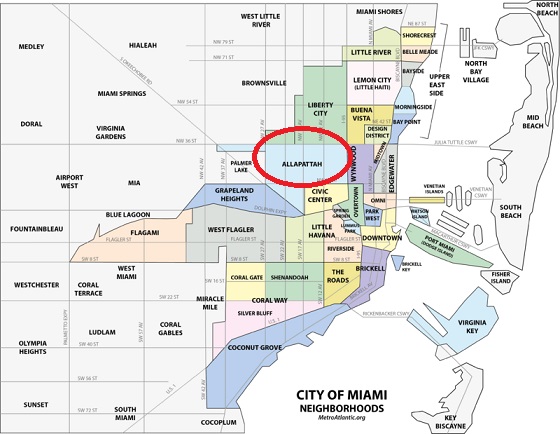
CU Blog - Dominican's Home Away from Home - Photo 3According to the book Go Lean…Caribbean, the population on the island for 2010 was reported at 9,523,209. So one-fifth of the population of Dominican heritage live in the US. There appears to be no progress in any movement for repatriation to the island, rather there is progress in movement to the South, to Florida. Of the Top 7 US states that the Dominican Diaspora lives in, Florida is the only one in the Sunbelt. The tropical landscapes in Greater Miami is reminiscent of the DR for many people. Now, the Miami neighborhood of Allapattah is emerging as the new Home away from Home and thusly branded: ‘Little Santo Domingo’ – see full details in Appendix B.

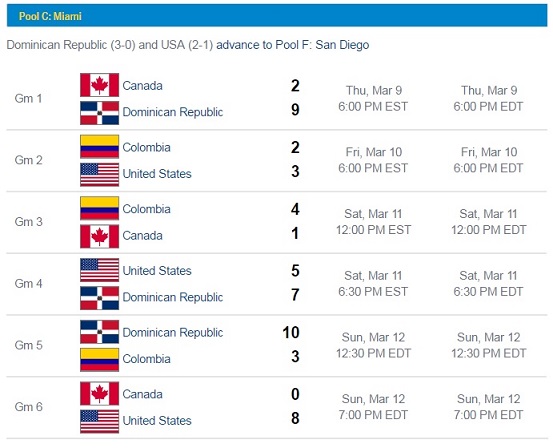
In a previous Go Lean blog-commentary, it was detailed how the Greater Miami area has benefited from failures in the Caribbean region. We saw this dynamic at work this weekend with the World Baseball Classic tournament in Miami.  For this round in the tournament, these 4 teams were assigned to Miami for “Pool C” play:

See this news article here detailing the game between the Dominican Republic and the US – this article shows that despite the address, playing in Miami was a Home Game for the Dominican National Team:

Title: Miami, WBC are big winners as Team USA, Dominicans set records for attendance … and volume
By: Greg Cote
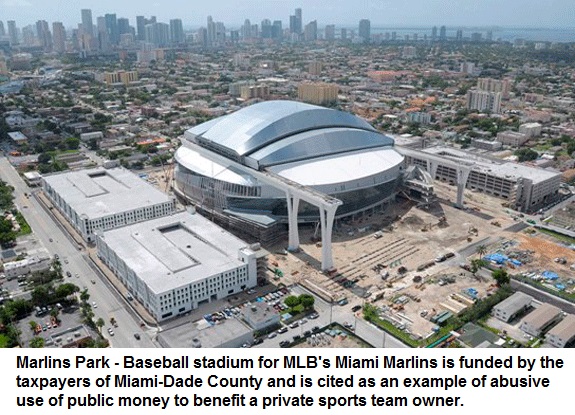
How perfect that the World Baseball Classic’s only first-round games in the United States are happening at Marlins Park. This event is so Miami.

CU Blog - Dominican's Home Away from Home - Photo 1

CU Blog - Dominican's Home Away from Home - Photo 4

It beams us to the rest of the world so accurately and with splendor, and I mean beyond the tourism/postcard aspect we saw Saturday night with the ballpark roof open, fresh breeze wafting in from the ocean and the downtown skyline majestic as a Goodyear blimp and a full moon floated overhead.

This international event speaks our language(s), reflecting the multi-ethnic, multi-national flavor that defines us. While much of the rest of the country recoils from diversity and retreats to jingoism — or I should say as our new government does — Miami remains steadfastly a savory, year-round gumbo of personalities and backgrounds.

On Saturday night, Dominican fans cheered a first-inning strikeout of Team USA’s Adam Jones as if it were the final out in a World Series Game 7. The sound was sonic, numbing. U.S. (and Marlins) fans countered with a roar of their own as Christian Yelich doubled to right field. I’m not sure a I had heard (or felt) such high-pitch passion at a South Florida sports event since the last time the Heat hosted an NBA Finals game.

The ballpark concourses filled with celebrating Dominicans before the game, a carnival of whistles and horns and sporadic, erupting chats of “Ole’!”

During the game there was The Wave undulating around the park. Of course there was. All that joy gotta go someplace.

Before the game I met a “house divided” couple. Ken Oliver, a South Florida attorney, wore Team USA colors and his friend, Josie Pichardo, those of the Dominican team. By arrangement I texted them during the game to get a sense of the atmosphere in the middle of it. They sat in Section 206, among far more fans who agreed with Josie’s team preference. I asked what it was like down there.

“Banging drums!” Oliver texted back.

Edison Cruz, 28, of Miami, had arrived with a handful of buddies — all wearing Dominican shirts.

“It is because baseball is our true national pastime,” he said. “In American there are all sports to love.”

CU Blog - Dominican's Home Away from Home - Photo 5Team USA and the Dominican both are favored to be the two teams of four in this Pool C to advance to the WBC’s next round, each fielding lineups filled with major-league stars. How good were these batting orders Saturday? The Marlins’ Giancarlo Stanton, a threat to lead the majors in home runs, hit seventh for the United States.

There is a reason Miami attracts global sporting events like the WBC. It isn’t just our weather. It’s our welcome. It’s all the colors in our quilt. If sport truly is an international language, we are fluent.

It is why this same ballpark was reconfigured recently into a racetrack for a major annual auto race involving stars from NASCAR, Formula One and IndyCar — an international event choosing Miami for its first-ever U.S. appearance.

This week it was announced two of the most famous, celebrated club teams in global soccer, Real Madrid and Barcelona, would bring their El Clasico rivalry to Hard Rock Stadium this July. The place will be filled in a way the Dolphins rarely manage.

So Saturday it was Team USA and the Dominican Republic filling MarlinsPark with passion and fans.

Who won? You didn’t need a scoreboard to tell you.

Miami did.

This blog-submission is not just relating a newspaper article and commenting about events from a far. This writer was at the game, Section 32 – Left Field bleachers.

CU Blog - Dominican's Home Away from Home - Photo 2

The purpose of the book Go Lean…Caribbean (GLC) is NOT to celebrate Diaspora life in American cities; rather it is to champion the causes of retaining Caribbean citizens in the Caribbean, and inviting the Diaspora back to their homelands. These intentions were pronounced early in the book with these statements in the Declaration of Interdependence (Pages 13):

xix. Whereas our legacy in recent times is one of societal abandonment, it is imperative that incentives and encouragement be put in place to first dissuade the human flight, and then entice and welcome the return of our Diaspora back to our shores. This repatriation should be effected with the appropriate guards so as not to imperil the lives and securities of the repatriated citizens or the communities they inhabit. The right of repatriation is to be extended to any natural born citizens despite any previous naturalization to foreign sovereignties.

xx.  Whereas the results of our decades of migration created a vibrant Diaspora in foreign lands, the Federation must organize interactions with this population into structured markets. Thus allowing foreign consumption of domestic products, services and media, which is a positive trade impact. These economic activities must not be exploited by others’ profiteering but rather harnessed by Federation resources for efficient repatriations.

This quest – reversing the propensity for Dominican people to abandon their island home – is a “tall order”, heavy-lifting task. This was expressed by one fan at the WBC Baseball game on Saturday March 11. He – first name Pablo – explained the following:

Pablo: I completed high school in the DR and knew that I was to leave immediately at the end of high school. This was not just my scenario, but the majority of the students in my graduating class. I look back now and I personally know that at least 50 percent of the class is in the US, through legal or illegal means.

GLC: You are celebrating your love for the DR homeland by being here at this baseball game, so I assume your plan now is to just work in the US during your active years and then retire back in the DR. Is this correct?

Pablo: No. I would not want to retire in the DR. It is too costly a lifestyle. You spend a lot of money in the homeland but get very little to show for it. I simply wish to visit, but I would not live there again … ever.

GLC: We recognize that even with some success from our roadmap, repatriating to the DR may never appeal to Diaspora members like you; so our focus is on the next generation, we must dissuade future classes from leaving in the first place.

Pablo: Good luck…

The Go Lean book serves as a roadmap for the introduction and implementation of the technocratic Caribbean Union Trade Federation (CU) to bring positive change. The CU‘s prime directives are identified with the following 3 statements:

  • Optimization of the economic engines in order to grow the regional economy to $800 Billion & create 2.2 million new jobs.
  • Establishment of a security apparatus to protect the resultant economic engines.
  • Improve Caribbean governance to support these engines.

The Go Lean book posits that with the empowerments that come with this roadmap, the region will be a better place to live, work and play. But this quest is heavy-lifting. The book thusly details the community ethos, strategies, tactics, implementations and advocacies to finally re-boot Caribbean society. Consider this sample:

Community Ethos – Ways to Impact Turn-Arounds Page 33
Advocacy – Ways to Grow the Economy Page 151
Advocacy – Ways to Impact the Diaspora Page 217
Advocacy – Ways to Preserve Caribbean Heritage Page 218
Advocacy – Ways to Impact the Dominican Republic Page 237

This commentary previously featured subjects related to the DR; consider this sample:

DR President Medina on the economy: ‘God will provide’
Low-cost Dominican surgeries spark warnings by US

As related previously, Miami is a better place to live, work and play … due to the contributions of the Caribbean Diaspora, including Dominicans. The new Marlins Park had never seen such a baseball fandom before the Dominicans made their impact on Saturday. (The stadium and Marlins owner is extremely disliked in the Miami community).

SGE Impact Photo 3

Dominicans are good for Miami and Miami is good for Dominicans. See the related VIDEO here:

VIDEO –  http://www.miamiherald.com/sports/mlb/article137986623.html 

Dominican fans dance to the music before Saturday’s World Baseball Classic game between the United States and the Dominican Republic at Marlins Park on Saturday, March 11, 2017. Pedro Portal The Miami Herald

Now, the purpose of the Go Lean roadmap is to foster that exact same prosperous spirit among Dominicans, but to prosper where planted in their Caribbean homeland, not in this foreign city (Miami). We urge all Dominican stakeholders to lean-in to this roadmap, those residing in the region and those in the Diaspora. 🙂

Download the book Go Lean … Caribbean – now!

Sign the petition to lean-in for the roadmap for the Caribbean Union Trade Federation.

————

Appendix A – Dominican Americans

CU Blog - Dominican's Home Away from Home - Photo 7Dominican Americans are Americans who have full or partial origin from the Dominican Republic.[5] Although their emigration began in the sixteenth century,[6] thousands of Dominicans passed through the gates of Ellis Island in the 19th and early 20th centuries.[7]The most recent movement of emigration to the United States began in the 1960s, after the fall of the Trujillo regime. In 2010, there were approximately 1.41 million people of Dominican descent in the US, including both native and foreign-born.[8] Dominican Americans are the fifth-largest Hispanic group in the United States.

The absolute latest number in terms of size of this Diaspora is an estimate from 2015: 1,873,097[1][2]; this is 0.6% of the U.S. population (2015).[3]

As of the 2010 census, the top 10 US states with the largest Dominican populations are the following:[24]

  1. New York – 674,787 (3.5% of statal population)
  2. New Jersey – 197,922 (2.3% of statal population)
  3. Florida – 172,451 (0.9% of statal population)
  4. Massachusetts – 103,292 (1.6% of statal population)
  5. Pennsylvania – 62,348 (0.5% of statal population)
  6. Rhode Island – 35,008 (3.3% of statal population)
  7. Connecticut – 26,093 (0.7% of statal population)
  8. North Carolina – 15,225 (0.2% of statal population)
  9. Georgia – 14,941 (0.2% of statal population)
  10. Maryland – 14,873 (0.3% of statal population)

Source: Retrieved March 12, 2017 from: https://en.wikipedia.org/wiki/Dominican_Americans_(Dominican_Republic)

————

Appendix B – Allapattah

Allapattah is a neighborhood mostly in the city of Miami, Florida, and partly in metropolitan Miami, United States. As of May 2011, the county-owned portion of Allapattah, from State Road 9 to LeJeune Road, is being annexed by the city proper.[1]

The neighborhood was nicknamed Little Santo Domingo in 2003 … to honor the sizable Dominican American population in the community.[2]

History
CU Blog - Dominican's Home Away from Home - Photo 6
The name is derived from the Seminole Indian language word meaning alligator. The initial settlement of the Allapattah community began in 1856 when William P. Wagner, the earliest documented white American permanent settler, arrived from Charleston, South Carolina and established a homestead on a hammock along the Miami Rock Ridge, where Miami Jackson High School presently stands. Development ensued from 1896 and into the 20th century in the area with the completion of the Florida East Coast Railroad (FEC).[3] 

Allapattah was predominantly populated by whites from early in the 20th century until the late 1950s, when there was a large influx of black Americans displaced by the construction of I-95 (then, the North-South Expressway) in the 1950s and 1960s, leading to white flight to suburban Miami-Dade County and Broward County. Cubans migrated to Miami neighborhoods like Allapattah in large numbers following the Cuban Revolution of 1959, hosting one of Miami’s largest Cuban American populations. The 1980s brought influxes of Dominican Americans, Nicaraguans, Hondurans, and Haitians in the aftermath of various refugee crises in those nations. Now, a melting pot of residents from all across the Caribbean, Central America, and Latin America reside in the area.

Demographics
As of 2000,[5] Allapattah had a population between 40,406 and 43,860[6] residents, with 12,508 households, and 8,224 families residing in the neighborhood. The median household income was $19,141.53. The racial makeup of the neighborhood was 72.23% Hispanic or Latino of any race, 18.33% Black or African American, 6.89% White (non-Hispanic), and 2.55% Other races (non-Hispanic).

The zip codes for Allapattah include 33136, 33125, 33127, and 33142. The area covers 4.653 square miles (12.05 km2). As of 2000, there were 23,967 males and 19,894 females. The median age for males was 33.9 years old, while the median age for females was 36.0 years old. The average household size had 2.8 people, while the average family size had 3.4 members. The percentage of married-couple families (among all households) was 36.4%, while the percentage of married-couple families with children (among all households) was 16.6%, and the percentage of single-mother households (among all households) was 14.5%. 8.0% of the population were in correctional institutions, 1.0% of the population were in nursing homes, and 1.2% of the population were in other group homes. The percentage of never-married males 15 years old and over was 24.5%, while the percentage of never-married females 15 years old and over was 12.4%.[6]

As of 2000, the percentage of people that speak English not well or not at all made up 33.0% of the population. The percentage of residents born in Florida was 30.5%, the percentage of people born in another US state was 9.2%, and the percentage of native residents but born outside the US was 4.3%, while the percentage of foreign born residents was 56.1%[6]

Source: Retrieved March 12, 2017 from: https://en.wikipedia.org/wiki/Allapattah


Share this post:
, , , ,
[Top]

Petition to Lean-in for the ‘Caribbean Union Trade Federation’

Go Lean Commentary

The movement behind the book Go Lean … Caribbean wants to effect change in the Caribbean region.

  • We are not the government.
  • We are not the region’s Big Business apparatus.
  • We are not representative of the security forces.

Yet, we want to optimize all these societal engines.

How can we lead, despite our lack of status?

We can be a Drum Major.

CU Blog - Lean-in for the Caribbean Union Trade Federation - Photo 1

Sounds familiar?

Yes, if you want to say that I was a drum major, say that I was a drum major for justice. Say that I was a drum major for peace. I was a drum major for righteousness. And all of the other shallow things will not matter. – Martin Luther King, February 4, 1968

Assuming the stance of a Drum Major, this movement now presents this Change.org petition to urge the Caribbean to lean-in to this quest to elevate the societal engines in our communities.

Consider the actual petition here and the Letter to the government leaders in the Appendix below:

There is something wrong in the Caribbean. It is the greatest address on the planet, but instead of the world “beating a path” to our doors, the people of the Caribbean have “beat down their doors” to get out. Our societal abandonment rates have technically been reported as high as 60 – 89 percent of our tertiary-educated populations.

These are desperate times, calling for desperate measures.

We hereby urge all Caribbean stakeholders to lean-in to a roadmap to introduce and implement the Caribbean Union Trade Federation (CU) among the 30 member-states of the region. This is presented as a technocratic federal government with powers to optimize the region’s societal engines with these prime directives:

  • Optimize the economic engines in order to grow the regional economy; there is a potential to create 2.2 million new jobs and to grow the regional GDP to $800 Billion. The deficiency of jobs is one of the reasons that Caribbean people have emigrated.
  • Establish a security apparatus to protect the economic engines, mitigate threats and ensure public safety.
  • Improve Caribbean governance to support these above engines, including a separation-of-powers between member-state governments and CU federal agencies.

We must do something and this roadmap for the CU – modeled after the European Union (EU) – has addressed the issues, strategies, tactics and implementations to effect change in our homelands.

Many people love our region – residents, Diaspora and visitors alike – and yet we understand why and how people have left. It is time now to work to elevate our communities. The timing of this effort is urgent, as our youth, the next generation for the Caribbean, may not be inspired to participate in the future workings of our communities. We cannot have a future without our youth.

We must therefore do “this” (lean-in = pursue these goals with gusto) … and do it now.

Sign this petition.

This petition – along with the below letter – will be delivered to:

  • Caribbean Community (CARICOM) Secretariat
    CARICOM (15 heads of Caribbean nations and 5 Affiliates)
  • United Kingdom Minister of State for the Commonwealth and the UN
  • Republic of Cuba
  • Dominican Republic
  • Government of the Commonwealth of Puerto Rico
  • Government of the United States Virgin Islands
  • Kingdom of the Netherlands – Minister Plenipotentiary of Aruba, Minister Plenipotentiary of Curaçao, Minister Plenipotentiary of Sint Maarten
  • Republic of France – for the Departments of Guadaloupe and Martinique, the Collectivity of Saint Martin and the Collectivity of Saint-Barthélemy.

Caribbean Union Trade Federation Book Cover - SMALLThe book Go Lean … Caribbean serves as a roadmap for the introduction and implementation of the Caribbean Union Trade Federation (CU), a technocratic federal government to optimize the economic-security-governing engines of all 30 member-states. The quest is to streamline the direct stewardship, applying lessons-learned from global best practices.

There is the need for our region to elevate the societal engines of our communities. Fulfilling this need is the underlying theme behind this Go Lean movement, to “appoint new guards” to make the Caribbean homeland a better place to live, work and play. This Declaration of Interdependence is pronounced at the outset of the Go Lean book (Page 11):

xi. Whereas all men are entitled to the benefits of good governance in a free society, “new guards” must be enacted to dissuade the emergence of incompetence, corruption, nepotism and cronyism at the peril of the people’s best interest. The Federation must guarantee the executions of a social contract between government and the governed.

The Go Lean book declares that the Caribbean is in crisis, but posits that a “crisis is a terrible thing to waste” (Page 8). The book asserts that the solution for the Caribbean crisis is within reach:

The Go Lean movement is … a plan to re-boot the Caribbean. This movement was bred from the frustrations of the Diaspora, longing to go home, to lands of opportunities. But this is not a call for a revolt against the governments, agencies or institutions of the Caribbean region, but rather a petition for a peaceful transition and optimization of the economic, security and governing engines in the region.

The Go Lean book details a 5-year roadmap, with turn-by-turn directions, for reforming and transforming our homeland. This 370-page manuscript features the community ethos that the region needs to adopt, plus strategies, tactics, implementations and advocacies to execute in order to impact the Caribbean region for the needed turnaround.

This petition is addressed to a number of stakeholders, starting with the CariCom, which includes the English-speaking member-states plus Dutch-speaking Suriname and French/Creole-speaking Haiti. Additional addressees include the governments of the Netherlands and France. There is also the need to integrate the US Territories into the fold; so the Go Lean book details the process of Interstate Compacts under US federal law that allows their participation legally. The Dominican Republic is also requested to lean-in to this collaboration as well as they already cooperate with other Caribbean member-states in the CariFORUM economic dialogue with the European Union.

Lastly, there is Cuba. While this country’s participation may have been unlikely in the recent past, today there is a normalization of relations with the United States, the dominant regional power. This paves the way for a full cooperative among all regional Caribbean neighbors; in effect the roadmap calls for the establishment of a Single Market economy among the member-states – 30 in total with 42 million people. They all share the same dysfunctional disposition; they should share in the fight to assuage the crisis.

The efforts to elevate the Caribbean societal engines have been a frequent theme in messaging from the Go Lean movement. Consider the details from these previous blog-commentaries:

https://goleancaribbean.com/blog/?p=10629 Stay Home! A Series Highlighting Reasons to Stay in the Caribbean
https://goleancaribbean.com/blog/?p=10585 Two Pies: Economic Plan for a New Caribbean
https://goleancaribbean.com/blog/?p=10554 Welcoming the French
https://goleancaribbean.com/blog/?p=9595 Vision and Values for a ‘New’ Caribbean
https://goleancaribbean.com/blog/?p=9214 Time to Go! A Series Highlighting Reasons to Repatriate
https://goleancaribbean.com/blog/?p=8530 Tired Waiting! Ready for Change
https://goleancaribbean.com/blog/?p=7151 The Caribbean is Looking for Heroes … ‘to Return’
https://goleancaribbean.com/blog/?p=5759 Bad Example of Greece – Crisis leading to abandonment of Doctors
https://goleancaribbean.com/blog/?p=5733 Better than America? Yes, We Can!
https://goleancaribbean.com/blog/?p=2547 Miami’s Success versus Caribbean Failure
https://goleancaribbean.com/blog/?p=1433 Caribbean loses more than 70 percent of professionals to brain drain

The Caribbean: the greatest address in the world, and yet such an alarming abandonment rate. This must stop … now!

Why do we think that this Go Lean roadmap will be successful? It is modeled on time-tested best-practices. Remember dysfunctional East Germany? Remember how easily they were integrated into West Germany and a bigger, better society emerged – detailed in the Go Lean book on Pages 132 & 139.

Don’t remember?

That’s because it was seamless, technocratic and drama-free … in terms of international vistas; see Appendix VIDEO below. The prime directives of the Go Lean/CU roadmap is similarly modeled, as a technocratic stewardship for our region, identified with these 3 statements:

  • Optimization of the economic engines in order to grow the regional economy to a $800 Billion GDP & create 2.2 million new jobs. The deficiency of jobs is one of the reasons Caribbean people have emigrated.
  • Establishment of a security apparatus to protect the resultant economic engines and mitigate internal and external threats.
  • Improvement of Caribbean governance to support these above engines, including a separation-of-powers between member-state governments and CU federal agencies.

Let’s do this!

Our people have a simple request, they only want a better homeland, a better place to live, work and play. 🙂

Download the book Go Lean … Caribbean – now!

———

Appendix VIDEOThe Cost of Reunification | Made in Germanyhttps://youtu.be/A4v3zeDKjNM

Published on Nov 5, 2014 – Reunification came with a hefty price tag – about 2 trillion euros. More than half that went into social services and programs. About 300 billion euros went into renewing infrastructure and transportation. The massive transfer of funds from West to East spurred an economic boom in Western Germany as well as in the former East.
More Made in Germany on: http://www.dw.de/program/made-in-germ…

————–

Appendix – Actual Open Letter to Caribbean Governments Decision-Makers:

To the Honourable ___________________________________,

We, the undersigned are representative of the views of persons and organizations with an affinity for the Caribbean; we are residents, expatriates, trading-partners and visitors of these communities in the Caribbean region. We present you this petition, reflecting our love for the people and places there-in. But we recognize this reality:

There is something wrong in the Caribbean. It is the greatest address on the planet, but instead of the world “beating a path” to their doors, the people of the Caribbean have “beat down their doors” to get out. Our societal abandonment rates have technically been reported as high as 60 – 89 percent of our tertiary-educated populations.

These facts manifest that these are desperate times, and therefore call for desperate measures.

We hereby urge you to “lean-in” to this roadmap to introduce and implement the Caribbean Union Trade Federation (CU). This is presented as an inter-governmental federation with powers to optimize the region’s societal engines with this prime directives:

  • Optimize the economic engines in order to grow the regional economy; there is a potential to create 2.2 million new jobs and to grow the regional GDP to $800 Billion. The deficiency of jobs is one of the reasons that Caribbean people have emigrated.
  • Establish a security apparatus to protect the economic engines, mitigate threats and ensure public safety.
  • Improve Caribbean governance to support these above engines, including a separation-of-powers between member-state governments and CU federal agencies.

We must do something and this roadmap for the CU addresses the issues, strategies, tactics and implementations to effect change in these Caribbean homelands.

The timing of this petition is urgent. When is the right time to address a crisis? The answer is always NOW. We cannot have a future without the youth, and these young people – the next generation for the Caribbean – are not inspired to engage in the status quo. We must impact change in our region, even if it is only for their benefit.

We urge you to lean-in – pursue these goals with gusto – now!

The source reference can be located and downloaded here at: http://www.goleancaribbean.com/

Thank You for your service,


Go Lean … Caribbean Movement

Share this post:
, ,
[Top]

Stay Home! Outreach to the Diaspora – Doubling-down on Failure

Go Lean Commentary

How to survive being on fire? Stop-Drop-and-Roll.

What not to do? Dose yourself with alcohol. That would be ‘Doubling-down on Failure’.

This latter visual is the Caribbean dependence on their Diaspora.

CU Blog - Outreach to Diaspora - Doubling-Down on Failure - Photo 1

The Caribbean is in crisis – “on fire”; over 70% of college educated citizens flee the region, looking for better opportunities. This is the harsh reality. This is also an economic fact as many Caribbean states get 4 to 7 percent of their GDP as remittances back to the homeland from the Diaspora living abroad, mostly in North America and Western Europe. But a strategy to stimulate the remittance side of the Diaspora equation is dysfunctional. The community would do better to encourage 100 percent of their citizens economic output rather than just 4 to 7 percent.

This latter scenario is just ‘Doubling-down on Failure’. This is a losing proposition for the Caribbean – the Inter-American Development Bank reported that Caribbean member-states lose about 10 to 11 percent of GDP from emigration and spent cost of education on those expatriates. Focusing on remittance is just a bad strategy for Diaspora dynamics; rather the focus should be on reducing the Diaspora by dissuading future generations from leaving.

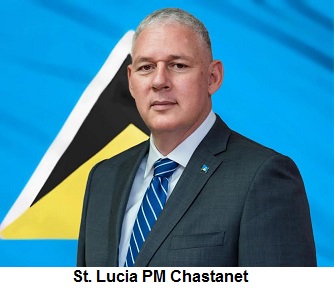
This is why the messaging in this VIDEO is so distressing. It is like the subtle message to the Caribbean population is that they need to leave their homeland, go get success and then please remember to invest in us afterwards. This is the jump-off-the-page thought of this address from the Prime Minister of St. Lucia last month. See here:

VIDEOPM 38th Independence Message to Diaspora https://youtu.be/R_eqKr32BQA

Published on Feb 4, 2017 – St. Lucia’s Prime Minister, the Honourable Allen M. Chastanet’s formal address to the Diaspora on the occasion of Independence Day 2017.
o  Category: News & Politics
o  License: Standard YouTube License

Say it ain’t so!

It is so unfortunate that the people in the Caribbean are beating down the doors to get out of their Caribbean homeland, to seek refuge in these places like the US, Canada and Western Europe. And yet it seems like the Chief Executive of this Caribbean country is encouraging more of it – there is a similar sentiment in the rest of the Caribbean member-states. As a result, we have such a sad state of affairs for our Caribbean eco-system as we are suffering from a bad record of societal abandonment. The reasons why people leave have been identified as “push and pull”:

“Push” refers to people who feel compelled to leave, to seek refuge in a foreign land. “Refuge” is an appropriate word; because of societal defects, many from the Caribbean must leave as refugees – think LGBTDisabilityDomestic-abuseMedically-challenged – for their life, liberty and pursuit of happiness. For these people, they are “on fire” and need to stop-drop-and-roll.

“Pull”, on the other hand refers to the lure of a more prosperous life abroad; many times our people are emigrating for economics solely.

If only we can mitigate these “push and pull” factors, then we can dissuade our people from leaving in the first place. If only we can go from ‘good to great‘ here in the Caribbean homeland. This would be the ideal. But this is not our reality. Considering the messaging from the current Prime Minister of St. Lucia, it is obvious that we cannot depend on the right roadmap to come from the region’s governance.

The alternate strategy being proposed here is to prosper where we’re planted in the Caribbean. But this goal requires heavy-lifting. It is easier said than done. This is the focus of the book Go Lean…Caribbean, to elevate the Caribbean economy so that there would be optimal opportunities at home and no need to supplant to another land.

One of the missions of the book Go Lean…Caribbean is to lower the “pull” attraction of life in foreign lands. This is part 3 of 3 in a series on “Why Caribbean people need to Stay Home“, positing that the “grass is not necessarily greener on the other side”; definitely not for the communities they leave behind. The complete series is as follows:

  1.  Stay Home! Remembering ‘High Noon’ and its Back-Story
  2.  Stay Home! Immigration Realities in the US
  3.  Stay Home! Outreach to the Diaspora – Doubling-down on Failure

From a community perspective, it would be better for Caribbean people to work to remediate the problems in their homeland, rather than flee and send monies back home. But it turns out that this true individual-wise as well. Research shows that it is more advantageous for individuals to invest in their homelands or in themselves (as in advanced education) than to do the heavy-lift of migrating abroad. It turns out this strategy is an Economic Fallacy, that first generation immigrants do not really prosper in their foreign lands – they only survive; it takes their next generation to really thrive. Consider this US example, they usually make less money than legacy Americans:

On average, most Caribbean immigrants obtain lawful permanent residence in the United States (also known as receiving a green card) through three main channels: They qualify as immediate relatives of U.S. citizens, through family-sponsored preferences, or as refugees and asylees. Compared to the total foreign-born population, Caribbean immigrants are less likely to be Limited English Proficient (LEP), but have lower educational attainment, lower median incomes, and higher poverty rates. – Migration Policy Institute, 2016.
CU Blog - Outreach to Diaspora - Doubling-Down on Failure - Photo 4

Then the problem with next generation success is that at that point in the timeline the stakeholders are not Diaspora anymore, their allegiance has shifted to their new homeland. We have so many immigrant experiences that relate this: Chinese, Italian, Irish, Cuban, etc.. Yes, the reality of Cubans in America is that many of their expatriates fled to exile hoping for a quick return. But now, by the second-and-third generations, their offspring really consider America as their home and Cuba as just their heritage. There will be no prospering back in Cuba.

So how do we in the Caribbean prosper where we are planted in the Caribbean? While this is a simple question (based on the Bible principle of Psalms 1:3), the answer is more complex.

They are like trees planted along the riverbank, bearing fruit each season. Their leaves never wither, and they prosper in all they do. – New Living Translation

The book Go Lean…Caribbean concurs with this mission, to prosper where planted in the Caribbean. It serves as a roadmap for the introduction and implementation of the technocratic Caribbean Union Trade Federation (CU) to do the heavy-lifting of optimizing the societal engines in the region. This Go Lean roadmap uses cutting-edge delivery of best practices to employ strategies, tactics and implementations to impact its prime directives; identified with the following 3 statements:

  • Optimization of the economic engines in order to grow the regional economy to $800 Billion & create 2.2 million new jobs.
  • Establishment of a security apparatus to protect the resultant economic engines.
  • Improve Caribbean governance to support these engines.

The successful execution of these directives will allow Caribbean stakeholders to prosper, while remaining as residents in their homeland. The Go Lean book seeks to optimize the entire Caribbean economic/security/governance eco-system to reach this goal. This vision is defined early in the book (Page 13 & 14) in the following pronouncements in the Declaration of Interdependence:

xix. Whereas our legacy in recent times is one of societal abandonment, it is imperative that incentives and encouragement be put in place to first dissuade the human flight, and then entice and welcome the return of our Diaspora back to our shores. This repatriation should be effected with the appropriate guards so as not to imperil the lives and securities of the repatriated citizens or the communities they inhabit. The right of repatriation is to be extended to any natural born citizens despite any previous naturalization to foreign sovereignties.

xxvi. Whereas the Caribbean region must have new jobs to empower the engines of the economy and create the income sources for prosperity, and encourage the next generation to forge their dreams right at home, the Federation must therefore foster the development of new industries… In addition, the Federation must invigorate the enterprises related to existing industries … – impacting the region with more jobs.

CU Blog - Outreach to Diaspora - Doubling-Down on Failure - Photo 3To be fair to the Prime Minister of St. Lucia, the Honourable Allen Chastanet, there is some concurrence to his contention, this Economic Fallacy; other PM’s in the region have made the same appeal. It is an assumption by many pundits in economic circles, though a minority opinion, that a country’s Diaspora community can be a great source for economic elevation. These pundits posit that the status quo in these developing countries would not lead to the sought-after elevation; it would take “new blood” and the Diaspora are considered candidates for bringing these 3 ingredients:

  • Trade
  • Investments
  • Skills and Knowledge Transfers

See the full report – www.migrationpolicy.org/pubs/Diasporas-EconomicDevelopment.pdf – by the Migration Policy Institute (MPI), an  independent, nonpartisan, nonprofit think tank in Washington, DC dedicated to analysis of the movement of people worldwide. See the Executive Summary in the Photo here:

CU Blog - Outreach to Diaspora - Doubling-Down on Failure - Photo 2

(Click on Image to Enlarge)

This opinion is not shared by the movement behind the Go Lean book. The full MPI Report identifies countries where Diaspora outreach has yielded positive  results, like Peru, India and Somalia. A prime difference of these countries versus the Caribbean member-states is the National Sacrifice community ethos, it is undoubtedly missing in the Caribbean – member-states do not even have (work-free) holidays to honor the sacrifices of those that fought, bled and/or died for their country. Caribbean people normally do not show the same level of patriotism. Once Caribbean citizens leave their homeland, they rarely invest back in their ancestral homeland. They normally just send money back to their families. As for investment, they have better choices; think Wall Street.

In summary, the Caribbean Diaspora do not invest back in their homelands because they are not ready, willing nor able. This is the honest assessment of the Caribbean status quo. Thusly, an outreach to the Diaspora is doubling-down on failure!

The Go Lean book details features of assessments, community ethos, strategies, tactics, implementations and advocacies to plant and exploit local opportunities in the Caribbean region. See this sample here:

Community Ethos – Deferred Gratification Page 21
Community Ethos – Economics Influence Choices Page 21
Community Ethos – Privacy versus Public Protection Page 23
Community Ethos – “Crap” Happens Page 23
Community Ethos – Lean Operations Page 24
Community Ethos – Cooperatives Page 24
Community Ethos – Non-Government Organizations Page 25
Community Ethos – Ways to Impact Turn-Arounds Page 33
Community Ethos – Ways to Improve Sharing Page 35
Community Ethos – Ways to Promote Happiness Page 36
Community Ethos – Impact the Greater Good Page 37
Strategy – Vision – Confederate 30 Member-States Page 45
Strategy – Mission – Dissuade Next Generation from Emigrating Page 47
Strategy – Agents of Change – Globalization Page 57
Tactical – Fostering a Technocracy Page 64
Separation of Powers – Between Member-states -vs- CU Agencies Page 71
Implementation – Ways to Deliver Page 109
Planning – Ways to Model the EU Page 130
Planning – Ways to Make the Caribbean Better Page 131
Planning – Ways to Measure Progress Page 148
Advocacy – Ways to Grow the Economy Page 151
Advocacy – Ways to Create Jobs Page 152
Advocacy – Ways to Impact Cancer Page 157
Advocacy – Ways to Better Manage the Social Contract Page 170
Advocacy – Ways to Foster Cooperatives Page 176
Advocacy – Ways to Improve Emergency Management – Deal with Disasters! Page 196
Advocacy – Ways to Preserve Caribbean Heritage Page 218
Appendix – Education and Economic Growth – Each add’l year = 10% more $$$ Page 258

Now is the time for all of the Caribbean, the people and governing institutions, to lean-in for the empowerments described here in this book Go Lean … Caribbean. It is time for the region to prosper right here where we are planted.

The Caribbean can succeed in this effort to improve the Caribbean as a place to live, work and play. The strategies and tactics of this quest have been detailed in many previous Go Lean blog-commentaries. Consider this sample:

https://goleancaribbean.com/blog/?p=10585 Two Pies: Economic Plan for a New Caribbean
https://goleancaribbean.com/blog/?p=10043 Integration Plan for Greater Caribbean Prosperity
https://goleancaribbean.com/blog/?p=9595 Vision and Values for a ‘New’ Caribbean
https://goleancaribbean.com/blog/?p=8351 A 6-part Series on Economic Fallacies
https://goleancaribbean.com/blog/?p=7646 Going from ‘Good to Great’
https://goleancaribbean.com/blog/?p=7221 Street naming for Martin Luther King unveils a ‘Climate of Hate’
https://goleancaribbean.com/blog/?p=5733 Better than America? Yes, We Can!
https://goleancaribbean.com/blog/?p=5527 American Defects: Racism – Is It Over?

An outreach to successful citizens living in the Diaspora is futile; it says this is what you have to do – leave – to prosper and be successful.

The alternative messaging for elevating the Caribbean should be: “Let’s double-down on … ”

  • job creation …
  • incubators for entrepreneurship …
  • bridging the Digital Divide
  • regional collaboration
  • e-Learning for At-Home education
  • and so on … (see Go Lean book Page 45 for full list of strategies).

This is what is needed to prosper where planted in the Caribbean. We need a turnaround. It must start in the head (thoughts, visions, etc.), penetrate the heart (feelings, motivations, etc.) and then manifest in speech and actions.

To the Prime Minister of St Lucia and all the other Heads of Government in the Caribbean region: Do better!

We will help. We hereby urge you to lean-in to the Go Lean roadmap.

To the residents on St. Lucia and all the other Caribbean communities, we urge: Stay Home! The grass is not greener on the other side. The effort to impact any change is easier here in the Caribbean than abroad in some foreign country. 🙂

Download the book Go Lean … Caribbean – now!

Share this post:
, ,
[Top]

Stay Home! Immigration Realities in the US

Go Lean Commentary

When conditions are dysfunctional at home, people leave … period.

“… we are just making it easy for the clean-up woman” – Classic R&B song by Betty Wright
See Appendix VIDEO below.

CU Blog - Immigration Realities in the US - Photo 6

This is not good for a family nor for a community. The truth of the matter is that communities need their populations to grow, not recede. So any human flight incidences would create havoc on the functionality of societal engines: economics, security and governance.

This is our status in the Caribbean, but it is not just an incident, not a trickle; it is a flood. The people are beating down the doors to get out of their Caribbean homeland, to seek refuge in places like the US, Canada and Western Europe. We have a sad state of affairs for our Caribbean eco-system so we are suffering from a bad record of societal abandonment – averaging a 70 percent brain drain rate. The reasons why people leave have been identified as “push and pull”:

“Push” refers to people who feel compelled to leave, to seek refuge in a foreign land. “Refuge” is an appropriate word; because of societal defects, many from the Caribbean must leave as refugees – think LGBTDisabilityDomestic-abuseMedically-challenged – for their life, liberty and pursuit of happiness. This is making it easy for the “clean-up woman”.

“Pull”, on the other hand refers to the lure of a more prosperous life in the US (and other destinations); many times our people are emigrating for economics solely.

If only we can mitigate these “push and pull” factors, then we can dissuade our people from leaving in the first place. If only we can go from ‘good to great‘ here in the Caribbean homeland. This would be the ideal. But this is not our reality.

What is a point of contention is where our emigrants are going. Let’s consider the realities of one such destination: the United States. While things are bad for our residents in their Caribbean homeland, many minority immigrants in America (Black-and-Brown, Muslim, etc.) have to contend with less than welcoming conditions there.

The movement behind the book Go Lean … Caribbean has consistently related that the United States of America functions as a Great Society but it has two societal defects: Institutional Racism and Crony-Capitalism. These societal defects can easily create a ‘Climate of Hate‘ that causes people to haze and blame-game the immigrant community.

CU Blog - Immigration Realities in the US - Photo 4

In a previous blog-commentary, it was conveyed that America treats immigrants unappreciatedly – they are inflicted with a “long train of abuses”. The long-term Americans start towards the immigrants with hate and then eventually tolerate. After some decades they may then integrate with the immigrant community. But only after generations do they appreciate and celebrate the minority group. Think of the American experience of the Chinese, Italians, Jewish and Cuban populations.

This is also the reality of the Caribbean Black-and-Brown that has emigrated to the US, while they can more easily survive, the quest to thrive is more perplexing. They have to live in this environment filled with these societal defects. Consider this news article and these aligning VIDEO’s:

News Article Title: GPS device-maker Garmin reeling after workers gunned down
By: Jim Suhr

CU Blog - Immigration Realities in the US - Photo 1

OLATHE, Kan. (AP) — GPS device-maker Garmin long has revered diversity in its workforce, even when the locale of its ever-sprawling operational headquarters — a largely white Kansas City suburb — didn’t reflect it.

It’s the place 32-year-old Srinivas Kuchibhotla came to work a few years ago. By his wife’s account Friday he willingly spent long hours on an aviation systems engineering team alongside Alok Madasani, a friend and colleague also 32 and from India.

Kuchibhotla’s trek led him to have a kinship with his boss, Lebanese native Didier Popadopoulos, who says he moved to America at Kuchibhotla’s age and once held the same Garmin job.

But Garmin — a billion-dollar tech giant launched in Kansas as a startup by two men nearly three decades ago — now is reeling, trying to digest Kuchibhotla’s shooting death Wednesday at a tavern just a mile down the road from work. Madasani was wounded, along with a stranger who tried to help.

Witnesses say the gunman, Adam Purinton, yelled at the two Indian men to “get out of my country” and opened fire. Purinton, who was arrested hours later at a bar in Missouri, remains jailed on murder and attempted murder charges.

The shooting happened at a time when many have concerns about the treatment of immigrants in the U.S., some of whom feel targeted by the current administration. President Donald Trump has promised to ban certain travelers and been especially vocal about the threat posed by Islamic terrorist groups.

CU Blog - Immigration Realities in the US - Photo 2On Friday, Garmin tried to comfort grieving employees at a closed-door vigil inside the auditorium on its campus in Olathe, Kansas. Kuchibhotla’s widow, Sunayana Dumala, addressed the group of about 200 workers that included Madasani, who was released from the hospital Thursday.

Laurie Minard, Garmin’s vice president of human resources, doesn’t believe the shooting will jeopardize its recruitment of workers from overseas.

“We tend to be a family here,” she said at the Garmin campus, which is waging a $200 million expansion, with plans announced last August for a new manufacturing and distribution center. “We want people to feel safe. We embrace it. We encourage it. We support it. It’s extremely important to us about acceptance.”

At any given time, she said, more than 100 Garmin employees are in the H-1B program, which lets American companies bring foreigners with technical skills to the U.S. for three to six years.

CU Blog - Immigration Realities in the US - Photo 5

In an eight-year period until fiscal year 2016, Garmin on average obtained 49 certifications for foreign labor — a prerequisite for hiring with an H-1B visa — for an average of 70 positions, according to the U.S. Department of Labor. During that time, 81 percent of the certified positions were in Olathe, the Labor Department says.

Olathe, whose name means “beautiful” in the Shawnee language, is a well-to-do Kansas City suburb where the median household income is above $77,000 a year.

CU Blog - Immigration Realities in the US - Photo 3Worldwide, Switzerland-based Garmin Ltd. — the Kansas operation’s corporate parent — has more than 11,400 workers in 60 offices and last year logged $3.02 billion in revenue. Roughly 2,800 workers are at the Kansas headquarters, which Greater Kansas City Chamber of Commerce spokeswoman Pam Whiting cast as regionally “one of our entrepreneurial success stories” and biggest employers.

Recruiting from overseas isn’t at all unusual in the tech industry, which contends there aren’t enough Americans with specialized skills the companies need.

Indian immigrants in the U.S. has spiked from about 200,000 in the 1980s to more than 2 million today, as Indian-born scientists and engineers fueled the American tech boom. India received more H-1B visas in the U.S. for its temporary high-skilled workers, about 70 percent, than any other country in 2014.

Stunned by Kuchibhotla’s death, Popadopoulos, the Lebanese native who was the man’s boss, said he plans to stay the course.

“When this happened, one of the things I started to think about with my wife (was) ‘Is it time to leave?'” he said.

Then he thought: “Leave where? I’m from here. I really think Srinivas would want us to stick together and stand up for what’s right.”

U.S. Sen. Jerry Moran said he left a message with Olathe’s mayor, offering to help assure people from India who live in Kansas that the actions leading to Kuchibhotla’s death are “not the norm.”

“This is not the nature of Kansas, and we welcome people to the United States, particularly a company like Garmin and many others,” the Kansas Republican said.

___

AP Data Journalist Larry Fenn in New York and AP writers Martha Mendoza in Bangkok and John Hanna in Topeka, Kansas, contributed to this report.
Source: Associated Press – posted February 25, 2017; retrieved February 27, 2017 from: https://www.yahoo.com/news/gps-device-maker-garmin-reeling-workers-gunned-down-013731087.html

—————-

VIDEO #1 What would America’s Tech industry be like without immigrants? – https://youtu.be/QODK-9-mImg

Published on Feb 3, 2017 – In the recent hate-crime in Olathe, Kansas the gunman exclaimed that he wanted the country back. Consider the words of this deranged killer and ask “What would America’s Tech industry be like without immigrants?”
But maybe, the American people are not so inviting, even though American companies may seek immigrants.
http://global-gathering.com

—————-

VIDEO #2 Trump Said Immigration Is Bad for the Economy, But Is it? – https://youtu.be/7PHfJ8HY-Ds

Published on Feb 12, 2017 – The new President, Donald Trump, has expressed that immigration is bad for the American economy and society in general. This is just another example of his “alternate facts”. It is not the truth. But it does project that his American administration is not welcoming to immigrants.
The question to the Caribbean: Do you want to go to a party that you’re not invited to or welcomed?
Category: News & Politics
License: Standard YouTube License

This foregoing article relates a hate-crime against immigrants (engineers) from India. They were not Muslims; they were not Mexican; they were not affiliated with the Black-and-Brown populations from Latin America or the Caribbean. But they were non-White and spoke with foreign accents; they therefore were subject to standard American hate-speech, bullying and in this case, a random act of violence; one was murdered.

This commentary is one of the missions of the book Go Lean…Caribbean, to lower the “pull” attraction of life in the US. This is not being done with “smoke and mirrors” but rather this is just the truth. This is part 2 of 3 in a series on “Why Caribbean people need to Stay Home“, positing that the “grass is not greener on the other side”. The complete series is as follows:

  1.  Stay Home! Remembering ‘High Noon’ and its Back-Story
  2.  Stay Home! Immigration Realities in the US
  3.  Stay Home! Outreach to the Diaspora – Doubling-down on Failure

The truth of the matter is that immigrants are better able to survive in America – there is an abundance of minimum wage jobs – but to thrive is more of a challenge; consider the experiences in the foregoing news article. It would seem better for Caribbean people to work to remediate the problems in their homeland, rather than work to become immigrants in the US. But this is no easy task; and despite being necessary, it is hereby defined as heavy-lifting.

The book Go Lean … Caribbean seeks to optimize the societal engines of Caribbean life; it serves as a roadmap for the introduction and implementation of the technocratic Caribbean Union Trade Federation (CU). The CU must employ better strategies, tactics and implementations to impact the regional homelands to reform and transform the societal engines. The prime directives of the Go Lean/CU roadmap for technocratic stewardship is identified with the following 3 statements:

  • Optimization of the economic engines in order to grow the regional economy to $800 Billion & create 2.2 million new jobs. The deficiency of jobs is one  of the reasons Caribbean people have emigrated.
  • Establishment of a security apparatus to protect the resultant economic engines and mitigate internal and external threats.
  • Improvement of Caribbean governance to support these above engines, including a separation-of-powers between member-state governments and CU federal agencies.

Early in the Go Lean book, this need for careful technocratic stewardship of the region’s societal engines was pronounced (Declaration of Interdependence – Page 12 – 13) with these acknowledgements and statements:

xi.   Whereas all men are entitled to the benefits of good governance in a free society, “new guards” must be enacted to dissuade the emergence of incompetence, corruption, nepotism and cronyism at the peril of the people’s best interest. The Federation must guarantee the executions of a social contract between government and the governed.

xii.  Whereas the legacy in recent times in individual states may be that of ineffectual governance with no redress to higher authority, the accedence of this Federation will ensure accountability and escalation of the human and civil rights of the people for good governance, justice assurances, due process and the rule of law. As such, any threats of a “failed state” status for any member state must enact emergency measures on behalf of the Federation to protect the human, civil and property rights of the citizens, residents, allies, trading partners, and visitors of the affected member state and the Federation as a whole.

xxiv. Whereas a free market economy can be induced and spurred for continuous progress, the Federation must install the controls to better manage aspects of the economy: jobs, inflation, savings rate, investments and other economic principles. Thereby attracting direct foreign investment because of the stability and vibrancy of our economy.

xxvi.  Whereas the Caribbean region must have new jobs to empower the engines of the economy and create the income sources for prosperity, and encourage the next generation to forge their dreams right at home, the Federation must therefore foster the development of new industries … In addition, the Federation must invigorate the enterprises related to existing industries … impacting the region with more jobs.

Our Caribbean community, no community for that matter, can survive a constant drain against our population and human capital. This is a crisis! This point was crystalized in a previous blog/commentary with this quotation:

We tend to think economic growth comes from working harder and smarter. But economists attribute up to a third of it to more people joining the workforce each year than leaving it. The result is more producing, earning and spending.

This is a consistent theme in the book Go Lean…Caribbean. The book posits that the most serious threat to Caribbean prosperity is the high abandonment rate among its citizens, especially its highly educated, skilled-labor classes.

“A crisis is a terrible thing to waste” – states the book quoting noted Economist Paul Romer.

The opportunity therefore exists to forge change in the economic, security and governing engines of the Caribbean, in response to this crisis. This is the advocacy of the Go Lean book, to position the region at the corner of preparation and opportunity, so as to better compete on the world stage. Our job creation engines have failed to keep pace with the population, therefore fewer and fewer jobs are at home. Thus this region has had a higher and higher emigration rate as the decades pass. If we want our citizens to “Stay Home” then we must provide job options.

How?

First, the region already has a mature tourism product so we now need jobs in other industries.

The following details from the book Go Lean … Caribbean are the community ethos, strategies, tactics, implementations and advocates prescribed to create non-tourism jobs and elevate the Caribbean economy:

Community Ethos – Deferred Gratification Page 21
Community Ethos – new Economic Principles Page 21
Community Ethos – Job Multiplier Page 22
Community Ethos – new Security Principles Page 22
Community Ethos – new Governing Principles Page 24
Community Ethos – Ways to Impact the Future Page 26
Community Ethos – Ways to Impact Turn-Arounds Page 33
Community Ethos – Ways to Promote Happiness Page 36
Community Ethos – Ways to Impact the Greater Good Page 37
Strategy – Repatriating Caribbean Diaspora Page 47
Strategy – Non-Government Organizations Page 48
Tactical – Confederating a Permanent Union Page 63
Tactical – Fostering a Technocracy Page 64
Implementation – Assemble all Member-States Page 96
Implementation – Ways to Pay for Change Page 101
Implementation – Reasons to Repatriate Page 118
Planning – Ways to Make the Caribbean Better Page 131
Advocacy – Ways to Grow the Economy Page 151
Advocacy – Ways to Create Jobs Page 152
Advocacy – Better Manage the Social Contract Page 170
Advocacy – Ways to Foster Empowering Immigration Page 174
Advocacy – Impact the Diaspora Page 217
Advocacy – Ways to Preserve Caribbean Heritage Page 218
Advocacy – Ways to Help the Middle Class Page 223

The Go Lean roadmap is a product of the Diaspora, from those residing in the US – looking at Caribbean residents and longing to go home. The Go Lean book and blog-commentaries assert that the “grass is not greener on the other side”. But we rightfully know that the quest for economic opportunities is the “pull” factor that attracts Caribbean people.

How to create jobs at home? This point – and accompanying lessons – has been exhausted in previous blog/commentaries; consider this sample:

https://goleancaribbean.com/blog/?p=9751 Where the Jobs Are – Animation and Game Design
https://goleancaribbean.com/blog/?p=9203 Where the Jobs Are – Employer Models in the United States
https://goleancaribbean.com/blog/?p=8262 Creating Job Opportunities with UberEverything – An African Model
https://goleancaribbean.com/blog/?p=8328 Creating Job Opportunities as YouTube Millionaires
https://goleancaribbean.com/blog/?p=7806 Skipping School to become Tech Giants
https://goleancaribbean.com/blog/?p=6129 Innovative Partnership Aids Farm Workers/Agricultural Jobs
https://goleancaribbean.com/blog/?p=6089 Where the Jobs Are – Futility of Minimum Wage
https://goleancaribbean.com/blog/?p=5759 Pressed by Debt Crisis, Doctors Leave Greece in Droves for New Jobs
https://goleancaribbean.com/blog/?p=2857 Where the Jobs Are – Entrepreneurism in Junk
https://goleancaribbean.com/blog/?p=2126 Where the Jobs Are – Computers Reshaping Global Job Market
https://goleancaribbean.com/blog/?p=2025 Where the Jobs Are – Attitudes & Images of the Diaspora
https://goleancaribbean.com/blog/?p=2003 Where the Jobs Are – One Scenario: Ship-breaking
https://goleancaribbean.com/blog/?p=1698 Where the Jobs Are – STEM Jobs Are Filling Slowly

These previous blogs report that this Go Lean roadmap is a hope for change in the Caribbean region. Its a plan that is conceivable, believable and achievable for making the Caribbean homeland a better place to live, work and play. Everyone in the region is hereby urged to lean-in to this roadmap. 🙂

Download the book Go Lean … Caribbean – now!

———–

Appendix VIDEO – Betty Wright – Clean Up Woman – https://youtu.be/vh-2_kdVcyA

Uploaded on May 27, 2009 Lyrics:

“Clean Up Woman”
A clean up woman is a woman who
Gets all the love we girls leave behind
The reason I know so much about her
Is because she picked up a man of mine

Chumpin’ slick was my ruin
‘Cause, I found out all I was doin’
Was making it easy for the clean up woman
To get my man’s love, oh yeah
Just making it easy for the clean up woman
To get my baby’s love, uh-huh, um-hum

I took this man’s love and put it a shelf
And like a fool I thought I had him all to myself

When you needed love I was out having fun
But I found out that all I had done
Was made it easy for the clean up woman
To get my man’s love, uh-huh
Yeah, that’s what I did, I made it easy for the clean up woman
To steal my baby’s love, oh yeah

The clean up woman will wipe his blues away
She’ll give him plenty lovin’ 24 hours a day
The clean up woman, she’ll sweep him off his feet
She’s the one who’ll take him in when you dump him in the street
So take a tip, you better get hip
To the clean up woman ’cause she’s tough
I mean, she really cleans up


Share this post:
, , ,
[Top]

Stay Home! Remembering ‘High Noon’ and its Back-Story

Go Lean Commentary

When there is a ‘Climate of Hate’, conditions in society can easily go from bad to worse. We have a lot of lessons from history that supplant this assertion. Consider this lesson from America in the 1950’s.

CU Blog - Remembering 'High Noon' and its Back Story - Photo 2

A revealing new book High Noon: The Hollywood Blacklist and the Making of an American Classic uncovers the back-story of the classic Western movie ‘High Noon’; it details the grim time in American history, when a bad community ethos permeated, McCarthyism and the resultant blacklist. “These events from the 1950’s have a special resonance today.”

The movement behind the book Go Lean … Caribbean has consistently related that the United States function as a Great Society but it has two societal defects: Institutional Racism and Crony-Capitalism. These societal defects can easily create a ‘Climate of Hate‘ and in the 1950’s, the US had it bad … with their stereotyping and “witch hunts” of McCarthyism.

McCarthyism include the speeches, investigations, and hearings of Wisconsin Senator Joseph McCarthy (in office 1947 –1957); the Hollywood blacklist, associated with hearings conducted by the House Un-American Activities Committee (HUAC); and the various anti-communist activities of the Federal Bureau of Investigation (FBI) under Director J. Edgar Hoover. McCarthyism was a widespread social and cultural phenomenon that affected all levels of society and was the source of a great deal of debate and conflict in the United States.

CU Blog - Remembering 'High Noon' and its Back Story - Photo 3McCarthyism was the practice of making accusations of subversion or treason without proper regard for evidence.[1] It also means “the practice of making unfair allegations or using unfair investigative techniques, especially in order to restrict dissent or political criticism.”[2] The term has its origins in the period in the United States known as the Second Red Scare, lasting roughly from 1947 to 1956 and characterized by heightened political repression as well as a campaign spreading fear of influence on American institutions and of espionage by Soviet agents.

McCarthyism soon took on a broader meaning, describing the excesses of similar efforts. The term is also now used more generally to describe reckless, unsubstantiated accusations, as well as demagogic attacks on the character or patriotism of political adversaries. During the McCarthy era, thousands of Americans were accused of being communists or communist sympathizers and became the subject of aggressive investigations and questioning before government or private-industry panels, committees and agencies. The primary targets of such suspicions were government employees, those in the entertainment industry, educators and union activists. Suspicions were often given credence despite inconclusive or questionable evidence, and the level of threat posed by a person’s real or supposed leftist associations or beliefs was often greatly exaggerated. Many people suffered loss of employment and/or destruction of their careers; some even suffered imprisonment. Most of these punishments came about through trial verdicts later overturned,[4] laws that were later declared unconstitutional,[5] dismissals for reasons later declared illegal[6] or actionable,[7] or extra-legal procedures that would come into general disrepute.
Source: Wikipedia Online Encyclopedia; retrieved February 26, 2017 from: https://en.wikipedia.org/wiki/McCarthyism

As related in the foregoing, “many people suffered loss of employment and/or destruction of their careers”; this was definitely the case in Hollywood. Consider the experience of the screenwriter Carl Foreman, best known for the film classic Western ‘High Noon’. See the Book Review and related AUDIO-Podcast here:

Book Title: High Noon: The Hollywood Blacklist and the Making of an American Classic
By:  Glenn Frankel
From the New York Times-bestselling author of The Searchers, the revelatory story behind the classic movie High Noon and the toxic political climate in which it was created.

CU Blog - Remembering 'High Noon' and its Back Story - Photo 1It’s one of the most revered movies of Hollywood’s golden era. Starring screen legend Gary Cooper and Grace Kelly in her first significant film role, High Noon was shot on a lean budget over just thirty-two days but achieved instant box-office and critical success. It won four Academy Awards in 1953, including a best actor win for Cooper. And it became a cultural touchstone, often cited by politicians as a favorite film, celebrating moral fortitude.

Yet what has been often overlooked is that High Noon was made during the height of the Hollywood blacklist, a time of political inquisition and personal betrayal. In the middle of the film shoot, screenwriter Carl Foreman was forced to testify before the House Committee on Un-American Activities about his former membership in the Communist Party. Refusing to name names, he was eventually blacklisted and fled the United States. (His co-authored screenplay for another classic, The Bridge on the River Kwai, went uncredited in 1957.) Examined in light of Foreman’s testimony, High Noon‘s emphasis on courage and loyalty takes on deeper meaning and importance.

In this book, Pulitzer Prize-winning journalist Glenn Frankel tells the story of the making of a great American Western, exploring how Carl Foreman’s concept of High Noon evolved from idea to first draft to final script, taking on allegorical weight. Both the classic film and its turbulent political times emerge newly illuminated.

———

AUDIO-PODCASTWhat A Classic ’50s Western Can Teach Us About The Hollywood Blacklist – http://www.npr.org/2017/02/21/516427212/what-a-classic-50s-western-can-teach-us-about-the-hollywood-blacklist

Posted on February 21, 2017 – Author Glenn Frankel tells Fresh Air‘s Terry Gross that the government was “looking to see or to prove that there had been communist infiltration in Hollywood, that this was part of a mass plot engineered by Moscow to take over our cultural institutions.”

Many who appeared before the House Un-American Activities Committee were put on a blacklist that made it impossible for them to work in show business. Among the blacklisted was screenwriter Carl Foreman, whose 1952 classic western High Noon is seen as a parable about the toxic political climate of the time.

This history highlights the bad consequence of societal defects; they can easily be exploited and society further hijacked with blatant malice (bad motives, bad messages and bad actions). This aligns with the Go Lean book’s definition of “community ethos”:

the underlying attitude/spirit/sentiment that informs the beliefs, customs, or practices of a group or society.

The bad ethos of McCarthyism became a “widespread social and cultural phenomenon that affected all levels of America”. The US would not have been a welcoming society for those on the wrong side of this targeting. This truly demonstrates how a ‘Climate of Hate’ exacerbates societal defects, conditions easily go from bad to worse.

America is not much different today … in 2017 compared to the 1950’s. Yes, the laws of the land has been updated, but the attitudes of the people are still intact towards a ‘Climate of Hate’. There is the continuous need for vigilance and truth. The truth of the matter is that America has a lot of work to do to be the Great Society they project to the world. This country should not be the panacea of Caribbean ills. This commentary has consistently asserted that it is easier for the Caribbean member-states to reform and transform its own society than to flee to find refuge in America.

According to the foregoing, the American government turned on some of its most talented and productive citizens during the bad days of McCarthyism. This turned out to be just another extension of the country’s ‘Climate of Hate’. This commentary maintains that hate is in the American DNA.

Too strong?!

Just consider the experience of the nation’s Black-and-Brown populations. This has been duly documented and lamented.

Too old?!

If it is the contention that this is an indictment of the America of old, then consider the fresh experience of Muslim immigrants.

And yet … the people in the Caribbean – mostly Black-and-Brown – are beating down the doors to get out of their Caribbean homeland, to seek refuge in places like the US; (a smaller faction emigrate to Canada and Western Europe). This really conveys the sad state of affairs for the Caribbean eco-system. While things are bad for minorities in America (Black-and-Brown, Muslim, etc.), more Black people want to come in, instead of working to remediate the problems in their own homeland.

This is the reality of the Caribbean disposition: the region suffers from a bad record of societal abandonment. The reasons why people leave have been identified as “push and pull”:

“Push” refers to people who feel compelled to leave, to seek refuge in a foreign land. “Refuge” is an appropriate word; because of societal defects, many from the Caribbean must leave as refugees – think LGBTDisabilityDomestic-abuseMedically-challenged – for their life, liberty and pursuit of happiness.

“Pull”, on the other hand refers to the lure of a more prosperous life in the US (and other destinations); many times our people are emigrating for economics solely.

If only we can mitigate these “push and pull” factors, then we can dissuade our people from leaving in the first place. We CAN go from ‘good to great‘ here in the homeland. This is no easy task; and despite being necessary, it is hereby defined as heavy-lifting. This is the purpose of this commentary; this is part 1 of 3 in a series on “Why Caribbean people need to Stay Home“, positing that the “grass is not greener on the other side”. The complete series is as follows:

  1.  Stay Home! Remembering ‘High Noon’ and its Back-Story
  2.  Stay Home! Immigration Realities in the US
  3.  Stay Home! Outreach to the Diaspora – Doubling-down on Failure

The book Go Lean … Caribbean seeks to optimize the societal engines of Caribbean life; it serves as a roadmap for the introduction and implementation of the technocratic Caribbean Union Trade Federation (CU). The CU must employ better strategies, tactics and implementations to impact its prime directives; identified with the following 3 statements:

  • Optimization of the economic engines in order to grow the regional economy to $800 Billion & create 2.2 million new jobs.
  • Establishment of a security apparatus to protect the resultant economic engines and mitigate internal and external threats.
  • Improvement of Caribbean governance to support these above engines, including a separation-of-powers between member-state governments and CU federal agencies.

Early in the Go Lean book, this need for careful technocratic stewardship of the region’s societal engines was pronounced (Declaration of Interdependence – Page 12 – 13) with these acknowledgements and statements:

xi.   Whereas all men are entitled to the benefits of good governance in a free society, “new guards” must be enacted to dissuade the emergence of incompetence, corruption, nepotism and cronyism at the peril of the people’s best interest. The Federation must guarantee the executions of a social contract between government and the governed.

xii.  Whereas the legacy in recent times in individual states may be that of ineffectual governance with no redress to higher authority, the accedence of this Federation will ensure accountability and escalation of the human and civil rights of the people for good governance, justice assurances, due process and the rule of law. As such, any threats of a “failed state” status for any member state must enact emergency measures on behalf of the Federation to protect the human, civil and property rights of the citizens, residents, allies, trading partners, and visitors of the affected member state and the Federation as a whole.

xxiv. Whereas a free market economy can be induced and spurred for continuous progress, the Federation must install the controls to better manage aspects of the economy: jobs, inflation, savings rate, investments and other economic principles. Thereby attracting direct foreign investment because of the stability and vibrancy of our economy.

This is movie season … and movies are an art form that imitates life, while life also imitates movies.

… The 89th Academy Awards ceremony, presented by the Academy of Motion Picture Arts and Sciences, honored the best films of 2016, and took place on February 26, 2017, at the Dolby Theatre in Hollywood, Los Angeles, 5:30 p.m. PST. – Wikipedia

The lesson we learn from the back-story of the movie ‘High Noon’ and the foregoing Book Review, is that we have to ‘stand our ground’ to reform and transform our communities in the Caribbean; we have our own ‘Climate of Hate’. So the Go Lean book therefore details this series of community ethos to adopt, plus the strategies, tactics, implementations and advocacies to execute to forge a permanent transformation in the homeland:

Community Ethos – Economic Systems Influence Choices & Incentives Page 21
Community Ethos – Consequences of Choices Lie in the Future Page 21
Community Ethos – Anti-Bullying and Mitigation Page 23
Community Ethos – Minority Equalization Page 24
Community Ethos – Ways to Impact the Future Page 26
Community Ethos – Ways to Manage Reconciliations Page 34
Community Ethos – Ways to Impact the Greater Good Page 37
Strategy – Vision –  Integrate region into a Single Market Economy Page 45
Strategy – Agents of Change – Globalization Page 57
Tactical – Separation of Powers – Department of Homeland Security Page 75
Implementation – Ways to Foster International Aid Page 115
Planning – 10 Big Ideas … in the Caribbean Region – Haiti & Cuba Page 127
Planning – Ways to Improve Failed-State Indices Page 134
Planning – Lessons from East Germany – European Post-War Rebuilding – Attitudes Page 139
Planning – Lessons from the US Constitution – Progressive &  Evolutionary Page 145
Advocacy – Ways to Grow the Economy Page 151
Advocacy – Ways to Create Jobs Page 152
Advocacy – Ways to Foster Empowering Immigration – Case Study of Indian Migrants Page 174
Advocacy – Ways to Impact Justice Page 177
Advocacy – Ways to Remediate and Mitigate Crime Page 178
Advocacy – Ways to Improve Gun Control Page 179
Advocacy – Ways to Improve Homeland Security Page 180
Advocacy – Ways to Mitigate Terrorism – and Bullying Page 181
Advocacy – Ways to Improve Intelligence Gathering & Analysis Page 182
Advocacy – Ways to Protect Human Rights Page 220
Advocacy – Ways to Help Women – Mitigate Gender-based Violence Page 226
Advocacy – Ways to Impact Youth – Message new Community Ethos – Inclusion Page 227
Advocacy – Ways to Impact Hollywood – Power of Film Page 203
Advocacy – Ways to Impact the Dominican Republic – Reconciling Neighboring Hate Page 237
Advocacy – Ways to Re-boot Haiti – Regional Climate of Hate against Haiti Page 238
Advocacy – Ways to Impact Trinidad & Tobago – Indo versus Afro Climate Page 240
Advocacy – Ways to Impact Guyana – Indo versus Afro Climate Page 241
Advocacy – Ways to Impact Belize – Cross Border Climate with Guatemala Page 242
Advocacy – Ways to Impact US Territories – Interracial Climate Page 244

Underlying the back-story in the foregoing Book Review is the classic Western film: High Noon. See the Appendix VIDEO.

That was a great movie about a man when faced with the choice of ‘fight or flight’, chose to stay and fight rather than fleeing for his own refuge. This film was thought-provoking and impactful … and celebrated. In fact, the film …

… was nominated for seven Academy Awards, and won four (Actor, Editing, Music-Score, and Music-Song)[3] as well as four Golden Globe Awards (Actor, Supporting Actress, Score, and Cinematography-Black and White).[4] In 1989, this movie was selected for preservation in the United States National Film Registry by the Library of Congress as “culturally, historically, or aesthetically significant”. – Wikipedia.

CU Blog - Remembering 'High Noon' and its Back Story - Photo 4

Movies are important in the roadmap to impact the Caribbean; a previous blog/commentary regarding Caribbean Diaspora member and Hollywood great, Sidney Poitier, declared that …

… “movies are an amazing business model. People give money to spend a couple of hours watching someone else’s creation and then leave the theater with nothing to show for the investment; except perhaps a different perspective”.

The contention is that we can do better in the Caribbean. This is based on one premise: it is easier to reform and transform the Caribbean that it is to reform and transform America. Yes, we can …

The points of effective, technocratic stewardship of the Caribbean have been detailed in these previous blog/commentaries:

https://goleancaribbean.com/blog/?p=10532 Learning from Stereotypes – Good and Bad
https://goleancaribbean.com/blog/?p=9595 Vision and Values for a ‘New’ Caribbean
https://goleancaribbean.com/blog/?p=9214 Time To Go: A 6-part series for the Diaspora in the US
https://goleancaribbean.com/blog/?p=8200 Respect for Minorities: Climate of Hate
https://goleancaribbean.com/blog/?p=7646 Going from ‘Good to Great’
https://goleancaribbean.com/blog/?p=7221 Street naming for Martin Luther King unveils a ‘Climate of Hate’
https://goleancaribbean.com/blog/?p=5733 Better than America? Yes, We Can!
https://goleancaribbean.com/blog/?p=5527 American Defects: Racism – Is It Over?
https://goleancaribbean.com/blog/?p=1596 ‘Prosper where Planted’ in the Caribbean

The issues addressed in this commentary are not related to America alone. We have our own ‘Climate of Hate’ in the Caribbean. While we can learn lessons from the American past and present, we still must do the required heavy-lifting ourselves.

The Go Lean book reports that the Caribbean is in crisis. Too many people leave … due to “push and pull” reasons. Thusly, the region is suffering a debilitating brain-drain estimated at 70% with some countries reporting up to 81%.

The Go Lean roadmap declares that we must, and can, do better. Truth be told, it is easier for the average person to remediate and mitigate defects in the Caribbean homeland than to prosper in foreign lands like the US. This message , while repeated here, must be loudly proclaimed and echoed throughout our Caribbean region.

Every stakeholder, everyone who live, work and play in the Caribbean are urged to lean-in to this Go Lean roadmap to turn-around the region. The strategies, tactics and implementations proposed in the Go Lean book are conceivable, believable and achievable. 🙂

————-

Appendix VIDEO – High Noon (1952) Official Trailer – https://youtu.be/g9CR_tib0CA

Uploaded on Dec 12, 2011 – Classic Western movie starring Gary Cooper and Grace Kelly.

Share this post:
, , , , ,
[Top]

Caribbean Roots: Cast of ‘The Fresh Prince of Bel-Air’

Go Lean Commentary

For the generation born between 1980 and 2000 – Millennials – this TV show is an icon of their generation:

The Fresh Prince of Bel-Air.

It was a situation comedy (sit-com) with laughter, hip-hop music, urban cool lifestyle, family values and thought-provoking drama. This show was formative for all demographics of this generation – White and the Black-and-Brown –  but most people do not realize that a large number of the cast members had Caribbean roots.

We are so proud!

CU Blog - Caribbean Roots - Cast of Fresh Prince of Bel-Air - Photo 1

CU Blog - Caribbean Roots - Cast of Fresh Prince of Bel-Air - Photo 3

The movement behind the book Go Lean … Caribbean recognizes the significance of this art-form: sit-com television. On a consistent basis, audiences tuned into this show for entertainment and walked away with enlightenment as well – average ratings were 13 – 14 million viewers. They were constantly exposed to an affluent African-American household with an intact family structure: father, mother, and compliant children navigating a changing world. That was a different perspective – see Image Awards details in the Appendix below – compared to the realities of Black America and the pervasive media portrayals.

The show was not a docu-drama of “Black versus White America”, though many times, plotlines covered these dynamics. In general the storylines addressed teenage angst, but many plotlines addressed the family’s affluence versus working class families; this exposes a familiar rift in the Black community with passionate advocates for a Talented Tenth versus a ‘Power to the People’ contingent. See these encyclopedic details and VIDEO of the show here:

Title: The Fresh Prince of Bel-Air

CU Blog - Caribbean Roots - Cast of Fresh Prince of Bel-Air - Photo 0The Fresh Prince of Bel-Air is an American sitcom that originally aired on NBC from September 10, 1990, to May 20, 1996. The show stars Will Smith as a fictionalized version of himself, a street-smart teenager from West Philadelphia who is sent to move in with his wealthy aunt and uncle in their Bel Air mansion after getting into a fight on a local basketball court. In the series, his lifestyle often clashes with the lifestyle of his relatives in Bel Air. The series ran for six seasons and aired 148 episodes.[1][2]

Starring Cast

Will Smith as Will “The Fresh Prince” Smith
James Avery as Philip Banks
Janet Hubert-Whitten as Vivian Banks (1st)
Alfonso Ribeiro as Carlton Banks
Karyn Parsons as Hilary Banks
Tatyana M. Ali as Ashley Banks
Joseph Marcell as Geoffrey The Butler
Daphne Maxwell Reid as Vivian Banks (2nd)
Ross Bagley as Nicholas “Nicky” Banks (Seasons 5 & 6 only)

Development
In December 1989, NBC approached Will Smith, a popular rapper during the late 1980s.[3] The pilot episode began taping on May 1, 1990.[4] Season 1 aired in July 1990 and ended in March 1991. The series finale was taped on Thursday, March 21, 1996.[5][6]

The theme song was written and performed by Smith under his rap stage name, The Fresh Prince. The music was composed by QDIII (Quincy Jones III), who is credited with Smith at the end of each episode.

The music often used to bridge scenes together during the show is based on a similar chord structure. The full version of the theme song was used unedited in the first three episodes. The full length version, which is 2:52, was included on Will Smith’s Greatest Hits album and attributed to him only, as well as DJ Jazzy Jeff & the Fresh Prince in 1998. A 3:23 version was released in the Netherlands in 1992, reaching #3 on the charts.

In the second season, the kitchen and living room sets were rebuilt much larger with a more contemporary style (as opposed to the much more formal style of the first season), and were connected directly by an archway, allowing scenes to be shot continuously between the sets.

Plot
The theme song and opening sequence set the premise of the show. Will Smith is a street-smart teenager, born and raised in West Philadelphia. While playing basketball, Will misses a shot and the ball hits a group of people, causing a confrontation that frightens his mother, who sends him to live with his aunt and uncle in the town of Bel Air, Los Angeles.

He flies from Philadelphia to Los Angeles on a one-way ticket in first class. He then whistles for a taxi that has dice in the reflection screen and the word “FRESH” on its vanity plates. Will’s working class background ends up clashing in various humorous ways with the upper class, “bourgeois” world of the Banks family – Will’s uncle Phil and aunt Vivian and their children, Will’s cousins Hilary, Carlton, and Ashley.
Source: Wikipedia Online Encyclopedia – Retrieved February 24, 2017 from: https://en.wikipedia.org/wiki/The_Fresh_Prince_of_Bel-Air

————

VIDEO – The Fresh Prince Of Bel Air Theme Song – https://youtu.be/1nCqRmx3Dnw

Published on Feb 3, 2013 – This was obviously the first episode.

The reference to The Fresh Prince refers to the hip-hop rapper Will Smith; the show revolved around him.

The Go Lean book identifies that music – even hip-hop – and the arts can greatly impact society; in addition to the entertainment value, there is also image and impression. People can override many false precepts with excellent deliveries and contributions from great role models.

The book Go Lean…Caribbean serves as a roadmap for the introduction and implementation of the Caribbean Union Trade Federation (CU). This CU strives to advance Caribbean image and culture in the region and throughout the world, with these 3 prime directives:

  • Optimization of the economic engines in order to grow the regional economy.
  • Establishment of a security apparatus to protect the resultant economic engines.
  • Improve Caribbean governance.

This roadmap recognizes that a prerequisite for advancing society is a change in the Caribbean “community ethos”;  (the underlying attitude/spirit/sentiment that informs the beliefs, customs, or practices). Early in the book, the contributions that culture (music, television, film, theater and dance) can make is pronounced as an ethos for the entire region to embrace, (opening Declaration of Interdependence – DOI – Pages 15) with this statement:

xxxii. Whereas the cultural arts and music of the region are germane to the quality of Caribbean life, and the international appreciation of Caribbean life, the Federation must implement the support systems to teach, encourage, incentivize, monetize and promote the related industries for arts and music in domestic and foreign markets. These endeavors will make the Caribbean a better place to live, work and play.

The Go Lean/CU asserts that change has now come to the Caribbean, collectively and for each of the 30 member-states. The people, institutions and governance of the region are all urged to “lean-in” to this roadmap for change. We know it is important to highlight the positive contributions of Caribbean people, even their descendants and legacies.

The great role models being considered here are the many cast members of this iconic TV show – The Fresh Prince of Bel-Air – who had Caribbean roots. We learn lessons from these great role models: lessons that are good, bad and ugly.

The cast members for consideration are:

  • Alfonso Ribeiro as Carlton Banks
    This American-born actor has displayed many talents, beginning his career at the age of eight but securing his first TV sit-com on the series Silver Spoons at the age of 13; he is also accomplished as a television director, dancer, and show host. He was born in New York City to Trinidadian parents Michael and Joy Ribeiro (née De Leon) of Portuguese, Spanish and Afro-Trinidadian descent from Trinidad and Tobago. His mother was the daughter of Trinidadian Calypsonian the Roaring Lion, Rafael de Leon.[2][3]
  • Tatyana M. Ali as Ashley Banks
    This artist has excelled in her roles as an actress, model and R&B singer. She was born in New York to a mother of Afro-Panamanian[2][3] heritage and a father who is Indo-Trinidadian.[3] She began her acting career at the young age of six, starting as a regular child performer on Sesame Street starting in 1985. She has not stopped working in the entertainment industry, featuring acting and singing roles right up to the present day.
  • Joseph Marcell as Geoffrey The Butler
    This Saint Lucian-born British actor moved to the United Kingdom at the age of nine, grew up in South London, and still lives in that metropolitan area. He studied theatre and science at college, then took courses in speech and dance. As a member of the Royal Shakespeare Company, he appeared in productions of Othello and A Midsummer Night’s Dream. He has also appeared often on British television and in feature films.[2]

These artists have placed their signatures on the entertainment world – The Fresh Prince of Bel-Air show delivered 148 episodes – notwithstanding their Caribbean heritage. This is among the ‘Good‘ lessons.

What is ‘Bad and Ugly‘ is how they have excelled in their crafts in the US and the UK as opposed to their ancestral homelands. Their parents left the islands for greater opportunities 50 – 70 years ago and despite the passage of time we still do not have any manifestations that would have allowed their artistic expressions in the Caribbean region.

What is sad is that most of the Caribbean Diaspora left their beloved homelands with some aspirations of returning some day. This is depicted in the Go Lean book with this quotation (Page 118):

The Bottom Line for the Caribbean Diaspora
The Caribbean is the best address in the world. However for over 50 years many Caribbean citizens left their island homes to find greater opportunity in foreign lands: USA, Canada and Europe. Though the “man was taken out of the island, the island was never taken out of the man”, and as such many of the Diaspora live in pockets with other Caribbean expatriates in their foreign homelands (i.e. Flatbush in Brooklyn, New York, USA). What’s more, their children, legacies, are still raised and bred with Caribbean values and culture. Many left initially with the intention of returning someday, but life, loves and livelihoods got in the way of a successful return. Worse, many tried to return and found that they were targets of crime and terrorism, mandating that they abandon all hopes and dreams of a successful repatriation. The CU therefore must allow for the repatriation of peoples of the Diaspora, in all classes of society, “the good, the bad and the ugly”.

We salute these artists from the TV show ‘The Fresh Prince of Bel-Air’. Great job; great performances and great portrayals. We accept that these artists are great Americans and Britons; they may never be grouped with Caribbean artists.

This is our loss.

May we do better with our next generation. We can and have done some good in the past; Caribbean people have impacted the art world (music and culture) right from their Caribbean homeland. Consider Caribbean musical icon, Bob Marley; he set a pathway for success for other generations of talented, inspirational and influential artists to follow. More artists of Caribbean heritage are sure to emerge to “impact the world” with their artistry. The planners for a new more opportunistic Caribbean – the Go Lean movement – are preparing for it, as specified in the same DOI – Page 13:

xxi. Whereas the preparation of our labor force can foster opportunities and dictate economic progress for current and future generations, the Federation must ensure that educational and job training opportunities are fully optimized for all residents of all member-states, with no partiality towards any gender or ethnic group. The Federation must recognize and facilitate excellence in many different fields of endeavor, including sciences, languages, arts, music and sports. This responsibility should be executed without incurring the risks of further human flight, as has been the past history.

The foregoing three artists should be proud of their executions; we are proud of their heritage and thusly have an affinity for their works. We acknowledge those ones from our past who left their Caribbean homelands for better opportunities in the world of entertainment and we know that there are “new” artists who are just waiting to be fostered throughout the Caribbean member-states. We salute these ones as our future, and pledge to do better. The following list details the community ethos, strategies, tactics, implementations and advocacies to foster future entertainment options in the Caribbean:

Community Ethos – Ways to Foster Genius – All Artists Page 27
Community Ethos – Promote Intellectual Property Page 29
Community Ethos – Ways to Promote Happiness Page 36
Community Ethos – Impact the Greater Good Page 37
Strategy – Caribbean Vision Page 45
Tactical – Separation of Powers – Patents & Copyrights Page 78
Tactical – Separation of Powers – Culture Administration Page 81
Implementation – Ways to Impact Social Media Page 111
Advocacy – Ways to Make the Caribbean Better Page 131
Advocacy – Ways to Impact Hollywood Page 203
Advocacy – Ways to Impact the Diaspora Page 217
Advocacy – Ways to Preserve Caribbean Heritage Page 218
Advocacy – Ways to Improve the Arts Page 230
Advocacy – Ways to Promote Music Page 231

These foregoing artists – all good people in their own rite – have been impactful for their communities:

  • Alfonso Ribeiro has been front-and-center in charitable endeavors, exerting much time and resources in helping with children’s medical needs through his Shriners Hospital association.
  • Tatyana Ali has been very active politically, campaigning for “hope and change” with Barack Obama’s presidential campaign in 2008.[10][11] In 2012, she continued showing her support for the re-election campaign and other Democratic Party causes.[12]
  • Joseph Marcell devotes a lot of time, talent and treasuries to educational causes within the theater community.
    CU Blog - Caribbean Roots - Cast of Fresh Prince of Bel-Air - Photo 2

These examples continue the theme of the impact of good role models in their community. We need, want and deserve more of this in the Caribbean. This thought has been presented many times in this commentary; consider these previous Go Lean blogs that identified other role models, from many cultures, with these submissions:

https://goleancaribbean.com/blog/?p=10114 Esther Rolle – Caribbean Roots
https://goleancaribbean.com/blog/?p=9948 Sammy Davis, Jr. – Caribbean Roots
https://goleancaribbean.com/blog/?p=8724 Remembering Marcus Garvey: A Role Model; Still Relevant Today
https://goleancaribbean.com/blog/?p=8619 Clive Campbell – Jamaican Innovation for Hip Hop
https://goleancaribbean.com/blog/?p=8495 NBA Greatness and Caribbean Roots: Tim Duncan Retires
https://goleancaribbean.com/blog/?p=8328 YouTube Role Model with Caribbean Roots: ‘Tipsy Bartender’
https://goleancaribbean.com/blog/?p=7682 Frederick Douglass: Role Model for a Single Cause
https://goleancaribbean.com/blog/?p=6593 Dr. Mobley – Role Model as a Business School Dean
https://goleancaribbean.com/blog/?p=2726 Caribbean Role Model – Oscar De La Renta – RIP
https://goleancaribbean.com/blog/?p=2297 The Black Contrast: Booker T Washington versus W.E.B. Du Bois
https://goleancaribbean.com/blog/?p=1037 Role Model and Humanities Advocate – Maya Angelou – R.I.P.
https://goleancaribbean.com/blog/?p=866 Caribbean Musical Icon and Role Model: Bob Marley

The world is a better place, arts-wise, because of Caribbean contributions. Thank you to all past, present and future artists.

Just one more thing: Let’s make these contributions at home, from home; let’s prosper where we are planted.

This helps us to make our Caribbean homeland a better place to live, work and play. 🙂

Download the book Go Lean … Caribbean – now!

————–

Appendix Title: The Fresh Prince of Bel-Air‘s NAACP Image Awards

Outstanding Comedy Series

Nominated

1997
Outstanding Supporting Actor in a Comedy Series

Won

Alfonso Ribeiro 1996
Outstanding Lead Actor in a Comedy Series

Nominated

Will Smith 1997
Outstanding Youth Actor/Actress

Won

Tatyana M. Ali 1997
Outstanding Supporting Actress in a Comedy Series

Nominated

Janet Hubert-Whitten 1991
Outstanding Supporting Actress in a Comedy Series

Nominated

Nia Long 1996
Outstanding Supporting Actress in a Comedy Series

Nominated

Daphne Maxwell Reid 1996
Share this post:
, , , , , ,
[Top]

A Lesson In History – Ending the Military Draft

Go Lean Commentary

Do you remember the draft?

CU Blog - A Lesson in History - Military Draft Ends - Photo 2

If you were born after 1953, then probably not. The draft or conscription – see Appendix A below – ended in America in June 1973; see the full historic details in Appendix B below.

This was an American issue, but the shadow loomed large over other countries in the region, including the Caribbean. A most amazing observation – a learned lesson – is made based on the date of the draft ending: it saw the beginning of the end of Caribbean cohesion as we knew it.

The end of the American draft was the “first domino” in the Caribbean downfall. Societal abandonment has been all the rage ever since. (According to a 2012 report, the Migration Policy Institute detailed that the Caribbean Diaspora in the US amount to 22 million with the vast majority arriving in the last 2 decades of the 20th Century).

For the most part, Caribbean people had opposed military conscriptions, but only with passive voice, while other communities protested with vocal demonstrations and distributed various opposition publications. Consider this example:

The Masses was a graphically innovative magazine of socialist politics published monthly in the United States from 1911 until 1917, when federal prosecutors brought charges against its editors for conspiring to obstruct conscription. It was succeeded by The Liberator and then later The New Masses.
CU Blog - A Lesson in History - Military Draft Ends - Photo 1

CU Blog - A Lesson in History - Military Draft Ends - Photo 4Considering that the majority of the Caribbean were of an African heritage and the “pre-Civil Rights” American homeland was not welcoming for Black people, it is understandable that no Caribbean mother would have wanted to sacrifice their sons on the altar of war for racist America.

Sacrifice is the key word …

… the term National Sacrifice has been proclaimed to be a new community ethos that must be fostered in the Caribbean by the movement behind the book Go Lean…Caribbean. Community ethos is defined as the underlying spirit-attitude-sentiment that informs the beliefs, customs, or practices of society.

As an ethos, National Sacrifice defines a “willingness to die” for a cause. But the fuller definition presented by the Go Lean book and movement means a “willingness to live” for a cause. The Go Lean movement wants to forge change in the Caribbean, we want to change the attitudes for the entire region. We want to bring a National Sacrifice ethos to the Caribbean. This spirit is undoubtedly missing, as evidenced by the fact that the region suffers from an alarming rate of societal abandonment: 70% of the college-educated population have left in a brain drain.

This is the bad disposition now. This is the end-product of those dominoes; with no draft in the US – permanent residents with a “Green Card” were eligible for the draft – then the American homeland became more inviting. There are two reasons why Caribbean people have fled:

The book Go Lean…Caribbean serves as a roadmap for the introduction and implementation of the Caribbean Union Trade Federation (CU); a confederation to bring change and empowerment to the Caribbean region; to make the region a better place to live, work and play for all Caribbean people.

The book Go Lean…Caribbean opens with the acknowledgement that despite having the “greatest address in the world… the people of the Caribbean have beat down their doors to get out”, (Page 5). So the purpose of this roadmap is to mitigate this abandonment threat. How?

  • Dissuade the high emigration rates of Caribbean citizens to the American homeland.
  • Encourage the Caribbean Diaspora to repatriate back to their ancestral homeland.

The truth of the matter is America is not the panacea for Caribbean ills. This commentary has long asserted that it is better for the Black-and-Brown of the Caribbean to prosper where planted in their homeland than to emigrate to foreign countries, like the United States.

But no one wants the status quo. We all want the elevation/empowerment as related in the Go Lean roadmap. In total, the roadmap has these 3 prime directives:

  • Optimization of the economic engines in order to grow the regional economy to $800 Billion & create 2.2 million new jobs.
  • Establishment of a security apparatus to protect the resultant economic engines.
  • Improve Caribbean governance and industrial policies to support these engines.

The roadmap details the following community ethos, plus the execution of these strategies, tactics, implementation and advocacies to effect a turn-around in the region to improve our societal abandonment experiences:

Community Ethos – Deferred Gratification Page 21
Community Ethos – Economic Principles – People Choose Page 21
Community Ethos – Economic Principles – People Respond to Incentives in Predictable Ways Page 21
Community Ethos – Economic Principles – The Consequences of Choices Lie in the Future Page 21
Community Ethos – Governing Principles – Lean Operations Page 24
Community Ethos – Governing Principles – Cooperatives Page 25
Community Ethos – Ways to Impact the Future Page 26
Community Ethos – Ways to Impact a Turn-Around Page 33
Community Ethos – Ways to Promote Happiness Page 36
Community Ethos – Ways to Impact the Greater Good Page 37
Strategy – Vision – Confederate 30 Member-States Page 45
Strategy – Mission – Enact a Defense Pact to Defend the Homeland Page 45
Strategy – Mission – Keep the next generation at home Page 46
Tactical – Confederating a Permanent Union Page 63
Tactical – Fostering a Technocracy Page 64
Implementation – Assemble – Incorporating all the existing regional organizations Page 96
Implementation – Ways to Pay for Change Page 101
Implementation – Security Initiatives at Start-up Page 103
Implementation – Ways to Deliver Page 109
Planning – 10 Big Ideas for the Caribbean – Defense / Homeland Security Pact Page 127
Planning – Ways to Make the Caribbean Better Page 131
Advocacy – Ways to Grow the Economy Page 151
Advocacy – Ways to Create Jobs Page 152
Advocacy – Ways to Better Manage the Social Contract Page 170
Advocacy – Ways to Improve Homeland Security Page 181
Advocacy – Ways to Improve Communications Page 186
Advocacy – Ways to Preserve Caribbean Heritage Page 218
Advocacy – Ways to Impact US Territories Page 244

CU Blog - A Lesson in History - Grand Old Party - Photo 7

So Richard M. Nixon, the 37th President of the United States, is the one that ended the draft that started the Caribbean dominoes …

… is he to blame for the Caribbean’s atrocious societal abandonment rate?

No! Though he turned out to be a “bad actor” in his own rite, he is not directly responsible for Caribbean dysfunctions; “we” did that on our own. (Nixon was fulfilling a campaign promise to end the universally unpopular Vietnam War in which there were organized protests for all of the 1960′s and 1970′s to date; see Appendix C VIDEO). But the US did not work in the Caribbean’s best interest; they rarely do. This is the running theme of so many previously Go Lean blog/commentaries; they have detailed how Caribbean priorities are rarely American priorities. See this sample list here:

https://goleancaribbean.com/blog/?p=10336 A Lesson in History – Haiti’s Reasonable Doubt of US Intentions
https://goleancaribbean.com/blog/?p=9214 Time to Go: Spot-on for Protest
https://goleancaribbean.com/blog/?p=9216 Time to Go: No Respect for our Hair
https://goleancaribbean.com/blog/?p=9626 Time to Go: Marginalizing Our Vote
https://goleancaribbean.com/blog/?p=9646 Time to Go: American Vices; Don’t Follow
https://goleancaribbean.com/blog/?p=9648 Time to Go: Public Schools for Black-and-Brown
https://goleancaribbean.com/blog/?p=8724 American Dysfunction with Marcus Garvey
https://goleancaribbean.com/blog/?p=5733 Better than America? Yes, We Can!
https://goleancaribbean.com/blog/?p=4551 US Territories – Between a ‘rock and a hard place’
https://goleancaribbean.com/blog/?p=4360 Dreading the ‘Caribbean Basin Security Initiative’
https://goleancaribbean.com/blog/?p=789 America’s War on the Caribbean

So President Nixon ended the draft as a campaign promise; see Appendix B below. Had he, and subsequent presidents, left it in place, Caribbean people may have stayed home. Our lack of a National Sacrifice ethos would dictate this decision-making.

CU Blog - A Lesson in History - Military Draft Ends - Photo 5


CU Blog - A Lesson in History - Military Draft Ends - Photo 3

We cannot go back in time …

… but we can go forward and foster a National Sacrifice ethos of our own. Not by messaging a devotion for a “cause to die for”, but rather messaging a “cause to live for”. We already have the greatest address considering island terrain, fauna/flora, hospitality, festivities, food, rum and cigars. If only we can optimize our societal engines (economics, security and governance).

Yes, we can … foster the national pride and love of culture. It takes heavy-lifting so this is the charter for the Go Lean/CU roadmap. We had that ethos before …

… the same Black-and-Brown populations have had to endure change over the years, decades and centuries to get the progress they have now. The Go Lean book identified the ethos of “deferred gratification” as having a focus on the future. Accentuating this ethos is how we forge patriotism and love of homeland. As related in a previous blog, public servants are required to show a sacrificial spirit now. Many times these public servants (school teachers and administrators) are lowly paid; their service to their country is a great sacrifice. Yet respect for this group is so lacking now – see this previous blog that relates the under-funding of a pension plan in one Caribbean member-state.

This is among the building blocks for fostering National Sacrifice. This point was detailed in these 2 previous blogs:

https://goleancaribbean.com/blog/?p=2809 National Sacrifice – The Missing Ingredient
https://goleancaribbean.com/blog/?p=3929 Success Recipe: Add Bacon to Eggs

The Caribbean is arguably “the greatest address on the planet”. This beauty should be valued; we should be willing to die for our homeland, but the Go Lean roadmap is only asking that we live for it … and live in it. Everyone in the Caribbean is urged to lean-in to this roadmap for Caribbean empowerment. 🙂

Download the book Go Lean … Caribbean – now!

——————-

Appendix A – Conscription (or drafting)

This is the compulsory enlistment of people in some sort of National Service, most often military service.[2] Conscription dates back to antiquity and continues in some countries to the present day under various names. The modern system of near-universal national conscription for young men dates to the French Revolution in the 1790s, where it became the basis of a very large and powerful military. Most European nations later copied the system in peacetime, so that men at a certain age would serve 1–8 years on active duty and then transfer to the reserve force.

Conscription is controversial for a range of reasons, including conscientious objection to military engagements on religious or philosophical grounds; political objection, for example to service for a disliked government or unpopular war; and ideological objection, for example, to a perceived violation of individual rights. Those conscripted may evade service, sometimes by leaving the country.[4] Some selection systems accommodate these attitudes by providing alternative service outside combat-operations roles or even outside the military, such as civil service in Austria and Switzerland.

As of the early 21st century, many states no longer conscript soldiers, relying instead upon professional militaries with volunteers enlisted to meet the demand for troops. The ability to rely on such an arrangement, however, presupposes some degree of predictability with regard to both war-fighting requirements and the scope of hostilities. Many states that have abolished conscription therefore still reserve the power to resume it during wartime or times of crisis.[5]
Source: Retrieved January 15, 2015 from: http://en.wikipedia.org/wiki/Conscription

——————-

Appendix B – End of Conscription

During the 1968 presidential election, Richard Nixon campaigned on a promise to end the draft.[57] He had first become interested in the idea of an all-volunteer army during his time out of office, based upon a paper by Martin Anderson of Columbia University.[58] Nixon also saw ending the draft as an effective way to undermine the anti-Vietnam war movement, since he believed affluent youths would stop protesting the war once their own probability of having to fight in it was gone.[59] There was opposition to the all-volunteer notion from both the Department of Defense and Congress, so Nixon took no immediate action towards ending the draft early in his presidency.[58]

Instead, the Gates Commission was formed, headed by Thomas S. Gates, Jr., a former Secretary of Defense in the Eisenhower administration. Gates initially opposed the all-volunteer army idea, but changed his mind during the course of the 15-member commission’s work.[58] The Gates Commission issued its report in February 1970, describing how adequate military strength could be maintained without having conscription.[57][60] The existing draft law was expiring at the end of June 1971, but the Department of Defense and Nixon administration decided the draft needed to continue for at least some time.[60] In February 1971, the administration requested of Congress a two-year extension of the draft, to June 1973.[61][62]

Senatorial opponents of the war wanted to reduce this to a one-year extension, or eliminate the draft altogether, or tie the draft renewal to a timetable for troop withdrawal from Vietnam;[63] … After a prolonged battle in the Senate, in September 1971 the draft renewal bill was approved.[65] Meanwhile, military pay was increased as an incentive to attract volunteers, and television advertising for the U.S. Army began.[57] With the end of active U.S. ground participation in Vietnam, December 1972 saw the last men conscripted, who were born in 1952[66] and who reported for duty in June 1973.
Source: Wikipedia Online Encyclopedia – Retrieved 02/13/2017 from: https://en.wikipedia.org/wiki/Conscription_in_the_United_States#End_of_conscription

——————-

Appendix C VIDEOOpposition to the Vietnam War in the United Stateshttps://youtu.be/vVNUlOUlMeo

Published on Oct 21, 2015 – As opposition to the Vietnam War grew, protests erupted in communities and college campuses across the United States. In May of 1970, four students were killed by Ohio National Guard troops on the campus of Kent State University in Ohio during a protest. The deaths shocked the nation and brought attention to the unrest of the times. This segment from Iowa Public Television’s Iowans Remember Vietnam documentary includes archival footage and and first-person accounts from a news reporter, protester, and draft resistor from the era. Source: http://iptv.org


Share this post:
, , ,
[Top]