Tag: Foreign Policy

PetroCaribe press ahead with plan to eradicate hunger & poverty

Go Lean Commentary

Venezuela Oil“He who has the gold makes the rules”; this is considered the golden rule. Today, oil is considered Black Gold. This succinctly describes the status of PetroCaribe and its regional campaign.

The foregoing news article speaks of PetroCaribe and ALBA, two economic integration initiatives by Hugo Chavez (1954-2013), the late President of Venezuela. He proved to be impactful, yet polarizing. His advocacy of socialism often brought him at odds with other western democracies, especially the US. But still, Chavez and Venezuela as a whole wield great power in Latin America and the Caribbean due to their abundance of resources and oil reserves.

The publisher of the book Go Lean…Caribbean, SFE Foundation, is a Community Development Foundation, constituted with members of the Caribbean Diaspora. The book’s first chapter defines the character and objective:

The SFE Foundation is not a person; it’s an apolitical, religiously-neutral, economic-focused movement, initiated at the grass-root level to bring change back to the Caribbean homeland – no one Caribbean State is favored over another. The SFE Foundation is not affiliated with the CariCom or any of its agencies or institutions. This movement is not an attempt to re-boot the CariCom, but rather a plan to re-boot the Caribbean

The same as is said about CariCom, in the above text, can be applied to PetroCaribe and ALBA.

CARACAS, Venezuela — The action plan for the eradication of hunger and poverty in the economic zone of PetroCaribe is showing significant progress. In order to define the specific intervention initiatives for each country, representatives from 17 Caribbean and Central American nations met in Caracas, Venezuela on 3 and 4 April 2014.

The meeting was opened by the vice-president for social areas of Venezuela, Hector Rodriguez, who emphasized on the importance of PetroCaribe for the region, noting that “this is a proposal that seeks equality based on diversity”.

Referring to the results of the action plan for the eradication of hunger and poverty, he stated, “We have the strategic goal of making the Caribbean a hunger free region.”

On this occasion, countries presented their concrete initiatives to eradicate hunger and poverty locally. The Executive Secretariat of PetroCaribe, with technical assistance from Food and Agriculture Organization (FAO) of the United Nations, will evaluate the proposals based on the guidelines set out in the action plan, which were approved by all the countries in the region. Selected projects will receive implementation funding from PetroCaribe.

At the meeting, the president of PDV Caribe and ALBA executive secretary, Bernardo Alvarez, emphasized the efficient implementation of the action plan: “We must congratulate ourselves on the important progress we have made in implementing the action plan for the eradication of hunger and poverty.”

Alvarez highlighted the leadership of FAO director general, José Graziano da Silva, in the creation of this regional initiative to end hunger: “This would not be possible without the inspiration of the director general of FAO, who was the creator of the Zero Hunger program in Brazil during the government of President Lula.”

The FAO regional representative for Latin America and the Caribbean, Raúl Benítez, noted, “The action plan to eradicate hunger and poverty is an example for everyone. This initiative is a concrete response to the 47 million people who still suffer hunger in Latin America and the Caribbean.”

Benitez acknowledged the commitment of the countries of the region, and Venezuela in particular, in the fight against hunger: “Venezuela is not only an example of a country that managed to defeat undernourishment in its territory, but it is an example of solidarity with an entire region.”

Meanwhile, executive secretary of PetroCaribe, Asdrubal Chavez, expressed optimism about the results of the action plan. “We could even reach our goals sooner than planned,” Chavez said.

The action plan is part of the priorities of the Community of Latin American and Caribbean States (CELAC), and the Hunger-Free Latin America and the Caribbean Initiative, a commitment of 33 countries of the region to eradicate malnutrition by 2025. Its aim is to strengthen food and nutrition security of member states of the PetroCaribe and ALBA economic zone through national and regional hunger eradication projects.

The book Go Lean…Caribbean, serves as a roadmap for the introduction and implementation of the Caribbean Union Trade Federation (CU). This will serve as an integrated entity among Caribbean member-states; many of which are also members of PetroCaribe and ALBA; see Appendices below. So the advantageous characteristics of the SFE Foundation and the Caribbean Union as apolitical entities are manifested in this Go Lean effort.

According to the foregoing article, hunger and poverty are still major concerns in the Caribbean. The underlying motivation of the Go Lean book is brotherly love. Therefore who so ever, brings a solution to feed our hungry, poor brothers and sisters should be welcomed and embraced, despite their political affiliation. The roadmap is not “pro” or “con” American, but rather pro solutions; in fact the CU is described as a technocracy with a focus on delivery and merit, rather than ideologue or politics.

The Go Lean roadmap does align with many of the objectives of PetroCaribe as detailed in the foregoing article. The CU’s goal is to integrate the Caribbean member-states for permanent economic empowerment. As a result, many social benefits will flow. For example, the roadmap defines 10 [successful] Battles in the War Against Poverty (Page 222) and 10 Ways to Help the Middle Class (Page 223).

A basic economic principle is that education lifts people out of poverty. So the roadmap prioritizes education along with food, clothing, shelter, healthcare and energy as basic needs. The CU is to foster the eco-system to better deliver these basic needs of life for Caribbean people. In all, to make the Caribbean a better place to live work and play.

Download the book – Go Lean … Caribbean now!!!

———–

Appendix – PetroCaribe
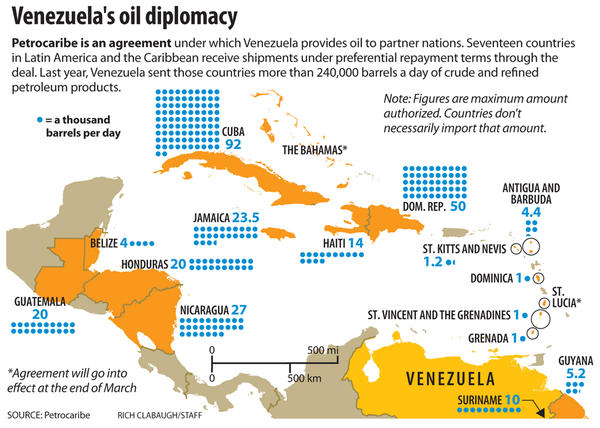
PetroCaribe is an oil alliance with Venezuela which allows the purchase of oil on conditions of preferential payment. The alliance was launched on 29 June 2005 in Puerto La Cruz, Venezuela. In 2013 PetroCaribe agreed to links with the Bolivarian Alliance for the Americas (ALBA), and to go beyond oil and promote economic cooperation. It is now considered an “economic zone”.

The PetroCaribe agreement was initiated with the aim of having solidarity with other countries in accordance with ALBA. The payment system allows for purchase of oil on market value for 5%-50% up front with a grace period of one to two years; the remainder can be paid through a 17-25 year financing agreement with 1% interest if oil prices are above US$40 per barrel. The agreement builds on payment terms from the San Jose Agreement and the Caracas Energy Accord. Energy and Petroleum Minister and President of PDVSA Rafael Ramírez said of the deal that it seeks to cut out the middleman in such transactions: “We’re not talking about discounts…We’re talking about financial facilities, direct deliveries of products, [and] infrastructure.”

There are a total of 17 members, plus Venezuela; 12 of the members are from the 15 member CariCom (excluding, Barbados, Montserrat and Trinidad and Tobago). At the first summit, 14 countries joined the alliance. These were: Antigua and Barbuda, the Bahamas, Belize, Cuba, Dominica, Dominican Republic, Grenada, Guyana, Jamaica, St Lucia, St Kitts and Nevis, Saint Vincent and the Grenadines, Suriname and Venezuela. At the third summit, Haití and Nicaragua joined the union. Guatemala joined in July 2008 but left the organization in November 2013 stating that Venezuela had not provided them with the ultra-low financing rates that they had been promised.

Haiti finally joined the alliance in April 2006. Honduras became the 17th member of the alliance in December 2007, under President Manuel Zelaya. Belize set up the Belize Petroleum Energy Company to coordinate for the project.

Appendix – ALBA
The Bolivarian Alliance for the Americas (Spanish – ALBA: Alianza Bolivariana para los Pueblos de Nuestra América) is an intergovernmental organization based on the idea of the social, political and economic integration of the countries of Latin America and the Caribbean. The name “Bolivarian” refers to the ideology of Simón Bolívar, the 19th-century South American independence leader born in Caracas who wanted the continent to unite as a single “Great Nation.”

ALBA is associated with socialist and social democratic governments wishing to consolidate regional economic integration based on a vision of social welfare, bartering and mutual economic aid. ALBA nations may conduct trade using a virtual regional currency known as the SUCRE. Venezuela and Ecuador made the first bilateral trade deal using the Sucre, instead of the US dollar, on July 6, 2010.

ALBA members include Antigua & Barbuda, Bolivia, Cuba, Dominica, Ecuador, Nicaragua, Saint Vincent & the Grenadines, Venezuela, Saint Lucia, and Suriname.

Appendix – SUCRE
A regional currency to be used in commercial exchanges between members of the regional ALBA trade bloc, which was created as an alternative to the [proposed-but-never-ratified] Free Trade Agreement of the Americas (FTAA). The SUCRE is intended to replace the US dollar as a medium of exchange in order to decrease US control of Latin American economies and to increase stability of regional markets.

The acronym is in Spanish, as: Sistema Único de Compensación Regional. In English, this means: Unified System for Regional Compensation

International trade between member states in SUCRE exceeded $850 million in 2013.

Eventually, the plan is for the SUCRE to become a hard currency.

Appendix – Referenced Sources:

• “PetroCaribe Meets in Venezuela, Links with ALBA”. Retrieved 6 April 2013 from: http://venezuelanalysis.com/news/9087.

• “ALBA Summit Ratifies Regional Currency, Prepares for Trinidad”. Michael Fox, Venezuela Analysis. Retrieved 17 April 2009 from: http://venezuelanalysis.com/news/4373

• Wikipedia treatment for subject PetroCaribe. Retrieved April 7, 2014 from: http://en.wikipedia.org/wiki/Petrocaribe

• Wikipedia treatment for subject ALBA. Retrieved April 7, 2014 from: http://en.wikipedia.org/wiki/ALBA

• Wikipedia treatment for subject SUCRE. Retrieved April 7, 2014 from: http://en.wikipedia.org/wiki/SUCRE

Share this post:
, , , , , ,

CXC and UK publisher hosting CCSLC workshops in Barbados

Go Lean Commentary

images“Fattening frogs for snakes” – Jamaican expression.

As a region the Caribbean have invested much time, talents and treasuries for the education of our youth. Hooray for our efforts! This is an honorable commitment and those laboring in this profession, as depicted in the foregoing news article, should be duly recognized and applauded.

But…

… “do what we’ve always done, and we get what we always got” – Old Adage.

For far too often, the Caribbean has been grooming and preparing their young people to contribute and enhance the society… of other countries. And thus the intersection of the two expressions above, and this imagery: “sacrificing our babies on the altar of global trade”. See a related news story here:

BRIDGETOWN, Barbados — Over 50 secondary school teachers in Barbados stand to benefit from a series of workshops to be hosted by the Caribbean Examinations Council (CXC) and UK-based publisher Nelson Thornes on 7 and 8 April 2014 in Barbados.

The four workshops will be hosted over the two days and will focus on English and mathematics for the Caribbean Certificate of Secondary Level Competence (CCSLC).

The workshops will be facilitated by Novelette McLean-Francis, senior education officer responsible for linguistics in the ministry of education, Jamaica, and a published author; and Grace Smith, a Barbadian educator and one of the authors of the CCSLC mathematics text.

Two workshops will be hosted each day and teachers from the 22 public secondary schools in Barbados are expected to attend.

Registrar Dr. Didacus Jules stated, “These CCSLC workshops are very timely as over the next four weeks CXC is working with the United Kingdom National Academic Recognition Information Centre (UK NARIC) to benchmark CCSLC with similar qualifications internationally.”

“Ensuring that teachers are well equipped to deliver the CCSLC programme effectively will impact positively on students’ performance and on the benchmarking exercise,” Jules noted.

“Nelson Thornes, part of Oxford University Press, is delighted to be running the workshops for teachers across Barbados for the CCSLC qualification,” Sarah Townsend, Caribbean marketing campaign manager with Oxford University Press Education Division said. “Our aim is to provide a full understanding of the syllabus and what is expected in classrooms. Alongside this, teachers will gain valuable knowledge of how the texts came together and the authors’ experience of being involved in the teaching of CCSLC.”

“Working in conjunction with CXC and the ministry of education, we have invited teachers to attend one of the sessions for either mathematics or English, and we hope to be able to fully support them in their on-going quest of teaching CCSLC English and mathematics,” Townsend explained.

The Caribbean Certificate of Secondary Level Competence was introduced to schools in Barbados in September 2013.
Source: Caribbean News Now Online News Site; posted April 3, 2014; retrieved April 4, 2014 from: http://www.caribbeannewsnow.com/barbados.php?news_id=20558&start=0&category_id=26

CU Blog - CXC and UK publisher hosting CCSLC workshops in Barbados - Photo 2This subject matter aligns with the prime directive of the book Go Lean … Caribbean to re-boot the economic engines of the Caribbean to assuage the human flight problem that has afflicted so many Caribbean communities, for more than 50 years. The book, serving as a roadmap for the introduction and implementation of the Caribbean Union Trade Federation (CU) posits that education has been a failure for this region. Almost everywhere else education dynamics elevate a society, raising GDP by 1 percent for every additional (aggregate) year of schooling. But this is not true for the Caribbean; even though the educated population have fostered their abilities there, they have “taken their talents to South Beach”; and South Bronx; and South Toronto; and South London; and the South Paris, etc.

So education and economics must be intertwined. This is explored in full details in the book. This roadmap provides turn-by-turn directions for escalating educational resources (and results) in the region. As a planning tool, the roadmap commences with a Declaration of Interdependence, pronouncing regional integration (Page 12) as the approach to elevate educational opportunities:

xxi. Whereas the preparation of our labor force can foster opportunities and dictate economic progress for current and future generations, the Federation must ensure that educational and job training opportunities are fully optimized for all residents of all member-states, with no partiality towards any gender or ethnic group. The Federation must recognize and facilitate excellence in many different fields of endeavor, including sciences, languages, arts, music and sports. This responsibility should be executed without incurring the risks of further human flight, as has been the past history.

This optimization will apply to all levels of instructions: primary, secondary and tertiary.

The strategy is to confederate all the 30 member-states of the Caribbean, despite their language and legacy, into an integrated “single market”. Tactically, this will allow a separation-of-powers between the member-states governments (including their education proxies) and federal agencies, allowing the type of third party regional oversight as identified in the foregoing article, with entities like the United Kingdom National Academic Recognition Information Centre and Oxford University Press. Notice the leanings of those organizations: British. Instead, the Go Lean roadmap advocates the multi-lingual educational guidance for English, Dutch, French and Spanish all under CU federal administration.

Under this roadmap, the CariCom-backed Caribbean Examinations Council (CXC) would be integrated into a CU Cabinet Department of Education; this is detailed in the book (Page 85). Most importantly the roadmap recognizes that there are the costs dynamics for education, so the funding mechanisms are fully explored in 10 Ways to Pay for Change (Page 101).

Why is the expectation for education success so different in Go Lean…Caribbean compared to the status quo? Why haven’t the strategies and tactics described in this roadmap been employed by the member-states already?

Quite simply, the book posits that the problems for the Caribbean are too big for any one member-state to solve alone; there must be a regional solution! The problem of human flight/brain drain is described as resulting from “push-and-pull” factors. So the required solution is more than just a few bright ideas, taught in a workshop; there is the need for a new eco-system.

Go Lean … Caribbean introduces that eco-system, as a roadmap to make the Caribbean a better place to live, work, learn and play.

No more “fattening frogs for snakes”!

🙂

Download the book Go Lean … Caribbean – now!

Share this post:
, , , ,
[Top]

CARICOM Chairman to deliver address on reparations

Go Lean Commentary

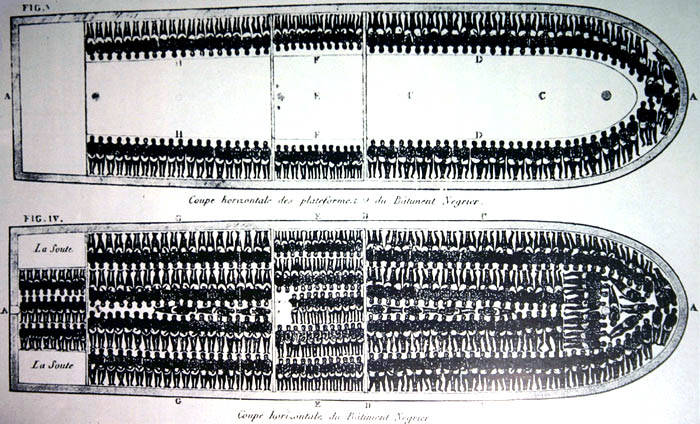
Slave ShipThe book Go Lean … Caribbean aligns with one objective depicted in the below news article: to reconcile the flawed economic policies of the past and lean-in for the optimization of the Caribbean future. Beyond this stance, the book deviates from these advocates calling for reparations from the colonial powers that participated in the slave trade, slavery or colonial suppression of the indigenous people.

Reparations stress at its root, a sense of entitlement to other people’s resources. The book, on the other hand, serves as a roadmap for the regional integration of the 42 million people and 30 member states of the Caribbean with the implementation of the Caribbean Union Trade Federation (CU). This roadmap advocates the reconciliation of the economic and security engines to grow the region’s economy from $378 Billion (2010) to $800 Billion in a 5 year time span.

NEW YORK, United States, Friday March 28, 2014, CMC – Chairman of the Caribbean Community (CARICOM) grouping, Prime Minister Dr. Ralph Gonsalves of St. Vincent and the Grenadines will address an international forum in reparations in the United States next month.

Gonsalves will deliver the feature address at the April 19 forum titled “Revitalizing the Reparations Movement,” organized by the New York-based Institute of the Black World 21st Century (IBW).

IBW described Gonsalves as “one of the leading voices in the Americas demanding that the former European colonial powers pay reparations to Caribbean and South American countries for centuries of African enslavement, native genocide and colonial exploitation”.

The forum will be held in collaboration with the Center for Inner City Studies and the Samuel DeWitt Proctor Conference.

IBW said among the specially invited guests will be Detroit’s congressman John Conyers, Sr., dean of the US Congressional Black Caucus, and sponsor of HR-40, the Reparations Study Bill and Louis Farrakhan, leader of the Nation of Islam.

“A primary goal of the forum is to revitalize the reparations movement in the USA by revisiting the Durban Resolution on the Trans-Atlantic Slave Trade, presenting an update on HR-40 and examining the status of CARICOM’s reparations initiative,” IBW said.

“We are delighted and honored to have Prime Minister Gonsalves keynote this critical forum on reparations, a subject of fundamental historical justice that is near and dear to the hearts of Black people around the world,” said IBW’s president Dr. Ron Daniels.

Director of Chicago’s Inner City Studies, Dr. Conrad Worrill, said “our ancestors will be pleased that the reparations movement is being re-energized from the Caribbean islands”.

“In demanding reparations, CARICOM is vindicating the vestiges of the Trans-Atlantic slave trade,” he added.

CARICOM leaders at their inter-sessional summit in St, Vincent and the Grenadines earlier this month discussed the reparation issue and hope to have a meeting with European leaders in June.

The leaders unanimously adopted a 10-point plan that would seek a formal apology for slavery; debt cancellation from former colonizers, such as Britain,

France, Spain and the Netherlands; and reparation payments to repair the persisting “psychological trauma” from the days of plantation slavery.

The Go Lean roadmap commences with this ideal embedded in the Declaration of Interdependence, pronouncing as follows, (Page 10):

As the colonial history of our region was initiated to create economic expansion opportunities for our previous imperial masters, the structures of government instituted in their wake have not fostered the best systems for prosperity of the indigenous people. Despite this past, we thrust our energies only to the future, in adapting the best practices and successes of the societies of these previous imperial masters and recognizing the positive spirit of their intent and vow to learn from their past accomplishments and mistakes so as to optimize the opportunities for our own citizenry to create a more perfect bond of union.

The subject matter of reparation is polarizing, based on assumptions that the Caribbean is comprised of mostly African or Ameri-Indian peoples. While many CARICOM states do possess a majority Black population, this is not so within the larger Caribbean, of whom the CU confederates. There are also large populations of European (White) ethnicities, Indian, and Chinese descendants that should also unite.

— UPDATE (Sep 30, 2015) – See VIDEO in the Appendix regarding the UK Prime Minister’s recent visit to Jamaica

There is a benefit, however, that can be garnered from compensatory talks with European nations, that of making “Aid” more empowering. The roadmap details an advocacy on the roles and responsibilities of fostering International Aid (Page 115). So while the political leaders of the CARICOM may be exerting energies to “guilt” these Europeans leaders to “pay up”, the CU Trade Federation will instead work to improve trade and re-boot the economic engines of the region.

It is a known fact that most of the resources of the European powers are tied to the strength of their economies, not the reserves gathered up from centuries of exploiting African slaves and their descendants. The country with the largest reserves is the USA; but their gold in Fort Knox is only estimated at $800 Billion, while their economy is $16 Trillion of GDP output … annually. So reparation is not a winning formula; it assumes some abundant stockpile of savings. This is a flawed logic and strategy. On the other hand, the Caribbean needs to create 2.2 million new jobs; this is only possible with the turn-around strategies as detailed in the roadmap of Go Lean … Caribbean.

So as a policy decision for the economic strategies of the region, the Go Lean book and movement recommends:

    Re-boot – Yes!
    Reparations – No!

Download the free e-Book of Go Lean … Caribbean – now!

———

Appendix VIDEO – Slavery Reparations Dominate David Cameron’s Jamaica Visit – https://youtu.be/al453a8rLy8

Published on Sep 30, 2015 – UK Prime Minister David Cameron’s visit to Jamaica was overshadowed by slavery reparation calls, which he rejected. The legacy of slavery is still ever-present for 14 Caribbean countries calling on their former colonial masters to pay billions in reparations.
Share this post:
, ,
[Top]

Cuba Approves New “Law on Foreign Investment”

Go Lean Commentary

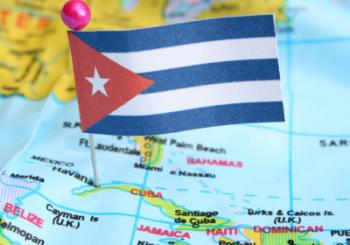
Cuba FlagCuba sera libre!

This has been the “war chant” for many lovers of Cuban heritage, culture and homeland. It’s a reminder that Cuba currently lacks many of the same freedoms so many of its neighbors enjoy. It is a mission of the book Go Lean … Caribbean, to bring change to the Caribbean in general and Cuba in particular, with the implementation of the Caribbean Union Trade Federation (CU). See the relevance in the following news article here:

Title: Cuba Approves New “Law on Foreign Investment”
By: Caribbean Journal Online Magazine

Cuba’s National Assembly has approved a new “Law on Foreign Investment,” the government said Saturday.
In a statement, the government said it would be an “essential instrument in the interest of Cuba to consolidate its economic model and build a prosperous and sustainable socialism.”

The law included a mix of mostly tax incentives, and it could be the latest move in what has been a gradual shift toward liberalizing the country’s economy, although it has come at a decidedly slow pace.

That nominal push kicked off last year, when Raul Castro, announcing plans to retire from politics in 2018, said Cuba needed to update its economic model to achieve a “sustainable and prosperous socialist society, a society less egalitarian, but more fair.”

The vote came at a special meeting convened by Cuba’s state council to discuss regulation; the meeting focused on “the need to attract foreign capital to the sectors of interest to the country,” according to a statement.

Marino Murillo Jorge, vice president of Cuba’s Council of Ministers, said that well-done foreign investment “does not mean giving away the country.”

He said the new model would focus on ensuring not just economic growth but development, with a target growth rate of between five and seven percent.

Retrieved 04/01/2014 from: http://www.caribjournal.com/2014/03/30/cubas-national-assembly-approves-new-law-on-foreign-investment/

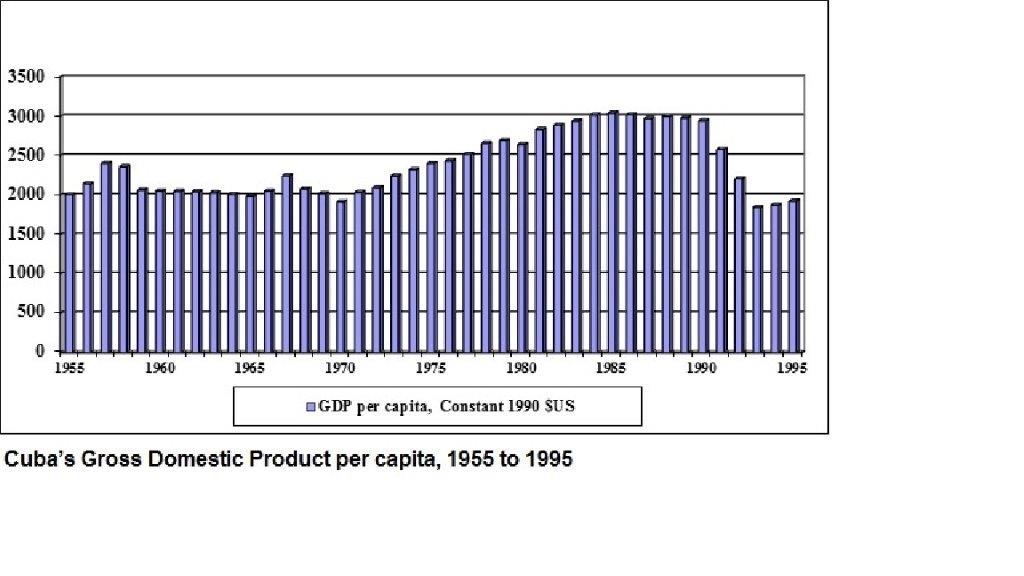
Cuba Blog GDPThe Go Lean roadmap recognizes that Cuba is very significant in the geographic and cultural anatomy of the Caribbean. As of 2010, Cuba possessed 26% of the region’s population (11.2 million out of 42.2 million) and 29% of the gross GDP, with their assumed $111 Billion output. But this is a far cry from where Cuba was 60 years ago, with one study placing Cuba as the #3 economy in Latin America and the Caribbean[a]. Though the “mighty has fallen”, this book posits that the “sleeping giant”, that is the Cuban economy, will awaken. The Go Loan roadmap is the preparation of Cuba’s re-emergence to the world’s economic consciousness. The realities and possibilities of Cuba’s past and future are identified early in the book, embedded in the Declaration of Interdependence, pronouncing a need for reconciliation efforts (Page 11):

xiii. Whereas the legacy of dissensions in many member-states (for example: Haiti and Cuba) will require a concerted effort to integrate the exile community’s repatriation, the Federation must arrange for Reconciliation Commissions to satiate a demand for justice.

The foregoing article confirms that change is on the way! The Cuban Communist regime recognizes that they need foreign investment, a “rightward” shift towards socialism; less egalitarianism and more free market accomplishments. The CU will expedite this process even more for/with Cuba. Where they declare “open arms” for foreign investments, we declare a regional embrace of Caribbean participation (Page 13):

xxiv. Whereas a free market economy can be induced and spurred for continuous progress, the Federation must install the controls to better manage aspects of the economy: jobs, inflation, savings rate, investments and other economic principles. Thereby attracting direct foreign investment because of the stability and vibrancy of our economy.

To the population of Cubans living on the island, we embrace you; “Help” is on the way! We entreat you to lean-in to this plan for confederation with your Caribbean neighbors.

To the Cuban Diaspora living abroad, we embrace you. There is a role for your inclusion in the future of Cuba. We entreat you to also lean-in to this roadmap for change and economic optimization for your beloved Cuba.

To the Cuban legacies, those descendants of Cuba’s past, we encourage you to tune-in and observe how the passions of your heritage will succeed in this new world.

Cuba sera libre!

Download the Book- Go Lean…Caribbean Now!!!

———–

Appendix – Reference:

a. United Nations Development Program, Human Development Report, Various issues, 1990, 1992, New York: Oxford University Press, 1991, 1993.


Share this post:
, , , , , ,
[Top]

Guadeloupe, Martinique, St Maarten Join the ACS

Go Lean Commentary

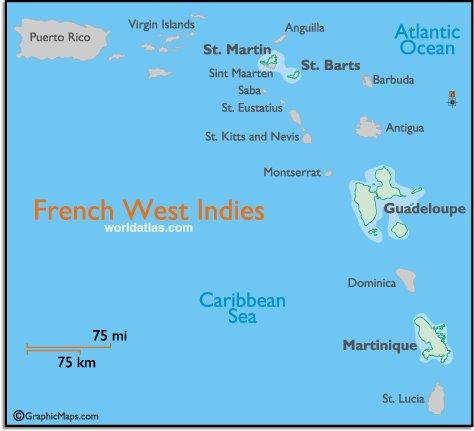
French Caribbean MapThe SFE Foundation, publishers of the book Go Lean … Caribbean welcomes these French Caribbean states into this brotherhood of Caribbean states. We embrace the idea of regional integration, as described in the below article, and push for an even “deeper dive into waters” of confederation, collaboration and convention.

The book Go Lean … Caribbean serves as a roadmap to navigate the integration and consolidation of all 30 member-states into the Caribbean Union Trade Federation (CU). The CU will equally represent these French-speaking Caribbean member-states along with their Dutch, English and Spanish counterparts. The Go Lean roadmap posits that the region is ill-prepared to compete on the world’s stage without this proposed integration. The book declares interdependence among these member-states to form a single market & economy of 42 million people and the potential for an $800 Billion GDP. The end-result will furnish a Caribbean Union that our young people can saddle their dreams to for a consequential future.

For this movement we welcome Guadeloupe, Martinique & St Maarten, and encourage this embrace by other French territories. See news article here:

By the Caribbean Journal staff:
Guadeloupe, Martinique and St Maarten have all joined the Association of Caribbean States (ACS) as associate members.

The three Caribbean territories acceded to the ACS during the regional group’s Ministerial Council meeting in Trinidad last week.

“It is important that we remain a player in the region and that we strengthen the bonds between us and the Nations of the Caribbean,” St Maarten Prime Minister Sarah Wescot-Wiliams said following the move. “One of the things I have been stressing is regarding our responsibilities and roles that we have to take on as a country. One of those is participation in regional and international organizations. Now we have the capacity to meet with the ACS which [gives] us a voice in the region.”

Serge Letchimy, President of Martinique’s Regional Council, said regional integration had been a priority of his tenure, with a view toward “anchoring Martinique in its geographical environment.”

The territories’ accession to the ACS was first announced [at the outset of this 19th Ordinary Meeting of the Ministerial Council].

Martinique and Guadeloupe’s relationship with the sovereign territories of the Caribbean, and how it should develop, continues to be a question for the region.

Last year, a report recommended that Martinique and Guadeloupe integrate economically with the Organization of Eastern Caribbean States – (www.caribjournal.com/2013/04/08/report-urges-oecs-economic-integration-for-martinique-guadeloupe/).

Source:  Caribbean Journal Online News Source; retrieved 02/21/2014 from: http://www.caribjournal.com/2014/02/21/guadeloupe-martinique-st-maarten-join-association-of-caribbean-states/

The Caribbean needs all hands on deck for the region’s societal elevation goals. Consider these organizational dynamics of the ACS and the OECS:

ACS

The Association of Caribbean States (ACS) is a union of nations centered on the Caribbean Basin. It was formed with the aim of promoting consultation, cooperation, and concerted action among all the countries of the Caribbean. The primary purpose of the ACS is to develop greater trade between the nations, enhance transportation, develop sustainable tourism, and facilitate greater and more effective responses to local natural disasters – Wikipedia.com.

It comprises twenty-five member states and four associate members. The convention establishing the ACS was signed on July 24, 1994 in Cartagena de Indias, Colombia. The secretariat of the organization is located in Port of Spain, Trinidad and Tobago.

Antigua & Barbuda Cuba Guyana Panama Venezuela
Bahamas Dominica Haiti St. Kitts & Nevis Aruba
Barbados Dominican Republic Honduras St. Lucia Curaçao
Belize El Salvador Jamaica St. Vincent & Grenadines France
Colombia Grenada Mexico Suriname Turks & Caicos Islands
Costa Rica Guatemala Nicaragua Trinidad and Tobago

Caribbean Sea Agenda
One agenda adopted by the ACS has been an attempt to secure the designation of the Caribbean Sea as a special zone in the context of sustainable development; it is pushing for the UN to consider the Caribbean Sea as an invaluable asset that is worth protecting and treasuring. The organization has sought to form a coalition among member states to devise a United Nations General Assembly resolution to ban the transshipment of nuclear materials through the Caribbean Sea and the Panama Canal.

OECS

The Organization of Eastern Caribbean States (OECS), created in 1981, is an inter-governmental organization dedicated to economic harmonization and integration, protection of human and legal rights, and the encouragement of good governance between the countries/dependencies of the Eastern Caribbean states of Antigua & Barbuda, Dominica, Grenada, Montserrat, St. Kitts & Nevis, St. Lucia and St. Vincent & Grenadines. Anguilla and the British Virgin Islands are associate member states.
Source: Wikipedia.com.

The Go Lean roadmap aligns with the ACS and OECS agenda – all hands on deck – with the implementation plan of an Exclusive Economic Zone for the Caribbean Sea. This plan is therefore conceivable,believable and achievable. 🙂

Download the book Go Lean … Caribbean – now!

Share this post:
, , , ,
[Top]

Connery says Scottish independence a chance ‘too good to miss’

Go Lean Commentary

imgresA big star in the world of movies is asking for consideration in an area outside his sphere of influence: independence of his homeland. We have seen this movie before; same script, different cast!

Sir Sean Connery’s plea is similar to many other prominent people that had expatriated to a different country, awaiting more favorable conditions in their beloved homeland. (Charlize Theron from South America, Wyclif Jean from Haiti and Oscar De La Renta from the Dominican Republic). This is also the fate of so many of the Caribbean Diaspora. These ones love their country, but live abroad; they want conditions to be different (better) in their homelands to consider any repatriation.

London (AFP)

James Bond star Sean Connery urged his fellow Scots on Sunday to vote for independence in their referendum later this year, saying it was an opportunity “too good to miss”.

The 83-year-old actor, one of the most high-profile backers of the Scottish National Party’s campaign for a ‘yes’ vote in September, said independence would raise Scotland’s profile.

This could encourage more investment in the Scottish film sector and lead to the “international promotion of Scotland as an iconic location”, Connery wrote in the Sun on Sunday newspaper.

Connery, the star of 007 movies such as “Goldfinger” and “Dr No”, was born in Scotland but has not lived there for years, instead spending his time in Spain, the Bahamas and New York.

In 2003, he said he would not return until Scotland broke with the rest of the United Kingdom.

“I fully respect the choice facing Scotland in September is a matter for the people who choose to work and live there — that’s only right,” said the actor.

“But as a Scot with a lifelong love of Scotland and the arts, I believe the opportunity of independence is too good to miss.”

He added: “A Yes vote will capture the world’s attention. There will be a renewed focus on our culture and politics, giving us an unparalleled opportunity to promote our heritage and creative excellence.”

A YouGov poll published on Saturday found 53 percent of Scots want to stay part of the United Kingdom, compared to 35 percent who think Scotland should be an independent country.

http://news.yahoo.com/connery-says-scottish-independence-chance-too-good-miss-003358875.html

Yes, the plea of Sir Connery is parallel and similar to that of the Go Lean … Caribbean book, a roadmap for the introduction and implementation of the Caribbean Union Trade Federation (CU), a technocratic federal government to administer and optimize the economic, security, and governing engines of the 30 member Caribbean states. The same as Sir Connery pledged to not return until Scotland breaks with the UK, many Caribbean Diaspora have pledged not to return (for permanent residency) until their homeland breaks from their current ineffectual systems of governance, failing economic engines and inadequate security provisions.

There is a lot of history associated with both issues: Scotland and the CU. Sir Connery is advocating for Scotland’s independence. This has been a familiar call for centuries. This is life imitating art and art imitating life. The call for Scottish independence was the theme of the 1995 movie Braveheart, about Scottish Revolutionary William Wallace (played by Academiy Award winner Mel Gibson). In addition, the 2006 movie “The Last King of Scotland”, had that goal as a secondary theme. That despite the many failed attempts of Scotland to wrest independence from England, the country of Uganda under dictator Idi Amin (played by Academy Award winner Forrest Whitaker) was successful at gaining their independence from the same imperial masters. A line in that movie stated “maybe Amin should become King of Scotland because he knows how to wrestle independence from England”. Now, today, another Hollywood icon champions the same plea and revolutionary quest for his beloved Scotland.

Scotland has been “rocked” by the recent global financial crisis; they posit that London’s oversight of their economic interest has been flawed and shortsighted. But their demand today is different than for prior attempts in prior centuries. They now want a democratic solution, a referendum to secede Scotland from the United Kingdom. Then Scotland would join and become the 29th member-state of the European Union (EU) and 19th member of the Eurozone Monetary Union. Aligning with the success of the EU would make this petition feasible and logical. According to recent polling, so far the referendum is not favored.

There are a lot of lessons in this issue for the Caribbean. Despite Scotland’s demand for independence, their plan is not to “go at it alone, rather immediately confederate with the EU. This makes the referendum a demand for interdependence with the rest of Europe. The people of Scotland feel that aligning with the EU and submitting to the technocratic European Central Bank would be preferred to the failed economic and monetary policies from London. The underlying spirit behind this Scottish Independence movement is a quest to “appoint new guards” to make their homeland a better place to live, work and play.

The Caribbean’s quest for interdependence is similar; with this statement in the opening Declaration of Interdependence at the outset of the Go Lean book (Page 12):

xi. Whereas all men are entitled to the benefits of good governance in a free society, “new guards” must be enacted to dissuade the emergence of incompetence, corruption, nepotism and cronyism at the peril of the people’s best interest. The Federation must guarantee the executions of a social contract between government and the governed.

The Go Lean roadmap posits that the global financial crisis lingers to this day and trumpets that “a crisis is a terrible thing to waste”. Just like Sir Connery’s egging for Scotland, we in the Caribbean want our homeland to be a better place to live, work and play. The best hope for this outcome though is to confederate into the CU, an EU model, whereby real solutions can be forged, availing benefits like creating 2.2 million jobs across the integrated market of 42 million people and $800 Billion of GDP.

🙂

Download the book Go Lean … Caribbean – now!


Share this post:
,
[Top]

Bahamas and China’s New Visa Agreement

Go Lean Commentary

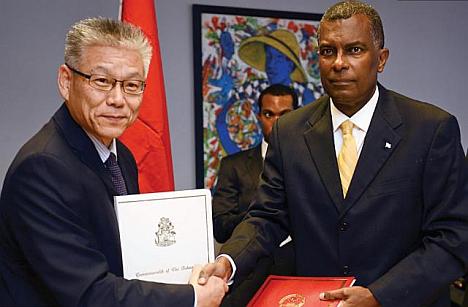
china_bahamas_visasSo the Bahamas has signed a new mutual visa exemption with China. At the SFE Foundation, we applaud the foreign policy initiative of the Bahamas Government and immediately ask some follow-up questions, as follows:

  • When Chinese tourists come to the Bahamas, will we be expecting them to bring currency in Yuan, Euros, Dollars, etc.?
  • Will there ever be a need for Chinese tourists to speak with the Bahamian population and are there any sorts of translation services available?
  • Why just the Bahamas? Why not the whole Caribbean region?
  • Why only China? There are other countries (Asian, Middle Eastern, European) where these types of agreements can benefit the region.

These questions show that opening new markets to different parts of the world are froth with challenges. But these are challenges that we must take on. In general, growth within the Caribbean for our traditional tourism target market, North America, has been flat or only slightly up; notwithstanding the years of decline during the Great Recession. We are only now approaching the type of numbers from before the 2008 financial crisis. This crisis taught us, or should have taught us, that we have to be more proactive and creative in managing our economic drivers. If we do what we’ve always done, then we would have learned nothing from the crisis. Perish that thought! So hooray for the efforts discussed in the foregoing article, but let’s not stop there!

By: The Caribbean Journal Staff

The new mutual visa exemption agreement between the Bahamas and China has officially taken effect.

The agreement, which was signed in December 2013, allows Bahamian and Chinese citizens to travel to one another’s country visa-free for up to 30 days. It does not allow the holder to engage in gainful employment, to study or reside in that country, however.

The move could be a boost for Chinese tourism to the Bahamas, particularly in light of the imminent opening of the China-funded Baha Mar resort project in New Providence at the end of this year [(2014)].

“While this Agreement will allow visa-free travel, visitors are still expected to meet general entry requirements when being processed by immigration authorities,” the Bahamian government said in a release. “Travelers are required to present a passport with valid relevant visas for transit States, and a round-trip ticket for entry and exit. Those that do not meet general entry requirements will be denied entry at any immigration check point.”

Those who wish to remain in the Bahamas for more than 30 days will still need a visa.

Source: http://www.caribjournal.com/2014/02/15/bahamas-china-visa-exemption-agreement-officially-begins/

This commentary harmonizes with the missions of the Caribbean Union Trade Federation as described in the book Go Lean … Caribbean. The book declares that “a crisis is a terrible thing to waste”, quoting American Economist Paul Romer. The book provides strategic, tactical and operational plans to expand and exploit the tourism outreach for Asia, specifically and the whole world in general. The book emphatically details 10-Step advocacies to enhance regional tourism, impact events, promote fairgrounds, improve for cruise tourism and to better market the specific location of Southern California. For regional economics, the book details how to better manage Foreign Exchange and to foster empowering immigration.

Lastly, the Go Lean roadmap calls for the establishment of Trade Mission Offices in far-flung power cities in the world so as to enable trade expansion with different countries, including the Far East. The end result of this roadmap is growth in regional GDP to $800 Billion, creation of 2.2 million new jobs (30,000 specifically in tourism-related industries) and the manifestation of a plan to make the Caribbean a better place to live, work and play.

Download the book Go Lean … Caribbean – Now!

Share this post:
,
[Top]

10 Things We Want from the US and 10 Things We Don’t Want from the US

Go Lean Commentary

There are things we, in the Caribbean want, and things we do not want from the United States of America. Here is a laundry list of the Good and the Bad and how the roadmap to elevate Caribbean society, the book Go Lean…Caribbean, describes how the lessons will be applied in the implementation of the Caribbean Union Trade Federation (CU):

American Imports

What we want

10 GOOD Things We Want from the US
10 BAD Things We Don’t Want from the US
1
Free Market – In pursuit of the American Dream
100 years ago there was great debate in terms of the best governmental system for mankind: communism or capitalism. After 75 more years, that debate was over! Communism had proven ineffectual. Free Market capitalism as exercised in the US, in pursuit of the American Dream to elevate one’s standing in life, is what the Caribbean region needs, wants and deserves.
The Go Lean roadmap extols a Caribbean dream; that in addition to synchronizes with the American version also has additional advocacies like repatriation to the islands.
Strategic Interest Prioritization – Or Lack There of
The US is now the only remaining super power, but they only exert their “muscles” when their own strategic interests are involved. So after the promise of “never again”, after the Nazi Holocaust, the world found the US “sitting idle” as other genocides/ethnic cleansings transpired, as in Cambodia, Bosnia and Rwanda. Why this inaction? Simple: there was no strategic US interest.
The Go Lean roadmap advocates that despite the two US Territories (Puerto Rico & USVI), the Caribbean must forge law-and-order and plan/allow for its own priorities.
2
Tourists
Tourism is still the primary economic driver for the Caribbean region. While there is a lot of competition in the domestic US and internationally, the Caribbean continues to make the case that its region is the best tourist destination in the world. The region wants to continue to appeal to Americans of all demographic persuasions to come visit the islands for stay-overs (land-based hotels) and/or cruise ships. We want to forge vacation options and traffic for the upper, middle and lower classes of American society.
The CU forges plans, advocacies and re-boots to further enhance the Caribbean tourism product array.
Partisan Politics
In 2013, the US Government almost came to a grinding halt on two occasions; due to an impasse in raising the sovereign debt limit and a failure to pass a budget by the end of the fiscal year. The reason for these failures in delivering governmental obligations was partisan politics. Factions in the Republican Party were determined not to give in to the continuation of certain Democratic Party policies. These polar oppositions preferred to default on debt payments or shut down the government than to compromise from their positions.
The Go Lean roadmap dictates certain automatic provisions (budgets) to assuage legislative deadlocks.
3
Capital
There are many Financial Centers around the world (London, Zurich, Hong Kong, etc.) but none with the liquidity like Wall Street. They have the capital the Caribbean needs for Direct Foreign Investments. After the 2008 Financial Crisis, the US Federal Reserve Banks have maintained a policy of flooding the money supply to keep the cost of capital (borrowing) low.
The Go Lean roadmap calls for the emergence of the Caribbean Dollar (C$) managed by a technocratic Caribbean Central Bank. This structure allows for more liquidity in the existing stock exchanges in the regions. A strong regional currency will also mitigate primary cause for prior emigration.
Quantitative Easing – De-Americanize World Money
It’s a standard accepted practice not to overstate the money supply and that this practice results in de-valuing currencies. But the US feels that this policy does not apply to them. To offset the 2008 Credit Crunch, the Federal Reserve instituted a policy of Quantitative Easing and set the Discount Rate to near zero so that banks could get access to almost-free Central Bank money. The end result now is that the Euro, which started in 1999 pegged E$1.17-to-1 with the US dollar, now trades for at E$1.36.
Imagine a savings account established in 1999 losing 19% of value just sitting idle. The C$ plan is modeled on the Euro.
4
Pax Americana
Pax Americana is not a “de jure” policy of the US government, but rather a “de facto” policy. The spirit of the Monroe Doctrine is still imbued in US foreign policy. This implies that any European aggression in the Americas is an affront to the US. Practically, the US strong military ensures peace in the region. There is no need for massive military output by Caribbean states.
The CU roadmap includes Cuba into the brotherhood of a Caribbean Confederacy. Previous expressions of Pax Americana have resulted in a trade embargo for Cuba.
2nd Amendment
The “right to bear arms” has a personal application beyond the country’s entitlement to maintain a militia. This “right” has been interpreted in a manner in which any normal “man” can get possession of guns and other armament. This proliferation of guns in society results in the highest rate of gun violence in the world, even an unconscionable rate of school shootings.
The Go Lean roadmap purports that this status has also caused discord – a gross abuse and availability of illegal guns – in bordering communities of Mexico, and Caribbean states of the Bahamas, and the DR. This propels our gun-related crime.
5
Intelligence Gathering
After the September 11 Terrorist attacks the US ramped up its deployment of Intelligence Gathering capabilities. These systems allow for more predictive modeling and better tracking of suspects and threats.
The CU maintains the example of the investigation of the April 2013 Boston Marathon Bombings region – arrests were made in 48 hours – is a successful model to copy.
Privacy Violations
In the name of security, the US surveillance apparatus has been heavy-handed. They have even eavesdropped on phone calls for foreign heads of states visiting the UN, without search warrants from official courts. (One report and confession found the US spying on the Bahamas). The average law-abiding citizen should not have to worry about an over-reaching security watch dog.
The CU envisions a balanced Intelligence Gathering goal.
6
Crime Watch Initiatives
“If you see something, say something” – is the mantra of the crime and terror awareness movement in the US. This involves the verticals from crime watch to public CATV.
The Go Lean roadmap provides comprehensive anti-crime and anti-terror measures, both the systems, personnel and funding to effectuate this change.
Criminal Organizations – RECO
The US is the single largest economy in the world. As a result of this success, “bad actors” have also emerged.
The CU recognizes that the history of US organized criminal organizations running rampart in Cuba is a risk to be mitigated for future Caribbean societies. The roadmap is to monitor and assuage all enterprise criminal activities.
American Imports (cont’d)
10 Things We Want from the US
10 Things We Don’t Want from the US
7
Melting Pot Societies
The Latin term “E pluribus unum” or “Out of many, one”is a phrase on the official Seal of the United States. Though this was never codified by law, this phrase is a de facto motto of the US. This corresponds with actual history as immigration was always a constant feature. The US always benefited with empowering immigrants impacting the economic engines of the country. There are many industries where the “best of the best” try to work their way to the US; consider the broad examples of Wall Street or Hollywood and the specific example of German aero-space engineer Wernher von Braun, who inspired & aided US Space efforts and the quest for a man on the Moon.
The CU represent 30 member-states and 4 languages so any hope for a successful union depends of successful “melting pots” in our region.
Discrimination of Immigrants
Hazing and discrimination seem to have been a rite of passage for every immigrant group’s experience as they have emerged in the US. This was the experience for the Irish, Italian, Jewish, Puerto Rico, Cuban, and other communities, no matter the time frame (1800’s, 1900’s and 2000’s). Why should hazing be experienced, when there is economic value to immigrant populations?
The CU posits that empowering immigrants should be invited and accommodated; the local communities should plan and facilitate the impact of changes: language translations, Diaspora retailing and cultural sensitivity training. There is also the inevitable refugee inclusion that all successful societies must allow for, though not planned nor invited. These can be distributed among the region.
8
Family Holiday Re-unification
The busiest travel day of the year in the US is the Wednesday before Thanksgiving; the 2nd busiest day is the following Sunday. Obviously American families place a high priority on coming together for holiday festivities. Though not as extreme, this pattern is repeated for other holidays like Christmas, Easter and family reunions.
The CU advocates “push and pull” factors of family reunification throughout the Go Lean roadmap. Plus, the transportation solutions enable more easy access.
Family Abandonment
Senior Living Facilities are a big industry in the US. This is due to the family habit of abandoning elderly parents to the care of professional strangers. The Caribbean way traditionally is to house their Senior Citizens with families, whether the economics apply or not.
The CU has a prime directive to encourage repatriation back to the Caribbean homeland and assuage societal abandonment. Frankly, senior citizens should avoid the cold climates of North American and EU Diaspora cities.
9
Media Arts – Film, TV, Stage, Music, e-Games
While prospects for many traditional 20th Century industries (factories, auto, steel, mining) have declined in the US due to the competitive imbalance of globalization, media continues to flourish. In 2011 the global box office amassed $32.6 billion in revenues. Hollywood continues to be a growing and impactful economic engine. Broadway saw $11.2 billion that year, while music and other media continued to enjoy strong numbers. US Media Arts have become more than just past-time, it’s a sustainable lifestyle.
The CU roadmap posits that art and music can drive big economic returns as long as the complete eco-system is there to identify, foster & compensate stakeholders.
Cultural Neutralizations – Domination of airwaves
There are other cultures than just American. If not abated, the American media will dominate and neutralize the airwaves. Caribbean culture should be preserved and promoted. With American media comes American values, and these may not always advocate what’s best for Caribbean life. Consider consumerism, proliferation of guns and drugs, societal abandonment, language assimilation and other social ills.
The CU roadmap makes comparison to cultural protectionism as employed in France versus the free market approach in the US. While France doesn’t lead many of the world’s media output, they have maintained their unique culture. This propels their tourism – 25 million visitors to Paris.
10
Sports Professionalism
The American leagues for Baseball, Football, Basketball, Hockey, Soccer and even their Olympic models inspire athletes that they can earn a living based on their talents, disciplines and abilities. There are many levels for the American sports world, so even if money is not the object, other benefits, like educational scholarships and civic pride, can often provide positive impacts on society. The quadrennial Olympics are more successful today because of the Americanization of the business models of these events; which is heavy on media, sponsorships and free-market ticket sales.
The Go Lean roadmap includes a comprehensive sport promotion and administration apparatus within the CU Cabinet level State Department.
Win at all costs ethic
There is a worldwide movement to curb the sport world of performance enhancing drugs. Many of the recent advances in the “outlaw” industry have emerged from the US (i.e. BALCO, HGH, PEDS, etc.). This scourge is part of the “win at all costs” ethos that American sports seem to foster. This attitude also relates to the treatment of the retired athletes; this refers to the abandonment of expended athletes, once they are perceived to offer no further contributions.
The Go Lean roadmap calls for rebooting sports administration, including the establishment of an Anti-Doping agency within the CU Trade Federation to elevate regulation and enforcement to the federal level. Other benefits of the regional focus will include better oversight of sports academies, agents and leagues.

A large number of Caribbean people live abroad, in the Diaspora. They live in places like the US, Canada, the UK and Europe. This commentary is Part 1 of 4 in a series examining the destinations of this Caribbean Diaspora. The full series is as follows:

  1. 10 Things We Want from the US and 10 Things We Do Not Want
  2. 10 Things We Want from Canada and 10 Things We Do Not Want
  3. 10 Things We Want from the UK and 10 Things We Do Not Want
  4. 10 Things We Want from Europe and 10 Things We Do Not Want

Everyone is urged to lean-in to the roadmap to introduce and implement the Caribbean Union Trade Federation (CU).

Download the book Go Lean … Caribbean – now!

Share this post:
, , , , ,
[Top]