Go Lean Commentary
Thanks to the COVID-19 Global Pandemic, the tourism product in the Caribbean “is shot”. We must now look at an alternative. Any alternative?!
What else do we have to offer?
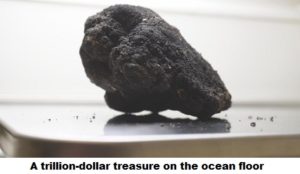 How about minerals?
Let’s get serious and “dig deep” as we take a hard look into these prospects.
Get it?! Minerals … dig … prospects, as in Gold Prospectors. 🙂
The movement behind the 2013 book Go Lean…Caribbean engages in a Teaching Series every month to address issues germane to Caribbean life-culture, plus to message how to reform and transform the Caribbean economic engines. This month, due to COVID-19 lockdowns, this writer is quarantined in Nassau, Bahamas.
Here, during the peak of the Winter Tourist season. The problem though, is that there are NO Tourists this year.
The cupboards are bare!
Heaven help us… if we plan to build a future economy on this foundation.
The Go Lean movement wants to consider other types of economic activities to the Caribbean landscape; we urgently want to investigate the alternatives and there is a lot of talk about Mineral Extraction.
How viable is it?
Firstly, we need to accept, that despite the present impasse, the region’s economic driver is still tourism, or will be again after this pandemic is assuaged. Tourism and Mineral Extractions are incompatible activities.
Picture a spill from an oil well damaging the beaches at a resort.
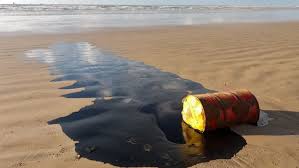
Thus, there is the need for cautions in any considerations we make. Our challenge will be to embrace the commerce of Mineral Extraction for the positives, while avoiding the negatives.
This commentary posits that there are opportunities for the Caribbean to better explore Mineral Extractions, on land and in the seas. This commentary is the first, 1-of-6, for the January 2021 Teaching Series on Mineral Extractions 101. The full series is as follows:
- Mineral Extraction 101 – Raw Materials ==> Finished Goods
- Mineral Extraction 101 – Lessons from History: Jamaica’s Bauxite
- Mineral Extraction 101 – Industrial Reboot – Modern factories – Small footprints
- Mineral Extraction 101 – Commerce of the Seas – Encore
- Mineral Extraction 101 – Restoration after Extraction – Cool Sites
- Mineral Extraction 101 – Sovereign Wealth Fund – Not the Panacea
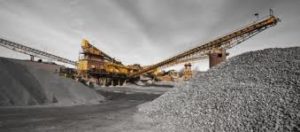
With the quest to investigate the ecosystems of Mineral Extraction, we have to take a “Full 360 View” and look at the past, present and the future.
Question: How far back do we need to look-view-consider? Answer: All the way to 1776.
See this quotation from a previous commentary (June 17, 2015) from the Go Lean movement:
1776 was a very good year…
… not just because the 13 original British colonies declared their independence as the United States of America, but also the publication of the landmark book on Economic Principles, An Inquiry into the Nature and Causes of the Wealth of Nations by Adam Smith, the 18th century Scottish political economics pioneer. The publication is cited as a reference source in the book Go Lean…Caribbean – a roadmap for the introduction and implementation of Caribbean Union Trade Federation (CU) to elevate the economic, security and governing engines of the Caribbean region. A relevant quote from the Go Lean book follows (Page 67):
… usually abbreviated as “The Wealth of Nations“, this book is considered the first modern work of economics, and [Smith] is thusly cited as the “father of modern economics”, even today, and among the most influential thinkers in the field of economics. Through reflection over the economics at the beginning of the Industrial Revolution the book touches upon broad topics as the division of labor, productivity and free markets.
Smith attacked most forms of government interference in the economic process, including tariffs, arguing that these create inefficiency and high prices in the long run. It is believed that this theory, laissez-faire economic philosophy, influenced government legislation in later years.
Smith advocated a government that was active in sectors other than the economy. He advocated public education for poor adults, a judiciary, and a standing army—institutional systems not directly profitable for private industries.
The “Invisible Hand” is a frequently referenced theme from Smith’s book. He refers to “the support of domestic industry” and contrasts that support with the importation of goods. Neoclassical economic theory has expanded the metaphor beyond the domestic/foreign manufacture argument to encompass nearly all aspects of economics. The “invisible hand” of the market is a metaphor now to describe the self-regulating behavior of the marketplace. …
So Adam Smith’s 1776 book “The Wealth of the Nations” addresses how colonial powers were to optimize the national “Wealth”; optimizing the source extraction of minerals or raw materials and the refinement process in the host country for the Finished Goods.. A further quotation relates:
Smith notes that, curiously, interest rates in the colonies are also remarkably high ([previously], Smith described how wages in the colonies are higher than in England). Smith attributes this to the fact that, when an empire takes control of a colony, prices for a huge abundance of land and resources are extremely cheap. This allows capitalists to increase his profit, but simultaneously draws many capitalists to the colonies, increasing the wages of labour. As this is done, however, the profits of stock in the mother country rise (or at least cease to fall), as much of it has already flocked offshore. – Source: Wikipedia.
The foregoing quotations mention the principle of the Raw Materials eco-system: “importation of cheap goods from “remote” colonies … domestic manufacture”. Again, this is the overall strategy:
- Extract the Raw Materials in the Colonies
- Export it to the Empire’s Host Country
- Import it and manufacture Finish Goods in the Host Country
- Export Finish Goods to the rest of the world, including the territory for the originating raw materials.
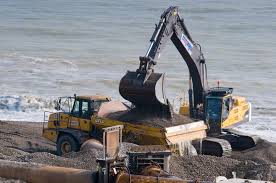
Despite the 245 years since the publication of the landmark book by Adam Smith, the valuation remains. Raw Materials are cheap; Finished Goods are more valuable; the gap between the two is the inviting profit.
For all of you seeking to prioritize Mineral Extraction as an alternative to tourism, you need to be On Alert. This is the system that you will be challenging. Consider this actuality now of the low intrinsic value of Raw Materials -vs- the Finished Goods:
- Sand ==> Cement


- Bauxite ==> Aluminum
- Iron Ore ==> Steel
- Silica ==> Glass
- Coffee Beans == Cappuccino / Macchiato
- Wheat Grain ==> Bread
- Barley Grain ==> Beer
This is Mineral Extraction 101, a consideration of the Basics of Raw Materials. Let’s explore this ecosystem further by reviewing these training VIDEO‘s for Kids:
VIDEO # 1 – Raw Materials Definition for Kids – https://youtu.be/Ai0U1b2FlVw
History Illustrated
Posted Oct 5, 2014 – Free Activities and Downloads for Kids: http://historyillustrated.org/———–
VIDEO # 2 – Manufactured Goods Definition for Kids – https://youtu.be/BtKni7haXtQ
History Illustrated
Posted Oct 6, 2014 – Free Activities and Downloads for Kids: http://historyillustrated.org/
The reality is that prices for a huge abundance of land and resources were extremely cheap 250 years ago and is still cheap down. That orthodoxy that Adam Smith reported on in 1776 remains even today. This is NOT where the money is; the money or value proposition is associated with the manufacturing of the Raw Materials to produce the Finished Goods. If we want to reboot our economic landscape, we must position ourselves on the manufacturing side, not just the Raw Materials side. There is more profit following this strategy.
Profits ==> Jobs ==> Entrepreneurial opportunities ==> Community Revitalization
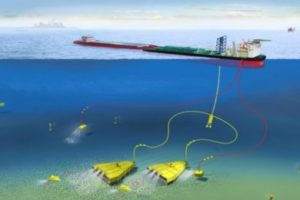
We do indeed need to foster more Mineral Extractions. There are so many lessons that we can learn from the Economic History of other communities and their fostering of Raw Materials on the land and in the seas – think dredging operations.
According to the book Go Lean…Caribbean, ‘Luck is where opportunity meets preparation’ – Page 252.
Well, opportunity awaits the Caribbean … for Mineral Extractions, dredging operations and even oil exploration.
The Go Lean movement have consistently asserted that Mineral Extraction and Raw Materials – on land and sea – must be central to any industrial rebooting of the Caribbean region, despite all the drama associated with his subject. Consider this sample list of previous blog-commentaries:
| https://goleancaribbean.com/blog/?p=18578 | Missing Out on the ‘Rush’ – Encore |
| https://goleancaribbean.com/blog/?p=13155 | Industrial Reboot – Pipelines 101 |
| https://goleancaribbean.com/blog/?p=12230 | Commerce of the Seas – Extraction Realities |
| https://goleancaribbean.com/blog/?p=7384 | Oil Refineries – Strategy for Advanced Economics |
| https://goleancaribbean.com/blog/?p=5396 | ‘Significant’ oil deposit found offshore Guyana |
| https://goleancaribbean.com/blog/?p=4700 | Rare Earths: The new ‘Rush’ |
| https://goleancaribbean.com/blog/?p=3743 | Trinidad cuts 2015 budget as oil prices tumble |
| https://goleancaribbean.com/blog/?p=3213 | The fluctuations of Oil Prices – Gas is NOT Greener with Extractions |
In some tourism circles, there is the philosophy of “Leave Nothing and Take Nothing”. Where the tourists are asked to “leave nothing but footprints” and “take nothing but memories”. This is NOT true for Mineral Extractions or mining. The landscape or waterscape may be scared for all eternity, plus the actuality of water table contamination and other hazards. On land, some hills and/or mountains may be excavated and there may be extensive dredging in the seas, affecting coral reefs or surf patterns.
Recent studies of mining activities in countries around the world produced these sour assessments:
Title #1 – Kenya: Mining impact on communities’ livelihoods: A case study of Taita Taveta County, Kenya
Mining did not help some of the households, to acquire assets, even though it enhanced ability to meet their day to day needs. Mining pits, poor rehabilitation and large-scale mining have caused a loss of agricultural land resulting in reduced crop yields and poor living standards. Some established mining companies in the area did not compensate, or share their accrued revenues nor did they support development projects as was expected. Therefore, the improvement brought about by mining was not sustainable to communities’ livelihood. – Source————-
Title #2 – Appalachia, United States: Toxic Waste and Mining
In Appalachia, mining companies literally blow the tops off mountains to reach thin seams of coal. They then dump millions of tons of rubble into the streams and valleys below the mining sites. Toxic heavy metals such as cadmium, selenium, and arsenic leach into local water supplies, poisoning drinking water.This destructive practice, known as mountaintop-removal mining, sends carcinogenic toxins like silica into the air, affecting communities for miles around. Cancer rates are twice as high for people who live near mountaintop-removal sites, and the risk of heart defects in babies born to mothers who lived near these sites while pregnant is 181 percent higher than for babies in non-mining areas. It also destroys beautiful, biodiverse forests and wildlife habitat, increases the risk of flooding, and wipes out entire communities.
This practice has damaged or destroyed more than 2,000 miles of streams, and has wiped out more than 1.5 million acres of forests in Kentucky, Tennessee, Virginia, and West Virginia. – Source
————-
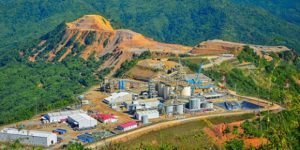
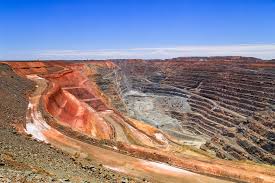
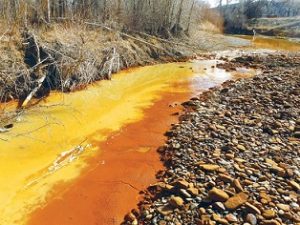
So if the Caribbean stakeholders finally want to reboot their industrial landscape and diversify away from tourism-only, they must accept the heavy-lifting that comes with the challenge of Mineral Extractions; it is not a “slam dunk” easy industry, and it is rarely profitable.
The valuation of cheap raw materials lingers since pre-industrial colonial days.
Learning lessons from the past, and from other societies means that we must be prepared to employ the Best Practices in regulating this industry. The heavy-lifting tasks may be too big for any one member-state alone; there is the need to collaborate, cooperate and coordinate technocratic solutions for the entire region as a whole. This is the quest of the Caribbean Union Trade Federation (CU), to bring Good Governance to the region as a whole and the for all 30 Caribbean member-states individually.
The Go Lean roadmap calls for the confederate management of an expanded Exclusive Economic Zone for the Caribbean Sea.
This is how we can explore and exploit Mineral Extractions in the Caribbean and make our homeland a better place to live, work and play. This vision is conceivable, believable and achievable. 🙂
About the Book
The book Go Lean…Caribbean serves as a roadmap for the introduction and implementation of the technocratic Caribbean Union Trade Federation (CU), for the elevation of Caribbean society – for all member-states. This CU/Go Lean roadmap has these 3 prime directives:
- Optimization of the economic engines in order to grow the regional economy to $800 Billion & create 2.2 million new jobs.
- Establishment of a security apparatus to ensure public safety and protect the resultant economic engines.
- Improve Caribbean governance to support these engines, including a separation-of-powers between the member-states and CU federal agencies.
The Go Lean book provides 370-pages of turn-by-turn instructions on “how” to adopt new community ethos, plus the strategies, tactics, implementations and advocacies to execute so as to reboot, reform and transform the societal engines of Caribbean society.
Download the free e-Book of Go Lean … Caribbean – now!
Who We Are
The movement behind the Go Lean book – a non-partisan, apolitical, religiously-neutral Community Development Foundation chartered for the purpose of empowering and re-booting economic engines – stresses that reforming and transforming the Caribbean societal engines must be a regional pursuit. This was an early motivation for the roadmap, as pronounced in the opening Declaration of Interdependence (Pages 11 – 13):
x. Whereas we are surrounded and allied to nations of larger proportions in land mass, populations, and treasuries, elements in their societies may have ill-intent in their pursuits, at the expense of the safety and security of our citizens. We must therefore appoint “new guards” to ensure our public safety and threats against our society, both domestic and foreign. …
xi. Whereas all men are entitled to the benefits of good governance in a free society, “new guards” must be enacted to dissuade the emergence of incompetence, corruption, nepotism and cronyism at the peril of the people’s best interest. The Federation must guarantee the executions of a social contract between government and the governed.
xii. Whereas the legacy in recent times in individual states may be that of ineffectual governance with no redress to higher authority, the accidence of this Federation will ensure accountability and escalation of human and civil rights of the people for good governance, justice assurances, due process and the rule of law. As such, any threats of a “failed state” status for any member state must enact emergency measures on behalf of the Federation to protect the human, civil and property rights of the citizens, residents, allies, trading partners, and visitors of the affected member state and the Federation as a whole.
xvi. Whereas security of our homeland is inextricably linked to prosperity of the homeland, the economic and security interest of the region needs to be aligned under the same governance. Since economic crimes … can imperil the functioning of the wheels of commerce for all the citizenry, the accidence of this Federation must equip the security apparatus with the tools and techniques for predictive and proactive interdictions.
Sign the petition to lean-in for this roadmap for the Caribbean Union Trade Federation.
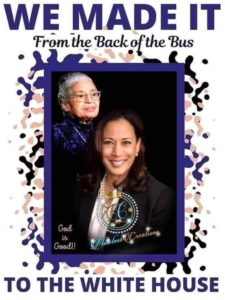
 Who is the most powerful person in the world?
 Professor Donald Harris Kamala Harris’ Jamaican father, has vigorously dissociated himself from statements made on the New York Breakfast Club radio show earlier this week attributing her support for smoking marijuana to her Jamaican heritage. Professor Harris has issued a statement to
  This seeming lack of knowledge about the connection between her Indian and Jamaican heritage provides additional ammunition for some Jamaicans who are of the view that Ms. Harris tends to downplay her Jamaican heritage when it suits her, crediting her Tamil Indian mother with the most significant influence on her life and outlook and rarely talks about her father’s influence. Her father Donald, hardly ever gets credit except when mentioned alongside her mother, but rarely as an individual. Even when asked by her host in the now famous ‘marijuana interview’ about her motivation to enter the presidential race, Ms. Harris referenced ONLY her mother whom she said, raised her and her sister Maya with many beliefs and rules – one being never to sit and complain about something, but to do something about it. Yet, anyone who has read ‘Reflections of a Jamaican Father’ Donald Harris’ heart-warming account of how he raised his two daughters, will immediately realize that there is another side to the Kamala Harris story. In that article Donald Harris writes:
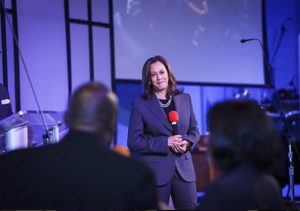 Kamala Harris will have trouble persuading black voters to make her president in 2020. First, the U.S. senator from California must explain why Donald Trump has a better prison-reform record than she had as the Golden State’s attorney general. Then she’ll have to overcome the perception she’ll do anything to climb to the top.
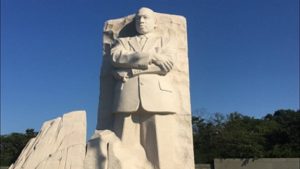 “Free At Last, Free At Last; Thank God Almighty, We Are Free At Last”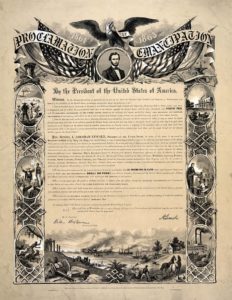
 (See the
  There are many examples of racial oppression, suppression and repression in the US. These experiences may be indicative that something deeper than equality is at stake; there is a Bad Community Ethos – fundamental character or spirit of a culture; the underlying sentiment that informs the beliefs, customs, or practices of a group or society – tied to religious mis-information.
 … for our 30 Caribbean member-states, 29 of them feature a majority population of Black-and-Brown people. While this majority does not always equal political or economic power, universal suffrage (one man/woman, one vote) has been transformational in correcting social ills. Universal suffrage equals universal respect, so this should always be at the start of change in society. This teaches us that societal stewards should work to
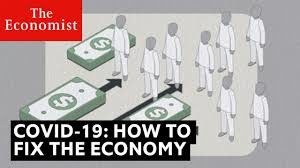 To fix the economy, we have to fix the pandemic – President-Elect Joe Biden, as a candidate in September 2020.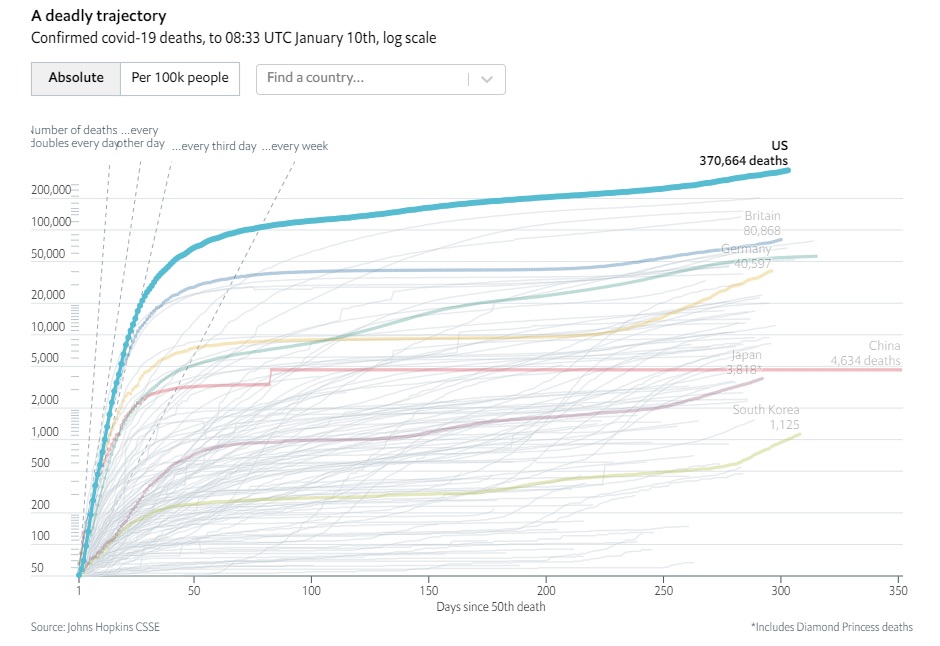
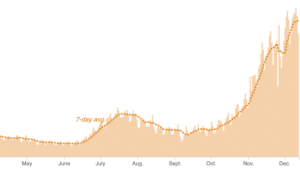
 The world is enduring the Coronavirus COVID-19 pandemic crisis; it is wreaking havoc on the world’s economic engines – $250 Billion a day in losses – and Public Health deliveries. The only hope is a vaccine, of which there are a number of them in
  Those who advocate to remediate Caribbean economics needs to avoid a series of Economic Fallacies. …

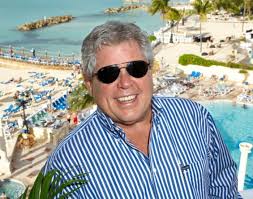 Gordon “Butch” Stewart has died. 🙁
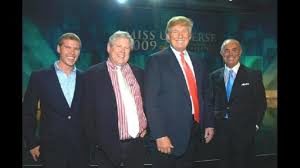 Butch Stewart labored to promote, provide and protect Caribbean interest all over the world. He proved to be a fine role model for the Caribbean youth to emulate. In fact, his profile was featured in the 2013 book Go Lean…Caribbean – on Page 189 – this publication serves as a roadmap for rebooting the Caribbean societal engines of economics, security and governance. See that published profile in the Appendix below.
 Brexit is hereby ratified as of today; the new “rules of the road” go into effect tomorrow – January 1, 2021. (Brexit = British Exit from the European Union).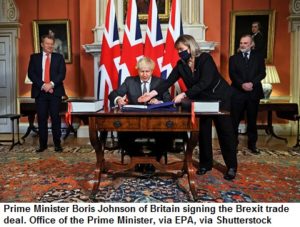
 Despite how much advances we have made in the millennia since King Hammurabi of Babylon reigned, this concept seems to be void in so many societies; this concept …
 In addition, the issue of disunity remains; the Brexit vote showed that some elements in the United Kingdom are not so “united”. Just two years earlier, a referendum in Scotland to secede from the United Kingdom – and join the EU as a full member including the Eurozone Monetary Union – was narrowly defeated. There may still be a
 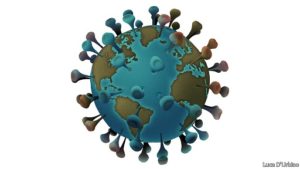 The Coronavirus COVID-19 pandemic has taught the Caribbean the important lesson that we are not prepared for the threats that come from one aspect of Globalization, the free and frequent movement of people across borders and continents. This pandemic started as a flare-up of a contagious respiratory disease in Wuhan, China; then in short order, the infections traversed the planet: to Europe and North America, then onto our Caribbean communities. We were not prepared and suffered accordingly, both medically and economically.
 The events related to UK, EU and Brexit are important for us in the Caribbean to consider … and learn from. In fact, we are in competition with the European world in terms of trade,
 The same as vision can be corrected with glasses and lenses, community vision or planning can also be perfected with reboots and turn-around activities. Our current vision is bad, we need correction. We cannot see (nor seem to care about) all of our citizens that are fleeing the homeland and looking for refuge elsewhere. Yes, we need to correct our vision; we need to get back to 20/20.


 Face it Puerto Rico, you have not been handling the heat!
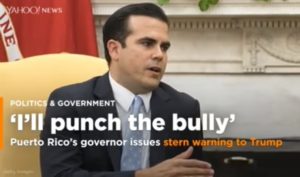 The Washington meeting — which was attended by White House trade adviser Peter Navarro and members of Rosselló’s government — was requested after reports that Trump was considering halting further disaster relief to the beleaguered U.S. territory.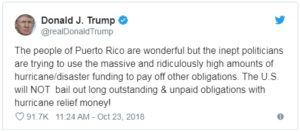
 This consideration brings to mind, an overall discussion of the Way Forward for this country – Puerto Rico – and all Caribbean countries. Our current disposition is dire, a crisis, near-Failed-State status. Yet, the movement behind the Go Lean book posits that a “crisis is a terrible thing to waste”. Here for April 2019, we present a full series of commentaries related to the Way Forward for these 30 Caribbean member-states. The full series is presented as follows:
 The Puerto Rico Admission Act of 2019, which is sponsored by Rep. Darren Soto, D-Florida, and Puerto Rico Resident Commissioner Jenniffer González-Colón, would give the island statehood within 90 days of passage.
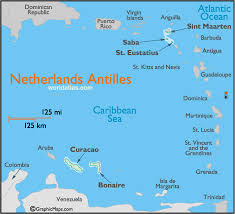 There are Caribbean territories that are actually members of the European Union … kinda. That would be the French Antillean islands (Guadeloupe, Martinique, St. Bartholomew and St. Martin) and the Netherlands Antilles (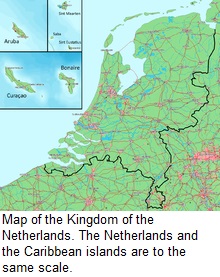

 …
…
 a political and

 The European Netherlands have always been ahead of us in the Caribbean, but eventually everyone else catches up. Consider the example of universal suffrage: One Man / One Woman / One Vote.