Jamaican Diaspora – Not the ‘Panacea’

Go Lean Commentary

Here we go again. Will “they” ever learn? CU Blog - Jamaican Diaspora - Not the Panacea - Photo 0
Due to the high societal abandonment rate in the Caribbean homeland, the population of the citizenry of the individual member-states is approaching a distribution where half of the citizens live in the homeland and the other half live abroad – in the Diaspora.

Those who live in the Diaspora, know “both sides of the coin”, as most of them have lived in the ancestral lands at one point. But the other half, those who still live in the homeland may have never lived abroad.

They do not know what they do not know!

Oh, they may have visited! But being a visitor to some North American or European city is different than being a resident, as visitors do not have the interactions of applying for jobs, housing, government benefits, paying taxes, co-existing with neighbors, etc.. These ones in the homeland may naturally assume that the “grass is greener on the other side”. Here’s the truth:

It is not! (The grass in the northern cities may not even be green at all; it may be covered with autumn foliage or snow).

So as observers-and-reporters of Caribbean people, culture and eco-system in both the homeland and the Diaspora, “we” – the movement behind the book Go Lean…Caribbean – have noticed how consecutive government administrations seem to empathize with the strategy of making outreach to their Diaspora; see article in Appendix A. They put a lot of stock (investment) into this strategy and the results are always consistent:

There is no pay-off! Even now, after 50 years of emigration, the positive impact of the Diaspora is still elusive.

Hoping for the Diaspora to be the panacea of Caribbean ills – “Diaspora Bug” – has proven to be a fallacy, time and again. Notice in the referenced article that the World Bank organization reportedly stated that $500 million in investments had come to this one country from their Diaspora, but the researcher seems to want to inflate the impact, projecting a “pie-in-the-sky” figure of $12.8 billion.

Enough already people!

The movement behind the book Go Lean … Caribbean has been consistent in this theme. Just this year alone, we have commented on these flawed efforts, in:

The criticism has been leveled against all these Caribbean member-states hoping that their Diaspora – those who had fled, being “pushed” or “pulled” away from their homeland –  would invest back in their country. The problem is that this Diaspora-outreach strategy double-downs on the failure of why the Diaspora left in the first place. Both previous commentaries relate:

The subtle message to the Caribbean population is that they need to leave their homeland, go get success and then please remember to invest in us afterwards.

… It is so unfortunate that the people in the Caribbean are beating down the doors to get out of their Caribbean homeland, to seek refuge in these places like the US, Canada and Western Europe. And yet it seems like the Chief Executive of this Caribbean country is encouraging more of it – there is a similar sentiment in the rest of the Caribbean member-states. As a result, we have such a sad state of affairs for our Caribbean eco-system as we are suffering from a bad record of societal abandonment.

The country du jour – for this commentary – is Jamaica; see the related article in Appendix C below.

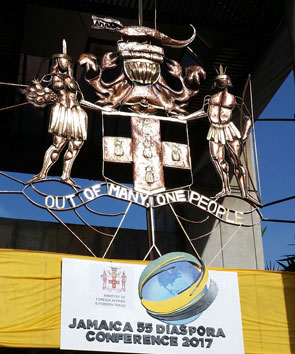
They have got this “Diaspora Bug” real bad. They have been “plowing these fields” for a while; they have structured an organized Diaspora Conference since 2004 and they sow and sow; still hoping for some reaping. See the full news article in Appendix A below relating the “Jamaica 55 Diaspora 2017 Conference” that was held in Kingston July 23-26, 2017.

The book Go Lean…Caribbean – available to download for free – serves as a roadmap for the introduction and implementation of the technocratic Caribbean Union Trade Federation (CU), for the elevation of Caribbean society – for all member-states. The book asserts that the region must work to hold onto its populations – especially the professional classes – not see them leave for foreign shores. To accomplish this objective, this CU/Go Lean roadmap presents these 3 prime directives:

  • Optimization of the economic engines in order to grow the regional economy to $800 Billion and create 2.2 million new jobs.
  • Establishment of a security apparatus to ensure public safety and protect the resultant economic engines.
  • Improvement of Caribbean governance to support these engines, including a separation-of-powers between the member-states and CU federal agencies.

The Go Lean book asserts that while conditions may be bad for Caribbean (i.e. Jamaican) residents in their homeland, many minority immigrants to other countries (think Black-and-Brown in America) have to contend with less than welcoming conditions there. In fact, economic and sociology researchers have published that first generation immigrants (especially noteworthy for those from Latin America and the Caribbean) normally under-perform all other segments of society in their new countries. It is only with the second generation that prosperity is achieved, but by then, their progeny no longer identifies with the ancestral home. Think: Jamaican-Americans identifying more with America than with Jamaica.

Consider further the American experience. The movement behind the Go Lean book has consistently related that the United States of America functions as a Great Society but it has two societal defects:

These societal defects can easily create a ‘Climate of Hate‘ that causes people to haze and blame-game the immigrant community.

There are similar anecdotes in Canada, the United Kingdom, The Netherlands, France and other Western European countries. While immigrants are better able to survive in these advanced democracies – there is an abundance of minimum wage jobs – to thrive is more of a challenge. It would seem better for Caribbean people to work to remediate the problems in their homeland, rather than work to become immigrants, aliens in a foreign land. But this is no easy task; this is hereby defined as heavy-lifting.

The Go Lean roadmap calls for a reboot!

Do what you have always done; get what you’ve always got.

The Go Lean roadmap presents a different approach; it posits that leveraging a Caribbean Single Market (42 million people) is better than catering to the Diaspora of just one country; (Jamaica’s Diaspora has a size of 3 million). This roadmap is presented as the panacea of Caribbean ills; and it still includes the Diaspora, but for all the Caribbean nations combined – estimated at 10 to 25 million. This plan calls for an interdependence of the Caribbean eco-system. This was the motivation for the CU/Go Lean roadmap, as pronounced in the opening Declaration of Interdependence (Pages 12 – 13) of the book:

xi. Whereas all men are entitled to the benefits of good governance in a free society, “new guards” must be enacted to dissuade the emergence of incompetence, corruption, nepotism and cronyism at the peril of the people’s best interest. The Federation must guarantee the executions of a social contract between government and the governed.

xix. Whereas our legacy in recent times is one of societal abandonment, it is imperative that incentives and encouragement be put in place to first dissuade the human flight, and then entice and welcome the return of our Diaspora back to our shores. This repatriation should be effected with the appropriate guards so as not to imperil the lives and securities of the repatriated citizens or the communities they inhabit. The right of repatriation is to be extended to any natural born citizens despite any previous naturalization to foreign sovereignties.

xx.  Whereas the results of our decades of migration created a vibrant Diaspora in foreign lands, the Federation must organize interactions with this population into structured markets. Thus allowing foreign consumption of domestic  products, services and media, which is a positive trade impact. These economic activities must not be exploited by others’ profiteering but rather harnessed by Federation resources for efficient repatriations.

xxiv. Whereas a free market economy can be induced and spurred for continuous progress, the Federation must install the controls to better manage aspects of the economy: jobs, inflation, savings rate, investments and other economic principles. Thereby attracting direct foreign investment because of the stability and vibrancy of our economy.

The goal of the Go Lean roadmap is for Caribbean people to prosper where planted; the book therefore provides 370-pages of turn-by-turn instructions on “how” to adopt new community ethos, plus the strategies, tactics, implementations and advocacies to execute so as to lower the “push and pull” factors that drives people to leave their homes in the first place. What are these factors:

“Push” refers to people who feel compelled to leave, to seek refuge in a foreign land. “Refuge” is an appropriate word; because of societal defects, many from the Caribbean must leave as refugees – think LGBTDisabilityDomestic-abuseMedically-challenged – for their life, liberty and pursuit of happiness.

“Pull”, on the other hand refers to the lure of a more prosperous life in the foreign destinations; many times our people are emigrating for economics solely.

The landscapes and waterscapes of the Caribbean make-up the best addresses on the planet. No one wants to leave to get away from the physical paradise; see the VIDEO in Appendix B below. But they do leave … to get away from our deficient and defective societal engines:

No economic prospects; no security assurances; no governing efficiency.

One mission of the Go Lean roadmap is to lower these “push and pull” factors.

Yes, we can.

Another mission is to invite the Diaspora to repatriate to the region, to come back home. This could be attractive prospect once the needed remediation is in place.

See how these missions has been communicated in other blog-commentaries, with this sample:

https://goleancaribbean.com/blog/?p=11314 Forging Change: Home Addiction
https://goleancaribbean.com/blog/?p=9648 ‘Time to Go’ – Public Schools for Black-and-Brown
https://goleancaribbean.com/blog/?p=8155 Gender Equality Referendum Outcome: Impact on the ‘Brain Drain’
https://goleancaribbean.com/blog/?p=7769 Being Lean on “Push & Pull”: Asking the Question ‘Why’ 5 Times

In summary, growing the Diaspora is bad for the Diaspora and bad for the Caribbean. Any official policy that double-downs on the Diaspora, double-downs on failure. We do not want an official strategy of requiring people to leave and kindly remember us so that our communities can be successful; no, we want to be successful anyway, to prosper right here at home. We strongly urge everyone to lean-in to this roadmap to make our homeland – Jamaica et al – a better place to live, work and play. 🙂

NOTE: This writer has mixed Jamaican heritage.

Download the free e-book of Go Lean … Caribbean – now!

Sign the petition to lean-in for this roadmap for the Caribbean Union Trade Federation.

———-

Appendix A Title: Jamaica still in dark over Diaspora’s huge potential

KINGSTON, Jamaica – Jamaica has no precise understanding of its diaspora’s massive potential, although emerging evidence indicates nationals living overseas are making a far greater contribution to the Caribbean nation’s welfare than previously believed.

Preliminary findings from a study, conducted by the Caribbean Policy Research Institute (CAPRI) and revealed at last month’s “Jamaica 55 Diaspora 2017 Conference” here, showed the country relies heavily on contributions from an estimated three million nationals living in places like the United States, United Kingdom and Canada.
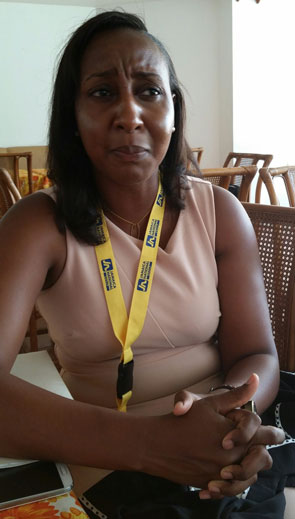
CU Blog - Jamaican Diaspora - Not the Panacea - Photo 1According to research officer Shanike Smart, CAPRI’s study, sponsored by Jamaica National, was aimed at taking the guess work out of the diaspora’s influence, which would then lead to a better grasp of its value and enhance the relationship with Jamaica.

“We wanted to find out how significant are their (diaspora’s) contributions, because we think this can advance the conversation,” Smart explained following her conference presentation.

So far, she has already dismantled some long-held perceptions. For example, the diaspora’s contribution has mainly been identified with remittances. Jamaica benefits greatly from money sent from overseas – an estimated $2.2 billion a year. But that may be just the tip of the diaspora’s clout,.

“It turned out to be much more than that,” Smart said.

IGNORANCE

Diaspora investments in Jamaica also make up a huge chunk of benefits for the island as well. The World Bank reportedly stated that $500 million in investments had come to Jamaica. That figure, may be more like $12.8 billion.

Also gone underestimated has been the contributions in several other areas, including export of goods and services from Jamaica to the diaspora.

“I speak about companies launching businesses overseas, not thinking that maybe it’s the diaspora, not understanding that without (the diaspora) they might not been able to even prosper in that environment,” Smart explained.

The educational and professional qualifications of Jamaicans overseas have been downplayed as well, a reason many in the diaspora believe causes them to be overlooked for jobs in the island.

Diaspora tourists, are also now being viewed differently. According to statistics gathered by Smart, the Jamaica Tourist Board believes diaspora visitors’ spending accounts for four percent of general expenditure. She thinks it’s much higher.

“I estimated that it was seven percent of the expenditure,” Smart said. “(It’s) $180 something million U.S. dollars that they’re spending overall.”

MISLED

It comes down to misinformation, Smart explained, which may or not be deliberate.

“Normally in the literature, we’re finding that the diaspora tourist tends to spend less (in Jamaica) than a foreign national. However, they stay longer,” she said. “… When we’re looking at the numbers we’re saying this is suggesting otherwise, and then I was saying ‘can this be true?’

“I saw that the Jamaican tourist was almost spending more than, in a lot of cases was spending more than what the estimate was for the foreign national.”

The misunderstanding has been blamed on several factors, including lack of information, reluctance to seek it, unwillingness to provide it on request and preference to rely on old myths. Some Jamaicans deliberately hesitate to reveal information.

“A lot of people think that’s just our culture,” said Smart, who led CAPRI’s research team, “but I’m not sure what the reason is. And, again, even to this day we’re having some pushback.”

NO IDEA

In 2004 Jamaica held its first Diaspora Conference. But few had a full idea of the diaspora’s actual impact. Thirteen years, and a planned average of one conference every two years, later not much has changed.

However, through CAPRI’s early findings, a different picture is emerging. The study, which began about two months ago and is expected to have more concrete data by next month, has shown startling information.

Currently, the diaspora is estimated to contribute 23 percent of Jamaica’s gross domestic product (GDP). Smart suspects the potential is closer to 35 percent. However, she argued, more digging is needed to confirm her suspicions and guide future policy on the diaspora.

“We need research to back that up before we even start making any move,” she said.

What’s evident is the diaspora is offering much more than its been credited for and poised to make an even larger impact.

“When I look at the gap, when we look at what we’re currently doing and what the potential gap that’s left, it was 12 percent of GDP, over a billion (U.S.) dollars,” said Smart.

“I think it highlights how significant the diaspora is for Jamaica, which is currently under appreciated because the numbers aren’t existing,” she added.

It should be enough incentive for Jamaica to embrace its diaspora more tightly.

“It is also showing that it is an opportunity to show the diaspora and for persons to now recognize the diaspora, which should bring them onboard,” said Smart.

“And if they do come onboard some more, I mean, it’s unimaginable the value that will present.”

Related story: Jamaica lauds Diaspora’s input, but some lament slow progress

Source: Caribbean Today South Florida Magazine – Vol. 28 No. 9 (August) – Retrieved September 19, 2017 from: http://www.caribbeantoday.com/caribbean-news/latest-news/item/26432-jamaica-still-in-dark-over-diaspora-s-huge-potential.html

———-

Appendix B VIDEO – Jamaica Farewell | Jamaican Kids Song | World Rhymes – https://youtu.be/nFfs0ryiFy4

Published on May 30, 2013World Rhymes

Lyrics:
Down the way where the nights are gay
And the sun shines daily on the mountain top
I took a trip on a sailing ship
And when I reached Jamaica I made a stop

But I’m sad to say I’m on my way
Won’t be back for many a day
My heart is down, my head is turning around
I had to leave a little girl in Kingston town

Sounds of laughter everywhere
And the dancing girls swaying to and fro
I must declare my heart is there
Though I’ve been from Maine to Mexico

But I’m sad to say I’m on my way
Won’t be back for many a day
My heart is down, my head is turning around
I had to leave a little girl in Kingston town

Down at the market you can hear
Ladies cry out while on their heads they bear
`Akey’ rice, salt fish are nice
And the rum is fine any time of year

But I’m sad to say I’m on my way
Won’t be back for many a day
My heart is down, my head is turning around
I had to leave a little girl in Kingston town

Down the way where the nights are gay
And the sun shines daily on the mountain top
I took a trip on a sailing ship
And when I reached Jamaica I made a stop

But I’m sad to say I’m on my way
Won’t be back for many a day
My heart is down, my head is turning around
I had to leave a little girl in Kingston town

Sad to say I’m on my way
Won’t be back for many a day
My heart is down, my head is turning around
I had to leave a little girl in Kingston town

  • Category: Education
  • License: Standard YouTube License

———-

Appendix C – Over 80 Percent of Young Jamaicans Want to Leave the Island

Many young Jamaicans are ready to leave their country to pursue better educational and job opportunities. In fact, they would leave Jamaica for any destination other than Afghanistan. According to a 2016 survey commissioned by Respect Jamaica and the local office of UNICEF, 81 percent of Jamaica’s youth between 14 and 40 years of age would leave the country immediately if they could.

Continue reading at Jamaica.com site: http://jamaicans.com/young-jamaicans-want-leave-island/#ixzz4tDq4LzUt

Share this post:
, ,

After Irma, Failed State Indicators: Destruction and Defection

Go Lean Commentary

CU Blog - After Irma, Barbuda Becomes a 'Ghost Town' - Photo 3What happens after a community is devastated by a catastrophic hurricane?

Many things; mostly all bad:

This is not just theoretical; this is the current disposition in the Caribbean after the recent Category 5 Hurricane Irma. These descriptors are all indicative of a Failed State status. This is a familiar theme for this movement behind the 2013 book Go Lean…Caribbean – available to download for free – (and the subsequent blog-commentaries). The book opens (Page 3) with this introduction to the subject of failure in the Caribbean:

Failure is just too familiar. Already we have member-states …  on the verge of a Failed-State status… . These states are not contending with the challenges of modern life: changing weather patterns, ever-pervasive technology, and the “flat world” of globalization. To reverse the fortunes of these failing states, and guide others in the opposite direction to a destination of prosperity, the Caribbean must re-boot the regional economy and systems of commerce.

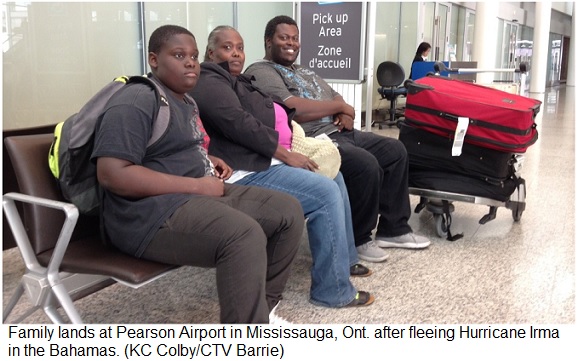
CU Blog - After Irma, Failed-State Indicator - Death or Diaspora - Photo 1Hurricanes are tied to failure and Failed-State Indicators. The consequences of hurricanes are more than just natural, there is also the preponderance for people to leave their homelands afterwards – to defect. See a related story (article & VIDEO) in the Appendix below in which a family sought asylum in Canada for refuge from their devastated community.

In Failed-State formal-speak, the Go Lean book (Page 271) details 2 indicators or indices: Mounting Demographic Pressures (DP) and Massive Movement of Refugees (REF). These downward movements are indicators of Failed-State status – a bad report on the Fail-State index is simply a reflection of a miserable existence in society:

  • Mounting Demographic Pressures
    Pressures on the population such as disease and natural disasters make it difficult for the government to protect its citizens or demonstrate a lack of capacity or will. This indicator include pressures and measures related to:
    Natural Disaster, Disease, Environment, Pollution, Food Scarcity, Malnutrition, Water Scarcity, Population Growth, Youth or Age Bulge, and Mortality
  • Massive Movement of Refugees or IDPs
    Forced uprooting of large communities as a result of random or targeted violence and/or repression, causing food shortages, disease, lack of clean water, land competition, and turmoil that can spiral into larger humanitarian and security problems, both within and between countries. This indicator refers to refugees leaving or entering a country. This indicator include pressures and measures related to:
    Displacement, Refugee Camps, IDP (Internally Displaced Persons) Camps, Disease Related to Displacement, Refugees per capita, and IDPs per capita.

This commentary completes the 4-part series on the Aftermath of Hurricane Irma. There are a lot of mitigation and remediation efforts that can be done to lessen the impact of this and future storms. There are lessons that we must consider; there are reforms we must make; there are problems we must solve. The full list of the 4 entries of this series are detailed as follows:

  1. Aftermath of Hurricane Irma – America Should Scrap the ‘Jones Act’
  2. Aftermath of Hurricane Irma – Barbuda Becomes a ‘Ghost Town’
  3. Aftermath of Hurricane Irma – The Science of Power Restoration
  4. Aftermath of Hurricane Irma – Failed State Indicators: Destruction and Defection

Despite the manifested threats of Climate Change-fueled hurricanes, we must engage the heavy-lifting to make the Caribbean homeland a better place to live, work and play. Otherwise people flee the oppression, repression and suppression of being “home”.

In a previous blog-commentary about 19th Century Slavery Abolition icon Frederick Douglass, it revealed his theme when he went to the British island of Ireland to commiserate with that people on their oppression-repression-suppression plight. He asserted …

… that if an oppressed population didn’t find refuge, the only outcome would be Death or Diaspora.

The Diaspora prophecy happened, then in Ireland and today, especially here in the Caribbean! (In a previous blog, it was revealed that after 1840, emigration from Ireland became a massive, relentless, and efficiently managed national enterprise. In 1890 40% of Irish-born people were living abroad. By the 21st century, an estimated 80 million people worldwide claimed some Irish descent; which includes more than 36 million Americans who claim Irish as their primary ethnicity).

Caribbean citizens are also pruned to emigrate … to foreign shores (North America and Europe) seeking refuge. In a previous blog-commentary it was asserted that the US – the homeland  for Frederick Douglass – has experienced accelerated immigration in recent years. Published rates of societal abandonment among the college educated classes have reported an average of 70 percent in most member-states, with some countries (i.e. Guyana) tallying up to 89 percent. For this reason, there is solidarity for the Diaspora of Ireland and the Diaspora of the Caribbean.

The publishers of the Go Lean book are also steadfast and committed to one cause: arresting the societal abandonment of Caribbean communities. This would lessen the future Diaspora. This would be good!

The book Go Lean…Caribbean serves as a roadmap for the introduction and implementation of the technocratic Caribbean Union Trade Federation (CU), for the elevation of Caribbean society – for all member-states. This CU/Go Lean roadmap has these 3 prime directives:

  • Optimization of the economic engines in order to grow the regional economy to $800 Billion and create 2.2 million new jobs.
  • Establishment of a security apparatus to ensure public safety and protect the resultant economic engines. This security pact encompasses an emergency planning/response apparatus to deal with the reality of natural disasters. Otherwise, the affected population becomes refugees and the member-state moves towards Failed-State status. The CU mandate is to protect against any Failed-State encroachments.
  • Improve Caribbean governance to support these engines, including a separation-of-powers between the member-states and CU federal agencies.

The book stresses that reforming and transforming the Caribbean societal engines must be a regional pursuit. This was an early motivation for the roadmap, as pronounced in the opening Declaration of Interdependence (Pages 12 – 13):

xi. Whereas all men are entitled to the benefits of good governance in a free society, “new guards” must be enacted to dissuade the emergence of incompetence, corruption, nepotism and cronyism at the peril of the people’s best interest. The Federation must guarantee the executions of a social contract between government and the governed.

xii. Whereas the legacy in recent times in individual states may be that of ineffectual governance with no redress to higher authority, the accedence of this Federation will ensure accountability and escalation of the human and civil rights of the people for good governance, justice assurances, due process and the rule of law. As such, any threats of a “failed state” status for any member state must enact emergency measures on behalf of the Federation to protect the human, civil and property rights of the citizens, residents, allies, trading partners, and visitors of the affected member state and the Federation as a whole.

xvi. Whereas security of our homeland is inextricably linked to prosperity of the homeland, the economic and security interest of the region needs to be aligned under the same governance. Since economic crimes … can imperil the functioning of the wheels of commerce for all the citizenry, the accedence of this Federation must equip the security apparatus with the tools and techniques for predictive and proactive interdictions.

The Go Lean book provides 370-pages of turn-by-turn instructions on “how” to adopt new community ethos, plus the strategies, tactics, implementations and advocacies to execute so as to reboot, reform and transform the societal engines of Caribbean society, to reverse the trending to Failed-State status. Consider the Chapter excerpts and headlines from this sample on Page 134 entitled:

10 Ways to Improve Failed-State Indices

1

Lean-in for the Caribbean Union Trade Federation
This will allow for the unification of the region into one market of 42 million people across 30 member-states, thereby creating an economic zone to protect the interest of the participant trading partner-member-states. The GDP of the region will amount to $800 Billion (circa 2010). In addition, the treaty calls for a collective security agreement of the member states so as to ensure homeland security and assuage against systemic threats. The CU will ensure that law-and-order persist during times of distress. When a member state declares a State of Emergency, due to natural disaster or civil unrest, this triggers an automatic CU response – this is equivalent to the governmental dialing 911.

2

Image and Defamation
When a country’s primary foreign currency generator is tourism/hospitality, just the perception of a weak or failing state could be devastating. The index is a number that can rise and fall, like a credit score, so any upward movement in the index triggers the negative perception. The pressures are not only internal; there may be external entities that can have a defaming effect: credit rating, country risk, threat assessment, K-n-R (Kidnap and Ransom) insurance rates. The CU will manage the image of the region’s member-states against defamation and work to promote a better image.

3

Local Government and the Social Contract
The Social Contract is the concept that individuals have consented, either explicitly or tacitly, to surrender some of their freedoms and submit to the authority of the State in exchange for protection of their remaining rights (natural and legal). People therefore expect their government (national or municipal) to provide public safety, health, education and other services. The CU will facilitate overhead services for local governments and access to financial markets to fund capital infrastructure investments. The member-states will therefore have more accountability and reporting to CU institutions.

4

Law Enforcement Oversight
The CU will maintain jurisdiction for economic crimes and regional threats. Plus, the CU will collaborate and facilitate local law enforcement with grants of equipment and training to better fulfill their roles. Lastly, the regional security treaty will grant the CU the audit and compliance responsibility for “use of force” investigations and internal affairs.

5

Military and Political Monitoring
The CU will carefully monitor the activities of the military units (Army, Navy and Coast Guard) – this accountability will be the by-product of increased CU funding. The CU will assume the Judge Advocate General role for military justice affairs. For cross border engagements, the National armed forces will be marshaled by the CU’s Commander-in-Chief.

6

Crime/Homeland Intelligence
The CU will install advanced systems, processes, and personnel for intelligence gathering and analysis to assist public safety institutions. This includes terrestrial and satellite surveillance systems, phone eavesdropping, data mining and predictive modeling. The findings will be used to mitigate risks and threats (gangs, anarchy, and organized crime).

7

Minority and Human Rights 

8

Election Outsourcing

9

War Against Poverty
As a Trade Federation charged with facilitating the economic engines for the region, the CU operations will have positive effect on jobs and growing the local economies. The CU has a complete battle plan for the War on Poverty.

10

Big Data
The CU will embrace an e-Government and e-Delivery model. There will be a lot of data to collect and analyze. In addition, the CU Commerce Department will function as a regional OECD (Organization of Economic Cooperation and Development), accumulating and measuring economic metrics and statistical analysis. Any decline in Failed-State indices will be detected, and managed in both a predictive and reactionary manner.

The Caribbean must foster a better disaster preparation and response apparatus. We cannot just count on the kindness of strangers. America – the Super Power in our region – is busy … with it’s own hurricane aftermath. Our Way Forward must come from our own making. Otherwise, our people will just leave. People abandon the Caribbean homeland after every storm, not because of the severity of storms but the encroachments towards Failed-States status.

Failed-States = oppression, suppression and repression of the citizens of a country. This rule was true in the days of Frederick Douglass and it is true today:

If an oppressed people don’t find relief and refuge, the only outcome would be Death or Diaspora.

We must do better here in the Caribbean; we must make our homeland a better place to live, work and play. 🙂

Download the free e-book of Go Lean … Caribbean – now!

Sign the petition to lean-in for this roadmap for the Caribbean Union Trade Federation.

———-

Appendix – Title: Family arrives in Ontario after fleeing Hurricane Irma

CU Blog - After Irma, Failed-State Indicator - Death or Diaspora - Photo 2

A family has abandoned their home in the Bahamas, and spent their life savings to escape the threat of Hurricane Irma.

Desiree Johnson and her two sons fled without a plan. They say they know they made an impulsive decision, but felt they had no other choice. The Johnsons arrived at PearsonInternationalAirport around 10:30 p.m. on Thursday.

“I didn’t sleep at all, I paced the floor, I walked, I tried to call. It was not a good feeling”, Johnson told CTV Barrie.

The family of three doesn’t have any relatives or friends in Toronto, but they say they know Canada is a country with a caring reputation.  They don’t know what tomorrow will bring, but they have already reached out to several community agencies looking for help.

Irma’s pounding of the southern Bahamas also brings back terrifying memories of a previous storm.

“It was very scary, we were out for about 2 months – no water, no lights, some places no food”, Johnson recalls. Her 35-year-old son, Jevon Johnson, says he found the meaning of terror during Hurricane Matthew.

The family is now planning on asking the federal government to remain in Canada. Johnson says she wants an opportunity for two of her three sons to start a new life. Her third son was left behind in Bahamas, as the family didn’t have enough money to escape all together.

Source: CTV News Posted September 8, 2017 from: http://barrie.ctvnews.ca/family-arrives-in-ontario-after-fleeing-hurricane-irma-1.3581810

———–

VIDEO – Bahamian Family Flee to Canada Seeking Refuge from Hurricane Irma – https://youtu.be/g25cywl7V-w

Share this post:
, , ,
[Top]

After Irma, the Science of ‘Power Restoration’

Go Lean Commentary

The problem with hurricanes – and there are many – is that it takes a long time for the storm preparation and response (relief, recovery and rebuilding). On average, the storm’s preparation takes 3 days; this includes provisioning, installing protective shutters, hoarding water and gasoline. The response on the other hand can take days, weeks, months and dread-to-say, years.

The most uncomfortable part of the storm response is undeniable waiting for electrical power to be restored.

CU Blog - After Irma, the Science of Power Restoration - Photo 2

In general, the good-bad-ugly scale of memories of previous storms tend to be tied to the length of time it took for power to be restored. The peak of the hurricane season is the very hot months of August/September; there is the need for air-conditioning.

The Caribbean is in crisis now; our region has just been devastated by Hurricane Irma; it has wreaked catastrophic havoc in certain destinations: Barbuda, Saint BarthélemySaint MartinAnguilla, Puerto Rico, the Virgin Islands and Florida. Consider the encyclopedic details in Appendix A below and these questions:

  • How long did/will it take for power to be restored now after Hurricane Irma?
  • How can we reform and transform our Caribbean communities to ensure the efficiency of ‘Power Restoration’?

There is an art and science to the subject of ‘Power Restoration’; actually mostly science. The ‘art’ applies to the efficient deliveries of the management of the restoration process. The science considerations are extensive, starting with the entire eco-system of energy deliveries. As related in a previous blog-commentary

… no one doubts that the inventory of basic needs include “food, clothing and shelter”. But modernity has forced us to add another entry: “energy”. In fact, the availability and affordability of energy can impact the deliveries of these order basic needs.

… In our region, energy costs are among the highest in the world. The book Go Lean… Caribbean relates (Page 100) how the Caribbean has among the most expensive energy costs in the world, despite having abundant alternative energy natural resources (solar, wind, tidal, geo-thermal). The Caribbean eco-system focuses on imported petroleum to provide energy options and as a result retail electricity rates in the Caribbean average US$0.35/kWh, when instead it could be down to US$0.088/kWh. …

With such a 75% savings … there is definitely the need to adapt some of the scientific best practices for energy generation and consumption. In a previous blog-commentary, it was confessed that one of the reasons why people flee the Caribbean region, is the discomforts during the summer months … hot weather, and the lack of infrastructure to mitigate and remediate the discomfort, is identified as one of the reasons for the brain drain/societal abandonment.

One motivation of the movement behind the book Go Lean… Caribbean – available to download for free – is to facilitate a turn-around of economic, security and governing engines of the Caribbean region to do better with power generation, distribution and consumption. The Go Lean book serves as a roadmap for the introduction and implementation of the technocratic Caribbean Union Trade Federation (CU). This Go Lean roadmap has 3 prime directives:

This commentary continues the 4-part series – this is 3 of 4 – on the Aftermath of Hurricane Irma. There are a lot of mitigation and remediation efforts that can be done to lessen the impact of this and future storms. There are lessons that we must consider; there are reforms we must make; there are problems we must solve. The full list of the 4 entries of this series are detailed as follows:

  1. Aftermath of Hurricane Irma – America Should Scrap the ‘Jones Act’
  2. Aftermath of Hurricane Irma – Barbuda Becomes a ‘Ghost Town’
  3. Aftermath of Hurricane Irma – The Science of Power Restoration
  4. Aftermath of Hurricane Irma – Failed State Indicators: Destruction and Defection

Despite the manifested threats of Climate Change-fueled hurricanes, we want to make the Caribbean homeland a better place to live, work and play. This is going to take some heavy-lifting to accomplish, but we can be successful. Yes, we can. This quest is detailed early on in the Go Lean book’s Declaration of Interdependence, as follows (Page 11 – 13):

i. Whereas the earth’s climate has undeniably changed resulting in more severe tropical weather storms, it is necessary to prepare to insure the safety and security of life, property and systems of commerce in our geographical region. As nature recognizes no borders in the target of its destruction, we also must set aside border considerations in the preparation and response to these weather challenges.

xi. Whereas all men are entitled to the benefits of good governance in a free society, “new guards” must be enacted to dissuade the emergence of incompetence, corruption, nepotism and cronyism at the peril of the people’s best interest. The Federation must guarantee the executions of a social contract between government and the governed.

xvi. Whereas security of our homeland is inextricably linked to prosperity of the homeland, the economic and security interest of the region needs to be aligned under the same governance. Since economic crimes … can imperil the functioning of the wheels of commerce for all the citizenry, the accedence of this Federation must equip the security apparatus with the tools and techniques for predictive and proactive interdictions.

xix. Whereas our legacy in recent times is one of societal abandonment, it is imperative that incentives and encouragement be put in place to first dissuade the human flight, and then entice and welcome the return of our Diaspora back to our shores. This repatriation should be effected with the appropriate guards so as not to imperil the lives and securities of the repatriated citizens or the communities they inhabit. The right of repatriation is to be extended to any natural born citizens despite any previous naturalization to foreign sovereignties.

The Go Lean book asserts that Caribbean stakeholders must find a Way Forward; they must institute better systems, processes and utilities to deliver electrical power (energy) despite the reality of hurricanes. Though power will go off – electricity and water is a bad combination – ‘Power Restoration’ must be a priority. Therefore Caribbean communities must adopt different community ethos, plus execute key – and different – strategies, tactics, implementations and advocacies to reform and transform.

This Way Forward must therefore fulfill these 2 requirements:

  • Flood Management and Control
    CU Blog - After Irma, the Science of Power Restoration - Photo 3
    According to a previous blog-commentary: “there is a thesis that flooding could be prevented. Yes, indeed! This is the experience and historicity of the Dutch people, the European country of the Netherlands or Holland.”
    Even in the low-lying American city of New Orleans, Louisiana there is the practice of pumping out excess water to mitigate and remediate flooding; see this depicted in the VIDEO in Appendix B below.
  • Implementation of a Caribbean Regional Power Grid
    CU Blog - After Irma, the Science of Power Restoration - Photo 1
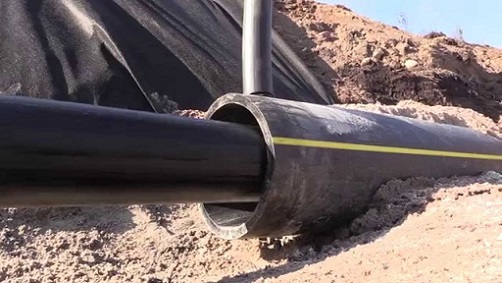
    Power distribution is important for any mitigation-remediation plan. The problem with hurricane toppling trees and power lines is unavoidable – it is what it is – a better solution is to deliver electricity underground or underwater, as illustrated in the above photo. The Go Lean roadmap calls for an extensive smart Power Grid and a region-wide Utility Cooperative. This would allow for alternate power generation and electrical distribution. See sample of an underground/underwater “Power Cable” product depicted in the VIDEO in Appendix C below.

Many other communities have done a good job of optimizing their electrical utility grid. They execute strategies, tactics and implementations to mitigate the risk of power outages; then remediate any crises with technocratic deliveries to facilitate ‘Power Restoration’.

Go Green 1

There will be heavy-lifting for our Caribbean region to have this disposition. The Go Lean roadmap details that heavy-lift, describing the community ethos, strategies, tactics, implementations and advocacies to foster progress for Caribbean energy distribution, our own Regional Power Grid. The following list of entries in the Go Lean book highlights this theme:

Community Ethos – Lean Operations Page 24
Community Ethos – Return on Investments Page 24
Community Ethos – Cooperatives Page 25
Community Ethos – Ways to Impact the Future Page 26
Community Ethos – Ways to Improve Negotiations Page 32
Anecdote – Pipeline Transport – Strategies, Tactics & Implementations Page 43
Strategy – Harness the power of the sun/winds Page 46
Tactical – Fostering a Technocracy Page 82
Tactical – Separation of Powers – Energy Commission Page 82
Anecdote – “Lean” in Government – Energy Permits Page 93
Implementation – Regional Grid as Economies-of-Scale benefit Page 97
Anecdote – Caribbean Energy Grid Implementation Page 100
Implementation – Start-up Benefits from the EEZ Page 104
Implementation – Ways to Develop Pipeline Industry Page 107
Implementation – Ways to Improve Energy Usage Page 113
Advocacy – Ways to Impact Public Works Page 175
Advocacy – Ways to Foster Cooperatives Page 176
Advocacy – Ways to Impact Monopolies Page 202
Appendix – Underwater High Intensity Power Lines Page 282

The experience of enduring hurricanes is never pleasant. As such, we do not invite people to fly down from northern locations to pass storms with us. In fact, when there is a Hurricane Watch, the practice is to evacuate tourists and visitors. We evacuate our high-risk residents as well; (kidney dialysis patients, senior citizens, anyone that cannot endure the loss of electronic-based health instruments). This is a best-practice.

Why do we only evacuate just a limited group from the islands?

We assume that everyone else can endure.

Hah, lol …

But actually, with such high post-hurricane abandonment rates, as reported previously, it is obvious that everyone loses patience. So any improvement in the ‘Power Restoration’ experience would be a win-win; it would improve our communities’ endurance and make our Caribbean homeland better places to live, work and play. 🙂

Download the free e-Book of Go Lean … Caribbean – now!

Sign the petition to lean-in for this roadmap for the Caribbean Union Trade Federation.

———–

Appendix A – Hurricane Irma Devastation

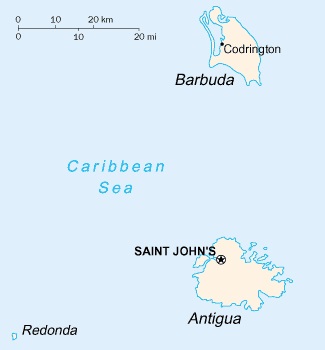
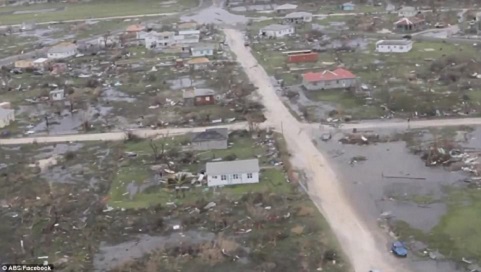
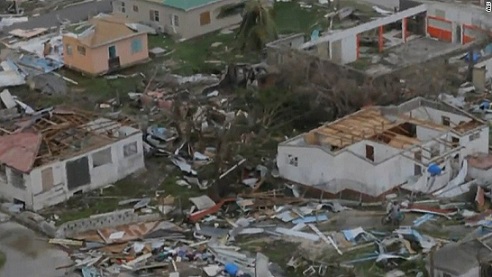
  • In Barbuda, Hurricane Irma caused catastrophic damage on the island; it damaged or destroyed 95% of the island’s buildings and infrastructure, leaving Barbuda “barely habitable” according to Prime Minister Gaston Browne. Everyone on the island was evacuated to Antigua, leaving Barbuda uninhabited for the first time in modern history.[3]
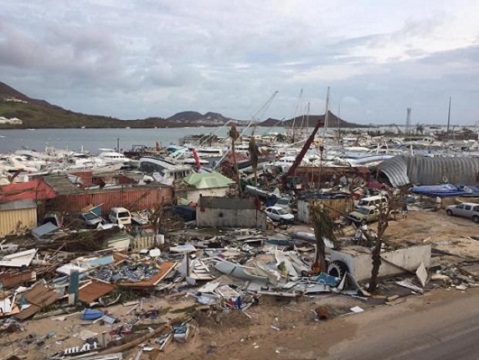
  • In St. Martin, on 6 and 7 September 2017 the island was hit by Hurricane Irma (Category 5 at landfall), which caused widespread and significant damage to buildings and infrastructure. A total of 11 deaths had been reported as of 8 September 2017.[12][13] France’s Minister of the InteriorGérard Collomb, said on 8 September 2017 that most of the schools were destroyed on the French half of the island. In addition to damage caused by high winds, there were reports of serious flood damage to businesses in the village of Marigot. Looting was also a serious problem. Both France and the Netherlands sent aid as well as additional police and emergency personnel to the island.[14][15][16] The Washington Post reported that 95% of the structures on the French side and 75% of the structures on the Dutch side were damaged or destroyed.[17][18] Some days after the storm had abated, a survey by the Dutch Red Cross estimated that nearly a third of the buildings in Sint Maarten had been destroyed and that over 90 percent of structures on the island had been damaged.[19] Princess Juliana Airport was extensively damaged but reopened on a partial basis in two days to allow incoming relief flights and for flights that would take evacuees to other islands.[20]
  • In Anguila, the eye of the storm pass over it on September 6. Many homes and schools were destroyed, and the island’s only hospital was badly damaged.[163] The devastation was particularly severe in East End, where the winds uprooted scores of trees and power poles and demolished a number of houses. … One death was reported on the island.[163] According to [sources], Anguilla’s economy could suffer at least $190 million in losses from the hurricane.[129]
  • Puerto Rico avoided a direct hit by the Category 5 Hurricane Irma on September 8, 2017, but high winds caused a loss of electrical power to some one million residents. Almost 50% of hospitals were operating with power provided by generators.[133]
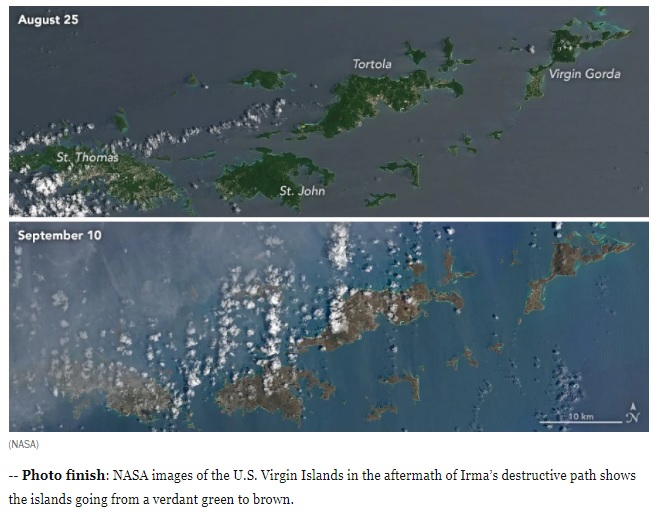
  • Damage in the British Virgin Islands was extensive. Numerous buildings and roads were destroyed on the island of Tortola, which bore the brunt of the hurricane’s core.[172] Irma’s effects in the U.S. Virgin Islands were most profound on Saint Thomas. Due to its normal reliance on electricity from Saint Thomas, the island [of St. John] was left without power.
  • In the Florida Keys, the hurricane caused major damage to buildings, trailer parks, boats, roads, the electricity supply, mobile phone coverage, internet access, sanitation, the water supply and the fuel supply. … As of 6:41 p.m. EDT on September 10 over 2.6 million homes in Florida were without power.[232]

CU Blog - After Irma, Barbuda Becomes a 'Ghost Town' - Photo 2

———–

Appendix B VIDEO – Here’s how the pumps in New Orleans move water out during heavy rainfall – https://youtu.be/hZvGVUZi9FU

Published on Mar 30, 2017 – WDSU News: Pumps Work During Thursday’s Flooding

———–

Appendix C VIDEO – ABB launches world´s most powerful extruded HVDC cable system –

Published on Aug 21, 2014

ABB Power Grids

525 kV voltage (previous highest installed 320 kV) sets world record more than doubling power flow to 2600 MW (from 1000 MW) and extending range to 1500 km for more cost effective, efficient and reliable underground and subsea transmission while keeping losses to below 5 percent. Major breakthrough for applications like underground HVDC transmission, sub-sea interconnections, offshore wind integration etc. More information: http://new.abb.com/systems/high-volta…


Share this post:
, ,
[Top]

After Irma, Barbuda Becomes a ‘Ghost Town’

Go Lean Commentary

CU Blog - After Irma, Barbuda Becomes a 'Ghost Town' - Photo 1a

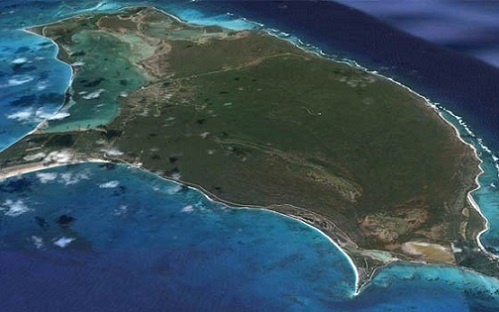
The Caribbean is in crisis today; we have just been devastated by Hurricane Irma; it has wreaked catastrophic havoc in certain islands, of which Barbuda is most notable. This is an official declaration; the Prime Minister of the country of Antigua and Barbuda has identified  90 percent of the structures on the island of Barbuda as uninhabitable and can now only be razed; see story in Appendix A below. See the news VIDEO here:

VIDEO – Barbuda, Destroyed By Hurricane Irma, Faces Jose Next | Rachel Maddow | MSNBChttps://youtu.be/2ewVgVDSuKg

Published on Sep 8, 2017 MSNBC
Michael Joseph, Red Cross president for Antigua and Barbuda, talks with Rachel Maddow about the utter devastation of the island of Barbuda by Hurricane Irma with Hurricane Jose just a day away. » Subscribe to MSNBC: http://on.msnbc.com/SubscribeTomsnbc About: MSNBC is the premier destination for in-depth analysis of daily headlines, insightful political commentary and informed perspectives. Reaching more than 95 million households worldwide, MSNBC offers a full schedule of live news coverage, political opinions and award-winning documentary programming — 24 hours a day, 7 days a week. Connect with MSNBC Online Visit msnbc.com: http://on.msnbc.com/Readmsnbc Find MSNBC on Facebook: http://on.msnbc.com/Likemsnbc Follow MSNBC on Twitter: http://on.msnbc.com/Followmsnbc Follow MSNBC on Google+: http://on.msnbc.com/Plusmsnbc Follow MSNBC on Instagram: http://on.msnbc.com/Instamsnbc Follow MSNBC on Tumblr: http://on.msnbc.com/LeanWithmsnbc Barbuda, Destroyed By Hurricane Irma, Faces Jose Next | Rachel Maddow | MSNBC

(Other impacted locales include Saint BarthélemySaint MartinAnguilla, Puerto Rico, the Virgin Islands and Florida).

Barbuda is a cautionary tale because it fulfills the forecast (prophecy) of this previous commentary, that if left unchecked, Caribbean crises get worse, completely dysfunctional, at the precipice of Failed-State status and communities emerge as …

Ghost Towns

A ghost town is an abandoned village, town or city, usually one which contains substantial visible remains. A town often becomes a ghost town because the economic activity that supported it has failed, or due to natural or human-caused disasters such as floods, government actions, uncontrolled lawlessness, war, or nuclear disasters. …

    “Things will always work themselves out” – Popular fallacy.

There is no guarantee of our survival. Communities and societies do fail; success is not assured; the work must be done, we must “sow if we want to reap”. …

How else would one explain why citizens from the most beautiful addresses on the planet are “breaking down the doors” to get out, either through legal means or illegal ones?

The book Go Lean … Caribbean stresses reboots, reorganizations and general turn-around of failing economic engines in favor of winning formulas. The book quotes a noted American Economist Paul Romer with this famous quotation:

    “A crisis is a terrible thing to waste”.

CU Blog - After Irma, Barbuda Becomes a 'Ghost Town' - Photo 1b

CU Blog - After Irma, Barbuda Becomes a 'Ghost Town' - Photo 1c

The movement behind the Go Lean book have often raised the subject of Ghost Towns. Just last month (August 22), this commentary was published:

Lessons from Colorado: Black Ghost Towns – “Booker T. turning in his grave”

So the future is not guaranteed for any Caribbean community. While our people may survive, our culture may not! We may have to supplant ourselves to some foreign destination. We may have to “take our talents to South Beach” … or South New York… or South Toronto, etc..

Prophecy: If we migrate to a foreign country, our grandchildren born there will NOT be identified as Caribbean.

So Ghost Towns have occurred and could happen in the Caribbean … again.

This commentary continues the 4-part series on the Aftermath of Hurricane Irma. This storm was devastating to the Atlantic tropical region, the Caribbean and US State of Florida. There are a lot of mitigation and remediation efforts that can be done to lessen the impact of storms. There are lessons that we must consider; there are reforms we must make; there are problems we must solve. The full list of the 4 entries of this series are detailed as follows:

  1. Aftermath of Hurricane Irma – America Should Scrap the ‘Jones Act’
  2. Aftermath of Hurricane Irma – Barbuda Becomes a ‘Ghost Town’
  3. Aftermath of Hurricane Irma – The Science of Power Restoration
  4. Aftermath of Hurricane Irma – Failed State Indicators: Destruction and Defection

We want to make the Caribbean homeland a better place to live, work and play. This is the quest of the book Go Lean … Caribbean – available to download for free – which serves as a roadmap for the introduction and implementation of the technocratic Caribbean Union Trade Federation (CU). Despite the threats of Climate Change, the CU is structured to turn-around failing Caribbean communities; it is proffered to provide economic, security and governance solutions for all 30 member Caribbean states. This mandate is detailed early on in the book’s Declaration of Interdependence, as follows (Page 11 – 13):

i. Whereas the earth’s climate has undeniably changed resulting in more severe tropical weather storms, it is necessary to prepare to insure the safety and security of life, property and systems of commerce in our geographical region. As nature recognizes no borders in the target of its destruction, we also must set aside border considerations in the preparation and response to these weather challenges.

xii. Whereas the legacy in recent times in individual states may be that of ineffectual governance with no redress to higher authority, the accedence of this Federation will ensure accountability and escalation of the human and civil rights of the people for good governance, justice assurances, due process and the rule of law. As such, any threats of a “failed state” status for any member state must enact emergency measures on behalf of the Federation to protect the human, civil and property rights of the citizens, residents, allies, trading partners, and visitors of the affected member state and the Federation as a whole.

xix. Whereas our legacy in recent times is one of societal abandonment, it is imperative that incentives and encouragement be put in place to first dissuade the human flight, and then entice and welcome the return of our Diaspora back to our shores. This repatriation should be effected with the appropriate guards so as not to imperil the lives and securities of the repatriated citizens or the communities they inhabit. The right of repatriation is to be extended to any natural born citizens despite any previous naturalization to foreign sovereignties.

The Go Lean book posits that failing Caribbean communities can be rescued, butt if “we do what we have always done, we get what we always got”. Therefore Caribbean communities must adopt different community ethos, plus the executions of key – and different – strategies, tactics, implementations and advocacies to reform and transform.

There is a Way Forward!

Consider this News Article in Appendix B relating the Prime Minister’s fundamental change in property laws for Barbuda:

Ownership is prohibited on the island of Barbuda; all lands in Barbuda are vested in the Crown on behalf of the people on the sister island. … “Whatever land they are occupying now, rather than having a license to occupy, we are saying that we will give … freehold ownership”.

Why should people invest in property they do not own?

Duh! This is such a basic societal factor; it is illogical that the government had not implemented this reform before.

In order to avoid the pitfalls and eventuality of “Ghost Towns”, the Go Lean book describes the heavy-lifting that all the community stakeholders must engage. These efforts are described as 3 prime directives:

Heavy-lifting and leverage!!!

Yes, since natural disasters – hurricanes, earthquakes and even volcanoes – are an inevitability in the Caribbean, we can better insure and assure the continuity of our communities’ societal engines, by spreading the risk across the wider region, not just one member-state. For relief-recovery-rebuilding communities like Barbuda after disasters, the goal is to spread the burden or heavy-lifting across the 30 member-states.

If there is a load you have to bear
That you can’t carry
I’m right up the road
I’ll share your load
If you just call me
Song: Lean On Me by Bill Withers – Go Lean Book (Page 5)

In summary, ghost towns could abound more and more if we continue with the status quo. Let’s not … continue with the more-of-the-same approach.

Let’s commit to this pledge to foster change in our region; we must reform and transform our societal engines. Everyone is hereby urged to lean-in to this CU/Go Lean roadmap to make the Caribbean a better place to live, work and play. 🙂

Download the free e-Book of Go Lean … Caribbean – now!

Sign the petition to lean-in for this roadmap for the Caribbean Union Trade Federation.

———-

Appendix ATitle: PM: 90 Percent of Barbuda ‘Destroyed’ by Hurricane Irma

Hurricane Irma has done catastrophic damage to “90 percent of Barbuda,” according to Gaston Browne, the Prime Minister of Antigua and Barbuda, after it barreled past the island nation and through the Caribbean on Wednesday. An official from the country’s Office of Disaster Services told ABC News said there was “widespread damage” across the island, which is home to 1,600 people. Authorities in St. Martin said 95 percent of the French part of the island was destroyed, with one local official saying the storm caused an “enormous catastrophe.” Irma made landfall as a Category 5 hurricane with sustained winds above 185 mph, and is expected to hit Florida on Saturday night.

Source: The Daily Beast Online Newswire posted September 7, 2017 from: http://www.thedailybeast.com/hurricane-irma-destroys-90-percent-of-barbuda

CU Blog - After Irma, Barbuda Becomes a 'Ghost Town' - Photo 3

CU Blog - After Irma, Barbuda Becomes a 'Ghost Town' - Photo 6

CU Blog - After Irma, Barbuda Becomes a 'Ghost Town' - Photo 5

CU Blog - After Irma, Barbuda Becomes a 'Ghost Town' - Photo 4

———-

Appendix BTitle: Barbudans to get title ownerships of lands they occupy

Antigua Observer – Barbudans will get the opportunity to own the lands they previously occupied as the island seeks to rebuild following the devastation caused by the passage of Hurricane Irma last week.

Prime Minister Gaston Browne made the disclosure yesterday during a special sitting of Parliament.

He said Barbudans would be given a crown grant of one dollar to obtain legal ownership of the lands on the 62-square mile island.

Currently, land ownership is prohibited on the island of Barbuda; all lands in Barbuda are vested in the crown on behalf of the people on the sister island.

The Land Department under the Barbuda Council is the main governing body.

“Whatever land they are occupying now, rather than having a license to occupy, we are saying that we will give you freehold ownership,” Browne said, noting that residents of the sister island are elated over the idea.

“When you give a Barbudan a freehold, they can go into the bank, they can borrow monies, they can get a mortgage, they can build. They can get a loan for student purposes, to do businesses, it is a form of empowerment,” Browne said.

The nation’s leader also suggested that protective mechanisms could be instituted to prevent Barbudans from transferring the freehold ownership without the approval of the Barbuda Council.

Browne told Parliamentarians in the Lower House that it is untenable for Barbuda to be exclusively dependent on Antigua.

According to Browne, it was never the intent of the central government to take full responsibility for the payment of salaries and wages and other expenses on the sister island.

He said the intention was for Barbuda to be able to generate some level of revenue while Antigua would provide a subsidy.

“It has become a dependent relationship. Now I know that the Barbudans are proud people and they don’t want to be coming, cap in hand, to Antigua begging for a salary cheque on a weekly or monthly basis when they can generate their income,” the PM concluded.

Over 1,000 people on Barbuda had to be evacuated from the island last week after the country’s leader described the situation as “uninhabitable” following the hurricane that has also been blamed for the death of a two-year old child.

The PM said the sister island could not progress until the land tenure question is settled, adding that no country can move forward without a proper rights system.

He said consultations would be held with the people of Barbuda on the way forward.

Meanwhile, the government has announced a tentative agreement with the United Arab Emirates to assist with the installation of 800-megawatt solar power  facility on Barbuda, as well as a medical health system.

Prime Minister Browne also said that he had instructed his bank to transfer EC$100,000  from his savings to a fund for the rehabilitation of the island.

Other Antigua & Barbuda Labour Party members have also pledged to dip into their pockets to fund the rebuilding effort.

PM Browne said that he expects other residents and businesses to step up to the plate.

Source: Posted September 12, 2017; retrieved September 16, 2017 from: https://stluciatimes.com/2017/09/12/barbudans-get-title-ownerships-lands-occupy

Share this post:
, ,
[Top]

After Irma, America Should Scrap the ‘Jones Act’

Go Lean Commentary

The Caribbean has just been devastated by Hurricane Irma – the longest Category 5 storm recorded in modern times – it wreaked catastrophic havoc in BarbudaSaint BarthélemySaint MartinAnguilla, Puerto Rico and the Virgin Islands as a Category 5 hurricane[4][5] .

CU Blog - After Irma, America Should Scrap the Jones Act - Photo 2

There is the need for relief, recovery and rebuilding!

This title, “After Irma, America Should Scrap the Jones Act” – in the news article in the below Appendix referring to the temporary waiver of the law – is also a familiar advocacy from this commentary, from the movement behind the book Go Lean…Caribbean – available to download for free. A previous blog-commentary declared:

Stupidity of the Jones Act
The Jones Act mandates that for a ship to go from one US port to another US port it must be American-made and American flagged. Also, for foreign ships to trade in US Territories, they must first journey to a foreign port before they could journey to another American port to transport goods. This seems “stupid”; but the adherence to this law keeps American maritime commerce options afloat; this means someone is getting paid; … a distortion in the reality of Puerto Rico-[Virgin Islands]-to-US Mainland trade.

The Go Lean movement asserts that the US Territories in the Caribbean deserve better; they deserve the full exercise of the free market, not just now for the hurricane relief-recovery-rebuilding but all the time. This is why we call the ‘Jones Act’ stupid and strongly urge for its repeal. These US Territories – make that colonies – are pressed between a rock and a hard place, their best hope for survival and prosperity is to grow-up from their American neo-colonial status.

What? How? When? Where? All these questions and more are answered in the Go Lean book. The book serves as a roadmap for the introduction and implementation of the technocratic Caribbean Union Trade Federation (CU), for the elevation of Caribbean society – for all member-states. This CU/Go Lean roadmap has these 3 prime directives:

  • Optimization of the economic engines in order to grow the regional economy to $800 Billion and create 2.2 million new jobs.
  • Establishment of a security apparatus to ensure public safety and protect the resultant economic engines.
  • Improve Caribbean governance to support these engines, including a separation-of-powers between the member-states and CU federal agencies.

The Go Lean book posits that devastating hurricanes – like Irma – will now be the norm. This problem is too big for any one Caribbean member-state alone to contend with. The book therefore stresses that reforming and transforming the Caribbean societal engines must be a regional pursuit. This was an early motivation for the roadmap, as pronounced in the opening Declaration of Interdependence (Pages 12 – 13):

i. Whereas the earth’s climate has undeniably changed resulting in more severe tropical weather storms, it is necessary to prepare to insure the safety and security of life, property and systems of commerce in our geographical region. As nature recognizes no borders in the target of its destruction, we also must set aside border considerations in the preparation and response to these weather challenges.

xi. Whereas all men are entitled to the benefits of good governance in a free society, “new guards” must be enacted to dissuade the emergence of incompetence, corruption, nepotism and cronyism at the peril of the people’s best interest. The Federation must guarantee the executions of a social contract between government and the governed.

xvi. Whereas security of our homeland is inextricably linked to prosperity of the homeland, the economic and security interest of the region needs to be aligned under the same governance. Since economic crimes … can imperil the functioning of the wheels of commerce for all the citizenry, the accedence of this Federation must equip the security apparatus with the tools and techniques for predictive and proactive interdictions.

xxiii. Whereas many countries in our region are dependent OverseasTerritory of imperial powers, the systems of governance can be instituted on a regional and local basis, rather than requiring oversight or accountability from distant masters far removed from their subjects of administration. The Federation must facilitate success in autonomous rule by sharing tools, systems and teamwork within the geographical region.

xxiv. Whereas a free market economy can be induced and spurred for continuous progress, the Federation must install the controls to better manage aspects of the economy: jobs, inflation, savings rate, investments and other economic principles. Thereby attracting direct foreign investment because of the stability and vibrancy of our economy.

The Go Lean book provides 370-pages of turn-by-turn instructions on “how” to adopt new community ethos, plus the strategies, tactics, implementations and advocacies to execute so as to reboot, reform and transform the societal engines of the American Caribbean Territories and all of Caribbean society. Puerto Rico and the USVI had problems before Irma; their daily life is filled with troubles and strife. While they need the ‘Jones Act’ to be waived for this hurricane relief-recovery-rebuilding effort, even more they need the ‘Jones Act’ repealed for everyday life.

This is not just our opinion alone, as attested by the Editorial – in the Appendix below – from Bloomberg News. This media organization is not just criticizing from afar; they truly care about the Greater Good of the US Territories; see Appendix VIDEO below.

This commentary commences a 4-part series on the Aftermath of Hurricane Irma. This storm was devastating to the Atlantic tropical region, the Caribbean and US State of Florida. There are a lot of mitigation and remediation efforts that can be done to lessen the impact of storms. There are lessons that we must consider; there are changes we must make; there are problems we must solve. The full list of the 4 entries in this series are detailed as follows:

  1. Aftermath of Hurricane Irma – America Should Scrap the ‘Jones Act’
  2. Aftermath of Hurricane Irma – Barbuda Becomes a ‘Ghost Town’
  3. Aftermath of Hurricane Irma – The Science of Power Restoration
  4. Aftermath of Hurricane Irma – Failed State Indicators: Destruction and Defection

Yes, we can do better in the future, even after devastating hurricanes; we can make all of the Caribbean homeland better places to live, work and play. 🙂

Download the free e-book of Go Lean … Caribbean – now!

Sign the petition to lean-in for this roadmap for the Caribbean Union Trade Federation. 

———–

Appendix – Title: After Irma, America Should Scrap the Jones Act
Sub-Title: The century-old law restricting trade between U.S. ports is a costly failure.

CU Blog - After Irma, America Should Scrap the Jones Act - Photo 1Another big hurricane, another temporary waiver of the Jones Act — the 1920 law mandating that goods and passengers shipped between U.S. ports be carried in U.S.-flagged ships, constructed primarily in the U.S., owned by U.S. citizens, and crewed by them or by U.S. legal permanent residents.

Circumstances did indeed demand a new stay on this dumb law — but it would be better to get rid of it altogether, as Senator John McCain and others have argued.

The Jones Act was meant to ensure that the U.S. has a reliable merchant marine during times of national emergency. It has devolved into a classic protectionist racket that benefits a handful of shipbuilders and a dwindling number of U.S. mariners. It causes higher shipping costs that percolate throughout the economy, especially penalizing the people of Alaska, Guam, Hawaii and Puerto Rico.

Despite the law, the U.S. merchant fleet has continued to shrink. Today there are only about 100 large ships that meet its requirements — and many of them are past their best. In part because of the high cost of using Jones Act vessels, coastal shipping has steadily declined, even though it would otherwise be more efficient in many cases than trucks and railroads. The act distorts trade flows, giving imports carried by foreign ships an edge over goods shipped from within the U.S. Proposed extensions of the law could threaten the development of offshore energy resources as well as exports of U.S. oil and natural gas.

Defenders of the law say its effects are uncertain because there’s too little data. The Federal Reserve Bank of New York suggests a way to put that right: Give a five-year Jones Act waiver to Puerto Rico. That would provide data for a more rigorous analysis while giving the island’s battered economy a lift. Short of outright repeal, Congress could also revisit the law’s ancient, burdensome rules on crew sizes and much else. If the law remains, its focus should be on restoring the vibrancy of coastal maritime commerce, not on counting ships and sailors.

Economics aside, one might ask, isn’t the Jones Act vital for national security? Hardly. Much of the U.S. Ready Reserve Fleet is foreign-built. Very few Jones Act ships are the roll-on, roll-off kind that the military wants. To be sure, the U.S. has sound strategic reasons for maintaining some shipbuilding capability — but smarter support narrowly directed to that purpose would be cheaper and fairer than a trade law that does so much pointless collateral harm.

The latest waiver is slated to expire this week. Modernizing the law would be a step forward. But the best thing to do with the Jones Act is scrap it.

To contact the senior editor responsible for Bloomberg View’s editorials: David Shipley at davidshipley@bloomberg.net .

Source: Posted September 13, 2017 from Bloomberg News Service; retrieved September 14, 2017 from: https://www.bloomberg.com/view/articles/2017-09-13/after-irma-america-should-scrap-the-jones-act

———–

Appendix VIDEO – After Irma, Bloomberg Helps With Recovery In U.S. Virgin Islands http://www.msnbc.com/mtp-daily/watch/after-irma-bloomberg-helps-with-recovery-in-u-s-virgin-islands-1047755843759

Posted September 15, 2017 – Chuck Todd traveled to the U.S. Virgin Islands to interview Fmr. New York City Mayor Michael Bloomberg and NBA All-Star Tim Duncan, who are both helping with the recovery effort after Hurricane Irma.

Share this post:
, , , , ,
[Top]

ENCORE on Charity Management: Grow Up Already!

One year later, have we grown up anymore in that time?

Unfortunately, no!

There is still the need to Grow Up and manage our own affairs. This was detailed in a comprehensive commentary exactly one year ago today. Let’s Encore it here-now:

————————————————–

Go Lean Commentary – Charity Management: Grow Up Already!

cu-blog-charity-management-grow-up-already-photo-7“Don’t be a stock on the shelf” – Bob Marley: Pimpers Paradise – Album: Uprising – 1980.

What does the lyrics of this song mean? (See VIDEO here). The analysis is that it is poetic and prophetic. The song has a personal indictment and a community indictment. The lyrics directly address a young girl who stumbles into a party lifestyle; being victimized by abusers or “pimps”. The warning is that she would be considered nothing more than a commodity – to be counted on for illicit profits – rather than a real human with hopes and dreams. As for the community indictment, this submission on SongMeanings.com conveys an insightful point:

General Comment
I’ve always had the impression that this song is about Jamaica, Bob’s mother-country, and its contradictions, described through the technique of personification. If this were the case, most of the girl’s attributes and actions would refer to the whole community of Jamaicans and not to a single person, as it first appears. What makes this song so beautiful is the sadness, tenderness and pride of Marley’s lyrics and voice, as he describes his people’s use and abuse of drugs, its innate tendency to smile, have fun and carry on in spite of the poverty, violence and harshness which characterizes life in that country, and above all its vulnerability to the lies, deception and empty promises of politicians and elites in general, a vulnerability which forces most people into a lifelong submission and which gives this song its title.
By: dettawalker on April 19, 2015

There is a vulnerability to lies, deception and empty promises in the Caribbean. Other people have raised money under the guise of helping our region, but then only kept the monies for themselves … mostly. There is the need for philanthropy, charitable donations and community development, but we need to take the lead for this ourselves, rather than the potential of being victimized by others.

This is not a theory; this is a fact! Remember the $500 million raised by the American Red Cross to benefit Haiti after the 2010 Earthquake; the money mostly disappeared with little manifestation in Haiti. 🙁

Perhaps this is a by-product of the attitude of depending on “other peoples money”; this is so familiar in the Caribbean. For the past 50 years of Caribbean integration movements (West Indies Federation, Organization of Eastern Caribbean States and Caribbean Community or CariCom), the focus had been on soliciting aid – begging – from the richer North American and European nations.

Today, our message to Caribbean stakeholders is: Grow Up Already!

Truly, at what point is it expected that we would mature and take care of our own responsibilities?

Answer: Now! Half-pass now!

This point was eloquently conveyed in a previous blog-commentary, where it related how Caribbean member-states use “development funds” (International Aid) for budgetary support for the governments to fulfill their responsibilities in the Social Contract. As a reminder, this implied Social Contract refers to the arrangement where citizens surrender some of their freedoms and submit to the authority of the State in exchange for protection of remaining natural and legal rights. This contract authorizes the State to raise revenues from taxes and fees, but “one cannot get blood from a stone”. The 30 Caribbean member-states are mostly all Third World countries; they hover near the poverty line.

Yet still, the book Go Lean … Caribbean asserts it is high-time for this region to grow up and adapt best-practices to elevate our society. We can improve all societal engines: economics, security and governance. This theme is weaved throughout the Go Lean book which serves as a roadmap for the introduction and implementation of the technocratic Caribbean Union Trade Federation (CU). This Go Lean/CU roadmap has the vision of elevating Caribbean society by optimizing these engines. Observe the prime directives as published in the book:

  • Optimization of the economic engines in order to grow the regional economy to $800 Billion & create 2.2 million new jobs.
  • Establishment of a security apparatus to protect the resultant engines and mitigate internal and external “bad actors”.
  • Improvement of Caribbean governance to support these engines, including a separation-of-powers between the CU federal government and the member-states.

The Bible states …

… “anyone with ears to hear should listen and understand!” – Matthew 11:15; New Living Translation.

This does not mean that gleaning the wisdom of the fallacy of other people taking the lead for our development will eliminate our poverty. No; we are still a region of Third Word countries; that same Bible translation continues that “you will always have the poor among you” –  Matthew 26:11. We simply need to take the lead ourselves of soliciting aid, collecting the aid and managing the distribution of that aid and the resultant accountability. This is no “rocket science”; in fact, it is no science at all. It is mostly an art, and there are competent role models who perform these functions well; we only need to adapt their best-practices.

Consider this company Brewco Marketing; they consider themselves “the marketing vehicle for America’s most trusted brands”. This is a fitting analysis as this company currently conducts marketing campaigns to raise money to benefit impoverished people in several Caribbean countries, the Dominican Republic for example.

cu-blog-charity-management-grow-up-already-photo-9

cu-blog-charity-management-grow-up-already-photo-2

cu-blog-charity-management-grow-up-already-photo-1

cu-blog-charity-management-grow-up-already-photo-3

cu-blog-charity-management-grow-up-already-photo-8

cu-blog-charity-management-grow-up-already-photo-4

cu-blog-charity-management-grow-up-already-photo-6Brewco Marketing Group – see Appendix VIDEO below – is a leading experiential marketing company specializing in strategy, design, in-house fabrication, activation and program management. They provide these marketing services for other companies: for-profit corporations and not-for-profit charities. One such client is Compassion International, a Christian child sponsorship organization dedicated to the long-term development of children living in poverty around the world. They are headquartered in the US city of Colorado Springs, Colorado; but they function in 26 countries such as Bolivia, Colombia, Mexico, Haiti, Kenya, India and the Dominican Republic. According to the Wikipedia page on this charity, (retrieved September 12, 2016), this organization provides aid to more than 1,700,000 children.

Bravo Compassion International! See an example here of the type of faith-based advocacy Compassion International is conducting in our Caribbean region; in this case, the Dominican Republic: http://changetour.compassion.com/experience-dominican-republic/    

But, consider that Compassion International outsources to a for-profit marketing firm – Brewco – to solicit funding. What is Brewco’s motivation? Simple: Profit.

While not impugning any bad motives to Brewco or Compassion International, this commentary asserts for self-sufficiency, that “charity begins at home”. This is a basic prerequisite for a mature society.

This consideration aligns with the strategies, tactics, implementations and advocacies of the book Go Lean…Caribbean. The declaration is that the Caribbean must be front-and-center in providing for our own solutions. The alternative of someone else taking the lead for our solution, despite how altruistic the motives, seems to be lacking…every time! Consider this encyclopedia detail on criticism of “Child Sponsorship” charities:

Critics have argued that child sponsorship could alienate the relatively privileged sponsored children from their peers and may perpetuate harmful stereotypes about third-world citizens being helpless. They also claim that child sponsorship causes cultural confusion and unrealistic aspirations on the part of the recipient, and that child sponsorship is expensive to administer.[8][9] This latter problem has led some charities to offer information about a “typical” child to sponsors rather than one specifically supported by the sponsor. In some cases charities have been caught sending forged updates from deceased children.[10]

The Effective Altruism community – social movement that applies evidence and reason to determining the most effective ways to improve the world – generally opposes child sponsorship as a type of donor illusionGivewell – American non-profit charity evaluator – describes sponsorship thusly:[11]

  • Illusion: through an organization such as “Save the Children“, your money supports a specific child.
  • Reality: as “Save the Children” now discloses: “Your sponsorship contributions are not given directly to a child. Instead, your contributions are pooled with those of other sponsors to provide community-based programming for all eligible children in the area.”

Source: https://en.wikipedia.org/wiki/Child_sponsorship retrieved September 12, 2016

cu-blog-charity-management-grow-up-already-photo-5

This – reality of Big Charity – is just another example of Crony-Capitalism. See the running inventory list of all the Crony-Capitalism models that proliferate in the US, here at https://goleancaribbean.com/blog/?p=5529.

Considering this reality, we exclaim to the Caribbean: Grow up already!

The Go Lean book declares (Page 115) that:

“Haiti [in particular and the Caribbean in general] – should not be a perennial beggar; the Caribbean should not be perennial beggars, but we do need capital/money, especially to get started”.

The Go Lean movement (book and blogs) posits that the Caribbean must not be vulnerable to these American Crony-Capitalistic forces.

We do not need some external entity fleecing the public in our name – under the guise of charities but retain vast majorities of the funding as administrative costs – executive salary and bonuses – rather than the intended benefactors.

The Caribbean must do better!

The book Go Lean…Caribbean pursues the quest to elevate the Caribbean region through economic, security and governing empowerments. This includes oversight and guidance for Non-Governmental Organizations (NGO’s) in the region. The Go Lean/CU roadmap provides for better stewardship for the Caribbean homeland; and it describes NGO’s as additional Caribbean stakeholders. Governance to this vital area is part of the maturity our region must show; it is not about independence, but rather it conveys the community ethos of interdependence. This point was pronounced early in the Go Lean book, in the opening Declaration of Interdependence (Pages 11 & 14) with these acknowledgements and statements:

xi.   Whereas all men are entitled to the benefits of good governance in a free society, “new guards” must be enacted to dissuade the emergence of incompetence, corruption, nepotism and cronyism at the peril of the people’s best interest. The Federation must guarantee the executions of a social contract between government and the governed.

xii. Whereas the legacy in recent times in individual states may be that of ineffectual governance with no redress to higher authority, the accedence of this Federation will ensure accountability and escalation of the human and civil rights of the people for good governance, justice assurances, due process and the rule of law. As such, any threats of a “failed state” status for any member state must enact emergency measures on behalf of the Federation to protect the human, civil and property rights of the citizens, residents, allies, trading partners, and visitors of the affected member state and the Federation as a whole.

xxxiii. Whereas lessons can be learned and applied from the study of the recent history of other societies, the Federation must formalize statutes and organizational dimensions to avoid the pitfalls of [other] communities.

This is the quest of CU/Go Lean roadmap: to provide new guards for a more competent Caribbean administration … by governmental organizations and non-governmental organizations. Under this roadmap, NGO’s would be promoted, audited and overseen by CU administrators. The CU would be legally authorized as “deputies” of the member-state governments.

The Go Lean book stresses key community ethos, strategies, tactics, implementations and advocacies necessary to turn-around the eco-systems of Caribbean governance. These points are detailed in the book as follows:

Community Ethos – Deferred Gratification Page 21
Community Ethos – Economic Principles – Respond to Incentives in Predictable Ways Page 21
Community Ethos – Economic Principles – Economic Systems Influence Individual Choices Page 21
Community Ethos – Economic Principles – Consequences of Choices Lie in the Future Page 21
Community Ethos – Security Principles – Intelligence Gathering Page 23
Community Ethos – Security Principles – “Crap” Happens Page 23
Community Ethos – Governing Principles – Cooperatives Page 25
Community Ethos – Ways to Impact the Future Page 26
Community Ethos – Ways to Impact Turn-Arounds Page 33
Community Ethos – Ways to Improve Sharing – Emergency Response Page 35
Community Ethos – Ways to Impact the Greater Good Page 37
Strategy – Vision – Confederate all 30 member-states/ 4 languages into a Single Market Page 45
Strategy – Mission – Prepare for the eventuality of natural disasters Page 45
Strategy – Agents of Change – Climate Change Page 57
Tactical – Ways to Foster a Technocracy Page 64
Tactical – Growing the Economy – Post WW II European Marshall Plan/Recovery Model Page 68
Tactical – Separation-of-Powers – CU Federal Government versus Member-State Governance Page 71
Tactical – Separation-of-Powers – Treasury Department – Shared Property Recording Systems Page 74
Tactical – Separation-of-Powers – State Department – Liaison/Oversight for NGO’s Page 80
Tactical – Separation-of-Powers – Interior Department – Housing & Urban Authority Page 83
Implementation – Assemble All Regionally-focus Organizations of All Caribbean Communities Page 96
Implementation – Ways to Pay for Change Page 101
Implementation – Ways to Foster International Aid Page 115
Planning – 10 Big Ideas – Cuba & Haiti Marshall Plans Page 127
Planning – Ways to Make the Caribbean Better Page 131
Planning – Ways to Improve Failed-State Indices – Governance and the Social Contract Page 134
Advocacy – Ways to Grow the Economy Page 151
Advocacy – Ways to Create Jobs Page 152
Advocacy – Ways to Improve Housing – Optimizing Property Registration Process Page 152
Advocacy – Ways to Improve Governance Page 168
Advocacy – Ways to Better Manage the Social Contract Page 170
Advocacy – Ways to Improve Homeland Security Page 180
Advocacy – Ways to Improve for Natural Disasters – Enhanced local response and recovery Page 184
Advocacy – Ways to Develop a Pre-Fab Housing Industry – One solution ideal for Slums Page 207
Advocacy – Ways to Impact the Dominican Republic Page 237
Advocacy – Ways to Re-boot Haiti Page 238

These subjects – Charity Management, Philanthropy and International Aid – have been a source of consistent concern for the Go Lean movement. Consider the details from these previous blog-commentaries:

https://goleancaribbean.com/blog/?p=8243 Facebook Founder’s Philanthropy Project Makes First Major Investment
https://goleancaribbean.com/blog/?p=7989 ‘Getting over’ with ‘free money’ for societal transformations
https://goleancaribbean.com/blog/?p=7896 The Logistics of Disaster Relief
https://goleancaribbean.com/blog/?p=6129 Innovative Partnership Aids Farm Workers
https://goleancaribbean.com/blog/?p=3432 OECS diplomat has dire warning for Caribbean countries
https://goleancaribbean.com/blog/?p=1763 Bill & Melinda Gates Foundation Philanthropy Efforts

So the Caribbean experience with Charity Management in the past and at present is not ideal. How do we apply this insight to impact our future executions?

The primary strategy for improving Charity Management is to keep the administration local; this includes the fund development and the decision-making.

Looking at the great models and samples from Compassion International and Brewco Marketing, can we deploy mobile trailers and immersive exhibits? Can we deploy smart phone apps or tablets with walk-along narration to convey the desperate need for international aid in the Caribbean? Can we foster an eco-system with monthly billing, credit card transactions, or text-message billing?

Yes, we can …

… and this is the “grown up” thing to do, after being burned so often by outsiders.

When I was a child, I spoke and thought and reasoned as a child. But when I grew up, I put away childish things. – 1 Corinthians 13:11 – New Living Translation

The Go Lean roadmap seeks to empower and elevate Caribbean societal engines. We have a lot to do, the Go Lean book describes it as heavy-lifting. We see the American Crony-Capitalism in action. We do not want to follow their lead. We want to learn from their good and bad examples and models. (It is out-of-scope for the Go Lean movement to fix America). We simply want to fix our Caribbean society to be more self-reliant, both proactively and reactively.

Our quest is simple, a regional effort to make the Caribbean homeland a better place to live, work and play. 🙂

Download the free e-Book of Go Lean … Caribbean – now!

———–

Appendix VIDEO – Brewco Marketing Group – https://vimeo.com/101107626

The company’s offerings: from long-term experiential brand strategy to overall program execution and management. Engaging audiences where they work, live and play.

———–

Appendix VIDEO – Interactive Tour Immerses Visitors Into Daily Life in a Foreign Country – http://vimeo.com/73958461

Preview of The Compassion Experience from The Compassion Experience on Vimeo.

Retrieved September 12, 2016 – A self-guided tour will immerse visitors in the lives of the children. Through the use of an iPod, a headset and over 1,700 square feet of interactive space, visitors will see the children’s homes, walk through schools and markets, and hear life-changing stories of hope—all from the perspective of a child whose life began in poverty. This free event is appropriate for all ages and is an excellent opportunity for anyone who has never had the chance to travel outside the U.S. to get a small glimpse of what life can be like in developing countries. See more at http://changetour.compassion.com/


Share this post:
, , ,
[Top]

Caribbean Island Honors Joseph Marcell

Go Lean Commentary

The movement behind the book Go Lean … Caribbean – and accompanying blog-commentaries – asserts that movies, music, theater, TV shows and other forms of the arts can greatly impact society; in addition to the entertainment value, there is also image and impression.

People can change their views and perceptions; prejudices can be overridden. There is the media; there is the message and there are the models: people who elevate to ‘role model’ status by their excellent deliveries and contributions. All of this in a barrage of message frequency – think: a weekly TV show – can dilute false precepts.

Caribbean = ‘Less Than‘? Hardly!

THE BOLD AND THE BEAUTIFULThis language adequately describes the artist Joseph Marcell. We all know him as the actor that played “Geoffrey” on the TV show The Fresh Prince of Bel-Air in the 1990’s. He is in the news again, as he is being honored by his birth country, the Caribbean island of St. Lucia; see this news article here:

Title: Saint Lucia honours Joseph Marcell
Press Release:–(Thursday, 07 September 2017) (TORONTO, ON) – The Saint Lucia Tourism Authority and the Consulate General of Saint Lucia, in partnership with CaribbeanTales International Film Festival honors Joseph Marcell (best known for his role as “Geoffrey” in Fresh Prince of Belair).

Marcell is in Toronto attending the 12th annual CaribbeanTales International Film Festival for the world premiere of a brand-new TV series, BATTLEDREAM CHRONICLES on September 6th at The Royal Cinema with an encore screening on September 7th at the Cineplex Cinemas, Scarborough.

On September 7th Marcell will appear as a guest on the hit TV Show – The Social. He will be talking to the hosts about what he’s been up to since the Fresh Prince, his Saint Lucia connection and love for theatre.

Saint Lucian nationals will have a unique opportunity to meet with Marcell at an exclusive VIP reception in Toronto from 12:30 – 2:30pm on September 8th, 2017. The Consulate General of Saint Lucia in Toronto, co-hosts of the event, will honor Marcell for his contributions to the arts worldwide.

The VIP reception will feature a travel presentation by the Saint Lucia Tourism Authority with product updates from Sunwing Vacations and Royalton Saint Lucia. Autograph signing will take place following the reception.

Source: Retrieved September 7, 3017 from https://stluciatimes.com/2017/09/07/saint-lucia-honours-joseph-marcell

Joseph Marcell is familiar to this commentary. He was among the many Caribbean-bred cast-members of the Fresh Prince show that was featured in the blog submission from February 25, 2017. That blog, encored below, portrayed how the Caribbean image was accentuated by those artists.

The purpose of the Go Lean movement, described as the prime directive, is the optimization of the Caribbean societal engines: economics, security and governance. A secondary directive is clearly an accentuation of the Caribbean image. For that quest, we honor Joseph Marcell

… we are so proud!

See the original February 25, 2017 blog-commentary here:

—————-

Commentary Tile: Caribbean Roots: Cast of ‘The Fresh Prince of Bel-Air’

For the generation born between 1980 and 2000 – Millennials – this TV show is an icon of their generation:

The Fresh Prince of Bel-Air.

It was a situation comedy (sit-com) with laughter, hip-hop music, urban cool lifestyle, family values and thought-provoking drama. This show was formative for all demographics of this generation – White and the Black-and-Brown –  but most people do not realize that a large number of the cast members had Caribbean roots.

We are so proud!

CU Blog - Caribbean Roots - Cast of Fresh Prince of Bel-Air - Photo 1

CU Blog - Caribbean Roots - Cast of Fresh Prince of Bel-Air - Photo 3

The movement behind the book Go Lean … Caribbean recognizes the significance of this art-form: sit-com television. On a consistent basis, audiences tuned into this show for entertainment and walked away with enlightenment as well – average ratings were 13 – 14 million viewers. They were constantly exposed to an affluent African-American household with an intact family structure: father, mother, and compliant children navigating a changing world. That was a different perspective – see Image Awards details in the Appendix below – compared to the realities of Black America and the pervasive media portrayals.

The show was not a docu-drama of “Black versus White America”, though many times, plotlines covered these dynamics. In general the storylines addressed teenage angst, but many plotlines addressed the family’s affluence versus working class families; this exposes a familiar rift in the Black community with passionate advocates for a Talented Tenth versus a ‘Power to the People’ contingent. See these encyclopedic details and VIDEO of the show here:

Title: The Fresh Prince of Bel-Air

CU Blog - Caribbean Roots - Cast of Fresh Prince of Bel-Air - Photo 0The Fresh Prince of Bel-Air is an American sitcom that originally aired on NBC from September 10, 1990, to May 20, 1996. The show stars Will Smith as a fictionalized version of himself, a street-smart teenager from West Philadelphia who is sent to move in with his wealthy aunt and uncle in their Bel Air mansion after getting into a fight on a local basketball court. In the series, his lifestyle often clashes with the lifestyle of his relatives in Bel Air. The series ran for six seasons and aired 148 episodes.[1][2]

Starring Cast

Will Smith as Will “The Fresh Prince” Smith
James Avery as Philip Banks
Janet Hubert-Whitten as Vivian Banks (1st)
Alfonso Ribeiro as Carlton Banks
Karyn Parsons as Hilary Banks
Tatyana M. Ali as Ashley Banks
Joseph Marcell as Geoffrey The Butler
Daphne Maxwell Reid as Vivian Banks (2nd)
Ross Bagley as Nicholas “Nicky” Banks (Seasons 5 & 6 only)

Development
In December 1989, NBC approached Will Smith, a popular rapper during the late 1980s.[3] The pilot episode began taping on May 1, 1990.[4] Season 1 aired in July 1990 and ended in March 1991. The series finale was taped on Thursday, March 21, 1996.[5][6]

The theme song was written and performed by Smith under his rap stage name, The Fresh Prince. The music was composed by QDIII (Quincy Jones III), who is credited with Smith at the end of each episode.

The music often used to bridge scenes together during the show is based on a similar chord structure. The full version of the theme song was used unedited in the first three episodes. The full length version, which is 2:52, was included on Will Smith’s Greatest Hits album and attributed to him only, as well as DJ Jazzy Jeff & the Fresh Prince in 1998. A 3:23 version was released in the Netherlands in 1992, reaching #3 on the charts.

In the second season, the kitchen and living room sets were rebuilt much larger with a more contemporary style (as opposed to the much more formal style of the first season), and were connected directly by an archway, allowing scenes to be shot continuously between the sets.

Plot
The theme song and opening sequence set the premise of the show. Will Smith is a street-smart teenager, born and raised in West Philadelphia. While playing basketball, Will misses a shot and the ball hits a group of people, causing a confrontation that frightens his mother, who sends him to live with his aunt and uncle in the town of Bel Air, Los Angeles.

He flies from Philadelphia to Los Angeles on a one-way ticket in first class. He then whistles for a taxi that has dice in the reflection screen and the word “FRESH” on its vanity plates. Will’s working class background ends up clashing in various humorous ways with the upper class, “bourgeois” world of the Banks family – Will’s uncle Phil and aunt Vivian and their children, Will’s cousins Hilary, Carlton, and Ashley.
Source: Wikipedia Online Encyclopedia – Retrieved February 24, 2017 from: https://en.wikipedia.org/wiki/The_Fresh_Prince_of_Bel-Air

————

VIDEO – The Fresh Prince Of Bel Air Theme Song – https://youtu.be/1nCqRmx3Dnw

Published on Feb 3, 2013 – This was obviously the first episode.

The reference to The Fresh Prince refers to the hip-hop rapper Will Smith; the show revolved around him.

The Go Lean book identifies that music – even hip-hop – and the arts can greatly impact society; in addition to the entertainment value, there is also image and impression. People can override many false precepts with excellent deliveries and contributions from great role models.

The book Go Lean…Caribbean serves as a roadmap for the introduction and implementation of the Caribbean Union Trade Federation (CU). This CU strives to advance Caribbean image and culture in the region and throughout the world, with these 3 prime directives:

  • Optimization of the economic engines in order to grow the regional economy.
  • Establishment of a security apparatus to protect the resultant economic engines.
  • Improve Caribbean governance.

This roadmap recognizes that a prerequisite for advancing society is a change in the Caribbean “community ethos”;  (the underlying attitude/spirit/sentiment that informs the beliefs, customs, or practices). Early in the book, the contributions that culture (music, television, film, theater and dance) can make is pronounced as an ethos for the entire region to embrace, (opening Declaration of Interdependence – DOI – Pages 15) with this statement:

xxxii. Whereas the cultural arts and music of the region are germane to the quality of Caribbean life, and the international appreciation of Caribbean life, the Federation must implement the support systems to teach, encourage, incentivize, monetize and promote the related industries for arts and music in domestic and foreign markets. These endeavors will make the Caribbean a better place to live, work and play.

The Go Lean/CU asserts that change has now come to the Caribbean, collectively and for each of the 30 member-states. The people, institutions and governance of the region are all urged to “lean-in” to this roadmap for change. We know it is important to highlight the positive contributions of Caribbean people, even their descendants and legacies.

The great role models being considered here are the many cast members of this iconic TV show – The Fresh Prince of Bel-Air – who had Caribbean roots. We learn lessons from these great role models: lessons that are good, bad and ugly.

The cast members for consideration are:

  • Alfonso Ribeiro as Carlton Banks
    This American-born actor has displayed many talents, beginning his career at the age of eight but securing his first TV sit-com on the series Silver Spoons at the age of 13; he is also accomplished as a television director, dancer, and show host. He was born in New York City to Trinidadian parents Michael and Joy Ribeiro (née De Leon) of Portuguese, Spanish and Afro-Trinidadian descent from Trinidad and Tobago. His mother was the daughter of Trinidadian Calypsonian the Roaring Lion, Rafael de Leon.[2][3]
  • Tatyana M. Ali as Ashley Banks
    This artist has excelled in her roles as an actress, model and R&B singer. She was born in New York to a mother of Afro-Panamanian[2][3] heritage and a father who is Indo-Trinidadian.[3] She began her acting career at the young age of six, starting as a regular child performer on Sesame Street starting in 1985. She has not stopped working in the entertainment industry, featuring acting and singing roles right up to the present day.
  • Joseph Marcell as Geoffrey The Butler
    This Saint Lucian-born British actor moved to the United Kingdom at the age of nine, grew up in South London, and still lives in that metropolitan area. He studied theatre and science at college, then took courses in speech and dance. As a member of the Royal Shakespeare Company, he appeared in productions of Othello and A Midsummer Night’s Dream. He has also appeared often on British television and in feature films.[2]

These artists have placed their signatures on the entertainment world – The Fresh Prince of Bel-Air show delivered 148 episodes – notwithstanding their Caribbean heritage. This is among the ‘Good‘ lessons.

What is ‘Bad and Ugly‘ is how they have excelled in their crafts in the US and the UK as opposed to their ancestral homelands. Their parents left the islands for greater opportunities 50 – 70 years ago and despite the passage of time we still do not have any manifestations that would have allowed their artistic expressions in the Caribbean region.

What is sad is that most of the Caribbean Diaspora left their beloved homelands with some aspirations of returning some day. This is depicted in the Go Lean book with this quotation (Page 118):

The Bottom Line for the Caribbean Diaspora
The Caribbean is the best address in the world. However for over 50 years many Caribbean citizens left their island homes to find greater opportunity in foreign lands: USA, Canada and Europe. Though the “man was taken out of the island, the island was never taken out of the man”, and as such many of the Diaspora live in pockets with other Caribbean expatriates in their foreign homelands (i.e. Flatbush in Brooklyn, New York, USA). What’s more, their children, legacies, are still raised and bred with Caribbean values and culture. Many left initially with the intention of returning someday, but life, loves and livelihoods got in the way of a successful return. Worse, many tried to return and found that they were targets of crime and terrorism, mandating that they abandon all hopes and dreams of a successful repatriation. The CU therefore must allow for the repatriation of peoples of the Diaspora, in all classes of society, “the good, the bad and the ugly”.

We salute these artists from the TV show ‘The Fresh Prince of Bel-Air’. Great job; great performances and great portrayals. We accept that these artists are great Americans and Britons; they may never be grouped with Caribbean artists.

This is our loss.

May we do better with our next generation. We can and have done some good in the past; Caribbean people have impacted the art world (music and culture) right from their Caribbean homeland. Consider Caribbean musical icon, Bob Marley; he set a pathway for success for other generations of talented, inspirational and influential artists to follow. More artists of Caribbean heritage are sure to emerge to “impact the world” with their artistry. The planners for a new more opportunistic Caribbean – the Go Lean movement – are preparing for it, as specified in the same DOI – Page 13:

xxi. Whereas the preparation of our labor force can foster opportunities and dictate economic progress for current and future generations, the Federation must ensure that educational and job training opportunities are fully optimized for all residents of all member-states, with no partiality towards any gender or ethnic group. The Federation must recognize and facilitate excellence in many different fields of endeavor, including sciences, languages, arts, music and sports. This responsibility should be executed without incurring the risks of further human flight, as has been the past history.

The foregoing three artists should be proud of their executions; we are proud of their heritage and thusly have an affinity for their works. We acknowledge those ones from our past who left their Caribbean homelands for better opportunities in the world of entertainment and we know that there are “new” artists who are just waiting to be fostered throughout the Caribbean member-states. We salute these ones as our future, and pledge to do better. The following list details the community ethos, strategies, tactics, implementations and advocacies to foster future entertainment options in the Caribbean:

Community Ethos – Ways to Foster Genius – All Artists Page 27
Community Ethos – Promote Intellectual Property Page 29
Community Ethos – Ways to Promote Happiness Page 36
Community Ethos – Impact the Greater Good Page 37
Strategy – Caribbean Vision Page 45
Tactical – Separation of Powers – Patents & Copyrights Page 78
Tactical – Separation of Powers – Culture Administration Page 81
Implementation – Ways to Impact Social Media Page 111
Advocacy – Ways to Make the Caribbean Better Page 131
Advocacy – Ways to Impact Hollywood Page 203
Advocacy – Ways to Impact the Diaspora Page 217
Advocacy – Ways to Preserve Caribbean Heritage Page 218
Advocacy – Ways to Improve the Arts Page 230
Advocacy – Ways to Promote Music Page 231

These foregoing artists – all good people in their own rite – have been impactful for their communities:

  • Alfonso Ribeiro has been front-and-center in charitable endeavors, exerting much time and resources in helping with children’s medical needs through his Shriners Hospital association.
  • Tatyana Ali has been very active politically, campaigning for “hope and change” with Barack Obama’s presidential campaign in 2008.[10][11] In 2012, she continued showing her support for the re-election campaign and other Democratic Party causes.[12]
  • Joseph Marcell devotes a lot of time, talent and treasuries to educational causes within the theater community.
    CU Blog - Caribbean Roots - Cast of Fresh Prince of Bel-Air - Photo 2

These examples continue the theme of the impact of good role models in their community. We need, want and deserve more of this in the Caribbean. This thought has been presented many times in this commentary; consider these previous Go Lean blogs that identified other role models, from many cultures, with these submissions:

https://goleancaribbean.com/blog/?p=10114 Esther Rolle – Caribbean Roots
https://goleancaribbean.com/blog/?p=9948 Sammy Davis, Jr. – Caribbean Roots
https://goleancaribbean.com/blog/?p=8724 Remembering Marcus Garvey: A Role Model; Still Relevant Today
https://goleancaribbean.com/blog/?p=8619 Clive Campbell – Jamaican Innovation for Hip Hop
https://goleancaribbean.com/blog/?p=8495 NBA Greatness and Caribbean Roots: Tim Duncan Retires
https://goleancaribbean.com/blog/?p=8328 YouTube Role Model with Caribbean Roots: ‘Tipsy Bartender’
https://goleancaribbean.com/blog/?p=7682 Frederick Douglass: Role Model for a Single Cause
https://goleancaribbean.com/blog/?p=6593 Dr. Mobley – Role Model as a Business School Dean
https://goleancaribbean.com/blog/?p=2726 Caribbean Role Model – Oscar De La Renta – RIP
https://goleancaribbean.com/blog/?p=2297 The Black Contrast: Booker T Washington versus W.E.B. Du Bois
https://goleancaribbean.com/blog/?p=1037 Role Model and Humanities Advocate – Maya Angelou – R.I.P.
https://goleancaribbean.com/blog/?p=866 Caribbean Musical Icon and Role Model: Bob Marley

The world is a better place, arts-wise, because of Caribbean contributions. Thank you to all past, present and future artists.

Just one more thing: Let’s make these contributions at home, from home; let’s prosper where we are planted.

This helps us to make our Caribbean homeland a better place to live, work and play. 🙂

Download the book Go Lean … Caribbean – now!

Sign the petition to lean-in for this roadmap for the Caribbean Union Trade Federation.

————–

Appendix Title: The Fresh Prince of Bel-Air‘s NAACP Image Awards

Outstanding Comedy Series

Nominated

1997
Outstanding Supporting Actor in a Comedy Series

Won

Alfonso Ribeiro 1996
Outstanding Lead Actor in a Comedy Series

Nominated

Will Smith 1997
Outstanding Youth Actor/Actress

Won

Tatyana M. Ali 1997
Outstanding Supporting Actress in a Comedy Series

Nominated

Janet Hubert-Whitten 1991
Outstanding Supporting Actress in a Comedy Series

Nominated

Nia Long 1996
Outstanding Supporting Actress in a Comedy Series

Nominated

Daphne Maxwell Reid 1996
Share this post:
, , , , ,
[Top]

ENCORE: Managing a ‘Clear and Present Danger’

Oh, Oh! We have a problem bearing down on us. Hurricane Irma seems ominous. This is definitely a “Clear and Present Danger”.

This is a familiar declaration for us; one that requires desperate measures in the response to a desperate situation. We have had to contend with this before, many times in the past. We have also defined what is a Clear and Present Danger … and how to contend with it.

It is only apropos to Encore our previous blog-commentary on this subject from April 23, 2015. See it here-now:

===================

Go Lean CommentaryManaging a ‘Clear and Present Danger’

A ‘Clear and Present Danger’ sounds ominous…

- Photo 4

There should be no question as to intent or consequence if the situation goes unimpeded.

The ‘Clear and Present Danger’ doctrine is a concept in jurisprudence, which has bearing on everyday life for everybody. It refers to not just a potential danger but one that will likely cause a catastrophe if not immediately obstructed or neutralized.

This phrase was suggested as a test of harmful speech by the US Supreme Court Justice Oliver Wendell Holmes in the 1919 case of Schenck v. United States. In delivering the court’s unanimous decision upholding the conviction of a Socialist Party Officer (who encouraged resistance to the World War 1 Draft) under the Espionage Act (which suppressed Free Speech), Justice Holmes noted that the “character of every act depends upon the circumstances in which it is done.” He went on to say that, “when a nation is at war many things that might be said in time of peace are such a hindrance to its effort that their utterance will not be endured so long as men fight and that no court could regard them as protected by any constitutional right.” (Source: http://www.businessdictionary.com/definition/clear-and-present-danger.html)

How would this concept in jurisprudence relate to the everyday life for the average person in the Caribbean?

This consideration is presented in conjunction to mitigations and remediation for protecting the Caribbean homeland. The assertion in the book Go Lean … Caribbean (Page 23) is that with the emergence of new economic engines, “bad actors” will also emerge thereafter to exploit the opportunities, with good, bad and evil intent. But the book warns against more than just bad people, rather “bad actors”; thusly referring to corporate entities, natural disasters (hurricanes are assigned people names) and other “random acts” (think “red tides”, pandemics, etc.). The book relates that this is a historical fact that is bound to be repeated … again and again.

This point is pronounced early in the book with the Declaration of Interdependence (Page 12) that claims:

i.     Whereas the earth’s climate has undeniably changed resulting in more severe tropical weather storms, it is necessary to prepare to insure the safety and security of life, property and systems of commerce in our geographical region. As nature recognizes no borders in the target of its destruction, we also must set aside border considerations in the preparation and response to these weather challenges.

ii.    Whereas the natural formation of the landmass for our lands constitutes some extreme seismic activity, it is our responsibility and ours alone to provide, protect and promote our society to coexist, prepare and recover from the realities of nature’s occurrences.

x.   Whereas we are surrounded and allied to nations of larger proportions in land mass, populations, and treasuries, elements in their societies may have ill-intent in their pursuits, at the expense of the safety and security of our citizens. We must therefore appoint “new guards” to ensure our public safety and threats against our society, both domestic and foreign. The Federation must employ the latest advances and best practices … to assuage continuous threats against public safety.

xii. Whereas the legacy in recent times in individual states may be that of ineffectual governance with no redress to higher authority, the accedence of this Federation will ensure accountability and escalation of the human and civil rights of the people for good governance, justice assurances, due process and the rule of law. As such, any threats of a “failed state” status for any member state must enact emergency measures on behalf of the Federation to protect the human, civil and property rights of the citizens, residents, allies, trading partners, and visitors of the affected member state and the Federation as a whole.

xvi. Whereas security of our homeland is inextricably linked to prosperity of the homeland, the economic and security interest of the region needs to be aligned under the same governance. Since economic crimes, including piracy and other forms of terrorism, can imperil the functioning of the wheels of commerce for all the citizenry, the accedence of this Federation must equip the security apparatus with the tools and techniques for predictive and proactive interdictions.

The Caribbean appointing “new guards”, or a security pact to ensure public safety includes many strategies, tactics and implementations considered “best-practices”. We must be on a constant vigil against these “bad actors”, man-made or natural. This necessitates being pro-active in monitoring, mitigating and managing risks. Then when “crap” does happen, the “new guards” will be prepared for any “Clear and Present Danger“. The Go Lean book describes an organization structure with Emergency Management functionality, including Unified Command-and-Control for Caribbean Disaster Response, Anti-crime and Military Preparedness.

Wait! Wasn’t this done before? Didn’t the Caribbean region member-states come together – September 1, 2005 – and establish a security apparatus so as to assuage public safety risks and threats?

Yes, this is part of the CariCom (Caribbean Community) effort. The Go Lean book and these blogs commentaries have consistency railed against the ineffectiveness and inefficiency of CariCom and its regional organs.

The Caribbean Disaster Emergency Management Agency (CDEMA)[1] is an inter-regional supportive network of independent emergency units throughout the Caribbean region; see Appendix below. Originally formed as the Caribbean Disaster Emergency Response Agency (CDERA) it under-went the name change to CDEMA in September 2009.

See Photo below for a listing of the CDEMA functionality:

- Photo 1

The participating member states and agencies of the CDEMA include:

Country

Organization

Anguilla Department of Disaster Management (DDM)
Antigua and Barbuda National Office of Disaster Services (NODS)
Bahamas Disaster Management Unit
Barbados Department of Emergency Management
Belize National Emergency Management Organisation (NEMO)
British Virgin Islands Department of Disaster Management
Dominica Office of Disaster Management (ODM)
Grenada National Disaster Management Agency (NaDMA)
Guyana Civil Defense Commission
Haiti Civil Protection Directorate
Jamaica Office of Disaster Preparedness and Emergency Management (ODPEM)
Montserrat Disaster Management Coordination Agency
Saint Kitts and Nevis National Emergency Management Agency (NEMA)
Saint Lucia National Emergency Management Organisation (NEMO)
Saint Vincent and the Grenadines National Emergency Management Organisation (NEMO)
Suriname National Coordination Center For Disaster Relief (NCCR)
Trinidad and Tobago Office of Disaster Preparedness and Management (ODPM)
Turks and Caicos Islands Department of Disaster Management & Emergencies

What about regional defense?

There is a regional initiative branded the Regional Security System (RSS); it is an international agreement for the defense and security of the eastern Caribbean region. The Regional Security System was created out of a need for collective response to security threats, which were impacting on the stability of the region in the late 1970s and early 1980s. On 29 October 1982 four members of the Organisation of Eastern Caribbean States—namely, Antigua & Barbuda, Dominica, St. Lucia, and St. Vincent & the Grenadines—signed a memorandum of understanding (MOU) with Barbados to provide for “mutual assistance on request”. The signatories agreed to prepare contingency plans and assist one another, on request, in national emergencies, prevention of smuggling, search and rescue, immigration control, fishery protection, customs and excise control, maritime policing duties, protection of off-shore installations, pollution control, national and other disasters and threats to national security. Saint Kitts & Nevis joined following independence in 1983, and Grenada joined two years later.

These two initiatives CDEMA and RSS constitutes the regional security solutions for the Caribbean. “Our thimble runneth over!”

What is the problem with CDEMA, RSS and CariCom? For starters these regional efforts, the Caribbean Community, does not represent the full community of the Caribbean; not even half of the Caribbean. Consider here:

CU Member states not included or participating in CDEMA, RSS or CariCom:

  • Cuba
  • Dominican Republic
  • US Territories (Puerto Rico, US Virgin Islands)
  • Dutch Territories (ABC Islands: Aruba, Bonaire, Curacao; SSS Islands: Saba, Saint Marteen; Saint Eustatius)
  • French Territories (Guadeloupe, Martinique, St. Barthélemy, St. Martin)

Secondly, CariCom has extreme funding challenges; the regional construct depends on income derived almost exclusively from grants from the American federal government (US-AID), Canadian agencies and the EU’s Development Fund (EDF). After 40 years of CariCom, it can be concluded that the CariCom Secretariat and regional organs fail to meet the needs of the Caribbean people, even for the people in its participating member-states. They are a great “talking head”; nothing more. The Go Lean book quotes an internal report (Page 92) complaining of the severe weaknesses of the regional construct, stating their tendency to announce decisions over new initiatives as if full implementation were imminent, resulting in a so-called “implementation deficit”.

Obviously, the established security solution is not fully established and does not really solve any threats; therefore the region is not secured.

This reality is pronounced early in the Go Lean book (Page 8) with this declaration regarding the promoters of the Go Lean movement, that they are …

… not affiliated with the CariCom or any of its agencies or institutions. This movement is not an attempt to re-boot the CariCom, but rather a plan to re-boot the Caribbean… This movement was bred from the frustrations of the Diaspora, longing to go home, to lands of opportunities. But this is not a call for a revolt against the governments, agencies or institutions of the Caribbean region, but rather a petition for a peaceful transition and optimization of the economic, security and governing engines in the region.

The Go Lean book is a petition for change and optimization, serving as a roadmap for the introduction and implementation of the technocratic Caribbean Union Trade Federation (CU). The CU would roll the charters of CDEMA, RSS and CariCom into one consolidated, integrated and collaborated effort. The CU is set to optimize Caribbean society through economic empowerment, and also homeland security in the region, since these are inextricably linked to this same endeavor.

Therefore the Go Lean roadmap has 3 prime directives:

  • Optimization of the economic engines in order to grow the regional economy to $800 Billion & create 2.2 million new jobs.
  • Establishment of a security apparatus to protect the resultant economic engines and theCaribbean homeland.
  • Improvement of Caribbean governance to support these engines.

The CU Homeland Security forces have to always be “on guard”, on alert for real or perceived threats. The legal concept is one of being deputized by the sovereign authority for a role/responsibility in a member-state. So when “crap” happens these CU forces are expected to aid, assist, and support local resources in these member-states when called on. But, when a member-state is the problem, in terms of malfeasance, misfeasance or nonfeasance, the “Clear and Present Danger” mandate should be invoked. As a security apparatus, there should also be certain defined threats that would be designated as primarily assigned to the CU; this would apply in a Declaration of War against a known state-sponsored enemy.

But the world has now changed; there is the new threat of an unknown, non-state-sponsored enemy: the scourge of terrorism. Consider the situation in the United States, we all know of the World Trade Center attacks on September 11, 2001, but since then terrorist attacks have actually been a constant threat in the US. In a recent blog/commentary, it was reported that there were 17  terrorist attacks against the American homeland in this decade alone, since 2010. Surely the threat of terrorism is a “clear and present danger” in the US.

The CU treaty calls for the mitigation of terrorism to be a constant charter for the CU Homeland Security forces.

For most of the Caribbean, we are allied with the US; we even have two US Territories “smack-dab” in the middle of our archipelago. So the American terrorist-enemies are very much our enemies. Therefore the CU/Go Lean roadmap posits that the region must prepare an optimized security apparatus for its own security needs. This time for real!

The request is that all Caribbean member-states empower a security force to execute a limited scope on their sovereign territories. The legal basis for this empowerment is a Status of Forces Agreement (SOFA), embedded at the CU treaty initiation, thereby authorizing the CU Homeland Security Department for its role and responsibility for all the “crap” that could happen to the peace and prosperity of the Caribbean people. The CU Trade Federation would lead, fund and facilitate a security force, even encapsulating existing armed forces (full-time or part-time/reserves) as needed, at the discretion of the CU Commander-in-Chief.

The existing Caribbean Security initiatives have failed the region. Despite the existence of agencies like the CDEMA and RSS, the CariCom has not ascended to prominence in local communities. Most people do not even know these agencies exist. It is not seen, heard or felt. This is not the level of governance the Caribbean region needs; we need more; we need better. Previous Go Lean commentaries have meticulously detailed the overall failure of CariCom.

Perhaps the problem is economics (funding)? Or perhaps the security enablement (legal authorization to act)? Or perhaps, its the governance and administration? There are many questions; the only answer that matters is the solutions must address the Clear and Present Dangers.

Consider these monumental episodes and events in the Caribbean region that have occurred in the recent past; the expectation is that they would have invoked the “Clear and Present Danger” clause for engagement from the CDEMA entity. The following list is the Top 20 disasters in CDERA member states, according to the CDEMA published database and sorted by total losses:

No

Date

Year

Country

Event

Killed

Affected

Losses US$

1

20-Dec

2005

Guyana Flood

37

274,774

2,674,322,175

(Details)

2

7-Sep

2004

Grenada Tropical Cyclone

28

81,883

895,199,567

(Details)

3

9-Sep

2004

Jamaica Tropical Cyclone

17

369,685

592,971,569

(Details)

4

2-Sep

2004

The Bahamas Tropical Cyclone

0

8,000

356,983,000

(Details)

5

25-Sep

2004

The Bahamas Tropical Cyclone

2

28,000

350,886,000

(Details)

6

4-Aug

1980

Saint Lucia Tropical Cyclone

9

0

92,592,593

(Details)

7

9-Sep

1994

Saint Lucia Tropical Cyclone

3

0

85,185,185

(Details)

8

14-Jul

2005

Grenada Tropical Cyclone

1

39,085

75,478,163

(Details)

9

21-Nov

2004

Dominica Earthquake

0

19,527

45,150,614

(Details)

10

12-Nov

2004

Trinidad
(Details)
Mudslide

2

1,200

33,333,333

11

7-Sep

2004

Saint Lucia Tropical Cyclone

0

0

10,464,720

(Details)

12

26-Oct

1996

Saint Lucia Tropical Cyclone

0

0

4,444,444

(Details)

13

7-Sep

2004

St Vincent Tropical Cyclone

0

0

4,110,037

(Details)

14

10-Jul

1960

Saint Lucia Tropical Cyclone

6

0

1,421,481

(Details)

15

7-Sep

1967

Saint Lucia Tropical Cyclone

1

0

740,741

(Details)

16

9-Jun

1955

Saint Lucia Fire

3

0

462,963

(Details)

17

1-Aug

1966

Saint Lucia Tropical Cyclone

0

0

277,778

(Details)

18

25-Sep

1963

Saint Lucia Tropical Cyclone

0

0

277,778

(Details)

19

21-Oct

1998

Saint Lucia Tropical Cyclone

1

0

230,185

(Details)

20

1-Feb

1990

Saint Lucia Earthquake

0

0

214,813

(Details)
Total

110

822,154

$5,224,747,139

Was there a noticeable Caribbean-Regional presence in response to these disastrous events?

There are also examples of Industrial Incidents – Chemical Spills – not on the CDEMA list; (the exclusion is inexcusably surprising). These would have gotten the attention of CU Emergency Management agencies, as these also pose a “Clear and Present Danger”. This sample list is just for Jamaica:

Year

Activity Location Details

2005

Use/Application Hotel Explosion from inflammable gas; cause due to management failure

2003

Road Transport Road Tanker Trailer Oil Spill in Montego Bay

1981

Storage Port Sabotage/Vandalism of the Oil Tanker Erodona at Port Kaiser

The presence of this regional construct has not been felt in most of the Caribbean member-states. They have emerged more as an after-the-fact data collector. The burden of direct remediation, beyond the direct member-state, is elusive in the Caribbean homeland. Consider this short-list of emphatic disasters that, to date, have remained unmanaged and unresolved, despite the  “Clear and Present Dangers”:

Member-State Event/Episode
Bahamas Freeport – Hawksbill-area Industrial Plants Spill-Closure-Relocation
Bahamas Nassau – 2013 Rubis Gas Station Underground Tank leakage; need for relocation and remediation.
Haiti January 2010 Earthquake – Long drawn-out inadequate response from local, national and foreign stakeholders.

There is a difference between effectiveness and efficiency. It is easy for an individual or small group to simply deliver on a plan; that is efficiency. Effectiveness would be to get the buy-in from all stakeholders, so as to complete the needed collaboration, consensus-building and compromise. That is heavy-lifting.

All in all, the failures of CariCom, CDEMA and RSS are attributable to this one premise: “Too little, too late”.

It is time for more and better. By contrast, the CU‘s requirement for the SOFA is “Step One, Day One” in the Go Lean roadmap. The CU organization must be empowered for proactive and reactive management of natural disasters, industrial accidents, bacterial & viral pandemics and terrorism-related events. The Go Lean book details the series of community ethos, strategies, tactics, implementations and advocacies to provide the proactive and reactive public safety/security in the Caribbean region:

Community Ethos – Economic Systems Influence Individual Choices Page 21
Community Ethos – Consequences of Choices Lie in Future Page 21
Community Ethos – Privacy –vs- Public Protection Page 23
Community Ethos – Intelligence Gathering Page 23
Community Ethos – Whistleblower Protection Page 23
Community Ethos – “Crap” Happens Page 23
Community Ethos – Cooperatives Page 25
Community Ethos – Ways to Manage Reconciliations Page 34
Community Ethos – Ways to Improve Sharing Page 35
Community Ethos – Ways to Promote Happiness Page 36
Community Ethos – Ways to Impact the Greater Good Page 37
Strategy – Vision – Confederating a non-sovereign permanent union Page 45
Tactical – Fostering a Technocracy Page 64
Tactical – Separation of Powers – Coast Guard & Naval Authorities Page 75
Tactical – Separation of Powers – Ground Militia Forces Page 75
Tactical – Separation of Powers – Emergency Management Agency Page 76
Tactical – Separation of Powers – CariPol: Marshals & Investigations Page 75
Implementation – Ways to Pay for Change Page 101
Implementation – Start-up Foreign Policy Initiatives Page 102
Implementation – Start-up Security Initiatives Page 103
Implementation – Ways to Foster International Aid Page 115
Planning – 10 Big Ideas – #3: Consolidated Homeland Security Pact Page 130
Planning – Ways to Make the Caribbean Better Page 131
Planning – Ways to Improve Failed-State Indices – Escalation Role Page 134
Planning – Lessons from the American West – Needed Law & Order Page 142
Planning – Lessons from Egypt – Law & Order for Tourism Page 143
Advocacy – Ways to Grow the Economy – Quick Disaster Recovery Page 151
Advocacy – Ways to Improve Governance Page 168
Advocacy – Ways to Better Manage the Social Contract Page 170
Advocacy – Ways to Impact Justice – Policing the Police Page 177
Advocacy – Ways to Reduce Crime – Regional Security Intelligence Page 178
Advocacy – Ways to Improve Homeland Security Page 180
Advocacy – Ways to Mitigate Terrorism Page 181
Advocacy – Ways to Improve Intelligence Gathering & Analysis Page 182
Advocacy – Ways to Improve for Natural Disasters Page 184
Advocacy – Ways to Improve for Emergency Management Page 196
Advocacy – Ways to Protect Human Rights – Watchful World Page 220

Other subjects related to security and governing empowerments for the region have been blogged in other Go Lean…Caribbean commentary, as sampled here:

https://goleancaribbean.com/blog/?p=4809 Americans arrest 2 would-be terrorists – a Clear and Present Danger
https://goleancaribbean.com/blog/?p=4741 Vanuatu and Tuvalu Cyclone – Inadequate response to human suffering
https://goleancaribbean.com/blog/?p=4720 A Lesson in History: SARS in Hong Kong
https://goleancaribbean.com/blog/?p=4360 Dreading the ‘Caribbean Basin Security Initiative’
https://goleancaribbean.com/blog/?p=2614 The ‘Great ShakeOut’ Earthquake Drill / Planning / Preparations
https://goleancaribbean.com/blog/?p=2397 Stopping a Clear and Present Danger: Ebola
https://goleancaribbean.com/blog/?p=1076 Trinidad Muslims travel to Venezuela for jihadist training
https://goleancaribbean.com/blog/?p=1003 Painful and rapid spread of new virus – Chikungunya – in Caribbean
https://goleancaribbean.com/blog/?p=960 Lessons from NSA recording all phone calls in Bahamas
https://goleancaribbean.com/blog/?p=809 Muslim officials condemn abductions of Nigerian girls
https://goleancaribbean.com/blog/?p=535 Remembering and learning from Boston
https://goleancaribbean.com/blog/?p=273 10 Things We Want from the US – #4: Pax Americana
https://goleancaribbean.com/blog/?p=87 Fact, not fiction: 6.5M Earthquake Shakes Eastern Caribbean

The concept of “Clear and Present Danger” is conveyed in the following VIDEO, a “trailer” for a movie of the same name. This is art imitating life:

Title: Clear and Present Danger – Movie Trailer  – https://youtu.be/900kPg1lomU

Published on Jun 19, 2012 – This is the third film based on Tom Clancy’s high-tech espionage potboilers starring CIA deputy director Jack Ryan. Harrison Ford, returning to the Ryan role after his first go-round in 1992’s Patriot Games, is assigned to a delicate anti-drug investigation after a close friend of the President (a Reaganesque Donald Moffat) is murdered by a Colombian drug cartel. When Ryan discovers that the President’s wealthy friend was in league with the cartel, the President’s devious national security adviser (Harris Yulin) and an ambitious CIA deputy director (Henry Czerny) send a secret paramilitary force into Colombia to wipe out the drug lords. The force is captured and then abandoned by the President’s lackeys. It falls to Ryan to enter Colombia and rescue them, aided only by a renegade operative named Clark (Willem Dafoe), with both his life and career on the line.

The adoption of a “Clear and Present Danger” mandate is reflective of a technocratic work edict and community ethos. We can and must do better!

The advocacy to adopt the structure of a technocracy is reflective of this commitment to do better. The term technocracy is used to designate the application of the scientific method to solving social and economic problems. The CU must start as a technocracy, not grow into a technocracy – too much is at stake – lives are involved; see Appendix B below of Haiti’s Earthquake Photos.

All of the Caribbean is hereby urged to lean-in to this roadmap, to make the Caribbean safer and make the region a better destination to live, work and play.

🙂

Download the book Go Lean … Caribbean – now!

————

Appendix – CDEMA Role / Responsibilities:

Specific Roles and Responsibilities of the CDM Coordination and Harmonization Council:

  • Contribute to and provide recommendations for the development and implementation of a CDM monitoring and evaluation framework.
  • To consider reports on CDM implementation and provide guidance towards sustainability.
  • Identify and Provide recommendations for the integration of ongoing initiatives as well as planned initiatives that will support the achievement of the outcomes enshrined in the enhanced CDM Strategy
  • Discuss and address issues and opportunities to further good governance of the CDM
  • Nurture opportunities for synergies between development partners, participating states, representatives of the private sector, civil society and other relevant stakeholders responsible for the mainstreaming of the CDM strategy in development planning.
  • Provide policy guidance for the maintenance of the CDM database to ensure effective sharing of CDM knowledge.
  • Share annually  with the CDM Programming Consultation meeting, progress on CDM implementation
  • Identify a technical committee to support the planning process for the CDM Conference

The CDM Coordination and Harmonization Council comprise development partner representatives, sector leaders, participating states and private sector. The group includes:

  1. Caribbean Disaster Emergency Management Agency (Chair),
  2. Caribbean Development Bank (CDB),
  3. Canadian International Development Agency (CIDA),
  4. United Nations Development Programme (UNDP),
  5. United States Agency for International Development (Development Arm and OFDA),
  6. United Kingdom Department for International Development (DFID),
  7. European Union (EU),
  8. CARICOM Secretariat,
  9. Organization of American States (OAS),
  10. Organization of Eastern Caribbean States (OECS),
  11. University of the West Indies (UWI),
  12. Food and Agriculture Organisation (FAO),
  13. Caribbean Tourism Organization (CTO),
  14. Pan American Health organization (PAHO),
  15. Caribbean Electric Utility Services Cooperation (CARILEC),
  16. Caribbean Policy Development Centre (CPDC),
  17. United Nations Development Fund for Women (UNIFEM),
  18. Caribbean Community Climate Change Centre (CCCCC),
  19. Caribbean Association of Industry and Commerce (CAIC),
  20. Four representatives of CDERA Participating States – one representative from each sub-region.

—————-

Appendix B – Haiti Earthquake Photos – Evidence of a Clear and Present Danger

- Photo 2

- Photo 3


Share this post:
, , , ,
[Top]

ENCORE: Hurricane Categories – The Science

Go Lean Commentary

Category 5

… that term has become one of the most dreaded phases in modern times in the Western Hemisphere, and especially in the Caribbean.

A Category 5 Hurricane – with its maximum sustained winds in excess of 156 miles per hour – is the Sum of All of Our Fears and a Clear & Present Danger. (See the full list of their historicity in the Appendix below). The most powerful one on record featured 215 mph winds – Hurricane Patricia – was just recently in October 2015 off the coast of Mexico.

Hurricanes – tropical cyclones in the Atlantic Ocean and Eastern Pacific Ocean – are the exclusive brand for the Northern Hemisphere. Considering the rotation of the earth, the majority travel East to West, from Africa over to North America. That’s the majority; but the minority is nothing to ignore either.  These can start in the Caribbean Sea or the Gulf of Mexico and travel at will: north, south, east, or west.

Welcome to our Caribbean, the greatest address on the planet!

Hurricanes are our reality. A hurricane is a meteorological phenomena that cannot be ignored; its science is a marvel.

Hurricanes are scientifically measured by the Saffir–Simpson scale. This scale was developed in 1971 by civil engineer Herbert Saffir and meteorologist Robert Simpson, who at the time was director of the U.S. National Hurricane Center (NHC).[1] The scale was introduced to the general public in 1973,[2] and saw widespread use after a new Director Neil Frank replaced Mr. Simpson in 1974 at the helm of the NHC, as a tribute to Mr. Simpson.[3]

See full details on this hurricane scale here:

Title: Saffir–Simpson Scale
The Saffir–Simpson hurricane wind scale, formerly the Saffir–Simpson hurricane scale (SSHS), classifies hurricanes –Western Hemisphere tropical cyclones that exceed the intensities of tropical depressions, and tropical storms – into five categories distinguished by the intensities of their sustained winds. To be classified as a hurricane,  a tropical cyclone must have maximum sustained winds of:

  • 74–95 mph –  Category 1.
    cu-blog-hurricane-categories-the-science-photo-1
  • 96–110 mph – Category 2.
    cu-blog-hurricane-categories-the-science-photo-2
  • 111–129 mph – Category 3.
    cu-blog-hurricane-categories-the-science-photo-3
  • 130–156 mph – Category 4.
    cu-blog-hurricane-categories-the-science-photo-4
  • ≥ 157 mph – Category 5.
    cu-blog-hurricane-categories-the-science-photo-5

So the highest classification in the scale, Category 5, is reserved for storms with winds exceeding 156 mph (70 m/s; 136 kn; 251 km/h). [There have been a number of these since 1924. See full list in the Appendix below].

The classifications can provide some indication of the potential damage and flooding a hurricane will cause upon landfall.

Officially, the Saffir–Simpson hurricane wind scale is used only to describe hurricanes forming in the Atlantic Ocean and northern Pacific Ocean east of the International Date Line. Other areas use different scales to label these storms, which are called “cyclones” or “typhoons“, depending on the area.

There is some criticism of the SSHS for not taking rain, storm surge, and other important factors into consideration, but SSHS defenders say that part of the goal of SSHS is to be straightforward and simple to understand.
Source: Wikipedia Online Reference – Retrieved October 7, 2016 from: https://en.wikipedia.org/wiki/Saffir%E2%80%93Simpson_scale

We are thankful to these two pioneering scientists, Mr. Saffir and Mr. Simpson; they lived full and impactful lives – R.I.P..

Mr. Simpson died on December 18, 2014 at age 102.

Mr. Saffir died on November 21, 2007 at age 90.

These scientists have given us the numbers 1 through 5 to indicate an extent of our misery. But misery is more than just a number. Misery is an experience; an unpleasant one. See here the VIDEO visually depicting damage along the Saffir-Simpson scale:

VIDEO – Why Hurricane Categories Make a Difference – https://youtu.be/lqfExHpvLRY

Published on Aug 8, 2013 – During a hurricane you usually hear meteorologists refer to its intensity by categories. If you don’t know the difference between a category 1 and a category 5 hurricane, The Weather Channel meteorologist Mark Elliot breaks it down for you.

Hurricanes are reminders that “Crap Happens“. They affect the everyday life for everyday people. This discussion is presented in conjunction with the book Go Lean … Caribbean. It addresses the challenges facing life in the Caribbean and then presents strategies, tactics and implementations for optimizing the regional community.

Hurricanes are a product of ‘Mother Nature’ – natural disasters – but communities can be more efficient and effective in mitigating the risks associated with these natural disasters (hurricanes, earthquakes, volcanoes, floods, forest fires, etc.). In addition, there are bacterial & viral pandemics. Lastly, there are industrial incidents (chemical & oil spills) and other man-made disasters: i.e. terrorism-related events.

The Go Lean book asserts that bad things (and bad actors), like hurricanes, will always emerge to disrupt the peace and harmony in communities. Crap Happens … therefore all Caribbean member-states need to be “on guard” and prepared for this possibility. The Go Lean book (Page 23) prepares the Caribbean for many modes of “bad things/actors” with proactive and reactive mitigations. This point is pronounced early in the book with the opening Declaration of Interdependence (Page 12) that claims:

i. Whereas the earth’s climate has undeniably changed resulting in more severe tropical weather storms, it is necessary to prepare to insure the safety and security of life, property and systems of commerce in our geographical region. As nature recognizes no borders in the target of its destruction, we also must set aside border considerations in the preparation and response to these weather challenges.

ii. Whereas the natural formation of the landmass for our lands constitutes some extreme seismic activity, it is our responsibility and ours alone to provide, protect and promote our society to coexist, prepare and recover from the realities of nature’s occurrences.

x. Whereas we are surrounded and allied to nations of larger proportions in land mass, populations, and treasuries, elements in their societies may have ill-intent in their pursuits, at the expense of the safety and security of our citizens. We must therefore appoint “new guards” to ensure our public safety and threats against our society, both domestic and foreign. The Federation must employ the latest advances and best practices … to assuage continuous threats against public safety.

xii. Whereas the legacy in recent times in individual states may be that of ineffectual governance with no redress to higher authority, the accedence of this Federation will ensure accountability and escalation of the human and civil rights of the people for good governance, justice assurances, due process and the rule of law. As such, any threats of a “failed state” status for any member state must enact emergency measures on behalf of the Federation to protect the human, civil and property rights of the citizens, residents, allies, trading partners, and visitors of the affected member state and the Federation as a whole.

xvi. Whereas security of our homeland is inextricably linked to prosperity of the homeland, the economic and security interest of the region needs to be aligned under the same governance. Since economic crimes, including piracy and other forms of terrorism, can imperil the functioning of the wheels of commerce for all the citizenry, the accedence of this Federation must equip the security apparatus with the tools and techniques for predictive and proactive interdictions.

So the Go Lean book relates that the Caribbean must appoint “new guards”, or a security apparatus, to ensure public safety and to include many strategies, tactics and implementations considered “best-practices” for Emergency Management (Preparation and Response). We must be on a constant vigil against these “bad actors”, man-made or natural. The Go Lean book serves as a roadmap for the introduction and implementation of the technocratic Caribbean Union Trade Federation (CU).

The Go Lean/CU roadmap has a focus of optimizing Caribbean society through economic empowerment, and homeland security. Emergency preparedness and response is paramount for this quest. In fact, the Go Lean roadmap has the following 3 prime directives:

  • Optimization of the economic engines in order to grow the regional economy to $800 Billion & create 2.2 million new jobs.
  • Establishment of a security apparatus – a new guard – to protect the resultant economic engines and the Caribbean homeland.
  • Improvement of Caribbean governance to support these engines.

The CU would serve as the “new guard“, a promoter and facilitator of all the Emergency Management agencies in the region. The strategy is to provide a Unified Command and Control for emergency operations to share, leverage and collaborate the “art and science” of this practice across the whole region.

The regional vision is that all Caribbean member-states empower a CU Homeland Security force to execute a limited scope on their sovereign territories. The legal basis for this empowerment is a Status of Forces Agreement (SOFA), embedded in the CU treaty from Step One/Day One. The CU Trade Federation would lead, fund and facilitate the Emergency Management functionality under the oversight of a regionally elected Commander-in-Chief for the CU.

As cited above, the Caribbean is the “greatest address on the planet”, but there is risk associated with living deep in a tropical zone. With the reality of Climate Change, we must not be caught unprepared.

In our immediate past, the Caribbean region has failed at the need for readiness and response. We have even failed to properly coordinate the “cry for help” and the collection of international-charitable support. We have suffered dire consequences as a result: loss of life, damage to property, disruption to economic systems, corruption … and abandonment. Many of our citizens have fled their Caribbean homeland, as a result, after each natural disaster. We have even created Ghost Towns.

We want something better, something more. We want our people to prosper where they are planted in the Caribbean. So as a community, we must provide assurances. No assurance that there will be no hurricanes, but rather the assurance that we can respond, recover, repair and rebuild:

“Yes, we can … “.

The Go Lean book details the series of community ethos, strategies, tactics, implementations and advocacies to provide the proactive and reactive public safety/security in the Caribbean region:

Community Ethos – Economic Systems Influence Individual Choices Page 21
Community Ethos – Consequences of Choices Lie in Future Page 21
Community Ethos – “Crap” Happens Page 23
Community Ethos – Cooperatives Page 25
Community Ethos – Ways to Impact the Future Page 26
Community Ethos – Ways to Improve Sharing Page 35
Community Ethos – Ways to Promote Happiness Page 36
Community Ethos – Ways to Impact the Greater Good Page 37
Strategy – Vision – Confederating a non-sovereign permanent union Page 45
Strategy – Agents of Change – Climate Change Page 57
Tactical – Fostering a Technocracy Page 64
Tactical – How to Grow the Economy – Recover from Disasters Page 70
Tactical – Separation of Powers – Homeland Security Department Page 75
Tactical – Separation of Powers – Emergency Management Agency Page 76
Tactical – Separation of Powers – Meteorological and Geological Service Page 79
Implementation – Ways to Pay for Change Page 101
Implementation – Start-up Homeland Security Initiatives Page 103
Implementation – Ways to Re-boot Freeport Page 112
Implementation – Ways to Foster International Aid Page 115
Planning – 10 Big Ideas – #3: Consolidated Homeland Security Pact Page 130
Planning – Ways to Make the Caribbean Better Page 131
Planning – Ways to Improve Failed-State Indices – Escalation Role Page 134
Advocacy – Ways to Grow the Economy – Quick Disaster Recovery Page 151
Advocacy – Ways to Improve Governance Page 168
Advocacy – Ways to Better Manage the Social Contract Page 170
Advocacy – Ways to Improve Homeland Security Page 180
Advocacy – Ways to Improve Intelligence Gathering & Analysis Page 182
Advocacy – Ways to Improve for Natural Disasters Page 184
Advocacy – Ways to Improve for Emergency Management Page 196
Advocacy – Ways to Impact Wall Street – Adopt Advanced Recovery Products Page 200

Other subjects related to Emergency Management, Homeland Security and governing empowerments for the region have been blogged in other Go Lean…Caribbean commentaries, as sampled here:

https://goleancaribbean.com/blog/?p=9070 Securing the Homeland – From the Seas
https://goleancaribbean.com/blog/?p=9038 Doing Better with Charity Management
https://goleancaribbean.com/blog/?p=7896 The Logistics of Disaster Relief
https://goleancaribbean.com/blog/?p=7449 The Art and Science of Emergency Management
https://goleancaribbean.com/blog/?p=7327 Zika – An Epidemiology Crisis – A 4-Letter Word
https://goleancaribbean.com/blog/?p=7235 Flint, Michigan – A Cautionary Tale
https://goleancaribbean.com/blog/?p=6893 A Meteorologist’s View On Climate Change
https://goleancaribbean.com/blog/?p=6563 Lessons from Iceland – Model of Recovery
https://goleancaribbean.com/blog/?p=6189 A Lesson in History – Hurricane ‘Katrina’ is helping today’s crises
https://goleancaribbean.com/blog/?p=4741 Vanuatu and Tuvalu Cyclone – Inadequate response to human suffering
https://goleancaribbean.com/blog/?p=2614 The ‘Great ShakeOut’ Earthquake Drill / Planning / Preparations
https://goleancaribbean.com/blog/?p=2397 Stopping a Clear and Present Danger: Ebola
https://goleancaribbean.com/blog/?p=1817 Caribbean grapples with intense new cycles of flooding & drought

The Caribbean is on the frontline of this battle: man versus Climate Change. While we are not the only ones, we have to be accountable and responsible for our own people and property. The book Go Lean…Caribbean posits that this “Agent of Change” is too big for just any one member-state to tackle alone, that there must be a regional solution; and presents this roadmap.

Climate Change has produced winners (consider northern cities with milder than normal winters) and losers. The Caribbean has found itself on the losing side. This means life-and-death for the people and the economic engines of the Caribbean communities.

While hurricanes are our reality, there is a science to these meteorological phenomena, and an art to our response. We can plan, monitor, alert, prepare and recover. We can do it better than in the recent past. We can provide assurances that “no stone” will be unturned in protecting people, property and systems of commerce. The watching world – our trading partners – needs this assurance!

The people and institutions of the region are therefore urged to lean-in to this Go Lean roadmap to make the Caribbean a better, safer, place to live, work and play. This plan is conceivable, believable and achievable. Yes, we can. 🙂

Download the book Go Lean … Caribbean – now!

Sign the petition to lean-in for this roadmap for the Caribbean Union Trade Federation. 


————–

Appendix – List of Category 5 Atlantic Hurricanes

Storm
name

Season

Dates as a
Category 5

Time as a
Category 5 (hours)

Peak one-minute
sustained winds

Pressure

mph

km/h

hPa

inHg

Matthew 2016 September 30 – October 1 6 160 260

934

27.58

Felix 2007 September 3–4† 24 175 280

929

27.43

Dean 2007 August 18–21† 24 175 280

905

26.72

Wilma 2005 October 19 18 185 295

882

26.05

Rita 2005 September 21–22 24 180 285

895

26.43

Katrina 2005 August 28–29 18 175 280

902

26.64

Emily 2005 July 16 6 160 260

929

27.43

Ivan 2004 September 9–14† 60 165 270

910

26.87

Isabel 2003 September 11–14† 42 165 270

915

27.02

Mitch 1998 October 26–28 42 180 285

905

26.72

Andrew 1992 August 23–24† 16 175 280

922

27.23

Hugo 1989 September 15 6 160 260

918

27.11

Gilbert 1988 September 13–14 24 185 295

888

26.22

Allen 1980 August 5–9† 72 190 305

899

26.55

David 1979 August 30–31 42 175 280

924

27.29

Anita 1977 September 2 12 175 280

926

27.34

Edith 1971 September 9 6 160 260

943

27.85

Camille 1969 August 16–18† 30 175 280

900

26.58

Beulah 1967 September 20 18 160 260

923

27.26

Hattie 1961 October 30–31 18 160 260

920

27.17

Carla 1961 September 11 18 175 280

931

27.49

Janet 1955 September 27–28 18 175 280

914

27.0

Carol 1953 September 3 12 160 260

929

27.43

“New England” 1938 September 19–20 18 160 260

940

27.76

“Labor Day” 1935 September 3 18 185 295

892

26.34

“Tampico” 1933 September 21 12 160 260

929

27.43

“Cuba–Brownsville” 1933 August 30 12 160 260

930

27.46

“Cuba” 1932 November 5–8 78 175 280

915

27.02

“Bahamas” 1932 September 5–6 24 160 260

921

27.20

San Felipe II-“Okeechobee” 1928 September 13–14 12 160 260

929

27.43

“Cuba” 1924 October 19 12 165 270

910

26.87

Reference=[1] †= Attained Category 5 status more than once

Source: Retrieved October 7, 2016 from https://en.wikipedia.org/wiki/List_of_Category_5_Atlantic_hurricanes

Share this post:
, , , ,
[Top]

Bahamian Diaspora: Not the ‘Panacea’

Go Lean Commentary

We wish the best to the new Prime Minister of the Bahamas, Dr. Hubert A. Minnis, whose government came to power on May 10, 2017. He was thrust into power by a mandate of the Bahamian people; their demand for a change.

CU Blog - Understand the Market, Plan the ... - Photo 2But we take issue with Dr. Minnis looking to the Bahamian Diaspora as the panacea, the “cure-all” for that change; it is a flawed strategy. There is no “there” there. See the news article of his remarks to the Bahamian Diaspora in Atlanta in the Appendix below.

This has been a consistent theme from the movement behind the book Go Lean … Caribbean. The criticism has been leveled against every Caribbean member-state hoping that their Diaspora – those who had fled, being “pushed” or “pulled” away from their homeland –  would invest back in their country. This strategy double-downs on the failure of why the Diaspora left in the first place. A previous commentary explained:

The subtle message to the Caribbean population is that they need to leave their homeland, go get success and then please remember to invest in us afterwards.

… It is so unfortunate that the people in the Caribbean are beating down the doors to get out of their Caribbean homeland, to seek refuge in these places like the US, Canada and Western Europe. And yet it seems like the Chief Executive of this Caribbean country is encouraging more of it – there is a similar sentiment in the rest of the Caribbean member-states. As a result, we have such a sad state of affairs for our Caribbean eco-system as we are suffering from a bad record of societal abandonment.

See the Appendix VIDEO where the functionality of the Diaspora is discussed as a Caribbean standard.

The book Go Lean…Caribbean – available to download for free – serves as a roadmap for the introduction and implementation of the technocratic Caribbean Union Trade Federation (CU), for the elevation of Caribbean society – for all member-states. The book asserts that the region must work to hold on its populations – especially the professional classes – not see them leave for foreign shores. To accomplish this objective, this CU/Go Lean roadmap presents these 3 prime directives:

  • Optimization of the economic engines in order to grow the regional economy to $800 Billion and create 2.2 million new jobs.
  • Establishment of a security apparatus to ensure public safety and protect the resultant economic engines.
  • Improvement of Caribbean governance to support these engines, including a separation-of-powers between the member-states and CU federal agencies.

The book aligns with the Prime Minister (PM) of the Bahamas in its desire to reform and transform Caribbean communities and attract more Direct Foreign Investors. While the PM’s scope is only the 320,000 population of the Bahamas, the CU/Go Lean roadmap targets all 30 member-states and their 42 million people. That different scope requires different strategies. By doing a better job of leveraging the size of the whole regional market, a lot of new solutions – size does matter – come to the fore; consider one example:

Media products would have an enlarged market size of 42 million in-country and the 20 million Diaspora.

Catering to the full size of a Caribbean Single Market is better than catering to the Diaspora of one particular country; this can reform and transform all Caribbean societal engines.

Yes, there is a panacea of Caribbean ills; but it is not the Diaspora alone; it is an interdependence of the Caribbean member-states; (including in-country populations and regional Diasporas). This was an early motivation for the CU/Go Lean roadmap, as pronounced in the opening Declaration of Interdependence (Pages 12 – 13) of the book:

xi. Whereas all men are entitled to the benefits of good governance in a free society, “new guards” must be enacted to dissuade the emergence of incompetence, corruption, nepotism and cronyism at the peril of the people’s best interest. The Federation must guarantee the executions of a social contract between government and the governed.

xix. Whereas our legacy in recent times is one of societal abandonment, it is imperative that incentives and encouragement be put in place to first dissuade the human flight, and then entice and welcome the return of our Diaspora back to our shores. This repatriation should be effected with the appropriate guards so as not to imperil the lives and securities of the repatriated citizens or the communities they inhabit. The right of repatriation is to be extended to any natural born citizens despite any previous naturalization to foreign sovereignties.

xx.  Whereas the results of our decades of migration created a vibrant Diaspora in foreign lands, the Federation must organize interactions with this population into structured markets. Thus allowing foreign consumption of domestic  products, services and media, which is a positive trade impact. These economic activities must not be exploited by others’ profiteering but rather harnessed by Federation resources for efficient repatriations.

xxiv. Whereas a free market economy can be induced and spurred for continuous progress, the Federation must install the controls to better manage aspects of the economy: jobs, inflation, savings rate, investments and other economic principles. Thereby attracting direct foreign investment because of the stability and vibrancy of our economy.

The Go Lean book provides 370-pages of turn-by-turn instructions on “how” to adopt new community ethos, plus the strategies, tactics, implementations and advocacies to execute so as to reboot, reform and transform the regional collective of Caribbean society.

There is a place for the Diaspora, but it must be the collective Diaspora. Economies-of-scale and regional leverage applies there too, as the total Caribbean Diaspora as been estimated at 10 to 20 million people. Why so vast a range in the count?

That is the problem with Diasporas. Their loyalty – and that of their progeny – shifts to their residential country. See how this thesis has been developed in other blog-commentaries with this sample:

https://goleancaribbean.com/blog/?p=11420 ‘Black British’ avoiding the Caribbean ‘Less Than’ Label
https://goleancaribbean.com/blog/?p=10820 Miami: Dominican’s ‘Home Away from Home’
https://goleancaribbean.com/blog/?p=10657 Stay Home! Outreach to the Diaspora – Doubling-down on Failure
https://goleancaribbean.com/blog/?p=10494 Ending the American Military Draft – Sent a ‘Welcome Sign’
https://goleancaribbean.com/blog/?p=9219 ‘Time to Go’ – When Progeny No Longer Identifies Culture
https://goleancaribbean.com/blog/?p=7866 Switching Allegiances: Athletes representing other countries
https://goleancaribbean.com/blog/?p=2547 Miami’s Success versus Caribbean Failure

As related in these submissions, growing the Diaspora is bad for the Diaspora and bad for the Caribbean. The Diaspora should not be viewed as the panacea for Caribbean ills. No, the quest must be to make the homeland a better place to live, work and play so that our citizens do not leave – prosper where planted – and join the Diaspora in the first place. 🙂

Download the free e-book of Go Lean … Caribbean – now!

Sign the petition to lean-in for this roadmap for the Caribbean Union Trade Federation. 

————

Appendix: Bahamian Diaspora to be mobilized, says Minnis

CU Blog - Bahamian Diaspora - Not the Panacea - Photo 1ATLANTA, Georgia – Prime Minister, Dr. Hubert A. Minnis on Saturday encouraged the international Bahamian Diaspora to “consider new investment opportunities in The Bahamas” in areas ranging from tourism, to aquaculture, to the maritime sector.”

Minnis said the Bahamian Diaspora is a “major talent and investment pool that The Bahamas must tap into”.

The prime minister said his administration intends to help create a global network of Bahamians to help boost national development and to create a 21st century Bahamas.

“I invite my fellow Bahamians overseas, those of you of Bahamian heritage, and friends of The Bahamas, to consider new investment opportunities in The Bahamas in areas ranging from tourism, to aquaculture, to the maritime sector,” Minnis said.

“The Bahamas has a highly favorable investment regime. We are cutting the red tape and too often long waiting times for international investment projects to be vetted and approved.

“Like other countries that have successfully done so, my government will cultivate and utilize the energy of the Bahamian Diaspora,” Dr. Minnis said. “Working with our foreign missions, we will create a database of Bahamians overseas who the country may tap into as potential investors and consultants.

“For example, if there is not a domestic Bahamian consultant available in a given area, the priority will be to locate a Bahamian overseas, instead of first using a non-Bahamian consultant.”

Prime Minister Minnis said his administration is also giving consideration to the establishment of an overseas council of the Bahamian Diaspora, that will utilize social media and a dedicated website to help to produce a database and platform for communication of Bahamians overseas.

The prime minister said such a council could also promote investment and job opportunities for Bahamians wishing to return to and/or work in The Bahamas.

“The council may also promote ways that Bahamians overseas can network and help with educational and community-minded projects that will benefit The Bahamas, especially young Bahamians,” Minnis said.

Addressing a cocktail reception for Bahamians living in Atlanta and “friends of the Bahamian Diaspora”, Minnis said the government of The Bahamas has undertaken a program of long-term, economic growth in order to reduce unemployment and to move the Bahamian economy onto a more sustainable path since coming to office on May 10, 2017.

Minnis told attendees that his administration is also dedicated to stabilizing public finances, reforming government and addressing official corruption.

The program of reform and transformation, Minnis said, includes new thinking about the role of government “as we create new and innovative partnerships for national development”.

Minnis also invited those in attendance to consider lending their talents and resources in areas such as youth development and community service.

“God has blessed The Bahamas with many gifts. As a people we have always been blessed with an abundance of talent way beyond our relatively small population. This includes the Bahamian Diaspora,” Minnis added.

Source: Posted and retrieved September 4, 2017 from: http://www.thenassauguardian.com/index.php?option=com_content&view=article&id=75958&Itemid=2

———–

Appendix VIDEO – CBNS101: Caribbean Diaspora – https://youtu.be/bnizsn7pdW0


Published on Apr 19, 2013 – Courtman, Sandra. Beyond the blood, the beach & the banana: new perspectives in Caribbean studies. Kingston: Ian Randle, 2004. Print. 

Harney, Stefano. Nationalism and identity: culture and the imagination in a Caribbean diaspora. Kingston [Jamaica: University of the West Indies ;, 1996. Print. 


Mohammed, Jennifer. Caribbean Studies: Caribbean Advanced Proficiency Examination (CAPE) : for self-study and distance learning. S.l.: [Caribbean Examinations Council (CXC)], 2004.

  • Category: Education
  • License: Standard YouTube License
Share this post:
, ,
[Top]