The Dynamics of Diaspora Voting

Go Lean Commentary

So you have an opinion? Good! Now here are the facts.

Did that move your opinion? If not, you’re dogmatic. If, on the other hand, the clarification of facts causes you to adjust your thinking then you have been enlightened.

Welcome to the club!

For the movement behind the book Go Lean…Caribbean, the planners of a new Caribbean, it has always been our position that the Diaspora should preserve their voting rights back in the homeland. Now that we have considered the facts below, our relationship status – assuming the ‘romance between man and his hometown’ – must be changed to:

It’s complicated“; not just “divorced” nor just “separated”.

The primary driver of this position comes from this basic principle of democracy:

No taxation without representation

If this basic principle is accepted then the opposite must also be true:

No representation without taxation.

This may be a fitting analogy for the issue of Diaspora Voting: Imagine a man that divorces his wife, then still tries to dictate who she can subsequently date or marry; that ex-husband’s prerogative should justifiably be revoked.
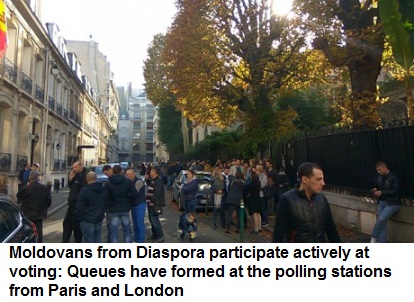
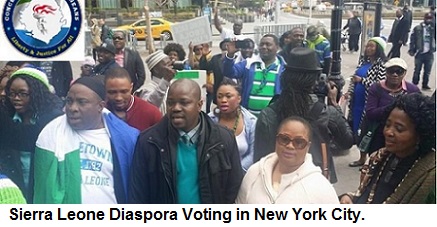
CU Blog - Dynamics of Diaspora Voting - Photo 2

CU Blog - Dynamics of Diaspora Voting - Photo 3

Can a member of the Caribbean Diaspora leave his/her homeland, stop paying taxes, stop contributing to the community and yet still dictate who should assume leadership in their absence? This would include how to spend the tax dollars that they no longer contribute. (See the Letter to Editor – “Diaspora voting is the people’s rights to decide” in the Appendix below).

Thus, the “complicated” status.

There is a lot of details and complexities associated with Diaspora Voting. See this summary here of this White Paper; (the full White Paper can be accessed at: https://www.overseasvotefoundation.org/files/The_History_and_Politics_of_Diaspora_Voting.pdf):

Title: The History and Politics of Diaspora Voting in Home Country Elections

Prepared by Andy Sundberg, based on information from Andrew Ellis and others sources in: ”Voting from Abroad”: The International IDEA Handbook, 2007.

The case for external voting is usually presented as a question of principle, based on the universality of the right to vote. In reality, however, the introduction of external voting is enacted or enabled by legislation passed by elected politicians. Although there have been a variety of reasons for the enactment of external voting provisions, almost all have been the result of political impetus, and many have been controversial and even nakedly partisan.

1. A Brief History of Diaspora Voting
… The reasons for introducing external voting also differ according to the historical and political contexts. Thus, in several countries the introduction of the right to vote for overseas citizens was an acknowledgement of their active participation in World War I or World War II. …Outside the military context, New Zealand introduced absentee voting for seafarers in 1890, and Australia adopted it in 1902, although under operating arrangements which made its use outside Australia practically impossible. …
2. Diaspora Voting In Democratic Transition Countries
The importance of political factors in the adoption and design of external voting provisions was accentuated during the democratic transitions of the 1990s. The inclusion of citizens abroad was often seen as a key element in the process of nation-building, for example, in Namibia in 1989 and South Africa in 1994.Diaspora communities may be active in seeking a post-transition role, and may be particularly influential when they play a role in the domestic politics of major donor countries. However, such pressure is not always successful. …The international community frequently plays a leading or significant role in mediating transitions and even in implementing transitional elections. Transition agreements may therefore contain important and sometimes controversial external voting provisions. …
3. Diaspora Voting and Electoral System Design
Political considerations are not only important in determining whether external voting takes place: they are also influential in defining its form. Many decisions relating to external voting are linked to electoral system design, another highly political aspect of democratic reform and democratic transition.Electoral system design is one of the most important elements in the institutional framework of a country, influencing as it does the political party system. Electoral system reform may be on the agenda as a result of vision or a motivation to improve democracy, or for more short-term, sectoral or even venal reasons on the part of some political participants. This is mirrored by external voting, which may be placed on the democratic agenda by those who believe strongly in the equal right of all citizens to participate—or by political forces which see potential advantage in it.The desire to promote external voting may constrain the options for electoral system design. Conversely, the adoption of a particular electoral system may limit the options for external voting mechanisms. This can be illustrated by considering the three basic options for external voting— personal voting at an external polling site in a diplomatic mission, for example; remote voting by post, fax or some form of e-voting; and voting by proxy.
3.1 Diaspora Voting in Person and Electoral System Design
3.2 Diaspora Remote Voting and Electoral System Design
3.3 Diaspora Voting by Proxy and Electoral System Resign
3.4 Diaspora Voting Timing Issues
4. Who Can Vote and How Voting Takes Place
4.1 The Number of National Diasporas Who Can Vote Today
Voting from abroad is now possible for Diaspora communities from 115 home countries. Of these, 28 come from home countries in Africa; 16 in the Americas; 20 in Asia; 41 in Western, Central and Eastern Europe; and 10 in the Pacific. Provisions for voting by Diaspora communities have been adopted by five additional countries, but rules and voting methods have not yet been decided.
4.2 Restrictions on Diaspora Members Who Can Vote from Abroad
Fourteen countries, who allow voting by their Diaspora communities, impose some time restrictions on such electoral participation. These restrictions are summarized in Table 1 below.
4.3 Different Types of Elections During Which Diaspora Voting is Currently Permitted
There are four principal types of elections where voting by Diaspora members can take place so far.Presidential Elections: Diaspora members from 64 countries can participate in their home country presidential elections.

Legislative Elections: Diaspora members from 92 countries can participate in their home country legislative elections.

Sub-National Elections: Diaspora members from 25 countries can participate in their home country sub-national elections.

Referendums: Diaspora members from 38 countries can participate in their home country referendums.

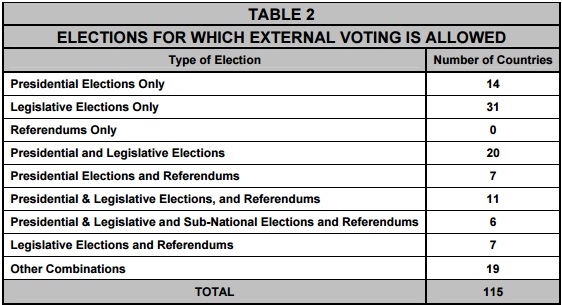
Diaspora Voting in Different Combinations of Elections: Each country has a different selection of elections that permit vote from their Diaspora members. These elections are shown in Table 2 below.

4.4 Different Types of Diaspora Voting Methods Used
Countries use five different methods of voting for their Diaspora members today.Voting in Person: Diaspora members from 79 countries can vote in person.

Voting by Post: Diaspora members from 47 countries can vote by postal ballot.

Voting by Proxy: Diaspora members from 16 countries can vote by proxy.

Voting by Fax: Diaspora members from 2 countries (Australia and New Zealand) can vote by fax.

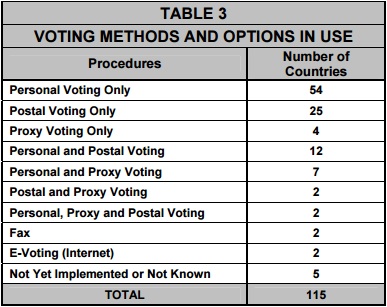
Voting by the Internet: Diaspora members from 2 countries (Estonia and the Netherlands) have been able to vote by the Internet so far. (Note: American Diaspora members of Democrats Abroad (DA) were also able to vote in the 2008 overseas primary election by Internet and 48% of the total DA primary votes were cast this way).Different Combinations of Voting Methods: Each country has a different selection of voting methods that are available for their Diaspora members. Some offer only one voting method, but some offer several options. These different options are shown in Table 3 below.

Source: Posted 2007; retrieved May 25, 2017 from: https://www.overseasvotefoundation.org/files/The_History_and_Politics_of_Diaspora_Voting.pdf

The book Go Lean…Caribbean – available to download for free – identified the Diaspora as stakeholders in the quest to reform and transform Caribbean society. The book serves as a roadmap for the introduction and implementation of the technocratic Caribbean Union Trade Federation (CU), for the elevation of Caribbean society – for all 30 member-states. This CU/Go Lean roadmap has these 3 prime directives:

  • Optimization of the economic engines in order to grow the regional economy to $800 Billion and create 2.2 million new jobs.
  • Establishment of a security apparatus to ensure public safety and protect the resultant economic engines.
  • Improve Caribbean governance to support these engines, including a separation-of-powers between the member-states and CU federal agencies.

The failing of these above societal engines constitute one of the reasons why Caribbean people have left their homelands in the first place. This is identified as the “push” factor; in addition there is the “pull” factor, the lure that life may be more prosperous elsewhere, that the “grass is greener on the other side”. The book stresses that reforming and transforming the Caribbean societal engines must be engaged, and must be a regional pursuit, as the societal challenges are too big for any one Caribbean member-state alone to assuage. This regionalism was an early motivation for the roadmap, as pronounced in the opening Declaration of Interdependence (Pages 12 – 13):

xi. Whereas all men are entitled to the benefits of good governance in a free society, “new guards” must be enacted to dissuade the emergence of incompetence, corruption, nepotism and cronyism at the peril of the people’s best interest. The Federation must guarantee the executions of a social contract between government and the governed.

xvi. Whereas security of our homeland is inextricably linked to prosperity of the homeland, the economic and security interest of the region needs to be aligned under the same governance. Since economic crimes … can imperil the functioning of the wheels of commerce for all the citizenry, the accedence of this Federation must equip the security apparatus with the tools and techniques for predictive and proactive interdictions.

xxiv. Whereas a free market economy can be induced and spurred for continuous progress, the Federation must install the controls to better manage aspects of the economy: jobs, inflation, savings rate, investments and other economic principles. Thereby attracting direct foreign investment because of the stability and vibrancy of our economy.

xxxiii. Whereas lessons can be learned and applied from the study of the recent history of other societies, the Federation must formalize statutes and organizational dimensions to avoid the pitfalls of communities like …. On the other hand, the Federation must also implement the good examples learned from developments/communities like ….

The Go Lean book provides 370-pages of turn-by-turn instructions on “how” to adopt new community ethos, plus the strategies, tactics, implementations and advocacies to execute so as to reboot, reform and transform the societal engines of Caribbean society. Consider the importance the book (Page 110) highlights as to the aforementioned democratic principle:

The Bottom Line on Taxation without Representation
“No taxation without representation” is a slogan originating during the late-1700s that summarized a primary grievance of the British colonists in the Thirteen American Colonies, which was one of the major causes of the American Revolution against Great Britain. Many in those colonies believed that as they were not directly represented in the distant British Parliament, any laws it passed taxing the colonists were illegal under the English Bill of Rights enacted in 1689 and were a denial of their rights. – http://www.notaxationwithoutrepresentation.com Retrieved September 2012.

Today, the phrase is used in Washington, DC, and in Ottawa, Canada as part of the campaign for a vote in Congress or Parliament, to publicize the fact that Capital District residents pay Federal taxes, but do not have a legislative vote. To alleviate this abuse, the CU intends to add 1 (voting) seat in the Legislative House of Assembly to represent residents of its Capital District.

What was your opinion? How has your opinion been altered based on the facts here? The overall assertion from the Go Lean movement (book and blog-commentaries) is that reforming politics-government alone will not reform Caribbean society – it is part-and-parcel with reforming economic and security engines – but we still do need to reform government. Reforming society is a heavy-lifting task; we must have “all hands on deck”, Diaspora included.

While we cannot just say “give us your money” and then “get lost” from our decision-making”, we must also accept that there is a difference for those that are “here” versus those that are not! The Go Lean book (Page 47) therefore identifies this role for the Diaspora as stakeholders in the Caribbean reform-transform heavy-lift:

Caribbean Diaspora
These emigrated citizens still identify with their homelands. Though they may live abroad, they congregate in pockets in urban areas. The CU will foster the development of this group so as to form them into an organized market; this includes individuals and institutions (for-profit companies, not-for-profit organizations and foundations). There is also the reality of the foreign-born children of the Diaspora, identified here as Legacies. These will be tapped for consumer products only.

In total, these stakeholders import foods and drink from the homeland; they demand expressions of Caribbean culture and they consume media produced by Caribbean artists targeting a Caribbean consumer-base. The number constituting the Diaspora is estimated between 6 and 8 million people – for some member-states, a majority of their citizenry lives abroad – this population is not to be ignored. A CU mission is to repatriate this group, for their time, talent and treasuries. Where this repatriation cannot be full-time, the CU proffers a part-time commitment: vacation homes, time-share condominiums, youth mentoring, community coaching, and season-ticket holders for sports and artistic events – in the islands or abroad for touring companies’ performances.

The CU will establish Trade Mission Offices closest to Diaspora pockets (for example: Flatbush in Brooklyn, NY, Jamaica Hill in Lauderhill, FL and Notting Hill, London) to allow efficient trade, visitor/convention promotion & planning and CU federal government interactions.

Yes, the Diaspora can help to make our homeland a better place to live, work and play. We urge them to lean-in to this effort.

Consider some previous blog-commentaries here, that elaborated on the role of the Diaspora in the Go Lean roadmap:

https://goleancaribbean.com/blog/?p=11420 ‘Black British’ and ‘Less Than’
https://goleancaribbean.com/blog/?p=11244 ‘To Live and Die in L.A.’ …
https://goleancaribbean.com/blog/?p=10820 Miami: Dominican’s ‘Home Away from Home’
https://goleancaribbean.com/blog/?p=10657 Stay Home! Outreach to the Diaspora – Doubling-down on Failure
https://goleancaribbean.com/blog/?p=10494 A Lesson In History – Ending the US Military Draft Accelerated Diaspora
https://goleancaribbean.com/blog/?p=9646 ‘Time to Go’ – American Vices. Don’t Follow!
https://goleancaribbean.com/blog/?p=9017 Proclaim the Same ‘International Caribbean Day’ for All Diaspora
https://goleancaribbean.com/blog/?p=8155 Government Referendum Outcome: Exacerbating the ‘Brain Drain’
https://goleancaribbean.com/blog/?p=8099 Caribbean Diaspora Image: ‘Less Than’?
https://goleancaribbean.com/blog/?p=7151 The Caribbean is Looking for Heroes … ‘to Return’
https://goleancaribbean.com/blog/?p=5088 Immigrants account for 1 in 11 Blacks in the US
https://goleancaribbean.com/blog/?p=4613 Learning from Ireland about the Past, Present and Future of the Diaspora
https://goleancaribbean.com/blog/?p=2547 Miami’s Success versus Caribbean Failure
https://goleancaribbean.com/blog/?p=1296 Remittances to Caribbean Increased By 3 Percent

But should these Diaspora members vote while still residing in their foreign abodes?

It’s complicated!

🙂

Download the free e-Book of Go Lean … Caribbean – now!

Sign the petition to lean-in for this roadmap for the Caribbean Union Trade Federation.

————–

Appendix – Letter to Editor – Diaspora voting is the people’s rights to decide

Dear Sir:

It is indeed one step closer to complete freedom of the Jamaican people the unshackling of the last vestige of slavery; a direct challenge to the ruling class who have openly opposed ordinary Jamaicans gaining significant political and economic power.

CU Blog - Dynamics of Diaspora Voting - Photo 1If you agree with me that ever since independence no government has actually sought to empower the people except under Michael Manley to some degree, then you must conclude that the country is not been governed in the interest of the ordinary people. Diaspora voting right is not an imposition of our will on the Jamaican people but rather the embodiment of the common man’s vision of the future for Jamaica outside of the colonial construct created to perpetuate the economic enslavement our people. 

Crime in Jamaica is an instrument of social control to deplete the rising power of a middle-class by forcing them to “fly-out ” and oppress a captive underclass by using them as the dominant electorate subverted by criminal gangs and their “Don” leaders.

We, therefore, cannot assert our political and economic rights from within, our influence on transforming Jamaica can only be achieved under the protection of foreign democracies in which we live. There is no other solution to Jamaica’s crime problem than a political one. Diaspora Jamaicans must demand a vote and end the violence once and for all. This will strengthen our democratic institutions and shift the political dynamics away from garrison politics to allow for the repatriation of economic and human capital to Jamaica for economic development. Economic integration cannot be achieved without political and social integration.

One of the most frequent arguments against Diaspora voting is “they don’t have to live with the consequences”. But I say this, you are right! cause we don’t want to live with the consequences of continued poverty and crime, we want live with the consequences of Jamaica’s prosperity that is why we are demanding the vote.

We are not asking to change the laws, we are only demanding what the constitution guarantees us pursuant to the rights and duty of a citizen under the UN Charter of Rights and Freedom which Jamaica is a signatory. It is an agenda for change through the creation of a cooperative democracy (a real partnership) in which the poor is afforded a safety net, and government projects, programs, and policies are evaluated for sustainability goals.

Signed,
Silbert Barrett

Source: Posted May 16, 2017; retrieved May 25, 2017 from: http://www.caribbeannewsnow.com/topstory-Letter%3A-Diaspora-voting-is-the-people%27s-rights-to-decide-34467.html

————–

Appendix – Reference Tables
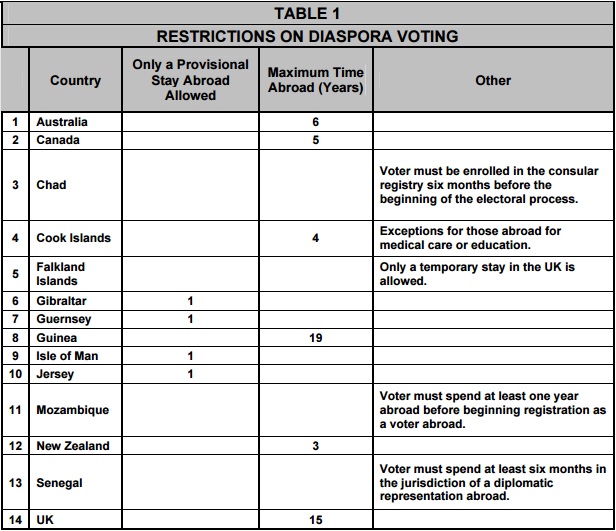
CU Blog - Dynamics of Diaspora Voting - Table 1

CU Blog - Dynamics of Diaspora Voting - Table 2

CU Blog - Dynamics of Diaspora Voting - Table 3

Share this post:
, ,

Oscar López Rivera: The ‘Nelson Mandela’ of the Caribbean?

Go Lean Commentary 

Here’s a not-so-fun fact about the First President of a pluralistic democratic Republic of South Africa, Nelson Mandela:

He spent 27 years in prison for terrorism.

CU Blog - Oscar Lopez Rivera - Nelson Mandela of the Caribbean - Photo 1Yet, he was hailed a hero upon his release in 1990, and eventually elected as President and a transcendent leader of that country.

Is history about to repeat itself, with Puerto Rican Nationalist Oscar López Rivera?

Hardly!

While the object of animosity – villain – in the Mandela drama was the racist-bigoted government of South Africa, the object of animosity for López Rivera is … the United States of America, albeit a racist-bigoted iteration from the annals of recent history.

Same crime – same disposition? Hardly!

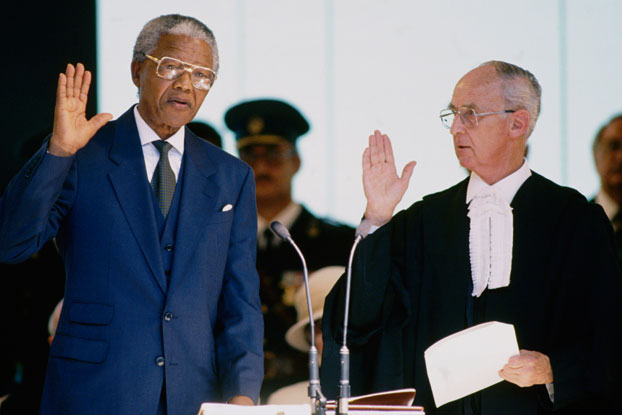
South Africa was never amongst the “Great Powers” of the Earth. (For much of its history – until 1961 – it was a member of the British Dominion and Commonwealth). It is also located at the Southern tip of the African continent – out of sight, out of mind. Mandela (18 July 1918 – 5 December 2013) had righteous indignation and accepted sabotage (a form of terrorism) as a tactic to force change in his country. But … Mandela enjoyed wide international support and concurrence, even from the US … in the end; see his altruism in his motivation here:

I have fought against white domination, and I have fought against black domination. I have cherished the ideal of a democratic and free society in which all persons will live together in harmony and with equal opportunities. It is an ideal which I hope to live for and to see realised. But if it needs be, it is an ideal for which I am prepared to die. — Mandela’s Rivonia Trial Speech, 1964[138][139]

Zimbabwe - Photo 4

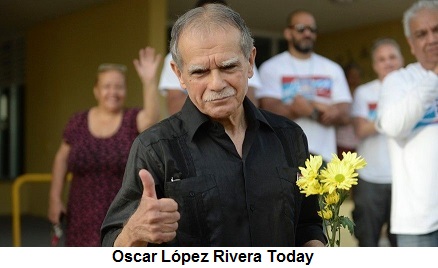
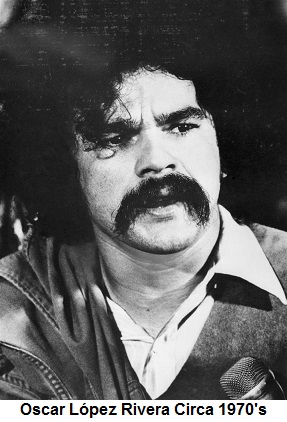
Mr. López Rivera also had a quest of righteous indignation against his enemy – advocating for Puerto Rican independence[6].

Oscar López Rivera (born 6 January 1943) is a Puerto Rican independence activist[1] who was one of the leaders of the FALN –  Fuerzas Armadas de Liberación Nacional Puertorriqueña, a Marxist-Leninist [organization] with a quest to make Puerto Rico an independent communist nation.[9][10][6] Mr. López Rivera was a fugitive since 1976 and indicted in 1977 and 1979; he was arrested on May 29, 1980 and tried by the United States government for seditious conspiracy, use of force to commit robbery, interstate transportation of firearms, and conspiracy to transport explosives with intent to destroy government property. López Rivera maintained that according to international law he was an anti-colonial combatant and could not be prosecuted by the United States government. On August 11, 1981, López Rivera was convicted and sentenced to 55 years in federal prison. On February 26, 1988 he was sentenced to an additional 15 years in prison for conspiring to allegedly escape from the Leavenworth federal prison. – Source: Wikipedia.

CU Blog - Oscar Lopez Rivera - Nelson Mandela of the Caribbean - Photo 1b

In truth, López Rivera had the wrong enemy if he wanted international support and concurrence. The US – since World War II – is the Super Power of the day, the #1 Single Market economy and #1 Military establishment. The US President is even considered the Leader of the Free World. But alas, In 2006, the United Nations (UN) called for the release of all convicted for actions related to Puerto Rican independence who had served more than 25 years in US prisons; these ones the UN deemed “political prisoners”.[28]

On August 11, 1999, U.S. President Bill Clinton offered clemency to López Rivera and 15 other convicted FALN members, subject to the condition of “renouncing the use or threatened use of violence for any purpose” in writing. … López Rivera rejected the offer because one of its conditions was that he [had to] renounce the use of terrorism.[1][44] On January 17, 2017, President Obama commuted López Rivera’s sentence. His release was scheduled for May 17[77] … one week ago. See VIDEO in the Appendix below.

The movement behind the book Go Lean…Caribbean – available to download for free – tracks and monitors the developments of the US Territory of Puerto Rico – it is a Failed-State. Would Puerto Rico have fared better had López Rivera and his cohorts won their revolution?

Probably not!

Despite all the current failures in societies esteeming capitalism – include the US with its Crony-Capitalism and institutional racism – Communist states around the world have fared even worse. In fact the Soviet Union collapsed in 1991 while López Rivera was in prison. Another Caribbean territory that defines itself as a Communist state, Cuba, has a terrible disposition, also a Failed-State that people are desperately fleeing from.

López Rivera is no Nelson Mandela! To some, he is not even a hero; see a story about the related protests and boycotts in the Appendix below.

CU Blog - Oscar Lopez Rivera - Nelson Mandela of the Caribbean - Photo 3

The Go Lean book presents a better plan to finally reform and transform Puerto Rico and the Caribbean; it serves as a roadmap for the introduction and implementation of the technocratic Caribbean Union Trade Federation (CU), for the elevation of Caribbean society – for all member-states. This CU/Go Lean roadmap has these 3 prime directives:

  • Optimization of the economic engines in order to grow the regional economy to $800 Billion and create 2.2 million new jobs.
  • Establishment of a security apparatus to ensure public safety and protect the resultant economic engines.
  • Improve Caribbean governance to support these engines, including a separation-of-powers between the member-states and CU federal agencies.

The book stresses that reforming and transforming the Caribbean societal engines must be a regional pursuit, that the problems are too big for any one Caribbean member-state alone – Puerto Rico has been trying this whole time and continue to fail … miserably. This was an early motivation for the roadmap, as pronounced in the opening Declaration of Interdependence (Pages 12 – 13):

xi. Whereas all men are entitled to the benefits of good governance in a free society, “new guards” must be enacted to dissuade the emergence of incompetence, corruption, nepotism and cronyism at the peril of the people’s best interest. The Federation must guarantee the executions of a social contract between government and the governed.

xvi. Whereas security of our homeland is inextricably linked to prosperity of the homeland, the economic and security interest of the region needs to be aligned under the same governance. Since economic crimes … can imperil the functioning of the wheels of commerce for all the citizenry, the accedence of this Federation must equip the security apparatus with the tools and techniques for predictive and proactive interdictions.

xxiii. Whereas many countries in our region are dependent Overseas Territory of imperial powers, the systems of governance can be instituted on a regional and local basis, rather than requiring oversight or accountability from distant masters far removed from their subjects of administration. The Federation must facilitate success in autonomous rule by sharing tools, systems and teamwork within the geographical region.

xxiv. Whereas a free market economy can be induced and spurred for continuous progress, the Federation must install the controls to better manage aspects of the economy: jobs, inflation, savings rate, investments and other economic principles. Thereby attracting direct foreign investment because of the stability and vibrancy of our economy.

The Go Lean book provides 370-pages of turn-by-turn instructions on “how” to adopt new community ethos, plus the strategies, tactics, implementations and advocacies to execute so as to reboot, reform and transform the societal engines of Caribbean society.

Puerto Rico does need a savior, a hero, but López Rivera is not it!

The Go Lean movement calls on Puerto Rico and its neighbors to save itself; this is a call for all 30 Caribbean member-states to convene, collaborate and confederate to provide a better, more effective, technocratic stewardship for the societal engines of the region. Consider this sample of prior blog/commentaries where these points had been elaborated upon:

https://goleancaribbean.com/blog/?p=11812 State of Caribbean Union: Hope and Change
https://goleancaribbean.com/blog/?p=11647 Righting a Wrong: Puerto Rico’s Bankruptcy
https://goleancaribbean.com/blog/?p=10895 US President Trump’s Vision of the Caribbean: Yawn
https://goleancaribbean.com/blog/?p=10700 Petition to Lean-in for the ‘Caribbean Union Trade Federation’
https://goleancaribbean.com/blog/?p=10585 Two Pies: Economic Plan for a New Caribbean
https://goleancaribbean.com/blog/?p=10566 Funding the Caribbean Security Pact
https://goleancaribbean.com/blog/?p=10043 Integration Plan for Greater Caribbean Prosperity
https://goleancaribbean.com/blog/?p=9595 Vision and Values for a ‘New’ Caribbean
https://goleancaribbean.com/blog/?p=7963 ‘Like a Good Neighbor’ – Being there for Puerto Rico
https://goleancaribbean.com/blog/?p=7151 The Caribbean is Looking for Heroes … ‘to Return’
https://goleancaribbean.com/blog/?p=4551 US Territories – Between a ‘rock and a hard place’
https://goleancaribbean.com/blog/?p=3834 State of the Caribbean Union
https://goleancaribbean.com/blog/?p=599 Ailing Puerto Rico open to radical economic fixes

Overall, to Oscar López Rivera, we say (Go Lean book conclusion Page 252):

Thank you for your service, love and commitment to [Puerto Rico, Puerto Ricans and] all Caribbean people. We will take it from here.

The movement behind Go Lean book, the planners of a new Caribbean stresses that a ‘change is going to come’, one way or another. We have endured failure for far too long; we have seen what works and what does not. We do not need to buy what López Rivera was selling in the 1970’s. We have looked, listened, learned and lend-a-hand since then. We are now ready to lead this country – Puerto Rico – and this region to a better destination, to being a homeland that is better to live, work and play. 🙂

Download the free e-Book of Go Lean … Caribbean – now!

Sign the petition to lean-in for this roadmap for the Caribbean Union Trade Federation. 

————–

Appendix VIDEO – Oscar Lopez Rivera? Hero Or Villain? – https://youtu.be/eje-sPJkaHQ

Published on May 18, 2017 The freed Puerto Rican nationalist was mostly hailed as a hero as he returned to Chicago’s HumboldtPark. New York’s CBS 2’s Vince Gerasole reports.

————–

Appendix Title: Yankees among groups to boycott New York City’s Puerto Rican Day Parade

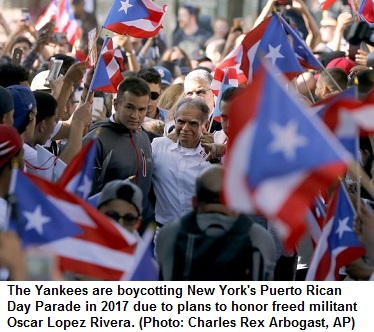
CU Blog - Oscar Lopez Rivera - Nelson Mandela of the Caribbean - Photo 2The New York Yankees joined the Fire Department of New York City and other high-profile organizations in dropping out of the Puerto Rican Day Parade in response to parade organizers’ plans to honor freed militant Oscar Lopez Rivera.

The Yankees organization didn’t elaborate on its decision, but a spokesperson said in a statement that the team still plans to financially support the parade’s scholarship program:

“The New York Yankees are not participating in this year’s Puerto Rican Day parade. However, for many years, the Yankees have supported a scholarship program that recognizes students selected by the parade organizers. To best protect the interests of those students, and avoid any undue harm to them, the Yankees will continue to provide financial support for the scholarships, and will give to the students directly.”

The June 11 parade, which draws 1 million people each year, also lost key sponsors because of the decision to honor a man considered to be the leader of the ultranationalist Puerto Rican group responsible for more than 100 bombings. Rivera, who was sentenced to 55 years in prison in 1981 after he was found guilty of seditious conspiracy, served 35 years until his sentence was commuted by President Barack Obama.

Among the other organizations skipping the parade are the NYPD’s Hispanic Society and Rafael Ramos foundation.

“We understand that others may not be able to be with us,” a statement by the board of directors of the National Puerto Rican Day Parade said in reference to naming Rivera a national freedom hero. “However, we will continue to represent all voices, with an aim to spark dialogue and find common ground, so that we can help advance our community and build cultural legacy.”
Source: USA Today Daily NewspaperPosted May 23, 2017; retrieved May 24, 2017 from https://www.usatoday.com/story/sports/mlb/yankees/2017/05/23/yankees-to-boycott-new-york-citys-puerto-rican-parade/102058948/

Share this post:
, ,
[Top]

Rio Olympics – Athens Olympics: Same Strategy; Same Failure

Go Lean Commentary

It’s simple: learn from mistakes or you repeat them.

This applies to other people’s mistakes as well.

There is the funny anecdote of an insane asylum located in the inner boroughs in some unidentified city. The inmates forced a hole in a border fence and one day they shouted out “Four, four, four …”. A stranger walked by, heard the shouts and peeked in the hole. An inmate poked him in the eye, then shouted “Five, five, five …”.

Mistake made, no lesson learned!

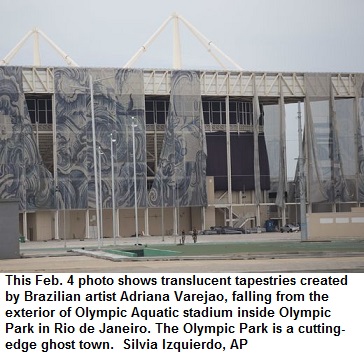
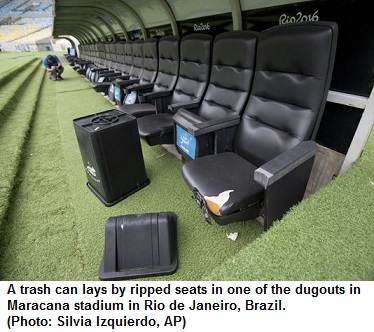
Unfortunately, this is the reality for many countries, in particular “poorer” countries that have hosted the Olympics. There was the clearly documented mistake – “bad” experience – of Athens-Greece hosting the 2004 Olympics. They built many permanent stadiums that were never used again – “white elephants” – they cost a lot of money to build and a lot to maintain. Fast forward to the 2016 Rio De Janeiro-Brazil Olympics and we see the Same Strategy; Same Failure – “the stranger unwisely peeks in the same hole and gets poked in the eye”.

CU Blog - Rio Olympics - Same Strategy; Same Failure - Photo 1

CU Blog - Rio Olympics - Same Strategy; Same Failure - Photo 3

CU Blog - Rio Olympics - Same Strategy; Same Failure - Photo 5

CU Blog - Rio Olympics - Same Strategy; Same Failure - Photo 4

CU Blog - Rio Olympics - Same Strategy; Same Failure - Photo 2

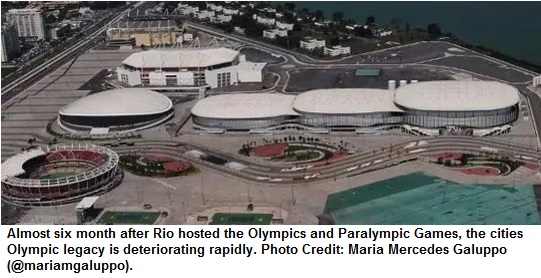
The Rio De Janeiro-Brazil city, state and federal governments ignored the sage advice and built permanent stadia (plural of stadium) and venues for the 2016 Olympic Games and now are suffering the same “black eye”. See the details of this Same Strategy; Same Failure phenomena in the article and VIDEO here:

Title: Scathing report on 2016 Rio Olympics: venues ‘White Elephants’
RIO DE JANEIRO (AP) — A federal prosecutor looking into last year’s Rio de Janeiro Olympics says that many of the venues “are white elephants” that were built with “no planning.”

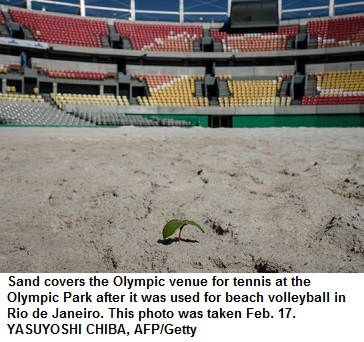
The scathing report offered Monday at a public hearing confirms what was reported several months after the games ended. Many of the venues are empty, boarded up, and have no tenants or income with the maintenance costs dumped on the federal government.

“There was no planning,” federal prosecutor Leandro Mitidieri told the public hearing on the Olympics. “There was no planning when they put out the bid to host the Games. No planning.

“They are white elephants today,” Mitidieri added. “What we are trying to look at here is to how to turn this into something usable.”

Rio de Janeiro spend about $12 billion to organize the games, which were plagued by cost-cutting, poor attendance, and reports of bribes and corruption linked to the building of some Olympic-related facilities.

The Olympic Park in suburban Barra da Tijuca, which was the largest cluster of venues, is an expanse of empty arenas with clutter still remaining from the games. The second largest cluster, in the northern area of Deodoro, is closed despite plans to open it as a public park with swimming facilities for the mostly poor who live in the area.

Patricia Amorim, the undersecretary for sports in the city of Rio, said highly publicized plans were on hold to dismantle one arena and turn the remains into four schools. The arena was the venue for handball.

“It will be dismantled,” she said. “We are just waiting to know whether we will actually have resources to build these schools on other sites, or whether we will dismantle it and wait for the resources to come. Our schools need to be reformed and that’s our priority, not new schools.”

Nine months after the Rio Olympics ended, the local organizing committee still owes creditors about $30 million, and 137 medals awarded during the games are rusting and need to be repaired.

Former Rio de Janeiro Mayor Eduardo Paes, the moving force with the International Olympic Committee behind organizing last year’s Olympics, is being investigated for allegedly accepting at least 15 million reals ($5 million) in payments to facilitate construction projects tied to the games.

He denies any wrongdoing.

Organizing committee spokesman Mario Andrada said more than 100 medals awarded at the Olympics showed signs of rusting. He said many were bronze medals, and said many of the tarnished medals had been awarded to Americans.

“Most of the problems were due to handling, poor handling,” Andrada said. “Either they fell on the floor or they were touching each other so, it was a problem of handling. Whatever was the problem with the poor handling, it took the gloss off the medal and then you see rusting.”

He said the medals would be repaired at Brazil’s mint, called the Casa da Moeda.

He said more than 2,000 medals were awarded at the Olympics and said “several other games had problems with medals.”

Source: USA Today Daily Newspaper. Posted May 22, 2017; retrieved May 24, 2017 from: https://www.usatoday.com/story/sports/olympics/2017/05/22/scathing-report-on-rio-olympics-venues-white-elephants/102041926/

—————–

VIDEO – Rio 2016 Olympic Venues Just 6 Months After The Olympics – https://youtu.be/Jh-s2rb1Ka0

Published on Feb 13, 2017 – Summer is over for Brazil’s ‘marvelous city’. In a series of eerie and depressing new photos released last week, the 2016 Summer Olympic venues in Rio de Janeiro are seen filthy and deserted just 6 months after the end of the games, including the legendary Maracana Stadium. In a city that hoped desperately to be lifted out of poverty and debt by making back the money they spent, these are the ruins of a shattered dream.

Rio 2016 was boiled in scandal before it had even began, including a Zika virus outbreak, reports of doping by Russian athletes, and the impeachment of president Dilma Rousseff due to corruption. The second largest city in Brazil is millions of dollars in debt with international creditors, and now also owes over 900 thousand dollars to a local energy company.

Murky pools, worn terrain, and vandalism can be found all over the Olympic park. Seats have been torn from the once-iconic arena. The future of these shockingly neglected buildings remains uncertain, but they’re unlikely to be a high priority among Rio’s long list of coming challenges.

Temporary stadium over permanent stadium – this is a familiar advocacy for the publishers of the book Go Lean…Caribbean. These points are gleaned from this previous blog-commentary from June 5, 2014:

Learn from Greece – Why build expensive permanent stadiums for temporary (sports/cultural) events, when there is such an effective art and science with temporary stadiums?! This important lesson was ignored in Brazil for the FIFA World Cup 2014.

The subsequent article and [embedded] VIDEO (from the cable channel HBO’s documentary Real Sports) describes the folly for expensive permanent stadiums for short-term events; especially while the art and science of temporary stadiums is so effective.


The foregoing article discourages investment in permanent venues unless there is a solid long-term business plan. The Go Lean roadmap concurs – Greece did not recover from the flawed Olympic build-out for facilities that were never used again after the 2004 Games. On the other hand, here is the encouragement and recommendation to develop fairgrounds and deploy temporary stadia, arenas and theaters. Imagine a golf tournament; no one would expect bleachers and grandstands at the putting greens to be permanent structures. No, there is a place for temporary structures in the world of sports.

The book Go Lean…Caribbean – available to download for free – serves as a roadmap for the introduction and implementation of the technocratic Caribbean Union Trade Federation (CU), for the elevation of Caribbean society – for all the 30 member-states in the region. The roadmap asserts that there could be many economic and societal benefits by harnessing the potential from the world of sports.  While sports are not the roadmap’s primary purpose, related pursuits are recognized as important strategies. A mission of the Go Lean roadmap is quoted as “forge industries and economic drivers around the individual and group activities of sports and culture” (Page 81). But make no mistake, there is NO recomendation for the Caribbean to host the Olympics … ever.

Overall, this CU/Go Lean roadmap describes these 3 prime directives:

  • Optimization of the economic engines in order to grow the regional economy to $800 Billion and create 2.2 million new jobs; 21,000 direct jobs at sports enterprises, venues and fairgrounds throughout the region.
  • Establishment of a security apparatus to ensure public safety and protect the resultant economic engines.
  • Improvement of Caribbean governance to support these engines, including a separation-of-powers between the member-states and CU federal agencies.

The book stresses that reforming and transforming the Caribbean societal engines – including the sports eco-systems – must be a regional pursuit. This was an early motivation for the roadmap, as pronounced in the opening Declaration of Interdependence (Pages 12 – 13):

xi. Whereas all men are entitled to the benefits of good governance in a free society, “new guards” must be enacted to dissuade the emergence of incompetence, corruption, nepotism and cronyism at the peril of the people’s best interest. The Federation must guarantee the executions of a social contract between government and the governed.

xxi. Whereas the preparation of our labor force can foster opportunities and dictate economic progress for current and future generations, the Federation must ensure that educational and job training opportunities are fully optimized for all residents of all member-states, with no partiality towards any gender or ethnic group. The Federation must recognize and facilitate excellence in many different fields of endeavor, including sciences, languages, arts, music and sports. This responsibility should be executed without incurring the risks of further human flight, as has been the past history.

xxii. Whereas sports have been a source of great pride for the Caribbean region, the economic returns from these ventures have not been evenly distributed as in other societies. The Federation must therefore facilitate the eco-systems and vertical industries of sports as a business, recreation, national pastime and even sports tourism – modeling the Olympics.

The Go Lean book avoids the Same Strategy; Same Failure pitfall; it provides 370-pages of turn-by-turn instructions on “how” to adopt new community ethos, plus the strategies, tactics, implementations and advocacies to execute so as to reboot, reform and transform the societal engines of Caribbean society, including the full opportunities in the world of sports.

There are a number of sports – Tennis, Auto Racing, Beach Volleyball, and Soccer/Football (i.e. 2006 FIFA World Cup in Germany) – which fully explore temporary bleachers/grandstands. This is the wise course; the art-and-sciences of temporary structures is a best-practice.

Why would anyone consider expensive permanent stadia when temporary stadia is better? This would be stupid! But alas, a previous Go Lean commentary has posited that Stupidity persists when “someone is getting paid”. This is the lesson learned from Rio … and Athens.

Now is the time for all of the Caribbean – governing institutions and the people (athletes and fans) – to abide by best-practices and lean-in for this Go Lean roadmap for the Caribbean Union Trade Federation; Same Strategy; Same Failure no more! Now is the time to make our homeland a better place to live, work and play. 🙂

Download the free e-Book of Go Lean … Caribbean – now!

Sign the petition to lean-in for this roadmap for the Caribbean Union Trade Federation.


Share this post:
, , ,
[Top]

Want Better Security? ’Must Love Dogs’

Go Lean Commentary

So you want to secure your homeland against terror and other threats? Here’s a key requirement:

‘Must Love Dogs’

This is so true; man’s best friend can also be our best partner for mitigating threats of terroristic acts in public places. This is common sense … now that we have seen how devious the terrorists can be, exploiting soft targets right outside any hard target zones.

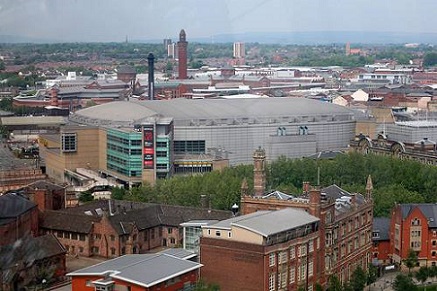
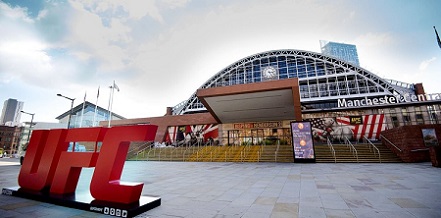
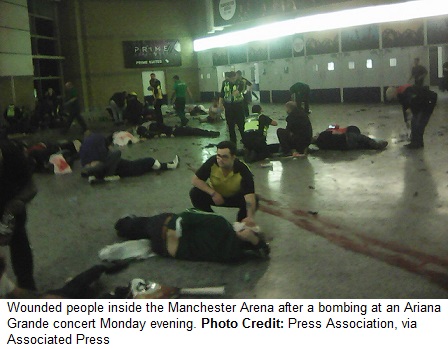
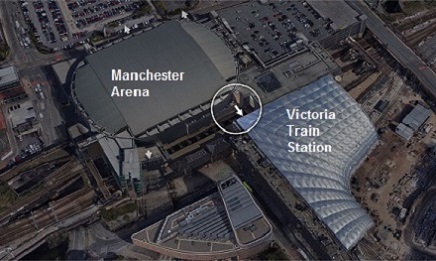
This is a fresh concern as there was a terrorist attack at the Manchester Arena in Manchester, England last night (May 22, 2017). The attacker was an ISIS-backed suicide bomber who positioned himself among the exiting concert-goers for a show at the Arena. (The artist is American teen pop-sensation Ariana Grande, a fan-favorite among teenage girls and boys). He detonated his “Improvised Explosive Device” (IED) right outside the security zone while people were exiting to leave. So far, the death toll is 22, with 59 injuries. See full details on the story, aftermath and investigation here:

ISIS Claims Responsibility for Manchester Concert Attack; 22 Dead

Manchester Arena – Situation Normal
CU Blog - 'Must Love Dogs' - Photo 4

CU Blog - 'Must Love Dogs' - Photo 3

CU Blog - 'Must Love Dogs' - Photo 2

Manchester Arena – Monday Night May 22, 2017

CU Blog - 'Must Love Dogs' - Photo 1

CU Blog - 'Must Love Dogs' - Photo 5

Expect more revelations of the motives and bitter consequences of this attack against “innocence”.

This is a matter of serious concern for planners of a new Caribbean. This is Terrorism 101; this is affecting the whole world and our world. Though this attack was far away from the Caribbean islands, it was not far away from Caribbean people, as related in a previous blog-commentary from the promoters of the book Go Lean…Caribbean, there is a large Caribbean Diaspora in Manchester.

The book Go Lean…Caribbean – available to download for free – serves as a roadmap for the introduction and implementation of the technocratic Caribbean Union Trade Federation (CU), for the elevation of Caribbean society – for all member-states. The book asserts that the needed security apparatus to better defend against the modern threats of terrorism is too much for any one Caribbean member-state alone. There must be a regional integrated and confederated solution. This CU/Go Lean roadmap has these 3 prime directives:

  • Optimization of the economic engines in order to grow the regional economy and create new jobs.
  • Establishment of a security apparatus to ensure public safety and protect the resultant economic engines.
  • Improve Caribbean governance to support these engines, including a separation-of-powers between the member-states and CU federal agencies.

The book stresses that reforming and transforming the Caribbean societal engines must be a regional pursuit. This was an early motivation for the roadmap, as pronounced in the opening Declaration of Interdependence (Pages 12 – 13):

x. Whereas we are surrounded and allied to nations of larger proportions in land mass, populations, and treasuries, elements in their societies may have ill-intent in their pursuits, at the expense of the safety and security of our citizens. We must therefore appoint “new guards” to ensure our public safety and threats against our society, both domestic and foreign. The Federation must employ the latest advances and best practices of criminology and penology to assuage continuous threats against public safety. …

xi. Whereas all men are entitled to the benefits of good governance in a free society, “new guards” must be enacted to dissuade the emergence of incompetence, corruption, nepotism and cronyism at the peril of the people’s best interest. The Federation must guarantee the executions of a social contract between government and the governed.

xvi. Whereas security of our homeland is inextricably linked to prosperity of the homeland, the economic and security interest of the region needs to be aligned under the same governance. Since economic crimes … can imperil the functioning of the wheels of commerce for all the citizenry, the accedence of this Federation must equip the security apparatus with the tools and techniques for predictive and proactive interdictions.

Is there anything more that could have been done to prevent this Manchester Terrorist Attack? Let the post-trauma analysis begin! For one, the planners of the new Caribbean security apparatus have always presented this ingredient to the recipe for security success:

Must love dogs!

- Photo 6

In a previous blog-commentary, it was related how specially-trained canines can help to better secure the Caribbean homeland. Consider this quotation:

The subject of animals and animal companionship is also pivotal in the roadmap for elevating Caribbean society, especially for the security engines. The Go Lean book posits (Page 185) that better command of Animal Husbandry can facilitate better security around the region’s economic engines. Dogs feel a lot less intrusive and less intimidating than formal security screening, or personnel patrolling with AK47 automatic rifles.  Imagine a beautiful Caribbean beach scene with a plain clothes “officer” walking along with specialty dogs, or more exactly:

  • Drug Sniffing Dogs
  • Bomb Sniffing Dogs
  • Service/Therapy Dogs

This is one implementation that could have been deployed to mitigate the terrorism threat in Manchester … and everyday here in the Caribbean. Yes, this is in hindsight; this is “Monday Morning Quarterbacking“. This is not fair to the 22 lives lost in Manchester, but this is most importantly a pledge, not to let those lives die in vain. Let’s apply the lessons-learned.

This implementation with service dogs is just one “how”. The Go Lean book provides 370-pages of turn-by-turn instructions on “how” to adopt new community ethos, plus the strategies, tactics, implementations and advocacies to execute so as to better ensure homeland security in the Caribbean region.

Consider this one chapter (and Case Study) … where the Go Lean book fully detailed the advocacy of Animal Husbandry; see  these headlines from Page 185:

Case Study: Trikos K9 Warriors
When the bombs went off at the Boston Marathon [in April 2013], highly trained dogs were rushed to the scene to search for more explosives. Boston Police have said dogs swept the streets in the morning and a second time just an hour before the first marathoners crossed the finish line. It’s considered likely that the bombers planted their devices well after the dogs finished sweeping the area. Since 9/11, dogs have been used more than ever because nothing has proven more effective against hidden bombs than the nose of a working dog. The best of them serve with U.S. Special Operations, so much of what they do is classified, but by looking at the trainers, Trikos K9 Warriors (www.trikos.com) – on a 20-acre ranch in rural Cooper, Texas – one gets a rare glimpse inside the secretive world of these elite dogs. Most of them are from one breed, Belgian Malinois.
Dogs and their handlers work as a team, train as a team, and they go through so much together their bond is as strong as a band of brothers. In Afghanistan, they led their units and protected them in battlefields littered with hidden bombs. Per former Navy SEAL and Trikos Founder Mike Ritland: “same thing that they do for [the troops] overseas, detect explosives, they can do on American streets; plus they can run faster than 30 miles an hour so they can help take down suspects”.
See Appendix below for VIDEO from CBS News Magazine “60 Minutes”.


10 Ways to Improve Animal Husbandry

1 Lean-in for Caribbean Integration
The CU treaty allows for the unification of the region into one market, thereby impaneling a federal layer for oversight of the economy and security of the 30 member-states and 42 million people. One CU mission is to facilitate better security around the region’s economic engines. Another mission is to make the Caribbean a better place to live, work and play. In considering the needs of the 42-million population, there must be some consideration for their animals. Beyond the CU overseeing food-supply regulations and spearheading the security benefits of employing specially trained service animals, the CU will spur philanthropy for more animal husbandry efforts, such as foundations advocating Spay/Neuter goals for dogs/cats. Lastly, the CU will coalesce with local authorities to ensure “dog parks” in urban/suburban areas.

2 Plantations for Bomb Sniffing Dogs
The CU assumes the responsibility to assuage systemic risks and economic crimes. This includes marshaling defensive support for events/festivals, against terrorism and cross border gangs. The US model of Trikos K9 Warriors will be adopted with Belgian Malinois dogs, to breed them on plantations and train them to detect and interdict explosives.
3 Cadaver Dogs / Drug Sniffing Dogs / Drug Sniffing Pigs
The CU will install plantations for dogs and pigs (Vietnamese Potbellies are especially acute) to train them to detect drugs/contraband and cadavers. The CU will maintain animals on-the-ready for acquisition by local and federal police.
4 Police K9 Units
Each member-state may currently have a platoon of K9 police dogs, but their average service life is less than 10 years. So there is always a constant need for service animals. These needs will henceforth be fulfilled locally within the region.
5 Horses for Mounted Police
Many polices forces have a Mounted Police Squad. These are especially critical for patrols at events and crowded locales. The CU will facilitate the acquisition and training of horses for the region’s Mounted Police units. These breeding and training plantations are ideal for rural area development, thus spurning an economic benefit.
6 Water Focus – Seals and Dolphins
Service animals are not only the land variety. There are aquatic mammals as well: seals and dolphins. These species are excellent for securing maritime and naval operations – the CU are all islands and coastal states. The best practice is to mount mobile cameras on these mammals and have them patrol a specified grid. The economies of scale of the CU will allow for the deployment of these creative solutions while any one member-state alone cannot justify the investment.
These deployments should not be secretive, but rather exposed to local/foreign media for image promotion.
7 Service Dogs for the Blind / Disabled – Domestic and Tourists
8 Comfort Animals for Therapies and Treatment
9 Bio-Medical Farms (Pigs, Baboons)
10 Agricultural Considerations – Animals for Foods

The Go Lean movement (book and preceding blog-commentaries) relate that security is not automatic, innate nor natural – Freedom is not Free. There is heavy-lifting involved in protecting the homeland for Caribbean stakeholders: residents and visitors. This point was detailed in these previous blog-commentaries:

https://goleancaribbean.com/blog/?p=11332 Boston Bombing Anniversary – Learning Lessons
https://goleancaribbean.com/blog/?p=10959 See Something, Say Something … Do Something
https://goleancaribbean.com/blog/?p=10566 Funding the Caribbean Security Pact
https://goleancaribbean.com/blog/?p=10222 Waging a Successful War on Terrorism
https://goleancaribbean.com/blog/?p=9072 Securing the Homeland – On the Ground
https://goleancaribbean.com/blog/?p=6103 Sum of All Fears – ‘On Guard’ Against Deadly Threats
https://goleancaribbean.com/blog/?p=5307 8th Violent Crime Warning to Bahamas Tourists
https://goleancaribbean.com/blog/?p=5002 Managing a ‘Clear and Present Danger’
https://goleancaribbean.com/blog/?p=1965 America’s Navy – 100 Percent – Model for Caribbean Regional Security
https://goleancaribbean.com/blog/?p=1832 American Drug-arrested inmates to be deported – Look-out Caribbean
https://goleancaribbean.com/blog/?p=1554 Status of Forces Agreement for Regional Security Pact
https://goleancaribbean.com/blog/?p=1487 Here come the Drones … and the Concerns
https://goleancaribbean.com/blog/?p=392 Jamaica received World Bank funds to help in crime fight

The quest of the Go Lean roadmap is to make the Caribbean homeland, a better place to live, work and play. This means measurable reduction (mitigating and remediation) of crime, interpersonal violence and systemic threats in the region. The Go Lean book presents a regional solution to remediate and mitigate crime and terrorism in the Caribbean, featuring details of strategies, tactics and implementations designed based on best-practices from around the world. The book’s vision is quite simple:

If we fail to plan, then we plan to fail.

The premise in the Go Lean book is that “bad actors” will always emerge, from internal and external origins. We must be prepared and on-guard to defend our homeland against all threats, foreign and domestic, including terrorism and interpersonal violence. Plus, we must accomplish this goal with maximum transparency, accountability, and commitment to due-process and the rule-of-law. Thusly, there is a place for many tools and techniques, think: closed-circuit TV (CCTV), dashboard and body cameras.

The title on this commentary – ‘Must Love Dogs’ – puns the title of the 2005 Movie of the same name. That movie was not about Terrorism nor about dogs. (It was about a couple who met through an internet dating site that matched their dog-loving profiles).

See a review of the movie here: http://www.rogerebert.com/reviews/must-love-dogs-2005.
CU Blog - 'Must Love Dogs' - Photo 0

Yes, we can – with our “love for dogs” – make our homeland a better-safer place to live, work and play. 🙂

Download the free e-Book of Go Lean … Caribbean – now!

Sign the petition to lean-in for this roadmap for the Caribbean Union Trade Federation.

—————

Appendix VIDEO – Sniffing Out Bombs: America’s most elite dogs – https://youtu.be/FsnPAQ137fY

Published on Apr 21, 2013 – Lara Logan gets a rare look into the secretive world of working dogs — some of whose capabilities are military secrets — and their handlers.

Share this post:
, , , ,
[Top]

State of the American Union – Indian Termination Policy

Go Lean Commentary

When Christopher Columbus discovered the New World on his initial voyage in 1492, he brought along with him Benedictine Priests as missionaries for any native people encountered.

Encounter they did!

From this start, the quest to assimilate native people (dubbed “Indians” by all European colonizers) – to make them civilized Christians – had started in earnest and didn’t end until …

… what time is it? 🙁

CU Blog - State of the American Union - Indian Termination Policies - Photo 2

CU Blog - State of the American Union - Indian Termination Policies - Photo 3

CU Blog - State of the American Union - Indian Termination Policies - Photo 4

The experience of European colonizers versus indigenous tribes is similar throughout the New World, but the historic model of the quest to assimilate native people is best represented by the American experience. There were the colonial efforts and early American efforts – make that wars – but eventually there was a compromise for the “White” people to co-exist with the native people, to grant them “tribal sovereignty”. This quest is codified in the American Constitution and further expanded in the Tenth Amendment (Bill of Rights); see this quotation here:

It may be noted that while Native American tribal sovereignty is partially limited as “domestic dependent nations,” so too is the sovereignty of the federal government and the individual states – each of which is limited by the other. The will of the people underlies the sovereignty of both the U.S. federal government and the states, but neither sovereignty is absolute and each operates within a system of dual sovereignty. According to the reservation clause of the Tenth Amendment, the federal state possesses only those powers delegated to it by the Constitution (expressly or implicitly), while all other powers are reserved to the individual states or to the people. For example, the individual states hold full police powers. On the other hand, the individual states, like the Indian tribes, cannot print currency or conduct foreign affairs, or exercise other powers assigned by the Constitution to the federal state. Viewed in this light, tribal sovereignty is a form of parallel sovereignty[1] within the U.S. constitutional framework, constrained by but not subordinate to other sovereign entities. – Source: Wikipedia

The book Go Lean…Caribbean – available to download for free – details a study of the Native American efforts to preserve and elevate their society while amongst the general American population. They failed (and continue to fail) miserably. The US has a long bad history of ethnic genocide and discrimination – see the VIDEO in Appendix B below – this had been the State of their American Union.

The Go Lean book asserts that there are lessons from Indian Reservations for the Caribbean region to learn and apply in our efforts to elevate our Caribbean region. The Go Lean book serves as a roadmap for the introduction and implementation of the technocratic Caribbean Union Trade Federation (CU), for the elevation of Caribbean society – for all member-states. A CU mission is to integrate resources to field a confederated response to economic challenges and security threats. This strategy was not applied by the Indian-Native American tribes during their history. After losing many one-on-one battles against the stronger US Army; they were forced into treaties that relegated them to these Reservations.

The official American policy did not stop with Reservations; it migrated to an Indian Termination Policy – an attempt to assimilate Native American people into mainstream society, into the American Union. See more here:

Indian Termination was the policy of the United States from the mid-1940s to the mid-1960s.[1] It was shaped by a series of laws and policies with the intent of assimilating Native Americans into mainstream American society. Assimilation was not new. The belief that indigenous people should abandon their traditional lives and become “civilized” had been the basis of policy for centuries. But what was new was the sense of urgency, that with or without consent, tribes must be terminated and begin to live “as Americans”.[2] To that end, Congress set about ending the special relationship between tribes and the federal government. The intention was to grant Native Americans all the rights and privileges of citizenship, reduce their dependence on a bureaucracy whose mismanagement had been documented, and eliminate the expense of providing services for native people.[3]

In practical terms, the policy ended the U.S. government’s recognition of sovereignty of tribes, trusteeship over Indian reservations, and exclusion of state law applicability to native persons. From the government’s perspective Native Americans were to become taxpaying citizens, subject to state and federal taxes as well as laws, from which they had previously been exempt.[4]

From the native standpoint, Northern Cheyenne former U.S. Senator from Colorado Ben Nighthorse Campbell said of assimilation and termination in a speech delivered in Montana[5]:

    “If you can’t change them, absorb them until they simply disappear into the mainstream culture. …In Washington’s infinite wisdom, it was decided that tribes should no longer be tribes, never mind that they had been tribes for thousands of years.” – Ben Nighthorse Campbell, Opening Keynote Address.

The policy for termination of tribes collided with the Native American peoples’ own desires to preserve native identity, reflected in an activism that increased after World War II and survived through the anti-collectivism era of Joseph McCarthy. The termination policy was changed in The Sixties and rising activism resulted in the ensuing decades of restoration of tribal governments and increased Native American self-determination.

See the links to the detailed Table of Contents on the Indian Termination Policy in Appendix A below.

The Go Lean book posits that if the Native American tribes were able to integrate and consolidate to one unified effort they would have been so much more successful. This is not our contention alone.

Today – May 22, 2017 – marks the 75th birthday of the late Native American Activist Richard Oakes; this is the Google Doodle in his honor. His quest was to unite all Native American tribes in their struggle for civil rights. This was a noble gesture on his part, worthy of his devotion and sacrifice; (he was assassinated on September 20, 1972).

CU Blog - State of the American Union - Indian Termination Policies - Photo 1

See the related VIDEO here:

VIDEO – Activist Richard Oakes delivers the Alcatraz proclamation – http://www.express.co.uk/life-style/science-technology/807660/richard-oakes-activist-biography-death-michael-morgan-assassination-google-doodle

Richard Oakes has been honoured with a special Google Doodle – today May 22, 2017 – which shows him alongside three locations that defined his life and legacy.

The illustration features the Mohawk Indian reservation in Akwesasne – where Oakes was born, Alcatraz Island – where he launched a 19-month occupation, and Pit River – where he helped to recover tribal land.

The book Go Lean … Caribbean has a similar quest as the foregoing activist and advocacy, for the 30 member-states of the Caribbean region to convene, collaborate and confederate. There are many benefits to flow from such an unification effort.

These benefits are pronounced in the Go Lean/CU roadmap as the prime directives, with these 3 statements:

  • Optimization of the economic engines in order to grow the regional economy to $800 Billion and create 2.2 million new jobs.
  • Establishment of a security apparatus to ensure public safety and protect the resultant economic engines.
  • Improvement of Caribbean governance to support these engines, including a separation-of-powers between the member-states and CU federal agencies.

The Go Lean book stresses that reforming and transforming the Caribbean societal engines must be a regional pursuit. This was an early motivation for the roadmap, as pronounced in the opening Declaration of Interdependence (Pages 12 – 14):

xi. Whereas all men are entitled to the benefits of good governance in a free society, “new guards” must be enacted to dissuade the emergence of incompetence, corruption, nepotism and cronyism at the peril of the people’s best interest. The Federation must guarantee the executions of a social contract between government and the governed.

xvi. Whereas security of our homeland is inextricably linked to prosperity of the homeland, the economic and security interest of the region needs to be aligned under the same governance. Since economic crimes … can imperil the functioning of the wheels of commerce for all the citizenry, the accedence of this Federation must equip the security apparatus with the tools and techniques for predictive and proactive interdictions.

xxiv. Whereas a free market economy can be induced and spurred for continuous progress, the Federation must install the controls to better manage aspects of the economy: jobs, inflation, savings rate, investments and other economic principles. Thereby attracting direct foreign investment because of the stability and vibrancy of our economy.

xxxiii. Whereas lessons can be learned and applied from the study of the recent history of other societies, the Federation must formalize statutes and organizational dimensions to avoid the pitfalls of communities like East Germany, Detroit, Indian (Native American) Reservations, Egypt and the previous West Indies Federation. On the other hand, the Federation must also implement the good examples learned from developments/communities like New York City, Germany, Japan, Canada, the old American West and tenants of the US Constitution.

The Go Lean book provides 370-pages of turn-by-turn instructions on “how” to adopt new community ethos, plus the strategies, tactics, implementations and advocacies to execute so as to reboot, reform and transform the societal engines of Caribbean society.

Consider this one chapter … where the Go Lean book fully detailed the lessons learned from Native American Reservations; see  these headlines from Page 141:

10 Lessons from Indian Reservations

1

Lean-in for Caribbean Integration
The CU treaty calls for the unification of the 30 member-states in a Single Market of 42 million people. The CU mission is to integrate resources to field a confederated response to economic challenges and security threats. This strategy was not applied by the Indian tribes. After losing many one-on-one battles against the stronger US Army; they were forced into treaties that relegated them to Reservations. While the CU gets its legal authority through national treaties, these can be counted as assets (strengths), guaranteeing specific rights and privileges, rather than weaknesses. The synergy from inter-tribe cooperation was never a feature of Indian life – no benefits from brotherhood and confederation. US integration of multiple cultures led to economic prosperity, while the Reservations never enjoyed the American Dream.

2

Image Management

3

Heritage As Hostage
More than 80 years after the [original 1890] battle, beginning on February 27, 1973, Wounded Knee [Creek on the Lakota Pine Ridge Indian Reservation] was the site of another incident, a 71-day standoff between militants of the American Indian Movement (AIM) — who had chosen the site for its symbolic value — and federal law enforcement officials. The legacy of the 1890 massacre had lingered up to that point, and continues even now. The Lakota strategized their engagement in the US as if they are Prisoners-of-War rather than full American citizens. The lesson for the CU is to facilitate the future, not burden children with anguish against past sins.

4

Sovereignty – Subject Only to Congress
All Indian Reservations were codified by treaties with the US federal government. This allows semi-autonomousjurisdiction from any domicile State. This is the basis for the establishment of casino gambling on reservations, though not legal in that state. The CU advocates the establishment of Self Governing Entities that are regulated only by the CU.

5

Casinos – Managed by Gaming Professionals

6

Economic Empowerment – Audacity of Hope
Treaties (and subsequent statues) between Reservation tribes and federal government have strived for new economic empowerments: fishing, hunting, some tribes have even begun herding buffalo and catching wild salmon for market.

7

Alcoholism – Absence of Hope
Reservations suffer from a disproportionately high rate of poverty and alcoholism – a continuing problem since founding. These are symptoms of the hopelessness that stems from societal isolation. Some tribes now try to police alcohol on and off the Reservation. The CU accepts that Prohibition tactics do not work and it dissuades economics, like tourism.

8

Brain Drain – Absence of Hope
Reservations have historically been economically depressed, with minimal job prospects. The end result, like the CU, people leave/flee. [For example,] today, one half of all identified Lakota live off the Reservation (55,000 of 103,255 from 1990 census).

9

Reservation Health and Suicides – Absence of Hope
The population on Reservations, like Pine Ridge, SD [in South Dakota], has among the shortest life expectancies (male: 47 years; female: 52) in the Western Hemisphere. The infant mortality rate is five times the US national average, and sadly, the suicide rate for adolescents is four times the national average. The CU mitigation is to promote a better place to live/work/ play.

10

Entitlements – Absence of Hope
Reservations residents are entitled to a share of tribal revenues from gaming, hunting and other economic activities. Plus with additional federal benefits, there is a weakened, work ethic. The CU advocates “work-fare” over welfare.

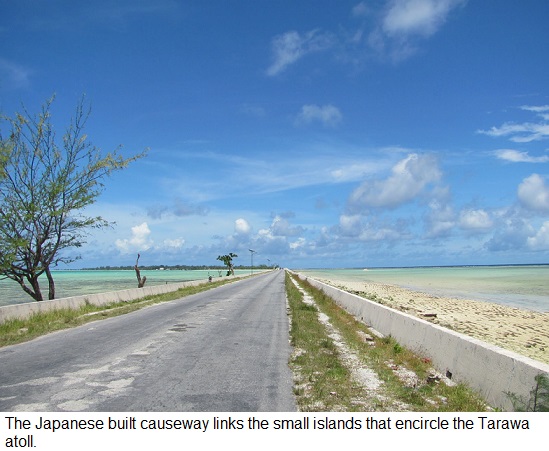
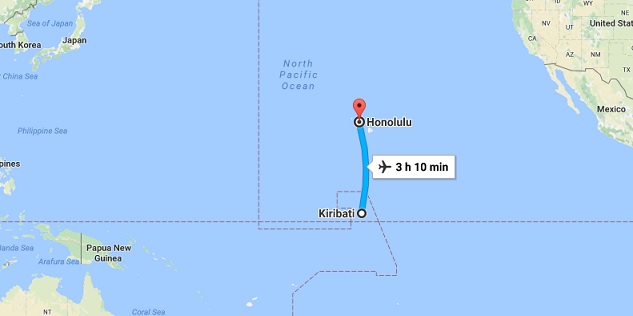
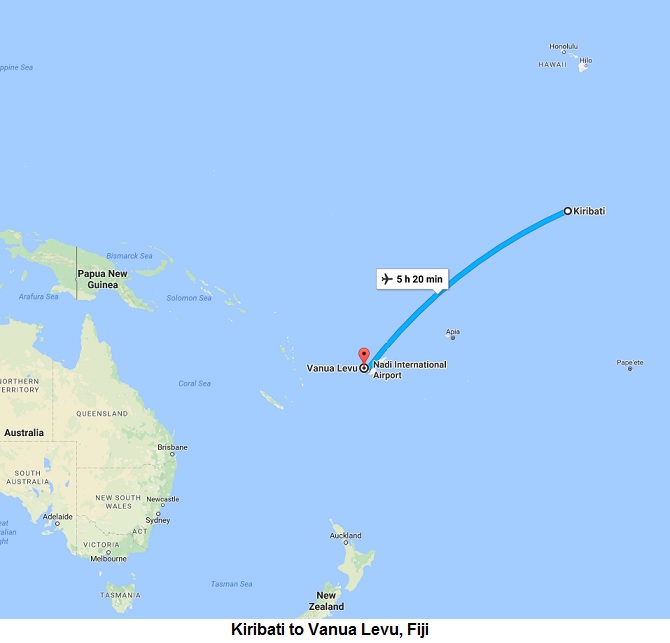
The Go Lean movement (book and preceding blog-commentaries) relates that cultures and countries are not guaranteed to survive: many native tribes and cultures have been assimilated. In fact, in a recent blog it was detailed how the Central Pacific island-nation of Kiribati is on course to lose all of its land territory due to global warming and the resultant higher sea-levels. They have thusly used their national treasuries to buy land elsewhere (Fiji) with the intent of relocating their people there. This will undoubtedly result in all new children being awarded Fiji birth certificates; and after 2 – 3 generations, the original culture of Kiribati will be extinct, lost to time and tides.

The book Go Lean…Caribbean and accompanying blogs have asserted that without remediation and mitigation efforts, there is no guarantee that countries and/or cultures can survive. The book therefore urges the Caribbean region to act! Already, the English-speaking nations have lost 70 percent of the tertiary educated populations to the Brain Drain, while the US Territories experience an even higher rate of societal abandonment. The Dutch and French Caribbean countries, with their automatic EU citizenship status have the same cultural extinction concerns. Notice these points further developed in these previous blogs:

https://goleancaribbean.com/blog/?p=11858 Welcome to Kiribati – Say “Hello” and “Goodbye”
https://goleancaribbean.com/blog/?p=10554 Welcoming the French to these Cultural Extinction Concerns
https://goleancaribbean.com/blog/?p=7151 The Caribbean is Looking for Heroes … ‘to Return’
https://goleancaribbean.com/blog/?p=4613 Lessons from Ireland – Diaspora Past, Present and Future
https://goleancaribbean.com/blog/?p=4551 US Territories – Between a ‘rock and a hard place’
https://goleancaribbean.com/blog/?p=4263 The State of Aruba’s Economy
https://goleancaribbean.com/blog/?p=4185 Caribbean Ghost Towns: It Could Happen…Again
https://goleancaribbean.com/blog/?p=2818 DR President Medina on the economy: ‘God will provide’
https://goleancaribbean.com/blog/?p=2602 Guyana and Suriname Wrestle With High Rates of Suicides
https://goleancaribbean.com/blog/?p=1433 Region loses more than 70% of tertiary educated to Brain Drain

Henry Ford Quote - Vanity of Government EntitlementsThe foregoing is a true and accurate history of the United States of America. Considering their treatment of Native Americans, there should be no rush for the Black-and-Brown of the Caribbean to seek refuge in the US. The book Go Lean posits that fleeing the Caribbean homeland  equates to “jumping from the frying-pan into the fire”. What’s more, the Go Lean book asserts – in the quest to lower the rate of societal abandonment – that it is easier to remediate social defects in the Caribbean homeland than to attempt to remediate the American eco-system. The “grass is not greener on the other side”.

We must learn from the experiences of the Native American Tribes and Reservations – in the US and other countries – and reboot our homeland to reform and transform our societal engines, to avoid any possible cultural termination-extinction fate.

We hereby urge all Caribbean stakeholders –governments and people (residents and Diaspora) – to lean-in to this Go Lean roadmap to continue to accentuate our culture. We must work against extinction and societal abandonment by making our homeland a better place to live, work and play. 🙂

Download the free e-book of Go Lean … Caribbean – now!

Sign the petition to lean-in for this roadmap for the Caribbean Union Trade Federation.

————–

Appendix A – Indian Termination Policy Contents

[The detailed content on the Indian Termination Policy is catalogued as follows:]

Source: Wikipedia Online Encyclopedia; retrieved May 22, 2017 from: https://en.wikipedia.org/wiki/Indian_termination_policy

————–

Appendix B VIDEO – The Tragedy of Wounded Knee  https://youtu.be/0EdRT56WK7Q

Uploaded on Jan 22, 2011 – Not even the powers of the Ghost Dance could save the victims of the Wounded Knee Massacre.

  • Category: Education
  • License: Standard YouTube License


Share this post:
, ,
[Top]

Welcome to Kiribati – Hello and Goodbye

Go Lean Commentary

Islands are the greatest places to live … until they are not.

There is nothing better than being surrounded by water on all sides: beach or bay, just having that vista is preferred. Until, higher tides come in … and stay.

CU Blog - Welcome to Kiribati - Hello and Goodbye - Photo 3

CU Blog - Welcome to Kiribati - Hello and Goodbye - Photo 4

CU Blog - Welcome to Kiribati - Hello and Goodbye - Photo 5

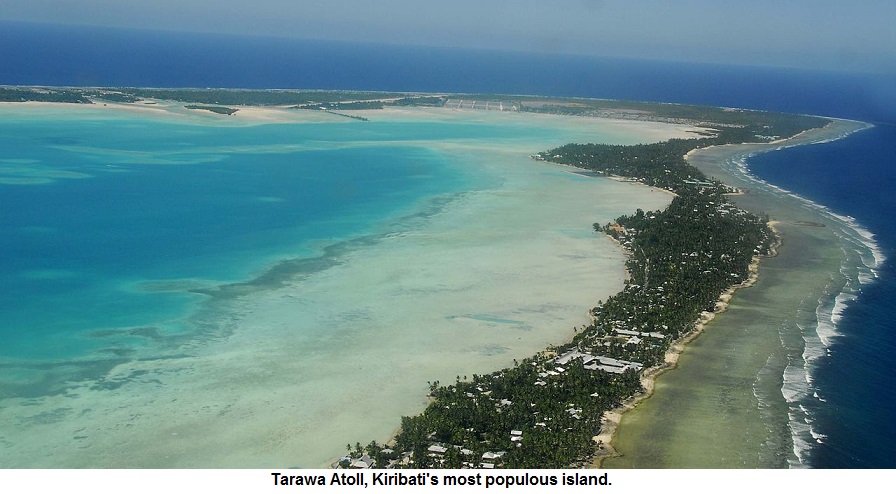
Welcome to Kiribati, an island nation (archipelago of 33 atolls and reef islands) in the central Pacific Ocean. This nation is strategically located at the crossroads of the Eastern and Western Hemispheres, straddling the equator and the International Date Line; so it is the only country in all 4 hemispheres. (Source: Wikipedia)

CU Blog - Welcome to Kiribati - Hello and Goodbye - Photo 1Say ‘Hello’ to Kiribati.

Kiribati is also the first country expected to lose all its land territory to global warming. In June 2008, the then-President Anote Tong said that the country has reached “the point of no return.” He added, “to plan for the day when you no longer have a country is indeed painful but I think we have to do that.”[31][32][33][34]

This just got real …

The book Go Lean…Caribbean and accompanying blogs have asserted that there is no guarantee that countries and/or cultures must survive. Some of them do not!

Remember the Babylonians, Mayans, Lucayans, and others. Despite the array of archeological evidence of their historicity, their culture (language and traditions) simply no longer exist.

Kiribati can also no longer exist. In fact, in early 2012, the government of Kiribati purchased the 2,200-hectare Natoavatu Estate on the second largest island of Fiji, Vanua Levu. At the time it was widely reported[35][36][37] that the government planned to evacuate the entire population of Kiribati to Fiji. In April 2013, President Tong began urging citizens to evacuate the islands and migrate elsewhere.[38]

CU Blog - Welcome to Kiribati - Hello and Goodbye - Photo 2

We could … say ‘Goodbye’ to Kiribati. See the VIDEO here:

VIDEO – Kiribati: The country killed by Climate Change – Truthloader – https://youtu.be/-jMddhJNr9U

Published on Jun 18, 2014 – Kiribati is a tiny nation of 100,000 people living on dozens of islands over a huge area of the South Pacific. And it is set to become the first state completely destroyed by climate change. The government estimates the country will vanish beneath the waves by 2050 due to rising sea levels and coastal erosion, and has an official policy of evacuating the native population. At the same time, it is doing everything it can to protect the pristine ocean environments within its territorial waters, so that even once the country is gone the nature will survive. It’s a pretty sad story.
Subscribe to our channel: http://bit.ly/TRUsub

The fate of Kiribati is a cautionary tale for the Caribbean. “There but for the Grace of God go I”.

The Go Lean book anticipated the Agents of Change impacting the region, Climate Change is most prominent. This is the direct result of the excessive amount of carbon emitted into the planet’s atmosphere. The Small Islands States like Kiribati and the Caribbean are not the BIG polluters most responsible for this disposition – the US is #1 and China is #2 – but we are among the most affected. So we need to be front-and-center in the protests and advocacy for Climate Change mitigations.

The book Go Lean…Caribbean – available to download for free – prepares the Caribbean region for the heavy-lifting of monitoring, managing and mitigating the acute risks of Global Warming, Climate Change and rising sea-levels. We must act now!

The book serves as a roadmap for the introduction and implementation of the technocratic Caribbean Union Trade Federation (CU), for the elevation of Caribbean society – for all member-states. This CU/Go Lean roadmap has these 3 prime directives:

  • Optimization of the economic engines in order to grow the regional economy to $800 Billion and create 2.2 million new jobs.
  • Establishment of a security apparatus to ensure public safety and protect the resultant economic engines.
  • Improve Caribbean governance to support these engines, including a separation-of-powers between the member-states and CU federal agencies.

The book stresses that there are external and internal considerations. As any one country in the Caribbean region may be too small to get attention of the watching world, the whole region on the other hand – 30 member-states and 42 million people – operating as a Single Market and One Voice can have more of an impact.  Internally, we must “get our own house in order”, so the effort is to reform and transform the Caribbean societal engines as part of this regional pursuit. This was an early motivation for the roadmap, as pronounced in the opening Declaration of Interdependence (Pages 11 – 13):

i. Whereas the earth’s climate has undeniably changed resulting in more severe tropical weather storms, it is necessary to prepare to insure the safety and security of life, property and systems of commerce in our geographical region. As nature recognizes no borders in the target of its destruction, we also must set aside border considerations in the preparation and response to these weather challenges.

iii. Whereas the natural formation of the landmass for our society is that of an archipelago of islands, inherent to this nature is the limitation of terrain and the natural resources there in. We must therefore provide “new guards” and protections to ensure the efficient and effective management of these resources.

iv. Whereas the natural formation of the landmass is in a tropical region, the flora and fauna allows for an inherent beauty that is enviable to peoples near and far. The structures must be strenuously guarded to protect and promote sustainable systems of commerce paramount to this reality.

xi. Whereas all men are entitled to the benefits of good governance in a free society, “new guards” must be enacted to dissuade the emergence of incompetence, corruption, nepotism and cronyism at the peril of the people’s best interest. The Federation must guarantee the executions of a social contract between government and the governed.

xvi. Whereas security of our homeland is inextricably linked to prosperity of the homeland, the economic and security interest of the region needs to be aligned under the same governance. Since economic crimes … can imperil the functioning of the wheels of commerce for all the citizenry, the accedence of this Federation must equip the security apparatus with the tools and techniques for predictive and proactive interdictions.

xxiv. Whereas a free market economy can be induced and spurred for continuous progress, the Federation must install the controls to better manage aspects of the economy: jobs, inflation, savings rate, investments and other economic principles. Thereby attracting direct foreign investment because of the stability and vibrancy of our economy.

The Go Lean book provides 370-pages of turn-by-turn instructions on “how” to adopt new community ethos, plus the strategies, tactics, implementations and advocacies to execute so as to monitor, manage and mitigate the challenges of Climate Change.

In addition, these previous blog-commentaries detailed a lot of the issues and developments for the Caribbean’s Climate Change efforts:

https://goleancaribbean.com/blog/?p=11442 Caribbean Roots: Al Roker – ‘Climate Change’ Defender
https://goleancaribbean.com/blog/?p=9455 Fix ‘Climate Change’ – Yes, We Can
https://goleancaribbean.com/blog/?p=7449 Due to Climate Change, ‘Crap Happens’ – So What Now?
https://goleancaribbean.com/blog/?p=7103 COP21 – ‘Climate Change’ Acknowledged
https://goleancaribbean.com/blog/?p=6893 A Meteorologist’s View On Climate Change
https://goleancaribbean.com/blog/?p=6016 ‘Hotter than July’ – Reality in the Caribbean
https://goleancaribbean.com/blog/?p=4673 Climate Change‘ Merchants of Doubt … to Preserve Profits!!
https://goleancaribbean.com/blog/?p=2465 Book: ‘This Changes Everything: Capitalism vs. the Climate’
https://goleancaribbean.com/blog/?p=2276 Climate Change May Affect Food Supply Within a Decade
https://goleancaribbean.com/blog/?p=2119 Cooling Effect – Oceans and the Climate
https://goleancaribbean.com/blog/?p=1883 Climate Change May Bring More Kidney Stones
https://goleancaribbean.com/blog/?p=1817 Caribbean grapples with intense cycles of flooding & drought
https://goleancaribbean.com/blog/?p=926 Conservative heavyweights have solar industry in their sights
https://goleancaribbean.com/blog/?p=915 Go ‘Green’ … Caribbean

We must learn from Kiribati – and other locales – and prepare our homeland as well. We must prepare for the good, bad and the ugly (think extinction). Things can get better, we can make our homeland a better place to live, work and play – but this is not automatic; this quest will require a lot of heavy-lifting. 🙂

Download the free e-book of Go Lean … Caribbean – now!

Sign the petition to lean-in for this roadmap for the Caribbean Union Trade Federation.

Share this post:
,
[Top]

Blog # 600 – State of Caribbean Union: Hope and Change

Go Lean Commentary

Here’s a fact of life: Young people always need Hope and Change.

To ensure this, there have been protest movements – around the world  – in recent times where young people have engaged to get attention, to foment their prospects for Hope and Change. Consider:

  • Arab Spring – Young people in one Arab & North African country after another stood-up in protest of their political & economic status quo.
  • Occupy Wall Street – Young people in the US complained in enduring street and sleep-in protests outside Wall Street.

The book Go Lean…Caribbean – available to download for free – chronicled the rise of these protest movements (Pages 143, 160, 200 & 224). It showed how people at the grass-roots level are able to effect change on the policies and priorities of their country. This is the bottoms-up strategy for forging change; there is also the top-down strategy: getting the political leaders to propose new legislation. Both approaches could be effective in the quest to elevate the 30 member-states in the Caribbean region. The State of our Caribbean Union is that we are in crisis; we must reform and transform our region; it is not optional; it must be done in order to offer Hope and Change to the young people of the Caribbean.

The book states this urgency in the opening (Page 3):

CU Blog - State of Caribbean Union - Hope and Change - Photo 1Our youth, the next generation, may not be inspired to participate in the future workings of their country; they may measure success only by their exodus from their Caribbean homeland.

Nine years ago (2008), young voters in the US thronged rapturous rallies for then-presidential-candidate Barack Obama. Then again, early in the 2016 Presidential campaign, young people flocked to candidate Bernie Sanders. Despite the end-result, the natural idealism of youth always looks for political expression. Usually …

Currently, there is no grass-roots change-protest movement in the Caribbean – this is the State of the Caribbean Union. There needs to be … such a movement! This is according to this commentator-columnist scanning this region’s political landscape. See his strong urging here:

Title: Why the concerns of Caribbean youth matter
By: David Jessop

In much of the world, young people feel economically marginalized, politically alienated and in a struggle against insecurity and inequity.

In the Caribbean, it is little different. Lack of opportunity, the absence of generational change, high levels of unemployment, discrimination based on gender or sexual orientation, and the slow pace of change, are abiding aspects of the lives of many in the younger generation.

However, unlike their counterparts in other regions of the world, where frustration with the political class and anger with the old order have led to new political movements and protest, no similar region-wide or sustained manifestation of dissent has occurred. Instead, in recent years, protests have been limited and disconnected.

Part of the answer as to why this should be seems to lie in the Caribbean’s smallness and fragmentation. While life in micro-states offers proximity to political and economic opportunity, size also imposes limits on dreams and aspiration. When set alongside the seemingly boundless prospects for material gain in North America and US cultural penetration, the same smallness is almost guaranteed to heighten frustration with the slow pace of national development.

The consequence is a sense of disillusion among many young people, and a desire by many of the best, brightest and better educated to seek avenues of escape to other parts of the world.

Dr Terri-Ann Gilbert Roberts, a UWI/SALISES research fellow who was recently nominated by Caribbean youth to be the UN secretary general’s youth envoy, and who is engaged in research, policy and programme formulation on issues affecting children and youth, speaks with knowledge of the topic.

She believes that while young people in the Anglophone Caribbean may not express their frustrations in traditional highly-visible ways, their concerns are palpable, and can be seen and heard in their online and offline conversations in their communities, and in student and youth organisation debates.

She says that the reason that the views of Caribbean youth do not manifest themselves in large-scale anti-government street protests of the type seen in other parts of the Americas, is not because young people do not share the same concerns about their future, the inclusiveness of Caribbean society, or the accountability of public officials. Instead, she believes that because the Anglophone Caribbean has relatively stable democratic traditions, freedom of expression, a free press, and smallness, young people feel that that their shared concerns are known, but are not adequately addressed.

She argues that because “many young people have lost confidence in the capacity of formal governance processes and structures to address their concerns”, they “question the practical value of investment in large-scale protests in which their voices may be ignored and their actions will not influence change”.

While others believe that the absence of protest in the region is a good thing and reflects the homogeneous nature of Caribbean society, the absence of any real basis for public dialogue with those who may lead or vote for tomorrow’s Caribbean, says much about the region’s malaise, and more importantly its future development.

In common with other societies, many in the older generation in the Caribbean seem to want to hold on to the past and the status they have achieved, sometimes making it seem that all that matters is the jealous guarding of privilege.

Unfortunately, this has resulted in an absence of progress, and bestows legitimacy on defending the political and economic status quo. The consequence is that many nations and regional structures remain locked into thinking that is well past its sell by date, whether it be in relation to politics, the public sector, or business. The effect is to create responses that are inward looking, deeply protective, and lacking leadership, or ambition when it comes to the future for the young. It is reflected in the falling youth voter numbers in many Caribbean nations.

Dr Gilbert-Roberts argues that these frustrations have resulted in a clear majority of Caribbean young people refocussing on what she describes as “self-regulated, constructive and pragmatic spaces for online and offline dialogue” to form a basis for their everyday politics.

Putting this another way, she says that, in the Caribbean, young people are now seeking change in those parts of society over which they have power and influence. She cites as the political expression of this, youth movements in some parts of the region that are calling for public transparency and accountability that seek to audit government processes rather than make generic criticisms of government; environmental clubs; youth clubs that offer homework programmes for children; and offers of peer counselling and mentorship.

There are of course regional variations.

In the Dominican Republic, there is generational mobility but this largely only applies to the well-educated sons and daughters of the elite and the county’s expanding professional classes. In Cuba, its government has belatedly recognised the need to make strenuous efforts to include young people who want more in the way of personal freedoms and materially, while keeping the country’s social gains.

In other parts of the region there are exceptional, often female free thinkers in politics and business. There are young entrepreneurs in the services sector and agriculture who see Caribbean opportunity in new ways. There are very able individuals who in private acknowledge they would seek positions of leadership if politics was less tribal. And there are also large numbers of young men who feel uncertain about their place in society and feel threatened.

Dr Gilbert-Roberts, and others who prefer to speak off the record, observe that the level of frustration may now be growing faster than the capacity of youth groups to respond to the needs in their communities.

“We are already seeing increasing numbers of peaceful civil society protests involving young people: for example, marches in Jamaica against violence against children and women, alongside more disruptive protests, for example in Dominica in relation to oppositional politics… If and when these youth movements join up, and connect with the broader frustrations of other segments of the society, we will begin to see new and more visible forms of expression which could also become catalysts for change,” she observes.

Addressing youth alienation, declining educational standards, and the glass ceiling on aspiration, requires high level leadership and action. If the concerns of the region’s young people are not recognised and embraced by its political and business class, change and new thinking could well be driven by unmanaged events.

About the Author: David Jessop is a consultant to the Caribbean Council and can be contacted at
david.jessop@caribbean-council.org. Previous columns can be found at www.caribbean-council.org
Source: Caribbean News Network – Posted May 13, 2017; retrieved May 16, 2017 from: http://www.caribbeannewsnow.com/headline-Commentary%3A-The-View-from-Europe%3A-Why-the-concerns-of-Caribbean-youth-matter-34441.html

It is important to glean these main points from this foregoing article by David Jessop (Caribbean Council Consultant), to better understand the State of the Caribbean Union and the lack of Hope and Change aspirations here:

  • The Caribbean status quo is failing from the perspective of young people – there is a “glass ceiling of aspiration”:
    • Lack of opportunity
    • Absence of generational change
    • High levels of unemployment
    • Discrimination based on gender or sexual orientation
    • Slow pace of change
  • Other regions – i.e. Arab Spring – have active or recent political movements and protests
  • Caribbean youth do complain … in small voice and online
  • The smallness of most of the Caribbean member-states lead to fragmentation and disunity
  • Entrenched leaders want to conservatively hold on to the status privilege
  • There is a foundation for change: democratic institutions, freedom of speech and press; even small starts in Cuba.
  • These ones are challenging orthodoxy, particularly many female free thinkers in politics, business and entrepreneurism.
  • But young people seem settled on only changing the periphery: demanding transparency, accountability and audits
  • There is the need for more disruptive transformation: “out with the old; in with the change”.

These main points of the foregoing article correspond to the Go Lean movement, the original book and blog-commentaries, especially among the last 100 or so, the most recent milestone. This submission is a new milestone; this is blog-commentary # 600. These prior entries posit that the Caribbean status quo is truly in crisis, and that any alternative destination (North America or Western Europe) is not a fitting refuge for the Caribbean Black-and-Brown.

Really, the assertion is that the best option for Hope and Change in the Caribbean is to work to reform and transform the Caribbean, all 30 member-states for the full population of 42 million people. (This is the quest of the Go Lean movement, to forge a Single Market and a technocratic government for the 30 Caribbean member-states). Consider these consistent themes from these previous blog-commentary samples:

The Go Lean book and accompanying blogs studied the good, bad and ugly lessons from a number of communities around the world – see the most recent American protest movement in the Appendix VIDEO below – and then presented a plan to grow the Caribbean regional economy, create jobs, secure the homeland and optimize governance.

CU Blog - State of Caribbean Union - Hope and Change - Photo 2

CU Blog - State of Caribbean Union - Hope and Change - Photo 3

CU Blog - State of Caribbean Union - Hope and Change - Photo 4

Yes, we can.

But the Go Lean book asserts that this effort is too big a task for just one Caribbean member-state alone, so the book urges all 30 member-states to convene, confederate and collaborate in order to effect change. As such, the Go Lean book serves as a roadmap for the introduction and implementation of the technocratic Caribbean Union Trade Federation (CU), for the elevation of Caribbean society – for all member-states. This CU/Go Lean roadmap has these 3 prime directives:

  • Optimization of the economic engines in order to grow the regional economy to $800 Billion and create 2.2 million new jobs. (The issue of jobs alone is paramount to any Hope and Change movement in the region).
  • Establishment of a security apparatus to ensure public safety and protect the resultant economic engines.
  • Improve Caribbean governance to support these engines, including a separation-of-powers between the member-states and CU federal agencies.

The book stresses that reforming and transforming the Caribbean societal engines must be a regional pursuit. This was an early motivation for the roadmap, as pronounced in the opening Declaration of Interdependence (Pages 11 – 14):

viii. Whereas the population size is too small to foster good negotiations for products and commodities from international vendors, the Federation must allow the unification of the region as one purchasing agent, thereby garnering better terms and discounts.

xi. Whereas all men are entitled to the benefits of good governance in a free society, “new guards” must be enacted to dissuade the emergence of incompetence, corruption, nepotism and cronyism at the peril of the people’s best interest. The Federation must guarantee the executions of a social contract between government and the governed.

xii. Whereas the legacy in recent times in individual states may be that of ineffectual governance with no redress to higher authority, the accedence of this Federation will ensure accountability and escalation of the human and civil rights of the people for good governance, justice assurances, due process and the rule of law. As such, any threats of a “failed state” status for any member state must enact emergency measures on behalf of the Federation to protect the human, civil and property rights of the citizens, residents, allies, trading partners, and visitors of the affected member state and the Federation as a whole.

xvi. Whereas security of our homeland is inextricably linked to prosperity of the homeland, the economic and security interest of the region needs to be aligned under the same governance. Since economic crimes … can imperil the functioning of the wheels of commerce for all the citizenry, the accedence of this Federation must equip the security apparatus with the tools and techniques for predictive and proactive interdictions.

xxiv. Whereas a free market economy can be induced and spurred for continuous progress, the Federation must install the controls to better manage aspects of the economy: jobs, inflation, savings rate, investments and other economic principles. Thereby attracting direct foreign investment because of the stability and vibrancy of our economy.

xxvi.Whereas the Caribbean region must have new jobs to empower the engines of the economy and create the income sources for prosperity, and encourage the next generation to forge their dreams right at home, the Federation must therefore foster the development of new industries, like that of ship-building, automobile manufacturing, prefabricated housing, frozen foods, pipelines, call centers, and the prison industrial complex. In addition, the Federation must invigorate the enterprises related to existing industries like tourism… – impacting the region with more jobs.

The Go Lean book accepts that the current (failing) State of the Caribbean Union does not have to be a permanent disposition. Under the Go Lean roadmap, a 5-year plan, we can do better; all of the Caribbean can do better. This roadmap (370-page book) provides the “how”, the turn-by-turn details of the community ethos to adopt, plus the strategies, tactics, implementations and advocacies to execute so as to reboot, reform and transform the societal engines of Caribbean society.

This commentary is 1 of 5 in a non-sequential series on the State of the Caribbean Union. This series depicts the dysfunctional and defective state of affairs (economics, security and governance) throughout the entire region; there are some common traits. These have been assessed by the Go Lean movement. The full entries of all the blog-commentaries in this series are as follows:

  1. State of the Caribbean Union – Lacking Hope and Change
  2. State of the Caribbean Union – Dysfunctional Spanish Caribbean
  3. State of the Caribbean Union – Deficient  Westminster System
  4. State of the Caribbean Union – Unstable Volcano States
  5. State of the Caribbean Union – Self-Interest of Americana

Can we change the State of the Caribbean Union? Yes, we can. We need our own Hope and Change movement … anew … here at home. We need to make our homeland a better place to live, work and play. 🙂

Download the free e-book of Go Lean … Caribbean – now!

Sign the petition to lean-in for the roadmap for the Caribbean Union Trade Federation.

————-

Appendix VIDEO – Trump inspires grassroots protest movement – http://www.cnn.com/videos/politics/2017/02/03/trump-grassroots-protest-movement-todd-tsr-dnt.cnn

Posted February 3, 2017 – CNN’s Brian Todd reports on the surge of anti-Trump protests across the United States. – Source: CNN

Share this post:
, , ,
[Top]

ENCORE: ‘Concussions’ hit home

Miami, Florida – If you’re a fan of American football (NFL or the National Football League) then you know how impactful it is to go undefeated from the beginning to the end of the season, playoffs included. Only one team has done it … ever: the 1972 Miami Dolphins. The 50 players on that team became heroes to every football-loving kid anywhere near the broadcast waves of Miami.

There was a time when these guys were my heroes.

But “time and unforeseen occurrences befall us all” – The Bible (Ecclesiastes 9:11).

There is a connection between Miami and the Caribbean; the city has become much more than a shopping destination; it has redefined itself as the financial, political and sports capital of the Caribbean and Latin America.

So this news is shocking to receive, as the Miami Herald newspaper reports that many of the players on the 1972 Dolphins team now suffer from CTE (Chronic Traumatic Encephalopathy).

Say it ain’t so …

CU Blog - UPDATE - Concussions Come Home - Photo 1

CU Blog - UPDATE - Concussions Come Home - Photo 1b

CU Blog - UPDATE - Concussions Come Home - Photo 3

It seemed like this CTE disease was so far-off; an affliction on people “over there” … somewhere. But to hit the 1972 Dolphins players means that this disease has come home…to our local heroes.

🙁

See the story here in this recent Miami Herald article:

Title: Football’s toll: At least eight members of 1972 Dolphins affected by cognitive impairment

CU Blog - UPDATE - Concussions Come Home - Photo 2They called him Captain Crunch, and the name was fitting. Mike Kolen packed a punch.

Now, 45 years after the Dolphins’ No-Name Defense ran through the 1972 season undefeated, Kolen and his perfect teammates are tied together again. But instead of celebration, there’s heartache.

South Florida’s most legendary team has become a cautionary tale, a poignant symbol of the concussion saga that threatens the future of America’s favorite sport.

“Within the last month or so, I’ve been diagnosed with the initial stages of Alzheimer’s,” Kolen, a starting linebacker on Miami’s two Super Bowl-winning teams, told the Miami Herald.

And was football the cause?

“I think that’s about the only way I’d have cognitive issues,” replied Kolen, 69, who has no family history of dementia.

Kolen’s story is not unique for Miami’s most historic team.

Earlier this week, Sports Illustrated detailed how Kolen’s better-known 1972 teammates Nick Buoniconti and Jim Kiick have both deteriorated mentally in the past few years.

After quarterback Earl Morrall’s death in 2014, an autopsy revealed he had Stage 4 chronic traumatic encephalopathy, a degenerative brain disease more commonly known as CTE that researchers have linked to football.

Bill Stanfill, the Dolphins’ first sack king, suffered from dementia and Parkinson’s disease when he died last fall at age 69.

Three others from that famed roster — cornerback Lloyd Mumphord, defensive back Tim Foley and running back Hubert Ginn — have quietly dealt with cognitive impairment in recent years, teammates tell the Herald.

That makes at least eight members of a roster of roughly 50 men who have experienced loss of acuity. And that figure includes only those who keep in regular contact with the organization; several do not.

Roughly a quarter of the ’72 team has passed away, including five from cancer. Manny Fernandez, a defensive lineman who was the star of Super Bowl VII, has had eight surgeries on his back alone. Center Jim Langer, 68, said his “legs are bad and my knees are shot” after six operations.

Even the NFL acknowledges – see VIDEO below – that there is a link between football-related head trauma and neurological diseases like CTE after denying any such connection for years. …

Continue reading the full article here; (it is lengthy):

http://www.miamiherald.com/sports/nfl/miami-dolphins/article150311157.html retrieved 05-11-2017.

———

VIDEO – NFL acknowledges link between football and brain disease CTEhttp://www.dailymail.co.uk/news/article-4503362/Seven-members-72-Dolphins-suffered-brain-injuries.html#v-6189767714419658422

Relating Miami to the Caribbean makes this story relatable to the movement behind the book Go Lean … Caribbean. One purpose of this movement is to engage business models so that Caribbean communities can better take advantage of the economic benefits of sports. There are few expressions of professional sports in the Caribbean now – there is no eco-system for collegiate athletics at all. Due to the territorial status and the border proximity, there are 3 member-states with organized American Football league play in the Caribbean: Puerto Rico, US Virgin Islands and the Bahamas.

With the advantages of professional sports (money from ticket sales & broadcast rights, pride, athletic fitness, etc.), come disadvantages as well. CTE, as one, is only now begrudgingly been accepted as a direct consequence of the often times brutal game of American Football.

This was the warning from this previous blog-commentary that marked the release of the movie “Concussion”, chronicling the David-versus-Goliath-like advocacy of the Pathology Doctor who “blew the whistle” on the systemic “willful” ignorance and Crony-Capitalistic abuse in the NFL. This excerpt highlights some main points from that blog:

Yes, movies help us to glean a better view of ourselves … and our failings; and many times, show us a way-forward.

These descriptors actually describe the latest production from Hollywood icon Will Smith (the former Fresh Prince of Bel-Air). This movie, the film “Concussion”, in the following news article, relates the real life drama of one man, Dr. Bennet Omalu, a Nigerian-born medical doctor – a pathologist – who prepared autopsies of former players that suffered from football-related concussions. He did not buckle under the acute pressure to maintain the status quo, and now, he is celebrated for forging change in his adopted homeland. This one man made a difference. (The NFL is now credited for a Concussion awareness and prevention protocol so advanced that other levels of the sport – college, high schools and Youth – are being urged to emulate).

Beyond the excerpt, see the entire blog-commentary from August 31, 2015 on the movie ‘Concussion‘ and the dreaded CTE disease being encored here:

—————-

Go Lean Commentary – ‘Concussions’ – The Movie; The Cause

“Are you ready for some football?” – Promotional song by Hank Williams, Jr. for Monday Night Football on ABC & ESPN networks for 22 years (1989 – 2011). See Appendix below.

This iconic song (see Appendix) and catch-phrase is reflective of exactly how popular the National Football League (NFL) is in the US:

“They own an entire day of the week”.

- The Movie; The Cause - Photo 2So says the new movie ‘Concussions’, starring Will Smith, referring to the media domination of NFL Football on Sundays during the Autumn season. The movie’s script is along a line that resonates well in Hollywood’s Academy Award balloting: “David versus Goliath”; “a small man speaking truth to power”.

In the case of the NFL, it is not just about power, it is about money, prestige and protecting the status quo; the NFL is responsible for the livelihood of so many people. The book Go Lean … Caribbean recognized the importance of the NFL in the American lexicon of “live, work and play”; it featured a case study (Page 32) of the NFL and it’s collective bargaining successes (and failures) in 2011. An excerpt from the book is quoted as follows:

Football is big business in the US, $9 billion in revenue, and more than a business; emotions – civic pride, rivalries, and fanaticism – run high on both sides.

Previous Go Lean commentaries presents the socio-economic realities of much of the American football eco-system. Consider a sample here:

Socio-Economic Impact Analysis of [Football] Sports Stadiums
Watch the Super Bowl … Commercials
Levi’s® NFL Stadium: A Team Effort
Sports Role Model – College Football – Playing For Pride … And More
Sports Role Model – Turn On the SEC Network
Collegiate Sports in the Caribbean – Model of NCAA
10 Things We Want from the US: #10 – Sports Professionalism
10 Things We Don’t Want from the US: #10 – ‘Win At All Costs’ Ethos

While football plays a big role in American life, so do movies. Their role is more unique; they are able to change society. In a previous blog / commentary regarding Caribbean Diaspora member and Hollywood great, Sidney Poitier, it was declared that …

“Movies are an amazing business model. People give money to spend a couple of hours watching someone else’s creation and then leave the theater with nothing to show for the investment; except perhaps a different perspective”.

Yes, movies help us to glean a better view of ourselves … and our failings; and many times, show us a way-forward.

These descriptors actually describe the latest production from Hollywood icon Will Smith (the former Fresh Prince of Bel-Air). This movie, the film “Concussion”, in the following news article, relates the real life drama of one man, Dr. Bennet Omalu, a Nigerian-born medical doctor – a pathologist – who prepared autopsies of former players that suffered from football-related concussions. He did not buckle under the acute pressure to maintain the status quo, and now, he is celebrated for forging change in his adopted homeland. This one man made a difference. (The NFL is now credited for a Concussion awareness and prevention protocol so advanced that other levels of the sport – college, high schools and Youth – are being urged to emulate).

See news article here on the release of the movie:

Title: ‘Concussion’: 5 Take-a-ways From Will Smith’s New Film

Will Smith, 46, is definitely going to get a ton of Oscar buzz portraying Dr. Bennet Omalu in the new film “Concussion.” NFL columnist Peter King of Sports Illustrated got an exclusive first peek at the trailer and it has been widely shared on social media since. And it’s very chilling.

- The Movie; The Cause - Photo 1

Here are five take-aways and background you need to know before checking out the clip:

1 – It’s Based on a True Story

Omalu is the forensic pathologist and neuropathologist who discovered chronic traumatic encephalopathy in football players who got hit in the head over and over again, according to the Washington Post.

In the clip, he says repetitive “head trauma chokes the brain.”

Omalu was one of the founding members of the Brain Injury Research Institute in 2002. He conducted the autopsy of Pittsburgh Steelers center Mike Webster, played by David Morse in the film, which led to this discovery.

2 – Smith’s Version of Omalu’s Accent Is Spot On

Omalu is from Nigeria and Smith has been known to transform completely for a role. He was nominated for an Oscar for 2011’s “Ali,” playing the legendary Muhammad Ali.

For comparison, here’s Omalu’s PBS interview from 2013.

3 – Smith Is a Reluctant Hero

“If you don’t speak for them, who will,” Gugu Mbatha-Raw, who plays Prema Mutiso in the film, tells Smith’s character.

He admits he idolized America growing up and “was the wrong person to have discovered this.”

4 – Alec Baldwin and Luke Wilson

“Concussion” brought in some heavyweights for this movie. Baldwin plays Dr. Julian Bailes, who advises Omalu, and Wilson, who will reportedly play NFL Commissioner Roger Goodell, according to IMDB. There’s no official word on this. He’s seen at a podium in the trailer, but doesn’t speak.

5 – “Tell the Truth”

Smith captures Omalu’s passion to have the truth told about this injury and disease.

“I was afraid of letting Mike [Webster] down. I was afraid. I don’t know. I was afraid I was going to fail,” Omalu told PBS a couple years back.

———-

VIDEO Link: http://www.imdb.com/title/tt3322364/?ref_=nv_sr_1


Will Smith stars in the incredible true David vs. Goliath story of Dr. Bennet Omalu, the brilliant forensic neuropathologist who made the first discovery of CTE, a football-related brain trauma, in a pro player.

The subject of concussions is serious – life and death. Just a few weeks ago (August 8), an NFL Hall-of-Fame inductee was honored for his play on the field during his 20-year professional career, but his family, his daughter in particular, is the one that made his acceptance / induction speech. He had died, in 2012; he committed suicide after apparently suffering from a brain disorder – chronic traumatic encephalopathy (CTE), a type of chronic brain damage that has also been found in other deceased former NFL players[4] – sustained from his years of brutal head contacts in organized football in high school, college and in his NFL career. This player was Junior Seau.

- The Movie; The Cause - Photo 3a

- The Movie; The Cause - Photo 3b

Why would there be a need for “David versus Goliath”; “a small man speaking truth to power”? Is not the actuality of an acclaimed football player committing suicide in this manner – he shot himself in the chest so as to preserve his brain for research – telling enough to drive home the message for reform?

No. Hardly. As previously discussed, there is too much money at stake.

These stakes bring out the Crony-capitalism in American society.

The book Go Lean…Caribbean (and subsequent blog/commentaries) relates many examples of cronyism in the American eco-system. There is a lot of money at stake. Those who want to preserve the status quo or not invest in the required mitigations to remediate concussions will fight back against any Advocate promoting the Greater Good. The profit motive is powerful. There are doubters and those who want to spurn doubt. “Concussions in Football” is not the first issue these “actors” have promoted doubt on. The efforts to downplay concussion alarmists are from a familiar playbook, used previously by Climate Change deniers, Big Tobacco, Toxic Waste, Acid Rain, and other dangerous chemicals.

This Go Lean book serves as a roadmap for the introduction and implementation of the technocratic Caribbean Union Trade Federation (CU). Sports are integral to the Go Lean/CU roadmap. While sports can be good and promote positives in society, even economically, the safety issues must be addressed upfront. This is a matter of community security. Thusly, the prime directives of the CU are described as:

  • Optimize the economic engines of the Caribbean to elevate the regional economy to grow to $800 Billion and create 2.2 million new jobs, including sports-related industries with a projection of 21,000 direct jobs at Fairgrounds and sports enterprises.
  • Establish a security apparatus to protect the people and economic engines.
  • Improvement of Caribbean governance to support these economic and security engines.

The CU/Go Lean sports mission is to harness the individual abilities of athletes to not just elevate their performance, but also to harness the economic impact for their communities. So modern sports endeavors cannot be analyzed without considering the impact on “dollars and cents” for stakeholders. This is a fact and should never be ignored. There is therefore the need to carefully assess and be on guard for crony-capitalistic influences entering the decision-making of sports stakeholders. The Go Lean book posits that with the emergence of new economic engines, “bad actors” will also emerge thereafter to exploit the opportunities, with good, bad and evil intent”. These points were pronounced early in the opening Declaration of Interdependence (Page 12 &14):

x. Whereas we are surrounded and allied to nations of larger proportions in land mass, populations, and treasuries, elements in their societies may have ill-intent in their pursuits, at the expense of the safety and security of our citizens. We must therefore appoint “new guards” to ensure our public safety and threats against our society, both domestic and foreign. The Federation must employ the latest advances and best practices of criminology and penology to assuage continuous threats against public safety.

xi. Whereas all men are entitled to the benefits of good governance in a free society, “new guards” must be enacted to dissuade the emergence of incompetence, corruption, nepotism and cronyism at the peril of the people’s best interest. The Federation must guarantee the executions of a social contract between government and the governed.

xvi. Whereas security of our homeland is inextricably linked to prosperity of the homeland, the economic and security interests of the region needs to be aligned under the same governance. Since economic crimes … can imperil the functioning of the wheels of commerce for all the citizenry, the accedence of this Federation must equip the security apparatus with the tools and techniques for predictive and proactive interdictions.

xxxi. Whereas sports have been a source of great pride for the Caribbean region, the economic returns from these ventures have not been evenly distributed as in other societies. The Federation must therefore facilitate the eco-systems and vertical industries of sports as a business, recreation, national pastime and even sports tourism …

The Go Lean book envisions the CU – a confederation of the 30 member-states of the Caribbean chartered to do the heavy-lifting of empowering and elevating the Caribbean economy – as the landlord of many sports facilities (within the Self-Governing Entities design), and the regulator for inter-state sport federations. The book details the economic principles and community ethos to adopt, plus the executions of strategies, tactics, implementations and advocacies to optimize sports enterprises in the Caribbean:

Community Ethos – Deferred Gratification Page 21
Economic Principles – People Respond to Incentives in Predictable Ways Page 21
Economic Principles – Economic Systems Influence Individual Choices / Incentives Page 21
Economic Principles – The Consequences of Choices Lie in the Future Page 21
Economic Principles – Job Multiplier Page 22
Community Ethos – Security Principles – Whistleblower Protection Page 23
Community Ethos – Security Principles – Light-Up the Dark Places Page 23
Community Ethos – Security Principles – “Crap” Happens Page 23
Community Ethos – Governing Principles – Lean Operations Page 24
Community Ethos – Ways to Impact the Future Page 26
Community Ethos – Ways to Promote Happiness – Mitigate Suicide Threats Page 36
Community Ethos – Impact the Greater Good Page 37
Strategy – Vision – Confederating 30 Member-States into a Single Market Page 45
Strategy – Vision – Foster Local Economic Engines for Basic Needs Page 45
Strategy – Mission – Prepare for Natural Disasters Page 45
Strategic – Staffing – Sporting Events at Fairgrounds Page 55
Strategy – Agents of Change – Climate Change Page 57
Strategy – Agents of Change – Globalization Page 57
Tactical – Confederating a Permanent Union Page 63
Tactical – Fostering a Technocracy Page 64
Tactical – Separation of Powers – Sports & Culture Administration Page 81
Tactical – Separation of Powers – Fairgrounds Administration Page 83
Tactical – Separation of Powers – Health Department – Disease Management Page 86
Implementation – Assemble Regional Organs into a Single Market Economy Page 96
Implementation – Steps to Implement Self-Governing Entities – Sports Stadia Page 105
Implementation – Security Initiatives at Start-up – Unified Command & Control Page 103
Implementation – Industrial Policy for CU Self Governing Entities Page 103
Implementation – Ways to Deliver – Project Management/Accountabilities Page 109
Anatomy of Advocacies – Examples of Individuals Who Made Impact Page 122
Planning – Ways to Make the Caribbean Better Page 131
Advocacy – Ways to Grow the Economy Page 151
Advocacy – Ways to Create Jobs Page 152
Advocacy – Ways to Improve Governance Page 168
Advocacy – Ways to Better Manage the Social Contract Page 170
Advocacy – Ways to Promote Fairgrounds Page 192
Advocacy – Ways to Improve Emergency Management – Trauma Arts & Sciences Page 196
Advocacy – Ways to Improve Sports Page 229
Advocacy – Ways to Impact Urban Living – Sports Leagues Page 234

The Go Lean book and accompanying blogs declare that the Caribbean needs to learn lessons from other communities, especially when big money is involved in pursuits like sports. These activities should be beneficial to health, not detrimental. So the admonition is to be “on guard” against the “cronies”; they will always try to sacrifice public policy – the Greater Good – for private gain: profit.

Let’s do better. Yes, the Caribbean can be better than the American experiences.

The design of Self-Governing Entities allow for greater protections from Crony-Capitalistic abuses. While this roadmap is committed to availing the economic opportunities of sports and accompanying infrastructure, as demonstrated in the foregoing movie trailer, sport teams and owners can be plutocratic “animals” in their greed. We must learn to mitigate plutocratic abuses. While an optimized eco-system is good, there is always the need for an Advocate, one person to step up, blow the whistle and transform society. The Go Lean roadmap encourages these role models.

Bravo Dr. Bennet Omalu. Thank you for this example … and for being a role model for all of the Caribbean.

RIP Junior Seau.

Now is the time for all of the Caribbean, the people and governing institutions, to lean-in for the empowerments described in the book Go Lean … Caribbean. This roadmap will result in more positive socio-economic changes throughout the region; it will make the Caribbean a better place to live, work and play. 🙂

Download the free e-book of Go Lean … Caribbean – now!

Sign the petition to lean-in for this roadmap for the Caribbean Union Trade Federation.

——-

Appendix VIDEO: Hank Williams Jr. – Are You Ready for Some Footballhttps://youtu.be/dKPZEMu7Mno

Uploaded on Jan 28, 2019 – Official Music Video

Share this post:
, , , , , , ,
[Top]

Caribbean Roots: Bruno Mars … and the Power of Endurance

Go Lean Commentary 

CU Blog - Caribbean Roots - Bruno Mars - Photo 5Islands are unique compared to the mainland.

Being cut-off, social development evolves and endures independent of the mainland’s influence. This is the case in the natural world – consider all the unique animals of Australia – and in the music world.

Most of the 30 member-states of the Caribbean are islands (notwithstanding Guyana, Suriname & Belize). As a result we have this amazing musical progeny that has developed … and endured: we have 169 different musical genres that have emerged.

So not only are islands distinct compared to the mainland, they are also distinct compared to each other.

CU Blog - Caribbean Roots - Bruno Mars - Photo 1This explains the historicity of the musical artist Bruno Mars.

He is of Caribbean roots…

… his father has Puerto Rican heritage. But Bruno or Peter Hernandez, his given name, was born and raised on the island of Hawaii. (See Biography in Appendix A below).

His music reflects the richness of his island roots. See, feel the Caribbean “soul” in the VIDEO of “Billionaire” in the Appendix C below. A Caribbean legacy – in this case Puerto Rico – has so much good to offer the world, as one of the best-selling artists of all time.

CU Blog - Caribbean Roots - Bruno Mars - Photo 2

CU Blog - Caribbean Roots - Bruno Mars - Photo 3

This is a message the Caribbean needs to hear – we are the greatest address on the planet, in terms of terrain (flora, fauna and beaches), hospitality and culture, but we are at near-Failed-State status. We must endure and fix our broken societal engines.

Challenge accepted!

See how this champion of Caribbean Roots battled misfortune and adversity to emerge as one of the biggest musical stars of the day. See this 60 Minutes interview from November 2016 here (or the transcript in Appendix B below):

VIDEO Bruno Mars on his artistry: “I’m working hard for this” – http://www.cbsnews.com/videos/bruno-mars

Posted November 20, 2016 – He’s been broke, busted and nearly homeless. Now, as 60 Minutes’ Lara Logan reports, he’s on top of the music world. (May require CBS All-Access Subscription).

Bruno Mars has the talent; he even had it early as a youth. He has earned many awards and nominations, like the Grammys (5), BRIT Awards (3), MTV Europe Music Awards (3), and Billboard Songwriter Award. In 2014, he became the artist with the most top five entries on the Billboard Hot 100 since his first week on the chart.[182] He is the first male artist to place two titles as a lead act in the Hot 100’s top 10 simultaneously.[184] Mars was the most played artist on “pop radio” in 2013 [185] and became the first solo male artist whose first 13 Top 40 hits all reached the Top 10 on the American Top 40.[186] In total, he has had six number-one singles on the Hot 100 chart.[187]

We are so proud that this talented American entertainer actually has Caribbean roots; it accentuates our image and reflects the positive contributions of our culture. But as related in this foregoing VIDEO, it has taken more than just talent alone for him to advance to these heights in the music industry. (He kicks off a major US Tour this summer; see initial dates in the Photo here).

CU Blog - Caribbean Roots - Bruno Mars - Photo 4

Success for Bruno Mars has been based on the full measure of his character, the talent and that something else, the “X-Factor” that the music industry likes to classify as to why some artists succeed and some artists do not.

There is the need for endurance, resilience, vision and preparation for whatever available opportunity emerges.

This is where the long experience of this short life of Bruno Mars – thus far – teaches the Caribbean region, what we need to do to be successful in our quest to elevate our homeland to be a better place to live, work and play. Yes, we have shown that we have talent; we have endurance and resilience, but now we must show the vision and prepare for opportunities to execute change at home.

This is the quest of the book Go Lean…Caribbean; it serves as a roadmap for the introduction and implementation of the Caribbean Union Trade Federation (CU). The CU is designed to advance the Caribbean eco-systems for economics, security and governance. Every step along the way, with all the bread-and-butter considerations, there is the opportunity for the arts and artists  (including music) to impact this region and the rest of the world with their contributions. These 3 statements constitute the prime directives of this Go Lean/CU roadmap:

  • Optimization of the economic engines in order to grow the regional economy.
  • Establishment of a security apparatus to protect the resultant economic engines.
  • Improvement of Caribbean governance to support these engines.

Endurance can be classified as a “community ethos” – the fundamental character or spirit of a culture; the underlying sentiment that informs the beliefs, customs, or practices of a society (Go Lean book Page 20). This roadmap recognizes that a prerequisite for advancing society is a change in the Caribbean community ethos; or an adoption of different community ethos, i.e. Deferred Gratification, a derivative of “endurance” (Page 21). Early in the book, in the opening Declaration of Interdependence, the contributions that culture (music, dance and artistic expressions) can make is pronounced as an ethos for the entire region to embrace (Page 14), with these statements:

xxxii. Whereas the cultural arts and music of the region are germane to the quality of Caribbean life, and the international appreciation of Caribbean life, the Federation must implement the support systems to teach, encourage, incentivize, monetize and promote the related industries for arts and music in domestic and foreign markets. These endeavors will make the Caribbean a better place to live, work and play.

Bruno Mars is the embodiment of the necessary ingredients to forge success in the music industry. He has impacted the music, culture and image of Island Life (albeit Hawaii); he has depicted that “despite the upbringing on a small, limited island”, one can still “move” the whole world  – move it to dance and move it to change. Like Caribbean musical icon, Bob Marley, Bruno Mars is setting a pathway for success for other generations of talented, inspirational and influential artists to follow. Many other artists – of Caribbean heritage – are sure to emerge and “impact the world”. We are thusly preparing for it, as specified in the same Declaration of Interdependence – Page 13:

xxi. Whereas the preparation of our labor force can foster opportunities and dictate economic progress for current and future generations, the Federation must ensure that educational and job training opportunities are fully optimized for all residents of all member-states, with no partiality towards any gender or ethnic group. The Federation must recognize and facilitate excellence in many different fields of endeavor, including sciences, languages, arts, music and sports. This responsibility should be executed without incurring the risks of further human flight, as has been the past history.

Globally, the music industry is in shambles. This is true in the US and even more so in the Caribbean. It is difficult for musical artists to endure in professions tied to the music industry unless some fundamental changes are put in place…

… the Go Lean/CU roadmap represents the change that the Caribbean needs. The people, enterprises, institutions and governance of the region are all urged to “lean-in” to this roadmap for change. It is important to provide a structure for musicians and artists to get paid for their talents; otherwise they would abandon this industry. Alas, we need a striving music industry; it is important as these ones highlight positive contributions of Caribbean culture, life and people.

The following list details the community ethos, strategies, tactics, implementations and advocacies to foster a better business environment for future entertainers in the Caribbean:

Community Ethos –   Ways to Foster Genius Page 27
Community Ethos –   Promote Intellectual Property Page 29
Community Ethos –   Ways to Promote Happiness Page 36
Community Ethos –   Impact the Greater Good Page 37
Strategy – Caribbean   Vision Page 45
Tactical –   Separation of Powers – Patents & Copyrights Page 78
Tactical –   Separation of Powers – Culture Administration Page 81
Implementation –   Ways to Impact Social Media Page 111
Advocacy – Ways to   Make the Caribbean Better Page 131
Advocacy – Ways to   Better Manage Image Page 133
Advocacy – Ways to   Impact Hollywood Page 203
Advocacy – Ways to   Improve the Arts Page 230
Advocacy – Ways to   Promote Music Page 231

The changes being anticipated for the Caribbean music industry assumes an integration of the business eco-system. We must have a means by which the artists can get paid for their artistic expressions. The Go Lean book fully detailed this music business eco-system with this sample advocacy; see  these headlines from Page 231:

10 Ways to Promote Music

1 Leverage the Single   Market
Allow for the unification of the region into one market of 42 million people. There are numerous [Afro-Caribbean] music genres that are unique to the region (Appendix ZS on Page 347): Calypso, Reggae, Salsa, Mambo, Merengue, Conga, Junkanoo and others. The integrated market size of the CU can support the deployment and regulation of a music eco-system where artists, writers, performers, promoters, broadcasters and retailers can be duly compensated for their efforts; thereby fostering an internal music industry and encouraging new generations to share their talents and dream of stardom.
2 Payment Eco-System
Arrange for settlement of electronic payments transactions allowing e-commerce (downloads) to flourish.
3 Level 1 – Music Fulfills Biological and Physiological needs
Exposure to music and music education is one common denominator among successful, satisfied, articulate people and helps cement their basic education that guarantees them the ability to advance in society so as to secure their livelihoods. Moreover, an ongoing musical experience (ideally begun at a young age) provides the consumer demand base for peripheral industries (orchestras, operas, arts organizations, etc.). Although it may not sell tickets immediately, it is an investment in a future generation of musically-literate patrons and participants.
4 Level 2 – Security/Safety needs
The CU will facilitate job security for talented musicians/artists by fostering a marketplace (real & virtual) to transact their occupations. Previously, the Internet had undermined the business models for the music industry, but there are now new paid services (like iTunes, Rhapsody, Pandora, etc.). Safety needs refer to protecting the industry to allow continuity of musical output and preventing the nullification of national art forms. “Music soothes the savage beast”.
5 Level 3 – Belongingness and Love needs
6 Level 4 – Esteem needs
7 Level 5 – Cognitive needs
8 Level 6 – Aesthetic needs
9 Level 7 – Self-Actualization needs
10 Level 8 – Transcendence needs

The power of music has been a familiar topic for previous Go Lean blog-commentaries. Consider this sample:

https://goleancaribbean.com/blog/?p=10983 Legacy of the ‘Buffalo Soldier’ Song
https://goleancaribbean.com/blog/?p=10910 Day of Happiness – Music-style; Miami-style; JITG-style
https://goleancaribbean.com/blog/?p=9948 Caribbean Roots: Sammy Davis, Jr.
https://goleancaribbean.com/blog/?p=9712 Forging Change: Panem et Circenses (Bread and Amusement)
https://goleancaribbean.com/blog/?p=8619 A Lesson in History: Jamaican Innovation for Hip Hop
https://goleancaribbean.com/blog/?p=5648 Taylor Swift withholds Album from Apple Music
https://goleancaribbean.com/blog/?p=5423 Extracurricular Music Programs Boost Students
https://goleancaribbean.com/blog/?p=5251 Post-Mortem of Inaugural Bahamas Junkanoo Carnival
https://goleancaribbean.com/blog/?p=3641 ‘Building a City’ on Rock-n-Roll and Music
https://goleancaribbean.com/blog/?p=2415 How ‘The Lion King’ productions roared into history
https://goleancaribbean.com/blog/?p=1909 Music Role Model Berry Gordy – Reflecting & Effecting Change
https://goleancaribbean.com/blog/?p=866 Bob Marley: The Legend Lives On!

We salute those like Peter Hernandez (Senior) who left the Puerto Rican Diaspora of Brooklyn as a youth, looking for opportunities in the world of music-entertainment. We salute him and other such ones, even their descendants and legacies. We know there are “new” Peter Hernandez -types and “new” Bruno Mars-types throughout Caribbean member-states, waiting to be fostered. We hail them as our future.

Now is the time for all stakeholders – musicians and music lovers alike – in the Caribbean to lean-in for the empowerments described here-in and in the book Go Lean … Caribbean. Our society is failing; we can turn-around and reboot. Music helps to forge that change!

We can and must be better and do better and help to make our Caribbean homeland a better place to live, work and play. So we need a fully functional music industry because we need music, and the effects of music: the power to move people. 🙂

Download the free e-Book of Go Lean … Caribbean – now!

Sign the petition to lean-in for the roadmap for the Caribbean Union Trade Federation.

————-

Appendix A – Bruno Mars Biography
Peter Gene Hernandez (born October 8, 1985), known professionally as Bruno Mars, is an American singer-songwriter, multi-instrumentalist, record producer, and choreographer. Born and raised in Honolulu, Hawaii, by a family of musicians, Mars began making music at a young age and performed in various musical venues in his hometown throughout his childhood. He graduated from high school and moved to Los Angeles to pursue a musical career. After being dropped by Motown Records, Mars signed a recording contract with Atlantic Records in 2009.

In 2009, he co-founded the production team “The Smeezingtons”, responsible for the singles “Nothin’ on You” by B.o.B and “Billionaire” by Travie McCoy. He featured on the hooks for both singles, becoming recognized as a solo artist. His debut studio album Doo-Wops & Hooligans (2010) included the U.S. Billboard Hot 100 chart-topping singles “Just the Way You Are” and “Grenade“, as well as the number-four single “The Lazy Song“. His second album, Unorthodox Jukebox (2012), peaked at number one in the United   States. The album spawned the international singles “Locked Out of Heaven“, “When I Was Your Man” and “Treasure“. In 2014, Mars lent his vocals to Mark Ronson’s “Uptown Funk“. In 2016, he released his third studio album 24K Magic with the lead single of the same title released on October 7, 2016. To date, he has sold over 115 million singles and 9 million albums worldwide, making him one of the best-selling artists of all time. Mars has landed seven number-one singles on the Billboard Hot 100 since his career launched in 2010, attaining his first five faster than any male artist since Elvis Presley.

Mars has received many awards and nominations, including five Grammy Awards, and was named one of Time‘s 100 most influential people in the world in 2011. In December 2013, he ranked number one on the Forbes 30 under 30 list. Mars is known for his stage performances and retro showmanship. He is accompanied by his band, The Hooligans, who play a variety of instruments such as electric guitar, bass, piano, keyboards, drums and horns, and also serve as backup singers and dancers. Mars performs in a wide range of musical styles.

Early life and musical beginnings
Peter Gene Hernandez was born on October 8, 1985,[1] in Honolulu, Hawaii to Peter Hernandez and Bernadette San Pedro Bayot, and was raised in the Waikiki neighborhood of Honolulu.[2]

His father is of half Puerto Rican and half Ashkenazi Jewish descent (from Ukraine and Hungary), and is originally from Brooklyn, New York.[3][4][5] His mother emigrated from the Philippines to Hawaii as a child, and was of Filipino, and some Spanish, ancestry.[4][6] His parents met while performing in a show in which his mother was a hula dancer and his father played percussion.[5] At the age of two, he was nicknamed “Bruno” by his father, because of his resemblance to professional wrestler Bruno Sammartino.[7][8][9]

Mars is one of six children and came from a musical family which exposed him to a diverse mix of genres including: reggae, rock, hip hop, and R&B.[10][11] His mother was both a singer and a dancer, and his father performed Little Richard rock and roll music.[12] Mars’ uncle was an Elvis impersonator, and also encouraged three-year-old Mars to perform on stage. Mars performed songs by artists such as Michael Jackson, The Isley Brothers, and The Temptations.[8] At age four, Mars began performing five days a week with his family’s band, The Love Notes, and became known on the island for his impersonation of Presley.[13] In 1990, Mars was featured in MidWeek as “Little Elvis”, and later appeared in a cameo role in the film Honeymoon in Vegas (1992),[8][14] and performed in the halftime show of the 1990 Aloha Bowl.[15]

Source: Retrieved May 12, 2017 from: https://en.wikipedia.org/wiki/Bruno_Mars

————-

Appendix B – Transcript: Bruno Mars 60 Minutes Story Transcript

The following script is from “Bruno Mars,” which aired on Nov. 20, 2016. Lara Logan is the correspondent. John Hamlin, producer.

Bruno Mars is one of the world’s biggest music stars and he’s one of the most driven people we’ve ever seen. Just 31, he’s the product of what he calls a “school of rock” education — a working class life of experiences that have taught him the music business. None of it came easily. He’s been broke, busted and nearly homeless. But this week, following the release of his first album in four years, he’s on top of the music world.

To show us how he got there, Bruno Mars did something he’s never done: he shared with us some of the toughest moments of his Hawaiian upbringing, and gave us the opportunity to witness his extraordinary skills as a songwriter and producer.

We begin with Bruno Mars, the entertainer.

This show in Connecticut last month was his first public concert of the year, and he used it as a tune-up for the release of his new album and world tour to follow. On every song and every note, from arenas to halftime of the Super Bowl, he and his band, The Hooligans, perform full throttle.

His standards are high because the legends of music set them.

See the FULL Question – Answer Interaction Here:

Source: Retrieved 05-12-2017 from: http://www.cbsnews.com/news/60-minutes-bruno-mars-24k-magic-uptown-funk-success/?authenticated=1

————-

Appendix C VIDEO – Travie McCoy: Billionaire ft. Bruno Mars [OFFICIAL VIDEO] – https://youtu.be/8aRor905cCw

Uploaded on May 6, 2010 – Travie McCoy’s music video for ‘Billionaire’ featuring Bruno Mars from his album, Lazarus – available now on DCD2 Records / Fueled By Ramen. SORRY!!! This is the profanity-laced version!

Download it at http://smarturl.it/travie-lazarus

Go behind the scenes of this video at http://youtu.be/zssAEMcaZzI

  • Category: Music
  • License: Standard YouTube License


Share this post:
, ,
[Top]

State of the American Union – Housing Segregation – ENCORE

There is income and then there is wealth.

Income refers to wages, salaries, interest, rent and dividends while wealth refers to equity in assets. Those assets relate to stocks, bonds and most notably real estate, as in home ownership.

S&P Index Reports Record Drop In U.S. Home Prices

The US has a long bad history of racial discrimination. This allowed many Whites to build wealth through home equity, while this privilege and trend was not available (or extended) to Black-and-Brown Americans.

For much of the past century, the differing privileges were tied to a de jure segregation, but surprisingly, the patterns, trending and habits continue to this day mostly because of a de facto segregation ― through individual prejudices, income differences, or the actions of private institutions like banks and real estate agencies.

This is the claim of the new book The Color of Law: A Forgotten History of How Our Government Segregated America – by author Richard Rothstein. This is the America today. See the review of this book here:

Book Review: The Color of Law: A Forgotten History of How Our Government Segregated America – 1st Edition By Author: Richard Rothstein

“Rothstein has presented what I consider to be the most forceful argument ever published on how federal, state, and local governments gave rise to and reinforced neighborhood segregation.” ― William Julius Wilson

In this groundbreaking history of the modern American metropolis, Richard Rothstein, a leading authority on housing policy, explodes the myth that America’s cities came to be racially divided through de facto segregation―that is, through individual prejudices, income differences, or the actions of private institutions like banks and real estate agencies. Rather, The Color of Law incontrovertibly makes clear that it was de jure segregation―the laws and policy decisions passed by local, state, and federal governments―that actually promoted the discriminatory patterns that continue to this day.

CU Blog - UPDATE - State of the American Union - Housing Segregation - Photo 2Through extraordinary revelations and extensive research that Ta-Nehisi Coates has lauded as “brilliant” (The Atlantic), Rothstein comes to chronicle nothing less than an untold story that begins in the 1920s, showing how this process of de jure segregation began with explicit racial zoning, as millions of African Americans moved in a great historical migration from the south to the north.

As Jane Jacobs established in her classic The Death and Life of Great American Cities, it was the deeply flawed urban planning of the 1950s that created many of the impoverished neighborhoods we know. Now, Rothstein expands our understanding of this history, showing how government policies led to the creation of officially segregated public housing and the demolition of previously integrated neighborhoods. While urban areas rapidly deteriorated, the great American suburbanization of the post–World War II years was spurred on by federal subsidies for builders on the condition that no homes be sold to African Americans. Finally, Rothstein shows how police and prosecutors brutally upheld these standards by supporting violent resistance to black families in white neighborhoods.

The Fair Housing Act of 1968 prohibited future discrimination but did nothing to reverse residential patterns that had become deeply embedded. Yet recent outbursts of violence in cities like Baltimore, Ferguson, and Minneapolis show us precisely how the legacy of these earlier eras contributes to persistent racial unrest. “The American landscape will never look the same to readers of this important book” (Sherrilyn Ifill, president of the NAACP Legal Defense Fund), as Rothstein’s invaluable examination shows that only by relearning this history can we finally pave the way for the nation to remedy its unconstitutional past.

Source: Ret’d 05-11-2017 from: https://www.amazon.com/Color-Law-Forgotten-Government-Segregated/dp/1631492853

The author was a guest on a radio-talk show NPR’s 1A, where he articulated a lot of  these fine points from his book; he was joined by other guests that  are Subject Matter Experts in this American drama. See-listen to the PODCAST here:

AUDIO-PODCASTThe Long History And Lasting Legacy Of Housing Segregationhttp://the1a.org/audio/#/shows/2017-05-10/the-long-history-and-lasting-legacy-of-housing-segregation/110861/@00:00

 What Is Whiteness?

Posted May 10, 2017 – How more than a century of housing segregation has left the nation starkly divided by race.

This is the America that many Caribbean citizens – our Black-and-Brown – flee to looking for refuge from Caribbean life. The book Go Lean…Caribbean posits that these ones jump from the “frying-pan into the fire”.

What’s more the Go Lean book asserts – in the quest to lower the rate of societal abandonment – that it is easier to remediate social defects like these in the Caribbean homeland than to “Come to America” thinking that the “grass is greener”.

It is not!

This was the declaration from this previous blog-commentary from the movement behind the book Go Lean…Caribbean. This quotation from that previous blog is spot on:

The Caribbean Diaspora have fled their Caribbean homelands over past decades in search of better economic opportunities. It is now the conclusion that many of these “lands of refuge” are rigged in favor of certain ethnic groups; those groups do not include the “Black-and-Brown” of the Caribbean. This commentary has relayed, repeatedly, that this Caribbean-bred demographic can do better at home … in the Caribbean.

Rather than just this excerpt, the entire blog-commentary from August 5, 2014 is encored here:

——————–

Go Lean Commentary – The Crisis in Black Homeownership

The United States of America has been the best economic manifestation in the history of mankind, (as declared in the book Go Lean…Caribbean Page 67), yet the experience has not been the same for all of its citizens. This definitely applies to the “black and brown” populations. The Caribbean Diaspora fits this classification and their experience fits 100% to the events related in the foregoing news article.

The US is the “land of the free and the home of the brave”, but some restrictions apply. This reality is not new, as racial disparities have long existed in the history of America. But after a major social revolution in the 1960’s, positive change came to American minorities, following by decades of progress.

Then 2008 happened …

That year saw the crisis of the Great Recession where American society lost $11 Trillion in net worth; then later regained $13.5 Trillion; (Go Lean book Page 69). According to the foregoing article, the Great Recession losses were not evenly distributed; nor was the subsequent recovery – those who lost the net worth (Middle Class) were not the ones who recovered (One Percent).

How the recession turned owners into renters and obliterated Black American wealth.

By: Jamelle Bouie

CU Blog - The Crisis in Black Homeownership - PhotoIn 2005, three years before the Great Recession, the median black household had a net worth of $12,124. Yes, this was far behind the median white household—which had a net worth of $134,992—but it was a huge improvement from previous decades, in which housing discrimination made wealth accumulation difficult (if not impossible) for the large majority of African-American families.

By the official end of the recession in 2009, median household net worth for blacks had fallen to $5,677—a generation’s worth of hard work and progress wiped out. (The number for whites, by comparison, was $113,149.) Overall, from 2007 to 2010, wealth for blacks declined by an average of 31 percent, home equity by an average of 28 percent, and retirement savings by an average of 35 percent. By contrast, whites lost 11 percent in wealth, lost 24 percent in home equity, and gained 9 percent in retirement savings. According to a 2013 report [a] by researchers at BrandeisUniversity, “half the collective wealth of African-American families was stripped away during the Great Recession.”

It was a startling retrenchment, creating the largest wealth, income, and employment gaps since the 1990s. And, if a new study [b] from researchers at CornellUniversity and RiceUniversity is any indication, these gaps are deep, persistent, and difficult to eradicate.

In the study, called “Emerging Forms of Racial Inequality in Homeownership Exit, 1968–2009,” sociologist Gregory Sharp and demographer Matthew Hall examine the relationship between race and risk in homeownership. Simply put, African-Americans are much more likely than whites to switch from owning homes to renting them.

“The 1968 passage of the Fair Housing Act outlawed housing market discrimination based on race,” explained Sharp in a press release. “African-American homeowners who purchased their homes in the late 1960s or 1970s were no more or less likely to become renters than were white owners. However, emerging racial disparities over the next three decades resulted in black owners who bought their homes in the 2000s being 50 percent more likely to lose their homeowner status than similar white owners.”

This wasn’t a matter of personal irresponsibility. Even after adjusting for socio-economic characteristics, debt loads, education, and life-cycle traits like divorce or job loss, blacks were more likely to lose their homes than whites.

If you’re familiar with American history and housing policy, this shouldn’t come as a surprise. The explicit housing discrimination of the mid-20th century has left a mark—arguably a scar—on the landscape of American homeownership. The combination of red-lining, block-busting, racial covenants, and other discriminatory measures means that, even now, a majority of blacks live in neighborhoods with relatively poor access to capital and mortgage loans. What’s more, this systematic discrimination has left many black households unable to afford down payments or other housing costs, even if loans are available.

And in the event that black households are able to save and afford a home, they aren’t as financially secure as their white counterparts. To wit, middle-class African-Americans are more likely to belong to the lower middle class of civil servants and government workers—professions that, in the last five years, have been slashed as a consequence of mass public-sector downsizing [c]. All else being equal, a black schoolteacher who loses her job to budget cuts is less likely to have savings—and thus a safety net—than her white counterpart.

But this isn’t just a story of legacies and effects. In addition to showing the consequences of past discrimination, Sharp and Hall argue that African-Americans have been victimized by a new system of market exploitation. Banks like Wells Fargo steered [d] blacks and other minorities into the worst subprime loans, giving them less favorable terms than whites and foreclosing on countless homes. In a 2012 lawsuit [e], the ACLU and National Consumer Law Center alleged that the now-defunct New Century Financial, working with Morgan Stanley, pushed thousands of black borrowers into the riskiest loans, leaving many in financial ruin. As early as 2005, the Wall Street Journal reported [f] that blacks were twice as likely to receive subprime loans. And in a New York University study published last year [g], researchers found that black and Hispanic families making more than $200,000 a year were more likely to receive subprime loans than white families making less than $30,000.

Together, all of this means that—according to Sharp and Hall—African-Americans are 45 percent more likely than whites to lose their homes. That means they’re more likely to lose their accumulated wealth and to slide down the income ladder, and less likely to pass the advantages of status and mobility to their children.

Apropos of that observation, recent data from the Bureau of Labor Statistics [h] shows an incredible level of youth unemployment for blacks and Latinos. More than 21 percent of African-Americans aged 16 to 24 are out of work, compared with a national average of 14.2 percent. For black teenagers in particular, joblessness soars to nearly 40 percent. It’s a catastrophe with serious economic consequences. The Center for American Progress estimates [i] that the young adults who experienced long-term unemployment during the worst of the recession will lose more than $20 billion in earnings over the next 10 years. And given the slow recovery, odds are good they’ll never recover those lost earnings.

It’s tempting to treat these as subsets of broader problems: poor assistance to homeowners and too much austerity. But they’re not. Even during the boom economy of the 1990s, black employment lagged behind the national average. And the racial wealth gap is a persistent fact of American life.

Likewise, the challenges of black homeownership are a function of discriminatory housing policy [j], as are a whole host of other problems, from mass incarceration and overly punitive policing to poor air quality [k] and food access. These challenges are heavily location-dependent, which is another way to say they are heavily racialized and most prevalent in the segregated, working-class or low-income communities that characterize life for most African-Americans [l], even those with middle-class incomes.

For reasons both political and ideological, it’s nearly verboten in mainstream conversation to argue that racialized problems require race-conscious solutions. Knowing what we know about the demographics of foreclosures, for example, we should ensure any program to help underwater homeowners includes a specific measure to assist black victims of predatory lending, who may need additional help to get on sure footing.

For more than anyone else, this is a message for liberals and progressives, who—for all of their racial sensitivity—are still reluctant to tackle the economic dimensions of racism, even as they represent the vast majority of nonwhite voters and draw critical support from African-American constituencies. It’s how Elizabeth Warren could give “11 Commandments for Progressives” [m] —and receive huge applause—without mentioning the deep problems of racial inequality. One of her commandments is “that no one should work full-time and still live in poverty, and that means raising the minimum wage.” But solving this problem for African-Americans and Latinos—who tend to live in areas that are segregated from job opportunities—is very different than solving it for whites.

While conservatives and Republicans can play a role here, it’s Democrats who are committed to reducing income inequality and bringing balance to our lopsided economic system. Success on those fronts requires a return to race-conscious policymaking, from programs to increase the geographic mobility of low-income workers—relocation grants for individuals or transportation grants for communities with a spatial mismatch between jobs and housing—to public works programs aimed at low-income minority communities, to race-based affirmative action as a way to boost a flagging black middle class.

There’s little in American life that escapes the still-powerful pull of past and present racism, and effective policymaking—to say nothing of effective problem-solving—requires a response to that racism. Otherwise, we entrench the same disparities for a new generation.

——–

Jamelle Bouie is a Slate staff writer covering politics, policy, and race.
The Slate – Daily Magazine for the Web – Posted 07-24-2014; retrieved 08-04-2014
http://www.slate.com/articles/news_and_politics/politics/2014/07/black_homeownership_how_the_recession_turned_owners_into_renters_and_obliterated.html

The points of this foregoing article aligns with the Go Lean book and the collection of blogs-commentaries. The book posits that the crisis persists for the Caribbean and their Diaspora in North America and Europe. What’s more, this movement asserts that this crisis, any crisis, is a terrible thing to waste.

800px-Statue_of_Liberty,_NYThe Caribbean Diaspora have fled their Caribbean homelands over past decades in search of better economic opportunities. It is now the conclusion that many of these “lands of refuge” are rigged in favor of certain ethnic groups; those groups do not include the “Black-and-Brown” of the Caribbean. This commentary has relayed, repeatedly, that this Caribbean-bred demographic can do better at home … in the Caribbean. The following are related previous posts:

Unfortunately for the Caribbean, this societal abandonment has continued. Analysis by the Inter-American Development Bank asserts that the Caribbean continues to endure a brain drain of 70% among the college educated population; (https://goleancaribbean.com/blog/?p=1433).

This blog entry depicted how the Caribbean Diaspora that fled to Great Britain has not fared well; (https://goleancaribbean.com/blog/?p=1683)

In addition to economics, there is the concern for security and justice. This blog entry (https://goleancaribbean.com/blog/?p=546) related the dual standards of justice in the US, where all men are treated as equals (wink-wink), just some are more equal than others.

Yes, as the old adage relates: “the grass is not greener on the other side”. See this VIDEO here (Part 1 of 2):

(Click on first continuation VIDEO for Part 2 of 2 or click here: https://www.youtube.com/watch?v=gOS3BBmUxvs)

The assertion of the book Go Lean…Caribbean is that once the proposed empowerments are put in place, the Caribbean Diaspora should consider repatriating to their ancestral homelands.

Social Scientists maintain that when animals/mammals are confronted with threats, they have to choose between (stand and) fight or flight. For 50 years, the Caribbean citizens have defaulted to flight. Change has now come to the Caribbean. The book Go Lean…Caribbean serving as a roadmap for the introduction and implementation of the technocratic Caribbean Union Trade Federation (CU), hereby presents “stand and fight” options. This roadmap will spearhead the elevation of Caribbean society. The prime directives of the CU are presented as the following 3 statements:

  • Optimization of the economic engines in order to grow the regional economy & create 2.2 million new jobs at home.
  • Establishment of a security apparatus to protect the resultant economic engines.
  • Improve Caribbean governance to support these engines.

The book posits that the improved conditions projected over the 5 years of the roadmap will neutralize the impetus for Caribbean citizens to flee, identified as “push and pull” factors. This point is stressed early in the book (Page 13) in the following pronouncements in the Declaration of Interdependence:

xix.      Whereas our legacy in recent times is one of societal abandonment, it is imperative that incentives and encouragement be put in place to first dissuade the human flight, and then entice and welcome the return of our Diaspora back to our shores. This repatriation should be effected with the appropriate guards so as not to imperil the lives and securities of the repatriated citizens or the communities they inhabit. The right of repatriation is to be extended to any natural born citizens despite any previous naturalization to foreign sovereignties.

xx.   Whereas the results of our decades of migration created a vibrant Diaspora in foreign lands, the Federation must organize interactions with this population into structured markets. Thus allowing foreign consumption of domestic products, services and media, which is a positive trade impact. These economic activities must not be exploited by others’ profiteering but rather harnessed by Federation resources for efficient repatriations.

This foregoing article highlights the new realities ushered into the world as a result of the events of the Year 2008. The Go Lean book focuses heavy on this subject, even identifying this as a motivation in the same Declaration of Interdependence early in the book (Page 13):

xxv.   Whereas the legacy of international democracies had been imperiled due to a global financial crisis, the structure of the Federation must allow for financial stability and assurance of the Federation’s institutions. To mandate the economic vibrancy of the region, monetary and fiscal controls and policies must be incorporated as proactive and reactive measures. These measures must address threats against the financial integrity of the Federation and of the member-states.

The Go Lean roadmap proposes a community ethos in which economic principles are recognized as playing a crucial role in the chain-of-events that led to fight-or-flight decisions for Caribbean Diaspora. (These principles were always the reality, just not professionally managed as such). These principles are identified and qualified (Page 21) as follows:

1. People Choose
2. All Choices Involve Costs
3. People Respond to Incentives in Predictable Ways
4. Economic Systems Influence Individual Choices and Incentives
5. Voluntary Trade Creates Wealth
6. The Consequences of Choices Lie in the Future

These principles cannot be glossed over or handled lightly; this is why the Go Lean book contains 370 pages of finite details for managing economic change in the region. In addition to the assessments of the region’s standings, the book contains the following sample of community ethos, strategies, tactics, implementations and advocacies to impact the Caribbean homeland:

Community Ethos – Job Multiplier Page 22
Community Ethos – Lean Operations Page 24
Community Ethos – Return on Investments Page 24
Community Ethos – Ways to Impact the Future Page 26
Strategy – Competition – Remain Home –vs- Emigrate Page 49
Strategy – Agents of Change – Aging Diaspora Page 57
Tactical – Growing the Caribbean Economy to $800 Billion Page 67
Tactical – Separation of Powers – Versus Member-States Governments Page 71
Implementation – Year 1 / Assemble Phase Page 96
Implementation – Ways to Deliver Page 109
Implementation – Ways to Better Manage Debt Page 114
Implementation – Trade Mission Objectives Page 116
Implementation – Reasons to Repatriate Page 118
Anecdote – Experiences of a Repatriated Resident Page 126
Planning – 10 Big Ideas for the Caribbean Region Page 127
Planning – Lessons Learned from 2008 Page 136
Advocacy – Ways to Grow the Economy Page 151
Advocacy – Ways to Create Jobs Page 152
Advocacy – Ways to Improve Credit Ratings Page 155
Advocacy – Ways to Improve Housing Page 161
Advocacy – Ways to Impact Wall Street Page 200
Anecdote – Experiences of Diaspora Member Living Abroad Page 216
Advocacy – Ways to Impact the Diaspora Page 217
Advocacy – Ways to Help the Middle Class Page 223
Appendix – Caribbean Emigration Statistics Page 269
Appendix – Credit Ratings Agencies Role in 2008 Page 276

The Go Lean roadmap has simple motives: fix the problems in the homeland to make the Caribbean a better place to live, work and play. We want to keep Caribbean citizens in the Caribbean. There should be no need to go abroad and try to foster an existence in a foreign land. There is heavy-lifting wherever a person resides. Let’s do the “lifting” here, where at least we are at home and we are treated equitably.

Too many people left, yet have too little to show for it. Now is the time for all of the Diaspora (those in the US, and other countries) to lean-in for the empowerments described in the book Go Lean … Caribbean. We understand your pain, we have been impacted too. (The publishers of the book were entrenched in the Wall Street culture in 2008). This Big Idea now is to use the same energy and innovation to create solutions for Main Street – but not Main Street USA, rather Main Street Caribbean.

This is a dramatic change for the Caribbean, one that is overdue, an invitation to build an elevated society in the Caribbean that many had fled to find elsewhere, yet failed. We can make the Caribbean a better place to live, work and play. We can succeed here.

Download the free e-Book of Go Lean … Caribbean – now!

Sign the petition to lean-in for the roadmap for the Caribbean Union Trade Federation. 

———————————————————————————————–

Appendices:

a. Retrieved from https://www.evernote.com/shard/s4/sh/2f378f98-d21b-4f5b-89d4-c3a47419b0ad/479f14e61917697b135246e01d20f85f

b. Retrieved from http://news.rice.edu/2014/07/22/african-american-homeownership-increasingly-less-stable-and-more-risky-2/

c. Retrieved from http://www.epi.org/publication/public-sector-job-losses-unprecedented-drag/

d. Retrieved from http://articles.baltimoresun.com/2012-07-12/news/bs-md-ci-wells-fargo-20120712_1_mike-heid-wells-fargo-home-mortgage-subprime-mortgages

e. Retrieved from http://www.citylab.com/housing/2012/10/did-big-banks-subprime-mortgage-crisis-violate-civil-rights-law/3598/

f. Retrieved from http://online.wsj.com/news/articles/SB111318092881303093

g. Retrieved from http://www.citylab.com/housing/2013/08/blacks-really-were-targeted-bogus-loans-during-housing-boom/6559/

h. Retrieved from http://www.npr.org/blogs/codeswitch/2014/07/21/329864863/the-youth-unemployment-crisis-hits-african-americans-hardest

i. Retrieved from http://www.americanprogress.org/issues/labor/report/2013/04/05/59428/the-high-cost-of-youth-unemployment/

j. Retrieved from http://www.thedailybeast.com/articles/2014/03/13/how-we-built-the-ghettos.html

k. Retrieved from http://grist.org/climate-energy/before-repairing-the-climate-well-have-to-repair-the-impacts-of-racism/

l. Retrieved from http://www.slate.com/articles/news_and_politics/politics/2014/04/desean_jackson_richard_sherman_and_ black_american_economic_mobility_why.html

m. Retrieved from http://www.vox.com/2014/7/21/5918063/elizabeth-warrens-11-commandments-for-progressives-show-democrats


Share this post:
, ,
[Top]