ENCORE: It’s College World Series Time … 2017

This is an ENCORE presentation of a previous blog-commentary from June 15, 2014, commemorating the College World Series in Omaha, Nebraska USA. This commentary is being re-distributed for the 2017 tournament (June 16 – 27/28). The following 8 teams were successful and rewarded for their achievement to this pinnacle of their sport:

California-Fullerton Florida
Florida State Louisiana State Univ.
Louisville Oregon State
Texas A & M Texas Christian Univ.

VIDEO Cinderella isn’t invited to the Omaha ball this year – http://www.espn.com/video/clip?id=19655041


Published on June 16, 2017 – Omaha, Nebraska is welcoming eight teams that have worked hard to earn their way into this year’s College World Series. – Source: ESPN

The original blog is re-presented here as follows:

============

Go Lean Commentary – Blog # 100 – College World Series Time

The sports world is all abuzz this weekend: World Cup in Brazil, NBA Finals, US Open Golf tournament, and the NCAA College World Series (CWS) baseball championship tournament.

History happens here!

History happens here!

This last event, CWS, is the subject of this blog, a milestone, the 100th in the series promoting the book Go Lean…Caribbean. This book serves as a roadmap for the introduction and implementation of the technocratic Caribbean Union Trade Federation (CU). While the CU is NOT a sports promotion entity, it does present an important role for sports in the vision to make the Caribbean a better place to live, work and play. As an expression of this vision Page 81 states:

“a mission of the CU is to forge industries and economic drivers around the individual and group activities of sports and culture”.

The Go Lean vision is a confederation of the 30 member-states of the Caribbean forming a proxy organization to do the heavy-lighting of building, funding and maintaining sports venues. The strategy is for the CU to be the landlord, and super-regional regulatory agency, for sports leagues, federations and associations (amateur, collegiate, and professional). This strategy relates to the College World Series model. The CWS tournament opened this weekend (June 14/15) in Omaha, Nebraska USA; this is the 65th straight tournament in the same city. This is an anomaly for American sports, as every year most big sporting events (Super Bowl, US Open Golf, NCAA Final Four, BCS Football Championship) rotate/move to different cities. Consider 2014 thus far:

Sport 2014 Host 2013 Host 2012 Host
Super Bowl New York City New Orleans, Louisiana Indianapolis, Indiana
US Open Golf Pinehurst, North Carolina Ardmore (Philadelphia), Pennsylvania San Francisco, California
NCAA Basketball Final Four Dallas, Texas Atlanta, Georgia New Orleans, Louisiana
BCS College Football Pasadena, California Miami, Florida New Orleans, Louisiana

But since 1950, the 12-day College World Series, college baseball championship, has been held in the City of Omaha. It was held at Rosenblatt Stadium from 1950 through 2010; starting in 2011, it has been moved to the new ultra-modern TD Ameritrade Park downtown. The 2013 attendance of 341,483 belies the economic benefits.

CWS Photo 2

CWS Photo 3

These facts reinforce the marketing tag line of CWS Omaha, Inc., (a Nebraska technocracy):

History Happens Here.

The prime directives of the CU/Go Lean roadmap are described with these 3 statements:

  • Optimization of the economic engines in order to grow the regional economy to $800 Billion & create 2.2 million new jobs.
  • Establishment of a security apparatus to protect the resultant economic engines.
  • Improve Caribbean governance to support these engines.

This roadmap commences with the recognition that genius qualifiers can be found in many fields of endeavor, including sports. The roadmap pronounces the need for the region to confederate in order to invest in the facilitations for the Caribbean sports genius to soar. These pronouncements are made in the Declaration of Interdependence, (Pages 13 & 14) as follows:

xxi. Whereas the preparation of our labor force can foster opportunities and dictate economic progress for current and future generations, the Federation must ensure that educational and job training opportunities are fully optimized for all residents of all member-states, with no partiality towards any gender or ethnic group. The Federation must recognize and facilitate excellence in many different fields of endeavor, including … sports. This responsibility should be executed without incurring the risks of further human flight, as has been the past history.

xxii. Whereas sports have been a source of great pride for the Caribbean region, the economic returns from these ventures have not been evenly distributed as in other societies. The Federation must therefore facilitate the eco-systems and vertical industries of sports as a business, recreation, national pastime and even sports tourism – modeling the Olympics.

All in all, the Go Lean book and accompanying blogs declare that the Caribbean needs to learn lessons from CWS-Omaha and other sporting venues/administrations. And thus this subject of the “business of sports” is a familiar topic for Go Lean blogs. The previous blogs as follows, and this one, constitutes 8 of the first 100 entries:

a. https://goleancaribbean.com/blog/?p=1214 The Art & Science of Temporary Stadiums – No White Elephants
b. https://goleancaribbean.com/blog/?p=1148 Sports Bubble – Franchise values in basketball
c. https://goleancaribbean.com/blog/?p=1020 Sports Revolutionary: Advocate Jeffrey Webb
d. https://goleancaribbean.com/blog/?p=498 Book Review: ‘The Sports Gene’
e. https://goleancaribbean.com/blog/?p=334 Bahamians Make Presence Felt In Libyan League
f. https://goleancaribbean.com/blog/?p=318 Collegiate Sports in the Caribbean
g. https://goleancaribbean.com/blog/?p=60 Could the Caribbean Host the Olympic Games?

This Go Lean roadmap is committed to availing the economic opportunities of all the Caribbean athletic abilities. The book details these series of community ethos, strategies, tactics, implementations and advocacies designed to deliver regional solutions:

Community Ethos – Return on Investments Page 24
Community Ethos – Ways to Foster Genius Page 27
Community Ethos – Ways to Impact the Greater Good Page 37
Strategic – Staffing – Sporting Events at Fairgrounds Page 55
Tactical – Fostering a Technocracy Page 64
Tactical – Separation of Powers – Sports & Culture Administration Page 81
Tactical – Separation of Powers – Fairgrounds Administration Page 83
Implementation – Steps to Implement   Self-Governing Entities Page 105
Implementation – Ways to Deliver Page 109
Planning – Ways to Make the Caribbean   Better Page 131
Advocacy – Ways to Grow the Economy Page 151
Advocacy – Ways to Improve Local Government – Parks & Recreation Page 169
Advocacy – Ways to Impact Events Page 191
Advocacy – Ways to Promote Fairgrounds Page 192
Advocacy – Ways to Improve Sports Page 229
Advocacy – Ways to Impact Urban Living – Sports Leagues Page 234

The Go Lean roadmap encourages solid business plans to develop sports stadia and arenas at CU-owned fairgrounds. Where appropriate, there should be the deployment of temporary bleacher seats/grandstands and structures (think: golf tournaments and Beach Volleyball). There is an obvious economic impact from deployments of Sports Tourism in areas like jobs, ticket sales, hotel bookings and other community spin-off spending.

The following 8 teams in this year’s tournament are indicative of the need for hospitality as they are from cities all around the country:

UC Irvine Texas Tech
Texas TCU
Louisville Ole Miss
Vanderbilt Virginia

There are obvious community benefits from this business model. In fact, the Go Lean roadmap anticipates 21,000 direct jobs at fairgrounds and sports enterprises throughout the region. This is not bad for lessons learned from the College World Series in Omaha.

Now is the time for all of the Caribbean, the people and governing institutions, to lean-in for the empowerments of the Caribbean Union Trade Federation, as prescribed by the Go Lean…Caribbean roadmap. 🙂

Download the free e-book of Go Lean … Caribbean – now!

Sign the petition to lean-in for this roadmap for the Caribbean Union Trade Federation.


Share this post:
, , ,

Commerce of the Seas – Extraction Realities

Go Lean Commentary

According to the book Go Lean…Caribbean, ‘Luck is the destination where opportunity meets preparation’ – Page 252.

Well, opportunity is awaiting the Caribbean … for mineral extraction and oil exploration.

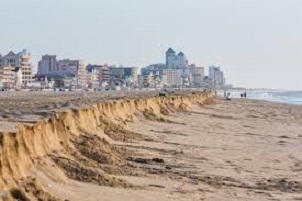
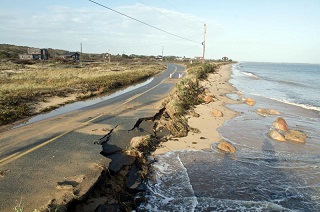
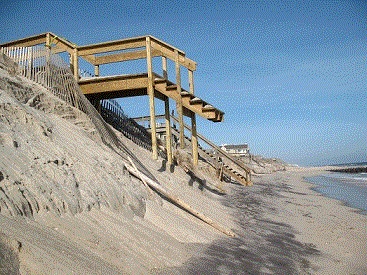
CU Blog - Commerce of the Seas - Extraction Realities - Photo 1The book also alerts the Caribbean region that Climate Change is raging forward, with a lot of repercussions in its wake. Global warming is resulting in higher sea levels, due to the melting of the polar ice craps/icebergs. A repercussion is:

Beach erosion.

Beaches are gravely important for the American East Coast. (They are important to Caribbean communities as well). So many communities depend on beach vacation and traffic during the spring/summer months (think Spring Break and the commercial summer season of Memorial Day to Labor Day). So when oil spills or predictable storms endanger beach sand, it becomes an urgent imperative for communities to assuage the crisis, even replace the sand; consider these recent News Articles/Summaries here:

Title: Beach Erosion on the US East Coast

Extraction - Photo 2

Extraction - Photo 5

Extraction - Photo 4

1.  http://www.sun-sentinel.com/news/florida/sfl-us-has-ok-to-study-bringing-bahamas-sand-to-florida-beaches-20170102-story.html

    January 2, 2017: A possible solution for replacing sand on South Florida beaches is buying it from the Bahamas. The US federal government has now loosened rules to make this possible.

2.  https://www.scientificamerican.com/article/what-causes-beach-erosion/

    The Art-and-Science of beach management is now being challenged – “Unfortunately for beach lovers and owners of high-priced beach-front homes, coastal erosion in any form is usually a one-way trip. Man-made techniques such as beach nourishment—whereby sand is dredged from off-shore sources and deposited along otherwise vanishing beaches—may slow the process, but nothing short of global cooling or some other major geomorphic change will stop it altogether.”

3.  http://abcnews.go.com/US/deepdive/disappearing-beaches-sea-level-rise-39427567

    DISAPPEARING BEACHES – A Line in the Sand – A tragic story of a family that buys a beach house in 1982, but today, they have to abandon it because of the eroding sands, and bedrock under the house.

4.  AUDIO: http://www.npr.org/2014/09/18/348985568/a-coastal-paradise-confronts-its-watery-future

    September 18, 2014 – There is ‘Trouble in Paradise’. Beachfront communities are finding the waters rising more and more due to global warming.


——–

Title: Oil Exploration and Drilling

http://www.npr.org/2015/03/12/392383373/plans-to-explore-for-oil-offshore-worry-east-coast-residents
March 12, 2015

    March 12, 2015 – As the [US federal government] administration opens the door to offshore drilling, the oil industry is promising more jobs and less reliance on foreign oil. … Coastal towns and cities in several states are formally opposing offshore drilling and oil exploration.

——–

Everyone has a price! So if the price goes up high enough, there may be interested parties among Caribbean member-states to take the money for allowing mineral/oil extraction in their offshore vicinity. There is a need to be alarmed at such proposals, as dredging sand or drilling for oil may endanger protected reefs or other underwater marine features.

With greater demand – imagine post hurricanes – the Laws of Supply-and-Demand will mandate that the prices for extracted minerals will only increase.

It will get more and more tempting!

The movement behind the book Go Lean…Caribbean wants to add other types of economic activities to the Caribbean landscape; we urgently want to use the sea as an industrial zone. This is because the Caribbean region is badly in need of jobs. The book urges communities to empower the economic engines of the Caribbean Sea, as in mineral & oil extraction.

The region’s economic driver is tourism. Tourism and “mineral extraction or oil exploration” are incompatible activities. Thus there is the need for the cautions in this commentary. The challenge is to embrace the commerce of mineral extraction for the positives, while avoiding the negatives.

Challenge accepted!

The book Go Lean…Caribbean serves as a roadmap for the introduction and implementation of the Caribbean Union Trade Federation (CU). This would be the governmental entity for a regional Single Market that covers the land territories of the 30 member-states, and their aligning seas; (including the 1,063,000 square miles of the Caribbean Sea). The Go Lean/CU roadmap features this prime directive, as defined by these 3 statements:

  • Optimization of the economic engines to grow the regional economy to $800 Billion & create 2.2 million new jobs.
  • Establishment of a security apparatus to protect public safety and ensure the economic engines of the region, including the seas.
  • Improvement of Caribbean governance to support these engines in local governments and in the Exclusive Economic Zone, including a separation-of-powers between the member-states and CU federal agencies.

This commentary posits that there are opportunities for the Caribbean to better explore the “Commerce of the Seas”, to deploy International Maritime Organisation-compliant offshore mineral/oil extraction and dredging operations. There are so many lessons that we can learn from the Economic History of other communities and their exploitation of extraction on the high seas. This commentary previously identified a series of 4 commentaries considering the Lessons in Economic History related to “Commerce of the Seas”; this entry is a 5th entry. The full series is as follows:

  1. Commerce of the Seas – Stupidity of the Jones Act
  2. Commerce of the Seas – Book Review: ‘Sea Power’
  3. Commerce of the Seas – Shipbuilding Model of Ingalls
  4. Commerce of the Seas – Lessons from Alang (India)
  5. Commerce of the Seas – Extraction Reality

The reference to “Commerce” refers to the economic interest of the 30 member-states in the Caribbean region. There is the need for more commercial opportunities that would impact the community with job and entrepreneurial empowerments.

Mineral extraction and oil exploration could be providential! Consider these foregoing source references.

In a previous blog, Guyana prioritized oil exploration and drilling as an economic activity in their Exclusive Economic Zone…

… the oil industry/eco-system could be a dizzying ride, up and down, complete with exhilaration and anxiety, especially for communities with mono-industrial economic engines. Trinidad is once such community. Now Guyana is entering that fray.

There are other countries seeking to join these ranks: Haiti, Jamaica, and the Bahamas.

A key consideration in this commentary is the concept of Exclusive Economic Zones (EEZ). Every Caribbean nation with no immediate neighbor within the 200 miles has this exclusive territory to exploit; the previously identified blog-commentary from May 25, 2015 detailed the encyclopedic details, shown here again in Appendix A.

The EEZ is factored in for mineral extraction and oil exploration. This is both a simple and a complicated issue. There is a lot of heavy-lifting involved to balance the needs of commerce and environmental protection.

This is the guidance from the book Go Lean … Caribbean. The CU federation is designed to employ best practices for economics, security and governance. The CU/Go Lean roadmap posits that “Extractions” (Oil and minerals like Rare Earths) must be a significant tactic for the Caribbean region to elevate its society.

The implementation of the CU allows for the designation of an enlarged Exclusive Economic Zones – requiring special approval from an United Nations Tribunal – consolidating existing EEZ’s and the technocratic cooperative-administration of Extractions within that space. This vision was embedded in the Go Lean’s book’s opening Declaration of Interdependence. See the need for regional coordination and integration pronounced these sample stanzas (Page 11 – 13):

i. Whereas the earth’s climate has undeniably changed resulting in more severe tropical weather storms, it is necessary to prepare to insure the safety and security of life, property and systems of commerce in our geographical region. As nature recognizes no borders in the target of its destruction, we also must set aside border considerations in the preparation and response to these weather challenges.

v. Whereas the natural formation of our landmass and coastlines entail a large portion of waterscapes, the reality of management of our interior calls for extended oversight of the waterways between the islands. The internationally accepted 12-mile limits for national borders must be extended by International Tribunals to encompass the areas in between islands. The individual states must maintain their 12-mile borders while the sovereignty of this expanded area, the Exclusive Economic Zone, must be vested in the accedence of this Federation.

xi. Whereas all men are entitled to the benefits of good governance in a free society, “new guards” must be enacted to dissuade the emergence of incompetence, corruption, nepotism and cronyism at the peril of the people’s best interest. The Federation must guarantee the executions of a social contract between government and the governed.

xxvi. Whereas the Caribbean region must have new jobs to empower the engines of the economy and create the income sources for prosperity, and encourage the next generation to forge their dreams right at home, the Federation must therefore foster the development of new industries, like that of ship-building…. In addition, the Federation must invigorate the enterprises related to existing industries like … fisheries … – impacting the region with more jobs.

The Go Lean book provides a 370-page guide on “how” to optimize the eco-system for mineral extraction and oil exploration in an integrated Caribbean region, for the geographic area of the Caribbean Sea. This is the “Commerce of the Seas”.

The Go Lean/CU roadmap asserts that as the confederation for the region’s 30 member-states, the CU, will be the administrator of this EEZ. Step One / Day One of the roadmap calls for awarding contracts for oil exploration and other extractions in the EEZ – this is one of  the methods for financing the CU; this is how to Pay For Change.

The Go Lean roadmap details a series of community ethos, strategies, tactics, implementations and advocacies to foster development, administration and protections in the Caribbean EEZ. Consider this sample except (headlines) from the book’s Page 195:

10 Ways to Impact Extractions

Case Study: The Bottom Line on the Deepwater Horizon Oil Spill
The disaster (also referred to as the BP Oil spill or the Macondo blowout) was an oil spill in the Gulf of Mexico on the BP operated Macondo Prospect, considered the largest accidental marine oil spill in the history of the petroleum industry. Following the explosion and sinking of the Deepwater Horizon oil rig, which claimed 11 lives, a sea-floor oil gusher flowed for 87 days, until it was finally capped on 15 July 2010. The total discharge is estimated at 4.9 million barrels (210 million gallons), resulting in a massive response ensued to protect beaches, wetlands and estuaries from the spreading oil utilizing skimmer ships, floating booms, controlled burns and 1.84 million gallons of Corexit (a chemical oil dispersant). After several failed efforts to contain the flow, the well was declared sealed on 19 September 2010. Due to the months-long spill, along with adverse effects from the response and cleanup activities, extensive damage to marine and wildlife habitats, fishing and tourism industries, and human health problems have continued through this day, 2013. Three years after the spill, tar balls could still be found on the Mississippi coast. …

[See Trailer of the resultant 2016 Movie-Storytelling in the Appendix B VIDEO below.]

1

Lean-in for Caribbean Integration
The CU treaty unifies the Caribbean region into one single market of 42 million people across 30 member-states, thereby empowering the economic engines in and on behalf of the region, including many public works projects and the emergence of many new industries. The new regional jurisdiction allows for mineral extraction (mines), oil/natural gas exploration in the Exclusive Economic Zone and some federal oversight for domestic mining/drilling/extraction operations, especially where systemic threats or cross-border administration are concerned. One CU mandate is to protect tourism. This is just one of the negative side-effects to be on guard for, see Appendix ZK (Page 334) for other concerns.

2

Oil – Mitigation Plan
The concept of oil exploration is very strategic for the CU, as there are member-states that are oil producers. With energy prices so high, this is a lucrative endeavor. But there is risk, tied to the reward equation; the CU cannot endure a Deepwater Horizon-style disaster. Risk management and disaster mitigation plan must therefore be embedded into every drilling permit. The CU will oversee this governance and provide transparent oversight, accountability & reporting.

3

“Rare Earth” Rush – Minerals Priced higher than Gold (Year 2010: $1,000 a pound; $2,200 per kilogram)
There is a “rush”/quest to harvest rare earth elements. These include lanthanide elements (fifteen metallic chemical elements with atomic numbers 57 through 71, from lanthanum through lutetium) for metals that are ferromagnetic, this means their magnetism only appear at low temperatures. Rare earth magnets are made from these compounds and are ideal in many high-tech products. The CU will foster the regional exploration and extraction of these pricey materials.

4

Pipeline Strategy/Tactical Alignment

5

Emergency Response / Trauma Center
The CU accedence grants authority for federal jurisdiction on oil exploration/drilling projects. This is due to the environmental concerns, systemic threats and the strategic implications for energy security. So CU Emergency (Risk, Disaster, and Medical Trauma) Managers will audit and test shutdown, mitigation and emergency procedures annually.

6

Exclusive Economic Zone Oversight / Research and Exploration

7

State Regulated Mining – Peer Review

8

Precious Metals – Exclusive to Caribbean Dollar

9

Treasure Hunting in EEZ – CU must grant Excavation “Permits”

10

Ferries Schedule for Transport to Offshore Rigs

The CU will foster “Extractions” as an industrial alternative to tourism. We have the natural resources (in the waterscapes), the skills and the passionate work-force. We only need the Commerce of the Seas. The Caribbean people are now ready for this industrial empowerment as mineral/oil extraction is both good … and bad!

The Go Lean roadmap asserts that economic needs are undeniable and tempting. While the region sorely needs the economic empowerments, this roadmap also details the mitigations and security measures to guarantee environmental protection.

There is much at stake when communities get the Art-and-Science of mineral extraction wrong!

This commentary ends this deep, long review of the Commerce of the Seas discussion. We have considered many different industries: Tourism, Cruise Lines, Shipping-Trade, Shipbuilding, Ship-breaking and now, Extractions. That is a lot of details to get right! The optimizations of these areas are the hallmarks of a technocracy. Yes, we can … get this right!

Now is the time for all of the Caribbean, the people, business, institutions and governments, to lean-in for the technocratic deliveries of the Go Lean/CU roadmap. 🙂

Download the free e-book of Go Lean … Caribbean – now!

Sign the petition to lean-in for this roadmap for the Caribbean Union Trade Federation.
———–

Appendix A – Exclusive Economic Zone

An Exclusive Economic Zone (EEZ) is a sea zone prescribed by the United Nations Convention on the Law of the Sea over which a state has special rights regarding the exploration and use of marine resources, including energy production from water and wind.[1] It stretches from the baseline out to 200 nautical miles (nmi) from its coast. In colloquial usage, the term may include the continental shelf. The term does not include either the territorial sea or the continental shelf beyond the 200 nmi limit. The difference between the territorial sea and the exclusive economic zone is that the first confers full sovereignty over the waters, whereas the second is merely a “sovereign right” which refers to the coastal state’s rights below the surface of the sea. The surface waters, as can be seen in the map, are international waters.[2]

Generally, a state’s EEZ extends to a distance of 200 nautical miles (370 km) out from its coastal baseline. The exception to this rule occurs when EEZs would overlap; that is, state coastal baselines are less than 400 nautical miles (740 km) apart. When an overlap occurs, it is up to the states to delineate the actual maritime boundary.[3] Generally, any point within an overlapping area defaults to the nearest state.[4]

A state’s Exclusive Economic Zone starts at the landward edge of its territorial sea and extends outward to a distance of 200 nautical miles (370.4 km) from the baseline. The Exclusive Economic Zone stretches much further into sea than the territorial waters, which end at 12 nmi (22 km) from the coastal baseline (if following the rules set out in the UN Convention on the Law of the Sea).[5] Thus, the EEZ includes the contiguous zone. States also have rights to the seabed of what is called the continental shelf up to 350 nautical miles (648 km) from the coastal baseline, beyond the EEZ, but such areas are not part of their EEZ. The legal definition of the continental shelf does not directly correspond to the geological meaning of the term, as it also includes the continental rise and slope, and the entire seabed within the EEZ.

The following is a list of the largest Exclusive Economic Zones; by country with a few noticeable deviations:

Country EEZ Kilometers2 Additional Details
United States 11,351,000 The American EEZ – the world’s largest – includes the Caribbean overseas territories of Puerto Rico and the US Virgin Islands.
France 11,035,000 The French EEZ includes the Caribbean overseas territories of Guadeloupe, Martinique, Saint Martin, Saint Barthélemy and French Guiana.
Australia 8,505,348 Australia has the third largest exclusive economic zone, behind the United States and France, with the total area actually exceeding that of its land territory. Per the UN convention, Australia’s EEZ generally extends 200 nautical miles (370 km) from the coastline of Australia and its external territories, except where a maritime delimitation agreement exists with another state.[15]The United Nations Commission on the Limits of the Continental Shelf confirmed, in April 2008, Australia’s rights over an additional 2.5 million square kilometres of seabed beyond the limits of Australia’s EEZ.[16][17] Australia also claimed, in its submission to the UN Commission on the Limits of the Continental Shelf, additional Continental Shelf past its EEZ from the Australian Antarctic Territory,[18] but these claims were deferred on Australia’s request. However, Australia’s EEZ from its Antarctic Territory is approximately 2 million square kilometres.[17]
Russia 7,566,673
United Kingdom 6,805,586 The UK includes the Caribbean territories of Anguilla, Bermuda, Cayman Islands, Montserrat, Turks & Caicos and the British Virgin Islands.
Indonesia 6,159,032
Canada 5,599,077 Canada is unusual in that its EEZ, covering 2,755,564 km2, is slightly smaller than its territorial waters.[20] The latter generally extend only 12 nautical miles from the shore, but also include inland marine waters such as Hudson Bay (about 300 nautical miles (560 km; 350 mi) across), the Gulf of Saint Lawrence and the internal waters of the Arctic archipelago.
Japan 4,479,388 In addition to Japan’s recognized EEZ, it also has a joint regime with Republic of (South) Korea and has disputes over other territories it claims but are in dispute with all its Asian neighbors (Russia, Republic of Korea and China).
New Zealand 4,083,744
Chile 3,681,989
Brazil 3,660,955 In 2004, the country submitted its claims to the United Nations Commission on the Limits of the Continental Shelf (CLCS) to extend its maritime continental margin.[19]
Mexico 3,269,386 Mexico’s EEZ comprises half of the Gulf of Mexico, with the other half claimed by the US.[32]
Micronesia 2,996,419 The Federated States of Micronesia comprise around 607 islands (a combined land area of approximately 702 km2 or 271 sq mi) that cover a longitudinal distance of almost 2,700 km (1,678 mi) just north of the equator. They lie northeast of New Guinea, south of Guam and the Marianas, west of Nauru and the Marshall Islands, east of Palau and the Philippines, about 2,900 km (1,802 mi) north of eastern Australia and some 4,000 km (2,485 mi) southwest of the main islands of Hawaii. While the FSM’s total land area is quite small, its EEZ occupies more than 2,900,000 km2 (1,000,000 sq mi) of the Pacific Ocean.
Denmark 2,551,238 The Kingdom of Denmark includes the autonomous province of Greenland and the self-governing province of the Faroe Islands. The EEZs of the latter two do not form part of the EEZ of the European Union. See Photo 4.
Papua New Guinea 2,402,288
China 2,287,969
Marshall Islands 1,990,530 The Republic of the Marshall Islands is an island country located near the equator in the Pacific Ocean, slightly west of the International Date Line. Geographically, the country is part of the larger island group of Micronesia. The country’s population of 68,480 people is spread out over 24 coral atolls, comprising 1,156 individual islands and islets. The land mass amounts to 181 km2 (70 sq mi) but the EEZ is 1,990,000 km2, one of the world’s largest.
Portugal 1,727,408 Portugal has the 10th largest EEZ in the world. Presently, it is divided in three non-contiguous sub-zones:

Portugal submitted a claim to extend its jurisdiction over additional 2.15 million square kilometers of the neighboring continental shelf in May 2009,[44] resulting in an area with a total of more than 3,877,408 km2. The submission, as well as a detailed map, can be found in the Task Group for the extension of the Continental Shelf website.

Spain disputes the EEZ’s southern border, maintaining that it should be drawn halfway between Madeira and the Canary Islands. But Portugal exercises sovereignty over the SavageIslands, a small archipelago north of the Canaries, claiming an EEZ border further south. Spain objects, arguing that the SavageIslands do not have a separate continental shelf,[45] citing article 121 of the United Nations Convention on the Law of the Sea.[46] <<< See Photo 6 >>>

Philippines 1,590,780 The Philippines’ EEZ covers 2,265,684 (135,783) km2[41]. See Photo 5.
Solomon Islands 1,589,477
South Africa 1,535,538
Fiji 1,282,978 Fiji is an archipelago of more than 332 islands, of which 110 are permanently inhabited, and more than 500 islets, amounting to a total land area of about 18,300 square kilometres (7,100 sq mi).
Argentina 1,159,063
Spain 1,039,233
Bahamas 654,715
Cuba 350,751
Jamaica 258,137
Dominican Republic 255,898
Barbados 186,898
Netherlands 154,011 The Kingdom of the Netherlands include the Antilles islands of Aruba. Bonaire, Curacao, Saba, Sint Maarten and Sint Eustatius
Guyana 137,765
Suriname 127,772
Haiti 126,760
Antigua and Barbuda 110,089
Trinidad and Tobago 74,199
St Vincent and the Grenadines 36,302
Belize 35,351
Dominica 28,985
Grenada 27,426
Saint Lucia 15,617
Saint Kitts and Nevis 9,974

(Source: Retrieved May 25, 2017 from: http://en.wikipedia.org/wiki/Exclusive_economic_zone)

———–

Appendix B VIDEO – Deepwater Horizon (2016) Official Movie Trailer – ‘Heroes’ – https://youtu.be/S-UPJyEHmM0

Published on May 26, 2016 – Deepwater Horizon – Now Playing.
#DeepwaterHorizonMovie

CU Blog - Commerce of the Seas - Extraction Realities - Photo 6

Share this post:
, ,
[Top]

Commerce of the Seas – Lessons from Alang (India)

Go Lean Commentary

Despite our beautiful vistas in the Caribbean – with our sun, sand and sea – not everywhere is paradisiac. Some locations are just plain ordinary, or even Less-Than. Tourism is the region’s Number 1 economic activity, but there are certain areas where tourists should not venture. This is true for agricultural areas and certain industrial zones.

The movement behind the book Go Lean…Caribbean wants to add another type of “not for tourists” industrial zone to the Caribbean landscape: Ship-breaking Yards.

Just that combination of words – “Ship” + “Breaking” – connotes some negative images. The lessons we learned from the Indian port city of Alang is that Ship-breaking is dirty; see the encyclopedic reference here:

Reference Title: Alang,  Indian State of Gujarat. 

CU Blog - Commerce of the Seas - Lessons from Alang - Photo 5Alang is a census town in Bhavnagar district in the Indian state of Gujarat. In the past three decades, its beaches have become a major worldwide centre for ship breaking. The longest ship ever built, Seawise Giant, was sailed to and beached here for demolition in December 2009. [1]

Marine salvage industry
The shipyards at Alang recycle approximately half of all ships salvaged around the world.[2] It is considered the world’s largest graveyard of ships.[3] The yards are located on the Gulf of Khambat, 50 km (31 mi) southeast of Bhavnagar. Large supertankerscar ferriescontainer ships, and a dwindling number of ocean liners are beached during high tide, and as the tide recedes, hundreds of manual laborers move onto the beach to dismantle each ship, salvaging what they can and reducing the rest to scrap.

The salvage yards at Alang have generated controversy about working conditions, workers’ living conditions, and the impact on the environment. One major problem is that despite many serious work-related injuries, the nearest full service hospital is 50 km (31 mi) away in Bhavnagar.

Alang - Photo 1

Alang - Photo 2

Alang - Photo 4

Future
Japan and the Gujarat government have joined hands to upgrade the existing Alang shipyard. The two parties have signed a Memorandum of Understanding, which focuses on technology transfer and financial assistance from Japan to assist in the upgrading of operations at Alang to meet international standards. This is a part of the Delhi Mumbai Industrial Corridor, a larger partnership between the Japanese and Gujarat government. Under this plan, Japan will address the environmental implications of ship breaking in Alang, and will develop a .marketing strategy. The project is to be carried out as a public-private partnership. The project’s aim is to make this shipyard the largest International Maritime Organisation-compliant ship recycling yard in the world.

Source: Retrieved June 8, 2017 from: https://en.wikipedia.org/wiki/Alang

The dirty nature of these industrial endeavors, as depicted in Alang, provides a negative lesson that we want to learn from to avoid all perilous consequences of doing this business in a “wrong” manner.

Another lesson we learn from Alang is that Ship-breaking work (jobs) is consistent and steady. There are many ships that have lived out their usefulness and now need to be dismantled for scrap; the more labor available, the more ships to break. This is such a positive lesson for us to learn right now, as the Caribbean region is badly in need of jobs. The economic engine involves salvaging the scrap metal (and other materials) for recycling.

The challenge is to embrace the commerce of Ship-breaking for the positives, while avoiding the negatives.

Challenge accepted! (The foregoing relates the welcoming support from Japan for clean ship-breaking).

The book Go Lean…Caribbean serves as a roadmap for the introduction and implementation of the Caribbean Union Trade Federation (CU). This would be the governmental entity for a regional Single Market that covers the land territories of the 30 member-states, and their aligning seas; (including the 1,063,000 square miles of the Caribbean Sea). The Go Lean/CU roadmap features this prime directive, as defined by these 3 statements:

  • Optimization of the economic engines to grow the regional economy to $800 Billion & create 2.2 million new jobs.
  • Establishment of a security apparatus to protect public safety and ensure the economic engines of the region, including the seas.
  • Improvement of Caribbean governance to support these engines in local governments and in Self-Governing Entities, including a separation-of-powers between the member-states and CU federal agencies.

This commentary posits that there are opportunities for the Caribbean to better explore the “Commerce of the Seas”, to deploy International Maritime Organisation-compliant shipyards. There are so many lessons that we can learn from the Economic History of other communities’ exploitation of the high seas. This commentary is 4 of 4 in a series considering the Lessons in Economic History related to “Commerce of the Seas”. The full series is as follows:

  1. Commerce of the Seas – Stupidity of the Jones Act
  2. Commerce of the Seas – Book Review: ‘Sea Power’
  3. Commerce of the Seas – Shipbuilding Model of Ingalls
  4. Commerce of the Seas – Lessons from Alang (India)

The reference to “Commerce” refers to the economic interest of the 30 member-states in the Caribbean region. There is the need for more commercial opportunities that would impact the community with job and entrepreneurial empowerments. Ship-breaking could be providential!

Ship-breaking can provide high tech, mid tech and low tech jobs; especially if the salvage operation is executed in a technocratic manner. The Art & Science of technocratic ship-breaking versus dirty-breaking (i.e. Alang) was previously detailed in a blog-commentary on August 14, 2014. See some highlights from that blog in the excerpt here:

… ship-breaking activities in Third World countries, like Bangladesh, pose harm to the environment, workers and remaining systems of commerce. But when executed correctly, as in Brownsville-Texas, ship-breaking can be all positive. There are benefits in applying the appropriate best practices in handling hazardous materials. The tons of toxic waste (asbestos) can be properly managed and disposed of, with the proper eco-system surrounding the industry. The CU will facilitate the eco-system, especially with the Self-Governing Entities (SGE) concept for shipyards. This is covered in the Go Lean book under the auspices of “turn-around” industries, a federally regulated/promoted activity.

So there is a way to perform ship-breaking – one expression of maritime commerce – in a lean, clean manner while guaranteeing safety for the workers and profit for the investors.

This is the win-win … of the Go Lean roadmap.

The Go Lean book/roadmap was published in November 2013 with a vision for a new industrialization for the region. The quest is for the region to cooperate, collaborate and convene so as to accomplish more as a unified Single Market than may be possible alone. Not one of the Caribbean member-states – all Third World – can do ship-breaking right. It would quickly denigrate to the Alang and Bangladesh models. But together, leveraging the interdependence – so much more can be accomplished. This was the vision of the opening Declaration of Interdependence in the book. Here, the need for regional coordination and integration was pronounced as the basis of reforming and transforming Caribbean society.

See a sample of relevant stanzas from the Declaration here (Page 11 – 13):

xi. Whereas all men are entitled to the benefits of good governance in a free society, “new guards” must be enacted to dissuade the emergence of incompetence, corruption, nepotism and cronyism at the peril of the people’s best interest. The Federation must guarantee the executions of a social contract between government and the governed.

xxvi. Whereas the Caribbean region must have new jobs to empower the engines of the economy and create the income sources for prosperity, and encourage the next generation to forge their dreams right at home, the Federation must therefore foster the development of new industries, like that of ship-building…. In addition, the Federation must invigorate the enterprises related to existing industries like … fisheries … – impacting the region with more jobs.

Reforming and transforming the Caribbean is the quest. The Go Lean book explains “how”, providing 370-pages of turn-by-turn instructions on “how” to adopt new community ethos for economic regionalism, and “how” to execute the right strategies, tactics, and implementations to reboot, reform and transform the maritime commerce to benefit Caribbean society.

The issue of fostering industrial developments in the Art-and-Science of the salvage industry has been a frequent subject for previous blog-commentaries; consider this list of sample entries:

https://goleancaribbean.com/blog/?p=10140 Lessons Learned: Detroit demolishes thousands of structures
https://goleancaribbean.com/blog/?p=6760 A Lesson in ‘Garbage’
https://goleancaribbean.com/blog/?p=2953 Funding Caribbean Entrepreneurs – The ‘Crowdfunding’ Way
https://goleancaribbean.com/blog/?p=2857 Where the Jobs Are – Entrepreneurism in Junk

All Caribbean member-states are islands or coastal territories – they can all be candidates for maritime salvaging (ship-breaking) operations – even all at the same time. While there is a large footprint of “cheap” ship-breakers in Asia, not as many proliferate in the Western Hemisphere. It is a perfect time to explore these opportunities.

This is not tourism! Ship-breaking activities are not paradisiac nor inviting so they should be limited to shipyards, not beaches.

Alang - Photo 3Imagine: towing an old ship from the Americas to the Caribbean, rather than across the Atlantic and Indian Oceans; see the experience of salvaging the “Love Boat” in the Appendix VIDEO below.

This is commerce!

There is a need to transform maritime commerce for the Caribbean region; we can get more economic activity from this sector; the Go Lean book projects 15,000 new direct jobs in the shipbuilding and/or ship-breaking activities. The possibility of these new jobs is hope-inspiring. At last we can arrest the societal abandonment where men and women leave the community looking for any kind of work.

This is Commerce of the Seas; we saw how previous generations of Caribbean people lived off the sea; we can again, with these creative expressions of maritime commerce.

This plan is conceivable, believable and achievable. We urge all Caribbean stakeholders – governments, business owners and workers – to lean-in to this roadmap for economic empowerment. We can make the Caribbean homeland and seas better places to live, work and play. 🙂

Download the free e-book of Go Lean … Caribbean – now!

Sign the petition to lean-in for this roadmap for the Caribbean Union Trade Federation.
————–

Appendix VIDEO – The End of The Love Boat – https://youtu.be/lauAeMtzMYM

Published on Nov 5, 2016English Captions Available!!!
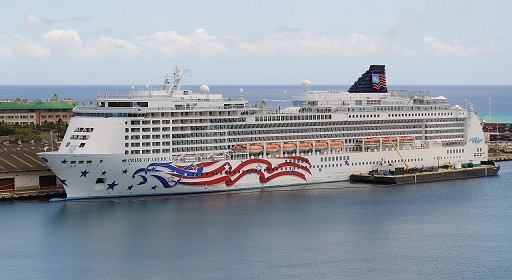
MS Pacific Princess is a voyage send possessed by Princess Cruises and worked by Princess Cruises and P&O Cruises Australia. She was inherent 1999 by the Chantiers de l’Atlantique shipyard in Saint-Nazaire, France as MS R Three for Renaissance Cruises.

The vessel initially entered operation in 1999, with Renaissance Cruises. The ship was not claimed by the organization, ownership rather living with a gathering of French speculators, who rented the ship to the organization. In late 2001, the whole Renaissance armada was seized by lenders.

Pacific Princess in Yalta inlet.

In late 2002, Princess Cruises sanctioned the R Three, alongside sister transport R Four (now Ocean Princess). Both vessels entered operation before the end of 2002. The contract ended toward the end of 2004, at which time both vessels were acquired by Princess Cruises. Gabi Hollows renamed the ship Pacific Princess in Sydney on 8 December 2002.
This ship has been the subject of a state help choice by the European Commission: Decision 2006/219.

Princess Cruise Line Youtube channel: youtube.com/user/princesscruises
Cruise Ships Info Youtube channel: youtube.com/cruiseshipsinfo
Cruise Ships Info Facebook Page: facebook.com/cruiseshipsinfo
Cruise Ships Info Twitter Page: twitter.com/cruiseship_info
Cruise Ships Info Pinterest Page: pinterest.com/cruiseshipinfo

————–

Additional VIDEO – Jobs of Workers in Ship-breaking Industry –  https://www.youtube.com/watch?v=wOGjYfBltZc

Share this post:
, , , , ,
[Top]

Commerce of the Seas – Shipbuilding Model of Ingalls

Go Lean Commentary

The ‘Law of Supply-and-Demand’ is almost as natural as the ‘Law of Gravity’; leave it alone and it will pre-determine what will happen … in the marketplace. But just like the ‘Law of Gravity’ can bend and be defied (think airplanes and rockets), so too the ‘Law of Supply-and-Demand’ can bend and be defied. A great example of defying ‘Supply-and-Demand’ is the Crony-Capitalism (subsidies and protectionist schemes) in the highly-protected Ship-Building industry. (See the Appendix below regarding OECD Ship-Building Industry monitoring efforts).

CU Blog - Commerce of the Seas - Model of Ingalls - Photo 1

CU Blog - Commerce of the Seas - Model of Ingalls - Photo 2

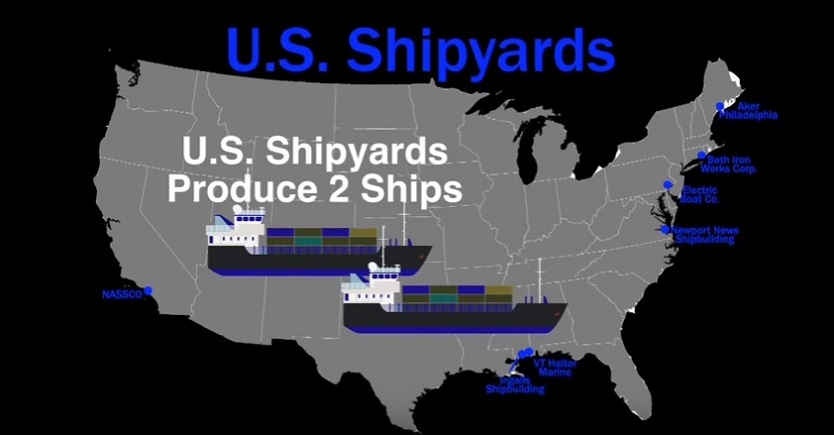
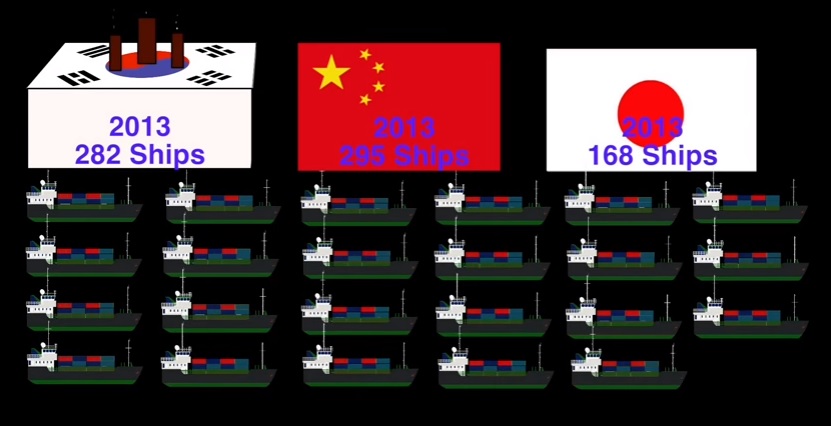
Look at the numbers in the 2 photos above. It is apparent that the US distorts the Supply-and-Demand factors for Ship-Building in its market; their protectionist laws prevent the international market from supplying domestic shipping needs. This is bad! Though there is the need for some government-aid, to protect jobs and defense options,  the US model of Crony-Capitalism is a blatant distortion – Source: https://youtu.be/GpwzoDGDGAQ.

Ship-Building can be a strategic industry! The book Go Lean…Caribbean asserts that 15,000 new direct jobs can be created with strategic endeavors for the Ship-Building industry in the region. (Even more indirect jobs applies – multiplier rate of 3-to-1).  The Go Lean book calls for the elevation of Caribbean economics, positing that governmental entities must stimulate and incubate this industry. The book surveyed the world looking for industrial opportunities that could be fully explored in the Caribbean region where the natural resources of the region could be considered; the region is known for sun, sand and sea.

Tourism is a natural assumption for utilizing these “sun, sand and sea“ resources, but with the recent inadequacies of this industry, there needs to be more diversity in our commercial offerings; ship-building – which needs the sea – was identified as an ideal supplement and alternative for regional commerce. This reference to “regional commerce” refers to the economic interest that the 30 member-states in the Caribbean have to consider to provide job and entrepreneurial opportunities for its people. So this Ship-Building focus prioritizes the “Commerce of the Seas” concept. This commentary is 3 of 4 in a series considering the Lessons in Economic History related to “Commerce of the Seas”, the Crony-Capitalism in laws and practices around the maritime eco-system in the United States … and other countries. The full series is as follows:

  1. Commerce of the Seas – Stupidity of the Jones Act
  2. Commerce of the Seas – Book Review: ‘Sea Power’
  3. Commerce of the Seas – Shipbuilding Model of Ingalls
  4. Commerce of the Seas – Lessons from Alang (India)

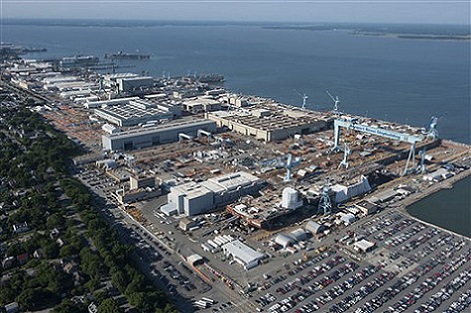
There are many Lessons in Economic History for the Caribbean to glean by considering the actuality of this industry. Let’s consider the role model of just one American shipbuilding entity: Ingalls Shipbuilding Company in Pascagoula, Mississippi. See the reference source here, describing the business model for building ships to ‘Supply’ any open ‘Demand’ in the commercial market:

Title: Ingalls Shipbuilding 

Ingalls Shipbuilding is a shipyard located in Pascagoula, Mississippi, United States, originally established in 1938, and is now part of Huntington Ingalls Industries. It is a leading producer of ships for the United States Navy, and at 12,500 employees, the largest private employer in Mississippi.

CU Blog - Commerce of the Seas - Model of Ingalls - Photo 3

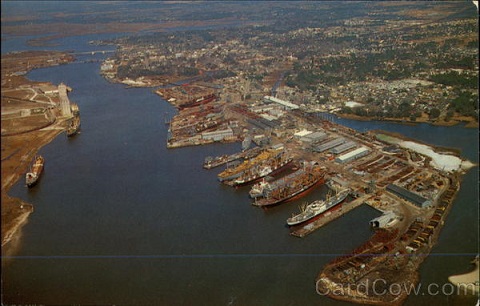
Pascagoula River and Ingalls Shipyard

CU Blog - Commerce of the Seas - Model of Ingalls - Photo 5

History

In 1938, Ingalls Shipbuilding Corporation was founded by Robert Ingersoll Ingalls, Sr. (1882–1951) of Birmingham, Alabama, on the East Bank of the PascagoulaRiver in Mississippi.[1] Ingalls was located where the Pascagoula River runs into the Gulf of Mexico. It started out building commercial ships including the USS George Clymer (APA-27), which took part in Liberty Fleet Day 27 September 1941. In the 1950s Ingalls started bidding on Navy work, winning a contract in 1957 to build 12 nuclear-powered attack submarines.

Litton Industries acquired Ingalls in 1961, and in 1968 expanded its facilities to the other side of the river. Ingalls reached a high point of employment in 1977, with 27,280 workers. In April 2001, Litton was acquired by the Northrop Grumman Corporation.[2]

On August 29, 2005, Ingalls facilities were damaged by Hurricane Katrina; most of the ships in dock and construction escaped serious harm. While shipbuilding was halted for a while due to the destruction of many buildings, most vehicles, and the large overhead cranes, the facility continues to operate today.

On March 31, 2011, Northrop Grumman spun off its shipbuilding sector (including Ingalls Shipbuilding) into a new corporation, Huntington Ingalls Industries.

In 2015, Ingalls Shipbuilding Company signed a contract with US Navy for new destroyers, littoral combat ships and new landing craft. USS John Finn (DDG-113) was one of the first destroyers was launched on March 28. Company also is building Ralph Johnson (DDG 114), Paul Ignatius (DDG 117) and Delbert D. Black (DDG 119).

On March 21, 2015, the new San Antonio LPD 17-class amphibious ship John P. Murtha (LPD 26) was ceremonially christened. The vessel having been launched on October 30 and scheduled to be delivered in 2016.

On March 27, 2015, the shipyard received construction contracts for their next destroyers. Ingalls Shipbuilding Company was awarded a $604.3 million contract modification to build the yet-to-be-named DDG 121.

On March 31, 2015, the shipyard also received another contract with a $500 million fixed price to build the eighth National Security Cutter (NSC) for the US Coast Guard. Most of them will be under construction until 2019. The cutters are the most advanced ships ever built for the Coast Guard. [3]

On June 30, 2016, Ingalls Shipbuilding signed a contract with US Navy to build the U.S. Navy’s next large-deck amphibious assault warship. The contract included planning, advanced engineering and procurement of long-lead material, is just over $272 million. If options are exercised, the cumulative value of the contract would be $3.1 billion.[4]

Ships built

Source: Retrieved 06-11-2017 from Wikipedia: https://en.wikipedia.org/wiki/Ingalls_Shipbuilding

———–

VIDEO – Ingalls Shipbuilding Promotional Video – https://youtu.be/EFl8Tl0ImJo

Published on Jan 10, 2017 – Ingalls Shipbuilding is located in Pascagoula, Mississippi on 800 acres of the most important real estate in America. With 11,000 employees, Ingalls is the largest manufacturing employer in Mississippi and a major contributor to the economic growth of both Mississippi and Alabama. Our 77-year legacy has continuously proven we have the talent, experience and facilities to simultaneously build more classes of ships than any other shipyard in America.

We are the builder-of-record for 35 Aegis DDG 51 class guided missile destroyers, LHA 6 class large deck amphibious ships, National Security Cutters for the U.S. Coast Guard and the sole builder of the Navy’s fleet of San Antonio (LPD 17) class amphibious assault ships. Ingalls Shipbuilding has what it takes to build the capital ships that keep America and our allies safe.

Additional VIDEO consideration: https://youtu.be/0pak_gKglqo – Ingalls shows ‘Shipyard of the Future’.

Considering that 90% of all trade transports by water, there is natural demand for shipbuilding. There is a lot of supply as well.

Ingalls Shipbuilding Company is a definite beneficiary of government-aided commerce in the US; most of their shipbuilding engagements are government contracts. They are a leading producer of ships for the US Navy or Coast Guard, and at 12,500 employees, the largest private employer in Mississippi. As related in the first commentary in this series, the Jones Act has protected maritime commerce and shipbuilding for American stakeholders like Ingalls.

It is ‘high tide’ for the Caribbean to engage some protectionism strategies. Considering that the Caribbean region is the #1 market for the Cruise Line industry, collective bargaining should be prioritized to direct some shipbuilding business to local entities in this industry. The book Go Lean… Caribbean posits that as a unified region – a Single Market – the power of collective bargaining is possible. The book serves as a roadmap for the introduction and implementation of the technocratic Caribbean Union Trade Federation (CU) with the charter to facilitate jobs in the region. We should explore the benefits of the shipbuilding (and ship-breaking) industry. This aligns with the CU charter; as defined by these 3 prime directives:

  • Optimization of economic engines in order to grow the regional economy to $800 Billion and create 2.2 million new jobs.
  • Establishment of a security apparatus to protect the resultant economic.
  • Improve Caribbean governance to support these engines.

Early in the Go Lean book, this responsibility to create jobs was identified as an important function for the CU with this pronouncement in the Declaration of Interdependence (Pages 14):

xxiv.  Whereas a free market economy can be induced and spurred for continuous progress, the Federation must install the controls to better manage aspects of the economy: jobs, inflation, savings rate, investments and other economic principles. Thereby attracting direct foreign investment because of the stability and vibrancy of our economy.

xxvi.  Whereas the Caribbean region must have new jobs to empower the engines of the economy and create the income sources for prosperity, and encourage the next generation to forge their dreams right at home, the Federation must therefore foster the development of new industries, like that of ship-building…. In addition, the Federation must invigorate the enterprises related to existing industries tourism, fisheries and lotteries – impacting the region with more jobs.

Accordingly, the CU will facilitate the eco-system for Self-Governing Entities (SGE), an ideal concept for shipyards, with its exclusive federal regulation/promotion activities.

The Go Lean movement (book and blogs) also details the principle of job multipliers, how certain industries are better than others for generating multiple indirect jobs down the line for each direct job on a company’s payroll. In a previous blog-commentary, it was related that the shipbuilding industry has a job-multiplier rate of 3.0. So once the job-multiplier rate is applied to the 15,000 direct shipbuilding jobs, generating 45,000 indirect jobs, the full economic impact is 60,000. This is transforming!

The Go Lean book provides 370-pages of turn-by-turn instructions on “how” to reform and transform the Caribbean, starting first with how to adopt new community ethos, plus the strategies, tactics, implementations and advocacies to execute so as to transform the maritime commerce to benefit Caribbean society. Consider the Chapter excerpts and headlines from this sample on Page 209 related to Ship-Building:

10 Ways to Develop Ship-Building

1

Lean-in for Caribbean Integration
The CU will allow for the unification of the region into one market, creating an economy of 30 member-states, 42 million people and 2010 GDP over $800 Billion. All of the member-states are either islands or coastal, therefore there are lots of coastline and harbors. Boats, yachts and ships are therefore plentiful in the region. Consistent with the CU’s mission for globalization, the region cannot just consume these vessels; we must create and build as well. There is a history of boat-building in the islands (slopes, schooners, clippers), but what had been missing to forge a formidable industry is the capital and the community “will”. The CU will now fill those gaps. The CU will tap the capital markets to secure long-term funding (stocks/bonds), prepare the labor force for advanced skill-sets, and negotiate treaties with “mature” EU states (i.e. Holland, Ireland) for master-apprentice labor-coaching. Boats, yachts and ships are considered durable goods, the opposite of planned obsolescence. …

2

Cooperatives Movement – “Many hands make heavy job light

3

Ferry Operations – Demand & Supply
The CU envisions a fleet of ferries, to service the individual islands, in a scheme dubbed “Union Atlantic Turnpike”. The proliferation of scheduled ferries, synchronized with trains and trucks will depict a continuous logistic network. This constitutes the demand for ferries. The CU will henceforth award the contracts for building and maintaining the ferries to local industry players – this constitutes the supply. The CU will therefore foster a ship-building “incubator”.

4

Spin-off Strategy – Low-risk Contracts
The CU vision is to deploy a “spin-off” strategy for ship-owning patrons. The CU region needs ships. Therefore, the CU will incentivize patrons to “go local” with their ship-building/maintenance needs. A domestic ship-building industry is a great source of skilled/high-wage jobs. So there are many ways to exploit the cost-benefit equation for a win-win.

5

Cruise Ship Dry-Dock – Let’s Make-A-Deal
The Caribbean region is the Number One market for the Cruise Line industry. Big expenses for Cruise Lines are port charges and landing fees. The CU will offer rebates and incentives for the Cruise Lines to use local dry-docks for retro-fittings and refurbishing.

6

Yacht Development – Catering to a Special Market

7

Sailboats – For Every Man
The history of Caribbean boat building is rich with sailing crafts; cruise ships evolved from local Banana-Boats. The CU will channel that history, passion and ethos for the region to design/develop best-inbred sailboats, big and small.

8

Boat Shows and Open Houses – Show and Tell

9

Regattas – More than Just Winning a Race
The history of the region has highlighted ships, boats and boat building. There is the tradition of Regattas, used to showcase the islands boat building prowess. [199] The CU now intends to feature Regattas in the same manner that automakers feature auto racing (NASCAR, IndyCar, Formula-One), as a demonstration platform for their art and science.

10

Maritime Emergencies – Professional Response
The CU will deploy the necessary equipment and training for the ship-building industry to respond to maritime emergencies in the region. Therefore a disabled cruise ship will have the rapid response of “support-barges”, tug boats, dredging equipment, portable generators. This effort will be marshaled by the CU Emergency Management Agency.

The CU will foster shipbuilding as an industrial supplement and alternative to tourism. We have the resources (waterscapes, ports and harbors), the skills and the passionate work-force. We only need the Commerce of the Seas. The Caribbean people are now ready for this industrial empowerment. But we need to be cautious as to which role model we emulate. The US does provide material support and subsidies to their shipbuilding industry, but their protection laws – i.e. the Jones Act – have nullifies the positive effects of a Free Market. While other countries build and launch hundreds of ships every year, the US model only produce 2. That’s a lot of missing jobs, and artificially induced high prices.

In the Caribbean, we must do better. Fortunately, we do not have the Crony-Capitalism of the Jones Act to deter us. We can follow other – better – models to progress our societal investments in this industry. This is the assertion of the Go Lean roadmap.

We hereby urge all Caribbean stakeholders – governments and citizens – to lean-in to this Go Lean roadmap to foster this industrial development, so that our region can be a better homeland and seas to live, work and play. 🙂

Download the free e-book of Go Lean … Caribbean – now!

Sign the petition to lean-in for this roadmap for the Caribbean Union Trade Federation.
———–
Appendix – The OECD Council Working Party on Shipbuilding

(OECD = Organization of Economic Cooperation and Development)

The OECD Council Working Party on Shipbuilding (WP6) seeks to progressively establish normal competitive conditions in the industry. It encourages transparency through data collection and analysis, and seeks to expand policy dialogue with non-OECD economies that have significant shipbuilding industries. WP6 is the only international body that can influence and guide government policies by identifying and, where possible, eliminating factors that distort the shipbuilding market.

The Working Party is chaired by Ambassador Elin Østebø Johansen, Permanent Representative of Norway to the OECD. Participating OECD members are: Denmark, Finland, Germany, Italy, Japan, Korea, Netherlands, Norway, Poland, Portugal, Sweden and Turkey. Croatia and Romania are full participants in the Working Party, and the Russian Federation participates as an observer. The European Commission, representing the European Union, also participates in WP6 meetings.

What does the Working Party on Shipbuilding do?
The WP6 has placed a high priority on encouraging policy dialogues, and on establishing close working relationships with non-OECD economies. In particular, these economies were invited to participate on an equal footing with OECD members in the negotiations on a shipbuilding agreement that ran from 2002 until 2005, and Brazil, China, Croatia, the Philippines, Romania, the Russian Federation, Chinese Taipei and Ukraine participated in those negotiations. Although the negotiations were eventually halted, a close working relationship has continued with all of these economies.

The WP6 organizes regular workshops aimed at facilitating the exchange of information on policy and industry developments, and as well as the economies already mentioned, other participants have come from India, and Indonesia, amongst others.

The WP6 has also worked closely with industry groups representing shipbuilders, ship owners, ship operators and trade union interests, so that a wide range of perspectives can be taken into account by WP6 members during their formulation of policy responses to address issues and challenges faced by the global shipbuilding sector.

What is the relevance of the Working Party to non-OECD economies and industry?

While the world’s shipbuilding industry has been through a period of record production, it was severely affected by the 2008 global financial crisis, and recent years have seen very low levels of new orders received by virtually all shipyards. The global industry now faces a number of challenges, most notably global excess capacity, which will place the economic viability of the industry under pressure in some parts of the world.

Persistent worldwide overcapacity may encourage governments to provide support through subsidies and other measures, as well as spur other market distorting practices, which can create major structural problems even in the most efficient shipbuilding industries. But potential market distortions can be addressed through close co-operation among economies with significant shipbuilding sectors and the active involvement of industry.

———-

INVENTORY OF GOVERNMENT SUPPORT MEASURES

The Inventory of Government Subsidies and Other Support Measures is a regular exercise for the WP6. The main aim of this exercise is to provide transparency and continuity of data on support measures for the shipbuilding industry. As well as WP6 participants, the Inventory provides some information on the support measures in Partner economies.


Share this post:
, , , ,
[Top]

Commerce of the Seas – Book Review: ‘Sea Power’

Go Lean Commentary 

70% of the earth is covered by water
70% of the human body is made up by water

CU Blog - Lessons from China - South China Seas - Exclusive Economic Zone - Photo 3It seems that water is pretty important in managing the affairs of people and their community.

The quest of the movement behind the book Go Lean… Caribbean is to confederate, collaborate and convene the 30 member-states of the Caribbean region into a Single Market; this would include the territorial homelands and aligning seas. How, where, when ‘Sea Power’ is managed becomes a major consideration in this quest. A lesson we have learned from Economic History is that a people who wield ‘Sea Power’ can control the economic prospects of its people.

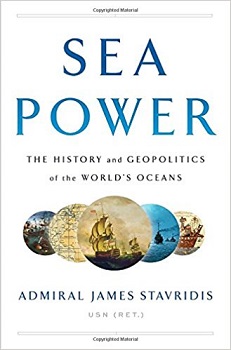
We learn this lesson even more succinctly now, thanks to the new book by Admiral James Stavridis entitled: Sea Power: The History and Geopolitics of the World’s Oceans. See a summary-review of the book here and listen to an AUDIO-Podcast interview with the Author:

 Sea Power - Photo 1

Book Review for Book: Sea Power: The History and Geopolitics of the World’s Oceans By: Admiral James Stavridis

From one of the most admired admirals of his generation – and the only admiral to serve as Supreme Allied Commander at NATO – comes a remarkable voyage through all of the world’s most important bodies of water, providing the story of naval power as a driver of human history and a crucial element in our current geopolitical path. 

From the time of the Greeks and the Persians clashing in the Mediterranean, sea power has determined world power.  To an extent that is often underappreciated, it still does. No one understands this better than Admiral Jim Stavridis. In Sea Power, Admiral Stavridis takes us with him on a tour of the world’s oceans from the admiral’s chair, showing us how the geography of the oceans has shaped the destiny of nations, and how naval power has in a real sense made the world we live in today, and will shape the world we live in tomorrow.

Not least, Sea Power is marvelous naval history, giving us fresh insight into great naval engagements from the battles of Salamis and Lepanto through to Trafalgar, the Battle of the Atlantic, and submarine conflicts of the Cold War. It is also a keen-eyed reckoning with the likely sites of our next major naval conflicts, particularly the Arctic Ocean, Eastern Mediterranean, and the South China Sea. Finally, Sea Power steps back to take a holistic view of the plagues to our oceans that are best seen that way, from piracy to pollution.

When most of us look at a globe, we focus on the shape of the of the seven continents. Admiral Stavridis sees the shapes of the seven seas.  After reading Sea Power, you will too. Not since Alfred Thayer Mahan’s legendary The Influence of Sea Power upon History have we had such a powerful reckoning with this vital subject.

Sea Power makes a great Father’s Day gift!

Source: Amazon Online Bookstore-Portal; retrieved June 9, 2017 from: https://www.amazon.com/Sea-Power-History-Geopolitics-Worlds/dp/073522059X/

———–

Appendix AUDIO-Podcast – Stavridis’ Book ‘Sea Power’ Explains Why Oceans Matter In Global Politics – http://www.npr.org/2017/06/06/531701056/stavridis-book-sea-power-explains-why-oceans-matter-in-global-politics

Published June 6, 2017 – NPR’s Morning Edition’s Steve Inskeep talks to retired Admiral James Stavridis, former supreme allied commander for NATO, about his new book: Sea Power: The History and Geopolitics of the World’s Oceans.

Listen to an extended NPR Podcast here: http://www.npr.org/podcasts/510053/on-point-with-tom-ashbrook

The theme of this new book aligns with the book Go Lean…Caribbean in explaining the significance of ‘Sea Power’ in any plan to elevate the Caribbean region’s societal engines. This commentary is 2 of 4 in a series considering the Lessons in Economic History related to “Commerce of the Seas”, the good, bad and ugly (think Crony-Capitalism) strategies and practices around the maritime eco-system in the United States … and other countries. The full series is as follows:

  1. Commerce of the Seas – Stupidity of the Jones Act
  2. Commerce of the Seas – Book Review: ‘Sea Power’
  3. Commerce of the Seas – Shipbuilding Model of Ingalls
  4. Commerce of the Seas – Lessons from Alang (India)

The previous commentary in this series relates how “Commerce” refers to the economic interest of the 30 member-states in the Caribbean region. Admiral Stavridis book has a heavy focus on naval military power; he posits that a strong Navy paves the way for and protects the continuation of maritime commerce. From the book Sea Power and the Go Lean book we see this consistent Lesson in Economic History:

Around the world, countries that have access to control of the “Sea” have a distinct advantage economically versus countries that are land-locked; i.e. England versus Austria.

CU Blog - America's Navy - 100 Percent - Model for Caribbean - Photo 4As stated previously, the United States have wielded its ‘Sea Power’ to promote profit for its maritime industrial stakeholders at the expense of the residents of off-shore territories, like Puerto Rico and the US Virgin Islands in the Caribbean.

There is therefore a need to reboot, reform and transform the Caribbean region’s stewardship of the Seas. This is the purpose of the book Go Lean … Caribbean, to help empower and elevate the societal engines of the 30 member-states of the Caribbean region and their waterscapes. The Go Lean book serves as a roadmap for the introduction and implementation of the Caribbean Union Trade Federation (CU). This would be the inter-governmental entity for a regional Single Market that covers the land territories of the 30 member-states, and their aligning seas; (including the 1,063,000 square miles of the Caribbean Sea in an Exclusive Economic Zone). The Go Lean/CU roadmap features this prime directive, as defined by these 3 statements:

  • Optimization of the economic engines to grow the regional economy to $800 Billion & create 2.2 million new jobs.
  • Establishment of a security apparatus to protect public safety and ensure the economic engines of the region, including the seas.
  • Improvement of Caribbean governance to support these engines in local governments and in the Exclusive Economic Zone, including a separation-of-powers between the member-states and CU federal agencies.

This Go Lean roadmap envisioned a wide-ranging, fully-encompassing treaty for all Caribbean member-states to deputize a technocratic agency to better administer the affairs (economic, security and governance) of the waterscapes in the region. It was recognized that this quest was “out-of-scope” and too big for any one Caribbean member-state alone, but rather, acknowledging their regional interdependence, these stakeholders would be able to engage a new inter-governmental administration for better regional stewardship. This, regionalism, was the original intent of the Go Lean book, which commenced with a Declaration of Interdependence, pronouncing the need for regional coordination and integration so as to reform and transform Caribbean society. See a sample of relevant stanzas here (Page 11 – 12) as related to the Caribbean ‘Sea Power’:

v. Whereas the natural formation of our landmass and coastlines entail a large portion of waterscapes, the reality of management of our interior calls for extended oversight of the waterways between the islands. The internationally accepted 12-mile limits for national borders must be extended by International Tribunals to encompass the areas in between islands. The individual states must maintain their 12-mile borders while the sovereignty of this expanded area, the Exclusive Economic Zone, must be vested in the accedence of this Federation.

vi. Whereas the finite nature of the landmass of our lands limits the populations and markets of commerce, by extending the bonds of brotherhood to our geographic neighbors allows for extended opportunities and better execution of the kinetics of our economies through trade. This regional focus must foster and promote diverse economic stimuli.

x. Whereas we are surrounded and allied to nations of larger proportions in land mass, populations, and treasuries, elements in their societies may have ill-intent in their pursuits, at the expense of the safety and security of our citizens. We must therefore appoint “new guards” to ensure our public safety and threats against our society, both domestic and foreign. The Federation must employ the latest advances and best practices … to assuage continuous threats against public safety. …

xi. Whereas all men are entitled to the benefits of good governance in a free society, “new guards” must be enacted to dissuade the emergence of incompetence, corruption, nepotism and cronyism at the peril of the people’s best interest. The Federation must guarantee the executions of a social contract between government and the governed.

xvi. Whereas security of our homeland is inextricably linked to prosperity of the homeland, the economic and security interest of the region needs to be aligned under the same governance. Since economic crimes, including piracy and other forms of terrorism, can imperil the functioning of the wheels of commerce for all the citizenry, the accedence of this Federation must equip the security apparatus with the tools and techniques for predictive and proactive interdictions.

The foregoing book, Sea Power, aligns with the Go Lean book references to strategies, tactics and implementations for the Exclusive Economic Zone (EEZ). The Go Lean book provides 370-pages of turn-by-turn directions on “how” this EEZ can impact and benefit Caribbean society. Consider the Chapter excerpts and headlines from this sample on Page 104:

The Bottom Line on the United Nations Convention on the Law of the Sea (UNCLOS)
The UNCLOS is the international agreement that resulted from the third United Nations Conference on the Law of the Sea which took place between 1973 and 1982. This Convention defines the rights and responsibilities of nations in their use of the world’s oceans, establishing guidelines for businesses, the environment, and the management of marine natural resources. As of October 2012, 164 countries and the European Union have joined in the Convention. The convention introduced a number of provisions. The most significant issues covered were setting limits, navigation, archipelagic status and transit regimes, exclusive economic zones (EEZs), continental shelf jurisdiction, deep seabed mining, the exploitation regime, protection of the marine environment, scientific research, and settlement of disputes. EEZs extend from the edge of the territorial sea out to 200 nautical miles (230 miles) from the 12-mile baseline. Within this area, the coastal nation has sole exploitation rights over all natural resources, including the continental shelf. EEZs were introduced to halt the increasingly heated clashes over fishing rights, although oil was also becoming important. The success of an offshore oil platform in the Gulf of Mexico in 1947 was soon repeated elsewhere in the world, and by 1970 it was technically feasible to operate in waters 4000 meters deep. Foreign nations still have freedoms of navigation and over-flights for the EEZ, subject to the regulation of the coastal states. Foreign states may also lay submarine pipes and cables.

CU independent UNCLOS member-states include: Antigua, Jamaica, Suriname, Dominican Republic, Guyana, Barbados, Saint Vincent, Saint Kitts, Trinidad, Grenada, Saint Lucia, Cuba, Bahamas & Belize.

 10 Start-up Benefits from the EEZ

1

Lean-in for Caribbean Integration
The CU treaty unifies the Caribbean region into one single market of 42 million people across 30 member-states, thereby empowering the economic engines in and on behalf of the region. Integral to CU roadmap, is the territory between the island states. The CU will petition the United Nations for rights under the UN Convention on the Law of the Sea for acquisition of an Exclusive Economic Zone (EEZ). This will facilitate both economic empowerment (including Fisheries management) and security assurances for the region. (This effort was started by the Association of Caribbean States).

2

Funding by Selling Exploration Rights

3

Off-shore Wind Turbines

4

Pipelines

5

Extractions – Economic & Security

6

Security – Anti-Piracy
The CU has the mission to defend the homeland against enemies: foreign, domestic, and in the Exclusive Economic Zone of the Caribbean Seas. There is still a threat of piracy in modern times, and these “bad actors” hide behind jurisdictional confusions of one territorial waters after another. But the CU, with its regional oversight, can be more effective in bringing these ones to justice. Piracy is a form of terrorism, and cruise ships (smaller vessels catering to a High Net Worth – One Percent – market) and leisure crafts can be vulnerable to these threats.

7

Security – Interdictions
There is the need to be on alert for seaborne drug smuggling activities, as these can have corrupting influences on the local community. This would be the direct responsibilities of the CU Naval Operations for the jurisdiction of the EEZ. Today the US Coast Guard conducts patrols in the Caribbean Seas with impunity. There is no plan in the CU roadmap to curtail any of this activity; instead the CU will better coordinate their routes and maneuvers with CU Naval Operations.

8

Security – Search & Rescue

9

Security Monitoring
The CU will embrace many cutting-edge technological options to “keep eyes” on the Caribbean Seas. This includes satellite (visual & GPS), drones (unmanned airborne vehicles & dirigibles or blimps. Boaters will be incentivized tocooperate and install location beacons.

10

Security – Defense Pact (Naval Maneuvers)
The US, France, Netherlands, UK and some European trading partners have declared a “War Against Terrorism”; those battles will surely come to Caribbean shores. The CU therefore invites the Navies of allied nations to train, visit and conduct operations in our Caribbean waters, especially in the EEZ.

The issue of managing marine resources for commerce and security in the Caribbean has been a frequent subject for previous blog-commentaries; consider this list of sample entries:

https://goleancaribbean.com/blog/?p=11544 Forging Change in the Cruise Industry with Collective Bargaining
https://goleancaribbean.com/blog/?p=10566 Funding the Caribbean Security Pact
https://goleancaribbean.com/blog/?p=8819 Lessons from China – South China Seas: Exclusive Economic Zones
https://goleancaribbean.com/blog/?p=5210 Cruise Ship Commerce – Getting Ready for Change
https://goleancaribbean.com/blog/?p=3594 Better Fisheries Management for Queen Conch
https://goleancaribbean.com/blog/?p=1965 America’s Navy – 100 Percent – Model for Caribbean
https://goleancaribbean.com/blog/?p=673 Ghost ships – Autonomous cargo vessels without a crew
https://goleancaribbean.com/blog/?p=273 10 Things We Want from the US – # 4: Pax Americana

All Caribbean members are islands or coastal territories. The subject of ‘Sea Power’ and security of the waterscapes matters to us. Rather than 70 percent, we have to be concerned with 100 percent of the issues, challenges and opportunities.

There is a need to reform our maritime eco-system, for commerce and security. ‘Sea Power’ determines world power, so there is also a need to have a “seat at the table” among the big nations and sea-faring empires. As one small island alone, there is no chance for that consideration; but as a Single Market entity of 42 million people and 30 separate countries (and territories), the Caribbean can now have a Voice … and a Vote (in international forums) so as to shape the destiny of our homeland … and maybe even the whole world of commerce & security.

We hereby urge all Caribbean stakeholders – governments and citizens – to lean-in to this Go Lean roadmap to better wield our ‘Sea Power’, so that our region can be a better homeland (and waterscapes) to live, work and play. 🙂

Download the free e-book of Go Lean … Caribbean – now!

Sign the petition to lean-in for this roadmap for the Caribbean Union Trade Federation. 

Share this post:
, , , , , ,
[Top]

Commerce of the Seas – Stupidity of the Jones Act

Go Lean Commentary

CU Blog - Commerce of the Seas - Stupidity of the Jones Act - Photo 1In the Caribbean, we are surrounded by water (straits, banks, Atlantic Ocean, Caribbean Sea, etc); if you stare upon the waters in the middle of a sunny day, you start to see a mirage – a distortion in reality. In the Caribbean, we are also surrounded by a lot of stupidity. Make no mistake, this is not a mirage; it is mercantilism*.

In a previous blog, this commentary asserted that the historicity of a lot of stupidity in society is due to Crony-Capitalism:

Someone is getting paid!

This applies in so many areas of American life that Caribbean people can learn lessons from this history and distortion in reality. This commentary is 1 of 4 in a series considering the Lessons in Economic History related to “Commerce of the Seas”, the Crony-Capitalism in laws and practices around the maritime eco-system in the United States … and other countries. The full series is as follows:

  1. Commerce of the Seas – Stupidity of the Jones Act
  2. Commerce of the Seas – Book Review: ‘Sea Power’
  3. Commerce of the Seas – Shipbuilding Model of Ingalls
  4. Commerce of the Seas – Lessons from Alang (India)

The reference to “Commerce” refers to the economic interests of the 30 member-states in the Caribbean region. There are so many Lessons in Economic History for us to glean:

Around the world, countries that had access to the “Sea” have a distinct advantage economically versus countries that were land-locked; i.e. England versus Austria.

Mercantilism dictated that empires force rules and laws to preserve commerce for their home countries. This was also the case for the United States. One prominent law that was instituted was the Jones Act; see more in Appendix B below.

The Jones Act mandates that for a ship to go from one US port to another US port it must be American-made and American flagged. Also, for foreign ships to trade in US Territories, they must first journey to a foreign port before they could journey to another American port to transport goods. This seems “stupid”; but the adherence to this law keeps American maritime commerce options afloat; this means someone is getting paid; see VIDEO in Appendix A below, highlighting a distortion in the reality of Puerto Rico-to US Mainland trade.

How about the Caribbean, do we have or need maritime “protectionism” in the laws of the member-states of our region? The answer is affirmative for the dysfunctional US Territories; there is a need for economic regionalism, not protectionism.

The US Territories of Puerto Rico and the US Virgin Islands are also regulated by the Jones Act. According to the encyclopedic reference (in Appendix B below), this is not good; it hinders economic development!

In March 2013, the Government Accountability Office (GAO) released a study of the effect of the Jones Act on Puerto Rico that noted “freight rates are set based on a host of supply and demand factors in the market, some of which are affected directly or indirectly by Jones Act requirements.” The report further concludes … [that] freight rates between the United States and Puerto Rico are affected by the Jones Act.” The report also addresses what would happen “under a full exemption from the Act, the rules and requirements that would apply to all carriers would need to be determined.” The report continues that “while proponents of this change expect increased competition and greater availability of vessels to suit shippers’ needs” …

The American territories in the Caribbean are in the middle of the Caribbean geography, rimming the Caribbean Sea. The “Laws of the Sea” need to reflect this reality and not just political alignments. This is the purpose of the book Go Lean … Caribbean, to help reform and transform the societal engines for the 30 member-states of the Caribbean region. The book specifically addresses customization to the “Laws of the Sea” to benefit the Caribbean region. The book serves as a roadmap for the introduction and implementation of the Caribbean Union Trade Federation (CU). This would be the governmental entity for a regional Single Market that covers the land territories of the 30 member-states, and their aligning seas; (including the 1,063,000 square miles of the Caribbean Sea in an Exclusive Economic Zone). The Go Lean/CU roadmap features this prime directive, as defined by these 3 statements:

  • Optimization of the economic engines to grow the regional economy to $800 Billion & create 2.2 million new jobs.
  • Establishment of a security apparatus to protect public safety and ensure the economic engines of the region, including the seas.
  • Improvement of Caribbean governance to support these engines in local governments and in the Exclusive Economic Zone, including a separation-of-powers between the member-states and CU federal agencies.

The Go Lean roadmap allows for the regional stewardship and administration of the commerce on the Caribbean Seas in collaboration, conjunction and cooperation with US legal jurisdiction and foreign entities. The legal premise for this strategy is an Interstate Compact & Treaty – see details in the Go Lean book (Page 278) or the photo-excerpt in Appendix IA below  – legislated by the US Congress, independent Caribbean governments (17) and the colonial masters for the existing overseas territories:

  • France (Guadeloupe, Martinique, St. Martin, St. Barthélemy)
  • The Netherlands (Aruba, Bonaire, Curaçao, Saba, Sint Eustatius, Sint Maarten)
  • United Kingdom (Anguilla, Bermuda, Cayman Islands, Montserrat, Turks & Caicos and the British Virgin Islands)

Such a wide-ranging, fully-encompassing Compact-Treaty was an original intent of the Go Lean book – economic regionalism. The publication (published in November 2013) commenced with a Declaration of Interdependence, pronouncing the need for regional coordination and integration so as to reform and transform Caribbean society. See a sample of relevant stanzas here (Page 11 – 13):

v. Whereas the natural formation of our landmass and coastlines entail a large portion of waterscapes, the reality of management of our interior calls for extended oversight of the waterways between the islands. The internationally accepted 12-mile limits for national borders must be extended by International Tribunals to encompass the areas in between islands. The individual states must maintain their 12-mile borders while the sovereignty of this expanded area, the Exclusive Economic Zone, must be vested in the accedence of this Federation.

vi. Whereas the finite nature of the landmass of our lands limits the populations and markets of commerce, by extending the bonds of brotherhood to our geographic neighbors allows for extended opportunities and better execution of the kinetics of our economies through trade. This regional focus must foster and promote diverse economic stimuli.

xi. Whereas all men are entitled to the benefits of good governance in a free society, “new guards” must be enacted to dissuade the emergence of incompetence, corruption, nepotism and cronyism at the peril of the people’s best interest. The Federation must guarantee the executions of a social contract between government and the governed.

xxiii. Whereas many countries in our region are dependent Overseas Territory of imperial powers, the systems of governance can be instituted on a regional and local basis, rather than requiring oversight or accountability from distant masters far removed from their subjects of administration. The Federation must facilitate success in autonomous rule by sharing tools, systems and teamwork within the geographical region.

The foregoing Jones Act is an American legislation that probably needs to be repealed or revised to reflect the actuality of a globalized economy; (there are some good provisions related to injury of seamen). Consider this recent experience recorded by a commentator on a news site, below an article regarding the efforts to repeal the Jones Act:

John David Oct 25, 2016 at 7:38 pm

The Act does not Protect the Ports and Waterways, that task is left to the US Navy and US Coast Guard. We have Significant Ports on the US Mainland. None of them have had any security issues with Foreign Flagged Vessels. Trade is restrictive to and from places like Puerto Rico, Hawaii, Guam Etc.

Therefore business that could be entertained and cultivated providing a boost in their respective economies, those areas economically are suppressed. The United States has a significant Naval and Coast Guard presence in each of these areas. An example of how this stifles the economy would be to take a guitar manufacturer located on the Big Island of Hawaii. The Big Island has an abundance of Koa wood, a highly sought after wood for the manufacture of wooden guitars. However if they wanted to ship their guitars to a distributor in Australia, they have to first ship it to the USA mainland. They then Offload it and re-ship it to Australia, The interesting part of this story is that many times the costs for shipping it to Australia are less than it was to ship it to the US Mainland on the initial leg. So as you can see this stifles any possible USA productivity. And maybe that is why no one in Hawaii is Mfg guitars, or hardly anything else for that matter.

Original News Article: The Triton – Nautical News – Published January 26, 2015; retrieved June 8, 2017 from: http://www.the-triton.com/2015/01/mccain-repeal-jones-act/

CU Blog - Commerce of the Seas - Stupidity of the Jones Act - Photo 3

Reforming America is out-of-scope for the Go Lean movement, notwithstanding Puerto Rico and the US Virgin Islands. Our quest is to reform and transform the Caribbean … only. The Go Lean book provides 370-pages of turn-by-turn instructions on “how” to adopt new community ethos for economic regionalism, plus the strategies, tactics, implementations and advocacies to execute so as to reboot, reform and transform the maritime commerce to benefit Caribbean society.

The issue of rebooting maritime commerce has been a frequent subject for previous blog-commentaries; consider this list of sample entries:

https://goleancaribbean.com/blog/?p=11544 Forging Change in the Cruise Industry with Collective Bargaining
https://goleancaribbean.com/blog/?p=5210 Cruise Ship Commerce – Getting Ready for Change
https://goleancaribbean.com/blog/?p=4639 Tobago: A Model for Cruise Tourism
https://goleancaribbean.com/blog/?p=4037 One mission for Maritime Commerce: Expanding Shipbuilding
https://goleancaribbean.com/blog/?p=3594 Better Fisheries Management for Queen Conch
https://goleancaribbean.com/blog/?p=2003 Where the Jobs Are in Maritime Commerce? Consider Shipbreaking
https://goleancaribbean.com/blog/?p=673 Ghost ships – Autonomous cargo vessels without a crew

All Caribbean members are islands or coastal territories. There is a need to reform maritime commerce for the Caribbean region; we can get more economic activity from this sector; the Go Lean book projects 15,000 new direct jobs in the shipbuilding industry, 4000 in fisheries and 800 jobs by reforming payment systems for cruise passengers. The possibility of new jobs are positive economic fruitage from considering a reboot of maritime eco-system; it would be stupid not to try.

Previous generations in the Caribbean lived off the sea; we can again; it would be stupid not to try. This plan is conceivable, believable and achievable. We urge all Caribbean stakeholders – seafarers and land-lovers – to lean-in to this roadmap for economic empowerment. We can make the Caribbean homeland and seas better places to live, work and play. 🙂

Download the free e-book of Go Lean … Caribbean – now!

Sign the petition to lean-in for this roadmap for the Caribbean Union Trade Federation. 

————-

Appendix A VIDEO – The Jones Act And The Debt Crisis https://youtu.be/PFnrGcP1OyE

Published on Sep 27, 2016 – Nelson Denis talks about the Jones Act.

In addition, see the FULL Documentary on the Jones Act Explanation: https://youtu.be/GpwzoDGDGAQ

————-

Appendix B: Merchant Marine Act of 1920 aka Jones Act

The Merchant Marine Act of 1920 (P.L. 66-261), also known as the Jones Act, is a United States federal statute that provides for the promotion and maintenance of the American merchant marine.[1] Among other purposes, the law regulates maritime commerce in U.S. waters and between U.S. ports. Section 27 of the Jones Act deals with cabotage and requires that all goods transported by water between U.S. ports be carried on U.S.-flag ships, constructed in the United States, owned by U.S. citizens, and crewed by U.S. citizens and U.S. permanent residents.[2] The act was introduced by Senator Wesley Jones.

Laws similar to the Jones Act date to the early days of the nation. In the First Congress, on September 1, 1789, Congress enacted Chapter XI, “An Act for Registering and Clearing Vessels, Regulating the Coasting Trade, and for other purposes”, which limited domestic trades to American ships meeting certain requirements.[3]

The Merchant Marine Act of 1920 has been revised a number of times; the most recent revision in 2006 included recodification in the U.S. Code.[2] In early 2015 Senator John McCain filed for an amendment that would essentially annul the Act.[4] [The amendment failed].

The Jones Act is not to be confused with the Death on the High Seas Act, another United States maritime law that does not apply to coastal and in-land navigable waters.

Objectives and purpose
The intention of Congress to ensure a vibrant United States maritime industry is stated in the preamble to the Merchant Marine Act of 1920.[5]

Cabotage
Cabotage is the transport of goods or passengers between two points in the same country, alongside coastal waters, by a vessel or an aircraft registered in another country. Originally a shipping term, cabotage now also covers aviation, railways, and road transport. Cabotage is “trade or navigation in coastal waters, or the exclusive right of a country to operate the air traffic within its territory”.[6] In the context of “cabotage rights”, cabotage refers to the right of a company from one country to trade in another country. In aviation terms, for example, it is the right to operate within the domestic borders of another country. Most countries enact cabotage laws for reasons of economic protectionism or national security.[citation needed]

The cabotage provisions relating to the Jones Act restrict the carriage of goods or passengers between United States ports to U.S.-built and flagged vessels. It has been codified as portions of 46 U.S.C. [7] Generally, the Jones Act prohibits any foreign-built, foreign-owned or foreign-flagged vessel from engaging in coastwise trade within the United States. A number of other statutes affect coastwise trade and should be consulted along with the Jones Act. These include the Passenger Vessel Services Act, 46 USC section 289 which restricts coastwise transportation of passengers and 46 USC section 12108 restricts the use of foreign vessel to commercially catch or transport fish in U.S. waters.[8] These provisions also require at least three-fourths of the crewmembers to be U.S. citizens. Moreover, the steel of foreign repair work on the hull and superstructure of a U.S.-flagged vessel is limited to ten percent by weight.

Effects
The Jones Act prevents foreign-flagged ships from carrying cargo between the US mainland and noncontiguous parts of the US, such as Puerto Rico, Hawaii, Alaska, and Guam.[11] Foreign ships inbound with goods cannot stop any of these four locations, offload goods, load mainland-bound goods, and continue to US mainland ports. Instead, they must proceed directly to US mainland ports, where distributors break bulk and then send goods to US places off the mainland by US-flagged ships.[11] Jones Act restrictions can be circumvented by making a stop in a foreign country between two US ports, e.g., Anchorage–Vancouver–Seattle.

Puerto Rico
Studies by the World Economic Forum and Federal Reserve Bank of New York have concluded that the Jones Act hinders economic development in Puerto Rico.[12]

In March 2013, the Government Accountability Office (GAO) released a study of the effect of the Jones Act on Puerto Rico that noted “[f]reight rates are set based on a host of supply and demand factors in the market, some of which are affected directly or indirectly by Jones Act requirements.” The report further concludes, however, that “because so many other factors besides the Jones Act affect rates, it is difficult to isolate the exact extent to which freight rates between the United States and Puerto Rico are affected by the Jones Act.” The report also addresses what would happen “under a full exemption from the Act, the rules and requirements that would apply to all carriers would need to be determined.” The report continues that “[w]hile proponents of this change expect increased competition and greater availability of vessels to suit shippers’ needs, it is also possible that the reliability and other beneficial aspects of the current service could be affected.” The report concludes that “GAO’s report confirmed that previous estimates of the so-called ‘cost’ of the Jones Act are not verifiable and cannot be proven.”[13]

In the Washington Times, Rep. Duncan Hunter spoke to the need for the Jones Act and why it is not to blame for the island’s debt crisis. “With or without such an effort, it’s imperative not to conflate the unrelated issues of Puerto Rico’s debt and the Jones Act, and to fully grasp the importance of ensuring the safe transport of goods between American ports. There must also be acknowledgment of the dire consequences of exposing ports and waterways to foreign seafarers.”[14]

[See VIDEO in Appendix A above].

US shipbuilding
Because the Jones Act requires all transport between US ports be carried on US-built ships, the Jones Act supports the domestic US shipbuilding industry.[15][16]Critics of the act describe it as protectionist, harming the overall economy for the sake of benefiting narrow interests.[17][18] Other criticism argues that the Jones Act is an ineffective way to achieve this goal, claiming it drives up shipping costs, increases energy costs, stifles competition, and hampers innovation in the U.S. shipping industry[19] – however, multiple GAO reports have disputed these claims.[20]

Source: Retrieved June 8, 2017 from: https://en.wikipedia.org/wiki/Merchant_Marine_Act_of_1920

[See the FULL Documentary on the Jones Act Explanation: https://youtu.be/GpwzoDGDGAQ]

————-

Appendix IA – Interstate Compacts

Since Puerto Rico and the Virgin Islands are US Territories, their implementation of the provisions of the Caribbean Union Trade Federation must legally be construed as an Interstate Compact.

An Interstate Compact is an agreement between two or more states of the US. Article I, Section 10 of the US Constitution provides that “no state shall enter into an agreement or compact with another state” without the consent of Congress. Frequently, these agreements create a new governmental agency which is responsible for administering or improving some shared resource such as a seaport or public transportation infrastructure. In some cases, a compact serves simply as a coordination mechanism between independent authorities in the member states.

CU Blog - Commerce of the Seas - Stupidity of the Jones Act - Photo 2

Click on photo to enlarge

————-

Footnote Reference – * Mercantilism

A system of political and economic policy, evolving with the modern national state and seeking to secure a nation’s political and economic supremacy in its rivalry with other states. According to this system, money was regarded as a store of wealth, and the goal of a state was the accumulation of precious metals, by exporting the largest possible quantity of its products and importing as little as possible, thus establishing a favorable balance of trade.
Source: Retrieved June 8, 2017 from: http://www.dictionary.com/browse/mercantile-system

Share this post:
, , , , , ,
[Top]

Inaction: A Recipe for ‘Failed-State’ Status

Go Lean Commentary

Do you remember when …?

Why not? It was such an important event that you should never forget. And yet!

CU Blog - Inaction - A Recipe for 'Failed-State' Status - Photo 2This is the current situation today for a country that is a Caribbean neighbor: Venezuela. Atrocities are happening there and we, as observing-reporting neighbors have done nothing and now propose more of the same: 

Inaction.

This is the formula, the recipe, for creating a Failed-State:

 “The only thing necessary for the triumph of evil is for good men to do nothing” – Edmund Burke; 1729 – 1797; an Irish statesman and member of British Parliament.

How can we forget?!?!

The recipe of good people … doing nothing to prevent atrocities is what was prevalent in Nazi Germany, Rwanda, Bosnia and many other troubled spots – Failed-States – in modern times; (see Appendix D below). Despite all of our pledges of “Never Again“, we now see it happening again; this time in Venezuela; see VIDEO in Appendix C below.

In a previous blog-commentary by the movement behind the book Go Lean…Caribbean – available to download for free – it was related that …

… unless mitigated, Venezuela will become a Failed-State. We hope that the country, and their South American neighbors, can secure their society to assure peace and the protection of human rights.

In fact, the Go Lean commentary had observed-and-reported on a number of negative developments regarding Venezuela; see this sample list of previous blogs here:

Link Date Title
https://goleancaribbean.com/blog/?p=8132 05-31-2016 Venezuela: Watching a ‘Train Wreck in Slow Motion’
https://goleancaribbean.com/blog/?p=6800 10-26-2015 Venezuela sues black market currency website in US
https://goleancaribbean.com/blog/?p=1076 05-29-2014 Trinidad Muslims travel to Venezuela for jihadist training

The situation in Venezuela is dire –  see VIDEO in Appendix C below – action must be taken to abate the downward spiral of the societal engines there. There is something the Caribbean community can do to help mitigate the threats.

There are new Caribbean-Venezuela developments … happening now (last week actually):

Proposals for more of the same … inaction.

CU Blog - Inaction - A Recipe for 'Failed-State' Status - Photo 1See the news articles in the Appendices (A & B) below. The overall theme from the articles is that government leaders in the formal Caribbean Community (CariCom) want to not disturb Venezuela’s sovereignty and further these leaders oppose any entity – i.e. the Organization of American States or OAS – that may want to condemn the status quo and ruling class in Venezuela.

Say it ain’t so CariCom!

Venezuela is near-Failed-State status; lives are being lost; economic systems are dysfunctional and people are taking flight, seeking refuge in foreign countries; see VIDEO below. Despite these conditions, CariCom – who weld some power and influence through peer pressure – wants Inaction.

We object!

Down with CariCom …
Time for a change …
Time to reboot the Caribbean …

This is the declaration of the book Go Lean…Caribbean; this book serves as a roadmap for the introduction and implementation of the technocratic Caribbean Union Trade Federation (CU), for the elevation of Caribbean society – for all member-states. The book posits that CariCom is a failure (Page 3) and that the quest for regional integration in the Caribbean needs a new – and better – expression. The book therefore presents the Go Lean/CU roadmap with these 3 prime directives:

The book stresses that reforming and transforming the Caribbean societal engines must be a regional pursuit. This was an early motivation for the roadmap, as pronounced in the opening Declaration of Interdependence (Pages 12 – 13):

xi. Whereas all men are entitled to the benefits of good governance in a free society, “new guards” must be enacted to dissuade the emergence of incompetence, corruption, nepotism and cronyism at the peril of the people’s best interest. The Federation must guarantee the executions of a social contract between government and the governed.

xvi. Whereas security of our homeland is inextricably linked to prosperity of the homeland, the economic and security interest of the region needs to be aligned under the same governance. Since economic crimes … can imperil the functioning of the wheels of commerce for all the citizenry, the accedence of this Federation must equip the security apparatus with the tools and techniques for predictive and proactive interdictions.

xxiv. Whereas a free market economy can be induced and spurred for continuous progress, the Federation must install the controls to better manage aspects of the economy: jobs, inflation, savings rate, investments and other economic principles. Thereby attracting direct foreign investment because of the stability and vibrancy of our economy.

The Go Lean book provides 370-pages of turn-by-turn instructions and actions to adopt new community ethos, plus the strategies, tactics, implementations and advocacies to execute so as to reboot, reform and transform the societal engines of Caribbean society. To prevent atrocities, there must be actions, positive engagements, before and after; see Appendix D below.

To political leaders like Ralph Gonsalves, Prime Minister of St Vincent and the Grenadines, the Go Lean movement gives this salutation (Page 252):

[Step aside]. Thank you for your service. Change has come.

We must do this: change from the inaction of the current political leadership and lean-in to this roadmap to re-boot, reform and transform the Caribbean region.

Yes, we can act and help prevent atrocities in our region and make our own homeland better places to live, work and play. 🙂

Download the free e-Book of Go Lean … Caribbean – now!

Sign the petition to lean-in for this roadmap for the Caribbean Union Trade Federation. 
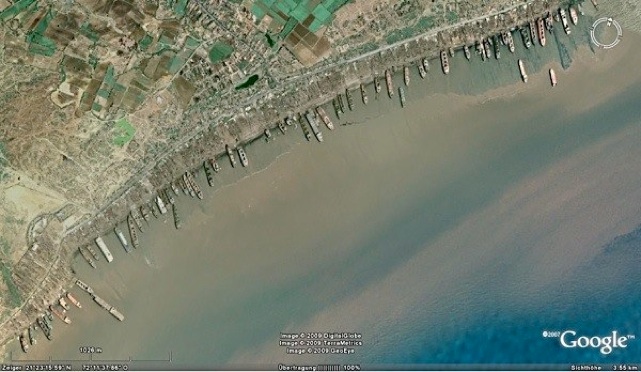
————-

Appendix A – Gonsalves warns CariCom of plot against Venezuela

KINGSTOWN, St. Vincent – Prime Minister Ralph Gonsalves of St Vincent and the Grenadines has cautioned the Caribbean Community (CariCom) to refrain from allowing a small group of powerful nations to dilute the collective strength of the 15-member regional grouping.

Gonsalves, in a three page letter to CariCom leaders, that was circulated to the media, warned that a wedge is being driven through CariCom over a plan for regime change in Venezuela and the group of powerful nations with the Organisation of America States (OAS) has an agenda of naked self-interest.

He said the group has strategically invited select CariCom countries to their meetings and ignored the others. In the result, they have succeeded in disuniting and weakening CariCom countries whose only strength lies in our solidarity. This worrying development has been particularly manifest in matters relating to Venezuela, said Gonsalves in a letter dated May 10.

There is clearly a calculated strategy in place by a group of nations to achieve regime change in Venezuela by using the OAS as a weapon of destruction, he added.

Gonsalves said while CARICOM countries may have concerns about the political, economic and social conditions in Venezuela, we are all sufficiently seasoned political leaders to know that toppling a government will not end those conditions, particularly when there is no viable, electable single alternative to replace it.

Resolving the conflict
He acknowledged that CariCom member states could have a role in promoting dialogue to help resolve the conflict in Venezuela he warned fellow regional leaders against allowing themselves to be ambushed into breaking our solidarity and aligning ourselves with fair-weather friends.

Meanwhile, representatives from 18 OAS member states have approved a meeting of foreign ministers scheduled for May 31 in Washington to discuss the Venezuelan crisis.

In recent weeks, there has been growing unrest across Venezuela, with several killed and others injured as they have called for elections, freedom for jailed activists, foreign humanitarian aid to offset the economic crisis, and autonomy for the opposition-controlled legislature.

Source: Posted May 17, 2017; retrieved June 7, 2017 from: https://www.iwnsvg.com/2017/05/17/gonsalves-warns-caricom-of-plot-against-venezuela/

————-

Appendix B – St Vincent PM praises CariCom on position taken on Venezuela
By: Peter Richards

BRIDGETOWN, Barbados (CMC) St. Vincent and the Grenadines Prime Minister, Ralph Gonsalves has praised Caribbean Community (CariCom) countries for acting “with independence, courage and concerted action” during the Permanent Council meeting of the Organisation of American States (OAS) called to discuss the situation in Venezuela earlier this week.

In a two-page letter sent to the Irwin La Rocque, secretary general of CariCom, Gonsalves said that the “CariCom stance is a tribute to our region’s commitment to the highest ideals of our Caribbean civilisation and of its institutional expression, politically, the independent and sovereign nation-state”.

He said that through its position at the OAS, CariCom countries have honoured the names of “our revered leaders of yesteryear” including Errol Barrow of Barbados, Forbes Burnham of Guyana, Michael Manley of Jamaica and Trinidad and Tobago’s Dr. Eric Williams “whose respective countries defied the edict of a hegemonic neighbour in their formal diplomatic recognition of revolutionary Cuba in 1972”.

In his letter, which was copied to heads of state and governments in CariCom and obtained by the Caribbean Media Corporation (CMC), Gonsalves said he was “humbled and proud of the majesty of CARICOM’s united stance in defence of the principle of non-interference in the internal affairs of states; the bedrock ideas of sovereignty and independence (and) the nobility of the fundamental precepts of representative democracy”.

During the OAS meeting, Jamaica, for example, called for dialogue among all parties in Venezuela, where opposition-led street demonstrations to force the Nicolas Maduro government out of office have resulted in more than 40 deaths and a split among members of the OAS.

Jamaica’s Foreign Affairs Minister, Kamina Johnson-Smith, addressing the 29th Meeting of Consultation of Ministers of Foreign Affairs at the OAS in Washington earlier this week, said the Andrew Holness government is “gravely concerned by the continued deterioration of the situation in Venezuela”.

She cited increased violence, loss of life, damage to infrastructure, severe economic hardships for the people, and “a hardening of deeply entrenched positions by both Government and opposition groups…

“Jamaica continues to highly favour meaningful dialogue and discourages the isolation of Venezuela. We, therefore, invite the Government of Venezuela to reconsider that decision,” Johnson Smith added.

On Wednesday, Trinidad and Tobago called for the removal of the OAS Secretary General Luis Almagro, over his non-neutral position on the political situation in Venezuela and warned the 15-member CariCom grouping of the possibility of destroying “itself as an honest broker with respect to any involvement in assistance to Venezuela and its internal problems…

“Trinidad and Tobago registered a strong objection to the behaviour of the OAS leadership. The public servants from the OAS took it upon themselves to engage the Government of Venezuela, the president in fact, in a very derogatory manner,” Prime Minister Keith Rowley told a news conference on his return from an official two-day visit to Chile.

Last month, CariCom foreign ministers called for non-interference in the internal affairs of Venezuela.

Gonsalves, who had last month had cautioned CARICOM to refrain from allowing a small group of powerful nations to dilute the “collective strength” of the 15 member regional grouping on the Venezuela issue, said in his letter to La Rocque that he was “heartened that CariCom member-states are alive to the maneuverings of those who would wish to deliver Venezuela and its oil on a platter to a handful of global enterprises, who are focused on their own greed, duplicity, and narrow self interest….

“We know the road very well. But CariCom has taken the road less travelled by, and that has made all the difference,” Gonsalves wrote, adding, “I do not underestimate the current travails of Venezuela and I am pleased that CariCom is prepared to play a facilitating role, along with other countries and leading personalities in fostering peace, dialogue and constitutionalism in Venezuela”.

But he acknowledged that “at the end of the day, this is a matter for Venezuelans themselves”.

Gonsalves said that he is “sure that the overwhelming majority of nation-states, globally, are pleased with CariCom’s stance at the OAS.

“We must now allow our unity and good sense to be put asunder. Now more than ever we must remain firm. The enemies at the gates of non-interference, sovereignty, and independence will not rest; indeed, they will redouble their efforts. They will raise aloft, hypocritically, any number of high-sounding phrases but beneath them are base motives. History has taught us all this, and more.

“I am confident of CariCom’s continuing embrace of independence, courage, and concerted action, remembering always that, of all time, only the future is ours to desecrate. Our Caribbean civilisation must never be engaged in the desecration of our future,” the St. Vincent and the Grenadines prime minister wrote.

Source: Posted June 3, 2017; retrieved June 7, 2017 from: https://www.iwnsvg.com/2017/06/03/st-vincent-pm-praises-caricom-on-position-taken-on-venezuela/

————-

Appendix C VIDEO – Exclusive Interview on Venezeula: “We’re Being Ruthlessly Killed by the Venezuelan Gov’t” – https://youtu.be/qwPZ75_rj0k

Published on Jun 7, 2017 – Venezuelan citizen Aura Garrillo joined MRCTV’s Nick Kangadis to talk about the atrocities happening in the “dictatorial” nation of Venezuela.

Garrillo speaks out about the hyper-inflation, crime-ridden neighborhoods, lack of affordable goods and bloodshed, courtesy of the Nicolas Maduro-led government.

Subscribe: www.youtube.com/mrctvdotorg

About: MRCTV is an online media platform designed to broadcast conservative values, culture, politics, liberal media bias, and entertainment to a new and diverse audience on a social media optimized site. Our goal is to break down the boundaries between traditional conservative media and mainstream culture.

Follow Us:
www.mrctv.org
facebook.com/MRCTV
twitter.com/mrctv
Nick Kangadis on Twitter: twitter.com/TruthOfChicago
Nick Kangadis on Facebook: https://www.facebook.com/UncommonSens…

MRCTV is brought to you by the Media Research Center. The mission of the MRC is to create a media culture in America where truth and liberty flourish. The MRC is a research and education organization operating under Section 501(c)(3) of the Internal Revenue Code.

————-

Appendix D – Preventing mass atrocities – An agenda for policymakers and citizens

    Introduction ………………………………………………………. 1
    Early warning ……….. ………………………………………….. 3
    Detecting risk and promoting action
    Diplomacy …………………………………………………………. 5
    The first line of prevention
    Development aid ………………………………………………… 7
    Building resilient societies to prevent atrocities
    Security assistance ……………………………………………… 9
    Helping countries protect their people
    International action ………………………………………………11
    Working together to prevent atrocities

CU Blog - Inaction - A Recipe for 'Failed-State' Status - Photo 3

See the full report here; retrieved June 7, 2017 from:

http://responsibilitytoprotect.org/Cit%20for%20glob%20sol-Preventing_mass_atrocities-highres-singlepages.pdf


Share this post:
, , , ,
[Top]

Hurricane Season 2017 and ‘Climate Change’ Abatement

CU Blog - Hurricane Season 2017 - Photo 1

Go Lean Commentary

Its June 1st, the start of the Hurricane season. According to Weather Authorities, it is going to be a tumultuous season, maybe even more destructive than last year; see Appendix A below.

Thanks Climate Change.

What hope is there to abate the threats from Climate Change?

Thanks to the Paris Accord, there is now hope; (we remember the effectiveness of the accord to abate “Acid Rain”).

But wait! The American President – Donald Trump – announces that he is withdrawing the United States from the Paris Accord. (See the news article/link in Appendix B below).

CU Blog - Hurricane Season 2017 - Photo 3

W.T.H.?!?!

This is a matter of security; perhaps we should not look to the US to take the lead for our own fate. This is so familiar … and a Hot Topic today as European member-states are contemplating how much they can look to the US for leadership for their security needs; (see the VIDEO in the Appendix C below).

This is the assertion of the book Go Lean…Caribbean; available to download for free. It serves as a roadmap for the introduction and implementation of the technocratic Caribbean Union Trade Federation (CU), for the elevation of Caribbean society – for all member-states. The quest is that we take our own lead – collectively – for our own fate. This CU/Go Lean roadmap has these 3 prime directives:

The book stresses that reforming and transforming the Caribbean societal engines must be a regional pursuit; the issues at hand are too big for anyone member-state alone. This was an early motivation for the roadmap, as pronounced in the opening Declaration of Interdependence (Pages 12 – 13):

i. Whereas the earth’s climate has undeniably changed resulting in more severe tropical weather storms, it is necessary to prepare to insure the safety and security of life, property and systems of commerce in our geographical region. As nature recognizes no borders in the target of its destruction, we also must set aside border considerations in the preparation and response to these weather challenges.

xi. Whereas all men are entitled to the benefits of good governance in a free society, “new guards” must be enacted to dissuade the emergence of incompetence, corruption, nepotism and cronyism at the peril of the people’s best interest. The Federation must guarantee the executions of a social contract between government and the governed.

xvi. Whereas security of our homeland is inextricably linked to prosperity of the homeland, the economic and security interest of the region needs to be aligned under the same governance. Since economic crimes … can imperil the functioning of the wheels of commerce for all the citizenry, the accedence of this Federation must equip the security apparatus with the tools and techniques for predictive and proactive interdictions.

xxiv. Whereas a free market economy can be induced and spurred for continuous progress, the Federation must install the controls to better manage aspects of the economy: jobs, inflation, savings rate, investments and other economic principles. Thereby attracting direct foreign investment because of the stability and vibrancy of our economy.

The Go Lean book provides 370-pages of turn-by-turn instructions on “how” to adopt new community ethos, plus the strategies, tactics, implementations and advocacies to execute so as to reboot, reform and transform the societal engines of Caribbean society.

The issue of Hurricane Season 2017 is bigger than initial appearances – there are BIG  issues afoot. Many are issues that were addressed in previous Go Lean blog-commentaries; see a sample here:

https://goleancaribbean.com/blog/?p=11858 Welcome to Kiribati – Hello and Goodbye
https://goleancaribbean.com/blog/?p=11442 Caribbean Roots: Al Roker – ‘Climate Change’ Defender
https://goleancaribbean.com/blog/?p=9455 Fix ‘Climate Change’ – Yes, We Can
https://goleancaribbean.com/blog/?p=9334 Hurricane Categories – The Science
https://goleancaribbean.com/blog/?p=7449 Due to Climate Change, ‘Crap Happens’ – So What Now?
https://goleancaribbean.com/blog/?p=7103 COP21 – ‘Climate Change’ Acknowledged
https://goleancaribbean.com/blog/?p=6893 A Meteorologist’s View On Climate Change
https://goleancaribbean.com/blog/?p=6016 ‘Hotter than July’ – Reality in the Caribbean
https://goleancaribbean.com/blog/?p=4673 Climate Change‘ Merchants of Doubt … to Preserve Profits!!
https://goleancaribbean.com/blog/?p=2465 Book: ‘This Changes Everything: Capitalism vs. the Climate’
https://goleancaribbean.com/blog/?p=2276 Climate Change May Affect Food Supply Within a Decade
https://goleancaribbean.com/blog/?p=2119 Cooling Effect – Oceans and the Climate
https://goleancaribbean.com/blog/?p=1883 Climate Change May Bring More Kidney Stones
https://goleancaribbean.com/blog/?p=1817 Caribbean grapples with intense cycles of flooding & drought
https://goleancaribbean.com/blog/?p=926 Conservative heavyweights have solar industry in their sights
https://goleancaribbean.com/blog/?p=915 Go ‘Green’ … Caribbean

We endured a bitter Hurricane Season last year; Hurricane Matthew was devastating for a number of Caribbean islands in September/October; i.e. Haiti and the Bahamas. (In fact, the Bahamian city of Freeport was so severely impacted that one of its biggest Hotel-Casino resorts closed … permanently).

The Caribbean status quo is unsustainable under the real threats of Climate Change. The region must reboot, reform and transform. We must do the heavy-lifting ourselves; we cannot expect relief and refuge from others, like the American Super-Power. We must find and “sail” under our own power.

Hope and Change! Yes, we can …

… we can make our Caribbean homeland a better place to live, work and play. 🙂

Download the free e-Book of Go Lean … Caribbean – now!

Sign the petition to lean-in for this roadmap for the Caribbean Union Trade Federation.
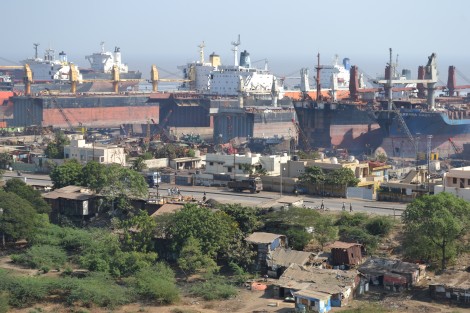
————

Appendix A – Forecasters predict active 2017 hurricane season

With the start of the Atlantic hurricane season less than one week away, the National Oceanic and Atmospheric Administration, says it could be a busy one with five to nine hurricanes expected to form.

Overall, NOAA forecasts 11 to 17 named tropical storms will develop in the region, which includes the Atlantic, the Caribbean Sea and Gulf of Mexico, the agency announced Thursday.

The season officially begins June 1 and runs through Nov. 30.

Of the hurricanes, two to four could be major, with wind speeds of 111 mph or higher and rated as Category 3, 4 or 5 on the Saffir-Simpson Scale of Hurricane Intensity.

An average season typically produces 12 named tropical storms and six hurricanes and peaks in August and September.

A tropical storm contains wind speeds of 39 mph or higher and becomes a hurricane when winds reach 74 mph.

Factors contributing to the prediction include: A weak or non-existent El Nino, near- or above-average sea-surface temperatures, and average or weaker-than-average vertical wind shear, said Gerry Bell, Ph.D., lead seasonal hurricane forecaster with NOAA’s Climate Prediction Center.

Meteorologists at Colorado State University last month estimated 11 tropical storms will form, with four becoming hurricanes.

The late Colorado State University meteorologist William Gray was the first scientist to make seasonal hurricane forecasts back in the 1980s.

The Weather Channel predicts an average season, with 12 named storms, of which six will become hurricanes. AccuWeather forecasts 10 named storms, five of which are projected to become hurricanes.

Source: St. Lucia Times Daily Newspaper –  Posted May 25, 2017 retrieved June 1, 2017 from: https://stluciatimes.com/2017/05/26/forecasters-predict-active-2017-hurricane-season

————

Appendix B – Trump expected to withdraw from Paris Accord

Washington (CNN) President Donald Trump is expected to withdraw from the Paris climate agreement, two senior US officials familiar with his plans told CNN Wednesday, a major break from international partners that would isolate the United States in global efforts to curb global warming.

CU Blog - Hurricane Season 2017 - Photo 2

The decision would put the US at odds with nearly every other nation on earth. It would reflect a major reversal of the Obama administration’s efforts on climate change. And it could trigger further efforts to erode the landmark climate accord.

Source: Posted and retrieved May 31, 2017 from http://www.cnn.com/2017/05/31/politics/trump-paris-accord/

——

In actuality, President Trump officially announces  the exit and former President Obama barks. See story and VIDEO here: http://www.independent.co.uk/news/world/americas/us-politics/paris-agreement-trump-obama-response-rejecting-future-climate-change-deal-latest-news-updates-a7768171.html

————

Appendix C VIDEO – Thanks to Trump, Germany says it can’t rely on the United Stateshttp://wapo.st/2qsrQHd

Share this post:
, , ,
[Top]

Lean-in for ‘Wonder Woman Day’

CU Blog - Wonder Woman Day - Photo 2
Go Lean Commentary 

Heroes and ‘Sheroes’ …

… we need them all in the Caribbean. We must reform and transform our Caribbean society. We know that one person – a Hero or a ‘Shero’ – can make a difference, and we need to encourage those contributions … from Caribbean men and women.

As related in a previous blog-commentary, according to noted Mythologist Joseph Campbell, heroes are not born, they are forged; the candidates go through a consistent pattern of a journey to become bona-fide heroes.

When people think of Super Heroes they tend to think of men, but this week, the world is being reminded that Super Heroes can be women. The first-ever female full-length movie, Wonder Woman is opening this week, on Friday June 2, 2017; see the trailer in the Appendix below. But despite the first time as a full movie, the character of Wonder Woman has been around … for 75 years.

This is a big week for Wonder Woman, not only the movie but also the end of the 75th Anniversary Commemoration. See this news article here:

Title: DC Sets ‘Wonder Woman Day’ Celebration for June 3

Not only does the iconic superhero have her own Warner Bros. movie opening June 2, but DC Entertainment has declared the following day “Wonder Woman Day,” with more than 2,000 comic book stores, bookstores and libraries participating in a celebration of the beloved character. DC will partner with outlets including Barnes & Noble, Books-A-Million, Walmart, Costco and Amazon for exclusive in-store and digital promotions, while Warner Bros. Interactive Entertainment and Warner Bros. Consumer Products will also push the event.

Comic book creators who have worked on the character, including Greg Rucka, Cliff Chiang, Marc Andreyko, Shea Fontana and Cat Staggs, will be participating in special Wonder Woman Day events to talk about their love for Diana, with details to be announced soon.

To mark Wonder Woman Day, DC will release two special issues to be given away free by partners — a reprint of the first issue of the current Wonder Woman series by Rucka and Liam Sharp, and DC Super Hero Girls Wonder Woman Day Special Edition, featuring an excerpt of the upcoming third book in Fontana and Yancey Labat’s series of young reader graphic novels. Additionally, a Wonder Woman Day Activity Kit, including coloring pages and games, will be released digitally for download.

Ahead of June 3, DC’s online DC All Access series will launch a weeklong Wonder Woman Week of programming on May 29, highlighting the character’s history with interviews with comic book and movie talent. A sale of digital comics centering around the character will also begin on May 30.

Wonder Woman Day concludes DC’s yearlong celebration of the 75th anniversary of Wonder Woman’s first appearance. The hero debuted in 1941’s All-Star Comics No. 8. In addition to the release of her first solo movie, June 2017 also marks the 75th anniversary of the first solo Wonder Woman comic book.
Source: The Hollywood Reporter – posted May 15, 2017; retrieved May 31, 2017 from: http://www.hollywoodreporter.com/heat-vision/dc-sets-wonder-woman-day-celebration-june-3-1003939

No doubt Wonder Woman is a ‘Shero’. But as “life imitates art and art imitates life”, we see that many Caribbean women can be heroes without any Super Powers; they only need to make contributions – despite the obstacles – in support and love of their homelands. But this will not be easy; there are villainous forces and pressures working against them. A previous Go Lean blog-commentaries identified the obstacles, starting with:

Orthodoxy – the generally accepted theory, doctrine, or practice that women are inferior and inadequate.

This is why we need movies; the art form can be a powerful source of messaging to impress new theories, doctrines and practices on the masses of people. This is what is meant by “life imitating art”. In a previous blog-commentary regarding Caribbean Diaspora member and Hollywood great, Sidney Poitier, it was declared that …

“Movies are an amazing business model. People give money to spend a couple of hours watching someone else’s creation and then leave the theater with nothing to show for the investment; except perhaps a different perspective”.

With women comprising 50 percent of the population, it is only logical that we would expect women to comprise 50% of the effort in reforming-transforming the Caribbean societal engines of economics, security and governance. We need women to lean-in to this cause; and, we need men to lean-in with support of those women that do present themselves for engagement. This is the assertion of the book Go Lean … Caribbean, that one person – a woman … or a man – can impact the region’s societal engines, so as to elevate their community. The book – available to download for free – serves as a roadmap for the introduction and implementation of the technocratic Caribbean Union Trade Federation (CU). These statements here present the prime directives of the roadmap:

  • Optimization of the economic engines in order to grow the regional economy to $800 Billion & create 2.2 million new jobs.
  • Establishment of a security apparatus to protect the resultant economic engines.
  • Improvement of Caribbean governance to support these engines.

The Caribbean region needs to include more women in leadership roles in business, government and all security institutions. We need ‘Sheroes’ in the stewardship of Caribbean society. We need their voices as policy-makers and participants. We need their insights and investment of their time, talent and treasuries. With their earnest contributions, the whole community will benefit.

The Go Lean roadmap solicits full participation from women and men as stakeholders in a new Caribbean. This is a mandate! The Go Lean book asserts that we can no longer marginalize women in our society. Otherwise, we run the risk of losing them; watching them abandon their ancestral homelands to seek refuge in foreign countries. This has been happening far too often, such that it has created a crisis. We experience a brain drain or abandonment of 70 percent of our highly educated citizenry. Why do they leave? For “push-and-pull” reasons!

  • “Push” refers for deficient conditions at home, like the identified orthodoxy, that makes people want to flee.
  • “Pull” refers to the presumption of better conditions abroad. Our Caribbean women may glean that they can be ‘Sheroes’ abroad rather than at home.

Dissuading this human flight and incentivizing the Diaspora to repatriate are missions of the Go Lean/CU roadmap. These points are pronounced early in the book with this Declaration of Interdependence (Pages 12 – 14), with these opening statements:

xi. Whereas all men are entitled to the benefits of good governance in a free society, “new guards” must be enacted to dissuade the emergence of incompetence, corruption, nepotism and cronyism at the peril of the people’s best interest. The Federation must guarantee the executions of a social contract between government and the governed.

xii. Whereas the legacy in recent times in individual states may be that of ineffectual governance with no redress to higher authority, the accedence of this Federation will ensure accountability and escalation of the human and civil rights of the people for good governance, justice assurances, due process and the rule of law.

xix. Whereas our legacy in recent times is one of societal abandonment, it is imperative that incentives and encouragement be put in place to first dissuade the human flight, and then entice and welcome the return of our Diaspora back to our shores.

xxi. Whereas the preparation of our labor force can foster opportunities and dictate economic progress for current and future generations, the Federation must ensure that educational and job training opportunities are fully optimized for all residents of all member-states, with no partiality towards any gender or ethnic group. The Federation must recognize and facilitate excellence in many different fields of endeavor, including sciences, languages, arts, music and sports. This responsibility should be executed without incurring the risks of further human flight, as has been the past history.

xxvi. Whereas the Caribbean region must have new jobs to empower the engines of the economy and create the income sources for prosperity, and encourage the next generation to forge their dreams right at home, the Federation must therefore foster the development of new industries

The subject of fostering gender equality, equal access and equal protections for women have been directly addressed and further elaborated upon in previous blog/commentaries; consider this sample:

https://goleancaribbean.com/blog/?p=9216 ‘Time to Go’ – No Respect for our Hair
https://goleancaribbean.com/blog/?p=8306 Women Get Ready for New Lean-In Campaign
https://goleancaribbean.com/blog/?p=8155 Bahamas Referendum Outcome: Impact on the ‘Brain Drain’
https://goleancaribbean.com/blog/?p=7490 Push Factor: Interpersonal Violence / Domestic
https://goleancaribbean.com/blog/?p=6937 Women in Politics – Yes, They Can!
https://goleancaribbean.com/blog/?p=6836 Role Model – #FatGirlsCan – Empowering Women
https://goleancaribbean.com/blog/?p=6434 ‘Good Hair’ and the Strong Black Woman
https://goleancaribbean.com/blog/?p=6422 Getting More Women Interested in Science/Technology Careers
https://goleancaribbean.com/blog/?p=5720 Role Model/Disability Advocate Urging Reasonable Accommodations
https://goleancaribbean.com/blog/?p=3078 Bad Case Study: Bill Cosby’s Accusers – Why They Weren’t Believed
https://goleancaribbean.com/blog/?p=2709 Caribbean Study: 58% Of Boys Agree to Female ‘Discipline’
https://goleancaribbean.com/blog/?p=2201 Students developing nail polish to detect date rape drugs
https://goleancaribbean.com/blog/?p=809 Muslim officials condemn abductions of Nigerian girls
https://goleancaribbean.com/blog/?p=695 Help for Abused Women Depicts Societal Defects

The Go Lean book posits that every woman has a right to work towards making their homeland a better place to live, work and play. The Caribbean community needs their participation. So the book details the following community ethos, strategies, tactics, implementations and advocates to help women to impact the homeland:

Community Ethos – Deferred Gratification Page 21
Community Ethos – Economic Systems Influence Individual Choices Page 21
Community Ethos – Consequences of Choices Lie in the Future Page 21
Community Ethos – Anti Bullying & Mitigations Page 23
Community Ethos – Minority Equalizations Page 24
Community Ethos – Ways to Impact the Greater Good Page 37
Strategy – Fix the broken systems of governance Page 46
Tactical – Separation of Powers – Member-states versus CU Federal Government Page 71
Implementation – Reason to Repatriate Page 118
Advocacy – Anatomy of Advocacies – Sample Role Models Page 122
Advocacy – Ways to Improve Failed-State Indices – Law Enforcement Oversight Page 134
Advocacy – Ways to Better Manage the Social Contract Page 170
Advocacy – Ways to Impact the Diaspora – Encourage Repatriation Page 218
Advocacy – Ways to Impact Foundations – NGO’s for Women Causes Page 219
Advocacy – Ways to Protect Human Rights – Women’s Rights Page 220
Advocacy – Ways to Improve Elder-Care – Needs of Widows Page 225
Advocacy – Ways to Empower Women Page 226
Advocacy – Ways to Impact Youth – Steering Young Girls to STEM Careers Page 227
Advocacy – Ways to Impact Persons with Disabilities Page 228

There are serious issues impacting the Caribbean; these must be addressed . Since many of these issues affect women, it is better to have women as equal participants, as leaders and policy-makers. The Go Lean movement is calling for the ‘Sheroes’ and Heroes to lean-in, to contribute to our societal engines.

There is no need for Super-Powers; just a need for commitment and engagement, despite any obstacle.

There will be obstacles; the Caribbean orthodoxy guarantees it; this is why ‘Sheroes’ must endure the heavy-lifting to overcome the villainy of orthodoxy. This expectation – the ethos, strategies, tactics and implementations of the Go Lean/CU roadmap – is conceivable, believable and achievable. With the right commitment of time, talent and treasuries from women (and the men who support them), we can succeed in making the Caribbean region better homelands to live, work and play. 🙂

Download the free e-Book of Go Lean … Caribbean – now!

Sign the petition to lean-in for this roadmap for the Caribbean Union Trade Federation.

————-

Appendix VIDEO – WONDER WOMAN Final Trailer (2017) – https://youtu.be/qeZ8X5FKl78

Published on May 7, 2017 – Official “Wonder Woman” Movie Trailer 5 2017

“Wonder Woman” is released in cinemas around the world this summer as Gal Gadot returns as the title character in the epic action adventure from director Patty Jenkins. Before she was Wonder Woman, she was Diana, Princess of the Amazons, trained to be an unconquerable warrior. Raised on a sheltered island paradise, when an American pilot crashes on their shores and tells of a massive conflict raging in the outside world, Diana leaves her home, convinced she can stop the threat. Fighting alongside man in a war to end all wars, Diana will discover her full powers…and her true destiny.

#WonderWoman is the new adventure movie by Patty Jenkins, starring Gal Gadot, Chris Pine and Robin Wright. The script was written by Jason Fuchs.

Note | Wonder Woman trailer courtesy of Warner Bros. Pictures Germany. | All Rights Reserved. | KinoCheck®

  • Category: Entertainment
  • License: Standard YouTube License
Share this post:
, ,
[Top]

R.I.P. Noriega – Lessons Learned from Panama – ENCORE

Noriega RIP - Photo 1The world is acknowledging the passing of Manuel Noriega (1934-2017), the General and former Military Dictator of Panama (1983–1989), the Central American country with a Caribbean coastline. His life experience is one of highs and lows, ascending to great heights and depressing depths. There is so much for the planners of the new Caribbean to learn considering the historicity of Noriega.

… and the historicity of Panama.

One lesson – from Panama – was presented before in a previous Go Lean blog-commentary from February 10, 2015, encored here.

This previous blog-commentary, and the life of Noriega, portrays the duplicity and complexity of operating in the shadows of/for the United States of America. The theme is consistent:

American interest is not always Caribbean interest.

“From the 1950s until shortly before the [1989] U.S. invasion, Noriega worked closely with the U.S. Central Intelligence Agency. Noriega was one of the CIA’s most valued intelligence sources, as well as one of the primary conduits for illicit weapons, military equipment and cash destined for U.S.-backed counter-insurgency forces throughout Central and South America. Noriega was also a major cocaine trafficker, something which his U.S. intelligence handlers were aware of for years, but allowed because of his usefulness for their covert military operations in Latin America.”[4][5][6][7]

See the full blog-commentary regarding the Panamanian currency – Balboa – here:

————-

Go Lean Commentary – A Lesson in History – Panamanian Balboa

America has surely changed over the past century!

The people, institutions and governance of the US are now more tolerant of minorities and their communities. As such, there are no more American complexities in overthrowing Latin American & Caribbean governments.

Wink-wink

This hypothesis is validated with the lesson in history from 1941 in the Republic of Panama. This Central American country is a young nation; they were formed in 1903 after seceding from the Republic of Colombia, with US backing. The new country immediately signed a treaty with the US to allow the construction of the Panama Canal, by the US Army Corps of Engineers, and a perpetual lease* for its operations. The country’s separation from Colombia also included changing from the Colombian Peso currency. So in 1904 the Panamanian Balboa currency was launched, but as coins only; the country used the US Dollar as banknotes.

A basic tenant of macro-economics is that countries should issue their own currency and banknotes so as to better influence the economic engines in their communities. By manipulating the banknote quantity and the “Discount Rate” in a Fractional Central Banking System, monetary supply can be regulated, interest rates controlled; credit markets tamed; and yes, money can be created from “thin air”. Panama had none of this control, due to its lack of banknotes.

In 1941, the then-President Dr. Arnulfo Arias pushed the government to create the Central Bank and to issue paper currency. [2] The bank was authorized, constitutionally, to issue up to 6 million Balboas worth of paper notes, but only 2.7 million Balboas were issued on 2 October 1941. Seven days later, Arias was deposed in a military coup – supported by the United States – and replaced by Dr. Ricardo Adolfo de la Guardia Arango as President. The new government immediately closed the bank, withdrew the issued notes, and burned all unissued money stock. In the 74 years since then, the country has never re-attempted to issue its own paper money currency; they continue to use US Dollars, even today.

A bit extreme?

This lesson in history is presented in a consideration of the book Go Lean…Caribbean; it serves as a roadmap for the introduction and implementation of the technocratic Caribbean Union Trade Federation (CU) and Caribbean Central Bank (CCB) to provide better stewardship in ensuring that the currency and economic failures of the past, in the Caribbean and other regions, do not re-occur here in the homeland. The book posits that we must NOT fashion ourselves as an American parasite economy, but rather pursue a status as a protégé.

The full details of the Panamanian Balboa history is provided here:

Title: Panamanian Balboa
(Source: Wikipedia Online Encyclopedia (Retrieved 02/09/2015) – http://en.wikipedia.org/wiki/Panamanian_balboa)

The Balboa (sign: B/.; ISO 4217: PAB) is, along with the United States dollar, one of the official currencies of Panama. It is named in honor of the Spanish explorer / conquistador Vasco Núñez de Balboa. The Balboa is subdivided into 100 centésimos.

The history of the Panamanian Balboa

The Balboa replaced the Colombian Peso in 1904 following the country’s independence. The Balboa has been tied to the United States dollar (which is legal tender in Panama) at an exchange rate of 1:1 since its introduction and has always circulated alongside dollars.

Coins

In 1904, silver coins in denominations of 2½, 5, 10, 25, and 50 centésimos were introduced. These coins were weight-related to the 25 gram 50 centésimos, making the 2½ centésimos coin 1¼ grams. Its small size led to it being known as the “Panama pill” or the “Panama pearl”. In 1907, copper-nickel ½ and 2½ centésimos coins were introduced, followed by copper-nickel 5 centésimos in 1929. In 1930, coins for 110, ¼, and ½ Balboa were introduced, followed by 1 balboa in 1931, which were identical in size and composition to the corresponding U.S. coins. In 1935, bronze 1 centésimo coins were introduced, with 1¼ centésimo pieces minted in 1940.

CU Blog - A Lesson in History - Panamanian Balboa - Photo 1

In 1966, Panama followed the U.S. in changing the composition of their silver coins, with copper-nickel clad 110 and ¼ Balboa, and .400 fineness ½ Balboa. 1 balboa coins, at .900 fineness silver, were issued that year for the first time since 1947. In 1973, copper-nickel clad ½ Balboa coins were introduced. 1973 also saw the revival of the 2½ centésimos coin, which had a size similar to that of the U.S. half dime, but these were discontinued two years later due to lack of popular demand. In 1983, 1 centésimo coins followed their U.S. counterpart by switching from copper to copper plated zinc. Further issues of the 1 Balboa coins have been made since 1982 in copper-nickel without reducing the size.

Modern 1 and 5 centésimos and 110, ¼, and ½ balboa coins are the same weight, dimensions, and composition as the U.S. cent, nickel, dime, quarter, and half-dollar, respectively. In 2011, new 1 and 2 balboa bi-metal coins were issued.[1]

In addition to the circulating issues, commemorative coins with denominations of 5, 10, 20, 50, 75, 100, 150, 200, and 500 Balboas have been issued.

Banknotes

In 1941, President Dr. Arnulfo Arias pushed the government to enact Article 156 to the constitution, authorizing official and private banks to issue paper money. As a result, on 30 September 1941, El Banco Central de Emission de la Republica de Panama was established.[2]

CU Blog - A Lesson in History - Panamanian Balboa - Photo 2

The bank was authorized to issue up to 6,000,000 Balboas worth of paper notes, but only 2,700,000 balboas were issued on 2 October 1941. A week later, Dr. Ricardo Adolfo de la Guardia Arango replaced Arias as president in a coup supported by the United States. The new government immediately closed the bank, withdrew the issued notes, and burned all unissued stocks of same. Very few of these so-called “Arias Seven Day” notes escaped incineration.

Reference Notes:
1. http://worldcoinnews.blogspot.com/search/label/panama
2. Linzmayer, Owen (2012). “Panama”. The Banknote Book. San Francisco, CA: www.BanknoteNews.com.

Panama is out-of-scope of this Go Lean empowerment roadmap. They are not a member-state that caucuses with the Caribbean Community (CariCom), and they do not even have an “Observer” representation/status within the trade bloc. But since a part of their territory-coastline is on the Caribbean Sea, their dealings should generate review and monitoring from Caribbean planners. There are many issues for the Caribbean to consider  – from an academic point-of-view – about this history of Panama: an obvious failed-state as recent as the 1980’s.

Is the American manipulations in Panama’s past reflective of the same America today? The assumption is No! The US no longer draws such “hard lines” in their interactions with peoples of different ethnicity. The country has endured deep soul-searching and reconciliation of its racial past, (Civil Rights Movement, Affirmative Action, etc.), and now even the President of the United States is a Black Man. On the surface today, America is a color-blind society.

On the surface!

Behind the scenes, under the covers, there is another reality. The current American experience is that Black-and-Brown is still institutionally disadvantaged and Wall Street, and by extension “Big American Business”, wields uncanny power over the socio-economic-political affairs of the country. For this and other reasons, the Go Lean movement advocates for Caribbean people and institutions to take their own lead for their own determination. We want to be a protégé of the US, not a parasite.

The roadmap calls for a cooperative entity of the existing regional Central Banks to foster interdependence for the regional Greater Good. We must issue Caribbean banknotes, branded Caribbean Dollars (C$). The totality of the regional market, 42 million people in 30 member-states, is large enough to allow for streamlining of the marketplace, creating the right climate for viable currency/financial/securities markets. While there might be some reticence for liberal currency operations, considering that so many Caribbean member-states had to learn hard lessons on currency over the decades – painful devaluations – the CU is to be structured as a technocracy, with the right mix of skilled talent, gifted genius and independent oversight to allow regional C$ currency markets to soar.

The strategy is not a pro-American stance, no pegging to the US Dollar, therefore no losses will be experienced when the US dollar drops value compared to other international currencies, a far too frequent an occurrence in the last 50 years. The US Dollar planners (Federal Reserve) do not have the Caribbean best-interest in mind for their technocratic decisions regarding their currency management; they have American self-interest in mind. Therefore the Caribbean region must overcome any “fear of math” because the C$ may become stronger, (see VIDEO below), in comparison to the US$. This is why e-Commerce and e-Payments schemes are strongly urged within the CU/Go Lean roadmap.

In general, the CU will employ strategies, tactics and implementations to impact its prime directives; identified with the following 3 statements:

  • Optimization of the economic engines in order to grow the regional economy to $800 Billion & create 2.2 million new jobs.
  • Establishment of a security apparatus to protect the resultant economic engines and mitigate internal and external threats.
  • Improve Caribbean governance to support these engines.

Early in the Go Lean book, this need for careful technocratic stewardship of the regional Caribbean economy was pronounced (Declaration of Interdependence – Page 12 – 13) with these acknowledgements and statements:

xi.   Whereas all men are entitled to the benefits of good governance in a free society, “new guards” must be enacted to dissuade the emergence of incompetence, corruption, nepotism and cronyism at the peril of the people’s best interest. The Federation must guarantee the executions of a social contract between government and the governed.

xii.   Whereas the legacy in recent times in individual states may be that of ineffectual governance with no redress to higher authority, the accedence of this Federation will ensure accountability and escalation of the human and civil rights of the people for good governance, justice assurances, due process and the rule of law. As such, any threats of a “failed state” status for any member state must enact emergency measures on behalf of the Federation to protect the human, civil and property rights of the citizens, residents, allies, trading partners, and visitors of the affected member state and the Federation as a whole.

xxiv.   Whereas a free market economy can be induced and spurred for continuous progress, the Federation must install the controls to better manage aspects of the economy: jobs, inflation, savings rate, investments and other economic principles. Thereby attracting direct foreign investment because of the stability and vibrancy of our economy.

xxv.   Whereas the legacy of international democracies had been imperiled due to a global financial crisis, the structure of the Federation must allow for financial stability and assurance of the Federation’s institutions. To mandate the economic vibrancy of the region, monetary and fiscal controls and policies must be incorporated as proactive and reactive measures. These measures must address threats against the financial integrity of the Federation and of the member-states.

The Go Lean book, and previous blog/commentaries, stressed the key community ethos, strategies, tactics, implementations and advocacies necessary to regulate and manage the regional financial eco-system for the Caribbean currency. These points are detailed in the book as follows:

Community Ethos – Economic Principles – Economic Systems Influence Individual Choices Page 21
Community Ethos – Economic Principles – Consequences of Choices Lie in the Future Page 21
Community Ethos – Economic Principles – Money Multiplier Page 23
Community Ethos – Governing Principles – Lean Operations Page 24
Community Ethos – Ways to Impact the Future Page 26
Community Ethos – Ways to Impact the Greater Good Page 37
Strategy – Mission – Fortify the Stability of the Banking Institutions Page 45
Strategy – Provide Proper Oversight and Support for the Depository Institutions Page 46
Tactical – Ways to Foster a Technocracy Page 64
Tactical – Growing the Economy – Minimizing Bubbles Page 69
Tactical – Separation-of-Powers – Caribbean Central Bank Page 73
Tactical – Separation-of-Powers – Depository Institutions Regulatory Agency Page 73
Anecdote – Turning Around CARICOM – Effects of 2008 Financial Crisis Page 92
Implementation – Assemble Caribbean Central Bank as a Cooperative Page 96
Implementation – Ways to Better Manage Debt Page 114
Planning –10 Big Ideas – Single Market / Currency Union Page 127
Planning – Ways to Improve Failed-State Indices Page 134
Planning – Lessons Learned from 2008 Page 136
Planning – Ways to Measure Progress Page 147
Anecdote – Caribbean Currencies Page 149
Advocacy – Ways to Grow the Economy Page 151
Advocacy – Ways to Control Inflation Page 153
Advocacy – Reforms for Banking Regulations Page 199
Advocacy – Ways to Impact Wall Street Page 200
Advocacy – Ways to Impact Main Street Page 201
Appendix – Controlling Inflation – Technical Details Page 318
Appendix – Jamaica’s International Perception – “High inflation and currency dysfunction” Page 297

The points of effective, technocratic banking/economic stewardship of regional currencies, were further elaborated upon in these previous blog/commentaries:

https://goleancaribbean.com/blog/?p=3889 RBC EZPay – Ready for Change
https://goleancaribbean.com/blog/?p=3858 ECB unveils 1 trillion Euro stimulus program
https://goleancaribbean.com/blog/?p=3814 Lessons from the Swiss unpegging the franc
https://goleancaribbean.com/blog/?p=3743 Trinidad cuts 2015 budget as oil prices tumble
https://goleancaribbean.com/blog/?p=3582 For Canadian Banks: Caribbean is a ‘Bad Bet’
https://goleancaribbean.com/blog/?p=3090 Lessons Learned – Europe Sovereign Debt Crisis of 2009
https://goleancaribbean.com/blog/?p=2930 ‘Too Big To Fail’ – Caribbean Version
https://goleancaribbean.com/blog/?p=949 Inflation Matters
https://goleancaribbean.com/blog/?p=833 One currency, divergent economies
https://goleancaribbean.com/blog/?p=518 Analyzing the Data – What Banks learn about financial risks
https://goleancaribbean.com/blog/?p=378 US Federal Reserve Releases Transcripts from 2008 Meetings/Stimulus
https://goleancaribbean.com/blog/?p=273 10 Things We Don’t Want from the US – #3: Quantitative Easing

Similar to Panama, there are a number of Caribbean member-states that use the US dollar as their sole paper currency:

  • British Virgin Island
  • Turks & Caicos Islands
  • Dutch Caribbean Territories: Bonaire, Sint Eustatius and Saba
  • US Territories of Puerto Rico & US Virgin Islands

The Go Lean book reports that previous Caribbean administrations have failed miserably in managing regional currencies. Consider Jamaica for example, despite being pegged 1-to-1 with the US dollar in 1960’s, the J$ was trading at 87-to-1 with the US$ at press time for the book (November 2013). Other countries (like Trinidad, Dominican Republic, and the Eastern Caribbean Currency Union states) experienced similar turmoil, though at lesser rates of devaluation. The book opens with the declaration that the Caribbean is in crisis because of episodes like these currency failings. In every case, the direct after-effect was increased societal abandonment, and now the reported brain-drain rate is estimated at 70%, with some countries even reporting up to 81%. This disposition is symptomatic of a Failed-State status.

Currency management includes details of more than just the paper-money people carry in their wallets. The book describes the 4 basic functions of money:

  • a medium of exchange
  • a unit of account
  • a store of value
  • a standard of deferred payment

These dynamics have an effect on inflation/deflation and trade facilitation with other countries. So Central Banks must strenuously manage currency issues to ensure economic progress and avoid financial dysfunction. This point is conveyed in the following VIDEO, as regards the Central Bank management of the Chinese Yuan.

VIDEO: Pegging the Yuan – http://youtu.be/S-9iY1OgbDE

Uploaded on Oct 25, 2010 – How the Chinese Central Bank could peg the Yuan to the dollar by printing Yuan and buying dollars (building up a dollar reserve). This lesson in macro-economics can be applied to any Central Bank, any other currency.

There are so many currency issues that have to be coordinated that the Go Lean book describes the effort as heavy-lifting. The roadmap (Page 5) declares that change has come to the Caribbean, and that new technocrats are ready to assume oversight of regional currency issues:

Please swallow your pride
If I have things you need to borrow
For no one can fill those of your needs
That you won’t let show
You just call on me brother, when you need a hand

(Chorus)
We all need somebody to lean on
I just might have a problem that you’d understand
We all need somebody to lean on

(Lyrics of song: Lean On Me, by Singer/Songwriter: Bill Withers)

This is not the same world as 1941 Panama, but still there are many lessons to learn and apply in the Caribbean. The goal is simple, to move the region to a new destination: a better homeland to live, work and play. Now is the time for all of the Caribbean, the people, banking establishments and the governing institutions, to lean-in for the changes described in the book Go Lean … Caribbean.

🙂

Download the free e-Book of Go Lean … Caribbean – now!

———

* Appendix Footnote: Subsequent treaties added an expiration date for 1999; the Canal is now fully Panamanian.

Share this post:
, , , , ,
[Top]