Category: Ethos

On Martin Luther King’s 90th Birthday – America is still ‘Dreaming’ – ENCORE

Today – January 15, 2019 – would have been the 90th birthday for American Civil Rights hero Martin Luther King (1929 – 1968). Though an American drama, MLK was impactful for the entire world and every Civil Rights struggle. An assassin’s bullet ended his life of sacrifice on April 4, 1968.

“I have a dream …”

In contemplating the life and legacy of MLK, a great question comes to mind:

Has America achieved that vision of racial equality or is the country still dreaming?

This is an important question for the Caribbean, as more and more of our people “break down the door to get out” of their homeland to flee to America. Of our entire Diaspora, estimated between 10 and 25 million people, the United States of America is the Number 1 destination.

This question was asked and answered comprehensively in a previous blog-commentary on January 18, 2016. It is only appropriate to Encore that submission now, as follows:

============================================

Go Lean CommentaryStreet naming for Martin Luther King unveils the real America

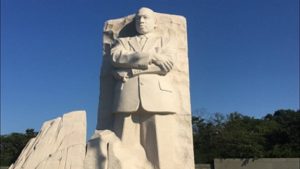
We join the nation today to celebrate Dr. Martin Luther King Jr.’s birthday. This day is an opportunity to honor Dr. King and his legacy.CU Blog - Street naming for Martin Luther King unveils the real America - Photo 1

Born on January 15, 1929 in Atlanta, Georgia, Dr. King was a well-respected activist, scholar, pastor and humanitarian. Although his life was brief, Dr. King’s accomplishments in the civil rights movement and social justice are echoed throughout the world still today. Considered to be one of the greatest non-violent leaders in world history, Dr. King’s exceptional achievements used the power of legislation and social change.

As an advocate for freedom and non-violent resistance, Dr. King offered the power of words through public protests, grassroots organizing, and powerful sermons to achieve nearly insurmountable goals. He fought against racial segregation and poverty, advocated for international peace, and eliminated lasting barriers to voting for African-Americans.

In honor of his work, Dr. King received numerous awards during his lifetime including the Nobel Peace Prize in 1964. He continues to be remembered as one of the most lauded African-American leaders in history, often referenced by his 1963 speech, “I Have a Dream.” – Corporate Intranet Website for Credit Acceptance Corporation, Southfield (Detroit), Michigan; retrieved January 18, 2016.

Ditto”, for the promoters of the book Go Lean … Caribbean and accompanying blogs advocating for change in the Caribbean. Dr. Martin Luther King proved that “one man can make a difference” – a frequent theme of this Go Lean movement. He thusly serves as a role model for current and future Caribbean advocates, activists and humanitarians hoping to impact the Greater Good in their homeland.

Based on these accomplishments, one would think honoring Dr. King with a street-naming would be a simple task.

One would think!

Let us see how far America has progressed regarding race relations, in the naming of streets after Martin Luther King, in one town after another!

Consider this encyclopedic source – a website:

Title: A street fit for a King?
Website: Politics of Naming Streets for Martin Luther King, Jr. – Retrieved January 18, 2016: http://mlkstreet.com/

Naming streets is one of the most widespread and contentious ways of commemorating Martin Luther King Jr.  Debates over whether to name a street for King and which specific street to identify with him have led to the boycott of businesses, protest marches, court actions, petition drives, the vandalizing of roads, and even activists chaining themselves to street signs.

Honoring King with a street name is often controversial when the road in question challenges long-standing racial and economic boundaries within communities.  While few scholars have studied the King street naming phenomena, the naming process is an important indicator of local political tensions as well as broader debates about race, memory, and place in America.

CU Blog - Street naming for Martin Luther King unveils the real America - Photo 2I have studied the politics of naming streets after King for the past several years, seeking to understand the obstacles that face street naming proponents and the various strategies that communities have pursued in finding a street fit for remembering King. In many instances (but not all), public opposition has led King’s name to be socially and geographically marginalized within cities, which has worked to stigmatize these streets and create public anxiety about renaming more prominent streets.  As a cultural geographer, my work stresses the importance that location–the street’s site, situation, and scale within the city’s larger social landscape–plays in shaping the meaning of King’s commemoration.    Believing that my research and perspectives can be of some help to the public, I have set up this web page as a resource for engaging and assisting the movement to remember the civil rights leader.

Below (Appendix A) are some research papers that I have written about naming streets for King as well as some questions that I frequently encounter in my discussions with journalists and street naming stakeholders (proponents and opponents).  If you have a question not listed here, email me and I will try to provide some feedback.

—-

Site established to spread information and commentary on the (re)naming of streets for slain civil rights leader Martin Luther King, Jr. with the hope of informing public debate.

If you use any information or statistics from this site, please cite the source (Appendix C) as: Derek Alderman, Professor of Geography, University of Tennessee, Knoxville TN.
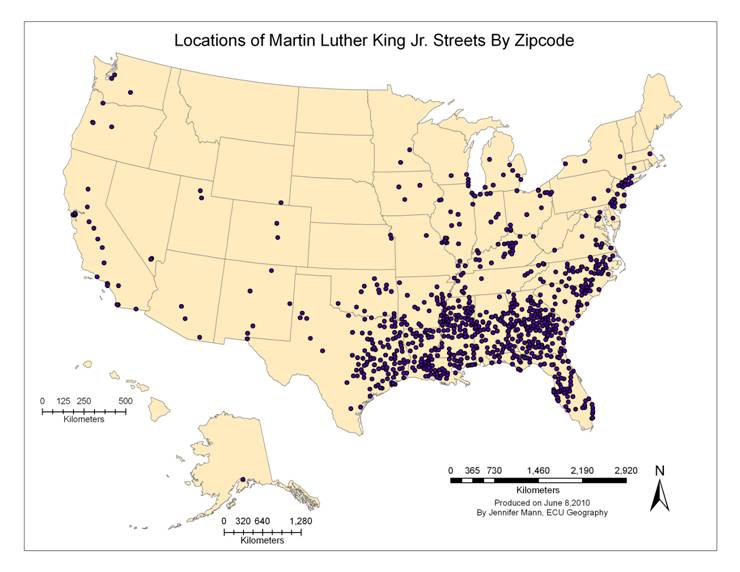
To the uninitiated, one would think the year is 1956, rather than 2016; see the VIDEO (Appendix D) of the documentary “MLK Streets Project”. One would think that such a racially-charged society was only representative of the America of old; that now America has transformed, to the point that the President is of African-American descent. But it must be concluded that the more things change, the more they remain the same.

The issue in the foregoing encyclopedic source (and the below VIDEO) relates the true disposition of the America many Caribbean citizens emigrate to, or want to. There is a great lure for Black-and-Brown Caribbean immigrants to come to America. But these portrayals/depictions would be the atmosphere that the new arrivals would have to navigate. Perhaps the shining light of that Welcome Sign should be dulled a little.

This consideration is brought to focus by the book Go Lean … Caribbean. The book serves as a roadmap for the introduction and implementation of the technocratic Caribbean Union Trade Federation (CU), for the economic optimization in the region. One mission of the roadmap is to minimize the “push-and-pull” factors that contribute to the alarming high abandonment rate of Caribbean citizens – one report reflects a 70% brain drain rate.

The Go Lean book posits that when the economic engines are not sufficient that people will flee, abandon their homelands, despite the love of family, friends and culture and endure all obstacles to secure a better livelihood. This has been the reality for all of the Caribbean, even the American member-states (Puerto Rico & Virgin Islands). So is the “grass greener”, is life in the American urban communities better that the status quo in the Caribbean? Considering the actuality of Caribbean emigrants, and the fact that there is no migration in the opposite direction, the answer must be true.

Sad! If only, there would be a better option for the Caribbean?

The book and movement Go Lean…Caribbean present that option!

This CU/Go Lean roadmap provides the turn-by-turn directions with the following 3 prime directives:

  • Optimization of the economic engines in order to grow the regional economy to $800 Billion & create 2.2 million new jobs.
  • Establishment of a security apparatus to protect the resultant economic engines.
  • Improve Caribbean governance to support these engines.

The roadmap posits that the United States of America should not be viewed as the panacea for Caribbean ailments; that when the choices of a challenge is “fight or flight” that Caribbean society must now consider the “fight” options. (No violent conflict is being advocated, in emulation of Martin Luther King, but rather a strenuous effort, heavy-lifting, to compete and win economic battles).

Are there social issues in America that are more important than street naming?

CU Blog - Street naming for Martin Luther King unveils the real America - Photo 3Proponents for naming streets for King often encounter the argument that African Americans should concern themselves with civil rights issues “more important” than street naming.

No doubt, there are a large number of worthy social and economic issues in need of addressing. At the same time, it is worth thinking about how the naming of roads is not necessarily separate from the larger racial/social justice picture. Naming streets for King can signal something very important about the willingness (or unwillingness) of the larger community to invest in African Americans, thus providing (or failing to provide) a platform on which to bring about more “substantive” change and improvement. When that community refuses to do something as seemingly minor as naming street, what does that say about the degree to which the community is really ready or willing to take on the “tough” issues?

I have argued in my research that the street naming issue is about the struggle to be seen and heard within public space, an important civil right in and of itself and one arguably necessary for other rights to be realized. Plus, we can also think about how street naming can be coupled with other larger and “more important” social and economic campaigns on streets in America, such as community redevelopment.

The problem is NOT that street naming is inherently less important. Rather it is the limited ways in which we imagine street naming as a social and political tool.  The photo above, from a street naming struggle in Melbourne, Florida, captures the deep emotions that proponents and opponents attach to the street renaming issue.  Street naming proponents in Melbourne were especially vocal about how honoring King was part of a larger campaign against racism. – Professor Derek Alderman.

As related in the foregoing article/VIDEO, America is not so welcoming a society for the “Black and Brown” populations from the Caribbean – and yet they come, they are in the USA and their numbers cannot be ignored. Here is the need for the heavy-lifting, to effect change to dissuade further brain drain and in reverse to incentivize repatriation. While not ignoring the “push” reason that cause people to flee, the book stresses (early at Page 13) the need to be on-guard for this fight in the following pronouncements in the Declaration of Interdependence:

xix.    Whereas our legacy in recent times is one of societal abandonment, it is imperative that incentives and encouragement be put in place to first dissuade the human flight, and then entice and welcome the return of our Diaspora back to our shores. This repatriation should be effected with the appropriate guards so as not to imperil the lives and securities of the repatriated citizens or the communities they inhabit. The right of repatriation is to be extended to any natural born citizens despite any previous naturalization to foreign sovereignties.

xx.    Whereas the results of our decades of migration created a vibrant Diaspora in foreign lands, the Federation must organize interactions with this population into structured markets. Thus allowing foreign consumption of domestic products, services and media, which is a positive trade impact. These economic activities must not be exploited by others’ profiteering but rather harnessed by Federation resources for efficient repatriations.

xxi.    Whereas the preparation of our labor force can foster opportunities and dictate economic progress for current and future generations, the Federation must ensure that educational and job training opportunities are fully optimized for all residents of all member-states, with no partiality towards any gender or ethnic group. The Federation must recognize and facilitate excellence in many different fields of endeavor, including sciences, languages, arts, music and sports. This responsibility should be executed without incurring the risks of further human flight, as has been the past history.

xxvi.    Whereas the Caribbean region must have new jobs to empower the engines of the economy and create the income sources for prosperity, and encourage the next generation to forge their dreams right at home, the Federation must therefore foster the development of new industries, like that of ship-building, automobile manufacturing, prefabricated housing, frozen foods, pipelines, call centers, and the prison industrial complex. In addition, the Federation must invigorate the enterprises related to existing industries like tourism, fisheries and lotteries – impacting the region with more jobs.

This commentary previously related details of the Caribbean Diaspora experience, the “push-and-pull” factors in the US, and the American record on Civil Rights. Here is a sample from earlier Go Lean blogs:

https://goleancaribbean.com/blog/?p=7204 ‘The Covenant with Black America’ – Ten Years Later
https://goleancaribbean.com/blog/?p=6722 A Lesson in History – After the Civil War: Birthright Mandates
https://goleancaribbean.com/blog/?p=6434 ‘Good Hair’ and the Strong Black Woman
https://goleancaribbean.com/blog/?p=5527 American Defects: Racism – Is It Over?
https://goleancaribbean.com/blog/?p=5333 American Urban Segregation Legacies: Cause and Effect
https://goleancaribbean.com/blog/?p=2297 A Lesson in History – Booker T versus Du Bois
https://goleancaribbean.com/blog/?p=2222 Sports Role Model – Playing For Pride … And More
https://goleancaribbean.com/blog/?p=1896 American “Pull” Factors – Crisis in Black Homeownership
https://goleancaribbean.com/blog/?p=1596 Book Review: ‘Prosper Where You Are Planted’
https://goleancaribbean.com/blog/?p=1433 Caribbean loses more than 70 percent of tertiary educated to brain drain
https://goleancaribbean.com/blog/?p=546 Book Review: ‘The Divide’: American Injustice in the Age of the Wealth Gap
https://goleancaribbean.com/blog/?p=209 Muhammad Ali’s Greatest Fight

For the Caribbean Diaspora, fleeing from their homelands to reside in the US is akin to “jumping from the frying pan into the fire”. While we may not be able to change American society, we can – no, we must – impact our own society. How? What? When? Why? All of these questions are valid, because the answers are difficult. The Go Lean book details the heavy-lifting answers with a roadmap to implement new community ethos, strategies, tactics and operational advocacies to effectuate this goal:

Community Ethos – Deferred Gratification Page 21
Community Ethos – People Respond to Incentives Page 21
Community Ethos – Economic Systems Influences Choices & Incentives Page 21
Community Ethos – The Consequences of Choice Lie in the Future Page 21
Community Ethos – Job Multiplier Page 22
Community Ethos – Minority Equalization Page 24
Community Ethos – Lean Operations Page 24
Community Ethos – Ways to Foster Genius Page 27
Community Ethos – Ways to Impact the Greater Good Page 37
Strategy – Vision – Make the Caribbean the Best Address on Planet Page 45
Strategy – Mission – Repatriate Diaspora Page 46
Strategy – Mission – Dissuade Human Flight/“Brain Drain” Page 46
Tactical – Ways to Foster a Technocracy Page 64
Tactical – Separation of Powers – Federal Government versus Member-States Page 89
Implementation – Ways to Deliver Page 109
Implementation – Reasons to Repatriate Page 118
Planning – Lessons Learned from the Year 2008 Page 136
Planning – Lessons from the US Constitutional Laws and Processes Page 145
Advocacy – Ways to Grow the Economy Page 151
Advocacy – Ways to Create Jobs Page 152
Advocacy – Ways to Impact the Diaspora Page 217
Advocacy – Ways to Preserve Caribbean Heritage Page 218
Advocacy – Battles in the War on Poverty Page 222
Advocacy – Ways to Help the Middle Class Page 223
Advocacy – Ways to Impact US Territories Page 244
Appendix – Analysis of Caribbean Emigration Page 269
Appendix – Puerto Rican Population in the US Page 304

The scope of this roadmap is to focus on the changes we have to make in the Caribbean, not the changes for American society. The Caribbean can be the world’s best address. This success is conceivable, believable and achievable.  Now is the time for all of the Caribbean, the people and governing institutions, to lean-in to this Go Lean … Caribbean roadmap.

This is a big deal for the region. This roadmap is not just a plan, it’s a Dream. We want the same sense of possibility that was manifested by Dr. Martin Luther King. We too, have a dream that one day … [we would be] “free at last, free at last; thank God almighty we are free (and home) at last”. 🙂

Download the free e-Book of Go Lean … Caribbean – now!

———

Appendix A – Publications Related to MLK Place/Street Naming

Mitchell, Jerry and Derek H. Alderman. 2014. “A Street Named for a King: A Lesson in the Politics of Place-Naming.” Social Education 78(3): 137-142.

Alderman, Derek H. and Joshua F.J. Inwood. 2013. “Street Naming and the Politics of Belonging: Spatial Injustices in the Toponymic Commemoration of Martin Luther King, Jr.” Social & Cultural Geography 14(2): 211-233.

Dwyer, Owen J. and Derek H. Alderman. 2008. Civil Rights Memorials and the Geography of Memory.  Book from Center for American Places and University of Georgia Press.

Alderman, Derek H. 2008. “Martin Luther King, Jr. Streets in the South: A New Landscape of Memory.Southern Cultures 14(3): 88-105.

Alderman, Derek H., Steve Spina, and Preston Mitchell. 2008. “A Bumpy Road: the Challenges of Naming Streets for Martin Luther King, Jr.” Planning 74(1): 18-21. Contribution to American Planning Association magazine.

Alderman, Derek H. and Preston Mitchell. 2007. “A Sign of Changing Times: A Street Renaming Lesson from Chapel Hill, North Carolina.” Public Management  89(6): 37-38. Contribution to International City/County Management Association magazine as part of special feature entitled Street Naming: Not as Easy as You Might Think.

Mitchelson, Matthew, Derek H. Alderman, Jeff Popke. 2007. “Branded: The Economic Geographies of MLK Streets.” Social Science Quarterly 88(1): 120-145.

Alderman, Derek H. 2006. “Naming Streets after Martin Luther King, Jr.: No Easy Road.” In Landscape and Race in the United States, Routledge Press (edited by Richard Schein), pp. 213-236.

Alderman, Derek H. 2003. “Street names and the scaling of memory: The politics of commemorating Martin Luther King, Jr. within the African-American community.Area 35 (2): 163-173.

Alderman, Derek H. 2002. “Street Names as Memorial Arenas: The Reputational Politics of Commemorating Martin Luther King, Jr. in a Georgia County.”  Historical Geography 30: 99-120.

Alderman, Derek H. 2002. “School Names as Cultural Arenas: The Naming of U.S. Public Schools after Martin Luther King, Jr.Urban Geography 23(7): 601-626.

Alderman, Derek H. 2000.  “A Street fit for a King: Naming Places and Commemoration in the American South.”  Professional Geographer 52(4): 672-684.

Alderman, Derek H.  1996. “Creating a New Geography of Memory in the South: The (Re) Naming of Streets in Honor of Martin Luther King, Jr.”  Southeastern Geographer 36(1): 51-69.

———

Appendix B – MLK Street Naming Educational Pamphlet

Electronic copy (pdf) of community outreach pamphlet on MLK street naming (produced 2005). Note data is now old. Pamphlet distributed to various schools, activists groups, and civil rights; national meetings of the NAACP and SCLC; and MLK Historic Site in Atlanta, Georgia.

Outside cover of pamphlet

Inside content of pamphlet

———

Appendix C – About Professor Derek Alderman

Professor of Cultural and Historical Geography and Head of the Department of GeographyUniversity of Tennessee-Knoxville (formerly affiliated with East Carolina University)

CV/Resume

Homepage

Academia.edu Page 

Book on Civil Rights Memorials and Street Naming

Email at: dalderma@utk.edu

Follow on: @MLKStreet

———

Appendix D – Trailer MLK Street Projecthttps://youtu.be/dE73UMlqaIs


Uploaded on Sep 28, 2010 – Trailer for the documentary “The MLK Streets Project”. A film by One Common Unity and Straight No Chaser Productions

Share this post:
, , ,

Transforming Hindus versus Women – What it means for us?

Go Lean Commentary

The responsibility to assuage these bad behaviors must lie first with the religious institutions. But any failure to deliver protection by these institutions would truly mandate that the “State” (government) step in and deliver.
Separation of Church and State be damned!

Separation of Church and State has been the standard for governments ever since the Enlightenment Age. In fact, the governing standard – the Social Contract – is a concept that was codified during that period. That contract states:

Citizens surrender some of their freedoms and submit to the authority of the State in exchange for protection of remaining natural and legal rights. – Book  Go Lean…Caribbean Page 170.

Christianity! Islam! Guilty … of failing to protect their congregants and adherents from the bad orthodoxies in their communities!

Now its Hinduism time to secede to civil “protections of natural rights”. There are abuses that are victimizing segments of their population. It is no longer acceptable to tolerate such abuse.

Change has come to the world, Separation of Church and State is now suspect! Sometimes the “Church” is the problem; so the State is therefore expected to step in and break that Separation shield. See how this is playing out in India right now. See the full news article here:

Title: Hindu hardliners clash with police over women at shrine

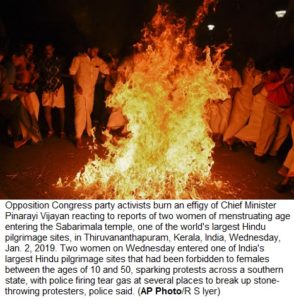
NEW DELHI (AP) — Hindu hardliners vandalized shops, shut businesses and clashed with police in a southern state Thursday to protest the entry of two women in one of India’s largest Hindu pilgrimage sites, police said.

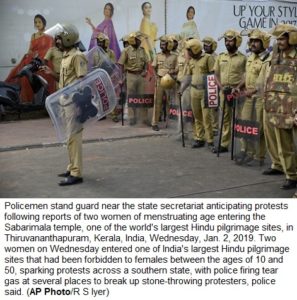
Police used water cannons and tear gas to disperse the protesters who also blocked roads by placing burning tires and concrete blocks in key towns, including Kozhikode, Kannur, Malappuram, Palakkad and Thiruvananthapuram.

Pinarayi Vijayan, the state’s top elected official, accused supporters of Prime Minister Narendra Modi’s Bharatiya Janata Party of triggering violence that reportedly claimed one life.

Most state-run buses kept off roads after several were damaged by protesters.

Supporters of Modi’s party held protest marches in the state as part of a strike call by Sabarimala Karma Samithi, an umbrella organization of Hindu groups.

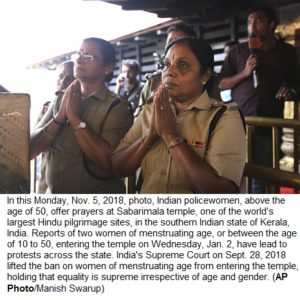
The two women entered the temple to pray early Wednesday, triggering protests. They were escorted by police because it is “the government’s constitutional responsibility to give protection to women,” Vijayan said.

Women of menstruating age were forbidden to pray at the temple until the Supreme Court lifted the ban in September. The ban was informal for many years but became law in 1972.

Some devotees have filed a petition saying the court decision revoking the ban was an affront to the celibate deity Ayyappa.

Vijayan said Thursday that 39 police officers were injured while trying to control the protesters, who damaged 79 state-run buses in the state.

The Press Trust of India news agency reported that a 55-year-old passer-by died after being injured amid rock throwing by protesters in Pandalam.

Source: Associated Press posted January 3, 2019; retrieved January 5, 2019 from: https://news.yahoo.com/hindu-hard-liners-paralyze-indian-state-over-women-090122760.html

The concept is simple for “States“, while they must allow for Freedom of Religion, they cannot allow religious intimidation of their citizens. No More!

This is an issue of Orthodoxy and it is not only a concern in India. Even here in the Caribbean we have to make progress. Clearly we understand the oppression, suppression and repression experienced in India prohibiting women to pray in the Temple, and so there is the acceptance that it is right for that State to act against continued abuse. There has always been a need for States to legislate morality in society over the years; consider these examples:

  • Slavery – The Pope approved African Slavery in 1491; but it took the Protestant and Enlightenment movements to unravel the end of the Slave Trade and eventually the institution of Slavery itself. By the mid-1800’s all European Powers ended slavery in their New World territories.
  • Indian Widows – As detailed in a previous blog-commentary, the “Hindu Widows’ Remarriage Act of 1856” legalized the remarriage of Hindu widows in all jurisdictions of India under British rule. Upper-caste Hindu society had long disallowed the remarriage of widows, even child and adolescent ones, all of whom were expected to live a life of austerity and abnegation. The law provided legal safeguards against loss of certain forms of inheritance for remarrying a Hindu widow.
    See the Appendix VIDEO below.
  • Drunk Driving – A classic example is that in France where Evan’s Law regulated alcohol advertising; advertising affected alcohol demand; so the end result on alcohol consumption was that in 1960, the average adult in France consumed 30 liters of alcohol while that figure is down to 13.5 liters today. Drunk Driving incidences naturally declined.

The assertion of the movement behind the book Go Lean … Caribbean (Page 20) is that there must be a new regime for our region; one that is apolitical and religiously-neutral. The community ethos – underlying sentiment that informs the beliefs, customs, or practices – that must be pursued by this new Caribbean regime is that of the Greater Good; that it can be pursued despite any religiosity. This book defines this Greater Good community ethos as follows:

“It is the greatest good to the greatest number of people which is the measure of right and wrong”. Jeremy Bentham (1748-1832)

In the Caribbean, we have adherents to many religions: Christianity, Islam, Hindu and indigenous animism. We must insist on a clear “Separation of Church and State” in order to mold the behavior and character development we want to see in our communities. Seeing the default orthodoxy in these religions, it is obvious that our ideals must be Greater.

For one, we must protect and promote women in our communities. This is a charge that we must execute whether it is popular or not. This theme – protecting and promoting women in society – aligns with previous Go Lean commentaries; see a sample list here:

https://goleancaribbean.com/blog/?p=16408 Bad Ethos on Home Violence leads to more “Stranger” Abuse
https://goleancaribbean.com/blog/?p=14482 UN’s International Women’s Day – Protecting Rural Women
https://goleancaribbean.com/blog/?p=13664 High Profile Sexual Harassment Accusers – Finally Believed?
https://goleancaribbean.com/blog/?p=13063 Gender Equity without a ‘Battle of the Sexes’
https://goleancaribbean.com/blog/?p=8306 Women Get Ready for New Lean-In Campaign
https://goleancaribbean.com/blog/?p=6937 Women in Politics – Yes, They Can!
https://goleancaribbean.com/blog/?p=2709 Caribbean Study: 58% Of Boys Agree to Female ‘Discipline’

This is the Year 2019 and we are still talking about women being suppressed, oppressed and repressed in society. Change just doesn’t happen because the ‘clock is ticking’. No, people have to forge change, overcome the obstacles and embed the needed new value systems to get improvements institutionalized instead of just a passing trend. Change takes heavy-lifting.

This is what the lessons from India mean to us here-now in the Caribbean.

So many women in our communities flee due to the lack of protections and promotions for them. We want that bad trend to now end, so we must do the heavy-lifting ourselves. We must lower the “Push and Pull” factors that have plagued our society and caused abandonment.

We must do this! Women are half of our population; and they are beloved. This is how we can make our homeland a better place to live, work and play for all.  🙂

About the Book
The book Go Lean…Caribbean serves as a roadmap for the introduction and implementation of the technocratic Caribbean Union Trade Federation (CU), for the elevation of Caribbean society – for all member-states. This CU/Go Lean roadmap has these 3 prime directives:

  • Optimization of the economic engines in order to grow the regional economy to $800 Billion and create 2.2 million new jobs.
  • Establishment of a security apparatus to ensure public safety and protect the resultant economic engines.
  • Improve Caribbean governance to support these engines, including a separation-of-powers between the member-states and CU federal agencies.

The Go Lean book provides 370-pages of turn-by-turn instructions on “how” to adopt new community ethos, plus the strategies, tactics, implementations and advocacies to execute so as to reboot, reform and transform the societal engines of Caribbean society.

Download the free e-Book of Go Lean … Caribbean – now!

Who We Are
The movement behind the Go Lean book – a non-partisan, apolitical, religiously-neutral Community Development Foundation chartered for the purpose of empowering and re-booting economic engines – stresses that reforming and transforming the Caribbean societal engines must be a regional pursuit. This was an early motivation for the roadmap, as pronounced in the opening Declaration of Interdependence (Pages 12 – 13):

xi. Whereas all men are entitled to the benefits of good governance in a free society, “new guards” must be enacted to dissuade the emergence of incompetence, corruption, nepotism and cronyism at the peril of the people’s best interest. The Federation must guarantee the executions of a social contract between government and the governed.

xvi. Whereas security of our homeland is inextricably linked to prosperity of the homeland, the economic and security interest of the region needs to be aligned under the same governance. Since economic crimes … can imperil the functioning of the wheels of commerce for all the citizenry, the accedence of this Federation must equip the security apparatus with the tools and techniques for predictive and proactive interdictions.

xxiv. Whereas a free market economy can be induced and spurred for continuous progress, the Federation must install the controls to better manage aspects of the economy: jobs, inflation, savings rate, investments and other economic principles. Thereby attracting direct foreign investment because of the stability and vibrancy of our economy.

Sign the petition to lean-in for this roadmap for the Caribbean Union Trade Federation.

—————-

Appendix VIDEO – The Horrible Plight of India’s Widows – https://youtu.be/CS8euwO4o8k

Published on Aug 20, 2007 – India Widows (2007): In many conservative Indian families, widows are seen as a liability. Cast out of the family home, they live the rest of their lives in poverty and isolation.

For downloads and more information visit http://journeyman.tv/57526/short-film…

“She becomes a zero and all her powers are lost”, states Dr Giri, explaining how some women’s status change when their husband dies. With no where else to go, thousands come to Vrindavan, city of widows. It was the childhood home of Hindu God, Krishna, who championed downtrodden women. “They come here in search of death”, explains Dr Giri, in the hope they will have a better afterlife” – ABC Australia – Ref. 3587

Journeyman Pictures is your independent source for the world’s most powerful films, exploring the burning issues of today. We represent stories from the world’s top producers, with brand new content coming in all the time. On our channel you’ll find outstanding and controversial journalism covering any global subject you can imagine wanting to know about.

Share this post:
, , , ,
[Top]

Hamilton – “History has its eyes on you”

Go Lean Commentary

This is a memorable line from the hot Broadway play Hamilton:

Immigrants, we get things done!

This is what all the rave is about with this fascinating play; it tells the story of America’s founding fathers through the eyes of the immigrant experience. (This writer saw Hamilton on December 28, 2018 at the Broward Performing Arts Center in Ft Lauderdale, FL).

As was true with all these founding fathers, Alexander Hamilton was White; (“Bastard son of a Scotsman”); Aaron Burr was White; so too George Washington, Thomas Jefferson, James Madison and others portrayed in this song-and-dance production. But all the participating actors – in the Broadway edition, plus all the other touring companies – are Black-and-Brown minorities – many of them immigrants themselves.

The theme of Hamilton – historic immigrants thriving in America – aligns with the 2013 book Go Lean…Caribbean. The book was written and published by members of the Caribbean Diaspora living and thriving in America. There is a full acceptance that Caribbean immigrants can thrive in the US, as did Hamilton in his historical context. But many more immigrants arrive everyday, and there is now less tolerance for them, especially for those of the Black-and-Brown populations from the Caribbean. In fact, the current President of the US, Donald Trump, even derisively referred to Haitians as coming from a “shit-hole” country.

So while we can thrive, the question – by the movement behind the Go Lean book – is whether we should. The Hamilton play makes this point, as was related in a previous Go Lean blog-commentary:

When the word got around, they said “this kid is insane, man”
Took up a collection just to send “him” to the mainland
“Get your education, don’t forget from whence you came”
And the world gonna know your name …

It is an established fact that any difficult topic can be more easily communicated if backed-up by a catchy melody and rhyming words. An underlying theme of Hamilton is that nobody does it alone, there must always be community help and support; its like a community investment. There should also be a return on the investment. This point was communicated brilliantly in this news-commentary by a Social Justice Advocate; she stated that “self-made men are never independent of others’ help”. See the full article here:

Title: History Has Its Eyes On Us: Lessons from Hamilton the Musical
By: Courtney Kidd LCSW
Obsession. That’s the only way to describe the feelings of Hamilton followers, and once you’ve seen the show you’d understand why. Hamilton is a punch in the face, spellbinding transport through the life of one of the least well-known founding fathers, but by far one of the most interesting. And the best part? It’s done through the lens of hip-hop music and a cast of almost exclusively non-white actors-including our own dear Alexander Hamilton. While this caused confusion for some, who began to question their 8th grade history memory, it stands as one of the most powerful examples of today’s racial divide and the movements to correct it.

I’ll admit, I was skeptical going into the play. My friend and I had gotten tickets when they first went on sale almost 9 months before opening night. We saw it in its first month on Broadway after the success off-Broadway. I remember sitting in my chair prior to the curtain rise, uncertain of whether I’d like a modern take on a history. Could it reach across the aisle of race? Could it hold attention of a subject most forget about? Would I get it? Did I really wait 9 months and spend hundreds of dollars for something that might just be weird? It took exactly 1 minute until those questions left my mind and instead I was entrapped, enamored, enthralled with this play that lives up to one of the numbers “non-stop.” It was a non-stop journey, filled with humor, and anguish, and longing. I was converted. I was in love.

I went to see it a second time a few months, later, unable to wait until the soundtrack was finally released, I bought a resale ticket at far too high of an amount for my poor social work status. But I had to go, the play had brought about a plague within me; this wasn’t just a good show, it was something far beyond. Much like its creator Lin-Manuel Miranda, I began what has still been obsessive task of reading book after book on Hamilton, and the rest of those influential individuals who shaped the country. I wake up with the music in my head, and despite my best efforts, can’t stop listening to the songs. And then it hit me. This isn’t just a great musical and it’s not just because it is new and different, it’s because despite almost 300 hundred years since this man stood with the revolution, its relevant. And not in the way you think.

Over the past few years we have seen a second wave of the civil rights movement in America. Sadly, Despite the year, minorities, immigrants, and even women are still seen and treated differently than the white male counterpoint. Feelings and reactions peak and overspill in areas like Ferguson and Baltimore. Huge movements such as Black Lives Matter rise up demanding justice in the country that fought and promised a land of freedom and equality. Hamilton isn’t just play to see, it’s a needed reminder. Alexander Hamilton was an immigrant who fought for the revolution, becoming one of Washington’s most trusted aides, rising to one of the highest positions in our military and later our government. From a remarkably young age, he was an abolitionist in a time when that word would be as shocking as to claim you’re an alien. He never allowed his birth and his circumstances to define him, and instead fought his entire life for the beliefs he had, including a strong central government and financial plan that allowed America to be self-sufficient and play with the “big boys” for trade and commerce. Hamilton saw first-hand the potential risks of weak governments while dealing with the military forces. He understood even then that we had to be the United States in order to succeed in this revolutionary experiment. And he wanted those rights for every individual who was here.

Hamilton was a true American Dream hero, but despite what a lot of modern people claim, self-made men are never independent of others’ help. Many wish to believe that they rose to where they are because only due to their remarkable abilities, and for some that is true, but much more often than not there was help along the way. Our founding father is no exception. Although known as a uniquely bright youth on the island of Nevis where he was orphaned at a young age, Hamilton might never have risen to the station he once held without the help of many. Yes, he showed himself to be a studious and adept learner when put in charge of the local trading company-and may have stayed on as a success employee had the Hurricane not hit Nevis with a colossal force. Hamilton, always a writer, penned a poem of what he witnessed, and a local man who believed Hamilton had the capacity for more forwarded it to the influential of the island. Despite the devastation they made an investment in one of their own, raising enough to send our future Secretary of Treasury and war hero to the colonies(America) to pursue a real education. To sum up, if those with means didn’t decide to put forward an investment for an orphan with potential Alexander Hamilton would have mostly likely lived his life and died having never left a small, impoverished island. For a poor, orphan of questionable birth and heritage, that would not have left many surprised, and yet the island rose together to support him.

We’re looking at a similar issue in today’s world. Do we invest in the future, on education, on sustainability for those who can go on to do greatness despite the circumstances of their birth, or do we claim that we got to where we were without assistance from anyone? Hundreds of years after Hamilton discussed the need for equality we are still in the midst of revolutions to save the ideals of our nation. Each person is shaped by those around them, and it is of no surprise that the haves are able to gain a lot more opportunity than the have-nots. For this reason, many assume it is laziness that prevent people from working their way up. Hamilton was the antithesis of lazy, but if it wasn’t for one influential patronage who connected him to the elite, our country may never have gained the footing it needed to be a competitive economy.

We have a responsibility to those around us and who come next to shape the world into a better place for us all, not just for ourselves. We saw yesterday what happens if we don’t stand against those who would spread hatred, and instead hold onto love. As Mr. Manuel so eloquently put:

“…We chase the melodies that seem to find us until they’re finished songs and start to play when senseless acts of tragedy remind us that nothing here is promised, not one day. This show is proof that history remembers. We live through times when hate and fear seem stronger. We rise and fall, and light from dying embers, remembrances that hope and love last longer and love is love is love is love is love is love is love is love cannot be killed or swept aside…”

And if you need more convincing, join me in line for some tickets to Hamilton, you won’t be disappointed(seriously if you know how to get reasonable tickets you know how to contact me).

“I consider civil liberty, in a genuine unadulterated sense, as the greatest of terrestrial blessings. I am convinced, that the whole human race is intitled(entitled) to it; and, that it can be wrested from no part of them, without the blackest and most aggravated guilt.”- Alexander Hamilton

*Authors note*- Should Mr. Miranda see this, congrats on the Grammy, call me for unlimited praise and begging for interviews. Your PR man is too good at polite declines.

**Update- And your UNREAL number of Tony nominations and wins!! [See Appendix below].

Source: Social Justice Solution Online Site – posted February 23, 2016; retrieved December 30, 2018 from: http://www.socialjusticesolutions.org/2016/02/23/history-has-its-eyes-on-us-lessons-from-hamilton-the-musical/

————

VIDEO – 70th Annual Tony Awards ‘Hamilton’ History has its eyes and Yorktown – https://youtu.be/5upLudfimso


Undercover Celebs

Published on Nov 4, 2016 – 70th Annual Tony Awards ‘Hamilton’ History has its eyes and Yorktown by the cast of Hamilton at the 2016 Tony Awards where the musical won 11 awards.

The prime directive of the Go Lean book is to empower, elevate and facilitate a better Caribbean society. We want to be able to thrive right here at home – to prosper where planted – thus lowering the motivations to emigrate. In fact, the declarative statements of the prime directive are as follows:

Puerto Rican descendant Lin-Manuel Miranda, the creator, writer and original cast member as Alexander Hamilton is well-known for his advocacy for the Caribbean region in general and Puerto Rico in particular. He accomplishes his mission to effect change in the American eco-system through music/song and entertainment. The book Go Lean…Caribbean strives to accomplish its mission with the introduction and implementation of the technocratic Caribbean Union Trade Federation (CU). Lin-Manuel Miranda is hereby recognized as a role model that the Caribbean can emulate. He has provided a successful track record of forging change, overcoming incredible odds, managing crises to successful conclusions and rebooting failing institutions. See these previous blog-commentaries that detailed his accomplishments:

https://goleancaribbean.com/blog/?p=14101 Wait, ‘We Are The World’
In September 2017, Hurricane Maria devastated several Caribbean member-states; Puerto Rico was gravely impacted. In the mode of ‘We Are The World‘, many artists – led by Lin-Manuel Miranda – assembled and recorded a song to aid Puerto Rico, entitled ‘Almost Like Praying‘ by Artists for Puerto Rico.
https://goleancaribbean.com/blog/?p=7963 ‘Like a Good Neighbor’ – Being there for Puerto Rico
T
he US Territory of Puerto Rico needs a Good Neighbor right now. They do not need State Farm; they need the US Government to change the laws to allow them to re-structure their heavy debt “load”. In effect, this community is in crisis, facing financial disaster and needs a helping hand. Lin-Manuel Miranda was on a mission to help Puerto Rico by getting Congress to change Bankruptcy Laws to apply to PR again.

Mr. Miranda has now retired from performing in Hamilton

… but atlas, he will reprise his role for the highly acclaimed Puerto Rico run in January 2019. See more on that story here:

Title: Puerto Rico Engagement of HamiltonStarring Lin-Manuel Miranda, Will Sell $10 Tickets Through Lottery and Rush

Sub-title: Over 10,000 tickets will be released through the popular #Ham4Ham initiative, exclusively to island residents.

The upcoming Puerto Rico premiere of Hamilton, in which Tony- and Pulitzer-winning creator Lin-Manuel Miranda will reprise his performance in the title role, will offer island residents a chance to purchase tickets priced at ten dollars.

As previously reported, the blockbuster musical will play San Juan’s Teatro UPR at the University of Puerto Rico (Río Piedras Campus) January 8 through January 27, 2019, before the company (sans Miranda) embarks on a third national tour. Additional casting will be announced at a later date.

A total of 10,000 tickets will be sold at the low price in Puerto Rico as an extension of the blockbuster musical’s popular #Ham4Ham initiative, with 1,000 going to college students (with valid ID) for the January 9 matinee. All remaining tickets for that performance and two subsequent Wednesday matinees will be sold for $10 via digital lottery. Over 200 tickets will be sold to residents via lotto for all other performances.

“Bringing [Hamilton] to Puerto Rico is a dream that I’ve had since we first opened at The Public Theater in 2015,” Miranda said at the time of the initial announcement. “When I last visited the island, a few weeks before Hurricane Maria, I had made a commitment to not only bring the show to Puerto Rico, but also return again to the title role. In the aftermath of Maria we decided to expedite the announcement of the project to send a bold message that Puerto Rico will recover and be back in business, stronger than ever.”

Source: PlayBill Magazine – Posted August 28, 2018; retrieved January 2, 2018 from http://www.playbill.com/article/puerto-rico-engagement-of-hamilton-starring-lin-manuel-miranda-will-sell-10-tickets-through-lottery-and-rush

In the CU/Go Lean roadmap to change the Caribbean, music and theater gets it’s due respect. This point is detailed in the  Declaration of Interdependence at the outset of the book, pronouncing this need for regional solutions (Page 14):

xxxii. Whereas the cultural arts and music of the region are germane to the quality of Caribbean life, and the international appreciation of Caribbean life, the Federation must implement the support systems to teach, encourage, incentivize, monetize and promote the related industries for arts and music in domestic and foreign markets. These endeavors will make the Caribbean a better place to live, work and play.

We are looking forward to more art-based accomplishments: the arts can truly empower the community – “the community rallies around art creating a unique energy; and art ‘dynamises’ the community, in a very unique way”. What more can the stewards of the Caribbean do to effect change in the region using the arts and music? The Go Lean book provides a lot more details on Page 230 under the title “10 Ways to Improve the Arts“; see one detail here:

#1: Lean-in for the Emergence of the Caribbean Union
Embrace the advent of the CariCom Single Market Initiative and the Caribbean Union Trade Federation. This will allow for the unification of the region into a Single Market of 42 million people. This size supports the proliferation of ‘art’ (visual/fine, music, performance & film) as an industry. The CU will promote the art exhibition eco-system – allowing marketplaces for artists to congregate and monetize their talents. Structures will also be deployed for media companies to monetize film & performance art. The CU will facilitate the marketing of travelling exhibitions, and touring companies of stage productions. For the region, art can be a business enabler, and expressions for civic pride and national identity.

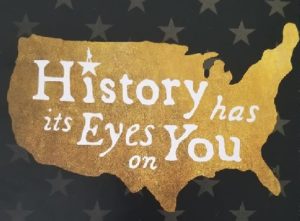
“History Has Its Eyes On Us” is the title of a song in the Hamilton Play – see Appendix VIDEO – and also a truism. There are lessons we must learn from the history of Alexander Hamilton. We must, like he did, fight for change and progress; as conveyed in the foregoing article:

From a remarkably young age, he was an abolitionist in a time when that word would be as shocking as to claim you’re an alien. He never allowed his birth and his circumstances to define him, and instead fought his entire life for the beliefs he had, including a strong central government and financial plan that allowed America to be self-sufficient and play with the “big boys” for trade and commerce. Hamilton saw first-hand the potential risks of weak governments …

The Go Lean roadmap accepts that the burden is too big for any one Caribbean member-state alone to effect change, thusly it advocates for a collaboration among all member-states. The strategy is to confederate all the 30 member-states of the Caribbean despite their language and legacy, into an integrated Single Market. The Go Lean/CU roadmap details all the strategies, tactics and implementation to forge the Single Market solutions. With these efforts and investments, the returns will be undeniable. We can dissuade our people from leaving in the first place – Alexander Hamilton never returned to British-controlled Nevis after leaving for college. (He did revolt against the British).

We want change in the Caribbean without a revolt. This was proclaimed from the outset of the Go Lean book:

This movement was bred from the frustrations of the Diaspora, longing to go home, to lands of opportunities. But this is not a call for a revolt against the governments, agencies or institutions of the Caribbean region, but rather a petition for a peaceful transition and optimization of the economic, security and governing engines in the region. – Go Lean book Page 8.

The Go Lean roadmap has a simple quest: make the Caribbean a better place to live, work and play. One man, or woman, can make a difference in this quest. Thank you for that model Hamilton. Thank you for that model Lin-Manuel Miranda. Now to foster the next generation of movers-and-shakers, whether it is politically, economically or in “song-and-dance”. We can impact our homeland with many fields of endeavor.

We urge all Caribbean stakeholders – artists and patrons alike – to lean-in to this roadmap to elevate Caribbean society. Yes, we can! Our quest is conceivable, believable and achievable. 🙂

Download the free e-Book of Go Lean … Caribbean – now!

Sign the petition to lean-in for this roadmap for the Caribbean Union Trade Federation.

————–

Appendix VIDEO – Why History Has Its Eyes On Hamilton’s Diversity | TIME – https://youtu.be/xWrRP6vRGhQ

TIME
Published on Dec 15, 2015 – In 2015, Lin-Manuel Miranda, a man once not known to many outside his circle of Broadway legions, shed light on another man once not known to many outside a circle of knowledgeable historians. But Miranda took one of America’s founding fathers and turned him “and thus, himself” into a star. The Broadway show Hamilton uses rap and hip-hop to tell the story of Alexander Hamilton’s rise to power during the American Revolution. The show broke multiple records for its cast recording and notched record-breaking sales of $32 million before it even hit Broadway. But the cast makes history in different ways, too, with men and women of color playing characters who were all white. There’s an African-American Vice President Aaron Burr, a biracial George Washington and a Chinese-American Mrs. Alexander Hamilton. Subscribe to TIME ►► http://po.st/SubscribeTIME

Category: News & Politics

————–

Appendix – 70th Tony Awards

The 70th Annual Tony Awards were held on June 12, 2016, to recognize achievement in Broadway productions during the 2015–16 season. The ceremony temporarily returned to the Beacon Theatre in New York City after three years at Radio City Music Hall and was broadcast live by CBS.[1] James Corden served as host.[2]

Hamilton received a record-setting 16 nominations in 13 categories, ultimately winning 11 total.[3] The revival of The Color Purple won two awards. The Humans won four awards, and the revival productions of plays Long Day’s Journey into Night and A View from the Bridge each won two awards.

Source: Retrieved December 31, 2018 from: https://en.wikipedia.org/wiki/70th_Tony_Awards

Share this post:
, ,
[Top]

News on the 8’s – Review of Impactful Years … ending in 8 (1918 – 2018)

Go Lean Commentary

The Year 2018 is now over, and what an impactful year it has been. In fact, an analysis over the annals of time shows that all years ending in “8” seems to be impactful, especially in the last 100 years. We are truly able to concur with the American Media (Radio and TV) tagline: “News on the 8’s“.

This review is not just world history, but for specific events-issues-episodes that affected us in the Caribbean.

This is important … for us here and now!

The 2013 book Go Lean…Caribbean – available to download for free – serves as a roadmap for the introduction and implementation of the technocratic Caribbean Union Trade Federation (CU), for the elevation of Caribbean society – for all member-states. The book, among its 370 pages, asserts that there are important lessons for the Caribbean region to learn from a consideration of the recent history of the economics, security and governing engines of other times and places. This exercise is analogous to reaping crops from the harvest. In fact the book features formal Lessons from History as follows:

  • West Indies Federation – Page 135
  • Year 2008 – Page 136
  • East Germany – Page 139
  • Detroit – Page 140
  • Indian Reservations – Page 141
  • The American West – Page 142
  • Egypt – Page 143
  • The Bible – Page 144
  • The US Constitution – Page 145
  • Canada’s History – Page 146
  • Caribbean Currencies – Page 149
  • Nuyorican Movement – Page 303
  • European Conquest of the Guianas – Page 307

And now … for consideration of the Year 2018; (the hyperlinks refer to previous blog-commentaries):

  • December: The 41st US President George H.W. Bush dies  The memorial and obituaries reminded the Caribbean, and the world, that reasonable accommodations for Persons with Disabilities is good for all of society.
  • November: The Mid-Term Elections in the US proved the actuality of a bitter lesson in democracy: “Bad things happen when Good people do not participate (vote); the opposite of justice is not injustice; it’s apathy, indifference and inaction”. So many people that did NOT vote in 2016 came out in force for 2018, to take back the direction of their country.
  • October: The UN Intergovernmental Panel on Climate Change (IPCC) released a report that we only have 12 years to adopt any Climate Change abatements, otherwise that dire consequences that have been warned and feared will be unavoidable.
  • September: A girl with Caribbean heritage (a meld of Haitian and Japanese), Naomi Osaka, shocks the world and became the US Open Tennis Champion. Yes, we can … produce greatness in our region.
  • August: Caribbean member-state Saint Lucia set in motion to ban Styrofoam and plastics in their sovereign territories therefore setting a model for how the rest of the Caribbean can be responsive to the realities of global pollution. Next up: we must confederate to abate Climate Change.
  • July: The world celebrated 100 Years of Mandela; we, in the Caribbean, did too and should have made more of a Big Deal about it. Mandela taught us all how to co-exist with colonialism bloody past and still work towards a prosperous future with native citizens, expatriates and Direct Foreign Investors alike.
  • June: Regional Tourism stewards declared that there must be regional coordination of their tourism product. This is an affirmation of the confederation quest for the Caribbean Union Trade Federation. Hurricanes always affect one part of the Caribbean region, while sparing the other parts, leaving them “open for business”. But geographic misconceptions are hurting Caribbean economies that are completely unscathed by a hurricane. This actuality cries out for regional stewardship.
  • May: As related and released by a university study, there is “No Love for Puerto Rico in Life or in Death“. The American government apparatus under-counted the true counts of deaths attributed to Hurricane Maria in September 2017. This is just proof positive that PR need to divorce the US and elevate from it’s parasite status and emerge as a protégé. This is the quest of the Go Lean/CU movement.
  • April: a. A Caribbean Political Leader – Senator, the Honorable Dr. Adrian Augier, a St. Lucian Economist – advocated for better outreach to the Diaspora. He lamented how most member-states adopted the lazy approach of just asking for the Diaspora’s money (investments); Dr. Augier, on the other hand, is asking for their outright return.
    b. Cuba’s Raul Castro retires, thus ending the reign of a Castro in the Presidency of Cuba for the first time since 1959; though Raul remains as Chairman of the Communist Party.
  • March: Young students seek to change America by “Marching for their Lives  to change gun laws and protections. This was in response to senseless shootings, one which occurred in Parkland, FL where 17 children were slain by an ex-student. One of the victims was of the Caribbean Diaspora (Jamaica) who’s parents had sought refuge in Florida from economic distress in their homeland.
  • February: The movie Black Panther, casted with many Caribbean actors, proved the prospect of forging change in an African-majority society and transforming the societal engines is a cause than we can conceive, believe and achieve.
  • January: From the “abundance of the heart, the mouth speaks” – this biblical proverb was validated when it was revealed that the US President Donald Trump called Haiti and other Latin American countries “shit holes”. This also vindicates the cause of the Go Lean/CU movement to reform and transform Caribbean society to not be parasites of an unappreciative America.

2018 was an impactful year indeed. This year was also fodder for comedians and satirists alike. See the VIDEO here by the Daily Show:

VIDEO – The Daily Show’s The Yearly Show 2018: Weird Trump, Things You Forgot Happened & 911 Calls – https://youtu.be/nsm9aL-7s8E

The Daily Show with Trevor Noah
Published on Dec 19, 2018 – In The Daily Show’s final show of the year, the team looks back on how weird Donald Trump was in 2018, the stories that everyone has forgotten about and all the white people who couldn’t call 911 enough.

Subscribe to The Daily Show: https://www.youtube.com/channel/UCwWh…

About The Daily Show: Trevor Noah and The World’s Fakest News Team tackle the biggest stories in news, politics and pop culture. The Daily Show with Trevor Noah airs weeknights at 11/10c on Comedy Central.

Despite the adult humor, this VIDEO was spot-on for the laughable premise of anyone expecting American leadership for global (and Caribbean) affairs. For the last 100 years, the years ending in “8” – 2018, 2008, 1998 … 1918 – have been the most impactful in modern history. Just consider the following subjective analysis; consider the News on the 8’s for the other years, here as follows:

  • 2008 – Great Recession – This economic disaster imperiled the world’s economy; what’s worse is that it is still imperiling the Caribbean region even today, despite recoveries elsewhere. Why so long for us in the Caribbean to elevate our economic landscape? We are not “too big to fail” but rather “Too Small to Thrive“.
  • 1998 – Clinton Impeachment – This American-only drama had a far reaching arch on the Caribbean: The Haitian eco-system resented the role of the Clinton Foundation in Haiti’s post-2010 Earthquake recovery-rebuild. The Haitian Diaspora, and many others disillusioned with the Clinton brand, took out their angst on presidential candidate Hillary Clinton … resulting in a win for the candidate Donald Trump, an anti-Caribbean actor.
  • 1988 – George Bush Election was an affirmation for the continuation of policies by Ronald Reagan. These policies incentivized Caribbean citizens, especially the professional classes, to emigrate away from the homeland to US soil.
  • 1978 – Jonestown, Guyana – This tragedy took place right here in the Caribbean member-state of Guyana. This evil act is on us! Have we learned? Have we reformed and transformed? Do we still tolerate a Climate of Hate? Are we overly protective of orthodoxy?
  • 1968 – Olympics’ Proudest Moment & Movement – The cause for Human Rights had it biggest impact at the 1968 Mexico City Olympics. The winners of the 200 meters Track-and-Field race – including the Bronze-medal winner with Caribbean (Cuban) roots, John Carlos – shocked the world by standing in solidarity with minority civil rights around the world.
  • 1958 – West Indies Federation – This attempt at integration had the potential to consolidate and confederate all the Anglo-Caribbean under a Single Market, single currency and a unified government. But despite the good intentions, this construct reflected a deficient foundation; the Federation failed 4 years later, though some remnants persist even today: i.e. BWI Airlines, University of the West Indies and the West Indies Cricket Federation.
  • 1948 – a. United Nations Human Rights Declaration  – The Human Rights standard we take for granted now was not always en vogue. It started in this year as a Lesson Learn from World War II.
    b. Windrush Departure – This London-bound ship started the bad trend of emigration from the Caribbean homeland.
  • 1938 – a. Start of Jewish Persecution in Nazi Germany; this is the lesson for where Climate of Hate leads a society.
    b. Joe Louis Wins Heavyweight Championship over a German, Nazi-backed boxer. This is the forerunner for Muhammad Ali and Boxing’s potential to shook the world.
  • 1928 – a. Birth of Mickey Mouse and the start of the Disney Empire Dream. The Black-n-White cartoon film Steamboat Willie was the start of the media enterprise. The current Orlando resort is a model for us in the Caribbean for Self-Governing Entities.
    b. Penicillin – as the start of antibiotics; this meant the end to mortality for many tropical diseases; still evolving today.
  • 1918 – End of WW I – The Great War was the start of the End of Colonialism. At the time of this global conflict the European powers over the Caribbean included Denmark, who subsequently ceded the Virgin Islands to the US.

This commentary serves as a review of the highlights of 2018, the same as was conducted for 2017 with 2017 Review – Mr. Trump shows the ‘Wrong Way’ and for 2016 with  How to make sense of 2016. But the purpose of these commentaries is not just to highlight the news, but rather to highlight the need for a new Caribbean regime, the Go Lean roadmap for the CU Trade Federation. Accepting the philosophical principle that “a crisis is a terrible thing to waste“, then there is a strong motivation to reboot, reform and transform the Caribbean eco-systems.

This is the quest of the Go Lean/CU roadmap; it features these 3 prime directives:

  • Optimization of the economic engines in order to grow the regional economy to $800 Billion & create 2.2 million new jobs.
  • Establishment of a security apparatus to ensure public safety and protect the resultant economic engines.
  • Improve Caribbean governance to support these engines, including a separation-of-powers between the member-states and CU federal agencies.

The Go Lean book stresses that reforming and transforming the Caribbean societal engines must be a regional pursuit. This was an early motivation for the roadmap, as pronounced in the opening Declaration of Interdependence (Pages 12 – 13):

xi. Whereas all men are entitled to the benefits of good governance in a free society, “new guards” must be enacted to dissuade the emergence of incompetence, corruption, nepotism and cronyism at the peril of the people’s best interest. The Federation must guarantee the executions of a social contract between government and the governed.

xxxiii. Whereas lessons can be learned and applied from the study of the recent history of other societies, the Federation must formalize statutes and organizational dimensions to avoid the pitfalls of communities like East Germany, Detroit, Indian (Native American) Reservations, Egypt and the previous West Indies Federation. On the other hand, the Federation must also implement the good examples learned from developments/communities like New York City, Germany, Japan, Canada, the old American West and tenants of the US Constitution.

The Go Lean book provides the turn-by-turn instructions on “how” to adopt new community ethos, plus the strategies, tactics, implementations and advocacies to execute so as to reboot, reform and transform the societal engines of Caribbean society. One advocacy on Page 131 is particular is entitled 10 Ways to Make the Caribbean Better. The rationale for this advocacy is summarized well in the first tactic (Way), as follows:

Lean-in for the Caribbean Union Trade Federation (CU).
This treaty allows for the unification of the region into a single market, thereby expanding to an economy of 30 countries, 42 million people and GDP of over $800 Billion (based on 2010) figures. The mandate of the CU, (despite the references to advanced technical concepts of economic empowerment, homeland security and emergency management), is simply to make the Caribbean a better place to: a). Live b). Work and c). Play.

This triple threat impacts daily Caribbean life and ultimately, our children’s future.

Yes, we can learn form the historic “8” years and from this year then make our homeland a better place to live, work and play. This quest is conceivable, believable and achievable. 🙂

Download the free e-book of Go Lean … Caribbean – now!

Sign the petition to lean-in for this roadmap for the Caribbean Union Trade Federation.

Share this post:
,
[Top]

Bad Ethos on Home Violence

Go Lean Commentary

“Train up a boy according to the way for him; even when he grows old he will not turn aside from it.” – The Bible Proverbs 22:6 NWT

This Biblical proverb has proven true time and again. People do tend to be a product of their environment and their early molding. Most times the discipline and attitudes learned at home forms the adult character that people become.

This is good … and bad!

  • Broughtupsyscruples; to have manners;
    May also be spelt Brought-upsie
    WestIndian/Caribbean in orient – Barbados.
    Example 1: Child, you ain’t got no brought-upsy?
    Translation: My Child, have you not any manners?
    Example 2: What, you ain’t got no brought-upsy?
    Translation: I can’t believe you’re doing that. Were you not taught any manners as a child?

This concept refers to the “ethos” (a Greek word meaning “character” that is used to describe the guiding beliefs or ideals); we see that it is not just a personal attribute but also refer to a community characteristic. Thus the word community ethos.

  1. the fundamental character or spirit of a culture; the underlying sentiment that informs the beliefs, customs, or practices of a group or society; dominant assumptions of a people or period: In the Greek ethos, the individual was highly valued.
  2. the character or disposition of a community, group, person, etc.

Here is another popular Adage, common-sense expression:

Charity begins at home.

Everyone knows that and assumes that. The good actions you exert towards others – strangers – is an exercise that starts at home, towards family. This is also true in the reverse: the bad actions you exert towards strangers, tend to stem from the practice to malevolent behavior towards family. Thusly, domestic violence to connect to violent crimes, think rape.

This is not just some academic thesis; this is real life and real bad, in Jamaica right now. See these two supporting news stories:

  1. Domestic Abuse – 15 percent of women experience violence – see Appendix A below.
  2. Tourist Rapes – A Black-eye for hospitality towards foreigners – see Appendix B below.

The movement behind the book Go Lean…Caribbean seeks to reform and transform Caribbean society; we advocate for empowerments and mitigations for the economic, security and governing engines of society. We want to create jobs, entrepreneurship, foreign direct investments and other economic opportunities, but we recognize that we must have a welcoming society to succeed in this endeavor. So we must therefore also advocate for domestic violence mitigations and best practices for domestic tranquility. This means that we have to be equally focused on family support services, early childhood development, juvenile delinquency, youth gang interventions and other social services initiatives; and this focus is best optimized for a regional scope. This actuality was clearly pronounced in the opening Declaration of Interdependence (Pages 12):

xvi. Whereas security of our homeland is inextricably linked to prosperity of the homeland, the economic and security interest of the region needs to be aligned under the same governance. Since economic crimes … can imperil the functioning of the wheels of commerce for all the citizenry, the accedence of this Federation must equip the security apparatus with the tools and techniques for predictive and proactive interdictions.

Mind your own business

… this bad ethos has often been echoed when reflecting on the incidences of dysfunctional families in our communities. But now we see, from the above, that the by-product from these families can endanger the business climate for all society. It is only logical that victims of crime, and their loved-ones, will not re-engage that destination for touristic activities. So we urge everyone to reject this bad ethos; it is in fact all of our business. We must reform and transform … for the Greater Good.

“It is the greatest good to the greatest number of people which is the measure of right and wrong” – Jeremy Bentham

The Go Lean book – available to download for free – serves as a roadmap for the introduction and implementation of the technocratic Caribbean Union Trade Federation (CU), for the elevation of Caribbean society – for all member-states. This CU/Go Lean roadmap features many social-economic empowerments and mitigations, but first, these 3 prime directives:

  • Optimization of the economic engines in order to grow the regional economy to $800 Billion and create 2.2 million new jobs.
  • Establishment of a security apparatus to ensure public safety and protect the resultant economic engines.
  • Improve Caribbean governance to support these engines, including a separation-of-powers between the member-states and CU federal agencies.

The Go Lean book provides 370-pages of turn-by-turn instructions on “how” to adopt new community ethos, plus the strategies, tactics, implementations and advocacies to execute so as to reboot, reform and transform the societal engines of Caribbean society. Domestic violence and rape tend to victimize women. So the Go Lean book specifically – on Page 226 – presented an advocacy to help women; featuring this title: 10 Ways to Empower Women. Notice the summaries, plans, excerpts and headlines from that page here:

1 Lean-in for the Treaty for a Caribbean Single Market
The CU treaty is a regional re-boot allowing for the unification of the region into one market, thereby creating a single economy of 30 member-states, 42 million people and a GDP of over $800 Billion. The CU will assume the primary coordination for the region’s economy and security needs. With half of the population being women, the CU must allow for empowerment and protection of women, even collaborating with NGOs for Women advocacies.This mandate is not automatic as many CU nations still maintain Third World prejudices derived from Natural Law.
2 Equal Pay & Entrepreneurial Rights
3 Equal Education Rights
4 Equal Property Rights
5 Women’s Health
The CU will facilitate healthcare solutions with a view of the supplemental needs for women. The CU will start with HPV vaccinations; then ensure the proper OB/Gyn care for child-bearing women. The CU will add to the vigilance for breast cancer awareness and other post-menopausal conditions, arranging for cradle-to-grave Women’s Clinics.
6 Law & Order SVU
Women are usually the victims for domestic violence and sex crimes. Many US jurisdictions have added Special Victims Units to give these types of crimes the proper attention. The CU will train, facilitate & monitor local [Caribbean] efforts.
7 Family Planning Rights
8 Child Support Orders
9 Focus on Families
The CU mandate to incentivize the repatriation of the Caribbean Diaspora will re-unite families back in their homeland. Mothers and Grandmothers will rejoice with the prospects of sharing their daily lives with their now-remote families.
10 Aging Population

The Go Lean movement have previously elaborated on issues related to domestic and inter-personal violence. This field is both an art and a science. Consider this sample of previous Go Lean commentaries here, and Appendix C VIDEO:

https://goleancaribbean.com/blog/?p=14482 International Women’s Day – Protecting Rural Women
https://goleancaribbean.com/blog/?p=13063 Gender Equity without a ‘Battle of the Sexes’
https://goleancaribbean.com/blog/?p=7490 A Lesson in the History of Interpersonal Violence – Domestic
https://goleancaribbean.com/blog/?p=2709 Caribbean Study: 58% Of Boys Agree to Female ‘Discipline’
https://goleancaribbean.com/blog/?p=2201 Students developing nail polish to detect date rape drugs
https://goleancaribbean.com/blog/?p=695 Help for Abused Women Depicts Societal Defects

Yes, helping to mitigate family violence helps to mitigate crimes against our tourists – who are really trading partners. We must always consider a holistic view of the social problems of families. We all want good ‘Broughtupsy’. As a community, we are a part of some family; good families make good communities; and good communities make good countries. Everyone wants to be in a good community, whether it is to live, work or play.

So we must all do the heavy-lifting of helping our brothers and protecting our sisters. This is not easy and at times may not be welcomed – echoing the sentiments: mind your own business – but it is our business to promote and protect our “family”. We urged everyone to lean-in to this good ethos … and to the Go Lean roadmap for a better Caribbean community.  🙂

Download the free e-book of Go Lean … Caribbean – now!

Sign the petition to lean-in for this roadmap for the Caribbean Union Trade Federation.

—————–

Appendix A – JAMAICA: Nearly 15 per cent of Jamaican women experience violence from a male partner

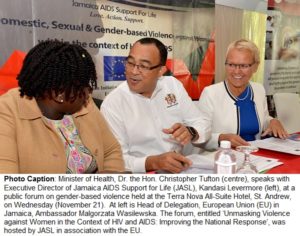
#Kingston – Nearly 15 per cent of all women in Jamaica, aged 15 to 49, who have ever married or partnered have experienced physical or sexual violence from a male partner in the previous 12 months.  This was revealed by Health Minister, Dr. the Hon. Christopher Tufton, as he addressed a public forum on gender-based violence on Wednesday (November 21), at the Terra Nova All-Suite Hotel in St. Andrew.

He was citing statistics from the Ministry’s soon-to-be released 2017 Knowledge, Attitude, Belief and Practice (KABP) report, which covers intimate-partner violence.  He said that based on the report, the most prevalent violent acts experienced by women are: being pushed or shoved (17.7 per cent); being slapped or having something thrown at them that could inflict harm (16.8 per cent); and being hit with a fist or something that could cause harm (15.6 per cent).

He noted that 3.7 per cent per cent of the respondents reported being afraid of what their abuser would do if they refused to have sexual intercourse.

“Women who are the victims of sexual violence in particular, we know, are more vulnerable to HIV infection, given that HIV transmission risk increases in violent or forced-sex scenarios,” he pointed out.

He argued that the fear of stigma associated with HIV may prevent women who are victims of sexual violence from being tested or otherwise from returning for the results and that those living with HIV may not even report the incident out of fear of being re-victimised.

Dr. Tufton said that the Ministry of Health cooperates with the Ministry of Justice in handling reported cases of sexual violence, and although there are some challenges the Ministry is determined to overcome them.

“We are already on course to ensure access to care and the best possible health outcomes for our people, including women and girls and key populations” he said.

According to the Minister, a first step is education and raising awareness among those tasked to deliver care, to ensure that they do so, not only with efficiency but also with sensitivity.  

There are more than a few stones to dodge and hurdles to scale violence against women and gender-based violence. However, the Ministry of Health is committed and, working together with our non-governmental partners and other stakeholders, including the European Union (EU), we will get there,” he pledged.

The forum on gender-based violence was staged by Jamaica AIDS Support for Life in association with the EU, under the theme ‘Unmasking Violence against Women in the context of HIV and AIDS: Improving the National Response’.

Dr. Tufton hailed the staging of the session, noting that “this is an important public discussion on an issue that has far-reaching sustainable development implications for Jamaica”.   He said that gender-based violence cannot be ignored, based on the wide-ranging effect that it is likely to have on the country.

“Violence against women and gender-based violence as drivers of HIV infection among Jamaicans require urgent and sustained collaborative action in the public health interest,” he said.
Source: Posted November 23, 2018; retrieved December 23, 2018 from: http://magneticmediatv.com/2018/11/jamaica-nearly-15-per-cent-of-jamaican-women-experience-violence-from-a-male-partner/?fbclid=IwAR0kSF26GcdUxYT_dbF1sxLvbD0bDO0sFBz1QlWsHwPoVopTs7iQPfE1Qxw

—————–

Appendix B – Title: Jamaica resorts facing a ‘historic’ sexual assault problem
Posted October 30, 2018; retrieved December 23, 2018 – In a dark laundry room at a Jamaican Sandals resort, pinned to the floor by a hotel lifeguard, a Michigan teenage girl lay paralyzed with fear as the man bit her lip and raped her, violently robbing her virginity.

When her mother found her after the assault, trembling and holding herself in a hallway, the 17-year-old couldn’t speak. She could only point to a metal door.
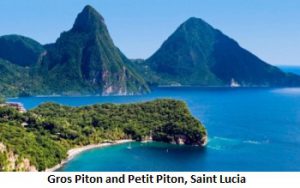
Behind the door, her friend was being gang-raped by three resort lifeguards.

This is the Jamaica that the U.S. State Department has repeatedly warned tourists about. This is the island paradise that the government says has a pervasive sexual assault problem, the place where two Detroit women were raped in September, and an estimated one American is raped each month. 

Over the last seven years, 78 U.S. citizens have been raped in Jamaica according to State Department statistics from 2011-17. The victims include: A mentally handicapped woman in her 20s; an Indiana mother gang-raped by three Cuban soccer players in a resort bathroom stall; a 20-year-old woman raped by two men in her hotel; two Detroit mothers raped at gunpoint in their room; a Kent County teenager and her 21-year-old friend, gang-raped by lifeguards in a locked laundry room at the resort where they were staying.

Jamaica unable to handle problem

According to the Jamaica Tourist Board, more than 1 million Americans visit Jamaica every year, accounting for about two-thirds of all visitors to the island, whose blue-green coastal waters, sunny weather and laid-back reggae vibe draws billions in tourism dollars.

Americans are the biggest contributors, spending more than $3 billion in Jamaica in 2017, a 15-percent increase from the $2.6 billion they spent in 2016. Jamaica also has enjoyed a steady increase in American tourists over the last five years, from 1.1 million U.S. visitors in 2013 to 1.5 million in 2017.

But while tourism has grown, so have warnings about sexual violence, as evidenced by the numerous State Department travel advisories and crime reports that refer to sexual assaults as a “historic concern” in Jamaica.

Jamaica, however, has made some progress on this front. The State Department said that hotel sex assaults involving Americans dropped in 2016.  For example, out of 18 Americans raped in Jamaica that year, just one occurred at a resort.

But the problem crept back in 2017: Out of the dozen of Americans sexually assaulted in Jamaica that year, six were attacked in resorts at the hands of employees.

“Sexual assaults against American guests by hotel employees at resort hotels on the north coast have again risen,” the State Department wrote in a 2018 report.

To read the full article, click here: https://www.usatoday.com/story/travel/2018/10/30/jamaica-resorts-tripadvisor-sexual-assault/1816675002/?csp=chromepush

Related: Oct. 2: Raped in Jamaica: Woman turns gun on attacker who had climbed on her balcony at 5-star hotel

—————–

Appendix C VIDEO – Babyface – How Come, How Long – https://youtu.be/lBPEkEOUUp0

Published on Oct 25, 2009 – Babyface’s official music video for ‘How Come, How Long’. Click to listen to Babyface on Spotify: http://smarturl.it/BabyFSpotify?IQid=…
As featured on Babyface: A Collection of His Greatest Hits. Click to buy the track or album via iTunes: http://smarturl.it/BabyfaceGH?IQid=Ba…
Follow Babyface Website: http://www.babyfacemusic.com/
Subscribe to Babyface on YouTube: http://smarturl.it/BabyfaceSub?IQid=B… ———
Lyrics:
There was a girl I used to know
She was oh so beautiful
But she’s not here anymore
She had a college degree
Smart as anyone could be
She had so much to live for
But she fell in love
With the wrong kinda man
He abused her love and treated her so bad
There was not enough education in her world
That could save the life of this little girl
How come, how long
It’s not right, it’s so wrong
Do we let it just go on
Turn our backs and carry on
Wake up, for it’s too late
Right now, we can’t wait
She won’t have a second try
Open up your hearts
As well as your eyes
Share this post:
, ,
[Top]

The Caribbean – A People or A Place?

Go Lean Commentary

Is your Caribbean homeland “a People or a Place?

Let’s deliberate…

If you love your homeland and you are a proud citizen, your allegiance should continue even though you no longer live there, right? This is the argument that your Caribbean homeland is a people, not just a place.

But place/terrain is of utmost importance to our culture; think: beaches, mountains (i.e. Pitons in St. Lucia), etc:

Song:
Oh, island in the sun
Willed to me by my father’s hand
All my days I will sing in praise
Of your forest, waters, your shining sand
– “Island in the Sun” – Harry Belafonte – AZLyrics.com

————

VIDEO – Song: “Island in the Sun” – https://youtu.be/Oi8fS0jkX84

Published on Dec 8, 2008 – 1957 hit song of Harry Belafonte.

Licensed to YouTube by: SME, WMG, Golden Dynamic (on behalf of ToCo Asia Ltd); Abramus Digital, CMRRA, SOLAR Music Rights Management, UBEM, BMG Rights Management, AdRev Publishing, Reservoir Media (Publishing), ASCAP, EMI Music Publishing, União Brasileira de Compositores, ARESA, and 11 Music Rights Societies

———— 

Even the name of our region comes from the 1,063,000 square miles of the Caribbean Sea.

Don’t get it twisted! Ours is the best address on the planet. The “place” is paramount to our identity.

This question “A People or A Place?” was asked of many Caribbean people. Here are their responses:

Caribbean Quotations
Is your Caribbean homeland “a People or a Place”?

  • Bahamas – Dr Donald McCartney, Educator: The Bahamas is a place, but its essence is found in the people who inhabit the place. In this regard, The Bahamas is both the place and the people. On the other hand, if the saying, a house is not a home is accepted, then one can conclude that The Bahamas, as place, cannot be construed to be a people. In the final analysis, The Bahamas is both the people and the place.
  • Bahamas – Anonymous – Diaspora – California Resident: In my personal opinion, the Bahamas is a place. Yes, i am a Bahamian, a proud one…It is a place where people with their culture reside, however the Bahamas is not a place that embrace and celebrate many of it’s people. Gays for one, and the poor is another… My allegiance will only go so far. My country does not accept my sexuality, for me that’s a big deal because my sexuality is a part of my life and I should not be discriminated against, in any form on a national level because of it. As a result, if I have an opportunity to seek citizenship elsewhere, of which I am pursuing I will embrace it. Although there are aspects of my background I want to continue throughout my life wherever I go, there are also aspects that I want to be a distant memory or forgotten.
  • Haiti – Louby Georges – Bahamian Resident of Haitian heritage: My personal take is the country should be a people. But for persons of other descendency, this country of the Bahamas has the characteristic that the culture is more of a place than it is the people. This country has it bad; they make it hard for anyone with an apparent foreign ancestry; they treat them like they do not belong, because they are not from this place. So the country has a warp sense that “home” is only for the people with long lineage of this place. So for me, I am forced to accept the realistic view that the Bahamas is a place.
  • Barbados – Florence Cheeks, Diaspora Member Pennsylvania Resident It’s both; it’s a place in that it identifies my spot on this earth, it’s also a people in that it expresses a history and a way of experiencing life. Barbados is my home. Even though I don’t live here, Barbados inhabits my psyche and I am always looking for opportunities to contribute to the continued growth of the nation. Ironically, I am writing this from my sister’s home in Barbados.
  • Jamaica – Pauline James, Diaspora Member Florida Resident: Jamaica is a people. Whenever you go in the world and Jamaicans are there, they are a force to be reckoned with. We do not hide the fact that we are Jamaican. “When we are good we are very good; when we are bad, we are very bad”.
  • Puerto Rico – Anonymous – Legacy – Florida Resident I would say PR is a place. I do have family there and they say Commonwealth and want all the benefits from the USA without wanting to become a State. I do not consider myself Puerto Rican since I do not live there. I consider myself North American. I can only claim that I have family from PR.

This is more than just an academic question. There is an actuality associated with the people of the Caribbean. The book Go Lean…Caribbean – available to download for free – addresses the reality of the Caribbean Diaspora (Page 26), identifying that when people continue to abandon their communities, the Diaspora pool gets bigger and bigger.

Ways to Impact the Future – Need People Too – Not All About Money, or is it?
The quality of life for the citizenry is very important, otherwise, people leave, and take their time, talents and treasuries elsewhere. Family, cultural pride is more important than economics, and yet when the economics are bad, people leave. This is evident by the large Caribbean Diaspora in foreign lands – where they re-assembled their culture and civic pride.

The Go Lean book laments this status quo but considers the Diaspora as stakeholders in the Caribbean experience, though they are not physically in the homeland. The hope of the Go Lean movement is to reduce the Diaspora and dissuade future societal abandonment. This is pronounced in the opening Declaration of Interdependence  (Pages 13) with these statements:

xix. Whereas our legacy in recent times is one of societal abandonment, it is imperative that incentives and encouragement be put in place to first dissuade the human flight, and then entice and welcome the return of our Diaspora back to our shores. This repatriation should be effected with the appropriate guards so as not to imperil the lives and securities of the repatriated citizens or the communities they inhabit. The right of repatriation is to be extended to any natural born citizens despite any previous naturalization to foreign sovereignties.

There are many opportunities to engage the Diaspora population in more and better ways. This quest was also an original motivation for the Go Lean book and for the proposed Caribbean Union Trade Federation (CU). The Declaration of Interdependence continues:

xx. Whereas the results of our decades of migration created a vibrant Diaspora in foreign lands, the Federation must organize interactions with this population into structured markets. Thus allowing foreign consumption of domestic products, services and media, which is a positive trade impact. These economic activities must not be exploited by others’ profiteering but rather harnessed by Federation resources for efficient repatriations.

The Go Lean book serves as a roadmap for the introduction and implementation of the technocratic CU Trade Federation, for the elevation of Caribbean society – for all member-states. This CU/Go Lean roadmap has these 3 prime directives:

  • Optimization of the economic engines in order to grow the regional economy to $800 Billion and create 2.2 million new jobs.
  • Establishment of a security apparatus to ensure public safety and protect the resultant economic engines.
  • Improve Caribbean governance to support these engines, including a separation-of-powers between the member-states and CU federal agencies.

The Go Lean book provides 370-pages of turn-by-turn instructions on “how” to adopt new community ethos, plus the strategies, tactics, implementations and advocacies to execute so as to reboot, reform and transform the societal engines of Caribbean society. Dynamics of the Diaspora have been elaborated in previous blog-commentaries; see Appendix A below.

To stop the brain drain and abandonment, we must fix the Caribbean homeland. This is the only way to improve our bad emigration trends, but despite being heavy-lifting, “Yes, we can“…make our homeland a better place to live, work and play. 🙂

Download the free e-book of Go Lean … Caribbean – now!

Sign the petition to lean-in for this roadmap for the Caribbean Union Trade Federation.

————–

Appendix A – Previous Go Lean commentaries on the Diaspora:

https://goleancaribbean.com/blog/?p=15126 ‘Time to Go’ – States must have ‘population increases’
This is part 11-of-11 of a long series urging the Caribbean Diaspora to consider repatriating. There are solid arguments that the “grass is not greener on the foreign side”. It will take less effort to reform and transform the Caribbean homeland than to make a better life abroad.
https://goleancaribbean.com/blog/?p=14911 Art Imitating Life – Was ‘Thanos’ Right?
Its a fallacy to think that if a society suffers from famine and poverty, then by eliminating half of the population that there will be plenty of resources left for the remaining people. The Caribbean situation has proven this again and again. With our Diaspora gone, our population resemble half, yet still we are failing. Truthfully, we need more, not less!
https://goleancaribbean.com/blog/?p=14746 Calls for Repatriation Strategy
There are some in Caribbean governance that “see the light”. They know that the region have suffered from acute societal abandonment and there is the need to reverse the trend and urge people to return, to repatriate.
https://goleancaribbean.com/blog/?p=13472 Future Focused – College, Caribbean Style
College
is good and college is bad! if a person emigrates while in college abroad, all the micro and macro benefits from advanced education transfer to the new country. We must therefore try to deliver college-education within the region.
·      https://goleancaribbean.com/blog/?p=13438

·https://goleancaribbean.com/blog/?p=13288

·https://goleancaribbean.com/blog/?p=13105

·https://goleancaribbean.com/blog/?p=13040

·https://goleancaribbean.com/blog/?p=12911

·https://goleancaribbean.com/blog/?p=10657

·   Grenada Diaspora – Not the Panacea

·   Dominica Diaspora – Not the Panacea

·   Haiti Diaspora – Not the Panacea

·   Jamaica Diaspora – Not the Panacea

·   Bahamas Diaspora – Not the Panacea

·   St. Lucia Diaspora – Not the Panacea

https://goleancaribbean.com/blog/?p=12369 Canada @ 150 – Happy Canada Day
There are many Caribbean people in Canada; it is the Number 3 destination for our Diaspora (behind the US and the UK). Why do they live in Canada and what can we learn from that experience?What can we gather for the Pros and Cons of Canadian life?There are “push and pull” reasons why Caribbean citizens have emigrated to places like Canada. We must lower these factors.
https://goleancaribbean.com/blog/?p=11989 The Dynamics of Diaspora Voting
Many in the Diaspora would still like to vote in their abandoned homeland, even though they may no longer be contributing to the society. That is “representation without taxation”. Once people divorce the homeland, it is hard to still try and dictate its governance.
·      https://goleancaribbean.com/blog/?p=11420

·      https://goleancaribbean.com/blog/?p=8099

·   ‘Black British’ and ‘Less Than’

·   Caribbean Image: ‘Less Than’?

https://goleancaribbean.com/blog/?p=11244 ‘To Live and Die in L.A.’ …
This has always been a subject of sharp debate and contrast. Is it better to live “fast & furious”, even though there might be a shorter mortality, or is it better to go slow and last longer, as far away from risky propositions as possible? Shockingly, this is also a Caribbean debate: is it better to emigrate to L.A., New York, Miami, Toronto, London, Paris or any other foreign destination for faster success, or prosper where planted in the Caribbean homeland?
If only we can prosper where planted in the Caribbean.
https://goleancaribbean.com/blog/?p=10820 Miami: Dominican’s ‘Home Away from Home’
One-fifth of the population of those with Dominican heritage live in the US. There appears to be no progress in any movement for repatriation to the island, rather there is progress in movement to the South, to Florida. Of the Top 7 US states that the Dominican Diaspora lives in, Florida is the only one in the Sunbelt. The tropical landscapes in Greater Miami is reminiscent of the DR for many people.
https://goleancaribbean.com/blog/?p=10654 Stay Home! Immigration Realities in “foreign lands”
This 3-part series relates that many foreign lands, like the US, have societal defects of “Institutional Racism” and “Crony-Capitalism“. These societal defects create a ‘Climate of Hate‘ that causes people to haze and blame-game the “Black-and-Brown” immigrants from the Caribbean.
https://goleancaribbean.com/blog/?p=9352 Courting Caribbean Votes – ‘Jamericans’

Caribbean people leaving their homeland is like the “genie leaving the bottle” – there is no returning. Now we see the ‘Jamaican-Americans’ doubling-down on this legacy, even trying to influence US federal elections for more liberal immigration policies to bring more “homies“. This is part 2 of 3 from this series:

·   Part 1 – Courting the Caribbean Votes – Puerto Ricans

·   Part 3 – Courting the Caribbean Votes – Cuban-Americans

https://goleancaribbean.com/blog/?p=2547 Miami’s Success versus Caribbean Failure
Greater Miami area has benefited from societal failures in the Caribbean region. Miami has increased in population, economy, culture and prestige while the Caribbean states have limped along.
https://goleancaribbean.com/blog/?p=1433 Caribbean loses more than 70 percent of tertiary educated to brain drain
According to the analysis by the Inter-American Development Bank, the people in the “Caribbean 6” countries of Bahamas, Barbados, Guyana, Jamaica, Suriname, and Trinidad & Tobago have wasted money on educating their populations, especially tertiary education. This is due to the fact that after the citizens leave, very little comes back fro the societal investments.


Share this post:
, ,
[Top]

5 Years Later – Aging Diaspora: Finding Home … anywhere

Go Lean Commentary

Which would you rather do:

Move your aging parents in with you … or move in with them?

This is a perplexing question that face most families … eventually; see the aligning VIDEO in the Appendix below.

This is especially true in the Caribbean as it is our practice to care for our elderly ourselves, not warehouse them in a Senior Care facility; cared for by strangers and professionals.

This Elder-Care preponderance was detailed in a previous Go Lean blog-commentary on March 24, 2014 – one of the first ones – entitled: 10 Things We Want from the US and 10 Things We Don’t Want from the US. That blog, and the hundreds since, all draw attention to the 2013 book Go Lean…Caribbean – available to download for free. The book serves as a roadmap for the introduction and implementation of the technocratic Caribbean Union Trade Federation (CU), for the elevation of Caribbean society – for all member-states. That previous blog actually stated:

Family Abandonment
Senior Living Facilities are a big industry in the US. This is due to the family habit of abandoning elderly parents to the care of professional strangers. The Caribbean way traditionally is to house their Senior Citizens with families, whether the economics apply or not.

The CU has a prime directive to encourage repatriation back to the Caribbean homeland and assuage societal abandonment. Frankly, senior citizens should avoid the cold climates of North American and EU Diaspora cities.

The care of our seniors is presented in the Go Lean book as paramount – supreme importance. In fact, the book relates the challenges befalling Caribbean society and identifies the needs of our Aging Diaspora as one of the 4 impossible-to-deal-with-alone Agents of Change – Globalization, Climate Change, Technology and the Aging Diaspora. The book declared that we were failing miserably in our societal engines, but the opportunity now exists for re-approachment to the Diaspora that left their homeland 50, 40, 30 and 20-plus years ago. This should have been a economic boon for our communities!

But worse has happened: since the 2013 publication; our societal engines have failed even more. Rather than returning to the Caribbean homeland for retirement, families are now more prone to expatriate their elderly, rather than repatriate. 🙁

Our people are simply securing their seniors in a home … anywhere!

Such a declining trend is not true of all the Agents of Change, like Technology; we have actually improved there. In fact, the catalog of other Agents of Change commentaries in this series, cataloged here:

  1. 5 Years Later: New Post Office Eco-system – Globalization issues ‘loud and clear’ now.
  2. 5 Years Later: Climate Change – Coming so fast, so furious.
  3. 5 Years Later: Technology – Caribbean fully on board.
  4. 5 Years Later: Aging Diaspora – Finding Home … anywhere.

So now, Caribbean families have been finding homes abroad for their elderly loved one; in contrast to the past, now they have started to bring these aged ones to their Diasporic destinations.

Ouch!

The cold! And the abandonment of their beloved homeland and culture. Surely there must be home-sickness.

We must do better … going forward.

This dreadful trend has been depicted in previous Go Lean commentaries, most notably a submission from September 28, 2016:

‘Time to Go’ – Logic of Senior Emigration
It is a shame-and-a-disgrace – 70 percent of out tertiary-educated – gone! Now we have the report of a 104-year old woman [Jamaica-born May Garcia] who [had] just naturalized to become a US citizen. Just as much as this is a good story for her and America, this is an indictment for us – the Caribbean – and our failures as individual states. …

Ms. Garcia is an inspiration. She plainly demonstrates to the planners of a new Caribbean how acute our failures are. This [104 birthday] celebration should have been in her Caribbean homeland, Jamaica. This is our quest!

She should have been like a tree …

… planted by streams of water, which yields its fruit in season and whose leaf does not wither – whatever they do prospers. – The Bible; Psalms 1:3 – New International Version

A “planted tree” analogy relates that she would be firmly established … and others – her children and grandchildren – would come to her.

The theme of this current blog series is “5 Years Later and what is the condition now?“. That theme is to be supplemented with subsequent questions:

  • “Have the problems lessened, or have they intensified?”
  • “What can we do to mitigate the problems going forward?”

During this 5 year tenure, a blog-commentary was presented in March 4, 2016 highlighting an Elder-Care solution for the region. A summary of that submission follows:

Pre-Fab Housing and Elder-Care Conjunction
Every community needs housing … for their seniors. This is just a basic fact of life: old age and illness … befall us all.

Just because an abled-bodied person has a house, it does not make it ideal when the circumstances change to “less than able”, or disabled, or differently-abled. Yet, disabilities are a reality … everyday: Just keep living.

This consideration is very appropriate for the Caribbean. We have some societal defects: consider our abandonment rate, especially among the younger generation, due mainly to a lack of economic opportunities, at home. Assuredly, they emigrate for refuge abroad, and then remit funds back to their Caribbean homelands, often to support their aging parents. These ones have the need for Elder-Care; but Elder-Care consists of more than remittances; many times, it includes nursing.

Providing housing, Elder-Care and nursing can be an economic conjunction, an activity at an intersection. The book Go Lean … Caribbean asserts that “luck” is the intersection of preparation and opportunity; that economic growth can be gained simply by positioning at that intersection and exploiting the opportunities.

Pre-fab housing solutions are conceivable, believable and achievable. … The Caribbean can and must foster our own solutions. But we have the constant threats of hurricanes, so our pre-fab structures must feature mitigations for storm resistance. The plausible options are depicted in great details in the Go Lean book (Page 207).

The Go Lean book does provide an advocacy for prefab housing (Page 207) and one for Elder-Care (Page 225). In fact, the book/roadmap presents the 3 prime directives to address all Caribbean societal engines:

  • Optimization of the economic engines in order to grow the regional economy to $800 Billion and create 2.2 million new jobs.
  • Establishment of a security apparatus to ensure public safety and protect the resultant economic engines.
  • Improve Caribbean governance to support these engines, including a separation-of-powers between the member-states and CU federal agencies.

The book stresses that reforming and transforming the Caribbean societal engines must be a regional pursuit. This was an early motivation for the roadmap, as pronounced in the opening Declaration of Interdependence (Pages 11 – 13):

ix. Whereas the realities of healthcare and an aging population cannot be ignored and cannot be afforded without some advanced mitigation, the Federation must arrange for health plans to consolidate premiums of both healthy and sickly people across the wider base of the entire Caribbean population. The mitigation should extend further to disease management, wellness, mental health, obesity … programs.

xi. Whereas all men are entitled to the benefits of good governance in a free society, “new guards” must be enacted to dissuade the emergence of incompetence, corruption, nepotism and cronyism at the peril of the people’s best interest. The Federation must guarantee the executions of a social contract between government and the governed.

xvi. Whereas security of our homeland is inextricably linked to prosperity of the homeland, the economic and security interest of the region needs to be aligned under the same governance. Since economic crimes … can imperil the functioning of the wheels of commerce for all the citizenry, the accedence of this Federation must equip the security apparatus with the tools and techniques for predictive and proactive interdictions.

xxiv. Whereas a free market economy can be induced and spurred for continuous progress, the Federation must install the controls to better manage aspects of the economy: jobs, inflation, savings rate, investments and other economic principles. Thereby attracting direct foreign investment because of the stability and vibrancy of our economy.

The Go Lean book provides 370-pages of turn-by-turn instructions on “how” to adopt new community ethos, plus the strategies, tactics, implementations and advocacies to execute so as to reboot, reform and transform the societal engines of Caribbean society. These empowerments include the basic needs for our Aging Diaspora to seriously consider a return home; the book quote (Page 226):

Aging Population
The CU will facilitate the Caribbean region to be the world’s best address for senior citizens. (The presumed security protection being in place first). This will send the invite to retirees (Caribbean Diaspora and foreign) to welcome their participation and contributions to CU society. This follows the model of Florida and Arizona – a “welcome mat” …

In the last 5 years, the Caribbean has missed out on the great economic and social opportunities to better cater to the Aging Diaspora. We must do better going forward. Yes, we can make our homeland a better place to live, work and play. 🙂

Download the free e-book of Go Lean … Caribbean – now!

Sign the petition to lean-in for this roadmap for the Caribbean Union Trade Federation.

—————-

Appendix VIDEO – Moving In Your Elderly Parents | This Morning – https://youtu.be/U4iHQMDZDuk

This Morning

Published on Oct 14, 2016 – Tessa Cunningham shares her story of moving in her 95 year old father to live with her.
Share this post:
, ,
[Top]

5 Years Later – Technology: Caribbean countries fully on board

Go Lean Commentary

You will be assimilated! Strength is irrelevant. Resistance is futile. …
We will add your biological and technological distinctiveness to our own.– Movie Quote: Star Trek – The Next Generation (TV Series).

Change happens … ready or not here it comes. Agents of Change will overrun you and transform you into its mold.

In a previous Go Lean commentary from May 12, 2018, this commentary confessed this actuality:

Today, it is clear that mainstream society has been assimilated by the counter-culture revolution with previously debated New Morals. Some people even claim that this New Morality is the same Old Immorality. For instance, consider recreational drugs, marijuana in particular; counter-culturists have always “pushed” for the freedom of marijuana use; … Despite all the efforts to outlaw it, authority figures are now starting to just accept, tolerate and legitimize its usage.

Technology has also pounced on the modern world, the Caribbean included; what started as a counter-culture revolution – nerds, geeks and techies – has become mainstream and normal. People today are walking around with a computer in their pockets (smart-phones) that far exceeds Big Mainframe systems (Big Iron) from 30 years ago; think 1 terabyte of memory-storage; 3.5 GigaHertz processor chips; global communication networks with interconnected devices around the world.
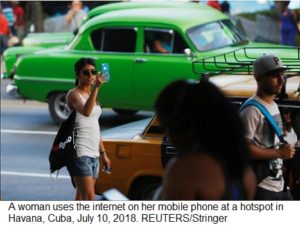
This change is not all bad! The whole world – the people, media and information – is now accessible at our finger tips!

There are only a few small groupings of people even attempting to “live off the grid”. Everyone else has fully embraced the grid and is living their life in kind – waiting for the next technological advances – they have been assimilated.

There used to be a Caribbean exception, Cuba! Due to the 1959 Revolution, Cuba had previously rejected Western technology advances; choosing to freeze their technological consumption at 1959.

But based of the summary of this news article, that actuality is no more:

Title: Communist-run Cuba starts rolling out internet on mobile phones
By:
Sarah Marsh

HAVANA (Reuters) – Communist-run Cuba has started providing internet on the mobile phones of select users as it aims to roll out the service nationwide by year-end, in a further step toward opening one of the Western Hemisphere’s least connected countries.

Journalists at state-run news outlets were among the first this year to get mobile internet, provided by Cuba’s telecoms monopoly, as part of a wider campaign for greater internet access that new President Miguel Diaz-Canel has said should boost the economy and help Cubans defend their revolution.

Analysts said broader web access will also ultimately weaken the government’s control of what information reaches people in the one-party island state that has a monopoly on the media. Cuba frowns on public dissent and blocks access to dissident websites.

“It’s been a radical change,” said Yuris Norido, 39, who reports for several state-run news websites and the television. “I can now update on the news from wherever I am, including where the news is taking place.”

Certain customers, including companies and embassies, have also been able to buy mobile data plans since December, according to the website of Cuban telecoms monopoly ETECSA, which has not broadly publicized the move.

ETECSA has said it will expand mobile internet to all its 5 million mobile phone customers, nearly half of Cuba’s population, by the end of this year. ETECSA did not reply to a request for more details for this story.

Whether because of a lack of cash, a long-running U.S. trade embargo or concerns about the flow of information, Cuba has lagged behind in web access. Until 2013, internet was largely only available to the public at tourist hotels in Cuba.

But the government has since then made increasing connectivity a priority, introducing cybercafes and outdoor Wi-Fi hotspots and slowly starting to hook up homes to the web.

Long before he took office from Raul Castro in April, 58-year-old Diaz-Canel championed the cause.

“We need to be able to put the content of the revolution online,” he told parliament last July as vice president, adding that Cubans could thus “counter the avalanche of pseudo-cultural, banal and vulgar content.”

Cuba could use subsidies to encourage the use of government-sponsored applications, analysts said. Last month, ETECSA launched a free Cuba-only messaging application, Todus, while Cuba’s own intranet with a handful of government-approved sites and email is much cheaper to access than the wider internet.

In a 2015 document about its internet strategy that leaked, the Cuban government said it aimed to connect at least half of homes by 2020 and 60 percent of phones.

But many Cubans are skeptical. ETECSA President Mayra Arevich told state-run media in December it had connected just 11,000 homes last year.

“I’ve been many times to the ETECSA shop to ask if they can give us home access,” said Yuneisy Galindo, 28, at a Wi-Fi hotspot on one of Havana’s thoroughfares. “But they tell us they still aren’t ready and will call us.”

Most mobile phone owners have smartphones, although Cuba is only now installing 3G technology, even as most of Latin America has moved onto 4G, with 5G in its final testing phase.

“This rollout will expand slowly at first and then more quickly, if the government is increasingly confident that it can control any political fallout,” said Cuba expert Ted Henken at Baruch College in the United States.

The price could prove the biggest restriction for many, though. Hotspots currently charge $1 an hour, compared with an average state monthly wage of $30.

It was not clear what most Cubans will pay for mobile internet, but ETECSA is charging companies and embassies $45 a month for four gigabytes.

Additional reporting by Nelson Acosta, Editing by Rosalba O’Brien

Source: Reuters News Service – Posted July 16, 2018; retrieved December 20, 2018 from: https://www.reuters.com/article/us-cuba-internet/communist-run-cuba-starts-rolling-out-internet-on-mobile-phones-idUSKBN1K62U7

The conclusion from this commentary is that the Caribbean member-states are now all ready to embrace this Technology Agent of Change confronting our world. The 2013 book Go Lean…Caribbean – available to download for free – prepared the region for this eventuality. The book serves as a roadmap for the introduction and implementation of the technocratic Caribbean Union Trade Federation (CU), for the elevation of Caribbean society – for all member-states. The book identified these 4 Agents of Change – Globalization, Climate Change, Technology and the Aging Diaspora – and declared that we were failing to compete because of our inability to adopt and thrive in this changed environment.

Adopt, compete and thrive …

While it has been 5 years since the publication of the Go Lean book, the pronouncements are more important now than before. It was asserted that the entire Caribbean region – all 30 member-states, Cuba included – must unite in order to adopt, compete and thrive in this new technological world. In the book’s opening, and early motivation, there was this Declaration of Interdependence that, among other things, proclaimed (Page 14) the following:

xxx. Whereas the effects of globalization can be felt in every aspect of Caribbean life, from the acquisition of food and clothing, to the ubiquity of ICT, the region cannot only consume, it is imperative that our lands also produce and add to the international community, even if doing so requires some sacrifice and subsidy.

The Go Lean book declares that our lives and livelihoods are at stake. Our societal engines – jobs, education, healthcare, governance, etc. – all depend on how well we adopt, compete and thrive with today’s technology. So the Go Lean/CU roadmap presents these 3 prime directives:

  • Optimization of the economic engines in order to grow the regional economy to $800 Billion & create 2.2 million new jobs.
  • Establishment of a security apparatus to ensure public safety and protect the resultant economic engines.
  • Improve Caribbean governance to support these engines, including a separation-of-powers between the member-states and CU federal agencies.

The Go Lean book provides 370-pages of turn-by-turn instructions on “how” to adopt new community ethos, plus the strategies, tactics, implementations and advocacies to execute so as to reboot, reform and transform the societal engines of Caribbean society.

Community ethos; what is community ethos? The book defines it as “the fundamental character or spirit of a culture; the underlying sentiment that informs the beliefs, customs, or practices of a group or society”.

The Go Lean book presents new community ethos that must be adopted in order to compete and thrive with the world with regards to technology:

  • Lean Operations
  • Return on Investments
  • A quest to respect and Promote Intellectual Property
  • A quest to Impact Research & Development
  • A quest to Bridge the Digital Divide

In addition to the ethos, one notable advocacy that is presented, on Page 197, is entitled: 10 Ways to Foster Technology. Notice the summaries, plans, excerpts and headlines from the book here:

1 Lean-in for the Treaty for a Caribbean Single Market
This treaty allows for the unification of the region into one market of 42 million people, across 30 member-states and an economic impact for a GDP of over $800 Billion (circa 2010). The CU will lead the industry efforts to create economies-of-scale to deploy technological investments, (such as Libraries and other Community Technology Centers), and generate justifiable benefits. The CU governance also provides the intellectual property protections such as patents and copyrights, and ensures their enforcement both locally and abroad. The technology initiatives are designed to include everyone in the region: the technically-savvy and the technically-ignorant. In addition to the CU providing community education services like the CTC’s, the CU incentivizes Not-For-Profit agencies, NGOs and Foundations to help the community efforts.
2 e-Learning Facilities and Industries
3 STEM Charter Schools and STEM Teacher Recognitions
4 e-Government Services
The CU Trade Federation will provide government services. Where ever possible, these services will be delivered with the embrace of Internet and Communications Technologies (ICT). Therefore, Caribbean citizens can request and interact with CU government services via web & phone portals (contact centers), and when personal visits are mandated, service level agreements (SLA) will be implemented to set expectations for quality and timely response.
5 Public Access Wi-Fi
Regional ISP’s will be regulated at the federal level, and encourage to provided free Wi-Fi to the public. Successful business models can be facilitated thru ads-supported browsers and videos.
6 Incubators, Venture Capitalists Funds and IPO’s
7 Tax Credits for Technological Investments
8 Technology Expositions
9 Centers of Excellence
10 Whistleblower Protections

The Go Lean book was written 5 years ago as a 5 Year Plan to reform and transform the Caribbean region. Had the plan been adopted by the regional stakeholders then, the Agents of Change would have been better addressed all the while. But instead, this plan, or roadmap, to introduce and implement the Caribbean Union Trade Federation is still reeling; still not even started.

The embrace of technology must not be optional. This technology factor is analogous to a vessel/ship that can take “us” to a better destination.

Adopting, thriving and competing with technology advances is the answer for reforming and transforming the Caribbean. In these 5 short years since the publication of the Go Lean book, technology has escalated the region further and now all the member-states are fully “on board” this vessel for change, empowerment and improvement.

While the other Agents of Change are equally import, this Technology cause is perhaps the one Agent of Change that we have made the most progress with. This disposition is presented in the other commentaries in this series, cataloged here:

  1. 5 Years Later: New Post Office Eco-system – Globalization issues ‘loud and clear’ now.
  2. 5 Years Later: Climate Change – Coming so fast, so furious.
  3. 5 Years Later: Technology – Caribbean fully on board.
  4. 5 Years Later: Aging Diaspora – Finding Home … anywhere.

At least now we have a more receptive environment for the embrace of the Go Lean roadmap in Cuba, than we did 5 years ago. Back then, Fidel Castro, though retired as President, still ruled as the Chairman of the Communist Party; his brother Raul ruled as President. Today, Fidel is dead; and Raul is retired – though now the Chairman of the Party. Cuba is now ready for change. The foregoing news article has conveyed that Cuba is ready for mobile Internet and Communications Technologies.

This is the start that we need. This allow us the opportunity to adopt, compete and thrive. Let’s lean-in to the Go Lean/CU roadmap now. We have more to do; more to accomplish; more people to impact; more jobs to create; and more lives to improve.

At 5 years in, though its a late start, it is still not too late to succeed in making our homeland a better place to live, work and play.  🙂

Download the free e-book of Go Lean … Caribbean – now!

Sign the petition to lean-in for this roadmap for the Caribbean Union Trade Federation.

Share this post:
, , ,
[Top]

5 Years Later – Climate Change: Coming so fast, so furious

Go Lean Commentary

A little less conversation, a little more action – Elvis Presley song

3 years ago – Paris COP21 – the world came together and devised a plan to tackle the global threat of Climate Change. This year, many of the same players came back together to implement the actions.

So we went from “planning the plan” to now “planning the action”.

This is a slow-motion response to a fast-moving threat.

This commentary is the second of a 4-part series – 2 of 4 – from the movement behind the Go Lean book in consideration of the 5 year anniversary of the book’s publication. The theme on these 4 submissions is “5 Years Later and what is the condition now“. The focus here is on the Agents of Change that the book identified: Globalization, Climate Change, Technology and the Aging Diaspora.

The first entry in this series asked the question: “Have the problems lessened, or have they intensified?

The answer is so emphatic! Climate Change has been all the rage in these 5 short years. The fast-and-furious threat is more than just academic; this is real-life and real-bad; especially for us in the Caribbean.

The other commentaries in the series are cataloged as follows:

  1. 5 Years Later: New Post Office Eco-system – Globalization issues ‘loud and clear’ now.
  2. 5 Years Later: Climate Change – Coming so fast, so furious.
  3. 5 Years Later: Technology – Caribbean fully on board.
  4. 5 Years Later: Aging Diaspora – Finding Home … anywhere.

The Go Lean book was written 5 years ago as a 5 Year Plan to reform and transform the Caribbean region. Had the plan been adopted by the regional stakeholders, then the Agents of Change would have been better addressed. The plan, or roadmap, to introduce and implement the Caribbean Union Trade Federation is still rearing to start; and while we cannot single-handedly solve Climate Change, we can better prepare the region for the heavy-lifting involved. The book describes the community ethos to adopt plus the many strategies, tactics and implementation that need to be executed.
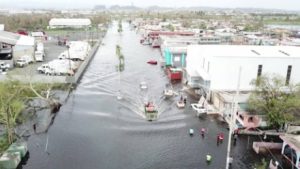

After the 2013 publication of the Go Lean book, many countries came together for COP21 (December 2015), also known as the Paris Accords. As alluded to above, this year’s follow-up, Katowice (Poland) 2018 had a few less participants for this “put speech into action” plan. See the news article about COP24 here:

News Title: Nations agree on rules for implementing Paris climate agreement
Sub-title: Nations dragged a deal over the line Saturday to implement the landmark 2015 Paris climate treaty after marathon UN talks that failed to match the ambition the world’s most vulnerable countries need to avert dangerous global warming.

Katowice, Poland – Delegates from nearly 200 states finalised a common rule book designed to deliver the Paris goals of limiting global temperature rises to well below two degrees Celsius (3.6 Fahrenheit).

“Putting together the Paris agreement work programme is a big responsibility,” said COP24 president Michal Kurtyka as he gavelled through the manual following the talks in Poland that ran deep into overtime.

“It has been a long road. We did our best to leave no-one behind.”

But environmental groups said the package agreed in the Polish mining city of Katowice lacked the bold ambition needed to protect states already dealing with devastating floods, droughts and extreme weather made worse by climate change.

“We continue to witness an irresponsible divide between the vulnerable island states and impoverished countries pitted against those who would block climate action or who are immorally failing to act fast enough,” executive director of Greenpeace Jennifer Morgan said.

The final decision text was repeatedly delayed as negotiators sought guidelines that are effective in warding off the worst threats posed by our heating planet while protecting the economies of rich and poor nations alike.

“Without a clear rulebook, we won’t see how countries are tracking, whether they are actually doing what they say they are doing,” Canada’s Environment Minister Catherine McKenna told AFP.

At their heart, negotiations were about how each nation funds action to mitigate and adapt to climate change, as well as how those actions are reported.

Developing nations wanted more clarity from richer ones over how the future climate fight will be funded and pushed for so-called “loss and damage” measures.

This would see richer countries giving money now to help deal with the effects of climate change many vulnerable states are already experiencing.

Another contentious issue was the integrity of carbon markets, looking ahead to the day when the patchwork of distinct exchanges — in China, the Europe Union, parts of the United States — may be joined up in a global system.

“To tap that potential, you have to get the rules right,” said Alex Hanafi, lead counsel for the Environmental Defense Fund in the United States.

“One of those key rules — which is the bedrock of carbon markets — is no double counting of emissions reductions.”

The Paris Agreement calls for setting up a mechanism to guard against practices that could undermine such a market, but finding a solution has proved so problematic that the debate has been kicked down the road to next year.

‘System needs to change’

One veteran observer told AFP Poland’s presidency at COP24 had left many countries out of the process and presented at-risk nations with a “take it or leave it” deal.

Progress had “been held up by Brazil, when it should have been held up by the small islands. It’s tragic.”

One of the largest disappointments for countries of all wealths and sizes was the lack of ambition to reduce emissions shown in the final COP24 text.

Most nations wanted the findings of the Intergovernmental Panel on Climate Change (IPCC) to form a key part of future planning.

It highlighted the need for carbon pollution to be slashed to nearly half by 2030 in order to hit the 1.5C target.

But the US, Saudi Arabia, Russia and Kuwait objected, leading to watered-down wording.

The final statement from the Polish COP24 presidency welcomed “the timely conclusion” of the report and invited “parties to make use of it” — hardly the ringing endorsement many nations had called for.

“There’s been a shocking lack of response to the 1.5 report,” Morgan told AFP. “You can’t come together and say you can’t do more!”

With UN talks well into their third decade sputtering on as emissions rise remorselessly, activists have stepped up grassroots campaigns of civil disobedience to speed up action on climate.

“We are not a one-off protest, we are a rebellion,” a spokesman for the Extinction Rebellion movement, which disrupted at least one ministerial event at the COP, told AFP.

“We are organising for repeated disruption, and we are targeting our governments, calling for the system change needed to deal with the crisis that we are facing.”

Source: AFP – France24 News Service – Posted December 16, 2018; retrieved December 18, 2018 from: https://www.france24.com/en/20181215-cop24-poland-climate-summit-deal-paris-climate-agreement-negotiations-un-environment

—————-

VIDEO # 1 – Nations agree on rules for implementing Paris climate agreement – https://youtu.be/SBUZS3cl2X0

FRANCE 24 English
Published on Dec 17, 2018 – Nations dragged a deal over the line Saturday to implement the landmark 2015 Paris climate treaty after marathon UN talks that failed to match the ambition the world’s most vulnerable countries need to avert dangerous global warming.

Visit our website: http://www.france24.com

FRANCE 24 live news stream: all the latest news 24/7 http://f24.my/YTliveEN

———————

VIDEO # 2 – UN climate talks: ‘A transition to a greener economy is possible’ – https://youtu.be/qqbQ1hyWc_Y

FRANCE 24 English
Uploaded on Dec 15, 2018

Subscribe to France 24 now: http://f24.my/youtubeEN

FRANCE 24 live news stream: all the latest news 24/7 http://f24.my/YTliveEN

Visit our website: http://www.france24.com

One notable absentee from Katowice has been the United States of America. This is due to the sad fact that the “Leader of the Free World” – a moniker assigned to the US President – is a Climate Change denier. Donald Trump campaigned on his denial and has manifested his dismay with subsequent actions. His blatant disregard was previously detailed in a prior Go Lean commentary from June 1, 2017, as follows:

Its June 1st, the start of the Hurricane season. According to Weather Authorities, it is going to be a tumultuous season, maybe even more destructive than last year….

Thanks Climate Change.

What hope is there to abate the threats from Climate Change?

Thanks to the Paris Accord, there is now hope; (we remember the effectiveness of the accord to abate “Acid Rain”).

But wait! The American President – Donald Trump – announces that he is withdrawing the United States from the Paris Accord. WTH?!?!

The Caribbean status quo is unsustainable under the real threats of Climate Change. The region must reboot, reform and transform. We must do the heavy-lifting ourselves; we cannot expect relief and refuge from others, like the American Super-Power. We must find and “sail” under our own power. 🙂

The Caribbean is more on the frontlines of Climate Change distress than the US – think hurricanes. We do not have the luxury to deny, defer and dispute. We must “batten down the hatches” and prepare for the worst. (Many claim this is also the disposition of many American destinations, think California forest fires). So we must take the lead ourselves for our own relief!

The Caribbean frontlines have been depicted in many previous Go Lean blog-commentaries. Consider the sample – as follows – highlighting some of the many Climate Change-infused storms that have impacted our region and others over the short timeframe – 5 years – since the publication of the Go Lean book:

https://goleancaribbean.com/blog/?p=15996 Good Governance: Stepping Up in an Emergency
October 2018 Trinidad heavy rains – not associated with a hurricane.
https://goleancaribbean.com/blog/?p=14925 ‘Climate Change’ Reality!? Numbers Don’t Lie
There is no longer any doubt, the Numbers don’t lie: the earth has had 400 straight warmer-than-average months.
https://goleancaribbean.com/blog/?p=13391 After Maria, Failed-State Indicators: Destruction and Defection
Hurricane Maria devastated Puerto Rico and other Caribbean islands. 1 year and a half later, recovery is still slow and frustrating. Islands like Dominica, are still struggling to recover; Ross University fled there to go to Barbados.
https://goleancaribbean.com/blog/?p=12996 After Irma, Failed-State Indicators: Destruction and Defection 
Hurricane Irma devastated Caribbean islands, like Saint Martin.
https://goleancaribbean.com/blog/?p=12977 After Irma, Barbuda Becomes a ‘Ghost Town’
Climate Change threats are real for the twin-island nation of Antigua and Barbuda. Barbuda is no more, after Hurricane Irma.
https://goleancaribbean.com/blog/?p=12924 Hurricane Categories – The Science
Category 5 Hurricanes – Once rare; now normal and common.
https://goleancaribbean.com/blog/?p=12879 Disaster Preparation: ‘Rinse and Repeat’
Hurricane Harvey proved that even the advanced democracy of the USA is not ready.
https://goleancaribbean.com/blog/?p=12834 Hurricane Andrew – 25 Years of Hoopla
Climate Change disasters are not new; 1992 storm was an eye-opener.
https://goleancaribbean.com/blog/?p=7896 The Logistics of Disaster Relief
Preparing for the worst” means being more efficient and technocratic.
https://goleancaribbean.com/blog/?p=7449 ‘Crap Happens’ – So What Now?
Hurricane Wilma brought chaos to this city’s economic engines in 2004.
https://goleancaribbean.com/blog/?p=6189 A Lesson in History – ‘Katrina’ is helping today’s crises
There are many lessons learned from this 2005 American disaster.
https://goleancaribbean.com/blog/?p=4741 Vanuatu and TuvaluInadequate response to human suffering
Lessons learned from these small Pacific Islands climate failures.

So it has been 5 years since the publication of the Go Lean book. Climate Change was identified as an Agent of Change that the region was struggling with and losing. Since then, conditions have worsened. The book asserts that the entire region must unite in order to “hope for the best and prepare for the worst”. The “hope” is really a call to action, that the regional neighbors would confederate and join in to the global campaign of mitigating and abating Climate Change. This aligns with the first pronouncement (Page 11) of the opening Declaration of Interdependence:

i. Whereas the earth’s climate has undeniably changed resulting in more severe tropical weather storms, it is necessary to prepare to insure the safety and security of life, property and systems of commerce in our geographical region. As nature recognizes no borders in the target of its destruction, we also must set aside border considerations in the preparation and response to these weather challenges.

The Go Lean book – a roadmap for the introduction and implementation of the technocratic Caribbean Union Trade Federation (CU) – presents a 370-page roadmap for re-booting the economic, security and governmental institutions of the 30 member-states in the Caribbean region, especially in light of the realities of Climate Change. While this is a global battle, we, the Caribbean member-states, are on the frontlines, so we must be doubly prepared for the surety of destruction from this threat. We must do our share and “Go Green” to arrest our own carbon footprint. We must not be hypocritical as we call on the Big Polluting nations to reform – we must reform ourselves, so as to have moral authority.

As detailed in a previous blog-commentary, the dire effects of Climate Change may be irreversible after the next 12 years, if we do not work to abate this disaster. So we must fight!

This is an inconvenient truth: We must fight like our lives depend on it. A product of these COP24 Katowice Accords, is now definitive plans and rules for implementing abatements around the world; carbon footprints must be reduced … globally, now!

A change has now come to the Caribbean region. This is Climate Change and it is not a good thing. Now is the time for a permanent union to provide efficient stewardship for our economic, security and governing engines. All regional stakeholders – the people and governing institutions – are hereby urged to lean-in to the empowerments described in the book Go Lean … Caribbean. Yes, we can … make our region, these islands and coastal states, better places to live, work and play.

There is the successful track record of abating environment pollution: remember Acid Rain in the 1990’s. So despite the doom and gloom, mitigation and abatement of Climate Change is conceivable, believable and achievable. 🙂

Sign the petition to lean-in for this roadmap for the Caribbean Union Trade Federation. 

Download the free e-book of Go Lean … Caribbean – now!

Share this post:
, ,
[Top]

This Day in 1941: Pearl Harbor – ENCORE

This day 77 years ago is a “day that will live in infamy”.
This is the anniversary of the Japanese attack on the United States Navy at Pearl Harbor, Hawaii. This event changed the world, as it ushered the US into World War II when they declared war against Japan the next day. Japan (Hirohito) was aligned with Germany (Hitler) and Italy (Mussolini), so by the US declaring war on Japan, the direct and immediate result was Germany and Italy declared war against the United States.

Germany, Italy, Japan, United States of America, …. these are just a sample of the countries involved in the conflict; it was a global war, the second one in 30 years.

There are a lot of lessons for the Caribbean in this history. This was the theme of this previous blog-commentary on December 7, 2016 during the 75th Anniversary commemoration. That entry is being Encored here-now, for the 2018 commemoration:

——————–

Go Lean Commentary – Lessons Learned from Pearl Harbor

What would you do if backed into a corner and there’s a threat on your life?

For many people their natural impulse is to come out fighting. They say that this is not aggression, rather just a survival instinct.

Believe it or not, this depiction describes one of the biggest attacks in American history: the Japanese Attack on Pearl Harbor. See VIDEO here:

VIDEO – World War II History: Attack on Pearl Harbor – http://www.history.com/topics/world-war-ii/world-war-ii-history/videos/attack-pearl-harbor

Retrieved December 7, 2016 from History.com – On December 7, 1941, Japan launches a surprise attack on American soil at Pearl Harbor.

cu-blog-lessons-learned-from-pearl-harbor-photo-2

cu-blog-lessons-learned-from-pearl-harbor-photo-3

cu-blog-lessons-learned-from-pearl-harbor-photo-4

This is the 75th Anniversary of that attack – a few days ago: December 7. That’s a lot of years and a lot of lessons. Still, 75 is a pretty round number, like 25, 50 and 100. This commentary has been reserved for now, a few days late on purpose because of the best-practice to “not speak ill of the dead” at a funeral or memorial service. But a “lessons learned analysis” is still an important exercise for benefiting from catastrophic efforts. After 75 years since the Pearl Harbor Attack on December 7, 1941, this post-mortem analysis is just as shocking as it was on this “day of infamy”.

Consider the details of this maligning article here (and the Appendices below); notice that it assumes a conspiracy:

Title: How U.S. Economic Warfare Provoked Japan’s Attack on Pearl Harbor
By: Robert Higgs

cu-blog-lessons-learned-from-pearl-harbor-photo-1Ask a typical American how the United States got into World War II, and he will almost certainly tell you that the Japanese attacked Pearl Harbor and the Americans fought back. Ask him why the Japanese attacked Pearl Harbor, and he will probably need some time to gather his thoughts. He might say that the Japanese were aggressive militarists who wanted to take over the world, or at least the Asia-Pacific part of it. Ask him what the United States did to provoke the Japanese, and he will probably say that the Americans did nothing: we were just minding our own business when the crazy Japanese, completely without justification, mounted a sneak attack on us, catching us totally by surprise in Hawaii on December 7, 1941.

You can’t blame him much. For more than 60 years such beliefs have constituted the generally accepted view among Americans, the one taught in schools and depicted in movies—what “every schoolboy knows.” Unfortunately, this orthodox view is a tissue of misconceptions. Don’t bother to ask the typical American what U.S. economic warfare had to do with provoking the Japanese to mount their attack, because he won’t know. Indeed, he will have no idea what you are talking about.

In the late nineteenth century, Japan’s economy began to grow and to industrialize rapidly. Because Japan has few natural resources, many of the burgeoning industries had to rely on imported raw materials, such as coal, iron ore or steel scrap, tin, copper, bauxite, rubber, and petroleum. Without access to such imports, many of which came from the United States or from European colonies in southeast Asia, Japan’s industrial economy would have ground to a halt. By engaging in international trade, however, the Japanese had built a moderately advanced industrial economy by 1941.

At the same time, they also built a military-industrial complex to support an increasingly powerful army and navy. These armed forces allowed Japan to project its power into various places in the Pacific and east Asia, including Korea and northern China, much as the United States used its growing industrial might to equip armed forces that projected U.S. power into the Caribbean and Latin America, and even as far away as the Philippine Islands.

When Franklin D. Roosevelt became president in 1933, the U.S. government fell under the control of a man who disliked the Japanese and harbored a romantic affection for the Chinese because, some writers have speculated, Roosevelt’s ancestors had made money in the China trade.[1] Roosevelt also disliked the Germans (and of course Adolf Hitler), and he tended to favor the British in his personal relations and in world affairs. He did not pay much attention to foreign policy, however, until his New Deal began to peter out in 1937. Afterward, he relied heavily on foreign policy to fulfill his political ambitions, including his desire for reelection to an unprecedented third term.

When Germany began to rearm and to seek Lebensraum aggressively in the late 1930s, the Roosevelt administration cooperated closely with the British and the French in measures to oppose German expansion. After World War II commenced in 1939, this U.S. assistance grew ever greater and included such measures as the so-called destroyer deal and the deceptively named Lend-Lease program. In anticipation of U.S. entry into the war, British and U.S. military staffs secretly formulated plans for joint operations. U.S. forces sought to create a war-justifying incident by cooperating with the British navy in attacks on German U-boats in the north Atlantic, but Hitler refused to take the bait, thus denying Roosevelt the pretext he craved for making the United States a full-fledged, declared belligerent—an end that the great majority of Americans opposed.

In June 1940, Henry L. Stimson, who had been secretary of war under Taft and secretary of state under Hoover, became secretary of war again. Stimson was a lion of the Anglophile, northeastern upper crust and no friend of the Japanese. In support of the so-called Open Door Policy for China, Stimson favored the use of economic sanctions to obstruct Japan’s advance in Asia. Treasury Secretary Henry Morgenthau and Interior Secretary Harold Ickes vigorously endorsed this policy. Roosevelt hoped that such sanctions would goad the Japanese into making a rash mistake by launching a war against the United States, which would bring in Germany because Japan and Germany were allied.

Accordingly, the Roosevelt administration, while curtly dismissing Japanese diplomatic overtures to harmonize relations, imposed a series of increasingly stringent economic sanctions on Japan. In 1939 the United States terminated the 1911 commercial treaty with Japan. “On July 2, 1940, Roosevelt signed the Export Control Act, authorizing the President to license or prohibit the export of essential defense materials.” Under this authority, “[o]n July 31, exports of aviation motor fuels and lubricants and No. 1 heavy melting iron and steel scrap were restricted.” Next, in a move aimed at Japan, Roosevelt slapped an embargo, effective October 16, “on all exports of scrap iron and steel to destinations other than Britain and the nations of the Western Hemisphere.” Finally, on July 26, 1941, Roosevelt “froze Japanese assets in the United States, thus bringing commercial relations between the nations to an effective end. One week later Roosevelt embargoed the export of such grades of oil as still were in commercial flow to Japan.”[2] The British and the Dutch followed suit, embargoing exports to Japan from their colonies in southeast Asia.

An Untenable Position
cu-blog-lessons-learned-from-pearl-harbor-photo-6
Roosevelt and his subordinates knew they were putting Japan in an untenable position and that the Japanese government might well try to escape the stranglehold by going to war. Having broken the Japanese diplomatic code, the Americans knew, among many other things, what Foreign Minister Teijiro Toyoda had communicated to Ambassador Kichisaburo Nomura on July 31: “Commercial and economic relations between Japan and third countries, led by England and the United States, are gradually becoming so horribly strained that we cannot endure it much longer. Consequently, our Empire, to save its very life, must take measures to secure the raw materials of the South Seas.”[3]

Because American cryptographers had also broken the Japanese naval code, the leaders in Washington knew as well that Japan’s “measures” would include an attack on Pearl Harbor.[4] Yet they withheld this critical information from the commanders in Hawaii, who might have headed off the attack or prepared themselves to defend against it. That Roosevelt and his chieftains did not ring the tocsin makes perfect sense: after all, the impending attack constituted precisely what they had been seeking for a long time. As Stimson confided to his diary after a meeting of the war cabinet on November 25, “The question was how we should maneuver them [the Japanese] into firing the first shot without allowing too much danger to ourselves.”[5] After the attack, Stimson confessed that “my first feeling was of relief … that a crisis had come in a way which would unite all our people.[6]

Source: The Independent Institute – Online Community – Posted: May 1, 2006; retrieved December 7, 2016 from: http://www.independent.org/newsroom/article.asp?id=1930
——–
See Appendices below for cited references and profiles of the Author and the Organization.

So this establishes why the Japanese may have been motivated to attack Pearl Harbor in the first place. The motivation seems more complicated than initially reported.

The Bible declares that:

“For there is nothing hidden that will not become manifest” – Luke 8:17

cu-blog-lessons-learned-from-pearl-harbor-photo-7

cu-blog-lessons-learned-from-pearl-harbor-photo-5

After 75 years, the before-during-after facts associated with the Pearl Harbor Attack should be available for full disclosure. What are the lessons here for the Caribbean and today’s effort to secure the Caribbean homeland while expanding the regional economy? We truly want to consider these main points, these lessons; (the hyperlinks refer to previous Go Lean commentaries):

Lessons

Territories have a status of disregard Hawaii (Pearl Harbor) and Philippines were attacked by the Japanese. These were both US Territories at the same. The levels of protection and preparedness for territories are sub-standard compared to the American mainland. As a result there was no meaningful plan for the air defense of Hawaii.
Colonialism is/was really bad Japan protested the sub-standard reality of the native Asians under the European colonial schemes. A people oppressed, suppressed and repressed would not remain docile forever; “that a downtrodden people would not stay down, that they would rise and revolt, that they would risk their lives and that of their children to pursue freedom.” – Go Lean book Page 251.
White Supremacy is/was a really bad construct The US Territories (Hawaii and Philippines) were not the first targets for Japan. They targeted all European colonies (British, French and Dutch) territories. Their campaign was to rail against White Supremacy.
Bullies only respond to a superior force Japan avail themselves of expansion opportunities in Far-East Asia as the European powers became distracted in the time period during and after World War I. (Manchuria in China was occupied by Japan starting in 1931). Only a superior force, the US, was able to assuage their aggression.
Economic Warfare can back a Government into a corner When the supply of basic needs (food, clothing, shelter and energy) are curtailed, a crisis ensues. When people are in crisis, they consider “fight or flight” options. Japan chose to fight; Caribbean people choose flight.
Societies can double-down on a bad Community Ethos Japan’s aggression was a direct result of their community ethos that honored Samurai warrior and battle culture. Men would walk the streets with their swords, ready for a challenge. On the other hand, the US (and Western Europe) community ethos of racism was so ingrained that the natural response in the US, post-Pearl Harbor, was to intern Japanese Americans in camps.
All of these bad community ethos were weeded out with post-WWII Human Rights reconciliations. – Go Lean book Page 220.
Double Standards are hard to ignore Japan felt justified in their Pacific aggression because of the US’s regional aggression in the Americas. Before Pearl Harbor, they withdrew from the League of Nations in protest of double standards.
Even after WWII, this double standard continues with countries with Veto power on the UN Security Council.
People have short memories There are movements to re-ignite many of the same developments that led to the devastation of WWII: right wing initiatives in Japan and Germany; Human Rights disregard for large minority groups (Muslims, etc.).
The more things change, the more they remain the same.

This discussion is analyzing the concept of “fight or flight”. According to Anthropologists, individuals and societies facing a crisis have to contend with these two options for survival. The very concept of refugees indicate that most people choose to flee; they choose internal displacement or refuge status in foreign countries. This point is consistent with the theme in the book Go Lean … Caribbean that this region is in crisis and as a result people have fled from their beloved homelands to foreign destinations in North America and Europe. How bad? According to one report, we have lost 70 percent of our tertiary-educated population.

Enough said! Our indictment is valid. Rather than flee, we now want the region to fight. This is not advocating a change to a militaristic state, but rather this commentary, and the underlying Go Lean book, advocates devoting “blood, sweat and tears” to empowering change in the Caribbean region. The book states this in its introduction (Page 3):

We cannot ignore the past, as it defines who we are, but we do not wish to be shackled to the past either, for then, we miss the future. So we must learn from the past, our experiences and that of other states in similar situations, mount our feet solidly to the ground and then lean-in, to reach for new heights; forward, upward and onward. This is what is advocated in this book: to Go Lean … Caribbean!

The Go Lean book serves as a roadmap for the introduction and implementation of the Caribbean Union Trade Federation (CU). One mission of this roadmap is to reduce the “push and pull” factors that contributes to the high emigration rates. For the most part the “push and pull” factors relate to the societal defects among the economic, security and governing engines. Another mission is to incentivize the far-flung Diaspora to consider a return to the region. Overall, the Go Lean roadmap asserts that the economy of the Caribbean is inextricably linked to the security of the Caribbean. The roadmap therefore proposes an accompanying Security Pact to accompany the CU treaty’s economic empowerment efforts. The plan is to cooperate, collaborate and confer with all regional counterparts so as to provide an optimized Caribbean defense, against all threats, foreign and domestic. This includes the American Caribbean territories (just like Pearl Harbor was on the American territory of Hawaii) of Puerto Rico and the US Virgin Islands. These American protectorates are included in this CU regional plan.

This CU/Go Lean regional plan strives to advance all of Caribbean society with these 3 prime directives:

  • Optimization of the economic engines in order to grow the regional economy to a $800 Billion Single Market by creating 2.2 million new jobs.
  • Establishment of a security apparatus to protect the resultant economic engines.
  • Improvement of Caribbean governance in support of these endeavors.

The Go Lean book stresses the effectiveness and efficiency of protecting life and property of all Caribbean stakeholders: residents, trading partners, visitors, etc.. This is why the book posits that some deployments are too big for any one member-state to manage alone – especially with such close proximities of one island nation to another – there are times when there must be a cross-border multi-lateral coordination – a regional partnership. This is the vision that is defined in the book (Pages 12 – 14), starting with these statements in the opening Declaration of Interdependence:

x. Whereas we are surrounded and allied to nations of larger proportions in land mass, populations, and treasuries, elements in their societies may have ill-intent in their pursuits, at the expense of the safety and security of our citizens. We must therefore appoint “new guards” to ensure our public safety and threats against our society, both domestic and foreign.

xii. Whereas the legacy in recent times in individual states may be that of ineffectual governance with no redress to higher authority, the accedence of this Federation will ensure accountability and escalation of the human and civil rights of the people for good governance, justice assurances, due process and the rule of law. As such, any threats of a “failed state” status for any member state must enact emergency measures on behalf of the Federation to protect the human, civil and property rights of the citizens, residents, allies, trading partners, and visitors of the affected member state and the Federation as a whole.

xvi. Whereas security of our homeland is inextricably linked to prosperity of the homeland, the economic and security interest of the region needs to be aligned under the same governance.

The Go Lean roadmap is not a call for a revolt against the governments, agencies or institutions of the Caribbean region, but rather a petition for a peaceful transition and optimization of the economic, security and governing engines in the region. To establish the security optimization, the Go Lean book presents a series of community ethos that must be adapted to forge this change. In addition, there are these specific strategies, tactics, implementation and advocacies to apply:

Community Ethos – new Economic Principles Page 21
Community Ethos – new Security Principles Page 22
Community Ethos – Minority Equalization Page 24
Community Ethos – Impacting the Greater Good Page 34
Strategy – Mission – Enact a Defense Pact to defend the homeland Page 45
Tactical – Fostering a Technocracy Page 64
Tactical – Homeland Security – Naval Operations Page 75
Tactical – Homeland Security – Militias Page 75
Implementation – Assemble – US Overseas Territory into CU Page 96
Implementation – Foreign Policy Initiatives at Start-up Page 102
Implementation – Security Initiatives at Start-up Page 103
Implementation – Ways to Promote Independence Page 120
Planning – Ways to Model the EU – Constructs after WW II Page 130
Advocacy – Ways to Better Manage the Social Contract Page 170
Advocacy – Ways to Improve Homeland Security Page 180
Advocacy – Ways to Mitigate Terrorism Page 181
Advocacy – Ways to Improve Intelligence Gathering Page 182
Advocacy – Ways to Enhance Tourism – Mitigate Risky Image Page 190
Advocacy – Ways to Improve Emergency Management Page 196
Advocacy – Ways to Preserve Caribbean Heritage Page 218
Advocacy – Ways to Impact US Territories Page 244

Now is the time to lean-in to this roadmap and “fight” for Caribbean change, as depicted in the book Go Lean…Caribbean. At this time, there are no State Actor adversaries – like Imperial Japan – seeking to cause harm to our homeland, but that status quo can change very quickly. Some Caribbean member-states are still de facto “colonies”, so enemies of our colonial masters – France, Netherlands, US, UK – can quickly “pop up”. We must be ready and on guard to any possible threats and security risks.

The movement behind the Go Lean … Caribbean book seeks to make this homeland a better place to live, work and play. Since the Caribbean is arguably the best address of the planet, tourism is a primary concern. So security here in our homeland must take on a different priority. Tourists do not visit war zones – civil wars, genocides, active terrorism, Failed-States and rampant crime. Already our societal defects (economics) have created such crises that our people have chosen to flee as opposed to “fight”. We do not need security threats as well; we do not need Failed-States. We are now preparing to “fight” (exert great efforts), not flee, to wage economic war to elevate our  communities.

This will not be easy; this is heavy-lifting, but success is possible. The strategies, tactics and implementations in the Go Lean roadmap are conceivable, believable and achievable. 🙂

Download the book Go Lean … Caribbean – now!

———–

Appendix A – Reference Notes:
1.  Harry Elmer Barnes, “Summary and Conclusions,” in Perpetual War for Perpetual Peace:A Critical Examination of the Foreign Policy of Franklin Delano Roosevelt and Its Aftermath (Caldwell, Id.: Caxton Printers, 1953), pp. 682–83.
2.  All quotations in this paragraph from George Morgenstern, “The Actual Road to Pearl Harbor,” in Perpetual War for Perpetual Peace, pp. 322–23, 327–28.
3.  Quoted ibid., p. 329.
4.  Robert B. Stinnett, Day of Deceit: The Truth about FDR and Pearl Harbor (NewYork: Free Press, 2000).
5.  Stimson quoted in Morgenstern, p. 343.
6.  Stimson quoted ibid., p. 384.

 ——-

Appendix B – About the Author:

Robert Higgs is a Senior Fellow in Political Economy at the Independent Institute and Editor at Large of the Institute’s quarterly journal The Independent Review. He received his Ph.D. in economics from JohnsHopkinsUniversity, and he has taught at the University of Washington, LafayetteCollege, SeattleUniversity, the University of Economics, Prague, and GeorgeMasonUniversity.

——-

Appendix C – About the Independent Institute:

The Independent Institute is a non-profit, non-partisan, scholarly research and educational organization that sponsors in-depth studies of critical social and economic issues.

The mission of the Independent Institute is to boldly advance peaceful, prosperous, and free societies grounded in a commitment to human worth and dignity.

Today, the influence of partisan interests is so pervasive that public-policy debate has become too politicized and is largely confined to a narrow reconsideration of existing policies. In order to fully understand the nature of public issues and possible solutions, the Institute’s program adheres to the highest standards of independent scholarly inquiry.
Source: http://www.independent.org/aboutus/

Share this post:
, , , ,
[Top]