Category: Ethos

Book Review: ‘Oral History of Bob Marley’

Go Lean Commentary

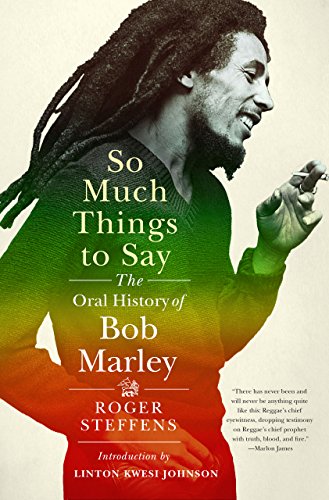
Bob Marley was not a saint; but he was saintly. – Author Roger Steffens

Marley SmilingBob Marley was perhaps the most influential person of Caribbean heritage; arguably so. He died 36 years ago, after living only to the age of 36. We have doubled the years of his life …

36 years here … 36 years gone!

… but it seems as if he lived a life of achievement equaling two or 3 lifetimes.

He was more than just a musician or an entertainer, he was a revolutionary icon. Many of the advocacies that he championed have now come full circle; come to fruition and come to regret:

In fact, references to Bob Marley have been consistent for the movement behind the book Go Lean… Caribbean – a guide to confederate, collaborate and convene the 30 member-states of the Caribbean region into a Single Market – he is mentioned in the book (Pages 119, 133 & 218) and featured in multiple blog-commentaries:

https://goleancaribbean.com/blog/?p=7738 A Lesson in History from Bob Marley – Buffalo Soldiers
https://goleancaribbean.com/blog/?p=866 Bob Marley: The legend lives on!

We now learn even more about Bob Marley in the new book by Reggae Archivist Roger Steffens, entitled: So Much Things to Say: The Oral History of Bob Marley. See a summary-review of that book here and listen to an AUDIO-Podcast interview with the Author:

Book Review for Book: So Much Things to Say: The Oral History of Bob Marley
By Roger Steffens 

Oral History of Marley 1

A revelatory, myth-shattering history of one of the most influential musicians of all time, told in the words of those who knew him best.

Roger Steffens is one of the world’s leading Bob Marley experts. He toured with the Wailers in the 1970s and was closely acquainted with Bunny Wailer, Peter Tosh and the rest of the band members. Over several decades he has interviewed more than seventy-five friends, business managers, relatives and confidants—many speaking publicly for the first time. Forty years in the making, So Much Things to Say weaves this rich testimony into a definitive telling of the life of the reggae king—the full, inside account of how a boy from the slums of Kingston, Jamaica, became a cultural icon and inspiration to millions around the world.

The intimacy of the voices and the frankness of their revelations will astonish even longtime Marley fans. Readers see the intense bonds of teenage friendship among Peter, Bunny and Bob, the vibrant early sessions with the original Wailers (as witnessed by members Junior Braithwaite, Beverley Kelso and Cherry Green) and the tumultuous relationships with Rita Marley and Cindy Breakspeare.

With unprecedented candor, these interviews tell dramatic, little-known stories, from the writing of some of Marley’s most beloved songs to the Wailers’ violent confrontation involving producer Lee “Scratch” Perry, Bob’s intensive musical training with star singer Johnny Nash and the harrowing assassination attempt at 56 Hope Road in Kingston, which led to Marley’s defiant performance two nights later with a bullet lodged in his arm.

Readers witness Marley’s rise to international fame in London, his triumphant visit to Zimbabwe to sing for freedom fighters inspired by his anthems and the devastating moment of his collapse while jogging in New York’s Central Park. Steffens masterfully conducts the story of Marley’s last months, as Marley poignantly sings “Another One Bites the Dust” during the sound check before his final concert in Pittsburgh, followed by his tragic death at the age of thirty-six.

So Much Things to Say explores major controversies, examining who actually ordered the shooting attack on Hope Road, scrutinizing claims of CIA involvement and investigating why Marley’s fatal cancer wasn’t diagnosed sooner. Featuring Steffens’s own candid photographs of Marley and his circle, this magisterial work preserves an invaluable, transformative slice of music history: the life of the legendary performer who brought reggae to the international stage.

Source: Amazon Online Bookstore-Portal; retrieved July 13, 2017 from: https://www.amazon.com/So-Much-Things-Say-History-ebook/dp/B01M68LN7U 

———-

AUDIO-PodcastBob Marley: Versions Of The Truth – https://the1a.org/segments/2017-07-10-oral-history-of-bob-marley/

Bob Marley: Versions Of The Truth

Published July 10, 2017 – Reggae historian Roger Steffens has written that “there are no facts in Jamaica, just versions” of the truth. That’s certainly the case with the star of Steffens’ latest book: Bob Marley.

Marley lived a life of art, inspiration and hard and fast adherence to his principles and spirituality. While he only lived to the age of 36, Marley and his music inspired a wave of devotees who fought for freedom, as well as a few enemies who wanted him dead.

But even though he was a global superstar, there are many mysteries and misconceptions about Marley.

Steffens new book, “So Much Things to Say: The Oral History of Bob Marley” gathers 40 years of interviews with those closest to Marley to separate truth from the various versions.

Host Joshua Johnson interviews guest Roger Steffens, reggae archivist and author of the book “So Much Things to Say: The Oral History of Bob Marley“.

We learn so much more about Bob Marley and Caribbean culture from these foregoing media productions. Marley was truly a musical genius who overcame obstacles and the challenge of a dysfunctional Jamaican society to soar and shine as a star in the world of music. This corresponds with a theme in the book Go Lean…Caribbean which relates that genius – in its many forms, be it music, arts, sciences, sports, etc. – can flourish in the Caribbean … with the proper fostering. The Go Lean book serves as a roadmap for the introduction and implementation of the Caribbean Union Trade Federation (CU). This would be an inter-governmental entity to promote a regional Single Market that covers the homelands of all 30 Caribbean member-states. This effort strives to advance Caribbean culture. The Go Lean/CU roadmap features this prime directive, as defined by these 3 statements:

  • Optimization of the economic engines to grow the regional economy to $800 Billion & create 2.2 million new jobs.
  • Establishment of a security apparatus to protect public safety and ensure the economic engines of the region, including the seas.
  • Improvement of Caribbean governance to support these engines, including a separation-of-powers between the member-states and CU federal agencies.

The Go Lean roadmap recognizes that a prerequisite for advancing society is a change in the Caribbean “community ethos”. This book opens early with the declaration that music can contribute to the fabric of society, but that society must contribute to the fostering of musicians. The book relates that such an attitude – community ethos or national spirit – can be forged in the entire region; see these statements in the Declaration of Interdependence (Pages 13 – 14):

xxi. Whereas the preparation of our labor force can foster opportunities and dictate economic progress for current and future generations, the Federation must ensure that educational and job training opportunities are fully optimized for all residents of all member-states, with no partiality towards any gender or ethnic group. The Federation must recognize and facilitate excellence in many different fields of endeavor, including sciences, languages, arts, music and sports. This responsibility should be executed without incurring the risks of further human flight, as has been the past history.

xxxii. Whereas the cultural arts and music of the region are germane to the quality of Caribbean life, and the international appreciation of Caribbean life, the Federation must implement the support systems to teach, encourage, incentivize, monetize and promote the related industries for arts and music in domestic and foreign markets. These endeavors will make the Caribbean a better place to live, work and play.

As related in a previous blog-commentary regarding Bob Marley …

“… he was the embodiment of all of these above values. He impacted the music, culture and economics of the region. He set a pathway for success for other generations of talented, inspirational and influential artists – musical geniuses – to follow. Other artists of Caribbean heritage are sure to emerge and “rock the world”; we are hereby “banking” on it, with these CU preparations.”

The CU presents that change has come to the Caribbean; with this Go Lean movement, there is a plan for new stewardship so that the Caribbean can better avail themselves of the benefits of music. So when we consider Bob Marley – as gleaned from the foregoing book by author Roger Steffens – we can assign all these descriptors and attributes to him:

  • Artist – Musician
  • Caribbean Ambassador
  • Inspirational Leader
  • Saintly, though not a saint.
  • Role Model for the Future

The world may never see another “star as bright” as Bob Marley; but we can still learn from his Role Model. The Go Lean book provides 370-pages of turn-by-turn instructions on “how” to adopt new community ethos, plus the strategies, tactics, implementations and advocacies to execute so as to reboot, reform and transform the societal engines of Caribbean society. Consider the sample from this list detailing this “how” for the Caribbean region to foster more musical geniuses:

Community Ethos – Ways to Foster Genius Page 27
Community Ethos –Promote Intellectual Property Page 29
Community Ethos – Ways to Promote Happiness Page 36
Community Ethos – Impact the Greater Good Page 37
Strategy – Vision – Celebrate the music, people and culture of the Caribbean Page 46
Tactical – Separation of Powers – Patents & Copyrights Page 78
Tactical – Separation of Powers – Culture Administration Page 81
Implementation – Ways to Benefit from Globalization Page 118
Advocacy – Ways to Make the Caribbean Better Page 131
Advocacy – Ways to Better Manage Image Page 133
Advocacy – Ways to Preserve Caribbean Heritage Page 218
Advocacy – Ways to Promote Music Page 231
Advocacy – Ways to Re-boot Jamaica – To make it less dysfunctional Page 239

Bob Marley – 36 years here … 36 years gone!

We urge all Caribbean stakeholders – governments and citizens alike – to learn the lessons from the life and legacy of Bob Marley, and then lean-in to this Go Lean roadmap to make the Caribbean homeland a better place to live, work and play. 🙂

Sign the petition to lean-in for this roadmap for the Caribbean Union Trade Federation.

Download the free e-Book of Go Lean … Caribbean – now!


Share this post:
, , ,

Caribbean Festival of the Arts – Past, Present and Future

Go Lean Commentary

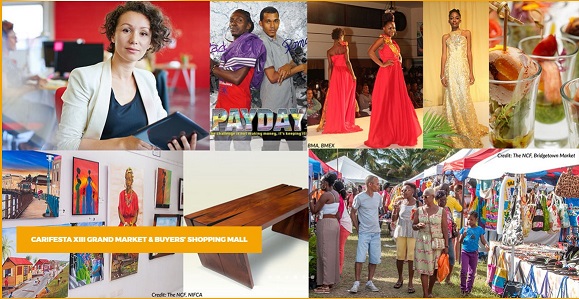
CU Blog - Caribbean Festival of Arts - Past, Present, Future - Photo 1Picture this: A Multi-disciplinary Arts Festival promoting the best of the best of Caribbean art and artists – musicians, authors, visual artists, dancers, actors, and craftsmen. This is the Caribbean Festival of the Arts or CARIFESTA, an ongoing concern since 1972 with its 13th rendition this summer – see Appendix A below.

With this being the 13th, considering the previous 12 renditions; surely CARIFESTA events are deemed successful.

Surely … but first, there is the need to define success …

  • Return on Investment? Then the answer is No.
  • Patron-Visitor-Tourist Traffic? No!
  • Continuation and growth of the event? No!
  • Acknowledgement that art is important for the promotion of Caribbean culture? Yes.

Why such a duplicitous gauge of success?

In the 45 years since the inaugural event in 1972, CARIFESTA has only been held sporadically and periodically. This year’s event (August 17 – 27, 2017 in Barbados) is only the 13th one in the 45 year history. See the full list of events here:

Carifesta

Date

Host

Carifesta I August 25 – September 15, 1972 Guyana
Carifesta II July 23 – August 2, 1976 Jamaica
Carifesta III 1979 Cuba
Carifesta IV July 19 – August 3, 1981 Barbados
Carifesta V August 22 – 28, 1992 Trinidad & Tobago
Carifesta VI August, 1995 Trinidad & Tobago
Carifesta VII August 17 – 26, 2000 Saint Kitts & Nevis
Carifesta VIII August 25 – 30, 2003 Suriname
Carifesta IX September, 2006 Trinidad & Tobago
Carifesta X Cancelled The Bahamas
Carifesta X August 22–31, 2008 Guyana
Carifesta XI Cancelled The Bahamas
Carifesta XI August 16–26, 2013 Suriname
Carifesta XII August 21–30, 2015 Haiti
Carifesta XIII August 17 – 27, 2017 Barbados

CARIFESTA is a microcosm of what is wrong in the Caribbean: greatest address on the planet in terms of terrain, culture and talent, but deficient in economics, security and governance.

Enough already! Here comes change!

The book Go Lean…Caribbean – available to download for free – asserts that the sponsors of the CARIFESTA event, CARICOM or Caribbean Community, is the problem. This regional body, though possessing good intentions, is a failure in its execution of any plan to elevate Caribbean society. The book declares that it is past time to retire CARICOM and replace it with a new, better expression for regional integration. CARICOM has been successful in only one area: getting the region to accept the merits of regional integration and collaboration.

The Go Lean book on the other hand, serves as a roadmap for the introduction and implementation of the technocratic Caribbean Union Trade Federation (CU), ; this is the alternative regional plan for the elevation of Caribbean society – this time for all 30 member-states and the 4 language groups (Dutch, English, French and Spanish).

Within the Go Lean roadmap, there is a mission to apply technocratic efficiencies to better promote and manage events.

Addressing all that is wrong with CARIFESTA, this CU/Go Lean roadmap has these 3 prime directives:

  • Optimization of the economic engines in order to grow the regional economy to $800 Billion and create 2.2 million new jobs.
  • Establishment of a security apparatus to ensure public safety and protect the resultant economic engines.
  • Improve Caribbean governance to support these engines, including a separation-of-powers between the member-states and CU federal agencies.

The book stresses that reforming and transforming the Caribbean societal engines must be a regional pursuit. This was an early motivation for the roadmap, as pronounced in the opening Declaration of Interdependence (Pages 12 – 14):

xi. Whereas all men are entitled to the benefits of good governance in a free society, “new guards” must be enacted to dissuade the emergence of incompetence, corruption, nepotism and cronyism at the peril of the people’s best interest. The Federation must guarantee the executions of a social contract between government and the governed.

xxi. Whereas the preparation of our labor force can foster opportunities and dictate economic progress for current and future generations, the Federation must ensure that educational and job training opportunities are fully optimized for all residents of all member-states, with no partiality towards any gender or ethnic group. The Federation must recognize and facilitate excellence in many different fields of endeavor, including sciences, languages, arts, music and sports. This responsibility should be executed without incurring the risks of further human flight, as has been the past history.

xxiv.  Whereas a free market economy can be induced and spurred for continuous progress, the Federation must install the controls to better manage aspects of the economy: jobs, inflation, savings rate, investments and other economic principles. Thereby attracting direct foreign investment because of the stability and vibrancy of our economy.

xxxii. Whereas the cultural arts and music of the region are germane to the quality of Caribbean life, and the international appreciation of Caribbean life, the Federation must implement the support systems to teach, encourage, incentivize, monetize and promote the related industries for arts and music in domestic and foreign markets. These endeavors will make the Caribbean a better place to live, work and play.

The Go Lean book provides 370-pages of turn-by-turn instructions on “how” to adopt new community ethos, plus the strategies, tactics, implementations and advocacies to execute so as to reboot, reform and transform the societal engines of Caribbean society. One mission of the Go Lean/CU roadmap is the plan to remediate the eco-system for the arts and artists in the Caribbean. The book considers best-practices from around the world in formulating an economic model for funding…

… there are many multi-disciplinary arts festivals around the world that have a consistent (annual) successful event. How do they fund their operations? Consider one example … in the White Paper highlighted in Appendix B below.

The Go Lean roadmap seeks to foster best-practices for the business eco-system for the arts. This quest has been addressed in many previous Go Lean commentaries; see sample here:

https://goleancaribbean.com/blog/?p=10910 Day of Happiness – Music-style
https://goleancaribbean.com/blog/?p=9897 Art Walk – It’s a ‘Real Thing’ in Wynwood
https://goleancaribbean.com/blog/?p=9883 Art Basel 2016 – A Testament to the Business of the Arts
https://goleancaribbean.com/blog/?p=9860 Forging Change: Arts & Artists
https://goleancaribbean.com/blog/?p=9151 The New Smithsonian African-American Museum
https://goleancaribbean.com/blog/?p=6310 Media Arts Case Study: Farewell to ‘Sábado Gigante’
https://goleancaribbean.com/blog/?p=5251 Post-Mortem of Inaugural Bahamas Junkanoo Carnival
https://goleancaribbean.com/blog/?p=4145 The African Renaissance Monument in Dakar, Senegal, Africa
https://goleancaribbean.com/blog/?p=2726 Caribbean Artist Role Model – Oscar De La Renta – RIP
https://goleancaribbean.com/blog/?p=2415 How ‘The Lion King’ roared into Show-Business history

While this commentary is a rebuke of previous governing oversight for the last 12 events over the 45 years, the movement behind this Go Lean roadmap wishes nothing but the greatest success for this 13th rendition of CARIFESTA later this summer. According to the Related Articles in Appendix C, good progress is being made in preparation for this year’s event.

CU Blog - Caribbean Festival of Arts - Past, Present, Future - Photo 2

CU Blog - Caribbean Festival of Arts - Past, Present, Future - Photo 3

Hopefully CARIFESTA organizers have learned lessons and applied best-practices for the execution of this year’s event. Caribbean artists deserve every opportunity to foster their talents. They deserve an optimized business eco-system both locally and regionally. Then there are the patrons (visitors, attendees and spectators), these ones too deserve every opportunity to fully explore the best of the best of Caribbean arts and artists.

The Go Lean roadmap demands a better future for regional artists and artistic events; here is a sample list – from the book – of the many community ethos, strategies, tactics, implementation and advocacies for better events:

Community Ethos – People Respond to Incentives Page 23
Community Ethos – Return on Investments Page 24
Community Ethos – Cooperatives Page 25
Community Ethos – Ways to Impact the Future Page 26
Community Ethos – Ways to Foster Genius – Performance Excellence Page 27
Community Ethos – Ways to Improve Sharing Page 35
Community Ethos – Ways to Promote Happiness Page 36
Community Ethos – Ways to Impact the Greater Good Page 37
Strategy – Customers – Business Community Page 47
Strategy – Customers – Visitors / Tourists Page 47
Strategy – Competitors – Event Patrons Page 55
Separation of Powers – Emergency Mgmt. Page 76
Separation of Powers – Tourism Promotion Page 78
Separation of Powers – Sports & Culture Administration Page 81
Separation of Powers – Fairgrounds Administration Page 83
Separation of Powers – Turnpike Operations Page 84
Steps to Implement Self-Governing Entities Page 105
Ways to Foster Cooperatives Page 176
Ways to Improve Intelligence Gathering Page 182
Ways to Improve [Service] Animal Husbandry Page 185
Ways to Enhance Tourism Page 190
Ways to Impact Events Page 191
Ways to Promote Fairgrounds Page 192
Ways to Impact Hollywood [& Media Industry] Page 203
Ways to Improve Transportation – Elaborate Ferry Network Page 205
Ways to Preserve Caribbean Heritage Page 218
Ways to Improve the Arts Page 230
Ways to Promote Music Page 231

Now is the time to lean-in for this roadmap to reform and transform the Caribbean; we can make our homeland a better place to live, work and play for all stakeholders, artists and art lovers alike. 🙂

Download the free e-Book of Go Lean … Caribbean – now!

Sign the petition to lean-in for this roadmap for the Caribbean Union Trade Federation.

———–

Appendix A – Caribbean Festival of Arts Wiki Page

Caribbean Festival of Arts, commonly known as CARIFESTA, is an international multicultural event organized on a periodic basis by the countries of the Caribbean. The main purpose is to gather artists, musicians, authors, and to exhibit the folkloric and artistic manifestations of the Caribbean and Latin American region.

History

The first Caribbean Festival of Arts took place in 1972. This event was organized by Guyana’s then President Forbes Burnham, based on a similar event that took place in Puerto Rico in 1952. He held a number of conferences with Caribbean artists and writers that eventually led to the first Carifesta.

CARIFESTA was conceived out of an appeal from a regional gathering of artists who were at the time participating in a Writers and Artists Convention in Georgetown, Guyana, in 1970 and which coincided with Guyana’s move to Republican status.

The three main considerations with regard to the

  • The Festival should be inspirational and should provide artists with the opportunity to discuss among themselves techniques and motivations
  • It should be educational in that the people of the Caribbean would be exposed to the values emerging from the various art forms and it should relate to people and be entertaining on a scale and in a fashion that would commend itself to the Caribbean people
  • The regional creative festival was first held in Georgetown, Guyana in 1972, attracting creative artistes from over 30 Caribbean and Latin American countries.

It is a celebration of the ethnic and racial diversity which separately and collectively created cultural expressions that are wonderfully unique to the Caribbean.

The cultural village life of CARIFESTA is intended to be a mixture of the States of the Caribbean Community (CARICOM); the wider Caribbean, Latin America; and a representation of Africa, Asia, Europe and North America It is a vision of the peoples with roots deep in Asia, Europe and Africa, coming together to perform their art forms and embracing literature inspired by the Caribbean’s own peculiar temperament; paintings drawn from the awe inspiring tropical ecology; and the visionary inheritance of our forefathers

Aims

According to the CARICOM Organisation, CARIFESTA aims[1] to:

  • depict the life of the people of the region – their heroes, morale, myth, traditions, beliefs, creativeness, ways of expression.
  • show the similarities and the differences of the people of the Caribbean and Latin America
  • create a climate in which art can flourish so that artists would be encouraged to return to their homeland.
  • awaken a regional identity in Literature.
  • stimulate and unite the cultural movement throughout the region.

Described as something of an artistic and cultural “Olympics” observed by both regional and international states, the festival includes both a cultural opening and closing ceremony with many diverse events in between, including:

  • Drama – ranging from elaborate musical productions to comedy, fantasy, ritual, history, folk plays and legend.
  • Music – concerts, recitals and musical shows provide tantalising folk rhythms, soul-searching jazz, as well as pop, classics and ballet. There are Indian tablas, African drums, Caribbean steel pan, piano, violin, flute and guitar – in other words, music for every taste.
  • Visual Art – exhibitions of sculpture, graphics, paintings, drawings, and photographs are a visual testimony of each country’s art forms.
  • Literature – an anthology of new writing from the Caribbean region is produced for CARIFESTA, and authors often launch their works at the festivals. There are also poetry recitals and lecture discussions at universities and Conference centres.
  • Folklore – groups from over a dozen countries reveal the colour and the mystery of Caribbean and Latin American folklore and legend, among them the Conjunto Folklorico Nacionale of Cuba, the Ol’Higue and Baccos of Guyana, Shango dancers from Trinidad, Shac Shac musicians from Dominica.
  • Crafts – among the unusual events at CARIFESTA will be live demonstrations of ceramics, wood carving, painting and drawing.
  • Dance – this part of the programme is all-embracing and covers courtly Javanese dancing, intricate ballet, earthy folk plays, dramatic modern choreography, classical Indian movements, spontaneous improvisations and pop.
  • Heritage Exhibitions – host countries such as Guyana and Suriname that boast diverse heritage showcase cultural exhibits and anthropological studies of the indigenous people.
  • Family Life – CARIFESTA usually includes “Kid Zones” and family workshops to educate and entertain families.

Source: Wikipedia Online Encyclopedia – Retrieved June 26, 2017 from: https://en.wikipedia.org/wiki/Caribbean_Festival_of_Arts

———–

Appendix B – Report Snippets: Multidisciplinary Arts: Approaches to Funding

A. INTRODUCTION

This report summarizes the findings of the International Federation of Arts Councils and Culture Agencies’ (IFACCA) 38th D’Art question on approaches to funding multidisciplinary arts, which was developed and conducted jointly by the Canada Council for the Arts (CC) and the Australia Council for the Arts(AC).1

The survey was distributed via IFACCA to approximately 75 international arts councils and related bodies in early March 2009. Twelve funding bodies responded fully to the survey, including 10 national funding bodies and two municipal funders for a response rate of 16%. Therefore this survey should only be considered as a sample or snapshot of approaches to funding multidisciplinary arts.

B. APPROACH AND METHODOLOGY

The consultants have based their analysis on the complete sample of responses to D’Art question 38. A total of 13 responses were received from public funders in 10 countries. …

The countries included in the analysis of this report therefore include: Canada, Australia, New Zealand, Singapore, England, Finland, Sweden, Cuba, Colombia. (A list of survey respondents is included in Annex 1).

C. ANALYSIS OF SURVEY RESPONSES

Summary

Overall, definitions of multidisciplinary arts are broad and inclusive, with an emphasis on the presence of more than one discipline, which may extend beyond the arts, in a single artistic process, product or a larger event. Some funders make a distinction between multidisciplinary arts activity that combines multiple disciplines in one activity, and interdisciplinary arts, typically describing an emergent practice, exploratory or integrative process.

Some funders are interested in developing sustainable communities, and encourage indigenous and community arts practices, such as Maori or Malay arts or circus arts.

Some funders internationally provide support to new media through separate programs, though most acknowledge that interdisciplinary artists may also use new media. In some countries, support for multidisciplinary arts extends as well to new critical practices, and to Aboriginal or other culturally diverse art forms.

Most funders responding to the survey indicated that they use peers to assess funding applications. Assessment criteria can be either specially tailored to multidisciplinary arts, or be more general, and may include artistic merit, viability, impact, artistic development and strategic considerations.

Among responders who reported on their resource allocations, resources earmarked for multidisciplinary arts range from 3% of total granting budgets to 11%.

Source: Posted by the  International Federation of Arts Councils and Culture Agencies in November 2009; retrieved June 26, 2017 from: http://media.ifacca.org/files/D’Art38Multidisciplinary.pdf

———–

Appendix C – Related Articles

1. http://today.caricom.org/tag/carifesta-2017/

May 11, 2017 – Programme Manager for Culture and Community Development at the Caribbean Community (CARICOM) Secretariat, Dr. Hilary Brown, said that Barbados was “on a good track so far”, as it prepared to host the Region’s largest arts festival from August 17 to 27.


2. http://www.carifesta.net/

Bridgetown, Barbados, May 30, 2017 – Musicians from around the region will have the unique opportunity to display their talent for International buyers and promoters when the CARIFESTA XIII Music Showcase comes off at the Grand Market and Buyers Shopping Mall at the Lloyd Erskine Sandiford Centre (LESC) from August 19th to 26th 2017.

Another innovation for CARIFESTA XIII, this showcase offers the opportunity for Caribbean original works of music to be performed before a number of international music buyers who have been especially invited to the Festival to expose them to the vast array of talented musicians we have among us in this region.

3. https://www.facebook.com/carifestabarbados/photos/a.368801826824493.1073741828.367559130282096/438103509894324/?type=3&theater

June 13,2017 – 21 National Delegations are confirmed for Carifesta 2017; 17 Caricom, 1 Dutch Caribbean, 1 French Caribbean, 1 Central Latin American, 1 South American. We welcome Venezuela as the newest addition!

Anguilla
Antigua & Barbuda
Bahamas
Barbados
Belize
Bermuda
Cayman Islands
Curacao -Dutch Caribbean
Dominica
Grenada
Guadeloupe- French Caribbean
Guyana
Haiti
Jamaica
Montserrat
Nicaragua- Central American
St. Lucia
St. Vincent & the Grenadines
Trinidad & Tobago
Turks & Caicos
Venezuela

INDEPENDENT GROUPS from Antigua, St.Lucia, Trinidad & Tobago, USVI, and the Diaspora in Canada have also registered. See you from August 17-27! #CarifestaXIII #Barbados #summer2017 #thesummerofculture

See the promotional VIDEO here:

————-

VIDEO – CARIFESTA XIII Barbados Presentation & Welcome – https://youtu.be/xhiYLdsdM7g

Published on June 27, 2017 – CARIFESTA XIII Barbados Presentation and welcome from Caribbean Soca Queen Alison Hinds.

Share this post:
, , ,
[Top]

Lean-in for ‘Wonder Woman Day’

CU Blog - Wonder Woman Day - Photo 2
Go Lean Commentary 

Heroes and ‘Sheroes’ …

… we need them all in the Caribbean. We must reform and transform our Caribbean society. We know that one person – a Hero or a ‘Shero’ – can make a difference, and we need to encourage those contributions … from Caribbean men and women.

As related in a previous blog-commentary, according to noted Mythologist Joseph Campbell, heroes are not born, they are forged; the candidates go through a consistent pattern of a journey to become bona-fide heroes.

When people think of Super Heroes they tend to think of men, but this week, the world is being reminded that Super Heroes can be women. The first-ever female full-length movie, Wonder Woman is opening this week, on Friday June 2, 2017; see the trailer in the Appendix below. But despite the first time as a full movie, the character of Wonder Woman has been around … for 75 years.

This is a big week for Wonder Woman, not only the movie but also the end of the 75th Anniversary Commemoration. See this news article here:

Title: DC Sets ‘Wonder Woman Day’ Celebration for June 3

Not only does the iconic superhero have her own Warner Bros. movie opening June 2, but DC Entertainment has declared the following day “Wonder Woman Day,” with more than 2,000 comic book stores, bookstores and libraries participating in a celebration of the beloved character. DC will partner with outlets including Barnes & Noble, Books-A-Million, Walmart, Costco and Amazon for exclusive in-store and digital promotions, while Warner Bros. Interactive Entertainment and Warner Bros. Consumer Products will also push the event.

Comic book creators who have worked on the character, including Greg Rucka, Cliff Chiang, Marc Andreyko, Shea Fontana and Cat Staggs, will be participating in special Wonder Woman Day events to talk about their love for Diana, with details to be announced soon.

To mark Wonder Woman Day, DC will release two special issues to be given away free by partners — a reprint of the first issue of the current Wonder Woman series by Rucka and Liam Sharp, and DC Super Hero Girls Wonder Woman Day Special Edition, featuring an excerpt of the upcoming third book in Fontana and Yancey Labat’s series of young reader graphic novels. Additionally, a Wonder Woman Day Activity Kit, including coloring pages and games, will be released digitally for download.

Ahead of June 3, DC’s online DC All Access series will launch a weeklong Wonder Woman Week of programming on May 29, highlighting the character’s history with interviews with comic book and movie talent. A sale of digital comics centering around the character will also begin on May 30.

Wonder Woman Day concludes DC’s yearlong celebration of the 75th anniversary of Wonder Woman’s first appearance. The hero debuted in 1941’s All-Star Comics No. 8. In addition to the release of her first solo movie, June 2017 also marks the 75th anniversary of the first solo Wonder Woman comic book.
Source: The Hollywood Reporter – posted May 15, 2017; retrieved May 31, 2017 from: http://www.hollywoodreporter.com/heat-vision/dc-sets-wonder-woman-day-celebration-june-3-1003939

No doubt Wonder Woman is a ‘Shero’. But as “life imitates art and art imitates life”, we see that many Caribbean women can be heroes without any Super Powers; they only need to make contributions – despite the obstacles – in support and love of their homelands. But this will not be easy; there are villainous forces and pressures working against them. A previous Go Lean blog-commentaries identified the obstacles, starting with:

Orthodoxy – the generally accepted theory, doctrine, or practice that women are inferior and inadequate.

This is why we need movies; the art form can be a powerful source of messaging to impress new theories, doctrines and practices on the masses of people. This is what is meant by “life imitating art”. In a previous blog-commentary regarding Caribbean Diaspora member and Hollywood great, Sidney Poitier, it was declared that …

“Movies are an amazing business model. People give money to spend a couple of hours watching someone else’s creation and then leave the theater with nothing to show for the investment; except perhaps a different perspective”.

With women comprising 50 percent of the population, it is only logical that we would expect women to comprise 50% of the effort in reforming-transforming the Caribbean societal engines of economics, security and governance. We need women to lean-in to this cause; and, we need men to lean-in with support of those women that do present themselves for engagement. This is the assertion of the book Go Lean … Caribbean, that one person – a woman … or a man – can impact the region’s societal engines, so as to elevate their community. The book – available to download for free – serves as a roadmap for the introduction and implementation of the technocratic Caribbean Union Trade Federation (CU). These statements here present the prime directives of the roadmap:

  • Optimization of the economic engines in order to grow the regional economy to $800 Billion & create 2.2 million new jobs.
  • Establishment of a security apparatus to protect the resultant economic engines.
  • Improvement of Caribbean governance to support these engines.

The Caribbean region needs to include more women in leadership roles in business, government and all security institutions. We need ‘Sheroes’ in the stewardship of Caribbean society. We need their voices as policy-makers and participants. We need their insights and investment of their time, talent and treasuries. With their earnest contributions, the whole community will benefit.

The Go Lean roadmap solicits full participation from women and men as stakeholders in a new Caribbean. This is a mandate! The Go Lean book asserts that we can no longer marginalize women in our society. Otherwise, we run the risk of losing them; watching them abandon their ancestral homelands to seek refuge in foreign countries. This has been happening far too often, such that it has created a crisis. We experience a brain drain or abandonment of 70 percent of our highly educated citizenry. Why do they leave? For “push-and-pull” reasons!

  • “Push” refers for deficient conditions at home, like the identified orthodoxy, that makes people want to flee.
  • “Pull” refers to the presumption of better conditions abroad. Our Caribbean women may glean that they can be ‘Sheroes’ abroad rather than at home.

Dissuading this human flight and incentivizing the Diaspora to repatriate are missions of the Go Lean/CU roadmap. These points are pronounced early in the book with this Declaration of Interdependence (Pages 12 – 14), with these opening statements:

xi. Whereas all men are entitled to the benefits of good governance in a free society, “new guards” must be enacted to dissuade the emergence of incompetence, corruption, nepotism and cronyism at the peril of the people’s best interest. The Federation must guarantee the executions of a social contract between government and the governed.

xii. Whereas the legacy in recent times in individual states may be that of ineffectual governance with no redress to higher authority, the accedence of this Federation will ensure accountability and escalation of the human and civil rights of the people for good governance, justice assurances, due process and the rule of law.

xix. Whereas our legacy in recent times is one of societal abandonment, it is imperative that incentives and encouragement be put in place to first dissuade the human flight, and then entice and welcome the return of our Diaspora back to our shores.

xxi. Whereas the preparation of our labor force can foster opportunities and dictate economic progress for current and future generations, the Federation must ensure that educational and job training opportunities are fully optimized for all residents of all member-states, with no partiality towards any gender or ethnic group. The Federation must recognize and facilitate excellence in many different fields of endeavor, including sciences, languages, arts, music and sports. This responsibility should be executed without incurring the risks of further human flight, as has been the past history.

xxvi. Whereas the Caribbean region must have new jobs to empower the engines of the economy and create the income sources for prosperity, and encourage the next generation to forge their dreams right at home, the Federation must therefore foster the development of new industries

The subject of fostering gender equality, equal access and equal protections for women have been directly addressed and further elaborated upon in previous blog/commentaries; consider this sample:

https://goleancaribbean.com/blog/?p=9216 ‘Time to Go’ – No Respect for our Hair
https://goleancaribbean.com/blog/?p=8306 Women Get Ready for New Lean-In Campaign
https://goleancaribbean.com/blog/?p=8155 Bahamas Referendum Outcome: Impact on the ‘Brain Drain’
https://goleancaribbean.com/blog/?p=7490 Push Factor: Interpersonal Violence / Domestic
https://goleancaribbean.com/blog/?p=6937 Women in Politics – Yes, They Can!
https://goleancaribbean.com/blog/?p=6836 Role Model – #FatGirlsCan – Empowering Women
https://goleancaribbean.com/blog/?p=6434 ‘Good Hair’ and the Strong Black Woman
https://goleancaribbean.com/blog/?p=6422 Getting More Women Interested in Science/Technology Careers
https://goleancaribbean.com/blog/?p=5720 Role Model/Disability Advocate Urging Reasonable Accommodations
https://goleancaribbean.com/blog/?p=3078 Bad Case Study: Bill Cosby’s Accusers – Why They Weren’t Believed
https://goleancaribbean.com/blog/?p=2709 Caribbean Study: 58% Of Boys Agree to Female ‘Discipline’
https://goleancaribbean.com/blog/?p=2201 Students developing nail polish to detect date rape drugs
https://goleancaribbean.com/blog/?p=809 Muslim officials condemn abductions of Nigerian girls
https://goleancaribbean.com/blog/?p=695 Help for Abused Women Depicts Societal Defects

The Go Lean book posits that every woman has a right to work towards making their homeland a better place to live, work and play. The Caribbean community needs their participation. So the book details the following community ethos, strategies, tactics, implementations and advocates to help women to impact the homeland:

Community Ethos – Deferred Gratification Page 21
Community Ethos – Economic Systems Influence Individual Choices Page 21
Community Ethos – Consequences of Choices Lie in the Future Page 21
Community Ethos – Anti Bullying & Mitigations Page 23
Community Ethos – Minority Equalizations Page 24
Community Ethos – Ways to Impact the Greater Good Page 37
Strategy – Fix the broken systems of governance Page 46
Tactical – Separation of Powers – Member-states versus CU Federal Government Page 71
Implementation – Reason to Repatriate Page 118
Advocacy – Anatomy of Advocacies – Sample Role Models Page 122
Advocacy – Ways to Improve Failed-State Indices – Law Enforcement Oversight Page 134
Advocacy – Ways to Better Manage the Social Contract Page 170
Advocacy – Ways to Impact the Diaspora – Encourage Repatriation Page 218
Advocacy – Ways to Impact Foundations – NGO’s for Women Causes Page 219
Advocacy – Ways to Protect Human Rights – Women’s Rights Page 220
Advocacy – Ways to Improve Elder-Care – Needs of Widows Page 225
Advocacy – Ways to Empower Women Page 226
Advocacy – Ways to Impact Youth – Steering Young Girls to STEM Careers Page 227
Advocacy – Ways to Impact Persons with Disabilities Page 228

There are serious issues impacting the Caribbean; these must be addressed . Since many of these issues affect women, it is better to have women as equal participants, as leaders and policy-makers. The Go Lean movement is calling for the ‘Sheroes’ and Heroes to lean-in, to contribute to our societal engines.

There is no need for Super-Powers; just a need for commitment and engagement, despite any obstacle.

There will be obstacles; the Caribbean orthodoxy guarantees it; this is why ‘Sheroes’ must endure the heavy-lifting to overcome the villainy of orthodoxy. This expectation – the ethos, strategies, tactics and implementations of the Go Lean/CU roadmap – is conceivable, believable and achievable. With the right commitment of time, talent and treasuries from women (and the men who support them), we can succeed in making the Caribbean region better homelands to live, work and play. 🙂

Download the free e-Book of Go Lean … Caribbean – now!

Sign the petition to lean-in for this roadmap for the Caribbean Union Trade Federation.

————-

Appendix VIDEO – WONDER WOMAN Final Trailer (2017) – https://youtu.be/qeZ8X5FKl78

Published on May 7, 2017 – Official “Wonder Woman” Movie Trailer 5 2017

“Wonder Woman” is released in cinemas around the world this summer as Gal Gadot returns as the title character in the epic action adventure from director Patty Jenkins. Before she was Wonder Woman, she was Diana, Princess of the Amazons, trained to be an unconquerable warrior. Raised on a sheltered island paradise, when an American pilot crashes on their shores and tells of a massive conflict raging in the outside world, Diana leaves her home, convinced she can stop the threat. Fighting alongside man in a war to end all wars, Diana will discover her full powers…and her true destiny.

#WonderWoman is the new adventure movie by Patty Jenkins, starring Gal Gadot, Chris Pine and Robin Wright. The script was written by Jason Fuchs.

Note | Wonder Woman trailer courtesy of Warner Bros. Pictures Germany. | All Rights Reserved. | KinoCheck®

  • Category: Entertainment
  • License: Standard YouTube License
Share this post:
, ,
[Top]

R.I.P. Noriega – Lessons Learned from Panama – ENCORE

Noriega RIP - Photo 1The world is acknowledging the passing of Manuel Noriega (1934-2017), the General and former Military Dictator of Panama (1983–1989), the Central American country with a Caribbean coastline. His life experience is one of highs and lows, ascending to great heights and depressing depths. There is so much for the planners of the new Caribbean to learn considering the historicity of Noriega.

… and the historicity of Panama.

One lesson – from Panama – was presented before in a previous Go Lean blog-commentary from February 10, 2015, encored here.

This previous blog-commentary, and the life of Noriega, portrays the duplicity and complexity of operating in the shadows of/for the United States of America. The theme is consistent:

American interest is not always Caribbean interest.

“From the 1950s until shortly before the [1989] U.S. invasion, Noriega worked closely with the U.S. Central Intelligence Agency. Noriega was one of the CIA’s most valued intelligence sources, as well as one of the primary conduits for illicit weapons, military equipment and cash destined for U.S.-backed counter-insurgency forces throughout Central and South America. Noriega was also a major cocaine trafficker, something which his U.S. intelligence handlers were aware of for years, but allowed because of his usefulness for their covert military operations in Latin America.”[4][5][6][7]

See the full blog-commentary regarding the Panamanian currency – Balboa – here:

————-

Go Lean Commentary – A Lesson in History – Panamanian Balboa

America has surely changed over the past century!

The people, institutions and governance of the US are now more tolerant of minorities and their communities. As such, there are no more American complexities in overthrowing Latin American & Caribbean governments.

Wink-wink

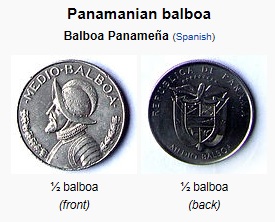
This hypothesis is validated with the lesson in history from 1941 in the Republic of Panama. This Central American country is a young nation; they were formed in 1903 after seceding from the Republic of Colombia, with US backing. The new country immediately signed a treaty with the US to allow the construction of the Panama Canal, by the US Army Corps of Engineers, and a perpetual lease* for its operations. The country’s separation from Colombia also included changing from the Colombian Peso currency. So in 1904 the Panamanian Balboa currency was launched, but as coins only; the country used the US Dollar as banknotes.

A basic tenant of macro-economics is that countries should issue their own currency and banknotes so as to better influence the economic engines in their communities. By manipulating the banknote quantity and the “Discount Rate” in a Fractional Central Banking System, monetary supply can be regulated, interest rates controlled; credit markets tamed; and yes, money can be created from “thin air”. Panama had none of this control, due to its lack of banknotes.

In 1941, the then-President Dr. Arnulfo Arias pushed the government to create the Central Bank and to issue paper currency. [2] The bank was authorized, constitutionally, to issue up to 6 million Balboas worth of paper notes, but only 2.7 million Balboas were issued on 2 October 1941. Seven days later, Arias was deposed in a military coup – supported by the United States – and replaced by Dr. Ricardo Adolfo de la Guardia Arango as President. The new government immediately closed the bank, withdrew the issued notes, and burned all unissued money stock. In the 74 years since then, the country has never re-attempted to issue its own paper money currency; they continue to use US Dollars, even today.

A bit extreme?

This lesson in history is presented in a consideration of the book Go Lean…Caribbean; it serves as a roadmap for the introduction and implementation of the technocratic Caribbean Union Trade Federation (CU) and Caribbean Central Bank (CCB) to provide better stewardship in ensuring that the currency and economic failures of the past, in the Caribbean and other regions, do not re-occur here in the homeland. The book posits that we must NOT fashion ourselves as an American parasite economy, but rather pursue a status as a protégé.

The full details of the Panamanian Balboa history is provided here:

Title: Panamanian Balboa
(Source: Wikipedia Online Encyclopedia (Retrieved 02/09/2015) – http://en.wikipedia.org/wiki/Panamanian_balboa)

The Balboa (sign: B/.; ISO 4217: PAB) is, along with the United States dollar, one of the official currencies of Panama. It is named in honor of the Spanish explorer / conquistador Vasco Núñez de Balboa. The Balboa is subdivided into 100 centésimos.

The history of the Panamanian Balboa

The Balboa replaced the Colombian Peso in 1904 following the country’s independence. The Balboa has been tied to the United States dollar (which is legal tender in Panama) at an exchange rate of 1:1 since its introduction and has always circulated alongside dollars.

Coins

In 1904, silver coins in denominations of 2½, 5, 10, 25, and 50 centésimos were introduced. These coins were weight-related to the 25 gram 50 centésimos, making the 2½ centésimos coin 1¼ grams. Its small size led to it being known as the “Panama pill” or the “Panama pearl”. In 1907, copper-nickel ½ and 2½ centésimos coins were introduced, followed by copper-nickel 5 centésimos in 1929. In 1930, coins for 110, ¼, and ½ Balboa were introduced, followed by 1 balboa in 1931, which were identical in size and composition to the corresponding U.S. coins. In 1935, bronze 1 centésimo coins were introduced, with 1¼ centésimo pieces minted in 1940.

CU Blog - A Lesson in History - Panamanian Balboa - Photo 1

In 1966, Panama followed the U.S. in changing the composition of their silver coins, with copper-nickel clad 110 and ¼ Balboa, and .400 fineness ½ Balboa. 1 balboa coins, at .900 fineness silver, were issued that year for the first time since 1947. In 1973, copper-nickel clad ½ Balboa coins were introduced. 1973 also saw the revival of the 2½ centésimos coin, which had a size similar to that of the U.S. half dime, but these were discontinued two years later due to lack of popular demand. In 1983, 1 centésimo coins followed their U.S. counterpart by switching from copper to copper plated zinc. Further issues of the 1 Balboa coins have been made since 1982 in copper-nickel without reducing the size.

Modern 1 and 5 centésimos and 110, ¼, and ½ balboa coins are the same weight, dimensions, and composition as the U.S. cent, nickel, dime, quarter, and half-dollar, respectively. In 2011, new 1 and 2 balboa bi-metal coins were issued.[1]

In addition to the circulating issues, commemorative coins with denominations of 5, 10, 20, 50, 75, 100, 150, 200, and 500 Balboas have been issued.

Banknotes

In 1941, President Dr. Arnulfo Arias pushed the government to enact Article 156 to the constitution, authorizing official and private banks to issue paper money. As a result, on 30 September 1941, El Banco Central de Emission de la Republica de Panama was established.[2]

CU Blog - A Lesson in History - Panamanian Balboa - Photo 2

The bank was authorized to issue up to 6,000,000 Balboas worth of paper notes, but only 2,700,000 balboas were issued on 2 October 1941. A week later, Dr. Ricardo Adolfo de la Guardia Arango replaced Arias as president in a coup supported by the United States. The new government immediately closed the bank, withdrew the issued notes, and burned all unissued stocks of same. Very few of these so-called “Arias Seven Day” notes escaped incineration.

Reference Notes:
1. http://worldcoinnews.blogspot.com/search/label/panama
2. Linzmayer, Owen (2012). “Panama”. The Banknote Book. San Francisco, CA: www.BanknoteNews.com.

Panama is out-of-scope of this Go Lean empowerment roadmap. They are not a member-state that caucuses with the Caribbean Community (CariCom), and they do not even have an “Observer” representation/status within the trade bloc. But since a part of their territory-coastline is on the Caribbean Sea, their dealings should generate review and monitoring from Caribbean planners. There are many issues for the Caribbean to consider  – from an academic point-of-view – about this history of Panama: an obvious failed-state as recent as the 1980’s.

Is the American manipulations in Panama’s past reflective of the same America today? The assumption is No! The US no longer draws such “hard lines” in their interactions with peoples of different ethnicity. The country has endured deep soul-searching and reconciliation of its racial past, (Civil Rights Movement, Affirmative Action, etc.), and now even the President of the United States is a Black Man. On the surface today, America is a color-blind society.

On the surface!

Behind the scenes, under the covers, there is another reality. The current American experience is that Black-and-Brown is still institutionally disadvantaged and Wall Street, and by extension “Big American Business”, wields uncanny power over the socio-economic-political affairs of the country. For this and other reasons, the Go Lean movement advocates for Caribbean people and institutions to take their own lead for their own determination. We want to be a protégé of the US, not a parasite.

The roadmap calls for a cooperative entity of the existing regional Central Banks to foster interdependence for the regional Greater Good. We must issue Caribbean banknotes, branded Caribbean Dollars (C$). The totality of the regional market, 42 million people in 30 member-states, is large enough to allow for streamlining of the marketplace, creating the right climate for viable currency/financial/securities markets. While there might be some reticence for liberal currency operations, considering that so many Caribbean member-states had to learn hard lessons on currency over the decades – painful devaluations – the CU is to be structured as a technocracy, with the right mix of skilled talent, gifted genius and independent oversight to allow regional C$ currency markets to soar.

The strategy is not a pro-American stance, no pegging to the US Dollar, therefore no losses will be experienced when the US dollar drops value compared to other international currencies, a far too frequent an occurrence in the last 50 years. The US Dollar planners (Federal Reserve) do not have the Caribbean best-interest in mind for their technocratic decisions regarding their currency management; they have American self-interest in mind. Therefore the Caribbean region must overcome any “fear of math” because the C$ may become stronger, (see VIDEO below), in comparison to the US$. This is why e-Commerce and e-Payments schemes are strongly urged within the CU/Go Lean roadmap.

In general, the CU will employ strategies, tactics and implementations to impact its prime directives; identified with the following 3 statements:

  • Optimization of the economic engines in order to grow the regional economy to $800 Billion & create 2.2 million new jobs.
  • Establishment of a security apparatus to protect the resultant economic engines and mitigate internal and external threats.
  • Improve Caribbean governance to support these engines.

Early in the Go Lean book, this need for careful technocratic stewardship of the regional Caribbean economy was pronounced (Declaration of Interdependence – Page 12 – 13) with these acknowledgements and statements:

xi.   Whereas all men are entitled to the benefits of good governance in a free society, “new guards” must be enacted to dissuade the emergence of incompetence, corruption, nepotism and cronyism at the peril of the people’s best interest. The Federation must guarantee the executions of a social contract between government and the governed.

xii.   Whereas the legacy in recent times in individual states may be that of ineffectual governance with no redress to higher authority, the accedence of this Federation will ensure accountability and escalation of the human and civil rights of the people for good governance, justice assurances, due process and the rule of law. As such, any threats of a “failed state” status for any member state must enact emergency measures on behalf of the Federation to protect the human, civil and property rights of the citizens, residents, allies, trading partners, and visitors of the affected member state and the Federation as a whole.

xxiv.   Whereas a free market economy can be induced and spurred for continuous progress, the Federation must install the controls to better manage aspects of the economy: jobs, inflation, savings rate, investments and other economic principles. Thereby attracting direct foreign investment because of the stability and vibrancy of our economy.

xxv.   Whereas the legacy of international democracies had been imperiled due to a global financial crisis, the structure of the Federation must allow for financial stability and assurance of the Federation’s institutions. To mandate the economic vibrancy of the region, monetary and fiscal controls and policies must be incorporated as proactive and reactive measures. These measures must address threats against the financial integrity of the Federation and of the member-states.

The Go Lean book, and previous blog/commentaries, stressed the key community ethos, strategies, tactics, implementations and advocacies necessary to regulate and manage the regional financial eco-system for the Caribbean currency. These points are detailed in the book as follows:

Community Ethos – Economic Principles – Economic Systems Influence Individual Choices Page 21
Community Ethos – Economic Principles – Consequences of Choices Lie in the Future Page 21
Community Ethos – Economic Principles – Money Multiplier Page 23
Community Ethos – Governing Principles – Lean Operations Page 24
Community Ethos – Ways to Impact the Future Page 26
Community Ethos – Ways to Impact the Greater Good Page 37
Strategy – Mission – Fortify the Stability of the Banking Institutions Page 45
Strategy – Provide Proper Oversight and Support for the Depository Institutions Page 46
Tactical – Ways to Foster a Technocracy Page 64
Tactical – Growing the Economy – Minimizing Bubbles Page 69
Tactical – Separation-of-Powers – Caribbean Central Bank Page 73
Tactical – Separation-of-Powers – Depository Institutions Regulatory Agency Page 73
Anecdote – Turning Around CARICOM – Effects of 2008 Financial Crisis Page 92
Implementation – Assemble Caribbean Central Bank as a Cooperative Page 96
Implementation – Ways to Better Manage Debt Page 114
Planning –10 Big Ideas – Single Market / Currency Union Page 127
Planning – Ways to Improve Failed-State Indices Page 134
Planning – Lessons Learned from 2008 Page 136
Planning – Ways to Measure Progress Page 147
Anecdote – Caribbean Currencies Page 149
Advocacy – Ways to Grow the Economy Page 151
Advocacy – Ways to Control Inflation Page 153
Advocacy – Reforms for Banking Regulations Page 199
Advocacy – Ways to Impact Wall Street Page 200
Advocacy – Ways to Impact Main Street Page 201
Appendix – Controlling Inflation – Technical Details Page 318
Appendix – Jamaica’s International Perception – “High inflation and currency dysfunction” Page 297

The points of effective, technocratic banking/economic stewardship of regional currencies, were further elaborated upon in these previous blog/commentaries:

https://goleancaribbean.com/blog/?p=3889 RBC EZPay – Ready for Change
https://goleancaribbean.com/blog/?p=3858 ECB unveils 1 trillion Euro stimulus program
https://goleancaribbean.com/blog/?p=3814 Lessons from the Swiss unpegging the franc
https://goleancaribbean.com/blog/?p=3743 Trinidad cuts 2015 budget as oil prices tumble
https://goleancaribbean.com/blog/?p=3582 For Canadian Banks: Caribbean is a ‘Bad Bet’
https://goleancaribbean.com/blog/?p=3090 Lessons Learned – Europe Sovereign Debt Crisis of 2009
https://goleancaribbean.com/blog/?p=2930 ‘Too Big To Fail’ – Caribbean Version
https://goleancaribbean.com/blog/?p=949 Inflation Matters
https://goleancaribbean.com/blog/?p=833 One currency, divergent economies
https://goleancaribbean.com/blog/?p=518 Analyzing the Data – What Banks learn about financial risks
https://goleancaribbean.com/blog/?p=378 US Federal Reserve Releases Transcripts from 2008 Meetings/Stimulus
https://goleancaribbean.com/blog/?p=273 10 Things We Don’t Want from the US – #3: Quantitative Easing

Similar to Panama, there are a number of Caribbean member-states that use the US dollar as their sole paper currency:

  • British Virgin Island
  • Turks & Caicos Islands
  • Dutch Caribbean Territories: Bonaire, Sint Eustatius and Saba
  • US Territories of Puerto Rico & US Virgin Islands

The Go Lean book reports that previous Caribbean administrations have failed miserably in managing regional currencies. Consider Jamaica for example, despite being pegged 1-to-1 with the US dollar in 1960’s, the J$ was trading at 87-to-1 with the US$ at press time for the book (November 2013). Other countries (like Trinidad, Dominican Republic, and the Eastern Caribbean Currency Union states) experienced similar turmoil, though at lesser rates of devaluation. The book opens with the declaration that the Caribbean is in crisis because of episodes like these currency failings. In every case, the direct after-effect was increased societal abandonment, and now the reported brain-drain rate is estimated at 70%, with some countries even reporting up to 81%. This disposition is symptomatic of a Failed-State status.

Currency management includes details of more than just the paper-money people carry in their wallets. The book describes the 4 basic functions of money:

  • a medium of exchange
  • a unit of account
  • a store of value
  • a standard of deferred payment

These dynamics have an effect on inflation/deflation and trade facilitation with other countries. So Central Banks must strenuously manage currency issues to ensure economic progress and avoid financial dysfunction. This point is conveyed in the following VIDEO, as regards the Central Bank management of the Chinese Yuan.

VIDEO: Pegging the Yuan – http://youtu.be/S-9iY1OgbDE

Uploaded on Oct 25, 2010 – How the Chinese Central Bank could peg the Yuan to the dollar by printing Yuan and buying dollars (building up a dollar reserve). This lesson in macro-economics can be applied to any Central Bank, any other currency.

There are so many currency issues that have to be coordinated that the Go Lean book describes the effort as heavy-lifting. The roadmap (Page 5) declares that change has come to the Caribbean, and that new technocrats are ready to assume oversight of regional currency issues:

Please swallow your pride
If I have things you need to borrow
For no one can fill those of your needs
That you won’t let show
You just call on me brother, when you need a hand

(Chorus)
We all need somebody to lean on
I just might have a problem that you’d understand
We all need somebody to lean on

(Lyrics of song: Lean On Me, by Singer/Songwriter: Bill Withers)

This is not the same world as 1941 Panama, but still there are many lessons to learn and apply in the Caribbean. The goal is simple, to move the region to a new destination: a better homeland to live, work and play. Now is the time for all of the Caribbean, the people, banking establishments and the governing institutions, to lean-in for the changes described in the book Go Lean … Caribbean.

🙂

Download the free e-Book of Go Lean … Caribbean – now!

———

* Appendix Footnote: Subsequent treaties added an expiration date for 1999; the Canal is now fully Panamanian.

Share this post:
, , , , ,
[Top]

Oscar López Rivera: The ‘Nelson Mandela’ of the Caribbean?

Go Lean Commentary 

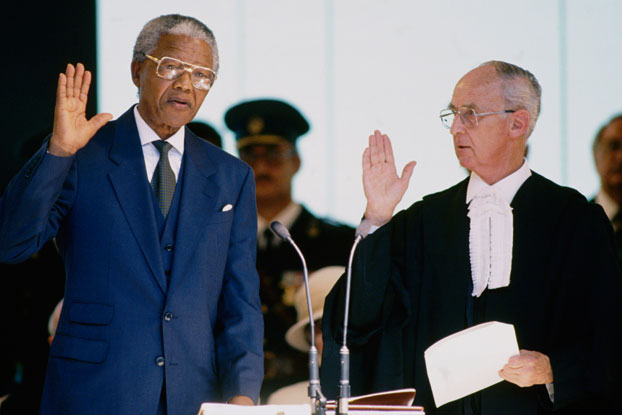
Here’s a not-so-fun fact about the First President of a pluralistic democratic Republic of South Africa, Nelson Mandela:

He spent 27 years in prison for terrorism.

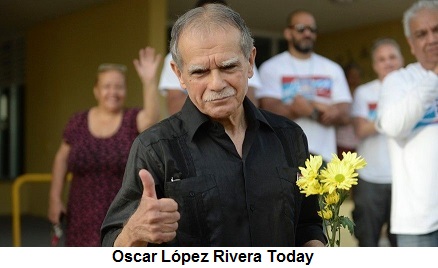
CU Blog - Oscar Lopez Rivera - Nelson Mandela of the Caribbean - Photo 1Yet, he was hailed a hero upon his release in 1990, and eventually elected as President and a transcendent leader of that country.

Is history about to repeat itself, with Puerto Rican Nationalist Oscar López Rivera?

Hardly!

While the object of animosity – villain – in the Mandela drama was the racist-bigoted government of South Africa, the object of animosity for López Rivera is … the United States of America, albeit a racist-bigoted iteration from the annals of recent history.

Same crime – same disposition? Hardly!

South Africa was never amongst the “Great Powers” of the Earth. (For much of its history – until 1961 – it was a member of the British Dominion and Commonwealth). It is also located at the Southern tip of the African continent – out of sight, out of mind. Mandela (18 July 1918 – 5 December 2013) had righteous indignation and accepted sabotage (a form of terrorism) as a tactic to force change in his country. But … Mandela enjoyed wide international support and concurrence, even from the US … in the end; see his altruism in his motivation here:

I have fought against white domination, and I have fought against black domination. I have cherished the ideal of a democratic and free society in which all persons will live together in harmony and with equal opportunities. It is an ideal which I hope to live for and to see realised. But if it needs be, it is an ideal for which I am prepared to die. — Mandela’s Rivonia Trial Speech, 1964[138][139]

Zimbabwe - Photo 4

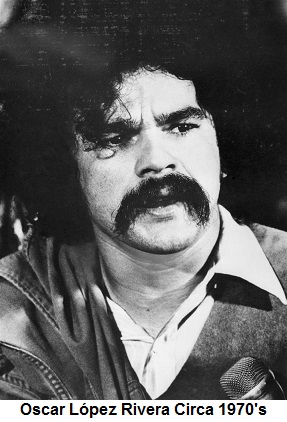
Mr. López Rivera also had a quest of righteous indignation against his enemy – advocating for Puerto Rican independence[6].

Oscar López Rivera (born 6 January 1943) is a Puerto Rican independence activist[1] who was one of the leaders of the FALN –  Fuerzas Armadas de Liberación Nacional Puertorriqueña, a Marxist-Leninist [organization] with a quest to make Puerto Rico an independent communist nation.[9][10][6] Mr. López Rivera was a fugitive since 1976 and indicted in 1977 and 1979; he was arrested on May 29, 1980 and tried by the United States government for seditious conspiracy, use of force to commit robbery, interstate transportation of firearms, and conspiracy to transport explosives with intent to destroy government property. López Rivera maintained that according to international law he was an anti-colonial combatant and could not be prosecuted by the United States government. On August 11, 1981, López Rivera was convicted and sentenced to 55 years in federal prison. On February 26, 1988 he was sentenced to an additional 15 years in prison for conspiring to allegedly escape from the Leavenworth federal prison. – Source: Wikipedia.

CU Blog - Oscar Lopez Rivera - Nelson Mandela of the Caribbean - Photo 1b

In truth, López Rivera had the wrong enemy if he wanted international support and concurrence. The US – since World War II – is the Super Power of the day, the #1 Single Market economy and #1 Military establishment. The US President is even considered the Leader of the Free World. But alas, In 2006, the United Nations (UN) called for the release of all convicted for actions related to Puerto Rican independence who had served more than 25 years in US prisons; these ones the UN deemed “political prisoners”.[28]

On August 11, 1999, U.S. President Bill Clinton offered clemency to López Rivera and 15 other convicted FALN members, subject to the condition of “renouncing the use or threatened use of violence for any purpose” in writing. … López Rivera rejected the offer because one of its conditions was that he [had to] renounce the use of terrorism.[1][44] On January 17, 2017, President Obama commuted López Rivera’s sentence. His release was scheduled for May 17[77] … one week ago. See VIDEO in the Appendix below.

The movement behind the book Go Lean…Caribbean – available to download for free – tracks and monitors the developments of the US Territory of Puerto Rico – it is a Failed-State. Would Puerto Rico have fared better had López Rivera and his cohorts won their revolution?

Probably not!

Despite all the current failures in societies esteeming capitalism – include the US with its Crony-Capitalism and institutional racism – Communist states around the world have fared even worse. In fact the Soviet Union collapsed in 1991 while López Rivera was in prison. Another Caribbean territory that defines itself as a Communist state, Cuba, has a terrible disposition, also a Failed-State that people are desperately fleeing from.

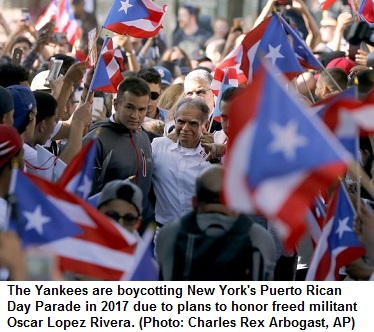
López Rivera is no Nelson Mandela! To some, he is not even a hero; see a story about the related protests and boycotts in the Appendix below.

CU Blog - Oscar Lopez Rivera - Nelson Mandela of the Caribbean - Photo 3

The Go Lean book presents a better plan to finally reform and transform Puerto Rico and the Caribbean; it serves as a roadmap for the introduction and implementation of the technocratic Caribbean Union Trade Federation (CU), for the elevation of Caribbean society – for all member-states. This CU/Go Lean roadmap has these 3 prime directives:

  • Optimization of the economic engines in order to grow the regional economy to $800 Billion and create 2.2 million new jobs.
  • Establishment of a security apparatus to ensure public safety and protect the resultant economic engines.
  • Improve Caribbean governance to support these engines, including a separation-of-powers between the member-states and CU federal agencies.

The book stresses that reforming and transforming the Caribbean societal engines must be a regional pursuit, that the problems are too big for any one Caribbean member-state alone – Puerto Rico has been trying this whole time and continue to fail … miserably. This was an early motivation for the roadmap, as pronounced in the opening Declaration of Interdependence (Pages 12 – 13):

xi. Whereas all men are entitled to the benefits of good governance in a free society, “new guards” must be enacted to dissuade the emergence of incompetence, corruption, nepotism and cronyism at the peril of the people’s best interest. The Federation must guarantee the executions of a social contract between government and the governed.

xvi. Whereas security of our homeland is inextricably linked to prosperity of the homeland, the economic and security interest of the region needs to be aligned under the same governance. Since economic crimes … can imperil the functioning of the wheels of commerce for all the citizenry, the accedence of this Federation must equip the security apparatus with the tools and techniques for predictive and proactive interdictions.

xxiii. Whereas many countries in our region are dependent Overseas Territory of imperial powers, the systems of governance can be instituted on a regional and local basis, rather than requiring oversight or accountability from distant masters far removed from their subjects of administration. The Federation must facilitate success in autonomous rule by sharing tools, systems and teamwork within the geographical region.

xxiv. Whereas a free market economy can be induced and spurred for continuous progress, the Federation must install the controls to better manage aspects of the economy: jobs, inflation, savings rate, investments and other economic principles. Thereby attracting direct foreign investment because of the stability and vibrancy of our economy.

The Go Lean book provides 370-pages of turn-by-turn instructions on “how” to adopt new community ethos, plus the strategies, tactics, implementations and advocacies to execute so as to reboot, reform and transform the societal engines of Caribbean society.

Puerto Rico does need a savior, a hero, but López Rivera is not it!

The Go Lean movement calls on Puerto Rico and its neighbors to save itself; this is a call for all 30 Caribbean member-states to convene, collaborate and confederate to provide a better, more effective, technocratic stewardship for the societal engines of the region. Consider this sample of prior blog/commentaries where these points had been elaborated upon:

https://goleancaribbean.com/blog/?p=11812 State of Caribbean Union: Hope and Change
https://goleancaribbean.com/blog/?p=11647 Righting a Wrong: Puerto Rico’s Bankruptcy
https://goleancaribbean.com/blog/?p=10895 US President Trump’s Vision of the Caribbean: Yawn
https://goleancaribbean.com/blog/?p=10700 Petition to Lean-in for the ‘Caribbean Union Trade Federation’
https://goleancaribbean.com/blog/?p=10585 Two Pies: Economic Plan for a New Caribbean
https://goleancaribbean.com/blog/?p=10566 Funding the Caribbean Security Pact
https://goleancaribbean.com/blog/?p=10043 Integration Plan for Greater Caribbean Prosperity
https://goleancaribbean.com/blog/?p=9595 Vision and Values for a ‘New’ Caribbean
https://goleancaribbean.com/blog/?p=7963 ‘Like a Good Neighbor’ – Being there for Puerto Rico
https://goleancaribbean.com/blog/?p=7151 The Caribbean is Looking for Heroes … ‘to Return’
https://goleancaribbean.com/blog/?p=4551 US Territories – Between a ‘rock and a hard place’
https://goleancaribbean.com/blog/?p=3834 State of the Caribbean Union
https://goleancaribbean.com/blog/?p=599 Ailing Puerto Rico open to radical economic fixes

Overall, to Oscar López Rivera, we say (Go Lean book conclusion Page 252):

Thank you for your service, love and commitment to [Puerto Rico, Puerto Ricans and] all Caribbean people. We will take it from here.

The movement behind Go Lean book, the planners of a new Caribbean stresses that a ‘change is going to come’, one way or another. We have endured failure for far too long; we have seen what works and what does not. We do not need to buy what López Rivera was selling in the 1970’s. We have looked, listened, learned and lend-a-hand since then. We are now ready to lead this country – Puerto Rico – and this region to a better destination, to being a homeland that is better to live, work and play. 🙂

Download the free e-Book of Go Lean … Caribbean – now!

Sign the petition to lean-in for this roadmap for the Caribbean Union Trade Federation. 

————–

Appendix VIDEO – Oscar Lopez Rivera? Hero Or Villain? – https://youtu.be/eje-sPJkaHQ

Published on May 18, 2017 The freed Puerto Rican nationalist was mostly hailed as a hero as he returned to Chicago’s HumboldtPark. New York’s CBS 2’s Vince Gerasole reports.

————–

Appendix Title: Yankees among groups to boycott New York City’s Puerto Rican Day Parade

CU Blog - Oscar Lopez Rivera - Nelson Mandela of the Caribbean - Photo 2The New York Yankees joined the Fire Department of New York City and other high-profile organizations in dropping out of the Puerto Rican Day Parade in response to parade organizers’ plans to honor freed militant Oscar Lopez Rivera.

The Yankees organization didn’t elaborate on its decision, but a spokesperson said in a statement that the team still plans to financially support the parade’s scholarship program:

“The New York Yankees are not participating in this year’s Puerto Rican Day parade. However, for many years, the Yankees have supported a scholarship program that recognizes students selected by the parade organizers. To best protect the interests of those students, and avoid any undue harm to them, the Yankees will continue to provide financial support for the scholarships, and will give to the students directly.”

The June 11 parade, which draws 1 million people each year, also lost key sponsors because of the decision to honor a man considered to be the leader of the ultranationalist Puerto Rican group responsible for more than 100 bombings. Rivera, who was sentenced to 55 years in prison in 1981 after he was found guilty of seditious conspiracy, served 35 years until his sentence was commuted by President Barack Obama.

Among the other organizations skipping the parade are the NYPD’s Hispanic Society and Rafael Ramos foundation.

“We understand that others may not be able to be with us,” a statement by the board of directors of the National Puerto Rican Day Parade said in reference to naming Rivera a national freedom hero. “However, we will continue to represent all voices, with an aim to spark dialogue and find common ground, so that we can help advance our community and build cultural legacy.”
Source: USA Today Daily NewspaperPosted May 23, 2017; retrieved May 24, 2017 from https://www.usatoday.com/story/sports/mlb/yankees/2017/05/23/yankees-to-boycott-new-york-citys-puerto-rican-parade/102058948/

Share this post:
, ,
[Top]

Blog # 600 – State of Caribbean Union: Hope and Change

Go Lean Commentary

Here’s a fact of life: Young people always need Hope and Change.

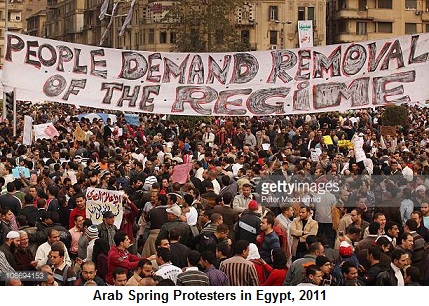
To ensure this, there have been protest movements – around the world  – in recent times where young people have engaged to get attention, to foment their prospects for Hope and Change. Consider:

  • Arab Spring – Young people in one Arab & North African country after another stood-up in protest of their political & economic status quo.
  • Occupy Wall Street – Young people in the US complained in enduring street and sleep-in protests outside Wall Street.

The book Go Lean…Caribbean – available to download for free – chronicled the rise of these protest movements (Pages 143, 160, 200 & 224). It showed how people at the grass-roots level are able to effect change on the policies and priorities of their country. This is the bottoms-up strategy for forging change; there is also the top-down strategy: getting the political leaders to propose new legislation. Both approaches could be effective in the quest to elevate the 30 member-states in the Caribbean region. The State of our Caribbean Union is that we are in crisis; we must reform and transform our region; it is not optional; it must be done in order to offer Hope and Change to the young people of the Caribbean.

The book states this urgency in the opening (Page 3):

CU Blog - State of Caribbean Union - Hope and Change - Photo 1Our youth, the next generation, may not be inspired to participate in the future workings of their country; they may measure success only by their exodus from their Caribbean homeland.

Nine years ago (2008), young voters in the US thronged rapturous rallies for then-presidential-candidate Barack Obama. Then again, early in the 2016 Presidential campaign, young people flocked to candidate Bernie Sanders. Despite the end-result, the natural idealism of youth always looks for political expression. Usually …

Currently, there is no grass-roots change-protest movement in the Caribbean – this is the State of the Caribbean Union. There needs to be … such a movement! This is according to this commentator-columnist scanning this region’s political landscape. See his strong urging here:

Title: Why the concerns of Caribbean youth matter
By: David Jessop

In much of the world, young people feel economically marginalized, politically alienated and in a struggle against insecurity and inequity.

In the Caribbean, it is little different. Lack of opportunity, the absence of generational change, high levels of unemployment, discrimination based on gender or sexual orientation, and the slow pace of change, are abiding aspects of the lives of many in the younger generation.

However, unlike their counterparts in other regions of the world, where frustration with the political class and anger with the old order have led to new political movements and protest, no similar region-wide or sustained manifestation of dissent has occurred. Instead, in recent years, protests have been limited and disconnected.

Part of the answer as to why this should be seems to lie in the Caribbean’s smallness and fragmentation. While life in micro-states offers proximity to political and economic opportunity, size also imposes limits on dreams and aspiration. When set alongside the seemingly boundless prospects for material gain in North America and US cultural penetration, the same smallness is almost guaranteed to heighten frustration with the slow pace of national development.

The consequence is a sense of disillusion among many young people, and a desire by many of the best, brightest and better educated to seek avenues of escape to other parts of the world.

Dr Terri-Ann Gilbert Roberts, a UWI/SALISES research fellow who was recently nominated by Caribbean youth to be the UN secretary general’s youth envoy, and who is engaged in research, policy and programme formulation on issues affecting children and youth, speaks with knowledge of the topic.

She believes that while young people in the Anglophone Caribbean may not express their frustrations in traditional highly-visible ways, their concerns are palpable, and can be seen and heard in their online and offline conversations in their communities, and in student and youth organisation debates.

She says that the reason that the views of Caribbean youth do not manifest themselves in large-scale anti-government street protests of the type seen in other parts of the Americas, is not because young people do not share the same concerns about their future, the inclusiveness of Caribbean society, or the accountability of public officials. Instead, she believes that because the Anglophone Caribbean has relatively stable democratic traditions, freedom of expression, a free press, and smallness, young people feel that that their shared concerns are known, but are not adequately addressed.

She argues that because “many young people have lost confidence in the capacity of formal governance processes and structures to address their concerns”, they “question the practical value of investment in large-scale protests in which their voices may be ignored and their actions will not influence change”.

While others believe that the absence of protest in the region is a good thing and reflects the homogeneous nature of Caribbean society, the absence of any real basis for public dialogue with those who may lead or vote for tomorrow’s Caribbean, says much about the region’s malaise, and more importantly its future development.

In common with other societies, many in the older generation in the Caribbean seem to want to hold on to the past and the status they have achieved, sometimes making it seem that all that matters is the jealous guarding of privilege.

Unfortunately, this has resulted in an absence of progress, and bestows legitimacy on defending the political and economic status quo. The consequence is that many nations and regional structures remain locked into thinking that is well past its sell by date, whether it be in relation to politics, the public sector, or business. The effect is to create responses that are inward looking, deeply protective, and lacking leadership, or ambition when it comes to the future for the young. It is reflected in the falling youth voter numbers in many Caribbean nations.

Dr Gilbert-Roberts argues that these frustrations have resulted in a clear majority of Caribbean young people refocussing on what she describes as “self-regulated, constructive and pragmatic spaces for online and offline dialogue” to form a basis for their everyday politics.

Putting this another way, she says that, in the Caribbean, young people are now seeking change in those parts of society over which they have power and influence. She cites as the political expression of this, youth movements in some parts of the region that are calling for public transparency and accountability that seek to audit government processes rather than make generic criticisms of government; environmental clubs; youth clubs that offer homework programmes for children; and offers of peer counselling and mentorship.

There are of course regional variations.

In the Dominican Republic, there is generational mobility but this largely only applies to the well-educated sons and daughters of the elite and the county’s expanding professional classes. In Cuba, its government has belatedly recognised the need to make strenuous efforts to include young people who want more in the way of personal freedoms and materially, while keeping the country’s social gains.

In other parts of the region there are exceptional, often female free thinkers in politics and business. There are young entrepreneurs in the services sector and agriculture who see Caribbean opportunity in new ways. There are very able individuals who in private acknowledge they would seek positions of leadership if politics was less tribal. And there are also large numbers of young men who feel uncertain about their place in society and feel threatened.

Dr Gilbert-Roberts, and others who prefer to speak off the record, observe that the level of frustration may now be growing faster than the capacity of youth groups to respond to the needs in their communities.

“We are already seeing increasing numbers of peaceful civil society protests involving young people: for example, marches in Jamaica against violence against children and women, alongside more disruptive protests, for example in Dominica in relation to oppositional politics… If and when these youth movements join up, and connect with the broader frustrations of other segments of the society, we will begin to see new and more visible forms of expression which could also become catalysts for change,” she observes.

Addressing youth alienation, declining educational standards, and the glass ceiling on aspiration, requires high level leadership and action. If the concerns of the region’s young people are not recognised and embraced by its political and business class, change and new thinking could well be driven by unmanaged events.

About the Author: David Jessop is a consultant to the Caribbean Council and can be contacted at
david.jessop@caribbean-council.org. Previous columns can be found at www.caribbean-council.org
Source: Caribbean News Network – Posted May 13, 2017; retrieved May 16, 2017 from: http://www.caribbeannewsnow.com/headline-Commentary%3A-The-View-from-Europe%3A-Why-the-concerns-of-Caribbean-youth-matter-34441.html

It is important to glean these main points from this foregoing article by David Jessop (Caribbean Council Consultant), to better understand the State of the Caribbean Union and the lack of Hope and Change aspirations here:

  • The Caribbean status quo is failing from the perspective of young people – there is a “glass ceiling of aspiration”:
    • Lack of opportunity
    • Absence of generational change
    • High levels of unemployment
    • Discrimination based on gender or sexual orientation
    • Slow pace of change
  • Other regions – i.e. Arab Spring – have active or recent political movements and protests
  • Caribbean youth do complain … in small voice and online
  • The smallness of most of the Caribbean member-states lead to fragmentation and disunity
  • Entrenched leaders want to conservatively hold on to the status privilege
  • There is a foundation for change: democratic institutions, freedom of speech and press; even small starts in Cuba.
  • These ones are challenging orthodoxy, particularly many female free thinkers in politics, business and entrepreneurism.
  • But young people seem settled on only changing the periphery: demanding transparency, accountability and audits
  • There is the need for more disruptive transformation: “out with the old; in with the change”.

These main points of the foregoing article correspond to the Go Lean movement, the original book and blog-commentaries, especially among the last 100 or so, the most recent milestone. This submission is a new milestone; this is blog-commentary # 600. These prior entries posit that the Caribbean status quo is truly in crisis, and that any alternative destination (North America or Western Europe) is not a fitting refuge for the Caribbean Black-and-Brown.

Really, the assertion is that the best option for Hope and Change in the Caribbean is to work to reform and transform the Caribbean, all 30 member-states for the full population of 42 million people. (This is the quest of the Go Lean movement, to forge a Single Market and a technocratic government for the 30 Caribbean member-states). Consider these consistent themes from these previous blog-commentary samples:

The Go Lean book and accompanying blogs studied the good, bad and ugly lessons from a number of communities around the world – see the most recent American protest movement in the Appendix VIDEO below – and then presented a plan to grow the Caribbean regional economy, create jobs, secure the homeland and optimize governance.

CU Blog - State of Caribbean Union - Hope and Change - Photo 2

CU Blog - State of Caribbean Union - Hope and Change - Photo 3

CU Blog - State of Caribbean Union - Hope and Change - Photo 4

Yes, we can.

But the Go Lean book asserts that this effort is too big a task for just one Caribbean member-state alone, so the book urges all 30 member-states to convene, confederate and collaborate in order to effect change. As such, the Go Lean book serves as a roadmap for the introduction and implementation of the technocratic Caribbean Union Trade Federation (CU), for the elevation of Caribbean society – for all member-states. This CU/Go Lean roadmap has these 3 prime directives:

  • Optimization of the economic engines in order to grow the regional economy to $800 Billion and create 2.2 million new jobs. (The issue of jobs alone is paramount to any Hope and Change movement in the region).
  • Establishment of a security apparatus to ensure public safety and protect the resultant economic engines.
  • Improve Caribbean governance to support these engines, including a separation-of-powers between the member-states and CU federal agencies.

The book stresses that reforming and transforming the Caribbean societal engines must be a regional pursuit. This was an early motivation for the roadmap, as pronounced in the opening Declaration of Interdependence (Pages 11 – 14):

viii. Whereas the population size is too small to foster good negotiations for products and commodities from international vendors, the Federation must allow the unification of the region as one purchasing agent, thereby garnering better terms and discounts.

xi. Whereas all men are entitled to the benefits of good governance in a free society, “new guards” must be enacted to dissuade the emergence of incompetence, corruption, nepotism and cronyism at the peril of the people’s best interest. The Federation must guarantee the executions of a social contract between government and the governed.

xii. Whereas the legacy in recent times in individual states may be that of ineffectual governance with no redress to higher authority, the accedence of this Federation will ensure accountability and escalation of the human and civil rights of the people for good governance, justice assurances, due process and the rule of law. As such, any threats of a “failed state” status for any member state must enact emergency measures on behalf of the Federation to protect the human, civil and property rights of the citizens, residents, allies, trading partners, and visitors of the affected member state and the Federation as a whole.

xvi. Whereas security of our homeland is inextricably linked to prosperity of the homeland, the economic and security interest of the region needs to be aligned under the same governance. Since economic crimes … can imperil the functioning of the wheels of commerce for all the citizenry, the accedence of this Federation must equip the security apparatus with the tools and techniques for predictive and proactive interdictions.

xxiv. Whereas a free market economy can be induced and spurred for continuous progress, the Federation must install the controls to better manage aspects of the economy: jobs, inflation, savings rate, investments and other economic principles. Thereby attracting direct foreign investment because of the stability and vibrancy of our economy.

xxvi.Whereas the Caribbean region must have new jobs to empower the engines of the economy and create the income sources for prosperity, and encourage the next generation to forge their dreams right at home, the Federation must therefore foster the development of new industries, like that of ship-building, automobile manufacturing, prefabricated housing, frozen foods, pipelines, call centers, and the prison industrial complex. In addition, the Federation must invigorate the enterprises related to existing industries like tourism… – impacting the region with more jobs.

The Go Lean book accepts that the current (failing) State of the Caribbean Union does not have to be a permanent disposition. Under the Go Lean roadmap, a 5-year plan, we can do better; all of the Caribbean can do better. This roadmap (370-page book) provides the “how”, the turn-by-turn details of the community ethos to adopt, plus the strategies, tactics, implementations and advocacies to execute so as to reboot, reform and transform the societal engines of Caribbean society.

This commentary is 1 of 5 in a non-sequential series on the State of the Caribbean Union. This series depicts the dysfunctional and defective state of affairs (economics, security and governance) throughout the entire region; there are some common traits. These have been assessed by the Go Lean movement. The full entries of all the blog-commentaries in this series are as follows:

  1. State of the Caribbean Union – Lacking Hope and Change
  2. State of the Caribbean Union – Dysfunctional Spanish Caribbean
  3. State of the Caribbean Union – Deficient  Westminster System
  4. State of the Caribbean Union – Unstable Volcano States
  5. State of the Caribbean Union – Self-Interest of Americana

Can we change the State of the Caribbean Union? Yes, we can. We need our own Hope and Change movement … anew … here at home. We need to make our homeland a better place to live, work and play. 🙂

Download the free e-book of Go Lean … Caribbean – now!

Sign the petition to lean-in for the roadmap for the Caribbean Union Trade Federation.

————-

Appendix VIDEO – Trump inspires grassroots protest movement – http://www.cnn.com/videos/politics/2017/02/03/trump-grassroots-protest-movement-todd-tsr-dnt.cnn

Posted February 3, 2017 – CNN’s Brian Todd reports on the surge of anti-Trump protests across the United States. – Source: CNN

Share this post:
, , ,
[Top]

ENCORE: ‘Concussions’ hit home

Miami, Florida – If you’re a fan of American football (NFL or the National Football League) then you know how impactful it is to go undefeated from the beginning to the end of the season, playoffs included. Only one team has done it … ever: the 1972 Miami Dolphins. The 50 players on that team became heroes to every football-loving kid anywhere near the broadcast waves of Miami.

There was a time when these guys were my heroes.

But “time and unforeseen occurrences befall us all” – The Bible (Ecclesiastes 9:11).

There is a connection between Miami and the Caribbean; the city has become much more than a shopping destination; it has redefined itself as the financial, political and sports capital of the Caribbean and Latin America.

So this news is shocking to receive, as the Miami Herald newspaper reports that many of the players on the 1972 Dolphins team now suffer from CTE (Chronic Traumatic Encephalopathy).

Say it ain’t so …

CU Blog - UPDATE - Concussions Come Home - Photo 1

CU Blog - UPDATE - Concussions Come Home - Photo 1b

CU Blog - UPDATE - Concussions Come Home - Photo 3

It seemed like this CTE disease was so far-off; an affliction on people “over there” … somewhere. But to hit the 1972 Dolphins players means that this disease has come home…to our local heroes.

🙁

See the story here in this recent Miami Herald article:

Title: Football’s toll: At least eight members of 1972 Dolphins affected by cognitive impairment

CU Blog - UPDATE - Concussions Come Home - Photo 2They called him Captain Crunch, and the name was fitting. Mike Kolen packed a punch.

Now, 45 years after the Dolphins’ No-Name Defense ran through the 1972 season undefeated, Kolen and his perfect teammates are tied together again. But instead of celebration, there’s heartache.

South Florida’s most legendary team has become a cautionary tale, a poignant symbol of the concussion saga that threatens the future of America’s favorite sport.

“Within the last month or so, I’ve been diagnosed with the initial stages of Alzheimer’s,” Kolen, a starting linebacker on Miami’s two Super Bowl-winning teams, told the Miami Herald.

And was football the cause?

“I think that’s about the only way I’d have cognitive issues,” replied Kolen, 69, who has no family history of dementia.

Kolen’s story is not unique for Miami’s most historic team.

Earlier this week, Sports Illustrated detailed how Kolen’s better-known 1972 teammates Nick Buoniconti and Jim Kiick have both deteriorated mentally in the past few years.

After quarterback Earl Morrall’s death in 2014, an autopsy revealed he had Stage 4 chronic traumatic encephalopathy, a degenerative brain disease more commonly known as CTE that researchers have linked to football.

Bill Stanfill, the Dolphins’ first sack king, suffered from dementia and Parkinson’s disease when he died last fall at age 69.

Three others from that famed roster — cornerback Lloyd Mumphord, defensive back Tim Foley and running back Hubert Ginn — have quietly dealt with cognitive impairment in recent years, teammates tell the Herald.

That makes at least eight members of a roster of roughly 50 men who have experienced loss of acuity. And that figure includes only those who keep in regular contact with the organization; several do not.

Roughly a quarter of the ’72 team has passed away, including five from cancer. Manny Fernandez, a defensive lineman who was the star of Super Bowl VII, has had eight surgeries on his back alone. Center Jim Langer, 68, said his “legs are bad and my knees are shot” after six operations.

Even the NFL acknowledges – see VIDEO below – that there is a link between football-related head trauma and neurological diseases like CTE after denying any such connection for years. …

Continue reading the full article here; (it is lengthy):

http://www.miamiherald.com/sports/nfl/miami-dolphins/article150311157.html retrieved 05-11-2017.

———

VIDEO – NFL acknowledges link between football and brain disease CTEhttp://www.dailymail.co.uk/news/article-4503362/Seven-members-72-Dolphins-suffered-brain-injuries.html#v-6189767714419658422

Relating Miami to the Caribbean makes this story relatable to the movement behind the book Go Lean … Caribbean. One purpose of this movement is to engage business models so that Caribbean communities can better take advantage of the economic benefits of sports. There are few expressions of professional sports in the Caribbean now – there is no eco-system for collegiate athletics at all. Due to the territorial status and the border proximity, there are 3 member-states with organized American Football league play in the Caribbean: Puerto Rico, US Virgin Islands and the Bahamas.

With the advantages of professional sports (money from ticket sales & broadcast rights, pride, athletic fitness, etc.), come disadvantages as well. CTE, as one, is only now begrudgingly been accepted as a direct consequence of the often times brutal game of American Football.

This was the warning from this previous blog-commentary that marked the release of the movie “Concussion”, chronicling the David-versus-Goliath-like advocacy of the Pathology Doctor who “blew the whistle” on the systemic “willful” ignorance and Crony-Capitalistic abuse in the NFL. This excerpt highlights some main points from that blog:

Yes, movies help us to glean a better view of ourselves … and our failings; and many times, show us a way-forward.

These descriptors actually describe the latest production from Hollywood icon Will Smith (the former Fresh Prince of Bel-Air). This movie, the film “Concussion”, in the following news article, relates the real life drama of one man, Dr. Bennet Omalu, a Nigerian-born medical doctor – a pathologist – who prepared autopsies of former players that suffered from football-related concussions. He did not buckle under the acute pressure to maintain the status quo, and now, he is celebrated for forging change in his adopted homeland. This one man made a difference. (The NFL is now credited for a Concussion awareness and prevention protocol so advanced that other levels of the sport – college, high schools and Youth – are being urged to emulate).

Beyond the excerpt, see the entire blog-commentary from August 31, 2015 on the movie ‘Concussion‘ and the dreaded CTE disease being encored here:

—————-

Go Lean Commentary – ‘Concussions’ – The Movie; The Cause

“Are you ready for some football?” – Promotional song by Hank Williams, Jr. for Monday Night Football on ABC & ESPN networks for 22 years (1989 – 2011). See Appendix below.

This iconic song (see Appendix) and catch-phrase is reflective of exactly how popular the National Football League (NFL) is in the US:

“They own an entire day of the week”.

- The Movie; The Cause - Photo 2So says the new movie ‘Concussions’, starring Will Smith, referring to the media domination of NFL Football on Sundays during the Autumn season. The movie’s script is along a line that resonates well in Hollywood’s Academy Award balloting: “David versus Goliath”; “a small man speaking truth to power”.

In the case of the NFL, it is not just about power, it is about money, prestige and protecting the status quo; the NFL is responsible for the livelihood of so many people. The book Go Lean … Caribbean recognized the importance of the NFL in the American lexicon of “live, work and play”; it featured a case study (Page 32) of the NFL and it’s collective bargaining successes (and failures) in 2011. An excerpt from the book is quoted as follows:

Football is big business in the US, $9 billion in revenue, and more than a business; emotions – civic pride, rivalries, and fanaticism – run high on both sides.

Previous Go Lean commentaries presents the socio-economic realities of much of the American football eco-system. Consider a sample here:

Socio-Economic Impact Analysis of [Football] Sports Stadiums
Watch the Super Bowl … Commercials
Levi’s® NFL Stadium: A Team Effort
Sports Role Model – College Football – Playing For Pride … And More
Sports Role Model – Turn On the SEC Network
Collegiate Sports in the Caribbean – Model of NCAA
10 Things We Want from the US: #10 – Sports Professionalism
10 Things We Don’t Want from the US: #10 – ‘Win At All Costs’ Ethos

While football plays a big role in American life, so do movies. Their role is more unique; they are able to change society. In a previous blog / commentary regarding Caribbean Diaspora member and Hollywood great, Sidney Poitier, it was declared that …

“Movies are an amazing business model. People give money to spend a couple of hours watching someone else’s creation and then leave the theater with nothing to show for the investment; except perhaps a different perspective”.

Yes, movies help us to glean a better view of ourselves … and our failings; and many times, show us a way-forward.

These descriptors actually describe the latest production from Hollywood icon Will Smith (the former Fresh Prince of Bel-Air). This movie, the film “Concussion”, in the following news article, relates the real life drama of one man, Dr. Bennet Omalu, a Nigerian-born medical doctor – a pathologist – who prepared autopsies of former players that suffered from football-related concussions. He did not buckle under the acute pressure to maintain the status quo, and now, he is celebrated for forging change in his adopted homeland. This one man made a difference. (The NFL is now credited for a Concussion awareness and prevention protocol so advanced that other levels of the sport – college, high schools and Youth – are being urged to emulate).

See news article here on the release of the movie:

Title: ‘Concussion’: 5 Take-a-ways From Will Smith’s New Film

Will Smith, 46, is definitely going to get a ton of Oscar buzz portraying Dr. Bennet Omalu in the new film “Concussion.” NFL columnist Peter King of Sports Illustrated got an exclusive first peek at the trailer and it has been widely shared on social media since. And it’s very chilling.

- The Movie; The Cause - Photo 1

Here are five take-aways and background you need to know before checking out the clip:

1 – It’s Based on a True Story

Omalu is the forensic pathologist and neuropathologist who discovered chronic traumatic encephalopathy in football players who got hit in the head over and over again, according to the Washington Post.

In the clip, he says repetitive “head trauma chokes the brain.”

Omalu was one of the founding members of the Brain Injury Research Institute in 2002. He conducted the autopsy of Pittsburgh Steelers center Mike Webster, played by David Morse in the film, which led to this discovery.

2 – Smith’s Version of Omalu’s Accent Is Spot On

Omalu is from Nigeria and Smith has been known to transform completely for a role. He was nominated for an Oscar for 2011’s “Ali,” playing the legendary Muhammad Ali.

For comparison, here’s Omalu’s PBS interview from 2013.

3 – Smith Is a Reluctant Hero

“If you don’t speak for them, who will,” Gugu Mbatha-Raw, who plays Prema Mutiso in the film, tells Smith’s character.

He admits he idolized America growing up and “was the wrong person to have discovered this.”

4 – Alec Baldwin and Luke Wilson

“Concussion” brought in some heavyweights for this movie. Baldwin plays Dr. Julian Bailes, who advises Omalu, and Wilson, who will reportedly play NFL Commissioner Roger Goodell, according to IMDB. There’s no official word on this. He’s seen at a podium in the trailer, but doesn’t speak.

5 – “Tell the Truth”

Smith captures Omalu’s passion to have the truth told about this injury and disease.

“I was afraid of letting Mike [Webster] down. I was afraid. I don’t know. I was afraid I was going to fail,” Omalu told PBS a couple years back.

———-

VIDEO Link: http://www.imdb.com/title/tt3322364/?ref_=nv_sr_1


Will Smith stars in the incredible true David vs. Goliath story of Dr. Bennet Omalu, the brilliant forensic neuropathologist who made the first discovery of CTE, a football-related brain trauma, in a pro player.

The subject of concussions is serious – life and death. Just a few weeks ago (August 8), an NFL Hall-of-Fame inductee was honored for his play on the field during his 20-year professional career, but his family, his daughter in particular, is the one that made his acceptance / induction speech. He had died, in 2012; he committed suicide after apparently suffering from a brain disorder – chronic traumatic encephalopathy (CTE), a type of chronic brain damage that has also been found in other deceased former NFL players[4] – sustained from his years of brutal head contacts in organized football in high school, college and in his NFL career. This player was Junior Seau.

- The Movie; The Cause - Photo 3a

- The Movie; The Cause - Photo 3b

Why would there be a need for “David versus Goliath”; “a small man speaking truth to power”? Is not the actuality of an acclaimed football player committing suicide in this manner – he shot himself in the chest so as to preserve his brain for research – telling enough to drive home the message for reform?

No. Hardly. As previously discussed, there is too much money at stake.

These stakes bring out the Crony-capitalism in American society.

The book Go Lean…Caribbean (and subsequent blog/commentaries) relates many examples of cronyism in the American eco-system. There is a lot of money at stake. Those who want to preserve the status quo or not invest in the required mitigations to remediate concussions will fight back against any Advocate promoting the Greater Good. The profit motive is powerful. There are doubters and those who want to spurn doubt. “Concussions in Football” is not the first issue these “actors” have promoted doubt on. The efforts to downplay concussion alarmists are from a familiar playbook, used previously by Climate Change deniers, Big Tobacco, Toxic Waste, Acid Rain, and other dangerous chemicals.

This Go Lean book serves as a roadmap for the introduction and implementation of the technocratic Caribbean Union Trade Federation (CU). Sports are integral to the Go Lean/CU roadmap. While sports can be good and promote positives in society, even economically, the safety issues must be addressed upfront. This is a matter of community security. Thusly, the prime directives of the CU are described as:

  • Optimize the economic engines of the Caribbean to elevate the regional economy to grow to $800 Billion and create 2.2 million new jobs, including sports-related industries with a projection of 21,000 direct jobs at Fairgrounds and sports enterprises.
  • Establish a security apparatus to protect the people and economic engines.
  • Improvement of Caribbean governance to support these economic and security engines.

The CU/Go Lean sports mission is to harness the individual abilities of athletes to not just elevate their performance, but also to harness the economic impact for their communities. So modern sports endeavors cannot be analyzed without considering the impact on “dollars and cents” for stakeholders. This is a fact and should never be ignored. There is therefore the need to carefully assess and be on guard for crony-capitalistic influences entering the decision-making of sports stakeholders. The Go Lean book posits that with the emergence of new economic engines, “bad actors” will also emerge thereafter to exploit the opportunities, with good, bad and evil intent”. These points were pronounced early in the opening Declaration of Interdependence (Page 12 &14):

x. Whereas we are surrounded and allied to nations of larger proportions in land mass, populations, and treasuries, elements in their societies may have ill-intent in their pursuits, at the expense of the safety and security of our citizens. We must therefore appoint “new guards” to ensure our public safety and threats against our society, both domestic and foreign. The Federation must employ the latest advances and best practices of criminology and penology to assuage continuous threats against public safety.

xi. Whereas all men are entitled to the benefits of good governance in a free society, “new guards” must be enacted to dissuade the emergence of incompetence, corruption, nepotism and cronyism at the peril of the people’s best interest. The Federation must guarantee the executions of a social contract between government and the governed.

xvi. Whereas security of our homeland is inextricably linked to prosperity of the homeland, the economic and security interests of the region needs to be aligned under the same governance. Since economic crimes … can imperil the functioning of the wheels of commerce for all the citizenry, the accedence of this Federation must equip the security apparatus with the tools and techniques for predictive and proactive interdictions.

xxxi. Whereas sports have been a source of great pride for the Caribbean region, the economic returns from these ventures have not been evenly distributed as in other societies. The Federation must therefore facilitate the eco-systems and vertical industries of sports as a business, recreation, national pastime and even sports tourism …

The Go Lean book envisions the CU – a confederation of the 30 member-states of the Caribbean chartered to do the heavy-lifting of empowering and elevating the Caribbean economy – as the landlord of many sports facilities (within the Self-Governing Entities design), and the regulator for inter-state sport federations. The book details the economic principles and community ethos to adopt, plus the executions of strategies, tactics, implementations and advocacies to optimize sports enterprises in the Caribbean:

Community Ethos – Deferred Gratification Page 21
Economic Principles – People Respond to Incentives in Predictable Ways Page 21
Economic Principles – Economic Systems Influence Individual Choices / Incentives Page 21
Economic Principles – The Consequences of Choices Lie in the Future Page 21
Economic Principles – Job Multiplier Page 22
Community Ethos – Security Principles – Whistleblower Protection Page 23
Community Ethos – Security Principles – Light-Up the Dark Places Page 23
Community Ethos – Security Principles – “Crap” Happens Page 23
Community Ethos – Governing Principles – Lean Operations Page 24
Community Ethos – Ways to Impact the Future Page 26
Community Ethos – Ways to Promote Happiness – Mitigate Suicide Threats Page 36
Community Ethos – Impact the Greater Good Page 37
Strategy – Vision – Confederating 30 Member-States into a Single Market Page 45
Strategy – Vision – Foster Local Economic Engines for Basic Needs Page 45
Strategy – Mission – Prepare for Natural Disasters Page 45
Strategic – Staffing – Sporting Events at Fairgrounds Page 55
Strategy – Agents of Change – Climate Change Page 57
Strategy – Agents of Change – Globalization Page 57
Tactical – Confederating a Permanent Union Page 63
Tactical – Fostering a Technocracy Page 64
Tactical – Separation of Powers – Sports & Culture Administration Page 81
Tactical – Separation of Powers – Fairgrounds Administration Page 83
Tactical – Separation of Powers – Health Department – Disease Management Page 86
Implementation – Assemble Regional Organs into a Single Market Economy Page 96
Implementation – Steps to Implement Self-Governing Entities – Sports Stadia Page 105
Implementation – Security Initiatives at Start-up – Unified Command & Control Page 103
Implementation – Industrial Policy for CU Self Governing Entities Page 103
Implementation – Ways to Deliver – Project Management/Accountabilities Page 109
Anatomy of Advocacies – Examples of Individuals Who Made Impact Page 122
Planning – Ways to Make the Caribbean Better Page 131
Advocacy – Ways to Grow the Economy Page 151
Advocacy – Ways to Create Jobs Page 152
Advocacy – Ways to Improve Governance Page 168
Advocacy – Ways to Better Manage the Social Contract Page 170
Advocacy – Ways to Promote Fairgrounds Page 192
Advocacy – Ways to Improve Emergency Management – Trauma Arts & Sciences Page 196
Advocacy – Ways to Improve Sports Page 229
Advocacy – Ways to Impact Urban Living – Sports Leagues Page 234

The Go Lean book and accompanying blogs declare that the Caribbean needs to learn lessons from other communities, especially when big money is involved in pursuits like sports. These activities should be beneficial to health, not detrimental. So the admonition is to be “on guard” against the “cronies”; they will always try to sacrifice public policy – the Greater Good – for private gain: profit.

Let’s do better. Yes, the Caribbean can be better than the American experiences.

The design of Self-Governing Entities allow for greater protections from Crony-Capitalistic abuses. While this roadmap is committed to availing the economic opportunities of sports and accompanying infrastructure, as demonstrated in the foregoing movie trailer, sport teams and owners can be plutocratic “animals” in their greed. We must learn to mitigate plutocratic abuses. While an optimized eco-system is good, there is always the need for an Advocate, one person to step up, blow the whistle and transform society. The Go Lean roadmap encourages these role models.

Bravo Dr. Bennet Omalu. Thank you for this example … and for being a role model for all of the Caribbean.

RIP Junior Seau.

Now is the time for all of the Caribbean, the people and governing institutions, to lean-in for the empowerments described in the book Go Lean … Caribbean. This roadmap will result in more positive socio-economic changes throughout the region; it will make the Caribbean a better place to live, work and play. 🙂

Download the free e-book of Go Lean … Caribbean – now!

Sign the petition to lean-in for this roadmap for the Caribbean Union Trade Federation.

——-

Appendix VIDEO: Hank Williams Jr. – Are You Ready for Some Footballhttps://youtu.be/dKPZEMu7Mno

Uploaded on Jan 28, 2019 – Official Music Video

Share this post:
, , , , , , ,
[Top]

Caribbean Roots: Bruno Mars … and the Power of Endurance

Go Lean Commentary 

CU Blog - Caribbean Roots - Bruno Mars - Photo 5Islands are unique compared to the mainland.

Being cut-off, social development evolves and endures independent of the mainland’s influence. This is the case in the natural world – consider all the unique animals of Australia – and in the music world.

Most of the 30 member-states of the Caribbean are islands (notwithstanding Guyana, Suriname & Belize). As a result we have this amazing musical progeny that has developed … and endured: we have 169 different musical genres that have emerged.

So not only are islands distinct compared to the mainland, they are also distinct compared to each other.

CU Blog - Caribbean Roots - Bruno Mars - Photo 1This explains the historicity of the musical artist Bruno Mars.

He is of Caribbean roots…

… his father has Puerto Rican heritage. But Bruno or Peter Hernandez, his given name, was born and raised on the island of Hawaii. (See Biography in Appendix A below).

His music reflects the richness of his island roots. See, feel the Caribbean “soul” in the VIDEO of “Billionaire” in the Appendix C below. A Caribbean legacy – in this case Puerto Rico – has so much good to offer the world, as one of the best-selling artists of all time.

CU Blog - Caribbean Roots - Bruno Mars - Photo 2

CU Blog - Caribbean Roots - Bruno Mars - Photo 3

This is a message the Caribbean needs to hear – we are the greatest address on the planet, in terms of terrain (flora, fauna and beaches), hospitality and culture, but we are at near-Failed-State status. We must endure and fix our broken societal engines.

Challenge accepted!

See how this champion of Caribbean Roots battled misfortune and adversity to emerge as one of the biggest musical stars of the day. See this 60 Minutes interview from November 2016 here (or the transcript in Appendix B below):

VIDEO Bruno Mars on his artistry: “I’m working hard for this” – http://www.cbsnews.com/videos/bruno-mars

Posted November 20, 2016 – He’s been broke, busted and nearly homeless. Now, as 60 Minutes’ Lara Logan reports, he’s on top of the music world. (May require CBS All-Access Subscription).

Bruno Mars has the talent; he even had it early as a youth. He has earned many awards and nominations, like the Grammys (5), BRIT Awards (3), MTV Europe Music Awards (3), and Billboard Songwriter Award. In 2014, he became the artist with the most top five entries on the Billboard Hot 100 since his first week on the chart.[182] He is the first male artist to place two titles as a lead act in the Hot 100’s top 10 simultaneously.[184] Mars was the most played artist on “pop radio” in 2013 [185] and became the first solo male artist whose first 13 Top 40 hits all reached the Top 10 on the American Top 40.[186] In total, he has had six number-one singles on the Hot 100 chart.[187]

We are so proud that this talented American entertainer actually has Caribbean roots; it accentuates our image and reflects the positive contributions of our culture. But as related in this foregoing VIDEO, it has taken more than just talent alone for him to advance to these heights in the music industry. (He kicks off a major US Tour this summer; see initial dates in the Photo here).

CU Blog - Caribbean Roots - Bruno Mars - Photo 4

Success for Bruno Mars has been based on the full measure of his character, the talent and that something else, the “X-Factor” that the music industry likes to classify as to why some artists succeed and some artists do not.

There is the need for endurance, resilience, vision and preparation for whatever available opportunity emerges.

This is where the long experience of this short life of Bruno Mars – thus far – teaches the Caribbean region, what we need to do to be successful in our quest to elevate our homeland to be a better place to live, work and play. Yes, we have shown that we have talent; we have endurance and resilience, but now we must show the vision and prepare for opportunities to execute change at home.

This is the quest of the book Go Lean…Caribbean; it serves as a roadmap for the introduction and implementation of the Caribbean Union Trade Federation (CU). The CU is designed to advance the Caribbean eco-systems for economics, security and governance. Every step along the way, with all the bread-and-butter considerations, there is the opportunity for the arts and artists  (including music) to impact this region and the rest of the world with their contributions. These 3 statements constitute the prime directives of this Go Lean/CU roadmap:

  • Optimization of the economic engines in order to grow the regional economy.
  • Establishment of a security apparatus to protect the resultant economic engines.
  • Improvement of Caribbean governance to support these engines.

Endurance can be classified as a “community ethos” – the fundamental character or spirit of a culture; the underlying sentiment that informs the beliefs, customs, or practices of a society (Go Lean book Page 20). This roadmap recognizes that a prerequisite for advancing society is a change in the Caribbean community ethos; or an adoption of different community ethos, i.e. Deferred Gratification, a derivative of “endurance” (Page 21). Early in the book, in the opening Declaration of Interdependence, the contributions that culture (music, dance and artistic expressions) can make is pronounced as an ethos for the entire region to embrace (Page 14), with these statements:

xxxii. Whereas the cultural arts and music of the region are germane to the quality of Caribbean life, and the international appreciation of Caribbean life, the Federation must implement the support systems to teach, encourage, incentivize, monetize and promote the related industries for arts and music in domestic and foreign markets. These endeavors will make the Caribbean a better place to live, work and play.

Bruno Mars is the embodiment of the necessary ingredients to forge success in the music industry. He has impacted the music, culture and image of Island Life (albeit Hawaii); he has depicted that “despite the upbringing on a small, limited island”, one can still “move” the whole world  – move it to dance and move it to change. Like Caribbean musical icon, Bob Marley, Bruno Mars is setting a pathway for success for other generations of talented, inspirational and influential artists to follow. Many other artists – of Caribbean heritage – are sure to emerge and “impact the world”. We are thusly preparing for it, as specified in the same Declaration of Interdependence – Page 13:

xxi. Whereas the preparation of our labor force can foster opportunities and dictate economic progress for current and future generations, the Federation must ensure that educational and job training opportunities are fully optimized for all residents of all member-states, with no partiality towards any gender or ethnic group. The Federation must recognize and facilitate excellence in many different fields of endeavor, including sciences, languages, arts, music and sports. This responsibility should be executed without incurring the risks of further human flight, as has been the past history.

Globally, the music industry is in shambles. This is true in the US and even more so in the Caribbean. It is difficult for musical artists to endure in professions tied to the music industry unless some fundamental changes are put in place…

… the Go Lean/CU roadmap represents the change that the Caribbean needs. The people, enterprises, institutions and governance of the region are all urged to “lean-in” to this roadmap for change. It is important to provide a structure for musicians and artists to get paid for their talents; otherwise they would abandon this industry. Alas, we need a striving music industry; it is important as these ones highlight positive contributions of Caribbean culture, life and people.

The following list details the community ethos, strategies, tactics, implementations and advocacies to foster a better business environment for future entertainers in the Caribbean:

Community Ethos –   Ways to Foster Genius Page 27
Community Ethos –   Promote Intellectual Property Page 29
Community Ethos –   Ways to Promote Happiness Page 36
Community Ethos –   Impact the Greater Good Page 37
Strategy – Caribbean   Vision Page 45
Tactical –   Separation of Powers – Patents & Copyrights Page 78
Tactical –   Separation of Powers – Culture Administration Page 81
Implementation –   Ways to Impact Social Media Page 111
Advocacy – Ways to   Make the Caribbean Better Page 131
Advocacy – Ways to   Better Manage Image Page 133
Advocacy – Ways to   Impact Hollywood Page 203
Advocacy – Ways to   Improve the Arts Page 230
Advocacy – Ways to   Promote Music Page 231

The changes being anticipated for the Caribbean music industry assumes an integration of the business eco-system. We must have a means by which the artists can get paid for their artistic expressions. The Go Lean book fully detailed this music business eco-system with this sample advocacy; see  these headlines from Page 231:

10 Ways to Promote Music

1 Leverage the Single   Market
Allow for the unification of the region into one market of 42 million people. There are numerous [Afro-Caribbean] music genres that are unique to the region (Appendix ZS on Page 347): Calypso, Reggae, Salsa, Mambo, Merengue, Conga, Junkanoo and others. The integrated market size of the CU can support the deployment and regulation of a music eco-system where artists, writers, performers, promoters, broadcasters and retailers can be duly compensated for their efforts; thereby fostering an internal music industry and encouraging new generations to share their talents and dream of stardom.
2 Payment Eco-System
Arrange for settlement of electronic payments transactions allowing e-commerce (downloads) to flourish.
3 Level 1 – Music Fulfills Biological and Physiological needs
Exposure to music and music education is one common denominator among successful, satisfied, articulate people and helps cement their basic education that guarantees them the ability to advance in society so as to secure their livelihoods. Moreover, an ongoing musical experience (ideally begun at a young age) provides the consumer demand base for peripheral industries (orchestras, operas, arts organizations, etc.). Although it may not sell tickets immediately, it is an investment in a future generation of musically-literate patrons and participants.
4 Level 2 – Security/Safety needs
The CU will facilitate job security for talented musicians/artists by fostering a marketplace (real & virtual) to transact their occupations. Previously, the Internet had undermined the business models for the music industry, but there are now new paid services (like iTunes, Rhapsody, Pandora, etc.). Safety needs refer to protecting the industry to allow continuity of musical output and preventing the nullification of national art forms. “Music soothes the savage beast”.
5 Level 3 – Belongingness and Love needs
6 Level 4 – Esteem needs
7 Level 5 – Cognitive needs
8 Level 6 – Aesthetic needs
9 Level 7 – Self-Actualization needs
10 Level 8 – Transcendence needs

The power of music has been a familiar topic for previous Go Lean blog-commentaries. Consider this sample:

https://goleancaribbean.com/blog/?p=10983 Legacy of the ‘Buffalo Soldier’ Song
https://goleancaribbean.com/blog/?p=10910 Day of Happiness – Music-style; Miami-style; JITG-style
https://goleancaribbean.com/blog/?p=9948 Caribbean Roots: Sammy Davis, Jr.
https://goleancaribbean.com/blog/?p=9712 Forging Change: Panem et Circenses (Bread and Amusement)
https://goleancaribbean.com/blog/?p=8619 A Lesson in History: Jamaican Innovation for Hip Hop
https://goleancaribbean.com/blog/?p=5648 Taylor Swift withholds Album from Apple Music
https://goleancaribbean.com/blog/?p=5423 Extracurricular Music Programs Boost Students
https://goleancaribbean.com/blog/?p=5251 Post-Mortem of Inaugural Bahamas Junkanoo Carnival
https://goleancaribbean.com/blog/?p=3641 ‘Building a City’ on Rock-n-Roll and Music
https://goleancaribbean.com/blog/?p=2415 How ‘The Lion King’ productions roared into history
https://goleancaribbean.com/blog/?p=1909 Music Role Model Berry Gordy – Reflecting & Effecting Change
https://goleancaribbean.com/blog/?p=866 Bob Marley: The Legend Lives On!

We salute those like Peter Hernandez (Senior) who left the Puerto Rican Diaspora of Brooklyn as a youth, looking for opportunities in the world of music-entertainment. We salute him and other such ones, even their descendants and legacies. We know there are “new” Peter Hernandez -types and “new” Bruno Mars-types throughout Caribbean member-states, waiting to be fostered. We hail them as our future.

Now is the time for all stakeholders – musicians and music lovers alike – in the Caribbean to lean-in for the empowerments described here-in and in the book Go Lean … Caribbean. Our society is failing; we can turn-around and reboot. Music helps to forge that change!

We can and must be better and do better and help to make our Caribbean homeland a better place to live, work and play. So we need a fully functional music industry because we need music, and the effects of music: the power to move people. 🙂

Download the free e-Book of Go Lean … Caribbean – now!

Sign the petition to lean-in for the roadmap for the Caribbean Union Trade Federation.

————-

Appendix A – Bruno Mars Biography
Peter Gene Hernandez (born October 8, 1985), known professionally as Bruno Mars, is an American singer-songwriter, multi-instrumentalist, record producer, and choreographer. Born and raised in Honolulu, Hawaii, by a family of musicians, Mars began making music at a young age and performed in various musical venues in his hometown throughout his childhood. He graduated from high school and moved to Los Angeles to pursue a musical career. After being dropped by Motown Records, Mars signed a recording contract with Atlantic Records in 2009.

In 2009, he co-founded the production team “The Smeezingtons”, responsible for the singles “Nothin’ on You” by B.o.B and “Billionaire” by Travie McCoy. He featured on the hooks for both singles, becoming recognized as a solo artist. His debut studio album Doo-Wops & Hooligans (2010) included the U.S. Billboard Hot 100 chart-topping singles “Just the Way You Are” and “Grenade“, as well as the number-four single “The Lazy Song“. His second album, Unorthodox Jukebox (2012), peaked at number one in the United   States. The album spawned the international singles “Locked Out of Heaven“, “When I Was Your Man” and “Treasure“. In 2014, Mars lent his vocals to Mark Ronson’s “Uptown Funk“. In 2016, he released his third studio album 24K Magic with the lead single of the same title released on October 7, 2016. To date, he has sold over 115 million singles and 9 million albums worldwide, making him one of the best-selling artists of all time. Mars has landed seven number-one singles on the Billboard Hot 100 since his career launched in 2010, attaining his first five faster than any male artist since Elvis Presley.

Mars has received many awards and nominations, including five Grammy Awards, and was named one of Time‘s 100 most influential people in the world in 2011. In December 2013, he ranked number one on the Forbes 30 under 30 list. Mars is known for his stage performances and retro showmanship. He is accompanied by his band, The Hooligans, who play a variety of instruments such as electric guitar, bass, piano, keyboards, drums and horns, and also serve as backup singers and dancers. Mars performs in a wide range of musical styles.

Early life and musical beginnings
Peter Gene Hernandez was born on October 8, 1985,[1] in Honolulu, Hawaii to Peter Hernandez and Bernadette San Pedro Bayot, and was raised in the Waikiki neighborhood of Honolulu.[2]

His father is of half Puerto Rican and half Ashkenazi Jewish descent (from Ukraine and Hungary), and is originally from Brooklyn, New York.[3][4][5] His mother emigrated from the Philippines to Hawaii as a child, and was of Filipino, and some Spanish, ancestry.[4][6] His parents met while performing in a show in which his mother was a hula dancer and his father played percussion.[5] At the age of two, he was nicknamed “Bruno” by his father, because of his resemblance to professional wrestler Bruno Sammartino.[7][8][9]

Mars is one of six children and came from a musical family which exposed him to a diverse mix of genres including: reggae, rock, hip hop, and R&B.[10][11] His mother was both a singer and a dancer, and his father performed Little Richard rock and roll music.[12] Mars’ uncle was an Elvis impersonator, and also encouraged three-year-old Mars to perform on stage. Mars performed songs by artists such as Michael Jackson, The Isley Brothers, and The Temptations.[8] At age four, Mars began performing five days a week with his family’s band, The Love Notes, and became known on the island for his impersonation of Presley.[13] In 1990, Mars was featured in MidWeek as “Little Elvis”, and later appeared in a cameo role in the film Honeymoon in Vegas (1992),[8][14] and performed in the halftime show of the 1990 Aloha Bowl.[15]

Source: Retrieved May 12, 2017 from: https://en.wikipedia.org/wiki/Bruno_Mars

————-

Appendix B – Transcript: Bruno Mars 60 Minutes Story Transcript

The following script is from “Bruno Mars,” which aired on Nov. 20, 2016. Lara Logan is the correspondent. John Hamlin, producer.

Bruno Mars is one of the world’s biggest music stars and he’s one of the most driven people we’ve ever seen. Just 31, he’s the product of what he calls a “school of rock” education — a working class life of experiences that have taught him the music business. None of it came easily. He’s been broke, busted and nearly homeless. But this week, following the release of his first album in four years, he’s on top of the music world.

To show us how he got there, Bruno Mars did something he’s never done: he shared with us some of the toughest moments of his Hawaiian upbringing, and gave us the opportunity to witness his extraordinary skills as a songwriter and producer.

We begin with Bruno Mars, the entertainer.

This show in Connecticut last month was his first public concert of the year, and he used it as a tune-up for the release of his new album and world tour to follow. On every song and every note, from arenas to halftime of the Super Bowl, he and his band, The Hooligans, perform full throttle.

His standards are high because the legends of music set them.

See the FULL Question – Answer Interaction Here:

Source: Retrieved 05-12-2017 from: http://www.cbsnews.com/news/60-minutes-bruno-mars-24k-magic-uptown-funk-success/?authenticated=1

————-

Appendix C VIDEO – Travie McCoy: Billionaire ft. Bruno Mars [OFFICIAL VIDEO] – https://youtu.be/8aRor905cCw

Uploaded on May 6, 2010 – Travie McCoy’s music video for ‘Billionaire’ featuring Bruno Mars from his album, Lazarus – available now on DCD2 Records / Fueled By Ramen. SORRY!!! This is the profanity-laced version!

Download it at http://smarturl.it/travie-lazarus

Go behind the scenes of this video at http://youtu.be/zssAEMcaZzI

  • Category: Music
  • License: Standard YouTube License


Share this post:
, ,
[Top]

Righting a Wrong: Takata Air-Bags

Go Lean Commentary

“To whomever much is given, of him will much be required” – The Bible @ Luke 12:48 (World English Bible)

The burden on automobiles is to do more than just transport a rider from Point A to Point B. There are also environmental concerns; and safety concerns. We expect a lot from automakers.

In turn, automakers expect a lot from their parts suppliers.

There is a huge burden on one auto parts manufacturer Takata; they dominate the market on auto parts intended for rider safety: seatbelts and air-bags; (they hold 20 percent for the air-bags market). They have quite a responsibility to keep us safe, and at times they have failed in that delivery. They have committed some “Wrongs”, and thus give the watching world an important lesson on how to “Right a Wrong”.

In the case of a car crash, an air-bag can really save a person’s life. This is good!

In the case of a faulty air-bag, it can take a life, in the case of an accident, or none. (Imagine a situation normal and an air-bag deploys-explodes and impacts a child … or a small frame adult). Thus the tragedy! While faulty seatbelts are only an issue in an accident, faulty air-bags could be an issue anytime.

CU Blog - Righting a Wrong - Takata Air Bags - Photo 2

Notice the experiences in this Reference article here:

Reference Title: Takata Corporation
Takata Corporation is an automotive parts company based in Japan. The company has production facilities on four continents, with its European headquarters located in Germany, where it also has nine production facilities.[3] In 2013, A series of deaths and injuries associated with defective Takata airbag inflators had led Takata to initially recall 3.6 million cars equipped with such airbags. Further fatalities caused by the airbags have led the National Highway Traffic Safety Administration (NHTSA) to order an ongoing, nationwide recall of more than 42 million cars, the largest automotive recall in U.S. history.[4][a]

History
CU Blog - Righting a Wrong - Takata Air Bags - Photo 1
Takata was founded in 1933 in Shiga Prefecture, Japan, by Takezo Takada and started to produce lifelines for parachutes, and other textiles. In the early 1950s, the company started to research seat belts. Later they incorporated as “Takata”. In the 1960s, Takata started to sell seat-belts and built the world’s first crash test plant for testing seat-belts under real world conditions.

In the 1970s, Takata developed child restraint systems. In the 1980s, the company changed its name to “Takata Corporation” and expanded to Korea, the United States, and later to Ireland, to sell seat-belts. In the 1990s, Takata expanded internationally.

In 2000, Takata Corporation acquired German competitor Petri AG, forming the European subsidiary Takata-Petri, renamed Takata AG in early 2012.[5] Takata AG makes steering wheels and plastic parts, not only for the automotive industry.

1995 seat belt recall
In May 1995, a recall in the U.S. affecting 8,428,402 predominantly Japanese built vehicles made from 1986 to 1991 with seat belts manufactured by the Takata Corporation of Japan, was begun. It was called at the time the “second largest recall in the 30 year history of the Department of Transportation (DOT)”. The recall was prompted by an investigation (PE94-052) carried out by the National Highway Traffic Safety Administration (NHTSA) on Takata-equipped Honda vehicles, after many of their owners complained of seat belt buckles either failing to latch, latching and releasing automatically, or releasing in accidents. It revealed that potentially faulty Takata seat belts were not limited only to Honda vehicles, but to other Japanese imports as well…. NHTSA concluded that the cause of the defect was that the buckles were made of ABS plastic. Through exposure to ultraviolet light over a period of time, the plastic became brittle and pieces fell off, causing a jamming of the release button mechanism.

CU Blog - Righting a Wrong - Takata Air Bags - Photo 3

The manufacturers involved agreed to a voluntary recall, though this did not go smoothly, with only 18% of the 8.9 million cars and trucks with the Takata belt buckle having been repaired two years after the recall had begun. In addition, NHTSA assessed a $50,000 civil penalty against both Honda and Takata for failing to notify the agency about the seat belt defect in a timely manner.

Defective airbag recalls (2013–present)

Takata began making airbags in 1988 and, as of 2014, holds 20 percent of the market. During 2013, several automakers began large recalls of vehicles due to Takata-made airbags. Reports state that the problems may have begun a decade before.[7]

Honda stated they knew of more than 100 injuries and eight deaths (seven in the United States plus one in Malaysia) that were related to Takata airbags.[7][8][9][10]

In April and May 2013, a total of 3.6 million cars were recalled due to defective Takata airbags.[7] All of those airbags were made at, or otherwise used inflator units manufactured by, Takata’s Monclova Plant[11] in Coahuila, Mexico, operated by Takata’s North American/Mexican subsidiary, TK Holdings Inc.[12] In November 2014, BMW announced they will move any orders from the Mexican plant to a Takata plant in Germany.[13]

CU Blog - Righting a Wrong - Takata Air Bags - Photo 4

In June 2014, Takata admitted their Mexican subsidiary had mishandled the manufacture of explosive propellants and improperly stored chemicals used in airbags. Identifying vehicles with defective airbags was made more difficult by the failure of TK Holdings Inc. to keep proper quality control records. That prompted another round of recalls in June 2013.[7]

In their statement the company said, “We take this situation seriously, will strengthen our quality control and make a concerted effort to prevent a recurrence”.[7]

On June 23, 2014, auto manufacturers BMW, Chrysler, Ford, Honda, Mazda, Nissan, and Toyota announced they were recalling over three million vehicles worldwide due to Takata Corporation-made airbags. The reason was that they could rupture and send flying debris inside the vehicle. This was in response to a National Highway Traffic Safety Administration (NHTSA) investigation that was initiated after the NHTSA received three injury complaints.[7]

In a statement on June 23, 2014, Takata said they thought excessive moisture was the cause of the defect. Haruo Otani, an official at the vehicle recall section of the Japanese Ministry of Land, Infrastructure, Transport and Tourism, said that moisture and humidity could be seeping inside inflators, destabilizing the volatile propellant inside.[7]

In July 2014, a pregnant Malaysian woman was killed in a collision involving her 2003 Honda “City” which contained the defective airbag. The woman, aged 42, died when a metal fragment from a ruptured driver’s airbag sliced into her neck in the accident in which she was driving at around 30 km/h when another vehicle hit her at a junction, according to a lawsuit filed by her father at a Miami federal court. Her daughter, delivered after the mother’s death, died three days later.[14][15]

On November 18, 2014, the NHTSA ordered Takata to initiate a nationwide airbag recall. The action came as 10 automakers in the U.S. recalled hundreds of thousands of cars equipped with potentially faulty air bags manufactured by Takata.[16]

As of May 19, 2015, Takata is now responsible for the largest auto recall in history. Takata has already recalled 40 million vehicles across 12 vehicle brands for “Airbags that could explode and potentially send shrapnel into the face and body of both the driver and front seat passenger”.[17] This recall will bring the number up to about 53 million automobiles eligible for this recall. In November 2015, Takata was fined $200 million ($70 million paid upfront) by U.S. federal regulators in response to Takata admittance of a default.[18] Toyota, Mazda and Honda have said that they will not use ammonium nitrate-based inflators.[19][20]

On May 4, 2016, the NHTSA announced recall campaigns of an additional estimated 35-40 million inflators, adding to the already 28.8 million inflators previously recalled.[21]

On Aug 22, 2016, a truck transporting Takata airbag parts was involved in a crash in Quemado, Texas that caused the cargo to explode, destroying a house and killing a woman inside.[22]

On Jan 13, 2017, the United States charged three Takata executives, Shinichi Tanaka, Hideo Nakajima and Tsueno Chikaraishi for Takata’s exploding airbags.[23]The company agreed to plead guilty and to pay $1 billion to resolve the investigation, which includes a $25 million fine, $125 million for victim compensation and $850 million to compensate automobile manufacturers. At least 16 deaths are linked to the defective airbags.[24]

Cars affected
The NHTSA received notification from BMW, Chrysler, Ford, Honda, Mazda, Nissan, and Toyota that they were conducting limited regional recalls to address a possible safety defect involving Takata brand air bag inflators.[25]

In May 2014, General Motors expanded their earlier recall of their 2012 Chevrolet Cruze sedan and other models because of an electrical problem with the Takata airbags. The recall also included the Buick Verano, the Chevrolet Sonic and the Chevrolet Camaro.[26]

On June 25, 2014, General Motors told their North American dealers to stop selling their 2013 and 2014 model Chevrolet Cruze sedans. GM stated, “Certain vehicles may be equipped with a suspect driver’s air bag inflator module that may have been assembled with an incorrect part.” The airbags involved were made by Takata Corporation.[26] On June 11, 2014, Toyota recalled 2.3 million vehicles, many for the second time.[7]

On July 17, 2015, Ferrari issued a recall for their lineup from the 2014-15 model years due to the driver’s side airbags being improperly installed and the leather covering them improperly glued.[27] This was discovered when the company was conducting tests on a 458 Italia and the airbags would deploy at a rotated orientation, potentially causing injuries.[28] This recall isn’t related to the explosive airbags that have caused injuries and fatalities when deployed.

The issue itself has only shown to affect vehicles in hot and humid locations, however all potentially affected vehicles have been recalled as a precaution. No evidence of the issue has been seen in the UK and Europe. Nearly all reported injuries (both fatal and minor) had been recorded in Honda vehicles, something which is undergoing investigation. But Ford added certain models to the list after the 10th death occurred when the airbag in a 2006 Ford Ranger pickup driven by a Georgia man ruptured violently in South Carolina, in late December of 2015. [29]

As of December 9, 2016, car manufacturers affected by this recall include Acura, Audi, BMW, Cadillac, Chevrolet, Chrysler, Daimler Trucks North America, Daimler Vans USA LLC, Dodge/Ram, Ferrari, Fisker, Ford, GMC, Honda, Infiniti, Jaguar, Jeep, Land Rover, Lexus, Lincoln, Mazda, McLaren, Mercedes-Benz, Mercury, Mitsubishi, Nissan, Pontiac, Saab, Saturn, Scion, Subaru, Tesla, Toyota, and Volkswagen.[30]

Source: Retrieved May 8, 2017 from: https://en.wikipedia.org/wiki/Takata_Corporation

———–

VIDEO – Takata to plead guilty, fined $1 Billion penalty over air-bag scandal – http://wapo.st/2jfvNP3?tid=ss_mail

Published January 13, 2017 – Japan’s Takata agreed to plead guilty to criminal wrongdoing and pay $1 billion to resolve a Justice Department investigation into ruptures of its air-bag inflaters linked to deaths worldwide. (Reuters).

As related in the foregoing, Takata has mostly been responsive to all safety concerns:

In their statement the company said, “We take this situation seriously, will strengthen our quality control and make a concerted effort to prevent a recurrence”.

(This is refreshingly honest, after some period of hiding the truth).

Many of their problems were tied to environmental differences (temperature, humidity, altitude pressure, etc.). An important lesson we, the observers and reporters, learned is their eventual willingness to own up to the problem and work towards remediation. This is a familiar concern for the movement behind the book Go Lean…Caribbean. There are a lot of issues that have been successfully dealt with by stakeholders, but only after first accepting-acknowledging the fault-defect, then dealing with the fall-out.

But despite Takata’s “Mea Culpa”, people are dead – at least 16 deaths are linked to the defective air-bags [24] – so someone has to be held to account. For this reason, the judgments and fines in the foregoing are appropriate.

Takata may have a long road of recovery, but they now have shown the right community ethos – the fundamental character or spirit of a culture that informs their beliefs and practices – to reform and transform their company.

This commentary is 4 of 4 in a series considering how to “Right a Wrong”. Surely, a mal-functioning air-bag is a “Wrong”. This type of “Wrong” affects life-and-limb of car riders. We have our own car riders to protect in our region, so we need to also tune in to these developments and lessons; we need to glean from the “Righting of these Wrongs”. The full entries of all the blog-commentaries in this series is as follows:

  1. Righting a Wrong: 2008 Housing Crisis
  2. Righting a Wrong: Puerto Rico’s Bankruptcy
  3. Righting a Wrong: Volkswagen Emissions Crisis
  4. Righting a Wrong: Takata Air-Bags

As related in the first submission in this series, these “Wrongs” relate to bad actions and inaction by different actors. The image and reputations of Takata “took a hit” since 2015. But “Righting this Wrong” can override the bad image and the “comeback” or recovery could be their lasting legacy.

In the Caribbean, we have a different climate than many of the First World countries in this Takata drama. Who would test-certify safety conditions for air-bags in our region?

Lives are involved!

Had the CU been in force when this Takata air-bags manufacturing defects issue emerged, the CU’s technocratic deliveries would have really made a difference … on protecting the people of the Caribbean.

The book Go Lean…Caribbean presents a plan to elevate the Caribbean societal eco-systems; it also addresses the eco-system of the transportation safety and motor vehicles in the Caribbean region. The book details this on Page 205. Consider some of the headlines here:

10 Ways to Improve Transportation – Page 205

# 6: Transportation (Aviation, Shipping & Automobiles) Coordination, Promotion and Safety Regulations
The CU mandate is to facilitate the region’s economics through transportation solutions. Aviation plays a key role, and so there is the need for regional coordination and promotion of the region’s domestic and foreign air carriers. The CU will execute these functions along with Air Traffic Control and Safety regulations, thus mirroring both the FAA & National Transportation Safety Board (NTSB) in the US. The CU will be vested with subpoena and prosecutorial powers.

Image the impact on lives, having a local entity to test-certify transportation delivery entities in our region. This is a bigger issue than just cars, this is about life-and-death.

This is the purpose of the book Go Lean…Caribbean, to help reform and transform the societal engines in the 30 member-states of the Caribbean region. The book serves as a roadmap for the introduction and implementation of the Caribbean Union Trade Federation (CU). The Go Lean/CU roadmap applies best-practices to protect the community and features these 3 prime directives, proclaimed as follows:

  • Optimization of the economic engines to grow the regional economy to $800 Billion – including developing an automotive industry in the region.
  • Establishment of a security apparatus to protect public safety and ensure the economic engines of the region.
  • Improvement of Caribbean governance – including a separation-of-powers between CU federal agencies and member-state governments – to support these engines.

The points of effective, technocratic stewardship for protecting the public (from industrial and natural threats) have been elaborated upon in previous blog-commentaries. Consider this sample:

https://goleancaribbean.com/blog/?p=9334 Protecting the Public: The Science of Hurricane Categories
https://goleancaribbean.com/blog/?p=8650 Auto Industry – Now it’s Detroit’s turn to rescue Silicon Valley
https://goleancaribbean.com/blog/?p=7896 The Logistics of Disaster Relief
https://goleancaribbean.com/blog/?p=7449 ‘Crap Happens’ – So What Now?
https://goleancaribbean.com/blog/?p=5840 Computer Glitches Disrupt Business As Usual
https://goleancaribbean.com/blog/?p=5002 Managing a ‘Clear and Present Danger’
https://goleancaribbean.com/blog/?p=3384 Auto Industry – Plea to Detroit: Less Tech, Please

Overall, the Go Lean book stresses the community ethos, strategies, tactics, implementations and advocacies to reform and transform the economic, security and governing engines of Caribbean society. This effort will be technocratic! It will “plan do and review”. We must properly administer the testing and certifying of automobile safety features. This vision was anticipated from the beginning of the Go Lean book, opening with these pronouncements in the Declaration of Interdependence (Page 12 – 14):

x. Whereas we are surrounded and allied to nations of larger proportions in land mass, populations, and treasuries, elements in their societies may have ill-intent in their pursuits, at the expense of the safety and security of our citizens. We must therefore appoint “new guards” to ensure our public safety and threats against our society, both domestic and foreign. The Federation must employ the latest advances and best practices … to assuage continuous threats against public safety.

xi. Whereas all men are entitled to the benefits of good governance in a free society, “new guards” must be enacted to dissuade the emergence of incompetence, corruption, nepotism and cronyism at the peril of the people’s best interest.  The Federation must guarantee the executions of a social contract between government and the governed.

xii. Whereas the legacy in recent times in individual states may be that of ineffectual governance with no redress to higher authority, the accedence of this Federation will ensure accountability and escalation of the human and civil rights of the people for good governance, justice assurances, due process and the rule of law. As such, any threats of a “failed state” status for any member state must enact emergency measures on behalf of the Federation to protect the human, civil and property rights of the citizens, residents, allies, trading partners, and visitors of the affected member state and the Federation as a whole.

xvi. Whereas security of our homeland is inextricably linked to prosperity of the homeland, the economic and security interest of the region needs to be aligned under the same governance. Since economic crimes, including piracy and other forms of terrorism, can imperil the functioning of the wheels of commerce for all the citizenry, the accedence of this Federation must equip the security apparatus with the tools and techniques for predictive and proactive interdictions.

xxxiii. Whereas lessons can be learned and applied from the study of the recent history of other societies, the Federation must formalize statutes and organizational dimensions to avoid the pitfalls of communities like East Germany, Detroit, Indian (Native American) Reservations, Egypt and the previous West Indies Federation. On the other hand, the Federation must also implement the good examples learned from developments/communities like New York City, Germany, Japan, Canada, the old American West and tenants of the US Constitution.

The Go Lean roadmap presents the CU as the “new guard” to monitor, mitigate and manage threats and risks for cars-and-drivers in our Caribbean region.

Though there is a plan to develop an automotive industry here in the Caribbean homeland, there is a need to protect people in their cars whether the cars are locally produced or imported.

Since the Go Lean roadmap specifies a separation-of-powers between federal agencies and member-state governments, the CU applicable entity (Department of Transportation) would deploy a Caribbean version of the US’s National Highway Traffic Safety Administration (NHTSA) entity in the foregoing news reports.

As previously identified, this is a Big Deal for this Caribbean elevation plan. But this Big Deal is conceivable, believable and achievable.

The purpose of this commentary is to learn from other people, companies and communities that have had to “Right Wrongs”. We want to learn those lessons and apply them in our homeland, so that we can be a safer society. Transportation Safety policy must be affected – lives are involved – our Caribbean administration needs to be better at protecting our citizens.

Now is the time for all stakeholders – governments, residents and car riders – in the Caribbean to lean-in for the empowerments described here-in so as to have a regional automotive safety administration. We must do better than previous generations in monitoring for safety defects. This will make our Caribbean a better-safer place to live, work and play. 🙂

This is the end of this 4-part series on “Righting Wrongs”; we have established that the Caribbean is known for its own defects – we repeatedly make mistakes, we endanger people, oppress them and suppress their rights. We need to “Right our own Wrongs”. There have been so much wisdom for us to glean by considering how others have had to contend with their own “Wrongs”. Just consider the lessons from this recap here of these 4 scenarios and the excessive loss-penalties that resulted:

  • 2008 Housing Crisis – The stock market plunged 40%, wiping out tens of trillions of dollars in wealth; (some estimates tallying $11 Trillion).
  • Puerto Rico’s Bankruptcy – a Caribbean island with $123 Billion in municipal bonds and unfunded pensions.
  • VW Clean Diesel Emissions Scandal – $5.5 Billion in federal fines and court-approved settlements.
  • Takata Air-bags – $1 Billion in federal fines and penalties.

A word to the wise is sufficient!

Download the free e-Book of Go Lean … Caribbean – now!

Sign the petition to lean-in for the roadmap for the Caribbean Union Trade Federation.


Share this post:
, ,
[Top]

Righting a Wrong: Volkswagen Emissions Crisis

Go Lean Commentary

On the surface, computer hacking appears to be a victimless crime. But truth be told, hacking does have victims, who can lose their careers, fortunes and lives. So manipulating computer software for malevolent reasons is an absolute “wrong”.

CU Blog - Righting a Wrong - Volkswagen Emissions Crisis and US Dealers - Photo 1bThe visual of a hacker does not only apply for some anti-social geek operating in his mother’s basement. No, sometimes, hackers are well kneeled, professional engineers, taking and executing orders from company executives.

Case in point: Volkswagen … and their computer programmers for their Engine Control Units (ECU). These individuals were instructed to manipulate these automotive computer devices to deceive emission testing equipment that their Clean Diesel engine was actually clean as advertised.

It was not!

The concept of Clean Diesel was the prize, the “Holy Grail” of the automotive industry. (The Holy Grail refers to a vessel that serves as an important motif in Arthurian literature. Different traditions describe it as a cup, dish or stone with miraculous powers that provide happiness, eternal youth or sustenance in infinite abundance.)

There are two kinds of internal combustion engines for modern automobiles: gasoline and diesel. Gasoline engines run cleaner while averaging 20 – 30 miles per gallon (mpg), but diesel is more efficient, fuel-economy-wise, averaging 50 – 60 mpg. Clean Diesel would be the best of both worlds – the Holy Grail.

Germany’s Volkswagen (VW) was the #1 automaker … in the world, ahead of Japan’s Toyota, America’s General Motors and others. They were the leader and champion in the race for diesel-based passenger vehicles. (VW owns 12 principal vehicle manufacturers including Audi, Porsche, Citroen, Bentley, Lamborghini, Bugatti, Ducati, Scania, MAN, Skoda, and others).

Apparently, they maintained that lead with some innovation … and some deceit.

CU Blog - Righting a Wrong - Volkswagen Emissions Crisis and US Dealers - Photo 4

APTOPIX Volkswagen Emissions Deal

Starting in 2015, the “walls came tumbling down” – the wrong was exposed. See the timeline here:

Title: Volkswagen emissions scandal

On Friday, 18 September 2015, the United States Environmental Protection Agency (EPA) said beginning in 2008 the automaker improperly installed engine control unit (ECU) software determined to be a “defeat device”, in violation of the Clean Air Act to circumvent environmental regulations of emissions of nitrogen oxides produced during combustion (NOx) by diesel engine 2009-2015 model year Volkswagen and Audi cars. The software detects when the cars were being subject to emissions testing, and then fully enabled ECU emission controls to successfully pass.[119][120] However, during normal driving conditions, emission control software was shut off in order to attain greater fuel economy and additional power, resulting in as much as 40 times more pollution than allowed by law.[121]Consumer Reports tested a 2011 Jetta SportWagen TDI [(see photo below)] and found in emissions mode its 0-60 mph time increased by 0.6 seconds and its highway fuel economy dropped from 50 mpg to 46 mpg.[122] Volkswagen admitted to using the defeat device, and has been ordered to recall approximately 482,000 cars with four-cylinder 2.0-liter TDI engines.[123]United States federal penalties may include fines ranging up to US$18 billion, and possibly criminal charges.[124] On June 28, 2016, Volkswagen agreed to pay a settlement of $15.3 billion, the largest auto-related consumer class-action lawsuit in the United States history.[125]

CU Blog - Righting a Wrong - Volkswagen Emissions and US Dealers - Photo 2

The EPA was first alerted to the issue by the International Council on Clean Transportation (ICCT), reporting results of research commissioned for them by West Virginia University‘s Center for Alternative Fuels, Engines and Emissions (CAFEE).[126][127] In May 2014, CAFEE published their ICCT sponsored research.[128] After 15 months of denying the emissions control systems were deliberately gamed and instead claiming discrepancies due to “technical” reasons, on August 21 Volkswagen acknowledged to the EPA and California Air Resources Board (CARB) their emission controls systems were rigged. This was followed by a formal announcement of admission to regulators on September 3 which took place immediately after the EPA threatened to withhold approval for their 2016 cars.[129] Volkswagen’s initial public response came on 20 September, when a spokesman said they would stop all US sales of the diesel models affected. Chairman Martin Winterkorn issued an apology and said Volkswagen would cooperate with investigators.[130] Since emission standards in Canada are close to those in the US, Volkswagen Canada also halted sales of the affected diesel models.[131] Tuesday, 22 September Volkswagen spokesman admit that the defeat device is installed in ~11 million vehicles with Type EA 189 diesel engines worldwide.[132]

On the first business day after the news, Volkswagen’s stock price declined 20% and declined another 17% on Tuesday, that same day a social media advertisement with Wired about “how diesel was re-engineered” was removed as well as a series of YouTube ads titled “Diesel Old Wives’ Tales”.[133][134][135] On Wednesday, 23 September, Volkswagen chief executive officer Martin Winterkorn resigned.[136] Volkswagen hired Kirkland & Ellis law firm for defense, the same firm that defended BP during the Deepwater Horizon oil spill.[137]

On November 2, the EPA issued a second notice of violation (NOV) pertaining to certain diesel 3.0-liter V6 equipped Audi, Volkswagen Touareg and Porsche Cayenne vehicles.[138] The EPA found beginning with the 2009 model year all vehicles powered by the V6 were non-compliant.[139] During testing the EPA, CARB and Transport Canada discovered software that activates pollution reduction systems when the automobiles are being driven under federal test conditions, otherwise during real world driving these devices are inactive.[140][141] Volkswagen disputed the EPA’s findings stating their software is legally permitted,[142] however shortly after Volkswagen issued a stop-sale for the EPA’s disputed vehicles and additional models the EPA did not question.[143] In November 2016, Volkswagen and its labour unions agreed to reduce the workforce by 30,000 people until 2021 as a result of the costs from the violations. However, 9,000 new jobs would come by producing more electric cars.[144] Volkswagen also announced plans to become the world leader in electric cars, producing 1 million VW-EVs by 2025 and 3 million by the group,[145] and a VW manager stated that its diesel cars would not become available in USA.[146]

On Wednesday, 11 January 2017, Volkswagen agreed to plead guilty to the emissions-cheating scandal and to pay $4.3 billion in penalties. Six Volkswagen executives were charged.[147][148] The following day, one of the indicted executives was ordered to be held without bail pending trial as it was feared that he would flee to Germany and extradition would be impossible.[149][150] For this reason, senior VW management staff were warned not to travel to the US.[151] On 23 January 2017, a US judge approved a $1.2 billion settlement in which 650 American dealers, “who, like consumers, were blindsided by the brazen fraud that VW perpetrated,” would receive an average of $1.85 million.[152]

Source: Retrieved May 5, 2017 from: https://en.wikipedia.org/wiki/Volkswagen#Diesel_emission_violations

———–

VIDEO – Volkswagen emissions scandal: A timeline – https://youtu.be/Y5TvFY7xRDM

Published on Jun 28, 2016 – Volkswagen rigged 11 million vehicles to cheat on emissions tests, costing the company billions in fines and fixes. Here’s a breakdown of the scandal.

As related in the foregoing, after a long period of denial, excusing and shifting the blame, the leadership of VW finally accepted the inevitable:

Truth and consequence.

This is a familiar concern for the movement behind the book Go Lean…Caribbean. There are a lot of issues – right here in the Caribbean – that have been dealt with by stakeholders first accepting-acknowledging the truth – and then dealing with the painful fall-out.

Consider for example the Abolition of Slavery in the British Empire; after 60 years of advocacy the Empire finally acknowledged the “wrong” of slavery of African people. They accepted the truth and “bit the bullet” in 1834; they then compensated every slave-owner in the Empire for  the lost of their “property”. Though this was painful – economically and socially – this move gave the United Kingdom moral authority on the issue of slavery for perpetuity.

Now VW’s focus is on the long road of recovery – “righting the wrong”. According to this article in the Appendix below:

  • They have set-up a fund to compensate victims (car buyers and dealers)
  • Despite being the “butt of the jokes” – see Appendix VIDEO  the impact on the company’s reputation with car-buyers has been less severe than predicted: sales and profits have stayed strong.
  • The relationship with their dealers – especially the ones in the US – needs a lot of mending. Though they have now agreed on a settlement and is compensating them for lost of goodwill and sales – see story here:
    http://www.businessinsider.com/volkswagen-settles-us-dealers-emissions-cheating-scandal-2016-8
    “We believe this agreement in principle with Volkswagen dealers is a very important step in our commitment to making things right for all our stakeholders in the United States” – Volkswagen North American Region CEO Hinrich J. Woebcken said in a statement on August 25, 2016.

This commentary is 3 of 4 in a series considering how to “Right a Wrong”. Surely, lying about Clean Diesel is a “Wrong”. This type of “Wrong” affected the value of the assets for all the car owners and especially damage the viability (new customers and loyalty of existing customers) of the dealership (plus their franchise values). So there are lessons that we need to glean from the “Righting of these Wrongs”. The full series is as follows:

  1. Righting a Wrong: 2008 Housing Crisis
  2. Righting a Wrong: Puerto Rico’s Bankruptcy
  3. Righting a Wrong: Volkswagen Emissions Crisis
  4. Righting a Wrong: Takata Air-Bags

As related in the first submission in this series, these “Wrongs” relate to bad actions and inaction by different actors. The image and reputations of VW “took a hit” since 2015. “Righting this Wrong” can override the bad image and the “comeback” or recovery could be their lasting legacy.

The book Go Lean…Caribbean presents a plan to elevate the Caribbean societal eco-systems; it also addresses the eco-system of the automobile industry; the quest is to incentivize an automaker – or two – to locate a plant somewhere in the Caribbean region. The book details this on Page 206. Consider some of the headlines here:

10 Ways to Develop an Automotive Industry  – Page 206

1 Lean-in for the Caribbean Single Market. The CU will allow for the unification of the region into one market, thereby creating a single economy of 30 member-states, 42 million people and a GDP of over $800 Billion. The people of the region have cars, and will continue to need cars. There is no demand shortages for the region…. The CU will take the lead in facilitating the vertical industries to supply the needs of a domestic auto industry. The CU’s economic engines allows for investment capital to finance the supply mechanisms and a media complex to forge a constant demand.
2 Do It Yourself – Domestic Manufacturer A domestic auto industry is a great source for jobs for a skilled and high-wage labor force. Fulfilling the automotive needs of the CU market will create a lot of economic spin-off activity. In the US, the Detroit 3 maintains 240,000 jobs, but impact an additional 3 million jobs in related communities; see Appendix C3. By continuing to buy cars from the US, then Detroit gets the multiplier benefits of CU auto purchases rather than the CU; the same for Germany, Japan, etc. The CU will foster the local manifestation of the global auto industry to grow the domestic economy and deduct from the trade deficit. Invitations will be made to entities like Ford, GM, Volkswagen, Fiat, Toyota, Nissan, etc to deploy a local assembly plant in a CU member-state. After one company thrives from this foothold, other firms will definitely follow.
3 Bring on the future – “Lego” – Modular PlatformsAuto manufacturing disciplines are changing. Companies, like Volkswagen (VW) have adopted a modular platform approach that allows multiple brands and models (VW: includes Audi, Citroen, Bentley, Lamborghini, etc.) to share base components: engines, transmissions, ventilation systems, etc. [185] This allows for the global distribution of plug compatible parts to be assembled for models servicing different markets. Assembly plants can be erected anywhere.
4 Embrace Alternative Energy & Hybrids
5 Optimize the Logistics Industry
6 Exploit Service and Maintenance
7 Don’t forget “After-Market” Parts
8 Help Regional Businesses Find Foreign Markets – Export
9 Promote Auto Shows
10 Re-capture Recycled Materials

VW would have been a good candidate for a local assembly plant. Upon “righting this wrong”, they would be a good suitor.

Image the jobs … and the indirect economic activity.

This is the purpose of the book Go Lean…Caribbean, to help reform and transform the societal engines in the 30 member-states of the Caribbean region. The book serves as a roadmap for the introduction and implementation of the Caribbean Union Trade Federation (CU). The Go Lean/CU roadmap applies best-practices for community empowerment and features these 3 prime directives, proclaimed as follows:

  • Optimization of the economic engines to grow the regional economy to $800 Billion & create 2.2 million new jobs.
  • Establishment of a security apparatus to protect public safety and ensure the economic engines of the region.
  • Improvement of Caribbean governance to support these engines.

Had the CU been in force when this VW Emissions Cheating scandal popped, the technocratic deliveries would have really made a difference … on protecting the people of the Caribbean.
The points of effective, technocratic stewardship of industrial enterprises have been elaborated upon in previous blog-commentaries. Consider this sample:

https://goleancaribbean.com/blog/?p=8982 GraceKennedy: Profile of a Caribbean Transnational Industrial Firm
https://goleancaribbean.com/blog/?p=8650 Auto Industry – Now it’s Detroit’s turn to rescue Silicon Valley
https://goleancaribbean.com/blog/?p=7847 PC Industry swoons in the face of new trends
https://goleancaribbean.com/blog/?p=5034 Patents: The Guardians of Innovation
https://goleancaribbean.com/blog/?p=4240 Immigration Policy Exacerbates Worker Productivity Crisis
https://goleancaribbean.com/blog/?p=3384 Auto Industry – Plea to Detroit: Less Tech, Please

Overall, the Go Lean book stresses the community ethos, strategies, tactics, implementations and advocacies to reform and transform the economic, security and governing engines of Caribbean society. This effort will be technocratic! It will “plan do and review”. We must properly administer the testing and certifying our “polluting” industrial endeavors. This vision was anticipated from the beginning of the Go Lean book, opening with these pronouncements in the Declaration of Interdependence (Page 12 – 14):

xi. Whereas all men are entitled to the benefits of good governance in a free society, “new guards” must be enacted to dissuade the emergence of incompetence, corruption, nepotism and cronyism at the peril of the people’s best interest.  The Federation must guarantee the executions of a social contract between government and the governed.

xii. Whereas the legacy in recent times in individual states may be that of ineffectual governance with no redress to higher authority, the accedence of this Federation will ensure accountability and escalation of the human and civil rights of the people for good governance, justice assurances, due process and the rule of law. As such, any threats of a “failed state” status for any member state must enact emergency measures on behalf of the Federation to protect the human, civil and property rights of the citizens, residents, allies, trading partners, and visitors of the affected member state and the Federation as a whole.

xxiv. Whereas a free market economy can be induced and spurred for continuous progress, the Federation must install the controls to better manage aspects of the economy: jobs, inflation, savings rate, investments and other economic principles. Thereby attracting direct foreign investment because of the stability and vibrancy of our economy.

xxvii. Whereas the region has endured a spectator status during the Industrial Revolution, we cannot stand on the sidelines of this new economy, the Information Revolution. Rather, the Federation must embrace all the tenets of Internet Communications Technology (ICT) to serve as an equalizing element in competition with the rest of the world. The Federation must bridge the digital divide and promote the community ethos that research/development is valuable and must be promoted and incentivized for adoption.

xxxiii. Whereas lessons can be learned and applied from the study of the recent history of other societies, the Federation must formalize statutes and organizational dimensions to avoid the pitfalls of communities like East Germany, Detroit, Indian (Native American) Reservations, Egypt and the previous West Indies Federation. On the other hand, the Federation must also implement the good examples learned from developments/communities like New York City, Germany, Japan, Canada, the old American West and tenants of the US Constitution.

Yes, the book Go Lean … Caribbean asserts that we can have our own automotive industry here in the Caribbean homeland.

This is a Big Deal! But this plan is conceivable, believable and achievable.

The purpose of this commentary is to learn from other people, companies and communities that have had to “Right Wrongs”. We want to learn those lessons and apply them in our homeland, so that we can be a better society. Industrial policy could be affected – jobs are involved – our Caribbean society needs to be better at reforming and transforming our industrial eco-system.

Now is the time for all stakeholders – governments, industry and car-buyers – in the Caribbean to lean-in for the empowerments described here-in for our own regional automotive industry. We must do better with promoting industrial developments – being a partner – than our predecessors. This will make all of the Caribbean a better place to live, work and play. 🙂

Download the free e-book of Go Lean … Caribbean – now!

Sign the petition to lean-in for the roadmap for the Caribbean Union Trade Federation.

———–

Appendix Title: Volkswagen – A long road to recovery
Sub-title: The carmaker’s efforts to move on from its emissions scandal are thwarted

THERE are two ways of dealing with a worrying problem in a car engine. One is a complete overhaul; the other is to tinker under the bonnet and hope the trouble goes away. Volkswagen’s efforts to deal with an emissions-cheating scandal that emerged in September 2015 are of the tinkering type. The German carmaker is desperate to draw a line under its ill-fated decision to fit software to 11m diesel cars that detected emissions tests and artificially reduced the amount of nitrogen oxide pumped out. But the disconcerting rumbles continue.

The latest setback came on November 6th, when VW said that a German investigation of market manipulation was examining the role of Hans Dieter Pötsch, chairman of its supervisory board. The probe, which began in June, is looking at whether Martin Winterkorn, VW’s former chief executive, and Herbert Diess, who oversees the core VW brand, should have disclosed the emissions cheating before the company publicly admitted wrongdoing. This is deeply uncomfortable for both VW and Mr Pötsch, who used to be the chief financial officer and was nominated to become chairman on the day the crisis began. It is also a reminder that questions linger about who at the firm knew what.

Adding to VW’s woes, a German newspaper reported on the same day that American regulators had found that another variety of cheating software, which artificially lowered emissions of carbon dioxide, was still being fitted to several models of Audi luxury cars until May 2016. This may expose VW to further compensation, fines and legal entanglements.

The share price has fallen by 24% since the scandal broke, and VW has had to set aside €18.2bn ($19.9bn) to cover the cost of compensating owners and fixing affected cars. Yet the damage is less than many people expected. The impact on the company’s reputation with car-buyers has been less severe than predicted: sales and profits have stayed strong.

But VW now badly needs to put the diesel affair firmly behind it. Coping with the storm has claimed management resources that should have been dedicated to the urgent task of improving the performance of the mass-market VW brand, says Patrick Hummel of UBS, a bank. The costs of making cars bearing the core brand (as opposed to those at Skoda, SEAT and other marques) are sky-high, partly because VW makes so much in Germany, and profit margins are slender.

Investors will surely look more kindly on VW when all the risks, including those at Audi, are plain, and they can better gauge the likely financial consequences. But that will take a while. Despite agreeing on fixes and compensation deals in America, and pledging to rectify vehicles in Europe, VW still has to satisfy American authorities that it will do the same for larger diesel engines that were also affected. It must also resolve the matter of criminal fines in America and fight a lawsuit brought by disgruntled shareholders in Germany.

Meanwhile many in the car industry are questioning whether VW is letting its crisis go to waste by mostly carrying on as normal, without making radical changes to its culture. Matthias Müller, the current chief executive, is giving local managers more leeway to tweak car designs and other product features: that is a good thing, according to Citigroup, another bank. This sort of freedom would have been unthinkable under Mr Winterkorn but is essential in a business where tastes vary so widely in different markets. But Mr Müller’s commitment to making the savings that VW needs is unclear. Granted, in a few weeks he will conclude a “future pact” with workers at the carmaker’s core brand. It will govern cuts in costs, employees’ productivity and overall strategy. However, few expect it to go far enough.

If it does fall short, that will be partly because Mr Müller is a long-serving insider picked by the Porsche and Piëch families, who control over half of VW’s voting shares. Even if the families had been bold enough to bring in someone from outside, minded to act more decisively, such a boss would have met resistance from trade unions and from the state of Lower Saxony, where VW is based and which has a 20% stake in the company. Both wield much influence on its powerful supervisory board. In time, the failure to rebuild thoroughly may come to be seen as a mistake.

Source: Posted November 10, 2016; retrieved May 5, 2017 from: http://www.economist.com/news/business/21710009-carmakers-efforts-move-its-emissions-scandal-are-thwarted-long-road-recovery

———–

Appendix VIDEO – John Oliver: Volkswagen – https://youtu.be/Cdif-zK4z14

Published on Sep 28, 2015 – From HBO’s Last Week Tonight with John Oliver. WARNING: Adult Language.
All rights belong to HBO. Check out the official channel here: https://www.youtube.com/user/LastWeek…

  • Category: Comedy
  • License: Standard YouTube License
Share this post:
, ,
[Top]