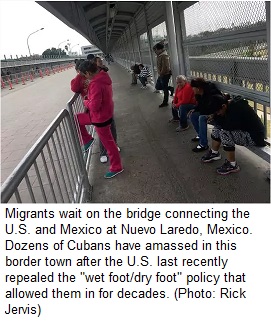
Category: Ethos

A Lesson In History – Ending the Military Draft

Go Lean Commentary

Do you remember the draft?

CU Blog - A Lesson in History - Military Draft Ends - Photo 2

If you were born after 1953, then probably not. The draft or conscription – see Appendix A below – ended in America in June 1973; see the full historic details in Appendix B below.

This was an American issue, but the shadow loomed large over other countries in the region, including the Caribbean. A most amazing observation – a learned lesson – is made based on the date of the draft ending: it saw the beginning of the end of Caribbean cohesion as we knew it.

The end of the American draft was the “first domino” in the Caribbean downfall. Societal abandonment has been all the rage ever since. (According to a 2012 report, the Migration Policy Institute detailed that the Caribbean Diaspora in the US amount to 22 million with the vast majority arriving in the last 2 decades of the 20th Century).

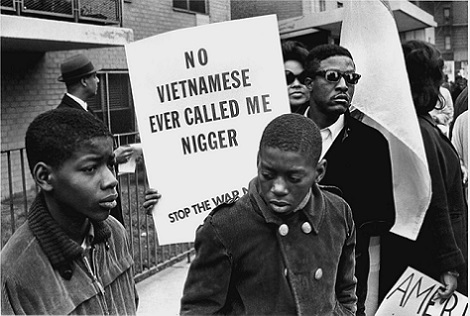
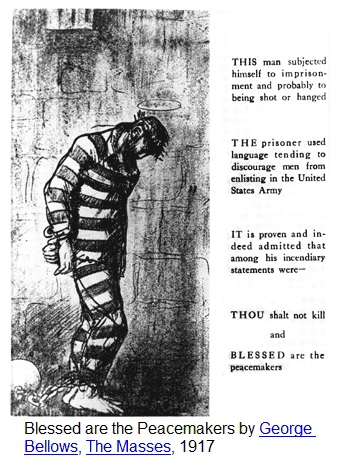
For the most part, Caribbean people had opposed military conscriptions, but only with passive voice, while other communities protested with vocal demonstrations and distributed various opposition publications. Consider this example:

The Masses was a graphically innovative magazine of socialist politics published monthly in the United States from 1911 until 1917, when federal prosecutors brought charges against its editors for conspiring to obstruct conscription. It was succeeded by The Liberator and then later The New Masses.
CU Blog - A Lesson in History - Military Draft Ends - Photo 1

CU Blog - A Lesson in History - Military Draft Ends - Photo 4Considering that the majority of the Caribbean were of an African heritage and the “pre-Civil Rights” American homeland was not welcoming for Black people, it is understandable that no Caribbean mother would have wanted to sacrifice their sons on the altar of war for racist America.

Sacrifice is the key word …

… the term National Sacrifice has been proclaimed to be a new community ethos that must be fostered in the Caribbean by the movement behind the book Go Lean…Caribbean. Community ethos is defined as the underlying spirit-attitude-sentiment that informs the beliefs, customs, or practices of society.

As an ethos, National Sacrifice defines a “willingness to die” for a cause. But the fuller definition presented by the Go Lean book and movement means a “willingness to live” for a cause. The Go Lean movement wants to forge change in the Caribbean, we want to change the attitudes for the entire region. We want to bring a National Sacrifice ethos to the Caribbean. This spirit is undoubtedly missing, as evidenced by the fact that the region suffers from an alarming rate of societal abandonment: 70% of the college-educated population have left in a brain drain.

This is the bad disposition now. This is the end-product of those dominoes; with no draft in the US – permanent residents with a “Green Card” were eligible for the draft – then the American homeland became more inviting. There are two reasons why Caribbean people have fled:

The book Go Lean…Caribbean serves as a roadmap for the introduction and implementation of the Caribbean Union Trade Federation (CU); a confederation to bring change and empowerment to the Caribbean region; to make the region a better place to live, work and play for all Caribbean people.

The book Go Lean…Caribbean opens with the acknowledgement that despite having the “greatest address in the world… the people of the Caribbean have beat down their doors to get out”, (Page 5). So the purpose of this roadmap is to mitigate this abandonment threat. How?

  • Dissuade the high emigration rates of Caribbean citizens to the American homeland.
  • Encourage the Caribbean Diaspora to repatriate back to their ancestral homeland.

The truth of the matter is America is not the panacea for Caribbean ills. This commentary has long asserted that it is better for the Black-and-Brown of the Caribbean to prosper where planted in their homeland than to emigrate to foreign countries, like the United States.

But no one wants the status quo. We all want the elevation/empowerment as related in the Go Lean roadmap. In total, the roadmap has these 3 prime directives:

  • Optimization of the economic engines in order to grow the regional economy to $800 Billion & create 2.2 million new jobs.
  • Establishment of a security apparatus to protect the resultant economic engines.
  • Improve Caribbean governance and industrial policies to support these engines.

The roadmap details the following community ethos, plus the execution of these strategies, tactics, implementation and advocacies to effect a turn-around in the region to improve our societal abandonment experiences:

Community Ethos – Deferred Gratification Page 21
Community Ethos – Economic Principles – People Choose Page 21
Community Ethos – Economic Principles – People Respond to Incentives in Predictable Ways Page 21
Community Ethos – Economic Principles – The Consequences of Choices Lie in the Future Page 21
Community Ethos – Governing Principles – Lean Operations Page 24
Community Ethos – Governing Principles – Cooperatives Page 25
Community Ethos – Ways to Impact the Future Page 26
Community Ethos – Ways to Impact a Turn-Around Page 33
Community Ethos – Ways to Promote Happiness Page 36
Community Ethos – Ways to Impact the Greater Good Page 37
Strategy – Vision – Confederate 30 Member-States Page 45
Strategy – Mission – Enact a Defense Pact to Defend the Homeland Page 45
Strategy – Mission – Keep the next generation at home Page 46
Tactical – Confederating a Permanent Union Page 63
Tactical – Fostering a Technocracy Page 64
Implementation – Assemble – Incorporating all the existing regional organizations Page 96
Implementation – Ways to Pay for Change Page 101
Implementation – Security Initiatives at Start-up Page 103
Implementation – Ways to Deliver Page 109
Planning – 10 Big Ideas for the Caribbean – Defense / Homeland Security Pact Page 127
Planning – Ways to Make the Caribbean Better Page 131
Advocacy – Ways to Grow the Economy Page 151
Advocacy – Ways to Create Jobs Page 152
Advocacy – Ways to Better Manage the Social Contract Page 170
Advocacy – Ways to Improve Homeland Security Page 181
Advocacy – Ways to Improve Communications Page 186
Advocacy – Ways to Preserve Caribbean Heritage Page 218
Advocacy – Ways to Impact US Territories Page 244

CU Blog - A Lesson in History - Grand Old Party - Photo 7

So Richard M. Nixon, the 37th President of the United States, is the one that ended the draft that started the Caribbean dominoes …

… is he to blame for the Caribbean’s atrocious societal abandonment rate?

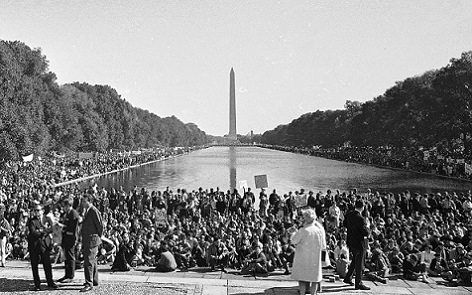
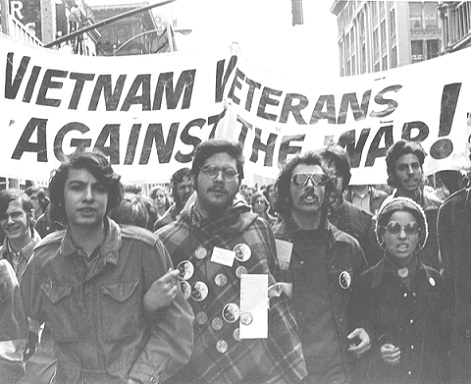
No! Though he turned out to be a “bad actor” in his own rite, he is not directly responsible for Caribbean dysfunctions; “we” did that on our own. (Nixon was fulfilling a campaign promise to end the universally unpopular Vietnam War in which there were organized protests for all of the 1960′s and 1970′s to date; see Appendix C VIDEO). But the US did not work in the Caribbean’s best interest; they rarely do. This is the running theme of so many previously Go Lean blog/commentaries; they have detailed how Caribbean priorities are rarely American priorities. See this sample list here:

https://goleancaribbean.com/blog/?p=10336 A Lesson in History – Haiti’s Reasonable Doubt of US Intentions
https://goleancaribbean.com/blog/?p=9214 Time to Go: Spot-on for Protest
https://goleancaribbean.com/blog/?p=9216 Time to Go: No Respect for our Hair
https://goleancaribbean.com/blog/?p=9626 Time to Go: Marginalizing Our Vote
https://goleancaribbean.com/blog/?p=9646 Time to Go: American Vices; Don’t Follow
https://goleancaribbean.com/blog/?p=9648 Time to Go: Public Schools for Black-and-Brown
https://goleancaribbean.com/blog/?p=8724 American Dysfunction with Marcus Garvey
https://goleancaribbean.com/blog/?p=5733 Better than America? Yes, We Can!
https://goleancaribbean.com/blog/?p=4551 US Territories – Between a ‘rock and a hard place’
https://goleancaribbean.com/blog/?p=4360 Dreading the ‘Caribbean Basin Security Initiative’
https://goleancaribbean.com/blog/?p=789 America’s War on the Caribbean

So President Nixon ended the draft as a campaign promise; see Appendix B below. Had he, and subsequent presidents, left it in place, Caribbean people may have stayed home. Our lack of a National Sacrifice ethos would dictate this decision-making.
CU Blog - A Lesson in History - Military Draft Ends - Photo 5


CU Blog - A Lesson in History - Military Draft Ends - Photo 3

We cannot go back in time …

… but we can go forward and foster a National Sacrifice ethos of our own. Not by messaging a devotion for a “cause to die for”, but rather messaging a “cause to live for”. We already have the greatest address considering island terrain, fauna/flora, hospitality, festivities, food, rum and cigars. If only we can optimize our societal engines (economics, security and governance).

Yes, we can … foster the national pride and love of culture. It takes heavy-lifting so this is the charter for the Go Lean/CU roadmap. We had that ethos before …

… the same Black-and-Brown populations have had to endure change over the years, decades and centuries to get the progress they have now. The Go Lean book identified the ethos of “deferred gratification” as having a focus on the future. Accentuating this ethos is how we forge patriotism and love of homeland. As related in a previous blog, public servants are required to show a sacrificial spirit now. Many times these public servants (school teachers and administrators) are lowly paid; their service to their country is a great sacrifice. Yet respect for this group is so lacking now – see this previous blog that relates the under-funding of a pension plan in one Caribbean member-state.

This is among the building blocks for fostering National Sacrifice. This point was detailed in these 2 previous blogs:

https://goleancaribbean.com/blog/?p=2809 National Sacrifice – The Missing Ingredient
https://goleancaribbean.com/blog/?p=3929 Success Recipe: Add Bacon to Eggs

The Caribbean is arguably “the greatest address on the planet”. This beauty should be valued; we should be willing to die for our homeland, but the Go Lean roadmap is only asking that we live for it … and live in it. Everyone in the Caribbean is urged to lean-in to this roadmap for Caribbean empowerment. 🙂

Download the book Go Lean … Caribbean – now!

——————-

Appendix A – Conscription (or drafting)

This is the compulsory enlistment of people in some sort of National Service, most often military service.[2] Conscription dates back to antiquity and continues in some countries to the present day under various names. The modern system of near-universal national conscription for young men dates to the French Revolution in the 1790s, where it became the basis of a very large and powerful military. Most European nations later copied the system in peacetime, so that men at a certain age would serve 1–8 years on active duty and then transfer to the reserve force.

Conscription is controversial for a range of reasons, including conscientious objection to military engagements on religious or philosophical grounds; political objection, for example to service for a disliked government or unpopular war; and ideological objection, for example, to a perceived violation of individual rights. Those conscripted may evade service, sometimes by leaving the country.[4] Some selection systems accommodate these attitudes by providing alternative service outside combat-operations roles or even outside the military, such as civil service in Austria and Switzerland.

As of the early 21st century, many states no longer conscript soldiers, relying instead upon professional militaries with volunteers enlisted to meet the demand for troops. The ability to rely on such an arrangement, however, presupposes some degree of predictability with regard to both war-fighting requirements and the scope of hostilities. Many states that have abolished conscription therefore still reserve the power to resume it during wartime or times of crisis.[5]
Source: Retrieved January 15, 2015 from: http://en.wikipedia.org/wiki/Conscription

——————-

Appendix B – End of Conscription

During the 1968 presidential election, Richard Nixon campaigned on a promise to end the draft.[57] He had first become interested in the idea of an all-volunteer army during his time out of office, based upon a paper by Martin Anderson of Columbia University.[58] Nixon also saw ending the draft as an effective way to undermine the anti-Vietnam war movement, since he believed affluent youths would stop protesting the war once their own probability of having to fight in it was gone.[59] There was opposition to the all-volunteer notion from both the Department of Defense and Congress, so Nixon took no immediate action towards ending the draft early in his presidency.[58]

Instead, the Gates Commission was formed, headed by Thomas S. Gates, Jr., a former Secretary of Defense in the Eisenhower administration. Gates initially opposed the all-volunteer army idea, but changed his mind during the course of the 15-member commission’s work.[58] The Gates Commission issued its report in February 1970, describing how adequate military strength could be maintained without having conscription.[57][60] The existing draft law was expiring at the end of June 1971, but the Department of Defense and Nixon administration decided the draft needed to continue for at least some time.[60] In February 1971, the administration requested of Congress a two-year extension of the draft, to June 1973.[61][62]

Senatorial opponents of the war wanted to reduce this to a one-year extension, or eliminate the draft altogether, or tie the draft renewal to a timetable for troop withdrawal from Vietnam;[63] … After a prolonged battle in the Senate, in September 1971 the draft renewal bill was approved.[65] Meanwhile, military pay was increased as an incentive to attract volunteers, and television advertising for the U.S. Army began.[57] With the end of active U.S. ground participation in Vietnam, December 1972 saw the last men conscripted, who were born in 1952[66] and who reported for duty in June 1973.
Source: Wikipedia Online Encyclopedia – Retrieved 02/13/2017 from: https://en.wikipedia.org/wiki/Conscription_in_the_United_States#End_of_conscription

——————-

Appendix C VIDEOOpposition to the Vietnam War in the United Stateshttps://youtu.be/vVNUlOUlMeo

Published on Oct 21, 2015 – As opposition to the Vietnam War grew, protests erupted in communities and college campuses across the United States. In May of 1970, four students were killed by Ohio National Guard troops on the campus of Kent State University in Ohio during a protest. The deaths shocked the nation and brought attention to the unrest of the times. This segment from Iowa Public Television’s Iowans Remember Vietnam documentary includes archival footage and and first-person accounts from a news reporter, protester, and draft resistor from the era. Source: http://iptv.org


Share this post:
, , ,

More ‘Bad News’ for Freeport

Go Lean Commentary

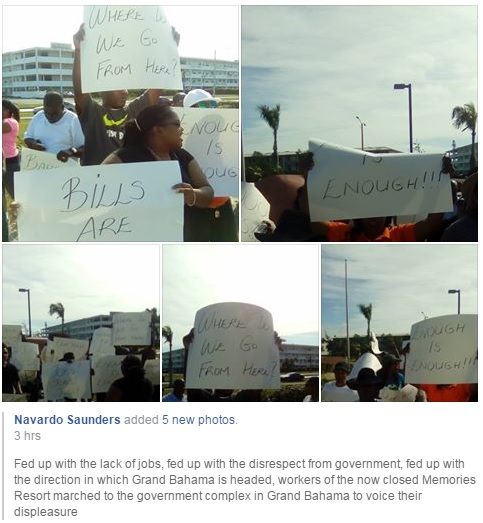
Change has come to tropical resorts – hotels with casinos. They do not seem to work anymore. It is a failing business model. This is Bad News for some communities.

CU Blog - Sunwing vacates Memories Grand Bahama - Photo 4

CU Blog - Sunwing vacates Memories Grand Bahama - Photo 5

Casinos are especially failing. Why so?  Well, for the many resort guests that come from North America (US & Canada), they now have abundant access to gambling – lotteries, casinos and pari-mutuel betting (horse racing, greyhound racing and Jai Alai). These establishments, especially casinos as of late, have popped up in many cities all over the region, plus on many Native American reservations. Plus there is the eco-system of Casino Riverboats and Cruise Ships leaving major US ports; many of them heading to the Caribbean.

Lastly, the ubiquity of the internet has furnished endless online gambling options.

The previous casino hot spots of Las Vegas and Atlantic City have thusly had to reform and transform their product offering.

Somehow, the Caribbean region “has not gotten the memo”.

This is sad, as one community after another in the Caribbean are having to endure the “bumps and bruises” of a failing economic engine in their neighborhood.

“It’s a beautiful day in the neighborhood …” NOT!

See this reality – Bad News for one city – in this Press Release statement here:

Corporate Statement: Sunwing vacates Memories Grand Bahama 

CU Blog - Sunwing vacates Memories Grand Bahama - Photo 1

February 1, 2017 – In 2013, the Sunwing Travel Group forged a partnership with the Government of The Bahamas and in 2014 began to operate the Memories Grand Bahama Beach & Casino Resort on Grand Bahama Island. Concurrently with Sunwing’s opening of the Memories Resort, Sunwing began weekly flight service from eight cities in Canada and daily flights from a variety of U.S. cities in the ensuing summer. The opening of the 492-room Resort coupled with Sunwing’s tour operator and airlift support, led to the revitalization of the Grand Bahama tourist economy, over 100,000 incremental tourists annually arriving on new flying programs from Canada and the Eastern United States, the creation of over 1500 jobs on the Island, and an annual economic contribution exceeding US $140 Million.

On October 6th of 2016, Hurricane Matthew caused significant damage to the Memories Resort and forced its closure. Despite an immediate response from Sunwing Travel Group and the Government of The Bahamas to secure alternative accommodations, protect flying, and expedite the necessary repairs, the Hotel’s owner, Hong Kong-based Hutchison Whampoa, did not agree to requests to restore the Memories.

Since this event, the Sunwing Travel Group has taken on the significant financial burden of compensating and re-protecting customers as well as running an air program with limited accommodation options as a demonstration of goodwill and commitment to the people of Grand Bahama Island.

In January, it was reported in the Bahamian press that the Government and Sunwing had agreed to co-invest sums to restore the Memories and secure its earliest reopening. Sunwing sought the hotel Owner’s consent for such restoration but regrettably, the Owner attempted to impose exorbitant conditions that were totally unacceptable to Sunwing and would be to any other potential tenant.

The Sunwing Travel Group is very proud of the partnership it has forged with the Government and the people of Grand Bahama and very saddened to report that we were required to vacate the Memories Resort premises on January 29, 2017. Accordingly, we are making arrangements to pay out applicable redundancy pay for our employees and will be reaching out to our employees in the coming days.

Sunwing intends to continue supporting Grand Bahama Island and its tourism economy, including its hotels, through its tour operators, Sunwing Vacations and US-based Vacation Express as well as by continuing its airlift programs from Canada and from the United States in the summer, subject to conditions we are discussing with Government.

We are also pleased to advise that as part of our ongoing commitment to Grand Bahama and its people, we are already developing plans in concert with the Government to return to Grand Bahama Island as a hotel operator and are optimistic that we will be in a position to announce details shortly.

We are very appreciative for the support we’ve received from the Government and the wonderful people of Grand Bahama. Thank you for your continued support and understanding,

Sunwing Travel Group.

————-

Source: The “Bahamas Weekly” News Source; posted Feb 3, 2017; retrieved Feb 8, 2017 from: http://www.thebahamasweekly.com/publish/grand-bahama-bahamas/Sunwing_vacates_Memories_Grand_Bahama52338.shtml

CU Blog - Sunwing vacates Memories Grand Bahama - Photo 2

CU Blog - Sunwing vacates Memories Grand Bahama - Photo 3

————-

VIDEO – Memories Grand Bahama Beach & Casino Resort – Grand Bahama, The Bahamas | Sunwing.ca – https://youtu.be/qLo3puqnIis

Published on Apr 15, 2014 – Memories Grand Bahama Beach and Casino Resort offers the perfect vacation escape for all types of travelers. Guests can indulge in a variety of first-class amenities, gourmet dining, unlimited beverages, onsite golf and non-stop activities.

The foregoing press release – about Freeport, the 2nd city in the Bahamas – aligns with the book Go Lean…Caribbean, which calls for the elevation of Caribbean economics. This quest means first accepting the reality of the current assessments; then forging the necessary change.

What is the assessment? The region is in crisis!

Alas, the Go Lean book declares “a crisis is a terrible thing to waste”. It serves as a roadmap for the introduction and implementation of the technocratic Caribbean Union Trade Federation (CU) with the charter to effectuate change in the region with these 3 prime directives:

  • Optimization of the economic engines in order to grow the regional economy to $800 Billion and create 2.2 million new jobs.
  • Establishment of a security apparatus to protect the resultant economic engines and marshal against economic crimes.
  • Improve Caribbean governance to support these engines.

Looking at the foregoing news story, Freeport has a crisis. There is a need to re-focus, re-boot, and optimize the engines of commerce so as to make Freeport, Grand Bahama, the whole Bahamas and the entire Caribbean, better places to live, work and play. This news story relates that the tourism product in Freeport, the mainstay of Caribbean economy, is in turmoil. The Go Lean book asserts that this is where the region must start in the effort for turn-around: the region can no longer afford to be a “one-trick pony”. The opening page of the book states:

The Caribbean has tried, strenuously, over the decades, to diversify their economy away from the mono-industrial trappings of tourism, and yet tourism is still the primary driver of the economy. Prudence dictates that the Caribbean nations expand and optimize their tourism products, but also look for other opportunities for economic expansion. The requisite investment of the resources (time, talent, treasuries) for this goal may be too big for any one Caribbean member-state. Rather, shifting the responsibility to a region-wide, professionally-managed, deputized technocracy will result in greater production and greater accountability. This deputized agency is the … CU.

The CU Trade Federation is a technocracy, empowered to reboot the economic engines of the member-states, by fostering new industries (new “purse”) across the entire region and deploying solutions to better exploit the opportunities of the global trade market. Thus generating all new revenues; with no need to re-distribute any existing “purse” among the member-states.

There is an apropos proverb: “if you fail to plan, you plan to fail”. Starting here and now, the Caribbean starts its planning for success; to snatch “victory out of the jaws of defeat”. Failure is just too familiar. Already we have member-states … on the verge of a Failed-State status… These states are not contending with the challenges of modern life: changing weather patterns, ever-pervasive technology, and the “flat world” of globalization. To reverse the fortunes of these failing states, and guide others in the opposite direction to a destination of prosperity, the Caribbean must re-boot the regional economy and systems of commerce.

Early in this book, the responsibility to monitor, manage, and mitigate the risks and threats of job killing developments, (such as the reporting in the foregoing press release), was identified as an important function for the CU with this pronouncement in the Declaration of Interdependence (Pages 13):

xxvi.  Whereas the Caribbean region must have new jobs to empower the engines of the economy and create the income sources for prosperity, and encourage the next generation to forge their dreams right at home, the Federation must therefore foster the development of new industries… In addition, the Federation must invigorate the enterprises related to existing industries like tourism… – impacting the region with more jobs.

So what is next for Freeport?

CU Blog - Sunwing vacates Memories Grand Bahama - Photo 6

The urging to this community is to “be afraid; be very afraid of maintaining the status quo”. It is past time to reboot Freeport. (See the foregoing VIDEO advertising the Memories Grand Bahama Resort).

This commentary previously related details of the status quo for Freeport and the strong recommendations to forge change. Consider this list of previous blogs:

https://goleancaribbean.com/blog/?p=10309 Time to consider “Secession”
https://goleancaribbean.com/blog/?p=10140 Lessons Learned from Detroit: Demolish abandoned structures!
https://goleancaribbean.com/blog/?p=7528 A Vision of Freeport as a Self-Governing Entity
https://goleancaribbean.com/blog/?p=7449 ‘Crap Happens’ – So What Now?
https://goleancaribbean.com/blog/?p=5542 Freeport’s Bad Ethos of Rent-Seeking
https://goleancaribbean.com/blog/?p=4185 Freeport: A Ghost Town Happening
https://goleancaribbean.com/blog/?p=4037 How to Train Your ‘Dragon’ – Freeport Version
https://goleancaribbean.com/blog/?p=3641 Freeport’s Musical Roots: A City ‘Built on Rock-n-Roll’
https://goleancaribbean.com/blog/?p=2585 Parallel of Freeport’s History: Concorde Supersonic Transport
https://goleancaribbean.com/blog/?p=300 Freeport’s Failing Status: ’10,000 Bahamians Living in Darkness’

The problems in Freeport are indicative of many other failing Caribbean communities, especially those overly dependent on tourism. Tourism can be a great economic engine, if managed properly … and diversified to hedge risk.

But, the executions have been faulty. Many communities have been plagued with “economic sores” for inadequate management of their tourism products. The issue of declining growth or failing business models is an important discussion for this roadmap. This commentary previously related details of these dysfunctions in these earlier Go Lean blogs:

https://goleancaribbean.com/blog/?p=8381 A Lesson in Economic Fallacies – Casino Currencies
https://goleancaribbean.com/blog/?p=7082 The Art and Science of ‘Play’
https://goleancaribbean.com/blog/?p=6680 Vegas Casinos Place Bets on Video Games
https://goleancaribbean.com/blog/?p=6341 Tourism Dysfunctional Stewardship — What’s Next?
https://goleancaribbean.com/blog/?p=4145 A Better Model for ‘Art’ Tourism
https://goleancaribbean.com/blog/?p=3225 Caribbean tourism less competitive due to increasing aviation taxes
https://goleancaribbean.com/blog/?p=2571 Sharing Economy: There is a winning model for Caribbean Tourism
https://goleancaribbean.com/blog/?p=2207 Hotels are making billions from Resort Fees; Bad Model for Caribbean
https://goleancaribbean.com/blog/?p=1984 Casinos Failing Business Model
https://goleancaribbean.com/blog/?p=1943 The Fading Future of Golf; Vital for Tourism?
https://goleancaribbean.com/blog/?p=798 Lessons Learned from the American Airlines Delivery Arts & Sciences
https://goleancaribbean.com/blog/?p=235 Tourism’s changing profile

According to the foregoing press release, the closing of this one property, Memories Grand Bahama, will directly impact over 600 jobs. In economics, there is the study of in-direct jobs that are facilitated by an economic engine. The Go Lean book details (Page 260) the principle of job multipliers, how certain industries are better than others for generating multiple indirect jobs down the line for each direct job on a company’s payroll. (Tourism’s job multiplier may be in the 2.0 to 3.0 range, while other industries, like automotive manufacturing, have a job-multiplier rate of 11.0)

The closing of this one property is more dire for Freeport; it’s an island with only few other non-tourism economic options. This city should be desperate to reform/reboot. Their economy needs to diversify … to industries with high job-multiplier ratios. (The Go Lean book suggest an automotive manufacturing business model for some communities in the Caribbean region; and a shipbuilding focus for Freeport). In order to “dream such a dream”, there must first be the adoption of specific community ethos to diversify the economy. (This is defined as the underlying spirit-attitude-sentiment that informs the beliefs, customs, or practices of society).

Is Freeport ready to start the journey for a new destiny with the adoption of the new community ethos? How about the rest of the Caribbean?

The book details the community ethos, plus the strategies, tactics, implementations and advocacies to foster a diversified economy:

Community Ethos – Deferred Gratification Page 21
Community Ethos – Economic Principle – People Respond to Incentives Page 21
Community Ethos – Economic Principle – Economic Systems Influence Individual Choices Page 21
Community Ethos – Economic Principle – Voluntary Trade Creates Wealth Page 21
Community Ethos – Economic Principle – Consequences of Choices Lie in the Future Page 21
Community Ethos – Job Multiplier Page 22
Community Ethos – “Crap” Happens – Anticipate Natural Disasters Page 23
Community Ethos – Lean Operations Page 24
Community Ethos – Return on Investments (ROI) Page 24
Community Ethos – Ways to Impact the Future Page 26
Community Ethos – Ways to Foster Genius Page 27
Community Ethos – Ways to Help Entrepreneurship Page 28
Community Ethos – Ways to Impact Research & Development Page 30
Community Ethos – Ways to Improve Sharing Page 35
Community Ethos – Ways to Impact the Greater Good Page 37
Strategy – Integrate Region in a Single Market Page 45
Tactical – Fostering a Technocracy Page 64
Tactical – Tactics to Forge an $800 Billion Economy Page 67
Tactical – Separation of Powers – Regional Tourism Promotion Page 78
Implementation – Ways to Deliver Page 109
Implementation – Ways to Reboot Freeport – Only City identified in Roadmap Page 112
Planning – Ways to Make the Caribbean Better – Better Job Options Page 131
Planning – Lessons Learned from Detroit – Example of a Failing City Page 140
Advocacy – Ways to Grow the Economy Page 151
Advocacy – Ways to Create Jobs Page 152
Advocacy – Ways to Improve Governance Page 169
Advocacy – Ways to Better Manage the Social Contract Page 170
Advocacy – Ways to Enhance Tourism Page 190
Advocacy – Ways to Help the Middle Class Page 223
Advocacy – Ways to Impact Urban Living Page 234

The Go Lean/CU roadmap is designed to foster industrial developments to diversify communities from tourism. We do not want to “abandon” tourism, just diversify it.

“Abandon” is a good word, because abandonment is what is happening in these failing Caribbean communities that have not diversified nor grown their economies. The disposition is so bad that the region sports a 70 percent abandonment rate among the educated classes.

This is truly a crisis; but one not to be wasted. All Caribbean stakeholders in the region – residents, institutions, businesses, Diaspora and trading partners – are urged to lean-in to this Go Lean roadmap. This plan is conceivable, believable and achievable.

Yes, we can … make the Caribbean a better place to live, work and play. 🙂

Download the book Go Lean … Caribbean – now!


Share this post:
, , , , ,
[Top]

ENCORE: Patriarch of an ’empowering’ family – Mike Ilitch dies; RIP

This is an ENCORE of the original blog-commentary from April 28, 2015 regarding empowering families in failing communities. The City of Detroit was cited, in comparison to select families in the Caribbean.

Mike Ilitch Dies - PhotoThat Detroit family, Mike Ilitch et al, now has to endure the loss of the family patriarch. This is a big loss for the family and a big loss for the Detroit community; see the full story here:

http://www.freep.com/story/money/business/columnists/2017/02/10/ilitch-detroit-pizza-red-wings-tigers-hockey-forbes/91475642/

The movement behind the book Go Lean…Caribbean have observed-and-reported on the turn-around of the once-great City of Detroit. We learned to value and respect the Ilitch family as role models for the Caribbean to emulate. This loss is huge!

RIP Mike Ilitch.

See the original blog-commentary here:

==================

A Lesson in History – Empowering Families

Go Lean Commentary

How do you eat an elephant? One bite at a time. – Source unknown

This familiar expression is not intended to give culinary instructions regarding “elephant” meat, but rather it relates a formula for taking on big goals. The answer is to attack the big goal with one small task at a time; taking one step after another in a journey towards a destination. The book Go Lean…Caribbean seeks to engage a big goal, that of elevating the Caribbean region through economic, security and governing empowerments.

This book declares this “elephant-size” goal is heavy-lifting; thusly the above advice applies. The book serves as a roadmap for the introduction and implementation of the technocratic Caribbean Union Trade Federation (CU) to provide better stewardship for the Caribbean homeland. The book posits that we can do this. We can look internally for solutions, rather than expecting some external “actor” to come in and provide answers. No, we must not fashion ourselves as parasites, but rather protégés of those communities that have already completed these heavy-lifting tasks.

Here is where we benefit from the lessons in history from other communities, families and individuals that have demonstrated unity-of-purpose. We are taught that “bite-size morsels” of the regional “elephant” can be well-handled by strong families; therefore the need exists to strengthen and empower families to optimize their societal contributions.

This strategy of family empowerment is very critical, and has a successful track record. In a previous blog/commentary, the issue of the origin of powerful families was detailed at full length. A direct quote relates:

From the origins of slavery, the region traversed the historic curves of social revolution and evolution. In the 1500, the Protestant movement took hold. As other European powers deviated from Catholicism, Papal Bulls [- which awarded territories in this New World -] carried no significance to them and compliance was ignored. England and Holland established their own Protestant Churches with their own monarchs as head of Church and State; Papal decrees were replaced with Royal Decrees and Charters. The intent and end-result was still the same: territories and lands awarded (colonized) with the stroke of a pen by one European power after another. The Royal Decrees and Charters were then reinforced with a strong military presence and many battles…

[The resultant] “oligarchy” … power effectively rested with a small number of people. These people could be distinguished by royalty, wealth, family ties, education, corporate, religious or military affiliation.

In this discussion of oligarchy, focus is given to powerful families. There are encyclopedic references that relate that oligarchy structures are often controlled by a few prominent families, who typically pass their influence/wealth from one generation to the next, even though inheritance alone is not a necessary condition for oligarchies to prevail.

The islands of the Caribbean fit the story-line in the [Caribbean-Calypso] song lyrics: “Islands in the sun; willed to me by my father’s hand”.

This is the challenge that belies Caribbean society. Most of the property and indigenous wealth of the Caribbean region is concentrated amongst the rich, powerful and yet small elite; an oligarchy. Many times these families received their property, corporate rights and/or monopolies by Royal Charter from the European monarchs of ancient times. These charters thus lingered in legacy from one generation to another … until …

The Go Lean book pushes further and deeper on this subject of family empowerment, stressing that success can still be derived in the Caribbean, even without the legacy of 500 years of entitlement. The book therefore stresses certain best-practices to apply to the regional strategies, tactics and implementations.

The book and subsequent Go Lean blogs prescribed new empowerments like investments in intellectual properties, controlled mineral exploration & extraction, strategic ship-building and outsourced security services. The book/blogs also call for best practices to optimize the current business models of tourism, financial services and specialty agriculture/fisheries.

The lesson of best practices comes from another community, of which we can be a protégé. This is the City of Detroit, Michigan USA. This community is notorious for its urban failures, even filing Bankruptcy in 2013. But from these ashes we have the following example of the pivotal and empowering Ilitch Family. Their Ilitch Holdings, Inc. operates as a holding company for restaurants, sports clubs, real estate, and entertainment businesses. With 17,000 direct employees and annual revenues of $1.8 billion (estimated in 2007; privately held companies are not required to disclose), this family enterprise truly impacts and empowers its community. (Detroit is voted #1 Sports City in the USA). The family operates and franchises the Little Caesars Pizza global chain plus this entertainment company branded Olympia Entertainment:

CU Blog - A Lesson in History - Empowering Families - Photo 1In 1982, Michael and Marian Ilitch purchased the Olympia Stadium Corporation, the management company for Olympia Stadium and renamed it Olympia Arenas, Inc. (In 1927, the Olympia Sports Arena was built in downtown Detroit to accommodate Detroit’s NHL franchise, and serve as the premier venue for a variety of entertainment). The newly purchased business was responsible for managing events at Joe Louis Arena (which had been completed in 1979 as the home of the Detroit Red Wings), Cobo Arena and the Glens FallsCivicCenter. That same year, Mr. and Mrs. Ilitch purchased the Detroit Red Wings.

In 1987, the Ilitches purchased Detroit’s iconic Fox Theatre (built in 1928) and renovated the 4,800+ seat venue, saving 80% of the original surfaces. In 1988, the Ilitches re-opened the Fox as the hub of the Foxtown Entertainment District and the building now houses the offices of Olympia Entertainment and Little Caesars Pizza. In 1989, the National Parks Service designated the Fox Theatre as a National Landmark.

The Olympia Stadium Corporation was renamed Olympia Entertainment in 1996 to reflect the management company’s expanded operations and venues.

In April 2000, Comerica Park, the new home of the Detroit Tigers hosted Opening Day and ushered in a new era of MLB baseball in Detroit. The 41,000+ seat ballpark is owned by the Detroit-Wayne County Stadium Authority, and Olympia Entertainment operates Comerica Park.
(Source: http://www.olympiaentertainment.com/about-olympia-entertainment/company-history)

Why consider the Ilitch Family as a model? They are impactful in business, sports, entertainment and philanthropy. This applies to the patriarch (Michael, Sr.) and the next generation; thus forging a family legacy. The family enterprises plus the Olympic Entertainment are detailed in the Appendix below. This is truly a family endeavor; in addition to parents Michael and Marian Ilitch, they have seven children: Christopher Ilitch (current CEO and President of Ilitch Holdings, Inc.); daughter Denise Ilitch, an attorney; Ron; Michael, Jr.; Lisa Ilitch Murray; Atanas; and Carole (Ilitch) Trepeck.

Needless to say, the City of Detroit had/has to engage, cooperate and collaborate with this family to induce their investment in the community. This is an example of impacting the Greater Good.

The Go Lean roadmap calls for engaging families in the Caribbean that are committed to elevating the Caribbean. There are truly Ilitch-like families here as well. Just consider this simple list of the most influential families in just one Caribbean member-state, Jamaica; as published by the highly regarded regional online publication, Pan-American World:

Title: 8 Wealthiest and Most Influential People From Jamaica
Pan-American World Online Magazine  – Retrieved 04/21/2015 from:
http://www.panamericanworld.com/en/article/8-wealthiest-and-most-influential-people-jamaica

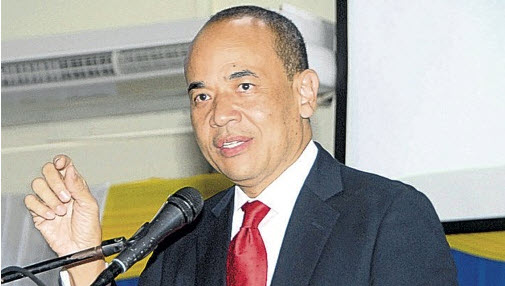
1. Joseph M. Matalon
CU Blog - A Lesson in History - Empowering Families - MatalonMatalon is among the foremost leaders in Jamaica business, part of a family with a legacy of successful business practices for decades. He is the chairman of the ICD Group, a Jamaican investment holding company. For more than 20 years, his knowledge and expertise have been utilized in the areas of transactional finance, investments and banking in various institutions. He is the chairman of British Caribbean Insurance Co., the Development Bank of Jamaica and president of the Private Sector Organization of Jamaica (PSOJ). He also is a director of the Gleaner Co. and Commodity Service Co. and a former director of the Bank of Nova Scotia (Jamaica Limited). In addition, he has been involved with a number of special committees to advise the government on financial and economic matters.

2. Michael Lee-Chin
CU Blog - A Lesson in History - Empowering Families - Michael Lee-ChinHe is a self-made billionaire who started his career as a road engineer for the Jamaican government and gradually built his way up to chairman and founder of Portland Holdings, a thriving, privately held investment company in Jamaica. Additionally, Lee-Chin is executive chairman of AIC Limited and National Commercial Bank. Born in Port Antonio in the Portland Parish, the Jamaican-Canadian Lee-Chin also owns stakes in National Commercial Bank Jamaica and Total Finance in Trinidad and Tobago. His personal real estate portfolio includes 250 acres of beachfront property in Ocho Rios, Jamaica, and homes in Canada and Florida, according to Forbes. He has been off the magazine’s billionaire list for the last four years, topping out at a net worth of $2.5 billion in 2005.

3. Chris Blackwell
CU Blog - A Lesson in History - Empowering Families - BlackwellHe belongs to an affluent family that acquired its wealth through sugar and Appleton Rum. He established himself as a music mogul more than 50 years ago. His rise included introducing the world to reggae. He produced music for artists like Ike and Tina Turner, Bob Marley and the Wailers, Burning Spear and Black Uhuru, among others. He is also the founder of Palm Pictures and creator of the Golden Eye Film Festival that honors Jamaicans who excel in the arts and music. He was awarded the Order of Jamaica for his exemplary work in the entertainment industry in 2004. The Blackwell family name has been the inspiration for “Blackwell Fine Jamaican Rum.” Blackwell currently runs Island Outpost, which is a conglomerate set up to run a group of resorts in Jamaica and the Bahamas. He has an estimated net worth of $180 million, according to celebritynetworth.com.

4. Paula Kerr-Jarrett
CU Blog - A Lesson in History - Empowering Families - JarrettShe is an attorney, philanthropist and influential presence in the Jamaican society circle. She and her husband, Mark, are working to bolster Montego Bay tourism. They announced two months ago a multibillion-dollar partnership project to construct 1,200 homes, a 48-acre tech park with enormous space for information technology that would bring 30,000 jobs and a new University of the West Indies that would accommodate up to 10,000 students. They estimate the investment value of this project to be $500 million. Her great-grandmother, Marion Louise Reece Bovell, was the first woman in Jamaica to run in the general elections of 1944 as an independent candidate. Kerr-Jarrett is connected by marriage to the prominent Jarrett family.

5. Dr. Blossom O’Meally-Nelson
CU Blog - A Lesson in History - Empowering Families - NelsonO’Meally-Nelson is Jamaica’s first female postmaster general. She is the former pro-chancellor and chairman of Council for the University of Technology (UTECH). Against the background of her outstanding achievements in public service, O’Meally-Nelson is making inroads in the private sector with a family-owned logistics company, Aeromar Group.

6. Joseph John Issa
CU Blog - A Lesson in History - Empowering Families - IssaKnown mostly as Joe Issa, he is the founder of Cool Group, a multibillion-dollar entity that is made up of more than 50 companies; the chairman of the SuperClubs all-inclusive resort chain, and vice chairman of the Gleaner Co. Issa is credited with introducing the all-inclusive concept into Jamaica more than 30 years ago. He introduced the concept during the tourism slump in the 1970s when many hotels were struggling to break even. It was and remains a booming success. He also maintains a commitment to helping the community, especially children from underprivileged areas in education. He said, ”Born into a rich family, I cannot imagine what it would be like going to school without lunch or books.”

7. Gordon ‘Butch’ Stewart
CU Blog - A Lesson in History - Empowering Families - StewartStewart reigns as the chairman of Sandals Resorts International, The Jamaica Observer and more than 20 other companies that fall under the Appliance Traders empire, one of the largest private-sector conglomerates in the Caribbean. He has a net worth of $1 billion. His working life began at the age of 12, when he borrowed his father’s fishing boat and began selling his catch of the day and ferrying the rich and famous between their anchored yachts and the harbor front. It was during those times he said he learned the elements of success.

8. Wayne Chen
CU Blog - A Lesson in History - Empowering Families - Wayne ChenWayne Chen, the chief executive officer of Super Plus Food Stores, is also the man behind a massive expansion in the local supermarket business in Jamaica. Super Plus is a large supermarket chain with at least 30 stores across the island. He wears other hats, too: chairman of NCB Insurance Co. Limited and West Indies Trust Co. Limited. He is also a director of NCB (Cayman) Limited, AIC (Barbados) Limited and the Christiana Town Centre Limited. He is also a younger brother of billionaire Michael Lee-Chin.

So the consideration of the Go Lean book, as related to this subject is one of governance and economic empowerment. The book posits that empowerment does not only need to emanate from government, but rather individuals and empowering families can have a positive impact. These points were pronounced in the opening Declaration of Interdependence (Page 12) with these acknowledgements and statements:

xi.   Whereas all men are entitled to the benefits of good governance in a free society, “new guards” must be enacted to dissuade the emergence of incompetence, corruption, nepotism and cronyism at the peril of the people’s best interest. The Federation must guarantee the executions of a social contract between government and the governed.

xii. Whereas the legacy in recent times in individual states may be that of ineffectual governance with no redress to higher authority, the accedence of this Federation will ensure accountability and escalation of the human and civil rights of the people for good governance, justice assurances, due process and the rule of law. As such, any threats of a “failed state” status for any member state must enact emergency measures on behalf of the Federation to protect the human, civil and property rights of the citizens, residents, allies, trading partners, and visitors of the affected member state and the Federation as a whole.

xxiv.  Whereas a free market economy can be induced and spurred for continuous progress, the Federation must install the controls to better manage aspects of the economy: jobs, inflation, savings rate, investments and other economic principles. Thereby attracting direct foreign investment because of the stability and vibrancy of our economy.

xxxiii. Whereas lessons can be learned and applied from the study of the recent history of other societies, the Federation must formalize statutes and organizational dimensions to avoid the pitfalls of communities like … Detroit…

The same as empowering families ruled in colonial times, based on special favor granted to their forebears by Royal Decree, the family dynamic can help the region again; this time for the Greater Good. While collaboration is so much harder on a societal level – there is the need for buy-in, compromise and consensus – families are already attuned to instinctively trust each other, work together and foster unity-of-purpose. Lastly, families often invest with a deferred gratification ethos, expecting many times that only the next generation will reap the returns on these investment. This eco-system is the microcosm of societal progress.

This Go Lean roadmap calls for incentivizing and engaging many empowering families; and to do so on a regional basis.

In general, the CU/Go Lean roadmap will employ strategies, tactics and implementations to impact its prime directives; identified with the following 3 statements:

  • Optimization of the economic engines in order to grow the regional economy to $800 Billion & create 2.2 million new jobs.
  • Establishment of a security apparatus to protect the resultant economic engines and mitigate internal and external threats.
  • Improve Caribbean governance to support these engines.

In much the same way the Ilitch Family seeks to transform Detroit, the Go Lean book stresses key community ethos, strategies, tactics, implementations and advocacies necessary to transform and turn-around the eco-systems of Caribbean society. These points are detailed in the book; the following is a sample:

Community Ethos – Economic Principles – Deferred Gratification Page 21
Community Ethos – Economic Principles – People Choose Page 21
Community Ethos – Economic Principles – Choices Involve Costs Page 21
Community Ethos – Economic Principles – Economic Systems Influence Individual Choices Page 21
Community Ethos – Economic Principles – Consequences of Choices Lie in the Future Page 21
Community Ethos – Governing Principles – Minority Equalization Page 24
Community Ethos – Governing Principles – Return on Investments Page 24
Community Ethos – Governing Principles – Cooperatives Page 25
Community Ethos – Ways to Impact the Future Page 26
Community Ethos – Ways to Help Entrepreneurship Page 28
Community Ethos – Ways to Impact Turn-Arounds – Learning from Detroit Page 33
Community Ethos – Ways to Impact the Greater Good Page 37
Strategy – Vision – Confederate all 30 member-states/ 4 languages into a Single Market Page 45
Strategy – Mission – Build   and foster local & regional economic engines Page 45
Tactical – Ways to Foster a Technocracy Page 64
Tactical – Growing the Economy – Repatriate & Reunite Families Page 70
Tactical – Separation-of-Powers – CU Federal Government versus Member-State Governance Page 71
Implementation – Ways to Pay for Change Page 101
Implementation – Reasons to Repatriate Page 118
Planning – Anatomy of Advocacies – One person can make a difference Page 122
Planning – Ways to Make the Caribbean Better Page 131
Planning – Lessons Learned from Detroit – Turn-around from Failure Page 140
Advocacy – Ways to Grow the Economy Page 151
Advocacy – Ways to Create Jobs Page 152
Advocacy – Ways to Improve Governance Page 168
Advocacy – Ways to Better Manage the Social Contract Page 170
Anecdote – Caribbean Industrialist – Butch Stewart Page 189
Advocacy – Ways to Preserve Caribbean Heritage Page 218
Advocacy – Ways to Impact Retirement Page 221
Advocacy – Ways to Impact the One Percent Page 224
Advocacy – Ways to Improve Elder-Care Page 225
Advocacy – Ways to Empower Women – Focus on Families Page 226
Advocacy – Ways to Impact Youth Page 227
Advocacy – Ways to Re-boot Jamaica Page 239

There are other lessons for the Caribbean to learn from considering the historicity of empowering families, those in the past, present and future. Whether these families prospered due to their own business acumen and hard work, or were entitled by some Royal Decree, we must all be judged on what we do with the gifts we are blessed with.

Our region has experienced a lot of abandonment over the decades; this status quo cannot persist. We have suffered the same as many other failing communities – like Detroit.  But the families depicted in this commentary, in Detroit and in the Caribbean, prove that despite hardships, if there is some unity-of-purpose, success can still be fostered even in the most trial-some conditions. Looking and learning at these communities, we glean that we can confer, convene and collaborate with empowering families to positively impact our communities.

Let’s get started! Let’s make our Caribbean homeland – and our individual communities – better places to live, work and play. 🙂

Download the book Go Lean … Caribbean – now!

———–

Appendix – Ilitch Family Holdings and Olympia Entertainment Group

Fox Theatre Opened: September 21, 1928 Re-opened: November 19, 1988 after Michael and Marian Ilitch bought and restored the theatre to its original splendor; saving 80 percent of the original surfaces.Features: The Fox Theatre was the crown jewel of Detroit’s theater district during the first quarter of the 20th Century playing host to some of the biggest names in show business and showing first-runs of some of the greatest films in history. The Fox Theatre has played host to some of the greatest names in entertainment including Louis Armstrong, Cab Calloway, Frank Sinatra, Sammy Davis Jr., Stevie Wonder and Diana Ross. Designated a National Landmark in 1989, the Fox is the second largest surviving theatre (over 4,800 seats) in the nation and has the second largest functioning Wurlitzer organ.
Joe Louis Arena Opened: In December 1979. Joe Louis Arena (The Joe or JLA) became the home-ice of the Detroit Red Wings NHL hockey franchise, replacing Olympia Stadium, the former home of Detroit’s NHL team for 72 years.Features: The 20,058-seat arena is Detroit’s largest indoor venue and has hosted a wide variety of events in its 30-year existence including the NHL All-Star Game (February 5, 1980), the Republican National Convention (July 14-18, 1980) and six Stanley Cup Finals. The arena is named after boxing legend and long-time Detroit resident, Joe Louis. First event: December 23, 1979 — University of Detroit vs. University of Michigan basketball; First Red Wings Game: December 29, 1979
Comerica Park Opened: April 11, 2000 Features: The 45,010 seat, open-air ballpark is home to the Detroit Tigers Major League Baseball franchise. The ballpark has hosted more than 850 ball games as well as concerts with more than 80,000 fans. Comerica Park has hosted Bon Jovi, Sheryl Crow, Bruce Springsteen, Aerosmith, KISS, Eminem, Jay-Z, The Rolling Stones and Kid Rock.First Event: Detroit Tigers vs. Seattle Mariners on April 11, 2000First Concert: The Dave Matthews Band on July 5, 2000
City Theatre Opened: September 15, 1993 as the Second City-DetroitReopened: October 6, 2004 as renamed City TheatreFeatures: An intimate, 472-seat theatre with the atmosphere of a Broadway house.
Affiliates
Little Caesars Pizza Little Caesars Pizza founders Michael and Marian Ilitch opened their first restaurant in Garden City, Michigan, in 1959. Little Caesars, the fastest growing pizza chain, built more stores in the   world in 2009 than any other pizza brand and today is the largest carry-out   chain globally with restaurants on five continents. Little Caesars is growing in prime markets across the country, and is offering strong franchisee candidates an opportunity for independence with a proven system. For the third year in a row, Little Caesars was named “Best Value in America”* of all quick-serve restaurant chains. In addition, Little Caesars offers strong brand awareness with one of the most recognized and appealing characters in   the country, Little Caesar.
“Highest-Rated Chain – Value for the Money” based on a nationwide survey of quick-service restaurant consumers conducted by Sandelman & Associates, 2009
Detroit Red Wings One of the Original Six franchises in the National Hockey League, the Detroit Red Wings have won more Stanley Cup Championships than any other American franchise. Purchased in 1982 by Mike and Marian Ilitch, the Red Wings have stood as one of professional sports’ premier franchises with the most recent Cup victories in 1997, 1998,   2002 and 2008. The Red Wings play in front of sellout crowds of 20,000-plus fans at Joe Louis Arena in downtown Detroit. Visit us at http://www.detroitredwings.com.
Detroit Tigers In 1992, Mike Ilitch purchased the Detroit Tigers, Detroit’s major league baseball team, which plays in Comerica Park. The ballpark is located directly across the street from the Fox Theatre. ComericaPark opened in 2000 to rave reviews. Sports Illustrated called Comerica Park a “brilliant ballpark”, among the top two or three in the country.
In 2005, the Detroit Tigers hosted the 76th All-Star game at Comerica Park. All-Star Week in Detroit produced the highest grossing revenue in the history of the All-Star Game. Comerica Park has also hosted numerous concerts and the 2006 World Series. Visit the Detroit Tigers website at www.detroittigers.com
Little Caesars Pizza Kits Since its introduction in the Detroit area in 1997, Pizza Kits has become the “Hottest Fundraiser in America” for all types of   nonprofit organizations. Pizza Kits contain all the ingredients to make delicious pizza at home. The Pizza Kit Program now offers a variety of family favorites: 9 Pizza Kits, 3 Breads, and 3 Specialty Items.
In Fall 2003, the Little Caesars Cookie Dough Program was launched with 8 great tasting varieties including: Chocolate Chip, White Chocolate Macadamia Nut, Peanut Butter and Oatmeal Raisin.
Today, Little Caesars Fundraising Programs proudly helps raise millions of dollars for thousands of schools, churches, sports teams and nonprofit organizations throughout the continental United States. Visit us at www.pizzakit.com or call us toll free at 1-888-4-LC-KITS.
Olympia Development Olympia Development, L.L.C. was established by the Ilitch organization in 1996 to cultivate and attract   development in downtown Detroit. The company was instrumental in negotiating the side-by-side Detroit Tigers and Detroit Lions stadiums. As a result, the 76th All-Star Game played at Comerica Park in 2005 and the XL Super Bowl that played at Ford Field in 2006. Olympia Development is dedicated to supporting further growth with the new Foxtown sports and entertainment district in downtown Detroit; see VIDEO below.
Uptown Entertainment Uptown Entertainment includes two of Detroit’s finest movie theatres – the historic Birmingham 8 and Ren Cen 4. In addition to featuring first-run movies, Uptown   Entertainment offers unparalleled event services in a variety of unique settings. Uptown is dedicated to faithfully providing our guests with the ultimate in theatre projection, sight, sound, and service. Special features of Uptown Entertainment theatres include stadium seating, digital surround sound, wall-to-wall curved screens and full bar service is available for any private theatre reservations.
In 2010, the Birmingham 8 theatre was one of the first in the area to offer Sony Digital Cinema 4K projection and RealD 3D, which provides the highest resolution projection   available, 3D capability and a superior viewing experience for guests. The technology also allows for a variety of alternative content such as live concerts, sporting events, operas and more! Visit UptownEntertainment.com. The Destination for an Exceptional Entertainment Experience.
Hockeytown Cafe Voted the No. 2 sports bar in the country week after week by ESPN2’s Cold Pizza,   Hockeytown Cafe is the hottest place to take part in the action before, during and after both Red Wings and Tigers games with live bands, great food and drink and the best view of Comerica Park in the MotorCity! Visit us at www.hockeytowncafe.com.
Blue Line Foodservice Distribution Blue Line Foodservice Distribution was established in 1971 in Farmington Hills, Michigan as a premier foodservice distribution company. With 14 distribution centers in North America and satellite locations within the U.S., the company distributes food and equipment to Little Caesars® stores as well as many other customers throughout the world. Through its West Coast centers, Blue Line provides exporting services to the Australia, New Zealand, the Pacific Rim and other territories; through its East Coast centers support is provided to the Caribbean, Europe, the Middle East and South America. Blue Line, with 700 employees, offers a single point of contact for product purchasing, replenishment, equipment, customer service and logistics. Learn more about Blue Line Foodservice Distribution at www.bluelinedist.com.
Champion Foods Champion Foods is a premier manufacturer of top quality private label and branded food products. Its specialty products are high quality packaged retail pizzas and   breadsticks, par-baked pizza crusts and premium cookie dough. Champion Foods services many customers including major grocery retailers, food service distributors, restaurant chains and industrial toppers. Its experienced and professional staff makes dozens of products, any of which can be customized to specific customer needs at their state-of-the-art manufacturing research center located in Metro Detroit. Champion Food offers an expansive distribution network to ship throughout North America.   www.championfoods.com
The Little Caesars Amateur Hockey League Little Caesars Amateur Hockey League (LCAHL) is the nation’s largest amateur youth   hockey league, involving teams from all over America’s Midwest — Michigan, Ohio and Indiana including Nashville, Tennessee — with more than 700 Travel and House Teams and over 11,000 players in 45 affiliated Associations.
Little Caesars AAA Hockey Little Caesars AAA Hockey is one of the most recognized and respected organizations in amateur travel hockey. A cornerstone of the Midwest Elite Hockey League   since 1968, the program has captured numerous state championships and   tournament titles over its 30-plus year history. Mike and Marian Ilitch, owners of the Little Caesars Pizza chain, have been sponsoring amateur hockey teams since 1968 and are a major reason for the club’s success. Visit us at www.littlecaesarshockey.com.
Little Foxes Fine Gifts Little   Foxes Fine Gifts, located in Downtown Detroit’s Fox Theatre Building, offers Metro   Detroiters unique gifts for every occasion. You’ll find one-of-a-kind gifts from around the world including pottery, fine crystal, art, jewelry and home furnishings. Established by Marian Ilitch in 1992, Little Foxes is the premiere downtown location for all your gift giving needs! Free Parking is available. Visit us at www.littlefoxes.com.
MotorCity Casino Hotel Motor City Casino Hotel has 400 rooms and suites. Dining options include Iridescence, Detroit’s only AAA Four Diamond Award-winning restaurant, Grand River Deli, and Assembly Line Buffet. With live entertainment nightly at Chromatics, Detroit’s only Radio Bar, Spectators sports bar to watch the game, and Amnesia, Detroit’s only ultra lounge, there’s something for everyone. For more information please visit www.motorcitycasino.com. Due to Sports league ownership rules, the casino is directly owned by Marian Ilitch.
Coming Development
The District Detroit (See VIDEO below) Ilitch Organization Achieves Zoning Approval for New Detroit Events CenterOur Vision for Affordable Housing and Plan for Renovation of Eddystone Hote. lDetroit Businesses Win Majority of Contract Awards for New Detroit Events Center. The District Detroit: Six Job Fairs in 60 Days

(Source: http://www.olympiaentertainment.com/about-olympia-entertainment/company-history)

VIDEO – Ilitch Organization unveils sports and entertainment district plans – https://youtu.be/3fSVcsNWhjk

Published on Jul 21, 2014

Share this post:
, , , , , ,
[Top]

Science of Sustenance – e-Clothing

Go Lean Commentary

Basic needs (food, clothing & shelter) and cutting-edge technologies, what a conundrum?!

A lot of science/technology goes into the harvesting of food, and the construction of houses, but clothing has a “leg up”, in that the science is emerging to where people can wear their technology.

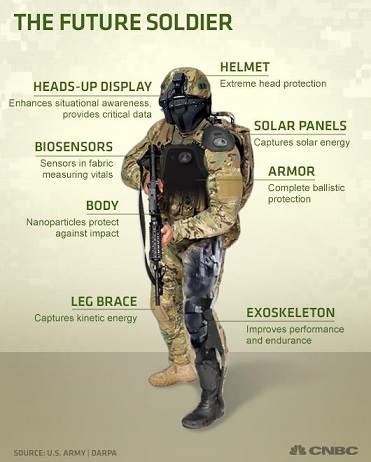
CU Blog - Science of Sustenance - e-Clothing - Photo 6Welcome to the new age! This is called e-Clothing (electronic-embedded clothing) or e-Textile, a subset of “Materials Sciences” – see Appendix below.

This imagery is so remindful of the old television cartoon show, The Jetsons. It debuted in 1962 telling stories of what the writers envisioned the year 2062 would be like. In those 55 years, the actual technologies have changed, so if envisioned again, what do we now think the year 2062 will look like.

This re-imagining was done; see Appendix VIDEO below.

This commentary presses the point about innovations in wearable technologies; the purpose tends to not be fashion, but function; (there are some fashion statements with flashing lights; see Appendix). There are a lot of circumstances where embedded technologies in clothing would be advantageous; consider:

  • Performance enhancing – technologies to improve and enhance movement and skills.
    CU Blog - Science of Sustenance - e-Clothing - Photo 2
  • Disease Management – diagnostics of medical conditions to alert stakeholders of declining health metrics; consider blood pressure, blood sugar, temperature and pulse rate.
    Microsoft PowerPoint - 5909233016169432_fig3 [Read-Only] [Compat

Considering the Appendix VIDEO below, it would appear that future innovations are expected to take place in places other than the Caribbean. That would be a sad disposition. This point was highlighted in the book Go Lean…Caribbean; it purports that a new industrial revolution is emerging in the world and that Caribbean people and society must engage. This is pronounced at the outset of the Go Lean book in the Declaration of Interdependence (Page 14), with this opening statement:

xxvii. Whereas the region has endured a spectator status during the Industrial Revolution, we cannot stand on the sidelines of this new economy, the Information Revolution. Rather, the Federation must embrace all the tenets of Internet Communications Technology (ICT) to serve as an equalizing element in competition with the rest of the world. The Federation must bridge the digital divide and promote the community ethos that research/development is valuable and must be promoted and incentivized for adoption.

So there must be Caribbean participants in this global race to create technological solutions to better deliver on basic needs. This commentary is 3 of 4 in a series on the modern advances in science for delivering basic needs: energy, food, clothing and shelter. While it is possible to deliver these basic needs without science, our modern world is defined by the advances of science and their impact on daily life. The full series for our consideration follows this pattern:

  1.    Science of Sustenance: Energy
  2.    Science of Sustenance: Food
  3.    Science of Sustenance: Clothing
  4.    Science of Sustenance: Shelter

The Go Lean book’s assertion is that innovations will spurn new economic activity, improve lives and lower our overall cost of living.

Clothing is undeniably a basic need, but e-Clothing is associated more with progress. All people in our region need clothes and yet we do not source our own clothing. We have no textile industry (cotton, wool, linen, leather, etc.). There is art and science associated with the subject of apparels. The art is considered fashion; and Caribbean stakeholders have made a great impact in the fashion industry – remember Oscar De La Renta. But art and fashion does not have to be the limited for the Caribbean vocation – tailoring, dress-making, arts-and-crafts – in this apparel eco-system. For the most part, our clothing needs are imported products, but we can still better provide for the region’s clothing needs, and depend less on globalization.

The book Go Lean… Caribbean serves as a roadmap for the introduction and implementation of the technocratic Caribbean Union Trade Federation (CU). This effort will marshal the region to avail the opportunities associated with technology and clothing. The CU/Go Lean roadmap has these 3 prime directives:

  • Optimization of the economic engines – including clothing solutions – in order to grow the regional economy.
  • Establishment of a security apparatus to protect the resultant economic engines.
  • Improve Caribbean governance to support these engines.

The Go Lean roadmap calls for the immediate adoption of the community ethos to foster information technology innovation. This was the original motivation of the Go Lean roadmap, an interdependence of the 30 member-states of the Caribbean to offset the effects of globalization. This statement was also pronounced early in the book on the same page of the Declaration of Interdependence as above:

xxx. Whereas the effects of globalization can be felt in every aspect of Caribbean life, from the acquisition of food and clothing, to the ubiquity of ICT, the region cannot only consume, it is imperative that our lands also produce and add to the international community, even if doing so requires some sacrifice and subsidy.

There is a lot at stake for the Caribbean in considering this subject area. According to the subsequent article, there are scientific developments to power the chips embedded in textiles using body heat. Just think of this innovation: 98.6 degrees is a lot of heat that humans generate. If only that body energy can be captured and harnessed to power electronics in e-Clothing and/or e-Textiles. According to this article, there is progress:

Title: Wearable integrated thermocells based on gel electrolytes use body heat as power source

CU Blog - Science of Sustenance - e-Clothing - Photo 1Summary: Electronics integrated into textiles are gaining in popularity: Systems like smartphone displays in a sleeve or sensors to detect physical performance in athletic wear have already been produced. The main problem with these systems tends to be the lack of a comfortable, equally wearable source of power. Scientists are now aiming to obtain the necessary energy from body heat. They have now introduced a flexible, wearable thermocell based on two different gel electrolytes.

FULL STORY:
Electronics integrated into textiles are gaining in popularity: Systems like smartphone displays in a sleeve or sensors to detect physical performance in athletic wear have already been produced. The main problem with these systems tends to be the lack of a comfortable, equally wearable source of power. Chinese scientists are now aiming to obtain the necessary energy from body heat. In the journal Angewandte Chemie, they have introduced a flexible, wearable thermocell based on two different gel electrolytes.

Our muscle activity and metabolism cause our bodies to produce constant heat, some of which is released through the skin into the environment. Because of the relatively small temperature difference between skin (approximately 32 °C) and the temperature of our surroundings, it is not so easy to make use of body heat. Previous thermoelectric generators, such as those based on semiconductors, produce too little energy, are costly, or are too brittle for use in wearable systems. Thermocells with electrolyte solutions are difficult to integrate into extensive wearable systems. A team led by Jun Zhou at Huazhong University of Science and Technology (Wuhan, China) has now found a solution to this problem: thermocells with gel-based electrolytes.

The researchers are making use of the thermogalvanic effect: if two electrodes in contact with an electrolyte solution — or an electrolyte gel — are kept at different temperatures, a potential difference is generated. The ions of a redox pair in the electrolyte can rapidly switch between two different charge states, accepting or releasing electrons at electrodes with different temperature. In order to use this to produce a current, the scientists combined two types of cells containing two different redox pairs. Each cell consists of two tiny metal plates that act as electrodes, with an electrolyte gel in between. The first cell type contains the Fe2+/Fe3+ redox pair. The second type of cell contains the complex ions [Fe(CN)6]3-/[Fe(CN)6]4-. Because of the choice of these redox pairs, in cell type 1, the cold end gives a negative potential, while in type 2, the cold end gives a positive potential.

The researchers arranged many of these two types of cells into a checkerboard pattern. The cells were connected to each other by metal plates alternating above and below, to link them into a series. They then integrated this “checkerboard” into a glove. When the glove is worn, the desired temperature difference results between the upper and lower plates. This produces a voltage between neighboring cells, and the voltage adds up. This makes it possible to generate current to power a device or charge a battery.

In an environment at 5 °C, it was possible to produce 0.7 volts and about 0.3 μW. By optimizing this system, it should be possible to improve the power, even with smaller temperature gradients.

Reference: Peihua Yang, Kang Liu, Qian Chen, Xiaobao Mo, Yishu Zhou, Song Li, Guang Feng, Jun Zhou. Wearable Thermocells Based on Gel Electrolytes for the Utilization of Body HeatAngewandte Chemie International Edition, 2016; DOI: 10.1002/anie.201606314

Source: Science Daily e-Zine – Posted September 6, 2016; retrieved 02-04-2017 from: https://www.sciencedaily.com/releases/2016/09/160906131128.htm

This foregoing article is describing the dynamics of Research-and-Development (R&D). It is an attitude, a spirit, a motivation and a sentiment. The Go Lean book describes this as community ethos, the appropriate attitude/spirit to forge change in our region. R&D is cited as one of the community ethos the Caribbean region needs to adopt. This will foster the climate, environment and atmosphere to forge change in e-Clothing deliveries. Engaging this ethos early can result in many new jobs, and entrepreneurial opportunities. This is how to succeed in a world dominated by globalization; we must not only consume, we must produce as well. The Go Lean book details R&D and other ethos to adopt, plus the executions of the following strategies, tactics, implementations and advocacies to forge Research-and-Development and industrial growth in Caribbean communities:

Community Ethos – Deferred Gratification Page 21
Community Ethos – People Respond to Incentives Page 21
Community Ethos – Job Multiplier Page 22
Community Ethos – “Crap” Happens Page 23
Community Ethos – Lean Operations Page 24
Community Ethos – Return on Investments (ROI) Page 24
Community Ethos – Ways to Impact the Future Page 26
Community Ethos – Ways to Help Entrepreneurship Page 28
Community Ethos – Ways to Impact Research & Development Page 30
Community Ethos – Impact the Greater Good Page 37
Strategy – Agents of Change – Technology Page 57
Strategy – Agents of Change – Globalization Page 57
Tactical – Fostering a Technocracy Page 64
Tactical – Growing Economy – New High Multiplier Industries Page 68
Separation of Powers – Patent, Standards, & Copyrights Office Page 82
Separation of Powers – Health Department – Diagnostic Services Page 86
Separation of Powers – Drug [and Medical Devices] Administration Page 87
Implementation – Ways to Pay for Change Page 101
Implementation – Ways to Implement Self-Government Entities Page 105
Implementation – Ways to Deliver Page 109
Advocacy – Ways to Grow the Economy Page 151
Advocacy – Ways to Create Jobs Page 152
Advocacy – Ways to Improve Healthcare Page 156
Advocacy – Ways to Impact Entitlements Page 158
Advocacy – Ways to Better Provide Clothing Page 163
Advocacy – Ways to Foster Technology Page 197
Advocacy – Ways to Improve Elder-Care Page 225
Appendix – Healthways Model – Disease Management Data Capture Page 300

Historically, the Caribbean has been quick to consume technological advances. Now we want to be quick to produce the technology, not just consume it. Some Caribbean communities are doing this already, consider Cuba with their research in cancer drugs. Other Caribbean R&D activities have been detailed in these previous blog-commentaries:

https://goleancaribbean.com/blog/?p=9751 Where the Jobs Are – Animation and Game Design
https://goleancaribbean.com/blog/?p=8943 Zika’s Drug Breakthrough
https://goleancaribbean.com/blog/?p=8817 Lessons from China – R&D for Mobile Game Apps
https://goleancaribbean.com/blog/?p=5034 US Patent Office: Model of Innovation and Abuse
https://goleancaribbean.com/blog/?p=3974 Google’s R&D efforts in Puerto Rico
https://goleancaribbean.com/blog/?p=1817 Caribbean R&D on the new cycles of flooding & drought
https://goleancaribbean.com/blog/?p=1288 Future Caribbean Astronauts – Not so improbable
https://goleancaribbean.com/blog/?p=308 CARCIP Urges Greater Caribbean Innovation thru R&D
https://goleancaribbean.com/blog/?p=286 Puerto RicoCancerR&DCenter Project Breaks Ground

Change has come to the world of textiles and clothing; these changes must also be forged, researched and developed in the Caribbean region. We must be able to better provide our clothing. This is one of the basic needs that we must convene, collaborate and cooperate on as a region. This helps to make the Caribbean a better place to live, work and play.

But we must also be able to contribute to the new world of performance-enhancing and diagnostic e-Clothes.

The people and institutions of the region are hereby urged to lean-in to this Go Lean roadmap, to embrace all these empowerments efforts to reboot our region. 🙂

Download the book Go Lean … Caribbean – now!

————-

Appendix – e-Textiles

E-textiles, also known as smart garmentssmart clothingelectronic textilessmart textiles, or smart fabrics, are fabrics that enable digital components (including small computers), and electronics to be embedded in them. Smart textiles are fabrics that have been developed with new technologies that provide added value to the wearer. Pailes-Friedman of the Pratt Institute states that “what makes smart fabrics revolutionary is that they have the ability to do many things that traditional fabrics cannot, including communicate, transform, conduct energy and even grow”.[1]

Smart textiles can be broken into two different categories: aesthetic and performance enhancing. Aesthetic examples include fabrics that light up and fabrics that can change color. Some of these fabrics gather energy from the environment by harnessing vibrations, sound or heat, reacting to these inputs. Performance enhancing smart textiles are intended for use in athletic, extreme sports and military applications. These include fabrics designed to regulate body temperature, reduce wind resistance, and control muscle vibration – all of which may improve athletic performance. Other fabrics have been developed for protective clothing, to guard against extreme environmental hazards, such as radiation and the effects of space travel.[2] The health and beauty industry is also taking advantage of these innovations, which range from drug-releasing medical textiles, to fabric with moisturizer, perfume, and anti-aging properties.[1] Many smart clothing, wearable technology, and wearable computing projects involve the use of e-textiles.[3]

Electronic textiles are distinct from wearable computing because emphasis is placed on the seamless integration of textiles with electronic elements like microcontrollers, sensors, and actuators. Furthermore, e-textiles need not be wearable. For instance, e-textiles are also found in interior design.

CU Blog - Science of Sustenance - e-Clothing - Photo 7The related field of fibretronics explores how electronic and computational functionality can be integrated into textile fibers.

A new report from Cientifica Research examines the markets for textile based wearable technologies, the companies producing them and the enabling technologies. The report identifies three distinct generations of textile wearable technologies:

  1. “First generation” attach a sensor to apparel. This approach is currently taken by sportswear brands such as Adidas, Nike and Under Armour
  2. “Second generation” products embed the sensor in the garment, as demonstrated by current products from Samsung, Alphabet, Ralph Lauren and Flex.
  3. In “third generation” wearables, the garment is the sensor. A growing number of companies are creating pressure, strain and temperature sensors for this purpose.

Future applications for e-textiles may be developed for sports and well-being products, and medical devices for patient monitoring. Technical textiles, fashion and entertainment will also be significant applications.[4]

CU Blog - Science of Sustenance - e-Clothing - Photo 5

Source:  Retrieved February 4, 2017 from: https://en.wikipedia.org/wiki/E-textiles

————-

Appendix VIDEO – The World of The Jetsons, reimagined – https://youtu.be/37waZeR4isc

Published on Nov 15, 2016 – The world of The Jetsons gets a scientific makeover. Arconic has reimagined the year 2062 through the eyes of leading futurists, our engineers and filmmaker Justin Lin. This futuristic world features advanced technologies—flying cars and extra tall, 3D-printed buildings—that Arconic’s materials science and manufacturing experts could help bring to life.

Arconic is built on an extraordinary heritage of innovation that began with Alcoa’s founding in 1888. We have helped shape the aerospace, automotive and building and construction industries since the days of the Wright brothers, Henry Ford and the first modern downtowns. Today, as Arconic, we continue to build on more than a century of innovation to help transform the way we fly, drive, build and power. Arconic is where the future takes shape.

Learn more at http://www.arconic.com/thefuture.

Share this post:
, , ,
[Top]

‘Culture Eats Strategy For Breakfast’

Go Lean Commentary

Congratulations to the New England Patriots of the National Football League. They won SuperBowl LI on Sunday February 5, 2017 – beating the Atlanta Falcons 34 to 28 in a dramatic comeback – in which they overcame a 28 to 3 deficit. Their victory proved the validity of the business axiom:

Culture eats strategy for breakfast, lunch and dinner.

CU Blog - 'Culture Eats Strategy For Breakfast' - Photo 2This phrase was articulated by distinguished management consultant Peter Drucker and made famous by Mark Fields, a former President of Ford Motor Corporation. This corporate best-practice – good for nation-building as well – is that this axiom is more than just theory, it is an absolute reality! Any company, or community for that matter, disconnecting the two (culture and strategy) are putting their success at risk.

This expression made a leapfrog to NFL football in 2014 when the Head Coach of another team, Philadelphia Eagles, referred to the concept in a passing comment. See the full origin story in this link:

How ‘Culture Beats Scheme’ Became Eagles’ Motto

The New England Patriots SuperBowl win is proof-positive of the culture-first ethos. Talent abounds in the league; all 32 teams have the same opportunities and yet, none can boast the Patriots’ history of success. Why? This team has focused heavy on its culture … and has the success to show for it:

The Patriots have appeared in the Super Bowl nine times in franchise history, the most of any team, seven of them since the arrival of head coach Bill Belichick and quarterback Tom Brady in 2000. The Patriots have since become one of the most successful teams in NFL history, winning 14 AFC East titles in 16 seasons since 2001, without a losing season in that period. The franchise has since set numerous notable records, including most wins in a ten-year period (126, in 2003–2012), an undefeated 16-game regular season in 2007, the longest winning streak consisting of regular season and playoff games in NFL history (a 21-game streak from October 2003 to October 2004), and the most consecutive division titles won by a team in NFL history (won eight straight division titles from 2009 to 2016). The team owns the record for most Super Bowls reached (seven) and won (five) by a head coach-quarterback tandem, as well as being the first tandem to win the Super Bowl 13 years after the first. – Source: Wikipedia.
CU Blog - Culture Eats Strategy For Breakfast - Photo 1

The purpose of this commentary is the focus on culture. This definition of culture refers to community ethos; this is defined in the book Go Lean … Caribbean as …

… the fundamental character or spirit of a culture [group or community], the underlying sentiment that informs the beliefs, customs, or practices of a group or society; the dominant assumptions of a people or period.

Culture allows “you” to overcome obstacles; endure the heavy-lifting of a turn-around; invest in future success based on promising talents; stay the course of a roadmap, rather than “giving up” and fleeing for the appearance of greener pastures elsewhere. Culture dictates devoting “blood, sweat and tears” to a community cause, to give a full measure of devotion. We can learn so much by examining organizations and communities of great accomplishments. The New England Patriots is one such model. See VIDEO here describing the culture of the New England Patriots:

VIDEO – Chris Long of New England Patriots on Team, Winning, Unselfish Culture – https://youtu.be/ne-YkmXMN4M

Published on Jan 3, 2017 – Chris Long discusses the New England Patriot’s TEAM Culture, Winning Attitude, & Unselfishness on the NFL Network’s Game Day Prime with former NFL Head Coach Steve Mariucci on 1/1/17.

The Go Lean book relates that there are good ethos and bad ethos – the good ethos can be considered “culture” while the bad ethos may be deemed “defects”. The Caribbean member-states are not known as great societies, despite having the greatest “address on the planet” in terms of terrain, fauna/flora, hospitality, festivities, food, rum and cigars; this is due to our deficient community ethos, our organizational culture. There are role models for us to consider:

“Culture eats strategy for breakfast,” is a famous quotation attributed to the late business management guru Peter Drucker, and I can’t think of a better example that proves this than Enterprise Rent-A-Car’s acquisition of National Car Rental and Alamo.

They have been recognized numerous times for their customer service by J.D. Power. Business Week recognized them as one of the top 25 customer service brands in the world. In addition to running a wildly successful business, they obviously know how to take care of their customers, which means their customers want to come back.

All that is impressive, but not nearly as impressive as how they proved these top customer service awards weren’t a fluke. All of the awards and accolades they continue to receive don’t happen by accident. They aren’t just lucky. Everything Enterprise does is very purposeful. It is their culture. – Forbes Magazine Columnist Shep Hyken’s Profile Story.

One mission of the Go Lean book is to foster good community ethos – good culture – for the Caribbean region. We have great talent in our region and yet still we do not win; our people “take their talents to South Beach / South New York / South Toronto / South London, etc.”. What is missing here? Culture.

The Caribbean has a lot of people who have excelled on the world stage in their chosen professions, only because they fled their Caribbean homes seeking better opportunities abroad. Consider:

The Go Lean book serves as a roadmap for the introduction and implementation of the Caribbean Union Trade Federation (CU) to elevate Caribbean society and culture. The CU has 3 prime directives:

  • Optimization of the economic engines in order to grow the regional economy to $800 Billion and create 2.2 million new jobs.
  • Establishment of a security apparatus to protect the resultant economic engines.
  • Improve Caribbean governance to support these engines.

From the outset of the book, in the opening Declaration of Interdependence, the Go Lean roadmap posits that a target for the CU’s empowerments should be the Caribbean youth. This is the best way to foster a new culture, focus on the next generation. Then the remainder of society will assimilate … the new values within a short time. See the focus on youth in the opening pages of the book (Page 3), with this sample quotation:

Our youth, the next generation, may not be inspired to participate in the future workings of their country; they may measure success only by their exodus from their Caribbean homeland.

Thusly, the Go Lean/CU roadmap dictates how to reach, engage, and solicit the youth market to foster the new required attitudes. These other pronouncements in the opening Declaration of Interdependence, bear a direct reference to this quest for changing culture; consider these on Pages 11 & 13:

xix. Whereas our legacy in recent times is one of societal abandonment, it is imperative that incentives and encouragement be put in place to first dissuade the human flight, and then entice and welcome the return of our Diaspora back to our shores…

xxi.  Whereas the preparation of our labor force can foster opportunities and dictate economic progress for current and future generations, the Federation must ensure that educational and job training opportunities are fully optimized for all residents of all member-states, with no partiality towards any gender or ethnic group. The Federation must recognize and facilitate excellence in many different fields of endeavor, including sciences, languages, arts, music and sports. This responsibility should be executed without incurring the risks of further human flight, as has been the past history.

The book provides some turn-by-turn instructions for soliciting the different generation groups (Baby Boomers, Generation X and the current Millennials) who are at the frontline of the current Caribbean battles, that of societal abandonment, of which the region is sorely losing; (see this portrayed in a previous blog-commentary). The Go Lean book asserts new community ethos, strategies, tactics, implementation and advocacies. The following list from the book applies:

Community Ethos – Economic Principle – Economic Systems Influence Choices & Incentives Page 21
Community Ethos – Economic Principle – Voluntary Trade Creates Wealth Page 21
Community Ethos – Economic Systems Influence Choices & Incentives Page 21
Community Ethos – People Respond to Incentives Page 21
Community Ethos – Consequences of Choices Lie in the Future Page 21
Community Ethos – Ways to Help Entrepreneurship Page 28
Community Ethos – Ways to Impact Turn-Around Page 33
Community Ethos – Ways to Manage Reconciliations Page 34
Community Ethos – Ways to Promote Happiness Page 36
Community Ethos – Ways to Impact the Greater Good Page 37
Community Ethos – Lean Operations Page 24
Community Ethos – Cooperatives Page 25
Community Ethos – Ways to Impact the Future Page 26
Community Ethos – Impact the Greater Good Page 37
Strategy – Strategy – Keep Young People At Home in the Region Page 51
Strategy – Agents of Change – Technology Page 57
Strategy – Agents of Change – Globalization Page 57
Tactical – Fostering a Technocracy Page 64
Tactical – Separation of Powers – Postal Union Page 78
Anecdote – Turning Around the CARICOM governance Page 92
Anecdote – “Lean” in Government Page 93
Implementation – Ways to Pay for Change Page 101
Implementation – Ways to Deliver Page 109
Implementation – Ways to Impact Social Media Page 111
Implementation – Reasons to Repatriate Page 118
Advocacy – Ways to Improve Governance Page 168
Advocacy – Ways to Better Manage the Social Contract Page 170
Advocacy – Ways to Impact Events Page 191
Advocacy – Ways to Promote Fairgrounds Page 192
Advocacy – Ways to Foster e-Commerce Page 198
Advocacy – Ways to Impact the Diaspora Page 217
Advocacy – Ways to Impact Youth Page 227
Advocacy – Ways to Impact Sports Page 229
Advocacy – Ways to Impact Urban Living – Sports Leagues Page 234

The Go Lean book is a great guidebook for developing agile institutions – a recipe for the CU technocracy.

The Caribbean can succeed in our efforts to improve our community ethos. Consider this sample of previous blog-commentaries that delve into aspects of forging a better “culture” in Caribbean communities:

https://goleancaribbean.com/blog/?p=10220 Waging a Successful War on the BAD ethos of Rent-seeking
https://goleancaribbean.com/blog/?p=10218 Waging a Successful War on the BAD ethos of Stupidity
https://goleancaribbean.com/blog/?p=10216 Waging a Successful War on the BAD ethos of Orthodoxy
https://goleancaribbean.com/blog/?p=9595 Vision and Values for a ‘New’ Caribbean
https://goleancaribbean.com/blog/?p=9428 Forging Change: Herd Mentality
https://goleancaribbean.com/blog/?p=8186 Respect for Minorities: ‘All for One’
https://goleancaribbean.com/blog/?p=7646 Going from ‘Good to Great’
https://goleancaribbean.com/blog/?p=7628 ‘A Change Is Gonna Come’
https://goleancaribbean.com/blog/?p=5695 Repenting, Forgiving and Reconciling the Past
https://goleancaribbean.com/blog/?p=3915 ‘Change the way you see the world; you change the world you see’
https://goleancaribbean.com/blog/?p=3780 Forging an Ethos of ‘Blood, Sweat and Tears’
https://goleancaribbean.com/blog/?p=623 ‘Only at the precipice, do they change’

The vision for a new Caribbean is one that has a culture that could “eat strategy – scheme or talent – for breakfast”.

While the focus of this commentary is on culture, a lot can be said for the Sports eco-system as well. The Go Lean/CU roadmap is NOT a sports promotion plan but it does present the important role for sports in the vision to make the Caribbean a better place to live, work and play. As an expression of this vision, the Go Lean book states (Page 81):

“… a mission of the CU is to forge industries and economic drivers around the individual and group activities of sports and culture”.

Now is the time for all of the Caribbean, the people and governing institutions, to lean-in for the empowerments described in the book Go Lean … Caribbean. The benefits are too alluring: dawn of a new economy and new opportunities to preserve Caribbean culture for future generations. 🙂

Download the book Go Lean … Caribbean – now!


Share this post:
,
[Top]

Waging a Successful War on ‘Terrorism’

Go Lean Commentary

“The first casualty when war comes is truth” – US Senator Hiram Warren Johnson (1918).

In the United States, the War on ‘Terrorism’ was declared after the World Trade Center Attacks in September 2001. The war is still waging … some 16 years later. This is the third Commander-in-Chief (President) to lead the American effort; (George W. Bush, Barack Obama and Donald Trump). Now, the lines are starting to blur in terms of who are the enemies and who are the allies.

During the first week of the new Trump administration, the new President issued an Executive Order – fulfilling a campaign promise – banning all immigrants from certain Muslim-majority countries. This is purportedly in conjunction with the ongoing War on ‘Terror’. The problem is that the cited countries have not been the source of the terrorist activities that have attacked the US. The targeting seem arbitrary. We must consider the truth; see the news article and photo/map of this story here:

Title: These Countries with Business Links to Trump Aren’t Part of His Immigration Ban
By: Joseph Hincks

CU Blog - War on 'Terrorism' - Photo 1

A little over a year ago, then-Republican presidential candidate Donald Trump called for a “total and complete shutdown of Muslims entering the United States,” until the country’s leadership could “figure out what is going on.”

Along the campaign trail, he modified this blanket ban to a suspension of “immigration from terror-prone regions, where vetting cannot safely occur,” which he promised to enact during his first 100 days in office.

And now, a week into Trump’s presidency, he has tried to make good on that promise—or, at least, partly so. A draft proposal of an executive order obtained by Bloomberg News reportedly shows that Trump is poised to suspend all entry to the U.S. from seven Muslim-majority countries.

Notably missing from the blacklist, however, are several Muslim-majority countries where Trump has business dealings, according to Bloomberg.

The news organization has put together a map of the proposed suspensions, with the Muslim-majority countries where Trump has business interests—Egypt, Saudi Arabia, Turkey, and Azerbaijan—rendered in yellow.

While Muslim-majority countries such as Oman, Qatar, Kuwait, and others are not included on the list, the omission of Turkey and Egypt may be argued as being seen at odds with Trump’s definition. Both Turkey and Egypt endured high-profile terror attacks in 2016.

The President has positions in two companies that may be related to business in Egypt, and has previously praised the country’s autocratic leader, Abdel Fattah al-Sisi. In Turkey, Trump has a licensing deal to use his name on two luxury towers in Istanbul.

Source: Fortune Magazine Online Site; posted January 27, 2017; retrieved January 29, 2017 from: http://fortune.com/2017/01/27/donald-trump-muslim-immigration-ban-conflict/

Such a bold move – based on mis-truths – elicits response, feedback and uproar from opposition and pundits alike. In one such salvo on Saturday January 28th, a Security Analyst (with TV News Network MSNBC), Malcolm Nance, identified that terrorists are sourced in many countries around the world, not just the banned 7 and including places like the Caribbean.

Wait, what?!?! Such a scandalous accusation!

This brings to mind a previous blog-commentary by the promoters of the book Go Lean … Caribbean, describing the reality of the terrorism-threat in the Caribbean:

ISIS reaches the Caribbean Region

The Caribbean member-states are all atwitter about such associations. The region’s governments asserts that they are partners in the ‘War on Terror’ and not accessories to any Bad Actors. Consider the formal response from the Bahamas in the Appendix A below.

But truth be told, the US – and other advanced democracy countries – are very alarmed with their Caribbean partners; we have so many societal defects that exacerbate the global attempts to mitigate terrorism. Consider this list of security-based societal defects:

1.  Indiscriminant Citizenship By Investment Program – see the CBS 60 Minutes story about Passports for Sale even to Terror Suspects featured in this previous blog. Can terrorists hide their identity with a passport from a Caribbean member-state? Can we do better going forward?CU Blog - War on Rent - Photo 3
CU Blog - War on 'Terrorism' - Photo 22.  US PATRIOT Act – Managing ‘the Need and the Greed’ with this law. The measure allowed US authorities to have purview on foreign bank accounts in cooperative countries. This is where the Caribbean member-states were given the opportunity to demonstrate that they were willing to mitigate terrorism. Cooperation with these measures – see Appendix B below – jeopardized the Offshore Banking industry in the region. Can terrorists use our “banking in the shadows” to facilitate their malice? The historicity of the Offshore Banking Regulatory changes were detailed in the Go Lean book (Pages 321 – 326). Consider this sample from Page 321:

“In 2001 the development of standards in the fight against terrorism financing was added to the mission of the FATF [(Financial Action Task Force … on Money Laundering)]. In October 2001 the FATF issued the Eight Special Recommendations to deal with the issue of terrorism financing. The continued evolution of money laundering techniques led the FATF to revise the FATF standards comprehensively in June 2003. In October 2004 the FATF published a Ninth Special Recommendations, further strengthening the agreed international standards for combating money laundering and terrorism financing”.

3.  Aversion to Digital Dragnets – The cutting edge technologies to capture meta-data or actual cell phone contents have been frowned on in the Caribbean; in a 2011 WikiLeaks dissemination, whistleblower Edward Snowden revealed that the Bahamas cooperates with US official and records all cell phone calls. This disclosure was assailed as an Abuse of Power. But we must admit, this is an abuse of American power on the Caribbean homeland. Issues abound that need to be addressed and settled. The societal defect is that we are expecting others (the US in this case) to take the lead for our own security. Can we better prepare our own security apparatus for our own security needs? See VIDEO here relating the Privacy Concerns of dragnets.
VIDEO – USA Today: Digital Dragnet – Police Scoop Up Cell Phone Data – https://www.occupycorporatism.com/digital-dragnet-dhs-police-stingray-trackers/

Posted December 9, 2013 – Systems like the “Stingray” allow law enforcement entities to “tap into cellphone data in real time . . . capturing information about thousands of cellphone users at a time, whether they are targets of an investigation or not”.
4.  Monitoring for threats (Weapons of Mass Destruction) – like Nuclear weapons. In the Caribbean, the “Sum of our Greatest Fear” is a terrorist detonating a dirty (nuclear) bomb in an unsecured island community. This is not just something we can complain about, no, we must prepare. There is an international accord that affords a solution, through the US. This is addressed in the discussion of the NEST program (Nuclear Emergency Support Team) in Appendix C below. We can facilitate our own arrangement, with US cooperation. We can mount sensors and monitoring equipment; we can grant access and enable the NEST inspectors in our domain.
CU Blog - War on 'Terrorism' - Photo 3

How we receive, perceive and retrieve security mitigations indicates the impact of our societal defects. Without firing one shot, the Caribbean is able to help or hurt the War Against ‘Terrorism’ with our societal defects. This is commentary 4 of 4 from the movement behind the Go Lean book on the subject of Caribbean societal defects. So how do we move our communities from the deficient-defective status quo to our targeted destination: “a better (safer) place to live, work and play”? By waging war on our defects. All of these commentaries detail that effort, for the following defects:

  1. Waging a Successful War on Orthodoxy
  2. Waging a Successful War on Stupidity
  3. Waging a Successful War on Rent
  4. Waging a Successful War on ‘Terrorism’

These commentaries draw reference to the Go Lean book, as it details the quest to reform and transform the Caribbean; it features a how-to guide and roadmap for elevating the region’s societal engines for (1.) economics, (2.) security and (3.) governance. Strategies, tactics and implementations for the War Against Terrorism have relevance for all these three spheres of society.

The book Go Lean … Caribbean serves as a roadmap for the introduction and implementation of the Caribbean Union Trade Federation (CU) to elevate the region’s societal engines of economics, security and governance. With a brand name like Trade Federation, obviously the primary focus is on economics, but the book asserts (Page 23) that peace, security and public safety must be tantamount to economic prosperity; that bad things will happen to good people and so the community needs to be prepared to contend with the risks that can imperil the homeland. The Go Lean book therefore serves as a roadmap for full Caribbean integration, with the motivation for Greater Good. In all, the Go Lean roadmap has these 3 prime directives:

  • Optimization of the economic engines in order to grow the regional economy and create new jobs.
  • Establishment of a homeland security apparatus to ensure public safety and to protect the resultant economic engines of the Caribbean region.
  • Improvement of Caribbean governance to support these engines.

The priority on homeland security was pronounced early in the Go Lean book with the opening Declaration of Interdependence (Page 12) that claims:

x. Whereas we are surrounded and allied to nations of larger proportions in land mass, populations, and treasuries, elements in their societies may have ill-intent in their pursuits, at the expense of the safety and security of our citizens. We must therefore appoint “new guards” to ensure our public safety and threats against our society, both domestic and foreign. The Federation must employ the latest advances and best practices … to assuage continuous threats against public safety.

xi. Whereas all men are entitled to the benefits of good governance in a free society, “new guards” must be enacted to dissuade the emergence of incompetence, corruption, nepotism and cronyism at the peril of the people’s best interest. The Federation must guarantee the executions of a social contract between government and the governed.

xii. Whereas the legacy in recent times in individual states may be that of ineffectual governance with no redress to higher authority, the accedence of this Federation will ensure accountability and escalation of the human and civil rights of the people for good governance, justice assurances, due process and the rule of law. As such, any threats of a “failed state” status for any member state must enact emergency measures on behalf of the Federation to protect the human, civil and property rights of the citizens, residents, allies, trading partners, and visitors of the affected member state and the Federation as a whole.

xvi. Whereas security of our homeland is inextricably linked to prosperity of the homeland, the economic and security interest of the region needs to be aligned under the same governance. Since economic crimes, including … forms of terrorism, can imperil the functioning of the wheels of commerce for all the citizenry, the accedence of this Federation must equip the security apparatus with the tools and techniques for predictive and proactive interdictions.

The Caribbean appointing these “new guards” will include many strategies, tactics and implementations considered “best-practices” in the War Against Terror.

The CU would be established by the sovereign powers of the 30 Caribbean member-states to empower the region with economic, security and governing tools and techniques. This includes a Security / Defense Pact (Armed Forces) with a fully-empowered Naval Force and Expeditionary Marine (ground) Forces. The Security Pact is about action, not attitude; but the right societal attitude (weeding out societal defects) is important, critical even.

Societal defects are destructive and self-defeating for the interior of our communities. But in the case of security gaps, far-away communities can be imperiled as well. The War on Terrorism is fought by many stakeholders on many different ‘battlefields’.  Consider airport screening; once every passenger has been screened for weapons and explosives, the plane is considered “sanitized” and can then enter any airspace with a presumed label of “safe-and-secured”. Poor security executions in the Caribbean can therefore impact the public safety of far-away places. So our defects can result in bad cause-and-effect for other (innocent) people.

This is the attitude – community ethos – that we must adopt, that our battles in the War Against Terror can help/hurt the rest of the world. “Community Ethos” is defined here as:

“… the fundamental character or spirit of a culture; the underlying sentiment that informs the beliefs, customs, or practices of a group or society; dominant assumptions of a people or period practices of a group or society; dominant assumptions of a people or period”.

The Go Lean book details the series of community ethos, strategies, tactics, implementations and advocacies to wage a successful ‘War on Terrorism’; this includes proactive and reactive public safety/security measures in the Caribbean region:

Community Ethos – Economic Systems Influence Individual Choices Page 21
Community Ethos – Consequences of Choices Lie in Future Page 21
Community Ethos – Privacy –vs- Public Protection Page 23
Community Ethos – Intelligence Gathering Page 23
Community Ethos – Whistleblower Protection Page 23
Community Ethos – “Crap” Happens Page 23
Community Ethos – Cooperatives Page 25
Community Ethos – Ways to Manage Reconciliations Page 34
Community Ethos – Ways to Improve Sharing Page 35
Community Ethos – Ways to Promote Happiness Page 36
Community Ethos – Ways to Impact the Greater Good Page 37
Strategy – Vision – Confederating a non-sovereign permanent union Page 45
Tactical – Fostering a Technocracy Page 64
Tactical – Separation of Powers – Coast Guard & Naval Authorities Page 75
Tactical – Separation of Powers – Ground Militia Forces Page 75
Tactical – Separation of Powers – Emergency Management Agency Page 76
Tactical – Separation of Powers – CariPol: Marshals & Investigations Page 75
Implementation – Ways to Pay for Change Page 101
Implementation – Start-up Foreign Policy Initiatives Page 102
Implementation – Start-up Security Initiatives Page 103
Implementation – Ways to Foster International Aid Page 115
Planning – 10 Big Ideas – #3: Consolidated Homeland Security Pact Page 130
Planning – Ways to Make the Caribbean Better Page 131
Planning – Ways to Improve Failed-State Indices – Escalation Role Page 134
Planning – Lessons from the American West – Needed Law & Order Page 142
Planning – Lessons from Egypt – Law & Order for Tourism Page 143
Advocacy – Ways to Grow the Economy – Quick Disaster Recovery Page 151
Advocacy – Ways to Improve Governance Page 168
Advocacy – Ways to Better Manage the Social Contract Page 170
Advocacy – Ways to Impact Justice – Policing/Supporting the Police Page 177
Advocacy – Ways to Reduce Crime – Regional Security Intelligence Page 178
Advocacy – Ways to Improve Homeland Security Page 180
Advocacy – Ways to Mitigate Terrorism Page 181
Advocacy – Ways to Improve Intelligence Gathering & Analysis Page 182
Advocacy – Reforms for Banking Regulations – Offshore Banking Reforms Page 199
Advocacy – Ways to Impact Wall Street – Downplay Lawless Impressions Page 200
Advocacy – Ways to Impact Main Street Page 201
Advocacy – Ways to Protect Human Rights – Watchful World Page 220
Appendix ZD – Offshore Tax & Financial Services Industry Developments Page 321
Appendix ZE – Offshore Tax & Financial Services Industry – Bahamas Example Page 322

Other subjects related to security and governing empowerments for the region’s defense have been blogged in other Go Lean…Caribbean commentaries, as sampled here:

https://goleancaribbean.com/blog/?p=9974 Lessons Learned from Pearl Harbor
https://goleancaribbean.com/blog/?p=9072 Securing the Homeland – On the Ground
https://goleancaribbean.com/blog/?p=9070 Securing the Homeland – From the Seas
https://goleancaribbean.com/blog/?p=9068 Securing the Homeland – From the Air
https://goleancaribbean.com/blog/?p=7119 Security Role Model for the Caribbean: African Standby Force
https://goleancaribbean.com/blog/?p=6720 A Lesson in History – During the Civil War: Fighting for Our Own Cause
https://goleancaribbean.com/blog/?p=6103 Sum of All Fears – ‘On Guard’ Against Deadly Threats
https://goleancaribbean.com/blog/?p=5183 A Lesson in History – Cinco De Mayo and Mexico’s Security Lapses
https://goleancaribbean.com/blog/?p=5002 Managing a ‘Clear and Present Danger’
https://goleancaribbean.com/blog/?p=4809 Americans arrest 2 would-be terrorists – a Clear and Present Danger
https://goleancaribbean.com/blog/?p=4360 Dreading the ‘Caribbean  Basin Security Initiative’
https://goleancaribbean.com/blog/?p=3881 Intelligence Agencies to Up Cyber Security Cooperation
https://goleancaribbean.com/blog/?p=1965 America’s Navy – 100 Percent – Model for Caribbean
https://goleancaribbean.com/blog/?p=1554 Status of Forces Agreement = Security Pact
https://goleancaribbean.com/blog/?p=1076 Trinidad Muslims travel to Venezuela for Jihadist training
https://goleancaribbean.com/blog/?p=809 Muslim officials condemn abductions of Nigerian girls
https://goleancaribbean.com/blog/?p=535 Remembering and learning from Boston
https://goleancaribbean.com/blog/?p=273 10 Things We Want from the US – #4: Pax Americana

An effort to provide better security solutions in the Caribbean should be welcomed here.

The new Caribbean must foster good security habits … and ‘War against Bad Ones’ – societal defects. This is how to secure our homeland: monitor for threats, gather intelligence, investigate incidences, police communities, arm a defense apparatus and prepare for the worst.

This level of response is new … for our region; we normally sit back and let someone else do the heavy-lifting for security. But it is time now to grow up and secure our own communities and our economic engines.

All Caribbean stakeholders are therefore urged to lean-in to this roadmap, to this conceivable, believable and achievable plan to make the Caribbean a better place to live, work and play. 🙂

Download the book Go Lean … Caribbean – now!

———–

Appendix A – Statement By The Bahamas Ministry of Foreign Affairs

On Reported ‘Terrorism Threat From The Bahamas’

28 January 2017

For Immediate Release

Today on MSNBC Cable News, on a show hosted by Joy-Ann Reid, a guest Malcolm Nance, a reported expert in security and terrorism, made the following statement:

” We [ the United States] have not banned terrorists from Brazil. ISIS has dozens of members from Brazil or Trinidad or The Bahamas who have more terrorists members than any of those other countries.”

In today’s atmosphere, the video clip is being spread around at a clipped pace.

Upon hearing the report, the Minister of Foreign Affairs Fred Mitchell spoke with the Prime Minister, the National Security Minister, the Head of SIB in the Royal Bahamas Police Force. all of whom are responsible for the country’s national security and they have no knowledge of any such terrorists or group of terrorists or any individual terrorist that is related to ISIS or any other terrorist organization in The Bahamas.

In speaking with ZNS TV news this evening, the Minister said the report is rubbish.

He indicated that the U S Mission in the United States has been asked to reach out to US counterparts, to MSNBC and the Mr. Nance himself to find out what the source of the allegation is. The Mission has been asked to ask for a retraction forthwith.

Source: Retrieved January 29, 2017 from: http://www.thebahamasweekly.com/publish/bis-news-updates/Bahamas_Gov_t_responds_to_MSNBC_regarding_reported_terrorism_threat_from_The_Bahamas52287.shtml

———–

Appendix B – USA Patriot Act

The USA PATRIOT Act is an Act of Congress that was signed into law by President George W. Bush on October 26, 2001.[1] With its ten-letter abbreviation (USA PATRIOT) expanded, the full title is “Uniting and Strengthening America by Providing Appropriate Tools Required to Intercept and Obstruct Terrorism Act of 2001”.[2]

On May 26, 2011, President Barack Obama signed the PATRIOT Sunsets Extension Act of 2011, a four-year extension of three key provisions in the USA PATRIOT Act:[3] roving wiretapssearches of business records, and conducting surveillance of “lone wolves”—individuals suspected of terrorist-related activities not linked to terrorist groups.[4]

Following a lack of Congressional approval, parts of the Patriot Act expired on June 1, 2015.[5] With the passage of the USA Freedom Act on June 2, 2015, the expired parts were restored and renewed through 2019.[6] However, Section 215 of the law was amended to stop the National Security Agency (NSA) from continuing its mass phone data collection program.[6] Instead, phone companies will retain the data and the NSA can obtain information about targeted individuals with permission from a federal court.[6]

From broad concern felt among Americans from both the September 11 attacks and the 2001 anthrax attacks, Congress rushed to pass legislation to strengthen security controls.

Acts amended Electronic Communications Privacy Act
Computer Fraud and Abuse Act
Foreign Intelligence Surveillance Act
Family Educational Rights and Privacy Act
Money Laundering Control Act
Bank Secrecy Act
Right to Financial Privacy Act
Fair Credit Reporting Act
Immigration and Nationality Act of 1952
Victims of Crime Act of 1984
Telemarketing and Consumer Fraud and Abuse Prevention Act

Title III: Anti-money-laundering to prevent terrorism

Title III of the Act, titled “International Money Laundering Abatement and Financial Anti-Terrorism Act of 2001,” is intended to facilitate the prevention, detection and prosecution of international money laundering and the financing of terrorism. It primarily amends portions of the Money Laundering Control Act of 1986 (MLCA) and the Bank Secrecy Act of 1970 (BSA). It was divided into three subtitles, with the first dealing primarily with strengthening banking rules against money laundering, especially on the international stage. The second attempts to improve communication between law enforcement agencies and financial institutions, as well as expanding record keeping and reporting requirements. The third subtitle deals with currency smuggling and counterfeiting, including quadrupling the maximum penalty for counterfeiting foreign currency.

Restrictions were placed on accounts and foreign banks. It prohibited shell banks that are not an affiliate of a bank that has a physical presence in the U.S. or that are not subject to supervision by a banking authority in a non-U.S. country. It also prohibits or restricts the use of certain accounts held at financial institutions.[47] Financial institutions must now undertake steps to identify the owners of any privately owned bank outside the U.S. who have a correspondent account with them, along with the interests of each of the owners in the bank. It is expected that additional scrutiny will be applied by the U.S. institution to such banks to make sure they are not engaging in money laundering. Banks must identify all the nominal and beneficial owners of any private bank account opened and maintained in the U.S. by non-U.S. citizens. There is also an expectation that they must undertake enhanced scrutiny of the account if it is owned by, or is being maintained on behalf of, any senior political figure where there is reasonable suspicion of corruption.[48]Any deposits made from within the U.S. into foreign banks are now deemed to have been deposited into any interbank account the foreign bank may have in the U.S. Thus any restraining order, seizure warrant or arrest warrant may be made against the funds in the interbank account held at a U.S. financial institution, up to the amount deposited in the account at the foreign bank.[49]

Source: Retrieved January 29, 2017 from: https://en.wikipedia.org/wiki/Patriot_Act

———–

Appendix C – Nuclear Emergency Support Team

The Nuclear Emergency Support Team (NEST) (formerly known as the Nuclear Emergency Search Team) is a team of scientists, technicians, and engineers operating under the United States Department of Energy‘s National Nuclear Security Administration (NNSA). Their task is to be “prepared to respond immediately to any type of radiological accident or incident anywhere in the world”.[1]

History

Concerns over scenarios involving nuclear accidents or incidents on American soil are not recent. As early as the 1960s, officials were concerned that a nuclear weapon might be smuggled into the country, or that an airplane carrying a nuclear weapon might crash and contaminate surrounding areas.[2] In late 1974, President Gerald Ford was warned that the FBI received a communication from an extortionist wanting $200,000 (equivalent to $971,000 in 2016) after claiming that a nuclear weapon had been placed somewhere in Boston. A team of experts rushed in from the United States Atomic Energy Commission but their radiation detection gear arrived at a different airport. Federal officials then rented a fleet of vans to carry concealed radiation detectors around the city but forgot to bring the tools they needed to install the equipment. The incident was later found to be a hoax. However, the government’s response made clear the need for an agency capable of effectively responding to such threats in the future. Later that year, President Ford created the Nuclear Emergency Search Team (NEST), which under the Atomic Energy Act is tasked with investigating the “illegal use of nuclear materials within the United States, including terrorist threats involving the use of special nuclear materials”.[1]

One of its first responses was in Spokane, Washington on November 23, 1976. An unknown group called the “Days of Omega” had mailed an extortion threat claiming they would explode radioactive containers of water all over the city unless paid $500,000 (equivalent to $2,104,000 in 2016). Presumably, the radioactive containers had been stolen from the Hanford Site, less than 150 miles (240 km) to the southwest. Immediately, NEST flew in a support aircraft from Las Vegas and began searching for non-natural radiation, but found nothing. No one ever responded, despite the elaborate instructions given, or made any attempt to claim the (fake) money, which was kept under surveillance. Within days, the incident was deemed a hoax, though the case was never solved. To avoid panic, the public was not notified until a few years later.[3][4]

Today

According to the Bulletin of the Atomic Scientists, NEST has the ability to deploy as many as 600 people to the scene of a radiological incident, though deployments do not usually exceed 45 people.[5] NEST has a variety of equipment (weighing up to 150 tons) and has the support of a small fleet of aircraft which includes four helicopters and three airplanes, all outfitted with detection equipment.

When an airborne response to an incident is underway, the Federal Aviation Administration grants NEST flights a higher control priority within the United States National Airspace System, designated with the callsign “FLYNET”.

Since 1975, NEST has been warned of 125 nuclear terror threats and has responded to 30. All have been false alarms.

Source: Retrieved January 29, 2017 from: https://en.wikipedia.org/wiki/Nuclear_Emergency_Support_Team


Share this post:
, , ,
[Top]

Waging a Successful War on Rent

Go Lean Commentary

‘Rent’ is a 4-letter word …

… in the field of Economics.

This is not referring to the positive action of paying for the monthly expense for a house or an apartment, but rather the bad practice of extracting uncompensated value from others without making any contribution – getting something for nothing.

With such a simple definition, the assumption would be that ‘rent’ is unwelcomed and marginalized in society. And yet, for the Caribbean, this bad practice proliferates.

“Say it ain’t so…”

Unfortunately, there is plenty “rent-seeking” in the Caribbean. If we want to reform and transform our society – we do – there is a need to “Wage War” against this bad practice of rent-seeking.

CU Blog - War on Rent - Photo 1

The movement behind the book Go Lean … Caribbean describes rent-seeking as a societal defect … in the Caribbean, and most other societies. It is destructive and self-defeating. In a previous blog-commentary, this defective practice was fully dissected, detailed and dismissed as behavior we want to weed out of Caribbean society.

How?

First we start by recognizing that there is a problem:

“There is rent-seeking in our communities”.

Now we can arm ourselves for battle in this War Against Rent. This is an important first step in reforming and transforming our regional society. This is commentary 3 of 4 from the movement behind the Go Lean book on the subject of Caribbean societal defects. So how do we move our communities from the deficient-defective status quo to our targeted destination: “a better place to live, work and play”? By waging war on our defects. All of these commentaries detail that effort, for the following defects:

  1. Waging a Successful War on Orthodoxy
  2. Waging a Successful War on Stupidity
  3. Waging a Successful War on Rent
  4. Waging a Successful War on ‘Terrorism’

These commentaries draw reference to the Go Lean book, as it details the quest to transform the Caribbean; it features a how-to guide and roadmap for elevating the region’s societal engines for economics, security and governance. Rent-seeking can, and have, penetrated all these three spheres of society.

In the previous commentary on ‘Stupidity’, it was established that when stupid policies-practices persist in a society, it is usually because “someone is profiting” in the shadows. Rent-seeking on the other hand, tends to be “out in the open”, i.e. guaranteed gratuities at a restaurant/bar. Both stupidity and rent-seeking are therefore tied to Crony-Capitalism: the abuse of public funds for private gain.

Consider these details of rent-seeking in the economics, security and governing societal engines:

Economics
Gratuity              . 18 percent guaranteed
Sharing Economy AirBnB and Uber examples
Security
Bribery/Graff   . An obvious crime
Traffic Cameras Electronic surveillance used to auto-generate traffic tickets
Governance
Citizenship For Sale $100,000 fees for … doing nothing – See VIDEO in the Appendix.
Disclosures           . Follow the money‘; many politicians enter public service with modest incomes, but become wealthy while in office, despite only moderate government paychecks.
Fuel Taxes             . Dissuade Green Alternatives and e-Cars. “Invention, the Mother of Necessity” is discouraged because the government wants it’s guaranteed revenues.

The movement behind the Go Lean book seeks to reform and transform the economic engines of the Caribbean by being technocratic in applying best practices from the field of Economics. Rent-seeking is distinguished in economic theory from profit-seeking, in which entities seek to extract value by engaging in mutually beneficial transactions.[6] Profit-seeking in this sense is the creation of wealth, while rent-seeking is the use of social institutions such as the power of government to redistribute wealth among different groups without creating new wealth.[7] For the Caribbean elevation quest, we see the defects; we see the destructive rent-seeking practices; and we now know how to supplant them. This intent is declared at the outset of the book with this Declaration of Interdependence (Page 10) for the region to work in unison to remediate the broken systems of commerce:

Preamble: As the colonial history of our region was initiated to create economic expansion opportunities for our previous imperial masters, the structures of government instituted in their wake have not fostered the best systems for prosperity of the indigenous people. Despite this past, we thrust our energies only to the future, in adapting the best practices and successes of the societies of these previous imperial masters and recognizing the positive spirit of their intent and vow to learn from their past accomplishments and mistakes so as to optimize the opportunities for our own citizenry to create a more perfect bond of union.

So how exactly do we supplant rent-seeking practices in the Caribbean? Foster best practices for economics and governance.

There is an implied Social Contract in every expression of governance everywhere, where “citizens surrender some of their freedoms and submit to the authority of the State in exchange for protection of remaining rights” (Page 170). In modern societies, there is a role for governments and a role for commercial entities. This was the assertion of the father of modern economists, Adam Smith, that the “division of functions” between governments and commerce should be carefully regulated to keep free enterprise operating “freely”; governments should limit their deliveries in commerce. The Go Lean book relates this (Page 67) as follows:

CU Blog - War on Rent - Photo 2Adam Smith, the 18th century Scottish political economics pioneer, is best known for his classic work: An Inquiry into the Nature and Causes of the Wealth of Nations (1776), usually abbreviated as The Wealth of Nations. This book is considered the first modern work of economics, and he is thusly cited as the “father of modern economics”, even today, and among the most influential thinkers in the field of economics. Through reflection over the economics at the beginning of the Industrial Revolution the [Wealth of Nations] book touches upon broad topics as the division of labor, productivity and free markets.

Smith attacked most forms of government interference in the economic process, including tariffs, arguing that these create inefficiency and high prices in the long run. It is believed that this theory, laissez-faire economic philosophy, influenced government legislation in later years.

Smith advocated a government that was active in sectors other than the economy. He advocated public education for poor adults, a judiciary, and a standing army—institutional systems not directly profitable for private industries.

So according to a scholar in economics from 240 years ago, the cause of Caribbean rent-seeking is governmental interference and the solution is a governmental “pull back”.

This is how to wage war against ‘rent’.

Look back at the foregoing list of Caribbean rent-seeking activities; and consider here how we can mitigate:

  • How much tips/gratuity should waiters/waitresses receive when they serve tables? The experience is that they always receive more that government-mandated 18% when the service is good. The incentive to provide good service is lost when the gratuity is guaranteed by government policy.
  • In other markets, the “Sharing Economy” has spurred the economy in creative ways: 1. AirBnB has created opportunities for festivals to absorb bigger crowds than hotel capacity; 2. the presence of Uber has forced taxicabs to become more efficient with smartphone apps and have created prospects for any restaurant to now offer delivery.
  • Fuel tax dependency in the Caribbean keeps electricity costs high; the average is US$0.35/kWh, one of the highest in the world. Green Energy alternatives have been avoided, even discouraged, despite an abundance of sun and wind resources; with these mitigations, the cost for electricity can be lowered to US$0.088/kWh.
  • Traffic Light Cameras will be a new deployment in the region. When these are implemented, they must be regulated at the government level. The government should never be the service provider but rather the escalation authority. It would be rent-seeking to just sit back and collect traffic fines … uncontested. Everything at a traffic light is not always “black-and-white or red-and-green”; there are scenarios with breakdowns and pedestrians that must be accounted with allowances.
  • Passports For Sale – This is indefensible; to tarnish the Caribbean Image for “30 Pieces of Silver”, sorry, make that $100,000. See VIDEO in the Appendix below.
  • CU Blog - War on Rent - Photo 3

The Go Lean book serves as a roadmap for the introduction and implementation of the Caribbean Union Trade Federation (CU). The CU is designed to be a technocratic intergovernmental entity that shepherds the Caribbean region. The goal is to reboot and optimize the region’s economic, security and governing engines. Optimization would entail weeding out any rent-seeking practice.

As previously detailed:

“Rent-seeking can prove costly to economic growth; high rent-seeking activity makes more rent-seeking attractive because of the natural and growing returns that one sees as a result of rent-seeking. Thus organizations value rent-seeking over productivity. In this case there are very high levels of rent-seeking with very low levels of output. Rent-seeking may grow at the cost of economic growth because rent-seeking by the state can easily hurt innovation. Ultimately, public rent-seeking hurts the economy the most because innovation drives economic growth.”[19]

“Government agents may initiate rent-seeking – such agents soliciting bribes or other favors from the individuals or firms that stand to gain from having special economic privileges, which opens up the possibility of exploitation of the consumer.[20] It has been shown that rent-seeking by a bureaucracy can push up the cost of production of public goods.[21] It has also been shown that rent-seeking by tax officials may cause loss in revenue to the public [treasury].”[8]

The Go Lean/CU roadmap employs some counter-tactics; consider the “Separation-of-Powers between CU federal agencies and Caribbean member-state governments”; so the limitations of national laws in a member-state would not override the CU. The CU‘s technocratic practices would directly apply to the installation of Exclusive Economic Zones (EEZ) and Self-Governing Entities (SGE); these operate in controlled bordered territories like campuses, industrial parks, research labs and industrial plants. Lastly, there is the power of “peer pressure” to reform the member-states. When progress is made by one Caribbean state, this would incline the others to follow suit. In total, the Go Lean/CU roadmap will employ strategies, tactics and implementations to impact its prime directives; identified with the following 3 statements:

  • Optimization of the economic engines in order to grow the regional economy to $800 Billion & create 2.2 million new jobs.
  • Establishment of a security apparatus to ensure public safety assurances and protect the region’s economic engines.
  • Improvement of Caribbean governance to support these engines.

The Go Lean roadmap seeks to “Wage War against Rent” by optimizing the entire Caribbean economic eco-system with the adoption of best practices for commerce and governance. This vision is defined early in the book (Page 12) in the following pronouncements in the Declaration of Interdependence:

xi. Whereas all men are entitled to the benefits of good governance in a free society, “new guards” must be enacted to dissuade the emergence of incompetence, corruption, nepotism and cronyism at the peril of the people’s best interest. The Federation must guarantee the executions of a social contract between government and the governed.

xii. Whereas the legacy in recent times in individual states may be that of ineffectual governance with no redress to higher authority, the accedence of this Federation will ensure accountability and escalation of the human and civil rights of the people for good governance, justice assurances, due process and the rule of law. As such, any threats of a “failed state” status for any member state must enact emergency measures on behalf of the Federation to protect the human, civil and property rights of the citizens, residents, allies, trading partners, and visitors of the affected member state and the Federation as a whole.

In order to make the Caribbean a better place to live, work and play the people of the region must change their attitudes about elements of their society – elements that are in place and elements missing. This is referred to as “Community Ethos”, defined as:

“the fundamental character or spirit of a culture; the underlying sentiment that informs the beliefs, customs, or practices of a group or society; dominant assumptions of a people or period practices of a group or society; dominant assumptions of a people or period”.

Rent-seeking is one of the negative community ethos – societal defects – that must be weeded out of the Caribbean. This ethos stems from an attitude of entitlement; to get something … for almost nothing. The Caribbean was colonized originally with this type of community ethos; a previous blog/commentary related this:

Most of the property and indigenous wealth of the Caribbean region is concentrated amongst the rich, powerful and yet small elite; an oligarchy. Many times these families received their property, corporate rights and/or monopolies by Royal Charter from the European monarchs of ancient times. These charters thus lingered in legacy from one generation to another … until …

The Go Lean book presents a roadmap on how to optimize the economic engines without continuing rent-seeking practices. The book stresses key community ethos, strategies, tactics, implementations and advocacies necessary to transform and turn-around the eco-systems of Caribbean society. These points are detailed in the book as follows:

Community Ethos – Deferred Gratification Page 21
Community Ethos – Return on Investments Page 24
Community Ethos – Ways to Impact the Future Page 26
Community Ethos – Ways to Impact the Greater Good Page 37
Strategy – Vision – Confederate all 30 member-states/ 4 languages into a Single Market Page 45
Tactical – Separation-of-Powers – CU Federal Government versus Member-State Governance Page 71
Implementation – Ways to Pay for Change – Award exploratory rights in exclusive territories Page 101
Implementation – Start-up Benefits from the Exclusive Economic Zone (EEZ) Page 104
Planning – 10 Big Ideas – #3: Proactive Anti-crime Measures Page 127
Planning – Ways to Improve Trade Page 128
Advocacy – Ways to Grow the Economy – Protect Property Rights Page 151
Advocacy – Ways to Create Jobs Page 152
Advocacy – Ways to Improve Governance Page 168
Advocacy – Ways to Better Manage the Social Contract Page 170
Advocacy – Ways to Impact Main Street Page 201

In considering this economic history, the CU/Go Lean roadmap distinguishes rent-seeking from profit-seeking:

  • Profit is Good!
  • Rent is Bad!

The new Caribbean must foster good economic habits … and abandon bad ones. This is how to grow the economy: create jobs; create businesses; retain people; foster new opportunities, learn from past mistakes and accomplishments.

This is new …

All Caribbean stakeholders are urged to lean-in to this roadmap/plan for change … and empowerment. This plan is conceivable, believable and achievable. 🙂

Download the book Go Lean … Caribbean – now!

———–

Appendix VIDEO – CBS 60 Minutes: Passports For Sale – http://www.cbsnews.com/videos/passports-for-sale/

Posted January 1, 2017 – Steve Kroft reports on how cash-starved countries [in the Caribbean] offer citizenship for a price, creating ways to ease travel for foreigners, including those running from the law.

Share this post:
, ,
[Top]

Waging a Successful War on Stupidity

Go Lean Commentary

“Stupid is as stupid does…”

CU Blog - War on Stupidity - Photo 1

CU Blog - War on Stupidity - Photo 1b

Nobody likes to be called stupid!

It has a “stinging” feel to its indictment. It is different than being called “crazy” as insanity may be linked to a physical disability from brain chemistry. No, “stupid” is different. Stupid says that the person is perfectly sane and intentionally chooses an action that they know to yield an undesirable result – “… stupid does …”.

A person knowing they have a balance of $6.00 in their checking account, but newly writing a check for $7, knowing that their bank may charge them a $35 fee and the check recipient may charge another fee ($20 – $50 range). That one $7 transaction may cost up to $75 in fees.

Surely this is stupid! Yet this happens in society again … and again. In fact there is a whole industry based on this reality in the United States: Check Cashing / Pay-Day Loans. This entire industry has been weighed and measured and found to be  “wanting” or stupid.

So, knowing that there is some degree of intentionality associated with this question, why do people do the “stupid” things that they do?

Answer: It’s complicated!

Perhaps there’s more to “stupid” than what meets the eye. See/hear the AUDIO Podcast here of a related interview based on a new book:

CU Blog - War on Stupidity - Photo 2

AUDIO Podcast – What Is Driving The ‘Unbanking Of America’? – http://www.npr.org/2017/01/10/509126878/what-is-driving-the-unbanking-of-america

Published on January 10, 2017 – Author Lisa Servon says a growing number of Americans are giving up on traditional banks and relying instead on alternatives, including prepaid debit cards, check-cashing centers and payday lenders.
“… increasing numbers of working Americans are using those services and turning their backs on traditional banking because banks don’t meet their needs and whack them with fees and charges they aren’t expecting. In 2011, she notes, Americans paid $38 billion just in overdraft fees.”

There is no doubt that there is “stupidity” in society and there is a need to “Wage War” against it. We first need to understand the roots and origins; many times the “rhyme and reason” why stupid policies-practices persist, is because “someone is profiting”. So stupidity may be tied to Crony-Capitalism: the abuse of public funds for private gain.

The movement behind the book Go Lean … Caribbean describes this stupidity as a societal defect … in America … and the Caribbean. This previous blog-commentary has identified “Crony-Capitalism” as a serious societal defect in the US. The goal is for the Caribbean to do better!

How?

First we start by recognizing that there is a problem: “there is stupidity in our society”. Now we can arm ourselves for battle in this ‘War Against Stupidity’. This is an important first step in reforming and transforming our regional society. This is commentary 2 of 4 from the movement behind the Go Lean book on the subject of Caribbean societal defects. So how do we move our communities from the deficient-defective status quo to our targeted destination: “a better place to live, work and play”? By waging war on our defects. All of these commentaries detail that effort, for the following defects:

  1. Waging a Successful War on Orthodoxy
  2. Waging a Successful War on Stupidity
  3. Waging a Successful War on Rent
  4. Waging a Successful War on ‘Terrorism’

These commentaries draw reference to the Go Lean book, as it details the quest to transform the Caribbean; it features a how-to guide and roadmap for elevating the region’s societal engines for economics, security and governance. Stupidity can be found in all these three spheres of society. Consider these details:

Economics

The Go Lean book serves as a roadmap for the introduction and implementation of the Caribbean Union Trade Federation (CU). The CU is designed to be a technocratic – opposite of stupid – intergovernmental entity that shepherds the Caribbean region. The goal is to reboot and optimize the region’s economic, security and governing engines.  We have some stupidity that we need to weed out. Our economy currently serve as a parasite of other – more mature – economies, consider the US, Canada and Western Europe. We must not be parasites, we should be protégés. These role model countries have their own stupidity to weed out, consider the recent adventures with NINJA loans.

In a recent blog-commentary, the problem of these NINJA loans were fully dissected. Imagine giving a $100,000 mortgage to someone with No Income, No Job and no Assets. How about $200,000, or $300,000 or worse $400,000 to $600,000? The problem was that bad during the bad old days of the Great Recession of 2008. Many of the heightened financial controls – common sense mandates – that we implemented during the aftermath of the crisis, are now at risk of being dismantled with the new Donald Trump administration in the US.

This is stupidity; this is not the role model, we want to emulate in the Caribbean. But we, in the Caribbean, have our own stupid economic policies to contend with; consider this sample list:

Security

Stupidity can be found in other areas of society as well; take “crime and punishment” for example. Comedians (and other entertainers) often amuse us with stories about “Stupid Criminals” who commit atrocious acts, many times caught on camera. In fact, a proliferation of security and traffic cameras has proven to be a great investigation tool. See this phenomena portrayed in these sample VIDEOs:

VIDEO 1 – 10 Stupid Criminals You Won’t Believe – https://youtu.be/YOivkJxx2_0


Published on Nov 2, 2016 – Top 10 dumbest criminals in the world
Subscribe to our channel: http://goo.gl/9CwQhg
———–
VIDEO 2 – GEICO Commercial – Objection: Great Answer – https://youtu.be/zj_RHi1klRU


Published on Dec 4, 2016 – The savings you get from switching to GEICO make it a great answer for car insurance. But that leads some people to think that GEICO is a great answer to other tough questions. Watch this defendant use GEICO to defend his innocence. *** PARODY ***

CU Blog - War on Stupidity - Photo 3For the Caribbean to wage a successful war against stupidity, communities should make “Stupid Criminals” videos available to the media for full dissemination; these can be a great crime deterrence.

But videos from where? Consider:

Governance

There is a lot of stupidity in the governing arena.

Consider the US, the most advanced democracy on the planet. The assumption is “one man one vote” and yet in the 2016 general election, one candidate for President had 3 million more votes than the other opponent, and yet lost.  By some measures, the Electoral College is considered “stupid”.

In the Caribbean, we have a lot of stupid rules and stupid iterations in our governance; consider this sample list:

——–

The movement behind the Go Lean book wants to help reform and transform the Caribbean. We see the defects; we see the stupidity. We know how to overcome the stupidity. There is an implied Social Contract in every expression of governance everywhere. Technocratic efficiency is embedded in the implied CU Social Contract. The Go Lean book defines (Page 170) the Social Contract as follows:

“Citizens surrender some of their freedoms and submit to the authority of the State in exchange for protection of remaining natural and legal rights”.

The CU Social Contract, as specified in the Go Lean book, specifies that governments should serve the people as efficiently as possible. So then, how can we employ more efficiencies?

The Go Lean/CU roadmap seeks to deploy the technocratic efficiency by embracing the latest project management methodologies and best practices. In fact, the roadmap calls for the establishment of a Project Management Office in every Cabinet Office for the CU Trade Federation.

Further, the Go Lean/CU roadmap employs a tactic of a “Separation-of-Powers between CU federal agencies and Caribbean member-state governments”; so the limitations of national laws in a member-state does not have to override the CU. The CU constitution would apply to the installation of Exclusive Economic Zones (EEZ) and Self-Governing Entities (SGE) that operate in controlled bordered territories like campuses, industrial parks, research labs and industrial plants. Lastly, there is the power of “peer pressure” where progress by one CU member-state would incline others to follow suit. In total, the Go Lean/CU roadmap will employ strategies, tactics and implementations to impact its prime directives; identified with the following 3 statements:

  • Optimization of the economic engines in order to grow the regional economy to $800 Billion & create 2.2 million new jobs.
  • Establishment of a security apparatus to ensure public safety assurances and protect the region’s economic engines.
  • Improvement of Caribbean governance to support these engines.

The Go Lean roadmap seeks to “Wage War against Stupidity” by optimizing the entire Caribbean economic/security/governance eco-system with the adoption of best practices. This vision is defined early in the book (Page 12) in the following pronouncements in the Declaration of Interdependence:

xi. Whereas all men are entitled to the benefits of good governance in a free society, “new guards” must be enacted to dissuade the emergence of incompetence, corruption, nepotism and cronyism at the peril of the people’s best interest. The Federation must guarantee the executions of a social contract between government and the governed.

xii. Whereas the legacy in recent times in individual states may be that of ineffectual governance with no redress to higher authority, the accedence of this Federation will ensure accountability and escalation of the human and civil rights of the people for good governance, justice assurances, due process and the rule of law. As such, any threats of a “failed state” status for any member state must enact emergency measures on behalf of the Federation to protect the human, civil and property rights of the citizens, residents, allies, trading partners, and visitors of the affected member state and the Federation as a whole.

The Go Lean book posits that inefficient Caribbean communities can be reformed and transformed if they adopt the community ethos, strategies, tactics, implementations and advocacies as depicted in the Go Lean book; consider this sample:

Community Ethos – Economic Systems Influence Choices & Incentives Page 21
Community Ethos – People Respond to Incentives Page 21
Community Ethos – Lean Operations Page 24
Community Ethos – Ways to Impact Turn-Around Page 33
Strategy – Mission – Foster Local Economic Engines to Diversify the Economy Page 45
Tactical – Fostering a Technocracy Page 64
Tactical – Separation of Powers – Self-Governing Entities Page 80
Implementation – Steps to Implement Self-Governing Entities Page 105
Implementation – Ways to Deliver – Case Study on Project Management Offices (PMO) Page 109
Planning – Ways to Make the Caribbean Better Page 131
Advocacy – Ways to Measure Progress – Case Study on Six Sigma Methodology Page 147
Advocacy – Ways to Grow the Economy Page 151
Advocacy – Ways to Create Jobs Page 152
Advocacy – Ways to Better Manage the Social Contract Page 170
Advocacy – Ways to Improve Communications Page 186
Advocacy – Ways to Impact Urban Living Page 234
Advocacy – Ways to Impact Rural Living Page 235

The Caribbean can succeed in our efforts to improve our regional efficiencies. Consider this sample of previous blog-commentaries that delve into aspects of transformation in the Caribbean region:

https://goleancaribbean.com/blog/?p=10043 Integration Plan for Greater Caribbean Prosperity
https://goleancaribbean.com/blog/?p=9595 Vision and Values for a ‘New’ Caribbean
https://goleancaribbean.com/blog/?p=7989 Transformations: Money Matters – ‘Getting over’ with ‘free money’
https://goleancaribbean.com/blog/?p=7646 Going from ‘Good to Great’
https://goleancaribbean.com/blog/?p=7628 ‘A Change Is Gonna Come’
https://goleancaribbean.com/blog/?p=6993 Forging Change: ‘Something to Lose’
https://goleancaribbean.com/blog/?p=3915 ‘Change the way you see the world; you change the world you see’
https://goleancaribbean.com/blog/?p=1596 Transforming to where we can “Prosper where Planted”
https://goleancaribbean.com/blog/?p=623 ‘Only at the precipice, do they change’

The vision for a new Caribbean is one that has successfully ‘waged the war on stupidity’. This is easier said than done, but we have seen it (and done it) in other societies with measurable success, and we are ready, willing and able to succeed here at home.

Deploying a technocracy is how the Go Lean/CU roadmap wages a successful war on stupidity. Technocratic executions include the “arts and sciences” of project management and Quality Assurance (QA) deliveries. As related in the Go Lean book (Page 147):

… one QA methodology – Six Sigma follows a methodology, aimed at improving existing business processes – uses a set of quality management methods, including statistical methods, and creates a special infrastructure of people within the organization (Champions, Black Belts, Green Belts, Orange Belts, etc.) who are experts in these very complex methods. With Six Sigma the maturity of a delivery process can be described by a sigma rating indicating its yield or the percentage of defect-free deliveries it creates. A six sigma process is one in which 99.9999998% of products manufactured/services delivered are statistically expected to be free of defects (3.4 defects per million).

This is heavy-lifting, but ‘Yes, we can … do better‘.

We can work towards making our region a better homeland to live, work and play. We urge everyone in the Caribbean to lean-in to this roadmap for change and optimization. We do not have to do as stupid does. 🙂

Download the book Go Lean … Caribbean – now!


Share this post:
, ,
[Top]

Waging a Successful War on Orthodoxy

Go Lean Commentary

What is the formula for having/being a great society?

There is no doubt the societal engines of economics, security and governance must be optimized. But history has proven that these don’t just happen; there must be a concerted effort by stakeholders in society to make their community great. Yes, it takes “blood, sweat and tears”, but we find that there must be something else first, the right community attitude. The book Go Lean … Caribbean describes this attitude as community ethos …

… the fundamental character or spirit of a culture; the underlying sentiment that informs the beliefs, customs, or practices of a group or society; the dominant assumptions of a people or period.

There are good ethos and bad ethos (defects). The Caribbean member-states are not known as great societies, despite having the greatest “address on the planet” in terms of terrain, fauna/flora, hospitality, festivities, food, rum and cigars. This is because our community attitudes or ethos … suck!

We all know people that are beautiful on the outside, but ugly on the inside. See a sample in this VIDEO clip here from a recent movie.

VIDEO – Shallow Hal (1/5) Movie CLIP – Dancing With the Nasties (2001) – https://youtu.be/K4j25DUQLgE

Published on Sep 8, 2015 – Movie: Shallow Hal, a feature about “Inner Beauty”/”Inner Ugly”. See more movie clips: http://j.mp/1POlWqm
Following the advice of his dying father, Hal dates only women who are physically beautiful. One day, however, he runs into self-help guru Tony Robbins, who hypnotizes him into recognizing only the inner beauty of women. Hal thereafter meets Rosemary, a grossly obese woman whom only he can see as a vision of loveliness. But will their relationship survive when Hal’s equally shallow friend undoes the hypnosis? Written by “Anonymous”

The Caribbean has “outer beauty” and  “inner ugly”. See Photos here:

CU Blog - War on Orthodoxy - Photo 1CU Blog - War on Orthodoxy - Photo 1b

CU Blog - War on Orthodoxy - Photo 2CU Blog - War on Orthodoxy - Photo 2b

CU Blog - War on Orthodoxy - Photo 3CU Blog - War on Orthodoxy - Photo 3b

Identifying the Caribbean ugly – societal defects – is an important step in reforming and transforming the regional society. There are a number of defects to consider; this is commentary 1 of 4 from the movement behind the Go Lean book on the subject of Caribbean defects. So how do we move our region from the deficient-defective status quo to our targeted destination: the undisputed “greatest address on the planet”? By waging war on our defects. All of these commentaries detail that effort, for the following defects:

  1.   Waging a Successful War on Orthodoxy
  2.   Waging a Successful War on Stupidity
  3.   Waging a Successful War on Rent
  4.   Waging a Successful War on ‘Terrorism’

These  commentaries draw reference to the Go Lean book, as it details the quest to transform the Caribbean; it features a how-to guide and roadmap for elevating the region’s societal engines (economic, security and governance).

What is ‘Orthodoxy’ and why is it important to “War” against it?

The simple definition is: a belief or a way of thinking that is accepted as true or correct. The more formal definition is defined as follows:

or·tho·dox·y
(noun)

1. authorized or generally accepted theory, doctrine, or practice.

synonyms: doctrine, belief, conviction, creed, dogma, credo, theory, tenet, teaching
“Christian orthodoxies”

2. the whole community of Orthodox Jews or Orthodox Christians.

In everyday-speak, “do what you have always done; get what you always got”.

Is orthodoxy a force for good in modern society … in the Caribbean? Despite the above definitions relating to religion and doctrine, the unfortunate observation is:

“No, orthodoxy is not a force for moral good”.

The reference to Caribbean orthodoxy is not limited to religion; there are other defects as well; for example, there is the whole case study of colonialism:

Colonialism refers to the establishment of a colony in one territory by a political power from another territory; [particularly from Europe], and the subsequent maintenance, expansion, and exploitation of that colony. The term is also used to describe a set of unequal relationships between the European colonial power (British, Denmark, Dutch, French, Portugal and Spain) and the colony and often between the colonists and the indigenous peoples. The European colonies in the Caribbean also featured the practice of slavery of an imported African population.

The European colonial period was the era from the 16th century to the mid-20th century when several European powers established colonies in Asia, Africa, and the Americas. At first the countries followed a policy of mercantilism, designed to strengthen the home economy at the expense of rivals, so the colonies were usually allowed to trade only with the mother country. By the mid-19th century, however, many empires gave up mercantilism and trade restrictions and introduced the principle of free trade, with few restrictions or tariffs.

The book Go Lean…Caribbean details (Page 307) a lot of the history of the European colonial movement in the Caribbean. Some territories changed hands from one European power to another (again and again); consider the island of Trinidad got their independence from the British, but the Spanish name of “Trinidad” (English equivalent of Trinity), extols the Spanish legacy. (The US Virgin Islands have a city named Christiansted, reflecting its Danish legacy). In fact, the 30 different member-states in Caribbean region feature 5 different European colonial legacies and 4 different languages. (18 Caribbean member-states are part of the British Commonwealth).

The Go Lean book serves as a roadmap for the introduction and implementation of the Caribbean Union Trade Federation (CU). The CU is designed to be a technocratic intergovernmental entity that sheds the orthodoxy of European colonialism. The goal is to reboot and optimize the region’s economic, security and governing engines.

How much of this European orthodoxy remain?

Plenty…

… this despite the fact that many of the former European powers have discontinued much of their orthodox practices. Consider these following examples in the Caribbean region:

  • Patriarchy – Men “must” lead … at the peril of women; assigning more status and privileges to men; this effectuates repression of women and girls.
  • Homosexual Persecution – Regulating the private affairs against homosexuality – i.e. British Buggery – has now been defined as a human rights violation.
  • Domestic violence toleration
  • Racial Prejudice & Dissension – The justification of African Slave Trade in the New World was religious expansionism.
  • School uniforms for youth classification; girls must wear skits or dresses
  • Nurses in clinics/hospitals must wear formal dresses and stockings
  • Lawyers/Judges must wear wigs
  • Supreme Court (highest) authority remaining in Europe
  • Upper Chamber of Legislature a body of entitlement only
  • Titles – Right Honorable, Lord, Your Eminence…
  • Mercantilism –  all trade must go through colonial masters; services (i.e. postal mail) and telecommunications continue this routing.
  • Carnival festivities banned for Sundays

The results of this orthodoxy on our society is dire and desperate: we are near Failed-State status!

Too much?!?!  Too radical an assessment? Think again, we have such a high societal abandonment rate that it is plausible to assign any descriptor synonymous with “failing”.

A mission of the Go Lean/CU roadmap is to mitigate Failed-State indices, and reverse the propensity for “human flight”. The book accepts the premise that many people flee the Caribbean region in search of refuge from the region’s strict orthodoxy. The book explains that there are two reasons why people flee their beloved homelands: “Push” and “Pull” factors. These factors highlight reasons that people want to flee “home” and seek “refuge” in foreign countries. “Refuge” is an appropriate word; because of societal defects, or orthodoxy; many from the Caribbean must leave as refugees – think LGBTDisabilityDomestic-abuseMedically-challenged – for their life, liberty and pursuit of happiness. On the other hand, the lure of a more prosperous life in foreign countries, (US, Canada and Europe) drive the “pull” side of the equation; these ones “pulled” are to be considered economic refugees.

What alternative is there to orthodoxy?

Secularism!

This commentary is NOT an attack on Christianity. A Christian character is preferred for the individual; but a “Christian nation”, not so much. This harmonizes with the Bible’s decree itself. Jesus Christ said:

“My kingdom is no part of the world”. – John 18:36

To answer the earlier question: why is it important to “Wage War” against orthodoxy? Religious orthodoxy is responsible for a lot of harm in the world, and in the Caribbean. The Go Lean movement (book and blogs) have identified the foregoing defects, many bad values, attitudes and community ethos. The Caribbean region needs to desist and make amends of these practices. We need to pursue an alternative ethos, the Greater Good. The book defines this (Page 37) as follows:

“It is the greatest good to the greatest number of people which is the measure of right and wrong”. –  Jeremy Bentham (1748-1832)

The Go Lean book (Page 20) and movement advocates the community ethos of the Greater Good for all of the Caribbean. The movement wants to help reform and transform the Caribbean. We see the defects; we recognize that status quo, including the root causes and orthodoxy of many of our influences; we perceive the harmful effects. Still, we do not want to ban religion; we simply want a clear “Separation of Church and State”, because we have so many churches and so many States in the Caribbean. We must not favor one over another.

A “Separation of Church and State” is the standard in the advanced democracies; this is now embedded in the implied Social Contract. The Go Lean book defines (Page 170) the Social Contract as follows:

“Citizens surrender some of their freedoms and submit to the authority of the State in exchange for protection of remaining natural and legal rights”.

According to the foregoing orthodoxy list, this Social Contract is not the norm in the Caribbean. The Caribbean Social Contract should specify that governments must protect their citizens; that human rights are assumed and that there is a religious neutrality.

The Go Lean/CU roadmap employs a tactic of a “Separation-of-Powers between CU federal agencies and Caribbean member-state governments”; so the limitations of national laws in a member-state does not have to override the CU. The CU constitution would apply to the installations of Exclusive Economic Zones (EEZ) and Self-Governing Entities (SGE) that operate in controlled bordered territories like campuses, industrial parks, research labs and industrial plants. There is also the power of “peer pressure”; one Caribbean state making positive progress, inclines the others to follow suit.

This CU/Go Lean mission is to elevate society for Caribbean people in the Caribbean. There is the need to monitor the enforcement of human rights and stand “on guard” against movements towards Failed-State status. The Go Lean roadmap calls for the CU to assume that role. Using cutting edge delivery of best practices, the CU will employ strategies, tactics and implementations to impact its prime directives; identified with the following 3 statements:

  • Optimization of the economic engines in order to grow the regional economy to $800 Billion & create 2.2 million new jobs.
  • Establishment of a security apparatus to ensure public safety assurances and protect the region’s economic engines.
  • Improvement of Caribbean governance to support these engines.

The Go Lean roadmap seeks to optimize the entire Caribbean economic/security/governance eco-system. This vision is defined early in the book (Page 12) in the following pronouncements in the Declaration of Interdependence:

xi. Whereas all men are entitled to the benefits of good governance in a free society, “new guards” must be enacted to dissuade the emergence of incompetence, corruption, nepotism and cronyism at the peril of the people’s best interest. The Federation must guarantee the executions of a social contract between government and the governed.

xii. Whereas the legacy in recent times in individual states may be that of ineffectual governance with no redress to higher authority, the accedence of this Federation will ensure accountability and escalation of the human and civil rights of the people for good governance, justice assurances, due process and the rule of law. As such, any threats of a “failed state” status for any member state must enact emergency measures on behalf of the Federation to protect the human, civil and property rights of the citizens, residents, allies, trading partners, and visitors of the affected member state and the Federation as a whole.

The Go Lean book posits that failing Caribbean communities can be rescued, that if “we do what we have always done, we get what we have always got”. Therefore Caribbean communities must adopt different community ethos, plus the executions of key strategies, tactics, implementations and advocacies to bring about change, empowerment and turn-around . The following is a sample from the Go Lean book:

Community Ethos – Economic Principle – Economic Systems Influence Choices & Incentives Page 21
Community Ethos – Economic Principle – Voluntary Trade Creates Wealth Page 21
Community Ethos – Economic Systems Influence Choices & Incentives Page 21
Community Ethos – People Respond to Incentives Page 21
Community Ethos – Consequences of Choices Lie in the Future Page 21
Community Ethos – Ways to Help Entrepreneurship Page 28
Community Ethos – Ways to Impact Turn-Around Page 33
Community Ethos – Ways to Manage Reconciliations Page 34
Community Ethos – Ways to Promote Happiness Page 36
Community Ethos – Ways to Impact the Greater Good Page 37
Strategy – Mission – Foster Local Economic Engines to Diversify the Economy Page 45
Strategy – Mission – Keep the next generation at home; Repatriate Diaspora Page 46
Tactical – Fostering a Technocracy Page 64
Tactical – Tactics to Forge an $800 Billion Economy – High Multiplier Industries Page 70
Tactical – Separation of Powers – Meteorological and Geological Service Page 79
Tactical – Separation of Powers – Self-Governing Entities Page 80
Implementation – Start-up Benefits from the EEZ Page 104
Implementation – Steps to Implement Self-Governing Entities Page 105
Planning – Big Ideas – Virtual “Turnpike” Operations to Ensure Continued Relevance Page 127
Planning – Ways to Make the Caribbean Better Page 131
Planning – Ways to Improve Image Page 133
Planning – Ways to Improve Failed-State Indices Page 134
Advocacy – Ways to Grow the Economy Page 151
Advocacy – Ways to Create Jobs Page 152
Advocacy – Ways to Better Manage the Social Contract Page 170
Advocacy – Ways to Impact Justice Page 177
Advocacy – Ways to Improve Communications Page 186
Advocacy – Ways to Impact Hollywood – Convey Messaging Page 203
Advocacy – Ways to Preserve Caribbean Heritage Page 218
Appendix – Failed State Indicators & Definitions Page 271

The Caribbean can succeed in our efforts to improve our community ethos. Consider this sample of previous blog-commentaries that delve into aspects of forging change in the Caribbean community ethos:

https://goleancaribbean.com/blog/?p=10043 Integration Plan for Greater Caribbean Prosperity
https://goleancaribbean.com/blog/?p=9595 Vision and Values for a ‘New’ Caribbean
https://goleancaribbean.com/blog/?p=9428 Forging Change: Herd Mentality
https://goleancaribbean.com/blog/?p=8186 Respect for Minorities: ‘All for One’
https://goleancaribbean.com/blog/?p=7646 Going from ‘Good to Great’
https://goleancaribbean.com/blog/?p=7628 ‘A Change Is Gonna Come’
https://goleancaribbean.com/blog/?p=7056 ‘Necessity is the Mother of Invention’
https://goleancaribbean.com/blog/?p=5695 Repenting, Forgiving and Reconciling the Past
https://goleancaribbean.com/blog/?p=3915 ‘Change the way you see the world; you change the world you see’
https://goleancaribbean.com/blog/?p=3780 Forging an Ethos of ‘Blood, Sweat and Tears’
https://goleancaribbean.com/blog/?p=623 ‘Only at the precipice, do they change’

The vision for a new Caribbean is one that has successfully ‘waged the war on orthodoxy’. This means a religiously neutral society that respects and protects the human rights for all stakeholders. This is easy to say, hard to do, but we have seen it successfully deployed in other societies, as in the same European communities that once colonized our Caribbean region. We need to follow their lead … again. We need to adjust our community ethos to reflect 2017, not 1867.

Yes, we can … do this heavy-lifting. We can work towards making our region a better homeland to live, work and play. We urge everyone in the Caribbean to lean-in to this roadmap for change and optimization. We do not have to “always do what we have always done”. We can do … and be better. 🙂

Download the book Go Lean … Caribbean – now!


Share this post:
, ,
[Top]

Farewell to Obama and to ‘Wet Foot/Dry Foot’

Go Lean Commentary

This is a Red Letter Day in the affairs of the United States of America: it is the inauguration of the 45th President, Donald J. Trump. Out with the old, in with the new. The old, Barack Obama, bid farewell to the American Halls of Power; but he bid farewell too, to one of the most egregious immigration policies in the history of civilization: ‘Wet Foot / Dry Foot’ policy for Cuban migrants.

Good  riddance to a bad policy!

Many people have died trying to flee Cuba, (Haiti too); see the “Bad Old Days” in Appendix B VIDEO.

CU Blog - Farewell to Obama and to 'Wet Foot-Dry Foot' - Photo 1Obama disbanded this executive policy – instituted by the 42nd President Bill Clinton – as one of his final acts, before his term ended. Yippee, Mr. Obama. This ‘Wet Foot / Dry Foot’ was indefensible. It portrayed the impression that the American homeland was the panacea of Caribbean (and/or Cuban) ills, and if one was lucky enough to put their ‘Dry Foot’ down on American soil, they were blessed; if their ‘Wet Foot’ never touched American soil, then they’d be cursed to a substandard Caribbean existence. Plus, with the Cuban exclusivity, this policy put a wedge among Caribbean people in general: Yes to Cubans; no to Haitians, Dominicans, Jamaican or any other regional citizens.

Now, all of the Caribbean can be treated the same and as one, by the American legal-governmental institutions.

We are the same!

We could be one!

Caribbean leaders must do the heavy-lifting to reform and transform the Caribbean member-states to fix our eco-systems, to make our homeland a better place to live, win and play. This is the purpose of the book Go Lean…Caribbean, to serve as a roadmap for elevating Caribbean society, for all 30 member-states (Cuba et al). The book does not ignore the subject of immigration and refugees. In fact the roadmap provides perhaps the ultimate resolution to this perplexing problem, that of a regional entity providing a regional solution.

We must give Caribbean citizens every reason to want to stay, rather than the status quo, where they are willing to risk life-and-limb (for themselves and their children) to get out and get to the US. This is the sad-and-bad reality that is depicted in this news article here:

Title: Cubans amass at Mexico-Texas border after ‘wet foot/dry foot’ change
By: Rick Jervis, USA TODAY Daily Newspaper

CU Blog - Farewell to Obama and to 'Wet Foot-Dry Foot' - Photo 2NUEVO LAREDO, Mexico — Joel Gonzalez was midway across the narrow pedestrian bridge connecting the U.S. and Mexico at this border crossing when U.S. border guards waved him back to Mexico.

A U.S. policy that for decades awarded Cubans like Gonzalez, 31, automatic amnesty was repealed the day before. His dream of a new life in America instantly vanished.

“You feel this weight in your chest,” he said, recalling that day last week. “You have these ideas about the future, all these thoughts in your head. To get so close and have your dream of freedom taken from you is very hard.”

Gonzalez and dozens of other Cubans have been amassing at this crossing since the Obama administration ended the so-called “wet foot/dry foot” policy on Jan. 12. The rule, created by President Clinton in 1995, allowed most Cubans who touched U.S. soil to stay in the country, while those intercepted at sea were returned to Cuba. Those who remained in the U.S. for one year were allowed to apply for legal permanent residence.

CU Blog - Farewell to Obama and to 'Wet Foot-Dry Foot' - Photo 3Cuban officials have long denounced the rule, saying it incentivizes Cubans to leave the communist island. Other critics say while the policy was put in place to help Cubans fleeing political persecution, many instead used it for economic betterment in recent years.

The new policy forces Cubans to apply for visas in their home country or face deportation if they enter illegally, just like migrants from other countries. About 20,000 U.S. visas are awarded in Cuba each year.

Despite the shift, Cubans continue to arrive at this border crossing, just across the Rio Grande from Laredo, Texas. Around 120 Cubans are now in this Mexican border town, according to local estimates, staying at churches or in migrant centers. Many, like Gonzalez, say they won’t leave.

“In Cuba, if you think differently from the system, you’re marked,” said Gonzalez, a systems engineer. “You don’t get jobs, you don’t get opportunity. If you’re against the system, there’s no way to survive.”

The repeal of wet foot/dry foot is the latest in a series of efforts by President Obama, beginning in late 2014, to end five decades of isolation with Cuba. President-elect Donald Trump, however, has said he may renegotiate the accords.

Sensing a change was imminent as relations warmed between Washington and Havana, thousands of Cubans rushed to enter the U.S. last year. Overall, 56,406 Cubans entered the U.S. via ports of entry in fiscal year 2016, more than double the number who arrived in 2014, according to a study by the Pew Research Center.

The change in U.S. policy will likely improve relations between the two countries and could force Cuban officials to focus on improving conditions, rather than simply allowing the disaffected to flee, said Ted Piccone, a senior fellow at the Brookings Institution who studies Cuba.

“The safety valve – of exporting unhappy Cubans who could cause trouble – just got smaller,” he said.

Some Cubans at Nuevo Laredo said they hoped Trump would reverse the repeal. But that may be wishful thinking, Piccone said, given Trump’s tough stance on illegal immigration.

Some arriving here now left the island months ago, well before the policy change. Each morning, they gather at the intersection of Avenida 15 de Julio and Avenida Vincente Guerrero, within sight of the U.S., sharing the latest news and debating the next move.

Idania Laurencio Fernandez, 44, left Cuba in mid-October for the small South American country of Guyana. From there, she traveled to Brazil, trekked through jungles, sailed up the Amazon River, traveled across nine countries in Central and South America and spent 12 days in an immigration detention center in Tapachula, Mexico, before being able to leave for Nuevo Laredo.

She arrived Jan. 13, the day after the policy was repealed. She said she planned to stay until something changes, fearing repercussions if she returned to Cuba. “We can’t go back,” Fernandez said. “I’m persona non grata in Cuba.”

Fernandez said she hopes her predicament sheds light on what she described as a worsening situation on the island, where the average worker earns $20 a month and dissension isn’t tolerated. “Obama doesn’t understand,” she said. “He let himself be fooled. The Cubans in Cuba know the reality.”

As a worker in the service industry in Varadero, one of Cuba’s most popular tourist beach destinations, Manuel Reyes, 37, said he was earning a decent living. But the island’s lack of basic rights and stagnant economic growth was suffocating, he said. He was denied visas to the U.S. and Canada and tried leaving Cuba three times on homemade rafts but was forced back each time due to mechanical failures.

Finally gaining a Mexico visa, he flew to Monterrey on Jan. 12 and arrived at the Nuevo Laredo border crossing early the next morning. Dreams of joining friends in Miami or Las Vegas came to an abrupt end when he learned of the changed policy.

Like most others gathered here, Reyes said he’s not leaving. He sleeps at a local church and prays each day for a reversal in U.S. policy.

“We’re going to stay firm. We have a lot of faith,” he said. “And there are many more Cubans coming.”

CU Blog - Farewell to Obama and to 'Wet Foot-Dry Foot' - Photo 4

Related stories:

Obama ends ‘wet foot, dry foot’ policy for Cubans

Cuban-Americans at odds over ‘wet foot, dry foot’ repeal

In final days, Obama administration signs law enforcement pact with Cuba

On 2nd anniversary, Cubans race to sign U.S. contracts to secure opening

Source: Posted Jan. 19, 2017; retrieved Jan 20, 2017 from: http://www.usatoday.com/story/news/nation/2017/01/19/cubans-texas-border-wet-foot-dry-foot/96770142/

One person can disrupt the lives of so many people … in the Caribbean.

The ‘Wet Foot / Dry Foot’ policy was initiated by Presidential Executive Order – by Clinton.

The ‘Wet Foot / Dry Foot’ policy was canceled by Presidential Executive Order – by Obama.

So the new president – Donald Trump – can readily re-institute a ‘Wet Foot / Dry Foot’ policy again.

Please, Mr. President Trump, do not do it!

We do not need to send the wrong message to people in the Caribbean that it is OK to take to the High Seas and endanger their lives, or their children lives. We also do not need to incite Smugglers and Human Traffickers – see Appendix A VIDEO – to entice Caribbean citizens to flee their homeland. The cancellation of the ‘Wet Foot / Dry Foot’ policy takes away the incentive, inducement and rationale for migrating in the first place.

Why do people want to leave their Caribbean homes?

Two factors: “Push” and “Pull”. These factors highlight reasons that people want to flee “home” and seek “refuge” in foreign countries. “Refuge” is an appropriate word; because of societal defects, many from the Caribbean must leave as refugees – think LGBTDisabilityDomestic-abuseMedically-challenged – for their life, liberty and pursuit of happiness. In addition, the lure of a more prosperous life in the US (and other destinations) drive the “pull” side of the equation, making most people emigrating economic refugees.

A key problem with this ‘Wet Foot / Dry Foot’ migration policy is that it echoes a bad and wrong message, that some Caribbean people are “Less Than“, and the rest of the people are worth even less than that.

The book Go Lean … Caribbean posits that the region should be “mad as hell and refuse” to accept the continuation of any image defying immigration policy. As a people, we must not tolerate just any standards; we must stand for something more and better. We must fight for change … with revolutionary fervor.

Another dire consequence of the ‘Wet Foot / Dry Foot’ policy is that it hardened the attitudes of other Caribbean countries in the middle of migrant source countries (like Cuba and Haiti) and their American destination. The Bahamas, in particular in the Caribbean, had been “in the way” and have thusly developed harsh attitudes and treatment of Cuban and Haitian refugees. This country have changed their constitution to tighten their immigration policy to end the automatic birthright citizenship for children of illegal immigrants; this is the provision:

The Bahamas no longer automatically grants citizenship to people born in its homeland, as was the case for all citizens born before Independence in 1973. There are now special provisos that applies when one parent is or is not a Bahamian citizen; many of these provisos are gender-biased.

Other countries that have been in the way” include Mexico and Guyana.

The Caribbean member-states are badly in need of remediation, to lower the “push and pull” factors that drive so many to risk their ‘life and limb’, and those of their children, to take flight to where “Wet Foot / Dry Foot” would matter. How can we reform and transform? While this is easier said than done, the Go Lean book and blogs posit that the effort is less to cure the Caribbean homeland than to thrive as an alien in a foreign land. So this is the quest of the Go Lean roadmap, to make the Caribbean homeland a better place to live, work and play for its 42 million residents across the 30 member-states. The Go Lean book serves as a roadmap for the introduction and implementation of the technocratic Caribbean Union Trade Federation (CU), which would apply best-practices for community empowerment. This roadmap has these 3 prime directives, proclaimed as follows:

  • Optimization of the economic engines in order to grow the regional economy to $800 Billion & create 2.2 million new jobs.
  • Establishment of a security apparatus to protect the resultant economic engines.
  • Improve Caribbean governance, with consideration for minority equalization, to support these engines.

How exactly can the CU impact Cuba and Haiti, the most troubled countries in the region and the primary sources of migrants? The book relates the strategy that was successful in the history of post-war Europe, the Marshall Plan. The Go Lean book details the Caribbean Marshall Plan (roadmap) for Cuba and Haiti, and other failing Caribbean communities.

The related subjects of rebooting European and Caribbean societal engines have been frequently blogged on by the Go Lean promoters, as sampled here:

https://goleancaribbean.com/blog/?p=9813 Fidel Castro Is Dead; Now What for Cuba?
https://goleancaribbean.com/blog/?p=9487 10 Things We Want from Europe and 10 Things We Do Not Want
https://goleancaribbean.com/blog/?p=6563 Lessons from Iceland – Model of Recovery
https://goleancaribbean.com/blog/?p=5733 Better than America? Yes, We Can!
https://goleancaribbean.com/blog/?p=3473 Haiti’s Caracol Industrial Park – a preview of a Self-Governing Entity
https://goleancaribbean.com/blog/?p=3455 Restoration of Diplomatic Relations with Cuba – Need for Re-boot Now
https://goleancaribbean.com/blog/?p=3090 Introduction to Europe – All Grown Up
https://goleancaribbean.com/blog/?p=2907 Local Miami Haitian leaders protest Bahamian ‘Bad’ immigration policy
https://goleancaribbean.com/blog/?p=2809 A Lesson in History: Economics of East Germany
https://goleancaribbean.com/blog/?p=2330 ‘Raul Castro reforms not enough’, Cuba’s bishops say
https://goleancaribbean.com/blog/?p=1531 A Lesson in History: 100 Years Ago Today – World War I
https://goleancaribbean.com/blog/?p=1433 Caribbean 70% brain drain to foreign shores
https://goleancaribbean.com/blog/?p=1014 All is not well in the sunny Caribbean
https://goleancaribbean.com/blog/?p=599 Ailing Puerto Rico open to radical economic fixes
https://goleancaribbean.com/blog/?p=273 10 Things We Want from the US and 10 Things We Do Not Want

The Go Lean book details a series of community ethos, strategies, tactics, implementations and advocacies to optimize the “push/pull” factors that send Caribbean citizens to the High Seas to flee their homeland:

Community Ethos – Economic Systems Influence Choices & Incentives Page 21
Community Ethos – Consequences of Choices Lie in the Future Page 21
Community Ethos – Anti-Bullying and Mitigation Page 23
Community Ethos – Minority Equalization Page 24
Community Ethos – Ways to Impact the Future Page 26
Community Ethos – Ways to Manage Reconciliations Page 34
Community Ethos – Ways to Impact the Greater Good Page 37
Strategy – Vision –  Integrate region into a Single Market Economy Page 45
Strategy – Agents of Change – Globalization Page 57
Tactical – Separation of Powers – Department of Homeland Security Page 75
Implementation – Ways to Foster International Aid Page 115
Planning – 10 Big Ideas … in the Caribbean Region – Haiti & Cuba Page 127
Planning – Ways to Ways to Model the EU – From Worst to First Page 130
Planning – Reasons Why the CU Will Succeed – Germany Reconciliation Model Page 132
Planning – Ways to Improve Failed-State Indices – Cuba & Haiti on the List Page 134
Planning – Lessons from East Germany – European post-war rebuilding Page 139
Planning – Lessons from the US Constitution Page 145
Planning – Lessons from Canada’s History Page 146
Advocacy – Ways to Grow the Economy Page 151
Advocacy – Ways to Create Jobs Page 152
Advocacy – Ways to Better Manage the Social Contract Page 172
Advocacy – Ways to Foster Empowering Immigration – Case Study of Indian Migrants Page 174
Advocacy – Ways to Impact Justice Page 178
Advocacy – Ways to Impact the Diaspora Page 217
Advocacy – Ways to Protect Human Rights Page 220
Advocacy – Ways to Re-boot Cuba Page 236
Advocacy – Ways to Impact the Dominican Republic Page 237
Advocacy – Ways to Re-boot Haiti Page 238
Advocacy – Ways to Re-boot Jamaica Page 239
Appendix – Puerto Rico Migrations to New York Page 303

All of the Caribbean needs to deal with our domestic issues … now! We do not need the good fortune of putting ‘Dry Foot’ on US soil. We need to just work to fix our home. This is the purpose of the Go Lean book, to show how … to minimize the push-pull factors leading to societal abandonment.

The Go Lean/CU roadmap has proposed the solutions: assembling of many regional organization and institutions to engage reboot strategies, tactics and implementations.

Now is the time for all of the Caribbean to learn the lessons from other societies. The Go Lean book posits that the Caribbean is in a serious crisis, but asserts that this crisis would be a terrible thing to waste. The people and governing institutions of Cuba, Haiti and the entire Caribbean region are hereby urged to lean-in for the empowerments described in the book Go Lean … Caribbean. The Caribbean should be the greatest address on the planet. People should be dying to get in, not dying to get out. It is time to reboot and turn-around our fortunes.

Let’s do this … right, just us, with no American interference – no ‘Wet Foot/Dry Foot’ – just Caribbean solutions.

Farewell Obama and farewell to ‘Wet Foot/Dry Foot’. 🙂

Download the book Go Lean … Caribbean – now!

—————

Appendix A VIDEO – U.S. Upgrades Cuba’s Ranking on Human Trafficking List https://youtu.be/JPkuw4ak9eM

Published on Jul 28, 2015 – The U.S. State Department government upgraded Cuba’s ranking in its Human Trafficking list. According to Washington, Cuba has made significant progress in combatting sex and human trafficking and now stands at midlevel in the annual list. teleSUR http://multimedia.telesurtv.net/v/us-…

  •  Category: News & Politics
  • License: Standard YouTube License

—————

Appendix B VIDEO – Bad Old Days: Cuban Human Traffickinghttps://youtu.be/CTwMouJKL38

Published on Oct 23, 2013 – Latest news across Belize; source: http://edition.channel5belize.com/

  • Category: News & Politics
  • License: Standard YouTube License


Share this post:
, ,
[Top]