Category: Ethos

Philadelphia Freedom – Some Restrictions Apply

Go Lean Commentary

“You have to know your place”

… this was a familiar edict in the US for minority populations. These were more than words; this was indicative of the repression, suppression and oppression of living in the US, and not being White, English-speaking, Protestant, Straight, Male and/or able-bodied.

Anyone with exception to this above list had to endure restrictions.
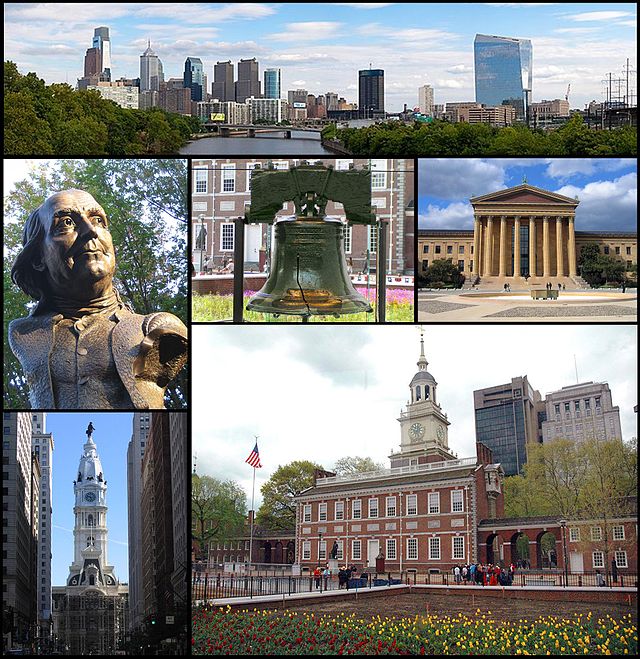
CU Blog - Philadelphia Freedom - Some Restrictions Apply - Photo 4Philadelphia proved different!

This city became synonymous with a love for freedom and had an infectious impact on the country, and the rest of the world for that matter.

All in all, there is a certain community ethos associated with Philadelphia that aligns with the book Go Lean…Caribbean. It is a focus on the future, a deferred gratification as investment for future returns. These attributes have been promoted by the Go Lean movement as necessary traits to forge change in the Caribbean region. We need our own Caribbean flavor of Philadelphia Freedom.

 “Philadelphia Freedom” is a song released by “The Elton John Band” as a single in 1975. The song was one of Elton John’s seven #1 US hits during the early and mid-1970s, which saw his recordings dominating the charts. In Canada, it was his eighth single to hit the top of the RPM (Records, Promotion, Music Magazine) national singles chart.

The song was written by Elton John and Bernie Taupin as a favour to John’s friend, tennis star Billie Jean King. King was part of the Philadelphia Freedoms professional tennis team. The song features an orchestral arrangement by Gene Page, including flutes, horns, and strings.

Background
Recorded in the summer of 1974, during breaks between sessions for Captain Fantastic and the Brown Dirt Cowboy (Elton John’s ninth studio album), the song was at the time the only song Elton John and Bernie Taupin ever consciously wrote as a single, as John told journalist Paul Gambaccini [in a subsequent interview]. John was looking to honour Billie Jean King, and so asked Taupin to write a song called “Philadelphia Freedom” as a homage to her tennis team.

In [the book] His Song: The Musical History of Elton John, [writer] Elizabeth Rosenthal recounts that Taupin said, “I can’t write a song about tennis,” and did not. Taupin maintains that the lyrics bear no relation to tennis, Philly Soul (a style of soul music characterized by funk influences), or even flag-waving patriotism. Nonetheless, the lyrics have been interpreted as patriotic and uplifting, and even though released in 1975, the song’s sentiment, intended or not, meshed perfectly with an American music audience gearing up for the country’s bicentennial celebration in July 1976. In the US, the song was certified Gold in 1975 and Platinum in 1995 by the Recording Industry Association of America.

The song was dedicated in part to the Philadelphia sound: the music of the Delfonics, producers Kenny Gamble and Leon Huff; and The Spinners, producer Thom Bell, with whom John would work two years later on The Thom Bell Sessions. This song plays in Philadelphia’s Franklin Institute IMAX Theater before every show as a tribute to the city’s love for freedom and its impact on the country. The lyrics are also printed on the walls of the Hard Rock Cafe in Philadelphia.

Song Lyrics
CU Blog - Philadelphia Freedom - Some Restrictions Apply - Photo 1I used to be a rolling stone
You know if the cause was right
I’d leave to find the answer on the road
I used to be a heart beating for someone
But the times have changed
The less I say the more my work gets done

`Cause I live and breathe this Philadelphia freedom
From the day that I was born I’ve waved the flag
Philadelphia freedom took me knee-high to a man
Yeah gave me peace of mind my daddy never had

Oh Philadelphia freedom shine on me, I love you
Shine a light through the eyes of the ones left behind
Shine a light shine a light
Shine a light won’t you shine a light
Philadelphia freedom I love you, yes I do

If you choose to you can live your life alone
Some people choose the city
Some others choose the good old family home
I like living easy without family ties
Till the whippoorwill of freedom zapped me
Right between the eyes


Wikipedia Online Encyclopedia Reference Source (Retrieved 08-07-2014) – http://en.wikipedia.org/wiki/Philadelphia_Freedom_(song)

“Knowing your place” was never accepted by citizens of this Philadelphia. This revolutionary attitude or ethos dates back to before Colonial America, the Revolution War, 1776 and beyond [a]:

  • Religious Tolerance – King Charles II of England granted William Penn a charter for the Pennsylvania colony. As a member of the religious sect the Quakers, Penn had experienced religious persecution and wanted his colony to be a place where anyone could worship freely. This tolerance, far more than by most other colonies, led to better relations with the local Native American tribes and fostered Philadelphia’s rapid growth into colonial America’s most important city.
  • CU Blog - Philadelphia Freedom - Some Restrictions Apply - Photo 2American Revolution – Philadelphia’s importance and central location in the colonies made it a natural center for America’s revolutionaries. The city hosted the First Continental Congress before the war; the Second Continental Congress, which signed the United States Declaration of Independence, during the war; and the Constitutional Convention (1787) after the war.
  • Abolition – Philadelphia was called the “Quaker City” and was recognized as an anti-slavery stronghold. This is where noted runaway-slave-turned-Abolitionist Frederick Douglas sought refuge on his way to New York and later gave one of his most famous speeches: “Speech at National Hall, Philadelphia July 6, 1863 for the Promotion of Colored Enlistments”. Another advocate was Thaddeus Stevens. He hailed from Adams County, a rural suburb of Philadelphia, as one of the leaders of the radical faction of the Republican Party during the 1860s. He was a fierce opponent of slavery and discrimination against African-Americans. As chairman of the House “Ways and Means” Committee during the Civil War, he played a major part in the war’s financing. He sought to secure emancipated slave’s rights during Reconstruction, even in opposition to the contrarian President, Andrew Johnson.
  • Civil Rights – Philadelphia emerged as a prime destination for African Americans during the Great Migration and the city surpassed two million occupants by 1950. This set the stage for the impending civil rights movement. One battle saw black activists in Philadelphia (and Harlem, New York) successfully integrating state construction projects in 1963. The city was also front-and-center to race riots in the summer of 1964.
  • Women’s Rights – Some of the early Abolitionists were interested in human rights not just for Blacks but for women as well. The Philadelphia-area Quakers, were known for their early leadership for women’s rights. One prominent example was Lucretia Coffin Mott (1793 – 1880), as a Quaker, she proved to be an effective leader, orator and advocate for women’s rights, abolition and social reform.
  • Gay Rights – The Elton John song Philadelphia Freedom was dedicated to tennis star Billie Jean King, noted gay rights activist, social reformer and advocate for sexual equality. The song, see VIDEO above, is recognized as a anthem for the gay (LGBT) community.
  • Animal Rights (Zoo) – Philadelphia is home to the United States’ first zoo, chartered by the Commonwealth of Pennsylvania on March 21, 1859, though its opening was delayed by the Civil War until July 1, 1874. The environmental and animal rights movement all stemmed from these origins.
  • Repatriation – After 400 years of development and progress, ebb-and-flow, Philadelphia must constantly redefine itself. Faced with “white flight” and the abandonment of its tax base, the City had to strategize a repatriation plan – gentrification (a shift toward wealthier residents/businesses and increasing property values in the urban community).  Gentrification of Philadelphia’s neighborhoods has emerged into the 21st century and the city has now reversed its decades-long trend of population loss.

The revolutionaries of Philadelphia (past and present) have strived for the same goal as this Caribbean empowerment movement:

Elevation of society.

The book Go Lean … Caribbean strives to accomplish this revolution with the introduction and implementation of the technocratic Caribbean Union Trade Federation (CU). In fact, the prime directives of the CU are pronounced in these declarative statements:

  • Optimization of the economic engines in order to grow the regional economy to $800 Billion & create 2.2 million new jobs.
  • Establishment of a security apparatus to protect the resultant economic engines.
  • Improve Caribbean governance to support these engines.

The Go Lean book, serving as a roadmap, initiates with a “Prologue” that identifies many community ethos that must be embraced for a chance of success and permanent change. It should be noted that until recently, Philadelphia was considered on the brink of  failure, much like Detroit. But like many revolutionaries, it is only “at the precipice” that they show their true mettle, their revolutionary spirit.

The Go Lean book accepts this premise, that only at a crisis that people act forthrightly to correct institutional wrongs. For this reason the book declares that a ‘crisis is a terrible thing to waste’. Already, this commentary has assessed the Caribbean failing eco-systems and conveyed the merits of this Go Lean movement, with these posts:

https://goleancaribbean.com/blog/?p=1596 Book Review: ‘Prosper
Where You Are Planted’
https://goleancaribbean.com/blog/?p=1014 All is not well in the sunny Caribbean
https://goleancaribbean.com/blog/?p=623 Only at the precipice, do they   change
https://goleancaribbean.com/blog/?p=599 Ailing Caribbean   island open to radical economic fixes
https://goleancaribbean.com/blog/?p=273 10 Things We Want from the US and 10 Things We Don’t Want from the US

In the roadmap for the CU, in order to change the Caribbean, the relativity of freedom is prominent in planning and considerations.  This point is detailed in the  Declaration of Interdependence at the outset of the book, modeling the US movement in Philadelphia in 1776 and pronouncing this need for a sober view of freedom (Page 10):

Therefore we hereby accept a model democracy for our guide. To that end, we recognize and esteem the same initiation as did the United States of America with this declaration that we ourselves cherish, revere and concur:

We hold these truths to be self-evident, that all men are created equal, that they are endowed by their Creator with certain unalienable rights, that among these are life, liberty and the pursuit of happiness; that to secure these rights, governments are instituted among men, deriving their just powers from the consent of the governed. That whenever any form of government becomes destructive to these ends, it is the right of the people to alter or to abolish it, and to institute new government, laying its foundation on such principles and organizing its powers in such form, as to them shall seem most likely to effect their safety and happiness

The Go Lean roadmap accepts that change has come to the Caribbean. There is the need for a Philadelphia-style revolution. There is also the need for technocratic facilitations to deliver the functionalities of this federal administration. The book posits that this burden is too big for any one Caribbean member-state, and thus the collaboration efforts of the CU is necessary, as the strategy is to confederate all the 30 member-states of the Caribbean into an integrated “single market”, into a United States of the Caribbean.

The tactical approach for the Go Lean roadmap is a Separation-of-Powers mandate between the CU federal government versus the Caribbean member-states. This model is perfected by the City of Philadelphia with the only consolidated city-county charter [b] in the State of Pennsylvania, sharing and dividing a lot of municipal services in the social contract fulfillment.

Change happens! The old adage is that “there is only one constant, change”. Change comes about either evolutionary or revolutionary. Philadelphia is associated, from history and today, with revolutionary change. For the Caribbean we need some revolutionary change. The following list details the community ethos, strategies, tactics, implementations and advocacies to foster the Philadelphia-style Caribbean revolution:

Community Ethos – Deferred Gratification Page 21
Community Ethos – “Crap” Happens Page 23
Community Ethos – Lean Operations Page 24
Community Ethos – Return on Investments Page 24
Community Ethos – Ways to Impact the Future Page 26
Community Ethos – Ways to Improve Negotiations Page 32
Community Ethos – Ways to Impact Turn-Arounds Page 33
Community Ethos – Ways to Impact the Greater Good Page 37
Strategy – Caribbean Vision – Confederate 30 Member-States Page 45
Strategy – Mission – Repatriate Caribbean Diaspora Page 46
Strategy – Agents of Change Page 57
Tactical – Growing the Caribbean Economy to $800   Billion Page 67
Tactical – Separation of Powers – Federal Departments versus Member-States Page 71
Implementation – Ways to Pay for Change Page 101
Implementation – Ways to Deliver Page 109
Implementation – Reasons to Repatriate Page 118
Implementation – Ways to Promote Independence Page 120
Anatomy of Advocacies – Role Model Frederick Douglas Page 122
Planning – Ways to Make the Caribbean Better Page 131
Planning – Lessons Learned from a Thriving City – New York Page 137
Planning – Lessons Learned from a Failed City – Detroit Page 140
Planning – Lessons Learned from the US Constitution Page 145
Advocacy – Ways to Grow the Economy Page 151
Advocacy – Ways to Create Jobs Page 152
Advocacy – Ways to Improve Governance Page 168
Advocacy – Ways to Better Manage the Social Contract Page 170
Advocacy – Ways to Impact Urban Living Page 234

The Go Lean roadmap has a simple motive, to facilitate revolutionary change in the Caribbean, with the end result being a better place to live, work and play. We can glean a powerful lesson from the historicity of Philadelphia in that freedom is not free. The stakeholders of society may prefer that advocates “know their place”, accept restrictions. While freedom may be dependent on others’ cooperation, their acquiescence may take a struggle, a revolution.

Elton John’s song conveys a great inspiration for the Caribbean: Philadelphia freedom shine on me … shine a light through the eyes of the ones left behind!

Download the free e-Book of Go Lean … Caribbean – now!

————

Appendices – Cited References:

a. Wikipedia keywords: William Penn, Philadelphia, Frederick Douglass, Thaddeus StevensCivil Rights Movement, Lucretia Coffin Mott, Billie Jean King, and Philadelphia Zoo.

b. a City-County Charter is simultaneously a city, a municipal corporation, and a county, an administrative division of the State. It has the powers and responsibilities of both types of entities.


Share this post:
, , ,

Role Model Berry Gordy – No Town Like Motown

Go Lean Commentary

CU Blog - Role Model Berry Gordy - No Town Like Motown - PhotoThis is a memorable dialogue:

Berry Gordy: You went from singing love songs to now anti-war songs. I understand you want to reflect change in society…

Marvin Gaye (interrupting): I don’t want to reflect change, I want to effect change.

Thus the alignment of the Broadway play Motown, The Musical and the book Go Lean…Caribbean. It is an established fact that any difficult subject can be more easily communicated if backed-up by a catchy melody and rhyming words. An underlying theme of the above-cited play, based on the autobiographical story of Motown founder Berry Gordy, is that music effected change in America and forged integration and elevation of society.

By: Robert Simonson

Title: No Town Like Motown: Navigating the Life, Times and Tunes of Starmaker Berry Gordy

First-time Broadway director Charles Randolph-Wright is at the helm of one of the more pulse-quickening titles of the season, Motown: The Musical, about record producer Berry Gordy’s heyday.

In terms of backstage politics, Charles Randolph-Wright may have the trickiest job of any director working on Broadway this spring. He is staging Motown: The Musical, a musically overflowing new show about the life and career of recording mogul Berry Gordy.

One of his producers is Berry Gordy as well. Gordy completes his hat trick by having written the libretto for the piece.

“Sometimes I’ll forget the person I’m talking to is the same person that is depicted on stage,” said Randolph-Wright.

One imagines such waters are difficult to navigate. What if Producer Gordy tells the director not to interfere with Writer Gordy’s work? “It’s something we talked about from the beginning,” said Randolph-Wright. “He’s very open as to what the story is.”

The show, which is playing at the Lunt-Fontanne Theatre, is largely based on Gordy’s 1995 memoir “To Be Loved: The Music, the Magic, the Memories of Motown.”

“He wrote the book 20 years ago,” Randolph-Wright explained. “Now he has an even different perspective on that. You have to ask, ‘How do we tell the story of this big character, who is based on this real person, and yet that person is involved with the creation of the show, and is working on it?’ It’s a challenge, but the way we have worked is a very open process.”

Randolph-Wright recalled one particular moment when Gordy confided in him an episode from his past when he was at his most vulnerable. “We were walking around and he told me this story. I couldn’t believe it. I said, ‘You want that on stage?’ I thought it was very brave. But at this point at his life, what does he have to prove?”

Randolph-Wright added that Gordy, now 83, has no trouble juggling his many roles. After all, it is something he’s been doing for decades. “In most cases that would be a challenge,” he said. “But he spent his whole career wearing so many different hats. When I’m with the writer, that’s who I’m with. The producer is a different person. I am always with the person who’s doing all those things, but in each separate instance I’m with who Berry is at that moment.”

Charles Randolph-Wright was one of several directors who interviewed with Gordy. From the start, he thought he was right for the project. “This is in my DNA,” he said. He doesn’t mean that he grew up with Motown’s music (as many of us did) — though that is part of it. His connection to the material is more complex. “I’ve done every angle of this story. I’ve been in a music group. I’ve danced to the music. I’ve sung it. And I’ve lived in all those worlds he did, though not the same way he did.”

When the marquee was hung on the Lunt-Fontanne, Randolph-Wright glanced down the street and noticed he was only yards away from the Imperial Theatre. In the early 1980s he passed through the stage door of that theatre every night as a member of the original cast of Dreamgirls — the fictional account of the rise of The Supremes, a group Gordy helped found. “What’s happened in those years from that show to this show, it’s been an amazing journey,” he mused. “From the Broadway musical version of this story to the real story.”

Motown‘s greatest asset is the iconic song­book the Detroit-based record label produced; and they’ll get ample helpings of that hit parade, including songs made famous by Smokey Robinson and The Miracles (“Shop Around”), Diana Ross and The Supremes (“Stop! In the Name of Love”), Marvin Gaye (“What’s Going On”), Stevie Wonder, The Temptations, and Michael Jackson and The Jackson Five (“I Want You Back”).

Randolph-Wright said it was hard, given the rich catalogue, deciding which songs to keep in the show and which to leave out. “Every song you hear in this show, you want to hear,” he said. “But how do you put this journey into two and a half hours? There’s so much, so many people. They’re all part of this story. But we found out how to take the story and condense what could easily have been a miniseries.” He said he wouldn’t know the exact song count until opening night, but promised the show would contain more numbers than does your average musical.

To sing the classic pop hits, the director has assembled a large cast, including Valisia LeKae as Diana Ross and Charl Brown as Smokey Robinson — both particular Gordy favorites. Brandon Victor Dixon will play Gordy himself.

Randolph-Wright said he didn’t want note-by-note recreations of their numbers, “I want [the actors] to evoke these artists, not copy them, not be an impersonator. But it has to be the Motown sound. The actors have been tremendous in finding those things that make them seem real as those people.”

The tunes will be used in various ways. Some will be presented as straightforward performances; others will be used as narrative tissue, to further along the story. In addition, the score will include three or four new songs, written by Gordy expressly for the musical.

The director has found it a particular delight to see Gordy returning to his songwriting roots. “We forget that he wrote a lot of those early hits. Over the years, as Motown grew, he became less about being an artist, and more about being a businessman. It’s thrilling to see him become completely creative again.”

(This feature appears in the March 2013 issue of Playbill magazine.)
Play Bill Broadway Magazine/Web Site (Posted March 10, 2013; Retrieved 08-06-2014) – http://www.playbill.com/news/article/175778-No-Town-Like-Motown-Navigating-the-Life-Times-and-Tunes-of-Starmaker-Berry-Gordy

Like Berry Gordy, the prime directive of the Go Lean book is also to elevate society, but in the Caribbean, not in America, by integrating a confederated brotherhood. In fact, the declarative statements are as follows:

  • Optimization of the economic engines in order to grow the regional economy to $800 Billion & create 2.2 million new jobs.
  • Establishment of a security apparatus to protect the resultant economic engines.
  • Improve Caribbean governance to support these engines.

Berry Gordy accomplished his mission through music/song and entertainment. The book Go Lean…Caribbean strives to accomplish its mission with the introduction and implementation of the technocratic Caribbean Union Trade Federation (CU). Berry Gordy is hereby recognized as a role model that the Caribbean can emulate. He has provided a successful track record of forging change, overcoming incredible odds, managing crises to successful conclusions and rebooting failing institutions. The Go Lean book, serving as a roadmap, initiates with a “Prologue” that identifies community ethos that must be embraced for any chance of success and permanent change. This list of ethos from the book corresponds with the history of Berry Gordy, as portrayed in the Motown, The Musical Broadway play:

Go Lean…Caribbean Berry Gordy Role Modeling
Job Multipliers Economic Opportunities
Future Focus Crossover / Integration
Foster Genius Producing Artists
Help Entrepreneurship New Record Labels, Movies
Promote Intellectual Property Music Business Excellence
Research & Development New Artists Development
Bridge the Digital Divide Embrace of New Media
Improve Negotiations Hollywood Interactions
Impact Turn-Around Move from Detroit
Manage Reconciliations Motown Reunions
Improve Sharing Common Studios/Producers
Promote Happiness Music Essential to Life
Greater Good Impact Society

“No town like Motown” is the title of the foregoing article from the PlayBill magazine. But the Berry Gordon legacy is not the town of Detroit, but rather the musical contributions of his movement. It should be noted that Gordy moved the record company, Motown, out of the failed-city of Detroit, early in the 1970’s. So Gordy’s legacy is really how he grew in his management of change!

According to the opening dialogue, Berry Gordy was a reluctant advocate of change; he tried to be a businessman first. In the end, he conducted a lot of business, but he effected change as well. Thank you Marvin Gaye for that inspiration, for impacting Berry Gordy with the lesson that “one man, and his music” can make difference.

The Go Lean book accepts that the business of music can have a major impact on Caribbean society and the world. Already, this commentary has analyzed how a Caribbean music artist has made an impact on the world scene, with this post:

https://goleancaribbean.com/blog/?p=866 Bob Marley: The legend lives   on!

In the Go Lean roadmap to elevate the Caribbean, the eco-systems of music get due respect. This point is detailed in the  Declaration of Interdependence at the outset of the book, pronouncing this need for regional solutions (Page 14):

xxxii. Whereas the cultural arts and music of the region are germane to the quality of Caribbean life, and the international appreciation of Caribbean life, the Federation must implement the support systems to teach, encourage, incentivize, monetize and promote the related industries for arts and music in domestic and foreign markets. These endeavors will make the Caribbean a better place to live, work and play.

The Go Lean roadmap accepts that change has come to the music business. It is no longer the same world that was dominated by Berry Gordy, and his cast of musical geniuses. Now, there is the need for some technocratic facilitations. The book posits that this burden is too big for any one Caribbean member-state, and thus the collaboration efforts of the CU is necessary, as the strategy is to confederate all the 30 member-states of the Caribbean despite their language and legacy, into an integrated “single market”. This will allow for better leverage of the consumer market for the consumption of music. From this eco-system, should emerge our own generations of Berry Gordy’s in the Caribbean to impact the world with their art, music, and contributions.

Today, most music is consumed digitally with a lot of retailing via the world wide web. This changed landscape now requires new tools and protections, like electronic payment systems, digital rights management and Performance Rights Organizations. The Go Lean/CU roadmap details these solutions. With these efforts and investments, the returns will be undeniable. The CU is designed to do the heavy-lifting of organizing Caribbean society, and interacting with the wide-world to better reap the benefits of music and related eco-systems. The following list details the strategies, tactics, implementations and advocacies to foster the next Motown movement, Caribbean style:

Community   Ethos – Forging Change Page 20
Community Ethos – Lean Operations Page 24
Community   Ethos – Return on Investments Page 24
Strategy –   Strategy – Caribbean Vision Page 45
Strategy –   Agents of Change – Globalization Page 57
Tactical –   Growing the Caribbean Economy to $800   Billion Page 67
Separation   of Powers – Central Bank – Electronic Payment Deployments Page 73
Tactical –   Separation of Powers – Patents & Copyrights Page 78
Separation   of Powers – Culture Administration Page 81
Planning –   Ways to Make the Caribbean Better Page 131
Planning    – Lessons Learned from Detroit Page 140
Advocacy   – Ways to Grow the Economy Page 151
Advocacy   – Ways to Create Jobs Page 152
Advocacy –   Reforms for Banking Regulations Page 199
Advocacy –   Ways to Impact Hollywood Page 203
Advocacy –   Ways to Promote Music Page 231
Appendix –   Caribbean Music Genres Page 347
Appendix –   Protecting Music Copyrights Page 351

The Go Lean roadmap has simple motives: enable the Caribbean to be a better place to live, work and play. One man, or woman, can make a difference in this quest. We want to foster the next generation of “stars’ in music and other fields of endeavor.

According to his autobiography and the Broadway musical, Berry Gordy was inspired by other role models in his youth, i.e. Joe Louis. Now the world in general, the Caribbean is particular, is being inspired by Berry Gordy.

This is how to reflect and effect change in society. That opening dialogue with Marvin Gaye and Berry Gordy is captured for our inspiration. The end result:

Mother, mother
There’s too many of you crying
Brother, brother, brother
There’s far too many of you dying
You know we’ve got to find a way
To bring some lovin’ here today

Father, father
We don’t need to escalate
You see, war is not the answer
For only love can conquer hate
You know we’ve got to find a way
To bring some lovin’ here today

Download the book Go Lean … Caribbean – now!

Share this post:
, , , , ,
[Top]

Senate bill targets companies that move overseas

Go Lean Commentary

“Honor among thieves’ …

… this seems to be the code by which Caribbean society is based. And this is not new! This is the community ethos that dates back almost 500 years.

This ethos seems to “raise its head” again with the below news article as published in a Jamaican newspaper. Even though the US middle class has been devastated by globalization – shipping jobs overseas, many times to Caribbean countries like Jamaica – the motives behind the cited legislation seems wholesome for American self-interest. What is astonishing is the adversarial comments of a Jamaican readers. Consider the original article here and the comment:

By: The Associated Press

Subtitle: The Senate voted Wednesday to advance an election-year bill limiting tax breaks for United States (US) companies that move operations overseas. But big hurdles remain.

CU Blog - Senate bill targets companies that move overseas - Photo 1The Senate voted 93-7 to begin debating the bill, which would prevent companies from deducting expenses related to moving operations to a foreign country. The bill would offer tax credits to companies that move operations to the US from a foreign country.

Senate Democratic leaders say the bill would end senseless tax breaks for companies that ship jobs abroad.

“It would end the absurd practice of American taxpayers bankrolling the outsourcing of their very own jobs,” said Senate Majority Leader Harry Reid, a Democrat.

Most Republicans joined Democrats in voting to take up the bill. But Republican senators are unlikely to support final passage of the bill without significant changes.

Senate Republican Leader Mitch McConnell said the bill is an election-year ploy that has no chance of becoming law.

“It’s a bill that’s designed for campaign rhetoric and failure, not to create jobs here in the US,” McConnell said. “But that’s not stopping our friends on the other side from bringing it up again – just as they did right before the last big election, too.”

The bill would cost US companies that move overseas $143 million in additional taxes over the next decade, according to the Joint Committee on Taxation, which analyses tax bills for Congress. Companies moving into the US would see their tax bills drop by $357 million over the same period.

The difference – $214 million – would be added to the budget deficit.
The Jamaica Gleaner Daily Newspaper (Posted 07-25-2014) –
http://jamaica-gleaner.com/gleaner/20140724/business/business1.html 

——–

Commentator basing the proposed legislation – nervousinvestor •  Thursday July 24, 2014:
    “Seems like a stupid bill if you ask my opinion”.

——–

Question: Why would Jamaican stakeholders (all of the Caribbean for that matter) lean-in for a contrarian view? Answer: Their own self-interest – a penchant to operate on the shadows of American (and European) economies and pilfer illicit gains.

The book Go Lean…Caribbean examines the varied history of the Caribbean during the colonization and post-colonization eras, and then concludes that the region always operated with an outlaw mentality – always on the dark side. While there is wise business strategy associated with satisfying unfulfilled market needs, the Caribbean experience is decidedly different, one of exploiting loopholes. It is apparent that aspects of Caribbean society still reflect this outside-the-law disposition, it is an institutional trend that appears consistent over the centuries. (The book posits that this approach has been counter-productive for building an industrious society; not everyone wants to, or should operate in the shadows).

Consider the historic evidence as follows:

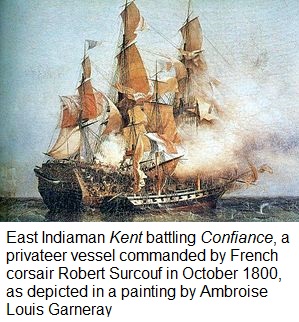
PCU Blog - Senate bill targets companies that move overseas - Photo 2rivateering [a] – This was the practice of private ships, authorized by governments or royal decree, to attack foreign vessels during wartime. While Privateering was a way of mobilizing armed ships and sailors without having to spend treasury resources or commit naval officers, this was a business operation, with the cost being borne by investors hoping to profit from prize money earned from captured cargo and vessels. The proceeds would be distributed among the privateer’s investors, officers, and crew.

CU Blog - Senate bill targets companies that move overseas - Photo 3Pirates of the Caribbean [b] – The distinction between a privateer and a pirate has always been vague beyond the licensing Letters of Marque. Without the letters, the parties were considered pirates; of which many frequented the Caribbean region. This industry employed many unemployed seafarers as a way to make ends meet, but became increasingly damaging to the region’s economic and commercial prospects.

CU Blog - Senate bill targets companies that move overseas - Photo 4Wrecking (Ships) [c] –  This was the practice of taking valuables (cargo) from a shipwreck which has floundered close to shore; this evolved into what is now known as “marine salvage”. While wrecking is no longer economically significant, this practice was in itself an industry as recently as the 19th century in some parts of the world, and a mainstay in many Caribbean economies. The Caribbean islands, waterways and ports have to contend with a lot of hidden water hazards, like reefs. So this industry thrived on the uncertainty of shipping,  (before better navigational tools and systems), but also created their own pro-wrecking incidents and threats, like false lighting and sabotage.

CU Blog - Senate bill targets companies that move overseas - Photo 5Rum-running/Bootlegging [d] – This refers to the illegal business of smuggling alcoholic beverages (over water) where such transportation is forbidden by law. Most prominently, this activity was done to circumvent the taxation and prohibition laws of the US in the early 20th Century (1920 to 1933). Due to its close proximity, many ships came from the island of Bimini in the western Bahamas to transport cheap Caribbean rum to Florida. But rum’s cheapness made it a low-profit item for the rum-runners, and they soon moved on to smuggling Canadian Whiskey, French Champagne, and English Gin to major cities like New York City and Boston, where prices ran high. (It was said that some ships carried $200,000 in contraband in a single run). Distilleries and breweries in the Caribbean flourished during this period as their products were either consumed by visiting Americans or smuggled into the US illegally. When the US government complained to the British that American law was being undermined by officials in Nassau, Bahamas, the head of the British Colonial Office refused to intervene. The British Caribbean attitude was echoed by UK Prime Minister Winston Churchill, who believed that Prohibition was “an affront to the whole history of mankind”.

CU Blog - Senate bill targets companies that move overseas - Photo 6Offshore Banking [e] – This refers to banks located outside the country of residence of the depositor, typically in a low tax jurisdiction (or tax haven) that provides financial and legal advantages- a mainstay in Antigua, Bahamas, Bermuda and Caymans. These advantages typically include: greater privacy, little or no taxation, easy access to deposits, and protection against local, political, or financial instability. These Offshore banks have often been associated with underground (informal) economies and organized crime, via tax evasion and money laundering. Legally, offshore activities do not prevent assets from being subject to personal income taxes on interest income, often times it is the privacy feature that skirts tax computation and collection.

CU Blog - Senate bill targets companies that move overseas - Photo 7Tax Evasion [f] – This activity is part of the business model of the Caribbean, though it is commonly associated with the informal economy. There are legal and illegal activities associated with the avoidance of taxes by individuals, corporations and trusts. Tax evasion often entails taxpayers deliberately misrepresenting the true state of their affairs to the tax authorities to reduce their tax liability and includes dishonest tax reporting, such as declaring less income, profits or gains than the amounts actually earned, or overstating deductions. Tax avoidance employ many tax havens or jurisdictions to facilitate lower tax bills. Caribbean member-states encourage many tax avoidance practices, campaigning to high net worth individuals to do business or establish their residence in the region.

CU Blog - Senate bill targets companies that move overseas - Photo 8Offshore Gambling – This category refers to more than just casinos operating at Caribbean resorts, but rather the practice of coordinating gambling/gaming operations worldwide that only have a legal footprint in the region. Caribbean jurisdictions have actually emerged as a favorite destination for legally licensing gaming institutions and companies, like sports books and online gambling. “In 1994 the Caribbean nation of Antigua and   Barbuda passed the Free Trade & Processing act, allowing licenses to be granted to organizations applying to open online casinos. The practice continues, even fighting and winning legal bouts at the WTO against the US. Many of the companies operating out of Antigua are publicly traded on various stock exchanges, specifically the London Stock Exchange. Antigua has met British regulatory standards and has been added to the UK’s “white list”, which allows licensed Antiguan companies to advertise in the UK. By 2001, the estimated number of people who had participated in online gambling rose to 8 million and the growth continued, despite legislation and lawsuit challenges to online gambling. By 2008, estimates for worldwide online gambling revenue were at $21 billion.”Go Lean…Caribbean; Page 213.

The book serves as a roadmap for the introduction and implementation of the Caribbean Union Trade Federation (CU), a technocratic federal government to administer and optimize the economic/security/governing engines of the region’s 30 member-states. The goal is to move business operations “out of the shadows” and “into the light”, mitigating against the threats represented in the historic review above. There are many legitimate business endeavors that the Caribbean can, and must, pursue in order to elevate its society. The Go Lean book details specifics for growing the regional economy to $800 Billion and creating 2.2 million new jobs – all using legitimate, in-the-light activities.

The Caribbean is the “best address in the world” and provides the best of certain products (see previous blog/commentary sample here: https://goleancaribbean.com/blog/?p=1847 – ‘Declared “Among the best in the world”’) and is the best at performing certain services. We can compete! There should not be the need to “run for the shadows”. The world should be soliciting us, not us begging for the “crumbs following from the table” of the world economy.

At the outset, the Go Lean roadmap recognizes the significance of best-of-breed industrial developments with these statements in the Declaration of Interdependence (Page 13 & 14):

xxiv.  Whereas a free market economy can be induced and spurred for continuous progress, the Federation must install the controls to better manage aspects of the economy: jobs, inflation, savings rate, investments and other economic principles. Thereby attracting direct foreign investment because of the stability and vibrancy of our economy.

xxvii. Whereas the region has endured a spectator status during the Industrial Revolution, we cannot stand on the sidelines of this new economy, the Information Revolution. Rather, the Federation must embrace all the tenets of Internet Communications Technology (ICT) to serve as an equalizing element in competition with the rest of the world. The Federation must bridge the digital divide and promote the community ethos that research/development is valuable and must be promoted and incentivized for adoption.

The change starts now; say goodbye to the shadows, say hello to the light. The Caribbean is hereby urged to lean-in to the following community ethos, strategies, tactics, implementations and advocacies to re-boot Caribbean industry and society; as detailed in the book Go Lean … Caribbean, sampled here:

Community Ethos – Deferred Gratification Page 21
Community Ethos – Economic Principles Page 21
Community Ethos – All Choices Involve Costs Page 21
Community Ethos – Job   Multiplier Page 22
Community Ethos – Light Up the Dark Places Page 23
Community Ethos – “Crap” Happens Page 23
Community Ethos – Lean Operations Page 24
Community Ethos – Return on Investments Page 24
Community Ethos – Ways to Impact the Future Page 26
Community Ethos – Ways to Help   Entrepreneurship Page 28
Community Ethos – Ways   to Promote Intellectual Property Page 29
Community Ethos – Ways to Impact Research   & Development Page 30
Community Ethos – Impact the Greater Good Page 37
Strategy – Vision – Confederating 30   Member-states in a Union Page 45
Strategy – Agents of Change – Technology Page 57
Strategy – Agents of Change – Globalization Page 57
Tactical – Fostering a Technocracy Page 64
Tactical – Growing Economy – New High   Multiplier Industries Page 68
Tactical – Separation of Powers – Commerce Department Page 78
Tactical – Separation of Powers – Self   Governing Entities Page 80
Implementation – Ways to Pay for Change Page 101
Implementation – Benefits from the Exclusive   Economic Zone Page 104
Implementation – Steps to Implement   Self-Governing Entities Page 105
Implementation – Ways to Deliver Page 109
Implementation – Ways to Benefit from   Globalization Page 119
Planning – 10 Big Ideas Page 127
Planning – Ways to Improve Trade Page 128
Planning – Ways to Make the Caribbean Better Page 131
Advocacy – Ways to Grow the Economy Page 151
Advocacy – Ways to Create Jobs Page 152
Advocacy – Ways to Mitigate Black Markets Page 165
Advocacy – Ways to Improve Homeland Security –   Naval Authorities Page 180
Advocacy – Ways to Foster Technology Page 197
Advocacy – Reforms for Banking Regulations Page 199
Advocacy – Ways to Impact Lotteries/Gambling Page 213
Advocacy – Ways to Help the Middle Class Page 223
Advocacy – Ways to Impact the One Percent – Tax Avoidance Options Page 223

The foregoing news article addresses an important move the US should make to counteract the effects of globalization on its core jobs. The Go Lean book stresses the importance of an empowered middle class. So the Caribbean has the same needs, but our success should not be dependent on breaking the laws of other countries. We can compete head on. This is a subject that impacts economics, security and governing engines. This is heavy-lifting!

The Go Lean roadmap maintains that change is coming to the Caribbean in general and industrial pursuits in particular, so that we may break from the past and have a vibrant future. The Caribbean will be a better place to live, work and play. 🙂

Download the free e-Book of Go Lean … Caribbean – now!

——————————————————————————————————————————–

Appendices:

a. Retrieved July 29, 2014 from: https://en.wikipedia.org/wiki/Privateering

b. Retrieved July 29, 2014 from: https://en.wikipedia.org/wiki/Pirate#Caribbean

c. Retrieved July 29, 2014 from: https://en.wikipedia.org/wiki/Wrecking_(shipwreck)

d. Retrieved July 29, 2014 from: https://en.wikipedia.org/wiki/Rum-running  and https://en.wikipedia.org/wiki/Prohibition_in_the_United_States

e. Retrieved July 29, 2014 from: http://en.wikipedia.org/wiki/Offshore_banking

f. Retrieved July 29, 2014 from: http://en.wikipedia.org/wiki/Tax_evasion and http://en.wikipedia.org/wiki/Tax_avoidance

Share this post:
, , ,
[Top]

The World as 100 People – Showing the Gaps

Go Lean Commentary

Blood, sweat and tears…

These are the triumvirate ingredients that forged many movements in the history of mankind.

Now comes the book Go Lean…Caribbean, serving as a roadmap for the introduction and implementation of the Caribbean Union Trade Federation (CU) to elevate Caribbean society. This movement calls for a new triumvirate: time, talent and treasury, to effect change in the Caribbean region. The book posits that all Caribbean stakeholders (residents, institutions, students, Diaspora) have to devote a measure of these three ingredients.

But not a full measure… this is not war; this is social change…and philanthropy.

The Go Lean book asserts a roadmap for economic/security/governing empowerment; but it also clearly relates that many social aspects of Caribbean life will be un-addressed by the CU. There will be voids and gaps that NGO’s (Non-Government Organizations) are called on to fill. This accompanying chart shows the “World as 100 People”, a picturesque presentation of the significant categories of factors present (and absent) in the world “as a whole”:

CU Blog - The World as 100 People - Photo 1

Click on Image to Enlarge.

This chart was published by the Bill & Melinda Gates Foundation, one of the NGO’s that the CU should solicit for Caribbean participation. This foundation was instituted by Information Technology Innovator and Microsoft founder Bill Gates. His foundation sets out to make a permanent impact on the world; guided by the belief that every life has equal value; this foundation works to help all people lead healthy, productive lives. The successful execution of this charter would fill the voids/gaps in the Caribbean social contract.

The Gates Foundation has a specific charter for education/libraries, health-advocacies, children, women, the elderly and the disabled. See the foundation Profile in the photo here. CU Blog - The World as 100 People - Photo 2

The Go Lean roadmap invites NGO’s, like the Gates Foundation, to impact the Caribbean according to their charters. While forging change in the Caribbean is the responsibility of the Caribbean, we must be open to ask for help, to accept the help, and respond to the help being offered. This is a mission of the CU.

Under the Go Lean roadmap, the structure is put in place to include the contributions of the time, talent, and treasuries of NGOs/foundations. One feature of the Go Lean roadmap involves Self-Governing Entities (SGE’s); some of which may be structured as NGO’s. The following list details other community ethos, strategies, tactics, implementations and advocacies to optimize the region’s public/private cooperation and endeavors:

Community Ethos – Deferred Gratification Page 21
Community Ethos – People Respond to Incentives in Predictable Ways Page 21
Community Ethos – “Crap” Happens Page 23
Community Ethos – Return on Investments Page 24
Community Ethos – Cooperatives Page 25
Community Ethos – Non-Government Organizations Page 25
Community Ethos – Ways to Bridge the Digital Divide Page 31
Community Ethos – Ways to Improve Sharing Page 35
Community Ethos – Ways to Promote Happiness Page 36
Community Ethos – Ways to Impact the Greater Good Page 37
Strategy – Customers – Non-Government Organizations are Stakeholders Page 48
Strategy – Competition – Attention to Caribbean as Opposed to Other 3rd World Page 56
Separation of Powers – State Department – Registrar/Liaison of NGO’s Page 80
Implementation – Ways to Pay for Change Page 101
Implementation – Ways to Implement Self-Government Entities Page 105
Implementation – Ways to Deliver Page 109
Implementation – Ways to Foster International Aid Page 115
Advocacy – Ways to Improve Education Page 159
Advocacy – Ways to Better Manage the Social Contract Page 170
Advocacy – Ways to Foster Cooperatives Page 176
Advocacy – Ways to Improve Libraries Page 187
Advocacy – Ways to Impact Foundations Page 219
Advocacy – Ways to Impact the One Percent Page 224
Advocacy – Ways to Improve Elder-Care Page 225
Advocacy – Ways to Impact Youth – Not-for-Profit Youth Fair Model Page 227
Advocacy – Ways to Impact Persons with Disabilities Page 228
Appendix – Giving Pledge Signatories – 113 Super Rich Benefactors Page 292

The Go Lean book clearly depicts that Not-For-Profit charities, foundations and NGO’s are also stakeholders for the effort to make the Caribbean better. Many members of the “One Percent” want to help “change the world”; they want to give of their time, talent and treasuries. The CU will help facilitate their vision. This is win-win!

Welcome to the Caribbean, Mr. Gates et al. The Bill (and Melinda) Gates Foundation is one; the Go Lean book identifies 112 more billionaires and their “war chests”.

We will accept all genuine help to make the Caribbean a better place to live, work, learn, heal and play.

Download the book Go Lean … Caribbean – now!

Share this post:
, , , ,
[Top]

New Hope in the Fight against Alzheimer’s Disease

 Go Lean Commentary

Be careful what you pray for. You just might be blessed with it.

This is the scenario to consider when campaigning to repatriate the Caribbean Diaspora. We just might succeed! And when we do, then we have to contend with the challenges of those blessings: the good, bad and ugly of the aging Diaspora.

Alzheimer’s disease is described as a “long goodbye”. It is one of those “challenges of blessings” that comes with an aging population.

Considering the attributes of life, liberty and the pursuit of happiness, this disease robs all three. But now, there is new hope, and some measurements for positive progress.

An eye exam that looks to detect plaque buildup in the brain is one of two new developments in the field of Alzheimer’s research.

These constitute New Hope. See VIDEO here:

NBC News Online Video – Retrieved 07-15-2014
http://www.nbcnews.com/nightly-news/new-hope-fight-against-alzheimers-disease-n155841

CU Blog - New Hope in the Fight Against Alzheimer's Disease - Photo 1Alzheimer’s disease (AD) is the most common form of dementia. There is no cure for the disease, which worsens as it progresses, and eventually leads to death. It was first described by German psychiatrist and neuro-pathologist Alois Alzheimer in 1906 and was named after him.[a]Most often, AD is diagnosed in people over 65 years of age,[b]although the less-prevalent early-onset Alzheimer’s can occur much earlier. In 2006, there were 26.6 million people worldwide with AD. Alzheimer’s is predicted to affect 1 in 85 people globally by 2050.[c][d]

This subject matter aligns with the publication Go Lean … Caribbean, which serves as a roadmap for the introduction and implementation of the Caribbean Union Trade Federation (CU). The Go Lean roadmap posits that expatriating to foreign lands should only ever be considered as a temporary measure. The book quotes (Page 144) the Bible examples of Jacob/Joseph emigrating to Egypt for refuge from the sever famine in their Promised Land of Canaan. Eventually the famine abated, and the Promised Land was “flowing with milk and honey” again. It was time to go home.

This situation parallels the Caribbean today. The region is arguable the best address on the planet. But so many of its citizens seek to flee because of the lack of economic opportunities. Something is clearly wrong, broken and must be fixed. The Go Lean roadmap specifies where we are as a region (with 70% brain drain among the college educated), where we want to go (elevation of Caribbean society in the homeland for all citizens to return and enjoy) and how we plan to get there. While the Go Lean book strategizes a roadmap for economic empowerment, it clearly relates that healthcare, disease management, and medicines are germane to the Caribbean quest for health, wealth and happiness. At the outset of the Go Lean book, in the Declaration of Interdependence (Page 10 & 11 respectively), these points are pronounced:

Preamble: And while our rights to exercise good governance and promote a more perfect society are the natural assumptions among the powers of the earth, no one other than ourselves can be held accountable for our failure to succeed if we do not try to promote the opportunities that a democratic society fosters.

ix.     Whereas the realities of healthcare and an aging population cannot be ignored and cannot be afforded without some advanced mitigation, the Federation must arrange for health plans to consolidate premiums of both healthy and sickly people across the wider base of the entire Caribbean population. The mitigation should extend further to disease management, wellness, obesity and smoking cessation programs. The Federation must proactively anticipate the demand and supply of organ transplantation as developing countries are often exploited by richer neighbors for illicit organ trade.

Alzheimer is pandemic, with the projections of 1 in 85 people globally by 2050. This scourge was not the motivation for composing the book Go Lean … Caribbean, but rather the bigger goal of elevating Caribbean society. The Caribbean Union Trade Federation has the prime directive of optimizing the economic, security and governing engines of the region. The foregoing article/VIDEO depicts the benefits that can emerge as a result of innovation in science, technology, engineering and medicine (STEM).

Under the Go Lean roadmap, these types of developments will also emerge from the Caribbean. The following list details the strategies, tactics, implementations and advocacies to optimize the region’s health deliveries:

Community Ethos – Cooperatives Page 25
Community Ethos – Non-Government Organizations Page 25
Community Ethos – Ways to Impact Research & Development (R&D) Page 30
Community Ethos – Ways to Impact the Greater Good Page 37
Separation of Powers – Patent, Standards & Copyrights Office Page 78
Separation of Powers – Health Department Page 86
Separation of Powers – Drug Administration Page 87
Implementation – Ways to Pay for Change Page 101
Implementation – Ways to Implement Self-Government Entities Page 105
Implementation – Ways to Deliver Page 109
Implementation – Trade Mission Objectives – Diaspora Outreach Page 116
Implementation –  Reasons to Repatriate Page 118
Implementation –  Ways to   Benefit from Globalization Page 119
Advocacy – Ways to Improve Healthcare Page 156
Advocacy – Ways to Impact Cancer Page 157
Advocacy – Ways to Impact Entitlements Page 158
Advocacy – Ways to Better Manage the Social   Contract Page 170
Advocacy – Ways Foster Cooperatives Page 176
Advocacy – Ways to Impact Foundations Page 219
Advocacy – Ways to Improve Elder-Care Page 225
Advocacy – Ways to Impact Persons with Disabilities Page 228
Appendix – Healthways Model – Disease Management Page 300

While dementia has been a constant among the elderly from the dawn of time, it does appear to be that Alzheimer’s disease is more prevalent today. Some studies have shown an increased risk of developing AD with environmental factors such as the intake of metals, particularly aluminum. [e] The quality of some of these studies has been criticized [f] and other studies have concluded that there is no relationship between these environmental factors and the development of AD. [g] Other studies suggest that extremely low frequency electromagnetic fields may also increase the risk for AD [h], but reviewers found that further epidemiological and laboratory investigations of this hypothesis are needed. [i] Smoking is undoubtedly a significant AD risk factor.[j] Lastly, systemic markers of the innate immune system are identified as risk factors for late-onset AD.

These questions/statements demonstrate that there is a need for more R&D on Alzheimer’s disease. Progress can emerge from anywhere around the world. In fact, the reports in the foregoing VIDEO depicted medical innovations fostered in the country of Finland. These innovations could easily have come from the Caribbean as well – for example, Cuba currently performs a lot of R&D into cancer, diabetes and other ailments. The Go Lean roadmap posits that more innovations will emerge as a direct result of the CU prioritization on science, technology, engineering and medical activities on Caribbean R&D campuses and educational institutions.

CU Blog - New Hope in the Fight Against Alzheimer's Disease - Photo 2This is the heavy-lifting that the CU is designed to bear, with investments made in R&D. Such investments are designed to benefit those who suffer from AD and the many caregivers who love them. This then is serving the Greater Good.

Download the book Go Lean … Caribbean – now!

——————————————————————————————————————————

Photo Credit: The Alzheimer’s Association … for care, support and research – http://www.alz.org/

References:

a.     Berchtold NC, Cotman CW. Evolution in the Conceptualization of Dementia and Alzheimer’s Disease: Greco-Roman Period to the 1960s. Neurobiology of Aging. 1998; Volume 19 Number 3; Pages 173–89.

b.     Brookmeyer R, Gray S, Kawas C. Projections of Alzheimer’s Disease in the United States and the Public Health Impact of Delaying Disease Onset. American Journal of Public Health. (1998) Volume 88 Number 9. Pages 1337–42. Retrieved from: http://www.ncbi.nlm.nih.gov/pmc/articles/PMC1509089/

c.     Brookmeyer R, Johnson E, Ziegler-Graham K, Arrighi HM. Forecasting the global burden of Alzheimer’s disease. Alzheimer’s & Dementia. 2007 Volume 3 Number 3; Pages186 – 91. Retrieved 18 June 2008 from: http://works.bepress.com/cgi/viewcontent.cgi?article=1022&context=rbrookmeyer

d.     2007 Report retrieved 27 August 2008 from: http://un.org/esa/population/publications/wpp2006/WPP2006_Highlights_rev.pdf.

e.     Shcherbatykh I, Carpenter DO. The Role of Metals in the Etiology of Alzheimer’s Disease. Journal of Alzheimer’s Disease. 2007;11(2):191–205. PMID 17522444.

f.      Santibáñez M, Bolumar F, García AM. Occupational Risk Factors in Alzheimer’s Disease: A Review Assessing the Quality of Published Epidemiological Studies. Occupational and Environmental Medicine. 2007;64(11):723–732. doi:10.1136/oem.2006.028209. PMID 17525096.

g.     Rondeau V. A Review of Epidemiologic Studies on Aluminum and Silica in Relation to Alzheimer’s Disease and Associated Disorders. Reviews on Environmental Health. 2002;17(2):107–21. doi:10.1515/REVEH.2002.17.2.107. PMID 12222737.

h.     Kheifets L, Bowman JD, Checkoway H, Feychting M, Harrington JM, Kavet R, Marsh G, Mezei G, Renew DC, van Wijngaarden E. Future needs of occupational epidemiology of extremely low frequency electric and magnetic fields: review and recommendations. Occupational and Environmental Medicine. February 2009. Volume 66 Number 2. Pages 72–80.

i.      Scientific Committee on Emerging and Newly Identified Health Risks (SCENIHR). Health Effects of Exposure to EMF. January 2009 Retrieved 27 April 2010 (Page 4–5) from: http://ec.europa.eu/health/ph_risk/committees/04_scenihr/docs/scenihr_o_022.pdf

j.      Cataldo JK, Prochaska JJ, Glantz SA. Cigarette smoking is a risk factor for Alzheimer’s disease: An analysis controlling for tobacco industry affiliation. Journal of Alzheimer’s Disease. 2010; Volume 19 Number 2: Pages 465–80.

Share this post:
, , , ,
[Top]

Role Model Warren Buffet – An Ode to Omaha

Go Lean Commentary

This book Go Lean…Caribbean was written in Omaha, Nebraska. The timeframe of being in this Mid-Western American city has now come to an end.

The Great Recession is now over… from the experience of enduring the crisis. It is now only the paperwork that needs to be completed. The paperwork is the Go Lean book: a composition of lessons learned and a roadmap to effectuate change based on the lessons.

What is so special about Omaha?

Well, one thing: The Oracle of Omaha…

… Warren Buffet.

The foregoing article/photo highlights the adoration that the community has for Mr. Buffett.

CU Blog - Ode to Omaha - Photo 1By: Lance Ulanoff

Title: Nebraska Kid Takes Selfie With Paul McCartney and Warren Buffett

Sixteen-year-old Tom White of Omaha, Nebraska, stumbled upon a scene that could only happen in the movies or a New Yorker cartoon: Paul McCartney and Billionaire Warren Buffett sitting on a bench. He did what comes naturally to his generation: took a selfie.

McCartney, who recently recovered from a hospital stay is back on the road, with a touring stop in Lincoln, Nebraska on July 14. The photo was taken on the evening of July 13.

Buffett lives in Omaha, and the bench break apparently came as part of a lengthy evening of dinner and ice cream, according to Omaha.com. In fact, White’s photo is just one of many captured by Omaha locals as McCartney and Buffett did an eatery crawl through the Dundee section of Omaha.
Mashable.com Social Media Site (Retrieved 07/15/2014) – http://mashable.com/2014/07/14/nebraska-selfie-warren-buffet-paul-mccartney/?utm_cid=mash-prod-email-topstories&utm_emailalert=daily&utm_content=buffer75200&utm_medium=social&utm_source=twitter.com&utm_campaign=buffer

Why is Warren Buffett such a great role model for consideration, especially for the Caribbean to emulate?

His entrepreneurship. His commitment to community. His concern for the Greater Good.

Warren Buffet is a good example/sample of someone who prospered where he is planted.

He was born in Omaha, Nebraska (1930), raised and educated there, attending the University of Nebraska. Now as one of the richest men in the world, (# 1 on the Forbes List for 2008 and # 3 since 2011), he has the resources to live anywhere in world. But he chooses to prosper right here in Omaha, where he is planted.  Mr. Buffet is widely considered the most successful investor of the 20th century. He is called the “Wizard of Omaha”, “Oracle of Omaha”, or the “Sage of Omaha” and is noted for his adherence to the “value investing”[a] philosophy and for his personal frugality despite his immense wealth (See photo of his home). Mr. Buffett is also a notable philanthropist, having pledged to give away 99 percent of his fortune to philanthropic causes, primarily via the Gates Foundation.

ICU Blog - Ode to Omaha - Photo 2n 2012, American magazine Time named Mr. Buffett one of the most influential people in the world.

On April 11, 2012, he was diagnosed with prostate cancer, for which he successfully completed treatment in September 2012.

Despite his great wealth, power, and influence, Mr. Buffett is very much human, and humane. His capacity for charity is as compelling as his wealth generating prowess.

Many of the lessons/insights from the role model Warren Buffet and the community of Omaha align with the book Go Lean… Caribbean. The primary focus of this book is the introduction and implementation of the technocratic Caribbean Union Trade Federation (CU). The following 3 prime directives of the CU are explored in full details:

  • Optimization of the economic engines in order to grow the regional economy to $800 Billion & create 2.2 million new jobs.
  • Establishment of a security apparatus to protect the resultant economic engines.
  • Improve Caribbean governance to support these engines.

While the Great Recession may be over in Omaha in specific and the US in general, the effects continue to linger in the Caribbean. The Go Lean book serves as a roadmap for the CU. This commences with the assessment that the Caribbean is still very much in crisis, and that this “crisis would be a terrible thing to waste”. As a planning tool, the book goes on to detail lessons learned from the 2008 Crisis (Page 136) and the City of Omaha (Page 138). This roadmap accepts that the problems of the Caribbean are too big for any one member-state to effect change alone, but rather there should be an interdependent solution. This point is detailed in the  Declaration of Interdependence at the outset of the book, pronouncing this need for regional solutions (Page 10):

When, in the course of human events, it becomes necessary for one people to unite with others so as to connect them together to collaborate, confederate and champion the challenges that face them, we the people of Caribbean democracies find it necessary to accede and form a confederated Union, the Caribbean Union Trade Federation, with our geographic neighbors of common interest.

The Go Lean strategy is to confederate all the 30 member-states of the Caribbean (Page 44), despite their language and legacy, into an integrated “single market”. Tactically, this will allow a separation-of-powers (Page 71) between the member-states governments and federal agencies, allowing for efficient economies-of-scale for delivering the benefits of a technocracy to the region.

This is the example of Omaha, personified!

It was practical, providential and inspirational to write this book in this city; see VIDEO here:

The metropolitan area of Omaha had been prominently featured in previous blog considerations:

https://goleancaribbean.com/blog/?p=1341 Blog Number 100: College World Series Time
https://goleancaribbean.com/blog/?p=740 Foreign Mission Offices – Why not … a profit center?
https://goleancaribbean.com/blog/?p=273 10 Things We Want from the US and 10 Things We Don’t Want from the US

Now is the time for all of the Caribbean to lean-in for the empowerments described in the book Go Lean…Caribbean. There are benefits for all to consider in reviewing all aspects of the metropolitan area of Omaha: people, students, patients, governance, institutions and community organizations. These are all a part of the eco-systems of society. So from Omaha’s society, it is time now to apply the benefits in Caribbean society.

The methodology of this assignment was to look, listen, learn, lend-a-hand, and then finally: lead!

The Omaha assignment is now complete! Now the publishers are moving on, back to the Caribbean.

Time to lead!

Download the free e-Book of Go Lean … Caribbean – now!

——————————————————————————————————————————

Referenced Citation:

a.   Value investing is an investment paradigm that derives from the ideas on investment that Ben Graham and David Dodd began teaching at Columbia Business School in 1928 and subsequently developed in their 1934 text Security Analysis. Although value investing has taken many forms since its inception, it generally involves buying securities that appear under-priced by some form of fundamental analysis. As examples, such securities may be stock in public companies that trade at discounts to book value or tangible book value, have high dividend yields, have low price-to-earnings multiples or have low price-to-book ratios.

High-profile proponents of value investing, including Berkshire Hathaway chairman Warren Buffett, have argued that the essence of value investing is buying stocks at less than their intrinsic value. The discount of the market price to the intrinsic value is what Benjamin Graham called the “margin of safety”. The intrinsic value is the discounted value of all future distributions. However, the future distributions and the appropriate discount rate can only be assumptions. (Graham never recommended using future numbers, only past ones). For the last 25 years, Warren Buffett has taken the value investing concept even further with a focus on “finding an outstanding company at a sensible price” rather than generic companies at a bargain price.

Source: Retrieved July 15, 2014 from; http://en.wikipedia.org/wiki/Value_investing


Share this post:
, , ,
[Top]

STEM Jobs Are Filling Slowly

Go Lean Commentary

Here comes more “pull pressure” on the Caribbean work force.

According to the foregoing article, there is a greater demand for STEM (Science, Technology, Engineering and Mathematics) workers in the United States. According to US Government immigration policies, employers can search outside the borders to find job applicants to fill roles that are hard to place. This constitutes additional demand for individuals in the Caribbean work force with this skill-set to avail themselves of opportunities in the US. This article depicted here, constitutes an additional “pull” factor:

By: Justin Kim
Money Economics – Finance e-Zine (Posted 07/01/2014; Retrieved 07/11/2014 from:
http://www.moneyeconomics.com/headlines/stem-jobs-are-filling-slowly/

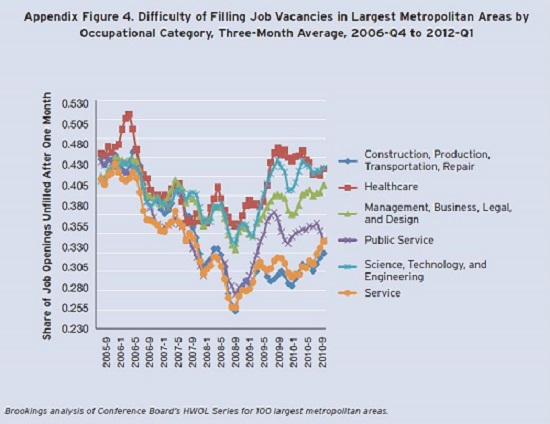
CU Blog - STEM Jobs Are Filling Slowly - Photo 1According to a new study by Brookings Institution, there is a clear evidence of a skills gap in the US. The report stated that a high school graduate with a Science, Technology, Engineering, and Math (STEM) background seems to be in higher demand than a person with an undergraduate degree not in a STEM background. The study looked at all job openings which were advertised on the companies’ websites totaling 52,000 companies in Q1 2013. Jobs in healthcare sector that require technical skills such as positions for doctors, nurses, and radiologists, filled at the slowest rate. To fill those jobs, the advertisement lasted an average of 47 days with the next being architectural and engineering openings that took an average of 41 days to fill. Computer and math jobs did relatively better in 39 days. On the other hand, jobs that do necessarily require higher education—installation, maintenance and repair—were filled more rapidly as the opening averaged 33 days of advertisement. Some of the fastest-filling jobs were office and administrative support, manufacturing, and construction type of jobs that took about 24 to 28 days to fill up. The study also breaks down the rate into different geographic regions and showed that jobs in San Francisco and San Jose, right in the vicinity of Silicon Valley, were the hardest to fill.

CU Blog - STEM Jobs Are Filling Slowly - Photo 2This graph depicts the percentage of jobs that remain unfilled after a month of advertising in the major sectors. It displays the skill gap in which healthcare and STEM sectors have a much harder time filling their positions than construction, production, transport, repair as well as public service sectors. Some analysts have argued in the past that due to the skill gap, the unemployment rate will be slow to fall. The author states that such gap will increase as this survey results show earnings and unemployment rate for STEM and non-STEM workers will be enlarged.

The book Go Lean…Caribbean posits that the reasons why the Caribbean brain drain is so acute, reported at exceeding 70%, are “push and pull” factors. That North American, and European countries can appeal to Caribbean educated workers more enticingly that their homeland. This is the pull factor. In addition the economic, security and governing deficiencies in the Caribbean “push” the native workers to consider expatriating. This can be likened to casting a ballot. The well-educated, skilled STEM worker in the Caribbean can simply choose to vote for “none of the above”; they vote with their feet and their wallet and simply flee the region. Today, that pace is 70%. Since the Caribbean has its own needs for the STEM work force, these numbers cannot be ignored.

The Caribbean is in crisis. The book Go Lean…Caribbean serves as a roadmap for the introduction and implementation of the technocratic Caribbean Union Trade Federation (CU). The roadmap declares that a crisis is a terrible thing to waste, and thus will respond to minimize “push” factors while also creating more competitive environments to dampen the pull factors.

The roadmap, in total will elevate Caribbean society. The prime directives of the CU are presented as the following 3 statements:

  • Optimization of the economic engines in order to grow the regional economy to $800 Billion & create 2.2 million new jobs.
  • Establishment of a security apparatus to protect the resultant economic engines.
  • Improve Caribbean governance to support these engines.

The book posits that all of the Caribbean is in crisis with this brain drain problem, while at the same time we have the same urgent need for STEM talent. This point is stressed early in the book (Page 13) in the following pronouncements in the Declaration of Interdependence:

xix.   Whereas our legacy in recent times is one of societal abandonment, it is imperative that incentives and encouragement be put in place to first dissuade the human flight, and then entice and welcome the return of our Diaspora back to our shores. This repatriation should be effected with the appropriate guards so as not to imperil the lives and securities of the repatriated citizens or the communities they inhabit. The right of repatriation is to be extended to any natural born citizens despite any previous naturalization to foreign sovereignties.

xxi.   Whereas the preparation of our labor force can foster opportunities and dictate economic progress for current and future generations, the Federation must ensure that educational and job training opportunities are fully optimized for all residents of all member-states, with no partiality towards any gender or ethnic group. The Federation must recognize and facilitate excellence in many different fields of endeavor, including sciences, languages, arts, music and sports. This responsibility should be executed without incurring the risks of further human flight, as has been the past history.

This blog relates to the challenge of mitigating the brain drain. This has been a frequent topic for these Go Lean blogs, highlighted here in the following samples:

a. https://goleancaribbean.com/blog/?p=1683 Caribbean Diaspora subject to ‘poverty pay’ in Britain
b. https://goleancaribbean.com/blog/?p=1674 Obama’s Plans for $3.7 Billion Immigration Crisis Funds, stressing the need for reform in the US.
c. https://goleancaribbean.com/blog/?p=1596 Book Review: ‘Prosper Where You Are Planted’ – the antithesis of emigration
d. https://goleancaribbean.com/blog/?p=1470 College of the Bahamas Master Plan 2025 – Lacking response for brain drain
e. https://goleancaribbean.com/blog/?p=1433 Caribbean loses more than 70 percent of tertiary educated to brain drain
f. https://goleancaribbean.com/blog/?p=1296 Remittances from Diaspora to Caribbean Increased By 3 Percent in 2013
g. https://goleancaribbean.com/blog/?p=1256 Is a Traditional 4-year College Degree a Terrible Investment? Yes, for Caribbean students studying abroad.

The Go Lean roadmap is based on sound economic principles, of which a basic concept is supply-and-demand. For the US, according to the foregoing article, there are more demand than supply for STEM workers, In the past, demand-supply gaps have been filled with a liberal immigration policy, but there is no stomach for that in today’s political climate. So the family re-unification approach is the likely strategy to be employed imminently – ethnicities with larger immigrant populations already in the US will have an advantage but their homelands will have more brain drain.

This is the premise for this commentary, that more pressure will be created for Caribbean citizens with STEM skill-sets to consider relocation, by connecting with their vibrant diaspora and family members for applying for entry into the US.

This means war.

Actually, war has already ensued; this issue is just the latest battle in this trade war.

To assuage these fears, and counteract the Caribbean losing dispositions in this trade war, the Go Lean book details a series of community ethos, strategies, tactics, implementations and advocacies to foster the best practices to mitigate further brain drain for the Caribbean region:

Community Ethos – Deferred Gratification Page 21
Community Ethos – Economic Systems Influence Choices & Incentives Page 21
Community Ethos – Job Multiplier Page 22
Community Ethos – Anti-Bullying and Mitigation Page 23
Community Ethos – Minority Equalization Page 24
Community Ethos – Return on Investments Page 24
Community Ethos – Ways to Impact the Future Page 27
Community Ethos – Ways to Foster Genius Page 26
Community Ethos – Ways to Help Entrepreneurship Page 28
Community Ethos – Promote Intellectual Property Page 29
Community Ethos – Ways to Impact Research & Development Page 30
Community Ethos – Ways to Close the Digital Divide Page 31
Community Ethos – Ways to Impact the Greater Good Page 37
Anecdote – Valedictorian and Caribbean Diaspora Member Page 38
Strategy – Customers – Citizens, Business   Community & Diaspora Page 47
Strategy – Meeting Region’s Needs Today, Preparing For Future Page 58
Tactical – Separation of Powers – Patent,   Standards, & Copyrights Page 78
Tactical – Separation of Powers – Education   Department Page 85
Implementation – Assemble all   Super-Regional Governing Entities Page 96
Implementation – Trends in Implementing   Data Centers Page 106
Implementation – Ways to Deliver Page 109
Implementation – Better Manage Debt –   Better Student Loans Dynamics Page 114
Planning – Ways to Improve Trade Page 128
Planning – Ways to Make the Caribbean Better Page 131
Advocacy – Ways to Grow the Economy Page 151
Advocacy – Ways to Create Jobs Page 152
Advocacy – Ways to Improve Education Page 159
Advocacy – Ways to Impact Student Loans – Forgivable Provisions Page 160
Advocacy – Ways to Foster Empowering Immigration – STEM Professionals Page 174
Advocacy – Ways to Foster Technology Page 197
Advocacy – Ways to Impact the Diaspora Page 217

Now is the time for all of the Caribbean, the people and governing (education) institutions, to lean-in for the elevations described in the book Go Lean … Caribbean. This is a big deal for the region. This roadmap is not just a plan; it is also the delivery of the hopes and dreams of generations of Caribbean residents to finally assuage the brain drain.

The region needs the deliveries, described in the Go Lean roadmap. Otherwise, we have no hope to incite and retain our young people, especially those with STEM skill-sets. As a region, we would be condemned to a future of the status quo, or worse, simply “fattening frogs for snakes”. This roadmap therefore is vital in the quest to make the Caribbean a better place to live, work, learn and play.

Download the book Go Lean … Caribbean – now!

Share this post:
, , ,
[Top]

Book Review: ‘Prosper Where You Are Planted’

Go Lean Commentary

The Caribbean is in crisis; according to a report by the Inter-American Development Bank (IDB), over 70% of college educated citizens have fled the region, looking for better opportunity. The fact that the percentage is so high is evident that it is more prosperous abroad than at home. This is the harsh reality. This is also an economic fact as many Caribbean states get 4 to 7 percent of their GDP as remittances back to the homeland from the Diaspora living abroad, mostly in North America and Western Europe.

But this is a losing proposition for the Caribbean – no doubt it is better to get 100% of Gross Domestic Production. In the same report by the IDB, it was stated that Caribbean member-states lose 10 to 11 percent of GDP from emigration and the “spent” cost of education on those expatriates, (https://goleancaribbean.com/blog/?p=1433), so whatever the level of remittance from the Diaspora, the community is still losing. What we need is the option to prosper where we’re planted in the Caribbean. This goal obviously requires heavy-lifting and is easier said than done. This is the focus of the book Go Lean…Caribbean, to elevate the Caribbean economy so that there would be optimal opportunities at home and no need to supplant to another land.

So how do we prosper where we’re planted? While this is a simple question (based on the Bible principle of Psalms 1:3), the answer is more complex. One writer, Dani Johnson, has advocated this theme in a series of books:

Title ISBN                               
First Steps to Wealth 978-0-9789551-8-2
Grooming the Next Generation for Success 978-1-4587-9610-3
Spirit-Driven Success 978-0-7684-9651-2

The below article (and VIDEO) is a review of her last book First Steps to Wealth: it breaks down into bite-size morsels the big meal of wealth building.

The book Go Lean…Caribbean concurs with First Steps to Wealth, but rather than individual wealth, it serves as a roadmap for the introduction and implementation of the technocratic Caribbean Union Trade Federation (CU) to do the heavy-lifting of optimizing community wealth and nation-building for the region.

By: Sheryl Nance-Nash
Title: Dani Johnson Offers Her 12 Laws for Creating Wealth – and Keeping It
DailyFinance e-Zine (Posted 07/23/2013 Retrieved 06/30/2014) –
http://www.dailyfinance.com/2011/07/23/dani-johnson-offers-her-12-laws-for-creating-wealth-and-keepi/

CU Blog - Book Review - Prosper Where You Are Planted - Photo 1

Dani Johnson says she was groomed by her drug addict parents to fail — financially, emotionally and socially. She seemed well on her way to living down to that expectation — by 17 she was pregnant, at 21, homeless. Two years later though, she was a millionaire, thanks to the thriving company she built manufacturing and selling her own nutritional and skin care products. She sold that company in 1996. Then, she lost her fortune, spending almost all of it and trusting the wrong people with the rest.

Today, as a multimillionaire with six businesses that employ more than 30 people, she knows a thing or two about wealth. She says there are three things you need to know about money: how to make it and more of it; how to keep it; and how to turn it into your slave.

“Ninety-eight percent of the population will end up dead or broke by age 65. Only two percent of the population will succeed,” says Johnson in her new book, First Steps to Wealth. “Where do you want to be?” she asks. You need a financial vision.

When she started raking in the cash, she didn’t have the vision thing down yet. “I believed I had to wear Christian Dior suits and $500 shoes to be successful. I believed wealth was about a new Mercedes Benz convertible, and the 6,000 square-foot house with a swimming pool, view of the mountains and tennis courts. But when I got those things, I never felt successful. I had a $250,000 wardrobe and $250,000 in jewelry, and I still felt this gaping hole in my belly that made me feel I was a failure,” she writes.

Challenge Yourself to Apply the Laws to Your Life

Everything starts with a decision. “There’s a theory that if you find your passion that’s where you’ll be successful, but I believe you have to go with what’s in front of you. I saw a box of weight-loss products in the backseat of my car and though I had no interest in selling, I made a decision that I needed to find out how to sell those products because if I relied on being a cocktail waitress it would take months to be able to afford an apartment,” says Johnson, who was homeless and suicidal then. She started a business from the trunk of her car and a phone booth.

“If I didn’t make that decision, I would still be broke. I didn’t want to sell, but it was the door in front of me,” says Johnson. When her first sales call ended with a hang up, she called another weight-loss product company, observed how they handled her, and developed a script from that. She used their advertisements to shape her own. To make a long story short, in 45 days she had $18,000 in sales.

Johnson credits her fortune to what she calls the 12 Laws of Success — fundamental principles that moved her from an impoverished past to a prosperous present. She has spent the last two decades telling others how those principles can help them too.

Law No. 1 – The Law of Vision

In her book she asks, “What are the things you dreamed of doing in your life? Do you remember what those dreams looked like? What happened to those dreams? “If you want to be successful financially, expand your income to fit your dreams. This is the Law of Vision. “For without vision, we perish. It is important to list where we want to go, what we want to do, and with whom we want to do it. If you do not know what you want, no one can help you get it,” she writes. But what do you want?

Law No. 2 – The Law of the Mind

There is something very different about the wealthy: The way they think, how they make decisions, act upon them, and how they see circumstances and react to them. It’s their mindset, says Johnson. What’s the right mindset? “It’s saying every time you meet a roadblock, ‘How can I make it happen?'” You decide to go around a problem, or dig a hole underneath a problem to make things happen, instead of quitting. Watch the company you keep. “You’re a product of your environment. I listen to uplifting music and life-giving audios,” says Johnson.

Law No. 3 – The Law of Value

The marketplace pays for value. What determines your value? Your skill set. Quite simply, “If you increase your skill, you will increase your pay.” Your value is not personality, looks, or where you were born, but has everything to do with your skills, she writes. Everybody is in control of his or her skills.

“Go beyond the basics. If I had focused just on weight-loss products, I would have been like everybody else, but we decided to go a step further, to focus on people — what makes them tick, to deal with bigger issues,” says Johnson. Not only did delving deeper into the customer distinguish her from competitors, it birthed another business, a training program for personal and professional development.

Law No. 4 – The Law of Reaping and Sowing

This is the greatest of all the laws, she says. “You have been taught a lie that success is about being lucky or being in the right place at the right time. But the bottom line, says Johnson, we reap what we sow. “If you waste money, you are going to reap what you sow. If you feed your financial problems and are focused on stressing out and not being able to pay your bills, you will have more problems. Focus on finding answers. Feed the solution, not the problem,” she writes.

Giving is also key. “With our businesses, we give 10% of our gross sales right off the top — to the poor, orphans, widows, or for freeing children out of the sex trade. That is about 30% of our net profit. When we do that, we have found that even more comes back to us,” she writes. She co-founded the nonprofit King’s Ransom Foundation, which serves the needy globally. She spread her generosity on ABC’s Secret Millionaire earlier this year. Johnson says giving motivates her. “The only reason I work is to be able give to the kids, the orphans. I don’t have to work another day in my life. My kids are set.”

Law No. 5 – The Law of Desire

Johnson says desire always reveals design and destiny. Everyone was born with a design to succeed. You were born with everything in you. “You have enthusiasm, persistence, faith, adventurous spirit, and the gift to get over it,” says Johnson. The only thing you’re lacking is the skill to succeed. “That’s the part you have to learn and invest in,” she writes. You were designed with wealth in mind. Replace the poverty mentality with a whole new way of thinking. No amount of debt is too small to pay off. “If you invest your money is something that makes more money, you create wealth. If you spend that money, the money is gone. Your monthly income is supposed to grow something, just like seed. But most people live from paycheck to paycheck, which means they are eating all of their seed. They have nothing to plant and grow.”

Law No. 6 – The Law of Teachability

There are people around you who have success in some areas of their lives. When you are teachable, you find them. When you are unteachable, you think you are them. Being teachable means you are hungry, pursuing success, and willing to learn from masters. When you follow this law you will achieve whatever you pursue.

Law No. 7 – The Law of Forgiveness

When you do not forgive, you make decisions out of bitterness. “This kills your time for being productive and creating wealth,” says Johnson.

Law No. 8 – The Law of Promotion

If you can be faithful with the little things, if you grow and improve what you have, then you will be made a ruler over much more. Johnson insists, “Prosper where you are planted.” Your answer might be right in front of you, and maybe you don’t like it. “The road to success is often paved with things we do not want to do,” says Johnson.

Then too, “People are always trying to hit a home run. Life doesn’t work like that. They try to make one big jump and flop. Work with what you have. If you have a job that you might think is ‘little’, be the best at it, effect people there, make a difference wherever you are.” Instead of always seeking something else, focus on where you are, whether it’s your job, your business, your relationships. “You will never prosper if you don’t,” says Johnson.

Law No. 9 – The Law of Focus

It’s simple: Whatever you focus on is what you get good at. She asks, “Where is your focus?”

Johnson used to work 100 hour weeks. “My marriage was miserable and I didn’t deserve the title mother,” says Johnson, whose five children are now 12 to 24. After a nervous breakdown in the 1990s, her priorities changed. “I decided that family came first and that I would only work 20 hours a week — that required focus. I discovered I was wasting 80 hours a week.” When she started working less, she was so focused that her income tripled. She began delegating. “Don’t think you’re the only one who can do something,” says Johnson, whose businesses include danijohnson.com, publishing company Call to Freedom, investment, software, real estate and oil firms.

Law No. 10 – The Law of Honor

Honoring people is the key to successful relationships, personal and professional. Says Johnson, “It’s about honoring people, giving them what they want. When you honor people, they honor you back, but it is not always the one you honor who honors you back.”

Law No. 11 – The Law of Decision

Everything in life boils down to choices. When you finally make a decision, everything begins to click. Make a decision.

Law No. 12 – The Law of Action

When we sit with indecision, we invite our enemies — procrastination, fear, unbelief, and excuses — into our lives, writes Johnson. When you immediately follow your decisions with action, a funnel of favor begins. Doors begin to open. People begin to help. Your life’s purpose becomes clear, and self-motivation mobilizes you from the inside out.

If the thought of trying to put all 12 laws into play seems overwhelming, there’s one good place to start. Says Johnson, “Change your attitude.

Rather than 12 Laws, the Go Lean roadmap uses cutting-edge delivery of best practices to employ strategies, tactics and implementations to impact its prime directives; identified with the following 3 statements:

  • Optimization of the economic engines in order to grow the regional economy to $800 Billion & create 2.2 million new jobs.
  • Establishment of a security apparatus to protect the resultant economic engines.
  • Improve Caribbean governance to support these engines.

The successful execution of these directives will allow Caribbean stakeholders to prosper, while remaining as residents in their homeland. The Go Lean book seeks to optimize the entire Caribbean economic/security/governance eco-system to reach this goal. This vision is defined early in the book (Page 13 & 14) in the following pronouncements in the Declaration of Interdependence:

xix.   Whereas our legacy in recent times is one of societal abandonment, it is imperative that incentives and encouragement be put in place to first dissuade the human flight, and then entice and welcome the return of our Diaspora back to our shores. This repatriation should be effected with the appropriate guards so as not to imperil the lives and securities of the repatriated citizens or the communities they inhabit. The right of repatriation is to be extended to any natural born citizens despite any previous naturalization to foreign sovereignties.

xxvi.   Whereas the Caribbean region must have new jobs to empower the engines of the economy and create the income sources for prosperity, and encourage the next generation to forge their dreams right at home, the Federation must therefore foster the development of new industries… In addition, the Federation must invigorate the enterprises related to existing industries … – impacting the region with more jobs.

The Go Lean book details (Page Numbers included below) features of assessments, community ethos, strategies, tactics, implementations and advocacies to plant and exploit local opportunities in the Caribbean region. These features are listed here to correspond with references from Dani Johnson’s book in the foregoing article:

Prosper   Where You Are Planted References Go Lean…Caribbean References
Assessment – 98% of the population will end up dead or   broke by age 65. Impacting   Retirement (Page 221); Improving   Elder-Care (Page 225).
Learning from   competitors Lessons from New   York City (Page 137); Canada (Page 146)
A “Hustling” Attitude Entrepreneurship Ethos (Page 28)
Law No. 1 – The Law of Vision Strategy – Vision (Page 45)
Law   No. 2 – The Law of the Mind Advocacies – Overcoming Obstacles (Pages 121 – 124)
Law No. 3 – The Law of Value Community Ethos – Genius (Page 27), Intellectual Property (Page 29), Turn-around (Page 33)
Law No. 4 – The Law of Reaping and Sowing Community Ethos – Return on Investments (Page 24), Lean Operations (Page 24), Non-Governmental Organizations   (Page 25)
Law No. 5 – The Law of Desire Strategy – Missions (Page 45)
Law No. 6 – The Law of Teachability Planning – Lessons Learned from … (Pages 135 – 146)
Law No. 7 – The Law of Forgiveness Community Ethos – Reconciliation (Page 34)
Law No. 8 – The Law of Promotion Optimize Existing Competencies (Page 58) – Tourism (Page 190), Banking (Page 199), Agriculture (Pages 162, 183 & 208)
Law No. 9 – The Law of Focus Implementation – Fostering a Lean   Technocracy (Page 64), Delivery   Arts (Page 109)
Law No. 10 – The Law of Honor Advocacy – One Percent (Page 224), Foundations (Page 219)
Law No. 11 – The Law of Decision Community Ethos – Intelligence Gathering   & Analysis (Page 23);    Impact Research & Development – Big   Data Analysis (Page 30)
Law No. 12 – The Law of Action Implementation – Delivery Arts &   Sciences (Page 109)

Now is the time for all of the Caribbean, the people and governing institutions, to lean-in for the empowerments described in the book Go Lean … Caribbean. It is time for the region to prosper right here where we are planted.

The Caribbean can succeed in this effort to improve the Caribbean as a place to live, work and play. There are previous blog commentaries that delve into these same issues:

https://goleancaribbean.com/blog/?p=1325 Puerto Rico Governor Signs Bill on SME’s
https://goleancaribbean.com/blog/?p=1296 Remittances to Caribbean Increased By 3 Percent in 2013
https://goleancaribbean.com/blog/?p=1014 Jack M. Mintz Commentary: All is not well in the sunny Caribbean
https://goleancaribbean.com/blog/?p=623 Only at the precipice, do they change
https://goleancaribbean.com/blog/?p=599 Ailing Puerto Rico open to radical economic fixes
https://goleancaribbean.com/blog/?p=398 Self-employment on the rise in the Caribbean – World Bank
https://goleancaribbean.com/blog/?p=364 Time Value of Money

Caribbean Music icon Bob Marley advocated a similar pledge, based on Psalms 1:3, in his song “We’d be Forever Loving Jah” (Album: Uprisings 1980) with the following lyrical stanza:

‘Cause just like a tree, planted, planted by the rivers of water
That bringeth forth fruits, bringeth forth fruits in due season.
Everything in life got its purpose,
Find its reason in every season,
Forever, yeah!
(We’ll be forever loving Jah) We’ll be forever!

See Bob Marley Embedded VIDEO here: https://youtu.be/VuAXl1LYY6o

Download the book Go Lean … Caribbean – now!

Share this post:
, , , ,
[Top]

A Lesson in History – 100 Years Ago Today – World War I

 Go Lean Commentary

The dominoes began to fall 100 years ago today.

Going backwards: The Caribbean is at the precipice of dysfunction due to a global financial crisis; the crisis is a by-product of an inter-connected world; the global unified economic systems (Bretton-Woods Accords [b]) and disbanding of the colonies of the Great Powers emerged for the rebuilding after World War II. Consequently, Word War II was a direct response to the unsatisfactory settlements from World War I and economic dysfunctions during the period between the World Wars. The first domino was therefore June 28, 1914.

1914 Photo 1On this date 100 years ago, Archduke Franz Ferdinand of Austria, heir presumptive to the Austro-Hungarian throne, and his wife, Sophie, Duchess of Hohenberg, were shot dead in Sarajevo by Serbian assassins. The political objective of the assassination was to break off Austria-Hungary’s south-Slav provinces so they could be combined into a Yugoslavia. The assassination led directly to the First World War when Austria-Hungary subsequently issued an ultimatum against Serbia, which was partially rejected. Austria-Hungary then declared war, marking the outbreak of the war. [a]

Multilateral military alliances abounded in that day among the Great Powers: Austria-Hungary with Germany (Triple Alliance of 1882) and Serbia with Russia and France (Triple Entente of 1907) and Britain. When war ensued later in August 1914, these were the sides. Many other military treaties were triggered thereby engaging empires/countries like Ottoman-Turks, Portugal, Japan and Italy, (The United States joined in 1917 allied with Britain). The resulting conflict was dubbed the Great War until subsequently rebranded World War I.

The review of the historic events of this day 100 years ago is more than just an academic discussion, the book Go Lean…Caribbean aspires to economic principles that dictate that “consequences of choices lie in the future”. The book serves as a roadmap for the introduction and implementation of the technocratic Caribbean Union Trade Federation (CU). This confederation effort aligns many former colonies of the same Great Powers that waged WW I; like Great Britain or the United Kingdom (UK) for example. The British Dominion experienced dire consequences and suffered greatly as a result of this war. In 1914 The British Dominion controlled over 25% of the world’s population; today the UK wields little political, military or economic power, including that of the Caribbean.

The people of the Caribbean understand societal decline and dysfunction all too well.

What have we learned in the 100 years since the events of June 28, 1914? How will these lessons help us today?

  • Minority Equalization – Bullying and terrorism must be mitigated at the earliest possible opportunity – the foregoing photo depicts the oppression the minority Balkan communities perceived in the Austria-Hungarian Empire. As a minority group they felt bullied in their own country; their Slavic culture and language set them apart, and their religious adherence led to even more dissension (Austria-Hungary: Catholic/Lutheran; Serbia: Eastern Orthodox and Bosnia- Herzegovina: Muslim) There were terrorist activities for decades before in the quest for independence. In the past 100 years, this same modus operandi has been repeated in countless locales around the world. The CU security pact must defend against regional threats, including domestic terrorism. This includes gangs and their junior counterparts, bullies. The CU plans for community messaging in the campaign to  mitigate bullying.

1914 Photo 2

  • Reconciliation of issues are not optional, more conflict will emerge otherwise – The issues that wedged the people of the Balkans were not resolved in World War I. More dissensions continued leading to World War II, and continued during the Cold War while most of the Balkans were under Soviets control. When the Soviet Union collapsed in 1991, civil war and ethnic cleansings proceeded in the Balkans. Their issues/differences had not been reconciled. A common practice after WW I & WW II was the prosecution of war crimes. But in South Africa an alternative justice approach was adopted, that of Truth & Reconciliation Commissions (TRC). These have become more successful as the emphasis is less on revenge and more on justice normalization. Many other countries have instituted similar TRC models. The CU plans for the TRC model for dealing with a lot of latent issues in the last Caribbean century (i.e. Cuba, Haiti, Dominican Republic, etc).
  • Self-determination of local currencies – in planning for postwar reconstruction, U.S. representatives with their British counterparts studied what had been lacking between the two world wars: a system of international payments that would allow trade to be conducted without fear of sudden currency depreciation or wild fluctuations in exchange rates—ailments that had nearly paralyzed world capitalism during the Great Depression. There is a multiplier associated with the currency in the money supply. Therefore the communities of the Caribbean must embrace its own currency, the Caribbean Dollar (managed by a technocratic Caribbean Central Bank), thereby bringing local benefits from local multipliers.
  • Security assurances must be enabled to complement economics objectives – A lot of dissension has resulted when economic engines become imperiled due to security conflicts. The instability then causes more economic dysfunction, which results in even more security threats – a downward spiral. The CU/Go Lean posits that security apparatus must be aligned with all economic empowerments. This is weaved throughout the roadmap.
  • Negotiate as partners not competitors – The end of World War I immediately set-up ripe conditions for WW II, because of the harsh terms in the Peace Treaties. The CU maintains that, negotiation is an art and a science. More can be accomplished by treating a negotiating counterpart as a partner, rather than not an adversary. (See VIDEO below).
  • Cooperatives and sharing schemes lighten burdens among neighbors – The Balkan conflict of 1914 resulted in a World War because of cooperative treaties with aligning nations. Despite this bad outcome, the practice of cooperatives and sharing still has more upside than downside. The CU will employ cooperatives and sharing schemes for limited scopes within the prime directives of optimizing the economic, security and governing engines.
  • Promote opportunities for the Pursuit of Happiness – A lot of terrorist activities are executed by “suicide” agents (i.e. suicide bombers). The Go Lean roadmap posits the when the following three fundamentals are in place, the risks of suicide is minimal: 1. something to do, 2. someone to love, 3. something to hope for. These are the things a man (or woman) needs to be happy.
  • Consider the Greater Good – Complying with this principle would have prevented a lot of conflict in the past century. The philosophy is directly quoted as: “It is the greatest good to the greatest number of people which is the measure of right and wrong”. The CU/Go Lean roadmap calls for a number of measures that strike directly at the Greater Good mandate: accountable justice institutions, economic empowerment for rich and poor, strategic education initiatives, proactive health/wellness, etc.

The related subjects of economic, security and governing dysfunction have been a frequent topic for blogging by the Go Lean promoters, as sampled here:

https://goleancaribbean.com/blog/?p=1433 Caribbean loses over 70% of tertiary educated citizens to the brain drain
https://goleancaribbean.com/blog/?p=1309 5 Steps of a Bubble
https://goleancaribbean.com/blog/?p=1014 All is not well in the sunny Caribbean
https://goleancaribbean.com/blog/?p=816 The Future of Caribbean Integration and CariCom
https://goleancaribbean.com/blog/?p=789 America’s War on the Caribbean
https://goleancaribbean.com/blog/?p=782 Open the Time Capsule: The Great Recession of 2008
https://goleancaribbean.com/blog/?p=623 Only at the precipice, do they change
https://goleancaribbean.com/blog/?p=599 Ailing Puerto Rico open to radical economic fixes
https://goleancaribbean.com/blog/?p=467 Barbados Central Bank records $3.7m loss in 2013
https://goleancaribbean.com/blog/?p=451 CariCom Chairman to deliver address on slavery/colonization reparations
https://goleancaribbean.com/blog/?p=353 Book Review: ‘Wrong – Nine Economic Policy Disasters and What We Can Learn…’

The purpose of the Go Lean roadmap is to turn-around the downward trends in the Caribbean today, to reverse course and elevate Caribbean society. The CU, applying lessons from the last 100 years, has prime directives proclaimed as follows:

  • Optimization of the economic engines in order to grow the regional economy to $800 Billion & create 2.2 million new jobs.
  • Establishment of a security apparatus to protect the resultant economic engines.
  • Improve Caribbean governance to support these engines.

The Go Lean book details a series of assessments, community ethos, strategies, tactics, implementations and advocacies to empower all the factions in the Caribbean region:

Community Ethos – Economic Systems Influence Choices & Incentives Page 21
Community Ethos – Consequences of Choices Lie in the Future Page 21
Community Ethos – Money Multiplier – Control of Local/Regional   Currency Page 22
Community Ethos – Anti-Bullying and Mitigation Page 23
Community Ethos – Intelligence Gathering Page 23
Community Ethos – “Crap” Happens Page 23
Community Ethos – Minority Equalization Page 24
Community Ethos – Ways to Impact the Future Page 26
Community Ethos – Ways to Improve Negotiations Page 32
Community Ethos – Ways to Manage Reconciliations Page 34
Community Ethos – Ways to Improve Sharing Page 35
Community Ethos – Ways to Promote Happiness Page 36
Community Ethos – Ways to Impact the Greater Good Page 37
Strategy – Vision –  Integrate Region into a Single Market Economy Page 45
Strategy – Agents of Change – Globalization Page 57
Tactical – Separation of Powers – Department of Homeland   Security Page 75
Tactical – Separation of Powers – Department of   Justice Page 77
Implementation – Assemble Existing Super-national Institutions Page 96
Implementation – Caribbean Central Bank (CCB) Cooperative Page 96
Implementation – Ways to Pay for Change Page 101
Implementation – Foreign Policy Initiatives   at Start-up Page 102
Implementation – Security Initiatives at   Start-up Page 103
Implementation – Ways to Deliver Page 109
Implementation – Ways to Promote Independence Page 120
Planning – Ways to Ways to Model the EU Page 130
Planning – Ways to Make the Caribbean Better Page 131
Planning – Ways to Improve Failed-State Indices Page 134
Planning – Lessons from East Germany Page 139
Advocacy – Ways to Grow the Economy Page 151
Advocacy – Ways to Create Jobs Page 152
Advocacy – Ways to Better Manage the Social Contract Page 170
Advocacy – Ways to Foster Cooperatives Page 176
Advocacy – Ways to Impact Justice Page 177
Advocacy – Ways to Improve Homeland Security Page 180
Advocacy – Ways to Mitigate Terrorism Page 181
Advocacy – Ways to Improve Intelligence Page 182
Advocacy – Banking Reforms – Caribbean Dollar Page 199
Advocacy – Ways to Protect Human Rights Page 220
Advocacy – Battles in the War on Poverty Page 222
Advocacy – Ways to Impact British Territories Page 245

The year 1914 is identified as a watershed year in the history of mankind. (There are even religious teachings that identify this year as the beginning of the Bible’s prophesied Last Days). No doubt there was a crisis, and it was wasted, even after losing 19 million people in the ensuing military conflict. The result was a 2nd World War that slaughtered 60 million more. Still all the divisions and animosities created during those conflicts forged even more conflicts (think: Middle East, Korea and Vietnam). In total, about 100 million people died in wars of the 20th Century.

See Comedian Bill Maher Commentary in the following VIDEO:

VIDEO – Real Time With Bill Maher: Sunni and Share (HBO) – 
https://youtu.be/Jz0YWIfBLa4


Real Time with Bill Maher
Published on Jul 1, 2014 – Bill Maher delivers his “New Rules” editorial on June 27, 2014.

  • Category: Entertainment

Now is the time for all of the Caribbean to learn the lessons from the last 100 years, and not waste our current crises. The book Go Lean … Caribbean posits that the Caribbean is in a serious crisis, but asserts that this crisis would be a terrible thing to waste. The people and governing institutions of the region are hereby urged to lean-in for the empowerments described in the book Go Lean … Caribbean.

This is a big deal for the region, the same way 1914 was a big year for our planet. While the planet is out-of-scope for this roadmap, a Caribbean neighborhood optimization is realistic and plausible. We can all work to make our homeland a better place to live, work, and play.

Download the free e-Book of Go Lean … Caribbean – now!

—————–

Referenced Sources:
a.     http://en.wikipedia.org/wiki/Assassination_of_Archduke_Franz_Ferdinand_of_Austria; retrieved June 28, 2014

b.     http://en.wikipedia.org/wiki/Bretton_Woods_system; retrieved June 28, 2014

Share this post:
, ,
[Top]

St Croix’s Tim Duncan to Return to Spurs For Another Season

Go Lean Commentary

Congratulations Tim Duncan. You deserve your champion’s accolades.

Tim Duncan Photo

This commentary has previously sided with Mr. Duncan’s opponent in the recent NBA Finals. Here below are the previous blogs citing a hope for the Miami Heat’s dominance in the NBA Playoff tournament.

https://goleancaribbean.com/blog/?p=1148 Sports Bubble – Franchise values in basketball
https://goleancaribbean.com/blog/?p=689 eMerge conference aims to jump-start Miami tech hub

But talent recognizes talent!

It is also good news, according to this foregoing news article, that Mr. Duncan will be returning for at least one more season.

By: The Caribbean Journal Staff

Tim Duncan isn’t going anywhere.

The St Croix native, who recently won his fifth NBA championship, will be returning to the San Antonio Spurs for his 18th NBA season.

The team announced Monday that the 38-year-old Duncan had exercised his player option for the 2014-2015 season, putting to rest any notion that he would be retiring.

Duncan helped the Spurs to a dominant 4-1 series win over the Miami Heat in this month’s NBA Finals.

The Christiansted native is one of five players in the history of the NBA to win five championships and five MVPs (either NBA Finals or regular season), along with Michael Jordan, Magic Johnson, Bill Russell and Kareem Abdul-Jabbar.

Duncan leads all active players in career wins, with 898.
Caribbean Journal Online News Source  (Posted 06-23-2014; retrieved 06-26-2014) –
http://www.caribjournal.com/2014/06/23/st-croixs-tim-duncan-to-return-to-spurs-for-another-season/

There is something bigger than sports alone at play here. As the foregoing news article depicts, Mr. Duncan is a member of the Caribbean Diaspora. He is recognized as one of the best in his field of endeavor; perhaps one of the best of all time. This is a claim of the book Go Lean … Caribbean, that sports require a genius qualifier and that genius  ability can be found in abundance in the Caribbean. Mr. Duncan makes us all proud: Christiansted, St. Croix, the US Virgin Islands and all of the Caribbean.

The Go Lean book serves as a roadmap for the introduction and implementation of the Caribbean Union Trade Federation (CU), a technocratic federal government to administer and optimize the economic/security/ governing engines of the region’s 30 member-states. At the outset, the roadmap recognizes the value of sports with these statements in the Declaration of Interdependence (Page 13 & 14):

xxvi.     Whereas the preparation of our labor force can foster opportunities and dictate economic progress for current and future generations, the Federation must ensure that educational and job training opportunities are fully optimized for all residents of all member-states, with no partiality towards any gender or ethnic group. The Federation must recognize and facilitate excellence in many different fields of endeavor, including sciences, languages, arts, music and sports. This responsibility should be executed without incurring the risks of further human flight, as has been the past history.

xxxi.     Whereas sports have been a source of great pride for the Caribbean region, the economic returns from these ventures have not been evenly distributed as in other societies. The Federation must therefore facilitate the eco-systems and vertical industries of sports as a business, recreation, national pastime and even sports tourism – modeling the Olympics.

The Go Lean roadmap calls for the market organizations to better explore the economic opportunities for sports. Sports can be big business! But even when money is not involved, other benefits abound. As such the CU will enhance the engines to elevate sports at all levels: amateur, intercollegiate and professional.

The other issue related to Tim Duncan is that of “image”. Mr. Duncan could be a proud ambassador of Caribbean character. Personally, he does not advocate any political or economic agenda, so others must do that for him. As a public figure, his story is free to relate to the listening world of how impactful a Caribbean heritage can be.

The subjects of sports and Caribbean image have been related in many previous Go Lean blogs; highlighted here in the following samples:

a. https://goleancaribbean.com/blog/?p=1446 Caribbean   Players in the 2014 World Cup
b. https://goleancaribbean.com/blog/?p=1341 College   World Series Time
c. https://goleancaribbean.com/blog/?p=1214 The Art &   Science of Temporary   Stadiums – No White Elephants
d. https://goleancaribbean.com/blog/?p=1148 Sports Bubble –   Franchise values in   basketball
e. https://goleancaribbean.com/blog/?p=1020 Sports Revolutionary: Advocate Jeffrey Webb
f. https://goleancaribbean.com/blog/?p=857 Caribbean Image: Dreadlocks
g. https://goleancaribbean.com/blog/?p=498 Book Review: ‘The Sports Gene’
h. https://goleancaribbean.com/blog/?p=334 Bahamians Make Presence Felt In Libyan   League
i. https://goleancaribbean.com/blog/?p=318 Collegiate Sports in the Caribbean
j. https://goleancaribbean.com/blog/?p=60 Could the Caribbean Host the Olympic Games?

The book Go Lean…Caribbean has an economic empowerment agenda, but there are still huge benefits for the region related to sports. The strategy is to consolidate the region’s 30 member-states / 4 languages into a Single Market of 42 million people – leverage for a viable sports landscape. The CU facilitation of applicable venues (stadia, arenas, fields, temporary structures) on CU-owned fairgrounds plus the negotiations for broadcast/streaming rights/licenses will elevate the art, science and genius of sports as an enterprise in the region.

Now is the time for all of the Caribbean to lean-in to the following community ethos, strategies, tactics, implementations and advocacies detailed in the book Go Lean … Caribbean to re-boot the delivery of the regional solutions to elevate the Caribbean region through sports:

Community Ethos – People Respond to Incentives in Predictable Ways Page 21
Community Ethos – Return on Investments Page 24
Community Ethos – Ways to Foster Genius Page 27
Community Ethos – Ways to Improve Negotiations Page 32
Community Ethos – Ways to Promote Happiness Page 36
Strategic – Vision – Integrating Region in to a Single Market Page 45
Strategic – Staffing – Sporting Events at Fairgrounds Page 55
Tactical – Fostering a Technocracy Page 64
Tactical – Separation of Powers – Sports & Culture Administration Page 81
Tactical – Separation of Powers – Fairgrounds Administration Page 83
Implementation – Steps to Implement Self-Governing Entities (Fairgrounds) Page 105
Implementation – Ways to Deliver Page 109
Planning – Ways to Make the Caribbean Better Page 131
Advocacy – Ways to Grow the Economy Page 151
Advocacy – Ways to Improve Local Government – Parks & Recreation Page 169
Advocacy – Ways to Impact Events Page 191
Advocacy – Ways to Promote Fairgrounds Page 192
Advocacy – Ways to Foster Technology Expositions Page 197
Advocacy – Ways to Improve Sports Page 229
Advocacy – Ways to Impact Urban Living – Sports Leagues Page 234

The foregoing article celebrates a Caribbean Champion. But there is more to celebrate with Caribbean life, culture and the homeland. With the Go Lean executions, we can all be champions, by making the Caribbean a better place to live, work and play.

Download the book Go Lean…Caribbean now!


Share this post:
, , , ,
[Top]