Category: Social

A Lesson In History – Ending the Military Draft

Go Lean Commentary

Do you remember the draft?

CU Blog - A Lesson in History - Military Draft Ends - Photo 2

If you were born after 1953, then probably not. The draft or conscription – see Appendix A below – ended in America in June 1973; see the full historic details in Appendix B below.

This was an American issue, but the shadow loomed large over other countries in the region, including the Caribbean. A most amazing observation – a learned lesson – is made based on the date of the draft ending: it saw the beginning of the end of Caribbean cohesion as we knew it.

The end of the American draft was the “first domino” in the Caribbean downfall. Societal abandonment has been all the rage ever since. (According to a 2012 report, the Migration Policy Institute detailed that the Caribbean Diaspora in the US amount to 22 million with the vast majority arriving in the last 2 decades of the 20th Century).

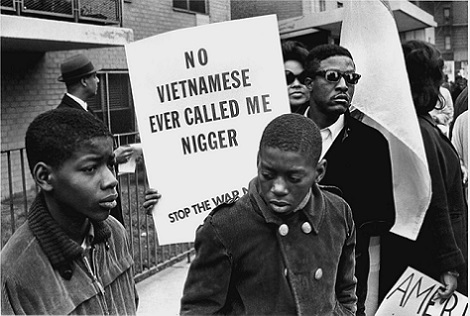
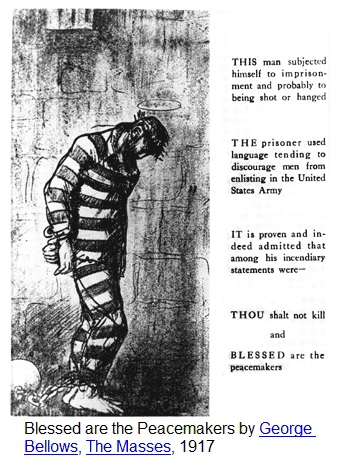
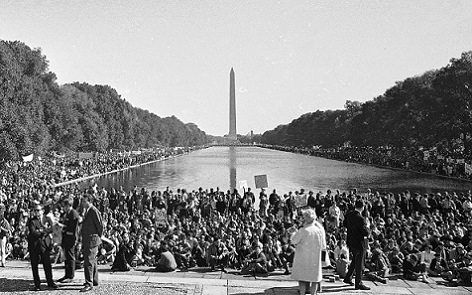
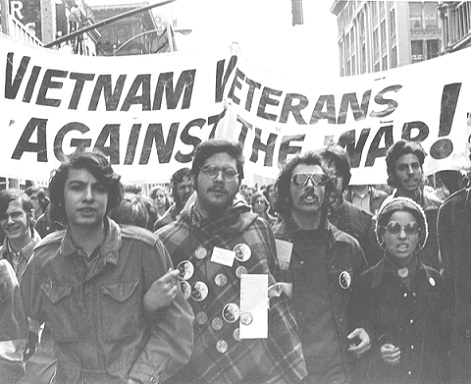
For the most part, Caribbean people had opposed military conscriptions, but only with passive voice, while other communities protested with vocal demonstrations and distributed various opposition publications. Consider this example:

The Masses was a graphically innovative magazine of socialist politics published monthly in the United States from 1911 until 1917, when federal prosecutors brought charges against its editors for conspiring to obstruct conscription. It was succeeded by The Liberator and then later The New Masses.
CU Blog - A Lesson in History - Military Draft Ends - Photo 1

CU Blog - A Lesson in History - Military Draft Ends - Photo 4Considering that the majority of the Caribbean were of an African heritage and the “pre-Civil Rights” American homeland was not welcoming for Black people, it is understandable that no Caribbean mother would have wanted to sacrifice their sons on the altar of war for racist America.

Sacrifice is the key word …

… the term National Sacrifice has been proclaimed to be a new community ethos that must be fostered in the Caribbean by the movement behind the book Go Lean…Caribbean. Community ethos is defined as the underlying spirit-attitude-sentiment that informs the beliefs, customs, or practices of society.

As an ethos, National Sacrifice defines a “willingness to die” for a cause. But the fuller definition presented by the Go Lean book and movement means a “willingness to live” for a cause. The Go Lean movement wants to forge change in the Caribbean, we want to change the attitudes for the entire region. We want to bring a National Sacrifice ethos to the Caribbean. This spirit is undoubtedly missing, as evidenced by the fact that the region suffers from an alarming rate of societal abandonment: 70% of the college-educated population have left in a brain drain.

This is the bad disposition now. This is the end-product of those dominoes; with no draft in the US – permanent residents with a “Green Card” were eligible for the draft – then the American homeland became more inviting. There are two reasons why Caribbean people have fled:

The book Go Lean…Caribbean serves as a roadmap for the introduction and implementation of the Caribbean Union Trade Federation (CU); a confederation to bring change and empowerment to the Caribbean region; to make the region a better place to live, work and play for all Caribbean people.

The book Go Lean…Caribbean opens with the acknowledgement that despite having the “greatest address in the world… the people of the Caribbean have beat down their doors to get out”, (Page 5). So the purpose of this roadmap is to mitigate this abandonment threat. How?

  • Dissuade the high emigration rates of Caribbean citizens to the American homeland.
  • Encourage the Caribbean Diaspora to repatriate back to their ancestral homeland.

The truth of the matter is America is not the panacea for Caribbean ills. This commentary has long asserted that it is better for the Black-and-Brown of the Caribbean to prosper where planted in their homeland than to emigrate to foreign countries, like the United States.

But no one wants the status quo. We all want the elevation/empowerment as related in the Go Lean roadmap. In total, the roadmap has these 3 prime directives:

  • Optimization of the economic engines in order to grow the regional economy to $800 Billion & create 2.2 million new jobs.
  • Establishment of a security apparatus to protect the resultant economic engines.
  • Improve Caribbean governance and industrial policies to support these engines.

The roadmap details the following community ethos, plus the execution of these strategies, tactics, implementation and advocacies to effect a turn-around in the region to improve our societal abandonment experiences:

Community Ethos – Deferred Gratification Page 21
Community Ethos – Economic Principles – People Choose Page 21
Community Ethos – Economic Principles – People Respond to Incentives in Predictable Ways Page 21
Community Ethos – Economic Principles – The Consequences of Choices Lie in the Future Page 21
Community Ethos – Governing Principles – Lean Operations Page 24
Community Ethos – Governing Principles – Cooperatives Page 25
Community Ethos – Ways to Impact the Future Page 26
Community Ethos – Ways to Impact a Turn-Around Page 33
Community Ethos – Ways to Promote Happiness Page 36
Community Ethos – Ways to Impact the Greater Good Page 37
Strategy – Vision – Confederate 30 Member-States Page 45
Strategy – Mission – Enact a Defense Pact to Defend the Homeland Page 45
Strategy – Mission – Keep the next generation at home Page 46
Tactical – Confederating a Permanent Union Page 63
Tactical – Fostering a Technocracy Page 64
Implementation – Assemble – Incorporating all the existing regional organizations Page 96
Implementation – Ways to Pay for Change Page 101
Implementation – Security Initiatives at Start-up Page 103
Implementation – Ways to Deliver Page 109
Planning – 10 Big Ideas for the Caribbean – Defense / Homeland Security Pact Page 127
Planning – Ways to Make the Caribbean Better Page 131
Advocacy – Ways to Grow the Economy Page 151
Advocacy – Ways to Create Jobs Page 152
Advocacy – Ways to Better Manage the Social Contract Page 170
Advocacy – Ways to Improve Homeland Security Page 181
Advocacy – Ways to Improve Communications Page 186
Advocacy – Ways to Preserve Caribbean Heritage Page 218
Advocacy – Ways to Impact US Territories Page 244

CU Blog - A Lesson in History - Grand Old Party - Photo 7

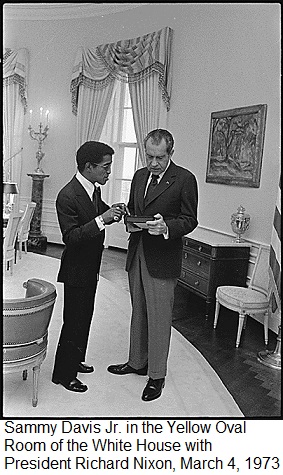
So Richard M. Nixon, the 37th President of the United States, is the one that ended the draft that started the Caribbean dominoes …

… is he to blame for the Caribbean’s atrocious societal abandonment rate?

No! Though he turned out to be a “bad actor” in his own rite, he is not directly responsible for Caribbean dysfunctions; “we” did that on our own. (Nixon was fulfilling a campaign promise to end the universally unpopular Vietnam War in which there were organized protests for all of the 1960′s and 1970′s to date; see Appendix C VIDEO). But the US did not work in the Caribbean’s best interest; they rarely do. This is the running theme of so many previously Go Lean blog/commentaries; they have detailed how Caribbean priorities are rarely American priorities. See this sample list here:

https://goleancaribbean.com/blog/?p=10336 A Lesson in History – Haiti’s Reasonable Doubt of US Intentions
https://goleancaribbean.com/blog/?p=9214 Time to Go: Spot-on for Protest
https://goleancaribbean.com/blog/?p=9216 Time to Go: No Respect for our Hair
https://goleancaribbean.com/blog/?p=9626 Time to Go: Marginalizing Our Vote
https://goleancaribbean.com/blog/?p=9646 Time to Go: American Vices; Don’t Follow
https://goleancaribbean.com/blog/?p=9648 Time to Go: Public Schools for Black-and-Brown
https://goleancaribbean.com/blog/?p=8724 American Dysfunction with Marcus Garvey
https://goleancaribbean.com/blog/?p=5733 Better than America? Yes, We Can!
https://goleancaribbean.com/blog/?p=4551 US Territories – Between a ‘rock and a hard place’
https://goleancaribbean.com/blog/?p=4360 Dreading the ‘Caribbean Basin Security Initiative’
https://goleancaribbean.com/blog/?p=789 America’s War on the Caribbean

So President Nixon ended the draft as a campaign promise; see Appendix B below. Had he, and subsequent presidents, left it in place, Caribbean people may have stayed home. Our lack of a National Sacrifice ethos would dictate this decision-making.
CU Blog - A Lesson in History - Military Draft Ends - Photo 5


CU Blog - A Lesson in History - Military Draft Ends - Photo 3

We cannot go back in time …

… but we can go forward and foster a National Sacrifice ethos of our own. Not by messaging a devotion for a “cause to die for”, but rather messaging a “cause to live for”. We already have the greatest address considering island terrain, fauna/flora, hospitality, festivities, food, rum and cigars. If only we can optimize our societal engines (economics, security and governance).

Yes, we can … foster the national pride and love of culture. It takes heavy-lifting so this is the charter for the Go Lean/CU roadmap. We had that ethos before …

… the same Black-and-Brown populations have had to endure change over the years, decades and centuries to get the progress they have now. The Go Lean book identified the ethos of “deferred gratification” as having a focus on the future. Accentuating this ethos is how we forge patriotism and love of homeland. As related in a previous blog, public servants are required to show a sacrificial spirit now. Many times these public servants (school teachers and administrators) are lowly paid; their service to their country is a great sacrifice. Yet respect for this group is so lacking now – see this previous blog that relates the under-funding of a pension plan in one Caribbean member-state.

This is among the building blocks for fostering National Sacrifice. This point was detailed in these 2 previous blogs:

https://goleancaribbean.com/blog/?p=2809 National Sacrifice – The Missing Ingredient
https://goleancaribbean.com/blog/?p=3929 Success Recipe: Add Bacon to Eggs

The Caribbean is arguably “the greatest address on the planet”. This beauty should be valued; we should be willing to die for our homeland, but the Go Lean roadmap is only asking that we live for it … and live in it. Everyone in the Caribbean is urged to lean-in to this roadmap for Caribbean empowerment. 🙂

Download the book Go Lean … Caribbean – now!

——————-

Appendix A – Conscription (or drafting)

This is the compulsory enlistment of people in some sort of National Service, most often military service.[2] Conscription dates back to antiquity and continues in some countries to the present day under various names. The modern system of near-universal national conscription for young men dates to the French Revolution in the 1790s, where it became the basis of a very large and powerful military. Most European nations later copied the system in peacetime, so that men at a certain age would serve 1–8 years on active duty and then transfer to the reserve force.

Conscription is controversial for a range of reasons, including conscientious objection to military engagements on religious or philosophical grounds; political objection, for example to service for a disliked government or unpopular war; and ideological objection, for example, to a perceived violation of individual rights. Those conscripted may evade service, sometimes by leaving the country.[4] Some selection systems accommodate these attitudes by providing alternative service outside combat-operations roles or even outside the military, such as civil service in Austria and Switzerland.

As of the early 21st century, many states no longer conscript soldiers, relying instead upon professional militaries with volunteers enlisted to meet the demand for troops. The ability to rely on such an arrangement, however, presupposes some degree of predictability with regard to both war-fighting requirements and the scope of hostilities. Many states that have abolished conscription therefore still reserve the power to resume it during wartime or times of crisis.[5]
Source: Retrieved January 15, 2015 from: http://en.wikipedia.org/wiki/Conscription

——————-

Appendix B – End of Conscription

During the 1968 presidential election, Richard Nixon campaigned on a promise to end the draft.[57] He had first become interested in the idea of an all-volunteer army during his time out of office, based upon a paper by Martin Anderson of Columbia University.[58] Nixon also saw ending the draft as an effective way to undermine the anti-Vietnam war movement, since he believed affluent youths would stop protesting the war once their own probability of having to fight in it was gone.[59] There was opposition to the all-volunteer notion from both the Department of Defense and Congress, so Nixon took no immediate action towards ending the draft early in his presidency.[58]

Instead, the Gates Commission was formed, headed by Thomas S. Gates, Jr., a former Secretary of Defense in the Eisenhower administration. Gates initially opposed the all-volunteer army idea, but changed his mind during the course of the 15-member commission’s work.[58] The Gates Commission issued its report in February 1970, describing how adequate military strength could be maintained without having conscription.[57][60] The existing draft law was expiring at the end of June 1971, but the Department of Defense and Nixon administration decided the draft needed to continue for at least some time.[60] In February 1971, the administration requested of Congress a two-year extension of the draft, to June 1973.[61][62]

Senatorial opponents of the war wanted to reduce this to a one-year extension, or eliminate the draft altogether, or tie the draft renewal to a timetable for troop withdrawal from Vietnam;[63] … After a prolonged battle in the Senate, in September 1971 the draft renewal bill was approved.[65] Meanwhile, military pay was increased as an incentive to attract volunteers, and television advertising for the U.S. Army began.[57] With the end of active U.S. ground participation in Vietnam, December 1972 saw the last men conscripted, who were born in 1952[66] and who reported for duty in June 1973.
Source: Wikipedia Online Encyclopedia – Retrieved 02/13/2017 from: https://en.wikipedia.org/wiki/Conscription_in_the_United_States#End_of_conscription

——————-

Appendix C VIDEOOpposition to the Vietnam War in the United Stateshttps://youtu.be/vVNUlOUlMeo

Published on Oct 21, 2015 – As opposition to the Vietnam War grew, protests erupted in communities and college campuses across the United States. In May of 1970, four students were killed by Ohio National Guard troops on the campus of Kent State University in Ohio during a protest. The deaths shocked the nation and brought attention to the unrest of the times. This segment from Iowa Public Television’s Iowans Remember Vietnam documentary includes archival footage and and first-person accounts from a news reporter, protester, and draft resistor from the era. Source: http://iptv.org




Share this post:
, , ,

ENCORE: Time to Watch the SuperBowl Commercials … again

Go Lean Commentary

It’s SuperBowl time again. This year the BIG game is being played on February 5, 2017 in Houston, Texas between the New England Patriots and the Atlanta Falcons. Below is an ENCORE of the blog-commentary from January 29, 2015 detailing the economic impact of SuperBowl commercials. The business model is still the same, so we can expect that the TV spots will try even harder to solicit and entertain us this year … again.

————

CU Blog - Watch the SuperBowl ... Commercials - Photo 2The publishers of the book Go Lean…Caribbean encourages you to watch the Big Game on Sunday (February 1, 2015), Super Bowl XLIX from Phoenix –area, Arizona, between the New England Patriots and the Seattle Seahawks. Pull for your favorite team and enjoy the half-time show (Katy Perry). It’s all free! It’s being paid for by the advertisers.

So as to complete the full economic cycle, be sure to watch the commercials; because this is Big Money; Big Stakes and a Big Deal. The 2014 version, Super Bowl XLVIII on FOX Broadcast Network was the most watched television program in US history with 111.5 million viewers.[15][16] The Super Bowl half-time show featuring Bruno Mars was the most watched ever with 115.3 million viewers.[15][16] Now, it’s not just TV, but “second- screen” (computers, tablets & mobile devices) as well; this is now tweet-along-with-us programming; notice the #BestBuds Twitter identifier in the following Ad:

VIDEO http://youtu.be/EIUSkKTUftU  – 2015 Budweiser Clydesdale Beer Run

Published on Jan 23, 2015 – It’s time for your Super Bowl beer run. Don’t disappoint a Clydesdale. Choose Budweiser for you and your #BestBuds on epic Super Bowl weekend!

For $4.5 million per 30 second ad, an advertiser had better get the “maximum bang for the buck”; but 30 seconds is still only 30 seconds. Enter the “second-screen”; now advertisers can stretch the attention of their audience by directing them to internet websites, Twitter followings and even YouTube videos and Facebook videos.

See these related stories, (sourced mostly from Variety.com – Hollywood & Entertainment Business Magazine; (retrieved 01-29-2015):

1. WATCH: Super Bowl 2015 Commercials

Audiences no longer need to wait until the Big Game to watch Super Bowl commercials, with an increasing number of marketers opting to release their spots days before kickoff. This year is no different, with Budweiser, Budweiser, Bud Light, Kia, Mercedes-Benz USA, T-Mobile, Victoria’s Secret, BMW, even Paramount with “Hot Tub Time Machine 2,” among those having already posted their ads online [on sites like YouTube].

The reason? The high cost to play the Super Bowl promo blitz is one. At around $4.5 million per 30 second ad, buying time during the match up between the Seattle Seahawks and New England Patriots is at record levels. NBC is airing the game February 1.

2. Super Bowl Ads: NBC Turns to Tumblr to Post Spots After They Air on TV

NBC Sports has launched a new Super Bowl page on Yahoo’s [social media site] Tumblr that the programmer will use to feature Super Bowl XLIX’s TV ads immediately after they air on NBC on Sunday, February 1.

The new NBC Sports Tumblr page, accessible via NBCSports.com/Ads, will be populated with original content ahead of Super Bowl Sunday created by the NBC Sports’ marketing media team, as well as from re-blogging NFL-related Tumblr posts. On game day, the page will convert into a hub for Super Bowl TV ads.

3. NBCU Will Use Super Bowl XLIX Free Live-Stream to Promote Pay-TV Online Services

NBCUniversal will launch an 11-hour free digital video stream — centered around live coverage of this year’s Super Bowl — in a bid to get users to log in to its “TV Everywhere” (TVE) services across its broadcast and cable portfolio the rest of the year.

The Peacock’s “Super Stream Sunday” event will include NBC’s presentation of the Super Bowl, as well as the halftime show toplined by Katy Perry. The live-stream will kick off at 12 p.m. ET on Feb. 1 with NBC’s pregame coverage and concludes with an airing of a new episode of primetime drama “The Blacklist” at approximately 10 p.m. ET.

Ordinarily, access to the NBC Sports Live Extra and NBC.com content requires users to log in using credentials from participating [Pay] TV providers. The free promo is aimed at driving usage of TVE, to ensure those subscribers keep paying for television service.

“We are leveraging the massive digital reach of the Super Bowl to help raise overall awareness of TV Everywhere by allowing consumers to explore our vast TVE offering with this special one-day-only access,” said Alison Moore, GM and Exec VP of TV Everywhere for NBCU.

NBC does not have NFL live-streaming rights on smartphone devices, which the league has granted exclusively to Verizon Wireless. As such, the “Super Stream Sunday” content will be available on tablets and desktop computers.

4. Facebook may be the big winner of this year’s Super Bowl

For  retailer Freshpet, a new ad campaign video was released to both YouTube and Facebook this past December. It quickly went viral. That wasn’t that surprising. The surprising part was the disparity between views on YouTube compared to Facebook.  On YouTube, the video has racked up around 7.5 million views so far. On Facebook, the figure is 20 million. “It was fairly eye-opening,” he says. “Things are evolving really quickly.”

With stats like that, this might be the first year in which views of Super Bowl ads on Facebook eclipse those of YouTube.

No wonder then that many advertisers in the big game are looking to go Facebook native.

Show-business has changed. Sports has changed. TV has changed…

… there is now time-shifted viewing (DVR) and on-demand platforms offering an alphabetical menu of shows.

These changes are where this commentary relates to the Caribbean. The changing TV landscape affects the Caribbean region as well, or at least it should. This book Go Lean… Caribbean, serves as a roadmap for the introduction and implementation of the technocratic Caribbean Union Trade Federation (CU). The roadmap has 3 prime directives:

  • Optimization of economic engines in order to grow the regional economy to $800 Billion and create 2.2 million new jobs.
  • Establishment of a security apparatus to protect the resultant economic engines and marshal against economic crimes.
  • Improve Caribbean governance to support these engines.

CU Blog - Watch the SuperBowl ... Commercials - Photo 1The roadmap recognizes and fosters more sports business in the region. The genius qualifiers – athletic talent – of many Caribbean men and women are already heightened. The goal now is foster the local eco-system in the homeland so that those with talent would not have to flee the region to garner the business returns on their athletic investments. This Go Lean economic empowerment roadmap strategizes to create a Single Media Market to leverage the value of broadcast rights for the entire region, utilizing all the advantages of cutting edge ICT offerings. The result: an audience of 42 million people across 30 member-states and 4 languages, facilitating television, cable, satellite and internet streaming wherever economically viable.

Early in the book, the benefits of sports and technology empowerment is pronounced in the Declaration of Interdependence (Page 13 & 14), with these opening statements:

xiii.      Whereas the preparation of our labor force can foster opportunities and dictate economic progress for current and future generations, the Federation must ensure that educational and job training opportunities are fully optimized for all residents of all member-states, with no partiality towards any gender or ethnic group. The Federation must recognize and facilitate excellence in many different fields of endeavor, including sciences, languages, arts, music and sports. This responsibility should be executed without incurring the risks of further human flight, as has been the past history.

xiv.      Whereas the region has endured a spectator status during the Industrial Revolution, we cannot stand on the sidelines of this new economy, the Information Revolution. Rather, the Federation must embrace all the tenets of Internet Communications Technology (ICT) to serve as an equalizing element in competition with the rest of the world. The Federation must bridge the digital divide and promote the community ethos that research/development is valuable and must be promoted and incentivized for adoption.

xv.      Whereas intellectual property can easily traverse national borders, the rights and privileges of intellectual property must be respected at home and abroad. The Federation must install protections to ensure that no abuse of these rights go with impunity, and to ensure that foreign authorities enforce the rights of the intellectual property registered in our region.

xxxi.      Whereas sports have been a source of great pride for the Caribbean region, the economic returns from these ventures have not been evenly distributed as in other societies. The Federation must therefore facilitate the eco-systems and vertical industries of sports as a business, recreation, national pastime and even sports tourism – modeling the Olympics.

The region has the eco-system of free broadcast television, and the infrastructure for internet streaming. So the issues being tracked for this year’s Super Bowl have bearing in the execution of this roadmap.

The Go Lean roadmap was developed with the community ethos in mind to forge change and build up the communities around the sports world, plus the execution of related strategies, tactics, implementations and advocacies to make the change permanent. The following is a sample of these specific details from the book:

Community Ethos – People Respond to Incentives in Predictable Ways Page 21
Community Ethos – Return on Investments Page 24
Community Ethos – Ways to Foster Genius Page 27
Community Ethos – Promote Intellectual Property Page 29
Community Ethos – Ways to Promote Happiness Page 36
Community Ethos – Ways to Impact the Greater Good Page 37
Strategic – Vision – Consolidating the Region in to a   Single Market Page 45
Strategic – Staffing – Sporting Events at Fairgrounds Page 55
Tactical – Fostering a Technocracy Page 64
Tactical – Separation of Powers – Sports & Culture Administration Page 81
Tactical – Separation of Powers – Fairgrounds Administration Page 83
Implementation – Steps to Implement Self-Governing Entities – Fairgrounds Page 105
Implementation – Ways to Deliver Page 109
Planning – 10 Big Ideas – #5 Four Languages in Unison / #8 Cyber Caribbean Page 127
Planning – Ways to Make the Caribbean Better Page 131
Advocacy – Ways to Grow the Economy Page 151
Advocacy – Ways to Create Jobs Page 152
Advocacy – Ways to Improve Education – Sports Academies to Foster Talent Page 159
Advocacy – Ways to Improve Local Government – Parks & Recreation Page 169
Advocacy – Ways to Impact Events Page 191
Advocacy – Ways to Promote Fairgrounds Page 192
Advocacy – Ways to Foster Technology – Intellectual Property Protections Page 197
Advocacy – Ways to Empower Women Page 226
Advocacy – Ways to Impact Youth Page 227
Advocacy – Ways to Improve Sports Page 229
Advocacy – Ways to Impact Urban Living – Sports Leagues Page 234

This commentary previously featured subjects related to developing the eco-systems of the sports business, as sampled here:

https://goleancaribbean.com/blog/?p=3999 Breaking New Ground in the Changing Show-business Eco-System
https://goleancaribbean.com/blog/?p=3641 ‘We Built This City on ‘ …Show-business
https://goleancaribbean.com/blog/?p=3414 Levi’s® Stadium: A Team Effort for the Big Business of Sports
https://goleancaribbean.com/blog/?p=3244 Sports Role Model – Broadcasting / Internet Streaming: espnW.
https://goleancaribbean.com/blog/?p=2222 Sports Role Model – Playing For Pride … And More
https://goleancaribbean.com/blog/?p=2171 Sports Role Model – Turn On the SEC Network
https://goleancaribbean.com/blog/?p=2152 Sports Role Model – US versus the World
https://goleancaribbean.com/blog/?p=1446 Caribbean Players in the 2014 World Cup
https://goleancaribbean.com/blog/?p=1341 Sports Role Model – College World Series Time
https://goleancaribbean.com/blog/?p=1148 Sports Bubble – Franchise values in basketball
https://goleancaribbean.com/blog/?p=1092 Aereo – Model for the Future of TV Blending with the Internet
https://goleancaribbean.com/blog/?p=1020 Sports Revolutionary: Advocate Jeffrey Webb
https://goleancaribbean.com/blog/?p=318 Collegiate Sports in the Caribbean
https://goleancaribbean.com/blog/?p=273 10 Things We Want from the US – # 10: Sports Professionalism
https://goleancaribbean.com/blog/?p=60 Could the Caribbean Host the Olympic Games?

The Go Lean book focuses primarily on economic issues, but it recognizes that sports and its attendant functions can build up a community, nation and region. But the quest to re-build, re-boot and re-tool the Caribbean will be more than just kids-play, it must model the Super Bowl and act like a Big Business.

The Go Lean roadmap describes the heavy-lifting activities for the many people, organizations and governments to accomplish this goal. But the goal is conceivable, believable and achievable. We can make the region a better place to live, work and play.

🙂

Download the book Go Lean…Caribbean now!

Share this post:
, , , , ,
[Top]

California Secession? W.T.H.!!

Go Lean Commentary

What the Hell!?!? Are they for real?!

CU Blog - California Secession - W.T.H. - Photo 1

This is the disgust. The rule of the majority is not absolute. That would be Fascist! Pure majority rule declares that “we can win any vote, so we can do whatever we want”.

The contrast is a Constitutional Democracy. This is where constitutional protections (rights, privileges, entitlements, etc.) are guaranteed, despite majority or minority status. This is the governmental attribute of the United States and many countries in the Caribbean. So what is a minority to do if they are persecuted by the majority in the US?

  • Lawsuits – for court orders to enforce rights
  • Lobbying Legislatures – to enact statures that reflect constitutional rights
  • Protests – to demand rights

… and …

  • Secession

Secession? What the Hell (WTH)!?

That is a different option.

So is this real? Unfortunately, yes. See the full news article here:

Title: Backers of California Seceding From the U.S. Get a Go-Ahead
Sub-title: Group, energized by Donald Trump’s election, can start collecting signatures, but a ‘Calexit’ would require amending the nation’s Constitution

CU Blog - California Secession - W.T.H. - Photo 2

Demonstrators protest against President Donald Trump’s crackdown on ‘sanctuary cities’ outside the City Hall in Los Angeles on Jan. 25. Photo: Ringo Chiu/Zuma Press

By Alejandro Lazo

Jan. 28, 2017 12:58 p.m. ET

CU Blog - California Secession - W.T.H. - Photo 3SAN FRANCISCO—California secession dreamers can begin collecting signatures to place a  nationhood proposal on the November 2018 ballot, after language for the measure was approved this week by the state’s attorney general.

The notion of a “Calexit”—a highly improbable idea that would require an amendment to the U.S. Constitution—gained popularity on social media following President Donald Trump’s unexpected victory in November, mostly as a humorous expression of opposition to the new president, whose policies are at odds with the liberal state.

The measure would strike a line from the state Constitution describing California as “an inseparable part of the United States of America” and set up an election, on March 5, 2019, asking the question, “Should California become a free, sovereign and independent country?”

Proponents of the measure, a group called “Yes California“, have until July 25 to gather 585,407 signatures for the measure. Even if they manage that feat, which is usually accomplished by hiring an army of signature-gatherers, the effort faces larger hurdles.

A number of states have had individual secession movements in recent years, including Texas and Hawaii, but the Supreme Court has ruled the U.S. Constitution doesn’t have a process for states to exit from the union.

But that history hasn’t dissuaded some Californians from toying with the notion. The “Yes California” effort began in 2014 and the idea was discussed more widely on social media under the hashtag #Calexit following November’s election. The state voted overwhelmingly for Democrat Hillary Clinton against Mr. Trump.

“This idea was born a couple of years ago—it hasn’t been a response to Donald Trump, though we have found new support as a result of his election,” said “Yes California” cofounder Louis Marinelli, in a telephone interview from Yekaterinburg, Russia, where he lives and works teaching English as a second language. “We are really excited about the idea that this is starting to catch on.”

Mr. Marinelli was once a social conservative and activist with the anti-gay marriage group National Organization for Marriage, but said he had a change of heart, turning liberal. Mr. Marinelli said he voted for Mr. Trump in November because he felt a Trump victory would galvanize voters in the state and advance the cause for California independence.

Supporters such as Mr. Marinelli talk up the state’s large economy and independent political culture. The state has already set itself up as an adversary to Mr. Trump. State leaders have vowed to defend California’s policies on immigration, climate change and health care, often citing California’s powerful economy and status as the nation’s most populous state.

California had a gross domestic product of $2.5 trillion in 2015, which would make it the world’s sixth-largest economy if it were its own country, according to figures released last year by the California Department of Finance’s Economic Research Unit. Studies have found that California receives less in federal funding than it sends to the federal government in tax revenue, mostly because of its sizable population of high-income earners.

Even if Californians were to vote for independence, the effort would face enormous obstacles. Congress would have to approve a constitutional amendment, which requires a two-thirds vote by each chamber of Congress, or a vote by two-thirds of the states to call a constitutional convention, and then ratification by three-quarters of the states.

An analysis of the measure by California’s independent legislative analyst also found that the fiscal impact of the measure could be large. “Assuming that California actually became an independent nation, the state and its local governments would experience major, but unknown, budgetary impacts,” according to the analysis.

A separate California group that began in 2015 is seeking to register enough voters under the “California National Party” so that it can begin running candidates in local races who are supportive of a withdrawal. That group hopes to build support for secession over time, through elected leaders, and it isn’t supporting the ballot measure.

But leaders of both secession movements say their efforts are serious, and not simply a political statement. “It is a lot likelier than people think,” said Jay Rooney, a spokesman for the National party. “It’s certainly as likely as Donald Trump becoming president.”

Write to Alejandro Lazo at alejandro.lazo@wsj.com
Source: Wall Street Journal January 28, 2017 from: http://www.wsj.com/amp/articles/backers-of-california-seceding-from-the-u-s-get-a-go-ahead-1485626281

See the related story here:

Trump’s Threat to Take Federal Funding Away From Sanctuary Cities May Have Started Fight He Can’t Win
Posted January 27, 2017, By CNN WIRE
Source: http://ktla.com/2017/01/27/trumps-threat-to-take-federal-funding-away-from-sanctuary-cities-may-have-started-fight-he-cant-win/

Secession as a dissent strategy has not been deployed successfully since 1861, when the dissension over slavery was so polarizing that there was no hope for peaceful reconciliation.

The most significant and notable events related to secession of states, and the initiation of the American Civil War occurred between November 6, 1860 and April 15, 1861. On November 6, 1860, Abraham Lincoln wins the 1860 presidential election to become the 16th President on a platform that includes the prohibition of slavery in new states and territories.[233] Lincoln won all of the electoral votes in all of the free states (except in New Jersey where he won 4 votes and Stephen A. Douglas won 3). By the time Lincoln was inaugurated on March 4, 1861, 7 southern states had already seceded and the President of the Confederate States of America was already inaugurated. – Sourced from Wikipedia.

Can secession be used again to protest the mandates of the majority – California -vs- the full United States. If this is earnestly pursued in California, it will definitely get the attention of the rest of the country and also the world. (If constituted a separate country, California would be the 6th largest economy in the world – by GDP, just ahead of France).

All in all, it is apparent that the 45th President, Donald Trump, has to preside over a divided nation. The 16th President did not want a division in his day, so he  bargained, cajoled and proposed compromises to his opposition. Trump may have to ‘take a page out of that book’ from Lincoln.

This is perhaps what California is hoping for with the secession talk-action! See the VIDEO here debating the viability of this CalExit move:

VIDEO – Can California Actually Secede From The U.S.?https://youtu.be/gBWbfudLwtE

Published on Nov 18, 2016 – With the election of Donald Trump, calls for California to secede have grown strong. So how realistic is a Calexit?

Learn More:
CNN: What history says about ‘Calexit’
http://www.cnn.com/2016/11/11/opinion…

Yes California: The 2019 #Calexit Independence Referendum
http://www.yescalifornia.org/

New York Times: California Today: Secessionist Groups Seize the Moment
http://www.nytimes.com/2016/11/10/us/…

This is an American drama … worth watching in the next days, weeks, months and years. But reforming or transforming California or America is out of scope for the movement behind the book Go Lean…Caribbean; our focus is the Caribbean only.

The Go Lean book serves as a roadmap for the introduction and implementation of the Caribbean Union Trade Federation (CU), a technocratic federal government to administer and optimize the economic, security, and governing engines of the 30 Caribbean member-states. In fact the prime directives of the roadmap is identified with the following 3 statements:

  • Optimization of the economic engines in order to grow the regional economy to $800 Billion & create 2.2 million new jobs.
  • Establishment of a security apparatus to protect the resultant economic engines.
  • Improve Caribbean governance to support these engines.

The book asserts that many of the Caribbean member-states are dysfunctional and as a result many citizens have fled their homelands – this is a secession of sorts. Consider Puerto Rico, the island’s population as of 2010 was 3,725,789, while the Diaspora population across the US totaled 4,623,716. That an entire nation in absentia.

In general, the Caribbean population is 42 million, with a large Diaspora (estimated up to 25 million); many who have pledged not to return (for permanent residency) until their homeland breaks from the legacy of ineffectual governing systems, failing economic engines and inadequate security provisions.

These failing member-states is the focus of the Go Lean book, but there is mention of one city, Freeport/Lucaya, the 2nd City in the Bahamas. This town is the epitome of a dysfunctional community . They can benefit from a parallel secession strategy as that of California in the foregoing. This was the recommendation to Freeport in a previous blog-commentary, to consider a public referendum to weigh different secession options from the national government in Nassau. Freeport needs more autonomy for any chance of success.

The Go Lean recommendation is the secession option of incorporating a municipal city – with an autonomous parliament – and then become a Self-Governing Entity (SGE) of the CU.

By petitioning for autonomy, California in the US and Freeport in the Bahamas gets more audience for its grievances.

This is how a minority group can get a bigger-better addressing of issues in a country, “leave”, threaten to leave or negotiate to avert leaving. Sometimes, leaving involves secession.

This was also the experience for Scotland in the United Kingdom, as related in a previous blog-commentary.

There are a lot of lessons – from the worldwide struggle – to reform and transform communities. The underlying spirit behind a secession movement should be to make life better for a minority group who do not have the votes to effect change through the election process. This is one way to “appoint new guards” for governance. This was specified in the opening Declaration of Interdependence at the outset of the Go Lean book (Page 12):

xi. Whereas all men are entitled to the benefits of good governance in a free society, “new guards” must be enacted to dissuade the emergence of incompetence, corruption, nepotism and cronyism at the peril of the people’s best interest. The Federation must guarantee the executions of a social contract between government and the governed.

xxxiii. Whereas lessons can be learned and applied from the study of the recent history of other societies, the Federation must formalize statutes and organizational dimensions to avoid the pitfalls of [failing] communities … On the other hand, the Federation must also implement the good examples learned from [successful] developments/communities …

Thank you for the lesson California … and Scotland.

The Go Lean roadmap posits that the challenges in the US may yield a lot more lessons for our Caribbean region. We will be watching. We will “observe and report” on their strengths and weaknesses. Then apply the models effectively here at home. This is the quest of the Go Lean roadmap: to make our Caribbean homeland a better place to live, work and play. 🙂

Share this post:
, , ,
[Top]

ENCORE: Obama is the 3rd ‘Reconstruction’; Trump is the resulting ‘Redemption’

Reconstruction and Redemption?!?!

This deliberative analysis was carefully laid-out in this previous blog-commentary from June 15, 2016, where it presented the following periods of Reconstruction and Redemption for race relations in the United States of America:

  • First Reconstruction: 1865 – 1877
    First Redemption: 1890 – 1968
  • Second Reconstruction: 1954 – 1972
    Second Redemption: 1964 – 1994 (i.e. Covenant with America)

Now, with the drawing close (January 20, 2017) of the federal administration of the nation’s first Black President, Barack Obama, it seems logical to conclude that the surprising election of Donald Trump with a mandate to usurp many of the Obama Executive initiatives may be a Third Redemption (2017 – ) to the Obama years (2009 – 2017) being the Third Reconstruction. This is supported by the fact that during the Obama years, 1,030 elected seats (State & Federal Legislators plus governors) were lost to his opposition party.

See the full details of this developed thesis on the “2nd Redemption and 2nd Reconstruction” in the ENCORE below…

… and consider the consistent point of so many blog-commentaries from the movement behind the book Go Lean…Caribbean, that America, with its lack of respect for minority rights, should not be the Land of Refuge for the Black-and-Black people of the Caribbean.

🙁

——————

Go Lean Commentary – TitleRespect for Minorities: Reconstruction then Redemption – A Lesson in History

This subject of “Respect for Minorities” is dominant in the news right now. This commentary is 3 of 3 in this series on lamentations for defective social values. The complete series is as follows:

  1. Respect for Minorities: ‘All For One’
  2. Respect for Minorities: Climate of Hate – ‘It Gets Worse Before It Gets Worse’
  3. Respect for Minorities: Reconstruction then Redemption – A Lesson in History

There are these familiar proverbs:

1. What has been will be again, what has been done will be done again; there is nothing new under the sun. – The Bible; Ecclesiastes 1: 9

2. The more things change, the more they remain the same.

CU Blog - Respect for Minorities - Reconstruction, Then Redemption - Photo 4There is a lot of history in the United States regarding “Respect for Minorities”; and the lessons from that history apply for the Caribbean. In this case, there is the history of the 2nd Reconstruction and 2nd Redemption that applies directly to Caribbean people living in the US. Life in the US for our Diaspora has been a familiar theme for the publishers of the book Go Lean…Caribbean; this theme has been exhausted in the book (Page 118 – Reasons to Repatriate to the Caribbean) and in countless blog/commentaries (see list below), within the quest to dissuade Caribbean people from emigrating to the US and to encourage many of the existing Diaspora to return to their homelands, to repatriate.

Why is this so important? The Go Lean movement (book and blogs) have been consistent: it is easier for the people of the Caribbean – a majority Black and Brown demographic – to prosper where planted in their homelands than to endure as alien residents in foreign countries. This commentary asserts the key ingredient for reforming and transforming societies with diverse demographics: “Respect for Minorities”.  This commentary seeks to learn this lesson based on  life (and history) in the US; though the principles here can easily apply to Canada and the many western European countries that receive our citizens. Consider this analogy:

Do you want to go a party – that you hear is a lot of fun – uninvited? What if you hear the host really wants you at the party, and then when you get there you discovered that they want you to serve and work and cater to the other preferred guests; you are just there as support staff?
Want to go home yet?

This is the experience for so many Caribbean Diaspora when they ‘come to America’. Just take a quick tour at so many tourist/travel facilities at America’s principal cities. So many of the “serving” staff are of Caribbean heritage. One would talk to taxi drivers, hotel maids, waiters and retail store clerks and you discover that these ones descend from the Caribbean.

You think: They came here for “this”? They are minorities among a majority that has little respect for them.

There is this above scenario, and then … there is “prosper where you’re planted”:

Just like a tree planted by the rivers of water
That bring forth fruit in due season
Source: The BiblePsalms Chapter 1 verse 3 – King James Bible

CU Blog - Respect for Minorities - Reconstruction, Then Redemption - Photo 3This was the strong point made by one of the key figures in African-American history, Booker T Washington. He asserted that the African-American community must work to prosper in its own hometown, that they must seek reconciliation with their White neighbors and find a way to co-exist. This was a good plan for Black America, the minorities; but White America, the majority population didn’t always cooperate. The effort to reconcile was attempted before, immediately following the Civil War, during the period of Reconstruction; 1865 – 1877. This period of time actually featured some real progress in liberating and promoting the previous enslaved minority population – an enfranchisement of all freedmen. But then, at the end of the formal Reconstruction period, there was redemption…

… redemption: a return to American original values, that is “White supremacy” and the repression of the African-American race.

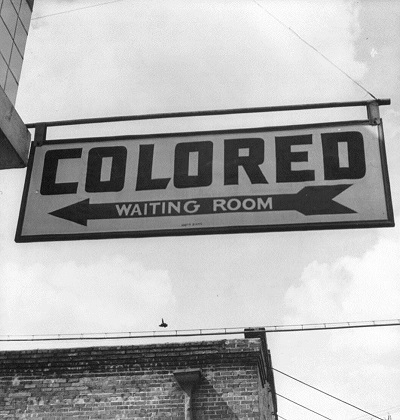
During this Redemption period: Jim Crow laws – segregation in public places – were implemented, as the follow details depict:

The end of Reconstruction … was followed by a period that White Southerners labeled Redemption, during which White-dominated state legislatures enacted Jim Crow laws and, beginning in 1890, disenfranchised most Blacks and many poor Whites through a combination of constitutional amendments and electoral laws. The White Democrat Southerners’ memory of Reconstruction played a major role in imposing the system of white supremacy and second-class citizenship for Blacks. – Sourced from Wikipedia.

CU Blog - Respect for Minorities - Reconstruction, Then Redemption - Photo 1

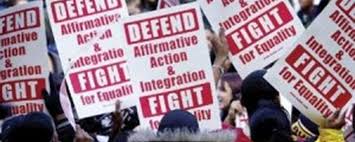
That was then, 130 years ago; how about now? The notion of an Encore/”Second Take” seems unthinkable; and yet this is the historicity of events and experiences after this 2nd Reconstruction – the Civil Rights movement of the 20th Century: think Rosa Parks, Martin Luther King, Civil Rights Act, Voting Rights Act, Affirmative Action, Minority Set-Asides, etc.. See the encyclopedic reference here:

Reference Title: Second Reconstruction
Second Reconstruction is a term that refers to the American Civil Rights Movement. In many respects, the mass movement against segregation and discrimination that erupted following World War II, shared many similarities with the period of Reconstruction which followed the American Civil War. The period of Second Reconstruction featured active participation on the part of African-Americans to regain their rights that they had lost during the period of Redemption and Jim Crow segregation in the latter part of the nineteenth century.

During Second Reconstruction, African-Americans once again began holding various political offices, and reasserting and reclaiming their civil and political rights as American citizens. Unlike Reconstruction, however, most African-Americans abandoned the Republican Party for the Democratic Party. A noteworthy feature of Second Reconstruction was the political realignment that occurred in 1965, which transformed the nature and composition of both the Republican and Democratic Party’s, eroding the Democratic Solid South.

In the same way, however, that Reconstruction was followed by Redemption, some have also claimed that period following Second Reconstruction could be termed a Second Redemption characterized by more conservatism on the part of the federal government, and several Supreme Court decisions that weakened the scope of civil rights reforms, especially in the Northern States

The years between 1954-1972 have often been called the Second Reconstruction, since it has noteworthy similarities with the First Black Reconstruction (1865-1877), which began with the abolition of slavery by the enactment of the Thirteenth Amendment. Both periods saw African Americans making tremendous gains in the fields of politics and civil rights. Three major Supreme Court decisions (the Brown decision on school desegregation (1954), desegregation of public transportation (1956); bussing to achieve school desegregation (April 1971), two legislative enactments (the Civil Rights Act, 1964, and the Voting Rights Act, 1965) and the March on Washington, D.C. (April 28, 1963), many demonstrations and riots, resulted in major alterations in race relations. There was “change within change,” and America would never be the same.

While the Second Reconstruction destroyed the legal foundations of the segregationist system, it also highlighted the further and more difficult challenge of translating legal victories into real change. Moreover, the 1968 assassination of Martin Luther King, Jr., removed a key symbol and source of unity in the nonviolent freedom struggle. According to one activist, King was “the one man of our race that this country’s older generations, the militants, and the revolutionaries and the masses of black people would still listen to.” As the limitations of the Civil Rights movement became more apparent, growing numbers of young African Americans advocated Black Power as an alternative to nonviolent direct-action strategies. Partly because revolutionary black organizations like the Black Panther party (formed in 1966) emphasized the mass mobilization of poor and working-class blacks, armed struggle, and opposition to the Vietnam War, they came under the combined assault of federal, state, and local authorities. Under the weight of official and unofficial white resistance, the Black Power movement fragmented and gradually dissipated by the early 1970s.

Late Twentieth Century Developments. As the civil rights and Black Power movements weakened, white resistance to the gains of the Second Reconstruction intensified. Opposition to affirmative-action policies in employment and education were closely related to the deindustrialization of the nation’s economy. The loss of jobs to mechanization and low-wage overseas factories affected all industrial workers, black and white, but the persistence of overt and covert discriminatory employment practices rooted in white kin and friendship networks made black workers and their communities especially vulnerable to economic down swings. African-American unemployment rates persisted at well over the white rate, especially among young black males. At the same time, the beneficiaries of existing affirmative-action programs–the middle class and better-educated members of the black working class–experienced a degree of upward mobility and moved into outlying urban and suburban neighborhoods. They left working-class and poor blacks, disproportionately single women with children, concentrated in the central cities, where violence, drug addiction, and class-stratified social spaces intensified, causing acute tensions in day-to-day intraracial as well as interracial relations.

Perhaps even more than in the industrial era, the post- industrial age challenged African Americans to develop new strategies for coping with social change and the persistence of inequality. Some of their emerging responses built upon earlier struggles. Institution-building, marches, participation in electoral politics, and migration in search of better opportunities all continued to express black activism and resistance to social injustice. Yet, much had changed in the nation and in African American life, and such time-tested strategies took on different meanings in the 1980s and 1990s. Rising numbers of southern- born blacks returned to the South during the 1970s. After declining for more than a century, the proportion of blacks living in the South increased by 1980. Other African Americans rallied behind the Rainbow Coalition and supported the Reverend Jesse Jackson’s bid for the Democratic party’s presidential nomination in 1984 and 1988. Still others endorsed Nation of Islam minister Louis Farrakhan’s Million Man March (MMM) in 1994. Calling the march a “day of atonement” for black men, leaders of the MMM encouraged black men to earn and reclaim a position of authority in their families and communities. Four years later, many black women responded to the MMM’s gender bias with their own Million Woman March, which emphasized the centrality of women in the ongoing black freedom struggle. Through these various actions and many more, African Americans continued to resist shifting forms of inequality and gave direction to their own lives as a new century began.

These same years saw the emergence of a new generation of African-American academics, musicians, performers, sports figures, and writers. Such diverse men and women as the scholars and public intellectuals Henry Louis Gates, Cornel West, and Stephen L. Carter; basketball superstar Michael Jordan and track-and-field athlete Jackie Joyner-Kersee; film actors Eddie Murphy and Denzel Washington; jazz musicians Joshua Redman, Herbie Hancock, and Wynton and Bradford Marsalis; television celebrity Oprah Winfrey; and an array of novelists and writers including Maya Angelou, Alice Walker, and Toni Morrison enriched American life and gave voice to the black experience.

By the 1990s, the nation’s more than 30 million African Americans, representing about 12 percent of the total population, had transformed themselves from a predominantly rural people into an overwhelmingly urban people; from a southern regional group to a national population living in every part of the nation; and, perhaps most importantly, from a group confined to southern agriculture, domestic service, and general labor to a work force with representation in every sector of the nation’s economy.
Source:  Wikipedia Online Encyclopedia – Retrieved May 26, 2016 from: https://en.wikipedia.org/wiki/Second_Reconstruction

——————

VIDEO 1Henry Louis Gates assesses the black community todayhttps://youtu.be/g8XcWodA47g

Uploaded on Oct 28, 2011 – www.twaintrip.com

——————

VIDEO 2 – Powell Comments On Gates Arrest, Admits Being Profiled “Many Times”https://youtu.be/sVelDpz5ZT0

Uploaded on Jul 28, 2009 – Gen. Colin Powell talks about the Henry Louis Gates arrest with Larry King. He said the story “went viral” when President Obama commented on the story. Also, Powell thinks that America “isn’t quite post-racial” at this time. “These problems still exist in post-racial America.” However, he suggested that Gates should not have argued with the policeman arresting him. “You don’t argue with a police officer,” he says.

Powell also called the arresting cop, Sergeant James Crowley, “an outstanding police officer.”

Also, at 5:10, Powell admits he’s been profiled “many times” [even] as the National Security Advisor.

CU Blog - Respect for Minorities - Reconstruction, Then Redemption - Photo 2This conclusion of a 2nd Redemption is not so far-fetched!

Just consider the current campaign of Republican Presidential candidate Donald Trump: “Make America Great Again“. It bears to mind the question: “just when was America great before”? Answer: After the first Redemption.

It should be hard to justify migrating to this American climate/eco-system, rather than the quest to prosper where planted in the homeland. The societal defects in the Caribbean – that “pushes” many to flee – must be that acute!

The book Go Lean…Caribbean declares that the “Caribbean is in crisis”; but asserts that this crisis is a terrible thing to waste. The book serves as a roadmap for the introduction and implementation of the technocratic Caribbean Union Trade Federation (CU); an initiative to bring change, empowerment, to the Caribbean region; to make the region a better place to live, work and play. This Go Lean roadmap has these 3 prime directives:

  • Optimization of the economic engines in order to grow the regional economy to $800 Billion & create 2.2 million new jobs.
  • Establishment of a security apparatus to protect the resultant economic engines.
  • Improve Caribbean governance to support these engines.

The book describes the CU as a technocratic administration with 144 different missions to elevate the Caribbean homeland. This underlying goal is stated early in the book with this pronouncement in the opening Declaration of Interdependence (Page 12):

xii. Whereas the legacy in recent times in individual states may be that of ineffectual governance with no redress to higher authority, the accedence of this Federation will ensure accountability and escalation of the human and civil rights of the people for good governance, justice assurances, due process and the rule of law…

CU Blog - Respect for Minorities - Reconstruction, Then Redemption - Photo 1Change has come to the Caribbean. The Go Lean book declares that for permanent change to take place, there must first be an adoption of new community ethos of the Greater Good; this term community ethos refers to the national spirit that drives the character and identity of its people. This Greater Good ethos, with genuine concern and respect for minority groups, is what was missing in previous American generations … and current Caribbean population. This point of “Respect for Minorities” is therefore our biggest lesson from this consideration in history – the foregoing encyclopedic reference.

The Go Lean roadmap was constructed with this and other community ethos in mind, plus the execution of strategies, tactics, implementation and advocacies to forge the identified permanent change in the region. The following is a sample of these specific details from the book:

Community Ethos – Deferred Gratification – Historic Motivation of Black America Page 21
Community Ethos – Economic Principles – People Choose Page 21
Community Ethos – Economic Principles – All Choices Involve Costs Page 21
Community Ethos – Economic Principles – People Respond to Incentives in Predictable Ways Page 21
Community Ethos – Economic Principles – Economic Systems Influence Individual Choices Page 21
Community Ethos – Economic Principles – The Consequences of Choices Lie in the Future Page 21
Community Ethos – Security Principles – Anti-Bullying and Mitigation Page 23
Community Ethos – Governing Principles – Minority Equalization Page 24
Community Ethos – Governing Principles – Lean Operations Page 24
Community Ethos – Ways to Impact the Future Page 26
Community Ethos – Ways to Foster Genius Page 27
Community Ethos – Ways to Help Entrepreneurship Page 28
Community Ethos – Ways to Promote Intellectual Property Page 29
Community Ethos – Ways to Impact Research & Development Page 30
Community Ethos – Ways to Manage Reconciliations Page 34
Community Ethos – Ways to Improve Sharing Page 35
Community Ethos – Ways to Promote Happiness Page 36
Community Ethos – Ways to Impact the Greater Good Page 37
Anecdote – LCD versus an Entrepreneurial Ethos Page 39
Strategy – Vision – Confederation of the 30 Caribbean Member-States into a Single Market Page 45
Strategy – Mission – Celebrate the Music, Sports, Art, People and Culture of the Caribbean Page 46
Tactical – Confederating a Permanent Union Page 63
Tactical – Fostering a Technocracy Page 64
Tactical –  Separation of Powers: Federal Administration versus Member-States Governance Page 71
Implementation – Ways to Pay for Change Page 101
Implementation – Foreign Policy Initiatives at Start-up Page 102
Implementation – Ways to Deliver Page 109
Implementation – Reasons to Repatriate to the Caribbean Page 118
Planning – 10 Big Ideas for the Caribbean Region Page 127
Planning – Ways to Make the Caribbean Better Page 131
Planning – Ways to Better Manage Image Page 133
Advocacy – Ways to Grow the Economy Page 151
Advocacy – Ways to Create Jobs Page 152
Advocacy – Ways to Improve Governance in the Caribbean Region Page 168
Advocacy – Ways to Better Manage the Social Contract Page 170
Advocacy – Ways to Mitigate Terrorism – Anti-Bullying Mitigations Page 181
Advocacy – Ways to Improve Communications Page 186
Advocacy – Ways Impact the Diaspora Page 217
Advocacy – Ways to Preserve Caribbean Heritage Page 218
Advocacy – Ways to Improve the Arts Page 230
Advocacy – Ways to Promote Music Page 231

Previous Go Lean blog/commentaries stressed issues relating to respect for minority rights and full societal inclusion. The following sample applies:

https://goleancaribbean.com/blog/?p=8099 Caribbean Image: ‘Less Than’?
https://goleancaribbean.com/blog/?p=7221 Street naming for Martin Luther King unveils the real America
https://goleancaribbean.com/blog/?p=7204 ‘The Covenant with Black America’ – Ten Years Later
https://goleancaribbean.com/blog/?p=6722 A Lesson in History – After the Civil War: Birthright Mandates
https://goleancaribbean.com/blog/?p=6434 ‘Good Hair’ and the Strong Black Woman
https://goleancaribbean.com/blog/?p=5784 Buggery in Jamaica – ‘Say It Ain’t So’!
https://goleancaribbean.com/blog/?p=5733 Better than America? Yes, We Can!
https://goleancaribbean.com/blog/?p=5527 American Defects: Racism – Is It Over?
https://goleancaribbean.com/blog/?p=5333 Racial Legacies: Cause and Effect
https://goleancaribbean.com/blog/?p=4935 A Lesson in History – the ‘Grand Old Party’
https://goleancaribbean.com/blog/?p=2222 Sports Role Model – Playing For Pride … And More
https://goleancaribbean.com/blog/?p=1918 Philadelphia Freedom – Some Restrictions Apply
https://goleancaribbean.com/blog/?p=1896 The Crisis in Black Homeownership
https://goleancaribbean.com/blog/?p=1596 Book Review: ‘Prosper Where You Are Planted’
https://goleancaribbean.com/blog/?p=1020 Lack of Respect in European Sports – A Lesson; A Role Model
https://goleancaribbean.com/blog/?p=789 America’s War on the Caribbean
https://goleancaribbean.com/blog/?p=546 Book Review: ‘The Divide in American Injustice’
https://goleancaribbean.com/blog/?p=341 Hypocritical US slams Caribbean human rights practices

The purpose of the Go Lean movement (book and blogs) is not to fix America; it is to fix the Caribbean. We want to learn important lessons from this advanced democracy who have endured a bitter history but has now emerged as the richest, strongest and most-prosperous nation in world history. The US is now a “frienemy” of the Caribbean. As we lose so many of our Caribbean citizens to life in the Diaspora in the US.

Some reports are that the Diaspora and their heirs amount to over 20 million American residents. America’s population and economy grows while our region is in crisis.

Our people leave our homelands due to “push and pull” reasons; “push” as in societal defects that cause many to seek refuge abroad, and “pull” in the presumption that American life is now optimized for the Black-and-Brown people. But a consideration of this commentary helps us to understand the “DNA” of American society, that while “Respect for Minorities” is improved, it is far from optimized.

The recommendation from this commentary and the Go Lean book in general is:

  • “stay home” in the Caribbean and work toward improving the Caribbean homeland.
  • And for those who have left, please consider repatriating home and bring us your “time, talent and treasuries”; help us reform and transform our society.

The US should not be considered the “panacea of Caribbean hopes and dreams”. With the adoption of the appropriate community ethos, strategies, tactics and implementations of the Go Lean roadmap, we can make all Caribbean member-states better places to live, work and play. 🙂

Download the book Go Lean … Caribbean – now!


Share this post:
, , ,
[Top]

ENCORE: Looking Back at the Obama Years

Just one more week and the Obama years will be over. (The new President – Donald J. Trump – will be inaugurated on January 20, 2017).

  • This is good …
  • This is bad …

Barack H. Obama has been transformational as the 44th President of the United States. He has truly impacted American society, but the Caribbean, not so much. This was the theme of the previous blog-commentary (from March 31, 2016) that detailed Obama’s bad consequences on the Caribbean. See here:

===================

Title: Obama – Bad For Caribbean Status Quo

Go Lean Commentary

CU Blog - Obama - Bad For Caribbean Status Quo - Photo 2Yes, Barack Obama was elected in 2008 as the first Black President of the United States, with his campaign of “Hope and Change”. While one would think that would be good for all Black (African-American) people in the US – and around the world – alas, that has not been the case. It is the conclusion of many commentators and analysts that Obama has not been able to do as much for his race as he would like, nor his race would like. (Obama himself has confessed this). Or that another White person may have been able to do more for the African American community.

This seems like a paradox!

Yet, it is what it is. The truth of the matter is that race still plays a huge decision-making factor in all things in America. This reality has curtailed Obama in any quest to do more for his people.

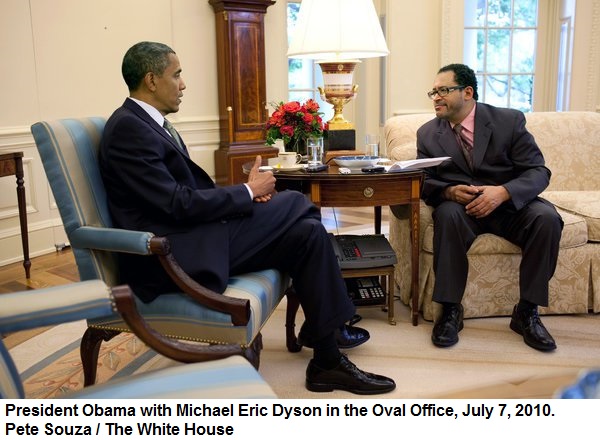
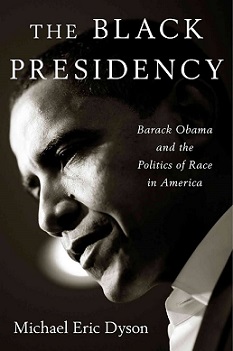
This is the assessment by noted commentator and analyst, Professor Michael Eric Dyson, in his new book “The Black Presidency: Barack Obama and the Politics of Race in America“. Professor Dyson points out some actual events during the Obama presidency and concludes that a White President would have been more successfully championing certain race-related causes. (Think: the Black Lives Matter movement was ignited during the Obama presidency).

VIDEO – Michael Eric Dyson on Democracy Now – https://youtu.be/F7Uo06_NfCw

Published on Feb 3, 2016 – http://democracynow.org – As the 2016 presidential race heats up and the nation marks Black History Month, we turn to look back on President Obama’s legacy as the nation’s first African-American president. Georgetown professor Michael Eric Dyson has just published a new book titled The Black Presidency: Barack Obama and the Politics of Race in America. From the protests in Ferguson to the church shooting in Charleston, South Carolina, to the controversy over the arrest of Harvard professor Henry Louis Gates, Michael Eric Dyson explores how President Obama has changed how he talks about race over the past seven years.

Democracy Now! is an independent global news hour that airs weekdays on nearly 1,400 TV and radio stations Monday through Friday. Watch the live-stream 8-9AM ET: http://democracynow.org.

The summary is that White Privilege still dominates in America. See the review of this book in Appendix A below.

This conclusion aligns with the assertions of the book Go Lean…Caribbean, and many aligned blog submissions, that America is not the ideal society for Caribbean citizens to seek for refuge, that rather Caribbean people can exert less effort to reform and transform their homelands than trying to prosper in this foreign land. The conclusion is the priority should be on a local/regional quest to prosper where planted in the Caribbean. This is a mission of the Go Lean…Caribbean movement, to lower the push and pull factors that lead many in the Caribbean to flee their tropical homes. Highlighting and enunciating the truths of American “Race Reality” aligns with that mission. We must lower the “pull” factors!

It is this commentary’s conclusion that Obama has been a good president for American self-interest. (The economy has recovered and rebounded from the “bad old days” of the 2008 financial crisis).

It is also this commentary’s conclusion that Obama has been a bad president for the Caribbean status-quo! His administration has brought ” change” to many facets of Caribbean life – good, bad and ugly, as follows:

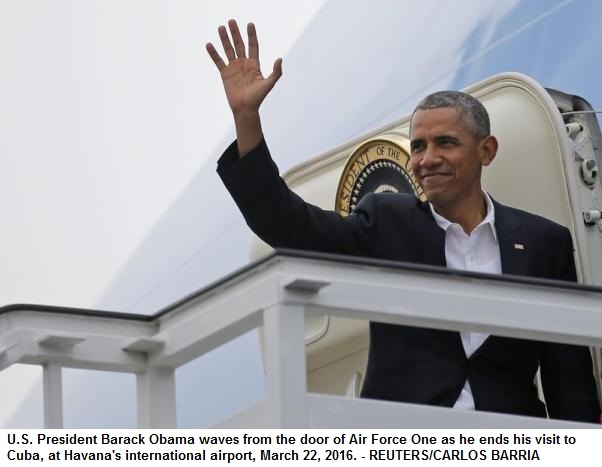
  • Consider the good: The American re-approachment to Cuba – under Obama – is presenting an end to the Cold War animosity of these regional neighbors – Cuba’s status quo is changing. A bad actor from this conflict, former Cuban President Fidel Castro, just penned his own commentary lamenting Obama’s salesmanship in his recent official visit to Cuba on March 15; see Appendix B.
  • Consider the bad:
    • (A) The US has doubled-down on globalization, forcing countries with little manufacturing or agricultural production to consume even more and produce even less; a lose-lose proposition.
    • (B) The primary industry in the Caribbean – tourism – has experienced change and decline as a direct result of heightened income inequality in the US, the region’s biggest source of touristic visitors; now more middle class can only afford cruise vacations as opposed to the more lucrative (for the region) stop-overs.
    • (C) The secondary industry in the Caribbean – Offshore Banking – has come under fire from the US-led Organization for Economic Cooperation & Development (OECD) to deter offshore banking growth; the industry, jobs and economic contributions have thusly receded.
  • Consider the ugly: Emigration of Caribbean citizens to the US has accelerated during this presidency, more so than any other time in American-Caribbean history. Published rates of societal abandonment among the college educated classes have reported an average of 70 percent in most member-states, with some countries (i.e. Guyana) tallying up to 89 percent.

The Caribbean status quo has changed. It is now time for a Caribbean version of “hope and change”.

This book Go Lean…Caribbean serves as a roadmap for the introduction and implementation of the Caribbean Union Trade Federation (CU). This roadmap presents “hope and change” for empowering the Caribbean region’s societal engines: economic, security and governance. In fact, the following are the prime directives of the roadmap:

  • Optimization of the economic engines in order to grow the regional economy to $800 Billion & create 2.2 million new jobs.
  • Establishment of a security apparatus to protect the resultant economic engines.
  • Improve Caribbean governance to support these engines.

A mission of the CU is to minimize the push and pull factors that lead so many Caribbean citizens to migrate to foreign lands – to America; and also to invite the Diaspora living there to repatriate home. The argument is that America is not the most welcoming for the Black and Brown populations of the Caribbean. Let’s work to prosper where planted at home.

Yes, there are societal defects in the Caribbean, as there are defects in America. But the defects in America are greater: institutional racism and Crony-Capitalism. Though it is heavy-lifting, it is easier to reform and transform the Caribbean.

The reference sources in the Appendices relate that the Obama effect is changing the status quo … in America … and the Caribbean.

This issue of reducing the societal abandonment rate and encouraging repatriation has been a consistent theme of Go Lean blogs entries; as sampled here:

https://goleancaribbean.com/blog/?p=7628 ‘A Change Is Gonna Come’
https://goleancaribbean.com/blog/?p=7204 ‘The Covenant with Black America’ – Ten Years Later
https://goleancaribbean.com/blog/?p=7151 The Caribbean is Looking for Heroes … ‘to Return’
https://goleancaribbean.com/blog/?p=7412 The Road to Restoring Cuba
https://goleancaribbean.com/blog/?p=7151 The Caribbean is Looking for Heroes … ‘to Return’
https://goleancaribbean.com/blog/?p=6016 Hotter than July – Still ‘Third World’ – The Need for Cooling …
https://goleancaribbean.com/blog/?p=5784 The Need for Human Rights/LGBT Reform in the Region
https://goleancaribbean.com/blog/?p=4613 ‘Luck of the Irish’ – Lessons from their Past, Present and Future
https://goleancaribbean.com/blog/?p=4447 Probe of Ferguson, Missouri exposes Institutional Racism

All in all, the roadmap commences with the recognition that all the Caribbean is in crisis, with its high abandonment rate. These acknowledgements are pronounced in the Declaration of Interdependence (Page 13). The statements are included as follows:

xix.   Whereas our legacy in recent times is one of societal abandonment, it is imperative that incentives and encouragement be put in place to first dissuade the human flight, and then entice and welcome the return of our Diaspora back to our shores. This repatriation should be effected with the appropriate guards so as not to imperil the lives and securities of the repatriated citizens or the communities they inhabit. The right of repatriation is to be extended to any natural born citizens despite any previous naturalization to foreign sovereignties.

xx.   Whereas the results of our decades of migration created a vibrant Diaspora in foreign lands, the Federation must organize interactions with this population into structured markets. Thus allowing foreign consumption of domestic products, services and media, which is a positive trade impact. These economic activities must not be exploited by others’ profiteering but rather harnessed by Federation resources for efficient repatriations.

The Go Lean roadmap lists the following details on the series of community ethos, strategies, tactics, implementations and advocacies necessary to effectuate the “hope and change” in the Caribbean region to mitigate the continued risk of emigration and the brain drain. The list is as follows:

Community Ethos – Economic Systems Influence Individual Choices Page 21
Community Ethos – Job Multiplier Page 22
Community Ethos – Lean Operations Page 24
Community Ethos – Return on Investments Page 24
Community Ethos – Ways to Impact the Future Page 26
Community Ethos – Ways to Help Entrepreneurship Page 28
Strategic – Vision – Integrated Region in a Single Market Page 45
Strategic – Vision – Agents of Change Page 57
Tactical – Fostering a Technocracy Page 64
Tactical – Growing to $800 Billion Regional Economy Page 67
Tactical – Separation of Powers Page 71
Implementation – Ways to Pay for Change Page 101
Implementation – Ways to Deliver Page 109
Implementation – Reasons to Repatriate Page 118
Planning – Big Ideas for the Caribbean Region Page 127
Planning – Lessons Learned from the US Constitution Page 145
Advocacy – Ways to Grow the Economy Page 151
Advocacy – Ways to Create Jobs Page 152
Advocacy – Ways to Improve Governance Page 168
Advocacy – Ways to Impact the Diaspora Page 217
Appendix – Source of 2.2 Million New Jobs Page 257

The  Go Lean roadmap allows for the Caribbean region to deliver success, to mitigate the risk of further push and pull. The world in general and the Caribbean in particular needs to know the truth of life in America for the Black and Brown populations. This heavy-lifting task is the mission of the CU technocracy.

Now is the time for all of the Caribbean, the people and institutions, to lean-in for the “hope and change” that is the Caribbean Union Trade Federation. Yes, we can … make this region a better place to live, work and play. 🙂

Download the free e-Book of Go Lean … Caribbean – now!

————–

Appendix A

Book Review: ‘The Black Presidency: Barack Obama and the Politics of Race in America’ By Michael Eric Dyson. 346 Pages. Houghton Mifflin Harcourt. $27. ISBN 978-0544387669
Review By: N. D. B. Connolly

CU Blog - Obama - Bad For Caribbean Status Quo - Photo 3What happens when the nation’s foremost voice on the race question is also its most confined and restrained? Michael Eric Dyson raises this question about President Obama in his latest book, “The Black Presidency: Barack Obama and the Politics of Race in America.” The book inspires one to raise similar questions about Dyson himself. For, while hardly restrained, Dyson appears noticeably boxed in by the limitations placed on celebrity race commentators in the Age of Obama.

Readers will recognize Dyson’s practiced flair for language and metaphor as he makes an important and layered argument about American political culture and the narrowness of presidential speech. The book argues that Americans live under a black presidency — not so much because the president is black, but because Obama’s presidency remains bound by the rules and rituals of black respectability and white supremacy. Even the leader of the free world, we learn in Dyson’s book, conforms principally to white expectations. (Dyson maintained in the November issue of The New Republic that Hillary Clinton may well do more for black people than Obama did.) But Obama’s presidency is “black” in a more hopeful way, too, providing Americans with an opportunity to better realize the nation’s democratic ideals and promises. “Obama’s achievement gestures toward what the state had not allowed at the highest level before his emergence,” Dyson writes. “Equality of opportunity, fairness in democracy and justice in society.”

A certain optimism ebbs and flows in “The Black Presidency,” but only occasionally does it refer to white Americans’ beliefs about race. Far more often, Dyson hangs hope on Obama’s impromptu shows of racial solidarity. One such moment was the president’s remarks after the 2009 arrest of the Harvard professor Henry Louis Gates Jr. (who was arrested trying to get into his own home). Another was Obama’s public identification with Trayvon Martin. Both acts may have been politically risky, but they also greatly heartened African- Americans. Hope builds, and by book’s end, readers find a chapter-long celebration of the president’s soaring invocations of “Amazing Grace” during last year’s memorial service for the slain parishioners of EmanuelA.M.E.Church. For Dyson, the eulogy at Emanuel seems to serve as a sign of grace that black America may still yet enjoy from the Obama White House.

Its cresting invocations of hope aside, the book ably maintains a sharp critical edge. Dyson uncovers a troubling consistency to the president’s race speech and shows that in spite of Obama’s reliance on black political networks and black votes during his meteoric rise, the president chose to follow a governing and rhetorical template largely hewed by his white predecessors. As both candidate and president, Obama’s speeches have tended to allay white guilt. They have scolded ­African-American masses for cultural pathology and implied that blacks were to blame for lingering white antipathy. Obama’s speeches have also often consigned the worst forms of racism and anti-black violence to the past or to the fringes of American political culture. One finds passive-voice constructions everywhere in Obama’s race talk, as black folk are found suffering under pressures and at the hands of parties that go largely unnamed. “Obama is forced to exaggerate black responsibility,” Dyson advances, “because he must always underplay white responsibility.”

Critically, Dyson contends that the president’s tepid anti-racism comes from political pragmatism rather than a set of deeper ideological concerns. “Obama is anti-ideological,” Dyson maintains, and that is “the very reason he was electable.”

That characterization, however, overlooks how liberal pragmatism functions as ideology. What’s more, it ignores the marginalization and violence that black and brown people often suffer — at home and abroad — whenever moderates resolve to “get things done.” If the Obama era proved anything about liberalism, it’s that there remains little room for an explicit policy approach to racial justice — even, or perhaps especially, under a black president. As Obama himself explains to Dyson: “I have to appropriate dollars for any program which has to go through ways and means committees, or appropriations committees, that are not dominated by folks who read Cornel West or listen to Michael Eric Dyson.”

Upon a careful reading of Dyson’s book, loss seems always to arrive on the heels of hope. As we might expect, the author explores Obama’s estrangement from the Rev. Jeremiah Wright in 2008. He also attends to his own very public and more recent split from Cornel West. But even beyond these signal episodes, “The Black Presidency” is suffused with a bittersweet tone about relationships strained. President Obama seems to leave a host of people and political commitments at the White House door as he conforms to the racial demands of a historically white office. Even Dyson seems unaware of all the ways in which “The Black Presidency,” as a book, both explicates and illustrates how the Obama administration leaves black folk behind.

All but the last two of the book’s eight chapters begin with the author placing himself in close and often luxurious proximity to Obama. The repetition has the literary effect of a Facebook feed. Here is Michael at Oprah’s sumptuous California mansion during a 2007 fund-raiser, sharing a joke with Barack and Chris Rock. Here is Michael on the private plane and in the S.U.V., giving the candidate tips on how to use a “ ‘blacker’ rhetorical style” during his debate performances against a surging Hillary Clinton. Here he is in the V.I.P. section of the 50th-anniversary ceremony for the March on Washington and, yet again, at the White House Correspondents’ Association dinner. Through these and similar moments, Dyson projects his status and, in ways less clear, his authority. Dyson knows Obama, the reader is assured, because he has kept his company. He has swapped playful taunts and bro-hugs with the president; he has been intimate, one might say, with history.

Moments like these have a secondary effect. They illuminate a tension cutting through and profoundly limiting “The Black Presidency” as a work of political commentary. Regardless of who Michael Eric Dyson may have been to Obama the candidate, Dyson now has barely any access to Obama the president. Time and circumstance have rendered Dyson, the man and the thinker, increasingly irrelevant to Obama’s presidency. He can be at the party, but not at the table.

Perhaps worse in relation to the book’s stated aim to be the first full measure of Obama and America’s race problem, Dy­son, the author, has none but only the smallest role to play in assessing and narrating Obama’s legacy. When Bill Clinton decided to chronicle his own historic turn in the White House, he called on Taylor Branch and recorded with the historian some 150 hours of interviews over 79 separate sessions. Dyson, in 2015, gets far shabbier treatment. Chapter 5, “The Scold of Black Folk,” opens: “I was waiting outside the Oval Office to speak to President Obama. I had a tough time getting on his schedule.” In response to Dyson’s request for a presidential audience, the White House offered the author 10 whole minutes. By his own telling, Dyson “politely declined” and pressed Obama’s confidante, Valerie Jarrett, to remember his long history with and support of the president. “I eventually negotiated a 20-minute interview that turned into half an hour.” It appears to be the only interview Dyson conducted for the book.

In the end, “The Black Presidency” possesses a loaves-and-fishes quality. Drawing mostly on the news cycle, close readings of carefully crafted speeches and a handful of glittering encounters, Dyson has managed to do a lot with a little. The book might well be considered an interpretive miracle, one performed in fealty and hope for a future show of presidential grace, either from this president or, should she get elected, the next one.

Source: http://www.nytimes.com/2016/02/07/books/review/the-black-presidency-barack-obama-and-the-politics-of-race-in-america-by-michael-eric-dyson.html. Posted February 2, 2016; retrieved March 29, 2016.

————–

Appendix B

Title: Cuba’s Fidel Castro knocks sweet-talking Obama after ‘honey-coated’ visit
By: Marc Frank

U.S. President Barack Obama waves from the door of Air Force One in HavanaHavana – Retired leader Fidel Castro accused U.S. President Barack Obama of sweet-talking the Cuban people during his visit to the island last week and ignoring the accomplishments of Communist rule, in an opinion piece carried by all state-run media on Monday.

Obama’s visit was aimed at consolidating a detente between the once intractable Cold War enemies and the U.S. president said in a speech to the Cuban people that it was time for both nations to put the past behind them and face the future “as friends and as neighbors and as family, together.”

“One assumes that every one of us ran the risk of a heart attack listening to these words,” Castro said in his column, dismissing Obama’s comments as “honey-coated” and reminding Cubans of the many U.S. efforts to overthrow and weaken the Communist government.

Castro, 89, laced his opinion piece with nationalist sentiment and, bristling at Obama’s offer to help Cuba, said the country was able to produce the food and material riches it needs with the efforts of its people.

“We don’t need the empire to give us anything,” he wrote.

Asked about Fidel Castro’s criticisms on Monday, White House spokesman Josh Earnest said the Obama administration was pleased with the reception the president received from the Cuban people and the conversations he had with Cuban officials.

“The fact that the former president felt compelled to respond so forcefully to the president’s visit, I think is an indication of the significant impact of President Obama’s visit to Cuba,” Earnest said.

After the visit, major obstacles remain to full normalization of ties between Cuba and the United States, with no major concessions offered by Cuba on rights and economic freedom.

“The president made clear time and time again both in private meetings with President Castro, but also in public when he delivered a speech to the Cuban people, that the U.S. commitment to human rights is rock solid and that’s not going to change,” Earnest said.

Fidel Castro took power in a 1959 revolution and led the country until 2006, when he fell ill and passed power to his brother Raul Castro. He now lives in relative seclusion but is occasionally heard from in opinion pieces or seen on television and in photos meeting with visiting dignitaries.

The iconic figure’s influence has waned in his retirement and the introduction of market-style reforms carried out by Raul Castro, but Fidel Castro still has a moral authority among many residents, especially older generations.

Obama did not meet with Fidel Castro during his three-day visit, nor mention him in any of his public appearances. It was the first visit of a sitting U.S. president for 88 years.

Fidel Castro blasted Obama for not referring in his speech to the extermination of native peoples in both the United States and Cuba, not recognizing Cuba’s gains in health and education, and not coming clean on what he might know about how South Africa obtained nuclear weapons before apartheid ended, presumably with the aid of the U.S. government.

“My modest suggestion is that he reflects (on the U.S. role in South Africa and Cuba’s in Angola) and not now try to elaborate theories about Cuban politics,” Castro said.

Castro also took aim at the tourism industry in Cuba, which has grown further since Obama’s rapprochement with Raul Castro in December 2014. He said it was dominated by large foreign corporations which took for granted billion-dollar profits.

(Reporting by Marc Frank; Additional reporting by Doina Chiacu in Washington; Editing by Bill Rigby)

Share this post:
, , , ,
[Top]

ENCORE: The Movie ‘Hidden Figures’ – Art Imitating Life

Go Lean Commentary

The movie is now released … to ‘select’ theaters in the USA; (the wide release date is January 6, 2017).

Go see this movie! It is a work of art that depicts the life that 3 Black American women lived while impacting the American community – in the arena of rocket science and space exploration:

  • Katherine Johnson
  • Dorothy Vaughn
  • Mary Jackson

They fully defined “role models”, as depicted in this original blog-commentary on August 16, 2016:

=================

** August 26, 2016 **

This day is the 98th birthday for “Katherine Johnson”.

CU Blog - 'Hidden Figures' - Art Imitating Life - Photo 2

Who is Katherine Johnson? And why is she important in the discussion of Caribbean empowerment?

Katherine Johnson (1918 – ) was a rocket scientist, physicist, and mathematician before there were rocket scientists. Why is this important? It is as 19th century Essayist Oscar Wilde dubbed it:

“Life imitates Art far more than Art imitates Life”.

The focus here is on the “Art imitating Life”; no, even further than “art” is the “science”. The “art” in this case is the movie “Hidden Figures”. The “science” is the mathematics associated with rockets and trajectory: Rocket Science.

The movie HIDDEN FIGURES is the incredible untold story of Katherine Johnson (Taraji P. Henson), Dorothy Vaughn (Octavia Spencer) and Mary Jackson (Janelle Monáe)—brilliant African-American women working at NASA, who served as the brains behind one of the greatest operations in history: the launch of astronaut John Glenn into orbit, a stunning achievement that restored the nation’s confidence, turned around the Space Race, and galvanized the world. The visionary trio crossed all gender and race lines to inspire generations to dream big. – 20 Century Fox Studio

This is the power associated with film. It’s an art that can promote a science. This is in harmony with a previous blog/commentary – by the Go Lean … Caribbean movement – regarding Caribbean Diaspora member and Hollywood great, Sidney Poitier, it was declared that …

… “Movies are an amazing business model. People give money to spend a couple of hours watching someone else’s creation and then leave the theater with nothing to show for the investment; except perhaps a different perspective”.

The untold story of Katherine Johnson is not so “unfamiliar” to the African-American experience. There has been millions of similar tales, where those with genius-qualifying abilities had to languish in a world where they were considered “less than“. (See the Appendix VIDEO below).

Oh, how wrong that world was!

Today, we tell the tale of Katherine Johnson. We celebrate her for her accomplishments and inspiration she provides to future generations of scientists, mathematicians, African-descendents and women. She is the definition of “Shero”; she is all of that! See how this is portrayed in the new film here, opening in January 2017:

VIDEO: Movie Trailer ‘Hidden Figures’ – https://youtu.be/RK8xHq6dfAo

Published on August 14, 2016 – Watch the new trailer for [the movie] #HiddenFigures, based on the incredible untold true story. Starring Taraji P. Henson, Octavia Spencer & Janelle Monáe. In theaters this January [2017].

Why is this discussion of Katherine Johnson important in the discussion of Caribbean empowerment?

R_1980-L-00022 001This is a story of one person making a difference! Her accomplishments required a resolve, determination and conviction to not buckle under the acute pressure to maintain the status quo. Her efforts and life’s pursuits helped to forge change in her homeland for her and all others that followed. The book Go Lean … Caribbean identified subjects like this as advocates; relating that their successful completion of their advocacy tend to benefit more than just them but the whole world (Page 122).

The story of Katherine Johnson is now being told as a movie. Movies can be effective for the goal of displaying a better view of people … and the community failings they have had to overcome. Previous Go Lean commentaries presented details of other movies that had the potential of reflecting and effecting change in society. See this sample here:

‘Concussion’ – The Movie; The Cause
Lesson from ‘Star Wars’ – ‘Heroes can return’
The Movie ‘Good Hair’ and the Strong Black Woman
Movie ‘Tomorrowland’ – Feed the Right Wolf
Documentary Movie: ‘Merchants of Doubt’ – Scary Proposition
Movie Lesson: ‘Only at the precipice, do they change’

The heroism of Katherine Johnson is against the backdrop of America’s segregation past. There is no way to justify America’s days of racial separation and oppression. Good riddance!

Surely, today our communities reflect a more inclusive environment. Surely?

Unfortunately, no!

America, still, and the Caribbean more, is plagued with a “climate of hate” in too many places. Far too often, in our own backyards, a class of people is oppressed, repressed and suppressed just because …

… the reasons do not even matter. It is just plain wrong and unwise and unproductive for our mission to retain our local geniuses.

Our community needs all hands on deck, with everybody contributing: all races, all genders, all ages, all classes of people. This point has also been conveyed in previous Go Lean commentaries; consider this sample here:

Respect for Minorities: Climate of Hate
Gender Equality Referendum Outcome: Impact on the ‘Brain Drain’
The Plea for Women in Politics
A Lesson in Civil War History – Compromising Human Rights
Socio-Economic Change: The Demographic Theory of Elderly Suicide
LGBT & Buggery in Jamaica – ‘Say It Ain’t So’!
The ‘Luck of the Irish’ – Past, Present and Future Lessons
10 Things We Don’t Want from the US: #7 Discrimination of Immigrants

The book Go Lean…Caribbean (and subsequent blog/commentaries) relates that we must do better than the American history. We have a problem now with societal abandonment for “push and pull” reasons. In order to encourage people to stay home and impact their homeland, we need to protect and promote those with genius qualifiers. There is a lot at stake.

This Go Lean book serves as a roadmap for the introduction and implementation of the technocratic Caribbean Union Trade Federation (CU). Fostering genius is very important to this movement. The book states (Page 27):

The CU assumes a mission of working with educational and youth agencies to identify and foster “genius” in our society, as early as possible. Geniuses are different from everyone else, although they maybe fairly easy to spot, defining exactly what makes one person a genius is a little trickier. Some researchers & theorists argue that the concept of genius is too limiting and doesn’t really give a full view of intelligence; they feel that intelligence is a combination of many factors; thereby concluding that genius can be found in many different  abilities and endeavors. The CU posits that any one person can make a difference and positively impact their society; so the community ethos of investment in this specially identified group, geniuses, would always be a worthwhile endeavor.

Fostering STEM (Science, Technology, Engineering and Mathematics) careers is integral to the Go Lean/CU roadmap. The goal is to identify students early with high aptitude in STEM areas, then develop them through academies and science fairs. The CU will even fund free tuition for these ones at local colleges/universities or forgive-able loans for those wishing to matriculate abroad. This is a matter of community ethos, defined as in the book as the fundamental spirit of a culture that drives the beliefs, customs and practices of a society. The book refers to this spirit motivating our Focus on the Future. This spirit would be embedded in every aspect of the Go Lean/CU roadmap. See here how the prime directives reflects this:

  • Optimization the economic engines of the Caribbean to elevate the regional economy to grow to $800 Billion and create 2.2 million new (direct & indirect) jobs, including STEM-related industries with a projection of 40,000 Research & Development direct jobs and 20,000 Technology direct jobs.
  • Establishment of a security apparatus to protect the people and economic engines.
  • Improvement of Caribbean governance to support these economic and security engines.

The Go Lean roadmap provides turn-by-turn directions on how to reform Caribbean STEM education initiatives – also the economic and governance aspects as a whole. The roadmap opens with a Declaration of Interdependence, pronouncing the approach of regional integration (Page 13 & 14) as a viable solution to elevate the region’s educational opportunities:

xix.  Whereas our legacy in recent times is one of societal abandonment, it is imperative that incentives and encouragement be put in place to first dissuade the human flight, and then entice and welcome the return of our Diaspora back to our shores …

xxi.  Whereas the preparation of our labor force can foster opportunities and dictate economic progress for current and future generations, the Federation must ensure that educational and job training opportunities are fully optimized for all residents of all member-states, with no partiality towards any gender or ethnic group. The Federation must recognize and facilitate excellence in many different fields of endeavor, including sciences, languages, arts, music and sports. This responsibility should be executed without incurring the risks of further human flight, as has been the past history.

xxvii. Whereas the region has endured a spectator status during the Industrial Revolution, we cannot stand on the sidelines of this new economy, the Information Revolution. Rather, the Federation must embrace all the tenets of Internet Communications Technology (ICT) to serve as an equalizing element in competition with the rest of the world. The Federation must bridge the digital divide and promote the community ethos that research/development is valuable and must be promoted and incentivized for adoption.

The Go Lean book envisions the CU – a confederation of the 30 member-states of the Caribbean chartered to do the heavy-lifting of empowering and elevating the Caribbean economy. The mission is to mitigate further brain drain of Caribbean citizens with STEM abilities.  The book details the economic principles and community ethos to adopt, plus the executions of strategies, tactics, implementations and advocacies to optimize STEM initiatives in the Caribbean region:

Community Ethos – Deferred Gratification Page 21
Community Ethos – Economic Systems Influence Choices & Incentives Page 21
Community Ethos – Job Multiplier – Indirect Jobs from Direct Ones Page 22
Community Ethos – Anti-Bullying and Mitigation Page 23
Community Ethos – Minority Equalization Page 24
Community Ethos – Return on Investments Page 24
Community Ethos – Ways to Impact the Future – Foster a Future Focus Page 27
Community Ethos – Ways to Foster Genius – For STEM & other fields Page 26
Community Ethos – Ways to Help Entrepreneurship Page 28
Community Ethos – Promote Intellectual Property Page 29
Community Ethos – Ways to Impact Research & Development Page 30
Community Ethos – Ways to Close the Digital Divide Page 31
Community Ethos – Ways to Impact the Greater Good Page 37
Anecdote – Valedictorian and Caribbean Diaspora Member Page 38
Strategy – Customers – Citizens, Business Community & Diaspora Page 47
Strategy – Meeting Region’s Needs Today, Preparing For Future Page 58
Tactical – Separation of Powers – Patent, Standards, & Copyrights Page 78
Tactical – Separation of Powers – Education Department Page 85
Implementation – Assemble all Super-Regional Governing Entities Page 96
Implementation – Trends in Implementing Data Centers Page 106
Implementation – Ways to Deliver Page 109
Implementation – Better Manage Debt – Better Student Loans Dynamics Page 114
Planning – Ways to Improve Trade Page 128
Planning – Ways to Make the Caribbean Better Page 131
Advocacy – Ways to Grow the Economy Page 151
Advocacy – Ways to Create Jobs Page 152
Advocacy – Ways to Improve Education Page 159
Advocacy – Ways to Impact Student Loans – Forgivable Provisions Page 160
Advocacy – Ways to Foster Empowering Immigration – STEM Professionals Page 174
Advocacy – Ways to Foster Technology Page 197
Advocacy – Ways to Impact the Diaspora Page 217

Katherine Johnson Receives Presidential Medal of FreedomThe Go Lean movement celebrates Katherine Johnson today as a role model in STEM. (Though she is an African-American with no Caribbean connection). She is recognized worldwide – just wait until the movie is released – as a woman of accomplishment – in 2015 she was awarded the Presidential Medal of Freedom:

“So if you think your job is pressure-packed, hers meant that forgetting to carry the one might send somebody floating off into the solar system.” – US President Barack Obama said in honoring Katherine Johnson on November 24, 2015.

This day – August 26 – is also Women’s Equality Day – commemorating women being granted the right to vote in the US on August 26, 1920.

So we celebrate all women that strive to achieve; there are those that do a lot; there are also women that choose to do little, or nothing. We celebrate them too. That is their equal right!

Yes, we can all do better than the past experiences from our communities. The Caribbean can be better!

Now is the time for all of the Caribbean, women and men, to lean-in for the empowerments described in the book Go Lean … Caribbean. This roadmap will result in more positive socio-economic changes throughout the region; it will make the Caribbean a better place to live, work and play. 🙂

Download the book Go Lean … Caribbean – now!

——-

Appendix VIDEO: Celebrating Katherine Johnson’s Great Mind – Human Computerhttps://youtu.be/Bdr9QBRcPEk

Published on Sep 1, 2015 – In the early days of spaceflight, if NASA needed to plot a rocket’s path or confirm a computer’s calculations, they knew who to ask: Katherine Johnson.

Share this post:
, , , ,
[Top]

Caribbean Roots: Esther Rolle of ‘Good Times’

Go Lean Commentary

The movement behind the book Go Lean … Caribbean recognizes the significance of the TV Show “Good Times”, 1974 – 1979.

cu-blog-esther-rolle-caribbean-roots-photo-3The show – the first episode titled Too Old Blues aired on February 8, 1974 – was a situation comedy about the African-American Evans Family; led by father James, mother Florida or “Flo”, sons J.J. and Michael and daughter Thelma. There were other supporting characters as well, like Willona Woods and her adopted daughter Penny. (Penny was the first acting role for music superstar Janet Jackson, the youngest sister of Michael Jackson of the Jackson 5 fame).

The show was produced by legendary TV producer Norman Lear and recorded on a “sound stage” in Hollywood, California. (There was no “live studio audience”).

What made “Good Times” notable was the ensemble cast of African American actors. But what kept viewers tuning in was the recognition of themselves in the faces on the screen. During the tough economic struggles of the seventies, many families struggled like the Evans family to put food on the table and a roof over their heads. While the subject matter was often bleak, the family had a way of making viewers forget their own troubles for at least 30 minutes.

Despite the canned laugh tracks, we fell in love with the characters. More importantly, we fell in love with the actors and actresses who brought the show to life. Forty years after the show ended, we are just as interested in the actors as we were when the show was on the air. Chances are good that another 40 years can pass and the show will still hold interest. The actors who brought the show to life may leave this world but their characters will live in our memories and on our television screens for decades to come. It is rare for a show to last longer than a few seasons; [this show lasted 6 seasons]. It is rarer still for a show to generate new fans decades after it went off the air. For whatever reason, “Good Times” accomplished that rare feat, and the actors who starred in the show will always have us wondering -where are they now? – Depost.com Ad-supported Website

The focus of this show for the Go Lean movement is the composition of its cast, and the Caribbean roots of one of the main characters, Esther Rolle. The full cast is as follows:

BernNadette Stanis  Thelma Evans / … (133 episodes, 1974-1979)
Jimmie Walker  James ‘J.J.’ Evans, Jr. (133 episodes, 1974-1979)
Ralph Carter  Michael Evans (132 episodes, 1974-1979)
Ja’net DuBois  Willona Woods (124 episodes, 1974-1979)
Esther Rolle  Florida Evans (108 episodes, 1974-1979)
John Amos  James Evans, Sr. (59 episodes, 1974-1976)
Johnny Brown  Nathan Bookman (57 episodes, 1975-1979)

The  Go Lean book identifies that film, television, theater and the arts can greatly impact society; in addition to the entertainment value, there is also image and impression. People can override many false precepts with excellent deliveries and contributions of great role models. This show, “Good Times”, was frequently recognized for a positive Black image.

So this great American TV show also had a great Caribbean contributor, Bahamas-bred Esther Rolle. Wow!

Esther Rolle became the first woman to receive the NAACP Chairman’s Civil Rights Leadership Award.

See the encyclopedic details here:

Title: Esther Rolle as Florida Evans in “Good Times”

cu-blog-esther-rolle-caribbean-roots-photo-1

You may remember Esther Rolle for her portrayal as the loving but strict mother of three children in the hit television show “Good Times.” Rolle was born 10th in a family of 18 children whom all dreamed of becoming actors and actresses. She began her career as a dancer and played many of her earliest roles on stage. Fans of the hit television show “Maude” may remember her introduction as Findlay’s housekeeper, which is how the popular spin-off show “Good Times” was introduced.

As the show progressed, Rolle became unhappy with the writer’s creative direction and felt that Jimmie Walker’s character was frivolous. Fans of the show might remember her heartbreaking performance as Florida Evans when she received news that her husband had died in a tragic car accident. The series went on with Rolle as a single mother struggling to make ends meet without his income, insurance, or support.

After her contract had ended, Rolle quit the show, and moved on to win an Emmy for her performance as a maid in the 1979 television movie “Summer of My German Soldier.” Her successful return to the stage also included a role in “A Raisin in the Sun,” and “Down in the Delta,” which was directed by Maya Angelou. She gained notoriety once again for another Maya Angelou classic, “I Know Why the Caged Bird Sings.”

Esther Rolle’s later works included film work in “Driving Miss Daisy,” in 1990, and “Rosewood” in 1997.  She was recognized as the first woman to receive the NAACP Civil Rights Leadership Award for raising the image of African Americans through her work on stage, television, and film. The same year, Rolle fell ill and was placed on kidney dialysis. She passed away, on November 17, 1998, shortly after her 78th birthday, from complications of diabetes. Rolle was married once but had no children.
Source: Retrieved December 30, 2016 from: http://deposts.com/cast-good-times-now/3/

———–

Early Life Biography:
Esther Rolle was born in Pompano Beach, Florida, to Bahamian immigrants Jonathan Rolle (1883–1953),[2] a farmer, and Elizabeth Iris Rolle (née Dames; 1893–1981).[3] Her parents were both born and raised in Nassau, New Providence, The Bahamas[4][5][6] and moved to Florida some time after their marriage. She was the tenth of 18 children (children who included siblings and fellow actresses Estelle Evans and Rosanna Carter).[7] Rolle graduated from Blanche Ely High School in Pompano Beach, Florida.[8] She initially studied at Spelman College in Atlanta, but she moved to New York City.[8] While in New York, she attended Hunter College. Rolle transferred to The New School and, finally, Yale University in New Haven, Connecticut.”[9] For many years, Rolle worked in a traditional day job in New York City’s garment district.[10]
Source: Retrieved December 30, 2016 from: https://en.wikipedia.org/wiki/Esther_Rolle#Early_life

Though she died over 18 years ago, on November 17, 1998, we still feel her impact. She proved to be an iconic TV character for 20th Century America; she fomented and fostered a great image not just for Americans or Bahamians or Caribbean people, but for the entire African-descended race, for their entertainers. For this reason, she received the first ever NAACP Civil Rights Leadership Award given to a woman.

Caribbean Girls rock!

As specified in a recent blog-commentary and in the Go Lean book, the American Civil Rights agency, the National Association for the Advancement for Colored People (NAACP), was established in 1915 and immediately campaigned to elevate the status and image of Black people in America and beyond.  This “image” precept is also an important factor in the roadmap to elevate Caribbean society. So the Go Lean book details a plan to monitor defamations against the Caribbean image; this includes recognition and appreciation for Caribbean achievement as well. As  follows, this excerpt (Page 133) from Go Lean book highlights this “Image Quest”:

The majority of the Caribbean population descends from an African ancestry – a legacy of slavery from previous centuries. Despite the differences in nationality, culture and language, the image of the African Diaspora is all linked hand-in-hand. And thus, when Martin Luther King, Malcolm X, Nelson Mandela, Muhammad Ali and Bob Marley impacted the world with their contributions, the reverberations were felt globally, not just in their homelands. It is hard for one segment of the black world to advance when other segments have a negative global image. This is exemplified with the election of Barack Obama as US President; his election was viewed as an ascent for the entire Black race.

Over 100 years ago, the NAACP came to understand the power and influence of the then new medium of film and added the mandate to their charter to confront the misuse of media to influence negative public attitudes toward race. … Today, the NAACP Hollywood Bureau continues to monitor the industry for offensive and defamatory images in film and television. It also sponsors the Image Awards Show to honor outstanding people of color in film, television, music, and literature, as well as those individuals or groups who promote social justice through their creative endeavors.

The book Go Lean…Caribbean serves as a roadmap for the introduction and implementation of the Caribbean Union Trade Federation (CU). This CU strives to advance Caribbean image and culture with these 3 prime directives:

  • Optimization of the economic engines in order to grow the regional economy.
  • Establishment of a security apparatus to protect the resultant economic engines.
  • Improve Caribbean governance.

This roadmap recognizes that a prerequisite for advancing society is a change in the Caribbean community ethos. Early in the book, the contributions that culture (music, film, theater, dance and artistic expressions) can make is pronounced as an ethos for the entire region to embrace, (opening Declaration of Interdependence – DOI – Pages 15) with these statements:

xxxii. Whereas the cultural arts and music of the region are germane to the quality of Caribbean life, and the international appreciation of Caribbean life, the Federation must implement the support systems to teach, encourage, incentivize, monetize and promote the related industries for arts and music in domestic and foreign markets. These endeavors will make the Caribbean a better place to live, work and play.

Esther Rolle – an American of Caribbean descent – was the embodiment of all of these above values. She impacted the image and culture of African Americans in her country, and thusly  impacted the Black image to the rest of the world. Like another Caribbean musical icon, Bob Marley, Esther Rolle set a pathway for success for other generations of talented, inspirational and influential artists to follow. Other artists of Caribbean heritage are sure to emerge and “impact the world”. We are preparing for it, as specified in the same DOI – Page 13:

xxi. Whereas the preparation of our labor force can foster opportunities and dictate economic progress for current and future generations, the Federation must ensure that educational and job training opportunities are fully optimized for all residents of all member-states, with no partiality towards any gender or ethnic group. The Federation must recognize and facilitate excellence in many different fields of endeavor, including sciences, languages, arts, music and sports. This responsibility should be executed without incurring the risks of further human flight, as has been the past history.

The CU represents the change that has come to the Caribbean. The people, institutions and governance of the region are all urged to “lean-in” to this roadmap for change. We know it is important to highlight the positive contributions of Caribbean people, even their descendants and legacies.

We salute those ones from our past, people like Esther Rolle whose parents left their Bahamas home for job opportunities in the agricultural fields of Florida. We know there are “new” Esther Rolle-types throughout Caribbean member-states, waiting to be fostered. We salute them as our future and pledge to create the local-domestic opportunities … without leaving home.

The following list details the community ethos, strategies, tactics, implementations and advocacies to foster future entertainers in the Caribbean:

Community Ethos – Ways to Foster Genius Page 27
Community Ethos – Promote Intellectual Property Page 29
Community Ethos – Ways to Promote Happiness Page 36
Community Ethos – Impact the Greater Good Page 37
Strategy – Caribbean Vision Page 45
Tactical – Separation of Powers – Patents & Copyrights Page 78
Tactical – Separation of Powers – Culture Administration Page 81
Implementation – Ways to Impact Social Media Page 111
Advocacy – Ways to Make the Caribbean Better Page 131
Advocacy – Ways to Impact Hollywood Page 203
Advocacy – Ways to Improve the Arts Page 230
Advocacy – Ways to Promote Music Page 231

Esther Rolle also impacted the world as a role model for Senior Citizens. In her last movie, Down in the Delta, she played the role of an aging wife-mother who suffered from Alzheimer’s Dementia. She played that role with dignity; she showcased to the world the challenge  and honor associated with families fulfilling their obligations to their aging parents and spouses. This movie was written and directed by famed African-American poet Maya Angelou; (also a familiar role model for the Caribbean). See the highlights of the movie here:

VIDEO – Down in the Delta TRAILER – https://youtu.be/IOij6VZrBWE

Published on Jul 19, 2013 – Sometimes The Best Place To Be…Is The Place You Least Expected. Down In The Delta brings together an outstanding cast of stars in an uplifting story of family, community and friendship! In a desperate attempt to change her life, Loretta a troubled single mother from a tough Chicago neighborhood – is sent to spend a summer at her family’s ancestral home in rural Mississippi. In The Delta, with the support and wisdom of her hardworking uncle Earl, Loretta finally begins to see a way to provide for her young children and reverse the downward slide of her life!

Esther Rolle also provided a fine example of retirement and estate planning:

cu-blog-esther-rolle-caribbean-roots-photo-2

When she died in 1998 – at age 78 – she left an estate valued in excess of $1.7 million including $200,000 in cash a $400,000 home, $1,072,000 in treasuries. In addition, she owned 1,000 shares of Bethdames Corporation, several Mutual Funds, and 2% interest in El Toro (Restaurants), Ltd.. – Source: IMDB.com.

Esther Rolle came, saw and conquered! The same was said of Sammy Davis Jr. in the previous blog. See an interview in the Appendix below between Davis and Rolle. They both fit the definition of role models – as defined here by Booker T Washington – where they overcame obstacles and made an impact to benefit more than just themselves.

“I have learned that success is to be measured not so much by the position that one has reached in life as by the obstacles which he has had to overcome while trying to succeed.”[B].

Previously, this blog-commentary identified other role models in these obituary submissions:

https://goleancaribbean.com/blog/?p=10015 E. R. Braithwaite, Author of ‘To Sir, With Love’ – RIP
https://goleancaribbean.com/blog/?p=9948 Role Model and Caribbean Roots of Sammy Davis, Jr.
https://goleancaribbean.com/blog/?p=8724 Remembering Marcus Garvey: A Role Model; Still Relevant Today
https://goleancaribbean.com/blog/?p=7682 Frederick Douglass: Role Model for a Single Cause
https://goleancaribbean.com/blog/?p=6593 Dr. Mobley – Role Model as a BusinessSchool Dean
https://goleancaribbean.com/blog/?p=2726 Caribbean Role Model – Oscar De La Renta – RIP
https://goleancaribbean.com/blog/?p=2297 Role Models in Contrast: Booker T Washington -vs- W.E.B. Du Bois
https://goleancaribbean.com/blog/?p=1037 Role Model and Humanities Advocate – Maya Angelou – R.I.P.
https://goleancaribbean.com/blog/?p=866 Caribbean Musical Icon and Role Model: Bob Marley

The world is a better place because of Esther Rolle. Her contribution were on the stage and the screen; as an actress she was known for her dramatic roles and stage presence; but she had great “comedic chops” as well. Her days were truly “Good Times”, as her TV show portrayed.

She died 18 years ago; that’s a long time as celebrities die every year – 2016 has been an especially bad year; see list here – and yet we are remembering this one from 1998; this is because of her Caribbean roots. She helped to elevate the Caribbean image; to reinforce the message that we are just as good as anyone else; or maybe even better with our diverse passions. We carry on without her but we are better off for her role model; and forever impacted by her legacy. We urged all Caribbean stakeholders to lean-in to the Go Lean … Caribbean roadmap and the fine role model-example of Esther Rolle. 🙂

Download the book Go Lean … Caribbean – now!

———-

Appendix VIDEO – Sammy Davis Jr. Interviews Esther Rolle – https://youtu.be/npHzc6CBGp8

Uploaded November 4, 2010 – Clip from the 1970’s Variety-Talk Show: “Sammy & Company”

Share this post:
, , , , ,
[Top]

E. R. Braithwaite, Author of ‘To Sir, With Love’ – RIP

Go Lean Commentary 

The movement behind the book Go Lean … Caribbean asserts that one person can make a difference in society; that one can engage a hero’s journey and overcome obstacles to impact society to benefit themselves and others. The book posits that such a hero can function in a lot of different areas of specialty; in fact the book identifies 144 different advocacies, therefore portraying that there a lot of ways to help our Caribbean society. This aligns with this principle:

“ordinary people who choose to do extraordinary things, and in doing so, become part of something greater than themselves”.

braithwaite-photo-1We come to this reckoning today … as the Caribbean mourns the passing of Guyana-born author Edward Ricardo Braithwaite; (June 27, 1912 – December 12, 2016); he published under the name E. R. Braithwaite. In his long and accomplished lifetime he excelled as a novelist, writer, teacher, and diplomat, best known for his stories of social conditions and racial discrimination against Black people. He was the author of the 1959 book To Sir, With Love, which was made into the highly acclaimed 1967 British drama film of the same title, starring Sidney Poitier and budding musical artist Lulu. May he “Rest In Peace”.

See the New York Times story here and an excerpt VIDEO from movie below:

Title: E. R. Braithwaite, Author of ‘To Sir, With Love,’ Dies at 104
E. R. Braithwaite, a Guyanese author, diplomat and former Royal Air Force pilot whose book “To Sir, With Love,” a memoir of teaching in London’s deprived East End, was adapted into a hit 1967 film starring Sidney Poitier, died on Monday in Rockville, Md. He was 104.

Mr. Braithwaite’s companion, Genevieve Ast, confirmed his death to The Associated Press. He had taught English at HowardUniversity, in Washington, and lived in the area for many years.

Mr. Braithwaite, who became a diplomat and represented Guyana at the United Nations and in Venezuela, wrote several books, many about racism in countries like South Africa and the United States, where he lived much of his life. But he is best known for “To Sir, With Love” (1959).

The book chronicled his efforts — as a courtly, Cambridge-educated military veteran who had been denied employment as an engineer because he was black — to motivate a group of unruly adolescents raised in a slum in early-1950s Britain, which was still slowly recovering from the austerity of the war years.

The students’ antisocial behavior, casual racism, penchant for violence and, worst of all, self-hatred horrify the new teacher, whose colleagues expect little of the pupils.

He takes them to museums and tells them about his childhood. Slowly, he gains their trust by showing respect and affection, which, for most of the students, have been in short supply. (The title of the book comes from an inscription his appreciative students wrote on a pack of cigarettes they gave him.) He also develops romantic feelings for another teacher, who, like the students, is white.

The memoir was praised for offering a sympathetic account of race and class without naïveté or excessive sentimentality.
Source: New York Times – Daily Newspaper; Posted 12-13-2016; retrieved 12-15-2016 from: http://www.nytimes.com/2016/12/13/books/e-r-braithwaite-author-of-to-sir-with-love-dies-at-104.html?_r=1
braithwaite-photo-2

VIDEO – Excerpt: ‘To Sir With Love’ (1967) – The Ending – https://youtu.be/nXaEf4ktpPA

Published on Apr 2, 2014 – The rather mawkish, sentimental ending of ‘To Sir, with love’ – Thackeray (Sidney Poitier) tears up his letter of acceptance for an engineering job, and decides to stay at the school.

See the link for the Full Movie in the Appendix below.

That book – To Sir With Love – in 1959 and the subsequent movie in 1967 was a great depiction of the struggles of Black people that migrated to America and the UK; (all of Western Europe for that matter). This was autobiographical. Despite the colonial heritage and the “One Empire” precept, Black immigrants were not treated kindly – “K.B.W.” was a popular phrase at that time: Keep Britain White – they were rejected and resisted in all corners of society of their new homes. These media works helped to convey that pain and suffering for the ordinary (Black) man who tried to move there.

These works were acclaimed and recognized with many awards:

Awards and honors

Laurel Awards

Nominations

Directors Guild of America

Laurel Awards

10th Annual Grammy Awards

Other honors

The film is recognized by American Film Institute in these lists:

Source: Retrieved December 13, 2016 from: https://en.wikipedia.org/wiki/To_Sir,_with_Love

That world of 1959 (or 1967) was a hard existence for a Black man … of Caribbean heritage in America or in the UK. For E.R. Braithwaite to be so accomplished, despite the overbearing racism of the day, is a testament to his devotion to excellence and accomplishment.

The book Go Lean…Caribbean defines that the struggle and effort of this great media work – To Sir With Love – and its Author, a Guyana Diaspora-member, aligns with our movement. The book serves as a roadmap for the introduction and implementation of the Caribbean Union Trade Federation (CU). This CU strives to advance Caribbean image and culture with these 3 prime directives:

  • Optimization of the economic engines in order to grow the regional economy.
  • Establishment of a security apparatus to protect the resultant economic engines.
  • Improve Caribbean governance.

A celebration of life for E.R. Braithwaite is also a celebration of Sidney Poitier (age 89), the starring actor of the movie ‘To Sir With Love‘. As Braithwaite was a Caribbean Diaspora-member – from Guyana – so too is Poitier, who is from the Bahamas. Poitier is equally accomplished; as reported in a previous Go Lean commentary, in 1964, Poitier won an Oscar for his performance in the movie ‘Lillies of the Field‘. Hollywood Star and Actress Ann Bancroft, presenting him the award during the telecast and gave him a peck on the cheek. Racial conservatives were outraged. Interracial marriage was still widely outlawed in different communities (think Southern US) and civil rights workers were being killed. Poitier’s Oscar was a symbol that things were changing.

This Go Lean roadmap seeks to change … the Caribbean (not the UK or the rest of the world), so that men (and women) of accomplishment do not have to leave their Caribbean homes to work their craft; they should be able to “work” at home. Our region has to be reformed and transformed to provide such advanced opportunities. The roadmap recognizes that a prerequisite for advancing society is a change in the Caribbean community ethos. Early in the book, the contributions of the arts and artists (music, film, theater and artistic expressions) are pronounced as an ethos for the entire region to embrace; this is identified in the opening Declaration of Interdependence (Page 15) with this statement:

xxxii. Whereas the cultural arts and music of the region are germane to the quality of Caribbean life, and the international appreciation of Caribbean life, the Federation must implement the support systems to teach, encourage, incentivize, monetize and promote the related industries for arts and music in domestic and foreign markets. These endeavors will make the Caribbean a better place to live, work and play.

E.R. Braithwaite elevated the culture and image of African Caribbean people in refuge countries (UK and US), and thusly  elevated the Black image to the rest of the world. Perhaps this is his greatest legacy, presenting the viability that anyone, from anywhere, can impact his home and the rest of the world. Other Caribbean artists have thusly followed – think musical icon Bob Marley – and more will follow suit going forward. The Go Lean book has prepared a pathway for success for future generations of talented, inspirational and influential Caribbean artists. These ones are sure to emerge, and we want them to have the greatest impact on the world and on the Caribbean image further. We are thusly preparing for this, as specified in the same Declaration of Interdependence (Page 13) with this statement:

xxi. Whereas the preparation of our labor force can foster opportunities and dictate economic progress for current and future generations, the Federation must ensure that educational and job training opportunities are fully optimized for all residents of all member-states, with no partiality towards any gender or ethnic group. The Federation must recognize and facilitate excellence in many different fields of endeavor, including sciences, languages, arts, music and sports. This responsibility should be executed without incurring the risks of further human flight, as has been the past history.

The CU represents the change that must be made in and to the Caribbean. The people, institutions and governance of the region are all urged to “lean-in” to this roadmap for change. We know it is important to highlight the positive contributions of Caribbean people, even their Diaspora.

The following list details the community ethos, strategies, tactics, implementations and advocacies to foster future artists in the Caribbean:

Community Ethos – Ways to Foster Genius Page 27
Community Ethos – Promote Intellectual Property Page 29
Community Ethos – Ways to Promote Happiness Page 36
Community Ethos – Impact the Greater Good Page 37
Strategy – Caribbean Vision Page 45
Tactical – Separation of Powers – Patents & Copyrights Page 78
Tactical – Separation of Powers – Culture Administration Page 81
Implementation – Ways to Impact Social Media Page 111
Advocacy – Ways to Make the Caribbean Better Page 131
Advocacy – Ways to Impact Hollywood Page 203
Advocacy – Ways to Impact the Diaspora Page 217
Advocacy – Ways to Improve the Arts Page 230
Advocacy – Ways to Promote Music Page 231

Previously, this blog-commentary composed other obituaries of role models whose life and legacy made an impact on Caribbean life. These are the previous submissions:

https://goleancaribbean.com/blog/?p=9948 Caribbean Roots: Sammy Davis, Jr. – RIP
https://goleancaribbean.com/blog/?p=9813 Fidel Castro – RIP – Is Dead. Now What?
https://goleancaribbean.com/blog/?p=8165 Role Model Muhammad Ali’s Greatest Fight – RIP
https://goleancaribbean.com/blog/?p=6593 Dr. Mobley – Role Model as a BusinessSchool Dean – RIP
https://goleancaribbean.com/blog/?p=2726 Caribbean Role Model – Oscar De La Renta – RIP
https://goleancaribbean.com/blog/?p=1037 Role Model and Humanities Advocate – Maya Angelou – R.I.P.
https://goleancaribbean.com/blog/?p=866 Caribbean Musical Icon and Role Model: Bob Marley – RIP

E.R. Braithwaite impacted the world of popular culture … and then some. There was the book, movie and song all entitled To Sir With Love. We felt his impact on the world and we will all miss his presence; RIP. The world is a better place because he was here. He came; he saw; he conquered.

We must now carry on without him, but we are empowered by his role model. We now know that any Caribbean stakeholder, resident or Diaspora, can impact the world and their homeland to make it a better place to live, work and play. 🙂

Download the book Go Lean … Caribbean – now!

———-

Appendix VIDEO‘To Sir With Love’ (1967) – Watch the Full Movie – https://www.youtube.com/watch?v=89yJ6rIdibs

Share this post:
, , ,
[Top]

Lessons Learned from Pearl Harbor

Go Lean Commentary

What would you do if backed into a corner and there’s a threat on your life?

For many people their natural impulse is to come out fighting. They say that this is not aggression, rather just a survival instinct.

Believe it or not, this depiction describes one of the biggest attacks in American history: the Japanese Attack on Pearl Harbor. See VIDEO here:

VIDEO – World War II History: Attack on Pearl Harbor – http://www.history.com/topics/world-war-ii/world-war-ii-history/videos/attack-pearl-harbor

Retrieved December 7, 2016 from History.com – On December 7, 1941, Japan launches a surprise attack on American soil at Pearl Harbor.

cu-blog-lessons-learned-from-pearl-harbor-photo-2

cu-blog-lessons-learned-from-pearl-harbor-photo-3

cu-blog-lessons-learned-from-pearl-harbor-photo-4

This is the 75th Anniversary of that attack – a few days ago: December 7. That’s a lot of years and a lot of lessons. Still, 75 is a pretty round number, like 25, 50 and 100. This commentary has been reserved for now, a few days late on purpose because of the best-practice to “not speak ill of the dead” at a funeral or memorial service. But a “lessons learned analysis” is still an important exercise for benefiting from catastrophic efforts. After 75 years since the Pearl Harbor Attack on December 7, 1941, this post-mortem analysis is just as shocking as it was on this “day of infamy”.

Consider the details of this maligning article here (and the Appendices below); notice that it assumes a conspiracy:

Title: How U.S. Economic Warfare Provoked Japan’s Attack on Pearl Harbor
By: Robert Higgs

cu-blog-lessons-learned-from-pearl-harbor-photo-1Ask a typical American how the United States got into World War II, and he will almost certainly tell you that the Japanese attacked Pearl Harbor and the Americans fought back. Ask him why the Japanese attacked Pearl Harbor, and he will probably need some time to gather his thoughts. He might say that the Japanese were aggressive militarists who wanted to take over the world, or at least the Asia-Pacific part of it. Ask him what the United States did to provoke the Japanese, and he will probably say that the Americans did nothing: we were just minding our own business when the crazy Japanese, completely without justification, mounted a sneak attack on us, catching us totally by surprise in Hawaii on December 7, 1941.

You can’t blame him much. For more than 60 years such beliefs have constituted the generally accepted view among Americans, the one taught in schools and depicted in movies—what “every schoolboy knows.” Unfortunately, this orthodox view is a tissue of misconceptions. Don’t bother to ask the typical American what U.S. economic warfare had to do with provoking the Japanese to mount their attack, because he won’t know. Indeed, he will have no idea what you are talking about.

In the late nineteenth century, Japan’s economy began to grow and to industrialize rapidly. Because Japan has few natural resources, many of the burgeoning industries had to rely on imported raw materials, such as coal, iron ore or steel scrap, tin, copper, bauxite, rubber, and petroleum. Without access to such imports, many of which came from the United States or from European colonies in southeast Asia, Japan’s industrial economy would have ground to a halt. By engaging in international trade, however, the Japanese had built a moderately advanced industrial economy by 1941.

At the same time, they also built a military-industrial complex to support an increasingly powerful army and navy. These armed forces allowed Japan to project its power into various places in the Pacific and east Asia, including Korea and northern China, much as the United States used its growing industrial might to equip armed forces that projected U.S. power into the Caribbean and Latin America, and even as far away as the Philippine Islands.

When Franklin D. Roosevelt became president in 1933, the U.S. government fell under the control of a man who disliked the Japanese and harbored a romantic affection for the Chinese because, some writers have speculated, Roosevelt’s ancestors had made money in the China trade.[1] Roosevelt also disliked the Germans (and of course Adolf Hitler), and he tended to favor the British in his personal relations and in world affairs. He did not pay much attention to foreign policy, however, until his New Deal began to peter out in 1937. Afterward, he relied heavily on foreign policy to fulfill his political ambitions, including his desire for reelection to an unprecedented third term.

When Germany began to rearm and to seek Lebensraum aggressively in the late 1930s, the Roosevelt administration cooperated closely with the British and the French in measures to oppose German expansion. After World War II commenced in 1939, this U.S. assistance grew ever greater and included such measures as the so-called destroyer deal and the deceptively named Lend-Lease program. In anticipation of U.S. entry into the war, British and U.S. military staffs secretly formulated plans for joint operations. U.S. forces sought to create a war-justifying incident by cooperating with the British navy in attacks on German U-boats in the north Atlantic, but Hitler refused to take the bait, thus denying Roosevelt the pretext he craved for making the United States a full-fledged, declared belligerent—an end that the great majority of Americans opposed.

In June 1940, Henry L. Stimson, who had been secretary of war under Taft and secretary of state under Hoover, became secretary of war again. Stimson was a lion of the Anglophile, northeastern upper crust and no friend of the Japanese. In support of the so-called Open Door Policy for China, Stimson favored the use of economic sanctions to obstruct Japan’s advance in Asia. Treasury Secretary Henry Morgenthau and Interior Secretary Harold Ickes vigorously endorsed this policy. Roosevelt hoped that such sanctions would goad the Japanese into making a rash mistake by launching a war against the United States, which would bring in Germany because Japan and Germany were allied.

Accordingly, the Roosevelt administration, while curtly dismissing Japanese diplomatic overtures to harmonize relations, imposed a series of increasingly stringent economic sanctions on Japan. In 1939 the United States terminated the 1911 commercial treaty with Japan. “On July 2, 1940, Roosevelt signed the Export Control Act, authorizing the President to license or prohibit the export of essential defense materials.” Under this authority, “[o]n July 31, exports of aviation motor fuels and lubricants and No. 1 heavy melting iron and steel scrap were restricted.” Next, in a move aimed at Japan, Roosevelt slapped an embargo, effective October 16, “on all exports of scrap iron and steel to destinations other than Britain and the nations of the Western Hemisphere.” Finally, on July 26, 1941, Roosevelt “froze Japanese assets in the United States, thus bringing commercial relations between the nations to an effective end. One week later Roosevelt embargoed the export of such grades of oil as still were in commercial flow to Japan.”[2] The British and the Dutch followed suit, embargoing exports to Japan from their colonies in southeast Asia.

An Untenable Position
cu-blog-lessons-learned-from-pearl-harbor-photo-6
Roosevelt and his subordinates knew they were putting Japan in an untenable position and that the Japanese government might well try to escape the stranglehold by going to war. Having broken the Japanese diplomatic code, the Americans knew, among many other things, what Foreign Minister Teijiro Toyoda had communicated to Ambassador Kichisaburo Nomura on July 31: “Commercial and economic relations between Japan and third countries, led by England and the United States, are gradually becoming so horribly strained that we cannot endure it much longer. Consequently, our Empire, to save its very life, must take measures to secure the raw materials of the South Seas.”[3]

Because American cryptographers had also broken the Japanese naval code, the leaders in Washington knew as well that Japan’s “measures” would include an attack on Pearl Harbor.[4] Yet they withheld this critical information from the commanders in Hawaii, who might have headed off the attack or prepared themselves to defend against it. That Roosevelt and his chieftains did not ring the tocsin makes perfect sense: after all, the impending attack constituted precisely what they had been seeking for a long time. As Stimson confided to his diary after a meeting of the war cabinet on November 25, “The question was how we should maneuver them [the Japanese] into firing the first shot without allowing too much danger to ourselves.”[5] After the attack, Stimson confessed that “my first feeling was of relief … that a crisis had come in a way which would unite all our people.[6]

Source: The Independent Institute – Online Community – Posted: May 1, 2006; retrieved December 7, 2016 from: http://www.independent.org/newsroom/article.asp?id=1930
——–
See Appendices below for cited references and profiles of the Author and the Organization.

So this establishes why the Japanese may have been motivated to attack Pearl Harbor in the first place. The motivation seems more complicated than initially reported.

The Bible declares that:

“For there is nothing hidden that will not become manifest” – Luke 8:17

cu-blog-lessons-learned-from-pearl-harbor-photo-7

cu-blog-lessons-learned-from-pearl-harbor-photo-5

After 75 years, the before-during-after facts associated with the Pearl Harbor Attack should be available for full disclosure. What are the lessons here for the Caribbean and today’s effort to secure the Caribbean homeland while expanding the regional economy? We truly want to consider these main points, these lessons; (the hyperlinks refer to previous Go Lean commentaries):

Lessons

Territories have a status of disregard Hawaii (Pearl Harbor) and Philippines were attacked by the Japanese. These were both US Territories at the same. The levels of protection and preparedness for territories are sub-standard compared to the American mainland. As a result there was no meaningful plan for the air defense of Hawaii.
Colonialism is/was really bad Japan protested the sub-standard reality of the native Asians under the European colonial schemes. A people oppressed, suppressed and repressed would not remain docile forever; “that a downtrodden people would not stay down, that they would rise and revolt, that they would risk their lives and that of their children to pursue freedom.” – Go Lean book Page 251.
White Supremacy is/was a really bad construct The US Territories (Hawaii and Philippines) were not the first targets for Japan. They targeted all European colonies (British, French and Dutch) territories. Their campaign was to rail against White Supremacy.
Bullies only respond to a superior force Japan avail themselves of expansion opportunities in Far-East Asia as the European powers became distracted in the time period during and after World War I. (Manchuria in China was occupied by Japan starting in 1931). Only a superior force, the US, was able to assuage their aggression.
Economic Warfare can back a Government into a corner When the supply of basic needs (food, clothing, shelter and energy) are curtailed, a crisis ensues. When people are in crisis, they consider “fight or flight” options. Japan chose to fight; Caribbean people choose flight.
Societies can double-down on a bad Community Ethos Japan’s aggression was a direct result of their community ethos that honored Samurai warrior and battle culture. Men would walk the streets with their swords, ready for a challenge. On the other hand, the US (and Western Europe) community ethos of racism was so ingrained that the natural response in the US, post-Pearl Harbor, was to intern Japanese Americans in camps.
All of these bad community ethos were weeded out with post-WWII Human Rights reconciliations. – Go Lean book Page 220.
Double Standards are hard to ignore Japan felt justified in their Pacific aggression because of the US’s regional aggression in the Americas. Before Pearl Harbor, they withdrew from the League of Nations in protest of double standards.
Even after WWII, this double standard continues with countries with Veto power on the UN Security Council.
People have short memories There are movements to re-ignite many of the same developments that led to the devastation of WWII: right wing initiatives in Japan and Germany; Human Rights disregard for large minority groups (Muslims, etc.).
The more things change, the more they remain the same.

This discussion is analyzing the concept of “fight or flight”. According to Anthropologists, individuals and societies facing a crisis have to contend with these two options for survival. The very concept of refugees indicate that most people choose to flee; they choose internal displacement or refuge status in foreign countries. This point is consistent with the theme in the book Go Lean … Caribbean that this region is in crisis and as a result people have fled from their beloved homelands to foreign destinations in North America and Europe. How bad? According to one report, we have lost 70 percent of our tertiary-educated population.

Enough said! Our indictment is valid. Rather than flee, we now want the region to fight. This is not advocating a change to a militaristic state, but rather this commentary, and the underlying Go Lean book, advocates devoting “blood, sweat and tears” to empowering change in the Caribbean region. The book states this in its introduction (Page 3):

We cannot ignore the past, as it defines who we are, but we do not wish to be shackled to the past either, for then, we miss the future. So we must learn from the past, our experiences and that of other states in similar situations, mount our feet solidly to the ground and then lean-in, to reach for new heights; forward, upward and onward. This is what is advocated in this book: to Go Lean … Caribbean!

The Go Lean book serves as a roadmap for the introduction and implementation of the Caribbean Union Trade Federation (CU). One mission of this roadmap is to reduce the “push and pull” factors that contributes to the high emigration rates. For the most part the “push and pull” factors relate to the societal defects among the economic, security and governing engines. Another mission is to incentivize the far-flung Diaspora to consider a return to the region. Overall, the Go Lean roadmap asserts that the economy of the Caribbean is inextricably linked to the security of the Caribbean. The roadmap therefore proposes an accompanying Security Pact to accompany the CU treaty’s economic empowerment efforts. The plan is to cooperate, collaborate and confer with all regional counterparts so as to provide an optimized Caribbean defense, against all threats, foreign and domestic. This includes the American Caribbean territories (just like Pearl Harbor was on the American territory of Hawaii) of Puerto Rico and the US Virgin Islands. These American protectorates are included in this CU regional plan.

This CU/Go Lean regional plan strives to advance all of Caribbean society with these 3 prime directives:

  • Optimization of the economic engines in order to grow the regional economy to a $800 Billion Single Market by creating 2.2 million new jobs.
  • Establishment of a security apparatus to protect the resultant economic engines.
  • Improvement of Caribbean governance in support of these endeavors.

The Go Lean book stresses the effectiveness and efficiency of protecting life and property of all Caribbean stakeholders: residents, trading partners, visitors, etc.. This is why the book posits that some deployments are too big for any one member-state to manage alone – especially with such close proximities of one island nation to another – there are times when there must be a cross-border multi-lateral coordination – a regional partnership. This is the vision that is defined in the book (Pages 12 – 14), starting with these statements in the opening Declaration of Interdependence:

x. Whereas we are surrounded and allied to nations of larger proportions in land mass, populations, and treasuries, elements in their societies may have ill-intent in their pursuits, at the expense of the safety and security of our citizens. We must therefore appoint “new guards” to ensure our public safety and threats against our society, both domestic and foreign.

xii. Whereas the legacy in recent times in individual states may be that of ineffectual governance with no redress to higher authority, the accedence of this Federation will ensure accountability and escalation of the human and civil rights of the people for good governance, justice assurances, due process and the rule of law. As such, any threats of a “failed state” status for any member state must enact emergency measures on behalf of the Federation to protect the human, civil and property rights of the citizens, residents, allies, trading partners, and visitors of the affected member state and the Federation as a whole.

xvi. Whereas security of our homeland is inextricably linked to prosperity of the homeland, the economic and security interest of the region needs to be aligned under the same governance.

The Go Lean roadmap is not a call for a revolt against the governments, agencies or institutions of the Caribbean region, but rather a petition for a peaceful transition and optimization of the economic, security and governing engines in the region. To establish the security optimization, the Go Lean book presents a series of community ethos that must be adapted to forge this change. In addition, there are these specific strategies, tactics, implementation and advocacies to apply:

Community Ethos – new Economic Principles Page 21
Community Ethos – new Security Principles Page 22
Community Ethos – Minority Equalization Page 24
Community Ethos – Impacting the Greater Good Page 34
Strategy – Mission – Enact a Defense Pact to defend the homeland Page 45
Tactical – Fostering a Technocracy Page 64
Tactical – Homeland Security – Naval Operations Page 75
Tactical – Homeland Security – Militias Page 75
Implementation – Assemble – US Overseas Territory into CU Page 96
Implementation – Foreign Policy Initiatives at Start-up Page 102
Implementation – Security Initiatives at Start-up Page 103
Implementation – Ways to Promote Independence Page 120
Planning – Ways to Model the EU – Constructs after WW II Page 130
Advocacy – Ways to Better Manage the Social Contract Page 170
Advocacy – Ways to Improve Homeland Security Page 180
Advocacy – Ways to Mitigate Terrorism Page 181
Advocacy – Ways to Improve Intelligence Gathering Page 182
Advocacy – Ways to Enhance Tourism – Mitigate Risky Image Page 190
Advocacy – Ways to Improve Emergency Management Page 196
Advocacy – Ways to Preserve Caribbean Heritage Page 218
Advocacy – Ways to Impact US Territories Page 244

Now is the time to lean-in to this roadmap and “fight” for Caribbean change, as depicted in the book Go Lean…Caribbean. At this time, there are no State Actor adversaries – like Imperial Japan – seeking to cause harm to our homeland, but that status quo can change very quickly. Some Caribbean member-states are still de facto “colonies”, so enemies of our colonial masters – France, Netherlands, US, UK – can quickly “pop up”. We must be ready and on guard to any possible threats and security risks.

The movement behind the Go Lean … Caribbean book seeks to make this homeland a better place to live, work and play. Since the Caribbean is arguably the best address of the planet, tourism is a primary concern. So security here in our homeland must take on a different priority. Tourists do not visit war zones – civil wars, genocides, active terrorism, Failed-States and rampant crime. Already our societal defects (economics) have created such crises that our people have chosen to flee as opposed to “fight”. We do not need security threats as well; we do not need Failed-States. We are now preparing to “fight” (exert great efforts), not flee, to wage economic war to elevate our  communities.

This will not be easy; this is heavy-lifting, but success is possible. The strategies, tactics and implementations in the Go Lean roadmap are conceivable, believable and achievable. 🙂

Download the book Go Lean … Caribbean – now!

———–

Appendix A – Reference Notes:
1.  Harry Elmer Barnes, “Summary and Conclusions,” in Perpetual War for Perpetual Peace:A Critical Examination of the Foreign Policy of Franklin Delano Roosevelt and Its Aftermath (Caldwell, Id.: Caxton Printers, 1953), pp. 682–83.
2.  All quotations in this paragraph from George Morgenstern, “The Actual Road to Pearl Harbor,” in Perpetual War for Perpetual Peace, pp. 322–23, 327–28.
3.  Quoted ibid., p. 329.
4.  Robert B. Stinnett, Day of Deceit: The Truth about FDR and Pearl Harbor (NewYork: Free Press, 2000).
5.  Stimson quoted in Morgenstern, p. 343.
6.  Stimson quoted ibid., p. 384.

 ——-

Appendix B – About the Author:

Robert Higgs is a Senior Fellow in Political Economy at the Independent Institute and Editor at Large of the Institute’s quarterly journal The Independent Review. He received his Ph.D. in economics from JohnsHopkinsUniversity, and he has taught at the University of Washington, LafayetteCollege, SeattleUniversity, the University of Economics, Prague, and GeorgeMasonUniversity.

——-

Appendix C – About the Independent Institute:

The Independent Institute is a non-profit, non-partisan, scholarly research and educational organization that sponsors in-depth studies of critical social and economic issues.

The mission of the Independent Institute is to boldly advance peaceful, prosperous, and free societies grounded in a commitment to human worth and dignity.

Today, the influence of partisan interests is so pervasive that public-policy debate has become too politicized and is largely confined to a narrow reconsideration of existing policies. In order to fully understand the nature of public issues and possible solutions, the Institute’s program adheres to the highest standards of independent scholarly inquiry.
Source: http://www.independent.org/aboutus/


Share this post:
, , , ,
[Top]

Caribbean Roots: Sammy Davis, Jr.

Go Lean Commentary

cu-blog-sammy-davis-jr-caribbean-roots-photo-1The movement behind the book Go Lean … Caribbean recognizes the significance of this day, December 8th as the 91st birthday of the late great American entertainer Sammy Davis, Jr..

The Go Lean book identifies that music and the arts can greatly impact society; in addition to the entertainment value, there is also image, impression and advocacy – music can move people to change. People can override many false precepts with excellent deliveries and contributions of great role models, despite any handicaps.

“Talk about handicap. I’m a one-eyed Negro Jew.” – Sammy Davis Jr. Quote

Here’s a little known Black History fact:

The mother of Sammy Davis Jr., Elvera Sanchez, was an Afro-Cuban tap dancer.[A]

So this great American entertainer actually had Caribbean roots. Wow! See the encyclopedic details here:

Title: Elvera Sanchez
Elvera Sanchez (September 1, 1905 – September 2, 2000) was an American dancer and the mother of Sammy Davis Jr..

During his lifetime, Davis Jr. stated that his mother was Puerto Rican and born in San Juan; however, in the 2003 biography In Black and White, author Wil Haygood wrote that Davis’ mother was born in New York City, of Afro-Cuban descent, and that Davis claimed she was Puerto Rican because he feared anti-Cuban backlash would hurt his record sales.
———-
Title: Sammy Davis Jr.
Samuel George “Sammy” Davis Jr. (December 8, 1925 – May 16, 1990) was an American entertainer. Primarily a dancer and singer, he was also an actor of stage and screen, comedian, musician, and impressionist, noted for his impersonations of actors, musicians and other celebrities. At the age of 3, Davis began his career in vaudeville with his father and Will Mastin as the Will Mastin Trio, which toured nationally. After military service, Davis returned to the trio. Davis became an overnight sensation following a nightclub performance at Ciro’s (in West Hollywood) after the 1951 Academy Awards. With the trio, he became a recording artist. In 1954, he lost his left eye in a car accident, and several years later, he converted to Judaism.

Davis’s film career began as a child in 1933. In 1960, he appeared in the Rat Pack film Ocean’s 11. After a starring role on Broadway in 1956’s Mr Wonderful, he returned to the stage in 1964’s Golden Boy. In 1966 he had his own TV variety show, titled The Sammy Davis Jr. Show. Davis’s career slowed in the late 1960s, but he had a hit record with “The Candy Man” in 1972 and became a star in Las Vegas, earning him the nickname “Mister Show Business”.

Davis was a victim of racism throughout his life, particularly during the pre-Civil Rights era, and was a large financial supporter of the Civil Rights movement. Davis had a complex relationship with the black community, and drew criticism after physically embracing President Richard Nixon in 1972. One day on a golf course with Jack Benny, he was asked what his handicap was. “Handicap?” he asked. “Talk about handicap. I’m a one-eyed Negro Jew.” This was to become a signature comment, recounted in his autobiography, and in countless articles.

After reuniting with Sinatra and Dean Martin in 1987, Davis toured with them and Liza Minnelli internationally, before he died of throat cancer in 1990. He died in debt to the Internal Revenue Service,[9] and his estate was the subject of legal battles.

Davis was awarded the Spingarn Medal by the NAACP and was nominated for a Golden Globe Award and an Emmy Award for his television performances. He was the recipient of the Kennedy Center Honors in 1987, and in 2001, he was posthumously awarded the Grammy Lifetime Achievement Award.
Source: Wikipedia Online Encyclopedia – Retrieved December 6, 2016 from: https://en.wikipedia.org/wiki/Sammy_Davis_Jr.

cu-blog-sammy-davis-jr-caribbean-roots-photo-3Though he died over 26 years ago, we still feel his impact. Sammy Davis Jr. was one of the most iconic characters in the American 20th Century. But his shadow spread across the entire African-descended world, not just America. He fomented and fostered a great image for African-descended entertainers. For this reason, the annual Soul Train Award for Best Entertainer of the Year has been renamed the Sammy Davis Jr. Award. (Soul Train refers to the weekly 1-hour TV program showcasing African-American Musicians and Dancers).

Since its inception in 1915, the American Civil Rights agency, the National Association for the Advancement for Colored People (NAACP), campaigned to elevate the status and image of Black people in America and beyond.  This “image” precept is also an important factor in the roadmap to elevate Caribbean society. So the Go Lean book details a plan to monitor for defamations against the Caribbean image; this includes recognition and appreciation for Caribbean achievement as well. As  follows, this excerpt (Page 133) from Go Lean book highlights this “Image Quest”:

The majority of the Caribbean population descends from an African ancestry – a legacy of slavery from previous centuries. Despite the differences in nationality, culture and language, the image of the African Diaspora is all linked hand-in-hand. And thus, when Martin Luther King, Malcolm X, Nelson Mandela, Muhammad Ali and Bob Marley impacted the world with their contributions, the reverberations were felt globally, not just in their homelands. It is hard for one segment of the black world to advance when other segments have a negative global image. This is exemplified with the election of Barack Obama as US President; his election was viewed as an ascent for the entire Black race.

Over 100 years ago, the NAACP came to understand the power and influence of the then new medium of film and added the mandate to their charter to confront the misuse of media to influence negative public attitudes toward race. … Today, the NAACP Hollywood Bureau continues to monitor the industry for offensive and defamatory images in film and television. It also sponsors the Image Awards Show to honor outstanding people of color in film, television, music, and literature, as well as those individuals or groups who promote social justice through their creative endeavors.

Sammy Davis, Jr. was awarded the NAACP Image Award in 1989.

The book Go Lean…Caribbean serves as a roadmap for the introduction and implementation of the Caribbean Union Trade Federation (CU). This CU strives to advance Caribbean image and culture with these 3 prime directives:

  • Optimization of the economic engines in order to grow the regional economy.
  • Establishment of a security apparatus to protect the resultant economic engines.
  • Improve Caribbean governance.

This roadmap recognizes that a prerequisite for advancing society is a change in the Caribbean community ethos. Early in the book, the contributions that culture (music, film, theater, dance and artistic expressions) can make is pronounced as an ethos for the entire region to embrace, (opening Declaration of Interdependence – DOI – Pages 15) with these statements:

xxxii. Whereas the cultural arts and music of the region are germane to the quality of Caribbean life, and the international appreciation of Caribbean life, the Federation must implement the support systems to teach, encourage, incentivize, monetize and promote the related industries for arts and music in domestic and foreign markets. These endeavors will make the Caribbean a better place to live, work and play.

Sammy Davis Jr. – an American of Caribbean descent – was the embodiment of all of these above values. He impacted the music, culture and image of African American in his country, and thusly impacted the Black image for the rest of the world. Like Caribbean musical icon, Bob Marley, Sammy Davis Jr. set a pathway for success for other generations of talented, inspirational and influential artists to follow. Other artists of Caribbean heritage are sure to emerge and “impact the world”. We are preparing for it, as specified in the same DOI – Page 13:

xxi. Whereas the preparation of our labor force can foster opportunities and dictate economic progress for current and future generations, the Federation must ensure that educational and job training opportunities are fully optimized for all residents of all member-states, with no partiality towards any gender or ethnic group. The Federation must recognize and facilitate excellence in many different fields of endeavor, including sciences, languages, arts, music and sports. This responsibility should be executed without incurring the risks of further human flight, as has been the past history.

The CU represents the change that has come to the Caribbean. The people, institutions and governance of region are all urged to “lean-in” to this roadmap for change. We know it is important to highlight the positive contributions of Caribbean people, even their descendants and legacies.

We salute those ones from our past, people like Elvera Sanchez who left Cuba as a youth for opportunities in the world of entertainment. We know there are “new” Elvera Sanchez-types and “new” Sammy Davis-types throughout Caribbean member-states, waiting to be fostered. We salute them as our future.

The following list details the community ethos, strategies, tactics, implementations and advocacies to foster future entertainers in the Caribbean:

Community Ethos – Ways to Foster Genius Page 27
Community Ethos – Promote Intellectual Property Page 29
Community Ethos – Ways to Promote Happiness Page 36
Community Ethos – Impact the Greater Good Page 37
Strategy – Caribbean Vision Page 45
Tactical – Separation of Powers – Patents & Copyrights Page 78
Tactical – Separation of Powers – Culture Administration Page 81
Implementation – Ways to Impact Social Media Page 111
Advocacy – Ways to Make the Caribbean Better Page 131
Advocacy – Ways to Better Manage Image Page 133
Advocacy – Ways to Impact Hollywood Page 203
Advocacy – Ways to Improve the Arts Page 230
Advocacy – Ways to Promote Music Page 231

Sammy Davis, Jr. also impacted the world of politics and civil rights. See here:

cu-blog-sammy-davis-jr-caribbean-roots-photo-2

Davis was a registered Democrat – [as most African Americans] – and supported John F. Kennedy’s 1960 election campaign as well as Robert F. Kennedy’s 1968 campaign.[43]

However, he became a close friend to President Richard Nixon and publicly endorsed him at the 1972 Republican National Convention.[43] Davis also made a USO tour to South Vietnam – during the Vietnam War – at Nixon’s request. Previously, Davis had won Nixon’s respect with his participation in the Civil Rights Movement. Nixon invited Davis and his wife, Altovise, to sleep in the White House in 1973, the first time African Americans were invited to do so. The Davises spent the night in the Queens’ Bedroom.[44]

Davis was a long-time donor to the Reverend Jesse Jackson‘s Operation PUSH organization. Jackson also performed Davis’s wedding.[45]

cu-blog-sammy-davis-jr-caribbean-roots-photo-4

Sammy Davis Jr. came, saw and conquered! He fit the definition of a role model, where he overcame obstacles and made an impact to benefit more than just himself.

“I have learned that success is to be measured not so much by the position that one has reached in life as by the obstacles which he has had to overcome while trying to succeed.”[B]Booker T Washington.

Previously, this blog-commentary identified other role models in these submissions:

https://goleancaribbean.com/blog/?p=8724 Remembering Marcus Garvey: A Role Model; Still Relevant Today
https://goleancaribbean.com/blog/?p=8495 NBA Greatness and Caribbean Roots: Tim Duncan Retires
https://goleancaribbean.com/blog/?p=8328 YouTube Role Model with Caribbean Roots: ‘Tipsy Bartender’
https://goleancaribbean.com/blog/?p=7682 Frederick Douglass: Role Model for a Single Cause
https://goleancaribbean.com/blog/?p=6593 Dr. Mobley – Role Model as a Business School Dean
https://goleancaribbean.com/blog/?p=2726 Caribbean Role Model – Oscar De La Renta – RIP
https://goleancaribbean.com/blog/?p=2297 Role Models in Contrast: Booker T Washington versus W.E.B. Du Bois
https://goleancaribbean.com/blog/?p=1037 Role Model and Humanities Advocate – Maya Angelou – R.I.P.
https://goleancaribbean.com/blog/?p=866 Caribbean Musical Icon and Role Model: Bob Marley

The world is a better place because of Sammy Davis Jr.  being born on this day in 1925. Thank you “Candy Man” for all the love you showed for your craft, your country and your people. See the VIDEO here of his 1987 Kennedy Center Induction:

VIDEO – Sammy Davis, JR. “Honoree” – 10th Kennedy Center Honors, 1987 – https://youtu.be/ii3XpjCOlXo

Published on Jan 20, 2015 – LUCILLE BALL introduces honoree SAMMY DAVIS, JR. Excellent performances for Sammy by RAY CHARLES “Birth Of The Blues” & tap dancers, in order of appearance onto stage: 1 & 2) The NICOLAS BROTHERS (HAROLD & FAYARD), 3) CHUCK GREEN, 4) JIMMY SLYDE, and 5) ‘SANDMAN’ SIMS.

We carry on without Sammy Davis Jr., but we are better off for his role model and forever impacted by his legacy. 🙂

Download the book Go Lean … Caribbean – now!

————-

Appendix Reference A

“Elvera Sanchez Davis, obituary, September 8, 2000”The New York Times. September 8, 2000. Retrieved September 18, 2009.

————-

Appendix Reference B

Harlan, Louis R (1972), Booker T. Washington: volume 1: The Making of a Black Leader, 1856–1901. The major scholarly biography.

Share this post:
, , , , ,
[Top]