Category: Social

Restoration of Diplomatic Relations with Cuba

Go Lean Commentary

The subject matter in this blog’s title does not mean the end of the Castro regime, but rather the beginning of the struggle to integrate Cuba with the rest of the Caribbean.

Let’s get started!

The book Go Lean…Caribbean was designed with this intent: integrate and unify all of the Caribbean into a Single Market with technocratic stewardship and oversight. This stewardship is the Caribbean Union Trade Federation (CU). The book describes the process of working for Cuba as heavy-lifting, including all the economic, security and governing engines. The article here describes the catalyst for these changes:

Title: US to Normalize Relations With Cuba
By: Alexander Britell

CU Blog - Restoration of Diplomatic Relations with Cuba - Photo 1The Caribbean changed forever on Wednesday morning.

United States President Barack Obama announced a major shift in more than half-century of American politics, signaling the two countries’ desire to work toward normalizing relations.

The announcement came alongside a high-level prisoner swap of Alan Gross, a USAID contractor jailed for five years on espionage charges, for three Cubans convicted of spying on the United States.

Gross was released alongside an unnamed agent whom Obama called one of the most important intelligence agents the US has ever had in Cuba, who had been imprisoned for nearly two decades.

The imprisonment of all parties had been a point of major contention between the two countries.

In an address Wednesday, Obama said he had ordered US Secretary of State John Kerry to immediately begin discussions with Cuba to reestablish diplomatic relations severed since January 1961.

The US will also reestablish an embassy in Havana and “high-ranking officials will visit Havana.”

Obama said he had also asked Kerry to review Cuba’s designation as a state sponsor of terrorism.

He said the US was taking steps to increase travel, commerce and the flow of information to Cuba.

The plan includes the aforementioned re-establishment of diplomatic relations, a change in travel and remittance policies to increase people to people contact and the overall expansion of travel to Cuba.

That also includes expanded sales and exports of certain goods and services from the US to Cuba, along with the authorization of American citizens to import $400 goods from Cuba, with a maximum of $100 on alcohol and tobacco.

The White House also said US telecom providers will be allowed to establish “the necessary mechanisms, including infrastructure, in Cuba to provide commercial telecommunications and internet services,” in a country that has one of the lowest rates of Internet penetration on earth.

Obama said he would end an “outdated approach that for decades has failed to advance our interests.”

In a statement to the Cuban people, Cuban President Raul Castro said he and Obama had spoken by telephone on Tuesday to address “issues of interest to both nations.”

He also thanked Pope Francis and the government of Canada, who reportedly helped facilitate high-level talks between the two countries.

Of course, much of the President’s actions will take time and face roadblocks, with the biggest impediment, the Cuban Embargo, one that can only be changed with approval by the US Congress.

Indeed, the announcement was immediately met with criticism from a number of US lawmakers and the Cuban diaspora community, including US Senator Marco Rubio, the son of Cuban exiles who criticized the prisoner exchange and said Obama’s actions had “vindicated the brutal behavior of the Cuban government.”

Raul Castro himself confirmed the agreement, but noted the tough road ahead and that the announcement was by no means decisive.

“This does not mean the main matter is resolved,” Castro said. “The economic, commercial and financial blockade that causes enormous human and economic damage to our country must cease.”

“Recognizing that we have deep differences, mainly on national sovereignty, democracy, human rights and foreign policy, I reaffirm our willingness to discuss all these issues,” Castro said.

Castor said he urged “the government of the United States to remove obstacles that prevent or restrict the links between our peoples, families and citizens of both countries,” Castro said. “In particular, those relating to travel, direct mail and telecommunications.”

But what does a normalized relationship mean for the wider Caribbean?

Cuba welcomed around 2.85 million tourists last year, the vast majority from Canada and Europe, and a number that, with the proper development of tourist infrastructure and the like, could surpass the Dominican Republic, the current regional leader.

Indeed, that number will certainly increase if and when American travel becomes formally legalized; but will that mean travelers choosing Cuba over Jamaica or the Dominican Republic?

Or will a renewed Cuban tourism sector mean a larger tourism pie for the whole Caribbean?

There is another issue — notably, the impact of the massive size of the Cuban market on the rest of the region’s economy — how will potential Cuban exports to America impact Caribbean exports to Cuba?

The answers will soon become clear.
Caribbean Journal Regional News Site – December 17, 2014 (Retrieved 12/11/2014) –
http://www.caribjournal.com/2014/12/17/us-to-normalize-relations-with-cuba/#
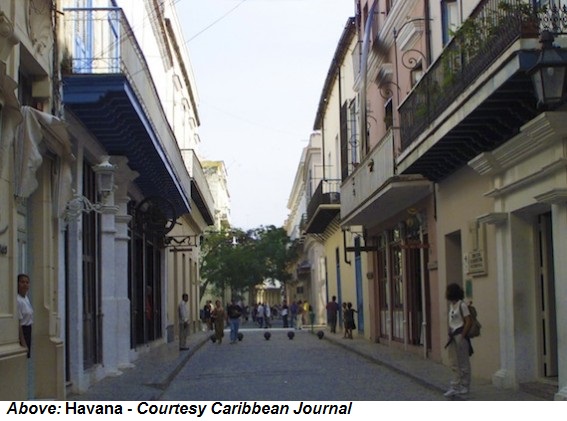
After news broke that President Obama would use Executive Powers to normalize diplomatic relations with Cuba, members of Miami’s Cuban and Cuban-American communities have “screamed in agony, cheered with joy, or vowed angrily to dismantle the decision”.

Here are some other headlines from the Miami Herald Daily Newspaper associated with this historic news:

Miami would be a natural choice should Havana want a consulate outside of Washington, D.C., but some elected officials expressed their opposition to such a move.

According to the Miami Herald, the public response was a mix of the opinionated, the emotional and the thoughtful.

“Depending on how old you were or how long you had lived in the United States, especially if you were U.S.-born, your view on Cuba and its politics might have been shaped generationally. [The Herald] asked South Florida Cubans and Cuban Americans for their thoughts on social platforms. This is some of what they shared:”

@Miamiblues – 1st gen immigrants are too stubborn and proud to admit that embargo was epic fail. In complete denial with blinders on.

@PedazosdelaIsla – It’s not a division of young/old, it’s a division of those who want 2 legitimize a brutal dictatorship & those who don’t #Cuba

@mannyafer  – Divide in Cuban-American community– old who lived thru Castro regime want embargo, while young gen wishes to do away with it.
(Source: http://www.miamiherald.com/news/nation-world/world/americas/cuba/article4623942.html)

The foregoing article stressed the potential of an imminent re-integration of Cuba. The current regional construct CariCom wants to consider the inclusion of Cuba as a member-state. But the Go Lean book asserts that CariCom is a failed institution and need to correct its own structural defects – they are in no position to claim the burdens of Cuba. The CU on the other hand is designed as a lean technocracy, mastering Delivery Arts and Sciences. This Go Lean book details the step-by-step roadmap for including Cuba in with the rest of the Caribbean to form a confederation of the 30 member-states of the region into the integrated Single Market. The prime directives of the CU are pronounced in these statements:

  • Optimization of the economic engines in order to grow the regional economy to $800 Billion & create 2.2 million new jobs.
  • Establishment of a security apparatus to protect the resultant economic engines.
  • Improve Caribbean governance to support these engines.

This re-boot roadmap commences with the recognition that Cuba and the rest of the Caribbean are in crisis; they are in the “same boat” despite their colonial heritage or language differences. One crisis is associated with the societal abandonment that has crippled so much of Caribbean societal engines. In Cuba, this transpired in mass, while the other countries experienced a steady draining. The CU member-states need to confederate, collaborate, and convene for repatriation and reconciliation. This pronouncement is made in the Declaration of Interdependence, (Page 12) is included as follows:

xiii.      Whereas the legacy of dissensions in many member-states (for example: Haiti and Cuba) will require a concerted effort to integrate the exile community’s repatriation, the Federation must arrange for Reconciliation Commissions to satiate a demand for justice.

The Go Lean book details the series of community ethos, strategies, tactics, implementations and advocacies designed to re-boot and integrate Cuba to the region:

Anecdote – Caribbean Single Market & Economy Page 15
Community Ethos – Economic Systems Influence Individual Choices & Incentives Page 21
Community Ethos – Job Multiplier Page 22
Community Ethos – “Crap” Happens Page 23
Community Ethos – Lean Operations Page 24
Community Ethos – Cooperatives Page 25
Community Ethos – Ways to Impact the Future Page 26
Community Ethos – Ways to Manage Reconciliations Page 34
Community Ethos – Ways to Impact the Greater Good Page 37
Strategic – Vision – Integrated Region in a Single Market Page 45
Strategic – Vision – Agents of Change Page 57
Tactical – Confederating a Non-sovereign Union Page 63
Tactical – Fostering a Technocracy Page 64
Tactical – Growing to $800 Billion Regional Economy Page 67
Tactical – Separation of Powers Page 71
Tactical – Separation of Powers – Office of Trade Negotiations Page 80
Tactical – Separation of Powers – Federal Courts – Truth & Reconciliation   Commissions Page 90
Anecdote – Turning Around CariCom Page 92
Anecdote – “Lean” in Government Page 93
Implementation – Assemble & Create Super-Regional Organs to   represent all Caribbean Page 96
Implementation – Ways to Pay for Change Page 101
Implementation – Foreign Policy Initiatives at Start-up Page 102
Implementation – Ways to Deliver Page 109
Implementation – Reasons to Repatriate to the Caribbean Page 118
Implementation – Ways to Benefit from Globalization Page 119
Planning – 10 Big Ideas – Cuba Page 127
Planning – Big Ideas for the Caribbean Region Page 127
Planning – Ways to Model the EU Page 130
Planning – Ways to Improve Failed-State Indices Page 134
Advocacy – Ways to Grow the Economy Page 151
Anecdote – Governmental Integration: CariCom Parliament Page 167
Advocacy – Ways to Improve Governance Page 168
Advocacy – Ways to Impact the Diaspora Page 217
Advocacy – Ways to Re-boot Cuba Page 236
Appendix – New CariCom Model Urged Page 255

The foregoing news article relates the bilateral move to re-instate Cuba’s diplomatic relations with the US; this was 55 years in the making – far too long. The next step: the Cuban Trade Embargo. Good luck with Congress … until the Castros (Fidel and Raul) are all gone from Cuban public life – expected for 2017.

This point is the strong theme of so many of these previous Go Lean commentaries/blogs that featured issues on Cuba’s eventual integration into the world’s economic networks; detailed here:

CARICOM Chair calls for an end to US embargo on Cuba
Miami’s Success versus Caribbean Failures
‘Raul Castro reforms not enough’, Cuba’s bishops say
Cuban Cigars – Declared “Among the best in the world”
Cuba mulls economy in Parliament session
America’s War on the Caribbean
Cuban cancer medication registered in 28 countries
Cuba Approves New “Law on Foreign Investment”

The news of President’s Obama Executive Order on Cuba is causing upheaval in the Cuban Diaspora, especially in Miami. But they are not the only stakeholders on guard of these pending changes. Another stakeholder of note is the US business community. What are their expectations? What are their fears? What is their hope? See AppendixVIDEO for a comprehensive report.

The Go Lean roadmap addresses the concerns of all Cuban and Caribbean stakeholders. The book posits that challenges that Cuba must face are too insurmountable for Cuba alone to contend with; there must be a regional solution, a super-national, professionally-managed, deputized technocracy to impact greater production and greater accountability than a re-invigorated Cuba can do alone. This deputized agency is the Caribbean Union Trade Federation. This CU structure is especially inviting to the Cuban and Caribbean Diaspora; it presents a workable plan for the contribution of their time, talents and treasuries in the repatriation to their homeland.

Now is the time for all Cuban stakeholders, the people, business community and governing institutions, to lean-in for the Caribbean/Cuban integration and re-boot. Now is the time to make this region as a whole, and Cuba specifically, a better place to live, work and play. 🙂

Download Go Lean … Caribbean – now!

——————

APPENDIX – The Nightly Business Report

The “Nightly Business Report produced by CNBC” (NBR) is an award-winning and highly-respected nightly business news program that airs on public television. Television’s longest-running evening business news broadcast, “NBR” features in-depth coverage and analysis of the biggest financial news stories of the day and access to some of the world’s top business leaders and policy makers.

Referenced Video – Nightly Business Report — December 17, 2014 – http://youtu.be/dnIEYPQ8K2A?t=8m43s

President Obama announces sweeping changes to U.S. policy with Cuba and it could, eventually, create opportunities for both investors and business.


Share this post:
, , , , ,

Levi’s® Stadium: A Team Effort

Go Lean Commentary

Sports business is big business. But still, even small communities can play in this game.

This is the experience of small Santa Clara, California, the new landlord of the San Francisco Forty-Niners (49-ers) of the National Football League (NFL). The city itself is home to only 116,468 residents, located 45 miles southeast of San Francisco, and yet they are able to leverage the sports entertainment needs for a metropolitan area of 7.44 million people in the San Francisco Bay statistical area[1].

s Stadium - A Team Effort - Photo 2

Where does such a small community get the clout to build a $1.2 Billion stadium? Wall Street. Or better stated one of the biggest, most influential power-brokers on Wall Street: Goldman Sachs Investment Bank. See their promotion VIDEO here of the stadium project.

VIDEO – Levi’s® Stadium: A Team Effort – http://youtu.be/WT5aaKcDlf4

When the San Francisco 49ers wanted to build a new stadium in Santa Clara, California, Goldman Sachs helped structure an innovative financing plan to make it happen. Levi’s® Stadium, one of the country’s most technologically advanced stadiums, opened in August 2014 and is helping to bring further economic development to the local economy in Santa Clara.

Goldman Sachs, in many quarters, has been portrayed as an “evil empire”. They are reflective of the Big Banks and Wall Street plutocracy. They have even been credited for being one of the “bad actors” causing the 2008 Great Recession financial crisis. And yet, they persist! Good, bad or ugly, Goldman Sachs provides a necessary function in modern society; in the case of the foregoing VIDEO, they facilitate municipal financing. They can contribute to the Greater Good.

This commentary promotes the book Go Lean…Caribbean. This publication serves as a roadmap for the introduction and implementation of the technocratic Caribbean Union Trade Federation (CU). While the CU is NOT a sports promotion entity, it does promote the important role of sports in the vision to make the Caribbean a better place to live, work and play. As an expression of this vision, “a mission of the CU is to forge industries and economic drivers around the individual and group activities of sports and culture” (Page 81).

“Build it and they will come” – The Go Lean roadmap encourages solid business plans to develop permanent sports stadia and arenas at CU-owned fairgrounds. This aligns with the Levi’s Stadium in the foregoing VIDEO, where they are now due to host many other events, in addition to being the landlord of the NFL team. This was not automatic; this was a journey (a roadmap), one that started with a solid business plan and community buy-in. This “community ethos” from Santa Clara teaches us so much.

In 2011, Santa Clara voters approved a plan to build the 68,500 seat stadium for the nearby San Francisco 49ers. The groundbreaking for the stadium occurred on April 19, 2012.[2] The official ribbon cutting took place on Thursday July 17, 2014. The first professional sporting event hosted at the stadium was a Major League Soccer (MLS) match between the San Jose Earthquakes and the Seattle Sounders on August 2, 2014. The first professional football event hosted at the stadium was a pre-season game between the 49ers and the Denver Broncos, played on August 17, 2014.

s Stadium - A Team Effort - Photo 1

Now the stage is set. The following is a sample of other events (source: http://en.wikipedia.org/wiki/Levi_Stadium) that are scheduled to start the return on Santa Clara’s community investment:

Super Bowl 50
On October 16, 2012, it was announced that Levi’s Stadium was one of two finalists to host Super Bowl 50 on February 7, 2016 (the other stadium finalist being Sun Life Stadium in Miami Gardens, Florida). On May 21, 2013, it was announced that the San Francisco Bay Area had defeated South Florida in a vote of NFL owners in its bid to host Super Bowl L (50).

College Football Post Season Bowl Game
The stadium will host its first Foster Farms Bowl Game on December 30, 2014 featuring the nearby Stanford University Cardinals and the Maryland Terrapins from the Big Ten Conference.

WrestleMania XXXI
Levi’s Stadium will host WWE’s WrestleMania XXXI on March 29, 2015. This will mark the first time WrestleMania is hosted in Northern California. The area will also host activities throughout the region for the week-long celebration leading up to WrestleMania itself.

Hockey
Levi’s Stadium will host the 2015 NHL Stadium Series’ February 21 game between the Los Angeles Kings and San Jose Sharks.

Soccer
On July 31, 2014, the San Jose Earthquakes agreed to play one match per year for five years at Levi’s Stadium. On September 6, 2014, an international friendly between Mexico and Chile was held.

Concerts

  • On October 23, 2014, it was announced that international pop group “One Direction” would bring their 2015 “On The Road Again” tour to Levi’s Stadium on July 11, 2015.
  • On October 30, 2014 Kenny Chesney announced that he would bring his “The Big Revival Tour” to Levi’s Stadium on May 2, 2015 with Jason Aldean co-headlining with Chesney. Jake Owen and Cole Swindell will open for the duo. It’s the first concert announced at the new home of the 49ers.
  • Taylor Swift set to perform on her fourth upcoming tour, “The 1989 World Tour” in the Levi’s Stadium on 14 & 15 August 2015.

Not every market, especially in the Caribbean, can support these types of high profile events/bookings. So the Go Lean roadmap invites an alternative landlord approach for the occasional or one-time events, that of temporary stadiums; this point was detailed in a previous blog submission.

Whether permanent stadiums or temporary stadiums, the point is echoed that sports entertainment is big business and the Caribbean region must not miss out on the community-building opportunities. This is heavy-lifting; the communities need the technocratic support of a business-mined landlord and creative financing options. This is the role the CU will execute.

The Go Lean vision is a confederation of the 30 member-states of the Caribbean forming the CU as a proxy organization to do the heavy-lighting of building, funding and maintaining sports venues. The strategy is for the CU to be the landlord, and super-regional regulatory agency, for sports leagues, federations and associations (amateur, collegiate, and professional). The foregoing VIDEO depicts how this strategy relates to a community.

The prime directives of the CU/Go Lean roadmap are described with these 3 statements:

  • Optimization of the economic engines in order to grow the regional economy to $800 Billion & create 2.2 million new jobs.
  • Establishment of a security apparatus to protect the resultant economic engines.
  • Improve Caribbean governance to support these  engines.

This roadmap commences with the recognition that genius qualifiers can be found in many fields of endeavor, including sports. The roadmap pronounces the need for the region to confederate in order to invest in the facilitations for the Caribbean sports genius to soar. These pronouncements are made in the opening Declaration of Interdependence, (Pages 13 & 14) as follows:

xxi. Whereas the preparation of our labor force can foster opportunities and dictate economic progress for current and future generations, the Federation must ensure that educational and job training opportunities are fully optimized for all residents of all member-states, with no partiality towards any gender or ethnic group. The Federation must recognize and facilitate excellence in many different fields of endeavor, including … sports. This responsibility should be executed without incurring the risks of further human flight, as has been the past history.

xxii. Whereas sports have been a source of great pride for the Caribbean region, the economic returns from these ventures have not been evenly distributed as in other societies. The Federation must therefore facilitate the eco-systems and vertical industries of sports as a business, recreation, national pastime and even sports tourism…

The Go Lean book and accompanying blogs declare that the Caribbean needs to learn lessons from communities like Santa Clara and other sporting venues/administrations. So thusly this subject of the “business of sports” is a familiar topic for Go Lean blogs. The previous blogs were detailed:

https://goleancaribbean.com/blog/?p=3244 Sports Role Model – espnW.
https://goleancaribbean.com/blog/?p=2222 Sports Role Model – Playing For Pride … And More
https://goleancaribbean.com/blog/?p=2171 Sports Role Model – Turn On the SEC Network
https://goleancaribbean.com/blog/?p=2152 Sports Role Model – US versus the World
https://goleancaribbean.com/blog/?p=1715 Lebronomy – Economic Impact of the Return of the NBA Great
https://goleancaribbean.com/blog/?p=1446 Caribbean Players in the 2014 World Cup
https://goleancaribbean.com/blog/?p=1341 College World Series Time – Lessons from Omaha
https://goleancaribbean.com/blog/?p=1148 Sports Bubble – Franchise values in basketball
https://goleancaribbean.com/blog/?p=1020 Sports Revolutionary: Advocate Jeffrey Webb
https://goleancaribbean.com/blog/?p=498 Book Review: ‘The Sports Gene’
https://goleancaribbean.com/blog/?p=334 Bahamians Make Presence Felt In Libyan League
https://goleancaribbean.com/blog/?p=318 Collegiate Sports in the Caribbean
https://goleancaribbean.com/blog/?p=60 Could the Caribbean Host the Olympic Games?

This Go Lean roadmap is committed to availing the economic opportunities of all the Caribbean athletic abilities and the world’s thirst for this entertainment. The book details these series of community ethos, strategies, tactics, implementations and advocacies designed to deliver regional solutions:

Community Ethos – People Respond to Incentives in Predictable Ways Page 21
Community Ethos – Consequences of Choices Lie in the Future Page 21
Community Ethos – Lean Operations Page 24
Community Ethos – Return on Investments Page 25
Community Ethos – Ways to Foster Genius Page 27
Community Ethos – Ways to Impact the Greater Good Page 37
Strategic – Staffing – Sporting Events at Fairgrounds Page 55
Tactical – Fostering a Technocracy Page 64
Tactical – Separation of Powers – Sports & Culture Administration Page 81
Tactical – Separation of Powers – Fairgrounds Administration Page 83
Implementation – Steps to Implement Self-Governing   Entities Page 105
Implementation – Ways to Deliver Page 109
Planning – Ways to Make the Caribbean   Better Page 131
Advocacy – Ways to Grow the Economy Page 151
Advocacy – Ways to Improve Local Government – Parks & Recreation Page 169
Advocacy – Ways to Impact Public Works Page 175
Advocacy – Ways to Impact Events Page 191
Advocacy – Ways to Promote Fairgrounds Page 192
Advocacy – Ways to Improve Sports Page 229
Advocacy – Ways to Impact Urban Living – Sports Leagues Page 234

What is the end result for the Go Lean roadmap’s venture into the business of sports? For one … “jobs”; the Go Lean roadmap anticipates 21,000 direct jobs at fairgrounds and sports enterprises throughout the region. In addition there are leisure activities, event marketing, community pride, promotion of Caribbean athletes and cultural activities.

Overall, with these executions, the Caribbean region can be a better place to live, work and play. There is a lot of economic activity in the “play” element. Everyone, the athletes, promoters and spectators, are hereby urged to lean-in to this Go Lean roadmap.

Download the book Go Lean … Caribbean – now!

———-

Appendix – Source References:

s Stadium - A Team Effort - Photo 31. Home to approximately 7.44 million people, the nine-county Bay Area – Alameda, Contra Costa, Marin, Napa, San Francisco, San Mateo, Santa Clara, Solano, and Sonoma – contains many cities, towns, airports, and associated regional, state, and national parks, connected by a network of roads, highways, railroads, bridges, tunnels and commuter rail. Retrieved 12-16-2014 from: http://en.wikipedia.org/wiki/Portal:San_Francisco_Bay_Area

2. Video: 49ers’ groundbreaking ceremony for Santa Clara stadium – San Jose Mercury News. Mercurynews.com. Retrieved on 2013-07-29.

Share this post:
, , ,
[Top]

Art Basel Miami – A Testament to the Spread of Culture

Go Lean Commentary

There’s no business like ‘show business’. – Age Old Adage.

There is money in the ‘Arts’. – Go Lean…Caribbean precept.

And now, the subsequent news article posits: “the community rallies around art creating a unique energy. And art ‘dynamises’ the community, in a very unique way”.

The book Go Lean…Caribbean has a simple purpose: enable the Caribbean to be a better place to live, work and play. The book recognizes that the ‘genius qualifier’ is shown in different fields of endeavor, including the arts (fine, visual, performing, music, etc.). While the Go Lean roadmap has a focus on STEM [1] fields, it is accepted that not everyone possesses STEM skills, and yet many others can still contribute to society. Then when these other skills/talents are “gifted” beyond the extraordinary, they can truly impact their community, and maybe even the world.

The book relates that the arts can have a positive influence on the Caribbean. And that one man, or woman, can make a difference in this quest. We want to foster the next generation of “stars” in the arts and other fields of endeavor.

According to the following news article, the arts can truly ‘dynamise’ the community. The article relates to Art Basel, the movement to stage art shows for Modern and Contemporary works, sited annually in Basel (Switzerland), Hong Kong and Miami Beach. The focus of this article is Miami Beach:

Title: 13th Art Basel Miami Beach (December 4 – 7, 2014), a testament to the spread of culture
By:
Jane Wooldridge, and contributed Ricardo Mor

CU Blog - Art Basel Miami - a Testament to the Spread of Culture - Photo 1If “more” equals better, the 13th edition of Art Basel Miami Beach and the surrounding art week events may go down as the best ever. More new art fairs and just-to-see shows. More record-breaking sales at Art Basel Miami Beach. More CEOs — from watchmakers Hublot and Omega, luggage brand Rimowa, hotel companies Starwood and Marriott — opening luxury properties. And if not more — who can keep track? — then certainly plenty of celebrities, including actors Leonardo DiCaprio, James Marden and Owen Wilson; musicians Usher, Miley Cyrus, Russell Simmons and Joe Jonas; supermodel Heidi Klum and the world’s fastest man, Usain Bolt.

There was another kind of “more” as well — more spillovers, touch points and art for all manner of South Floridians, from entrepreneurs to pre-teen fashion designers, stretching from Pinecrest to Coconut Grove, Overtown to Fort Lauderdale.

If the aim is “to make art general,” as Knight Foundation President Alberto Ibargüen told attendees Monday at the foundation’s annual announcement of Knight Art Challenge awards, this year’s art week put South Florida well on its way. Proclaimed National Endowment for the Arts chairman Jane Chu on a whiplash art tour to downtown, Miami Beach and Opa-locka, “Art is entwined in Miami’s DNA.”

Even as the Pérez Art Museum Miami celebrated its first year anniversary, a new permanent museum building for the Institute for Contemporary Art Miami was announced for the Design District.

Overtown [historical Black neighborhood] hosted its first Art Africa fair of works created by artists from the African Diaspora. Joining it on the list of first-year events are an impressive exhibition of monumental works in the vast Mana-Miami Wynwood space on NW 23rd Street and Pinta, a fair focusing on Latin American art that moved from New York to Midtown.

The festivities reach far, far beyond the traditional art crowd. On the Mana campus, the Savannah College of Art and Design is presenting “i feel ya,” an exhibition that includes jumpsuits designed by André 3000 for Outkast’s reunion tour. The nearby ArtHaus tent is surrounded by food trucks and a sound program where Beethoven is definitely not on the playlist.

This year, more than a half-dozen student exhibits are on the art agenda. At FusionMIA, student photographs hang near works by masters Rashid Johnson and Al Loving; all were curated by Miami’s N’Namdi Contemporary gallery. A few blocks north, at Wynwood’s House of Art, a dozen students ages 5 to 15 from the DesignLab program showed off their creations at a Friday night “vernissage.”

Among them was 13-year-old Yael Bloom, wearing a flounced party dress she made from shrink wrap. No matter that the first-time event was a little-known spinoff. “Art Basel is pretty hard for adults to get into,” Bloom said. “For kids to get into it is very cool.”

As in years past, free events abound, from performances by Chinese artist Shen Wei at Miami-Dade College and artist Theo Jansen’s Strandbeest demonstrations on the sand to official Art Basel events, including films on the New World Center Wallcast and the Art Public sculptures in Collins Park. New is free Art Week shuttle service between Midtown and Miami Beach — a government cooperative effort — that dovetails with trolley service to art venues on both sides of Biscayne Bay.

In institutional quarters, Art Basel Miami Beach global sponsor UBS announced the creation of a $5 million loan fund for existing Florida small business owners. Sponsor BMW USA announced it would fund an “art journey” open to emerging artists exhibiting at Art Basel Miami Beach. And the City of Miami Beach and Miami-Dade County put out a call to artists, encouraging them to propose projects for the $4.33 million public art program associated with the Miami Beach Convention Center renovation. South Floridians are eligible to apply for all three initiatives.

Clearly, art week isn’t just about aesthetics, personal enrichment and community building. It is also about enterprise — which explains all those luxury CEOs, the ground-breaking of the Zaha Hadid-designed One Thousand Museum, and the announcement at Miami Ironside that designer Ron Arad will create the interiors for the revamped Watergate Hotel in Washington. (And no, there’s no real connection to Miami.)

Said Michael Spring, Miami-Dade’s cultural affairs director, “There’s a certain deepening, a realization not just that the Art Basel event but arts in general have a phenomenal effect on the image and economy of our entire region. We’ve talked about it before, but there seems to be more focus this year. It’s not an interesting footnote anymore; it’s the theme.”

That, says Miami Commissioner Keon Hardemon, was the thinking behind the city’s $50,000 grant supporting the Art Africa fair. “We need to encourage people to come now to Overtown. The cultural aspect helps them realize they can safely come here now. And then maybe they’ll come back later and spend money in the community, in our restaurants and stores,” he said.

In Miami, with commerce inevitably comes glamor, which is proving as glossy as ever. Hennessey V.S.O.P., Dom Perignon, Paper Magazine, Interview and B.E.T. have staged events all around town, at private “locations,” hotels, restaurants, the 1111 Lincoln Road garage and the ICA temporary space in the Moore Building. Developer Alan Faena threw a breezy beachside asado. Jeffrey Deitch, Tommy Hilfiger and V Magazine hosted a glitzy bash at the Raleigh featuring a performance by Miley Cyrus.

In the Design District, developer Craig Robins hosted a dinner honoring architect Peter Marino at a single, 142-yard candlelit table for 380 guests on a closed-off street amid the district’s luxury brand storefronts. Sculptor Jaume Plensa was the guest of honor at another long candlelit table — this one for 60 — in the Coconut Grove sales offices of Park Grove, which recently installed a series of his works along South Bayshore Drive.

Alas, once again, manners were not de rigueur among the glossy set. At some parties, guests of guests turned up with entirely uninvited guests. For other tony soirees, publicists emailed out “disinvitations” to previously invited guests, obliquely sending the message that someone more glamorous would be taking those seats.

Decorous or not, during art week, the energy all emanates from the week’s namesake fair, said Dennis Scholl, VP/Arts at the Knight Foundation. “The most important thing to remember is why this week exists, and that’s Art Basel in the Convention Center. If that wasn’t the core of what’s going on — if it weren’t a world-class event — nobody else would be interested in being involved. It continues to be the raison d’être of this week.”

In the Convention Center, at what Scholl called “the core of the nuclear reactor,” many gallerists were quite happy, thank you very much.

Veteran Art Basel Miami Beach gallerist Sean Kelly said Wednesday was his best first day ever at the fair. Newcomer Michael Jon Gallery also sold almost all of its available work — by rising stars like Sayre Gomez and JPW3 — on the first day.

For most dealers, sales remained lively, day after day. At Galerie Gmurzynska, co-CEO Mathias Rastorfer proclaimed it “successful indeed … . In terms of reception, it was an overwhelmingly enthusiastic response from collectors and colleagues alike. In terms of sales, we did several over $1 million sales and many within the $100,000 to $500,000 range, with a Picasso’s Venus and Love selling at near the asking price of $1.2 million.

Said Art Basel Director Marc Spiegler on Saturday, “I’ve gotten nothing but positive response from galleries,” not only because of strong sales, but also because new hours for VIPs gave gallerists more time to meet new collectors. “A lot of people were here and buying for the first time. Many galleries said they had their best fair ever.”

But like this week’s weather, the upbeat atmosphere suffered from uncharacteristic clouds. In Wynwood, a police car hit and critically injured a street artist. An $87,000 silver plate crafted by Pablo Picasso was reported stolen from the Art Miami satellite fair in Midtown. A partygoer at PAMM’s first anniversary fête on Thursday accidentally damaged an artwork installed on the floor. And Friday night, would-be art goers were stymied by traffic shutdowns into art-centric areas of Wynwood, Midtown and Miami Beach by protests against nationwide police-involved killings.

Though unfortunate and sometimes tragic, Spring said, the unrelated events were “a product of the incredible level of activity.” At Saturday’s annual brunch at the art-rich Sagamore Hotel in Miami Beach, the theft and damaged artwork uniformly were brushed off as inconsequential. Said one art insider, “s–t happens.”

Miami Art Week’s merry-go-round nature is surely born from Miami’s appreciation of a good time. And increasingly, perhaps from something deeper.

Said Miami gallerist Jumaane N’Namdi, “Art Basel has put art on everyone’s mind. Everyone wants to be involved somehow.”

And that’s not just about the parties, said N’Namdi, who had galleries in Chicago, New York and Detroit before opening in Miami. “I don’t think you could find a city that enjoys really looking at the art the way this city does. I came through the airport, and even the TSA guys were talking about it, asking each other if they got their Art Basel posters. Every level of art you want is here.”

Outsiders agree. “Miami is very special for its link between art and the community,” said Axelle de Buffévent, style director at champagne house Martell Mumm Perrier-Jouët. “It goes both ways. The community rallies around art creating a unique energy. And art dynamises the community, in a very unique way.”
Miami Herald – Daily Newspaper – (Posted December 6, 2014) –
http://www.miamiherald.com/entertainment/visual-arts/art-basel/article4313255.html

VIDEO: Art Basel Miami Beach 2014 – http://youtu.be/StkzLiBtDis

Published on Dec 4, 2014
The international art fair Art Basel returns to Miami Beach for its 13th edition, taking place at the Miami Beach Convention Center from December 4 to December 7, 2014. Art Basel  Miami Beach 2014 features 267 leading international galleries from 31 countries across North and South America, Europe, Asia and Africa, which present artworks ranging from Modern masters to the latest contemporary art pieces. With this edition, the fair debuts Survey, a new sector dedicated to art-historical projects. In this video, we attend the Private View of Art Basel Miami Beach 2014 at the Miami Beach Convention Center on December 3.

This story aligns with the book Go Lean…Caribbean in stressing the economic impact of artistic endeavors. The book pledges that Caribbean society will be elevated by improving the eco-system to live, work and play; and that “play” covers vast areas of culture.

“Culture” has emerged as a central concept in anthropology, encompassing the range of human phenomena that cannot be directly attributed to genetic inheritance. Specifically, the term “culture” in North American anthropology has two meanings:

  1. the evolved human capacity to classify and represent experiences with symbols, and to act imaginatively and creatively; and
  2. the distinct ways that people, who live differently, classified and represented their experiences, and acted creatively.[2]

Anthropologist Adamson Hoebel best describes culture as an integrated system of learned behavior patterns which are characteristic of the members of a society and which are not a result of biological inheritance.[3]

The Go Lean book stresses economic benefits from classic cultural expressions and popular cultural productions, including Caribbean music, paintings/art, sketches, sculptures, books, fashion and food. All the “skilled phenomena” that makes Caribbean life unique and appealing.

The book Go Lean…Caribbean serves as a roadmap for the introduction and implementation of the technocratic Caribbean Union Trade Federation (CU). There is a lot involved in this vision; the prime directives are stated as follows:

  • Optimization of the economic engines in order to grow the regional economy to $800 Billion & create 2.2 million new jobs.
  • Establishment of a security apparatus to protect the resultant economic engines.
  • Improve Caribbean governance to support these engines.

CU Blog - Art Basel Miami - a Testament to the Spread of Culture - Photo 2The foregoing article relates the economic impact that the Greater Miami area is enjoying for hosting the Art Basel event, for the 13th year now. At this point the benefits have spread throughout the community, (Art Fairs, museums, scholarships, foundations, etc.) not just one venue on Miami Beach. The spin-off benefit of art is a strong point of the Go Lean book, highlighting benefits as long as we keep the talent at home working in/for the community. This point is pronounced early in the following statements in the book’s opening Declaration of Interdependence (Page 14):

xxi. Whereas the preparation of our labor force can foster opportunities and dictate economic progress for current and future generations, the Federation must ensure that educational and job training opportunities are fully optimized for all residents of all member-states, with no partiality towards any gender or ethnic group. The Federation must recognize and facilitate excellence in many different fields of endeavor, including sciences, languages, arts, music and sports. This responsibility should be executed without incurring the risks of further human flight, as has been the past history.

xxxii. Whereas the cultural arts and music of the region are germane to the quality of Caribbean life, and the international appreciation of Caribbean life, the Federation must implement the support systems to teach, encourage, incentivize, monetize and promote the related industries for arts and music in domestic and foreign markets. These endeavors will make the Caribbean a better place to live, work and play.

The economic, cultural and image considerations for “show business” on a society have been well-detailed in these previous Go Lean blogs:

Caribbean Role Model – Oscar De La Renta – RIP
How ‘The Lion King’ roared into history
Forging Change – The Fun Theory
Role Model Berry Gordy – No Town Like Motown
Book Review: ‘Chasing Youth Culture and Getting It Right’
The Music, Art, Culture and Legend of Bob Marley lives on!

The Go Lean roadmap posits that change will come to the Caribbean “show business” (Visual and Performing Arts, Music, Film). This is due mostly to the convergence of a Single Market for the Caribbean region. If “size matters”, then the integration of 42 million people (plus the 10 million Diaspora and 80 million visitors) for the 30 member-states will create the consumer markets to promote and foster Caribbean artistic creations for their full appreciation. The first requirement in this goal is the community ethos of valuing intellectual property; to recognize that other people’s creations are valuable. (Then we can enforce on others to value and appreciate our creations).

This would truly be new for the Caribbean.

The CU is designed to do the heavy-lifting of organizing Caribbean society for the new world of art appreciation and “consumerization”. The following list details the ethos, strategies, tactics, implementations and advocacies to foster regional artists and showcase their wares to the world stage:

Community Ethos – Forging Change Page 20
Community Ethos – Lean Operations Page 24
Community Ethos – Return on Investments Page 24
Community Ethos – Ways to Foster Genius Page 27
Community Ethos – Help Entrepreneurship Page 28
Community Ethos – Promote Intellectual Property Page 29
Strategy – Caribbean Vision: Single Market Page 45
Separation of Powers – Central Bank – Electronic Payment Deployments Page 73
Tactical – Separation of Powers – Patents – Copyrights Page 78
Separation of Powers – Culture Administration Page 81
Planning – Ways to Make the Caribbean Better Page 131
Planning  – Lessons Learned from   New York City Page 137
Advocacy – Ways to Grow the Economy Page 151
Advocacy – Ways to Create Jobs Page 152
Advocacy – Education – Performing Arts Schools Page 159
Advocacy – Ways to Impact Hollywood Page 203
Advocacy – Ways to Improve the Arts Page 230
Advocacy – Ways to Promote Music Page 231
Advocacy – Impact Urban Living – Art & Theaters Page 234
Appendix – New York / Arts / Theater Jobs Page 277
Appendix – Taos New Mexico Art Colony Page 291
Appendix – Caribbean Music Genres Page 347
Appendix – Protecting Music Copyrights Page 351

There is BIG money in show business and in the world of the Arts. For the 10th edition of Art Basel in Miami in 2011, there was a record number of fifty thousand collectors, artists, dealers, curators, critics and art enthusiasts – including 150 museum and institutions from across the globe – participating in the show.[4]

This event requires a lot of community investments. Every year, Miami’s leading private collections – among them the Rubell Family Collection, Cisneros Fontanals Art Foundation, the De la Cruz Collection Contemporary Art Space, World Class Boxing, the Margulies Collection and the Dacra Collection – open their homes and warehouses to guests of Art Basel. Additionally, the museums of South Florida organize exhibitions including shows at the Miami Art Museum, Bass Museum of Art, Norton Museum, Wolfsonian-FIU and MOCA North Miami.

The community investment has been there for Miami, and so has the returns [5].For 2014, the attendance figures were 75,000, with an increase in hotel occupancy of 30,000 rooms on the days the Art Fair is in progress. The conservative estimates are that the Art Fair brings close to $13 million a year in economic impact to the region. (This figure does not include the purchases of artworks, some of which fetch millions of dollars).

The subject of the Miami Metropolitan area is very relevant for a Caribbean empowerment discussion. A previous blog asserted that Miami’s success, in many regards, is attributable to Caribbean’s failures. Many of our populations (including artists) have fled their homelands and have taken refuge in the Miami area. Where at first this disposition was begrudged, eventually it transformed to tolerance, but now it is even celebrated.

CU Blog - Art Basel Miami - a Testament to the Spread of Culture - Photo 3

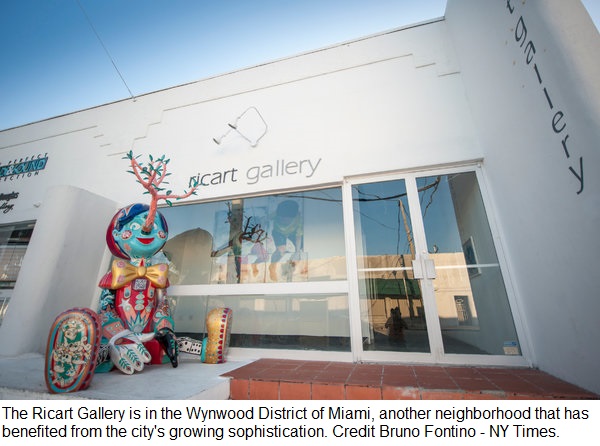
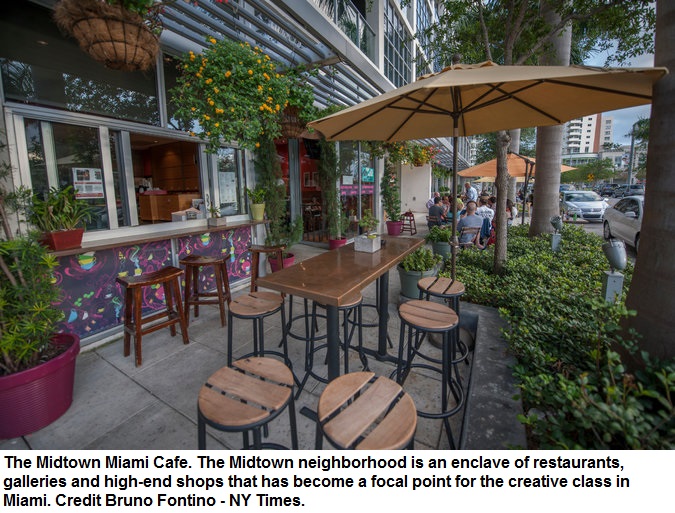
Miami has been greatly impacted by both the Caribbean Diaspora and its assimilation of the “Arts”. Whole neighborhoods have been elevated due to this strategy of catering to the arts; (see photo here). This is a great role model for the Caribbean to emulate; our whole society can be elevated.

The Go Lean/CU roadmap represents the empowerment for the Caribbean communities to elevate – we now want to keep our artists at home. The people, institutions and governance of the region are therefore urged to “lean-in” to this roadmap for change. 🙂

Download the book Go Lean … Caribbean – now!

——-

Appendix – Source References:

1. STEM = Science, Technology, Engineering and Mathematics.

2. “What is culture?”. Bodylanguagecards.com. Retreived 2013-03-29.

3. Hoebel, Adamson (1966). Anthropology: Study of Man. McGraw-Hill.

4. http://www.nytimes.com/2011/12/03/arts/design/art-basel-miami-beach-review.html?_r=1&pagewanted=all

5. http://www.nytimes.com/2014/12/04/arts/international/art-fair-energizes-economy-of-region.html?_r=0


Share this post:
, , , , ,
[Top]

Sports Role Model – espnW.

Go Lean Commentary

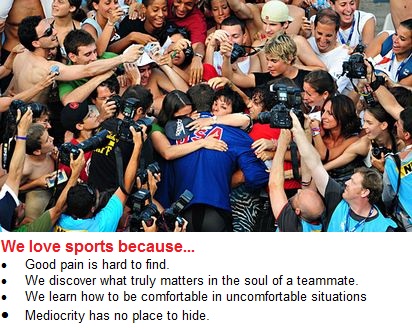
Introducing a network without the “network”. This is espnW, the ESPN (see Appendix below) channel, without a channel, specifically catering to women’s sports; this network is delivered via the internet only. CU Blog - Sports Role Model - ESPN-W - Photo 3

Wow, how the world has changed.

So this commentary is a melding of ICT (Internet & Communications Technology), sports, television, gender equality and economics – this is a big deal for the Caribbean to consider.

espnW…

CU Blog - Sports Role Model - ESPN-W - Photo 2
espnW’s mission is to serve women as fans and athletes. espnW.com provides an engaging environment that offers total access to female athletes and the sports they play, takes fans inside the biggest events, and shares a unique point of view on the sports stories that matter most to women.

Founded in July, 2010, espnW lives across television, films, events, digital and social platforms. The annual espnW: Women + Sports Summit is the leading event of its kind in the sports industry. The Women’s Sports Foundation is a charity of choice for espnW.
ESPN W. – About Us Page – Official Website (Retrieved December 7, 2014) – http://espn.go.com/espnw/v1/about

VIDEO: espnW at the 2012 Olympic Games – http://youtu.be/z7vGVQAatig
Published on Aug 14, 2012
Alex Morgan sits down with Julie Foudy to talk about what it feels like to have her first Olympic gold

CU Blog - Sports Role Model - About ESPN-W - Photo 5

CU Blog - Sports Role Model - About ESPN-W - Photo 4

CU Blog - Sports Role Model - About ESPN-W - Photo 3

CU Blog - Sports Role Model - About ESPN-W - Photo 1

CU Blog - Sports Role Model - About ESPN-W - Photo 2

The Caribbean does not currently have an eco-system for sports business … for men nor women. There is no viable sporting enterprises, other than baseball development/winter leagues in Puerto Rico, Dominican Republic and Communist Cuba. There is absolutely no intercollegiate athletics arrangements. Only Amateur athletics abound in the region.

While so much of the sports business infrastructure is missing, the Caribbean is awash in the underlying assets: the athletes. The Caribbean supplies the world with the best-of-the-best in the sports genres of baseball, basketball, track-and-field, soccer-FIFA-football and other endeavors. This athletic supply applies equally to men and women.

The book Go Lean…Caribbean book serves as a roadmap for the introduction and implementation of the Caribbean Union Trade Federation (CU), a technocratic federal government to administer and optimize the economic/security/governing engines of the region’s 30 member-states. The roadmap recognizes and fosters the genius qualifiers of many Caribbean men and women. The goal now is to foster the local eco-system in the homeland so that  those with talent would not have to flee the region to garner the business returns on their athletic investments.

This Go Lean economic empowerment roadmap strategizes to create a Single Media Market to leverage the value of broadcast rights for the entire region, utilizing all the advantages of cutting edge ICT offerings. The result: an audience of 42 million residents (plus 10 million Diaspora) across 30 member-states and 4 languages. ESPN and espnW provides a great role model for this execution, see Appendix below, facilitating television, cable, satellite and internet streaming wherever economically viable.

At the outset, the roadmap recognizes the value of sports, for all genders, in the roadmap with these statements in the Declaration of Interdependence (Page 13 & 14):

xxvi.      Whereas the preparation of our labor force can foster opportunities and dictate economic progress for current and future generations, the Federation must ensure that educational and job training opportunities are fully optimized for all residents of all member-states, with no partiality towards any gender or ethnic group. The Federation must recognize and facilitate excellence in many different fields of endeavor, including sciences, languages, arts, music and sports. This responsibility should be executed without incurring the risks of further human flight, as has been the past history.

xxvii.      Whereas the region has endured a spectator status during the Industrial Revolution, we cannot stand on the sidelines of this new economy, the Information Revolution. Rather, the Federation must embrace all the tenets of Internet Communications Technology (ICT) to serve as an equalizing element in competition with the rest of the world. The Federation must bridge the digital divide and promote the community ethos that research/development is valuable and must be promoted and incentivized for adoption.

xxviii.      Whereas intellectual property can easily traverse national borders, the rights and privileges of intellectual property must be respected at home and abroad. The Federation must install protections to ensure that no abuse of these rights go with impunity, and to ensure that foreign authorities enforce the rights of the intellectual property registered in our region.

xxxi.      Whereas sports have been a source of great pride for the Caribbean region, the economic returns from these ventures have not been evenly distributed as in other societies. The Federation must therefore facilitate the eco-systems and vertical industries of sports as a business, recreation, national pastime and even sports tourism – modeling the Olympics.

The Go Lean roadmap calls for the market organizations and community investments to garner economic benefits of sports and talented athletes, men and women. One of the biggest contribution the CU will make is the facilitation of sports venues: arenas and stadia. Sports can be big business (and great educational opportunities) for the athletes, promoters, vendors and landlords. Still, even fans get great benefits: image, national pride, and entertainment. (The E in ESPN means Entertainment). The eco-system of sports is therefore inclusive in the roadmap’s quest to make the Caribbean region a better place to live, work and play.

Now is the time for all of the Caribbean to lean-in to the following community ethos, strategies, tactics, implementations and advocacies detailed in the book Go Lean…Caribbean to deliver the solutions to elevate the Caribbean region through sports:

Community Ethos – People Respond to Incentives in Predictable Ways Page 21
Community Ethos – Return on Investments Page 24
Community Ethos – Ways to Foster Genius Page 27
Community Ethos – Promote Intellectual Property Page 29
Community Ethos – Ways to Promote Happiness Page 36
Community Ethos – Ways to Impact the Greater Good Page 37
Strategic – Vision – Consolidating the Region in to a Single Market Page 45
Strategic – Staffing – Sporting Events at Fairgrounds Page 55
Tactical – Fostering a Technocracy Page 64
Tactical – Separation of Powers – Sports & Culture Administration Page 81
Tactical – Separation of Powers – Fairgrounds Administration Page 83
Implementation – Steps to Implement Self-Governing Entities (Fairgrounds) Page 105
Implementation – Ways to Deliver Page 109
Planning – 10 Big Ideas – #5 Four Languages in Unison / #8 Cyber Caribbean Page 127
Planning – Ways to Make the Caribbean Better Page 131
Advocacy – Ways to Grow the Economy Page 151
Advocacy – Ways to Create Jobs Page 152
Advocacy – Ways to Improve Education – Reduce Brain Drain Page 159
Advocacy – Ways to Improve Local Government – Parks & Recreation Page 169
Advocacy – Ways to Impact Events Page 191
Advocacy – Ways to Promote Fairgrounds Page 192
Advocacy – Ways to Foster Technology – Intellectual Property Protections Page 197
Advocacy – Ways to Empower Women Page 226
Advocacy – Ways to Impact Youth Page 227
Advocacy – Ways to Improve Sports Page 229
Advocacy – Ways to Impact Urban Living – Sports Leagues Page 234

The book Go Lean…Caribbean, and aligning blog commentaries (highlighted throughout this page in bold), asserts that the region can be a better place to live, work and play; that the economy can be grown methodically by embracing progressive strategies in sports and sports broadcasting/streaming at all levels: professional, amateur and intercollegiate.

The Go Lean…Caribbean roadmap is bigger than just sports, its a concerted effort to elevate all of Caribbean society, for all genders: men and women. The CU is the vehicle for this goal, this is detailed by the following 3 prime directives:

  • Optimization of the economic engines in order to grow the regional economy to $800 Billion & create 2.2 million new jobs (21,000 direct jobs at fairgrounds and sport venues).
  • Establishment of a security apparatus to protect the resultant economic engines.
  • Improve Caribbean governance to support these engines.

This roadmap adheres to economic principles of supply-and-demand. Similar to the foregoing website on espnW, the roadmap looks for the opportunities to foster interest that may exist in specific endeavors, in this case women’s sports, and then explore the business opportunities around servicing that demand. This is not limited to the domestic Caribbean, but rather can refer to local interest in sports abroad and foreign interest in Caribbean sports and athletes.

This is heavy-lifting. This is the quest of Go Lean/CU, to do the heavy-lifting to make the Caribbean homeland a better place to live, work and play. 🙂

Download the book Go Lean…Caribbean now!

———

AppendixEntertainment and Sports Programming Network (Source: http://en.wikipedia.org/wiki/ESPN)

ESPN is a U.S.-based global cable and satellite television channel that is owned by ESPN Inc., a joint venture between The Walt Disney Company (which operates the network, through its 80% controlling ownership interest) and Hearst Corporation (which holds the remaining 20% interest). The channel focuses on sports-related programming including live and recorded event telecasts, sports news and talk shows, and other original programming.

CU Blog - Sports Role Model - ESPN-W - Photo 1ESPN broadcasts primarily from studio facilities located in Bristol, Connecticut. The network also operates offices in Miami, New York City, Seattle, Charlotte, and Los Angeles. While ESPN is one of the most successful sports networks, it has been subject to criticism, which includes accusations of biased coverage[1] (not showing enough hockey or Women’s athletics), conflict of interest, and controversies with individual broadcasters and analysts.

As of August 2013, ESPN is available to approximately 97,736,000 pay television households (85.58% of households with at least one television set) in the United States.[2] In addition to the flagship channel and its seven related channels in the United States, ESPN broadcasts in more than 200 countries,[3] operating regional channels in Australia, Brazil, Latin America and the United Kingdom, and owning a 20% interest in The Sports Network (TSN) as well as its five sister networks and NHL Network in Canada.

Source References:

  1. Geography lesson: Breaking down the bias in ESPN’s coverage, ESPN.com, August 15, 2008.
  2. Seidman, Robert (August 23, 2013). “List of How Many Homes Each Cable Networks Is In – Cable Network Coverage Estimates As Of August 2013”. TV by the Numbers. Zap2it. Retrieved August 25, 2013.
  3. ESPN Inc Encyclopedia Britannica.
Share this post:
, , , ,
[Top]

Bill Cosby’s Accusers – Why They Weren’t Believed

Go Lean Commentary

It is hard to reconcile the accusations floating against Bill Cosby with his television characters: Dr. Huxtable, Jell-O Pudding Pitch-Man and the voice/persona of the animated do-gooder Fat Albert (and the Cosby Kids ; see Appendix below*). Or is it?

… that it’s easy to categorize personalities as good versus bad. “We don’t think good and evil can co-exist in the same person” – Psychologist David Adams.

The following article posits that those who do horrible things may still be talented in their gifts and notoriously good to people in their lives, like family members. While it maybe difficult to understand the complexities of personalities, it is very much necessary that society be receptive to the possibility of good people doing bad things. The entire article is presented here:

By: NO MORE Staff

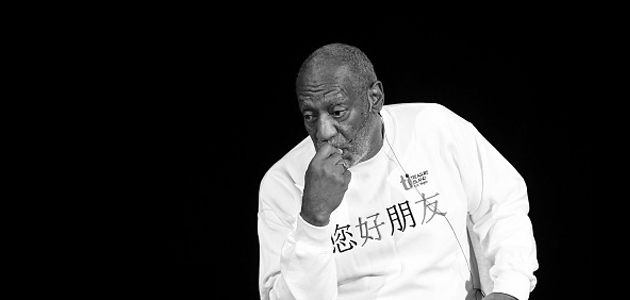
Bill Cosby Photo 1America’s Dad is having a very bad week. A few days ago, Barbara Bowman wrote a personal essay in The Washington Post chronicling how Bill Cosby drugged and raped her 30 years ago.

The story went viral and inspired several others to echo her experiences.

Not so when the teenager spoke out soon after the alleged attacks: When she went to a lawyer after the assaults, she was accused of lying. Her agent did nothing, either. Eventually, she moved on. Years later, Andrea Constand accused Cosby of rape and Bowman was asked to speak in court, but the case was quietly settled.

At this writing, a grand total of 15 women have accused Cosby of assault, dating from the late 1960s. (Here’s a timeline of the accusations.) Despite all this, Cosby’s career had coasted along—in fact, he was awarded the Mark Twain Prize for American Humor not long ago and was planning a new TV show.

But things are changing.

Finally, the accusers’ stories are getting traction. Why now? Last month, comedian Hannibal Buress called Cosby a rapist in his stand-up routine, which went viral. The Twitter-verse responded in kind: Last week, Cosby’s tone-deaf invitation to “meme me!” resulted in people superimposing assault accusations over his photo. #Cosbymeme did not go according to plan, and things only got worse: Last weekend, NPR interviewed him about his African American art collection and then asked him to respond to the Post story. He went silent. Eventually, his lawyer issued a statement firmly denying the allegations and refusing to comment further.

But the damage has been done: New stories about Cosby’s behavior continue to surface, Netflix has put his upcoming comedy special on hold, and NBC has abandoned plans to develop a new sitcom with him.

Why Accusations About Celebrities Aren’t Believed

Cosby isn’t the first icon to be accused of sexual assault or domestic violence, and yet the question persists: Why aren’t these accusers heard or given any credence—not just Cosby’s alleged victims, but the countless other people who have dared to challenge a celebrity?

The answer lies in the American conflation of celebrity and security, says Ulester Douglas, executive director of Men Stopping Violence. “We are a celebrity culture. Seeing someone we idolize, revere, and idealize being accused of horrific crimes makes us wonder: Who are we? It makes us realize that our own families could be capable of it, too,” he says. It’s unsettling and even terrifying to associate an idol with evil, particularly because there are so many celebrities who are good people, capable of powerful, positive influence.

Dissonance Perpetuates Silence

David Adams is a psychologist and co-director of Emerge, a Boston-based abusers’ intervention and counseling program. He sees a difference in how we respond to a stereotypical criminal and a celebrity accused of bad behavior due to our preconceptions about abusers. “We tend to think of an abuser as someone who is easily detectable: someone who is crude, sexist, and boorish. A quarter of men who abuse women do fit this stereotype, and since that’s a substantial subgroup, we tend to spot those guys and not the ones who are more likable. If we don’t know what to do with bad information about someone we adore, it creates dissonance, and we sometimes choose to disbelieve or to ignore it,” he says.

“When we see someone likable accused of a crime, we have a choice to believe something bad about them or to discount it because it doesn’t fit our experience. In some ways it’s easier to do that than to think, oh God, the world really is unknowable—I might as well give up on knowing people,” he says. “If we don’t know what to do with information about someone we worship, we put it aside.”

Why Celebrities Feel Immune

Of course, Cosby is hardly the first famous person to be accused of rape or assault. When we think about any celebrity facing serious allegations, though, it’s difficult to believe that an image-conscious idol could be willing to engage in hugely risky behavior, throwing away the very image they need. What’s going through their mind?

“Any consequence is overridden by the high of the conquest,” Douglas says. And, on a purely logistical level, “They do it because they can. They truly think they can get away with it, based on the very fact that they have a certain image. They will be believed; the accusers will be laughed out of the room.”

Absorbing The Narcissism Factor

In many celebrity cases, narcissism also plays a starring role. “A hallmark of narcissism is exceptionality. You literally think you will not get caught. This personality takes chances, acts reckless, and even associates the behavior with success, because they’ve always been rewarded,” Adams says.

“We think narcissists are people nobody would like. But, in fact, they’re quite charismatic, with good social and image-maintenance skills”— which often allow them to get away with bad behavior, even more so when there’s a PR team on call. Narcissists are also skilled at compartmentalization, Adams says, and they choose to focus on the “part of their life that everybody adores. They don’t focus on other parts of their lives, and if they do something wrong, they think, ‘Gee, everybody loves me. What’s the problem?’” he says. “It’s a lack of character development.”

“Narcissists can engage in all sorts of psychological gymnastics not to feel empathy,” says Douglas.

The Changing Tide

Adams says that it’s easy to categorize personalities as good versus bad. “We don’t think good and evil can co-exist in the same person,” he says. “But look at the Mafia—these guys who do horrible things but are notoriously good to their mothers. And along comes a show like The Sopranos to paint them in a more nuanced light. There’s now less focus on ‘good guys’ and ‘bad guys,’” he says. Understanding the complexities of personalities—refusing to glorify a celebrity as all good, all the time—could help to close the dissonance gap.

“We can also go a long way toward preventing male sexual and domestic violence against women by stopping the pervasive and pernicious victim-blaming,” Douglas says. “The media, for example, should quit asking the toxic, ‘Why did you go back to your abuser?’ and ‘Why didn’t you leave?’ A reporter could say instead, ‘As you know, there are some who question your credibility because of some of the choices you made. What, if anything, would you want to say to them?’ That is respectful journalism. The [accuser] should never be made to feel like she has to justify the choices she made or makes.”

Finally, in his own work with Men Stopping Violence, Douglas sees firsthand the power of healing through sharing. “I see survivors who are finding peace through coming forward and telling their stories. One of the most powerful things that survivors can do is tell their own stories, on their own terms,” he says.
The NO MORE Project – Posted November 19, 2014; retrieved November 26, 2014–
http://nomore.org/why-cosby-victims-werent-believed/

The subject matter in the foregoing article relates to the attitudes that communities must foster so as to mitigate the toleration of domestic violence, rape and stalking. These points are being brought into focus in a consideration of the book Go Lean … Caribbean. The book serves as a roadmap for the introduction and implementation of the technocratic Caribbean Union Trade Federation (CU), for the economic optimization in the region.

The focus of the Go Lean book is Economics, not domestic violence, rape or stalking! And yet this commentary relates that there is an alignment of objectives. The Go Lean roadmap posits that the economy of the Caribbean is inextricably linked to the security (public safety) of the Caribbean.

This CU/Go Lean roadmap has 3 prime directives:

  • Optimization of the economic engines in order to grow the regional economy and create 2.2 million new jobs.
  • Establishment of a security apparatus to protect the resultant economic engines and their relevant stakeholders.
  • Improve Caribbean governance (Executive facilitations, Legislative oversight and Judicial prudence) to support these economic/security engines.

Among the objectives to accomplish the economic elevation is the mission to retain Caribbean citizens in their homelands and repatriate the far-flung Diaspora back to the region. Since many people may have fled the region to mitigate abuse, attitudes of victim-blaming or complacency among public safety authorities must be “weeded out”.

The subject of Celebrity Culture is also germane for the Caribbean empowerment effort (Pages 203 & 224). The Go Lean roadmap consolidates the region’s 30 member-states into a Single Market, media market included – with the caveat of multi-language “simul-casting”. Celebrities will surely emerge. From a governance perspective, the CU will oversee the jurisdiction of monitoring and metering (ratings, rankings, service levels, etc) local public safety institutions to ensure their delivery of the Social Contract. for all regardless of gender or race.

Change has now come to the Caribbean. As the foregoing article depicts, there is a changing tide. It is no longer acceptable to dismiss accusers, even against celebrities. The article relates that “we can go a long way toward preventing male sexual and domestic violence against women by stopping the pervasive and pernicious victim-blaming”. This is part of a new community ethos – the value of women is not undermined! Many related issues/ points were elaborated in previous blogs, sampled here:

Justice Strategy: Special Prosecutors … et al
Caribbean Study: 58% Of Boys Agree to Female ‘Discipline’
Sex Crimes Mitigations – Students developing nail polish to detect date rape drugs
Aereo Founder on the future of TV; Caribbean included
Bob Marley: The legend of a Caribbean Celebrity lives on!
Muslim officials condemn abductions of Nigerian girls
Caribbean/Latin countries still view women as lesser
Book Review: ‘The Divide’ – Differences in US Justice for Rich versus Poor
Jamaica to receive World Bank funds to help in crime fight

The above commentaries examined global developments in crime mitigations and gender based attitudes, then relate their synchronicity with the principles in the Go Lean book. There are a number of touch points that relate to domestic violence, rape and stalking; these blogs also cite the community attitude to dissuade such behavior. Most importantly, the Go Lean book depicts solutions. These are presented as community ethos, strategies, tactics, implementations and advocates; detailed as follows:

Community Ethos – Privacy –vs- Public Protection Page 23
Community Ethos – Whistleblower Protection Page 23
Community Ethos – Witness Security Page 23
Community Ethos – Anti Bullying & Mitigations Page 23
Community Ethos – Light Up the Dark Places Page 23
Community Ethos – “Crap” Happens Page 23
Community Ethos – Minority Equalization Page 24
Community Ethos – Lean Operations Page 24
Community Ethos – NGO’s Page 25
Community Ethos – Reconciliations Page 34
Strategy – Rule of Law –vs- Vigilantism Page 49
Tactical – Separation of Powers – CariPol Page 77
Implementation – Reasons to Repatriate Page 118
Planning – Ways to Improve Failed-State Indices Page 134
Advocacy – Ways to Improve Governance Page 168
Advocacy – Ways to Better Manage the Social Contract Page 170
Advocacy – Ways to Impact Justice Page 177
Advocacy – Ways to Remediate and Mitigate Crime Page 178
Advocacy – Ways to Improve Gun Control – Restraining Orders Automatic Restrictions Page 179
Advocacy – Ways to Improve Intelligence Gathering Page 182
Advocacy – Ways to Improve Communications – Messaging Page 186
Advocacy – Ways to Impact Hollywood Page 203
Advocacy – Ways to Impact the Prison Industrial Complex – Reduce Recidivism Page 211
Advocacy – Ways to Impact Foundations Page 219
Advocacy – Ways to Protect Human Rights Page 220
Advocacy – Ways to Impact the One Percent –    Balancing Justice Provisions for Celebrities Page 224
Advocacy – Ways to Empower Women Page 226
Advocacy – Ways to Impact Persons with Disabilities – including Mental Challenges Page 228

The book Go Lean…Caribbean was written by resources from an organized movement, by people (residents and Diaspora) with passion to change/elevate the Caribbean’s economic, security and governing engines. One principal within this Go Lean movement has a direct job function to dissuade crimes against women.

While there is always the need to give the accused the benefit of the doubt, as in the current case against Bill Cosby, we do not want 30 years of inaction on reported sex crimes by celebrities. The CU roadmap’s goal is to optimize “Justice” institutions in the region. Why? All members of society (celebrities and regular citizens alike) need to be protected, and not dismissed or ignored, especially related to serious allegations like sexually inappropriate behavior. Any “misfeasance, malfeasance or nonfeasance” in this regards reflects negatively on the region’s hospitality – think of the unsolved disappearance of Natalee Holloway in Aruba in 2005; (see Page 190).

Though this topic may be a security issue, community wealth is undoubtedly linked, affecting push-and-pull factors for citizens to flee their homelands. This is lose-lose for all concerned. To the contrast, the goal of the Go Lean effort is to make the Caribbean a better place to live work and play; with justice for all. Since the region failed in the past, the new messaging is simple: “No More“!

The foregoing article is sourced by the Not-For-Profit organization, the “No More” Project. Their goal is to neutralize public attitudes that had previously tolerated and thusly promoted domestic violence, rape and stalking. This is a great role model for the Caribbean to emulate, as attitude adjustment is among the heavy-lifting tasks that regional administrators must undertake to bring positive change to the Caribbean.

Download the book Go Lean … Caribbean – now!

————

* Appendix – Video – Fat Albert And The Cosby Kidshttp://youtu.be/ga7gflAUGCc

It’s Bill Cosby coming at you with music and fun, and if you’re not careful, you might learn something before its done.


Share this post:
, , , ,
[Top]

The Geography of Joblessness

Go Lean Commentary

“A better place to live, work and play” – this is the tagline for the book Go Lean…Caribbean, thereby placing emphasis on the verb “work”. To work, there must be jobs, so the entire eco-system of jobs is a constant focus of the book’s publishers.

The foregoing news article relates to this mission. The underlying issue in this consideration relates to jobs and joblessness. There is the need for more jobs – in urban communities in OECD – Organization of Economic Cooperation and Development – countries (like US, Canada, Europe) and also in the Caribbean – see VIDEO in the Appendix below. But there are many issues that underlie the availability of jobs, such as geography, transportation and racial discrimination. To effect change in the job creation quest, there must be some consideration of these issues:

Subtitle: The difficulty people have in getting to jobs makes unemployment unnecessarily high

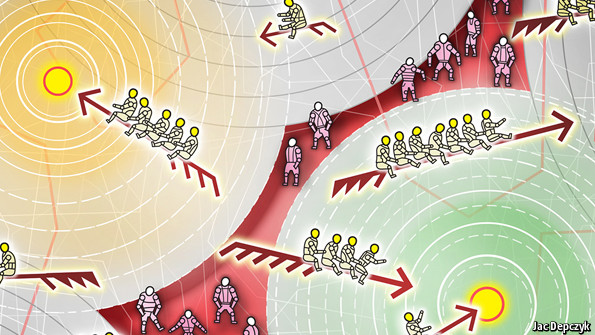
CU Blog - The Geography of Joblessness - PhotoIN THE OECD, a club mostly of rich countries, nearly 45 million people are unemployed. Of these, 16 million have been seeking work for over a year. Many put this apparently intractable scourge down to workers’ inadequate skills or overgenerous welfare states. But might geography also play a role?

In a paper* published in 1965, John Kain, an economist at Harvard University, proposed what came to be known as the “spatial-mismatch hypothesis”. Kain had noticed that while the unemployment rate in America as a whole was below 5%, it was 40% in many black, inner-city communities. He suggested that high and persistent urban joblessness was due to a movement of jobs away from the inner city, coupled with the inability of those living there to move closer to the places where jobs had gone, due to racial discrimination in housing. Employers might also discriminate against those that came from “bad” neighbourhoods. As a result, finding work was tough for many inner-city types, especially if public transport was poor and they did not own a car.

For the past 50 years, urban economists have argued over Kain’s theory. Some, like William Julius Wilson, then of University of Chicago, pointed to the decline of inner-city manufacturing to explain the sharp spike in poverty in black inner-city neighbourhoods between 1970 and 1980—in keeping with Kain’s logic. Others, like Edward Glaeser, another Harvard economist, suggest that spatial mismatch is overblown. There may indeed be a correlation between where people live and their chances of finding a job. But the connection may not be causal: people may live in bad areas because they have been shunned by employers, either for lack of skills or because of racial discrimination.

Until recently economists did not have adequate data to back up their opinions. Studies used cross-sectional data—a snapshot of an economy at a single point in time—which made it hard to disentangle cause and effect. Did someone live in a bad area because they could not find a job, or was it more difficult to find a job because they lived in a bad area? It was also hard to know quite how inaccessible a particular job was. Researchers could calculate the distance between homes and job opportunities but struggled to estimate how much time it would take to get from one to the other by car or public transport. And the research was marred by small samples, often all from a single city.

A new paper, published by the National Bureau of Economic Research, avoids these pitfalls. It looks at the job searches of nearly 250,000 poor Americans living in nine cities in the Midwest. These places contain pockets of penury: unemployment in inner Chicago, for instance, is twice the average for the remainder of the city. Even more impressive than the size of the sample is the richness of the data. They are longitudinal, not cross-sectional: the authors have repeated observations over a number of years (in this case, six). That helps them to separate cause and effect. Most importantly, the paper looks only at workers who lost their jobs during “mass lay-offs”, in which at least 30% of a company’s workforce was let go. That means the sample is less likely to include people who may live in a certain area, and be looking for work, for reasons other than plain bad luck.

For each worker the authors build an index of accessibility, which measures how far a jobseeker is from the available jobs, adjusted for how many other people are likely to be competing for them. The authors use rush-hour travel times to estimate how long a jobseeker would need to get to a particular job.

If a spatial mismatch exists, then accessibility should influence how long it takes to find a job. That is indeed what the authors find: jobs are often located where poorer people cannot afford to live. Those at the 25th percentile of the authors’ index take 7% longer to find a job that replaces at least 90% of their previous earnings than those at the 75th percentile. Those who commuted a long way to their old job find a new one faster, possibly because they are used to a long trek.

The annihilation of space with time

Other papers suggest that workers may be in the wrong place. A study from the Brookings Institution, a think-tank, finds that poverty in America has become more concentrated over the past decade. During the 2000s the number of neighbourhoods with poverty rates of 40% or more climbed by three-quarters. Unlike Kain’s day, though, poverty is growing fastest in the suburbs, not the inner cities. Pockets of concentrated poverty also tend to suffer from bad schools and crime, making them even more difficult to escape.

Spatial mismatch is not just an American problem. A paper by Laurent Gobillon of the French National Institute for Demographic Studies and Harris Selod of the Paris School of Economics finds that neighbourhood segregation prevents unemployed Parisians from finding work. Another study, conducted in England, concludes that those who live far from jobs spend less time looking for work than those who live nearby, presumably because they think they have little hope of finding one.

All this has big policy implications. Some suggest that governments should encourage companies to set up shop in areas with high unemployment. That is a tall order: firms that hire unskilled workers often need to be near customers or suppliers. A better approach would be to help workers either to move to areas with lots of jobs, or at least to commute to them. That would involve scrapping zoning laws that discourage cheaper housing, and improving public transport. The typical American city dweller can reach just 30% of jobs in their city within 90 minutes on public transport. That is a recipe for unemployment.
The Economist Magazine (Posted October 25, 2014; Retrieved November 7, 2014) –
http://www.economist.com/news/finance-and-economics/21627628-difficulty-people-have-getting-jobs-makes-unemployment-unnecessarily

References – *Studies cited in this article

“Job displacement and the duration of joblessness: The role of spatial mismatch”, by F. Andersson et al, National Bureau of Economic Research, 2014

“The effect of segregation and spatial mismatch on unemployment: evidence from France”, by L. Gobillon & H. Selod, Centre for Economic Policy Research, 2007

“The spatial mismatch hypothesis: three decades later”, by J.F. Kain, Housing Policy Debate, 3(2), 371-460, 1992

“Spatial mismatch, transport mode and search decisions in England”, by E. Patacchini, & Y. Zenou, Journal of Urban Economics, 58(1), 62-90, 2005.

The Growth and Spread of Concentrated Poverty, 2000 to 2008-2012“, by E. Kneebone, Brookings Institution

The book Go Lean…Caribbean serves as a roadmap for the introduction and implementation of the technocratic Caribbean Union Trade Federation (CU). The CU is set to optimize Caribbean society, starting with economic empowerment. In fact, the Go Lean roadmap has 3 prime directives:

  • Optimization of the economic engines in order to grow the regional economy to $800 Billion & create 2.2 million new jobs.
  • Establishment of a security apparatus to protect the resultant economic engines.
  • Improve Caribbean governance to support these engines.

The Go Lean roadmap calls for many changes and empowerments. One such example is the infrastructure of Self-Governing Entities (SGE), to allow for industrial developments in a controlled (bordered) environment. There is so much that can be accomplished with the right climate, entrepreneurial spirit, access to capital and willing work force. But location is significant with this model, workers must physically get to the bordered campuses/compounds, to get to the jobs. So transportation solutions are paramount to this roadmap.

The CU will foster the installation of SGE’s, and the infrastructure to transport workers to the jobs. The roadmap identifies electrified streetcars, light-rail, natural gas buses and other transit options.

Another compelling mission of the Go Lean book is to lower the “push and pull” factors that lead many to abandon their Caribbean homeland for foreign shores. The book posits that the region must create jobs, the roadmap calls for 2.2 million new jobs over a 5-year period, so that its citizens do not have to leave to become aliens in a foreign land, to be discriminated against as victims of joblessness due to the compelling factors depicted in the foregoing article. The CU does not aim to change North American or European societies, beyond impacting the Diaspora – our scope is the Caribbean. So the public messaging of the societal defects in those countries, as depicted in the foregoing article, should have the effect of dissuading Caribbean emigration. This affects the “pull” factors for Caribbean citizens wanting to leave.

That’s the “pull”; we must still deal with the “push” factors …

There are so many other defects of Caribbean life that need to be addressed to lower the “push” factors. This point is pronounced early in the book with the Declaration of Interdependence (Pages 12 – 14) with many statements that demonstrate the need to remediate Caribbean communities:

xix. Whereas our legacy in recent times is one of societal abandonment, it is imperative that incentives and encouragement be put in place to first dissuade the human flight, and then entice and welcome the return of our Diaspora back to our shores. This repatriation should be effected with the appropriate guards so as not to imperil the lives and securities of the repatriated citizens or the communities they inhabit. The right of repatriation is to be extended to any natural born citizens despite any previous naturalization to foreign sovereignties.

xx.  Whereas the preparation of our labor force can foster opportunities and dictate economic progress for current and future generations, the Federation must ensure that educational and job training opportunities are fully optimized for all residents of all member-states, with no partiality towards any gender or ethnic group. The Federation must recognize and facilitate excellence in many different fields of endeavor, including sciences, languages, arts, music and sports. This responsibility should be executed without incurring the risks of further human flight, as has been the past history.

xxiv. Whereas a free market economy can be induced and spurred for continuous progress, the Federation must install the controls to better manage aspects of the economy: jobs, inflation, savings rate, investments and other economic principles. Thereby attracting direct foreign investment because of the stability and vibrancy of our economy.

xxv.  Whereas the legacy of international democracies had been imperiled due to a global financial crisis, the structure of the Federation must allow for financial stability and assurance of the Federation’s institutions. To mandate the economic vibrancy of the region, monetary and fiscal controls and policies must be incorporated as proactive and reactive measures. These measures must address threats against the financial integrity of the Federation and of the member-states.

xxvi. Whereas the Caribbean region must have new jobs to empower the engines of the economy and create the income sources for prosperity, and encourage the next generation to forge their dreams right at home, the Federation must therefore foster the development of new industries, like that of ship-building, automobile manufacturing, pre-fabricated housing, frozen foods, pipelines, call centers, and the prison industrial complex. In addition, the Federation must invigorate the enterprises related to existing industries like tourism, fisheries and lotteries – impacting the region with more jobs.

The purpose of the Go Lean…Caribbean roadmap is to compose, communicate and compel economic, security and governing solutions for the Caribbean homeland. We want a better society than the past, and perhaps even better than our OECD counterparts. (A CU mission is to repatriate the Diaspora back to the homeland).

How, what, when?

The Go Lean book details a series of community ethos, strategies, tactics, implementations and advocacies to impact jobs in the region, member-states, cities and communities. Below is a sample:

Community Ethos – Deferred Gratification Page 21
Community Ethos – Economic Principle – Economic Systems Influence Choices & Incentives Page 21
Community Ethos – Economic Principle – Voluntary Trade Creates Wealth Page 21
Community Ethos – Job Multiplier Page 22
Community Ethos – Minority Equalization Page 24
Community Ethos – Lean Operations Page 24
Community Ethos – Ways to Impact the Future Page 26
Community Ethos – Ways to Foster Genius Page 27
Community Ethos – Ways to Help Entrepreneurship Page 28
Community Ethos – Ways to Promote Happiness Page 36
Community Ethos – Ways to Impact the Greater Good Page 37
Strategy – Mission – Facilitate Job-Creating Industries Page 46
Tactical – Fostering a Technocracy Page 64
Tactical – Tactics to Forge an $800 Billion Economy – High Multiplier Industries Page 70
Tactical – Separation of Powers – Self-Governing Entities Page 80
Implementation – Ways to Pay for Change Page 101
Implementation – Steps to Implement Self-Governing Entities Page 105
Implementation – Ways to Deliver Page 109
Implementation – Reasons to Repatriate to the Caribbean Page 118
Planning – 10 Big Ideas – Self Governing Entities as Job Creating Engines Page 128
Planning – Ways to Make the Caribbean Better Page 131
Planning – Ways to Improve Failed-State Indices – OECD-style Big Data Analysis Page 133
Advocacy – Ways to Grow the Economy Page 151
Advocacy – Ways to Create Jobs Page 152
Advocacy – Ways to Improve Transportation Page 205
Advocacy – Ways to Impact the Diaspora Page 217
Advocacy – Battles in the War on Poverty Page 222
Advocacy – Ways to Impact Trinidad & Tobago – Bottom Line: OECD Case Study Page 240
Appendix – Job Multipliers Page 259

Other subjects related to job empowerments (and joblessness) for the region have been blogged in other Go Lean…Caribbean commentaries, as sampled here:

https://goleancaribbean.com/blog/?p=2769 DC Streetcars to Facilitate Easier Urban Transportation Options
https://goleancaribbean.com/blog/?p=2750 Disney World’s example of Self Governing Entities and Economic Impacts
https://goleancaribbean.com/blog/?p=2602 Jobless Rural Guyana Wrestles With High Rate of Suicides
https://goleancaribbean.com/blog/?p=2126 Where the Jobs Are – Computers Reshaping Global Job Market
https://goleancaribbean.com/blog/?p=2025 Where the Jobs Are – Attitudes & Images of the Caribbean Diaspora in US
https://goleancaribbean.com/blog/?p=2003 Where the Jobs Are – Ship-breaking under the SGE Structure
https://goleancaribbean.com/blog/?p=1698 Where the Jobs Are – STEM Jobs Are Filling Slowly
https://goleancaribbean.com/blog/?p=1683 Where the Jobs Were – British public sector now strike over ‘poverty pay’
https://goleancaribbean.com/blog/?p=1596 Book Review: ‘Prosper Where You Are Planted’
https://goleancaribbean.com/blog/?p=1433 Caribbean loses more than 70 percent of tertiary educated to brain drain
https://goleancaribbean.com/blog/?p=1214 Where the Jobs Are – Fairgrounds as SGE & Landlords for Sports Leagues
https://goleancaribbean.com/blog/?p=273 10 Things We Don’t Want from the US – Job Discrimination of Immigrations

The purpose of this roadmap is to elevate Caribbean society. To succeed we must apply lessons from the advanced economy countries (OECD) like the US, Canada and Western Europe; lessons from their good, bad and ugly experiences of the past.

The Go Lean book embraces economic principles. One basic tenet is “supply and demand”. The assumption would be that if there are job openings and unemployed people, that “suppliers and demanders” would align. Unfortunately that is not the reality; the foregoing article relates the other issues in OECD countries of racism and geography.

Life in the OECD countries is not fair. It is a struggle; perhaps even more so than necessary.

The Go Lean movement (book and blog commentaries) posits that there is less effort to remediate the Caribbean homeland, than to thrive in an alien land. So it thusly advocates to “prosper where planted”. With some effort, as defined in the Go Lean book, the Caribbean can truly become a better place to live, work and play. 🙂

Download the free e-Book of Go Lean … Caribbean – now!

————

AppendixVideo: OECD – For A Better World Economyhttp://youtu.be/B5XGiihBfaU


Share this post:
, , , ,
[Top]

Caribbean Study: 58% Of Boys Agree to Female ‘Discipline’

Go Lean Commentary

The issue in the subsequent news article relates to the guidance we give our young people. The words we say and the things we do have an impact on their standards of right and wrong. The research in this article relates to the attitudes that lead to domestic violence, and why the rest of the community may standby and tolerate it.

This point is being brought into focus in a consideration of the book Go Lean … Caribbean. The book serves as a roadmap for the introduction and implementation of the technocratic Caribbean Union Trade Federation (CU), for the economic optimization in the region.

The focus of the book is “Economics“, not domestic violence! And yet this commentary relates that there is an alignment of objectives. The Go Lean roadmap posits that the economy of the Caribbean is inextricably linked to the security (public safety) of the Caribbean.

Among the objectives to accomplish the economic elevation is the mission to retain Caribbean citizens in their homelands and repatriate the far-flung Diaspora back to the region.

Many times people flee the region to mitigate abusive situations; even more troubling, as victims they may have encountered an attitude of complacency and indifference among public safety authorities. The following article posits that this attitude is deeply entrenched in society, even among the next (younger) generation.

Title: COB Study: 58% Of Boys Believe Men Should Discipline Their Female Partners
By: Rashad Rolle, Staff Reporter
The Tribune – Bahamas Daily Newspaper – October 21, 2014

Caribbean Study 1

FIFTY-eight per cent of high school boys and 37 per cent of high school girls participating in a recent academic survey believe men should discipline their female partners, according to a new College of the Bahamas study.

The study also found that 49 per cent of boys believe women should ask permission from their male partners if they wanted to go out while 17 per cent of girls supported this view.

Of the students surveyed, 46 per cent of boys believed wives must have sex when her husband wants to, compared to 16 per cent of girls. This, according to researchers, has possible implications on debates on marital rape.

According to the study, most of the teens from both sexes believed men should be the head of their households and that both husbands and wives should submit to one another and remain committed, reflecting the country’s religious values.

The research was conducted by members of the Bahamas Crisis Centre (BCC) and COB’s academic community. Its findings appear in the latest edition of the International Journal of Bahamian Studies. The study investigated teen perspectives on relationships between the sexes and the prevalence of violence within teen relationships.

It concluded that efforts must be made to ensure adolescents adjust their behaviour before becoming adults in order to push back against a culture of violence.

It also concluded that girls are more likely than boys to use aggressive behaviour in teen relationships, such as restricting access to friends of the opposite sex.

Based on the gathered data, the study concludes that “there is a clear need for children to be taught how to respect one another from an early age.”

One thousand students from grade 10 to 12 from eight schools, including one private school, participated in the study.

According to the study, “over 80 per cent of respondents had been on a date and so had a relationship of some sort with the opposite sex,” a figure noted as higher than the 61 per cent reported in a similar study of teens in the United   States.

The study is titled Attitudes of High School Students Regarding Intimate Relationships and Gender Norms in New Providence, The Bahamas.

“The responses show that on a number of issues regarding relationships, boys and girls have different attitudes and behaviours,” the researchers wrote. “It can also be seen that large numbers of teens can be expected to be victims of controlling behaviours. The use of threats and physical force may be learnt behaviours due to the presence of violence in homes in The Bahamas.”

“Overall, it is apparent that the breakdown in adult relationships, which is considered to play an important role in the violence observed in Bahamian society, may be the consequence of adolescents not adjusting their teen behaviours when they become adults. Therefore, modifying the attitudes of children with regard to interpersonal relationships may be important in reducing long-term violence in the country. Boys and girls had different attitudes on many aspects of relationships with current or future partners, but their endorsement of stereotypes of sex-related roles and their participation in certain behaviours could be a cause for concern. Underpinning these attitudes may be issues associated with what it means to be a woman or a man in The Bahamas, and related gender norms.” http://www.tribune242.com/news/2014/oct/21/cob-study-58-boys-believe-men-should-discipline-th/
———–
The actual Research Report: ‘Attitudes of High School Students Regarding Intimate Relationships and Gender Norms in New Providence, The Bahamas’ can be found here:
http://journals.sfu.ca/cob/index.php/files/article/view/225

This CU/Go Lean roadmap has 3 prime directives:

  • Optimization of the economic engines in order to grow the regional economy and create 2.2 million new jobs.
  • Establishment of a security apparatus to protect the resultant economic engines and their relevant stakeholders.
  • Improve Caribbean governance, with a separation-of-powers between member-state administrations and the CU federal government (Executive facilitations, Legislative oversight and Judicial prudence) to support these economic/security engines.

While the subject of the Caribbean adolescent culture of violence falls on the member-state side of the separation-of-power / governance divide, the CU will entail a jurisdiction of monitoring and metering (ratings, rankings, service levels, etc) local governance and their delivery of the Social Contract.

Change has now come to the Caribbean. As the foregoing article depicts the problem of domestic violence is tied to a community ethos. This ‘negative’ ethos must be uprooted and replaced with a new, progressive spirit, starting at the adolescent level, when attitudes are pliable and sensitive to strategic messaging; see VIDEO below.

Many related issues/points were elaborated in previous blogs, sampled here:

Students developing nail polish to detect date rape drugs
Book Review: ‘Chasing Youth Culture and Getting It Right’
Muslim officials condemn abductions of Nigerian girls
Caribbean/Latin countries still view women as ‘lesser
Jamaica to receive World Bank funds to help in crime fight

The above commentaries examined global developments and related their synchronicity with the principles in the Go Lean book. There are a number of touch points that relate to domestic violence and the community attitude to dissuade such behavior. Most importantly, the Go Lean book depicts solutions. These are presented as community ethos, strategies, tactics, implementations and advocates; a sample is detailed as follows:

Community Ethos – Privacy –vs- Public Protection Page 23
Community Ethos – Whistleblower Protection Page 23
Community Ethos – Witness Security Page 23
Community Ethos – Anti Bullying & Mitigations Page 23
Community Ethos – Light Up the Dark Places Page 23
Community Ethos – Ways to Manage Reconciliations Page 34
Community Ethos – Ways to Impact the Greater Good Page 37
Strategy – Rule of Law –vs- Vigilantism Page 49
Tactical – Separation of Powers – CariPol Page 77
Implementation – Reasons to Repatriate Page 118
Planning – Ways to Improve Failed-State Indices – Law Enforcement Oversight Page 134
Advocacy – Ways to Better Manage the Social Contract Page 170
Advocacy – Ways to Impact Justice – Police Internal Affairs Auditing Page 177
Advocacy – Ways to Remediate and Mitigate Crime – Youth Crime Awareness Page 178
Advocacy – Ways to Improve Gun Control – Suspend Gun Rights during Domestic Discord Page 179
Advocacy – Ways to Improve Intelligence Gathering – Electronic Surveillance of Suspects Page 182
Advocacy – Ways to Improve Communications – Public Messaging Page 186
Advocacy – Ways to Impact the Prison Industrial Complex – Reduce Recidivism Page 211
Advocacy – Ways to Impact Foundations – Crisis Centers and Support Groups Page 219
Advocacy – Ways to Protect Human Rights – Women & Youth Focus Page 220
Advocacy – Ways to Empower Women Page 226
Advocacy – Ways to Impact Youth Page 227
Advocacy – Ways to Impact Persons with Disabilities Page 228
Appendix – Failed-State Definitions – Index for Human Rights Uneven Protection Page 273

The book Go Lean…Caribbean was written by resources from an organized movement, by people (residents and Diaspora) with passion to change/elevate their Caribbean homeland. This is personal! One of those people devoted to this Go Lean goal, Camille Russell-Smith, is a co-author of the underlying research in the foregoing news article. This research is a product of her collaboration with the Bahamas Crisis Centre (Donna Nicolls) and her role at the College of the Bahamas as a Counselor, Instructor and Workshop Facilitator for incoming freshmen students entitled “Violence in Interpersonal Relationships”.

Good job Donna Nicolls, Camille Russell-Smith and your research team; thank you for your service. Congratulations on this timely research effort.

The goal is to make the Caribbean a better place to live work and play; with justice for all, regardless of gender. This is the right thing to do! But this is not easy. This takes heavy-lifting on the part of everyone: the educators, public safety officials, community leaders and parents. The message must be strong and clear:

No More!

No More‘ is the theme of a campaign in the US to minimize the public attitudes that tolerate domestic violence. This is a great role model for the Caribbean to emulate. See the VIDEO here of the Public Service Announcement (PSA)/TV Commercial:

Video Title -‘ No More‘ PSA Campaign – https://www.youtube.com/watch?v=j70ha1PUlqk:

Download the book Go Lean … Caribbean – now!

Share this post:
, , , , ,
[Top]

Book Review: ‘The Protest Psychosis’

Go Lean Commentary

Life, liberty and the pursuit of happiness…

These words are from the US Declaration of Independence,  but how many actually believe these words apply to all Americans? This important part of this very important American document is not exclusively American; it is reflected repeatedly in values from the Enlightenment Era (1650 to 1700) that became fundamental to a lot of protest movements around the world. This is also true of the movement to protest the status quo in the Caribbean region today. This movement is underpinned by the book Go Lean … Caribbean in its efforts to elevate Caribbean society.

Many times protesters have been viewed as insane by contemporaries and especially their adversaries. This oppositional practice was far too common in the US during the slavery era, and just recently during the Civil Rights Movement in the latter half of the 20th Century. This was the point of the book The Protest Psychosis: How Schizophrenia Became a Black Disease” by Professor Jonathan Metzl. This review paragraph summarizes the book:

A powerful account of how cultural anxieties about race shaped American notions of mental illness The civil rights era is largely remembered as a time of sit-ins, boycotts, and riots. But a very different civil rights history evolved at the Ionia State Hospital for the Criminally Insane in Ionia, Michigan. In “The Protest Psychosis“, psychiatrist and cultural critic Jonathan Metzl tells the shocking story of how schizophrenia became the diagnostic term overwhelmingly applied to African American protesters at Ionia–for political reasons as well as clinical ones. Expertly sifting through a vast array of cultural documents, Metzl shows how associations between schizophrenia and blackness emerged during the tumultuous decades of the 1960s and 1970s – and he provides a cautionary tale of how anxieties about race continue to impact doctor-patient interactions in our seemingly postracial America.
http://www.alibris.com/search/books/isbn/9780807001271?qwork=#search-anchor
- Photo 3

From this historic perspective, there are many lessons to consider for the Caribbean empowerment effort.

The Caribbean is not detached from the underlying narrative of The Protest Psychosis book; this region benefited greatly from the US Civil Rights Movement. Though there may not have been many sit-ins, protest marches (a la the “March on Washington”) in the Caribbean, there was a natural spin-off. All of the Caribbean have a majority Black population (except for one, the French Caribbean island of Saint Barthélemy), that were suppressed, repressed and oppressed until the Civil Rights Movement and De-colonization-Majority Rule Movements manifested. There is the need now for a new protest movement. The Caribbean status quo still reflects economic suppression, repression and oppression; the societal abandon rate is so abominable that 70 percent of college educated citizens leave, resulting in a debilitating brain drain.

  • Will the demands to change Caribbean society today require “psychotic” protests?
  • Will a conservative population or empowered governing elite emerge to halt change and demand that the status quo continue unabated?
  • Who will be the new champions of change this time?
  • Will their advocacy be so impassioned that their motives and actions will be labeled as deranged or insane?

Insanity and Schizophrenia are all serious subjects within the field of mental health, not to be taken lightly. Imagine then, the weight of authority thrust upon the diagnosis of a Clinical Psychiatrist when he or she labels some protester with these diagnoses. Imagine too, how such protests can be undermined just by tossing around these labels. This is a serious issue that requires some sober reflection.

Sober reflection is the appropriate descriptor of the following podcast, a 30-minute interview with the author of the referenced book.

The book review follows:

Book Review Podcast Presented by: Lynne Malcolm
Title: The Protest Psychosis: How Schizophrenia Became a Black Disease.
By: Professor Jonathan Metzl

Psychiatrist Jonathan Metzl treats people in the clinic whose lives are afflicted by severe psychosis. But he also documents an explosive ‘other’ history of schizophrenia, and what he sees as its transformation from a diagnosis of feminine docility or creative eccentricity, to one given to angry black men during the civil rights era. You’ll never see medicine and the mind in quite the same light again.

About the Presenter: Lynne Malcolm

- Photo 1Lynne Malcolm is passionate about people and their personal experience and when she least expected it – she discovered the power of radio to tell their stories. She is also Executive Producer of RN’s (Radio National) Science Unit.

Lynne has received a number of awards for her work in radio including Bronze & Gold Medals in the New York Radio Festivals International Awards, the Michael Daley Award for Journalism in Science, finalist status in the Eureka Awards. She has also won 2 Mental Health Services media achievement awards for All in the Mind, one in 2007 for her series on schizophrenia, and one in 2013 for 2 programs on youth mental health.

Lynne is delighted to be hosting All In the Mind because she finds the workings of the human mind and how that affects our lives endlessly fascinating.
All In The Mind – Radio National, Australia Broadcast Corporation Saturday 1 May 2010 1:00PM
http://www.abc.net.au/radionational/programs/allinthemind/the-protest-psychosis/3041652

Podcast: http://youtu.be/9zc0mI5HgF8

This consideration of such sober topics aligns with the book Go Lean… Caribbean. The book addresses many serious aspects of Caribbean life.  While the Go Lean book is not a reference source for science, mental health or psychiatry, it does glean from “social science” concepts in communicating the plan to elevate Caribbean society. The book serves as a roadmap for the introduction and implementation of the technocratic Caribbean Union Trade Federation (CU). The complete prime directives are described as:

  • Optimize the economic engines of the Caribbean to elevate and grow the regional economy to $800 Billion.
  • Establish a security apparatus to protect the resultant economic engines.
  • Improve Caribbean governance to support these engines.

The Go Lean … Caribbean roadmap constitutes a change for the region, a plan to consolidate 30 member-states into a Trade Federation with the tools/techniques to bring immediate change to the region to benefit one and all member-states. The ethos to effectuate this change in the region will require courage, advocacy and passion. It is our sincere hope that these attributes will not be considered “crazy or insane”.

This vision may seem “insane” to some.

The Go Lean roadmap immediately calls for the establishment of a federal Health Department with some oversight over the region’s mental health administrations – due to funding, ratings and rankings. The focus on mental health will be as stern as all other health concerns (cancer, trauma, virus, immunizations). This direct correlation of mental health issues with the economy has been previously detailed in Go Lean blog/commentaries, as sampled here:

Guyana Wrestles With High Rate of Suicides
Recessions and Public Health in the Caribbean Region

In addition, Big Pharmaceutical companies had some vested interest in the mis-diagnosis of psychotic drugs; this familiar malpractice has been the subject of a previous blog. (See Haldol photo/advertising above).

The Go Lean roadmap calls for the immediate coordination of the region’s healthcare needs. This point is declared early in the Go Lean book, commencing with this opening pronouncement in the Declaration of Interdependence (Page 12), as follows:

ix.  Whereas the realities of healthcare … cannot be ignored and cannot be afforded without some advanced mitigation, the Federation must arrange for health plans to consolidate premiums of both healthy and sickly people across the wider base of the entire Caribbean population. The mitigation should extend further to disease management, wellness, mental health, obesity and smoking cessation programs.

The foregoing Book Review recited a dysfunction in the US during the Civil Rights Movement of blatantly labeling everyone desirous of social change as just being schizophrenic/insane. This was an abuse of the Psychiatric profession and the Hippocratic oath (for Doctors to do no harm).  Schizophrenia is a serious disorder. This was barely understood until recently in medical science history. See the VIDEO clip (below) from the movie: “A Beautiful Mind”.

We have the need for protest movements in the Caribbean now. But we also need to be technocratic in the management of our mental health needs – no blatant assignment of labels just to “shoo” away protesters or Advocates for change. The Go Lean book details the community ethos to forge change; plus the executions of the following strategies, tactics, implementations and advocacies to impact the region’s healthcare to ensure no abuse of the mental health process:

Assessment – Caribbean Single Market & Economy Page 15
Assessment – Dutch Caribbean – Integration & Secessions Page 16
Assessment – French Caribbean – Organization & Discord Page 17
Assessment – Puerto Rico – The Greece of the Caribbean Page 18
Community Ethos – Security Principles – Privacy versus Public Protection Page 23
Community Ethos – Security Principles – Anti-Bullying and Mitigation Page 23
Community Ethos – Security Principles – “Crap” Happens Page 23
Community Ethos – Governing Principles – Lean Operations Page 24
Community Ethos – Governing Principles – Cooperatives Page 24
Community Ethos – Governing Principles – Non-Government Organizations Page 25
Community Ethos – Ways to Impact the Future Page 26
Community Ethos – Ways to Foster Genius Page 27
Community Ethos – Ways to Promote Happiness Page 36
Community Ethos – Impact the Greater Good Page 37
Strategy – Vision – Confederate 30 Member-States Page 45
Strategy – Mission – Reform   our Health Care Response Page 47
Strategy – Agents of Change – Aging Diaspora Page 57
Tactical – Fostering a Technocracy Page 64
Tactical – How to Grow the Economy to $800 Billion Page 67
Separation of Powers – Department of Health Page 86
Implementation – Ways to Deliver Page 109
Planning – Ways to Make the Caribbean Better Page 131
Planning – Ways to Improve Failed-State Indices Page 134
Planning – Lessons from Indian Reservations – Hopelessness & Mental Health Page 148
Advocacy – Ways to Grow the Economy Page 151
Advocacy – Ways to Improve Healthcare Page 156
Advocacy – Ways to Better Manage the Social Contract Page 170
Advocacy – Ways to Foster Cooperatives Page 176
Advocacy – Ways to Improve Emergency Management – Trauma Medicine Page 196
Advocacy – Ways to Impact the Prison Industrial Complex Page 211
Advocacy – Ways to Improve Elder-Care Page 225
Advocacy – Ways to Empower Women Page 226

Caribbean society is now imperiled; it is in crisis due to deficiencies in economics, security and governance. It should be considered insanity for people to just apathetically accept the status quo. Apathy should not be an option; the options should be “fight or flight”. But far too often, “flight” was selected.

Change has now come to our region; everyone should engage! There is the need for a permanent union to provide efficient stewardship for Caribbean economy, security and governing engines. The Go Lean…Caribbean posits that there are problems, agents of change, that are too big for just any one member-state to tackle alone, there must be a regional solution. This multi-state technocratic administration of the CU may be our best option.

The foregoing article/AUDIO podcast, the Book Review on The Protest Psychosis alludes that 1-out-of-every-100 persons are afflicted with Schizophrenia and related issues (depression and anxiety disorders). The commonly accepted fact is that brain chemistry changes in a lot of people (men and women) as they age, or women enduring child birth or menopause. So many people are affected – perhaps one in every family. Monitoring, managing and mitigating the issues of mental health impacts the Greater Good – the greatest good for the greatest number of people.

The people and institutions of the region are hereby urged to lean-in to this Go Lean roadmap. We can make the Caribbean a better homeland to live, work and play. 🙂

Download the free e-Book of Go Lean … Caribbean – now!

————-

Video: Selected Scenes of Schizophrenia from the movie “A Beautiful Mind”- https://www.youtube.com/watch?v=Yqj1DhUKJco

- Photo 2

Share this post:
, , , , ,
[Top]

The ‘Great ShakeOut’ Earthquake Drill

Go Lean Commentary

At this moment (Thursday October 16), there is a Category 4 Hurricane (Gonzalo) bearing down on a Caribbean member-state (Bermuda), and yet this commentary is focusing on another type of natural disaster: Earthquakes.

January 2010 saw a devastating tremor hit Haiti. The whole world came to a halt – from Haiti’s perspective – the island nation has still not recovered.

Hurricanes. Earthquakes. This is the reality of Caribbean life – we have to contend with natural disasters; some with advanced warnings, some with no warnings at all.

In the past, our region has not done well managing the crisis associated with natural disasters. In fact, this was a motivation for the origination of the book, Go Lean … Caribbean. We do not have the luxury of “sticking our head in the sand” and pretending that there is no problem. Rather, we must prepare.

The foregoing news article/VIDEO is an example of earthquake preparation around the world, but especially in a region (US Eastern Seaboard) that usually do not have to contend with the threat of earthquakes; and yet got a surprising “shake” in August 2011:

Title: Damaged National Cathedral Hosts ‘Great ShakeOut’ Earthquake Drill
By: Alex DeMetrick, General Assignment Reporter

WASHINGTON (WJZ) – There’s nothing like an earthquake to get your attention, and the large quake Maryland felt three years ago is helping to spread the word to prepare for another.

Alex DeMetrick reports it’s all part of the great shakeout campaign.

Earthquake Drill - Photo 1

Depending on where you were three years ago, experiencing a 5.8 magnitude earthquake made an impression.

And you didn’t have to be scrambling out of the Washington Monument.

Maryland rocked all over.

“The Earth’s crust here is old; it’s cold. It transmits energy very effectively. Sort of rings like a bell,” said Dr. David Applegate, U.S. Geological Survey.

And because it could ring again, the Mid-Atlantic region is now part of the Great ShakeOut.

With the National Cathedral as a backdrop, the day is used to promote “drop, cover and hold on” in a quake.

“Something as simple as a book could hurt you, or a bookshelf could hurt, so you don’t want to try and run out, especially in our area here,” said Wendy Phillips, FEMA program specialist.

Bricks and masonry can fall. Thousands of pounds worth fell from the top of the National Cathedral.

“Top of the tower is the absolute worst,” said James Shepherd, director of preservation at the National Cathedral. “So those are the areas that really released the energy. Those are the areas we have the most damage.”

Repairs made the inside safe, although work still continues at the rear of the cathedral.

Just this reinforcement effort has cost $10 million.

Another $22 million will have to be found to strengthen the structure’s flying buttresses.

If it isn’t done, “what that means if there’s an earthquake, the stones move,” Shepherd said.

While repairs may still take years, the cathedral is a reminder the next earthquake could happen any time.

“Absolutely, earthquakes have defied efforts to give a short term prediction, so an earthquake in the east, less frequent, but the shaking can be a real issue over a wide area,” Applegate said.

The Great ShakeOut campaign began in California, and worldwide an estimated 25 million people, including 1 million in the Mid-Atlantic, practiced drop, cover and hold-on drills Thursday.
Baltimore Local CBS Station WJZ Newscast  (Retrieved 10-16-2014) – http://baltimore.cbslocal.com/2014/10/16/damaged-national-cathedral-hosts-great-shakeout-earthquake-drill/

CBS Baltimore Video: http://baltimore.cbslocal.com/video?autoStart=true&topVideoCatNo=default&clipId=10700214

The Go Lean book posits that earthquakes are outside of our control and can easily wreak havoc on one Caribbean island after another. This regional threat is due to the active Enriquillo fault-line in the Greater Antilles (Jamaica, Cuba, Hispaniola and Puerto Rico) and the Lesser Antilles subduction zone (also known for volcanoes) along the rim of the Eastern Caribbean basin. Already there have been a number of small quakes in a few Caribbean islands for 2014, including Puerto Rico, Dominican Republic, Martinique, Barbados and others.

So the earthquake threat is real. The foregoing article/VIDEO advocates preparing people in the region to survive quaking and shaking. The Caribbean has to be on guard for danger from seismic activities – we have failed miserably in the past, as in Haiti.

Earthquake Drill - Photo 2A previous blog/commentary asserted that the risk of earthquakes plus the constant threats during the annual hurricane season creates the need for a full-time sentinel to monitor, mitigate and manage the risks of natural disasters in the region. This is the mandate for the technocratic Caribbean Union Trade Federation (CU) for the 30 member-states of the Caribbean region. The Go Lean … Caribbean roadmap describes the CU’s prime directives as empowering the region’s economic engines, providing homeland security assurances and preparing/responding the region’s governance for natural disasters.

The point of natural disaster preparation, especially in the era of climate change, is pronounced early in the book with this Declaration of Interdependence (Page 11), with this opening statement:

i.        Whereas the earth’s climate has undeniably changed resulting in more severe tropical weather storms, it is necessary to prepare to insure the safety and security of life, property and systems of commerce in our geographical region. As nature recognizes no borders in the target of its destruction, we also must set aside border considerations in the preparation and response to these weather challenges.

The Go Lean book details the economic principles and community ethos to adopt, plus the executions of the following strategies, tactics, implementations and advocacies to prepare for the eventuality of earthquakes and hurricanes in Caribbean communities:

Economic Principles – People Respond to Incentives Page 21
Economic Principles – Economic Systems Influence   Individual Choices Page 21
Economic Principles – Consequences of Choices Lie in the   Future Page 21
Community Ethos – “Crap” Happens Page 23
Community Ethos – Lean Operations Page 24
Community Ethos – Return on Investments (ROI) Page 24
Community Ethos – Ways to Impact the Future Page 26
Community Ethos – Ways to Improve Sharing Page 35
Community Ethos – Impact the Greater Good Page 37
Strategy – Vision – Confederating 30 Member-states in a Union Page 45
Strategy – Agents of Change – Climate Change Page 57
Tactical – Fostering a Technocracy Page 64
Tactical – Separation of Powers – Emergency Management   Agency Page 76
Implementation – Ways to Deliver Page 109
Implementation – Ways to Foster International Aid – Haiti’s   Earthquakes Page 115
Planning – 10 Big Ideas – Homeland Security Pact Page 127
Advocacy – Ways to Grow the Economy Page 151
Advocacy – Ways to Improve for Natural Disasters Page 184
Advocacy – Ways to Improve Emergency Management Page 196

This is the change that has come to the region: the Caribbean is accepting that it is undoubtedly an earthquake zone.

There is the need for a regional sentinel to coordinate the preparation for earthquakes among the Caribbean member-states. There is the need for participation in the ‘Great ShakeOut’ Earthquake Drill, as related in the foregoing article and VIDEO, for this year (but its too late) and next year, and henceforth.

Natural disasters are unavoidable in the Caribbean. But we can prepare for them, we can make the Caribbean a better place to live, work and play. These elevations are identified, qualified and proposed in the book Go Lean…Caribbean; the mitigations are not just reactive, but also proactive.

All of the Caribbean, the people and institutions, are urged to lean-in to the roadmap from this book – and to “drop, cover and hold-on”.

Download the book Go Lean…Caribbean now!

Share this post:
, ,
[Top]

Guyana and Suriname Wrestle With High Rates of Suicides

Go Lean Commentary

This Caribbean member-state, Guyana, is Number One …

Not Number One on the list of most productive countries, but Number One on this infamous list: as the country with the highest rate of suicides in the world, according to the latest WHO report. (Suriname is also in the Top 10, at Number 6).

This is a tragedy!

The book Go Lean… Caribbean claims that this region is the best address in the world…physically. And yet this below article asserts that per capita, more people voluntarily “check-out permanently” here than anywhere else in the world. In a previous blog, this commentary presented that this same country Guyana is also Number One in the region with a 89% brain drain among college graduates.

This is not a coincidence, this is a crisis!

Title: Sleepy Guyana Wrestles With High Rate of Suicides
CU Blog - Guyana Wrestles With High Rate of Suicides - Photo 1
Lesbeholden, Guyana – The young man responds all too easily when asked whether he knows anyone who has committed suicide in his village, a sleepy cluster of homes and rum shops surrounded by vast brown fields of rice awaiting harvest.

Less than a year ago, Omadat Ramlackhan recalls, his younger brother swallowed pesticide after a drunken argument with their father and died five days later. “I don’t know what got into him,” the 23-year-old said. “It just happened like that.”

It wasn’t the family’s first brush with suicide. His stepmother, Sharmilla Pooran, volunteers that her brother hanged himself and the man’s son tried to do the same but survived, with rope marks on his neck to remember it. She once contemplated killing herself.

The fact that self-inflected harm is such a presence in the lives of this family is not surprising given that they live in an area that Guyana’s Ministry of Health has designated the “suicide belt,” in a country that the World Health Organization says in a new report has the highest rate of suicide in the world.

Guyana, a largely rural country at the northeastern edge of South America, has a suicide rate four times the global average, ahead of North Korea, South Korea, and Sri Lanka. Neighboring Suriname was the only other country from the Americas in the top 10.

There seem to be a number of reasons that Guyana tops the list, including deep rural poverty, alcohol abuse and easy access to deadly pesticides. It apparently has nothing to do with the mass cult suicide and murder of more than 900 people in 1978 at Jonestown, the event that made the country notorious.

“It’s not that we are a population that has this native propensity for suicide or something like that,” said Supriya Singh-Bodden, founder of the non-governmental Guyana Foundation. “We have been trying to live off the stigma of Jonestown, which had nothing to do with Guyana as such. It was a cult that came into our country and left a very dark mark.”

Just before the WHO published its report last month, the foundation cited rampant alcoholism as a major factor in its own study of the suicide phenomenon, which has been a subject of concern in Guyana for years. In 2010, the government announced it was training priests, teachers and police officers to help identify people at risk of killing themselves in Berbice, the remote farming region along the southeast border with Suriname where 17-year-old Ramdat Ramlackhan committed suicide after quarreling with his father, Vijai.

More recently, the government has sought to restrict access to deadly pesticides, though that is difficult in a country dependent on agriculture. In May, authorities announced a suicide-prevention hotline would be established and Health Minister Bheri Ramsarran said he would deploy additional nurses and social-service workers in response to the WHO report.

Some countries have had success with national strategies in bringing down the number of people who take their own lives, according to the WHO. The number of suicides rose rapidly in Japan in the late 1990s, but started to decrease in 2009 amid government prevention efforts and as discussion of the subject became less taboo.

It has declined in China and India as a result of urbanization and efforts to control the most common means of suicide, said Dr. Alan Berman, a senior adviser to the American Association of Suicidology and a contributor to the WHO report.

“A certain proportion of suicides are rather impulsive and if you can restrict access to the means of suicide, whether it’s by pesticides, or by firearms or by bridge, you can thwart the behavior and give people an opportunity to change their minds,” Berman said.

The WHO estimates there are more than 800,000 suicides around the world per year. Statistics on the subject are unreliable because in some places the practice is stigmatized, or illegal.

The agency found Guyana, which has a population of about 800,000, had an age-adjusted rate of just over 44 per 100,000 people based on 2012 data. For males alone, it was nearly 71 per 100,000. In raw numbers, there are about 200 per year and 500 attempts, according to local health authorities. The U.S. overall rate was 12 per 100,000.

Most occur in Berbice, a flat, sun-baked expanse of farmlands along the river that forms the border with Suriname, where similar social and economic conditions prevail and which was 6th on the WHO list, just ahead of Mozambique.

“Suicides tend to be higher in rural areas than urban areas,” Berman said. “If I’m living in rural Montana, or if I’m living in rural India or in rural Suriname the question then is if I need help for whatever is going on with me how am I going to get it?”

It is a touchy subject in Guyana. The country is divided politically and ethnically between the descendants of people brought from Africa as slaves and the descendants of people brought from India, both Hindus and Muslims, as indentured workers to replace them.

Berbice has many people of Hindus of Indian descent and, as a result, suicide is often portrayed in Guyana as a largely Hindu phenomenon. But Singh-Bodden of the Guyana Foundation said that may be because self-inflicted death among the Hindus of Berbice is more likely to be reported as such. Their study, for example, found little reporting of suicide among native Amerindians who live in the country’s rugged interior.

“I don’t buy into the argument necessarily that it’s an ethnic thing, that Indo Guyanese are more susceptible to suicide,” she said. “There has been a lot of suicide among mixed people as well. I honestly believe it’s the hopelessness.”

Pooran, describing her family’s experiences, said her brother apparently killed himself after struggling with health problems for years and difficult home life. She said she thought about taking her own life while cleaning her house after a day’s work at a local sawmill.

“One day, I picked up the poison and thought about drinking it but I called God’s name and then realized my husband would just get another woman and soon forget me,” she said. “Don’t think I would do that today.”
———
By Bert Wilkinson in Guyana and Ben Fox reported from Miami.
Associated Press News Wire Service (Retrieved 10-15-2014) – http://abcnews.go.com/international/wirestory/sleepy-guyana-wrestles-high-rate-suicides-26174156

There is something providential about this crisis as the Go Lean… Caribbean book also asserts that “a crisis is a terrible thing to waste”. The book declares (Page 36) that a man/woman needs three things to be happy:

Deficiency Mitigation
1. Something to do Jobs
2. Someone to love Repatriation of Diaspora
3. Something to hope for Future-focus

The book serves as a roadmap to mitigate these 3 deficiencies within Caribbean life, rural communities and also in The Guianas (Guyana & Suriname).

The subject of suicide is not a light matter and should not be ignored. It addresses one of the most serious aspects of the science of Mental Health. The Go Lean book is not a reference source for science, but it does glean from “social science” concepts in communicating the plan to elevate Caribbean society. The book thusly serves as a roadmap for the introduction and implementation of the technocratic Caribbean Union Trade Federation (CU). The complete prime directives are described as:

  • Optimize the economic engines of the Caribbean to elevate the regional economy and create 2.2 million new job.
  • Establish a security apparatus to protect the resultant economic engines.
  • Improve Caribbean governance to support these engines.

The Go Lean roadmap immediately calls for the establishment of a regional sentinel, a federal Health Department, to monitor, manage and mitigate public health issues in the region. This focus includes mental health in its focus, just as seriously as any other health concern like cancer, trauma, bacterial/viral epidemiology. This direct correlation of physical/mental health issue with the Caribbean (and American) economy has been previously detailed in Go Lean blog/commentaries, as sampled here:

Public Health Economics – The Cost of Cancer Drugs
Antibiotics Misuse Associated With Obesity Risk
Regional Health Sentinel – Stopping Ebola
Recessions and Public Health in the Caribbean Region
Health Concern – Climate Change May Bring More Kidney Stones
New Hope in the Fight Against Alzheimer’s Disease
For Diabetes Mitigation, Google and Novartis to develop “smart” contact  lens
Health-care fraud in America; criminals take $272 billion a year
Painful and rapid spread of new Chikungunya virus in the Caribbean
Cuban Cancer Medication registered in 28 countries

Being first on a list is not uncommon for the Caribbean – Cuba’s famous tobacco-cigar is already declared “Among the Best in the World”. This is the kind of notoriety we want with our global image; not suicides. No one wants to live in a society where these mental health crises remain unmitigated. But the foregoing article relates that suicide rates in Guyana (and Suriname) needs to be arrested.

A lot is at stake.

The Go Lean roadmap immediately calls for the coordination of the region’s healthcare needs. This point is declared early in the Go Lean book, commencing with this opening pronouncement in the Declaration of Interdependence (Page 12), as follows:

ix.  Whereas the realities of healthcare … cannot be ignored and cannot be afforded without some advanced mitigation, the Federation must arrange for health plans to consolidate premiums of both healthy and sickly people across the wider base of the entire Caribbean population. The mitigation should extend further to disease management, wellness, mental health, obesity and smoking cessation programs.

The Go Lean … Caribbean roadmap constitutes a change for the region, a plan to consolidate 30 member-states into a Trade Federation with the tools/techniques to bring immediate change to the region to benefit one and all member-states. This includes the monitoring/tracking/studying the physical and mental health trends. This empowerment would allow for better coordination with member-states, non-governmental organizations (NGOs) and the World Health Organization (WHO).

The book details Happiness as a community ethos that first must be adopted; this refers to the appropriate attitude/spirit to forge change in the region. Go Lean details this and other ethos; plus the executions of the following strategies, tactics, implementations and advocacies to impact the region’s public [mental] health:

Community Ethos – Deferred Gratification Page 21
Community Ethos – Economics Influence Choices Page 21
Community Ethos – “Crap” Happens Page 23
Community Ethos – Lean Operations Page 24
Community Ethos – Cooperatives Page 24
Community Ethos – Non-Government Organizations Page 25
Community Ethos – Ways to Impact the Future Page 26
Community Ethos – Ways to Impact Turn-Around Page 33
Community Ethos – Ways to Promote Happiness Page 36
Community Ethos – Impact the Greater Good Page 37
Strategy – Vision – Confederate 30 Member-States Page 45
Strategy – Mission – Reform our Health Care Response Page 47
Strategy – Agents of Change – Aging Diaspora Page 57
Tactical – Fostering a Technocracy Page 64
Separation of Powers – Department of Health Page 86
Implementation – Ways to Deliver Page 109
Implementation – Reasons to Repatriate Page 118
Planning – Ways to Make the Caribbean Better Page 131
Planning – Ways to Improve Failed-State Indices Page 134
Planning – Lessons from Indian Reservations – Suicides Page 148
Advocacy – Ways to Grow the Economy Page 151
Advocacy – Ways to Improve Healthcare Page 156
Advocacy – Ways to Better Manage the Social Contract Page 170
Advocacy – Ways to Foster Cooperatives Page 176
Advocacy – Ways to Improve Emergency Management Page 196
Advocacy – Ways to Impact Rural Living Page 235
Advocacy – Ways to Impact/Re-boot The Guianas Page 241

Guyana is a “failing” state, economy-wise. The CU mitigation to re-boot the economy there (& the region) is Step One for minimizing the risk of suicide. The foregoing news article links economic downturns and rural poverty to suicide risks. All in all, there is the need for better stewardship for Caribbean society, the economy, security and governing engines.

Who will provide this better stewardship? Who will take the lead? The book Go Lean…Caribbean provide 370 pages of turn-by-turn directions for how the CU is to provide this role for the region. The people are hereby urged to lean-in to this Go Lean roadmap, to make the Caribbean a better place to live, work and play. 🙂

Download the book Go Lean … Caribbean – now!

Share this post:
, , , , , , ,
[Top]