Category: Locations

‘Crap Happens’ – So What Now?

Go Lean Commentary

The peril of a hurricane is a constant threat for Caribbean life, for all 30 member-states. It is assured that some Caribbean location will be impacted every year. While there is no guarantee for a strike “here or there”, there is a guarantee that there will be a strike somewhere.

“Bad things happen to good people”.

11  I have seen something further under the sun, that the swift do not always win the race, nor do the mighty win the battle, nor do the wise always have the food, nor do the intelligent always have the riches, nor do those with knowledge always have success, because time and unexpected events overtake them all. 12  For man does not know his time. Just as fish are caught in an evil net and birds are caught in a trap, so the sons of men are ensnared in a time of disaster, when it suddenly overtakes them. – Ecclesiastes 9:11,12 NWT

There is concern for the whole region, and for individual communities. Let’s consider one example…

The people of Freeport, Grand Bahama, in the Bahamas are good people! The impact of Hurricane Wilma in October 2005 was a bad thing; (especially after 2 earlier storms in 2004). This is a classic example of “bad things happening to good people”.  See the article reference here:

Title: Effects of Hurricane Wilma in The Bahamas

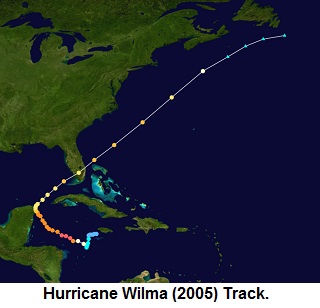
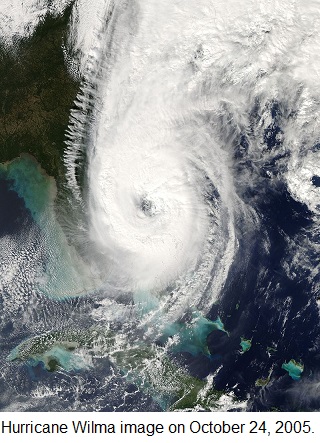
CU Blog - Crap Happens - So What Now - Photo 1The effects of Hurricane Wilma in The Bahamas were generally unexpected and primarily concentrated on the western portion of Grand Bahama. Hurricane Wilma developed on October 15, 2005 in the Caribbean Sea, and after initially organizing slowly it explosively deepened to reach peak winds of 185 mph (295 km/h) and a record-low pressure of 882 mbar (hPa). It weakened and struck eastern Mexico as a Category 4 hurricane on the Saffir-Simpson scale, and accelerated northeastward to make landfall on southwestern Florida on October 24. After crossing the state, Wilma briefly re-strengthened in the open Atlantic Ocean, moving north of The Bahamas before weakening and later becoming an extra-tropical cyclone.[1]

On October 24, Hurricane Wilma made its closest approach to The Bahamas, passing about 150 km (90 mi) north-northwest of Freeport.[1] While passing the archipelago, Wilma produced hurricane force winds and powerful storm surge, flooding southwestern coastal areas of Grand Bahama and destroying hundreds of buildings. Damage totaled about $100 million (2005 USD), almost entirely on the western half of the island. Central Grand Bahama, including the Freeport area, reported minor to moderate damage, while the eastern end received little to no damage. One child died on the island from the flooding.

Impact
On Grand Bahama Island, Wilma produced sustained winds of 155 km/h (95 mph) and a gust of 178 km/h (111 mph).[4] The hurricane also produced a storm surge of over 3.7 m (12 ft),[1] reportedly as high as 6.1 m (20 ft) along the southwestern portion of the island.[3] The surge, which moved about 305 m (1,000 ft) inland, caused large-scale flooding that washed away or destroyed about 800 homes.[5][6] Damage was estimated at $100 million (2005 USD) on the western portion of the island. Excluding the southwestern region of Grand Bahama, the majority of the island reported minor wind damage, and the eastern end of the island reported little, or no, damage.[5] Over 7,000 people on the island were directly affected by the hurricane, many of whom had not fully recovered from hurricanes Frances and Jeanne during the previous year.[3]

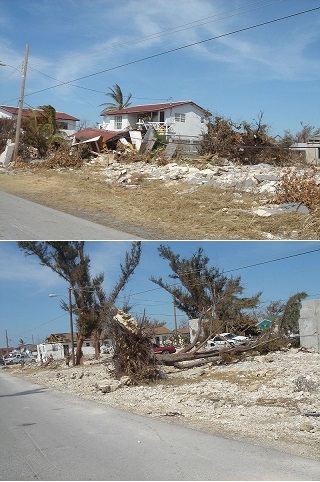
CU Blog - Crap Happens - So What Now - Photo 2Significant damage was reported in coastal areas of Grand Bahama Island, with widespread destruction of roofs and vehicles, along with downed poles and trees.[1] Power and telephone services were disrupted throughout the island.[3] A total of 400 structures sustained damage, of which about 200 commercial buildings were severely damaged and recommended by engineers not to be repaired.[5] Among the destroyed buildings were a police station on the western end and several buildings in Freeport.[7] More than 500 automobiles were flooded,[5] including five police cars.[7] The storm surge also raised 54 corpses in five graveyards on the island.[5] Several resorts were closed for an extended period of time,[5] all on the western portion of the island. One hotel, the Xanadu Beach and Marine Resort, reported about $3.5 million in damage (2005 USD), including numerous destroyed windows designed to withstand hurricane force winds.[8] Further to the east, numerous houses and commercial buildings lost their roofs in the city of Freeport. One serious traffic accident occurred when the winds overturned a bus, inflicting injuries on the driver. Several other traffic accidents were reported in the area, although none were severe. During the passage of the hurricane, five cases of looting were reported, of which one person was caught in the process.[7] Storm surge from the hurricane killed one child,[3] the only casualty directly related to Wilma in the archipelago.[1]

Aftermath
CU Blog - Crap Happens - So What Now - Photo 3By about two days after the passage of Hurricane Wilma, 800 residents on Grand Bahama remained in shelters,[3] including 65 families who lost their homes and stayed in a hotel set up as a government shelter in Freeport.[5] On Bimini, most residents who evacuated to shelters returned to their homes within two days of the hurricane.[3] The Bahamian Red Cross quickly assessed the damage on Grand Bahama and Bimini, and successfully requested to be included under the federation’s hurricane appeal for Central America. Local Red Cross chapters mobilized all available resources to assist the residents most affected. The Bahamian Red Cross began a three-month program to distribute food and other items to 1,000 of the 3,500 affected families, primarily on Grand Bahama; the remaining 2,500 families received assistance from the government and other organizations. Volunteers delivered building materials and provided water vouchers to those affected. In Nassau, the Red Cross disaster contingency stock sent a boat with food items, blankets, health kits, tarpaulins and water.[11] About a week after the hurricane, the United States Agency for International Development began providing $50,000 (2005 USD) to the Bahamian National Emergency Management Agency for the purchase and distribution of emergency supplies. The agency also provided $9,000 (2005 USD) for locally contracted helicopter assessments in the affected areas.[10] Red Cross agencies throughout the Caribbean Sea provided hygienic kits, plastic sheeting, blankets, and jerry cans.[11]

Electricians had power restored to the Freeport area by the day after the storm,[2] and had power restored to most of the western portion of the island within three weeks after the hurricane.[5] Work crews quickly removed road debris and tree limbs, and by the day after the passage of Wilma most roads were cleared. The passage of the hurricane left 1,000–4,000 people and hundreds of animals homeless. In response, the Grand Bahama Humane Society distributed about 340 kg (750 lb) of dog food and treated or euthanized injured animals, depending on their condition.[6] The earlier effects of Wilma on Mexico left many tourist areas in that country closed, leading to a 10% increase in tourism in the Bahamas in December 2005.[12] By about three weeks after the hurricane, the airport on Grand Bahama Island was reopened, and all but one resort were also reopened;[13] the remaining resort was reopened about two months after the hurricane.[14]
Source: Wikipedia Online Reference Source – Retrieved February 13, 2016 from: https://en.wikipedia.org/wiki/Effects_of_Hurricane_Wilma_in The Bahamas
The City of Freeport got special recognition in the book Go Lean … Caribbean. It was cited for this recognition as a token of what was wrong in the Caribbean, plus how to reform and transform the communities. So what lessons can we all learn from Hurricane Wilma’s rampage in Freeport in 2005?

This incident is an example that “Crap Happens”. This represented a ‘Clear and Present Danger’ to everyday life for the everyday man in the City of Freeport and surrounding areas. The lesson is not just for potential “911 dangers” in a community but rather for regional catastrophes, throughout the Caribbean. This includes natural disasters (hurricanes, earthquakes, volcanoes, floods, forest fires, etc.), industrial incidents (chemical & oil spills), bacterial & viral pandemics and terrorism-related events.

This discussion is presented in conjunction with the Go Lean book. It asserts that bad things (and bad actors) will always emerge to disrupt the peace and harmony in communities. All Caribbean member-states need to be on guard and prepared for this possibility.

The Go Lean book (Page 23) prepares for many modes of “bad things/actors”. It defines them as industrial mishaps, natural disasters and other “acts of God”. The book relates that these happenings are historical facts that are bound to be repeated, again and again.

So now that we accept the premise that “Crap Happens”, can we better prepare for the eventuality of bad things happening to good people?

“When we fail to plan, we plan to fail”.

This point is pronounced early in the book with the opening Declaration of Interdependence (Page 12) that claims:

i. Whereas the earth’s climate has undeniably changed resulting in more severe tropical weather storms, it is necessary to prepare to insure the safety and security of life, property and systems of commerce in our geographical region. As nature recognizes no borders in the target of its destruction, we also must set aside border considerations in the preparation and response to these weather challenges.

ii. Whereas the natural formation of the landmass for our lands constitutes some extreme seismic activity, it is our responsibility and ours alone to provide, protect and promote our society to coexist, prepare and recover from the realities of nature’s occurrences.

x. Whereas we are surrounded and allied to nations of larger proportions in land mass, populations, and treasuries, elements in their societies may have ill-intent in their pursuits, at the expense of the safety and security of our citizens. We must therefore appoint “new guards” to ensure our public safety and threats against our society, both domestic and foreign. The Federation must employ the latest advances and best practices … to assuage continuous threats against public safety.

xii. Whereas the legacy in recent times in individual states may be that of ineffectual governance with no redress to higher authority, the accedence of this Federation will ensure accountability and escalation of the human and civil rights of the people for good governance, justice assurances, due process and the rule of law. As such, any threats of a “failed state” status for any member state must enact emergency measures on behalf of the Federation to protect the human, civil and property rights of the citizens, residents, allies, trading partners, and visitors of the affected member state and the Federation as a whole.

xvi. Whereas security of our homeland is inextricably linked to prosperity of the homeland, the economic and security interest of the region needs to be aligned under the same governance. Since economic crimes, including piracy and other forms of terrorism, can imperil the functioning of the wheels of commerce for all the citizenry, the accedence of this Federation must equip the security apparatus with the tools and techniques for predictive and proactive interdictions.

So the Go Lean book relates that the Caribbean must appoint “new guards”, or a security apparatus, to ensure public safety and to include many strategies, tactics and implementations considered “best-practices” for Emergency Management (Preparation and Response). We must be on a constant vigil against these “bad actors”, man-made or natural. This indicates being pro-active in monitoring, mitigating and managing risks. Then when “crap” does happen, as it always will, the region’s “new guards” must be prepared for any “Clear and Present” danger.

The Go Lean book serves as a roadmap for the introduction and implementation of the technocratic Caribbean Union Trade Federation (CU). The CU would roll the charters of all Emergency Management agencies in the region into one initiative, not replacing the individual Emergency Management operations, but rather providing a Unified Command and Control for Emergency operations to share, leverage and collaborate their practice across the whole region. (A previous blog-commentary detailed the historicity – and failures of the current Caribbean Disaster Emergency Management Agency or CDEMA).

The Go Lean/CU roadmap has a focus of optimizing Caribbean society through economic empowerment, and homeland security. Emergency preparedness and response is paramount for this quest. In fact, the Go Lean roadmap has the following 3 prime directives:

  • Optimization of the economic engines in order to grow the regional economy to $800 Billion & create 2.2 million new jobs.
  • Establishment of a security apparatus to protect the resultant economic engines and the Caribbean homeland.
  • Improvement of Caribbean governance to support these engines.

The CU Homeland Security forces have to always be “on guard”, on alert for real or perceived threats. The legal concept is one of being deputized by the sovereign authority for a role/responsibility in the member-state. So when “crap” happens, these CU forces are expected to aid, assist, and support local resources in these member-states. The request is that all Caribbean member-states empower this Homeland Security force to execute this limited scope on their sovereign territories. The legal basis for this empowerment is a Status of Forces Agreement (SOFA), embedded in the CU treaty from Step One/Day One. This would authorize the CU for its role and responsibility for all the “crap” that could happen in jeopardizing the peace and prosperity of the Caribbean people. The CU Trade Federation would lead, fund and facilitate this Emergency Management functionality under the discretion of a regionally elected Commander-in-Chief for the CU.
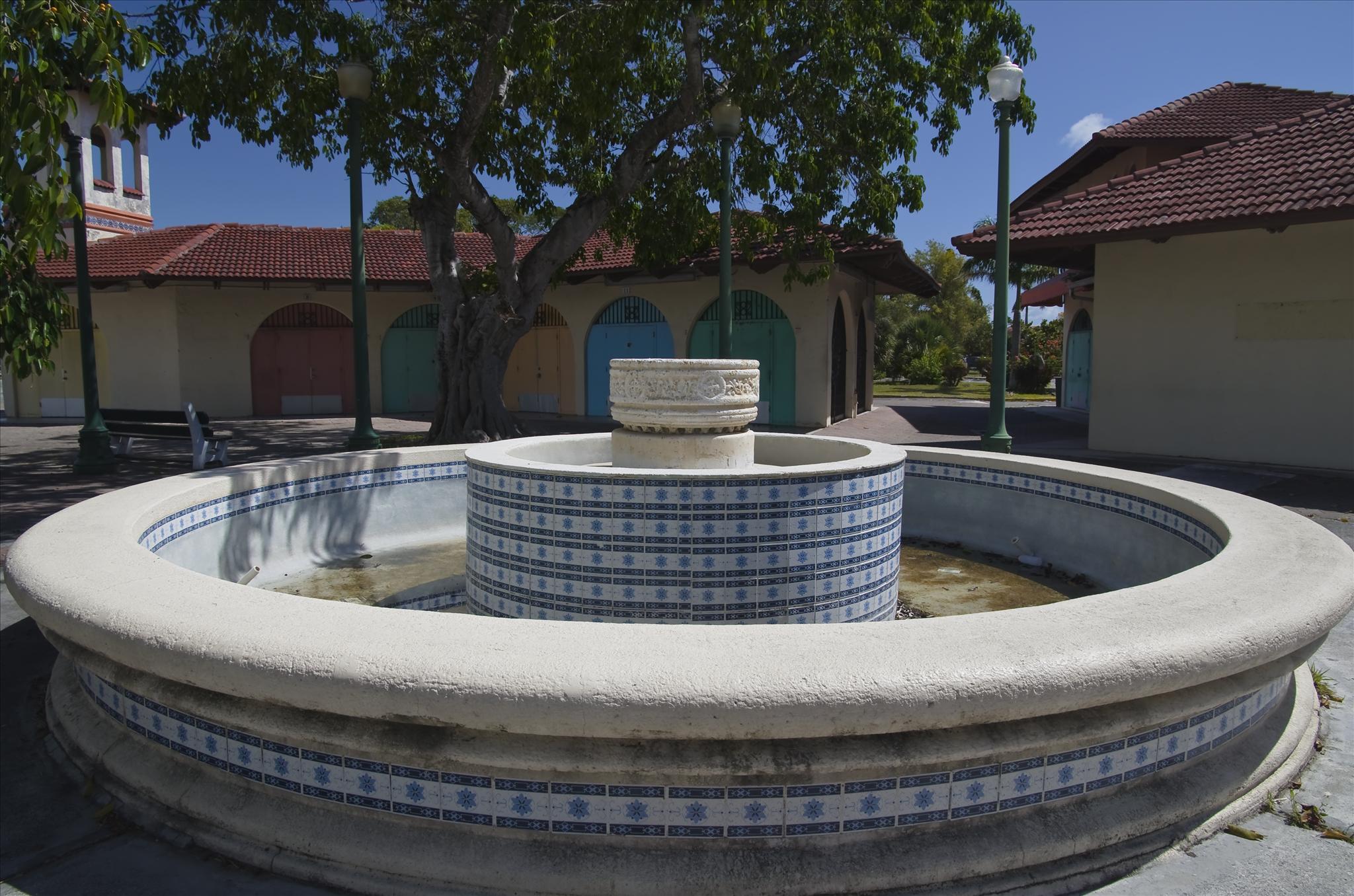
CU Blog - Caribbean Ghost Towns - It Could Happen - Photo 5The foregoing article relates $100 million of economic impact of Hurricane Wilma on Freepot. Freeport could not afford that! Even now – 10 years later – the community is still reeling from that economic chaos. In some circles, Freeport is considered a “ghost town” – see photo here of the once bustling International Bazaar. So preparing effectively for disasters must include economic and financial solutions as well. The Go Lean roadmap details financial solutions, in preparing for the financial responsibility of the region’s disaster needs. Consider this quotation (Page 196) from the book:

There is also a financial battlefield for Emergency Management. Reinsurance “sidecars” allow investment bonds to be issued in the financial marketplaces to raise casualty insurance capital. The differences between premiums (plus reserves) and claims equal the profit to be shared with investors. The end result should be an insurance fund of last resort.

This reinsurance “sidecar” strategy is a win-win for communities, insurance companies and investors. (Imagine bonuses and dividend checks distributed every year on December 2, as the hurricane season ends on December 1). This type of solution aligns with the popular movement in many US States (and other democracies) that motorists provide financial solutions in face of the risks (to themselves and others) of operating motor vehicles. These provisions are defined as the ‘Financial Responsibility Law’. The technical definition of this provision is as follows:

A law which requires an individual to prove that he or she is able to pay for damages resulting from an accident. A financial responsibility law does not specifically require the individual to have insurance coverage; instead, the law requires the individual to be able to demonstrate the financial capacity to pay, even if the individual is not at fault. This type of law is commonly associated with automobiles.

… many states consider an individual with an insurance policy to be compliant with a financial responsibility law, since most insurance policies have a minimum coverage that meets the State’s standard.

Source: http://www.investopedia.com/terms/f/financial-responsibility-law.asp#ixzz40CobgMfg retrieved February 14, 2016.

Consider the VIDEO here of an American insurance company’s commercial advertising:

VIDEO: Liberty Mutual Insurance TV Commercial – Fully Replace Lost Propertyhttps://youtu.be/P7tkWIsr5zQ

TV Commercial – At Liberty Mutual Insurance, we pay to fully replace damaged property so you don’t have to touch your savings. Learn more here: https://www.libertymutual.com/

The Caribbean is arguably the “greatest address on the planet”, but there is risk associated with living deep in a tropical zone. With the reality of Climate Change, we must not be caught unprepared. We do not want our citizens fleeing their homeland … anymore; we want them to prosper where they are planted. So as a community, we must provide assurances. While this is a heavy-lifting task, this is the purpose of the Go Lean/CU roadmap. So the message is clear:

“We will have the finances to restore the economic engines after any natural disaster”.

The Go Lean book details the series of community ethos, strategies, tactics, implementations and advocacies to provide the proactive and reactive public safety/security in the Caribbean region:

Community Ethos – Economic Systems Influence Individual Choices Page 21
Community Ethos – Consequences of Choices Lie in Future Page 21
Community Ethos – “Crap” Happens Page 23
Community Ethos – Cooperatives Page 25
Community Ethos – Ways to Impact the Future Page 26
Community Ethos – Ways to Improve Sharing Page 35
Community Ethos – Ways to Promote Happiness Page 36
Community Ethos – Ways to Impact the Greater Good Page 37
Strategy – Vision – Confederating a non-sovereign permanent union Page 45
Strategy – Agents of Change – Climate Change Page 57
Tactical – Fostering a Technocracy Page 64
Tactical – How to Grow the Economy – Recover from Disasters Page 70
Tactical – Separation of Powers – Homeland Security Department Page 75
Tactical – Separation of Powers – Emergency Management Agency Page 76
Tactical – Separation of Powers – Meteorological and Geological Service Page 79
Implementation – Ways to Pay for Change Page 101
Implementation – Start-up Homeland Security Initiatives Page 103
Implementation – Ways to Re-boot Freeport Page 112
Implementation – Ways to Foster International Aid Page 115
Planning – 10 Big Ideas – #3: Consolidated Homeland Security Pact Page 130
Planning – Ways to Make the Caribbean Better Page 131
Planning – Ways to Improve Failed-State Indices – Escalation Role Page 134
Advocacy – Ways to Grow the Economy – Quick Disaster Recovery Page 151
Advocacy – Ways to Improve Governance Page 168
Advocacy – Ways to Better Manage the Social Contract Page 170
Advocacy – Ways to Improve Homeland Security Page 180
Advocacy – Ways to Improve Intelligence Gathering & Analysis Page 182
Advocacy – Ways to Improve for Natural Disasters Page 184
Advocacy – Ways to Improve for Emergency Management Page 196
Advocacy – Ways to Impact Wall Street – Adopt Advanced Reinsurance Products Page 200

Other subjects related to Emergency Management, Homeland Security and governing empowerments for the region have been blogged in other Go Lean…Caribbean commentaries, as sampled here:

https://goleancaribbean.com/blog/?p=7327 Zika – An Epidemiology Crisis – A 4-Letter Word
https://goleancaribbean.com/blog/?p=7235 Flint, Michigan – A Cautionary Tale
https://goleancaribbean.com/blog/?p=6893 A Meteorologist’s View On Climate Change
https://goleancaribbean.com/blog/?p=6563 Lessons from Iceland – Model of Recovery
https://goleancaribbean.com/blog/?p=6189 A Lesson in History – Hurricane ‘Katrina’ is helping today’s crises
https://goleancaribbean.com/blog/?p=6103 Sum of All Fears – ‘On Guard’ Against Deadly Threats
https://goleancaribbean.com/blog/?p=5002 Managing a ‘Clear and Present Danger’
https://goleancaribbean.com/blog/?p=4741 Vanuatu and Tuvalu Cyclone – Inadequate response to human suffering
https://goleancaribbean.com/blog/?p=4360 Dreading the ‘Caribbean Basin Security   Initiative’
https://goleancaribbean.com/blog/?p=4185 Caribbean Ghost Towns: It Could Happen…Again
https://goleancaribbean.com/blog/?p=2614 The ‘Great ShakeOut’ Earthquake Drill / Planning / Preparations
https://goleancaribbean.com/blog/?p=2397 Stopping a Clear and Present Danger: Ebola
https://goleancaribbean.com/blog/?p=1817 Caribbean grapples with intense new cycles of flooding & drought
https://goleancaribbean.com/blog/?p=87 Fact, not fiction: 6.5M Earthquake Shakes Eastern Caribbean

The Caribbean is on the frontlines of this Climate Change-induced storm battle! We are not the only ones; there are winners (consider northern cities with milder than normal winters) and losers. The Caribbean has found itself on the losing side; consider the experience of Freeport in the foregoing article. This could mean life-and-death for the people and the economic engines of Caribbean communities.

This reflects the change that the Caribbean region now has to endure. The book Go Lean…Caribbean posits that this “Agent of Change” is too big for just any one member-state to tackle alone, that there must be a regional solution; and presents this roadmap.

The people and institutions of the region are hereby urged to lean-in to this Go Lean roadmap; this plan is conceivable, believable and achievable. We can make the Caribbean a better place to live, work and play.  🙂
Download the book Go Lean … Caribbean – now!

Share this post:
, , ,

ISIS reaches the Caribbean Region

Go Lean Caribbean

See, we told you … repeatedly … that this would happen.

But this is not about being right; this is about being prepared.

The movement behind the book Go Lean … Caribbean – and accompanying blogs – wants to reform and transform the societal engines of the Caribbean. This refers to economics, security and governing aspects in the homeland of the 30 member-states of the Caribbean region: all the Caribbean islands, plus the 2 member-states on the South American mainland (Guyana and Suriname) and 1 member-state on the Central American isthmus (Belize). Despite our difference, the Go Lean book posits that “we are all in the same boat” and need to “have each others’ back”.

The book further relates that once we remediate and mitigate our broken economic engines, we most assuredly will have security challenges to contend with. It turns out, according to the below news article, that we have those security concerns .. anyway; fix or no fix; prosperous or struggling. See the article here:

Title: ISIS reaches the Caribbean Region
Posted by on November 11, 2015; retrieved January 31, 2015.

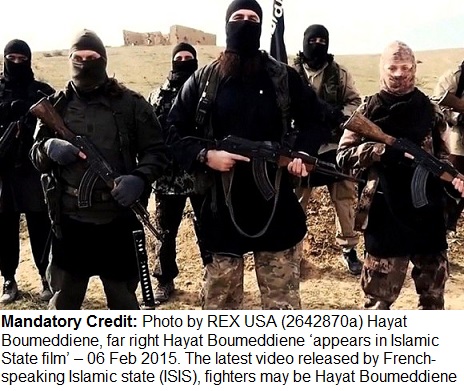
Hayat Boumeddiene 'appears in Islamic State film' - 06 Feb 2015

ISTANBUL – Since its emergence in Syria and Iraq, the extremist group of Islamic State (ISIS) has been expanding to reach several countries including Egypt, Libya, Ethiopia, some of the former Soviet republics and recently the Caribbean Islands.

Pro-ISIS activists have recently circulated a video under the banner “Those who Believe and Made the Hijra”, showing a man beside his three children calling on Muslims in the idyllic islands of Trinidad and Tobago to rebel.

“I fled my homeland because Muslims in Trinidad and Tobago were restricted and oppressed,” Abu Zayd al-Muhajir said in the video clip.

“People were free to wear the hijab or other Islamic clothing, but Muslims could only practice what they were told,” he added.

“You cannot practice your true Islamic religion outright,” al-Muhajir said. “I insisted on leaving that land, because my children will grow up without knowing true Islam.”

He said that his three children are now learning English, Math, and Sharia at an ISIS-run school.

Another ISIS militant speaking in the video, identified as Abu Khalid, said he had converted to Islam because “Muslims’ family structure is much stronger”.

“The holy Quran taught me how to be determined to make jihad,” he added.

Abu Mansour al-Muhajir, another ISIS member from the twin island Caribbean country who appeared in the video, said he had travelled to Syria to fight allies of the devil (in reference to Syrian president’s allies, mainly Russia and Iran).

Al-Muhajir pointed out that Islam’s Prophet mentioned that there will come an era when all the nations of the world will gather around to wipe you out; “we the Muslims,” he said.

The man thanked God, saying “we will make jihad for this cause and to gain the reward of Allah.”

Last year, 30 citizens of Trinidad travelled to Syria to fight alongside the terror group, according to the republic’s former national security minister, Gary Griffith.

The United Nations has also warned the country is being a fertile environment for recruiting and training militants to carry out suicide operations.

CU Blog - ISIS reaches the Caribbean Region - Photo 2Earlier this year, an American senior official revealed that dozens of militants have already left Caribbean countries to fight for ISIS in Syria.

“Extremists could potentially get across the U.S. border when they return back home from the war-torn countries,” Marine Gen. John F Kelly, chief of the US Southern Command, has said.

Noteworthy, seventeen EU members including France, Germany, Britain and Belgium inked an international agreement Thursday designed lately to thwart the recruitment of “foreign terrorist fighters” who travel from Europe to conflict zones abroad.

Source: ARA News quoted here: http://www.caribemedianetwork.com/isis-reaches-the-caribbean-region/

This foregoing article speaks of “Jihad”; this has become a scary term in modern society – see Appendices. Since the publishers of this commentary seek a religiously neutral stance, there is not attempt to stereotype all terrorist activities as belonging to Islamic Extremists; (there are White Supremacists and many nationalistic groups that have practiced terrorism). But, the currency of suicide bombers loyal to Muslim groups like ISIS, Boko Haram, Hamas, Hezbollah, the Taliban and al-Qaeda is a real cause for concern around the planet and this reality cannot be ignored.

In a previous blog-commentary, the question was posed as to whether World War III had commenced, with the reality of terrorism campaigns being waged everywhere, around the globe. That assertion was determined to be a bit exaggerated, but still appropriately alarming.  These campaigns are being waged in almost every geographical theater except a few. The Caribbean was previously spared.

Now? According to the foregoing article, “not so much”.

Even if this position here is perceived as another exaggeration, it should be easily accepted that we, the Caribbean, have a lot at stake; we do have terrorist risks and threats; we have to be “on guard” for “bad actors” to emerge, maybe even from within our communities. (In addition to Trinidad & Tobago, Guyana has a large Muslim population).  It is truly time now for our region to “get real” in our preparation: both overtly and covertly!

Overt! And covert!

The book Go Lean … Caribbean addresses the overt and covert security needs for the region. It describes the security pact – Status of Forces Agreement – that must be instituted with the treaty for the Caribbean Union Trade Federation (CU). The CU would be established by the sovereign powers of the 30 Caribbean member-states to empower the region with this Security / Defense Pact (Armed Forces) with a fully-empowered Naval Force and adequately manned Expeditionary Marine Forces to facilitate the region’s security interest. For covert empowerments, the book details the width-and-breadth of an Intelligence Gathering & Analysis Apparatus to fully round-out the security efforts. The Go Lean book therefore serves as a roadmap for full Caribbean integration. This roadmap describes (Page 23) that peace, security and public safety must be tantamount to economic prosperity; that bad things will happen to good people and so the community needs to be prepared to contend with the risks that can imperil the homeland. This mandate is embedded in an advocacy for the Greater Good. In all, the Go Lean roadmap has these 3 prime directives:

  • Optimization of the economic engines in order to grow the regional economy and create new jobs.
  • Establishment of a security apparatus to ensure public safety and to protect the resultant economic engines of the Caribbean homeland.
  • Improvement of Caribbean governance to support these engines.

The priority on homeland security was pronounced early in the Go Lean book with the opening Declaration of Interdependence (Page 12) that claims:

x.   Whereas we are surrounded and allied to nations of larger proportions in land mass, populations, and treasuries, elements in their societies may have ill-intent in their pursuits, at the expense of the safety and security of our citizens. We must therefore appoint “new guards” to ensure our public safety and threats against our society, both domestic and foreign. The Federation must employ the latest advances and best practices … to assuage continuous threats against public safety.

xi. Whereas all men are entitled to the benefits of good governance in a free society, “new guards must be enacted to dissuade the emergence of incompetence, corruption, nepotism and cronyism at the peril of the people’s best interest. The Federation must guarantee the executions of a social contract between government and the governed.

xii. Whereas the legacy in recent times in individual states may be that of ineffectual governance with no redress to higher authority, the accedence of this Federation will ensure accountability and escalation of the human and civil rights of the people for good governance, justice assurances, due process and the rule of law. As such, any threats of a “failed state” status for any member state must enact emergency measures on behalf of the Federation to protect the human, civil and property rights of the citizens, residents, allies, trading partners, and visitors of the affected member state and the Federation as a whole.

xvi. Whereas security of our homeland is inextricably linked to prosperity of the homeland, the economic and security interest of the region needs to be aligned under the same governance. Since economic crimes, including piracy and other forms of terrorism, can imperil the functioning of the wheels of commerce for all the citizenry, the accedence of this Federation must equip the security apparatus with the tools and techniques for predictive and proactive interdictions.

The Caribbean appointing these “new guards” will include many strategies, tactics and implementations considered “best-practices” around the world to ward off “bad actors”. This does not only address the military dimensions, but also other exigent circumstances; the roadmap therefore features a Emergency Management functionality with the Unified Command and Control for Disaster Response, Industrial incidences, epidemiological episodes and anti-crime initiatives.

The Go Lean book details the series of community ethos, strategies, tactics, implementations and advocacies to provide the proactive and reactive public safety/security in the Caribbean region:

Community Ethos – Economic Systems Influence Individual Choices Page 21
Community Ethos – Consequences of Choices Lie in Future Page 21
Community Ethos – Privacy –vs- Public Protection Page 23
Community Ethos – Intelligence Gathering Page 23
Community Ethos – Whistleblower Protection Page 23
Community Ethos – “Crap” Happens Page 23
Community Ethos – Cooperatives Page 25
Community Ethos – Ways to Manage Reconciliations Page 34
Community Ethos – Ways to Improve Sharing Page 35
Community Ethos – Ways to Promote Happiness Page 36
Community Ethos – Ways to Impact the Greater Good Page 37
Strategy – Vision – Confederating a non-sovereign permanent union Page 45
Tactical – Fostering a Technocracy Page 64
Tactical – Separation of Powers – Coast Guard & Naval Authorities Page 75
Tactical – Separation of Powers – Ground Militia Forces Page 75
Tactical – Separation of Powers – Emergency Management Agency Page 76
Tactical – Separation of Powers – CariPol: Marshals & Investigations Page 75
Implementation – Ways to Pay for Change Page 101
Implementation – Start-up Foreign Policy Initiatives Page 102
Implementation – Start-up Security Initiatives Page 103
Implementation – Ways to Foster International Aid Page 115
Planning – 10 Big Ideas – #3: Consolidated Homeland Security Pact Page 130
Planning – Ways to Make the Caribbean Better Page 131
Planning – Ways to Improve Failed-State Indices – Escalation Role Page 134
Planning – Lessons from the American West – Needed Law & Order Page 142
Planning – Lessons from Egypt – Law & Order for Tourism Page 143
Advocacy – Ways to Grow the Economy – Quick Disaster Recovery Page 151
Advocacy – Ways to Improve Governance Page 168
Advocacy – Ways to Better Manage the Social Contract Page 170
Advocacy – Ways to Impact Justice – Policing the Police Page 177
Advocacy – Ways to Reduce Crime – Regional Security Intelligence Page 178
Advocacy – Ways to Improve Homeland Security Page 180
Advocacy – Ways to Mitigate Terrorism Page 181
Advocacy – Ways to Improve Intelligence Gathering & Analysis Page 182
Advocacy – Ways to Improve for Emergency Management Page 196
Advocacy – Ways to Protect Human Rights – Watchful World Page 220

Other subjects related to security and governing empowerments for the region’s defense have been blogged in other Go Lean…Caribbean commentaries, as sampled here:

https://goleancaribbean.com/blog/?p=7119 Security Role Model for the Caribbean: African Standby Force
https://goleancaribbean.com/blog/?p=6720 A Lesson in History – During the Civil War: Principle over Principal
https://goleancaribbean.com/blog/?p=6103 Sum of All Fears – ‘On Guard’ Against Deadly Threats
https://goleancaribbean.com/blog/?p=5183 A Lesson in History – Cinco De Mayo and Mexico’s Security Lapses
https://goleancaribbean.com/blog/?p=5002 Managing a ‘Clear and Present Danger’
https://goleancaribbean.com/blog/?p=4809 Americans arrest 2 would-be terrorists – a Clear and Present Danger
https://goleancaribbean.com/blog/?p=4360 Dreading the ‘Caribbean  Basin Security Initiative’
https://goleancaribbean.com/blog/?p=3881 Intelligence Agencies to Up Cyber Security Cooperation
https://goleancaribbean.com/blog/?p=1965 America’s Navy – 100 Percent – Model for Caribbean
https://goleancaribbean.com/blog/?p=1554 Status of Forces Agreement = Security Pact
https://goleancaribbean.com/blog/?p=1531 A Lesson in History: 100 Years Ago – Root Causes of World War I
https://goleancaribbean.com/blog/?p=1076 Trinidad Muslims travel to Venezuela for Jihadist training
https://goleancaribbean.com/blog/?p=809 Muslim officials condemn abductions of Nigerian girls
https://goleancaribbean.com/blog/?p=535 Remembering and learning from Boston
https://goleancaribbean.com/blog/?p=273 10 Things We Want from the US – #4: Pax Americana

An effort to provide a better security solutions in the Caribbean should be welcomed here. But some might argue: “We want to build up for peace not build up for war; the Caribbean should be all about ‘making love not making war'”. This is a valid argument, except that the appearance of peace is very tenuous. Just one incident of a terrorist attack and any pristine peaceful brand would be ruined … for a long time. This has been the case many times over; think Bali in Indonesia after their terrorist bombings in 2002 and again in 2005.

Let those with eyes … see.
Let those with ears … hear.

Our focus is only, to make the Caribbean homeland a better place to live, work and play. But this quest must not be “empty words alone”, there must be strong actions behind the words.

Everyone in the Caribbean – citizens, institutions and governments – are hereby urged to lean-in to this Go Lean roadmap to make the region a better, stronger and safer homeland.

🙂

Download the book Go Lean … Caribbean – now!

———–

Appendix – Jihad

Jihad is an Islamic term referring to the religious duty of Muslims to maintain the religion. In Arabic, the word jihād is a noun meaning the act of “striving, applying oneself, struggling, persevering”.[1] A person engaged in jihad is called a mujahid, the plural of which is mujahideen (مجاهدين). The word jihad appears frequently in the Quran,[2] often in the idiomatic expression “striving in the way of God (al-jihad fi sabil Allah)“, to refer to the act of striving to serve the purposes of God on this earth.[1][3][4][5]

Muslims[6] and scholars do not all agree on its definition. Many observers—both Muslim[7] and non-Muslim[8]—as well as the Dictionary of Islam,[3] talk of jihad having two meanings: an inner spiritual struggle (the “greater jihad”), and an outer physical struggle against the enemies of Islam (the “lesser jihad”)[3][9] which may take a violent or non-violent form.[1][10] Jihad is often translated as “Holy War”,[11][12][13] although this term is controversial.[14][15] According to orientalist Bernard Lewis, “the overwhelming majority of classical theologians, jurists”, and specialists in the hadith “understood the obligation of jihad in a military sense.”[16] Javed Ahmad Ghamidi states that there is consensus among Islamic scholars that the concept of jihad will always include armed struggle against wrong doers.[17]
Source: https://en.wikipedia.org/wiki/Jihad retrieved January 31, 2016.

———–

Appendix VIDEO – https://youtu.be/cD1HQFcav1M – Bill Maher Vs Brian Levin on “Real Time” – Islamophobia

playbutton-300x300

Published on Apr 21, 2013 – Bill Maher’s Debate with Brian Levin, the director of the Center for the Study of Hate & Extremism at California State University in San Bernardino on “Real Time” Friday night, arguing that in this day and age, Islam is more dangerous than other religions.
Share this post:
, ,
[Top]

How to address high consumer prices

Go Lean Commentary

The Caribbean is arguably the best address on the planet, but a lot is missing. There are certain aspects of Caribbean life that is hard … and expensive.

Is it only the actuality of islands that make Caribbean life so expensive or are there other dynamics? These issues apply:

  • The need to import consumer products is a constant feature of island life.
  • An island is usually more limited with landmass, (sans Australia).
  • Opportunities for agricultural exploitations may be limited.
  • Transportation cost is the biggest hurdle, everything must be flown in or shipped in. The low-cost logistics of rail or trucks are irrelevant because of the reality of being surrounded by water.

This high cost of island living is not just a Caribbean issue; the American State of Hawaii has the same issues. Consider the news article in the Appendix below – from September 2013 – describing Hawaii’s plight.

Drawing from that experience, we are able to identify the following challenges consistent with island life … everywhere in the modern world:

  • Energy Costs – Unless the source of energy is homegrown (think Geo-Thermal Geysers in Iceland) the logistical costs of getting energy to an island is higher than mainland options.
  • Limited Land – There is competition for the available land on small tropical islands. The laws of supply-and-demand therefore implies that the price would rise with the demand. A higher demand for real estate puts upward pressure on home prices and rentals.
  • Consumer Prices – The consumer products to satisfy the day-to-day needs of island residence tend to be more expensive due to importation and an increase in transportation costs.
  • Heightened Corrosion – Islands are surrounded by salt water. There are also consistent trade winds. This is a bad combination for metal fixtures, appliances and equipment. Cars tend to suffer more wear-and-tear on islands compared to the mainlands due to this exposure to salt water on a daily basis.
  • Healthcare Realities – Healthcare costs are higher in island locales. The infrastructure needed to minimize costs (energy, product pricing) are less optimized on islands. Plus the lower populations affect the actuarial numbers for insurance pools.

This above summary applies equally to life in … the Caribbean. 27 of the 30 Caribbean member-states are islands (sans Belize, Guyana and Suriname) and the residents there have to contend with these hard realities.

One of the Caribbean member-states is the US Virgin Islands territory. Their government officials have been monitoring the foregoing societal factors for higher-than-mainland costs, and have become enraged over one factor: the price of oil/petroleum products. The assertion in this territory is that all that “glitters may not be gold”, something is afoul in the economic equations that result in oil/petroleum pricing. There may be some other factors at play.

See the article here:

Title: USVI to address high consumer prices

CU Blog - How to address high consumer prices - Photo 1ST THOMAS, USVI — The Department of Licensing and Consumer Affairs has announced an initiative with the attorney general’s office to take action to bring relief to the consumers of the US Virgin Islands.

“The Department of Licensing and Consumer continues to be concerned with the high prices consumers are paying for essential commodities in the Virgin Islands, especially food and gas,” said Commissioner Devin Carrington.

The commissioner stated that this concern is exacerbated by the fact that, in the past, retailers have justified the prices charged consumers, in part, on the cost of fuel on the world market that affects shipping and transportation costs paid by importers of consumer goods.

“If this is the case, periodic surveys conducted by the department for food and gas prices reflect no appreciable change in the prices paid by consumers for these essential commodities. This is so even though the price of oil per barrel is currently at the lowest it has been in a ten-year period. If fuel costs are lower, prices at the pump and on the shelf should be lower as well,” Carrington said.

Having observed the continuing trend in prices in the US Virgin Islands, despite lower fuel costs, the department has decided to take a more aggressive posture in order to bring relief to the consumers.

“After examination of survey data that may suggest fraudulent manipulation of prices, the department made the decision to enlist the attorney general’s office to launch an investigation into the causes of high consumer prices,” Carrington noted.
Source: Caribbean News Now – Online Magazine – Posted 10/29/2015 from: http://www.caribbeannewsnow.com/topstory-USVI-to-address-high-consumer-prices-28102.html

Welcome to the Caribbean, arguably the best address on the planet; in terms of physical beauty, absolutely yes; but in terms of a home to live, work and play – not so much.

VIDEOhttps://youtu.be/q6NKdMjdzpk – Guadeloupe’s sky high prices spoil tropical paradise

playbutton-300x300

Uploaded on Feb 25, 2009 – This report was posted during the impactful 2009 general strike on the French Caribbean island Guadeloupe. One of the protester demands was more help to cope with the high cost of living. This report specifically addresses the outlying island of Marie-Galante where prices are particularly high.

The book Go Lean…Caribbean addresses the issues that makes life in the Caribbean difficult and expensive. Identifying all the challenges of island life above, the book serves as a roadmap for the introduction of the technocratic Caribbean Union Trade Federation (CU) with the strategies, tactics and implementations to optimize Caribbean life. The book details how the CU is chartered with these prime directives to elevate life in the islands:

  • Optimization of the economic engines in order to grow the regional economy to $800 Billion & create 2.2 million new jobs.
  • Establishment of a security apparatus to protect the resultant economic engines.
  • Improvement of Caribbean governance to support these engines.

So specifically, why does the US Virgin Islands suffer from higher consumer prices with gasoline? Or generally, why is the Caribbean region expected to pay higher prices?

The answer is the same for us as for Hawaii (as depicted in the below Appendix) …

… plus the added burdens of rent-seeking!

In a previous blog/commentary, this bad community ethos of rent-seeking was identified as running contrary to the goal of optimizing the economy. Unfortunately, in the Caribbean the “free market” is not always “free” nor a “market”; sometimes, there are Crony-Capitalistic and monopolistic forces at play.

The purpose of the Go Lean roadmap is not just to report on Caribbean failures, but also to project solutions. The book details these 3 initiatives which will be used to impact the high costs of living:

  • Caribbean Postal Union
  • Regional Energy Grid
  • Union Atlantic Turnpike & Pipelines

CPU
To lower the eco-systems for higher costs of living, the Go Lean roadmap introduces the Caribbean Postal Union (CPU). This vision is identified as a model for Caribbean logistics, our means for delivering the mail. But the focus of the book Go Lean…Caribbean and the CPU is not just postal mail, but rather logistics for packages and chattel goods. So the Go Lean/CU/CPU does not model other Postal operations (like the US Postal Service debunked in the book at Page 99), but rather successful enterprise in the logistics industry, like Amazon and Alibaba.

The Go Lean roadmap seeks to change the entire eco-system of Caribbean commerce and logistics, with the interaction with postal operations. Part-and-parcel to this CPU effort is the launch of the social media website www.myCaribbean.gov to bring much of the general public interactions and marketing online. Now island residents can easily order consumer goods online from any merchant (foreign and domestic) and have them delivered… via the CPU. This creates a “great equalizer” for Caribbean life; it brings downward pressure on consumer prices. This vision is defined early in the book (Pages 12 & 14) in the following pronouncements in the Declaration of Interdependence:

xv.     Whereas the business of the Federation and the commercial interest in the region cannot prosper without an efficient facilitation of postal services, the Caribbean Union must allow for the integration of the existing mail operations of the governments of the member-states into a consolidated Caribbean Postal Union, allowing for the adoption of best practices and technical advances to deliver foreign/domestic mail in the region.

xxvii. Whereas the region has endured a spectator status during the Industrial Revolution, we cannot stand on the sidelines of this new economy, the Information Revolution. Rather, the Federation must embrace all the tenets of Internet Communications Technology (ICT) to serve as an equalizing element in competition with the rest of the world. The Federation must bridge the digital divide and promote the community ethos that research/development is valuable and must be promoted and incentivized for adoption.

Regional Energy Grid
Fulfilling energy needs is a great target for lean, agile operations, perfect for the CU technocracy. A more technocratic solution would equate to lower energy costs.

This Go Lean/CU roadmap recognizes that modern life has now expanded to include food, clothing, shelter and energy as a basic need. And thusly the book proposes many solutions for the region to optimize energy …

  • generation – Green options (solar, wind turbines, tidal and natural gas)
  • distribution – Underwater cables to connect individual islands
  • consumption – efficient battery back-ups for home deployments.

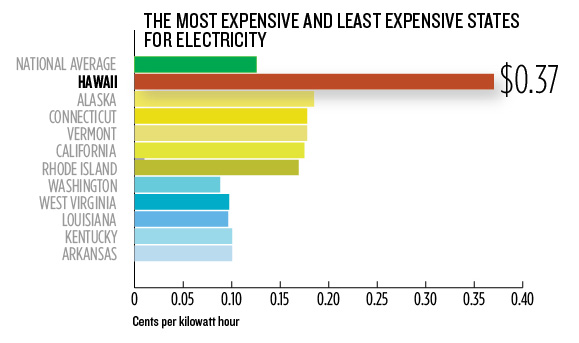
No “stone is left unturned”. Go Lean posits that the average costs of energy can be decreased from an average of US$0.35/kWh to US$0.088/kWh in the course of the 5-year term of this roadmap; (Page 100). That’s a 75% savings!

Union Atlantic Turnpike & Pipelines
The “Union Atlantic” Turnpike, (modeled after the Union Pacific efforts in the US back in 1862), is a big initiative of the CU to logistically connect all CU member-states for easier transport of goods and passengers. There are many transportation arteries envisioned for the Turnpike: Pipeline, Ferry, Highways, and Railroad. (Imagine a sophisticated network of ferry boats on schedule service to every island).

The book Go Lean … Caribbean asserts that pipelines can be strategic, tactical and operationally efficient for lowering the cost of delivery in the Caribbean region, for energy communities like oil, gas and water. They can also mitigate challenges from Mother Nature, create jobs and grow the economy at the same time. The book purports that a new technology-enhanced industrial revolution is emerging, in which there is more efficiency for installing-monitoring-maintaining pipelines. Caribbean society must participate in these developments, in order to optimize its costs of living. This point is pronounced early in the book with this Declaration of Interdependence (Page 14), with these statements:

xxvi. Whereas the Caribbean region must have new jobs to empower the engines of the economy and create the income sources for prosperity, and encourage the next generation to forge their dreams right at home, the Federation must therefore foster the development of new industries, like that of … pipelines …

There are many best practices around the world for the region to study and from which to glean insight and wisdom. The successful application of this roadmap will foster such best practices to optimize living in the Caribbean and lowering the costs of doing so. The wisdom the Go Lean book gleans are presented as a series of community ethos, strategies, tactics, implementations and advocacies; a detailed sample is listed as follows:

Community Assessment – French Caribbean: Organization and Discord Page 17
Community Ethos – Deferred Gratification Page 21
Community Ethos – Economic Systems Influence Individual Choices Page 21
Community Ethos – Consequences of Choices Lie in the Future Page 22
Community Ethos – Intelligence Gathering – Pricing Analysis Page 23
Community Ethos – Lean Operations Page 24
Community Ethos – Ways to Impact the Future Page 26
Community Ethos – Ways to Help Entrepreneurship Page 28
Community Ethos – Ways to Close the Digital Divide Page 31
Community Ethos – Ways to Impact the Greater Good Page 37
Strategy – Mission – Embrace the advances of technology Page 46
Strategy – Mission – Re-boot and Optimize Postal Operations Page 46
Tactical – Fostering a Technocracy Page 64
Tactical – Separation of Powers – Postal Services Page 78
Tactical – Separation of Powers – Interstate Commerce Administration Page 79
Implementation – Year 1 / Assemble Phase – Establish CPU Page 96
Anecdote – Implementation Plan – Mail Services – US Dilemma Page 99
Implementation – Ways to Pay for Change Page 101
Implementation – Ways to Develop a Pipeline Industry Page 107
Implementation – Improve Mail Services – Electronic Supplements Page 108
Implementation – Ways to Deliver Page 109
Implementation – Ways to Improve Energy Usage Page 113
Planning – 10 Big Ideas for the Caribbean Region – Cyber Caribbean Page 127
Advocacy – Ways to Improve Interstate Commerce Page 129
Advocacy – Ways to Make the Caribbean Better Page 131
Advocacy – Ways to Grow the Economy Page 151
Advocacy – Ways to Create Jobs Page 152
Advocacy – Ways to Improve Governance Page 168
Advocacy – Ways to Better Manage the Social Contract Page 170
Advocacy – Ways to Foster Technology Page 197
Advocacy – Ways to Foster e-Commerce Page 198
Advocacy – Ways to Impact Main Street Page 201
Advocacy – Ways to Improve Transportation – Ferries & Pipelines Page 205
Appendix – Alaska Marine Highway Page 280
Appendix – Eurotunnel Model – English Channel Tunnel Page 281

This commentary therefore features the subjects of commerce, logistics and energy. Yet the Go Lean book asserts that the problems of the Caribbean are too big for any one member-state to assuage alone, that rather the requisite investment of the resources (time, talent, treasuries) will require an integrated region-wide, professionally-managed, deputized technocracy to effect greater production and greater accountability.

The Caribbean can do better, even better than the US State of Hawaii. (While Hawaii is 2500 miles from the US mainland, Trinidad is 7 miles from the South American mainland; the Bahama island of Bimini is 50 miles away from Miami, Florida). This new improved infrastructure – described above – awaits deployment. The biggest ingredient missing in the region is the “will” of the people. We hereby urge all in the region to lean-in to this Go Lean roadmap.

This is the take-away of this consideration: Ferries, pipelines, tunnels and railways functioning as “blood vessels to connect all the organs” within the region, thus allowing easier transport of goods (ordered online) and people among the islands and the mainland states (Belize, Guyana or Suriname) – at cheaper costs.

Now is the time for all of the Caribbean, the people and governing institutions, to work to make their homeland a better and more affordable place to live, work and play. 🙂

Download the free e-Book of Go Lean … Caribbean – now!

———-

Appendix: Living Hawaii – Why Is the Price of Paradise So High?

By: Kery Murakami

Source: http://www.civilbeat.com/2013/09/19815-living-hawaii-why-is-the-price-of-paradise-so-high/; posted September 4, 2013; retrieved October 30, 2015

So this is paradise. Palm trees sway in the trade winds that take the edge off the late-summer sun. Nearby, tanned bodies glisten on the sand.

Cabbie Lam Lu sits at the entrance of the parking garage at the AlaMoanaCenter shopping mall, overworked and stressed out as he awaits a fare. Lu is parked outside Foodland. Inside the supermarket, an advertisement shows two smiling girls eating hamburgers. Maybe they shouldn’t be so happy. The store’s pack of hamburger buns goes for $5.59, almost $3 more than it costs at a similar market in Washington, D.C. Do the kids want to wash it down with some milk? That’s another $3.69 per quart, which is nearly double the $1.88 it costs in the nation’s capital.

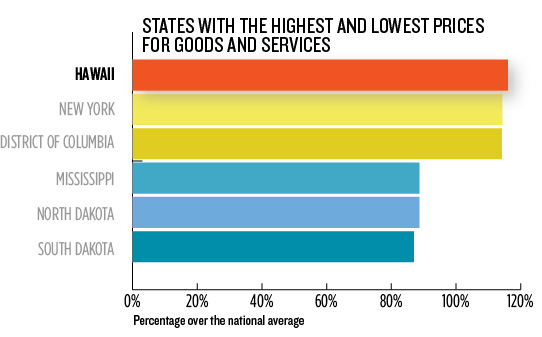
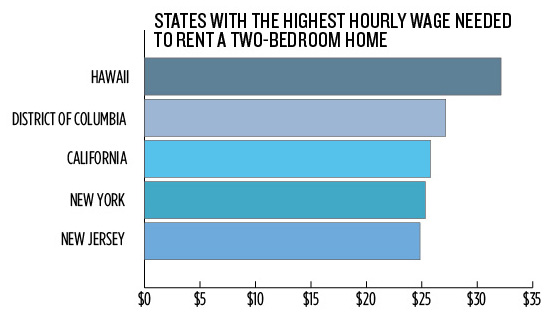
Yes, we know it is pricey here. Cars run on the most expensive gas in the nation, at $4.35 a gallon on a recent day. Our shopping centers and our homes use electricity that’s twice as expensive per kilowatt hour as the next costliest state, Alaska. We have to earn more per hour than Californians and New Yorkers to afford a two-bedroom home. Hawaii actually has the ninth highest median income in the nation, at $59,605. That sounds great to many people on the mainland, but when the cost of living is factored in, Hawaii slides down to the 21st highest median income. And we pay more for goods and services than residents of any other state.

And, as we all know, the list goes on. It is why we work so hard, skimp so much.

All of which is why Lu looks so glum. He doesn’t surf. He doesn’t hang out at the beach. To make ends meet, he drives his cab 12 hours per day, seven days a week. For every $100 he makes in fares, $15 of it goes for gas.

“No time for paradise,” he said.

Does It Have to be This Way?

In an ongoing series, Civil Beat will examine the reasons behind the high cost of living and how it affects Hawaii’s submerged middle class. How come life is so expensive here? Why is food — including our beloved Spam — so pricey? Should rentals and real estate around the islands really compare with world-class cities like San Francisco and New York City? And why do we pay so much just to sit at home with the lights on?

It all adds up to the price of paradise, the phrase coined by University of Hawaii law professor Randy Roth in two best-selling books by that name that he edited and co-authored in the early 1990s. And it affects every aspect of our lives, at every stage from childhood to parenthood and beyond, to our final days in some of the costliest nursing homes in the country.

We’ve heard the explanations. Many people accept it because we are on our archipelago in the middle of the Pacific Ocean 2,500 miles from the West Coast ports that so much of our stuff ships through. There is a set amount of real estate on the islands, and there is competition for how it is used, which puts intense pressure on farmers, home renters and buyers. Some locals blame tourist-generated inflation. Others wonder who is getting rich — and maybe profiteering — off of our vulnerabilities. Others point at unions, a lack of competition, our small consumer market, high taxes.

Goods and Services

So, what can be done to bring down the cost of living here? What are the actual costs — of shipping, of transportation, of labor, of regulation. We look forward to breaking them down.

We’ll also look at what political and economic interests are standing in the way of making Hawaii more affordable and how the islands might remake themselves politically and economically to improve residents’ quality of life.

As part of this, we want to hear from you about your experiences. What sorts of things do you question the cost of? What everyday products have inexplicably high price tags? What do you want to know about, what have you sacrificed to live here and what do you Print

In the meantime, here are some facts of life in our islands:

— Hawaii has the highest cost of living in the nation, according to a U.S. Commerce Department Bureau of Economic Analysis report in June. The cost of living is 16 percent higher than the national average. (Second place goes to New York.)

— A single person can earn as much as $54,850 and qualify for housing assistance on Oahu. For a family of four, the cut-off is $78,300, according to the Hawaii Public Housing Authority. In most of the country, those would be comfortably middle-class incomes.

— We spend more on housing. Based on U.S. Department of Housing and Urban Development data, the National Low Income Housing Coalition says the median cost of renting a two-bedroom apartment in Hawaii is $1,671 a month. That’s not just the highest nationally, it is about 71 percent more than the national average of $977.

Based on the HUD standard that families shouldn’t spend more than a third of their income on housing, the coalition calculated what hourly wage people around the country would have to earn to afford such an apartment. Hawaii again earned the dubious rank of No. 1. A resident here would have to earn the most: $32.14, compared with a national average of $25.25 per hour.

Print 

— A 2013 report by the Center for Housing Policy found that Honolulu was the fifth most expensive city for home buyers. The average income necessary to own one, according to the center, is $115,949.

— Similarly, the people of Hawaii pay the highest electricity rates at 37 cents per kilowatt hour, triple the national average of 12 cents per kilowatt hour, according to the the US. Energy Information Agency. That translates into bills that are two, three or even four times those in other states. While rates can fluctuate quickly around the country, Hawaii residents are currently spending $60 per month more than people in Alabama, the state with the next highest monthly bill (even though Alabamans pay much lower per-kilowatt rates than residents of some states).

Print

— The cost of having a car (insurance, gas, maintenance, depreciation, etc.) is the eighth highest in the nation here in Hawaii. A study last year by Edmunds.com, a car pricing website, estimated that Hawaii drivers will have to spend $52,683 on their cars over the next five years, which is about $3,000 more than the national average. Hawaii cars also depreciate the fastest in the nation, by $16,809 over a five-year period. We also pay the most interest to finance a vehicle, $4,084, and the gas bill for those five years, $15,822, is also the highest in the nation.

— Food costs more. The U.S. Department of Agriculture calculates the differences in cost around the country to determine the size of food stamp benefits, and has found that food prices in Hawaii are 70 percent more than the national average. According to the USDA’s calculations, a family of four with young children nationally should be able to eat on a “thrifty” food budget of $373 per month. In Hawaii, it would cost the same family $632 for the same meals.

— We have to work more. According to the Bureau of Labor Statistics, 6.2 percent of Hawaii workers have more than one job, compared to only 4.9 percent nationally.

Print

An Age-Old Problem

There are those who say don’t worry. Be happy. Lucky you live Hawaii. But others note there are real impacts. Even for a middle-class that manages to scrape by, the cost of paradise often catches up to us late in life.

Bruce Bottorff, spokesman for the Hawaii chapter of the AARP, says that high prices have made it hard for most people to save for the day when they need help to live. “Most adult families have mortgages and rent, transportation, food and beverage costs, health care. And when you have all these costs, it makes it difficult to set aside an additional sum of money for an eventuality down the road. People take care of their immediate needs,” he said.

As a result, the AARP’s annual survey of Hawaii residents over 50 years old last year found that three in four said they did not want to rely on families and friends to take care of them in their old age, but more than half said they had no real plan for how they’d afford elderly care when they need it. (They acknowledged that they probably would have to rely on their families and friends.)

No wonder Tony Lenzer and his family have been feeling plenty of pressure. Lenzer, 83, said he had to put his wife, Joan, in a care home this year because she suffers from a variety of health problems, including dementia. Their children had taken turns helping Tony take care of his wife at home. But they couldn’t anymore. “We couldn’t keep her safe. She’s too frail,” he said.

They were among the (relatively) lucky ones because they bought long-term care health insurance that covers most of the nearly $9,500-a-month cost, Lenzer explained.

If they hadn’t, she would not have been able to afford the care home, Lenzer said. “I think it would be a very difficult situation. We would have to rely on family members, possibly friends, possibly neighbors to help out with the care. And even then we wouldn’t have been available for her 24/7.”

Old, with dementia, and needing your neighbor to bathe you.

Paradise.

Share this post:
, , , ,
[Top]

Ten Puerto Rico Police Accused of Criminal Network

Go Lean Commentary

“Indeed, everyone to whom much was given, much will be demanded of him” – The Bible (Luke 12:48 – New World Translation)

When it comes to police officers, we (the community) do give them a lot (guns, authority to detain and punish), and we demand much in return (“serve and protect”). When that formula gets distorted, it is bad for the community and difficult to make progress.

The book Go Lean … Caribbean asserts that to elevate Caribbean society – to make progress – there must be a focus on the region’s economic, security and governing engines. While the book primarily targets strategies, tactics and implementations for economic empowerment (jobs, investments, education, entrepreneurship, etc.), it posits that security remediation must be front-and-center along with these other empowerment efforts.

The book directly relates (Page 23) that with the emergence of new economic drivers that “bad actors” – even within law enforcement – will also emerge thereafter to exploit the opportunities, with good, bad and evil intent. This is a historical fact, and is bound to repeat again and again. The below news article and VIDEO concurs this point.

The following news article reports on corruption by police officials that have undermined Puerto Rico’s justice institutions; a surprising discovery as Puerto Rico is expected to already be an elevated society due to their US territorial status. This is far from the reality, as the stories here relate:

CU Blog - Ten Puerto Rico Police Accused of Criminal Network - Photo 2

Title: Ten Puerto Rico police accused of criminal network activity
Retrieved October 13, 2015 from: http://news.yahoo.com/ten-puerto-rico-police-accused-criminal-network-activity-193240325.html

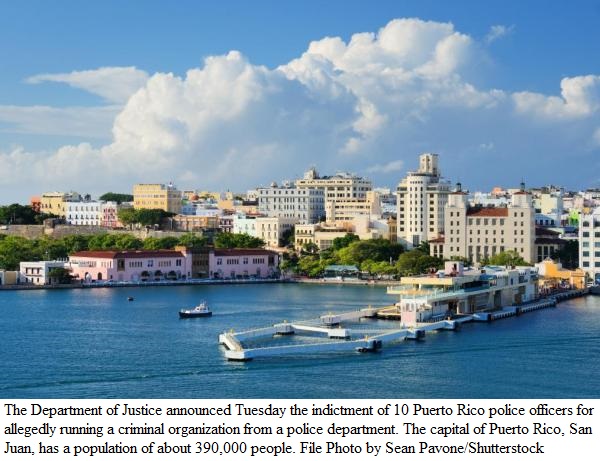
Miami (AFP) September 29, 2015 – Ten Puerto Rico officers have been charged with belonging to a criminal network within the police force, abusing their power to commit a long list of crimes, authorities said Tuesday.

The police used “their affiliation with law enforcement to make money through robbery, extortion, manipulating court records and selling illegal narcotics,” Rosa Emilia Rodriguez-Velez, a US attorney for the American territory, said in a statement.

CU Blog - Ten Puerto Rico Police Accused of Criminal Network - Photo 1The agents collaborated to conduct traffic stops and enter the homes of suspected criminals to steal money, property and drugs, according to the statement.

The officers also allegedly planted evidence and extorted weapons and drugs from individuals in exchange for their release.

In addition, they are accused of having manipulated court records and selling drugs outright.

“The criminal action today dismantles a network of officers who, we allege, used their badges and their guns not to uphold the law, but to break it,” said Rodriguez-Velez.

———-

This story represents a perennial threat in Puerto Rico. This has happened before, again and again; see here:

VIDEO1,700 Cops arrested in Puerto Rico!https://youtu.be/aOVF8oy9PZ0

Published on Jul 11, 2012 – Read the New York Times article in the link below. Be sure to pay extra attention to paragraphs 3, 4 and 5. I urge all police officers to ask yourselves if you really believe Raymond Kelly and Michael Bloomberg are going to defend you when the FBI comes to arrest you for Constitutional rights violations and discrimination.

This Puerto Rico experience is not an exception to American historicity, but rather this is “par for the course”. There have always been threats to US law-and-order (homeland security) from foreign and domestic “actors”; think the Old West. This is the reality in the United States mainland and in the Caribbean territories (Puerto Rico and US Virgin Islands). These threats are also expected to materialize more in the Caribbean, as a direct product of success in elevating the region’s societal engines.

The book Go Lean…Caribbean serves as a roadmap for the introduction and implementation of the technocratic Caribbean Union Trade Federation (CU) to elevate the region’s economic, securing and governing engines. The roadmap expects to raise the region to a $800 Billion Single Market economy after a 5 year period; (from $278 Billion according to 2010 assessments). This roadmap fully expects the eventual corruption activities from those in power. The roadmap thusly embeds checks-and-balances from the outset of the plan.

This point is pronounced early in the book with the Declaration of Interdependence (Page 12) that claims:

x.   Whereas we are surrounded and allied to nations of larger proportions in land mass, populations, and treasuries, elements in their societies may have ill-intent in their pursuits, at the expense of the safety and security of our citizens. We must therefore appoint “new guards” to ensure our public safety and threats against our society, both domestic and foreign. The Federation must employ the latest advances and best practices … to assuage continuous threats against public safety.

xii.  Whereas the legacy in recent times in individual states may be that of ineffectual governance with no redress to higher authority, the accedence of this Federation will ensure accountability and escalation of the human and civil rights of the people for good governance, justice assurances, due process and the rule of law. As such, any threats of a “failed state” status for any member state must enact emergency measures on behalf of the Federation to protect the human, civil and property rights of the citizens, residents, allies, trading partners, and visitors of the affected member state and the Federation as a whole.

xvi. Whereas security of our homeland is inextricably linked to prosperity of the homeland, the economic and security interest of the region needs to be aligned under the same governance. Since economic crimes, including piracy and other forms of terrorism, can imperil the functioning of the wheels of commerce for all the citizenry, the accedence of this Federation must equip the security apparatus with the tools and techniques for predictive and proactive interdictions.

Why is the report of police corruption in Puerto Rico such a concern for the CU/Go Lean planners? The book asserts that with the close proximity of the islands, a security threat in any one island will be a threat to all islands.

But the US is the most powerful and richest Single Market economy in the world, surely they have the means by which to mitigate these threats on their own? This is true! And yet, the US does cooperate with other multilateral law enforcement agencies; think Interpol.

Despite the access to American justice institutions, this Go Lean book posits that Puerto Rico and the Caribbean region must prepare its own security apparatus for its own security needs. So the request is that all Caribbean member-states form and empower a security force and related justice institutions – CariPol – to execute a limited scope on these sovereign territories. Under US law, this arrangement will be instituted with an Interstate Compact, enacted in Congress. These compacts require an administering agency. This allows for the employment of the CU Trade Federation with  scope for Puerto Rico (and the US Virgin Islands).

Puerto Rico needs a societal turn-around. They are even open to radical economic fixes.

The goal of the CU/Go Lean roadmap is to confederate all of the Caribbean – all 30 member-states – under a unified entity to provide homeland security to the local region. But Homeland Security for the Caribbean has a different meaning than for our American counterparts. Yes, we must be on defense against military intrusions like terrorism and piracy, we mostly have to contend with threats that may imperil the region’s economic engines, and crime remediation and mitigation; this includes organized crime. The CU security goal is for public safety! The goal of the CU is set to optimize Caribbean society through economic empowerment, and also the security dynamics of the region, since these are inextricably linked to this same endeavor. Therefore the Go Lean roadmap has 3 prime directives:

  • Optimization of the economic engines in order to grow the regional economy to $800 Billion & create 2.2 million new jobs.
  • Establishment of a Security Apparatus to protect the resultant economic engines from economic crimes and cross-border threats.
  • Improvement of Caribbean governance to support these engines, including a separation-of-powers with member-states to mitigate regional threats and allowing for anti-corruption measures.

The Caribbean appointing “new guards”, or a security pact to ensure justice and public safety will include many strategies, tactics and implementations deemed “best-practice” over the years, including an advanced Intelligence Gathering & Analysis effort to draw out and interdict corruption that might emerge in the region. This Security Apparatus is “Step One, Day One” in the Go Lean roadmap, covering the approach for adequate funding, accountability and control. The Go Lean book details the series of community ethos, strategies, tactics, implementations and advocacies to provide increased public safety & security in the Caribbean region:

Assessment – Puerto Rico – The Greece of the Caribbean Page 18
Community Ethos – Economic Systems Influence Individual Choices Page 21
Community Ethos – Consequences of Choices Lie in Future Page 21
Community Ethos – Privacy –vs- Public Protection Page 23
Community Ethos – Intelligence Gathering Page 23
Community Ethos – “Crap” Happens Page 23
Community Ethos – Minority Equalization Page 24
Community Ethos – Cooperatives Page 25
Community Ethos – Ways to Manage Reconciliations Page 34
Community Ethos – Ways to Improve Sharing Page 35
Community Ethos – Ways to Impact the Greater Good Page 37
Tactical – Vision – Forge a Single Market   economy Page 45
Tactical – Confederating a non-sovereign union Page 63
Tactical – Fostering a Technocracy Page 64
Tactical – Separation of Powers – Homeland Security Page 75
Tactical – Separation of Powers – CariPol: Marshals & Investigations Page 77
Implementation – Ways to Pay for Change Page 101
Implementation – Start-up Foreign Policy Initiatives – With   the US Page 102
Implementation – Start-up Security Initiatives Page 103
Implementation – Ways to Foster International Aid Page 115
Implementation – Reasons to Repatriate Page 118
Planning – Ways to Make the Caribbean Better Page 131
Planning – Ways to Improve Failed-State Indices – Mitigate Organized Crime Page 134
Planning – Lessons from the American West – Law & Order Page 142
Planning – Lessons from Egypt – Lackluster Law & Order affects   Economy Page 143
Advocacy – Ways to Grow the Economy Page 151
Advocacy – Ways to Improve Governance Page 168
Advocacy – Ways to Better Manage the Social Contract Page 170
Advocacy – Ways to Improve Leadership Page 171
Advocacy – Ways to Impact Justice – Military Police Role Page 177
Advocacy – Ways to Reduce Crime – Case Study on Organized Crime Page 178
Advocacy – Ways to Improve for Gun Control Page 179
Advocacy – Ways to Improve Homeland Security Page 180
Advocacy – Ways to Mitigate Terrorism Page 181
Advocacy – Ways to Improve Intelligence Gathering and Analysis Page 182
Advocacy – Ways to Protect Human Rights Page 220
Appendix – Trade SHIELD – E = Enforcement: Modeling Interpol Page 264
Appendix – Interstate Compacts Page 278

Other subjects related to justice and security empowerments for the region have been blogged in other Go Lean…Caribbean commentaries, as sampled here:

https://goleancaribbean.com/blog/?p=6103 Sum of All Fears – ‘On Guard’ Against Regional Deadly Threats
https://goleancaribbean.com/blog/?p=5307 8th Violent Crime Warning to Bahamas Tourists – A concern for the whole region
https://goleancaribbean.com/blog/?p=5304 Mitigating the Eventual ‘Abuse of Power’
https://goleancaribbean.com/blog/?p=4863 A Picture is worth a thousand words; a video … a million to expose corruption
https://goleancaribbean.com/blog/?p=4809 Americans arrested for aiding ISIS
https://goleancaribbean.com/blog/?p=4447 Probe of Ferguson-Missouri finds bias and corruption from cops, courts
https://goleancaribbean.com/blog/?p=4360 Dreading the ‘Caribbean Basin Security Initiative’
https://goleancaribbean.com/blog/?p=2994 Justice Strategy: Special Prosecutors and Commissions of Inquiry
https://goleancaribbean.com/blog/?p=2684 Role Model for Justice, Anti-Crime & Security: The ancient Pinkertons
https://goleancaribbean.com/blog/?p=1143 White Collar fraud in America; criminals take $272 billion a year in healthcare
https://goleancaribbean.com/blog/?p=960 NSA records all phone calls in Bahamas, according to Snowden
https://goleancaribbean.com/blog/?p=392 Jamaica to receive World Bank funds to help in crime fight
https://goleancaribbean.com/blog/?p=341 US slams Caribbean human rights practices
https://goleancaribbean.com/blog/?p=273 10 Things We Don’t Want from the US – #6: Criminal Organizations

The vision of the Go Lean roadmap is to make the Caribbean homeland, a better place to live, work and play. One of many missions, is to lower the “push” factors (from “push-and-pull” reference) so that our citizens are not led to flee their homeland for foreign (North American and European) shores. Among the many reasons people emigrate, are fear of corruption from police and political authority figures; these ones may be able to abuse power with impunity. There may be no sense of justice; “No Justice”, so “No Peace”.

Puerto Rico is an American tragedy, as it is near-Failed State status.

We must provide a roadmap to do better!

We know that “bad actors” will emerge, from internal and external origins. We must be prepared and on-guard to defend our homeland against all threats, foreign and domestic. Yet we must maintain transparency, accountability, and constant commitment to due-process and the rule-of-law.

Everyone in the Caribbean, the people and institutions, are hereby urged to lean-in to this Go Lean roadmap for elevation of Caribbean society. The roadmap calls for the heavy-lifting so that the justice institutions of the CU can execute their role in a just manner, thus impacting the Greater Good. This produces the output of a technocratic system bent on efficiency and effectiveness. In practice, this would mean accountability, transparency, and checks-and-balances in the execution of the rule-of-law.

This roadmap allows us to truly do better. 🙂

Download the book Go Lean … Caribbean – now!

Share this post:
, ,
[Top]

Puerto Rico Bondholders Coalition Launches Ad Campaign

Go Lean Commentary

The book Go Lean … Caribbean was spot on! It reported in 2013 when published, that the assessment of Puerto Rico was dire:

The Greece of the Caribbean.

CU Blog - Puerto Rico Bondholders Coalition Launches Ad Campaign - Photo 1Then again in previous blogs, this commentary detailed the desperate solutions being sought by the ailing Puerto Rico (April 2014). The island is between ‘a rock and a hard place’ (March 2015)!

Now this new article reports how the governmental administrations of this territory are willing to short-change investors and renege on financial promises that were made to previous bondholders. This is bad for the island’s credit rating and country risk assessments. This gross disregard for the “Full Faith and Credit” is egregious; rather the credit image of any state government should be jealously protected. This story – see here – fully describes the urgent need to reboot the economic, security and governing engines of this island:

Title: Puerto Rico bondholders coalition launches ad campaign

WASHINGTON, DC — Main Street Bondholders Coalition, a project of the 60 Plus Association, America’s largest center-right seniors organization representing more than 7.2 million older Americans, has launched a paid advertising campaign in Washington and Puerto Rico to highlight what it describes as Governor Alejandro Garcia Padilla’s plan to violate Puerto Rico’s constitution at the expense of small bondholders.

“Governor Garcia Padilla’s plan – to declare debts un-payable and then attack bondholders by calling them ‘vultures’ – is both unjust and unconstitutional. Our coalition includes Puerto Rican residents and mainland seniors living on fixed incomes, who staked their retirement in bonds backed by Puerto Rico’s full faith and credit. Congress must oppose the governor and his team’s reckless plan that disregards the rule of law and devastates the lives of these small investors,” said Matthew Kandrach, vice-president for 60 Plus.

PR SME - Photo 1

Padilla’s plan is so radical and unprecedented that members of his own political party are speaking out against it:

  • Nadal Power, chairman of Puerto Rican Senate Committee on Treasury and Public Finance: “We have to respect what the Constitution says and to do otherwise would take away a lot of credibility, not only the word of Puerto Rico, but compliance with the supreme law.”
  • Eduardo Bhatia, president of the Senate of Puerto Rico: “Puerto Rico has not been disciplined. We must restore confidence. We have to reduce government spending.”

Added Kandrach, “Puerto Rico can fix its financial problems, but any solution must be built on the cornerstone of genuine fiscal reform, not empty rhetoric and punishing investors. The governor and his circle of advisors, who are the same bunch representing deadbeat sovereigns like Argentina, have chosen to manufacture a crisis in order to get Washington’s help in their plan to stiff creditors. Congress must not allow that to happen.

“Puerto Rico would benefit from a fiscal control board, just like the District of Columbia had in the 1990s when it faced financial crisis. Congress must also oppose the governor’s plan to restructure Puerto Rico’s constitutional bonds. Allowing him to do so would set a terrible precedent, and open a Pandora’s Box of other state defaults. No retirement account in America would be safe.”

Main Street Bondholders Coalition is a project of the 60 Plus Association that is made up of small bondholders from across America who are committed to a policy process that returns Puerto Rico to sound financial management, respects the rule of law, and protects their retirement savings.
Source: Caribbean News Now – Regional Online News Source  – Retrieved 09-09-2015 http://www.caribbeannewsnow.com/topstory-Puerto-Rico-bondholders-coalition-launches-ad-campaign-27533.html

The summary of this news article is that it looks like Puerto Rico is “cruising for a bruising”, flirting with Bankruptcy. They resemble a Failed-State in some Banana Republic, rather than an American sovereign territory in the southern shadows of its bigger-richer mainland. This reflects a broken eco-system.

The Go Lean book serves as a roadmap to re-boot the island’s economic engines. The focus of the roadmap is the introduction and implementation of the region-wide professionally-managed, deputized technocracy of the Caribbean Union Trade Federation (CU). This roadmap asserts that the problems of Puerto Rico (by extension, the entire Caribbean) are too big for any one member-state to solve alone. There is the need to leverage the problems and solutions across the remaining of the Caribbean region; all 30 member-states.

The CU roadmap is a request for Puerto Rico to confederate with the rest of the Caribbean, their English-speaking, Dutch-speaking, French-speaking Caribbean neighbors; despite their political status. Puerto Rico needs the strategies, tactics, implementations and advocacies that would emerge from such integration. As reported in the previous April 2014 blog:

Puerto Rico needs the CU!
The CU needs Puerto Rico!

For the roadmap to be successful there is interdependence among these Caribbean member-states, since they are all too small. There is an overbearing need for leverage and economies-of-scale. This point was declared early in the book, in the opening Declaration of Interdependence (Page 11 – 14), with these statements:

viii. Whereas the population size is too small to foster good negotiations for products and commodities from international vendors, the Federation must allow the unification of the region as one purchasing agent, thereby garnering better terms and discounts.

xi. Whereas all men are entitled to the benefits of good governance in a free society, “new guards” must be enacted to dissuade the emergence of incompetence, corruption, nepotism and cronyism at the peril of the people’s best interest. The Federation must guarantee the executions of a social contract between government and the governed.

xii. Whereas the legacy in recent times in individual states may be that of ineffectual governance with no redress to higher authority, the accedence of this Federation will ensure accountability and escalation of the human and civil rights of the people for good governance, justice assurances, due process and the rule of law. As such, any threats of a “failed state” status for any member state must enact emergency measures on behalf of the Federation to protect the human, civil and property rights of the citizens, residents, allies, trading partners, and visitors of the affected member state and the Federation as a whole.

xxiii. Whereas many countries in our region are dependent Overseas Territory of imperial powers, the systems of governance can be instituted on a regional and local basis, rather than requiring oversight or accountability from distant masters far removed from their subjects of administration. The Federation must facilitate success in autonomous rule by sharing tools, systems and teamwork within the geographical region.

xxv. Whereas the legacy of international democracies had been imperiled due to a global financial crisis, the structure of the Federation must allow for financial stability and assurance of the Federation’s institutions. To mandate the economic vibrancy of the region, monetary and fiscal controls and policies must be incorporated as proactive and reactive measures. These measures must address threats against the financial integrity of the Federation and of the member-states.

xxix. Whereas all Caribbean democracies depend of the free flow of capital for municipal, public and private financing, the institutions of capital markets can be better organized around a regional monetary union. The Federation must institute the controls to insure transparency, accounting integrity and analysis independence of the securities markets, thereby shifting the primary source of capital away from foreign lenders to domestic investors, comprising institutions and individuals.

The CU requires the full participation of all 30 member-states in the region. A careful assessment of government finances, performed for the Go Lean book, shows that the finances for all Caribbean member-state governments are curtailed – the region is in crisis. One state after another feature deficits or excessive high Debt-to-GDP rates. (The World Bank, International Monetary Fund and the Inter-American Development Bank have monitors permanently stationed in the region). For many states, the 2008 Global Financial Crisis still lingers.

To assuage the economic crisis for Puerto Rico and the other Caribbean member-states, the Go Lean roadmap focuses on both increasing revenues, lowering operational expenses, and refinancing previous high-interest debt instruments (bonds). The roadmap is a complete re-boot! Imagine new revenue streams and a separation-of-powers to off-load some of the operational burdens to the CU Trade Federation. These are the prime directives of the Go Lean roadmap, pronounced as these 3 statements:

  • Optimization of the economic engines in order to grow the regional economy to $800 Billion and create 2.2 million new jobs.
  • Establishment of a security apparatus to protect the resultant economic engines.
  • Improvement of Caribbean governance to support these engines.

The book Go Lean … Caribbean introduces the CU so as to assume much of the Caribbean economic, security and governing functionality. The roadmap makes Puerto Rico, and the rest of the Caribbean, a better place to live, work and play. How? By the adoption of a series of community ethos, plus the execution of the following strategies, tactics, implementations and advocacies to elevate the societal engines of the region and to stop any downward spiral into Failed-State status. See the lists here:

Assessment – Caribbean Single Market & Economy Page 15
Assessment – Dutch Caribbean – Integration & Secessions Page 16
Assessment – French Caribbean – Organization & Discord Page 17
Assessment – Puerto Rico – The Greece of the Caribbean Page 18
Community Ethos – Economic Principles – Economic Systems Influence   Individual Choices Page 21
Community Ethos – Economic Principles – Consequences of Choices Lie in   the Future Page 21
Community Ethos – Governing Principles – Lean Operations Page 24
Community Ethos – Ways to Impact the Future Page 26
Community Ethos – Ways to Promote Happiness Page 36
Community Ethos – Ways to Impact the Greater Good Page 37
Strategy – Vision – Confederate all 30 member-states/ 4 languages into a Single   Market Page 45
Strategy – Mission – Build and foster local economic engines Page 45
Tactical – Ways to Foster a Technocracy Page 64
Tactical – Growing the Economy to $800 Billion GDP Page 68
Tactical – Separation-of-Powers – CU Federal Government versus Member-State Governance Page 71
Implementation – Assemble All Regionally-focus Organizations of All Caribbean Communities Page 96
Implementation – Ways to Pay for Change Page 101
Implementation – Ways to Better Manage Debt Page 114
Implementation – Ways to Foster International Aid Page 115
Planning – 10 Big Ideas – Forging the Single Market for the whole region Page 127
Planning – Ways to Improve Trade Page 128
Planning – Ways to Improve Interstate Commerce Page 129
Planning – Ways to Make the Caribbean Better Page 131
Planning – Lessons Learned from 2008 Page 136
Planning – Lessons Learned from Egypt – Dysfunction in a Tourism Mecca Page 143
Advocacy – Ways to Grow the Economy Page 151
Advocacy – Ways to Create Jobs Page 152
Advocacy – Ways to Improve Credit Ratings Page 152
Advocacy – Ways to Improve Governance Page 168
Advocacy – Ways to Better Manage the Social Contract Page 170
Advocacy – Ways to Impact Justice Page 177
Advocacy – Ways to Improve Homeland Security Page 180
Advocacy – Ways to Impact Wall Street Page 200
Advocacy – Ways to Impact US Territories Page 244

The Go Lean roadmap alerts the Caribbean – the 42 million people, 10 million Diaspora and 80 million visitors – that the effort to elevate the societal engines is heavy-lifting. This is no easy task, serious-minded leadership is necessary. There can be no reneging of commitments and repayments of previous bond obligations, as related in the foregoing news article and this VIDEO here:

VIDEOPuerto Rico on brink of debt defaulthttps://youtu.be/BBwtxF52OrE

Published on Aug 3, 2015 – Envision Capital Management CEO Marilyn Cohen explains how Puerto Rico got into poor fiscal shape.
Category: News & Politics
License: Standard YouTube License

There must be new solutions that considers the pasts, accepts the present and fosters the future.

Change has come to the Caribbean. Puerto Rico and all neighboring member-states are admonished to lean-in to the empowerments and elevation described in the book Go Lean … Caribbean. The benefits of this roadmap are needed urgently now! We need the emergence of a $800 Billion regional economy, 2.2 million new jobs. We need the Caribbean homelands to become better places to live, work and play. 🙂

Download the book Go Lean … Caribbean – now!

Share this post:
, , , , ,
[Top]

China’s Caribbean Playbook: America’s Script

Go Lean Commentary

China has invested heavily in the Caribbean, as of recent; see list here of selected announcements since January 2014:

 China Playbook 3

New $250 Million Hotel Project – The Pointe – Breaks Ground in Nassau

Big China-Bahamas project – Baha Mar – Still embroiled in legal wrangling

A New $2 Billion Caribbean Resort Project in Grenada

Is This Island – Puerto Rico – China’s Next Caribbean Investment Target?

The Caribbean’s Big New Canal Project – backed by China

Antigua and Barbuda Closer to Completion of New Airport Terminal – built by China Civil Engineering Construction Corporation

China to Build More Homes in Grenada

Dominica, China Sign Agreement on $16 Million in Projects

Barbados, China Talk Agriculture

Trinidad, China Talk Infrastructure

British Virgin Islands Signs Agreements With Delegations From China

China Playbook 2

Just what is China’s motive, their end game?

Should we be leery or should we just embrace [the badly needed] help from whatever sources?

How much of this questioning is influenced by a pro-American yearning? Pro-Christian yearning? Fear of strangers? Racist under-valuing of non-White/European races?

There is the need for the Caribbean to take stock of its thoughts-feelings-actions and give all of these questions serious deliberation.

If this Golden Rule is true: “he who has the gold makes the rules”, then we will be held to account to stakeholders in China, as their many state-own companies are definitely “bringing gold” to the table. This was vividly communicated in a previous (2014) China-Caribbean Trade/Business Summit:

“Latin America has much to gain from deepening its relationship with China, just as China has much to gain from our region,” said Luis Alberto Moreno, president of the Inter-American Development Bank (IDB). “For our governments, this is a strategic priority. But much of the day-to-day building of those links will fall on the private sector.”

China joined the IDB as a shareholder in 2009, and is now the top trade partner for several countries in the region, including Brazil and Chile.

Trade between Latin America and the Caribbean and China is expected to double in the next decade.

Source: http://caribjournal.com/2014/09/15/china-holds-business-summit-with-latin-america-caribbean/

The book Go Lean…Caribbean anticipates the participation of Direct Foreign Investments in the Caribbean community. The book serves as a roadmap for the introduction and implementation of the technocratic Caribbean Union Trade Federation (CU). The CU will serve as an integrated entity to shepherd progress and optimization among the region’s societal engines for economics, security and governance. This is to be likened to a Confederated Command of Allied Forces for battles in a “Trade War”.

This aligns with the CU/Go Lean roadmap, as the focus of CU is about Trade, not politics; thus the CU branding is Trade Federation. The experience and wisdom of this roadmap was derived from successes and failures in 2008 Trade Wars.

China is officially a Communist country. But these referenced headlines do not refer to politics nor any Chinese influence of the region’s politics; not even any pressure to lean politically. It is only about trade and succeeding in a global “Trade War”.

China, with its Communist leaning is also officially atheist but truthfully, their de facto policy is religious agnosticism; they simply tolerate them all. (Many religions abound in that 1.2 Billion population, consider: Buddhism, Taoism, Confucianism and the toleration of Western religions). The publisher of the book Go Lean…Caribbean, SFE Foundation, is a Community Development Foundation; it shares many of these same ideals. This was related in the book’s opening chapter with this Who We Are statement:

The SFE Foundation is not a person; it’s an apolitical, religiously-neutral, economic-focused movement, initiated at the grass-root level to bring change back to the Caribbean … There is an old observation/expression that states that “there are 3 kinds of people in the world, those who make things happen, those who watch things happen and those who wonder ‘what happened?’“ Principals of SFE Foundation were there in 2008 … on the inside looking out, not the outside looking in. Understanding the anatomy of the modern macro economy, allows the dissection of the processes and the creation of viable solutions.

This focus on trade is very familiar.

This is the same playbook of the United States of America in building the world’s largest Single Market economy. (Remember, with the Army Corp of Engineers, the US built the Panama Canal, but with more strings attached). China is simply following the same American script – minus the cronyism and militarism – of promoting trade of their products, services and capital.

Capital? Yes, many of the projects highlighted in the foregoing news articles are being financed by China’s state-owned banks and lending institutions. They are “putting their money, where their mouth is”. These are economic battles only! See US President Barack Obama’s comments on China’s Caribbean motives in the Appendix-VIDEO below.

As a region, with numerous Failed-States, can we really quiver over the nationality of our benefactors; can we question the ethnicity of the “Cavalry that has come to our rescue”? Hardly! We have to just manage with whatever refuge being offered, to allow us to better cover our basic needs.

For example, healthcare delivery is still a major concern in the Caribbean. According to the following article, the member-state of Jamaica needs to expand their number of hospital beds … and a China-backed project is facilitating this quest:

Title: China to Fund $511 Million Project at University of the West Indies
By: Dana Niland, Contributor, Caribbean Journal – Online News Source; (posted 08/28/2015; retrieved 09/02/2015 from:
http://caribjournal.com/2015/08/28/china-to-fund-511-million-project-at-university-of-the-west-indies/)

China Playbook

The University of the West Indies and China Harbour Engineering Company (see Appendix) have signed a Memorandum of Understanding for a $511 million USD development project.

The project will include the expansion of the University Hospital from 500 to 1,000 beds, an upgrade to the College Commons, the building of a 100-room hotel, and a new center for sporting activities.

The expansion will also include the addition of a cogeneration plant to supply electricity and to feed the cooling system for the campus.

Addressing the signing ceremony at the UWI Mona Campus, Professor Archibald McDonald said that the realignment of the hospital’s structure was necessary to promote efficiency and to put the institution in a position to serve the wider region.

“This will have all the modern facilities. The Government of Jamaica invests a large portion of its budget to the [UHWI]; therefore, the University Hospital has to give back to the people of Jamaica. It has to supplement the Government’s hospitals, and provide a higher level of care,” he said.

Jamaican Minister of Health, Dr. Fenton Ferguson also praised the arrangement.

“I am satisfied that the direction [in which] they are going will preserve and protect the most vulnerable within our society, and ensure that health care is not out of the reach of ordinary citizens,” Ferguson said.

The project in this article is not solely for Jamaica, but rather, it is within the charter of the University of the West Indies; so there is a regional focus.

The underlying motivation of the Go Lean book is brotherly love. Therefore who so ever, brings a solution to impact the Greater Good for the Caribbean people must be embraced, despite their political affiliations. The Go Lean roadmap is therefore not “pro” or “con” American, but rather pro solutions; in fact the CU is described as a technocracy with a focus on delivery and merit; this is the same charter as the Steering Committee of the Government of the Peoples Republic of China. This was related in the Go Lean book (Page 64) as follows:

Even the leaders of the Communist Party of China are mostly professional engineers. The Five-Year plans of the People’s Republic of China have enabled them to plan ahead in a technocratic fashion to build projects such as the National Trunk Highway System, the High-speed rail system, and the Three Gorges Dam.

A basic economic principle, subscribed in Go Lean (Page 21), is that “Economic Systems Influence Individual Choices and Incentives”. So the advanced field of economics hereby posits that Economic Systems, more so than political systems influence people’s choices and incentives. The CU seeks to optimize the region’s economic systems to better deliver on the prime directives of the Go Lean roadmap, pronounced as the following statements:

  • Optimization of the economic engines in order to grow the regional economy to $800 Billion & create 2.2 million new jobs.
  • Establishment of a security apparatus to protect the resultant economic engines and mitigate challenges/threats to ensure public safety for the region’s stakeholders.
  • Improvement of Caribbean governance, including a separation-of-powers with member-states, to support these economic/security engines.

So the CU vision is to provide the stewardship for the region’s economic engines, first, so as to succeed in the goals of the roadmap. This vision was pronounced at the outset of the book in the roadmap’s Declaration of Interdependence (Page 13):

xxiv.   Whereas a free market economy can be induced and spurred for continuous progress, the Federation must install the controls to better manage aspects of the economy: jobs, inflation, savings rate, investments and other economic principles. Thereby attracting direct foreign investment because of the stability and vibrancy of our economy.

The CU roadmap drives change among the region’s economic, security and governing engines. These solutions are as new community ethos, strategies, tactics, implementations and advocates; sampled as follows:

Who We Are – Veterans of 2008 “Wars” & Financial Crisis Page 8
Community Ethos – Voluntary Trade Creates Wealth Page 21
Community Ethos – Consequences of Choices Lie in the Future Page 21
Community Ethos – Job Multiplier Page 22
Community Ethos – Cooperatives Page 25
Community Ethos – Impact the Greater Good Page 37
Strategy – CU Vision and Mission Page 45
Strategy – Build and foster local economic engines Page 45
Strategy – Reform our HealthCare industries to better fulfill our health care needs Page 45
Tactical – Fostering a Technocracy – China’s Example Page 64
Tactical – $800 Billion Economy – How and When – Trade Page 67
Tactical – Recovering from Economic Bubbles Page 69
Tactical – Separation-of-Powers – Interstate Commerce & Trade Facilitation Page 79
Tactical – Separation-of-Powers – Office of Trade Negotiations Page 80
Implementation – Ways to Pay for Change Page 101
Implementation – Foreign Policy Initiatives at Start-up Page 102
Implementation – Trade Mission Objectives Page 117
Implementation – Ways to Benefit Globalization Page 119
Planning – Ways to Improve Trade Page 128
Planning – Ways to Improve Failed-State Indices Page 134
Planning – Lessons Learned from 2008 Page 136
Advocacy – Ways to Grow the Economy Page 151
Advocacy – Ways to Create Jobs Page 152
Advocacy – Ways to Improve Healthcare Page 156
Advocacy – Ways to Impact Public Works – US Army Corp of Engineers Model Page 175
Advocacy – Ways to Preserve Caribbean Heritage Page 218
Advocacy – Ways to Re-boot Jamaica Page 239
Appendix – Trade SHIELD Principles Page 264
Appendix – Caribbean Failed-States Indicators & Definitions Page 271

The Caribbean region needs help! We need the elevations of this Go Lean roadmap; we need the direct investments from China’s banks. We need the expertise and core competences of China’s many state-owned engineering and development companies. We simply cannot expect progress with a North American-only focus. We cannot only look North and West, we must also look East and South. The world is now flat; we must embrace globalization.

It is now a changed world. We must embrace China. Not as new colonizers, but as partners. There are opportunities for China to reap returns on their investments, with no exploitation of the Caribbean land or people.

The Caribbean is arguably the best address on the planet, but there are many deficiencies, as in jobs and economic empowerments. With the previous North & West focus we have suffered. Our deficiencies has led to societal abandonment so bad that the region has lost a large share of our human capital, one estimate of 70% of the college-educated population to the brain-drain.

No More! Our region can be and must be better.

The shepherding of the Caribbean economy now requires best-practices and technocratic executions; it requires those trained and accomplished from the battles of globalization and trade wars. This is the Go Lean roadmap.

Everyone, the people, businesses, institutions and trading partners are all hereby urged to lean-in to this roadmap to make the Caribbean a better place to live, work and play.  🙂
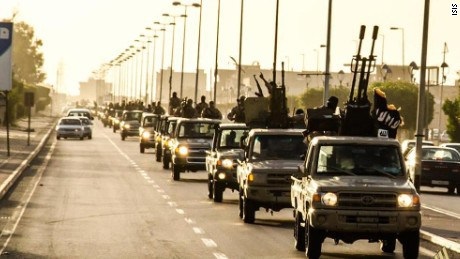
Download the book Go Lean … Caribbean – now!

———

Appendix – China Harbour Engineering Company, Ltd (CHEC) – https://en.wikipedia.org/wiki/China_Harbour_Engineering

CHEC is an engineering contractor and a subsidiary of CCCC (China Communications Construction Company), providing infrastructure construction, such as marine engineering, dredging and reclamation, road and bridge, railways, airports and plant construction.[1] As a dredger the company is the second largest in the world, carrying out contracts in Asia, Africa, and Europe.[2]

The company was established in December 2005 during the merger of China Harbour Engineering Company Group (founded 1980) with China Road and Bridge Corporation into CCCC.

CHEC has won large contracts for dredging, particularly in the Middle East and Asia.

———
Appendix – VIDEO – President Obama On China’s Influence In The Caribbean & Latin America https://youtu.be/vfve6V3zA08

Published on Apr 16, 2015 – President Obama on China’s growing influence in the Caribbean and Latin America at youth town hall meeting, Thursday April 9, 2015, University of the West Indies (Mona Campus), Kingston, Jamaica. Watch the full video here: https://www.youtube.com/watch?v=ftDpg…


Share this post:
, , , , ,
[Top]

Role Model Iris Adderley – Disability Advocate: Reasonable Accommodations

Go Lean Commentary/Interview

Travel away from your children for an extended time period and you would notice something amazing: Change.

It turns out that change is constant; children grow. But you have to take a step back to notice the difference.

CU Blog - Anecdote - Iris Adderley - Photo 1This is the experience of Disability Advocate Iris Adderley. She is a proud Bahamian – oldest child with 10 siblings who mostly all still live in the Bahamas – who served her country well; especially during the early days of nation-building (independence status was obtained in 1973). In a job assignment with the Bahamas Ministry of Tourism, Ms. Adderley spent many years abroad (Coral Gables, FL and Dallas, TX) promoting the Bahamas around the world as a tourist and convention destination. She was continuously called upon to sell a vision of the Bahamas that she discovered later to be out-dated, and irrelevant. The country had changed … and even declined, it seemed, in her absence.

Ms. Adderley returned to the Bahamas in the year 2000, but not to the homeland she had left behind, rather to this newly changed community. The changes were not all good. To complicate matters, she was now returning as a quadriplegic, a permanent disability.

Ms. Adderley endured a life-threatening car accident in Metropolitan Dallas in 1982, where she lived and worked for her Ministry of Tourism assignment. But she does not consider her injury as a national sacrifice. It was just “time and unforeseen occurrence” befalling her; (see Bible reference of Ecclesiastes 9:11 in the Appendix below). This taught her a very important lesson that everybody is  vulnerable to injury and illness and can be rendered disabled. This new reality became her new advocacy, a quest to make sure people with disabilities have equal rights and opportunities to contribute to society. (This quest also applies as a population ages, the prevalence of disabilities increases proportionally; think Diabetes amputations, Hip replacements, etc.).

This conclusion aligns with the book Go Lean…Caribbean, that with just a reasonable accommodation, persons with disabilities can live a full and engaging life … and help to elevate their communities and make “home” better places to live, work and play.

What reasonable accommodations?

For starters, Ms. Adderley expressed that if her injury had occurred in her Caribbean homeland that she would now be dead!

The world is better … that she has survived.

The Go Lean book serves as a roadmap for the introduction and implementation of the technocratic Caribbean Union Trade Federation (CU). The CU is designed to elevate the region’s economic, security and governing societal engines. This includes healthcare. The CU roadmap calls for improvements to the region’s emergency management apparatus. There is a plan to deploy a network of 6 cutting-edge Trauma Centers throughout the Caribbean. With this mitigation and remediation, the region can more competently respond to trauma emergencies, like life-threatening auto accidents.

It is only reasonable to expect that Caribbean society would have caught up to finally being able this deliver on the social contract at this level, considering that Ms. Adderley trauma transpired 33 years ago.

Unfortunately, the experiences of so many in the Bahamas, specifically and the Caribbean as a whole, is that these countries are structured only for the lowest common denominator (LCD); anyone one with needs above-and-beyond this LCD level is just “out-of-luck”.

This is unacceptable … and unreasonable for Caribbean contributors like Iris Adderley. This is also unacceptable … and unreasonable for the planners of the new Caribbean. We must deliver better on the social contract, the implied covenant where citizens surrender some of their freedoms and submit to the authority of the State in exchange for protection of remaining natural and legal rights. Blatant failures on the delivery of this social contract lead to an undesirable destination: abandonment!

Ms. Adderley lived in the most advanced country in the world, in the US State of Texas. She would have been excused if she wanted to remain there for her sustained existence, considering her health disposition. But she showed a national sacrifice ethos and repatriated back to her Caribbean homeland. This is heroic!

In a structured interview, Iris Adderley made the following contributions to this discussion of the roadmap to elevate her community:

CU Blog - Anecdote - Iris Adderley - Photo 2

Bold = Author

What are the details of your advocacy?

There should be a stronger manifestation of “Human” and “Woman’s” rights in the Bahamas. It is deplorable that the country is so deficient in these offerings. Earlier in my career, I took the assignment in Dallas so as to leave the Coral Gables Office of the Ministry of Tourism because the spirit of gender discrimination was just so acute. I felt I could make a bigger impact in a more reasonable environment. I was proven correct and did indeed have a greater impact professionally there. Returning to the Bahamas in 2000 I wanted to nurture that same advocacy at home, but this time with a supplemental agenda for persons with disabilities.

What are your responsibilities now?

I serve as a Consultant at the Disability Affairs Division of the Ministry of Social Services and Community Development. I help to guide public policy to benefit those with disabilities in the country, even blending my prior role as a Tourism promoter by trying to create a great environment for persons with disabilities to come visit our shores and enjoy our hospitality.

What would you do if your project had 50% more funding?

Create rehabilitation centers, if not throughout the whole country, then at least in the capital city of Nassau. Persons with disabilities need help and support to get back to the point where they can contribute to society. Increased funding would allow more cultural education to message that persons with disabilities have the same rights in any society, to be more inclusive of the day-to-day affairs.

What do you want to see in The Bahamas in … 5 years?

More fulfilment of Sir Lynden’s Vision; (the first and longest-serving Prime Minister after majority rule, Sir Lynden O. Pindling). The young people need to know who we are as a people, where we came from and that we were a nation of beautiful, strong black people.

I want to see Bahamians own more of the Bahamas. This means diversifying from the main industries of tourism and financial services; all we’re doing there is servicing other people’s assets; we are not really owning or creating anything.

What do you want to see in The Bahamas in … 20 years?

The Bahamas needs a National Strategic Plan. This needs to reflect the values and best-practices that have been honed from experiences from around the world. The Bahamas has a global Diaspora – mostly of an elderly disposition now – their participation should be invited.

What features of North America/Europe would you like to see here?

The social safety nets (health, schools, food for the poor) are to be admired, especially in many European countries. Those communities extend themselves to care for their elderly, poor, sick and disabled citizens.

How would you feel if your children emigrate?

Though I don’t have any children directly, I’m blessed with many nieces, nephews and loving family members. So many of them are bright young all-stars and go-getters, studying abroad in colleges and universities. Unfortunately, far too often, these ones are not setting their sight on a return home to the Bahamas. Some would even rather go to a Latin American country than to come back here to the Bahamas. This is sad, as it does not reflect the great sacrifices that so many in the previous generations made to forge opportunities for this next generation.

Where do you consider to be the best place to live?

At one point, my answer would have been the Bahamas; but I’ve gotten to see the real country as it exists today; this is not what we sold to tourists in promotions and advertisements. The country has changed … downward. Instead of our next generation offering reassurance and hope, I am more troubled at their lack of proper training. We cannot expect greatness from the status quo of most of this generation today..

What areas are you most disappointed in when considering the last 20 years?

The lack of discernment is especially disappointing. Many times the wise course is presented to Bahamians, but they seem to like to ignore wisdom and instead proceed down a destructive path. I guess the proverb is true: “A prophet is not accepted at home”.

Your wisdom is discerned here Ms. Adderley!

The points from this Disability Advocate align with the CU/Go Lean roadmap. Our directive is similar: to elevate Caribbean society, including those persons with physical disabilities. The declarative statements of the prime directive are as follows:

  • Optimization of the economic engines in order to grow the regional economy.
  • Establishment of a security apparatus to prepare and protect stakeholders for natural, man-made and incidental emergencies.
  • Improvement of Caribbean governance to support these engines.

The book posits that one person, despite their field of endeavor, can make a difference in the Caribbean, and its impact on the world; that there are many opportunities where one champion, one advocate, can elevate society. In this light, the book features 144 different advocacies, one specifically for Persons with Disabilities (Page 228). We need advocates, vanguards and sentinels like Iris Adderley to ensure equal opportunities for all these relevant stakeholders.

The Go Lean roadmap specifically encourages the region, to lean-in to elevate society with these specific community ethos, strategies, tactics, implementations and advocacies:

Community Ethos – Economic Principles – Economic Systems Influence   Individual Choices Page 21
Community Ethos – Governing Principles – Minority Equalization Page 24
Community Ethos – Governing Principles – Lean Operations Page 24
Community Ethos – Governing Principles – Return on Investments Page 24
Community Ethos – Ways to Promote Happiness – Gerontology/Aging Factors Page 36
Community Ethos – Ways to Impact the Greater Good Page 37
Strategy – Vision – Confederate all 30 Member-states Page 45
Strategy – Mission – Repatriate the Diaspora,   young and old …even those disabled Page 46
Anatomy of Advocacies – Examples   of Individuals Who Made Impact Page 122
Planning – 10 Big Ideas – Homeland Security Pact Page 127
Planning – Ways to Improve Failed-State Indices – Minority and Human Rights Page 134
Planning – Lessons from US Constitution – Equal Protection for all Minorities Page 139
Advocacy – Ways to Improve Healthcare – Caribbean [Persons] with Disabilities Page 156
Advocacy – Ways to Improve Governance – For All Citizens Page 168
Advocacy – Ways to Better Manage the Social Contract – Medical / Heath Endeavors Page 170
Advocacy – Ways to Impact Justice – Ensure Rights for the Disabled Classes Page 177
Advocacy – Ways to Remediate and Mitigate Crime – Hate Crime Qualifiers Page 178
Advocacy – Ways to Impact Homeland Security – Emergency Management Page 180
Advocacy – Ways to Improve Emergency Management – Trauma Art & Science Page 182
Advocacy – Ways to Foster Technology – e-Government Interfaces & Services Page 197
Advocacy – Ways to Protect Human Rights – Caribbean [Persons] with Disabilities Page 220
Advocacy – Ways to Improve Elder-Care – Caribbean [Persons] with Disabilities Page 225
Advocacy – Ways to Empower Women Page 226
Advocacy – Ways to Impact Persons with Disabilities – ‘Americans with Disabilities Act’ Model Page 228
Appendix – Trauma Center Definitions Page 336

The Caribbean region wants a more optimized society … for all citizens. We want to mitigate human rights and civil rights abuses, and empower all for a better life, liberty and the pursuit of happiness.

The Go Lean book posits that economic measures and security measures must be in tandem for any societal empowerment effort. According to the foregoing interview/profile, after 30 years, our region is still behind with regards to servicing the needs of one specific minority group: persons with disabilities. We must do better!

Early in the book, the pressing need to optimize facilitations for this population group was pronounced in the Declaration of Interdependence (Pages 11 – 13), with these opening statements:

ix. Whereas the realities of healthcare and an aging population cannot be ignored and cannot be afforded without some advanced mitigation, the Federation must arrange for health plans

xi. Whereas all men are entitled to the benefits of good governance in a free society, “new guards” must be enacted to dissuade the emergence of incompetence, corruption, nepotism and cronyism at the peril of the people’s best interest. The Federation must guarantee the executions of a social contract between government and the governed.

xvi. Whereas security of our homeland is inextricably linked to prosperity of the homeland, the economic and security interest of the region needs to be aligned under the same governance.  the accedence of this Federation must equip the security apparatus with the tools and techniques for predictive and proactive interdictions.

xviii. Whereas all citizens in the Federation member-states may not have the same physical abilities, reasonable accommodations must be made so that individuals with physical and mental disabilities can still access public and governmental services so as to foster a satisfactory pursuit of life’s liberties and opportunities for happiness.

The Go Lean book explicitly acknowledges that optimizing the needs of persons with disabilities is not easy; this requires strenuous effort, heavy-lifting. These persons with disabilities normally are not able to contribute as much to Caribbean society as they draw on the public resources. This is unfortunate! Other societies have provided great models and amenities for facilitating fuller lives for those with disabilities: motorized wheelchairs, cars equipped with hand controls, Braille and TeleType (TTY and/or TDD) devices. This is the quest of the CU/Go Lean roadmap to engage more people – even those persons with disabilities – into this effort to optimize Caribbean society. More innovations are forthcoming; see VIDEOs in the Appendix. This vision is only reasonable, but prudent, as this population can generate a positive Return on Investment (ROI); as demonstrated by Iris Adderley in the foregoing interview.

Many subjects related to this profile of role model Iris Adderley have been blogged in previous Go Lean…Caribbean commentary; they are sampled here:

https://goleancaribbean.com/blog/?p=5002 Managing a ‘Clear and Present Danger’
https://goleancaribbean.com/blog/?p=4308 911 – Emergency Response Empowerments for the Caribbean
https://goleancaribbean.com/blog/?p=4278 Businesses Try to Stave-off Brain Drain as Boomers Age, Retire
https://goleancaribbean.com/blog/?p=3780 National Sacrifice – The Missing Ingredient
https://goleancaribbean.com/blog/?p=341 American Human Rights Leaders Slams Caribbean Poor Record

The CU/Go Lean roadmap is designed to empower and enhance the economic engines for the full participation and benefit of all Caribbean people. This includes the number of citizens that may have some physical challenges (deaf, blind, lame/mobility, etc.) or mental challenges. The CU’s vision is that this population group represents a critical talent pool that is under-served and underutilized; they are therefore included in the Go Lean roadmap. Tactically there is the call for a Caribbean [Persons] with Disabilities (CDA) provision to be embedded in the Caribbean Union confederation treaty; the request is to have the edict of reasonable accommodations legally embedded in statures.

In addition to the economic missions, the CU treaty would also address security needs, with the mission to fortify homeland security and to mitigate societal threats and risks, including a solution for emergency management and medical trauma arts and sciences.

Lastly, the CU treaty addresses remediation for regional governance. The local governments are thusly spurred to adapt and enforce access standards for all public edifices and private structures providing commerce to the general public. This reasonable accommodations mandate is modeled after the Americans with Disabilities Act (ADA) feature in US federal law.

This roadmap is a fully comprehensive plan with consideration to all aspects of Caribbean life. All stakeholders – citizens, businesses, and institutions – are hereby urged to lean-in to this roadmap.

Yes, with all “hands on deck”, persons with disabilities as well, the Caribbean can truly become a better place to live, work and play. 🙂

Download the book Go Lean … Caribbean – now!

———–

Appendices

1. Additional information on Iris Adderley: http://www.tribune242.com/news/2013/oct/22/iris-adderley-tireless-advocate-people-disabilitie/

2. Bible Reference – Ecclesiastes 9:11:
“I have seen something further under the sun, that the swift do not always win the race, nor do the mighty win the battle, nor do the wise always have the food, nor do the intelligent always have the riches, nor do those with knowledge always have success, because time and unexpected events overtake them all.” — New World Translation

3. VIDEO – Hugh Herr: The new bionics that let us run, climb and dancehttps://youtu.be/CDsNZJTWw0w

Published on Mar 28, 2014 – Hugh Herr is building the next generation of bionic limbs, robotic prosthetics inspired by nature’s own designs. Herr lost both legs in a climbing accident 30 years ago; now, as the head of the MIT Media Lab’s Biomechatronics group, he shows his incredible technology in a talk that’s both technical and deeply personal — with the help of ballroom dancer Adrianne Haslet-Davis, who lost her left leg in the 2013 Boston Marathon bombing, and performs again for the first time on the TED stage.

4. VIDEO‘Terminator’ arm is world’s most advanced prosthetic limbhttps://youtu.be/_qUPnnROxvY

Published on Nov 5, 2012 – A father who lost his arm in an accident six years ago has been given a new lease of life by a hi-tech bionic hand which is so precise he can type again. Nigel Ackland, 53, has been fitted with the Terminator-like carbon fibre mechanical hand which he can control with movements in his upper arm. The new bebionic3 myoelectric hand, which is also made from aluminium and alloy knuckles, moves like a real human limb by responding to Nigel’s muscle twitches. Incredibly, the robotic arm is so sensitive it means the father-of-one can touch type on a computer keyboard, peel vegetables, and even dress himself for the first time in six years.
More info about this amazing prosthetic can be found here http://bebionic.com

5. VIDEO – Berkeley Bionics: Introducing eLEGS – https://youtu.be/WcM0ruq28dc

Published on October 13, 2011 – Berkeley Bionics has rebranded. The company is now known as Ekso Bionics and eLEGS has become Ekso. To clarify, the device is an exoskeleton and the brand of the exoskeleton is Ekso, by Ekso Bionics.

Share this post:
, , , , , , ,
[Top]

Repenting, Forgiving and Reconciling the Past

Go Lean Commentary

CU Blog - Repenting, Forgiving and Reconciling the Past - Photo 2Christendom has a sullied past!

This is well represented in the historicity of the Spanish Inquisition (see Appendix * below), the campaign by the Roman Catholic Church to weed out the Jews and Muslims in Spain! This bad history of ethnic cleansing was at its worst in the 15th Century. See the tongue-in-cheek comedy VIDEO in the Appendix.

How does a community repent, forgive and reconcile from such a bad legacy?

Easier said than done!

For starters, do not proceed as if the events never happened. This is the lesson now being learned in modern day Spain. See the news article here:

Title: Ancient Spanish Village Is No Longer Named ‘Kill Jews’
(Source: Huffington Post – Online News Site; posted: 06/22/2015; retrieved 06/27/2015 from: http://www.huffingtonpost.com/2015/06/22/castrillo-matajudios-name-change_n_7636368.html)

SPAIN-RELIGION-HISTORY-JUDAISM

MADRID (AP) — The tiny Spanish village of Castrillo Matajudios — which means “Camp Kill Jews” — on Monday officially changed its name back to Castrillo Mota de Judios (“Jews’ Hill Camp”) following a referendum and regional government approval.

The village, with about 50 inhabitants, voted to change the name in 2014 after the mayor argued that the term was offensive and that the village should honor its Jewish origins.

Documents show the villages’ original name was “Jews’ Hill Camp” and that the “Kill Jews” name dates from 1627, after a 1492 Spanish edict ordering Jews to become Catholics or flee the country. Those who remained faced the Spanish inquisition, with many burned at the stake.

The name change was approved by the regional government of Castilla y Leon and published in the region’s official gazette.

Although Jews were killed in the area, researchers believe the village got its recent name from Jewish residents who converted to Catholicism and wanted to reinforce their repudiation of Judaism to convince Spanish authorities of their loyalty.

Others suspect the change may have come from a slip of the pen.

Although no Jews live in the village today, many residents have ancient Jewish roots and the town’s official shield includes the Star of David.

Spain’s lower house of parliament this month approved a law setting a citizenship path for the descendants of Jews who were forced to flee the country centuries ago.

Spain also has an ancient southeastern town called Valle de Matamoros, which translate as “Kill Muslims Valley.” The town has said it has no plans to change its name. Matamoros is also a surname in Spain.

There is a need to reconcile a lot of bad episodes in Caribbean history. Think:

  • Haiti
  • Cuba
  • Guyana’s border with Venezuela
  • Belize’s border with Guatemala

The book Go Lean…Caribbean posits that any attempt at unification of the Caribbean 30 member-states region must consider the ancient and modern conflicts some member-states have with others. The book serves as a roadmap for the introduction and implementation of the Caribbean Union Trade Federation (CU). A mission of the roadmap is to reverse the societal abandonment and invite the repatriation of the Diaspora by flashing the “Welcome Home” signs. But “old parties” returning can also open “old wounds”. Therefore an additional mission is to facilitate formal reconciliations, much like the model in South Africa with their Truth & Reconciliation Commissions (TRC). This mission will assuage these Failed-State indicators and threats (Page 272):

  • “Revenge seeking” groups
  • Group Grievances

The foregoing article depicts a bad episode in history and the best-practices to repent, forgive and reconcile.

The approach is simple, correct the bad “community ethos” from the past. The Go Lean  book defines “Community Ethos” as the fundamental character or spirit of a culture; the underlying sentiment that informs the beliefs, customs, or practices of a group or society; the dominant assumptions of a people or period. The Spanish town in the foregoing article continued to laud the bad actions of “killing Jews” by the continued use of that name. Though none of the villains or victims are alive today, it is just a bad spirit to imbrue from one generation to another. This town name “Camp Kill Jews” is such a bad image to uphold.

The CU/Go Lean vision to elevate Caribbean society must consider the issue of image. There is the need for a sentinel role for Caribbean image, as there are a lot of times that Caribbean life and people are denigrated in works of media arts: film, TV, books, magazines. The Go Lean roadmap calls for the CU to assume that role. Using cutting edge delivery of best practices, the CU will employ strategies, tactics and implementations to impact its prime directives; identified with the following 3 statements:

  • Optimization of the economic engines in order to grow the regional economy to $800 Billion & create 2.2 million new jobs.
  • Establishment of a security apparatus to protect the resultant economic engines.
  • Improvement of Caribbean governance to support these engines.

The Go Lean book speaks of the Caribbean as in crisis and posits that this crisis can be averted, that it is a “terrible thing to waste”. The Go Lean roadmap seeks to optimize the entire Caribbean economic/security/governance eco-system. This vision is defined early in the book (Page 12) in the following pronouncements in the Declaration of Interdependence:

xi. Whereas all men are entitled to the benefits of good governance in a free society, “new guards” must be enacted to dissuade the emergence of incompetence, corruption, nepotism and cronyism at the peril of the people’s best interest. The Federation must guarantee the executions of a social contract between government and the governed.

xii. Whereas the legacy in recent times in individual states may be that of ineffectual governance with no redress to higher authority, the accedence of this Federation will ensure accountability and escalation of the human and civil rights of the people for good governance, justice assurances, due process and the rule of law. As such, any threats of a “failed state” status for any member state must enact emergency measures on behalf of the Federation to protect the human, civil and property rights of the citizens, residents, allies, trading partners, and visitors of the affected member state and the Federation as a whole.

xiii. Whereas the legacy of dissensions in many member-states (for example: Haiti and Cuba) will require a concerted effort to integrate the exile community’s repatriation, the Federation must arrange for Reconciliation Commissions to satiate a demand for justice.

The Go Lean book details a lot more, a series of assessments, community ethos, strategies, tactics, implementations and advocacies to optimize the image of the Caribbean region:

Community Assessment – Dutch Caribbean – Integration & Secessions Page 16
Community Assessment – French Caribbean – Organization & Discord Page 17
Community Ethos – Economic Systems Influence Choices & Incentives Page 21
Community Ethos – People Respond to Incentives Page 21
Community Ethos – Consequences of Choices Lie in the Future Page 21
Community Ethos – Ways to Impact Turn-Arounds Page 33
Community Ethos – Ways to Manage Reconciliations Page 34
Community Ethos – Ways to Promote Happiness Page 36
Community Ethos – Ways to Impact the Greater Good Page 37
Strategy – Vision – Confederating a Non-Sovereign Union of 30 Member-states Page 45
Strategy – Mission – Keep the next generation at home; Repatriate Diaspora Page 46
Tactical – Separation of Powers – State Department – Economic & Diplomatic Relations Page 80
Tactical – Separation of Powers – Judiciary – Truth & Reconciliation Courts Page 90
Implementation – Foreign Policy Initiatives at Start-up – Relationships with South & Central American Neighbors Page 102
Implementation – Ways to Deliver Page 109
Implementation – Reasons to Repatriate Page 118
Anatomy of Advocacies Page 122
Planning – Ways to Improve Image Page 133
Planning – Improve Failed-State Indices Page 134
Advocacy – Ways to Grow the Economy Page 151
Advocacy – Ways to Better Manage the Social Contract Page 170
Advocacy – Ways to Impact Justice – Truth & Reconciliation Commissions Page 177
Advocacy – Ways to Impact Hollywood – Controlling Image Page 203
Advocacy – Ways to Preserve Caribbean Heritage Page 218
Advocacy – Ways to Protect Human Rights – Reconciliations Page 220
Advocacy – Ways to Re-boot Cuba – Reconciliations Page 236
Advocacy – Ways to Re-boot Haiti – Reconciliations Page 238
Advocacy – Ways to Impact The Guianas – Venezuelan Foreign Policy Synchronizations Page 241
Advocacy – Ways to Impact Belize – Guatemala Grand Bargain Page 242
Appendix – Failed State Indicators & Definitions Page 271
Appendix – Dominican Republic’s Trujillo Regime – Ethnic Cleansing Page 306

The foregoing news article conveys that many Spanish/European communities had not come to grips with their discriminatory past.  So there is the need for outreach. This relates to anti-Semitism and the historic abuses cast on the Jewish people. For the African Diaspora, the majority population of 29 of the Caribbean member-states, the experience is even more egregious.  (French territory St. Barthélemy is the sole demographic exception).

Now is the time for all of the Caribbean, the people and governing institutions, to lean-in for the empowerments described in the book Go Lean … Caribbean. There is reason to believe that these empowerment efforts can be successful. The Go Lean roadmap conveys how single causes/advocacies have successfully been forged throughout the world (Page 122 – Anatomy of Advocacies). We can succeed here as well.

(This movement does not campaign for reparations from slavery nor colonization).

The CU will address past, present and future challenges of human rights abuses and defamation to the Caribbean image.

The Caribbean can succeed in the advocacy to improve the Caribbean image in the region and around the world. There are previous blog commentaries that delve into aspects of Caribbean image:

https://goleancaribbean.com/blog/?p=4971 A Lesson in History – Royal Charter: Truth & Consequence
https://goleancaribbean.com/blog/?p=4058 Bad Image: New York Times Maledictions on The Bahamas
https://goleancaribbean.com/blog/?p=2547 Image: Miami’s Success versus Caribbean Failure
https://goleancaribbean.com/blog/?p=2025 Caribbean Jobs – Attitudes & Images of the Diaspora
https://goleancaribbean.com/blog/?p=1847 Good Image – Declared “Among the best in the world”
https://goleancaribbean.com/blog/?p=1568 Bad Image/Bad Tweet: Dutch airline angers Mexico soccer fans
https://goleancaribbean.com/blog/?p=857 Caribbean Image: Dreadlocks

The foregoing consideration helps us to appreciate that reconciliation is possible only when the persons doing the wrong accept the forgiveness being offered and repents for what they have done. We applaud the tiny Spanish village of Castrillo Matajudios for showing the world their “Mea Culpa”; this is the best-practice for reconciliation.

This is now a new ethos for the Caribbean, to reconcile conflicts from the past; to repent, forgive and hopefully forget the long history of human rights abuses from the past. All of this effort, heavy-lifting, will make the region a better place to live, work and play. We urge all to lean-in to this roadmap.

Download the book Go Lean … Caribbean – now!

————–

Appendix * – Spanish Inquisition

The Tribunal of the Holy Office of the Inquisition (Spanish: Tribunal del Santo Oficio de la Inquisición), commonly known as the Spanish Inquisition (Inquisición española), was established in 1478 by Catholic Monarchs Ferdinand II of Aragon and Isabella I of Castile. It was intended to maintain Catholic orthodoxy in their kingdoms and to replace the Medieval Inquisition, which was under Papal control. It became the most substantive of the three different manifestations of the wider Christian Inquisition along with the Roman Inquisition and Portuguese Inquisition.

The Inquisition was originally intended in large part to ensure the orthodoxy of those who converted from Judaism and Islam. This regulation of the faith of the newly converted was intensified after the royal decrees issued in 1492 and 1501 ordering Jews and Muslims to convert or leave Spain.

Various motives have been proposed for the monarchs’ decision to found the Inquisition such as increasing political authority, weakening opposition, suppressing conversos, profiting from confiscation of the property of convicted heretics, reducing social tensions, and protecting the kingdom from the danger of a fifth column (clandestine activities involving acts of sabotage, disinformation, or espionage executed within defense lines by secret sympathizers of an external force).

The body was under the direct control of the Spanish monarchy. It was not definitively abolished until 1834, during the reign of Isabella II, after a period of declining influence in the previous century.

The Spanish Inquisition is often cited in literature and history as an example of Catholic intolerance and repression. Modern historians have tended to question earlier and possibly exaggerated accounts concerning the severity of the Inquisition. Although records are incomplete, estimates of the number of persons charged with crimes by the Inquisition range up to 150,000, with 2,000 to 5,000 people executed.

(Source: https://en.wikipedia.org/wiki/Spanish_Inquisition)

————–

Appendix VIDEO – Movie: History of the World Part 1 Inquisition Scenehttps://youtu.be/5ZegQYgygdw

Published on Dec 8, 2012 – From Mel Brooks’ “History of the World Part 1”. This is a comedic parody, with song-and-dance!
Category: Entertainment; License: Standard YouTube License

Share this post:
, , , , , , , ,
[Top]

Move over Mastercard/Visa

Go Lean Commentary

CU Blog - Move over Mastercard-Visa - Photo 3The book Go Lean…Caribbean describes a new regime for Caribbean economic circles: a world where most payments are conducted via electronic means. While this may be the future for the Caribbean, frankly it is already the reality for North America and Western Europe!

In the Caribbean, we are behind the times; we party like its 1969!

Electronic Payments schemes are no longer optional. These must be deployed, as soon as possible, to forge the change necessary to elevate Caribbean society. The trend has started; see the news article here of a card payment scheme deployed recently in the Bahamas:

Title: More Than 4,000 Residents Now Using Social Services Debit Card
By: Ricardo Wells, Staff Reporter, The Tribune – Bahamas Daily Newspaper – Posted 05/19/2015; retrieved 06/24/2015 from:  http://www.tribune242.com/news/2015/may/19/more-4000-residents-now-using-social-services-debi/

MORE than 4,000 residents of New Providence are now part of the Department of Social Services’ modernised food assistance programme.

Officials announced yesterday the approval of an extra 1,501 clients from the Horseshoe Drive Centre to the programme, joining 780 clients registered at the Wulff Road Centre, 874 at the Fox Hill Centre and 1,660 at the Robinson Road Centre, bringing the total to 4,365 in possession of the new pre-paid debit card.

Social Services Minister Melanie Griffin said that although the new pre-paid cards do not resolve all of the issues and problems that exist in the department’s food programme, they allow “clients that are truly in need the ability to shop and purchase needed food items with ease and comfort”.

Mrs Griffin explained that the cards provide users with the ability to not only to limit their contact with centres, but gives them more freedom by allowing them to determine how much they spend in one location and the ability to shop at different establishments in one payment period.

According to the Yamacraw representative, all three are features not allowed by the previous voucher system operated by the department.

“It was a long, hard road getting to this point but with the addition of each centre, we gained more experience and improved the processes involved,” said Mrs Griffin.

She added: “We now turn our efforts to the introduction of the card in Grand Bahama and the FamilyIslands as we intend for this payment method to be utilised throughout the Bahamas.”

Officials from the department indicated that the implementation process is already under way in Grand Bahama with people registered for assistance now being reassessed.

The department suggested that the new cards would first be issued at the Eight Mile Rock Centre and then throughout Freeport.

In November, officials introduced the new debit card in conjunction with Bank of The Bahamas (BOB).

It is designed to curb abuse of the food coupon system, and is seen as a key reform to how the government distributes aid to poor Bahamians.

CU Blog - Move over Mastercard-Visa - Photo 2Mrs Griffin said last year that the card was one feature of wide-ranging upgrades to the Bahamas’ social safety net, a programme being financed with $7.5m from the Inter-American Development Bank (IDB).

In January, the government had approved a five per cent increase in the Department of Social Services’ food assistance budget to counteract the impact of VAT on the poor.

Last June, the Department of Statistics said that since 2001, poverty levels in The Bahamas have risen by 3.5 per cent, while more than 40,000 people in the country live below the poverty line – defined as an annual income of less than $5,000 a year.

Other examples abound. The Go Lean book (Page 353) identifies the system deployed in American states and territories (including Puerto Rico and the US Virgin Islands) branded EBT (Electronic Benefits Technology).

We must therefore examine models used around the world to facilitate these payment systems. The Go Lean book specifically draws attention to the model of the Mastercard/Visa Interchange and Clearinghouse; (Page 172). The book serves as a roadmap for the introduction and implementation of the Caribbean Union Trade Federation (CU) and the Caribbean Central Bank (CCB). This Go Lean roadmap has 3 prime directives:

  • Optimization of the economic engines in order to grow the regional economy to $800 Billion & create 2.2 million new jobs.
  • Establishment of a security apparatus to protect the resultant economic engines.
  • Improvement of Caribbean governance to support these engines.

This Go Lean/CU/CCB roadmap defines that despite coins and notes, the regional currency, the Caribbean Dollar (C$), will be heavily-targeted as a cashless currency. So the CCB will settle all C$ electronic transactions in the style of the MasterCard-Visa Interchange & Clearinghouse. See the definition in the Appendix below. The book relates (Page 172) how this activity would be a fundamental revenue source for Caribbean governance; as the Mastercard/Visa model now enjoys interchange and clearance fees in excess of 1% – 2% of transaction amounts; (pricing is based on different transaction/industry/card types + flat fees).  The Appendix summarizes total revenue for a recent year at $30 Billion for US operations alone. Yes, the pennies add up!

(The latest Visa Bankcard Acquiring fees, effective 16 April 2015, are detailed here on their website: http://usa.visa.com/download/merchants/Visa-USA-Interchange-Reimbursement-Fees-2015-April-18.pdf)

According to the foregoing news article, why would the Bahamas government pay interchange fees to the American entity that is the Mastercard/Visa clearinghouse. The money on deposit originates in the Bahamas, the currency is Bahamian Dollars and the merchants are Bahamian. Why is there a need to share the transaction revenue outside the border with an American entity?

This reeks of Crony-Capitalism!

This subject and application vividly depicts the need for a local Caribbean solution of the technology and processing for card transaction interchange. This is the quest of the Go Lean…Caribbean roadmap.

However, this issue is about more than just technology, it relates to economics as well. A previous blog/commentary related how electronic payments provide the impetus for M1, the economic measurement of currency/money in circulation (M0) plus overnight bank deposits. A mission of Go Lean is to increase M1 values, thereby facilitating the dynamic called the “money multiplier” – creating money “from thin-air”. This is a BIG deal!

The Go Lean/CU/CCB movement declares: “Move Over Mastercard/Visa!”

We must model the Mastercard/Visa clearinghouse and learn lessons from their good, bad and ugly history.

It is argued that this interchange is classic Crony-Capitalism, the use of the public trust for the pursuit of private profits. This is evident with their monopolistic integration of bankcard processing despite being two separate for-profit entities (association/ cooperative of banks). This is a familiar charge against this clearinghouse; they have been constantly accused of these abusive practices:

Price-fixing
Regulators in several countries have questioned the collective determination of interchange rates and fees as potential examples of price-fixing. Merchant groups in particular, including the U.S.-based Merchants Payments Coalition and Merchant Bill of Rights, also claim that interchange fees are much higher than necessary,[14] pointing to the fact that even though technology and efficiency have improved, interchange fees have more than doubled in the last 10 years. Issuing banks argue that reduced interchange fees would result in increased costs for cardholders, and reduce their ability to satisfy rewards on cards already issued.

Consumer welfare
A 2010 public policy study conducted by the Federal Reserve concluded the reward program aspect of interchange fees results in a non-trivial monetary transfer from low-income to high-income households. Reducing merchant fees and card rewards would likely increase consumer welfare.[15]
The Merchants Payments Coalition is fighting for a more competitive and transparent card fee system that better serves American consumers and merchants alike. Because swipe fees are hidden, consumers are unable to weigh the benefits and costs associated with choosing a particular form of payment. Eliminating hidden swipe fees is advocated as a means to realize an open market system for electronic payments.[16]

Creating the optimized CU/CCB governance is “Step One, Day One” in the Go Lean roadmap. The strategy is to implement the CCB and C$ currency with a regulatory framework fortified by best-practices, technology and infrastructure, to facilitate the electronic payments needs of the Caribbean community.

The roadmap posits that to adapt and thrive in the new global marketplace there must be more strenuous management, technocratic optimizations, of the region’s governance … and payment systems. This is the charge of Go Lean roadmap, opening with the Declaration of Interdependence (Page 12 – 13) and these pronouncements:

xi. Whereas all men are entitled to the benefits of good governance in a free society, “new guards” must be enacted to dissuade the emergence of incompetence, corruption, nepotism and cronyism at the peril of the people’s best interest. The Federation must guarantee the executions of a social contract between government and the governed.

xii.  Whereas the legacy in recent times in individual states may be that of ineffectual governance with no redress to higher authority, the accedence of this Federation will ensure accountability and escalation of the human and civil rights of the people for good governance, justice assurances, due process and the rule of law…

xxiv.   Whereas a free market economy can be induced and spurred for continuous progress, the Federation must install the controls to better manage aspects of the economy: jobs, inflation, savings rate, investments and other economic principles. Thereby attracting direct foreign investment because of the stability and vibrancy of our economy.

xxv.   Whereas the legacy of international democracies had been imperiled due to a global financial crisis, the structure of the Federation must allow for financial stability and assurance of the Federation’s institutions. To mandate the economic vibrancy of the region, monetary and fiscal controls and policies must be incorporated as proactive and reactive measures. These measures must address threats against the financial integrity of the Federation and of the member-states.

The foregoing article, demonstrates that this region is ready for a local payment-card clearinghouse solution. The Go Lean book details a series of community ethos, strategies, tactics, implementations and advocacies to foster the proper controls for electronic payments/virtual money in the Caribbean region:

Community Ethos – Economic Principles Page 21
Community Ethos – Money Multiplier Principle Page 22
Community Ethos – “Light Up the Dark Places” Page 23
Community Ethos – Lean Operations Page 24
Community Ethos – Cooperatives Page 25
Community Ethos – Ways to Impact the Future Page 26
Community Ethos – Promote Intellectual Property Page 29
Community Ethos – Ways to Bridge the Digital Divide Page 31
Tactical – Separation of Powers – Central Banking Page 73
Implementation – Assemble Central Bank Cooperative Page 96
Implementation – Ways to Deliver Page 109
Implementation – Ways to Impact Social Media Page 111
Planning – 10 Big Ideas – Currency Union / Single Currency Page 127
Planning – Ways to Improve Interstate Commerce Page 129
Anecdote – Caribbean Currencies Page 149
Advocacy – Ways to Mitigate Black Markets – e-Payments Page 165
Advocacy – Government Revenue Options – Interchange Fees Page 172
Advocacy – Ways to Foster Cooperatives – Cooperative Banking Page 176
Advocacy – Ways to Impact Cruise Tourism – Smartcard scheme Page 193
Advocacy – Ways to Foster Technology – e-Government Services Page 197
Advocacy – Ways to Foster e-Commerce – Card Culture Page 198
Advocacy – Reforms for Banking Regulations – Credit Card Banking Page 199
Appendix – Alternative Remittance Modes – Prepaid Card Option Page 270
Appendix – Electronic Benefits Transfers in the Caribbean Region Page 353

The points of effective, technocratic payment system stewardship, were further elaborated upon in these previous blog/commentaries:

https://goleancaribbean.com/blog/?p=5542 Economic Principle: Bad Ethos of Rent-Seeking – Something for nothing
https://goleancaribbean.com/blog/?p=4425 Cash, Credit or iPhone …
https://goleancaribbean.com/blog/?p=3889 RBC EZPay – Ready for Change
https://goleancaribbean.com/blog/?p=3617 Bahamas roll-out of VAT leading more to Black Markets
https://goleancaribbean.com/blog/?p=2074 MetroCard – Model for the Caribbean Dollar
https://goleancaribbean.com/blog/?p=1350 PayPal expands payment services to 10 markets
https://goleancaribbean.com/blog/?p=906 Bitcoin virtual currency needs regulatory framework to change image
https://goleancaribbean.com/blog/?p=833 One currency, divergent economies

Now is the time for all of the Caribbean, the people, the banking establishments and governing institutions, to lean-in for the empowerments described in the book Go Lean … Caribbean. We must “protect our own house” and work towards our own future. We do not need Mastercard/Visa clearinghouse to do what we can do ourselves; see the VIDEO here.

VIDEO – Toy Story 3 Visa Debit Card Commercial https://youtu.be/VbVa0cPAJ1g

Uploaded on May 18, 2010 – Visa Bankcard TV Commercial demonstrating the substitution for cash, depicting characters from the Disney-PIXAR movie, TOY STORY 3: Woody and the gang tries to save Buzz.

The responsibility to transform the Caribbean’s payment systems should be that of Caribbean stakeholders; our duty and accountability alone. This is the attitude that leads to the ultimate goal: to make the Caribbean a better place to live, work and play.  🙂
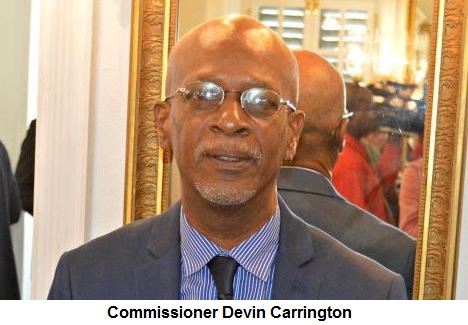
Download the free e-Book of Go Lean … Caribbean – now!

————

Appendix – Mastercard/Visa Interchange Fees
(Source: https://en.wikipedia.org/wiki/Interchange_fee)

Interchange fee is a term used in the payment card industry to describe a fee paid between banks for the acceptance of card based transactions. Usually it is a fee that a merchant’s bank (the “acquiring bank”) pays a customer’s bank (the “issuing bank”) however there are instances where the interchange fee is paid from the issuer to acquirer, often called reverse interchange.

In a credit card or debit card transaction, [(like Mastercard and Visa)], the card-issuing bank in a payment transaction deducts the interchange fee from the amount it pays the acquiring bank that handles a credit or debit card transaction for a merchant. The acquiring bank then pays the merchant the amount of the transaction minus both the interchange fee and an additional, usually smaller, fee for the acquiring bank or independent sales organization (ISO), which is often referred to as a discount rate, an add-on rate, or passthru. For cash withdrawal transactions at ATMs, however, the fees are paid by the card-issuing bank to the acquiring bank (for the maintenance of the machine).

These fees are set by the credit card networks,[1] and are the largest component of the various fees that most merchants pay for the privilege of accepting credit cards, representing 70% to 90% of these fees by some estimates, although larger merchants typically pay less as a percentage. Interchange fees have a complex pricing structure, which is based on the card brand, regions or jurisdictions, the type of credit or debit card, the type and size of the accepting merchant, and the type of transaction (e.g. online, in-store, phone order, whether the card is present for the transaction, etc.). Further complicating the rate schedules, interchange fees are typically a flat fee plus a percentage of the total purchase price (including taxes). In the United States, the fee averages approximately 2% of transaction value.[2]

CU Blog - Move over Mastercard-Visa - Photo 1In recent years, interchange fees have become a controversial issue, the subject of regulatory and antitrust investigations. Many large merchants such as Wal-Mart have the ability to negotiate fee prices,[3] and while some merchants prefer cash or PIN-based debit cards, most believe they cannot realistically refuse to accept the major card network-branded cards. This holds true even when their interchange-driven fees exceed their profit margins.[4] Some countries, such as Australia, have established significantly lower interchange fees, although according to a U.S. Government Accountability study, the savings enjoyed by merchants were not passed along to consumers.[5] The fees are also the subject of several ongoing lawsuits in the United States.

Interchange fees are set by the payment networks such as Visa and MasterCard.

In the US Card issuers now make over $30 billion annually from interchange fees. Interchange fees collected by Visa[6] and MasterCard[7] totaled $26 billion in 2004. In 2005 the number was $30.7 billion, and the increase totals 85 percent compared to 2001.

Share this post:
, , , , ,
[Top]

A Lesson in History – Empowering Families

Go Lean Commentary

How do you eat an elephant? One bite at a time. – Source unknown

This familiar expression is not intended to give culinary instructions regarding “elephant” meat, but rather it relates a formula for taking on big goals. The answer is to attack the big goal with one small task at a time; taking one step after another in a journey towards a destination. The book Go Lean…Caribbean seeks to engage a big goal, that of elevating the Caribbean region through economic, security and governing empowerments.

This book declares this “elephant-size” goal is heavy-lifting; thusly the above advice applies. The book serves as a roadmap for the introduction and implementation of the technocratic Caribbean Union Trade Federation (CU) to provide better stewardship for the Caribbean homeland. The book posits that we can do this. We can look internally for solutions, rather than expecting some external “actor” to come in and provide answers. No, we must not fashion ourselves as parasites, but rather protégés of those communities that have already completed these heavy-lifting tasks.

Here is where we benefit from the lessons in history from other communities, families and individuals that have demonstrated unity-of-purpose. We are taught that “bite-size morsels” of the regional “elephant” can be well-handled by strong families; therefore the need exists to strengthen and empower families to optimize their societal contributions.

This strategy of family empowerment is very critical, and has a successful track record. In a previous blog/commentary, the issue of the origin of powerful families was detailed at full length. A direct quote relates:

From the origins of slavery, the region traversed the historic curves of social revolution and evolution. In the 1500, the Protestant movement took hold. As other European powers deviated from Catholicism, Papal Bulls [- which awarded territories in this New World -] carried no significance to them and compliance was ignored. England and Holland established their own Protestant Churches with their own monarchs as head of Church and State; Papal decrees were replaced with Royal Decrees and Charters. The intent and end-result was still the same: territories and lands awarded (colonized) with the stroke of a pen by one European power after another. The Royal Decrees and Charters were then reinforced with a strong military presence and many battles…

[The resultant] “oligarchy” … power effectively rested with a small number of people. These people could be distinguished by royalty, wealth, family ties, education, corporate, religious or military affiliation.

In this discussion of oligarchy, focus is given to powerful families. There are encyclopedic references that relate that oligarchy structures are often controlled by a few prominent families, who typically pass their influence/wealth from one generation to the next, even though inheritance alone is not a necessary condition for oligarchies to prevail.

The islands of the Caribbean fit the story-line in the [Caribbean-Calypso] song lyrics: “Islands in the sun; willed to me by my father’s hand”.

This is the challenge that belies Caribbean society. Most of the property and indigenous wealth of the Caribbean region is concentrated amongst the rich, powerful and yet small elite; an oligarchy. Many times these families received their property, corporate rights and/or monopolies by Royal Charter from the European monarchs of ancient times. These charters thus lingered in legacy from one generation to another … until …

The Go Lean book pushes further and deeper on this subject of family empowerment, stressing that success can still be derived in the Caribbean, even without the legacy of 500 years of entitlement. The book therefore stresses certain best-practices to apply to the regional strategies, tactics and implementations.

The book and subsequent Go Lean blogs prescribed new empowerments like investments in intellectual properties, controlled mineral exploration & extraction, strategic ship-building and outsourced security services. The book/blogs also call for best practices to optimize the current business models of tourism, financial services and specialty agriculture/fisheries.

The lesson of best practices comes from another community, of which we can be a protégé. This is the City of Detroit, Michigan USA. This community is notorious for its urban failures, even filing Bankruptcy in 2013. But from these ashes we have the following example of the pivotal and empowering Ilitch Family. Their Ilitch Holdings, Inc. operates as a holding company for restaurants, sports clubs, real estate, and entertainment businesses. With 17,000 direct employees and annual revenues of $1.8 billion (estimated in 2007; privately held companies are not required to disclose), this family enterprise truly impacts and empowers its community. (Detroit is voted #1 Sports City in the USA). The family operates and franchises the Little Caesars Pizza global chain plus this entertainment company branded Olympia Entertainment:

CU Blog - A Lesson in History - Empowering Families - Photo 1In 1982, Michael and Marian Ilitch purchased the Olympia Stadium Corporation, the management company for Olympia Stadium and renamed it Olympia Arenas, Inc. (In 1927, the Olympia Sports Arena was built in downtown Detroit to accommodate Detroit’s NHL franchise, and serve as the premier venue for a variety of entertainment). The newly purchased business was responsible for managing events at Joe Louis Arena (which had been completed in 1979 as the home of the Detroit Red Wings), Cobo Arena and the Glens FallsCivicCenter. That same year, Mr. and Mrs. Ilitch purchased the Detroit Red Wings.

In 1987, the Ilitches purchased Detroit’s iconic Fox Theatre (built in 1928) and renovated the 4,800+ seat venue, saving 80% of the original surfaces. In 1988, the Ilitches re-opened the Fox as the hub of the Foxtown Entertainment District and the building now houses the offices of Olympia Entertainment and Little Caesars Pizza. In 1989, the National Parks Service designated the Fox Theatre as a National Landmark.

The Olympia Stadium Corporation was renamed Olympia Entertainment in 1996 to reflect the management company’s expanded operations and venues.

In April 2000, Comerica Park, the new home of the Detroit Tigers hosted Opening Day and ushered in a new era of MLB baseball in Detroit. The 41,000+ seat ballpark is owned by the Detroit-Wayne County Stadium Authority, and Olympia Entertainment operates Comerica Park.
(Source: http://www.olympiaentertainment.com/about-olympia-entertainment/company-history)

Why consider the Ilitch Family as a model? They are impactful in business, sports, entertainment and philanthropy. This applies to the patriarch (Michael, Sr.) and the next generation; thus forging a family legacy. The family enterprises plus the Olympic Entertainment are detailed in the Appendix below. This is truly a family endeavor; in addition to parents Michael and Marian Ilitch, they have seven children: Christopher Ilitch (current CEO and President of Ilitch Holdings, Inc.); daughter Denise Ilitch, an attorney; Ron; Michael, Jr.; Lisa Ilitch Murray; Atanas; and Carole (Ilitch) Trepeck.

Needless to say, the City of Detroit had/has to engage, cooperate and collaborate with this family to induce their investment in the community. This is an example of impacting the Greater Good.

The Go Lean roadmap calls for engaging families in the Caribbean that are committed to elevating the Caribbean. There are truly Ilitch-like families here as well. Just consider this simple list of the most influential families in just one Caribbean member-state, Jamaica; as published by the highly regarded regional online publication, Pan-American World:

Title: 8 Wealthiest and Most Influential People From Jamaica
Pan-American World Online Magazine  – Retrieved 04/21/2015 from:
http://www.panamericanworld.com/en/article/8-wealthiest-and-most-influential-people-jamaica

1. Joseph M. Matalon
CU Blog - A Lesson in History - Empowering Families - MatalonMatalon is among the foremost leaders in Jamaica business, part of a family with a legacy of successful business practices for decades. He is the chairman of the ICD Group, a Jamaican investment holding company. For more than 20 years, his knowledge and expertise have been utilized in the areas of transactional finance, investments and banking in various institutions. He is the chairman of British Caribbean Insurance Co., the Development Bank of Jamaica and president of the Private Sector Organization of Jamaica (PSOJ). He also is a director of the Gleaner Co. and Commodity Service Co. and a former director of the Bank of Nova Scotia (Jamaica Limited). In addition, he has been involved with a number of special committees to advise the government on financial and economic matters.

2. Michael Lee-Chin
CU Blog - A Lesson in History - Empowering Families - Michael Lee-ChinHe is a self-made billionaire who started his career as a road engineer for the Jamaican government and gradually built his way up to chairman and founder of Portland Holdings, a thriving, privately held investment company in Jamaica. Additionally, Lee-Chin is executive chairman of AIC Limited and National Commercial Bank. Born in Port Antonio in the Portland Parish, the Jamaican-Canadian Lee-Chin also owns stakes in National Commercial Bank Jamaica and Total Finance in Trinidad and Tobago. His personal real estate portfolio includes 250 acres of beachfront property in Ocho Rios, Jamaica, and homes in Canada and Florida, according to Forbes. He has been off the magazine’s billionaire list for the last four years, topping out at a net worth of $2.5 billion in 2005.

3. Chris Blackwell
CU Blog - A Lesson in History - Empowering Families - BlackwellHe belongs to an affluent family that acquired its wealth through sugar and Appleton Rum. He established himself as a music mogul more than 50 years ago. His rise included introducing the world to reggae. He produced music for artists like Ike and Tina Turner, Bob Marley and the Wailers, Burning Spear and Black Uhuru, among others. He is also the founder of Palm Pictures and creator of the Golden Eye Film Festival that honors Jamaicans who excel in the arts and music. He was awarded the Order of Jamaica for his exemplary work in the entertainment industry in 2004. The Blackwell family name has been the inspiration for “Blackwell Fine Jamaican Rum.” Blackwell currently runs Island Outpost, which is a conglomerate set up to run a group of resorts in Jamaica and the Bahamas. He has an estimated net worth of $180 million, according to celebritynetworth.com.

4. Paula Kerr-Jarrett
CU Blog - A Lesson in History - Empowering Families - JarrettShe is an attorney, philanthropist and influential presence in the Jamaican society circle. She and her husband, Mark, are working to bolster Montego Bay tourism. They announced two months ago a multibillion-dollar partnership project to construct 1,200 homes, a 48-acre tech park with enormous space for information technology that would bring 30,000 jobs and a new University of the West Indies that would accommodate up to 10,000 students. They estimate the investment value of this project to be $500 million. Her great-grandmother, Marion Louise Reece Bovell, was the first woman in Jamaica to run in the general elections of 1944 as an independent candidate. Kerr-Jarrett is connected by marriage to the prominent Jarrett family.

5. Dr. Blossom O’Meally-Nelson
CU Blog - A Lesson in History - Empowering Families - NelsonO’Meally-Nelson is Jamaica’s first female postmaster general. She is the former pro-chancellor and chairman of Council for the University of Technology (UTECH). Against the background of her outstanding achievements in public service, O’Meally-Nelson is making inroads in the private sector with a family-owned logistics company, Aeromar Group.

6. Joseph John Issa
CU Blog - A Lesson in History - Empowering Families - IssaKnown mostly as Joe Issa, he is the founder of Cool Group, a multibillion-dollar entity that is made up of more than 50 companies; the chairman of the SuperClubs all-inclusive resort chain, and vice chairman of the Gleaner Co. Issa is credited with introducing the all-inclusive concept into Jamaica more than 30 years ago. He introduced the concept during the tourism slump in the 1970s when many hotels were struggling to break even. It was and remains a booming success. He also maintains a commitment to helping the community, especially children from underprivileged areas in education. He said, ”Born into a rich family, I cannot imagine what it would be like going to school without lunch or books.”

7. Gordon ‘Butch’ Stewart
CU Blog - A Lesson in History - Empowering Families - StewartStewart reigns as the chairman of Sandals Resorts International, The Jamaica Observer and more than 20 other companies that fall under the Appliance Traders empire, one of the largest private-sector conglomerates in the Caribbean. He has a net worth of $1 billion. His working life began at the age of 12, when he borrowed his father’s fishing boat and began selling his catch of the day and ferrying the rich and famous between their anchored yachts and the harbor front. It was during those times he said he learned the elements of success.

8. Wayne Chen
CU Blog - A Lesson in History - Empowering Families - Wayne ChenWayne Chen, the chief executive officer of Super Plus Food Stores, is also the man behind a massive expansion in the local supermarket business in Jamaica. Super Plus is a large supermarket chain with at least 30 stores across the island. He wears other hats, too: chairman of NCB Insurance Co. Limited and West Indies Trust Co. Limited. He is also a director of NCB (Cayman) Limited, AIC (Barbados) Limited and the Christiana Town Centre Limited. He is also a younger brother of billionaire Michael Lee-Chin.

So the consideration of the Go Lean book, as related to this subject is one of governance and economic empowerment. The book posits that empowerment does not only need to emanate from government, but rather individuals and empowering families can have a positive impact. These points were pronounced in the opening Declaration of Interdependence (Page 12) with these acknowledgements and statements:

xi.   Whereas all men are entitled to the benefits of good governance in a free society, “new guards” must be enacted to dissuade the emergence of incompetence, corruption, nepotism and cronyism at the peril of the people’s best interest. The Federation must guarantee the executions of a social contract between government and the governed.

xii. Whereas the legacy in recent times in individual states may be that of ineffectual governance with no redress to higher authority, the accedence of this Federation will ensure accountability and escalation of the human and civil rights of the people for good governance, justice assurances, due process and the rule of law. As such, any threats of a “failed state” status for any member state must enact emergency measures on behalf of the Federation to protect the human, civil and property rights of the citizens, residents, allies, trading partners, and visitors of the affected member state and the Federation as a whole.

xxiv.  Whereas a free market economy can be induced and spurred for continuous progress, the Federation must install the controls to better manage aspects of the economy: jobs, inflation, savings rate, investments and other economic principles. Thereby attracting direct foreign investment because of the stability and vibrancy of our economy.

xxxiii. Whereas lessons can be learned and applied from the study of the recent history of other societies, the Federation must formalize statutes and organizational dimensions to avoid the pitfalls of communities like … Detroit…

The same as empowering families ruled in colonial times, based on special favor granted to their forebears by Royal Decree, the family dynamic can help the region again; this time for the Greater Good. While collaboration is so much harder on a societal level – there is the need for buy-in, compromise and consensus – families are already attuned to instinctively trust each other, work together and foster unity-of-purpose. Lastly, families often invest with a deferred gratification ethos, expecting many times that only the next generation will reap the returns on these investment. This eco-system is the microcosm of societal progress.

This Go Lean roadmap calls for incentivizing and engaging many empowering families; and to do so on a regional basis.

In general, the CU/Go Lean roadmap will employ strategies, tactics and implementations to impact its prime directives; identified with the following 3 statements:

  • Optimization of the economic engines in order to grow the regional economy to $800 Billion & create 2.2 million new jobs.
  • Establishment of a security apparatus to protect the resultant economic engines and mitigate internal and external threats.
  • Improve Caribbean governance to support these engines.

In much the same way the Ilitch Family seeks to transform Detroit, the Go Lean book stresses key community ethos, strategies, tactics, implementations and advocacies necessary to transform and turn-around the eco-systems of Caribbean society. These points are detailed in the book; the following is a sample:

Community Ethos – Economic Principles – Deferred Gratification Page 21
Community Ethos – Economic Principles – People Choose Page 21
Community Ethos – Economic Principles – Choices Involve Costs Page 21
Community Ethos – Economic Principles – Economic Systems Influence Individual Choices Page 21
Community Ethos – Economic Principles – Consequences of Choices Lie in the Future Page 21
Community Ethos – Governing Principles – Minority Equalization Page 24
Community Ethos – Governing Principles – Return on Investments Page 24
Community Ethos – Governing Principles – Cooperatives Page 25
Community Ethos – Ways to Impact the Future Page 26
Community Ethos – Ways to Help Entrepreneurship Page 28
Community Ethos – Ways to Impact Turn-Arounds – Learning from Detroit Page 33
Community Ethos – Ways to Impact the Greater Good Page 37
Strategy – Vision – Confederate all 30 member-states/ 4 languages into a Single Market Page 45
Strategy – Mission – Build   and foster local & regional economic engines Page 45
Tactical – Ways to Foster a Technocracy Page 64
Tactical – Growing the Economy – Repatriate & Reunite Families Page 70
Tactical – Separation-of-Powers – CU Federal Government versus Member-State Governance Page 71
Implementation – Ways to Pay for Change Page 101
Implementation – Reasons to Repatriate Page 118
Planning – Anatomy of Advocacies – One person can make a difference Page 122
Planning – Ways to Make the Caribbean Better Page 131
Planning – Lessons Learned from Detroit – Turn-around from Failure Page 140
Advocacy – Ways to Grow the Economy Page 151
Advocacy – Ways to Create Jobs Page 152
Advocacy – Ways to Improve Governance Page 168
Advocacy – Ways to Better Manage the Social Contract Page 170
Anecdote – Caribbean Industrialist – Butch Stewart Page 189
Advocacy – Ways to Preserve Caribbean Heritage Page 218
Advocacy – Ways to Impact Retirement Page 221
Advocacy – Ways to Impact the One Percent Page 224
Advocacy – Ways to Improve Elder-Care Page 225
Advocacy – Ways to Empower Women – Focus on Families Page 226
Advocacy – Ways to Impact Youth Page 227
Advocacy – Ways to Re-boot Jamaica Page 239

There are other lessons for the Caribbean to learn from considering the historicity of empowering families, those in the past, present and future. Whether these families prospered due to their own business acumen and hard work, or were entitled by some Royal Decree, we must all be judged on what we do with the gifts we are blessed with.

Our region has experienced a lot of abandonment over the decades; this status quo cannot persist. We have suffered the same as many other failing communities – like Detroit.  But the families depicted in this commentary, in Detroit and in the Caribbean, prove that despite hardships, if there is some unity-of-purpose, success can still be fostered even in the most trial-some conditions. Looking and learning at these communities, we glean that we can confer, convene and collaborate with empowering families to positively impact our communities.

Let’s get started! Let’s make our Caribbean homeland – and our individual communities – better places to live, work and play. 🙂

Download the book Go Lean … Caribbean – now!

———–

Appendix – Ilitch Family Holdings and Olympia Entertainment Group

Fox Theatre Opened: September 21, 1928 Re-opened: November 19, 1988 after Michael and Marian Ilitch bought and restored the theatre to its original splendor; saving 80 percent of the original surfaces.Features: The Fox Theatre was the crown jewel of Detroit’s theater district during the first quarter of the 20th Century playing host to some of the biggest names in show business and showing first-runs of some of the greatest films in history. The Fox Theatre has played host to some of the greatest names in entertainment including Louis Armstrong, Cab Calloway, Frank Sinatra, Sammy Davis Jr., Stevie Wonder and Diana Ross. Designated a National Landmark in 1989, the Fox is the second largest surviving theatre (over 4,800 seats) in the nation and has the second largest functioning Wurlitzer organ.
Joe Louis Arena Opened: In December 1979. Joe Louis Arena (The Joe or JLA) became the home-ice of the Detroit Red Wings NHL hockey franchise, replacing Olympia Stadium, the former home of Detroit’s NHL team for 72 years.Features: The 20,058-seat arena is Detroit’s largest indoor venue and has hosted a wide variety of events in its 30-year existence including the NHL All-Star Game (February 5, 1980), the Republican National Convention (July 14-18, 1980) and six Stanley Cup Finals. The arena is named after boxing legend and long-time Detroit resident, Joe Louis.First event: December 23, 1979 — University of Detroit vs. University of Michigan basketball; First Red Wings Game: December 29, 1979
ComericaPark Opened: April 11, 2000 Features: The 45,010 seat, open-air ballpark is home to the Detroit Tigers Major League Baseball franchise. The ballpark has hosted more than 850 ball games as well as concerts with more than 80,000 fans. Comerica Park has hosted Bon Jovi, Sheryl Crow, Bruce Springsteen, Aerosmith, KISS, Eminem, Jay-Z, The Rolling Stones and Kid Rock.First Event: Detroit Tigers vs. Seattle Mariners on April 11, 2000 First Concert: The Dave Matthews Band on July 5, 2000
City Theatre Opened: September 15, 1993 as the Second City-Detroit Reopened: October 6, 2004 as renamed City Theatre. Features: An intimate, 472-seat theatre with the atmosphere of a Broadway house.
Affiliates
Little Caesars Pizza Little Caesars Pizza founders Michael and Marian Ilitch opened their first restaurant in Garden City, Michigan, in 1959. Little Caesars, the fastest growing pizza chain, built more stores in the   world in 2009 than any other pizza brand and today is the largest carry-out   chain globally with restaurants on five continents. Little Caesars is growing in prime markets across the country, and is offering strong franchisee candidates an opportunity for independence with a proven system. For the third year in a row, Little Caesars was named “Best Value in America”* of all quick-serve restaurant chains. In addition, Little Caesars offers strong brand awareness with one of the most recognized and appealing characters in   the country, Little Caesar.
“Highest-Rated Chain – Value for the Money” based on a nationwide survey of quick-service restaurant consumers conducted by Sandelman & Associates, 2009
Detroit Red Wings One of the Original Six franchises in the National Hockey League, the Detroit Red Wings have won more Stanley Cup Championships than any other American franchise. Purchased in 1982 by Mike and Marian Ilitch, the Red Wings have stood as one of professional sports’ premier franchises with the most recent Cup victories in 1997, 1998,   2002 and 2008. The Red Wings play in front of sellout crowds of 20,000-plus fans at Joe Louis Arena in downtown Detroit. Visit us at http://www.detroitredwings.com.
Detroit Tigers In 1992, Mike Ilitch purchased the Detroit Tigers, Detroit’s major league baseball team, which plays in Comerica Park. The ballpark is located directly across the street from the Fox Theatre. ComericaPark opened in 2000 to rave reviews. Sports Illustrated called Comerica Park a “brilliant ballpark”, among the top two or three in the country.
In 2005, the Detroit Tigers hosted the 76th All-Star game at Comerica Park. All-Star Week in Detroit produced the highest grossing revenue in the history of the All-Star Game. Comerica Park has also hosted numerous concerts and the 2006 World Series. Visit the Detroit Tigers website at www.detroittigers.com
Little Caesars Pizza Kits Since its introduction in the Detroit area in 1997, Pizza Kits has become the “Hottest Fundraiser in America” for all types of   nonprofit organizations. Pizza Kits contain all the ingredients to make delicious pizza at home. The Pizza Kit Program now offers a variety of family favorites: 9 Pizza Kits, 3 Breads, and 3 Specialty Items.
In Fall 2003, the Little Caesars Cookie Dough Program was launched with 8 great tasting varieties including: Chocolate Chip, White Chocolate Macadamia Nut, Peanut Butter and Oatmeal Raisin.
Today, Little Caesars Fundraising Programs proudly helps raise millions of dollars for thousands of schools, churches, sports teams and nonprofit organizations throughout the continental United States. Visit us at www.pizzakit.com or call us toll free at 1-888-4-LC-KITS.
Olympia Development Olympia Development, L.L.C. was established by the Ilitch organization in 1996 to cultivate and attract   development in downtown Detroit. The company was instrumental in negotiating the side-by-side Detroit Tigers and Detroit Lions stadiums. As a result, the 76th All-Star Game played at Comerica Park in 2005 and the XL Super Bowl that played at Ford Field in 2006. Olympia Development is dedicated to supporting further growth with the new Foxtown sports and entertainment district in downtown Detroit; see VIDEO below.
Uptown Entertainment Uptown Entertainment includes two of Detroit’s finest movie theatres – the historic Birmingham 8 and Ren Cen 4. In addition to featuring first-run movies, Uptown   Entertainment offers unparalleled event services in a variety of unique settings. Uptown is dedicated to faithfully providing our guests with the ultimate in theatre projection, sight, sound, and service. Special features of Uptown Entertainment theatres include stadium seating, digital surround sound, wall-to-wall curved screens and full bar service is available for any private theatre reservations.
In 2010, the Birmingham 8 theatre was one of the first in the area to offer Sony Digital Cinema 4K projection and RealD 3D, which provides the highest resolution projection   available, 3D capability and a superior viewing experience for guests. The technology also allows for a variety of alternative content such as live concerts, sporting events, operas and more! Visit UptownEntertainment.com. The Destination for an Exceptional Entertainment Experience.
Hockeytown Cafe Voted the No. 2 sports bar in the country week after week by ESPN2’s Cold Pizza,   Hockeytown Cafe is the hottest place to take part in the action before, during and after both Red Wings and Tigers games with live bands, great food and drink and the best view of Comerica Park in the MotorCity! Visit us at www.hockeytowncafe.com.
Blue Line Foodservice Distribution Blue Line Foodservice Distribution was established in 1971 in Farmington Hills, Michigan as a premier foodservice distribution company. With 14 distribution centers in North America and satellite locations within the U.S., the company distributes food and equipment to Little Caesars® stores as well as many other customers throughout the world. Through its West Coast centers, Blue Line provides exporting services to the Australia, New Zealand, the Pacific Rim and other territories; through its East Coast centers support is provided to the Caribbean, Europe, the Middle East and South America. Blue Line, with 700 employees, offers a single point of contact for product purchasing, replenishment, equipment, customer service and logistics. Learn more about Blue Line Foodservice Distribution at www.bluelinedist.com.
Champion Foods Champion Foods is a premier manufacturer of top quality private label and branded food   products. Its specialty products are high quality packaged retail pizzas and breadsticks, par-baked pizza crusts and premium cookie dough. Champion Foods services many customers including major grocery retailers, foodservice distributors, restaurant chains and industrial toppers. Its experienced and professional staff makes dozens of products, any of which can be customized to specific customer needs at their state-of-the-art manufacturing research center located in Metro Detroit. Champion Food offers an expansive distribution network to ship throughout North America.   www.championfoods.com
The Little Caesars Amateur Hockey   League Little Caesars Amateur Hockey League (LCAHL) is the nation’s largest amateur youth   hockey league, involving teams from all over America’s Midwest — Michigan, Ohio and Indiana including Nashville, Tennessee — with more than 700 Travel and House Teams and over 11,000 players in 45 affiliated Associations.
Little Caesars AAA Hockey Little Caesars AAA Hockey is one of the most recognized and respected organizations in amateur travel hockey. A cornerstone of the Midwest Elite Hockey League   since 1968, the program has captured numerous state championships and   tournament titles over its 30-plus year history. Mike and Marian Ilitch, owners of the Little Caesars Pizza chain, have been sponsoring amateur hockey teams since 1968 and are a major reason for the club’s success. Visit us at www.littlecaesarshockey.com.
Little Foxes Fine Gifts Little Foxes Fine Gifts, located in Downtown Detroit’s Fox Theatre Building, offers Metro   Detroiters unique gifts for every occasion. You’ll find one-of-a-kind gifts from around the world including pottery, fine crystal, art, jewelry and home furnishings. Established by Marian Ilitch in 1992, Little Foxes is the premiere downtown location for all your gift giving needs! Free Parking is available. Visit us at www.littlefoxes.com.
MotorCity Casino Hotel Motor City Casino Hotel has 400 rooms and suites. Dining options include Iridescence, Detroit’s only AAA Four Diamond Award-winning restaurant, Grand River Deli, and Assembly Line Buffet. With live entertainment nightly at Chromatics, Detroit’s only Radio Bar, Spectators sports bar to watch the game, and Amnesia, Detroit’s only ultra lounge, there’s something for everyone. For more information please visit www.motorcitycasino.com. Due to Sports league ownership rules, the casino is directly owned by Marian Ilitch.
Coming Development
The District Detroit (See VIDEO below) Ilitch Organization Achieves Zoning Approval for New Detroit Events CenterOur Vision for Affordable Housing and Plan for Renovation of Eddystone HotelDetroit Businesses Win Majority of Contract Awards for New Detroit Events Center The District Detroit: Six Job Fairs in 60 Days

(Source: http://www.olympiaentertainment.com/about-olympia-entertainment/company-history)

VIDEO – Ilitch Organization unveils sports and entertainment district plans – https://youtu.be/3fSVcsNWhjk

Published on Jul 21, 2014

Share this post:
, , , , ,
[Top]