Category: Locations

US Backs LNG Distribution Base in Jamaica

Go Lean Commentary

All of a sudden, the US wants to take the lead in providing energy solutions for the Caribbean. What happened?

Oh yeah, another suitor came calling on this beautiful “sweetheart” that the US had taken for granted. That suitor: Venezuela; (see Appendix).

Though this is a simplistic analogy, the appearance of romancing the Caribbean heart (and dollars) regarding energy fuel seems to follow the dramatic sequences of “teenage love”.

The book Go Lean… Caribbean relates (Page 100) how the Caribbean has among the most expensive energy costs in the world, despite having abundant alternative energy natural resources (solar, trade winds, tidal, geo-thermal). The societal administrations only focused on imported petroleum to provide energy options and as a result retail electricity rates in the Caribbean average US$0.35/kWh, when instead it could be down to US$0.088/kWh.

These are just the economic issues. There is also the matter of burning fossil fuels and contributing to global warming and climate change. For this teenage love scenario, that is too far-reaching for this original suitor; his only focus is the short-term. The Go Lean book posits that the embrace of this identified alternative energy generation source (Natural Gas) could be more impactful on the environment in addition to remediating the high energy costs.

The US is now the world largest energy producer. But Venezuela is the largest oil exporter in all of Latin America; they turned their attention – with their PetroCaribe program – to aid the Caribbean member-states with very attractive and enticing delivery and payment terms to consume more Venezuelan oil. Most of the independent Caribbean states acquiesced to these advances.

But now, the Empire Strikes Back

Previously, this commentary detailed how the US Ambassadors to the Caribbean were soliciting more US trade in energy options and dissuading the Venezuelan connections. Now we follow-up to see the US making strides with Jamaica to help diversify energy generation – include natural gas – and establish this central Caribbean destination as a hub for natural gas logistics to the rest of the region.

See the news article here from the NGI* entity about Liquefied Natural Gas (LNG):

Title: U.S. Backs Fuel Diversification, LNG Distribution Base in Jamaica
By: Charlie Passut

The United States will help Jamaica with fuel diversification and embrace liquefied natural gas (LNG) for its energy needs, and will also back plans for the island nation to become a base for delivering LNG to the rest of the Caribbean region.

On Thursday [(April 9, 2015)], U.S. Department of Energy (DOE) Secretary Ernest Moniz signed an agreement with Jamaica’s energy minister, Phillip Paulwell, at the U.S.-CARICOM summit in Mona, Jamaica.

CU Blog - US Backs LNG Distribution Base in Jamaica - Photo 1“We believe that Jamaica could be a part of [an LNG export] hub because of our geographic location, in proximity to places like Haiti and other areas in the western Caribbean,” Paulwell said, according to video of the summit provided by the government’s Jamaica Information Service (JIS). “After these meetings, we are hoping to zero in on some of the specificity.”

Moniz countered that DOE would help facilitate discussions between Jamaica and the Inter-American Development Bank, which provides financial and technical support to countries in Latin America and the Caribbean. He also suggested talks with the bank’s president, Luis Alberto Moreno.

“We are happy to [facilitate the discussions],” Moniz said on JIS. “We think it’s good for the Western Hemisphere and certainly good for the Caribbean in terms of energy security, environmental impact and economic development.”

CU Blog - US Backs LNG Distribution Base in Jamaica - Photo 2Rick Smead, managing director of advisory services for RBN Energy LLC, said Jamaica had been expected to become a major trading center for LNG, with larger tankers coming in to offload onto smaller barges and tankers for shorter trips to the different islands.

“But until Secretary Moniz’s visit, I didn’t know how close we were to supporting that or doing anything to try to foster it,” Smead told NGI on Friday.

“One of the rapidly evolving dynamics of U.S. gas abundance, and especially our LNG export capability, is that in addition to the large volume [of international cargoes bound] for Europe and Asia, there should be a lot of opportunities for smaller cargoes to taxi all over the place in the Caribbean. The technology of both floating liquefaction and especially floating regasification along the lines of accelerates stuff, frees up the ability to go to a lot of these smaller markets without needing to build a giant regasification facility.

“There’s been a proliferation of smaller LNG transportation and regasification technologies all over the Caribbean, in large part in anticipation of there being a lot more supply available.”

Smead predicted that the U.S. will eventually become the world’s second or third largest exporter of LNG, with the Caribbean becoming a significant importer.

“The Caribbean [is] a very gas hungry market,” Smead said. “Being very close to the U.S. Gulf Coast, where four out of our five operational LNG export facilities that are close to getting done will be [located], it seems pretty obvious that there would be a lot of vitality to that market.”

Last month, American LNG Marketing LLC was granted DOE authorization to export up to 60,000 tonnes per annum of containerized LNG from Florida, mostly to free trade agreement (FTA) countries in the Caribbean and Central America (see Daily GPI, March 23).

In 2014, Carib Energy LLC, a subsidiary of Crowley Maritime Corp., won a multi-year contract to export containerized LNG produced in the U.S. to an undisclosed pharmaceutical company in Puerto Rico (see Daily GPI, Nov. 17, 2014). That followed DOE approval for Carib and Sempra Energy’s Cameron LNG project to export domestically-produced LNG. Both facilities are in Louisiana, on the Gulf Coast (see Daily GPI, Sept. 10, 2014

The U.S. Energy Administration has also touted the benefits of LNG exports to U.S. island states and territories (see Daily GPI, Aug. 19, 2014).
Source: Natural Gas Intelligence Magazine  (Posted April 13, 2015) – http://www.naturalgasintel.com/articles/101954-us-backs-fuel-diversification-lng-distribution-base-in-jamaica
This foregoing news article highlights some important issues, most of which have been detailed in the Go Lean book. That publication coupled energy as a basic need with food, clothing and shelter; and then addressed ways to elevate Caribbean society by optimizing the delivery of these needs. The book serves as a roadmap for the introduction and implementation of the technocratic Caribbean Union Trade Federation (CU). This entity would serve as a regional confederation of all 30 Caribbean member-states to provide better leverage to source the energy resources for the region, including natural gas options that had previously been overlooked; (see Appendix-VIDEO below). Many benefits abound from this approach. This Go Lean roadmap identifies these benefits as prime directives, as detailed in these 3 declarative statements:

  • Optimization of the economic engines in order to grow the regional economy.
  • Establishment of a security apparatus to protect the resultant economic engines.
  • Improvement of governance to support these engines.

The motivation of the Go Lean…Caribbean book is love for this homeland and the quest to make it a better place to live, work and play. If the US now wants to show more leadership in this area, we welcome their positive contribution. But we stand cautioned in knowing that America is plagued with the history of prioritizing their self-interest above the needs of the Caribbean people. We now therefore dread an American leadership and instead look for a partnership. We want to be protégés and no longer parasites.

Early in the book, the need to better leverage our small Caribbean populations in trade negotiations with the US or Venezuela was pronounced in the Declaration of Interdependence (Page 11), with these statements:

viii. Whereas the population size is too small to foster good negotiations for products and commodities from international vendors, the Federation must allow the unification of the region as one purchasing agent, thereby garnering better terms and discounts.

xi. Whereas all men are entitled to the benefits of good governance in a free society, “new guards” must be enacted to dissuade the emergence of incompetence, corruption, nepotism and cronyism at the peril of the people’s best interest. The Federation must guarantee the executions of a social contract between government and the governed.

So we welcome America’s natural gas options;  (see Appendix-VIDEO below) …

… and we add renewables and other energy alternatives into the mix for Caribbean energy.  These would be more cost efficient and ecologically friendly for the planet, of which we share with our bigger neighbors in North and South America. This would truly be lean!

CU Blog - US Backs LNG Distribution Base in Jamaica - Photo 3This concept of lean is very important for this roadmap to elevate Caribbean society. For the purpose of this effort, ‘lean’ is more than just a description, it’s a noun, a verb, an adjective and an adverb. It is also a commitment and a cause in which the entire Caribbean region is urged to embrace; or better stated: “lean in”.

Why were natural gas solutions not considered in the past?

It is an imported resource, just like petroleum; it requires the same logistical considerations as crude oil or refined products of gasoline and diesel. Except though natural gas (LNG) does not need to be refined, only converted from liquid form back to gas form: regasification. LNG is more stable for transport.

The Go Lean roadmap also anticipates the transport option of pipelines. The strategies, tactics and implementation (above ground, underground and undersea of this technology) have been fully detailed in the book. The roadmap thereby details the series of community ethos, strategies, tactics, implementations and advocacies to foster progress in the wide fields of energy generation and energy distribution. The following list applies:

Community Ethos – Lean Operations Page 24
Community Ethos – Return on Investments Page 24
Community Ethos – Cooperatives Page 25
Community Ethos – Regional Taxi Commissions – To Adopt Natural Gas Page 25
Community Ethos – Non-Government Organizations Page 25
Community Ethos – Ways to Impact the Future Page 26
Community Ethos – Ways to Improve Negotiations Page 32
Anecdote – Pipeline Transport – Strategies, Tactics & Implementations Page 43
Strategy – Harness the power of the sun/winds Page 46
Tactical – Fostering a Technocracy Page 82
Tactical – Separation of Powers – Energy Commission Page 82
Anecdote – “Lean” in Government – Energy Permits Page 93
Anecdote – Caribbean Energy Grid Implementation Page 100
Implementation – Ways to Develop Pipeline Industry Page 107
Implementation – Ways to Improve Energy Usage Page 113
Advocacy – Ways to Foster Cooperatives Page 176
Advocacy – Ways to Impact Monopolies Page 202

The energy needs for the Caribbean are undeniable. The Caribbean region must take the lead in providing Caribbean energy needs. Though we welcome the US partnership, we should be cautious as to their motives and priorities. We accept that at this moment, the US may have altruistic motives, especially with declining oil prices possibly affecting Venezuela. But for far too often, American leadership has been motivated by crony-capitalistic intentions. The points of mitigating the risks of American Big Business (in this case Big Oil) were further elaborated upon in these previous blog/commentaries:

https://goleancaribbean.com/blog/?p=4294 Ambassadors to Caribbean discuss PetroCaribe-Energy, Security
https://goleancaribbean.com/blog/?p=3397 A Christmas Present for the Banks from the Omnibus Bill
https://goleancaribbean.com/blog/?p=2887 Caribbean must work together to address US rum subsidies
https://goleancaribbean.com/blog/?p=2670   A Lesson in History: Oil Magnate Rockefeller’s Pipeline
https://goleancaribbean.com/blog/?p=2522 The Cost of American Cancer Drugs
https://goleancaribbean.com/blog/?p=2465 Book Review: ‘This Changes Everything: Capitalism vs. the Climate’
https://goleancaribbean.com/blog/?p=2338 Lessons: How Best to Welcome the Dreaded American ‘Plutocracy’
https://goleancaribbean.com/blog/?p=2259 The Criminalization of American Business – Big Banks Let Loose
https://goleancaribbean.com/blog/?p=789 America’s War on the Caribbean
https://goleancaribbean.com/blog/?p=273 10 Things We Don’t Want from the US – #1: American Self-Interest

Fulfilling the Caribbean energy needs is a great target for lean, agile operations, perfect for the CU technocracy. This allows us to prove, to ourselves and to the world, that we can truly be protégés and not just parasites.

Now is the time for all of the Caribbean, the people, business, institutions and governments, to lean-in for the optimizations and opportunities described in the book Go Lean … Caribbean.  🙂

Download Go Lean … Caribbean – now!

———-

* Appendix – About …

  • NGI – Natural Gas Intelligence (NGI), is a leading provider of natural gas, shale news and market information for the deregulated North American natural gas industry. Since the first issue of Natural Gas Intelligence was published in 1981, NGI has provided key pricing and data relied upon daily by thousands of industry participants in the U.S, Canada and Mexico as well as Central and South America, Europe and Asia.
  • NGI Corporate – Natural Gas Intelligence (NGI), operating under the corporate entity of Intelligence Press, Inc., is the publisher of the NGI family of newsletters–a leading provider of news and physical market pricing information for the deregulated North American natural gas industry. Since the first issue of the Natural Gas Intelligence newsletter published in 1981, NGI has provided information and data relied upon daily by thousands of industry participants in the U.S, Canada and Mexico as well as Central and South America, Europe and Asia.

———

Appendix – Venezuela’s PetroCaribe Distribution:
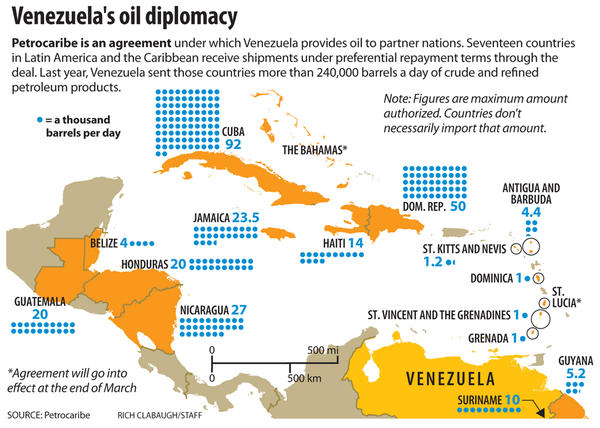
Venezuela Oil

Appendix – VIDEO: ExxonMobil’s Discussion on Energy Supply –  https://youtu.be/faDKwEl1BcY
Published on Jan 23, 2015 – Advances in technology continue to make a wide range of energy supplies available to consumers. At the same time, the fuels that people and businesses choose to meet their needs continue to evolve. These choices are based not just on price, but also on attributes like convenience, performance and environmental effects. Natural gas is expected to be the fastest-growing major fuel through 2040.
Share this post:
, , , ,

Is Martinique the Next Caribbean Surfing Capital?

Go Lean Commentary

Sports could be big business; culture is big business. Every now-and-then there is the opportunity to merge sports and culture into a single economic activity. One such expression is the sports/culture of surfing. This focus is a priority for the movement to elevate the Caribbean society, stemming from the book Go Lean…Caribbean.

The book serves as a roadmap for the introduction and implementation of the technocratic Caribbean Union Trade Federation (CU). While the CU is not intended as a sports promotion entity, it does promote the important role of sports in the quest to make the Caribbean a better place to live, work and play.

Though surfing activities originated with Polynesian culture (see Appendix below), the sport has assimilated well in other societies – the Caribbean included.

In terms of cultural expressions of surfing in the United States, the most iconic portrayal is the Rock-n-Roll group the Beach Boys; see VIDEO in the Appendix below of a milestone performance in Tokyo, Japan.

Yes surfing is global in its participation and appreciation.

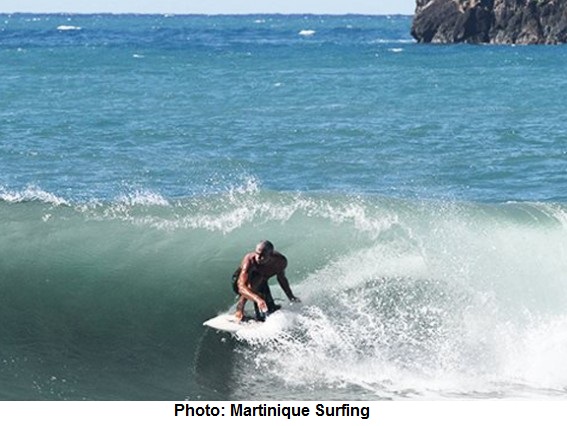
Now a Caribbean community, the French-domain of Martinique is exploring the surfing sub-culture for sport, tourism and sports-tourism.

Cowabonga* Dude!

By: The Caribbean Journal staff

Long an under-the-radar surfing spot, the French Caribbean island will get its place in the spotlight when the surfing world gathers on the island later this month for the first-ever Martinique Surf Pro.

From April 21-26, the Caribbean’s only World Surf League Qualification Series event this year will take place along the shores of Basse-Pointe in Martinique.

The event, which is being organized by Martinique Surfing in partnership with the World Surf League, will bring together 100 world-class surfers from the United States, Japan, Europe, Brazil and the Caribbean.

“Martinique has been among the best-kept secrets in Caribbean surfing for some time now,” said Muriel Wiltord, director of the Americas for the Martinique Promotion Bureau. “Such a high-profile event as this cements the island’s position as a prime surfing destination. As one the top watersports competitions being held in the Caribbean in 2015, Martinique Surf Pro also shines a spotlight on the wide range of additional watersports options that Martinique has to offer.”

Martinique’s surfing season typically lasts between November and May along its northern and northeastern Atlantic coasts.

Source retrieved April 13, 2015: http://www.caribjournal.com/2015/04/13/is-martinique-the-next-caribbean-surfing-capital/

CU Blog - Is Martinique the next big Caribbean surfing capital - Photo 2

CU Blog - Is Martinique the next big Caribbean surfing capital - Photo 3

CU Blog - Is Martinique the next big Caribbean surfing capital - Photo 1

Not every coastline is ideal for surfing; thusly many Caribbean residents do not surf; it is not an indigenous activity to this region. But the past-time – and culture for that matter – is adaptable. Why is this? While the Caribbean has been blessed with many natural gifts, the physical conditions for surfing are not everywhere; (based on factual information retrieved from Wikipedia).

There must be a consistent swell. A swell is generated when wind blows consistently over a large area of open water, called the wind’s fetch. The size of a swell is determined by the strength of the wind and the length of its fetch and duration. Because of this, surf tends to be larger and more prevalent on coastlines exposed to large expanses of ocean traversed by intense low pressure systems.

Local wind conditions affect wave quality, since the surface of a wave can become choppy in blustery conditions. Ideal conditions include a light to moderate “offshore” wind, because it blows into the front of the wave, making it a “barrel” or “tube” wave. Waves are Left handed and Right Handed depending upon the breaking formation of the wave.

Waves are generally recognized by the surfaces over which they break.[7] For example, there are Beach breaks, Reef breaks and Point breaks.

The most important influence on wave shape is the topography of the seabed directly behind and immediately beneath the breaking wave. The contours of the reef or bar front becomes stretched by diffraction. Each break is different, since each location’s underwater topography is unique. At beach breaks, sandbanks change shape from week to week. Surf forecasting is aided by advances in information technology. Mathematical modeling graphically depicts the size and direction of swells around the globe.

So mastering the sport of surfing is now an art and a science.

Despite the fun and joy of surfing, there are a lot of dangers with this activity:

This activity is not for the faint of heart.

Not every market, especially in the Caribbean, can support the demands of surfing as a sport and as a cultural event. As depicted in the foregoing article, Martinique uniquely qualifies. This year’s professional tournament is the inaugural event. This Caribbean island makes a very short-list of all locations where this activity is practical. The following is a sample of the competitive/major surfing locations (Surf Cities) around the globe:

1. In Australia

2. In Asia

3. In the South Pacific

4. In South Africa

5. In North America

6. In Central America

7. In South America

8. In the USA

9. In Europe

The Martinique effort and initiative to satiate the thirst … and fascination of surfing aligns with the objects of the CU/Go Lean roadmap; especially the mission “to forge industries and economic drivers around the individual and group activities of sports and culture” (Page 81).

The Go Lean vision is a confederation of the 30 member-states of the Caribbean forming the CU as a proxy organization to do the heavy-lighting of building, funding, maintaining and promoting sports venues. The strategy is for the CU to be the landlord, and super-regional regulatory agency, for sports leagues, federations and associations (amateur, collegiate, and professional). The embrace and promotion of the sport and culture of surfing can contribute to the Greater Good for the Caribbean. This aligns with the prime directives of the CU/Go Lean roadmap; summarized in the book with these 3 statements:

  • Optimization of the economic engines in order to grow the regional economy to $800 Billion & create 2.2 million new jobs.
  • Establishment of a security apparatus to protect the resultant economic engines and the participants in activities like surfing.
  • Improvement of Caribbean governance to support these engines.

This roadmap commences with the recognition that genius qualifiers can be found in many fields of endeavor, including sports. The roadmap pronounces the need for the region to confederate in order to invest in elevation of the Caribbean eco-systems in which such athletic geniuses can soar. These pronouncements are made in the opening Declaration of Interdependence, (Pages 13 & 14) as follows:

xxi. Whereas the preparation of our labor force can foster opportunities and dictate economic progress for current and future generations, the Federation must ensure that educational and job training opportunities are fully optimized for all residents of all member-states, with no partiality towards any gender or ethnic group. The Federation must recognize and facilitate excellence in many different fields of endeavor, including sciences, languages, arts, music and sports. This responsibility should be executed without incurring the risks of further human flight, as has been the past history.

xxii. Whereas sports have been a source of great pride for the Caribbean region, the economic returns from these ventures have not been evenly distributed as in other societies. The Federation must therefore facilitate the eco-systems and vertical industries of sports as a business, recreation, national pastime and even sports tourism – modeling the Olympics.

The Go Lean book and accompanying blogs declare that the Caribbean needs to learn lessons from Surf City communities and other sporting venues/administrations. So thusly this subject of the “business of sports” is a familiar topic for Go Lean blogs. This cause was detailed in these previous blogs:

https://goleancaribbean.com/blog/?p=4019 Melding of Sports & Technology; the Business of the Super Bowl
https://goleancaribbean.com/blog/?p=3414 Levi’s® Stadium: A Team Effort
https://goleancaribbean.com/blog/?p=3244 Sports Role Model – espnW.
https://goleancaribbean.com/blog/?p=2222 Sports Role Model – Playing For Pride … And More
https://goleancaribbean.com/blog/?p=2171 Sports Role Model – Turn On the SEC Network
https://goleancaribbean.com/blog/?p=2152 Sports Role Model – US versus the World
https://goleancaribbean.com/blog/?p=1715 Lebronomy – Economic Impact of the Return of the NBA Great
https://goleancaribbean.com/blog/?p=1446 Caribbean Players in the 2014 World Cup
https://goleancaribbean.com/blog/?p=1341 College World Series Time – Lessons from Omaha
https://goleancaribbean.com/blog/?p=1214 Landlord of Temporary Stadiums
https://goleancaribbean.com/blog/?p=1148 Sports Bubble – Franchise values in basketball
https://goleancaribbean.com/blog/?p=1020 Sports Revolutionary: Advocate Jeffrey Webb
https://goleancaribbean.com/blog/?p=498 Book Review: ‘The Sports Gene’
https://goleancaribbean.com/blog/?p=318 Collegiate Sports in the Caribbean
https://goleancaribbean.com/blog/?p=60 Could the Caribbean Host the Olympic Games?

This Go Lean roadmap is committed to availing the economic opportunities of all the Caribbean sports eco-system to respond to the world’s thirst for surfing. The book details the series of community ethos, strategies, tactics, implementations and advocacies to deliver the regional solutions to better harness economic benefits from sports and sports-tourism activities:

Community Ethos – People Respond to Incentives in Predictable Ways Page 21
Community Ethos – Consequences of Choices Lie in the Future Page 21
Community Ethos – Lean Operations Page 24
Community Ethos – Return on Investments Page 25
Community Ethos – Ways to Foster Genius Page 27
Community Ethos – Ways to Impact the Greater Good Page 37
Strategic – Staffing – Sporting Events at Fairgrounds Page 55
Tactical – Fostering a Technocracy Page 64
Tactical – Separation of Powers – Sports & Culture Administration Page 81
Tactical – Separation of Powers – Fairgrounds Administration Page 83
Implementation – Steps to Implement Self-Governing Entities Page 105
Implementation – Ways to Deliver Page 109
Planning – Ways to Make the Caribbean Better Page 131
Advocacy – Ways to Grow the Economy Page 151
Advocacy – Ways to Create Jobs Page 152
Advocacy – Ways to Improve Local Government – Parks & Recreation Page 169
Advocacy – Ways to Impact Public Works Page 175
Advocacy – Ways to Impact Events Page 191
Advocacy – Ways to Promote Fairgrounds as Sporting Venues Page 192
Advocacy – Ways to Preserve Caribbean Heritage Page 218
Advocacy – Ways to Improve Sports Page 229
Advocacy – Ways to Impact Urban Living – Sports Leagues Page 234

What could be the end result for the Go Lean roadmap’s venture into the sport of surfing and the business of sports? Economic growth and “jobs”. The Go Lean roadmap anticipates 21,000 direct jobs at sports enterprises throughout the region.

But surfing is also a leisure amenity, a “play” activity within the Go Lean roadmap. Many participate in this activity with no competitive motives. So the promotion of surfing in the Caribbean region can appeal to many enthusiasts far-and-wide to come visit and enjoy our Caribbean hospitality. This subject therefore relates back to the primary regional economic activity of tourism. This fits into the appeal of the Caribbean sun, sand and surf.

Overall, with these executions, the Caribbean region can be a better place to live, work and play. There is a lot of economic activity in the “play” aspects of society. Everyone, surfers, athletes and spectators alike, are hereby urged to lean-in to this Go Lean roadmap.

Cowabonga Dude!

Download the book Go Lean … Caribbean – now!

———-

Appendix – *Cowabunga: (slang) an expression of surprise or amazement, often followed by “dude”. Popular among California surfers.

———-

Appendix – Encyclopedia of Surfing:

For centuries, surfing was a central part of ancient Polynesian culture. This activity was first observed by Europeans at Tahiti in 1767 by Samuel Wallis and the crew members of the Dolphin; they were the first Europeans to visit the island in June of that year.

Surfing is a surface water sport in which the wave rider, referred to as a surfer, rides on the forward or deep face of a moving wave, which is usually carrying the surfer toward the shore. Waves suitable for surfing are primarily found in the ocean, but can also be found in lakes or in rivers in the form of a standing wave or tidal bore. However, surfers can also utilize artificial waves such as those from boat wakes and the waves created in artificial wave pools.

The term surfing refers to the act of riding a wave, regardless of whether the wave is ridden with a board or without a board, and regardless of the stance used. The native peoples of the Pacific, for instance, surfed waves on alaia, paipo, and other such craft, and did so on their belly and knees. The modern-day definition of surfing, however, most often refers to a surfer riding a wave standing up on a surfboard; this is also referred to as stand-up surfing.

George Freeth (8 November 1883 – 7 April 1919) is often credited as being the “Father of Modern Surfing”.

In 1907, the eclectic interests of the land baron Henry Huntington (of whom the City of Huntington Beach is named after) brought the ancient art of surfing to the California coast. While on vacation, Huntington had seen Hawaiian boys surfing the island waves. Looking for a way to entice visitors to the area of Redondo Beach, where he had heavily invested in real estate, he hired the young Hawaiian George Freeth to come to California and ride surfboards to the delight of visitors; Mr. Freeth exhibited his surfing skills twice a day in front of the Hotel Redondo.

In 1975, professional contests started.[6]

Today, the Surfing Hall of Fame is located in the city of Huntington Beach, California. The city brands itself as Surf City USA.

(Source retrieved April 14 from: http://en.wikipedia.org/wiki/Surfing)

———-

AppendixVIDEO – The Beach Boys: Surfin’ Safari~Surf City~Surfin’ U.S.A – https://youtu.be/qpSwdQMn8xs

Uploaded on Jul 29, 2011 – Live at Budokan in Japan November 2, 1991

Share this post:
, , , , ,
[Top]

Jamaican Poll: ‘Bring back the British!’

Go Lean Commentary

“When a man longs for the town of his boyhood, it is not the town that he longs for, but rather his boyhood” – Old Adage.

There’s something about nostalgia; we always seem to only remember just the good times –  the “Good Old Days”.

Grammy-award winning singer-songwriter Billy Joel asserted this truth in his song “Keeping the Faith” with this stanza:

You can get just so much
From a good thing
You can linger too long
In your dreams
Say goodbye to the
Oldies but goodies
Cause the good ole days weren’t
Always good
And tomorrow ain’t as bad as it seems

(See VIDEO below in the Appendix)

The island-nation of Jamaica requested and was granted independence from the United Kingdom (UK) in 1962. According to the subsequent news article, the time before 1962, like the 1950’s, seems now to be nostalgic for many older Jamaicans. But this commentary posits that these ones are really just longing for a simpler time: with more economic prosperity, more jobs, more security (less crime), and more governing efficiency.

The book Go Lean … Caribbean aligns with the need for these same nostalgic benefits, to elevate the economic-security-governing engines of the Caribbean region, Jamaica included.

Like Billy Joel sang, the “good old days weren’t always good”. Colonialism was not all positive. The Jamaican masses were suppressed, oppressed and repressed. The majority Black population was marginalized in their own homeland, at the hand of a White minority. History teaches that this type of oppression only has one end-result: revolution. The UK had just participated in the Second World War – within the same generation – they had learned the bitter lessons of imperialism and could not – or would not – submit to the same failed course of action. Colonialism had failed … the planet, as evidenced by the two World Wars.

History is a great teacher; but failure, hunger, crime and despair are better teachers. There was a need for a better delivery of the implied Social Contract between Jamaica’s government and the governed; (where citizens surrender some of their freedoms and submit to the authority of the State in exchange for protection of remaining natural and legal rights). But as assessed by the polling responders in the following article: the new (50+ years) independent nation has simply failed … to deliver on the Social Contract obligations for their citizens:

Title: Bring back the British! Most Jamaicans say they would be better off ruled from London
By: The Daily Mail – British Daily Newspaper; posted June 29, 2011; retrieved April 2, 2015 from:
http://www.dailymail.co.uk/news/article-2009487/We-stayed-Britain-Shock-poll-reveals-60-Jamaicans-think-theyd-better-colony.html

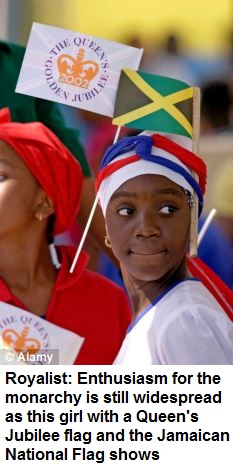
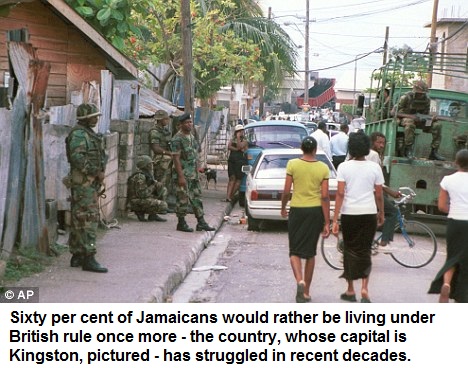
CU Blog - Jamaicans - Bring back the British - Photo 1Kingston – Most Jamaicans believe they would be better off if they were still ruled by Britain, a poll shows.

In a harsh indictment of nearly 50 years of independence, 60 per cent of those surveyed hanker for the days when the country was Britain’s biggest Caribbean colony.

Only 17 per cent said the crime-ridden, poverty-stricken nation would be worse off under British rule.

The depth of feeling is particularly astonishing as generations of Jamaican leaders have portrayed the British as oppressors who subjected the Caribbean to slavery.

The Queen is still Jamaica’s Head of State. Under the headline ‘Give Us The Queen!’, the Gleaner – Jamaica’s biggest newspaper – said its poll showed how much people had become ‘disillusioned’ with the violent and corrupt political gangs running the island

‘As painful, and some will claim insulting, as these statistics may be to Jamaican nationalists, they are quite understandable – and even logical,’ the paper said in an editorial. ‘The attitudes are formed by people’s existing realities and their expectations for the future.’
These realities, it added, include living in a country ‘where, for  more than a generation, economic growth has averaged below 2 per cent per annum and its homicide rate is among the highest in  the world’.

The newspaper also highlighted Jamaica’s ‘creaky’ justice system, ‘patchy’ law and order, ‘indifferent’ education system and the widespread public perception of ‘overwhelming’ corruption.

CU Blog - Jamaicans - Bring back the British - Photo 2The survey of more than 1,000 Jamaicans is embarrassing for Prime Minister Bruce Golding. He wants to mark next year’s 50th anniversary of independence by removing the Queen as Head of State and making the island a Republic.

Among older Jamaicans, nostalgia for what the Gleaner called the ‘good old days’ under Britain may have been sharpened by the island’s disastrous experiment with socialism in the 1970s. Left-wing prime minister Michael Manley introduced economically disastrous policies while publicly courting Cuba and scaring off tourists.

In recent years, violence by drug gangs has made the island  one of the most dangerous places in the world.

About 25,000 Britons live in Jamaica, including 23,275 pensioners. An estimated 1.3 million tourists visit the island each year, including about 185,000 Britons.

This foregoing article was composed and posted in 2011. What of the 4 years since?

The Go Lean book – published November 2013 – and subsequent blog-commentaries have concurred most emphatically: “Yes, Jamaica is in crisis; along with the rest of the Caribbean”. The Go Lean book posits that the entire English-speaking Caribbean is in crisis, along with the French and Dutch Caribbean; plus the US Territories of Puerto Rico and the Virgin Island suffer the same fate. But instead of campaigning for the “good old days”, the book (Page 8) asserts that this crisis is a terrible thing to waste”; that now is the time to finally employ best-practices in the structures of colonial society that the British (and other European powers) left behind.

This longing  for the “good old days” is similarly being echoed in the Dutch Caribbean. According to the book (Page 16), outcries for change in the Netherland Antilles resulted in the Kingdom of the Netherlands (Holland) polling the general population to choose among four options: independence, closer ties with Amsterdam, autonomous status within the Kingdom of the Netherlands or the Confederation Status Quo among the Dutch Caribbean member-states (6 islands). After a series of Referendums (2000 – 2005), the Status Quo was abandoned for closer-Amsterdam options.

Also in the French Caribbean, the book relates (Page 17) how discord and dissension has resulted in governmental structure changes that led the French territories to demand more direct rule from Paris. The acute need for reform has been openly acknowledged and these islands are even considering more regional solidarity with their wider Caribbean neighbors.

The independent Caribbean member-states (consider Cuba, Haiti, the Dominican Republic and Suriname) are not spared from these crises as these countries have near-Failed State status and many of their populations have fled their homeland to a “Diasporic” life in some foreign location. Now it can be concluded that when these ones are called on to participate in “local democratic elections”, they are really voting: “None of the Above”.

On the other hand, the objective of the Go Lean movement is to reconcile the flawed economic-security-governing policies of the past and lean-in for the optimizations of the Caribbean future. The book serves as a roadmap for the regional integration of all the 42 million people and confederation of all 30 member-states of the Caribbean with the implementation of the Caribbean Union Trade Federation (CU). This roadmap advocates the elevation of Caribbean society, with the following prime directives:

  • Optimization of the economic engines in order to grow the regional economy from $378 Billion to $800 Billion & create 2.2 million new jobs.
  • Establishment of a security apparatus to protect the resultant economic engines and mitigate internal and external threats.
  • Improvement of Caribbean governance to support these engines.

The Go Lean roadmap commences with this ideal embedded in the opening Declaration of Interdependence, pronounced as follows; (Page 10):

As the colonial history of our region was initiated to create economic expansion opportunities for our previous imperial masters, the structures of government instituted in their wake have not fostered the best systems for prosperity of the indigenous people. Despite this past, we thrust our energies only to the future, in adapting the best practices and successes of the societies of these previous imperial masters and recognizing the positive spirit of their intent and vow to learn from their past accomplishments and mistakes so as to optimize the opportunities for our own citizenry to create a more perfect bond of union.

The structure of colonialism has always been defective for colonies. As practiced in the past, all natural resources were extracted and sent to the host country as raw materials. Then finished products were returned to the colonies. The added-value and profit margins of such a eco-system were never realized in the colonies; it was always a win-win for the host country. There is no need to go back to that! There is something better here; its time to Go Lean … Caribbean.

Even the European imperial masters have abandoned such a colonial eco-system. Yes, Europe has now grown up to be a more technocratic society. This is the model we – in the Caribbean – must follow. The CU is modeled from the EU – see Page 130 in the Go Lean book – so as to provide good stewardship and shepherding of the Caribbean economic, security and governing engines. This theme has been elaborated on in these previous blog/commentaries:

Introduction to Europe – All Grown Up
A Lesson in European Dysfunctional History: 100 Years Ago – World War I
EU willing to fund study on cost of not having CARICOM
Europe Model: One currency, divergent economies
Book Review: ‘Wrong – Nine Economic Policy Disasters and What We Can Learn…’

The issues involved in this commentary are bigger than just for Jamaica. The CU roadmap drives change among the economic, security and governing engines for all the Caribbean region. One perplexing problem for Jamaica is the management of their previous debt. The Go Lean book therefore provides solutions to assuage this dilemma, but the solutions are tuned to a regional approach. This is a lesson learned from the EU’s model for assuaging the sovereign debt crisis of member-states there, like Greece, Portugal, Italy and Ireland. This roadmap therefore envisions elevating Caribbean society by means of new community ethos, strategies, tactics, implementations and advocates; as sampled here in this list:

Community Assessment – English Countries: Failed Integration of CSME Page 15
Community Assessment – Dutch Caribbean – Integration & Secessions Page 16
Community Assessment – French Caribbean – Organization & Discord Page 17
Community Assessment – Puerto Rico – The Greece of the Caribbean Page 18
Community Ethos – Forging Change Page 20
Community Ethos – Economic Principles Page 21
Community Ethos – Security Principles Page 22
Community Ethos – Governing Principles Page 24
Community Ethos – Impact the Future Page 26
Community Ethos – Impact the Greater   Good Page 37
Strategy – CU Vision – Integrate Caribbean member-states modeling the EU Page 45
Strategy – Facilitate a Currency Union, the Caribbean Dollar (C$) Page 48
Tactical – Fostering a Technocracy Page 64
Tactical – $800 Billion Economy – How and When Page 67
Tactical – Separation-of-Powers Page 73
Implementation – Assemble Caribbean Central Bank Page 96
Implementation – Ways to Better Manage Debt Page 114
Implementation – Ways to Promote Independence Page 120
Planning – Ways to Model the EU Page 119
Anecdote – Caribbean Currencies Page 149
Advocacy – Ways to Grow the Economy Page 151
Advocacy – Ways to Create Jobs Page 152
Advocacy – Ways to Better Manage the Social Contract Page 170
Advocacy – Reforms for Banking Regulations Page 199
Advocacy – Ways to Re-boot Cuba Page 236
Advocacy – Ways to Impact the Dominican Republic Page 237
Advocacy – Ways to Re-boot Haiti Page 238
Advocacy – Ways to Impact US Territories Page 244
Advocacy – Ways to Impact British Territories Page 245
Advocacy – Ways to Impact Dutch Territories Page 246
Advocacy – Ways to Impact French Territories Page 247

The Go Lean roadmap posits that modeling European society does not mean subjecting anew to colonial status for them. No, that is a parasite disposition. The roadmap calls for the region to assume the stance of a protégé of our European (and North American) trading partners. Yes, we can prosper where we are planted … in the Caribbean.

The book declares that the Caribbean is the greatest address on the planet. So we have the potential to do more, go further and rise higher than our previous colonial masters. But this requires heavy-lifting!

While this is easy to say (and write), it is harder to do. But there are some best-practices that would optimize our endeavors. For starters, economic empowerment is easy; just show up with investments (money) and jobs and the Caribbean communities will acquiesce – they will form long lines to solicit those jobs. On the other hand, the attempts to introduce empowerments for security and/or governing engines are a lot more complicated, requiring a political process, with a lot of consensus-building, collaboration and compromise.

Who should do this heavy-lifting? London, Amsterdam, Paris, or Washington? No. This effort needs to be done by us, for us. This is what independence is all about, standing up and finding solutions to our own problems, not crying out to “Mama or Papa” as in London, Amsterdam, Paris…

“Cause the good ole days weren’t always good
And tomorrow ain’t as bad as it seems”.

Now, we must “step-up our game” all the more so and tackle our problems; we must forge viable solutions. How? When? Why? Who? Good questions. There are no quick answers; there is a roadmap instead. For example, the Go Lean roadmap details that the answer to the dilemma of “defects of independence” is interdependence … with our Caribbean neighbors. This is part-and-parcel of the remediation and mitigations in the 370-page turn-by-turn guide.

Yes, we can … all work together and be successful. “Many hands make a big job small”.

🙂

Download the free e-Book of Go Lean … Caribbean – now!

—————

Appendix – VIDEO: Billy Joel’s Keeping the Faithhttps://youtu.be/ph7oZnBH05s

Uploaded on Oct 2, 2009 – Music video by Billy Joel performing Keeping The Faith. (C) 1983 SONY BMG MUSIC ENTERTAINMENT


Share this post:
, , ,
[Top]

Welcoming WTO? Say Goodbye to Nationalism

Go Lean Commentary

Trade 1

The catch-phrase “Think Global, Act Local” does not only apply to “green” conservational objectives, it also applies to trade promotion. Though not officially adopted as a mantra for the World Trade Organization (WTO), this catch-phrase is the ethos by which they administer their policies.

CU Blog - Welcoming WTO - Say Goodbye to Nationalism - Photo 2The words “World” and “Trade”, combined together should signal the spirit of doing commerce as global citizens, not reserving a market for some special interest group, even if the special qualifier is just citizenship.

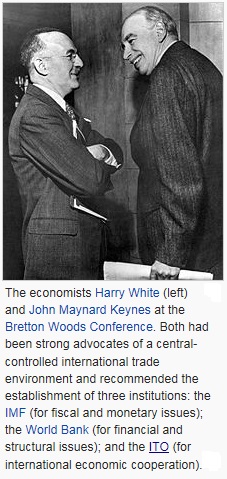
World Trade coordination is a new creation, a product of 20th century post-WW II reconstruction. The prevailing ethos beforehand was that “all men were created equal, but some were more equal than others”. This status quo, with features like colonialism, was fraught with societal defects that would just continue to spurn uprisings. A better eco-system was needed. From this planning – Photo here – came the structure for the World Bank, International Monetary Fund (IMF) and the International Trade Organization (ITO). The ITO was proposed in 1948, but never fully ratified. In its place, a weaker framework was enacted branded GATT for General Agreement on Tariffs and Trade. The goal was to tear down all the inequities with inter-country interactions that caused so much dissension. (The planet could not risk another global war). GATT remained the standard for almost 50 years, until finally the formation of the newly-branded WTO, which ascended on January 1, 1995.

The goal of the ITO/WTO was to be a United Nations’ specialized agency that would address not only trade barriers but other issues indirectly related to trade, including employment, investment, restrictive business practices, and commodity agreements. But the original ITO treaty was not approved by the U.S. and a few other signatories and never went into effect.[17][18][19] The WTO has all of these countries’ full participation and all these attributes. It’s a New World Order.

The WTO is not mandatory; it’s a club and membership has its privileges…and responsibilities. The book Go Lean…Caribbean had always encouraged participation in this club (Page 119); urging joining and conforming to the international standards. Why? The region depends on the global market – imports of all commodities and exports of services like tourism. So we are already participating in these “club activities” whether we want to or not. We had better get the full benefits. For starters we would get voting rights par-for-par with the big trading countries like the US and Canada, and EU member-states. We would get a voice and a vote; something missing in our current US interaction, where foreign, trade and security policies often times do not align with the priorities of the Caribbean. Even more, no Caribbean member-states, even US Territories, have voting powers in the US Capitol where those policies are codified. It is what it is!

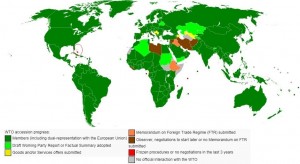
Click on photo to Enlarge

The World Map Photo here depicts the Commonwealth of the Bahamas in a Red Circle, indicating that the WTO status is still pending. There are a number of provisos that must first be put in place. This article relates one such requirement:

Title: WTO To End Property Tax Advantages For Bahamians
By: Neil Hartnell, Business Editor

NASSAU, Bahamas — The Bahamas will have to eliminate its nationality-based real property tax exemptions that discriminate in favour of locals before it becomes a full World Trade Organisation (WTO) member, a report warning the current system is “not in accordance with international practice”.

The ‘Conditions for improving real property tax in the Bahamas’ report, never before revealed to the Bahamian people, thus warns that the exemptions enjoyed by Bahamian ‘vacant land’ owners in New Providence, and in every Family Island [(Bahamas Out Islands)], will either have to be completely changed or abandoned.

The report’s authors, Dr Roy Kelly, Dr Graham Glenday and Wayne Forde, said: “Exempting property based on the nationality of the property tax owner is not in accordance with international practice.

“This nationality-based exemption will need to be changed when the Bahamas joins the WTO, since the Bahamas will not be allowed to differentially tax based on nationality.”

The Government, via the Ministry of Financial Services, has already given notice of its intention to continue with the WTO accession process, with new minister, Hope Strachan, effectively saying she has picked up where her predecessor, Ryan Pinder, left off.

Messrs Kelly, Glenday and Forde thus called for the Government to review all property tax exemptions extended to Bahamians only, reiterating that these would need to be eliminated upon WTO accession.

“This means that the current exemption on unimproved land owned by Bahamians on New Providence will need to be adjusted. In addition, the current exemptions given to Bahamians on all property on the Family Islands will need to be restructured,” they warned bluntly.

This provides further evidence of how the ‘rules of the game’ for the conduct of business in the Bahamas will change suddenly, and dramatically, once this nation accedes to full WTO membership.

It is unclear how many in the private sector, and wider Bahamian society, have been paying attention to this, given that Value-Added Tax (VAT) and possibly now National Health Insurance (NHI), have dominated the policy agenda.

The ‘Conditions for improving real property tax in the Bahamas’ report, meanwhile, went further in calling for the Government to review what it described as “several unique and generous tax exemptions and relief schemes” when it came to real property tax.

In particular, it called for the $250,000 ‘exemption threshold’ for owner-occupied real property tax to be reduced back to $100,000.

Explaining the rationale for this recommendation, it said: “First, the current owner-occupied exemption of $250,000 is substantially higher than those in the neighbouring United States.

“Second, the exemption is not means-tested, meaning that the exemption is given to rich and poor alike, perpetuating inequity. Third, the level of exemption was increased without a systematic updating of property tax roll values. Fourth, the exemption is difficult to administer to ensure that second homes are not also receiving a second exemption.”

Messrs Kelly, Glenday and Forde said the $250,000 Bahamian exemption was more than 2.5 times’ higher than the largest equivalent in the US, where exemptions ranged from $7,500 to $100,000.

“Increasing the exemption levels, while not systematically adjusting the property assessed values to be closer to market values, means that many properties drop off the property tax roll through reverse ‘bracket creep’,” the report said,

“It is reported that the increase in the exemption level from $100,000 to $250,000 reduced the number of taxpayers substantially, eliminating many properties from the tax roll. Due to the lack of an effective reassessment process, many of the owner-occupied houses have not been revalued in many years. “Thus, increasing the exemption by 150 per cent, while not reassessing the properties to keep up with real market value, meant that many houses fell below the valuation threshold.”

Messrs Kelly, Glenday and Forde also described the exemption Bahamians enjoy from paying real property tax on any Family Island as “overly generous”, because it made no distinction between rich and poor persons, plus high value and low value properties.

“Both rich and low income Bahamians are tax exempt from the property tax, thus not directly contributing to the payment for government services on the Family Islands,” the report said.

“There is no good reason why richer Bahamians (owning expensive properties) on the Family Islands should not be contributing to the payment for government services.”

And, significantly in the current context, Messrs Kelly, Glenday and Forde recommended that real property tax be imposed in Freeport from August 2015 onwards.

“As with the exemption granted to hotels, the Hawksbill Creek Agreement provisions on property taxation should also be reviewed, with property brought into the tax net upon expiration of the current agreement,” they argued.

Many Bahamas-based resorts are exempt from paying real property tax for up to 20 years under their Hotels Encouragement Act agreements, thus ensuring they enjoy a substantial concession, while the Government suffers “quite large” revenue losses.

“The property tax exemption for hotels, rental pooling, and time shares should be reviewed and reduced,” the report recommended.

“Although perhaps well intentioned, the generous property tax exemption on hotels and other tourist-related investments may be extravagant and unwarranted, potentially allowing hotel investments to be property tax exempt for up to 20 years.

“This exemption provides a major subsidy to the hotel investors, and to users of those hotels who receive government services without paying the property tax and the true costs of government-funded services.”

Calling for the Government to conduct cost/benefit analysis of all its tax exemptions, the report said: “Countries do provide a number of tax exemptions to stimulate economic development.

“These tax exemptions should be costed and monitored to evaluate the impact from the exemption, and to ensure that the property is brought on to the tax roll at the conclusion of the exemption. In accordance with international best practice, all property tax exemptions should be included in the property tax act to encourage greater transparency.”

Messrs Kelly, Glenday and Forde concluded: “To mobilise increased property taxes in an equitable and efficient manner, the Government must review existing tax base exemptions, potentially leading to a broadening of the tax base.

“As identified above, the tax base currently has very generous and perhaps unnecessarily generous exemptions, which dramatically reduces the potential property tax revenues and introduces possible, un-intentional impacts on the equity and efficiency of the tax system.”

No property tax advantage for Bahamians over foreigners?!?! That is a big change for the Bahamas. They have a Bahamian-ization policy that prioritizes citizens over foreigners in so many societal endeavors. See VIDEO in the Appendix below.

The whole policy is flawed. (Bahamian-ization calls for all Bahamian businesses to at least be owned 51% by a Bahamian citizen).

This policy was communicated previously in a blog/commentary where the business community there was complaining about the lack of skilled labor in the marketplace and the impediment that the Bahamian-ization policy has forced on the local market. Job creation is affected.

There are also similar complaints related to investments, property ownership, gambling, immigration-citizenship, education and other facets of society.

“All animals are equal, but some animals are more equal than others”. – Book: Animal Farm by George Orwell (1945)

The tongue-in-check allusion in this expression is more apropos, (and stands in contrast):

The Golden Rule: He who has the gold makes the rules.

The motivation of Bahamian-ization was always to neutralize corporate abuses.

The book Go Lean… Caribbean posits that the Bahamas cannot succeed in a world of globalization leading with this Bahamian-ization policy. Foreign Direct Investors will be less inclined to “plant” in a country with little chance of prospering. They will be inviting a second class existence for themselves, spouses and children. That policy “acts locally” with no consideration for global ramifications. (Mostly, the only qualifying Bahamian for new business endeavors is the government). On the other hand, the book urges regional federalism, asserting that the best solution is a regional integration with all Caribbean member-states, despite the colonial or language legacies. The book therefore serves as a roadmap for the introduction and implementation of the Caribbean Union Trade Federation (CU). This represents a confederation, a brotherhood, of the 30 member-states of the Caribbean region, including the US Territories (2): Puerto Rico and the US Virgin Islands); the French Territories (5); 6 Dutch Territories constituted as 1 member; British Overseas Territories (5) and independent states and Republics (17).

This would mirror the European Union (EU) participation in the WTO where there is a dual membership. The  Caribbean Union Trade Federation is modeled after the EU, with the regional focus on Trade for the Caribbean.

The words “Caribbean” and “Trade”, combined together should signal the spirit of doing commerce as regional citizens. This CU/Go Lean roadmap therefore extolls the priority of trade, not nationalism, in the execution of its prime directives; defined by these 3 statements:

  • Optimize the economic engines of the region to grow the GDP of the economy to $800 billion and create 2.2 million new jobs.
  • Establish a security apparatus to protect the resultant economic engines.
  • Improve Caribbean governance – including tax collection and Self-Governing Entities – to support these engines.

The Go Lean roadmap opens with the call for the consolidation of trade negotiation for the Bahamas, and the rest of the Caribbean – treating everyone as equals. This point is echoed early, and often, in the book, commencing with these opening pronouncements in the Declaration of Interdependence (Pages 11 – 14), as follows:

viii.  Whereas the population size is too small to foster good negotiations for products and commodities from international vendors, the Federation must allow the unification of the region as one purchasing agent, thereby garnering better terms and discounts.

xi.   Whereas all men are entitled to the benefits of good governance in a free society, “new guards” must be enacted to dissuade the emergence of incompetence, corruption, nepotism and cronyism at the peril of the people’s best interest. The Federation must guarantee the executions of a social contract between government and the governed.

xiv.  Whereas government services cannot be delivered without the appropriate funding mechanisms, “new guards” must be incorporated to assess, accrue, calculate and collect revenues, fees and other income sources for the Federation and member-states. The Federation can spur government revenues directly through cross-border services and indirectly by fostering industries and economic activities not possible without this Union.

xxiv. Whereas a free market economy can be induced and spurred for continuous progress, the Federation must install the controls to better manage aspects of the economy: jobs, inflation, savings rate, investments and other economic principles. Thereby attracting direct foreign investment because of the stability and vibrancy of our economy.

xxx. Whereas the effects of globalization can be felt in every aspect of Caribbean life, from the acquisition of food and clothing, to the ubiquity of ICT, the region cannot only consume, it is imperative that our lands also produce and add to the international community, even if doing so requires some sacrifice and subsidy.

The Go Lean roadmap specifically details steps to optimize property taxes for the region’s member-states. The plan is to deploy advanced government systems for property assessments, registration and tax collections. The CU will deploy these systems and share the utilization with the member-states. This is classic e-Government in-sourcing and out sourcing. The financial eco-system will even provide predictive funding for the member-states based on these new efficiencies.

The Bahamas needs help with their “property tax” eco-system.

The Bahamas is currently operating only at 40 per cent of its tax capacity, according to a Government-engaged consultancy. They have warned the country, ranking this nation at near-bottom of a list of 98 countries… “The IMF has estimated that The Bahamas collects only 40 per cent of its maximum attainable tax-to-GDP ratio as determined by the economic structure of the country, a metric on which it ranks 92nd out of 98 nations,” [Consultancy] Compass Lexecon said. “In comparison, Sweden and Denmark collect 98 percent of their tax capacity.”

The Bahamas, and other Caribbean member-states for that matter, can do better.

For example, if the Bahamas Ministry of Finance should be collecting $160 million in property taxes for 1 year, then the CU (Union Revenue Administration) can issue a discounted check – or a warrant – for $140 million and engage the collections directly, to recoup $160 million. This is classic Agent-Principal servicing, with the exception of no profit motives for the agents. The CU is the agent! (This example relates only to property taxes, not the newly enacted VAT regime launched in country on January 1).

This is the hallmark of a technocracy.

Go Lean … Caribbean therefore constitutes a change for the Caribbean. This is roadmap provides the tools/techniques (but without sovereignty) to bring immediate elevation to the region to benefit one and all member-states.

How?

The book details the community ethos to forge such change; plus the executions of the following strategies, tactics, implementations and advocacies to empower the governing engines to better deliver on the Social Contract for Caribbean stakeholders:

Community Ethos – Deferred Gratification Page 21
Community Ethos – Minority Equalization Page 24
Community Ethos – Lean Operations Page 24
Community Ethos – Return on Investments Page 24
Community Ethos – Cooperatives Page 24
Community Ethos – Ways to Improve Negotiations Page 30
Community Ethos – Impact the Greater Good Page 37
Strategy – Unified Region in a Single Market Economy Page 45
Strategy – Customers – Foreign Direct Investors Page 48
Strategy – Agents of Change – Globalization Page 57
Tactical – Confederating a Permanent Union Page 63
Tactical – Fostering a Technocracy Page 64
Tactical – Growth Approach – Trade and Globalization Page 70
Tactical – Separation of Powers – Union Revenue Admin Page 74
Tactical – Separation of Powers – Securities Regulatory Agency Page 74
Tactical – Separation of Powers – Interstate Commerce Admin Page 79
Tactical – Separation of Powers – Office of Trade Negotiations Page 80
Implementation – Ways to Pay for Change – Warrants Page 101
Implementation – Foreign Policy Initiatives at Start-up Page 102
Implementation – Steps for Implementing Self-Governing Entities Page 104
Implementation – Ways to Deliver Page 109
Implementation – Trade Mission Office Objectives Page 116
Implementation – Ways to Benefit from Globalization Page 119
Implementation – Ways to Promote Independence – Interdependence Preferred Page 120
Planning – Ways to Improve Trade Page 128
Planning – Ways to Improve Interstate Commerce Page 129
Planning – Ways to Model the EU Page 130
Advocacy – Ways to Grow the Economy Page 151
Advocacy – Ways to Create Job Page 152
Advocacy – Ways to Improve Housing – Government Property Registration Page 161
Advocacy – Ways to Improve Governance Page 168
Advocacy – Ways to Better Manage the Social Contract – Non-Profitable Endeavors Page 170
Advocacy – Ways to Improve Government Revenue Page 172
Advocacy – Ways to Foster Cooperatives Page 176
Advocacy – Ways to Impact Main Street Page 201

The issues in this commentary are important for the development of the Bahamas and the rest of the Caribbean. There is the need to fully participate in the WTO; it is the only way to fully compete in a globalized marketplace. This is the new regulatory regime for the free market. Free market dynamics are normally based on supply-and-demand. The Caribbean, with its small population and market-size cannot compete with the voluminous demand nor voluminous supply of some of the bigger countries (i.e. China, India, EU, the US, etc). With the one-man-one-vote (one-state-one-vote) structure of the WTO, we will truly be able to compete with the bigger states.

WTO calls for level playing fields. A member-state cannot give preferential treatment to one group within the population over another group within the population. For the WTO, “all men are treated equal, period!”

There is no place for Bahamian-ization; no place for nationalism from any Caribbean country. Say Goodbye to the past. Say Hello to the future, the new landscape for world trade.

The Go Lean book is a detailed turn-by-turn step-by-step roadmap for how to lean-in for this new regime, and how to pay for it. We now urged everyone in the region, all stakeholders (citizens, Foreign Direct Investors, trading-partners, business establishments) to lean-in to this roadmap. Let’s fulfill this vision: let’s make the Caribbean region a better place to live, work and play. 🙂

Download the book Go Lean … Caribbean – now!

——-

Appendix – VIDEO: Bahamas Minister of State for Investments Khaalis Rolle on foreign direct investment in The Bahamas – https://youtu.be/THD7Yejp1fs

Published on Nov 8, 2013 – Khaalis Rolle, the Minister of State for Investments of The Bahamas, speaks with The Prospect Group about the government’s investment plans and priorities, attracting foreign direct investment, and where investments can be made today.


Share this post:
, , , , ,
[Top]

Tobago: A Model for Cruise Tourism

Go Lean Commentary

The Caribbean is composed of 30 member-states: countries, territories, and commonwealths. There are a lot of differences (5 colonial legacies, 4 different languages – even more dialects), and yet just one economy…primarily. The economic driver for most of the region is focused first on tourism.

This is good!

  • Non-renewal resources are not exhausted, exploited or consumed.

This is bad!

  • The mono-industrial reality overly depends on the prosperity of foreign countries.

It is what it is!

The book Go Lean…Caribbean addresses the economic needs of all the Caribbean, including the dimensions of the tourism sector. There are two options for visiting the Caribbean: stay-overs and cruises.

CU Blog - Tobago - A Model for Cruise Tourism - Photo 2

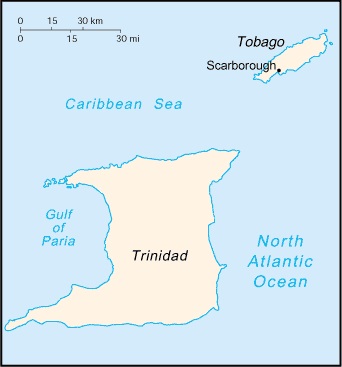
Scarborough, Tobago

CU Blog - Tobago - A Model for Cruise Tourism - Photo 1

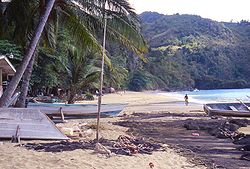
Beach scene on Tobago

From a strictly economic consideration, stay-overs are preferred. The visitors consume more of the local culture and spend more monies on amenities like hotels, taxis, restaurants, shopping and excursions. On the other hand, cruise passengers consume most of these amenities onboard the ships, with just spin-off revenues to the local port cities.

CU Blog - Tobago - A Model for Cruise Tourism - Photo 3The experience of tourism in the Caribbean is that there has been a sea-change since 2008; the crisis of the Great Recession deeply impacted the region as prosperity in the foreign countries – source markets – became spurious. Yes, the high-end tourist resorts have flourished since the Great Recession, but properties catering to the general middle class have floundered. The one exception being the emergence of the cruise industry as a viable vacation option for the general American population. The CU therefore plans to empower the industry directly, and to elevate the cruise industry’s impact on Caribbean society.

Plus, cruise lines are an effective way to introduce and grow a tourism product “from scratch”. This is the model for the island of Tobago, the secondary island (population of 62,000) in the federated Republic of Trinidad and Tobago. Tobago’s main economy is based on tourism, fishing, and government spending, with government spending being the largest; (the local governing body – the Tobago House of Assembly – employs 62% of the labor force). Tourism is still a fledgling industry on the island and needs to be further developed. There are no casinos, just two golf courses, and perhaps just one hotel classified among the Caribbean resort-variety; but the island boast great eco-tourism opportunities.

See this article here referring to the pending expansion of cruise operations to Tobago:

1. Title: More on Carnival’s Tobago Plans
By: The Caribbean Journal staff; retrieved from: http://www.caribjournal.com/2015/03/16/more-on-carnivals-tobago-plans/  

Carnival Cruise Lines has already announced its plans to visit Tobago next year, and now the company has revealed more information on its schedule.

The cruise line began visiting Tobago in February 2015, part of a longer itinerary that includes St Maarten, Dominica, Barbados, Scarborough, Grenada, Martinique, St Kitts and St Thomas.

“Based on feedback from our guests and travel agent partners, we’re delighted to offer these longer length voyages which provide vacationers an opportunity to visit some of the world’s most breathtaking destinations while enjoying all the wonderful on-board innovations and features found aboard Carnival’s ships,” said Terry Thornton, senior vice president of itinerary planning at Carnival.

The cruise line’s arrival will bring an estimated 10,642 Carnival passengers to the island next year.

VIDEO: Top 5 Beaches of Tobago – https://youtu.be/lpIg_6kzW0Q

Published on Dec 22, 2014 – Check out Tobago’s Top 5 Beaches as listed in the 2014 Tobago International Cycling Classic show which aired on ESPN in November. Tobago is one of the most beautiful islands in the Caribbean and it’s many beaches is one of the reasons.

The Go Lean book posits that this strategy is not enough; it is deficient to support a growing economy; to state better: an economy that should be growing. In general, the Caribbean economy is in crisis. Communities that are too dependent on tourism have suffered since 2008, directly and indirectly. Directly, the communities are deriving fewer returns from the tourism investments, especially where cruise operations are concerned. Indirectly, the crisis has driven many young ones to flee the region, setting their sights on foreign shores as the destination for their dreams and aspirations.

While Tobago is looking to expand its cruise traffic, as a way to springboard its nascent tourist industry, other communities are looking at ways to expand the yield from the existing cruise tourist traffic.

Consider this second news article here relating the efforts in Jamaica (and elsewhere) to increase the per-passenger average “spend” amounts:

2. Title: Jamaica unhappy with cruise pax spending
By: Gay Nagle Myers; Travel Weekly Magazine – Industry Periodical – Posted September 25, 2012; retrieved 03/18/2015 – http://www.travelweekly.com/Cruise-Travel/Jamaica-unhappy-with-spending-levels-of-cruise-passengers/

Jamaica’s cruise numbers saw solid growth last year, but tourism authorities there are not pleased with the level of per-passenger spending, which trails most other major cruise destinations in the Caribbean.

CU Blog - Tobago - A Model for Cruise Tourism - Photo 4Data about Jamaica’s cruise industry are contained in the recently released Annual Travel Statistics 2011, a hefty document published by the Jamaica Tourist Board that examines all facets of visitor arrivals, hotel occupancy by room size category and visitor expenditure.

Tourism data were compiled from embarkation/disembarkation cards filled out by visitors arriving by air and by exit surveys at the airports and at cruise ship piers.

Data on cruise ship arrivals were obtained from the ships’ manifests.

In many instances, the current figures are compared to figures for the years since 2007 to illustrate how well or poorly certain tourism segments are faring.

Jamaica had solid cruise growth in 2011, welcoming more than 1.1 million passengers, a jump of 23.7% over 2010.

The main contributing factor to the turnaround in passenger arrivals was the opening of the Falmouth pier in Trelawny in February 2011.

In the 11 months that followed, the port of Falmouth hosted 110 cruise ship calls and was the entry point for 456,442 cruise ship passengers, or 40.6% of all passengers arriving in Jamaica. That included 21 calls by Royal Caribbean International’s Oasis of the Seas, accounting for 125,023 passengers.

The port of Ocho Rios, which in the past provided the largest share of Jamaica’s cruise arrivals, accounted for 417,520 of total cruise passengers in 2011, or 37.1%.

The port of Montego Bay accounted for 250,491 passengers, or 22.3%. The problem lies in how much those passengers spent in their ports of arrival. Overall gross visitor expenditure in 2011 was estimated at just over $2 billion, an increase of just 0.4% over 2010.

Foreign visitors arriving by air spent $1.85 billion, while cruise passenger spend totaled $80 million, and nonresident Jamaicans visiting friends and family contributed $76 million.

This means that the average tourist on holiday spent $115.74 per person per night, while cruise passengers strolling the streets of Falmouth or the vendor stalls in Montego Bay spent just $71.27.

The level of cruise passenger spend is not sitting well with tourism officials. It represents a drop of 20%, or $16 per passenger, the lowest in 10 years, according to the JTB annual report.

This is a disappointing payback following the opening of the much-touted Falmouth pier.

William Tatham, vice president of the Port Authority of Jamaica, said tourism officials would like to see a 70% jump in the cruise spend per passenger, to $120 per person, in the coming cruise season.

That goal could be realized with the opening of Margaritaville Falmouth at the cruise pier later this year.

The planned $7 million, 17,000-square-foot attraction will include a pirate ship with a pool and water slide, a zipline and a Jacuzzi right on the dock, according to Ian Dear, CEO of Island Entertainment Brands, which operates 27 Margaritaville venues, four of them in Jamaica.

Even if Jamaica should reach its goal of passengers spending $120 a day, the island still will trail the Bahamas and the U.S. Virgin Islands, the Caribbean’s two top-volume cruise ports, when it comes to per-passenger spend.

CU Blog - Tobago - A Model for Cruise Tourism - Photo 5The Bahamas welcomed 4.1 million cruise passengers in 2011, up 9.4% from the 3.8 million it welcomed in 2010.

The average spend of a Bahamas cruise passenger in 2012 is $111, up from $73 in 2011, according to Carla Stuart, director of cruise development for the Ministry of Tourism.

“The Bahamas remains the leader in the cruise industry in the region,” Stuart said. “For the first quarter of 2012, we saw more than an 11% increase in cruise arrivals compared to the same period in 2011. We expect this growth will continue throughout the year, bringing in significant revenue to small businesses and individuals employed directly and indirectly in the tourism sector.”

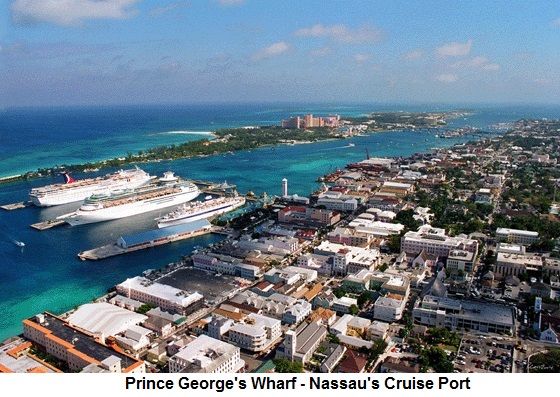
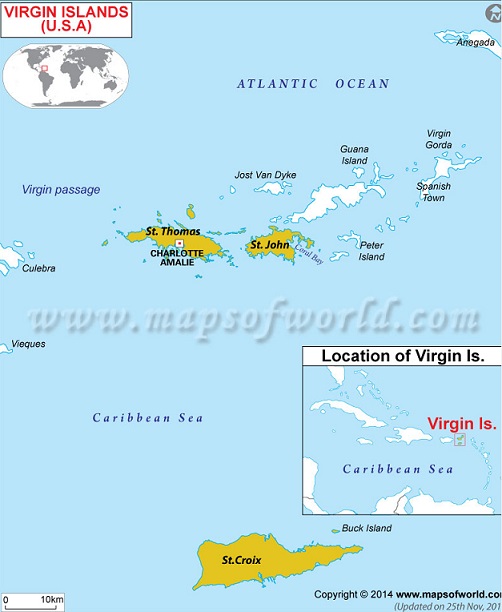
The USVI cruise numbers stood at 2 million in 2011, up 8.1% from 1.8 million in 2010, putting it third in cruise volume in the Caribbean region. (If Cozumel, Mexico, an island port in the Western Caribbean off Mexico’s Riviera Maya region, is factored into the Caribbean cruise data, it actually outranks the USVI with 2.8 million cruise arrivals in 2011, down 1.4% from the 2.9 million in 2010.)

Passengers disembarking in St. Thomas and St. Croix outspent those in Nassau and Freeport, Bahamas last year, dropping $156 per person on duty-free items, island tours, banana daiquiris at Mountaintop in St. Thomas or Buck Island snorkeling tours in St. Croix.

However, the 2011 figure fell from the 2010 figure of an average spend of $167 per cruise passenger, according to the Department of Tourism.

Projected cruise passenger spend for the U.S. Virgin Islands during the 2012-2013 cruise season is $165 per person.

The Caribbean region needs to focus on growing the economy and creating jobs. The Go Lean book asserts that this effort is too big a task for any one Caribbean member-state alone, that Jamaica, Tobago and other port cities need to convene, confederate and collaborate with the other regional member-states. As such, the Go Lean book serves as a roadmap for the introduction and implementation of the technocratic Caribbean Union Trade Federation (CU), for the elevation of Caribbean society – for all member-states including Tobago. This CU/Go Lean roadmap has these 3 prime directives:

  • Optimization of the economic engines in order to grow the regional economy to $800 Billion and create 2.2 million new jobs.
  • Establishment of a security apparatus to protect the resultant economic engines.
  • Improvement of Caribbean governance – including local government – to support these engines.

The Go Lean book (Page 193 – 10 Ways to Impact Cruise Tourism) makes this simple assertion that the unification of the region into a Single Market will allow for collective bargaining with the cruise industry; no one nation-state would have the clout of a unified market. The industry needs the Caribbean more than the Caribbean needs the industry. The ports-of-calls need to be able to generate more revenue from the visiting passengers, but the cruise line have embedded rules/regulations designed to maximize their revenues at the expense of the port-side establishments. There is a better way!

Yet still, the strategies and tactics of the Go Lean roadmap are not to be contrarian for the region’s business stakeholders, but rather to promote and facilitate more business options, even for the cruise lines – we are cheerleaders. The cruise lines will have a partner in this Trade Federation for facilitating the best Caribbean experience for their passengers. We want to make the Caribbean better … to live, work and play for visitors and residents alike. And when something goes awry, the CU’s Emergency protocols will be engaged to facilitate a quick recovery.

A win-win…

The book stresses (early at Page 11 & 14) the need to be on-guard for opportunities to expand cruise industry performance in these pronouncements in the Declaration of Interdependence:

iv.  Whereas the natural formation of the landmass is in a tropical region, the flora and fauna allows for an inherent beauty that is enviable to peoples near and far. The structures must be strenuously guarded to protect and promote sustainable systems of commerce paramount to this reality.

xxvi.  Whereas the Caribbean region must have new jobs to empower the engines of the economy and create the income sources for prosperity, and encourage the next generation to forge their dreams right at home, the Federation must therefore foster the development of new industries, like that of ship-building, automobile manufacturing, prefabricated housing, frozen foods, pipelines, call centers, and the prison industrial complex. In addition, the Federation must invigorate the enterprises related to existing industries like tourism, fisheries and lotteries – impacting the region with more jobs.

This commentary previously related details of Caribbean tourism dynamics and the region’s own job-creation efforts. Here is a sample of earlier blogs:

https://goleancaribbean.com/blog/?p=4263 State of Aruba’s Mono-Industrial Economy
https://goleancaribbean.com/blog/?p=4145 The African Renaissance  Monument – Model for Art Tourism
https://goleancaribbean.com/blog/?p=4058 The Bahamas missed tourism marketing in New York due to the New York Times focus on immigration dysfunction.
https://goleancaribbean.com/blog/?p=3743 Trinidad cuts budget as oil prices tumble – Perils of a mono-industrial economy.
https://goleancaribbean.com/blog/?p=2750 Disney World – Role Model for Touristic Self-Governing Entities
https://goleancaribbean.com/blog/?p=2571 More Business Travelers Flock to Airbnb
https://goleancaribbean.com/blog/?p=2207 Bad Model – Hotels making billions from Resort Fees
https://goleancaribbean.com/blog/?p=1984 Casinos Changing/Failing Business Model for Tourism activities
https://goleancaribbean.com/blog/?p=1943 The Future of Golf; Vital for Tourism, but failing badly
https://goleancaribbean.com/blog/?p=510 Florida’s Snowbirds Chilly Welcome – Bad Model for managing a great demographic and market potential.
https://goleancaribbean.com/blog/?p=273 10 Things We Want from the US – #2: Tourists
https://goleancaribbean.com/blog/?p=242 The Erosion of the Middle Class
https://goleancaribbean.com/blog/?p=235 Tourism’s changing profile

The Go Lean book and accompanying blogs posit that for the Caribbean tourism is undergoing change due to … a changing world:

“If we do what we have always done, we will no longer get what we always got”.

The world is now considered flat, because it is digital and connected. The region must explore all the marketing opportunities there-in. This is the charge of the Go Lean…Caribbean roadmap, to do the heavy-lifting, to implement the organizational dynamics to optimize Caribbean tourism here and now. The following are the community ethos, strategies, tactics, implementations and operational advocacies to effectuate this goal:

Community Ethos – People Respond to Incentives Page 21
Community Ethos – Economic Systems Influences Choices & Incentives Page 21
Community Ethos – Job Multiplier Page 22
Community Ethos – Lean Operations Page 24
Community Ethos – Ways to Improve Negotiations – Cruise Collective Bargaining Page 32
Community Ethos – Ways to Impact the Greater Good Page 37
Strategy – Vision – Make the Caribbean the Best Address on Planet Page 45
Strategy – Mission – Facilitate transportation options for passengers and cargo Page 46
Strategy – Agents of Change – Technology Page 57
Strategy – Agents of Change – Globalization Page 57
Anecdote – Carnival Corporation Strategy Report Page 61
Tactical – Separation of Powers – Tourism Promotion and Administration Page 78
Implementation – Assemble Regional Organs Page 95
Implementation – Ways to Deliver Page 109
Implementation – Ways to Impact Social Media – Tourism Outreach Page 111
Implementation – Ways to Benefit from Globalization Page 119
Implementation – Ways to Promote Independence Page 120
Planning – 10 Big Ideas for the Caribbean – Confederate to Single Market Page 127
Planning – Ways to Improve Trade Page 128
Planning – Lessons Learned from 2008 Page 136
Advocacy – Ways to Grow the Economy Page 151
Advocacy – Ways to Create Jobs Page 152
Advocacy – Ways to Improve Governance Page 168
Advocacy – Ways to Improve Local Governance – Help communities like Tobago Page 169
Advocacy – Ways to Reduce & Mitigate Crime – Against Tourist Protected Class Page 178
Advocacy – Ways to Enhance Tourism – Regional promotion and facilitation Page 190
Advocacy – Ways to Impact Cruise Tourism – 10 specific steps/actions for improvement Page 193
Advocacy – Ways to Improve Transportation – More efficiency in moving people Page 205
Advocacy – Ways to Preserve Caribbean Heritage … and Culture Page 218
Advocacy – Ways to Impact Trinidad & Tobago – More can be done Page 240
Appendix – Lessons Learned – Trinidad & Tobago – Floating the T&T Dollar Page 316

Cruising in the Caribbean is a great experience; we must grow this business. Staying-over in the Caribbean is even better, allowing more time to enjoy sun, sand, sea, surf, savor, salsa and smoke; (savor as in foods; salsa as in dance and smoke as in cigars). We can definitely grow this business with more technocratic deliveries. The Go Lean book provides 370 pages of turn-by-turn directions on how to accomplish this grandiose goal.

Now is the time for all of the Caribbean – the people, business and governing institutions – to lean-in to this Go Lean … Caribbean roadmap. This plan is conceivable, believable and achievable to make the region better places to live work and play. 🙂

Download the book Go Lean … Caribbean – now!

Share this post:
, , , , ,
[Top]

US Territories – Between a ‘rock and a hard place’

Go Lean Commentary

The recipe seems so perfect for success. The US is the world’s largest Single Market economy, has the largest military establishment, and you are its sovereign territory. What could go wrong?!

Everything…

Starting first with the foundation. The premise for the acceptance of US Territories is that the people are “alien and inferior”; 98.4% are racial and ethnic minorities. With that defective reasoning how can anything turn out well?!

And thus…the US Territories find themselves between a “rock and a hard place”.

The below VIDEO/TV show is a production by Comedian-Commentator John Oliver for the HBO show Last Week Tonight. He usually comments on a lot of news events in a satirical manner. But in that satire there is a lot of truth.

VIDEO: Last Week Tonight with John Oliver (HBO): U.S. Territories – https://youtu.be/CesHr99ezWE

Published on Mar 8, 2015 – A set of Supreme Court decisions made over 100 years ago has left U.S. territories without meaningful representation. That’s weird, right?
Content warning: Some profanity!

- Photo 1This VIDEO relates to the discussions in the book Go Lean…Caribbean and accompanying blog/commentaries primarily because there are 2 US Territories (Puerto Rico and the US Virgin Islands) in the center of the Caribbean. These cannot be ignored in the movement to unite and elevate the entire Caribbean region.

As depicted in the VIDEO, these territories are in crisis.

This is the purpose of the Go Lean book, as quoted from Economist Paul Romer (Page 8): “a crisis is a terrible thing to waste”. The truth is that American society stages all of the Caribbean in a “parasite” role; to serve as a playground for their leisure, consumers of their products and staffing for their Armed Forces. There is no advantage to being American, except to leave; and this is what people do, time and again. (Emigration is one of the major causes for the crisis in the Caribbean US Territories).

- Photo 2On the other hand, the goal of the Go Lean book is to serve as a roadmap for the introduction and implementation of the technocratic Caribbean Union Trade Federation (CU). So the CU would be set to optimize Caribbean society, starting with economic empowerment. In fact, the Go Lean roadmap has 3 prime directives:

  • Optimization of the economic engines in order to grow the regional economy to $800 Billion & create 2.2 million new jobs.
  • Establishment of a security apparatus to protect the resultant economic engines.
  • Improvement of Caribbean governance to support these engines.

The Go Lean movement asserts that the Caribbean region can do better; we must do better; we must not allow the US to take the lead for our own nation-building, for American self-interest (racism and capitalism) tend to hijack policies intended for the Greater Good. America thought their territories were populated with aliens, who could not be viewed as equals. Despite the 100 year old expiration of these prejudices, the policy remains. The mitigation and remediation to make territorial life successful must therefore come from another source. This is the siren call of the Go Lean movement.

(The scope of the Go Lean roadmap is limited to just the Caribbean territories, not the Pacific ones of Guam, Northern Marianas, and Samoa. Further, this commentary nor the Go Lean book advocates any political change of legal status of the territories to Statehood or Independence; rather this CU confederation alone is being promoted.)

There are more issues in consideration of this book. A compelling mission of the Go Lean book is to lower the “push and pull” factors that lead many to abandon the Caribbean homeland for American shores. The book posits that the region must create jobs so that its citizens do not have to leave to become aliens in a foreign land looking for a better life. The better life can be obtained right at home; Caribbean citizens can prosper where they are planted.

There are many Go Lean blog commentaries that have echoed this point. Here are a sample of related commentaries:

https://goleancaribbean.com/blog/?p=4531 Big Defense: Exploiting US Territories to fill the Armed Forces for their profit.
https://goleancaribbean.com/blog/?p=4360 Dreading the ‘Caribbean Basin Security Initiative’ as inadequate for PR/VI
https://goleancaribbean.com/blog/?p=2887 Caribbean must work together to address rum subsidies and promote this vital industry
https://goleancaribbean.com/blog/?p=2809 A Lesson in History: Economics of East Berlin; Failed-states can go from bad to worse.
https://goleancaribbean.com/blog/?p=2251 What’s In A Name? Latin & Caribbean people in the US still disenfranchised in American society.
https://goleancaribbean.com/blog/?p=2025 Caribbean Jobs – Attitudes & Images of the Diaspora
https://goleancaribbean.com/blog/?p=1433 Caribbean loses more than 70 percent of tertiary educated to brain drain
https://goleancaribbean.com/blog/?p=1325 Puerto Rico Governor Signs Bill on Small-Medium-Enterprises, attempts to re-boot commerce as 95% of businesses have 50 employees or less.
https://goleancaribbean.com/blog/?p=841 Having less babies (and people) is bad for the Caribbean economy
https://goleancaribbean.com/blog/?p=599 Ailing Puerto Rico open to radical economic fixes
https://goleancaribbean.com/blog/?p=286 Puerto Rico’s Comprehensive Cancer Center project breaks ground; model for future empowerment efforts.
https://goleancaribbean.com/blog/?p=273 10 Things We Don’t Want from the US – Discrimination of Immigrations

The foregoing VIDEO conveys that there is little respect in Washington, DC for the needs of the Territories. The islands having a voice, but no vote, really mean no voice at all, as they are inconsequential to all other legislators and power-brokers in Congress. Since the effort to elevate and empower the total Caribbean region cannot be pursued without these US Territories, there must be some engagement there. This effort is Day One/Step One in the Go Lean roadmap (Page 96). This approach is detailed under the American legal concept of an “Interstate Compact”; which allows the US Territories to confederate with their “foreign” Caribbean neighbors in this non-sovereign endeavor; thereby making these two island groups separate member-states of the CU.

Puerto Rico and the US Virgin Islands would have full benefits and voting privileges in the CU Trade Federation; the same for all British, Dutch and French “Overseas” Caribbean territories.

This vision is vital. The book Go Lean…Caribbean clearly hypothesizes that many problems of the region are too big for any one member-state to solve alone; that there is the need for the technocracy of the Caribbean Union Trade Federation. The Go Lean roadmap therefore calls for this strategy of confederation with a tactic of separation-of-powers between CU federal agencies and member-states’ governments. This allows for a lot of autonomy from Washington, DC for Puerto Rico and the USVI.

This change is essential for progress and growth. Despite all the advantages of American affiliation, these US Territories suffer from monumental dysfunction. As a result, these “American citizens” there are on the move, abandoning their homeland and forging near-Failed-States in their wake.

The Go Lean book posits that we need more than jokes and satire to arrest the downward spiral for PR/VI and the rest of the Caribbean; we need action too. We need this roadmap.

We do not want to be the “laughing stock” of the developed world. We want to be recognized as protégés, not parasites! This point is pronounced early in the book with the Declaration of Interdependence (Pages 12 & 14) with many statements that demonstrate the need to remediate Caribbean communities – including PR & VI – and make the homelands better places to live, work and play:

xix.    Whereas our legacy in recent times is one of societal abandonment, it is imperative that incentives and encouragement be put in place to first dissuade the human flight, and then entice and welcome the return of our Diaspora back to our shores. This repatriation should be effected with the appropriate guards so as not to imperil the lives and securities of the repatriated citizens or the communities they inhabit. The right of repatriation is to be extended to any natural born citizens despite any previous naturalization to foreign sovereignties.

xx.  Whereas the preparation of our labor force can foster opportunities and dictate economic progress for current and future generations, the Federation must ensure that educational and job training opportunities are fully optimized for all residents of all member-states, with no partiality towards any gender or ethnic group. The Federation must recognize and facilitate excellence in many different fields of endeavor, including sciences, languages, arts, music and sports. This responsibility should be executed without incurring the risks of further human flight, as has been the past history.

xxiii.  Whereas many countries in our region are dependent Overseas Territory of imperial powers, the systems of governance can be instituted on a regional and local basis, rather than requiring oversight or accountability from distant masters far removed from their subjects of administration. The Federation must facilitate success in autonomous rule by sharing tools, systems and teamwork within the geographical region.

xxiv.  Whereas a free market economy can be induced and spurred for continuous progress, the Federation must install the controls to better manage aspects of the economy: jobs, inflation, savings rate, investments and other economic principles. Thereby attracting direct foreign investment because of the stability and vibrancy of our economy.

xxv.  Whereas the Caribbean region must have new jobs to empower the engines of the economy and create the income sources for prosperity, and encourage the next generation to forge their dreams right at home, the Federation must therefore foster the development of new industries, like that of ship-building, automobile manufacturing, pre-fabricated housing, frozen foods, pipelines, call centers, and the prison industrial complex. In addition, the Federation must invigorate the enterprises related to existing industries like tourism, fisheries and lotteries – impacting the region with more jobs.

The Go Lean book also details a series of community ethos, strategies, tactics, implementations and advocacies to impact the full region, and US Territories. The following samples are excepted from the book: economic prospects:

Community Ethos – Economic Principle – Economic Systems Influence Choices   & Incentives Page 21
Community Ethos – Economic Principle – Consequences of Choices Lie in   the Future Page 21
Community Ethos – Job Multiplier Page 22
Community Ethos – Lean Operations Page 24
Community Ethos – Ways to Promote Happiness Page 36
Community Ethos – Ways to Impact the Greater Good Page 37
Strategy – Vision – Confederating a Non-Sovereign Union Page 45
Strategy – Mission – Keep the next generation at home Page 46
Tactical – Fostering a Technocracy Page 64
Tactical – Tactics to Forge an $800 Billion Economy Page 67
Tactical – Separation of Powers Page 71
Implementation – Ways to Pay for Change Page 101
Implementation – Ways to Deliver Page 109
Implementation – Trade Mission Office – Washington, DC Page 117
Implementation – Reasons to Repatriate to the Caribbean Page 118
Implementation – Ways to Promote Independence – Interdependence Page 120
Planning – 10 Big Ideas – A Single Market in the G-20 Page 127
Planning – Ways to Make the Caribbean Better Page 131
Planning – Ways to Better Manage Image – Not Inferior Aliens Page 133
Advocacy – Ways to Grow the Economy Page 151
Advocacy – Ways to Create Jobs Page 152
Advocacy – Ways to Improve Governance Page 168
Advocacy – Ways to Enhance Tourism – The world should enjoy our hospitality Page 190
Advocacy – Ways to Impact the Diaspora Page 217
Advocacy – Ways to Impact the US Territories Page 244
Appendix – Interstate Compacts Page 278
Appendix – Puerto Rican Migration to New York Page 303
Appendix – Puerto Rican Population in the US – Census 2010 Page 304
Appendix – US Virgin Islands: Economy Past, Present & Future Page 305
Appendix – Electronic Benefits Transfers – e-Government & e-Payments for PR & VI too Page 353

The Go Lean book posits (Page 3) that the Caribbean islands, including the American Territories of Puerto Rico and the US Virgin Islands, are among the greatest addresses in the world. But instead of the world “beating a path” to these doors, the people of the Caribbean have “beat down their doors” to get out; responding to “push and pull” factors. This abandonment must stop now!

While we want the rest of the world – the people of North America, Europe and beyond – enjoying our hospitality, culture, music, cuisine and produce, we most especially want to enjoy these for ourselves. We do not want to admire them from afar. We instead want to be planted and to prosper here in the Caribbean.

Considering the foregoing VIDEO, our birthright should be a privilege and the envy of the world, not the joke for the rest of the world. We want the world laughing with us, not at us!

A better future. This is our simple quest. This is easy to say, but hard to do. The heavy-lifting tasks must come from us in the Caribbean. This is the charge of the CU. We cannot expect solutions from Washington. They have no respect for any territories.

The people and governing institutions of all the Caribbean are hereby urged to lean-in to this Go Lean roadmap for Caribbean empowerment. With the successful execution of this roadmap, we can make all of the Caribbean homeland, a better place to live, work and play. 🙂

Download the book Go Lean … Caribbean – now!

Share this post:
, , , , ,
[Top]

Colorism in Cuba … and Beyond

Go Lean Commentary

Image is a problem for Cuba. Most people in the Western Hemisphere may only know of one Cuban, perhaps Fidel Castro. What’s more, most people only knew of one Cuban before the Castro era, that was “Rickie Ricardo” of I Love Lucy fame. Unfortunately this demographic is not fully representative of Cuba’s population. Cuba has always had a large Black population; (though as a minority group during the Rickie Ricardo era). After the Cuban Communist Revolution, and the wholesale abandonment of most of the White community, today, Cuba is a majority Black nation … by far.

… and yet Majority Rule has eluded them.
… economic power has also eluded this population.

Change is now afoot!

This subject of managing change has been a familiar theme in the book Go Lean…Caribbean. Also the theme of preparing for and rebooting Cuba has been frequently detailed in previous blog commentaries. Now, the consideration is the unavoidable clashes regarding race that will surely take place in a post-Castro Cuba.

Many other societies have had these clashes. Whether violent or just political; change in the area of race has been hard-fought. Consider the upheavals for the US during the 1960’s. (See Photo below). Cuba did not benefit from this American civil rights movement; they did not sow, so they have not reaped. They were fresh into their own political revolution with the embrace of communism, alienation of American society and mass exodus of so many citizens.

This is the assertion of a prominent Cuban-American politician in Miami, Florida – a strong-bed for the Cuban Diaspora and Cuban-American communities. See his editorial here:

Title: Blacks in Cuba are poised to make gains
By: Ricardo Gonzalez

CU Blog - Colorism in Cuba ... and Beyond - Photo 1For the first time in more than a century, black Cubans might have a real opportunity to gain the enfranchisement and equality for which our ancestors fought so hard — and were on the verge of winning — only to see their hopes and aspirations frustrated when a U.S. naval ship was blown to pieces in the port of Havana in 1898.

The blood and sweat of our forefathers in the overwhelmingly Black Mambi army was shed for naught as our nation and the 20th century were born. Since Cuba’s inception in 1902, its black citizens never truly gained equal footing in that troubled country. Despite their decisive role in the struggle for independence from colonialism, blacks were almost totally excluded from all levels of power and denied full participation in the everyday life in the fledgling nation.

Unhappy with their exclusion and seeking a better compact, black Cubans were once again prevented from gaining the equality they thought they had earned in the battlefield when their nascent racial movement seeking social justice was violently decapitated — literally, in some cases — a decade later. What followed was a long, hard procession of years of drudgery — sprinkled with a few, incremental gains — under the suffocating hardships of Cuba’s tropical version of Jim Crow.

In 1959, the Cuban Revolution artfully gained control of every aspect of Cuban life and promised to eradicate all vestiges of racial injustice in the island. Shortly thereafter, la Revolución, loudly, proudly and unilaterally, proclaimed victory in its self-declared fight against racism and promptly proceeded to label anyone who dared bring up the topic of racial inequality as a counter-revolutionary and applied “revolutionary” punishment and penalties to those who dared to transgress.

More than half a century later, however, whether by government intent or simply as a result of misguided policies, black Cuba is immersed in its most difficult juncture; at a disadvantage economically (reduced access to foreign currencies), politically (little to no representation in government) and sociologically (i.e., marginalized, racially profiled, disproportionally incarcerated, etc.).

Truth be told, throughout its history, Cuba has never been kind to its darker citizens, regardless of who has been in power or his political ideology. It is time for that elephant in the room to be both acknowledged and dealt with.

Now the catastrophic dynasty that has afflicted our nation for almost 60 years finally appears to be near its end — Father Time and biology proving to be our only true and reliable friends. Add the surprising announcement of an attempt to normalize relations between Cuba and United States, and Cubans — black, mulatto and white — might soon have the opportunity to “reboot,” to recreate a new, more inclusive nation; a nation “with all and for the wellbeing of all,” as dreamed by Jose Marti.

Skeptics will say that nothing will change, that the Castro clan will never relinquish power, or that the generals and/or other parasites will cling to their perquisites by any means necessary. But the fact is that in the not-too-distant future, we can envision both brothers leaving the scene, either in a pine box or to convalesce at a well-appointed home for retired dictators.

With those two out of the picture, and with whatever new relationship that evolves from the recent rapprochement with the United   States, there is little doubt that our nation is headed to a new dawn, a different way of doing business.

Black Cubans, who by all measurable accounts have borne the brunt of the damage wreaked by the regime, are well positioned to finally savor their rightful — and so far elusive — share. By essentially heaping misery and squalor on the entire population and thus somewhat “leveling the playing field,” the Cuban Revolution has given Cubans of color, for the first time, the ability to compete academically, culturally and socially with their white compatriots. It is not an accident that a good percentage of the most prominent dissidents in the island are people of color.

And let us not forget that, contrary to the Cuban government’s official numbers, Afro-Cubans are no longer the minority. Malcolm X once said: “The future belongs to those who prepare for it today.” I will simply follow the advice of an old wise man who once said to me; “Stick always with the optimists, because life is hard even if they are right.”
Miami Herald Editorial – South Florida Daily Newspaper – Posted 03/07/2015; retrieved 03/10/2015:
http://www.miamiherald.com/opinion/op-ed/article12875840.html

We march with Selma!The Cuban revolution occurred in 1959 and the political intrigue (Cold War, Missile Crisis, Bay of Pigs, Embargo, Pedro Pan Exodus, etc.) was heightened all during the 1960’s. While the US and many other Western countries confronted their racial past and effected change accordingly, Cuba was on the sidelines. So now that Cuba may soon be graduating from alienation to participation in the world’s economic order, a lot of the changes that their society would have to assimilate are really questions at this time:

  • Did Cuban society formally end their pre-revolution segregation policies voluntarily or were they forced into compliance by the Communists Military Might?
  • Will Cuba immediately accept the new human/civil rights standards for race and gender equality that is the best-practice in Western society (North America and Europe)?
  • Will the Cuban Diaspora still long for the days of a Cuba segregated by the races or has the transformation of Western society really taken root?
  • Will the still-present US practice of colorism (see below) in the Black community – very much prominent in the Latin world – be even more heightened in a new Cuba?

These are valid and appropriate questions. Everywhere else when Communism fell, sectarian divisions and violence erupted; many times fueled by the same prejudices that predated the Communist revolutions; (think ethnic cleansing in the former Yugoslavia: Slovenia, Serbia, Croatia, Kosovo, Bosnia-Herzegovina, and Macedonia). There will truly be a need for earnest reconciliation in Cuba.

CU Blog - Colorism in Cuba ... and Beyond - Photo 3

The issues of race reconciliation and Cuban reconciliation collide in this commentary. These have been frequently detailed in these Go Lean blogs. Consider these previous entries:

https://goleancaribbean.com/blog/?p=4487 Historical Black College most effective with Social Mobility
https://goleancaribbean.com/blog/?p=4447 Probe of Ferguson-Missouri finds bias from cops, courts
https://goleancaribbean.com/blog/?p=3662 Migrant flow into US from Caribbean (i.e. Cuba) spikes
https://goleancaribbean.com/blog/?p=3455 Restoration of Diplomatic Relations with Cuba
https://goleancaribbean.com/blog/?p=3354 CARICOM Chair calls for an end to US embargo on Cuba
https://goleancaribbean.com/blog/?p=2547 Miami’s Success versus Caribbean Failure
https://goleancaribbean.com/blog/?p=1609 Cuba mulls economy in Parliament session
https://goleancaribbean.com/blog/?p=2222 Sports Role Model – Playing For Racial Pride … And More
https://goleancaribbean.com/blog/?p=1918 Philadelphia Freedom – Community Model for Forging Change
https://goleancaribbean.com/blog/?p=1773 Miami’s Caribbean Marketplace Re-opens as a Welcome Mat
https://goleancaribbean.com/blog/?p=1531 A Lesson in History: 100 Years Ago Today – World War I
https://goleancaribbean.com/blog/?p=1020 Sports Revolutionary Issues Re: Racism against Black Athletes
https://goleancaribbean.com/blog/?p=789 America’s War on the Caribbean

The book Go Lean…Caribbean serves as a roadmap for the introduction and implementation of the Caribbean Union Trade Federation (CU); an initiative to bring change and empowerment to the Caribbean region, including Cuba. Since Cuba is the largest country – land-wide and population – in the Caribbean region, any changes there will have an impact on the rest of the region. The goal of this roadmap is to anticipate the change, forge the change and guide the changes in our society for positive outcomes. We want to make the Caribbean region a better homeland to live, work and play for every island, every language group; just everyone. There is some degree of urgency and imminence to this cause as Cuba’s current President, Raul Castro has announced that he will retire in 2017. At that point, there will be no more “Castros” at the helm of Cuba.

To accomplish this audacious goal, this Go Lean roadmap has the following 3 prime directives:

  • Optimization of the economic engines in order to grow the regional economy to $800 Billion & create 2.2 million new jobs.
  • Establishment of a security apparatus to protect the resultant economic engines.
  • Improve Caribbean governance to support these engines.

The book describes the CU as a technocratic administration with many missions to elevate the Caribbean homeland. The underlying goal is stated early in the book with this pronouncement in the opening Declaration of Interdependence (Page 12):

xii. Whereas the legacy in recent times in individual states may be that of ineffectual governance with no redress to higher authority, the accedence of this Federation will ensure accountability and escalation of the human and civil rights of the people for good governance, justice assurances, due process and the rule of law…

xiii.  Whereas the legacy of dissensions in many member-states (for example: Haiti and Cuba) will require a concerted effort to integrate the exile community’s repatriation, the Federation must arrange for Reconciliation Commissions to satiate a demand for justice.

Change has come to the Caribbean. But as depicted in the subsequent VIDEO, this same change came to the US, and yet strong feelings about skin color persist. The Go Lean book declares that permanent change is possible, but to foster success, a community must first adopt new ethos, the national spirit that drives the character and identity of its people. The community ethos of sharing, tolerance, equality and the Greater Good were missing from pre-revolution Cuba. It is a mission of the Go Lean movement to ensure these inclusions for the new Cuba. The Go Lean roadmap was constructed with these community ethos in mind, plus the execution of strategies, tactics, implementation and advocacies to forge the identified permanent change in the region. The following is a sample of these specific details from the book:

Community Ethos – Deferred Gratification Page 21
Community Ethos – Economic Principles – People Choose Page 21
Community Ethos – Economic Principles – All Choices Involve Costs Page 21
Community Ethos – Economic Principles – People Respond to Incentives in Predictable Ways Page 21
Community Ethos – Economic Principles – Economic Systems Influence Individual Choices Page 21
Community Ethos – Economic Principles – The Consequences of Choices Lie in the Future Page 21
Community Ethos – Security Principles – Anti-Bullying and Mitigation Page 23
Community Ethos – Governing   Principles – Minority Equalization Page 24
Community Ethos – Governing   Principles – Lean Operations Page 24
Community Ethos –   Ways to Impact the Future Page 26
Community Ethos – Ways to Manage Reconciliations Page 34
Community Ethos – Ways to Improve Sharing Page 35
Community Ethos – Ways to Promote Happiness Page 36
Community Ethos – Ways to Impact the Greater Good Page 37
Anecdote – LCD versus an Entrepreneurial Ethos Page 39
Strategy – Vision – Confederation of the 30 Caribbean   Member-States into a Single Market Page 45
Strategy – Mission – Celebrate the Music, Sports, Art, People and Culture of the Caribbean Page 46
Tactical –   Confederating a Permanent Union Page 63
Tactical – Fostering a Technocracy Page 64
Tactical –  Separation of Powers: Federal Administration versus Member-States Governance Page 71
Implementation – Ways to Pay for Change Page 101
Implementation – Ways to Deliver Page 109
Planning – 10 Big Ideas for the Caribbean Region Page 127
Planning – Ways to Make the Caribbean Better Page 131
Planning – Ways to Better Manage Image – On guard against defamations Page 133
Advocacy – Ways to Grow the Economy Page 151
Advocacy – Ways to Create Jobs Page 152
Advocacy – Ways to Improve Education Page 159
Advocacy – Ways to Improve Governance in the Caribbean Region Page 168
Advocacy – Ways to Better Manage the Social Contract Page 170
Advocacy – Ways to Mitigate Terrorism Page 181
Advocacy – Ways to Improve Communications – To message for change Page 186
Advocacy – Ways Impact the Diaspora Page 217
Advocacy – Ways to Preserve Caribbean Heritage Page 218
Advocacy – Ways to Re-boot Cuba Page 236

The lessons in race relations and colorism are not perfected in the rest of the Caribbean. In fact, there are many human rights and civil rights abuses in the region. There is not one regional sentinel to be on guard against bad developments in race relations and work towards mitigating the effects. This is the charge of the CU. Nor, can the Caribbean region expect the US to lead in words or action for this serious issue. This VIDEO demonstrates many negative traits that still exist in the American homeland, and by extension, the rest of the Western Hemisphere:

VIDEO: Colorism – https://youtu.be/xD2WYJTG8ig


BlkGrlOnline
December 11, 2011 – I know you all have heard of the whole “Light Skin vs. Dark Skin” debate. Tyra Banks has discussed this and associated topics on her talk show, The Tyra Show. What do you think about this subject? And more importantly, why is this still an issue TODAY?
Note: I do not own or claim rights to the featured material.

There is still clash-and-conflict in the African-American communities, dating back to the days of Booker T Washington versus the W.E.B. Du Bois. Some modern labeling may be “Old-School versus Nu School”, “Hip-Hop versus Bourgeois”, even “Thugs versus ‘Acting White'”; the underlying conflict often times is a reflection of colorism in the Black Community. While these are all informal divisions, the formal (legal) institutions in America also have hardened lines involving Black-White race relations. Despite the presence of the country’s first Black President, Barack Obama, there is hardened opposition of any efforts he tries to make; consider the reality of the Tea Party opposition to Obama’s initiatives (like his signature ObamaCare Universal Health Program) just because they are his originations. Many times, this opposition is willing to sacrifice the Greater Good with the Federal Budget and Foreign Policy just to be contrarian.

Many question whether in the deep trenches of their hearts if many Americans have not really matured from the racial mindsets of the America of 1908, or 1958 (the era before Cuba’s revolution). We have our own problems in the Caribbean to contend with, many which we are failing at. But our biggest crisis stem from the fact that so many of our citizens have fled their Caribbean homelands for foreign (including American) shores. Therefore the quest for change must come from us in the Caribbean, by us and for us. We are inconsequential to the American decision-makers, so the US should not be the panacea of Caribbean hopes and dreams.

The Go Lean movement seeks to be better than even our American counterparts. We must be vigilant. We have seen post-Communist evolution before. It’s a “familiar movie”, we know how it ends.

We welcome the imminent change in Cuba, but we are on guard for emergence of new negative community ethos … or a return to old ones. 🙂

Download the book Go Lean … Caribbean – now!

Share this post:
, , ,
[Top]

The State of Aruba’s Economy

Go Lean Commentary

The Caribbean is comprised of 4 different language groups. We hear mostly of the English, French and Spanish speaking islands, but the Dutch speaking islands are far from inconsequential. They are integral to the Caribbean landscape and integral to the plan for regional confederation, consolidation and elevation.

The book Go Lean…Caribbean addresses the needs of all the Caribbean, including the Dutch territories. In the book, the islands are referred to as the formal name of the Netherlands Antilles (Page 16). This consists of two island groups; the ABC Islands of Aruba, Bonaire and Curaçao, located just off the Venezuelan coast. Plus also the SSS islands of Sint Maarten, Saba and Sint Eustatius, located in the Leeward Islands southeast of the Virgin Islands near the northern end of the Lesser Antilles. The Dutch colonized these islands in the 17th century, (at one point, Anguilla, Tobago, the British Virgin Islands, and St. Croix of the US Virgin Islands had also been Dutch), and united them in the new constituent state of the Netherlands Antilles in December 1954.

s Economy - Photo 2The largest of the Dutch Caribbean is Aruba.

Aruba called for secession from the Netherlands Antilles from as early as the 1930s, becoming a separate state within the Kingdom of the Netherlands in 1986. After many other organizational developments, by 2010, Aruba is dispositioned as one of the four constituent countries that form the Kingdom of the Netherlands, along with the Netherlands (European homeland), Curaçao and Sint Maarten.

What is the status of Aruba today?

How has it fared as an autonomous state?

The Go Lean book posits that Aruba is in crisis; (along with the rest of the Caribbean). This is also the assessment by the International Monetary Fund, as related in this news article:

By: By the Caribbean Journal staff
Aruba’s economy is “recovering gradually” from a “severe double-dip recession,” according to the International Monetary Fund, which recently concluded its 2015 Article IV Mission to the Dutch Caribbean island.

The recession was [exacerbated] by a pair of factors: the global financial crisis and the shutdown of the oil refinery in Aruba.

“These shocks have substantially increased public debt—over 80 percent of GDP in 2014—and eroded fiscal space,” the IMF said in a statement. “To address these fiscal challenges, the authorities have undertaken major entitlement reforms and are aiming to reach a small fiscal surplus in 2018.”

Without similar measures, however, the IMF warned that the pace of fiscal consolidation in the island could slow and public debt would continue to rise in the medium term.

s Economy - Photo 1Growth in Aruba is projected to rise by about 2.5 percent in 2015, which would put the island in favorable territory with the rest of the region, though.

The closure of the refinery, however, puts even more pressure on the island’s tourism sector, the IMF said.

That could compound the island’s risk, though, given its large dependence on tourists from the US and from Venezuela, with the latter’s economic crisis adding to the risk.

But the IMF said that Aruba had maintained its competitiveness in tourism, with its share of the Caribbean’s tourism market share continuing to grow.

“In addition, the authorities’ marketing efforts, access to new US hubs, and additional airlift capacity from South America have improved resilience,” the IMF said. “Increasing labor market flexibility and reducing the costs of doing business would not only further improve Aruba’s competitiveness, but would also help its adjustment to external shocks and facilitate diversification.”
Caribbean Journal Regional News Site – Posted February 16, 2015 –
http://www.caribjournal.com/2015/02/16/the-state-of-arubas-economy/

The Caribbean country of Aruba needs to focus on growing its economy and creating jobs. The Go Lean book asserts that this effort is too big a task for just one Caribbean member-state alone, that Aruba needs to convene, confederate and collaborate with the other regional member-states. As such, the Go Lean book serves as a roadmap for the introduction and implementation of the technocratic Caribbean Union Trade Federation (CU), for the elevation of Caribbean society – for all member-states. This CU/Go Lean roadmap has these 3 prime directives:

  • Optimization of the economic engines in order to grow the regional economy to $800 Billion and create 2.2 million new jobs.
  • Establishment of a security apparatus to protect the resultant economic engines.
  • Improvement of Caribbean governance to support these engines.

The Go Lean book (Page 3) makes this simple assertion regarding the state of Aruba and all the Caribbean economy: the region is in crisis. There is something wrong in these island and coastal states, that  despite the greatest address in the world, instead of the world “beating a path” to these doors, the people of the Caribbean have “beat down their doors” to get out. Aruba fails to keep its young people at home. In fact, the anecdotal experience (one story after another) is that young people abandon this island as soon as they finish high school; many never to return again, except for occasional visits. (Aruban natives – plus all Netherland Antilles states – have Dutch citizenship, sharing the same Dutch passport as the Kingdom of the Netherlands).

A mission of the Go Lean roadmap is to minimize the “push-and-pull” factors that contribute to this alarmingly high rate of societal abandonment – one report reflects a 70% brain drain rate for the overall Caribbean. The book stresses (early at Page 13 & 14) the need to be on-guard for these “push-and-pull” factors in these pronouncements in the Declaration of Interdependence:

xix.      Whereas our legacy in recent times is one of societal abandonment, it is imperative that incentives and encouragement be put in place to first dissuade the human flight, and then entice and welcome the return of our Diaspora back to our shores. This repatriation should be effected with the appropriate guards so as not to imperil the lives and securities of the repatriated citizens or the communities they inhabit. The right of repatriation is to be extended to any natural born citizens despite any previous naturalization to foreign sovereignties.

xxi.      Whereas the preparation of our labor force can foster opportunities and dictate economic progress for current and future generations, the Federation must ensure that educational and job training opportunities are fully optimized for all residents of all member-states, with no partiality towards any gender or ethnic group. The Federation must recognize and facilitate excellence in many different fields of endeavor, including sciences, languages, arts, music and sports. This responsibility should be executed without incurring the risks of further human flight, as has been the past history.

xxv.      Whereas the legacy of international democracies had been imperiled due to a global financial crisis, the structure of the Federation must allow for financial stability and assurance of the Federation’s institutions. To mandate the economic vibrancy of the region, monetary and fiscal controls and policies must be incorporated as proactive and reactive measures. These measures must address threats against the financial integrity of the Federation and of the member-states.

xxvi.      Whereas the Caribbean region must have new jobs to empower the engines of the economy and create the income sources for prosperity, and encourage the next generation to forge their dreams right at home, the Federation must therefore foster the development of new industries, like that of ship-building, automobile manufacturing, prefabricated housing, frozen foods, pipelines, call centers, and the prison industrial complex. In addition, the Federation must invigorate the enterprises related to existing industries like tourism… – impacting the region with more jobs.

This commentary previously related details of the “push-and-pull” factors for Caribbean emigration to North America and Europe, and the region’s own job-creation efforts. Here is a sample of earlier blogs:

https://goleancaribbean.com/blog/?p=3834 State of the Caribbean Union
https://goleancaribbean.com/blog/?p=3780 National Sacrifice: The Missing Ingredient – Caribbean people not willing to die or live in sacrifice to their homeland
https://goleancaribbean.com/blog/?p=3446 Forecast for higher unemployment in Caribbean in 2015
https://goleancaribbean.com/blog/?p=3050 Obama’s immigration tweaks leave Big Tech wanting more
https://goleancaribbean.com/blog/?p=1698 American “Pull” Factors – STEM Jobs Are Filling Slowly
https://goleancaribbean.com/blog/?p=1683 British public sector workers strike over ‘poverty pay’
https://goleancaribbean.com/blog/?p=1596 Book Review: ‘Prosper Where You Are Planted’
https://goleancaribbean.com/blog/?p=1433 Caribbean loses more than 70 percent of tertiary educated to brain drain
https://goleancaribbean.com/blog/?p=1296 Remittances to Caribbean Increased By 3 Percent in 2013
https://goleancaribbean.com/blog/?p=1256 Traditional 4-year College Degree are Terrible Investments for the Caribbean Region
https://goleancaribbean.com/blog/?p=841 Having Less Babies (Population) is Bad for the Economy

The Go Lean book and these accompanying blogs posit that the economic failures in the Caribbean in general and Aruba in particular is the direct result of the lack of diversity in industrial development. The region depends too heavily on tourism. Aruba though, made some diversification attempts with oil refinery installations; according to Wikipedia:

With its location near Venezuela, the island became an attractive spot for oil refineries. The Lago Oil and Transport Company, owned by Standard Oil of New Jersey (now Exxon), opened in 1929 near the transshipping port of San Nicolaas. Following in their footsteps, the Eagle Oil Refinery opened soon after. Over the next few decades, the oil industry took over as Aruba’s primary economic force.

During World War II, considerable expansion was done to the Lago Refinery, becoming one of the largest refineries in the world – only bested by Royal Dutch Shell Isla refinery on nearby Curaçao – and a major producer of petroleum products for the Allied war efforts.

The Eagle Oil Refinery shut down and was dismantled in the late 1950s. But the Lago refinery kept going until 1985, when the demand for oil fell and Exxon closed it. In 1991, the Coastal Corporation bought it, scaled down operations, and reopened it. Coastal Corporation later sold the refinery to Valero Energy Corporation in 2004. Its reopening didn’t raise Aruba’s oil industry to its previous heights although it did revive that sector and continued to be a key contributor to the country’s economy until 2009 when it was closed.

Aruba is now applying a strategy to “double-down” on tourism; see Appendix-VIDEO below. The Go Lean roadmap asserts that this strategy is flawed; that while prudence dictates that the Caribbean nations expand and optimize their tourism products, the Caribbean must also look for other opportunities for economic expansion. The requisite investment of the resources (time, talent, treasuries) for this goal may be too big for any one Caribbean member-state like Aruba. Rather, shifting the responsibility to a region-wide, professionally-managed, deputized technocracy will result in greater production and greater accountability. The roadmap will facilitate economic growth and job creation.

This is the charge of the Go Lean…Caribbean roadmap, to do the heavy-lifting, to implement the organization dynamics to impact Caribbean society here and now with economic growth and jobs. The following are the community ethos, strategies, tactics and operational advocacies to effectuate this goal:

Community Ethos – People Respond to Incentives Page 21
Community Ethos – Economic Systems Influences Choices & Incentives Page 21
Community Ethos – The Consequences of Choice Lie in the Future Page 21
Community Ethos – Job Multiplier Page 22
Community Ethos – Minority Equalization Page 24
Community Ethos – Lean Operations Page 24
Community Ethos – Ways to Impact the Greater Good Page 37
Strategy – Vision – Make the Caribbean the Best Address   on Planet Page 45
Strategy – Mission – Repatriate Diaspora Page 46
Strategy – Mission – Dissuade Human Flight/“Brain Drain” Page 46
Tactical – Separation of Powers – Union versus Member-States Page 71
Implementation – Assemble CariCom, Dutch, French, Cuba and US   Territories Page 95
Implementation – Enact Territorial Compacts for PR & the Virgin Islands Page 96
Implementation – Foreign Policy Initiatives at Start-up Page 102
Implementation – Ways to Deliver Page 109
Implementation – Ways to Better Manage Debt Page 114
Implementation – Reasons to Repatriate Page 118
Implementation – Ways to Benefit from Globalization Page 119
Implementation – Ways to Promote Independence Page 120
Planning – 10 Big Ideas for the Caribbean Page 127
Planning – Ways to Make the Caribbean Better Page 131
Advocacy – Ways to Grow the Economy Page 151
Advocacy – Ways to Create Jobs Page 152
Advocacy – Ways to Improve Governance Page 168
Advocacy – Ways to Enhance Tourism Page 190
Advocacy – Ways to Market Southern California – New Markets Page 194
Advocacy – Ways to Impact Extractions Page 195
Advocacy – Ways to Impact the Diaspora Page 217
Advocacy – Ways to Impact DutchTerritories Page 246

This Go Lean book accepts that the current State of Aruba’s Economy does not have to be a permanent disposition. The roadmap presents a plan for greater energy independence, energy security and energy generation in the region – there will be the need to capitalize on Aruba’s core-competence with oil refineries. So under the Go Lean roadmap, Aruba’s economy will do better; the same as all of the Caribbean will do better. This roadmap is a 5-year plan to effect change, to make our homeland a better place to live, work and play.

As for the Dutch Caribbean territories, even though they are no longer considered colonies, but rather constituent countries of the Kingdom of the Netherlands, they are effectively just welfare states dependent on Amsterdam; and a feeder for low-cost labor in Holland. They are inconsequential within the Dutch sphere of influence. There are parasites not protégés!

We must do better!

Now is the time for Aruba, the Dutch Caribbean and all of the Caribbean, the people and institutions, to lean-in to this Go Lean … Caribbean roadmap. 🙂

Download the book Go Lean … Caribbean – now!

———-

Appendix – VIDEO: Aruba – One Happy Island – http://youtu.be/p7NdI0jmvXA

Published on Mar 28, 2012 – Our white-sand beaches, cooling trade winds and warm, friendly people are just a few reasons why so many people return to Aruba year after year. Discover everything that makes this One Happy Island…


Share this post:
, , , , , ,
[Top]

Immigration Policy Exacerbates Worker Productivity Crisis

Go Lean Commentary

The book Go Lean … Caribbean seeks to elevate society in the Caribbean homeland. The book is a 370-page roadmap with turn-by-turn directions on how to transform – remediate and mitigate – the engines of regional commerce, security and governance. While this type of advocacy is the normal sphere of Chambers of Commerce in their pledge to support the business communities, the Go Lean effort is different; it is not motivated by normal profit incentives, but rather the Greater Good for the Caribbean people.

 CU Blog - Immigration Policy Exacerbates Worker Productivity Crisis - Photo 3

(This commentary is not affiliated with any Chamber of Commerce)

Here’s a question for the Caribbean in general, and considering the subsequent news article, the Bahamas in particular:

What do you want from the world?

Do you want to have an advanced-modern society with all the latest “bells-and-whistles” of science, technology, engineering and medicine (STEM)? Or do you want a closed society, designated for reaping by your native people only?

“Oh island in the sun, willed to me by my father’s hand” – Classic Caribbean/Calypso folk song.

There is truly a choice to make. There are closed societies in the world, think North Korea. Even here in the Caribbean, there is Cuba, which was cut-off from US trade for 55 years. The end result, their society “stood still in time” in terms of technological developments; (1950-era American automobiles proliferate in Cuba even today).

The disposition of these aforementioned societies may not be too appealing for the rest of the Caribbean. So the answer being given is one of global citizenship. The Caribbean member-states have expressed, explicitly and implicitly, that they want to be an advanced-modern society. This means one thing:

Give-and-take with the rest of the world.

So there must be some give-and-take with immigration policy. We must “give” some allowances to immigrants to take the returns of their talents.

Look at the Caribbean’s biggest neighbor (to the north), the United States of America. Immigration is what made the US a great nation; let’s consider just one example. Much of America’s leadership in the Space Race during the Cold War years of 1950 to 1991 was due to the contributions of one empowering immigrant: Rocket Scientist Wernher von Braun; see summary VIDEO here and more details in the Appendix below.

Wernher Von Braun Vision: ” MAN IN SPACE ” Walt Disney TV production, March 9, 1955 – http://youtu.be/2fautyLuuvo


Uploaded on Sep 12, 2011 – Von Braun explain a future of space orbital mission with Space Shuttle rockets. A positive propagating for human voyage into space.

This discussion aligns with the book Go Lean … Caribbean. This book serves as a roadmap for the introduction and implementation of the Caribbean Union Trade Federation (CU); the purpose of which is to elevate Caribbean society, for all 30 member-states. The book stresses the need for empowering immigration (Page 174), recognizing that some of the skill-sets necessary to elevate our society may not currently exist in the homeland, so we may actually need to import the talent.

This is also the strong point being enunciated by the Bahamas Chamber of Commerce and Employers Confederation in the following news article:

By: Neil Hartnell, Business Editor, The Tribune Daily Newspaper – retrieved February 10, 2015 from:
http://www.tribune242.com/news/2015/feb/10/immigration-policy-exacerbates-worker-productivity/

The Immigration Department’s “closed door” work permit policies are exacerbating the Bahamas’ productivity crisis, a top private sector executive yesterday warning they were making it impossible for companies to hire the “unemployable”.

CU Blog - Immigration Policy Exacerbates Worker Productivity Crisis - Photo 2Robert Myers, the immediate past Bahamas Chamber of Commerce and Employers Confederation (BCCEC) chairman, told Tribune Business that restrictive Immigration policies were preventing businesses from recruiting middle management and skilled line staff essential to their smooth operation.

Apart from hindering the ability of local companies to expand, Mr Myers said they were also prevented from improving staff productivity and efficiency, as they could not “hire the educated to train the uneducated”.

Jerome Fitzgerald, minister of education, admitted last week that 40 per cent of the workforce lacked “a basic education”, with at least 35-38 per cent having failed to graduate from high school.

Mr Myers, though, pegged the number of high school leavers who were functionally illiterate and numerate [only] at 55 percent – a statistic that continues to limit business and GDP growth, and hinder government tax revenues.

“There’s a problem because the Immigration policies are only enabling these problems,” he told Tribune Business. “We have the wrong Immigration policies.

“There’s a desperate need to hire the educated to educate the uneducated and undereducated. We need to relax the Immigration policies, and do it with educated, not uneducated, people.

“The only way you can go out and hire this massive chunk in the economy is to bring in educated people capable of training those uneducated.”

Mr Myers said the Bahamas should tailor its work permit policies to reward, and incentivise, those companies who brought in expatriates to help train Bahamian staff.

“People like myself who could grow their businesses can’t, because it is cost prohibitive to bring in quality managers and line staff,” he told Tribune Business.

“It’s a layering effect. In order for me to grow and get uneducated people working, you need to bring in educated people.

“But you’ve made it so cost prohibitive to bring in line staff and middle managers, you’ve made it so expensive, that if I try to do that I become uncompetitive. So I can’t bring them in, and can’t hire uneducated people.”

Mr Myers said the Christie administration needed to “understand the connectivity of all this”, describing it as “reasonably complex but not rocket science”.

Arguing that the issue went to the heart of the Bahamas’ social fabric, he added: “If you have the wrong Immigration policies, you can’t improve education, the transfer of knowledge, employment and GDP growth. Crime goes up, and the uneducated are left to their own devices.”

Numerous Bahamian businesses have in the past complained to Tribune Business about what they have labelled “a dearth” of middle management talent in this nation, leaving them unable to fill positions essential to their smooth functioning with the right people.

However, in a bid to create employment for Bahamians, in a society struggling with a high 15.7 per cent jobless rate, the Immigration Department has tightened its work permit policies despite fears in some quarters it is trying to force ‘square pegs into round holes’ – forcing companies to take on unsuitable persons.

And several in the private sector have also suggested that it sometimes requires the hiring of one expatriate worker to create jobs for 10 or more Bahamians.

Mr Myers yesterday told Tribune Business that it was “so frustrating” that persons like himself and Mr Fitzgerald understood the problems, yet the Immigration Department was operating policies that were “completely contradictory” to the necessary solutions.

“When you have these problems lined up, teed up in education, crime and growth, stop making it more expensive for the educated to come in and teach the uneducated,” he added.

“Why does the Government not step in, and make it more competitive for businesses, increase the ease of doing business, increase GDP growth.

“I understand you’re trying to shut down Immigration to create employment, but these people are unemployable unless you open Immigration.”

Suggesting that Mr Fitzgerald’s comments, and Immigration policies, showed the Government’s ‘left hand and right hand’ did not know what each was doing, Mr Myers said the Bahamas’ “lack of governance is causing us to sink further”.

In a position paper he shared with Tribune Business yesterday, Mr Myers admitted that some businesses had resorted to hiring illegal Haitians in a bid to find productive workers for low income jobs.

“The Haitian workforce has also had a negative affect on businesses, as the Haitian workers are not always English literate, thus creating the same training and mobility problems for growth and development of businesses,” the ex-BCCEC chairman wrote.

“The Department of Immigration’s policies have caused further burden to businesses as they attempt to create more employment for Bahamians. While this may seem like a positive policy, it in fact negatively impacts Bahamian businesses for all the above said reasons and decreases productivity, making the Bahamas a more expensive and a less competitive nation.

“National security is at risk as we see direct correlations between the failing educational system and increases in violent crimes and drugs. The uneducated will fall victim to illegal activity if they have no hope or ability to become productive members of our society. People with no hope turn to drugs, in many cases for temporary relief. Our choices become one of two: Provide better education or build more courts, police stations and jails.”

So let’s repeat that question to the Caribbean: what kind of society do you want?

Do you want cutting-edge technology?

If so, then you must be prepared to welcome empowering immigrants!

There is no better alternative approach/strategy!

There are however many tactics that can align with this empowering immigration approach/strategy. The Go Lean book promotes a tactic of Separation-of-Powers between CU federal agencies and Caribbean member-state governments; offering the installation of Exclusive Economic Zones (EEZ) and Self-Governing Entities (SGE) to operate in controlled bordered territories like campuses, industrial parks, research laboratories, industrial plants and even aero-space launch facilities – much like advocate Wernher Von Braun campaigned and successfully implementated in the US in the 1950’s and 1960’s. Look today at all the economic spin-off benefits that the US has enjoyed because of the contributions of this one empowering immigrant: satellite communications, GPS, aero-space industrial developments, space exploration, etc.

(There is a Caribbean expression of aero-space initiatives in the European Space Agency in the Caribbean-leaning territory of French Guiana; this Agency would be a SGE under the CU/Go Lean scheme).

Under the EEZ/SGE scheme, the CU maintains exclusive jurisdiction and regulatory oversight for the employment of immigrants. This separation-of-powers will mitigate all the threats of negative immigration policies, as related in the foregoing article. This is technocratic: Just get it done! Just do it!

The CU – applying best-practices for agile deliveries – would facilitate the required elevation of society with these 3 prime directives:

  • Optimization of the economic engines in order to grow the regional economy to $800 Billion & create 2.2 million new jobs.
  • Establishment of a security apparatus to protect the resultant economic engines, specifically in EEZ’s and SGE’s.
  • Improvement of Caribbean governance, with the appropriate separation-of-powers, to support these engines.

The book Go Lean … Caribbean asserts that EEZ’s and SGE’s can be strategic, tactical and operationally efficient for elevating Caribbean society. These points are pronounced early in the book with this Declaration of Interdependence (Pages 11 and 14), with these statements:

v.        Whereas the natural formation of our landmass and coastlines entail a large portion of waterscapes, the reality of management of our interior calls for extended oversight of the waterways between the islands. The internationally accepted 12-mile limits for national borders must be extended by International Tribunals to encompass the areas in between islands. The individual states must maintain their 12-mile borders while the sovereignty of this expanded area, the Exclusive Economic Zone, must be vested in the accedence of this Federation.

xxvi.   Whereas the Caribbean region must have new jobs to empower the engines of the economy and create the income sources for prosperity, and encourage the next generation to forge their dreams right at home, the Federation must therefore foster the development of new industries… In addition, the Federation must invigorate the enterprises related to existing industries like tourism … impacting the region with more jobs.

The subjects of EEZ’s, SGE’s and empowering immigration jobs has been directly addressed and further elaborated upon in these previous blog/commentaries:

https://goleancaribbean.com/blog/?p=3760 Concerns about ‘Citizenship By Investment Programs’
https://goleancaribbean.com/blog/?p=3694 Jamaica-Canada employment programme pumps millions into local economy
https://goleancaribbean.com/blog/?p=3662 Migrant flow into US from Caribbean spikes
https://goleancaribbean.com/blog/?p=3050 Obama’s immigration tweaks in the US leave Big Tech wanting more
https://goleancaribbean.com/blog/?p=2750 Disney World – Role Model for Self Governing Entities
https://goleancaribbean.com/blog/?p=2338 Using SGE’s to Welcome the Dreaded ‘Plutocracy’
https://goleancaribbean.com/blog/?p=2003 Where the Jobs Are – Ship-breaking under SGE Structure
https://goleancaribbean.com/blog/?p=1214 Fairgrounds as SGE and Landlords for Sports Leagues
https://goleancaribbean.com/blog/?p=286 Puerto Rico’s Comprehensive Cancer Center Project Breaks Ground – Model of Medical SGE

The Go Lean book itself details the economic principles and community ethos to adopt, plus the executions of strategies, tactics, implementations and advocacies to forge benefits from empowering immigrants, Self-Governing Entities, and Exclusive Economic Zones in the Caribbean region:

Economic Principles – People Choose because Resources are Limited Page 21
Economic Principles – All Choices Involve Costs Page 21
Economic Principles – People Respond to Incentives Page 21
Economic Principles – Economic Systems Influence Individual Choices Page 21
Economic Principles – Voluntary Trade Creates Wealth Page 21
Economic Principles – Consequences of Choices Lie in the Future Page 21
Community Ethos – Job Multiplier Page 22
Community Ethos – Lean Operations Page 24
Community Ethos – Return on Investments (ROI) Page 24
Community Ethos – Cooperatives Page 25
Community Ethos – Ways to Impact the Future Page 26
Community Ethos – Ways to Help Entrepreneurship Page 28
Community Ethos – Ways to Impact Research & Development Page 30
Community Ethos – Ways to Improve Negotiations Page 32
Community Ethos – Impact the Greater Good Page 37
Strategy – Vision – Confederating 30 Member-states in a Union Page 45
Strategy – Mission – Build and Foster Local Economic Engines Page 45
Tactical – Fostering a Technocracy Page 64
Tactical – Growing Economy – New High Multiplier Industries Page 68
Tactical – Separation of Powers – Department of State – Self-Governing Entities Page 80
Tactical – Separation of Powers – Interior Department – Exclusive Economic Zone Page 82
Implementation – Ways to Pay for Change – SGE Licenses Page 101
Implementation – Steps to Implement Self-Governing Entities Page 103
Implementation – Anecdote – French Guiana Space Agency – Example of a SGE Page 103
Implementation – Benefits from the Exclusive Economic Zone Page 104
Planning – 10 Big Ideas – Self-Governing Entities Page 127
Planning – Ways to Improve Interstate Commerce Page 129
Planning – Lessons from New York City Page 137
Planning – Lessons from Omaha Page 138
Advocacy – Ways to Grow the Economy Page 151
Advocacy – Ways to Create Jobs Page 152
Advocacy – Ways to Impact Empowering Immigration Page 174
Advocacy – Ways to Better Manage Natural Resources – EEZ and SGE’s Page 183
Anecdote – Caribbean Industrialist & Entrepreneur Role Model Page 189
Advocacy – Ways to Promote Fairgrounds Page 192
Advocacy – Ways to Develop Ship-Building as SGE’s Page 209
Advocacy – Ways to Impact the Prison Industrial Complex as SGE’s Page 211
Advocacy – Ways to Protect Human Rights Page 220
Advocacy – Ways to Impact the One Percent – Job Creators Inducements Page 224
Advocacy – Ways to Impact Urban Living – Self-Governing Entities Page 234
Advocacy – Ways to Impact Rural Living – Self-Governing Entities Page 235
Advocacy – Ways to Promote World-Heritage-Sites as SGE’s Page 248
Appendix – Job Multipliers Realities Page 259
Appendix – Airport Cities – Models for Self Governing Entities Page 287

There is a role for the contributions of many impactful and empowering immigrants in this vision for the elevation of the Caribbean homeland. Since the skills needed for today’s global economy are not plentiful in the Caribbean today, we must invite others to join us. These ones will only come initially for profit, not love of community, not the Greater Good. This Greater Good preferred community ethos only comes after some sacrifice; after these ones assimilate their Caribbean homelands and want to protect it as their home … and for their offspring and next generations.

This is why  empowering immigrants should give more than they take; they should not be looking for jobs, rather they should create jobs. In the case of the foregoing news article, the Chamber of Commerce estimates 1 empowering immigrant creates 10 jobs. This job multiplier reality should not be ignored. Especially in this era of empowering STEM careers. We need to build and retain that talent in the Caribbean homeland now.

The Caribbean, including the Bahamas, need to send this message:

  • Scientists – Welcome!
  • Technologists – Welcome!
  • Engineers – Welcome!
  • Medical Practitioners – Welcome!
  • Job Creators – Welcome!
  • Foreign Direct Investors – Welcome!

The Go Lean … Caribbean roadmap invites the contributions of empowering immigrants, especially under the guise of SGE’s. With the right applications from people, tools and techniques many SGE initiatives can have a positive impact in changing society, with minimal risks and threats of negative consequences – the roadmap mitigates the threats of corporate abuse of plutocracies. There are many examples and models to apply from other societies (i.e. Werner von Braun in the US Space program despite his Nazi past – see Appendix below).

Change has come to the Caribbean. Everyone is hereby urged to lean-in to this roadmap to make the Caribbean a better place to live, work and play. If Caribbean people want change, progress, empowerment, growth, jobs (STEM and otherwise), justice and security, then the move to welcome empowering immigrants must be normalized. These ones must be welcomed. 🙂

Download the book Go Lean … Caribbean – now!

————

Appendix: America’s most empowering immigrant: Wernher von Braun

CU Blog - Immigration Policy Exacerbates Worker Productivity Crisis - Photo 1Wernher Magnus Maximilian, Freiherr von Braun (March 23, 1912 – June 16, 1977) was a German and later American aerospace engineer and space architect. He was one of the leading figures in the development of rocket technology in Germany and the United States and is considered one of the “Fathers of Rocket Science”. He was also a member of the Nazi party and the Schutzstaffel (SS), and was suspected of perpetrating war crimes during World War II.

In his twenties and early thirties, Braun was already the central figure in the Nazis’ rocket development program, responsible for the design and realization of the V-2 rocket during World War II. After the war, he and selected members of his rocket team were taken to the United States as part of the secret Operation Paperclip. Braun worked on the United States Army’s intermediate range ballistic missile (IRBM) program before his group was assimilated by NASA. Under NASA, he served as director of the newly formed Marshall Space Flight Center and as the chief architect of the Saturn V launch vehicle, the super-booster that propelled the Apollo spacecraft to the Moon.[1] According to one NASA source, he is “without doubt, the greatest rocket scientist in history”.[2] In 1975 he received the National Medal of Science.

See full biography VIDEO here:

https://www.youtube.com/watch?v=4Ch0OgkkJKI


Share this post:
, ,
[Top]

Caribbean Ghost Towns: It Could Happen…Again

Go Lean Commentary

The Caribbean is in crisis today; but even more so, if left unchecked, the crisis gets worst tomorrow (near future). We are at the point, and have been here for some time, where we are completely dysfunctional as a society; we are at the precipice. How else would one explain why citizens from the most beautiful addresses on the planet are “breaking down the doors” to get out, either through legal means or illegal ones?

“Things will always work themselves out” – Popular fallacy.

There is no guarantee of our survival. Communities and societies do fail; success is not assured; the work must be done, we must “sow if we want to reap”.

The reality of ghost towns, in the Caribbean and around the world, is a reminder to failing communities of where the road ends. Consider the definition of ghost towns here:

A ghost town is an abandoned village, town or city, usually one which contains substantial visible remains. A town often becomes a ghost town because the economic activity that supported it has failed, or due to natural or human-caused disasters such as floods, government actions, uncontrolled lawlessness, war, or nuclear disasters. The term can sometimes refer to cities, towns, and neighborhoods which are still populated, but significantly less so than in years past; for example those affected by high levels of unemployment and dereliction.[1]

CU Blog - Caribbean Ghost Towns - It Could Happen - Photo 1

Some ghost towns, especially those that preserve period-specific architecture, have become tourist attractions. Some examples are Bannack, Montana; Calico, California; Centralia, Pennsylvania; and Oatman, Arizona in the United States; Barkerville, British Columbia in Canada; Craco in Italy; ElizabethBay and Kolmanskop in Namibia; and Pripyat in Ukraine. Visiting, writing about, and photographing ghost towns is a minor industry. A recent modern-day example is Ōkuma, Fukushima, which was abandoned due to the Fukushima Daiichi nuclear disaster in 2011. (Also see Battleship or Hashima Island in the Appendix-VIDEO below).

There is a ghost town that is an incumbent de jure capital: Plymouth in the Caribbean island of Montserrat*. This city was abandoned in 1997 due to volcanic eruptions and is now part of an Exclusion Zone.

CU Blog - Caribbean Ghost Towns - It Could Happen - Photo 2

CU Blog - Caribbean Ghost Towns - It Could Happen - Photo 6
(Source: http://en.wikipedia.org/wiki/Ghost_town retrieved February 11, 2015)

The book Go Lean … Caribbean stresses reboots, reorganizations and general turn-around of failing economic engines in favor of winning formulas. The book quotes a noted American Economist Paul Romer with this famous quotation:

“A crisis is a terrible thing to waste”.

The encyclopedic reference of ghost towns continues:

Ghost towns may result when the single activity or resource that created a boomtown (e.g., nearby mine, mill or resort) is depleted or the resource economy undergoes a “bust” (e.g., catastrophic resource price collapse). Boomtowns can often decrease in size as fast as they initially grew. Sometimes, all or nearly the entire population can desert the town, resulting in a ghost town.

The dismantling of a boomtown can often occur on a planned basis. Mining companies nowadays will create a temporary community to service a mine site, building all the accommodation shops and services, and then remove it as the resource is worked out. A gold rush would often bring intensive but short-lived economic activity to a remote village, only to leave a ghost town once the resource was depleted.

In some cases, multiple factors may remove the economic basis for a community; some former mining towns on U.S. Route 66 suffered both mine closures when the resources were depleted and loss of highway traffic as US 66 was diverted away from places like Oatman, Arizona onto a more direct path.

The Middle East has many ghost towns that were created when the shifting of politics or the fall of empires caused capital cities to be socially or economically non-viable, such as Ctesiphon, (a once great city of ancient Mesopotamia; today’s modern-day Iraq, Kuwait, and the northeastern section of Syria).

The Go Lean book posits that many Caribbean communities suffer from a mono-industrial complex (Page 3), therefore the risk is high for the same ghost town eventuality like so many other towns have experienced. Yes, ghost towns could happen in the Caribbean … again.

In fact, the 2nd city in the Bahamas, Freeport, on the island of Grand Bahama is experiencing a sharp decline in it’s economic output – where tourism is the primary industry – calculated at 66 percent decline from 2004 to 2013 for air arrivals. They are now near a failed-city status.

CU Blog - Caribbean Ghost Towns - It Could Happen - Photo 11Freeport’s tourism, which used to top over a million visitors a year – with air arrivals and cruise passengers – has considerably diminished since 2004, when two major hurricanes, Hurricane Frances and Hurricane Jeanne, hit the island; then the following year (2005), Hurricane Wilma reiterated more destruction to Freeport’s economic engines – many hotels shuttered their doors for good. Since then, several cruise ships also stopped their weekly visits to the island. Much of the remaining tourist industry is centered on the seaside suburb of Lucaya; in fact the city is often promoted as Freeport/Lucaya. Most remaining hotels on the island are located along the southern shore in Lucaya. The primary shopping venues for tourists used to be the popular International Bazaar near downtown Freeport, but now the focus has shifted to the Port Lucaya Marketplace, an outdoor mall-like complex near the beach-side hotel-resorts.

What of the current disposition of the International Bazaar in the downtown area? Unfortunately, the adjoining hotel-casino-resort, Royal Oasis, closed after the above hurricanes and never re-opened.  A local Bahamas photography magazine thusly dubbed the International Bazaar as a “ghost town”. (Retrieved February 11, 2015; article entitled: “The International Bazaar – The Lost Shopping Mecca”):

What happened to this marvelous structure? I do not know. What is its fate? I still do not know. What I do know: it is a sad day when one of the Bahamas’ greatest attractions has been reduced to a ghost town.  What I can tell you is that it seems as if the excitement has moved from the Bazaar to Port Lucaya. It is now the New Shopping Mecca of Grand Bahama.

Photo Caption: Freeport’s International Bazaar in it’s “Hey Day”

CU Blog - Caribbean Ghost Towns - It Could Happen - Photo 7

CU Blog - Caribbean Ghost Towns - It Could Happen - Photo 3

Photo Caption: Freeport’s International Bazaar Ghost Town Today

CU Blog - Caribbean Ghost Towns - It Could Happen - Photo 9

CU Blog - Caribbean Ghost Towns - It Could Happen - Photo 4

CU Blog - Caribbean Ghost Towns - It Could Happen - Photo 5

See TripAdvisor.com comments of disappointed visitors:

CU Blog - Caribbean Ghost Towns - It Could Happen - Photo 8

CU Blog - Caribbean Ghost Towns - It Could Happen - Photo 10

In fact, many more comments abound on the internet with “ghost town” comparisons for Freeport.

Freeport must now reboot, or face the eventuality: Ghost Town!

This sad reality of Montserrat and Freeport is an omen for the rest of the Caribbean.

The book Go Lean … Caribbean serves as a roadmap for the introduction and implementation of the technocratic Caribbean Union Trade Federation (CU). The CU is structured to turn-around failing Caribbean communities; it is proffered to provide economic, security and governance solutions for all 30 member Caribbean states, including Montserrat and Freeport. This mandate is detailed early on in the book’s Declaration of Interdependence, as follows (Page 12 & 13):

xii. Whereas the legacy in recent times in individual states may be that of ineffectual governance with no redress to higher authority, the accedence of this Federation will ensure accountability and escalation of the human and civil rights of the people for good governance, justice assurances, due process and the rule of law. As such, any threats of a “failed state” status for any member state must enact emergency measures on behalf of the Federation to protect the human, civil and property rights of the citizens, residents, allies, trading partners, and visitors of the affected member state and the Federation as a whole.

xix. Whereas our legacy in recent times is one of societal abandonment, it is imperative that incentives and encouragement be put in place to first dissuade the human flight, and then entice and welcome the return of our Diaspora back to our shores. This repatriation should be effected with the appropriate guards so as not to imperil the lives and securities of the repatriated citizens or the communities they inhabit…

The Go Lean book posits that failing Caribbean communities can be rescued, that if “we do what we have always done, we get what we have always got”. Therefore Caribbean communities must adopt different community ethos, plus the executions of key strategies, tactics, implementations and advocacies to bring about change, empowerment and turn-around . The following is a sample:

Community Ethos – Economic Principle – Economic Systems Influence Choices & Incentives Page 21
Community Ethos – Economic Principle – Voluntary Trade Creates Wealth Page 21
Community Ethos – Job Multiplier Page 22
Community Ethos – Lean Operations Page 24
Community Ethos – Ways to Impact the Future Page 26
Community Ethos – Ways to Help Entrepreneurship Page 28
Community Ethos – Ways to Impact Turn-Around – Recycling and Demolition Industries Page 33
Community Ethos – Ways to Impact the Greater Good Page 37
Strategy – Mission – Foster Local Economic Engines to Diversify the Economy Page 45
Tactical – Fostering a Technocracy Page 64
Tactical – Tactics to Forge an $800 Billion Economy – High Multiplier Industries Page 70
Tactical – Separation of Powers – Meteorological and Geological Service Page 79
Tactical – Separation of Powers – Self-Governing Entities Page 80
Implementation – Steps to Implement Self-Governing Entities Page 105
Implementation – Ways to Re-boot Freeport Page 112
Planning – Big Ideas – Virtual “Turnpike” Operations to Ensure Continued Relevance Page 127
Planning – Ways to Make the Caribbean Better Page 131
Planning – Ways to Improve Failed-State Indices Page 134
Planning – Lessons from East Germany Page 139
Planning – Lessons from Detroit – Model of City needing Turn-around Page 140
Advocacy – Ways to Grow the Economy Page 151
Advocacy – Ways to Create Jobs Page 152
Advocacy – Ways to Better Improve for Natural Disasters – Volcanoes and Hurricanes Page 184
Advocacy – Ways to Improve Emergency Management – Casualty Insurance to Rebuild Page 196
Advocacy – Ways to Impact Main Street Page 201
Appendix – Job Multipliers Page 259

Natural disasters are an inevitability in the Caribbean: earthquakes, volcanoes and hurricanes. We must insure and assure the business continuity of our communities’ economic engines. To recover, rebuild and reboot communities like Montserrat and Freeport after disasters, the burden or heavy-lifting should be spread across the full region, as leverage for all 30 member-states.

In order to avoid the pitfalls and eventuality of “ghost towns”, communities must diversify their economy. The Go Lean book also describes this heavy-lifting effort to facilitate this goal. The book describes the turn-by-turn directions for all the community stakeholders to follow to reach this goal, categorizing the effort as these 3 prime directives:

  • Optimization of economic engines in order to grow the regional economy to $800 Billion and create 2.2 million new jobs.
  • Establishment of a security apparatus to protect the resultant economic.
  • Improve Caribbean governance to support these engines.

In summary, ghost towns abound throughout the world, (see Appendix-VIDEO below), and can happen again here in the Caribbean region. A mono-industrial economy is bad; disaster  remediation and mitigations are good; diversity is good!

The CU will take the lead … for optimizing economic, security and governing engines. (Starting with a diversification from tourism). Everyone is hereby urged to lean-in to this CU/Go Lean roadmap to make the Caribbean a better place to live, work and play.  🙂

Download the book Go Lean … Caribbean – now!

———

Appendix*Plymouth, Montserrat

Montserrat is a British Overseas Territory located in the Caribbean. The island is located in the Leeward Islands chain of islands.[2] Montserrat is nicknamed The Emerald Isle of the Caribbean both for its resemblance to coastal Ireland and for the Irish ancestry of some of its inhabitants.[3]

Plymouth was the capital of the island of Montserrat. For centuries it had been the only port of entry to the island. On 18 July 1995, the previously dormant Soufrière Hills volcano, in the southern part of the island, became active.  Eruptions destroyed this Georgian era capital city and two-thirds of the island’s population was forced to flee.[6] The town was overwhelmed and was abandoned. The volcanic activity continues, even today, mostly affecting the vicinity of Plymouth, including its docking facilities, and the eastern side of the island around the former W.H. Bramble Airport, the remnants of which were buried by flows from volcanic activity on 11 February 2010.

An Exclusion Zone that extends from the south coast of the island north to parts of the BelhamValley was imposed because of the size of the existing volcanic dome and the resulting potential for pyroclastic activity. Visitors are generally not permitted entry into the exclusion zone, but an impressive view of the destruction of Plymouth can be seen from the top of Garibaldi Hill in IslesBay. Relatively quiet since early 2010, the volcano continues to be closely monitored by the Montserrat Volcano Observatory.

A new town and port is being developed at Little Bay, which is on the northwest coast of the island. While this construction proceeds, the centre of government and businesses rests new Village of Brades in the northen extremes of the island.

(Source: http://en.wikipedia.org/wiki/Montserrat retrieved February 11, 2015)

———

VIDEO: Battleship Island: Japan’s Ultimate Ghost Town – http://youtu.be/wHbQMhmsGPc

Uploaded on Dec 30, 2011 – This island – also known as Hashima Island is among the Japanese chain – sits 9 miles off the coast of Nagasaki. It was the administrative and residential base for undersea coal mines. As a ghost town it serves as a filming location for many projects, including serving as the inspiration for the external filming sets for the film Skyfall  – James Bond 007. For more stunning images of this Holy Grail of all industrial ruins, see: https://www.flickr.com/photos/picturenarrative/sets/72157628124548378/with/6388285131/


Share this post:
, , , , , ,
[Top]