“The Prime Minister bet his administration on the prospect of Carnival and now, its election time.” – PreviousGo Lean commentary.
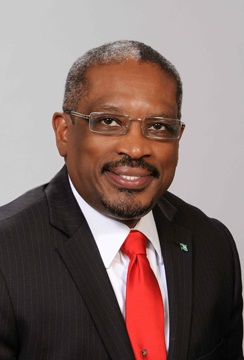
It’s official, that bet has failed! The Prime Minister (PM) of the Bahamas and leader of the Progressive Liberal Party (PLP) – Perry G. Christie – has been defeated. See full story here (posted 05/11/2017):
This commentary has observed-and-reported on the Bahamas for the last 5 years and the “bet” that the PM made was related to more than just Carnival; he also bet on:
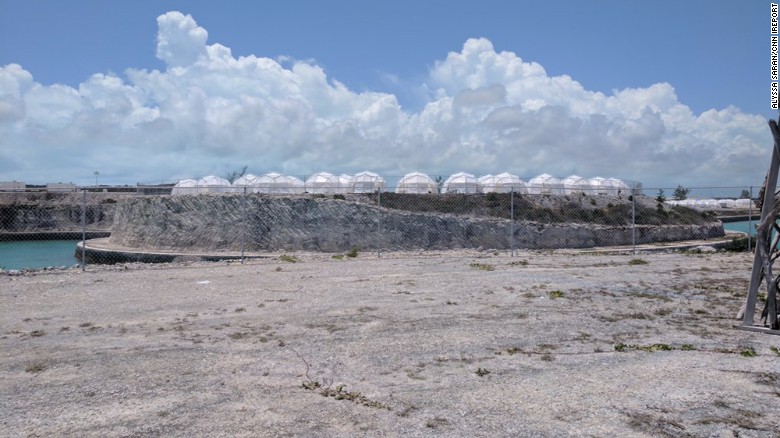
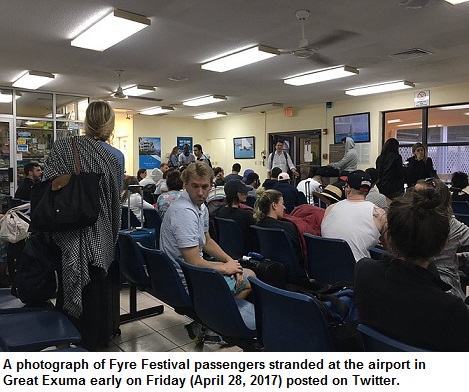
Music Festival-Event – The Fyre Festival event was a fiasco; it went up in flames on April 28, 2017 after getting government permissions and support beforehand. The mass population of Bahamian stakeholders – other than the government – knew nothing of this event until it was an international embarrassment – a “Black-eye”.
Value-Added Tax – New 7.5% Sales & Use tax implementation increased the tax burden on the poor more than the rich.
Baha Mar Resort & Casino – $2 Billion Resort & Casino stalled due to government meddling in the Developer-Banker conflict.
Grand Bahama (Freeport) – 2nd City economic progress stalled; decisions on extending Investment Tax Credits were inexplicably stalled and extended for 6-month intervals, until it was finally granted for a reasonable period.
So when the outgoing PM dissolved Parliament on April 11, 2017 and called elections for May 10, it was the only chance for the people to vocalize their displeasure. They shouted an almost unanimous veto of Christie’s policies and administration, giving the Opposition Party (Free National Movement) 35 of the 39 seats in the House of Assembly – see Polling Results in Appendix B below. (We wish all success to the new government of Dr. Hubert Minnis, but our plan is different, better, as it relates to the full region of all 30 Caribbean member-states, not just the Bahamas alone.)
It is obvious that the outgoing PM also failed in the primary functionality of any Planning apparatus:
Understand the Market; Plan the … [Enterprise]
This point is detailed in the book Go Lean…Caribbean as a necessary responsibility for the new Caribbean Union Trade Federation (CU). The CU is presented as a technocratic solution to the societal defects for the Bahamas and the rest of the Caribbean – 30 member-states in total. The book quotes (Page 57):
What are the Agents of Change that will affect our customers [citizens] and our competitors in the future?
Shakespeare described change as “an undiscovered country”. No one knows exactly what will happen next and when. The best practice is to monitor the developments in the marketplace, adapt and adjust as soon as possible. This description of a nimble response is the purpose behind “Agile” project management and other Lean management methodologies.
The CU will be lean.
Assuming a role to “understand the market and plan the business” requires looking at the business landscape today and planning the strategic, tactical, and operational changes to keep pace with the market and ahead of competitors. Strategic changes that must be accounted for now, includes: Technology, Aging Diaspora, Globalization and Climate Change.
Understanding the market means taking an accurate assessment of the status quo. What truly are the needs and wants of the community; and how much solution can we really provide, so as to balance our promises? This is Planning 101; understanding the market and planning the business, planning the security apparatus, planning the government, planning the Federation.
Federation?
This is the quest for the movement behind the book Go Lean…Caribbean. The book serves as a roadmap for the introduction and implementation of the Caribbean Union Trade Federation (CU). This Federation is an initiative to bring change and empowerment to the Caribbean region; to make the region a better place to live, work and play. This Go Lean roadmap has these 3 prime directives:
Optimization of the economic engines in order to grow the regional economy to $800 Billion & create 2.2 million new jobs.
Establishment of a security apparatus to ensure public safety for all Caribbean stakeholders and protect the resultant economic engines.
Improvement of Caribbean governance to support these engines.
The book features 144 different missions; all centered on a technocracy to elevate the societal engines of economics, security and governance. This is not easy; in fact the book describes this quest – unifying of the region of 42 million people into one Single Market – as heavy-lifting; paralleling the CU effort as a Caribbean version of the American Moon Shot in the 1960’s (Page 127). See this quote here:
The Bottom Line on Kennedy’s Quest for the Moon On 25 May 1961, US President John F. Kennedy announced his support for the American Space program’s “Apollo” missions and redefined the ultimate goal of the Space Race in an address to a special joint session of Congress: “I believe that this nation should commit itself to achieving the goal, before this decade is out, of landing a man on the moon and returning him safely to the earth”. His justification for the Moon Race was both that it was vital to national security and that it would focus the nation’s energies in other scientific and social fields. [10]This quest was succeeded. At 10:56 pm EDT, on 20 July 1969, the first human (American Astronaut Neil Armstrong) ventured out of the Apollo 11 landing craft and set foot on the Moon declaring: “one small step for man, one giant leap for mankind“. [11]
Other countries have had subsequent moon landings. See VIDEO here:
This commentary is all about the functionality of planning. Drawing reference to the Go Lean book’s treatment of planning, Page 125 listed this preface:
Planning The Caribbean Union Trade Federation roadmap catalogs where we are as a region and where we plan to go. This section drills down on the advocacies important for planning the future of the Caribbean.
The issues identified in this section will be incorporated in the CU Treaty with member-states and then in the subsequent constitution, (after an organized Constitution Convention).
Scriptural Quotation – Proverbs 29:18 (King James Version):
Where there is no vision, the people perish …
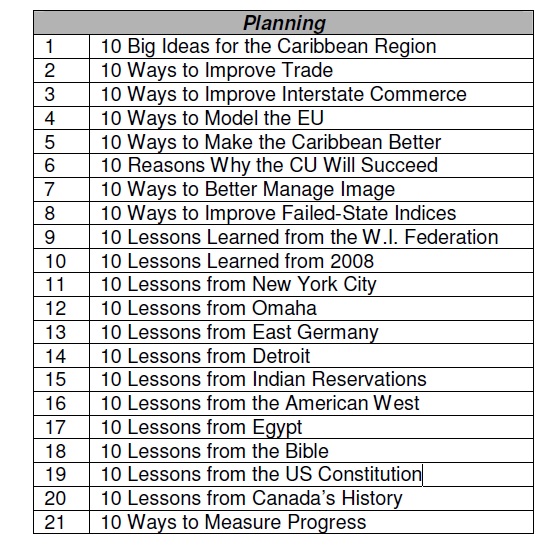
The book then proceeds to list these chapters on planning for the Caribbean stakeholders to consider:
The topics in the photo depict a community ethos – the national spirit that drives the character and identity of its people – of learning from other societies who have succeeded and failed at the planning-governing process. This vision was anticipated from the beginning of the Go Lean book, opening with these pronouncements in the Declaration of Interdependence (Pages 12 – 14):
xi. Whereas all men are entitled to the benefits of good governance in a free society, “new guards” must be enacted to dissuade the emergence of incompetence, corruption, nepotism and cronyism at the peril of the people’s best interest. The Federation must guarantee the executions of a social contract between government and the governed.
xii. Whereas the legacy in recent times in individual states may be that of ineffectual governance with no redress to higher authority, the accedence of this Federation will ensure accountability and escalation of the human and civil rights of the people for good governance, justice assurances, due process and the rule of law. As such, any threats of a “failed state” status for any member state must enact emergency measures on behalf of the Federation to protect the human, civil and property rights of the citizens, residents, allies, trading partners, and visitors of the affected member state and the Federation as a whole.
xxxiii. Whereas lessons can be learned and applied from the study of the recent history of other societies, the Federation must formalize statutes and organizational dimensions to avoid the pitfalls of communities like East Germany, Detroit, Indian (Native American) Reservations, Egypt and the previous West Indies Federation. On the other hand, the Federation must also implement the good examples learned from developments/communities like New York City, Germany, Japan, Canada, the old American West and tenants of the US Constitution.
There is planning first … and then there is delivery.
Planning and delivery are 2 separate and distinct functionalities, but one drives the other. The Go Lean movement, with the branding of Lean in the name is all about the art-and-science of project delivery. The book explains (Page 4) that the Caribbean Union Trade Federation considers the word lean to be a noun, a verb and an adjective. It considers lean as a “core idea to maximize value while minimizing waste. Simply [put], lean means creating more value for stakeholders with fewer resources. A lean organization understands value and focuses its key processes to continuously increase it. The ultimate goal is to provide perfect value to the customer/constituent/beneficiary through a perfect value creation process that has zero waste.”
With confidence we can declare that the CU will “understand the market and plan the delivery”. Truly, then …
The Go Lean book declares that for permanent change to take place there must first be an adoption of new community ethos. The roadmap was constructed with the new community ethos in mind (see Page 20), plus the execution of strategies, tactics, implementation and advocacies to deliver on the plans for an elevated Caribbean.
Yes, this plan, the Go Lean roadmap is conceivable, believable and achievable. We can make the Caribbean region – all 30 member-states – better homelands to live, work and play. 🙂
Sign the petition to lean-in for the roadmap for the Caribbean Union Trade Federation.
————-
Appendix A – Cited Footnote References
10 – Kennedy, John F. (25 May 1961). “Special Message to the Congress on Urgent National Needs”. Historical Resources. John F. Kennedy Presidential Library and Museum. p. 4. Retrieved 16 August 2010.
11 – Murray, Charles; Catherine Bly Cox (1990). Apollo: The Race to the Moon. New York: Touchstone (Simon & Schuster). ISBN 0-671-70625-X.
————-
Appendix B – General Election 2017
Commonwealth of The Bahamas – *OFFICIAL RESULTS*
Note: Her Excellency Dame Marguerite Pindling, Governor-General of The Bahamas, has invited Prime Minister-elect Hubert Minnis to be sworn in at Government House at 5 pm [on May 11, 2017].
—– Free National Movement (35 seats) ✔Hubert Minnis (Killarney)
✔K. Peter Turnquest (East Grand Bahama)
✔Adrian Gibson (Long Island)
✔Brensil Rolle (Garden Hills)
✔Brent Symonette (St. Anne’s)
✔Carlton Bowleg Jr. (North Andros & the Berry Islands)
✔Desmond Bannister (Carmichael)
✔D. Halson Moultrie (Nassau Village)
✔Darren Allan Henfield (North Abaco)
✔Dionisio D’Aguilar (Freetown)
✔Donald L. Saunders (Tall Pines)
✔Duane Sands (Elizabeth)
✔Elsworth Johnson (Yamacraw)
✔Frankie Campbell (Southern Shores)
✔Frederick McAlpine (Pineridge)
✔Hank Johnson (Central & South Eleuthera)
✔Iram Lewis (Central Grand Bahama)
✔James Albury (Central &a South Abaco)
✔Jeffrey Lloyd (South Beach)
✔Lanisha Tolle (Sea Breeze)
✔Mark Humes (Fort Charlotte)
✔Marvin Dames (Mount Moriah)
✔Michael Foulkes (Golden Gates)
✔Michael Pintard (Marco City)
✔Miriam Reckly-Emmanuel (MICAL)
✔Pakeisha Parker-Edgecombe (West Grand Bahama & Bimini)
✔Reece Chipman (Centreville)
✔Renward Wells (Bamboo Town)
✔Reuben Rahming (Pinewood)
✔Rickey Mackey (North Eleuthera)
✔Romauld “Romi” Ferreira (Marathon)
✔Shenendon Cartwright (St. Barnabas)
✔Shonel Ferguson (Fox Hill)
✔Travis Robinson (Bain’s & Grant’s Town)
✔Vaughn Miller (Golden Isles)
—– Progressive Liberal Party (4 seats)
✔Phillip Davis (Cat Island, Rum Cay and San Salvador)
✔Picewell Forbes (Mangrove Cay & South Andros)
✔Glenys Hanna-Martin (Englerston)
✔Chester Cooper (Exumas & Ragged Island)
Event planners put on 2 events in the Bahamas this past weekend where things went from ‘bad to worse’ … fast. See the details in these news articles:
Bahamas Junkanoo Carnival opening event in Freeport experienced poor turn-out, 1/10th the support of previous years – This commentary had related how the flawed decision-making for the 2017 event called for a postponement of the event, but then the government rescinded and returned to the original dates, except for in Freeport where they did delay the event 1 week, for this past weekend (April 28/29). Instead of the usual 5,000 in attendance, the numbers reported in near 500.
Fyre Festival Chaos In Exuma – The inaugural music event, dubbed the Fyre (diverse spelling of the word “fire”) Festival went up in flames, at the expense of the Bahamas brand/image. This event was an “Epic Fail” with media outlets internationally jumping on the pile in lambasting Bahamas Tourism officials and event planning. This event priced ticket and travel packages up to $12,000 for the April 28 – 30th weekend and all the country has to show for it now is a “Black Eye” – see Appendix VIDEO’s below. Fyre Festival Organisers Apologise And Praise Bahamian Government – An old adage relates that “you do not get a 2nd chance for a first impression”. Yet still, the Fyre Festival organizers plan to do the heavy-lifting to reboot their unique music festival event; only this time, they will do it in the US. This means no chance for redemption for the Bahamas. See the press statement here:
“Then something amazing happened: venues, bands, and people started contacting us and said they’d do anything to make this festival a reality and how they wanted to help. The support from the musical community has been overwhelming and we couldn’t be more humbled or inspired by this experience. People were rooting for us after the worst day we’ve ever had as a company. After speaking with our potential partners, we have decided to add more seasoned event experts to the 2018 Fyre Festival, which will take place at a United States beach venue.”
As noted in these published reports, the Bahamas is getting slammed in the international press and on social media. This is a consequence of the emergence of New Media, the world of Internet & Communications Technology (ICT), where one celebrity – dubbed “influencers” – may have millions of followers.
On the surface, onlookers consider Event Tourism to be so easy, but truth be told, it requires heavy-lifting. It requires the coordination of the economic, security and governing engines of a society. This was the declaration from this previous blog-commentary from the movement behind the book Go Lean…Caribbean. The assessment was that touristic events appear to be lucrative, but there was so much heavy-lifting involved with an implementation, that unless there was a whole-souled commitment by the full community, it would be very hard to find success; chaos ensues.
The movement behind the Go Lean book has repeatedly related that there is a need for new stewardship of the Caribbean tourism apparatus. The world has changed. There is no longer the need for tourism stewards to just “rub shoulders” with travel agents, but rather, now they must write computer programming code, optimize Search Engines and execute events with technocratic deliveries.
The book Go Lean…Caribbean calls for the elevation of Caribbean society, to re-focus, re-boot, and optimize all the engines of commerce so as to make the Caribbean a better place to live, work and play. The category of “play” covers the full scope of tourism, which is the primary economic driver for our Caribbean region; the book estimates 80 million visitors among the region. (Since that number includes cruise passengers that may visit multiple Caribbean islands on one itinerary, each port is counted separately; without cruise passengers, a figure of 68 – 69 million is perhaps more accurate).
This commentary is a consideration of tourism, not travel. Tourism is a subset of the travel eco-system, so any Agent of Change in the world of travel must be carefully considered on tourism, on Caribbean tourism. …
The Go Lean book considers these Agents of Change (Page 57) that have dynamically affected the Caribbean economic eco-systems:
Technology
Globalization
Aging Diaspora
Climate Change
This first one, technology, has had a most shocking effect on this travel/tourism industry. We can conclude that the days of [Travel Agent] Thomas Cook are over. It is no longer convenient for tourism industry stakeholders (transportation lines, resort properties, etc.) to acquiesce to travel agents; they are no longer needed to find passengers-guests-travelers-tourists.
(The industry for travel agents has now effectively disappeared [in importance]).
Technology, the Internet-Communications-Technology (ICT) in particular has furnished alternative and better options for travel enterprises to find passengers-guests-travelers-tourists…. Travel agents are now inconsequential….
The book Go Lean…Caribbean and the underlying movement seeks to re-boot the strategies and tactics of tourism marketing for the entire Caribbean region. The book asserts Caribbean member-states must expand and optimize their tourism outreach but that the requisite investment of the resources (time, talent, treasuries) for this goal may be too big for any one Caribbean member-state … alone. Rather, shifting the responsibility to a region-wide, professionally-managed, deputized technocracy will result in greater production and greater accountability. This deputized agency is the Caribbean Union Trade Federation (CU). The book thereafter introduces the CU and provides a roadmap for its implementation into a Single Market for the Caribbean economy … and tourism marketing.
The goal of the CU is to bring the proper tools and techniques to the Caribbean region to optimize the stewardship of the economic, security and governing engines. The book posits that the economy can be induced and spurred for continuous progress, with technocratic management and stewardship better than the status quo. While the goal of the roadmap is to pursue a diversification strategy, the reality is that tourism will continue to be the primary economic driver in the region for the foreseeable future. The publisher of the book Go Lean…Caribbean convenes the talents and skill-sets of movers-and-shakers in electronic commerce [and project management] so as to forge the best tools and techniques for this new ICT-based marketing.
Lessons need to be learned from the abominable planning and execution of this weekend’s events. The lesson: Event Tourism is not easy; but still, the heavy-lifting tasks must be mastered. This is the charter of the Go Lean roadmap, to deploy the technocratic administration to optimize Caribbean tourism. The Go Lean specifically details the community ethos that the region needs to adopt to consistently be successful in these types of events, plus the strategies, tactics, implementations and advocacies to ensure successful deployments; see a sample list here:
Community Ethos – Deferred Gratification
Page 21
Community Ethos – Economic Principles – The Consequences of Choices Lie in the Future
Page 21
Community Ethos – Governing Principles – Lean Operations
Page 24
Community Ethos – Governing Principles – Cooperatives
Page 25
Community Ethos – Ways to Promote Intellectual Property
Page 29
Community Ethos – Ways to Bridge the Digital Divide
Page 31
Community Ethos – Ways to Impact Turn-Arounds
Page 33
Community Ethos – Ways to Promote Happiness
Page 36
Community Ethos – Ways to Impact the Greater Good
Page 37
Strategy – Vision – Confederate 30 Member-States
Page 45
Strategy – Mission – Celebrate the Music, Sports, Art and Culture of the Caribbean
Page 46
Tactical – Fostering a Technocracy
Page 64
Tactical – Separation-of-Powers – CU Federal Agencies versus Member-State Governments
Page 71
Implementation – Steps to Implement Self-Governing Entities – Ideal for Events
Expect more fallout … legally, socially (butt of the joke), commercially (marketing other events) and maybe too …
… politically, as these events are transpiring only days before the parliamentary elections in the Bahamas on May 10 (2017).
When a community puts all its “eggs in one basket”, as in Caribbean tourism, any failures tied to event planning weighs heavily on the economic output for that society. This is not fair … to the community, to the people that need optimized economic engines to support their livelihood.
The Go Lean roadmap is different … and better.
It seeks to diversify the regional economy to create new jobs – 2.2 million in total, with only 30,000 direct jobs in direct touristic activities; see Go Lean book Page 257.
Yet still, project delivery is very important as an “art and a science”. Applying advanced project management methodologies does help with the execution of event tourism … and many other industrial endeavors.
These issues are not just important for the Bahamas, but instead for the entire Caribbean region, since the economic structure is the same for most of the 30 member-states. The book relates this in the opening overview (Page 3):
The Caribbean has tried, strenuously, over the decades, to diversify their economy away from the mono-industrial trappings of tourism, and yet tourism is still the primary driver of the economy. Prudence dictates that the Caribbean nations expand and optimize their tourism products, but also look for other opportunities for economic expansion. The requisite investment of the resources (time, talent, treasuries) for this goal may be too big for any one Caribbean member-state. Rather, shifting the responsibility to a region-wide, professionally-managed, deputized technocracy will result in greater production and greater accountability. This deputized agency is the Caribbean Union Trade Federation (CU).
Now is the time for all stakeholders in the Caribbean – governments, residents, event planners, participants and tourists – to lean-in to this Go Lean roadmap. We can do better; we can make the Caribbean homeland a better place to live, work and play. This quest is conceivable, believable and achievable. 🙂
Published on Apr 29, 2017 – Inaugural Fyre Festival in the Bahamas postponed after attendees reported dilapidated accommodations, and top-billed performers pulled out.
To read more: http://cbc.ca/1.4090271
Truth be told, it is hard to fix (reform) the broken processes of a whole country.
It is easier to fix a broken family; and easier to fix/reform just a broken neighborhood.
So a formula for success would be to reform broken neighborhoods (and broken families) one after another, and just like that, the country is transformed.
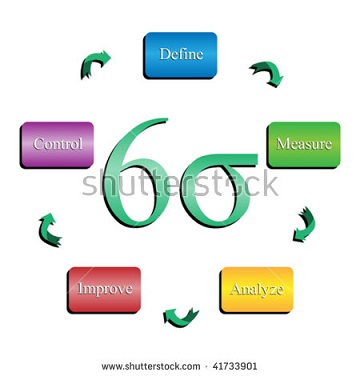
This “bottoms-up” approach is also the premise of the Six Sigma Quality Management concept (see Appendix below):
Do not try to perform 1 million perfect iterations; rather try to perform 1 iteration perfectly; then repeat it 1,000,000 times.
The book Go Lean…Caribbean presents the quest to elevate the 30 member-states in the Caribbean region. It does not limit the focus to the state governments; it drills down to a subset level: the cities. The book asserts that reforming and transforming cities would be integral to reforming and transforming entire countries.
Fix the cities; fix the world!
This is the theme of these many source materials. Consider the AUDIO Podcast, VIDEO and magazine column/article here:
Published on Oct 20, 2014 – “Cities are where hope meets the streets,” says Kasim Reed, mayor and son of Atlanta. In this powerful talk, he argues that transformation is really possible at the municipal level. Reforming the city he loves was not just a matter of tough financial calls, but of really listening to the wisdom within the community.
Title: The Issues That Drive America’s Mayors Sub-Title: Whether they’re Democrats or Republicans, a new survey shows that poverty and wealth inequality are what concern them most. By: Bob Annibale, Mick Cornett
Before he died in 2014, Thomas Menino, a visionary urban leader who served as mayor of Boston for more than two decades, declared that we are living in “the era of the city.” This has never been truer than it is today.
As the world continues to urbanize at an unprecedented rate, cities and their surrounding areas wield more power than ever. Currently over half of the world’s population lives in cities, and that is expected to grow to 70 percent by 2050. In the United States, 82 percent of Americans live in metropolitan areas, an increase of 12 percent just since 2000.
Cities are rich with diversity and serve as vital hubs of innovation, culture and commerce. The world’s top 10 cities by GDP, five of which are in the United States, have economies rivaling all but the 10 most prosperous countries. But while the populations, capital and political power of many cities is enormous, so are the scale and complexity of their challenges — making insight into their leadership important.
Motivated by the belief that “the era of the city” is upon us, Boston University’s Initiative on Cities, with support from Citi, recently published the findings of its 2016 Menino Survey of Mayors to understand the important challenges facing these cities’ leaders. Named for the great Boston mayor, the survey gathered the perspectives of more than 100 sitting mayors from 41 states on contemporary issues through a series of one-on-one interviews conducted last summer.
The survey’s findings reveal that despite remarkable societal advancements in urban centers, new and more complex problems are cropping up or increasing in severity. The environment, infrastructure, public services and household financial security are presenting challenges at a level that cities have never experienced before.
Not surprisingly, the survey found that two of the central issues in the 2016 presidential campaign – wealth inequality and the shrinking middle class — were also of deep concern to mayors of cities throughout the country. Nearly half of those surveyed ranked poverty as their most pressing economic concern. In fact, 48 percent of mayors feel that those living in or near poverty are the most excluded group in their cities; when asked which constituency they need to do more to help, nearly a quarter named poor residents.
What is slightly more surprising is the level of agreement on the top issues regardless of mayors’ party affiliation or city size. Mayors from cities big and small are highly attuned to the plight of their most vulnerable residents, and even in this polarized political climate the focus on poverty is shared by both Democratic and Republican mayors. That’s also true of the benefits of diversity. While issues of economic inclusion and diversity illuminated deep divisions among the presidential candidates, the country’s mayors were united in the goal of building more inclusive cities that are welcoming to all.
The Menino Survey provides a window into how our nation’s mayors think, act and perceive their world. By gathering and synthesizing the priorities and challenges of our cities from the perspective of their leaders, the survey offers a roadmap of opportunities for civic innovation.
These types of innovations, often forged through public-private partnerships, enable us to tackle complex urban challenges such as poverty and economic insecurity and build more inclusive cities — ones where residents can fulfill their potential and contribute to thriving urban economies.
About the Authors:
Bob Annibale – Leader of CitiGroup’s partnerships with global, national and local organizations to support inclusive finance and community development
Mick Cornett – Mayor of Oklahoma City and president of the U.S. Conference of Mayors
It is important to glean these main points from the foregoing source media/articles:
This is “the era of the city”.
Cities are where hope meets the streets.
Currently, over half of the world’s population lives in cities, and that is expected to grow to 70 percent by 2050. In the United States, 82 percent of Americans live in metropolitan areas, an increase of 12 percent just since 2000.
Cities are rich with diversity and serve as vital hubs of innovation, culture and commerce. The world’s top 10 cities by GDP, five of which are in the United States, have economies rivaling all but the 10 most prosperous countries.
Reform the cities; reform the country!
The Go Lean book studies the good, bad and ugly lessons from a number of cities (New York City; Omaha, Nebraska; Detroit, Michigan; Los Angeles City-County, California); the book then proceeds to detail strategies, tactics and implementation to fix one particular Caribbean city (Freeport, Bahamas).
The Go Lean book presents a plan to grow the regional economy and create jobs. The Go Lean book asserts that this effort is too big a task for just one Caribbean member-state or city alone; all the 30 member-states and their cities must convene, confederate and collaborate in order to effect change. As such, the Go Lean book serves as a roadmap for the introduction and implementation of the technocratic Caribbean Union Trade Federation (CU), for the elevation of Caribbean society – for all member-states, and all cities. This CU/Go Lean roadmap has these 3 prime directives:
Optimization of the economic engines in order to grow the regional economy to $800 Billion and create 2.2 million new jobs. Caribbean cities need jobs and entrepreneurial opportunities. This roadmap calls for mini-cities, referred to as Self-Governing Entities, as a solution to optimize industrial policy. See a model/example here.
Improve Caribbean governance to support these engines, including a separation-of-powers between the member-states and CU federal agencies. See a model/example here.
A mission of the Go Lean roadmap is to reboot urban communities – defining a concerted effort in a concentrated area – with empowerments like:
Transportation – “Out of the box” thinking to transport people to places; i.e. Streetcars.
Mixed-use Developments – Optimize communities with one building for retail, office and residences.
Improving Local Government – Connecting citizens online for more and more electronic delivery.
Public Works – Infrastructure projects elevate cities … economically.
Libraries – These are for more than just reading books in this New Economy.
Events/Festivals – Culture, community pride and revenues cannot be ignored.
Main Street – Local Downtowns can be tranformed for the Greater Good.
Sports – These Big Business activities can impact more than just the fans and players.
The book stresses that reforming and transforming Caribbean urban communities must be a regional pursuit. This was an early motivation for the roadmap, as pronounced in the opening Declaration of Interdependence (Pages 11 – 14):
vi. Whereas the finite nature of the landmass of our lands limits the populations and markets of commerce, by extending the bonds of brotherhood to our geographic neighbors allows for extended opportunities and better execution of the kinetics of our economies through trade. This regional focus must foster and promote diverse economic stimuli.
vii. Whereas our landmass is finite and therefore limited as to population growth potential, it is imperative that prudent growth management be practiced so as to protect our legacy and still foster future opportunities for the hopes and fulfillment of a prosperous future for our children.
viii. Whereas the population size is too small to foster good negotiations for products and commodities from international vendors, the Federation must allow the unification of the region as one purchasing agent, thereby garnering better terms and discounts.
xi. Whereas all men are entitled to the benefits of good governance in a free society, “new guards” must be enacted to dissuade the emergence of incompetence, corruption, nepotism and cronyism at the peril of the people’s best interest. The Federation must guarantee the executions of a social contract between government and the governed.
xvi. Whereas security of our homeland is inextricably linked to prosperity of the homeland, the economic and security interest of the region needs to be aligned under the same governance. Since economic crimes … can imperil the functioning of the wheels of commerce for all the citizenry, the accedence of this Federation must equip the security apparatus with the tools and techniques for predictive and proactive interdictions.
xxvi. Whereas the Caribbean region must have new jobs to empower the engines of the economy and create the income sources for prosperity, and encourage the next generation to forge their dreams right at home, the Federation must therefore foster the development of new industries, like that of ship-building, automobile manufacturing, prefabricated housing, frozen foods, pipelines, call centers, and the prison industrial complex. In addition, the Federation must invigorate the enterprises related to existing industries like tourism… – impacting the region with more jobs.
This commentary previously related details of city life – elevating society at the urban level – that can be applied directly in the Caribbean. Here is a sample of previous blogs:
The Go Lean book and these accompanying blogs posit that the economic failures in the Caribbean in general and in cities in particular are the direct result of the lack of diversity in industrial development, and the subsequent societal abandonment. The region depends too heavily on one industry: tourism.
The roadmap asserts that this strategy is flawed; that while prudence dictates that the Caribbean nations expand and optimize their tourism products, the Caribbean must also look for other opportunities for economic expansion. Cities can be laboratories in urban civilization, but the requisite investment of the resources (time, talent, treasuries) for this goal may be too big for any one city alone. So rather, this roadmap shifts the responsibility to a region-wide, professionally-managed, deputized technocracy that will result in greater production and greater accountability. The end result of these “urban laboratories” will facilitate economic diversity and job creation.
This is the charge of the Go Lean…Caribbean roadmap, to do the heavy-lifting, to implement the organization dynamics to impact Caribbean society here and now. The following are the community ethos, strategies, tactics and operational advocacies to effectuate this goal:
Community Ethos – People Respond to Incentives
Page 21
Community Ethos – Economic Systems Influences Choices & Incentives
Page 21
Community Ethos – Job Multiplier
Page 22
Community Ethos – Lean Operations
Page 24
Community Ethos – Ways to Impact the Greater Good
Page 37
Strategy – Vision – Make the Caribbean the Best Address on Planet
Page 45
Strategy – Mission – Protect our residents, visitors and repatriates
Page 45
Strategy – Mission – Fix the broken systems of governance
Page 46
Tactical – Separation of Powers – Union versus Member-States
Page 71
Implementation – Implement Self-Governing Engines
Page 105
Implementation – Ways to Deliver
Page 109
Implementation – Ways to Re-boot Freeport – Sample City
Page 114
Implementation – Ways to Promote Independence – Autonomous Cities
Page 120
Planning – 10 Big Ideas for the Caribbean
Page 127
Planning – Ways to Make the Caribbean Better
Page 131
Planning – Lessons from New York City
Page 137
Planning – Lessons from Omaha
Page 138
Planning – Lessons from Detroit
Page 140
Advocacy – Ways to Grow the Economy
Page 151
Advocacy – Ways to Create Jobs
Page 152
Advocacy – Ways to Improve Local Governance
Page 169
Advocacy – Ways to Enhance Tourism
Page 190
Advocacy – Ways to Market Southern California – Learning from L.A. City
Page 194
Advocacy – Ways to Impact Main Street
Page 201
Advocacy – Ways to Improve Urban Living
Page 234
This Go Lean book accepts that the current State of the Cities does not have to be a permanent disposition. Under the Go Lean roadmap, cities can do better; all of the Caribbean can do better. This roadmap is a 5-year plan to effect change, to make our homeland a better place to live, work and play.
Now is the time to build better Caribbean cities; the people and governing institutions are urged to lean-in to this Go Lean … Caribbean roadmap. 🙂
Sign the petition to lean-in for this roadmap for the Caribbean Union Trade Federation.
Six Sigma is a set of tools and strategies for process improvement originally developed by Motorola in 1985, but popularized in 1995 by General Electric’s Jack Welch as his central business strategy. Today it is used in different sectors of industry. Six Sigma seeks to improve the quality of process outputs by identifying and removing the causes of defects (errors). It uses a set of quality management methods, including statistical methods, and creates a special infrastructure of people within the organization (Champions, Black Belts, Green Belts, Orange Belts, etc.) who are experts in these very complex methods.
With Six Sigma the maturity of a manufacturing process can be described by a sigma rating indicating its yield or the percentage of defect-free products it creates. A six sigma process is one in which 99.9999998% of products manufactured are statistically expected to be free of defects (3.4 defects per million). According to Wikipedia, Six Sigma projects follow a methodology, aimed at improving existing business processes, composed of five phases, bearing the acronyms DMAIC:
Define the problem, the voice of the customer, and the project goals, specifically.
Measure key aspects of the current process and collect relevant data.
Analyze the data to investigate and verify cause-and-effect relationships. Determine what the relationships are, and attempt to ensure that all factors have been considered. Seek out root cause of the defect under investigation.
Improve or optimize the current process based upon data analysis.
Control the future state process to ensure that any deviations from target are corrected before they result in defects.
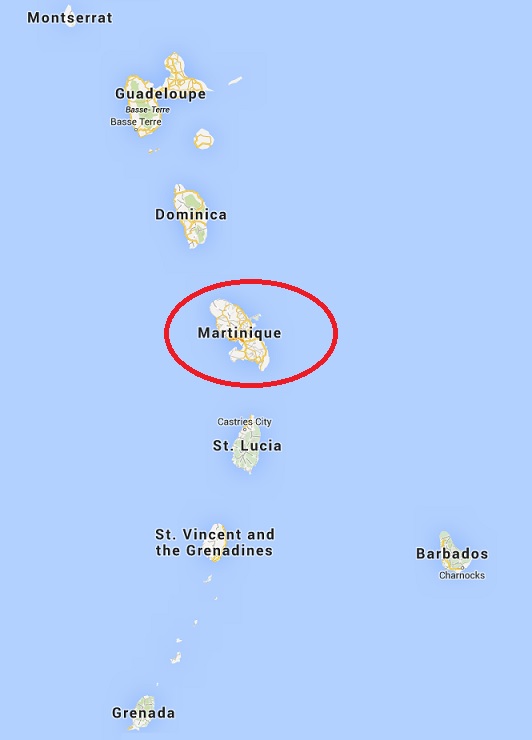
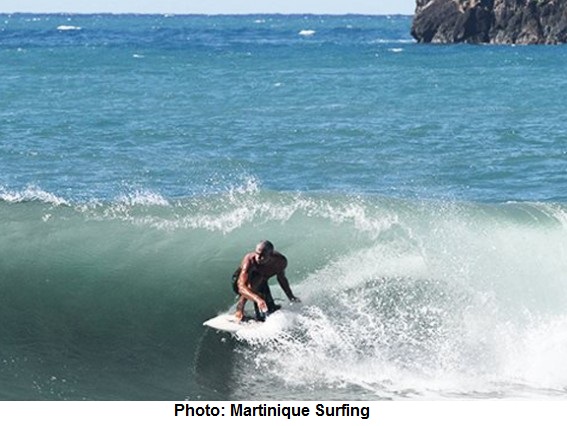
Time marches on, while the legacy of pro-surfing in the French Caribbean continues to grow.
Welcome to Martinique, and some of the best surfing on the planet.
This original Go Lean blog-commentary from April 14, 2015 is re-distributed on this occasion of the Third Annual Martinique Surf Pro, which just transpired April 1 through April 8, 2017. And the winner is:
Title: Ricardo Christie conquered the 2017 Martinique Surf Pro, at Basse-Pointe, in Martinique.
Christie proved he’s ready to return to the Dream Tour by putting out a competent performance at the righthand pointbreak. And he needed six rides to clinch the tasty trophy.
“When the waves are like that you can forget everything and just go out there and surf. I feel like I’ve improved a lot,” explained Ricardo Christie, who failed to requalify at the end of his rookie season on the Championship Tour.
“I’ve just been working really hard, and I learned a lot when I was on tour. It doesn’t feel like it’s over; it’s just the beginning of the year, so I just have to keep doing my thing.”
With this victory in Martinique, Ricardo Christie jumped 91 places to number 10 on the QS rankings.
Consider the VIDEO highlights from this year’s event.
This event – part sports; part culture; is all tourism. It is building momentum! We need more events like this. See the Encore below describing how the movement behind the book Go Lean…Caribbean will strategize for sports tourism; this means more and more events … in different sports.
Sports could be big business; culture is big business. Every now-and-then there is the opportunity to merge sports and culture into a single economic activity. One such expression is the sports/culture of surfing. This focus is a priority for the movement to elevate the Caribbean society, stemming from the book Go Lean…Caribbean.
The book serves as a roadmap for the introduction and implementation of the technocratic Caribbean Union Trade Federation (CU). While the CU is not intended as a sports promotion entity, it does promote the important role of sports in the quest to make the Caribbean a better place to live, work and play.
Though surfing activities originated with Polynesian culture (see Appendix below), the sport has assimilated well in other societies – the Caribbean included.
In terms of cultural expressions of surfing in the United States, the most iconic portrayal is the Rock-n-Roll group the Beach Boys; see VIDEO in the Appendix below of a milestone performance in Tokyo, Japan.
Yes surfing is global in its participation and appreciation.
Now a Caribbean community, the French-domain of Martinique is exploring the surfing sub-culture for sport, tourism and sports-tourism.
Cowabonga* Dude!
By: The Caribbean Journal staff
Long an under-the-radar surfing spot, the French Caribbean island will get its place in the spotlight when the surfing world gathers on the island later this month for the first-ever Martinique Surf Pro.
From April 21-26, the Caribbean’s only World Surf League Qualification Series event this year will take place along the shores of Basse-Pointe in Martinique.
The event, which is being organized by Martinique Surfing in partnership with the World Surf League, will bring together 100 world-class surfers from the United States, Japan, Europe, Brazil and the Caribbean.
“Martinique has been among the best-kept secrets in Caribbean surfing for some time now,” said Muriel Wiltord, director of the Americas for the Martinique Promotion Bureau. “Such a high-profile event as this cements the island’s position as a prime surfing destination. As one the top watersports competitions being held in the Caribbean in 2015, Martinique Surf Pro also shines a spotlight on the wide range of additional watersports options that Martinique has to offer.”
Martinique’s surfing season typically lasts between November and May along its northern and northeastern Atlantic coasts.
Not every coastline is ideal for surfing; thusly many Caribbean residents do not surf; it is not an indigenous activity to this region. But the past-time – and culture for that matter – is adaptable. Why is this? While the Caribbean has been blessed with many natural gifts, the physical conditions for surfing are not everywhere; (based on factual information retrieved from Wikipedia).
There must be a consistent swell. A swell is generated when wind blows consistently over a large area of open water, called the wind’s fetch. The size of a swell is determined by the strength of the wind and the length of its fetch and duration. Because of this, surf tends to be larger and more prevalent on coastlines exposed to large expanses of ocean traversed by intense low pressure systems.
Local wind conditions affect wave quality, since the surface of a wave can become choppy in blustery conditions. Ideal conditions include a light to moderate “offshore” wind, because it blows into the front of the wave, making it a “barrel” or “tube” wave. Waves are Left handed and Right Handed depending upon the breaking formation of the wave.
Waves are generally recognized by the surfaces over which they break.[7] For example, there are Beach breaks, Reef breaks and Point breaks.
The most important influence on wave shape is the topography of the seabed directly behind and immediately beneath the breaking wave. The contours of the reef or bar front becomes stretched by diffraction. Each break is different, since each location’s underwater topography is unique. At beach breaks, sandbanks change shape from week to week. Surf forecasting is aided by advances in information technology. Mathematical modeling graphically depicts the size and direction of swells around the globe.
So mastering the sport of surfing is now an art and a science.
Despite the fun and joy of surfing, there are a lot of dangers with this activity:
Seabed – Injuries from the reefs, fauna and flora of the seabed
This activity is not for the faint of heart.
Not every market, especially in the Caribbean, can support the demands of surfing as a sport and as a cultural event. As depicted in the foregoing article, Martinique uniquely qualifies. This year’s professional tournament is the inaugural event. This Caribbean island makes a very short-list of all locations where this activity is practical. The following is a sample of the competitive/major surfing locations (Surf Cities) around the globe:
The Martinique effort and initiative to satiate the thirst … and fascination of surfing aligns with the objects of the CU/Go Lean roadmap; especially the mission “to forge industries and economic drivers around the individual and group activities of sports and culture” (Page 81).
The Go Lean vision is a confederation of the 30 member-states of the Caribbean forming the CU as a proxy organization to do the heavy-lighting of building, funding, maintaining and promoting sports venues. The strategy is for the CU to be the landlord, and super-regional regulatory agency, for sports leagues, federations and associations (amateur, collegiate, and professional). The embrace and promotion of the sport and culture of surfing can contribute to the Greater Good for the Caribbean. This aligns with the prime directives of the CU/Go Lean roadmap; summarized in the book with these 3 statements:
Optimization of the economic engines in order to grow the regional economy to $800 Billion & create 2.2 million new jobs.
Establishment of a security apparatus to protect the resultant economic engines and the participants in activities like surfing.
Improvement of Caribbean governance to support these engines.
This roadmap commences with the recognition that genius qualifiers can be found in many fields of endeavor, including sports. The roadmap pronounces the need for the region to confederate in order to invest in elevation of the Caribbean eco-systems in which such athletic geniuses can soar. These pronouncements are made in the opening Declaration of Interdependence, (Pages 13 & 14) as follows:
xxi. Whereas the preparation of our labor force can foster opportunities and dictate economic progress for current and future generations, the Federation must ensure that educational and job training opportunities are fully optimized for all residents of all member-states, with no partiality towards any gender or ethnic group. The Federation must recognize and facilitate excellence in many different fields of endeavor, including sciences, languages, arts, music and sports. This responsibility should be executed without incurring the risks of further human flight, as has been the past history.
xxii. Whereas sports have been a source of great pride for the Caribbean region, the economic returns from these ventures have not been evenly distributed as in other societies. The Federation must therefore facilitate the eco-systems and vertical industries of sports as a business, recreation, national pastime and even sports tourism – modeling the Olympics.
The Go Lean book and accompanying blogs declare that the Caribbean needs to learn lessons from Surf City communities and other sporting venues/administrations. So thusly this subject of the “business of sports” is a familiar topic for Go Lean blogs. This cause was detailed in these previous blogs:
This Go Lean roadmap is committed to availing the economic opportunities of all the Caribbean sports eco-system to respond to the world’s thirst for surfing. The book details the series of community ethos, strategies, tactics, implementations and advocacies to deliver the regional solutions to better harness economic benefits from sports and sports-tourism activities:
Community Ethos – People Respond to Incentives in Predictable Ways
Page 21
Community Ethos – Consequences of Choices Lie in the Future
Page 21
Community Ethos – Lean Operations
Page 24
Community Ethos – Return on Investments
Page 25
Community Ethos – Ways to Foster Genius
Page 27
Community Ethos – Ways to Impact the Greater Good
Page 37
Strategic – Staffing – Sporting Events at Fairgrounds
Page 55
Tactical – Fostering a Technocracy
Page 64
Tactical – Separation of Powers – Sports & Culture Administration
Page 81
Tactical – Separation of Powers – Fairgrounds Administration
Page 83
Implementation – Steps to Implement Self-Governing Entities
Page 105
Implementation – Ways to Deliver
Page 109
Planning – Ways to Make the Caribbean Better
Page 131
Advocacy – Ways to Grow the Economy
Page 151
Advocacy – Ways to Create Jobs
Page 152
Advocacy – Ways to Improve Local Government – Parks & Recreation
Page 169
Advocacy – Ways to Impact Public Works
Page 175
Advocacy – Ways to Impact Events
Page 191
Advocacy – Ways to Promote Fairgrounds as Sporting Venues
Page 192
Advocacy – Ways to Preserve Caribbean Heritage
Page 218
Advocacy – Ways to Improve Sports
Page 229
Advocacy – Ways to Impact Urban Living – Sports Leagues
Page 234
What could be the end result for the Go Lean roadmap’s venture into the sport of surfing and the business of sports? Economic growth and “jobs”. The Go Lean roadmap anticipates 21,000 direct jobs at sports enterprises throughout the region.
But surfing is also a leisure amenity, a “play” activity within the Go Lean roadmap. Many participate in this activity with no competitive motives. So the promotion of surfing in the Caribbean region can appeal to many enthusiasts far-and-wide to come visit and enjoy our Caribbean hospitality. This subject therefore relates back to the primary regional economic activity of tourism. This fits into the appeal of the Caribbean sun, sand and surf.
Overall, with these executions, the Caribbean region can be a better place to live, work and play. There is a lot of economic activity in the “play” aspects of society. Everyone, surfers, athletes and spectators alike, are hereby urged to lean-in to this Go Lean roadmap.
Sign the petition to lean-in for the roadmap for the Caribbean Union Trade Federation.
———-
Appendix – *Cowabunga: (slang) an expression of surprise or amazement, often followed by “dude”. Popular among California surfers.
———-
Appendix – Encyclopedia of Surfing:
For centuries, surfing was a central part of ancient Polynesian culture. This activity was first observed by Europeans at Tahiti in 1767 by Samuel Wallis and the crew members of the Dolphin; they were the first Europeans to visit the island in June of that year.
Surfing is a surface water sport in which the wave rider, referred to as a surfer, rides on the forward or deep face of a moving wave, which is usually carrying the surfer toward the shore. Waves suitable for surfing are primarily found in the ocean, but can also be found in lakes or in rivers in the form of a standing wave or tidal bore. However, surfers can also utilize artificial waves such as those from boat wakes and the waves created in artificial wave pools.
The term surfing refers to the act of riding a wave, regardless of whether the wave is ridden with a board or without a board, and regardless of the stance used. The native peoples of the Pacific, for instance, surfed waves on alaia, paipo, and other such craft, and did so on their belly and knees. The modern-day definition of surfing, however, most often refers to a surfer riding a wave standing up on a surfboard; this is also referred to as stand-up surfing.
George Freeth (8 November 1883 – 7 April 1919) is often credited as being the “Father of Modern Surfing”.
In 1907, the eclectic interests of the land baron Henry Huntington (of whom the City of Huntington Beach is named after) brought the ancient art of surfing to the California coast. While on vacation, Huntington had seen Hawaiian boys surfing the island waves. Looking for a way to entice visitors to the area of Redondo Beach, where he had heavily invested in real estate, he hired the young Hawaiian George Freeth to come to California and ride surfboards to the delight of visitors; Mr. Freeth exhibited his surfing skills twice a day in front of the Hotel Redondo.
The conventional wisdom – advice to the public – for counter-terrorism is “See Something, Say Something”.
For all innocent victims, a 3rd step would be greatly appreciated, though not recommended, it is truly beneficial if that advice can be extended to “See Something, Say Something, Do Something”.
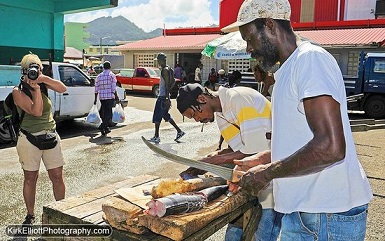
This was definitely the experience recently in the Caribbean island-state of St. Lucia when a couple of tourists were accosted-mugged by a crook-bully-nefarious-character and people in the general public came to their aid. See the story here:
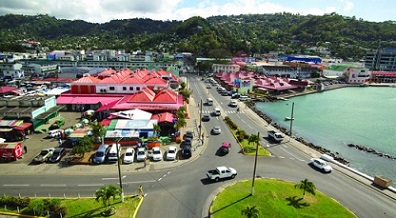
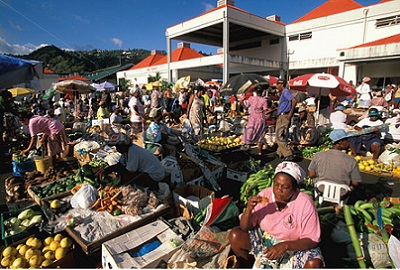
Title: Citizens arrest man who attacks visitor Concerned citizens today arrested a man who attacked a visitor on Jeremie Street near the Castries market, according to an eyewitness report.
The eyewitness told the Times that the incident occurred at around noon.
It is reported that the female visitor was in the company of her husband when she was attacked by a man, said to be in his thirties, in an apparent robbery attempt.
According to the eyewitness, a local man who witnessed the incident intervened and grabbed hold of the attacker who managed to free himself and flee.
However, according to the eyewitness, other citizens gave chase and eventually held the attacker.
The eyewitness said he was part of the group that effected the arrest and eventually handed the attacker over to the police.
This foregoing article belies a serious point of concern: never under-estimate a robber; they may have a gun and can inflict harm on “wanna-be-heroes”. This is why the bravery of that “one local man” in the foregoing story is even more impressive. The unnamed heroes in this case extended protection with no regard for their own safety. But despite this benevolence, it is out of place for civilians to put themselves in harm’s way to ensure public safety. That is the job of the country’s security forces.
The book Go Lean … Caribbean explains the Social Contract as where citizens surrender some of their freedoms and submit to the authority of the State in exchange for protection of remaining natural and legal rights. The formal institutions of the State (Police and Militia) are expected to deliver the security solutions, not some Good Samaritans. So under this Social Contract, it is expected that the people will “See Something, Say Something”, and then the State’s security apparatus would “Do Something”.
There is dysfunction in the Caribbean in the delivery of the Social Contract. So there is the need for many of the best-practices here-in for Caribbean people and institutions to apply to improve this experience.
There is the need to reform and transform the societal engines, the economic, security and governing eco-systems. The Go Lean book (Page 23) details many economic empowerments; and then makes this revelation:
… with the emergence of new economic engines, “bad actors” will also emerge thereafter to exploit the opportunities, with good, bad and evil intent.
This roadmap for Caribbean integration declares that peace, security and public safety is tantamount to economic prosperity. This is why an advocacy for the Greater Good must be championed as a community ethos. A prime precept is that it is “better to know than to not know” – this implies that privacy is secondary to security. A secondary precept is that bad things will happen to good people and so the community needs to be prepared to contend with the risks that can imperil the homeland.
The book Go Lean … Caribbean serves as a roadmap for the introduction and implementation of the Caribbean Union Trade Federation (CU). The branding Trade Federation emphasizes the economic mandate of the CU; but there must also be a security apparatus enveloping the economic engines. Tourism is the primary economic driver in the region. So muggings-robberies of tourists are unbecoming. The communities must mitigate the risks and assuage all threats against tourists. What strategies, tactics and implementations does the Go Lean/CU roadmap envision for this quest? Consider this sample:
Community Ethos – Security Principles
Page 22
Ways to Improve Sharing – Mobile Command Centers
Page 35
Security Initiatives at Start-up
Page 103
Ways to Impact Justice
Page 177
Ways to Reduce Crime
Page 178
Ways to Improve for Gun Control
Page 179
Ways to Improve Homeland Security
Page 180
Ways to Mitigate Terrorism – Bullying
Page 181
Ways to Improve Intelligence Gathering & Analysis
Page 182
Ways to Improve Animal Husbandry – Security Dogs et al
Page 185
Ways to Enhance Tourism – Tourist Hate Crimes Sentences
Page 190
Ways to Impact the Prison-Industrial Complex
Page 211
The CU‘s efforts will be supplemental to the individual member-states, like St. Lucia in the foregoing news story. These states will deputize the CU‘s security agencies – i.e. CariPol and the Naval Authority – to aid-abet the police and military forces to better deliver on the security mandates in the Social Contract. This intent was among the motivation for the Go Lean book in the first place. This is related as the Prime Directives, with these 3 statements:
Optimization of the economic engines in order to grow the regional economy and create new jobs.
Establishment of a security apparatus to protect the resultant economic engines and mitigate internal and external threats.
Improve Caribbean governance to support these engines.
The purpose of these prime directives is to elevate Caribbean society. We cannot do this alone. The challenges befalling the Caribbean region are too big for any one member-state alone. We have an interdependence within the region. See these statements from the formal Declaration of Interdependence, at the start of the book (Page 12):
x. Whereas we are surrounded and allied to nations of larger proportions in land mass, populations, and treasuries, elements in their societies may have ill-intent in their pursuits, at the expense of the safety and security of our citizens. We must therefore appoint “new guards” to ensure our public safety and threats against our society, both domestic and foreign. The Federation must employ the latest advances and best practices of criminology and penology to assuage continuous threats against public safety. The Federation must allow for facilitations of detention for convicted felons of federal crimes, and should over-build prisons to house trustees from other jurisdictions.
xvi. Whereas security of our homeland is inextricably linked to prosperity of the homeland, the economic and security interest of the region needs to be aligned under the same governance. Since economic crimes, including piracy and other forms of terrorism, can imperil the functioning of the wheels of commerce for all the citizenry, the accedence of this Federation must equip the security apparatus with the tools and techniques for predictive and proactive interdictions.
The Go Lean book provides exact details for this roadmap. Consider these points from Page 178 – headlines only here, except for #5 and #8 – from this section, entitled:
10 Ways to Remediate and Mitigate Crime
1
Lean-in for the Caribbean Single Market to leverage for Regional Threats
2
Deploy the Caribbean Police (CariPol)
3
Deploy a Regional Security Intelligence Bureau
4
Install an optimized Prison Industrial Complex
5
Equip local police with advanced technologies
The CU will provide grants to equip local police with advanced technologies, including video (dashboard cameras) and audio transmission, GPS tracking, and mobile computing systems to optimize community policing. The advanced systems also include anklet monitoring systems for non-violent offenders and suspects out on bail.
6
Provide Witness Protection at the Regional Level
7
Enable the Private Industry of First Responders and Bounty Hunters
8
Add Hate Crime Qualifiers on Sentencing Criminal offences against “special” protected classes get extended sentences. This could include senior citizens, race-based crime, sexual biases, and even crimes against tourists, and the repatriates. Though not necessarily preventing crime, this provision sends the message to perpetrators that undermining the Greater Good is dealt with severely.
9
Roll-out a regional Youth Crime Awareness and Prevention
10
Reform the Dynamics of the Death Penalty – introduce Lethal Injection
Jamaica received World Bank funds to help in crime fight
The quest of the Go Lean movement is to protect the economic engines from any “bad actors”. These ones will always emerge; we must always be ready. This is the very essence of the Greater Good as a community ethos. This is a BIG motivation for the planners of this new Caribbean eco-system. The Go Lean book (Page 37) defines it as:
“… the greatest good to the greatest number of people which is the measure of right and wrong”. – Jeremy Bentham (1748-1832)
This … Greater Good philosophy also synchronizes with a principle from the Bible (Judges Chapter 4:17-22) with the actions of Jael to save her village rather than give refuge to Canaanite Army Commander Sisera. Her actions were celebrated by the prophetess Deborah, and esteemed as an example of a godly woman executing judgment for the Greater Good, even though at the expense of one person.
Tourism, at present, is the primary economic driver that feeds the Caribbean communities in general and St. Lucia in particular. (See the promotion VIDEO in the Appendix below). We need to not undermine it with selfish, felonious actions by a few “bad actors” imperiling the livelihoods and well-being of the greater community.
So now imagine the foregoing scenario at the Castries Market with the Go Lean/CU empowerments in place:
Smartphone mobile apps to notify the crime-fighting authorities.
Being prepared – the goal of the Go Lean/CU roadmap – helps us to make our Caribbean communities better places to live, work and play. We urge everyone in the Caribbean to lean-in to this plan; if you see something, say something, and then do something; leaning-in will be doing something. 🙂
Published on Nov 27, 2013 –St Lucia Top Ten Things To Do, is a tour of the most popular activities and highlights.
St. Lucia is the type of island that travelers dream about ~ a small, lush tropical gem that is still relatively unknown. In natural beauty, St. Lucia seems like an island plucked from the South Pacific and set down in the Caribbean.
Top Ten Things To Do on Vacation:
1) The Pitons
2) National Rain Forest
3) Sulphur Springs
4) Scuba and Snorkel
5) Jazz Festival
6) Pigeon Island National Park
7) Anse Chastanet Beach
8) Duty Free Shopping (i.e. Castries Market)
9) Horseback Riding on the Beach
10) Rodney Bay and Gros Islet
March Madness is not about the month of March; nor is it about Madness. It is about basketball, college basketball to be exact.
This is the time for the NCAA Division I Basketball Tournament. This is where 68 teams come together in a single-elimination tournament to determine who would be the National Champion. It is one team playing against each other until the winner is crowned. The number 68 is deceptive; it is really a tournament of 64, with 60 secured teams and 8 teams having to compete in “play-in” games to determine the last 4.
This simple math is indicative of the simple sport of basketball; it is just 5 players on each side playing against each other with one ball and 2 baskets. The expense of fielding a basketball team is so low that in many places, there is organized play even at the Middle School level.
And yet … the eco-system for College Basketball in the Caribbean is … non-existent.
Too sad!
The book Go Lean…Caribbean – and accompanying blog-commentaries – posits that the eco-system of sports is deficient in the Caribbean region. There is so much more that can be done. This subject was divulged in full details in a previous blog on March 20, 2014. That submission is encored here below.
But first, enjoy the NCAA’s March Madness 2017. Submit your own bracket; mine is shown here.
Also view a VIDEO here of a preview of this year’s tournament by legendary College Basketball Analyst Dick Vitale, “Dickie Baby”:
VIDEO – Dickie V breaks down March Madness – USA Today
Posted March 14, 2017 – Legendary broadcaster Dick Vitale was in our studios breaking down all the NCAA tournament story lines.
Sports play a big role in Caribbean culture. Education plays a big role in the empowerment of communities. There is a junction between sports and academics; this is the sphere of college athletics.
Cuba has 37 universities…alone. In total, the Caribbean has 42 million people (2010 figures) in all 30 member-states. So surely there is enough of a student population to field sports teams.
More so, there is a fan base in the communities to complete the eco-system of sports spectators and community pride. Yet, there is very little college sports being facilitated in the region right now. Despite the breadth and talent base to form leagues and rivalries among the established universities within the Caribbean. Any system for college athletics is noticeably lacking.
This is the mission of the Caribbean Union Trade Federation (CU); to function as a Caribbean version of the National Collegiate Athletic Association (NCAA) in the US. We have much to learn from this organization’s history, successes & failures.
“The NCAA was founded in 1906 to protect young people from the dangerous and exploitive athletics practices of the time,” so states the NCAA on its official website.[a]
According to Dan Treadway, Associate Blog Editor for the Huffington Post online news magazine[b]:
The NCAA often likes to harp on tradition and the sanctity of the term “student-athlete,” but it fails to recognize its true roots.
The association in fact got its start because, at the time of its creation, football was in danger of being abolished as a result of being deemed too dangerous a sport. During the 1905 season alone, 18 college and amateur players died during games. In response to public outcry, Theodore Roosevelt, an unabashed fan of the sport, gathered 13 football representatives at the White House for two meetings at which those in attendance agreed on reforms to improve safety. What would later become known as the NCAA was formed shortly after on the heels of this unifying safety agreement.
Collegiate Sports is now big money; an economic eco-system onto itself. How much money does the NCAA make?
For the 2010-11 fiscal year, the NCAA revenue was $845.9 million, (not including College Football). Total rights (broadcast & licensing) payment for 2010-11 was $687 million, of all NCAA revenue. The remaining revenues are mostly event ticket sales.
How did the NCAA go from being an agreement to promote safety standards so as to prevent death on the playing field, to a multi-million dollar enterprise? Chalk that up to 100 years of social evolution.
The book Go Lean … Caribbean serves as a roadmap to advance to the end of the evolutionary process and establish the economic engines to empower the Caribbean region, even in areas like sports and culture.
So how to build sports franchises anew? How will colleges & universities create success from collegiate athletics? It’s a complex “art and science”, but first, it starts with facilities – the CU’s Fairground administration will fund, build and manage sports venues. The CU will be the landlord; the academic institutions, the tenants.
The Go Lean roadmap navigates the changed landscape of globalization and pronounces that change has come to the Caribbean but the region is not prepared. Despite the great appreciation for sports, and the excellent talent of its athletes, there is no business model for the consumption of Caribbean collegiate athletics.
Now, for much of the Caribbean, the population tunes in and pays for cable/satellite TV service to consume American collegiate athletic programming. But how many people in the region are watching Caribbean college sporting activities? None. Though there is a demand, undoubtedly, there is no supply process in place.
In the adjoining table in the Appendix, 36 schools are identified that are capable of fielding credible sports teams, if the appropriate facilitations were in place.
There is the demand. What’s missing is the organized market for consumption. The implementation of this Go Lean roadmap fills this void. This completes the supply!
Applying the model of the NCAA, much can be learned. We can copy their success, and learn from their pitfalls. The NCAA credits tremendous revenues for itself, but not necessarily for all of their members. Under NCAA supervision, the majority of athletic programs, in fact, lose money and are subsidized by funds from their respective university. While the NCAA is needed for academic integrity in college sports, many times, it fails at this responsibility. They lack the CU’s lean execution ethos.
After 100 years later, does the world still need the NCAA? Absolutely! For more than the collective bargaining/negotiations role for the business side of college athletics. They are also the governing body for college athletics, ensuring fairness and good sportsmanship. For the Caribbean Union, this role is to be assumed by the CU Sports Administration, to provide technocratic efficiencies. The resultant eco-system facilitates the CU mandate, to make the region a better place to live, work and play.
APPENDIX B – Caribbean Regional Colleges & Universities
Member-state
Legacy
Name
Antigua and Barbuda
British
Antigua State College
Aruba
Dutch
University of Aruba
Bahamas
British
College of the Bahamas
Barbados
British
University of the West Indies – Cave Hill, American University
Belize
British
University of Belize
Galen University
Bermuda
British
Bermuda College (Community College)
Cuba
Spanish
University of Havana Universidad de Oriente, Polytechnic University José Antonio Echeverría
Dominican Republic
Spanish
Universidad Autónoma de Santo Domingo (UASD) – (English: Autonomous University of Santo Domingo)
French Caribbean
French
University of the French West Indies and Guiana Guadeloupe Campus, Martinique Campus, French Guiana Campus
Guyana
British
University of Guyana
Haiti
French
Caribbean University / Université Caraïbe, Université d’Haiti
Jamaica
British
University of the West Indies – Mona, University of Technology (U-Tech), Mico University College, Northern Caribbean University (NCU), University College of the Caribbean (UCC), International University of the Caribbean (IUC)
Netherlands Antilles
Dutch
University of Curaçao
Curaçao
Sint Maarten
University of St. Martin
Puerto Rico
USA/
Spanish
Caribbean University, Metropolitan University, University of Puerto Rico, University of Turabo
Suriname
Dutch
University of Suriname Anton de Kom Universiteit van Suriname
Trinidad and Tobago
British
University of the West Indies – Saint Augustine University of Southern Caribbean (USC) University of Trinidad and Tobago (UTT)
There is something really wrong in the Dominican Republic (DR) in particular and all of the Caribbean in general:
Citizens are beating down the doors to get out!
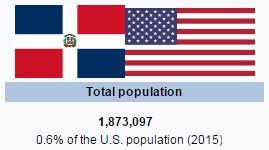
This failing assessment is accelerating faster and faster as every year goes by. In 2010, there were approximately 1.41 million people of Dominican descent in the US; now the absolute latest number is an estimate from 2015: 1,873,097; see the full details in Appendix A below.
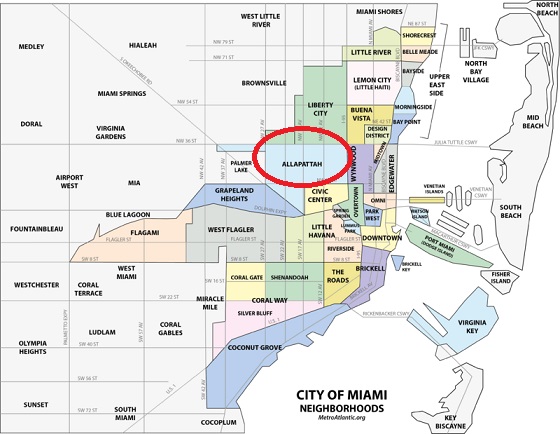
According to the book Go Lean…Caribbean, the population on the island for 2010 was reported at 9,523,209. So one-fifth of the population of Dominican heritage live in the US. There appears to be no progress in any movement for repatriation to the island, rather there is progress in movement to the South, to Florida. Of the Top 7 US states that the Dominican Diaspora lives in, Florida is the only one in the Sunbelt. The tropical landscapes in Greater Miami is reminiscent of the DR for many people. Now, the Miami neighborhood of Allapattah is emerging as the new Home away from Home and thusly branded: ‘Little Santo Domingo’ – see full details in Appendix B.
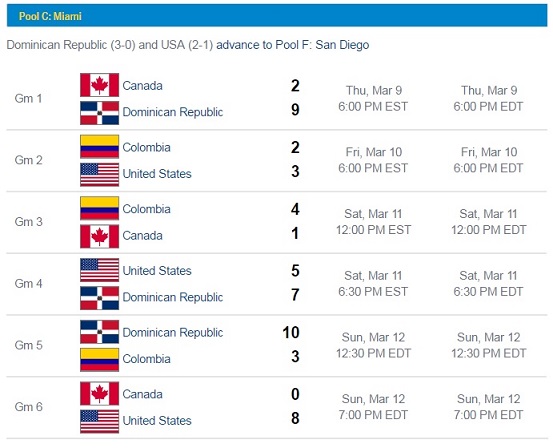
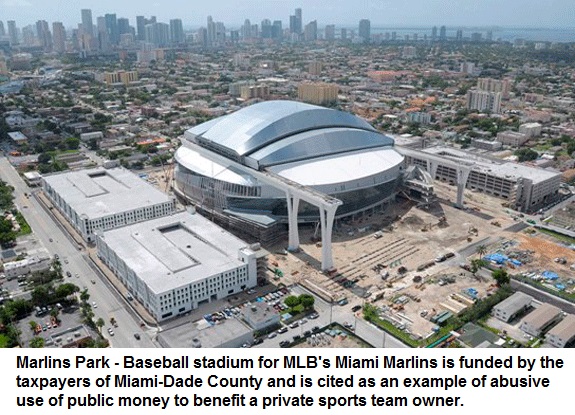
In a previous Go Lean blog-commentary, it was detailed how the Greater Miami area has benefited from failures in the Caribbean region. We saw this dynamic at work this weekend with the World Baseball Classic tournament in Miami. For this round in the tournament, these 4 teams were assigned to Miami for “Pool C” play:
See this news article here detailing the game between the Dominican Republic and the US – this article shows that despite the address, playing in Miami was a Home Game for the Dominican National Team:
Title: Miami, WBC are big winners as Team USA, Dominicans set records for attendance … and volume By: Greg Cote How perfect that the World Baseball Classic’s only first-round games in the United States are happening at Marlins Park. This event is so Miami.
It beams us to the rest of the world so accurately and with splendor, and I mean beyond the tourism/postcard aspect we saw Saturday night with the ballpark roof open, fresh breeze wafting in from the ocean and the downtown skyline majestic as a Goodyear blimp and a full moon floated overhead.
This international event speaks our language(s), reflecting the multi-ethnic, multi-national flavor that defines us. While much of the rest of the country recoils from diversity and retreats to jingoism — or I should say as our new government does — Miami remains steadfastly a savory, year-round gumbo of personalities and backgrounds.
On Saturday night, Dominican fans cheered a first-inning strikeout of Team USA’s Adam Jones as if it were the final out in a World Series Game 7. The sound was sonic, numbing. U.S. (and Marlins) fans countered with a roar of their own as Christian Yelich doubled to right field. I’m not sure a I had heard (or felt) such high-pitch passion at a South Florida sports event since the last time the Heat hosted an NBA Finals game.
The ballpark concourses filled with celebrating Dominicans before the game, a carnival of whistles and horns and sporadic, erupting chats of “Ole’!”
During the game there was The Wave undulating around the park. Of course there was. All that joy gotta go someplace.
Before the game I met a “house divided” couple. Ken Oliver, a South Florida attorney, wore Team USA colors and his friend, Josie Pichardo, those of the Dominican team. By arrangement I texted them during the game to get a sense of the atmosphere in the middle of it. They sat in Section 206, among far more fans who agreed with Josie’s team preference. I asked what it was like down there.
“Banging drums!” Oliver texted back.
Edison Cruz, 28, of Miami, had arrived with a handful of buddies — all wearing Dominican shirts.
“It is because baseball is our true national pastime,” he said. “In American there are all sports to love.”
Team USA and the Dominican both are favored to be the two teams of four in this Pool C to advance to the WBC’s next round, each fielding lineups filled with major-league stars. How good were these batting orders Saturday? The Marlins’ Giancarlo Stanton, a threat to lead the majors in home runs, hit seventh for the United States.
There is a reason Miami attracts global sporting events like the WBC. It isn’t just our weather. It’s our welcome. It’s all the colors in our quilt. If sport truly is an international language, we are fluent.
It is why this same ballpark was reconfigured recently into a racetrack for a major annual auto race involving stars from NASCAR, Formula One and IndyCar — an international event choosing Miami for its first-ever U.S. appearance.
This week it was announced two of the most famous, celebrated club teams in global soccer, Real Madrid and Barcelona, would bring their El Clasico rivalry to Hard Rock Stadium this July. The place will be filled in a way the Dolphins rarely manage.
So Saturday it was Team USA and the Dominican Republic filling MarlinsPark with passion and fans.
Who won? You didn’t need a scoreboard to tell you.
Miami did.
This blog-submission is not just relating a newspaper article and commenting about events from a far. This writer was at the game, Section 32 – Left Field bleachers.
The purpose of the book Go Lean…Caribbean (GLC) is NOT to celebrate Diaspora life in American cities; rather it is to champion the causes of retaining Caribbean citizens in the Caribbean, and inviting the Diaspora back to their homelands. These intentions were pronounced early in the book with these statements in the Declaration of Interdependence (Pages 13):
xix. Whereas our legacy in recent times is one of societal abandonment, it is imperative that incentives and encouragement be put in place to first dissuade the human flight, and then entice and welcome the return of our Diaspora back to our shores. This repatriation should be effected with the appropriate guards so as not to imperil the lives and securities of the repatriated citizens or the communities they inhabit. The right of repatriation is to be extended to any natural born citizens despite any previous naturalization to foreign sovereignties.
xx. Whereas the results of our decades of migration created a vibrant Diaspora in foreign lands, the Federation must organize interactions with this population into structured markets. Thus allowing foreign consumption of domestic products, services and media, which is a positive trade impact. These economic activities must not be exploited by others’ profiteering but rather harnessed by Federation resources for efficient repatriations.
This quest – reversing the propensity for Dominican people to abandon their island home – is a “tall order”, heavy-lifting task. This was expressed by one fan at the WBC Baseball game on Saturday March 11. He – first name Pablo – explained the following:
Pablo: I completed high school in the DR and knew that I was to leave immediately at the end of high school. This was not just my scenario, but the majority of the students in my graduating class. I look back now and I personally know that at least 50 percent of the class is in the US, through legal or illegal means.
GLC: You are celebrating your love for the DR homeland by being here at this baseball game, so I assume your plan now is to just work in the US during your active years and then retire back in the DR. Is this correct?
Pablo: No. I would not want to retire in the DR. It is too costly a lifestyle. You spend a lot of money in the homeland but get very little to show for it. I simply wish to visit, but I would not live there again … ever.
GLC: We recognize that even with some success from our roadmap, repatriating to the DR may never appeal to Diaspora members like you; so our focus is on the next generation, we must dissuade future classes from leaving in the first place.
Pablo: Good luck…
The Go Lean book serves as a roadmap for the introduction and implementation of the technocratic Caribbean Union Trade Federation (CU) to bring positive change. The CU‘s prime directives are identified with the following 3 statements:
Optimization of the economic engines in order to grow the regional economy to $800 Billion & create 2.2 million new jobs.
Establishment of a security apparatus to protect the resultant economic engines.
Improve Caribbean governance to support these engines.
The Go Lean book posits that with the empowerments that come with this roadmap, the region will be a better place to live, work and play. But this quest is heavy-lifting. The book thusly details the community ethos, strategies, tactics, implementations and advocacies to finally re-boot Caribbean society. Consider this sample:
Community Ethos – Ways to Impact Turn-Arounds
Page 33
Advocacy – Ways to Grow the Economy
Page 151
Advocacy – Ways to Impact the Diaspora
Page 217
Advocacy – Ways to Preserve Caribbean Heritage
Page 218
Advocacy – Ways to Impact the Dominican Republic
Page 237
This commentary previously featured subjects related to the DR; consider this sample:
As related previously, Miami is a better place to live, work and play … due to the contributions of the Caribbean Diaspora, including Dominicans. The new Marlins Park had never seen such a baseball fandom before the Dominicans made their impact on Saturday. (The stadium and Marlins owner is extremely disliked in the Miami community).
Dominicans are good for Miami and Miami is good for Dominicans. See the related VIDEO here:
Dominican fans dance to the music before Saturday’s World Baseball Classic game between the United States and the Dominican Republic at Marlins Park on Saturday, March 11, 2017. Pedro Portal The Miami Herald
Now, the purpose of the Go Lean roadmap is to foster that exact same prosperous spirit among Dominicans, but to prosper where planted in their Caribbean homeland, not in this foreign city (Miami). We urge all Dominican stakeholders to lean-in to this roadmap, those residing in the region and those in the Diaspora. 🙂
Sign the petition to lean-in for the roadmap for the Caribbean Union Trade Federation.
————
Appendix A – Dominican Americans
Dominican Americans are Americans who have full or partial origin from the Dominican Republic.[5] Although their emigration began in the sixteenth century,[6] thousands of Dominicans passed through the gates of Ellis Island in the 19th and early 20th centuries.[7]The most recent movement of emigration to the United States began in the 1960s, after the fall of the Trujillo regime. In 2010, there were approximately 1.41 million people of Dominican descent in the US, including both native and foreign-born.[8] Dominican Americans are the fifth-largest Hispanic group in the United States.
…
The absolute latest number in terms of size of this Diaspora is an estimate from 2015: 1,873,097[1][2]; this is 0.6% of the U.S. population (2015).[3]
As of the 2010 census, the top 10 US states with the largest Dominican populations are the following:[24]
New York – 674,787 (3.5% of statal population)
New Jersey – 197,922 (2.3% of statal population)
Florida – 172,451 (0.9% of statal population)
Massachusetts – 103,292 (1.6% of statal population)
Pennsylvania – 62,348 (0.5% of statal population)
Rhode Island – 35,008 (3.3% of statal population)
Connecticut – 26,093 (0.7% of statal population)
North Carolina – 15,225 (0.2% of statal population)
Allapattah is a neighborhood mostly in the city of Miami, Florida, and partly in metropolitan Miami, United States. As of May 2011, the county-owned portion of Allapattah, from State Road 9 to LeJeune Road, is being annexed by the city proper.[1]
The neighborhood was nicknamed Little Santo Domingo in 2003 … to honor the sizable Dominican American population in the community.[2]
History The name is derived from the Seminole Indian language word meaning alligator. The initial settlement of the Allapattah community began in 1856 when William P. Wagner, the earliest documented white American permanent settler, arrived from Charleston, South Carolina and established a homestead on a hammock along the Miami Rock Ridge, where Miami Jackson High School presently stands. Development ensued from 1896 and into the 20th century in the area with the completion of the Florida East Coast Railroad (FEC).[3]
Allapattah was predominantly populated by whites from early in the 20th century until the late 1950s, when there was a large influx of black Americans displaced by the construction of I-95 (then, the North-South Expressway) in the 1950s and 1960s, leading to white flight to suburban Miami-Dade County and Broward County. Cubans migrated to Miami neighborhoods like Allapattah in large numbers following the Cuban Revolution of 1959, hosting one of Miami’s largest Cuban American populations. The 1980s brought influxes of Dominican Americans, Nicaraguans, Hondurans, and Haitians in the aftermath of various refugee crises in those nations. Now, a melting pot of residents from all across the Caribbean, Central America, and Latin America reside in the area.
Demographics As of 2000,[5] Allapattah had a population between 40,406 and 43,860[6] residents, with 12,508 households, and 8,224 families residing in the neighborhood. The median household income was $19,141.53. The racial makeup of the neighborhood was 72.23% Hispanic or Latino of any race, 18.33% Black or African American, 6.89% White (non-Hispanic), and 2.55% Other races (non-Hispanic).
The zip codes for Allapattah include 33136, 33125, 33127, and 33142. The area covers 4.653 square miles (12.05 km2). As of 2000, there were 23,967 males and 19,894 females. The median age for males was 33.9 years old, while the median age for females was 36.0 years old. The average household size had 2.8 people, while the average family size had 3.4 members. The percentage of married-couple families (among all households) was 36.4%, while the percentage of married-couple families with children (among all households) was 16.6%, and the percentage of single-mother households (among all households) was 14.5%. 8.0% of the population were in correctional institutions, 1.0% of the population were in nursing homes, and 1.2% of the population were in other group homes. The percentage of never-married males 15 years old and over was 24.5%, while the percentage of never-married females 15 years old and over was 12.4%.[6]
As of 2000, the percentage of people that speak English not well or not at all made up 33.0% of the population. The percentage of residents born in Florida was 30.5%, the percentage of people born in another US state was 9.2%, and the percentage of native residents but born outside the US was 4.3%, while the percentage of foreign born residents was 56.1%[6]
Truth be told, the French-speaking Caribbean wants to do more with their tropical neighbors; they want to confederate, collaborate and convene on different issues related to community development and nation-building.
On behalf of planners for a new Caribbean, we welcome them, and their INTERREG efforts.
What is INTERREG?
Literally, Inter–Regional. See the VIDEO in the Appendix below.
This is not so new a commitment. In a previous blog-commentary, the movement behind the book Go Lean … Caribbean heralded the addition of Martinique, Guadeloupe and Saint Martin to the Association of Caribbean States. More so, in the prior year to this effort, the same countries urged more economic integration with their territorial neighbors, the Organization of Eastern Caribbean States:
This is the similar siren call from the movement behind the Go Lean … Caribbean book. The book serves as a roadmap to navigate the integration and consolidation of all 30 member-states into a technocratic Caribbean Union Trade Federation (CU). Those 30 member-states include:
Martinique
Guadeloupe
Saint Martin
Saint Barthélemy (Subordinate of St. Martin)
The INTERREG targets European territories, so the Dutch Caribbean can also solicit grants. In addition, French Guiana is included. Yippee! This territory was always on the CU‘s radar screen, but because of it’s lack of autonomous administration, the perception was that French Guiana would have to be confederated in regional governance at a later time.
We will take any integration with French Guiana now, especially with funding attached.
The CU will equally incorporate participation from other Caribbean member-states, including the Dutch, English and Spanish-speaking counterparts. Our quest is simple, as envisioned by the demonstrative expression: to “raise the tide for all boats in the harbor”. The Go Lean roadmap posits that the region is failing, ill-prepared to compete on the world’s stage, but the solution is too big for any one Caribbean member-state alone; we need “all hands on deck”, to engage the full participation of the whole neighborhood. Just look at the map here depicting the neighborhood of islands:
The Go Lean/CU roadmap seeks to integrate the entire region’s economic, security and governing engines; to employ best practices to impact our prime directives; identified with the following 3 statements:
Optimization of the economic engines in order to grow the regional economy to $800 Billion & create 2.2 million new jobs.
Establishment of a security apparatus to protect the resultant economic engines.
Improvement of Caribbean governance to support these engines.
The Go Lean book always anticipated the French territories INTERREG efforts. Page 96 describes the initial assembling of all the existing regional organizations into the new umbrella, the Caribbean Union Trade Federation (CU). These initial organizations include, among others:
CariCom Secretariat – 22 Agencies
CariCom Office of Trade Negotiations
British Commonwealth / Overseas Territory
French Overseas Territory
US Overseas Territory
Kingdom of the Netherlands – Overseas Territory
Association of Caribbean States (ACS)
Organization of Eastern Caribbean States (OECS)
INTERREG is key for this integration effort of the European-dependent territories (French & Dutch) here in the Caribbean. The actual definition follows:
European Territorial Cooperation (ETC), better known as INTERREG, is one of the two goals of cohesion policy and provides a framework for the implementation of joint actions and policy exchanges between national, regional and local actors from different Member States. The overarching objective of European Territorial Cooperation (ETC) is to promote a harmonious economic, social and territorial development of the Union as a whole. Interreg is built around three strands of cooperation: cross-border (Interreg A), transnational (Interreg B) and interregional (Interreg C).
Five programming periods of INTERREG have succeeded each other:
INTERREG is a series of five programmes to stimulate cooperation between regions in the European Union, funded by the European Regional Development Fund. The first Interreg started in 1989. Interreg IV covered the period 2007–2013. Interreg V (2014-2020) covers all 28 EU Member States, 3 participating EFTA countries (Norway, Switzerland, Lichtenstein), 6 accession countries and 18 neighbouring countries. It has a budget of EUR 10.1 billion, which represents 2.8% of the total of the European Cohesion Policy budget.[1] Since the non EU countries don’t pay EU membership fee, they contribute directly to Interreg, not through ERDF. – Source: Wikipedia.
According to the foregoing “prime directives“, the Go Lean/CU effort leads first with an emphasis on regional economics. Follow the money! This INTERREG V has a budget of of €10.1 billion (Euros); this is money that we cannot afford to ignore in our Caribbean region, especially since the purpose is cross-border development activity of the island-nations. See this portrayed in this article/Press Release:
Title: New INTERREG Caribbean programme launched Press Release: December 22, 2016 – The new INTERREG Caribbean programme was officially launched last Wednesday, 14th December 2016, in St. Lucia by representatives and officials of the French Overseas Departments and Collectivities of Guadeloupe, Martinique, French Guyana & Saint Martin, the Organisation of Eastern Caribbean States (OECS), and the European Union (EU), with support from the Honourable Mr. Allen Chastanet, Prime Minister of St. Lucia.
By launching the INTERREG V Caribbean programme in St. Lucia, the organizers made a statement of their commitment to consolidate regional partnerships (between the French Caribbean and the English-, Spanish- and Dutch- speaking countries and territories of the region), by strengthening the involvement of regional organisations, and to achieve a better co-ordination and distribution of the European Regional Development Funds to the benefit of the greater Caribbean.
The work carried out in consultation with all partners focused on the evaluation and selection of a large number of projects that have been submitted, which testifies to the growing success of the INTERREG Caribbean programme, opening up real prospects for strengthening Caribbean partnerships, and allowing all regional stakeholders to be a part of the effort to put transnational co-operation at the heart of the sustainable development of the region.
The preparation and realisation of the three-day conference constituted important moments of sharing, exchanging and building a true policy of regional co-operation and on Wednesday, 14th December, the new INTERREG Caribbean program was officially launched in the presence of many regional partners and stakeholders.
At the public meeting, Mrs. Marie-Luce Penchard, 2nd Vice-President of the Guadeloupe Region, in charge of regional co-operation, European affairs & Universities, took the opportunity to urge “project developers, who play a most vital role in the programme development, to get even more involved in order to build together a real partnership for the benefit of our [Caribbean countries and] territories”. She also expressed the strong will of the Region of Guadeloupe to support the development of their activities in the greater Caribbean, in a genuine sustainable and co-operative way.
“While the previous programmes have brought closer together project developers and regional stakeholders [to our territories]”, she continued, “the new INTERREG Caribbean programme intends to go even further by supporting projects in terms of economic competitiveness, natural risks and joint natural and cultural heritage.”
The programme also seeks to provide concrete answers to common issues and challenges shared by Caribbean countries and territories, which pertain to public health, renewable energy development and skills development. Source: St Lucia Times – Daily Newspaper – Retrieved February 20, 2017 from: https://stluciatimes.com/2016/12/22/new-interreg-cbean-programme-launched
There was a previous effort to integrate the region’s economic apparatus, the Caribbean Single Market Economy (CSME). It faltered! It was limited to the CariCom (Caribbean Community) countries – mostly English-speaking Caribbean sovereign territories (15 member-states).
The Go Lean/CU is a second – better – attempt of those same hopes and dreams behind CSME. For starters, this CU effort engages all 30 Caribbean member-states. So we can truly say: “Last time, we knocked on the door; this time we kick it in”.
Why will we succeed this time?
The Go Lean book addresses this exact issue; Page 132 of the book details the following reasons; (notice #7 specifically; this applies to INTERREG):
10 Reason Why the CU Will Succeed
Emergence of a Giant Market
Modeled after the European Union
Declaration of Interdependence
Economic Engine
Alternative to North America, and European Colonial Legacies
More American Support
International Cooperation and Support
Many other economic blocs and some countries (i.e. Canada) will only deal with developing nations in a regionalized effort, rather than individual foreign aid. We are still Third World, and we want/need international grants – free money.
Direct Foreign Investment: Risk and Reward
Diversity – 4 languages; 5 colonial legacies – is the Spice of Life
Reverse Migration / Repatriation
There are so many benefits that stem from a larger “economies of scale”, a Caribbean Single Marketunites 42 million people for the potential of an $800 Billion GDP market. This end-result furnishes an improved environment for commerce, security and governance. This is how the Go Lean book explains that we can make our homeland a better place to live, work and play.
The Go Lean/CU roadmap is also a better plan than the previous CSME because it encompasses more aspects of Caribbean life, not just economics; it includes security mitigations and government empowerments. This total focus allows CU stakeholders to impact the existing societal defects and to incentivize the adoption of new community ethos.
Community ethos refers to the underlying attitude/spirit/sentiment that informs the beliefs, customs, or practices of society. One ethos recommended in the Go Lean book – Page 35 – for the region to adopt is “Sharing”; see this quotation:
“Sharing is promoted as a community ethos; not in the form of a re-distribution of existing wealth, but rather the sharing of the tools to create new wealth for all to benefit from. The treaty also enables a collective security pact to assuage against systemic threats, including emergency management and responses to natural disasters.”
The Go Lean book details a full series of community ethos, strategies, tactics, implementations and advocacies designed to facilitate regional integration; see a sample here:
Anecdote – Caribbean Single Market & Economy
Page 15
Anecdote – French Caribbean: Organization & Discord
Page 17
Community Ethos – Money Multiplier
Page 22
Community Ethos – Job Multiplier
Page 22
Community Ethos – Lean Operations
Page 24
Community Ethos – Cooperatives
Page 25
Community Ethos – Ways to Improve Sharing
Page 35
Community Ethos – Ways to Impact the Greater Good
Page 37
Strategic – Vision – Integrated Region in a Single Market
Page 45
Strategic – Vision – Agents of Change
Page 57
Tactical – Confederating a Non-sovereign Union
Page 63
Tactical – Fostering a Technocracy
Page 64
Tactical – Growing to $800 Billion Regional Economy
Page 67
Tactical – Separation of Powers
Page 71
Anecdote – Turning Around CariCom – The Single Market
Page 92
Anecdote – “Lean” in Government
Page 93
Implementation – Ways to Pay for Change
Page 101
Implementation – Foreign Policy Initiatives at Start-up
All of the Caribbean, despite the languages, have had societal failures. Large swaths of the population has fled to foreign shores for refuge. In the French (and Dutch) Caribbean, it is not uncommon for high school graduates to leave soon after graduation. No society can thrive with this disposition. Communities need its people, young and old. But the people need opportunities for prosperity.
The Go Lean roadmap stresses the need for a fully integrated Caribbean Single Market with the French, Dutch, English and Spanish territories, all 30 member-states. The foregoing “News Release” urges the Eastern Caribbean states specifically and the whole Caribbean generally to “double-down” on the integration movement. There are benefits galore … and money too.
This is the consistent theme – to dive deeper in the waters of an integrated Single Market – in so many previous Go Lean blog-commentaries; see sample here:
Now is the time for all of the Caribbean – the people and governing institutions – to lean-in for Caribbean integration. We can get it right, this time. This Go Lean roadmap is conceivable, believable and achievable.
So we welcome all stakeholders; we welcome the French.
Published on May 25, 2016 – An introduction to the Interreg funding instrument in the framework of EU cohesion policy – recorded live at the Interreg CENTRAL EUROPE lead applicant training in Zagreb on 10 May 2016. For more information on Interreg, our transnational cooperation programme and the funding we provide, please take a look at www.interreg-central.eu
This is an ENCORE of the original blog-commentary from April 28, 2015 regarding empowering families in failing communities. The City of Detroit was cited, in comparison to select families in the Caribbean.
That Detroit family, Mike Ilitch et al, now has to endure the loss of the family patriarch. This is a big loss for the family and a big loss for the Detroit community; see the full story here:
The movement behind the book Go Lean…Caribbean have observed-and-reported on the turn-around of the once-great City of Detroit. We learned to value and respect the Ilitch family as role models for the Caribbean to emulate. This loss is huge!
How do you eat an elephant? One bite at a time. – Source unknown
This familiar expression is not intended to give culinary instructions regarding “elephant” meat, but rather it relates a formula for taking on big goals. The answer is to attack the big goal with one small task at a time; taking one step after another in a journey towards a destination. The book Go Lean…Caribbean seeks to engage a big goal, that of elevating the Caribbean region through economic, security and governing empowerments.
This book declares this “elephant-size” goal is heavy-lifting; thusly the above advice applies. The book serves as a roadmap for the introduction and implementation of the technocratic Caribbean Union Trade Federation (CU) to provide better stewardship for the Caribbean homeland. The book posits that we can do this. We can look internally for solutions, rather than expecting some external “actor” to come in and provide answers. No, we must not fashion ourselves as parasites, but rather protégés of those communities that have already completed these heavy-lifting tasks.
Here is where we benefit from the lessons in history from other communities, families and individuals that have demonstrated unity-of-purpose. We are taught that “bite-size morsels” of the regional “elephant” can be well-handled by strong families; therefore the need exists to strengthen and empower families to optimize their societal contributions.
This strategy of family empowerment is very critical, and has a successful track record. In a previous blog/commentary, the issue of the origin of powerful families was detailed at full length. A direct quote relates:
From the origins of slavery, the region traversed the historic curves of social revolution and evolution. In the 1500, the Protestant movement took hold. As other European powers deviated from Catholicism, Papal Bulls [- which awarded territories in this New World -] carried no significance to them and compliance was ignored. England and Holland established their own Protestant Churches with their own monarchs as head of Church and State; Papal decrees were replaced with Royal Decrees and Charters. The intent and end-result was still the same: territories and lands awarded (colonized) with the stroke of a pen by one European power after another. The Royal Decrees and Charters were then reinforced with a strong military presence and many battles…
[The resultant] “oligarchy” … power effectively rested with a small number of people. These people could be distinguished by royalty, wealth, family ties, education, corporate, religious or military affiliation.
In this discussion of oligarchy, focus is given to powerful families. There are encyclopedic references that relate that oligarchy structures are often controlled by a few prominent families, who typically pass their influence/wealth from one generation to the next, even though inheritance alone is not a necessary condition for oligarchies to prevail.
The islands of the Caribbean fit the story-line in the [Caribbean-Calypso] song lyrics: “Islands in the sun; willed to me by my father’s hand”.
This is the challenge that belies Caribbean society. Most of the property and indigenous wealth of the Caribbean region is concentrated amongst the rich, powerful and yet small elite; an oligarchy. Many times these families received their property, corporate rights and/or monopolies by Royal Charter from the European monarchs of ancient times. These charters thus lingered in legacy from one generation to another … until …
The Go Lean book pushes further and deeper on this subject of family empowerment, stressing that success can still be derived in the Caribbean, even without the legacy of 500 years of entitlement. The book therefore stresses certain best-practices to apply to the regional strategies, tactics and implementations.
The lesson of best practices comes from another community, of which we can be a protégé. This is the City of Detroit, Michigan USA. This community is notorious for its urban failures, even filing Bankruptcy in 2013. But from these ashes we have the following example of the pivotal and empowering Ilitch Family. Their Ilitch Holdings, Inc. operates as a holding company for restaurants, sports clubs, real estate, and entertainment businesses. With 17,000 direct employees and annual revenues of $1.8 billion (estimated in 2007; privately held companies are not required to disclose), this family enterprise truly impacts and empowers its community. (Detroit is voted #1 Sports City in the USA). The family operates and franchises the Little Caesars Pizza global chain plus this entertainment company branded Olympia Entertainment:
In 1982, Michael and Marian Ilitch purchased the Olympia Stadium Corporation, the management company for Olympia Stadium and renamed it Olympia Arenas, Inc. (In 1927, the Olympia Sports Arena was built in downtown Detroit to accommodate Detroit’s NHL franchise, and serve as the premier venue for a variety of entertainment). The newly purchased business was responsible for managing events at Joe Louis Arena (which had been completed in 1979 as the home of the Detroit Red Wings), Cobo Arena and the Glens FallsCivicCenter. That same year, Mr. and Mrs. Ilitch purchased the Detroit Red Wings.
In 1987, the Ilitches purchased Detroit’s iconic Fox Theatre (built in 1928) and renovated the 4,800+ seat venue, saving 80% of the original surfaces. In 1988, the Ilitches re-opened the Fox as the hub of the Foxtown Entertainment District and the building now houses the offices of Olympia Entertainment and Little Caesars Pizza. In 1989, the National Parks Service designated the Fox Theatre as a National Landmark.
The Olympia Stadium Corporation was renamed Olympia Entertainment in 1996 to reflect the management company’s expanded operations and venues.
In April 2000, Comerica Park, the new home of the Detroit Tigers hosted Opening Day and ushered in a new era of MLB baseball in Detroit. The 41,000+ seat ballpark is owned by the Detroit-Wayne County Stadium Authority, and Olympia Entertainment operates Comerica Park.
(Source: http://www.olympiaentertainment.com/about-olympia-entertainment/company-history)
Why consider the Ilitch Family as a model? They are impactful in business, sports, entertainment and philanthropy. This applies to the patriarch (Michael, Sr.) and the next generation; thus forging a family legacy. The family enterprises plus the Olympic Entertainment are detailed in the Appendix below. This is truly a family endeavor; in addition to parents Michael and Marian Ilitch, they have seven children: Christopher Ilitch (current CEO and President of Ilitch Holdings, Inc.); daughter Denise Ilitch, an attorney; Ron; Michael, Jr.; Lisa Ilitch Murray; Atanas; and Carole (Ilitch) Trepeck.
Needless to say, the City of Detroit had/has to engage, cooperate and collaborate with this family to induce their investment in the community. This is an example of impacting the Greater Good.
The Go Lean roadmap calls for engaging families in the Caribbean that are committed to elevating the Caribbean. There are truly Ilitch-like families here as well. Just consider this simple list of the most influential families in just one Caribbean member-state, Jamaica; as published by the highly regarded regional online publication, Pan-American World:
1. Joseph M. Matalon Matalon is among the foremost leaders in Jamaica business, part of a family with a legacy of successful business practices for decades. He is the chairman of the ICD Group, a Jamaican investment holding company. For more than 20 years, his knowledge and expertise have been utilized in the areas of transactional finance, investments and banking in various institutions. He is the chairman of British Caribbean Insurance Co., the Development Bank of Jamaica and president of the Private Sector Organization of Jamaica (PSOJ). He also is a director of the Gleaner Co. and Commodity Service Co. and a former director of the Bank of Nova Scotia (Jamaica Limited). In addition, he has been involved with a number of special committees to advise the government on financial and economic matters.
2. Michael Lee-Chin He is a self-made billionaire who started his career as a road engineer for the Jamaican government and gradually built his way up to chairman and founder of Portland Holdings, a thriving, privately held investment company in Jamaica. Additionally, Lee-Chin is executive chairman of AIC Limited and National Commercial Bank. Born in Port Antonio in the Portland Parish, the Jamaican-Canadian Lee-Chin also owns stakes in National Commercial Bank Jamaica and Total Finance in Trinidad and Tobago. His personal real estate portfolio includes 250 acres of beachfront property in Ocho Rios, Jamaica, and homes in Canada and Florida, according to Forbes. He has been off the magazine’s billionaire list for the last four years, topping out at a net worth of $2.5 billion in 2005.
3. Chris Blackwell He belongs to an affluent family that acquired its wealth through sugar and Appleton Rum. He established himself as a music mogul more than 50 years ago. His rise included introducing the world to reggae. He produced music for artists like Ike and Tina Turner, Bob Marley and the Wailers, Burning Spear and Black Uhuru, among others. He is also the founder of Palm Pictures and creator of the Golden Eye Film Festival that honors Jamaicans who excel in the arts and music. He was awarded the Order of Jamaica for his exemplary work in the entertainment industry in 2004. The Blackwell family name has been the inspiration for “Blackwell Fine Jamaican Rum.” Blackwell currently runs Island Outpost, which is a conglomerate set up to run a group of resorts in Jamaica and the Bahamas. He has an estimated net worth of $180 million, according to celebritynetworth.com.
4. Paula Kerr-Jarrett She is an attorney, philanthropist and influential presence in the Jamaican society circle. She and her husband, Mark, are working to bolster Montego Bay tourism. They announced two months ago a multibillion-dollar partnership project to construct 1,200 homes, a 48-acre tech park with enormous space for information technology that would bring 30,000 jobs and a new University of the West Indies that would accommodate up to 10,000 students. They estimate the investment value of this project to be $500 million. Her great-grandmother, Marion Louise Reece Bovell, was the first woman in Jamaica to run in the general elections of 1944 as an independent candidate. Kerr-Jarrett is connected by marriage to the prominent Jarrett family.
5. Dr. Blossom O’Meally-Nelson O’Meally-Nelson is Jamaica’s first female postmaster general. She is the former pro-chancellor and chairman of Council for the University of Technology (UTECH). Against the background of her outstanding achievements in public service, O’Meally-Nelson is making inroads in the private sector with a family-owned logistics company, Aeromar Group.
6. Joseph John Issa Known mostly as Joe Issa, he is the founder of Cool Group, a multibillion-dollar entity that is made up of more than 50 companies; the chairman of the SuperClubs all-inclusive resort chain, and vice chairman of the Gleaner Co. Issa is credited with introducing the all-inclusive concept into Jamaica more than 30 years ago. He introduced the concept during the tourism slump in the 1970s when many hotels were struggling to break even. It was and remains a booming success. He also maintains a commitment to helping the community, especially children from underprivileged areas in education. He said, ”Born into a rich family, I cannot imagine what it would be like going to school without lunch or books.”
7. Gordon ‘Butch’ Stewart Stewart reigns as the chairman of Sandals Resorts International, The Jamaica Observer and more than 20 other companies that fall under the Appliance Traders empire, one of the largest private-sector conglomerates in the Caribbean. He has a net worth of $1 billion. His working life began at the age of 12, when he borrowed his father’s fishing boat and began selling his catch of the day and ferrying the rich and famous between their anchored yachts and the harbor front. It was during those times he said he learned the elements of success.
8. Wayne Chen Wayne Chen, the chief executive officer of Super Plus Food Stores, is also the man behind a massive expansion in the local supermarket business in Jamaica. Super Plus is a large supermarket chain with at least 30 stores across the island. He wears other hats, too: chairman of NCB Insurance Co. Limited and West Indies Trust Co. Limited. He is also a director of NCB (Cayman) Limited, AIC (Barbados) Limited and the Christiana Town Centre Limited. He is also a younger brother of billionaire Michael Lee-Chin.
So the consideration of the Go Lean book, as related to this subject is one of governance and economic empowerment. The book posits that empowerment does not only need to emanate from government, but rather individuals and empowering families can have a positive impact. These points were pronounced in the opening Declaration of Interdependence (Page 12) with these acknowledgements and statements:
xi. Whereas all men are entitled to the benefits of good governance in a free society, “new guards” must be enacted to dissuade the emergence of incompetence, corruption, nepotism and cronyism at the peril of the people’s best interest. The Federation must guarantee the executions of a social contract between government and the governed.
xii. Whereas the legacy in recent times in individual states may be that of ineffectual governance with no redress to higher authority, the accedence of this Federation will ensure accountability and escalation of the human and civil rights of the people for good governance, justice assurances, due process and the rule of law. As such, any threats of a “failed state” status for any member state must enact emergency measures on behalf of the Federation to protect the human, civil and property rights of the citizens, residents, allies, trading partners, and visitors of the affected member state and the Federation as a whole.
xxiv. Whereas a free market economy can be induced and spurred for continuous progress, the Federation must install the controls to better manage aspects of the economy: jobs, inflation, savings rate, investments and other economic principles. Thereby attracting direct foreign investment because of the stability and vibrancy of our economy.
xxxiii. Whereas lessons can be learned and applied from the study of the recent history of other societies, the Federation must formalize statutes and organizational dimensions to avoid the pitfalls of communities like … Detroit…
The same as empowering families ruled in colonial times, based on special favor granted to their forebears by Royal Decree, the family dynamic can help the region again; this time for the Greater Good. While collaboration is so much harder on a societal level – there is the need for buy-in, compromise and consensus – families are already attuned to instinctively trust each other, work together and foster unity-of-purpose. Lastly, families often invest with a deferred gratification ethos, expecting many times that only the next generation will reap the returns on these investment. This eco-system is the microcosm of societal progress.
This Go Lean roadmap calls for incentivizing and engaging many empowering families; and to do so on a regional basis.
In general, the CU/Go Lean roadmap will employ strategies, tactics and implementations to impact its prime directives; identified with the following 3 statements:
Optimization of the economic engines in order to grow the regional economy to $800 Billion & create 2.2 million new jobs.
Establishment of a security apparatus to protect the resultant economic engines and mitigate internal and external threats.
Improve Caribbean governance to support these engines.
In much the same way the Ilitch Family seeks to transform Detroit, the Go Lean book stresses key community ethos, strategies, tactics, implementations and advocacies necessary to transform and turn-around the eco-systems of Caribbean society. These points are detailed in the book; the following is a sample:
Community Ethos – Economic Principles – Deferred Gratification
Page 21
Community Ethos – Economic Principles – People Choose
Page 21
Community Ethos – Economic Principles – Choices Involve Costs
Page 21
Community Ethos – Economic Principles – Economic Systems Influence Individual Choices
Page 21
Community Ethos – Economic Principles – Consequences of Choices Lie in the Future
Page 21
Community Ethos – Governing Principles – Minority Equalization
Page 24
Community Ethos – Governing Principles – Return on Investments
Page 24
Community Ethos – Governing Principles – Cooperatives
Page 25
Community Ethos – Ways to Impact the Future
Page 26
Community Ethos – Ways to Help Entrepreneurship
Page 28
Community Ethos – Ways to Impact Turn-Arounds – Learning from Detroit
Page 33
Community Ethos – Ways to Impact the Greater Good
Page 37
Strategy – Vision – Confederate all 30 member-states/ 4 languages into a Single Market
Page 45
Strategy – Mission – Build and foster local & regional economic engines
Page 45
Tactical – Ways to Foster a Technocracy
Page 64
Tactical – Growing the Economy – Repatriate & Reunite Families
Page 70
Tactical – Separation-of-Powers – CU Federal Government versus Member-State Governance
Page 71
Implementation – Ways to Pay for Change
Page 101
Implementation – Reasons to Repatriate
Page 118
Planning – Anatomy of Advocacies – One person can make a difference
Page 122
Planning – Ways to Make the Caribbean Better
Page 131
Planning – Lessons Learned from Detroit – Turn-around from Failure
Page 140
Advocacy – Ways to Grow the Economy
Page 151
Advocacy – Ways to Create Jobs
Page 152
Advocacy – Ways to Improve Governance
Page 168
Advocacy – Ways to Better Manage the Social Contract
Page 170
Anecdote – Caribbean Industrialist – Butch Stewart
Page 189
Advocacy – Ways to Preserve Caribbean Heritage
Page 218
Advocacy – Ways to Impact Retirement
Page 221
Advocacy – Ways to Impact the One Percent
Page 224
Advocacy – Ways to Improve Elder-Care
Page 225
Advocacy – Ways to Empower Women – Focus on Families
Page 226
Advocacy – Ways to Impact Youth
Page 227
Advocacy – Ways to Re-boot Jamaica
Page 239
There are other lessons for the Caribbean to learn from considering the historicity of empowering families, those in the past, present and future. Whether these families prospered due to their own business acumen and hard work, or were entitled by some Royal Decree, we must all be judged on what we do with the gifts we are blessed with.
Our region has experienced a lot of abandonment over the decades; this status quo cannot persist. We have suffered the same as many other failing communities – like Detroit. But the families depicted in this commentary, in Detroit and in the Caribbean, prove that despite hardships, if there is some unity-of-purpose, success can still be fostered even in the most trial-some conditions. Looking and learning at these communities, we glean that we can confer, convene and collaborate with empowering families to positively impact our communities.
Let’s get started! Let’s make our Caribbean homeland – and our individual communities – better places to live, work and play. 🙂
Appendix – Ilitch Family Holdings and Olympia Entertainment Group
Fox Theatre
Opened: September 21, 1928 Re-opened: November 19, 1988 after Michael and Marian Ilitch bought and restored the theatre to its original splendor; saving 80 percent of the original surfaces.Features: The Fox Theatre was the crown jewel of Detroit’s theater district during the first quarter of the 20th Century playing host to some of the biggest names in show business and showing first-runs of some of the greatest films in history. The Fox Theatre has played host to some of the greatest names in entertainment including Louis Armstrong, Cab Calloway, Frank Sinatra, Sammy Davis Jr., Stevie Wonder and Diana Ross. Designated a National Landmark in 1989, the Fox is the second largest surviving theatre (over 4,800 seats) in the nation and has the second largest functioning Wurlitzer organ.
Joe Louis Arena
Opened: In December 1979. Joe Louis Arena (The Joe or JLA) became the home-ice of the Detroit Red Wings NHL hockey franchise, replacing Olympia Stadium, the former home of Detroit’s NHL team for 72 years.Features: The 20,058-seat arena is Detroit’s largest indoor venue and has hosted a wide variety of events in its 30-year existence including the NHL All-Star Game (February 5, 1980), the Republican National Convention (July 14-18, 1980) and six Stanley Cup Finals. The arena is named after boxing legend and long-time Detroit resident, Joe Louis. First event: December 23, 1979 — University of Detroit vs. University of Michigan basketball; First Red Wings Game: December 29, 1979
Comerica Park
Opened: April 11, 2000 Features: The 45,010 seat, open-air ballpark is home to the Detroit Tigers Major League Baseball franchise. The ballpark has hosted more than 850 ball games as well as concerts with more than 80,000 fans. Comerica Park has hosted Bon Jovi, Sheryl Crow, Bruce Springsteen, Aerosmith, KISS, Eminem, Jay-Z, The Rolling Stones and Kid Rock.First Event: Detroit Tigers vs. Seattle Mariners on April 11, 2000First Concert: The Dave Matthews Band on July 5, 2000
City Theatre
Opened: September 15, 1993 as the Second City-DetroitReopened: October 6, 2004 as renamed City TheatreFeatures: An intimate, 472-seat theatre with the atmosphere of a Broadway house.
Affiliates
Little Caesars Pizza
Little Caesars Pizza founders Michael and Marian Ilitch opened their first restaurant in Garden City, Michigan, in 1959. Little Caesars, the fastest growing pizza chain, built more stores in the world in 2009 than any other pizza brand and today is the largest carry-out chain globally with restaurants on five continents. Little Caesars is growing in prime markets across the country, and is offering strong franchisee candidates an opportunity for independence with a proven system. For the third year in a row, Little Caesars was named “Best Value in America”* of all quick-serve restaurant chains. In addition, Little Caesars offers strong brand awareness with one of the most recognized and appealing characters in the country, Little Caesar.
“Highest-Rated Chain – Value for the Money” based on a nationwide survey of quick-service restaurant consumers conducted by Sandelman & Associates, 2009
Detroit Red Wings
One of the Original Six franchises in the National Hockey League, the Detroit Red Wings have won more Stanley Cup Championships than any other American franchise. Purchased in 1982 by Mike and Marian Ilitch, the Red Wings have stood as one of professional sports’ premier franchises with the most recent Cup victories in 1997, 1998, 2002 and 2008. The Red Wings play in front of sellout crowds of 20,000-plus fans at Joe Louis Arena in downtown Detroit. Visit us at http://www.detroitredwings.com.
Detroit Tigers
In 1992, Mike Ilitch purchased the Detroit Tigers, Detroit’s major league baseball team, which plays in Comerica Park. The ballpark is located directly across the street from the Fox Theatre. ComericaPark opened in 2000 to rave reviews. Sports Illustrated called Comerica Park a “brilliant ballpark”, among the top two or three in the country.
In 2005, the Detroit Tigers hosted the 76th All-Star game at Comerica Park. All-Star Week in Detroit produced the highest grossing revenue in the history of the All-Star Game. Comerica Park has also hosted numerous concerts and the 2006 World Series. Visit the Detroit Tigers website at www.detroittigers.com
Little Caesars Pizza Kits
Since its introduction in the Detroit area in 1997, Pizza Kits has become the “Hottest Fundraiser in America” for all types of nonprofit organizations. Pizza Kits contain all the ingredients to make delicious pizza at home. The Pizza Kit Program now offers a variety of family favorites: 9 Pizza Kits, 3 Breads, and 3 Specialty Items.
In Fall 2003, the Little Caesars Cookie Dough Program was launched with 8 great tasting varieties including: Chocolate Chip, White Chocolate Macadamia Nut, Peanut Butter and Oatmeal Raisin.
Today, Little Caesars Fundraising Programs proudly helps raise millions of dollars for thousands of schools, churches, sports teams and nonprofit organizations throughout the continental United States. Visit us at www.pizzakit.com or call us toll free at 1-888-4-LC-KITS.
Olympia Development
Olympia Development, L.L.C. was established by the Ilitch organization in 1996 to cultivate and attract development in downtown Detroit. The company was instrumental in negotiating the side-by-side Detroit Tigers and Detroit Lions stadiums. As a result, the 76th All-Star Game played at Comerica Park in 2005 and the XL Super Bowl that played at Ford Field in 2006. Olympia Development is dedicated to supporting further growth with the new Foxtown sports and entertainment district in downtown Detroit; see VIDEO below.
Uptown Entertainment
Uptown Entertainment includes two of Detroit’s finest movie theatres – the historic Birmingham 8 and Ren Cen 4. In addition to featuring first-run movies, Uptown Entertainment offers unparalleled event services in a variety of unique settings. Uptown is dedicated to faithfully providing our guests with the ultimate in theatre projection, sight, sound, and service. Special features of Uptown Entertainment theatres include stadium seating, digital surround sound, wall-to-wall curved screens and full bar service is available for any private theatre reservations.
In 2010, the Birmingham 8 theatre was one of the first in the area to offer Sony Digital Cinema 4K projection and RealD 3D, which provides the highest resolution projection available, 3D capability and a superior viewing experience for guests. The technology also allows for a variety of alternative content such as live concerts, sporting events, operas and more! Visit UptownEntertainment.com. The Destination for an Exceptional Entertainment Experience.
Hockeytown Cafe
Voted the No. 2 sports bar in the country week after week by ESPN2’s Cold Pizza, Hockeytown Cafe is the hottest place to take part in the action before, during and after both Red Wings and Tigers games with live bands, great food and drink and the best view of Comerica Park in the MotorCity! Visit us at www.hockeytowncafe.com.
Blue Line Foodservice Distribution
Blue Line Foodservice Distribution was established in 1971 in Farmington Hills, Michigan as a premier foodservice distribution company. With 14 distribution centers in North America and satellite locations within the U.S., the company distributes food and equipment to Little Caesars® stores as well as many other customers throughout the world. Through its West Coast centers, Blue Line provides exporting services to the Australia, New Zealand, the Pacific Rim and other territories; through its East Coast centers support is provided to the Caribbean, Europe, the Middle East and South America. Blue Line, with 700 employees, offers a single point of contact for product purchasing, replenishment, equipment, customer service and logistics. Learn more about Blue Line Foodservice Distribution at www.bluelinedist.com.
Champion Foods
Champion Foods is a premier manufacturer of top quality private label and branded food products. Its specialty products are high quality packaged retail pizzas and breadsticks, par-baked pizza crusts and premium cookie dough. Champion Foods services many customers including major grocery retailers, food service distributors, restaurant chains and industrial toppers. Its experienced and professional staff makes dozens of products, any of which can be customized to specific customer needs at their state-of-the-art manufacturing research center located in Metro Detroit. Champion Food offers an expansive distribution network to ship throughout North America. www.championfoods.com
The Little Caesars Amateur Hockey League
Little Caesars Amateur Hockey League (LCAHL) is the nation’s largest amateur youth hockey league, involving teams from all over America’s Midwest — Michigan, Ohio and Indiana including Nashville, Tennessee — with more than 700 Travel and House Teams and over 11,000 players in 45 affiliated Associations.
Little Caesars AAA Hockey
Little Caesars AAA Hockey is one of the most recognized and respected organizations in amateur travel hockey. A cornerstone of the Midwest Elite Hockey League since 1968, the program has captured numerous state championships and tournament titles over its 30-plus year history. Mike and Marian Ilitch, owners of the Little Caesars Pizza chain, have been sponsoring amateur hockey teams since 1968 and are a major reason for the club’s success. Visit us at www.littlecaesarshockey.com.
Little Foxes Fine Gifts
Little Foxes Fine Gifts, located in Downtown Detroit’s Fox Theatre Building, offers Metro Detroiters unique gifts for every occasion. You’ll find one-of-a-kind gifts from around the world including pottery, fine crystal, art, jewelry and home furnishings. Established by Marian Ilitch in 1992, Little Foxes is the premiere downtown location for all your gift giving needs! Free Parking is available. Visit us at www.littlefoxes.com.
MotorCity Casino Hotel
Motor City Casino Hotel has 400 rooms and suites. Dining options include Iridescence, Detroit’s only AAA Four Diamond Award-winning restaurant, Grand River Deli, and Assembly Line Buffet. With live entertainment nightly at Chromatics, Detroit’s only Radio Bar, Spectators sports bar to watch the game, and Amnesia, Detroit’s only ultra lounge, there’s something for everyone. For more information please visit www.motorcitycasino.com. Due to Sports league ownership rules, the casino is directly owned by Marian Ilitch.
Consider Haiti … again.America has a long and abusive history with Haiti, its oldest and poorest neighbor.
In 1915, more than a century after having eradicated slavery from their country, the people of Haiti suddenly find themselves the victims of a brutal American occupation, reigniting an all too familiar past for the proud, independent nation. – Documentary Synopsis
There is a very important point of consideration: Haiti and the Haitian people have a legitimate case of reasonable doubt for expecting regional leadership from the US. This commentary is also within the consistent theme for the movement behind the book Go Lean…Caribbean, whose goal and aspiration is for Caribbean people to take their own lead for Caribbean elevation. This applies doubly for Haiti.
Consider the full article here:
Title: The Forgotten Occupation The Forgotten Occupation recounts the 19-year period during which the United States of America subjugated Haiti to a brutal occupation. From 1915 to 1934, the Haitian people found themselves under the rule of a system that was in large part influenced and pushed for by the National City Bank of New York (now Citibank), and that initially found support amongst many Haitians in the country.
The Forgotten Occupation is about Jim Crow, which was imported to Haiti by way of the American marines, whose perceptions of the Haitians they were occupying were rooted in the racist consciousness of the United States South from which most of them came. It is that consciousness that made it easy for the occupiers to kidnap innumerable men, take them away from their homes, and constrain them to forced labor. This process eventually ignited a mass rebellion.
The Forgotten Occupation is about those who resisted and paid for that resistance with their lives. It is about Charlemagne Peralte, the leader of the Cacos (the rebel group formed mainly of Haitian peasants) who, despite being outgunned, outmanned, and having little to no chance of a significant retaliation against the unstoppable force who now claimed their land, fought on as best as they could.
The Forgotten Occupation is about those who were displaced from their land, which was forcibly seized and handed over to corporations, including the Haitian-American Sugar Company and Dole: the American Pineapple Company.
The Forgotten Occupation is also about the rebirth of Haiti. For, due to the rabid racism it suffered under the US presence, Haiti was forced to reevaluate its identity as an extension of French culture and began to develop a deep appreciation for its African roots.
There are a large number of people, including many Haitians, who know nothing of these 19 years. The Forgotten Occupation seeks to shed a light on this significant chapter of Haiti’s history, which has long since faded from the collective mind, but still affects the country to this day. Source: Retrieved February 4, 2017 from: http://www.theforgottenoccupation.com/
Published on Jun 18, 2015 – In 1915, more than a century after having eradicated slavery from their country, the people of Haiti suddenly find themselves the victims of a brutal American occupation, reigniting an all too familiar past for the proud, independent nation.
Category: Film & Animation
License: Standard YouTube License
The reasonable doubt the Haitian people may have toward America is not just 100 years old. It was also relevant 100 days ago; just a few months ago, during the Presidential Election in the US, in the race between Republican Donald Trump and Democrat Hillary Clinton. Universally in the US, the African-American population supported Hillary Clinton, but there was exception with the Haitian Intelligentsia … and the Haitian right-wing wealthy elite.
Yes, there is a Haitian Intelligentsia!
They have a low regard for Bill and Hillary Clinton … after their Clinton Foundation development initiatives. This regard was shared – make that exploited – by Donald Trump and his camp during the campaign. See here:
Trump’s team glommed onto the possibility that Haitian Americans—generally black, generally Democratic-leaning voters who make up roughly 2 percent of the population of Florida, where Trump and Hillary Clinton are separated by less than a point—might be persuaded to vote against the former Secretary of State (Hillary). The irony of a nativist pandering to thousands of immigrants and refugees aside, there was a logic to this. Many people rightly identify Clinton with failures of humanitarianism and development in Haiti. The Trump team has folded that perception into a half-true narrative in which Haiti—like Whitewater and Benghazi before it—becomes a synecdoche for all the ills, real and imagined, of the Clintons themselves.
There are good reasons the world’s first black Republic has been an island-sized headache for Clinton as she seeks the presidency. Haiti is a place where some of the darkest suppositions that lurk on the left and right about her and her husband take form. Here is an island country of 10 million people where America’s ultimate power couple invested considerable time and reputation. Here is a fragile state where each took turns implementing destructive policies whose highlights include overthrowing a presidential election. Bill Clinton in particular mixed personal relationships, business, and unaccountable power in ways that, if never exactly criminal, arouse the kind of suspicion that erodes public trust. No two individuals, including Haiti’s own leaders, enjoyed more power and influence than the Clintons in the morass of the failed reconstruction following the deadly Jan. 12, 2010, earthquake, when a troubled country managed to go from catastrophe to worse.
…
The reality is a lot more complicated (and interesting) than that, [the conspiracy theory that the Clinton stole billions of dollars from Haiti’s post-earthquake relief funds]. The United States and Haiti were the first two independent republics in the Americas, and our often blood-soaked relationship goes back a lot further than the meeting of a silky Arkansan and an ambitious Illinoisan at YaleLawSchool.
… wealthy Haitians openly loathe Bill Clinton, who ordered the U.S. invasion that put down the [right-wing military] junta and restored Aristide to power [in the 1990’s].
Haiti has had to endure American dysfunction for a long time. The Go Lean movement has previously detailed the American societal defects – institutional racism and Crony-Capitalism – and how Caribbean communities have been impacted. There is cause-and-effect of these American dysfunctions in the Caribbean region in general and Haiti in particular. Reflect back on the 1915 Occupation:
“The reason it’s critical to understand the US Occupation is because many of the problems that Haiti has today, are actually of much more recent origin, they’re 20th century problems” – Laurent Dubois
See Appendix B below for more on Citibank – the instigator for American action – and their abusive behavior towards Haiti.
The review of these historic events are more than just an academic discussion, the book Go Lean…Caribbean aspires to economic principles that dictate that “consequences of choices lie in the future”. The book serves as a roadmap for the introduction and implementation of the technocratic Caribbean Union Trade Federation (CU). Haiti – the poorest country in the Western Hemisphere – is one of the 30 member-states for this Caribbean confederacy. This poor status is a direct result of American and European (French) dysfunction over 300 years. Yet, the book asserts that we should not leave it up to these colonial masters to assuage our problems. We need our own expression of governance.
The Go Lean roadmap seeks to optimize the Caribbean governance. This vision is defined early in the book (Pages 10 – 12) in the following pronouncements in the Declaration of Interdependence:
Preamble: As the history of our region and the oppression, suppression and repression of its indigenous people is duly documented, there is no one alive who can be held accountable for the prior actions, and so we must put aside the shackles of systems of repression to instead formulate efficient and effective systems to steer our own destiny.
xi. Whereas all men are entitled to the benefits of good governance in a free society, “new guards” must be enacted to dissuade the emergence of incompetence, corruption, nepotism and cronyism at the peril of the people’s best interest. The Federation must guarantee the executions of a social contract between government and the governed.
xii. Whereas the legacy in recent times in individual states may be that of ineffectual governance with no redress to higher authority, the accedence of this Federation will ensure accountability and escalation of the human and civil rights of the people for good governance, justice assurances, due process and the rule of law. As such, any threats of a “failed state” status for any member state must enact emergency measures on behalf of the Federation to protect the human, civil and property rights of the citizens, residents, allies, trading partners, and visitors of the affected member state and the Federation as a whole.
The purpose of the Go Lean roadmap is to turn-around the downward trends for the Caribbean in general – Haiti included – to reverse course and finally elevate Caribbean society. The CU, applying lessons from the last 100 years, has prime directives proclaimed as follows:
Optimization of the economic engines in order to grow the regional economy to $800 Billion & create 2.2 million new jobs.
Establishment of a security apparatus to ensure public safety and protect the resultant economic engines.
Improve Caribbean governance to support these engines.
All of the focus on Haiti is not just history, there is currency as well; consider these developments that are en vogue right now:
The Go Lean/CU book and accompanying blog-commentaries all present a new vision and new values for Haiti’s future.
The Go Lean book details a series of assessments, community ethos, strategies, tactics, implementations and advocacies to optimize the societal engines for Haiti … and other locales in the Caribbean region:
Community Ethos – Deferred Gratification
Page 21
Community Ethos – Economic Systems Influence Choices & Incentives
Page 21
Community Ethos – Consequences of Choices Lie in the Future
Page 21
Community Ethos – “Crap” Happens
Page 23
Community Ethos – Minority Equalization
Page 24
Community Ethos – Ways to Impact the Future
Page 26
Community Ethos – Ways to Manage Reconciliations
Page 34
Community Ethos – Ways to Improve Sharing
Page 35
Community Ethos – Ways to Impact the Greater Good
Page 37
Strategy – Vision – Integrate region for Economics & Security
Page 45
Tactical – Separation of Powers – Department of Homeland Security
Page 75
Tactical – Separation of Powers – Department of Justice
Implementation – Foreign Policy Initiatives at Start-up
Page 102
Implementation – Security Initiatives at Start-up
Page 103
Implementation – Ways to Deliver
Page 109
Implementation – Ways to Foster International Aid – Case Study: Haiti’s Earthquakes
Page 115
Implementation – Ways to Impact [Regional] Elections
Page 116
Implementation – Ways to Promote Independence
Page 120
Planning – Ways to Make the Caribbean Better
Page 131
Planning – Ways to Improve Failed-State Indices
Page 134
Advocacy – Ways to Grow the Economy
Page 151
Advocacy – Ways to Create Jobs
Page 152
Advocacy – Ways to Improve Governance
Page 168
Advocacy – Ways to Better Manage the Social Contract
Page 170
Advocacy – Ways to Impact Justice
Page 177
Advocacy – Ways to Improve Homeland Security
Page 180
Advocacy – Battles in the War on Poverty
Page 222
Advocacy – Ways to Re-boot Haiti
Page 238
There have been a number of blog-commentaries by the Go Lean promoters that have developed related topics of lessons from history of race relations. See a sample list here:
CariCom position on Slavery/Colonization Reparations
Let’s learn from this history of Haiti’s past; and from the repercussions and consequences from those events. See a full related documentary in the Appendix A below. In many ways, Haiti has not moved. Also, America has not moved.
Our goal is to reform and transform Haiti and the Caribbean, not America. We hereby urge everyone in the Caribbean – people, institutions and governments – to lean-in to this Go Lean roadmap. It is time now to reboot Haiti. We must do the heavy-lifting ourselves, and not leave it up to any American elites – like the Clintons. We have reason for reasonable doubt for their aid and others’ aid.
This is what we all want: Caribbean facilitating a new Caribbean that is a better homeland to live, work and play. 🙂
Published on Feb 22, 2016 – A discussion with historian and archivist J. Michael Miller about the rich sources housed in the Marine Corps Library at Quantico surrounding the U.S. Occupation of Haiti from 1915-1934. Miller recently made possible the donation of a remarkable and rare text, the Monograph of Haiti, to Duke Libraries, and speaks about this and other sources he has found through his research.
Appendix B – Where Does Haiti Fit in Citigroup’s Corporate History?
Citigroup’s history in Haiti is remembered as both among the most spectacular episodes of U.S. dollar diplomacy in the Caribbean and as an egregious example of officials in Washington working at the behest of Wall Street. It’s also a story marked by military intervention, violations of national sovereignty and the deaths of thousands.
In the early 20th century, the National City Bank of New York, as Citigroup was then called, embarked on an ambitious and pioneering era of overseas expansion. Haiti emerged as one of National City’s first international projects. …