Category: Strategy

‘I Want You Back’: Caribbean to the Diaspora

Go Lean Commentary

If only all the islands and coastal states of the Caribbean region were integrated into a Single Market

… then our economy would be big. There would be 42 million people in this integrated Caribbean, counting all 30 member-states that caucus with the region.

If only there were even more …

This is a basic premise in the field of Economics, as reported in this prior blog-commentary from  the movement behind the book Go Lean…Caribbean:

We tend to think economic growth comes from working harder and smarter, but economists attribute up to a third of it [growth] to more people joining the workforce each year than leaving it. The result is more producing, earning and spending.

Many Caribbean natives love their homeland, but live abroad in the Diaspora – estimated at 10 to 25 million. Over the past decades, they had moved away looking for better opportunities or safe haven. The stakeholders of the Caribbean now need to declare to these people:

I Want You Back
(See the VIDEO of the Jackson 5 singing the song I Want You Back” and the Lyrics in the Appendix below.)

Yes, the Caribbean needs its Diaspora back. But being pragmatic, the young people who have left … are probably NOT coming back. 🙁

The opportunities they sought are still not available in our homelands, and the refuge they needed is still elusive here.

It is what it is!

Unfortunately, our best bet is hold out for their …

Retirement.

This brings forth some economic opportunities. Can we better prepare for our aging Diaspora to come home to enjoy their retirement?

Yes, we can.

This also includes the Diaspora that left 50, 40, 30 years ago. These ones are now primed to contribute now as retirees.

This was an original motivation for the book Go Lean…Caribbean – available to download for free. It serves as a roadmap for the introduction and implementation of the technocratic Caribbean Union Trade Federation (CU), for the elevation of Caribbean societal engines – economic, security and governance for all member-states. It surveyed the world and assessed that the Caribbean was being impact by Agents of Change. The book states (Page 57):

Assuming a role to “understand the market and plan the business” requires looking at the business landscape today and planning the strategic, tactical, and operational changes to keep pace with the market and ahead of competitors. Strategic changes that must be accounted for now, includes: Technology, Aging Diaspora, Globalization and Climate Change.

Aging Diaspora
The demographics of the world we inhabit were shaped by the events in the aftermath of World War II. Many members of the Diaspora avail themselves of opportunities in Europe and North America during their rebuilding effort. So those that repatriated in the 1950’s and 1960’s now comprise an aging Diaspora – with the desire to return to the “town of their boyhood”. They should be welcomed back and incentivized to repatriate.

The “Welcome Mat” comes with challenges; of which the CU is prepared to accommodate: health care, disabilities, elder-care, entitlements, etc. These are all missions for the CU.

Yes, to all of those of Caribbean heritage: We want you back!

The Go Lean book asserts that the region must work together – in a formal regional integration – to hold on to its populations, to invite the Diaspora back and to better prepare for their repatriation. To accomplish this objective, this CU/Go Lean roadmap presents these 3 prime directives:

  • Optimization of the economic engines in order to grow the regional economy to $800 Billion and create 2.2 million new jobs. There are limited economic (job creation and entrepreneurial) opportunities today, but a regional reboot can create a new industrial landscape with long-sought opportunities.
  • Establishment of a security apparatus to ensure public safety and protect the resultant economic engines. This includes the proactive and reactive empowerments to better prepare and respond to natural and man-made threats.
  • Improvement of Caribbean governance to support these engines, including regional integration with a separation-of-powers between each state and CU There is also a plan to engage NGO’s/foundations for advocacies for aging seniors. This stewardship will also aid-assist repatriates to fully consume their entitlement benefits from foreign countries.

We are hereby presenting ourselves to do the heavy-lifting of preparing our society to better accommodate these repatriates, in all phases of life, young, mature adults and senior citizens. The Go Lean book therefore provides 370-pages of turn-by-turn instructions on “how” to adopt new community ethos, plus the strategies, tactics, implementations and advocacies to execute so as to reboot the region’s societal engines. Consider the details and headlines here on how the region can better prepare to accommodate the repatriation of the Diaspora to the Caribbean (Page 118):

10 Reasons to Repatriate to the Caribbean

1 Lean-in for the Caribbean Single Market
This treaty allows for the unification of the region into one market, hereby expanding to an economy of 30 countries, 42 million people and a GDP of over $800 Billion (according to 2010 figures). This accedence creates a “new” land of opportunity for so many ventures, and so many protections – the Caribbean will be a better place to live, work and play. The economic engines of the CU should therefore “flash the signs of opportunity” to come back home. The CU will not ignore the reasons why a lot of people emigrated in the first place, in some cases there were political and human rights refugees. Therefore, integral to the repatriation plan is a mission for formal Reconciliation Commissions that will allow many issues to be settled and set aside – punishing the past short circuits the future.
2 “New Guards” for Public Safety
The CU implements the anti-crime measures and provides special protections for classes of repatriates and retirees. Crimes against these special classes are marshaled by the CU, superseding local police. Since the CU will also install a penal system, with probation and parole, the region can institute prisoner exchange programs and in-source detention for foreign governments, especially for detainees of Caribbean heritage.
3 “New Guards” for Economic Stability
A Single Market and currency union, with non-political, technocratic Caribbean Central Bank leadership, will allow for the long-term adoption of monetary and economic best practices. Plus, with a strong currency, viable capital markets, and consumer finance options, a prosperous life for the middle class would be easily sustainable.
4 Citizenship at the CU/Federal Level
Over the decades, many Caribbean expatriates renounced their indigenous citizenship. The CU would extend new citizenship rights to this group, and their children (legacies) which will entitle them to infinite residency, equal civil rights but conditional employment, requiring labor certification or self-owned businesses. They would be issued CU passports.
5 Gerontology Initiatives
The Diaspora is aging! They therefore have special needs germane to senior citizens. The CU will facilitate the needs of the aging repatriates and ensure that the proper institutions are in place and appropriately managed. This includes medical, housing, economic and social areas of responsibility. This issue will be coupled with the CU’s efforts for the host countries to extend entitlement benefits to this region, including medical and Social/National Insurance pensions.
6 US, Canada and EU Closing Doors
7 “No Child Left Behind” Lessons
8 Quick Recovery from Natural Disasters
9 Educational Inducements in the Region
The CU will facilitate e-Learning schemes for institution in the US, Canada and the EU. The repatriates will have an array of educational choices for themselves and their offspring (legacies). This will counter the previous bad experience of students emigrating for advanced educational opportunities and then never returning, resulting in a brain drain.
10 Import US, Canada and EU Cultural Institutions

There have been a number of blog-commentaries by the Go Lean promoters that have detailed the prospects for Caribbean repatriation. See a sample list here:

https://goleancaribbean.com/blog/?p=11314 Forging Change: Home Addiction
https://goleancaribbean.com/blog/?p=10566 Funding the Caribbean Security Pact to Better Protect Repatriates
https://goleancaribbean.com/blog/?p=9214 Time to Go: Spot-on for Protest
https://goleancaribbean.com/blog/?p=9219 Time to Go: Logic of Senior Immigration
https://goleancaribbean.com/blog/?p=9646 Time to Go: American Vices; Don’t Follow
https://goleancaribbean.com/blog/?p=7151 The Caribbean is Looking for Heroes … ‘to Return’
https://goleancaribbean.com/blog/?p=5695 Repenting, Forgiving and Reconciling the Past
https://goleancaribbean.com/blog/?p=665 Real Estate Investment Trusts explained for Repatriates Housing

More and more people have fled the Caribbean homeland. While the expansion of the Caribbean Diaspora is a real tragedy, it is not so improbable. Our region has societal defects and dysfunctions that have to be assuaged. We are not alarmed when people choose to leave. We are not surprised when/if they turn their back on any interest to help their former homelands. The Go Lean movement has consistently urged regional leaders not to invest valuable resources in trying to solicit investment from the Diaspora.

History shows that the Diaspora usually do not bite on most investment offers; all efforts to outreach the Diaspora are usually futile. It is a losing cause to try and fight for young ones to return.

But come retirement, it’s a different story! All of the Caribbean needs to double-down on the effort to invite the Diaspora back for retirement.

The Caribbean in general is a great place to retire … for the Diaspora or just anyone else – retirement and/or snowbird tourism. See this magazine article here citing great destinations in the region to consider for retirement options. Our region makes the Best Places list and the Worst Places list – stressing the work that still needs to be done: See the related news article here:

Title: 5 Best Caribbean Islands to Live On… and 2 to Avoid
By: International Living Magazine

Mention the word “Caribbean” and most people think of places like Aruba, the Turks and Caicos, the Bahamas, and other tourist-rich dollops of sand. The region conjures well-deserved images of crystal-clear waters and white-sand beaches.

And there’s no question: If you like sun and sand, these islands are great for a vacation. But move there? Most folks assume it’s just too expensive and don’t give it another thought.

But that’s too bad. Because the Caribbean is bigger than many people realize. And when you look beyond the mass-market shores the tourist brochures describe, you’ll find a variety of sun-splashed islands well worth your attention. They’re not only beautiful… but a lot more affordable than most people realize.

Belize, Nicaragua, Honduras, and Mexico all offer islands off their Caribbean coasts – islands that share the same turquoise-blue waters and powder-white beaches you expect when you hear “Caribbean” – only you won’t pay a fortune to live on any of them.

Read on to find out more about five Caribbean islands that won’t break the bank…and two that just might…

  1. Ambergris Caye, Belize
  2. Roatán, Honduras
  3. Isla Mujeres, Mexico
  4. Las Terrenas, Dominican Republic
  5. Corn Islands, Nicaragua

 Two to Avoid…Because Costs Are High

The beauty and tropical appeal of St. Thomas and Grand Bahama are impossible to deny. An expat traveling with unlimited funds might well choose either for his island getaway. But for anybody who’s a budget-conscious, these Caribbean retreats will prove hard on the wallet…

  1. Thomas, U.S. Virgin Islands

    Located in the Caribbean, the U.S. Virgin Islandsis made up of over 60 islands…most of them uninhabited. The three most populated, and most visited, are St. Thomas, St. John, and St. Croix. The U.S. Virgin Islands are an organized, unincorporated United States territory and their people are U.S. citizens.
    ..
    The appeal of these tropical islands is the mixture of the exotic and the recognizable—an island paradise with modern comforts and a balance of Caribbean culture and American practicality.
    ..
    St. Thomas is the island on which most of the population of the U.S. Virgin Island lives. It is also the most commercialized of the islands and a regular stopping off point for Caribbean cruise ships. This 30-square-mile island has jungle cliffs that soar high into the sky and the turquoise sea is dotted with yachts of all shapes and sizes. St. Thomas, and in particular the capital of Charlotte Amalie, can get overrun by tourists.
    ..
    While St. Thomas may be a nice place to live, we say “avoid” due to the high cost of living. Apartments rent for about $2,000 a month and to buy a two-bedroom house in a good neighborhood will cost about $225,000-plus.
  1. Grand Bahama Island, The Bahamas

    What do Nicolas Cage, Johnny Depp, Oprah Winfrey, Sean Connery, Bill Gates, and Tiger Woods have in common? Apart from being celebrities, they’re among thousands of North Americans and Europeans who own second homes in the Bahamas.
    ..
    Like other expats who live there for all or part of the year, these stars often think of the Bahamas as a paradise—an upscale group of islands with some of the most beautiful beaches in the world. The Bahamas are friendly to newcomers, there’s no foreign language to cope with, crime is relatively low, and the islands are positioned just off the Florida coast.
    ..
    That’s the good news. The bad news is that property on the islands usually isn’t cheap. Medium-size residences in exclusive gated communities with ocean views often cost more than $2 million.
    ..
    Even though Grand Bahama is the closest major Bahamian island to the U.S. (about 55 miles off the Florida coast), it was one of the least developed until only a few decades ago. In the middle of the last century, the population was about 500.
    ..
    Today Grand Bahama is the second most populous island, with more than 50,000 residents. Its major city, Freeport, has a population of about 27,000, making it the second-largest metropolitan area in the country, far eclipsing West End, the former capital of Grand Bahama.Grand Bahama Island has become a haven for beach-lovers as well as divers, fishermen, golfers, and sports enthusiasts of all kinds. It’s also a prime destination for people who enjoy world-class shopping. But living here costs a premium as it’s between 30% and 50% more expensive than in the U.S..
    Source: Posted July 18, 2016; retrieved November 21, 2017 from: https://internationalliving.com/5-affordable-caribbean-islands-to-live-on-and-2-to-avoid/
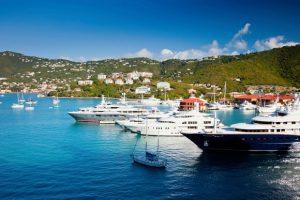
Planners of a new Caribbean are now saying to their Diaspora: We Want You Back!

We will do the work necessary to improve our prospects. As related in the song lyrics in the Appendix below:

Give me one more chance
(To show you that I love you)
Won’t you please let me back in your heart
Oh darlin’, I was blind to let you go

Trying to live without your love is one long sleepless night
Let me show you, girl, that I know wrong from right

In the Caribbean, we now need to do the heavy-lifting to reform and transform our societal engines to allow our people to prosper where planted here at home. If only we can get more and more of our Diaspora back. The Go Lean book made this urging in its conclusion … on Page 252:

Valediction – Bidding Farewell

To the Caribbean Resident: Count your blessings, while you work for improvement.

To the Caribbean Diaspora: Come in from the cold.


To the Caribbean Emigrant: Get yours, come home.


To the Caribbean Children, living at home: Help is on the way.

To the Caribbean Children, living aboard: You’re always welcome home.

To the Legacy Children of Caribbean parents: Come home, discover why your parents are so proud.

The Go Lean roadmap asserts that the Caribbean can assuage its defects and dysfunctions. The vision first calls for an interdependence among the 30 member-states in the region. This was the motivation for the CU/Go Lean roadmap, as pronounced in the opening Declaration of Interdependence (Pages 12 – 13) of the book:

x. Whereas we are surrounded and allied to nations of larger proportions in land mass, populations, and treasuries, elements in their societies may have ill-intent in their pursuits, at the expense of the safety and security of our citizens. We must therefore appoint “new guards” to ensure our public safety and threats against our society, domestic and foreign. …

xi. Whereas all men are entitled to the benefits of good governance in a free society, “new guards” must be enacted to dissuade the emergence of incompetence, corruption, nepotism and cronyism at the peril of the people’s best interest. The Federation must guarantee the executions of a social contract between government and the governed.

xix. Whereas our legacy in recent times is one of societal abandonment, it is imperative that incentives and encouragement be put in place to first dissuade the human flight, and then entice and welcome the return of our Diaspora back to our shores. This repatriation should be effected with the appropriate guards so as not to imperil the lives and securities of the repatriated citizens or the communities they inhabit. The right of repatriation is to be extended to any natural born citizens despite any previous naturalization to foreign sovereignties.

xx. Whereas the results of our decades of migration created a vibrant Diaspora in foreign lands, the Federation must organize interactions with this population into structured markets. Thus allowing foreign consumption of domestic products, services and media, which is a positive trade impact. These economic activities must not be exploited by others’ profiteering but rather harnessed by Federation resources for efficient repatriations.

xxiv.  Whereas a free market economy can be induced and spurred for continuous progress, the Federation must install the controls to better manage aspects of the economy: jobs, inflation, savings rate, investments and other economic principles. Thereby attracting direct foreign investment because of the stability and vibrancy of our economy.

The Caribbean is now begging for one more chance to prove that we love our citizens and can serve and protect them.

We want you back.

But what we want even more is to ensure that our young people do not have to leave in the first place.

Any policy that double-downs on the Diaspora is actually doubling-down on failure. We should never want our people to have to leave then hope they remember us for their retirement. No, we want and need them here at home at all times: in their youth, as young adults, middle age and senior citizens. We want and need them to “plant” … and prosper where planted.

We strongly urge Caribbean stakeholders – governmental leaders and citizens alike – to lean-in to this roadmap to make our homeland, all 30 member-states, better places to live, work and play. 🙂

Download the free e-book of Go Lean … Caribbean – now!

Sign the petition to lean-in for this roadmap for the Caribbean Union Trade Federation.

————

Appendix VIDEO – I Want You Back – The Jackson 5 – https://youtu.be/s3Q80mk7bxE

Published on Jan 10, 2010 – The Jackson 5 perform “I Want You Back” on their “Goin Back To Indiana” TV special in 1971. HQ sound.

  • Category: Music
  • License: Standard YouTube License

————

Appendix – I Want You Back – Lyrics
Sung by: The Jackson 5

When I had you to myself, I didn’t want you around
Those pretty faces always make you stand out in a crowd
But someone picked you from the bunch, one glance is all it took
Now it’s much too late for me to take a second look

Oh baby, give me one more chance
(To show you that I love you)
Won’t you please let me back in your heart
Oh darlin’, I was blind to let you go
(Let you go, baby)
But now since I’ve seen you it is on
(I want you back)
Oh I do now
(I want you back)
Ooh ooh baby
(I want you back)
Yeah yeah yeah yeah
(I want you back)
Na na na na

Trying to live without your love is one long sleepless night
Let me show you, girl, that I know wrong from right
Every street you walk on, I leave tear stains on the ground
Following the girl I didn’t even want around

Let me tell ya now
Oh baby, all I need is one more chance
(To show you that I love you)
Won’t you please let me back in your heart
Oh darlin’, I was blind to let you go
(Let you go, baby)
But now since I’ve seen you it is on

All I want
All I need
All I want!
All I need!

Oh, just one more chance
To show you that I love you
Baby baby baby baby baby baby!
(I want you back)
Forget what happened then
(I want you back)
And let me live again!

Oh baby, I was blind to let you go
But now since I’ve seen you it is on
(I want you back)
Spare me of this cost
(I want you back)
Give me back what I lost!

Oh baby, I need one more chance, hah
I’d show you that I love you
Baby, oh! Baby, oh! Baby, oh!
I want you back!
I want you back!

Songwriters: Freddie Perren / Alphonso Mizell / Deke Richards / Berry Gordy Jr

I Want You Back lyrics © Sony/ATV Music Publishing LLC

Share this post:
, , ,

Future Focused – Radio is Dead … Almost

Go Lean Commentary

‘Focusing on the Future’ means letting go of the past!

This is easier said than done, but when it comes to investing time, talents and treasuries we should always focus our energies on going forward and not going backwards, on where the market is going and not where the market has been.

Alert: Radio, as a communications medium, is dead and dying. This applies in the advanced democracy of the US and in the Caribbean.
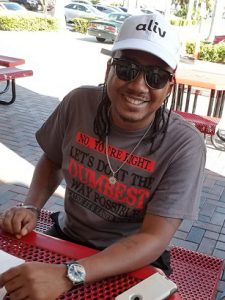
Doubtful about this actuality in the Caribbean? See the article in Appendix A below describing the closure of the state-run national radio station in St. Lucia.

Other media for communications – think newspapers, magazines and books – are also dead or dying. These are also identified as Old Media. In a previous blog-commentary, the following observance was made:

Print is not dead… yet? I almost didn’t notice!

If print is not dead yet, does that mean it is going to put up a fight? Will it make a comeback? I say “No”. It is just a matter of time. Print might experience only a slow death, but die … it will.

This has been the conclusion of the movement behind the book Go Lean…Caribbean – available to download for free. The point is that societies have been transformed; old strategies, old tactics. old implementations simply do not work anymore. Ignore this reality at your own peril.

Doubtful about this actuality in the US? See the article in Appendix B below describing the regulatory transformation to allow Old Media companies to consolidate to survive in the US. (Some media firms have a winning model; see Appendix VIDEO).

This fact – transformations in society – was an early motivation for the Go Lean book. It identified that the Caribbean region had been beset by these macro transformations, identified as Agents of Change in society:

  • Technology
  • Globalization
  • Aging Diaspora
  • Climate Change

The Caribbean region had not keep pace and suffered the peril … alluded to above. Our region is now in crisis.

Alas, the book asserts (Page 8) that this “crisis is a terrible thing to waste” and has provided new strategies, new tactics and new implementations so as to elevate Caribbean society. According to the book (Page 186), stewards of the Caribbean must embrace New Media – Internet and Communications Technologies – in order to communicate and engage Caribbean people in society. The book presents this Case Study:

The Bottom Line on Old Media versus New Media

The internet and mobile communications has changed the modern world; many industries that once flourished (music retailers, travel agencies, book sales, line telephone companies), now flounder. Media distribution via the internet or mobile devices are referred to as “new media”, while old distribution channels like newspapers, magazines, TV and radio are referred to as “old media”. The mainstream (“old”) media is pivotal for “freedom of the press” as they are effective at standing up to big institutions like governments and corporations. The art of “good” journalism requires the deeper pockets that mainstream media bring to the market, but old media is dying financially.

New media, on the other hand, is an aggregation of mainstream media. With the ubiquity of new media devices, people have freer, easier access and more options to news and information. On the plus side, there is now a greater diversity of ideas and viewpoints, on the minus side, with too many options, people tend to isolate their news consumption to only the views they want to hear. As new media matures, it is expected that it will take over the social responsibilities of old media, adopt the best practices of journalism, like fact checking (with the ease of information retrieval online), and finally return the industry to financial viability.

Old Media – radio, print (newspapers & magazines), etc. – is the past; New Media is the future.

This commentary continues this series on the Caribbean Future; this is Part 3 of 5 on this subject. The full series flows as:

  1. Future FocusedPersonal Development and the Internet
  2. Future FocusedCollege, Caribbean Style
  3. Future Focused – Radio is Dead
  4. Future FocusedPolicing the Police
  5. Future Focusede-Government Portal 101 – Available November 15

As initiated in the first blog-commentary in this series, a focus on the future mandates that we focus on reaching young people. Hint: they are not consuming Old Media.

So the stewards of a new Caribbean must engage New Media.

The Go Lean book provides a 370-page turn-by-turn guide for forging a new future; it details “how” to adopt new community ethos, plus the strategies, tactics, implementations and advocacies to engage Internet and Communications Technologies (ICT) and forge change in the region to foster a new future. This Go Lean book serves as a roadmap for the introduction and implementation of the technocratic Caribbean Union Trade Federation (CU). This is a Future Focused roadmap.

The Go Lean book also details that there must be a super-national management of the region’s airwave spectrum. Remember, some Caribbean member-states are only a few miles apart; two islands are actually shared by 2 different countries with a border within – Hispaniola with Haiti and the Dominican Republic; plus the Dutch and French sharing of Sint Maarten / Saint Martin. The book therefore states (Page 79) this excerpt:

D6 – Communications and Media Authority
The radio spectrum must be regulated on a regional level, beyond that of just one member-state. So as not to forge conflict with one radio/TV station from one member-state overriding the signal of another station in another state, the CU will be the overseer of all radio spectrum. This oversight will also extend to satellite regulations and broadband governance.

Though the current coordination among member-states is facilitated by national treaties, the accedence of the CU treaty will supersede all previous legal maneuvers. The scope and jurisdiction of this Agency will be exclusive to the region.

Auctions of radio spectrum can be a big source for garnering initial capital to launch the Trade Federation – this is how the CU can pay for change. But to monetize the management of radio spectrum will require one prerequisite step: convert all TV broadcasts to digital (from analog signals). This exercise is complex as it requires re-tooling all TV receptors for digital conversion – newer sets are already digital compliant. Countries like the US and the EU facilitated this conversion by granting decoding devices for the general public. This effort is too big for any one Caribbean member-state; it will require the coordination of a super-national agency, this Communications Authority.

This agency will also regulate other aspects of the media industry, promoting broadband acceptance and proliferations; plus serve as industry regulator for content issues. This agency will also liaison with an independent CU Agency for Public Broadcasting to facilitate/coordinate endeavors in the arena of public television and public radio. This includes providing funding.

Other than this Public Broadcasting functionality, this agency is modeled after the Federal Communications Commission (FCC) in the US.

Way Forward
Is there a Way Forward? Can the medium of radio be saved or maintained as a communication source to influence Caribbean minds?

Yes, but only for a little while; and perhaps only with the older generations. The Caribbean youth will require New Media.

There is a Way Forward; consider mobile (smart phones) and internet (browsers social media, search engines, etc.). But there is still some effective conscientizing taking place … on the radio. (See a previous conscientizing event here).

Consider this interview here with a “Radio Personality” in the Bahamas:

Title: Interview with a Radio Personality – Louby Georges
Radio is dying, yet many still depend on this medium for their livelihood, and as a means to engage the public. The promoters of the Go Lean movement conducted a structured interview with a “Radio Personality” in the Bahamas, Louby Georges, the Host of the show The Flipside on ZSR Sports Radio 103.5 in Nassau. He is on the frontlines of the battle of conscientizing the Caribbean market on the need to reform and transform our societal engines – he advocates for the Bahamas to better manage civil rights and human rights with the Haitian-Bahamian community; his quest is for the Bahamas to be a pluralistic democracy. (Louby is identified in this interview as LG; while the Author‘s questions are formatted in Bold). Consider his responses here as related to this endeavor to engage Caribbean people through the medium of “Radio”:

Tell me your story:

LG: I am a minority in a homogeneous society. I was born in the Bahamas after 1973, to parents that were not Bahamian citizens, (they were Haitian heritage). Therefore, I was Stateless for the first 19 years of my life. It was only at that age, that I was able to apply for my Bahamian citizenship. The award was not automatic, I had to jump through a lot of hoops, but in the end, my Bahamian citizenship was recognized. I am recognized as a “up and coming” young leader by International monitors.(I just attended  the World Festival of Youth and Students 2017 in Sochi, Russia this past October). Yet, in my own country, people would rather I “sit down and shut up”.

Tell me about your journey in radio:

LG: I started in television, as part of a entrepreneurial endeavor with some partners. It was a weekly 30 minute show on the local Cable TV channel; I provided insights of the Haitian-Bahamian community. I was subsequently offered to do “The Flipside” on the radio for every weekday. I have been doing this for 4 years now.

Though your advocacy is for the Bahamas to accept their eventuality of a pluralistic democracy, why  do you remain when it is so obvious that your presence as a pro-Haiti advocate is not welcomed?

LG: The Bahamas is the only home I know – though I speak Creole and have visited Haiti, the Bahamas is still my homeland – and I love this homeland and these people. If something is wrong in my home, then it is up to me – and other citizens –  to do the housekeeping. I have a passion for this home and a disdain for being a stranger in a foreign land.

Considering all your travels, where in the world would you consider the best place to live?

LG: I have truly travelled – though I have not lived anywhere else – before the World Youth Festival this year, I was also invited to Youth Leadership conferences in Latin America and in the US. I have seen the good, bad and ugly of the world, but for me the best place to live is here at home in the Bahamas. Is it perfect? No, but it could be “better in the Bahamas”; despite the cliché, I truly believe that.

As a businessman, how do you feel about the Bahamas economy?

LG: It is not good, some may even say the economy is dying. Many of the problems stem from the single source of economic activity, tourism. If only we can diversify then there would be so much more potential.

How do you feel about Caribbean security?

LG: This is sad. On a scale of 1 to 10, our homeland security can be rated as a 3. We must do better, be safer.

Accepting that the Caribbean in general and the Bahamas in particular is your homeland, what would you want to see there in … 5 years?

LG: More opportunities and more capital for local business minded people. Which comes first, the capital or the opportunities? Let’s work hard to solving that in the next 5 years.

What would you want to see in the Bahamas in … 10 years?

LG: We need population growth. We need a bigger market so that our economy and society can grow. It is that simple, if we want to make progress, we must grow.

But so many Caribbean people have fled their homelands; this problem persists. Your parents emigrated from Haiti; large number of Caribbean people emigrate everyday. How would you feel if your lovely daughter here, decides that she wants to live in the US, Canada or some European country?

LG: I wouldn’t feel bad, but I would hope that she would have the same love for our homeland as I do. But I would understand. My country seems to “push” people away more than they are being “pulled” by other countries. This is why some of us must fight to reform and transform our country. Count me in for the fight.

What would you want to see in the Bahamas in … … 20 years?

LG: Our country is more than just Nassau. I would like to see more Family Island development. Those islands would be perfect to try different economic diversification models.
——-
Thank you for your responses Louby and your commitment to the Bahamas, Haiti and the Caribbean. We see you; we hear you and we feel your passion. We entreat you to look here, going forward, for more solutions on making our homeland better places to live, work and play.

As related in the foregoing article, Louby Georges believes that radio can still be used to conscientize with the Bahamian population. But he cautious that this business model is failing more and more each day. See this article here depicting dissension within the media company / radio station (ZSR 103.5 FM) where he works:

Takeover of ZSR 103.5 ‘defective’, but URCA approves Sebas’s radio deal

In 2017, a focus on the future for interstate communications must also consider broadband, streaming and/or the Internet. This consideration is embedded in the Go Lean roadmap. In fact, the book presents the good stewardship – a new regime – so that ICT can be a great equalizing element for leveling the playing field in competition with the rest of the world.

This CU/Go Lean roadmap details many aspects of the societal reboot for the Caribbean, not just ICT alone. In fact, the roadmap features these 3 prime directives to reform and transform society – all Future Focused:

  • Optimization of the economic engines in order to grow the regional economy to $800 Billion & create 2.2 million new jobs.
  • Establishment of a security apparatus to ensure public safety and protect the resultant economic engines.
  • Improve Caribbean governance to support these engines, including a separation-of-powers between the member-states and CU federal agencies.

The Go Lean book stresses that transforming Caribbean communications-media “engines” must be a regional pursuit. This was an early motivation for the roadmap, as pronounced in the opening Declaration of Interdependence (Pages 12 – 13):

xi. Whereas all men are entitled to the benefits of good governance in a free society, “new guards” must be enacted to dissuade the emergence of incompetence, corruption, nepotism and cronyism at the peril of the people’s best interest. The Federation must guarantee the executions of a social contract between government and the governed.

xii. Whereas the legacy in recent times in individual states may be that of ineffectual governance with no redress to higher authority, the accedence of this Federation will ensure accountability and escalation of the human and civil rights of the people for good governance, justice assurances, due process and the rule of law. …

xxvii. Whereas the region has endured a spectator status during the Industrial Revolution, we cannot stand on the sidelines of this new economy, the Information Revolution. Rather, the Federation must embrace all the tenets of Internet Communications Technology (ICT) to serve as an equalizing element in competition with the rest of the world. The Federation must bridge the digital divide and promote the community ethos that research/development is valuable and must be promoted and incentivized for adoption.

The Go Lean book presents a detail plan for elevating existing tertiary education options and adding new ones. This federal government – CU Trade Federation – will NOT be academicians, but it will facilitate new and better education options. The motivation of this charter is the recognition that college education has failed the Caribbean region. We need to double-down on the intra-Caribbean strategy – promoting the many universities among the 30 member-states – and e-Learning options.

This Caribbean-style is Future Focused.

See the many considerations of this strategy in these previous blog-commentaries from the Go Lean movement:

https://goleancaribbean.com/blog/?p=13321 Making a ‘Pluralistic Democracy’ – Multilingual Realities
https://goleancaribbean.com/blog/?p=10750 Less and Less People Reading Newspapers
https://goleancaribbean.com/blog/?p=10052 Fake News? Welcome to America
https://goleancaribbean.com/blog/?p=8328 New Media Example: YouTube Millionaire – ‘Tipsy Bartender’
https://goleancaribbean.com/blog/?p=6464 Sports Role Model – ‘WWE Network’
https://goleancaribbean.com/blog/?p=5353 POTUS and the Internet
https://goleancaribbean.com/blog/?p=3974 Google and Mobile Phones – Here comes Change
https://goleancaribbean.com/blog/?p=1634 Chasing Youth Culture and Getting It Right – A Book Review
https://goleancaribbean.com/blog/?p=248 Print is dead … soon

The Go Lean movement has collected the insights of Caribbean media entrepreneurs … like Louby Georges in the foregoing interview. This book was the result. This movement declares that while “Radio is Dead or Dying”, there is the appealing opportunity for a new media landscape. Imagine a www.myCaribbean.gov network for 42 million people, 10 million Diaspora, and 80 million visitors. Imagine too, a Caribbean Union channel on Facebook, YouTube and Twitter. This prospect, and the benefits are before us if we prepare and forge a new unified, integrated Single Market for all of the Caribbean.

Yes, this vision is within reach.

Welcome to the future, to New Media. Say “Goodbye” to yesterday, to Old Media. Can we transform our Caribbean society?

Yes, we can! While this is not easy – it is heavy-lifting – it is conceivable, believable and achievable.

This is the kind of Future Focused efforts that are needed to reform and transform the Bahamas and all of Caribbean society; to make our homeland a better place to live, work, learn and play. 🙂

Sign the petition to lean-in for this roadmap for the Caribbean Union Trade Federation.

———

Appendix A – ECCO Boss believes more local radio stations could close

The General Manager of the  Eastern Caribbean Collective Organisation for Music Rights (ECCO), Steve Etienne,  has expressed the view that Saint Lucia could see the closure of more radio stations, following the recent announcement of the planned closure of state-owned Radio Saint Lucia.

He said the planned closure has come as no surprise to him.

“It should not be a surprise to anyone because RSL has operated in challenging situations that have been known to the public for some time,” Etienne observed.

However the ECCO official noted that the closure of the station will leave a void in the field of broadcasting because RSL played a unique role, despite its association with the government.

“They provided a lot of information and educational focus in lots of the areas that are not normally seen as attractive to radio,” Etienne stated.

He observed that ECCO has had a long relationship with RSL.

“We will miss that relationship,” Etienne said.

He noted that the station owed ECCO a substantial sum of money which the organisation will be seeking to recover.

Etienne explained that the closure of the station would be a loss to ECCO’s members because RSL provided a lot of air time for local music producers.

He stated that the station had a day set aside for playing local music.

“We will miss that, but I think that the slack will be picked up by other media houses – some have already started to focus on having specific segments for local music,” he remarked.

Etienne expressed the view that what is happening to RSL could befall  other broadcasting entities.

“We have far too many radio stations and we haven’t got the finance – our economy cannot sustain or support twenty  or so radio stations that we have and if business is done as business ought to be done, then  several other radio stations will go the same way as RSL,” the ECCO General Manager said.

He explained that because ECCO is funded by a percentage of advertising revenue, the organisation is aware that lots of radio stations are struggling.

“Or  at least they are telling us they are struggling and if that is the truth, then many would follow RSL,” he pointed out.

According to Etienne, Saint Lucia needs a thriving economy.

He declared that having radio stations that are unsustainable will not help the economy.

Source: Posted May 13, 2017; retrieved November 12, 2017 from: https://stluciatimes.com/2017/05/13/ecco-boss-believes-more-local-radio-stations-could-close

———

Appendix B – FCC Moves to End TV-Newspaper Ownership Ban

The chairman of the Federal Communications Commission said he’ll move to weaken or kill local media ownership restrictions next month, potentially clearing the way for more consolidation among companies that own TV and radio stations.

Chairman Ajit Pai told Congress he’ll ask the FCC, where he leads a Republican majority, to eliminate the rule barring common ownership of a newspaper and nearby broadcast station, and to revise restrictions on owning multiple broadcast outlets in a single market.

“If you believe, as I do, that the federal government has no business intervening in the news, then we must stop the federal government from intervening in the news business,” Pai said in a hearing of the House communications subcommittee. He said that’s why he offered his rules revision to “help pull the government once and for all out of the newsroom.”

Republicans have been calling, without success, to weaken or kill those rules for more than a decade, and Pai’s ascension to FCC chair as President Donald Trump’s choice gives the party a chance to accomplish that goal. He set a vote for Nov. 16.

Relaxed rules could help Sinclair Broadcast Group Inc., which earlier told the FCC that its proposed $3.9 billion purchase of Tribune Media Inc. would violate local-market ownership strictures in 10 cities.

Pai cast his ownership proposals as part of his commitment to the First Amendmentthat guarantees free speech — a live topic since Trump threatened broadcast licenses over news reports.

Democrats announced opposition even before Pai spoke.

“The already consolidated broadcast media market will become even more so, offering little to no discernible benefit for consumers,” Commissioner Mignon Clyburn, a Democrat, said in testimony prepared for the hearing where Pai and the other commissioners appeared.

Broadcasters eager to consider merger deals have chafed under the ownership restrictions. The rules were written to guarantee a diversity of voices for local communities, and broadcasters say they’re outdated in an era of media abundance featuring cable and internet programming.

The local rules are separate from the national audience cap that limits companies to owning stations that reach 39 percent of the U.S. audience, which Pai didn’t address. That rule could force Sinclair to sell some stations in return for approval of its proposed purchase of Tribune. The deal is before the FCC and antitrust officials for approval.

Pai’s proposed deregulation could set off local transactions, involving station swaps and other small-scale deals, Wells Fargo analyst Marci Ryvicker said in a note.

“We do NOT expect transformative M&A,” Ryvicker wrote, using a shorthand term for merger and acquisition activity. She said the broadcast industry would be strengthened because two-station sets are more profitable than stand-alone outlets.

Pai’s proposal needs to win a majority at the FCC, and will be subject to intense lobbying in the three weeks leading to the next monthly meeting when the vote is to take place.

Regulations to be revised include the local-TV rule. It allows a company to own two stations in a market if at least one of the stations is not ranked among the top four stations locally, and if the market still will have at least eight independently owned TV stations.

Pai told lawmakers he will propose to the commission that it eliminate the latter provision, known as the eight-voices test, and put in place a case-by-case review for allowing exceptions to the top-four prohibition.

Pai also said he’d seek to eliminate a rule restricting common ownership of a TV station and nearby radio station. The agency is to publish the proposed rules on Thursday, he said.

The National Association of Broadcasters said it “strongly supports” the proposal.

FCC restrictions have “punished free and local broadcasters at the expense of our pay TV and radio competitors,” said Dennis Wharton, a spokesman for the trade group. “We look forward to rational media ownership rules that foster a bright future for broadcasters and our tens of millions of listeners and viewers.”

The News Media Alliance, formerly called the Newspaper Association of America, focused on the newspaper-broadcast rule, put in place in the 1970s.

“Outdated regulations preventing investment in one sector of the media market do not make sense, particularly when newspapers compete with countless sources of news and information every day,” said the trade group’s president, David Chavern.

The Free Press policy group objected.

“We need to strengthen local voices and increase viewpoint diversity, not surrender our airwaves to an ever-smaller group of giant conglomerates,” said Craig Aaron, president of the group. “Pai is clearly committed to doing the bidding of companies like Sinclair and clearing any obstacles to their voracious expansion.”

Representatives of cable and satellite-TV companies wary of the negotiating clout of combined stations have said they will be concerned if the top-four restriction is relaxed or eliminated. Broadcasters are raising fees they charge to cable and satellite companies in return for permission to carry their signals.

“Pai’s statement to end media rules is most retrograde in FCC history,” Michael Copps, a former Democratic FCC commissioner, said in a tweet. “Halloween sweets for Big Media, paves way for huge Yule for Sinclair.”

Source: Bloomberg posted October 25, 2017 retrieved November 12, 2017 from: https://www.bloomberg.com/news/articles/2017-10-25/fcc-s-pai-sets-nov-16-vote-on-lifting-media-ownership-limits

———

Appendix VIDEO – Hearst CEO Says the Death of Old Media Is Not True – https://www.bloomberg.com/news/videos/2017-10-24/hearst-ceo-says-the-death-of-old-media-is-not-true-video

Share this post:
, , ,
[Top]

Future Focused – Personal Development and the Internet

Go Lean Commentary

A true fact of the past is that “we cannot change it”.
All we can do is learn from the past and change the future.

This quest has propelled the movement behind the book Go Lean…Caribbean – available to download for free. The book provides a 370-page turn-by-turn guide on “how” to adopt new community ethos, plus the strategies, tactics, implementations and advocacies so as to learn from Lessons in History then reform and transform the societal engines of Caribbean society for the future. In addition, there have been 31 previous blog-commentaries with the specific theme: Lessons in History; see the full list – to date – in the Appendix below.

The Go Lean book opened with this charter, to focus on the future (Page 3):

Our youth, the next generation, may not be inspired to participate in the future workings of their country; they may measure success only by their exodus from their Caribbean homeland.

We cannot ignore the past, as it defines who we are, but we do not wish to be shackled to the past either, for then, we miss the future. So we must learn from the past, our experiences and that of other states in similar situations, mount our feet solidly to the ground and then lean-in in, to reach for new heights; forward, upward and onward. This is what is advocated in this book: to Go Lean … Caribbean!

This Go Lean book serves as a roadmap for the introduction and implementation of the technocratic Caribbean Union Trade Federation (CU), for the elevation of Caribbean society – for all member-states. This CU/Go Lean roadmap has these 3 prime directives – all Future Focused:

  • Optimization of the economic engines in order to grow the regional economy to $800 Billion and create 2.2 million new jobs.
  • Establishment of a security apparatus to ensure public safety and protect the resultant economic engines.
  • Improve Caribbean governance to support these engines, including a separation-of-powers between the member-states and CU federal agencies.

This commentary introduces a series on the Caribbean Future; this is Part 1 of 5 on this subject. The full series is as follows:

  1. Future Focused – Personal Development and the Internet
  2. Future FocusedCollege, Caribbean Style 
  3. Future FocusedRadio is Dead
  4. Future FocusedPolicing the Police
  5. Future Focusede-Government Portal 101 – Available 11/15/2017

‘Focusing on the future’ mandates that the stewards of the Caribbean focus on our young people:

“I believe that children are the future; teach them well and let them lead the way” – See VIDEO in the Appendix below.

That is just a song; but this is life.

  • What is the hope for the Caribbean youth to be transformed in their development compared to past generations?
  • What transformations are transpiring in the region that shows willingness for the people and institutions to embrace the needed change?

In 2017, a focus on the future for young people must also consider “cyber reality” and/or the Internet. This consideration is embedded in the Go Lean roadmap. In fact, the book presents the good stewardship so that Internet & Communications Technologies (ICT) can be a great equalizing element for leveling the playing field in competition with the rest of the world.

See how these news articles (2) here have described certain ICT trends in the region, related to education and personal development:

Title #1: Flow and Ave Maria Mark World Internet Day
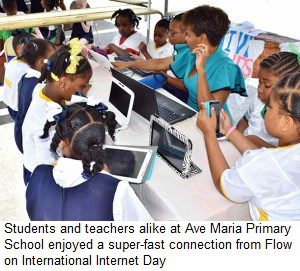
PRESS RELEASE: Castries, Saint Lucia, November 3rd, 2017 – On Wednesday November 1st 2017, the leading girls primary school in Saint Lucia celebrated International Internet Day with the nation’s and the Caribbean’s number one telecommunications service provider, Flow. Ave Maria Primary School hosted a number of activities for students, including encouraging them to come to school with internet-capable devices, which were powered with a free 100mMBps wireless internet connection.

The young ladies, guided by their teachers, were delighted to be able to do research online, including learning more about internet etiquette, online safety, the history, positives and negatives of the internet. Adriana Mitchel-Gideon, Flow’s product manager for broadband and TV, also met with Grade Six students to have an open and frank discussion about the internet, and to field their many questions.

The day has been celebrated worldwide on October 29th since 2005, to commemorate the first electronic message ever transferred from one computer to another, way back in 1969, in California, in the USA. International Internet Day is a reminder to all of us that this amazing invention started out with just two machines, long before we ever were able to login to trillions of websites put up by billions of users.

As part of its 2017 Christmas promotion, Flow is offering excellent kid-friendly deals on smartphones, TV and internet packages to delight any family.

Source: Posted November 3, 2017; retrieved November 8, 2017 from: https://stluciatimes.com/2017/11/03/flow-ave-maria-mark-world-internet-day 

———–

Title #2: Internet Week Guyana Advances Caribbean Technology Development Agenda
PRESS RELEASE: Around the world, the operations of cyber criminals far outstrip the sophistication of national legislative frameworks. Governments are facing constant pressure to assess global cyber threats and formulate appropriate local cyber security strategies.

Across the Caribbean, governments are building strategic partnerships with regional actors like the Caribbean Network Operators Group (CaribNOG) and the Caribbean Telecommunications Union (CTU). CaribNOG is the region’s largest volunteer-based community of network engineers, computer security experts and tech aficionados.

Recently, CaribNOG and the CTU were among the organisers of Internet Week Guyana, a five-day tech conference hosted by Guyana’s Ministry of Public Telecommunications, in collaboration with international bodies such as the Internet Society, the Internet Corporation for Assigned Names and Numbers (ICANN), the American Registry for Internet Numbers (ARIN), and the Latin America and Caribbean Internet Addresses Registry (LACNIC).

Catherine Hughes, Guyana’s first Minister of Public Telecommunications, said that the five-day event was part of the national agenda to build the country’s technology capacity in cybersecurity and other key areas.

“We encourage Caribbean governments to develop legislative agendas and increase intra-regional cooperation, in order to strengthen the region’s overall cyber security capability,” said Kevon Swift, Head of Strategic Relations and Integration at LACNIC.

“As law makers, governments play an important role in the regional response to cyber security challenges. But they cannot do their work alone,” said Bevil Wooding, Caribbean Outreach Manager at the American Registry for Internet Numbers (ARIN), and one of the founders of CaribNOG.

“The private sector, law enforcement, judiciary and civil society also have a responsibility to ensure that the region’s citizens and businesses are safer and more secure.”

Throughout the week, representatives from participating organisations also demonstrated practical ways in which stakeholders could work together to strengthen and secure Caribbean networks.

Stephen Lee, another CaribNOG founder, translated global cybersecurity issues into Caribbean priorities, outlining some of the challenges and opportunities of special relevance to the region.

Albert Daniels, Senior Manager for Stakeholder Engagement in the Caribbean at ICANN, outlined that organisation’s work in supporting secure network deployments around the world.

Shernon Osepa, Manager, Regional Affairs for Latin America and the Caribbean at the Internet Society, was on hand to formally launch the Internet Society Guyana Chapter, with Nancy Quiros, Manager of Chapter Development in Latin America and the Caribbean at the Internet Society, and Lance Hinds, Special Advisor to the Minister, who served as the chapter’s Interim President.

But it was a gathering of young people, hosted by the CTU on the conference’s closing day, that put the virtual exclamation mark on a highly impactful week. About 400 students from several secondary schools took part in the all-day agenda, which was packed with videos, interactive presentations and Q&A sessions, all designed to highlight the tangible dangers of unsafe online behaviour.

“The CTU continues to support the development of the Information and Communication Technologies (ICT) sector in the region including an emphasis on harnessing the potential of the youth. There’s a concerted effort to get the youth more involved in and make them aware of ICT issues which affect them, to cultivate a mindset of innovation and entrepreneurship, and to educate them on how to effectively use the power of technology that lies in their hands,” said Michelle Garcia, Communications Specialist at the CTU.

The day’s success was most evident in its aftermath. Even after the formal close, a tangible buzz lingered in the meeting room, with dozens of students staying back to introduce themselves to the expert panelists, many taking the opportunity to accost them with follow-up inquiries on the sidelines.

By all reports, this Internet Week will boost Guyana’s efforts to deliver on the promise locked up in that generation of future regional leaders. Now the real work must continue, in order to convert Caribbean potential into Caribbean reality.

Source: Posted October 17, 2017; retrieved November 8, 2017 from: https://stluciatimes.com/2017/10/17/internet-week-guyana-advances-caribbean-technology-development-agenda

The Go Lean book stresses that transforming Caribbean educational “engines” must be a regional pursuit. This was an early motivation for the roadmap, as pronounced in the opening Declaration of Interdependence (Pages 12 – 13):

xi. Whereas all men are entitled to the benefits of good governance in a free society, “new guards” must be enacted to dissuade the emergence of incompetence, corruption, nepotism and cronyism at the peril of the people’s best interest. The Federation must guarantee the executions of a social contract between government and the governed.

xxi. Whereas the preparation of our labor force can foster opportunities and dictate economic progress for current and future generations, the Federation must ensure that educational and job training opportunities are fully optimized for all residents of all member-states, with no partiality towards any gender or ethnic group. The Federation must recognize and facilitate excellence in many different fields of endeavor, including sciences, languages, arts, music and sports. This responsibility should be executed without incurring the risks of further human flight, as has been the past history.

xxiv. Whereas a free market economy can be induced and spurred for continuous progress, the Federation must install the controls to better manage aspects of the economy: jobs, inflation, savings rate, investments and other economic principles. Thereby attracting direct foreign investment because of the stability and vibrancy of our economy.

xxvi. Whereas the Caribbean region must have new jobs to empower the engines of the economy and create the income sources for prosperity, and encourage the next generation to forge their dreams right at home, the Federation must therefore foster the development of new industries … [and] invigorate the enterprises related to existing industries … impacting the region with more jobs.

xxvii. Whereas the region has endured a spectator status during the Industrial Revolution, we cannot stand on the sidelines of this new economy, the Information Revolution. Rather, the Federation must embrace all the tenets of Internet Communications Technology (ICT) to serve as an equalizing element in competition with the rest of the world. The Federation must bridge the digital divide and promote the community ethos that research/development is valuable and must be promoted and incentivized for adoption.

The Go Lean book presents the plan to deploy many e-Learning provisions so as to deliver on the ICT promise in educating our Caribbean youth. The book references the roles and responsibilities of e-Learning in many iterations; this shows the Future Focus of the Go Lean roadmap; see sample here:

  • 10 Ways to Foster Genius (Page 27)
    #2 – Starting Early – “HeadStart”
    One researcher that tried to provide a more complete view of intelligence is Psychologist Howard Gardner; his theory of Multiple Intelligences (MI), identified eight types of intelligence or abilities: musical – rhythmic, visual – spatial, verbal – linguistic, logical – mathematical, bodily – kinesthetic, interpersonal, intrapersonal and naturalistic. … Many parents and educators feel that these categories more accurately express the strengths of different children, for which the CU will implement HeadStart-like programs (academies, camps, e-Learning schemes and mentorships) to foster the early development of participants.
  • 10 Ways to Help Entrepreneurship (Page 28)
    #10 – e-Learning & Coaching – S.C.O.R.E.
    The CU advocates e-Learning schemes for tertiary (college), professional development and continuing education solutions. The CU will license/regulate these online programs at the regional level so as to certify and audit the practice. …
  • 10 Ways to Impact Research and Development (Page 30)
    #4 – STEM Education Facilitation
    The quest to excel in science, technology, engineering and mathematics will start at K-12 Magnate & charter schools. At the tertiary level, the CU will give grants, scholarships & loans (forgive-able), especially focusing on e-learning schemes.
  • 10 Ways to Close the Digital Divide (Page 31)
    #2 –
    Libraries & e-Learning
    The CU will facilitate the construction and refurbishing of community libraries, with the emphasis on delivering computer access. The CU’s Millennium Library (see Appendix OA on Page 293) design features a good quantity of computer workstations, conference rooms, video conferencing, and e-Whiteboards. These tools are required for e-Learning facilitations. So citizens can enroll in online classes even if they do not have computer access, as the libraries will fill the void.
  • 10 Tactics to Forge an $800 Billion Economy (Page 70)
    #10 – Education
    Basic economic principles, identified as early as with Adam Smith’s Wealth of Nation landmark literary publication [in 1776], dictate that every year of education raises a country’s GDP by a measurable amount. For the Caribbean, the benefits have been elusive in the past because of the unfortunate pattern of a brain drain, with students matriculating abroad and never returning – all of the investment but none of the return. – See Appendix C2 on Page 258.
    The CU’s new leanings of e-Learning will fulfill the education investment objectives without the risk of a brain drain. The end result: the educated work place will impact near-mid-long term benefits for the CU region, estimated in the 3% range for annual growth.
  • 10 Reasons to Repatriate to the Caribbean (Page 118)
    #9 – Educational Inducements in the Region
    The CU will facilitate e-Learning schemes for institutions in the US, Canada and the EU. The repatriates will have an array of educational choices for themselves and their offspring (legacies). This will counter the previous bad experience of students emigrating for advanced educational opportunities and then never returning, resulting in a brain drain.
  • 10 Ways to Create Jobs (Page 152)
    #6 – Steer More People to S.T.E.M. Education and Careers
    Education does not have to be matriculated abroad, as e-learning industries abound, lessening brain drain, online classes emerge for even the highest degrees. Standards, certifications & accreditations would dictate public-private investment in start-up ventures for educating science (including health & medical), technology, engineering and mathematics fields.
  • 10 Ways to Improve Education (Page 159)
    #2 – Promote Industries for e-Learning
    For 50 years the Caribbean has tolerated studying abroad; unfortunately many students never returned home. The CU’s focus will now be on facilitating learning without leaving. There have emerged many successful models for remote learning use electronic delivery or ICT. The CU will foster online/home school programs, for secondary education, to be licensed at the CU level so as to sanction, certify, and oversee the practice, especially for rural areas/islands. At the tertiary level, the CU will sponsor College Fairs for domestic and foreign colleges that deliver online education options.

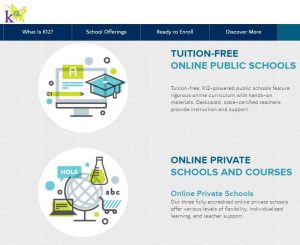
The future – of electronic learning systems – is now! The technology is ready and the Caribbean youth is ready. We only need to deploy the delivery models to allow our students to matriculate online. See the profile of this American company that is currently available in many communities in the US:

http://www.k12.com/

We can do this ourselves … here and now.  We can use the internet to foster personal development for students, young and old. The foregoing news article related this quotation from the Caribbean Telecommunications Union (CTU):

“The CTU continues to support the development of the Information and Communication Technologies (ICT) sector in the region including an emphasis on harnessing the potential of the youth. There’s a concerted effort to get the youth more involved in and make them aware of ICT issues which affect them, to cultivate a mindset of innovation and entrepreneurship, and to educate them on how to effectively use the power of technology that lies in their hands,” said Michelle Garcia, Communications Specialist at the CTU.

This is the kind of Future Focused  effort that is needed to reform and transform Caribbean society. This is not easy – heavy-lifting – but it is necessary to make our homelands better places to live, work, learn and play. 🙂

Download the free e-Book of Go Lean … Caribbean – now!

Sign the petition to lean-in for this roadmap for the Caribbean Union Trade Federation.

———–

Appendix VIDEO – The Greatest Love Of All (lyrics) – Whitney Houston, A Tribute – https://youtu.be/hRX4ip6PVoo

TheMusic1022

Published on Feb 15, 2012

Whitney Elizabeth Houston (August 9, 1963 — February 11, 2012) was an American recording artist, actress, producer, and model. In 2009, the Guinness World Records cited her as the most-awarded female act of all time. Her awards include two Emmy Awards, six Grammy Awards, 30 Billboard Music Awards, and 22 American Music Awards, among a total of 415 career awards in her lifetime. Houston was also one of the world’s best-selling music artists, having sold over 170 million albums, singles and videos worldwide. … RIP Whitney, you and your wonderful music will always be in our hearts.

———–

Appendix – Lessons from History / Previous Blog-Commentaries

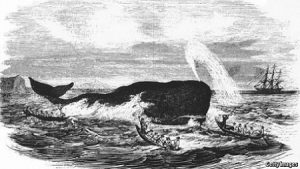
https://goleancaribbean.com/blog/?p=13420 A Lesson in History – Whaling Expeditions
https://goleancaribbean.com/blog/?p=12726 A Lesson in History – Colorado Black Ghost Towns
https://goleancaribbean.com/blog/?p=12722 A Lesson in History – ‘How the West Was Won’
https://goleancaribbean.com/blog/?p=12380 A Lesson in History – ‘4th of July’ and Slavery
https://goleancaribbean.com/blog/?p=10494 A Lesson in History – Ending the Military Draft
https://goleancaribbean.com/blog/?p=10336 A Lesson in History – Haiti’s Reasonable Doubt
https://goleancaribbean.com/blog/?p=9974 A Lesson in History – Pearl Harbor Realities
https://goleancaribbean.com/blog/?p=8767 A Lesson in History – Haiti 1804
https://goleancaribbean.com/blog/?p=7738 A Lesson in History – Buffalo Soldiers
https://goleancaribbean.com/blog/?p=7490 A Lesson in the History of Interpersonal Violence – Domestic
https://goleancaribbean.com/blog/?p=7485 A Lesson in the History of Interpersonal Violence – Street Crimes
https://goleancaribbean.com/blog/?p=7462 A Lesson in the History of Interpersonal Violence – Duels
https://goleancaribbean.com/blog/?p=6722 A Lesson in History – After the Civil War
https://goleancaribbean.com/blog/?p=6720 A Lesson in History – During the Civil War
https://goleancaribbean.com/blog/?p=6718 A Lesson in History – Before the Civil War
https://goleancaribbean.com/blog/?p=6531 A Lesson in History – Book Review of the ‘Exigency of 2008’
https://goleancaribbean.com/blog/?p=6189 A Lesson in History – ‘Katrina’ is Helping Today’s Crises
https://goleancaribbean.com/blog/?p=5183 A Lesson in History – Cinco De Mayo
https://goleancaribbean.com/blog/?p=5123 A Lesson in History – Royal Charter: Zimbabwe –vs- South Africa
https://goleancaribbean.com/blog/?p=5055 A Lesson in History – Royal Charter: Empowering Families
https://goleancaribbean.com/blog/?p=4971 A Lesson in History – Royal Charter: Truth & Consequence
https://goleancaribbean.com/blog/?p=4935 A Lesson in History – The ‘Grand Old Party’
https://goleancaribbean.com/blog/?p=4720 A Lesson in History – SARS in Hong Kong
https://goleancaribbean.com/blog/?p=4166 A Lesson in History – Panamanian Balboa
https://goleancaribbean.com/blog/?p=2809 A Lesson in History – Economics of East Berlin
https://goleancaribbean.com/blog/?p=2670 A Lesson in History – Rockefeller’s Pipeline
https://goleancaribbean.com/blog/?p=2585 A Lesson in History – Concorde SST
https://goleancaribbean.com/blog/?p=2480 A Lesson in History – Community Ethos of WW II
https://goleancaribbean.com/blog/?p=2297 A Lesson in History – Booker T –vs- Du Bois
https://goleancaribbean.com/blog/?p=1531 A Lesson in History – 100 Years Ago Today: World War I
https://goleancaribbean.com/blog/?p=789 A Lesson in History – America’s War on the Caribbean
Share this post:
, , ,
[Top]

Grenada Diaspora – Not the Panacea

Go Lean Commentary

Who you gonna call?

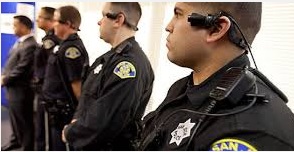
This question can be asked throughout the Caribbean. There is an emergency, a threat to life and property, who do you call? The answer should be the Police.

But who would the Police call when they have a problem?
It is hoped that there would be some regional entity that steps in, steps up and helps out.

There is such a need!

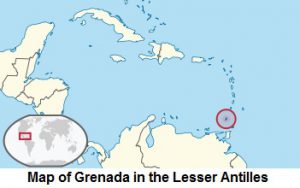
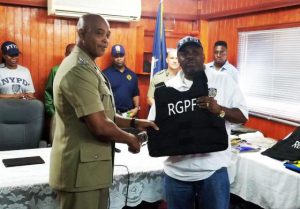
This was the scenario in Grenada, just recently. They had a security need above and beyond the local provisioning, and the Royal Grenada Police Force turned to the Grenada Diaspora.

This is perplexing! Let’s examine this further. See the full news article here:

Title: NYPD officers with Caribbean roots reach out to aid the region

(NY Daily) The NYPD-RGPF Officers’ Association — a group of NYPD officers with roots in Grenada — is bringing new meaning to the phrase “long arm of the law” by reaching out to help Grenada law enforcement officials and aiding other causes in the region.

This month, the association collected much-needed relief supplies — including food, soap and shoes — for survivors of Hurricane Maria on storm-ravaged Dominica. Association members were scheduled to gather in Brooklyn yesterday to pack donated supplies bound for Dominica.

The NYPD-RGPF association was founded in the wake of tragedy and its members are, professionally and personally, well suited to respond to crisis.

According to NYPD-RGPF spokesman Michael Bascombe, the association — which uses the Royal Grenada Police Force acronym RGPF in its name — was founded after RGPF Corporal Daniel Edgar was fatally shot in the line of duty in Grenada in April 2016.

Through fund-raising efforts and personal financial support from NYPD officers, the association’s first act was a financial contribution to Edgar’s family — and donating 100 bullet-proof vests, helmets, traffic enforcement equipment and other gear to the Grenada Police Force in September.

The association has started discussions with the RGPF on possible future partnerships, he said.

Source: Posted October 30, 2017; retrieved November 2, 2017 from: https://stluciatimes.com/2017/10/30/nypd-officers-caribbean-roots-reach-aid-region

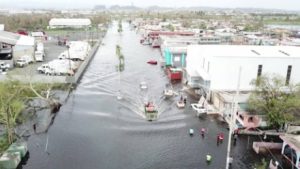
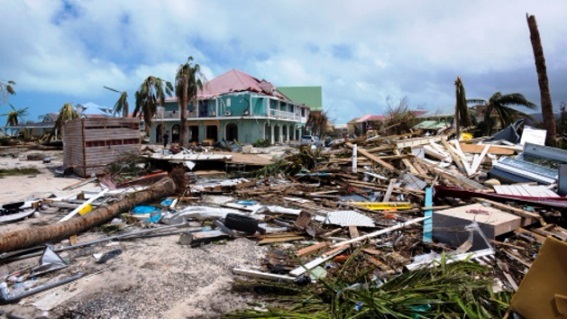
Make no mistake; Grenada needs all the help it can get. All of these Caribbean member-states need whatever help they can get. The region is reeling from the near total devastation from Category 5 storms: Hurricane Maria and Hurricane Irma; Dominica is in disarray! Barbuda is wiped out and declared a Ghost Town as a result. These places must relieve, restore, recover and rebuild.

Who they gonna call?

The urging here is to NOT look to the Diaspora as some panacea, cure-all solution. This is definitely what is happening in Grenada, as this foregoing news article related:

The NYPD-RGPF association was founded in the wake of tragedy and its members are, professionally and personally, well suited to respond to crisis.

This is a troubling point here: we cannot look to people who have left here to turn around and fix what is broken here. They – the Diaspora – are gone! Yet, this is the preponderance for governments (and citizenry alike) to pursue this strategy in the region. Just recently we published commentaries on this Caribbean pre-occupation, with these entries relating these homelands:

The premise for the criticism of this Diaspora strategy is that the ones that have fled the region have done so for a reason; they have been “pushed” or “pulled” away from their homeland. They may still love their “past” country, but can only do so much from abroad. Plus, history documents that they are less inclined to invest back in their country; they are burdened with the concerns of today and the future, that it is illogical to think that they are concerned about their yesterdays. Thusly, all efforts to outreach the Diaspora are usually futile. All of these prior commentaries relate this basic truth about catering to the Diaspora:

The subtle [Diaspora outreach] message to the Caribbean population is that they need to leave their homeland, go get success and then please remember to invest in us afterwards.

… It is so unfortunate that the people in the Caribbean are beating down the doors to get out of their Caribbean homeland, to seek refuge in these places like the US, Canada and Western Europe. … As a result, we have such a sad state of affairs for our Caribbean eco-system as we are suffering from a bad record of societal abandonment.

Thank you, all Diaspora members that have looked back and lent a hand, but the heavy-lifting of reforming and transforming our society must really come from the people who are in the homeland and in the region. For starters, we must try to dissuade people from leaving in the first place and help them to prosper where planted. The record shows that those who do leave, tends to be the ones that we can least afford to lose. These include the professional classes and highly educated ones; one report presents an abandonment rate of 70 percent of the college-educated populations.

Picture a family with limited food supply, serving dinner and “making extra plates” for family members who have left or passed. This would be illogical. We need to be more pragmatic and work a different strategy to assuage our crisis. We need a strategy that embraces those who are still here, not those that “used to be”.

So the problem of a Diaspora-outreach strategy is that it double-downs on the failure of why the Diaspora left in the first place. We need to employ new strategies for the underlying failures. When we look at our Caribbean homeland and see the many failures, we realize that the people on some islands – like Grenada – and the people in their Diaspora cannot solve the problems in the homeland … alone. No, something bigger and better is needed.

We need a Way Forward. This is where and why we have introduced that something BIGGER … and better …

… enter the Caribbean Union Trade Federation (CU). This is presented as the organizational solution for the economic, security and governing needs of all 30 Caribbean member-states, including Grenada; this is the panacea the region needs.

The foregoing article addressed security issues and law-and-order. The book Go Lean…Caribbean – available to download for free – serves as a roadmap for the introduction and implementation of the technocratic CU, for the elevation of Caribbean societal engines – including economic, security and governance for all member-states. The book asserts that the region can do better with security solutions. We can make our region better and safer to live, work and play. But the requirement is that we must work together – in a formal regional integration – to establish the economy-of-scale to employ the many strategies, tactics and implementation to remediate and mitigate crime in the homeland.

In fact, the CU/Go Lean roadmap presents these 3 prime directives:

The goal of the Go Lean roadmap is for Caribbean people to prosper where planted; the book therefore provides 370-pages of turn-by-turn instructions on “how” to adopt new community ethos, plus the strategies, tactics, implementations and advocacies to execute so as to reboot the region’s societal engines, for Grenada and other member-states. One advocacy for a Way Forward is the plan to optimize community policing (Page 178); see the headlines and excerpts from that page here:

10 Ways to Remediate and Mitigate Crime

1 Lean-in for the Caribbean Single Market
This will allow for the unification of the region into one market of 42 million people across 30 member-states, thereby creating an economic zone to promote and protect the interest of the member-states. (The GDP of the region will amount to $800 Billion according to 2010 figures). In addition, the treaty calls for a collective security agreement of the Caribbean nations so as to implement provisions to serve and protect the citizenry against systemic threats. The CU’s law enforcement agencies will enforce, investigate and prosecute economic crimes, including Racketeering, and Organized Crime Enterprises (RECO), plus any cross border gang activity. In addition, the CU will also provide funding, grants, training, technical consultancy, and support services for member-states law enforcement, including crime labs.
2 Deploy the Caribbean Police (CariPol)

The CU Treaty will compel local police to have accountability and respect for the jurisdiction of the Caribbean Police. CariPol will be modeled after Interpol and the US FBI, with Inspectors for investigations and Marshalls for protection and interdiction. When the local Police call for escalation, CariPol responds. CariPol also “polices” the Police, with audit and compliance oversight for “use of force” reviews and Internal Affairs. The appeal to engage CariPol does not have to come from local police, but rather any constitutional institution (i.e. state governments, courts, or legislative bodies).

3 Regional Security Intelligence Bureau

The CU law enforcement apparatus will deploy sophisticated intelligence gathering and analysis systems, processes and personnel. This includes terrestrial and satellite surveillance (CATV, ankle monitoring) systems, eavesdropping, data mining and predictive modeling. Local and regional Police institutions would have access to these findings and results.

The CU’s intelligence agency will also monitor police actions for public integrity assurance (corruption threats).

4 Prison Industrial Complex
5 Equip local police with advanced technologies

The CU will provide grants to equip local police with advanced technologies, including video (dashboard cameras) and audio transmission, GPS tracking, and mobile computing systems to optimize community policing. The advanced systems also include anklet monitoring systems for non-violent offenders and suspects out on bail.

6 Witness Protection
7 Enable the Private Industry of First Responders and Bounty Hunters
8 Hate Crime Qualifiers
9 Youth Crime Awareness and Prevention
10 Death Penalty Reform

Bullet Proof vests are necessary equipment for community policing. The foregoing news article, and VIDEO in the Appendix below, related that the Diaspora group, the NYPD-RGPF, “donated 100 bullet-proof vests, helmets, traffic enforcement equipment and other gear to the Grenada Police Force in September”. Frankly, this is a local government responsibility. The fact that there is the need for this gift in Grenada is reflective of the security deficiencies in that country and in the region. If the community stakeholders cannot protect their own Peace Officers, how much more so can they protect the citizenry. See this sage commentary:

Intentionally murdering a police officer is an especially heinous crime. When the agents of the state who protect the public are themselves targeted, it is a threat to public order and an attack on the authority of the state. Such crimes ought to be penalized more harshly throughout the entire country. – National Review Magazine.

The Caribbean has mourned the death of a Police Office in Grenada. The Caribbean is not the only region that have experienced violent crime … against law enforcement officers and other citizens. In fact, in the US, the rate of death from gun violence far exceeds all other advanced democracy countries. Yet, our Caribbean Diaspora – from New York City – has stepped in to help Grenada.
Thank you …

… but we are urged to lower our expectations of gifts and investments from the Diaspora in general.

The Go Lean book – and many previous blog-commentaries – asserts that while conditions may be bad for Caribbean residents (i.e. Grenadian) in their homeland, Black-and-Brown immigrants to far-away countries (think: North America and Western Europe; think New York City) often have to contend with less than welcoming conditions in those countries. It is only with the Second Generation that prosperity is achieved, but by then, the children of the Caribbean Diaspora are not considered “Caribbean” anymore; they assume their residential citizenship.

When Caribbean people in general, and Grenadians in particular, emigrate and become aliens in a foreign land, life is not necessarily better in those countries. As related in these prior blog-commentaries, those who live in the Diaspora know “both sides of the coin”, as most of them have lived in the ancestral lands at one point. But on the other half, those who still live in the homeland may have never lived abroad.

They do not know what they do not know!

Being a visitor to some North American or European city is different than being a resident, as visitors do not have the interactions of applying for jobs, housing, government benefits, paying taxes, co-existing with neighbors, etc.. These ones in the homeland may naturally assume that the “grass is greener on the other side”. Here’s the truth:

    It is not! (The grass in the northern cities may not even be green at all; it may be covered with autumn foliage or snow).

So it is the summation of this commentary and all the related ones with the theme “Diaspora – Not the Panacea” that it is better for Grenadian people, and people of all the Caribbean for that matter, to work to remediate and mitigate the risks of Failed-State status in their homeland. But many people may argue – and they would be correct – that the reformation and transformation of Caribbean communities should come from Caribbean people first. Yet with such a high societal abandonment rate, the population of many Caribbean member-states – as in Grenada – is approaching a distribution where more citizens live abroad – in the Diaspora than on the island. See the additional data references here:

Grenada, like many of the Caribbean islands is subject to a large amount of migration, with a large number of young people wanting to leave the island to seek life elsewhere. With estimated 107,317 people living in Grenada, estimates and census data suggest that there are at least that number of Grenadian-born people in other parts of the Caribbean (such as Barbados and Trinidad) and at least that number again in First World countries. Popular migration points for Grenadians further north include New York City, Toronto, the United Kingdom (in particular, London and Yorkshire; see Grenadians in the UK) and sometimes Montreal, or as far south as Australia. This means that probably [ONLY] around a third of those born in Grenada still live there.- Wikipedia.

The Go Lean roadmap is not one that advocates the Diaspora coming to the rescue, but rather a Caribbean confederacy, constituted by all 30 member-states, being the solution. This roadmap leverages the Caribbean as a Single Market (42 million people); it asserts that this is better than just catering to the Diaspora of just one country. This is to be the panacea that Caribbean needs to assuage its defects and dysfunctions. Plus, it also includes the Diaspora, but for all the Caribbean nations combined – estimated at 10 to 25 million. This is a plan for interdependence! This was the initial motivation for the CU/Go Lean roadmap, as pronounced in opening Declaration of Interdependence (Pages 12 – 13) statements of the book:

x. Whereas we are surrounded and allied to nations of larger proportions in land mass, populations, and treasuries, elements in their societies may have ill-intent in their pursuits, at the expense of the safety and security of our citizens. We must therefore appoint “new guards” to ensure our public safety and threats against our society, both domestic and foreign. The Federation must employ the latest advances and best practices of criminology and penology to assuage continuous threats against public safety. The Federation must allow for facilitations of detention for convicted felons of federal crimes, and should over-build prisons to house trustees from other jurisdictions.

xi. Whereas all men are entitled to the benefits of good governance in a free society, “new guards” must be enacted to dissuade the emergence of incompetence, corruption, nepotism and cronyism at the peril of the people’s best interest. The Federation must guarantee the executions of a social contract between government and the governed.

xvi. Whereas security of our homeland is inextricably linked to prosperity of the homeland, the economic and security interest of the region needs to be aligned under the same governance. Since economic crimes, including piracy and other forms of terrorism, can imperil the functioning of the wheels of commerce for all the citizenry, the accedence of this Federation must equip the security apparatus with the tools and techniques for predictive and proactive interdictions.

xix. Whereas our legacy in recent times is one of societal abandonment, it is imperative that incentives and encouragement be put in place to first dissuade the human flight, and then entice and welcome the return of our Diaspora back to our shores. This repatriation should be effected with the appropriate guards so as not to imperil the lives and securities of the repatriated citizens or the communities they inhabit. The right of repatriation is to be extended to any natural born citizens despite any previous naturalization to foreign sovereignties.

xx. Whereas the results of our decades of migration created a vibrant Diaspora in foreign lands, the Federation must organize interactions with this population into structured markets. Thus allowing foreign consumption of domestic products, services and media, which is a positive trade impact. These economic activities must not be exploited by others’ profiteering but rather harnessed by Federation resources for efficient repatriations.

There have been a number of blog-commentaries by the Go Lean promoters that have detailed the functionalities of the CU‘s security measures as part of the Way-Forward – the best hope for a new eco-system for Grenada, and the whole Caribbean. See a sample list here of recent submissions:

https://goleancaribbean.com/blog/?p=13138 Industrial Reboot for Better Security – Prisons 101
https://goleancaribbean.com/blog/?p=13126 The Requirement for Better Policing/Security – ‘Must Love Dogs’
https://goleancaribbean.com/blog/?p=12400 Strong Urging to Accede the Caribbean Arrest Treaty
https://goleancaribbean.com/blog/?p=11244 Gun and Violent Deaths More Common in USA Than Caribbean
https://goleancaribbean.com/blog/?p=10566 Funding the Caribbean Security Pact
https://goleancaribbean.com/blog/?p=9072 Securing the Homeland – A Series
https://goleancaribbean.com/blog/?p=7485 A Lesson in the History of Interpersonal Violence – Street Crimes
https://goleancaribbean.com/blog/?p=2684 Role Model for Justice – The Pinkertons
https://goleancaribbean.com/blog/?p=392 World Bank Funds Caribbean Country to Help in Crime Fight

Confederating a regional response is by all means the best-practice for Grenada and other Caribbean security threats. Good results are evident from the limited multilateral efforts that have been exerted thus far. In fact, the current Caribbean Community – CARICOM – includes this regional anti-crime organization IMPACS. The formal name is actually CARICOM Implementation Agency for Crime and Security.

See the “Fact Sheet” in the Appendix below.

This IMPACS organization tries …

… but trying alone is not enough. There is the need for solutions: hardware (tools, equipment and devices) and software (techniques, best-practices, training and systems).

In summary, regional integration: Good; societal abandonment: Bad!

Any country growing their Diaspora is bad for that country and bad for the Diaspora members. Grenada – and every other country – needs its sons and daughters right now; actually this island needs “all hands on deck” for the Way-Forward. Any official policy to encourage emigration and living-working-abroad – on a permanent basis – is a flawed policy. Rather, it is better to have our citizens in the homeland. They can better help to better protect the community.

So any policy that double-downs on the Diaspora is actually doubling-down on failure. We should never want people to have to leave then hope they remember us in our times of distress. No, we want and need them here at home at all times: good, bad and “ugly”.

We strongly urge every stakeholder of Grenada and all of the Caribbean to lean-in to this roadmap to make our homeland, Grenada and the remaining of the 30 member-states, better/safer places to live, work and play. 🙂

Sign the petition to lean-in for this roadmap for the Caribbean Union Trade Federation.

———-

Appendix VIDEO – RGPF Receives Safety Gear From NYPD – https://youtu.be/QBB3mMP802s

Grenada Broadcasting Network

Published on Sep 8, 2017 – Police officers have been given a security boost.

Approximately one hundred bullet proof vests and other items were handed over, from Grenadian officers of the New York Police Department.

  • Category: News & Politics
  • License: Standard YouTube License

———-

Appendix – IMPACS Fact Sheet

The Agency is the nerve centre of the Region’s new multilateral Crime and Security management architecture, specifically designed to administer a collective response to the Crime and Security priorities of Member States. Under the directives of, and with reporting responsibility to the Council of Ministers of National Security and Law Enforcement. IMPACS core functions include -:

  • The implementation of actions agreed by the Council relating to crime and security;
  • The development and implementation of projects in furtherance of the Agency’s objectives;
  • The initiation and development of proposals for consideration and determination by the Council;
  • Advising the Council on appropriate regional responses to Crime and Security arrangements on the basis of research and analysis;
  • The execution of regional projects relating to matters of crime and security;
  • Providing a clearing house for relevant information in matters relating to crime and security;
  • Mobilizing resources in support of the regional Crime and Security agenda and negotiation of technical assistance;
  • Contributing to the development and implementation of strategies for effective representation of CARICOM on a regional and international level on matters relating to crime and security;
  • The dissemination of information to Contracting Parties with respect to evolving regional and international trends in crime and security;
  • The collaboration and co-ordination with national and international crime prevention and control agencies to determine trends, methodologies and strategies for crime prevention and enhancing security for the Community; and
  • Developing, in collaboration with the CARICOM Secretariat, roles, functions and Rules of Procedure for such Committees as may be established in furtherance of the regional Crime and Security agenda.

Source: Retrieved November 3, 2017 from: http://www.caricom.org/about-caricom/who-we-are/institutions1/caricom-implementing-agency-for-crime-and-security-impacs

Share this post:
, , ,
[Top]

A Lesson in History – Whaling Expeditions

Go Lean Commentary

There are “high-risk, high-return” industries and then there are “low-risk, low-return” industries.
There is much for the Caribbean to learn about hedging and mitigating risks from the high-risk industries. The lessons learned should be considered for forging the best-practices for gleaning those high-returns. In this case, we have the opportunity to reach back in the annals of time and learn-apply lessons from the history of the commercial whaling industry – see History of Whaling in the Appendix.

The high-risks in these enterprises were the whales – intelligent mammals of the sea that defied and defended against predators. See this dramatized in the movie “In the Heart of The Sea“; the trailer is embedded in the Appendix VIDEO below. Yet still, the whaling industry was so effective that the “cash crop” (whales) were almost rendered extinct. In this day, however, whaling is considered inhumane. This is an appropriate judgement for this foul practice!

If only … we can learn the best-practices of risk management from this industry and apply it in other humane industries and endeavors to derive high-returns. This is the point of the article here from this “Fin-Tech” column in the world-renowned Economist Magazine:

Title: The First Venture Capitalists – Before there were tech startups, there was whaling

NEW BEDFORD – Few industries involve as much drama and risk as whaling did. The last voyage of the Essex, which inspired Herman Melville’s classic, “Moby Dick”, and is the subject of a new film, “In the Heart of The Sea”, gives a sense of the horrors involved. The ship left Nantucket in 1819 and sailed for over a year before being destroyed by a whale it was hunting. The 20 crew members survived the sinking, but found themselves adrift in the Pacific in three longboats, with little food and no water. Three opted to stay on a desert island, from which they were rescued three months later, on the verge of starvation. The others sailed on, hoping to reach South America but dying one by one. At first the survivors buried the dead at sea; then they resorted to eating the corpses of their crewmates. When they ran out of bodies, they drew lots to decide whom to shoot and eat. Only five of the 17 were eventually rescued. By then, they were so delirious that they did not understand what was happening.

The only reason that anyone could be induced to take part in such a dangerous business was the fabulous profit that could be made. Gideon Allen & Sons, a whaling syndicate based in New Bedford, Massachusetts, made returns of 60% a year during much of the 19th century by financing whaling voyages—perhaps the best performance of any firm in American history. It was the most successful of a very successful bunch. Overall returns in the whaling business in New Bedford between 1817 and 1892 averaged 14% a year—an impressive record by any standard.

New Bedford was not the only whaling port in America; nor was America the only whaling nation. Yet according to a study published in 1859, of the 900-odd active whaling ships around the world in 1850, 700 were American, and 70% of those came from New Bedford. The town’s whalers came to dominate the industry, and reap immense profits, thanks to a novel technology that remains relevant to this day. They did not invent a new type of ship, or a new means of tracking whales; instead, they developed a new business model that was extremely effective at marshalling capital and skilled workers despite the immense risks involved for both. Whaling all but disappeared as an industry after mineral oil supplanted whale oil as a fuel. But the business structures pioneered in New Bedford remain as relevant as they ever were. Without them, the tech booms of the 1990s and today would not have been possible.

Most historians trace the origins of the modern company back to outfits like the Dutch East India Company and its British equivalent. These were given national monopolies on trade in certain goods or with certain places. This legally buttressed status allowed them to fund themselves by selling shares to the public, helping to get stock markets off the ground. The managers of these multinational enterprises were professionals with only small ownership stakes. Lower-level employees generally had no shareholding at all.

By eliminating dependence on individual owners or managers, these entities became self-perpetuating. But their monopolies also embroiled them in politics and led inevitably to corruption. Both the British and Dutch versions ended up requiring government bail-outs—a habit giant firms have not yet kicked.

The whaling industry involved a radically different approach. It was one of the first to grapple with the difficulty of aligning incentives among owners, managers and employees, according to Tom Nicholas and Jonas Peter Akins of Harvard Business School. In this model, there was no state backing. Managers held big stakes in the business, giving them every reason to attend to the interests of the handful of outside investors. Their stakes were held through carefully constructed syndicates and rarely traded; everyone was, financially at least, on board for the entire voyage. Payment for the crew came from a cut of the profits, giving them a pressing interest in the success of the voyage as well. As a consequence, decision-making could be delegated down to the point where it really mattered, to the captain and crew in the throes of the hunt, when risk and return were palpable.

At the top of the New Bedford hierarchy was an agent or firm of agents like Gideon Allen, responsible for the purchase and outfitting of the ship, the hiring of the crew and the sale of the catch. To give them an incentive to cut the best deals possible, the agents put up a big share of the investment. Those with the best reputation received better terms from the other investors. Captains, who ran the show while the ship was at sea, often put up capital as well. A similar system of incentives is used in the riskier reaches of the investment-management business today, notes Mr Nicholas.

Investors received half to two-thirds of the profits. The rest was divided among the crew in what was known as the “lay” system. A captain might get a 12th lay (one-twelfth of the remaining profit). In Melville’s novel, Ishmael, who was new to the business, was originally offered a 777th lay but managed to haggle a 300th. Although that would probably have proved a paltry amount, it was a stake nonetheless, and set a benchmark for future pay. Ishmael’s friend Queequeg, a cannibal from the South Sea islands, got a 90th lay because he had experience with a harpoon. Demand for experienced crewmembers was so high that the Essex’s ill-fated captain, George Pollard, was immediately given a second command on the ship that rescued him (which sank as well).

Every participant wanted to bring in returns quickly, but there were no artificial deadlines—nothing resembling what is now called “quarterly capitalism”. When whales became rare in accessible places, the crews from New Bedford extended their search to every corner of every ocean, however many years that took.

Safety in numbers
To ensure that they were not ruined by a few disastrous voyages, the whaling firms invested in multiple expeditions at the same time, much as the venture capitalists of today “spray and pray”. A study published in 1997 concluded that, of the 787 boats launched from New Bedford during the 18th century, 272 sank or were destroyed. The firm that belonged to George Howland was not atypical: of its 15 ships, between four and nine were at sea at any given moment. One was sunk by a whale, three lost at sea, two burned by their crews, one destroyed by a Confederate gunboat during America’s civil war and five abandoned in Arctic ice. Yet Howland died a millionaire in 1852.

It helped that most of the whalers of New Bedford were strict Quakers, who prized frugality and shunned ostentation. This helped them not only husband their own capital, which was needed to finance voyages, but also to win over other investors. Hetty Howland Green, one of the richest agents, was said to have made her own shoes and to have owned only one dress.

It also helped that they were open-minded: they readily employed anyone who could contribute to their ventures. Perhaps the single most important technological innovation used by New Bedford’s whaling fleet was the “Temple Toggle”, a harpoon tip devised by Lewis Temple, a former slave from Virginia.

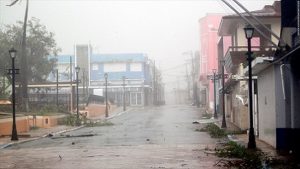
But the whalers’ main asset was their business model. In the 1830s, the legislatures of six American states approved charters for whaling corporations giving them the right to raise capital by selling shares to the public—much the same corporate structure as the Dutch and British East India Companies. None of the six survived the 1840s. “The diffuse ownership structure of the corporations, and the reduced stakes held by their managers, likely diminished the incentives for the managers to perform their role diligently,” concludes Eric Hilt of Wellesley College. Given the expense of buying, outfitting and launching a boat into the perilous ocean, the link between risk and reward needed, it seems, to be tighter.

The lay system could work to the crew’s disadvantage, however. In an effort to reduce claims on the crew’s share of the profits, ruthless captains were said to abandon men on the trip home. (Similar shedding of employees is not unheard of at contemporary tech startups before a big payout.) Other schemes existed to cheat crew members, such as forcing them to buy clothing at inflated prices or to pay usurious interest on advances on their pay. And open-mindedness went only so far: although black sailors were not discriminated against in terms of pay, they were treated less well in other respects, receiving less food and worse quarters.

Yet the New Bedford system was undeniably effective. It soon emptied the oceans of whales, even as other lucrative opportunities emerged for daredevils determined to strike it rich, such as the California gold rush. “The same industrial growth that initially supplied markets and profits for whaling activity ultimately yielded opportunities more attractive than whaling to local capital,” wrote David Moment, a student at Harvard Business School, in 1957. In short, with returns dwindling, the crews and the capitalists turned to other ventures. But the business practices they developed are used in high-risk, high-return industries to this day.

Source: The Economist Magazine – posted Dec 30, 2015; retrieved November 1, 2017 from: https://www.economist.com/news/finance-and-economics/21684805-there-were-tech-startups-there-was-whaling-fin-tech

A key lesson from the history in this foregoing article is to arrange expeditions – one time ventures:

… a “business model that was extremely effective at marshalling capital and skilled workers despite the immense risks involved for both. Whaling all but disappeared as an industry after mineral oil supplanted whale oil as a fuel. But the business structures pioneered in New Bedford remain as relevant as they ever were.”

The movement behind the book Go Lean … Caribbean asserts that the region can enjoy high-risk returns from the industry of Shipbuilding and Ship-breaking. These industries are among the best for fostering new labor intensive jobs. There is no, to little,  industrial developments for these industries in the Caribbean now. It is the proposition here for the Caribbean member-states to engage in some high-risk investments and to incubate a Shipbuilding and Ship-breaking industry.

Shipbuilding?!

A classic form of maritime commerce. Imagine each ship – to be built/assembled – as a one-time venture, an expedition.

Ship-breaking?!

Disassembling ships for scrap metal and recycling. This, too, is a form of maritime commerce.
Imagine each ship – to be dismantled “cleanly” – as a one-time venture, an expedition.

These truly reflect the Industrial Reboot that the Caribbean region needs.

Shipbuilding and Ship-breaking have been a familiar theme for this Go Lean movement. We have detailed the historicity and economic prospects of these industry in these previous blog-commentaries:

https://goleancaribbean.com/blog/?p=12148 Commerce of the Seas – Lessons on Ship-breaking from Alang (India)
https://goleancaribbean.com/blog/?p=12146 Commerce of the Seas – Shipbuilding Model of Ingalls
https://goleancaribbean.com/blog/?p=2003 Where the Jobs Are in Maritime Commerce? Consider Ship-breaking done right!

As related in these commentaries, “all Caribbean members are islands or coastal territories – they can all be candidates for shipbuilding and ship-breaking. There is a need to reform maritime commerce for the Caribbean region; we can get more economic activity from this sector; the Go Lean book projects 15,000 new direct jobs in the shipbuilding and/or ship-breaking activities. The possibility of these new jobs is hope-inspiring. At last we can arrest the societal abandonment where men and women leave the community looking for any kind of work.”

The book Go Lean…Caribbean – available to download for free – serves as a roadmap for the introduction and implementation of the technocratic Caribbean Union Trade Federation (CU), for the elevation of Caribbean society – for all member-states. This CU/Go Lean roadmap has these 3 prime directives:

  • Optimization of the economic engines in order to grow the regional economy to $800 Billion and create 2.2 million new jobs; this would include entrepreneurial ventures and Industrial Reboots. In addition to direct job creation, there is the factor of indirect job-multipliers, in this case a 3.75 multiplier rate.
  • Establishment of a security apparatus to ensure public safety and protect the resultant economic engines.
  • Improve Caribbean governance to support these engines, including a separation-of-powers between the member-states and CU federal agencies.

The book stresses that reforming and transforming the Caribbean societal engines must be a regional pursuit. This was an early motivation for the roadmap, as pronounced in the opening Declaration of Interdependence (Pages 12 – 13):

xi. Whereas all men are entitled to the benefits of good governance in a free society, “new guards” must be enacted to dissuade the emergence of incompetence, corruption, nepotism and cronyism at the peril of the people’s best interest. The Federation must guarantee the executions of a social contract between government and the governed.

xvi. Whereas security of our homeland is inextricably linked to prosperity of the homeland, the economic and security interest of the region needs to be aligned under the same governance. Since economic crimes … can imperil the functioning of the wheels of commerce for all the citizenry, the accedence of this Federation must equip the security apparatus with the tools and techniques for predictive and proactive interdictions.

xxiv. Whereas a free market economy can be induced and spurred for continuous progress, the Federation must install the controls to better manage aspects of the economy: jobs, inflation, savings rate, investments and other economic principles. Thereby attracting direct foreign investment because of the stability and vibrancy of our economy.

The Go Lean book provides 370-pages of turn-by-turn instructions on “how” to adopt new community ethos, plus the strategies, tactics, implementations and advocacies to execute so as to reboot, reform and transform maritime commerce to benefit Caribbean society.

Tourism – and the current economic landscape – is not enough!

There is the need to deploy some new business models to accomplish this goal; we need “all hands on deck”: governments, citizens (including skilled labor groups – unions – and individuals), and financial institutions (banks and capital markets). The foregoing article related that whaling expeditions were propelled by creative financing models:

… allowed them to fund themselves by selling shares to the public …

The Go Lean roadmap seeks to optimize capital markets so as to facilitate industrial and entrepreneurial ventures. Consider these excerpts from the book detailing this strategy:

  • 10 Ways to Impact Wall Street – Page 200
    # 4 – Adopt Advanced Products
    The regional securities markets will be encouraged to adopt advanced financial products like mutual funds, ETF, REITs, commodities futures and options. These products attract more people to avail themselves of investment opportunities.
  • 10 Ways to Develop Ship-Building – Page 209
    # 1 – Lean-in for the Caribbean Single Market & Economy (CSME) Initiative

    The CU will allow for the unification of the region into one market, creating an economy of 30 member-states, 42 million people and 2010 GDP over $800 Billion. All of the member-states are either islands or coastal, therefore there are lots of coastline and harbors. Boats, yachts and ships are therefore plentiful in the region. Consistent with the CU’s mission for globalization, the region cannot just consume these vessels; we must create and build as well. There is a history of boatbuilding in the islands (slopes, schooners, clippers), but what had been missing to forge a formidable industry is the capital and the community “will”. The CU will now fill those gaps. The CU will tap the capital markets to secure long-term funding (stocks/bonds), prepare the labor force for advanced skill-sets, and negotiate treaties with “mature” EU states (i.e. Holland, Ireland) for master-apprentice labor-coaching. …

This commentary is a Lesson from History and also a study in “community ethos”. The Go Lean book defines (Page 20) this as the “fundamental character or spirit of a culture; the underlying sentiment that informs the beliefs, customs, or practices of a group or society; dominant assumptions of a people or period”. There may be good and bad community ethos.

Lessons from History are important to apply in modern society. Can we repeat the good habits that up-build society? Can we avoid the bad habits that tear-down communities?

Yes, we can …

Hunting, killing and harvesting whales were inhumane and reflective of a bad community ethos that man can dominate nature for his own profit.

Expeditions, on the other hand, reflected a good community ethos; “marshalling capital and skilled workers despite the immense risks” where good examples for investing in the future, to positively impact society. We can and should foster this ethos; we should pursue industrial reboots and incubate entrepreneurial endeavors for-and-in our Caribbean communities.

We can do this … and make our homeland a better place to live, work and play. 🙂

Download the free e-Book of Go Lean … Caribbean – now!

Sign the petition to lean-in for this roadmap for the Caribbean Union Trade Federation.

———-

Appendix: The History of Whaling

This article discusses the history of whaling from prehistoric times up to the commencement of the International Whaling Commission (IWC) moratorium on commercial whaling in 1986.

Modern whaling

At first slow whales were caught by men hurling harpoons from small open boats. Early harpoon guns were unsuccessful until Norwegian Svend Foyn invented a new, improved version in 1863 that used a harpoon with a flexible joint between the head and shaft. Norway invented many new techniques and disseminated them worldwide. Cannon-fired harpoons, strong cables, and steam winches were mounted on maneuverable, steam-powered catcher boats. They made possible the targeting of large and fast-swimming whale species that were taken to shore-based stations for processing. Breech-loading cannons were introduced in 1925; pistons were introduced in 1947 to reduce recoil. These highly efficient devices were too successful, for they reduced whale populations to the point where large-scale commercial whaling became unsustainable.

Source: Retrieved November 1, 2017 from: https://en.wikipedia.org/wiki/History_of_whaling

———–

Appendix VIDEO – In the Heart of the Sea – Final Trailer – https://youtu.be/K-H35Mpj4uk

Published on Nov 1, 2015 – Chris Hemsworth stars in Ron Howard’s IN THE HEART OF THE SEA, in theaters December 2015. http://intheheartoftheseamovie.com https://www.facebook.com/IntheHeartof…

Oscar winner Ron Howard (“A Beautiful Mind”) directs the action adventure “In the Heart of the Sea,” based on Nathaniel Philbrick’s best-selling book about the dramatic true journey of the Essex.

In the winter of 1820, the New England whaling ship Essex was assaulted by something no one could believe: a whale of mammoth size and will, and an almost human sense of vengeance.  The real-life maritime disaster would inspire Herman Melville’s Moby-Dick.  But that told only half the story.

“In the Heart of the Sea” reveals the encounter’s harrowing aftermath, as the ship’s surviving crew is pushed to their limits and forced to do the unthinkable to stay alive.


Share this post:
, , ,
[Top]

After Maria, Failed-State Indicators: Destruction and Defection for Puerto Rico

Go Lean Commentary

Independence, Statehood or the Status Quo?

These are the choices for Puerto Rico today. There is no doubt that the Status Quo is unbecoming! It is time for a change! But change to what?

Statehood; becoming  the 51st American State is an option. But, this commentary asserts that maybe the problem is the American affiliation in the first place; it may be more of the same.

Remember this advice from a loving parent:

Never beg someone to love you!

If you’re successful, it is not love that you will get; its pity.

Where is your pride Puerto Rico? “Have you no sense of decency?” You are not being loved right now; you are being pitied. No wait, even the pity is gone – compassion exhaustion after the prior hurricanes of Harvey and Irma; plus forest fires in California. This is what the American affinity has gotten you:

You “cannot win; cannot break-even and cannot get out of the game”.

See Photos here of destruction from Hurricane Maria:

This is a familiar cry from the movement behind the book Go Lean…Caribbean. Just last month (September) we published a series of blog-commentaries assailing the inadequate response to Hurricane Irma. Those submissions were entitled:

After Irma, Failed-State Indicators: Destruction and Defection 

After Irma, the Science of ‘Power Restoration’ 

After Irma, Barbuda Becomes a ‘Ghost Town’ 

After Irma, America Should Scrap the ‘Jones Act’

It would be so easy to just publish Encore‘s at this time and change the name from Irma to Maria. But no, as so much more has transpired in these past weeks. Puerto Rico is now at the cross roads; things will get worse before it gets worse! That previous blogs warned that the outcome for Puerto Rico, and other Caribbean islands, would be defection – “forced uprooting-displacement of large communities”. Truly, this is what has happened.

See this sad manifestation here, reported by a local news broadcast in Tampa, Florida from Tuesday October 24:

VIDEO 1 – Nearly 70,000 Puerto Ricans relocated to Florida after Hurricane Maria – http://www.wtsp.com/news/local/almost-70-thousand-have-arrived-in-fl-from-puerto-rico-after-mara/485479136

Posted October 24, 2017 – WTSP TV, Tampa, Fla. – Anxious relatives stand around switching between staring at their phones and the shuttle drop off at Tampa International Airport.

Some have watery eyes out of nervousness and anticipation.

The tears streamed once they embraced their loved ones arriving from Puerto Rico.

This scene plays out at least once a day after a flight from San Juan lands in Tampa. …

ALERT! We estimate now that Puerto Rico (PR) will lose over 500,000 people directly and indirectly because of Hurricane Maria. So it is time now for a reboot! It is time for PR to change its status, away from US Territory; perhaps to consider an American Divorce, or Independence, yet stilled aligned as an American Protectorate.

In a previous Go Lean blog-commentary, we warned that there is no guarantee that Caribbean communities – like PR – will survive their current crises, that Failed-State status is imminent. See this excerpt here:

What happens after a community is devastated by a catastrophic hurricane? Many things; mostly all bad:

This is not just theoretical; this is the current disposition in the Caribbean after the recent Category 5 Hurricane Irma; [make that Hurricane Maria]. These descriptors are all indicative of a Failed State status. This is a familiar theme for this movement behind the 2013 book Go Lean…Caribbean (and the subsequent blog-commentaries). The book opens (Page 3) with this introduction to the subject of failure in the Caribbean:

    Failure is just too familiar. Already we have member-states …  on the verge of a ‘Failed-State’ status… . These states are not contending with the challenges of modern life: changing weather patterns, ever-pervasive technology, and the “flat world” of globalization. To reverse the fortunes of these failing states, and guide others in the opposite direction to a destination of prosperity, the Caribbean must re-boot the regional economy and systems of commerce.

Hurricanes are tied to failure and Failed-State Indicators. The consequences of hurricanes are more than just natural, there is also the preponderance for people to leave their homelands afterwards – to defect. …

In Failed-State formal-speak, the Go Lean book (Page 271) details 2 indicators or indices: Mounting Demographic Pressures (DP) and Massive Movement of Refugees (REF). These downward movements are indicators of Failed-State status – a bad report on the Fail-State index is simply a reflection of a miserable existence in society:

  • Mounting Demographic Pressures
    Pressures on the population such as disease and natural disasters make it difficult for the government to protect its citizens or demonstrate a lack of capacity or will. This indicator include pressures and measures related to: Natural Disaster, Disease, Environment, Pollution, Food Scarcity, Malnutrition, Water Scarcity, Population Growth, Youth or Age Bulge, and Mortality
  • Massive Movement of Refugees or IDPs
    Forced uprooting of large communities as a result of random or targeted violence and/or repression, causing food shortages, disease, lack of clean water, land competition, and turmoil that can spiral into larger humanitarian and security problems, both within and between countries. This indicator refers to refugees leaving or entering a country. This indicator include pressures and measures related to: Displacement, Refugee Camps, IDP (Internally Displaced Persons) Camps, Disease Related to Displacement, Refugees per capita, and IDPs per capita.

So rather than an American affinity, this commentary asserts that maybe the subject of “Puerto Rico Independence” should be re-visited. How about this twist: an independent Puerto Rico with a Caribbean interdependence.

The book Go Lean…Caribbean – available to download for free – serves as a roadmap for the introduction and implementation of the technocratic Caribbean Union Trade Federation (CU), for the elevation of Caribbean society – for all 30 member-states, Puerto Rico included. This CU/Go Lean roadmap has these 3 prime directives for regional integration:

  • Optimization of the economic engines in order to grow the regional economy to $800 Billion and create 2.2 million new jobs. Puerto Ricans have been defecting for decades looking for jobs.
  • Establishment of a security apparatus to ensure public safety and protect the resultant economic engines. This security pact encompasses an emergency planning/response apparatus to deal with the reality of natural disasters. The CU mandate is to protect against any Failed-State encroachments.
  • Improve Caribbean governance to support these engines, including a separation-of-powers between the member-states and CU federal agencies.

The Go Lean book stresses that reforming and transforming the Caribbean societal engines must be a regional pursuit. This was an early motivation for the roadmap, as pronounced in the opening Declaration of Interdependence (Pages 12 – 13):

xi. Whereas all men are entitled to the benefits of good governance in a free society, “new guards” must be enacted to dissuade the emergence of incompetence, corruption, nepotism and cronyism at the peril of the people’s best interest. The Federation must guarantee the executions of a social contract between government and the governed.

xii. Whereas the legacy in recent times in individual states may be that of ineffectual governance with no redress to higher authority, the accedence of this Federation will ensure accountability and escalation of the human and civil rights of the people for good governance, justice assurances, due process and the rule of law. As such, any threats of a “failed state” status for any member state must enact emergency measures on behalf of the Federation to protect the human, civil and property rights of the citizens, residents, allies, trading partners, and visitors of the affected member state and the Federation as a whole.

xvi. Whereas security of our homeland is inextricably linked to prosperity of the homeland, the economic and security interest of the region needs to be aligned under the same governance. Since economic crimes … can imperil the functioning of the wheels of commerce for all the citizenry, the accedence of this Federation must equip the security apparatus with the tools and techniques for predictive and proactive interdictions.

The Go Lean book provides 370-pages of turn-by-turn instructions on “how” to adopt new community ethos, plus the strategies, tactics, implementations and advocacies to execute so as to assuage the miserable existence; to reboot, reform and transform the societal engines of Caribbean society, to reverse the trending towards Failed-State status (Page 134).

The Caribbean must foster a better disaster preparation and response apparatus than the Puerto Rico Status Quo. That island seems to be counting on the kindness of strangers – the American Super Power. They are looking to Washington as the cure.

The Way Forward for Puerto Rico must be more and better than their previous stance. Perhaps, the American colonial status is the problem … and not the cure.

This is not our opinion alone!

Many others – including the United Nations, who have declared PR technically “a colony” – feel that the Puerto Rico-Washington relationship is dysfunctional, that there should be a friendly divorce.

See this VIDEO here, showcasing the blatant Crony-Capitalism of this storm recovery:

VIDEO 2 – Tiny Trump-Linked Company Gets $300 Million Puerto Rico Contract – https://youtu.be/kUbyWrfg22g

Published on Oct 25, 2017 – The Trump administration awards a $300 million contract intended to get power back on in Puerto Rico to Whitefish Energy, a small Montana company located in Interior Secretary Ryan Zinke’s hometown that had only two full-time employees the day Hurricane Maria hit Puerto Rico.

Subscribe to The David Pakman Show for more: http://www.youtube.com/subscription_c… Timely news is important! We upload new clips every day, 6-8 stories! Make sure to subscribe! Broadcast on October 25, 2017.

Here are some related facts about US-PR dysfunctions, that have been detailed in previous blog-commentaries:

Puerto Rico can do “bad” all by itself; it does not need to be America’s Failed-State!

They do not need the American Hegemony to create an unbearable situation for them. This is NOT an assessment based on the fact that Donald Trump is in the White House now, no rather, this is an summary-analysis based on 120 years of US-PR history. Like many abusive marriages, the US has reserved its most abusive behavior for its own family member, the island territory of PR. This, despite the President or the administration. (See “American ColonyVIDEO in the Appendix below).

No one should be expected to tolerate 2nd Class Citizenship status … for 120 years!

So what’s next? This recommendation:

PR should wipe-out the previous debt and start anew as an independent country / American Protectorate. The island should apply this strategy … based on lessons learned from Detroit. They should expect the defection of 500,000 people and downsize accordingly. Who ever wants to leave, let them leave; build a new society with the remainders.

PR should do this, in order to be better, here in the Caribbean, to make this homeland a better place to live, work and play. 🙂

Download the free e-book of Go Lean … Caribbean – now!

Sign the petition to lean-in for this roadmap for the Caribbean Union Trade Federation. 

———-

Appendix – WTSP-TV Transcript Excerpt … and Beyond

Sub-title: Influx of evacuees 

Nearly 70,000 people have arrived in Florida from Puerto Rico since Hurricane Maria, according to state officials.

Hillsborough county schools have enrolled at least 50 students from Puerto Rico. And local agencies are getting calls every day with questions about affordable housing and jobs.

“I’m hoping I will find a job quickly,” García said with a sigh.

Her husband will also need a job when he arrives, but they don’t know when he will reunite with them.

“We’re a team and after this we’re more united than before so it’s going to be hard,” she said. “It’s going to be really hard but we’re going to make it. After everything we still feel blessed.”

Those seeking information on assistance for Puerto Ricans following Hurricane María can call the State of Florida information line at 1-800-342-3557 or visit the Disaster Recovery Center at The Regent, 6437 Watson Rd., Riverview. The center is open daily from 8 a.m. to 8 p.m. Appointments are not necessary.

More than a dozen agencies are providing resources at the center, including:

  • Federal Emergency Management Administration
  • U.S. Small Business Administration (SBA)
  • Florida Department of Children and Families
  • Florida Department of Health
  • Hillsborough County Aging Services
  • Hillsborough County Affordable Housing Services
  • Hillsborough County Health Care Services
  • Hillsborough County Homeless Services
  • Hillsborough County Social Services
  • American Red Cross
  • Career Source Tampa Bay
  • Central Florida Behavioral Health Network
  • Senior Connection from Area Agency on Aging

© 2017 WTSP-TV

———-

Appendix VIDEO – Satirical Government Ad: “PR – An American Colony” – https://youtu.be/g-GYqakwHdg

Published on Jul 3, 2017 – thejuicemedia


Share this post:
, ,
[Top]

West African Case Study: ECOWAS to Launch ‘Single Currency’

Go Lean Commentary

The Caribbean has the poorest country in the Western Hemisphere: Haiti. But even that is not the poorest (least developed) country in the world; that distinction belongs to 34 countries in Africa; see the full list in the Appendix below.

Yet still, there are lessons that some countries in Africa can teach us here in the Caribbean. One such lesson – Case Study – is the Economic Community of West African States (ECOWAS); see the full news article here of the endeavor for a Single Currency:

Title: ECOWAS leaders agree on single currency by 2020
The 4th meeting of the Presidential Taskforce on a common currency for the West African Monetary Zone (WAMZ) has taken place in Niamey, the capital of Niger, with the firm commitment towards the acceleration of the processes leading to the use of the single currency by 2020.

The meeting was attended by the members of the Presidential Taskforce, namely the President of Ghana, Nana Addo Dankwa Akufo-Addo; the President of the Federal Republic of Nigeria, Muhammadu Buhari; the President of Cote d’Ivoire, Alassane Ouattara; and the host, Mahamadou Issoufou, President of Niger.
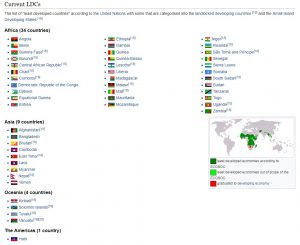

Chairperson of the Economic Community of West African States (ECOWAS), Faure Essozimna Gnassingbé, President of the Togolese Republic, was also present, and took part in the proceedings.

In a communiqué issued at the end of the 1-day meeting, on Tuesday, 24th October, 2017, the members of the Taskforce took note of the report of the Ministerial Committee meeting held earlier, and acknowledged the quality of the conclusions as well as the relevance of the recommendations made, whose substantive parts relate to the measures for the acceleration of the ECOWAS single currency programme.

The Taskforce appreciated the progress made by all ECOWAS institutions involved in the conduct of ECOWAS Single Currency Roadmap activities, and reaffirmed its commitment to the pursuit and the acceleration of the economic, financial and monetary integration agenda of ECOWAS.

In endorsing the main recommendations of the Ministerial Committee, the Taskforce urged Member States to pursue the structural reforms of their respective economies, to help them deal with fluctuations in the prices of raw materials, and enable their economies to be more resilient to exogenous shocks.

Additionally, the Taskforce urged Member States to take the necessary measures, including the attainment of the convergence criteria, necessary for the creation of the ECOWAS single currency by 2020.

The Communiqué noted that the Taskforce has “instructed the Ministerial committee to meet within three months to propose a new roadmap to accelerate the creation of the single currency by 2020. In this framework, a gradual approach can be undertaken, where a few countries, which are ready, can start the monetary union, whilst the other countries join later.”

The Presidential Task Force will hold their next meeting in Accra, in February 2018.

Background
It will be recalled that at the Extraordinary Summit of Heads of State and Government on 25th October, 2013, the Presidents of Ghana and Niger were appointed to oversee the creation of the single currency in a timely manner.

The two Presidents constituted a Task Force, whose membership included representatives of the President of Ghana and Niger; Ministers of Finance of Ghana and Niger; Governors of the eight Central Banks of ECOWAS member States; ECOWAS and UEMOA Commissions; West African Monetary Agency (WAMA) and the West African Monetary Institute, to advise them periodically on the monetary integration programme.

The membership of the taskforce was reviewed in 2015 to include the Presidents of Cote d’Ivoire and Nigeria, as well as the Ministers of Finance of the two countries.

The inaugural meeting of the Presidential Taskforce was held on 20th and 21st February, 2014 in Niamey. Subsequently, two other meetings were held in Accra on 7th and 8th July, 2014, with the last meeting held in Niamey from 4th to 6th February, 2015.

The main objectives of the third meeting were to examine the revised roadmap on the realisation of the ECOWAS single currency by 2020; a proposal from the ECOWAS Commission on the creation of an ECOWAS monetary Institute by 2018; and the concern raised by the WAMZ Convergence Council on the revised macroeconomic criteria adopted by the 45th Ordinary Summit of the Heads of State and Government held in Accra on 10th July, 2014.

After the third meeting, it was agreed, amongst others, that the Central Bank financing criterion be reclassified as a primary criterion because of its strategic importance to monetary and price stability. The revised roadmap on the realisation of the ECOWAS single currency by 2020 was to be costed, and sources of funding identified.
Source: Posted & retrieved on October 24, 2017 from: http://3news.com/ecowas-leaders-agree-single-currency-2020/

While ECOWAS has 15 member states, eight of these are French-speaking, five are English-speaking and two Portuguese-speaking – as of February 2017, not all are participating in this Single Currency endeavor … yet. (See Appendix VIDEO below on ECOWAS). The member-states that have pledged to launch this Single Currency in time for 2020 are as follows:

  • Ghana
  • Nigeria
  • Cote d’Ivoire
  • Togo

Why is this endeavor important and how can it guide the Caribbean? The foregoing article cited the rationale with this one quotation:

“enable their economies to be more resilient to exogenous shocks”.

This is a familiar advocacy for the movement behind the book Go Lean…Caribbean. In a previous blog-commentary from May 9, 2014 the merits of Single Market economic integration were related as follows:

Europe has the safety net of the economies-of-scale of 508 million people and a GDP of $15 Trillion in 28 member-states in the EU; (the Eurozone subset is 18 states, 333 million people and $13.1 Trillion GDP). The US has 50 states and 320 million people. Shocks and dips can therefore be absorbed and leveraged across the entire region .The EU is still the #1 economy in the world; the US is #2.

The Caribbean has no safety-net, no shock absorption, and no integration. This is the quest of the book Go Lean…Caribbean; it urges the introduction and implementation of the Caribbean Union Trade Federation (CU). The book serves as a roadmap for this goal, with turn-by-turn directions to integrate the 30 member-states of the region and forge an $800 Billion economy.

The Go Lean roadmap signals change for the region. It introduces new measures, new opportunities and new recoveries. Economies will rise and fall; the recovery is key. Prices will inflate and deflate; as depicted in the foregoing article, there are curative measures to manage these indices. The roadmap calls for the establishment of the allied Caribbean Central Bank (CCB) to manage the monetary affairs of this region. The book describes the breath-and-width of the CCB.

There are many benefits when multiple countries come together and form a Single Market economy. This is also the quest for the CU/Go Lean roadmap: to form a Single Market and make the Caribbean’s member-states “Pluralistic Democracies”. Pluralism – recognition and affirmation of diversity within a political body – applies in this West African Community as well; as these countries have a diverse mix of tribal affiliation, colonial legacy and language prioritization. These African developments are therefore fitting for a Case Study for the Caribbean to consider.

This CU/Go Lean roadmap therefore urges the same Single Market effort with these 3 prime directives:

  • Optimization of the economic engines in order to grow the regional economy and create 2.2 million new jobs.
  • Establishment of a security apparatus to ensure public safety and protect the resultant economic engines.
  • Improvement of Caribbean governance to support these engines, including a separation-of-powers between the member-states and CU federal agencies.

A Single Currency in West Africa – eventually: Eco – is not so unfamiliar. There are two current currencies that fit the mold:

The West Africa Monetary Zone – identified in the foregoing news article – attempts to establish a strong stable currency to rival the CFA franc, whose exchange rate is tied to that of the Euro and is guaranteed by the French Treasury. The eventual goal is for the CFA franc and “Eco” to merge, giving all of West and Central Africa a single, stable currency. The launch of the new currency – with a target date of 2020 – is being developed by the West African Monetary Institute based in Accra, Ghana.

Wow, for the BIG ideas… to elevate the economic engines for 155 million people in West Africa.

The Go Lean book also presents a BIG idea for reforming and transforming the economic engines of the 42 million people in our 30 Caribbean member-states; the book stresses that our effort must likewise be a regional pursuit, and it must also optimize our currency landscape. This was an early motivation for the roadmap, as pronounced in the opening Declaration of Interdependence (Pages 12 – 13):

xi. Whereas all men are entitled to the benefits of good governance in a free society, “new guards” must be enacted to dissuade the emergence of incompetence, corruption, nepotism and cronyism at the peril of the people’s best interest. The Federation must guarantee the executions of a social contract between government and the governed.

xvi. Whereas security of our homeland is inextricably linked to prosperity of the homeland, the economic and security interest of the region needs to be aligned under the same governance. Since economic crimes … can imperil the functioning of the wheels of commerce for all the citizenry, the accedence of this Federation must equip the security apparatus with the tools and techniques for predictive and proactive interdictions.

xxiv. Whereas a free market economy can be induced and spurred for continuous progress, the Federation must install the controls to better manage aspects of the economy: jobs, inflation, savings rate, investments and other economic principles. Thereby attracting direct foreign investment because of the stability and vibrancy of our economy.

The Go Lean book provides 370-pages of turn-by-turn instructions on “how” to adopt new community ethos, plus the strategies, tactics, implementations and advocacies to execute so as to reboot, reform and transform the societal engines of Caribbean society. There is a lot of consideration in the book for optimizing the currency and monetary eco-systems. Consider this excerpt detailing the Money Multiplier concept; from Page 22:

b-1. Money Multiplier

In monetary macroeconomics and banking, the money multiplier measures how much the money supply increases in response to a change in the monetary base. The multiplier may vary across countries, and will also vary depending on what measures of money are considered. For example, consider M1 as a measure of the U.S. money supply, and M0 as a measure of the U.S. monetary base. If a $1 increase in M0 by the Federal Reserve causes M1 to increase by $10, then the money multiplier is 10.

A money multiplier is one of various closely related ratios of commercial bank money to central bank money under a fractional-reserve banking system. Most often, it measures the maximum amount of commercial bank money that can be created by a given unit of central bank money. That is, in a fractional-reserve banking system, the total amount of loans that commercial banks are allowed to extend (the commercial bank money that they can legally create) is a multiple of reserves; this multiple is the reciprocal of the reserve ratio, and it is an economic multiplier.

Banks are allowed to lend out the monies on deposit up to some regulated maximum. If banks lend out close to that maximum allowed by their reserves, then the inequality becomes an approximate equality, and commercial bank money is central bank money times the multiplier. If banks instead lend less than the maximum, accumulating excess reserves, then commercial bank money will be less than central bank money times the theoretical multiplier.

As a formula and legal quantity, the money multiplier is neither complicated nor controversial – it is simply the maximum that commercial banks are allowed to lend out. However, there are various theories/tools/techniques concerning the mechanism of money creation in a fractional-reserve banking system, and they all have implications on monetary policy. As such this sphere of concern is normally managed by the professionals, classically-trained technocrats.

The conclusion of this consideration is straight forward – there is a multiplier associated with the currency in the money supply. Therefore it goes without saying that if the Caribbean member-states trade in US dollars, then the multiplier effect is extended to the United States of America. By contrast, if the Caribbean member-states trade in Euros, then the multiplier effect goes to the stakeholders of the European Central Bank – no Caribbean state. Therefore the communities of the Caribbean must embrace, as an ethos, its own currency, the Caribbean Dollar (managed by a technocratic Caribbean Central Bank), thereby bringing local benefits from local multipliers.

There have been a number of previous blog-commentaries by the Go Lean movement that have highlighted Case Studies on monetary and currency best practices. See a sample list here:

https://goleancaribbean.com/blog/?p=10513 Case Study from India: Transforming Money Countrywide
https://goleancaribbean.com/blog/?p=7140 Case Study from Azerbaijan: Setting its currency on free float
https://goleancaribbean.com/blog/?p=6800 Case Study from Venezuela: Suing Black Market currency website
https://goleancaribbean.com/blog/?p=4166 Case Study from Panama: History of the Balboa Currency
https://goleancaribbean.com/blog/?p=3858 Case Study from ECB: Unveiling 1 trillion Euro stimulus program
https://goleancaribbean.com/blog/?p=3814 Case Study from Switzerland: Unpegging the franc
https://goleancaribbean.com/blog/?p=360 Case Study on Central Banks: Creating Money from ‘Thin Air’
https://goleancaribbean.com/blog/?p=833 Case Study from the Euro: One Currency, Diverse Economies

In summary, shepherding the economy is no simple task. It requires the best practices of skilled technocrats. Hopefully these West African States will thrive with this new Single Currency effort as they embrace monetary best-practices.

We will be watching!

Hopefully too, the Single Currency efforts in our region – Caribbean Dollar – will manifest before 2020. The benefits are too alluring to ignore: growing the monetary supply, expanding the availability of investment capital and leveraging across a larger base to absorb the shocks naturally associated with a Free Market Economy. Wow; let’s get started.

We are past the time of needing Central Banking reform. We now need to Catch-Up and transform our own society to derive some of these benefits and innovations.

We urge all Caribbean stakeholders – government officials, bankers and ordinary citizens – to lean-in for the empowerments detailed in this Go Lean roadmap. These are best practices! These can make our homeland a better place to live, work and play. 🙂

Download the free e-book of Go Lean … Caribbean – now!

Sign the petition to lean-in for this roadmap for the Caribbean Union Trade Federation.

———–

Appendix – Current Least Developed Countries

Click on Photo to Enlarge

Source: Retrieved Wikipedia Online Encyclopedia October 25, 2017 from: https://en.wikipedia.org/wiki/Least_Developed_Countries#Africa_.2834_countries.29  

———–

Appendix VIDEO – About ECOWAS – https://youtu.be/f2m2UCuEYAs

Published on Jan 29, 2016 – MULTI-MEDIA ECOWAS.COMMUNICATION

  • Category: Comedy
  • License: Standard YouTube License
Share this post:
, , ,
[Top]

Making a ‘Pluralistic Democracy’ – Respecting Diwali

Go Lean Commentary

CU Blog - Respecting Diwali - Making a Pluralistic Democracy - Photo 3What is the ethnic composition of the Caribbean?

Not a singularity!

Our quest now is to make the Caribbean a Single Market and a “Pluralistic Democracy”. This means a society where the many different ethnic groups (and religions) have respect, equal rights, equal privileges and equal protections under the law; where there are no superior rights to any majority and no special deprivations to any minority. The expectation is for anyone person to be treated like everyone else. The legal definition of Pluralism as a political philosophy is as follows …

… the recognition and affirmation of diversity within a political body, which permits the peaceful coexistence of different interests, convictions and lifestyles.[1] While not all political pluralists advocate for a pluralist democracy, this is most common as democracy is often viewed as the most fair and effective way to moderate between the discrete values.[2]Wikipedia

This vision of a Caribbean “Pluralistic Democracy” should be more than words; it must be action too!

Yet we fail so miserably in respecting non-standard traditions. The truth of the matter is that while religious toleration appears to be high in the Caribbean, this is really only true of European-styled Christian faiths. Other non-White religious traditions (let’s consider Hindu) are often ignored or even ridiculed in open Caribbean society, despite the large number of adherents. Of the 30 member-states to comprise the Caribbean Single Market, 3 of them have a large Indian-Hindu ethnicity. As a result, in these communities, though lowly promoted, one of the biggest annual celebrations for those communities is Diwali or Divali:

Diwali (or Deepavali) is the Hindu festival of lights celebrated every year in autumn in the northern hemisphere (spring in southern hemisphere).[4][5] It is an official holiday in Fiji, Guyana, India,[6] Malaysia, Mauritius, Myanmar, Nepal, Singapore, Sri Lanka, Suriname, Trinidad and Tobago. One of the most popular festivals of Hinduism, it spiritually signifies the victory of light over darkness, good over evil, knowledge over ignorance, and hope over despair.[7][8][9] Its celebration includes millions of lights shining on housetops, outside doors and windows, around temples and other buildings in the communities and countries where it is observed.[10] The festival preparations and rituals typically extend over a five-day period, but the main festival night of Diwali coincides with the dark night of the Hindu Lunisolar month Kartika in Bikram Sambat calendar (the month of Aippasi in Tamil Calendar), on the 15th of the month. In the Gregorian calendar, Diwali night falls between mid-October and mid-November.[11]

Before Diwali night, people clean, renovate, and decorate their homes and offices.[12] On Diwali night, people dress up in new clothes or their best outfits, light up diyas (lamps and candles) inside and outside their home, participate in family puja (prayers) typically to Lakshmi – the goddess of fertility and prosperity. After puja, fireworks follow,[13] then a family feast including mithai (sweets), and an exchange of gifts between family members and close friends. Deepavali also marks a major shopping period in nations where it is celebrated.[14]

The name of festive days as well as the rituals of Diwali vary significantly among Hindus, based on the region of India. – Wikipedia.

See the VIDEO’s in the Appendix below.

While Diwali is a religious celebration, many aspects of this culture spills-over to general society; see the detailed plans of a previous year (2009) in Appendix A below. This celebration, in many ways, is similar to Christmas spilling-over to non-Christian people in Christian countries. So the festivities carry a heavy civic-cultural “feel” as opposed to religious Hindu adherence. Plus, these values here are positive community ethos that any stewards in any society would want to promote:

“the victory of light over darkness, good over evil, knowledge over ignorance, and hope over despair”.

This year Diwali is celebrated between October 18 – 22, 2017. It is a public holiday only for Wednesday October 18 in Trinidad and Guyana; plus on Thursday October 19 in Suriname.

This celebration of Diwali is only MEDIUM in these 3 Caribbean member-states; but with the proper fostering it could be BIG; it could be an impactful event! Imagine Event Tourism targeted to the 1.2 Billion people of the emerging economy of India; plus the 35 million people in the Indian Diaspora world-wide.

The book Go Lean…Caribbean presents the advocacy of Event Tourism (Page 191). This is fundamental to elevating Caribbean society to be a better place to live, work and play; (or live, work and pray). The Go Lean book – available to download for free – serves as a roadmap for the introduction and implementation of the technocratic Caribbean Union Trade Federation (CU), for the elevation of Caribbean society – for all 30 member-states – to foster a “Pluralistic Democracy”. This CU/Go Lean roadmap has these 3 prime directives:

  • Optimization of the economic engines in order to grow the regional economy to $800 Billion and create 2.2 million new jobs.
  • Establishment of a security apparatus to ensure public safety and protect the resultant economic engines.
  • Improve Caribbean governance to support these engines, including a separation-of-powers between the member-states and CU federal agencies.

The Go Lean roadmap posits that events can be fostered so as to better impact the economic, security and governing engines of society. This was this declaration from a previous blog-commentary, that touristic events could be so much more lucrative, if only there was a whole-souled commitment by the full community – everyone show respect. Think of the success in Sturgis, South Dakota where a small town of 10,000 hosts up to 600,000 visitors (Page 288). Imagine the economic impact!

The movement behind the Go Lean book has repeatedly related that there is a need for new stewardship of the Caribbean tourism apparatus. The world has changed; our target markets have changed. We cannot just advertise to the Northeast corner of North America for the peak winter season (January & February) anymore. No we must now look to alternate markets and target alternate calendar days so as to expand our product offering.

Imagine the prospect of marketing Diwali – see VIDEO’s below – usually in the tourist-slow month of October.

Beautiful Sky Lantern

This is what is needed to expand the region economically. There is no longer the need for tourism stewards to just “rub shoulders” with travel agents, but rather, there is the need for e-Commerce strategies and tactics (think: Search Engines Optimization) and for efficient execution of events. Welcome to Technocracy 101.

A previous blog-commentary (from September 15, 2015) regarding Tourism Stewardship related these details:

The book Go Lean…Caribbean calls for the elevation of Caribbean society, to re-focus, re-boot, and optimize all the engines of commerce so as to make the Caribbean a better place to live, work and play.  The category of “play” covers the full scope of tourism, which is the primary economic driver for our Caribbean region; the book estimates 80 million visitors among the region. (Since that number includes cruise passengers that may visit multiple Caribbean islands on one itinerary, each port is counted separately; without cruise passengers, a figure of 68 – 69 million is perhaps more accurate).

This commentary is a consideration of tourism, not travel. Tourism is a subset of the travel eco-system, so any Agent of Change in the world of travel must be carefully considered on tourism, on Caribbean tourism. …

The Go Lean book considers these Agents of Change (Page 57) that have dynamically affected the Caribbean economic eco-systems:

  • Technology
  • Globalization
  • Aging Diaspora
  • Climate Change

Technology, the Internet-Communications-Technology (ICT) in particular has furnished alternative and better options for travel enterprises to find passengers-guests-travelers-tourists…. Travel agents are now inconsequential. ….

The book Go Lean…Caribbean and the underlying movement seeks to re-boot the strategies and tactics of tourism marketing for the entire Caribbean region. The book asserts Caribbean member-states must expand and optimize their tourism outreach but that the requisite investment of the resources (time, talent, treasuries) for this goal may be too big for any one Caribbean member-state … alone. Rather, shifting the responsibility to a region-wide, professionally-managed, deputized technocracy will result in greater production and greater accountability. This deputized agency is the Caribbean Union Trade Federation (CU). The book thereafter introduces the CU and provides a roadmap for its implementation into a Single Market for the Caribbean economy … and tourism marketing.

The goal of the CU is to bring the proper tools and techniques to the Caribbean region to optimize the stewardship of the economic, security and governing engines.  The book posits that the economy can be induced and spurred for continuous progress, with technocratic management and stewardship better than the status quo. While the goal of the roadmap is to pursue a diversification strategy, the reality is that tourism will continue to be the primary economic driver in the region for the foreseeable future. The publisher of the book Go Lean…Caribbean convenes the talents and skill-sets of movers-and-shakers in electronic commerce [and project management] so as to forge the best tools and techniques for this new ICT-based marketing.

Lessons need to be learned from the execution of events in these Hindu-populated Caribbean countries. Can the Caribbean flare of a dynamic Hindu culture be exploited further for global marketing and appeal? The Hindu Diaspora is huge, comprising sizeable populations in many countries, including BIG numbers (millions) here:

Australia Nepal
Canada Saudi Arabia
Fiji Singapore
India South Africa
Ireland Sri Lanka
Malaysia United Arab Emirates
Mauritius United Kingdom
Myanmar United States

This is the charter of the Go Lean roadmap, to deploy the technocratic administration to optimize Caribbean Event Tourism. The Go Lean book specifically details the community ethos Caribbean communities need to adopt to be successful in Event Tourism; plus the strategies, tactics, implementations and advocacies to ensure successful deployments; see a sample here:

Community Ethos – Deferred Gratification Page 21
Community Ethos – Governing Principles – Lean Operations Page 24
Community Ethos – Governing Principles – Cooperatives Page 25
Community Ethos – Ways to Promote Intellectual Property Page 29
Community Ethos – Ways to Bridge the Digital Divide Page 31
Community Ethos – Ways to Impact Turn-Arounds Page 33
Community Ethos – Ways to Promote Happiness Page 36
Community Ethos – Ways to Impact the Greater Good Page 37
Strategy – Vision – Confederate 30 Member-States Page 45
Strategy – Mission – Celebrate the Music, Sports, Art and Culture of the Caribbean Page 46
Tactical – Fostering a Technocracy Page 64
Tactical – Separation-of-Powers – CU Federal Agencies versus Member-State Governments Page 71
Implementation – Ways to Deliver Page 109
Planning – 10 Big Ideas for the Caribbean Region Page 127
Planning – Ways to Make the Caribbean Better Page 131
Planning – Lessons from Omaha – College World Series Model Page 138
Advocacy – Ways to Enhance Tourism Page 190
Advocacy – Ways to Impact Events Page 191
Advocacy – Ways to Promote Fairgrounds Page 192
Advocacy – Ways to Preserve Caribbean Heritage Page 218
Advocacy – Ways to Improve the Arts Page 230
Advocacy – Ways to Promote Music Page 231
Appendix – Case Study of “The Rally” in Sturgis, South Dakota Page 288

In summary, the Caribbean is in good position to show respect to the Indian-Hindu community and their Festival of Lights – Diwali. In doing so, we double-down on our quest to be a “Pluralistic Democracy” and optimize our economic engines for Event Tourism.

 “Make happy those who are near, and those are far will come” – Chinese Proverb.
gonna-change-photo-2

What a contrast this is to the Climate of Hate that is so prevalent in so many Caribbean communities, towards people who are different or hold alternative viewpoints.

Yes, the Go Lean roadmap is different … and better.

It seeks to unite the people of the entire Caribbean region, diversify the regional economy (to create new 2.2 million jobs) and make our communities better places to live, work and play. This is why we have a quest for a “Pluralistic Democracy”. This is Part 1 of 3 in the series on this topic; the full collection is as follows:

  1. Making a “Pluralistic Democracy” – Respect for Diwali
  2. Making a “Pluralistic Democracy” – Freedom of Movement
  3. Making a “Pluralistic Democracy” – Multilingual Realities

Now is the time for all stakeholders in the Caribbean – governments, residents, religious devotee (Hindus, Christians, etc.), event planners, participants and tourists – to lean-in to this Go Lean roadmap. We can do better and be better. This quest for a “Pluralistic Democracy” is conceivable, believable and achievable. 🙂

Download the free e-book of Go Lean … Caribbean – now!

Sign the petition to lean-in for the roadmap for the Caribbean Union Trade Federation.

————

Appendix A – Divali Festival in Trinidad and Tobago

By: Dr. Kumar Mahabir

Pakistani Hindu women light earthen lampTrinidad and Tobago is the land of Carnival, steel band, tassa, calypso and chutney. It is the same country that gives the world its unique brand of Divali. Indeed, the Hindu Festival of Lights has become Trinidad’s second largest national open-air festival after Carnival. Divali is a welcomed alternative to the rambunctious indulgence in meat, alcohol, party and “wine,” and is arguably the largest vegetarian alcohol-free festival in the Caribbean, if not the western hemisphere. Divali is an event that the Ministry of Tourism can market as a major attraction in the fastest-growing worldwide trend of spiritual tourism.

Divali is the defining event that marks Trinidad as a multi-religious, multi-ethnic society with Hindus comprising the second largest religious group (24 percent) after Roman Catholics in the twin-island population of 1.3 million people. While Divali is essentially a Hindu festival, people of all faiths actively join in celebrating the triumph of light over darkness, knowledge over ignorance, and good over evil. Non-Hindu adherents are attracted to the festival’s universal message as well as to the extravaganza that is not only unique but also provides a clean environment for the cultivation of a healthy body, mind and soul.

Nowhere else in the world do non-Hindus and non-Indians actively take part in the lighting of over 10 million deyas on a single night in the year. These tiny clay lamps are lit in homes, yards, streets, offices, public parks and playing fields. It is perhaps only in Trinidad that one can find split bamboo tubes transformed into magnificent works of art on which the deyas are placed. The split bamboo strips reach out toward neighboring houses, streets and communities to symbolize the popular local mantra “all ah we is one.”

The eagerness to decorate is everywhere, and payment is the pride of the finished product. Streamers of all colors and patterns are made with kite paper and plastic and strung from jhandi [flag] poles. Brightly colored fabric, balloons and bulbs decorate homes, offices and stages. Indeed, it is Divali that heralds the joy of the end-of-year celebrations. Strings of twinkling lights—clear and colored—are strung high on buildings, trees, and even across streets. Effigies of Mother Lakshmi are made from bamboo tubes and large cardboard cutouts. Calligraphy on signs and banners glitters with decorative paint. The starry designs of deyas and bulbs transform simple houses into magical kingdoms.

The nights are filled with free public performances in public parks and playing fields. Divali provides the perfect forum for showcasing the talent of both foreign and local performers in Indian song, music, dance and drama. Fashion shows are the highlight of all celebrations. Indeed, no celebration is considered complete or magnificent without a fashion show that is always eagerly anticipated by all. Indians in the Caribbean keep the tradition of Indian fashion alive by wearing dhotis, kurtas, Nehru jackets, saris, shalwars, nose-pins, necklaces, bangles, anklets, eyeliners, mehendi markings and forehead tikkas/bindis. Most Divali celebrations end with a competition for women in the crowd who vie to be the best-dressed fashion finalist. A Divali Queen is not only bestowed with a crown, but she is also showered with gifts and prizes.

Divali also boasts of Ram Leela/Lila, which is perhaps the oldest living form of outdoor folk theatre in the Caribbean. The worship of Rama takes many forms, but community devotion [Ramayana yagna] outside the temple has the most public impact. During Divali, tons of sweetmeats like parsad, kurma, burfi, pera, ladoo, jalebi, gulab jamoon and kheer [sweet rice] are made and distributed free.

Indian trade fairs during Divali have become the shopping hotspots for women who flock to the sites in thousands to buy mainly clothes and accessories. A kind of dizzy euphoria can also be seen in any one of the Indian apparel stores in the countdown to Divali. It is all part of the excitement that hums through the air during this pre-Christmas celebration as women try to dress their best and stores try to outsell one another. More than men, women dress in their finest traditional Indian wear with matching jewelry, as models of grace and elegance.

The hub of all Divali celebrations in the island is Divali Nagar in central Trinidad. Indeed, the Nagar is the most frequented entertainment center in the country during Divali, second only to the Grand Stand in the Queen’s Park Savannah during Carnival. The grand display of fireworks in the air at the entertainment park resonates with the thunder of bamboo cannons, the explosions of firecrackers, and the sparkle of “star-lights” in villages across the country. On Divali night, thousands of people take to the streets on foot and in vehicles to behold houses and communities that look like an illuminated fairyland.

Divali will be celebrated as a national holiday in Trinidad and Tobago on Saturday, October 17 [2009].

Dr. Kumar Mahabir is the chairman of the Indo-Caribbean Cultural Council and assistant professor at the University of Trinidad and Tobago.

Source: Posted October 14, 2009; retrieved October 19, 2017 from: http://www.worldpress.org/Americas/3437.cfm

————

Appendix B VIDEO – Diwali – Festival of Lights | National Geographic – https://youtu.be/HrrW3rO51ak


Published on May 19, 2010 – In India, one of the most significant festivals is Diwali, or the Festival of Lights. It’s a five day celebration that includes good food, fireworks, colored sand, and special candles and lamps.
Diwali – Festival of Lights | National Geographic https://youtu.be/HrrW3rO51ak

National Geographic https://www.youtube.com/natgeo

————

Appendix C VIDEO – Diwali – The Festival of Lights – https://youtu.be/mPwmXRws7FA


WildFilmsIndia

Published on May 30, 2013 – Diwali is certainly one of the biggest, brightest and most important festivals of India. While Diwali is popularly known as the “festival of lights”. The celebration of Diwali as the “victory of good over evil” refers to the light of higher knowledge dispelling all ignorance. While the story behind Diwali and the manner of celebration of the festival differ greatly depending on the region, the essence of the festival remains the same – the celebration of life, its enjoyment and goodness. …

  • Category: Travel & Events
  • License: Standard YouTube License
Share this post:
, , ,
[Top]

Dominica Diaspora – Not the Panacea

Go Lean Commentary

If only it was that simple!

You love your homeland, but you live abroad. You simply create a not-for-profit organization, execute a development plan to relieve, restore, recover, rebuild and boom: Instant success … back in the homeland.

If only?! It doesn’t work that way.

CU Blog - Dominica Diaspora - Not the Panacea - Photo 2Yet still, this is what is transpiring on behalf of the Caribbean island of Dominica; see the profile of one such organization here (and more on the island nation in the Appendix below):

Rebuild Dominica, Inc. is a registered 501(c)(3) non-profit relief organisation based in the Washington, D.C. metro area. We were founded by humanitarians determined to help rebuild Dominica in the wake of the devastation wrought by Tropical Storm Erika. This effort continues in support of disaster relief post-Hurricane Maria — the most horrendous assault Dominica has ever experienced.
URL: https://rebuilddominica.org/

Make no mistake; Dominica needs all the help it can get, especially right now after the near total devastation from Category 5 Hurricane Maria; they must relieve, restore, recover and rebuild. See this reality manifested in this VIDEO here:

VIDEO – Small island of Dominica hit hardest by Hurricane Maria – https://youtu.be/FWbzgn3nHaU

Al Jazeera English

Published on Sep 25, 2017 – Hurricane Maria has killed at least 33 people so far, with the bulk of those deaths happening on the tiny island of Dominica. At least 80 percent of the buildings there have been damaged and most communication lines cut. Al Jazeera’s Gabriel Elizondo reports from Dominica.

– Subscribe to our channel: http://aje.io/AJSubscribe
– Follow us on Twitter: https://twitter.com/AJEnglish
– Find us on Facebook: https://www.facebook.com/aljazeera
– Check our website: http://www.aljazeera.com/

Thank you Diaspora, for this fine start; yet still, the problems that Dominica have – with this storm recovery here and even larger issues above and beyond – can not be fixed by this island’s Diaspora alone. No, there is the need for a more comprehensive solution.

Above and Beyond – Yes, looking at the horizon and longing for a solution from above and beyond is the concern of this commentary. In fact, this is the theme of a series of commentaries from the movement behind the book Go Lean … Caribbean. It has been consistent in urging the stakeholders (governments and citizen groups) of the Caribbean member-states to NOT put their hope and faith in their Diaspora to look back to their homelands and be the panacea – cure-all solution – that their societies need. There is preponderance for governments to pursue this strategy. Just recently we published commentaries on this Caribbean pre-occupation, with these entries relating these homelands:

The premise for the criticism of this Diaspora strategy is that the ones that have fled the region have done so for a reason; they have been “pushed” or “pulled” away from their homeland. They may still love their country, but can only do so much from abroad. While one person can change their community, it is near impossible for that one person if they are not in the community; there may be trust, accountability and transparency issues. Thusly, the Diaspora is less inclined to invest back in their country; and the historicity is that they have not! Thusly, all efforts to outreach the Diaspora are usually futile. All of these prior commentaries relate this basic truth about catering to the Diaspora:

The subtle [Diaspora outreach] message to the Caribbean population is that they need to leave their homeland, go get success and then please remember to invest in us afterwards.

… It is so unfortunate that the people in the Caribbean are beating down the doors to get out of their Caribbean homeland, to seek refuge in these places like the US, Canada and Western Europe. … As a result, we have such a sad state of affairs for our Caribbean eco-system as we are suffering from a bad record of societal abandonment.

Yes, the problem of this Diaspora-outreach strategy is that it double-downs on the failure of why the Diaspora left in the first place. When we look at Dominica and see the many failures of that country, we realize that the Dominicans on the island and the Dominicans in the Diaspora cannot, single-handedly or collectively, solve the problems on that homeland. No, something bigger and better is needed.

They are trying now, for that something better …

They are engaging help and support of different not-for-profits, foundations and non-government organization (NGO). See a related news article here:

Title: Rebuild Dominica Partners with Project C.U.R.E. & Other Global Allies Post-Hurricane Maria
Sub-title: Washington, D.C. Based Nonprofit Collaborates To Deliver Hurricane Relief Supplies to the Island Of Dominica
By: The Caribbean Current

CU Blog - Dominica Diaspora - Not the Panacea - Photo 3Bowie, MD (October 8, 2017) – Since its inception in August of 2015, in direct response to Tropical Erika devastating The Commonwealth of Dominica, Rebuild Dominica holds steadfast to its mission of forming and sustaining long-term partnerships to address the unmet needs of communities in Dominica.

Dr. Sam Christian, Rebuild Dominica’s Coordinator of Medical Operations on-island, submitted reports to pronounce the discovery of three residents of Pointe Michel — whom he respectively met dead in a ravine, on the beach, and under debris of a porch. Hours after Hurricane Maria, Dr. Christian, a former U.S. Army Major, and combat surgeon was the only surgeon working with police and a search and rescue team in the south of Dominica. This continued for days, during the difficult hours post-Maria, before outside help came to the area of Point Michel and Soufriere.

These reports were used to secure medical supplies valued at approximately $400,000 USD as donated by Project C.U.R.E.: the largest provider of donated medical supplies and equipment to developing countries around the world. The relief supplies will ship this week to Dominica, while Dr. Sam Christian continues to provide free medical treatment in anticipation of the delivery.

The cost of shipment of the medical supplies was funded under the direction of Rebuild Dominica and the nonprofit’s global supporters. A primary donation of $10,000 USD was received from Ethiopian financier and Advisor to Ethiopian Crown Council, Mel Tewahade. Additional assistance totaling $5,000 USD was pledged by from Saad Wakas and Omar Fisher: Rebuild Dominica allies based in Dubai. The President of Rebuild Dominica, Mr. Gabriel Christian, donated an additional $10,000 underwritten by his law firm in Maryland. The combined mobilization for the Project C.U.R.E. shipment is $20,000 – the sum directed to Project C.U.R.E. on behalf of Rebuild Dominica.

Founding member of Rebuild Dominica, Pastor St. Clair Mitchell of Evangel Assembly, along with Pastor Bell convened with the nonprofit on the evening of September 19, 2017, to mobilize the D.C. community. Carib Nation TV Director, Larry Sindass, and host Derrice Deane brought the Rebuild Dominica relief appeal to a global audience.

John Green, Delvin Walters, John Riviere, Colonel Koreen Parry, Captain Delvin Walters, Loema Sealey, Loughton Sargeant and Monique Joseph — all leaders of the Caribbean Disaster Relief and Recovery Alliance (CDRRA) — rushed to aid Rebuild Dominica; an early member of the CDRRA Diaspora disaster response collaborative. Caribbean Cargo DC again proved itself a solid community ally by reducing its shipping rates and donating storage space for relief supplies.

While facilitating the arrival and news coverage in Dominica by Al Jazeera TV and the Israeli Search and Rescue Team, Rebuild Dominica communicated with Dominica’s Prime Minister, Roosevelt Skerrit. A national medical services assessment, with guidance from Dr. Dale Dangleben and Dr. Sam Christian, is currently in progress for additional donations in the medical sphere.

Another shipment totaling three tons of food and medicine await shipment from Caribbean CargoDC and ATAS Roofing USA has committed to assist with supplies for roofing needs in Dominica. Greek-Ethiopian, Captain Demetrius Apokremiotis, has secured a short-term donation of a Convair 340 cargo plane on behalf of Rebuild Dominica to airlift 7,000 pounds of aid supplies from Miami to Dominica.

As of as of September 25, Rebuild Dominica is an official PayPal nonprofit partner. This status puts the nonprofit on par with all major US nonprofits dedicated to disaster relief.

A fundraiser is currently underway to secure monies needed to fuel and deliver the aid that awaits the displaced and starving citizens of Dominica. To that end, Rebuild Dominica has partnered with CDRRA for the upcoming ‘One Caribbean Hurricane Relief Concert’ slated for Sunday, October 8, 2017, in Bowie, Maryland. Proceeds will benefit the Caribbean islands devastated by Hurricane Irma and Hurricane Maria.

To volunteer, share resources, or make a financial contribution to this nonprofit, please visit www.RebuildDominica.org.

Source: Posted October 11, 2017 from: https://www.thecaribbeancurrent.com/rebuild-dominica-partners-project-c-u-r-e-global-allies-post-hurricane-maria/

To relieve, restore, recover and rebuild Dominica after Hurricane Maria, we need these NGO’s, and the Diaspora, and the island’s government; and … something more …

… enter the Caribbean Union Trade Federation (CU). This is presented as the organizational solution for Dominica; this is the panacea that Dominica and the rest of the Caribbean needs. But first, we need people to stay in their Caribbean homelands, not flee. We need them to prosper where planted here at home. Democratic governments – of the people; by the people; for the people – cannot expect to promote the best of their people, if the best people keep leaving – and joining the Diaspora.

The book Go Lean…Caribbean – available to download for free – serves as a roadmap for the introduction and implementation of the technocratic CU, for the elevation of Caribbean societal engines – economic, security and governance for all member-states. The book asserts that the region must work together – in a formal regional integration – to hold on to its populations – especially the highly educated ones – not see them leave for foreign shores. To accomplish this objective, this CU/Go Lean roadmap presents these 3 prime directives:

The Go Lean book – and many previous blog-commentaries – asserts that while conditions may be bad for Caribbean residents (i.e. Dominican) in their homeland, Black-and-Brown immigrants to far-away countries (think: North America and Western Europe) often have to contend with less than welcoming conditions in those countries. It is only with the Second Generation that prosperity is achieved, but by then, the children of the Caribbean Diaspora are not considered “Caribbean” anymore; they assume their residential citizenship. As conveyed in the foregoing VIDEO, it is not these Second Generation types – legacies – that are overcoming the obstacles to venture back to their ancestral homeland in the wake of hurricanes.

So it is the summation that it is better for Dominican people, and people of all the Caribbean for that matter, to work to remediate and mitigate the risks of Failed-State status in their homeland, but such work is heavy-lifting. It requires a reboot of the entire Dominican eco-system. The Go Lean roadmap calls for a technocratic reboot, to reform and transform regional society. Many people may argue – and they would be correct – that the reformation and transformation of Caribbean communities should come from Caribbean people first. But with such a high societal abandonment rate, the population of many Caribbean member-states – as in Dominica – is approaching a distribution where half of the citizens live on the islands and the other half live abroad – in the Diaspora. For some other countries, it is a vast majority of the educated populations that have fled; one report presents that abandonment rate of 70 percent. See the data references here:

According to the preliminary 2011 census results Dominica has a population of 71,293.[1] The population growth rate is very low, due primarily to emigration to more prosperous Caribbean Islands, the United Kingdom, the United States, and Canada. The estimated mid-year population of 2016 is 73,543 (the 2017 revision of the World Population Prospects[2]).- Wikipedia.

CU Blog - Dominica Diaspora - Not the Panacea - Photo 0

When Caribbean people in general, and Dominicans in particular, emigrate and become aliens in a foreign land, life is not necessarily better in those countries. As related in a previous blog-commentary, those who live in the Diaspora know “both sides of the coin”, as most of them have lived in the ancestral lands at one point. But on the other half, those who still live in the homeland may have never lived abroad.

They do not know what they do not know!

Being a visitor to some North American or European city is different than being a resident, as visitors do not have the interactions of applying for jobs, housing, government benefits, paying taxes, co-existing with neighbors, etc.. These ones in the homeland may naturally assume that the “grass is greener on the other side”. Here’s the truth:

    It is not! (The grass in the northern cities may not even be green at all; it may be covered with autumn foliage or snow).

The Go Lean roadmap is not for the Diaspora to come to the rescue, but rather a Caribbean confederacy, constituted by all 30 member-states. This position leverages the Caribbean as a Single Market (42 million people); it asserts that this is better than just catering to the Diaspora of just one country. This is to be the panacea that Caribbean needs to assuage its defects and dysfunctions. Plus, it also includes the Diaspora, but for all the Caribbean nations combined – estimated at 10 to 25 million. This is a plan for interdependence! This was the motivation for the CU/Go Lean roadmap, as pronounced in the opening Declaration of Interdependence (Pages 12 – 13) of the book:

xi. Whereas all men are entitled to the benefits of good governance in a free society, “new guards” must be enacted to dissuade the emergence of incompetence, corruption, nepotism and cronyism at the peril of the people’s best interest. The Federation must guarantee the executions of a social contract between government and the governed.

xix. Whereas our legacy in recent times is one of societal abandonment, it is imperative that incentives and encouragement be put in place to first dissuade the human flight, and then entice and welcome the return of our Diaspora back to our shores. This repatriation should be effected with the appropriate guards so as not to imperil the lives and securities of the repatriated citizens or the communities they inhabit. The right of repatriation is to be extended to any natural born citizens despite any previous naturalization to foreign sovereignties.

xx.  Whereas the results of our decades of migration created a vibrant Diaspora in foreign lands, the Federation must organize interactions with this population into structured markets. Thus allowing foreign consumption of domestic  products, services and media, which is a positive trade impact. These economic activities must not be exploited by others’ profiteering but rather harnessed by Federation resources for efficient repatriations.

xxiv.  Whereas a free market economy can be induced and spurred for continuous progress, the Federation must install the controls to better manage aspects of the economy: jobs, inflation, savings rate, investments and other economic principles. Thereby attracting direct foreign investment because of the stability and vibrancy of our economy.

The goal of the Go Lean roadmap is for Caribbean people to prosper where planted; the book therefore provides 370-pages of turn-by-turn instructions on “how” to adopt new community ethos, plus the strategies, tactics, implementations and advocacies to execute so as to reboot the region’s societal engines, for Dominica and other member-states. One advocacy for a Way Forward is the plan to optimize the roles and responsibilities of non-government organizations (Page 219):

10 Ways to Impact Foundations

1

Lean-in for the Caribbean Single Market
This treaty allows for the unification of the region into one market, thereby expanding to an economy of 30 countries, 42 million people and GDP of over $800 Billion (circa 2010). With the scale of this Single Market, the CU serves as a proxy to facilitate the economic engines, regional security initiatives and emergency management needs of the Caribbean. While the CU is not an advocacy for human rights or civil rights, there are many social causes that the CU will impact in a tangential manner (women, disabled, poverty, middle class, others). The CU allows for the regional oversight and promotion of Not-For-Profit foundations to execute their campaigns to impact the socio-economic causes of the region.

2

NGOs to Deliver CU Social AgendaThe CU will facilitate the eco-system for not-for-profit foundations and non-government organizations. The CU’s Department of State will not just facilitate incorporations on the regional level, no need to repeat in every member-state, but also provide much of the NGO administration and oversight to satisfy the local governments and other stakeholders.

3

Domestic ChartersOne of the missions of the CU is for the Diaspora to repatriate their time, talents and treasuries to make the Caribbean a better place to live, work and play. The CU will encourage the creation of micro-focused foundations and not-for-profit NGOs. This is a natural way for others to give back. Those desiring to contribute (and incentivized) can enable their causes and passions through local foundations, or petition the CU to discern new gaps needing fulfillment.

4

“One Percent” AlignmentThere is a new spirit of philanthropy imbrued in the population of the world’s billionaires and millionaires (One Percent), many of them have signed a Giving Pledge to donate half of their estate to global charitable causes. Many of this group – see Appendix N on Page 292 – facilitates charitable contributions by means of their personal or otherwise aligned foundations.

5

Foreign ChartersFoundations incorporated in foreign lands will find a “welcome mat” in the Caribbean. The CU will identify opportunities for these foundations to engage within this region. The CU will maintain a Special Interest Group to liaison with the “One Percent” of the world’s richest people. The CU will therefore solicit them for philanthropic manifestations in the CU.

6

CU Reporting

7

e-Delivery

8

Education via e-Learning

9

Intelligence Gathering and Big-Data AnalysisThe CU Intelligence Gathering and Analysis mechanism will track the progress of their activities, plus mitigate threats and risks for foundations and NGOs. The CU’s satellite and terrestrial surveillance systems, and predictive modeling/Big Data Analysis will help guide the focus of foundations – this way their investments and roles will be greatly enhanced.

10

Failed-State Status – Monitoring and MitigationsThere are a few social factors (refugee, family reunification, brain drain) that are so pivotal that they are considered indicators for Failed-State status. The CU’s mission to improve these indices can be dovetailed with the foundations.

There have been a number of blog-commentaries by the Go Lean promoters that have detailed the functionalities of NGO’s and foundations as part of the Way-Forward – the best hope for a new eco-system for Dominica, and the whole Caribbean. See a sample list here:

https://goleancaribbean.com/blog/?p=12949 Charity Management for the Caribbean – Grow Up Already
https://goleancaribbean.com/blog/?p=11598 Plea to Philanthropists: Give us your Time, Talent and Treasuries
https://goleancaribbean.com/blog/?p=8243 Zuckerberg’s Philanthropy Project Makes First Major Investment
https://goleancaribbean.com/blog/?p=5462 Charity Dysfunction: The Red Cross’ $500 Million In Haiti Relief
https://goleancaribbean.com/blog/?p=1763 Gates Foundation: Changing the World

Confederating a regional response is by all means the best-practice for Dominica and other Caribbean hurricane victims. Good results are evident from the limited multilateral efforts that have been exerted thus far. See here:

… the response shows that in a region separated by language and geography, culture remains a strong tie.

“Caribbean culture understands that when a cousin or godson is hurting down the street, everyone puts in their little bit to make a pot of food,” said Marlon Hill, a Jamaican-born Miami attorney, who with the help of The Miami Foundation, is spearheading the U.S. Caribbean Strong Relief Fund with other South Florida Caribbean leaders. “Today it’s Dominica, but tomorrow it can be Saint Lucia, next week it can be Barbados and next year it can be Grenada.”

… whether the new spirit of cooperation will lead to deeper integration among Caribbean nations remains to be seen.

Anthony Bryan, a Caribbean expert now with the Washington-based Center for Strategic and International Studies said that while the recent hurricanes represent a “common disaster” that has pulled nations together, he isn’t optimistic that it will lead to anything beyond the current functional cooperation among many countries on matters such as a common high school exit exam or health initiatives.

    “I think we tend to come together when there are either disaster responses or security measures and to coordinate foreign policies,” Bryan said. “Regional integration has been the hope for many years, but it takes political will. … Functional cooperation has always existed. But to carry it further to political integration? Not in my lifetime.”

Still, [Ronald] Jackson, the head of the regional disaster response – [Caribbean Disaster Emergency Management] – Agency, remains hopeful.

    “We have shown that it is possible,” he said.

Source: Posted September 26, 2017 by the Miami Herald

In summary, regional integration: Good; societal abandonment: Bad!

Any country growing their Diaspora is bad for that country and bad for the Diaspora members. Dominica – and every other country – needs its sons and daughters right now; actually this island needs “all hands on deck” for the Way-Forward. Any official policy to encourage emigration and living-working-abroad – on a permanent basis – is a flawed policy. Rather, it is better to have our citizens in the homeland. They can better help to relieve, restore, recover and rebuild the country.

So any policy that double-downs on the Diaspora is actually doubling-down on failure. We should never want people to have to leave then hope they remember us in our times of distress. No, we want and need them here at home at all times: good, bad and hurricane. We want and need them to “plant” … and prosper where planted.

We strongly urge every stakeholder of Dominica and all of the Caribbean to lean-in to this roadmap to make our homeland, Dominica and the remaining of the 30 member-states, better places to live, work and play. 🙂

Download the free e-book of Go Lean … Caribbean – now!

Sign the petition to lean-in for this roadmap for the Caribbean Union Trade Federation.

———–

Appendix – Dominica Today

Dominica, officially the Commonwealth of Dominica, is a sovereign island country.[8] The capital, Roseau, is located on the leeward side of the island. It is part of the Windward Islands in the Lesser Antilles archipelago in the Caribbean Sea. The island lies south-southeast of Guadeloupe and northwest of Martinique. Its area is 750 km2 (290 sq mi), and the highest point is Morne Diablotins, at 1,447 m (4,747 ft) in elevation. The population was 71,293 at the 2011 census.[5]

Source: Retrieved October 17, 2017 from: https://en.wikipedia.org/wiki/Dominica

CU Blog - Dominica Diaspora - Not the Panacea - Photo 1

——–

Dominica is a member-state in the Organization of Eastern Caribbean States (OECS), along with the sovereign territories of: Antigua and Barbuda, St Kitts and Nevis, St Lucia, St Vincent and the Grenadines and Grenada. (These British Overseas Territories are also associate members of OECS: Anguilla, Montserrat, and the British Virgin Islands).

All of these countries are opening their borders to welcome Dominican citizens to their shores during this hurricane recovery crisis.

“Citizens of Dominica have a right of entry into Antigua and other OECS countries and an automatic six-month stay and must present their passport, driver’s license or voter’s identification card to allow entry”. – St Lucia Times

——–

Dominica is also a member-state of CariCom or the Caribbean Community, in concert with the other 12 Anglophone sovereign countries, plus Haiti and Suriname.

Many of these countries – in a pledge of regional brotherhood – are opening their borders to welcome Dominican citizens to their shores during this hurricane recovery crisis.

Share this post:
, ,
[Top]

Caribbean proposes new US-Caribbean trade initiative

Go Lean Commentary

The problem with socialism is that you eventually run out of other peoples’ money. – Margaret Thatcher CU Blog - Caribbean Island proposes new US-Caribbean trade initiative - Photo 1

Many Caribbean member-states feature a governmental structure of democratic socialism; (see Appendix below).

In some places, socialism is a bad word – think Venezuela – but other states feature an advanced prosperous country despite the socialism tag – think Canada. In general, socialism can be depicted as a scale with leftist communism on one end and right-wing capitalism on the other end. The observation and analysis of these varying states during good times and bad times is that the left-leaning socialism countries tend to suffer from a lot of societal abandonment, especially when things go bad, for the reason as described by Margaret Thatcher above. (Consider for example, the Caribbean island of Barbuda, before their recent disaster, there was no private land-ownership).

So many Caribbean member-states have “run out of other people’s money”, thus ensuring a crisis. Alas, this …

… crisis is a terrible thing  to waste – American Economist Paul Romer

The crisis in the Caribbean region right now is in response to Hurricanes Irma and Maria in September 2017 that have devastated many islands – think Puerto Rico, Barbuda and Dominica. It is a good time to re-think the affinity for democratic socialism. These natural disasters are forcing our region to re-think one of the hallmarks of capitalism; our policies on …

… Trade; American Trade to be exact.

Yet still, it becomes obvious what the problem is for so many Caribbean member-states, they seem to “just” want to spend other people’s money rather than do the heavy-lifting – Big Deal – of growing their own economy/wealth. Notice this theme in the news article here from the St. Lucia Times daily newspaper regarding the urgings of their Prime Minister Allen Chastanet:

Title: Prime Minister Chastanet proposes new US-Caribbean trade initiative

CU Blog - Caribbean Island proposes new US-Caribbean trade initiative - Photo 2On the side-lines of the UN General Assembly in New York, Prime Minister Allen Chastanet has been speaking to the American business network CNBC.

Prime Minister Chastanet discussed the recent hurricanes that have devastated parts of the Caribbean, rebuilding the Caribbean and Caribbean – US relations.

He said recent events have showed that the Caribbean needs to diversify in terms of its sources of food, pointing to a shutdown of the American hub for several days.

“The support has had to come from the south because while we were going through this, you had two hurricanes heading up north. And literally Miami was on a shutdown. So unfortunately the American hub got shutdown almost for ten days out of Miami.  And so it really has shown us that we need to diversify ourselves a bit and maybe look a bit more to Panama in terms of supplies of food,” Chastanet.

Chastanet said the resilience of the Caribbean is very strong and the region will band together to recover from the disasters.

Chastanet proposed the establishment of a new private sector led initiative what would allow US companies to invest in St Lucia tax free and have their resources sent back home without facing heavy US government taxes.

He said there are great investment opportunities in the Caribbean for American companies.

“Can we not get an incentive, and that’s what we’re in discussions with the US about, that if US companies invest into the Caribbean, that those investments in our books are always tax free that the US allow those funds to be repatriated back into the US tax-free, only on those investments. So 1, it accomplishes getting the funds back into the United States of America. It creates an avenue for the private sector to participate in this growth and brings a lot of money to the table, Chastanet said.

Prime Minister Chastanet is expected to address the UN General Assembly today.

Source: Posted September 21, 2017; retrieved October 11, 2017 from: https://stluciatimes.com/2017/09/21/prime-minister-chastanet-proposes-new-us-caribbean-trade-initiative

As related, the Prime Minister of St. Lucia – also Chairman of the Organization of Eastern Caribbean States and a governing stakeholder of CariCom – wants to “count America’s money”! He is lobbying for a law – in the US – in which American investors will have tax concessions on their tax obligations to the US Treasury. (There would be no benefit to the US in this scheme).

He is the Chief Executive of a Caribbean member-state urging the US government to skip on their revenue collections so as to benefit the Caribbean; in effect he is “counting” America’s government revenues. See the full interview in the Appendix VIDEO below.

It should be noted that there is no such bill in the US Congress proposing these measures; so this is not lobbying. Rather the imagery of this whole appeal is just that of a foreign Head of Government begging for money with a sign that reads:

“Will NOT work for food”.

CU Blog - OECS diplomat has dire warning for Caribbean countries - Photo 3

No, this is not the branding or image we should want to project to the watching world. But rather, the Honorable Prime Minister’s earlier words reflect the ethos we really need to portray:

Chastanet said the resilience of the Caribbean is very strong and the region will band together to recover from the disasters.

Rather than looking to the US to solve our problems, we want to band together – an interdependence – and work for our own remediation. This is the theme of the book Go Lean…Caribbean and the accompanying blog-commentaries. “Band together” should have been the only appeal at the United Nations. These words should have been echoed in public forums and private discussions with other Caribbean leaders. The Go Lean movement describes this “banding” as a confederation of the 30 Caribbean member-states, including the 2 US Territories of Puerto Rico and the US Virgin Islands. This formation of a Single Market and accompanying Security Pact would usher in the economic empowerments and security/emergency optimization that the region needs.

The book Go Lean…Caribbean – available to download for free – serves as a roadmap for the introduction and implementation of this confederation, the technocratic Caribbean Union Trade Federation (CU). This complex organization structure is designed for the elevation of Caribbean society – for all member-states. This CU/Go Lean roadmap has these 3 prime directives:

  • Optimization of the economic engines in order to grow the regional economy to $800 Billion and create 2.2 million new jobs.
  • Establishment of a security apparatus to ensure public safety and protect the resultant economic engines.
  • Improve Caribbean governance to support these engines, including a separation-of-powers between the member-states and CU federal agencies. This includes Self-Governing Entities, bordered campuses that practice pure capitalism.

The book stresses that reforming and transforming the Caribbean societal engines can be successful, but only if it is a regional pursuit – all the member-states band together. This was an early motivation for the roadmap, as pronounced in the opening Declaration of Interdependence (Pages 12 – 13):

i.   Whereas the earth’s climate has undeniably changed resulting in more severe tropical weather storms, it is necessary to prepare to insure the safety and security of life, property and systems of commerce in our geographical region. As nature recognizes no borders in the target of its destruction, we also must set aside border considerations in the preparation and response to these weather challenges.

xi. Whereas all men are entitled to the benefits of good governance in a free society, “new guards” must be enacted to dissuade the emergence of incompetence, corruption, nepotism and cronyism at the peril of the people’s best interest. The Federation must guarantee the executions of a social contract between government and the governed.

xvi. Whereas security of our homeland is inextricably linked to prosperity of the homeland, the economic and security interest of the region needs to be aligned under the same governance. Since economic crimes … can imperil the functioning of the wheels of commerce for all the citizenry, the accedence of this Federation must equip the security apparatus with the tools and techniques for predictive and proactive interdictions.

xxiv. Whereas a free market economy can be induced and spurred for continuous progress, the Federation must install the controls to better manage aspects of the economy: jobs, inflation, savings rate, investments and other economic principles. Thereby attracting direct foreign investment because of the stability and vibrancy of our economy.

Our appeal to the PM of St. Lucia and to the leaders of all the other member-states:

This is not our first hurricane nor will it be our last. We must recover from these ones and be prepared for others, a lot more of them. “Begging” should not be our recovery plan!

On the other hand, the Go Lean book provides 370-pages of turn-by-turn instructions on “how” to adopt new community ethos, plus the strategies, tactics, implementations and advocacies to execute so as to reboot, reform and transform the societal engines of Caribbean society.

The branding of the CU is a Trade federation, so there is emphasis for optimizing trade for the Caribbean region. Yes, there is tactical plan to establish trade routes beyond Miami-to-the-Caribbean. The Go Lean roadmap posits that with the close proximity of Trinidad to the South American country of Venezuela (7 miles), there could be an elaborate network of transportation options to facilitate the shipment of goods (and passengers) into the Singe Market.

This roadmap is a Big Deal / Big Idea for the Caribbean region; in many ways, the community commitment for the Caribbean may be similar to the American commitment in the 1960’s to Go to the Moon. The Go Lean book relates this on Page 127:

The Bottom Line on Kennedy’s Quest for the MoonOn 25 May 1961, US President John F. Kennedy announced his support for the American Space program’s “Apollo” missions and redefined the ultimate goal of the Space Race in an address to a special joint session of Congress:

  • “I believe that this nation should commit itself to achieving the goal, before this decade is out, of landing a man on the moon and returning him safely to the earth”.

His justification for the Moon Race was both that it was vital to national security and that it would focus the nation’s energies in other scientific and social fields.

This quest was succeeded. At 10:56 pm EDT, on 20 July 1969, the first human (American Astronaut Neil Armstrong) ventured out of the Apollo 11 landing craft and set foot on the Moon declaring: “one small step for man, one giant leap for mankind“.

Other countries have had subsequent moon landings.

Can we get the support of the Prime Minister of St. Lucia and the other Heads of Government throughout the whole region for our “Moon Shot” equivalent, our Big Deal / Big Idea? This is the actual title of one advocacy in the Go Lean book. Consider the specific plans, excerpts and headlines here from Page 127, entitled:

10 Big Ideas … in the Caribbean Region

1

Lean-in for the Caribbean Single Market
The CU is a big idea for the Caribbean, our parallel of the American “moon quest”, allowing for the unification of theregion into one market of 42 million people. This creates the world’s 29th largest economy, based on 2010 figures.The pre-ascension GDP figures are actually less that $800 Billion, but the aggregation into a Single Market willmanifest the economic “catch-up” principle, in 5 years. Further, after 10 years the CU’s GDP should double andrank among the Top 20 or G20 nations.

2

Currency Union / Single Currency

3

Defense / Homeland Security Pact

4

Confederation Without Sovereignty

5

Four Languages in Unison

6

Self-Governing Entities (SGE)

7

Virtual “Union Atlantic Turnpike” Operations
Ferries, Causeways/Bridges, Pipelines, Tunnels, Railways and limited access highways will function as “blood vessels to connect all the organs” within the region, thus allowing easier transport of goods and people among the islands and the mainland states (Belize, Guyana or Suriname) – See Appendix IC Alaska Marine Highway [on Page 280].

8

Cyber Caribbean
Forge electronic commerce industries so that the Internet Communications Technology (ICT) can be a great equalizer in economic battles of global trade. This includes e-Government (outsourcing and in-sourcing for member-states systems) and e-Delivery, Postal Electronic Last Leg mail, e-Learning and wireline/wireless/satellite initiatives.

9

e-Learning – Versus – Studying Abroad

10

Cuba & Haiti

There have been a number of blog-commentaries by the Go Lean movement that highlighted the art and science of optimizing our eco-system for “Trade and Transport”. See a sample list here:

https://goleancaribbean.com/blog/?p=13140 Region-wide Industrial Reboot of Caribbean Pipelines
https://goleancaribbean.com/blog/?p=12322 Ferries 101 – Launch of a Region-wide Inter-Island Ferry System
https://goleancaribbean.com/blog/?p=9179 The Vision of Ferries for Snowbirds to Head South
https://goleancaribbean.com/blog/?p=4897 Plan for Natural Gas Distribution for Caribbean Consumption
https://goleancaribbean.com/blog/?p=3225 Caribbean is Less Competitive Due to Increasing Aviation Taxes
https://goleancaribbean.com/blog/?p=829 Facilitating Trade with Trucks and Trains
https://goleancaribbean.com/blog/?p=673 Future Model: Ghost Ships – Autonomous Cargo Vessels

In summary, it is only logical to expect any stewards of society to “corral” the resources, assets and people of the community to effect change, to elevate. On the other hand, it is not logical to expect others to do it for us. This is a child’s expectation for his/her parents. This is inappropriate for independent Caribbean member-states. The aforementioned Economist, Paul Romer, asserted the appropriate strategic plan:

“Economic growth occurs whenever people take resources and re-arrange them in ways that are more valuable”.

Obviously, this economist was advocating a capitalist agenda, in contrast to the democratic socialism practice in the region.

There is only a 7-mile strait between the Caribbean island Trinidad of and its southern neighbor. It is only logical to consider that trade route when the northern route – Miami – is impeded. Such a tactical plan will allow for resiliency for post-disaster scenarios. A potpourri of transportation options – Union Atlantic Turnpike – to facilitate interstate commerce among the islands and coastal states is a better plan than begging for other people’s money.

To all you Caribbean leaders: Do not be surprised when a hurricane hits. Count on it! There will be more … such scenario’s. Climate Change is undeniable! Destructive storms will manifest! Bad actors will emerge. There is a need for security empowerments along with economic empowerments. The economic solution for the Caribbean cannot be: Counting other people’s money.

Now is the time for all of the Caribbean – the leaders and the people – to lean-in for the empowerments described here in the book Go Lean…Caribbean. It is conceivable, believable and achievable to prosper ourselves where planted here in the region; to reform and transform and make our own homeland a better place to live, work and play. 🙂

Download the free e-Book of Go Lean … Caribbean – now!

Sign the petition to lean-in for this roadmap for the Caribbean Union Trade Federation.

———–

Appendix VIDEO – Saint Lucia PM Allen Chastanet: Caribbean Needs To Diversify Search For Relief | CNBC – https://youtu.be/asg87s29c4E

Published on Sep 20, 2017 – Allen Chastanet, Prime Minister of Saint Lucia, talks about rebuilding the hard-hit Caribbean after recent storms left the islands devastated. Also Prime Minister Chastanet addresses insurance coverage.

———–

Appendix – Democratic Socialism

Democratic socialism is a political ideology that advocates political democracy alongside social ownership of the means of production, often with an emphasis on democratic management of enterprises within a socialist economic system.

Democratic socialists see capitalism as inherently incompatible with the democratic values of liberty, equality and solidarity; and believe that the issues inherent to capitalism can only be solved by superseding private ownership with some form of social ownership. Ultimately, democratic socialists believe that reforms aimed at addressing the economic contradictions of capitalism will only cause more problems to emerge elsewhere in the economy, that capitalism can never be sufficiently “humanized” and that it must therefore ultimately be replaced with socialism.[1][2]

Democratic socialism is distinguished from both the Soviet model of centralized socialism and from social democracy, where “social democracy” refers to support for political democracy; the nationalization and public ownership of key industries but otherwise preserving and strongly regulating, private ownership of the means of production; regulated markets in a mixed economy; and a robust welfare state.[3] The distinction with the former is made on the basis of the authoritarian form of government and centralized economic system that emerged in the Soviet Union during the 20th century,[4] while the distinction with the latter is made on the basis that democratic socialism is committed to systemic transformation of the economy while social democracy is not.[5]

The term “democratic socialism” is sometimes used synonymously with “socialism” and the adjective “democratic” is often added to distinguish it from the LeninistStalinist and Maoist types of socialism, which are widely viewed as being non-democratic in practice.[6]

Democratic socialism is not specifically revolutionary or reformist, as many types of democratic socialism can fall into either category, with some forms overlapping with social democracy, supporting reforms within capitalism as a prelude to the establishment of socialism.[7] Some forms of democratic socialism accept social democratic reformism to gradually convert the capitalist economy to a socialist one using pre-existing democratic institutions, while other forms are revolutionary in their political orientation and advocate for the overthrow of the bourgeoisie and the transformation of the capitalist economy to a socialist economy.[8]

Relation to economics

Democratic socialists have espoused a variety of different socialist economic models. Some democratic socialists advocate forms of market socialism where socially-owned enterprises operate in competitive markets and in some cases are self-managed by their workforce. On the other hand, other democratic socialists advocate for a non-market participatory economy based on decentralized economic planning.[38]

Democratic socialism has historically been committed to a decentralized form of economic planning opposed to Stalinist-style command planning, where productive units are integrated into a single organization and organized on the basis of self-management.[39]

Contemporary proponents of market socialism have argued that the major reasons for the failure (economic shortcomings) of Soviet-type planned economies was the totalitarian nature of the political systems they were combined with, lack of democracy and their failure to create rules for the efficient operation of state enterprises.[40]

Source: Retrieved October 11, 2017 from: https://en.wikipedia.org/wiki/Democratic_socialism

CU Blog - Caribbean Island proposes new US-Caribbean trade initiative - Photo 3

CU Blog - Caribbean Island proposes new US-Caribbean trade initiative - Photo 4


Share this post:
, , ,
[Top]