Category: Strategy

Industrial Reboot – Frozen Foods 101

Go Lean Commentary

We gotta eat!

In that fact lies a key business model for growing the Caribbean industrial landscape: Jobs and entrepreneurial opportunities can be created by fostering peripheral industries for food distribution that is under-represented currently.

What kind of new jobs? What kind of new industries? Try:

Frozen Foods

CU Blog - Industrial Reboot - Frozen Food 101 - Photo 2c

CU Blog - Industrial Reboot - Frozen Food 101 - Photo 2d

CU Blog - Industrial Reboot - Frozen Food 101 - Photo 2a

CU Blog - Industrial Reboot - Frozen Food 101 - Photo 2b

The Bottom Line on Flash Freezing
Flash freezing (blast freezing) is used in the food industry to quickly freeze perishable food items. In this case, food items are subjected to temperatures well below water’s melting/freezing point (cryogenic temperatures), causing the water inside the foods to freeze in a very short period without forming large crystals, thus avoiding damage to cell membranes. Freezing food preserves it from the time it is prepared to the time it is eaten. CU Blog - Industrial Reboot - Frozen Food 101 - Photo 1This process slows down decomposition by turning residual moisture into ice, inhibiting the growth of most bacterial species. Frozen products do not require any added preservatives because microorganisms do not grow when the temperature of the food is below -9.5°C (14.9ºF); this is sufficient to prevent food spoilage. But Carboxymethyl-cellulose (CMC) or cellulose gum (a cellulose derivative) is often used as a viscosity modifier or thickener, and to stabilize emulsions in various products, including ice cream. It is often used as its sodium salt. CMC is a tasteless/odorless stabilizer, typically added to frozen food as it does not adulterate the quality.

American inventor Clarence Birdseye developed the quick freezing process of food preservation in the early 20th century. This process was further developed by American inventor Daniel Tippmann by producing a vacuum and drawing the cold air through palletized food. His process has been sold and installed under the trade name “Quick-Freeze” and enables blast freezing of palletized food in 35% less time than conventional blast freezing.
Source: Book Go Lean…Caribbean Page 208

A venture into Frozen Foods is about more than just food, it is about culture. Consider the proliferation of Frozen Foods in these cultures:

  • Italian
  • Mexican
  • Chinese

It is the assessment of this commentary that the Caribbean is the greatest destination on the planet; this applies to the terrain, fauna and flora; just think of our paradasaic beaches. Culturally, we have the best cuisinerumscigars and festivals. We also have the best in hospitality, just think of our luxurious hotel-resorts and cruise ships. Now to mix all of this greatness into a frozen entree and export it to the rest of the world. See here this VIDEO on the basics of Frozen Foods versus Fresh Food.

VIDEO – Fresh vs Frozen Food – https://youtu.be/zjsOOT347cA

AsapSCIENCE

Published on Nov 7, 2013 – Which is more nutritious – Fresh or Frozen?

Written and created by Mitchell Moffit (twitter @mitchellmoffit) and Gregory Brown (twitter @whalewatchmeplz).

Further Reading — Overview on Fresh vs Frozen: http://www.livestrong.com/article/710…

Comparing Multiple Nutrional Factors: http://onlinelibrary.wiley.com/doi/10…http://onlinelibrary.wiley.com/doi/10… Vitamin C Comparison: http://www.sciencedirect.com/science/… Antioxidant Content: http://www.sciencedirect.com/science/…

How do we go about doing this, developing a Frozen Foods industry so as to reboot the Caribbean industrial landscape and create the new jobs our region needs for future growth?

The movement behind the book Go Lean … Caribbean asserts that it is possible to reboot the business eco-system of the region so as to create jobs and has presented a roadmap for the goal of 2.2 million new jobs. But the book warns that this task is heavy-lifting to be successful. The entire industrial landscape must be rebooted. There is now a catalog for this Industrial Reboot 101. This commentary is 4 of 4 in the occasional series considering the Industrial Reboots. The full series is as follows:

  1. Industrial Reboot – Ferries 101 – Published June 27, 2017
  2. Industrial Reboot – Prisons 101 – Published October 4, 2017
  3. Industrial Reboot – Pipeline 101 – Published October 6, 2017
  4. Industrial Reboot – Frozen Foods 101

In a previous blog-commentary, it detailed how diverse food delivery systems can contribute to the economy of a new Caribbean; many new jobs are to be created. The summarized quotation states:

This roadmap projected these jobs for food-related industries: 30,000 in direct agriculture; 4,000 in direct Fisheries; and 2,000 related to Frozen Foods.

Yes, fostering an industry for Frozen Foods can allow Caribbean stewards to reboot the industrial landscape. Imagine a network of self-regulated, resilient refrigerated warehouses.

But refrigeration requires steady-reliable power, right? Hurricanes are now more prevalent and more disruptive, right?

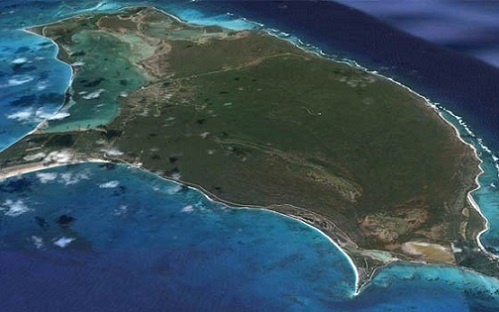
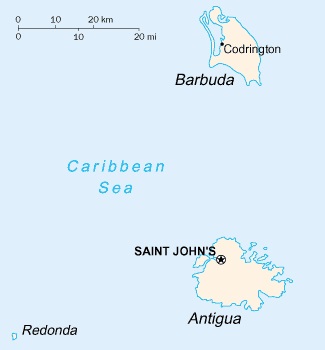
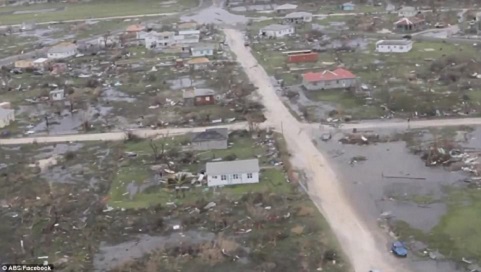
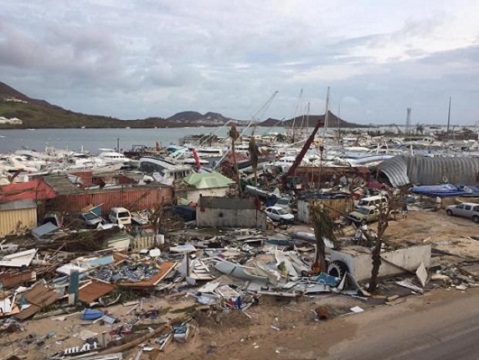
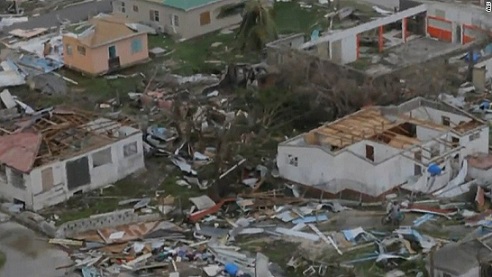
Since landfalls of hurricanes in a Caribbean island can easily wipe out electricity distribution systems – the 2 recent hurricanes of Irma and Maria in September 2017 caused total devastation in some member-states, i.e. Barbuda – it seems vain to introduce a Frozen Foods business eco-system …

… unless remediation and mitigation is first put in place to optimize power-energy solutions.

The Go Lean book presents a complex plan for energy optimizations. Many solutions were presented in these Go Lean blog-commentaries:

We need an inter-island power grid The Go Lean roadmap proposes many solutions for a regional grid to optimize energy:

  • generation – Green options (solar, wind turbines, hydro, tidal and natural gas)
  • distribution – Underwater cables to connect individual islands
We need alternative energy Rather than just limiting power to come from the grid, the Caribbean industrial landscape needs to embrace “Green” alternative on-site options (solar, wind and tidal), efficient battery back-ups, fuel cells and generators.
We need collective refrigeration This refers to the leveraging of a cooling/heating scheme that provides the needed refrigeration for a limited district, not just one building.
We need pipelines Over-ground, underground and underwater pipelines can help sustained refrigerated warehouses during natural disasters … and can help to quickly restore power and the systems of commerce.
We need cheaper energy costs The roadmap promotes natural gas as the preferred fuel for power generation; it is much cheaper than petroleum or coal options.
We need Self-Governing Entities SGE’s are bordered campuses that designates the exclusivity of the commercial, security and administration to federal governance, above-and-beyond the member-states.

The book Go Lean … Caribbean purports that a new technology-enhanced industrial revolution is emerging, in which there is more efficiency for power generation, distribution and storm recovery. This is a vision of economic resiliency. This vision was pronounced early in the book with this Declaration of Interdependence (Pages 11 – 14), with these statements:

i. Whereas the earth’s climate has undeniably changed resulting in more severe tropical weather storms, it is necessary to prepare to insure the safety and security of life, property and systems of commerce in our geographical region. As nature recognizes no borders in the target of its destruction, we also must set aside border considerations in the preparation and response to these weather challenges.

xxvi. Whereas the Caribbean region must have new jobs to empower the engines of the economy and create the income sources for prosperity, and encourage the next generation to forge their dreams right at home, the Federation must therefore foster the development of new industries, like that of … frozen foods … impacting the region with more jobs.

xxx. Whereas the effects of globalization can be felt in every aspect of Caribbean life, from the acquisition of food and clothing, to the ubiquity of ICT, the region cannot only consume, it is imperative that our lands also produce and add to the international community, even if doing so requires some sacrifice and subsidy.

xxxii. Whereas the cultural arts … of the region are germane to the quality of Caribbean life, and the international appreciation of Caribbean life, the Federation must implement the support systems to teach, encourage, incentivize, monetize and promote the related industries … These endeavors will make the Caribbean a better place to live, work and play.

This Go Lean book serves as a roadmap for the introduction and implementation of the technocratic Caribbean Union Trade Federation (CU) to elevate the 30 Caribbean member-states. This Federation will assume jurisdiction for the Exclusive Economic Zone (EEZ) and all Self-Governing Entities (SGE’s). This approach allows for effective and efficient management of bordered campuses where facilities can be deployed for refrigerated warehouses – with their own power-energy eco-systems. This CU/Go Lean roadmap has these 3 prime directives:

  • Optimization of the economic engines in order to grow the regional economy to $800 Billion and create 2.2 million new jobs.
  • Establishment of a security apparatus to ensure public safety and protect the resultant economic engines, even for emergencies.
  • Improvement of Caribbean governance to support these engines, including a separation-of-powers between the member-states and CU federal agencies.

The facilitations for Caribbean food can lead to a reboot of the industrial landscape. The above referenced 36,000 new jobs can lead to additional indirect jobs: 135,000. That makes for a total of 171,000 new jobs. We should all welcome this Industrial Reboot.

Bad Model: There is one Jamaican transnational company that distributes Frozen Foods, but all of their processes is done in their US home, in New Jersey. 🙁

The subject of Caribbean Food has also been addressed and further elaborated upon in these previous blog/commentaries:

https://goleancaribbean.com/blog/?p=10369 Science of Sustenance – Temperate Foods
https://goleancaribbean.com/blog/?p=8982 GraceKennedy: A Caribbean Transnational “Food” Company
https://goleancaribbean.com/blog/?p=5098 Forging Change: ‘Food’ for Thought
https://goleancaribbean.com/blog/?p=3594 Lessons Learned from Queen Conch – A Caribbean Delicacy

The Go Lean book provides 370 pages of details on the economic principles and community ethos to adopt, plus the executions of strategies, tactics, implementations and advocacies to develop this industry and product offering in the Caribbean. The economic principles of the Frozen Foods pipelines are sound.

How” would the Caribbean region reboot, reform and transform their societal engines to develop a Frozen Foods industry. This is the actual title of one advocacy in the Go Lean book. Consider the specific plans, excerpts and headlines here from Page 208, entitled:

10 Ways to Develop a Frozen Foods Industry

1

Lean-in for the Caribbean Single Market The CU will allow for the unification of the region into one market, thereby creating a single economy of 30 member-states, 42 million people (plus a Diaspora of 8 million) and a GDP of over $800 Billion. The CU will take the lead in facilitating the food supply and distribution systems to ensure the region can feed itself, more from local production and less from trade. Modeling Omaha-based ConAgra Foods, the CU will work to shift the Balance of Trade to where more food supplies are exported and less imported. Where as many North American and EU countries place restrictions on Caribbean fresh produce (for example, no citrus), if foods are already prepared and frozen (or canned), those restrictions no longer apply.

2

Adopt Co-ops for Freezer WarehousesThe CU will sponsor cooperatives and condominium associations to construct and maintain refrigerated warehouses, with power alternatives, to facilitate the logistics of frozen products – for trading partners in agriculture and fisheries.

3

Ensure Energy SecurityThe CU will deploy a regional power grid, which would not have been feasible without the unified market. This advance configuration will supply supplemental power to each member state, on demand as the need arises. This proliferation of energy will foster the business environment to promote and develop freezer warehouses, thereby mitigating risks.

4

Supply Needs for Fisheries

5

Encourage Incubators & EntrepreneurshipA lot of the infrastructure to supply the demand for Caribbean-flavored frozen foods does not currently exist. The CU will incentivize private enterprises to develop this industry. Business incubators, and entrepreneur development programs are sure-fire ways to build this industry, support their development through an array of support resources and services. The CU will spur interest with an appropriate tax policy, rebates, loans, and access to credit.

6

Capital Markets & IPOs

7

Nouvelle Caribbean CuisineThe Caribbean Cuisine is part of the charm of island life, but there is the need for reform to promote a healthier lifestyle and foster local economies. Frozen foods are effective for this strategy. There is minimal lost of freshness for the produce that is unique to the Caribbean (i.e. Ackee, Sugar-Apple). These foods, with lower fat/salt – from frozen sources – will be promoted in the local media for their benefits and adherence to Caribbean style, so as to grow the demand.

8

Food Shows – Creating Demand Locally and in the Diaspora

9

Diaspora Exports – Caribbean Fruits & VegetablesMany fruits and vegetables in the Caribbean are tropical and unique to the region. The far flung Diaspora maintains their taste and demand for Caribbean food products. By preparing and freezing foods it will bypass many of the agricultural restrictions that foreign governments impose. Exporting to the Diaspora market adds a sizeable volume.

10

Optimizing Imports – Labeling – RepackagingThe Frozen Foods strategy also has bearing on food imports. The CU labeling requirement may be different than the host country – the CU will mandate food labeling regulation to identify all active ingredients and their nutritional content. (The US plays “games”). The practice of blast freezing palletized foods may have to be used, for local re-packaging.

In summary, we need jobs; our Caribbean job creation dysfunction is acute. New jobs in the Frozen Foods industry can be stable, reliable and providential to facilitate growth in the economy. The infrastructural enhancements for refrigerated warehouses through out the Caribbean region would help us to expand our food exports and help us to expand our industrial landscape for other industries and other job-creating initiatives.

There is a viable export market for our Caribbean Frozen Food providers: 10 to 25 million Caribbean people in the Diaspora.

Yes, we can … reboot our industrial landscape and expand our food productions and exports. We can create new jobs – and other economic opportunities – that the Caribbean region needs. We urge all Caribbean stakeholders – governments, companies and consumers – to lean-in to this roadmap for economic empowerment. We can make all of the Caribbean homeland better places to live, work and play. 🙂

Download the free e-Book of Go Lean … Caribbean – now!

Sign the petition to lean-in for this roadmap for the Caribbean Union Trade Federation.

Share this post:
, , , ,

Industrial Reboot – Prisons 101

Go Lean Commentary

Want to create jobs? “Go to jail; go directly to jail”.

The book Go Lean … Caribbean (Page 23) makes this realistic disclosure:

“Bad Actors” will [always] emerge … to exploit the opportunities, with good, bad and evil intent.

The book continues this theme and relates that there can be economic benefits if communities foster the industries around prisons – consider the SuperMax in the Appendix below – and incarcerating “bad actors”, especially “bad actors” that are the responsibility of other jurisdictions. This is a business model, a Prison Industrial Complex, in which the landlord-host gets paid from the responsible jurisdictions. Business model refers to jobs, entrepreneurial opportunities, trade transactions, etc.

CU Blog - Industrial Reboot - Prisons 101 - Photo 1The Go Lean book details that the Caribbean can create …

12,000 direct jobs for prison guards, administrators, supply logistics, and private protection

While these are direct jobs, there is also the reality of indirect jobs – unrelated service and attendant functions – that at a 3.75 multiplier rate would add another 45,000 jobs.

The book Go Lean…Caribbean – available to download for free – serves as a roadmap for the introduction and implementation of the technocratic Caribbean Union Trade Federation (CU); this is a confederation of all 30 member-states to execute a reboot of the Caribbean eco-system. This CU/Go Lean roadmap has these 3 prime directives:

  • Optimization of the economic engines in order to grow the regional economy to $800 Billion and create 2.2 million new jobs.
  • Establishment of a security apparatus to ensure public safety and protect the resultant economic engines.
  • Improvement of Caribbean governance to support these engines, including a separation-of-powers between the member-states and CU federal agencies.

There is the need for this reboot right now! In the last weeks – September 2017 – the Caribbean region has been beset by 2 major hurricanes, Irma and Maria. The devastation in some member-states has been so complete – i.e. remember Barbuda – that they have had to send their prisoners to foreign facilities, (still within the Caribbean). Consider the news article here, relating this actuality:

Title: St Lucia willing to accept up to 40 foreign prisoners: National Security Minister

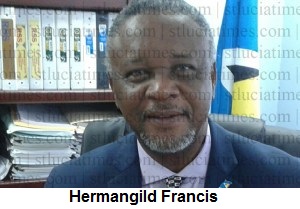
CU Blog - Industrial Reboot - Prisons 101 - Photo 2The National Security Minister, Senator Hermangild Francis has sought to downplay reports that the prisoners brought to St Lucia from the hurricane-ravaged Caribbean islands are high risk.

“People are saying high risk. I have not seen anything indicating that they are high risk. All I’ve been told is that they’re prisoners that needs shelter. So we have accepted to house as many as we could,” Francis asserted.

Seven prisoners from the British Virgin Islands arrived in St Lucia Tuesday along with three others from the Turks and Caicos Islands, bringing to 17 the total number of criminals currently being jailed on the island from the BritishOverseasTerritories, the National Security Minister confirmed.

The first group of seven prisoners arrived at the HewanorraInternationalAirport onboard a British military aircraft on Monday.

It’s unclear what crimes the prisoners were convicted of in their countries or how long will they be kept in St Lucia.

Francis could not confirm whether that would be the final batch.

He said St Lucia is willing to accommodate up to 40 prisoners given that the current low occupancy level at Bordelais Correctional Facility.

The National Security Minister said Tuesday’s transfer of prisoners was carried out “better” than the day before.

The men are being housed in a segregated unit of the Bordelais Correctional Facility, away from local prisoners, Francis said.

The Minister said he plans to visit the prison on Friday.

Source: Posted September 27, 2017; retrieved October 3, 2017 from: https://stluciatimes.com/2017/09/27/st-lucia-willing-accept-40-foreign-prisoners-national-security-minister

Related Story: “Most dangerous” BVI prisoners transferred to St Lucia; reports – Posted September 29, 2017; retrieved October 3, 2017 from: https://stluciatimes.com/2017/09/29/dangerous-bvi-prisoners-transferred-st-lucia-reports

CU Blog - Industrial Reboot - Prisons 101 - Photo 3

Hurricanes are “bad actors” too.

Having a Caribbean Prison Industrial Complex fully functional at this time would have impacted the region’s societal engines: economic, security apparatus and governing administrations. We need this Go Lean/CU roadmap NOW!

The Go Lean book stresses that reforming and transforming the Caribbean societal engines must be a regional pursuit. This was an early motivation for the roadmap, as pronounced in the opening Declaration of Interdependence (Pages 12 – 13):

x. Whereas we are surrounded and allied to nations of larger proportions in land mass, populations, and treasuries, elements in their societies may have ill-intent in their pursuits, at the expense of the safety and security of our citizens. We must therefore appoint “new guards” to ensure our public safety and threats against our society, both domestic and foreign. The Federation must employ the latest advances and best practices of criminology and penology to assuage continuous threats against public safety. The Federation must allow for facilitations of detention for convicted felons of federal crimes, and should over-build prisons to house trustees from other jurisdictions.

xi. Whereas all men are entitled to the benefits of good governance in a free society, “new guards” must be enacted to dissuade the emergence of incompetence, corruption, nepotism and cronyism at the peril of the people’s best interest. The Federation must guarantee the executions of a social contract between government and the governed.

xvi. Whereas security of our homeland is inextricably linked to prosperity of the homeland, the economic and security interest of the region needs to be aligned under the same governance. Since economic crimes … can imperil the functioning of the wheels of commerce for all the citizenry, the accedence of this Federation must equip the security apparatus with the tools and techniques for predictive and proactive interdictions.

xxiv.  Whereas a free market economy can be induced and spurred for continuous progress, the Federation must install the controls to better manage aspects of the economy: jobs, inflation, savings rate, investments and other economic principles. Thereby attracting direct foreign investment because of the stability and vibrancy of our economy.

xxvi.  Whereas the Caribbean region must have new jobs to empower the engines of the economy and create the income sources for prosperity, and encourage the next generation to forge their dreams right at home, the Federation must therefore foster the development of new industries, like that of … the prison industrial complex. In addition, the Federation must invigorate the enterprises related to existing industries like tourism, fisheries and lotteries – impacting the region with more jobs.

Accordingly, the CU will facilitate the eco-system for Self-Governing Entities (SGE), an ideal concept for prisons, with its exclusive federal regulation/promotion activities. Imagine a bordered campus – with a combination of fencing, walls and/or moats/canals – that designates the exclusivity of the commercial, security and administration to superlative governance above the member-states. With an approved “Action Plan”, the comings-and-goings would not be up to debate of local authorities.

The Go Lean movement (book and blogs) details the principles of SGE’s and job multipliers, how certain industries are better than others for generating multiple indirect jobs down the line (or off-campus) for each direct job on the SGE’s payroll. In a previous blog-commentary, it was related how one industry – shipbuilding – was perfectly suited for the Caribbean, as long as the structure was an independent “Shipyard”/SGE. That commentary asserted how 60,000 new jobs can easily be facilitated.

This is transforming! This is the vision of an industrial reboot! This is where and how the jobs are to be created.

But do the exploitations of the Prison Industrial Complex put security at risk for Caribbean communities?

No. Not if the deployments are done right!
(See the reality of “Life in a SuperMax” Prison facility in the Appendix VIDEO below).

The Go Lean book provides 370-pages of turn-by-turn instructions on “how” to adopt new community ethos, plus the strategies, tactics, implementations and advocacies to execute so as to reboot, reform and transform the societal engines of Caribbean society. One advocacy in rebooting the industrial landscape is to foster a Prison Industrial Complex; consider the  specific plans, excerpts and headlines from the book on Page 211 entitled:

10 Ways to Impact the Prison Industrial Complex

1

Lean-in for the Caribbean Single Market
This will allow for the unification of the region into one market of 42 million people across 30 member-states with a GDP of $800 Billion (2010 figures). In addition, the treaty calls for a collective security pact allowing the implementation of a prison system to detain convicts of CU federal offenses (i.e. economic and military crimes). The CU will over-build these facilities for more than just federal prisoners, but also to house inmates for other jurisdictions. Directly, there is a huge economic impact, starting with jobs (law enforcement and support personnel), and the construction industry to build the prisons. Indirectly, the spin-off in the local communities has a multiplier effect. This industry will generate direct income for the CU.

2

Invite and Repatriate Prisoners
The CU will petition host countries to return incarcerated members of the Caribbean Diaspora – for a fee – since they are guilty of crimes committed in those host countries. But the cost of incarceration can be lower in the CU region compared to North American and European venues, because of the ideal weather. The next leap is to offer to house other prisoners in an outsourcing arrangement for the foreign host countries – this is classic Prison Industrial Complex.

3

Impact Rural Communities

4

In-source for Local Governments
The member-states can embrace the CU’s Prison Industrial Complex to satisfy their own needs, both penal and labor. With economies-of-scale, they can out-source their own trustees to the CU to minimize their direct costs. In addition, the CU will manage the process of providing prison labor for public endeavors, i.e. license plates and document scanning.

5

Supply Prison Labor Needs

6

Build Employable Skill-Sets

7

Reduce Recidivism

8

Gathering Intelligence on Probation Trustees and Parolees

9

Prepare for Escalations and Emergencies
The security needs of the region are paramount, even in the case of emergencies. The CU region must allow for the systemic risks of natural disasters (hurricanes and earthquakes) in the vicinity of maximum security prisons. The risk mitigation plan must allow for tactical response/SWAT units, riot squads, and military readiness to suppress uprisings.

10

Learn from Peonage Past and Ensure Corporate Governance

There have been a number of blog-commentaries by the Go Lean movement that highlighted economic opportunities embedded in regional homeland security initiatives. See a sample list here:

https://goleancaribbean.com/blog/?p=13126 “Must Love Dogs”  – Providing K9 Solutions for Better Security
https://goleancaribbean.com/blog/?p=12400 Accede the Caribbean Arrest Treaty
https://goleancaribbean.com/blog/?p=9072 Model: Shots-Fired Monitoring – Securing the Homeland on the Ground
https://goleancaribbean.com/blog/?p=2782 Model: ‘Red Light Traffic Cameras’ for Public Safety & Profits
https://goleancaribbean.com/blog/?p=1832 Model: Opportunities as US Deports More Drug-arrested Inmates
https://goleancaribbean.com/blog/?p=1674 Model: $3.7 Billion for US Detention Centers

In summary, we need jobs; our Caribbean job creation dysfunction is acute. While not glamorous, Prison Industrial Complex jobs are stable, reliable and providential. They would help us to make our homeland a better place to live, work and play.

But this is only 57,000 (12,000 + 45,000) jobs. The Go Lean/CU vision is for 2.2 million new jobs. Where and how can this new technocracy expect to create those jobs, while the existing regimes of the Caribbean region cannot accomplish this now?

Industrial Reboot!

But the Go Lean book describes the process as “difficult”, no ABC-123. Rather it is heavy-lifting! Yet there are some basics that must be embraced; these basics can be catalogued as an “Industrial Reboot 101”. This commentary is 2 of 4 in an occasional series considering Industrial Reboots. The full series is as follows:

  1. Industrial Reboot – Ferries 101
  2. Industrial Reboot – Prisons 101
  3. Industrial Reboot – Pipeline 101
  4. Industrial Reboot – Frozen Foods 101

Yes, we can … reboot our industrial landscape. It is possible to create the new jobs – and other economic opportunities – that the Caribbean region needs. We urge all Caribbean stakeholders – governments and citizens – to lean-in to this roadmap for economic empowerment. We can make all of the Caribbean homeland better places to live, work and play. 🙂

Download the free e-book of Go Lean … Caribbean – now!

Sign the petition to lean-in for this roadmap for the Caribbean Union Trade Federation.
————

Appendix Title: SuperMax Prison

Supermax (short for: super-maximum security) is a primarily U.S. English term used to describe “control-unit” prisons, or units within prisons, which represent the most secure levels of custody in the prison systems of certain countries. The objective is to provide long-term, segregated housing for inmates classified as the highest security risks in the prison system—the “worst of the worst” criminals—and those who pose a threat to both national and global security.[1]

CU Blog - Industrial Reboot - Prisons 101 - Photo 4a

CU Blog - Industrial Reboot - Prisons 101 - Photo 4b

History
CU Blog - Industrial Reboot - Prisons 101 - Photo 5
The United States Penitentiary Alcatraz Island, opened in 1934, has been considered a prototype and early standard for a supermax prison.[5]

An early form of supermax-style prison unit appeared in Australia in 1975, when “Katingal” was built inside the Long Bay Correctional Centre in Sydney. Dubbed the “electronic zoo” by inmates, Katingal was a super-maximum security prison block with 40 prison cells having electronically operated doors, surveillance cameras, and no windows. It was closed down two years later over human rights concerns.[6] Since then, some maximum-security prisons have gone to full lockdown as well, while others have been built and dedicated to the supermax standard.

Supermax prisons began to proliferate within the United States after 1984. Prior to 1984 only one prison in the U.S. met “supermax” standards: the Federal Penitentiary in Marion, Illinois. By 1999, the United States contained at least 57 supermax facilities, spread across 30–34 states.[3] The push for this type of prison came after two correctional officers at Marion, Merle Clutts and Robert Hoffman, were stabbed to death in two separate incidents by …. This prompted Norman Carlson, director of the Federal Bureau of Prisons, to call for a new type of prison to isolate uncontrollable inmates. In Carlson’s view, such a prison was the only way to deal with inmates who “show absolutely no concern for human life”.[7]

Source: Retrieved from Wikipedia October 4, 2017 from: https://en.wikipedia.org/wiki/Supermax_prison

See related Appendix VIDEO of Life in a SuperMax Prison below.

————

Appendix VIDEO – Life in a SuperMax Prison – CNN Video – http://www.cnn.com/videos/us/2015/05/13/inside-supermax-prison-orig.cnn/video/playlists/inside-prison-cells/

Published May 143, 2015 – Life in a SuperMax Prison

If [Boston Marathon Bomber] Dzhokhar Tsarnaev is sent to the United States Penitentiary Administrative-Maximum Facility in Florence, Colorado, he’ll be cut off from the world. See what life is like for inmates inside a Supermax prison. Source: CNN


Share this post:
, , ,
[Top]

ENCORE: America’s Race Relations – Spot-on for Protest

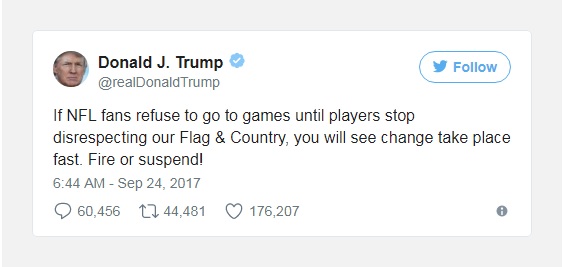
The protest action of “Kneeling during the National Anthem” has become huge.

CU Blog - ENCORE - Spot on for Protest - Photo 1

See the full news article here: https://www.nytimes.com/2017/09/25/sports/football/cowboys-cardinals-anthem-protest.html?mcubz=3

This issue was also huge this day last year – with the below blog-commentary – when NFL quarterback Colin Kaepernick began this protest. What is different now? A lot! Starting with the President of the United States, Donald J. Trump. He seems to want to take America backwards by asserting that NFL players who take a knee should be fired.

CU Blog - ENCORE - Spot on for Protest - Photo 2 CU Blog - ENCORE - Spot on for Protest - Photo 3

Well, now whole teams are taking the knee and the league is universally blasting the President.

The President? This is the Leader of the Free World?

This commentary asserted then on September 26, 2016 and is presented here as an ENCORE now, “It is Time To Go! America is not home for Caribbean people”. See here:

——–

Go Lean Commentary – Time To Go – Spot-on for Protest

Here’s an interesting little-known tidbit about Abraham Lincoln – the liberator and emancipator of the American slaves:

Initially, he felt that the freed slaves needed to leave America. He felt that they would never be treated as equals in the land that had previously held them as slaves for 250 years. He advocated for places like the Caribbean (Haiti & British colonies), Central America (Belize & Panama), South America (Guyana) or Africa (Liberia).
Source Book: Colonization After Emancipation: Lincoln and the Movement for Black Resettlement.
CU Blog - A Lesson in History - Before the Civil War - Human Right Not Compromise - Photo 3

Now, 150 years later, perhaps his thinking was “spot-on”.

These 150 years since the formal emancipation has seen a continuous suppression, repression and oppression of the Black race in America. Could they have had a better disposition in the Caribbean, with its Black majority rule?

This commentary asserts that it is easier for the Black-and-Brown populations in the Caribbean to prosper where planted in the Caribbean, rather than emigrating to foreign countries, like the United States.

We agree with Abraham Lincoln’s gut instinct; he was “spot on”.

This point aligns with the book Go Lean…Caribbean, which states that while the blatant racist attitudes and actions may now be considered politically incorrect, the foundations of institutional racism in the US have become even more entrenched. The book supports the notion that the Caribbean can be an even better place to live for the Caribbean’s Black-and-Brown populations, once we make the homeland a better place to live, work and play.

There is the need to optimize the economic, security and governing engines in the Caribbean region. This commentary is 1 of 3 from the movement behind the book Go Lean … Caribbean, in consideration of the rhymes-and-reasons to repatriate back to the Caribbean homeland. The other commentaries detailed in this series are as follows:

  1.   Time to Go – Spot-on for Protest
  2.   Time to Go – No respect for our Hair
  3.   Time to Go – Logic of Senior Emigration

All of these commentaries relate to the Caribbean image and disposition as a majority Black region. No racial supremacy is advocated in this book nor by this movement. The motivation is simply for the Greater Good. This is defined as …

the greatest good to the greatest number of people which is the measure of right and wrong.” – Jeremy Bentham (1748-1832).

The Go Lean book and movement serves as a roadmap for the introduction of the technocratic Caribbean Union Trade Federation (CU). The CU is set to optimize Caribbean society through economic empowerment, yes, but there are security and governing dynamics as well. Therefore the Go Lean roadmap has 3 prime directives:

  • Optimization of the economic engines in order to grow the regional economy to $800 Billion & create 2.2 million new jobs.
  • Establishment of a security apparatus to ensure public safety, justice assurances and protect the economic engines.
  • Improve Caribbean governance to support these engines.

The Go Lean roadmap posits that the Caribbean region is in crisis now, and so many are quick to flee for refuge in foreign countries. But the “grass is not necessarily greener on the other side”; life in the US, for example, is definitely not optimized for the Caribbean’s Black-and-Brown. It is “spot-on” that there is need for protest, anguish and outright fear for the interactions of Black men and the American police/law enforcement establishment.

The Go Lean book asserts that every community has bad actors. The Caribbean has bad actors; and the US has bad actors. But because of the obvious need for reform and to transform the region, it may be easier to effect change at home, than in the foreign country of the US.

Besides, many (non-Black) people in the US, don’t even think they need to change anything. They think there is no problem – everything is fine – notwithstanding the proliferation of Cop-On-Black killings. See a related news article here regarding legendary NFL Head Coach Mike Ditka; (despite these developments, Mr. Ditka continues to be honored and esteemed in the Caribbean):

Title: Mike Ditka to Colin Kaepernick: ‘Get the hell out’ if you don’t like America
By: Bryan Armen Graham
Sub-title: Mike Ditka spared no criticism of Colin Kaepernick’s national anthem protest.

cu-blog-time-to-go-spot-on-for-protest-photo-1

Hall of Fame coach Mike Ditka has leveled blistering criticism at Colin Kaepernick’s decision to kneel during the national anthem, saying he has “no respect” for the San Francisco 49ers quarterback whose protest has sparked a national discussion over racial injustice, inspired dozens of NFL players to follow suit and landed him on the cover of Time magazine.

“I think it’s a problem, anybody who disrespects this country and the flag,” the longtime NFL coach said in a radio interview on KRLD-FM in Dallas. “If they don’t like the country, if they don’t like our flag, get the hell out. That’s what I think.

“I have no respect for Colin Kaepernick. He probably has no respect for me, that’s his choice. My choice is that I like this country, I respect our flag, and I don’t see all the atrocities going on in this country that people say are going on.

“I see opportunities if people want to look for opportunity. Now if they don’t want to look for them, then you can find problems with anything, but this is the land of opportunity because you can be anything you want to be if you work. Now if you don’t work, that’s a different problem.”

The 76-year-old Ditka, who was inducted into the Pro Football Hall of Fame in 1988, is one of two people in NFL history to win a league title as a player, an assistant coach and a head coach. He graduated from local hero to Chicago icon during an 11-year coaching stint with the Bears that included the team’s only Super Bowl win during the 1985 season, then retired permanently after a failed comeback with the New Orleans Saints in 1999.

A well-known conservative, Ditka publicly flirted with running against Democratic candidate Barack Obama, then a state senator, for the open seat in the US Senate vacated by Illinois senator Peter Fitzgerald in 2004. No one then could have imagined how the election would ultimately propel Obama to the presidency in four years’ time.

“Biggest mistake I’ve ever made,” he told the Dickinson Press in 2013. “Not that I would have won, but I probably would have and he wouldn’t be in the White House.”

In March, Ditka called Obama “the worst president we’ve ever had”.

“Barack Obama is a fine man,” he added. “He’s pleasant, he’d be great to play golf with. He’s not a leader.”
Source: The Guardian Daily Newspaper Online Site; Posted September 23, 2016; retrieved September 25, 2016:
https://www.theguardian.com/sport/2016/sep/23/mike-ditka-colin-kaepernick-get-the-hell-out-anthem-protest
cu-blog-time-to-go-spot-on-for-protest-photo-2

Photograph: Jordan Strauss/Invision/AP

The protagonist in this drama is NFL Quarterback Colin Kaepernick; he has started a protest against the treatment of African-Americans in the US. He asserts that too many unarmed Black Men has died, as of recent, by the hands of White Police Officers. While others share this view, including the African-American President of the US Barack Obama, Mr. Kaepernick is voicing his protest by refusing to stand during the singing of the national anthem at the start of his NFL football games. This protest has fostered a lot of attention … and discord to this issue.

The underlying injustice of Cop-on-Black killings is acute. There is a need for community outrage; it is “spot-on” that anyone would protest. Kudos to Colin Kaepernick! Since he started his protest stance on August 26, 2016, at least 15 more “Black men have been killed by law enforcement officers” as of September 20, 2016; (but there has been 2 more highly publicized killings since this posting: Keith Lamont Scott in Charlotte, North Carolina, and Terence Crutcher in Tulsa, Oklahoma).

The foregoing article gives the instruction for people to leave who do not agree with the American status quo. But can they really? Could the liberated slaves in Lincoln’s day leave for elsewhere? How about the countless cries over the centuries and decades for Black American Nationalism; (as in Marcus Garvey)? Was there an alternative homeland for their consideration? This reminds us of the movie dialogue from the 1982 movie An Officer and a Gentlemen. Remember this exchange:

Foley: You can forget it! You’re out!

Mayo: Don’t you do it! Don’t! You… I got nowhere else to go! I got nowhere else to g… I got nothin’ else.

Seriously, for the majority of Black America, they have no where else to go. The Caribbean Diaspora who represent 1 in 11 Blacks in the US, on the other hand, have the option of repatriating home.

We welcome them! We declare that it is “Time to Go“. We are hereby preparing for their return – fixing our defects – monitoring our “bad actors”.

We have to consider that police officers can also be “bad actors”. The book contends that the Caribbean must better prepare for bad actors, that we will see more of them. With the plan for economic success, comes the eventuality of even more bad actors, just as a result of economic success. This point is pronounced early in the book with the Declaration of Interdependence (Page 12) that claims:

x.   Whereas we are surrounded and allied to nations of larger proportions in land mass, populations, and treasuries, elements in their societies may have ill-intent in their pursuits, at the expense of the safety and security of our citizens. We must therefore appoint “new guards” to ensure our public safety and threats against our society, both domestic and foreign. The Federation must employ the latest advances and best practices of criminology and penology to assuage continuous threats against public safety. The Federation must allow for facilitations of detention for [domestic and foreign] convicted felons of federal crimes, and should over-build prisons to house trustees from other jurisdictions.

xvi. Whereas security of our homeland is inextricably linked to prosperity of the homeland, the economic and security interest of the region needs to be aligned under the same governance. Since economic crimes, including piracy and other forms of terrorism, can imperil the functioning of the wheels of commerce for all the citizenry, the accedence of this Federation must equip the security apparatus with the tools and techniques for predictive and proactive interdictions.

The Caribbean appointing “new guards”, or a security pact to ensure public safety and justice assurance is a comprehensive endeavor, that will encapsulate the needs of all Caribbean stakeholders: governments, institutions and residents.

An important mission of the Go Lean roadmap is to dissuade the high emigration rates of Caribbean citizens to the American homeland. Secondly, there is a mission to encourage the repatriation of the Caribbean Diaspora back to their ancestral homeland.

This means being conscious of why people flee – “push” and “pull” reasons – and monitoring the societal engines to ensure improvement – optimization. (“Push” refers to the societal defects in the Caribbean that moves people to want to get way; and “pull” factors refer to the impressions and perceptions that America is better).

An increased perception that “one would be shoot by a White police officer” should lower the “pull” factor. We would think …
See VIDEO here:

VIDEO – I Am Afraid I Will Be Killed By Police – https://youtu.be/9DD64urEx28

Published on Jul 7, 2016 by Kevin OnStage. See more from this commentator here:
http://kevonstage.com/store
http://kevonstage.com/booking

The Go Lean book details a series of community ethos, strategies, tactics, implementations and advocacies to better optimize our Caribbean life (economic and security concerns):

Community Ethos – Consequences of Choices Lie in Future Page 21
Community Ethos – Economic Principle – Consequences of Choices Lie in Future Page 21
Community Ethos – Whistleblower Protection Page 23
Community Ethos – Anti-Bullying and Mitigation Page 23
Community Ethos – Minority Equalization Page 24
Community Ethos – Return on Investments Page 24
Community Ethos – Cooperatives Page 25
Community Ethos – Ways to Manage Reconciliations Page 34
Community Ethos – Ways to Improve Sharing Page 35
Community Ethos – Ways to Impact the Greater Good Page 37
Tactical – Confederating a non-sovereign union Page 63
Tactical – Fostering a Technocracy Page 64
Tactical – Separation of Powers – CU Federal Agencies -vs- Member-states Page 75
Implementation – Ways to Pay for Change Page 101
Implementation – Start-up Foreign Policy Initiatives Page 102
Implementation – Start-up Security Initiatives Page 103
Implementation – Reasons to Repatriate Page 118
Planning – Big Ideas – Regional Single Market Page 127
Planning – Ways to Make the Caribbean Better Page 131
Planning – Ways to Better Manage the Caribbean Image Page 133
Advocacy – Ways to Grow the Economy Page 151
Advocacy – Ways to Create Jobs Page 152
Advocacy – Ways to Improve Governance Page 168
Advocacy – Ways to Better Manage the Social Contract Page 170
Advocacy – Ways to Improve Leadership Page 171
Advocacy – Ways to Impact Justice Page 177
Advocacy – Ways to Reduce Crime Page 178
Advocacy – Ways to Improve Homeland Security Page 180
Advocacy – Ways to Improve Intelligence Gathering/Analysis Page 182
Advocacy – Ways to Improve for Natural Disasters – Many flee after disasters Page 184
Advocacy – Ways to Impact the Diaspora Page 217
Advocacy – Ways to Preserve Caribbean Heritage Page 218
Advocacy – Ways to Protect Human Rights Page 220
Advocacy – Ways to Impact Urban Living Page 234
Advocacy – Ways to Impact US Territories Page 244

This subject of “push and pull” has been frequently blogged on in other Go Lean commentaries; as sampled here with these entries relating American “pull” factors:

https://goleancaribbean.com/blog/?p=8431 Bahamas Issued US Travel Advisory Citing Police Violence
https://goleancaribbean.com/blog/?p=8202 Respect for Minorities: Lessons Learned from American Dysfunction
https://goleancaribbean.com/blog/?p=8200 Respect for Minorities: Climate of Hate
https://goleancaribbean.com/blog/?p=8099 Caribbean Image: ‘Less Than’?
https://goleancaribbean.com/blog/?p=7221 Street naming for Martin Luther King unveils the real America
https://goleancaribbean.com/blog/?p=7204 ‘The Covenant with Black America’ – Ten Years Later
https://goleancaribbean.com/blog/?p=6189 A Lesson in History – Hurricane ‘Katrina’ exposed a “Climate of Hate”
https://goleancaribbean.com/blog/?p=5733 Better than America? Yes, We Can!
https://goleancaribbean.com/blog/?p=5527 American Defects: Racism – Is It Over?
https://goleancaribbean.com/blog/?p=5333 Racial Legacies: Cause and Effect
https://goleancaribbean.com/blog/?p=1020 Also a European Sports Problem
https://goleancaribbean.com/blog/?p=546 American Model: Book Review – ‘The Divide’ – … Injustice in the Age of the Wealth Gap
https://goleancaribbean.com/blog/?p=341 Hypocritical US slams Caribbean human rights practices
https://goleancaribbean.com/blog/?p=273 10 Things We Don’t Want from the US: Racism against minorities

Underlying to the Go Lean/CU prime directive of elevating the economics, security and governing engines of the Caribbean, is the desire to make the Caribbean homeland, a better place to live, work and play. We know “bad actors” will emerge – even as law enforcement officers – so we need to be “on guard”.

We want proactive and reactive mitigations for abuse of power. We want to ensure our Caribbean communities are safe for our stakeholders (residents and visitors). We entreat the American forces to work towards remediating their own defects. But fixing the US is not within our scope; fixing the Caribbean is our only mission.

Saying that it is “Time to Go“, must mean that we are ready to receive our oft-scattered Caribbean Diaspora. Are we ready, now?

Frankly, no …

… but were are ready, willing and able to start the change process, to reform and transform. This was the intent of the book Go Lean … Caribbean. The book contends that the Caribbean must prepare for the return of all of our people, back to these shores. This means people in a good disposition and bad (sick, aged, unemployed, destitute, imprisoned, etc.). This point is pronounced early in the book with the Declaration of Interdependence (Pages 12 & 13) that claims:

xiii. Whereas the legacy of dissensions in many member-states … will require a concerted effort to integrate the exile community’s repatriation, the Federation must arrange for Reconciliation Commissions to satiate a demand for justice.

xviii. Whereas all citizens in the Federation member-states may not have the same physical abilities, reasonable accommodations must be made so that individuals with physical and mental disabilities can still access public and governmental services so as to foster a satisfactory pursuit of life’s liberties and opportunities for happiness.

xix. Whereas our legacy in recent times is one of societal abandonment, it is imperative that incentives and encouragement be put in place to first dissuade the human flight, and then entice and welcome the return of our Diaspora back to our shores. This repatriation should be effected with the appropriate guards so as not to imperil the lives and securities of the repatriated citizens or the communities they inhabit. The right of repatriation is to be extended to any natural born citizens despite any previous naturalization to foreign sovereignties.

xxvi. Whereas the Caribbean region must have new jobs to empower the engines of the economy and create the income sources for prosperity, and encourage the next generation to forge their dreams right at home, the Federation must therefore foster the development of new industries, like that of ship-building, automobile manufacturing, prefabricated housing, frozen foods, pipelines, call centers, and the prison industrial complex. In addition, the Federation must invigorate the enterprises related to existing industries like tourism, fisheries and lotteries – impacting the region with more jobs.

The book details the needed security provisions that need to be put in place to optimize Caribbean life. See this quotation here (Page 118):

“New Guards” for Public Safety
The CU implements the anti-crime measures and provides special protections for classes of repatriates and retirees. Crimes against these special classes are marshaled by the CU, superseding local police. Since the CU will also install a penal system, with probation and parole, the region can institute prisoner exchange programs and in-source detention for foreign governments, especially for detainees of Caribbean heritage.

This subject of improving the conditions for successful Caribbean repatriation has been blogged in previous Go Lean commentaries; as sampled here:

https://goleancaribbean.com/blog/?p=5304 Mitigating the Eventual Abuse of Power
https://goleancaribbean.com/blog/?p=5002 Managing a ‘Clear and Present Danger’
https://goleancaribbean.com/blog/?p=4360 Dreading the American: ‘CaribbeanBasin Security Initiative’
https://goleancaribbean.com/blog/?p=4308 911 – Emergency Response: System in Crisis

The Go Lean roadmap was composed with the community ethos of the Greater Good foremost; for all peoples – Black, Brown, White, Yellow, Red. We advocate for a color-blind society …

… and justice for all.

This is an American concept … in words only. In practice, America has always fallen short in its delivery of justice and opportunities for its Black-and-Brown populations. There is so much that America does right, that we want to model; there is so much that America does poorly, that we want to mitigate. The “grass is not greener on the other side”. Effort is needed anywhere, everywhere, to improve society. But for the Black-and-Brown of the Caribbean, more success from less effort can be expected in the Caribbean than in the US; the underlying foundation of racism in America may be just too hard to unseat.

All Caribbean stakeholders are hereby urged to lean-in to this Go Lean/CU roadmap to elevate the Caribbean; to make our homeland a better place to live, work and play. 🙂

Download the free e-Book of Go Lean … Caribbean – now!

Share this post:
, , ,
[Top]

Gender Equity without a ‘Battle of the Sexes’

Go Lean Commentary

CU Blog - Gender Equity without a 'Battle of the Sexes' - Photo 1A lot of societal reforms – human and civil rights – only come about as a result of advocates fighting for change.

Some battles are so important that they must be fought, even if the proponents were to lose. These proponents must not tire in these battles; but they must accept that change will only come as a result of a struggle.

This commentary has previously asserted that despite the fact that his advocacy was 150 years ago, African-American Abolitionist Frederick Douglass is a role model for the Caribbean today; he is quoted as saying:

“Those who profess to favor freedom, yet deprecate agitation, are men who want crops without plowing up the ground. They want rain without thunder and lightening. They want the ocean without the awful roar of its many waters. This struggle may be a moral one; or it may be a physical one; or it may be both moral and physical; but it must be a struggle. Power concedes nothing without a demand. It never did and it never will.”

So “change is gonna come“; it would be wiser for opponents to just concede that fact. This is a lesson for the Caribbean to learn from military strategies: if combatants know that the end result of a fight would be imminent defeat, they should not fight; rather they should just concede and negotiate favorable terms of surrender.

Let’s consider gender equality …

… there have actually been real ‘Battles of the Sexes’, where the end results have benefited women – to the victor goes the spoils. Consider these American experiences:

  • World War I waged between 1918 and 1918, bringing monumental change to society. Women pressed hard in this era and secured the right to vote, starting in 1920, but most women’s careers still only revolved around the home and family.
  • World War II waged between 1939 and 1945 bringing even more changes to society; as men went off to war, many jobs were assumed by women. After this war, they did not relinquish those advances. More opportunities were forged in the industrial and educational arena.
  • Title IX, the 1972 landmark federal gender legislation that emerged after the 1960’s Civil Rights era force educational institutions that receive federal monies to mandate equal opportunities for women. The law states (in part) that:
      “No person in the United States shall, on the basis of sex, be excluded from participation in, be denied the benefits of, or be subjected to discrimination under any education program or activity receiving Federal financial assistance.”

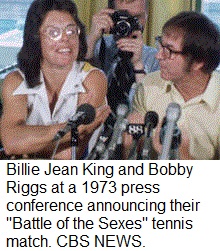
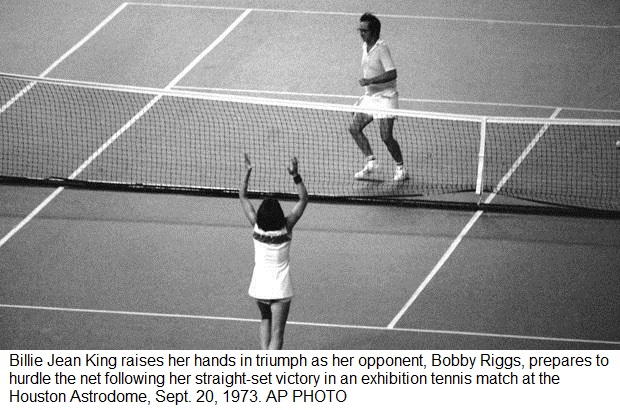
Ah, the 1970’s; in addition, there was another ‘Battle of the Sexes’ that dominated American consciousness. This was the media spectacle of the tennis match featuring female star – and Wimbledon Champion – Billie Jean King versus male star – and Wimbledon Champion – Bobby Riggs. This is a big week for the memories of that 1973 ‘Battle of the Sexes’ tennis match as a new movie is being released on Friday (September 29, 2017) to chronicle the drama of those events. See this Profile VIDEO here:

VIDEO Billie Jean King’s victories, on and off the courthttps://youtu.be/MgcfWTGcnNY

“If you’re old enough to remember it, in 1973, you probably watched it: Billie Jean King vs. Bobby Riggs — man vs. woman — a spectacle that captivated the nation.
More than 30,000 attended the match held in the Houston Astrodome. …”

Lee Cowan catches up with the tennis legend and advocate for gender equality, whose 1973 exhibition match against Bobby Riggs was promoted as the “Battle of the Sexes” (and is now dramatized in a new movie starring Emma Stone and Steve Carell).

See the full transcript of the VIDEO here: https://www.cbsnews.com/news/billie-jean-king-battle-of-the-sexes/

Billie Jean King, Bobby RiggsAlso see the Movie Trailer in the Appendix below.

As related in the movie, this 1973 event in Houston, Texas USA sparked a global conversation on gender equality, spurring on the feminist movement. As the USA goes, so does the rest of the world … eventually. The American Hegemony – the political, economic, or military predominance or control of one state over others – is real for its impact on Caribbean life. Each one of these advances in Women’s Rights in the US had a parallel effect on Caribbean member-states … eventually. In a previous Go Lean commentary, the Caribbean’s journey in Gender Equality was detailed and presented as a needed advocacy to reform and transform our society.

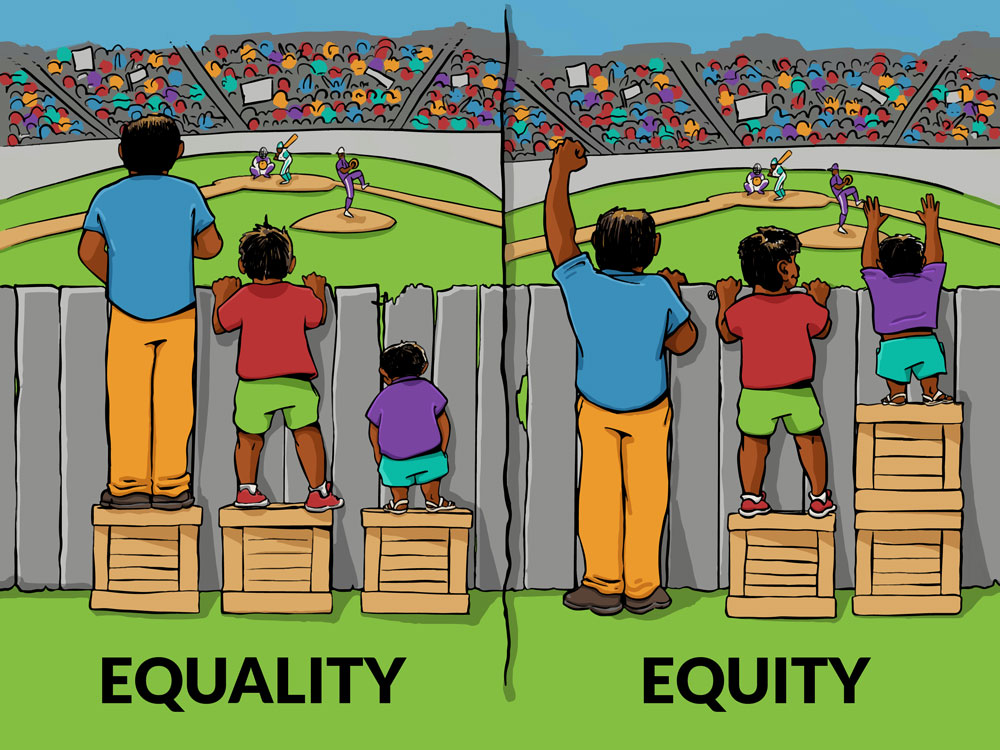
Yes, in the Caribbean, we can have Gender Equity without a ‘Battle of the Sexes’. Notice, we want equity, more so than equality! We recognize that there is and will always be differences between men and women – think maternity. Each gender have different needs, the solution is not the “same” for everyone, but rather the relevant empowerments, so that everyone can “be all they can be”.

CU Blog - Gender Equity without a 'Battle of the Sexes' - Photo 3Since the Caribbean needs … all the help we can get, we need more women in government, local administration and regional stewardship. That previous blog-commentary related …

… this is not just a case for feminism. The issues relate to policy-making participation and optimization, more than they relate to feminism. This story is being brought into focus in a consideration of the book Go Lean … Caribbean. The book serves as a roadmap for the introduction and implementation of the technocratic Caribbean Union Trade Federation (CU), for the societal elevation in the region. This roadmap calls for a fuller participation from women as stakeholders. …

With 50% of the population, there is the need for 50% of the representation; (this is the target). …

Among the crises that the region contends with is human flight, the brain drain or abandonment of the highly educated citizenry. Why do they leave? For “push-and-pull” reasons!

“Push” refers to deficient conditions at home that makes people want to flee. “Pull” refers to better conditions abroad that appeals to Caribbean residents. They want that better life.

[So] an underlying mission of the CU is to dissuade this human flight.

The title ‘Battle of the Sexes’ refers to a movie, yes, but an advocacy as well. (Any discussion about Billie Jean King must also consider her advocacy for LGBT rights; we need those empowerments in the Caribbean too; we need our local opposition to concede – without a battle – that they cannot win in abusing others). This is why we need movies; as an art form, they can be a powerful source of messaging to impress new theories, doctrines and practices on the masses of people. This is what is meant by “life imitating art”. In a previous blog-commentary regarding Caribbean Diaspora member and Hollywood great, Sidney Poitier, it was declared that …

“Movies are an amazing business model. People give money to spend a couple of hours watching someone else’s creation and then leave the theater with nothing to show for the investment; except perhaps a different perspective”.

This is the assertion of the book Go Lean … Caribbean, that different artistic endeavors can be used for effective messaging to forge change – elevate the community – in the Caribbean’s societal engines. The book – available to download for free –presents the prime directives of the Go Lean roadmap:

The Caribbean region needs to include more women in leadership roles in business, government and all security institutions. We need to do this without a Battle.

You Caribbean men, just concede:

We need the full participation of all able-bodied women for the successful outworking of our communities.

This theme was pronounced early in the Go Lean book with this Declaration of Interdependence (Pages 12 – 14), with these opening statements:

xi. Whereas all men are entitled to the benefits of good governance in a free society, “new guards” must be enacted to dissuade the emergence of incompetence, corruption, nepotism and cronyism at the peril of the people’s best interest. The Federation must guarantee the executions of a social contract between government and the governed.

xxi. Whereas the preparation of our labor force can foster opportunities and dictate economic progress for current and future generations, the Federation must ensure that educational and job training opportunities are fully optimized for all residents of all member-states, with no partiality towards any gender or ethnic group. The Federation must recognize and facilitate excellence in many different fields of endeavor, including sciences, languages, arts, music and sports. This responsibility should be executed without incurring the risks of further human flight, as has been the past history.

xxvi. Whereas the Caribbean region must have new jobs to empower the engines of the economy and create the income sources for prosperity, and encourage the next generation to forge their dreams right at home, the Federation must therefore foster the development of new industries …

The subject of fostering gender equity, equal access and equal protections for women have been directly addressed and further elaborated upon in previous blog/commentaries; consider this sample:

https://goleancaribbean.com/blog/?p=12035 Lean-in for ‘Wonder Woman Day’
https://goleancaribbean.com/blog/?p=8306 Women Get Ready for New Lean-In Campaign
https://goleancaribbean.com/blog/?p=8155 Bahamas Referendum Outcome: Impact on the ‘Brain Drain’
https://goleancaribbean.com/blog/?p=7490 Push Factor: Interpersonal Violence / Domestic
https://goleancaribbean.com/blog/?p=6937 Women in Politics – Yes, They Can!
https://goleancaribbean.com/blog/?p=6836 Role Model – #FatGirlsCan – Empowering Women
https://goleancaribbean.com/blog/?p=6434 ‘Good Hair’ and the Strong Black Woman
https://goleancaribbean.com/blog/?p=6422 Getting More Women Interested in Science/Technology Careers
https://goleancaribbean.com/blog/?p=2709 Caribbean Study: 58% Of Boys Agree to Female ‘Discipline’
https://goleancaribbean.com/blog/?p=2201 Students developing nail polish to detect date rape drugs
https://goleancaribbean.com/blog/?p=809 Muslim officials condemn abductions of Nigerian girls
https://goleancaribbean.com/blog/?p=695 Help for Abused Women Depicts Societal Defects

The Go Lean book posits that every woman has a right to work towards making her community a better place to live, work and play. This should be the default thinking, without a battle … especially here in the Caribbean where we need their participation. So the book provides 370-pages of turn-by-turn instructions on “how” to adopt new community ethos, plus the strategies, tactics, implementations and advocacies to execute so as to help women to impact the homeland.

This quest to elevate our regional society requires heavy-lifting! It is a battle. But this quest, this goal is conceivable, believable and achievable. With the right commitment of time, talent and treasuries from women – and the men that support them – we can succeed in making the Caribbean region a better place to live, work and play. 🙂

Download the free e-Book of Go Lean … Caribbean – now!

Sign the petition to lean-in for this roadmap for the Caribbean Union Trade Federation.
———

Appendix VIDEO – Battle of the Sexes I Official Trailer – https://youtu.be/o5ykcuAS1F4

The electrifying 1973 tennis match between World number one Billie Jean King (Emma Stone) and ex-champ and serial hustler Bobby Riggs (Steve Carell) was billed as THE BATTLE OF THE SEXES and became one of the most watched televised sports events of all time. The match caught the zeitgeist and sparked a global conversation on gender equality, spurring on the feminist movement. Trapped in the media glare, King and Riggs were on opposite sides of a binary argument, but off-court each was fighting more personal and complex battles. With a supportive husband urging her to fight the Establishment for equal pay, the fiercely private King was also struggling to come to terms with her own sexuality, while Riggs gambled his legacy and reputation in a bid to relive the glories of his past. Together, Billie and Bobby served up a cultural spectacle that resonated far beyond the tennis courts and animated the discussions between men and women in bedrooms and boardrooms around the world.

Visit THE BATTLE OF THE SEXES on our WEBSITE: www.battleofthesexes-movie.com

Like THE BATTLE OF THE SEXES on FACEBOOK: https://www.facebook.com/BattleoftheS…

Follow THE BATTLE OF THE SEXES on TWITTER: https://twitter.com/billievsbobby

Follow THE BATTLE OF THE SEXES on INSTAGRAM:

https://www.instagram.com/battleofthe… #BattleoftheSexes

Connect with Fox Searchlight Online

Visit the Fox Searchlight WEBSITE: http://foxsearchlight.com/

Like Fox Searchlight on FACEBOOK: https://www.facebook.com/foxsearchlight

Follow Fox Searchlight on TWITTER: https://twitter.com/foxsearchlight

FOX Searchlight https://www.youtube.com/user/FoxSearc…

Share this post:
, ,
[Top]

Jamaican Diaspora – Not the ‘Panacea’

Go Lean Commentary

Here we go again. Will “they” ever learn? CU Blog - Jamaican Diaspora - Not the Panacea - Photo 0

Due to the high societal abandonment rate in the Caribbean homeland, the population of the citizenry of the individual member-states is approaching a distribution where half of the citizens live in the homeland and the other half live abroad – in the Diaspora.

Those who live in the Diaspora, know “both sides of the coin”, as most of them have lived in the ancestral lands at one point. But the other half, those who still live in the homeland may have never lived abroad.

They do not know what they do not know!

Oh, they may have visited! But being a visitor to some North American or European city is different than being a resident, as visitors do not have the interactions of applying for jobs, housing, government benefits, paying taxes, co-existing with neighbors, etc.. These ones in the homeland may naturally assume that the “grass is greener on the other side”. Here’s the truth:

It is not! (The grass in the northern cities may not even be green at all; it may be covered with autumn foliage or snow).

So as observers-and-reporters of Caribbean people, culture and eco-system in both the homeland and the Diaspora, “we” – the movement behind the book Go Lean…Caribbean – have noticed how consecutive government administrations seem to empathize with the strategy of making outreach to their Diaspora; see article in Appendix A. They put a lot of stock (investment) into this strategy and the results are always consistent:

There is no pay-off! Even now, after 50 years of emigration, the positive impact of the Diaspora is still elusive.

Hoping for the Diaspora to be the panacea of Caribbean ills – “Diaspora Bug” – has proven to be a fallacy, time and again. Notice in the referenced article that the World Bank organization reportedly stated that $500 million in investments had come to this one country from their Diaspora, but the researcher seems to want to inflate the impact, projecting a “pie-in-the-sky” figure of $12.8 billion.

Enough already people!

The movement behind the book Go Lean … Caribbean has been consistent in this theme. Just this year alone, we have commented on these flawed efforts, in:

The criticism has been leveled against all these Caribbean member-states hoping that their Diaspora – those who had fled, being “pushed” or “pulled” away from their homeland –  would invest back in their country. The problem is that this Diaspora-outreach strategy double-downs on the failure of why the Diaspora left in the first place. Both previous commentaries relate:

The subtle message to the Caribbean population is that they need to leave their homeland, go get success and then please remember to invest in us afterwards.

… It is so unfortunate that the people in the Caribbean are beating down the doors to get out of their Caribbean homeland, to seek refuge in these places like the US, Canada and Western Europe. And yet it seems like the Chief Executive of this Caribbean country is encouraging more of it – there is a similar sentiment in the rest of the Caribbean member-states. As a result, we have such a sad state of affairs for our Caribbean eco-system as we are suffering from a bad record of societal abandonment.

The country du jour – for this commentary – is Jamaica; see the related article in Appendix C below.

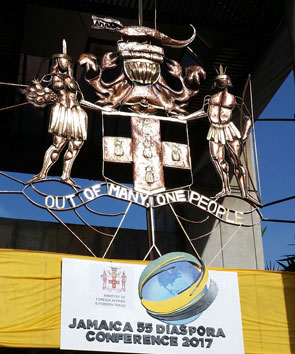
They have got this “Diaspora Bug” real bad. They have been “plowing these fields” for a while; they have structured an organized Diaspora Conference since 2004 and they sow and sow; still hoping for some reaping. See the full news article in Appendix A below relating the “Jamaica 55 Diaspora 2017 Conference” that was held in Kingston July 23-26, 2017.

The book Go Lean…Caribbean – available to download for free – serves as a roadmap for the introduction and implementation of the technocratic Caribbean Union Trade Federation (CU), for the elevation of Caribbean society – for all member-states. The book asserts that the region must work to hold onto its populations – especially the professional classes – not see them leave for foreign shores. To accomplish this objective, this CU/Go Lean roadmap presents these 3 prime directives:

  • Optimization of the economic engines in order to grow the regional economy to $800 Billion and create 2.2 million new jobs.
  • Establishment of a security apparatus to ensure public safety and protect the resultant economic engines.
  • Improvement of Caribbean governance to support these engines, including a separation-of-powers between the member-states and CU federal agencies.

The Go Lean book asserts that while conditions may be bad for Caribbean (i.e. Jamaican) residents in their homeland, many minority immigrants to other countries (think Black-and-Brown in America) have to contend with less than welcoming conditions there. In fact, economic and sociology researchers have published that first generation immigrants (especially noteworthy for those from Latin America and the Caribbean) normally under-perform all other segments of society in their new countries. It is only with the second generation that prosperity is achieved, but by then, their progeny no longer identifies with the ancestral home. Think: Jamaican-Americans identifying more with America than with Jamaica.

Consider further the American experience. The movement behind the Go Lean book has consistently related that the United States of America functions as a Great Society but it has two societal defects:

These societal defects can easily create a ‘Climate of Hate‘ that causes people to haze and blame-game the immigrant community.

There are similar anecdotes in Canada, the United Kingdom, The Netherlands, France and other Western European countries. While immigrants are better able to survive in these advanced democracies – there is an abundance of minimum wage jobs – to thrive is more of a challenge. It would seem better for Caribbean people to work to remediate the problems in their homeland, rather than work to become immigrants, aliens in a foreign land. But this is no easy task; this is hereby defined as heavy-lifting.

The Go Lean roadmap calls for a reboot!

Do what you have always done; get what you’ve always got.

The Go Lean roadmap presents a different approach; it posits that leveraging a Caribbean Single Market (42 million people) is better than catering to the Diaspora of just one country; (Jamaica’s Diaspora has a size of 3 million). This roadmap is presented as the panacea of Caribbean ills; and it still includes the Diaspora, but for all the Caribbean nations combined – estimated at 10 to 25 million. This plan calls for an interdependence of the Caribbean eco-system. This was the motivation for the CU/Go Lean roadmap, as pronounced in the opening Declaration of Interdependence (Pages 12 – 13) of the book:

xi. Whereas all men are entitled to the benefits of good governance in a free society, “new guards” must be enacted to dissuade the emergence of incompetence, corruption, nepotism and cronyism at the peril of the people’s best interest. The Federation must guarantee the executions of a social contract between government and the governed.

xix. Whereas our legacy in recent times is one of societal abandonment, it is imperative that incentives and encouragement be put in place to first dissuade the human flight, and then entice and welcome the return of our Diaspora back to our shores. This repatriation should be effected with the appropriate guards so as not to imperil the lives and securities of the repatriated citizens or the communities they inhabit. The right of repatriation is to be extended to any natural born citizens despite any previous naturalization to foreign sovereignties.

xx.  Whereas the results of our decades of migration created a vibrant Diaspora in foreign lands, the Federation must organize interactions with this population into structured markets. Thus allowing foreign consumption of domestic  products, services and media, which is a positive trade impact. These economic activities must not be exploited by others’ profiteering but rather harnessed by Federation resources for efficient repatriations.

xxiv. Whereas a free market economy can be induced and spurred for continuous progress, the Federation must install the controls to better manage aspects of the economy: jobs, inflation, savings rate, investments and other economic principles. Thereby attracting direct foreign investment because of the stability and vibrancy of our economy.

The goal of the Go Lean roadmap is for Caribbean people to prosper where planted; the book therefore provides 370-pages of turn-by-turn instructions on “how” to adopt new community ethos, plus the strategies, tactics, implementations and advocacies to execute so as to lower the “push and pull” factors that drives people to leave their homes in the first place. What are these factors:

“Push” refers to people who feel compelled to leave, to seek refuge in a foreign land. “Refuge” is an appropriate word; because of societal defects, many from the Caribbean must leave as refugees – think LGBTDisabilityDomestic-abuseMedically-challenged – for their life, liberty and pursuit of happiness.

“Pull”, on the other hand refers to the lure of a more prosperous life in the foreign destinations; many times our people are emigrating for economics solely.

The landscapes and waterscapes of the Caribbean make-up the best addresses on the planet. No one wants to leave to get away from the physical paradise; see the VIDEO in Appendix B below. But they do leave … to get away from our deficient and defective societal engines:

No economic prospects; no security assurances; no governing efficiency.

One mission of the Go Lean roadmap is to lower these “push and pull” factors.

Yes, we can.

Another mission is to invite the Diaspora to repatriate to the region, to come back home. This could be attractive prospect once the needed remediation is in place.

See how these missions has been communicated in other blog-commentaries, with this sample:

https://goleancaribbean.com/blog/?p=11314 Forging Change: Home Addiction
https://goleancaribbean.com/blog/?p=9648 ‘Time to Go’ – Public Schools for Black-and-Brown
https://goleancaribbean.com/blog/?p=8155 Gender Equality Referendum Outcome: Impact on the ‘Brain Drain’
https://goleancaribbean.com/blog/?p=7769 Being Lean on “Push & Pull”: Asking the Question ‘Why’ 5 Times

In summary, growing the Diaspora is bad for the Diaspora and bad for the Caribbean. Any official policy that double-downs on the Diaspora, double-downs on failure. We do not want an official strategy of requiring people to leave and kindly remember us so that our communities can be successful; no, we want to be successful anyway, to prosper right here at home. We strongly urge everyone to lean-in to this roadmap to make our homeland – Jamaica et al – a better place to live, work and play. 🙂

NOTE: This writer has mixed Jamaican heritage.

Download the free e-book of Go Lean … Caribbean – now!

Sign the petition to lean-in for this roadmap for the Caribbean Union Trade Federation.

———-

Appendix A Title: Jamaica still in dark over Diaspora’s huge potential

KINGSTON, Jamaica – Jamaica has no precise understanding of its diaspora’s massive potential, although emerging evidence indicates nationals living overseas are making a far greater contribution to the Caribbean nation’s welfare than previously believed.

Preliminary findings from a study, conducted by the Caribbean Policy Research Institute (CAPRI) and revealed at last month’s “Jamaica 55 Diaspora 2017 Conference” here, showed the country relies heavily on contributions from an estimated three million nationals living in places like the United States, United Kingdom and Canada.

CU Blog - Jamaican Diaspora - Not the Panacea - Photo 1According to research officer Shanike Smart, CAPRI’s study, sponsored by Jamaica National, was aimed at taking the guess work out of the diaspora’s influence, which would then lead to a better grasp of its value and enhance the relationship with Jamaica.

“We wanted to find out how significant are their (diaspora’s) contributions, because we think this can advance the conversation,” Smart explained following her conference presentation.

So far, she has already dismantled some long-held perceptions. For example, the diaspora’s contribution has mainly been identified with remittances. Jamaica benefits greatly from money sent from overseas – an estimated $2.2 billion a year. But that may be just the tip of the diaspora’s clout,.

“It turned out to be much more than that,” Smart said.

IGNORANCE

Diaspora investments in Jamaica also make up a huge chunk of benefits for the island as well. The World Bank reportedly stated that $500 million in investments had come to Jamaica. That figure, may be more like $12.8 billion.

Also gone underestimated has been the contributions in several other areas, including export of goods and services from Jamaica to the diaspora.

“I speak about companies launching businesses overseas, not thinking that maybe it’s the diaspora, not understanding that without (the diaspora) they might not been able to even prosper in that environment,” Smart explained.

The educational and professional qualifications of Jamaicans overseas have been downplayed as well, a reason many in the diaspora believe causes them to be overlooked for jobs in the island.

Diaspora tourists, are also now being viewed differently. According to statistics gathered by Smart, the Jamaica Tourist Board believes diaspora visitors’ spending accounts for four percent of general expenditure. She thinks it’s much higher.

“I estimated that it was seven percent of the expenditure,” Smart said. “(It’s) $180 something million U.S. dollars that they’re spending overall.”

MISLED

It comes down to misinformation, Smart explained, which may or not be deliberate.

“Normally in the literature, we’re finding that the diaspora tourist tends to spend less (in Jamaica) than a foreign national. However, they stay longer,” she said. “… When we’re looking at the numbers we’re saying this is suggesting otherwise, and then I was saying ‘can this be true?’

“I saw that the Jamaican tourist was almost spending more than, in a lot of cases was spending more than what the estimate was for the foreign national.”

The misunderstanding has been blamed on several factors, including lack of information, reluctance to seek it, unwillingness to provide it on request and preference to rely on old myths. Some Jamaicans deliberately hesitate to reveal information.

“A lot of people think that’s just our culture,” said Smart, who led CAPRI’s research team, “but I’m not sure what the reason is. And, again, even to this day we’re having some pushback.”

NO IDEA

In 2004 Jamaica held its first Diaspora Conference. But few had a full idea of the diaspora’s actual impact. Thirteen years, and a planned average of one conference every two years, later not much has changed.

However, through CAPRI’s early findings, a different picture is emerging. The study, which began about two months ago and is expected to have more concrete data by next month, has shown startling information.

Currently, the diaspora is estimated to contribute 23 percent of Jamaica’s gross domestic product (GDP). Smart suspects the potential is closer to 35 percent. However, she argued, more digging is needed to confirm her suspicions and guide future policy on the diaspora.

“We need research to back that up before we even start making any move,” she said.

What’s evident is the diaspora is offering much more than its been credited for and poised to make an even larger impact.

“When I look at the gap, when we look at what we’re currently doing and what the potential gap that’s left, it was 12 percent of GDP, over a billion (U.S.) dollars,” said Smart.

“I think it highlights how significant the diaspora is for Jamaica, which is currently under appreciated because the numbers aren’t existing,” she added.

It should be enough incentive for Jamaica to embrace its diaspora more tightly.

“It is also showing that it is an opportunity to show the diaspora and for persons to now recognize the diaspora, which should bring them onboard,” said Smart.

“And if they do come onboard some more, I mean, it’s unimaginable the value that will present.”

Related story: Jamaica lauds Diaspora’s input, but some lament slow progress

Source: Caribbean Today South Florida Magazine – Vol. 28 No. 9 (August) – Retrieved September 19, 2017 from: http://www.caribbeantoday.com/caribbean-news/latest-news/item/26432-jamaica-still-in-dark-over-diaspora-s-huge-potential.html

———-

Appendix B VIDEO – Jamaica Farewell | Jamaican Kids Song | World Rhymes – https://youtu.be/nFfs0ryiFy4

Published on May 30, 2013World Rhymes

Lyrics:
Down the way where the nights are gay
And the sun shines daily on the mountain top
I took a trip on a sailing ship
And when I reached Jamaica I made a stop

But I’m sad to say I’m on my way
Won’t be back for many a day
My heart is down, my head is turning around
I had to leave a little girl in Kingston town

Sounds of laughter everywhere
And the dancing girls swaying to and fro
I must declare my heart is there
Though I’ve been from Maine to Mexico

But I’m sad to say I’m on my way
Won’t be back for many a day
My heart is down, my head is turning around
I had to leave a little girl in Kingston town

Down at the market you can hear
Ladies cry out while on their heads they bear
`Akey’ rice, salt fish are nice
And the rum is fine any time of year

But I’m sad to say I’m on my way
Won’t be back for many a day
My heart is down, my head is turning around
I had to leave a little girl in Kingston town

Down the way where the nights are gay
And the sun shines daily on the mountain top
I took a trip on a sailing ship
And when I reached Jamaica I made a stop

But I’m sad to say I’m on my way
Won’t be back for many a day
My heart is down, my head is turning around
I had to leave a little girl in Kingston town

Sad to say I’m on my way
Won’t be back for many a day
My heart is down, my head is turning around
I had to leave a little girl in Kingston town

  • Category: Education
  • License: Standard YouTube License

———-

Appendix C – Over 80 Percent of Young Jamaicans Want to Leave the Island

Many young Jamaicans are ready to leave their country to pursue better educational and job opportunities. In fact, they would leave Jamaica for any destination other than Afghanistan. According to a 2016 survey commissioned by Respect Jamaica and the local office of UNICEF, 81 percent of Jamaica’s youth between 14 and 40 years of age would leave the country immediately if they could.

Continue reading at Jamaica.com site: http://jamaicans.com/young-jamaicans-want-leave-island/#ixzz4tDq4LzUt

Share this post:
, ,
[Top]

After Irma, Barbuda Becomes a ‘Ghost Town’

Go Lean Commentary

CU Blog - After Irma, Barbuda Becomes a 'Ghost Town' - Photo 1a

The Caribbean is in crisis today; we have just been devastated by Hurricane Irma; it has wreaked catastrophic havoc in certain islands, of which Barbuda is most notable. This is an official declaration; the Prime Minister of the country of Antigua and Barbuda has identified  90 percent of the structures on the island of Barbuda as uninhabitable and can now only be razed; see story in Appendix A below. See the news VIDEO here:

VIDEO – Barbuda, Destroyed By Hurricane Irma, Faces Jose Next | Rachel Maddow | MSNBChttps://youtu.be/2ewVgVDSuKg

Published on Sep 8, 2017 MSNBC
Michael Joseph, Red Cross president for Antigua and Barbuda, talks with Rachel Maddow about the utter devastation of the island of Barbuda by Hurricane Irma with Hurricane Jose just a day away. » Subscribe to MSNBC: http://on.msnbc.com/SubscribeTomsnbc About: MSNBC is the premier destination for in-depth analysis of daily headlines, insightful political commentary and informed perspectives. Reaching more than 95 million households worldwide, MSNBC offers a full schedule of live news coverage, political opinions and award-winning documentary programming — 24 hours a day, 7 days a week. Connect with MSNBC Online Visit msnbc.com: http://on.msnbc.com/Readmsnbc Find MSNBC on Facebook: http://on.msnbc.com/Likemsnbc Follow MSNBC on Twitter: http://on.msnbc.com/Followmsnbc Follow MSNBC on Google+: http://on.msnbc.com/Plusmsnbc Follow MSNBC on Instagram: http://on.msnbc.com/Instamsnbc Follow MSNBC on Tumblr: http://on.msnbc.com/LeanWithmsnbc Barbuda, Destroyed By Hurricane Irma, Faces Jose Next | Rachel Maddow | MSNBC

(Other impacted locales include Saint BarthélemySaint MartinAnguilla, Puerto Rico, the Virgin Islands and Florida).

Barbuda is a cautionary tale because it fulfills the forecast (prophecy) of this previous commentary, that if left unchecked, Caribbean crises get worse, completely dysfunctional, at the precipice of Failed-State status and communities emerge as …

Ghost Towns

A ghost town is an abandoned village, town or city, usually one which contains substantial visible remains. A town often becomes a ghost town because the economic activity that supported it has failed, or due to natural or human-caused disasters such as floods, government actions, uncontrolled lawlessness, war, or nuclear disasters. …

    “Things will always work themselves out” – Popular fallacy.

There is no guarantee of our survival. Communities and societies do fail; success is not assured; the work must be done, we must “sow if we want to reap”. …

How else would one explain why citizens from the most beautiful addresses on the planet are “breaking down the doors” to get out, either through legal means or illegal ones?

The book Go Lean … Caribbean stresses reboots, reorganizations and general turn-around of failing economic engines in favor of winning formulas. The book quotes a noted American Economist Paul Romer with this famous quotation:

    “A crisis is a terrible thing to waste”.

CU Blog - After Irma, Barbuda Becomes a 'Ghost Town' - Photo 1b

CU Blog - After Irma, Barbuda Becomes a 'Ghost Town' - Photo 1c

The movement behind the Go Lean book have often raised the subject of Ghost Towns. Just last month (August 22), this commentary was published:

Lessons from Colorado: Black Ghost Towns – “Booker T. turning in his grave”

So the future is not guaranteed for any Caribbean community. While our people may survive, our culture may not! We may have to supplant ourselves to some foreign destination. We may have to “take our talents to South Beach” … or South New York… or South Toronto, etc..

Prophecy: If we migrate to a foreign country, our grandchildren born there will NOT be identified as Caribbean.

So Ghost Towns have occurred and could happen in the Caribbean … again.

This commentary continues the 4-part series on the Aftermath of Hurricane Irma. This storm was devastating to the Atlantic tropical region, the Caribbean and US State of Florida. There are a lot of mitigation and remediation efforts that can be done to lessen the impact of storms. There are lessons that we must consider; there are reforms we must make; there are problems we must solve. The full list of the 4 entries of this series are detailed as follows:

  1. Aftermath of Hurricane Irma – America Should Scrap the ‘Jones Act’
  2. Aftermath of Hurricane Irma – Barbuda Becomes a ‘Ghost Town’
  3. Aftermath of Hurricane Irma – The Science of Power Restoration
  4. Aftermath of Hurricane Irma – Failed State Indicators: Destruction and Defection

We want to make the Caribbean homeland a better place to live, work and play. This is the quest of the book Go Lean … Caribbean – available to download for free – which serves as a roadmap for the introduction and implementation of the technocratic Caribbean Union Trade Federation (CU). Despite the threats of Climate Change, the CU is structured to turn-around failing Caribbean communities; it is proffered to provide economic, security and governance solutions for all 30 member Caribbean states. This mandate is detailed early on in the book’s Declaration of Interdependence, as follows (Page 11 – 13):

i. Whereas the earth’s climate has undeniably changed resulting in more severe tropical weather storms, it is necessary to prepare to insure the safety and security of life, property and systems of commerce in our geographical region. As nature recognizes no borders in the target of its destruction, we also must set aside border considerations in the preparation and response to these weather challenges.

xii. Whereas the legacy in recent times in individual states may be that of ineffectual governance with no redress to higher authority, the accedence of this Federation will ensure accountability and escalation of the human and civil rights of the people for good governance, justice assurances, due process and the rule of law. As such, any threats of a “failed state” status for any member state must enact emergency measures on behalf of the Federation to protect the human, civil and property rights of the citizens, residents, allies, trading partners, and visitors of the affected member state and the Federation as a whole.

xix. Whereas our legacy in recent times is one of societal abandonment, it is imperative that incentives and encouragement be put in place to first dissuade the human flight, and then entice and welcome the return of our Diaspora back to our shores. This repatriation should be effected with the appropriate guards so as not to imperil the lives and securities of the repatriated citizens or the communities they inhabit. The right of repatriation is to be extended to any natural born citizens despite any previous naturalization to foreign sovereignties.

The Go Lean book posits that failing Caribbean communities can be rescued, butt if “we do what we have always done, we get what we always got”. Therefore Caribbean communities must adopt different community ethos, plus the executions of key – and different – strategies, tactics, implementations and advocacies to reform and transform.

There is a Way Forward!

Consider this News Article in Appendix B relating the Prime Minister’s fundamental change in property laws for Barbuda:

Ownership is prohibited on the island of Barbuda; all lands in Barbuda are vested in the Crown on behalf of the people on the sister island. … “Whatever land they are occupying now, rather than having a license to occupy, we are saying that we will give … freehold ownership”.

Why should people invest in property they do not own?

Duh! This is such a basic societal factor; it is illogical that the government had not implemented this reform before.

In order to avoid the pitfalls and eventuality of “Ghost Towns”, the Go Lean book describes the heavy-lifting that all the community stakeholders must engage. These efforts are described as 3 prime directives:

Heavy-lifting and leverage!!!

Yes, since natural disasters – hurricanes, earthquakes and even volcanoes – are an inevitability in the Caribbean, we can better insure and assure the continuity of our communities’ societal engines, by spreading the risk across the wider region, not just one member-state. For relief-recovery-rebuilding communities like Barbuda after disasters, the goal is to spread the burden or heavy-lifting across the 30 member-states.

If there is a load you have to bear
That you can’t carry
I’m right up the road
I’ll share your load
If you just call me
Song: Lean On Me by Bill Withers – Go Lean Book (Page 5)

In summary, ghost towns could abound more and more if we continue with the status quo. Let’s not … continue with the more-of-the-same approach.

Let’s commit to this pledge to foster change in our region; we must reform and transform our societal engines. Everyone is hereby urged to lean-in to this CU/Go Lean roadmap to make the Caribbean a better place to live, work and play. 🙂

Download the free e-Book of Go Lean … Caribbean – now!

Sign the petition to lean-in for this roadmap for the Caribbean Union Trade Federation.
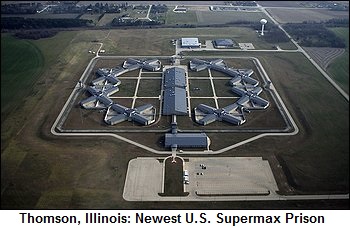
———-

Appendix ATitle: PM: 90 Percent of Barbuda ‘Destroyed’ by Hurricane Irma

Hurricane Irma has done catastrophic damage to “90 percent of Barbuda,” according to Gaston Browne, the Prime Minister of Antigua and Barbuda, after it barreled past the island nation and through the Caribbean on Wednesday. An official from the country’s Office of Disaster Services told ABC News said there was “widespread damage” across the island, which is home to 1,600 people. Authorities in St. Martin said 95 percent of the French part of the island was destroyed, with one local official saying the storm caused an “enormous catastrophe.” Irma made landfall as a Category 5 hurricane with sustained winds above 185 mph, and is expected to hit Florida on Saturday night.

Source: The Daily Beast Online Newswire posted September 7, 2017 from: http://www.thedailybeast.com/hurricane-irma-destroys-90-percent-of-barbuda

CU Blog - After Irma, Barbuda Becomes a 'Ghost Town' - Photo 3

CU Blog - After Irma, Barbuda Becomes a 'Ghost Town' - Photo 6

CU Blog - After Irma, Barbuda Becomes a 'Ghost Town' - Photo 5

CU Blog - After Irma, Barbuda Becomes a 'Ghost Town' - Photo 4

———-

Appendix BTitle: Barbudans to get title ownerships of lands they occupy

Antigua Observer – Barbudans will get the opportunity to own the lands they previously occupied as the island seeks to rebuild following the devastation caused by the passage of Hurricane Irma last week.

Prime Minister Gaston Browne made the disclosure yesterday during a special sitting of Parliament.

He said Barbudans would be given a crown grant of one dollar to obtain legal ownership of the lands on the 62-square mile island.

Currently, land ownership is prohibited on the island of Barbuda; all lands in Barbuda are vested in the crown on behalf of the people on the sister island.

The Land Department under the Barbuda Council is the main governing body.

“Whatever land they are occupying now, rather than having a license to occupy, we are saying that we will give you freehold ownership,” Browne said, noting that residents of the sister island are elated over the idea.

“When you give a Barbudan a freehold, they can go into the bank, they can borrow monies, they can get a mortgage, they can build. They can get a loan for student purposes, to do businesses, it is a form of empowerment,” Browne said.

The nation’s leader also suggested that protective mechanisms could be instituted to prevent Barbudans from transferring the freehold ownership without the approval of the Barbuda Council.

Browne told Parliamentarians in the Lower House that it is untenable for Barbuda to be exclusively dependent on Antigua.

According to Browne, it was never the intent of the central government to take full responsibility for the payment of salaries and wages and other expenses on the sister island.

He said the intention was for Barbuda to be able to generate some level of revenue while Antigua would provide a subsidy.

“It has become a dependent relationship. Now I know that the Barbudans are proud people and they don’t want to be coming, cap in hand, to Antigua begging for a salary cheque on a weekly or monthly basis when they can generate their income,” the PM concluded.

Over 1,000 people on Barbuda had to be evacuated from the island last week after the country’s leader described the situation as “uninhabitable” following the hurricane that has also been blamed for the death of a two-year old child.

The PM said the sister island could not progress until the land tenure question is settled, adding that no country can move forward without a proper rights system.

He said consultations would be held with the people of Barbuda on the way forward.

Meanwhile, the government has announced a tentative agreement with the United Arab Emirates to assist with the installation of 800-megawatt solar power  facility on Barbuda, as well as a medical health system.

Prime Minister Browne also said that he had instructed his bank to transfer EC$100,000  from his savings to a fund for the rehabilitation of the island.

Other Antigua & Barbuda Labour Party members have also pledged to dip into their pockets to fund the rebuilding effort.

PM Browne said that he expects other residents and businesses to step up to the plate.

Source: Posted September 12, 2017; retrieved September 16, 2017 from: https://stluciatimes.com/2017/09/12/barbudans-get-title-ownerships-lands-occupy

Share this post:
, ,
[Top]

After Irma, America Should Scrap the ‘Jones Act’

Go Lean Commentary

The Caribbean has just been devastated by Hurricane Irma – the longest Category 5 storm recorded in modern times – it wreaked catastrophic havoc in BarbudaSaint BarthélemySaint MartinAnguilla, Puerto Rico and the Virgin Islands as a Category 5 hurricane[4][5] .

CU Blog - After Irma, America Should Scrap the Jones Act - Photo 2

There is the need for relief, recovery and rebuilding!

This title, “After Irma, America Should Scrap the Jones Act” – in the news article in the below Appendix referring to the temporary waiver of the law – is also a familiar advocacy from this commentary, from the movement behind the book Go Lean…Caribbean – available to download for free. A previous blog-commentary declared:

Stupidity of the Jones Act
The Jones Act mandates that for a ship to go from one US port to another US port it must be American-made and American flagged. Also, for foreign ships to trade in US Territories, they must first journey to a foreign port before they could journey to another American port to transport goods. This seems “stupid”; but the adherence to this law keeps American maritime commerce options afloat; this means someone is getting paid; … a distortion in the reality of Puerto Rico-[Virgin Islands]-to-US Mainland trade.

The Go Lean movement asserts that the US Territories in the Caribbean deserve better; they deserve the full exercise of the free market, not just now for the hurricane relief-recovery-rebuilding but all the time. This is why we call the ‘Jones Act’ stupid and strongly urge for its repeal. These US Territories – make that colonies – are pressed between a rock and a hard place, their best hope for survival and prosperity is to grow-up from their American neo-colonial status.

What? How? When? Where? All these questions and more are answered in the Go Lean book. The book serves as a roadmap for the introduction and implementation of the technocratic Caribbean Union Trade Federation (CU), for the elevation of Caribbean society – for all member-states. This CU/Go Lean roadmap has these 3 prime directives:

  • Optimization of the economic engines in order to grow the regional economy to $800 Billion and create 2.2 million new jobs.
  • Establishment of a security apparatus to ensure public safety and protect the resultant economic engines.
  • Improve Caribbean governance to support these engines, including a separation-of-powers between the member-states and CU federal agencies.

The Go Lean book posits that devastating hurricanes – like Irma – will now be the norm. This problem is too big for any one Caribbean member-state alone to contend with. The book therefore stresses that reforming and transforming the Caribbean societal engines must be a regional pursuit. This was an early motivation for the roadmap, as pronounced in the opening Declaration of Interdependence (Pages 12 – 13):

i. Whereas the earth’s climate has undeniably changed resulting in more severe tropical weather storms, it is necessary to prepare to insure the safety and security of life, property and systems of commerce in our geographical region. As nature recognizes no borders in the target of its destruction, we also must set aside border considerations in the preparation and response to these weather challenges.

xi. Whereas all men are entitled to the benefits of good governance in a free society, “new guards” must be enacted to dissuade the emergence of incompetence, corruption, nepotism and cronyism at the peril of the people’s best interest. The Federation must guarantee the executions of a social contract between government and the governed.

xvi. Whereas security of our homeland is inextricably linked to prosperity of the homeland, the economic and security interest of the region needs to be aligned under the same governance. Since economic crimes … can imperil the functioning of the wheels of commerce for all the citizenry, the accedence of this Federation must equip the security apparatus with the tools and techniques for predictive and proactive interdictions.

xxiii. Whereas many countries in our region are dependent OverseasTerritory of imperial powers, the systems of governance can be instituted on a regional and local basis, rather than requiring oversight or accountability from distant masters far removed from their subjects of administration. The Federation must facilitate success in autonomous rule by sharing tools, systems and teamwork within the geographical region.

xxiv. Whereas a free market economy can be induced and spurred for continuous progress, the Federation must install the controls to better manage aspects of the economy: jobs, inflation, savings rate, investments and other economic principles. Thereby attracting direct foreign investment because of the stability and vibrancy of our economy.

The Go Lean book provides 370-pages of turn-by-turn instructions on “how” to adopt new community ethos, plus the strategies, tactics, implementations and advocacies to execute so as to reboot, reform and transform the societal engines of the American Caribbean Territories and all of Caribbean society. Puerto Rico and the USVI had problems before Irma; their daily life is filled with troubles and strife. While they need the ‘Jones Act’ to be waived for this hurricane relief-recovery-rebuilding effort, even more they need the ‘Jones Act’ repealed for everyday life.

This is not just our opinion alone, as attested by the Editorial – in the Appendix below – from Bloomberg News. This media organization is not just criticizing from afar; they truly care about the Greater Good of the US Territories; see Appendix VIDEO below.

This commentary commences a 4-part series on the Aftermath of Hurricane Irma. This storm was devastating to the Atlantic tropical region, the Caribbean and US State of Florida. There are a lot of mitigation and remediation efforts that can be done to lessen the impact of storms. There are lessons that we must consider; there are changes we must make; there are problems we must solve. The full list of the 4 entries in this series are detailed as follows:

  1. Aftermath of Hurricane Irma – America Should Scrap the ‘Jones Act’
  2. Aftermath of Hurricane Irma – Barbuda Becomes a ‘Ghost Town’
  3. Aftermath of Hurricane Irma – The Science of Power Restoration
  4. Aftermath of Hurricane Irma – Failed State Indicators: Destruction and Defection

Yes, we can do better in the future, even after devastating hurricanes; we can make all of the Caribbean homeland better places to live, work and play. 🙂

Download the free e-book of Go Lean … Caribbean – now!

Sign the petition to lean-in for this roadmap for the Caribbean Union Trade Federation. 

———–

Appendix – Title: After Irma, America Should Scrap the Jones Act
Sub-Title: The century-old law restricting trade between U.S. ports is a costly failure.

CU Blog - After Irma, America Should Scrap the Jones Act - Photo 1Another big hurricane, another temporary waiver of the Jones Act — the 1920 law mandating that goods and passengers shipped between U.S. ports be carried in U.S.-flagged ships, constructed primarily in the U.S., owned by U.S. citizens, and crewed by them or by U.S. legal permanent residents.

Circumstances did indeed demand a new stay on this dumb law — but it would be better to get rid of it altogether, as Senator John McCain and others have argued.

The Jones Act was meant to ensure that the U.S. has a reliable merchant marine during times of national emergency. It has devolved into a classic protectionist racket that benefits a handful of shipbuilders and a dwindling number of U.S. mariners. It causes higher shipping costs that percolate throughout the economy, especially penalizing the people of Alaska, Guam, Hawaii and Puerto Rico.

Despite the law, the U.S. merchant fleet has continued to shrink. Today there are only about 100 large ships that meet its requirements — and many of them are past their best. In part because of the high cost of using Jones Act vessels, coastal shipping has steadily declined, even though it would otherwise be more efficient in many cases than trucks and railroads. The act distorts trade flows, giving imports carried by foreign ships an edge over goods shipped from within the U.S. Proposed extensions of the law could threaten the development of offshore energy resources as well as exports of U.S. oil and natural gas.

Defenders of the law say its effects are uncertain because there’s too little data. The Federal Reserve Bank of New York suggests a way to put that right: Give a five-year Jones Act waiver to Puerto Rico. That would provide data for a more rigorous analysis while giving the island’s battered economy a lift. Short of outright repeal, Congress could also revisit the law’s ancient, burdensome rules on crew sizes and much else. If the law remains, its focus should be on restoring the vibrancy of coastal maritime commerce, not on counting ships and sailors.

Economics aside, one might ask, isn’t the Jones Act vital for national security? Hardly. Much of the U.S. Ready Reserve Fleet is foreign-built. Very few Jones Act ships are the roll-on, roll-off kind that the military wants. To be sure, the U.S. has sound strategic reasons for maintaining some shipbuilding capability — but smarter support narrowly directed to that purpose would be cheaper and fairer than a trade law that does so much pointless collateral harm.

The latest waiver is slated to expire this week. Modernizing the law would be a step forward. But the best thing to do with the Jones Act is scrap it.

To contact the senior editor responsible for Bloomberg View’s editorials: David Shipley at davidshipley@bloomberg.net .

Source: Posted September 13, 2017 from Bloomberg News Service; retrieved September 14, 2017 from: https://www.bloomberg.com/view/articles/2017-09-13/after-irma-america-should-scrap-the-jones-act

———–

Appendix VIDEO – After Irma, Bloomberg Helps With Recovery In U.S. Virgin Islands http://www.msnbc.com/mtp-daily/watch/after-irma-bloomberg-helps-with-recovery-in-u-s-virgin-islands-1047755843759

Posted September 15, 2017 – Chuck Todd traveled to the U.S. Virgin Islands to interview Fmr. New York City Mayor Michael Bloomberg and NBA All-Star Tim Duncan, who are both helping with the recovery effort after Hurricane Irma.

Share this post:
, , , , ,
[Top]

ENCORE on Charity Management: Grow Up Already!

One year later, have we grown up anymore in that time?

Unfortunately, no!

There is still the need to Grow Up and manage our own affairs. This was detailed in a comprehensive commentary exactly one year ago today. Let’s Encore it here-now:

————————————————–

Go Lean Commentary – Charity Management: Grow Up Already!

cu-blog-charity-management-grow-up-already-photo-7“Don’t be a stock on the shelf” – Bob Marley: Pimpers Paradise – Album: Uprising – 1980.

What does the lyrics of this song mean? (See VIDEO here). The analysis is that it is poetic and prophetic. The song has a personal indictment and a community indictment. The lyrics directly address a young girl who stumbles into a party lifestyle; being victimized by abusers or “pimps”. The warning is that she would be considered nothing more than a commodity – to be counted on for illicit profits – rather than a real human with hopes and dreams. As for the community indictment, this submission on SongMeanings.com conveys an insightful point:

General Comment
I’ve always had the impression that this song is about Jamaica, Bob’s mother-country, and its contradictions, described through the technique of personification. If this were the case, most of the girl’s attributes and actions would refer to the whole community of Jamaicans and not to a single person, as it first appears. What makes this song so beautiful is the sadness, tenderness and pride of Marley’s lyrics and voice, as he describes his people’s use and abuse of drugs, its innate tendency to smile, have fun and carry on in spite of the poverty, violence and harshness which characterizes life in that country, and above all its vulnerability to the lies, deception and empty promises of politicians and elites in general, a vulnerability which forces most people into a lifelong submission and which gives this song its title.
By: dettawalker on April 19, 2015

There is a vulnerability to lies, deception and empty promises in the Caribbean. Other people have raised money under the guise of helping our region, but then only kept the monies for themselves … mostly. There is the need for philanthropy, charitable donations and community development, but we need to take the lead for this ourselves, rather than the potential of being victimized by others.

This is not a theory; this is a fact! Remember the $500 million raised by the American Red Cross to benefit Haiti after the 2010 Earthquake; the money mostly disappeared with little manifestation in Haiti. 🙁

Perhaps this is a by-product of the attitude of depending on “other peoples money”; this is so familiar in the Caribbean. For the past 50 years of Caribbean integration movements (West Indies Federation, Organization of Eastern Caribbean States and Caribbean Community or CariCom), the focus had been on soliciting aid – begging – from the richer North American and European nations.

Today, our message to Caribbean stakeholders is: Grow Up Already!

Truly, at what point is it expected that we would mature and take care of our own responsibilities?

Answer: Now! Half-pass now!

This point was eloquently conveyed in a previous blog-commentary, where it related how Caribbean member-states use “development funds” (International Aid) for budgetary support for the governments to fulfill their responsibilities in the Social Contract. As a reminder, this implied Social Contract refers to the arrangement where citizens surrender some of their freedoms and submit to the authority of the State in exchange for protection of remaining natural and legal rights. This contract authorizes the State to raise revenues from taxes and fees, but “one cannot get blood from a stone”. The 30 Caribbean member-states are mostly all Third World countries; they hover near the poverty line.

Yet still, the book Go Lean … Caribbean asserts it is high-time for this region to grow up and adapt best-practices to elevate our society. We can improve all societal engines: economics, security and governance. This theme is weaved throughout the Go Lean book which serves as a roadmap for the introduction and implementation of the technocratic Caribbean Union Trade Federation (CU). This Go Lean/CU roadmap has the vision of elevating Caribbean society by optimizing these engines. Observe the prime directives as published in the book:

  • Optimization of the economic engines in order to grow the regional economy to $800 Billion & create 2.2 million new jobs.
  • Establishment of a security apparatus to protect the resultant engines and mitigate internal and external “bad actors”.
  • Improvement of Caribbean governance to support these engines, including a separation-of-powers between the CU federal government and the member-states.

The Bible states …

… “anyone with ears to hear should listen and understand!” – Matthew 11:15; New Living Translation.

This does not mean that gleaning the wisdom of the fallacy of other people taking the lead for our development will eliminate our poverty. No; we are still a region of Third Word countries; that same Bible translation continues that “you will always have the poor among you” –  Matthew 26:11. We simply need to take the lead ourselves of soliciting aid, collecting the aid and managing the distribution of that aid and the resultant accountability. This is no “rocket science”; in fact, it is no science at all. It is mostly an art, and there are competent role models who perform these functions well; we only need to adapt their best-practices.

Consider this company Brewco Marketing; they consider themselves “the marketing vehicle for America’s most trusted brands”. This is a fitting analysis as this company currently conducts marketing campaigns to raise money to benefit impoverished people in several Caribbean countries, the Dominican Republic for example.

cu-blog-charity-management-grow-up-already-photo-9

cu-blog-charity-management-grow-up-already-photo-2

cu-blog-charity-management-grow-up-already-photo-1

cu-blog-charity-management-grow-up-already-photo-3

cu-blog-charity-management-grow-up-already-photo-8

cu-blog-charity-management-grow-up-already-photo-4

cu-blog-charity-management-grow-up-already-photo-6Brewco Marketing Group – see Appendix VIDEO below – is a leading experiential marketing company specializing in strategy, design, in-house fabrication, activation and program management. They provide these marketing services for other companies: for-profit corporations and not-for-profit charities. One such client is Compassion International, a Christian child sponsorship organization dedicated to the long-term development of children living in poverty around the world. They are headquartered in the US city of Colorado Springs, Colorado; but they function in 26 countries such as Bolivia, Colombia, Mexico, Haiti, Kenya, India and the Dominican Republic. According to the Wikipedia page on this charity, (retrieved September 12, 2016), this organization provides aid to more than 1,700,000 children.

Bravo Compassion International! See an example here of the type of faith-based advocacy Compassion International is conducting in our Caribbean region; in this case, the Dominican Republic: http://changetour.compassion.com/experience-dominican-republic/    

But, consider that Compassion International outsources to a for-profit marketing firm – Brewco – to solicit funding. What is Brewco’s motivation? Simple: Profit.

While not impugning any bad motives to Brewco or Compassion International, this commentary asserts for self-sufficiency, that “charity begins at home”. This is a basic prerequisite for a mature society.

This consideration aligns with the strategies, tactics, implementations and advocacies of the book Go Lean…Caribbean. The declaration is that the Caribbean must be front-and-center in providing for our own solutions. The alternative of someone else taking the lead for our solution, despite how altruistic the motives, seems to be lacking…every time! Consider this encyclopedia detail on criticism of “Child Sponsorship” charities:

Critics have argued that child sponsorship could alienate the relatively privileged sponsored children from their peers and may perpetuate harmful stereotypes about third-world citizens being helpless. They also claim that child sponsorship causes cultural confusion and unrealistic aspirations on the part of the recipient, and that child sponsorship is expensive to administer.[8][9] This latter problem has led some charities to offer information about a “typical” child to sponsors rather than one specifically supported by the sponsor. In some cases charities have been caught sending forged updates from deceased children.[10]

The Effective Altruism community – social movement that applies evidence and reason to determining the most effective ways to improve the world – generally opposes child sponsorship as a type of donor illusionGivewell – American non-profit charity evaluator – describes sponsorship thusly:[11]

  • Illusion: through an organization such as “Save the Children“, your money supports a specific child.
  • Reality: as “Save the Children” now discloses: “Your sponsorship contributions are not given directly to a child. Instead, your contributions are pooled with those of other sponsors to provide community-based programming for all eligible children in the area.”

Source: https://en.wikipedia.org/wiki/Child_sponsorship retrieved September 12, 2016

cu-blog-charity-management-grow-up-already-photo-5

This – reality of Big Charity – is just another example of Crony-Capitalism. See the running inventory list of all the Crony-Capitalism models that proliferate in the US, here at https://goleancaribbean.com/blog/?p=5529.

Considering this reality, we exclaim to the Caribbean: Grow up already!

The Go Lean book declares (Page 115) that:

“Haiti [in particular and the Caribbean in general] – should not be a perennial beggar; the Caribbean should not be perennial beggars, but we do need capital/money, especially to get started”.

The Go Lean movement (book and blogs) posits that the Caribbean must not be vulnerable to these American Crony-Capitalistic forces.

We do not need some external entity fleecing the public in our name – under the guise of charities but retain vast majorities of the funding as administrative costs – executive salary and bonuses – rather than the intended benefactors.

The Caribbean must do better!

The book Go Lean…Caribbean pursues the quest to elevate the Caribbean region through economic, security and governing empowerments. This includes oversight and guidance for Non-Governmental Organizations (NGO’s) in the region. The Go Lean/CU roadmap provides for better stewardship for the Caribbean homeland; and it describes NGO’s as additional Caribbean stakeholders. Governance to this vital area is part of the maturity our region must show; it is not about independence, but rather it conveys the community ethos of interdependence. This point was pronounced early in the Go Lean book, in the opening Declaration of Interdependence (Pages 11 & 14) with these acknowledgements and statements:

xi.   Whereas all men are entitled to the benefits of good governance in a free society, “new guards” must be enacted to dissuade the emergence of incompetence, corruption, nepotism and cronyism at the peril of the people’s best interest. The Federation must guarantee the executions of a social contract between government and the governed.

xii. Whereas the legacy in recent times in individual states may be that of ineffectual governance with no redress to higher authority, the accedence of this Federation will ensure accountability and escalation of the human and civil rights of the people for good governance, justice assurances, due process and the rule of law. As such, any threats of a “failed state” status for any member state must enact emergency measures on behalf of the Federation to protect the human, civil and property rights of the citizens, residents, allies, trading partners, and visitors of the affected member state and the Federation as a whole.

xxxiii. Whereas lessons can be learned and applied from the study of the recent history of other societies, the Federation must formalize statutes and organizational dimensions to avoid the pitfalls of [other] communities.

This is the quest of CU/Go Lean roadmap: to provide new guards for a more competent Caribbean administration … by governmental organizations and non-governmental organizations. Under this roadmap, NGO’s would be promoted, audited and overseen by CU administrators. The CU would be legally authorized as “deputies” of the member-state governments.

The Go Lean book stresses key community ethos, strategies, tactics, implementations and advocacies necessary to turn-around the eco-systems of Caribbean governance. These points are detailed in the book as follows:

Community Ethos – Deferred Gratification Page 21
Community Ethos – Economic Principles – Respond to Incentives in Predictable Ways Page 21
Community Ethos – Economic Principles – Economic Systems Influence Individual Choices Page 21
Community Ethos – Economic Principles – Consequences of Choices Lie in the Future Page 21
Community Ethos – Security Principles – Intelligence Gathering Page 23
Community Ethos – Security Principles – “Crap” Happens Page 23
Community Ethos – Governing Principles – Cooperatives Page 25
Community Ethos – Ways to Impact the Future Page 26
Community Ethos – Ways to Impact Turn-Arounds Page 33
Community Ethos – Ways to Improve Sharing – Emergency Response Page 35
Community Ethos – Ways to Impact the Greater Good Page 37
Strategy – Vision – Confederate all 30 member-states/ 4 languages into a Single Market Page 45
Strategy – Mission – Prepare for the eventuality of natural disasters Page 45
Strategy – Agents of Change – Climate Change Page 57
Tactical – Ways to Foster a Technocracy Page 64
Tactical – Growing the Economy – Post WW II European Marshall Plan/Recovery Model Page 68
Tactical – Separation-of-Powers – CU Federal Government versus Member-State Governance Page 71
Tactical – Separation-of-Powers – Treasury Department – Shared Property Recording Systems Page 74
Tactical – Separation-of-Powers – State Department – Liaison/Oversight for NGO’s Page 80
Tactical – Separation-of-Powers – Interior Department – Housing & Urban Authority Page 83
Implementation – Assemble All Regionally-focus Organizations of All Caribbean Communities Page 96
Implementation – Ways to Pay for Change Page 101
Implementation – Ways to Foster International Aid Page 115
Planning – 10 Big Ideas – Cuba & Haiti Marshall Plans Page 127
Planning – Ways to Make the Caribbean Better Page 131
Planning – Ways to Improve Failed-State Indices – Governance and the Social Contract Page 134
Advocacy – Ways to Grow the Economy Page 151
Advocacy – Ways to Create Jobs Page 152
Advocacy – Ways to Improve Housing – Optimizing Property Registration Process Page 152
Advocacy – Ways to Improve Governance Page 168
Advocacy – Ways to Better Manage the Social Contract Page 170
Advocacy – Ways to Improve Homeland Security Page 180
Advocacy – Ways to Improve for Natural Disasters – Enhanced local response and recovery Page 184
Advocacy – Ways to Develop a Pre-Fab Housing Industry – One solution ideal for Slums Page 207
Advocacy – Ways to Impact the Dominican Republic Page 237
Advocacy – Ways to Re-boot Haiti Page 238

These subjects – Charity Management, Philanthropy and International Aid – have been a source of consistent concern for the Go Lean movement. Consider the details from these previous blog-commentaries:

https://goleancaribbean.com/blog/?p=8243 Facebook Founder’s Philanthropy Project Makes First Major Investment
https://goleancaribbean.com/blog/?p=7989 ‘Getting over’ with ‘free money’ for societal transformations
https://goleancaribbean.com/blog/?p=7896 The Logistics of Disaster Relief
https://goleancaribbean.com/blog/?p=6129 Innovative Partnership Aids Farm Workers
https://goleancaribbean.com/blog/?p=3432 OECS diplomat has dire warning for Caribbean countries
https://goleancaribbean.com/blog/?p=1763 Bill & Melinda Gates Foundation Philanthropy Efforts

So the Caribbean experience with Charity Management in the past and at present is not ideal. How do we apply this insight to impact our future executions?

The primary strategy for improving Charity Management is to keep the administration local; this includes the fund development and the decision-making.

Looking at the great models and samples from Compassion International and Brewco Marketing, can we deploy mobile trailers and immersive exhibits? Can we deploy smart phone apps or tablets with walk-along narration to convey the desperate need for international aid in the Caribbean? Can we foster an eco-system with monthly billing, credit card transactions, or text-message billing?

Yes, we can …

… and this is the “grown up” thing to do, after being burned so often by outsiders.

When I was a child, I spoke and thought and reasoned as a child. But when I grew up, I put away childish things. – 1 Corinthians 13:11 – New Living Translation

The Go Lean roadmap seeks to empower and elevate Caribbean societal engines. We have a lot to do, the Go Lean book describes it as heavy-lifting. We see the American Crony-Capitalism in action. We do not want to follow their lead. We want to learn from their good and bad examples and models. (It is out-of-scope for the Go Lean movement to fix America). We simply want to fix our Caribbean society to be more self-reliant, both proactively and reactively.

Our quest is simple, a regional effort to make the Caribbean homeland a better place to live, work and play. 🙂

Download the free e-Book of Go Lean … Caribbean – now!

———–

Appendix VIDEO – Brewco Marketing Group – https://vimeo.com/101107626

The company’s offerings: from long-term experiential brand strategy to overall program execution and management. Engaging audiences where they work, live and play.

———–

Appendix VIDEO – Interactive Tour Immerses Visitors Into Daily Life in a Foreign Country – http://vimeo.com/73958461

Preview of The Compassion Experience from The Compassion Experience on Vimeo.

Retrieved September 12, 2016 – A self-guided tour will immerse visitors in the lives of the children. Through the use of an iPod, a headset and over 1,700 square feet of interactive space, visitors will see the children’s homes, walk through schools and markets, and hear life-changing stories of hope—all from the perspective of a child whose life began in poverty. This free event is appropriate for all ages and is an excellent opportunity for anyone who has never had the chance to travel outside the U.S. to get a small glimpse of what life can be like in developing countries. See more at http://changetour.compassion.com/


Share this post:
, , ,
[Top]

Bahamian Diaspora: Not the ‘Panacea’

Go Lean Commentary

We wish the best to the new Prime Minister of the Bahamas, Dr. Hubert A. Minnis, whose government came to power on May 10, 2017. He was thrust into power by a mandate of the Bahamian people; their demand for a change.

CU Blog - Understand the Market, Plan the ... - Photo 2But we take issue with Dr. Minnis looking to the Bahamian Diaspora as the panacea, the “cure-all” for that change; it is a flawed strategy. There is no “there” there. See the news article of his remarks to the Bahamian Diaspora in Atlanta in the Appendix below.

This has been a consistent theme from the movement behind the book Go Lean … Caribbean. The criticism has been leveled against every Caribbean member-state hoping that their Diaspora – those who had fled, being “pushed” or “pulled” away from their homeland –  would invest back in their country. This strategy double-downs on the failure of why the Diaspora left in the first place. A previous commentary explained:

The subtle message to the Caribbean population is that they need to leave their homeland, go get success and then please remember to invest in us afterwards.

… It is so unfortunate that the people in the Caribbean are beating down the doors to get out of their Caribbean homeland, to seek refuge in these places like the US, Canada and Western Europe. And yet it seems like the Chief Executive of this Caribbean country is encouraging more of it – there is a similar sentiment in the rest of the Caribbean member-states. As a result, we have such a sad state of affairs for our Caribbean eco-system as we are suffering from a bad record of societal abandonment.

See the Appendix VIDEO where the functionality of the Diaspora is discussed as a Caribbean standard.

The book Go Lean…Caribbean – available to download for free – serves as a roadmap for the introduction and implementation of the technocratic Caribbean Union Trade Federation (CU), for the elevation of Caribbean society – for all member-states. The book asserts that the region must work to hold on its populations – especially the professional classes – not see them leave for foreign shores. To accomplish this objective, this CU/Go Lean roadmap presents these 3 prime directives:

  • Optimization of the economic engines in order to grow the regional economy to $800 Billion and create 2.2 million new jobs.
  • Establishment of a security apparatus to ensure public safety and protect the resultant economic engines.
  • Improvement of Caribbean governance to support these engines, including a separation-of-powers between the member-states and CU federal agencies.

The book aligns with the Prime Minister (PM) of the Bahamas in its desire to reform and transform Caribbean communities and attract more Direct Foreign Investors. While the PM’s scope is only the 320,000 population of the Bahamas, the CU/Go Lean roadmap targets all 30 member-states and their 42 million people. That different scope requires different strategies. By doing a better job of leveraging the size of the whole regional market, a lot of new solutions – size does matter – come to the fore; consider one example:

Media products would have an enlarged market size of 42 million in-country and the 20 million Diaspora.

Catering to the full size of a Caribbean Single Market is better than catering to the Diaspora of one particular country; this can reform and transform all Caribbean societal engines.

Yes, there is a panacea of Caribbean ills; but it is not the Diaspora alone; it is an interdependence of the Caribbean member-states; (including in-country populations and regional Diasporas). This was an early motivation for the CU/Go Lean roadmap, as pronounced in the opening Declaration of Interdependence (Pages 12 – 13) of the book:

xi. Whereas all men are entitled to the benefits of good governance in a free society, “new guards” must be enacted to dissuade the emergence of incompetence, corruption, nepotism and cronyism at the peril of the people’s best interest. The Federation must guarantee the executions of a social contract between government and the governed.

xix. Whereas our legacy in recent times is one of societal abandonment, it is imperative that incentives and encouragement be put in place to first dissuade the human flight, and then entice and welcome the return of our Diaspora back to our shores. This repatriation should be effected with the appropriate guards so as not to imperil the lives and securities of the repatriated citizens or the communities they inhabit. The right of repatriation is to be extended to any natural born citizens despite any previous naturalization to foreign sovereignties.

xx.  Whereas the results of our decades of migration created a vibrant Diaspora in foreign lands, the Federation must organize interactions with this population into structured markets. Thus allowing foreign consumption of domestic  products, services and media, which is a positive trade impact. These economic activities must not be exploited by others’ profiteering but rather harnessed by Federation resources for efficient repatriations.

xxiv. Whereas a free market economy can be induced and spurred for continuous progress, the Federation must install the controls to better manage aspects of the economy: jobs, inflation, savings rate, investments and other economic principles. Thereby attracting direct foreign investment because of the stability and vibrancy of our economy.

The Go Lean book provides 370-pages of turn-by-turn instructions on “how” to adopt new community ethos, plus the strategies, tactics, implementations and advocacies to execute so as to reboot, reform and transform the regional collective of Caribbean society.

There is a place for the Diaspora, but it must be the collective Diaspora. Economies-of-scale and regional leverage applies there too, as the total Caribbean Diaspora as been estimated at 10 to 20 million people. Why so vast a range in the count?

That is the problem with Diasporas. Their loyalty – and that of their progeny – shifts to their residential country. See how this thesis has been developed in other blog-commentaries with this sample:

https://goleancaribbean.com/blog/?p=11420 ‘Black British’ avoiding the Caribbean ‘Less Than’ Label
https://goleancaribbean.com/blog/?p=10820 Miami: Dominican’s ‘Home Away from Home’
https://goleancaribbean.com/blog/?p=10657 Stay Home! Outreach to the Diaspora – Doubling-down on Failure
https://goleancaribbean.com/blog/?p=10494 Ending the American Military Draft – Sent a ‘Welcome Sign’
https://goleancaribbean.com/blog/?p=9219 ‘Time to Go’ – When Progeny No Longer Identifies Culture
https://goleancaribbean.com/blog/?p=7866 Switching Allegiances: Athletes representing other countries
https://goleancaribbean.com/blog/?p=2547 Miami’s Success versus Caribbean Failure

As related in these submissions, growing the Diaspora is bad for the Diaspora and bad for the Caribbean. The Diaspora should not be viewed as the panacea for Caribbean ills. No, the quest must be to make the homeland a better place to live, work and play so that our citizens do not leave – prosper where planted – and join the Diaspora in the first place. 🙂

Download the free e-book of Go Lean … Caribbean – now!

Sign the petition to lean-in for this roadmap for the Caribbean Union Trade Federation. 
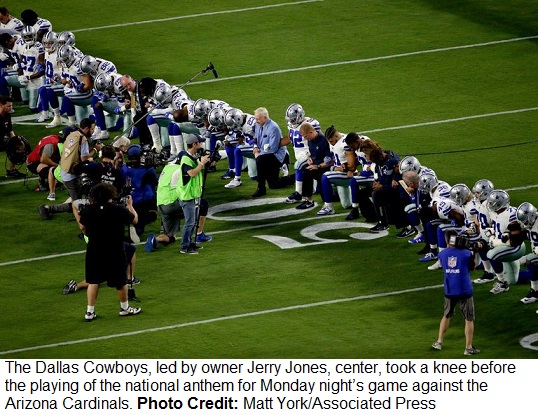
————

Appendix: Bahamian Diaspora to be mobilized, says Minnis

CU Blog - Bahamian Diaspora - Not the Panacea - Photo 1ATLANTA, Georgia – Prime Minister, Dr. Hubert A. Minnis on Saturday encouraged the international Bahamian Diaspora to “consider new investment opportunities in The Bahamas” in areas ranging from tourism, to aquaculture, to the maritime sector.”

Minnis said the Bahamian Diaspora is a “major talent and investment pool that The Bahamas must tap into”.

The prime minister said his administration intends to help create a global network of Bahamians to help boost national development and to create a 21st century Bahamas.

“I invite my fellow Bahamians overseas, those of you of Bahamian heritage, and friends of The Bahamas, to consider new investment opportunities in The Bahamas in areas ranging from tourism, to aquaculture, to the maritime sector,” Minnis said.

“The Bahamas has a highly favorable investment regime. We are cutting the red tape and too often long waiting times for international investment projects to be vetted and approved.

“Like other countries that have successfully done so, my government will cultivate and utilize the energy of the Bahamian Diaspora,” Dr. Minnis said. “Working with our foreign missions, we will create a database of Bahamians overseas who the country may tap into as potential investors and consultants.

“For example, if there is not a domestic Bahamian consultant available in a given area, the priority will be to locate a Bahamian overseas, instead of first using a non-Bahamian consultant.”

Prime Minister Minnis said his administration is also giving consideration to the establishment of an overseas council of the Bahamian Diaspora, that will utilize social media and a dedicated website to help to produce a database and platform for communication of Bahamians overseas.

The prime minister said such a council could also promote investment and job opportunities for Bahamians wishing to return to and/or work in The Bahamas.

“The council may also promote ways that Bahamians overseas can network and help with educational and community-minded projects that will benefit The Bahamas, especially young Bahamians,” Minnis said.

Addressing a cocktail reception for Bahamians living in Atlanta and “friends of the Bahamian Diaspora”, Minnis said the government of The Bahamas has undertaken a program of long-term, economic growth in order to reduce unemployment and to move the Bahamian economy onto a more sustainable path since coming to office on May 10, 2017.

Minnis told attendees that his administration is also dedicated to stabilizing public finances, reforming government and addressing official corruption.

The program of reform and transformation, Minnis said, includes new thinking about the role of government “as we create new and innovative partnerships for national development”.

Minnis also invited those in attendance to consider lending their talents and resources in areas such as youth development and community service.

“God has blessed The Bahamas with many gifts. As a people we have always been blessed with an abundance of talent way beyond our relatively small population. This includes the Bahamian Diaspora,” Minnis added.

Source: Posted and retrieved September 4, 2017 from: http://www.thenassauguardian.com/index.php?option=com_content&view=article&id=75958&Itemid=2

———–

Appendix VIDEO – CBNS101: Caribbean Diaspora – https://youtu.be/bnizsn7pdW0


Published on Apr 19, 2013 – Courtman, Sandra. Beyond the blood, the beach & the banana: new perspectives in Caribbean studies. Kingston: Ian Randle, 2004. Print. 

Harney, Stefano. Nationalism and identity: culture and the imagination in a Caribbean diaspora. Kingston [Jamaica: University of the West Indies ;, 1996. Print. 


Mohammed, Jennifer. Caribbean Studies: Caribbean Advanced Proficiency Examination (CAPE) : for self-study and distance learning. S.l.: [Caribbean Examinations Council (CXC)], 2004.

  • Category: Education
  • License: Standard YouTube License
Share this post:
, ,
[Top]

Disaster Preparation: ‘Rinse and Repeat’

Go Lean Commentary

The reality of Caribbean life: we must contend with natural disasters, not of our making, “again and again”. The situation can be described as “Rinse and Repeat“.

Climate Change is not of our making, but it is our problem. Truth be told, it is not just our problem alone; the whole planet is affected. Right now this moment, the Greater Metropolitan area of Houston, Texas USA is suffering “pangs of distress”; see the VIDEO in the Appendix below. CU Blog - Disaster Preparation - Rinse and Repeat - Photo 1

It is what it is!

Some communities have done a better job than others in preparing for the unavoidable:

“Some communities”? “Better job“? That is not us … in the Caribbean!

As related in a previous Go Lean commentary, our Caribbean region has failed … in our managing this Agent-of-Change:

… we do not have the luxury of “sticking our head in the sand” and pretending that these problems will simply go away. The region has been devastated with this dysfunction and mis-management. Some 70% of Caribbean college-educated citizens have already fled their homelands in an undisputed brain drain. It’s time now to manage change differently than the Caribbean has done as of late. It’s time now to “Go Lean”.

The book Go Lean…Caribbean – available to download for free – serves as a roadmap for the introduction and implementation of the technocratic Caribbean Union Trade Federation (CU), for the elevation of Caribbean society – for all member-states. This CU/Go Lean roadmap has these 3 prime directives for us to do a better job:

  • Optimization of the economic engines in order to grow the regional economy to $800 Billion and create 2.2 million new jobs. This includes an efficient Emergency Management apparatus to ensure business continuity.
  • Establishment of a security apparatus to ensure public safety and protect the resultant economic engines.
  • Improve Caribbean governance to support these engines, including a separation-of-powers between the member-states and CU federal agencies. We can “move” member-state governments simply through funding, rankings and ratings.

The book stresses that reforming and transforming the Caribbean societal engines must be a regional pursuit. This was an early motivation for the roadmap, as pronounced in the opening Declaration of Interdependence (Pages 12 – 13):

i. Whereas the earth’s climate has undeniably changed resulting in more severe tropical weather storms, it is necessary to prepare to insure the safety and security of life, property and systems of commerce in our geographical region. As nature recognizes no borders in the target of its destruction, we also must set aside border considerations in the preparation and response to these weather challenges.

xi. Whereas all men are entitled to the benefits of good governance in a free society, “new guards” must be enacted to dissuade the emergence of incompetence, corruption, nepotism and cronyism at the peril of the people’s best interest. The Federation must guarantee the executions of a social contract between government and the governed.

xvi. Whereas security of our homeland is inextricably linked to prosperity of the homeland, the economic and security interest of the region needs to be aligned under the same governance. Since economic crimes … can imperil the functioning of the wheels of commerce for all the citizenry, the accedence of this Federation must equip the security apparatus with the tools and techniques for predictive and proactive interdictions.

xxiv. Whereas a free market economy can be induced and spurred for continuous progress, the Federation must install the controls to better manage aspects of the economy: jobs, inflation, savings rate, investments and other economic principles. Thereby attracting direct foreign investment because of the stability and vibrancy of our economy.

The Go Lean book provides 370-pages of turn-by-turn instructions on “how” to adopt new community ethos, plus the strategies, tactics, implementations and advocacies to execute so as to reboot, reform and transform the societal engines of Caribbean society, for better preparation for natural disasters. Consider the Chapter excerpts and headlines here from this sample on Page 184 entitled:

10 Ways to Improve for Natural Disasters

1

Emergence of the Caribbean Union
Lean-in for the Caribbean Single Market & Economy initiative as the Caribbean Union Trade Federation. This allows for the unification of the 30 member-states into one market, thereby spreading the risk and premium base across a market of 42 million people. The Caribbean member-states have Hurricane Katrina styled disasters (relatively speaking) every year.

2

Caribbean Emergency Management Agency – Federal Disaster Declarations
Modeled after FEMA in the US, this agency will be charged with the preparation, response and reconstruction for the regions for the eventual manifestations of hurricanes, earthquakes, tsunamis, flooding and other declared disasters, natural and man-made like medical epidemic, drought, pollution, oil spills, terrorism, etc.

3

Support Services for First Responders
Training, licensing and standards for Emergency Managers, Paramedics, Firefighters, Search and Rescue resources. For major disasters, some of these resources will come from international origins; they will need the support services (language translation, guides, maps, etc.) and coordination to maximize their results.

4

Animal Partner Training and Development
Maintain plantations for the training, development and boarding of “search & rescue” dogs, cadavers dogs and other service animals (horses, mules, pigs, etc.) so that there will be local resources within the region. (We cannot always depend on international responses in light of other regions experiencing their own disasters). These animals need not be owned by any one member-state, they can be on loan from CU resources.

5

Siren Warnings & Notifications
The CU will install tornado-style alarms/sirens in all major municipalities. In addition, the CU will implement tsunami warning messaging (emails/text) in coastal areas & seismic meters throughout the region in the affected “fault-line” areas.

6

Airlift & Sealift Authorizations
The CU Emergency Management Agency can license, regulate and authorize (air & sea) vessels and vehicles for emergency deployment in a disaster zone, before during and after the disastrous event.

7

JUA-style Insurance Fund
The fiduciary management of premiums and claims to allow the immediate response for reconstruction after disasters. These financial services, sidecars traded in markets can be direct or indirect as in reinsurance or insurer-of-last-resort.

8

Economic Crime Enforcement During and After Disasters
The CU will police, investigate and prosecute price gouging, insurance red lining and other economic crimes of both the “white collar” and “blue collar” variety. Once a CU-member-state declares a Disaster Emergency, new rules (quasi-Marshall Law) goes into effect. The CU will review and prosecute the actions of civilians and institutions alike.

9

Disaster Declaration Loans
Once there’s a Federal Disaster Declaration, the CU will make funds available for low-interest loans for communities to fund reconstructions. With tourism as a major “cash crop” the goal will be to restore the locality as a tourist destination as soon as possible, as even the perception of prolonged disaster damage can affect future bookings and travel plans.

10

Building Codes and Standards
Through peer review, the CU will regionalize the standards of building codes to assuage the threat of hurricanes and earthquakes, ensuring a higher survivability rate in the Caribbean islands. Due to economic pressures, when buildings and homes cannot be retrofitted, they will be rated for evacuation during hurricane warnings, or earthquake after-shocks.

The Caribbean must foster a better disaster preparation and response apparatus. We must do it now! Lives are at stake.

Just look at our American neighbors – they are suffering right now in the Greater Metropolitan area of Houston, Texas.

CU Blog - Hurricane Flooding - Who Knew - Photo 1b

While Climate Change is the underlying Agent-of-Change, it is outside of our control. This does not imply that there is no remediation for Climate Change; there is. In fact …

Fix ‘Climate Change’ – Yes, We Can

CU Blog - Disaster Preparation - Rinse and Repeat - Photo 2

We do not have the resources (time, talent and treasuries) to fix Climate Change for the planet ourselves, but we can fix it in our Caribbean region. This is a “Lesson in History” that our community has learned … from back in 1863:

There is an important lesson to learn in considering the history of the American Civil War. The war was fought over the issue of slavery. This was an ugly institution for those condemned as slaves. In the United States, that ugly disposition extended beyond the slaves themselves to the entire Black race. Though individuals could be set free, laws in the country could push them back into slavery without any due process. This was the case with the “Fugitive Slave Act of 1850″. Any Black person could be detained as a runaway slave and returned to any alleged Slave Master in the South; no matter any proof or the truth, or lack there-of. In many jurisdictions, a Black man could not even testify against white people. (This was the basis for the autobiographical book – by Solomon Northup – and movie “12 Years A Slave”).

To be Black in the America of those days, one “could not win, could not break-even and could not get out of the game”. There was no neutral destination in America. The optimal option was the only option, to work towards the end of slavery.

For this reason many Blacks joined the war effort, at great sacrifice to themselves and their community. This was a matter of principle! There is an important lesson for the Caribbean from this history[1] :

    The 54th Regiment Massachusetts Volunteer Infantry was an infantry regiment that saw extensive service in the Union Army during the American Civil War. The regiment was one of the first official African-American units in the United States during the Civil War.

CU Blog - A Lesson in History - During the Civil War - Principle not Principal - Photo 1

Remediating and mitigating Climate Change will be a battle. We need our own “Voluntary Infantry“ in this fight.

“We have a dog in this fight” – English language slang.

In the Caribbean, we must confederate and implement the institutions to work to remediate and mitigate Climate Change. We must “join in this fight”; we must Go Green and we must Go Blue. We have to be prepared for natural disasters – they will come … assuredly every season, some Caribbean destination will be impacted. We must be prepared to:

Rinse and Repeat.

If we are ready, to quickly respond, offer relief and rebuild – so as to guarantee the business continuity – we would then do a better job in our quest to make our homeland a better place to live, work and play. 🙂

Download the free e-Book of Go Lean … Caribbean – now!

Sign the petition to lean-in for this roadmap for the Caribbean Union Trade Federation.
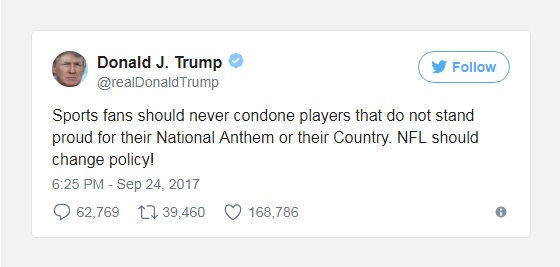
———–

Appendix VIDEO – Historic flooding inundates Texas, hampering rescue efforts – https://youtu.be/Da-VS39gdfQ

PBS NewsHour

Published on Aug 27, 2017 – Houston’s mayor on Sunday urged his constituents in the nation’s fourth-largest city to stay off roadways as the state of Texas continues to contend with unprecedented flooding from Hurricane Harvey, now classified as a tropical storm. Officials said rising waters would reach catastrophic proportions, with more than 2,500 emergency calls made overnight in Houston alone. Hari Sreenivasan has more.

Share this post:
, , , ,
[Top]