Category: Strategy

Review: ‘Merchants of Doubt’ Documentary

Go Lean Commentary

“You can fool all the people some of the time; some of the people all of the time; but you cannot fool all the people all the time”. – Old Adage
Doubt Photo 1This adage is apropos considering that there are actual professionals who are engaged by vested business interests to provide scientific denials regarding the effects of Climate Change.

How is it possible that anyone would deny this? In a previous blog-commentary it was asserted that many who deny the realities of Climate Change, do so because of self-interest; they are only concerned with the lower levels of Maslow’s hierarchy of needs; only concerned about basic or social needs. But now we highlight the public relations/messaging professionals who craft the message, and support it with scientific testimonies to reinforce the status quo. These ones’ motives are more sinister than just supporting a dissenting opinion; they want to promote “doubt”.

The book Go Lean…Caribbean collects statistical data and anecdotes on the dire effects of Climate Change in the Caribbean. Some communities have been affected by Climate Change-driven hurricanes, and after many years, have still not recovered (Page 112). So, we must now take our own lead for our own solutions. The region cannot fall prey to the shenanigans of the Merchants of Doubt.

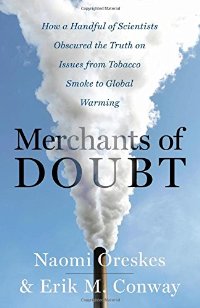
This commentary highlights the film, “Merchants of Doubt“, a big hit at the Toronto Film Festival for 2014. The documentary though is based on the 2010 book: Merchants of Doubt: How a Handful of Scientists Obscured the Truth on Issues from Tobacco Smoke to Global Warming; by Naomi Oreskes and Erik M. Conway.  See a clip from the film here:

VIDEO: ” Hard Pill To Swallow” – Merchants of Doubt (2014) Documentary Clip- http://www.imdb.com/video/imdb/vi524725785?ref_=tt_pv_vi_aiv_1

This documentary looks at pundits-for-hire who present themselves as scientific authorities as they speak about topics like toxic chemicals, pharmaceuticals and climate change. (Director: Robert Kenner; Writers: Robert Kenner, Kim Roberts).

What is the motivation of the Merchants of Doubt?

Profit.

There is a lot of money at stake, especially for those who want to preserve the status quo and not invest in the required mitigations to arrest Climate Change. No doubt, this Merchants of Doubt “role play” is just another glimpse of Crony Capitalism.

The profit motive is powerful. Climate Change is not the first issue in which they have manufactured “doubt”. In truth, their efforts are from a familiar playbook, used previously to delay actions by Big Tobacco, Toxic Waste, Acid Rain, and other dangerous chemicals. They have a successful track record.
Doubt Photo 2

This was the point a few days ago by the film’s director Robert Kenner in an interview on the show All Things Considered for National Public Radio (NPR). Listen to the podcast here:

Audio:Merchants Of Doubt‘ Explores Work of Climate Change Deniers – http://www.npr.org/2015/03/06/391269315/merchants-of-doubt-explores-work-of-climate-change-deniers

March 06, 2015 – NPR’s Melissa Block speaks to director Robert Kenner about his documentary, “Merchants of Doubt“, which examines the work of climate change skeptics and their campaign to sway public opinion.

The Go Lean book details the impending crisis of Climate Change and then calls for the establishment of a regional administration to monitor, mitigate and manage the threats of Climate Change. We must pursue the Greater Good, for the Caribbean region is at the frontline of the battleground of Climate Change; the region is experiencing devastating hurricanes, flooding, forest fires, droughts, rising sea levels, and alterations in fish stock.

This Go Lean book serves as a roadmap for the introduction and implementation of the technocratic Caribbean Union Trade Federation (CU). The prime directives of this agency are described as:

  • Optimize the economic engines of the Caribbean to elevate the regional economy to grow to $800 Billion and create 2.2 million new jobs.
  • Establish a security apparatus to protect the resultant economic engines.
  • Improve Caribbean governance and industrial policies to support these engines.

The Go Lean roadmap calls for the CU to serve as the regional administration to optimize economy, homeland security and governance engines for the Caribbean, especially in light of Climate Change battleground frontline status. The needs of the economy and Climate Change mitigations do not have to clash; they can co-exist. There is no need for the campaign of doubt.

This is the first pronouncement (Page 11) of the opening Declaration of Interdependence that bears a direct reference to this foregoing article and source book:

i. Whereas the earth’s climate has undeniably changed resulting in more severe tropical weather storms, it is necessary to prepare to insure the safety and security of life, property and systems of commerce in our geographical region. As nature recognizes no borders in the target of its destruction, we also must set aside border considerations in the preparation and response to these weather challenges.

The Go Lean roadmap is designed to deliver many empowerment activities to elevate Caribbean society. These activities will carefully balance the needs of the Caribbean and the needs of the planet: we need jobs, yes, but we do not need to increase our carbon footprint. This seems logical; who could dispute? Unfortunately, there are many doubters, dissenters and disputers. Many times these motives are strictly capitalistic; strictly for profit. The issues of Climate Change have been repeatedly addressed and further elaborated upon in these previous blog/commentaries:

First US city to be powered 100% by renewables
Book Review: ‘This Changes Everything: Capitalism vs. the Climate’
Climate Change May Affect Food Supply Within a Decade
Cooling Effect – Oceans and the Climate
Climate Change May Bring More Kidney Stones
Caribbean grapples with intense new cycles of flooding & drought
Floods in Minnesota, Drought in California – Why Not Share?
Conservative heavyweights have solar industry in their sights
Go ‘Green’ … Caribbean

The subject of Climate Change doubters-dissenters-disputers is just another example of the well-documented bad corporate behavior by Big Business. Many other cases have been considered in this commentary; see the relevant list here:

Big Defense Many theorists indicate that the “follow the money” approach reveals the Military Industrial Complex work to undermine peace, so as to increase defense spending for military equipment, systems and weapons.
Big Media Cable companies conspire to keep rates high; kill net neutrality; textbook publishers practice price gouging; Hollywood insists on big tax breaks/ subsidies for on-location shooting.
Big Oil While lobbying for continuous tax subsidies, the industry have colluded to artificially keep prices high and garner rocket profits ($38+ Billion every quarter).
Big Box Retail chains impoverish small merchants on Main Street with Antitrust-like tactics, thusly impacting community jobs. e-Commerce, an area of many future prospects, is the best hope of countering these bad business tactics.
Big Pharma Chemo-therapy cost $20,000+/month; and the War against Cancer is imperiled due to industry profit insistence.
Big Tobacco Cigarettes are not natural tobacco but rather latent with chemicals to spruce addiction. Caribbean cigars are all natural.
Big Agra Agribusiness concerns continue to greenhouse gases, bully family farmers and crowd out the market; plus they fight common sense food labeling efforts.
Big Data Brokers for internet and demographic data clearly have no regards to privacy concerns. They open that doors for hackers and data breaches.
Big Banks Wall Street’s damage to housing and student loans are incontrovertible. Their only motive: more profits.
Big Weather Overblown hype of “Weather Forecasts” to dictate commercial transactions.
Big Real Estate Preserving MLS for Real Estate brokers only, forcing 6% commission rates, when the buyers and sellers can easily meet online without them.
Big Salt Despite the corrosiveness of salt on roads and the environment, it is the only tactic used to de-ice roads during the winter. Immediately after the weather warms, the roads must be re-constructed, thus ensuring a continuous economic cycle.

The Go Lean book, and accompanying blog commentaries, go even deeper and hypothesize that American economic models are considered dysfunctional when viewed from the Caribbean perspective. While the US generates the largest carbon footprint per-capita on the planet, most of the Climate Change doubters-dissenters-disputers originate there. Yet, we in the Caribbean are on the frontlines, especially considering the devastating realities of modern hurricanes.  In general, the American wheels of commerce stage the Caribbean in a “parasite” role. The American policy for the Caribbean is to incentivize consumption of American products, and serve as a playground for their leisure.

There is more to our reality. We also care about the planet, and our children’s future. We want to effect the required changes for our region and encourage the rest of the world to capitulate to good science in aid of the planet.

The Go Lean book declares that we must adopt a community ethos, the appropriate attitude/spirit, to forge change in our region; then details the executions of the following strategies, tactics, implementations and advocacies to better impact the region’s resources and eco-systems, especially in considering the preparations and consequences of Climate Change:

Community Ethos – Deferred Gratification Page 21
Community Ethos – Economic Systems Influence Individual Choices / Incentives Page 21
Community Ethos – The Consequences of Choices Lie in the Future Page 21
Community Ethos – “Crap” Happens Page 23
Community Ethos – Lean Operations Page 24
Community Ethos – Cooperatives Page 24
Community Ethos – Non-Government Organizations Page 25
Community Ethos – Ways to Impact the Future Page 26
Community Ethos – Ways to Improve Sharing Page 35
Community Ethos – Impact the Greater Good Page 37
Strategy – Vision – Confederating 30 Member-States into a Single Market Page 45
Strategy – Vision – Foster Local Economic Engines for Basic Needs Page 45
Strategy – Mission – Prepare for Natural Disasters Page 45
Strategy – Agents of Change – Climate Change Page 57
Strategy – Agents of Change – Globalization Page 57
Tactical – Confederating a Permanent Union Page 63
Tactical – Fostering a Technocracy Page 64
Separation of Powers – Emergency Management Page 76
Separation of Powers – Interstate Commerce Administration Page 79
Separation of Powers – Meteorological & Geological Service Page 79
Separation of Powers – Fisheries and Agriculture Department Page 88
Implementation – Assemble Regional Organs into a Single Market Economy Page 96
Implementation – Ways to Pay for Change Page 101
Implementation – Security Initiatives at Start-up – Unified Command & Control Page 103
Implementation – Industrial Policy for CU Self Governing Entities Page 103
Implementation – Ways to Deliver Page 109
Implementation – Ways to Benefit from Globalization Page 119
Planning – Big Ideas for the Caribbean Region Page 127
Planning – Ways to Make the Caribbean Better Page 131
Advocacy – Ways to Grow the Economy Page 151
Advocacy – Ways to Create Jobs Page 152
Advocacy – Ways to Improve Governance Page 168
Advocacy – Ways to Better Manage the Social Contract Page 170
Advocacy – Ways to Impact Public Works Page 175
Advocacy – Ways to Foster Cooperatives Page 176
Advocacy – Ways to Improve for Natural Disasters Page 184
Advocacy – Ways to Improve Emergency Management Page 196
Advocacy – Ways to Impact Main Street Page 201
Advocacy – Ways to Improve Fisheries Page 210
Appendix – History of Puerto Rican Migration to US & Effects of Hurricanes Page 303
Appendix – US Virgin Islands Economic Timeline with Hurricane Impacts Page 305

The foregoing Audio podcast and VIDEO discuss the effectiveness of Merchants of Doubt in delaying public policy in combating Climate Change. In the Caribbean, we have no option to exit from these debates. We are involved whether we want to be or not – we are on the frontlines of this battle.

This is not our opinion alone. There have been many comments from viewers of the documentary film. The following User Reviews support the thesis from the film:

— Typical of proponents —

User Review 1: The art of deception, applied to scientific consensus
Author: Douglas Allchin from St Paul, MN; 13 March 2015

This is not a film about the science of climate change, second-hand smoke, or risks of flame-retardants. It is about the tactics used (repeatedly) to mislead the public about that science. Most notably, the “Merchants of Doubt” foster unwarranted images of uncertainty and obscure scientific consensus, and even threaten the scientists themselves (and then joke about it). All the while they hide their sources of funding and conflicts of interest that might lead a reasonable person to measure their claims. The documentary evidence and testimony presented is compelling–including, ironically, the voices of the con-artists themselves (Marc Morano, Fred Singer, Tim Phillips). Especially noteworthy is testimony by those who discovered the deceptions despite prior sympathetic beliefs: Matthew Crawford, Michael Shermer, Congr. Bob Inglis.

Striking imagery. Amusing moments. But also chilling when one reflects how these voices obscure harms to our health and environment. Worse, they appeal to the banner of free speech and other “freedoms” (to do harm, in the name of unregulated business, I suppose), and imagine that sheer will or personal belief can trump sound scientific conclusions.

Other naysaying reviews one finds of this film will surely be further evidence of what the film itself exposes so well. Once revealed, never again concealed.

User Review 2: Engaging look at the politics of climate change… from one perspective
Author:
rm_777 from United States 10 September 2014

I saw “Merchants of Doubt” recently at the TIFF festival, and would recommend watching it, as it an engaging, well-structured and well-paced look at the politics of climate change… from one perspective.

Robert Kenner, of Food, Inc. fame, focuses “Merchants of Doubt” on the politics of climate change, and the individuals and corporations responsible for helping shape public opinion. The film integrates recent history, similar industries and interviews with a wide-range of members, exceptionally-well. Kenner, I believe, would make an excellent teacher on how to produce documentaries.

The major – and I mean major – downside of this film is that it is incredibly one-sided. One review from We Got This Covered put it exceptionally-well, which is that “As he tries to side his audience against the skeptics, Kenner ends up using the same tactics that they do.” Kenner is “content to regurgitate the same facts again and again, hoping his audience will be convinced enough to not want to hear the other side.”

If you are familiar with how politics works, then much of this is not new. This is why it is surprising that someone of Kenner’s pedigree would not challenge the “tribal” system of climate change, instead, taking a stance.

Likewise, there are doubters-dissenters-disputers even of the film. In the interest of full disclosure, notice here an opposing review of the same film:

— Typical of opponents —

User Review 3: But what about the science and economics of climate?
Author:
Viscount Monckton of Brenchley from UK; 5 Feb 2015

Merchants of Doubt is a prejudiced and relentlessly one-sided attempt to divert attention away from the failure of global temperatures to respond as the models had so confidently but so misguidedly predicted.

So far, any honest and independent inquirer would conclude that the unfolding evidence of global warming at half the central rate predicted with “substantial” (but misplaced) “confidence” in IPCC (1990) has cast more than a little legitimate doubt on the “settled” science.

However, this and other inconvenient truths – no global warming at all for up to 18 years 3 months (RSS satellite dataset); no increase in hurricane frequency or strength (Accumulated Cyclone Energy Index), or in flooding (IPCC, 2013), or in droughts (Hao et al., 2014); greening of the Sahara (Nicholson, 1981); global sea-ice extent recently at a satellite-era maximum (University of Illinois Cryosphere Today project, December 2014) – are entirely overlooked in the movie, which also ignores the well-established fact that the sceptical side of the debate receives 1/5000 of the lavish funding poured by governments and “green” profiteers of doom into promoting Thermageddon.

The movie will please climate Communists, but it is a fine illustration of the depths of despair into which the true-believers in the Thermageddon cult have been reduced as the “science” behind the scare visibly collapses before them. The movie is predicated on the assumption that there is a “97% consensus” that recent global warming was mostly man-made. The peer-reviewed result demonstrating that the “consensus” on this issue is actually 0.5% is conveniently ignored, along with all the other facts which – however much the Marxstream media may deny them or decline to report them – will slowly, inexorably consign the climate scare to the rubbish-heap to which all mere superstitions are ultimately, ineluctably consigned.

Don’t bother to watch it.

Change has come to the Caribbean region; more devastating change is imminent. There is the need for a permanent union to provide efficient stewardship for Caribbean economy, security and governing engines. The Go Lean…Caribbean book posits that these problems, these agents of change, are too big for just any one member-state to tackle alone, there must be a regional solution. This multi-state technocratic administration of the CU may be our best option.

The people and institutions of the region are hereby urged to lean-in to this Go Lean roadmap, to embrace the mitigations to arrest Climate Change. and respond to the Merchants of Doubt. Despite their objects, we can still make the Caribbean a better homeland to live, work and play. 🙂

Download the free e-Book of Go Lean … Caribbean – now!


Share this post:
, , , , , , ,

Tobago: A Model for Cruise Tourism

Go Lean Commentary

The Caribbean is composed of 30 member-states: countries, territories, and commonwealths. There are a lot of differences (5 colonial legacies, 4 different languages – even more dialects), and yet just one economy…primarily. The economic driver for most of the region is focused first on tourism.

This is good!

  • Non-renewal resources are not exhausted, exploited or consumed.

This is bad!

  • The mono-industrial reality overly depends on the prosperity of foreign countries.

It is what it is!

The book Go Lean…Caribbean addresses the economic needs of all the Caribbean, including the dimensions of the tourism sector. There are two options for visiting the Caribbean: stay-overs and cruises.

CU Blog - Tobago - A Model for Cruise Tourism - Photo 2

Scarborough, Tobago

CU Blog - Tobago - A Model for Cruise Tourism - Photo 1

Beach scene on Tobago

From a strictly economic consideration, stay-overs are preferred. The visitors consume more of the local culture and spend more monies on amenities like hotels, taxis, restaurants, shopping and excursions. On the other hand, cruise passengers consume most of these amenities onboard the ships, with just spin-off revenues to the local port cities.

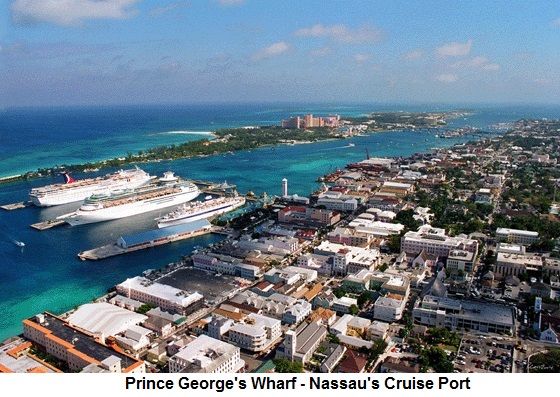
CU Blog - Tobago - A Model for Cruise Tourism - Photo 3The experience of tourism in the Caribbean is that there has been a sea-change since 2008; the crisis of the Great Recession deeply impacted the region as prosperity in the foreign countries – source markets – became spurious. Yes, the high-end tourist resorts have flourished since the Great Recession, but properties catering to the general middle class have floundered. The one exception being the emergence of the cruise industry as a viable vacation option for the general American population. The CU therefore plans to empower the industry directly, and to elevate the cruise industry’s impact on Caribbean society.

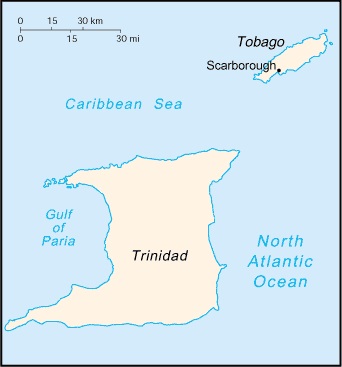
Plus, cruise lines are an effective way to introduce and grow a tourism product “from scratch”. This is the model for the island of Tobago, the secondary island (population of 62,000) in the federated Republic of Trinidad and Tobago. Tobago’s main economy is based on tourism, fishing, and government spending, with government spending being the largest; (the local governing body – the Tobago House of Assembly – employs 62% of the labor force). Tourism is still a fledgling industry on the island and needs to be further developed. There are no casinos, just two golf courses, and perhaps just one hotel classified among the Caribbean resort-variety; but the island boast great eco-tourism opportunities.

See this article here referring to the pending expansion of cruise operations to Tobago:

1. Title: More on Carnival’s Tobago Plans
By: The Caribbean Journal staff; retrieved from: http://www.caribjournal.com/2015/03/16/more-on-carnivals-tobago-plans/  

Carnival Cruise Lines has already announced its plans to visit Tobago next year, and now the company has revealed more information on its schedule.

The cruise line began visiting Tobago in February 2015, part of a longer itinerary that includes St Maarten, Dominica, Barbados, Scarborough, Grenada, Martinique, St Kitts and St Thomas.

“Based on feedback from our guests and travel agent partners, we’re delighted to offer these longer length voyages which provide vacationers an opportunity to visit some of the world’s most breathtaking destinations while enjoying all the wonderful on-board innovations and features found aboard Carnival’s ships,” said Terry Thornton, senior vice president of itinerary planning at Carnival.

The cruise line’s arrival will bring an estimated 10,642 Carnival passengers to the island next year.

VIDEO: Top 5 Beaches of Tobago – https://youtu.be/lpIg_6kzW0Q

Published on Dec 22, 2014 – Check out Tobago’s Top 5 Beaches as listed in the 2014 Tobago International Cycling Classic show which aired on ESPN in November. Tobago is one of the most beautiful islands in the Caribbean and it’s many beaches is one of the reasons.

The Go Lean book posits that this strategy is not enough; it is deficient to support a growing economy; to state better: an economy that should be growing. In general, the Caribbean economy is in crisis. Communities that are too dependent on tourism have suffered since 2008, directly and indirectly. Directly, the communities are deriving fewer returns from the tourism investments, especially where cruise operations are concerned. Indirectly, the crisis has driven many young ones to flee the region, setting their sights on foreign shores as the destination for their dreams and aspirations.

While Tobago is looking to expand its cruise traffic, as a way to springboard its nascent tourist industry, other communities are looking at ways to expand the yield from the existing cruise tourist traffic.

Consider this second news article here relating the efforts in Jamaica (and elsewhere) to increase the per-passenger average “spend” amounts:

2. Title: Jamaica unhappy with cruise pax spending
By: Gay Nagle Myers; Travel Weekly Magazine – Industry Periodical – Posted September 25, 2012; retrieved 03/18/2015 – http://www.travelweekly.com/Cruise-Travel/Jamaica-unhappy-with-spending-levels-of-cruise-passengers/

Jamaica’s cruise numbers saw solid growth last year, but tourism authorities there are not pleased with the level of per-passenger spending, which trails most other major cruise destinations in the Caribbean.

CU Blog - Tobago - A Model for Cruise Tourism - Photo 4Data about Jamaica’s cruise industry are contained in the recently released Annual Travel Statistics 2011, a hefty document published by the Jamaica Tourist Board that examines all facets of visitor arrivals, hotel occupancy by room size category and visitor expenditure.

Tourism data were compiled from embarkation/disembarkation cards filled out by visitors arriving by air and by exit surveys at the airports and at cruise ship piers.

Data on cruise ship arrivals were obtained from the ships’ manifests.

In many instances, the current figures are compared to figures for the years since 2007 to illustrate how well or poorly certain tourism segments are faring.

Jamaica had solid cruise growth in 2011, welcoming more than 1.1 million passengers, a jump of 23.7% over 2010.

The main contributing factor to the turnaround in passenger arrivals was the opening of the Falmouth pier in Trelawny in February 2011.

In the 11 months that followed, the port of Falmouth hosted 110 cruise ship calls and was the entry point for 456,442 cruise ship passengers, or 40.6% of all passengers arriving in Jamaica. That included 21 calls by Royal Caribbean International’s Oasis of the Seas, accounting for 125,023 passengers.

The port of Ocho Rios, which in the past provided the largest share of Jamaica’s cruise arrivals, accounted for 417,520 of total cruise passengers in 2011, or 37.1%.

The port of Montego Bay accounted for 250,491 passengers, or 22.3%. The problem lies in how much those passengers spent in their ports of arrival. Overall gross visitor expenditure in 2011 was estimated at just over $2 billion, an increase of just 0.4% over 2010.

Foreign visitors arriving by air spent $1.85 billion, while cruise passenger spend totaled $80 million, and nonresident Jamaicans visiting friends and family contributed $76 million.

This means that the average tourist on holiday spent $115.74 per person per night, while cruise passengers strolling the streets of Falmouth or the vendor stalls in Montego Bay spent just $71.27.

The level of cruise passenger spend is not sitting well with tourism officials. It represents a drop of 20%, or $16 per passenger, the lowest in 10 years, according to the JTB annual report.

This is a disappointing payback following the opening of the much-touted Falmouth pier.

William Tatham, vice president of the Port Authority of Jamaica, said tourism officials would like to see a 70% jump in the cruise spend per passenger, to $120 per person, in the coming cruise season.

That goal could be realized with the opening of Margaritaville Falmouth at the cruise pier later this year.

The planned $7 million, 17,000-square-foot attraction will include a pirate ship with a pool and water slide, a zipline and a Jacuzzi right on the dock, according to Ian Dear, CEO of Island Entertainment Brands, which operates 27 Margaritaville venues, four of them in Jamaica.

Even if Jamaica should reach its goal of passengers spending $120 a day, the island still will trail the Bahamas and the U.S. Virgin Islands, the Caribbean’s two top-volume cruise ports, when it comes to per-passenger spend.

CU Blog - Tobago - A Model for Cruise Tourism - Photo 5The Bahamas welcomed 4.1 million cruise passengers in 2011, up 9.4% from the 3.8 million it welcomed in 2010.

The average spend of a Bahamas cruise passenger in 2012 is $111, up from $73 in 2011, according to Carla Stuart, director of cruise development for the Ministry of Tourism.

“The Bahamas remains the leader in the cruise industry in the region,” Stuart said. “For the first quarter of 2012, we saw more than an 11% increase in cruise arrivals compared to the same period in 2011. We expect this growth will continue throughout the year, bringing in significant revenue to small businesses and individuals employed directly and indirectly in the tourism sector.”

The USVI cruise numbers stood at 2 million in 2011, up 8.1% from 1.8 million in 2010, putting it third in cruise volume in the Caribbean region. (If Cozumel, Mexico, an island port in the Western Caribbean off Mexico’s Riviera Maya region, is factored into the Caribbean cruise data, it actually outranks the USVI with 2.8 million cruise arrivals in 2011, down 1.4% from the 2.9 million in 2010.)

Passengers disembarking in St. Thomas and St. Croix outspent those in Nassau and Freeport, Bahamas last year, dropping $156 per person on duty-free items, island tours, banana daiquiris at Mountaintop in St. Thomas or Buck Island snorkeling tours in St. Croix.

However, the 2011 figure fell from the 2010 figure of an average spend of $167 per cruise passenger, according to the Department of Tourism.

Projected cruise passenger spend for the U.S. Virgin Islands during the 2012-2013 cruise season is $165 per person.

The Caribbean region needs to focus on growing the economy and creating jobs. The Go Lean book asserts that this effort is too big a task for any one Caribbean member-state alone, that Jamaica, Tobago and other port cities need to convene, confederate and collaborate with the other regional member-states. As such, the Go Lean book serves as a roadmap for the introduction and implementation of the technocratic Caribbean Union Trade Federation (CU), for the elevation of Caribbean society – for all member-states including Tobago. This CU/Go Lean roadmap has these 3 prime directives:

  • Optimization of the economic engines in order to grow the regional economy to $800 Billion and create 2.2 million new jobs.
  • Establishment of a security apparatus to protect the resultant economic engines.
  • Improvement of Caribbean governance – including local government – to support these engines.

The Go Lean book (Page 193 – 10 Ways to Impact Cruise Tourism) makes this simple assertion that the unification of the region into a Single Market will allow for collective bargaining with the cruise industry; no one nation-state would have the clout of a unified market. The industry needs the Caribbean more than the Caribbean needs the industry. The ports-of-calls need to be able to generate more revenue from the visiting passengers, but the cruise line have embedded rules/regulations designed to maximize their revenues at the expense of the port-side establishments. There is a better way!

Yet still, the strategies and tactics of the Go Lean roadmap are not to be contrarian for the region’s business stakeholders, but rather to promote and facilitate more business options, even for the cruise lines – we are cheerleaders. The cruise lines will have a partner in this Trade Federation for facilitating the best Caribbean experience for their passengers. We want to make the Caribbean better … to live, work and play for visitors and residents alike. And when something goes awry, the CU’s Emergency protocols will be engaged to facilitate a quick recovery.

A win-win…

The book stresses (early at Page 11 & 14) the need to be on-guard for opportunities to expand cruise industry performance in these pronouncements in the Declaration of Interdependence:

iv.  Whereas the natural formation of the landmass is in a tropical region, the flora and fauna allows for an inherent beauty that is enviable to peoples near and far. The structures must be strenuously guarded to protect and promote sustainable systems of commerce paramount to this reality.

xxvi.  Whereas the Caribbean region must have new jobs to empower the engines of the economy and create the income sources for prosperity, and encourage the next generation to forge their dreams right at home, the Federation must therefore foster the development of new industries, like that of ship-building, automobile manufacturing, prefabricated housing, frozen foods, pipelines, call centers, and the prison industrial complex. In addition, the Federation must invigorate the enterprises related to existing industries like tourism, fisheries and lotteries – impacting the region with more jobs.

This commentary previously related details of Caribbean tourism dynamics and the region’s own job-creation efforts. Here is a sample of earlier blogs:

https://goleancaribbean.com/blog/?p=4263 State of Aruba’s Mono-Industrial Economy
https://goleancaribbean.com/blog/?p=4145 The African Renaissance  Monument – Model for Art Tourism
https://goleancaribbean.com/blog/?p=4058 The Bahamas missed tourism marketing in New York due to the New York Times focus on immigration dysfunction.
https://goleancaribbean.com/blog/?p=3743 Trinidad cuts budget as oil prices tumble – Perils of a mono-industrial economy.
https://goleancaribbean.com/blog/?p=2750 Disney World – Role Model for Touristic Self-Governing Entities
https://goleancaribbean.com/blog/?p=2571 More Business Travelers Flock to Airbnb
https://goleancaribbean.com/blog/?p=2207 Bad Model – Hotels making billions from Resort Fees
https://goleancaribbean.com/blog/?p=1984 Casinos Changing/Failing Business Model for Tourism activities
https://goleancaribbean.com/blog/?p=1943 The Future of Golf; Vital for Tourism, but failing badly
https://goleancaribbean.com/blog/?p=510 Florida’s Snowbirds Chilly Welcome – Bad Model for managing a great demographic and market potential.
https://goleancaribbean.com/blog/?p=273 10 Things We Want from the US – #2: Tourists
https://goleancaribbean.com/blog/?p=242 The Erosion of the Middle Class
https://goleancaribbean.com/blog/?p=235 Tourism’s changing profile

The Go Lean book and accompanying blogs posit that for the Caribbean tourism is undergoing change due to … a changing world:

“If we do what we have always done, we will no longer get what we always got”.

The world is now considered flat, because it is digital and connected. The region must explore all the marketing opportunities there-in. This is the charge of the Go Lean…Caribbean roadmap, to do the heavy-lifting, to implement the organizational dynamics to optimize Caribbean tourism here and now. The following are the community ethos, strategies, tactics, implementations and operational advocacies to effectuate this goal:

Community Ethos – People Respond to Incentives Page 21
Community Ethos – Economic Systems Influences Choices & Incentives Page 21
Community Ethos – Job Multiplier Page 22
Community Ethos – Lean Operations Page 24
Community Ethos – Ways to Improve Negotiations – Cruise Collective Bargaining Page 32
Community Ethos – Ways to Impact the Greater Good Page 37
Strategy – Vision – Make the Caribbean the Best Address on Planet Page 45
Strategy – Mission – Facilitate transportation options for passengers and cargo Page 46
Strategy – Agents of Change – Technology Page 57
Strategy – Agents of Change – Globalization Page 57
Anecdote – Carnival Corporation Strategy Report Page 61
Tactical – Separation of Powers – Tourism Promotion and Administration Page 78
Implementation – Assemble Regional Organs Page 95
Implementation – Ways to Deliver Page 109
Implementation – Ways to Impact Social Media – Tourism Outreach Page 111
Implementation – Ways to Benefit from Globalization Page 119
Implementation – Ways to Promote Independence Page 120
Planning – 10 Big Ideas for the Caribbean – Confederate to Single Market Page 127
Planning – Ways to Improve Trade Page 128
Planning – Lessons Learned from 2008 Page 136
Advocacy – Ways to Grow the Economy Page 151
Advocacy – Ways to Create Jobs Page 152
Advocacy – Ways to Improve Governance Page 168
Advocacy – Ways to Improve Local Governance – Help communities like Tobago Page 169
Advocacy – Ways to Reduce & Mitigate Crime – Against Tourist Protected Class Page 178
Advocacy – Ways to Enhance Tourism – Regional promotion and facilitation Page 190
Advocacy – Ways to Impact Cruise Tourism – 10 specific steps/actions for improvement Page 193
Advocacy – Ways to Improve Transportation – More efficiency in moving people Page 205
Advocacy – Ways to Preserve Caribbean Heritage … and Culture Page 218
Advocacy – Ways to Impact Trinidad & Tobago – More can be done Page 240
Appendix – Lessons Learned – Trinidad & Tobago – Floating the T&T Dollar Page 316

Cruising in the Caribbean is a great experience; we must grow this business. Staying-over in the Caribbean is even better, allowing more time to enjoy sun, sand, sea, surf, savor, salsa and smoke; (savor as in foods; salsa as in dance and smoke as in cigars). We can definitely grow this business with more technocratic deliveries. The Go Lean book provides 370 pages of turn-by-turn directions on how to accomplish this grandiose goal.

Now is the time for all of the Caribbean – the people, business and governing institutions – to lean-in to this Go Lean … Caribbean roadmap. This plan is conceivable, believable and achievable to make the region better places to live work and play. 🙂

Download the book Go Lean … Caribbean – now!

Share this post:
, , , , ,
[Top]

The ‘Luck of the Irish’ – Past, Present and Future

Go Lean Commentary

Today (March 17) is Saint Patrick’s Day. Why do people wear green?

It’s a move of solidarity for Irish people and culture.

This is a big deal considering the real history.

This subject also has relevance for the Caribbean as Saint Patrick’s Day is a public holiday in the British Caribbean Territory of Montserrat, in addition to the Republic of Ireland,[10] Northern Ireland,[11] and the Canadian province of Newfoundland and Labrador. While not a holiday elsewhere, this day is venerated by the Irish Diaspora around the world, especially in Great Britain, Canada, Argentina, Australia, New Zealand and the United States. See a tribute here from an American job site:

Title: Happy St. Patrick’s Day!
Southfield, Michigan – We hope you are showing your Irish spirit by wearing green!

Here are 5 fun facts about St. Patrick’s Day:

CU Blog - The Luck of the Irish - Past, Present and Future - Photo 2

1. Of course with St. Patrick’s Day comes the massive appearance of shamrocks. Shamrocks have definitely become a central symbol for this day. In the olden days in Ireland, the shamrock was seen as sacred. The four leaves of the clover represent faith, love, hope, and of course, luck.

2. Good luck finding a four-leaf clover. The odds of finding a four-leafer on your first try are 1 in 10,000.

3. St. Patrick’s Day was traditionally a dry holiday. Irish law between 1903 and 1970 made St. Patrick’s Day a religious holiday for the entire country, which meant pubs were closed for the day. Today, St. Patrick’s Day is arguably one of the largest drinking holidays with an estimated $245 million spent on beer for March 17.

4. Green or Blue? Though green is a very popular color on St. Patrick’s Day, the original color that was very popular and often related back to St. Patrick was not green, but blue. In Irish folklore, green is known as being worn by immortals, and often signified new life and crop growth.

5. The Irish flag. The flag representing Ireland is green, white and orange. The green symbolizes the people of the south, and orange, the people of the north. White represents the peace that brings them together as a nation.

CU Blog - The Luck of the Irish - Past, Present and Future - Photo 5

Source: Credit Acceptance Internal Staff Intranet site; retrieved March 17, 2015.

This subject also provides a case study for the Caribbean, as the Irish Diaspora is one of the most pronounced in the world. This is the model of what we, in the Caribbean, do not want to become.

According to information retrieved from Wikipedia, since 1700 between 9 and 10 million people born in Ireland have emigrated, including those that went to Great Britain. This is more than the population of Ireland at its historical peak in the 1830s of 8.5 million. From 1830 to 1914, almost 5 million went to the United States alone.

After 1840, emigration from Ireland became a massive, relentless, and efficiently managed national enterprise.[1] In 1890 40% of Irish-born people were living abroad. By the 21st century, an estimated 80 million people worldwide claimed some Irish descent; which includes more than 36 million Americans who claim Irish as their primary ethnicity. [2]

CU Blog - The Luck of the Irish - Past, Present and Future - Photo 1

The city of Chicago, Illinois dyes the river green in tribute for St. Patrick’s Day

CU Blog - The Luck of the Irish - Past, Present and Future - Photo 4

The White House in full St. Patrick Day tribute mode

CU Blog - The Luck of the Irish - Past, Present and Future - Photo 3

London; on the Thames River

The Diaspora, broadly interpreted, contains all those known to have Irish ancestors, i.e., over 100 million people, which is more than fifteen times the population of the island of Ireland, which was about 6.4 million in 2011.

In July 2014, the Irish Government appointed Jimmy Deenihan as Minister of State for the Diaspora.[3]

Why this history?

In 1801 Ireland acceded to the United Kingdom (UK).

The Irish Parliament, charged with the heavy burden of directing Ireland’s destiny, was abolished in 1801 in the wake of the Republican United Irishmen Rebellion and Ireland became an integral part of a new United Kingdom of Great Britain and Ireland under the Act of Union. Without the power to direct their own affairs, the island found itself victimized by fate and bad fortune.

The Great Famine of Ireland during the 1840s saw a significant number of people flee from the island to all over the world. Between 1841 and 1851 as a result of death and mass emigration (mainly to Great Britain and North America) Ireland’s population fell by over 2 million. In the western province of Connacht alone, the population fell by almost 30%.

The Go Lean … Caribbean book relates that this is also the current disposition of so many of the Caribbean Diaspora; (10 million abroad compared to 42 million in the region). These ones love their country and culture, but live abroad; they want conditions to be different (better) in their homelands to consider any repatriation. The book details where in Puerto Rico, their on-island population in 2010 was 3,725,789, but Puerto Ricans living abroad in the US mainland was 4,623,716; (Page 303).

In a previous blog/commentary, a review of a book highlighted some strong lessons from Ireland’s past that are illustrative for the Caribbean’s future. The book is by Professor Richard S. Grossman entitled: Wrong: Nine Economic Policy Disasters and What We Can Learn from Them. The following excerpt is extracted from the book review by the London School of Economics:

As an example, we can take a closer look at the chapter on the Irish Famine, (1 of the 9 lessons), which took place from 1845-1852. Grossman not only describes what happened, but puts it into the perspective of  other famines, starting from the BCE period. In terms of absolute numbers, the Great Hunger in Ireland was not the worst famine recorded but it did tragically lead to the death of twelve per cent of Irish population, forcing many others to emigrate. The author details how the potato – which originated in the Americas – arrived to a fertile Ireland, and that the poorest third of the Irish population consumed up to twelve pounds of potatoes per day (per capita). Only after this introduction the economic policy is mentioned. Grossman compares the responses of two Prime Ministers of the United Kingdom to the famine: Sir Robert Peel and Lord John Russell. Russell was so committed to the limited government intervention that he refused to buy food for the starving masses in order not to disturb the free formation of prices in the market. Similarly, he refused to increase the scale of public works that would give jobs to Irish workers so as not to disturb the free labour market. The paradox is that when the Great Famine occurred, Ireland was not a poor country. The Famine would not have been so ‘great’ if it were not for the free market ideology followed by the policymakers at that time. As it turns out, leaving things to the invisible hand of market is not always an optimal solution.

The Go Lean book serves as a roadmap for the introduction and implementation of the Caribbean Union Trade Federation (CU), a technocratic federal government to administer and optimize the economic/security/governing engines of the 30 member Caribbean states. The quest is to provide a better direct stewardship, applying lessons-learned from case studies like Ireland in the 1800’s.

Ireland has fared better since those dire days of the potato famine, but still its people, the Diaspora, endured a lot of misery, resistance and discrimination in their foreign homes. As reported in this previous commentary, the usual path for new immigrants is one of eventual celebration, but only after a “long train of abuses”: rejection, anger, protest, bargaining, toleration and eventual acceptance. Wearing green today – or any other March 17th’s – is a statement of acceptance and celebration of the Irish; as a proud heritage for what they have endured and accomplished.

The island of Ireland today is comprised of 2 countries: the independent Republic of Ireland and the territory of Northern Ireland, a member-state in the United Kingdom, with England, Wales and Scotland; (last year Scotland conducted a referendum in consideration of seceding from the UK; the referendum failed).

The Republic of Ireland ranks among the wealthiest countries in the world in terms of GDP per capita.[11] After joining the European Union, Ireland enacted a series of liberal economic policies that resulted in rapid economic growth. The country achieved considerable prosperity from 1995 to 2007, during which it became known as the Celtic Tiger. This was halted by an unprecedented financial crisis that began in 2008, in conjunction with the concurrent global economic crash.[12][13] Today, the primary source of tourism to Ireland – a primary economic driver – is from their Diaspora; see VIDEO in the Appendix below.

There are a lot of lessons in this issue for the Caribbean. Ireland did need better societal engines, economic-security-governance; this was accomplished with their assimilation into the EU. If only that option was available in the past.

This is the exact option being proposed now by the Go Lean roadmap, to emulate and model the successes of the European Union with the establishment of the Caribbean Union. It was not independence that brought success to Ireland, but rather interdependence with their neighboring countries “in the same boat”. This is the underlying theme behind the Go Lean movement, to “appoint new guards” to make the Caribbean homeland a better place to live, work and play. This Declaration of Interdependence is pronounced at the outset of the Go Lean book (Pages 11 & 13):

xi.  Whereas all men are entitled to the benefits of good governance in a free society, “new guards” must be enacted to dissuade the emergence of incompetence, corruption, nepotism and cronyism at the peril of the people’s best interest. The Federation must guarantee the executions of a social contract between government and the governed.

xix. Whereas our legacy in recent times is one of societal abandonment, it is imperative that incentives and encouragement be put in place to first dissuade the human flight, and then entice and welcome the return of our Diaspora back to our shores. This repatriation should be effected with the appropriate guards so as not to imperil the lives and securities of the repatriated citizens or the communities they inhabit. The right of repatriation is to be extended to any natural born citizens despite any previous naturalization to foreign sovereignties.

xx. Whereas the results of our decades of migration created a vibrant Diaspora in foreign lands, the Federation must organize interactions with this population into structured markets. Thus allowing foreign consumption of domestic products, services and media, which is a positive trade impact. These economic activities must not be exploited by others’ profiteering but rather harnessed by Federation resources for efficient repatriations.

xxv. Whereas the legacy of international democracies had been imperiled due to a global financial crisis, the structure of the Federation must allow for financial stability and assurance of the Federation’s institutions. To mandate the economic vibrancy of the region, monetary and fiscal controls and policies must be incorporated as proactive and reactive measures. These measures must address threats against the financial integrity of the Federation and of the member-states.

The Go Lean movement declares solidarity with the culture and the people of Ireland.

We too have endured a lot of misery in our foreign abodes. We would rather prosper where we were planted at home in our homeland, but due to economic, security and governing dysfunctions have had to emigrate.

The Go Lean book details a roadmap with turn-by-turn directions for transforming our homeland. The following is a sample of the community ethos, strategies, tactics, implementations and advocacies to impact the Caribbean region for this turnaround:

Community Ethos – Economic Principle – Economic Systems Influence Choices & Incentives Page 21
Community Ethos – Economic Principle – Consequences of Choices Lie in the Future Page 21
Community Ethos – Job Multiplier Page 22
Community Ethos – Lean Operations Page 24
Community Ethos – Ways to Promote Happiness Page 36
Community Ethos – Ways to Impact the Greater Good Page 37
Strategy – Vision – Confederating a Non-Sovereign Union Page 45
Strategy – Mission – Keep the next generation at home Page 46
Tactical – Fostering a Technocracy Page 64
Tactical – Tactics to Forge an $800 Billion Economy Page 67
Tactical – Separation of Powers Page 71
Implementation – Ways to Pay for Change Page 101
Implementation – Ways to Deliver Page 109
Implementation – Reasons to Repatriate to the Caribbean Page 118
Implementation – Ways to Promote Independence – Interdependence Page 120
Planning – 10 Big Ideas – A Single Market in the G-20 Page 127
Planning – Ways to Make the Caribbean Better Page 131
Planning – Ways to Better Manage Image – Not as Unwanted Aliens Page 133
Advocacy – Ways to Grow the Economy Page 151
Advocacy – Ways to Create Jobs Page 152
Advocacy – Ways to Improve Governance Page 168
Advocacy – Ways to Enhance Tourism Page 190
Advocacy – Ways to Impact the Diaspora Page 217
Advocacy – Ways to Impact the British Territories Page 245

The Go Lean book posits (Page 3) that the Caribbean islands are among the greatest addresses in the world. But instead of the world “beating a path” to these doors, the people of the Caribbean have “beat down their doors” to get out; despite the absence of any famine, or war for that matter. This abandonment must stop … now!

May we learned from the history of Ireland in our quest to make our homeland a better place to live, work and play. And may we have the luck of the Irish, as conveyed in this Classic Irish Blessing:

May you always have…
Walls for the winds
A roof for the rain
Tea beside the fire
Laughter to cheer you
Those you love near you
And all your heart might desire.

Download the book Go Lean … Caribbean – now!

——–

Appendix- VIDEO: Happy St Patrick’s Day from Discover Ireland – https://youtu.be/J680_aKF5zc

Uploaded on Mar 8, 2011 – This short film is an ode to Ireland on St. Patrick’s Day (which means we used a little bit of poetic licence!). Hope you all enjoy it. Happy St Patrick’s day!
http://www.discoverireland.com/


Share this post:
, , , ,
[Top]

Burlington, Vermont: First city to be powered 100% by renewables

Go Lean Commentary

The idea of transforming to 100% renewable energy has been a dream for the Caribbean. It would accomplish 2 important objectives: environmental protection and economic efficiency.

Instead of dreaming, the following VIDEO demonstrates that it is no dream, but rather …

… energy based on 100% renewables sources is being done … now!

Title: Running on renewable energy, Burlington, Vermont powers green movement forward – http://video.pbs.org/viralplayer/2365415796

“Burlington, Vermont, the state’s largest city, recently became the first in the country to use 100 percent renewable energy for its residents’ electricity needs. In a state known for socially conscious policies, the feat represents a milestone in the growing green energy movement. NewsHour’s William Brangham reports on the implications for the country’s green movement.”

This is the energy-mix summary from this VIDEO:

  •  35% – from Bio Mass – Burning renewable wood pulp
  • 20% – Wind
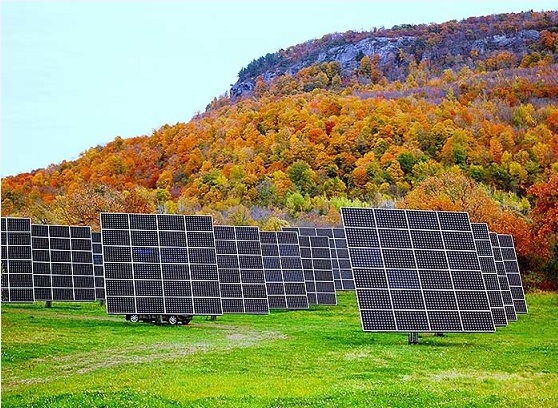
  • 5% – Solar
  • 40% – Hydro-electric … from dams on 2 area rivers

Burlington - Photo 1

No doubt, these renewables bring many benefits in arresting “Climate Change”, but the economic benefits cannot be ignored. The City of Burlington, Vermont is expected to save $20 million over the next few years. But the biggest economic benefit is on the household level: no power price increases since 2009.

The environmental focus may be considered the primary focus of the Green movement. So be it!

This Green movement is a concept, a commitment and a cause that needs some assimilation in the Caribbean. The abundance of carbon dioxide in the earth’s atmosphere has been attributed to the devastating effects of Climate Change. The book Go Lean…Caribbean initiates with the pronouncement that our region is in crisis, one reason being Climate Change. The pressing need to be aware of this phenomena is pronounced early in the book in the Declaration of Interdependence (Page 11), with these words, (the first of many “causes of complaints”):

i.    Whereas the earth’s climate has undeniably changed resulting in more severe tropical weather storms, it is necessary to prepare to insure the safety and security of life, property and systems of commerce in our geographical region. As nature recognizes no borders in the target of its destruction, we also must set aside border considerations in the preparation and response to these weather challenges.

The motivation behind the Go Lean book is to serve as a roadmap for the introduction and implementation of the technocratic Caribbean Union Trade Federation (CU). This Go Lean roadmap has 3 prime directives that are above and beyond combating Climate Change. They are defined as follows:

  • Optimization of the economic engines in order to grow the regional economy.
  • Establishment of a security apparatus, including energy security, to protect the resultant economic engines.
  • Improvement of Caribbean governance to support these engines.

This is where the ‘Lean’ comes into play for this roadmap. According to the foregoing VIDEO, the strategy for renewables improves all the other societal engines: economic, [energy] security and governance. For the purpose of this Caribbean empowerment effort, ‘lean’ is more than just a description, it’s a noun, a verb, an adjective and an adverb. It is also a concept, commitment and cause in which the entire Caribbean region is urged to embrace and ‘lean in’.

The Caribbean is struggling with the costs and reality of energy. The Go Lean book relates (Page 100) that this region pays one of the highest rates in the world; averaging US$0.35 /kWh. The motivation of the Go Lean energy is to optimize energy options. The book posits that the average energy costs can come down to US$0.088/kWh with just a better mix of fossil-fuels and renewables.

The member-states in the Caribbean are not the only communities envisioning a 100% renewable strategy; consider Denmark here. This is en vogue right now, despite the different geographies.

Imagine 100% renewable; as it has happened in this US City of Burlington.

Burlington - Photo 2

Burlington - Photo 4There is so much to benefit from a consideration of Burlington. Demographics-wise, it is so similar to many Caribbean towns. It is the largest city in the State of Vermont. It is international and regional, situated on the eastern shore of Lake Champlain, north of Shelburne Bay. It lies 45 miles south of the U.S.-Canadian (Vermont-Quebec) border and 94 miles south of Montreal. The City has a direct population of 42,417 (2010), but as the hub of the metropolitan area, consisting of the three northwestern Vermont counties has an effectual population of 213,701, approximately one third of Vermont’s total.[7]

If this city can get to 100% renewables, despite harsh winters for 3 months every year, imagine how much more so the Caribbean communities can with their near-365 days of sunshine. The mix for the Caribbean renewables will actually be different than Burlington, (or Denmark). Instead of wood pulp and hydro-electric, the Caribbean can consider tidal and geothermal (“Geyser”) steam-turbine energy (see Appendix below), in addition to the classic renewables of solar and wind.

These initiatives will take some strenuous effort on the part of Caribbean communities and governmental institutions. This heavy-lifting is part-and-parcel of the Go Lean roadmap. The roadmap details a series of community ethos, strategies, tactics, implementations and advocacies to foster the progress in the pursuits of green energy generation. The following list applies:

Community Ethos – Economic Systems Influence Individual Choices Page 21
Community Ethos – The Consequences of Choices Lie in the Future Page 21
Community Ethos – Lean Operations Page 24
Community Ethos – Return on Investments Page 24
Community Ethos – Cooperatives Page 25
Community Ethos – Regional Taxi Commissions – to push renewables Page 25
Community Ethos – Non-Government Organizations Page 25
Community Ethos – Ways to Impact the Future Page 26
Community Ethos – Ways to Improve Negotiations Page 32
Anecdote – Pipeline Transport – Strategies, Tactics & Implementations Page 43
Strategy – Harness the power of the sun/winds/tides Page 46
Tactical – Fostering a Technocracy Page 82
Tactical – Separation of Powers – Energy Commission Page 82
Anecdote – “Lean” in Government – Energy Permits Page 93
Anecdote – Caribbean Energy Grid Implementation Page 100
Implementation – Ways to Develop Pipeline Industry Page 107
Implementation – Ways to Improve Energy Usage Page 113
Advocacy – Ways to Impact Public Works Page 175
Advocacy – Ways to Foster Cooperatives Page 176
Advocacy – Ways to Impact Monopolies Page 202

The Caribbean energy needs are undeniable. The effects of fossil-fueled-driven Climate Change are undeniable. The Caribbean energy options are vast. There is simply the need for the commitment. The Go Lean roadmap shows that commitment. It is the quest to make this region a better place to live, work and play. This has been a constant theme of many other Go Lean commentaries; see this sample:

https://goleancaribbean.com/blog/?p=4294 The US trying to lead the Caribbean to energy security and energy independence; but rather their self-interest is pronounced.
https://goleancaribbean.com/blog/?p=3743 The need for Trinidad to diversify from an oil-based mono-industrial economy; change is coming.
https://goleancaribbean.com/blog/?p=3326 M-1 Rail: Alternative Green Motion in the Motor City
https://goleancaribbean.com/blog/?p=3213 Gas prices drop below $2.00 – The world tire of gasoline price cycles
https://goleancaribbean.com/blog/?p=2769 DC Streetcars – Green Manifestation and Model For Caribbean Re-development
https://goleancaribbean.com/blog/?p=2585 A Lesson in History: Concorde SST inefficient fuel reality doomed innovative project
https://goleancaribbean.com/blog/?p=2465 Book Review: ‘This Changes Everything: Capitalism vs. the Climate’
https://goleancaribbean.com/blog/?p=2276 The need for renewable – Climate Change may affect food supply within a decade
https://goleancaribbean.com/blog/?p=2119 Cooling Effect – Oceans and the Climate
https://goleancaribbean.com/blog/?p=1883 Climate Change May Bring More Kidney Stones
https://goleancaribbean.com/blog/?p=1817 Caribbean grapples with intense new cycles of flooding & drought
https://goleancaribbean.com/blog/?p=926 Conservative heavyweights have solar industry in their sights
https://goleancaribbean.com/blog/?p=915 Go Green Caribbean – Renewable energy pursuits in the region
https://goleancaribbean.com/blog/?p=623 Only at the precipice, do they change

The Go Lean book opened (Page 3) with the job description for the CU technocracy to make better provisions for the region’s basic needs (food, clothing, energy and shelter), and then be in position to supply the rest of the world. There are energy (oil) exporting countries in the Caribbean (Trinidad & Tobago, Belize). Despite this reality, petroleum (gasoline and diesel) is very expensive in the region. Plus with the world’s fixation to graduate from fossil fuels – green movement – there is the need now to fully embrace renewable energy options, maybe even for 100%.

Now is the time for all of the Caribbean, the people, businesses, institutions and governments, to lean-in for the optimizations and opportunities described in the book Go Lean … Caribbean.

This is now more than just a dream. 🙂

Download the free e-Book of Go Lean … Caribbean – now!

————

APPENDIX – The Geysers – 50 Year Anniversary – https://player.vimeo.com/video/58388803

The Special Properties of Geothermal Sites – Drill deep enough and the earth is hot everywhere, but converting that heat to power is a challenge. Sites such as The Geysers in Northern California USA, where the heat is close to the surface and deep rock layers are fractured to allow water to percolate through, are quite rare.

Share this post:
, ,
[Top]

US Territories – Between a ‘rock and a hard place’

Go Lean Commentary

The recipe seems so perfect for success. The US is the world’s largest Single Market economy, has the largest military establishment, and you are its sovereign territory. What could go wrong?!

Everything…

Starting first with the foundation. The premise for the acceptance of US Territories is that the people are “alien and inferior”; 98.4% are racial and ethnic minorities. With that defective reasoning how can anything turn out well?!

And thus…the US Territories find themselves between a “rock and a hard place”.

The below VIDEO/TV show is a production by Comedian-Commentator John Oliver for the HBO show Last Week Tonight. He usually comments on a lot of news events in a satirical manner. But in that satire there is a lot of truth.

VIDEO: Last Week Tonight with John Oliver (HBO): U.S. Territories – https://youtu.be/CesHr99ezWE

Published on Mar 8, 2015 – A set of Supreme Court decisions made over 100 years ago has left U.S. territories without meaningful representation. That’s weird, right?
Content warning: Some profanity!

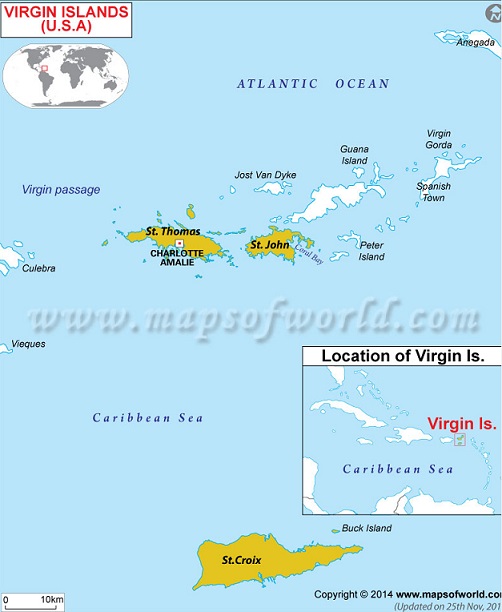
- Photo 1This VIDEO relates to the discussions in the book Go Lean…Caribbean and accompanying blog/commentaries primarily because there are 2 US Territories (Puerto Rico and the US Virgin Islands) in the center of the Caribbean. These cannot be ignored in the movement to unite and elevate the entire Caribbean region.

As depicted in the VIDEO, these territories are in crisis.

This is the purpose of the Go Lean book, as quoted from Economist Paul Romer (Page 8): “a crisis is a terrible thing to waste”. The truth is that American society stages all of the Caribbean in a “parasite” role; to serve as a playground for their leisure, consumers of their products and staffing for their Armed Forces. There is no advantage to being American, except to leave; and this is what people do, time and again. (Emigration is one of the major causes for the crisis in the Caribbean US Territories).

- Photo 2On the other hand, the goal of the Go Lean book is to serve as a roadmap for the introduction and implementation of the technocratic Caribbean Union Trade Federation (CU). So the CU would be set to optimize Caribbean society, starting with economic empowerment. In fact, the Go Lean roadmap has 3 prime directives:

  • Optimization of the economic engines in order to grow the regional economy to $800 Billion & create 2.2 million new jobs.
  • Establishment of a security apparatus to protect the resultant economic engines.
  • Improvement of Caribbean governance to support these engines.

The Go Lean movement asserts that the Caribbean region can do better; we must do better; we must not allow the US to take the lead for our own nation-building, for American self-interest (racism and capitalism) tend to hijack policies intended for the Greater Good. America thought their territories were populated with aliens, who could not be viewed as equals. Despite the 100 year old expiration of these prejudices, the policy remains. The mitigation and remediation to make territorial life successful must therefore come from another source. This is the siren call of the Go Lean movement.

(The scope of the Go Lean roadmap is limited to just the Caribbean territories, not the Pacific ones of Guam, Northern Marianas, and Samoa. Further, this commentary nor the Go Lean book advocates any political change of legal status of the territories to Statehood or Independence; rather this CU confederation alone is being promoted.)

There are more issues in consideration of this book. A compelling mission of the Go Lean book is to lower the “push and pull” factors that lead many to abandon the Caribbean homeland for American shores. The book posits that the region must create jobs so that its citizens do not have to leave to become aliens in a foreign land looking for a better life. The better life can be obtained right at home; Caribbean citizens can prosper where they are planted.

There are many Go Lean blog commentaries that have echoed this point. Here are a sample of related commentaries:

https://goleancaribbean.com/blog/?p=4531 Big Defense: Exploiting US Territories to fill the Armed Forces for their profit.
https://goleancaribbean.com/blog/?p=4360 Dreading the ‘Caribbean Basin Security Initiative’ as inadequate for PR/VI
https://goleancaribbean.com/blog/?p=2887 Caribbean must work together to address rum subsidies and promote this vital industry
https://goleancaribbean.com/blog/?p=2809 A Lesson in History: Economics of East Berlin; Failed-states can go from bad to worse.
https://goleancaribbean.com/blog/?p=2251 What’s In A Name? Latin & Caribbean people in the US still disenfranchised in American society.
https://goleancaribbean.com/blog/?p=2025 Caribbean Jobs – Attitudes & Images of the Diaspora
https://goleancaribbean.com/blog/?p=1433 Caribbean loses more than 70 percent of tertiary educated to brain drain
https://goleancaribbean.com/blog/?p=1325 Puerto Rico Governor Signs Bill on Small-Medium-Enterprises, attempts to re-boot commerce as 95% of businesses have 50 employees or less.
https://goleancaribbean.com/blog/?p=841 Having less babies (and people) is bad for the Caribbean economy
https://goleancaribbean.com/blog/?p=599 Ailing Puerto Rico open to radical economic fixes
https://goleancaribbean.com/blog/?p=286 Puerto Rico’s Comprehensive Cancer Center project breaks ground; model for future empowerment efforts.
https://goleancaribbean.com/blog/?p=273 10 Things We Don’t Want from the US – Discrimination of Immigrations

The foregoing VIDEO conveys that there is little respect in Washington, DC for the needs of the Territories. The islands having a voice, but no vote, really mean no voice at all, as they are inconsequential to all other legislators and power-brokers in Congress. Since the effort to elevate and empower the total Caribbean region cannot be pursued without these US Territories, there must be some engagement there. This effort is Day One/Step One in the Go Lean roadmap (Page 96). This approach is detailed under the American legal concept of an “Interstate Compact”; which allows the US Territories to confederate with their “foreign” Caribbean neighbors in this non-sovereign endeavor; thereby making these two island groups separate member-states of the CU.

Puerto Rico and the US Virgin Islands would have full benefits and voting privileges in the CU Trade Federation; the same for all British, Dutch and French “Overseas” Caribbean territories.

This vision is vital. The book Go Lean…Caribbean clearly hypothesizes that many problems of the region are too big for any one member-state to solve alone; that there is the need for the technocracy of the Caribbean Union Trade Federation. The Go Lean roadmap therefore calls for this strategy of confederation with a tactic of separation-of-powers between CU federal agencies and member-states’ governments. This allows for a lot of autonomy from Washington, DC for Puerto Rico and the USVI.

This change is essential for progress and growth. Despite all the advantages of American affiliation, these US Territories suffer from monumental dysfunction. As a result, these “American citizens” there are on the move, abandoning their homeland and forging near-Failed-States in their wake.

The Go Lean book posits that we need more than jokes and satire to arrest the downward spiral for PR/VI and the rest of the Caribbean; we need action too. We need this roadmap.

We do not want to be the “laughing stock” of the developed world. We want to be recognized as protégés, not parasites! This point is pronounced early in the book with the Declaration of Interdependence (Pages 12 & 14) with many statements that demonstrate the need to remediate Caribbean communities – including PR & VI – and make the homelands better places to live, work and play:

xix.    Whereas our legacy in recent times is one of societal abandonment, it is imperative that incentives and encouragement be put in place to first dissuade the human flight, and then entice and welcome the return of our Diaspora back to our shores. This repatriation should be effected with the appropriate guards so as not to imperil the lives and securities of the repatriated citizens or the communities they inhabit. The right of repatriation is to be extended to any natural born citizens despite any previous naturalization to foreign sovereignties.

xx.  Whereas the preparation of our labor force can foster opportunities and dictate economic progress for current and future generations, the Federation must ensure that educational and job training opportunities are fully optimized for all residents of all member-states, with no partiality towards any gender or ethnic group. The Federation must recognize and facilitate excellence in many different fields of endeavor, including sciences, languages, arts, music and sports. This responsibility should be executed without incurring the risks of further human flight, as has been the past history.

xxiii.  Whereas many countries in our region are dependent Overseas Territory of imperial powers, the systems of governance can be instituted on a regional and local basis, rather than requiring oversight or accountability from distant masters far removed from their subjects of administration. The Federation must facilitate success in autonomous rule by sharing tools, systems and teamwork within the geographical region.

xxiv.  Whereas a free market economy can be induced and spurred for continuous progress, the Federation must install the controls to better manage aspects of the economy: jobs, inflation, savings rate, investments and other economic principles. Thereby attracting direct foreign investment because of the stability and vibrancy of our economy.

xxv.  Whereas the Caribbean region must have new jobs to empower the engines of the economy and create the income sources for prosperity, and encourage the next generation to forge their dreams right at home, the Federation must therefore foster the development of new industries, like that of ship-building, automobile manufacturing, pre-fabricated housing, frozen foods, pipelines, call centers, and the prison industrial complex. In addition, the Federation must invigorate the enterprises related to existing industries like tourism, fisheries and lotteries – impacting the region with more jobs.

The Go Lean book also details a series of community ethos, strategies, tactics, implementations and advocacies to impact the full region, and US Territories. The following samples are excepted from the book: economic prospects:

Community Ethos – Economic Principle – Economic Systems Influence Choices   & Incentives Page 21
Community Ethos – Economic Principle – Consequences of Choices Lie in   the Future Page 21
Community Ethos – Job Multiplier Page 22
Community Ethos – Lean Operations Page 24
Community Ethos – Ways to Promote Happiness Page 36
Community Ethos – Ways to Impact the Greater Good Page 37
Strategy – Vision – Confederating a Non-Sovereign Union Page 45
Strategy – Mission – Keep the next generation at home Page 46
Tactical – Fostering a Technocracy Page 64
Tactical – Tactics to Forge an $800 Billion Economy Page 67
Tactical – Separation of Powers Page 71
Implementation – Ways to Pay for Change Page 101
Implementation – Ways to Deliver Page 109
Implementation – Trade Mission Office – Washington, DC Page 117
Implementation – Reasons to Repatriate to the Caribbean Page 118
Implementation – Ways to Promote Independence – Interdependence Page 120
Planning – 10 Big Ideas – A Single Market in the G-20 Page 127
Planning – Ways to Make the Caribbean Better Page 131
Planning – Ways to Better Manage Image – Not Inferior Aliens Page 133
Advocacy – Ways to Grow the Economy Page 151
Advocacy – Ways to Create Jobs Page 152
Advocacy – Ways to Improve Governance Page 168
Advocacy – Ways to Enhance Tourism – The world should enjoy our hospitality Page 190
Advocacy – Ways to Impact the Diaspora Page 217
Advocacy – Ways to Impact the US Territories Page 244
Appendix – Interstate Compacts Page 278
Appendix – Puerto Rican Migration to New York Page 303
Appendix – Puerto Rican Population in the US – Census 2010 Page 304
Appendix – US Virgin Islands: Economy Past, Present & Future Page 305
Appendix – Electronic Benefits Transfers – e-Government & e-Payments for PR & VI too Page 353

The Go Lean book posits (Page 3) that the Caribbean islands, including the American Territories of Puerto Rico and the US Virgin Islands, are among the greatest addresses in the world. But instead of the world “beating a path” to these doors, the people of the Caribbean have “beat down their doors” to get out; responding to “push and pull” factors. This abandonment must stop now!

While we want the rest of the world – the people of North America, Europe and beyond – enjoying our hospitality, culture, music, cuisine and produce, we most especially want to enjoy these for ourselves. We do not want to admire them from afar. We instead want to be planted and to prosper here in the Caribbean.

Considering the foregoing VIDEO, our birthright should be a privilege and the envy of the world, not the joke for the rest of the world. We want the world laughing with us, not at us!

A better future. This is our simple quest. This is easy to say, but hard to do. The heavy-lifting tasks must come from us in the Caribbean. This is the charge of the CU. We cannot expect solutions from Washington. They have no respect for any territories.

The people and governing institutions of all the Caribbean are hereby urged to lean-in to this Go Lean roadmap for Caribbean empowerment. With the successful execution of this roadmap, we can make all of the Caribbean homeland, a better place to live, work and play. 🙂

Download the book Go Lean … Caribbean – now!

Share this post:
, , , , ,
[Top]

Art and Science of Collaboration

Go Lean Commentary

CU Blog - Art and Science of Collaboration - Photo 1The book Go Lean…Caribbean opens with the thesis (Page 3) that the problems of the Caribbean are too big for any one member-state. So rather, solutions should be sought by accepting interdependence; shifting the responsibility to a region-wide, professionally-managed, deputized technocracy that can result in greater production and greater accountability. This deputized agency is the Caribbean Union Trade Federation (CU). The book therefore advocates that all Caribbean member-states (independent & dependent-territory) lean-in to this plan for confederacy, convention and collaboration.

Confederacy  refers to the federation, the legal structure that will represent/include all 30 Caribbean member-states in an integrated entity to forge the required solutions.

Convention is easy! Convening … means “showing up”.

On the other hand, collaboration is hard! For the purpose of this commentary, collaboration is defined as “a group of people who represent different aspects of an issue, working together to explore their differences and come up with solutions that couldn’t be achieved on their own”. This effort is definitely heavy-lifting, especially in this age of complexity where it is difficult to build consensus and compromise. This effort is hard, but not impossible! To succeed, the required hard-work or heavy-lifting must be guided by prudence and best practices.

It is hereby acknowledged that collaboration is an art and a science. The following summary applies:

Art

Consider the perspective of a constitutive communication approach:

  • Everyone involved in a collaborative effort has a different perspective…
  • How we see ourselves and others, and how others see us…
  • What we say is less important than how we say it…

Science

  • Collaborative Advantage – Good things that come from the success of the effort
  • Collaborative Inertia – Bad things that can come from a lack of this effort, the natural state of affairs
  • Collaboration Design
    • Structure – Get the right people in the right setting
    • Process – How people interact

This Art and Science of Collaboration is gleaned from this featured VIDEO here:

VIDEOThe Collaborative Challenge: Making Quality Decisions Together in the Age of Complexityhttp://youtu.be/iN_A7keXtVg

Published on Dec 13, 2012 – This video was developed by Matt Koschmann, a professor in the Department of Communication at the University of Colorado Boulder. The purpose is to explore the topic of collaboration and explain a constitutive communication approach to enhance our understanding of collaboration.

This and many other blog/commentaries drill deeper, double-down, on this quest for collaboration as necessary for long-term Caribbean solutions. The book and blogs posit that collaboration in spirit equals sharing in action. As a result, a lot of focus has been concentrated on sharing schemes, the Sharing Economy, that would be apropos for Caribbean implementation.

The quest to elevate Caribbean society includes embracing collaboration and sharing tools. If we are able to marry the efforts of all member-states in unison, a lot can be accomplished and the impact can be profound. This impact is pronounced in the CU‘s prime directives, identified with the following 3 statements:

  • Optimization of the economic engines in order to grow the regional economy to $800 Billion & create 2.2 million new jobs.
  • Establishment of a security apparatus to protect the resultant economic engines.
  • Improve Caribbean governance to support these engines.

The Go Lean book promotes “sharing” and collaboration as a community ethos, so as to mitigate the perils of “going at it alone”. This alludes to the emergence of the Sharing Economy that now proliferates due to advances in technology. These previous blog/commentaries detailed some examples:

https://goleancaribbean.com/blog/?p=2571 More Business Travelers Flock to Airbnb
https://goleancaribbean.com/blog/?p=1364 Car-Sharing Uber Demonstrations Snarl Traffic from London to Berlin
https://goleancaribbean.com/blog/?p=486 Incubator firm (Temasek) backs Southeast Asia cab booking app GrabTaxi

CU Blog - Art and Science of Collaboration - Photo 3

The book serves as a roadmap for the introduction and implementation of the technocratic CU. This roadmap posits that many issues and challenges for a Sharing Economy can only be managed with feasible economies-of-scale; thusly there is the need to master the art and science of collaboration. While the stakeholders, 30 member-states and 42 million people, should be able to unify and resolve many common problems, it is not the general public that is expected to lean-in to these principles, but rather their leaders: politicians and civil servants. This is part of the Go Lean effort to improve leadership and foster better leaders.

This is the theme of another book, a Bible-like publication on collaboration, The Collaborative Organization by Jacob Morgan. This author is the principal and co-founder of Chess Media Group, a management consulting and strategic advisory firm on collaboration. This 2012 publication serves as a strategic guide for executives and decision makers seeking to deploy emerging technologies and strategies in the workplace.

The About the Book summary from the Author is published as follows:

I believe that Collaborative Organizations can make the world a better place. We keep talking about and hearing about the value of collaboration for businesses but that’s selling it short. Collaboration can positively impact the lives of people inside and outside of the workplace. If we can create greater engagement among employees, make their lives easier at work, connect them to people and information from anywhere, and provide a place of growth and learning then we go far beyond just business benefit. Employees will feel less stressed out at work and at home, argue less with their spouses, feel a greater sense of purpose and belonging at work, and have more time to spend with their loved ones and families.

I realized that while this idea was unique and powerful it was not enough to drive action within the enterprise. I knew that in order to go from idea to action that business leaders needed something more. This is why I wrote The Collaborative Organization which is the first comprehensive strategy guide to emergent collaboration in the workplace. This book was written not just to benefit the organizations but the employees as well.

The book is supported by data from a research project that Chess Media Group (my firm) conducted and includes dozens of case studies as well as mini guest contribution pieces from executives and leaders who are leading collaboration at their organizations. Inside this strategy guide you will learn:

  • How to map uses cases to feature requirements
  • How to evaluate and select the right collaboration tools for your organization
  • How to structure collaboration teams to lead this initiative
  • How to deploy tools and prioritize features
  • How to gain and sustain employee adoption
  • Measuring success
  • How to evaluate your organization’s maturity in collaboration
  • How to structure governance
  • How to market and roll out this initiative to your company
  • How to evaluate and mitigate risks
  • and much more

(Source: http://www.thecollaborativeorganization.com/about-the-book/)
CU Blog - Art and Science of Collaboration - Photo 2

In line with the foregoing VIDEO, the Go Lean book details the applicable community ethos, strategies, tactics, implementation and advocacies as a roadmap to foster this empowerment among the business and governmental leaders in the region to fully explore collaboration and the Sharing Economy:

Community Ethos – People Respond to Incentives in Predictable Ways Page 21
Community Ethos – Economic Systems Influence Individual Choices &   Incentives Page 21
Community Ethos – Consequences of Choices Lie in the Future Page 21
Community Ethos – Governing Principles – Lean Operations Page 24
Community Ethos – Governing Principles – Return on Investments (ROI) Page 24
Community Ethos – Governing Principles – Cooperatives Page 25
Community Ethos – Ways to Foster Genius – Nurturing Leaders Page 27
Community Ethos – Ways to Help Entrepreneurship – Incubator Support Page 28
Community Ethos – Ways to Improve Negotiations Page 32
Community Ethos – Ways to Improve Sharing Page 35
Community Ethos – Ways to Impact the Greater Good Page 37
Strategy – Confederate 30 Caribbean Member-States Page 45
Strategy – Customers / Stakeholders – Governments, Businesses, and Citizens Page 47
Strategy – Competition – Shared Systems –vs- Premise based Page 51
Strategy – Agents of Change – Technology Page 57
Strategy – Agents of Change – Globalization Page 57
Tactical – Foster a Technocracy Page 64
Tactical – Separation of Powers – Shared Portal: www.myCaribbean.gov Page 74
Tactical – Separation of Powers – Caribbean Postal Union (CPU) Page 78
Tactical – Separation of Powers – Bicameral Legislature – Compromise Conferences Page 91
Implementation – Year 1 / Assemble Phase – Consolidate Organs into CU Page 96
Implementation – Trends in Implementing Data Centers – CoLocation Operations Page 106
Implementation – Assume Mail Operations – Collaborate/Share for all Caribbean Page 108
Implementation – Ways to Impact Social Media Page 111
Implementation – Ways to Benefit from Globalization – Level Playing Field with ICT Page 129
Planning – 10 Big Ideas – Shared/Single   Currency – Cooperative Central Bank Page 127
Planning – Lessons Learned from the West Indies Federation – Collaboration Quest Page 135
Advocacy – Ways to Grow the Economy Page 151
Advocacy – Ways to Create Jobs Page 152
Advocacy – Ways to Improve Governance Page 168
Advocacy – Ways to Better Manage the Social Contract – Share e-Government   systems Page 170
Advocacy – Ways to Improve Leadership Page 171
Advocacy – Ways to Manage Federal Civil Service Page 173
Advocacy – Ways to Foster Cooperatives Page 176
Advocacy – Improve Homeland Security – Shared-Collaborative Defenses Page 180
Advocacy – Ways to Foster Technology Page 197
Advocacy – Ways to Foster e-Commerce Page 198
Advocacy – Ways to Reform Banking – Cooperative/Collaborative Central Bank Page 199
Advocacy – Ways to Impact Foundations – NGOs to Share Delivery of Social Agenda Page 219

The roadmap posits that the CU should foster and incubate features of the Sharing Economy and other expressions of collaboration. The Go Lean book quotes the assessment of a scholar (Kent State University Professor Emeritus Dr. Kwame Nantambu) on Caribbean affairs and the need for collaboration (Page 135): “History has shown that only when a people come together to address issues that affect them collectively can they ever hope to resolve their problems. Caribbean people have common problems so that common sense should dictate that the only way to solve those problems is to come together collectively to address them. There is no other option.”

The Caribbean must change … to adapt to a changing world. We cannot compete alone, but together, collaboratively, we stand a fighting-chance to “snatch victory out of the jaws of defeat”. Failure is not an option; our Caribbean children are counting on us. Otherwise, more and more of them will be Canadian children, and American children, and British children, and so on…

The trends are already there. The Go Lean book opens with the declaration (Page 3) that the Caribbean is already in crisis. For some member-states, their population has declined or been flat for the last 3 decades. This is only possible if despite new births and the absence of war, people are fleeing. This scenario, human flight, is a constant threat to prosperity for all the Caribbean despite their colonial legacies. Our youth, the next generation, may not be inspired to participate in the future workings of their country; they may measure success only by their exodus from their Caribbean homeland.

As echoed in the foregoing VIDEO: “if there was ever a time to think differently about how we do things, this is it!

A collaborative approach to forging solutions to this common problem is perhaps our best hope. We can do the heavy-lifting; we can make the Caribbean, a better place to live, work and play. 🙂

Download the book Go Lean … Caribbean – now!

Share this post:
, ,
[Top]

Lessons from the Swiss unpegging the franc

 Go Lean Commentary

The financial world is all abuzz regarding the move by the Switzerland National Bank to unpeg their currency from their default value tied to the Euro.

Change is afoot:

o CNBC – VIDEO: Swiss franc soars, stocks tank as euro peg scrapped

o Business Insider-UK: The Swiss Franc Is Out of Control

o Bloomberg: Swiss Franc Stages Historic Rally as SNB Move Shocks Market

o Wall Street Journal: Swiss Franc Remains at Sky-High Levels; Swiss Stocks Regain Some Stability

o Financial Times (London): Swiss franc fallout claims more casualties

o Business Insider Editorial: The Decision To Let The Swiss Franc Cause Market Chaos

There are winners and losers from this new move.

How does it relate to the Caribbean?

The Swiss franc is not one of our focused currencies; we get little tourism from that country in particular and we do little trade. Yet this move is HUGE for Caribbean consideration.

This article is in consideration of the book Go Lean…Caribbean; it serves as a roadmap for the introduction and implementation of the technocratic Caribbean Union Trade Federation (CU) and Caribbean Central Bank (CCB) to provide better stewardship, to ensure that the economic/currency failures of the past, in the Caribbean and other regions, do not re-occur here in the homeland.

This Economist article here explains more fundamental dynamics from this global-currency strategy-play:

Title: The Economist explains: Why the Swiss unpegged the franc
By: C.W.
CU Blog - Lessons from the Swiss unpegging the franc - Photo 1IN THE world of central banking, slow and predictable decisions are the aim. So on January 15th, when the Swiss National Bank (SNB) suddenly announced that it would no longer hold the Swiss franc at a fixed exchange rate with the Euro, there was panic. The franc soared. On Wednesday one Euro was worth 1.2 Swiss francs; at one point on Thursday its value had fallen to just 0.85 francs. A number of hedge funds across the world made big losses. The Swiss stock market collapsed. Why did the SNB provoke such chaos?

The SNB introduced the exchange-rate peg in 2011, while financial markets around the world were in turmoil. Investors consider the Swiss franc as a “safe haven” asset, along with American government bonds: buy them and you know your money will not be at risk. Investors like the franc because they think the Swiss government is a safe pair of hands: it runs a balanced budget, for instance. But as investors flocked to the franc, they dramatically pushed up its value. An expensive franc hurts Switzerland because the economy is heavily reliant on selling things abroad: exports of goods and services are worth over 70% of GDP. To bring down the franc’s value, the SNB created new francs and used them to buy Euros. Increasing the supply of francs relative to Euros on foreign-exchange markets caused the franc’s value to fall (thereby ensuring a Euro was worth 1.2 francs). Thanks to this policy, by 2014 the SNB had amassed about $480 billion-worth of foreign currency, a sum equal to about 70% of Swiss GDP.

The SNB suddenly dropped the cap last week for several reasons. First, many Swiss are angry that the SNB has built up such large foreign-exchange reserves. Printing all those francs, they say, will eventually lead to hyperinflation. Those fears are probably unfounded: Swiss inflation is too low, not too high. But it is a hot political issue. In November there was a referendum which, had it passed, would have made it difficult for the SNB to increase its reserves. Second, the SNB risked irritating its critics even more, thanks to something that is happening this Thursday: many expect the European Central Bank to introduce “quantitative easing”. This entails the creation of money to buy the government debt of Euro-Zone countries. That will push down the value of the Euro, which might have required the SNB to print lots more francs to maintain the cap. But there is also a third reason behind the SNB’s decision. During 2014 the Euro depreciated against other major currencies. As a result, the franc (being pegged to the Euro) has depreciated too: in 2014 it lost about 12% of its value against the dollar and 10% against the Rupee (though it appreciated against both currencies following the SNB’s decision). A cheaper franc boosts exports to America and India, which together make up about 20% of Swiss exports. If the Swiss franc is not so overvalued, the SNB argues, then it has no reason to continue trying to weaken it.

The big question now is how much the removal of the cap will hurt the Swiss economy. The stock market fell because Swiss companies will now find it more difficult to sell their wares to European customers (high-rolling Europeans are already complaining about the price of this year’s skiing holidays). UBS, a bank, downgraded its forecast for Swiss growth in 2015 from 1.8% to 0.5%. Switzerland will probably remain in deflation. But the SNB should not be lambasted for removing the cap. Rather, it should be criticized for adopting it in the first place. When central banks try to manipulate exchange rates, it almost always ends in tears.

Source: The Economist Magazine – Financial Weekly (Posted 01/18/2015) –
 http://www.economist.com/blogs/economist-explains/2015/01/economist-explains-13

CU Blog - Lessons from the Swiss unpegging the franc - Photo 2The Swiss National Bank is unlike other central banks because it is not owned by the Swiss government but is a listed company with shareholders that include Swiss administrative regions, known as cantons, as well other public bodies and private individuals. This arrangement provides a cool 1 billion francs ($1.15 billion) annually split between Switzerland’s 26 cantons in proportion to their populations and, most importantly, was considered a safe and reliable stream of income. In fact, according to the Swiss Central Bank, the dividend had been paid every year for over 100 years until a 2013 collapse in the price of gold hurt the bank’s gold asset holdings.

Here is where the lessons for the Caribbean magnify. The Swiss National Bank is a confederation, much like the Go Lean roadmap for the Caribbean Union, Caribbean Central Bank (CCB) and the Caribbean Dollar (C$). The roadmap calls for a cooperative entity of the existing Central Banks in the region; fostering interdependence for the regional Greater Good. There is now interconnectivity of the financial systems, bank/currency troubles in foreign countries easily become trouble for the Caribbean region. Though there is elasticity from these foreign financial centers, the Caribbean is big enough (42 million people in 30 member-states) to streamline its own viable currency/financial/securities market – just like the Swiss (a country of 8 million people but with a $680 Billion economy).

The Caribbean has had to learn hard lessons on currency, as many of the CU member-states have had to endure painful devaluations over the past decades – on more than one occasions. Any attempt to reboot Caribbean economic landscape must first start with a strenuous oversight of the C$ currency. Oversight would imply actions in offense and defense of our own currency. This is what the Swiss (SNB) has done in the foregoing articles. They were at the mercy of the Euro Zone, being pegged to the Euro, as the Euro moved up, the franc would move up; as the Euro moved down, the franc moved down. This parasitical elasticity undermined their independence and any discipline on their part was neutralized by the Euro Zone.

This is the exact position of the Caribbean today. Most Caribbean currencies are pegged to the US dollar. As the dollar rises and falls, so do Caribbean currencies. The US Dollar planners (Federal Reserve) do not have the Caribbean best-interest in mind; they have American self-interest in mind. Good for them; bad for us! Change has now come. A strong currency is a good thing! The Go Lean book strongly urges the region to overcome any “fear of math” because the C$ may become stronger in comparison to the US$. This is why e-Commerce and e-Payments schemes are strongly urged within the CU/Go Lean roadmap.

Early in the book, this need for regional stewardship of Caribbean currencies was pronounced (Declaration of Interdependence – Page 13) with these statements:

xxiv.    Whereas a free market economy can be induced and spurred for continuous progress, the Federation must install the controls to better manage aspects of the economy: jobs, inflation, savings rate, investments and other economic principles. Thereby attracting direct foreign investment because of the stability and vibrancy of our economy.

xxv.    Whereas the legacy of international democracies had been imperiled due to a global financial crisis, the structure of the Federation must allow for financial stability and assurance of the Federation’s institutions. To mandate the economic vibrancy of the region, monetary and fiscal controls and policies must be incorporated as proactive and reactive measures. These measures must address threats against the financial integrity of the Federation and of the member-states.

The Go Lean book, and previous blog/commentaries, stressed the key community ethos, strategies, tactics, implementations and advocacies necessary to establish the regional financial eco-systems for Caribbean self-determination. These points are detailed in the book as follows:

Community Ethos – Economic Principles – Economic Systems Influence   Individual Choices Page 21
Community Ethos – Economic Principles – Voluntary Trade Creates Wealth Page 21
Community Ethos – Economic Principles – Consequences of Choices Lie in   the Future Page 21
Community Ethos – Economic Principles – Money Multiplier Page 23
Community Ethos – Governing Principles – Lean Operations Page 24
Community Ethos – Governing Principles – Return on Investments Page 24
Community Ethos – Governing Principles – Cooperatives Page 25
Community Ethos – Ways to Impact the Future – Count on the Greedy to   be Greedy Page 26
Community Ethos – Ways to Impact the Greater Good Page 37
Strategy – Mission – Fortify the Stability of   the Securities Markets Page 45
Strategy – Provide Proper Oversight and Support for the Depository   Institutions Page 46
Strategy – e-Payments and Card-based Transactions Page 49
Tactical – Summary of Swiss Confederation and Other Models Page 63
Tactical – Growing the Economy – Minimizing Bubbles Page 69
Tactical – Separation-of-Powers – Depository Insurance &   Regulatory Agency Page 73
Anecdote – Turning Around CARICOM – Effects of 2008 Financial Crisis Page 92
Implementation – Assemble Caribbean Central Bank as a Cooperative Page 96
Implementation – Ways to Better Manage Debt – Optimizing Wall Street   Role Page 114
Planning – 10 Big Ideas – Single Market / Currency Union Page 127
Planning – Ways to Model the European Union Page 130
Planning – Lessons Learned from 2008 Page 136
Planning – Lessons Learned from New York City – Wall Street Page 137
Planning – Ways to Measure Progress Page 147
Anecdote – Caribbean Currencies Page 149
Advocacy – Ways to Grow the Economy Page 151
Advocacy – Ways to Control Inflation Page 153
Advocacy – Ways to Better Manage Foreign Exchange Page 154
Advocacy – Ways to Foster Cooperatives – Caribbean Central Bank Page 176
Advocacy – Ways to Foster Electronic Commerce Page 198
Advocacy – Reforms for Banking Regulations Page 199
Advocacy – Ways to Impact Wall Street Page 200
Appendix – Tool-kits for Capital Controls Page 315
Appendix – Lessons Learned from Floating the Trinidad & Tobago   Dollar Page 316
Appendix – Controlling Inflation – Technical Details Page 318
Appendix – e-Government and e-Payments Example: EBT Page 353

The points of effective, technocratic banking/economic stewardship, were further elaborated upon in these previous blog/commentaries:

https://goleancaribbean.com/blog/?p=3582 For Canadian Banks: Caribbean is a ‘Bad Bet’
https://goleancaribbean.com/blog/?p=3397 A Christmas Present for the Banks from the Omnibus Bill
https://goleancaribbean.com/blog/?p=3090 Lessons Learned – Europe Sovereign Debt Crisis of 2009
https://goleancaribbean.com/blog/?p=3028 Why India is doing better than most emerging markets
https://goleancaribbean.com/blog/?p=2930 ‘Too Big To Fail’ – Caribbean Version
https://goleancaribbean.com/blog/?p=2090 The Depth & Breadth of Remediating 2008 – Need for Command-and-Control
https://goleancaribbean.com/blog/?p=1014 Canadian View: All is not well in the sunny Caribbean
https://goleancaribbean.com/blog/?p=833 One currency, divergent economies
https://goleancaribbean.com/blog/?p=518 Analyzing the Data – What Banks learn about financial risks
https://goleancaribbean.com/blog/?p=378 US Federal Reserve Releases Transcripts from 2008 Meetings

The Caribbean dream is the coveted role of protégé to our North American and European trading partners, not the parasite role we have thus far assumed. But this is easier said than done, as the doing part requires heavy-lifting. But this plan is conceivable, believable and achievable. The Swiss, while not a member of the EU nor Euro Zone, provides such a great role model for the Caribbean:

Switzerland comprises four main linguistic and cultural regions: German, French, Italian and the Romansh unique dialect. Therefore the Swiss, although predominantly German-speaking, do not form a nation in the sense of a common ethnicity or language; rather, Switzerland’s strong sense of identity and community is founded on a common historical background, shared values such as federalism and direct democracy,[10] and Alpine symbolism.[11] 

Switzerland ranks high in several metrics of national performance, including government transparency, civil liberties, economic competitiveness, and human development. It has the highest nominal wealth per adult (financial and non-financial assets) in the world according to Credit Suisse and the eighth-highest per capita gross domestic product (GDP)  on the IMF list.[12][13] Swiss citizens have the second-highest life expectancy in the world. Zürich and Geneva each have been ranked among the top cities with the highest quality of life in the world; (Source: http://en.wikipedia.org/wiki/Switzerland).

All in all, the country is a great place to live, work and play.

On the other hand, the Go Lean book declares to “count on greedy people to be greedy” (Page 26). This situation is manifested here in the foregoing articles; investors will always exploit opportunities to maximize profits. Globalization affords options to move money from one financial “bucket” in one country to another “bucket” in another country. This exercise has affected many middle-wage jobs in developed lands. The end result, increased profits for the decision-makers, less jobs for the workers; thus a growing income inequality: so the “Rich” get richer, but the “Middle Class” get shrunk.

CU Blog - Lessons from the Swiss unpegging the franc - Photo 3We have so many lessons to learn from the Swiss in this mission to elevate Caribbean economic-security-governing engines. The Swiss Confederacy (circa 1300 – 1798) facilitated management of common interests and ensured peace on their important trade routes. The Swiss has demonstrated that a Permanent Union can facilitate the Greater Good for multiple states (26) in a geographical region. That’s the Old Lesson; based on the foregoing articles, there are now many new lessons; some good, some bad. Foreign currency (Fx) brokerage houses are suffering financial setbacks because of these sudden changes with the Swiss franc; with leverage and derivatives, the Fx industry has become one big gamble. This point impresses the lesson of how Fx speculators can manipulate a country’s currency – this plight previously afflicted individual Caribbean currencies (Page 149). But now we see the Swiss using their unified command-and-control to set their currency standards for their own best interest, not the profit motives of some external stakeholders. The Swiss are no parasites! They are protégés!

Switzerland has hereby demonstrated that having command-and-control is required for economic success. Lesson learned!

The Caribbean’s 30 member-states are urged to lean-in to this Go Lean confederation roadmap. This is the turn-by-turn directions, the heavy-lifting, to move the region to its new destination: a better homeland to live, work and play.  🙂

Download the book Go Lean … Caribbean – now!

Share this post:
, , , ,
[Top]

‘We Built This City …’

Go Lean Commentary

There are 3 kinds of people:

  1. Those who make things happen
  2. Those who watch things happen
  3. Those who wonder “What happened?”

VIDEO # 1http://youtu.be/K1b8AhIsSYQ – We Built This City on Rock and Roll

Music video by Starship performing We Built This City. (C) 1985 Sony Music Entertainment.
A Number 1 song in the US, Canada and Australia. In 2011 a Rolling Stone magazine online poll named this as the worst song of the 1980s. – Song facts: http://www.songfacts.com/detail.php?id=1248

Needless to say the ones who build a city, society or country are from that first group identified above: The “movers and shakers” that make things happen. But reality sets in and teaches us that not all people make up that first group; it may very well only be 10 percent (the Talented Tenth) or maybe even just the One Percent. The majority are constituted in the next 2 groupings. This first group though is the focus of this commentary. Make no mistake, when a community suffers societal abandonment, this “mover-shaker” group is always the first to leave.

This is the Caribbean’s current disposition.

According to the song in the foregoing VIDEO #1, the “city” was built on “Rock-and-Roll”. What city exactly is being referred to? The song describes a metonym of any American city with lyrics describing a city built on rock n’ roll music. The lyrics explicitly mention the Golden Gate Bridge and refer to “the City by the Bay”, a common moniker for the recording artists’ Starship’s hometown of San Francisco, California. However, the lyrics also refer to “the City That Rocks”, a reference to Cleveland, Ohio, and “the City That Never Sleeps”, a reference to New York City. [Lastly, the reference as a destination for “runaways” is iconic for Los Angeles].  Capitalizing on this ambiguity, several radio stations added descriptions of their own local areas when they broadcast the song, or even simply added their own identity in its place. – ‘We Built This City On Rock and Roll’“, OddCulture, Retrieved June 2, 2011.

The “city” reference can apply to any Caribbean city as well.

The book Go Lean…Caribbean champions the cause of building and optimizing Caribbean communities, cities included. The book uses the tagline “a better place to live, work and play”. Building a city involves work – see VIDEO #2 below. Rock-and-Roll is clearly a playtime activity. All of this makes the community a great place to live.

One city is identified in the book is Freeport, the Bahamas 2nd city (Page 112). This metropolis has a history of fostering great musical artists in “Rock and Roll” and profiting from the investment (T-Connection, Johnny Kemp with the band Foxfire, and others). The city has now endured hard times and needs a renaissance, a rebirth perhaps based on its “Rock and Roll” upbringing. Don’t you remember

The book serves as a roadmap for the introduction and implementation of the Caribbean Union Trade Federation (CU), a technocratic federal government to administer and optimize the economic/security/ governing engines in the homeland of the region’s 30 member-states. The CU strives to elevate all of Caribbean society and culture. The Go Lean…Caribbean clearly recognizes that Caribbean culture is unique … and exquisite. In addition, to “rock and roll”, the Caribbean features mastery of 169 different musical genres; imagine reggae, calypso, salsa, merengue and the “mambo” featured in the lyrics of the featured song of this commentary (see VIDEO above):

Marconi plays the Mamba, listen to the radio, don’t you remember…

(Marconi refers to the inventor of the radio, Nobel Prize Winner Guglielmo Giovanni Marconi; (1874 – 1937)).

At the outset, the Go Lean roadmap recognizes the value and significance of building communities with the assets and strengths of the Caribbean people and catering to the ‘games people play’. There is no doubt the region excels with music; this intent was pronounced early in the book with these statements in the Declaration of Interdependence (Page 12 & 14):

xiii.  Whereas the preparation of our labor force can foster opportunities and dictate economic progress for current and future generations, the Federation must ensure that educational and job training opportunities are fully optimized for all residents of all member-states, with no partiality towards any gender or ethnic group. The Federation must recognize and facilitate excellence in many different fields of endeavor, including sciences, languages, arts, music and sports. This responsibility should be executed without incurring the risks of further human flight, as has been the past history.

xxxii.  Whereas the cultural arts and music of the region are germane to the quality of Caribbean life, and the international appreciation of Caribbean life, the Federation must implement the support systems to teach, encourage, incentivize, monetize and promote the related industries for arts and music in domestic and foreign markets. These endeavors will make the Caribbean a better place to live, work and play.

The Caribbean needs the people who would make things happen. We have lost many of them in the past to the brain drain and societal abandonment. We now declare that we want them back. Failing that, we must keep the next generation at home. This point was also pronounced in the Declaration of Interdependence (Page 13) with this statement:

xix.  Whereas our legacy in recent times is one of societal abandonment, it is imperative that incentives and encouragement be put in place to first dissuade the human flight, and then entice and welcome the return of our Diaspora back to our shores. This repatriation should be effected with the appropriate guards so as not to imperil the lives and securities of the repatriated citizens or the communities they inhabit…

The Go Lean roadmap was constructed with the community ethos in mind to forge change and build up the communities, plus the execution of related strategies, tactics, implementations and advocacies to make the change permanent. The following is a sample of these specific details from the book related to building up the music eco-system:

Community Ethos – Deferred Gratification Page 21
Community Ethos – Economic Principles – People Choose Page 21
Community Ethos – Economic Principles – People Respond to Incentives in Predictable Ways Page 21
Community Ethos – Economic Principles – The Consequences of Choices Lie in the Future Page 21
Community Ethos – Governing Principles – Lean Operations Page 24
Community Ethos – Ways to Impact the Future Page 26
Community Ethos – Ways to Foster Genius Page 27
Community Ethos – Ways to Promote Intellectual Property Page 29
Community Ethos – Ways to Impact Research & Development Page 30
Community Ethos – Ways to Bridge the Digital Divide Page 31
Community Ethos – Ways to Impact Turn-Around Page 33
Community Ethos – Ways to Promote Happiness Page 36
Community Ethos – Ways to Impact the Greater Good Page 37
Strategy – Vision – Confederate 30 Member-States Page 45
Strategy – Vision – Invite Diaspora to the Caribbean Homeland Page 46
Strategy – Mission – Celebrate the Music, Sports, Art, People and Culture of the Caribbean Page 46
Tactical – Confederating a Permanent Union Page 63
Tactical – Fostering a Technocracy Page 64
Implementation – Ways to Pay for Change Page 101
Implementation – Ways to Deliver Page 109
Implementation – Ways to Re-boot Freeport Page 112
Implementation – Reasons to Repatriate to the Caribbean Page 118
Planning – 10 Big Ideas for the Caribbean Region Page 127
Planning – Ways to Make the Caribbean Better Page 136
Planning – Reasons Why the CU Will Succeed Page 137
Advocacy – Ways to Grow the Economy Page 151
Advocacy – Ways to Create Jobs Page 152
Advocacy – Ways to Improve Local Government Page 169
Advocacy – Ways to Improve Communications Page 186
Advocacy – Ways to Impact Hollywood Page 202
Advocacy – Ways to Preserve Caribbean Heritage Page 218
Advocacy – Ways to Improve the Arts Page 230
Advocacy – Ways to Promote Music Page 231
Appendix – Copyright Infringement – Catching Music Thieves – Protecting the Music Business Page 351

This Go Lean commentary previously featured subjects related to developing the eco-systems of the music/show business, as sampled here:

https://goleancaribbean.com/blog/?p=3568 Forging Change: Music Moves People
https://goleancaribbean.com/blog/?p=2415 The Broadway Musical ‘The Lion King’ Roars into History With its Impact
https://goleancaribbean.com/blog/?p=1909 Music Role Model Berry Gordy – No Town Like Motown
https://goleancaribbean.com/blog/?p=866 Caribbean Music Man Bob Marley: The legend lives on!
https://goleancaribbean.com/blog/?p=676 Introduction of Bahamian ‘Carnival’ – The New Quest to Build on Music

This Go Lean roadmap calls for heavy-lifting to build up Caribbean communities, by shepherding important aspects of Caribbean life, beyond music and/or show business. In fact, the development roadmap has these 3 prime directives:

  • Optimization of the economic engines in order to grow the regional economy to $800 Billion & create 2.2 million new jobs.
  • Establishment of a security apparatus to protect the resultant economic engines.
  • Improve Caribbean governance to support these engines.

The Go Lean book focuses primarily on economic issues, but it recognizes that music, in its many genres can build a city, community and nation. But the quest to re-build, re-boot and re-tool the Caribbean will be more than just song-and-dance. No, the Go Lean roadmap describes the heavy-lifting of many people, organizations and governments. But the goal is conceivable, believable and achievable. We can build our cities on rock-and-roll (music), art, sports, culture, education and heritage. We can make the region a better place to live, work and play; and have fun doing it.

🙂

Download the book Go Lean…Caribbean now!

—————

VIDEO # 2 – http://youtu.be/DTvpikMIs3Q – “We Built This Business” – ITT Commercial, 1990

Published on Aug 21, 2012 – The much-maligned Starship hit single “We Built This City” (described by some as among worst pop songs of all time) is re-interpreted in September 1990 with this commercial for ITT, an amorphous conglomerate then promoting its acquisition of The Hartford Financial Services Group.

Appendix – Song Lyrics:

“We Built This City” was written by Page, Martin George / Taupin, Bernard J.P. / Lambert, Dennis / Wolf, Peter F..

- Photo 1

Say, “You don’t know me or recognize my face”
Say, “You don’t care who goes to that kind of place”
Knee deep in the hoopla sinking in your fight
Too many runaways eating up the night

Marconi plays the Mamba, listen to the radio, don’t you remember
We built this city, we built this city on rock and roll
Built this city, we built this city on rock and roll

Someone always playing corporation games
Who cares they’re always changing corporation names
We just want to dance here, someone stole the stage
They call us irresponsible, write us off the page

Marconi plays the Mamba, listen to the radio, don’t you remember
We built this city, we built this city on rock and roll
Built this city, we built this city on rock and roll

It’s just another Sunday, in a tired old street
Police have got the choke hold, oh, then we just lost the beat

Who counts the money, underneath the bar
Who rides the wrecking ball in two rock guitars
Don’t tell us you need us, ‘cos we’re the ship of fools
Looking for America coming through your schools

Don’t you remember
(‘Member, ‘member)

Marconi plays the Mamba, listen to the radio, don’t you remember
We built this city, we built this city on rock and roll
Built this city, we built this city on rock and roll

(We built, we built this city)
Built this city
(We built, we built this city)
Built this city
(We built, we built this city)


Share this post:
, , ,
[Top]

Lessons Learned from Queen Conch

Go Lean Commentary

So you think you are independent?

Just consider the lessons from the Queen Conch and discover exactly how independent, or interdependent, you truly are.

This is just one of the many lessons that the Queen Conch teaches Caribbean stakeholders.

According to the subsequent news article, there is a “Minority Report” (WildEarth Guardians) that the Queen Conch may be endangered and facing extinction. A Federal Government (US) agency listened intently to the concerns expressed by advocates alerting them of the conch’s dwindling status – an argument of extinction. Stakeholders in the Caribbean should have been sitting on “pins and needles” for the verdict. If this agency agreed with the Minority Report … Boom!

No more conch imports to the US. Further the host countries would have to regulate their conch fisheries to better manage the stock in national and international waters. Life as we know it, in the affected countries, would change forever; see VIDEOs below.

Where is your independence now?!

The publishers of book Go Lean…Caribbean monitor the developments in the societal engines related to the economic, security and governing aspect of Caribbean life.  The book serves as a roadmap for the introduction and implementation of the technocratic Caribbean Union Trade Federation (CU), an agency for managing integration and “common cause” issues for all the Caribbean. The issues in the following news article  highlights the subject matter of “Common Pool Resources“:

Title: No conch ban; Queen conch ‘not currently in danger of extinction’
By: K. Quincy Parker, Business Editor

CU Blog - Lessons Learned from Queen Conch - Photo 1The United States’ National Oceanic and Atmospheric Administration (NOAA) has decided not to place the queen conch on the endangered species list, erasing fears of a U.S. import ban on one of the Caribbean’s most valuable marine resources.

Concern over the potential of a conch ban was evident in the region, given the importance of conch exports to the Caribbean. Conch meat exports from 12 Caribbean countries are about 14,000 tons and contribute around $185 million in earnings. Even the shells are exported, albeit to a far lesser extent. CARICOM states together are the main suppliers of queen conch on the international market.

The matter was raised recently at the sixth meeting of the CARICOM-United States Trade and Investment Council (TIC) in Nassau.

In 2013, The Bahamas exported $4.2 million in fresh and frozen conch, practically all of it to the U.S. The value of conch shell exports was $43,700.

Study and findings
The National Marine Fisheries Service (NMFS), a division of the NOAA responsible for the stewardship of living marine resources within the United States’ exclusive economic zone, conducted a 12-month study and on Wednesday issued its determination on the petition to list the queen conch (Strombus gigas) as threatened or endangered under the United States’ Endangered Species Act (ESA).

“We have completed a comprehensive status report for the queen conch in response to the petition submitted by WildEarth Guardians,” NFMS said. “Based on the best scientific and commercial information available…we have determined that the species does not warrant listing at this time.”

The NMFS explained the process through which the decision had been made. First NMFS conducted a biological review of the species’ taxonomy, distribution, abundance, life history and biology. Available information on threats affecting the species’ status was compiled into a status report, which also defined the foreseeable future for the NMFS evaluation of extinction risk.

The group then established a group of biologists and marine mollusk experts – referred to as the Extinction Risk Analysis (ERA) group – to conduct a threats assessment for the queen conch, using the information in the status report. The ERA group was comprised of six Endangered Species Act policy experts from NMFS’ Office of Protected Resources and its southeast and southwest regional office’s protected resources divisions; three biologists with fisheries management expertise from NMFS’ southeast region’s sustainable fisheries division, and two marine mollusk biologists from NMFS’ northwest and southeast fisheries science centers. The ERA group had expertise in marine mollusk biology, ecology, population dynamics, ESA policy and fisheries management. The group members were asked to independently evaluate the severity, scope, and certainty for each threat currently and in the foreseeable future, which they qualified as 15 years from now.

After the year-long investigation, the ERA spoke.

“We conclude that the queen conch is not currently in danger of extinction throughout all or a significant portion of its range, nor is it not likely to become so within the foreseeable future,” the NMFS reported.
The Nassau Guardian; Bahamas Daily Newspaper (Posted 11/07/2014; Retrieved 12/30/2014) –
http://www.thenassauguardian.com/bahamas-business/40-bahamas-business/51572-no-conch-ban-queen-conch-not-currently-in-danger-of-extinction

The foregoing article trumpets the need for regional stewardship of resources that traverse from one member-state to another: sovereign democracies and overseas territories in and around the Caribbean Sea. The following 3 prime directives are explored in full details in the roadmap:

  • Optimization of the economic engines in order to grow the regional economy to $800 Billion & create 2.2 million new jobs.
  • Establishment of a security apparatus to protect the resultant economic engines.
  • Improve Caribbean governance to support these engines.

For the Queen Conch, there is no border consideration, they move and multiply from one Caribbean member-state to another. So there needs to be an administration over Caribbean Common Pool Resource that is agnostic of borders. This is the role of a super-national organization to provide the effective integration and administration for the region. All the geographical member-states, 30 in all, need to confederate, collaborate, and convene with the CU for Common Pool Resource solutions. This pronouncement is made in the Declaration of Interdependence, (Page 10 & 11). The statements are included as follows:

Preamble: While our rights to exercise good governance and promote a more perfect society are the natural assumptions among the powers of the earth, no one other than ourselves can be held accountable for our failure to succeed if we do not try to promote the opportunities that a democratic society fosters.

iii.  Whereas the natural formation of the landmass for our society is that of an archipelago of islands, inherent to this nature is the limitation of terrain and the natural resources there in. We must therefore provide “new guards” and protections to ensure the efficient and effective management of these resources.

The vision of this Go Lean roadmap is a confederation of the 30 member-states of the Caribbean into an integrated “Single Market” – Dutch, English, French and Spanish homelands – vested with the powers, tools and techniques to conduct the oversight role and responsibility for the region’s Common Pool Resource. The governance will include an Exclusive Economic Zone (EEZ) of the 1,063,000 square miles of the Caribbean Sea and a separation-of-powers between the CU federal and member-state Environmental Protection governing agencies. The Go Lean book details these series of community ethos, strategies, tactics, implementations and advocacies designed to foster regional oversight and solutions for the Queen Conch … and other Caribbean resources:

Anecdote – Caribbean Single Market & Economy Page 15
Community Ethos – Deferred Gratification Page 21
Community Ethos – Economic Principle – Consequences of Choice Lie in Future Page 21
Community Ethos – “Crap” Happens Page 23
Community Ethos – Minority Equalization Page 24
Community Ethos – Lean Operations Page 24
Community Ethos – Cooperatives Page 25
Community Ethos – Ways to Impact the Future Page 26
Community Ethos – Ways to Improve Sharing Page 35
Community Ethos – Ways to Impact the Greater Good Page 37
Strategic – Vision – Integrated Region in a Single Market Page 45
Strategic – Vision – Agents of Change: Globalization Page 57
Tactical – Confederating a Non-sovereign Union Page 63
Tactical – Fostering a Technocracy Page 64
Tactical – Growing to $800 Billion Regional Economy – Exploration of EEZ resources Page 67
Tactical – Separation of Powers – Interstate Commerce   Administration Page 79
Tactical – Separation of Powers – Environmental Control   & Regulatory Commission Page 83
Tactical – Separation of Powers – Agriculture and   Fisheries Department Page 88
Anecdote – Turning Around The Current Regional Administration: CariCom Page 92
Anecdote – Success Story: “Lean” in Government Page 93
Implementation – Ways to Pay for Change – EEZ Exploration Rights Page 101
Implementation – Foreign Policy Initiatives at Start-up – US Relationship Page 102
Implementation – Security Initiatives at Start-up – Border Security Page 103
Implementation – Ways to Deliver Page 109
Planning – 10 Big Ideas for the Caribbean Region – # 3 Integrated Homeland Security Page 127
Planning – Ways to Improve Trade Page 128
Planning – Ways to Improve Interstate Commerce – Trade SHIELD Page 129
Planning – Ways to Model the EU – Deputized   Agencies for Entire Region Page 130
Planning – Ways to Measure Progress – Big Data Capture and Analysis Page 147
Advocacy – Ways to Grow the Economy Page 151
Anecdote – Governmental Integration: CariCom Parliament Page 167
Advocacy – Ways to Improve Governance Page 168
Advocacy – Ways to Foster Cooperatives Page 176
Advocacy – Ways to Improve Homeland Security – Caribbean Naval Authority Page 180
Advocacy – Ways to Better Manage Natural Resources – Common Pool Resources Page 183
Advocacy – Ways to Preserve Caribbean Heritage – Natural Resources Oversight Page 22?
Appendix – Trade SHIELD – “Enforcement“ Trade -versus- Environment Paradox Page 264

As mentioned in the foregoing article, the 12 conch exporting countries and (US) territories in the Caribbean are as follows:

Aruba, (Netherlands Antilles) Dominican Republic
Barbados Grenada (the “Grenadines”)
Bahamas Jamaica
Belize Martinique / Saint Barthélemy
Bermuda Turks and Caicos Islands
British Virgin Islands US / Puerto Rico
Cuba US / Virgin Islands

CU Blog - Lessons Learned from Queen Conch - Photo 3

The problem for the Queen Conch lie in the management (or lack there-of) for Common Pool Resources. There are now threats and risks to the viability of this Caribbean inhabitant. There are attempts at conservation too. Consider this encyclopedic information[1] as follows:

Threats
CU Blog - Lessons Learned from Queen Conch - Photo 4Photo: The island of Anegada, British Virgin Islands, a heap consisting of thousands of queen conch shells discarded after their flesh was taken for human consumption.

Within the conch fisheries, one of the threats to sustainability stems from the fact that there is almost as much meat in large juveniles as there is in adults, but only adult conchs can reproduce, and thus sustain a population.[62] In many places where adult conchs have become rare due to overfishing, larger juveniles and sub-adults are taken before they ever mate.[62][69] On a number of islands, sub-adults provide the majority of the harvest.[70] Lobatus gigas abundance is declining throughout its range as a result of overfishing and poaching. Populations in Honduras, Haiti and the Dominican Republic, in particular, are currently being exploited at rates considered unsustainable. Trade from many Caribbean countries is known or thought to be unsustainable. Illegal harvest, including fishing in foreign waters and subsequent illegal international trade, is a common problem.[50] The Caribbean “International Queen Conch Initiative” is an international attempt at managing this species.[52]

Conservation
CU Blog - Lessons Learned from Queen Conch - Photo 2The queen conch fishery is usually managed under the regulations of individual nations. In the United States all taking of queen conch is prohibited in Florida and in adjacent Federal waters. No international regional fishery management organization exists for the whole Caribbean area, but in places such as Puerto Rico and the Virgin Islands, queen conch is regulated under the auspices of the Caribbean Fishery Management Council (CFMC).[50] In 1990, the Parties to the Convention for the Protection and Development of the Marine Environment of the Wider Caribbean Region (Cartagena Convention) included queen conch in Annex II of its Protocol Concerning Specially Protected Areas and Wildlife (SPAW Protocol) as a species that may be used on a rational and sustainable basis, but that requires protective measures.

This species has been mentioned in the Convention on International Trade in Endangered Species of Wild Fauna and Flora (CITES) since 1985.[32] In 1992 the United States proposed queen conch for listing in CITES Appendix II, making queen conch the first large-scale fisheries product to be regulated by CITES (as Strombus gigas).[50][71][72] In 1995 CITES began reviewing the biological and trade status of the queen conch under its “Significant Trade Review” process. These reviews are undertaken to address concerns about trade levels in an Appendix II species. Based on the 2003 review,[63] CITES recommended that all countries prohibit importation from Honduras, Haiti and the Dominican Republic, according to Standing Committee Recommendations.[73] Queen conch meat continues to be available from other Caribbean countries, including Jamaica and Turks and Caicos, which operate well-managed queen conch fisheries.[50]

The Go Lean roadmap for the CU stresses the importance of common pool resource management. Managing the quota and harvesting seasons of seafood stock is a classic role for governmental agencies. But without the CU, there is no jurisdiction for the international waters between the islands. The area of “Fisheries” is a big economic engine for the coastal communities, but mitigating the risks of stock depletion would be a priority for the CU. This oversight is necessary for Queen Conch, plus other seafood stock like lobster, grouper and flying fish.

While the Minority Report by the “WildEarth Guardians” group in the foregoing news article may not have been adhered to by the US government, Caribbean stakeholders need to take heed. We have more at stake; any depletion of Queen Conch populations, endangered, extinct or not, is a serious matter of concern for our homeland.

The Go Lean book, foregoing news article and the encyclopedia references above all recommend a best-practice for the Caribbean: technocratic administration of the regional common pool resources, regardless of independence or sovereignty consideration. This is a matter of interdependence and survival of Caribbean culture and our way of life. See VIDEO #1 below demonstrating conch preparation in the Bahamas and VIDEO #2 revealing a Belizean recipe for the Caribbean conch delicacy.

Now is the time for all of the Caribbean, the people and governing institutions, to lean-in for this Caribbean integration roadmap, this exercise in “single market” promotion. Now is the time to Go Lean and make the Caribbean region a better homeland to live, work and play. 🙂

Download the free e-Book of Go Lean … Caribbean – now!
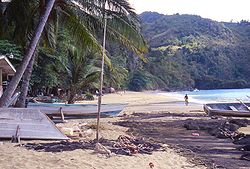
————–

Appendix – Referenced Citations:

1.http://en.wikipedia.org/wiki/Queen_conch
32. McCarthy, K. (2007). “A review of queen conch (Strombus gigas) life-history. Sustainable Fisheries Division NOAA. SEDAR 14-DW-4.
50. NOAA.Queen Conch (Strombus gigas). Retrieved 4 July 2009.
52.“International Queen Conch Initiative”. NOAA: Caribbean Fishery Management Council. Retrieved 2009-09-27.
62.“Virgin Islands Vacation Guide & Community”. Retrieved 13 April 2010.
63. CITES (2003). Review of Significant Trade in specimens of Appendix-II species. (Resolution Conf. 12.8 and Decision 12.75). Nineteenth meeting of the Animals Committee, Geneva (Switzerland), 18–21.
69. Theile, S. (2001). “Queen conch fisheries and their management in the Caribbean”. Traffic Europe (CITES): 1–77.
70. Oxenford, H. A.; et al. (2007). Fishing and marketing of queen conch (Strombus gigas) in Barbados. CERMES Technical Report Number 16. University of the West Indies, Barbados: Centre for Resource Management and Environmental Studies.
71.Appendices I, II and III. cites.org website. Retrieved 4 July 2009.
72.NOAA Fisheries Office of International Affairs website: CITES. Retrieved 4 July 2009.
73.“Standing Committee Recommendations”. CITES Official Documents No 2003/057. 2003. Retrieved 16 April 2010.

————–

Appendix – VIDEO # 1http://youtu.be/lqHwoX3VXeY – Conch Salad – Eleuthera Island, Bahamas – Martha Stewart

————–

Appendix – VIDEO # 2http://youtu.be/w1JP05CeA9A – Conch Fritters: Fry Jack – Cooking with Flavors of Belize & Chef Sean Kuylen

Published on Jan 14, 2014 – A classic Belizean dish, perfect for an appetizer at dinner time or a quick snack. And as usual, Chef Sean puts his spin on things adding Belikin Lighthouse Beer to the batter while giving chefs at home good tips when preparing this simple dish.

Share this post:
, , , ,
[Top]

For Canadian Banks: Caribbean is a ‘Bad Bet’

Go Lean Commentary

There is no one entity designated to regulate the Caribbean banking sector in its full entirety. There are however some financial institutions doing business in much of the region who thusly have to make regionalized assessments. This includes NGOs like the World Bank and the Inter-American Development Bank, plus for-profit institutions like the Royal Bank of Canada (RBC) and the Bank of Nova Scotia (Scotiabank).

The subsequent news articles reflect the assessment of Caribbean economics from the point-of-view of Canadian Bankers: RBC and Scotiabank. Their conclusion:

All is not well in the Caribbean.

These articles highlighting the need for regional stewardship and oversight of banking in the Caribbean. This is the siren call of the book Go Lean…Caribbean; it serves as a roadmap for the introduction and implementation of the technocratic Caribbean Union Trade Federation (CU) and Caribbean Central Bank (CCB) to provide better stewardship, to ensure that the economic failures of the past, in the Caribbean and other regions, do not re-occur here in the homeland.

According to these following articles, the need for this CU/CCB administration is past due:

Title # 1: RBC Wealth Management pulls out of Caribbean markets
Caribbean 360 – Regional News Site (Posted 11/21/2014; retrieved 12/30/2014) –
http://www.caribbean360.com/news/canadas-largest-bank-shutters-wealth-management-branches-in-the-bahamas-barbados-and-the-cayman-islands

BRIDGETOWN, Barbados – The Royal Bank of Canada (RBC) is now the latest Canadian bank to cut its losses in the Caribbean, following a decision to close its Caribbean wealth management divisions and several international advisory businesses in North America.

CU Blog - For Canadian Banks - Caribbean a Bad Bet - Photo 1The move follows RBC’s sale of its Jamaican operations earlier this year, and an announcement by The Bank of Nova Scotia earlier this month of its plans to close around 120 branches in Mexico and the Caribbean (35 in the Caribbean specifically).

Canadian bank CIBC also suffered a net-loss on its FirstCaribbean bank operations in April 2014, for which it incurred a CDN $420 million goodwill impairment charge primarily related to its under-performing operation in the Bahamas.

Speaking to media sources in Canada following the RBC developments, Craig Fehr – an analyst with Edward Jones – said:

What we’re seeing is the banks are doing a thorough evaluation of their business mix and figuring out what makes sense long term and what is probably best left in the hands of someone else.

Sources indicate that the closure of RBC’s regional wealth management divisions – domiciled in The Bahamas, Barbados and the Cayman Islands – as well as management teams in Toronto, Montreal and the United States, could affect over 300 employees.

While heads of RBC’s regional wealth management divisions in the Caribbean declined specific comment on the exit and its impacts, RBC spokesman Claire Holland has confirmed the closures, while declining to offer specifics on the bank’s exit strategy:

“As there are a number of strategic options being considered as part of the exit, it would be premature at this stage to estimate the number of employees that will be impacted”, she said, while adding that the focus of the bank’s international growth strategy will now be on operating in major financial centres where RBC has “competitive strengths.”

RBC’s Caribbean wealth management divisions manage a portion of over CDN$43.2 billion in assets under the affected US and international wealth management operations.

When contacted for comment, Director of the Barbados International Business Association (BIBA), Henderson Holmes, said that his organisation was still trying to ascertain the facts before making a full statement on the RBC exit.

Holmes however cautioned that an exit “would not be good for Barbados”, while stating that BIBA’s current considerations were in whether a purchaser has been identified for the Barbados business, and whether its assets would remain in the country.

According to the International Monetary Fund, RBC, CIBC and the Bank of Nova Scotia hold around 60% of total banking assets in the Caribbean – a fact which the Fund says places the region at an increased risk of exposure to foreign financial crises.

For its part, RBC indicates that the closures will allow the bank to place increased focus on high net-worth and ultra-high net worth clients in key expansion markets, including Canada, the United States, the British Isles and Asia.

————

Title # 2: Scotiabank loans to hospitality sector ‘impaired’
Nassau Guardian Daily Newspaper Website (Posted 11/07/2014; retrieved 12/30/2014) –
http://www.thenassauguardian.com/bahamas-business/40-bahamas-business/51574-scotiabank-loans-to-hospitality-sector-impaired
By:
K. Quincy Parker, Guardian Business Editor

Scotiabank loans to the Caribbean hospitality sector have apparently lost hundreds of millions of dollars in value; a portfolio worth $1.3 billion a year ago fell to a $1 billion before a restructuring which has led to write-downs in the region, and which may mean branch closures and job losses in The Bahamas.

It appears that Scotiabank’s Caribbean write-downs – or adjustment to the value of its business – largely stem from three “net impaired” loans to the hospitality sector in the region. In fact, Canadian financial publications note that “trouble in the Caribbean” is becoming a common refrain. Scotiabank’s write-down follows on the heels of an even bigger one by First Caribbean earlier this year.

After 125 years of operations in the region, Scotiabank’s Chief Executive Officer Brian Porter said during a call this week that the bank will close a significant number of branches in the Caribbean (35 branches was the estimate given) as part of the restructuring. The shift is expected to mean layoffs as well, but local representatives could not speak to the extent – if any – of closures or job cuts in The Bahamas.

Scotiabank’s spokespeople told Guardian Business on Thursday that the lender’s growth in the region has “created some overlap and duplication of services”.

“As a result, we undertook a review of our operating model and international distribution network and found opportunities to strengthen our retail presence by investing in areas that are going to improve the speed and quality of service for our customers,” the bank said in a statement released to this paper.

Porter has announced changes including branch closures, restructuring charges totaling more than $450 million, 1,500 layoffs – mostly in Canada – and loan losses of $109 million in the Caribbean. He also revealed that Scotiabank will either close or downsize 120 branches, largely in Mexico and the Caribbean, to focus on high-growth markets such as Chile and Colombia.

The Scotiabank Bahamas statement said: “The numbers announced relating to branch closures were across the Bank’s international network.

“The bank is still undergoing its review and while this process will take some time, it will be carefully planned with consideration given to all affected stakeholders including employees and our customers”.

The Caribbean has had to learn hard lessons on banking … abroad. Due to the interconnectivity of the financial systems, bank troubles in foreign countries easily become trouble for the region. This was definitely true for the 2008 Banking Crisis that spurred the Great Recession. (Eventually the middle classes were impacted and shrunk our tourism marketing prospects). The events of this period were the lynchpin for the Go Lean movement, (book and blogs). This Go Lean book, and the associated movement, posits that the effects of the 2008 Great Recession continue to linger in the Caribbean. Therefore the book advocates instituting the appropriate governance on the region’s banking sector so as to apply the learned lessons from 2008. We do not want to be vulnerable to any financial mis-management of our North American neighbors; or some “plutocratic” elements there-in.

2008 was all about Wall Street (New York City). Today’s headlines are all about Canada. Though there is elasticity from these foreign financial centers, the Caribbean is big enough (42 million people in 30 member-states) to streamline its own viable financial / securities market. We can exert some control over our own economic destiny. We must assume the coveted role of protégé to our North American partners, not parasites, as experienced … to date.

The CU’s prime directive is to elevate the Caribbean’s economic-security-governing engines. Early in the book, the need for a regional steward was pronounced (Declaration of Interdependence – Page 13) with these statements:

xxiv.    Whereas a free market economy can be induced and spurred for continuous progress, the Federation must install the controls to better manage aspects of the economy: jobs, inflation, savings rate, investments and other economic principles. Thereby attracting direct foreign investment because of the stability and vibrancy of our economy.

xxv.    Whereas the legacy of international democracies had been imperiled due to a global financial crisis, the structure of the Federation must allow for financial stability and assurance of the Federation’s institutions. To mandate the economic vibrancy of the region, monetary and fiscal controls and policies must be incorporated as proactive and reactive measures. These measures must address threats against the financial integrity of the Federation and of the member-states.

The Go Lean book, and previous blog/commentaries, stressed the key community ethos, strategies, tactics, implementations and advocacies necessary to establish the regional financial eco-systems for Caribbean self-determination. These pointed are detailed in the book as follows:

Community Ethos – Economic Principles – Economic Systems Influence   Individual Choices Page 21
Community Ethos – Economic Principles – Voluntary Trade Creates Wealth Page 21
Community Ethos – Economic Principles – Consequences of Choices Lie in   the Future Page 21
Community Ethos – Economic Principles – Money Multiplier Page 23
Community Ethos – Governing Principles – Lean Operations Page 24
Community Ethos – Governing Principles – Return on Investments Page 24
Community Ethos – Ways to Impact the Future Page 26
Community Ethos – Ways to Help Entrepreneurship Page 28
Community Ethos – Ways to Impact Turn-around – 2008 Crisis Page 33
Community Ethos – Ways to Impact the Greater Good Page 37
Strategy – Mission – Fortify the Stability of   the Securities Markets Page 47
Strategy – CU Stakeholders   to Protect – Banks & Depositors Page 47
Tactical – Growing the Economy – Minimizing Bubbles Page 69
Tactical – Separation-of-Powers – Depository Insurance &   Regulatory Agency Page 73
Anecdote – Turning Around CARICOM – Effects of 2008 Financial Crisis Page 92
Implementation – Assemble Caribbean Central Bank as Cooperative Page 96
Implementation – Ways to Better Manage Debt – Optimizing Wall Street   Role Page 114
Planning – 10 Big Ideas – Single Market / Currency Union Page 127
Planning – Lessons Learned from the old West Indies Federation – Canada’s   Help Page 135
Planning – Lessons Learned from 2008 Page 136
Planning – Lessons Learned from Canada’s History Page 146
Planning – Ways to Measure Progress Page 147
Advocacy – Ways to Grow the Economy Page 151
Advocacy – Ways to Improve Credit Ratings – 2008 Lessons Page 155
Advocacy – Ways to Improve Housing – 2008 Mortgage Crisis Lessons Page 161
Advocacy – Ways to Impact Labor Unions – 2008 Effects on Main Street   Jobs Page 164
Anecdote – Caribbean Industrialist – Growth and Success Page 189
Advocacy – Reforms for Banking Regulations Page 199
Advocacy – Ways to Impact Wall Street Page 200
Advocacy – Ways to Impact Main Street Page 201
Appendix – Offshore Financial Services Industry Developments Page 321
Appendix – Bahamas & Tax Info Exchange Agreements Page 322

The points of effective, technocratic regional stewardship, especially in response to the 2008 Great Recession / Financial Crisis, were further elaborated upon in these previous blog/commentaries:

https://goleancaribbean.com/blog/?p=3397 A Christmas Present for the Banks from the Omnibus Bill
https://goleancaribbean.com/blog/?p=3090 Lessons Learned – Europe Sovereign Debt Crisis of 2009
https://goleancaribbean.com/blog/?p=3028 Why India is doing better than most emerging markets since the crisis
https://goleancaribbean.com/blog/?p=2930 ‘Too Big To Fail’ – Caribbean Version
https://goleancaribbean.com/blog/?p=2090 The Depth & Breadth of Remediating 2008
https://goleancaribbean.com/blog/?p=1896 The Crisis in Black Homeownership since 2008
https://goleancaribbean.com/blog/?p=1014 Canadian View: All is not well in the sunny Caribbean
https://goleancaribbean.com/blog/?p=841 Post 2008 – Having Less Babies is Bad for the Economy?
https://goleancaribbean.com/blog/?p=782 Open/Review the Time Capsule: The Great Recession of 2008
https://goleancaribbean.com/blog/?p=709 Analyzing the Data – Student debt holds back home buyers
https://goleancaribbean.com/blog/?p=518 Analyzing the Data – What Banks learn about financial risks

Canada has been a dear friend to the Caribbean – see Appendices below. It is unfortunate that so many of their banks have experienced losses doing business in the Caribbean – we have been a ‘bad bet’. We want these Canadian banks and Canada in general to have good returns on their Caribbean investments and nothing but pleasurable experiences interacting with our culture and society. We want the Caribbean to be a better place to live, work and play for Canadians.

According to the foregoing news articles, our parasitic regional culture has not being gracious to our Canadian guest and direct investors. We need the proposed successes of the Go Lean roadmap for so many reasons; one strong motivation is to turn-around the results of the Canadian-Caribbean relationships. We must diversify our economy, fortify our security and improve our governance so that Canada would consider us in the role of a protégé, not a parasite again and again. This is the purpose of the Go Lean roadmap, to provide a turn-by-turn direction to move the region to that destination.

Don’t give up on us Canada!

🙂

Download the book Go Lean … Caribbean – now!
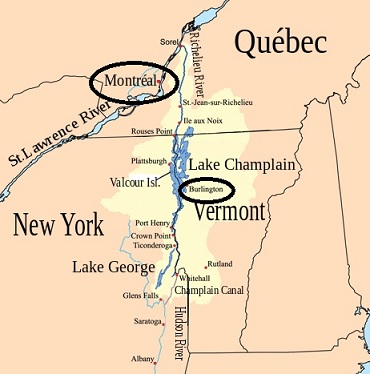
——————–

Appendix A – Scotiabank in the Caribbean and Central America
We have been part of the Caribbean and Central America region since 1889 when we opened our first office in Kingston, Jamaica to support the trade of rum sugar and fish. This was the first time a Canadian bank had opened a branch outside the U.K. or the U.S. Scotiabank had a branch in Kingston before opening a branch in Toronto, Canada, where the Executive Offices are now located.

Some 120 plus years later, Scotiabank is the leading bank in the Caribbean and Central America, with operations in 25 countries, including affiliates. We are the only Canadian bank with operations in four of the seven Central American countries, namely Costa Rica, Belize, Panama and El Salvador.

Scotiabank Facts:

  • Scotiabank employs 7,765 people in the region
  • Serves more than two million customers
  • About 99% of employees are hired locally
  • There are 294 branches and over 655 automated banking machines (ATMs) throughout the region

Our international strategy focuses on investing resources in high-potential markets where Scotiabank anticipates solid, long-term economic growth. We pride ourselves on leveraging the best Canadian sales and service practices to retain and attract high-value customers abroad. Our core purpose is to be the best at helping you become financially better off by providing relevant solutions to meet your unique needs.
(Source: http://www.scotiabank.com/jm/en/0,,37,00.html retrieved December 31, 2014)

VIDEOScotiabank Celebrates 125 Years in Jamaicahttp://youtu.be/17WPQTE4Lr8

————-

Appendix B – Scotiabank and the Diaspora

CU Blog - For Canadian Banks - Caribbean a Bad Bet - Photo 2The Scotiabank Caribbean Carnival Toronto is an exciting three-week cultural explosion of Caribbean music, cuisine, revelry as well as visual and performing arts. In its 45th year it has become a major international event and the largest cultural festival of its kind in North America.

As Carnival is an international cultural phenomenon, the great metropolis of Toronto and its environs will come alive as the city explodes with the pulsating rhythms and melodies of Calypso, Soca, Reggae, Hip Hop, Chutney, Steel Pan and Brass Bands. This colourful exhibition and display of genius is truly a musical panorama that is certain to bring a pleasing smile to the ancestral titans of Pan and Calypso music.

Share this post:
, , , , ,
[Top]